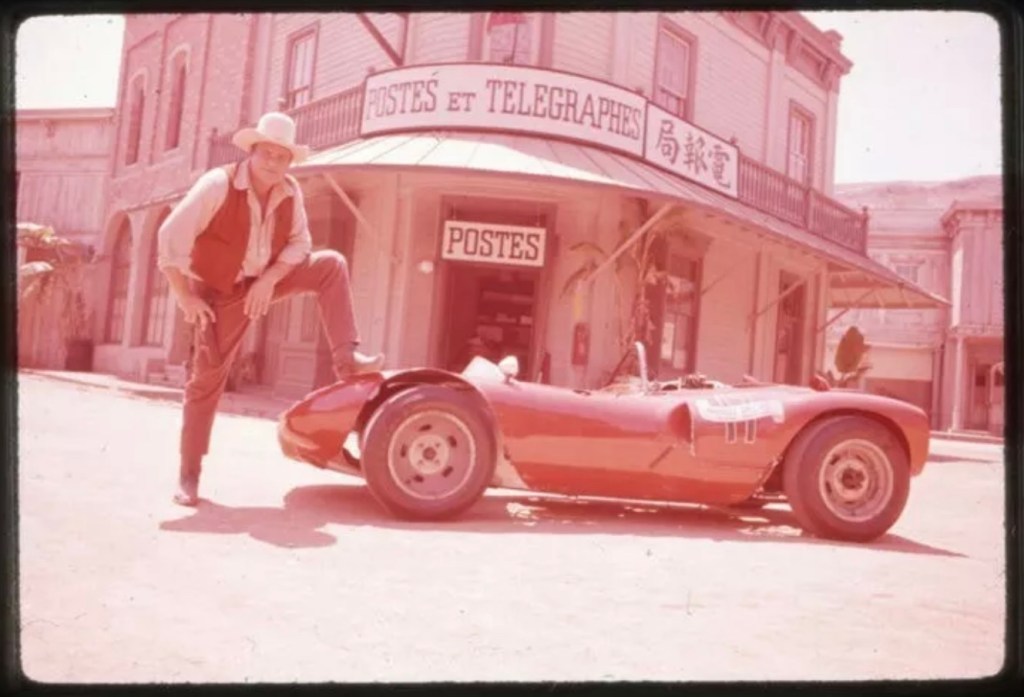
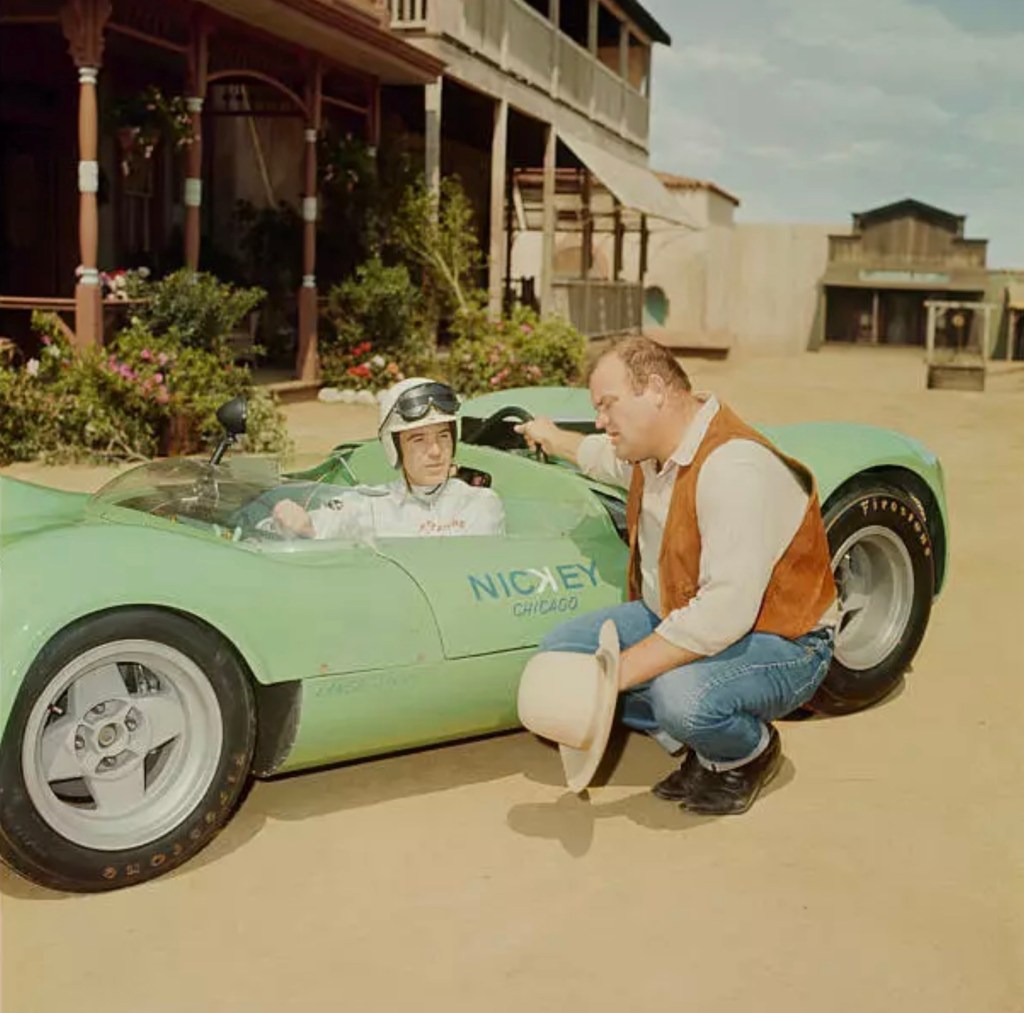
Hoss Cartwright’s Chev Corvette powered Campbell Corvette Special was one helluva way to get around the Paramount Studios’ backlot!
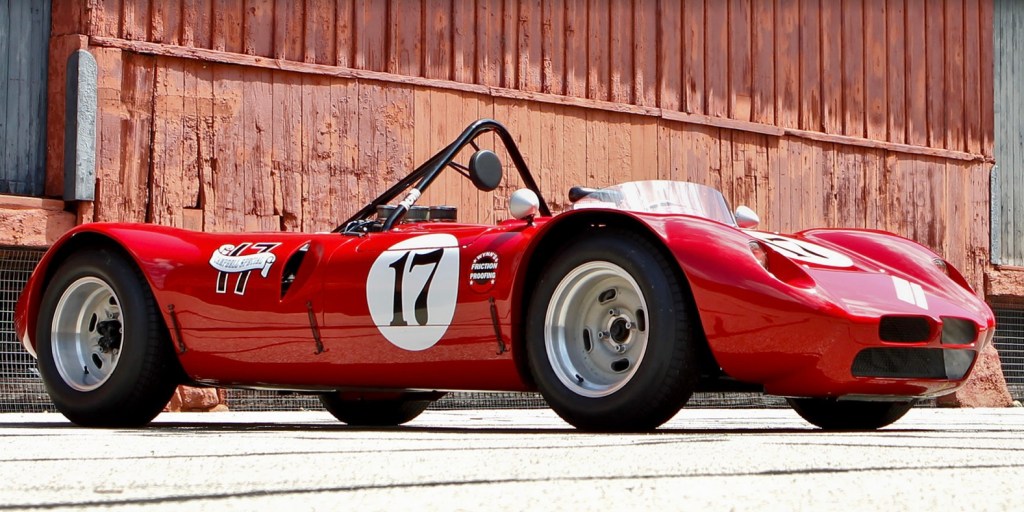
Dan Blocker poses on the set of ‘Bonanza’ with the first racing car he sponsored. The neat, small, fast Campbell Corvette Special was built by ace ex-AJ Watson Indycar fabricator/welder Wayne Ewing for Bill Campbell, an ex-dry-lake racer and boat manufacturer.
Blocker was a serious enthusiast. In 1966 his daily rides comprised a Chev El Camino ute and a Corvette, both provided by Chevrolet, sponsors of Bonanza. In addition he had an Iso Rivolta, Maserati 3500GT, Elva Maserati, a ‘Mercer Speedster’ powered by a flathead Seagrave V12, and had ordered a Lamborghini…and goodness knows what else.
Initially powered by an 1100cc JAP engine, the ever-evolving Campbell became a fire-breather when a Corvette 283cid V8 was dropped into it. The car was then raced successfully by Dan’s close friend, stuntman Bob Harris.
(unattributed)
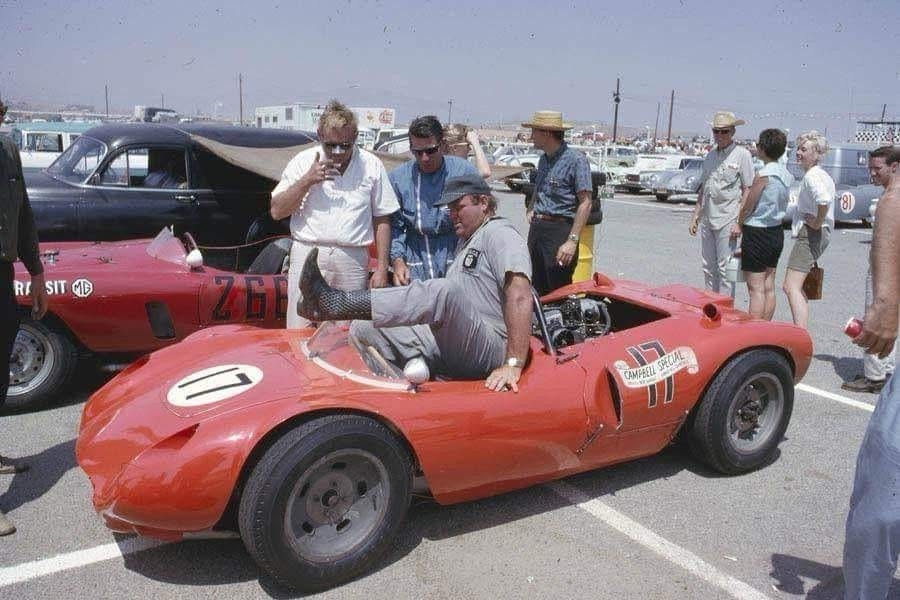
Blocker tries to insert his not inconsiderable 6 foot four into the SWB Campbell, it’s a pity there isn’t a next shot. I suspect he probably failed, to the relief of driver Harris in the blue race-suit.
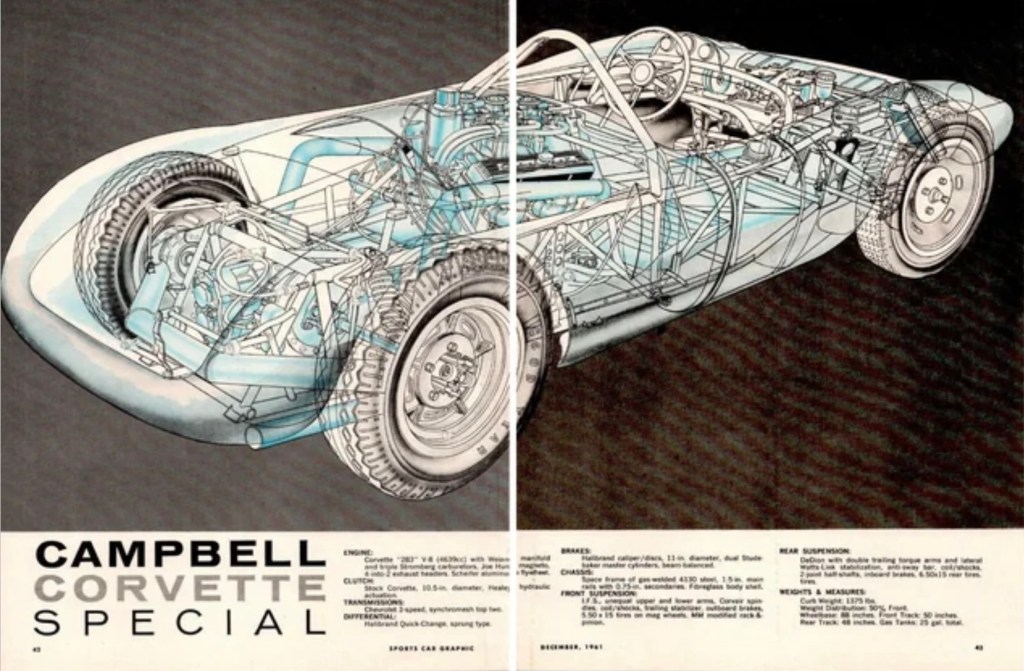
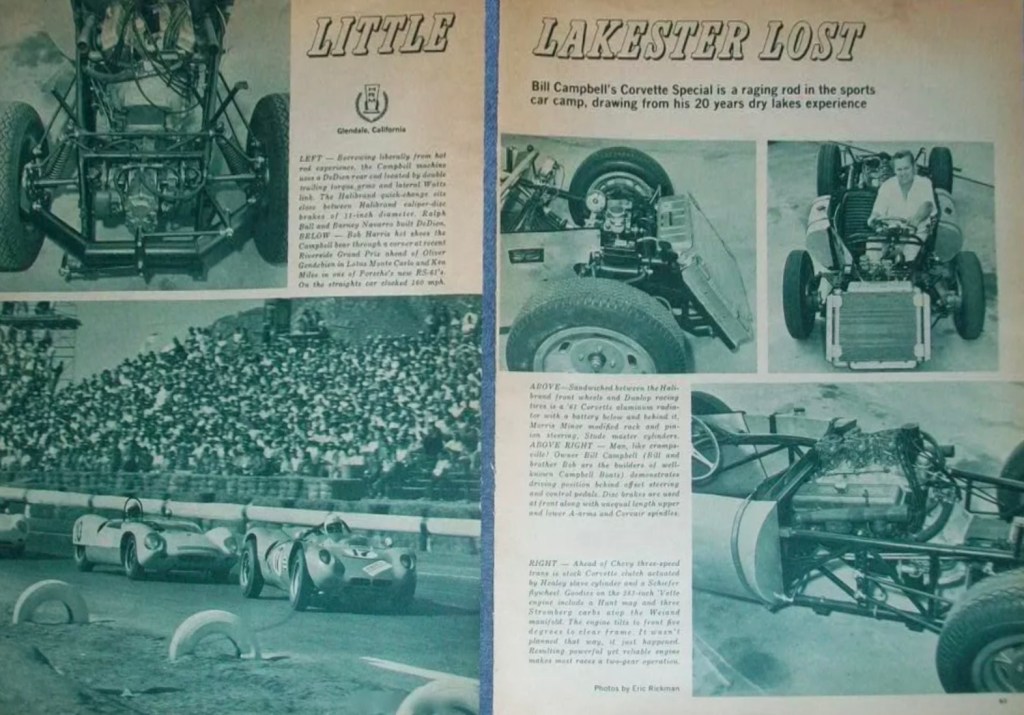
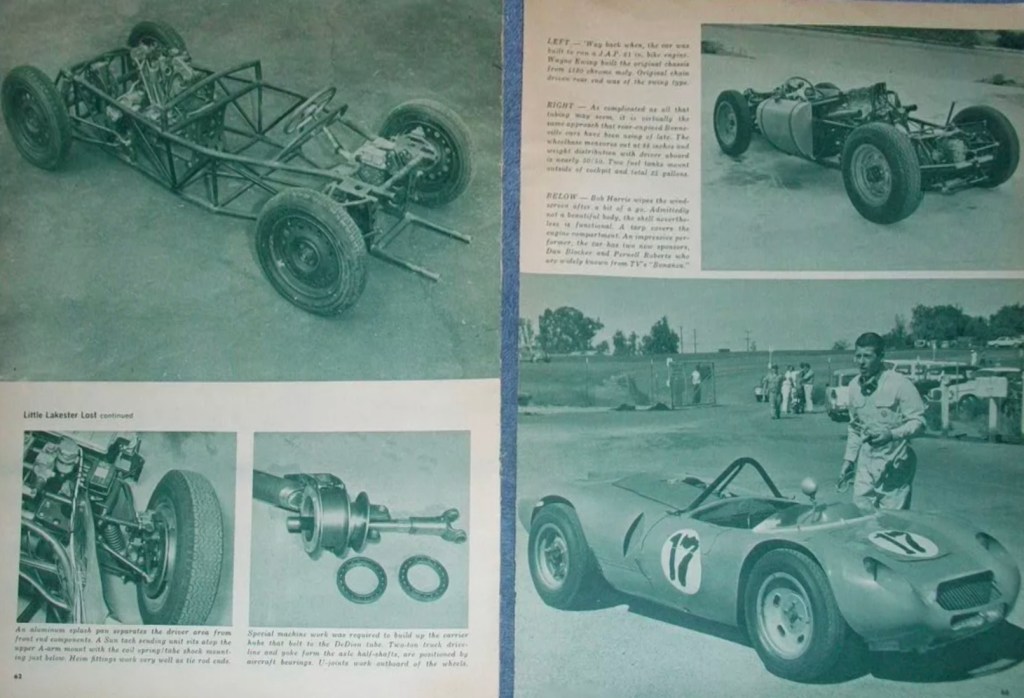
Ewing’s chassis was made of 4130 chrome-moly tube and proved sound enough to take the triple-Stromberg cast-iron lump, other features of which included a Weiand manifold, Schaefer flywheel and Hunt magneto. The engine was inclined downwards at the front by 5-degrees. A three-speed Chev gearbox and stock Corvette clutch was actuated by a Healey slave cylinder. The clutch and brake master cylinders were of Studebaker origin.
The Chev ‘box bolted directly to a quick-change Halibrand rear end while the original rear swing-axle was replaced by a De Dion set up fabricated by Ralph Ball and Barney Navarro. It was located by four-links and a watts linkage. The aluminium radiator was ’61 Vette, a Morris Minor donated the the steering rack and pinion which was modified to suit.
Up front, the original Fiat suspension were replaced with stronger, lighter upper and lower wishbones with uprights/spindles donated by a Chev Corvair. Halibrand also provided the disc brakes and wheels.
Harris, having led the first few laps of the Pacific Coast Championship at Del Mar in late 1962, returns to the track, only to run out of road in a subsequent attempt to make up lost ground on leader Jay Hills’ Porsche RSK (unattributed)
The result was a potent 1,375 pound machine with 50-50 weight distribution. One of the first Corvette powered mid-engined machines, the car was competitive from the outset and with a Chev 327 installed Harris took the cars first win at an SCCA regional at Riverside in June 1962. Yes, happily it still exists as an historic racer.
Harris raced the car through 1959-62 with wins Ian SCCA Regional at Riverside in in June ’62 and a second place at Las Vegas in October 1961. Harris crashed it at Santa Barbara in September 1962.
Campbell rebuilt it over the off-season, Jim Parkinson took the wheel in 1963 – still owned by Campbell – with his bests two wins at Del Mar and Santa Barbara in April-May, and second at Santa Barbara in September.
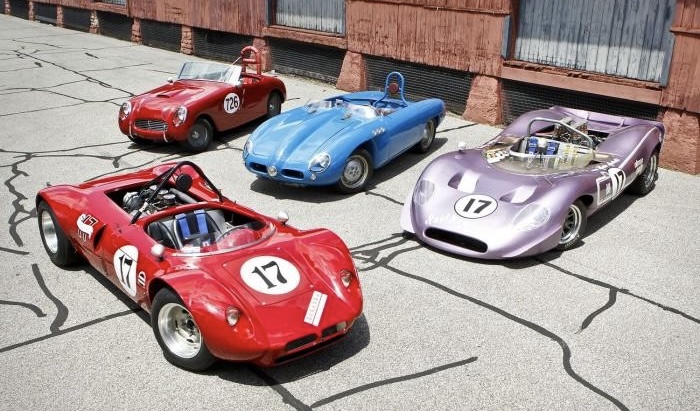
Campbell did a deal with Joshua Saslove in late ’63, trading the car on a Mistral bodied Kurtis. Saslove entered it in a couple of meetings but didn’t appear, raced it once at Mid-Ohio in June 1964 before it dropped outta sight. Acquired and restored by a Mr Mittler, its contemporary debut was at the 2005 Monterey Historic meeting.
(Gooding)(Gooding)
Etcetera…
While this unidentified magazine – a sold eBay item via a Google search – photographs is poorly reproduced you can at least get better sense of this innovative little special.
The race shot above shows Bob Harris in front of Olivier Gendebien’s Lotus 19 Climax during the Riverside Grand Prix; 13th and sixth in the 200 mile race won by Jack Brabham’s Cooper T57 Climax.
Credits…
gtplanet.net, article by Jerry Titus in Sports Car Graphic, Getty Images, Gooding & Co
Tailpieces…
See here for an article about this great Car Guy’s Can Am Genie Mk10 Oldsmobile raced by John Cannon: https://primotipo.com/2016/02/19/john-cannons-bonanza/ Cannon and Blocker on the Bonanza set a few years after the Campbell Corvette Special phase…
Frank Matich during the LA Times GP, Riverside Can-Am round on October 29, 1967.
He qualified the 4.4-litre tiddly Matich SR3 Repco-Brabham V8 20th but crashed out of the event won by Bruce McLaren’s 5.7-litre McLaren M6A Chev after completing only 30 of the 62 lap, 200 mile journey.
FM is one of my obsessions, every now and then I Google ‘Frank Matich, United States’ to see what pops up. This time, Pete Biro’s shot did, then you Google the bloke you’ve heard of but know nothing about…
Biro – June 1, 1933-December 26, 2018 – was a semi-pro stage and close-up magician and photo-journalist/author who got his start when Road & Track engaged him to do a story about the Barneson Special, then David E Davis discovered him and gave him assignments for Car and Driver.
He and Davis travelled the world, along the way Biro was commissioned by Goodyear, Sports Illustrated, Time, Life and many others. Of course many of his subjects became friends, including Dan Gurney, Phil Hill, Bruce McLaren, Denny Hulme, Jackie Stewart, AJ Foyt, Richard Petty and many others. See here: https://youtu.be/uNEHyexrC_I?si=NpbKvFdyur4LArfB
(P Biro)
Jim Clark, Lotus 38 Ford, Indianapolis 1966.
The Great Scot started from the middle of the front row and may well have won the race…but he was second behind, perhaps, Graham Hill’s Lola T90 Ford.
Jim Hall enquires of Vic Elford, ‘Hows it going out there?’ With the legendary – still as innovative as tomorrow – sucker – Chaparral 2J Chev in 1970.
Interviewed by George Levy, Vic Elford remembered that ‘My first impression was, I don’t really see it as very quick, because it just sort of goes around corners. But then of course it got down to analysing it, we found it was going around corners about 12 or 15% quicker than anything else would.’
‘The 2-litre Class’ during the 1966 US Grand Prix at Watkins Glen on October 6.
Peter Arundell’s Lotus 33 Climax FWMV V8, Mike Spence, Lotus 25 BRM perhaps, then maybe the fast approaching Jochen Rindt’s Cooper T81 Maserati. Who knows?
Dan Gurney, McLaren M8D Chev, Mont Tremblant, St Jovite June 28, 1970.
Who better to help McLaren recover after the loss of Bruce at Goodwood in 1970?
It was all looking good for a while, until competing oil sponsors – Gulf and Castrol – got in the way. Understandable I guess. Dan won the season opener at Mosport and then St Jovite in June, then had dramas at Watkins Glen in mid-July that saw him finish sixth from grid 2.
Bruce McLaren gulps a fresh breath of air at Riverside during the 1960 US GP, he was third in his Cooper T53 Climax behind the Lotus 18s of Stirling Moss and Innes Ireland.
Biro about to have the colour of his jocks changed by five laps alongside Jackie Oliver in a Can-Am Shadow DN4 Chev around Laguna Seca in 1973-74, see here: https://primotipo.com/2017/02/11/delicate-touch/
‘50 years ago today, Gentleman Jim Richards chasing Allan Moffat at Wigram, Christchurch, New Zealand, January 19, 1975,’ wrote Mike Norris.
‘On this occasion Allan took the honour of being the only saloon car to average 100mph over a lap. As Jim recorded the same lap time just inches behind him the record was equalled within the blink of an eye. As Allan had done it first he got the chocolates.’
Mike’s post was on Facebook, one of his respondees observed ‘Kar-Kraft vs Chook Shed’ in terms of the respective Moostang’s parentage! Murray Bunn’s was one helluva shed! Boss 302 vs Boss 351 mind you.
Jim Crossed the Ditch in ’75 of course, Bathurst ’74 duly noted. I was at that first wet Sandown meeting he did in June/July. I don’t remember who he beat – ok, he had 12-inchers rather than the tens or whatever he had to have here – but it was a convincing display, the first of thousands of great drives in Australia.
I dips ‘me lid to them both…
(T Marshall)
Same weekend with Jum on it and up it, flat knacker into Bombay…final in-period meeting for Moff’s car that weekend?
Jack and Betty Brabham during the 1954 Australian Grand Prix weekend in the Southport paddock attending to the needs of Jack’s Cooper T23 Bristol.
I’ve done Cooper Bristols to death but these two colour shots of Jack are the earliest I’ve seen – Kodachrome at its best – so I thought I’d pop them up rather than add them to an existing post and effectively lose them.
Brabham had a lousy weekend in Southport, out with engine troubles on lap 2. Lex Davison won the race in his HWM Jaguar after Stan Jones suffered a chassis weld failure that pitched him off the road and through the undergrowth, killing the car but thankfully not its intrepid driver.
Brabham at Mount Druitt, the youngster is a youthful Pete Geoghegan (D Willis)(LAT)
CB/Mk2/1/53 was pretty trick by this stage, where is the photo above folks?
Jack had been racing it for a couple of years and made some modifications – some suggested by British mechanic/engineer Frank Ashby who was then living at Whale Beach on Sydney’s Barrenjoey Peninsula – including fitment of triple Stromberg carbs instead of the usual trio of Zeniths and taking bulk weight off the Bristol engine’s flywheel by adapting a Harley Davidson type clutch as used on his speedcar, and extensive machining. The Stromberg BXOV-1 carbs were lightly modified units of examples fitted as standard to the Holden 48-215.
Stan didn’t have it for long before selling it to Tom Hawkes in time for the 1955 Australian Grand Prix at Port Wakefield.
The rare shot below shows Hawkes in Jack’s old Cooper Bristol #8, with Brabham looking on from car #6, the monoposto Cooper T40 Bobtail Jack built at Coopers for his championship Grand Prix debut at Aintree in the British GP that July. He then brought it home and scored a lucky win at Port Wakefield after top-guns, Reg Hunt, #5 Maserati A6GCM-250 and Stan Jones, #4 Maybach 3 retired.
(E Steet)Hawkes on the way to a DNF in the 1957 AGP at Caversham in the ex-Brabham Cooper T23, now fitted with a Repco-Holden engine (E Steet)
The ultimate spec of CB/Mk2/1/53 was created when Tom Hawkes got his hands on it. He raced it initially as was and then made changes to the suspension, replacing the transverse leaf suspension with wishbones and coil springs, added a slimline body, fitted wider Lukey alloy wheels, and critically, replacing the 2-litre Bristol six with a 2.3-litre pushrod Holden Grey six topped by a crossflow Repco Hi-Power cylinder head and a pair of SU carbs.
Hawkes in the Albert Park paddock, 1956 AGP weekend. Repco-Holden engine, car still fitted with transverse-leaf IFS (NAA)Hawkes ascends Mount Panorama during the ‘58 AGP weekend, note the stance of the car and Lukey alloy wheels (T Martin)
Tom was third in the 1958 AGP at Bathurst – the ultimate Australian power circuit – with the Cooper in this spec behind Lex Davison’s 3-litre Ferrari 500/625 and Ern Seeliger’s 4.6-litre Maybach 4 Chev V8. Sure, Ted Gray, Tornado 2 Chev and Stan Jones, Maserati 250F retired from the lead, but was the best ever AGP finish for a Holden six, a great achievement.
Etcetera…
Brabham and crew at Mount Druitt circa 1953, names folks? (A Cox)(A Patterson Collection)(A Patterson Collection)
John Sherwood and Jack Brabham, perhaps at one of the send-off functions for Jack when he left for the UK in early 1955
Brabham chats to Doug Whiteford on the Australian Grand Prix-Port Wakefield grid in 1955. Cooper T40 Bristol and Talbot Lago T26C.
(unattributed)
This pair of shots show Jack aboard the Cooper T40 Bristol during the January 30, 1956 South Pacific Championship meeting at Gnoo Blas. Brabham was second behind Reg Hunt’s new F1 Maserati 250F with Kevin Neale third in, you guessed it, a Cooper T23 Bristol.
These cars – Type 20 and Type 23 or Cooper Bristol Marks 1 and 2 if you like – were hugely important machines in Australian racing for a decent chunk of the 1950s in original spec and modified from mild to wild…
(unattributed)
Credits…
Old Motor Racing Photographs Australia, Dick Willis, Allen Cox, LAT photographic, Ed Steet shots via David Zeunert, Lex Denniston shot via Tony Johns, Tony Martin, Adrian Patterson Collection
Tailpiece…
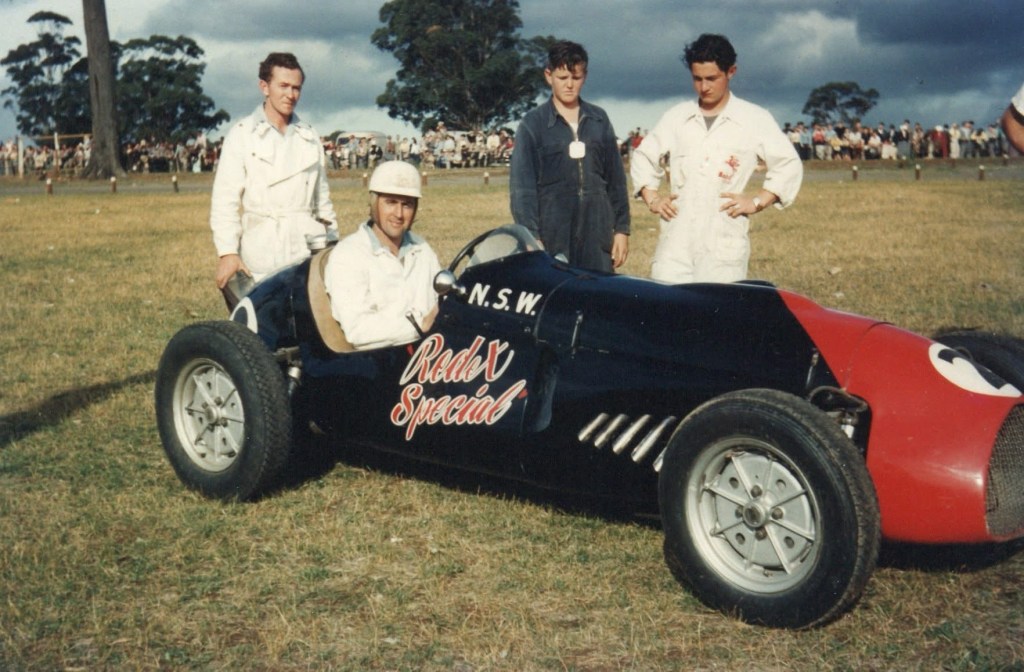
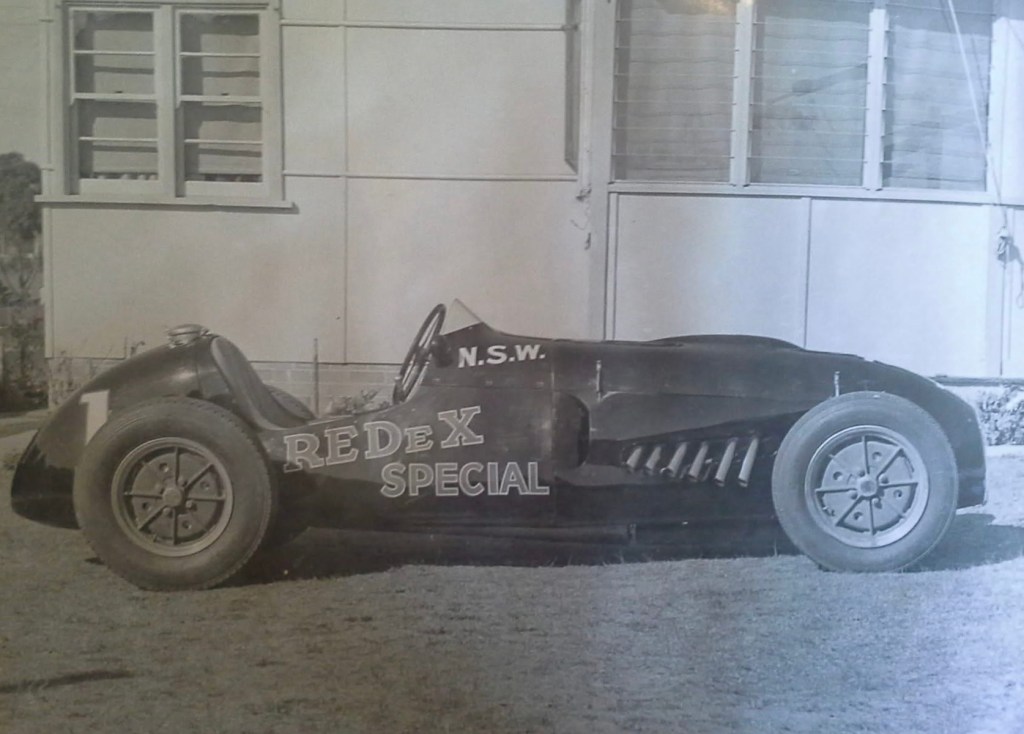
Three of the 1954 AGP protagonists on the cover of Wheels magazine in January 1955. Lex Davison’s HWM Jaguar, an ex-Moss F2 chassis fitted with a C-Type engine, Dick Cobden’s ex-Whitehead Ferrari 125 s/c and Jack Brabham’s RedeX Special Cooper T23 Bristol.
Quite why yerd’ put the winner, Davison, on the cover and two DNFs I know not…the answer is probably the timelines in hand-colouring the photographs for a race held on November 7, 1954.
Warwick Brown and the Wrightcars truck he used in New Zealand during his successful 1975 Tasman Cup campaign. He was the only Aussie to win the coveted series, shown here with Lola T332 Chev #HU27 at Pukekohe, where he won the NZ GP on January 12.
HU27 is the first T332 built, first racing in the opening Tasman round at Levin on January 6, 1974. Brown won the Adelaide 100 on February 24 and in so doing won the first of hundreds of in-period victories for the 332 and its many variants on every continent.
A very successful machine, Brown showed well in the US L&M F5000 championship in mid-1974 before coming home and proving the class of the AGP field before his Peter Molloy Chev broke a harmonic balancer. Then followed the Tasman in which he won two of the eight rounds in a very open year, five drivers won races.
Brown on the hop in HU27 in the 1975/Surfers Paradise Tasman round. He and mechanic/engineer/driver-whisperer Peter Molloy developed the car to a fine pitch in some US L&M races in mid-1974. Lola perves will notice the single-post supported banana-wing. Compare and contrast with the Lola factory fitment twelve months before (unattributed)Brown during the February 1974 Oran Park Tasman round. Rear view of the early spec T332s-HU27 here. Compare and contrast with the Jones’ T332C further on. Car owned by Brown’s patron, Sydney businessman Pat Burke (D Harvey)
This article is largely an assemblage of factory/Carl Haas T332 information accumulated by Australian racer/restorer Jay Bondini who owned, restored and raced two T332s: HU43 ex-Carl Hogan and HU37 ex-Sid Taylor.
The Lola T330/T332/T332C/T332CS/T333 as a series of ‘same chassis’ related models are right up there as a contender for the title of ‘greatest production racing car’ – where greatest is defined as the most wins relative to production numbers.
Others that spring to mind are the Bugatti T35/T37/T39 series, Ralt’s RT2/3/4/5, the McLaren M7/M10 series and McLaren M8/8A/12/8B/8C/8D/8E/8F and Ford GT40 Marks 1-4 and more. Oh yeah, not to forget Lola’s own T70 series…it would be an interesting list to create and debate. One for another time.
For those unfamiliar with a T330, here is Max Stewart in HU1 ahead of Graeme Lawrence’s T332 HU28, both Chev powered, during the 1974 Sandown Tasman round won by Peter Gethin’s Chevron B24 Chev (B Keys)
Only 10 carryover parts from other model Lolas. No surprises there albeit most of the T330/332s I recall seeing in paddocks were fitted with Koni double-adjustable alloy shocks not Armstrongs.
Jongbloed 15-inch rear wheels became the-go later in ’74 from memory. So too, did the Chaparral type all-enveloping engine cowl/airbox, that turned a stunning looking car into the positively sinful: the T332C followed.
$US3,650 for a new tub in 1974 is about $US26,000 today. I wonder how much a new monocoque actually costs now from Lola’s designated chassis maker (who owns those rights these days?) or your favourite fabricator?
(C Parker Archive)
Alan Jones in Teddy Yip’s T332C HU61 Chev at Riverside in 1976, the final year of the US F5000 Championship before changing to 5-litre central-seat Can-Am in 1977…and further Lola T332 domination.
Chaparral were the first to do the enveloping engine cover/airbox on a T332. Apart from the body changes, the oil tank was moved, the roll-bar mounting changed and a central post rear-wing adopted. The later 332s also had the FIA mandated roll-hoop over the dash which had the byproduct of providing a bit more chassis stiffness.
See the letter from Chaparral‘s Jim Hall to Eric Broadley via Carl Haas explaining improvements to their car raced so successfully by Brian Redman in 1974-75 that allowed Lola to ‘productionise’ them as the T332C for 1976. Fascinating detail stuff of all the one-percenters that made a topline well funded outfit like Chaparral so successful: https://www.lolaheritage.co.uk/type_numbers/t332c/t332c.html
‘What are your three favourite racing cars Alan?’ I asked Jones at the Governor’s function before the 2023 AGP. ‘My F1 Williams FW07, the Lola T332, both the 5000 and Can-Am versions, and Alan Hamilton’s Porsche 935…’ was his response.
About says it all really, given his career spanned the mid-1960s well into the early-2000s and hundreds of different cars.
It’s not a factory drawing but is useful to show how wide and shallow the chassis of the T332 and T330 are. Note that, unlike the T300 chassis, the 330/332 used the engine as a semi-stressed member.
The flaw in the drawing – purportedly T332 – is that the rear suspension shows an inverted rear wishbone (T330) arrangement rather than the twin-parallel link set up used on T332s.
Steve Elliot, Jay Bondini Archive, Dale Harvey, Chris Parker Archive, oldracingcars.com, Getty Images
Tailpiece…
(S Elliott)
Graeme Lawrence in the second T332 built, HU28, from Max Stewart in T400 Chev HU2 during the 1976 Peter Stuyvesant New Zealand F5000 Championship.
Just love Steve Elliott’s shot above – a corker! – but I have no idea of the circuit, help please Kiwis!?
Lawrence, the 1970 Tasman Cup winner aboard an ex-Amon Ferrari Dino 246T, fought out the 1975 Tasman with fellow T332 exponents Lawrence, John Walker (T330 HU23 Repco-Holden was rebuilt around a T332 tub) and Brown.
The battle went down to the wire at the final Sandown round where WB prevailed after Walker lived-to-fight-another-day with a monster first lap accident and Graeme had problems. John Goss won the race in his Matich A53 Repco-Holden.
Lawrence won the 1975 NZ Gold Star in this car and was always a front-runner in Australasian F5000. You can’t mention Kiwi Lola exponents without recognising Ken Smith, who won the Peter Stuyvesant Series, NZ GP at Pukekohe, and the NZ Gold Star in 1976. A big year! His mount was an ex-Chaparral/Brian Redman Lola T330/2 HU8. He may still be having the occasional Lola steer in his eighties!
Max Stewart was pretty-handy in Lolas too. In T330 HU1 he won the Australian Grand Prix at Oran Park and the Gold Star series in 1974, then took another AGP victory in the wet at Surfers Paradise the following year in the T400.
Brian Redman in the Chaparral/Haas Lola T332 HU42 Chev at Riverside, the final round of the 1974 US championship on October 27. Mario Andretti won from Brian aboard…the Vel’s Parnelli Jones T332 HU29 (Getty Images)
Afterthought…
The fact that the first and second T332s built were sold to colonials allowed me to make this piece Australasian centric, not that I need encouragement.
But how can you write something about Lola’s T330/332 without mentioning Brian Redman, King of F5000 in its latter era? Earlier Monarchs were, arguably, Peter Gethin and Graham McRae, the latter gets bonus points for doing much of his work aboard cars of his own manufacture.
It’s not that Brian was a Lola F5000 man early on either. He had success in McLaren’s M10 and M18s and did all the early development testing of the Chevron B24 in mid-1972 together with Derek Bennett.
But when he decided F1 wasn’t for him and made US F5000 his primary programme, his partnership with the factory-Carl Haas/Chaparral team yielded a trio of championships from their 1973-76 F5000 partnership – subsequent short Can-Am programme duly recognised. He raced Lola T330s in ’73 and T332s from ’74-76.
Redman didn’t give a yard away to any of the Formula One Johnnies he raced with in Scuderia Ferrari’s 1972-73 World Sportscar Championship campaign aboard 3-litre flat-12 312PBs: Ickx, Andretti, Peterson, Schenken, Pace, Reutemann etc. Surely Brian was the best driver outside F1 at the time? Bias duly declared…
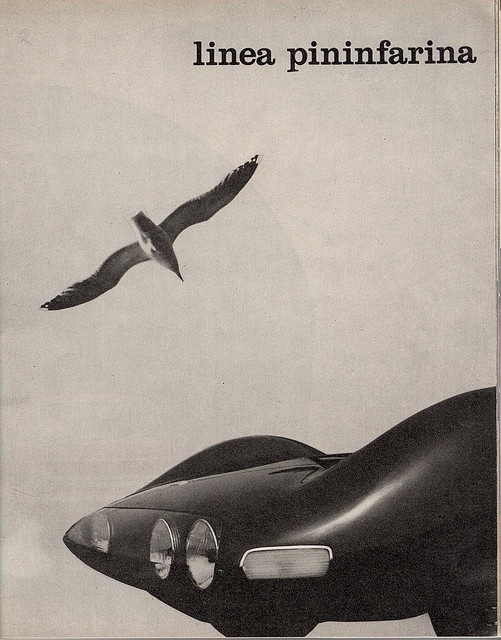
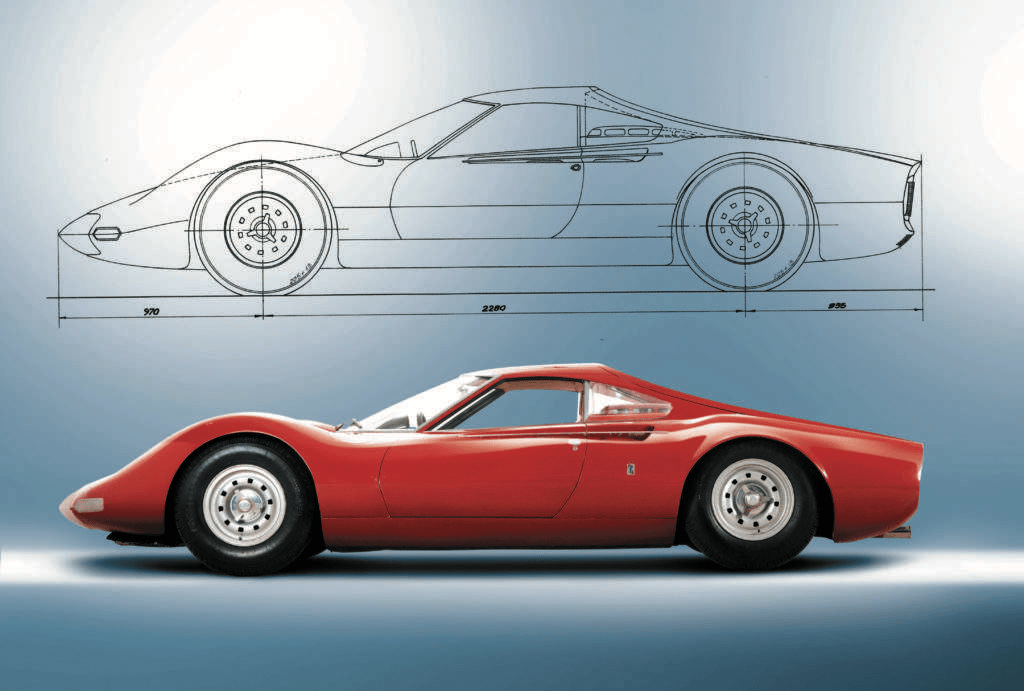
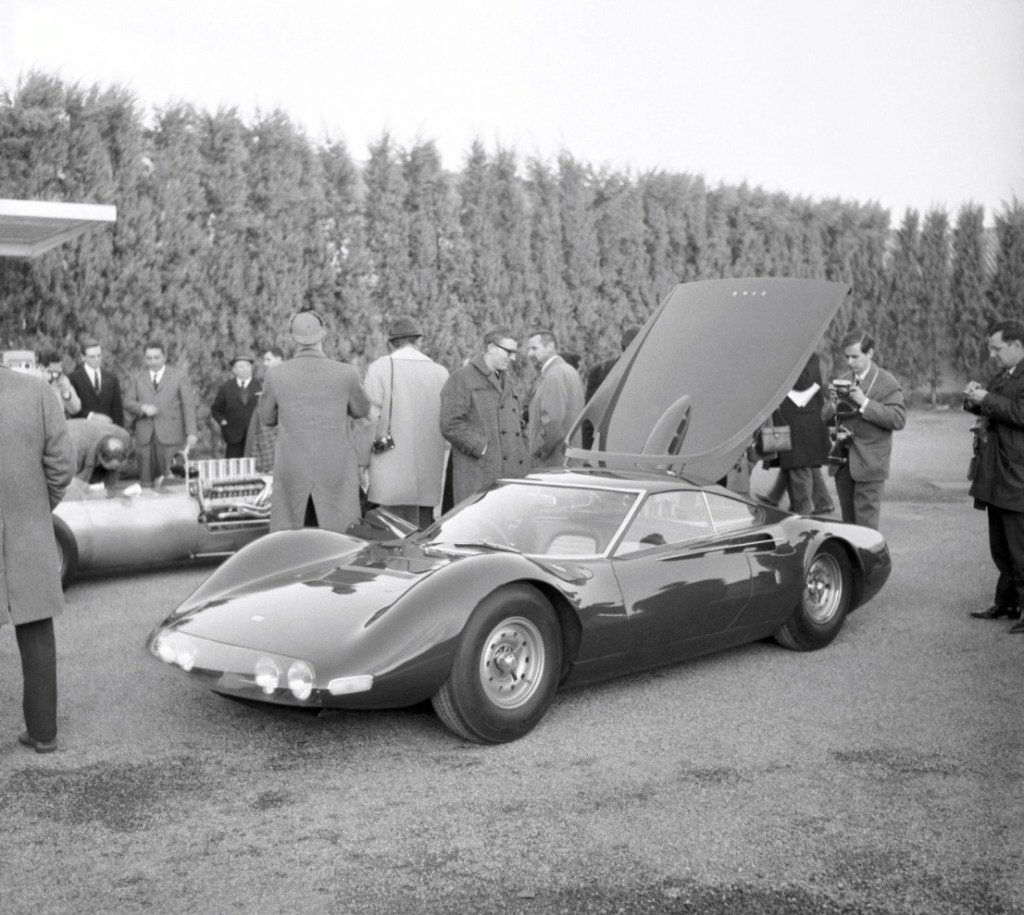
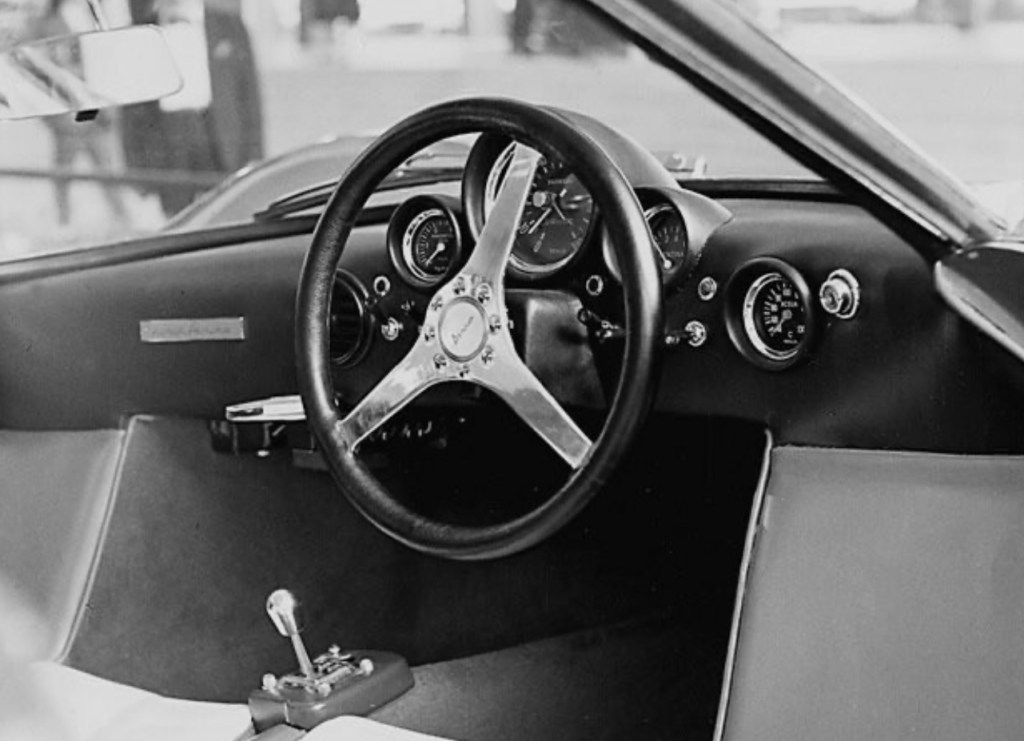
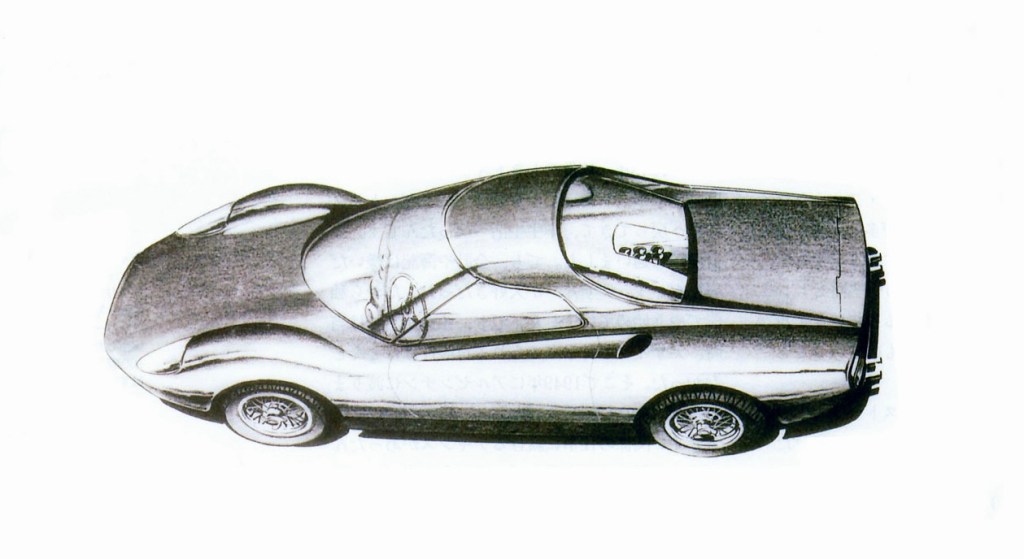
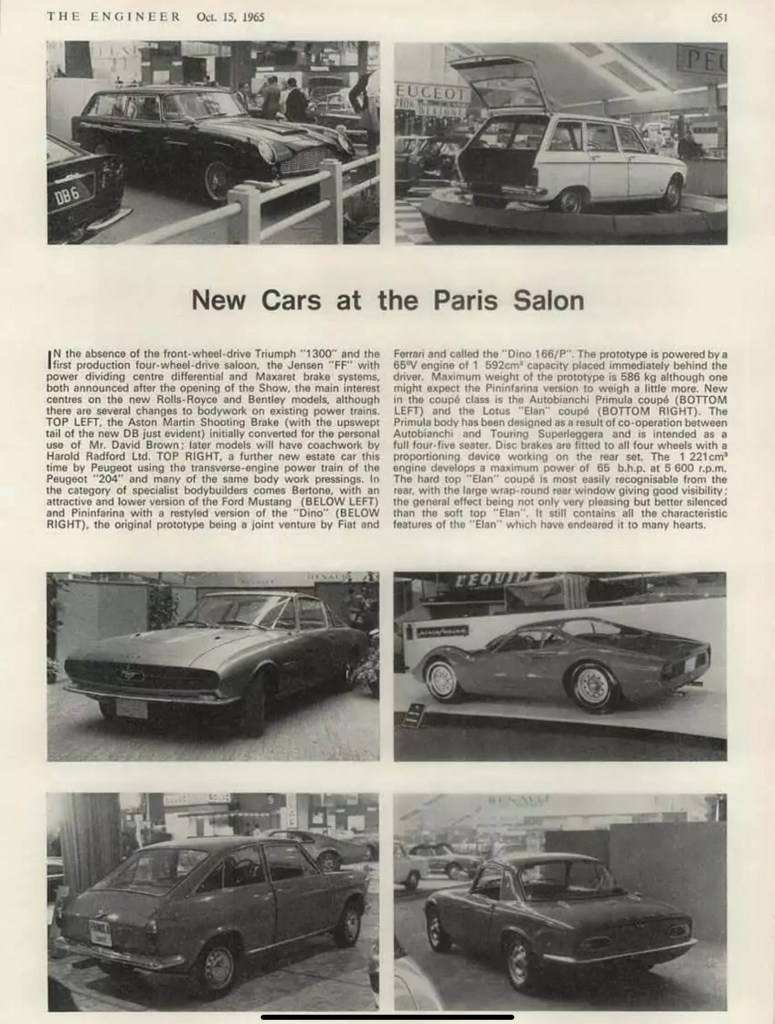
Chassis #840 was sourced from SEFAC, Ferrari’s racing department with the completed car presented at the Paris Salon in the October .
(unattributed)(Getty Images)
Here the cutie is being largely ignored by the world’s horsepower press at the launch of Ferrari’s new 3-litre Tipo 312 Grand Prix car at Maranello in March 1966. John Bolster’s Deerstalker stands out! More about that Ferrari 312 launch here: https://primotipo.com/2017/10/26/surtees-ferrari-312-modena-1966/










 primotipo...