

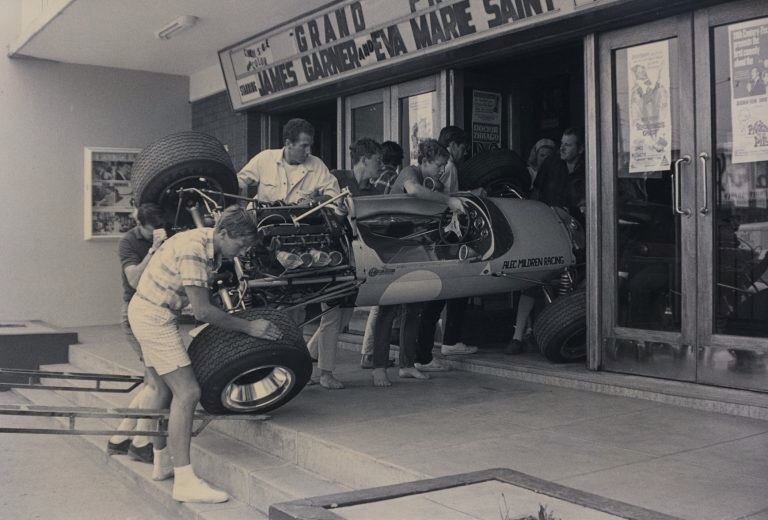
Just a little to the right fellas otherwise we’ll have to twist the chassis a smidge…
Alec Mildren Racing mechanics Bob Grange, in overalls, and Glenn Abbey partially obscured by the left front, manoeuvre their new Mildren (Rennmax) Alfa Romeo 1.6 F2 through the narrow front doors of the Avalon Cinema on Sydney’s Northern beaches.
Both Mildren and Abbey were locals so perhaps the deal to have the racer in situ during the screening of the film Grand Prix was hatched between the theatre owner and Mildren- a nice way to cross-promote his Alfa dealerships closeby and in the city.
The date is the more interesting thing in an arcane kind of way. Grand Prix was released in Australia on July 14, 1967, this car wasn’t built then. It first raced at Warwick Farm on September 5, 1968 in Kevin Bartlett’s hands, and was raced for the first time with a 1.6-litre Waggott TC-4V engine at Symmons Plains in Max Stewart’s tender loving care on March 3, 1969.
So…given the shorts on the fella looking after the right rear Goodyear I’m guessing it’s a school holidays screening in The Summer of ’69, the only thing missing is Bryan Adams twangin’ his Fender Strat (or whatever).
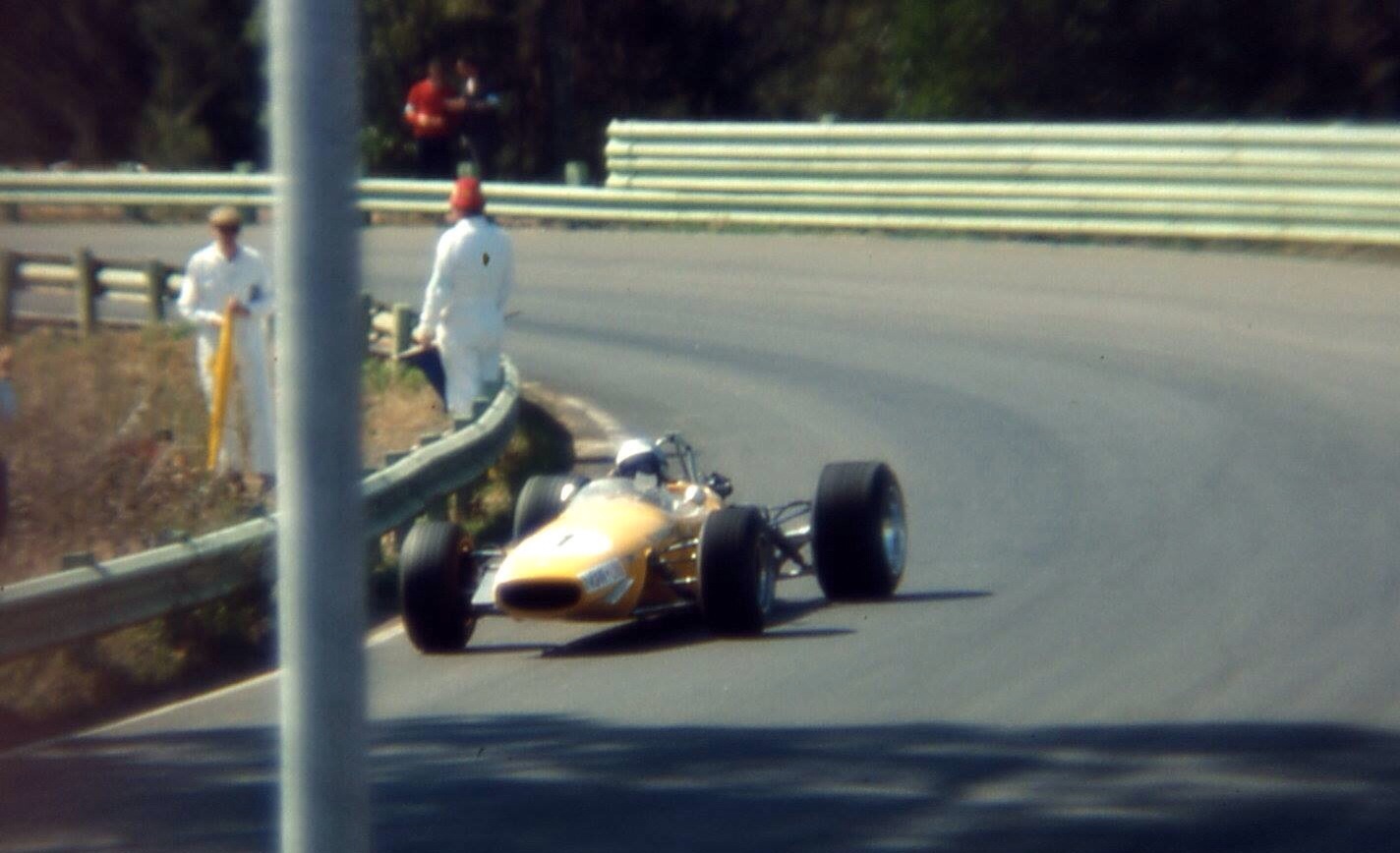
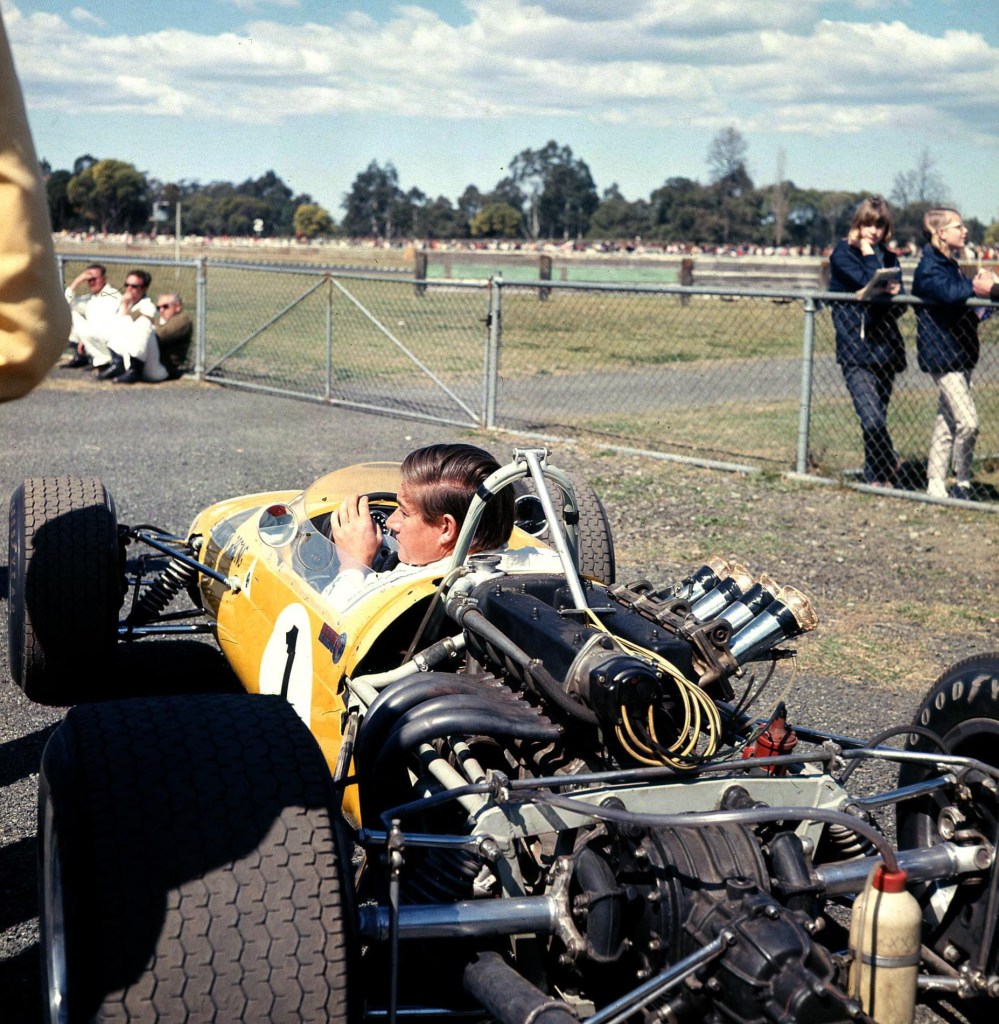
This little Beastie is an oh-so-famous car in Australia. It won a swag of races in Max Stewart’s hands including the 1971 Australian Gold Star Championship and the 1972 Singapore Grand Prix.
It had more engines than you and I have had hot dinners: the Alfa Romeo DOHC twin-plug, four-valve 1600cc F2 featured in this article, Waggott TC-4V DOHC four-valve 1600/1860/2000cc, Alfa Romeo DOHC twin-plug, two-valve, Alfa Romeo 2000cc GTAm and Lotus/Ford DOHC two-valve 1600cc motors.
Treat this as the first of two articles on the Mildren Alfa/Waggott/Alfa/Ford dealing with its early life in 1968-1969 with a particular focus on the Alfa Romeo four-valve engine. See these two Singapore GP pieces; https://primotipo.com/2016/11/24/singapore-sling-with-an-elfin-twist/ and; https://primotipo.com/2018/05/29/singapore-sling/
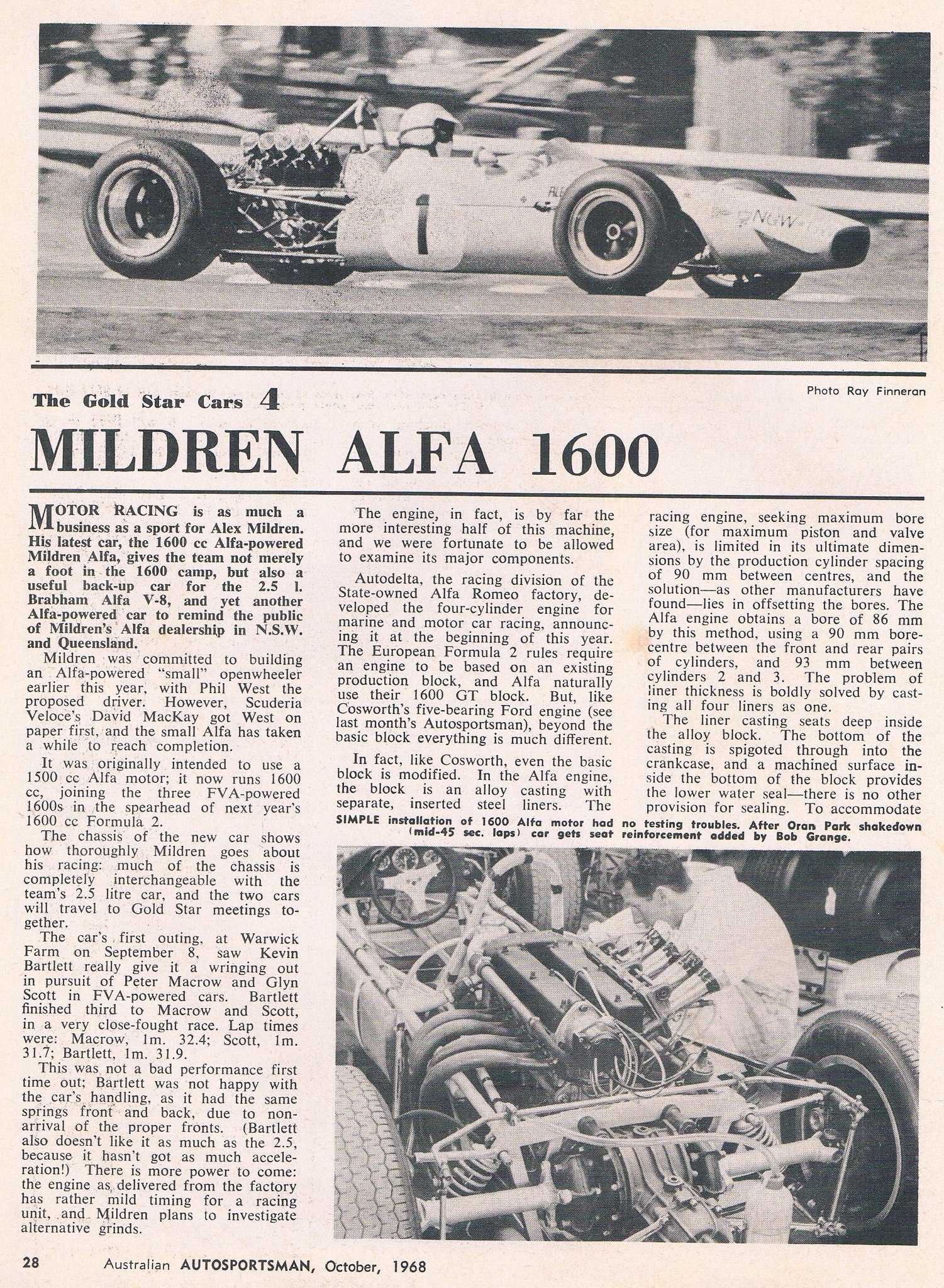
The article below on car and engine was published in the October 1968 issue of Australian Autosportsman and deals with the detail wonderfully well. I suspect it’s the best article on the planet on an extremely rare engine.
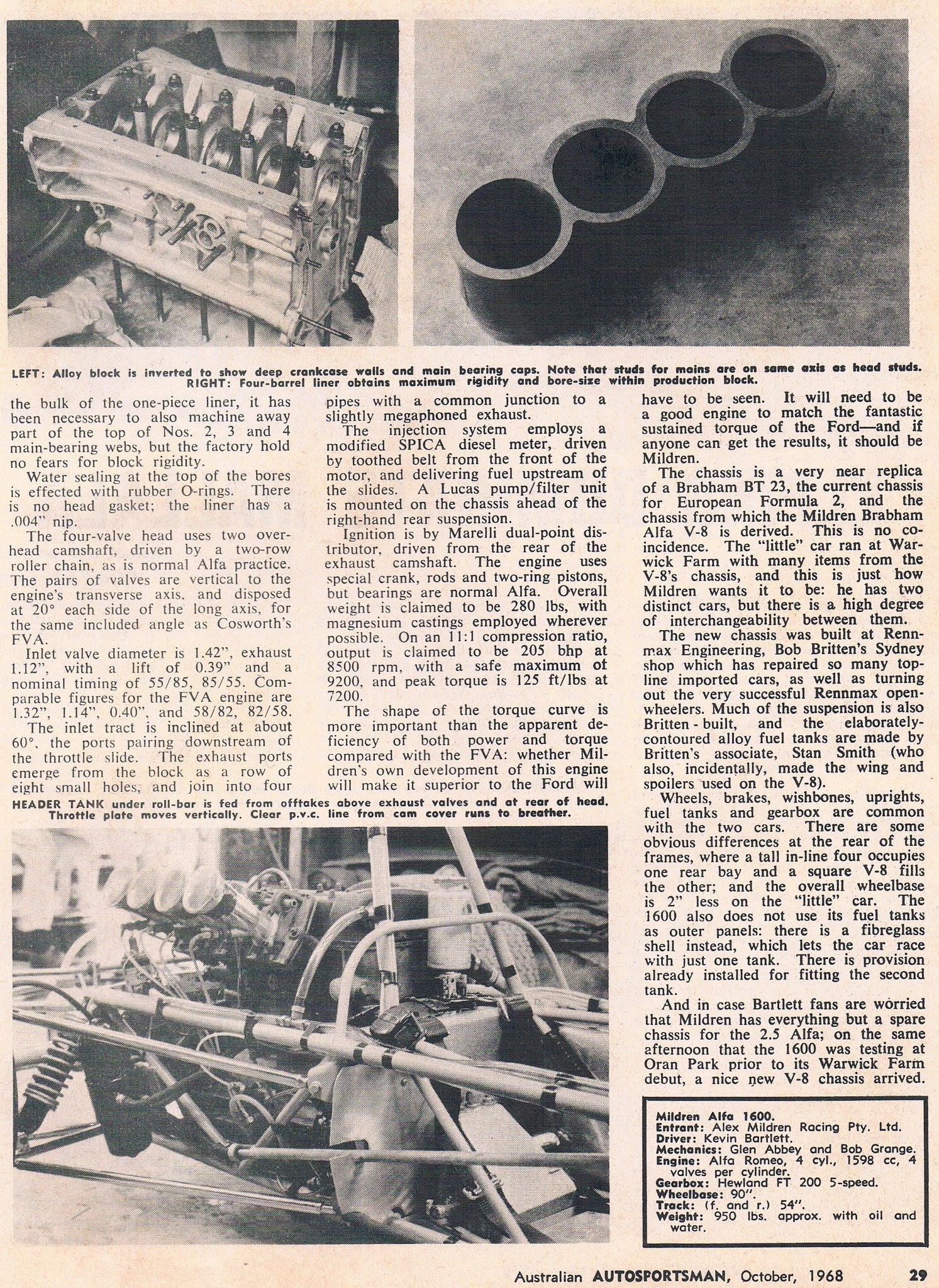
Kevin Bartlett commented on the performance of the engine in recent times on social media, “There was an issue with the piston ring to bore clearance which caused high oil use and lack of power, so the engine was returned to the maker. From that time the Waggott was born.”
So quickly out of love with the project had Alec Mildren become, that he advertised the car for sale in the November 1968 issue of Racing Car News.
But things moved quickly after that, Max Stewart was signed to join KB at Mildrens and Alec reached agreement with Merv Waggott to be the first to use his new Waggott TC-4V 1.6-litre Ford block engine.
Max made his race debut with Mildrens in the February 2, 1969 Australian Grand Prix at Lakeside where he was sixth in the Mildren Alfa, four laps adrift of the winner, Chris Amon’s Ferrari 246T.
After that, the Alfa Romeo/Autodelta engine was removed and in its place, the Waggott was installed, with Max taking his race debut with it in the first round of the 1969 Gold Star at Symmons Plains on March 3. Fuel metering unit problems ended his day early.
I’m not so sure the little four-valve engine left Australia either…
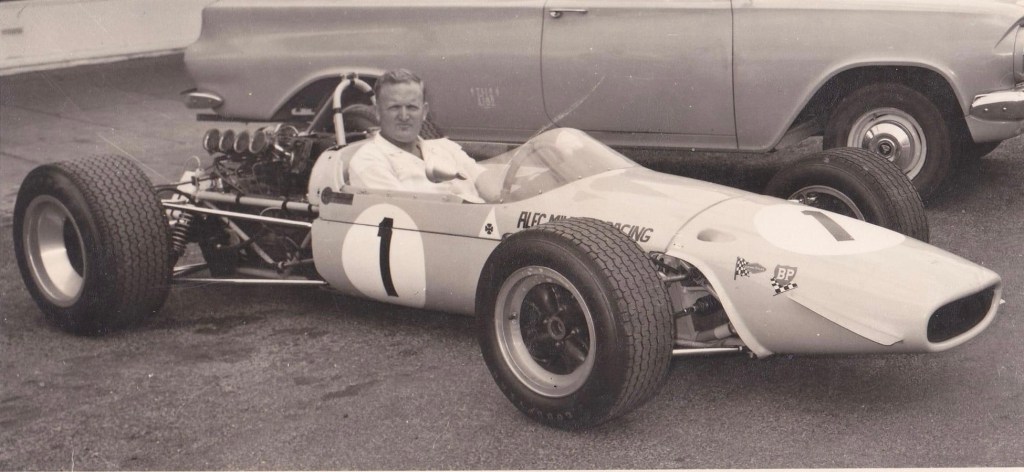
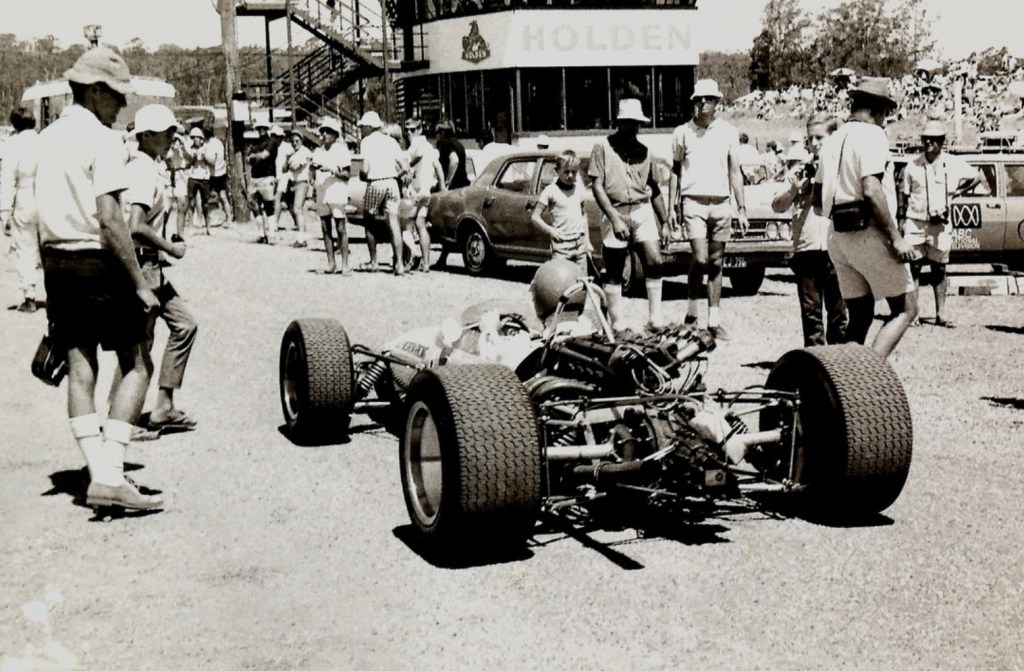
Group 2 and F2…
Upon further research it’s apparent just what a rare car the Mildren Alfa was for the short time of its existence. As indicated above, the Alfa Romeo F2 engine was replaced by Merv Waggott’s very first 1600 TC-4V engine for the first 1969 Gold Star round at Symmons Plains.
Autodelta’s primary racing programs at the time were the Tipo 33 sports-racers which contested the World Endurance Championship and its 105 Series Coupe Alfa GTA Group 2 program, and the more modified Group 5 categories.
The 1600 four-valve engine was first fitted to Lucien Bianchi’s GTA for the 1967 Giro di Corsica, however he was eliminated at the beginning of the race. ‘Another engine was installed in Nanni Galli’s Brabham F2. At the time the price for this splendid masterpiece was 3,500,000 lire. The engine was also available with a normal GTA cylinder head for use with Weber carburettors’, Tony Adriaensens wrote in Allegerita.
Indeed, it’s probably (make that definitely) due to Group 5 priorities that the four-valve injected engine was built rather than the needs of F2.
A careful review of the European F2 Championship results (1.6 litres from 1967 to 1971 inclusive) on the F2 Index site shows only a very small number of such races in which Alfa Romeo powered cars participated. Even then, the descriptions of the engines are such that it’s not possible to make calls as to whether two-valve GTA engines or the four-valve motors were fitted. It’s also fair to say that both engines may have been fitted to chassis raced in Italian national level events.
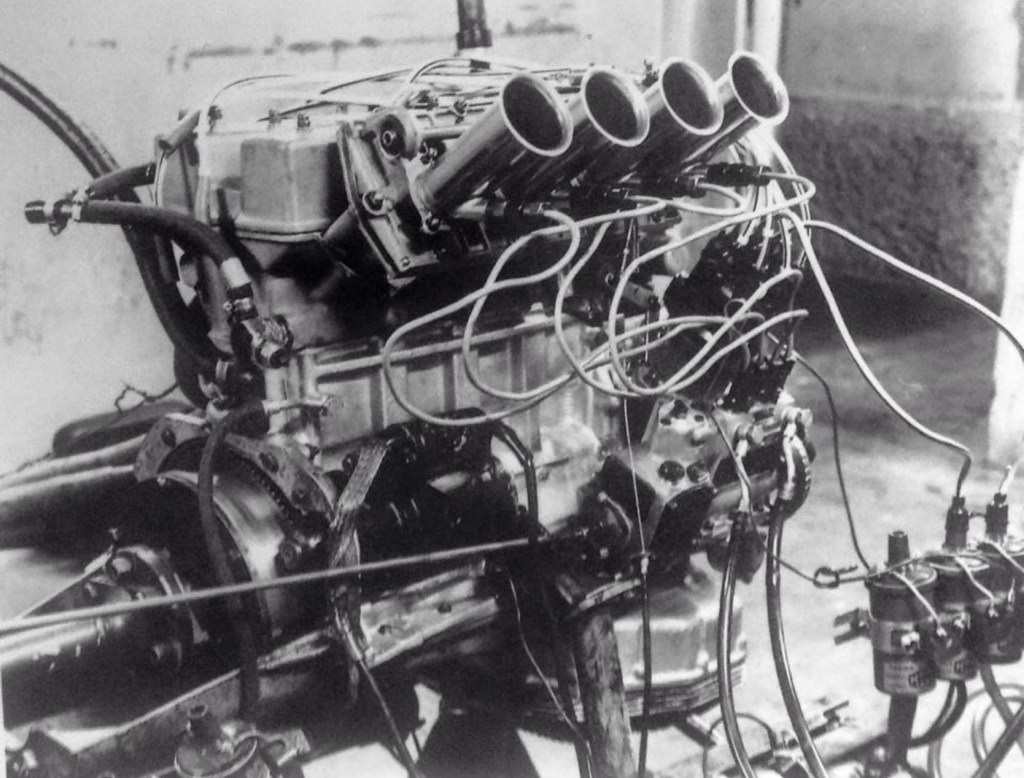
For the record, the Alfa Romeo engined European F2 Championship entries, of ‘a works type’ as against a tiny number of privateers in older cars, in the 1.6 litre formula years are as follows: 2/10/67 GP Rome at Vallelunga Nanni Galli Brabham BT23 Alfa GTA Q16 and NC, 28/4/68 GP de Madrid Jarama Nanni Galli Brabham BT23 Alfa GTA Q20/10th, 23/6/68 Lottery GP Monza Giorgio Pianta Brabham BT23 Alfa GTA/Autodelta DNQ. Brabham BT23-8 was used on all three occasions, the car was entered by the Monza based Scuderia Ala D’Oro. I am intrigued to know if these were effectively works-entries in which case it is plausible the engines deployed were four-valvers.
To state the obvious, there was never a serious works effort to race the four-valve engine in F2, the only Alfa Romeo engine which could seriously hope to challenge the absolute dominance of the Ford Cosworth FVA.
Brabham née Rennmax née Mildren Alfa…
The reason Alec acquired the Alfa F2 engine was a business one, to promote his Alfa Romeo dealerships. Equally, the decision to go with Merv Waggott’s engines shortly thereafter, initially in 1600 cc capacity, later 1850cc and ultimately 2-litres was also a business one. That is, to put the best engines in his two cars: the Rennmax built Brabham BT23 replica which is the subject of this article, and the Len Bailey designed, Alan Mann Racing built monocoque Mildren ‘Yellow Submarine’ first raced by Gardner and then Bartlett with Alfa Tipo 33 2.5 V8’s and later 2-litre TC-4V Waggotts.
The potted, short form history of the car is as follows.
Rennmax Engineering’s Bob Britton created a Brabham BT23 jig from Brabham BT23-5 crashed by Denny Hulme during the 1968 Tasman Series. He built a number of cars on this jig as summarised by Allen Brown on oldracingcars.com here; http://www.oldracingcars.com/rennmax/bn3/
Fitted with an Autodelta Alfa Romeo 1.6-litre four-valve valve engine the car was first raced by Kevin Bartlett at Warwick Farm on September 8, 1968, it was then put to one side as the team focused on Bartlett’s successful Gold Star campaign in the Brabham BT23D Alfa.


The chassis became Max Stewart’s regular car when he joined the Mildren Team in 1969. He first raced it, as recorded above, at the 1969 Lakeside Tasman round to sixth. Then the car was fitted with a Waggott 1600cc engine, for the opening, March 1969 Symmons Plains Gold Star round, later in the season a Waggott 1860 was used.
Fitted with a Waggott 2-litre from the 1970 Tasman through the 1970 Gold Star, 1971 Australian Tasman rounds and Gold Star, Max won the 1971 Gold Star triumphing over rumbling 5-litre F5000s.
It raced in the April 1971 Singapore GP, probably powered by a 1600 Alfa Romeo GTA engine fitted with a GTAm 2-litre cylinder head. By the time of the 1971 Gold Star season Alec Mildren Racing had ceased, the car was Stewart’s but was still entered and called the Mildren Waggott.
It was raced by Melbourne’s Tony Stewart (no relation) with support from Paul England in the 1972 Australian Tasman rounds fitted with a 2-litre Waggott.
Max raced and won the April 1972 Singapore GP powered by a Paul England 1.6 litre Lotus/Ford twin-cam. With another engine change, it contested the May 1972 JAF Japanese Grand Prix Waggott 2-litre powered.
The car returned to Australia and contested some 1972 Gold Star rounds driven by Allan Grice, Paul England 1.6 litre twin-cam powered. Max retained ownership of the car during this period.
Raced in the 1973 Malaysian GP to fourth, and the Singapore GP to seventh by Max, the car was entered as a Rennmax, 1.6 England powered.
The car was sold circa 1974 by Max to English born Australian F2/F5000 driver Ken Shirvington. He later sold it to Max Coulter, who raced it for a while then offered it for sale in the February 1981 issue of Racing Car News, raconteur and vastly talented engineer, Greg Smith of East Brighton, Victoria was the purchaser. It was a complete car, chassis tagged ‘AMR003’ fitted with a 1.6 BRM twin-cam which was consistent with the ANF2 class in which the car last raced contemporarily.
Amongst the bits Smithy acquired were engine mounts for the Ford L-Block Waggott 1600/1860 engines as well as the Waggott bespoke, alloy block 2-litre. He also had the Japanese GP long-range fuel tanks. The car was beautifully restored by Smithy and fitted with a 234bhp Waggott 1860 FVA after an eight year search for an engine.
Smith sold the car to Queenslander Max Pearson circa 2008. He further cosmetically restored it inclusive of fitment of a Waggott 2-litre engine. Pearson sold the machine to Stewart Corner in 2022.
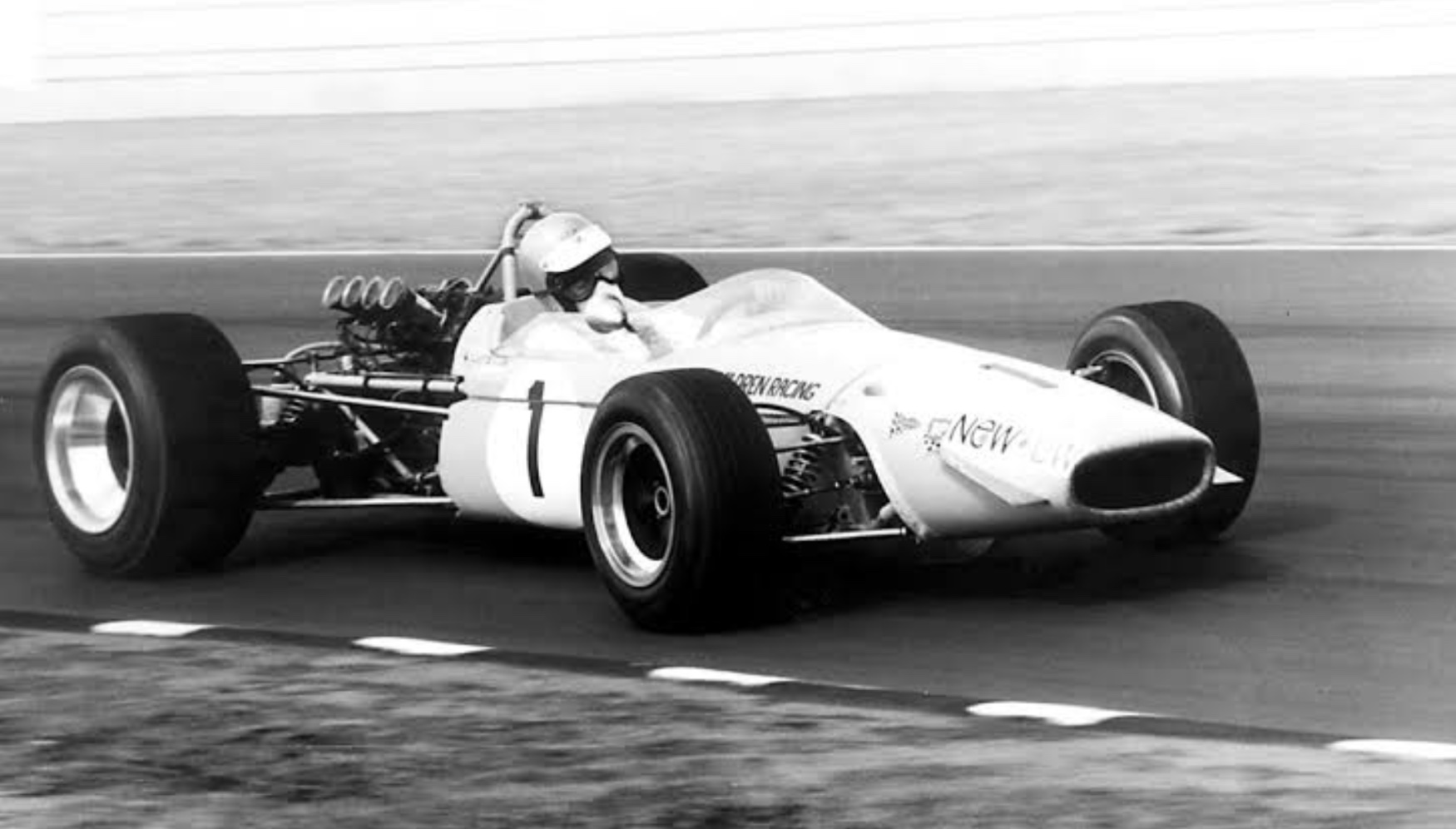
In February 2018, via Facebook posts of the photograph at this articles outset, it became clear that Ken Shirvington sold another chassis tagged ‘AMR03’ to Joe Farmer. Farmer believes the chassis may have been built after the 1969 Easter Bathurst collision between Niel Allen, McLaren M4A Ford FVA and Stewart, Mildren Waggott 1.6 TC-4V. Smith or Kevin Bartlett are the only two men alive who could identify when the spare frame was built by careful examination of the chassis in total, and the engine bay in particular.
Afterthoughts…
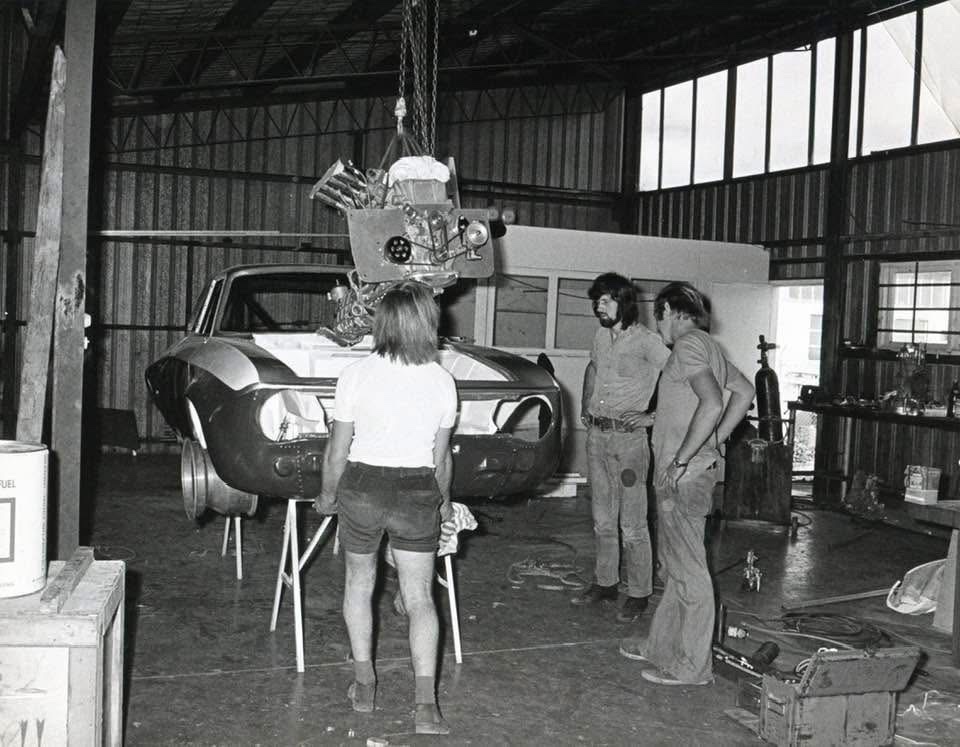
Given Vin Sharp’s responses – see them at the bottom of this piece – shown below is the Brian Foley owned ex-Mildren Racing/John French Alfa Romeo GTA #752561 being further lightened, strengthened and modified for its 1973 career as a ‘Sports Sedan’ in Bowin Designs’ Brookvale, Sydney factory in late 1972-early 1973.
Apropos Vin’s comments, it may well be ‘our-engine’ being inserted into the car albeit now at a capacity of over 1900cc. More about the two Mildren GTAs here: https://primotipo.com/2014/11/27/the-master-of-opposite-lock-kevin-bartlett-alfa-romeo-gta/
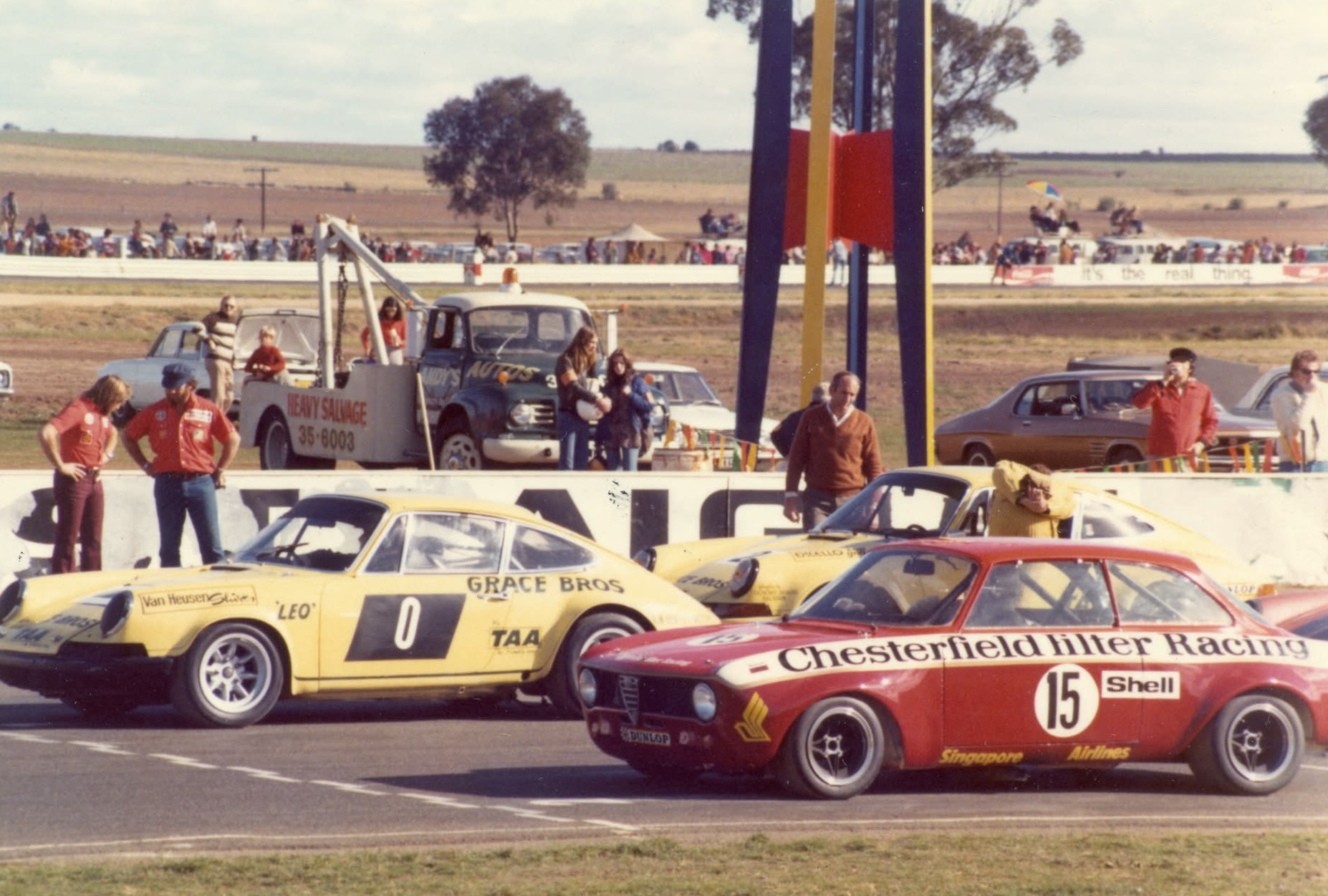
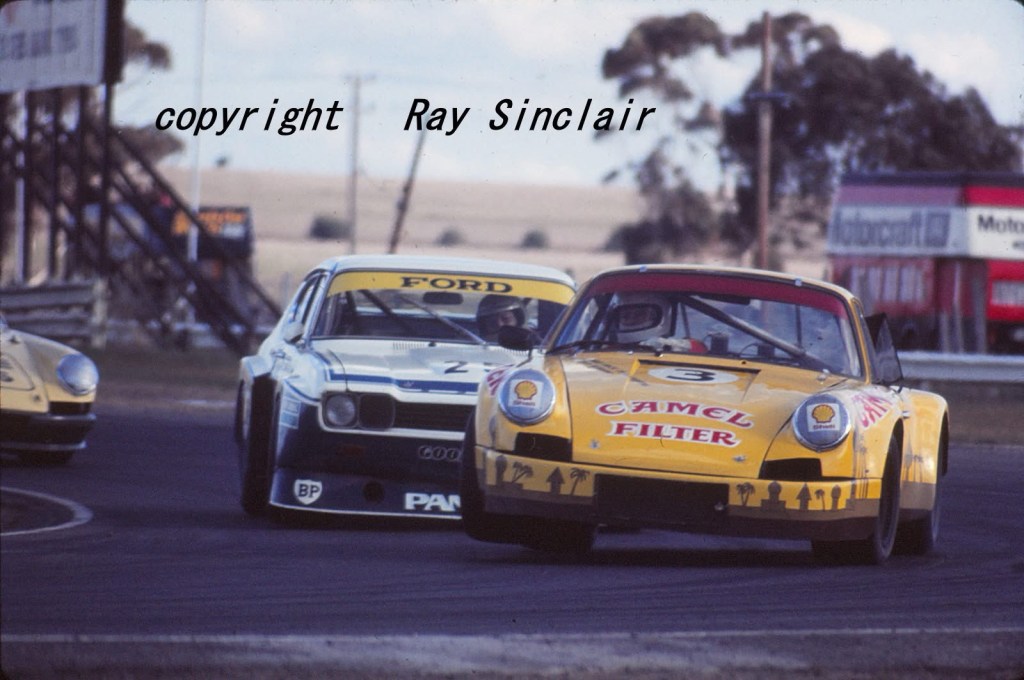
Brian Foley on the grid at Calder during 1973, the so-called GTA Lightweight #752561 after its surgery at Bowin Designs including fitment of Bowin wheels.
That’s Leo Geoghegan’s Porsche 911S alongside and I think, Bill Browns Carrera RS in the same Grace Bros yellow-hue.
Yes, the GTA Lightweight does look like Foley’s GTAm #1531068 but they are different – albeit similar at a distant glance – cars. See the article linked above for the detail, and this one on the GTAm: https://primotipo.com/2024/07/13/alfa-romeo-1750-gtam/
Credits/References…
Greg Smith and his Mildren and Waggott archives, Bryan Henderson, Avalon photo taken by Geoff Searl, Australian Autosportsman, Dale Harvey, Mike Tyler, Central Western Daily, Richard Watson, Vin Sharp, John Barnes, Glenn Moulds
Tailpiece…
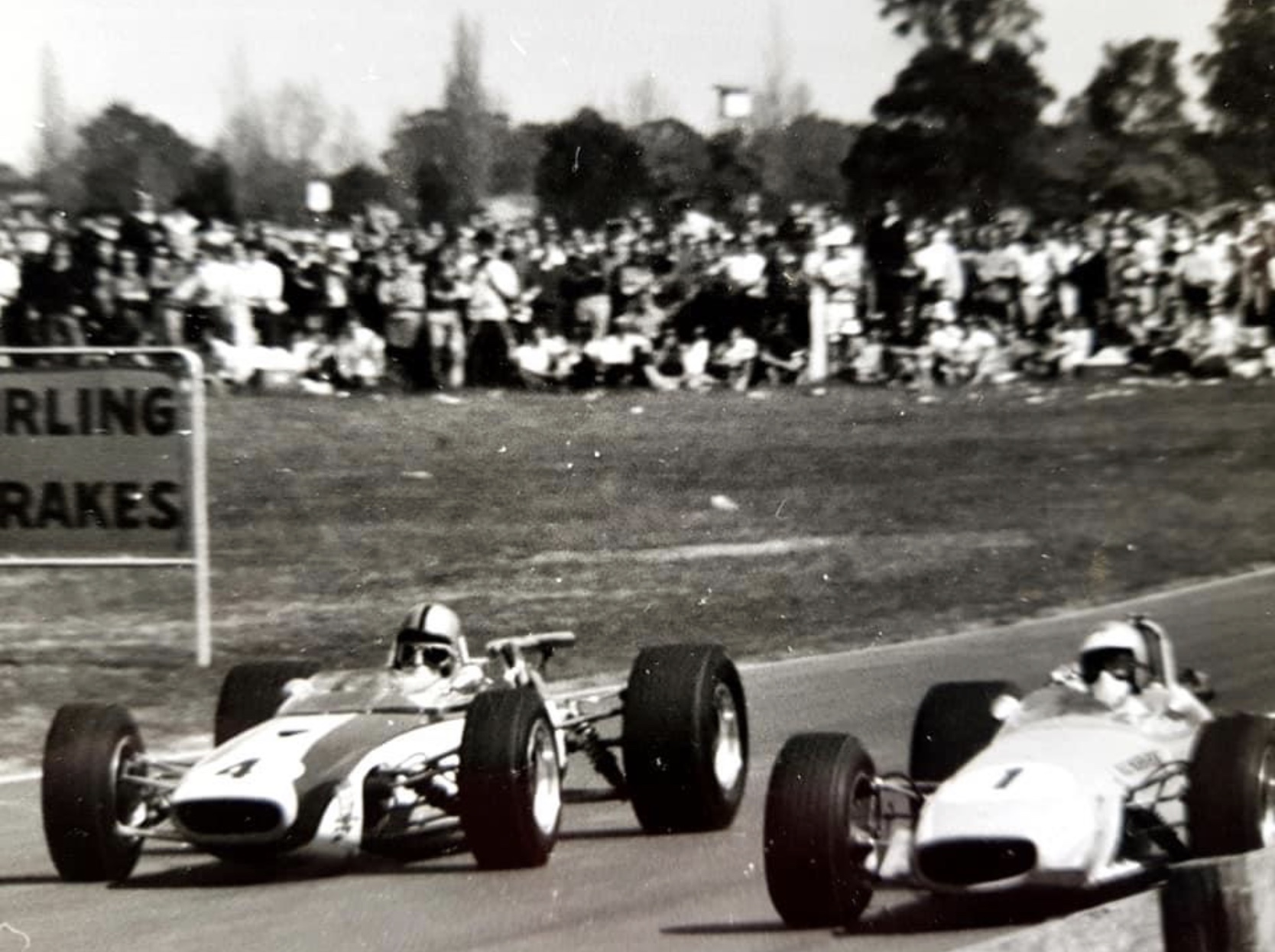
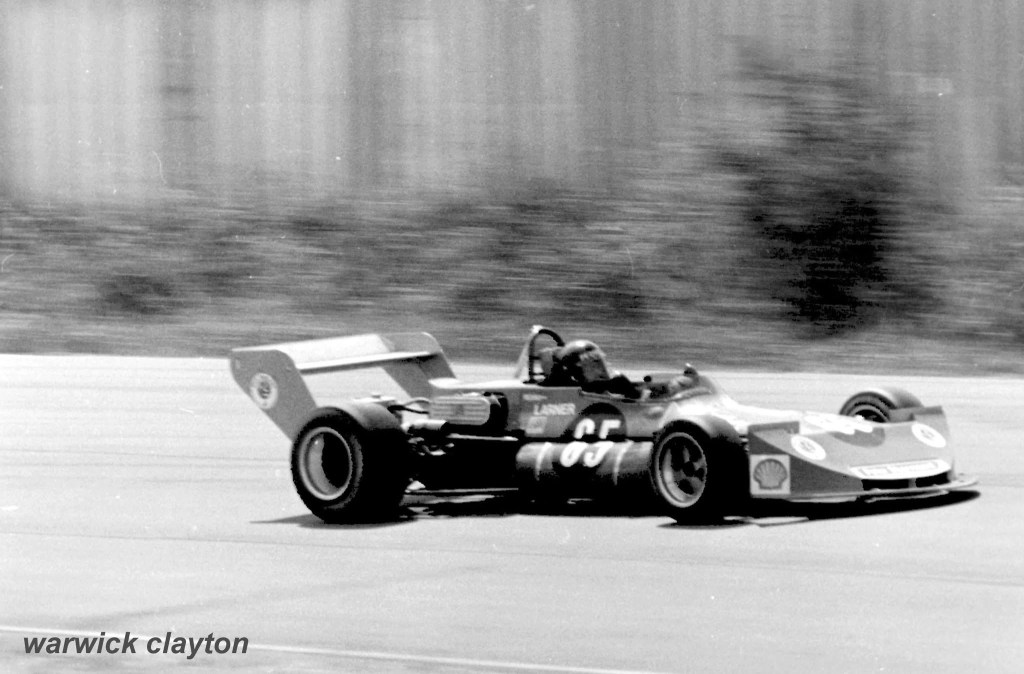
Two 1.6 litre Four-Valvers into Creek Corner, Peter Macrow plunges down the inside of KB in Tony Osborne’s McLaren M4A Ford FVA.
Finito…
 primotipo...