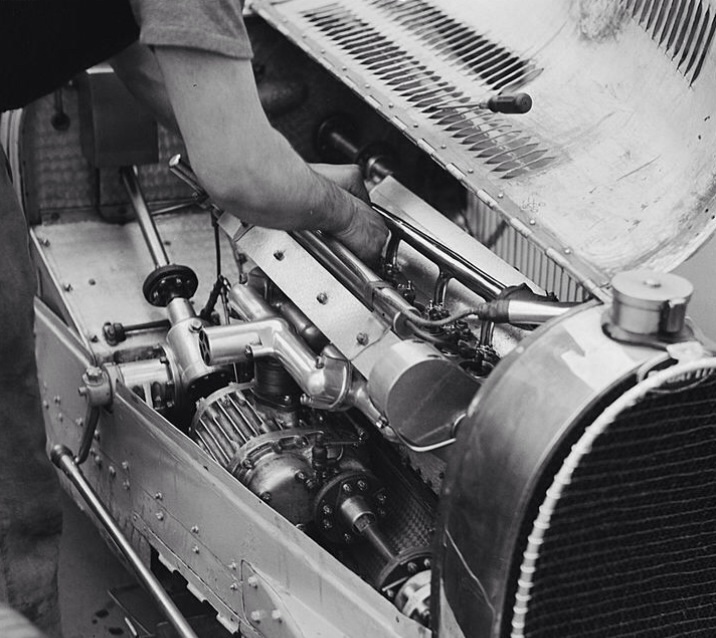
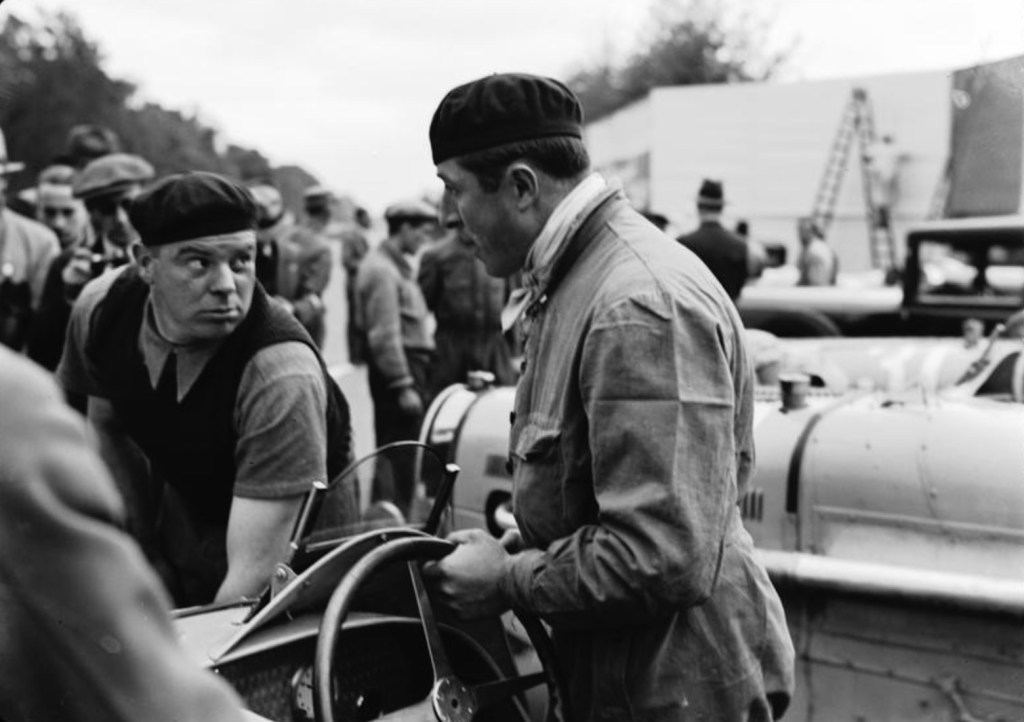
The magic hands are those of Bugatti’s Chief Mechanic, ‘Le Grand Robert’, Frenchman Robert Aumaitre working on a T51 straight-eight, twin-cam, 2.3-litre engine…
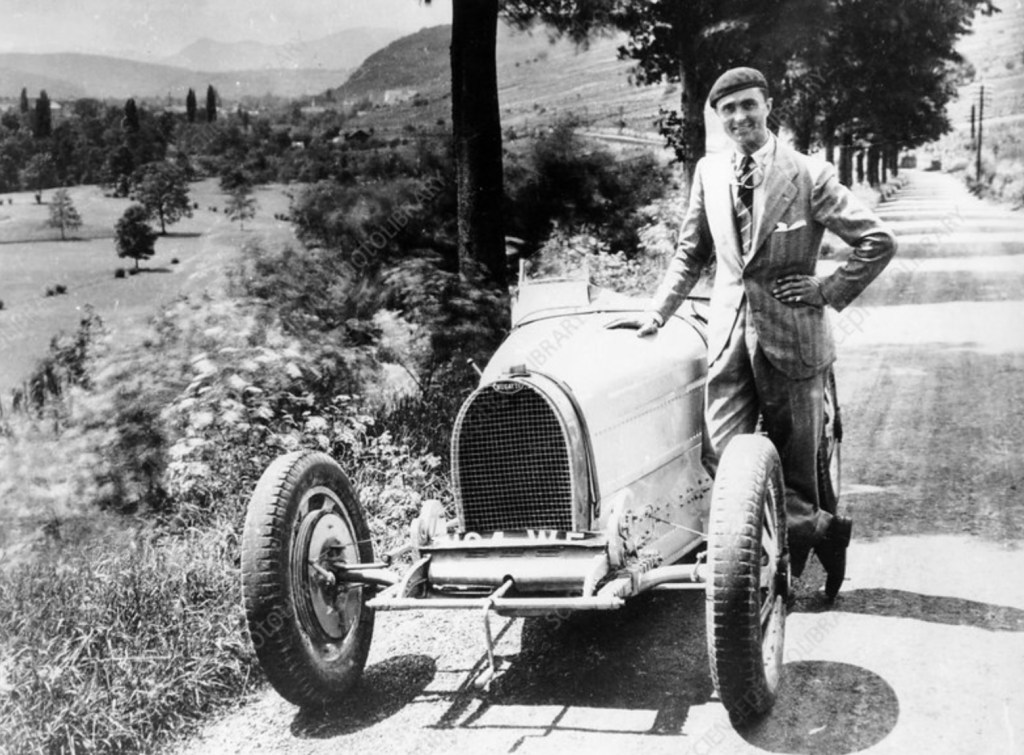
Louis Chiron with his Bugatti Type 51 near Molsheim in 1931 (sciencephoto.com)T51, Nurburgring German GP July 19, 1931. Race won by Rudy Caracciola’s Mercedes-Benz SSKL by over a minute from the Louis Chiron and Achille Varzi Bugatti T51s (Z Glass)
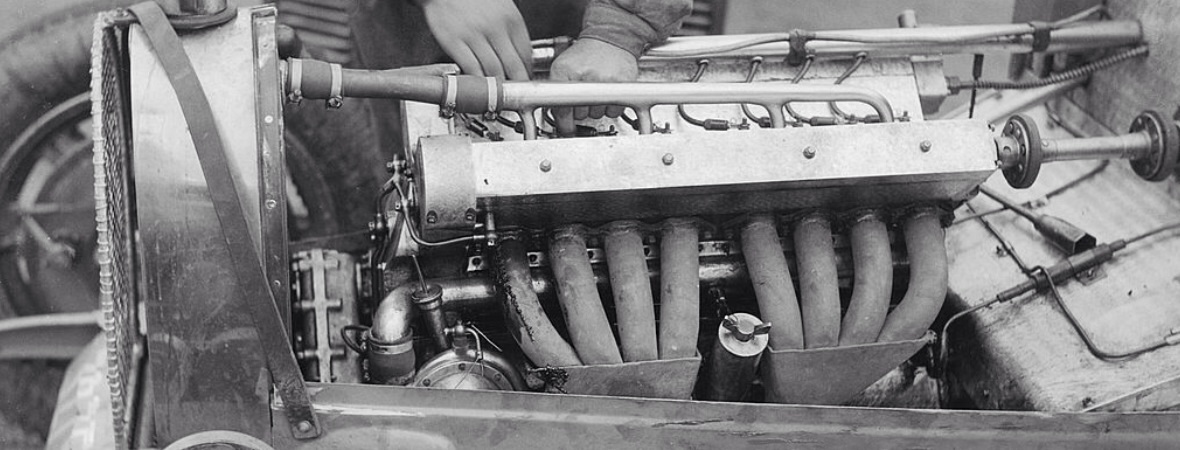
Bugatti’s Miller 91-inspired twin-cam design – 1931-35 T51 2262cc 60×100, T51A 1493cc 60×66, T51C 1991cc 60×88 – featured a monobloc design with a shared crankcase. The main bearings comprised three ball bearings in the middle and two roller bearings, one at each end. Rod bearings were roller. Lubrication was by jet and splash with a special oil pipe for the front main bearing.
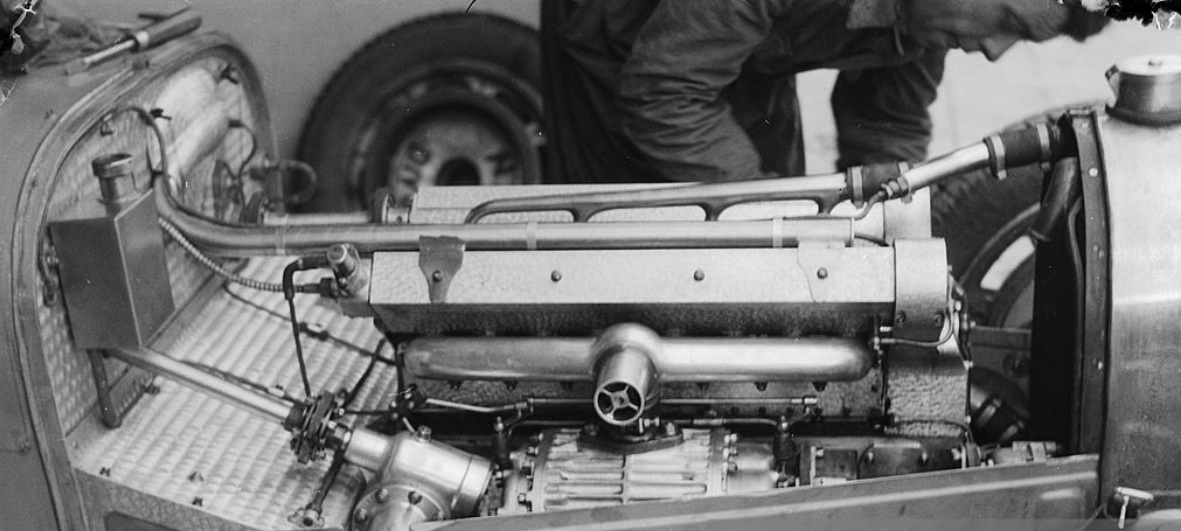
The twin overhead camshafts were driven by a train of gears mounted at the front of the engine and operated two valves per cylinder. A single (T51) Zenith 48K carb fed a Roots type supercharger, with a Scintilla magneto firing one plug per cylinder. The engine gave about 180bhp @ 5500rpm.
T51 Nurburgring German Grand Prix July 19, 1931. Inlet side (Z Glass)Robert Aumaitre and Pierre Veyron at the Avus, Berlin. Veyron won the Avusrennen Voiturette race, 197km, in a Type 51A on May 21, 1933, from Ernst Burggaller’s similar car (Z Glass)
Robert Aumaître ‘came to service with Bugatti in 1930 and was Jean Bugatti’s mechanic. He experienced Jean’s last moments, when he was killed on August 11, 1939, a traumatic experience that haunted hm until his own death,’ recorded the bugattipage.com.
‘After WW2, he assisted French driver Jean Monneret and was involved in record attempts with various Vespas at Montlhery. He designed a Vespa-driven catamaran that crossed the channel in 1947, and was involved in a rally for bicycles with engines from Paris to Alpe d’Huez. After his retirement as manager of a big Cognac company, he spent his last years in Molsheim,’ where he died aged 93 on January 11, 1997.
Strange is that this piece omits Aumaitre’s time with Gordini post-war, where he was again Chief Mechanic.
Credits…
Zoltan Glass/Science and Society Picture Library, bugattipage.com, National Science and Media Museum, Bradford, sciencephoto.com
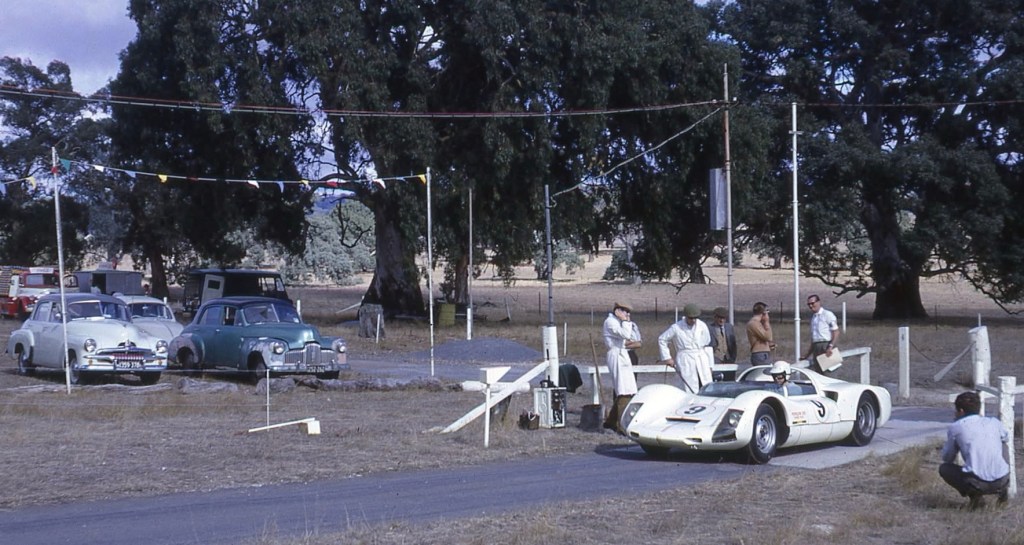
Alan Hamilton launches his Porsche 906 Spyder off the line at Collingrove during his successful assault on the track record over the Easter 1967 long weekend, 35.60 seconds.
It’s a delightfully bucolic Angaston, Barossa Valley scene complete with a couple of Humpy Holdens – an FJ and 48-215 – and a part hidden Gunter-Wagen, VW Beetle. Great stuff, John Lemm.
While the laddos should be drinking in the 908 visage, their eyes are on the prize sitting in the Valiant AP5/6! That’s a Toyota Crown S40 and a Holden HD too. The Japs really upset the local order with their Crown, which was far posher and better built than the contemporary Holden Premier and Ford Fairmont. I wonder who the bloke in the red driving suit is?
(J Lemm)
And below on April 10, 1971, Easter again, Hammo is in the process of winning the second of his four Australian Hillclimb Championships, at Collingrove with his second 906 Spyder, this one had chassis number 906-007 too.
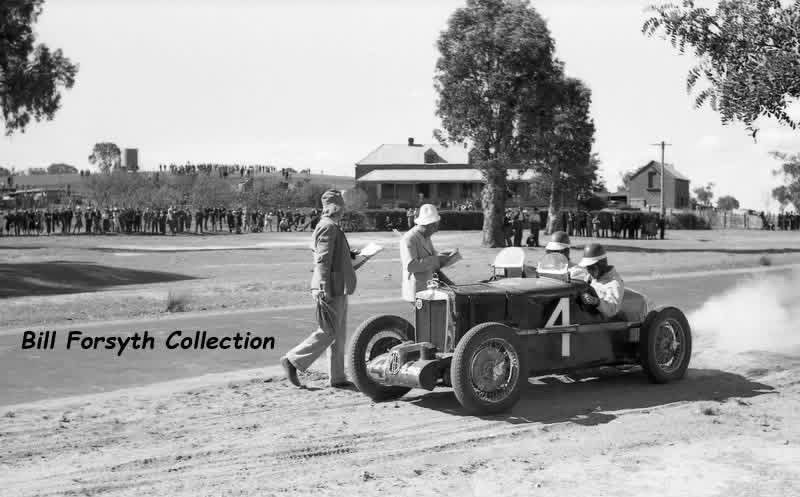
The great Hope Bartlett’s MG Q-Type at Wirlinga during the March 1938 Interstate Grand Prix/Albury Grand Prix weekend. The race was won by Jack Phillips and Ted Parsons in their self-built Ford V8 Special.
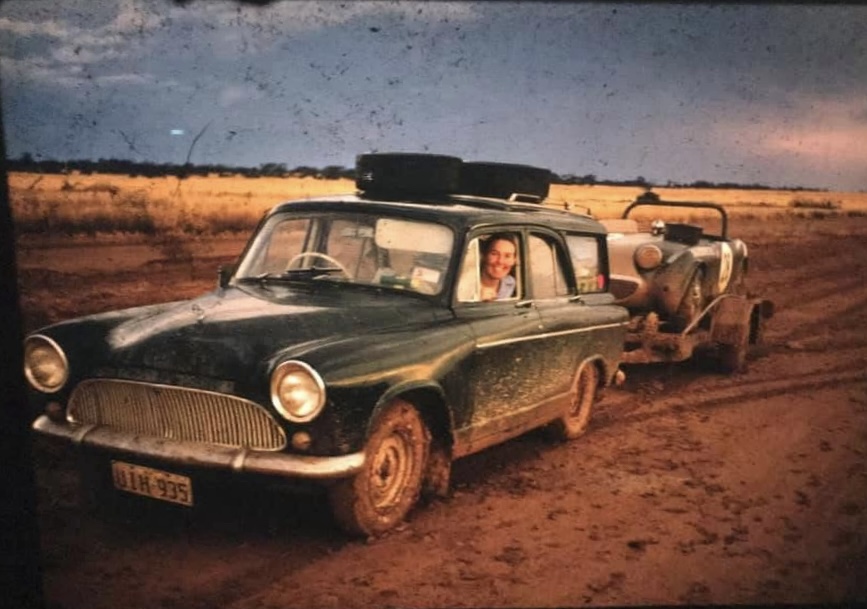
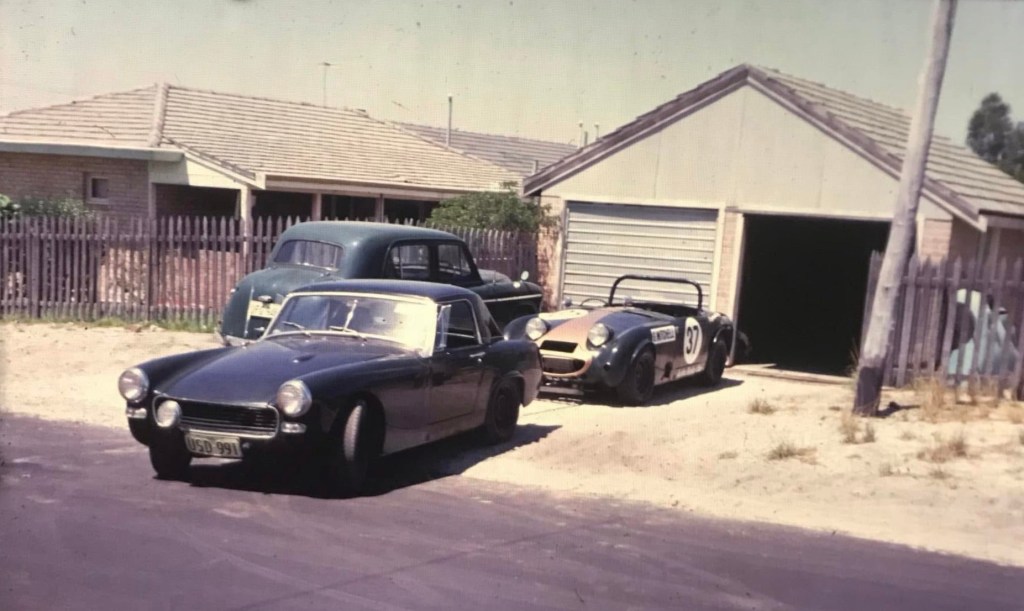
Commitment, Gordon Mitchell was absolutely nuts about his racing! ‘My Simca Station Wagon that I bought for $15, towing my Bugeye Austin Healey Sprite across the Nullarbor to an early night race meeting at Oran Park and a race meeting at Warwick Farm in 1971. Memories.’ It’s only 3820 km each way…London to Moscow is 2900 km.
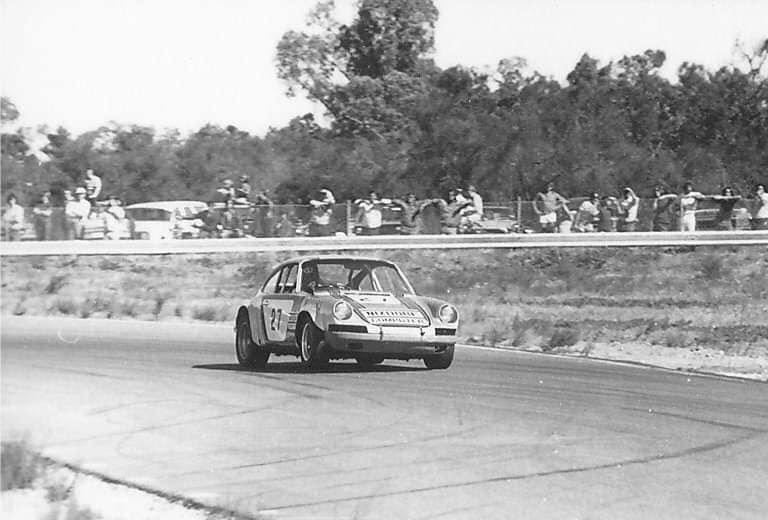
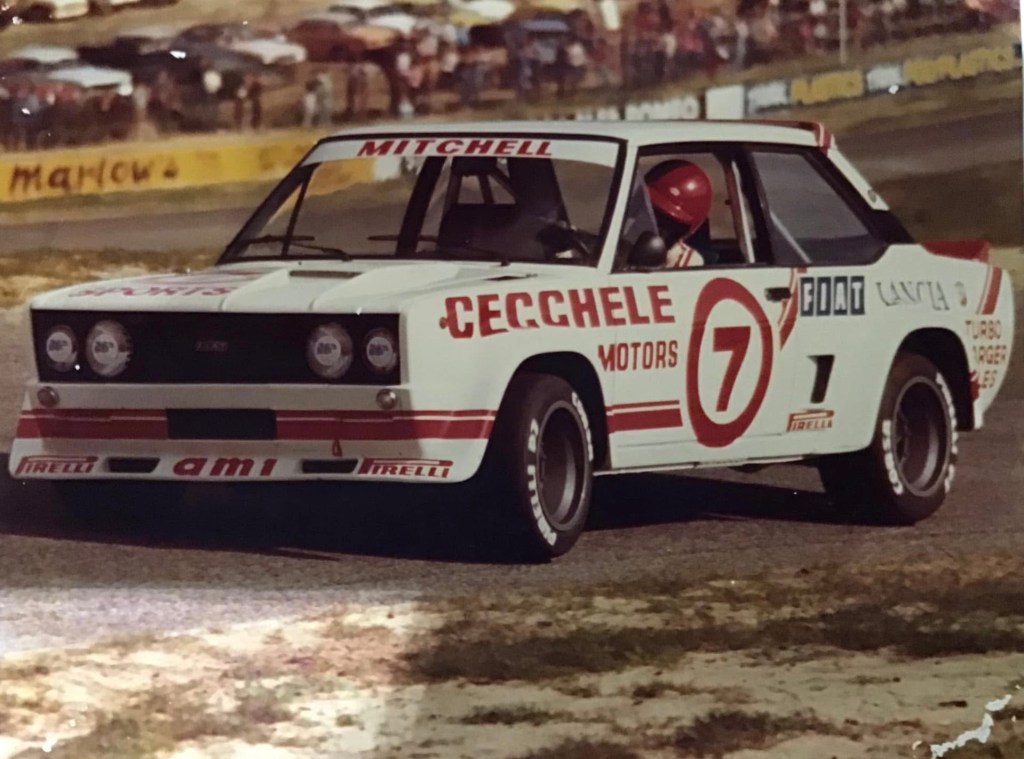
Mitchell was a racer of vast experience with a CV extending from several Sprites, to Porsche 911S, Morris Marina V8, Alfa Romeo GTV, Fiat 131 Abarth, Fiat X19 Abarth and many more.
Fiat 131 Abarth Wanneroo (G Mitchell Coll)
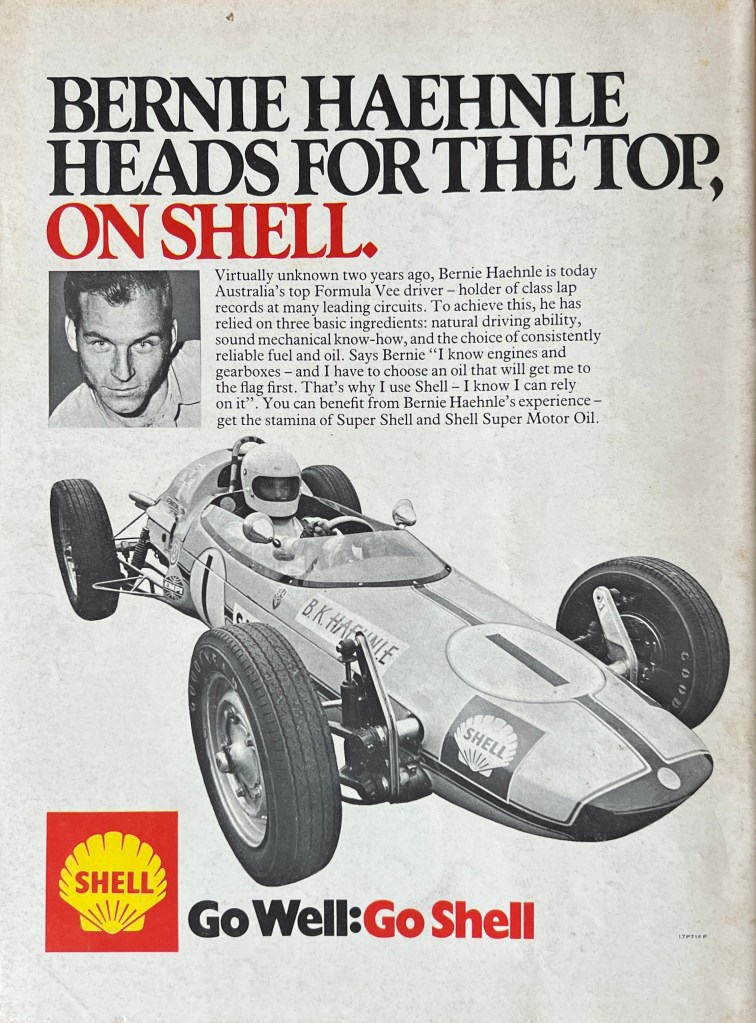
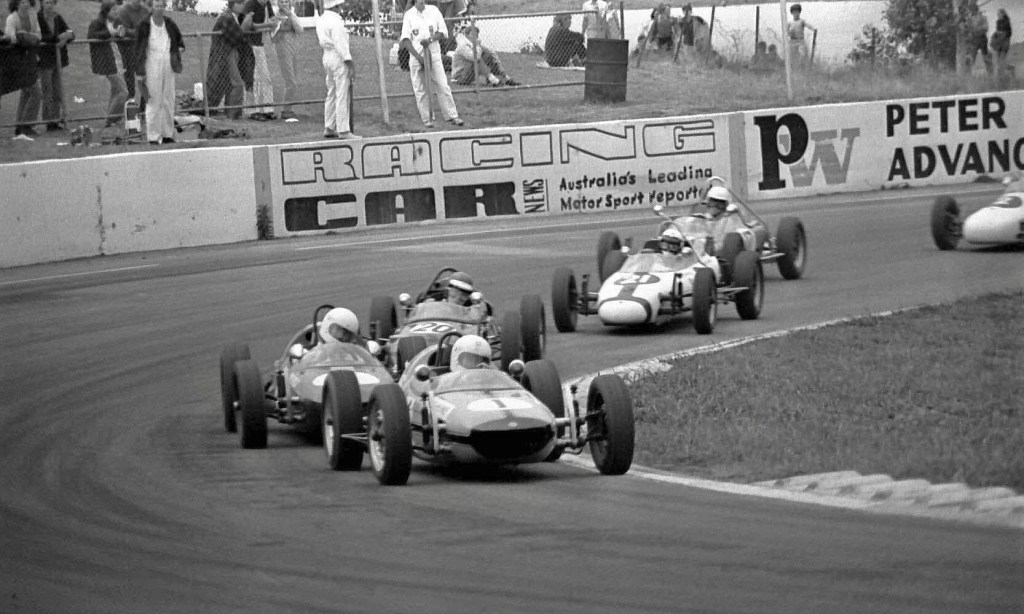
I’ve had some fun lately thumbing through my 1969-72 collection of Racing Car News researching a piece on FoMoCo Oz two Ford GTHO Super Falcons. It takes a helluva long time because of the tangents, not least the ads, wasn’t it a great mag in the day?
Bernie Haehnle was a turn of the 1970s Formula Vee Ace who did well in Series Production and a season or so of Formula Ford in a Bowin P6F. What became of him?
(L Hemer)
‘The Narellan Cup meeting at Oran Park on 6th November 1971, was the first night meeting held after daylight saving began in NSW,’ wrote Lynton Hemer.
‘This meant that the organizers could include Formula Vees in the programme with 4 and 6 lap races at 5:30 and 6:30, before the darkness set in. Here are Bernie Haehnle, Damon Beck, Paul Bernasconi, Laurie Campfield, Denis Riley and Enno Buesselmann.’
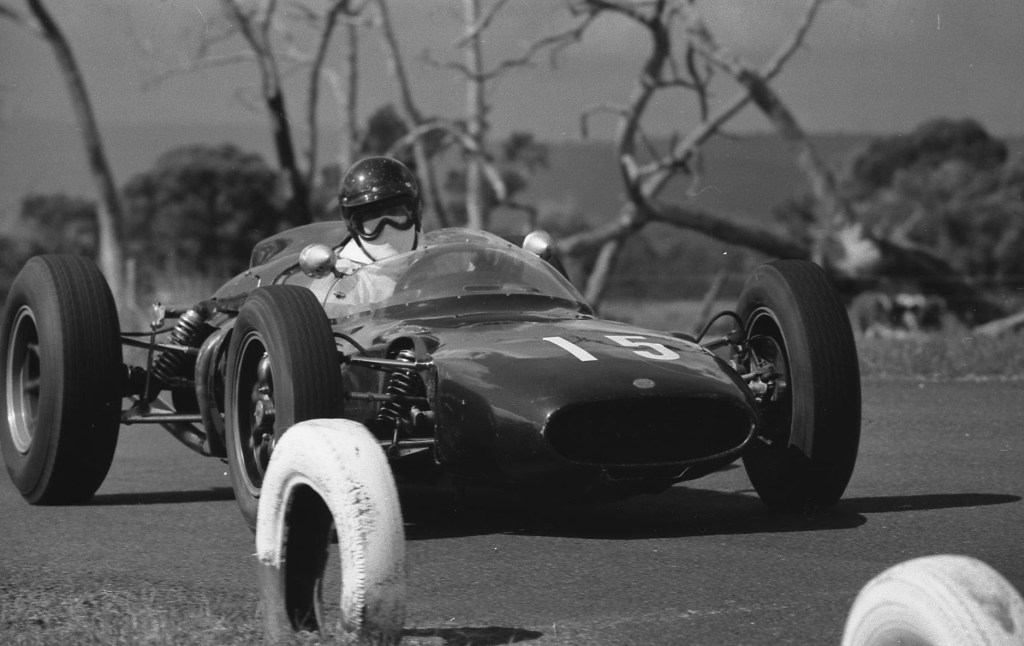
Bruce McLaren on the way to winning the November 18, 1962, Australian Grand Prix in his Cooper T62 Climax at Caversham, Western Australia.
It was a lucky victory in that Jack Brabham was taken out when he zigged, and Arnold Glass zagged, eliminating Jack’s Brabham BT4 Climax and clipping the wings of Arnold’s BRM P48 Buick 3.9 V8. John Youl and Bib Stilwell were second and third in Coopers T55 and T53, respectively.
(K Devine)
David McKay susses Bruce’s new Cooper; he bought Jack’s Brabham BT4 shortly thereafter. More about this car here:https://primotipo.com/2016/05/20/bruce-lex-and-rockys-cooper-t62-climax/ On the road near Perth, below, Eoin Young, Wally Willmott, Bruce McLaren and Cooper T62 Climax FPF 2.7.
(K Devine)(K Devine)(M Kass)
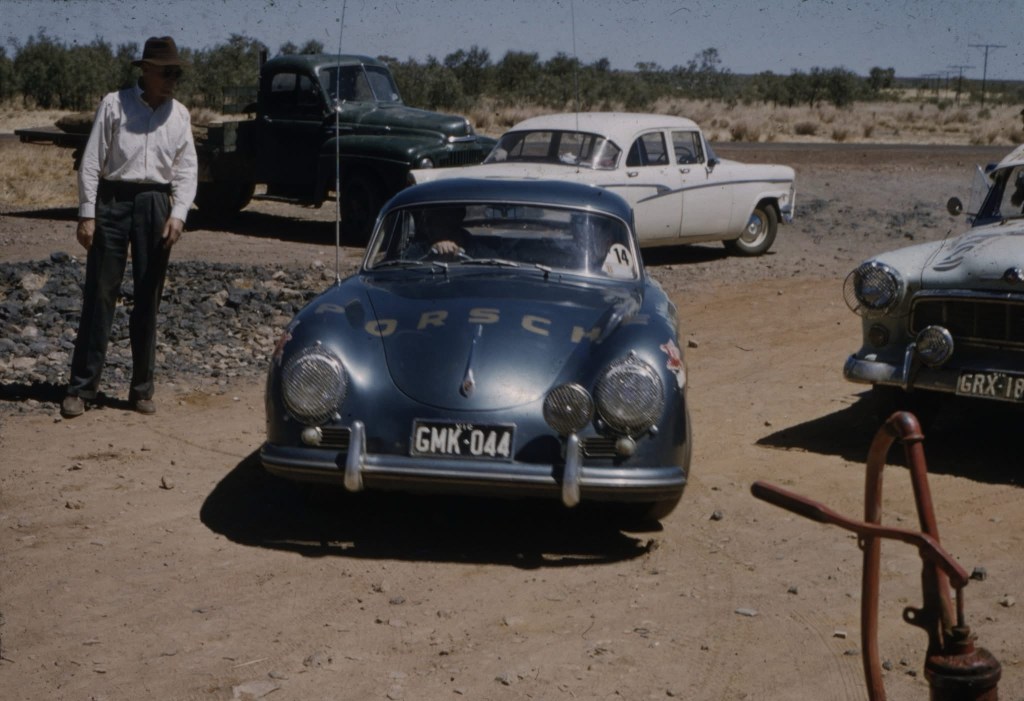
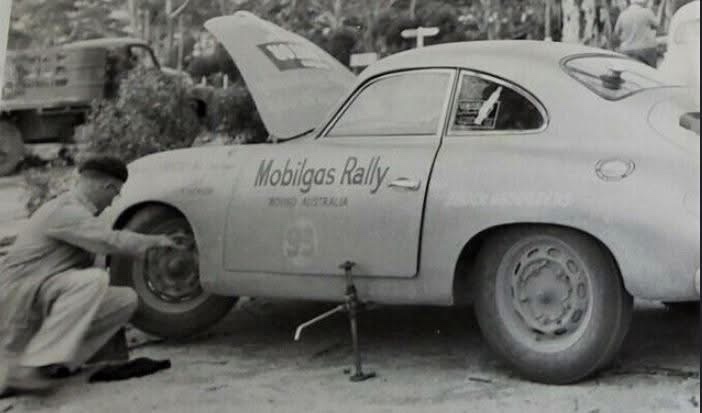
The Max Winkless/Jan Woelders Porsche 356A 1600 during the August 21-September 8, 1957 Mobilgas Round Australia Trial.
The winners were Laurie Whitehead and Kevin Young in a VW Beetle 1200 ahead of five other Beetles!
The other ‘Porsche Cars Australia’ 356s were driven by Tom Jackson/David McKay (1500) 27th – above with Jackson working on his car – and the boss, Norman Hamilton (356A), the other cars of Hamilton and Winkless/Woelders were DNFs.
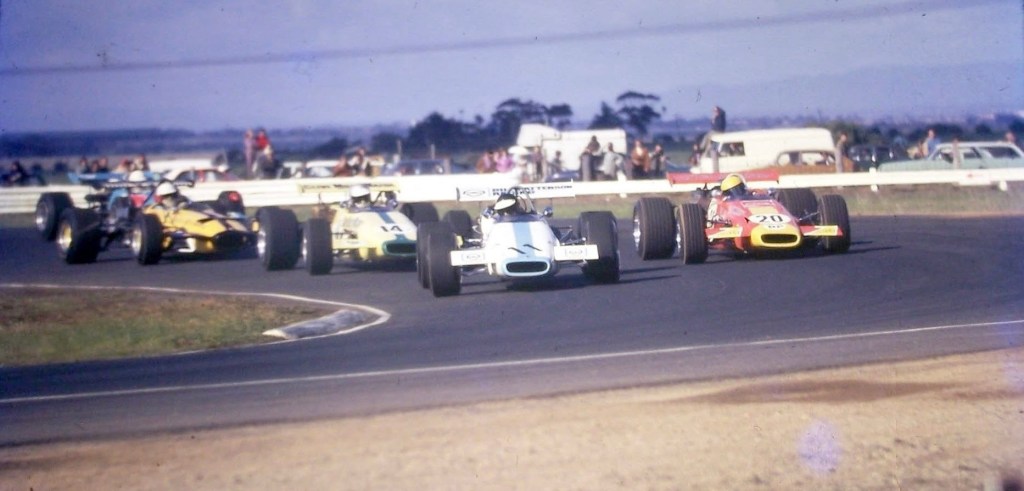
I guess 1971 Australian F2 Championship, Henk Woelders was Jan’s son? Henk is ahead of an Elfin 600 1.6 Lotus-Ford F2 pack at Calder: he, John Walker and Clive Millis, the black and yellow interloper is Peter Larner’s Rennmax.
(S Johnson)
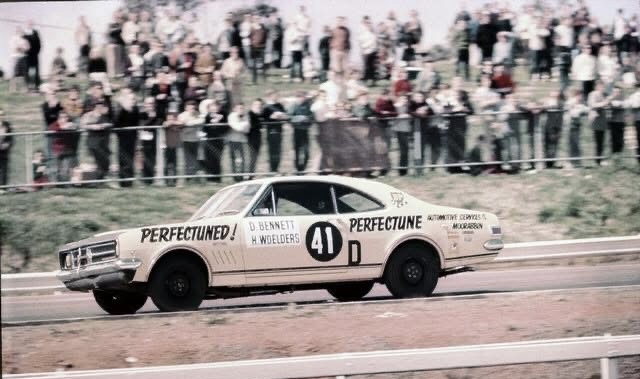
And below Henk sharing an HK Holden Monaro GTS327 with Dyno Dave Bennett during the 1968 Sandown 3 Hour enduro, DNF, the race was won by the Tony Roberts/Bob Watson GTS327. More about Henk here:https://primotipo.com/2018/12/30/henk-woelders/
Unusual colour shot of Don O’Sullivan in his Matich SR3 Repco 720 4.4 V8 during 1969.
The Perth-based racer did quite a few East Coast meetings in 1969, finishing second in the 1969 Australian Sports Car Championship behind Frank Matich’s dominant Matich SR4 Repco 760 4.8 V8. His mechanic/engineer/driver and lifelong friend, Jaime Gard, was based in the Matich workshops that year to prepare the car and lend a highly skilled hand with FM’s cars, too, on occasion
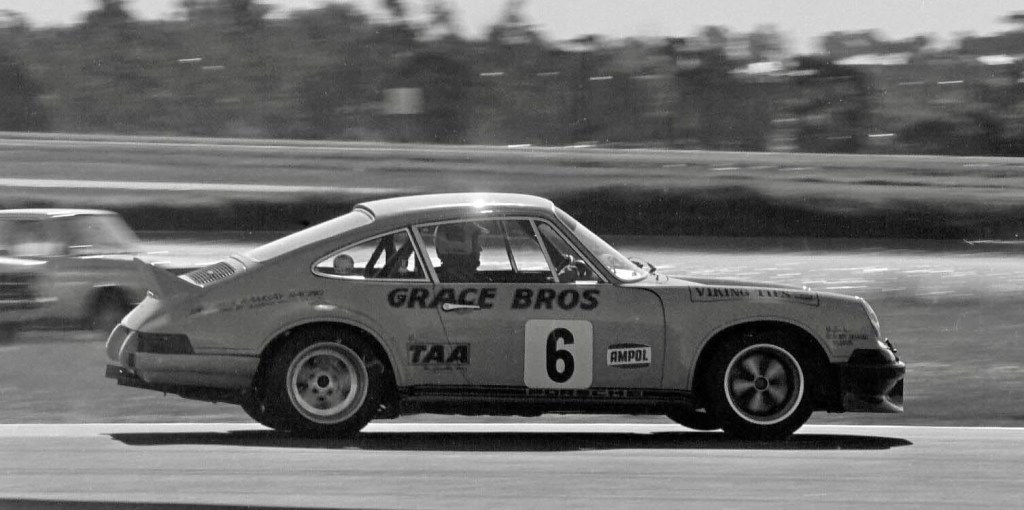
Lynton Hemer catches the sun and beautiful lines of Bill Brown’s new Porsche Carrera RS at Warwick Farm on May 6, 1973. The inside front is just clearing the deck.
Meanwhile, Scuderia Veloce’s Bob Atkin was in the pits and took this shot of one of the races on the same day on the grid: Brian Foley in his Alfa Lightweight- the ex-Mildren-French GTA after further ‘Project 9’ surgery by John Joyce’s Bowin Cars team over the summer of 1972-73, Brown, Carrera RS, Bob Steven’s Mustang and another Grace Bros 911S, one of the Geoghegans I guess.
(B Atkin)
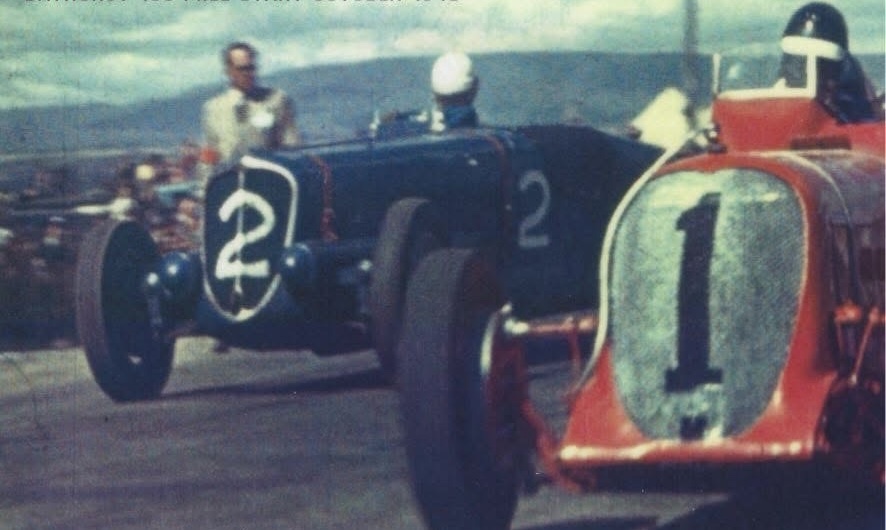
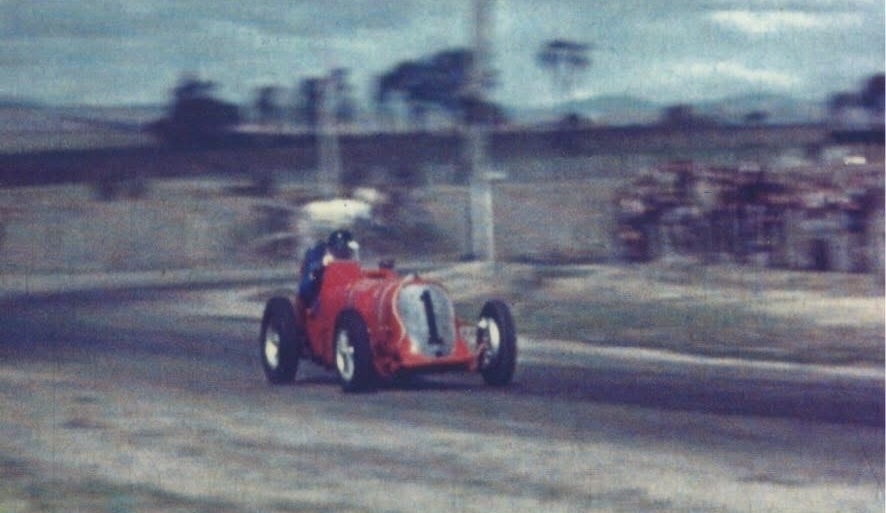
Scratch-men Frank Kleinig, Kleinig Hudson Spl, and John Crouch, Delahaye 135, start the handicap New South Wales Grand Prix, Mount Panorama, Bathurst October 1946.
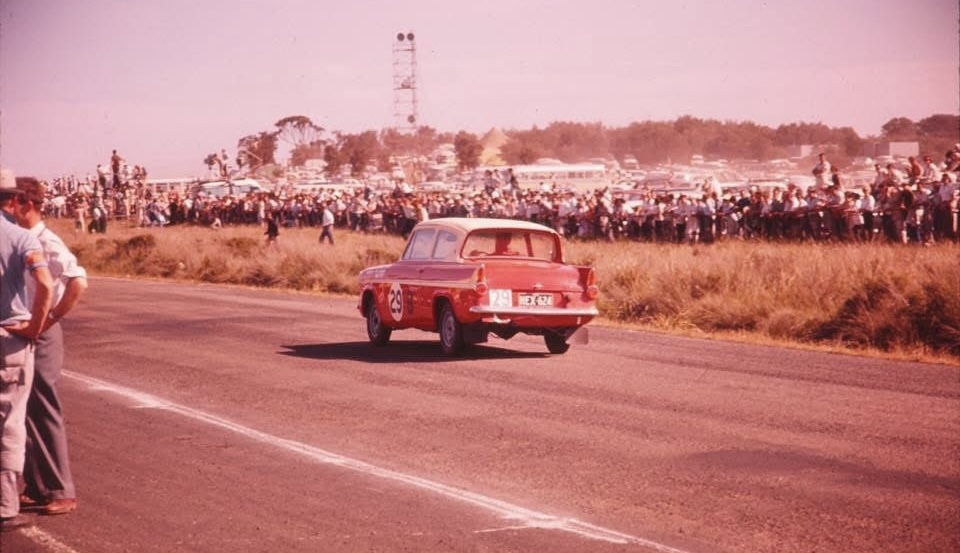
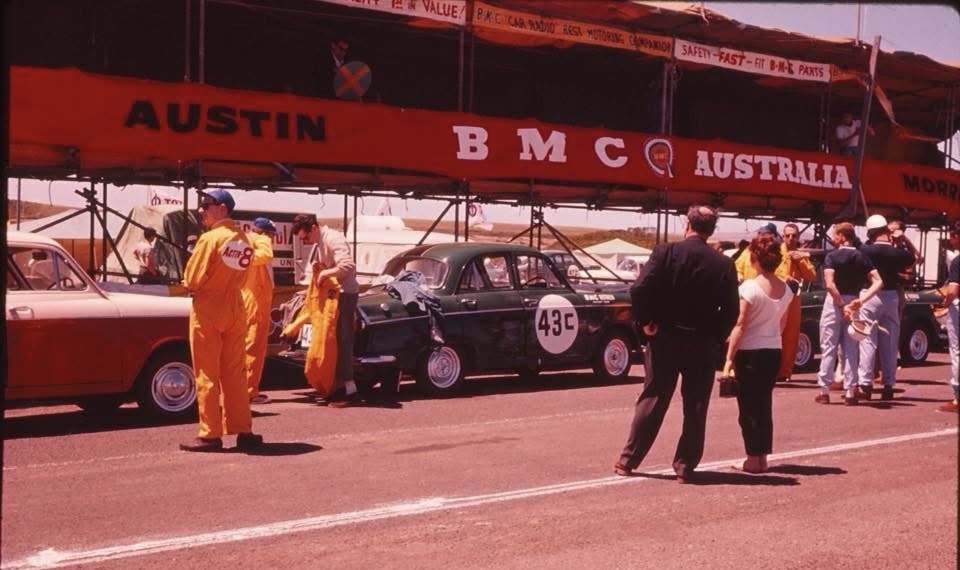
Rare feel the vibe colour shots of the first Armstrong 500 at Phillip Island over the November 20 1960 weekend; the Bathurst 1000 started right here, of course, folks.
Car 43C below, amongst the ‘BRM mechanics’, is a works Morris Major driven by Rod Murphy and John Callaway. Activ-8 was a local oil company, Golden Fleece’s brand at the time. HC Sleigh Ltd sold Golden Fleece to Caltex in 1981.
(J Devine)(J Cronin)
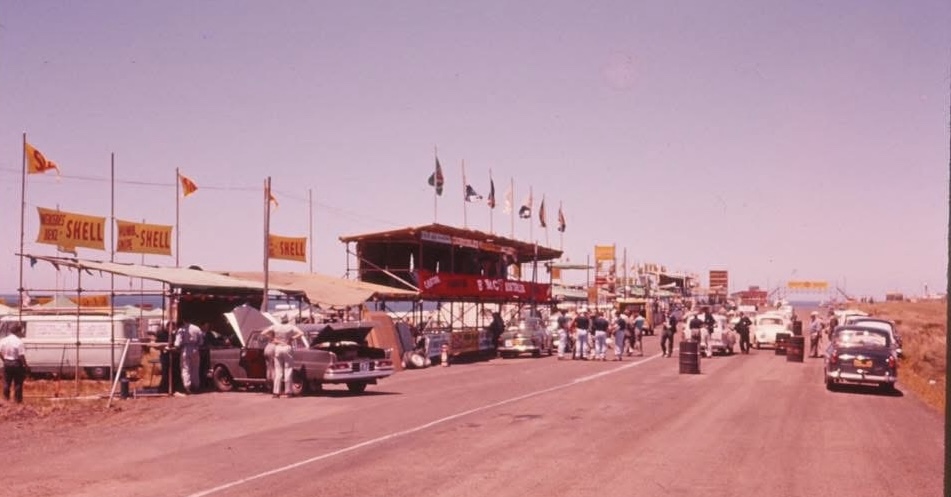
You can just see a glimpse of Bass Straight below the distant Shell banner in this Main Straightaway – I’m channelling Mike Raymond – photograph. The Mercedes 220SE was crewed by the Youl brothers, Gavin and John, DNF.
(C Munday)
A couple of Garrie Cooper shots at Wanneroo Park, Western Australia.
The first shows him #5 on the grid of the WA Road Racing Championship on May 3, 1970, aboard his Elfin 600D Repco 830 2.5 V8 alongside fellow South Aussie John Walker’s Elfin 600B Lotus Ford 1.6 with Craig McAllister, Macon Ford 1.6 on the left. Cooper won from Walker with Bob Ilich’s Brabham BT21B Cosworth SCB third. See a piece about this race and Cooper’s car here:https://primotipo.com/2018/03/06/garrie-cooper-elfin-600d-repco-v8/
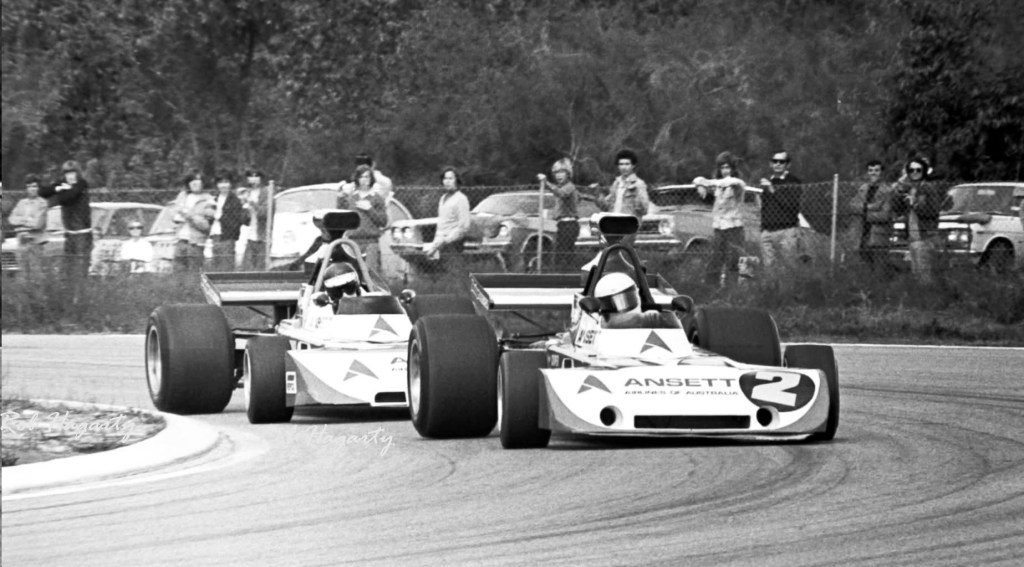
The one below is of Ansett Team Elfin: Garrie Cooper and John McCormack’s Elfin MR5 Repco-Holden F5000s at the Wanneroo Indian Pacific Plate meeting on August 12, 1973.
Cooper took out the three heat event overall with two wins to McCormack’s one Mac fastest of the day however a new lap record of 56.8 sec during the final 20 lapper.
(R Hagarty)
Credits…
John Lemm, Bill Forsyth Collection, Martin Kass, Bob Atkin, Ken Devine, John Cronin, Peter Cartwright, Mark Goldsworthy Collection via Bob Williamson, Sandy Fernanace, Chris Munday, Rob Hagarty, Stewart Johnson, Stephen Stockdale, Gordon Mitchell Collection
Dan Gurney awaits the start of the 1962 Indianapolis 500 in his Thompson Buick V8, with Fritz Voigt and Mickey Thompson in attendance, Memorial Day, Indiana, May 30, 1962.
Jack Brabham and John Cooper started the mid-engined Indy revolution – I’m not suggesting they were the first to race a mid-engined car there – in 1961 with their tiddly 2.7-litre Cooper T54 Climax FPF.
Mickey Thompson wasn’t the only Indycar builder to take the mid-engined bait, but one of his three Thompson Buick V8s driven by Indy debutant Dan Gurney, was the only mid-engined car that took the start in 1962.
His John Crosthwaite-designed, aluminium-bodied machine comprised a lightweight spaceframe chassis, a modified new aluminium Buick BOP – Buick, Oldsmobile, Pontiac – 215cid V8 and a Halibrand transaxle.
This revolutionary, aluminium production V8 weighed only 317 pounds, about 200 pounds less than Detroit’s cast iron equivalent thereof. Let’s stick with the engine for a bit.
Buick’s innovative V8 featured a deep-skirt aluminium block containing an assortment of iron and steel parts: cast-in bore liners, forged connecting rods, and a crankshaft supported by five main-bearing caps. The result was an engine that weighed 324 lbs, circa 200 lbs less than Chevy’s small-block V-8 (GM Media)
While the ads of the three General Motors’ subsidiaries that fitted the motors to their cars extolled the virtues of better fuel economy and a lighter car, racers looked at the obvious lightweight performance potential too.
The Buick and Pontiac 215 engines were identical but Oldsmobile’s ‘Rockette V8’ had revised heads. The Buick version used a five-bolt pattern around each cylinder, while the Oldsmobile jobbie used a six-bolt pattern to alleviate potential warping of the heads on high-compression variants of the engine
To the Olds party-faithful, the changes made the new engine look like its much respected predecessor, the Olds-Rocket V8, and to those seeking big power gains, the Olds F85 engine was the go, the extra head bolt would assist in avoiding blown head gaskets in performance applications.
You can feel and hear the vibe in this pre-start shot (IMS)
Crosthwaite – Thompson – Buick Indy Car 1962…
British engineer John Crosthwaite designed the Thompson 1962 machine for Mickey Thompson.
Crosthwaite’s and Thompson’s collaboration came about after John’s success with the Dolphin Formula Junior built by a company owned by Bud Hull, in the San Diego/Del Mar area of Southern California. Thompson noticed the pace of the cars and sought him out: https://0398ca9.netsolhost.com/dolphin01.htm
Soon, Thompson and his sponsors, Harvey Aluminium and Jim Kimberly of Kimberly Clark, approached Crosthwaite to design a mid-engined car inspired by those by then de rigeur in European road-racing for the 1962 500.
John Crosthwaite, Jack Brabham and Buddy Hull at right after testing the Dolphin Mk1 Fiat FJ at Riverside in November 1960 during the US Grand Prix weekend. Brabham had already won his second F1 World Championship in Portugal a couple of weeks before (Wiki)John Crosthwaite with one of his completed ’62 Thompson Buicks in Thompson’s Long Beach machine shop. Note the fuel tank locale, Halibrand wheel and beefy spaceframe. Body buck for something else? (Wiki)
Thompson Buick Design & Construction…
Crosthwaite drew on his earlier work in drawing a tubular steel spaceframe chassis, with fully independent suspension front and rear: upper and lower wishbones and coil spring/dampers and adjustable roll bars at the front, and a single upper links, twin radius rods and and gain coil spring/dampers and adjustable bar at the rear. The 16-inch Halibrand wheels and Firestones were way smaller than the usual 18/20 inch units used by the big, heavy roadsters.
The engine was a radical choice as well. Offies had ruled the day for decades. Not only was the Buick V8 the first stock-block engine raced at Indy since 1946, but it was also, as we have seen, brand-new. General Motors had developed a technique to cast aluminium engines in large volumes. The 3.5-litre 317 lb aluminium Buick-Oldsmobile-Pontiac BOP 215 V8 was the first volume production V8 in the world and was just on the market, fitted to the Buick Special, Oldsmobile F85 and Pontiac Tempest. More on the engine mods shortly. The transaxle was a Halibrand two-speed: fast and much faster! It was mated to the engine via a bespoke, shallow, cast bell-housing.
There was no pressure! The project had to be completed in just 120 days. Crosthwaite worked long hours living in a motel close to Thompson’s Los Angeles workshop where the car was built by a crew led by Fritz Voigt.
Key elements laid bare in the Indy garage: spaceframe chassis, modified Buick 215 stock-block aluminium V8, Halibrand two-speed transaxle, disc brakes (D Friedman)Hilborn fuel injection, roller rockers by Iskenderian or Crower (D Friedman)
Buick 215 V8…
The Buick V8 underwent significant performance surgery to be match fit against the 4.2-litre fuel-injected Offys, which gave about 350 bhp in 500-mile race spec at the time.
While multiple parties were involved in the engine’s development, the key modifications were made by Scarab engineers, who worked on improving the engine’s breathing capacity, and Mickey Thompson’s team who experimented with fuel injection and made a specially fabricated intake manifold to suit.
Or is that the case? There seem to be two schools of thought…
In its August 1962 issue that year, Hot Rod reported that the Buick was a Mickey Thompson (M/T) project with no factory help. M/T pistons with a 14:1 compression ratio and M/T aluminum rods were coupled to an M/T cast ductile-iron crankshaft with a 3.10-in stroke. (M/T was then marketing “Cast Billet” stroker crankshafts for popular V8s.) Iskenderian supplied the roller camshaft and kit, while Bob Bubenik engineered the gear drive for the cam and oil, water, and fuel pumps. HIlborn fuel injection with both laydown and vertical-stack manifolds were tried, but vertical stacks proved best. Quoted output was 330 bhp on straight methanol fuel.
Buick 215 engine, mods as per text (MMCG)(MMCG)
A few years later, in a May, 1970 feature Hot Rod interviewed some Buick executives who had a different perspective. In this version, noted Buick engineer Nelson Kunz led the three-month program, working closely with Thompson. Oversize cylinder liners allowed a bore of 3.6125 inches, but here the 3.10-in ductile iron stroker crank was a welded Buick piece and the connecting rods were 4340 steel. Large-port head castings and a Crower H-1 roller cam kit completed the combination, which produced 370 bhp at 7200 rpm. They reported about 15 engines were built with a few sent to sports car teams, including Lance Reventlow’s Scarab operation.
It’s hardly surprising if GM was a bit cute about its involvement in-period, given the Motor Racing Ban Deal between the Big Three at the time: GM, FoMoCo and Chrysler. On the balance of probabilities, Traco were involved too. They built a 3.9-litre modified, Weber-fed, Buick 215 V8 for Lance Reventlow, which was fitted to his Scarab RE Formula Libre car raced by Chuck Daigh in the February 1962 Sandown Park International.
That race was won by Jack Brabham’s Cooper T55 Climax. While the new Scarab chassis needed development – it was never raced again – the potency of the engine impressed onlookers, including Brabham, whose first Repco-Brabham F1 V8, built in 1965, used the Oldsmobile 215 F85 block in modified form; the RB620 3-litre V8 won World Drivers and Constructors Championships in 1966.
These early developments of the BOP 215 V8 Mickey Thompson and others were very important to the engine’s subsequent use by Repco-Brabham Engines and in the back of Bruce McLaren’s new McLaren-Elva sportscars, and others. More about the Scarab RE Buick in this article: https://primotipo.com/2016/01/27/chucks-t-bird/
Ain’t she very sweet, a handsome, purposeful machine in every respect. DG during the obligatory posed qualifying shot (IMS)
1962 Indy 500…
Dan’s primary race program in 1962 was with Porsche in F1 and endurance sportscars. He therefore arrived in Indiana match fit and as sharp as a tack.
Gurney told Andrew Ferguson about his debut year at Indy in 1962 in Ferguson’s research for his great book, ‘Team Lotus – The Indianapolis Years’.
‘I had first gone to Indianapolis in 1962, at the invitation of an entrant named John Zink. I took the obligatory driver’s test in his traditional front-engined Offy roadster, but what he was hoping to qualify for the race was a rear-engined frame. I’m sure it was actually an old Lotus chassis – powered by a Boeing gas turbine.’
‘He had some Boeing engineers who were keen to promote these things as high-reliability, cheap-to-run engines powering Kenworth trucks. One of the engineers was running one on the street in a ’32 Ford roadster, which must have been quite exciting.’
Dan smiling as best he can, Moore 62 Boeing during Indy qualifying (IMS)Boeing Model 502-10F turboshaft engine, a lightweight unit normally used in helicopters, being fettled at Indy. Moore 62 chassis aka John Zink Trackburner Spl (IMS)
‘But when Jack Zink appeared at Indy with his turbine car he was stiff and sore and his face and arms covered in scabs and grazes, because while testing the car back at some place in Oklahoma he’d flipped it during a test run. And when I got out on to the Speedway in the car it was plain that its 350 horsepower wasn’t enough. A gas turbine develops maximum torque at stall, like a steam engine, so the faster you ran it the less it delivered.’
‘In those days we were still having to brake into the turns at Indy, so when you went back on the gas that turbine could set very competitive corner speeds, and came off the turns with good acceleration. But part way down the straight it would be all over for the day. It just ran out of power and stopped accelerating.’
‘I was really having to hustle it in the effort to set competitive lap times, and it became clear that it just didn’t have enough power. So I told Zink that if he could find anyone to drive it faster he shouldn’t worry about hurting my feelings – he should go right ahead and try them…and then Mickey Thompson asked if I’d like to drive one of his new rear-engined Buick V8-powered cars.’
Thompson and Fritz Voigt during Indy qualifying. The ‘body-off’ shots suggest a high level of design and execution quality despite the tight timelines involved (MMCG)‘Fancy meeting you here Colin!’ Gurney greets his Indy 500 guest, Colin Chapman, from the Hospitality Suite! Rather a successful weekend for them both (D Friedman)
Dan had a lot riding on the race. He had funded Colin Chapman to come over and see the 1962 Indy 500 with a view to hooking Lotus and Ford up for a proper shot at the 1963 500. Dan knew an Indy version of the then ‘spankers Lotus 25 monocoque – which debuted at the Dutch GP in May that year – was a race winner.
Dan’s switch to Thompson’s aluminium Buick V8 stock block-powered mid-engined Crosthwaite design proved a good one. The Indy Rookie qualified the new car a tremendous eighth with a speed of 147.886 mph, impressive in every respect. Having said that, Dan was of course, racing mid-engined cars all the time, there was nothing unconventional about the layout to him.
Up at the pointy end, the top three were Roadsters: Parnelli Jones’ Watson Offy from Rodger Ward’s similar car and Bobby Marshman’s Epperly Offy in third.
A couple of youngsters who done real good! Roger Penske wishes Dan well before he jumps in and puts on the ‘belts mandatory at Indy. Note the crash pad on the steering wheel and injection trumpet debris protector (IMS)Mickey Thompson and Dan Gurney just before the start (R Brock/Getty)
After the start, Gurney gradually worked his way into ninth place after the initial stages. The only incident in those early stages was on lap 17 when a four-car pile-up involving Jack Turner, Bob Christie, Allen Crowe and Chuck Rodee. Noteworthy is that AJ Foyt lost a wheel off his Trevis Offy on lap 69.
Running nicely, on lap 92 of 200, Dan experienced a problem with the rear end and was forced to retire. A leaking Halibrand transaxle was later attributed to an improperly mounted seal around the starter shaft in the back of the gearbox which fell out and killed the gearbox.
The race was won by Ward from Len Sutton’s Watson Offy then Eddie Sachs’ Epperly Offy, with Dan classifed 20th and in the money to the tune of $US5161.
Pitstop for Dan, who was out on lap 92 in the Thompson Harvey Aluminium Spl (unattributed)(D Friedman)
Despite not finishing, the Thompson Buick’s performance was considered noteworthy as it demonstrated again the potential of the rear-engined layout and a light aluminium stock block V8 at Indy.
The move looked prophetic on Dan’s part when one of two drivers who drove the John Zink Trackburner Spl aka Moore 62 Boeing. After Dan left, Duane Carter, and then Bill Cheesbourg, tried to get the Moore 62 up to speed but couldn’t. Cheesbourg followed Dan to Thompson’s outfit and drove the #35 Harvey Aluminium Special – Thompson Buick – #35 but missed the cut as did Chuck Daigh who had preceded him…
A third #33 Thompson Buick owned by Jim Kimberly was driven by Porky Rachwitz and Jack Fairman, who both failed to qualify.
The Thompson Harvey Aluminium Special at Indy in 1962 (B Tronolone-Revs)
Etcetera…
Gurney aboard Zink’s Watson Offy for his Rookie Test, Indy 1962, and the shot below (D Friedman)
In order to pass his rookie test Gurney used a good, old, reliable Roadster. Zink’s Offy powered car was no less a chassis than the updated Watson used by Pat Flaherty to win the 1956 race for Zink.
Of interest, perhaps, from indycar.com. ‘Rookie tests from 1936-80 took place during practice for the Indianapolis 500 in May, when the track was open nearly the entire month. Many rookie drivers took advantage of turning their required laps early in May, when there was less traffic because veteran drivers often waited until later in the month to begin their programs.’
(unattributed)(LAT)
Rookie tests for seasoned professionals such as Gurney may seem a little strange, during July 1962 he had won his first championship Grand Prix for Porsche at Rouen-Les-Essarts aboard the the 1.5-litre flat-eight powered car (above).
But Indianapolis is a treacherous place, especially back then.
Porsche 804 laid bare at Zandvoort in May 1962, the meeting at which Gurney – along with the rest of motor racing – went WOW over Chapman’s new monocoque Lotus 25 Climax (J Alexander)
As a consequence, ‘In 1981, the Rookie Orientation Program was formalized. The biggest difference between ROP and previous rookie tests was the entire session was reserved for rookies only, with the session taking place sometime in April or early May. Drivers no longer needed to find clear track amid veteran practice to learn the ropes.’
‘It doesn’t matter if the driver is making their first NTT Indycar series start in the “500” or has extensive global racing success. They all must take the test.’
‘Some noteworthy drivers who were established stars before their first Indy 500 start required to take a rookie test include existing or eventual F1 World Champions Alberto Ascari, Juan Manuel Fangio, Jack Brabham, Jim Clark, Graham Hill, Denis Hulme, Jackie Stewart, Jochen Rindt, Emerson Fittipaldi, Nelson Piquet, Nigel Mansell and Fernando Alonso.’
Click on the link, then go to note 3, ‘Moore 62 Dan Gurney’, read that, then click on the link to the ‘Len Williams report’ for an amazing account of the car’s construction, testing by Zinc on the track at his ranch, and then the fun and games at Indy trying to coax the car into the race. Truly wonderful stuff.
Moore 62 Boeing turbine and Halibrand transaxle. Designer Denni Moore has gone to great lengths to stiffen the large opening that contains the bulky turbine engine ((D Friedman)Thomson and Voigt, this angle shows how the Thompson Buick’s engine is mounted offset left (MMCG)Firestone boys do their thing. Symmetry albeit offset left! (IMS)Dan Gurney on the Indy 500 and GP racing in 1965Mickey Thompson and John Crosthwaite sandwich a Harvey Aluminium representative well before the #35 car failed to make the ’62 500 cut in the hands of Chuck Daigh and Bill Cheesbourg! (JC Collection)
John Crosthwaite…
Crosthwaite died on September 5, 2010, aged 84.
After the Mickey Thompson cars for the 1962-63 Indy 500, Crosthwaite joined Holman Moody in July 1963. When their Indy project fell through, Crosthwaite commenced at BRM that December.
Later in his career, he was involved in designing chassis for road cars, including the Intermeccanica Italia, the Bond Bug, and the Reliant Scimitar GTE.
Crosthwaite worked with some notable figures/businesses in the sport, including Cooper, Team Lotus, Graham Hill, Dan Gurney, and Jackie Stewart. His innovative designs, particularly for the Indy 500, left a lasting impact on motorsport engineering.
Buick had an ad ready to go had they won in ’91…Gary Bettenhausen DNF radiator after 89 laps, the best placed Buick turbo-V6-powered car was Stan Fox’s Lola T91/00, which was eighth in the race won by Rick Mears’ 2.65-litre Penske PC20 Ilmor Chev 265-A V8.
Credits…
David Friedman Archive, Macs Motor City Garage, psychoontyres.co.uk, Ray Brock/Getty Images, Bob Tronolone-The Revs Institute, Indy Motor Speedway, IMS-Indianapolis Motor Speedway Archive, oldracingcars.com, GM Corp, John Crosthwaite Collection via Wikipedia, LAT, Jesse Alexander, indycars.com
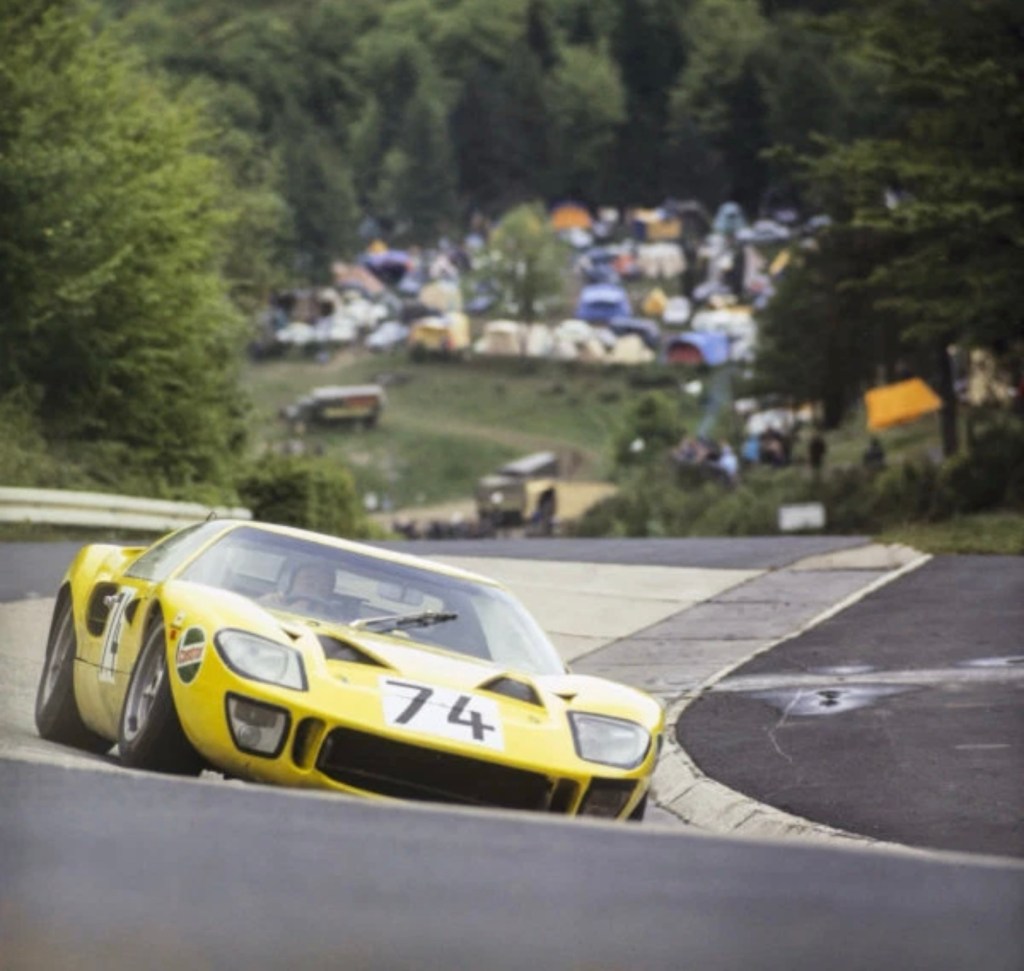
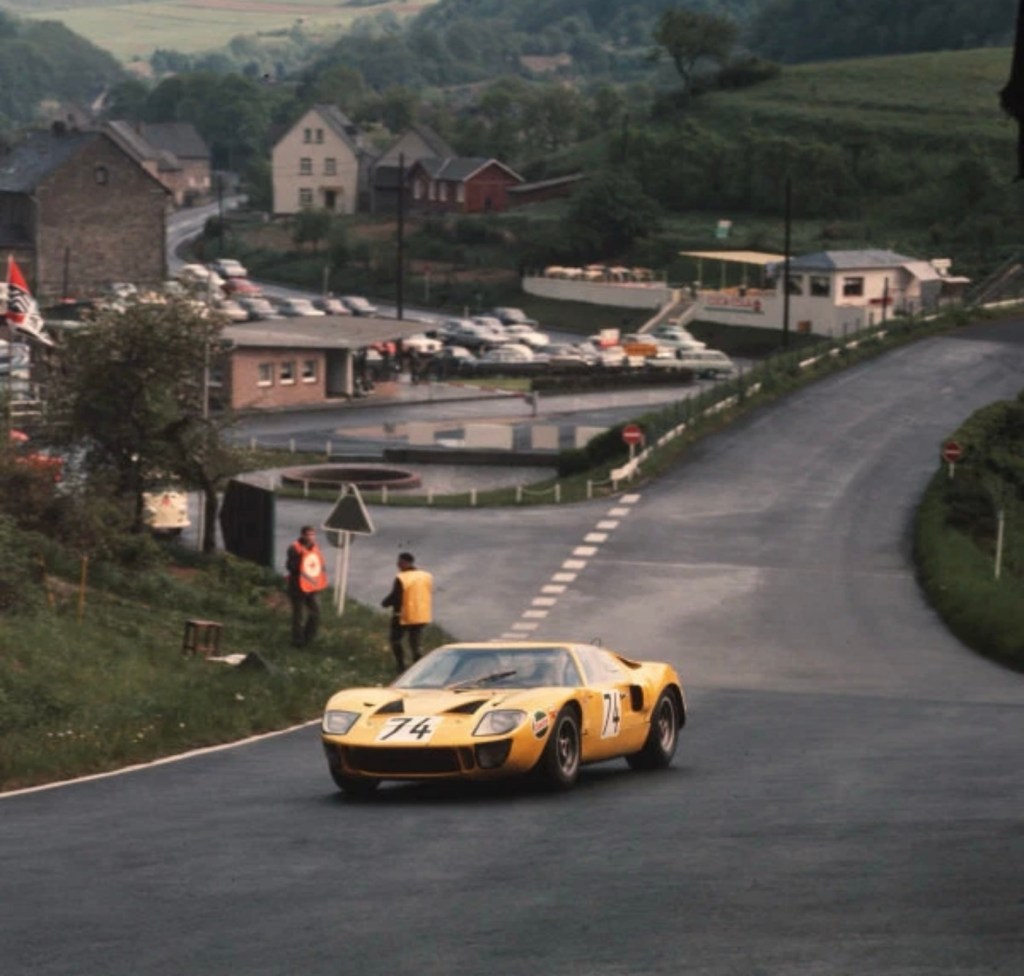
The John Reaburn/Nicholas Granville-Smith Ford GT40 during the 1968 Nurburgring 1000 km.
Melbourne-born John Reaburn – 20/10/1936-26/11/2016 – raced sports cars briefly in Europe in the mid-1960s before retiring at the ripe old age of 32 at the end of ’68.
He inherited the bug from his father Wal who raced a Humpy Holden and operated WJ Reaburn Auto Electrical Engineers Pty. Ltd. from 891-893 High Street, Armadale, Melbourne.
Reaburn’s Holden FJ at the Geelong Speed Trials date unknown (R Simmonds Archive)A brace of Buchanans. John Reaburn chases Wally Mitchell at Phillip Island, date unknown
John raced the Holden and then made his name with consistent winning pace in a potent Buchanan Holden from April 1960 to July 1961. Into the mix were drives in Jaywood Motors, Appendix J Holden Humpy, and FC.
He competed in the 1960-64 Armstrong 500 at Phillip Island and Bathurst, sharing a Singer Gazelle with Harry Firth in 1960, and then Firth’s works Ford Cortina GT, Zephyr MkIII and Falcon. He also raced a FoMoCo Cortina GT in the first Sandown enduro, the 1964 6-Hour International, with Geoff Russell finishing a rousing third outright..
Reaburn in the Ford Falcon XP he shared with Harry Firth during the April 1965 Ford 70000 Mile Durability Run at the FoMoCo You Yangs proving ground (Ford)Firth/Reaburn works-Cortina GT during the April 1964 Lowood 4 Hour, winning their class and ‘outright’
He took on the big-car challenge in 1965, finishing fifth in the one-race Australian Touring Car Championship at Sandown won by Norm Beechey’s Ford Mustang. Raeburn’s mount was the 7-litre Ford Galaxie left in Australia after the ’64 Sandown International by Sir Gawaine Baillie.
Reaburn jumped on a ship for Europe with the intention of racing the car in the UK, but Baillie had sold it before he got there. Brian Muir was third in that Sandown ATCC in his Holden EH S4; he too was soon heading off to the UK, very successfully so.
Reaburn, perhaps, in the Baillie Galaxie at Warwick Farm in 1965 (P Reynell)
Undeterred, Reaburn started working for Graham Warner’s Chequered Flag Motors in 1966, driving their Shelby Cobra in the Zeltweg 500 km (DNF oil leak) that September. He was in the best of company, sharing the grid with GP drivers Jochen Rindt, Jo Siffert, Mike Spence, Innes Ireland, Mike Parkes, David Hobbs and Bob Bondurant.
Nick Brittan wrote about Reaburn in Motoring News during 1966, ‘Raeburn Shines in Driving Test. I don’t seem to be able to get through a month in this column without making some comment about a new Australian driver. In fact I’ve been accused of running an Antipodean news sheet.’
Johnny Reaburn is the latest of the “gday there mate” brigade that are invading our shores. Johnny, a massive, lantern-jawed Melburnian, ran Holdens and FoMoCo cars back home.
JR in the Zeltweg pits in 1966. Bob Bondurant raced the other Chequered Flag Cobra, DNF engine. And yes, like me, the signwriter struggled with the spelling of JR’s name (JR Archive)JR during the September 1966 Zeltweg 500km DNF oil leak in the Chequered Flag Shelby Cobra. Race won by the works Porsche 906 crewed by Gerhard Mitter and Hans Hermann (Zdjecie)
‘Bathurst class successes, three Lowood 4 hour races on the trot, second in the Sandown 6 hour, plus numerous other solid performances, are grounds for giving the bloke a trial.’
‘What shook everybody up last week was his performance at the passout at Brands with the Motor Racing Stables outfit in front of a big crowd of journalists and enthusiasts. Eight lessons in a Formula Ford with the passout in an F3 in the reverse direction on the Club circuit, Johnny equalled the time set by professional driver and instructor Tony Lanfranchi on his fourth lap.’
‘He improved his time by a full seven-tenths of a second on the remaining six laps. Tony then jumped back in the car, but it took him twelve laps to equal the time Johnny had set. He should be deported or given a drive, as this was his first time in open wheelers.’
He raced Mike de Udy’s Porsche 906 with Roy Pike in the Reims 12 Hours in 1967 (DNF), and took part in several 1968 World Sportscar Championship rounds. His car was a yellow Ford GT40, chassis #1001, owned by Andy Cox, ‘who had won money on the football pools and bought himself a GT40,’ wrote Doug Nye.
Reaburn’s driving partners were Nicholas Granville-Smith and another Australian tyro who did a stint at The Chequered Flag, Tim Schenken.
Monza 1000km grid April, 1968 (JR Archive)Nurburgring 1000km April 1968, on the way to 21st place (LAT)
At the Monza 1000 km in April he shared the car with Schenken, DNF engine. At the Nürburgring on May 19, he and Granville-Smith were 21st in the 1000 km.
At Spa-Francorchamps, the week after the Nurburgring, back with Tim, John had a major off on the first lap of the 1000 km enduro.
Doug Nye was there reporting the event for Motoring News and wrote on The Nostalgia Forum, ‘It absolutely widdled with rain and early in the race John dropped the car in the pack on the right hand kink coming down the hill from La Source, past the pits. The GT40 spun round and round and round in a ball of spray and only near the bottom of the hill – entering Eau Rouge – did it finally slither off onto the grass and subside into a ditch on the left side of the track. It was very spectacular, with phenomenal avoidances all round. Pity, he’d been driving it pretty well until then.’
Nurburgring, JR ahead of the second place works Porsche 907 of Hermann/Attwood (LAT)Raeburn with Brigitte Bardot (JR Archive)
Reaburn reported his exploits back home via Racing Car News. Amongst the unreported good times of high performance off the track was a week-long dalliance with Brigitte Bardot that was memorable enough for her to purchase him a Rolex watch inscribed, ‘To Johnny, Love BB’. ‘True story’ confirms Greg Smith, who had a lot to do with Reaburn in the modern historic era, ‘I’ve seen the watch.’
‘Don’t forget that he was instrumental in getting the David Price-written Joan Richmond book published (Joan Richmond: The Remarkable Previously Untold Story),’ chipped in Bob King.
Reaburn tested an F3 car at Brands Hatch in 1966, matching class front-runner Tony Lanfranchi’s times, and a works F2 Lotus 48 Ford FVA at Hethel in 1967, but, being a tall unit, decided to concentrate on sports car racing.
He quit racing at the end of 1968, aged 32. In recent years John lived in retirement with his wife in Mooroolbark, Victoria. He died of a stroke on Saturday, 26 November 2016, aged 80.
Etcetera…
A Truish Story from 1965 by Clark Watson.
‘Young John Reaburn, south-eastern suburbs of Melbourne, six-foot-five in his socks, had come to England on the back of a Bathurst class win with Harry Firth. Europe didn’t care. Single-seater cockpits were built for midgets, so John ended up on the showroom floor of Chequered Flag Motorsport in Savile Row, selling Elans and the odd Ferrari while demonstrating Colin Chapman’s ultra-rare analogue driving simulator — one of only two ever made.’
‘One day, a Scottish Lord named Andy walked in — heir to half the Highlands, banned from racing by his mother until he produced heirs of his own. Instead, he spent the family’s millions running sports-car teams and collecting rogues like McLaren, Amon, Rindt, Surtees, and Bondurant. He took one look at the giant Australian and decided he liked him. Soon, John was testing for Andy’s private outfit and sharing a flat in Clapham with Bruce McLaren and Chris Amon.’
‘What happened in that flat stayed in that flat — except one story that finally slipped out. One winter evening, Andy dropped John home after a test day and said only, “Midnight. Sofa. Helmet. I’ll pick you up.” Over dinner, Bruce and Chris just sniggered. When John reached for the wine, they pushed water at him and told him to sleep. Just after midnight, a rattly old lorry reversed down the lane. Andy was directing mechanics who whipped a sheet off the load to reveal a gleaming silver Shelby Daytona Cobra, already thudding and rocking on its springs. Andy climbed into the passenger seat. “You drive.” They ghosted through sleeping London, turned right into Hyde Park itself — gates closed, lights out — pure madness.’
‘Fifty metres from disaster, the park blazed into light and the gates swung wide. Men in bowlers closed them again behind the Cobra. Andy grinned. “Foot flat, Johnno. The gates always open if you’re quick enough.”
‘The Midnight Stakes – the exact course. Horse Guards Parade → up the Mall → full slide around the Victoria Memorial (“the cake top”) → hard left into Hyde Park along South Carriage Drive → blast out at Marble Arch → down Park Lane → left into Constitution Hill → long, long opposite-lock slide back into Horse Guards Parade forecourt. Roughly 2.9 miles door-to-door. They did a slow reconnaissance lap first, just to let the oil warm and the tyres scrub in. Then they lined up again on the gravel.Top hats, tails, cigars, brandy, chalkboards, bowls of £100 notes. Tradition since the Napoleonic Wars on horseback, motorised by the Bentley Boys in 1929. Tonight it was John’s turn.’
‘Andy smacked the quarter panel. “Helmet on. The clock starts the moment you leave the forecourt. Don’t lift for the park — the gates will open.” John tightened the belts until they bit, clicked first, and dropped the hammer. Out of Horse Guards flat in second up the Mall, braked as late as he dared for the right into the park — 150 mph showing — then flat again. Lights flared, gates flew open, the Cobra thundered through the empty park like a silver bullet. Hard left at Marble Arch, 152 mph down Park Lane, police Pandas with blues twinkling, blocking every side street. One huge four-wheel drift around the Victoria Memorial — two perfect black doughnuts for the tourists to puzzle over next morning — then flat out down Constitution Hill and a long opposite-lock slide back into Horse Guards 1 minute 58.4 seconds dead.’
‘New outright record. John was dragged from the ticking Cobra, bundled into a waiting black cab and whisked home while the toffs threw top hats in the air and settled their bets. The record stood exactly thirteen nights. Then Chris Amon took the same 2.9-mile loop in a full Le Mans-spec GT40, big Ford V8 spitting blue flame, touching 198 mph past the Dorchester, and stopped the clocks at 1 minute 47 seconds flat. That night, the birds left every tree in Hyde Park in one black cloud, and half the palace windows rattled in their frames.’
‘The next morning, a humourless new Assistant Commissioner killed the game stone dead. The Cobra disappeared onto a ferry for Ireland before lunch, the chalkboard vanished, and the Horse Guards Midnight Stakes were declared finished “for the duration”.
‘Or so they say. Because if you’re ever in central London on a moonless night and you hear a big American V8 or a Le Mans Ford bark just once after the clocks strike twelve, sending the birds flying from the trees……you’ll know the gates are still opening for someone.’
Reaburn in the Buchanan Holden at Rob Roy, date unknown (L Sims Archive)AMS September 1960 (G Edney Collection)(JR Archive)
Outside Rootes HQ in Melbourne (?) 1960 with Harry Firth. Seventh in Class C 1960 Armstrong 500 at Phillip Island, up front of the class was the Geoff Russell/David Anderson/Tony Luxton Peugeot 403.
(JR Archive)
The word according to Harry…’Now listen here cock, just do this, this, and that, and we’ll win the class’, date and place unknown, yes, Harry is leaning on a Cortina.
(B Wells)
Bathurst 500 1964, the Bill Buckle/Brian Foley Citroen inside the Firth/Reaburn FoMoCo Cortina GT. Third in Class D and Class C respectively.
Zeltweg 500km grid on September 11, 1966. Johannes Ortner, Abarth 1300 GT, John Reaburn, Shelby Cobra and David Hobbs in Bernard White’s Ferrari 250LM.
(JR Archive)
In the Monza pits during the 1968 1000km weekend, that’s Tim Schenken in the sunglasses awaiting his turn at the wheel.
Schenken was a prudent co-driver choice, being the man on every team manager’s list. That year, he won the British Formula Ford Championship, Merlyn Mk11, the BRSCC-MCD British F3 Championship, Chevron B9 Ford/Brabham BT21X Ford/Brabham BT28 Ford and the Grovewood Award. Not bad…
Credits…
John Reaburn Archive via Greg Smith, Ebay, LAT, Ron Simmonds Archive, Leon Sims Archive, Peter Reynell, Brier Thomas, Graham Edney Collection, Bruce Wells, Ford Motor Company, Zdjecie on Historia jakiej nie znacie, David Lowe photo via Tony Johns’ archive
And below making up for lost time through traffic in the latter stages of the 1969 Monaco GP, McLaren M7C Ford, where Bruce was fifth in the race won by Graham Hill’s Lotus 49B Ford.
The CSI/FIA banned the hi-wings overnight Friday-Saturday so I guess this is the Thursday.
(G Johannson)
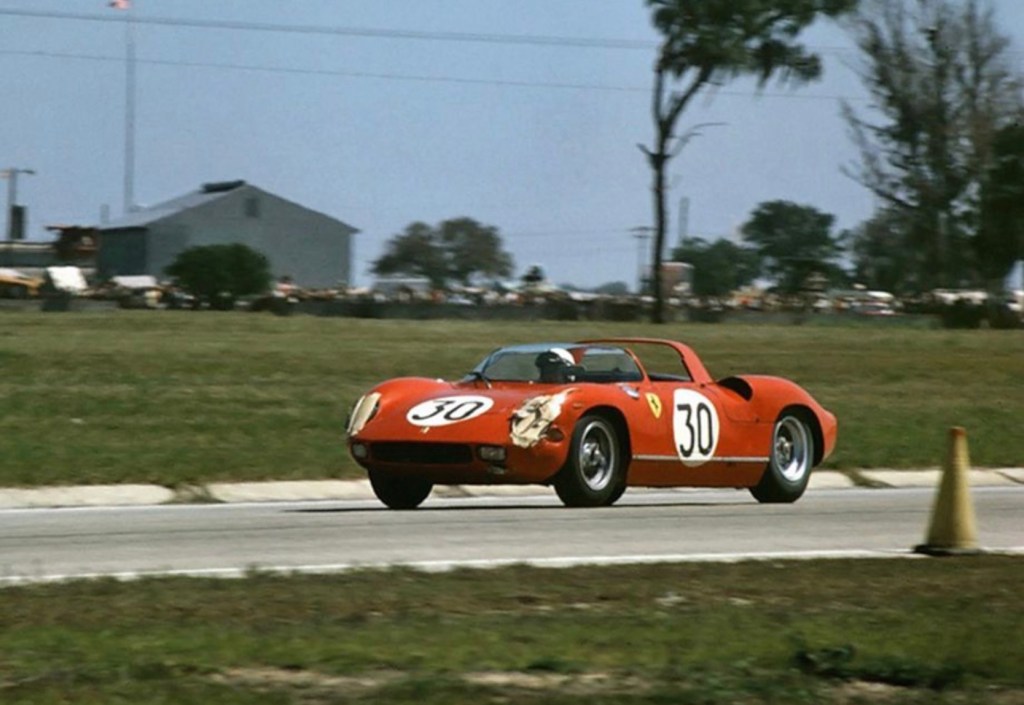
The victorious Surtees/Scarfiotti Ferrari 250P at Sebring in 1963, the Scuderia’s sixth outright Florida win in eight years
Ferrari took the first three places in the prototype and GT classes, the Index of Performance and the lap record, not a bad weekend’s work…
(M Fistonic)
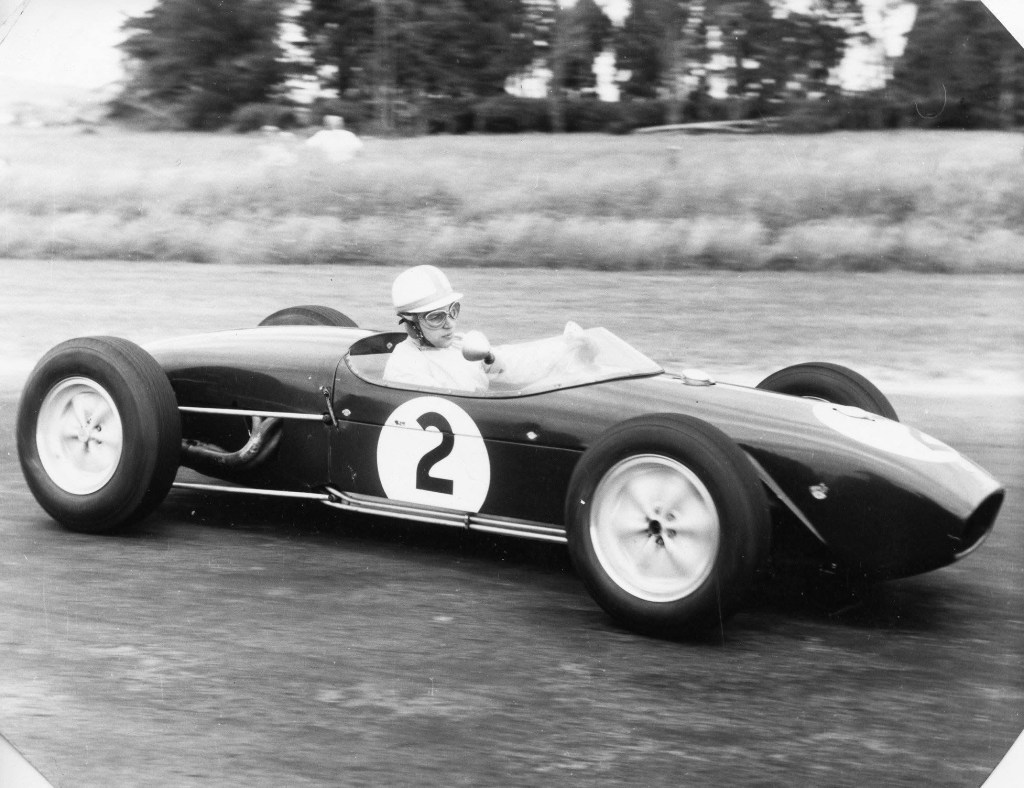
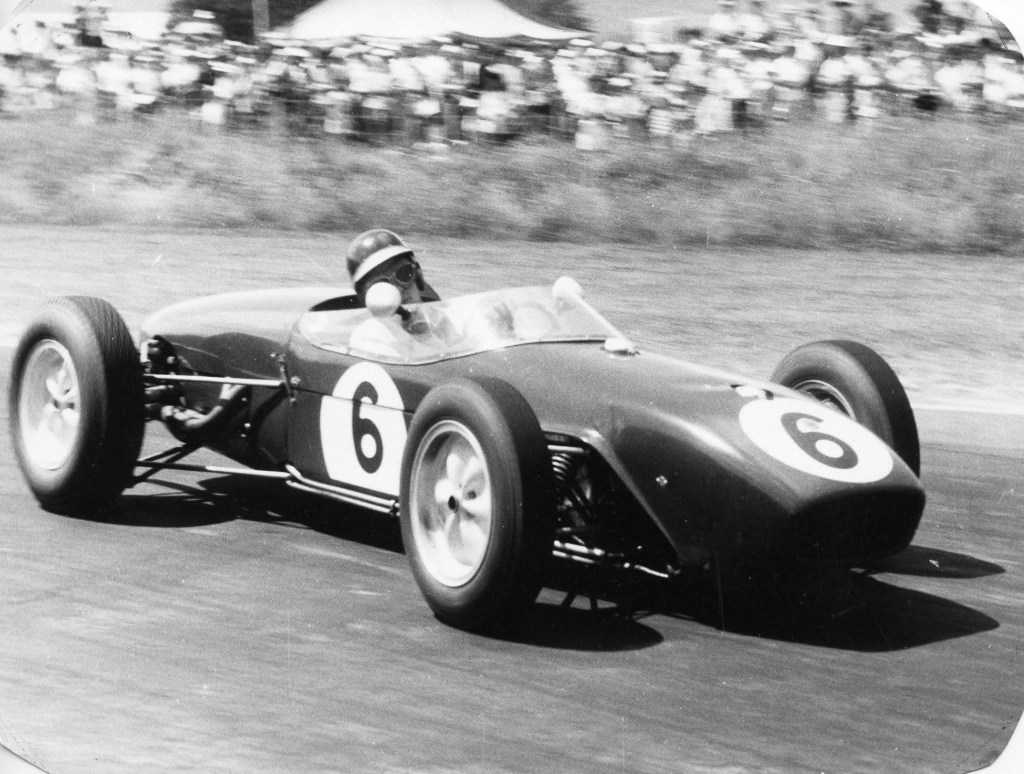
John Surtees guides his works-Lotus 18 Climax FPF 2.5 around Ardmore Aerodrome during the January 7, 1961 New Zealand Grand Prix.
Colin Chapman sent a pair of Lotus 18s south that summer to keep his drivers sharp over the European winter: team drivers Surtees, Jim Clark and Innes Ireland made the trip with Lotus’ Queerbox doing its bit to despoil the results.
Surtees was NZ GP DNF gearbox (winner Brabham Cooper T53), Levin DNF radiator (Bonnier Cooper T51), and Wigram DNF undisclosed from pole (Brabham Cooper T53).
(M Fistonic)
For Jim Clark above, it’s a little better: NZ GP sixth, Levin second and Wigram DNF stall.
For the record, Roy Salvadori was a DNF gearbox at Wigram and second at Teretonga (Bonnier Cooper T51) in a Yeoman Credit Lotus 18 ‘on his way’ to Australia to do the Oz Internationals in one of Jack’s Cooper T51s.
Ireland was second to Moss in the ferociously hot Warwick Farm 100 (Moss Lotus 18) but DNF in the Victorian Trophy at Ballarat Airfield (Dan Gurney BRM P48).
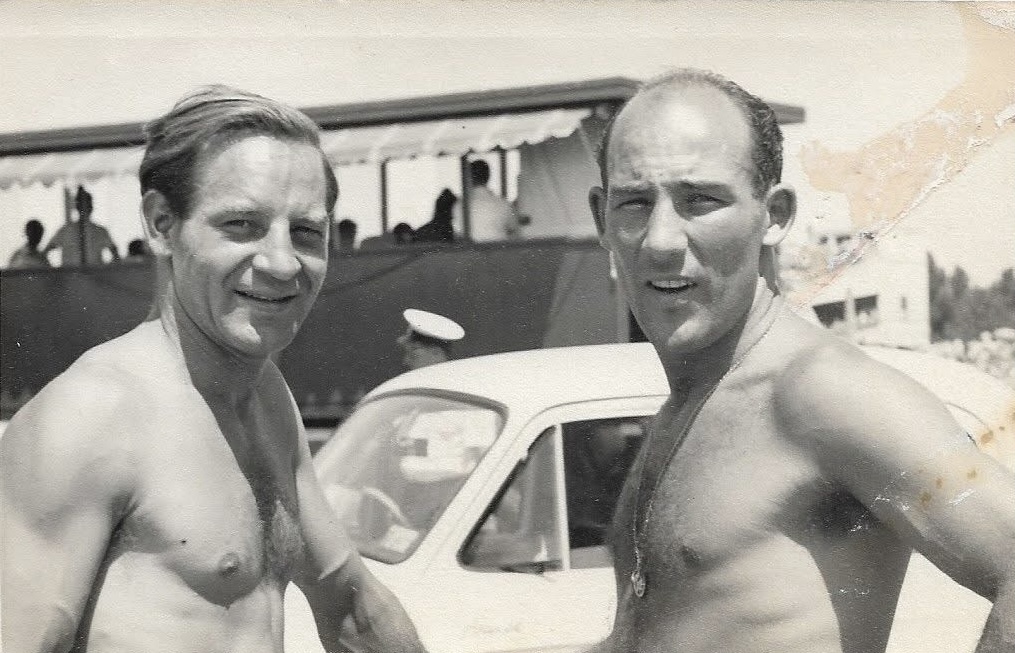
A couple of stud-meisters at Warwick Farm in 1961, Innes DOB 12/6/1930, Stirling 17/9/1929 (M McGuin)(CAN)
I’d forgotten Jo Bonnier’s two ‘Tasman’ wins in 1961 aboard an old Cooper T51 Climax.
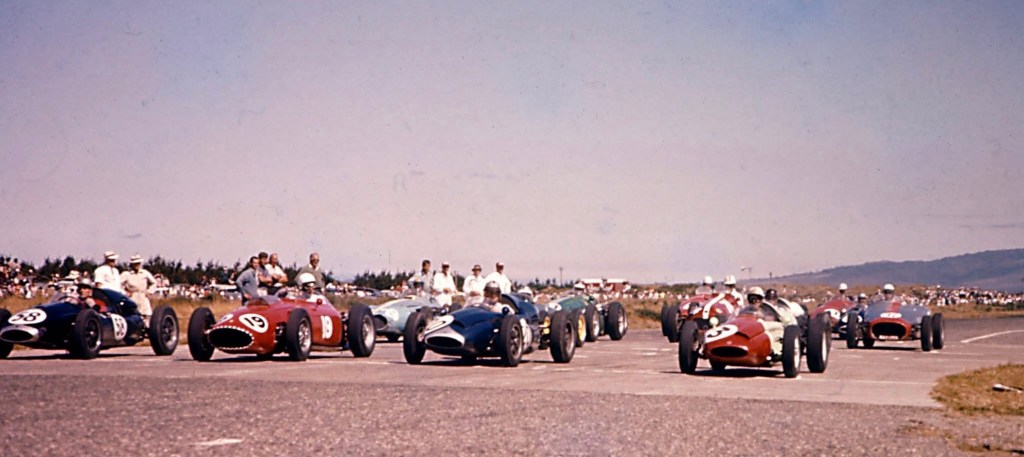
Here he is on the Teretonga International grid on pole at right with Denny Hulme’s Cooper T51 Climax, Pat Hoare, Ferrari 256 and Tony Shelly’s Cooper T45 Climax – with ? Lycoming Special looming large at the far right.
Bonnier won from Roy Salvadori, Lotus 18, then Hulme, Hoare and Shelly.
(CAN)
And, the wonders of Facebook, one for the Cooper historians from Classic Auto News‘ Allan Dick.
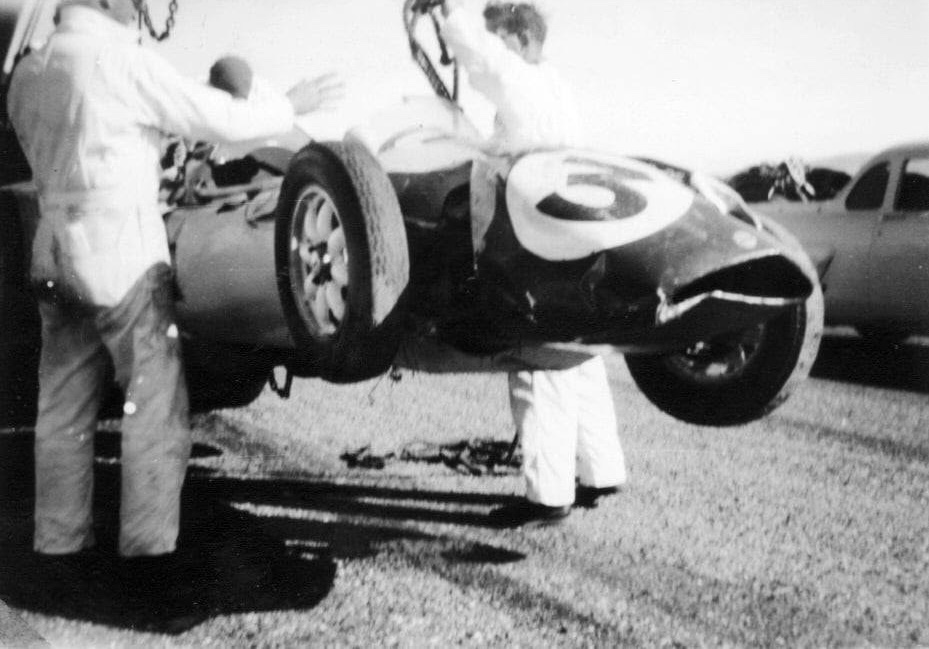
‘Bonnier had a successful 1961 tour with Yeoman Credit. He won convincingly at Levin (beating Jim Clark) and Teretonga despite having an old car. After winning the main Teretonga race, he went off in the Flying Farewell (an all-in race at the end of the race weekend, a ‘Butcher’s Picnic’ in Australia), damaging the car so badly that it wasn’t considered worthwhile taking it back to Europe, so it was stripped of its parts and left in Invercargill. Nobody knows what happened to it. Here it is being recovered from the lupins (above) at the end of the main straight.’
(Lister Cars)
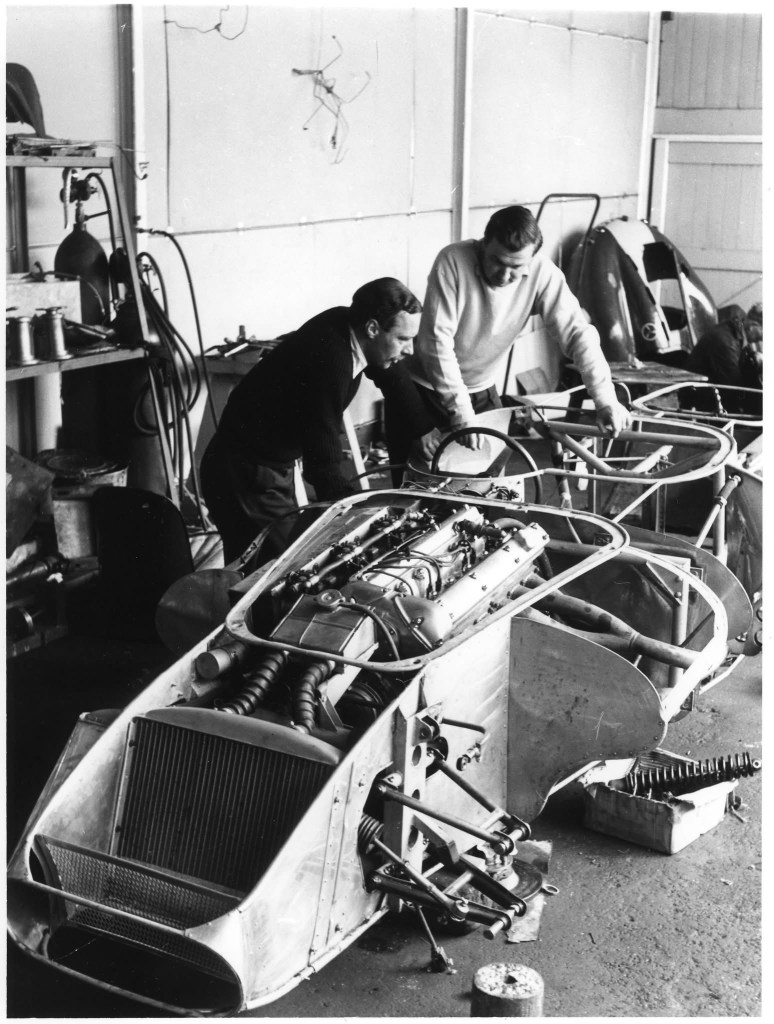
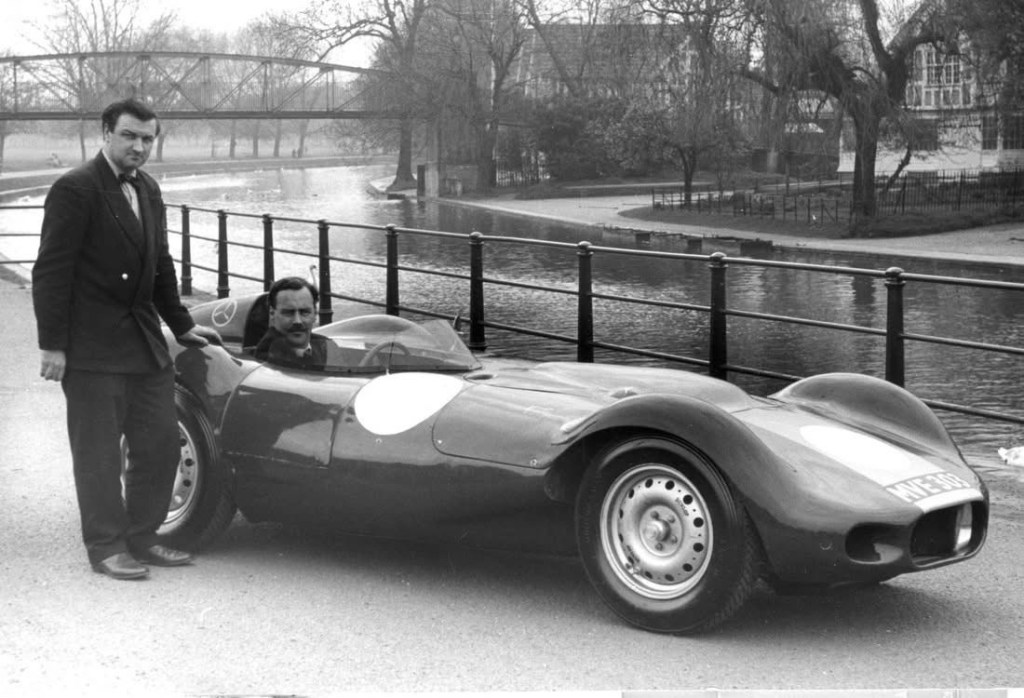
Archie Scott-Brown and Brian Lister ponder the construction of the prototype Lister-Jaguar chassis BHL2, registered MVE303…and 506 306 in late 1956 or early 1957 at the Lister family’s Cambridge workshop.
Scott-Brown had a fabulous season, winning 11 of the 14 races he entered including breaking the unlimited sportscar lap record, during the race or practice, on every circuit the team visited.
Press release, what date folks? (Lister Cars)(Classic & Sportscar)
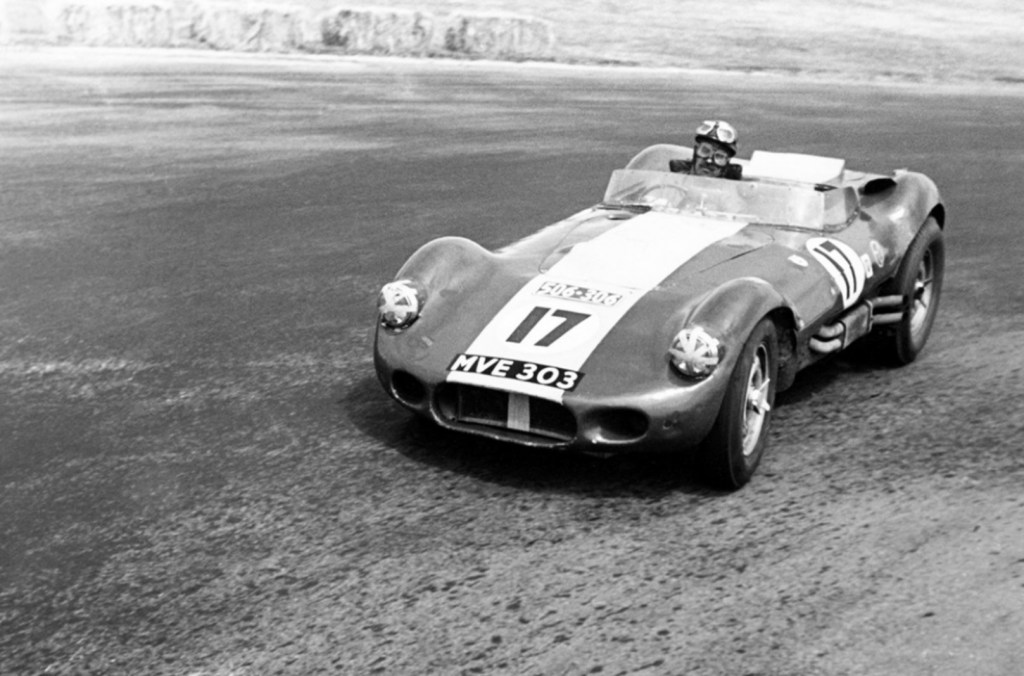
He and a mechanic then took the Lister to New Zealand for their 1958 summer internationals, where the car – registered 506-306 – won two more races. Archie took a 12-lap Le Mans start preliminary at Teretonga and the 150-mile Lady Wigram Trophy (above), finishing ahead of two Grand Prix cars: Ross Jensen’s Maserati 250F and shooting star Stuart Lewis-Evans’ Bernie Ecclestone-owned Connaught B3 Alta.
In an era where such fast cars were usually sold to a lucky (or not) colonial at the end of the trip, the Lister returned home ‘to clear the Customs bond in New Zealand,’ wrote Doug Nye. Sadly, BHL2 was then torn down with many of its fit and well components used in the build of other car(s).
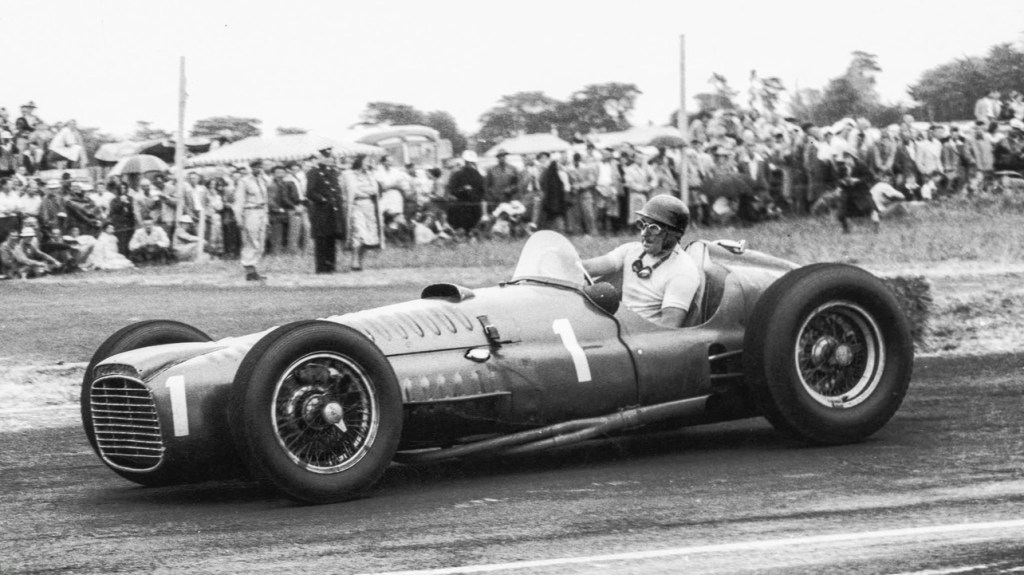
Ken Wharton punts his awesome BRM P15 V16 around Ardmore during the January 9, 1954 New Zealand Grand Prix
He had the 100 lap 300km race shot to bits when brake problems intervened, finishing second behind Stan Jones in Maybach 1, with Tony Gaze HWM Alta third.
Enzo Ferrari ponders the 300bhp, SOHC, two-valve Repco-Brabham V8-engined Brabham BT19 in the Monza pits during the September 1966 Italian GP weekend.
Ludovico Scarfiotti brought home the pancetta for the Scuderia, mind you, winning the race from Mike Parkes in another Ferrai 312 with Denny Hulme third in his Brabham BT20 Repco.
(LAT)
Still, the pace of the little-ies shouldn’t have surprised Enzo in that transitional year: the 2-litre Coventry Climax and BRM-powered Lotus 33s of Jim Clark and Graham Hill, and his own Dino 246 of course. The title was there for Ferrari’s taking; all they had to do was keep John Surtees in the saddle for the year…
Meanwhile, Jack was having a grouse time. Time enough to slip home mid-season for the opening week of Surfers Paradise International Raceway – his race was on August 14 – collect some cash, demonstrate Repco’s wares to the punters, then go back to Europe and wrap up the World Championship…which he did at Monza.
(NAA)
The logistics of it all are interesting.
Win the German GP in BT19 on August 7, pop it in a Qantas 707 to Australia (or whatever), get it from Melbourne or Sydney to Surfers. Do the whole thing in reverse, get BT19 race prepped, then truck it off to Italy.
Meanwhile, Jack jumped a jet to Scandinavia and won two ‘Euro F2’ rounds from Denny: the Kanonloppet, Karlskoga on August 21, and the Finlands GP at Keimola Ring on August 24. JB in a BT21 Honda, DH in a BT18 Honda. August wasn’t a bad month, really. Some sort of engine problem let the Repco side down in Queensland, it could easily have been a win a weekend for Jack…
(Ebay)
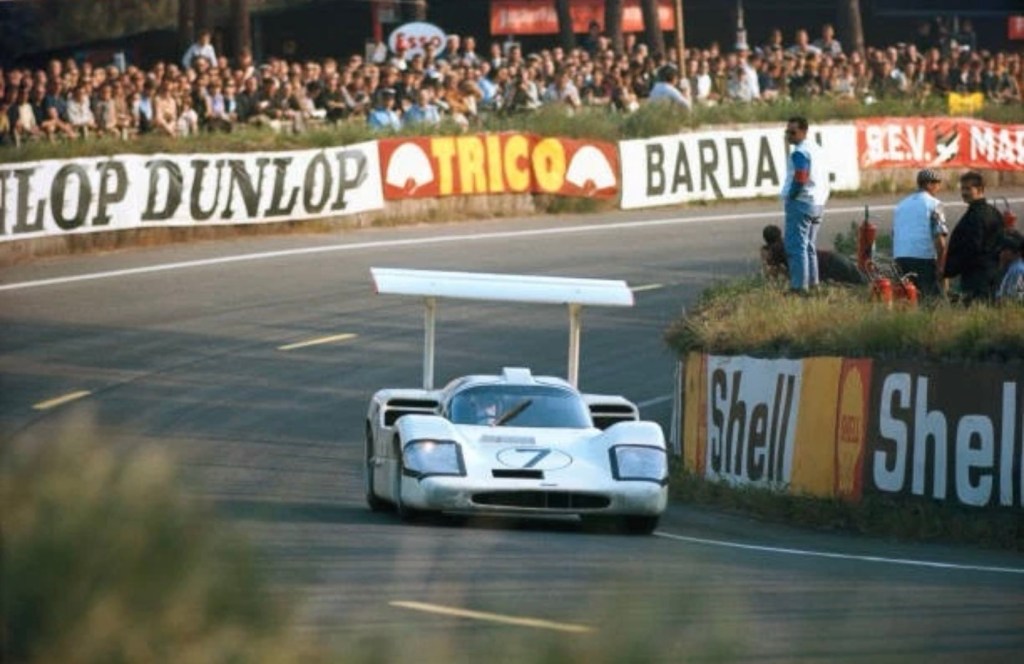
Mike Spence at the wheel of the Chaparral 2F Chev he shared with Phil Hill at Le Mans in 1967, DNF transmission failure after 225 laps in the race won by the Ford Mk4 raced by Dan Gurney and AJ Foyt.
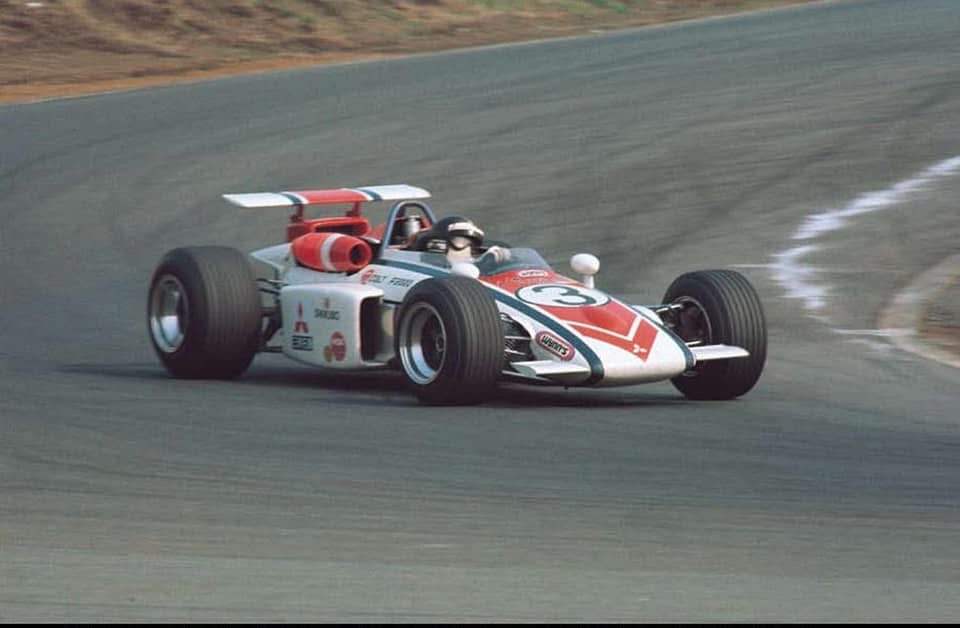
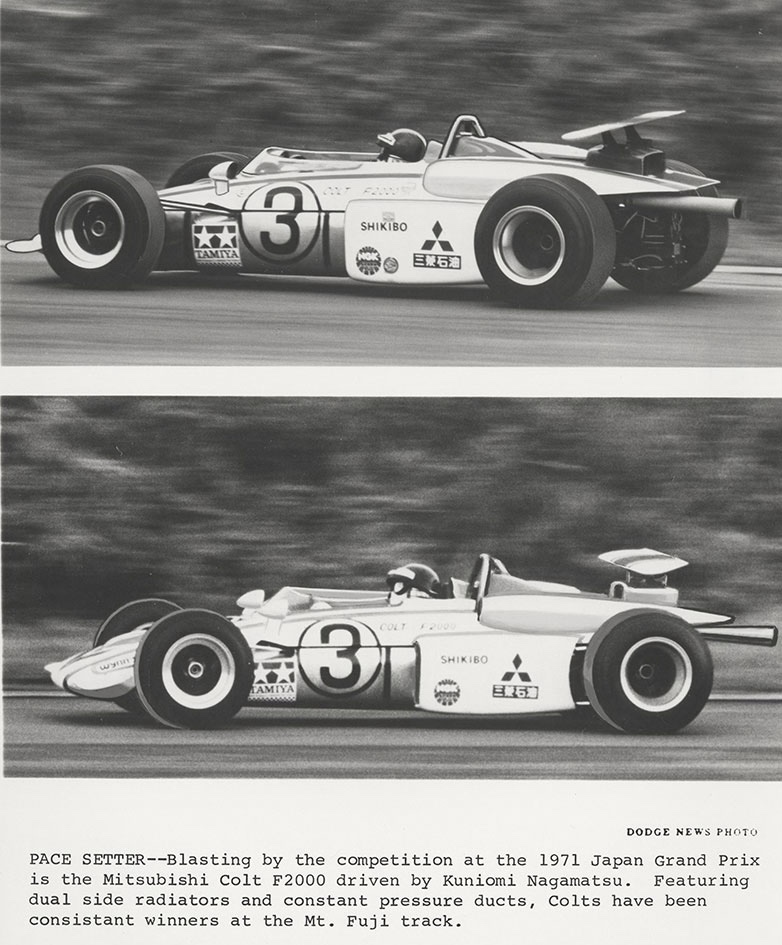
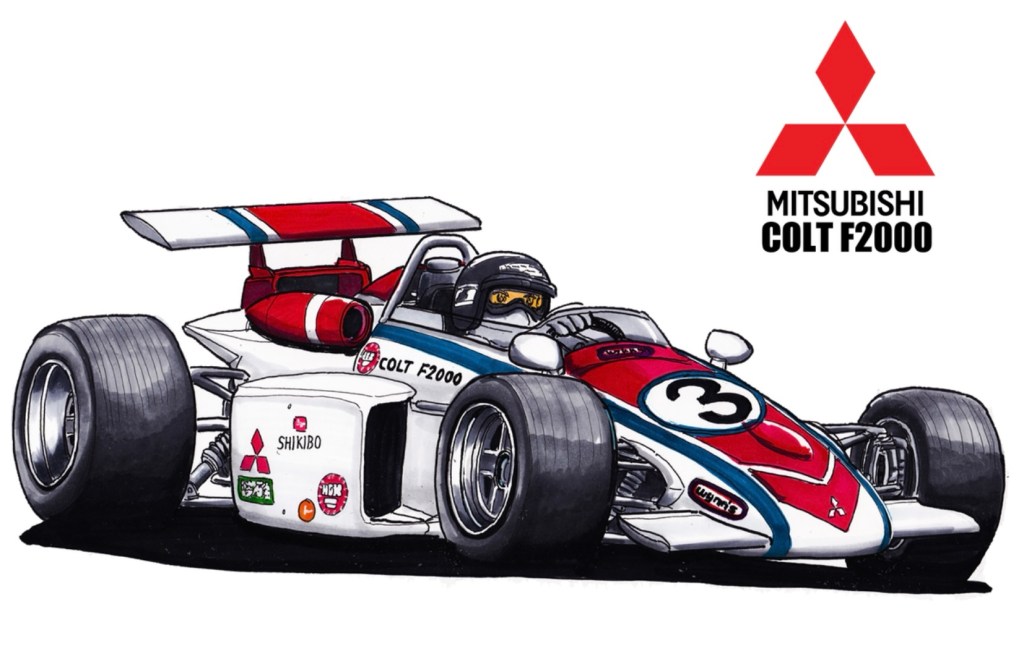
Kuniomi Nagamatsu on the way to victory in the May 3, 1971 Japan Auto Federation Japanese Grand Prix at Fuji International Speedway aboard his Mitsubishi Colt F2D/F2000 R39B 2-litre.
He won the 35 lap, 225km race from his teammate Osamu Masuko in another F2D from then Japanese International Tetsu Ikuzawa’s Lotus 69 Ford FVC 1790cc in third place.
Nagamatsu’s win was the culmination of six years of Mitsubishi single-seater racing in Japan and Macau using Brabham chassis/copies thereof; the F2Ds are Brabham BT30 chassis in drag. Lower drag that is, the aero on these cars was the work of Mitsubishi’s aviation subsidiary.
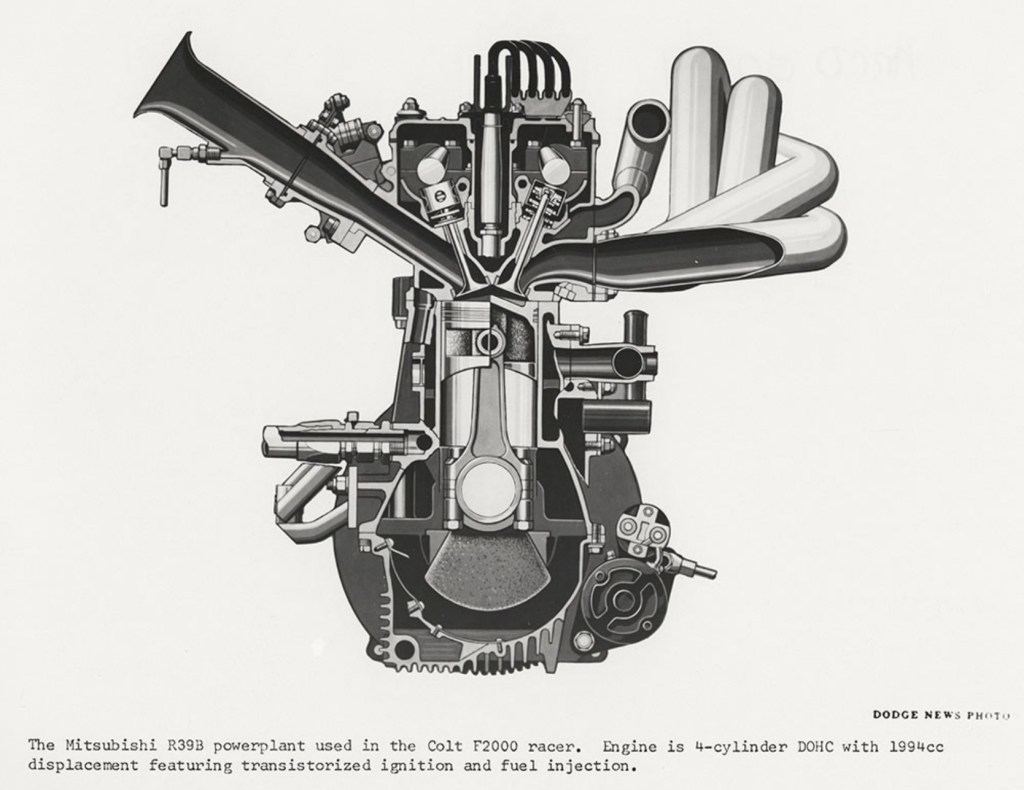
The engines were home grown too. Initially production motors with the usual mix of increased bore, heads, carbs and cams but by 1971 Topsy was a 2-litre, twin-cam, four valve, fuel injected F2 engine that should have won the 1972 European F2 Championship if someone – how bout Bernie Ecclestone, having just acquired Brabham – had done a deal. Instead, Mitsubishi handbrake turned away from single-seaters and into the forests where they were already gaining international success…
Who said high-airboxes were started by Tyrrell/Matra during 1971?
Ferrari gave it a whirl on Richie Ginther’s Ferrari 156 at Reims during practice for the 1961 French Grand Prix, he didn’t race with it, so presumably the jury was out as to its performance. That’s Carlo Chiti with the top of his head chopped off.
And below in the LWB (it’s a joke folks) Ferrari 156 #0001 at Monaco on May 14 where he scored a rousing second place behind Mighty Moss in Rob Walker’s Lotus 18 Climax and in front of more-fancied teammates Phil Hill and Wolfgang von Trips. See here for the evolution of 246P to 156:https://primotipo.com/2015/10/04/monaco-panorama-1958/
(GPL)
And below Richie all, fast and loose in his competition debut at Sandberg Hillclimb on April 8, 1951. The car is Bill Cramer’s MG TC 2 Junior Ford V8, the poor little chassis would have been groaning at the seams…
(Revs Institute)(primotipo archivio)
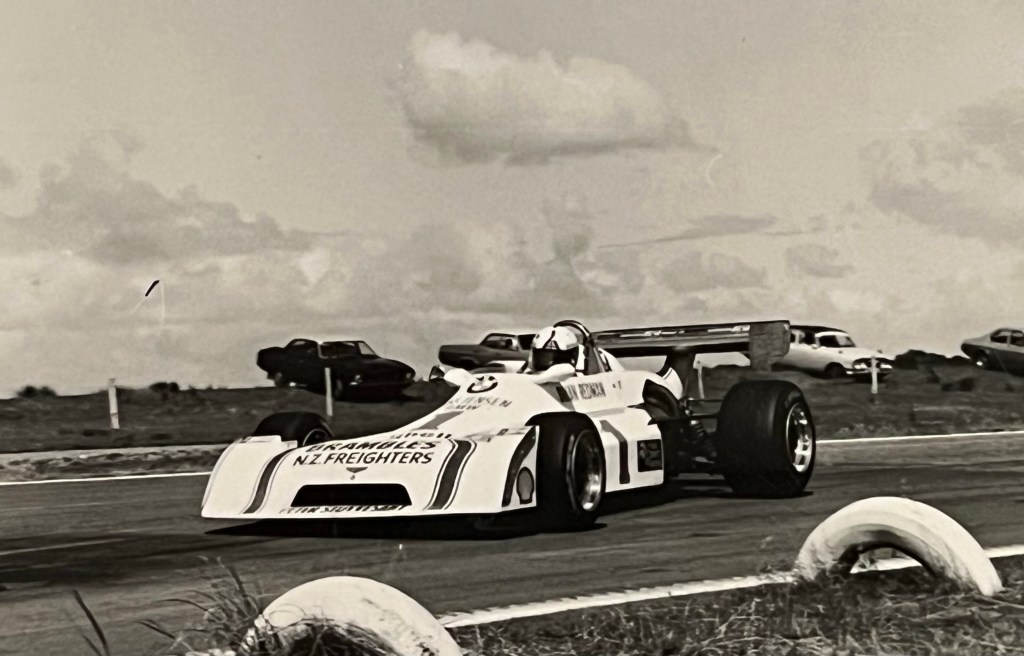
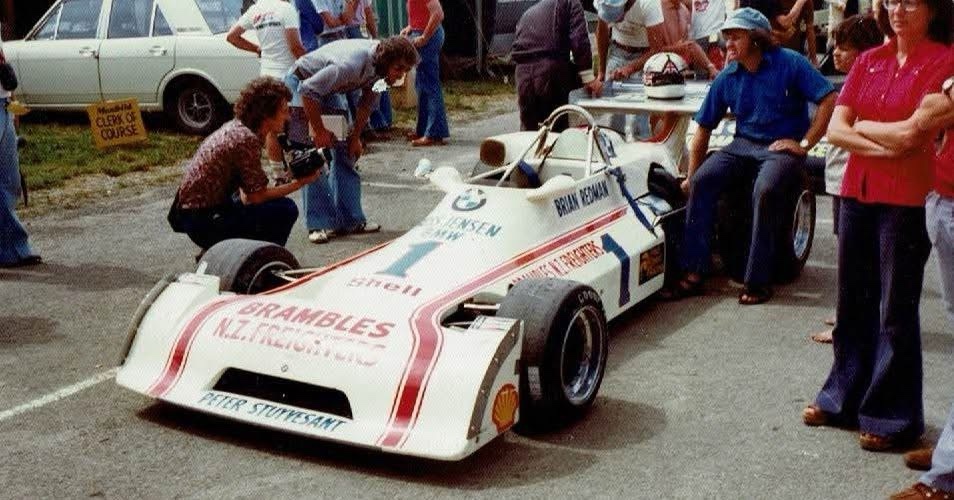
Brian Redman contesting the 1976 Teretonga International aboard a Fred Opert Chevron B29 BMW 2-litre Euro F2 car in the Peter Stuyvesant International F5000 Series.
F5000’s greatest star was to race a RAM Racing F5000 but Fred Opert came to the rescue after they withdrew. Brian thrilled the Kiwis with his talent, he was equal fourth in the series with Graeme Lawrence’s Lola T332, Ken Smith won the four race series in his Lola T330/332 Chev.
Redman was fourth at Pukekohe, second at Manfield, DNF engine at Wigram and DNF wheel at Teretonga.
Manfield pits 1976 (D Bull)(Getty)
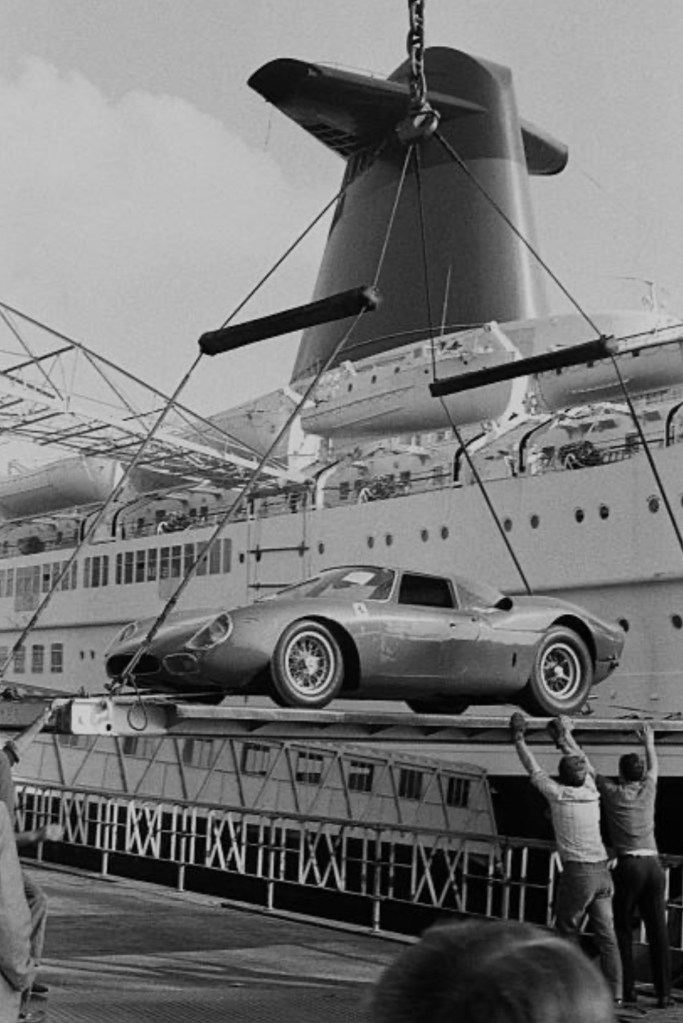
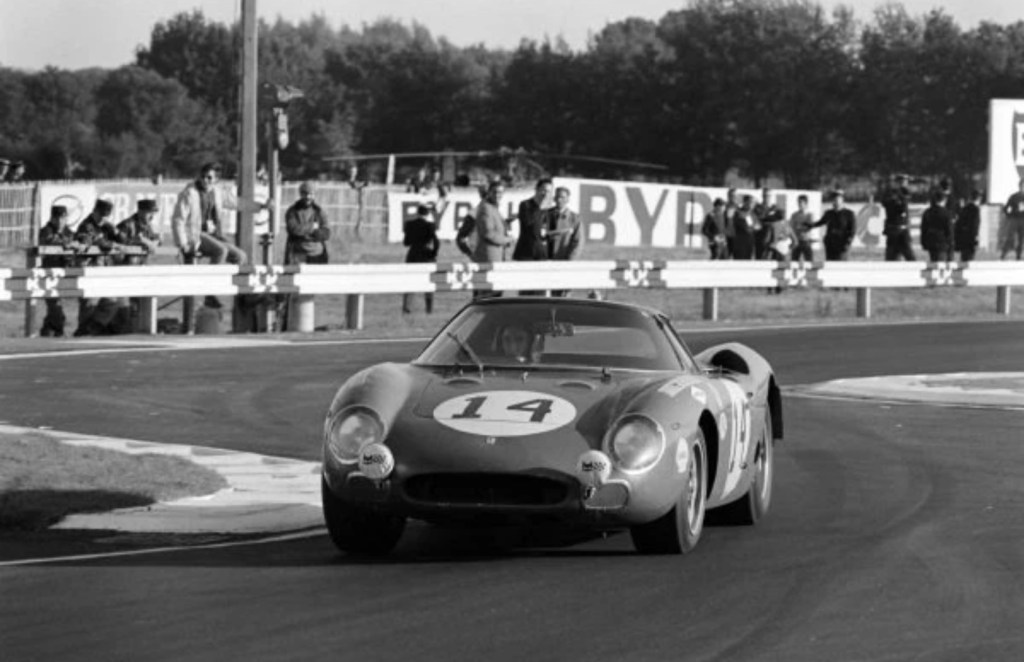
N.A.R.T.’s Ferrari 250LM #5893 – the 1965 Le Mans winner in the hands of Johen Rindt and Masten Gregory – dangles above the wharf at Le Havre after its trip from New York on the liner, France, September 18, 1968, destination, La Sarthe.
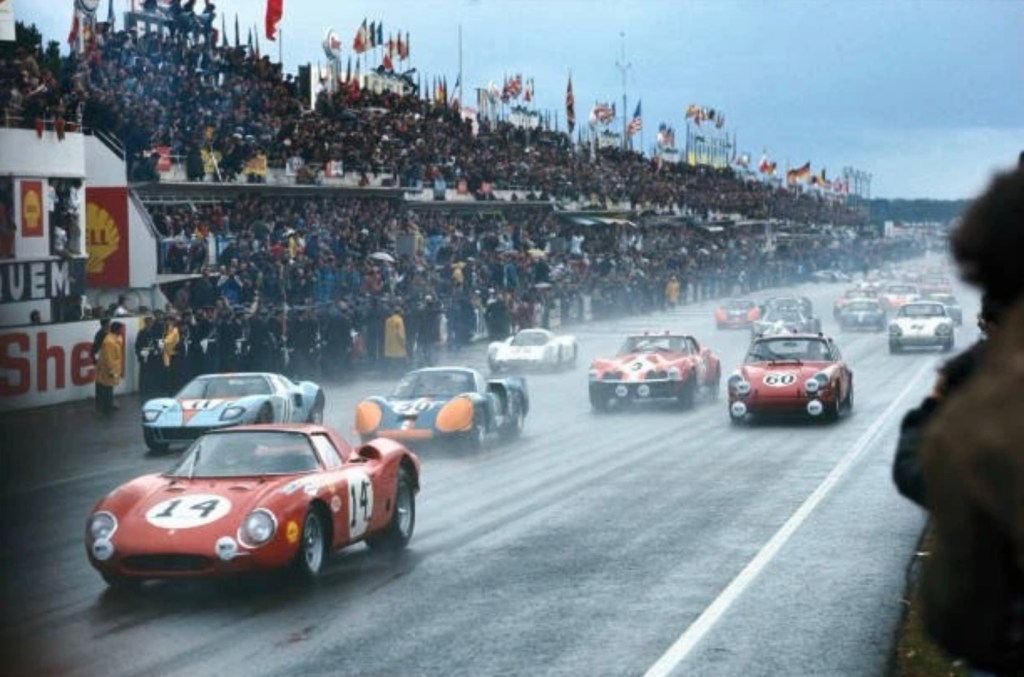
Masten Gregory ahead of a bunch of cars, including #11 Brian Muir’s Ford GT40, Andre De Cortanze #30 Alpine A220 Renault Gordini, the #60 Willy Meier Porsche 911T and Umberto Maglioli’s Chev Corvette. All were DNFs with the exception of the De Cortanze/Jean Vinatier Alpine, which was tenth. The ’68 race was won by Pedro Rodriguez/Lucien Bianchi in a JW Automotive Ford GT40.
(EBay)
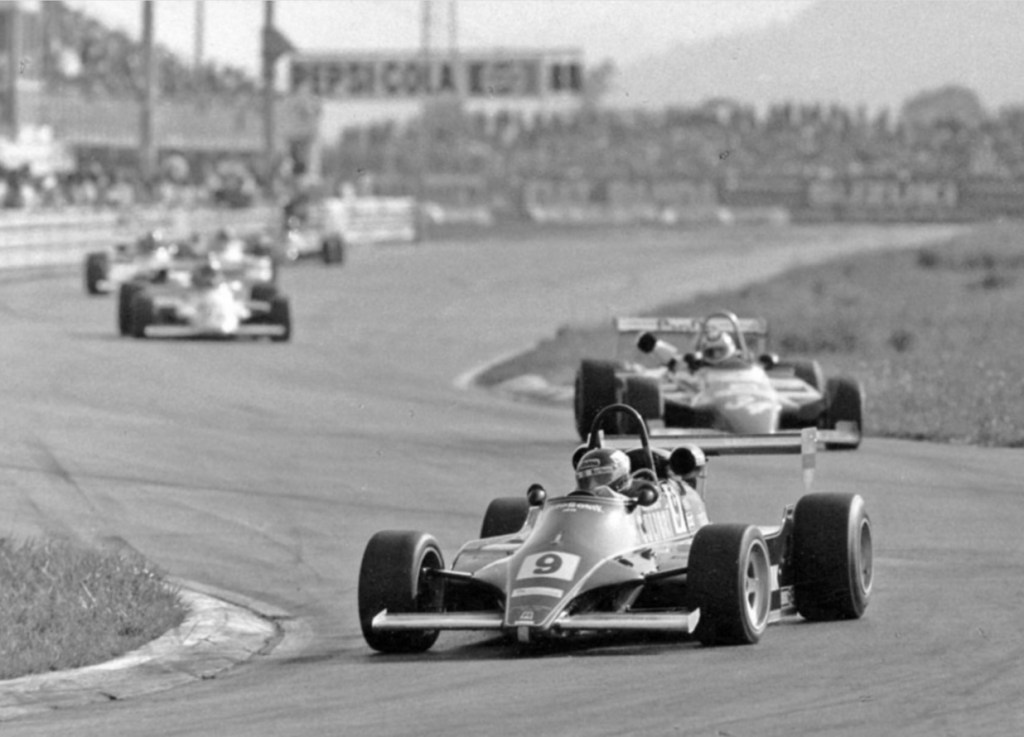
The Gran Premio dell’Adriatico 1981 European F2 Championship round at Misano with Miguel Angel Guerra’s works Minardi Fly 281 Ferrari Dino, 13th, ahead of Oscar Pedersoli’s Ralt RT2 BMW, DNF.
McLaren Cars, Milan Fistonic, Lister Cars, Stuart Dent Collection, Gerry Johannson, GP Library, National Archives Australia, David Bull, Ebay, Revs Institute, Getty Images, LAT, CAN Classic Auto News via Allan Dick, Mitsubishi, Michael McGuin
Sun-Herald cartoonist Mark Knight captured it rather nicely I thought?
Canadian-born Australian touring car racer – one of our legends – Allan George Moffat died last week after suffering from Alzheimer’s Disease for the last few years. November 10, 1939-November 22, 2025. Rest In Peace.
(R Hobman)
Moffat and Peter Brock after winning the January 1986 Wellington 500 in a 5-litre Holden Commodore VK.
With so many photographs popping up in the media since his death, it seemed a good idea to filch a few and add some more as a tribute to a man who provided so much fizz and sparkle to our scene on every level for so long. Google away for the statistical stuff.
(autopics.com)
On the grass at Sandown after one of his many wins at his home track, in the 1970 Sandown 250 enduro – the traditional Bathurst curtain-raiser – works XW Ford Falcon GTHO Phase 2.
His family settled in Melbourne from Canada – his Dad was a Massey Ferguson exec – and I guess the Melbourne die was cast when he arrived back permanently with the Kar-Kraft Mustang Trans-Am in 1969. Ford Australia have always been Melbourne-based based and he needed to be close to the action, so Melbourne it was, Toorak specifically.
Booting his XY GTHO Phase 3 out of Dandy Road at Sandown in the Sandown 250 the following year, DNF after only three laps, gotta be a qualifying flyer, AM wouldn’t have fried his Goodyears like this in an endurance race.
(B Nelson)
Barry Nelson and AGM with the ex-Clark Lotus Cortina at Hume Weir during the Boxing Day 1965 meeting
Nelson, ‘There was only one pre-airflow ex-Jim Clark Cortina in Australia, the later car was built in the Toorak workshop by me and Peter Thorn. The tow car is my FJ Holden panel van with hot Grey motor.’
Scrapping with Jim McKeown’s Lotus Cortina for the South Australian Touring Car Championship win in 1966. Clem Smith’s Valiant won the bubbles (P Smeets)(S Elliott)
Steve Elliott has captured the pensive, focused AGM of renown before a race – gotta be his ‘75 NZ Tour? – at Bay Park, New Zealand, aboard the fabulous Trans-Am, one of the most celebrated of all Australian Touring Car combos. I love this shot.
(autopics.com)
Here with the injected 351 borrowed from his Super Falcon at Calder’s Tin Shed corner? And below the distinctive Ford F150 rig that towed the car coast to coast, at Oran Park.
Oran Park, August 9, 1971 (R Jones)New Zealand circa-1972, circuit folks?
The planets were never aligned for Moff and the Boss 302 to take out the Australian Touring Car Championship they deserved, but karma caught up when he and the works-Phase 3 HO won his first of four ATCCs in 1973.
The shot above looks like the November 1972 Surfers 300 Manchamp round with FoMoCo Team Manager Howard Marsden doing his thing from the pit counter at the end of the Series Production Era, they won it. The one below is the Group C HO at Oran Park in June 1973, the happy ATCC year; they won that race too.
(insidesport.com.au)
The Falcon GT351 Hardtops were tougher going without direct factory support, golden ATCC 1977 year duly noted: the ATCC, Bathurst 1000 and Manufacturers Championship was pretty good going by Moff, Colin Bond and colleagues!
Surfers Paradise 300 in 1978 above, XC Cobra 351, and some of the key men in that period below: Peter Molloy, AGM and Mick Webb, missing from the shot (1978?), is Carroll Smith, who team managed the brilliant 1977 effort and was back Stateside by then.
(G Lindley)1977 Bathurst 1000 one-two weekend: Moffat/Ickx and Colin Bond/Alan Hamilton. Ford XC Falcon GS500 Hardtop 351. Carroll Smith with his back to us (speedcafe.com)(I Smith)
Moffat and Jim McKeown at it again, this time a decade later in a pair of sports sedans at Hume Weir in June 1975: the fabulous howling ex-works Ford Capri RS3100 Cosworth 3.4 V6 and the Alan Hamilton/Porsche Cars Australia mid-engined Porsche 911 Turbo that CAMS shortly thereafter legislated out of existence.
(R Cammick)
The Mighty Dekon built Chev Monza 350 at Bay Park, New Zealand, on its way to Australia in late 1975, and below all close up and friendly at Torana Corner, Sandown in 1979.
(R Martin)(BMW)
BMW claim their 1975 Sebring 12-Hour win – Hans Stuck, Brian Redman, Sam Posey, Allan Moffat – with a 3.5-litre 3.0 CSL ‘launched’ the marque into the public’s consciousness in the United States.
(BMW)
It was Moff’s biggest international win too. Over the years he contested many international enduros including Le Mans on several occasions.
The shot below shows him at the wheel of the Dick Barbour Racing Porsche 935 K3 he stared with Bob Garretson and Bobby Rahal at Le Mans in 1980; DNF piston in the 11th hour.
Moffat aboard the Andy Rouse-built, leased Ford Sierra RS500, at Bathurst in 1987, the car retired on lap 31 before AGM had a steer. His co-drivers were Rouse and Thierry Tassin.
Allan’s last serious race was the 1989 Fuji 500, in which he raced his Eggenberger-built RS500 to victory together with Klaus Niedzwiedz. Moffat entered the car #39, his birth year, won the race, then quietly retired from driving. Macau GP Mazda MX5 hit and giggle support race duly noted…
Credits…
Barry Nelson, Russell Hobman, Steve Elliott, autopics, Rob Jones, Glenis Lindley, Peter Smeets, Ian Smith, Ross Cammick, Russell Martin, Allan Moffat Archive, BMW, LAT, Getty, speedcafe.com
Tailpiece…
(Moffat Archive)
In the very best of company at Indy during the Month of May in 1965 with Colin Chapman, Jim Clark, the rest of the boys and the victorious Lotus 38 Ford Indy 4.2 V8.




















 primotipo...