Archive for the ‘Fotos’ Category

image

(Popperfoto)

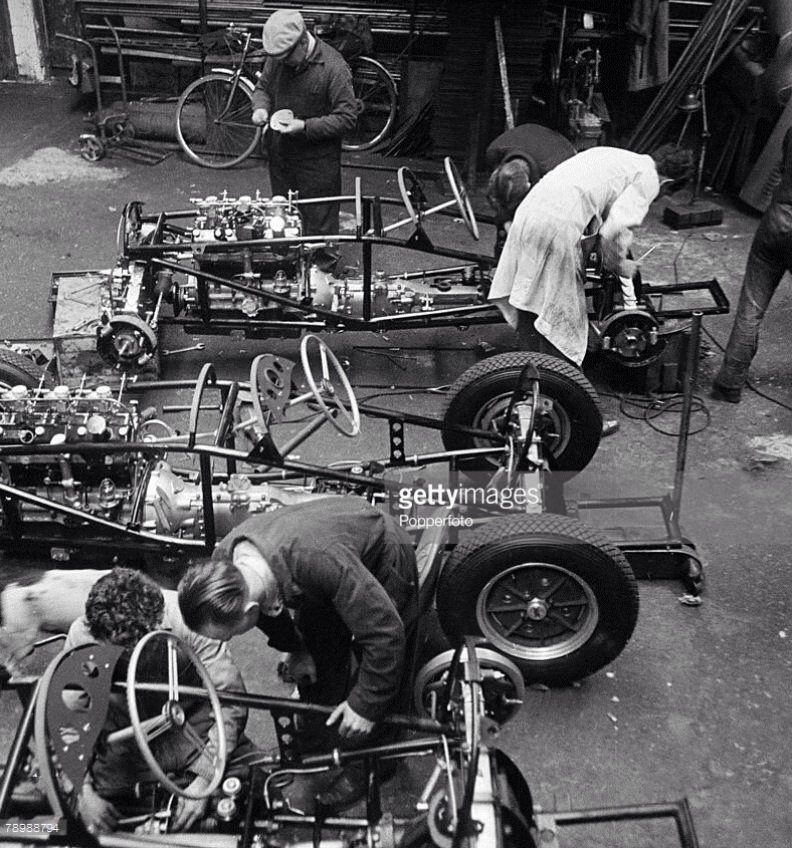
Engineers building a production run of these very successful T20/23 series of cars which were important in helping launch the careers of Mike Hawthorn and Jack Brabham amongst others. And positioning Cooper as just not builders of 500’s…

The photos were taken in Cooper’s Surbiton workhop in early 1953, the cars are the CB Mk2 or T23.

The essential difference (there were other improvements as well) between the T20/23 is that the latter used a spaceframe chassis, clear in shot, the earlier car a more traditional box section frame. Note the stack of frames, not yet stove-enamelled on the lower right of the shot.

I wrote an article about the T20 a while back so I won’t repeat myself, click here to read it;

Stirling Moss and Jack Myers: Cumberland Park Speedway, Sydney: Cooper T20 / WM Holden 1956…
image

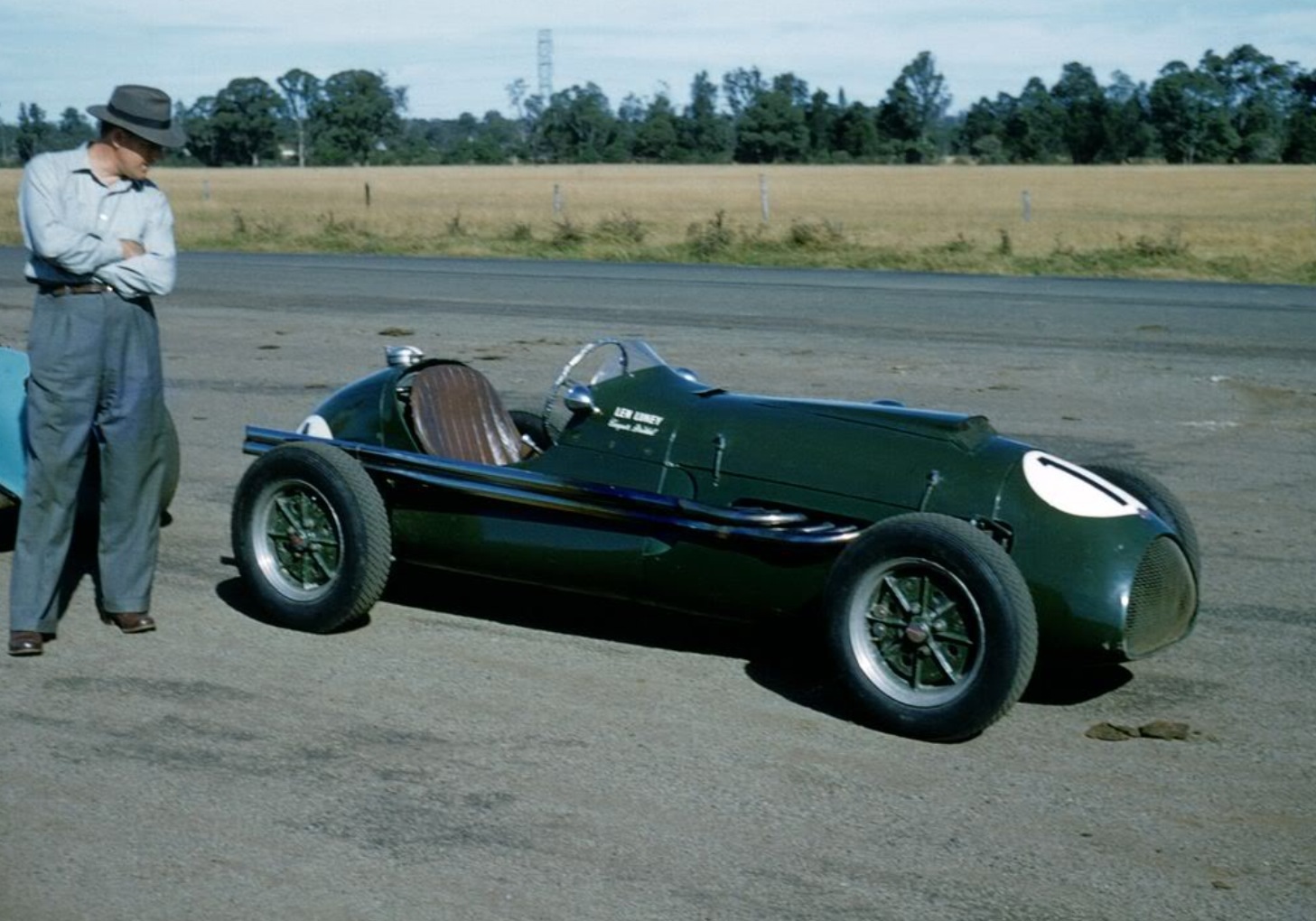
Australian Gold Star Champion 1959, Len Lukey’s Cooper T23 Bristol (chassis CBR/2/9/53)  pictured at Mt Druitt, a circuit west of Sydney on 25 May 1958, the car did a 13.53 seconds standing quarter to take FTD. Shot shows the handsome lines of these cars to rather good effect as the gent looking on would attest. Later fitted with a Holden 6 cylinder engine, restored, for a time part of the Donington Collection and still extant (John Ellacott)
image

The workshop shots are great, the unclothed cars show the Bristol engine, the chassis and the suspension mix of wishbones and transverse leaf springs front and rear.

Cooper were somewhat maligned over the years about their ‘curvy spaceframes’ by engineering purists but in comparison with other cars of this period, the Cooper is a paragon of modernity if not a perfect example of triangulation!

Doug Nye credits Dante Giacosa’s design of the 1946 Cisitalia D46 for Piero Dusio, as the first modern customer spaceframe car ‘the production racing car trendsetter for an entire generation of designers’.

cisi chassis

Cisitalia factory drawing of the D46 voiturette and its lovely, stiff spaceframe chassis, Fiat 1100cc 62bhp OHV engine. Suspension F/R lower arms/live axle with transverse semi-elliptic springs front and rear, hydraulic drum brakes. Drivers of the cars included the elite, Tazio Nuvolari and down

manzon

Robert Manzon’s 14th placed Cisitalia D46 during the 330Km GP du Comminges, St Gaudens 0n 10 August 1947. Race won by Louis Chiron’s Talbot Lago ’39. The caption with this shot simply says ‘1947 French GP’, which it is not. I have arrived at the above driver/car/event by elimination, some French readers will be familiar with the background, the other hint is the ‘team badge’ on the cars side, let me know if i am wrong or right for that matter! (GP Library)

As stated above the Cooper Bristol Mk1 (T20) used a simple fabricated box-section single plane-ladder frame with tacked on body supports and was very successful.

John Cooper and Owen Maddock’s (Cooper designer/engineer/draughtsman) 1953 Mk2/T23 used a multi-tubular frame which took advantage of the entire cross-sectional area available inside the body ‘and looked more like what would become known as a ‘spaceframe’ design though still sparsely triangulated…this new welded-up chassis frame employed all the same sized round section tube, and it was effectively the forerunner of many more British GP cars ‘spaceframes’ to follow’ Nye said.

So, if the car isn’t the trendsetter Giacosa’s was the Cooper lads were certainly spaceframe ‘early adopters’, very successfully so.

Note the beautiful light alloy Cooper wheels, rudimentary independent rear suspension set up of lower wishbones and top transverse leaf spring which would serve Cooper well till the end of the decade. Double wishbones and coil springs at the front appeared a bit earlier but the transverse top leaf is in use here.

image

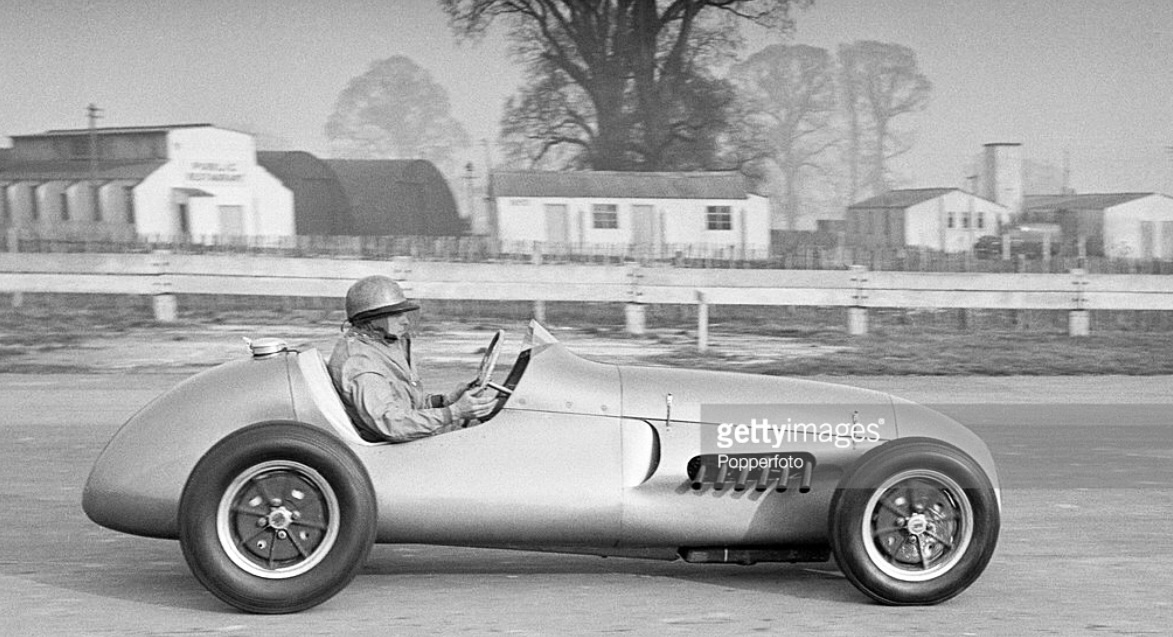
New Cooper T23 on what is perhaps its first test at Goodwood in late ’52 or early 1953, triple Solex fed 1971cc circa 155bhp spec engine as per text. Frame, neat throttle linkage and beautiful hand formed aluminium body also clear in shot (Popperfoto)

The Bristol/BMW engine develops around 155bhp from its 1971cc in BS4A spec, the engine is worth a paragraph or two. What follows is a summary in relation to the engines race application, not a chronology of the many variants fitted to road cars.

As demand for aircraft and engines eased towards the end of WW2 the Bristol Aeroplane Company decided to diversify into cars. The history of this great company is interesting, click here to read about it; http://www.bristolaero.org/bristol-built/

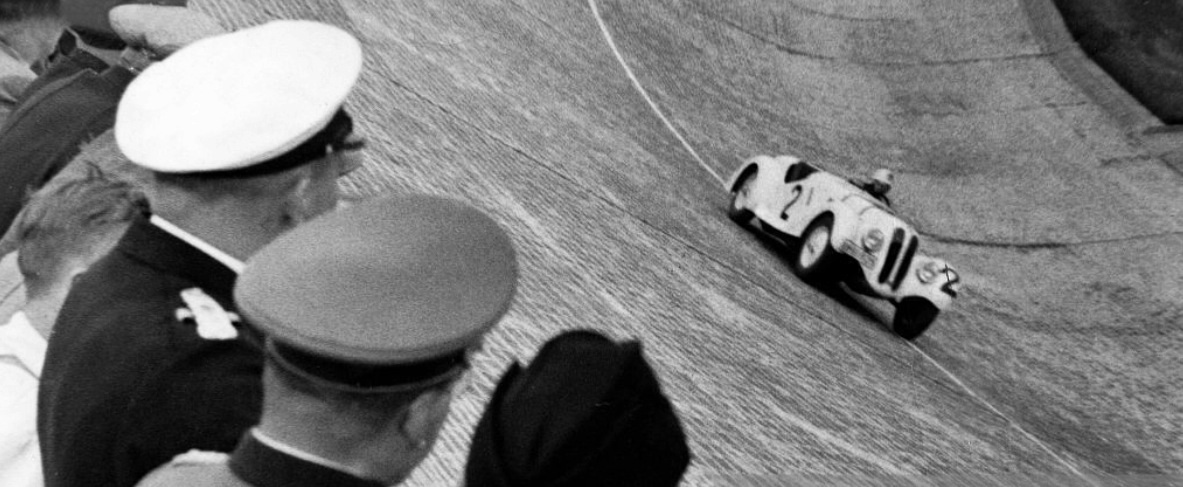
One of its directors, HJ Aldington, had impeccable BMW connections, another of his companies, AFN Ltd were both the constructors of Frazer Nash cars and the pre-War importers of BMW. The 2 litre engine the subject of this article, was fitted to BMW’s superb 328 sports car, famously the winner of the 1940 Mille Miglia in Huschke von Hanstein’s hands..
image

BMW 328 on Avus’ North Curve, Germany on 19 May 1938, driver and event unrecorded (Ullstein Bild)

In the post-war German mess, der Deutschlanders were keener for their technology to be shared with the ‘goodies rather than the baddies’ (the Ruskies), Aldington did a deal via the War Reparation Board which gave the engine technology to Bristol. The Brits fitted the engine to a 326 chassis and dressed the lot in an aerodynamic body similar to the 327 ‘Autenreith’ Coupe.

The first Bristol built engine was fired up on their dyno on 22 May 1946 and was soon fitted to its prototype ‘400’ car.

The engine was tall, slim and short despite its long stroke. The bores were cleverly siamesed within the cast iron block to allow the use of 4, rather than the 7 main bearings considered normal for a straight-six. The head had hemispherical combustion chambers with valves inclined at an included angle of 80 degrees with downdraught inlet ports between them.

Rather than twin overhead camshafts the valves were operated by 18! inclined cross-pushrods. For its success it demanded great engineering precision in its build, something Bristol had in spades. A steel crank ran in Vandervell ‘ThinWall’ lead indium bearings. Dry cylinder liners were of Brivadium alloy-steel so hard that for racing Bristol didn’t consider them run in until the engine had done 8000 miles!

After fitment of three downdraught SU carbs the ’85A’ engine developed 80bhp. The ’85C’ was fitted with three Solexes.

image

Bristols; Type 171 Sycamore helicopter and 401 Coupe in 1950 (Hutton Archive)

In 1948/9 Aldington asked Bristol to develop a high performance variant for Frazer Nash, this ‘FNS’ (Frazer Nash Specification) unit with 0.15 larger inlet ports, improved crank counter weights, Delco-Remy distributor rather than the Lucas unit developed 126bhp @ 5500rpm. In the FN Le Mans Rep the engines were very successful.
image

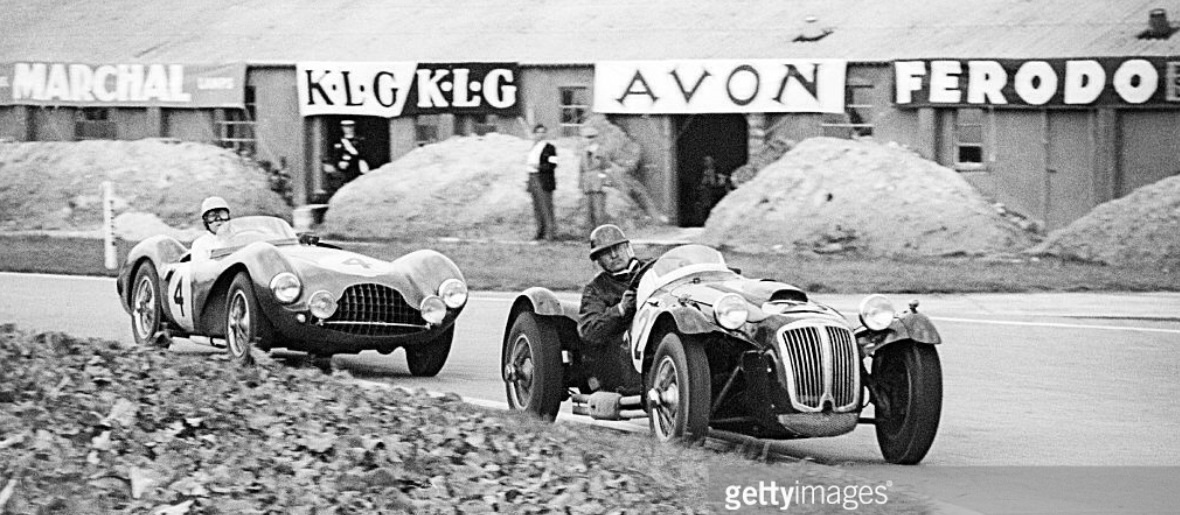
The 8th placed Bristol engined Frazer Nash Le Mans Replica of Dickie Stoop and Peter Wilson about to be swallowed by the winning Aston Martin DB3S with Reg Parnell at the wheel, he shared with Eric Thompson, during the Goodwood 9 Hours 22 August 1953 (GP Library)

Encouraged by the Frazer Nash success, Bristol built a new ‘Bristol Sport’ (BS) engine based on the ‘403’ Type 100 spec engine. These had blocks cast in chrome alloy steel. With a 66mm bore and 96mm stroke they displaced 1971cc.

The head was aluminium alloy with inlet valves made of chrome-nickel steel, exhaust valves of austentic-chrome steel. All of the valve gear was very light and polished. The crank was in aviation spec nitriding steel still running in 4 main bearings. A short duplex chain drove from the cranks nose to the high camshaft which ran in four bearings and carried a skew gear driving the distributor and oil pump shafts. High pressure lubrication was used but a wet sump retained. On ‘BS Series’ engines the head was ‘ported and polished’.

These engines, the Mark 2 version used by Mike Hawthorn’s Lavant Cup winning Cooper T20 at the Goodwood Easter 1952 meeting developed 149.8bhp@5550rpm on the Filton dyno before Leslie Hawthorn deployed his secret ‘witches brew’ of nitro-methane to produce more power still.

The ‘BS4A Mk1’ engines  developed 155bhp@6000rpm and 148lb/ft of torque at 5000rpm.

Ultimate versions of the German/British engines were Cooper Bristol driver/engineer Bob Gerard’s de-siamesed port 2.2 litre variants running nitro-methane which developed 180bhp@7000rpm. Bristol’s own de-siamesed engine which ran at Le Mans in its Coupes developed a reliable 160bhp. By that time the 2 litre F2 racing for which these engines were developed was over.

The Cooper Bristols were important cars in the rise of the Surbiton marque and formidable weapons in the right hands if not Ferrari Tipo 500 beaters…
image

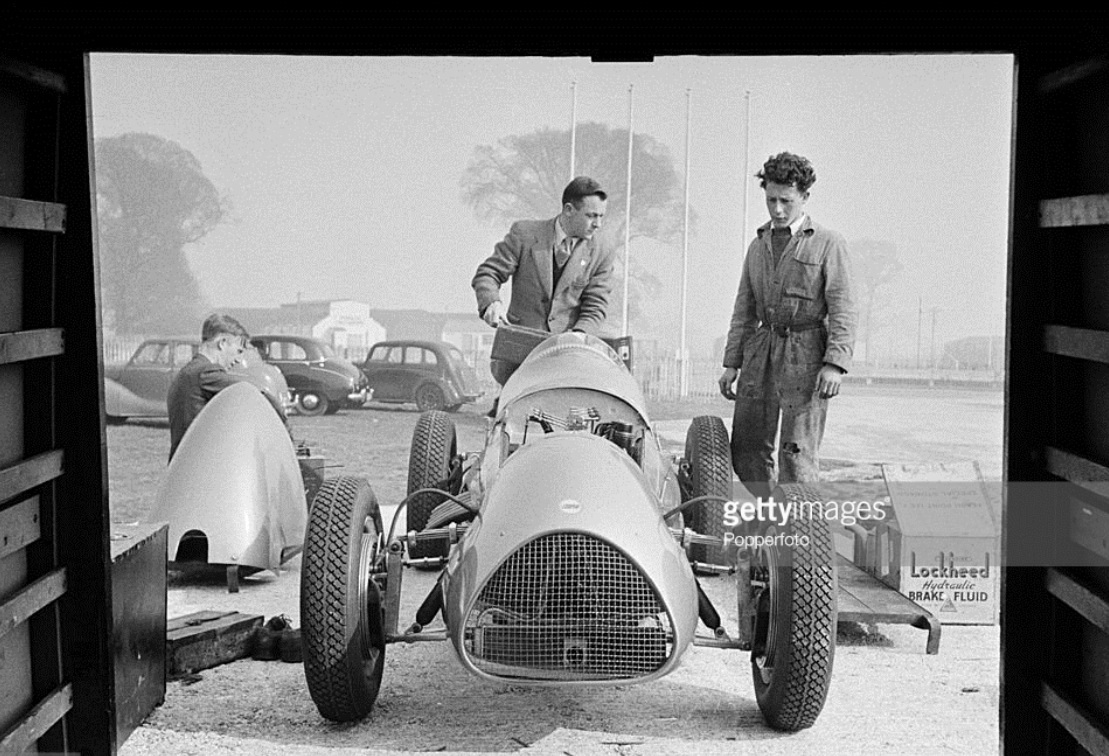
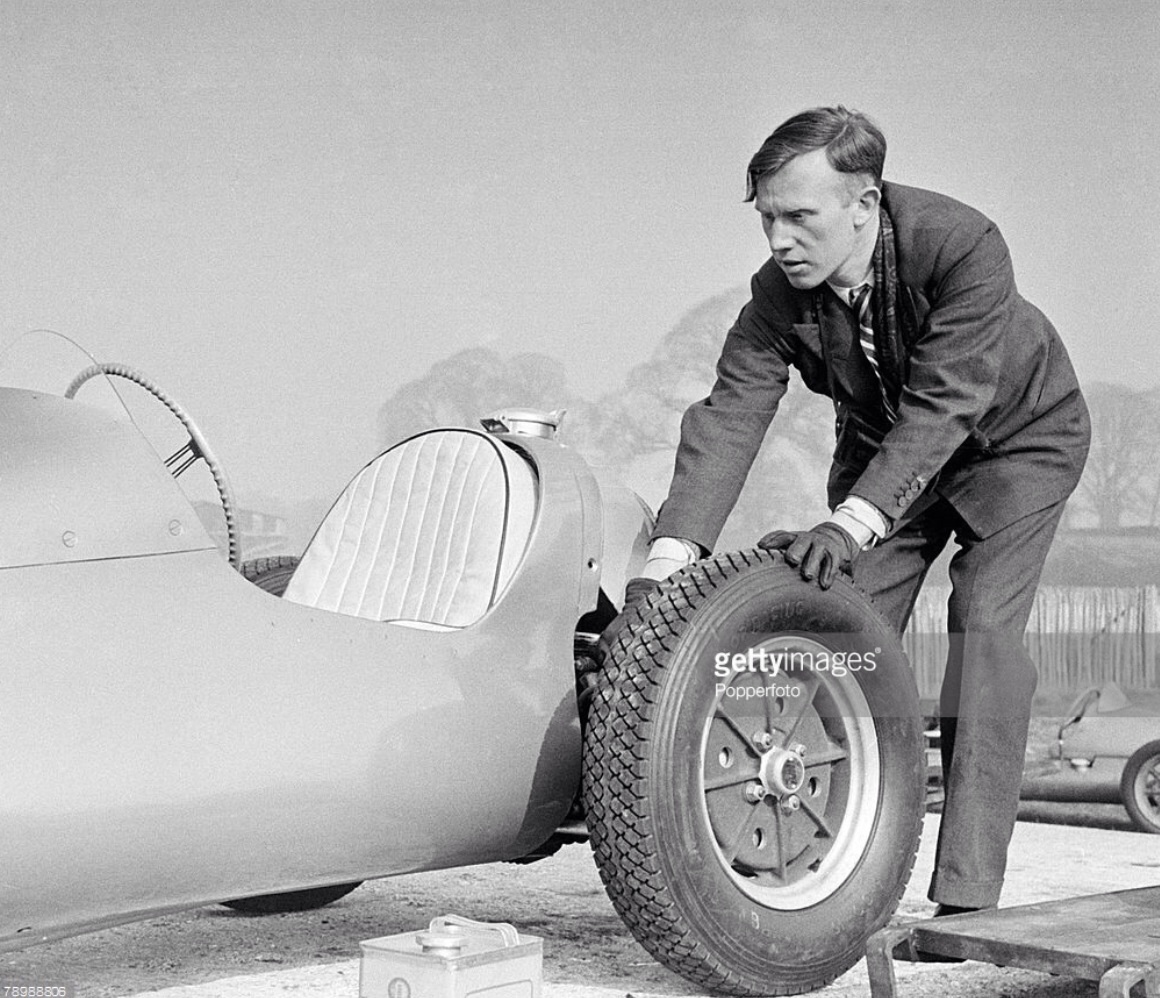
Cooper T23 Bristol being unloaded from its trailer on a bleak, winter Goodwood day in late 1952 or early 1953. 85km trip from Cooper’s Surbiton ‘shop to Goodwood. These shots (of the mechanics fettling the engine above and the two below) are undated other than 1 January 1953 which will be an approximation, there are no details of the mechanics or driver. My guess is that its a Cooper instigated press shoot, as are the workshop ones above, probably of the cars first test, the ‘stub exhausts’, these engines not usually raced as such, indicative of a ‘quick fix’ overnight to run the car for the first time. If any of you have the details please provide them and i will update the text (Popperfoto)
image

Bibliography…

Doug Nye ‘History of The GP Car’, Automobile Year, John Blanden ‘Historic Racing Cars in Australia

Photo Credits…

Popperfoto, John Ellacott, GP Library

Tailpiece: John Cooper, but its just a guess…
image


image

Glemser/Fitzpatrick Ford Capri RS2600 ahead of a Ferrari 312PB and a Porsche 911RSR, Le Mans 1973 (Schlegelmilch)

Ford’s battles with BMW in 1970’s touring car racing are legendary as both manufacturers battled for supremacy. The adage ‘Win on Sunday, Sell on Monday’ was reflected in big marketing spends in the European Touring Car Championship at the time…

image

Chris Amon in the CSL he shared with Hans Stuck, Le Mans ’73 DNF lap 162 with accident damage (Schlegelmilch)

In 1973 the protagonists in the big car class were the RS2600 Capri and 3.0CSL, the title that year won by Toine Hezeman’s BMW with wins at the Spa, Zandvoort and Paul Ricard rounds.

image

Toine Hezemans/Dieter Quester CSL winning the class at LeMans in 1973 (unattributed)

image

Jackie Stewart and Jochen Mass, Monza ETCC round 25 March 1973 (Schlegelmilch)

Such were the number of GeePee drivers involved one could have mistaken the paddocks for F1 events rather than touring cars; Stewart, Amon, Stuck, Hunt, Lauda, Ickx, Pescarolo and Emerson Fittipaldi all had a steer during the ETCC that year.

image

Jean Claude Andruet/Richard Bond Ferrari 365 GTB/4 Daytona 20th, Dieter Glemser/John Fitzpatrick Capri, out in the 20th hour with a broken rod (Schlegelmilch)

Whilst Le Mans was not part of the ETCC, Ford and BMW slugged it out in the 24 Hour Classic although only one of the factory cars went the distance; the Dieter Quester/Toine Hezemans BMW was 11th overall with 307 laps.

image

The race was won by the superb 3 litre V12 Matra MS670B piloted by Henri Pescarolo/Gerard Larrousse, the rapid sports-prototype covering 355 laps. The best placed Ferrari 312PB was 6 laps adrift of the Matra, Art Merzario and Carlos Pace were second with another Matra 670B driven by the two Jean-Pierre’s, Jabouille and Jaussaud in third place.

image

#53 Koinigg/Vinatier/Birrell and #55 Glemser/Fitzpatrick (Schlegelmilch)

As to the rest of the factory touring car entries; the Dieter Glemser/John Fitzpatrick RS2600 schnapped a conrod on lap 239, the Chris Amon/Hans Stuck BMW had an accident on lap 162.

The woe continued with the Helmut Koinigg/Jean Vinatier/Gerry Birrell Ford having valve gear trouble on lap 152, Gerry Birrell swapped into this car after his own Capri had ignition problems. Hans Heyer co-drove that entry.

image

Mike Kranefuss, keeps an eye on proceedings, ‘the boss’ as the cap suggests (Schlegelmilch)

image

Glemser/Fitzpatrick RS2600 at Le Mans, DNF with a broken rod (unattributed)

I guess the cars weren’t stressed for 24 hours so perhaps the results are not too surprising, I posted an article about the fabulous Cologne Capri’s which may be of interest to those who have not read it; https://primotipo.com/2015/04/09/australias-cologne-capris/

image

Credits…
Rainer Schlegelmilch

Tailpiece: Glemser/Fitz in the pits…
image


rubens

Rubens Barrichello guides his Stewart around the difficult, wet confines of Monaco in 1997…

In a race shortened by very difficult conditions, Rubens Barrichelo demonstrated his undoubted speed and finesse. 30 minutes before the race started rain began to fall, causing the teams a conundrum as to tyre choice and car setup. Schumi led from the start in his Ferrari F310B, the Jordans were very quick having a rain setup and great Bridgestone wets, better than the Goodyears on the day.

Damon Hill’s Arrows was out early after a collision with Mika Hakkinen’s McLaren, Frenzen’s Williams hit a barrier, and then Villeneuve too hit some of the local topography in the other Williams. Schumacher continued to lead by 30 seconds from Rubens who took a great 2nd and the first podium for Stewart, the SF01 Ford in only its 5th race. It was a great, early result for Jackie and Paul Stewart’s Ford supported team, the Alan Jenkins designed car powered by Ford’s VJ Zetec-R 3 litre V10, a Cosworth Engineering design of course. Eddie Irvine was 3rd in the other Ferrari F310B.

image

In some ways the Stewart result flattered to deceive; results were predictably hard to come by, 1998 was very tough but the Gary Anderson designed 1999 SF03 powered by a new CR-1 Ford V10 took a win at the European Grand Prix, Johnny Herbert was victorious that day at the Nurburgring.

Ford then acquired the team from the Stewart’s in full renaming it Jaguar Racing for 2000 before its 2005 sale and morph into the rather successful Red Bull Racing…

Credit…

Empics Sport

le mans 1966

(Roger Blanchard)

Bruce McLaren’s Ford GT40 MkII leads the Jo Siffert/Colin Davis 4th placed Porsche 906LE during his winning drive shared with Chris Amon…

The Kiwis’ took the chequered flag in the infamous, Ford executive determined ‘form finish’ which arguably deprived Ken Miles the victory he deserved.

image

Bruce McLaren in the winning GT40 passes the ‘Maranello Concessionaires’ Richard Attwood/David Piper Ferrari 365P2, DNF lap 33 with water pump failure (Getty)

Credits…

Roger Blanchard, Getty Images

image

SPA 1907 GP car, 14.75 litre, 4 cylinder engine

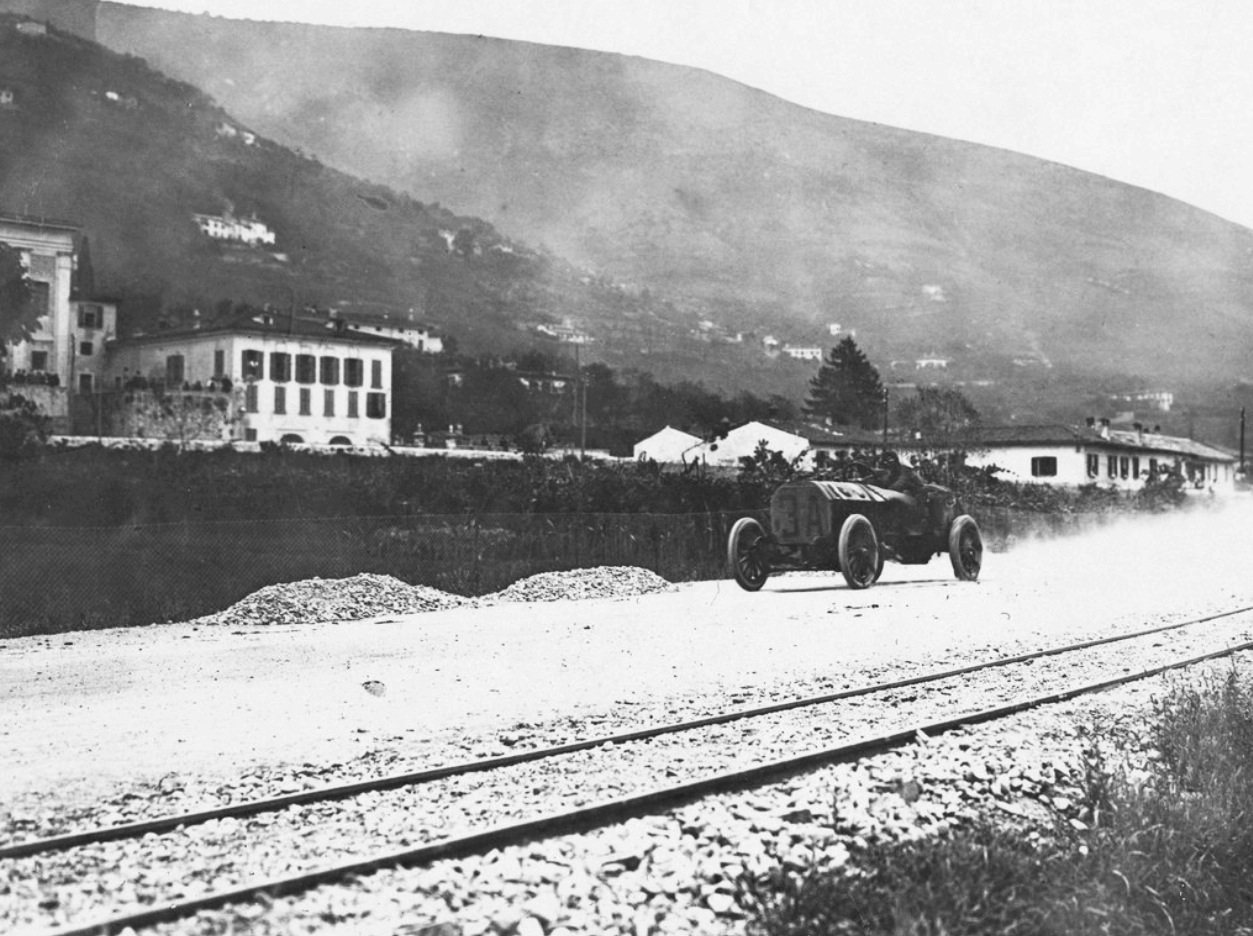
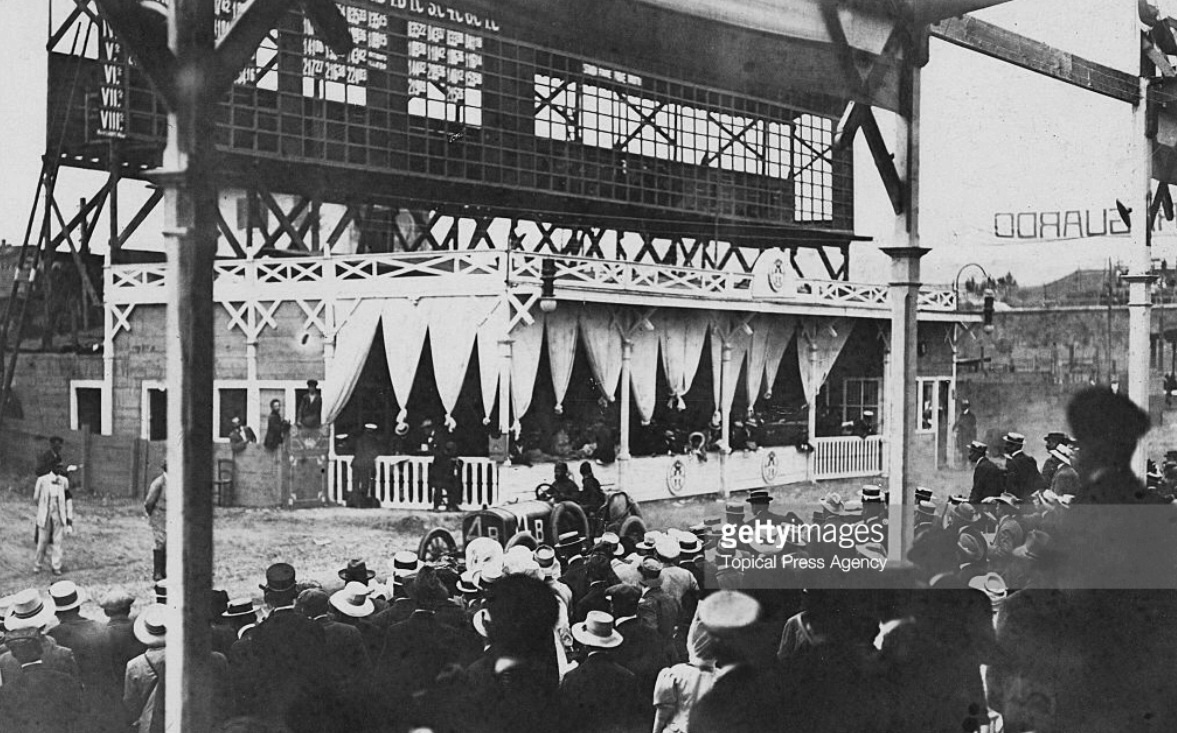
Ernesto Ceirano and his mechanic race their SPA during the Brescia road race on 2 September 1907…

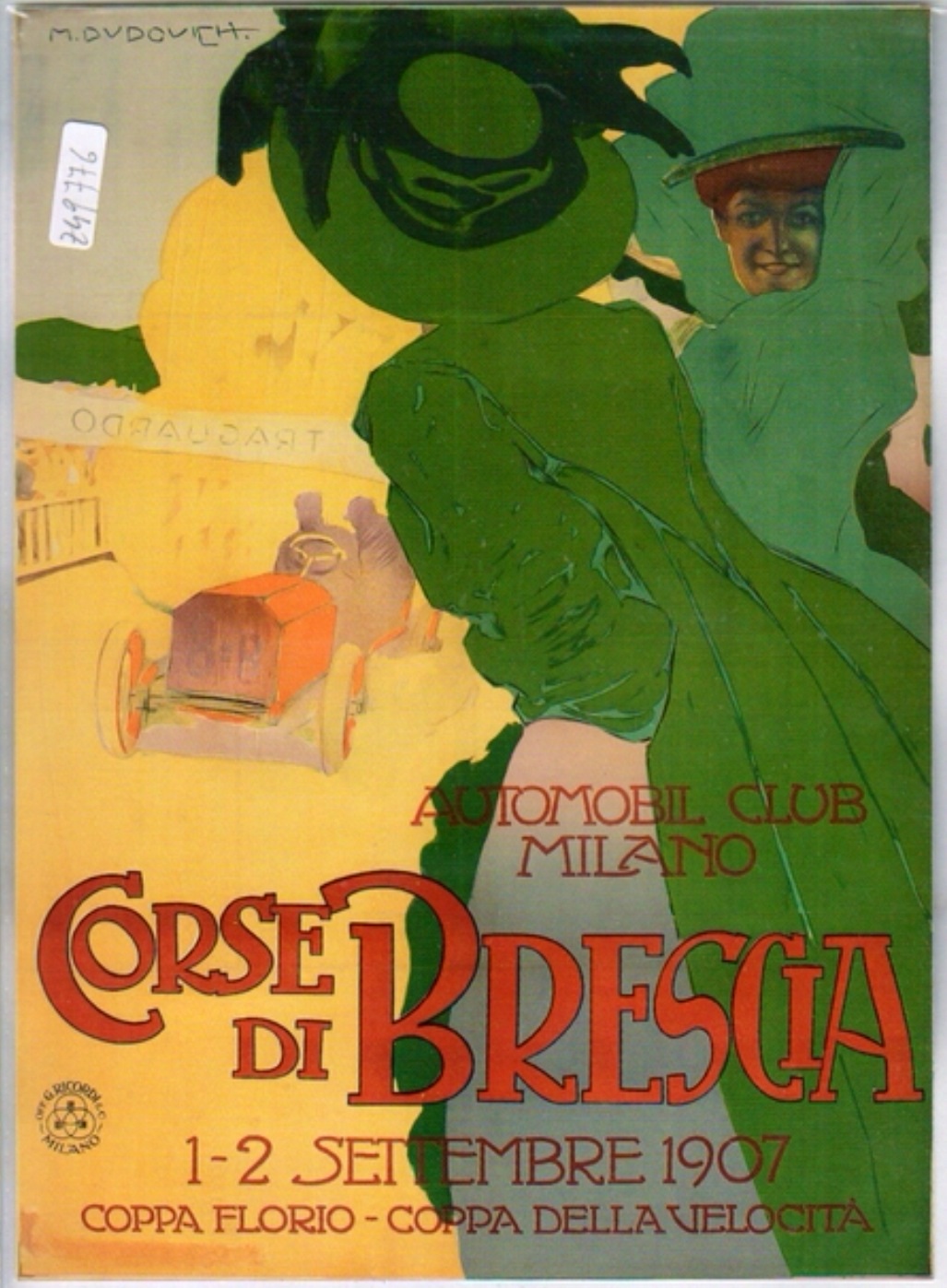
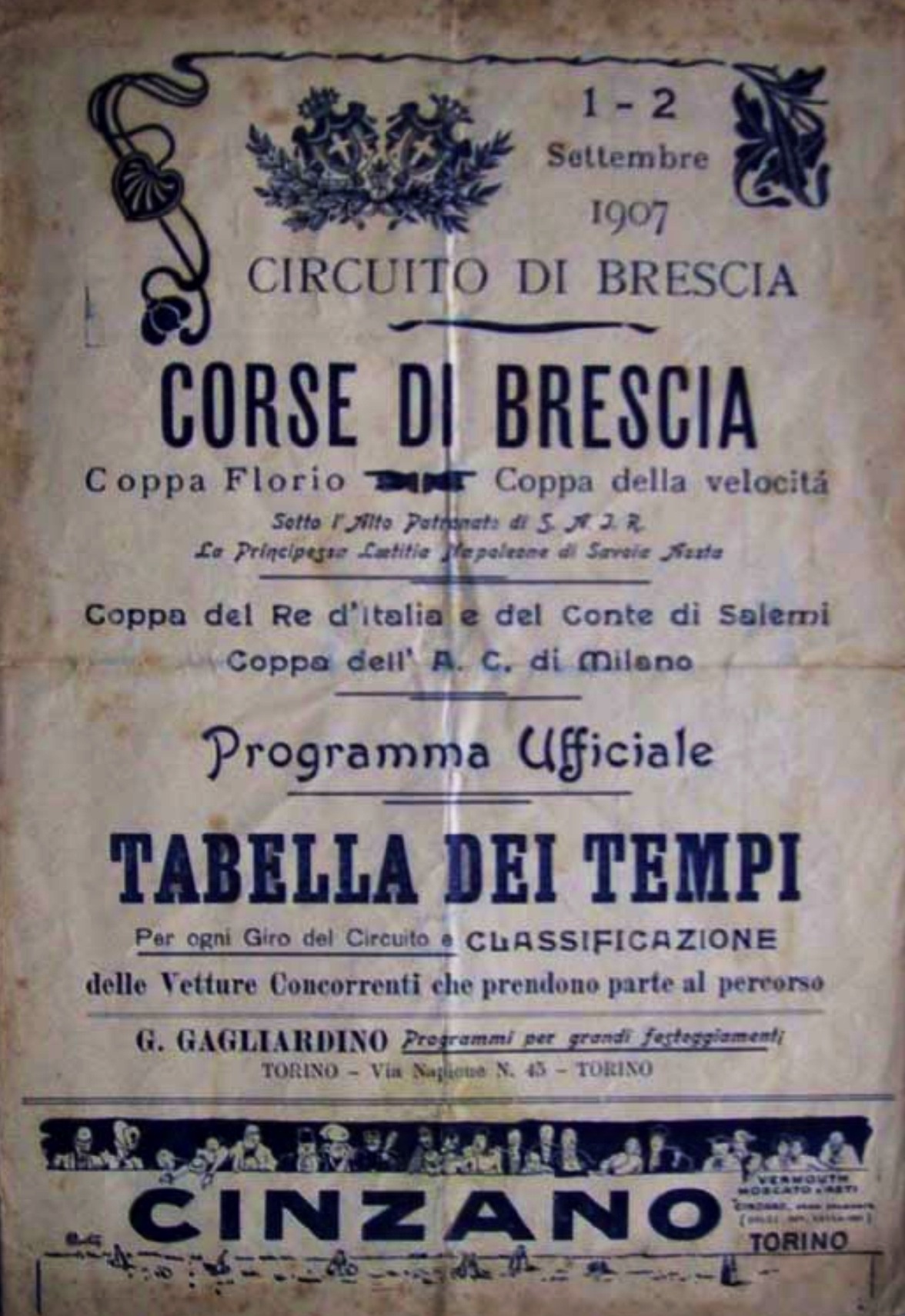
The 1907 running of the Coppa Velocita di Brescia was 8 laps of a testing, dusty, gravel 23.4 mile course.

1907 was the second season of Grand Prix racing, events organised that year were the French Grand Prix, Targa Florio, Moscow-St Petersburg, Kaiser Preis, Ardennes Circuit, Coppa Florio and the Coppa della Velocita.

image

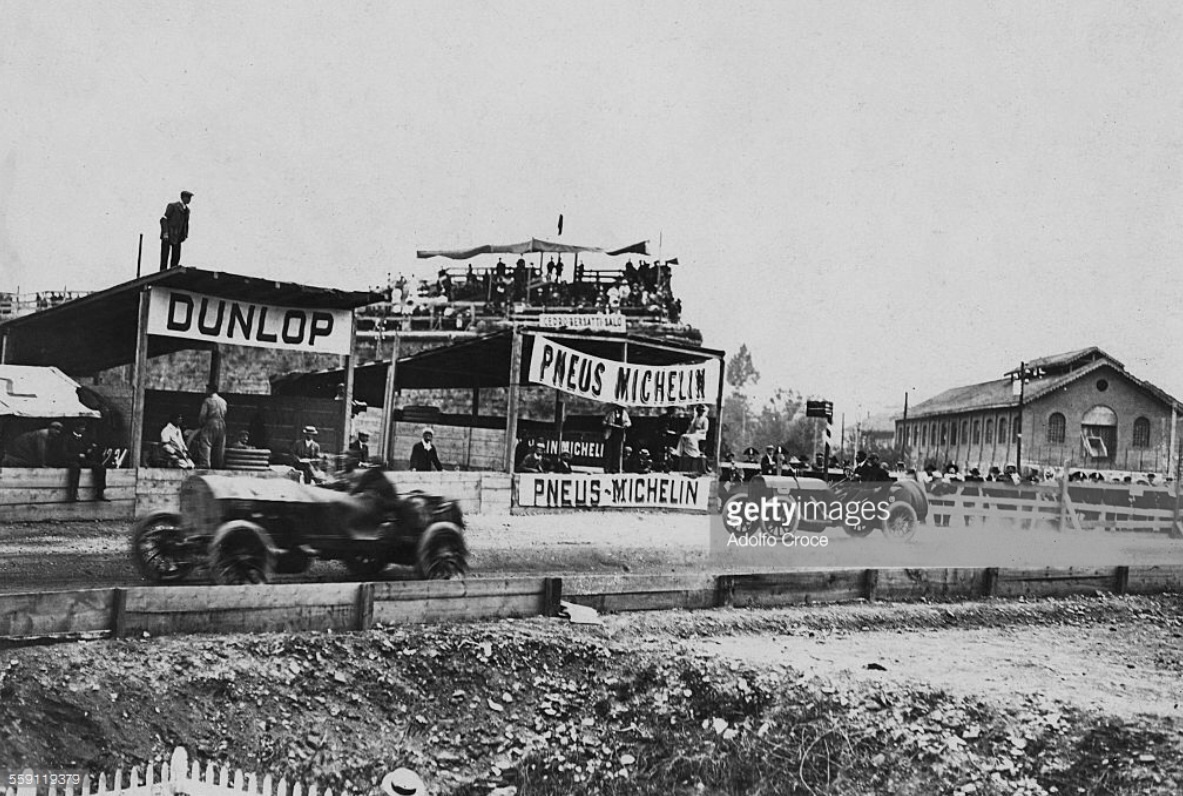
The road race started in Brescia, Lombardy and then passed through the towns of Montichiari, Castiglione, Lonato, Rezzato and then returned to Brescia. The Automobile Club of Milan organised the event which took 1,100 volunteers to run, it gives some idea of the resources required to run these road events even by the relaxed ‘safety standards’ of the day.

image

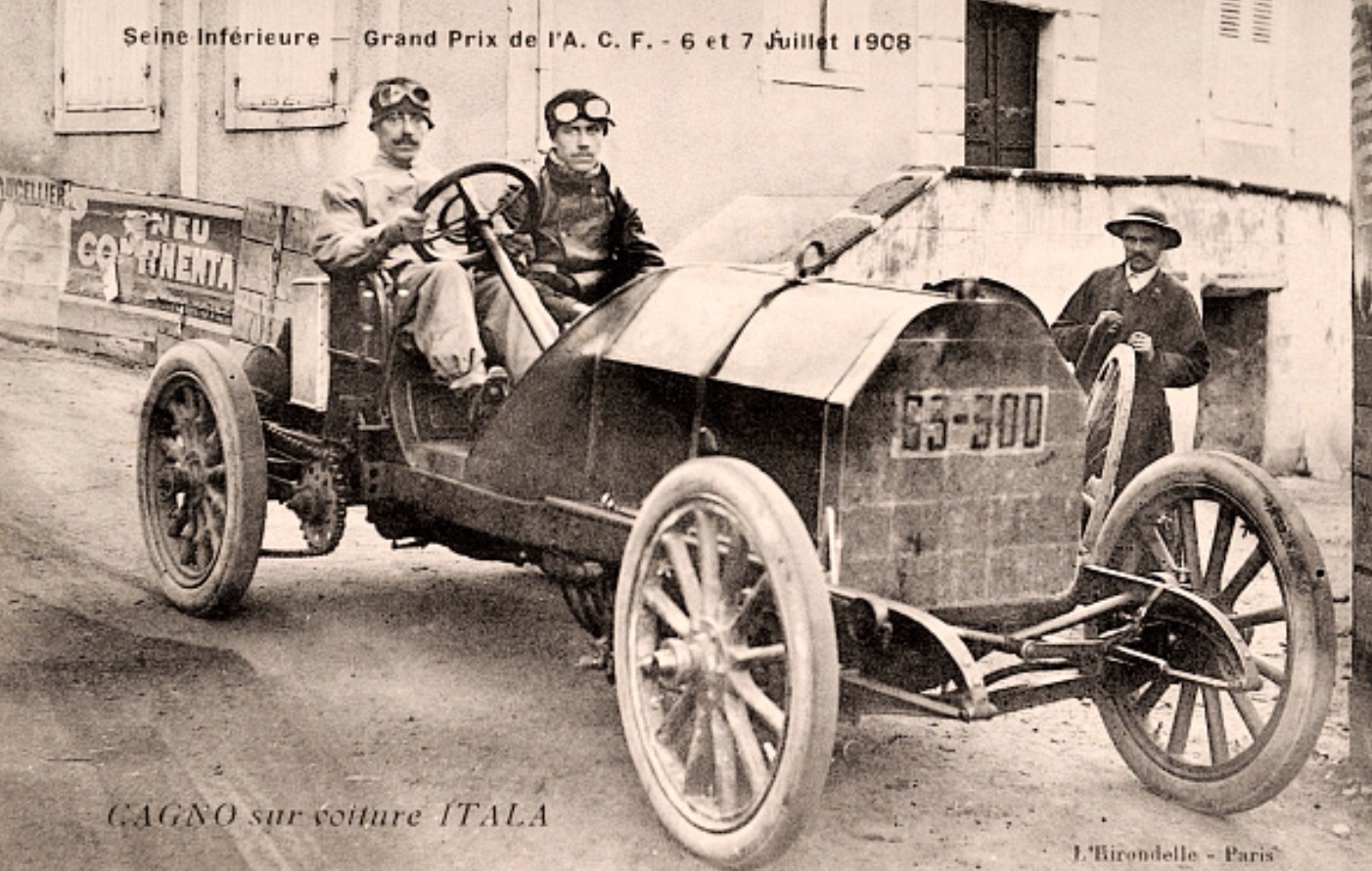
Cagno in the winning Itala (Getty)

Held on September 2 1907 the race was won by Alessandro Cagno’s Itala from Victor Demogeot in a Darracq with Rene Hanriot third.

Born into modest circumstances Cagno was said to be the third FIAT employee with roles as test driver, Giovanni Agnelli’s personal driver and works racer. He also competed successfully in powerboats and was an entrepreneur-an aviation pioneer who survived to a ripe-old age, he died in 1971.

image


image

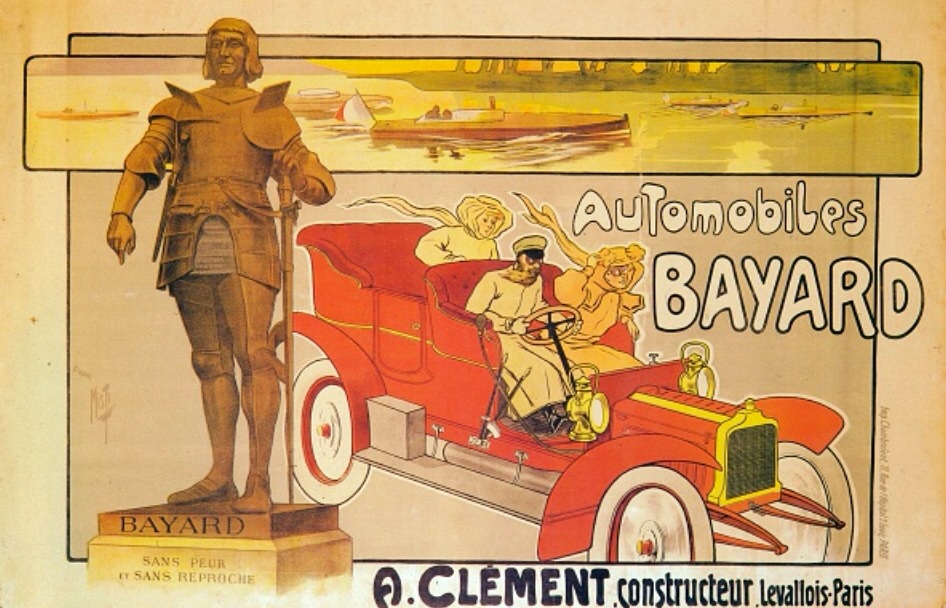
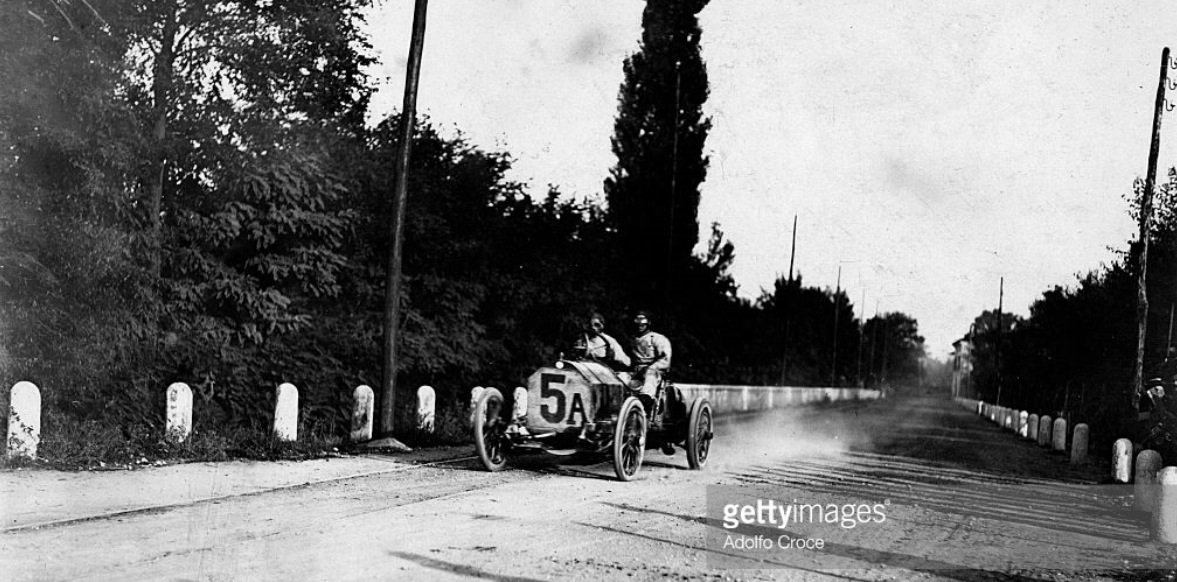
J Alezy, Clement Bayard during the Coppa di Velocita. A 1905 Gordon Bennett car- 12.8 litres, T-head developing circa 120bhp @ 1200 rpm (Getty)

Adolphe Clement was a wealthy businessman who owned the rights to manufacture Dunlop Tyres in France. In 1896 he was part of a partnership which took over the Gladiator Cycle Company. A motorised cycle soon turned into the manufacture of cars in 1899, by 1907 the company was building nearly 3000 cars per year

image

The CB race team was lead by Albert Clement, Adolphe’s son, who died whilst practising for the French GP in May 1907. The 1907 GP cars used in the Coppa were those built originally for the Gordon Bennett races in 1905. They were 12.8 litre, T-head engines developing a reputed 120bhp at 1200rpm.

image

Victor Demogeot, Darracq. Engine 15,268cc, 4 cylinders ‘ bi-cylinder’ blocks, OHV, brake on transmission (Getty)

Pierre-Alexander Darracq (1855-1931) was one of the first to mass-produce cars, his first fortune made from a bicycle business named ‘Gladiator’, the business later acquired by Adolphe Clement and others. In 1904 Darracq were the most successful manufacturer in the world building 1600 cars, but he never learned to drive! For Alfisti his Italian subsidiary is significant in providing the origins of Alfa Romeo.

He sold the company to British interests in 1913 having lost significant amounts of money with cars powered by a Henriod rotary-valve engine design which failed dismally.

image

Caricature of M Darracq dated 22 December 1901 (Emile Cohl)


image

Demogeot’s Darracq at speed (Croci)


image

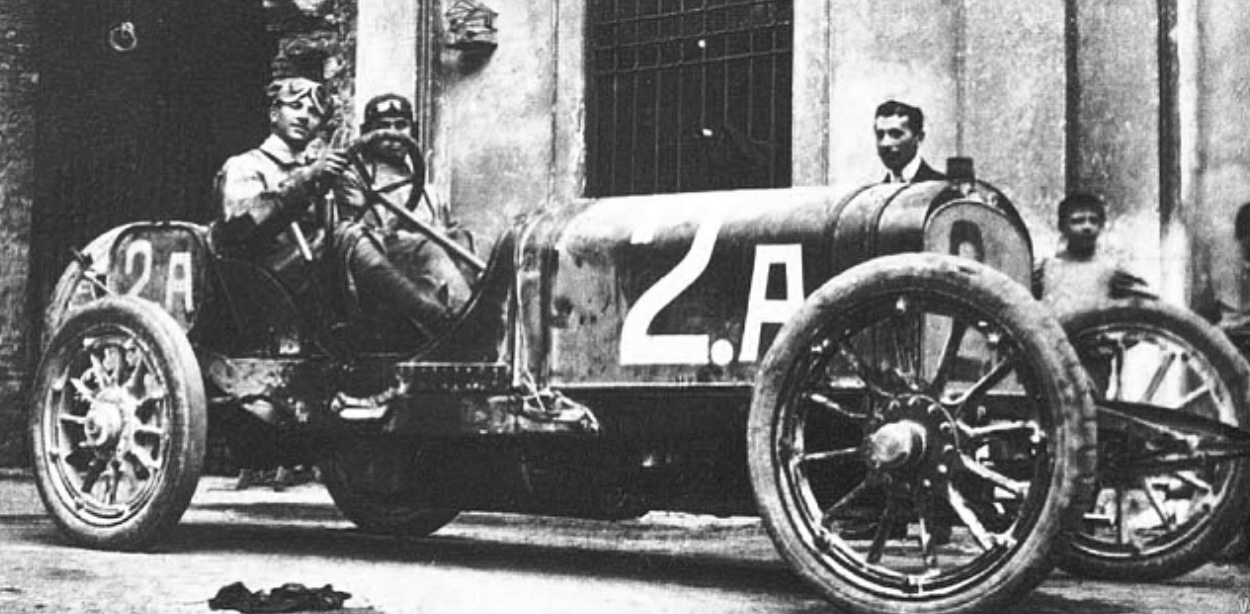
Felice Buzio, Diatto-Clement. These cars were created by a partnership of Clement and Diatto, Turin coach builders, between 1905 and 1909. They were Clements built under licence, specification of this car unclear. In 1909 C-B left the business, the cars were renamed ‘Societa Fonderie Officine Frejus’ catchy innit! (Getty)

Etcetera…

image

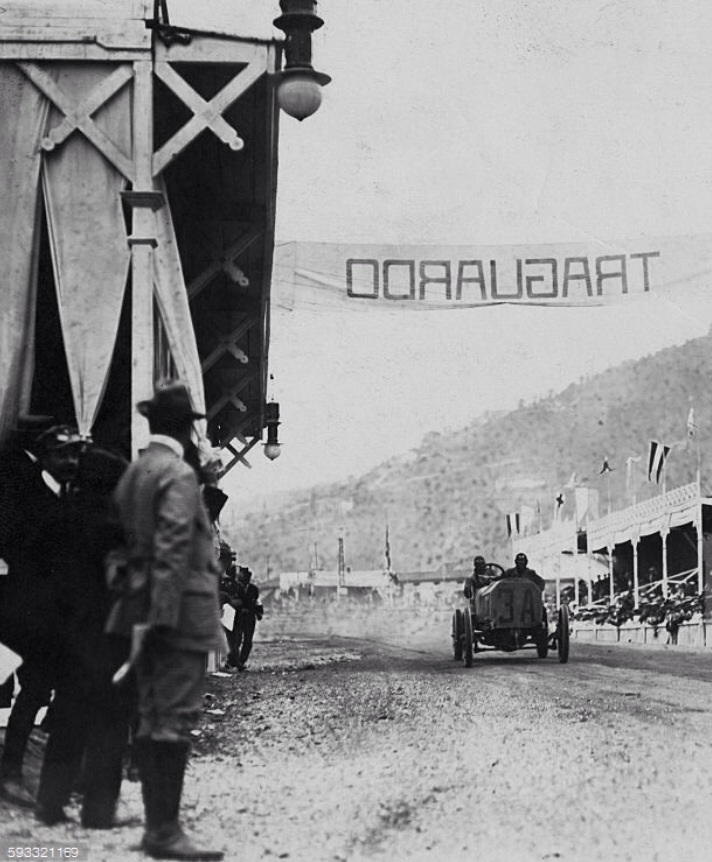
Cagno, Itala

In 1904 Matteo Ceirano left the company he founded with his brothers to create his own marque, Itala. In 1906 he left Itala to create ‘SPA’ Societa Piemontese Auomobili with chief designer Alberto Ballacco. I am not certain of the specification of the car pictured in this articles opening shot, perhaps the car is one of two 6 cylinder models they produced that year, perhaps 4 cylinders. Contributions as to spec gratefully received.

image


image

Credit…

Topical Press, Getty Images

Tailpiece: Cagno again in the victorious Itala, grandeur of the occasion clear!…

image


image

Some of Ferrucio Lamborghini’s artisans completing the chassis of the prototype Lambo P400 Miura in Sant ‘Agata October 1965…

The car was famously shown as a chassis only, this very one, at the Turin Show in 1965 and was a ‘starlet’ even unclothed. It made its bow ‘dressed’ by Marcello Gandini at Geneva in 1966, only four months later.

image

Credit…

Keystone, Klemantaski Collection

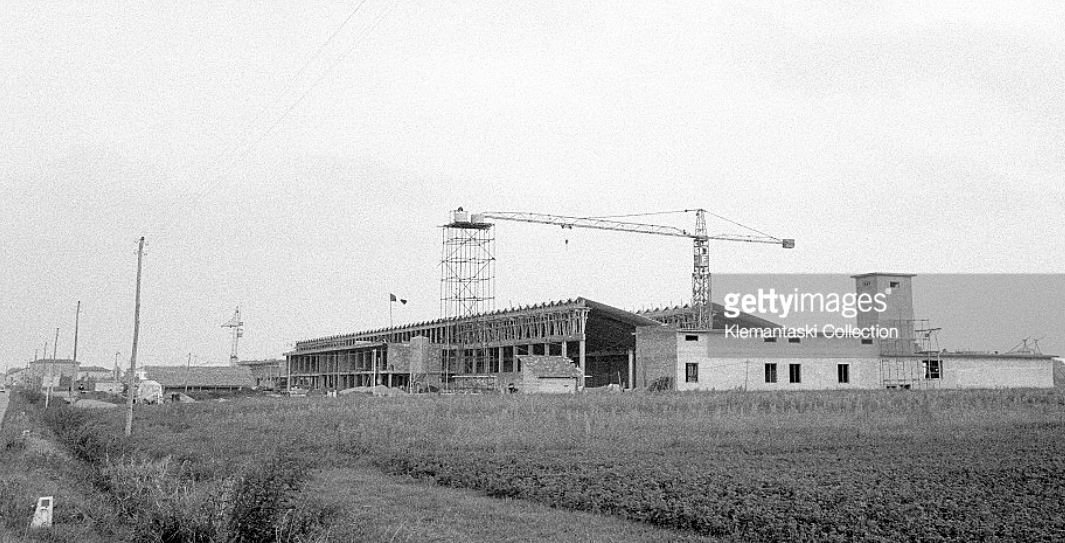
Tailpiece: The new Lamborghini factory near Bologna in 1963…

image


sew

There has to be an interesting article in evolution of the GeePee cockpit and controls over time, does there not? Here its the tiller of the Johnny Herbert’s Stewart SR3 Ford on the grid of the 1999 Spanish GP at Barcelona on 30 May…

He retired from the race with transmission failure on lap 40 of the 65 laps, the event won by Mika Hakkinen’s McLaren MP4/14 Mercedes. Rubens Barrichelo was generally the quicker of the two Stewart drivers that season but Johnny broke through for the teams first and last Grand Prix win at the Nurburgring on 26 September.

talbot

(Adoc/Corbis)

Fifty years before, the state of the art is demonstrated by one of the Talbot Lago T26C’s, being fuelled on the Albi GP grid on 10 July 1949, quadrant for the pre-selector ‘box and chassis plate clear below the wheel in shot. Wonderful image isn’t it!?

Credits…

Tobias Heyer, Adoc/Corbis

image

(Rod MacKenzie)

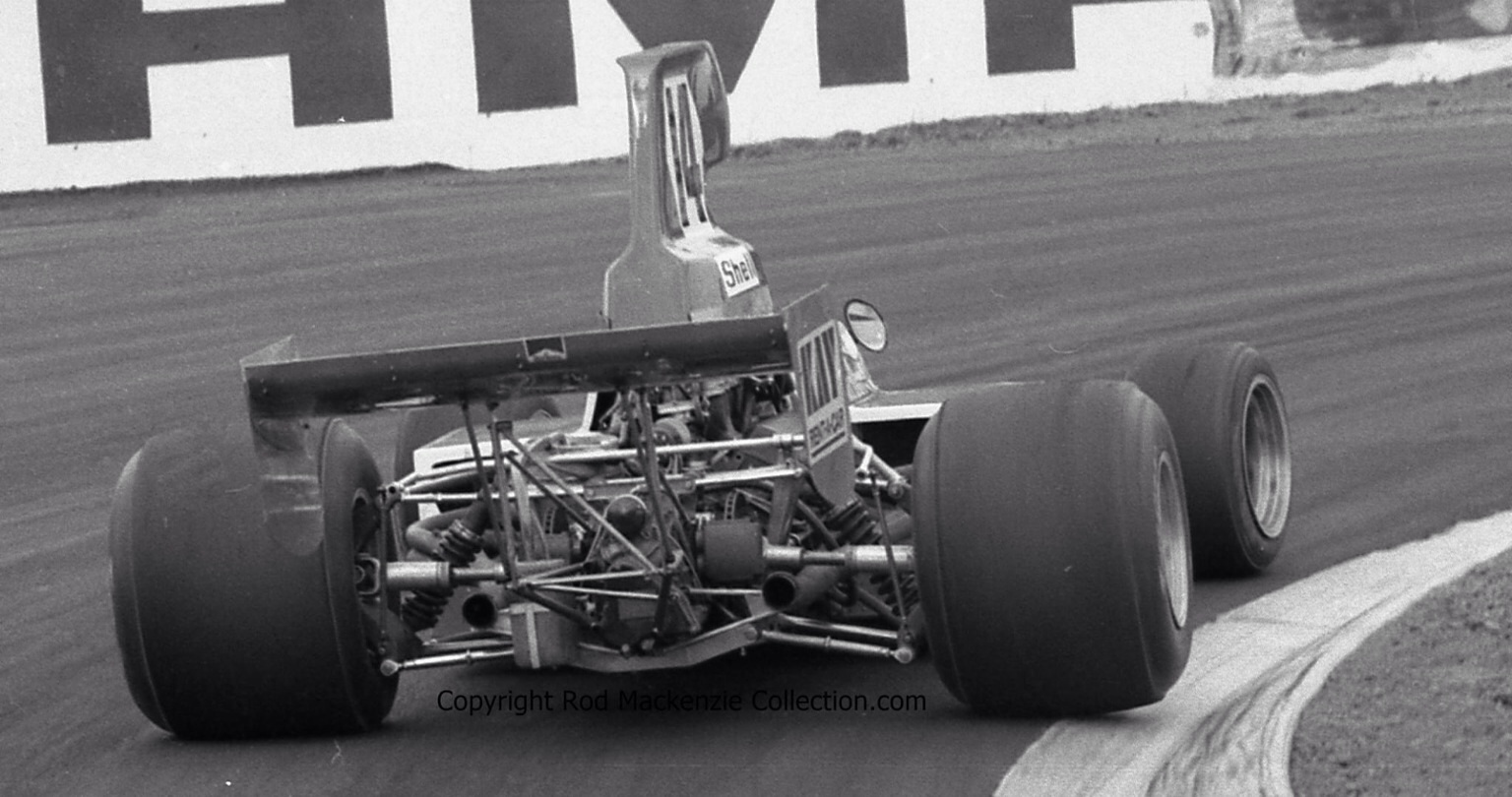
Graeme Lawrence ‘bang on line’ as Kevin Bartlett remarked upon seeing this shot of the Kiwi champions Lola T332 Chev going through Oran Park’s new ‘twiddly bits’ during the 1974 Australian Grand Prix…

There is something great about seeing a racing cars mechanical elements isn’t there? Rod MacKenzie has captured them beautifully in this shot.

These Lola’s are favourites of mine as some of you would know, and a topic about which I have written at length, specifically Peter Brennan’s restoration of Lola T330 ‘HU18’- Lella Lombardi’s old bus. So I won’t bore you with the technical details again, it’s all in this series of articles, attached is the link to the first of them;

Lella’s Lola…Peter Brennan’s Restoration of the Ex-Lella Lombardi Lola T330 Chev ‘HU18’…Episode # 1

There is so much to see back there starting, of course, with 5 litres of fuel injected Chev, say 520bhp in period. The poor Hewland DG300 5 speed transaxle coped, just, as long as it’s components were adequately lifed, the ‘box was originally designed around ‘effete’ 3 litre F1 engines, not, big, butch Chevs.

The beefy sliding spline driveshafts are clear as are the big inboard brake calipers and ventilated cast iron discs. These Lolas were beautifully finished, all of the steel fabrications were finished in shiny nickel plating.

Suspension is period typical at the rear; single upper link, two lower links, the earlier T330 you will see via the link above had inverted lower wishbones. Uprights were magnesium alloy, fore and aft location provided by radius rods. The shocks are double adjustable alloy bodied Koni’s. Adjustable roll bars were of course also fitted front and rear. Rod MacKenzie’s shot is so sharp you can see Graeme has the rear bar set at full soft, trying to get rear end bite out of Oran Park’s slower turns no doubt.

The big airbox is clear, within 12 months most of the T332’s on the planet had converted to an all enveloping engine cover cum airbox to better flow air over the car and onto the rear wing, this development was first made by the Haas/Chaparral crew in the US on Brian Redman’s car.

Big, wide Goodyears put the power to the road, the wheels are Lola’s own 14 inch diameter cast magnesium jobbies; within 12 months 15 inch American Jongbloed’s were de rigour on these beasts.

A car of beauty indeed!

Graeme was very successful in it; he came within a bees-dick of winning the ’75 Tasman Series in a last round shoot out at Sandown with fellow T332 pilots, Warwick Brown and John Walker, that story is told here, the battle resolved in Warwick’s favour, the only Aussie to win the coveted Tasman Cup;

The Mother and Father of Lucky Escapes…John Walker, Sandown Tasman 1975…

Graeme also won the Kiwi Championship, the Gold Star with Lola in 1974/5.

Credits…

Rod MacKenzie, Terry Marshall

Tailpiece: ‘Team Lawrence’ and trusty T332 after a Tasman Levin win in 1975…

image

(Terry Marshall)

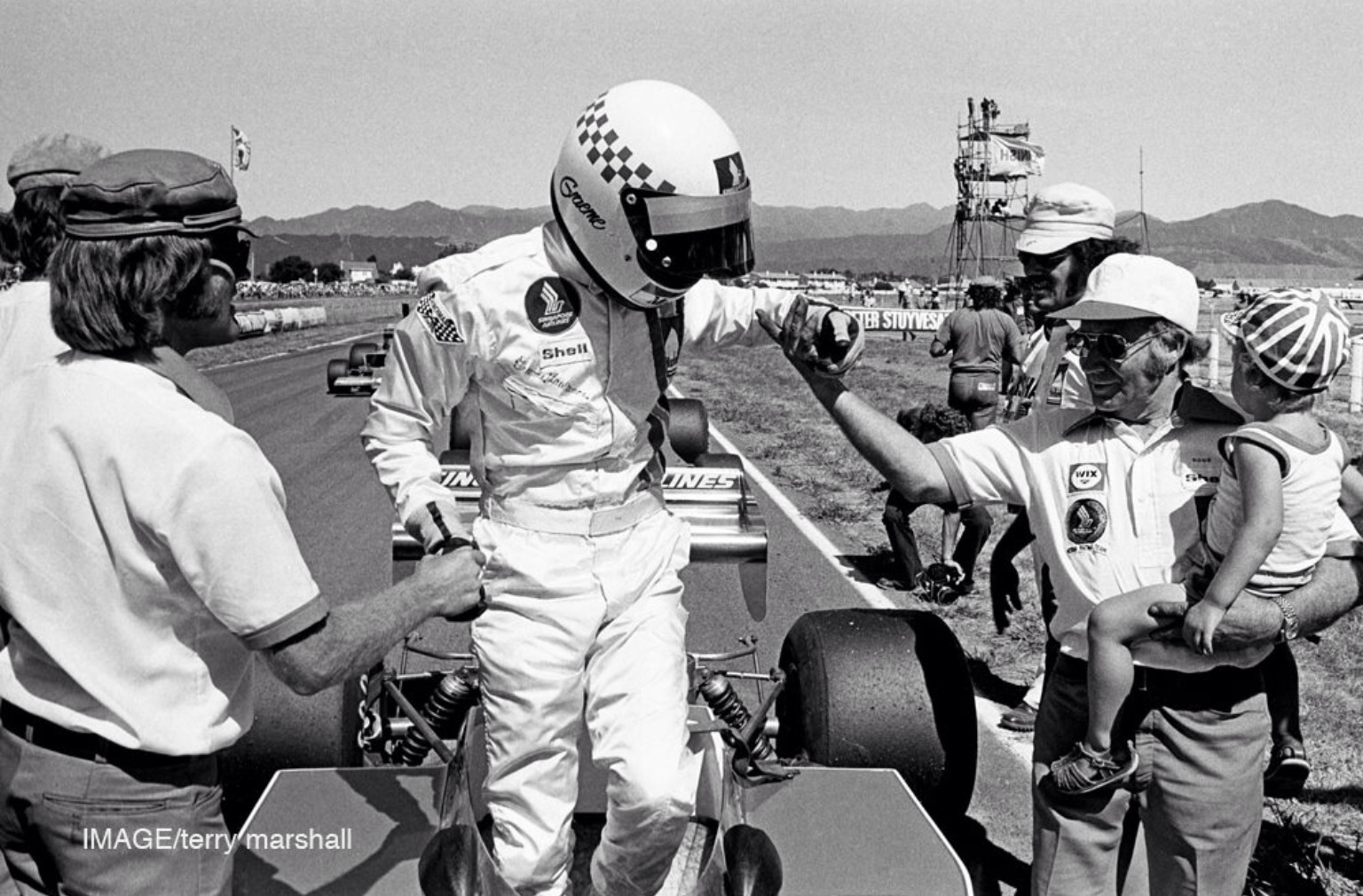
The circumstances for the upload of these two photos by Rod and Terry Marshall were in honour of the recent passing of Graeme Lawrence’s late father Doug, helping Graeme out of the car above. He was an integral part of his sons motor racing from the start. Clearly there is deep respect and affection amongst former competitors and their crews on both sides of the Tasman for Doug Lawrence. RIP Sir.

image


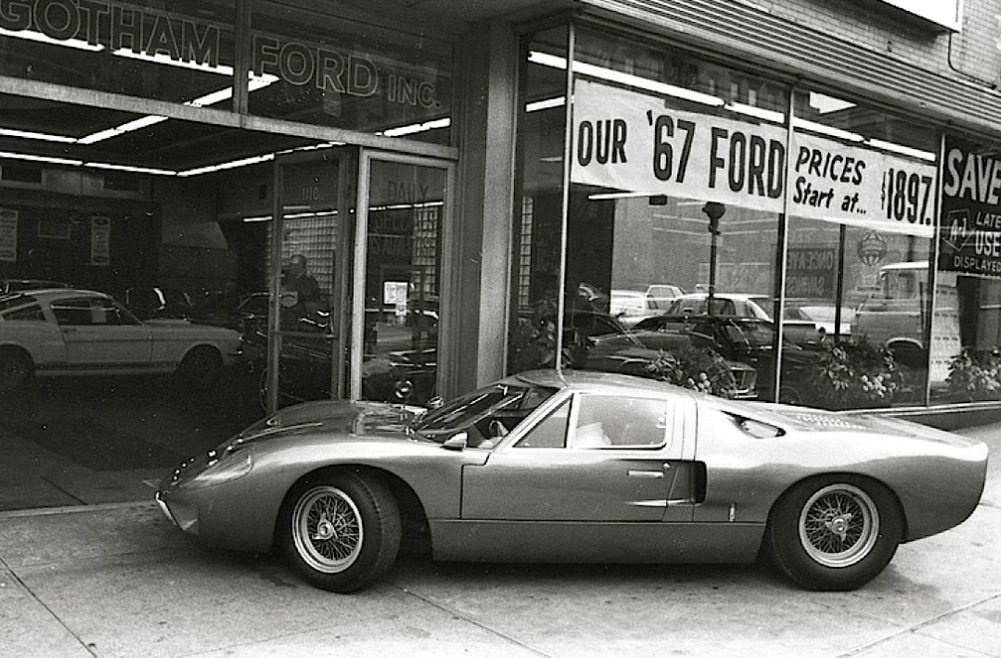
I wonder how much it was? ‘Gotham Ford’ does have a touch of the ‘Batmans’ about it doesn’t it…

Not too many of these GT40 ‘road cars’ were built, maybe one of you knows which chassis this is?

image

Credit…

Unattributed

image

When I first saw this shot I had a chuckle at the Auto Union logo on the ‘brolly, merchandising and brand placement goes back so far, there is nothing new under the sun?!…

And then I wondered which car and where of course, and as is so often the case with the Getty Archive there are no useful details. It makes the detective work a challenge, there are obviously not a lot of hints in this shot!

image

But I think it may be Bernd Rosemeyer’s victorious 1936 ADAC Eifelrennen winning Type C, 3 litre V16 engined car. The number fits, the photo was taken by a German agency and the exhaust pattern, two into one ‘drainpipe’ seems to fit with the limited number of shots I can see of Bernd that day. But all correspondence will of course be entered into.

Rosemeyer won the 13 June event from teammate Hans Stuck, the two 6 litre V16’s ahead of Antonio Brivio’s Alfa Romeo 12C 4.1 litre V12. Checkout the Kolumbus.com website, my favourite for this period, and their detailed race report, just scroll down to the race;

http://www.kolumbus.fi/leif.snellman/gp363.htm

image

Rosemeyer, AU Type C, 1936 Eifelrennen (ullstein)

image

Credits…

Ullstein Bild

Tailpiece…

image