Archive for the ‘Fotos’ Category

image

Helmut Polensky and Walter Schluter on the way to outright victory in the event also known as the Marathon de la Route in their 1.5 litre Porsche 356…

An early important win for the marque in this Gmund built Coupe, a bit lighter than the Stuttgart cars. Porsche were 1st, 3rd, 4th, 9th and 10th taking the Team Prize as a result.

Credit…Unattributed

image


image

Shit! Whereizzit?, the engine in the TZ2 was in the front!…

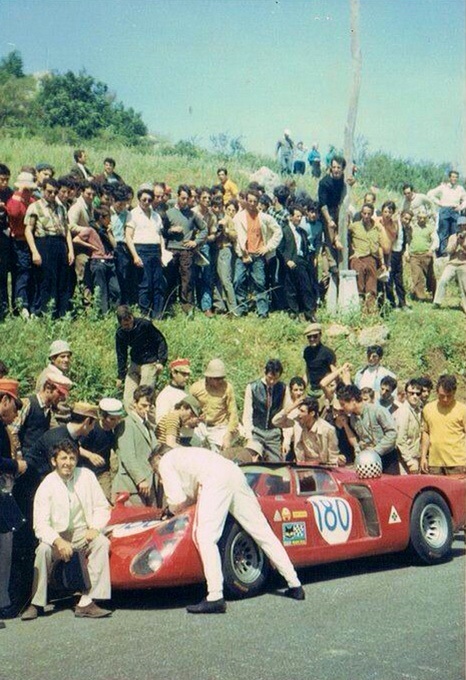
Gustave Gosselin tries hard to get his Team VDS Alfa Romeo Tipo 33/2 going by the Little Madonie roadside during the 1969 running of the Targa Florio. The joy of the punters in getting a close look at a racer and souvenir or two was not shared by the driver focussed on his fussy, recalcitrant car.

The race was won by Vic Elford and Umberto Maglioli (below in a works Porsche 907, the best placed T33 was the Autodelta entry of future GP drivers Ignazio Giunti and Nanni Galli. Gosselin’s car, shared with Serge Trosch is by the roadside on the lap one, where it stayed.

image
(unattributed)

Finito…

image

Prince Bira grabs a nip of ‘Red Bull’ between practice sessions in his Maserati before the Crystal Palace Cup on 14 August 1937…

Bira is standing beside his Fiat Topolino, these cars in some ways the ‘Cooper S’ of their day. The Franco Fessia designed car was noted for its safe road-holding, good ride and willing performance. The ‘mouse’ had hydraulic brakes, independent front suspension and a synchro 4 speed ‘box.

In an article about the cars in MotorSport’s November 1995 issue Bill Boddy noted that they were the ‘in-thing’, the cars competition history included entries and finishers at Le Mans in 1937-9 and a class win in the 980 Mile Tobruk-Tripoli race which replaced the Mille Miglia in 1939.

Post-War the cars components were a feature of the Cooper 500 and thirteen other Italian racing cars.

image

Bira in his ex- Whitney Straight, Reid Railton modified Maserati 8CM at Crystal Palace in 1937 . The car was fitted with a Wilson pre-selector box and other tweaks, the ‘heart shaped’ radiator giving the car, very successful in both drivers hands, a distinctive look (Dennis Oulds)

Bira raced his Maserati 8CM in the Cup Race, having rebuilt it after its International Trophy race blow up, Lord Austins cars were driven by Hadley and Kaye Petre. Hanson and Aitken raced 1.5 litre Masers and Connell a 1.5 litre ERA. ‘Crack-runners’ (rather a different meaning that phrase these days!) were non starters included the brothers Dobson ERA and Maserati, Tony Rolt’s Triumph and Peter Whitehaeds ERA.

The race was a handicap Bira giving away 75 seconds to the 1.1 litre cars, and 25 seconds to the 1101-2500cc cars.

Hadleys Austin lead away with Bira eventually away with lots of wheelspin and by lap 15 all cars were on the same lap. Bira was up to 2nd and within striking distance by the last lap but he ‘got into a slide at Ramp Bend’ but despite restarting finished 44 seconds behind Hadleys Austin 744cc, Reg Parnell was 3rd in an MG Magnette 1087cc and P Maclure 4th in a Riley C 1486cc.

image

Bira in the Maser again, this time practicing at Brooklands in March 1938 (David Savill)

Credits…

Imagno, David Savill, John Stephenson, MotorSport September 1937

Tailpiece: ‘White Mouse Stable’ Dalling Road, Hammersmith, Maser 8CM preparation in 1938…

image

Bira’s Ex-Whitney Straight Maser 8CM #’3011′ in 1938. Car still alive and well in Peter Gidding’s loving care (John Stephenson)


fferrari pit 1966 monaco

(Jesse Alexander Archive)

John Surtees ‘P3’ at this point but his Ferrari gearbox failed in the race won by Stewart’s BRM P261…

surtees and stewart monaco 1966

(David Phipps)

Surtees in his big Ferrari 312, a new F1 car built to the 3 litre formula introduced that year leads Jackie Stewart in his light, nimble BRM P261, a 1.5 litre F1 car bored to around 2.1 litres and shortly to be victorious over ‘Big Johns’ heavy and not so powerful Ferrari.

It may have been different if he had driven the light, nimble Ferrari Dino 246 allocated to teammate Bandini, but that was not to be and so the pressures mounted which lead to Surtees departure from the Scuderia shortly thereafter. And with it any chance Ferrari had of winning the title that year. Brabhams year of course.

Winning the 1966 World F1 Championships: Brabham BT19 Repco…

Photo Credits…

Jesse Alexander Archive, David Phipps, GP Library

Tailpiece…

stewy

Nice Stewart BRM P261 cockpit shot en-route to victory (GP Library)

image

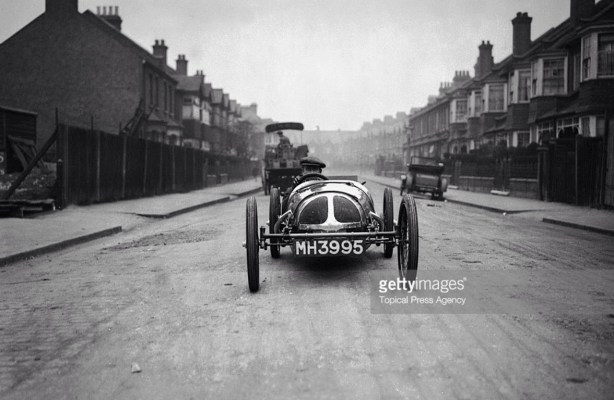
The Jappic billed as ‘the smallest racing car in the world’ in a very bleak Wimbledon streetscape in April 1925…

The cars ‘main advantages are it’s lightness and portability’ is the prosaic caption.

My problem, one of the many!, is I struggle to finish projects, articles that is, I’ve started.

I have owed Rod Wolfe the next chapter of our Repco Engine story for about 12 months. I get distracted by the lure of ‘something new’ like this Jappic shot I’ve just spotted.

I see the picture, ‘go wow WTF’ and then can’t help myself with research and then jump from tangent to tangent, all of which takes loadsa time. In this case the Jappic led to Gwenda Stewart who drove it, she is an interesting character herself, then there is Montlhery as a record breaking venue and so it goes on.

End of confession! And yes Rodway, I need to complete my research of the ’67 Brabham Repco F1 year!
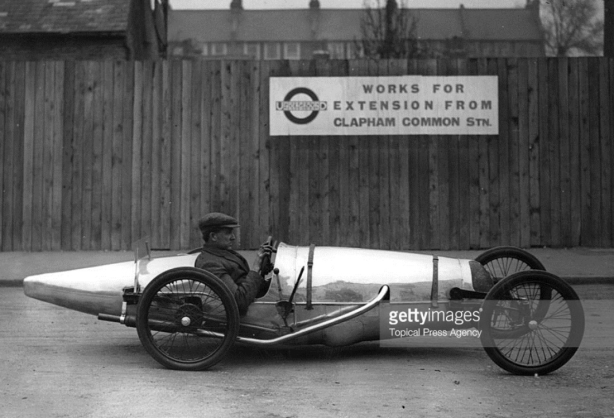
jappic side

The location of this luvverly Jappic profile shot is no doubt well known to you Londoners, 1925 (Topical Press Agency)

Isn’t the Jappic the most amazing looking little creation, though!? Other worldly.

It was a JAP engined cyclecar designed by motor-cycle racer HM Walters who intended it as a road racer for sale to special order, equipped with front brakes and fitted with either 350 or 500cc engines.

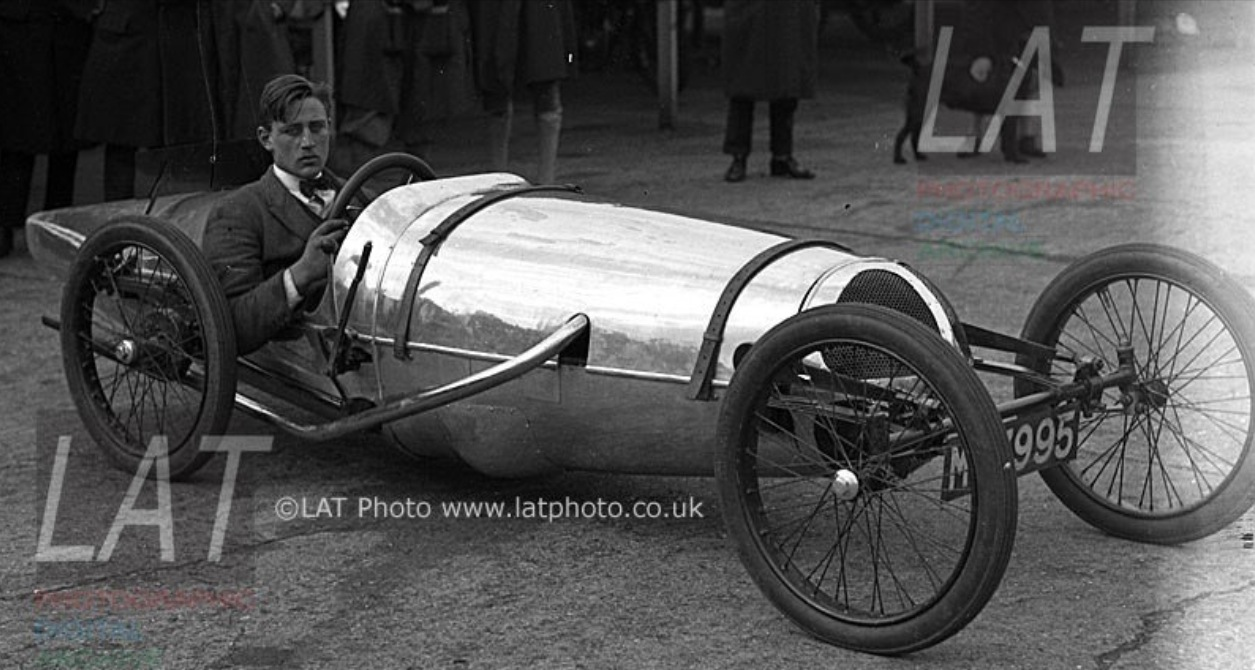
When announced in early 1925 the car was to make its first appearance at the Brooklands Easter Meeting on 11-13 April. Bill Boddy in a short piece about the car in the January 1983 issue of ‘MotorSport’ said that photos ‘were circulated of the car in front of a K Type LGOC omnibus…presumably…taken somewhere near the premises of Jarvis & Co Wimbledon, who handled the Jappic and made its shapely body. The day previously the Jappic (Reg MH3995) had broken Class1 (up to 350cc) records at Brooklands at from 63 to over 70mph, so it might have been returning’ to Wimbledon.

In fact it appears Jappic attacked the 350cc cycle-car record at the 6 June 1925 Brooklands meeting ‘races confined to drivers and motorcyclists who had never competed at the track before’ so the first photo above is probably either April or June 1925.
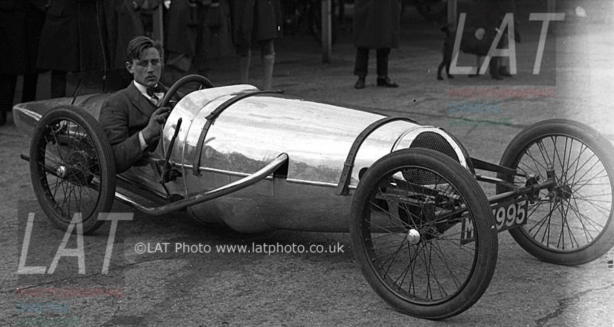
jap lat

Walters and his creation, Brooklands meeting in 1925 (Austin Harris,LAT)

May the lord above bless MotorSport. If something happened in the UK, from circa 1920 you can pretty much guess Boddy, Jenkinson or one of their merry band covered it ‘in period’, which is rolled god for schleppers like me. Give me a report written in period, or the recollections of a dude who was there at the time over a modern interpretation any day.

In a more comprehensive article in the August 2000 MotorSport issue Boddy wrote again about the Jappic; ‘Cyclecars and other small cars had been encouraged to race at Brooklands before and after WWI, but the former were mostly crude devices, if one excludes the Morgans and the GNs, which had engines of around 1100cc. Anyway, apart from the latter two, the Austin 7 rather ousted cyclecars from the Weybridge scene as the 1920s rolled along. So when visitors to the Track opened their programmes on Easter Monday in 1925 and saw that a 344cc car had been entered for the second race they could be excused for being mildly surprised’.
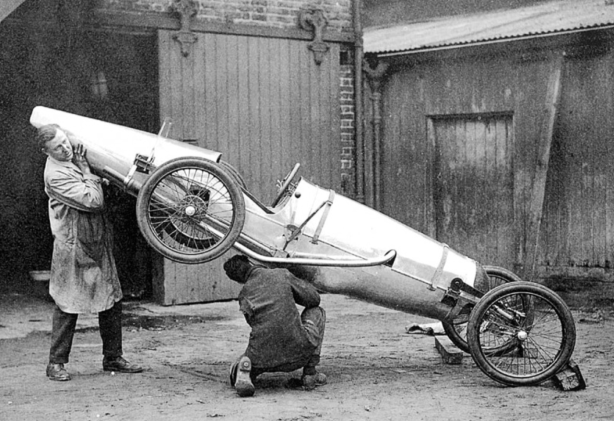
jappic cant

Refer to Boddy’s text for details of Jappic’s specifications, it appears to be rather light! Brooklands 1925 (unattributed)

‘The tiny racing car was called the Jappic, in deference to its JAP engine. It had been designed by motorcycle racer H M Walters, and built by the coachbuilders Jarvis of Wimbledon in London. The Jappic’s entrant was J V Prestwich of the JAP engine company’.

‘The baby was no lash-up. It was a proper miniature racer. The frame was of ash with 3/32in steel flitch plates and tubular cross-members, with another cross-member of T-section channel by the cockpit. The tubular front axle had forward-facing, underslung quarter-elliptic springs, the shock absorber anchorages adjusting the steering castor angle.

At the back, reversed quarter-elliptic springs supported an axle of tubular transverse rods instead of a solid casing, this enabling the final-drive sprocket to be accommodated in a three-armed spider, roller and ball bearings being used for the driveshafts. Expanding rear wheel brakes sufficed, and the wire wheels were shod with minuscule 650×65 tyres. The engine was a two-port ohv 74x80mm single-cylinder JAP, driving by chain to a three-speed gearbox giving ratios of 6, 8 and 12:1, and fitted with a kick-starter. Another chain drove the back axle’.

‘The slender body was actually a two-seater, because production of Jappics at 1,150 pounds each was contemplated, though this was in the end never proceeded with. But this Jarvis-bodied 5cwt car, its hemispherical nose admitting air to the engine, looked every inch a racing car. The cramped cockpit had seats of sheet aluminium and the bottom half of the steering wheel was cut away to improve access. The driver sat at a head level of 2.1/2ft. Minute gear and brake levers were mounted externally, as were the two exhaust pipes’.
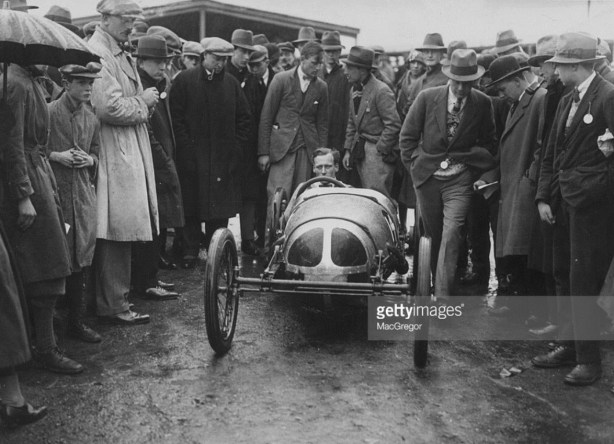
image

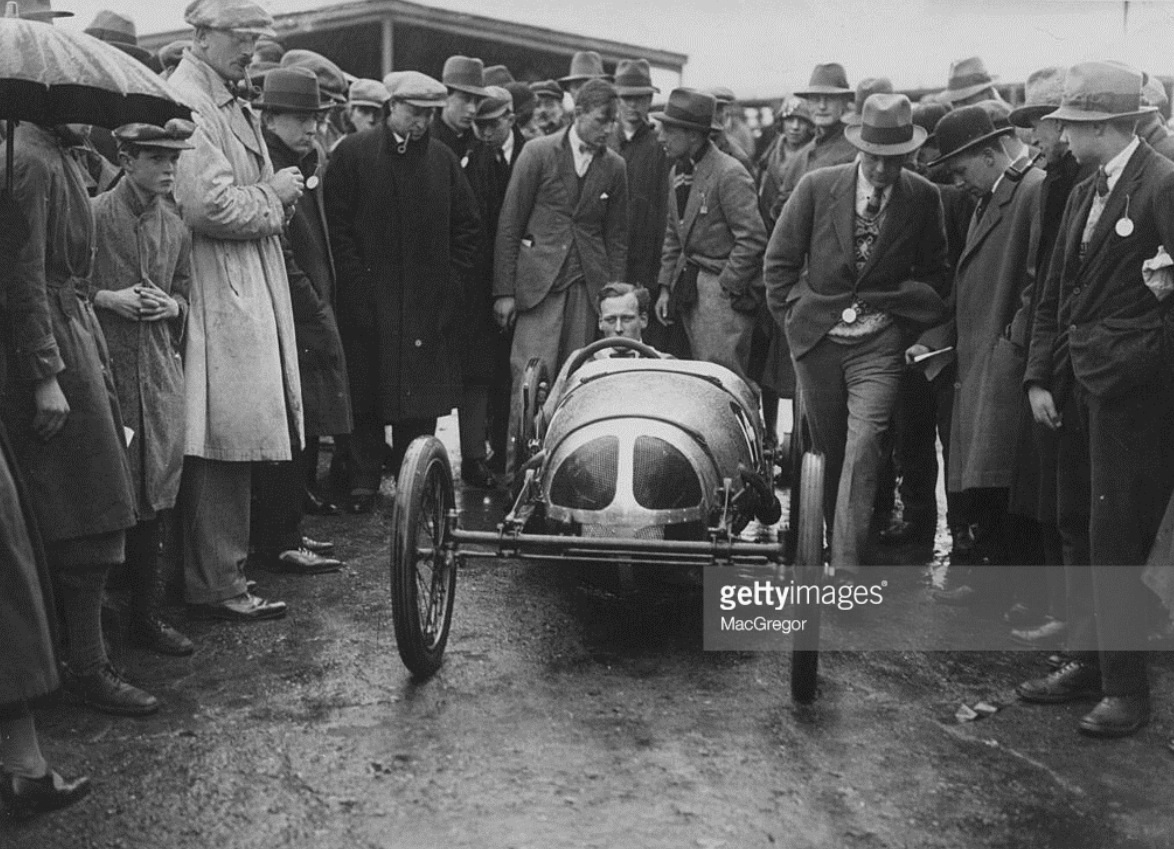
Brooklands, 13 April 1925 during the Easter meeting, crowd undaunted by the chill rain and fascinated by Jappic’s small size in relation to some of the Brooklands giants! 30000 attended on the Monday, tho racing was curtailed by poor weather. Note front suspension described in detail by Boddy in text (MacGregor)

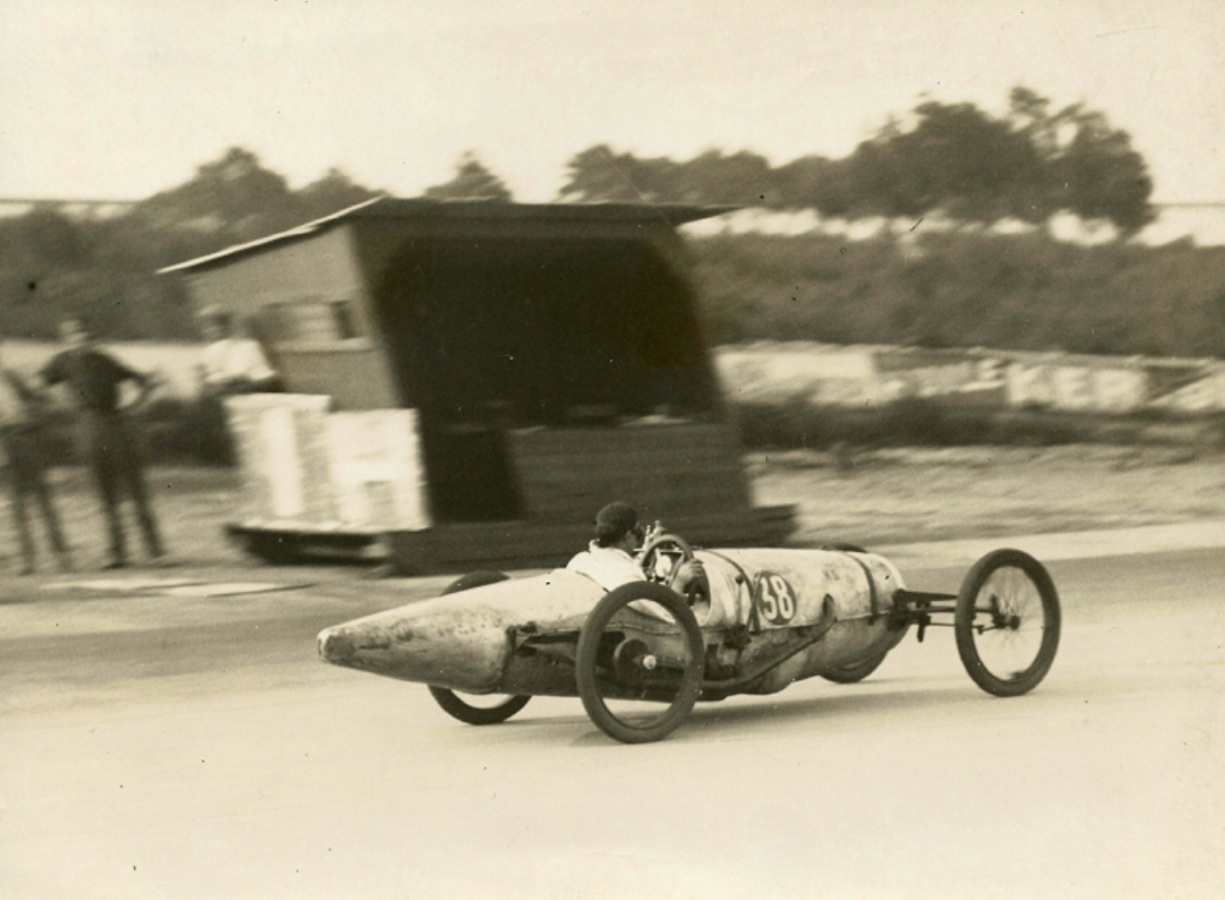
‘On that long-ago Bank Holiday afternoon the Jappic was driven by Walters, who had l min 14sec start from the scratch cars, Victor Gillow’s sidevalve Riley and a 1914 GP Nazarro, with Reid Railton’s Amilcar, an entry probably prompted by Parry Thomas, leaving 1 sec after the tiny cyclecar, in the 5.3/4-mile race.

Walters was not placed, but did a lap at 66.85mph, implying a top speed of some 70mph. Enough for one day. But the Jappic was out again at Whitsun, lapping at 68.03mph and just missing a third place. Walters then used it to break records, such as the Class J flying mile at 70.33mph.

In 1926 Kaye Don, the famous Sunbeam driver, was not averse to driving cyclecars, attempting records with the Avon-JAP and the Jappic, the latter now with a 495cc JAP engine, which gave Don some Class I records of up to 10 miles, at around 65mph.

After which Mrs Gwenda Stewart, of Derby-Miller fame, took it over, changing the mite’s identity to HS (Hawkes-Stewart) and refitting the 344cc engine. At Montlhery in 1928 she set the Class J 10-mile record to 70.95mph. Alas, in the garage fire at that circuit in 1932 the HS was completely destroyed’.
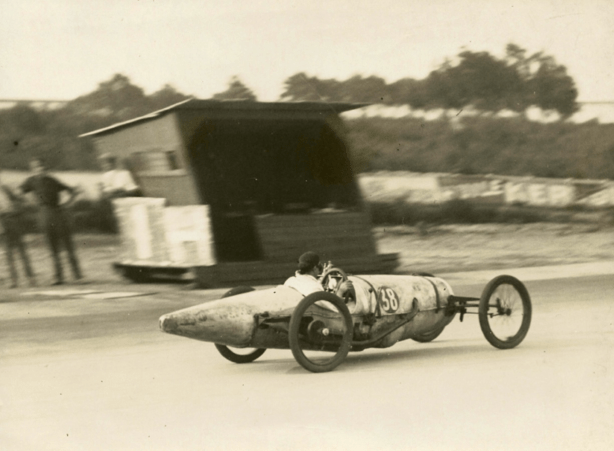
jap mont

Gwenda Stewart in the Hawkes Stewart aka Jappic JAP ‘breaking records 50Kms to 1oo miles in June 1929 at Montlhery’ (Adrian Ward)

The Jappic story isn’t entirely over, an exacting replica is being built by Adrian Ward so enthusiasts of today can enjoy HM Walters design brilliance 100 years or so after the cars original construction. Check out his progress on this link;

http://thekneeslider.com/jappic-racing-cyclecar-re-creation-project-in-progress/

For ‘Facebookers’ there is a fascinating, ongoing diary by Adrian of his progress in recreating the car, its a ripper, with loads of information, just key ‘Jappic recreation’ into the FB search engine and ‘like’ in the usual way.

I’m on FB BTW, pop primotipo.com into the same search function.

Etcetera…
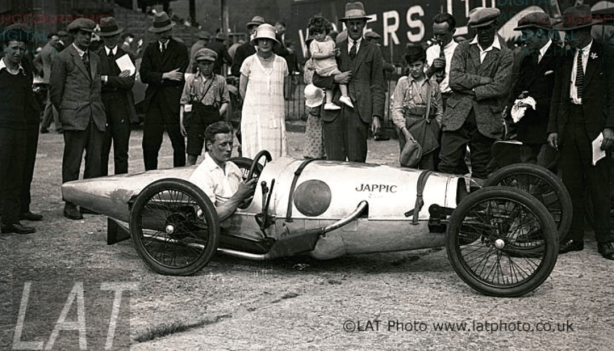
jap sunbac

Walters at the Brooklands June 1925 ‘SUNBAC’ meeting (Austin Harris/LAT)
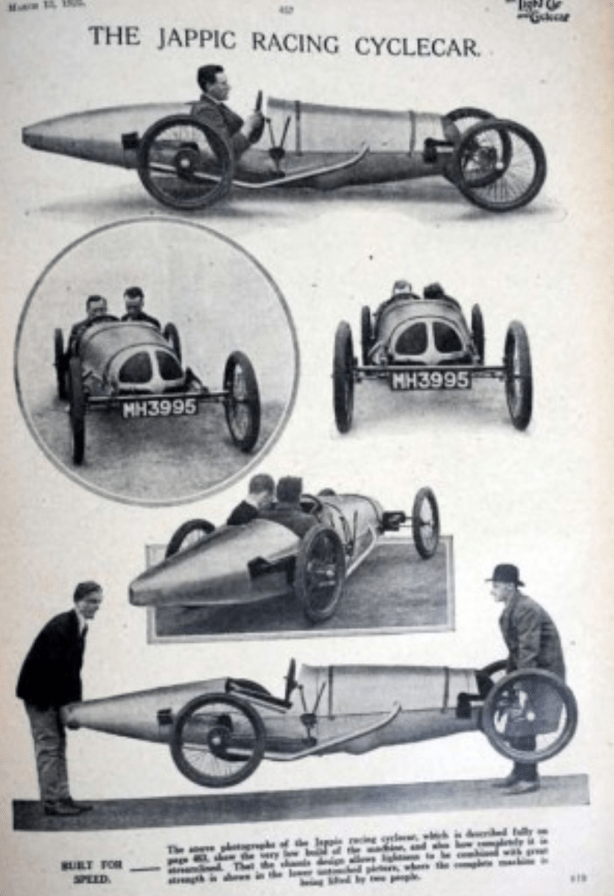
jap article

(Light Car & Cyclecar)

Credits…

Topical Press Agency, MacGregor, Light Car & Cyclecar, Stefan Marjoran, Adrian Harris/LAT

Graces Guide to British Industrial History, Adrian Ward

Tailpiece…
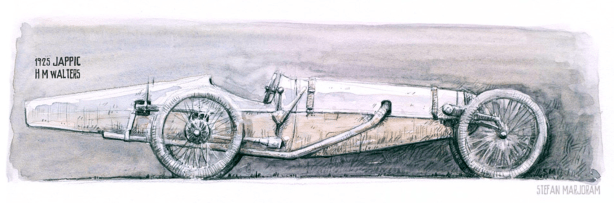
jap pic

(Stefan Marjoran)


image

Stirling Moss practices his works Maserati 250F at Monaco on 13 May 1956…

Photographer Louis Klemantaski took the shot from his hotel balcony, the long shadows are early morning light. He won the race. Checkout this article on the 250F and this race i wrote a while back; https://primotipo.com/2014/08/21/stirling-moss-monaco-gp-1956-maserati-250f/

Credit…

Louis Klemantaski

image


image

(Klemantaski)

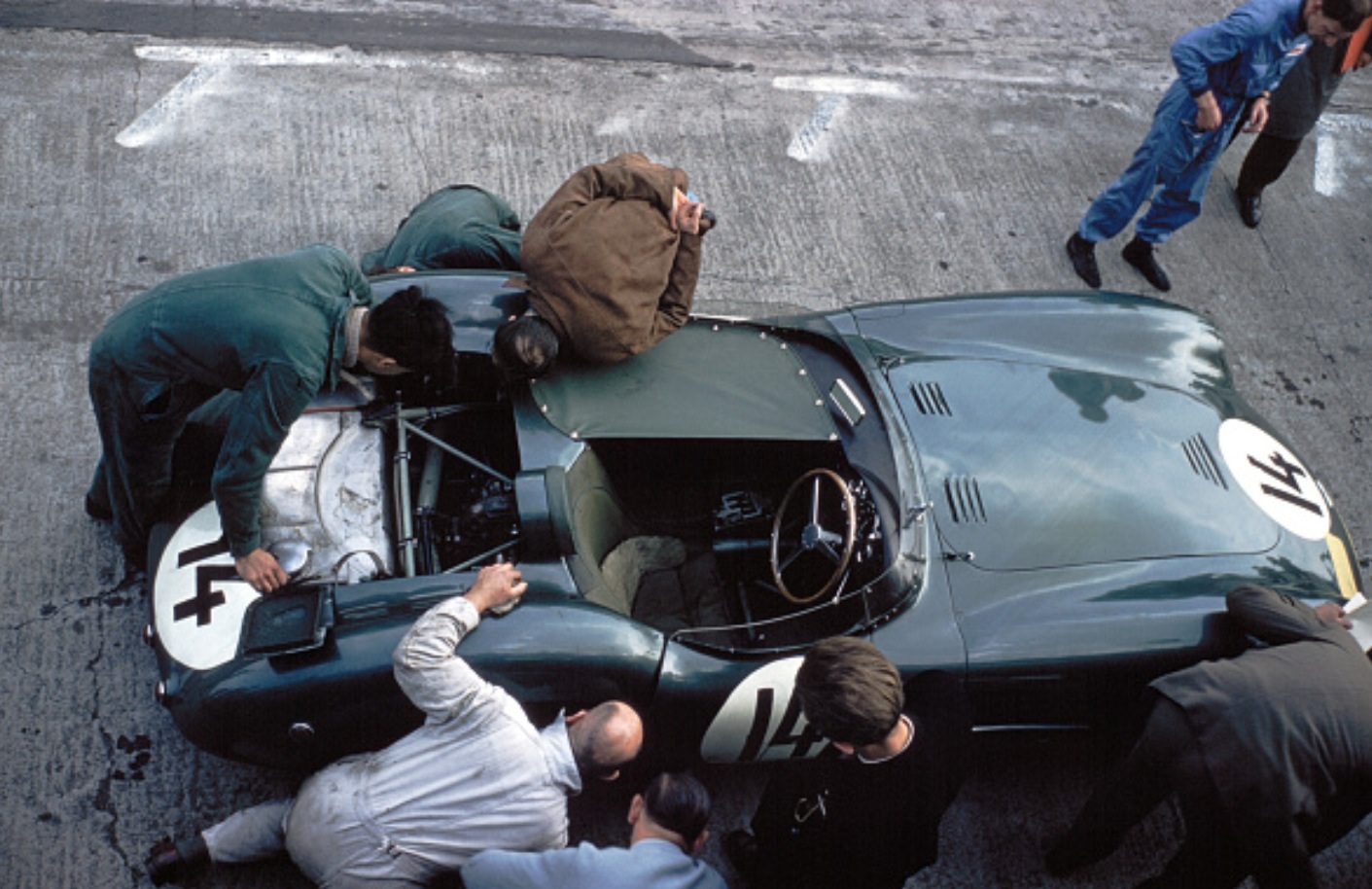
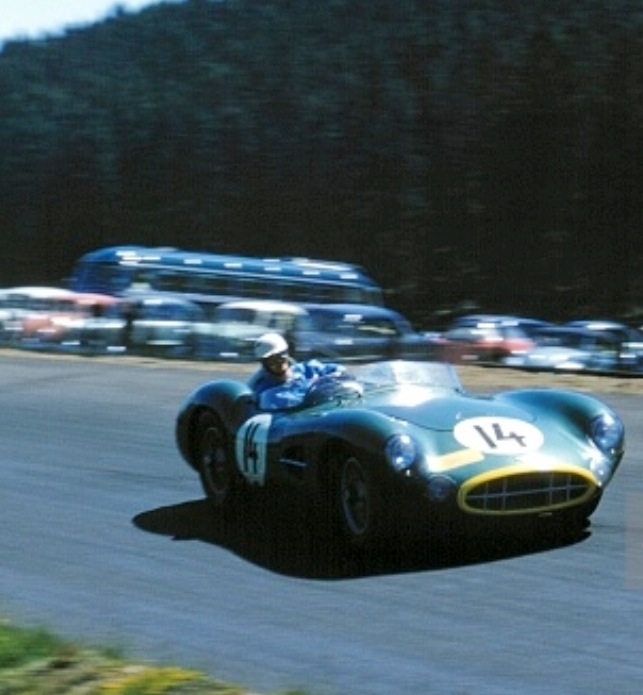
Tony Brooks (head obscuring the roundel) and John Wyer (in brown) looking for an Aston rear axle malady during the 26 May 1957 race weekend…

Brooks had a happy weekend, he and Noel Cunningham-Reid won the race in their Aston Martin DBR1 from the much more powerful Ferrari 335S of Peter Collins and Olivier Gendebien and the similar 315S of Mike Hawthorn and Maurice Trintignant.

image

Part on the 1957 start line-up with plenty of Mercedes 300SL’s to the fore..too many names and cars to list! (Klemantaski)

image

Noel Cunningham-Reid in the winning Aston DBR1, he held and built on the lead created by Tony Brooks (Klementaski)

image

Credit…

Klemantaski Collection

Tailpiece…

image

Reserve driver, Maurice Trintignant tries out the Collins/Gendebien Ferrari 335S during practice, Nurburgring 1000Km 1957 (Klemantaski)


image

The workplace to which so many aspire but so few ascend!…

Lucky, talented bastards those who do! In this case it’s the cockpit of Niki Lauda or Clay Regazzoni’s Ferrari 312T during the 1975 Italian GP weekend at Monza.

Niki and Ferrari took the drivers and constructors titles that year in these superbly designed and built cars. The Momo leather bound steering wheel and Veglia Borletti instruments are about as good as it gets for many of us and oh-so-period perfection…

Credit…

Rainer Schlegelmilch

ferrari 624

(C Cavara)

Nice cutaway drawing of the Ferrari 625, one of the Scuderia’s 1954 Grand Prix car’s for the new 2.5 litre Formula…

The design was based on the very successful Type 500 which swept the board in 1952 and 1953, the engine an enlarged version of the 2 litre unit of 1952/3, later modified with a new head, developed circa 235bhp@7000rpm.

spa

Spa 1954 Fazz butt shots; #6 is the later in the season, more bulbous and not so fast ‘553’ of Gonzalez, the car in front the more svelte and generally quicker ‘625’ of Maurice Trintignant. Cars both 2.5 DOHC 4 cylinder powered. Maurice was 2nd in the race won by Fangio’s Maser 250F, Froilan equal 4th in the ‘625’ he shared with Mike Hawthorn after the car pictured failed. (unattributed)

The De Dion tube was located by twin radius arms and a central guide pin, front suspension was by wishbones and a transverse leaf spring with Houdaille shock absorbers. The 4 speed gearbox was located under the seat, the wheelbase was 85 inches, the simple car weighed circa 1430 pounds dry.

monza

Alberto Ascari DNF engine Ferrari 625, on loan from Lancia, and Froilan Gonzalez 3rd, Ferrari 553 (here he is in the 553 he started, his placing was scored in the 625 he shared with Umberto Maglioli) from Louis Rosier’s 8th Maser 250F and winner Fangio’s Mercedes W196 1954 Italian Grand Prix. (unattributed)

Credits…C Cavara, Automobile Year

image

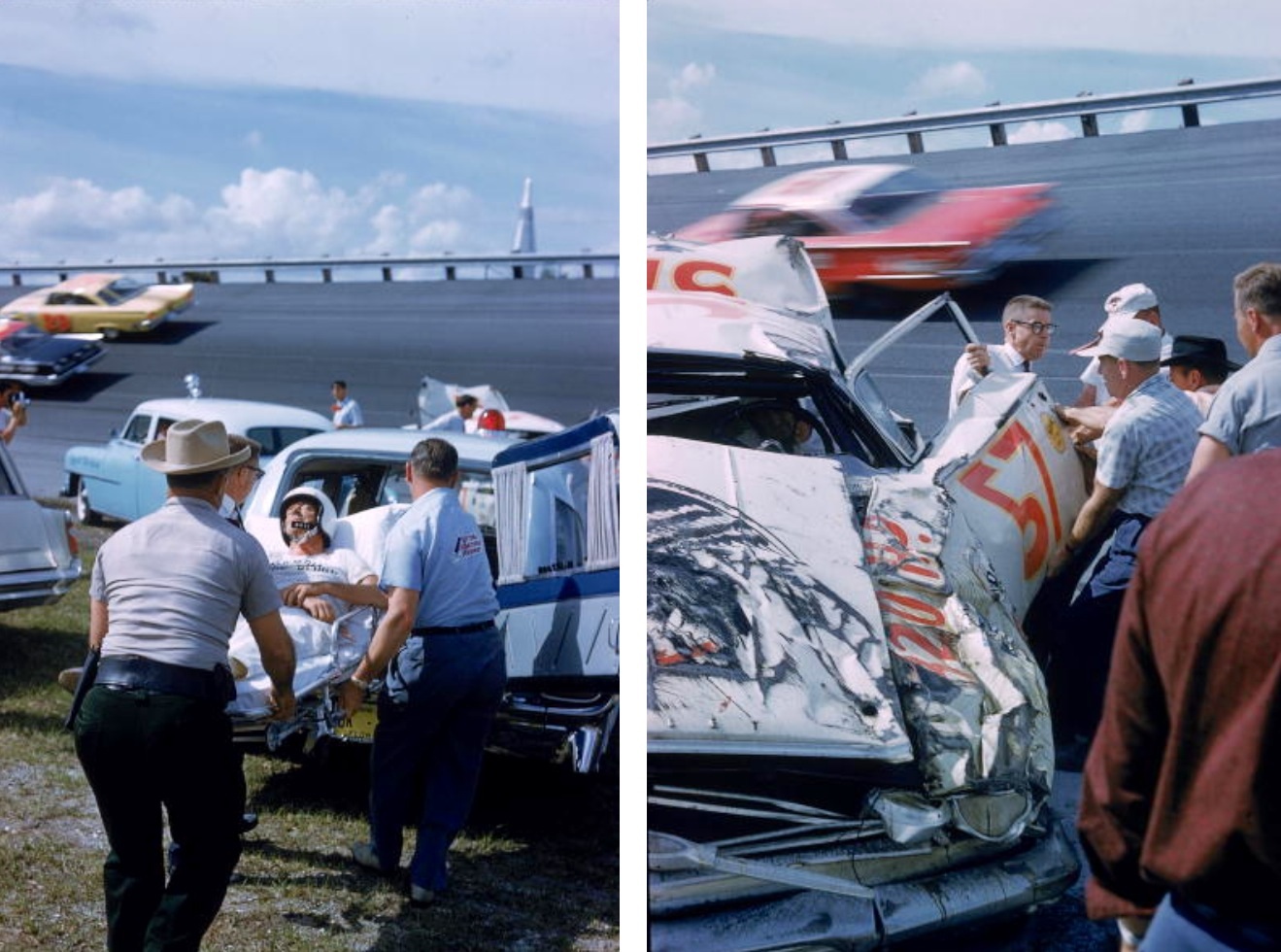
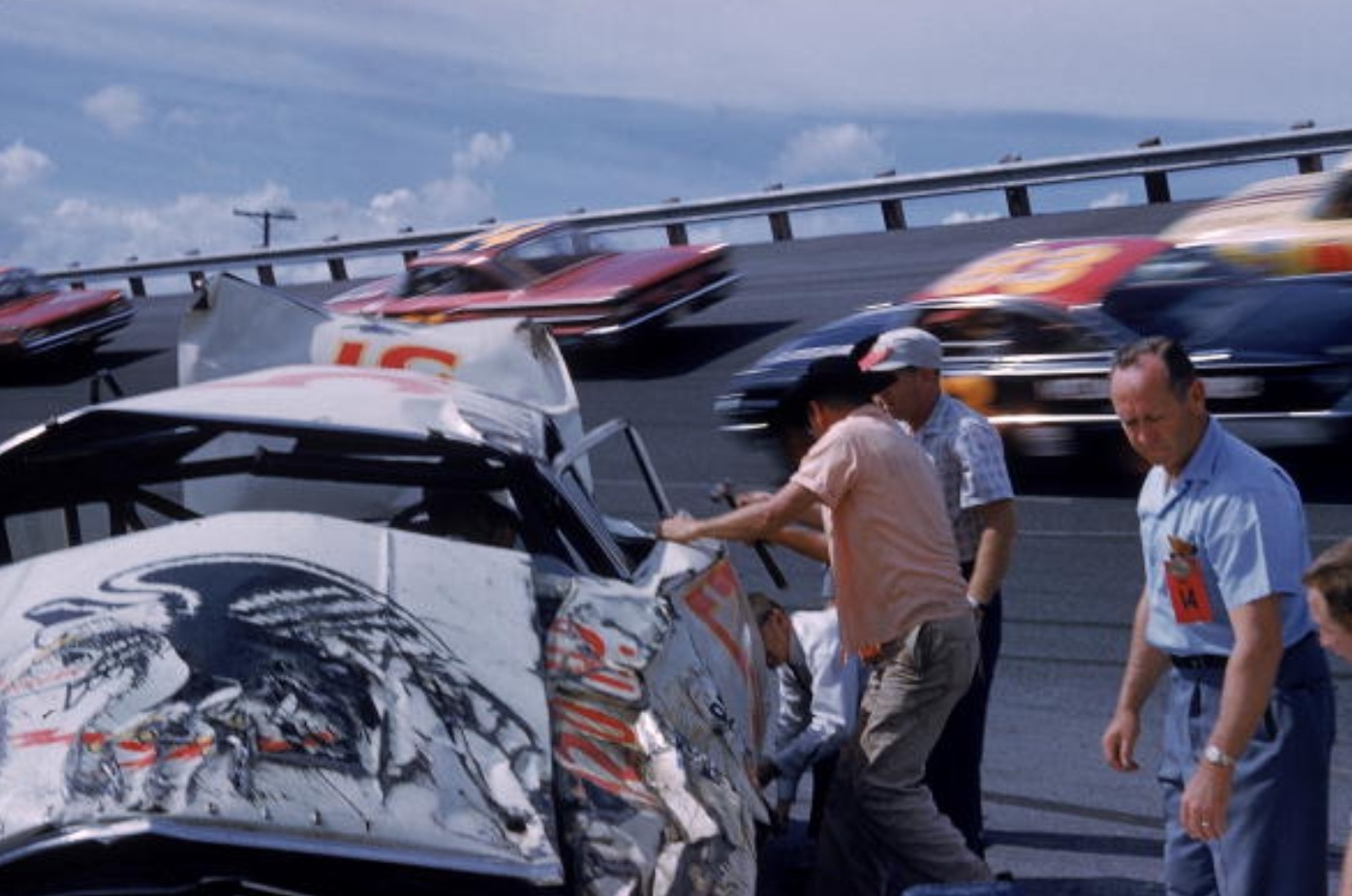
Wes Morgan being carted away from his sick Chevy after a lap 7 contretemps during race 3 of the NASCAR Grand National Series on February 24 1961 Daytona Beach event…

This race was a qualifier for the 500 itself. Fireball Roberts, a NASCAR ace won this 39 lap race in Smokey Yunick’s Pontiac. Checkout Wes’ ‘fireproof nomex’ T-Shirt!

Credit…

Leonard McCombie

image