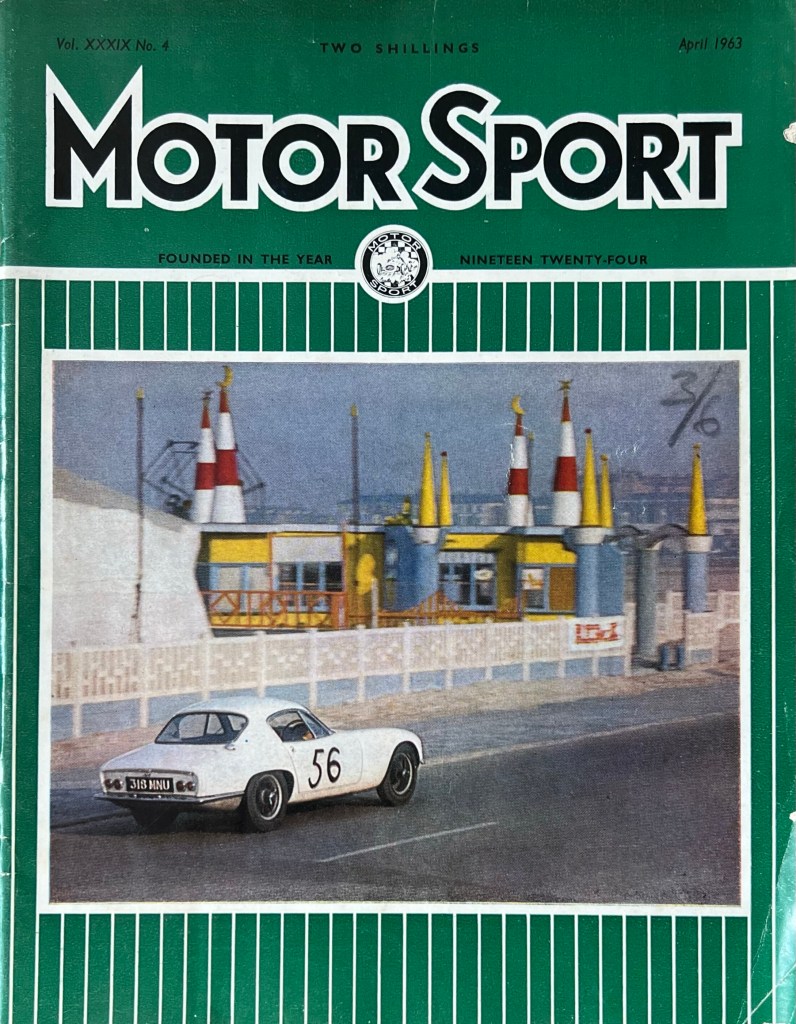
‘Cedric Brierley was well known in Club racing until a bad crash put him out of racing for some time, leaving him with a disability which precludes the use of a normal gearbox. He has had a Lotus Elite fitted with a 1.5-litre single-cam Coventry Climax engine and Hobbs automatic gearbox and at the Southport Speed Trials he proved to be nearly as quick as the E-Type Jaguars.’ MotorSport wrote.
It was the beauty of the shot that initially captured my attention, then you start to dig…I thought there was only one Elite fitted with a Hobbs Mecha-Matic gearbox – Howard Frederick Hobbs was an Adelaide born engineer – not so…
Rupert Lloyd Thomas wrote on The Nostalgia Forum, ‘Let us try and put the achievements of Howard Hobbs in context. He built the 1015 automatic transmission and fitted it to a Lotus Elite for the 1961 season.
In November 1960, David Hobbs, Howard’s son, acquired Lotus Elite, 5649 UE, from Chequered Flag, Chiswick, London, that was to launch his international racing career. The engine of the Elite was modified by Cosworth to Stage III tune producing 108 b.h.p. and a Hobbs Mecha-Matic gearbox was fitted, specially modified for racing. Hobbs said, “Chapman was not involved in the project, but our engine was blueprinted by some young tuner by the name of Keith Duckworth.”
The Hobbs Mecha-Matic gearbox high point came at the Nurburgring on May 28, 1961, when David Hobbs, and Bill Pinckney, two Midlands lads, defeated the might of Porsche in the 1600cc sports racing class in the Nurburgring 1000 kms with their automatic Lotus Elite. Bumped up to the 1600cc class by the organisers for their non-standard gearbox, after protests from fellow competitors, they faced much more powerful opposition from Porsche. After this remarkable achievement the future of the gearbox looked set fair. A long trip to Italy for Le Quattro Ore di Pescara on August 15 was less successful. The car dropped a valve early in the race, mechanic Ben Cox remembers worrying about taking the blame for what turned out to be a material failure.
Colin Chapman was sufficiently impressed to contact Hobbs in order that Jim Clark could drive the car in the 3 Hours of Daytona on 11 February 1962. As David Hobbs fought to establish himself as a professional racing driver he had also come to the attention of the Jaguar factory, and for 1962 he took over the privateer Peter Berry-entered E-Type from Bruce McLaren for the season. He was entered in the Jaguar, 3 BXV, for the inaugural Daytona 3 hours with the Lotus sitting idle. As Hobbs tells it, “Colin Chapman rang up and asked if he could borrow the Mecha-Matic Elite for Jim Clark to race at the same event.” Clark drove the Mecha-Matic in Florida, streaking away in the class lead but retiring after 60 laps with a failed starter motor and being classified 29th.
Jim Clark later had a road-going Elite, HSH 200, fitted with a Hobbs gearbox, as did Stirling Moss. Clark said in the book ‘Jim Clark at the Wheel’, “Those who scorn automatics take note!”
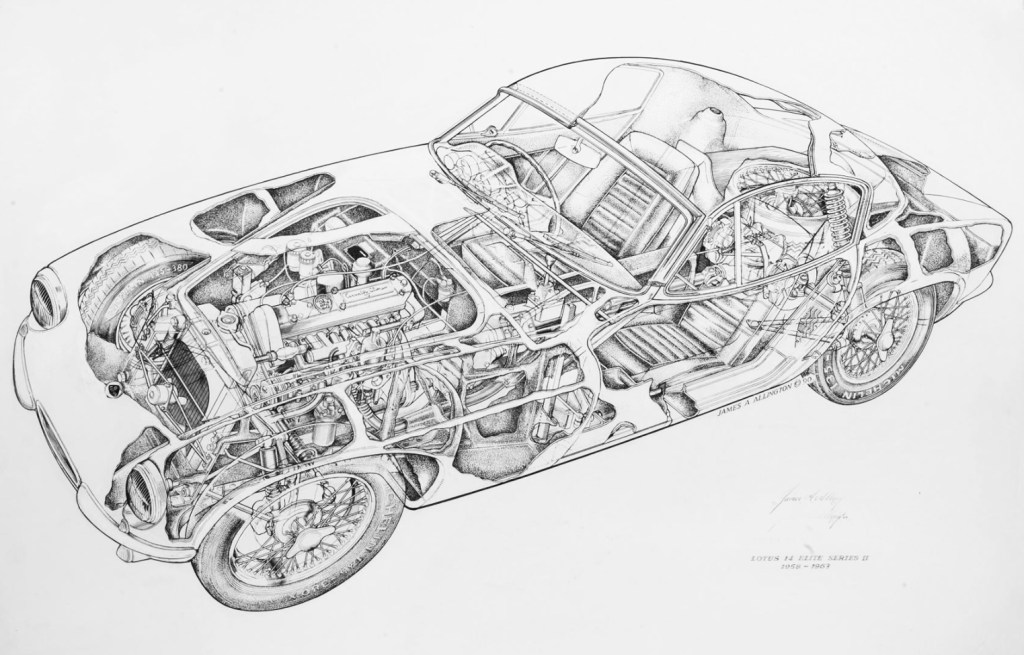
(J Allington)
The Mecha-Matic Elites…
Thomas again, ‘I have found three:
The road car of Jim Clark Reg # HSH 200. This plate would have been issued in 1961 by Berwick C.C. Chassis No: EB-1659, Engine No: FWE10233 – SUPER 95 Specification. Bristol Plate No: EB-1659. Originally yellow and silver. Subsequently sold in 1962 to a George V. Simpson, who painted it dark blue, Scottish racing colours.
The Cedric Brierley car, Reg # 318 MNU.
The Stirling Moss road car Reg # HRT 163D. Body/Chassis no.1789 and was fitted with a Twin-cam engine, make unknown. Colour yellow. This is a 1966 reg no. so car may have been re-registered that year on change of specification. Car thought to be in the USA, last known owner was a Richard Richardson.
So we have a story involving David Hobbs, Keith Duckworth, Colin Chapman, Jim Clark and Stirling Moss. Duckworth later put cash into developing the ideas of Howard Hobbs, Clark and Moss bought the cars.
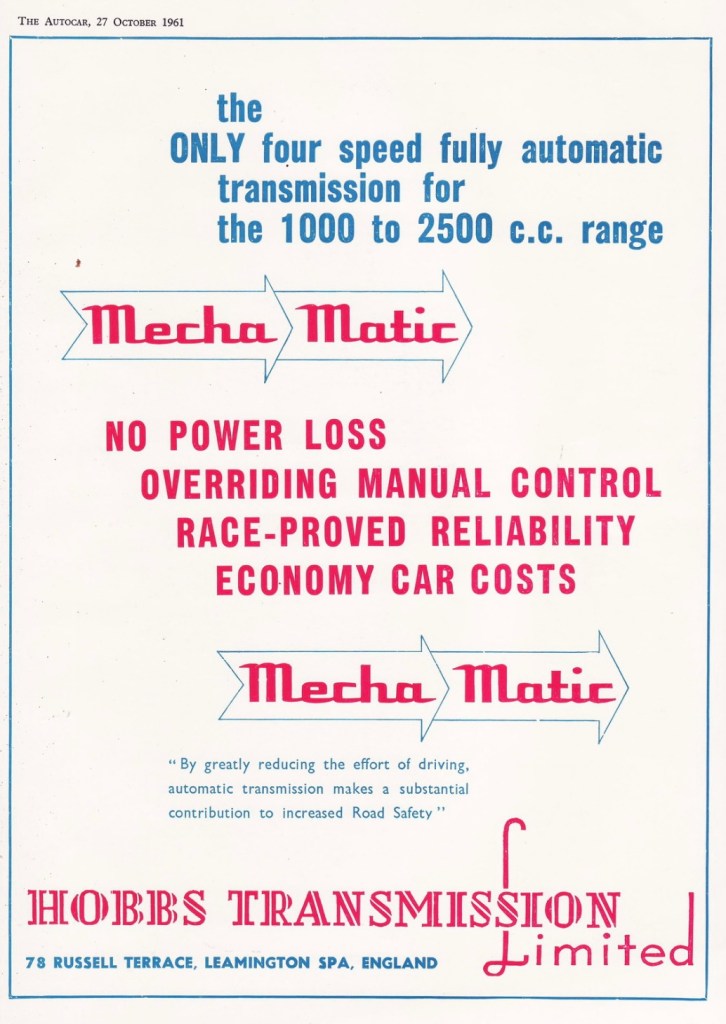
An intriguing footnote. About the time Duckworth was taking up the VKD transmission for racing, Howard Hobbs was still battling his old nemesis Borg-Warner in the road car game: http://archive.comme…ly-transmission ‘
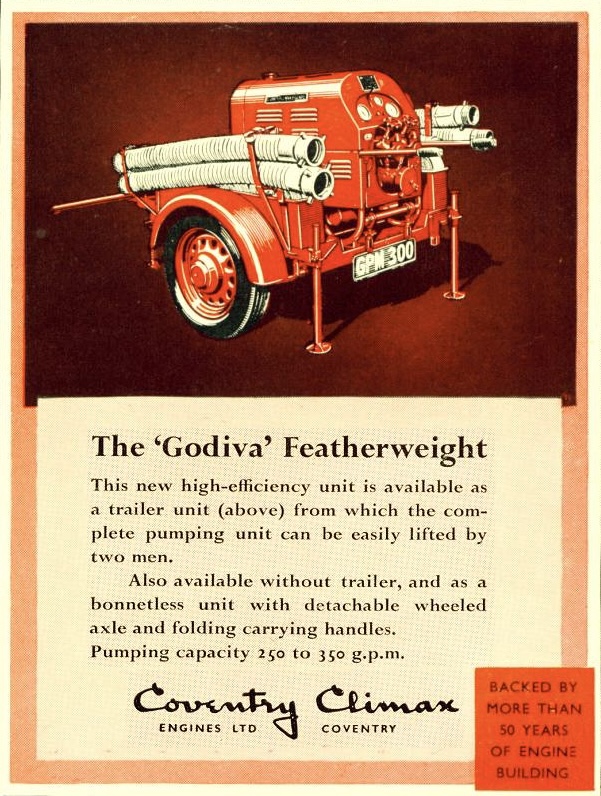
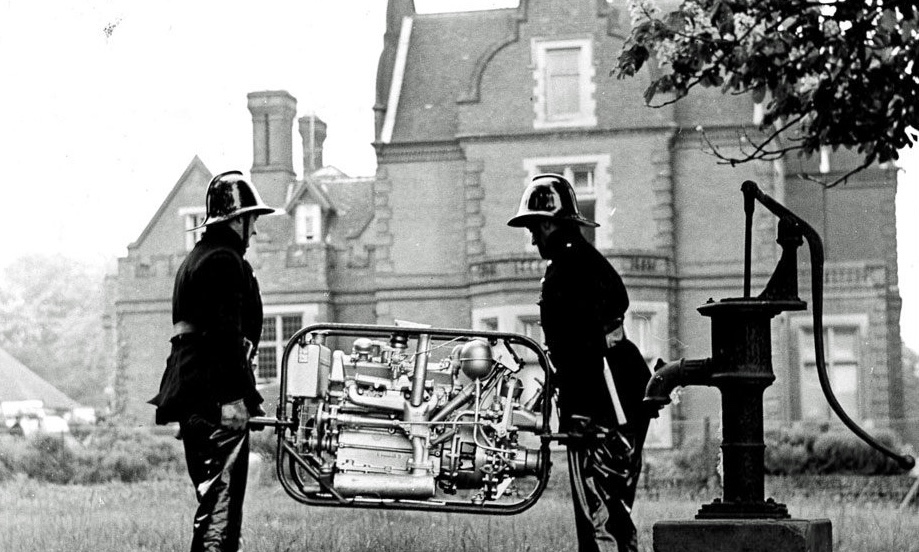
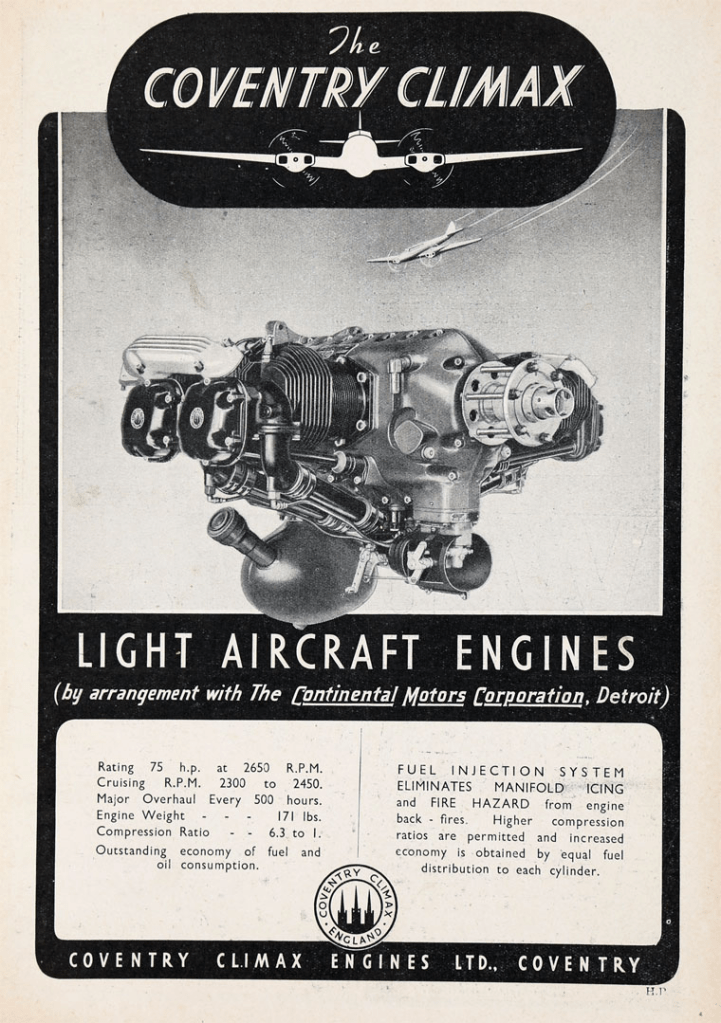
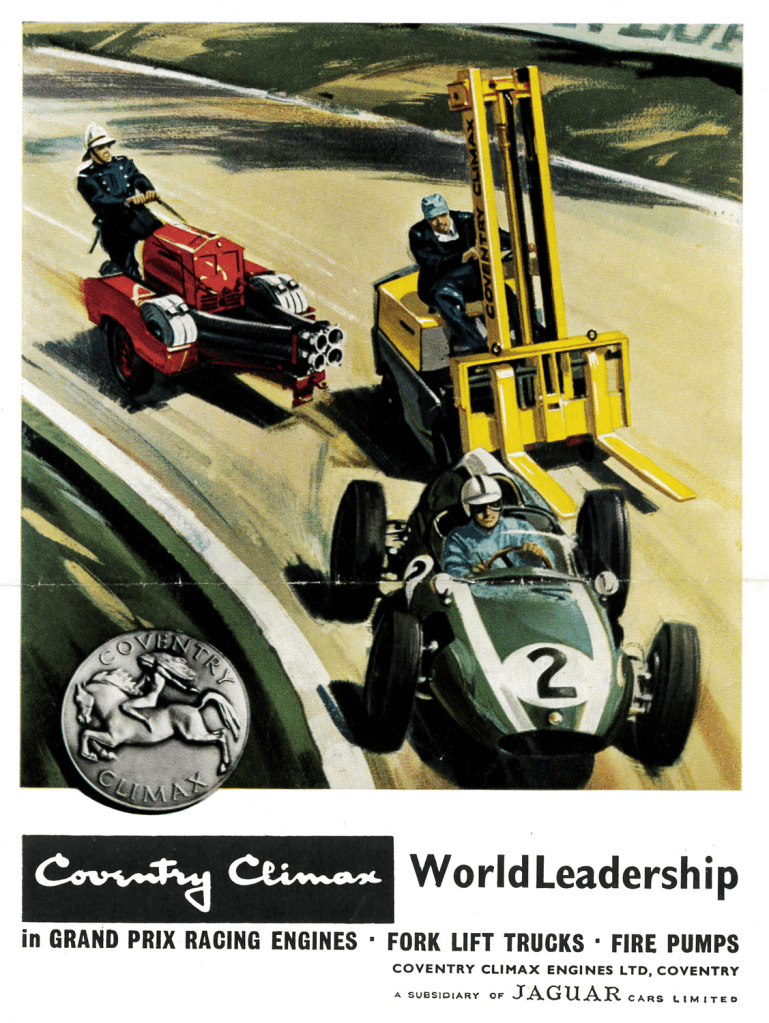
Coventry Climax’ mega racing successes were begat by the Godiva Featherweight engine as you all know. Here is a great Graces Guide summary of the corporate evolution of Coventry Climax, formed in 1917: https://www.gracesguide.co.uk/Coventry_Climax_Engines
(Godiva Ltd)
Etcetera…
1939
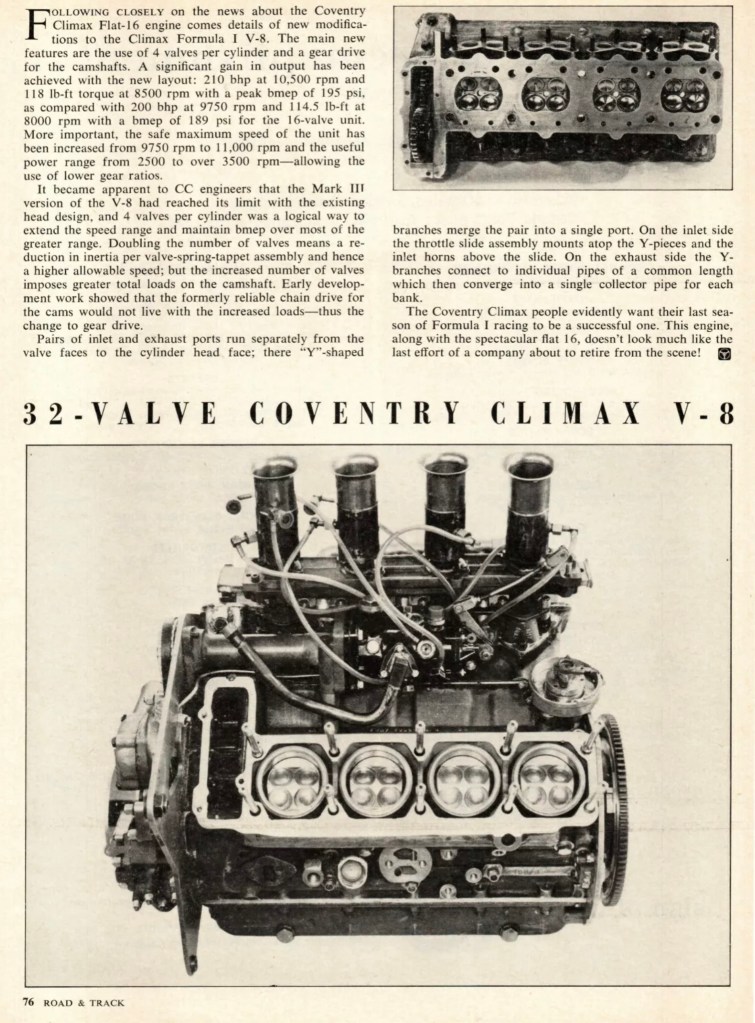
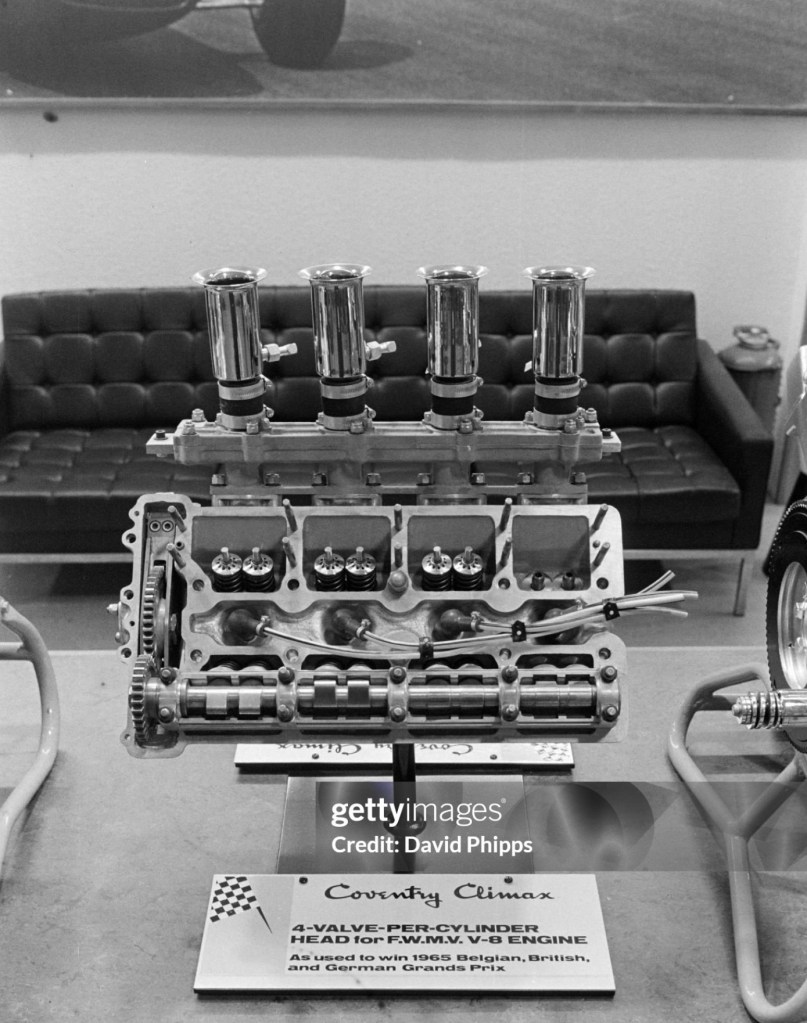
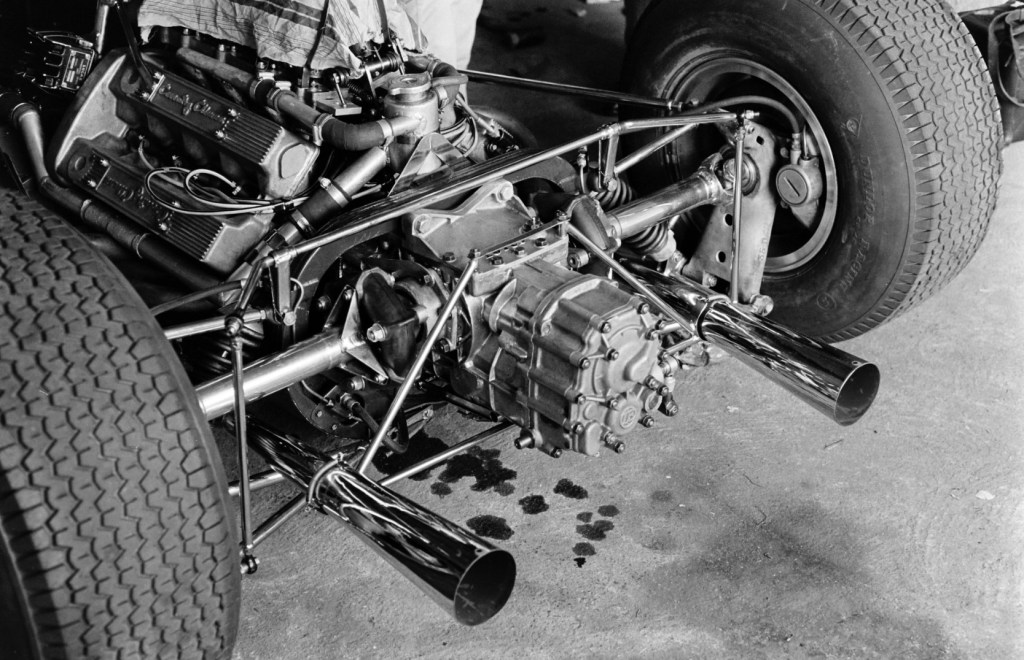
Irrelevant in the context of this article but it popped up in my Google search, so why not. Shots of the two (?) semi-undressed F1 Coventry Climax FWMV Mk 6 and Mk 7 1.5-litre four-valve V8s aren’t common.
The Cams were gear, rather than chain-driven as in the case of the earlier FWMVs, as David Phipps’ London Motor Show shot taken at Earls Court in October 1965 demonstrates.
The Mk6 FWMV Coventry Climax V8 (below) made for Lotus fitted to a 33 chassis in 1965, circuit unknown. Quick visual differentiators (below) from a two-valver are the ribbed cam-covers and, depending on the crank spec of the engine concerned, and ‘conventional’ rather than crossover exhausts. Aren’t the megaphones nice…212bhp @ 10,300rpm are the numbers I have. ZF five-speed transaxle.
(MotorSport)
Credits…
MotorSport April 1963, Rupert Lloyd Thomas, James Allington, Road & Track, MotorSport Images, Godiva Ltd, Getty Images-David Phipps
In this case the meaning is an unfortunate set of circumstances that are set in train that end up badly for the initiator and well for the recipient.
Young British up-and-comer Stephen South was looking good for 1980, he had a strong season in the 1979 European F2 Championship – sixth with one win at Hockenheim – and had been signed up as one of two Team Toleman drivers together with Derek Warwick to pilot a pair of Rory Byrne designed Toleman TG280 2-litre Hart 420Rs in the 1980 championship.
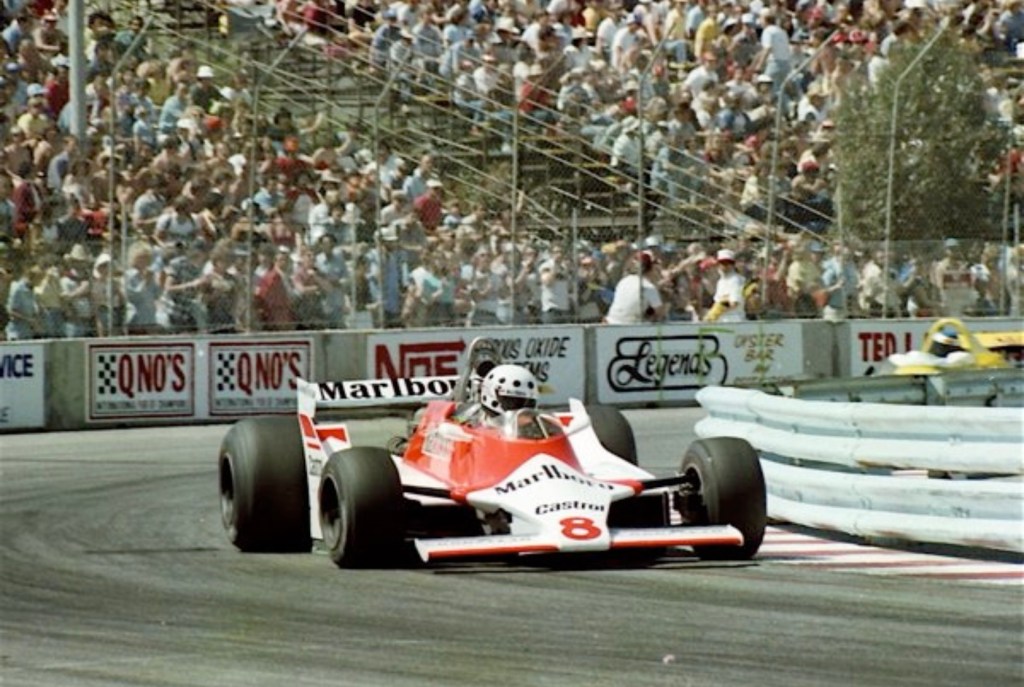
He’d done the early testing at Goodwood in early February above – see the Autosport article at the end of this piece – and it was all looking good until South was offered Alain Prost’s McLaren seat for the March 30 Long Beach Grand Prix. The little Frenchie had crashed and broken his wrist during practice for the preceding South African Grand Prix at Kyalami. It wasn’t a great call by South as McLaren were on a roll of building dog after dog Ground Effect cars: the M28/M29/M30, but the F1 siren-call was ever strong.
South, Project Four March 792 BMW during the July 29, 1979 Enna GP. Third behind Eje Elgh and Derek Daly, both also in March 792s (Autosport)
The communication between South and Toleman is unclear but it seems that Stephen tested the McLaren without first clearing it with Toleman, such consent was unlikely given the first European F2 Championship round was to be held at Thruxton on April 7, only a week later.
The upshot was that Stephen lost his ride which went to Brian Henton. Somewhat predictably, South failed to make the qualifying cut at Long Beach together with Geoff Lees and David Kennedy aboard Shadow DN11A Fords.
Brian Henton – who had finished second in the 1979 Euro F2 Championship aboard a Toleman Ralt RT2 Hart – seized the Gift from The Gods with both hands and won at Thruxton from Warwick on the way to championship victory easily from his teammate and Teo Fabi’s factory March 802 BMW.
South during practice at Long Beach in 1980, McLaren M29C (unattributed)Sears Point opening Can Am round on May 25 1980. Patrick Tambay has already gone through. South’s Lola T530 leads the similar VDS cars of Geoff Brabham #3 and Elliott Forbes-Robinson #2. Bobby Rahal’s black Prophet is behind Brabham. Tambay won from EFR and Rahal (K Oblinger)
It wasn’t a compete disaster for South at this point as he then picked up a plum-seat with Newman Racing driving one of two new Lola T530 Chevs together with Elliot Forbes Robinson in the 1980 Can-Am Challenge.
Without a lot of testing, and despite being in a field of drivers with plenty of Big Car Experience: Patrick Tambay, Bobby Rahal, Danny Sullivan, Geoff Brabham and Keke Rosberg to name a few, Stephen shone with raw pace and aggression.
He qualified third in the first two rounds at Sears Point and Mid Ohio but retired early with fuel pump and fuel pressure problems respectively. He then qualified fourth at Mosport and finished second to Tambay, on his way to the title. This was good, if Stephen could make a decent fist of it amongst this company he may get another crack at F1, he had tested well for Lotus at the end of 1979 but Chapman ultimately plumped for Elio De Angelis.
At Watkins Glen he was Q5 but collided with spinning teammate, Forbes-Robinson on lap 3 of the race. South bounced back to put his 550bhp T530 on pole at Road America, placing fifth. At Brainerd he was Q11 but didn’t start after a crash caused by a broken wheel, then the Shit Fairy arrived during the blue-riband Grand Prix de Trois-Rivières at Montreal on August 24.
With his Lola still not repaired, poor Stephen crashed very badly in practice head on aboard one of the team’s 1979 Lola T333 based Spyder NF11 Chevs, as a consequence of shocking injuries his lower left leg was amputated. End of career…
Lets not forget Stephen South, he had all the makings of a decent Grand Prix driver and would surely have ended 1980 better than it started…
(Lola Heritage)
I love this shot of a new Lola T530 Chev at Lola’s Huntingdon HQ early in 1980 before shipment to the US. The people and Austin (?) provide a sense of the size of these very biiiiig cars, the drivers were dropped into the cockpit via forklift. More about these beasts on the wonderful Lola Heritage site: https://www.lolaheritage.co.uk/type_numbers/t530/t530.html
Etcetera…
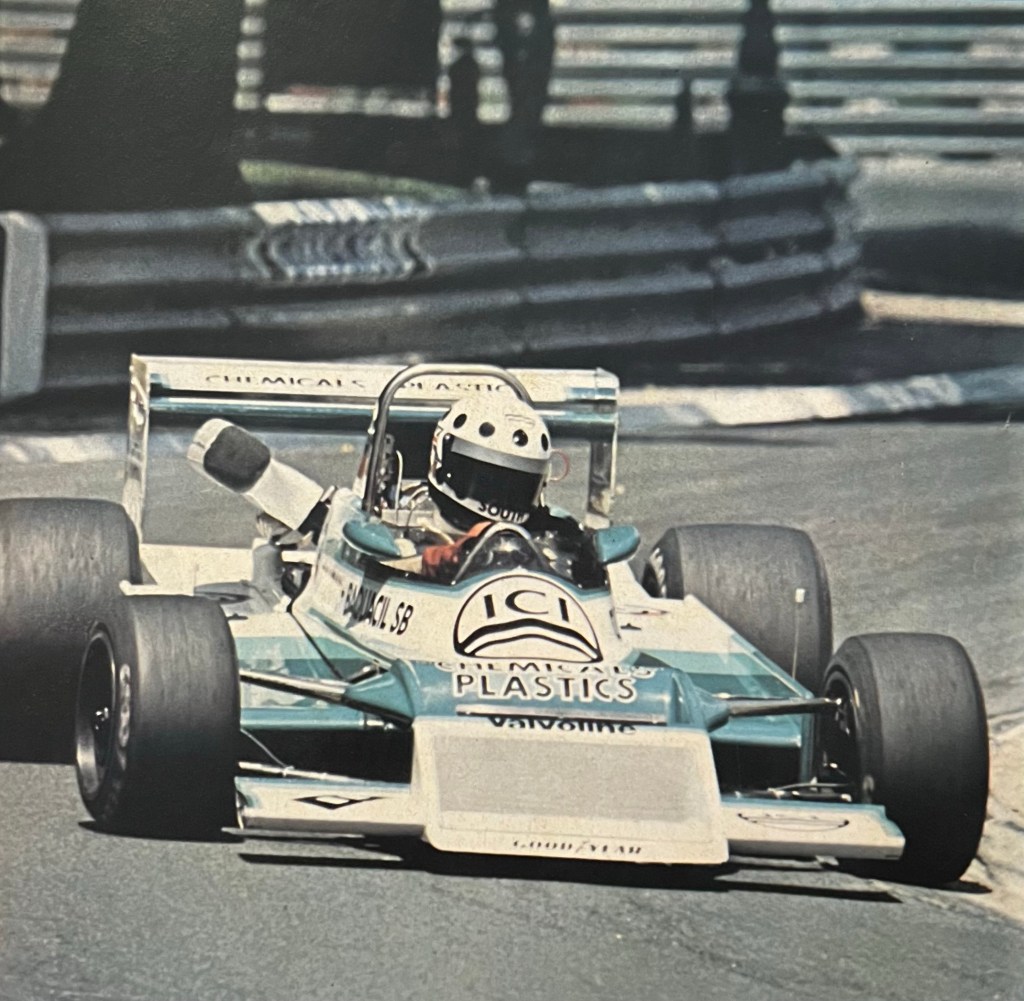
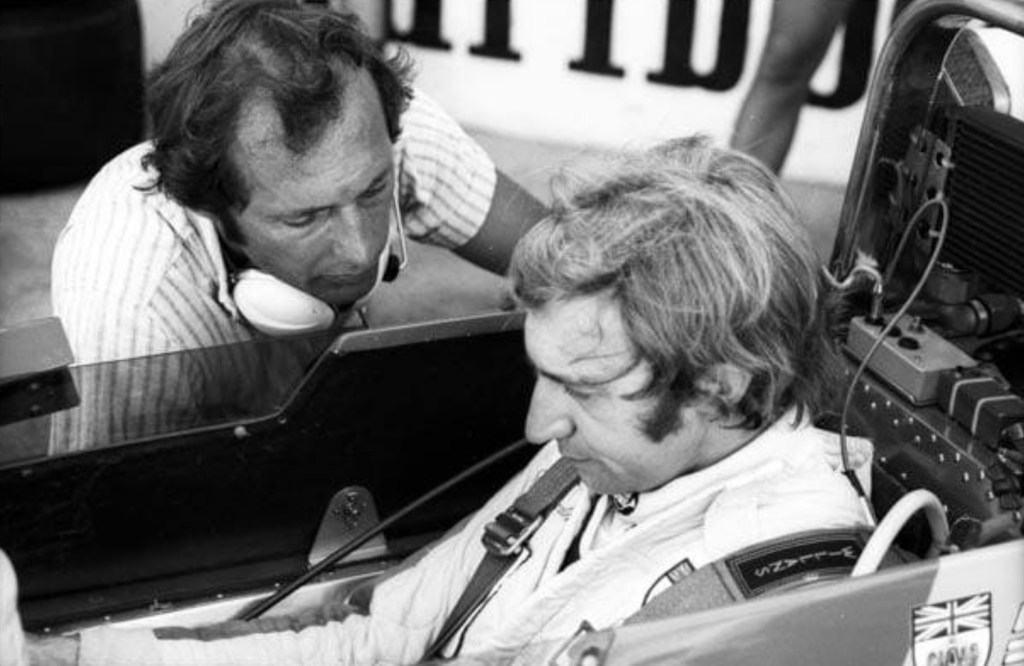
South on the way to winning the June 10 Rhein-Pokalrennen Hockenheim round of the 1979 Euro F2 Championship in a Project Four-ICI Racing March 792 BMW, his was his only F2 victory. The shot below is of Ron Dennis and Stephen with the March 792 that season.
(Auto Tradition)
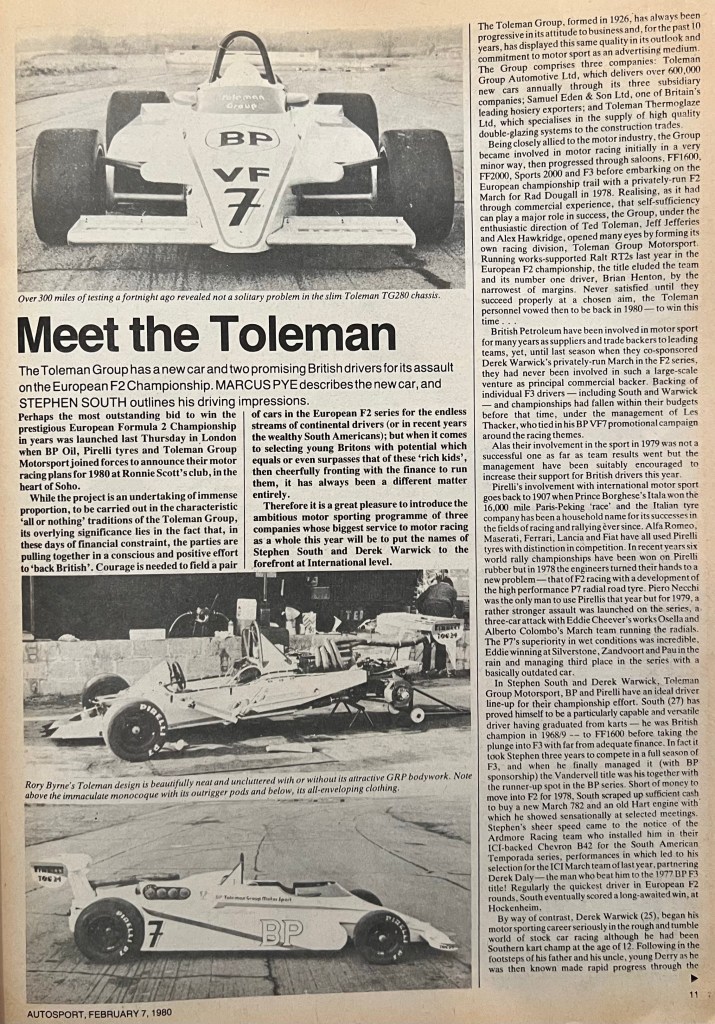
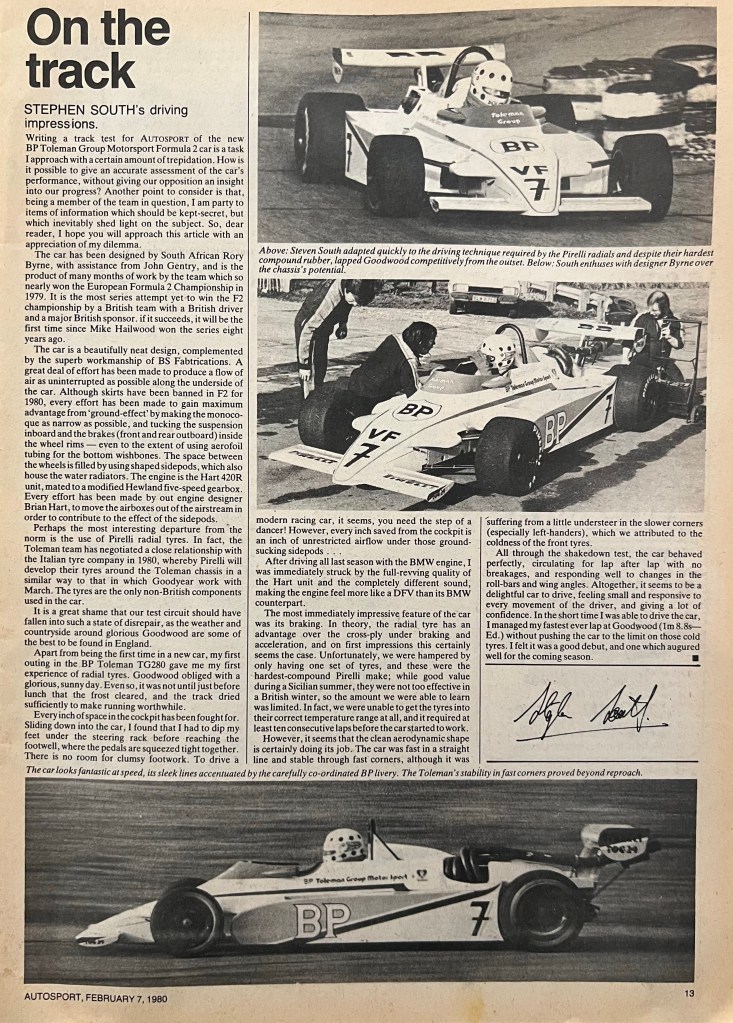
The February 27, 1980 issue of Autosport ran this fantastic article by Marcus Pye about the new Toleman TG280 Hart together with Stephen South’s impressions after his first drive of the car at Thruxton.
Credits…
Autosport, Kurt Oblinger, Lola Heritage, Auto Tradition
Tailpiece…
The Autosport cover from which the first shot was filched.
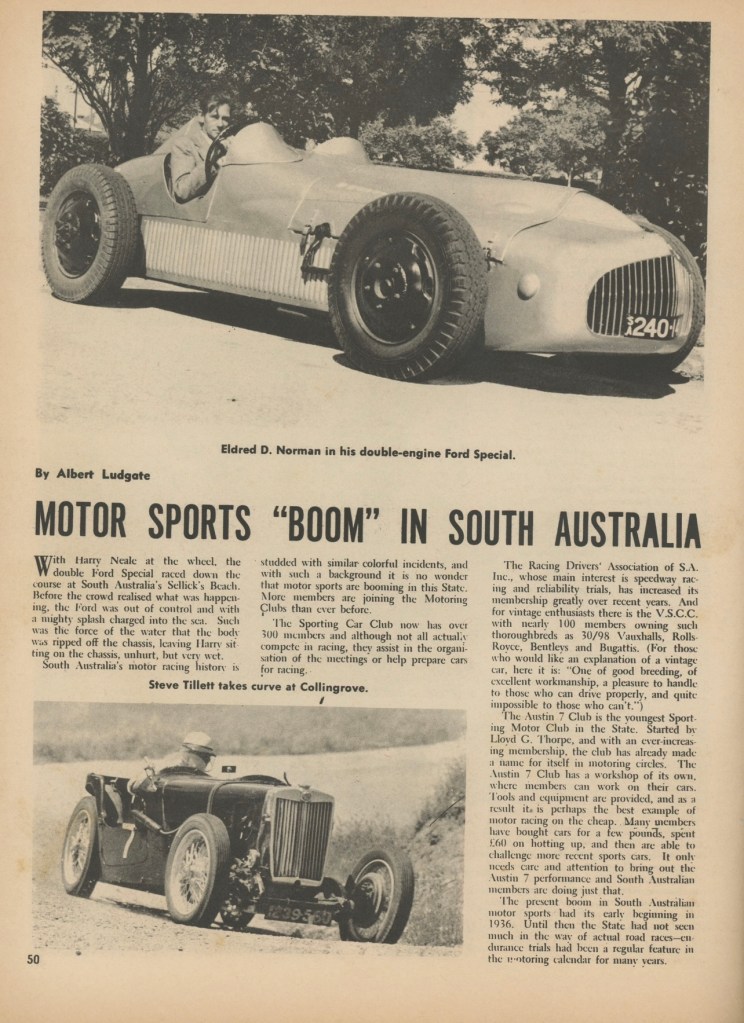
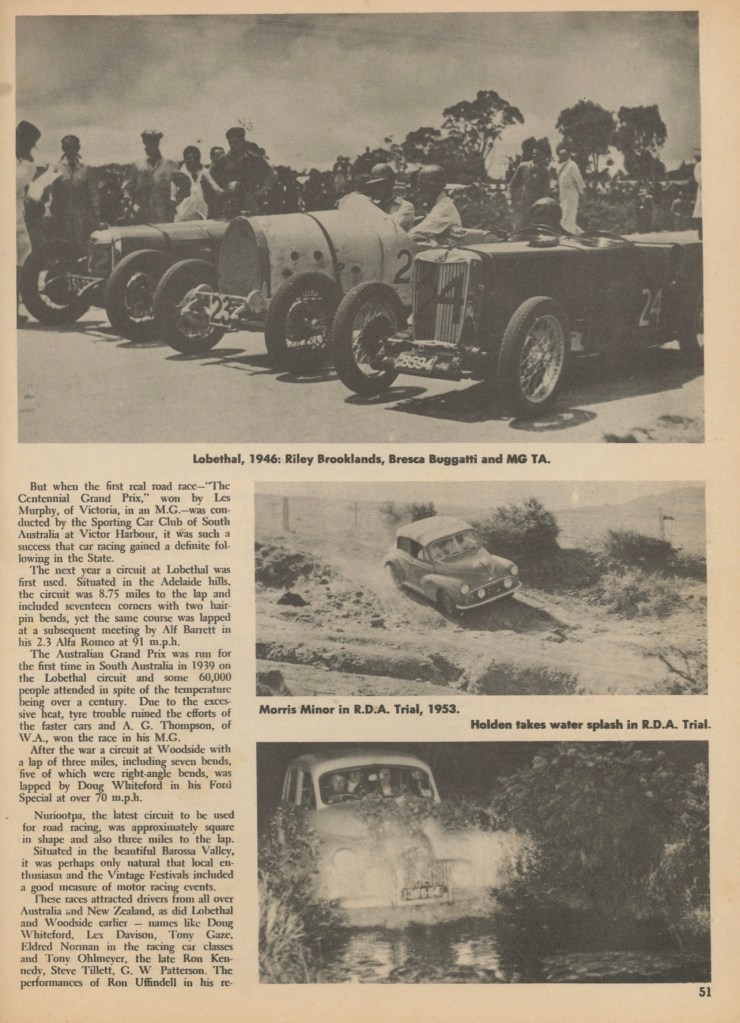
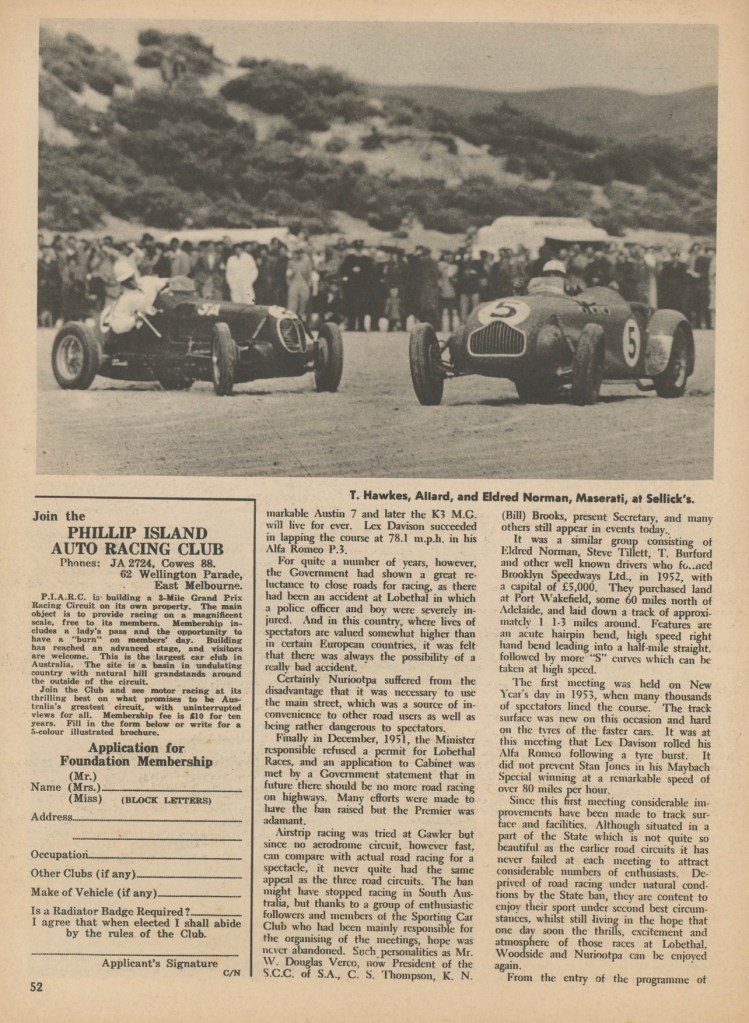
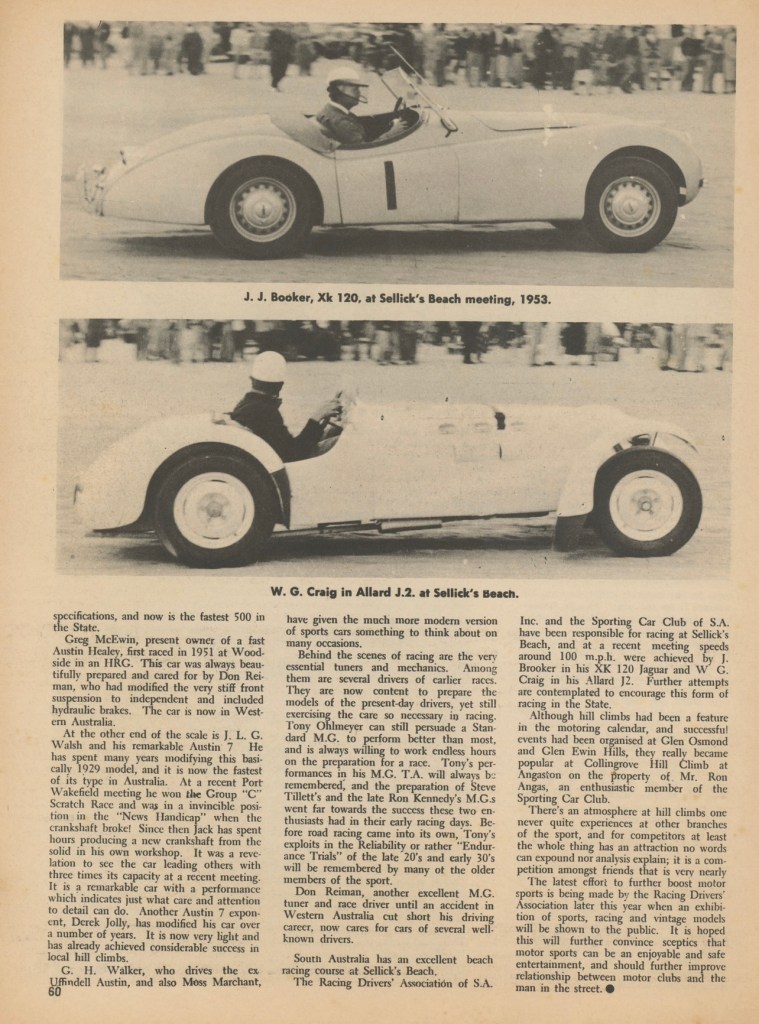
Tony Johns sent me this wonderful article about the motorsport state of play in South Australia in 1954, many thanks.
Cars appears to be a magazine from The Argus stable, a Melbourne daily newspaper published from June 1846 to January 1957. Cars publisher was Larry S Cleland, anybody know of Lazza? The Sydney advertising rep was JM Sturrock of King Street, Jock Sturrock of yachting fame I wonder?
The article was written by Albert Ludgate, Chief Engineer of Lea-Francis cars from 1946. He emigrated to Australia together his family and a 1926 Lea-Francis K-Type in 1953, more of Albert later.
Etcetera…
Australian Grand Prix historians will note that at the time of publication – September 1954 – the 1937 Australian Grand Prix hadn’t been invented. That is, the fuckwit(s) who decided that the December 26, 1936 South Australian Centennial Grand Prix should be the 1937 AGP, rather than the 1936 AGP hadn’t done his/their Fake Nooooz thing.
The South Australian Government’s banning of racing on roads, quite possibly brewing for some time as Albert wrote, was probably precipitated by two deaths in bizarre circumstances during a motorcycle race at Woodside in 1949.
Albert Ludgate in the glasses, and Ken Rose tickling one of their Lea-Francis 1.5-litre midget engines in the US in 1948-49 (LFOC)
Albert Ludgate…
Ludgate’s early history I am yet to discover, but he was Chief Engineer of Lea-Francis from 1946.
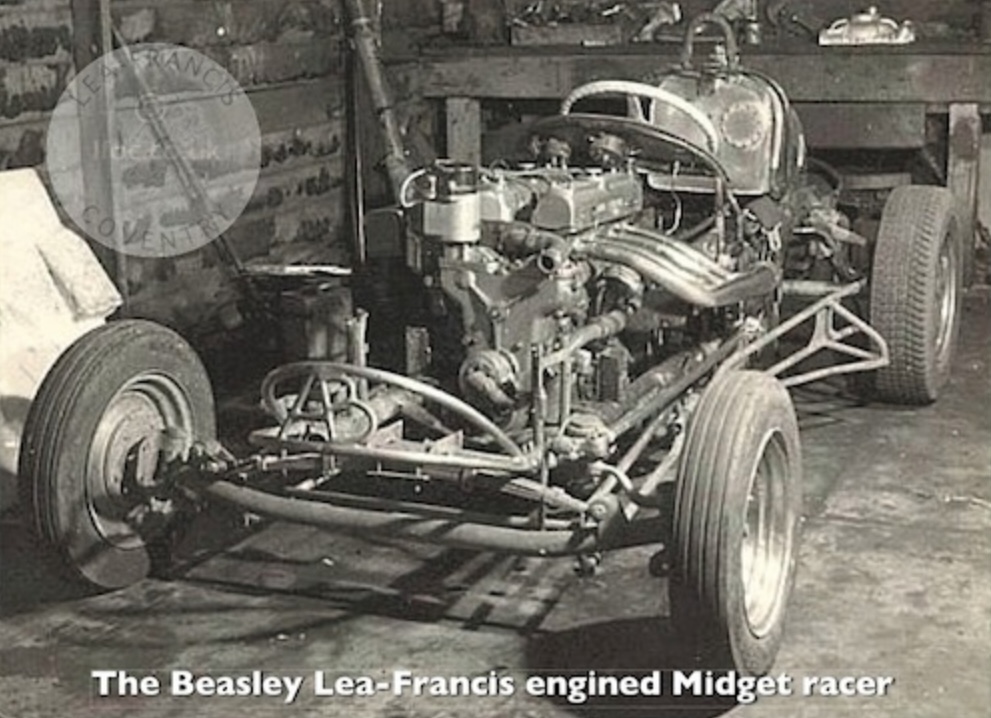
By February 1953 he was in Adelaide helping prepare one of his twin-high-cam ‘Leaf’ midget racing engines which had been fitted to Victorian ace, Alf Beasley’s speedcar for an international (SA Solo Championship) meeting at Rowley Park, Adelaide on Friday February 13, 1953.
These 1496cc, four-Amal or twin SU fed, dry-sump, gear-driven cam midget engines were aimed primarily at the large American market.
Bob Shimp won some heats in his Lea-Francis engined car at the Carpinteria Thunderbowl in South California on July 18, 1949, ‘then led the semi-main until the Lea-Francis engine in his midget failed’, wrote Kevin Triplett on his triplettracehistory.blogspot.com.
‘The 91-cubic inch Lea-Francis engine, purpose built in England for midget auto-racing featured dry-sump oiling, gear-driven double camshafts, four SU carburettors (sic), with a high compression ratio to run on alcohol. Record setting British driver, Dudley Froy, Lea-Francis designer Ken Rose and chief engineer Albert Ludgate made trips to the USA in 1948 and 1949 to show and sell samples of the engine.’
‘Besides Shimp, several US midget racers (including Woody Brown in Northern California) used the four cylinder “Leaf” engine but it never became popular (less than a dozen were built) given that its 120 horsepower could not match the power of the Offenhauser four-cylinder engine and it sometimes put connecting rods through the sides of the aluminium block.’
Contemporary Australian newspaper reports say that brothers Alf and Stud Beasley had a car each powered by a float of three of these trick Lea-Francis engines, and had some success with them. It makes one wonder where those engines are now…
Alf Beasley aboard his Lea Francis powered midget at Tracey’s Speedway, Melbourne
Into 1954 Ludgate was the technical representative of Simmonds Accessories and the publicity officer of the (speedway) Racing Drivers Association, while JA Lawton & Sons also retained Albert, not to forget his writing abilities.
Ludgate and his Racing Drivers Association made quite a splash in October ’54 with their ‘Speed and Sports Motor Show’. More than 150 racing, veteran and speedway cars and bikes were amongst the exhibits in the Centennial Hall at Wayville. It was the first time in South Australia’s history that such a show had been run.
Three-quarter-midgets – TQ cars were on the march – were front and centre with Ludgate’s Simmons Nut-Ridge Special one of five TQs on display. In addition he showed a 150cc half-scale midget racer built for his six-year-old son.
Ludgate was a strong advocate of TQs and was a member a three man Racing Drivers Association specifications committee tasked with developing specifications for the class…and in due course he would make some cars.
By December 1954 Ludgate was living in Reade Park, later he bought a house in Colonel Light Gardens. He was well on the way to embedding himself within the local motorsport and automotive industries, having addressed members of the Aeronautical and Automotive Engineers about American car racing and engine development in the Kerr Grant Lecture Theatre at Adelaide University.
Capricornia 1, John Plowman’s car circa 1956 (bollyblog.blogspot.com)Capricornia 3, later the Repco Ricardian, at Port Wakefield during the March 1959 meeting. With Buchanan couture, a great looking car (v8vantage.com)
In his small Colonel Light Gardens garage, Ludgate Automotive Developments built sportscars, TQ midgets and go-karts using the Capricornia and Ricardian brandnames.
The Capricornia sportscars – the name was taken from the Tropic of Capricorn region – used a multi tubular chassis with two main side-members, a wheelbase of 91 inches and used standard or modified Holden parts, including front and rear suspension, and weighed about 715kg depending upon specifications.
The first of the series, John Plowman’s car was commenced in 1955 and completed just in time for for the 1956 Easter meeting at Port Wakefield ten months later. Fitted with an English RGS/Shattock fibreglass body, and with experienced racer/engineer, John Cummins at the wheel the car performed well. A long job list proved racing improves the breed!
Capricornia 3, Collingrove circa-1958 (S Jones)
John Bruggerman’s very successful Capricornia 3 racing car had a Holden (later Repco-Holden) grey-six fitted and used a shortened Buchanan (NH Buchanan Motor Co) body.
Ludgate’s pioneering TQs – a poor-mans introduction to speedway racing – used Austin 7 chassis, suitably bent 7 axles, and a variety of 500cc motorcycle engine driving through a gutted Austin 7 gearbox using a dog-clutch for stop and go.
In the mid-1950s John Cummin’s met Ludgate in Adelaide in his capacity as a Perkins Diesel rep. Ludgate helped ‘with a lot of input’ in the early development of the Holden grey-six cylinder engine used in his Bugatti Holden. Cummins blazed the trail in Victoria with Holden engine development, his car is said to be the second Holden-powered racing car in the state, ‘Lou Molina’s, Silvio Massola built MM Holden Special being the first’.
‘The engine gave about 65 or 75 horsepower at 3500rpm’, Cummins recalled, ‘and it wasn’t worth two-bob at 4500! We fiddled with the needles in the triple 1 3/4″ SU carries and got 116 horsepower at 4500. Almost double the original Holden power output.’
John Cummins’ Bugatti T37A Holden at Bathurst in 1961. Note the Bellamy independent front suspension so characteristic of #37332 (unattributed)(B White)
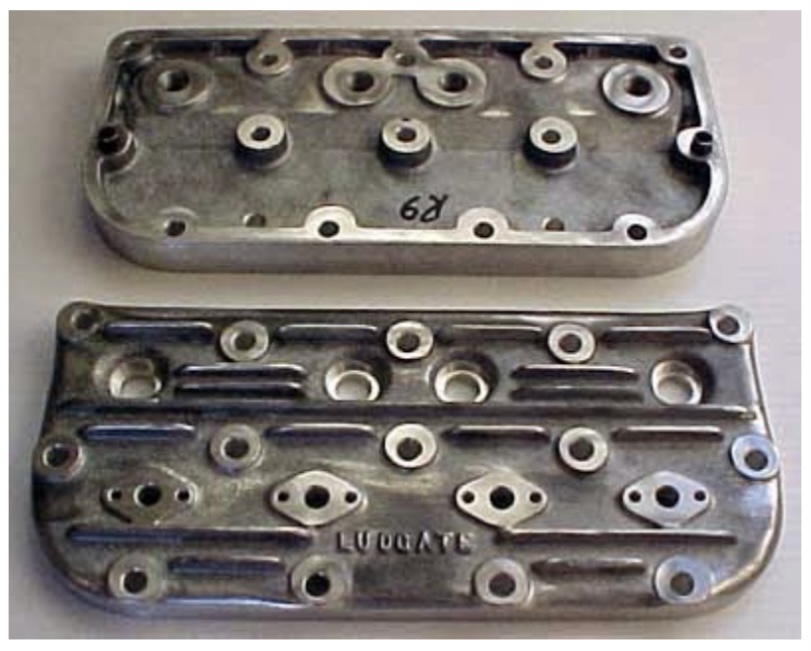
Ludgate also made Austin 7 cylinder heads for the Seven racing fraternity – think of Seven racing as the Formula Vee of the day – in the 1950s and early 1960s. The design featured sandwich construction with combustion chamber shape late-7. Enthusiasts often modified the shape to their own requirements. Ludgate built over 30 of the heads with many more built from his patterns after his death. They were used by many A7 racers in the day including Elfin’s Garrie Cooper during his formative years.
Amusingly, later, the street in which he lived was renamed Ludgate Circus which is surely indicative of the goings on at that address in the wee-small-hours and the fond regard in which Albert was held by his neighbours!
Ludgate retained his Lea-Francis for many years, using it daily to drop his son off at school and displaying it at the VSCC annual rally at Victor Harbor in 1961, by then he was described as a ‘well-known motoring personality’.
Late in his life the Australian Society of Automotive Engineers established and annually bestow the Albert Ludgate Award.
This summary of information about Albert Ludgate is the result of a days Troving and Googling, if anybody can add to the story please contact me: mark@bisset.com.au
Credits…
Cars via Tony Johns’ archive, Trove and other online research, News Adelaide, Victor Harbour Times, bollyblog.blogspot.com, v8vantage.com, triplettracehistory.blogspot.com, Lea-Francis Owners Club website, Paul Jaray on auto puzzles.com, Ron Burchett, Bruce White, Sports Cars and Specials September 1956, Tony Parkinson Collection, Steve Jones
Tailpiece…
(T Parkinson Collection)
Bill Pile or John Newmarch in the Ricardian Repco chasing Jim Goldfinch’s Austin Healey 100S at Port Wakefield circa 1959.
Arthur Chick, Triumph Special along Stirling Terrace during the 1936 race won by Peter Connor’s Rover in his first…and last motor race! (R Rigg)
The first of these Round the Houses events at Albany, a town on the south coast of Western Australia, 400km from Perth – next stop Antarctica – was a ’50 Mile T.T. Grand Prix’ held on March 8, 1936; indeed it was the very first of many such Round the Houses race meetings held throughout WA right into the early 1960s.
The ’36 meeting was part of a series of ‘Back to Albany Week’ events designed by the local council to pump some tourist-£s into the local economy. Other motor racing events that weekend included car and motorcycle hillclimbs at nearby Mount Clarence; the same circuit was used for a 100-mile cycling Grand Prix.
Although very successful, it wasn’t all beer and skittles, protests were made by local church leaders concerned about their peaceful Sunday being interrupted by the sound of high performance engines and an influx of ruffians from Perth. The reaction of the local ratepayers was strong enough for the WA Premier, Philip Collier to promise the event wouldn’t be held again. However, happily, he was given-the-arse before the end of the year and fellow Labor Premier John Willock could clearly see votes in the Albany event…so the carnival continued until WW2 ruined everything.
Generally the relationship between the motor racing establishment and the police throughout Australia was combative, exceptions were in the Peoples Republik of Phillip Island and in Western Australia where the WA Sporting Car Club had a very cooperative relationship with the wallopers.
Grand Prix, Albany 1938 (C Batalier)
Another impressive Albany panorama, this time ‘An MG Midget at the bottom of the long downhill Parade Street Straight, possibly the fastest leg of the 2-mile 4km circuit.’ I can’t reconcile what I see in the shot above with the results/car numbers that I have. I look forward to advice from one of you Perthies as to the car/driver combo…
Duncan Ord’s Bugatti T57 and Clem Dwyer, Plymouth at Pingelly in 1940, not Albany in 1937…
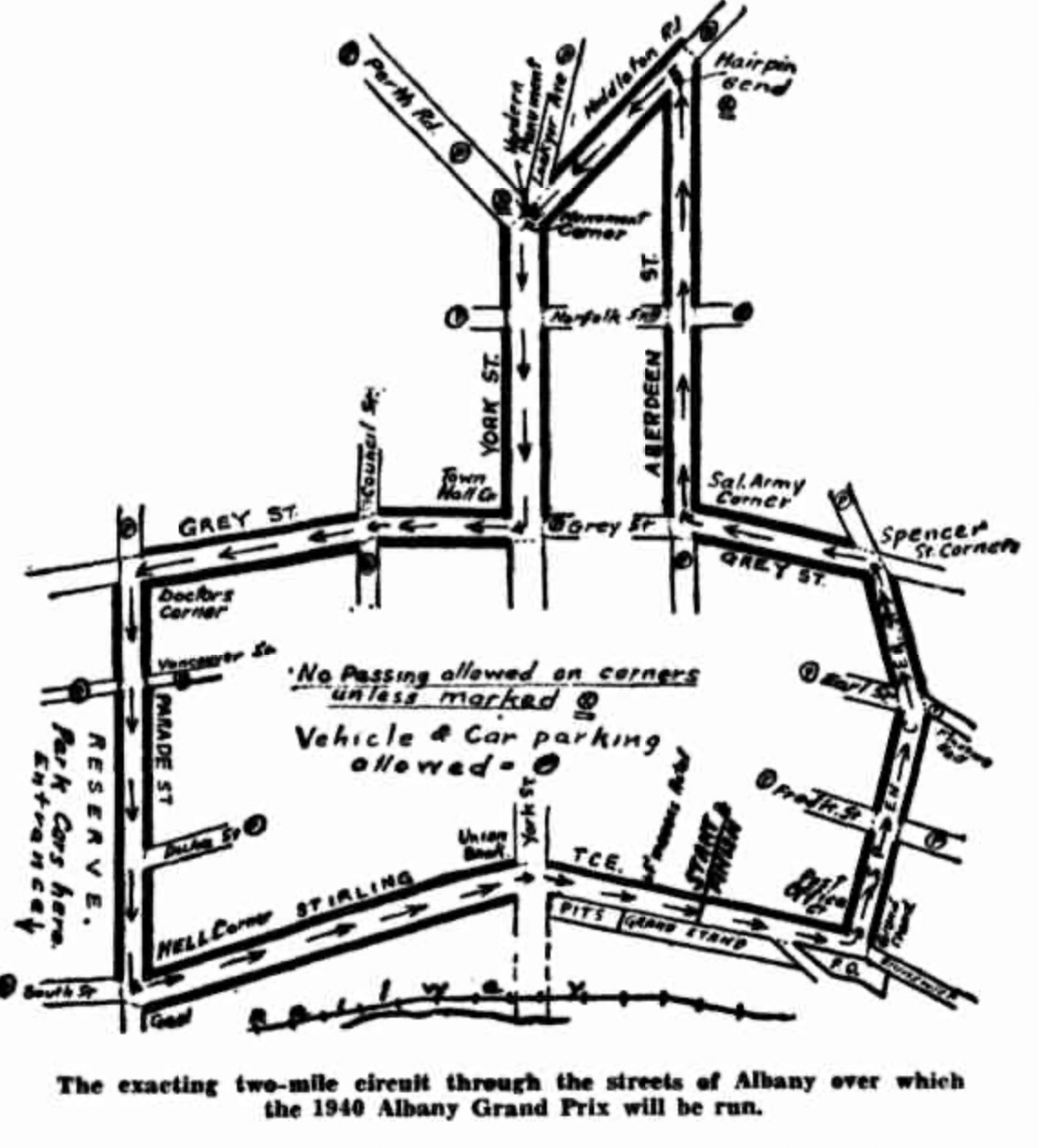
I’m not sure were Old finished at Albany in ’39, but in 1940 he was third in the handicap race off scratch and did the fastest race time, also setting a new lap record at 1 min 11.5; a time that became the permanent record for the circuit, the late 1950s track was a different layout.
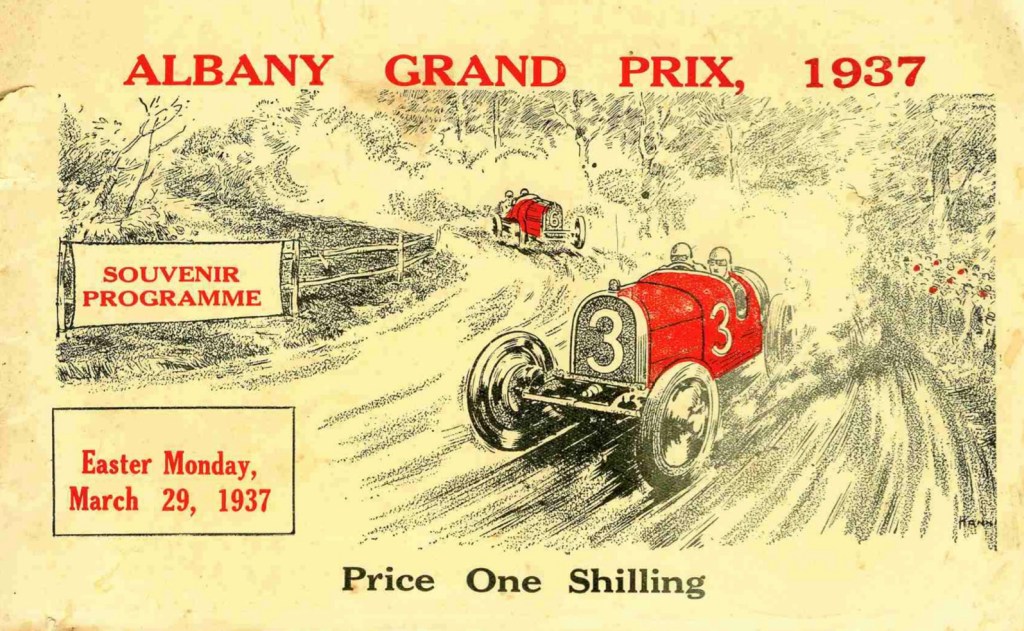
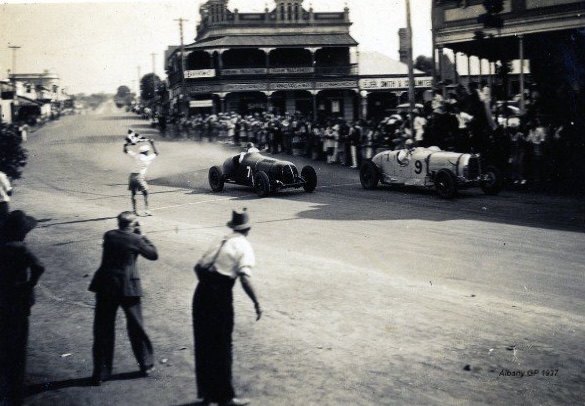
The second Albany GP, held on March 1937 was won by Ray Hall’s Ford V8 Spl from Spencer Stanes, Vauxhall Spl, and Neil Baird’s Terraplane.
The April 16, 1938 Albany GP was won by 1939 Australian Grand Prix winners, Alan Tomlinson’s and his MG TA Spl S/c, from Jack Nelson, Ballot Spl, with Norm Kestel’s MG TA in third.
In 1939 Jack Nelson’ Ballot prevailed from the EJ Coleman and Bill Smallwood MG TAs on April 19. The final wartime race, the Albany Tourist Trophy, was won by Brian Homes in the Bartlett Special on March 25. JB Wittenoom was second in his Oldsmobile, and Ord, as noted above, third in his Bugatti.
Yes, the Premier Hotel on the corner of York and Grey Streets still exists (C Batelier)Brian Holmes and crew with the Bartlett Special, perhaps in 1940 (C Batelier)
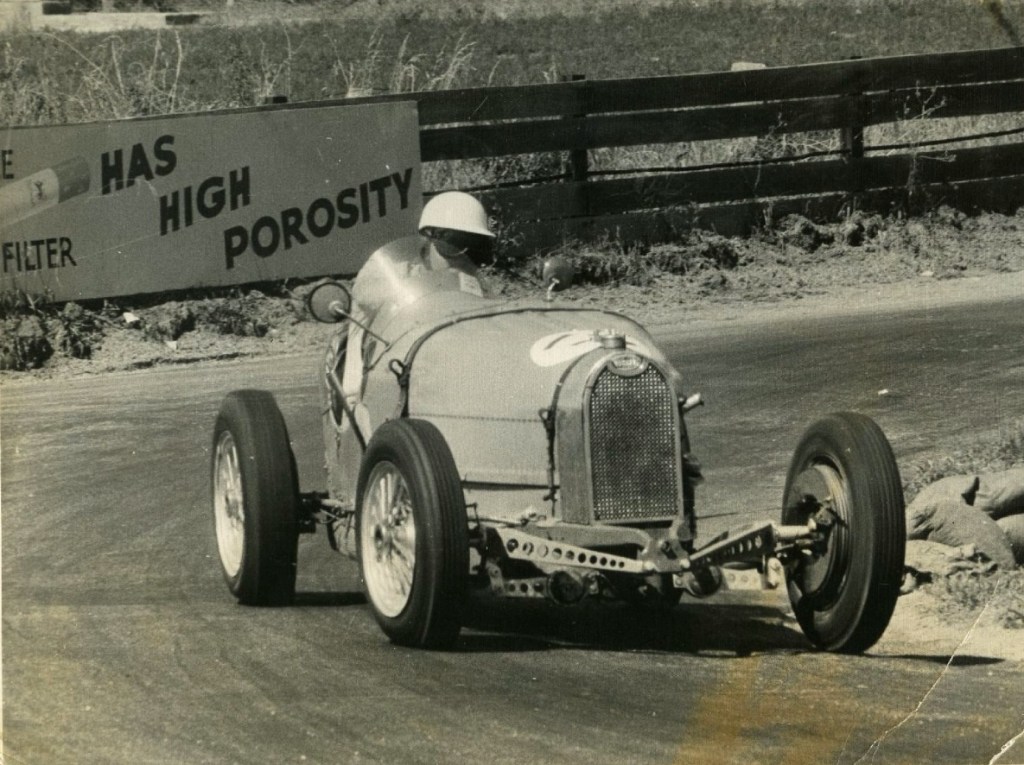
This sleek little monoposto is the 1927 Salmson San Sebastian based four-cylinder, 1086cc twin-cam, supercharged Bartlett Special, built by JH Bartlett of Notting Hill Gate, London, primarily as a Brooklands racer in 1932.
Clem Dyer visited the UK in 1935 and returned with this machine, said to have held the class lap-record on Brooklands Mountain track, rather than the Frazer Nash he had in mind. Upon seeing the car run at Brooklands, Victorian Frazer Nash monoposto exponent, Tim Joshua said the ‘he had never seen such terrific acceleration.’
By late 1938 the car held the class state flying-quarter mile record at 103.4mph, while the standing quarter-mile time of 17 3/10 sec was also a state open record. The car set a four-mile record of 97.2mph at Lake Perkolilli in 1938. Clem set an Albany lap record of 1 min 15 sec in the 1937 race but the fastest man on the course but a number of pitstops with cooling woes ruined his chances. Brian Holmes took one tenth off this in the Bartlett in 1939.
JH Bartlett and his Salmson during the BARC Bank Holiday Brooklands meeting on August 3, 1931 (MotorSport)
Etcetera…
Perth Sunday Times April 16, 1939. I guess you’ll all be wanting to know about the Nazi pussycats? Apparently the Reich Professional Group of Cat Breeders promised their political masters to make cats more ‘rat minded’ to ease the burden on the 150,000 Deutschlanders it took to repair the annual German rat damage toll…No flies on those Nazis
The 1940 Australian Grand Prix was to be held in Albany!
So impressed was the Australian Automobile Association – the forerunner to CAMS – by the standard of road racing being conducted in Western Australia, that they announced in April 1939 that the 1940 Australian Grand Prix would be held that January on Albany’s Middleton Beach circuit.
In a great decision to spread-the-Grand Prix-love, the AAA decided in future that the race should be held by different states in rotation: WA in 1940, Victoria in 1941, Queensland 1942, NSW in 1943 and South Australia in 1944.
While the war put-paid to that lot, the principle of rotation was implemented post-war and was maintained until Bob Jane contracted to run the race at Calder from 1980, when ‘nobody really wanted’ it, until Adelaide got the F1 gig in 1985.
Round The House Ramblings : Albany Grand Prix 1940
This race lead up piece in the Thursday 14 March 1940 issue of The Western Mail tickled my fancy; no attribution as to the author sadly.
WHAT would be the reactions of the average car driver on the road today if he were asked to make a gear change every 10 seconds, and to keep it up for over one hour. Even with the aid of synchromesh gear boxes, automatic and semi-automatic clutches, and all the aids to driving incorporated in the automobile of today, it is problematical if the proposition would sound practicable, or even sensible, at first glance, but it is one of the little known, but nevertheless interesting details of any Albany Grand Prix.
THE tortuous, hilly, two-mile circuit, with six right angle turns, one hairpin, two slight curves, and a third curve or even half turn to be negotiated every lap makes very severe calls on both driver and every part of his machine, but it is possibly the gearbox and clutch which receives the greatest puntshment.
The six right angle turns, and the hairpin will call for at least one change down approaching, with the necessary change up after having negotiated the corner.
This means at least 14 gear changes per lap, while the 25 laps will need no fewer than 350, all to be made in slightly over, or possibly under 60 minutes, according to the speed of your machine. Cars fitted with four-speed boxes naturally achieve even higher totals than this, but it will be readily realised that the claim of one gear change every 10 seconds is far from extravagant.
How then does the Albany event compare with other events in other parts of Australia, and in other parts of the world? Comparisons are difficult, because there are few circuits similar to Albany used anywhere in the world, while nowhere else in Australia is Round-the-Houses racing permitted. The circuit of the Grand Prix held at Monaco on the Riviera in southern France is approximately the same length, certainly no longer, and the fact that competing cars at Monaco in 1934, while capable of speeds up to 150 m.ph. actually averaged 54 m.p.h, indicates that the circuit must present hazards and difficulties not unlike the Albany event.
Last year Jack Nelson (Ballot Ford Spl) won the event in record time, slightly less than 58 minutes for the 50 miles, an average of approximately 52 m.p.h. This may not sound at all inspiring to those high speed motorists who accomplish incredible averages on the high road, although most of these said averages are worked out after the run has been made, and after extensive deductions have been made for roadside repairs, refreshment, etc., leaving a nett “running time” which then returns an average so high that the driver feels quite apprehensive to realise the truly terrific speed at which he has fied across the country. Nelson’s machine incidentally was electrically timed last June at a speed in excess of 107 m.p.h. so it will be appreciated that the machine that will eventually better his time at Albany will require to be something really fast handled by a master of the game.
1936 pre-race line up. From the left, #11 is not on the entry list I have. #5 is Eric Armstrong, Lagonda Rapide, #7 is Peter Connor’s winning Rover, #3 is Don Collier’s Chrysler ‘Silverwings’ while #1 at the far right is Clem Dyer in the Bartlett Special (C Batelier)
Races Compared.
Contemporary Australian races are all over open road eircuits, the South Australian circuit at Lobethal and the Mt. Panorama circuit at Bathurst, New South Wales, being the two most noteworthy examples.
Both these circuits are far greater in extent that Albany, Lobethal by nearly nine miles. It is the considered opinion of one of our local competitors who has attended the last two events, and not as a competitor, that very few of the entrants in that event would last the gruelling 25 laps that constitute the Albany Grand Prix.
Incidentally it is noteworthy that no brake test is held prior to the Lobethal race. In this State no car ever starts In a road race without a rigid brake test.
Preparation of Cars.
Generally speaking preparation of the entrants’ cars is not of the high standard which applies in Western Australia. Last January one of the competing cars at Lobethal was a 1936 stock touring car (five passenger) with hood and windscreen removed, bonnet strap in place, and the rear doors roped together to keep them shut. The Technical Committee of the local club would swoon in horror if called upon to examine such a vehicle. Naturally with the greater population in the East there are more of the real racing vehicles competing, but the built up machines (later generally described as Australian Specials-an assemblage of components from multiple donor vehicles) appear to be accepted in almost any condition.
Photographs fail to disclose anything that could vie with the local cars such as those owned by Jack Nelson and Barry Ranford. Incidentally Ranford is one of the four men who will be making their first racing appearance at Albany this Easter. The others are Bill Smith, Harley Hammond, Geoff Glyde, and Arthur Wright. Of the remaining nine competitors, Ernie Brammer, Aubrey Melrose, Ed. Harris, John Wittenoom, Ron Posselt, Duncan Ord have all driven at Albany once. While Ted Kinnear, Bill Smallwood and Brian Holmes have driven twice.
First and second in 1938: Alan Tomlinson, MG TA Spl S/c and Jack Nelson, Ballot Spl
It is also of interest to recall that the Bartlett driven by Brian Holmes, and entered in the name of Clem Dwyer, is the only car competing this year that contested the original Albany event. In the initial event on March 8, 1936, and again the following year, Dwyer was at the wheel himself, and the persistence with which the car has competed with ever since, at every possible opportunity should eventually be rewarded with a major victory. This year Duncan Ord (Bugatti T57) shares the dubious distinction of going off scratch with the Bartlett, and the resultant race should be full of interest. Incidentally, it is the first time that two cars have shared the scratch position at Albany. The small high revving Bartlett will be matched against the big Bugatti with over twice the capacity and certainly about as much more weight.
The contrast in the machines will lend colour to their strivings. Ed Harris, who drove at Albany two years ago in a 1934 black Terraplane, will this year be seen at the wheel of the 1935 blue Terraplane raced hitherto by Neil Baird, which he has acquired. It is being raced in detuned condition, the last high compression head avalaible having gone off at the same event last year. The blue Terraplane will be starting in its fourth consecutive Albany. Kinnear, Smith and Wright are all off the limit mark together, and will comprise an interesting trio. Kinnear has received 25 seconds more than last year, while Ernie Brammer, who has not fitted his ultra light body for this year, has received a full minute to make up for it.
Bill Smallwood, third last year, has come back 65 seconds, and will have to drive well to run into the places. Ed. Harris and Barry Ranford go off together, 15 seconds better off than was Baird last year, while John Wittenoom is 50 seconds better off on 3.20. Ron Posselt has a stiff job, being second back marker, only 1.30 ahead of the scratch men. On the surface he has been dealt with a shade harshly, but handicappers have at their disposal information denied to lesser mortals, and no doubt have their reasons.
An Open Race.
The field is set now, and the race has to be won. On appearance it is one of the most open races yet held in this state, and with so many new cars and drivers is full of interest despite the absence of Tomlinson and Nelson. Who can still recall when the redoubtable Ossie Cranston withdrew from racing after many successful years? It did not seem possible that his fame could ever be eclipsed, and although it has not, because he was of an earlier day, others have made names for themselves since then, and now some of them are missing from the list of starters, even if only temporarily. When they return to the lists, it they do, they may find a new champion waiting to engage them in battle. Nevertheless in its cheapest form, car racing is an expensive sport to follow, and months of preparation can go for nought if the Goddess of Luck does not ride with the machine. Perhaps the luck of the game will be the deciding factor at Albany this year, and perhaps the winner will be one least expected. To select the winner at this stage would be a guess pure and simple.
Credits…
Collections Western Australia-Albany Advertiser, Claude-James Batelier, Richard Rigg Collection, Western Mail November 3 1938, MotorSport Images
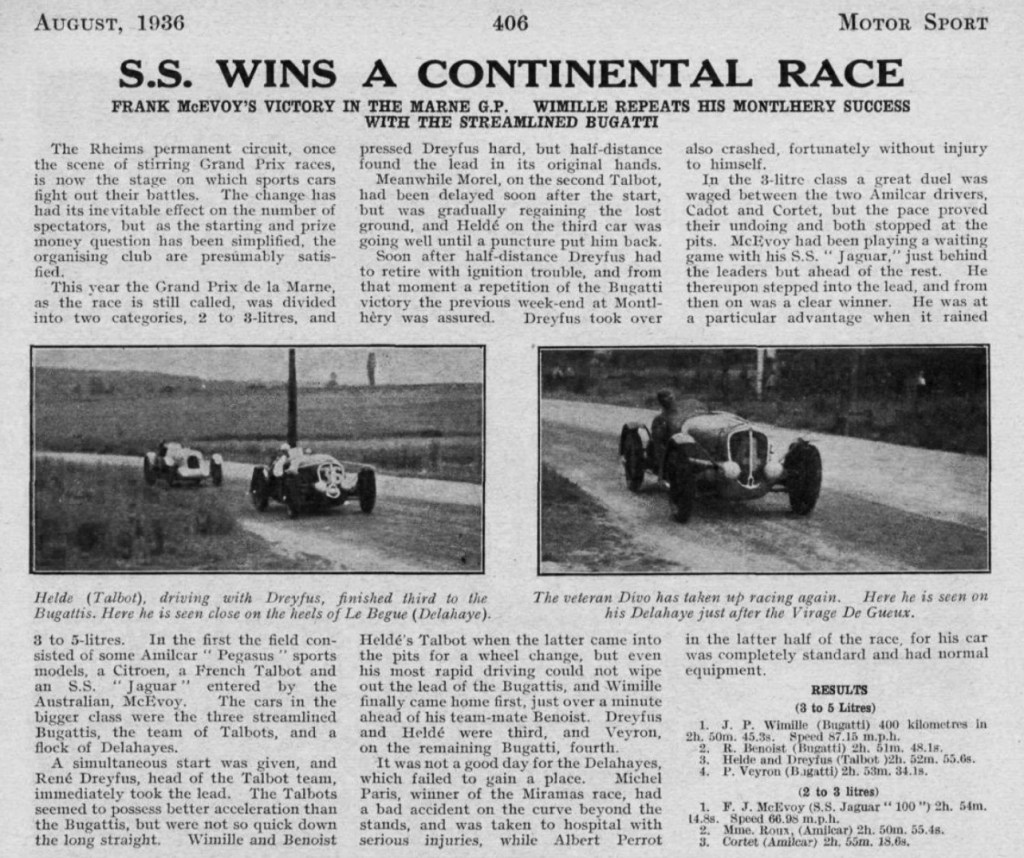
There is bit of overreach in this MotorSport claim for an SS 100 Jaguar win …
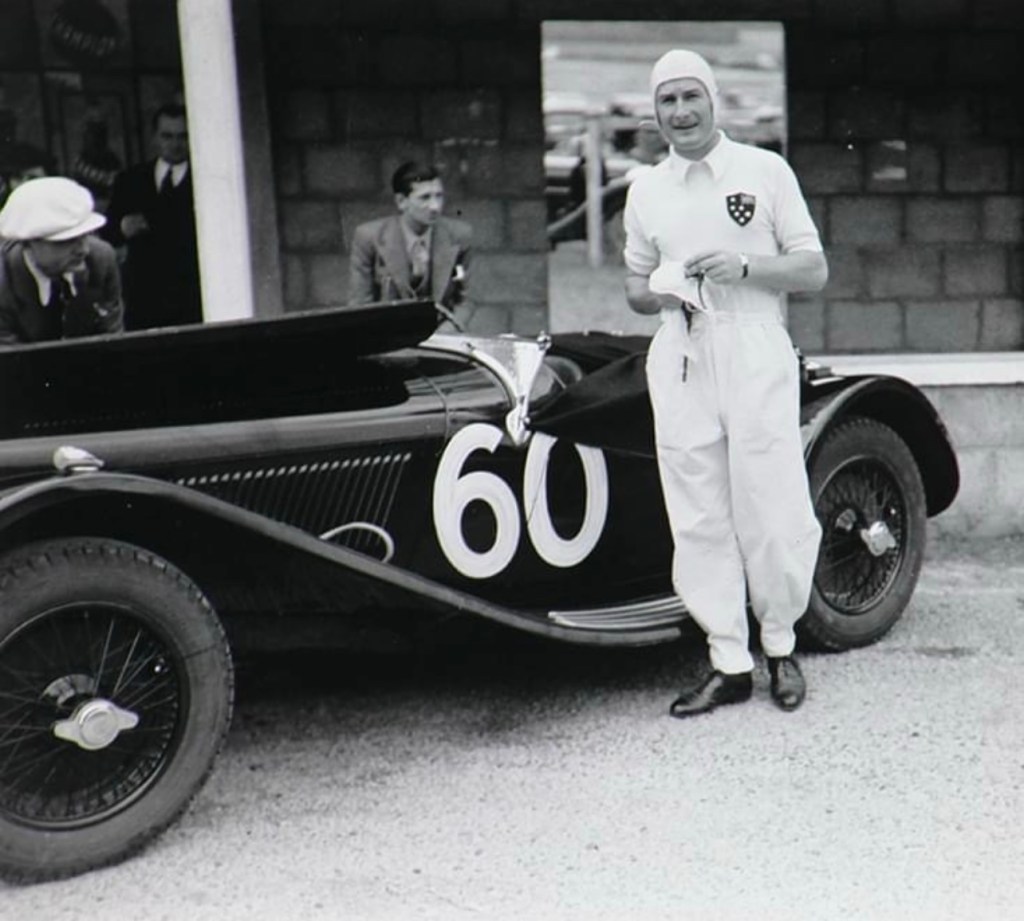
While the 11th Grand Prix de la Marne field was split into two classes as above, there seems little doubt that Australia’s cad, bon-vivant, gigolo, Olympian, and sometime occasional racing driver, Frederick Joseph McEvoy finished 15th of 21 starters in the July 5, 1936, 51 lap, 399km race.
McEvoy and 2663cc, OHV, six-cylinder SS 100 chassis #18007 (?) at Reims before the off. I wonder what club logo is on Freddy’s chest? (MotorSport Images)
I do find McEvoy a most interesting character, not long after I wrote this masterpiece: https://primotipo.com/tag/freddie-mcevoy/ a book was published about him. It’s worth a read albeit I cover McEvoy’s racing and alpine career more fulsomely than the book. By the way, McEvoy signed his name Freddy, not Freddie, so I’ll stick with that. It’s not Frank either…
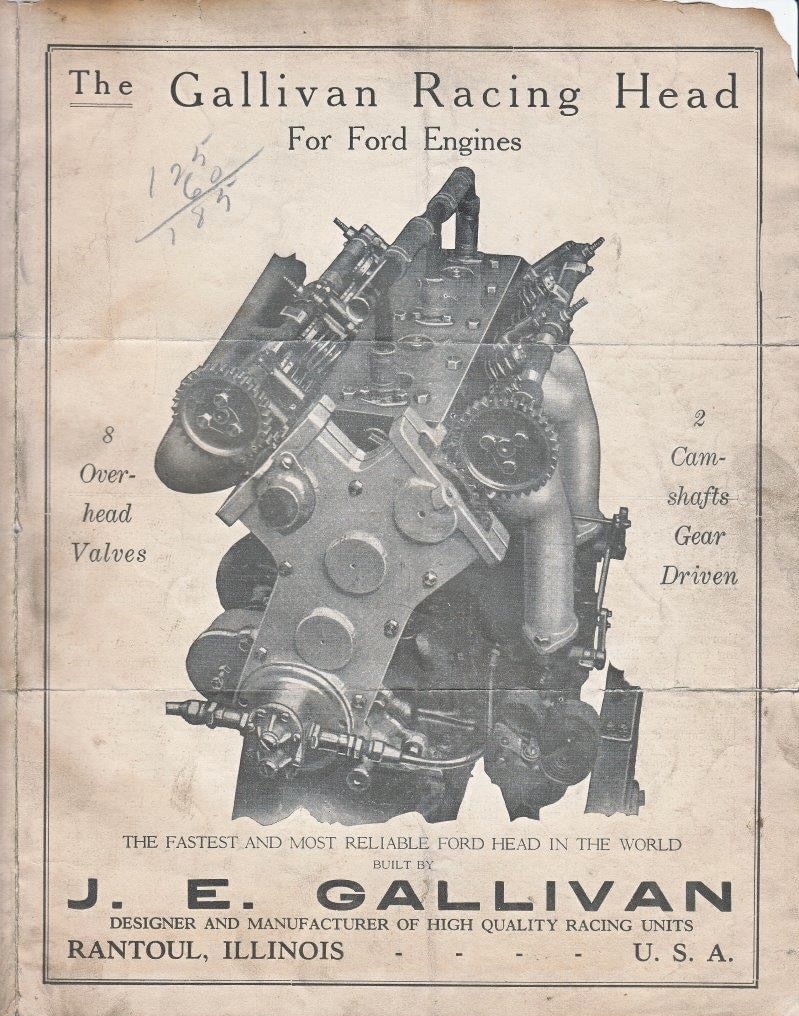
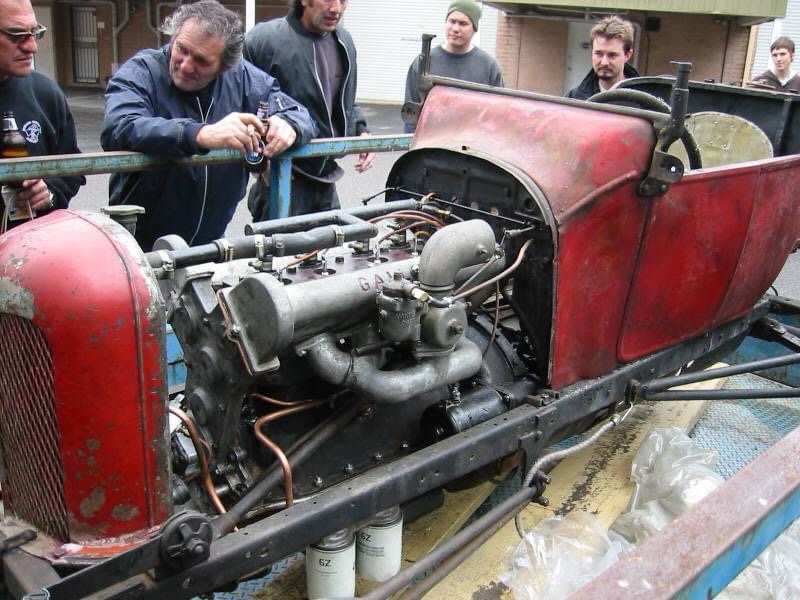
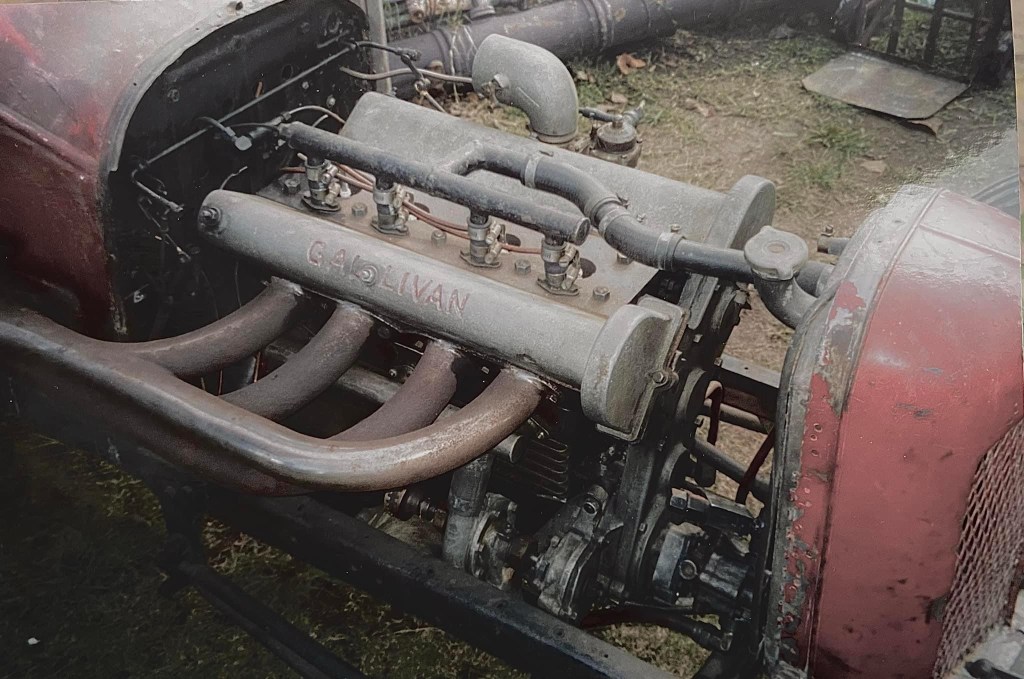
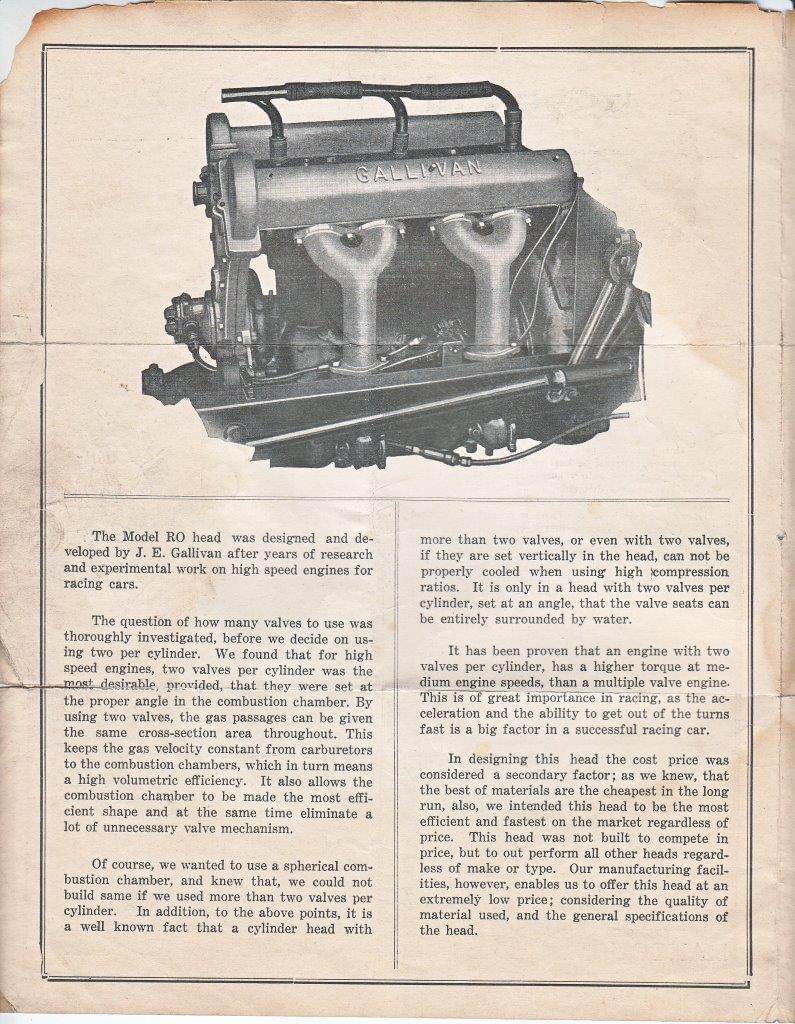
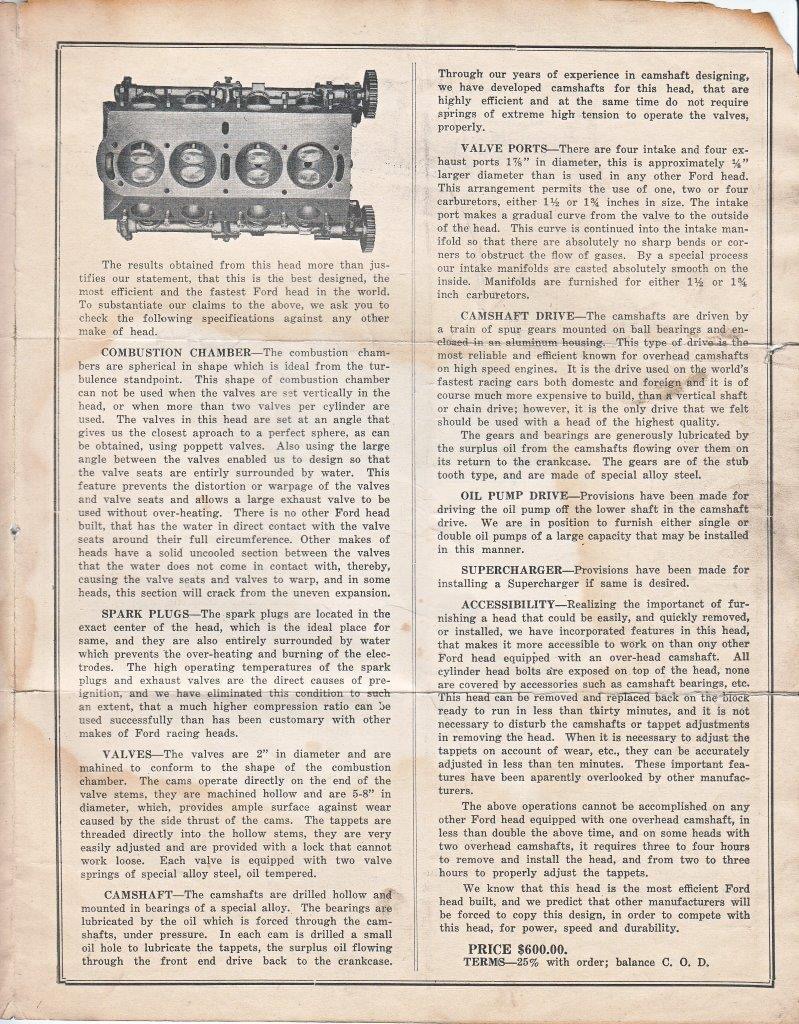
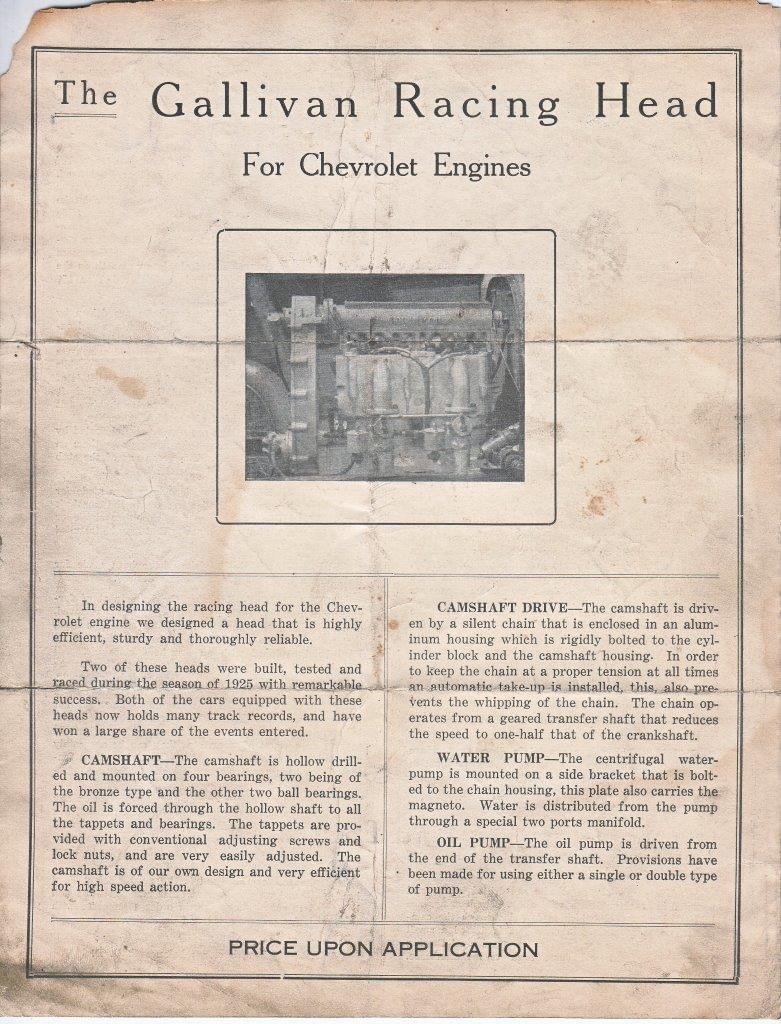
Australian enthusiast/historian Gerard Murnane wrote in a wonderful exchange on Facebook with fellow enthusiasts – the medium at its best – ‘Jack Gallivan made at least six twin-cam Gallivan 8-valve heads for Model-T Fords, crossflow with huge 2-inch valves from a Hispano Suiza and hemispherical chambers with huge porting. If you looked through the inlet of the head you could see the light on the exhaust side. One of these rare heads is on a racer here in Australia.’
‘Jack was in the US Navy in the early-mid 1920s, the rumour is that he used Navy parts to build the engines and did-time for it.’
‘The patterns were originally made by Joe Jagersberger of Rajo Ford speed equipment fame. Joe didn’t build the first Rajo twin-cam until after he sold the patterns to Jack, and he built his heads and engines.’
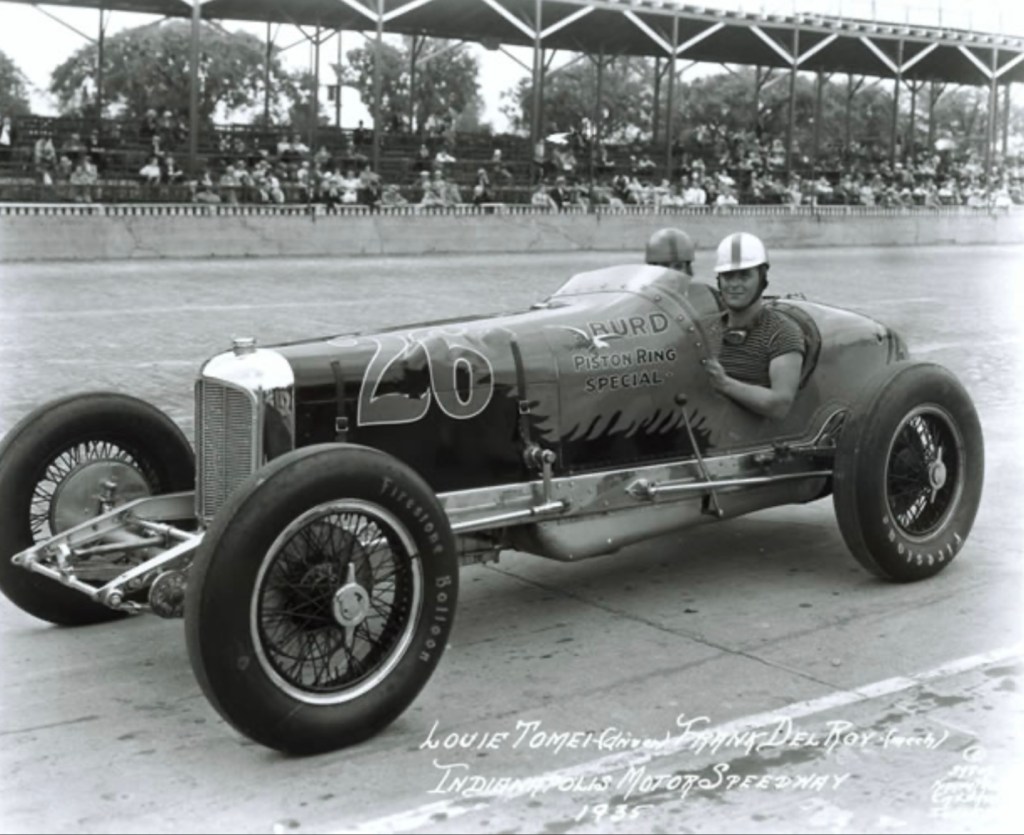
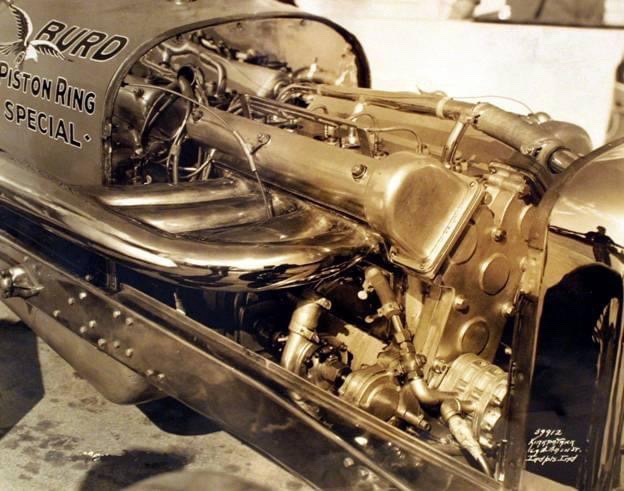
‘Drive towers for both Gallivan and Rajo are different designs. Later the patterns were again sold, to Joe Lencki, who built a much stronger head and special Ford-T based cylinder block which was raced at Indianapolis in 1935 (Louis Tomei aboard a Miller Lencki). A Lencki block also survives in Australia, one of possibly three in existence.’
Colin Wade‘s Gallivan Special with plenty of fans in Australia Louis Tomei and Frank Del Roy at Indianapolis in their Burd Piston Ring Special – Miller Lencki – in 1935. Q32/28th DNF valve trouble after 47 of 200 laps (indycar.com)Wade Gallivan Special (M Bradley)
On the Model-T cranks, ‘Billet cranks were available back then in at least two different stroke sizes for normal and 1500cc capacity. The Lencki block had five main-bearings with two-inch journals and still fitted a standard T-head and sump pattern etc.’
Neil Worthing asked the question, ‘Was a single T-Model part used?’ Gerard Murnane, ‘In the Gallivan, initially a Model-T sump, block, transmission cover, modified rear axle and tailshaft, axles and springs and modified chassis. In the Lencki, not a lot used.’
‘Model-T chassis and running gear were cheap in the 1920’s-30s and most speed equipment was made to bolt onto standard-T stuff.’ Lencki still used the basic sump, head, block, timing bolt on dimensions in their equipment, but a different transmission connection.’
‘The wheel hub pattern for a Model-T was still used in speedway cars up to the knock-on wheels era. The dimension of the ball end of a Model-T tailshaft tube was also possibly used into the 1970s and later.’
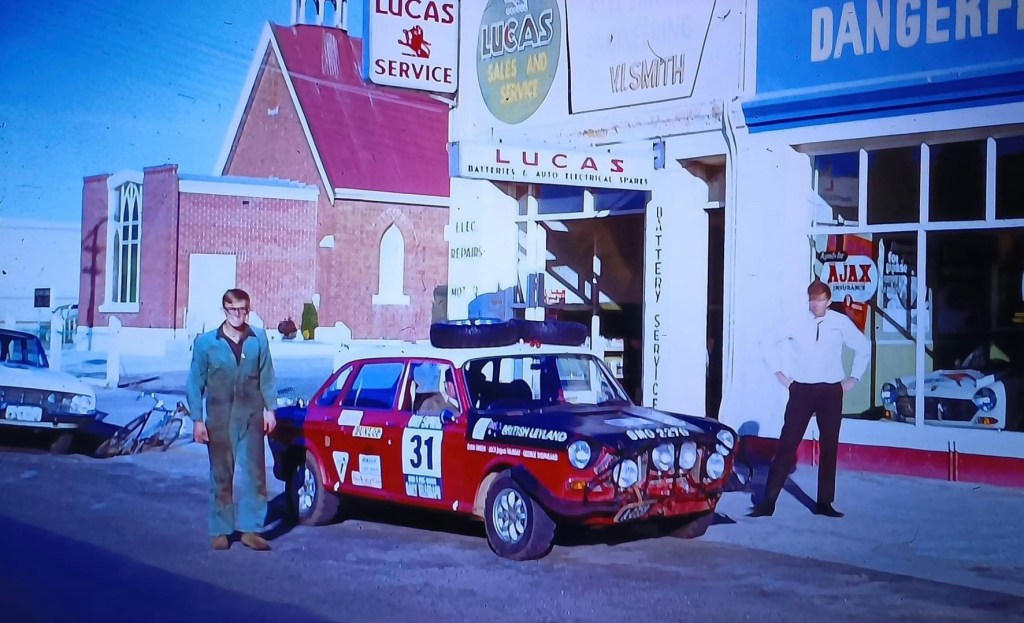
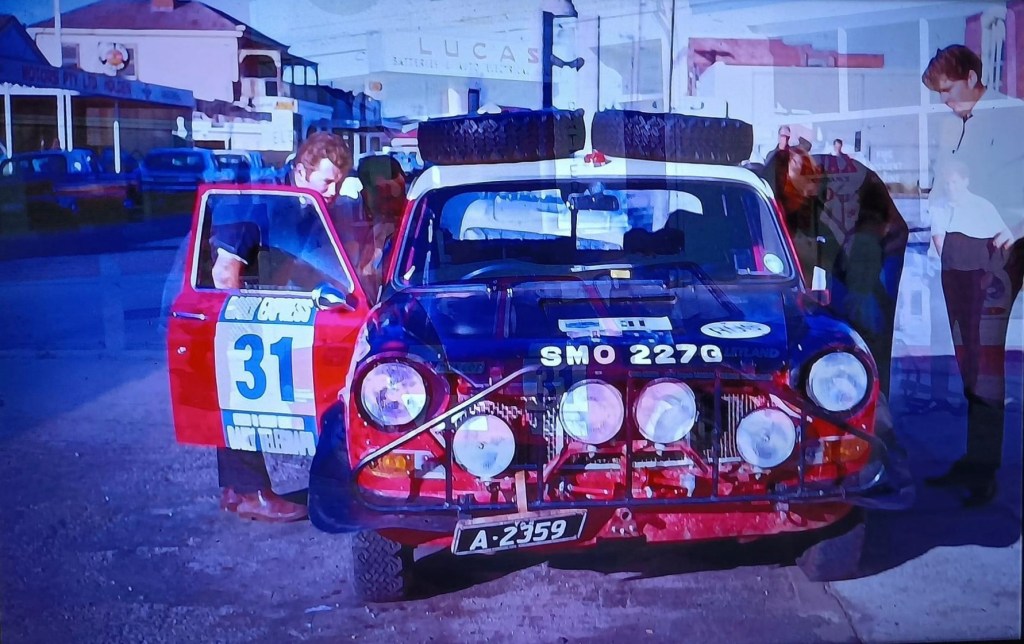
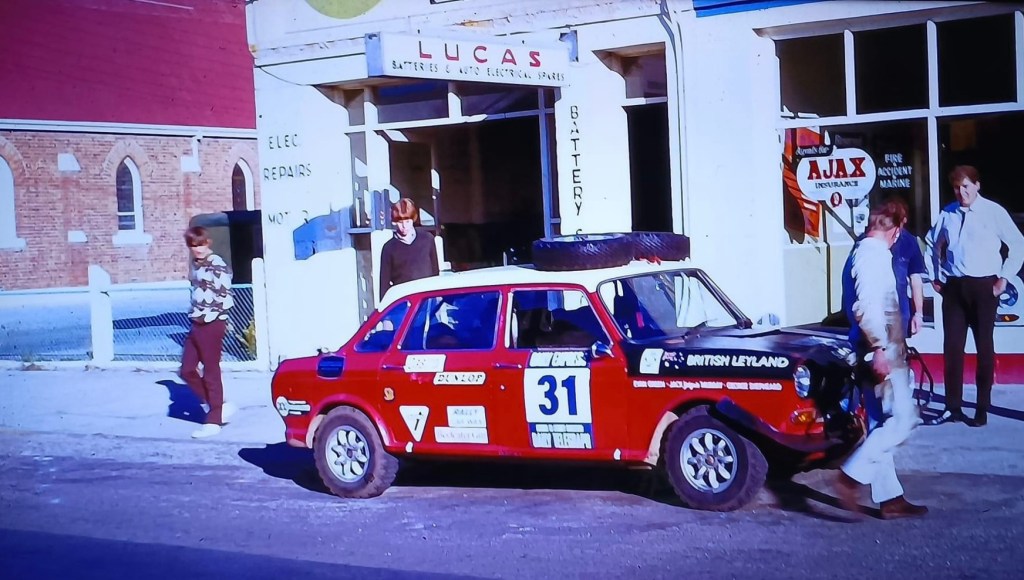
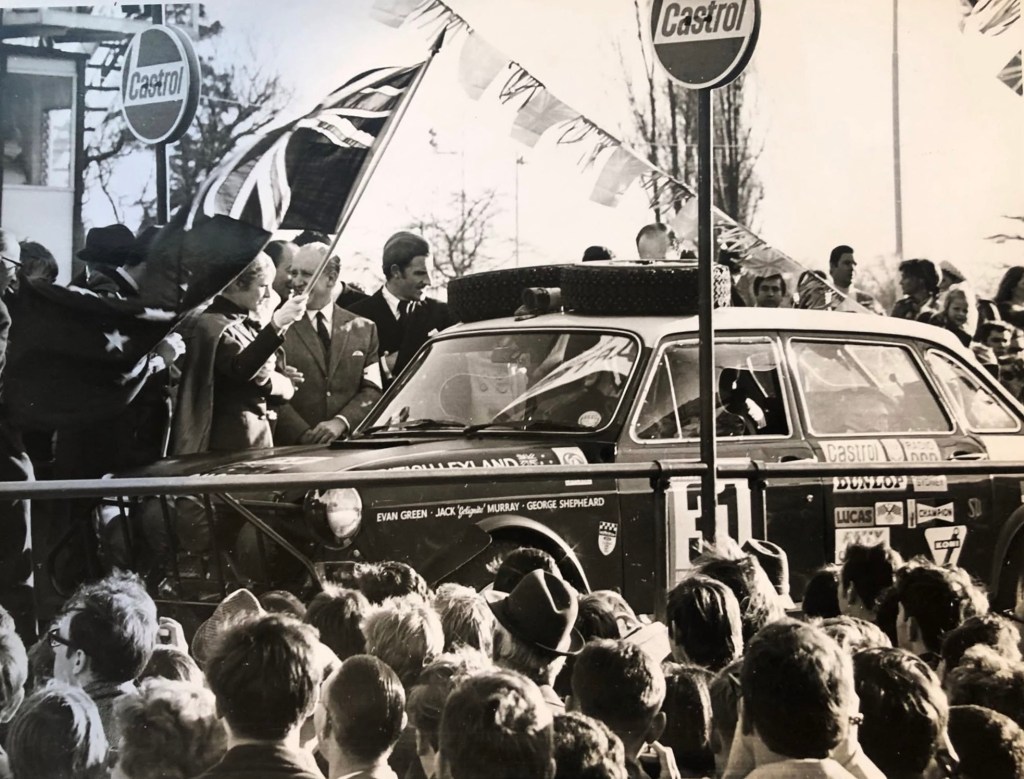
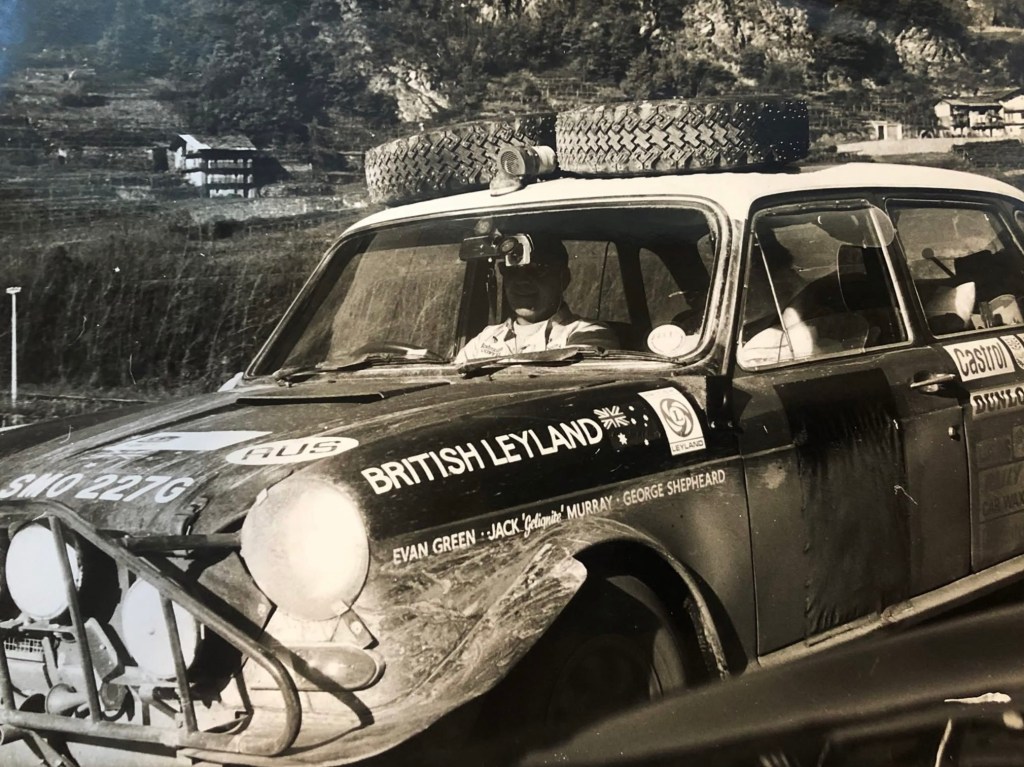
The BMC Australia entered Austin 1800S Mk2 – SMO 227G – that competed in the November 24-December 17 1968 London-Sydney Marathon in the hands of Evan Green, ‘Gelignite Jack’ Murray and George Shepheard in Ulverstone, Tasmania shortly after the event.
They finished 21st with 332 lost points, the winners, Andrew Cowan, Colin Malkin and Brian Coyle lost 50 in their Rootes Motor Group Hillman Hunter, while the best of the Austin 1800s, second placed Paddy Hopkirk, Tony Nash and Alec Poole lost 56 penalty points.
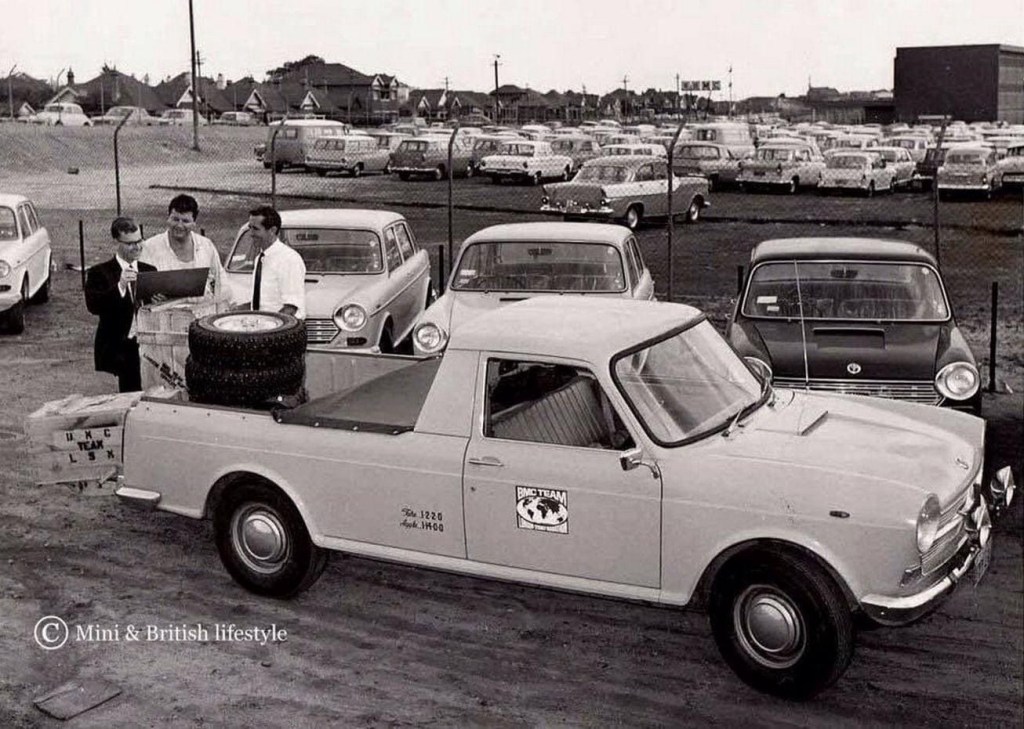
Grant Brooks posted these photographs on the Old Motor Racing Photographs – Australia Facebook page and wrote, ‘My father, had to pick it up in Hobart and drive it to Ulverstone, (300km from Tasmania’s capital in the south, north to the coast) I was the lucky passenger. Here it’s shown outside Dangerfields BMC garage in Ulverstone. Dad did his apprenticeship with them and continued as a mechanic until they closed the workshop.’
‘The man in the suit is John Dangerfield, the dealer’s son, the mechanic is a dude from the servo over the road.’
(H Brooks)
‘It went well, I can still see the look on the face of a V8 Valiant driver as we passed him selecting top-gear!’
‘There was a hand-pump on the back parcel-shelf to adjust the hydrolastic suspension, a seat sideways mounted in the rear, with the whole interior painted black except for the gauges.’
Can anyone assist with life-journey of this machine after BMC had finished with it?
See the links at the end of this article for a couple of other pieces on the London-Sydney. There have been quite a few shots of cars from this event posted on social media over the years, I must scoop them up and pop them in one place to make them easily searchable.
(H Brooks)
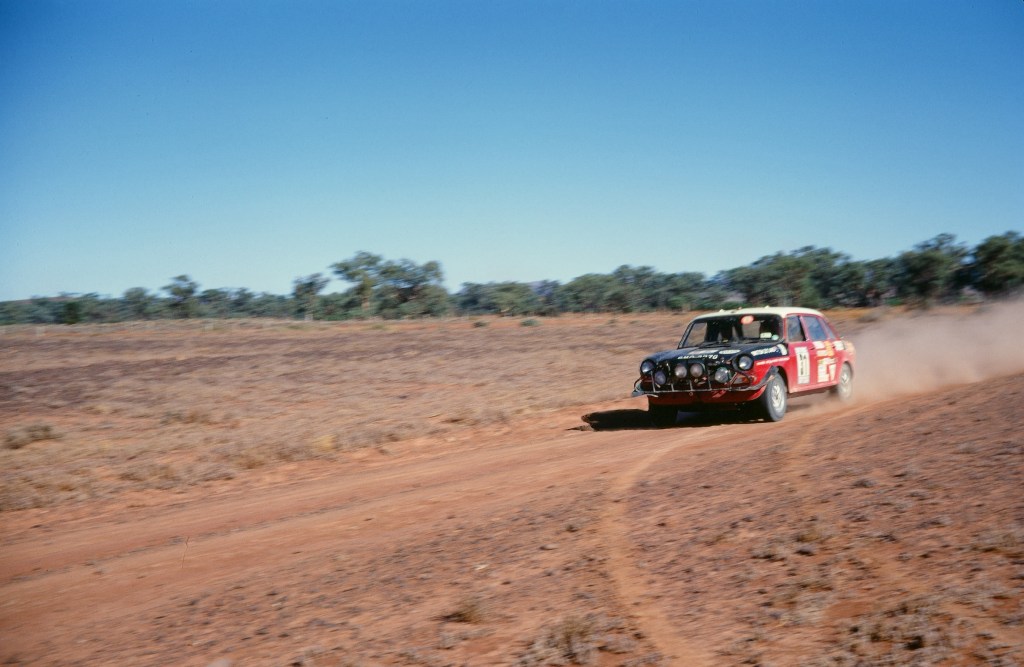
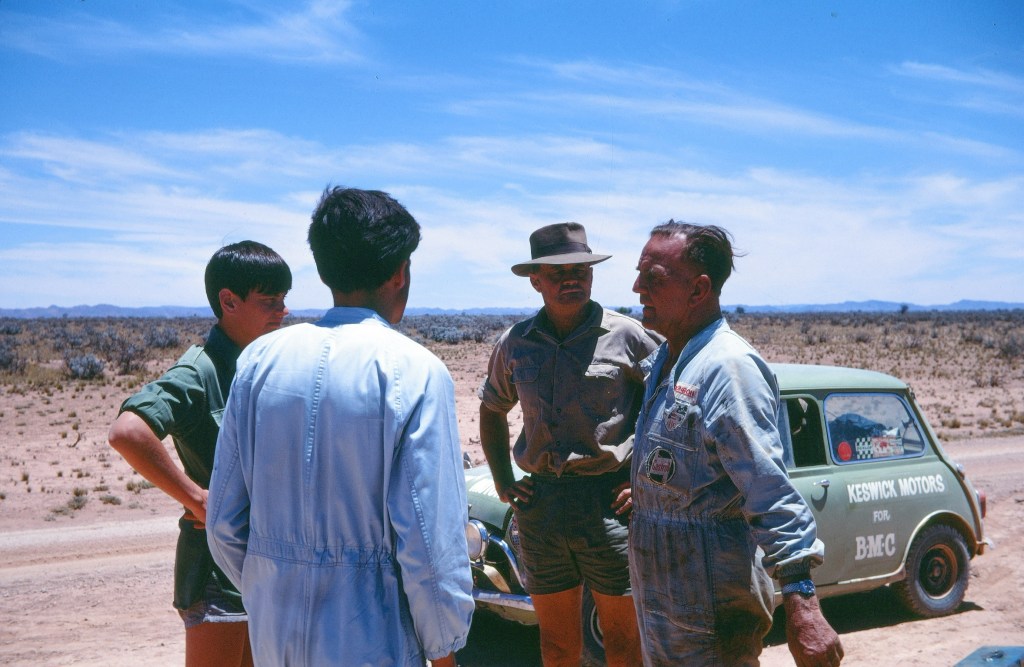
The power of the internet never ceases to amaze me. Several hours after uploading this post, enthusiast/historian Laurie Mason got in touch to share these rare colour photographs of car #31 at Wirrealpa Station, a 400,000 acre sheep and cattle farm 570km north of Adelaide in South Australia’s northern Flinders Ranges on December 16, 1968; the events second last day.
Laurie Mason, ‘the second shows the car being repaired after a rear wheel bearing seized ending their run for a top finish. This photo was taken halfway across Wirrealpa. Warren and Barbara took us to the exact spot in 2021 when we were doing the recycle for the 2022 Perth-Sydney Marathon. The last is Gelignite Jack and Evan Green in discussion with BMC mechanics at the repair site.’
(W Fargher)
Etcetera…
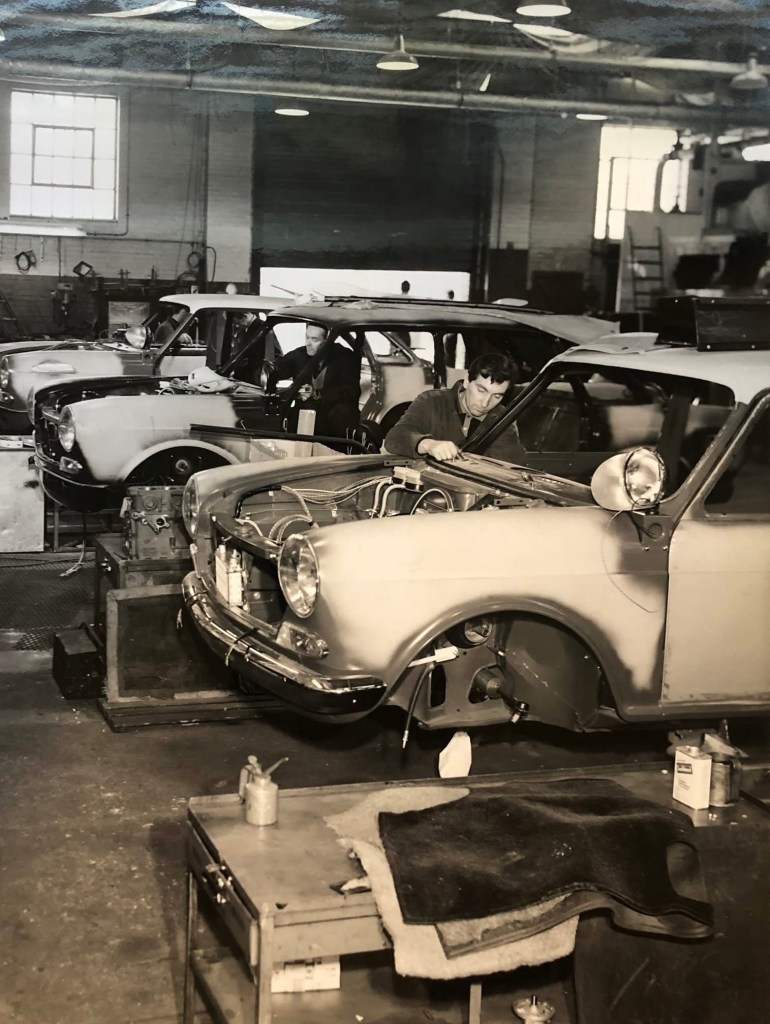
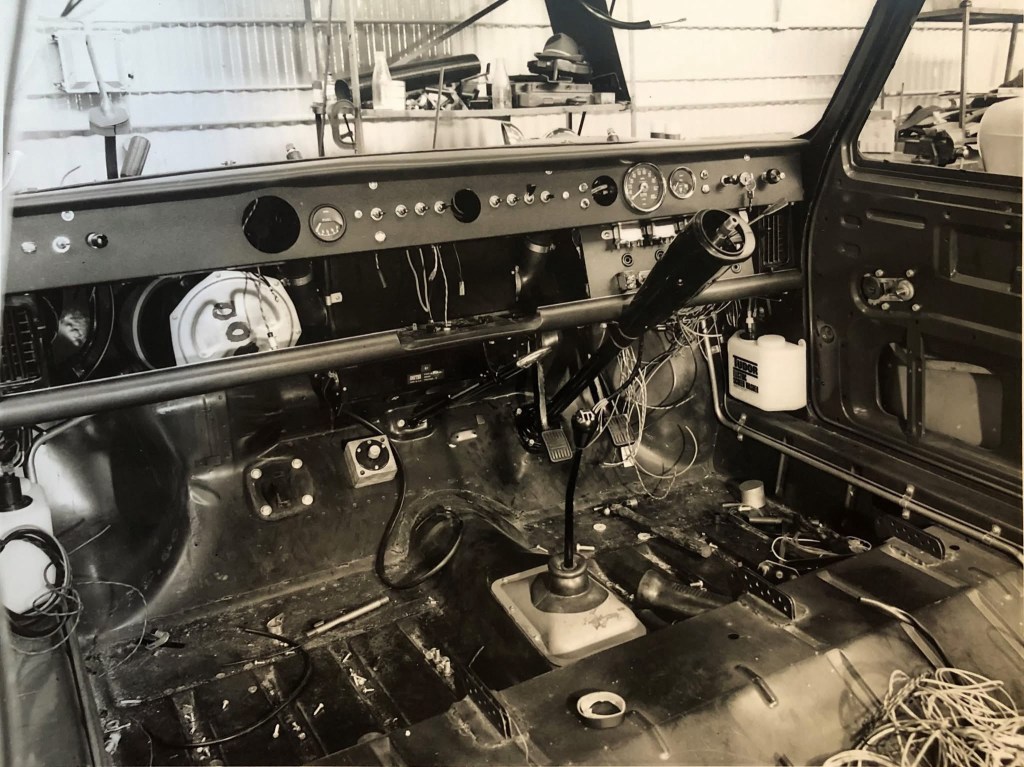
Long after this article was posted, enthusiast Luke Manton uploaded these photographs below of the Marathon Austin 1800s being built, and before the London start, on social media – Bob Williamson’s Australian Motor Racing Photographs Facebook page – from memory.
(L Manton Collection)
Given that, I’ve ratted Mark Oastler’s excellent Shannon’s piece referenced above on the preparation of the cars; ratted means pinched and paraphrased. Here goes…
The ‘68 London-Sydney Marathon was thin on technical rules, you could run almost any vehicle you wanted, as long as it had four wheels and only two were driven. Vital parts like the bodyshell and engine block were tagged, so if you had to change them, you were out. There was a maximum height limit so the cars fitted in the hold of the P&O SS Chusan when the field was shipped from Bombay to Fremantle.
BMC’s Competition Department in Abingdon committed to building seven Austin 1800s for the Marathon. These cars would incorporate all that BMC had learned from its arduous East African Safari and Acropolis campaigns plus hundreds of hours of destructive testing in the UK.
The four official factory cars and their service car all featured UK rego plates starting with the letters SMO and were to be driven by the some of the sport’s biggest names from Britain, Scandanavia and Australia: SMO 223G Service car, SMO 225G Rauno Aaltonen/Henry Liddon/Paul Easter, SMO 226G Paddy Hopkirk/Tony Nash/Alec Poole , SMO 227G Evan Green/’Gelignite’ Jack Murray/ George Shepheard , SMO 974G Tony Fall/Mike Wood/Brian Culcheth
The other two factory prepared cars were comprised defence personnel teams representing the Royal Air Force and Royal Navy. They were semi-works cars not built to the same peak specs as the ‘SMO’ cars.
The Australian connection came about through Evan Green’s activities with BMC Australia, which had included overseeing the multi-car Mini Cooper S works team winning 1966 Bathurst 500 and his own rally competition in BMC products. His crew consisted of race and rally veteran Jack ‘Gelignite ‘Murray and ace navigator/mechanic George Shepheard.
(L Manton Collection)
The Marathon cars were based on the new sportier Mk2 1800S. Starting with bare ‘shells, weight was reduced by some of the window glass being replaced with Perspex and the doors, bonnet and boot panels were skinned in aluminium. The sump guard was also made from lighter materials.
The bodyshells were beefed up in critical areas including two skins of floor metal and the boots were filled with twin fuel tanks holding 26 gallons (118 litres), each with their own aluminium filler in each rear guard. These extra tanks took up so much space that two spare wheels could be carried on the roof.
The Hydrolastic suspension had larger front actuators also fitted to the rear to cope with heavier loads on rough roads. Front and rear anti-roll bars improved higher speed handling and stability along with Koni adjustable shocks.
The 4.4:1 ratio rack and pinion steering was sharpened up with a drop to 3.25:1. This increased the turning effort, which is why bus-sized steering wheels (16-inch diameter) were specified to improve leverage.
A stout ‘roo bar’ and powerful driving lights were mounted up front. Thick rubber mud flaps were fitted at each corner to shroud 13-inch Minilite magnesium wheels shod with an assortment of Dunlop rally tyres.
The engines were not highly tuned, as reliability was paramount for such a long-distance event. The capacity was increased to 1894cc (some say 1846cc), and a standard MGB camshaft grind was used. The heads were reworked to improve gas flow, entering through 1800S inlet manifolds equipped with dual 1.75-inch SU carbs and exiting through special exhaust systems that tucked well away. This mild tuning produced a reliable 100 bhp, not much given the car’s hefty weight plus all the extra equipment and three-man crew.
Lightened flywheels and rugged competition clutches were fitted, with the standard gearbox ratios matched to a typically short 4.1:1 final drive ratio for improved acceleration.
The interiors incorporated a special rear seat convertible to a makeshift bed. The cabins featured roll cages, rally seats with four-point harnesses, extra switch panels, Halda Twinmaster navigation units and 100 mph (160km/h) speedometers. Given that the finished cars – with full tanks and three crewmen on board – were claimed to weigh close to 2,000 kgs, it gives you some idea why the 100 mph speedos could be considered optimistic.
Evan Green recalled that the highest top speed he saw during the Marathon was only 90 mph (145 km/h) which occurred when descending the steep Lataban Pass in Afghanistan.
Evan Green impressed many with his Austin 1800’s leech-like grip in the loose stuff and its tank-tough construction. These works cars were superbly designed and built for the harshest treatment that long distance rallying could dish out.
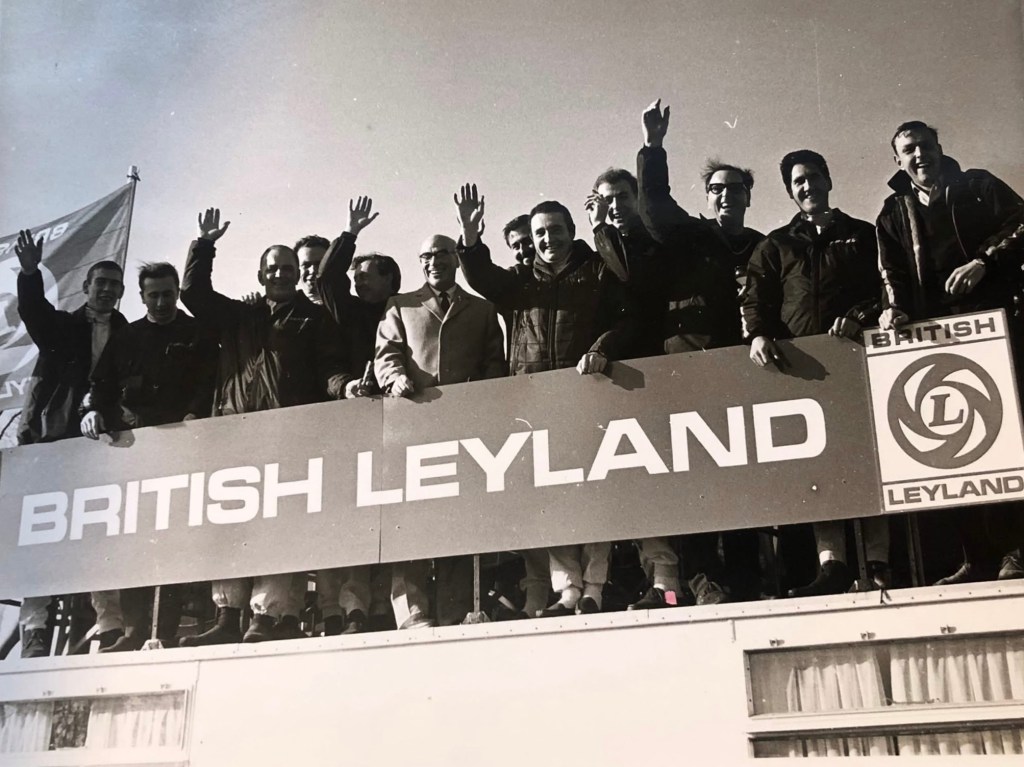
(L Manton Collection)
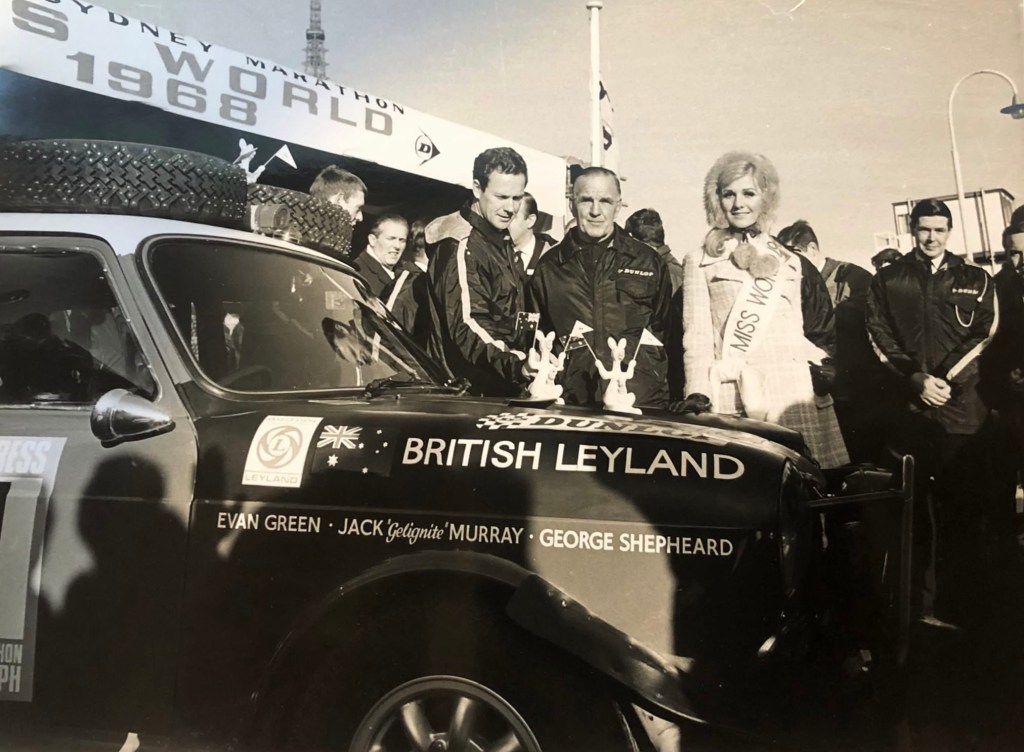
The BMC crews before the London start above, and Evan Green, Jack Murray and Miss World below.
(L Manton Collection)(L Manton Collection)
Graham Hill is amongst the onlookers at the start, under the Australian flag. And who knows where below!
(L Manton Collection)
Credits…
Howard Brooks photographs via his son Grant Brooks, Wikipedia, Shannons, Mini & British Lifestyle, Warren Fargher and Laurie Mason, Luke Manton Collection
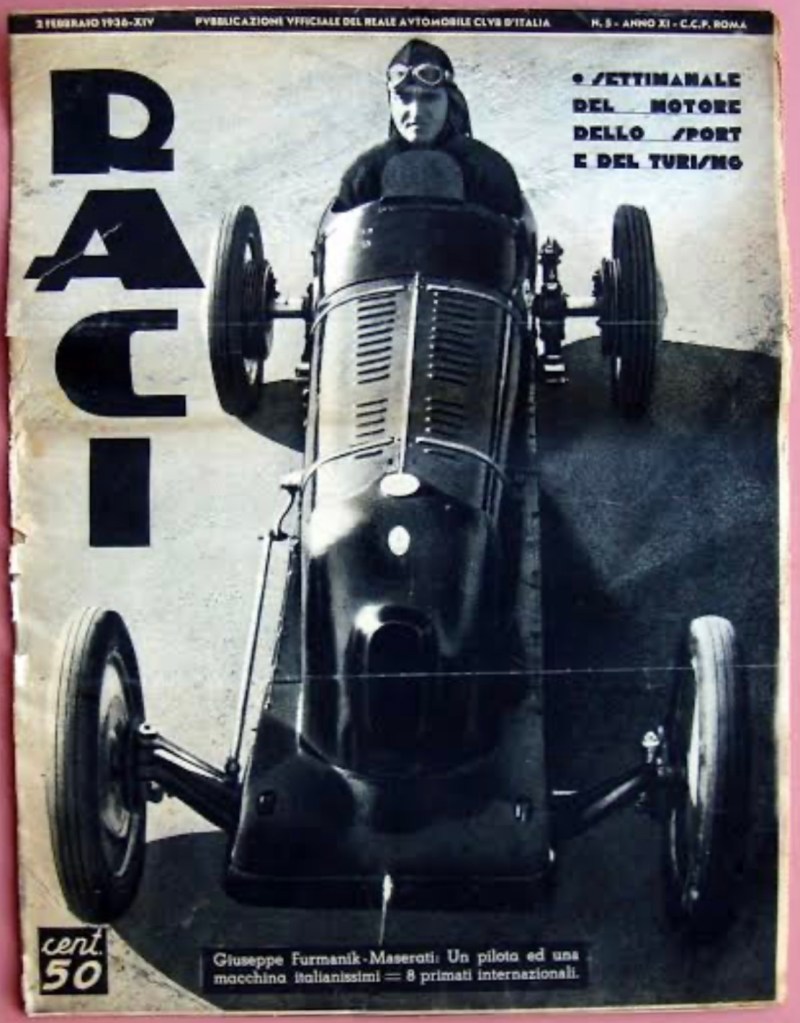
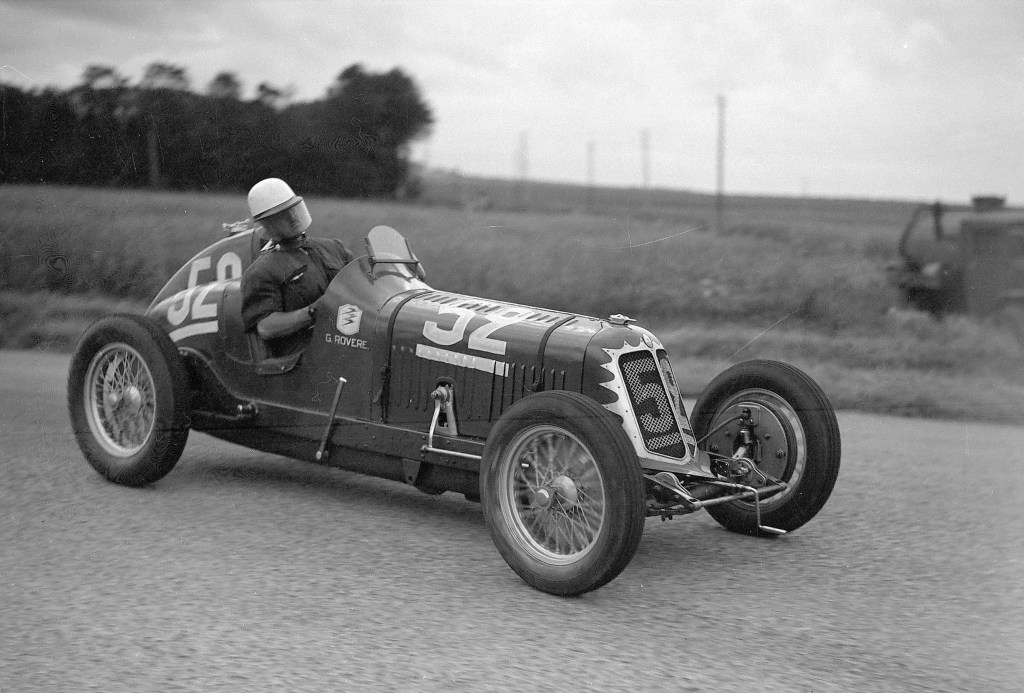
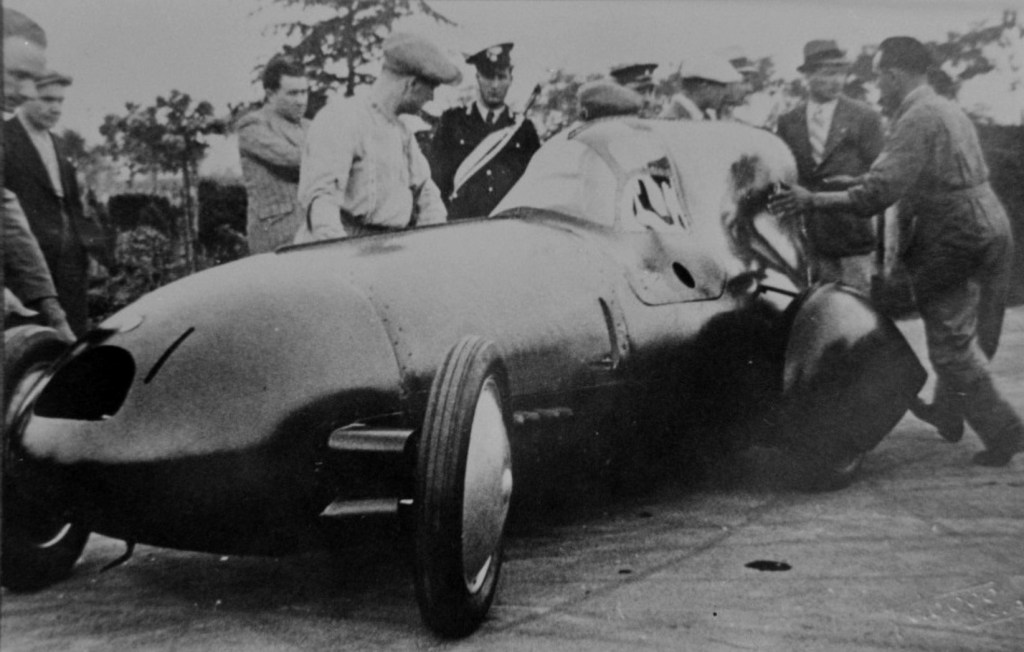
Ernesto Maserati looks on as Giuseppe Furmanik readies himself and his lightweight, streamlined, four cylinder 4C powered Maserati 6CM, chassis #1136 for a run during several speed record attempts he made at Tassignano on the Firenze-Mare Autostrada on June 2-3 1937.
Furmanik set the 1001-1500cc Flying One Kilometre record on June 3 at 148.4mph/237.568kmh (or 148.2/238.6 depending upon your source).
The car’s special aluminium bodywork was designed by the Centro Sperimentale Aeronautico di Giudonia and built by Carozzeria S. A. Viotti of Torino. Furmanik used the machine – also referred to as 4CM #1536, for which no factory build sheet exists – and another 4CM, chassis #1120, in record attempts.
Giuseppe Furmanik before a run in #1536, Pirelli tyres (Pirelli)
Of Polish descent Joseph Furmanik was born in Switzerland in 1903 then moved to Italy with his father circa 1919-20. He adopted ‘Giuseppe’, became an engineer, co-designed a parachute named the Salvator and married money.
Settled in Rome, he became a prominent figure in 1930s Italian motor racing with his competition exploits probably funded by parachute royalties. He succeeded Count Vincenzo Florio as President of the Royal Automobile Club of Italy (RACI) in 1937.
What a big arse you have my dear…I wonder what the insignia on the tail represents? (Pirelli)
4CM Technical Specifications…
Furmanik took delivery of 4CM #1120, a four-cylinder, twin-cam, two-valve, Roots-supercharged 125bhp at 5000-6000rpm 1100cc Maserati 4CM monoposto, on August 12, 1932.
The 4CM was avant-garde for its time, Maserati followed Alfa Romeo’s single-seater lead set by Vittorio Jano and his team with their Grand Prix Alfa Romeo Tipo B/P3 Monopostos.
Very light, the car’s two parallel channel section chassis members were only 620mm wide with bodywork tightly proportioned around the key mechanical components. Hydraulic brakes were fitted, again, leading edge for the time. The car had a four speed gearbox and period typical suspension comprising solid axles front and rear sprung by semi-elliptic leaf springs, friction dampers were fitted. The wheelbase was 240cm, track 120/120cm and weight circa 520-580kg.
4CM early competition…
The 4CMs looked great and were fast in a limited number of outings in their first year of competition, 1932. In the German Grand Prix held on the Nurburgring in July, Ernesto Maserati and Amedeo Ruggeri were third of 15 Group 2 800-1500cc cars in the race won by Rudy Caracciola’s Alfa Tipo B 2.6. Maserati followed up with fourth of the Voiturettes – Ernesto’s little 1100cc Maser was surrounded by 1500cc cars – at the Masarykuv Okruh at Brno in September.
Giuseppe Campari’s Maserati 4CM 2-litre ahead of Jean-Pierre Wimille’s Alfa Romeo Monza during the August 6, 1933 Nice GP (MotorSport)This shot and the one below shows the earlier Furmanik 4CM #1120, with body designed by Mario Revelli di Beaumont (RACI Motor Sport February 1936)
Furmanik’s Record Breaking…
Furmanik raced #1120 throughout 1933 finishing third in the Coppa Ciano Junior and Coppa Acerbo Junior in July/August and missing the final of the Monza Grand Prix in September and DNF in his heat.
Into 1934 Furmanik started the Coppa Ciano as favourite in the Voiturette class but didn’t finish after a slight accident on the first lap. He was fourth in the Coppa Acerbo Junior.
Giuseppe does not appear to have raced #1120 in 1935 (see change of ownership to Gino Rovere shortly) and then decided to plan an attack on the World Speed Record.
#1120’s power was increased (output not specified) and a lighter more streamlined body was designed by Mario Revelli di Beaumont – ‘the most prolific car designed you’ve never heard of’ – and the front brakes removed, the result about 470kg/1036lbs. He also adapted the gearbox to provide for three tall gears.
Furmanik’s first runs, on November 28, 1935 were made on the Lucca-Altopascio section of the Firenze-Mare Autostrada, then on the Pescara road circuit on January 8, 1936, and then again on the same section of the Firenze-Mare Autostrada on January 29, 1936.
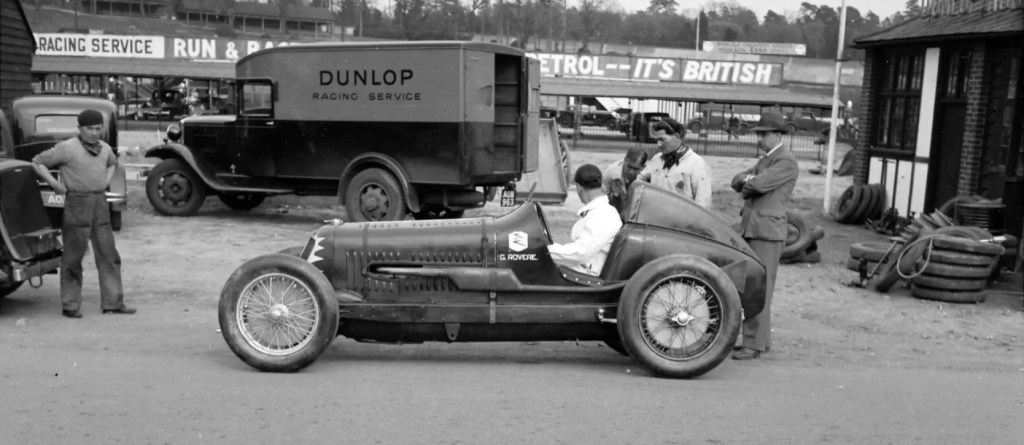
Gino Rovere aboard Maserati 4CM #1120 at Brooklands on May 6, 1935 (MotorSport)
Gino Rovere…
Gino Rovere was a wealthy enthusiast who became Maserati’s President. He supported Furmanik’s efforts, making available funds to increase the engine’s output and further improve aerodynamics.
With a 4C engine then developing some 150bhp at 7,200 rpm and the Centro Sperimentale Aeronautico di Giudonia/Carozzeria closed aero body fitted to 6CM chassis #1536, Furmanik set the Flying Kilometre record mentioned at the outset in June 1937.
Along the way #1120’s ownership changed from Furmanik to Rovere and the car was returned to Maserati’s Bologna factory where it’s said it was fitted with a 1.5-litre engine for Rovere to race in selected 1935 Voiturette events: Brooklands in the May 6 JCC International Trophy (results please), then at Dieppe and finally Modena.
Gino Rovere lines up #1120 before the start of the Junior Car Club International Trophy , Brooklands, May 6, 1935 (MotorSport)Dieppe GP grid #30 P Veyron Bugatti T51A, the Rovere 4CM, #6 Humphrey Cook, ERA A-Type, #50 Ippolito Berrone, Maserati 4CM – note the standard grille compared with Rovere’s machine – #48 Eddie Herzberger, MG K3 Magnette and #28 Maurice Baumer’s K3. Pat Fairfield’s ERA A-type won from Bird’s B-Type and Veyron’s Bugatti (Bonhams)Beautiful shot of Giuseppe Farina aboard the Rovere 4CM #1120 at Dieppe (Bonhams)
In the GP de Dieppe on July 20, Rovere qualified seventh on the 19 car grid and finished eighth, handing his car over to ‘his protege’ Giuseppe Farina late in the race, Farina promptly set the fastest time of the day despite the car’s quoted 1.1-litre capacity. Rovere also contested the Circuit di Modena Junior on September 15 for Q5 and DNF, again the capacity is quoted as 1100cc in the goldenera.fi results.
In 1936 Rovere’s team competed under the works banner given his status as Maserati’s President. #1120 was raced by various works drivers early that year and then sold to Scuderia Impero. Agostino Prosperi and Mario Colini drove it, then Rovere had a return bout with his old car at Pescara.
In the modern era, #1120 has been a regular part of the UK historic scene in 1100cc and 1500cc form raced by many drivers including Sean Danaher, Martin Stretton, Barrie Baxter and Stefan Schollwoeck.
Build numbers…
Maserati built 16 4CMs between 1932-35: Nine 1100s – chassis numbers #1115, 1116, 1118, 1119, 1120, 1122, 1125, 1127 and 1128 (note that #1120 and 1125 were both later fitted with 1500cc engines), Six 1500s – 1514, 1521 (also fitted with an 1100cc engine), 1525, 1526, 1527 and 1528, and One 2000cc – 2011.
Etcetera…
(MotorSport)
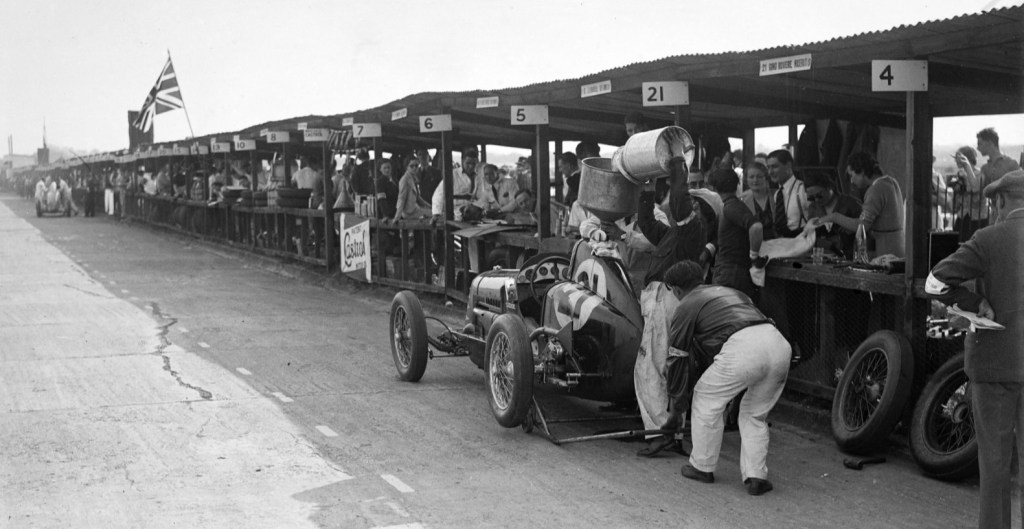
Two more shots of Rovere in the Brooklands 1935 paddock, #1120 in profile and three-quarter rear for a pitstop.
(MotorSport)(coachbuild.com)
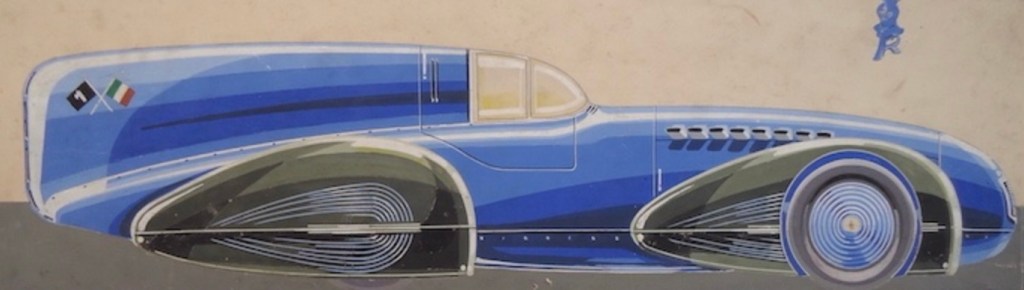
A rendering of the Centro Sperimentale Aeronautico di Giudonia design, and below #1536 in one specification in which the car ran. Compare and contrast with the first three photographs in this piece.
(unattributed)Ad for AGIP’s Robur fuel 1936, Furmanik aboard #1120
Credits…
Anonymous photographer within the Pirelli Archives, MotorSport Images, Leif Snellman’s superb The Golden Era of Grand Prix Racing – goldenera.fi, The Nostalgia Forum, thanks to Maserati historian Kevin Tjeerdsma for advice on correction of facts and chassis numbers
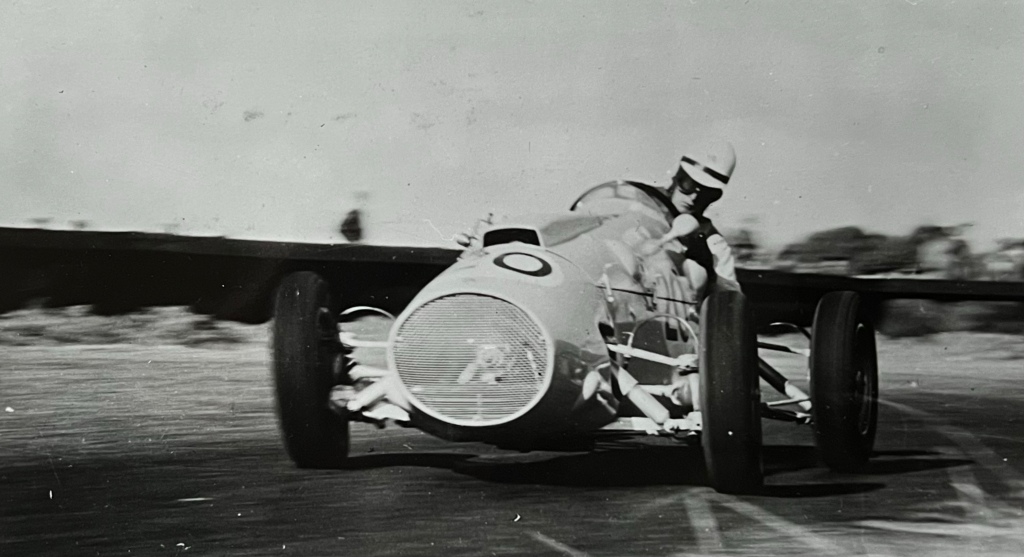
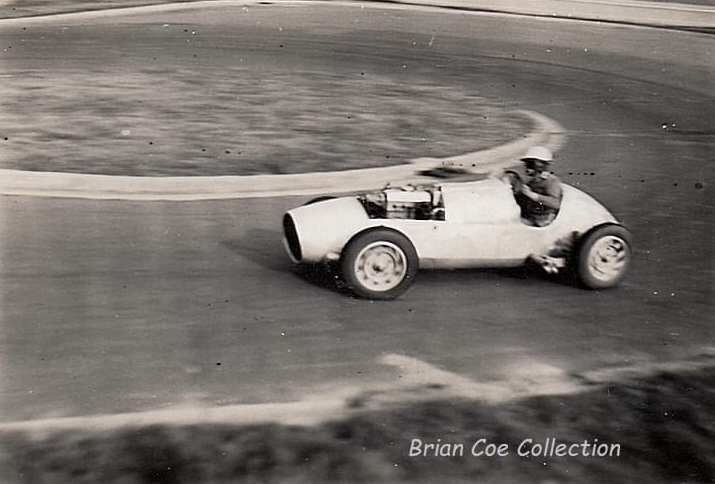
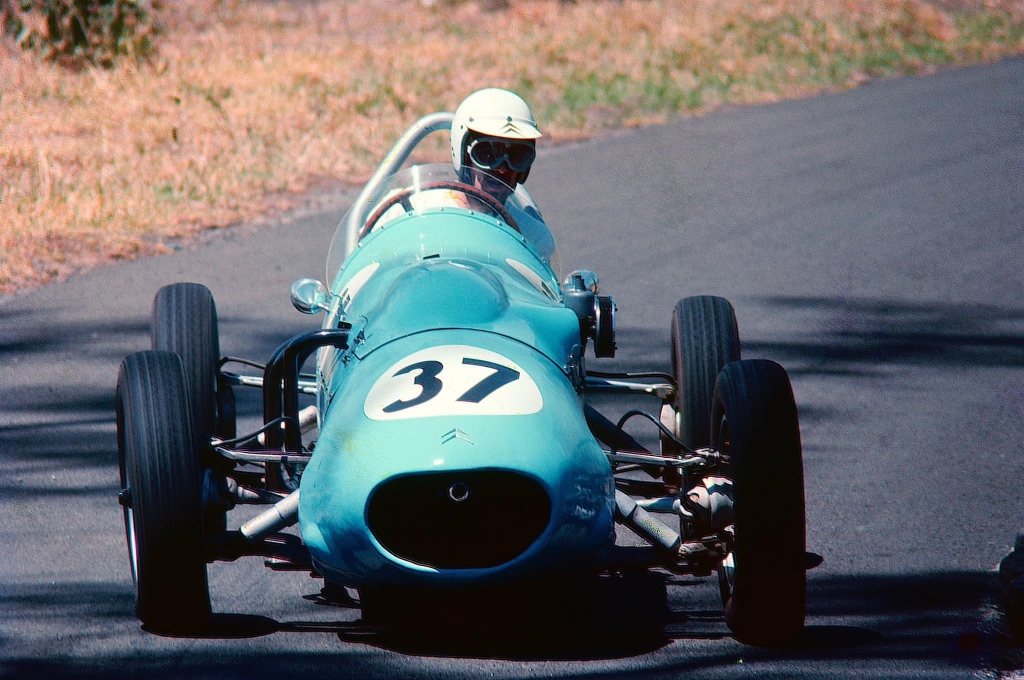
Don Wright with his eyes riveted on the apex of a corner at Sydney’s Mount Druitt circuit aboard his Citroen Special in 1956.
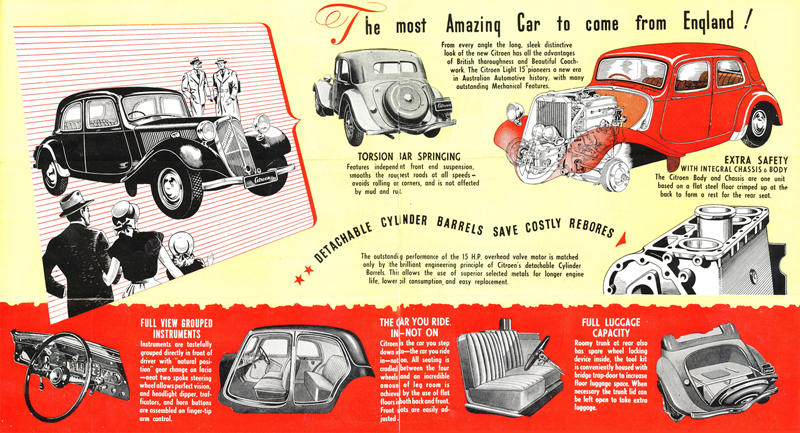
Racer/engineer/restorer/historian Dick Willis in his fabulous book, Optimism, describes the Citroen Light Fifteen (Light 15) based monoposto as “Probably Australia’s only front wheel drive racing car of the fifties…it had a successful career especially in the late 1950s and early 1960s when it raced as a Division 2 car in NSW having many memorable dices with the Nota Major.”
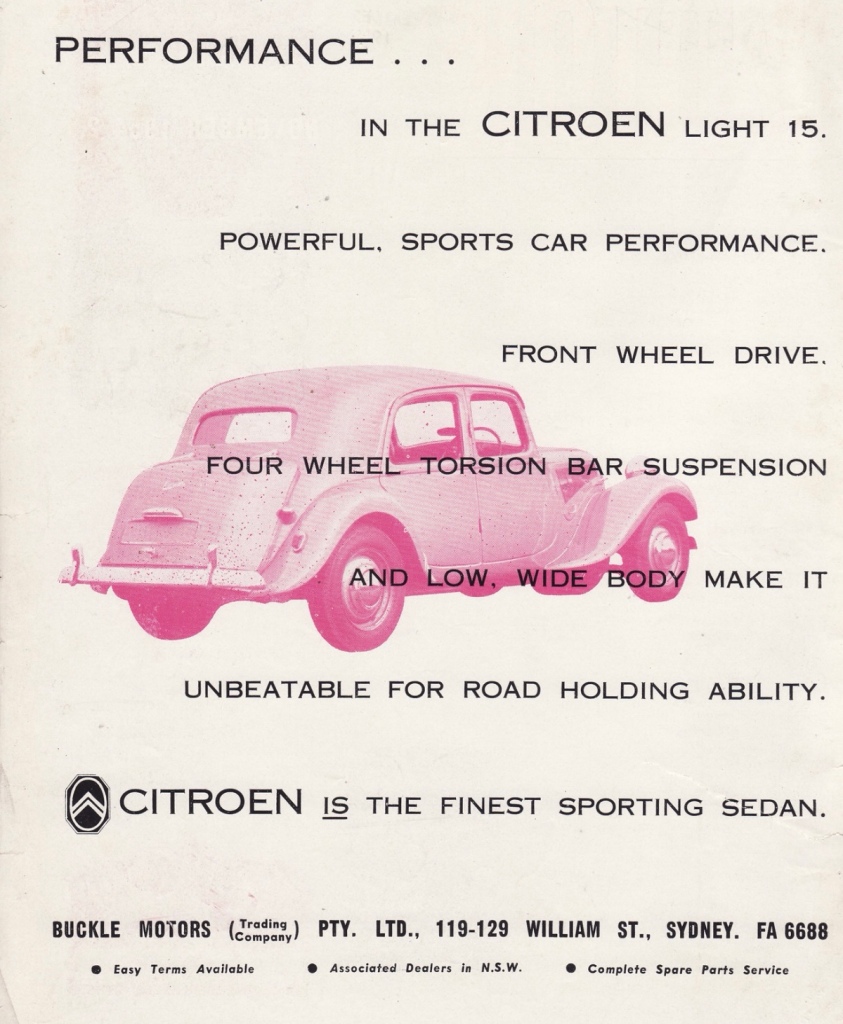
At the 1951 Easter Bathurst meeting, Bill Buckle, a member of the noted motor dealer family – then the holder of the Sydney Citroen franchise amongst other marques – raced a Light 15 to second place in the Production Closed Car Handicap.
Suitably impressed by the competition potential of his product, he cast around for a crash damaged car and commenced construction of a monoposto racer to accept the road cars core mechanicals.
Working with his close school friend, and fellow auto apprentice, Charlie Buck, they built a simple twin-tube ladder chassis to which was mated the Citroën front subframe, steering, 2-litre OHV engine and gearbox, and rear beam axle.
Before the car was finished Buckle decided to visit France and sold the project to Don Wright to help fund his trip.
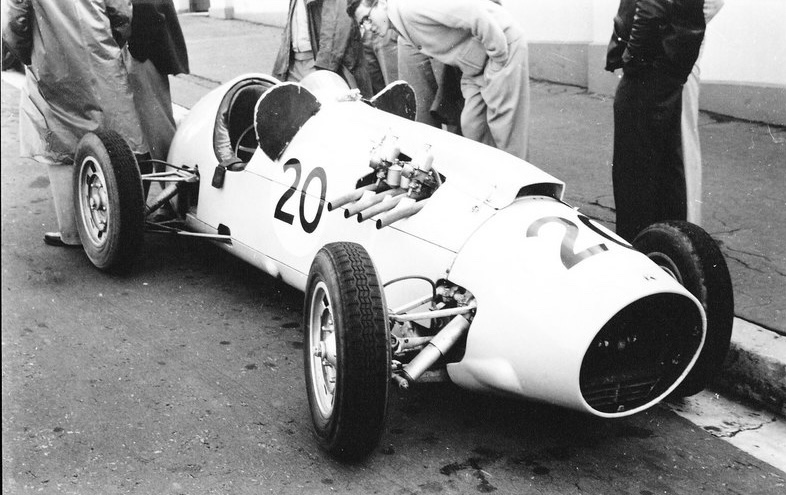
Wright and Buck then set to work in Wright’s Castle Hills workshop to finish it including fabrication of a stainless steel fuel tank and a slinky body made together with Stan Barrett. The 1911cc Light Fifteen engine was fitted with special valves, a pair of 1 1/2 inch SU carbs fed by an aircraft fuel pump and 17 inch stub exhausts. Those radical looking wheels were options Citroen offered in Europe but not here: light Michelin made ‘Pilote’ shod with the French tyre manufacturers new X-radial tyres
Don Wright, King Edward Park, Newcastle hillclimb circa 1953. Bob Winley, “In this shot the Citroen Special is very new with its original beam axle rear suspension and short nose.”
After several drives the cars shortcomings were laid bare and addressed. The duo modified the gearbox by eliminating reverse gear and machining and fitting a fourth forward gear in the space so released.
Unhappy with the rear suspension, Wright replaced the Citroen beam axle and transverse torsion bars with Morris Minor longitudinal (front) bars and bottom arms. “Uprights and top wishbones were fabricated to suit, the original rear stub axles having that convenient eight-bolt attachment,” Bob Winley, a later owner, and ultimately the car’s restorer, wrote
The car soon became a common sight on the hills and circuits of NSW including Foleys Hill, King Edward Park, Mount Druitt, Gnoo Blas, and then Bathurst in 1955. That year Don won the NSW Hillclimb championship at King Edward Park, Newcastle; quite a triumph for the sweet handling machine.
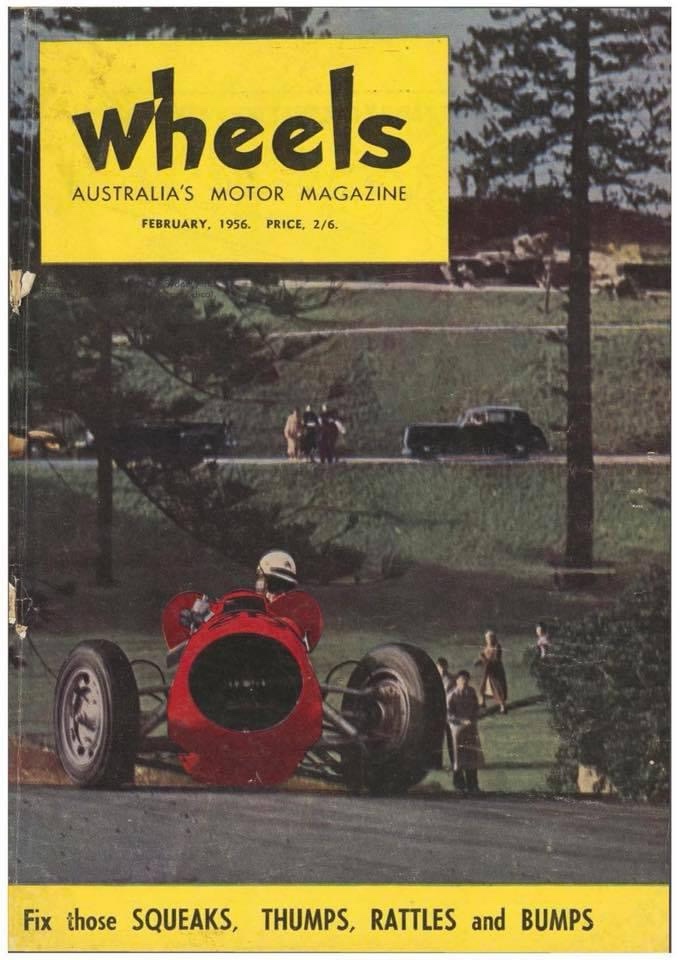
King Edward Park, Newcastle 1954. Winley, “The Citroen Special early on but after it was fitted with IRS: parallel wishbones and longitudinal Morris Minor torsion bars. Note the 17-inch stub exhausts. It seems to have grown an oil cooler too. I haven’t seen the ‘Mickey Mouse ears’ before. The front wheels could certainly throw rocks and water at the driver on any but clean tracks.” (J Moxham Collection)Wheels‘ caption, “Don Wright’s FWD Citroen Special was one of three cars which broke 60 seconds at the 1955 NSW Hillclimb Championship. It is seen in our picture rounding the hairpin at Newcastle where the climb was held.” Covering the same meeting Modern Motor observed that “Speed, roadholding and showroom finish have made Don Wright’s Citroen Special a favourite with racing fans.”Photographer Bruce Moxon wrote, “The Citroen Special at Castlereagh Airstrip on August 21, 1960 with girlfriend, Pauline at the wheel. It was owned by Geoff Thorne, with whom I worked at GE Cranes in Glebe, Sydney. Geoff was a toolmaker, but also a professional ice skater and musician.”
Later, Don sold the car to dentist lan Steele who raced at Bathurst circa 1957, the car passed it to Geoff Thorne, a genius ice-skating clown amongst his other talents. He raced it extensively and then Don James did well on new tracks such as Oran Park and Catalina Park from circa 1963. By then the machine was fitted with a crossflow DS cylinder head, extractors in lieu of the stack-exhausts, and Big Six front brakes. He did well in the Division 2/Formula Libre races common at the time.
Ray Bell wrote, “In November 1968 Bob Winley bought it and started racing it but couldn’t wear his red shirt because CAMS required fireproof overalls and underwear from then on! Bob ran in ‘modern’ races and the newly created Historic Car races and club events, winning money and trophies and being accused of doing ‘rain dances’ before race days, such are the car’s abilities in the wet. Bob fitted extractors and a muffler.”
Lynton Hemer’s shots of Bob Winley racing the Citroen at Oran Park – sporting its crossflow DS engine – on June 27, 1970, and below, exiting Forrest’s Elbow at Bathurst during practice for the Easter 1970 meeting (L Hemer)(L Hemer)
After six years John Moxham, a Citroen fancier, bought the car and re-fitted an original type of cylinder head. The car sat unused, then John moved interstate, selling the car to another Citroen collector, John Vanechop. The car languished until Don Wright’s friends bought it in pieces and Don began its restoration. With Bob Winley’s help the car is now ready to re-join the Historic Racing scene with proud owner Perry Long at the wheel, Dick Willis wrote.
“It was on display at Eastern Creek in 2006 and underwent some testing by John Bowe at Wakefield Park (pic below in 2017) but hasn’t been seen since although its return to competition is believed to be imminent and we look forward to it with great anticipation as the Citroen Special is a really interesting and unique Australian Special.”
Etcetera…
(G Mackie)
Not a great photo of Don Wright but better than nothing! Greg Mackie observed of the man, “Citroen Special and Lancia Fancier.” Ray Bell spoke to Wright circa 2001, at that stage he was still operating an automotive repair business in West Pennant Hills, “his major pursuit these days is making replacement blocks for Lancia Lambdas, which he carves out of billets of aluminium! No castings…”
Citroen Special in its original form, a nice shot of the Michelin Pilote wheels and immaculate line of the car even in its original short-nose guise.
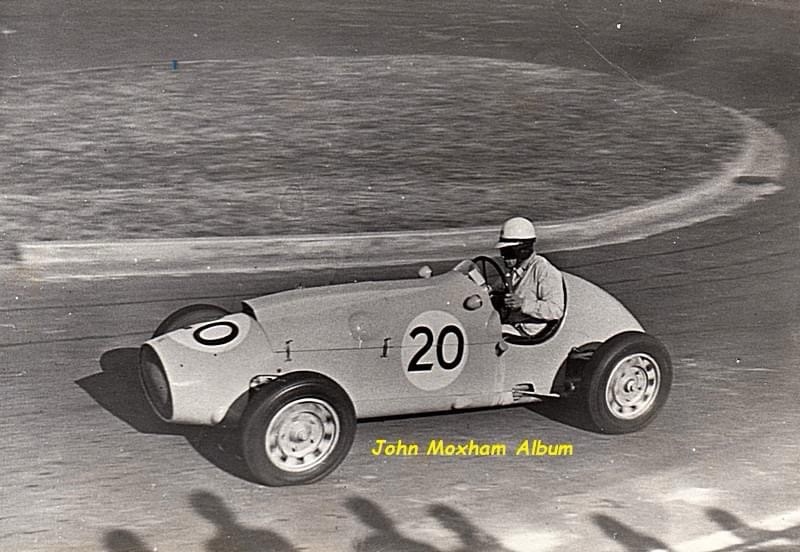
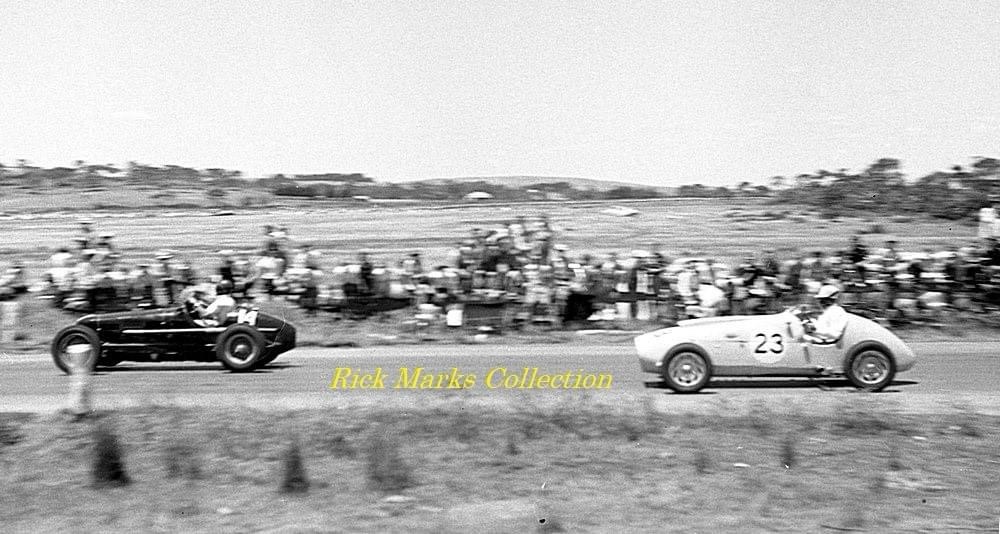
Don Wright coming down the mountain at Bathurst in 1955, he carried #20 in both the Easter and October meetings.
Bob Winley commented in an exchange on Facebook with Australian Gold Star Champion, Spencer Martin, about Spencer’s observation of the Citroen Special’s understeer, “Near the driver’s left hand is a slight bulge in the body for the gear lever and fuel filler for the stainless steel tank between the chassis rails, keeping the centre of gravity well forward. Spencer Martin I steered it ‘on the throttle’ in BP Corner at Oran Park. I found it a delight to drive (and I don’t enjoy understeer).”
Don Wright chasing Tom Sulman’s Maserati at Gnoo Blas or Mount Druitt, thoughts on venue folks?
(D Willis)
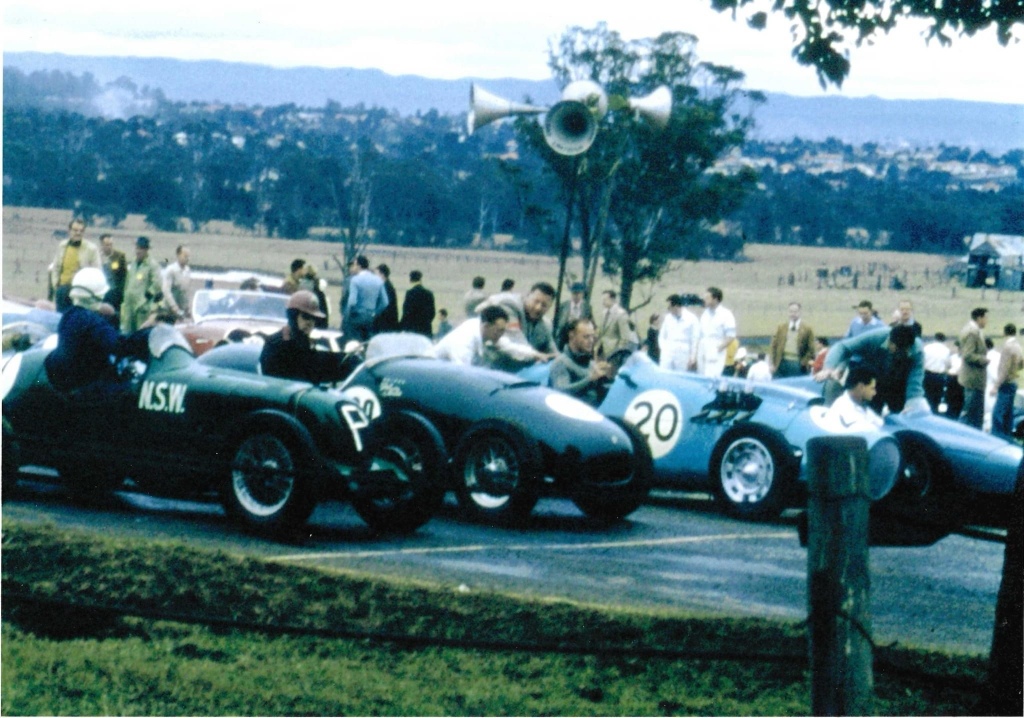
A couple of fabulous in-period colour shots by Dick Willis. The one above is the front row of the grid, perhaps the November 1956 meeting at Mount Druitt.
From the left, perhaps Greg Hunt in the ex-Tomlinson/Bartlett/Brydon MG TA Spl, Jim Johnson in the Cigar MG, probably Ian Steele in the light blue Citroen Special – with gleaming Pilote wheels – and on the right in the low-slung, mid-engined Stewart MG with Gordon Stewart at the wheel.
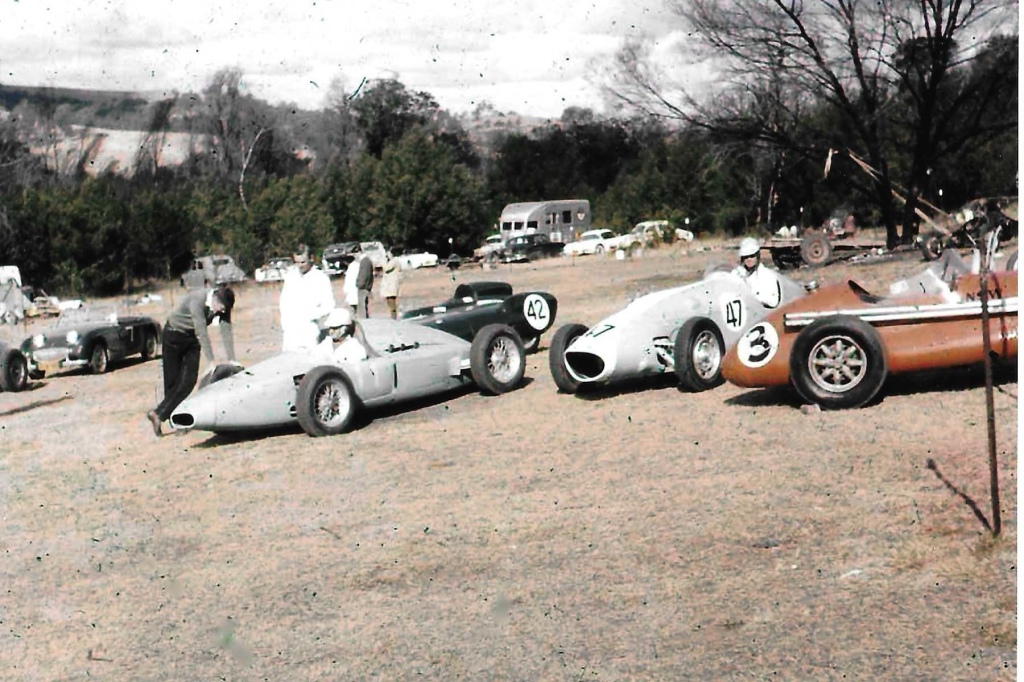
Below is a superb paddock scene at Silverdale, perhaps the June 1960 meeting.
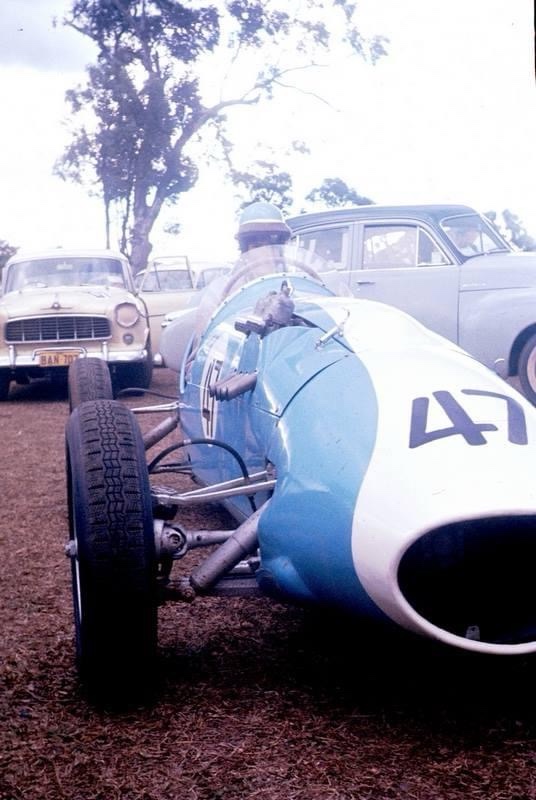
Gordon Stewart in the Stewart MG at left, #47 is our Citroen with Geoff Thorne up, #3 is Jack Myers WM-Cooper Waggott-Holden, #42 Don Swanson’s Lotus 11 Climax – up from Melbourne or had it changed hands by then? – while the Sprite at the far left was run by Leigh Whitely.
(D Willis)(D Simpson)
Bob Winley in the Huntley Hills Esses during the December 1968 meeting. He recalls, “I found something out that day. I did my practice run without seatbelts and nearly got thrown out of the car towards the end of the run. Lesson learn’t!”
(J Moxham Collection)
A page from John Moxham’s photo album now in the custody of John Barass.
Credits…
The main image, the catalyst for this particular research journey, is courtesy of the Auto Action Archive.
The information was gleaned from Dick Willis wonderful book, ‘Optimism’ about Australian Specials, and demonstrates the potency of some Facebook groups. I carefully mined the comments of a whole lot of people on Bob Williamson’s Old Australian Motor Racing Photographs, and Greg Smith’s Pre-1960 Historic Racing in Australasia Facebook pages. Those photos and information are attributed to Ray Bell in one of Bob Winley’s posts, the Rick Marks, and Don Coe Collections, Nurk Daddo, John Moxham Collection via John Barass, Australian Motor Heritage Foundation via Brian Caldersmith, Bruce Moxon, Greg Mackie, Dick Simpson, Tim Shellshear, Bob Williamson and multiple, wonderfully informative posts by Bob Winley.
Wonderful teamwork! Let me know if I’ve cocked anything up on mark@bisset.com.au.






























 primotipo...


