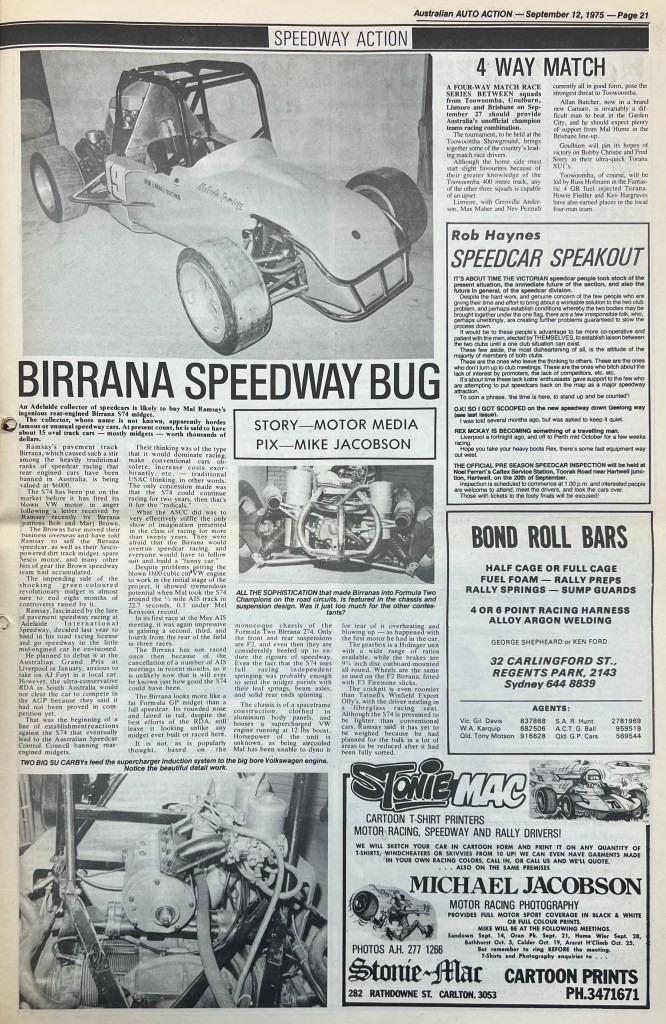
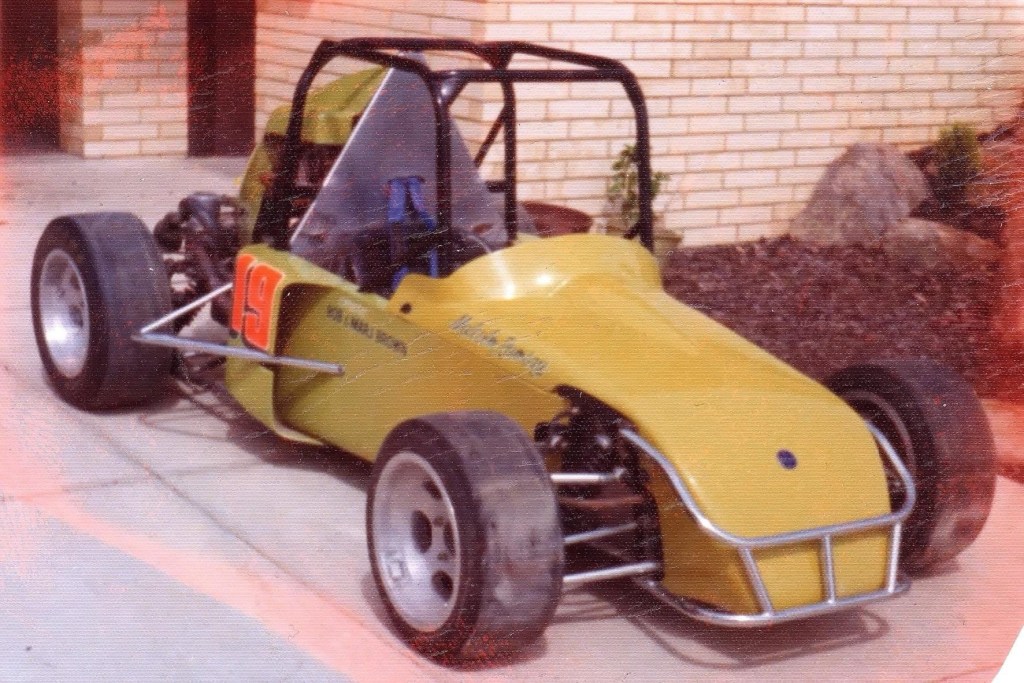
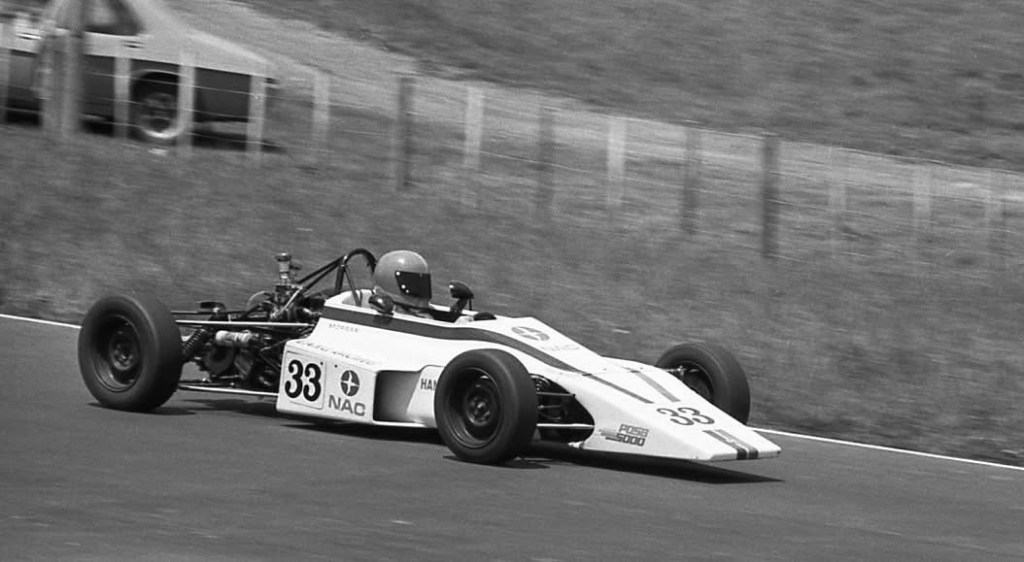
An Adelaide collector of speedcars is likely to buy Mal Ramsay’s ingenious rear-engined Birrana S74 Midget.
The collector, whose name is unknown, apparently hordes famous or unusual speedway cars. At present count, he is said to have about 15 oval track cars – mostly midgets – worth thousands of dollars.
Ramsay’s pavement track Birrana, which caused such a stir among the heavily traditional ranks of speedcar racing that rear engined cars have been banned in Australia, is being valued at $6000.
The S74 has been put on the market before it has fired its blown VW motor in anger following a letter received by Ramsay recently by Birrana patrons Bob and Marj Brown.
The Browns have moved their business overseas and have told Ramsay to sell the Birrana speedcar, as well as their Sesco-powered dirt track midget, spare Sesco motor and many other bits of gear the Brown speedway team had accumulated.
(The Browns were in mid-1975 establishing a business in the UK – Thermax – and running two Birrana 273 Ford BDAs for Bob Muir, and very occasionally, Dean Hosking, in the British Formula Atlantic Championship).
(A Ramsay)
The impending sale of the shocking green coloured revolutionary midget is almost sure to end eight months of controversy raised by it. Ramsay, fascinated by the lure of pavement speedway racing at Adelaide International Speedway, decided last year to hand in his road racing license and go speedway in the little mid-engined car he envisioned.
He planned to debut it at the Australian Grand Prix at Liverpool in January, anxious to take on AJ Foyt in a local car. However, the ultra-conservative RDA in South Australia would not clear the car to compete in the AGP because they said it had not been proved in competition yet.
That was the beginning of a line of establishment reactions against the S74 that eventually led to the Australian Speedcar Control Council banning rear engined midgets.
Their thinking was of the type that it would dominate racing, make conventional cars obsolete, increase costs exorbitantly, etc – traditional USAC thinking, in other words. The only concession made was that the S74 could continue racing for two years, then that’s it for the ‘radicals’.
What the ASCC did was to very effectively stifle the only show of imagination presented for more than twenty years. They were afraid the Birrana would overrun speedcar racing, and everyone would have to follow suit and build a ‘funny car.’
Despite problems getting the blown 1600cc VW engine to work in the initial stage of the project it showed tremendous potential when Mal took the S74 around the ½ mile AIS track in 22.7 seconds, 0.1 under Mel Kenyon’s record.
In its first race at the May Adelaide lnternational Speedway meeting, it was again impressive in gaining a second, third, and fourth from the rear of the field in three races.
The Birrana has not raced since then because of the cancellation of a number of AIS meetings in recent months, so it is unlikely now that it will ever be known just how good the S74 could have been.
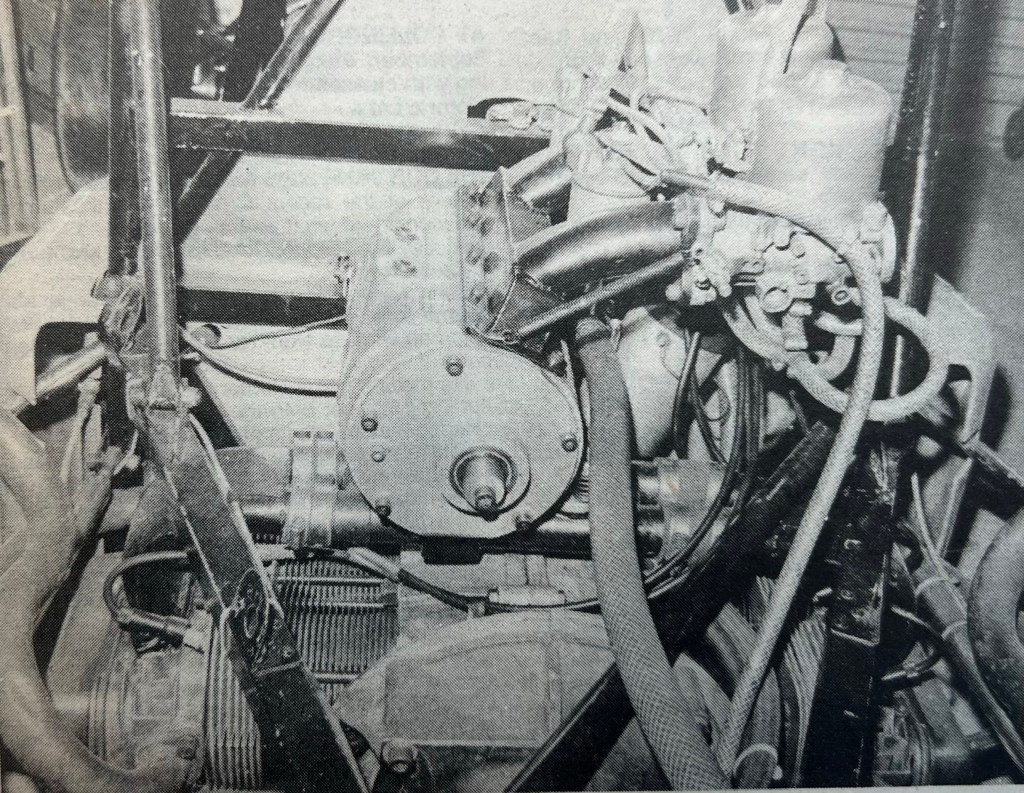
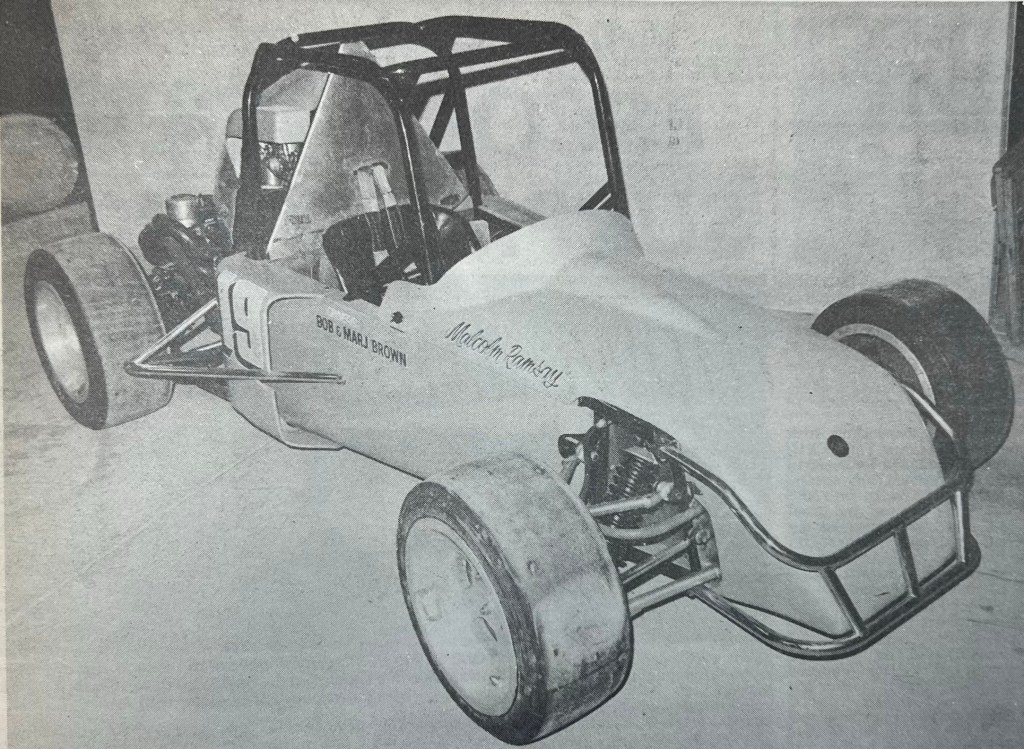
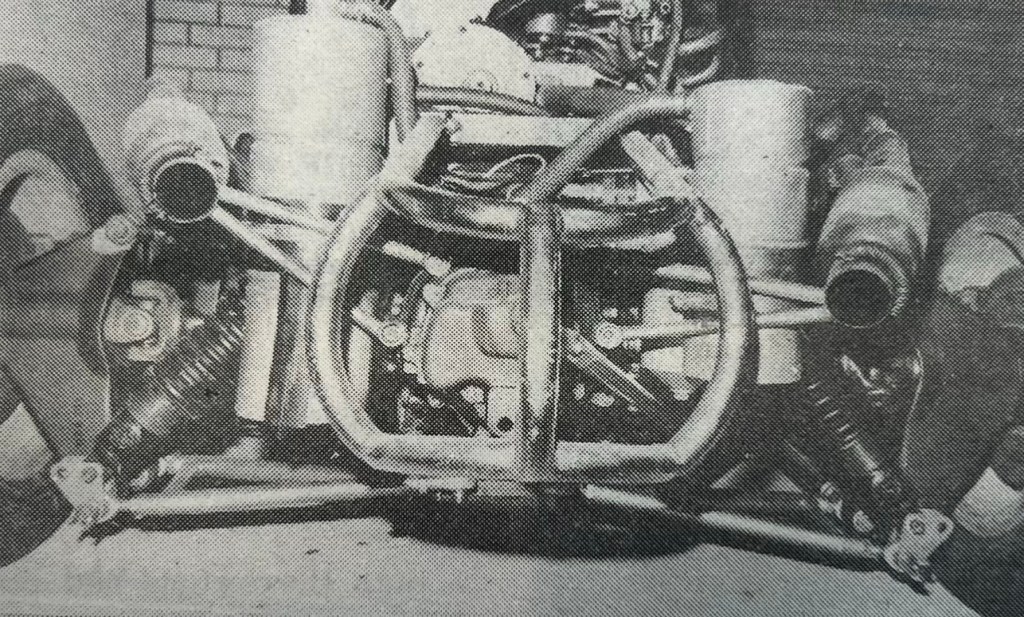
Two big SU carbys feed the supercharger induction system to the big bore Volkswagen engine. Notice the beautiful detail work (M Jacobson)Wheels are four Birrana F2 ‘fronts’, IFS by wishbones clear (M Jacobson)
The Birrana looks more like a fat Formula GP midget than a full speedier. Its rounded nose and faired in tail, despite the best efforts of the RDA, still leave it looking unlike any midget ever built or raced here.
It is not, as is popularly thought, based on the monocoque chassis of the Formula Two Birrana 274. Only the front and rear suspensions are F2, and even then they are considerably beefed up to endure the rigours of speedway. Even the fact that the S74 uses full racing independent springing was probably enough to send the midget purists with their leaf springs, beam axles, and solid rear ends spinning.
The chassis is of a spaceframe construction, clothed in aluminium body panels and houses a supercharged VW engine running at 12 pounds of boost. Horsepower of the unit is unknown, being air-cooled, Mal has been unable to dyno it for fear of it overheating and blowing it up — as happened with he first motor he had in the car.
All the sophistication that made Birrana into F2 Champions on the road circuits is featured in the chassis and suspension design. Was it just too much for the other contestants? (M Jacobson)
The gearbox is a Holinger unit with a wide range of ratios available, while the brakes are 9¾ inch disc outboard-mounted all round. Wheels are the same as used on the F2 Birrana, fitted with F3 Firestone slicks.
The cockpit is even roomier than Tatnell’s Winfield Export Offy’s, with the driver nestling in a fibreglass racing seat. Although the S74 is presumed to be lighter than conventional cars. Ramsay said it has yet to be weighed because he had planned for the bulk in a lot of areas to be reduced after it had been fully sorted.
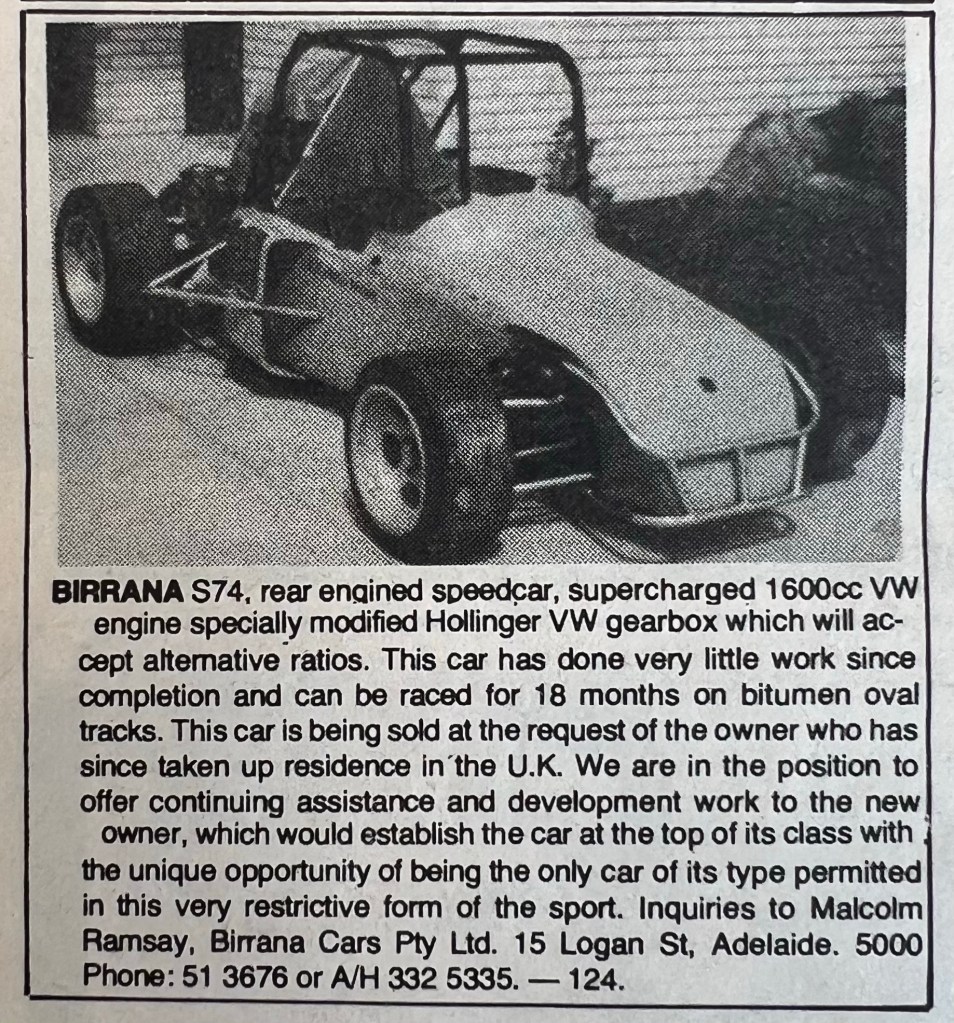
This Auto Action classifieds ad ran in the November 20, 1975 issue.
I’m not sure when it sold, but it’s still alive, I believe, in the Holmes’ family collection of Birranas in Queensland.
It’s gotta be the ultimate Group Q novelty historic machine. CAMS’ Historic Committee would choke on their chocolate-donuts when reviewing this COD application!
Credits…
Auto Action September 12, 1975, Mike Jacobson, Ann-Maree Ramsay
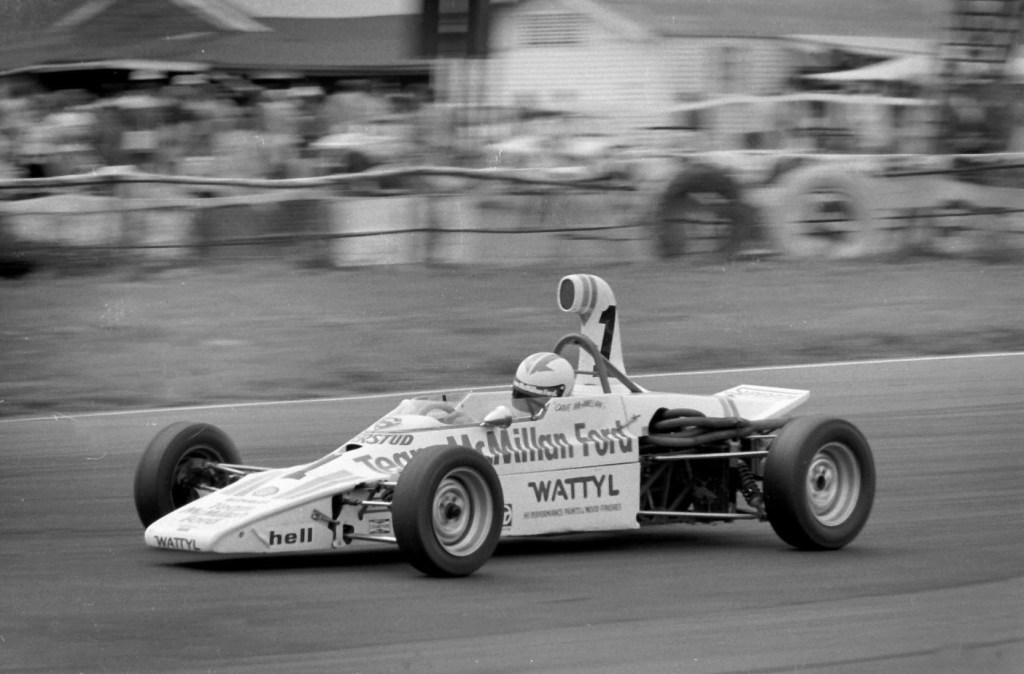
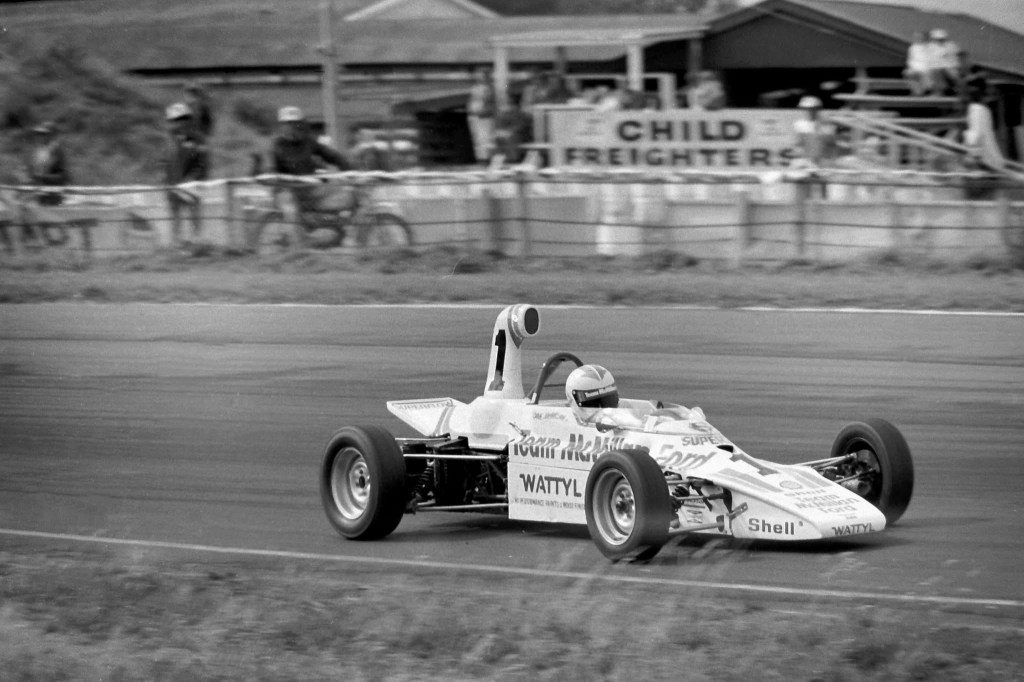
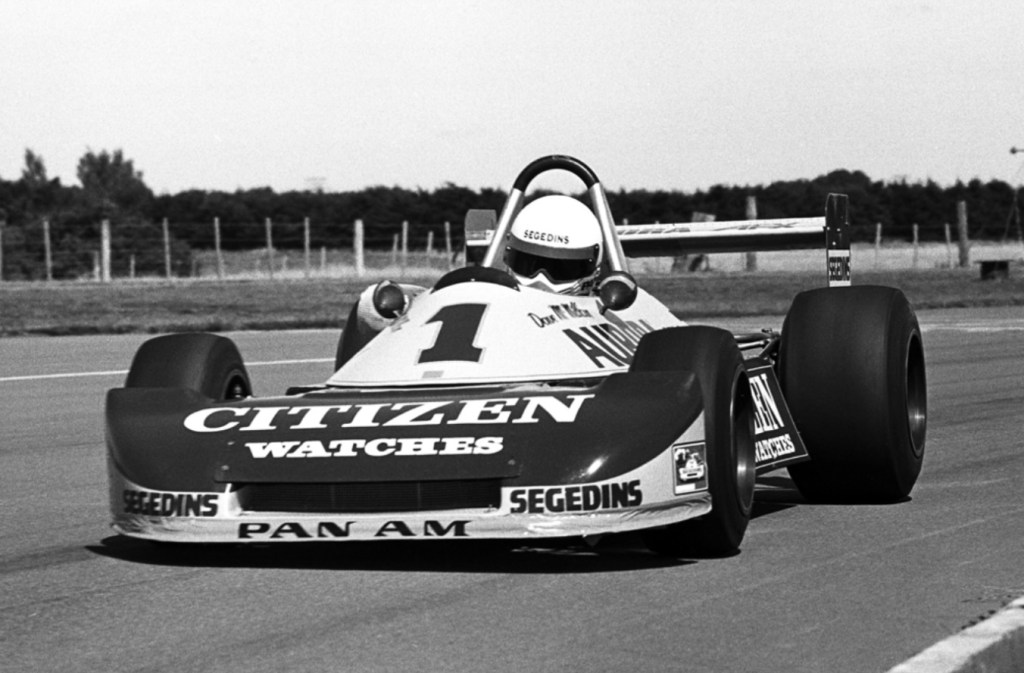
Not so much NZ Formula Ford but some shots my favourite Formula Fords in New Zealand…David McMillan and Lola T342 in 1975, circuit folks?
The Lola T342 was surely the first FF with genuine lust factor, I should know, I bought one in the US and historic-raced it here for a decade or so. More about the T342 here:https://www.lolaheritage.co.uk/type_numbers/t342/t342.html
(W Clayton)McMillan on the hop at Wigram in 1979 or 1980. He won the Lady Wigram Trophy in both years aboard his trusty Ralt RT1 (T Marshall)
McMillan was the real deal. He won the NZ FF Championship in 1975/76 and went on to bigger and better things including winning the NZ Gold Star Championship in 1977 and 1979-80. Taking the hotly contested 1980 NZ International Formula Pacific Championship/Series in front of Steve Millen and Andrea de Cesaris was quite a feat.
His mount throughout was the same Ralt RT1/76 Ford BDA chassis #36 an ex-Kevin Cogan car raced with success in McMillan’s hands in Canada and New Zealand before being rebuilt as a Super Vee for Dave’s use in the US in 1980…and success in that form too!
(S Elliott)
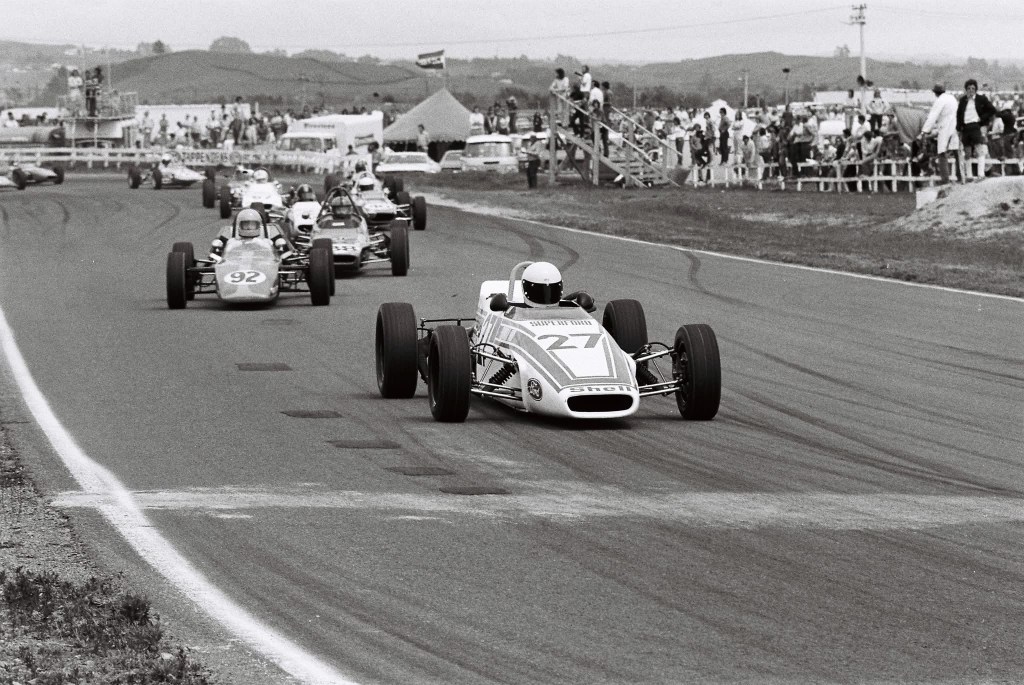
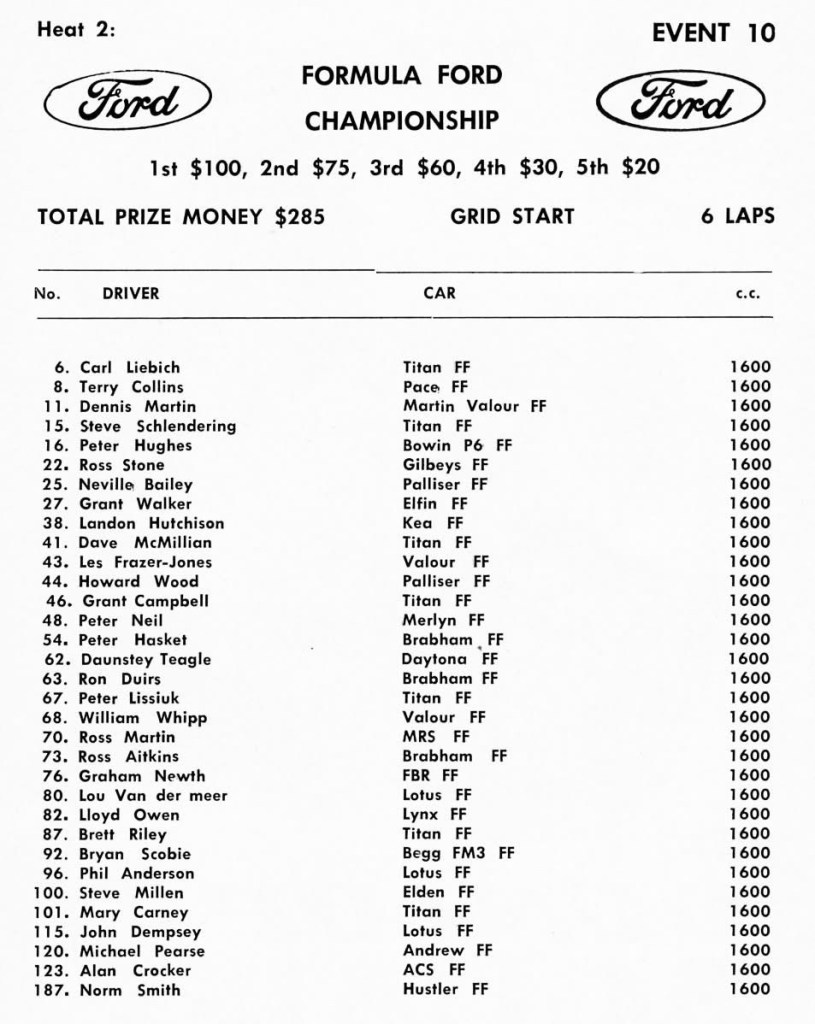
NZ Championship action at Baypark in October 1973, Grant Walker’s Elfin 600 from Bryan Scobie, Begg FM3 and Landon Hutchinson, Kea FF. Walker won the 1974-75 NZ FF Championship in this car. More about the Elfin 600 here: https://primotipo.com/2022/04/23/sinfully-sexy-600/
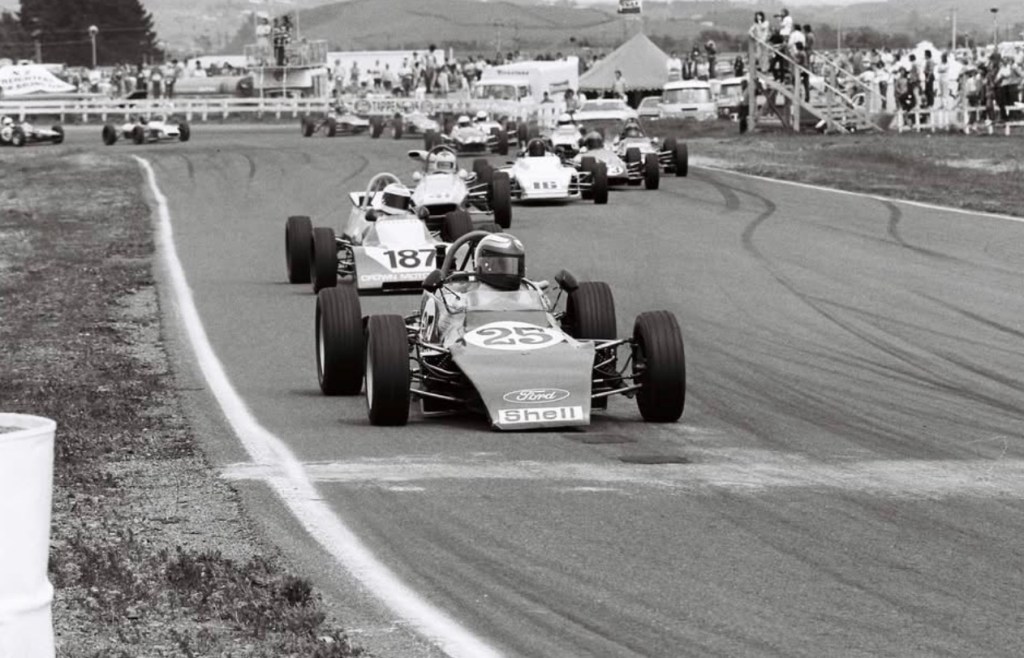
Norm Smith in car #187 below, a Hustler FF won both heats, while car #25 is Neville Bailey’s Palliser.
(S Elliott)
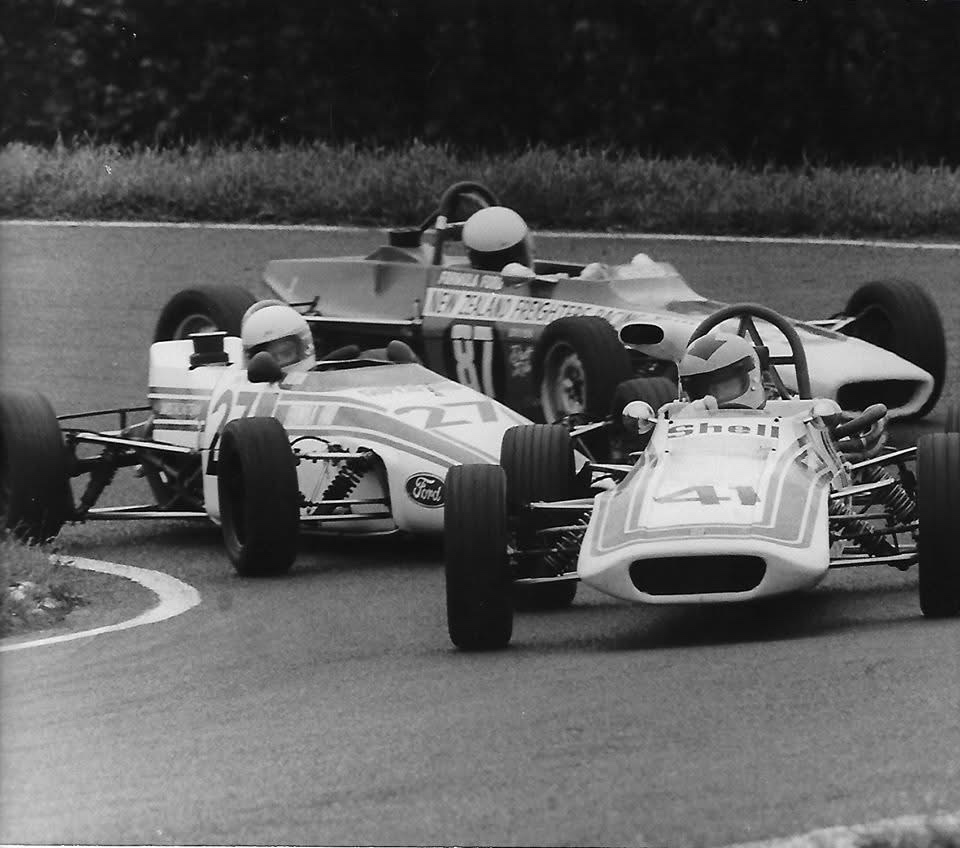
Tustle between Grant Walker Elfin 600 #27 and David McMillan in a Titan Mk6 #41, both in Dawes Racing Team cars.
The amusing bit for me is that Grant brought the Titan Mk6 across the ditch to contest the Australian Driver to Europe Series in 1977 finishing second…and races the same car in Oz Historic FF now. He’s no longer the youngster he was back then but is still mighty quick!
Car #87 is none other than Brett Riley in another Titan Mk6, he too was a Kiwi International of some renown.
(M Fistonic)
Eric Morgan, Bowin P6F at Pukekohe in November 1974. The chassis in which Peter Hughes won the 1973-74 NZ Championship?
Warwick Clayton, Steve Elliott, Milan Fistonic, Terry Marshall
Tailpiece…
(S Elliott)
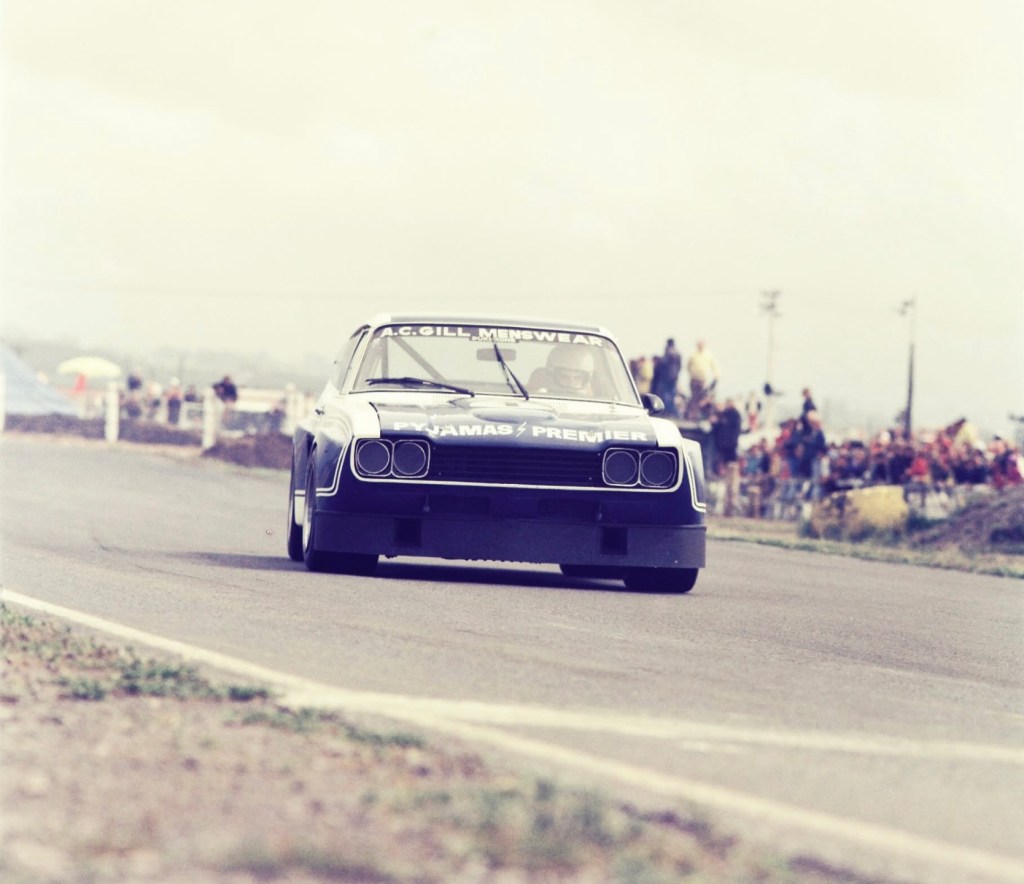
A change of mount for Grant Walker, here aboard the ex-Paul Fahey Ford Capri RS3100 at Baypark circa 1975-76. He raced this car in Australia too now I think of it.
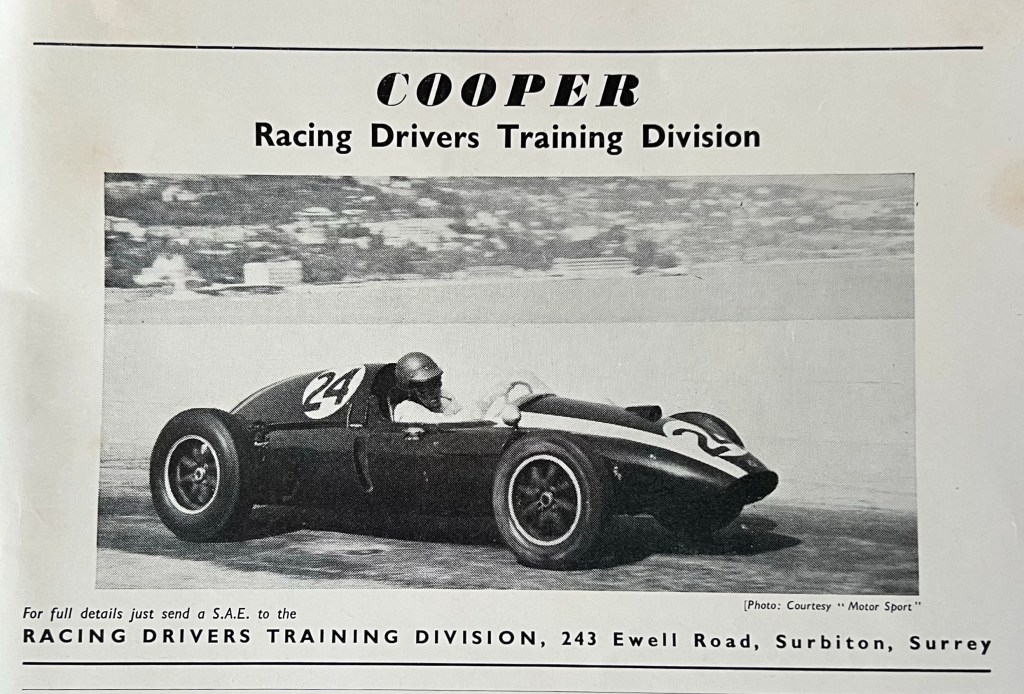
Jack Brabham on the way to winning the 1959 Monaco GP, Cooper T51 Climax
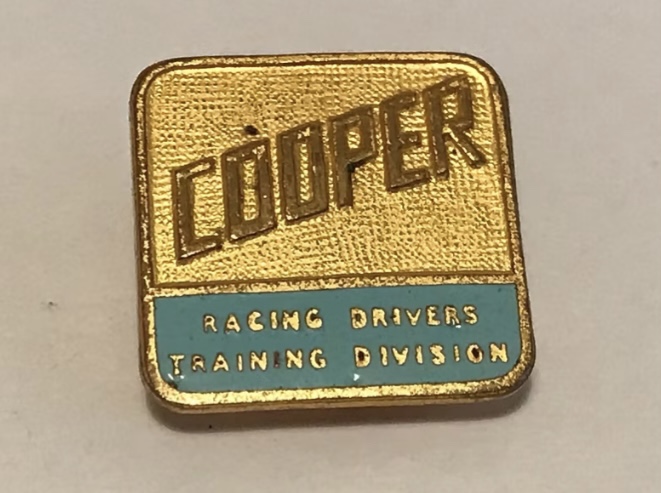
This ad in the December 1960 issue of MotorSport piqued my interest. I had a vague recollection of tripping over some Getty Images shots of school activity and soon rediscovered them.
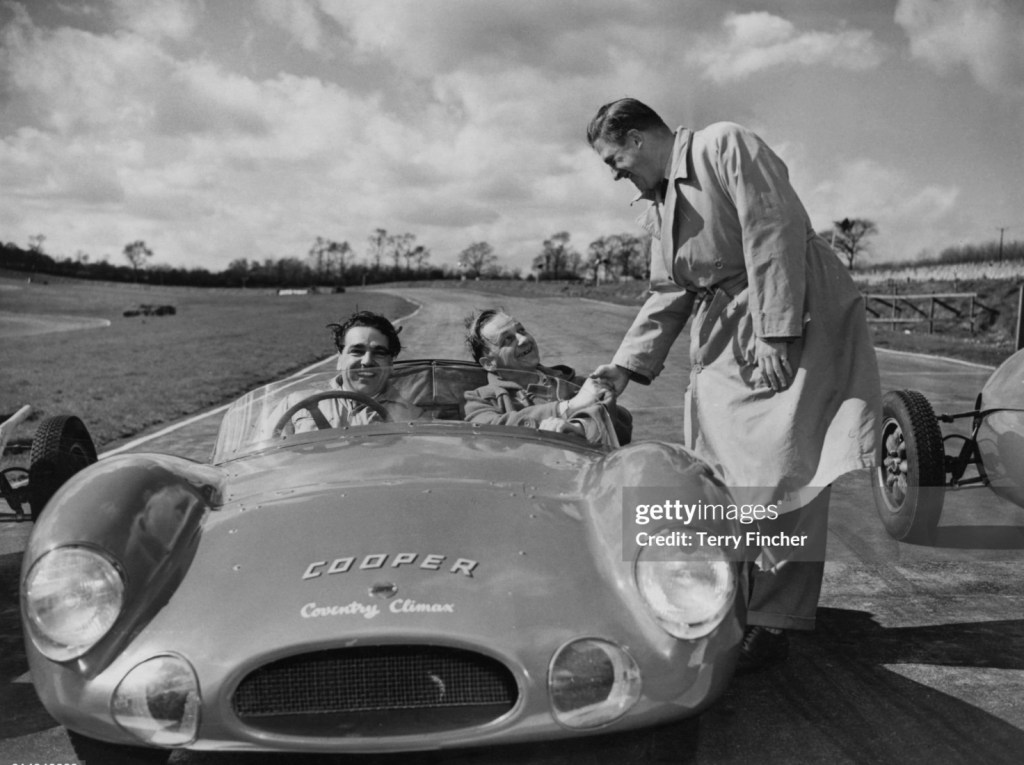
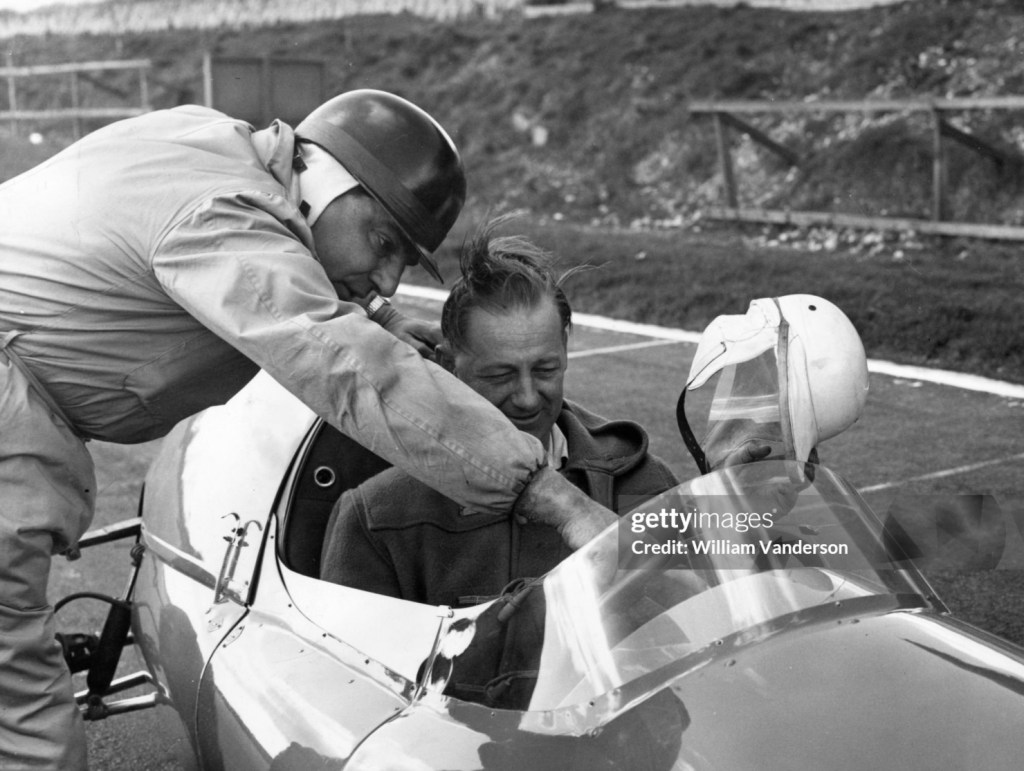
Cooper launched the school at Brands Hatch on March 20, 1957 with The Honourable Gerald Lascelles in attendance to formally open the training facility. He is shown below shaking the hand of US Army Sergeant Henry Klyner, with John Cooper at the wheel of a Cooper T39 Climax.
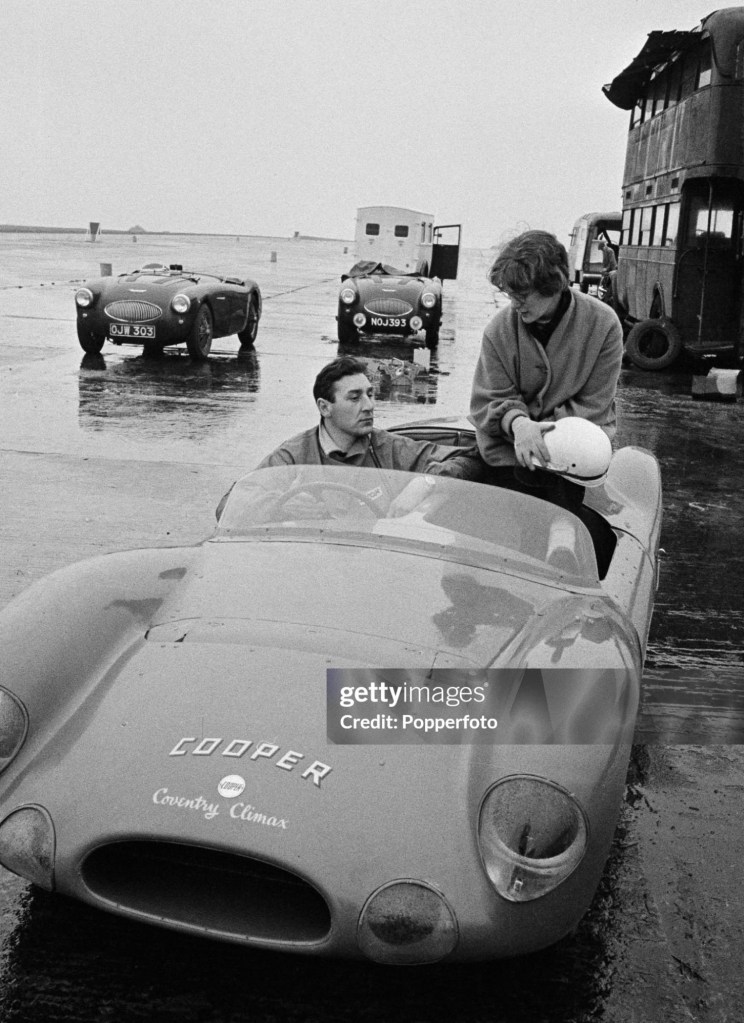
Roy Salvadori in the same car
I’m intrigued to know if the school found any talent of note? It seems readily apparent that Jim Russell’s Jim Russell Racing Drivers School that started at Snetterton in May 1957 became the market leader of race-schools globally.
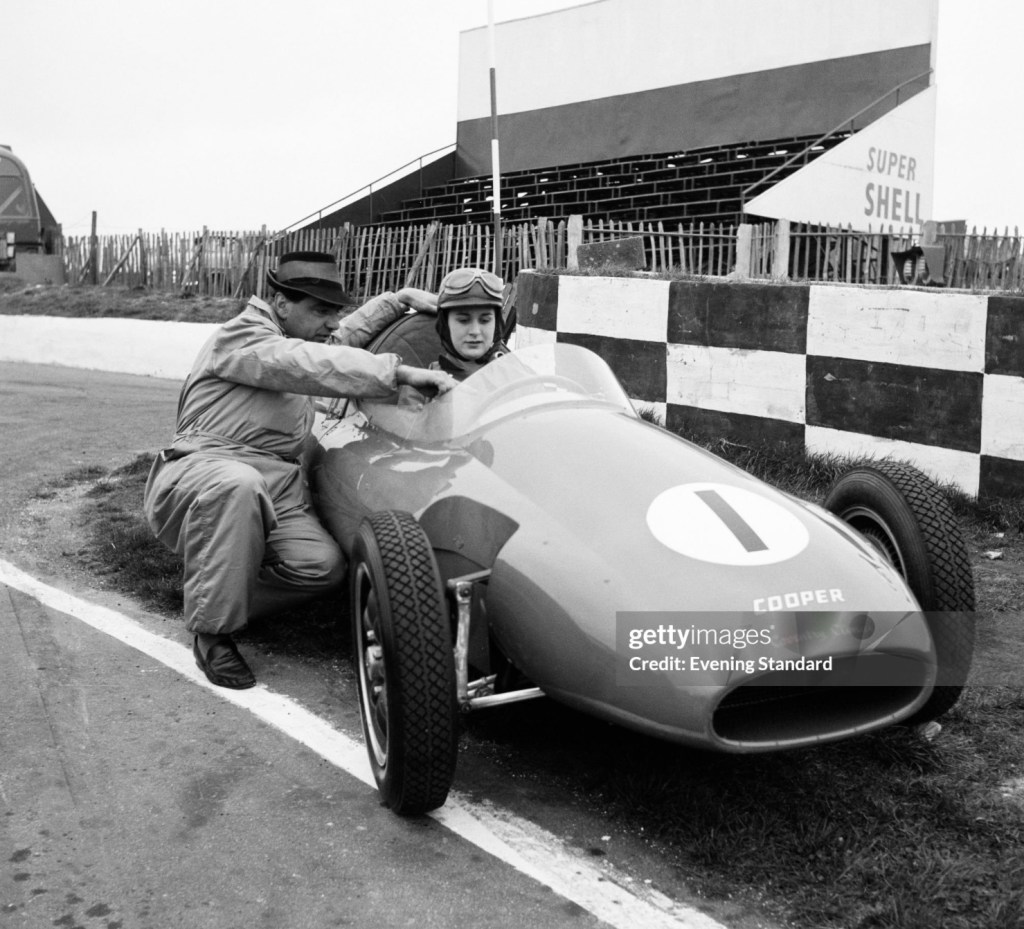
Pat Trigg was clearly a popular student with John Cooper, car above a Cooper T43 Climax 1.5-litre F2 machine, and below in the T39.
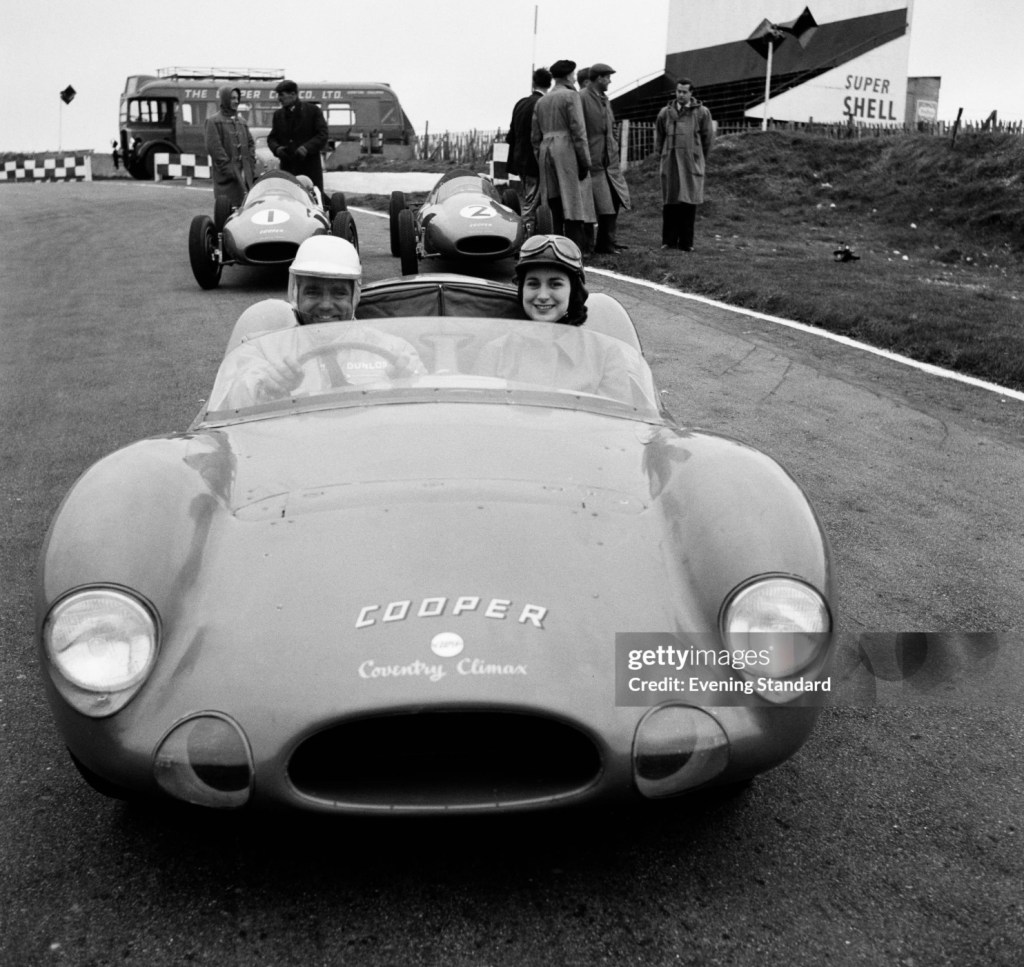
In the shot below Cooper is posed with the two Cooper T43’s being driven by Arthur Mallock and John Forster.
Denis Jenkinson wrote an article about the school’s activities in that December 1960 issue of MotorSport I referred to at the outset.
‘Last winter the Cooper Driving School selected six drivers from their many candidates to take part in races during the 1960 season in Formula Junior. At the time it was anticipated that the best two drivers, Bill Lacey from Ireland and Don Rickman the motorcyclist, would be given a Formula Junior Cooper on permanent loan for the whole season, but as things turned out this was not possible. Activity at the works with Formula 1 and Formula 2 cars, and the demand for Juniors by the sales department, rather left the school short of material. However, the school Junior was used many times during the past season for these six successful pupils to have a go at a proper race. In addition, when the idea of loaning cars to pupils originated Formula Junior in this country was barely beginning, and Coopers had no idea that it was going to develop into such cut-throat racing amongst experienced drivers, so that when they saw the trend of things as the 1960 season progressed they were a bit reluctant to send their pupils out into the free-for-all of Formula Junior. However, there were sufficient races at club meetings at Silverstone and Goodwood, both for Formula Junior and Formule Libre, for the six successful ones to have a go.
John Cooper with trainee, Henry Kilner in a Cooper T43 at Brands Hatch in March 1957
It will be recalled that Lacey was the most promising driver and he was entered by the school for Brands Hatch on Boxing Day, where he finished seventh, and then in the spring he had another drive at a Silverstone club meeting, but unfortunately retired. It should have been Don Rickman’s turn next, but his motorcycle scrambles activity prevented him from taking up the offer, so the next on the list had a drive, this being Tony Skelton, and he finished fifth in his first race. Then Freddie Jacks had a drive at Goodwood and finished fifth and back at another Silverstone club meeting Skelton scored a second place and Miss Elizabeth Jones finished eighth.
Before this second Silverstone meeting the school hired the Club Circuit for a day and Lacey, Jacks, Skelton, Rickman and Miss Jones had the opportunity to put in unlimited practice, using the school car. The sixth pupil to be selected was Keith Ballisat, but as he had contracted a regular drive with Ken Tyrell’s team, he did not avail himself of the school activities.
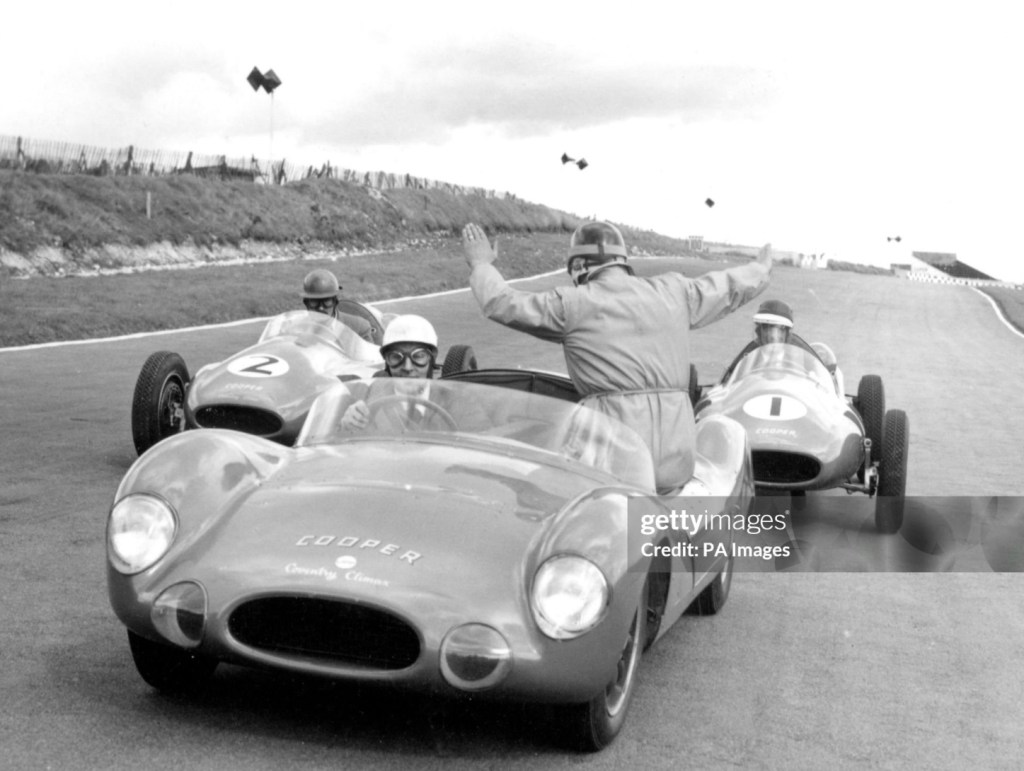
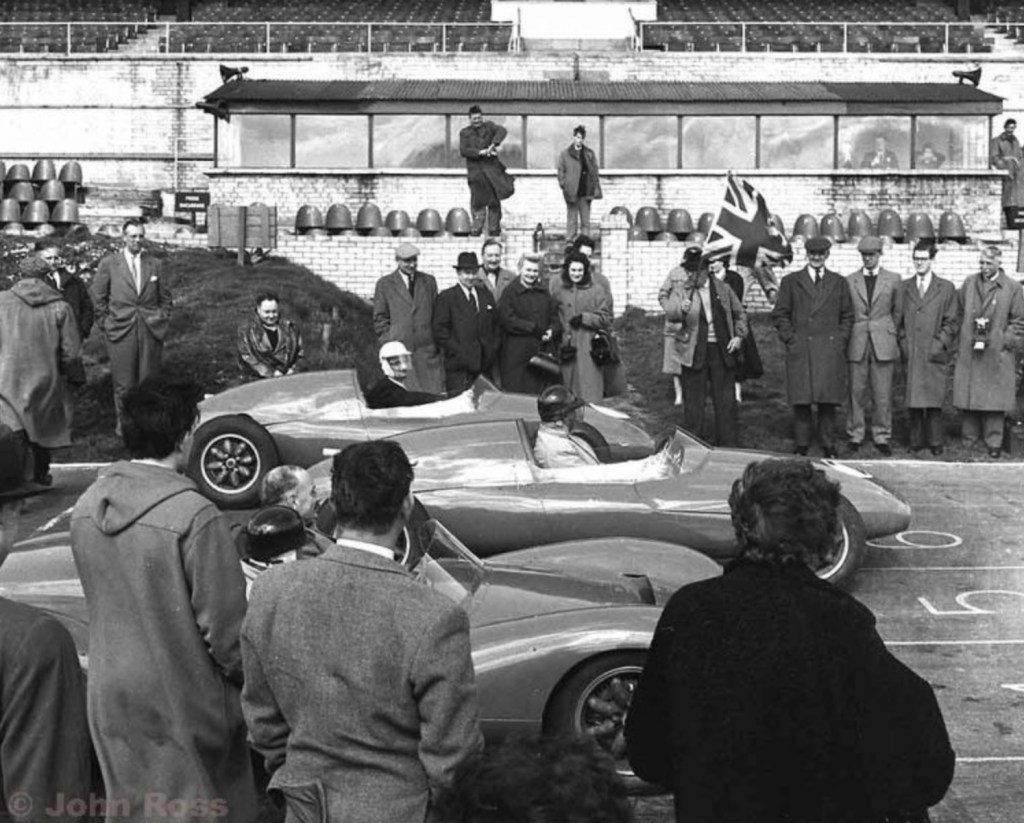
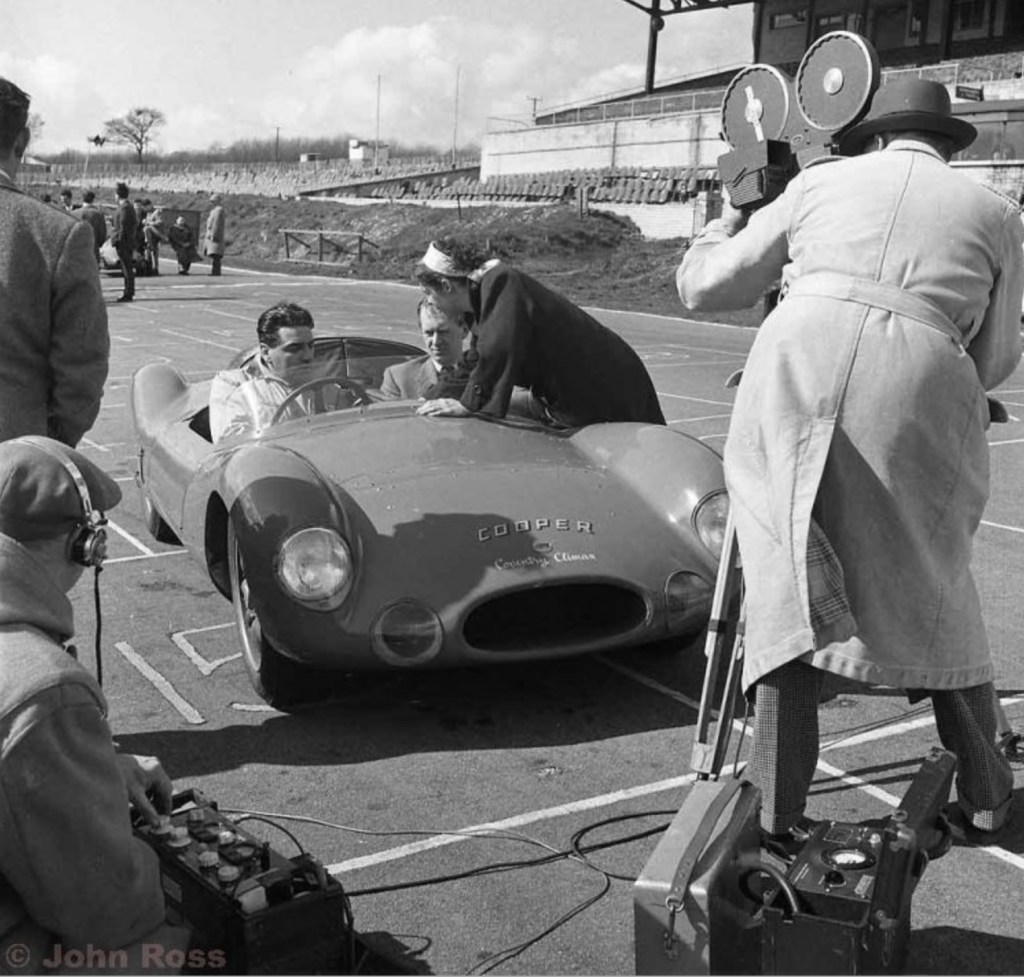
Charles Cooper flags the cars away, filming underway below (J Ross)
At a further Silverstone club meeting Lacey scored a fifth and Jacks scored a third, while at the end of the season the school entered Rickman for the B.R.D.C. race on the full Silverstone circuit, and set him off on his first race in the midst of the Open Formula Junior free-for-all. Being his first motor race, and his first visit to Silverstone on the full circuit, he did remarkably well to finish in eighth place. Although the season was not as active for the school pupils as had been hoped, at least the promise of driving a works-entered Junior had been fulfilled, and it is hoped that 1961 will see a lot more racing for the successful pupils.
Already two more names have been selected, these being Richard Wilson and Jean-Claude Franck, and they should get a start in a race early in the new season. Meanwhile, the school continues to sort out the many applications for membership.’
Credits…
MotorSport December 1960, Getty Images, John Ross Archive
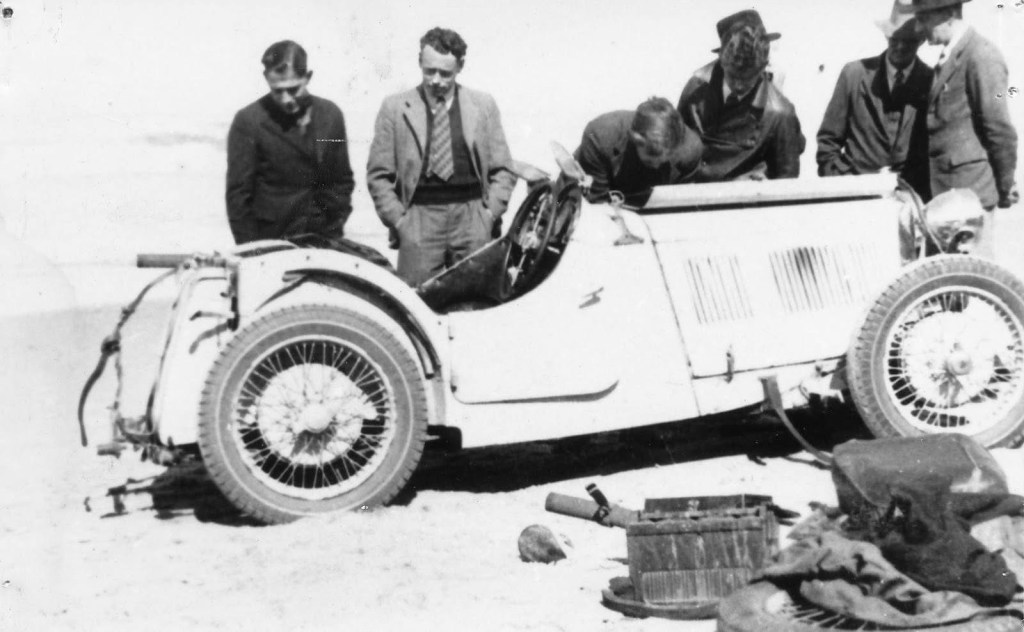
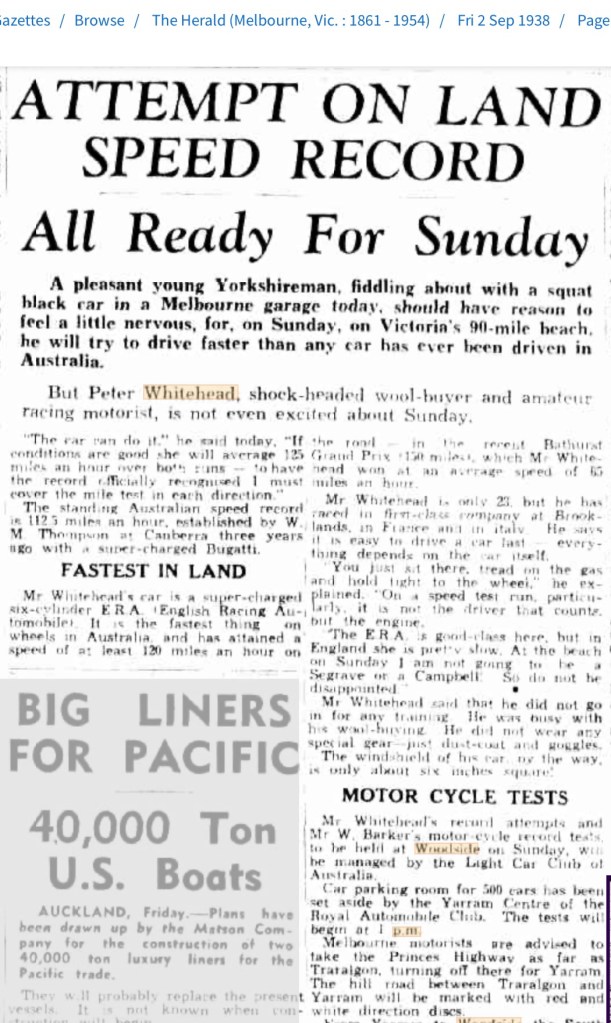
The Australian Land Speed Record session held at Woodside on the Ninety Mile Beach in Gippsland on September 4, 1938 was the first held in Victoria.
The Light Car Club of Australia promoted it, while the Yarram branch of the Royal Automobile Club of Victoria (RACV) ran the event which used you-beaut electrical timing apparatus accurate to one-hundredth of a second approved by the Australian Automobile Association.
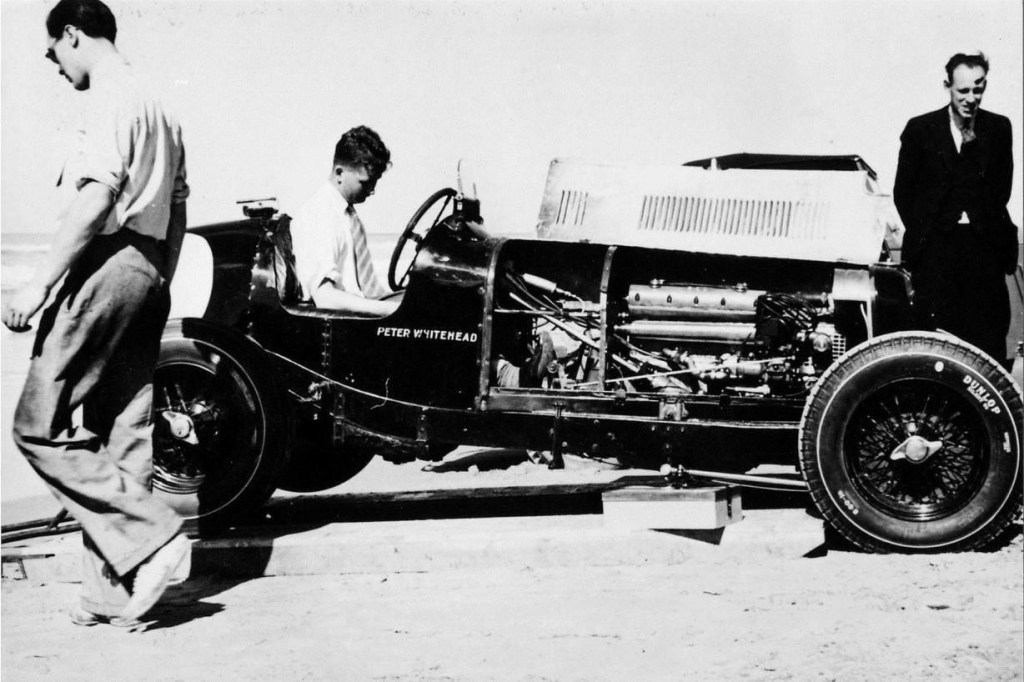
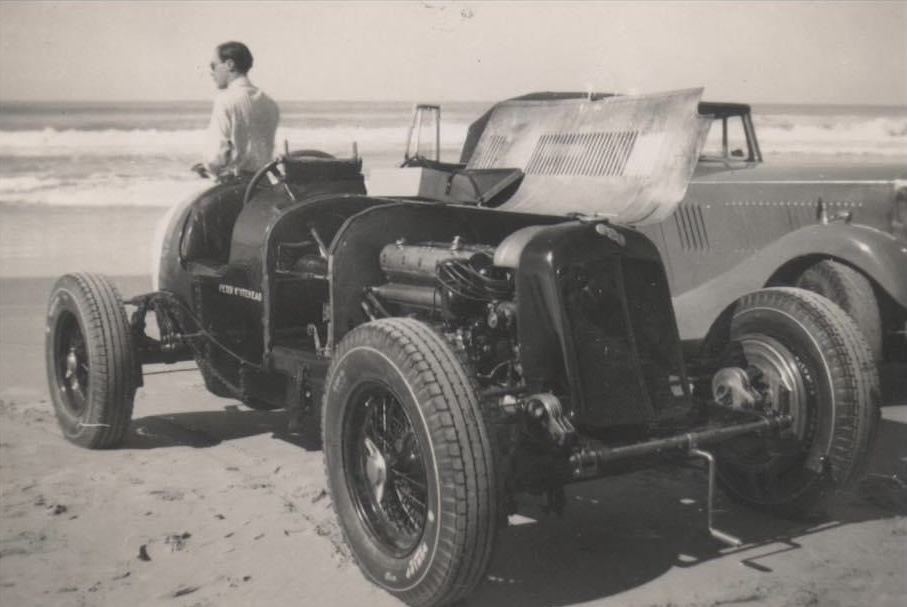
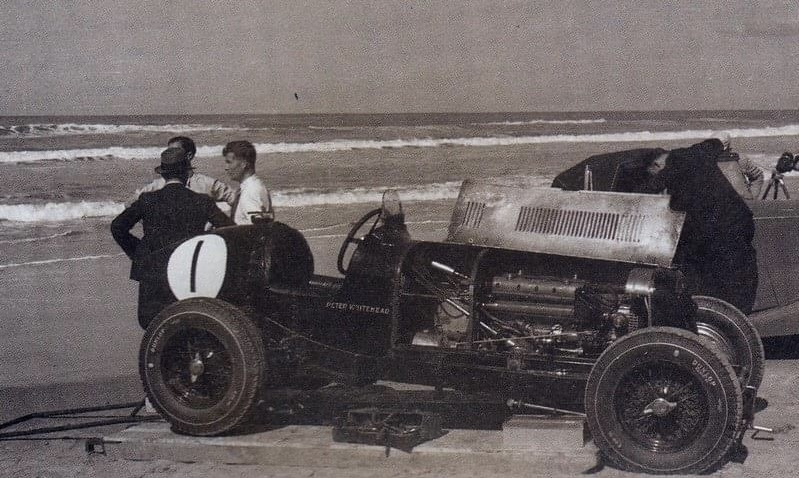
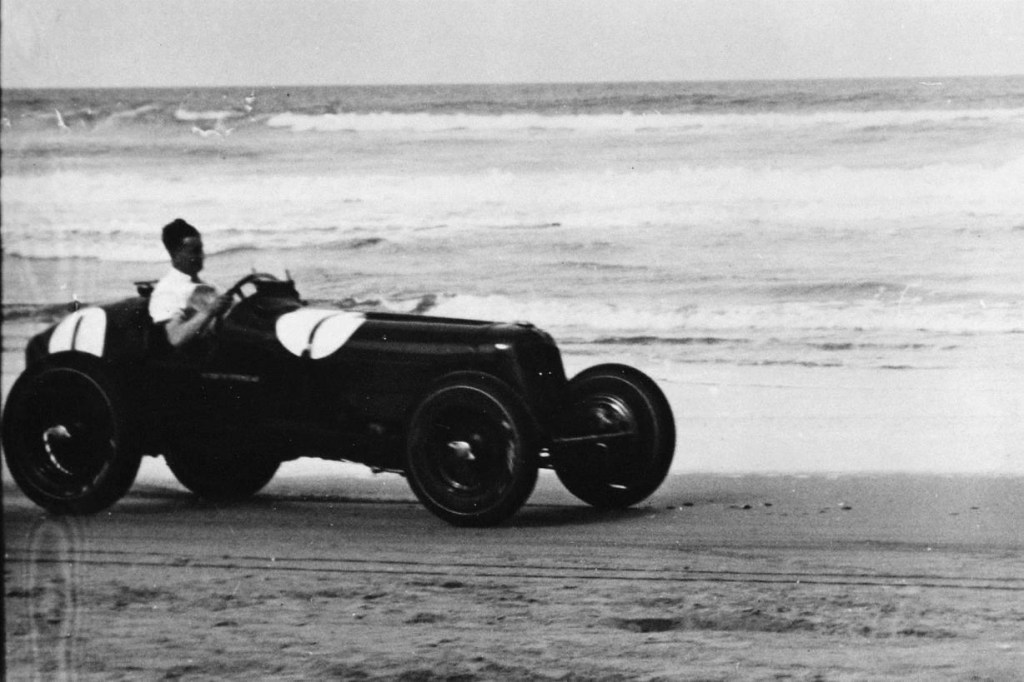
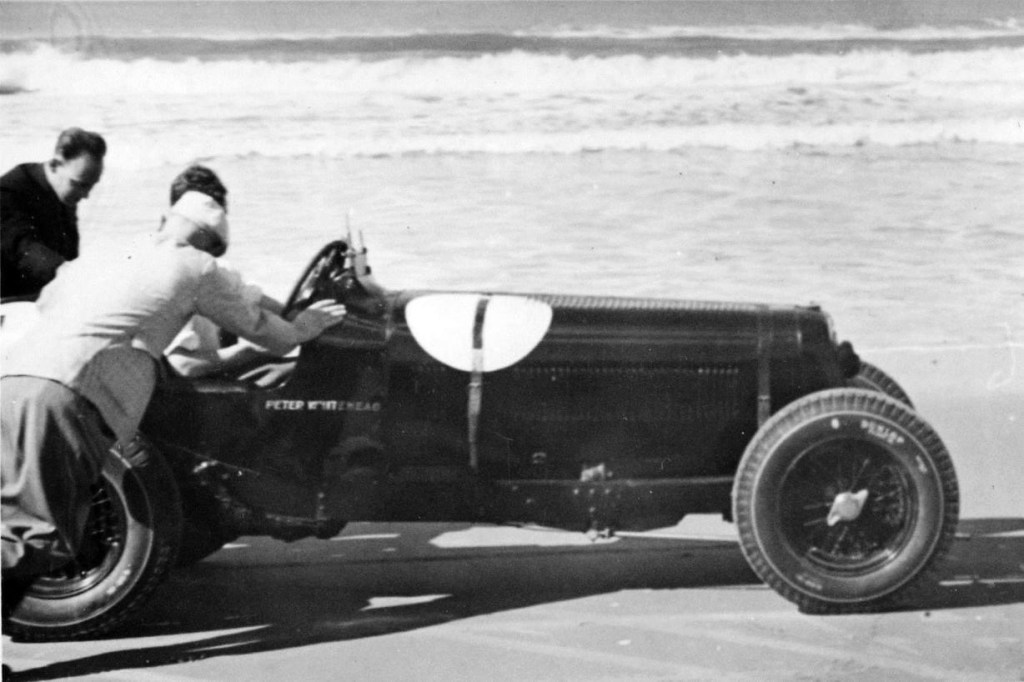
The drawcard was Peter Whitehead and his ERA B-Type R10B. The photograph above shows him warming the engine and transmission of the car at Woodside, collar, tie and all.
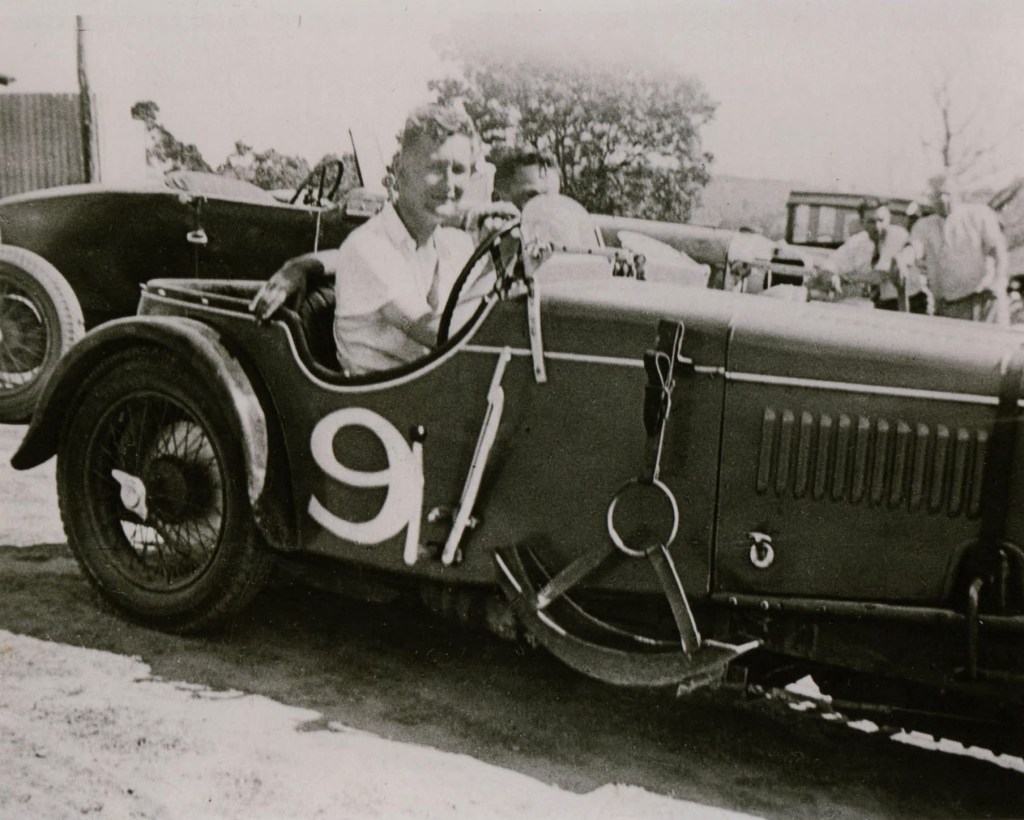
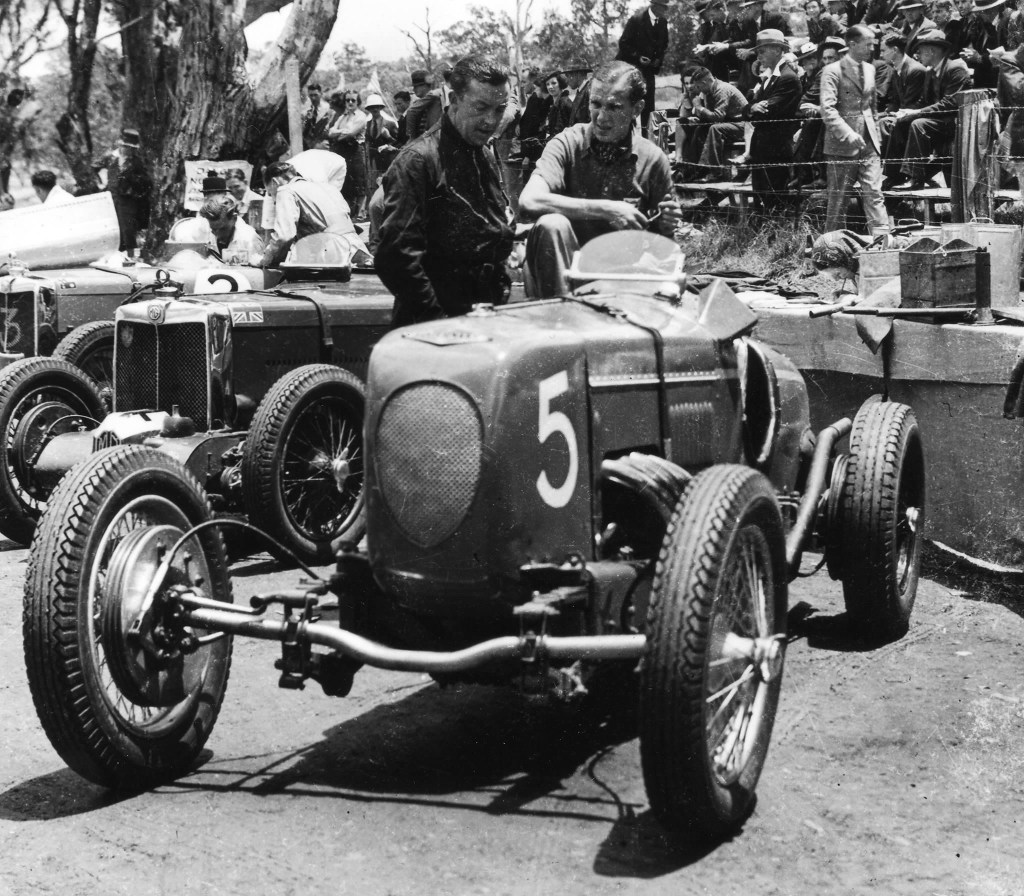
Other drivers granted permission to have a crack were the following: Class C 3-5-litres: RND Miller, Vauxhall 30-98 and AH Oliver, Lagonda Class D 1.5-2-litres: JN Derham, Vauxhall Class F 1-1.5-litres: JP ‘Jim’ Leech, Frazer Nash TT Replica and Class H 500-750cc: DM George MG J4 supercharged.
The stretch of beach chosen was four miles long and 60 feet wide, the existing outright record was held by three-times Australian Grand Prix winner Bill Thompson on a supercharged 1.5-litre Bugatti T37A.
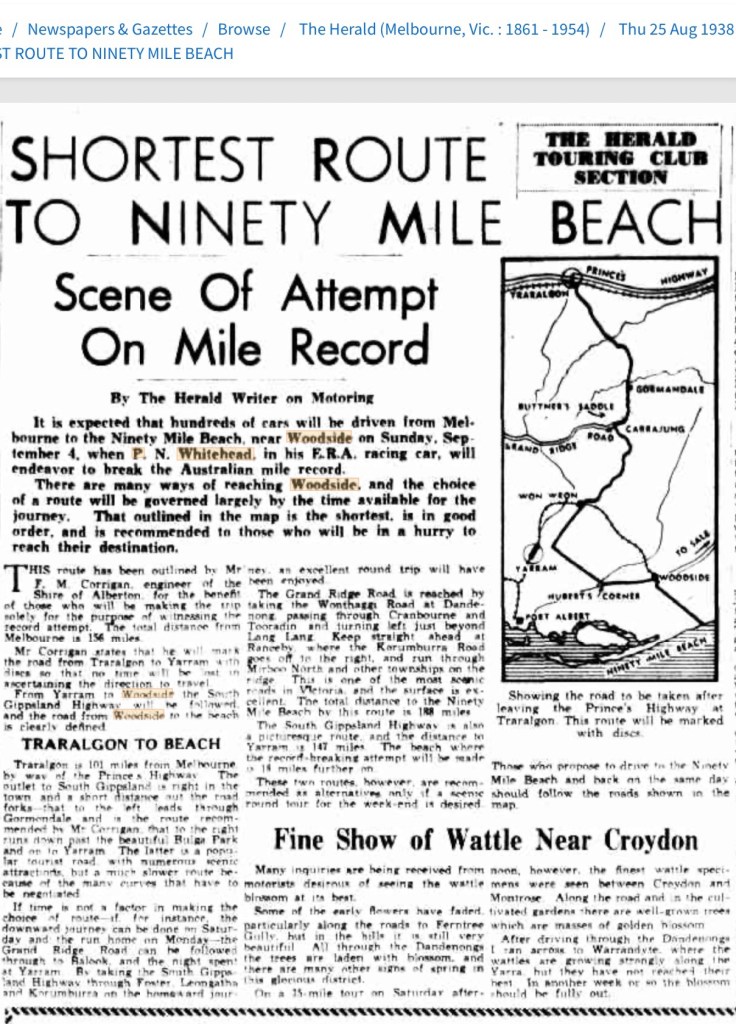
The 156 mile trip from Melbourne was quite a journey for the time. It’s amusing now to look at how much of the newspaper (the what?) coverage in the week before the event was devoted just to getting there, the three suggested routes were explored by the papers in some detail inclusive of maps. Different to the Google maps exercise on ‘yer iPhone today…
Peter Whitehead and Jim Leech aboard the latters Frazer Nash TT Rep #2134 at Rob Roy Hillclimb – where Peter had won the Australian Hillclimb Championship in R10B not long before – November 20, 1938. Whitehead did a 34.77 sec best (Davey Milne Archive)(unattributed)
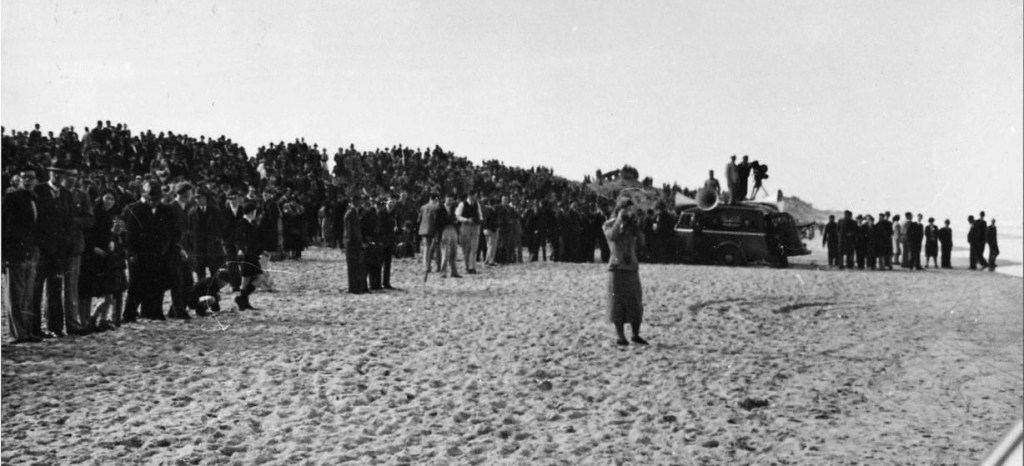
Poor Jim Leech ran off the road on the way to the event in his Frazer Nash, but 6,000 others came from far and wide to see the spectacle before the fickle finger of weather fate ruined the day.
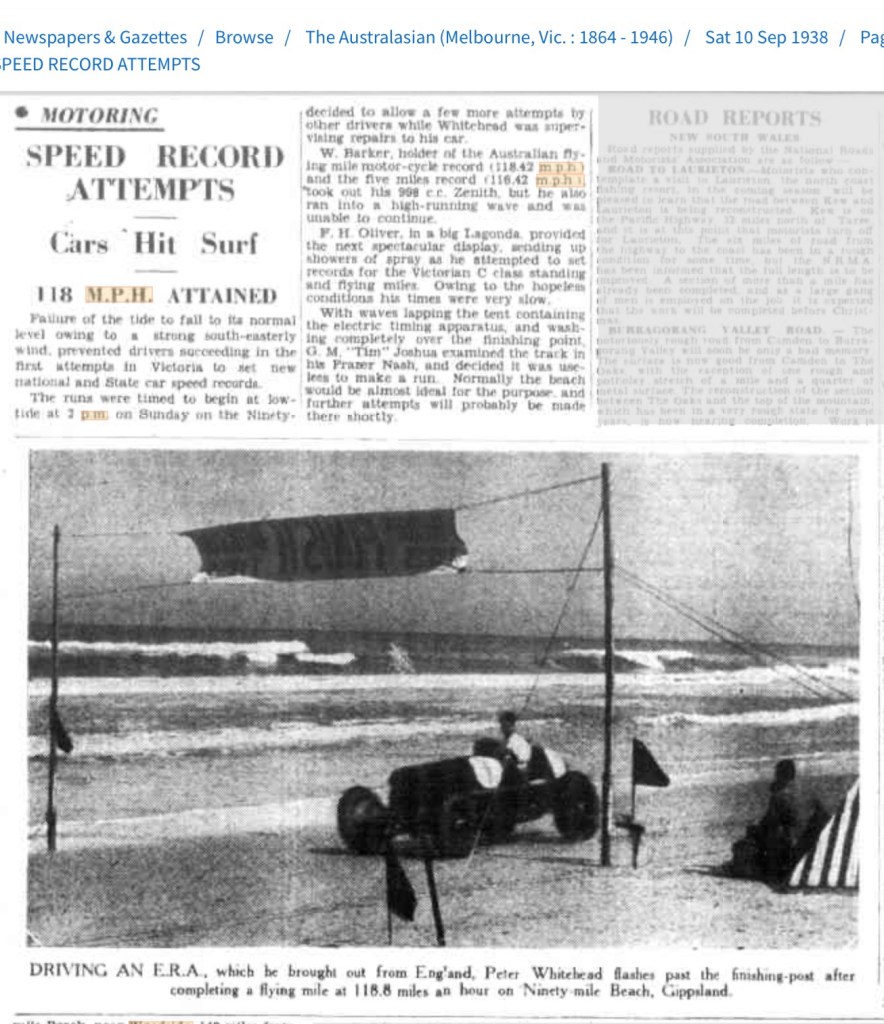
A strong south-easterly wind prevented the usual fall of the tide, ‘after the English driver Peter Whitehead had covered a flying-mile at an average of 118.8mph in his special 1500cc E.R.A. car the waves washed over the track and prevented any further serious attempts,’ recorded the Melbourne’s The Argus.
As Peter’s speed was set on one run, rather than the required each-way average of two, Thompson’s one-mile record of 112.5mph set in Canberra on May 11, 1935 still stood; Bugatti T37A.
No helmet for Whitehead, as at Bathurst when he won the AGP, proximity of Bass Straight clear and threatening (unattributed)
An estimated 2,000 cars conveyed the punters into the sand hummocks along the picturesque track many hours before the events were scheduled to begin.
‘Trials were impossible owing to the tide. With only a few yards of wet sand between the flags and the waves on the four mile course. Whitehead pluckily started up so as not to disappoint the crowd. He was obstructed by water on his first run, however, and although he averaged 118.8mph in his next run, his car plunged through the lip of a wave, tearing away apparatus for cooling the brakes, ripping off the oil filler cap, and partially flooding the crankcase with salt water.’
‘He maintained control, but it was evident that he had no chance of putting the record up to 135mph which was his hope.’
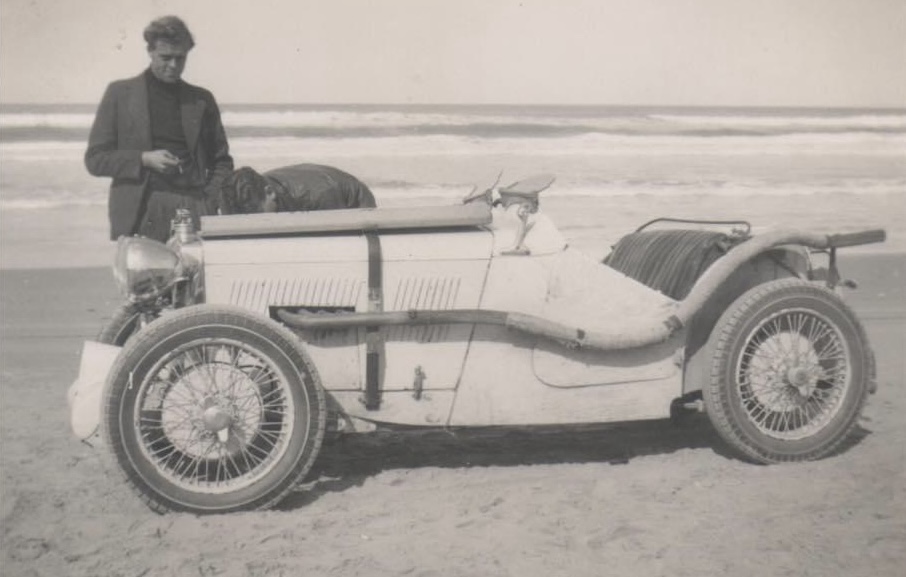
Derry George, MG J3 #3763 this shot and below (M Gallagher Collection)(unattributed)
The AAA, LCCA and RACV reps then met and decided to allow some attempts by other drivers while Whiethead and his crew effected repairs to R10B.
W Barker, holder of the flying-mile motorcycle record (118.42mph) and five miles record (116.42mph) took out his 998cc Zenith but he also clouted a wave and was unable to continue.
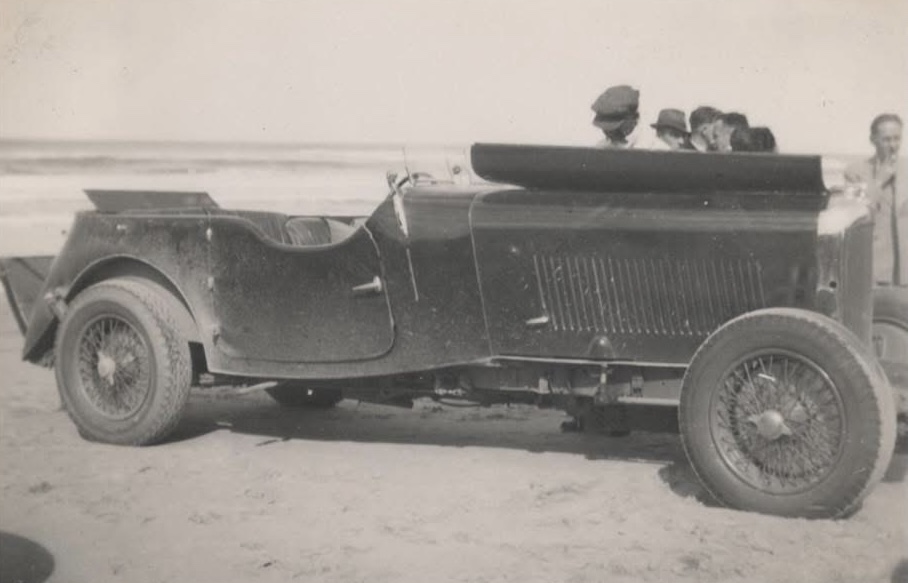
Next up was Big Bertha. F Oliver’s Lagonda provided a spectacular display sending up showers of spray in attempting to set Class C records but the conditions ensured his times were slow.
The AH Oliver Lagonda (M Gallagher Collection)Tim Joshua’s Frazer Nash Single Seater (what chassis number folks, ‘SS1’ is I think the chassis type, not the number?) at Lobethal during the 1938 South Australian GP weekend. Ron Edgerton at left, later owner of the FN, Joshua on the right alongside the MG K3s #3 Colin Dunne and #2 Lyster Jackson (Leon Sims Collection)
‘With waves lapping the tent containing the electric timing apparatus and washing completely over the finishing point, GM ‘Tim’ Joshua examined the track in his Frazer Nash and decided it was useless to make a run. Officials prevented any further attempts and there was a rush to get cars off the beach before the tide rose farther. The crowd had to lend willing hands to help several vehicles out of difficulties.’
‘Afterwards, the director of the trials, Mr JW Williamson, expressed supreme disappoint with the result. The crowd, who had enjoyed the outing in brilliant sunshine, took it in good part.’
‘It was the first attempt made in Victoria to set such records. Normally the beach would be almost ideal for the purpose, and further attempts will probably be made there shortly.’ The Argus concluded…
Not so, as it transpired.
(unattributed)
Etcetera…
(T Johns Collection)(T Johns Collection)
The Car was ‘the official organ of the Light Car Club of Australia’, so this is the way the organiser saw the day.
(T Johns Collection)
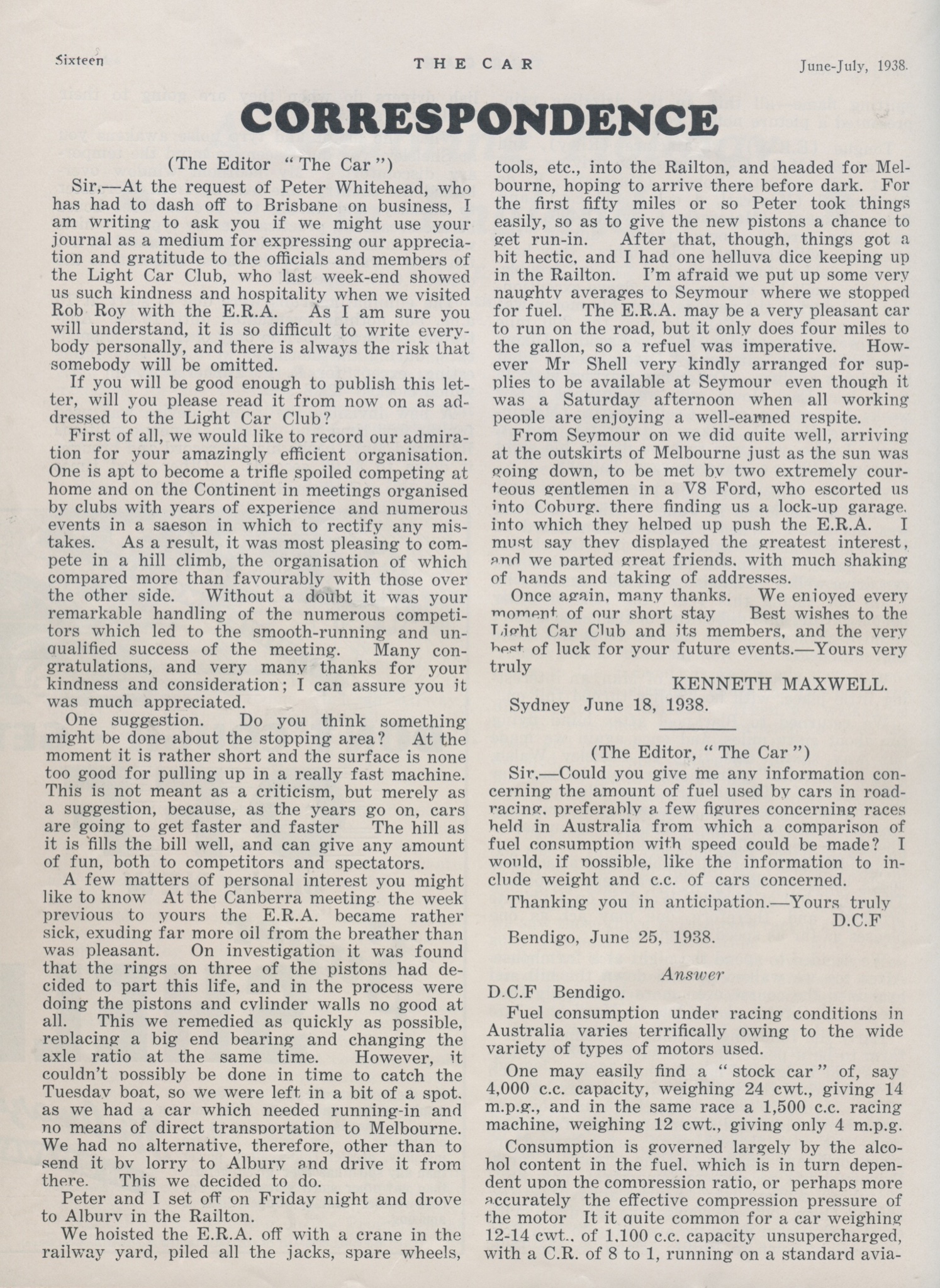
Kenneth Maxwell was a member of Whitehead’s ’38 Touring Party and wrote this letter to the editor of The Car about the equipe’s experiences early in the trip, published in the June-July issue.
The Car was the Light Car Club’s magazine, the trip to run-in the ERA between Albury and Melbourne sounds interesting!
The Fraser Nash TT Rep and Single Seater, MG J3 and the ERA are still alive and well, all but the latter remain in Australia.
Coincidentally, both the J3 and TT Rep were brought to Australia and first raced by George Martin, the Melbourne based Cunard White Star Line representative who died on the way home from the 1938 AGP at Bathurst. He and his wife crashed the BMW 328 in which George had finished 15th near Wagga Wagga.
The shot above shows the Frazer Nash TT and ex-Brabham Cooper T23 Chev aka RedeX Special, at the Davey Milne home in April. The FN requires recommissioning but the Cooper is a runner, ask the neighbours!
Credits…
The Argus September 5, 1938, Martin Gallagher Collection, Davey Milne Archive, Leon Sims Collection, Tony Johns Collection
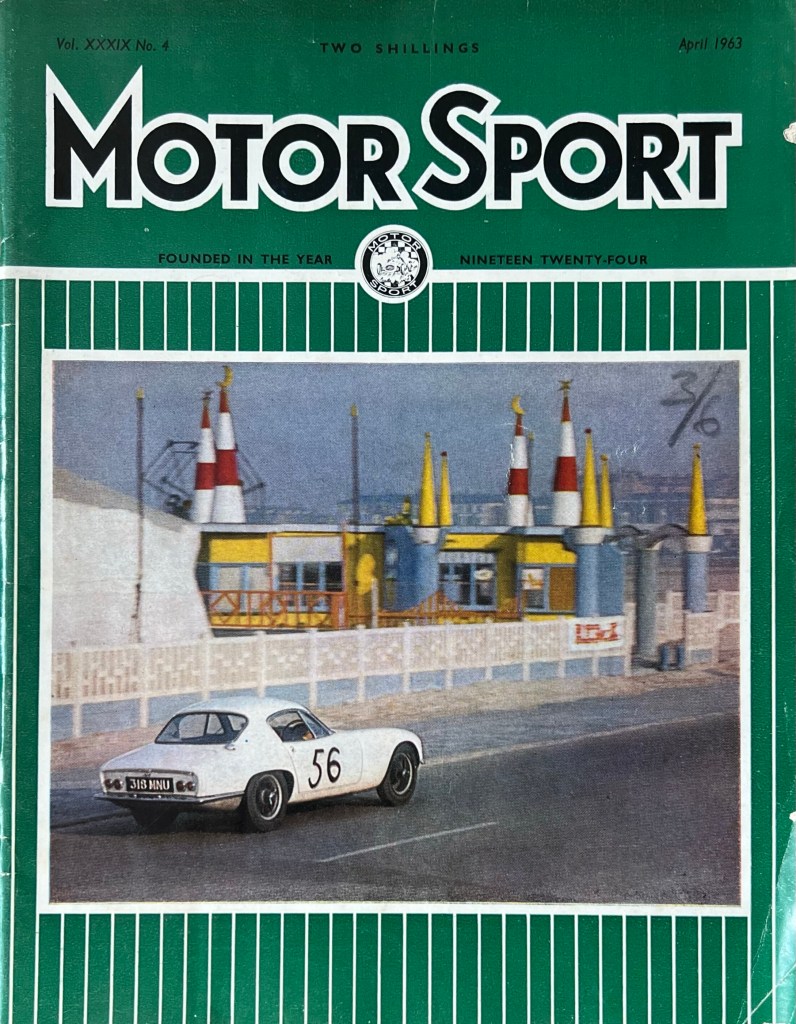
‘Cedric Brierley was well known in Club racing until a bad crash put him out of racing for some time, leaving him with a disability which precludes the use of a normal gearbox. He has had a Lotus Elite fitted with a 1.5-litre single-cam Coventry Climax engine and Hobbs automatic gearbox and at the Southport Speed Trials he proved to be nearly as quick as the E-Type Jaguars.’ MotorSport wrote.
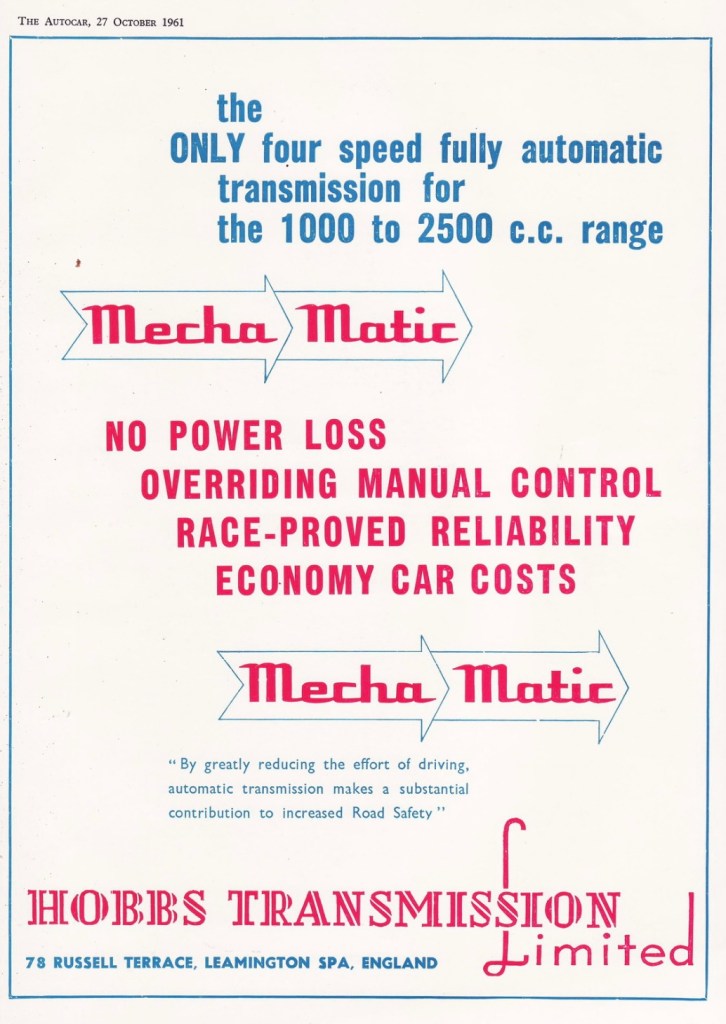
It was the beauty of the shot that initially captured my attention, then you start to dig…I thought there was only one Elite fitted with a Hobbs Mecha-Matic gearbox – Howard Frederick Hobbs was an Adelaide born engineer – not so…
Rupert Lloyd Thomas wrote on The Nostalgia Forum, ‘Let us try and put the achievements of Howard Hobbs in context. He built the 1015 automatic transmission and fitted it to a Lotus Elite for the 1961 season.
In November 1960, David Hobbs, Howard’s son, acquired Lotus Elite, 5649 UE, from Chequered Flag, Chiswick, London, that was to launch his international racing career. The engine of the Elite was modified by Cosworth to Stage III tune producing 108 b.h.p. and a Hobbs Mecha-Matic gearbox was fitted, specially modified for racing. Hobbs said, “Chapman was not involved in the project, but our engine was blueprinted by some young tuner by the name of Keith Duckworth.”
The Hobbs Mecha-Matic gearbox high point came at the Nurburgring on May 28, 1961, when David Hobbs, and Bill Pinckney, two Midlands lads, defeated the might of Porsche in the 1600cc sports racing class in the Nurburgring 1000 kms with their automatic Lotus Elite. Bumped up to the 1600cc class by the organisers for their non-standard gearbox, after protests from fellow competitors, they faced much more powerful opposition from Porsche. After this remarkable achievement the future of the gearbox looked set fair. A long trip to Italy for Le Quattro Ore di Pescara on August 15 was less successful. The car dropped a valve early in the race, mechanic Ben Cox remembers worrying about taking the blame for what turned out to be a material failure.
Colin Chapman was sufficiently impressed to contact Hobbs in order that Jim Clark could drive the car in the 3 Hours of Daytona on 11 February 1962. As David Hobbs fought to establish himself as a professional racing driver he had also come to the attention of the Jaguar factory, and for 1962 he took over the privateer Peter Berry-entered E-Type from Bruce McLaren for the season. He was entered in the Jaguar, 3 BXV, for the inaugural Daytona 3 hours with the Lotus sitting idle. As Hobbs tells it, “Colin Chapman rang up and asked if he could borrow the Mecha-Matic Elite for Jim Clark to race at the same event.” Clark drove the Mecha-Matic in Florida, streaking away in the class lead but retiring after 60 laps with a failed starter motor and being classified 29th.
Jim Clark later had a road-going Elite, HSH 200, fitted with a Hobbs gearbox, as did Stirling Moss. Clark said in the book ‘Jim Clark at the Wheel’, “Those who scorn automatics take note!”
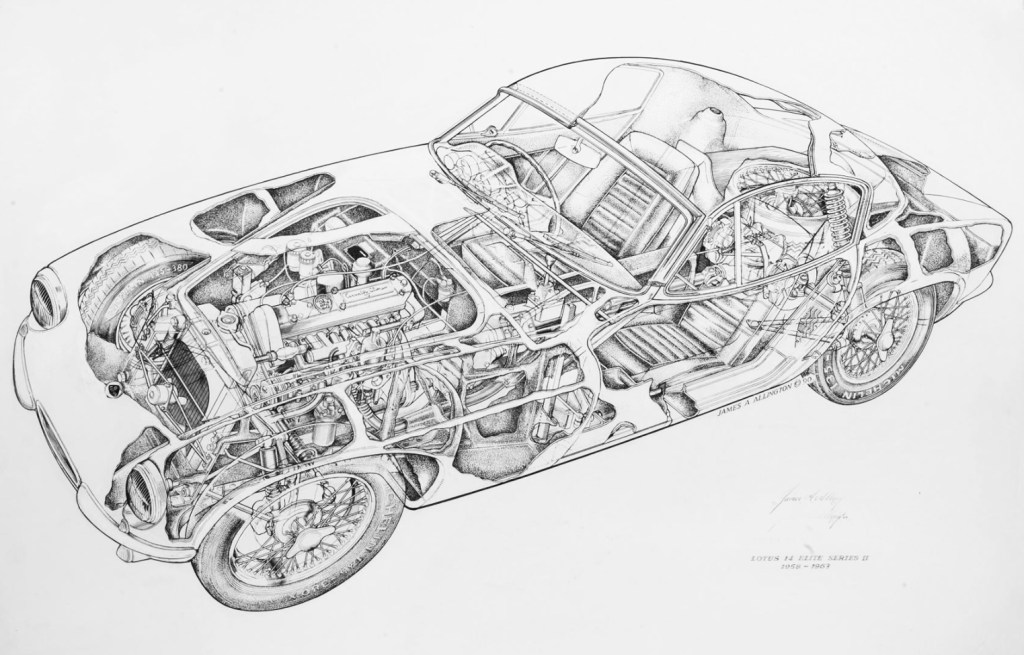
(J Allington)
The Mecha-Matic Elites…
Thomas again, ‘I have found three:
The road car of Jim Clark Reg # HSH 200. This plate would have been issued in 1961 by Berwick C.C. Chassis No: EB-1659, Engine No: FWE10233 – SUPER 95 Specification. Bristol Plate No: EB-1659. Originally yellow and silver. Subsequently sold in 1962 to a George V. Simpson, who painted it dark blue, Scottish racing colours.
The Cedric Brierley car, Reg # 318 MNU.
The Stirling Moss road car Reg # HRT 163D. Body/Chassis no.1789 and was fitted with a Twin-cam engine, make unknown. Colour yellow. This is a 1966 reg no. so car may have been re-registered that year on change of specification. Car thought to be in the USA, last known owner was a Richard Richardson.
So we have a story involving David Hobbs, Keith Duckworth, Colin Chapman, Jim Clark and Stirling Moss. Duckworth later put cash into developing the ideas of Howard Hobbs, Clark and Moss bought the cars.
An intriguing footnote. About the time Duckworth was taking up the VKD transmission for racing, Howard Hobbs was still battling his old nemesis Borg-Warner in the road car game: http://archive.comme…ly-transmission ‘
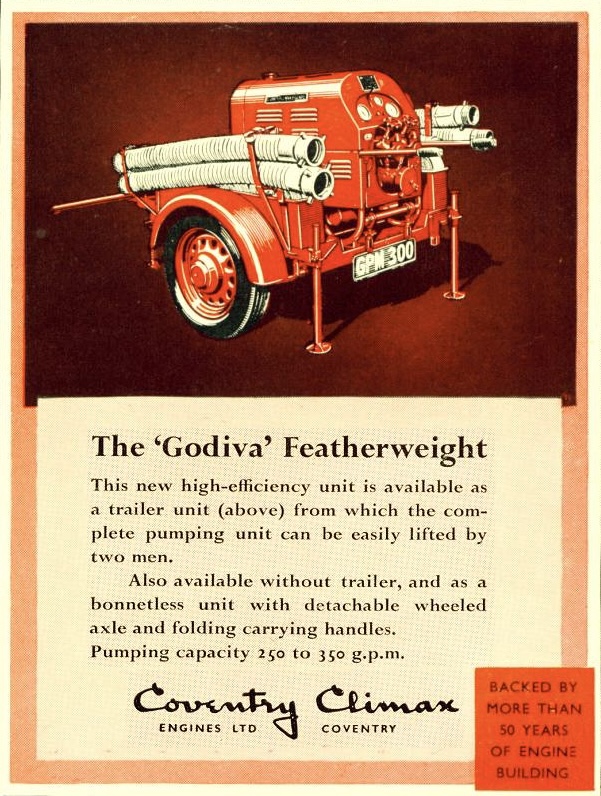
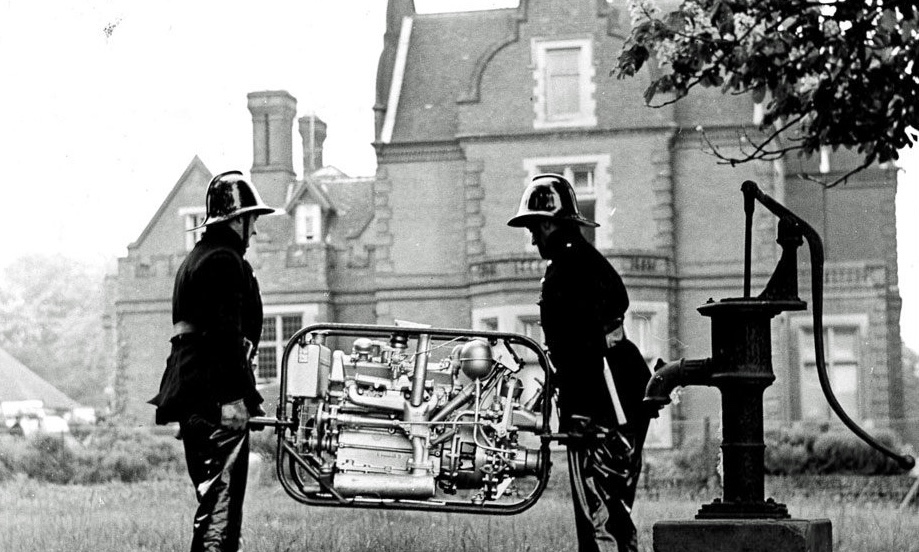
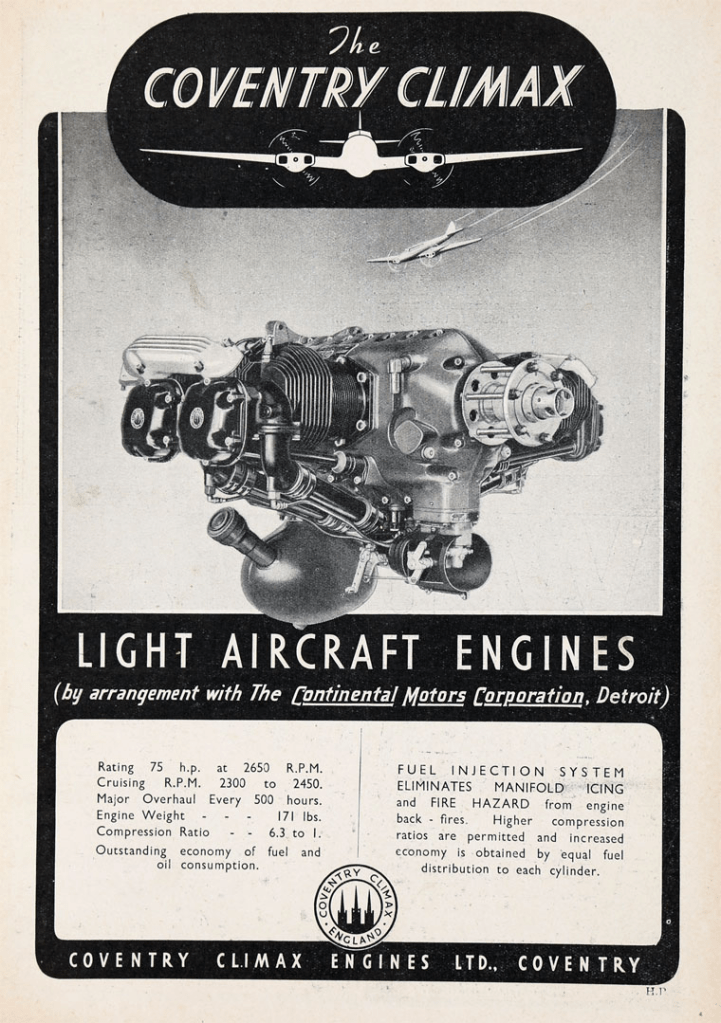
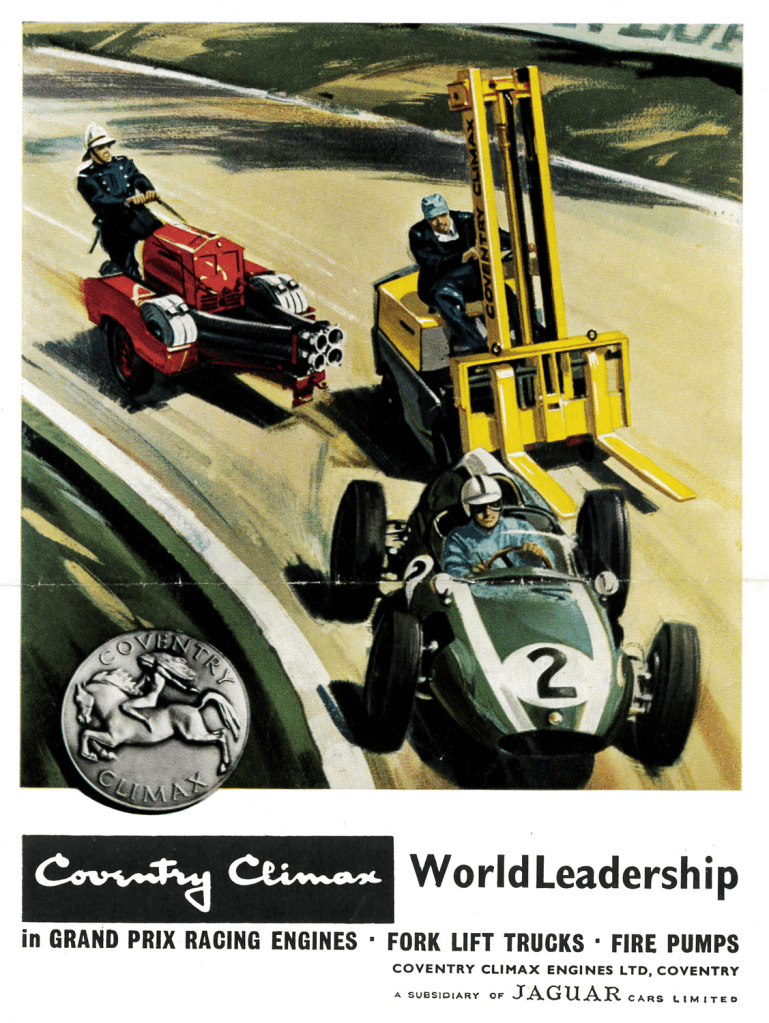
Coventry Climax’ mega racing successes were begat by the Godiva Featherweight engine as you all know. Here is a great Graces Guide summary of the corporate evolution of Coventry Climax, formed in 1917: https://www.gracesguide.co.uk/Coventry_Climax_Engines
(Godiva Ltd)
Etcetera…
1939
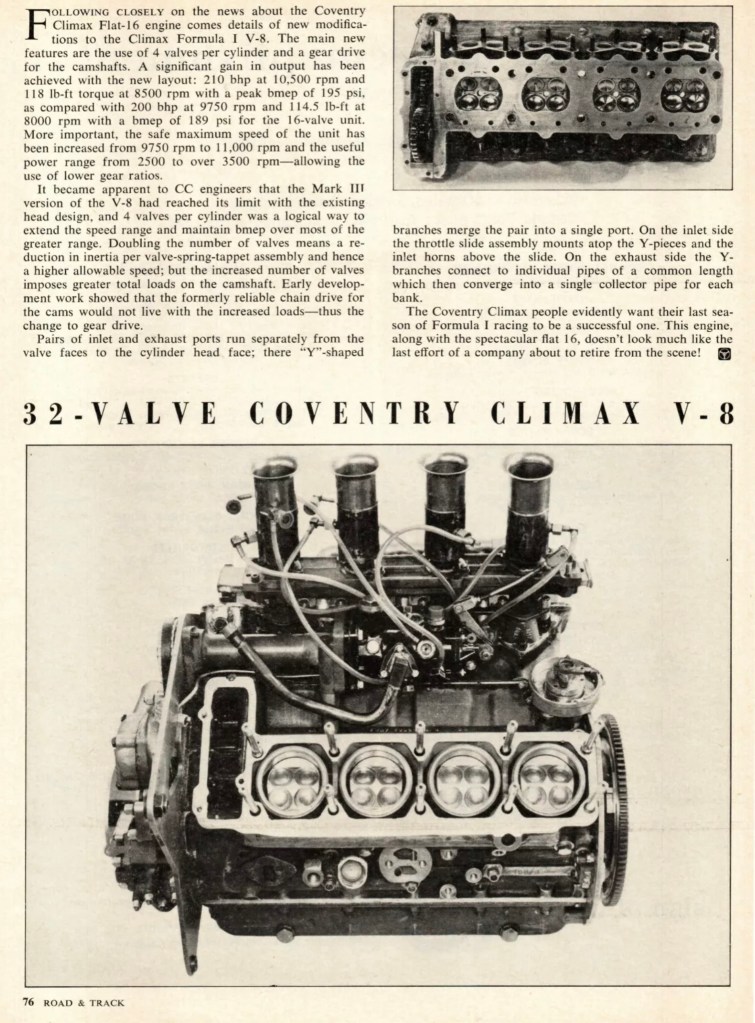
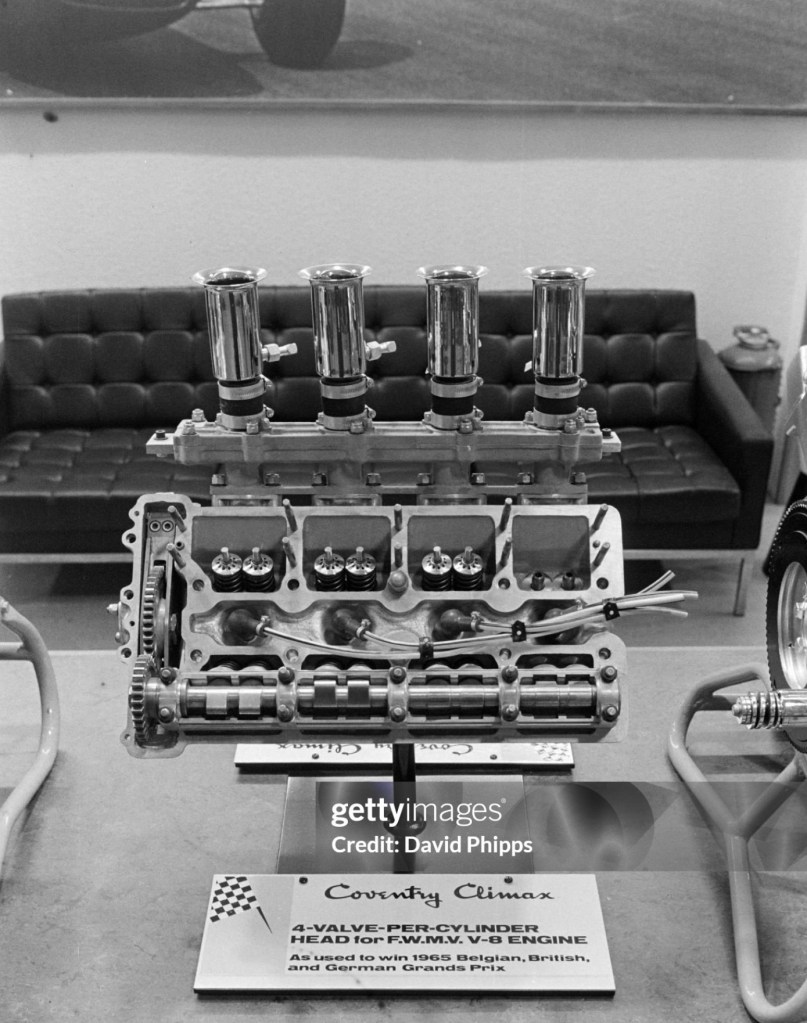
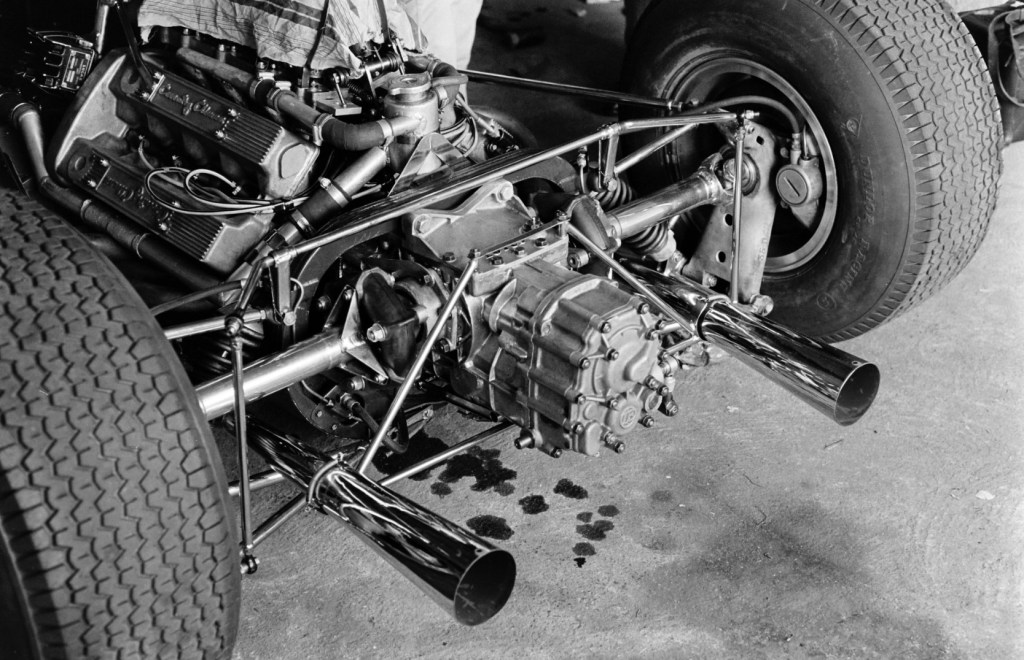
Irrelevant in the context of this article but it popped up in my Google search, so why not. Shots of the two (?) semi-undressed F1 Coventry Climax FWMV Mk 6 and Mk 7 1.5-litre four-valve V8s aren’t common.
The Cams were gear, rather than chain-driven as in the case of the earlier FWMVs, as David Phipps’ London Motor Show shot taken at Earls Court in October 1965 demonstrates.
The Mk6 FWMV Coventry Climax V8 (below) made for Lotus fitted to a 33 chassis in 1965, circuit unknown. Quick visual differentiators (below) from a two-valver are the ribbed cam-covers and, depending on the crank spec of the engine concerned, and ‘conventional’ rather than crossover exhausts. Aren’t the megaphones nice…212bhp @ 10,300rpm are the numbers I have. ZF five-speed transaxle.
(MotorSport)
Credits…
MotorSport April 1963, Rupert Lloyd Thomas, James Allington, Road & Track, MotorSport Images, Godiva Ltd, Getty Images-David Phipps
In this case the meaning is an unfortunate set of circumstances that are set in train that end up badly for the initiator and well for the recipient.
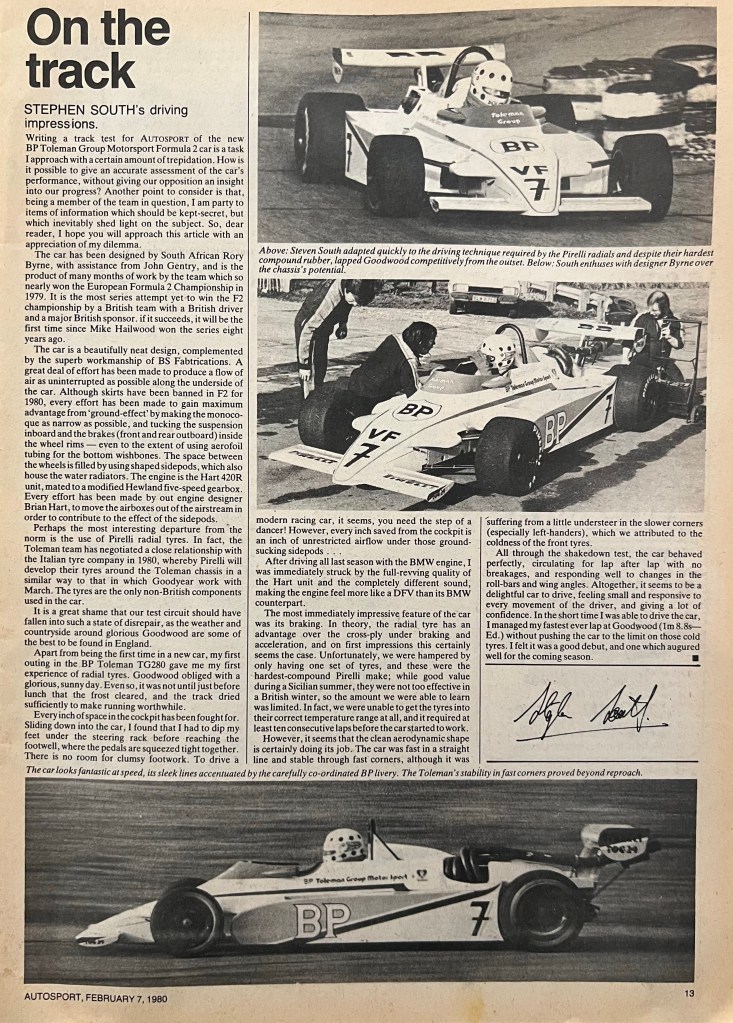
Young British up-and-comer Stephen South was looking good for 1980, he had a strong season in the 1979 European F2 Championship – sixth with one win at Hockenheim – and had been signed up as one of two Team Toleman drivers together with Derek Warwick to pilot a pair of Rory Byrne designed Toleman TG280 2-litre Hart 420Rs in the 1980 championship.
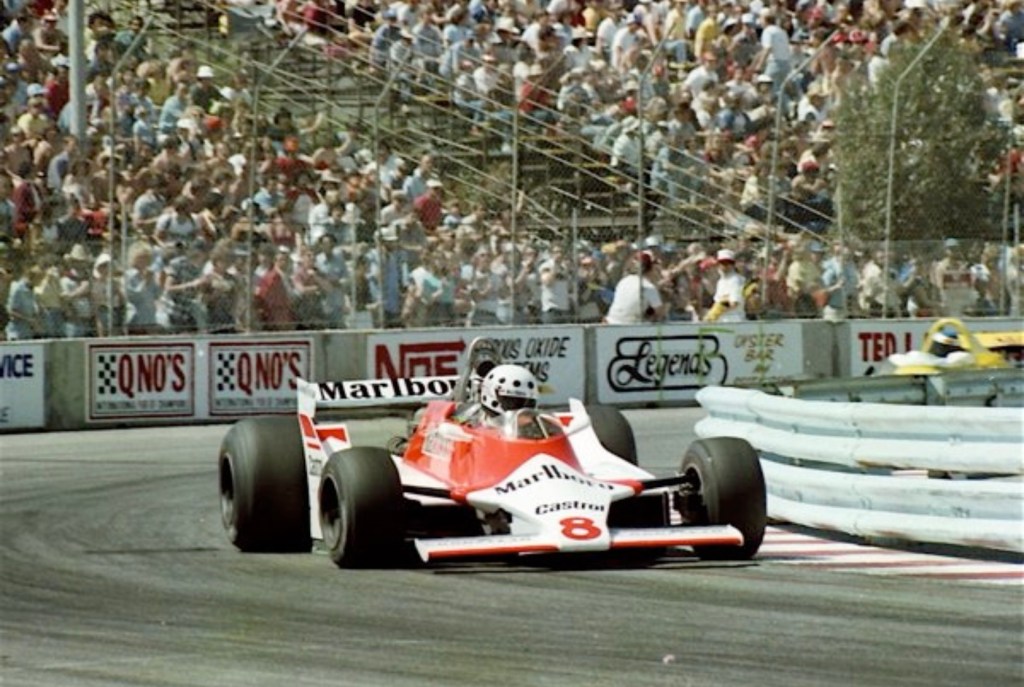
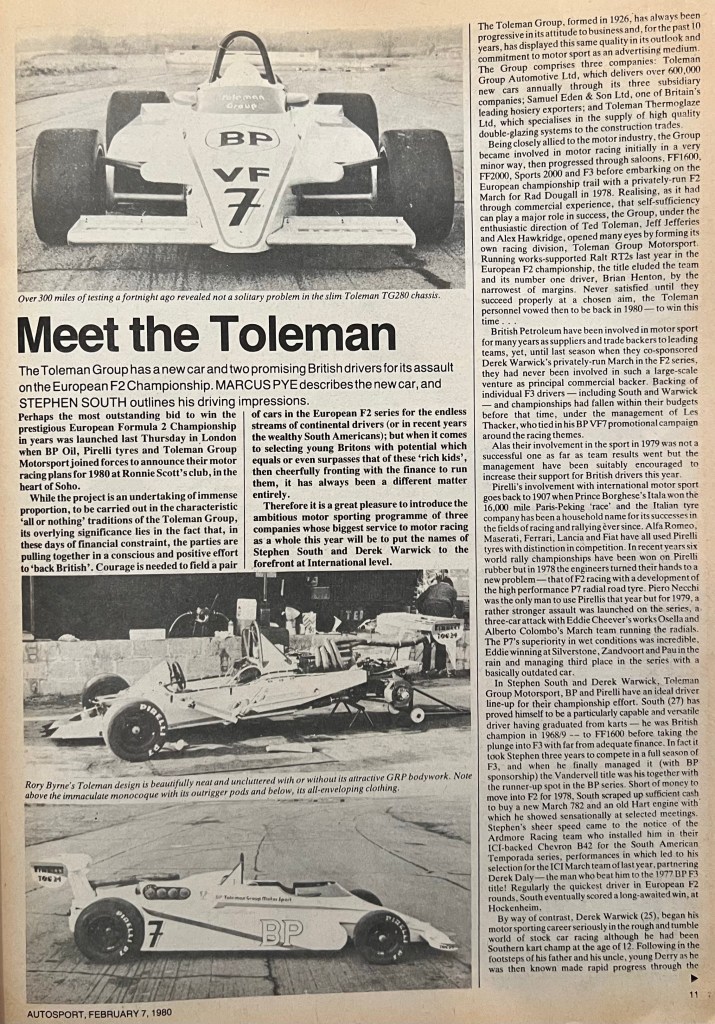
He’d done the early testing at Goodwood in early February above – see the Autosport article at the end of this piece – and it was all looking good until South was offered Alain Prost’s McLaren seat for the March 30 Long Beach Grand Prix. The little Frenchie had crashed and broken his wrist during practice for the preceding South African Grand Prix at Kyalami. It wasn’t a great call by South as McLaren were on a roll of building dog after dog Ground Effect cars: the M28/M29/M30, but the F1 siren-call was ever strong.
South, Project Four March 792 BMW during the July 29, 1979 Enna GP. Third behind Eje Elgh and Derek Daly, both also in March 792s (Autosport)
The communication between South and Toleman is unclear but it seems that Stephen tested the McLaren without first clearing it with Toleman, such consent was unlikely given the first European F2 Championship round was to be held at Thruxton on April 7, only a week later.
The upshot was that Stephen lost his ride which went to Brian Henton. Somewhat predictably, South failed to make the qualifying cut at Long Beach together with Geoff Lees and David Kennedy aboard Shadow DN11A Fords.
Brian Henton – who had finished second in the 1979 Euro F2 Championship aboard a Toleman Ralt RT2 Hart – seized the Gift from The Gods with both hands and won at Thruxton from Warwick on the way to championship victory easily from his teammate and Teo Fabi’s factory March 802 BMW.
South during practice at Long Beach in 1980, McLaren M29C (unattributed)Sears Point opening Can Am round on May 25 1980. Patrick Tambay has already gone through. South’s Lola T530 leads the similar VDS cars of Geoff Brabham #3 and Elliott Forbes-Robinson #2. Bobby Rahal’s black Prophet is behind Brabham. Tambay won from EFR and Rahal (K Oblinger)
It wasn’t a compete disaster for South at this point as he then picked up a plum-seat with Newman Racing driving one of two new Lola T530 Chevs together with Elliot Forbes Robinson in the 1980 Can-Am Challenge.
Without a lot of testing, and despite being in a field of drivers with plenty of Big Car Experience: Patrick Tambay, Bobby Rahal, Danny Sullivan, Geoff Brabham and Keke Rosberg to name a few, Stephen shone with raw pace and aggression.
He qualified third in the first two rounds at Sears Point and Mid Ohio but retired early with fuel pump and fuel pressure problems respectively. He then qualified fourth at Mosport and finished second to Tambay, on his way to the title. This was good, if Stephen could make a decent fist of it amongst this company he may get another crack at F1, he had tested well for Lotus at the end of 1979 but Chapman ultimately plumped for Elio De Angelis.
At Watkins Glen he was Q5 but collided with spinning teammate, Forbes-Robinson on lap 3 of the race. South bounced back to put his 550bhp T530 on pole at Road America, placing fifth. At Brainerd he was Q11 but didn’t start after a crash caused by a broken wheel, then the Shit Fairy arrived during the blue-riband Grand Prix de Trois-Rivières at Montreal on August 24.
With his Lola still not repaired, poor Stephen crashed very badly in practice head on aboard one of the team’s 1979 Lola T333 based Spyder NF11 Chevs, as a consequence of shocking injuries his lower left leg was amputated. End of career…
Lets not forget Stephen South, he had all the makings of a decent Grand Prix driver and would surely have ended 1980 better than it started…
(Lola Heritage)
I love this shot of a new Lola T530 Chev at Lola’s Huntingdon HQ early in 1980 before shipment to the US. The people and Austin (?) provide a sense of the size of these very biiiiig cars, the drivers were dropped into the cockpit via forklift. More about these beasts on the wonderful Lola Heritage site: https://www.lolaheritage.co.uk/type_numbers/t530/t530.html
Etcetera…
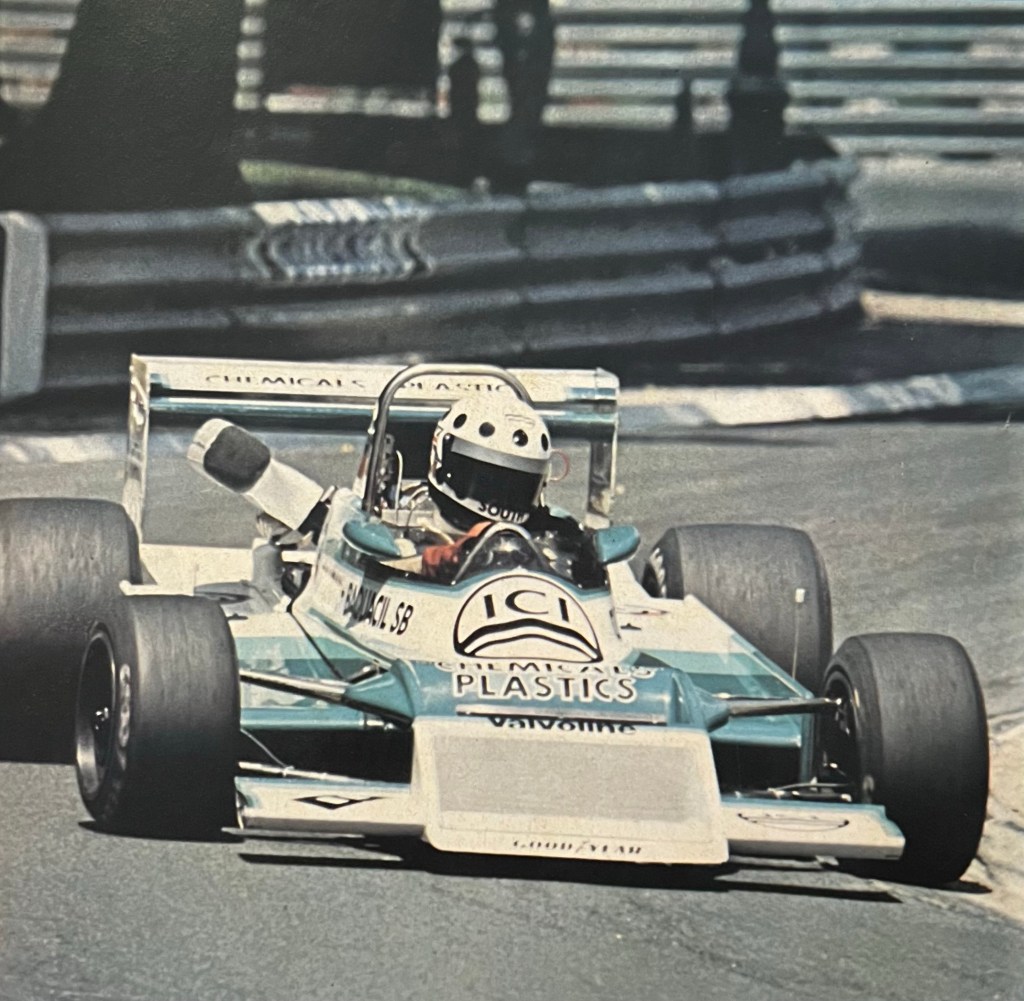
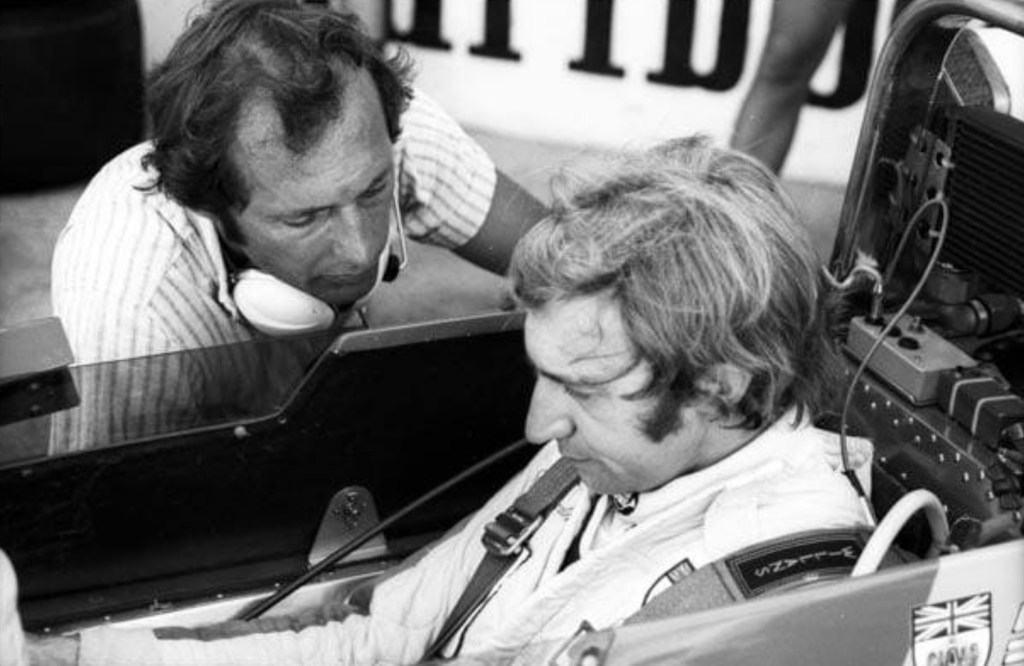
South on the way to winning the June 10 Rhein-Pokalrennen Hockenheim round of the 1979 Euro F2 Championship in a Project Four-ICI Racing March 792 BMW, his was his only F2 victory. The shot below is of Ron Dennis and Stephen with the March 792 that season.
(Auto Tradition)
The February 27, 1980 issue of Autosport ran this fantastic article by Marcus Pye about the new Toleman TG280 Hart together with Stephen South’s impressions after his first drive of the car at Thruxton.
Credits…
Autosport, Kurt Oblinger, Lola Heritage, Auto Tradition
Tailpiece…
The Autosport cover from which the first shot was filched.
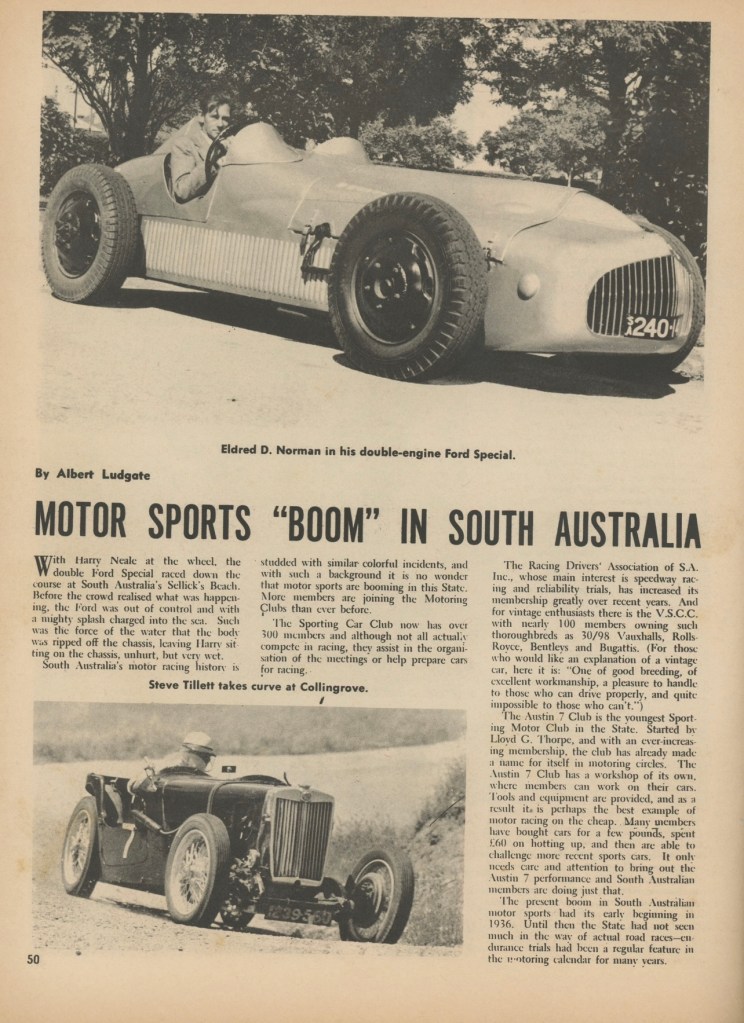
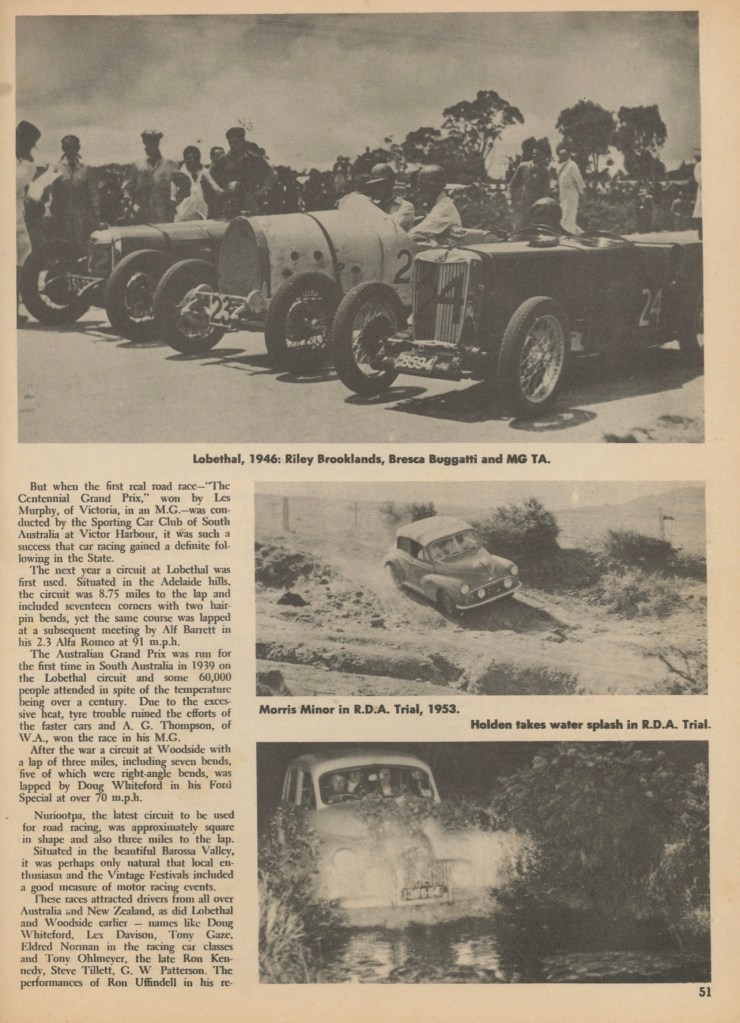
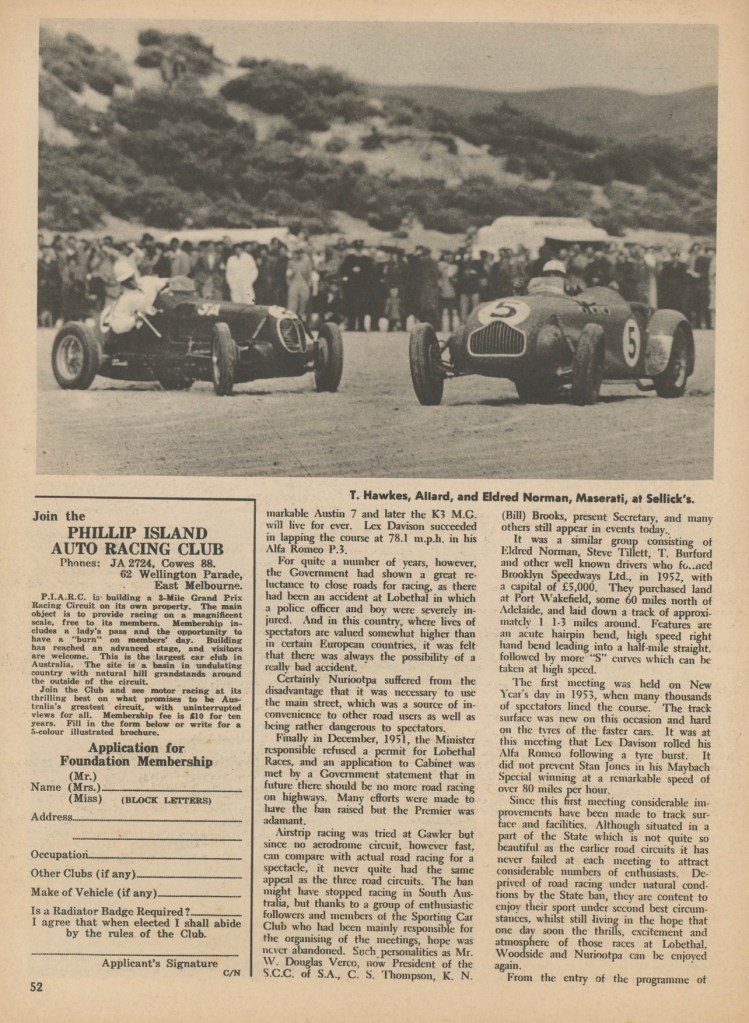
Tony Johns sent me this wonderful article about the motorsport state of play in South Australia in 1954, many thanks.
Cars appears to be a magazine from The Argus stable, a Melbourne daily newspaper published from June 1846 to January 1957. Cars publisher was Larry S Cleland, anybody know of Lazza? The Sydney advertising rep was JM Sturrock of King Street, Jock Sturrock of yachting fame I wonder?
The article was written by Albert Ludgate, Chief Engineer of Lea-Francis cars from 1946. He emigrated to Australia together his family and a 1926 Lea-Francis K-Type in 1953, more of Albert later.
Etcetera…
Australian Grand Prix historians will note that at the time of publication – September 1954 – the 1937 Australian Grand Prix hadn’t been invented. That is, the fuckwit(s) who decided that the December 26, 1936 South Australian Centennial Grand Prix should be the 1937 AGP, rather than the 1936 AGP hadn’t done his/their Fake Nooooz thing.
The South Australian Government’s banning of racing on roads, quite possibly brewing for some time as Albert wrote, was probably precipitated by two deaths in bizarre circumstances during a motorcycle race at Woodside in 1949.
Albert Ludgate in the glasses, and Ken Rose tickling one of their Lea-Francis 1.5-litre midget engines in the US in 1948-49 (LFOC)
Albert Ludgate…
Ludgate’s early history I am yet to discover, but he was Chief Engineer of Lea-Francis from 1946.
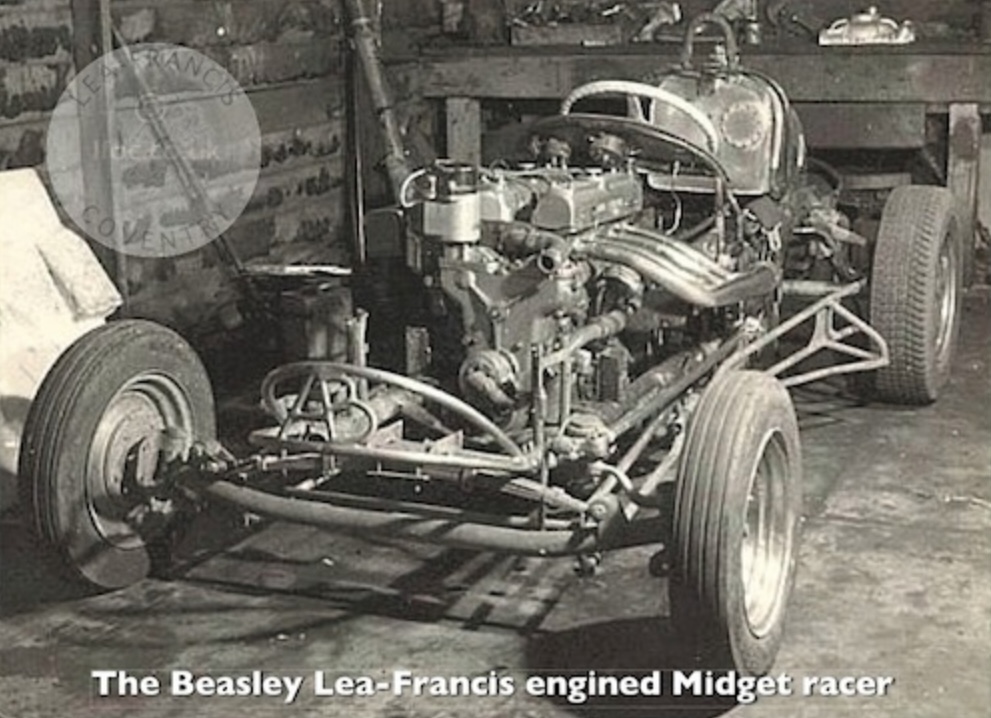
By February 1953 he was in Adelaide helping prepare one of his twin-high-cam ‘Leaf’ midget racing engines which had been fitted to Victorian ace, Alf Beasley’s speedcar for an international (SA Solo Championship) meeting at Rowley Park, Adelaide on Friday February 13, 1953.
These 1496cc, four-Amal or twin SU fed, dry-sump, gear-driven cam midget engines were aimed primarily at the large American market.
Bob Shimp won some heats in his Lea-Francis engined car at the Carpinteria Thunderbowl in South California on July 18, 1949, ‘then led the semi-main until the Lea-Francis engine in his midget failed’, wrote Kevin Triplett on his triplettracehistory.blogspot.com.
‘The 91-cubic inch Lea-Francis engine, purpose built in England for midget auto-racing featured dry-sump oiling, gear-driven double camshafts, four SU carburettors (sic), with a high compression ratio to run on alcohol. Record setting British driver, Dudley Froy, Lea-Francis designer Ken Rose and chief engineer Albert Ludgate made trips to the USA in 1948 and 1949 to show and sell samples of the engine.’
‘Besides Shimp, several US midget racers (including Woody Brown in Northern California) used the four cylinder “Leaf” engine but it never became popular (less than a dozen were built) given that its 120 horsepower could not match the power of the Offenhauser four-cylinder engine and it sometimes put connecting rods through the sides of the aluminium block.’
Contemporary Australian newspaper reports say that brothers Alf and Stud Beasley had a car each powered by a float of three of these trick Lea-Francis engines, and had some success with them. It makes one wonder where those engines are now…
Alf Beasley aboard his Lea Francis powered midget at Tracey’s Speedway, Melbourne
Into 1954 Ludgate was the technical representative of Simmonds Accessories and the publicity officer of the (speedway) Racing Drivers Association, while JA Lawton & Sons also retained Albert, not to forget his writing abilities.
Ludgate and his Racing Drivers Association made quite a splash in October ’54 with their ‘Speed and Sports Motor Show’. More than 150 racing, veteran and speedway cars and bikes were amongst the exhibits in the Centennial Hall at Wayville. It was the first time in South Australia’s history that such a show had been run.
Three-quarter-midgets – TQ cars were on the march – were front and centre with Ludgate’s Simmons Nut-Ridge Special one of five TQs on display. In addition he showed a 150cc half-scale midget racer built for his six-year-old son.
Ludgate was a strong advocate of TQs and was a member a three man Racing Drivers Association specifications committee tasked with developing specifications for the class…and in due course he would make some cars.
By December 1954 Ludgate was living in Reade Park, later he bought a house in Colonel Light Gardens. He was well on the way to embedding himself within the local motorsport and automotive industries, having addressed members of the Aeronautical and Automotive Engineers about American car racing and engine development in the Kerr Grant Lecture Theatre at Adelaide University.
Capricornia 1, John Plowman’s car circa 1956 (bollyblog.blogspot.com)Capricornia 3, later the Repco Ricardian, at Port Wakefield during the March 1959 meeting. With Buchanan couture, a great looking car (v8vantage.com)
In his small Colonel Light Gardens garage, Ludgate Automotive Developments built sportscars, TQ midgets and go-karts using the Capricornia and Ricardian brandnames.
The Capricornia sportscars – the name was taken from the Tropic of Capricorn region – used a multi tubular chassis with two main side-members, a wheelbase of 91 inches and used standard or modified Holden parts, including front and rear suspension, and weighed about 715kg depending upon specifications.
The first of the series, John Plowman’s car was commenced in 1955 and completed just in time for for the 1956 Easter meeting at Port Wakefield ten months later. Fitted with an English RGS/Shattock fibreglass body, and with experienced racer/engineer, John Cummins at the wheel the car performed well. A long job list proved racing improves the breed!
Capricornia 3, Collingrove circa-1958 (S Jones)
John Bruggerman’s very successful Capricornia 3 racing car had a Holden (later Repco-Holden) grey-six fitted and used a shortened Buchanan (NH Buchanan Motor Co) body.
Ludgate’s pioneering TQs – a poor-mans introduction to speedway racing – used Austin 7 chassis, suitably bent 7 axles, and a variety of 500cc motorcycle engine driving through a gutted Austin 7 gearbox using a dog-clutch for stop and go.
In the mid-1950s John Cummin’s met Ludgate in Adelaide in his capacity as a Perkins Diesel rep. Ludgate helped ‘with a lot of input’ in the early development of the Holden grey-six cylinder engine used in his Bugatti Holden. Cummins blazed the trail in Victoria with Holden engine development, his car is said to be the second Holden-powered racing car in the state, ‘Lou Molina’s, Silvio Massola built MM Holden Special being the first’.
‘The engine gave about 65 or 75 horsepower at 3500rpm’, Cummins recalled, ‘and it wasn’t worth two-bob at 4500! We fiddled with the needles in the triple 1 3/4″ SU carries and got 116 horsepower at 4500. Almost double the original Holden power output.’
John Cummins’ Bugatti T37A Holden at Bathurst in 1961. Note the Bellamy independent front suspension so characteristic of #37332 (unattributed)(B White)
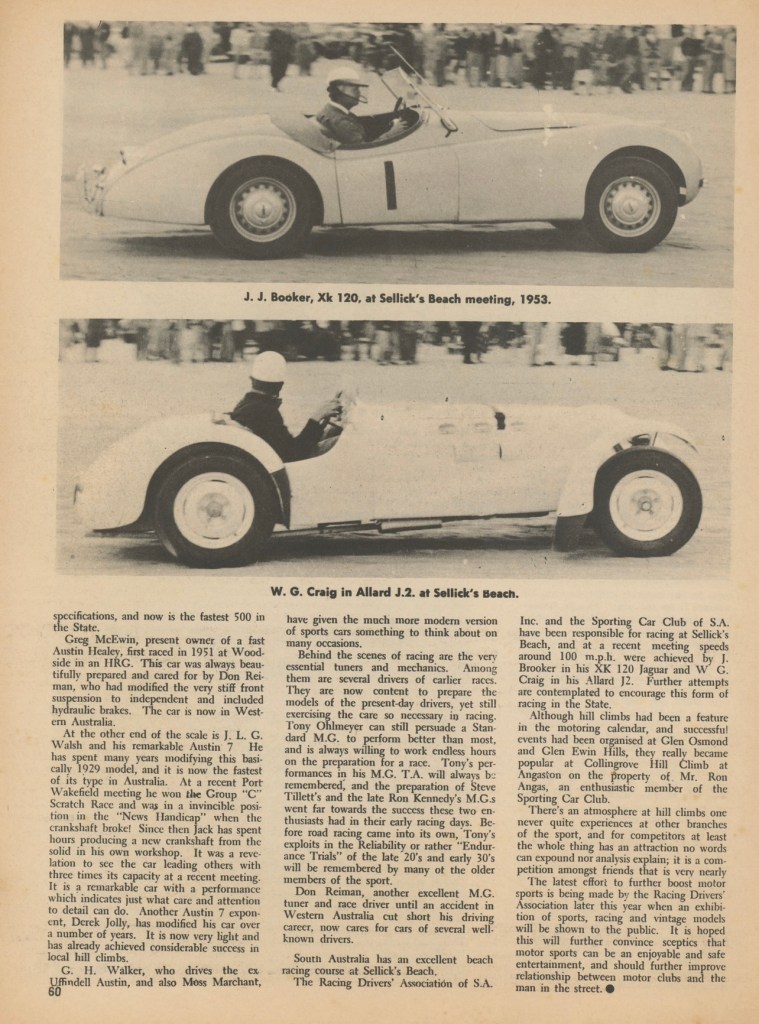
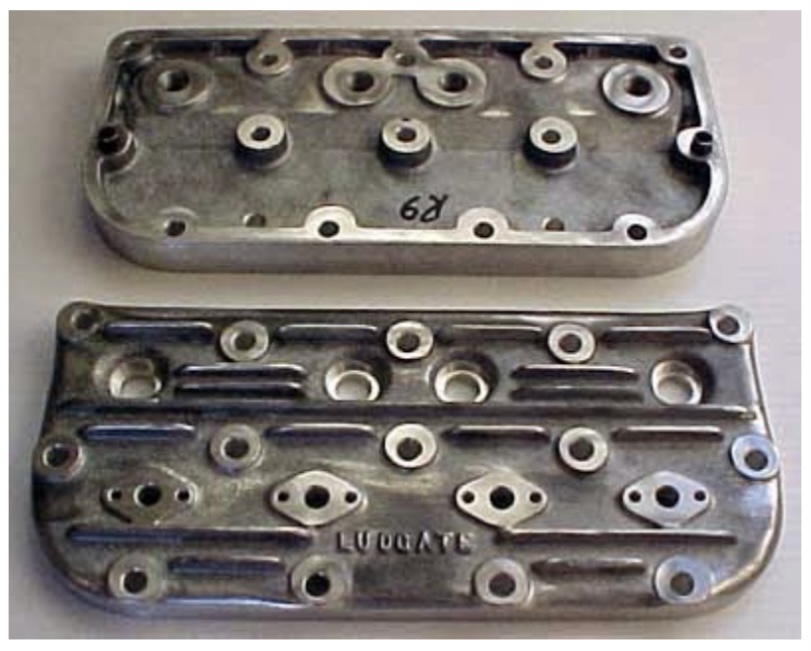
Ludgate also made Austin 7 cylinder heads for the Seven racing fraternity – think of Seven racing as the Formula Vee of the day – in the 1950s and early 1960s. The design featured sandwich construction with combustion chamber shape late-7. Enthusiasts often modified the shape to their own requirements. Ludgate built over 30 of the heads with many more built from his patterns after his death. They were used by many A7 racers in the day including Elfin’s Garrie Cooper during his formative years.
Amusingly, later, the street in which he lived was renamed Ludgate Circus which is surely indicative of the goings on at that address in the wee-small-hours and the fond regard in which Albert was held by his neighbours!
Ludgate retained his Lea-Francis for many years, using it daily to drop his son off at school and displaying it at the VSCC annual rally at Victor Harbor in 1961, by then he was described as a ‘well-known motoring personality’.
Late in his life the Australian Society of Automotive Engineers established and annually bestow the Albert Ludgate Award.
This summary of information about Albert Ludgate is the result of a days Troving and Googling, if anybody can add to the story please contact me: mark@bisset.com.au
Credits…
Cars via Tony Johns’ archive, Trove and other online research, News Adelaide, Victor Harbour Times, bollyblog.blogspot.com, v8vantage.com, triplettracehistory.blogspot.com, Lea-Francis Owners Club website, Paul Jaray on auto puzzles.com, Ron Burchett, Bruce White, Sports Cars and Specials September 1956, Tony Parkinson Collection, Steve Jones
Tailpiece…
(T Parkinson Collection)
Bill Pile or John Newmarch in the Ricardian Repco chasing Jim Goldfinch’s Austin Healey 100S at Port Wakefield circa 1959.
Arthur Chick, Triumph Special along Stirling Terrace during the 1936 race won by Peter Connor’s Rover in his first…and last motor race! (R Rigg)
The first of these Round the Houses events at Albany, a town on the south coast of Western Australia, 400km from Perth – next stop Antarctica – was a ’50 Mile T.T. Grand Prix’ held on March 8, 1936; indeed it was the very first of many such Round the Houses race meetings held throughout WA right into the early 1960s.
The ’36 meeting was part of a series of ‘Back to Albany Week’ events designed by the local council to pump some tourist-£s into the local economy. Other motor racing events that weekend included car and motorcycle hillclimbs at nearby Mount Clarence; the same circuit was used for a 100-mile cycling Grand Prix.
Although very successful, it wasn’t all beer and skittles, protests were made by local church leaders concerned about their peaceful Sunday being interrupted by the sound of high performance engines and an influx of ruffians from Perth. The reaction of the local ratepayers was strong enough for the WA Premier, Philip Collier to promise the event wouldn’t be held again. However, happily, he was given-the-arse before the end of the year and fellow Labor Premier John Willock could clearly see votes in the Albany event…so the carnival continued until WW2 ruined everything.
Generally the relationship between the motor racing establishment and the police throughout Australia was combative, exceptions were in the Peoples Republik of Phillip Island and in Western Australia where the WA Sporting Car Club had a very cooperative relationship with the wallopers.
Grand Prix, Albany 1938 (C Batalier)
Another impressive Albany panorama, this time ‘An MG Midget at the bottom of the long downhill Parade Street Straight, possibly the fastest leg of the 2-mile 4km circuit.’ I can’t reconcile what I see in the shot above with the results/car numbers that I have. I look forward to advice from one of you Perthies as to the car/driver combo…
Duncan Ord’s Bugatti T57 and Clem Dwyer, Plymouth at Pingelly in 1940, not Albany in 1937…
I’m not sure were Old finished at Albany in ’39, but in 1940 he was third in the handicap race off scratch and did the fastest race time, also setting a new lap record at 1 min 11.5; a time that became the permanent record for the circuit, the late 1950s track was a different layout.
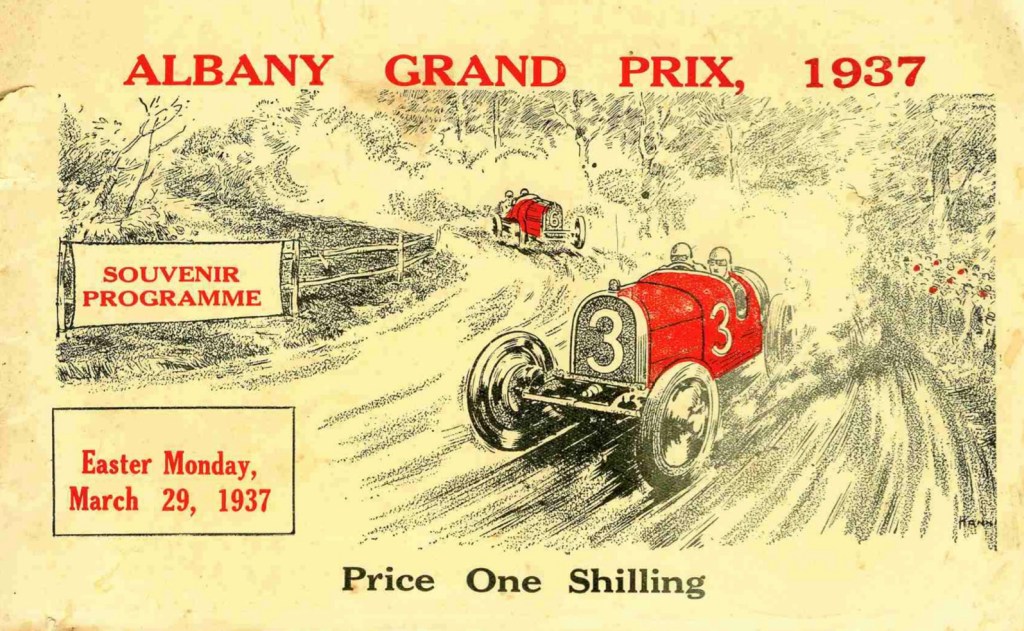
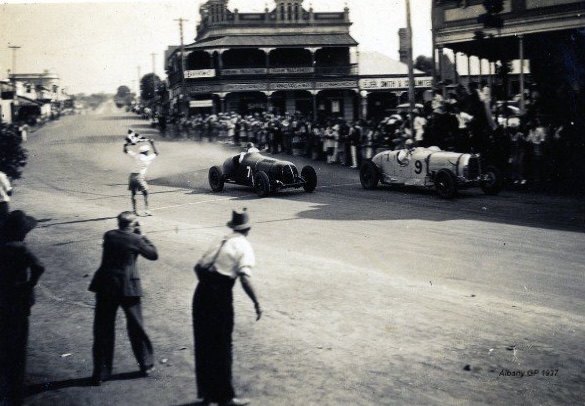
The second Albany GP, held on March 1937 was won by Ray Hall’s Ford V8 Spl from Spencer Stanes, Vauxhall Spl, and Neil Baird’s Terraplane.
The April 16, 1938 Albany GP was won by 1939 Australian Grand Prix winners, Alan Tomlinson’s and his MG TA Spl S/c, from Jack Nelson, Ballot Spl, with Norm Kestel’s MG TA in third.
In 1939 Jack Nelson’ Ballot prevailed from the EJ Coleman and Bill Smallwood MG TAs on April 19. The final wartime race, the Albany Tourist Trophy, was won by Brian Homes in the Bartlett Special on March 25. JB Wittenoom was second in his Oldsmobile, and Ord, as noted above, third in his Bugatti.
Yes, the Premier Hotel on the corner of York and Grey Streets still exists (C Batelier)Brian Holmes and crew with the Bartlett Special, perhaps in 1940 (C Batelier)
This sleek little monoposto is the 1927 Salmson San Sebastian based four-cylinder, 1086cc twin-cam, supercharged Bartlett Special, built by JH Bartlett of Notting Hill Gate, London, primarily as a Brooklands racer in 1932.
Clem Dyer visited the UK in 1935 and returned with this machine, said to have held the class lap-record on Brooklands Mountain track, rather than the Frazer Nash he had in mind. Upon seeing the car run at Brooklands, Victorian Frazer Nash monoposto exponent, Tim Joshua said the ‘he had never seen such terrific acceleration.’
By late 1938 the car held the class state flying-quarter mile record at 103.4mph, while the standing quarter-mile time of 17 3/10 sec was also a state open record. The car set a four-mile record of 97.2mph at Lake Perkolilli in 1938. Clem set an Albany lap record of 1 min 15 sec in the 1937 race but the fastest man on the course but a number of pitstops with cooling woes ruined his chances. Brian Holmes took one tenth off this in the Bartlett in 1939.
JH Bartlett and his Salmson during the BARC Bank Holiday Brooklands meeting on August 3, 1931 (MotorSport)
Etcetera…
Perth Sunday Times April 16, 1939. I guess you’ll all be wanting to know about the Nazi pussycats? Apparently the Reich Professional Group of Cat Breeders promised their political masters to make cats more ‘rat minded’ to ease the burden on the 150,000 Deutschlanders it took to repair the annual German rat damage toll…No flies on those Nazis
The 1940 Australian Grand Prix was to be held in Albany!
So impressed was the Australian Automobile Association – the forerunner to CAMS – by the standard of road racing being conducted in Western Australia, that they announced in April 1939 that the 1940 Australian Grand Prix would be held that January on Albany’s Middleton Beach circuit.
In a great decision to spread-the-Grand Prix-love, the AAA decided in future that the race should be held by different states in rotation: WA in 1940, Victoria in 1941, Queensland 1942, NSW in 1943 and South Australia in 1944.
While the war put-paid to that lot, the principle of rotation was implemented post-war and was maintained until Bob Jane contracted to run the race at Calder from 1980, when ‘nobody really wanted’ it, until Adelaide got the F1 gig in 1985.
Round The House Ramblings : Albany Grand Prix 1940
This race lead up piece in the Thursday 14 March 1940 issue of The Western Mail tickled my fancy; no attribution as to the author sadly.
WHAT would be the reactions of the average car driver on the road today if he were asked to make a gear change every 10 seconds, and to keep it up for over one hour. Even with the aid of synchromesh gear boxes, automatic and semi-automatic clutches, and all the aids to driving incorporated in the automobile of today, it is problematical if the proposition would sound practicable, or even sensible, at first glance, but it is one of the little known, but nevertheless interesting details of any Albany Grand Prix.
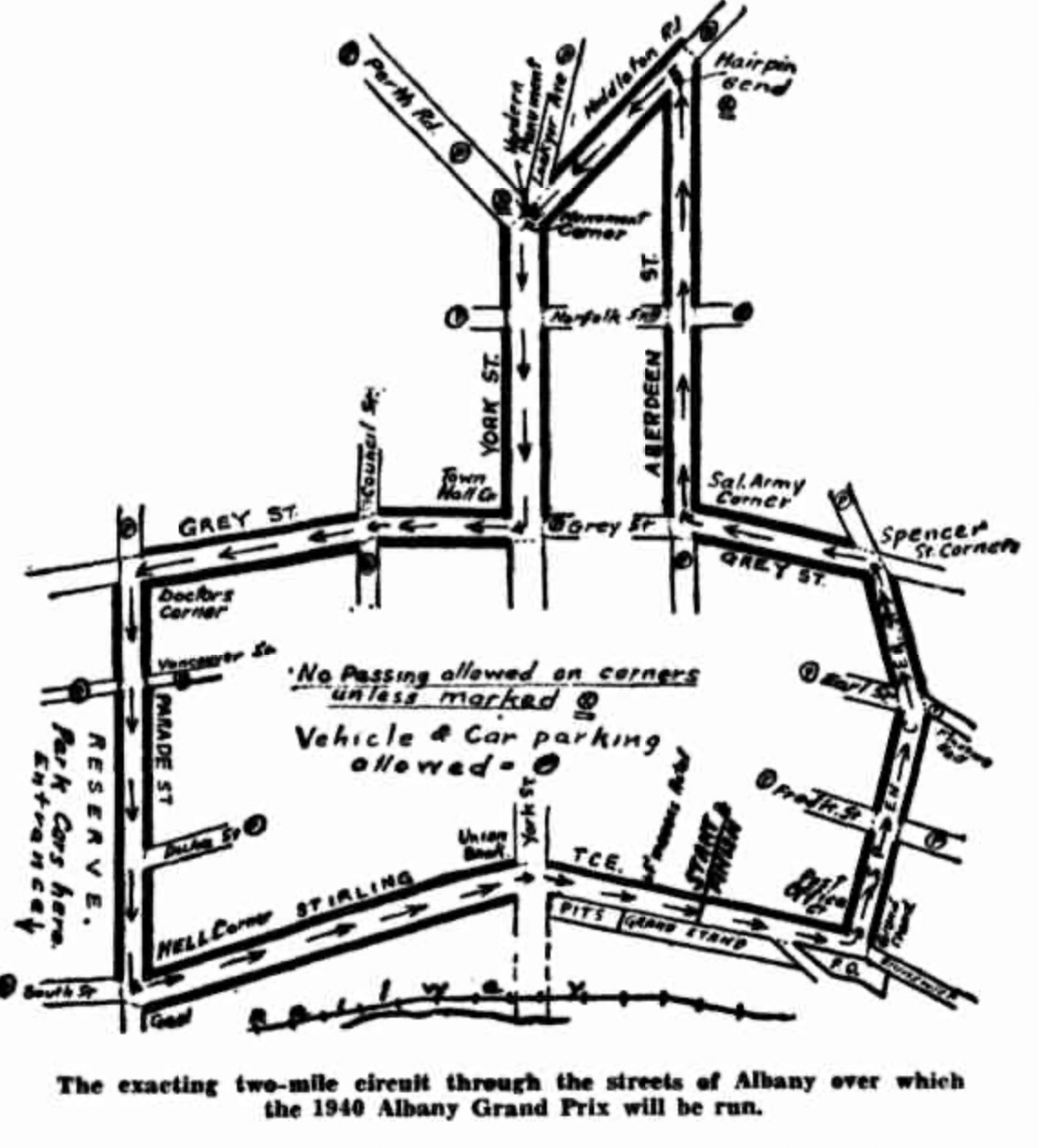
THE tortuous, hilly, two-mile circuit, with six right angle turns, one hairpin, two slight curves, and a third curve or even half turn to be negotiated every lap makes very severe calls on both driver and every part of his machine, but it is possibly the gearbox and clutch which receives the greatest puntshment.
The six right angle turns, and the hairpin will call for at least one change down approaching, with the necessary change up after having negotiated the corner.
This means at least 14 gear changes per lap, while the 25 laps will need no fewer than 350, all to be made in slightly over, or possibly under 60 minutes, according to the speed of your machine. Cars fitted with four-speed boxes naturally achieve even higher totals than this, but it will be readily realised that the claim of one gear change every 10 seconds is far from extravagant.
How then does the Albany event compare with other events in other parts of Australia, and in other parts of the world? Comparisons are difficult, because there are few circuits similar to Albany used anywhere in the world, while nowhere else in Australia is Round-the-Houses racing permitted. The circuit of the Grand Prix held at Monaco on the Riviera in southern France is approximately the same length, certainly no longer, and the fact that competing cars at Monaco in 1934, while capable of speeds up to 150 m.ph. actually averaged 54 m.p.h, indicates that the circuit must present hazards and difficulties not unlike the Albany event.
Last year Jack Nelson (Ballot Ford Spl) won the event in record time, slightly less than 58 minutes for the 50 miles, an average of approximately 52 m.p.h. This may not sound at all inspiring to those high speed motorists who accomplish incredible averages on the high road, although most of these said averages are worked out after the run has been made, and after extensive deductions have been made for roadside repairs, refreshment, etc., leaving a nett “running time” which then returns an average so high that the driver feels quite apprehensive to realise the truly terrific speed at which he has fied across the country. Nelson’s machine incidentally was electrically timed last June at a speed in excess of 107 m.p.h. so it will be appreciated that the machine that will eventually better his time at Albany will require to be something really fast handled by a master of the game.
1936 pre-race line up. From the left, #11 is not on the entry list I have. #5 is Eric Armstrong, Lagonda Rapide, #7 is Peter Connor’s winning Rover, #3 is Don Collier’s Chrysler ‘Silverwings’ while #1 at the far right is Clem Dyer in the Bartlett Special (C Batelier)
Races Compared.
Contemporary Australian races are all over open road eircuits, the South Australian circuit at Lobethal and the Mt. Panorama circuit at Bathurst, New South Wales, being the two most noteworthy examples.
Both these circuits are far greater in extent that Albany, Lobethal by nearly nine miles. It is the considered opinion of one of our local competitors who has attended the last two events, and not as a competitor, that very few of the entrants in that event would last the gruelling 25 laps that constitute the Albany Grand Prix.
Incidentally it is noteworthy that no brake test is held prior to the Lobethal race. In this State no car ever starts In a road race without a rigid brake test.
Preparation of Cars.
Generally speaking preparation of the entrants’ cars is not of the high standard which applies in Western Australia. Last January one of the competing cars at Lobethal was a 1936 stock touring car (five passenger) with hood and windscreen removed, bonnet strap in place, and the rear doors roped together to keep them shut. The Technical Committee of the local club would swoon in horror if called upon to examine such a vehicle. Naturally with the greater population in the East there are more of the real racing vehicles competing, but the built up machines (later generally described as Australian Specials-an assemblage of components from multiple donor vehicles) appear to be accepted in almost any condition.
Photographs fail to disclose anything that could vie with the local cars such as those owned by Jack Nelson and Barry Ranford. Incidentally Ranford is one of the four men who will be making their first racing appearance at Albany this Easter. The others are Bill Smith, Harley Hammond, Geoff Glyde, and Arthur Wright. Of the remaining nine competitors, Ernie Brammer, Aubrey Melrose, Ed. Harris, John Wittenoom, Ron Posselt, Duncan Ord have all driven at Albany once. While Ted Kinnear, Bill Smallwood and Brian Holmes have driven twice.
First and second in 1938: Alan Tomlinson, MG TA Spl S/c and Jack Nelson, Ballot Spl
It is also of interest to recall that the Bartlett driven by Brian Holmes, and entered in the name of Clem Dwyer, is the only car competing this year that contested the original Albany event. In the initial event on March 8, 1936, and again the following year, Dwyer was at the wheel himself, and the persistence with which the car has competed with ever since, at every possible opportunity should eventually be rewarded with a major victory. This year Duncan Ord (Bugatti T57) shares the dubious distinction of going off scratch with the Bartlett, and the resultant race should be full of interest. Incidentally, it is the first time that two cars have shared the scratch position at Albany. The small high revving Bartlett will be matched against the big Bugatti with over twice the capacity and certainly about as much more weight.
The contrast in the machines will lend colour to their strivings. Ed Harris, who drove at Albany two years ago in a 1934 black Terraplane, will this year be seen at the wheel of the 1935 blue Terraplane raced hitherto by Neil Baird, which he has acquired. It is being raced in detuned condition, the last high compression head avalaible having gone off at the same event last year. The blue Terraplane will be starting in its fourth consecutive Albany. Kinnear, Smith and Wright are all off the limit mark together, and will comprise an interesting trio. Kinnear has received 25 seconds more than last year, while Ernie Brammer, who has not fitted his ultra light body for this year, has received a full minute to make up for it.
Bill Smallwood, third last year, has come back 65 seconds, and will have to drive well to run into the places. Ed. Harris and Barry Ranford go off together, 15 seconds better off than was Baird last year, while John Wittenoom is 50 seconds better off on 3.20. Ron Posselt has a stiff job, being second back marker, only 1.30 ahead of the scratch men. On the surface he has been dealt with a shade harshly, but handicappers have at their disposal information denied to lesser mortals, and no doubt have their reasons.
An Open Race.
The field is set now, and the race has to be won. On appearance it is one of the most open races yet held in this state, and with so many new cars and drivers is full of interest despite the absence of Tomlinson and Nelson. Who can still recall when the redoubtable Ossie Cranston withdrew from racing after many successful years? It did not seem possible that his fame could ever be eclipsed, and although it has not, because he was of an earlier day, others have made names for themselves since then, and now some of them are missing from the list of starters, even if only temporarily. When they return to the lists, it they do, they may find a new champion waiting to engage them in battle. Nevertheless in its cheapest form, car racing is an expensive sport to follow, and months of preparation can go for nought if the Goddess of Luck does not ride with the machine. Perhaps the luck of the game will be the deciding factor at Albany this year, and perhaps the winner will be one least expected. To select the winner at this stage would be a guess pure and simple.
Credits…
Collections Western Australia-Albany Advertiser, Claude-James Batelier, Richard Rigg Collection, Western Mail November 3 1938, MotorSport Images
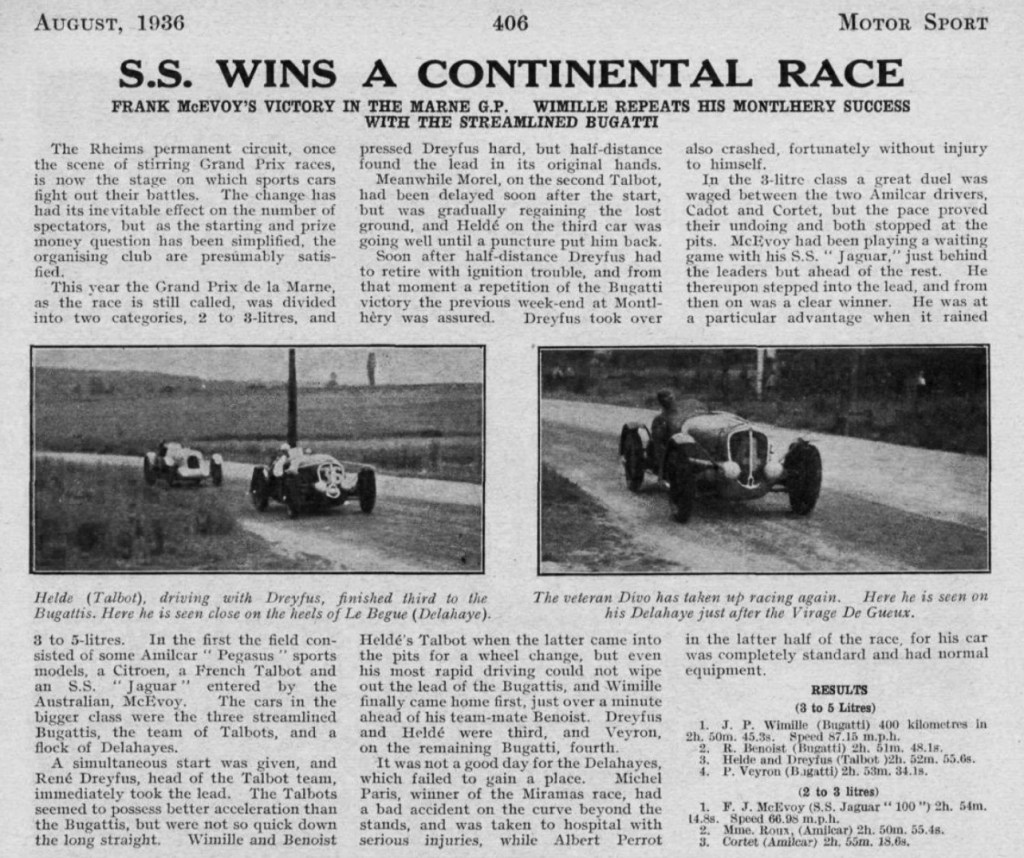
There is bit of overreach in this MotorSport claim for an SS 100 Jaguar win …
While the 11th Grand Prix de la Marne field was split into two classes as above, there seems little doubt that Australia’s cad, bon-vivant, gigolo, Olympian, and sometime occasional racing driver, Frederick Joseph McEvoy finished 15th of 21 starters in the July 5, 1936, 51 lap, 399km race.
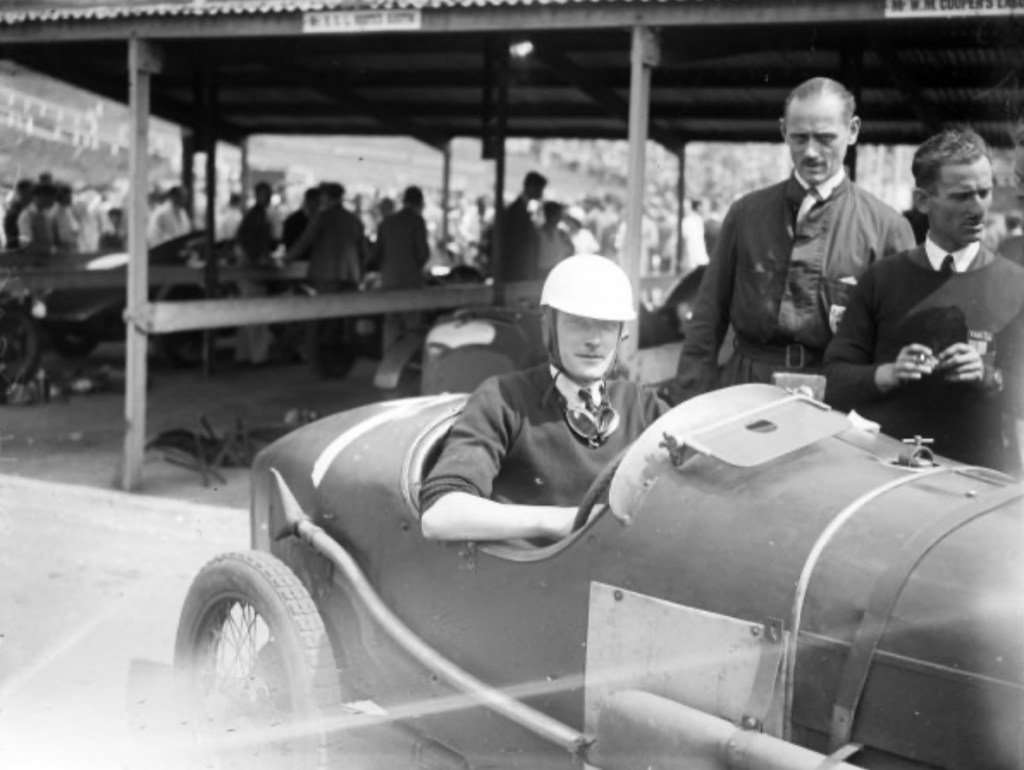
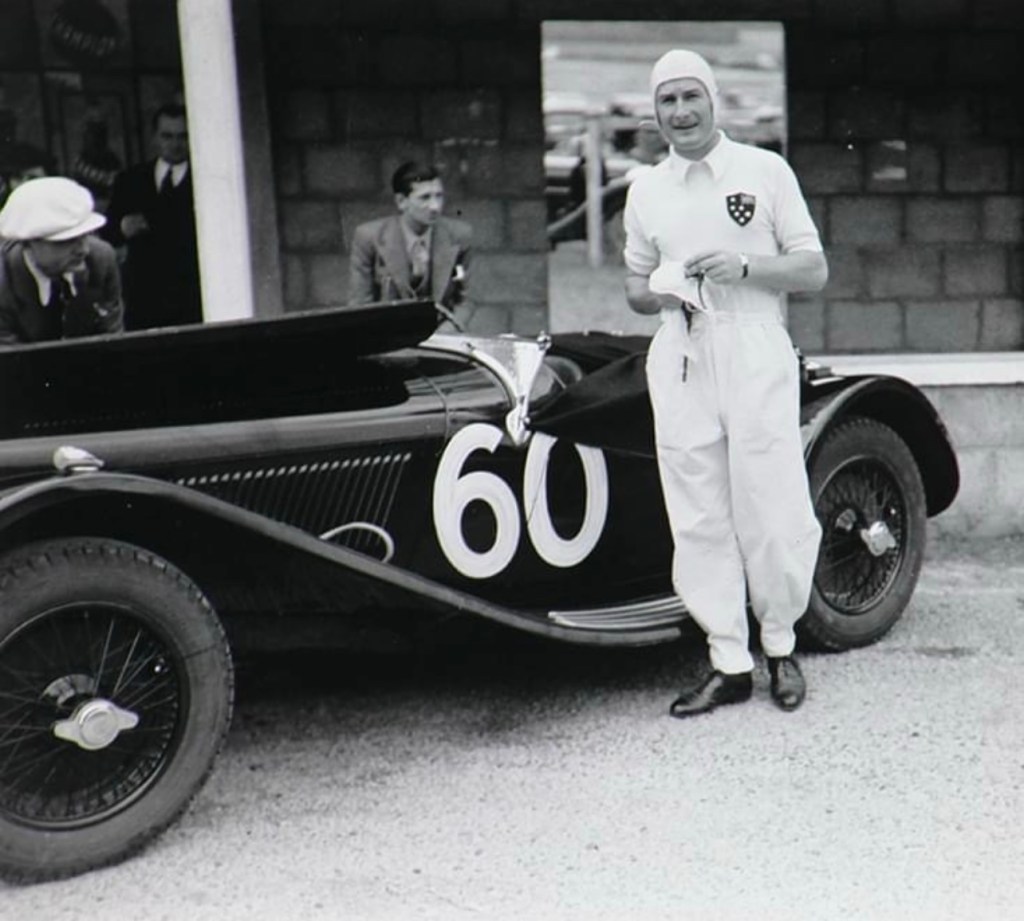
McEvoy and 2663cc, OHV, six-cylinder SS 100 chassis #18007 (?) at Reims before the off. I wonder what club logo is on Freddy’s chest? (MotorSport Images)
I do find McEvoy a most interesting character, not long after I wrote this masterpiece: https://primotipo.com/tag/freddie-mcevoy/ a book was published about him. It’s worth a read albeit I cover McEvoy’s racing and alpine career more fulsomely than the book. By the way, McEvoy signed his name Freddy, not Freddie, so I’ll stick with that. It’s not Frank either…
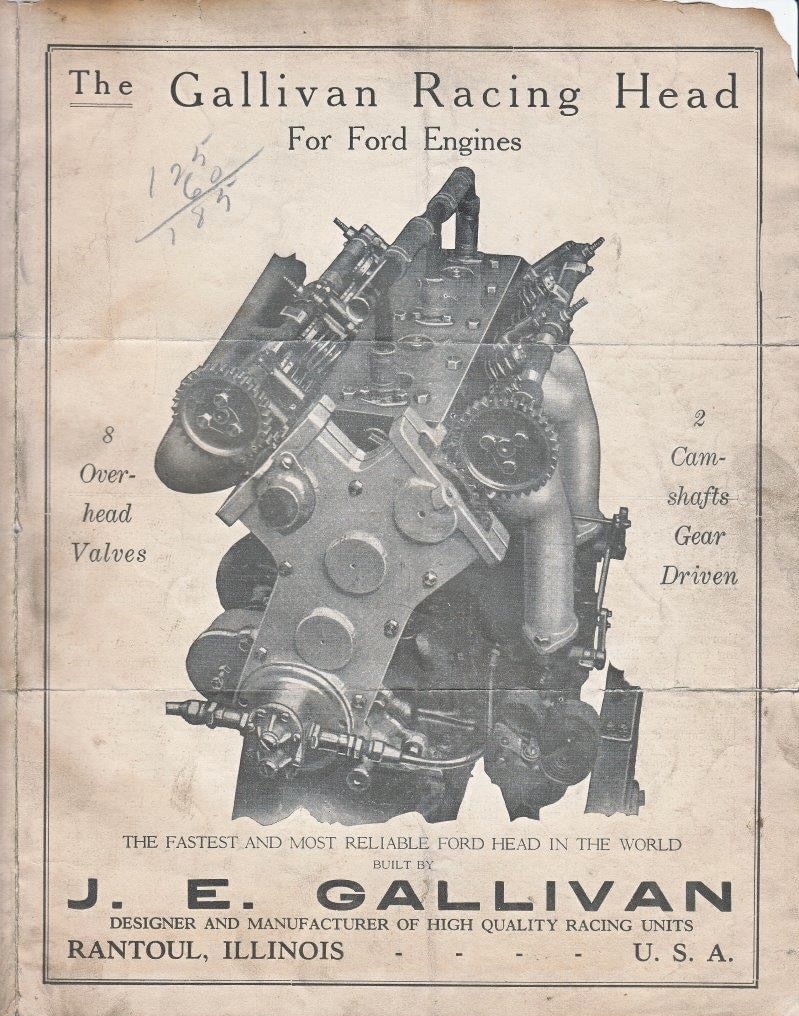
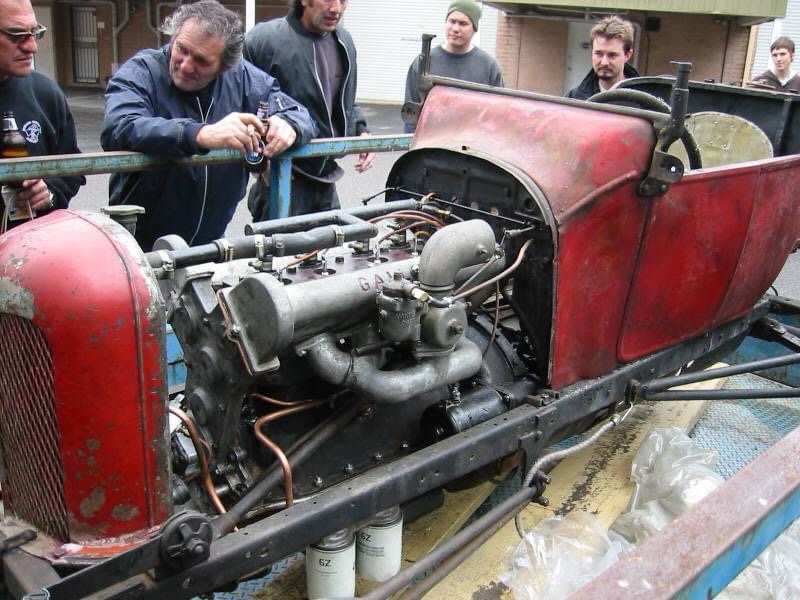
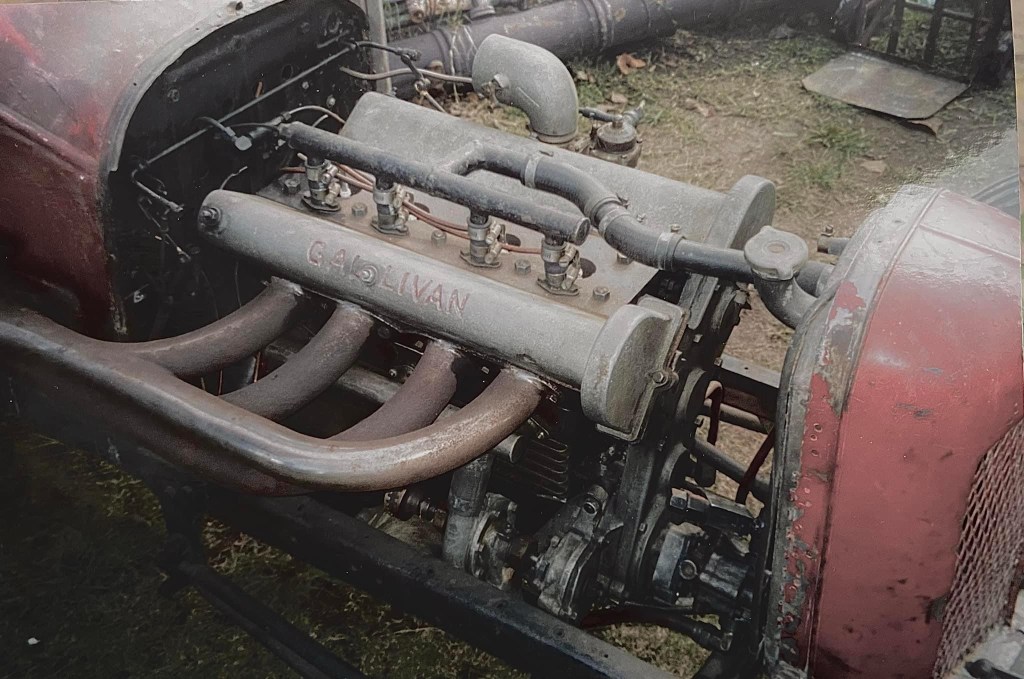
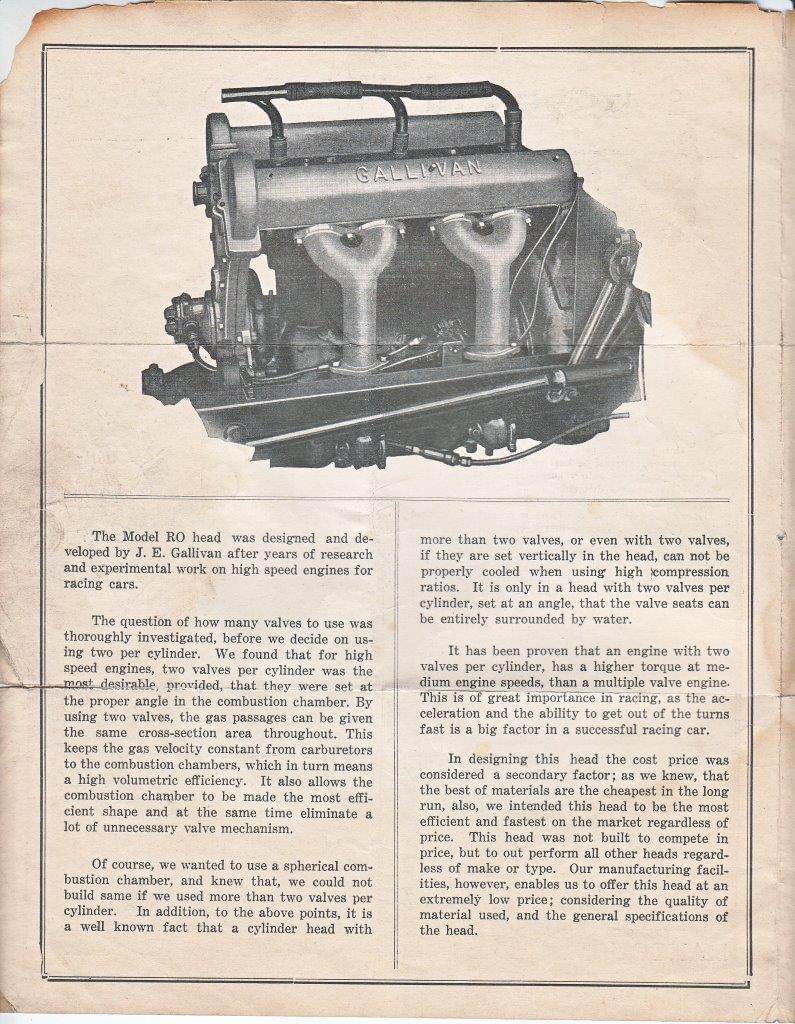
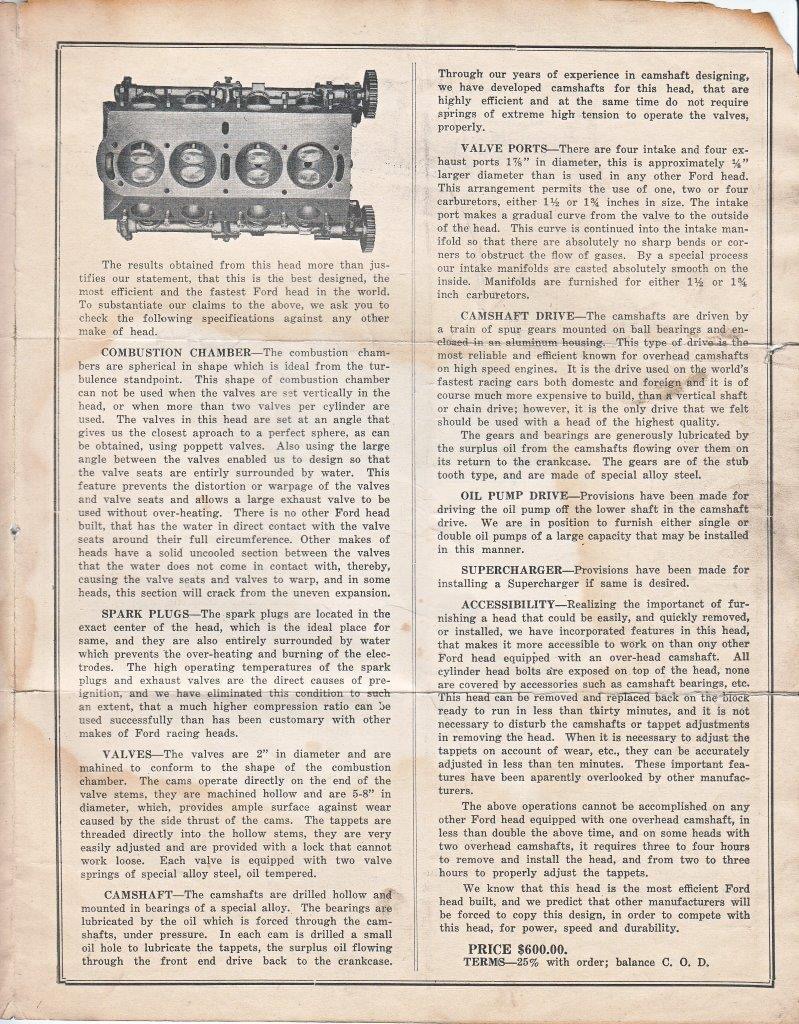
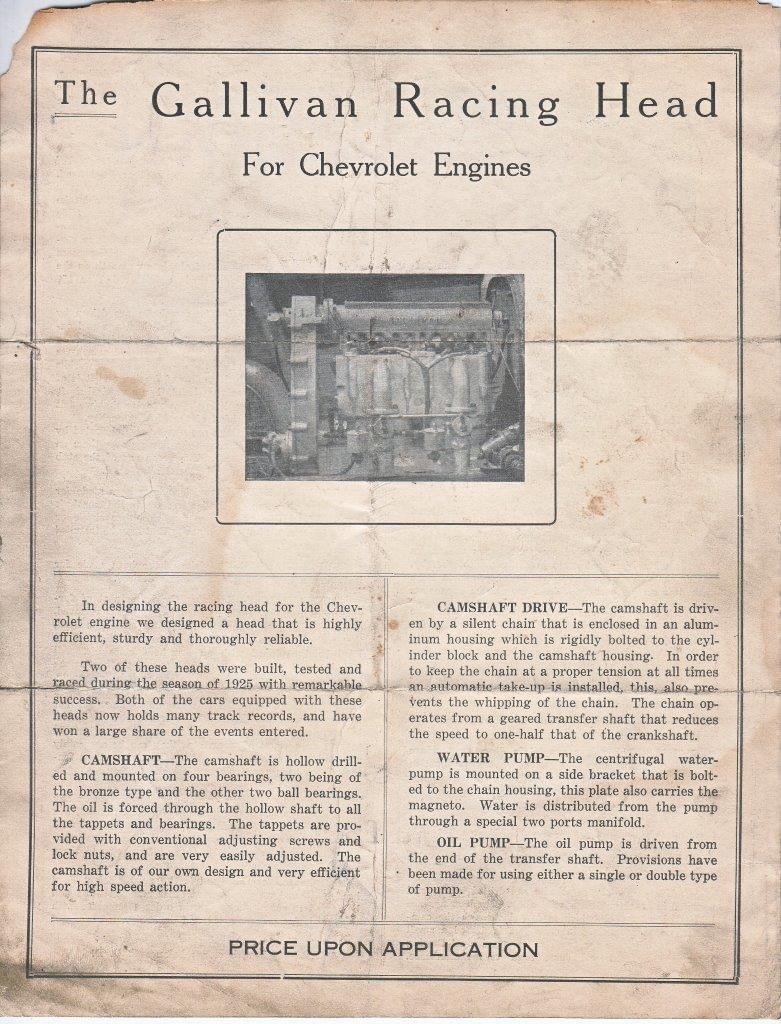
Australian enthusiast/historian Gerard Murnane wrote in a wonderful exchange on Facebook with fellow enthusiasts – the medium at its best – ‘Jack Gallivan made at least six twin-cam Gallivan 8-valve heads for Model-T Fords, crossflow with huge 2-inch valves from a Hispano Suiza and hemispherical chambers with huge porting. If you looked through the inlet of the head you could see the light on the exhaust side. One of these rare heads is on a racer here in Australia.’
‘Jack was in the US Navy in the early-mid 1920s, the rumour is that he used Navy parts to build the engines and did-time for it.’
‘The patterns were originally made by Joe Jagersberger of Rajo Ford speed equipment fame. Joe didn’t build the first Rajo twin-cam until after he sold the patterns to Jack, and he built his heads and engines.’
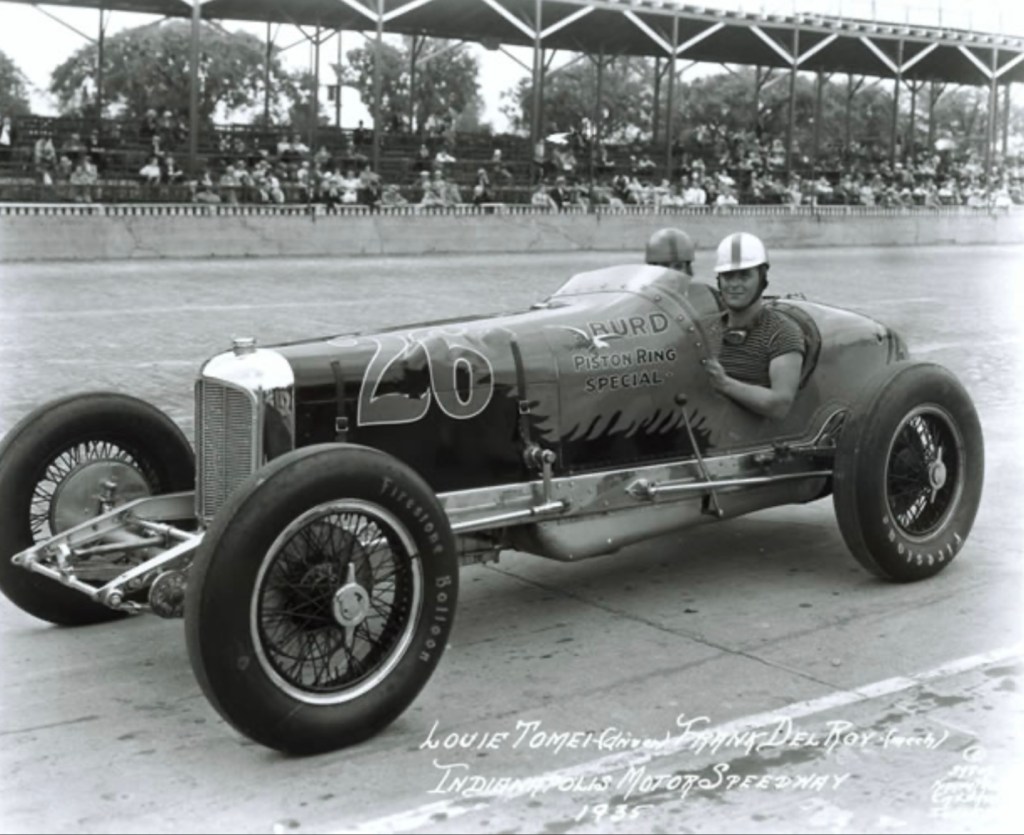
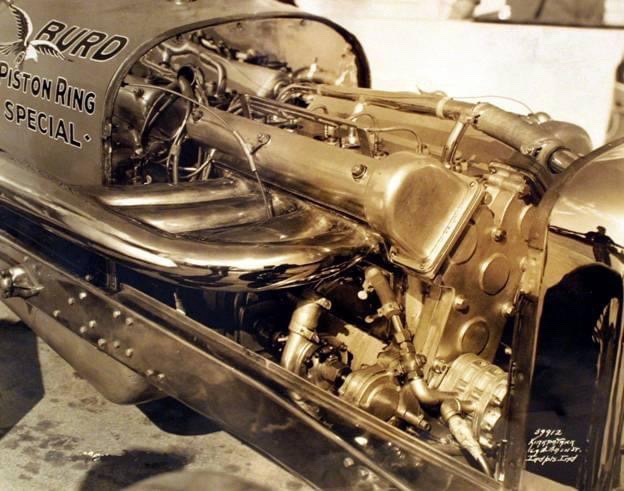
‘Drive towers for both Gallivan and Rajo are different designs. Later the patterns were again sold, to Joe Lencki, who built a much stronger head and special Ford-T based cylinder block which was raced at Indianapolis in 1935 (Louis Tomei aboard a Miller Lencki). A Lencki block also survives in Australia, one of possibly three in existence.’
Colin Wade‘s Gallivan Special with plenty of fans in Australia Louis Tomei and Frank Del Roy at Indianapolis in their Burd Piston Ring Special – Miller Lencki – in 1935. Q32/28th DNF valve trouble after 47 of 200 laps (indycar.com)Wade Gallivan Special (M Bradley)
On the Model-T cranks, ‘Billet cranks were available back then in at least two different stroke sizes for normal and 1500cc capacity. The Lencki block had five main-bearings with two-inch journals and still fitted a standard T-head and sump pattern etc.’
Neil Worthing asked the question, ‘Was a single T-Model part used?’ Gerard Murnane, ‘In the Gallivan, initially a Model-T sump, block, transmission cover, modified rear axle and tailshaft, axles and springs and modified chassis. In the Lencki, not a lot used.’
‘Model-T chassis and running gear were cheap in the 1920’s-30s and most speed equipment was made to bolt onto standard-T stuff.’ Lencki still used the basic sump, head, block, timing bolt on dimensions in their equipment, but a different transmission connection.’
‘The wheel hub pattern for a Model-T was still used in speedway cars up to the knock-on wheels era. The dimension of the ball end of a Model-T tailshaft tube was also possibly used into the 1970s and later.’