Archive for the ‘Obscurities’ Category

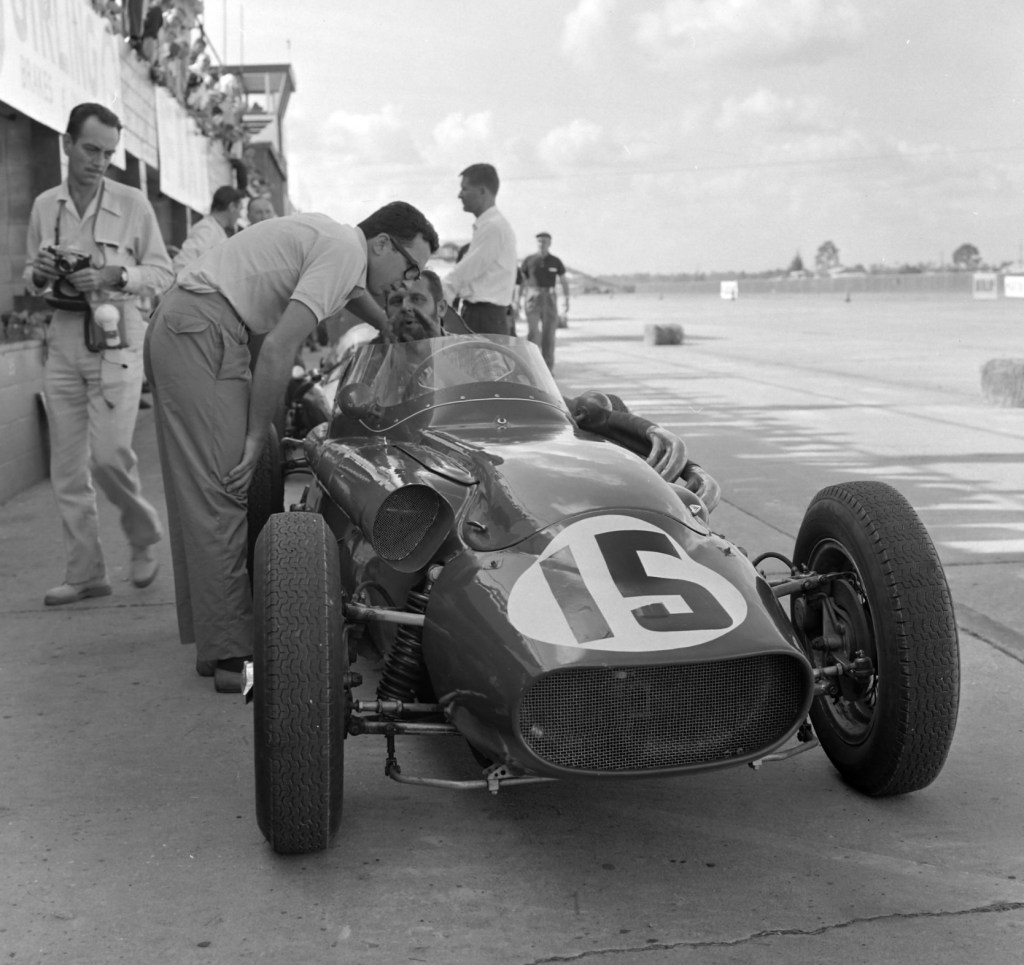
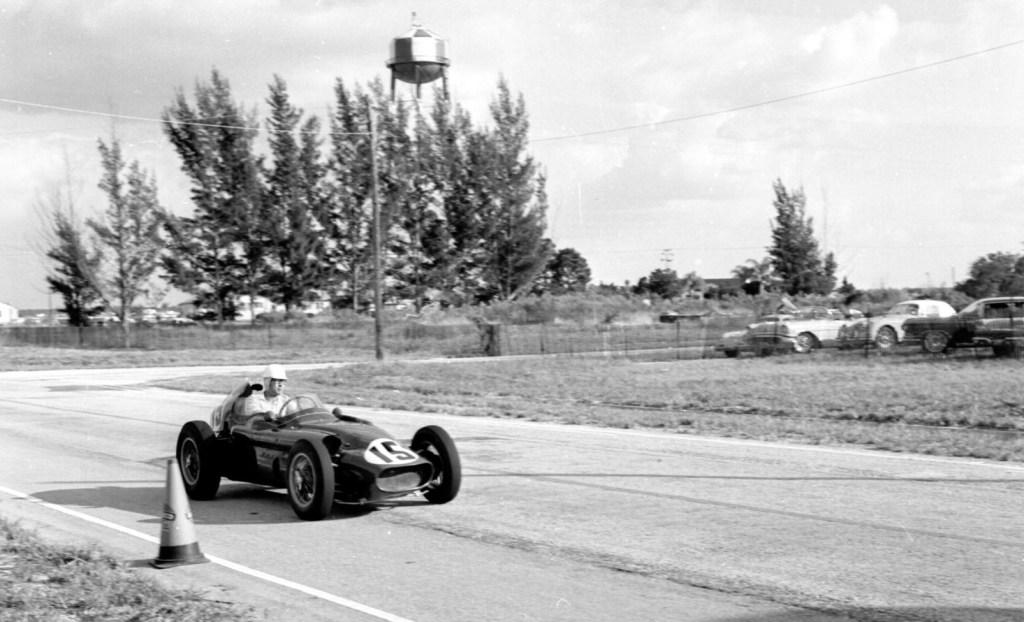
Fritz d’Orey in the Sebring pits, US GP December 1959 (MotorSport)

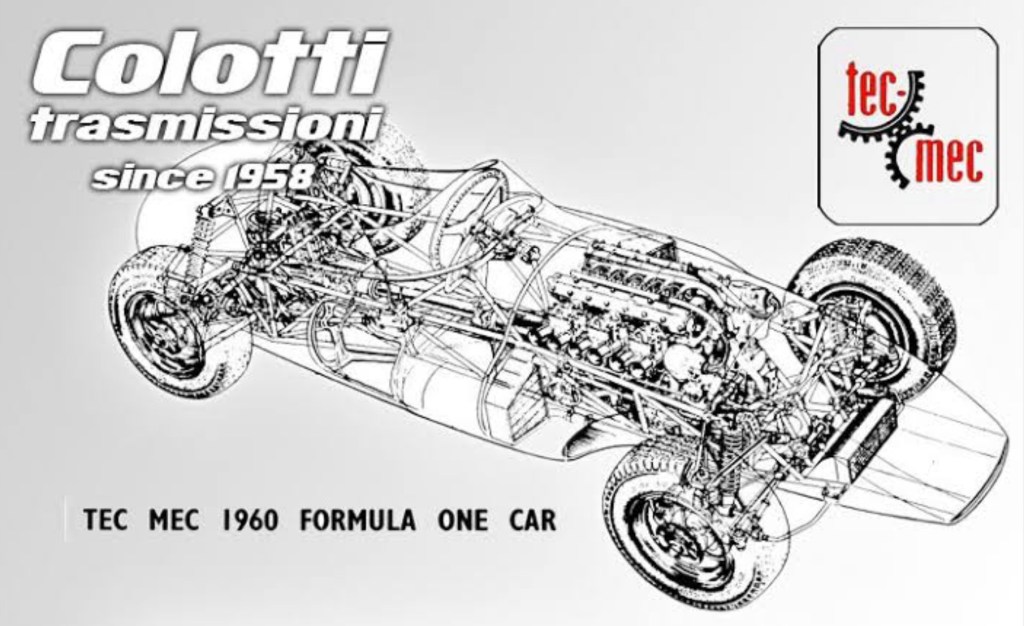
The ultra-light, disc-braked Maserati 250F-engined TecMec F415 was the ultimate development of the long line of 2.5-litre front-engined Maserati 250F Grand Prix cars which commenced in 1954; the preceding 2-litre Maserati A6GCM F2/Grand Prix machines of 1952-53 are duly noted.

In 1957 the works team’s Piccolo 250Fs took Juan Manuel Fangio to his record-setting fifth and final world title. Soon after, with the company on its financial knees, Maserati withdrew from racing. In the best of Italian traditions it wasn’t quite a final withdrawal. In the 1958 French Grand Prix, a special lightweight 250F appeared for Fangio in what became his his final race appearance. He was fourth, and with that the Maserati works-team was no more.

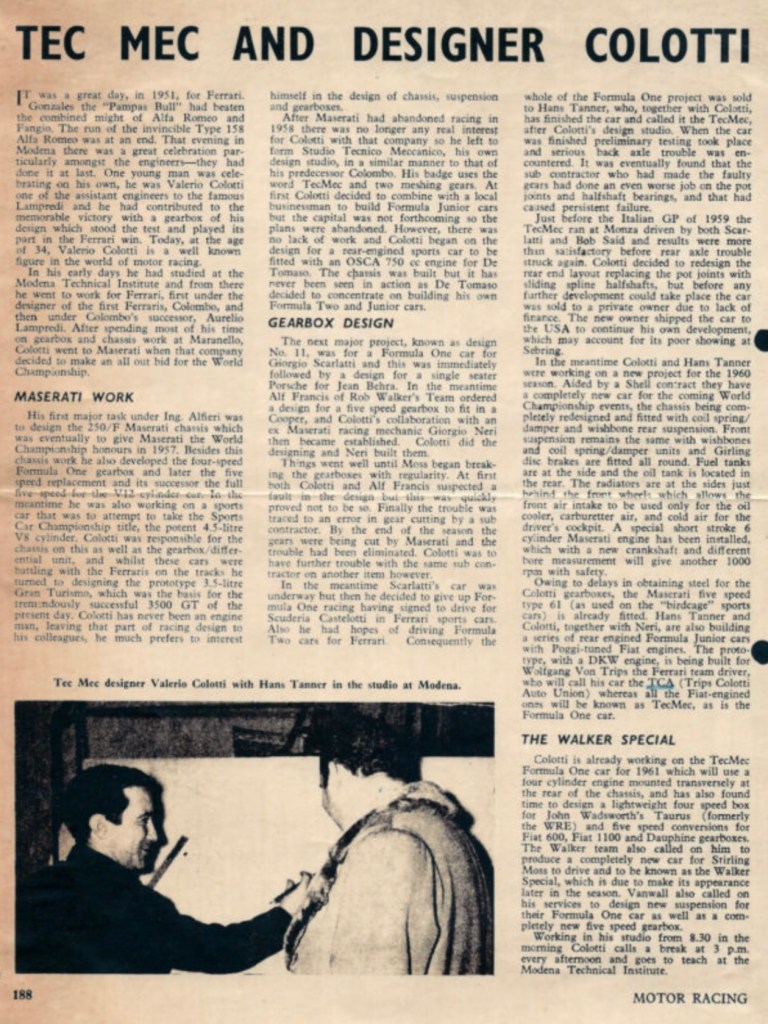
The team’s chassis and transmission engineer during the latter 250F years was ex-Ferrari man Valerio Colotti (1925-January 19, 2008). As the Cooper mid-engined ascendancy began he had a new super-lightweight 250F on his drawing board. Colotti left Maserati to form his own Studio Tecnica Meccanica in Modena.

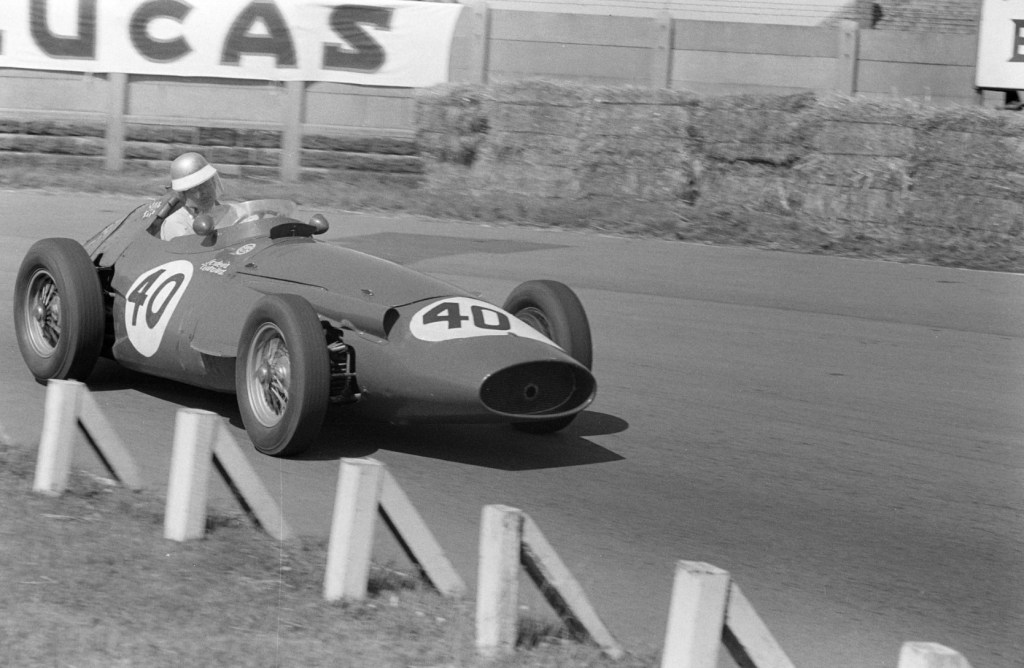
Georgio Scarlatti, Maserati 250F during the 1959 French GP at Reims, Q21 and eighth (MotorSport)

Racer, Giorgio Scarlatti approached Colotti with a view to building the ultimate 250F. Valerio set to work, fabricating a light, multi-tubular spaceframe chassis made of small diameter steel tube. He scrapped the De Dion rear rear suspension, replacing it with an independent transverse top leaf-spring and lower wishbone set up. At the front was a very un-Italian pair of Alford & Alder uprights, supported by upper and lower wishbones and coil/spring damper units, an adjustable roll-bar was incorporated. Girling discs replaced the 250F’s finned drums but the wheels remained passé Borrani wires. Scarlatti provided an ex-works 2.5-litre six-cylinder engine.

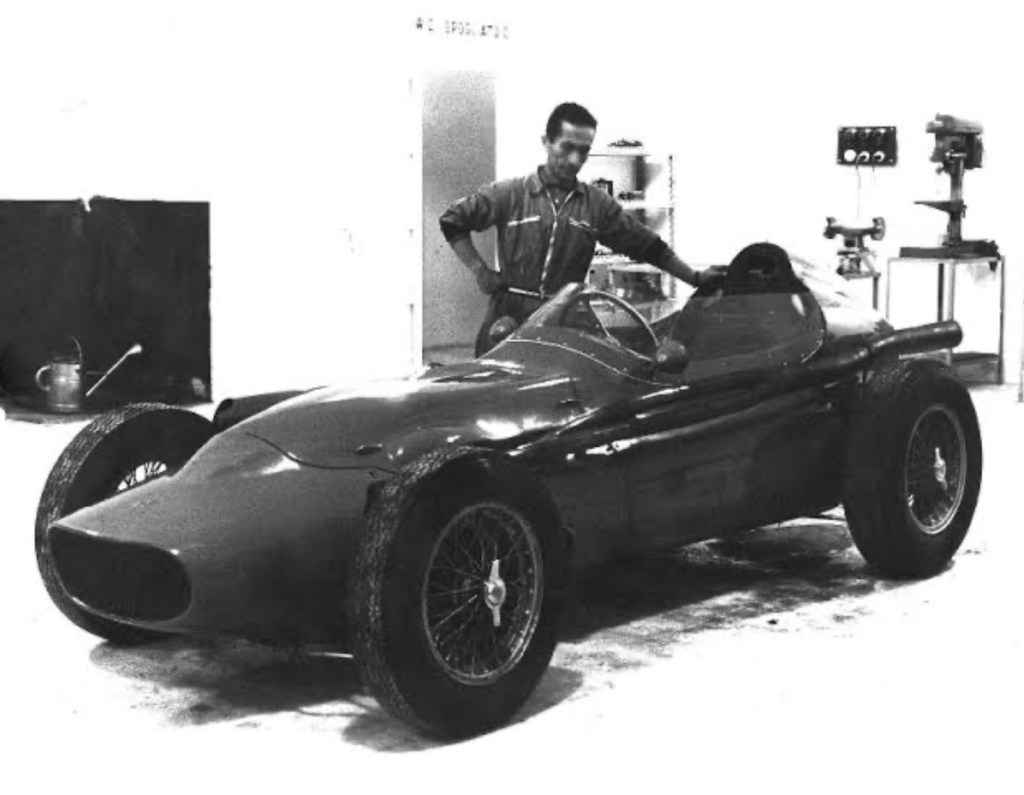
Giuseppe Consoli, an ex-works mechanic, built the car for Colotti, working in the living room of his house near Modena’s aerautodromo. When workshop space was later made available the embryo Tec-Mec F415 was wheeled out through Giuseppe’s French windows!

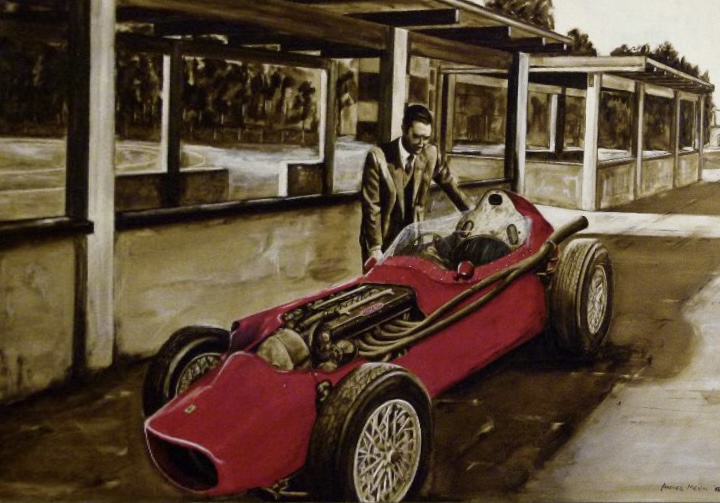
The car was clad in a functionally attractive, tight fitting aluminium body, the height of which was constrained a bit by the relatively tall Maserati 270bhp, DOHC, two-valve, triple-Weberised six-cylinder engine.

(Colotti)
The Tec-Mec F415 shortly after completion, date and workshop unknown (Colotti)
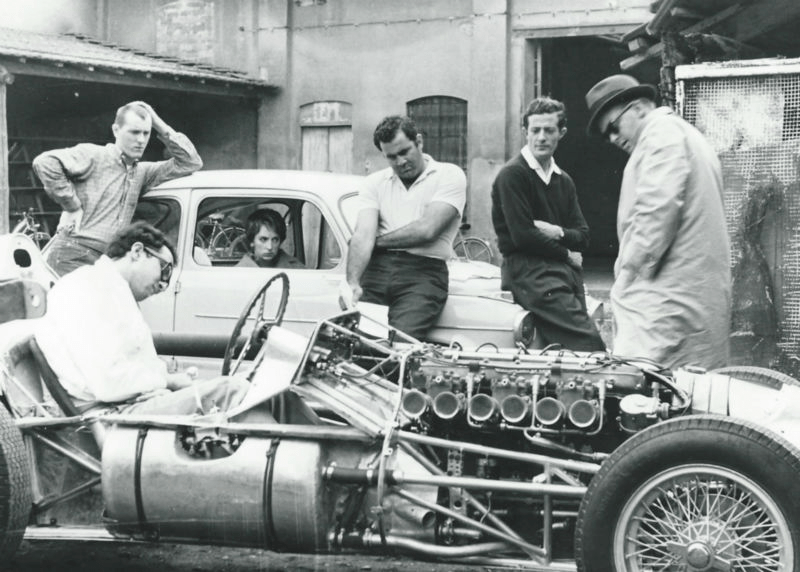
Testing times, the boredom is palpable! (Colotti)

Bonhams wrote that, “In the meantime Hans Tanner, Swiss motoring journalist and entrepreneur, became involved with the project. He had been on the Modenese scene for years and was close to Maserati. He enlisted backing from Floridan racing enthusiast Gordon Pennington who lived then in Modena’s famous Hotel Reale.” Pennington intended to race an Italian car so Scarlatti sold him his interest in the Tec-Mec project.

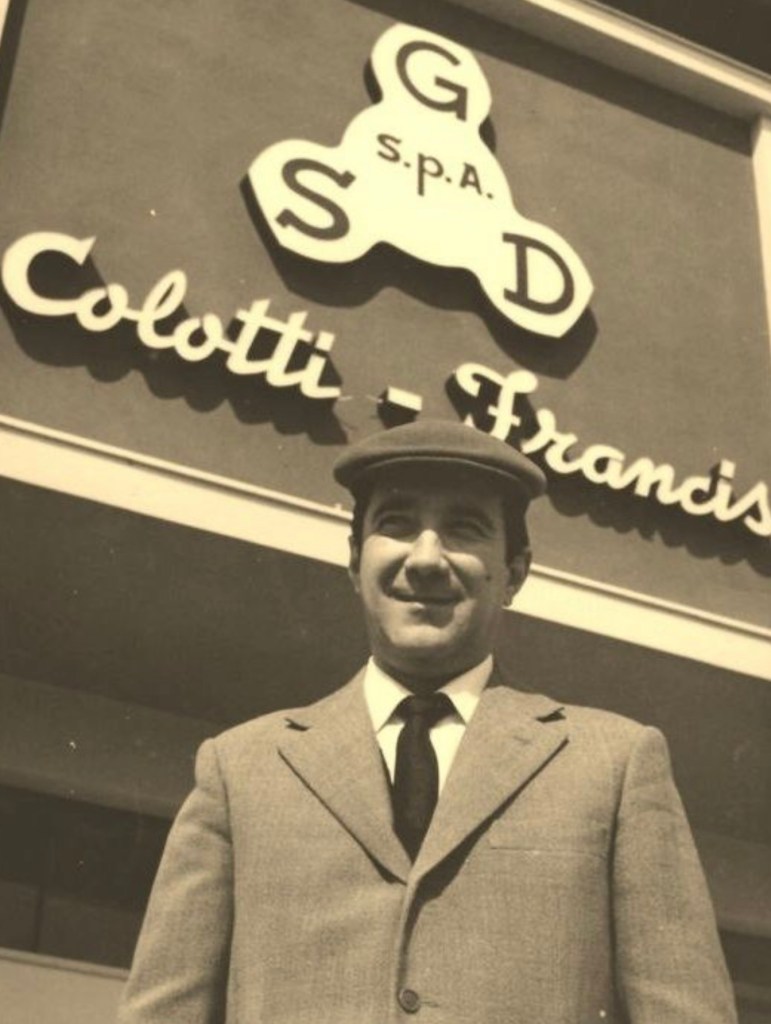
Colotti, meanwhile, had gone into partnership with former Stirling Moss mechanic Alf Francis as ‘Gear Speed Development SpA’, with plans to build Colotti transaxles as the mid-engined revolution popped, and so too the demand for quality, reliable gearboxes.

While all of this played out, Consoli completed Tec-Mec in 1959, complete with engine #2523 purloined from a 250F Jo Bonnier had for sale.

“Under the Pennington-Tanner aegis, Studio Tecnica Meccanica changed its name to Tec-Mec Automobili. The car was tested at Modena by American driver Bob Said, Piero Drogo, Jo Bonnier and Scarlatti.”

Just like the front-engined Scarab and Aston Martin DBR4 programmes, this one was too late. The basically 1957-designed Tec-Mec became raceworthy in late 1959 just as Jack Brabham clinched the first World Championships for a mid-engined car aboard the Cooper T51 Climax 2.5 FPF.

Fritz d’Orey during the 1959 British GP at Aintree. Maserati 250F, Q20 and DNF accident (MotorSport)

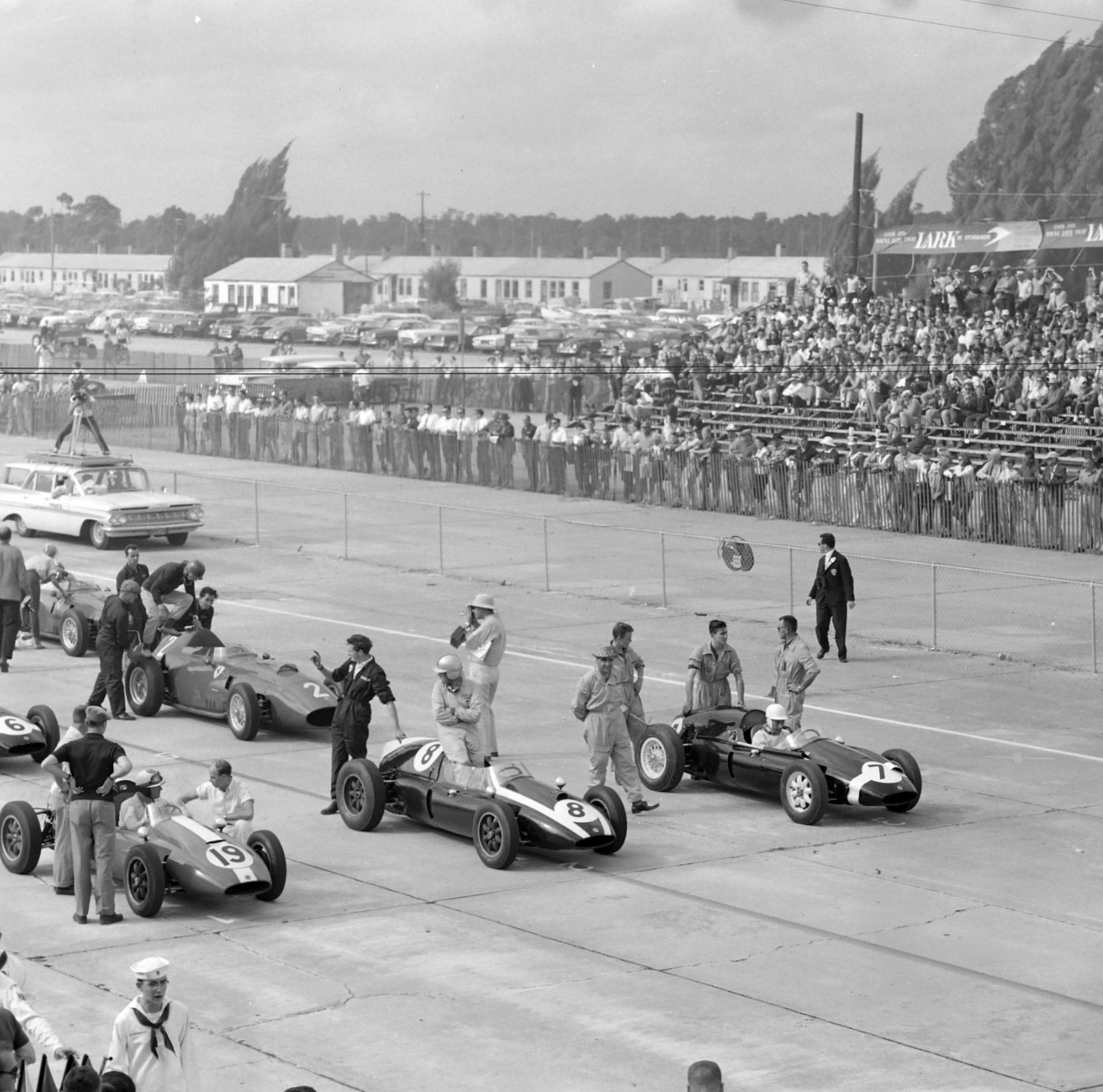
The 1959 World Championship closed with the United States Grand Prix at Sebring, Florida in December. Given it was in Gordon Pennington’s ‘back yard’ the Tec-Mec F415 was entered for Brazilian amateur – and former 250F racer – Fritz d’Orey. He qualified the Camoradi team run car 17th of 19 starters but retired after seven laps with an oil leak/engine failure.

Jesse Alexander wrote this comment about Fritz d’Oley’s performance in the car in his Sports Cars Illustrated race report. “The Tec-Mec was never driven quickly enough to show up any defects. The only time we know of it being driven fast was when Jo Bonnier took it around the Modena Autodromo last summer. His comments were not all that favourable. He complained of, among other things, a flexing chassis.”

More about D’Orey here: https://www.f1forgottendrivers.com/drivers/fritz-dorey/

One race in-period only, D’Orey and the Tec-Mec at Sebring (MotorSport)

After repair, the car was taken Daytona Speedway for a record attempt but D’Orey was injured in another car. Then Pennington lost interest and the project was abandoned. The car lay on a trailer in a Miami garden until early 1967 when it was acquired complete with spares – including unopened boxes of new parts – by Tom Wheatcroft for what became The Donington Collection.

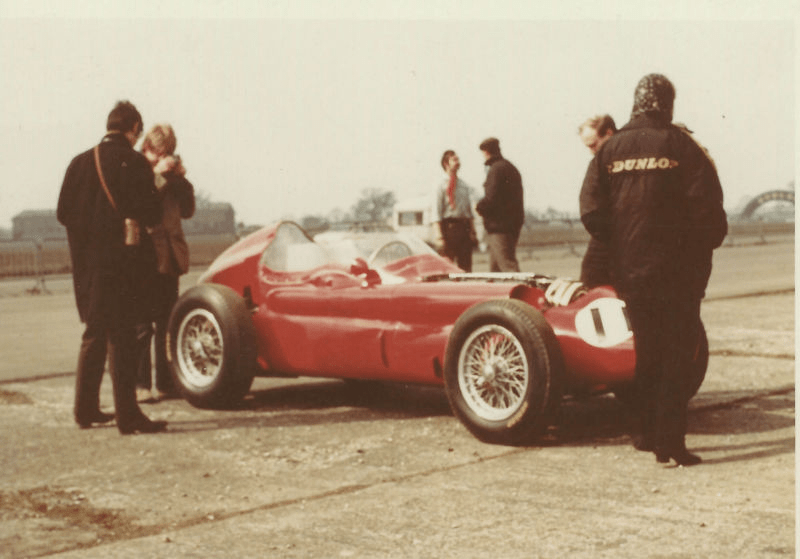
After restoration he drove the car regularly in open test days at Silverstone and Oulton Park before crashing it heavily into a parked ambulance after spinning-off at Silverstone. After the car was rebuilt it was driven by engineer/restorer Tony Merrick in VSCC events while residing in the Donington Collection. After sale by Wheatcroft in the 1990s the car has been a formidable historic racer.

Etcetera…

(Colotti)

Tec-Mec F415 – Tec-Mec Project 11 – on its first appearance, perhaps, after its restoration.

(Colotti)
(Colotti)

Credits…

Bonhams, MotorSport Images, Colotti Transmissioni, Sports Cars Illustrated March 1960 via Stephen Dalton, colotti.com

Tailpieces…

Valerio Colotti (Colotti)

Finito…

(I Smith)

Small things amuse small minds, mine that is.

Jack Brabham being pestered by Frank Matich before the start of the Tasman Series Sandown Park Cup on February 16, 1969. Frank is after some tips on how to extract the best sponsorship deal from Repco Ltd management.

It’s intrigued me that Jack clearly forgot to bring his nice modern Bell Magnum helmet home with him when he jumped on his Qantas 707 at Heathrow for Sydney in December 1969.

When his Brabham BT31 Repco was finally offloaded at Port Melbourne and had its nice new RBE 830 V8 fitted at Repco Brabham Engines in Maidstone, he cast around for a skid-lid and – seemingly – this circa 1960 helmet and pair of goggles were the only ones available to head off to Calder to test the car two days before the Sandown race. See here for a BT31 epic: https://primotipo.com/2015/02/26/rodways-repco-recollections-brabham-bt31-repco-jacks-69-tasman-car-episode-4/

The lovely shot above seems to be the helmet in question sitting atop Jack’s noggin on the grid of the BRDC International Trophy at Silverstone nine years before, May 14, 1960: second in his works-Cooper T53 Climax behind Innes Ireland’s Lotus 18 Climax.

(unattributed)

Our very own Jack during the ‘69 Sandown Cup. He is on the run out of Peters above, and on the way into Dandy Road below, wearing the same 1960 helmet or one very much like it.

Small things as I say…mind you, I don’t like ‘yer chances of racing with a nine year old helmet in today’s homogenised, pasteurised over regulated times.

Brabham finished third in the race, proving brand-new BT31 was quick right out of the box, which was won – so too the Tasman Series – by Chris Amon’s Ferrari 246T. Jochen Rindt was second in his Lotus 49B Ford DFW.

(R MacKenzie)

Jack returned that Easter to fulfil his final Australian Repco commitments, winning the Gold Star round at Bathurst in BT31. This time (below) Jack remembered to pack the Bell Magnum but not his modern goggles…

(B Frankel)

More on Jack’s helmets here: https://primotipo.com/2020/07/11/jack-piers-and-helmets/

Credits…

Ian Smith , popperfoto.com, Rod MacKenzie, Bob Frankel

Finito

(P White)

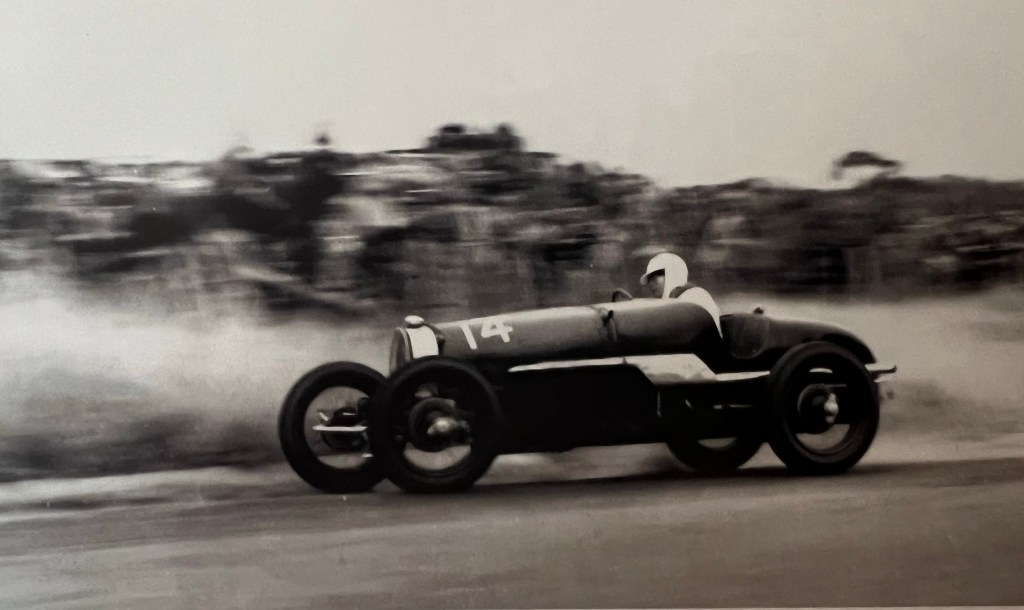
Ouch. Wow, that’s daffy-ducked isn’t it!? Alan Cooper’s very dead 4.8-litre, straight-eight, 1919 Ballot 5/8LC lies on the front-straight of Olympia Speedway, Maroubra, Sydney on January 2, 1926.

Behind is his brother, Harold ‘Hal’ Cooper’s 2-litre Ballot 2LS #15. In the feature that night, relative novice Alan tried an outside pass on his vastly more experienced younger brother on the last lap, snagged a hub on the fence and cartwheeled along the track at over 100mph and into the sandy area between the track edge and the spectator compound. Alan walked away – shaken and stirred – but the poor riding mechanic wasn’t so lucky, the worst of his injuries was a pair of broken thighs.

Alan Cooper aboard #1004 earlier on the fateful day (Sherwood Collection)

Alan never raced again, but chassis 1004 was repaired by racer/mechanic/engineer John Harkness using an Australian Six chassis, and appeared again at Maroubra with Harkness at the wheel that August. Whatever thoughts I had about the original chassis being repaired have been well set aside…

The Cooper boys were from a family of 11 children. They were brought up in Melbourne’s Botanical Gardens where their father was Chief Gardner. Via a familial connection, Alan Cooper met the 30-years-older Stephen Brown not long after he returned from the Great War. The Brothers Brown owned a large vertically integrated Newcastle coal mining and distribution business named J & A Brown (now part of Yancoal Australia). Stephen treated Cooper as his son and lavished stupefying levels of wealth on him including the most exotic racing cars of the time; the Ernest Henry designed Ballot’s were the best there was, the 1919 ‘Indy’ Ballot undoubtedly one of the fastest cars on the planet.

Indy 500 1919. #4 Ralph DePalma, Packard, #32 and 31 are the Albert Guyot and Rene Thomas Ballot 5/8LCs, #3 is Howdy Wilcox – the winner – Peugeot, and #33 Paul Bablot’s 5/8LC. The pace car is a Packard Twin Six V12 (IMS)
Louis Wagner, Ballot 5/8LC #1004 before the off (IMS)

Louis Wagner raced 1004 at Indianapolis 1919 as part of a four-car factory assault on the race. The Ballots where the quickest cars too, but the hastily built machines were geared too-tall. The quick fix, in the absence of an alternative diff-ratio, was the use of smaller diameter locally made wheels and tyres – Goodrich instead of Michelins. These failed, Wagner was out with a broken wheel after only completing 44 of the 200 laps while running third, then Paul Ballot crashed when a wheel failed after 63 laps, so the other two 5/8LCs of Albert Guyot and Rene Thomas cruised home in fourth and 11th places.

While it was a bad day for Ballot all wasn’t lost for Ernest Henry, the winner was Indiana boy Howdy Wilcox in one of Henry’s old Peugeot GP cars. Indy was/is tough and dangerous. Of the traditional 33 cars that started, 18 didn’t finish, four of whom crashed, two fatally: Louis Le Cocq and Arthur Thurman both lost control aboard Duesenbergs. Robert Bandini, Thurman’s mechanic died as well.

As a result of the rise in pole-time speed to nearly 105mph in 1919, and one suspects, perhaps the three deaths, the Indy Formula engine size was reduced from 300cid in 1919 to 183cid for 1920. Ernest Ballot immediately had four very expensive racing cars surplus to requirements, just the thing for a bright-young-colonial with somebody else’s dosh jangling loose in his pockets.

By the time Brown and Cooper swung past Paris’ Boulevard Brune to acquire 2LS #15 – the ex-Jules Goux second-place 1922 Targa machine – Monsieur Ballot was using #1004 as a swish, speedy roadie. Fitted with Perrot brakes, mudguards and a windscreen, he cut quite a dash on the Boulevard St Germain.

Thelma – quite tidy too – at the wheel of #1004 at what became known as Safety Beach, Dromana on Victoria’s Mornington Peninsula in December 1928 (B King Collection)

That’s why the car before Alan Cooper crashed (pic 2 above) it looks road-equipped, it was. When shipped to Australia it supposedly arrived with three bodies, the one shown and destroyed in the prang, a slipper body which Harkness fitted (or built) when he rebuilt it, and another, a shot of which I’d love to see…

Harold Cooper raced 5/8LC 1004 for a while south of the Murray at Aspendale, the Melbourne Motordrome and other venues. He was described as “Victoria’s best known racing driver” by the Melbourne Herald before racing on the 2-mile 163 yards rectangular gravel course at Safety Beach, Dromana in December 1928, and duly set the fastest time.

Unfortunately Harold didn’t contest the 1927 Australian Grand Prix at Goulburn, nor did he ever give the 2LS a gallop in any of the early (2-litre supercharged and under) Phillip Island Road Races/Australian Grands Prix. Had he done so he would have been a red-hot favourite, he is the most underrated and forgotten Oz driver of the period…

Melbourne racer Jim Gullan and mechanic during practice for the January 2, 1939 Australian Grand Prix at Lobethal, South Australia. The exotic eight let go at warp speed, a rod carved the block in half with expensive shrapnel being spread across the Adelaide Hills countryside. It would be 40 years before the chassis was reunited with another Ballot engine (N Howard)
1004 in the Edgerton suburban garage, date unknown. Other than the Dino I’ve no idea of the identity of any of the other machines (R Edgerton Collection)

Both Ballots raced on. The 2LS’ svelte twin-cam 16-valve four was replaced by a succession of V8s and raced in Western Australia for decades, its mortal Ballot remains survived and are well cared for in Australia. The 5/8LC was restored after being tracked down to a northern Victoria farm by ‘Racing Ron’ Edgerton in the 1970s. The ‘Edgerton’ branded crankcase side covers were a tad vulgar for most but he got the car running and competed in it, a state to which it has never returned in the hands of the UK owner for the last three decades or so.

Check out the May 2021 issue of The Automobile. I wrote a never-published-before long yarn about the Coopers, Ballots, the elusive Stephen Brown and the staggering lifestyle he afforded them, and their later second lives as Captains of The Turf. See here to purchase; https://www.theautomobile.co.uk/may-2021-issue/

(R Edgerton Collection)

Ballots up. Frying tyres, rings or bearings? Ron Edgerton attacks Shell corner (Turn 1 in today’s vulgar parlance) at Sandown on one of 1004s relatively few outings – partially restored by the look of it – before the car was sold overseas. The following Ballot is Wes Southgate’s 2LS, now restored to original bodywork and owned by publisher/hotelier/renaissance-man Douglas Blain, who keeps the car in fine fettle in Victoria. Those Rothmans brake markers are circa 1978-79’ish, so a meeting about then?

Etcetera…

(AD Cook Collection)

Harold Cooper aboard #1004 at La Turbie Hillclimb in 1925. Hal did four ‘climbs: three venues near Nice including this one, and another in Monaco, before the car was shipped from Le Havre to Melbourne. Quite why this slipper-body was removed back at Ballot HQ at Boulevard Brune for the ‘Indy’ body before shipment to Australia is anybody’s guess. The body above is different to the form in which the car emerged Harkness’ workshop after Alan Cooper’s Maroubra accident.

While Alan Cooper makes much of his racing career in the Smiths Weekly serialisation of his life story – a grand, rollicking, bullshitty yarn it is too – in fact he did relatively few competition miles. Harold, on the other hand, competed a lot from 1922 when the 2LS arrived and was a man of great skill. He was far more competent than Alan, had competed in the 5/8LC in France already, so had a level of familiarity with it.

The car was ministered to in Sydney by Giulio Foresti, Ballot factory racer/dealer/mr-fixit who tested it at Maroubra and schooled the brothers in its use and mechanicals. We know from contemporary reports that a planned early Maroubra test by Alan was thwarted by steering problems. Harold should have raced the 5/8LC and Alan the 2LS that fateful night; letting Alan loose in it at Maroubra was akin to a modestly credentialed Formula Ford driver have a lash in Oscar’s F1 McLaren. Alan Cooper was kissed-on-the-dick-by-tinkerbell – to use vulgar Oz slang – many times during his long life, not least on that fateful 1926 evening.

The Argus December 10, 1928

“Thrilling motor-racing was witnessed at the Aspendale Speedway (Melbourne) on Saturday afternoon. The best display of driving was that given by Harold Cooper, who is shown here negotiating a corner at speed in his eight-cylinder Ballot car. He defeated Albert Edwards who drove a front-wheel-drive supercharged Alvis.”

Credits…

Peter White Scrapbook via Colin Wade, Indianapolis Motor Speedway Museum, The Argus, AD Cook Collection, Ron Edgerton Collection, Norman Howard, Bob King Collection, John Sherwood Collection from the wonderful ‘A Half Century of Speed’ by Barry Lake

Tailpiece…

(R Edgerton Collection)

The essential element of Edgerton’s rebuild of #1004 was locating one of the very exotic, Ballot 4.8-litre DOHC, four-valve, straight eight engines or the bones thereof.

As luck would have it, Briggs Cunningham had one, and wanted a Cottin & Desgouttes, Edgerton was happy to oblige. Here is Ron’s (at right) pride and joy (with Silvio Massola) – didn’t he have a lot of those in his automotive lifetime – on a 1977 rally in Tasmania, Australia’s South Island.

Finito…

(Ro Ander Family)

The lighting of this shot of Ted King’s Rajo Ford is poor but it also makes the shot, so very evocative!

Historian Nathan Tasca chased up a fellow who posted another photograph on Facebook and was rewarded with some other shots including these two,. At this point ‘Prof’ John Medley came to the rescue and identified the car, as he does…

As luck would have it, my loan-copy of a ‘Half Century of Speed’ has the shot below of King “after winning a championship at Penrith in 1927.” What follows is a truncated version of the late-great Barry Lake’s narrative.

Ted King lived in Newcastle (NSW) and raced mainly on dirt tracks in that area. King used to ship his car by steamer to Sydney and back to attend meetings. In the mid-late 1930s groups of speedcar drivers would do the reverse of this trip; travel overnight on Friday, race in Newcastle on Saturday, then return overnight on Saturday to be home in Sydney on Sunday.

Is this Ted King at his Newcastle area servo? Ring a bell folks (Ro Ander Family)

In the first half of the twentieth century road travel between cities was long and arduous. Roads were narrow, rough, winding and dusty, with many ferry crossings. Coastal steamers were cost effective alternatives right up until the early post-war years; Sydney to Adelaide an example.

Frontenac ‘Fronty’ and Rajo manufactured overhead valve conversions for T-Model Ford engines. They both used crossflow heads, but Frontenac Fords had the inlet ports on the left and exhaust ports on the right hand side of the car. All Rajo-Fords had the inlet on the right and exhaust on the left.

The Morris bull-nose radiator was a common fitment to locally assembled T-based racers which used Fronty or Rajo parts as they looked like the US built cars of the time at less cost.

Many Fronty and Rajo Fords were raced in Australia but few were fully imported complete cars. Heads, engine parts and other hot bits were brought in then built up with locally sourced T-Model parts to build copies of the US built cars. There are still about 35 on register in Australia.

More reading; https://primotipo.com/2018/11/20/penrith-speedway/

Etcetera…

After posting this piece the following material arrived from David Smallacombe, photo of King at Penrith, and from Andrew Webb, who has the remaining bones of the King machine; the front wheels, Rajo head, Solex carburettors, chain drive magneto and water pump, and log book.

Ted King, Rajo Ford, Penrith, date unknown (D Smallacombe)
Ted King Rajo BB engine (A Webb)
(A Webb)
(A Webb)
(P White Collection)

Ted King in his Rajo Ford at Maroubra, date unknown.

Credits…

Nathan Tasca, John Medley, Ro Ander Family, ‘Half a Century of Speed’ Barry Lake, Tony and Pedr Davis, David Smallacombe, Andrew Webb, Peter White Collection via Colin Wade

Finito…

Perhaps one of you with immaculate connections can get this through to Oscar Piastri, it’s the final extra-bit he needs to have the wood on Lando.

Yep, it’s not the first article on Stan, but there is no such thing as too much of a good thing in my book…

Credits…

Very Shy Private Collector, Motor Manual July 1954 and January 1955

Jones in the shortlived Maybach 2, Australian Motor Manual, July 1954

Finito…

(MotorSport Images)

Bruce McLaren piloting the works Isuzu Bellett at Goodwood during practice for the St Mary’s Trophy race over the April 19, 1965 International Trophy weekend.

In a busy weekend McLaren raced his Cooper T77 Climax to fourth place in the F1 feature, the Sunday Mirror Trophy, and his 4.5-litre Elva McLaren Oldsmobile to third in Lavant Cup, both races were won by Jim Clark, in Lotus 25 Climax and Lotus 30 Ford respectively. The power to weight ratio of this Nippon Racing, British Saloon Car Championship entry would have been the lowest of his mounts I suspect…

It was the first time a Japanese car appeared at a BSCC round, so it was an historic occasion. The Autosport report of the race records that a piston failed in the 1471cc four-cylinder engine in practice, so Bruce didn’t take the start of the event won by Jim Clark’s Team Lotus, Lotus Cortina and Jack Sears’ sister car.

(unattributed)
Bruce about to go out with the fourth placed John Willment Racing Lotus Cortina of Frank Gardner behind (Goodwood Sixties)

John Sprinzel raced the Bellett at Crystal Palace on June 7, albeit not in the BSCC race, how did he go?

I wonder what Bruce thought of the car?, highly regarded in Australia at the time, see here; https://www.shannons.com.au/club/news/racing-garage/isuzu-bellett-the-club-car-that-helped-bondy-become-a-superstar/

Credits…

MotorSport Images, ‘Motor Racing at Goodwood in the Sixties’ Tony Gardiner, Stephen Dalton, Jack Inwood, Brent Benzie, Doug Nye

Tailpiece…

(J Inwood)

No doubt Bruce had ‘plenty’ of touring car form – don’t bother with an essay on the topic whatever you do, they were of no consequence to him – here with a works, I think, Morris Cooper at Pukekohe during the January 5, 1963 NZ GP meeting.

McLaren DNF’d that race after magneto failure in his Cooper T62 Climax on lap 24, John Surtees won aboard a Lola Mk4 Climax. I wonder how he went with the Mini? He brought this car out on his Australasian Tour that summer, racing it only in NZ, does it still exist?

Etcetera…

(B Benzie)

A few days after I posted this article I had a great email from Brent Benzie.

“I read with great interest the post about Bruce McLaren and the Mini Cooper he raced in the Tasman series support races (at least in New Zealand) back in 1962-63.”

“During the mid-late 1960s I owned and raced this car mainly at Teretonga, Wigram and Ruapuna. The late Wally Willmott, wh I got to know quite well in the 1970s, told me a lot about the details of the car and its history with Bruce, and that he (Wally) had quite a lot to do with its original preparation.”

“It had an interesting a very special engine that was basically a BMC Formula Junior unit. It was fitted with two 1 1/2 inch SU carbs with no provision for chokes and sure was hello get started in that South Island climate I can tell you.”

“I sold the Cooper to fund my move to Australia but I’m pleased to say that the car still exists in New Zealand and has been restored by a gentleman who lives in or near Auckland. See the photo.”

“Incidentally, before your post I had never heard of Bruce driving an Isuzu Bellett and it brought to mind a story I read several years ago about a company that, back in the 1990s, had just leased an abandoned warehouse near the docks in Los Angeles. Inside was a huge stock of Bellett parts – including complete engines, transmissions and body parts etc – all brought into the US by Isuzu but never distributed to their dealers before they ‘pulled the plug’ on that model.”

Finito…

(S Shobo)

Fukumi Takatake – sometimes written Fukumi Kotake, born in Fukuoka, December 3, 1944 – at the wheel of the works Honda R800 during the 1969 Suzuka 500km, he finished second outright and first in the R1 class.

A very attractive car(s) new to me, the machine was of spaceframe construction, the design seemingly inspired by an F3 Brabham Honda owned by the Suzuka circuit, itself owned by Honda of course.

As the rear body-up photograph of the R800 shows below, its tiny air-cooled engine – mounted north-south at the front of the S600-800 roadies – was mounted conventionally in the rear of the sports-racer.

Honda R800 in the Suzuka paddock 1969 (unattributed)
791cc all alloy DOHC, two-valve, water cooled four fed by two twin-choke Keihin carbs, 70bhp @ 8000rpm. With roller bearings supporting the crank – and its dizzy rpms – Honda delved straight into its motorbike practice book for this engine
Honda R1300 during the 1969 Suzuka 1000km (unattributed)

The cutaway drawing of the R1300 below – the engine was mounted east-west in the Honda 9 – shows the engine-transmission unit is mounted transversely at the rear as was also the case on Honda’s stunning, successful 1964-65 1.5-litre V12 RA271-272 GP machines. The suspension, brake, wheels and other specifications are otherwise 1960s period typical. See here for a feature on the Honda 1.5-litre GOP cars; https://primotipo.com/2014/12/12/honda-ra271272-1-5-litre-v12-19645-gp-cars/

Honda R1300 cutaway (unattributed)
Series 99 1299cc all alloy, SOHC, two-valve, air cooled transversely mounted four cylinder engine is fed by four Keihin carbs, dry-dumped, 116bhp @ 7300rpm (Honda Australia)
(unattributed)

The R800 was built by Honda RSC the competition arm of Honda. The Racing Services Club was formed in 1965, then became the Racing Service Center and finally in 1982 morphed into Honda Racing Corporation. The car made its race debut that Suzuka 500km weekend and was Honda’s response to the Coniglio and Macransa (later Dome) Honda S-Series based kit/racing cars.

Shortly after the Suzuka ’69 500km race, Honda upgraded the machine by fitment of the 1.3-litre, air-cooled, four-cylinder engine fitted to their then new Honda 7/9 Coupe, a vastly underrated car. The 1300cc SOHC, crossflow, all alloy engine had a unique engine cooling system named Duo Dyna Air Cooling. The head and block had airways akin to the water passages of liquid called engines cast with short, stubby vertical fins. An impeller mounted directly to the crank pumped air through the passages, assisted by additional fins on the outside of the block. The dry sump carried plenty of lubricant, in a sense the engine was also oil cooled.

I’m having trouble finding the race record of the R800/1300, my Japanese is limited other than when excessively lubed. Information welcome.

Fukumi Takatake commenced racing motorcycles at 17 and was a contracted Honda rider at 19, winning the All Japan 250cc title in 1966. When Honda withdrew from two-wheel competition in 1967 (for a while!) he switched to four wheels, racing single-seaters, sports and touring cars. He ceased as a racer in 1987 after competing in the All Japan Touring Car Championship.

Etcetera…

(Honda Australia)

The Honda 1300 Coupe 9 was famously the last project Soichiro Honda personally led before retiring as Honda’s ‘Supreme Advisor’ in 1973.

His originality showed through in the design too, albeit times, safety and emissions legislation required a changed more conventional approach to become relevant and appealing to the masses. The brilliant Civic followed, there was nothing particularly novel about it, just great, bullet-proof engineering and build quality. Australian conditions are tough.

(Honda Australia)

My Mk2 Cortina GT was the typical student shit-fighter, but it was all-mine! I felt like I was jilting a babe after a chance drive of a very affordable Coupe 9, by 1976 they were el-cheapos, high risk ones too. My big-mistake was talking to Dad about it, I needed a bridging loan while I flogged Corty and bought 9 Outta 10.

“I’ve spoken to the car guy (the Fleet Manager who thought HQ Kingswoods were edgy) at work!” he said to me the next night, here we go I thought. “He reckons you’re a bloody idiot, it will cost you heaps. You’re looking after the Ford, he reckons you’ll have to rev the ears off it – just like the last bloke did…” And so on…

So I never did buy it but man it was a nice thing. A weird mix of old-tech like the rear axle, then that out-there engine and sweet gearbox. But it was so cohesive as a package, a howling but torquey engine, shitty looking nose tho. Time to drive one again, an interesting Classic Car article perhaps…

Credits…

Sanei Shobo, Historic Japanese Racing Cars Facebook page, Yukio Kobayashi, honda-rsc.com, yoshimura-rd.com

Tailpieces…

(unattributed)

Soichiro Honda looking pretty happy at the wheel of an S600 or S800 Honda.

John Surtees Honda RA300 ahead of Chris Amon’s Ferrari 312 at Monza in 1967. Big John won the race in a last lap duel and last corner fumble from Jack Brabham’s BT24 Repco, two-hundredths of a second the official margin.

Maybe Honda had mercy on Jack – their F2 partner in 1965-66 – saving him the embarrassment of the more obvious corporate shot! See here for a piece on that partnership; https://primotipo.com/2021/12/17/brabham-honda/

Finito…
Not so much special, but three specials sponsored by Melbourne car dealer, Alan D Male and raced by Ted Gray in the immediate pre-WW2 years.

One was the JAP engined speedway midget above, the next a buggered-if-I-know powered midget and the third, Alta 21S, ex-Alan Sinclair/Bill Reynolds, and by then Ford V8 powered.

Male operated yards at 233 and 239 Latrobe Street, Melbourne named Males Car Sales and AD Male Car Sales respectively. This seemingly successful business man was important in the rise and rise of Tiger Ted pre-War, his final push into the top rank was provided post-War by Lou Abrahams.

While the contribution of Abrahams to Gray’s rise to the very front of Australian Formula Libre racing aboard the Alta – by then owned by Gray – and the two subsequent Tornado V8s has been well covered by us before, here; https://primotipo.com/2015/11/27/the-longford-trophy-1958-the-tornados-ted-gray/ and here; https://primotipo.com/2020/05/04/ted-gray-alfa-romeo-ford-v8-wangaratta-to-melbourne-record/ and there’s yet more here; https://primotipo.com/2023/07/15/alta-1100-special/ – the contribution of Alan Male has not.

Gray gave the visiting Peter Whitehead’s ERA B-Type a serious run for his money in the midget above during meetings at Aspendale Speedway and Rob Roy hillclimb in 1938. Leon Sims tells us that in the meeting above, Rob Roy 5 on November 20, 1938, that Gray set the FTD 0.5 seconds outside the hill record set by Whitehead only five months before. In the process “he set the committee of the Light Car Club of Australia scratching their heads in concern over the suitability of a car designed for midget racing, taking the award on their hill. It was not seen as a ‘proper car’ in their eyes.”

When Jack Brabham raced his midget at Rob Roy post-war he had the same problems but went to Sydney, fitted some brakes to his car, and returned to take the Australian Hillclimb Championship at Rob Roy in 1951. Up yours Blue Blazer Officialdom, or something like that!

This is the ‘other midget’, a rare shot with car owner Alan Male at the wheel at Rob Roy 5, he did a time of 31.5 seconds. I’d love to know the builder and specifications of this car. If Mickey Mouse seems an odd radiator-shroud fear not for the little-fella, he seems to have been adopted by the team as a mascot, he is present on the team’s Alta 21S Ford shown further below.

Ted Gray on the outside of A ‘Stud’ Beasley (as in head stud or babe-magnet?) at Aspendale in August 1938, with Mickey still hanging on for grim life. I’m rather hoping some of you may be able to tell me a little more about Alan Male in order that we can put it on the public record.

Nathan Tasca’s research shows he was still trading in cars post-War, as Weir & Male Motors at 243 Latrobe Street, familiar territory for him! He still maintained his interest in motor racing, note the AMS advertisement below. The wording of the ad, and coverage of the car in the Motor Manual 1950-51 Australian Motor Racing Year Book confirms the car was built by Ken Wylie for Weir & Male Motors, Austin dealers, and was driven by Wylie.

(Photographer-Byron Gunther)

The final Male Special/Ford V8 Special – it was entered in various names – is most correctly, using the modern – make-model-engine manufacturer – ‘racing car description protocol’ Alta 21S Ford V8. Here Ted is considering proceedings with his crew and officialdom at Penrith Speedway, NSW in 1940.

While built as a road racing racing sportscar, and modified by Sinclair’s team in the UK before coming to Australia as a road racing 1100cc supercharged single-seater, the car performed well both on the roads and on dirt speedways, as here. The car was raced well into the war years, Gray in the Male Special V8 beating S Bail’s Midget V8 in a 3 lap match race at Aspendale on Sunday January 19, 1941, his final entry March-April ’41. Picking up the Austin connection, Tony Johns tells me S Bail was a partner in the Bail Brothers Austin sub-agency (Stan and Wally) in Hampton Street, Brighton in the 1960s.

By the way, the little dude on the scuttle of the Alta is Pinocchio not Mickey Mouse…there is a story there, but what is it? I know, Walt Disney was so impressed with Ted’s performances he was slipping a few greenbacks Male’s way…

Motor Manual 1950-51 Yearbook via David Zeunert Collection

Credits…

Bob King Collection, photos perhaps taken by Ted Hider-Smith, The Argus January 20, 1941, David Zeunert Collection

Tailpiece…

Tiger Ted aboard the very new Tornado 1 Ford V8 at Fishermans Bend in early 1955, date please (car #5).

When the shortcomings of Alta 21S finally became apparent after Lou Abrahams’ big-brawny Ardun-Abrahams head Ford V8 was dropped between its chassis rails the Abrahams, Gray and Mayberry team built Tornado 1. This car’s short life ended when Gray had a huge accident at Bathurst in October 1955 after brake dramas, see the articles linked above for the details.

Finito…

(VSCC Vic)

I got terribly excited when I found this letterhead among the Vintage Sports Car Club of Victoria’s photo archive. What a discovery, a speedway in inner Melbourne, on the current AGP site way back in 1903!

Yes and no. The speedway was built but for the use of our equine friends, just as the first automobiles were trickling into Australia.

(SLV)

The speedway was one mile long “on the seaward side of Albert Park. 145 feet wide, the course was divided into two tracks with a space in the middle for pedestrians. “It is well laid out, planted with ornamental trees with rockeries interspersed,” Table Talk recorded.

The track was open to the public when not in use “and beautified a portion of the park that has hitherto been an eyesore.” As one who walks/runs around Albert Park daily I’m intrigued to know about this aspect of the park and fascinated to know exactly where the horse-course was 120 years ago.

At the opening ceremony on August 29, 1903, the club president outlined that the purpose of the speedway “would stimulate the desire to possess first-class horses, and so improve the breed of our carriage and trotting horses.” The club “wanted to provide a track where a gentlemen with a horse that had a turn of speed could exercise it without the risk of prosecution for furious driving.”

(SLV)

The Governor, who had been given a golden-key to open the gates of the speedway, replied that he hoped it (the key) “would open the eyes of the local councillors to the fact that it was a good thing to have a Speedway in their midst, and in a portion of Albert Park that had been up to the present but an indifferent cow paddock.”

The Gov concluded by observing that American Speedways had improved the quality of their horses, and that “the Albert Park Speedway was in the hands of good sportsmen, and good men, and in declaring it open, wished the club all prosperity.” Tally-ho, jolly good show and happy hockey-sticks…

I do find interesting the history of a part of the world, dear to my heart, but by March 1907, with little interest in the venues activities, the Melbourne Speedway Club had to relinquish its use of that part of Albert Park.

This snippet is a reminder of just how important horses were until Karl Benz and his mates happened along. Click here for a piece on Albert Park’s history; https://primotipo.com/2020/05/12/albert-park-lake-boats-and-politics/ and one here on the earliest days of Australian motor racing history; https://primotipo.com/2015/11/17/australias-first-car-motor-race-sandown-racecourse-victoria-australia-1904/

(Algernon Darge – SLV)

While the horse-men were keen on building best-of-breed, devotees of new-fangled-horsepower were ‘racing’ already. Harley Tarrant, Argyll 10HP at left won a 3-mile race ‘for heavy automobiles’ at Sandown Park on March 12, 1904. That’s Tom Rand’s second placed Decauville 16HP alongside.

When I billed this as Australia’s First ‘Motor Car Race’ in the second of the two articles above, ‘Prof’ John Medley – Australia’s foremost motor racing historian – told me how brave I was, which was his polite way of saying “I wouldn’t be so sure about that Sonny-Jim!” Whatever the case, the ‘competition’ was one of the first between cars in Oz. And lookout horses, we are coming through…

Credits…

Vintage Sport Car Club of Victoria, State Library of Victoria, Table Talk September 3, 1903, Algernon Darge – State Library of Victoria

Finito…

Dagrada Lancia Formula Junior, 1962…
With the announcement of Formula Junior in 1958 the floodgates opened to chassis builders from around the globe using 1100c BMC, Fiat, Ford, Renault and Lancia engines. The latter provided one of the loudest, potent engines to ten or so front and mid-engined cars built by Milanese mechanic, Angelo Dagrada.

Born in 1912, he initially made his name building cars for the post-war Italian 750 and 1100cc classes. He improved the Fiat 1100-Siata head and achieved some significant wins before road accidents slowed him. By 1955, Dagrada was again tuning cars, this time Alfa Romeos.

Angelo Dagrada with Franco Bordoni, Scuderia Ambrosiana Dagrada Lancia #001 at Monza in 1959, during the Trofeo Bruno e Fofi Vingorelli meeting. He was 12th in the race won by later Alfa Romeo factory driver, Roberto Businello – this shot and the one below (unattributed)
(unattributed)
Lancia Appia 1090cc (68x75mm bore/stroke) V4.Monobloc, crankcase and head made of duraluminium, hemispherical combustion chambers, modified crossflow head with two chain operated camshafts in the crankcase, two-overhead valves per cylinder inclined at 67 degrees to each other operated by pushrods and rockers. Two Weber 38DCO3 carburettors, compression ratio 8.75-9:1. Short, counter-weighted crankshaft (velocetoday.com)

The Baghetti’s, owners of a successful Milan foundry were customers. Dagrada aided and abetted teenage would-be-racer Giancarlo Baghetti by modifying the family Alfa 1900, without telling Baghetti senior.

Just as Baghetti started racing Alfas and Abarths, Dagrada concocted a new Formula Junior design for 1959, just as the British mid-engined hordes took over the class.

Always an engine man, Degrada good look at the 1090cc Lancia Appia engine rather than go the Fiat route like most other Italian FJ manufacturers. With a sturdy 10-degree cast-iron V-4, the Appia unit was available and light. The design’s shortcoming was an intricate aluminum head that stymied attempts to make it breathe deeply.

Dagrada’s solution was to substantially redesign the head. By creating new intake and exhaust ports, he achieved a crossflow design which was fed by a Weber 38DCO3 carburettors mounted either side of the block. With carefully calculated tuned-length-exhausts the horsepower gain of the 1090cc (68x75mm bore/stroke) engine was huge, up from 48bhp to circa 95bhp @ 6700-7000rpm.

The gearbox was a modified Lancia Flaminia/Flavia unit. With a simple ladder-frame chassis – the engine was offset to allow the driveshaft to pass alongside the driver – wishbone and coil spring/dampers and adjustable roll bars front and rear, modified Fiat 1100 brakes and an aluminum body reminiscent of a 250F Maserati, the car was ‘the goods’.

All smiles for Giancarlo Baghetti after winning the Vigorelli Trophy at Monza on April 25, 1960 (unattributed)

Giancarlo Baghetti demonstrated his burgeoning talent with a new Dagrada doing well in the junior-leagues before winning the more professional Prova Addestrativa on March 27, and Vigorelli Trophy races on April 25, 1960 both at Monza. He was equal fourth in the Italian FJ Championship together with Geki Russo – the title was won by Renato Pirocchi, Stanguellini Fiat. Giorgio Bassi was the other driver who did well in his Dagrada that year. By the spring of 1961 Baghetti was on Enzo Ferrari’s radar with an F1 seat his shortly thereafter.

The British rear-engined revolution started by Cooper and refined by Lotus ensured the days of front engined Formula Junior were nearing their end, one of the sweetest of that breed was the Degrada Lancia…

Angelo’s mid-engined design (below) which followed wasn’t a success, Giorgio Bassi took one race win for the chassis in the Coppa Junior Italian Championship round at Monza on May 13 1962, when the top-Brits were elsewhere…

(Leo Schildkamp)

Etcetera…

The donor of the Dagrada engine. 107,000 Lancia Appia’s were built between 1953 and 1963.

(unattributed)

Dagrada was not the only marque to use the Appia engine, others included Raf, Raineri and Volpini.

(unattributed)

Giorgio Bassi in his mid-engined Scuderia Sant’Ambroeus Degrada Lancia, 22nd during the Preis von Tirol at Innsbruck on October 8, 1961, car #15 is the Andre Rolland Stanguellini Fiat and #7 Bernard’s Foglietti Fiat.

Credits…

‘Emily’-Vladyslav Shapovalenko, velocetoday.com, Leo Schildkamp

Finito…