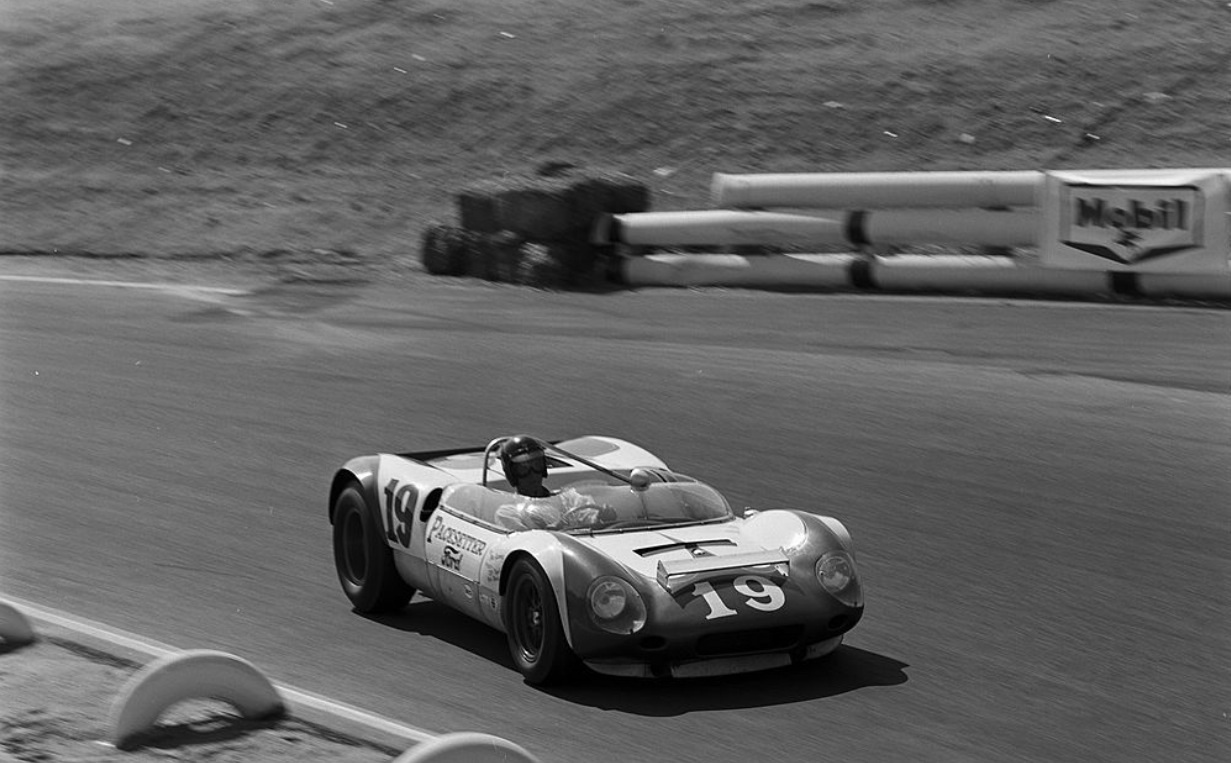
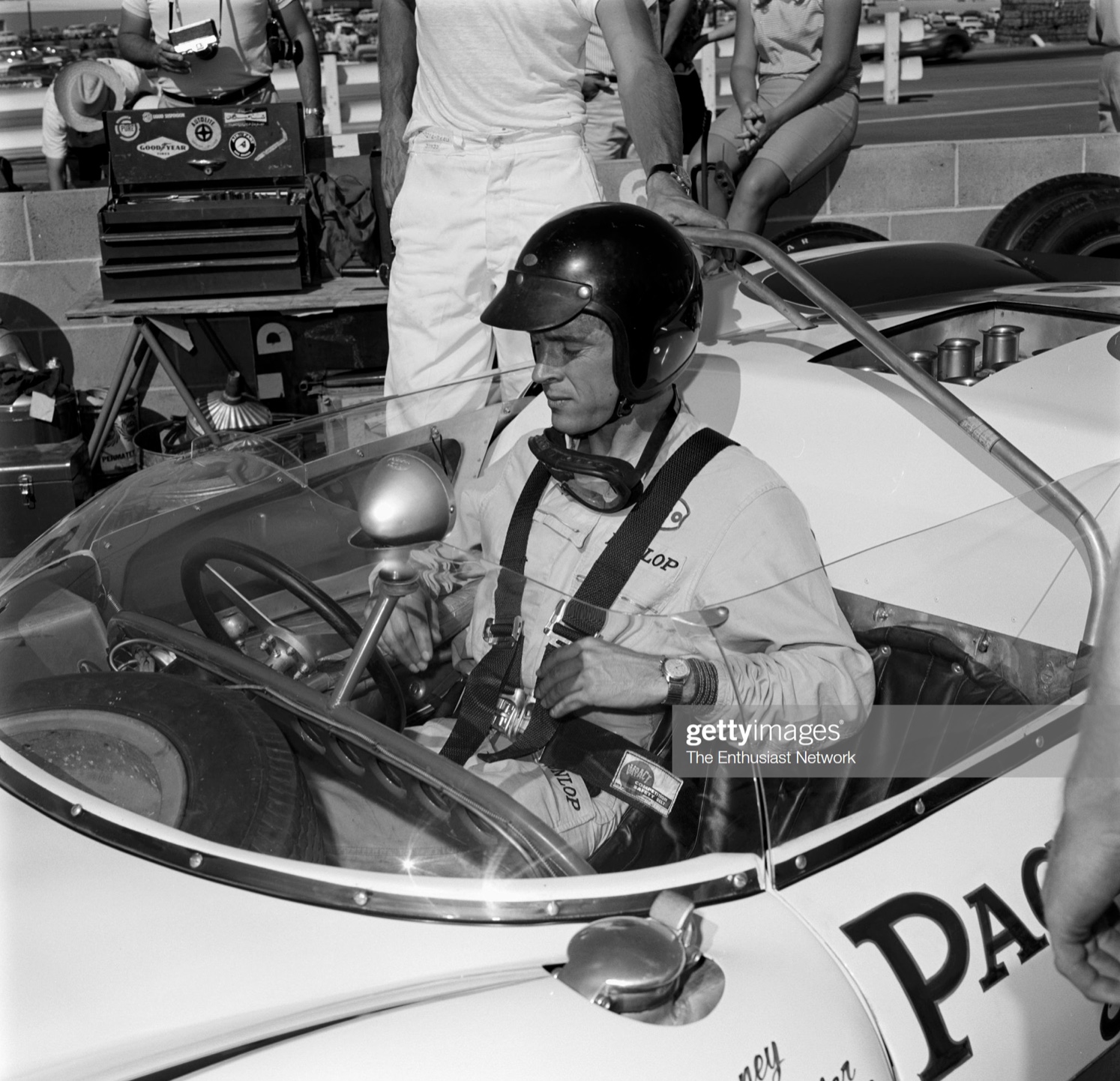
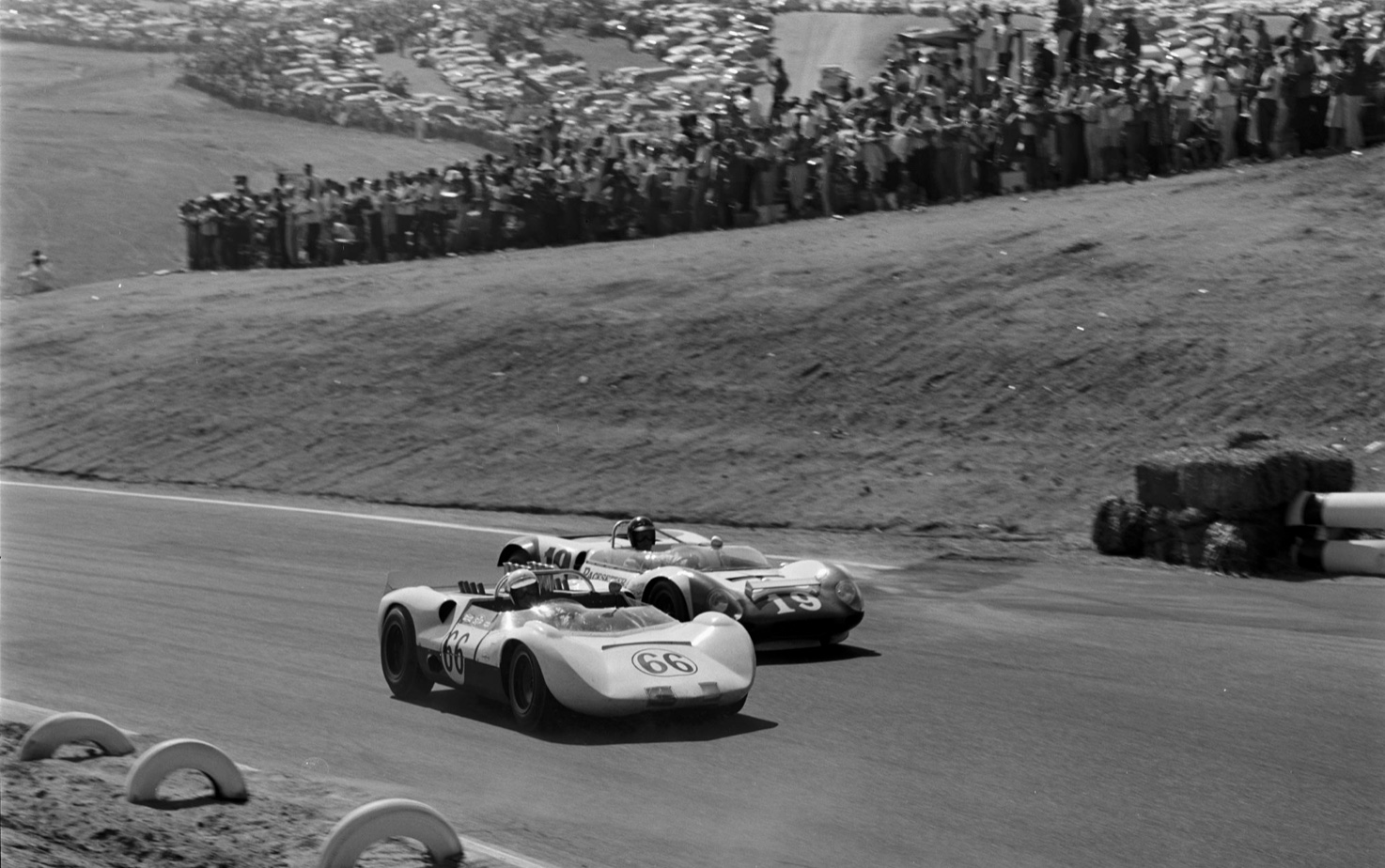
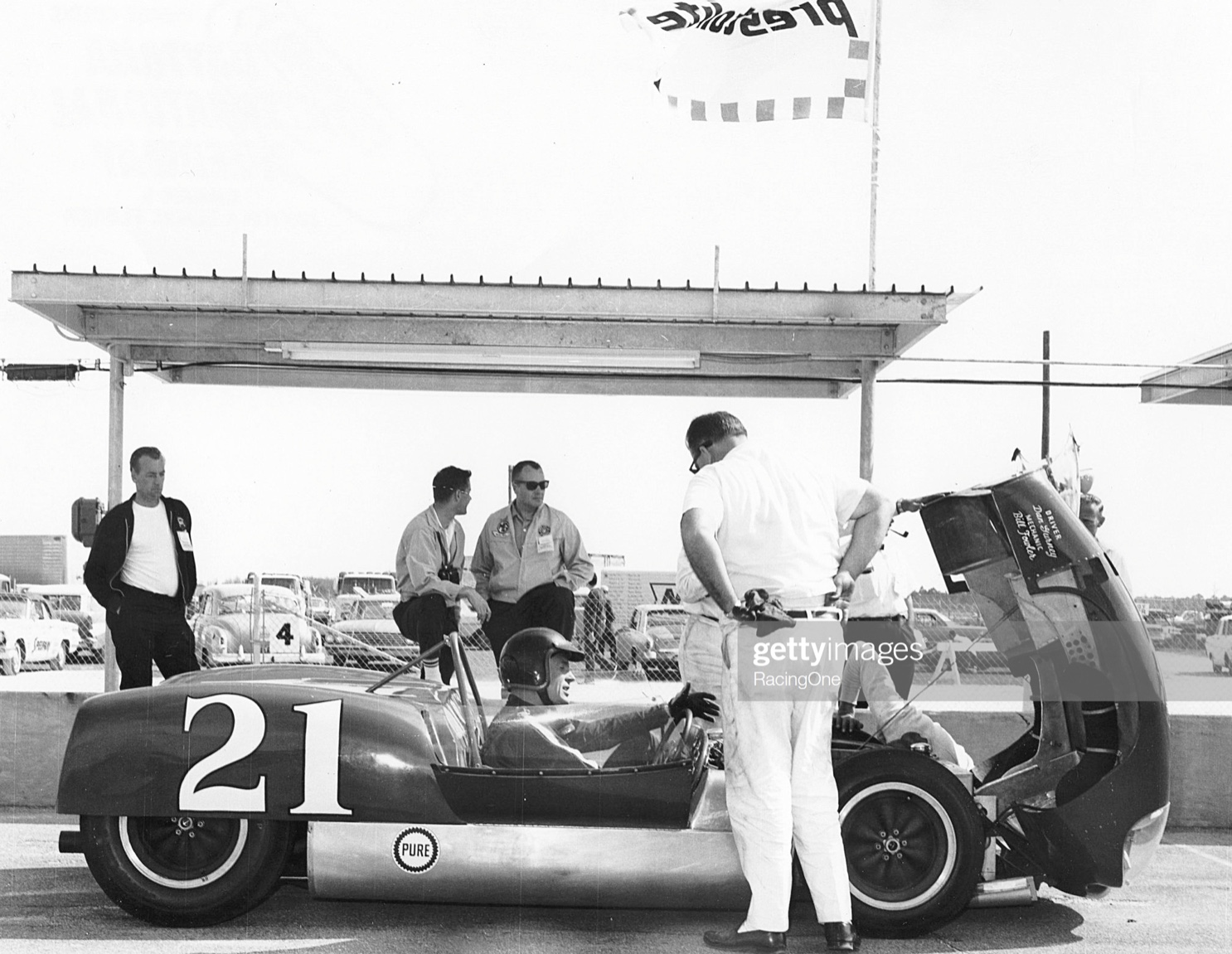
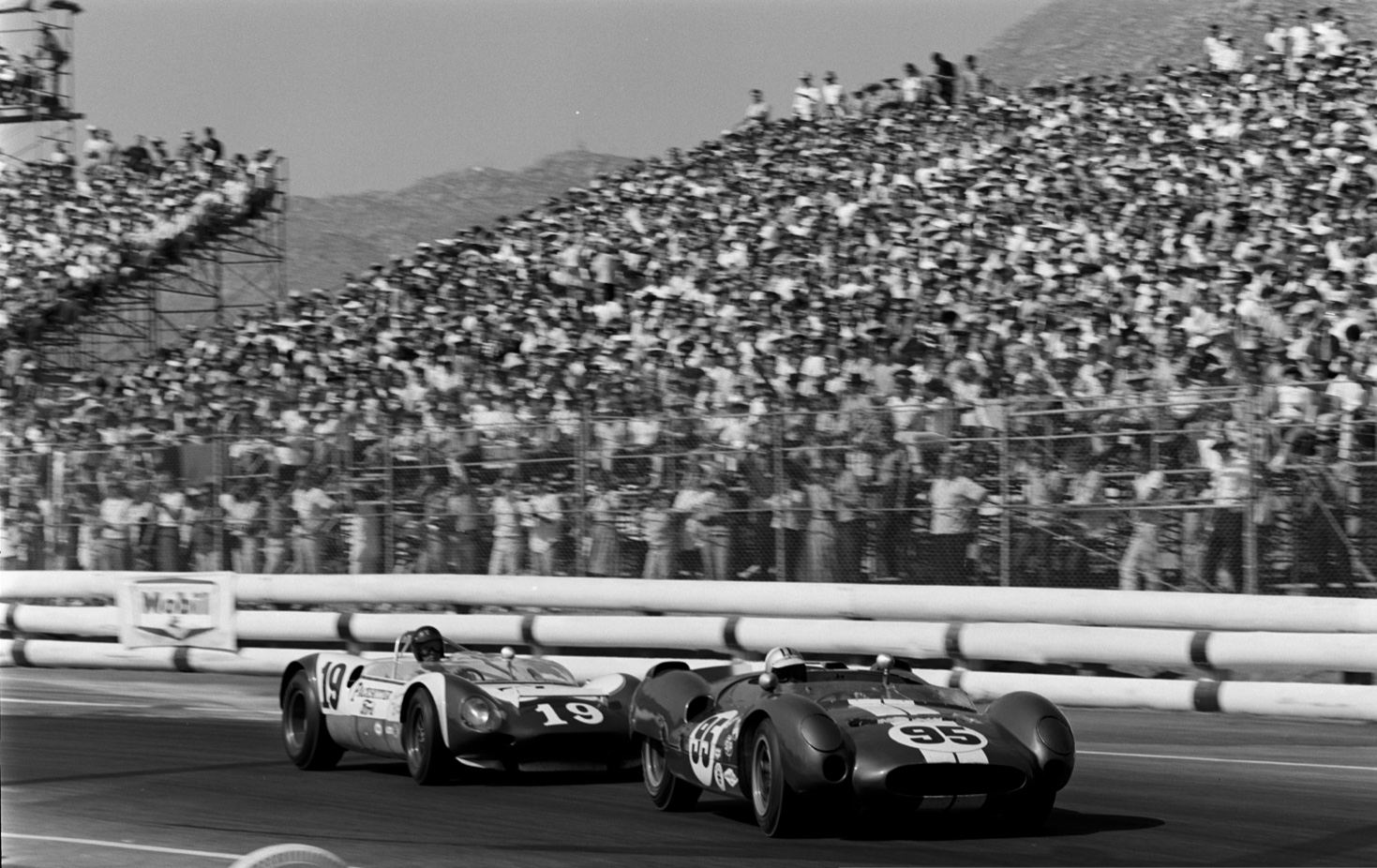
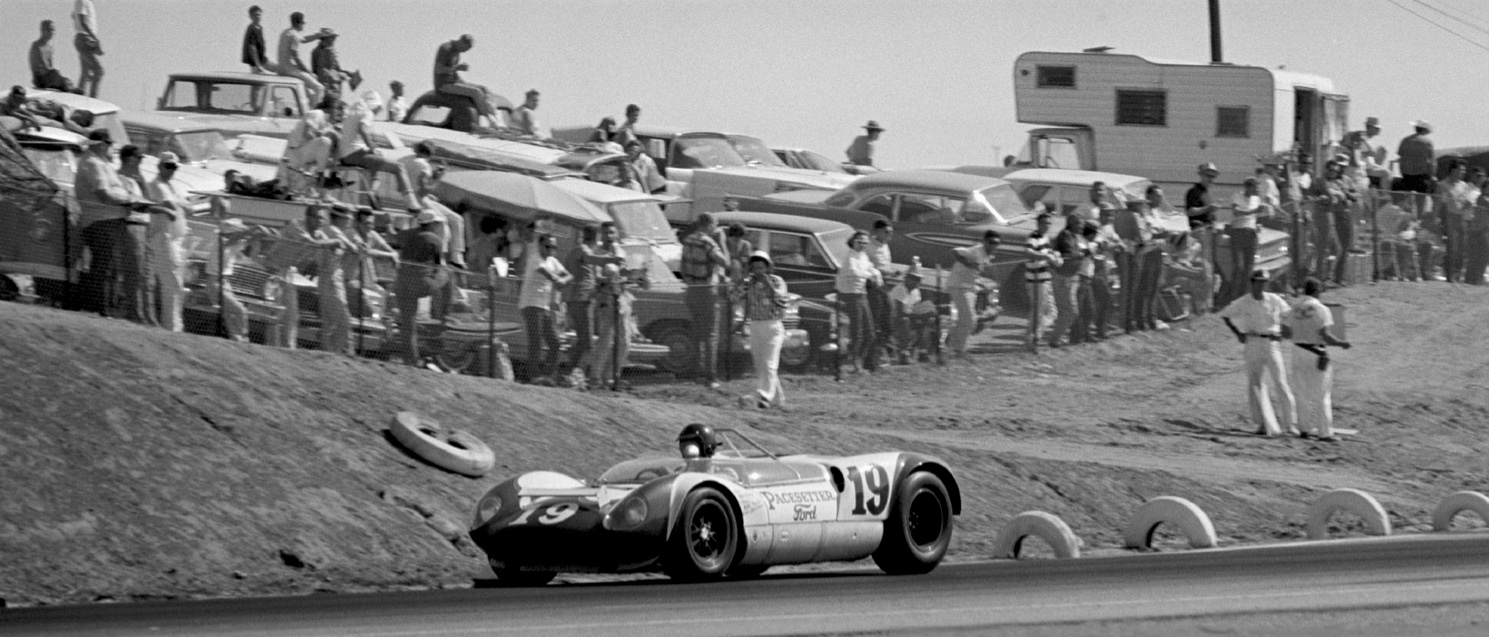
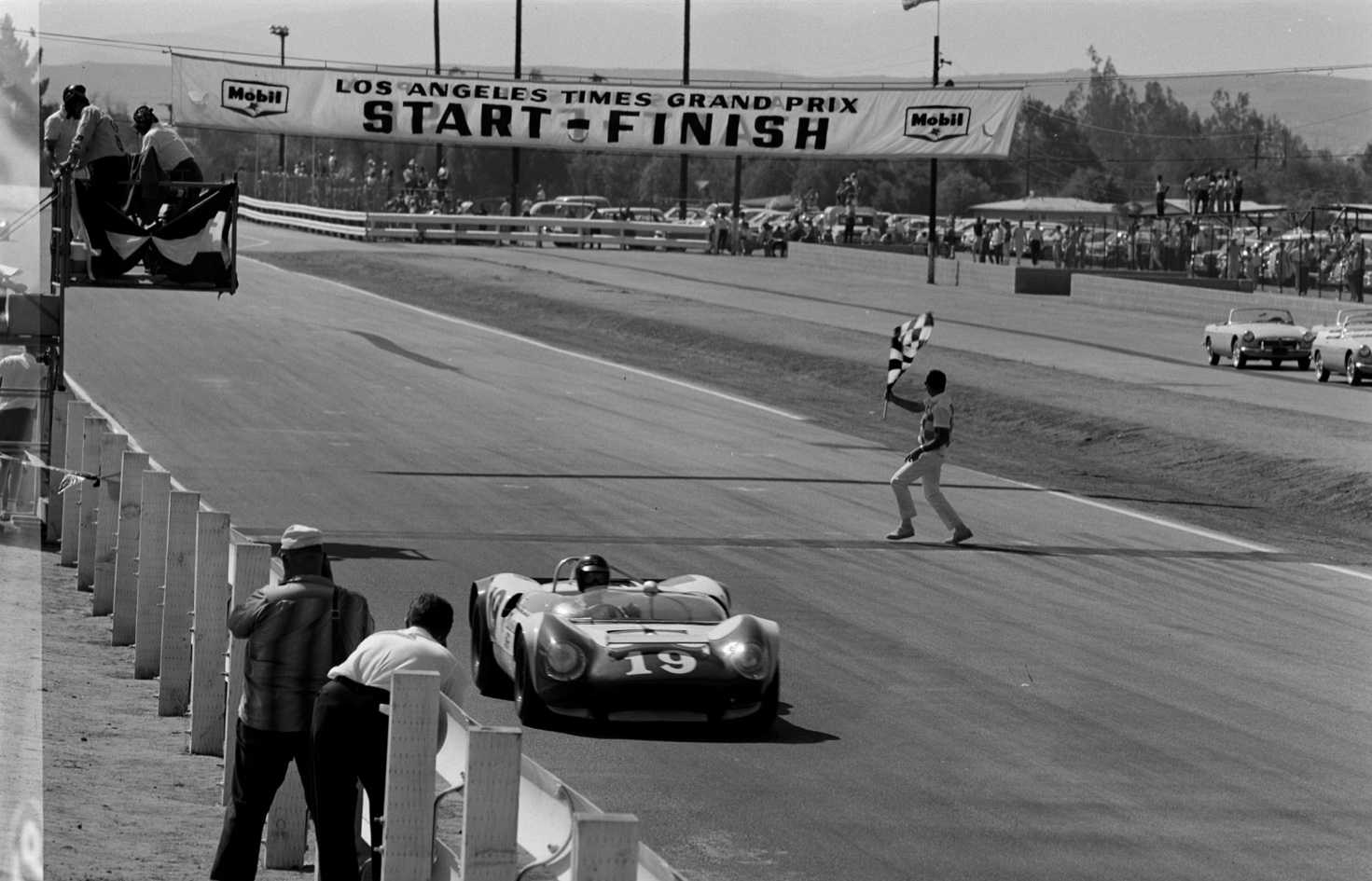
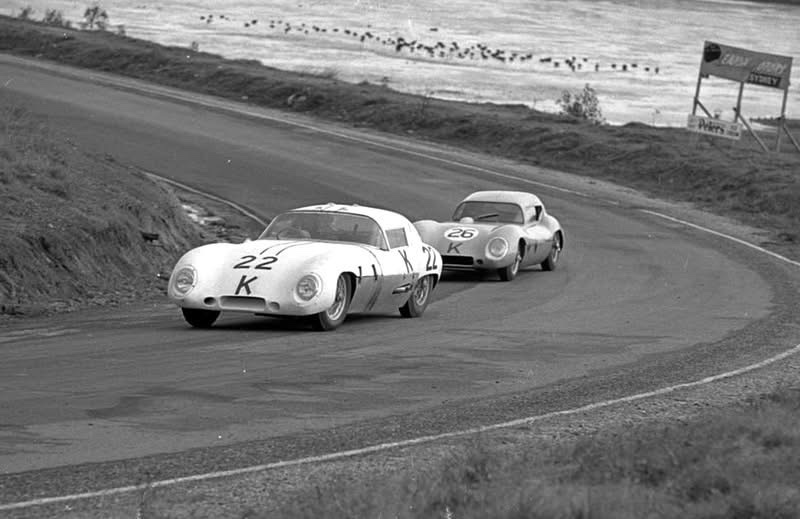
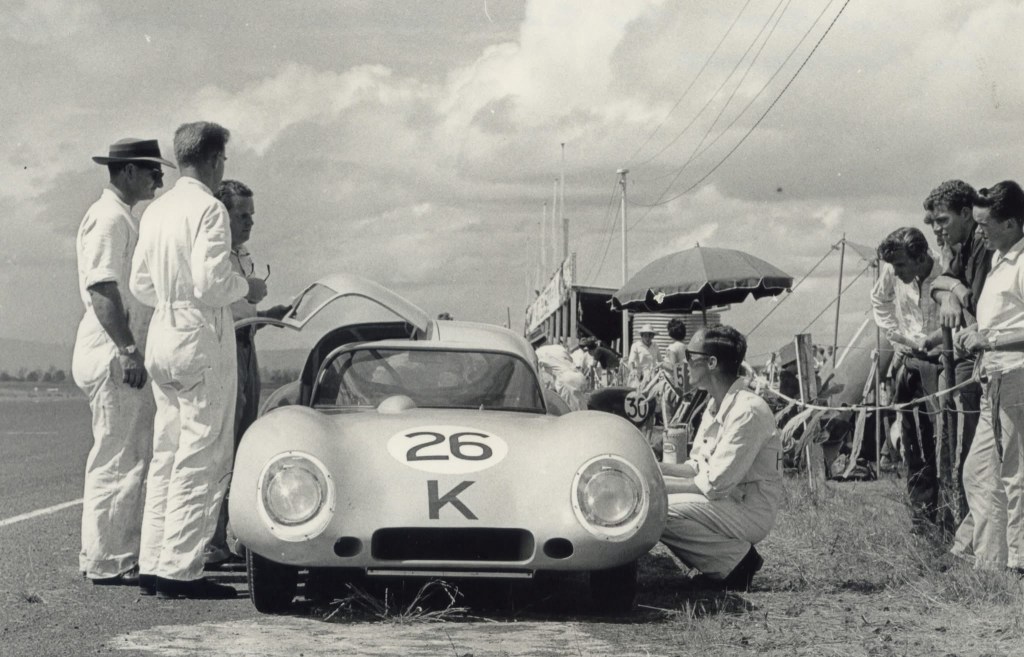
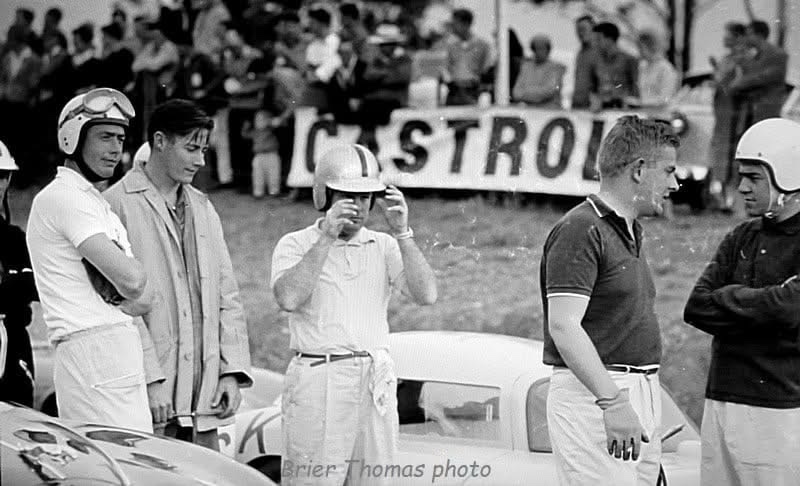
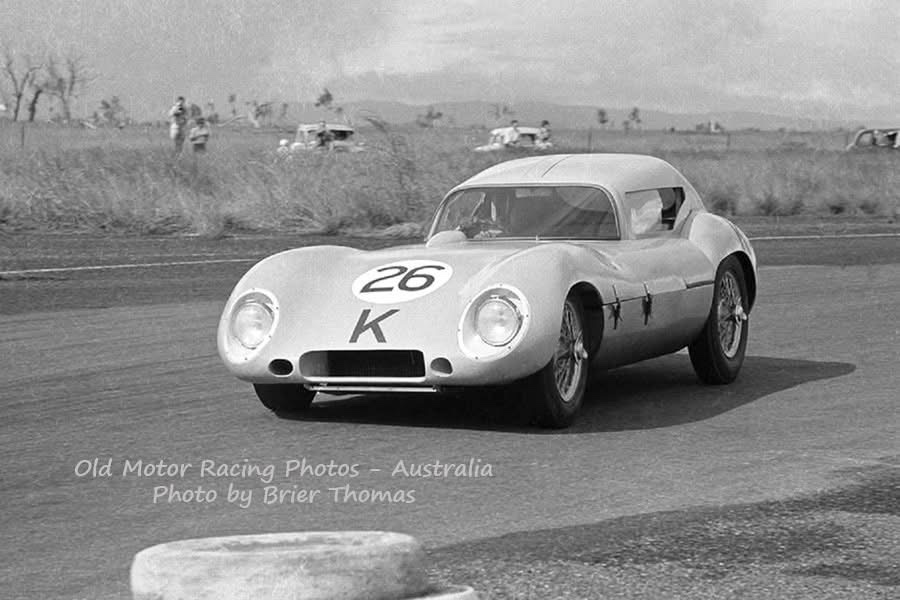
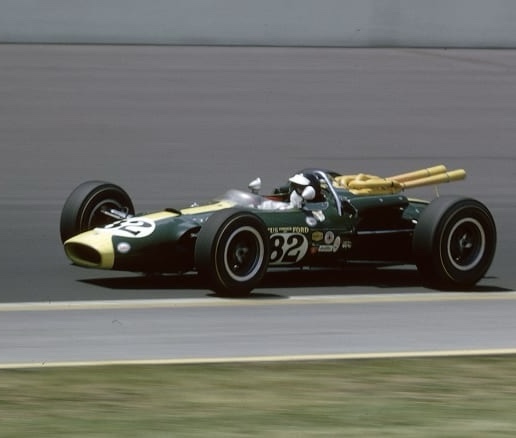
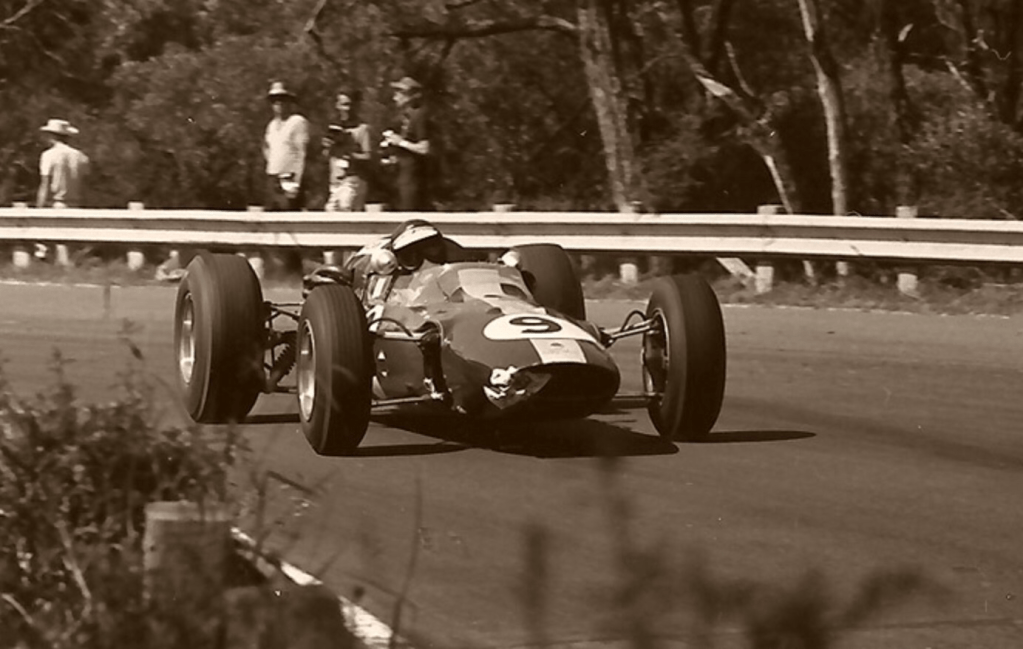
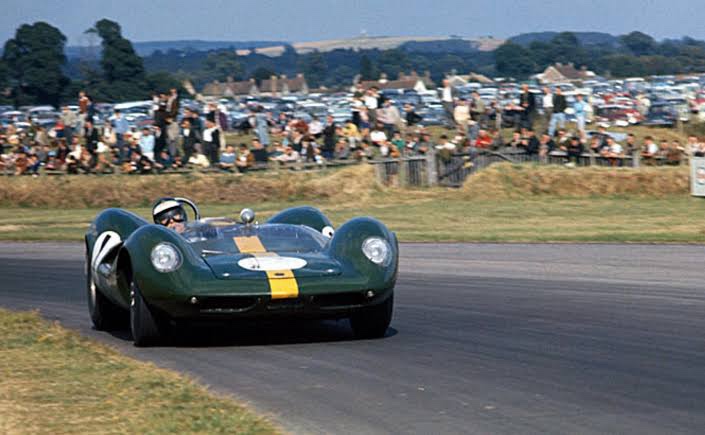
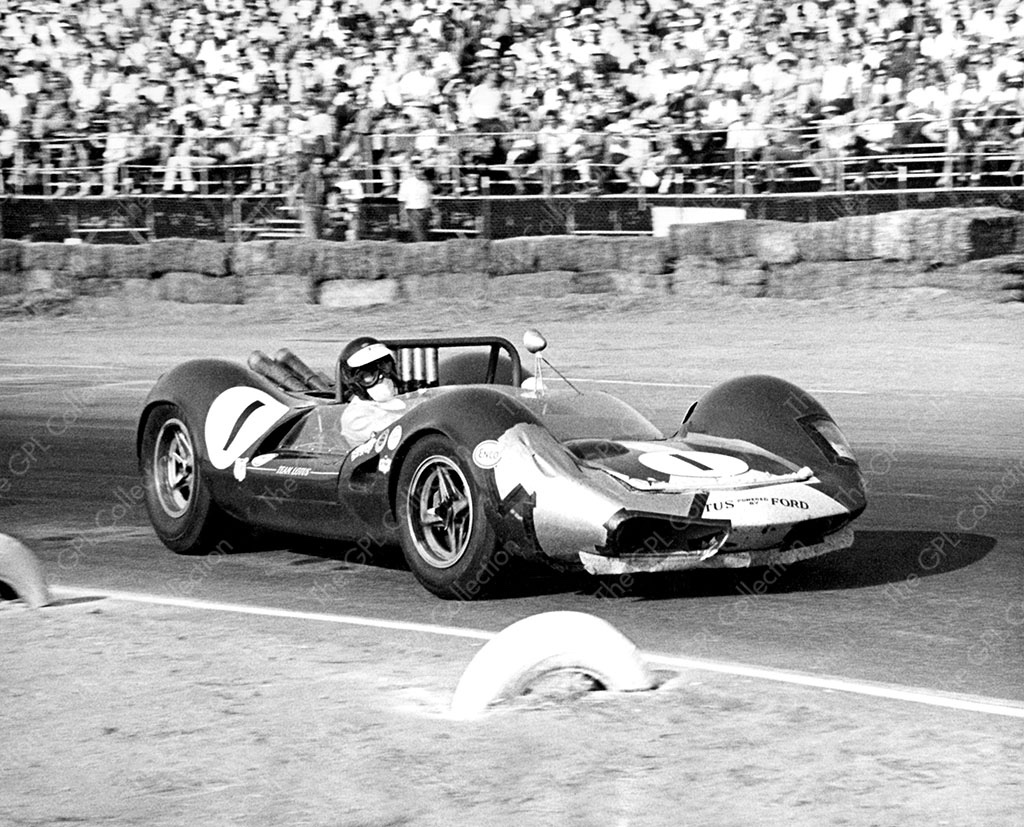
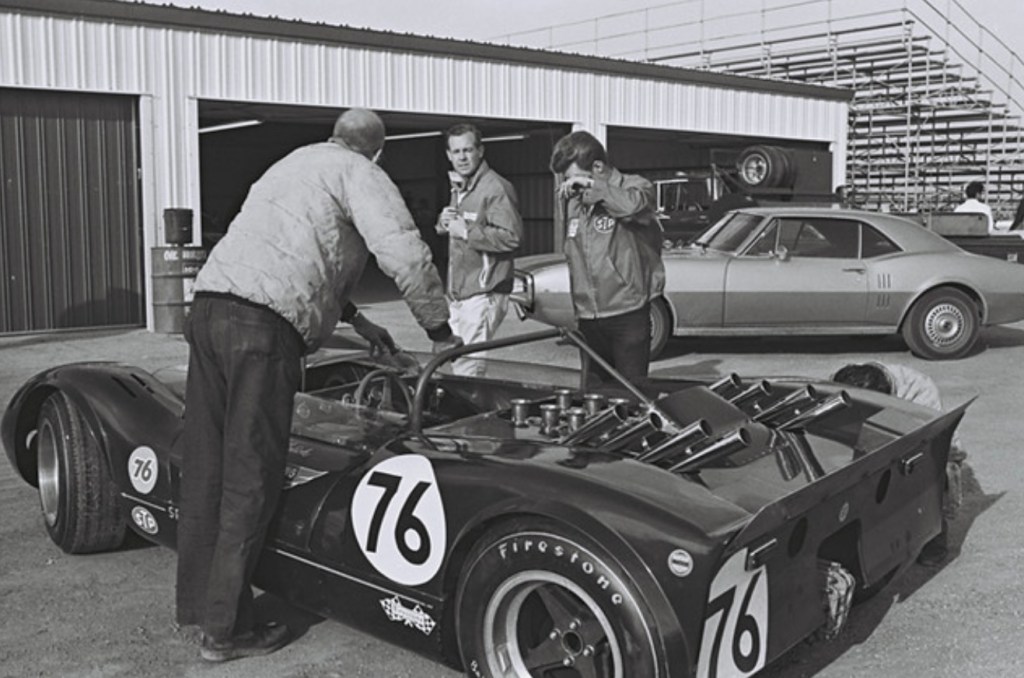
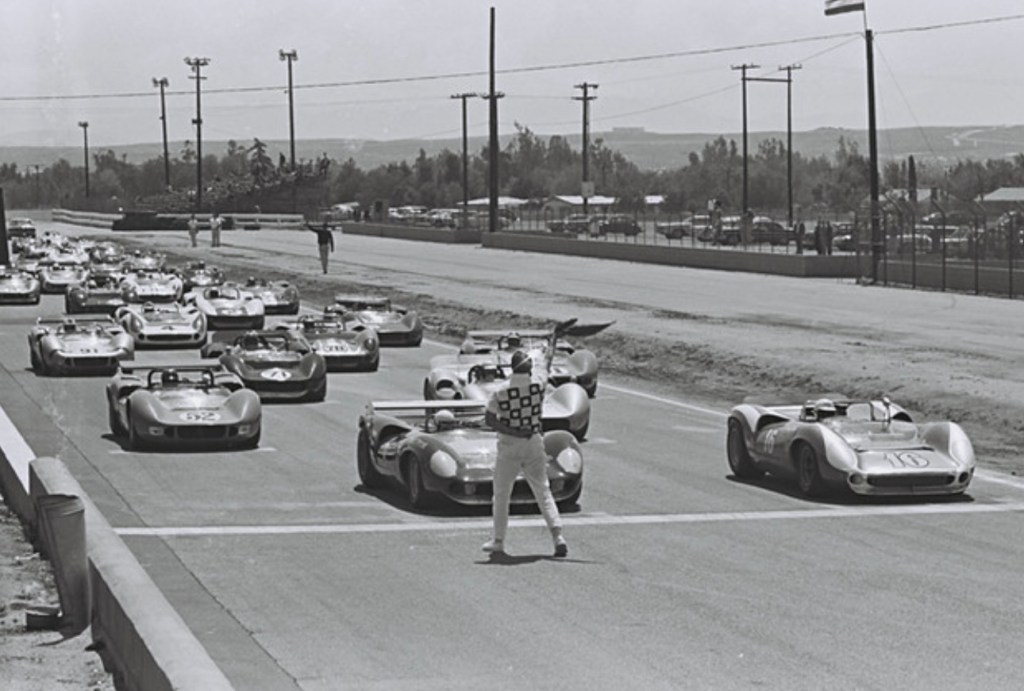
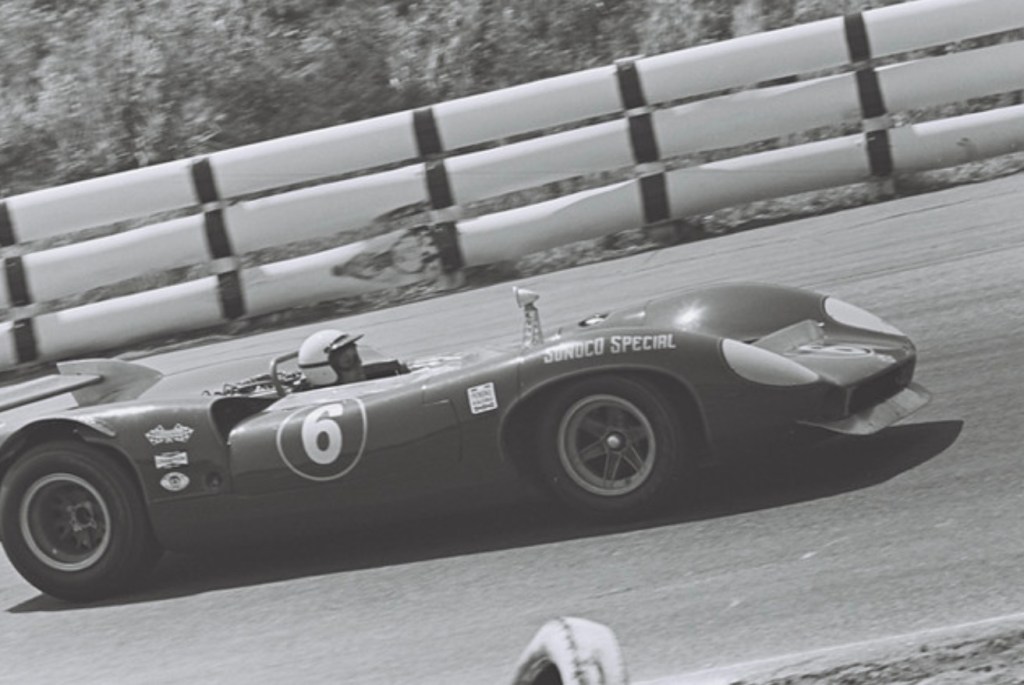
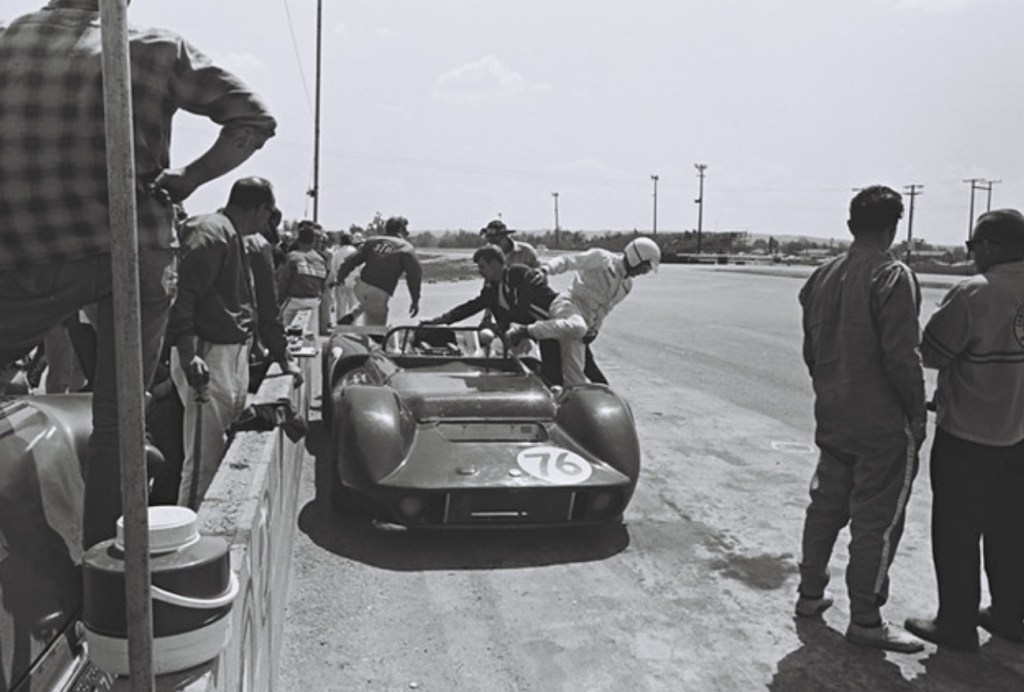
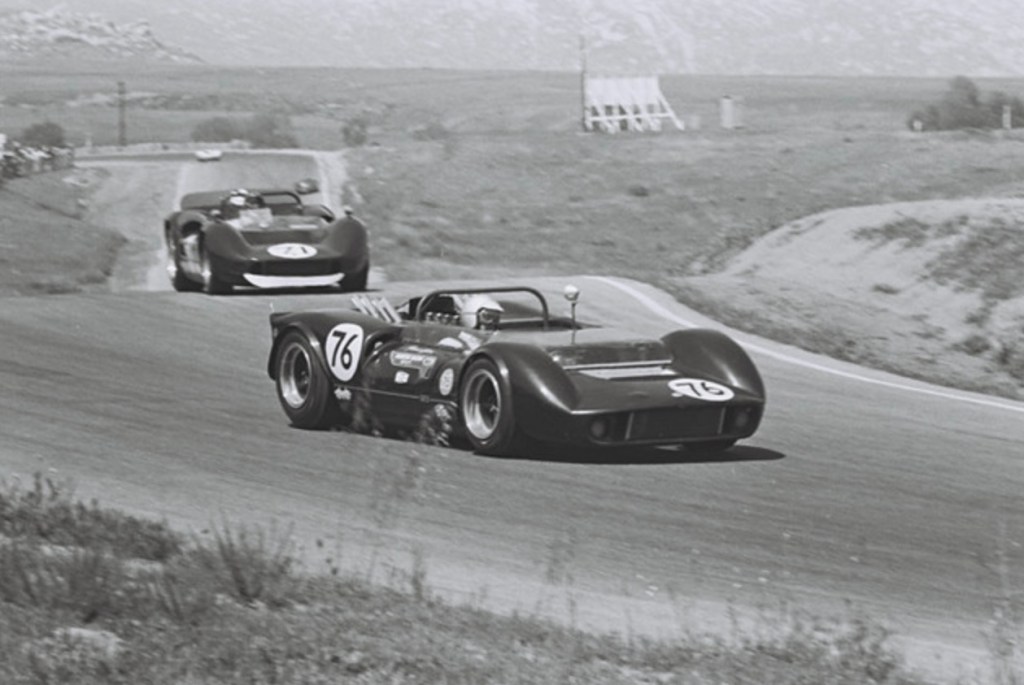
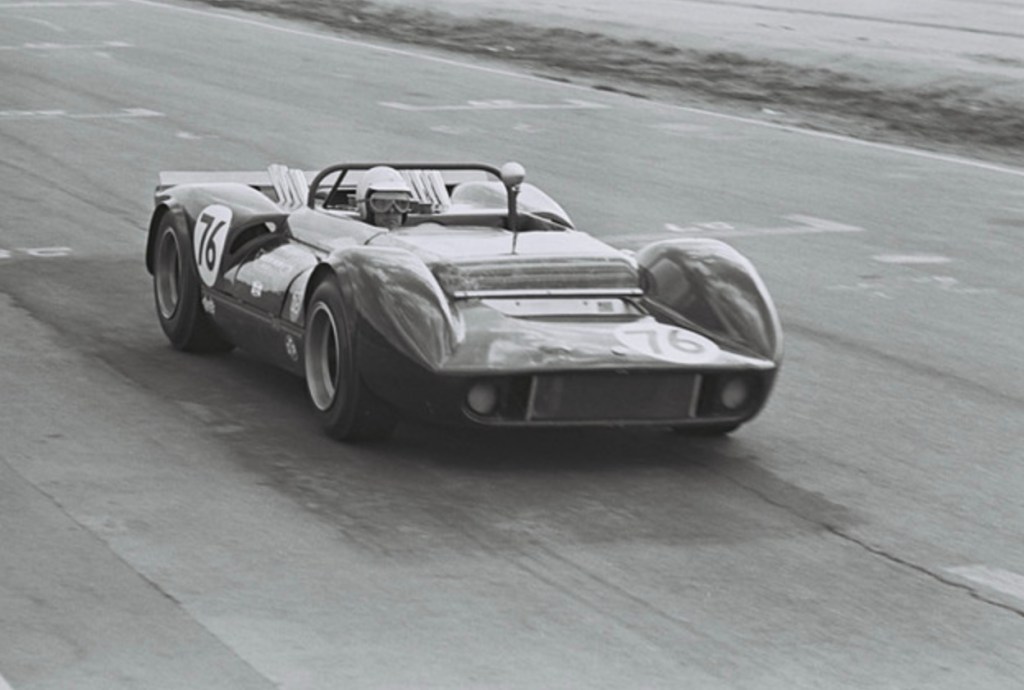
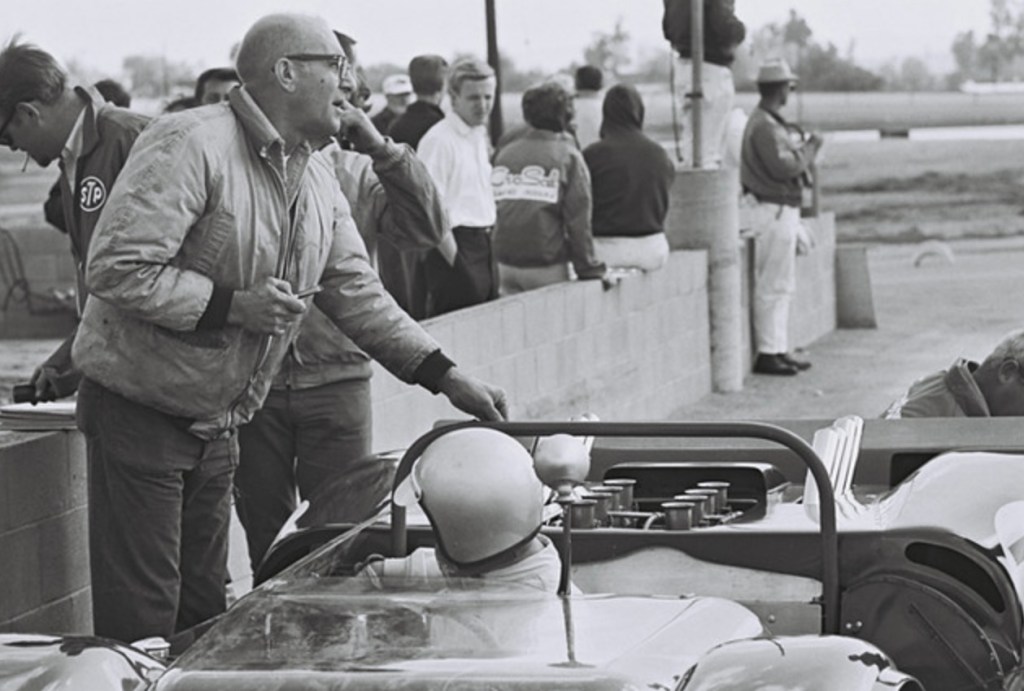
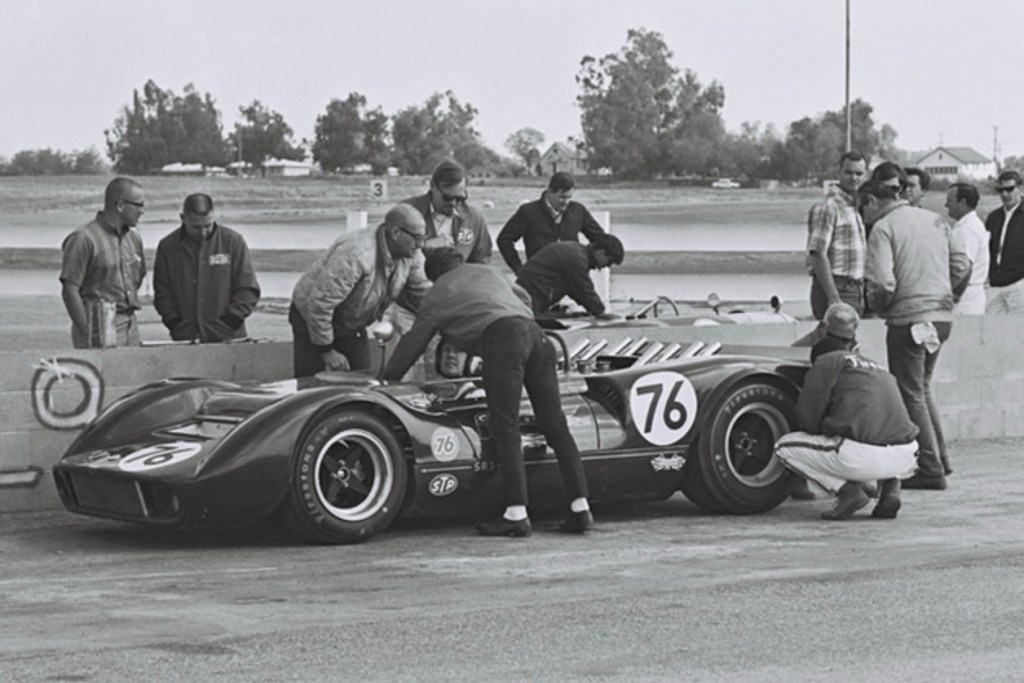
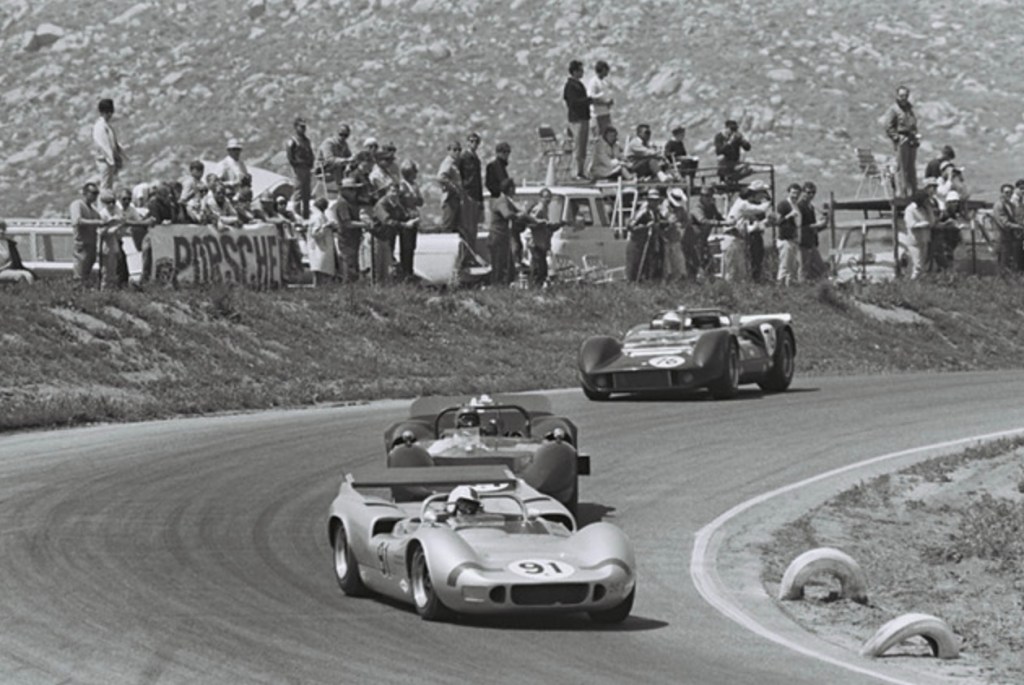
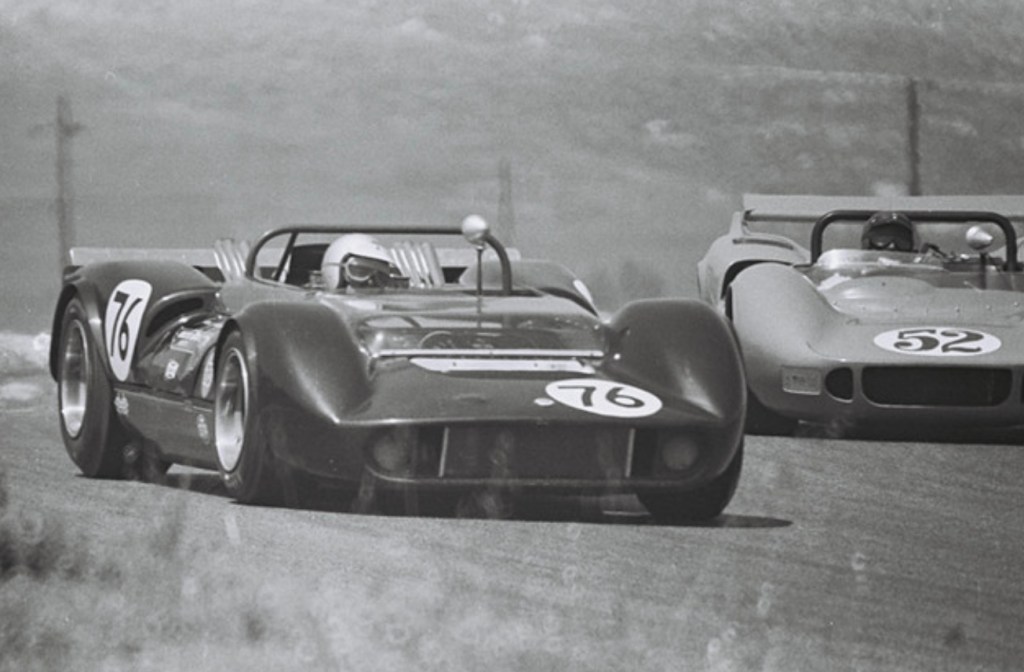
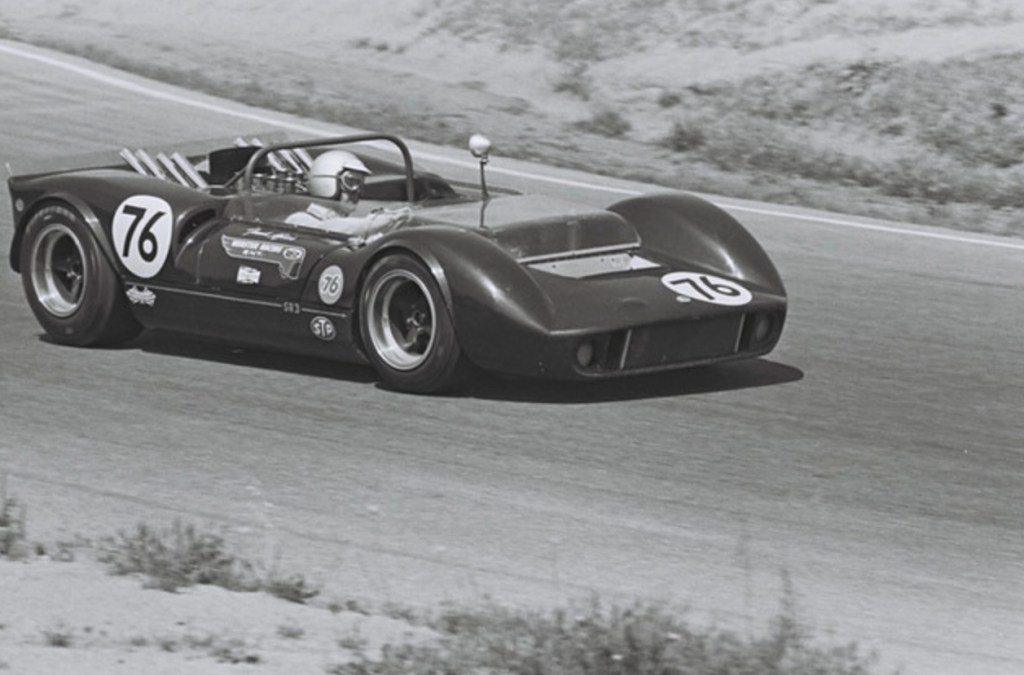
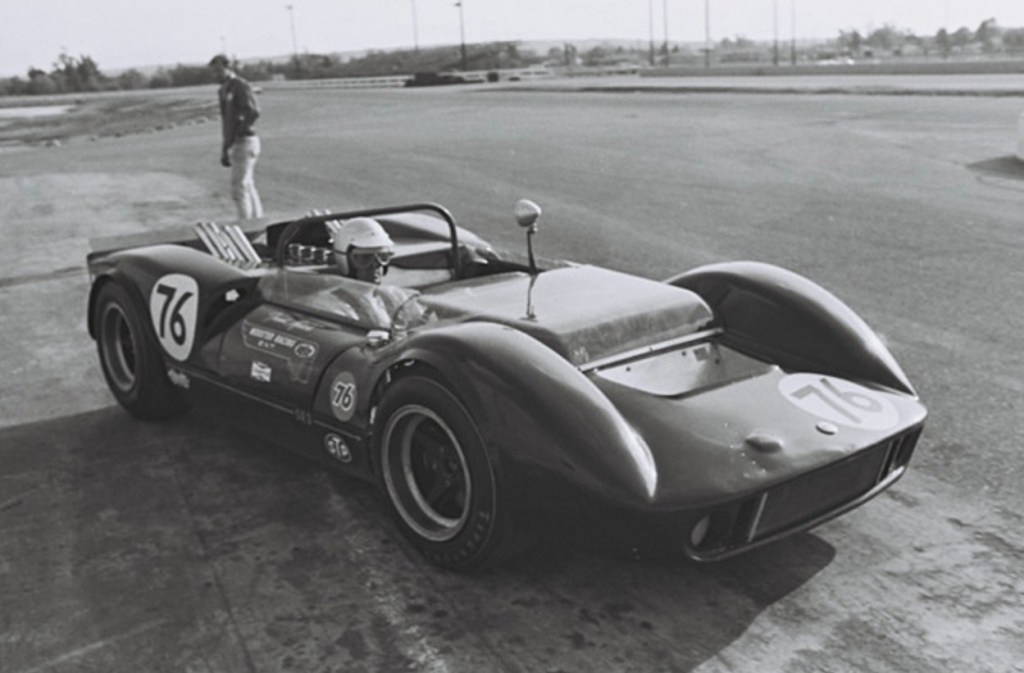
Dan Gurney’s winged Lotus 19B Ford V8 during the 1964 Times Grand Prix aka Riverside 200 on 20 October…
Ok, it’s only a little one but Dan is still testing a front wing on the nose of his Lotus 19B. Remember the year folks, 1964, the year the Chaparral lads were getting serious about spoilers but not a wing like this, even if it’s of poverty pack dimensions.
I wonder that he thought of it? He raced it so it can’t have been all bad? I am intrigued to know what contemporary reports made of the experiment.
This one of a kind Lotus 19 variant, the very last made, chassis number 966, was designed by Len Terry for Dan to accept the ubiquitous Ford 289cid pushrod V8 via the relationship created between the two men through the Lotus/Ford Indy program. It culminated in a win for Lotus, Ford, Colin Chapman, Len Terry and not least Jim Clark. Len joined Dan’s All American Racers after the historic 1965 victory.
Colin Chapman and Dan Gurney at Indy in 1963966, Riverside paddock in 1964Dan, and Roger Penske’s Chaparral @A Chev at Nassau in 1963
966 was delivered from Cheshunt to Dan’s new Costa Mesa, California workshop as a rolling chassis and built up by his team before its first race at Nassau in late 1963 (above).
966 is still extant, racing at elite level as late as 1969 in two Can-Am events at Riverside and Texas as the ‘BVC Mk1’- the poor little spaceframe must have been groaning under the strain of a 5.7-litre ‘hevvy Chevvy’.
Dan’s car was hardly the first of the Anglo-American V8 lightweights but it was a mighty quick car in its day, a better car than Chapman’s backbone chassis Lotus 30 and ‘ten more mistakes’ Lotus 40 successor.
Fast but unreliable is a fair description of it. In December 1963, it was 16th in the Nassau Classic and DNF in the blue riband Nassau Trophy, which AJ Foyt won in a Scarab Mk4 Chev.
The Weber fed 4.7-litre Cobra engine produced circa 360bhp @ 6500rpm in period, the gearbox was a ZF. It evolved continuously of course, below in its original guise.
Laguna Seca, Ed La Mantia’s Genie Mk 5 Corvair, DNQ, about to be passed by Gurney during practice. Look at the practice crowd, FFS!Penske, Chaparral 2A Chev and Gurney, Lotus 19 Ford, Laguna Seca 200 Miles October 1964
Parnelli Jones won the 1964 LA Times GP in a more developed and robust Cooper King Cobra from Roger Penske in Jim Hall’s Chaparral 2A Chev and Jim Clark’s works Lotus 30 Ford. The following weekend Dan was second to Penske in the 200 mile Monterey GP at Laguna Seca.
Gurney shared the All American Racers entered car at Daytona and Sebring in 1965. He led at Daytona for 211 laps before retiring at two-thirds distance with engine problems. At a very soggy Sebring he again ran up the front for a bit until the oil pump ended a valiant run. The car, by then entered as a Lotus 19J Ford, raced in Shelby American colours as below.
966 Lotus 19J Ford at Sebring in 1965 (L Galanos)
Louis Galanos wrote of Sebring (this group of photographs), ‘Gurney had an arrangement with Carroll Shelby to be ‘the rabbit’ and get the Chaparrals and Ferraris to chase him and hopefully retire early. This would leave the door open for either Shelby’s Cobra Daytona Coupes to win or one of the GT40s taking home the trophy for the overall win. Unfortunately it was Gurney who retired early with a broken oil pump chain drive. Gurney’s co-driver Jerry Grant never got the chance to drive. Jim Hall’s Chaparral won the race.’
Gurney negotiates Sebring’s Webster Turns – be interesting to know who built the body, Shelbys I guess? – whoever it was didn’t rate the little front wing…
Etcetera…
In the beginning…
The delicate little flower as it arrived from Cheshunt, here (above) at Daytona in February 1964 still fitted with skinny Lotus wobbly-web magnesium alloy wheels. Dan took the view that 360 odd bee-aitch-pee needed more rubber on the road so a call to Halibrand was made.
The car was quick, on pole for the SCCA American Challenge Cup, he led the 15 February 400km race for 12 laps before stalling during a pitstop and was then disqualified for a push-start from his crew, a breach of the rules. Clearly Gurney had concerns about the cars endurance as he chose to contest this shorter race rather than the Daytona 2000km, as it then was, the following day.
Laguna Seca 1964. Gurney’s Lotus with Bruce McLaren, McLaren Mk1 Elva Olds at left, #8 is Jerry Grant’s Lotus 19 Chev and the white helmeted driver is probably Parnelli Jones’ Cooper King Cobra.
Penske won from Gurney and Bob Bondurant then Ronnie Bucknum- here dicing with Gurney in the photograph below the week before at Riverside.
Ronnie Bucknum, Shelby prepped Cooper King Cobra Ford, DNF, from Gurney’s Lotus 19 – 19G – in some texts, Riverside 1964
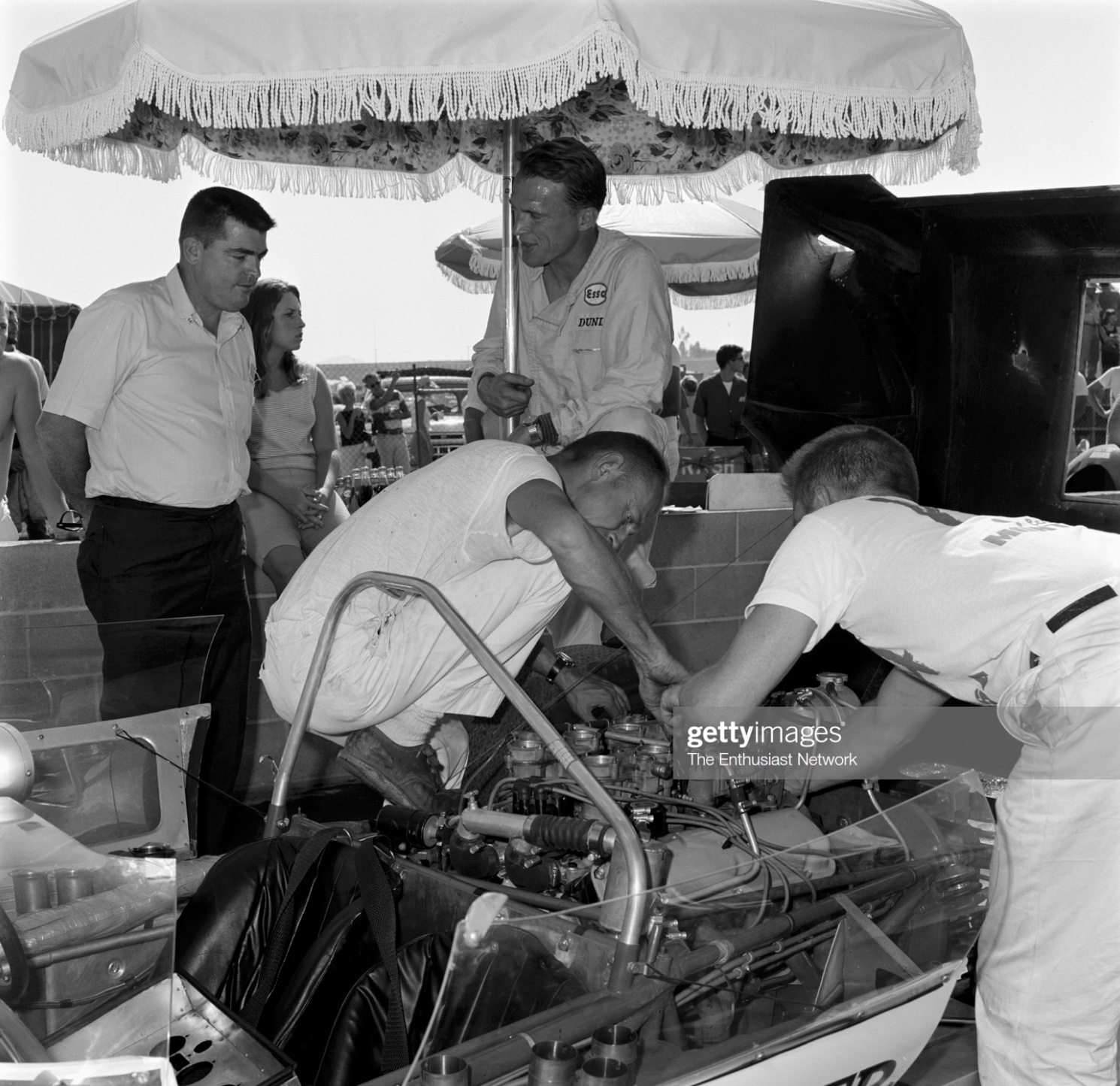
Dan and Mickey Thompson take shelter from the Laguna Seca, California, heat under Gurney’s beach umbrella. I wonder what plan they are hatching?
That roll bar is braced (removed in this shot) but is still a bit limp. Note the Lotus chassis and Weber fed 289 Ford V8, these little, light Windsors were and are gems of things, at 302cid they were the last ‘real production’ engines to win Le Mans outright in 1968 and 1969 in the back of JW Ford GT40s??
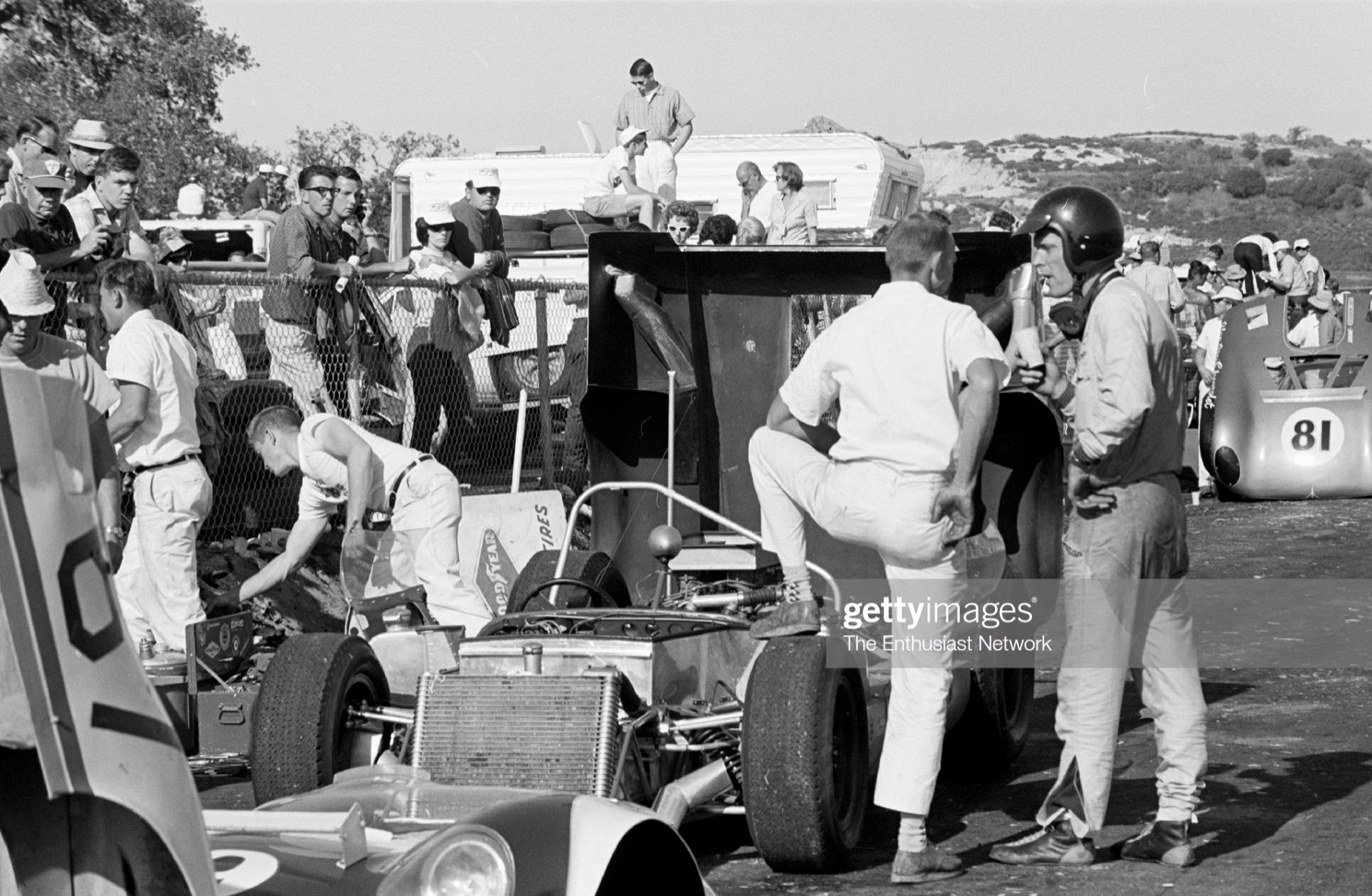
Between session changes at Laguna Seca. Note the Lotus 18 parts bin front suspension, and vestigial roll-over bar. Car #81 is Allen Grant’s Cheetah Chev, 14th.
Riverside again, at a glance the pretty car looks like a beefy Lotus 23. Team plagued with multiple mechanical issues over the weekend so did not finish.
Driver Bruce Campbell with his Ecurie Vickie Racing Team BVC Mk1 Chev 5.7 at Riverside in October 1969.
The car was given this name as a ruse to try and ensure race organisers didn’t know the derivation and age of the car. He qualified twentieth of 35 starters 14 seconds off the pace of Denny Hulme’s McLaren M8B Chev pole time and finished fifteenth 14 laps down. After his impressive qualifying time, race winner Denny spoke to Bruce and suggested a more modern car for the coming season!
At Texas International, Houston, the following weekend Bruce was 20 seconds off Denny’s pole and DNF. Hulme won aboard his M8B with Bruce winning the ’68 Can-Am Drivers championship and McLaren the Constructors of course.
Credits…
Getty Images, The Enthusiast Network, Louis Galanos, Bob D’Olivo, Pat Brollier, Vickie Callouette, Bill Stowe. Sorry about most of the photo credits, folks, I drafted this years ago and have long since lost those notes
Tailpiece: 1964 LA Times GP, Riverside…
Sadly for Dan it’s just the end of qualifying not the end of the 200 mile race the following day! Lotus 19B Ford.
I’m not sure of the date of Dan’s last drive in the car, but it seems Joe Leonard crashed it whilst tyre testing. It then passed through the hands of Steve Dulio, Dick Callouette, Wayne Linden, Gordon and Nancy Gimbel, then back to Steve Dulio, who is the last name I can see online. The car is still historic raced in the US, which is wonderful.
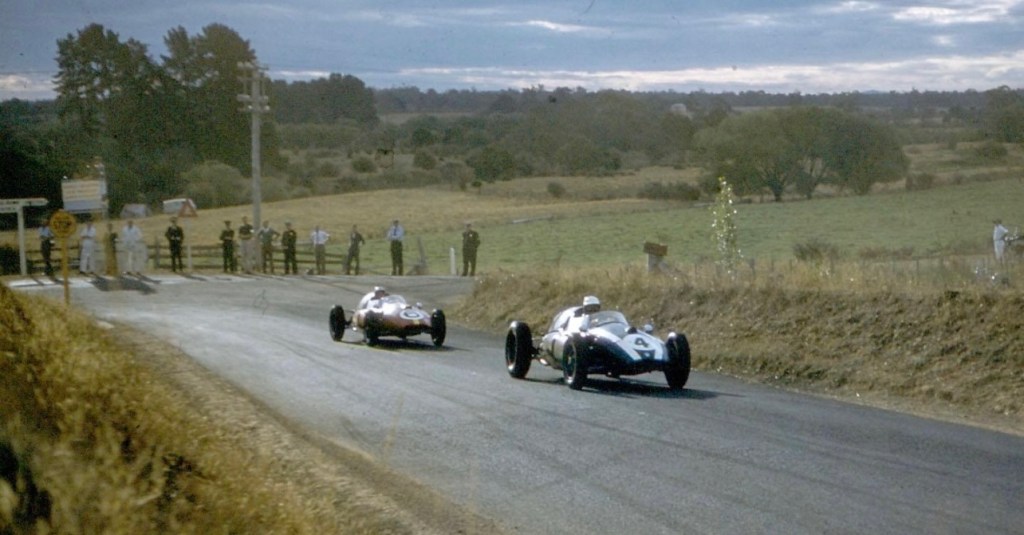
Peter Macrow gives a row of poplars a fright as he runs wide at Newry during the March 1968 Longford Tasman Cup weekend, Argo Chev V8.
The Argo is a special built from the bones of an uncompetitive Cooper T53 by Ray Gibbs, a Melbourne racer/mechanic who had a stint at Cooper in his CV, for grazier/racer/car owner Tony Osborne.
With a long gestation period, it was first raced by Ian Cook in 1967. When Ian bagged an Elfin 400 drive with Bob Jane Racing, another Melbourne up and coming single seater pilot, Peter Macrow got the ride.
Look how those trees have grown! They were saplings when Jack Brabham and Bib Stillwell raced each other on the same stretch of road out of Newry, in the Longford Trophy eight years before.
The freshly minted World Champion won there in 1960 aboard a Cooper T51 Climax 2.5 FPF, from the similar chassis of Alec Milden and Stillwell: Alec’s car was powered by a Maserati 250S four, Bib’s by a 2.2-litre Climax FPF.
Macrow eases Argo into the viaduct at Longford, on wet race day. The aluminium body was built – very slowly – by Murray Carter in Moorabbin, a legendary racer of all manner of things, mostly touring cars.
I wrote a feature on the Argo Chev, now owned by my good friend, Peter Brennan, a while ago. Have a read of it, it’s an intriguing tale of twists and turns: https://autoaction.com.au/2023/11/05/argo-chev-v8
Etcetera…
(G Fluke)
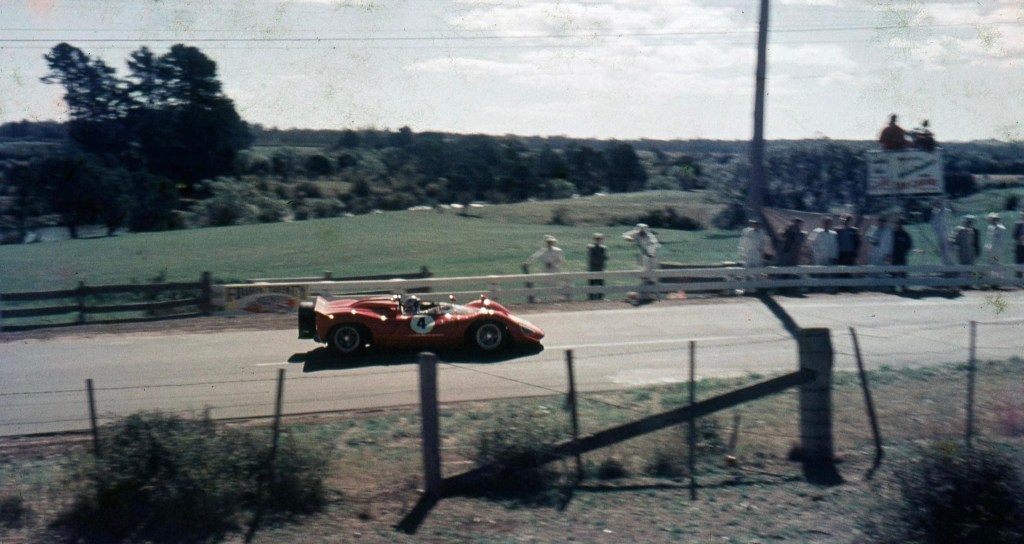
Chris Amon tips his ex-works/Scuderia Veloce Ferrari P4/350 Can Am into the uphill apex of Newry during the 1968 weekend, Chris won the sportscar races. He is about 50 metres behind the spot where the Argo is in the first shot.
(G Fluke)
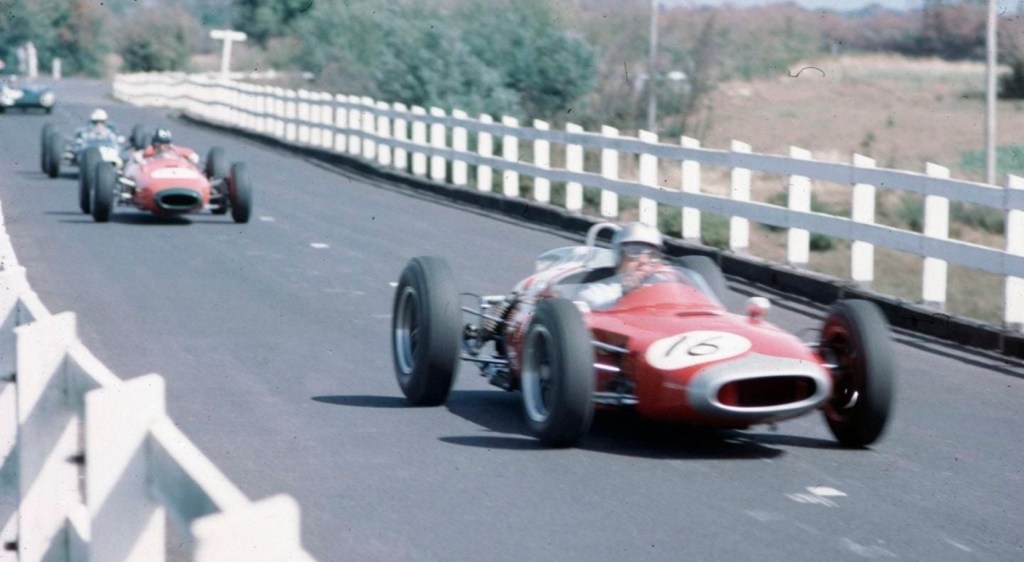
Pedro gives us another look at the Newry poplars and his 2.5-litre BRM P126 V12 during the very soggy ’68 South Pacific Trophy race. He nicked second from Frank Gardner’s Brabham BT23D Alfa Romeo in the event’s final stages. The race was won in ballsy fashion by Piers Courage’s McLaren M4A Ford FVA F2 car.
Credits…
Osborne Family Collection via oldracephotos.com, Lin Gigney, Guy Fluke
Tailpiece…
(L Gigney)
Tony Osborne, Cooper T53 Climax leads Graham Hill, Brabham BT4 Climax – race winner – off Long Bridge during the March 2, 1964 South Pacific Trophy weekend.
This car, T53 #F2-17-60, ex-Brabham/Lex Davison provided some of the parts to build Argo. Both Argo and the Cooper exist and are occasionally raced in historic events.
Vern Schuppan had plenty of excitement towards the end of his victorious run at Le Mans in 1983. With two hours to go he sped down the Mulsanne in Porsche 956 #003) – shared with Al Holbert and Hurley Haywood – when the left-hand door flew off.
He kept circulating while a replacement door was readied, but the engine began to overheat as air was no longer being forced into the radiator on that side by the duct built into the door.
(T Walker)
After four laps a non-opening door was fitted. After rejoining, the car was ordered to return to the pits to have an operational door fitted on safety grounds. This meant the second-placed Bell/Ickx (005) above was able to make up its three-lap deficit with the cars on the same lap as the final circuit began.
Holbert’s overheated engine was now smoking, and Bell was closing rapidly – having been twelve seconds quicker in practice – but despite gaining on the lead car, the order remained the same at the finish.
(T Walker)
As usual, I found these photos by accident, researching something else, and up popped the ‘Porsche Pictures Past’ website porschepicturespast.com, which is fantastic, do have a look.
(T Walker)
That’s the 934 shared by John Goss (#9306700153) with car owner, Belgian ‘Jean Beurlys’ (Jean Blaton) and Nick Faure in 1976.
They started 27th and were still running at the finish but were too far behind the winner (181 laps completed) to be classified.
The story goes that the car was delivered to Blaton just before the race in Belgian racing yellow, but a last-minute sponsorship deal with Citizen Australia and Harley Davidson resulted in the car being hurriedly repainted into the colour scheme seen here, apparently with aerosol cans!
#69 was a Swiss entry for Claude Haldi/Christian Vetsch, DNF engine on lap 219 of 350, while car #17 was the Joest 908/3 (#008) driven by Ernst Kraus/Gunter Steckkonig; the 1970 Targa Florio-winning chassis was seventh on its Le Mans debut from grid 23.
(T Walker)
Tim Schenken shared this Georg Loos-GELO Racing 934 (#9306700175) with Toine Hezemans (driving) in 1976; they looked set for a GT category win until a transmission problem intervened.
After this setback, they were 16th outright and second in class after starting 15th. Tim competed at Le Mans five times, this was his sole finish.
Tim first raced for Gelo in 1974 and did full seasons in Georg Loos Porsches in 1975-76 with his best results as follows: 1975 – first in the Euro GT round in a 911 Carrera, and in the ETCC round at Zandvoort and 200 Km Jarama, while his wins in a fearsome Porsche 917/10 in the Zandvoort, Nurburgring Supersprint and Hockenheim Interserie round puts him am an elite group of drivers who won a race in these challengine cars.
And in 1976 aboard 934s, first in the DRM Hockemheim Preis der Nationen and the DRM Nurburgring Supersprint, while he shared the victory in the Monza 6-Hours with Toine Hezemans and Klaus Ludwig.
(T Walker)
The marshal pauses as the Charles Ivey Porsche 956 (#110) races past during 1984.
Crewed by Chris Craft/Alain de Cadanet and Allan Grice, the ex-John Fitzpatrick Racing machine had a DNF engine only two hours from the end when in 13th place.
Gricey returned to Le Mans in a works-Nissan R88C, finishing 14th, sharing with Win Percy and Mike Wilds.
(fotoracing.co.uk)
Larry Perkins had a crack at Le Mans in a Charles Ivey-entered car too. His 911 Carrera RSR (#9114609064) was having its second of two attempts at Le Mans in 1978.
After retirement the year before, it finished 14th from grid 47 in the hands of Perkins/John Rulon-Miller/Gordon Spice and was second in its class. Above, the winning Alpine-Renault A442B of Didier Pironi and Jean-Pierre Jaussaud prepares to pass the Porsche again, eventually finishing 91 laps ahead.
(T Walker)
There was no shortage of Australian drivers in the 1984 race including the Peter Brock/Larry Perkins Team Australia (John Fitzpatrick Racing) 956 #102.
The car was running 28th from Q18 when Larry ran off the road in a ‘he zigged when I zagged’ high speed passing move, ended its race after 145 laps.
(T Walker)
And yes, I know some other Australians also raced Porsches at Le Mans.
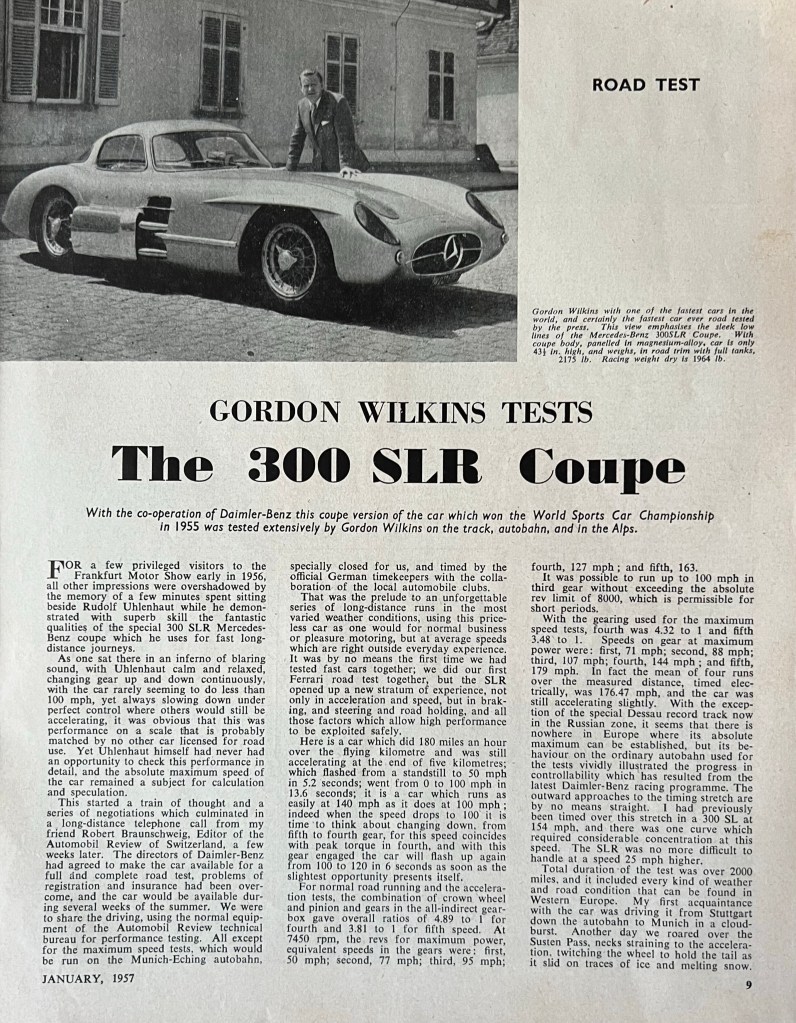
Comprehensive road tests of the 300 SLR Uhlenhaut are rather thin on the ground, so this article, written by Gordon Wilkins and published in the January 1957 issue of Motor Racing, seems like a good one to share. Gordon explains the circumstances surrounding the test in the opening paragraphs, so here it is.
Etcetera…
What I hadn’t realised until reading the spiel about these two cars on Mercedes Benz’ fantastic website, is that the first of the cars built was the very first W196S – 300 SLR – built, in November 1953.
Because Benz were running behind completion of the W196R Grand Prix car, resources being devoted to the sports car were redeployed to ensure the W196 race debut at Reims in July 1954 could be met.
Mercedes had planned to build a mix of 300 SLR coupes and spyders to driver preference, but when it became clear to Alfred Neubauer that most of the drivers preference was to race an open car – noise inside the car was the perceived issue – the build program was amended accordingly with the first of the open cars finished in June 1954.
(Mercedes Benz)(Mercedes Benz)
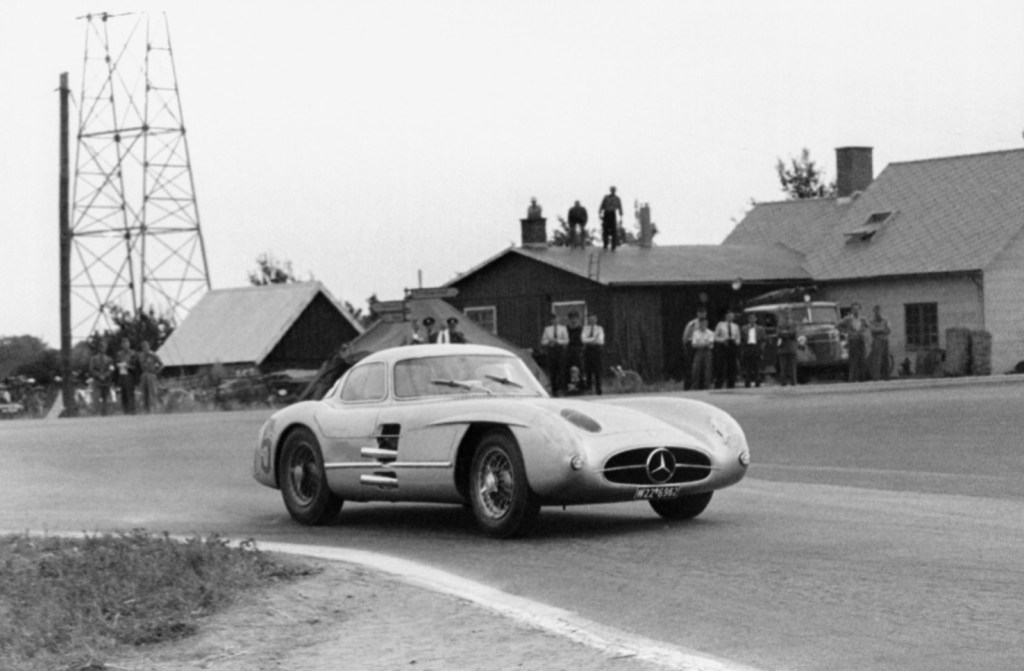
The 300 SLR Coupé made its first public appearance in August 1955, with Rudolf Uhlenhaut at the wheel during practice for the Swedish Grand Prix in Kristianstad.
By then 300 SLR spyders had already clinched a spectacular one-two in the Mille Miglia and in Sweden. The 300 SLR build program was completed in late summer 1954 after the successful start of the Formula 1 season.
In the 1955 World Sports Car Championship, which began for Daimler-Benz with the Mille Miglia on 30 April-1 May in Brescia, only the open-top version initially appeared.
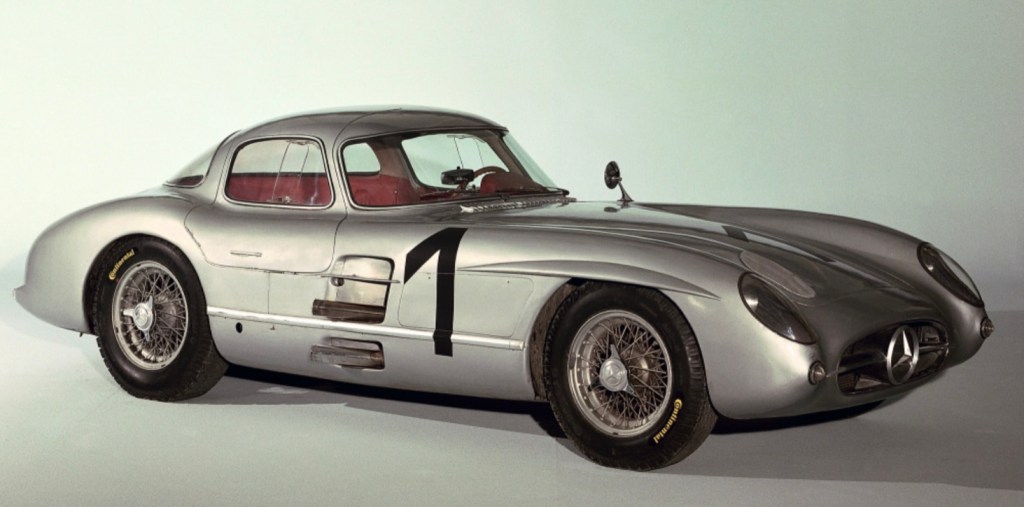
(Mercedes Benz)Carrying #1 as the car did during practice during the Targa weekend in 1955 (Mercedes Benz)
Mercedes planned to race in the Carrera Panamericana in Mexico in November 1955 and in 1956, and therefore reactivated production of the coupé version in the summer of ’55 when two cars were completed.
For long-distance races, the aim was to give drivers the option of open or closed cars, but the two exotic machines weren’t raced after the Daimler-Benz Board withdrew from motorsport on October 11, 1955 after the Le Mans disaster.
As a consequence the 300 SLR Coupé’s motorsport outings were limited to practice and test drives at the Swedish Grand Prix, at Monza, the Tourist Trophy in Ireland and the Targa Florio.
Mercedes Benz, ‘The first completed coupé covered more than 10,000 kilometres; Rudolf Uhlenhaut was mainly at the wheel; Wolfgang Graf Berghe von Trips, a newcomer to the Mercedes-Benz racing team, was given the opportunity to familiarise himself with the 300 SLR on the trip to the Tourist Trophy in Ireland. With a third place, which he achieved in a team with André Simon in the open-top version, the talented young driver contributed to the Mercedes-Benz one-two-three victory in this race.’
(Mercedes Benz)(Mercedes Benz)
Uhlenhaut, a master test driver, had already demonstrated the reliability and suitability of the 300bhp racer for everyday use with his extensive journeys across Europe and thought it sensible to make the spectacular car available to the press for an extensive test.
‘In July 1956, journalists from the Swiss Automobil Revue magazine, led by its editor-in-chief Robert Braunschweig, subjected the 300 SLR Coupé to a long-distance test covering a total of 3500 kilometres. One concession to road traffic was the huge exhaust silencer on the right-hand side of the vehicle, which reduced the deafening background noise to a more bearable level. At the beginning of July and in mid-September, high-speed test drives and top speed measurements were carried out with both examples of the coupé in the presence of Rudolf Uhlenhaut.’
From the left: W196S Uhlenhaut, 300SL-W198, 300SL-W194, 300SL-W194-011. Ditto below (Mercedes Benz)(Mercedes Benz)
‘The “Uhlenhaut Coupé”, as the car has been called by car enthusiasts since the late 1980s, is considered one of the most important icons of the Mercedes-Benz brand and also the most valuable car in the world. In May 2022, one of the two vehicles built in 1955 was sold to a private bidder for 135 million euros at an auction in the Mercedes-Benz Museum. The proceeds are used to finance the “Mercedes-Benz Fund” – a global scholarship program that aims to encourage a new generation of schoolchildren and students to develop new technologies, in particular for decarbonisation and resource conservation. The second vehicle has been on display at the Mercedes-Benz Museum for many years and is one of the most spectacular exhibits there.’
Credits…
Bob King Collection, Motor Racing January 1957, Mercedes Benz
These super shots of Bob Jane Racing cars contributed (mainly) by Russell Martin and James Semple to Bob Williamson’s Australian Motor Racing Photographs Facebook page are too good not to share more widely.
The machine above is the Can-Am McLaren M6B Repco 740 5-litre V8 in which John Harvey won the 1971-72 Australian Sports Car Championships. See here: https://primotipo.com/2018/09/09/sandown-sunrise/
(R Martin)
Many of Russell Martin’s shots were taken at what appears to have been a press day at Calder, perhaps in late 1970, given the cars present and their livery.
Jane’s Chevrolet Camaro ZL-1 is a Top 25 all-time Australian Touring Car, winner of the 1971-72 Australian Touring Car Championships, powered by an aluminium Can-Am 427 big block in ’71 and a tiddly 350 cast iron small block in ’72. CAMS did a parity pirouette at the end of ’71 and banned the 7-litre engine despite it being homologated, not that it made any difference to the ATCC results. What a car…
A list of all of the cars Bob owned and raced would be a mighty impressive one! There were a couple of Series Production cars in this era, the Holden LC Torana GTR XU-1 shown above and a Monaro GTS 350. Southern Motors was Bob’s Holden dealership. I wonder what the Bob Jane Racing headcount was in that 1970-72 period? More here, including my attempt at a list of Bob’s racing cars: https://primotipo.com/2020/01/03/jano/
(J Semple)
John Harvey on the way to winning the RAC Tourist Trophy at Wawrick Farm on April 30, 1972, the third round of the Australian Sports Car Championship
Harves was the primary driver of this car but Bob had the occasional gallop as well. At the end of 1972 the car was parked, Castrol – if I remember the story rightly – wanted the focus to be on the team’s taxis not its single-seaters and sports car so the Brabham BT36 Waggott, Bowin P8 Repco-Holden and the McLaren were set aside in the workshop. The BT36 was sold to Ian Cook and Denis Lupton, the Bowin P8 chassis went to John Leffler and its Repco-Holden F5000 V8 engine was lent to Ron Harrop to use in his Holden EH sports sedan.
Two Australian sports car star-cars were parked for commercial reasons in this era while still in their prime: Frank Matich’s Matich SR4 Repco 860 5-litre in 1970 and the Bob Jane McLaren, both could have won the ASCC for years had they raced on…
The M6B’s life from then on was as a display machine at Bob Jane T-Marts throughout the land, the family still own it.
(R Martin)
The following excerpt from Tony McGirr’s book, ‘Gentleman John Harvey : Memories of How it Was’ related Harvey’s recollections of the McLaren M6B Repco.
‘I would rate the McLaren and my 76 Offy (speedcar) as the best cars I have ever driven in terms of driver satisfaction. I enjoyed driving them. More, I loved driving them. I was always relaxed and felt part of each car. Obviously, I won a lot of races in each, they were just sensational.
With a car such as the McLaren, it was a purpose built racing car. The engine was in the correct position. The weight distribution was perfect. Now, I’m talking about the late 1960s and early 1970s, and this was simply a fabulous motor car.
Not only that, but being a sports car, with a full enveloping body, it had style. It was a stunning looking car. When we rolled it out of the back of the transporter, people would come for miles to look at it. They would just stand there with their mouths open. They had never seen anything like it.
So, that was an added element to its appeal. By that stage too, Repco had the 5-litre V8 engines working properly. In the early days of the Repco V8 2.5-litre engines, they had lots of problems. By the time of the McLaren, they had the engines working properly. The engine we had was very reliable and very powerful.
Another thing in favour of the McLaren was the fact that it had a full monocoque chassis. Most of the sports cars I was racing against at the time, including the Elfins and Frank Matich’s early cars, were all of tube-frame construction and subject to a bit of frame-flex and twist. In the later period of Frank’s development of his cars, the SR4 was the quickest car by far. It had a 5-litre twin-cam engine. The engine we were using was a 5-litre single cam version.
Now, I’m not making excuses here, I am simply outlining the relevant technical differences. Frank’s car had another hundred horsepower, and was much faster in a straight line. However, when we came to braking, and going through the twisty bits, the McLaren would catch up every metre he had gained on the straight. In a couple of cases, he could do the fastest lap of the race, and I could match it a little later, when my fuel load went down, and we had a bit better power-to-weight ratio.
But, the final word on the McLaren – fantastic. Plus, Bob Jane had a very deep affection for Bruce. They had known one another for some years. Bob also knew Pat, Bruce’s wife. As a tragic irony, Bob and I were with Bruce the night before he died. In fact, we were in London on business, mainly to see how the McLaren was being finished off.
Now, Bruce had made that car as ‘a special’ for Bob, and the Repco engine. Because, at the time Bruce was using the 7-litre Chevy engine as a stressed member of the car’s structure, and was hanging the rear suspension off the transmission. Because the Repco engine was not robust enough (more correctly, the engines weren’t designed to be used as stress-bearing members) to be used this way, Bruce built a couple of chassis members, or pontoons, off the back of the bulkhead, to accommodate the Repco engine. He got Ron Tauranac to bring around a spare engine block so he could use that as a dummy to set up the engine in the redesigned chassis.
So, in that way, Bob’s McLaren was a specially built one-off car. Anyway, we were with Bruce on his last night. We were heading off, and back to Australia. At that time, Bruce was the recipient of the Grovewood Award, and had to go to the function that evening to receive the award. This was a very prestigious award in those days. Anyway, Bruce had forgotten to bring his best suit, and it was too far to go home to get it. Bruce and Bob were about the same size. Both were short, stocky types, with solid shoulders.
Bruce was inclined to brush the whole thing off and said, ‘Ah well, it’s only a suit’. Bob insisted that he be able to lend Bruce his own new suit that he had in his bags. So, off went Bruce to collect the award in Bob’s new suit. He thought that was terrific.’
Repco-Brabham – Repco from 1969 – the RB740 all aluminium, SOHC, two-valve, Lucas injected 5-litre V8 is quoted by Repco as having 460bhp @ 7500 rpm and weighed 360 pounds (R Martin)
‘With the international time difference, and the time it took our flight to get back to Sydney airport, there on the front page of the Sydney Morning Herald were the words, ‘Bruce McLaren killed’. We couldn’t believe it. We had been with him just the night before.
So, that was a really sad end to our trip. After that, the McLaren became an extra special car for Bob. Particularly so because he was the one who owned it. It became special for me for the period in which I drove it. I think Bob drove it a couple of times, but basically, that was my car for the whole period of its racing career.
We retired the car at the end of the ’72 championship, and the car has never been raced since. They have restored it twice. When I say ‘twice’, I mean the first restoration was pretty good, but the second was exceptional. The only person who has driven it since, was when Denny Hulme drove it at the ’85 Grand Prix in a parade lap (below). Bob wanted me to drive it last year, or the year before, at the Grand Prix at Albert Park. I was really looking forward to that, except that the engine had traces of water in the oil, and the whole thing was cancelled.’
(Bob Jane Racing Heritage)M6B sales chick. Bob Jane T-Mart, Parramatta Road, Granville in June 1976, with the nose of Jane’s Maserati 300S, which had been restored by Jim Shepherd (spelling? not John Sheppard) not long before (Cummins Archive)
‘Bob is probably the only person in the whole world who was an original owner of a McLaren race car, and who still owns it. It has never changed hands, and while ever Bob lives, it will never change hands.
Was the McLaren finicky’ to set up? I ask this in reference to modern Formula One cars, which they fool around with all the time. There are so may adjustments on modern cars, it seems to take them forever to set them up properly.
We didn’t have the same range of adjustments on the McLaren. Today, on almost everything, they have electronics. They have sensors all over the cars. The driver now has nowhere near the input we had in those days.
Mechanically, things are still somewhat similar. They still have suspensions with wishbones, springs, shock absorbers, roll-bars, and brake adjustments. The major difference is that we didn’t have any aerodynamic features to worry about, and we were on treaded tyres.
My first response when I sat in the McLaren was to say that the arches on the front mudguards were too high. Bruce had been using a much taller tyre. Technology was changing, and the result was we were using a smaller diameter tyre. We had the tyre sitting low down, and the crown of the mudguard up high. This made it pretty difficult to see your proper racing line.
We finally lopped the top off the big, tall radius of the front mudguards. We had a stylist do it, and I still think it was all for the better for the aesthetics of the car. It looked more balanced. It looked much nicer. Certainly, the newer rubber worked to enhance the performance of the car.
But, apart from that cosmetic change, we changed very little. Things like springs, we never had to change. Bruce had the springs made from this fantastic spring steel, and that meant that the springs never sagged. On other cars that I had raced with locally made springs, you had to be checking them all the time. You had to check them for installed height, static height, and compressed height. You had to take dimensions of these things all the time, because the springs would sag. This could lower your ride height, and all sorts of adverse things could happen as a result.
The springs in the McLaren – and the Brabham – we never had to touch. From that point of view, it was just shock absorber adjustments and wheel alignment. This was very important for the geometry of the front end. Adjustment of the rear ride height was also critical. Other than that, it was pretty much trouble-free. And as I said, by that time the engines were pretty reliable, so we had a good finish rate. It was a lovely car to drive. I just enjoyed driving it so much.’
Allan Moffat organised the purchase of a Shelby Mustang (car #3 above) for John Sawyer and Bob Jane in late 1968. Jane’s car was one car raced by Horst to victory at Riverside. VIN#8RO1J118XXX was the very last of the 1968 K-K/Shelby cars built and had only raced three times in the hands of Dan Gurney, Peter Revson and Horst.
Happily for both Jane and Moffat, it was soon on its way to Australia with Moffat expecting to race the hand-me-down Mustang GT390 in 1969 whilst his team-owner raced the near-new car, on the face of it the pair were a strong combination for the ensuing year…This story is told in the piece linked above.
Bob Jane, Ford Mustang 390, Phillip Island paddock circa- 1968 (R Martin)(R Martin)
The Jane V8 Repco was one of the few short-lived Bob Jane Racing cars.
The Bob Britton/Rennmax Engineering-built machine was campaigned by Harvey in the 1970 Australian Gold Star Championship, the last ‘Tasman 2.5 Era’ Gold Star.
When Harvey was first recruited by Bob after Spencer Martin’s retirement at the end of 1967, Harves inherited the Brabham BT23E Repco-Brabham 2.5 V8 Jane acquired from Jack Brabham at the end of the ’68 Tasman Cup.
John was nearly killed in it at Bathurst during that year’s first Gold Star round over the Easter long weekend. Harvey then raced it throughout 1969 and into early 1970 as related in this article:
John Harvey being looked after on the Oran Park 1970 grid by John Sawyer, Jane Repco V8. That’s Max Stewart alongside in Alec Mildren’s Mildren Waggott TC-4V
The Jane Repco V8 used the same pair of ex-Jack Brabham 295bhp @ 9000 rpm Repco 2.5-litre 830 V8s fitted to the BT23E, but the chassis – built on Britton’s BT23 jig – had revised suspension geometry to suit the latest generation of ever-evolving and widening tyres and other changes including the bodywork. As the story below relates, John could, woulda, shoulda won that Gold Star…The car has lived on, in ANF2 form, for many years in a WA museum I think.
Jane in the Jaguar E-Type Lwt at Calder, and the Elfin 400 Repco-Brabham 620 4.4-litre V8, perhaps on the same day below circa-1967, again with Bob at the wheel. See here for a piece on Bob’s E-Types: https://primotipo.com/2018/04/15/perk-and-pert/
(R Simmonds)
Elfin 400 Repco 620 620 4.4-litre V8 in Bob Jane’s hands at Calder circa 1967, above as I say, and in the Phillip Island paddock below, a little later 1968’ish; note the more substantial roll bar and rear spoiler in the shot below.
Bob Jane – yep, I know it’s Harves number – in one of his favourite cars, the John Sheppard built Holden Torana GTR XU-1 Repco-Brabham 620 4.4-litre V8 at Warwick Farm in 1972.
The Total and Castrol Bob Jane Racing thing seems to be a 1972-73 commercial relationship. I’m not sure how the two oil companies co-existed on the cars, but doubtless one of you taxi-fans will know the answer.
The Torana was born as a consequence of the growth in interest in. sports sedans and the availability of the Repco-Brabham 620 4.4 V8 in Janes workshop. After Bevan Gibson’s fatal Easter Bathurst 1969 crash in Bob’s Elfin 400 Repco 4.4, the remains, sans engine, were sold to Victorian Ken Hastings. Less than a year later the engine was put back into work…
Jane on the bonnet of the XU1-Repco (J Semple)(J Semple)
Harvey’s Torana sports sedan (above and below) leads Allan Moffat’s Mustang Trans-Am 302 and Bob Janes Holden Monaro HQ GTS 350 – both improved tourers – at Warwick Farm in 1972. The Monaro was another Sheppo build of course.
Ray Bell tells me that it’s the ‘November 5, ’72 meeting, Moffat won. Harvey retired after two laps in the early race, but not before he had pointedly moved over off the grid to block Moffat. In the second race Pete had diff troubles after forcing his way to second and dropped back so it was Moffat, then Harvey and Jane at the finish. This was when Moffat did a 1:37.5.’
(J Semple)(J Semple)
Beauty and The Beast Torana sports sedans.
The aluminium SOHC, Lucas injected 4.4-litre 400 bhp @ 7000 rpm, 360 pounds, Repco RB620 V8 powered, John Harvey driven, Bob Jane Racing Holden Torana GTR XU-1 chased by the cast iron, pushrod, Lucas injected 5-litre 475 bhp @ 7000 rpm, 485 pounds, Repco-Holden F5000 powered, Colin Bond driven, Holden Dealer Team Holden Torana GTR XU-1 at Oran Park. Ray advises that Harvey won both these encounters during the May 1973 meeting.
John Sheppard was prolific when he joined Bob Jane Racing, there were some seriously fast racing cars run by Bob in the Sheppo era including the Chev Camaro ZL-1, Holden Monaro HQ GTS 350, Holden Torana GTR XU-1 Repco, McLaren M6B Repco, Brabham BT36 Waggott TC-4V and Bowin P8 Repco-Holden. Sheppo scratch builds are the Monaro and Torana.
(J Semple)
Jane in the Monaro from Pete Geoghegan’s Ford GTHO Super Falcon 351 in its definitive, post-John Joyce-Bowin Designs rebuilt form at Warwick Farm in 1972. Probably the same race as three pics back, touring cars were sooooo fuckin’ good back then! Totally unlike the bullshit parity-sameness dog’s bollocks of today. Bob on the WF grid below on the same day.
(J Semple)(I Smith)
Calder March 1979, it looks like Janey is wearing the same Bell Magnum open-face helmet he was using a decade before – same Monaro but wilder sports-sedan specs – it was an improved tourer when first built way back in 1972.
(I Smith)
Bob Jane’s Pat Purcell built Chev Monza 350 at Dandenong Road, Sandown in December 1980. Amazing car, time to do an Auto Action under the skin piece on it with the unpublished shots we have…
Credits…
James Semple, Russell Martin, Ian Smith, Murray Thomas, Australian Muscle Car, Cummins Archive, ‘Gentleman John Harvey : Memories of How It Was’ Tony McGirr, Ray Bell
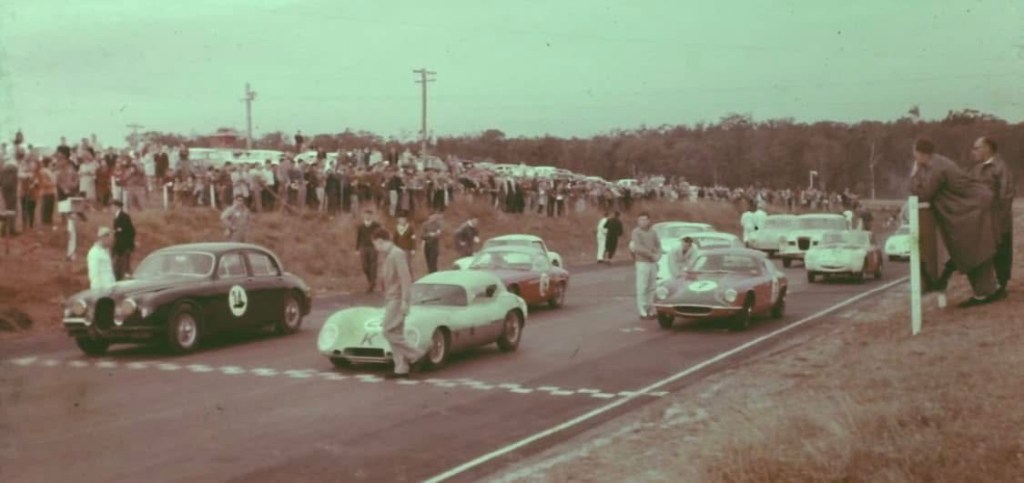
The grid for the Australian GT Championship at Lakeside, Queensland on 8 July 1962…
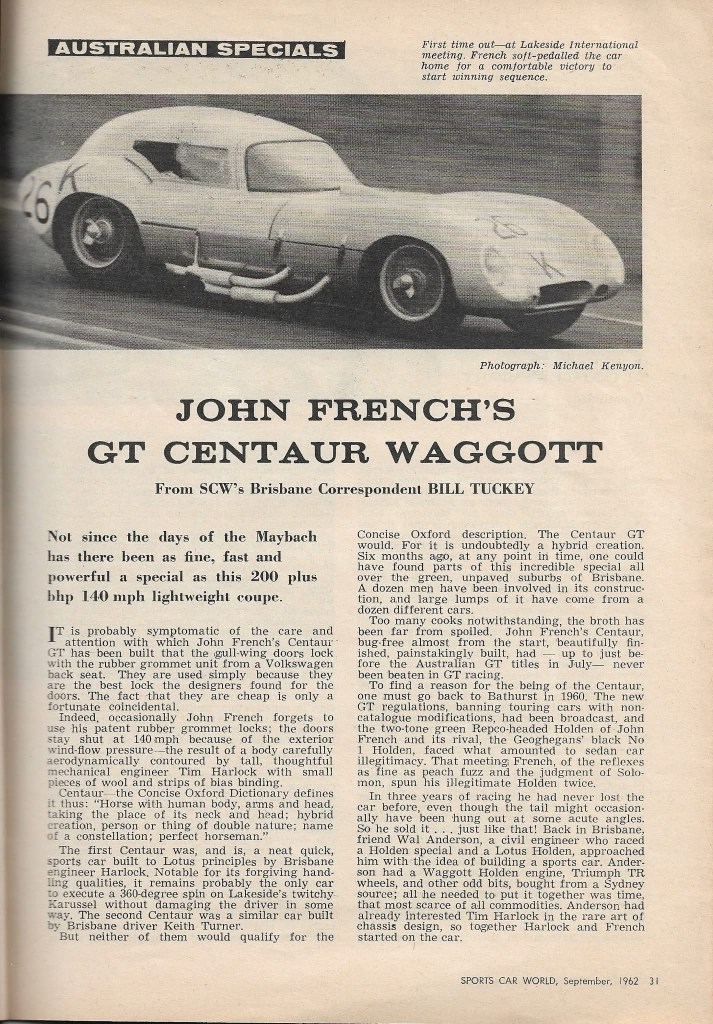
Bill Pitt, Jaguar 3.4 alongside John French in the Centaur Waggott-Holden, then the two Lotus Elites of Tony Osborne #16 and #7 Brian Foley. On the row behind is #21 Les Howard, Austin Healey Sprite Ford-Cosworth, in the middle is the partially obscured #31 Porsche 356 of Tony Basile and on the left the white #30 Renault Floride of Terry Kratzmann .
The light-coloured Sprite further back is #51 Sib Petralia, #60 Paul Fallu, Karmann Ghia, whilst the #4 Wolseley has long-time competitor Ken Peters at the wheel. The unmistakable outline of the grey Renault Dauphine is #6 M Hunt. Dennis Geary #22 was also entered in the HWM Jaguar – then in two-seat Coupe form but with the very same chassis and mechanicals of the car raced by Lex Davison to win the 1954 Australian Grand Prix – ‘just down the road’ at Southport on the Gold Coast.
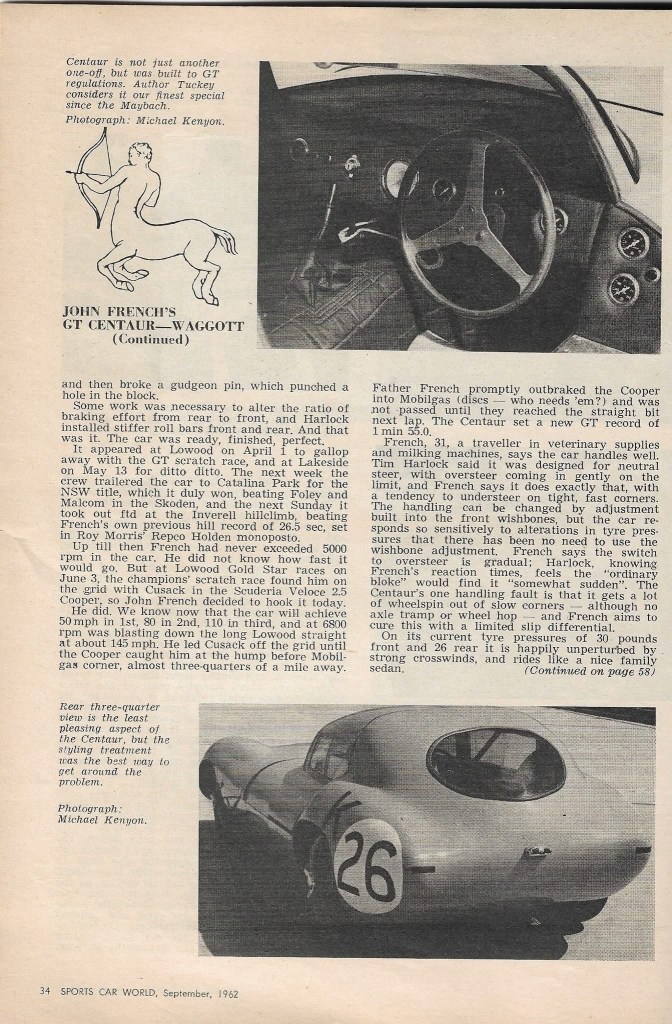
Denis Geary aboard the ex-Moss/Davison HWM Jaguar – the 1954 AGP winning single-seater chassis fitted with a coupe body – from the French Centaur Waggott during the GT Championship (B Williamson)The pit crew provides scale, isn’t the Centaur a small car? Lowood (B Thomas)Les Howard, Kevin Bartlett – looking after Howard’s car that weekend – the victor, John French adjusting his helmet, Antony Osborne and Brian Foley before the off.
The 50 lap 75 mile race was won in 62:6.06 minutes/seconds by French from Basile, Pitt, Howard then came Foley. Sib Petralia won the under 1-litre class, Basile the 1000-1600cc , French the 1600-2600cc and Pitt the 2600cc class and over.
The race was the third Australian GT Championship for Appendix K cars, the first was held at Bathurst during the October 1960 meeting and was won by Leo Geoghegan’s Lotus Elite, the 1961 event was at Warwick Farm in July, and Frank Matich won in his Jaguar D-Type.
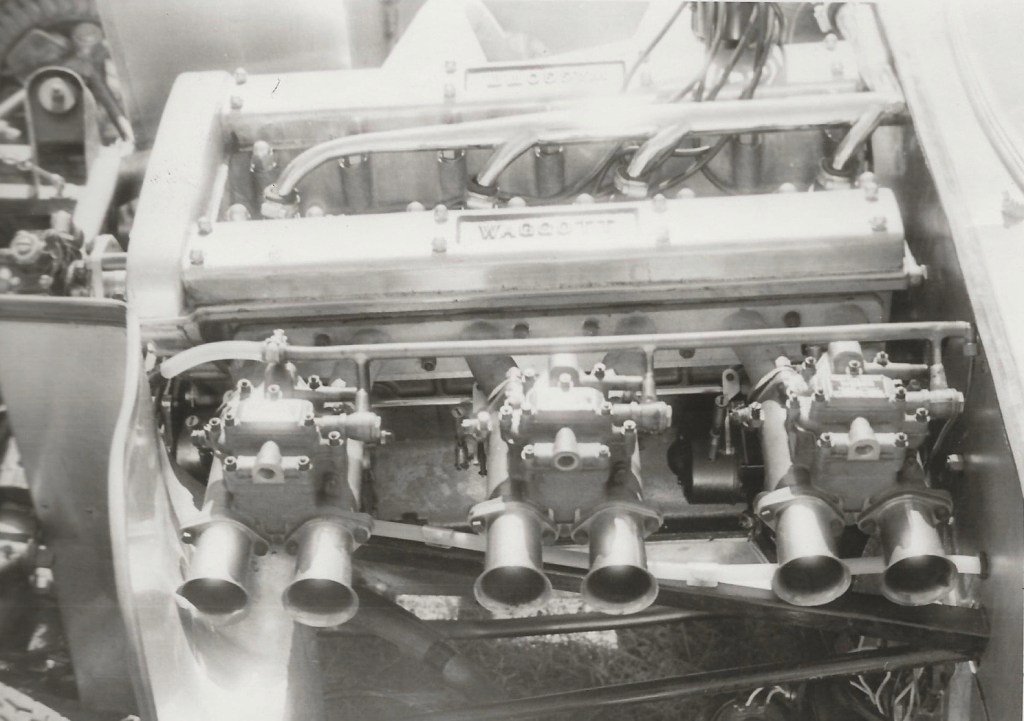
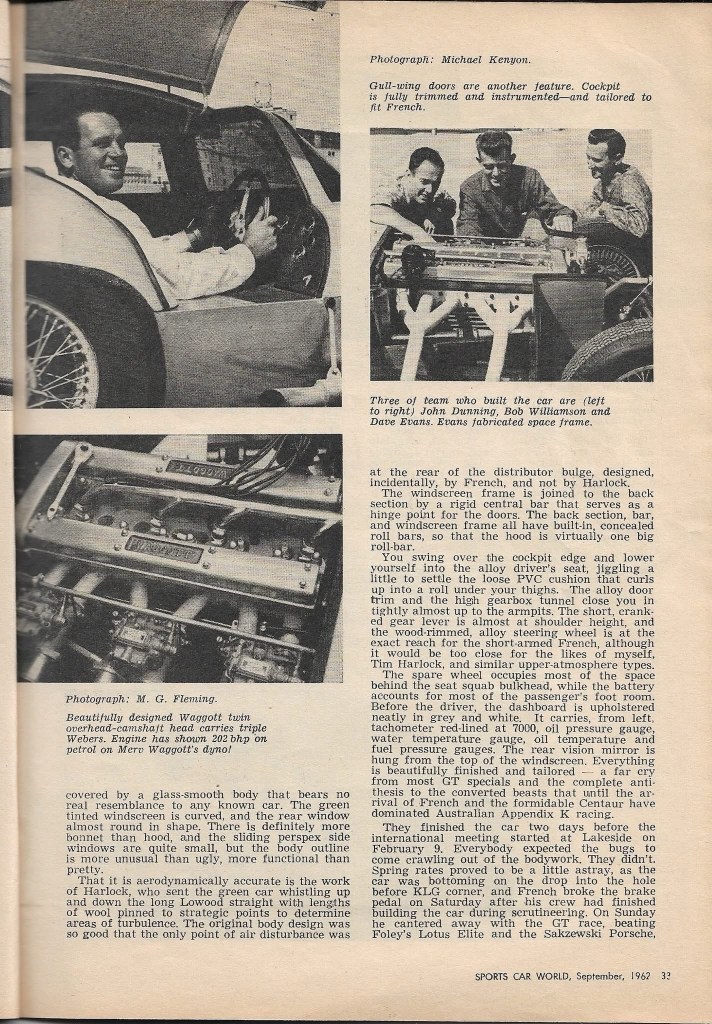
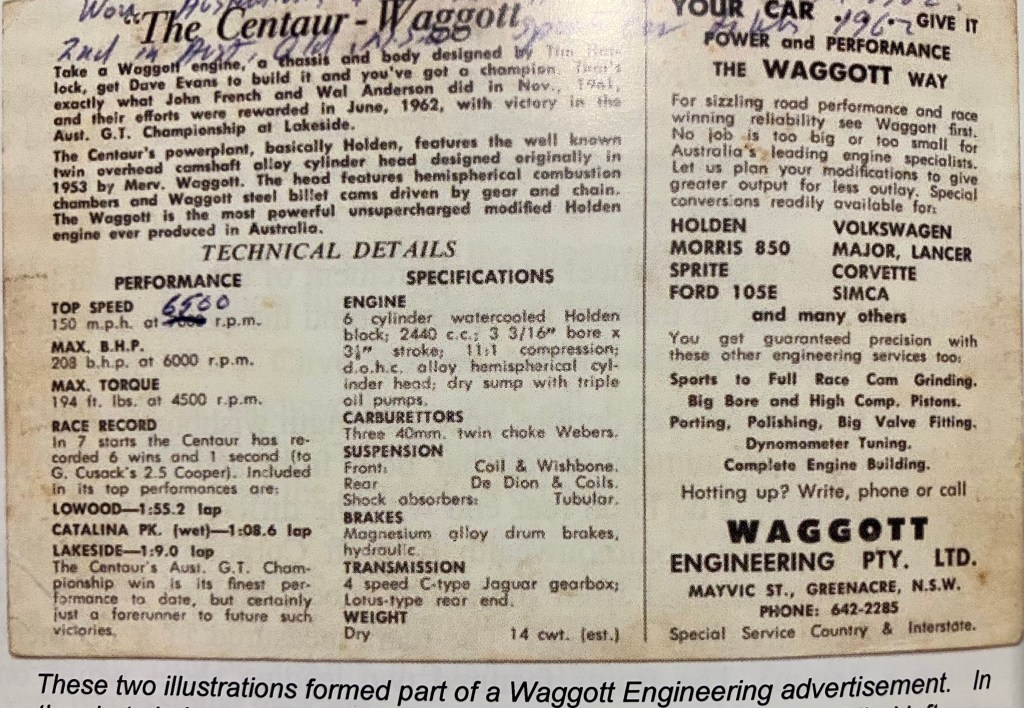
Lowood Merv Waggott built 2440cc Waggott-Holden twin-cam, two-valve, triple Weber 40 DCO fed circa 200 bhp six-cylinder engineLakeside
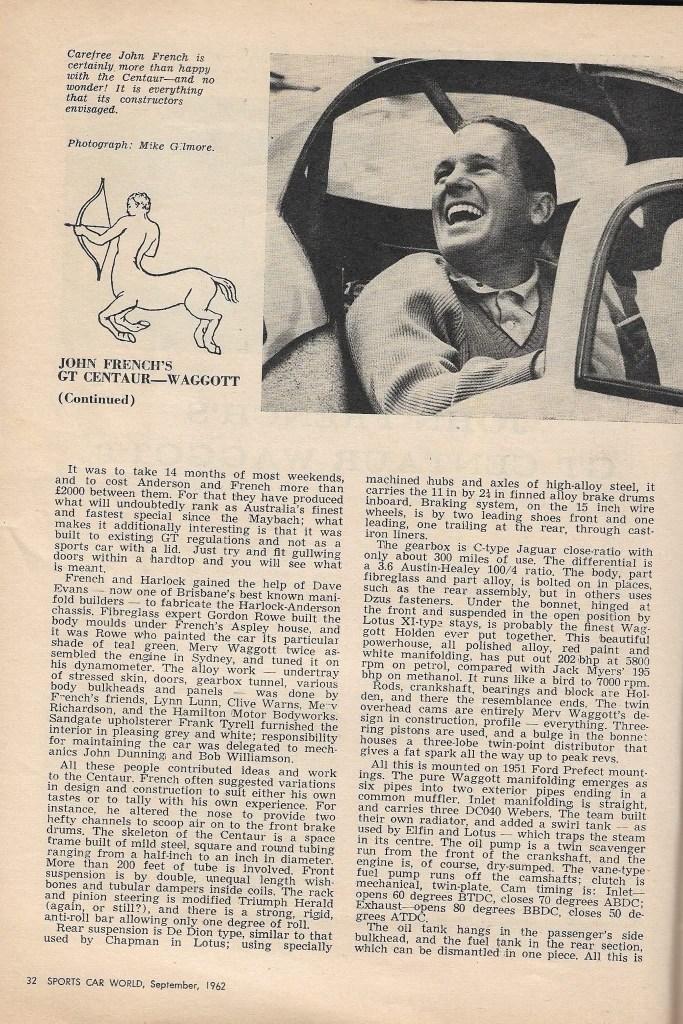
Toowong, Brisbane, University of Queensland Mechanical Engineering graduate Tim Harlock built his first car in four years, from concept to completion, commencing when he was barely out of his teens.
‘I was always mechanically inclined,’ Tim told Mildred Eden in 1962. ‘But beyond toying with a metal building set and making model aeroplanes, I had never before tackled anything of this magnitude.’
Car racing became Tim’s main interest while still at school.
Keith Turner in the Centaur Mk1B Ford at Lakeside circa-1964 (P Lefrancke)Tim Harlock racing his Centaur Mk4 at Lowood in October 1964 (B Williamson)
‘I saw my first race about 10 years ago in England, where we lived while my father, a soldier, was stationed over there. It was at Boreham Wood, but I don’t even remember who was racing at thc time. I did not become a real enthusiast until later.” –
He was determined to race himself but couldn’t afford it so he decided to build himself a car. ‘I’d learnt the basic theory in engineering, but all the practical knowledge came from friends with years of racing experience.
‘Wal Anderson, who is a retired racing driver, was a fund of information, and my friend Keith Turner worked with me on the construction. Incidentally, we have built two cars now, one each.’
The chassis of the Centaur/Centaur Mk 1B is a multi-tubular spaceframe, with the front suspension comprising upper and lower wishbones, modified Alford & Alder uprights and coil spring damper units. The rear comprised a well located BMC A-series rear axle diff assembly.
The engine was a Ford 105E 997cc, an Anglia also provided the gearbox, drum brakes were Morris Major 9-inch front and 7-inch rear.
The nose is Lotus 11-esque!, I can read your minds. Tim did a deal with Chas Whatmore after he damaged the nose of his Lotus 11 at Lakeside, Harlock took a mould from that car, the rest of the body aluminium.
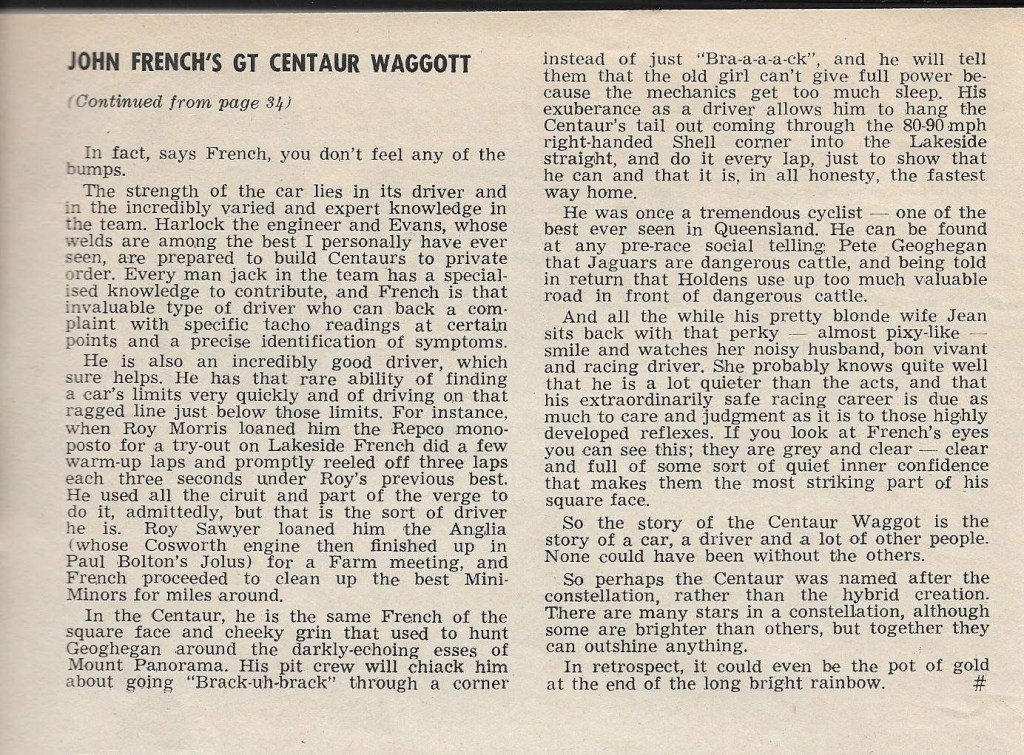
Tim and Keith began to race their cars in June 1961. It wasn’t too long before Wal Anderson introduced John French to Tim Harlock, and shortly thereafter, the 1962 Australian Championship-winning Centaur-Waggott project commenced; the championship C-W was the third of 11 Centaur sportscars built.
Centaur Waggott-Holden GT…
Bill Tuckey, one of Australia’s greatest motoring writers of the 1960s-70s, wrote this fantastic article about the car in the September 1962 issue of Sports Car World, easily my favourite Australian mag until its untimely demise in the 1980s.
Etcetera…
(J Campbell Collection)
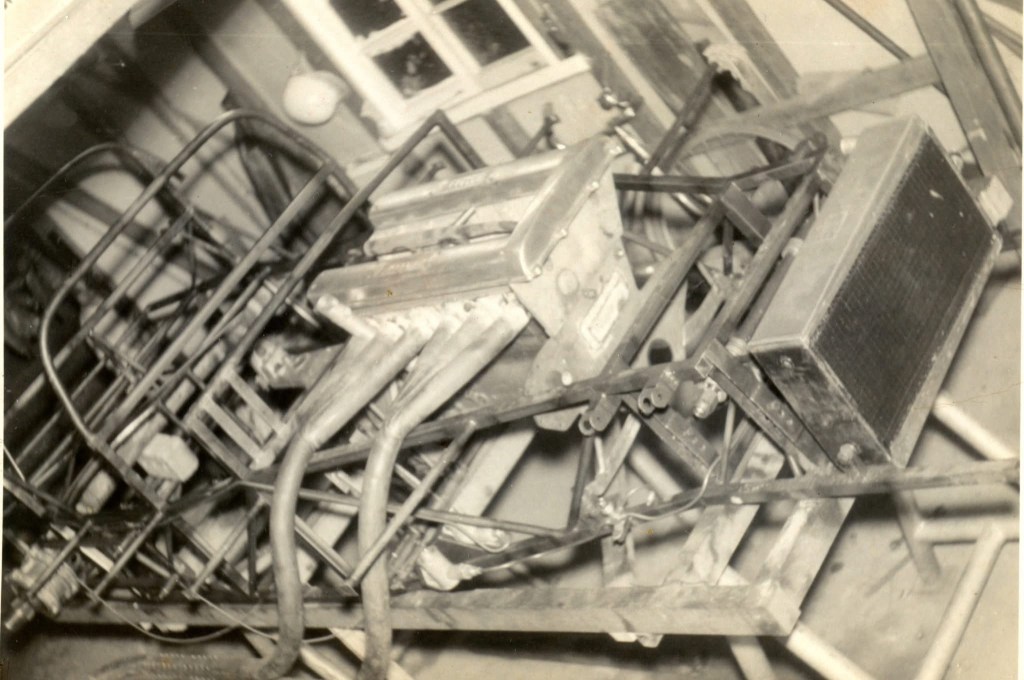
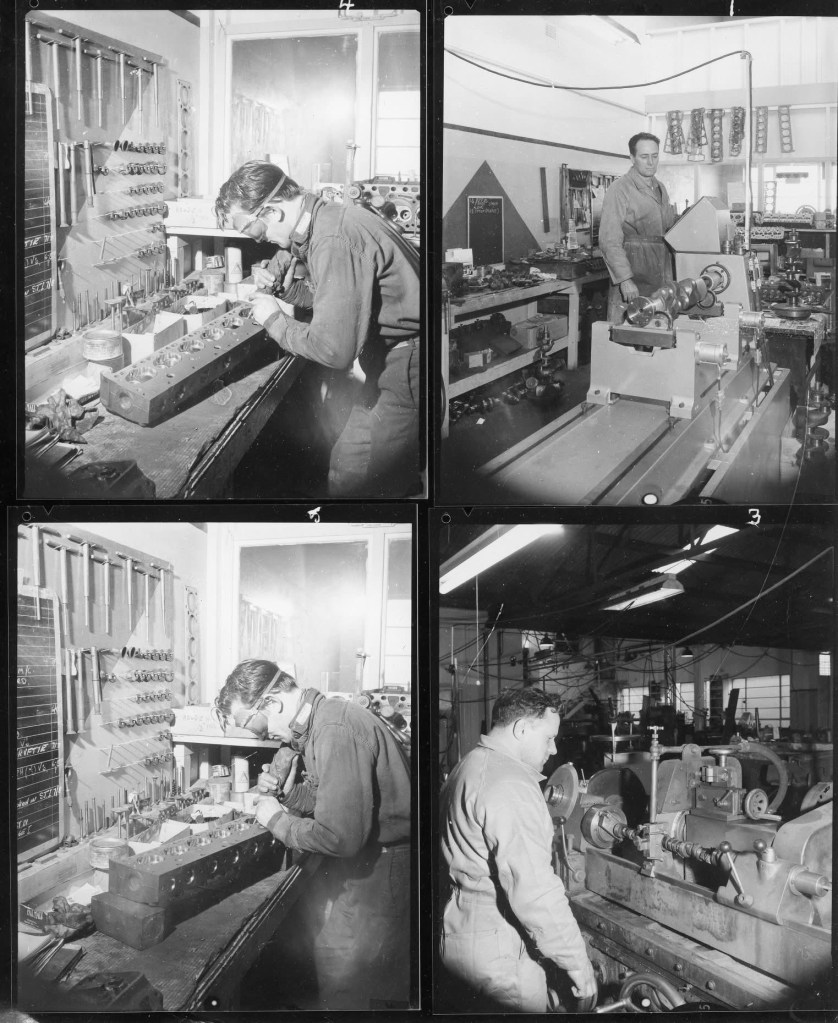
Waggott-Holden engine dummy installation in the Centaur chassis. The shot below more fully describes the engine specifications, and the bottom one is a collage of in-period Waggott Engineering photographs with Merv at top right.
(G Smith Collection)”(B Williamson Collection)
Credits…
Sports Car World, the Brier Thomas photographs are courtesy of Graham Ruckert, Mildred Eden Australian Women’s Weekly, Peter Le Francke Collection, Bob Williamson Collection, Greg Smith Collection, John Campbell Collection
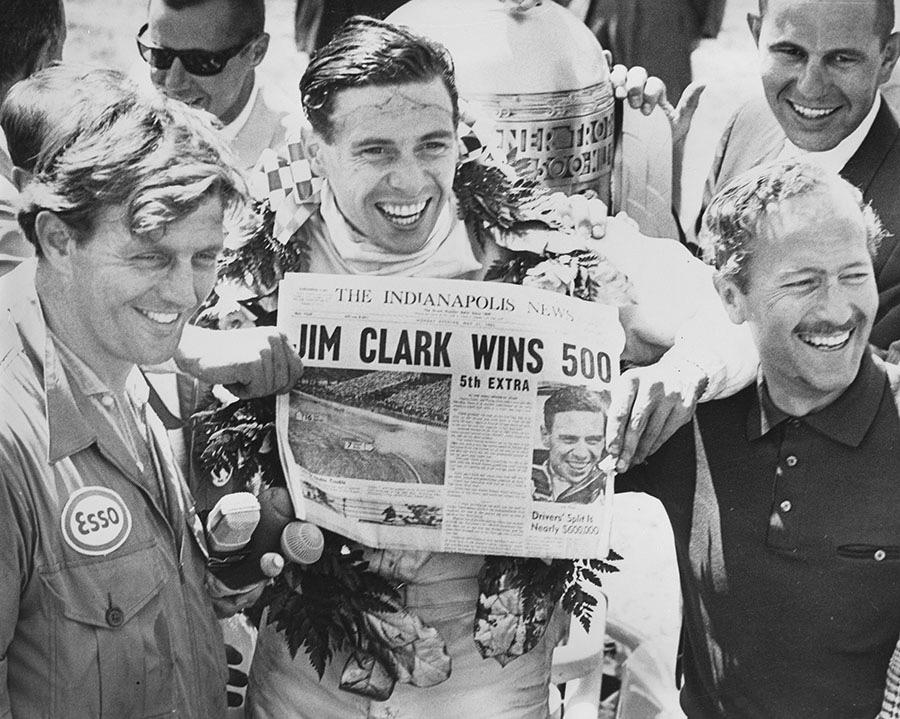
He bagged the Tasman Cup, Indianapolis 500, World Drivers Championship, the French – read Eiropean – F2 Championship plus a swag of touring car and sportscar victories.
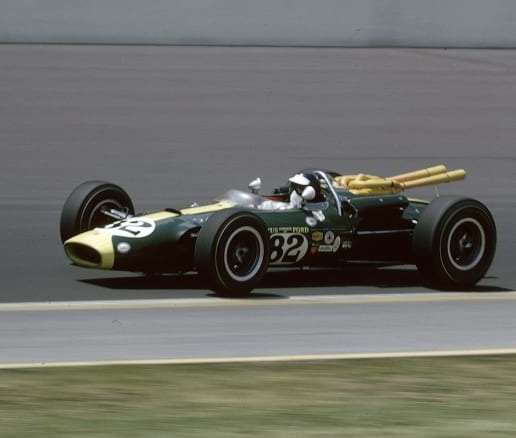
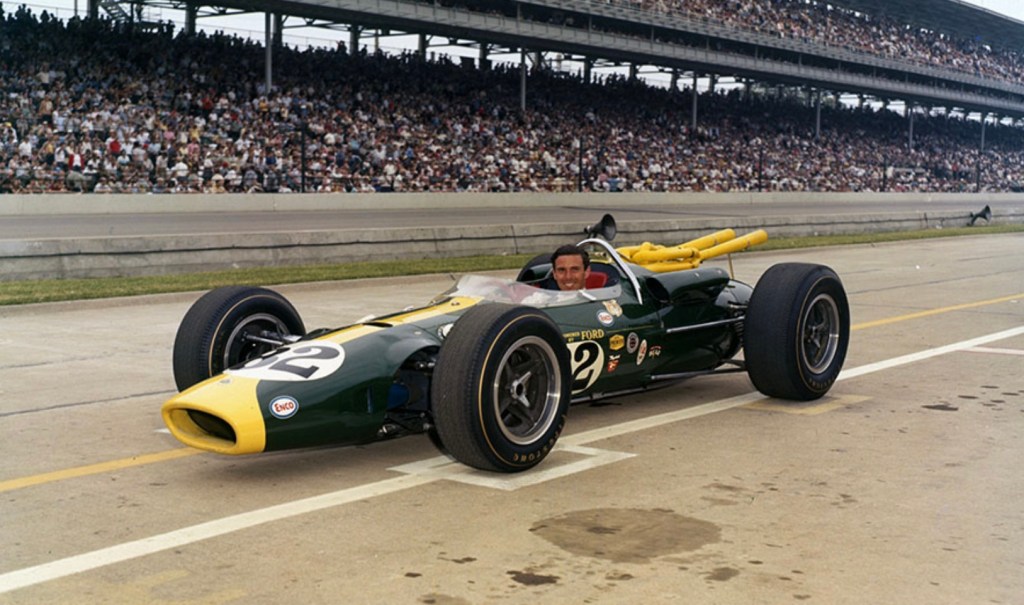
The shot above is of Clark enroute to victory at Indianapolis on May 31, 1965, Lotus 38 Ford-Indy 4.2-litre V8.
Hethel circa-1967 (unattributed)Lakeside 99, March 1965. Lotus 32B Climax. Jim won from Frank Gardner and Spencer Martin in Brabham BT11As (Daily Telegraph)
‘Can you give us a hand with the car Jimmy? Yep, no worries Ray (Parsons) I’ll do the fronts.’
Clark and Parsons ready Clark’s Lotus 32B Climax FPF 2.5 for the Warwick Farm 100 during the February weekend. That’s Roy Billington, Jack Brabham’s mechanic on the far left by the pit counter and Lanky Frank Gardner in the white helmet. Meanwhile, Frank Matich blasts past in his Brabham BT7A Climax.
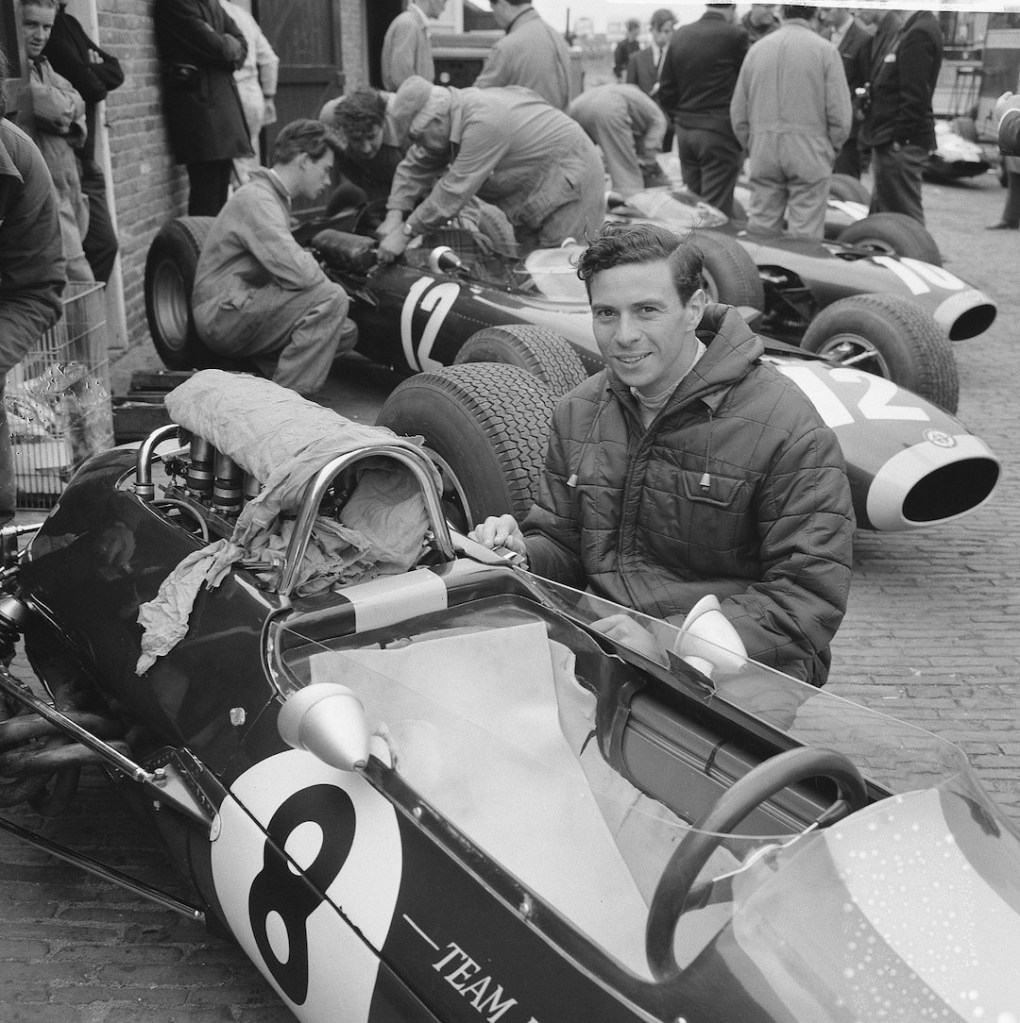
Clark romped home in the Tasman, winning four rounds. He won Levin, Wigram, Teretonga and Warwick Farm on-the-trot, then picked up the Lakeside non-championship round at the end of the tour. Bruce McLaren was second and Jack Brabham third.
No way did Jim get home to Scotland on too many occasions in 1965.
By my reckoning – aided by and improving on Peter Windsor’s article of 10 years ago – Clark had 29 winning drives in 1965, ranging from short Tasman Cup heats to the 500 miles at Indianapolis.
Peter’s list of 26 wins missed two Grands Prix, amazingly, and one F2 victory, so for mine, it’s 29 wins in that very big year.
(IMS)
Clark was edged out of pole at Indy by AJ Foyt’s Lotus 34 Ford but Jim took the May 31 win that had been coming for two years, leading 190 of the 200 laps.
Parnelli Jones was second, Lotus 34 Ford, and Mario Andretti aboard a Hawk 1 Ford wad third. Al Miller’s Lotus 29 Ford was fourth; yes it was a great race for the Lotus lads.
(IMS)(IMS)
The win was well merited to say the least. Fortunate for Colin Chapman too, Ford would have pickled his testicles had there been a fuck-up like the year before!
In Team Lotus’ first year at the Brickyard in 1963 the Indy Establishment simply shafted the interlopers in favour of one of their own…
Of course Clark’s main programme for the year was Grand Prix racing.
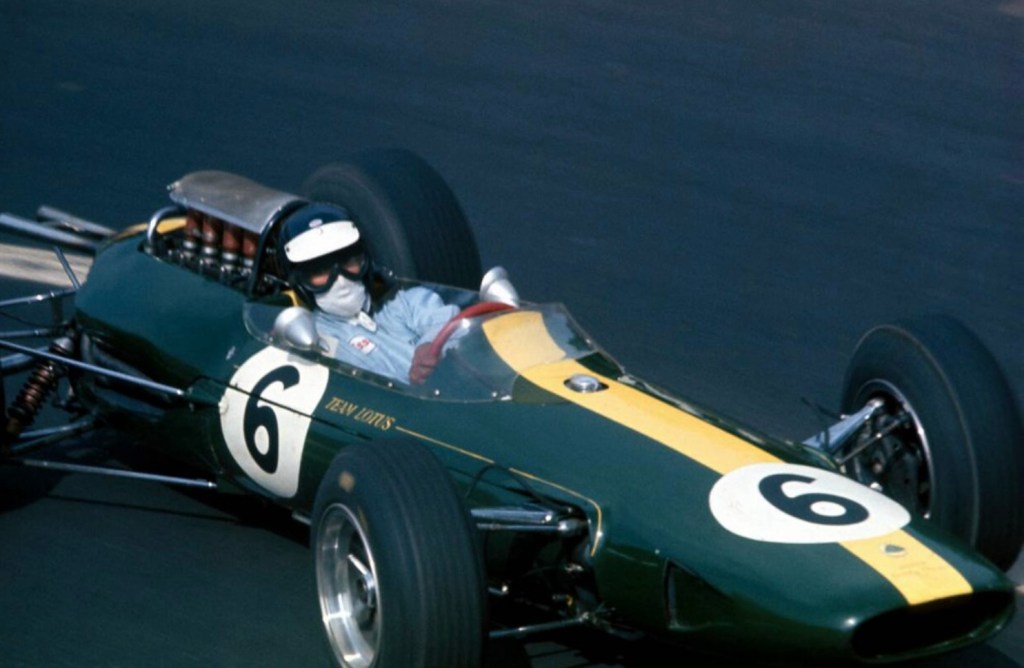
That season he won three non-championship F1 races: the first heat of the Race of Champions at Brands Hatch, the Syracuse GP and the Sunday Mirror Trophy at Goodwood. He also took six of the ten championship events, four from pole: the South African, French, British, German, Italian and Mexican Grands Prix.
(unattributed)Clark on the hop at Goodwood during the August 1964 RAC Tourist Trophy, Lotus 30 Ford (Sutton)
Team Lotus wasn’t all beer and skittles. Every now and then Chapman built a shit-box, the Lotus 30 Ford 289 V8 was one of them.
While the concept of a backbone-chassis somewhat akin to the Lotus Elan made marketing, and, perhaps, theoretical sense, in practice it had a level of flaccidity the engineering equivalent of a couple of Blue-Bombers was never going to fix.
Clark wrestles with the gorgeous but recalcitrant 350bhp machine above, and with the ‘ten more mistakes’ – as Richie Ginther described it – aboard the Lotus 40 Ford in the LA Times GP at Riverside in October 1965; he was second to Hap Sharp’s Chaparral 2A Chev in a marvellous drive. One of Clark’s many attributes was to get the best out of a car, even a sub-optimal one. A bit more Lotus 30 here:https://primotipo.com/2016/08/30/rac-tourist-trophy-goodwood-1964/
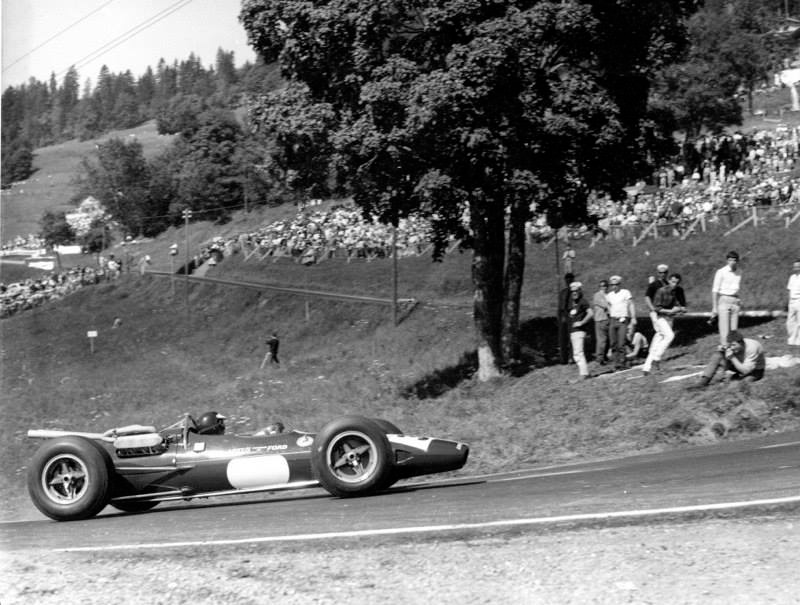
Of course, just when you think The Boss might give you a weekend off he comes up with the notion of doing a hillclimb or two in your Indy winning Lotus 38 Ford in the Swiss Alps.
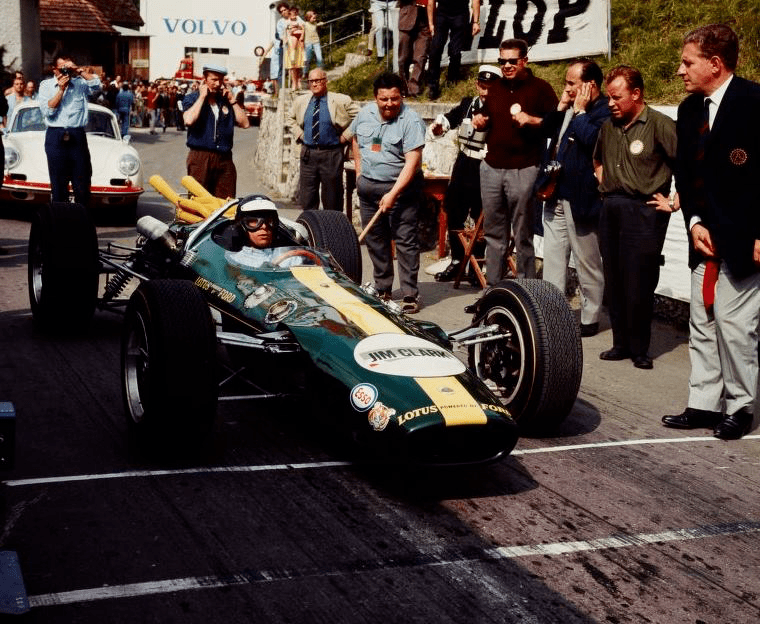
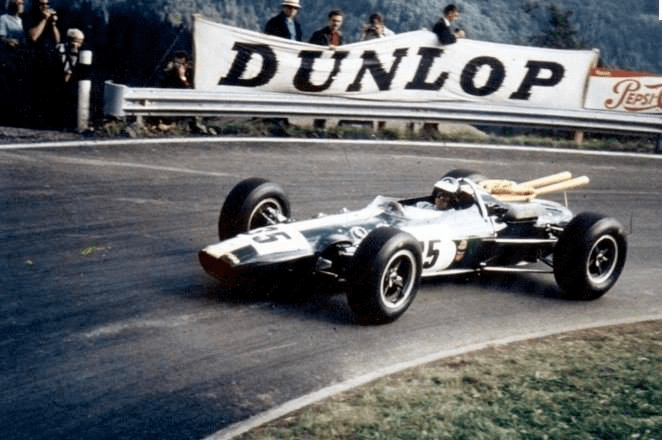
‘Don’t fret Jimmy, we’ll give you a car with symmetrical suspension – it was chassis 38-4 rather than the Indy winner, chassis 38-1 – and off to St Ursanne-Les Rangiers we go on August 22.
Clark did a demonstration run in 5:20.8 while Jo Siffert did FTD in his Brabham BRM 1.5 V8 F1 car. Charles Vogele was second and Silvio Moser third.
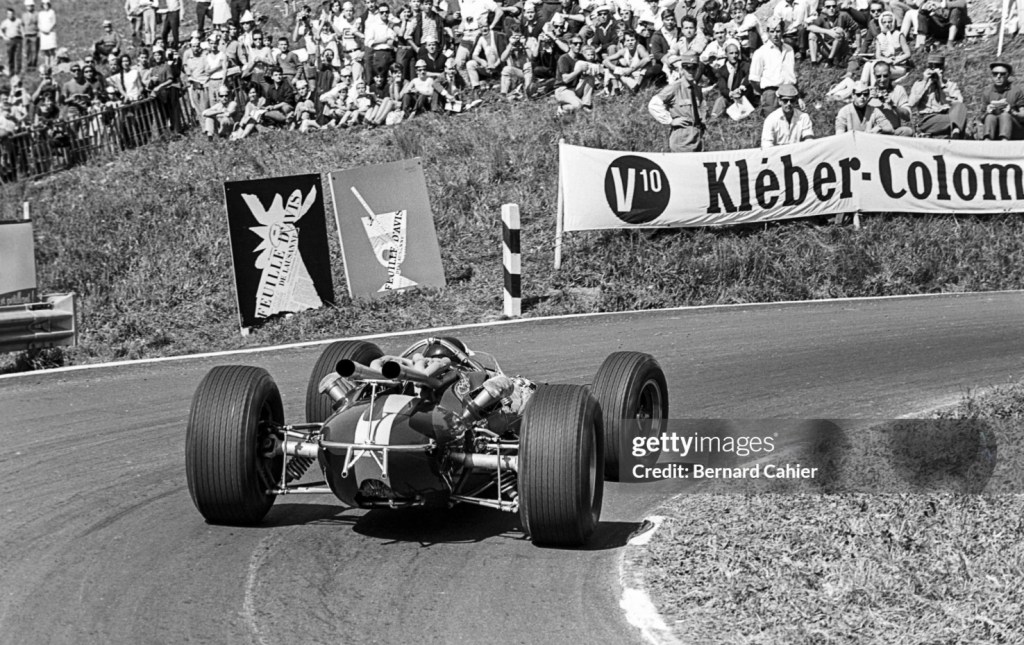
Next was Ollon-Villars also in Switzerland on the following weekend, August 29.
Lou Drozdowski wrote, ‘Clark spun off the course during practice and spent much of the afternoon among the sheep and pastures making his way back. He did however set a time of 4:34 compared to Ludovico Scarfiotti, Ferrari 206P FTD of 4:09.’ Gerhard Mitter was second and Gianpiero Biscaldi third.
Ollon-Villars (unattributed)Ollon-Villars (unattributed)Big-bertha’s butt at Ollon-Villars (B Cahier)(LAT)
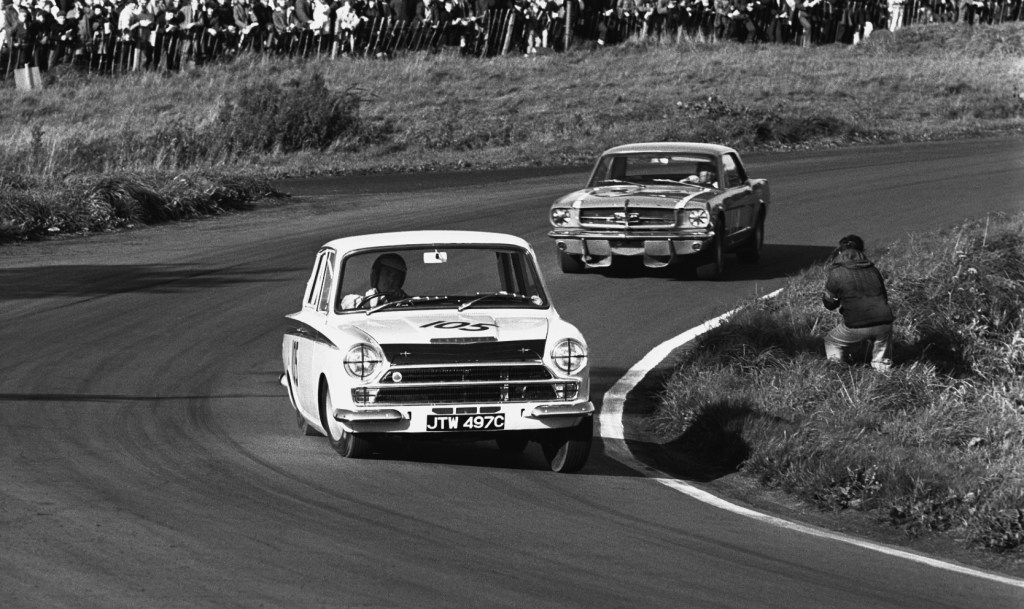
Lotus’ relationship with Ford was strong and multi-faceted, one element of which was the Ford Cortina Lotus Mk 1 and 2 and the Escort Twin-Cam, all of which were fitted with the Lotus-Ford twin-cam, two-valve twin-Weber fed engine.
While it could be seen as hit-and-giggle in the context of his other ‘65 race-programmes, moving-metal was a very serious business so Clark approached his Lotus Cortina races that year in the UK and North America just as seriously as he did everything else.
Here he is giving Jack Brabham a run for his money at Oulton Park during the British Saloon Car Championship round on September 18, 1965. Jack’s mount is Alan Mann’s Ford Mustang. More on the Lotus Cortina here: https://primotipo.com/2014/11/16/jim-clark-lotus-cortina-sebring-1964/
Etcetera…
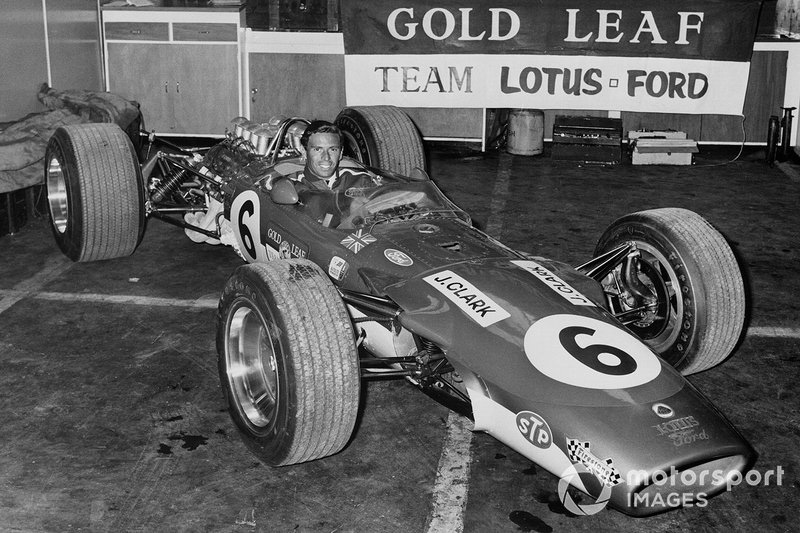
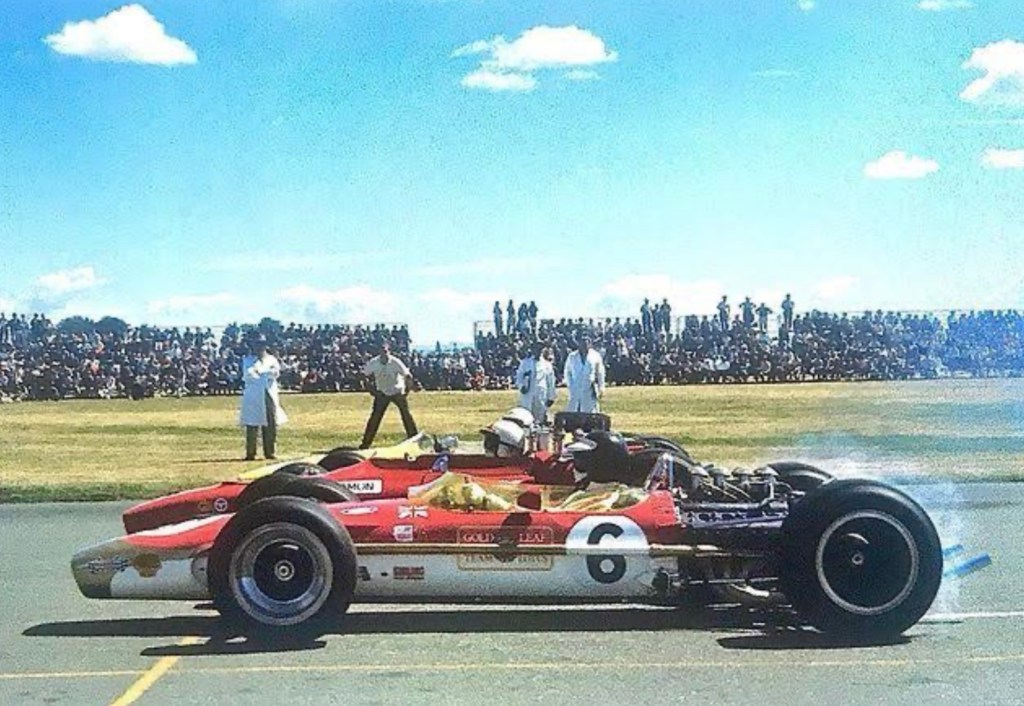
The Lotus 49 first ran in Gold Leaf Team Lotus colors during the Lady Wigram Trophy on January 20, 1968.
The transformation from Team Lotus’ perfect livery to fag-packet occurred during the week between the Levin International on January 13 and Wigram.
With a done deal in London, the Lotus team arranged for a skilled signwriter at Hutchinson Ford in Christchurch to apply the new Gold Leaf livery to Jim’s Lotus 49.
Clark, Amon, Gardner: Lotus 49 Ford DFW, Ferrari 246T and Brabham BT23D Alfa Romeo. Wigram 1968
Outside the US and some other countries it was the beginning of big corporate sponsorship in motor racing.
Ever the leader, Chapman’s quick commercial response and applying the new sponsorship colours demonstrates just how rapidly change took place once advertising restrictions in racing were lifted prior to the 1968 season.
(unattributed)
Credits…
Indianapolis Motor Speedway (IMS), Bruce Wells, The Jim Clark Trust (TJCT), Lou Drozdowski in lotuseuropa.org
Tailpiece…
(TJCT)
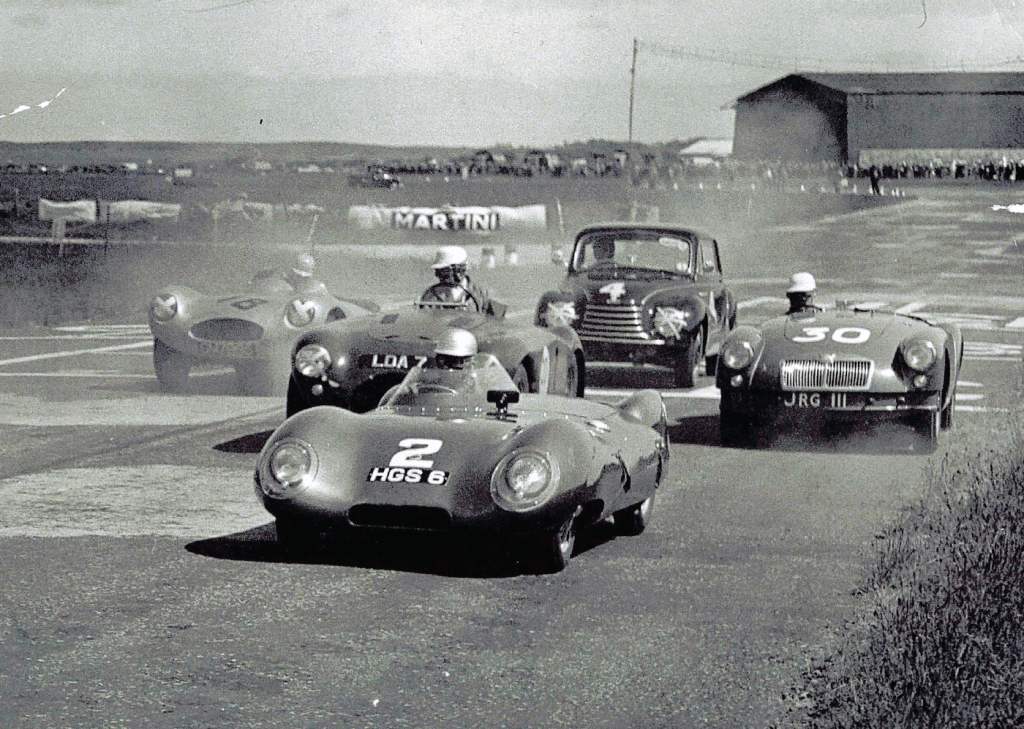
Jim Clark’s first race was at Crimond, aboard Ian- Scott-Watson’s DKW Sonderklasse on June 16, 1956.
That’s JL Fraser Lotus 11 front-and-centre, then from the left #18 AR Millar Saltire, LDA7 Kenny McLennan’s Kit MG, #4 Clark in Scott-Watsons DKW Sonderklasse, and John Campbell, MGA.
The Jim Clark Trust wrote that ‘In the sportscar race there was no handicap, so the DKW was hopelessly outclassed. Clark did pass one car but his joy was short-lived. The tailender was heading for the pits with broken halfshaft and the DKW finished in last place.’
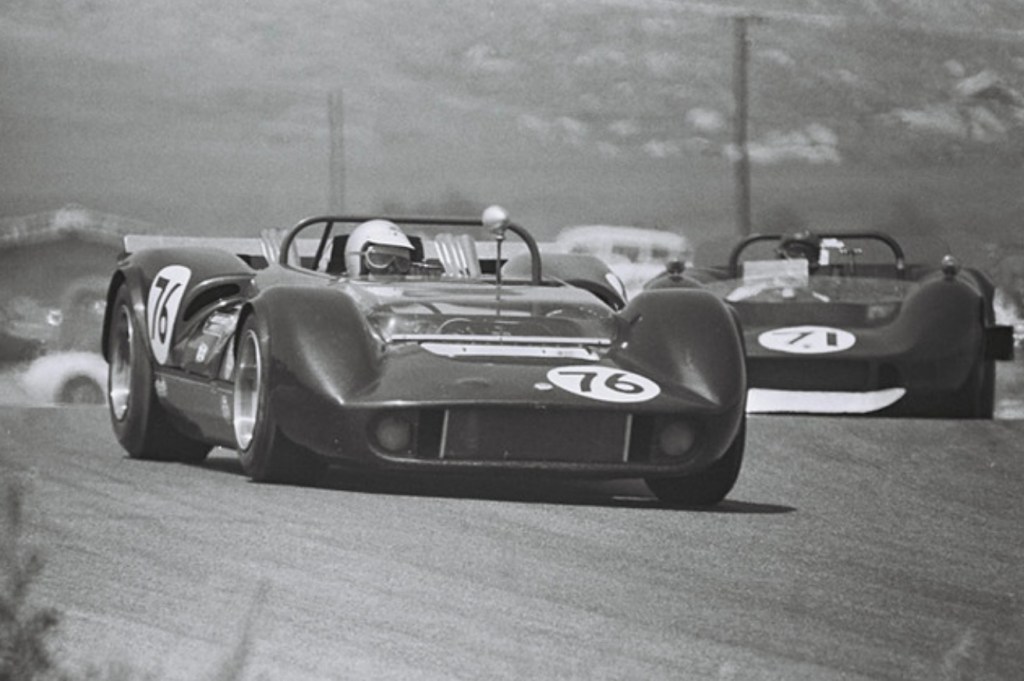
Frank Matich, Matich SR3 Oldsmobile ahead of Bud Morley, McLaren Elva Mk2 Chev during the United States Road Racing Championship round at Riverside, California on April 30, 1967
Many of you will be aware that FM contested Can-Am Challenge rounds that year whereas this race largely goes unreported
He had sold an SR3 to Marvin Webster in California and raced his own car in the Can-Am. This car was fitted with a modified 4-litre Oldsmobile F85 aluminium V8 by Webster’s crew while the other machine was powered by a customer Repco-Brabham Engines 620 4.4-litre V8.
(D Friedman)Mark Donohue on pole with George Follmer on the right, Lola T70 Mk2 Chevs, #52 Peter Revson and #71 Bud Morley in McLaren Elva Chevs. Matich on the far right five rows back (D Friedman)Mark Donohue, Lola T70 Mk2 Chev (D Friedman)
Mark Donohue won the 70 lap, 300km race in a Penske Lola T70 Mk2 Chev from Bob Bondurant and Peter Revson’s pair of Dana Chevrolet McLaren Elva Mk3 Chevs.
The pro-series was the Can-Am Cup, the USRRC was the next level down but still a national series with some topline steerers: George Follmer, Jerry Titus, Masten Gregory, Lothar Motschenbacher, Moises Solana, Scooter Patrick, Jerry Grant, and Sam Posey and Mike Goth, the latter a pair of drivers who did the Tasman in the F5000 years .
(D Friedman)
Matich qualified 13th and retired from the race with falling oil pressure after only 19 laps, not a happy weekend as they had blown an engine in the first USRRC round at Las Vegas the week before. The final race of his tour was the Laguna Seca round on May 7 with a finish this time, eighth from grid 10.
Matich from Mike Goth, Lola T70 Mk3 Chev, fifth (D Friedman)
Etcetera…
(D Friedman)
The Matich SR3 is derivative of a whole swag of sports-racers of the day but distinctively handsome all the same.
(D Friedman)
Marvin Webster calling the shots.
(D Friedman)(D Friedman)
Skip Scott’s McLaren Elva Mk3 Chev, DNF engine with Matich at the rear of this group.
(D Friedman)
Matich in front of Peter Revson’s McLaren Elva Mark 3 Chev.
(D Friedman)(D Friedman)(D Friedman)
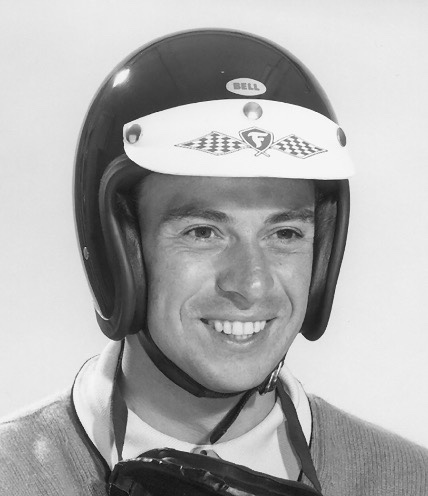
FM had the Australian franchises for Firestone Racing Tyres and Bell Helmets, I wonder if he landed both those fish during his ‘67 trips? Yes, he went with Goodyear a bit later when it seemed the way to go…
Credits…
David Friedman Archive
Tailpieces…
(D Friedman)
How far back did Roger Penske and Mark Donohue go? About here actually.
After Roger stopped driving in 1965 he fielded a pair of Corvettes at Daytona and Sebring in 1966 before forming the partnership with Donohue. USRRC titles followed in 1967-68 with Lola T70s, and the rest, as they say, is history.
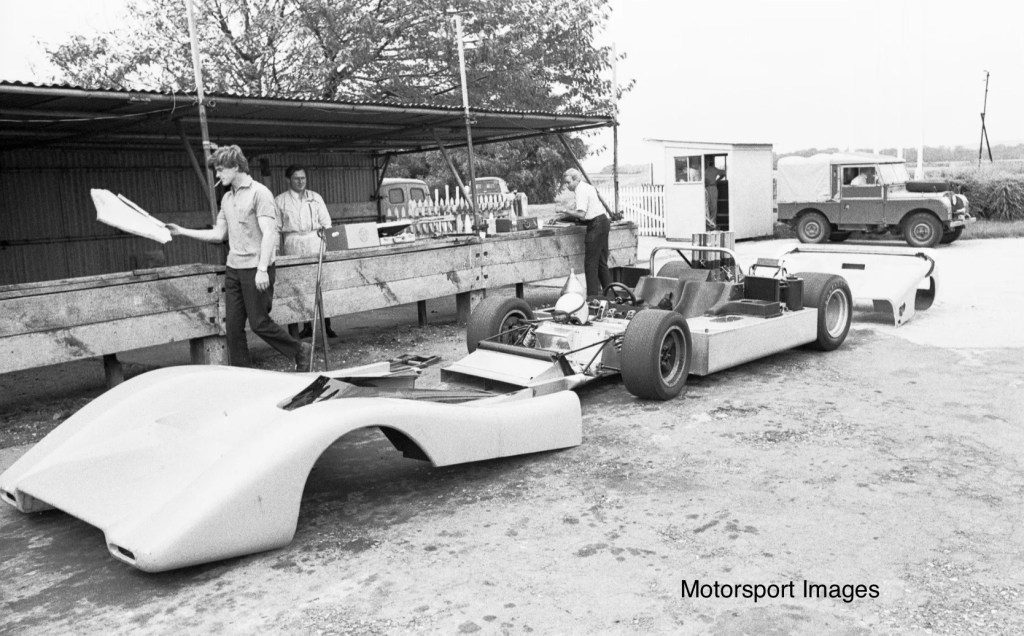
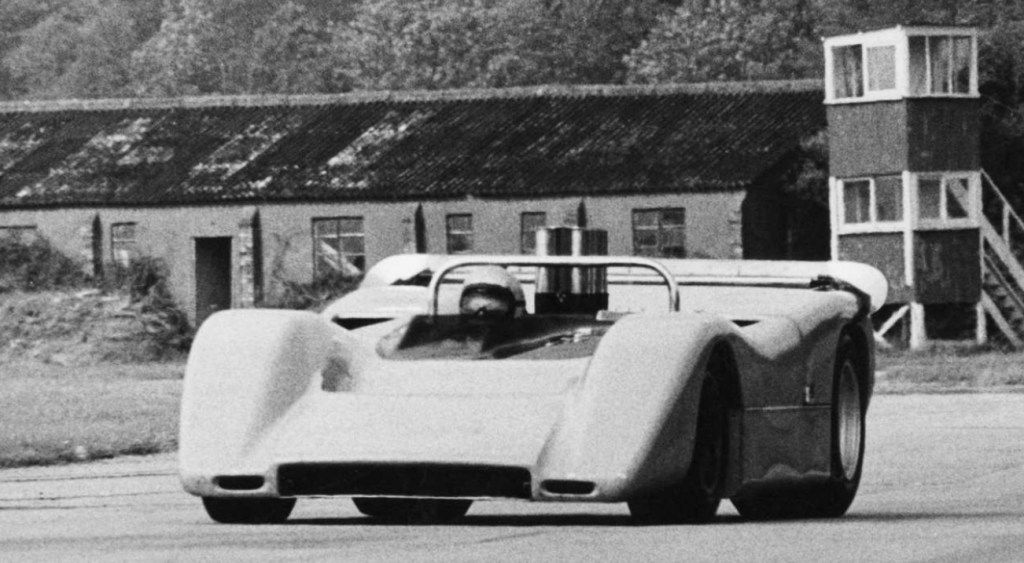
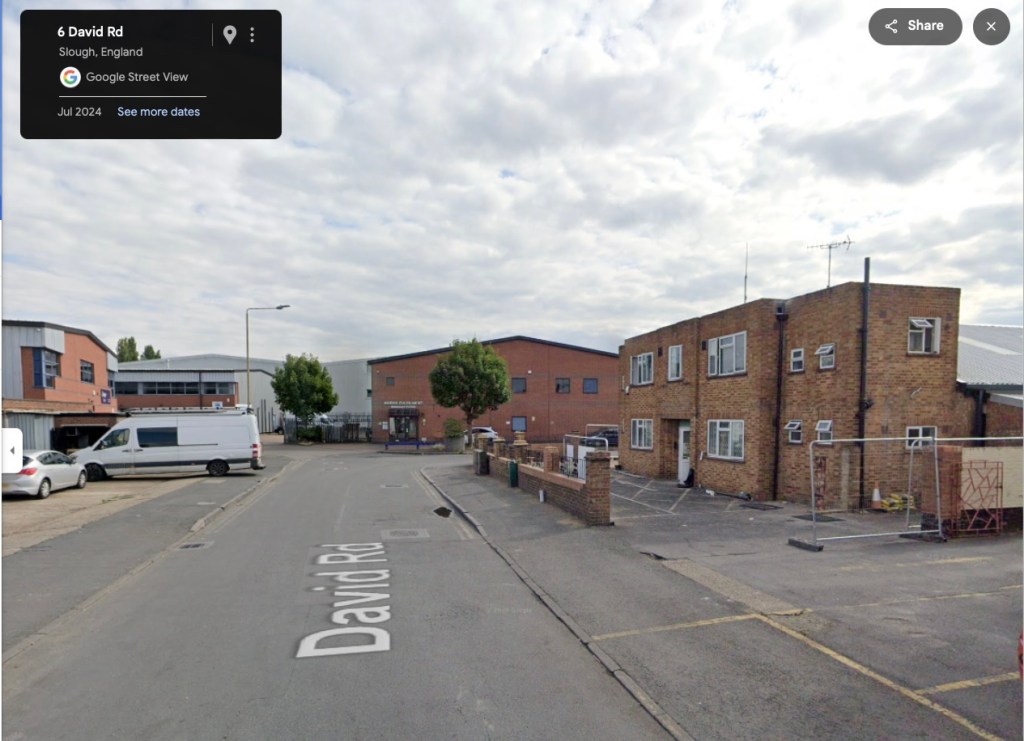
‘It’s the first McLaren M8A Chev outside McLaren’s David Road factory in Colnbrook,’ Derek Kneller recalled.
‘I was a fabricator working with Don Beresford, John Thompson and George Begg on the M8As. The shot was taken on my Polaroid camera when the first body was fitted.’
The shot below of Alistair Caldwell, Bruce McLaren and Teddy Mayer testing the car at Goodwood in July 1968 dates Derek’s shot. The car is still not fitted with mirrors, but does have a small spoiler on the rear bodywork, so perhaps a day #1 or day #2 test…
(goodwood.com.)
Bruce blasting past the Super Shell Building at Goodwood, what is that material going across the back of the car from wheel arch to wheel arch?
It wasn’t a bad season, McLarens won all six Can-Am Cup rounds: Denny Hulme took three, Bruce, Mark Donohue (M6A Chev) and John Cannon (M1B Chev) one apiece. Denny won the Canadian-American Challenge Cup from Bruce and Mark.
Etcetera…
As David Road is today courtesy of Andrew Hicks.
Credit…
Derek Kneller, Motorsport Images, Goodwood.com, Andrew Hicks
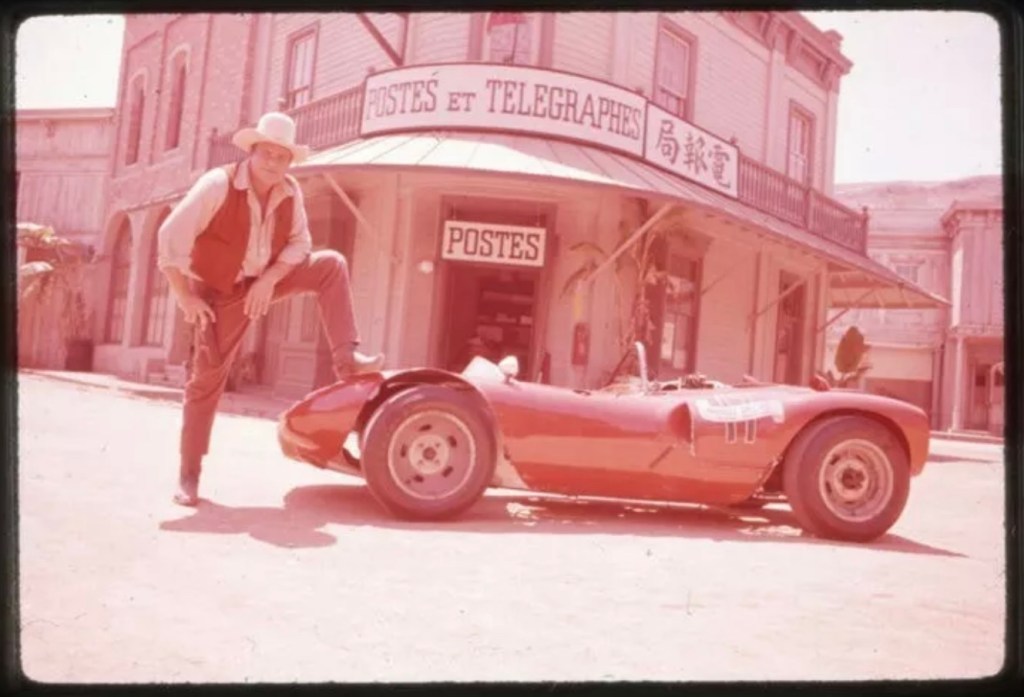
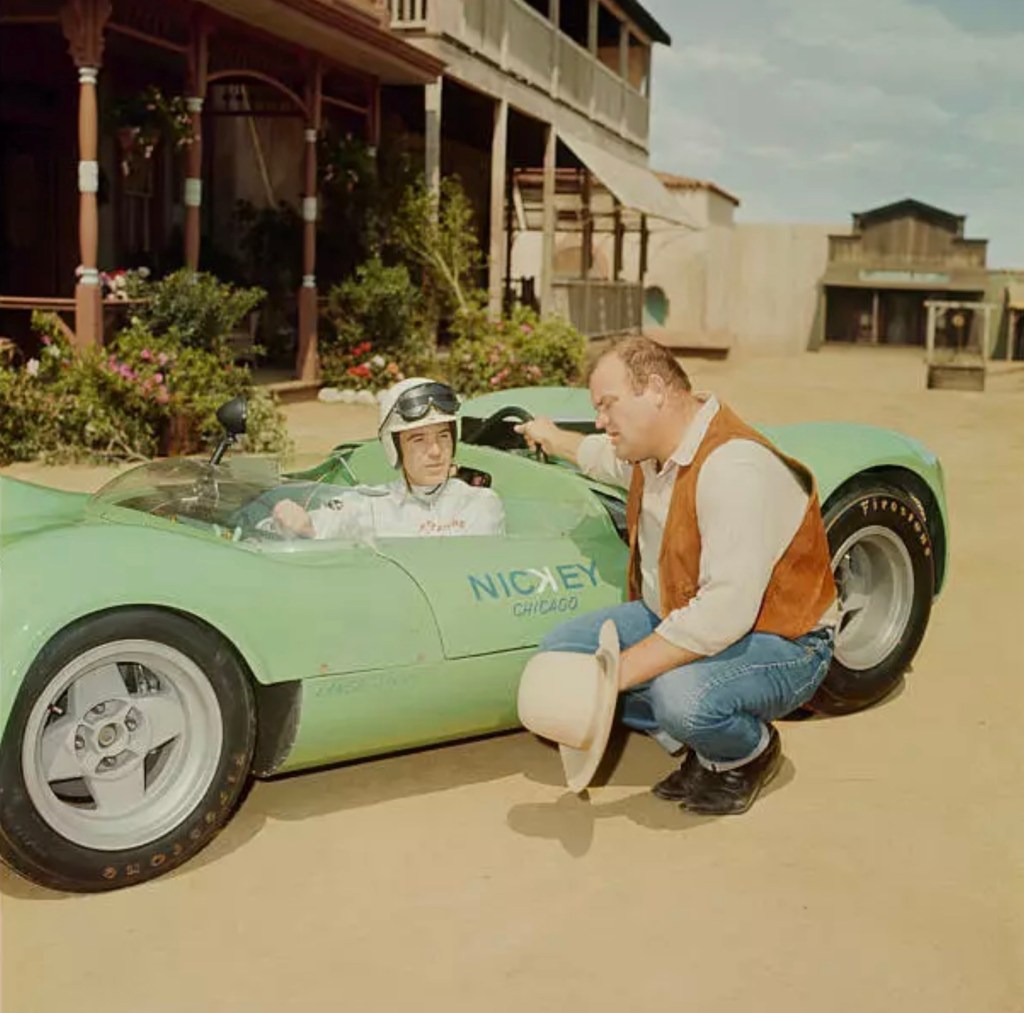
Hoss Cartwright’s Chev Corvette powered Campbell Corvette Special was one helluva way to get around the Paramount Studios’ backlot!
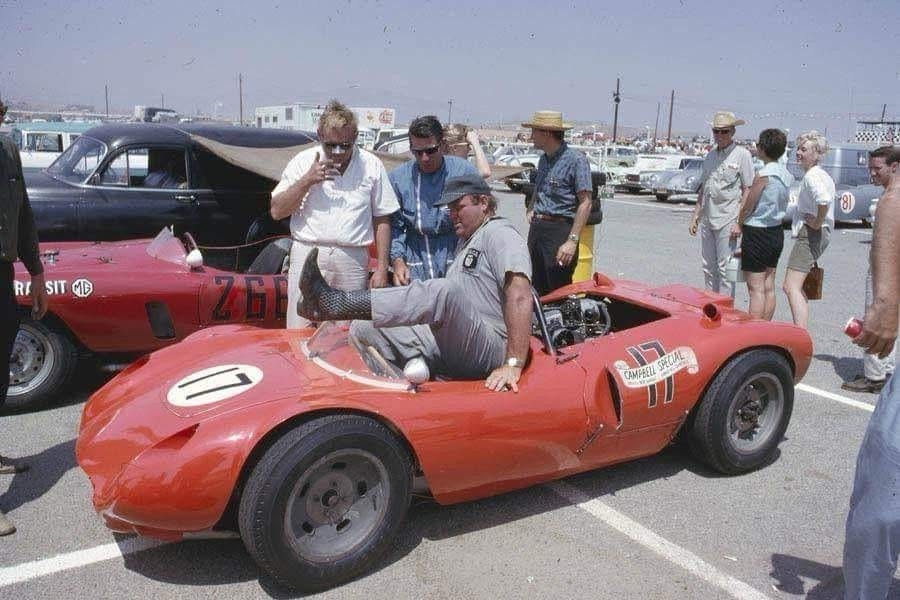
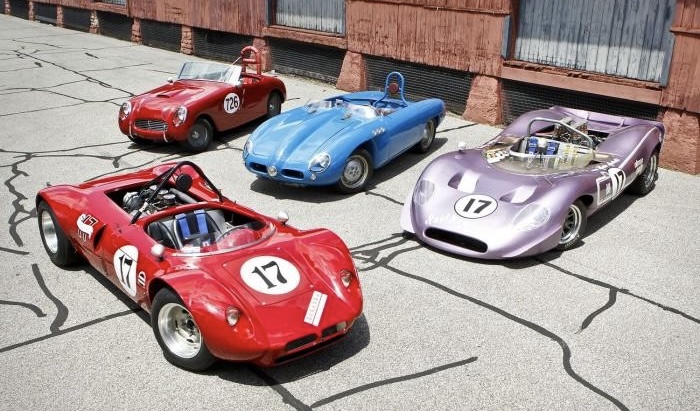
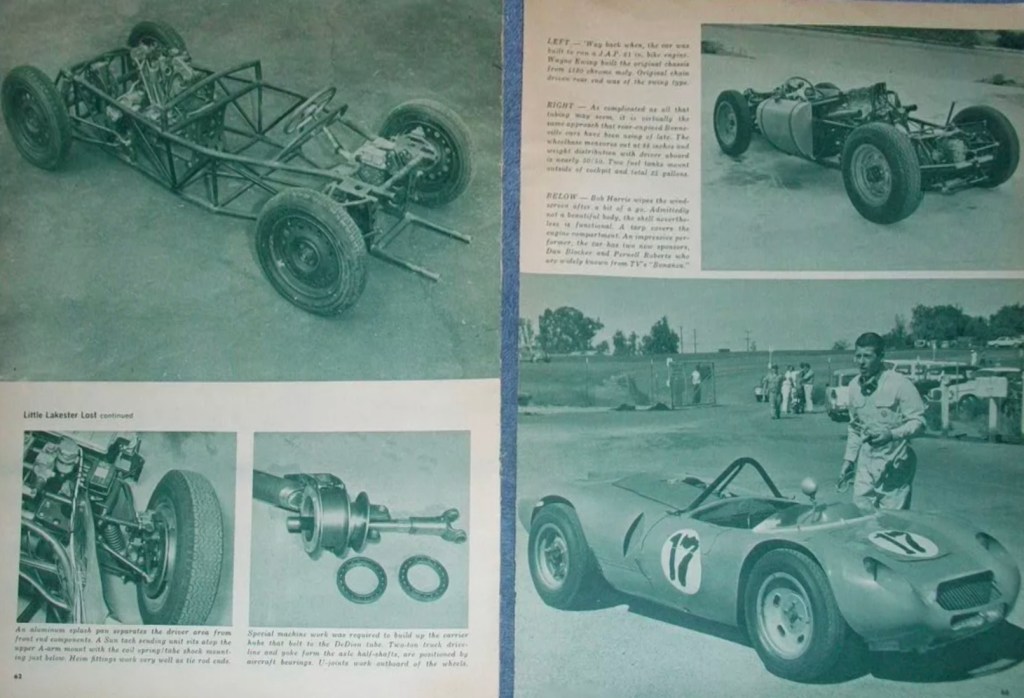
Dan Blocker poses on the set of ‘Bonanza’ with the first racing car he sponsored. The neat, small, fast Campbell Corvette Special was built by ace ex-AJ Watson Indycar fabricator/welder Wayne Ewing for Bill Campbell, an ex-dry-lake racer and boat manufacturer.
Blocker was a serious enthusiast. In 1966 his daily rides comprised a Chev El Camino ute and a Corvette, both provided by Chevrolet, sponsors of Bonanza. In addition he had an Iso Rivolta, Maserati 3500GT, Elva Maserati, a ‘Mercer Speedster’ powered by a flathead Seagrave V12, and had ordered a Lamborghini…and goodness knows what else.
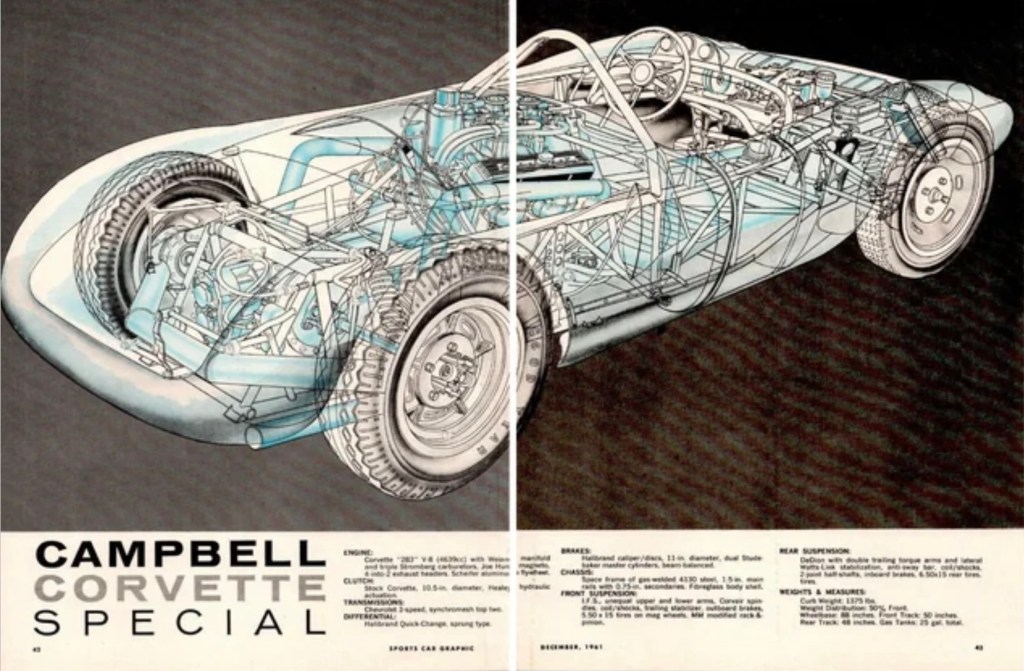
Initially powered by an 1100cc JAP engine, the ever-evolving Campbell became a fire-breather when a Corvette 283cid V8 was dropped into it. The car was then raced successfully by Dan’s close friend, stuntman Bob Harris.
(unattributed)
Blocker tries to insert his not inconsiderable 6 foot four into the SWB Campbell, it’s a pity there isn’t a next shot. I suspect he probably failed, to the relief of driver Harris in the blue race-suit.
Ewing’s chassis was made of 4130 chrome-moly tube and proved sound enough to take the triple-Stromberg cast-iron lump, other features of which included a Weiand manifold, Schaefer flywheel and Hunt magneto. The engine was inclined downwards at the front by 5-degrees. A three-speed Chev gearbox and stock Corvette clutch was actuated by a Healey slave cylinder. The clutch and brake master cylinders were of Studebaker origin.
The Chev ‘box bolted directly to a quick-change Halibrand rear end while the original rear swing-axle was replaced by a De Dion set up fabricated by Ralph Ball and Barney Navarro. It was located by four-links and a watts linkage. The aluminium radiator was ’61 Vette, a Morris Minor donated the the steering rack and pinion which was modified to suit.
Up front, the original Fiat suspension were replaced with stronger, lighter upper and lower wishbones with uprights/spindles donated by a Chev Corvair. Halibrand also provided the disc brakes and wheels.
Harris, having led the first few laps of the Pacific Coast Championship at Del Mar in late 1962, returns to the track, only to run out of road in a subsequent attempt to make up lost ground on leader Jay Hills’ Porsche RSK (unattributed)
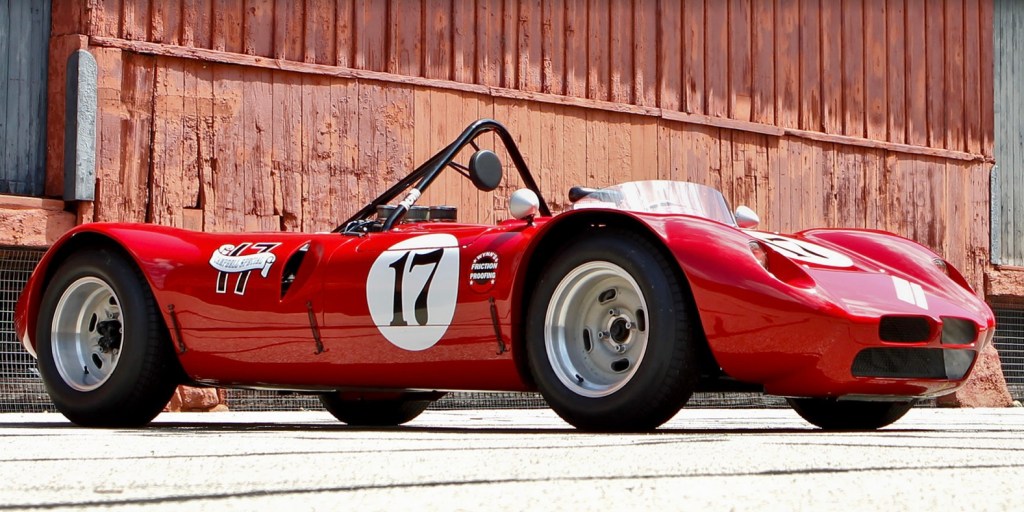
The result was a potent 1,375 pound machine with 50-50 weight distribution. One of the first Corvette powered mid-engined machines, the car was competitive from the outset and with a Chev 327 installed Harris took the cars first win at an SCCA regional at Riverside in June 1962. Yes, happily it still exists as an historic racer.
Harris raced the car through 1959-62 with wins Ian SCCA Regional at Riverside in in June ’62 and a second place at Las Vegas in October 1961. Harris crashed it at Santa Barbara in September 1962.
Campbell rebuilt it over the off-season, Jim Parkinson took the wheel in 1963 – still owned by Campbell – with his bests two wins at Del Mar and Santa Barbara in April-May, and second at Santa Barbara in September.
Campbell did a deal with Joshua Saslove in late ’63, trading the car on a Mistral bodied Kurtis. Saslove entered it in a couple of meetings but didn’t appear, raced it once at Mid-Ohio in June 1964 before it dropped outta sight. Acquired and restored by a Mr Mittler, its contemporary debut was at the 2005 Monterey Historic meeting.
(Gooding)(Gooding)
Etcetera…
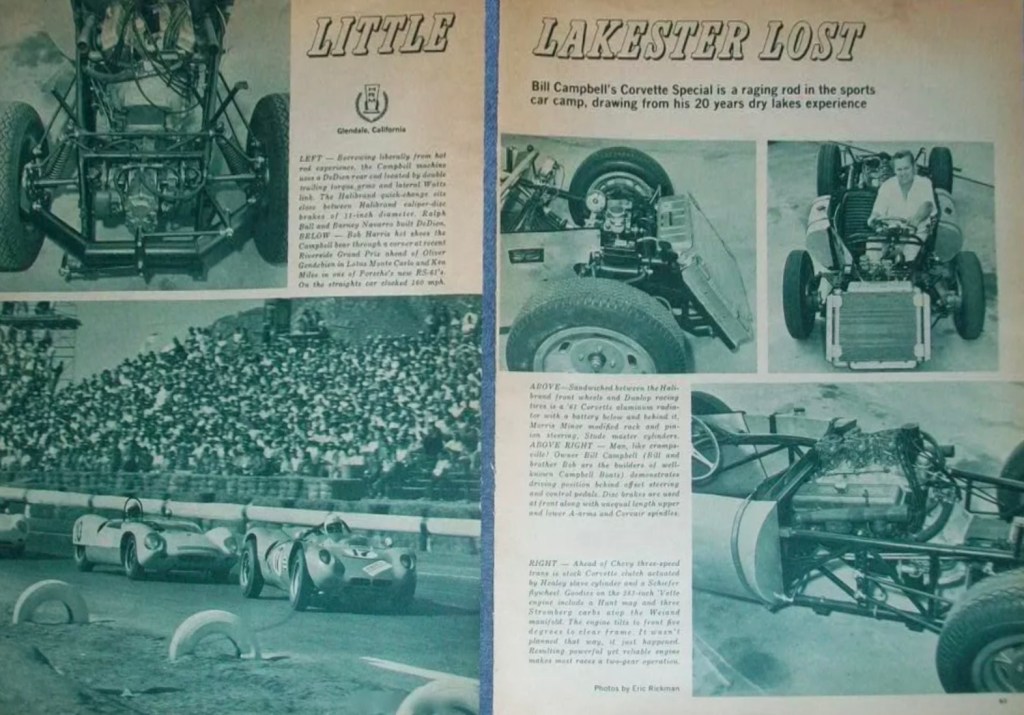
While this unidentified magazine – a sold eBay item via a Google search – photographs is poorly reproduced you can at least get better sense of this innovative little special.
The race shot above shows Bob Harris in front of Olivier Gendebien’s Lotus 19 Climax during the Riverside Grand Prix; 13th and sixth in the 200 mile race won by Jack Brabham’s Cooper T57 Climax.
Credits…
gtplanet.net, article by Jerry Titus in Sports Car Graphic, Getty Images, Gooding & Co
Tailpieces…
See here for an article about this great Car Guy’s Can Am Genie Mk10 Oldsmobile raced by John Cannon: https://primotipo.com/2016/02/19/john-cannons-bonanza/ Cannon and Blocker on the Bonanza set a few years after the Campbell Corvette Special phase…