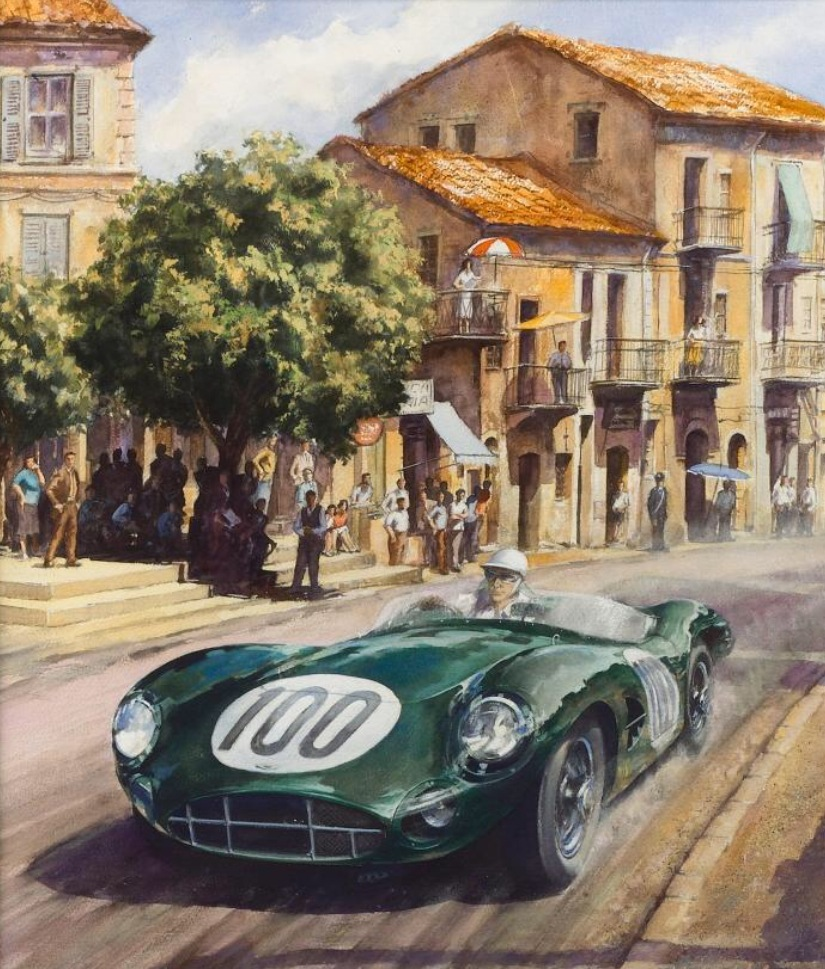
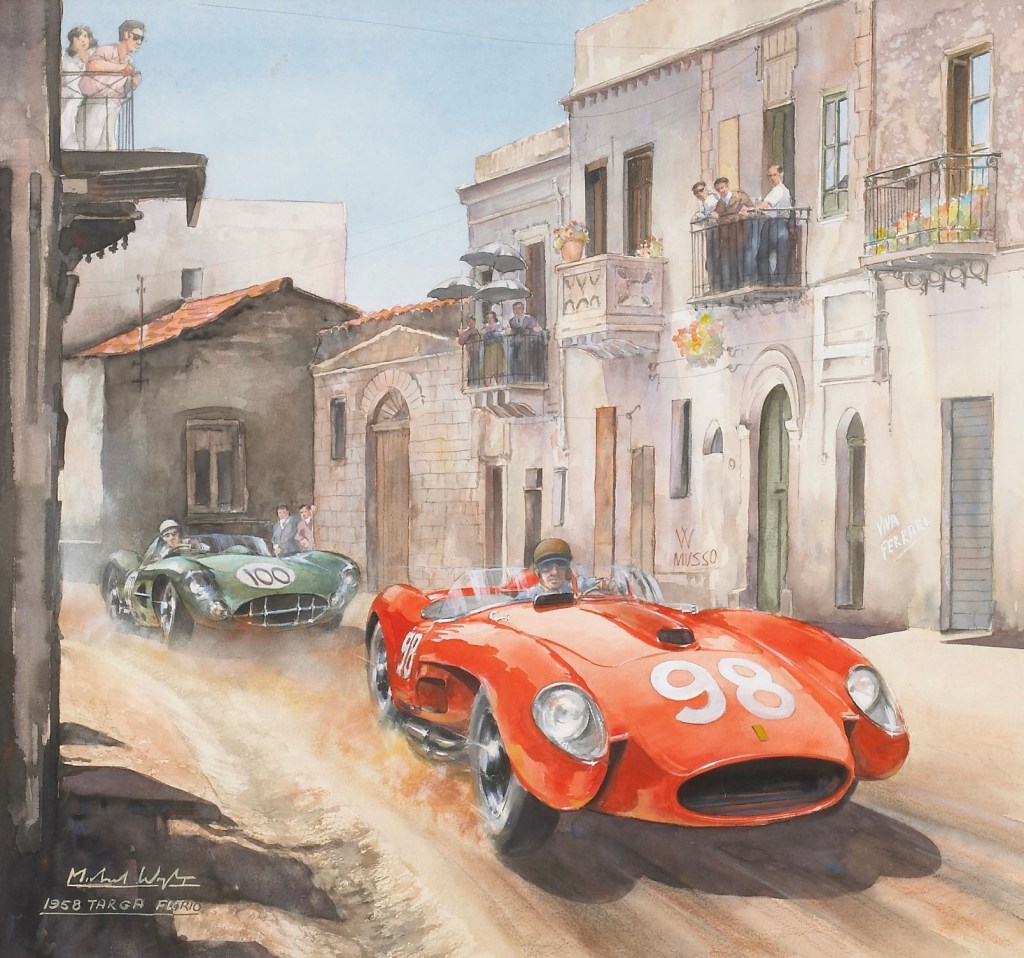
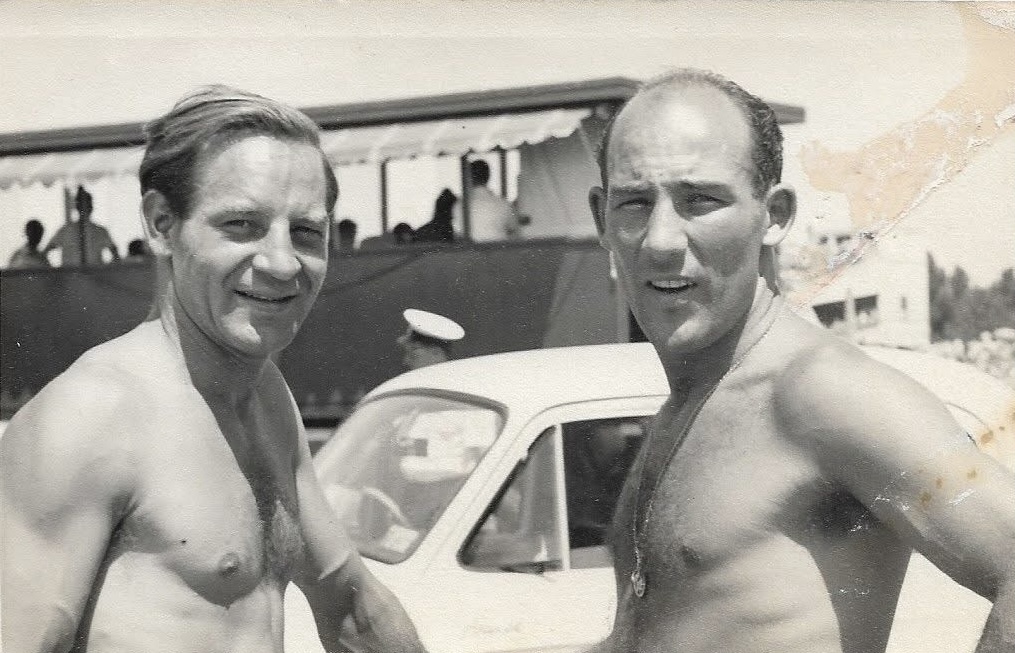
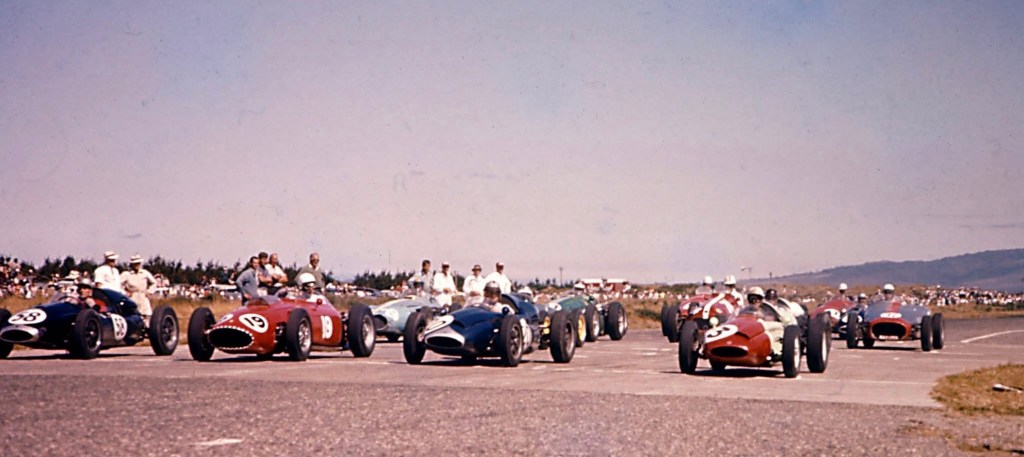
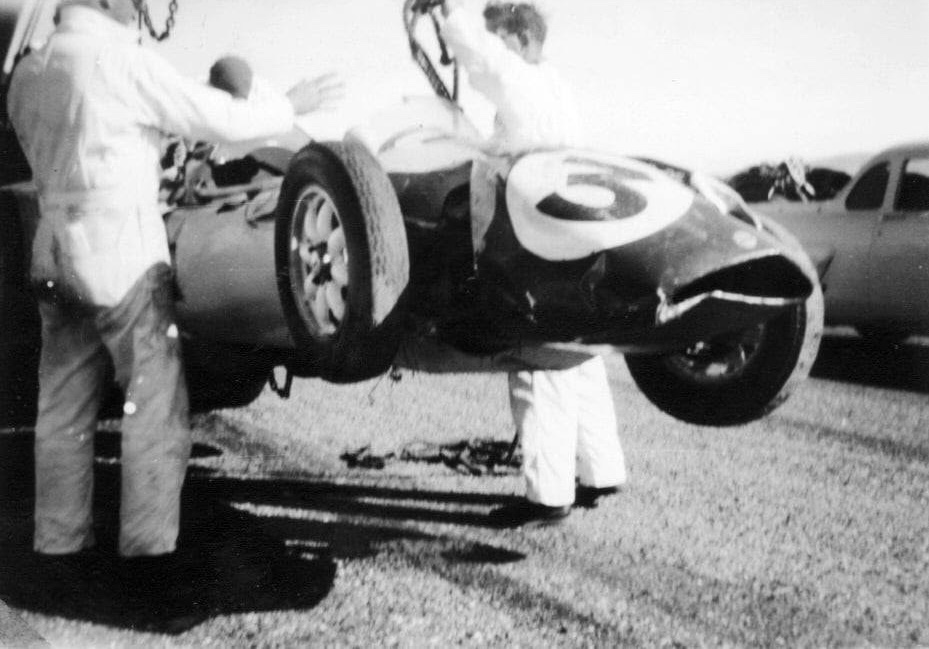
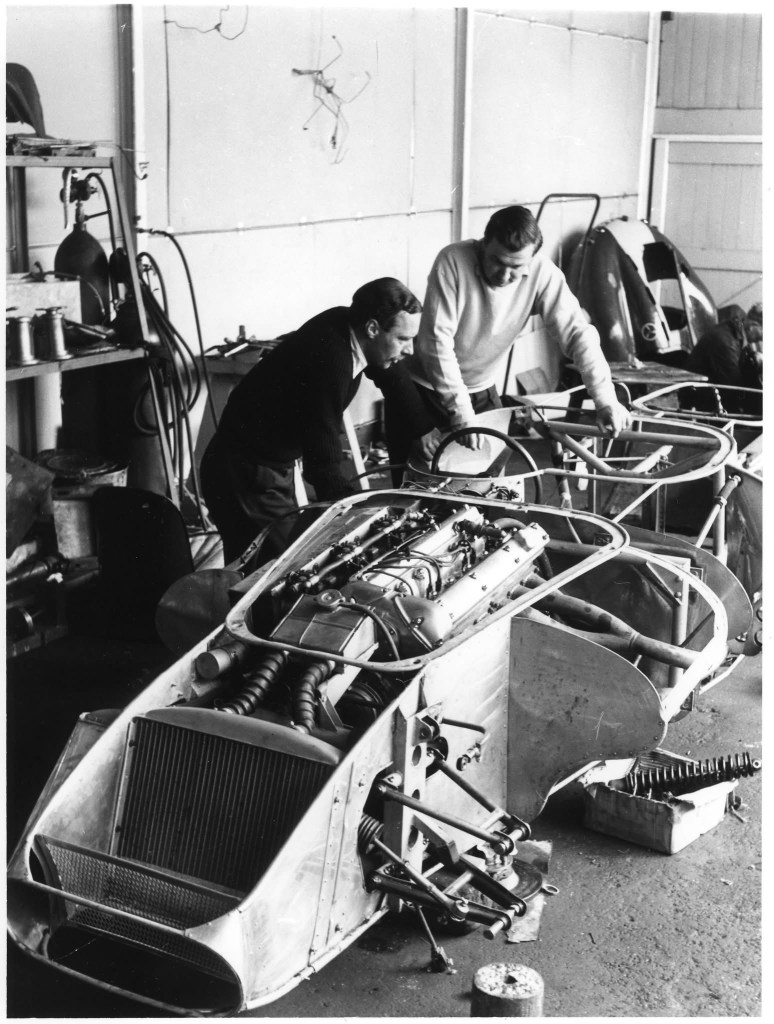
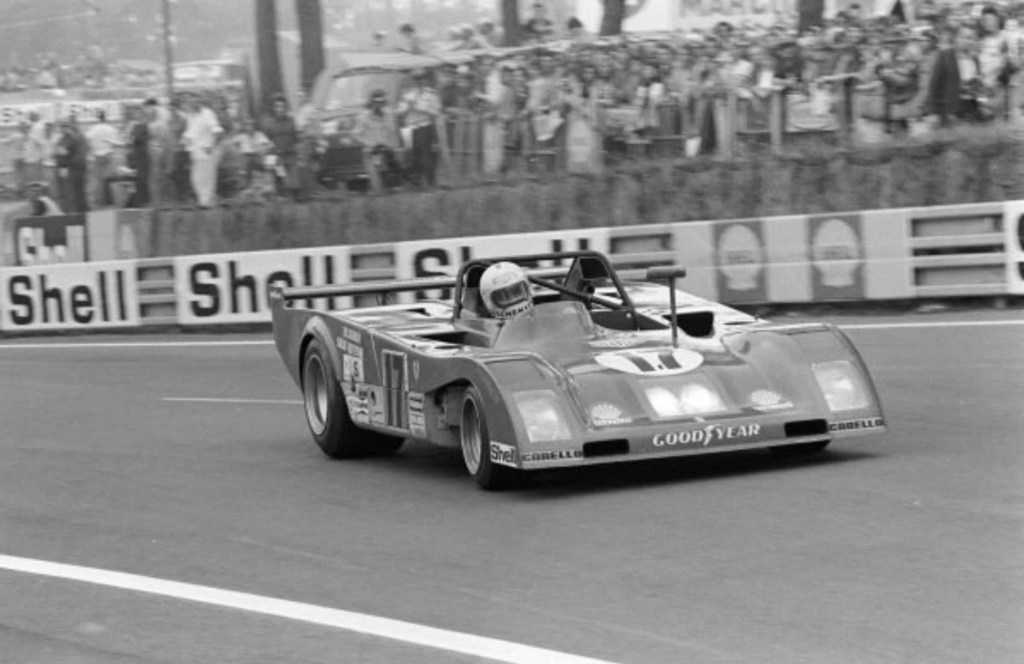
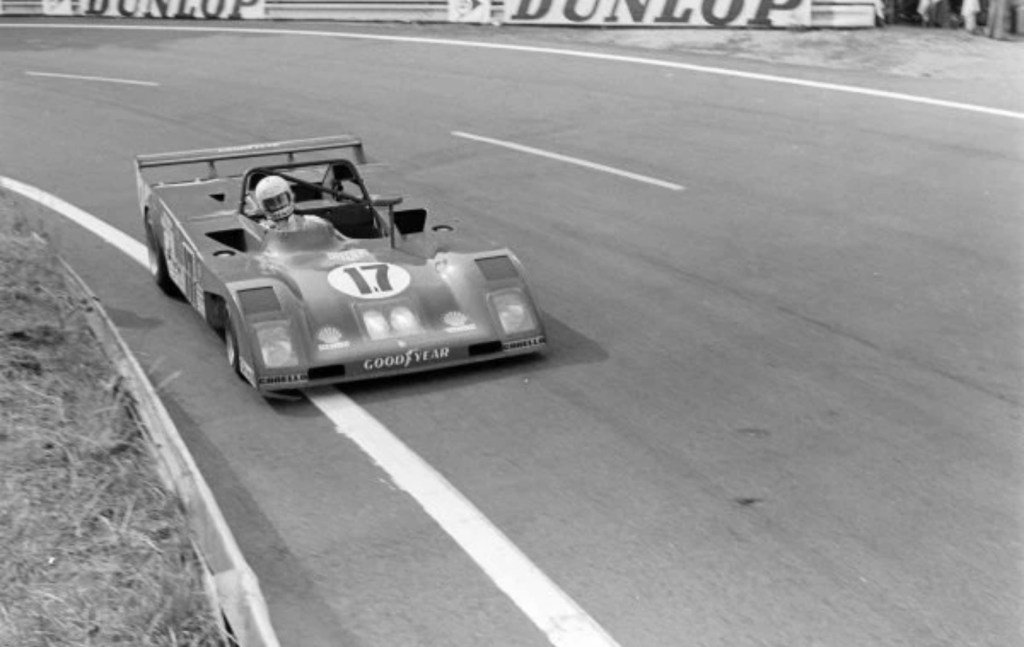
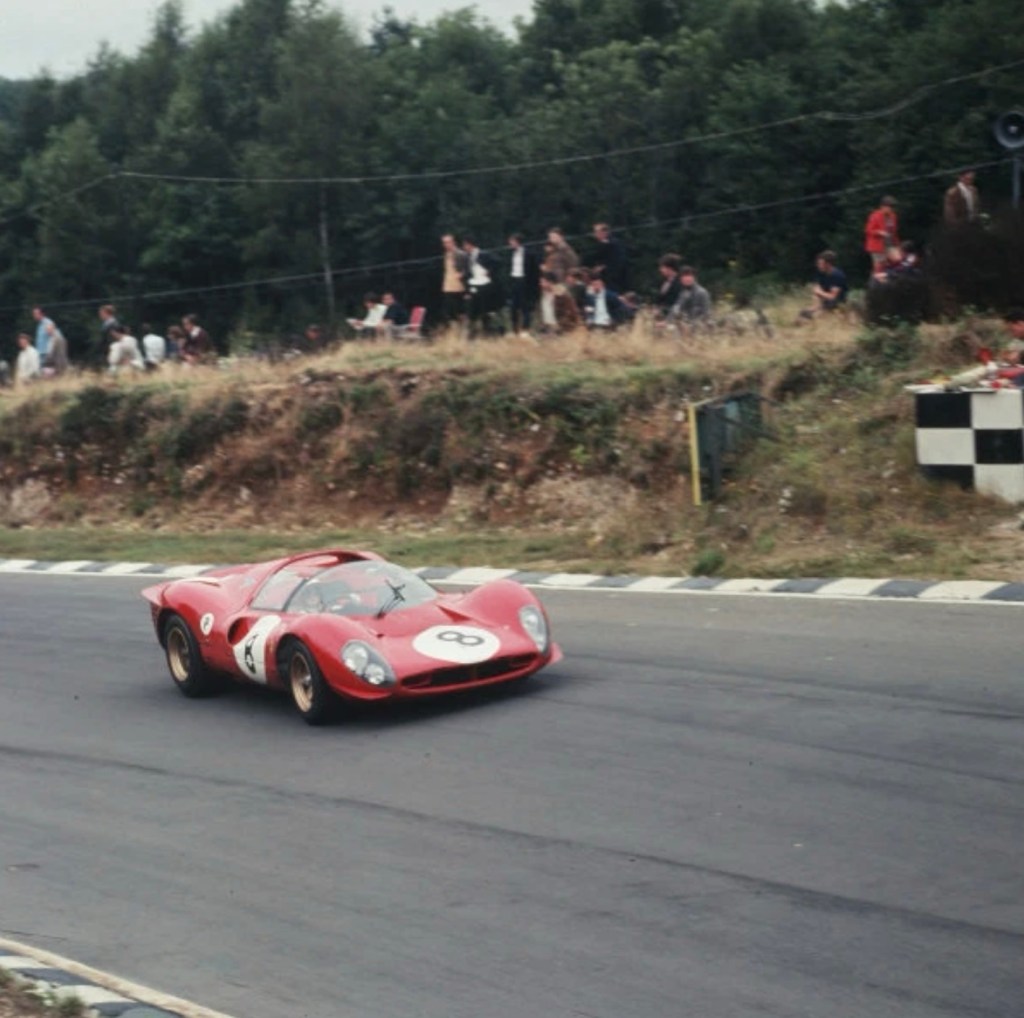
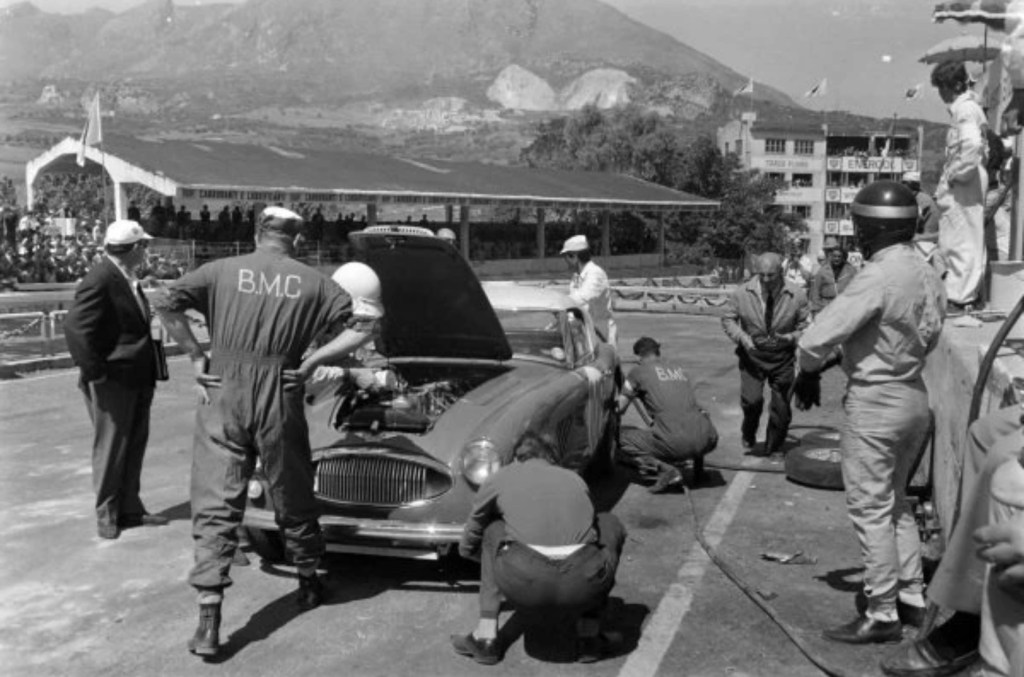
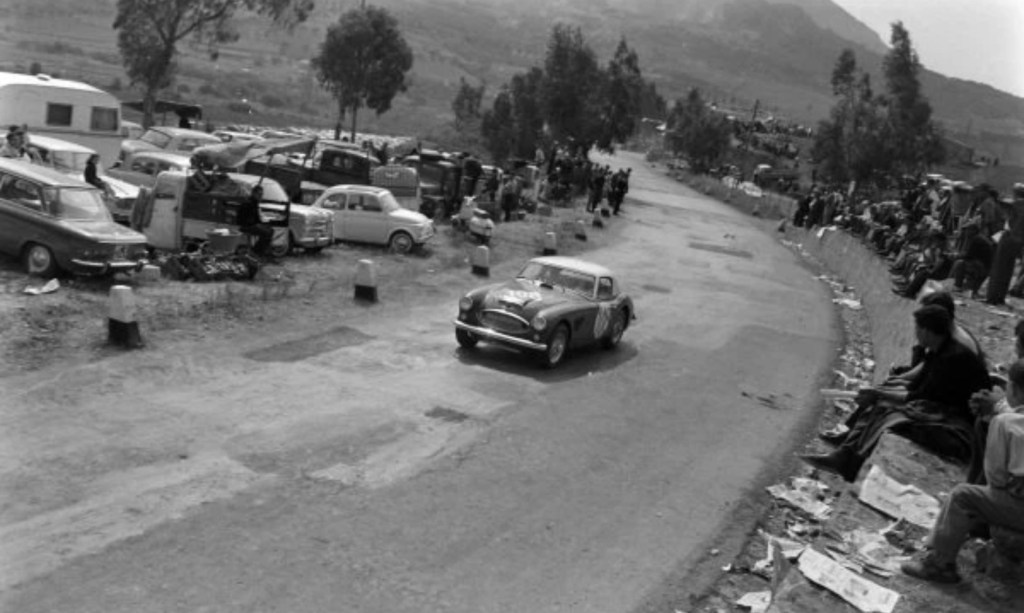
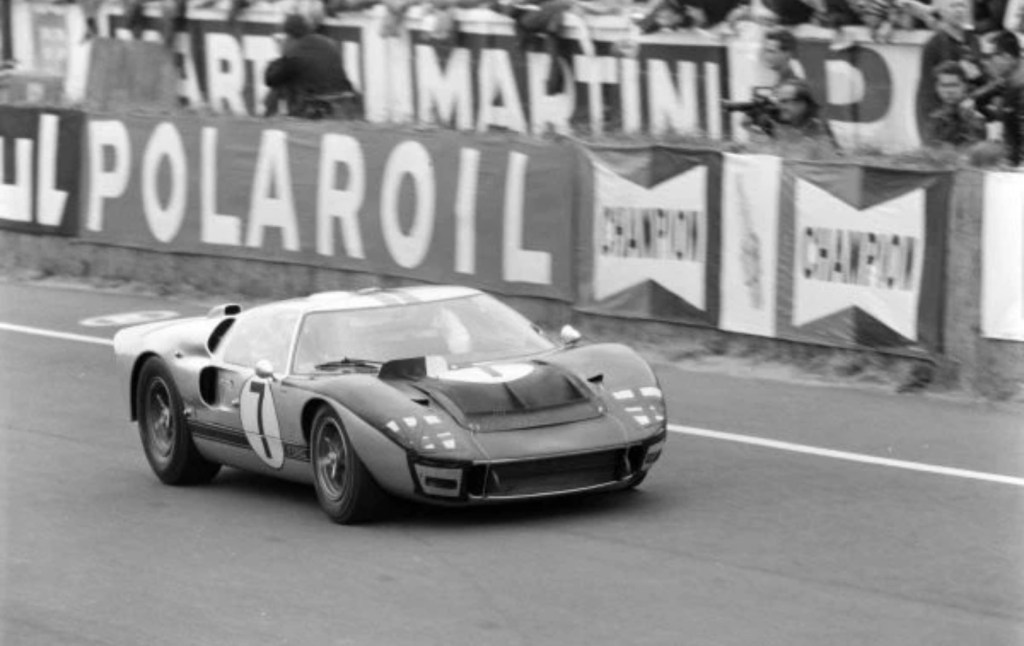
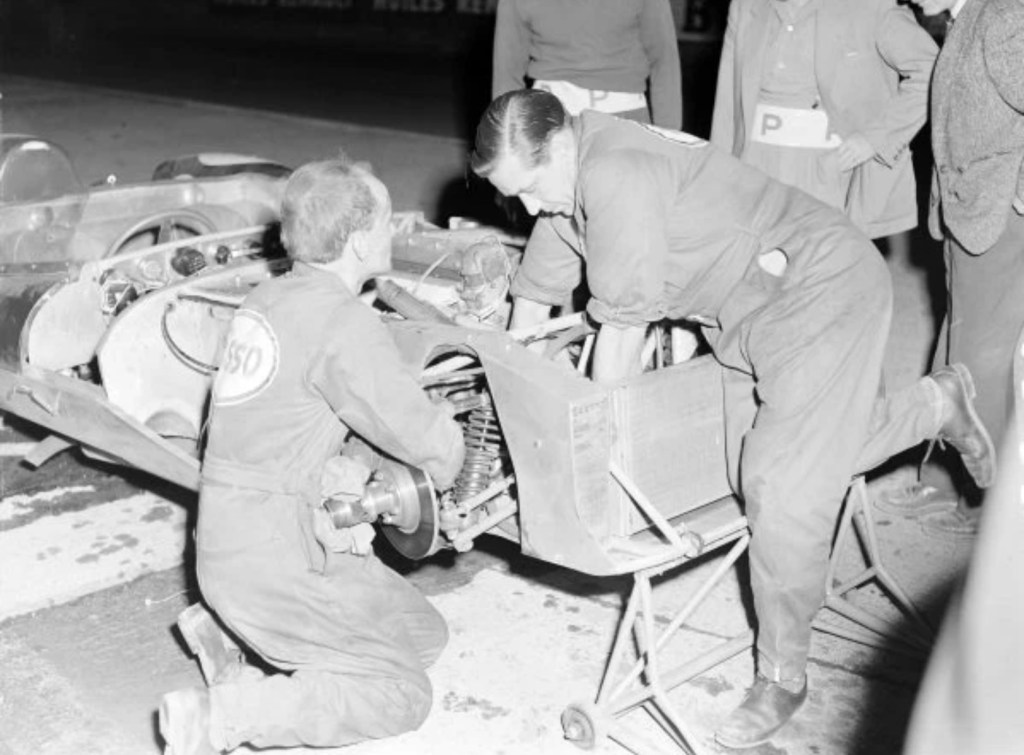
Stirling Moss, Aston Martin DBR/1, May 11, 1958, Targa Florio…
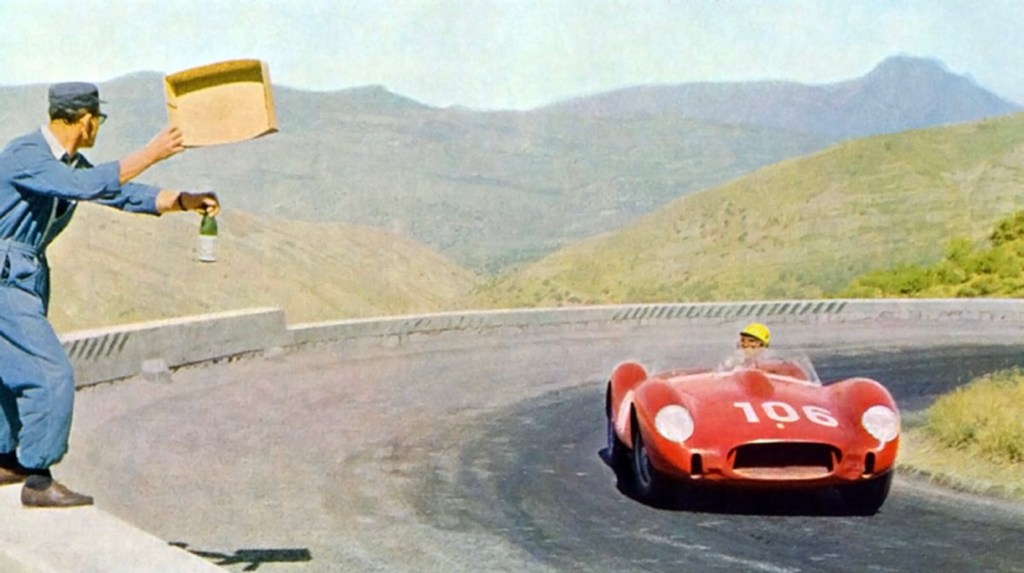
Luigi Musso was the class of the field that day and led from the first lap in a works-Ferrari 250 Testa Rossa 3-litre V12 co-driven by Olivier Gendebien. Moss went off the road and damaged a wheel early on, then redeemed himself with a lap record more than a minute quicker than Musso, but the solitary Aston’s gearbox cried enough under the strain during its fifth lap.
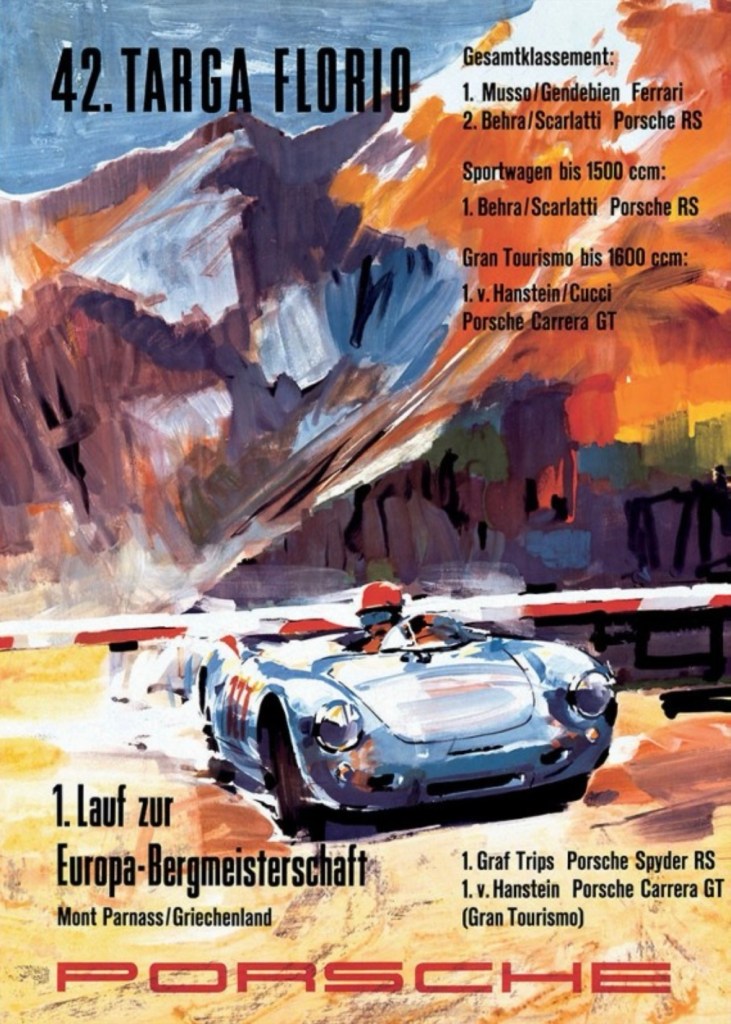
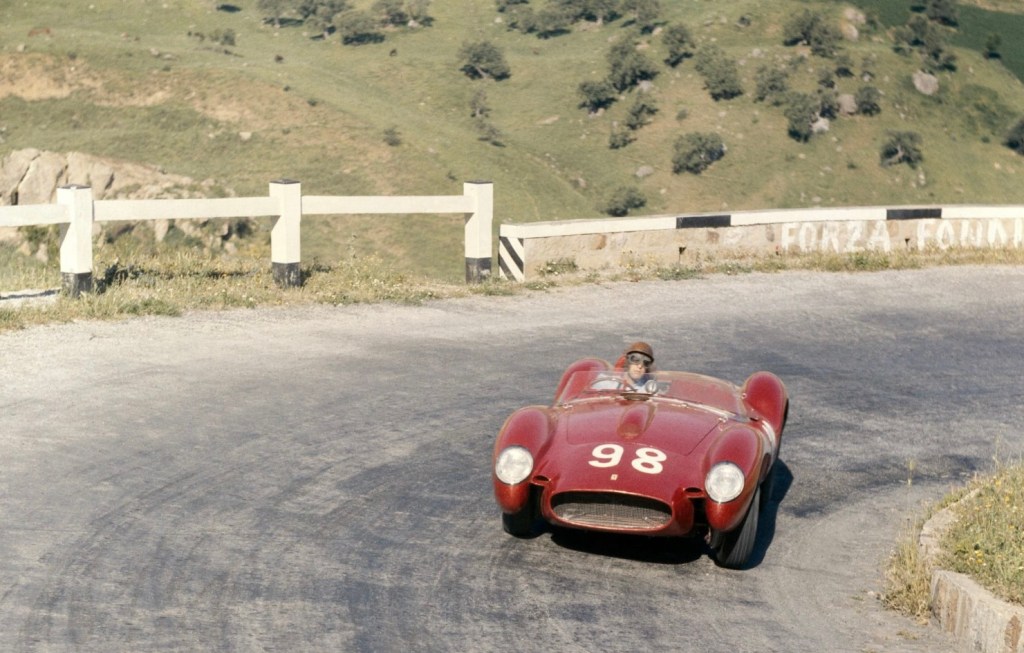
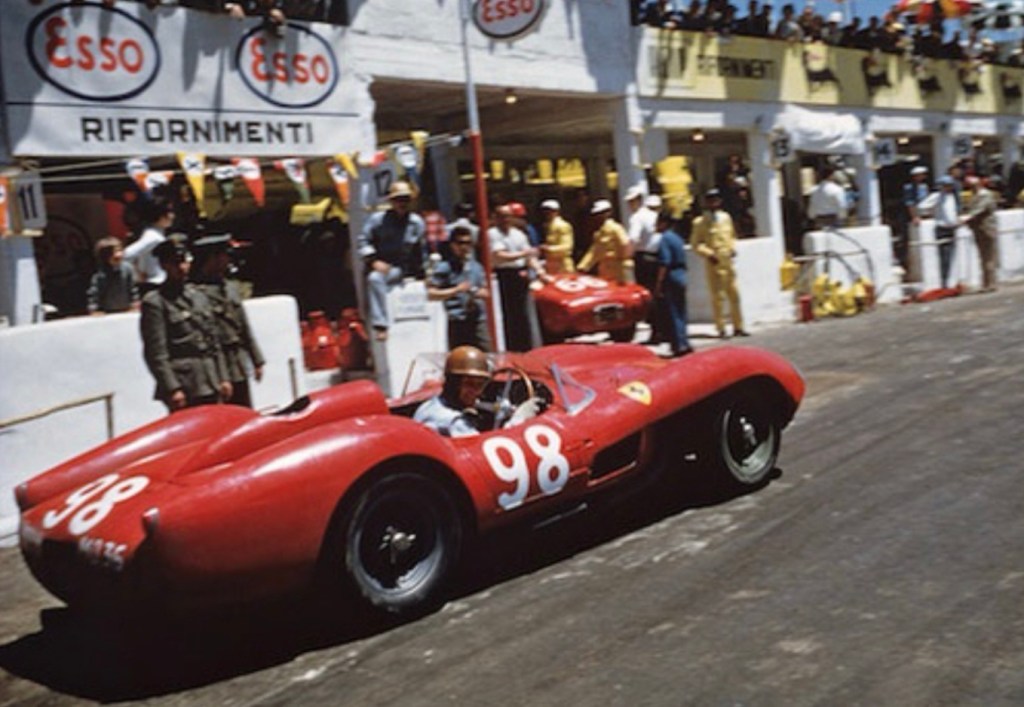
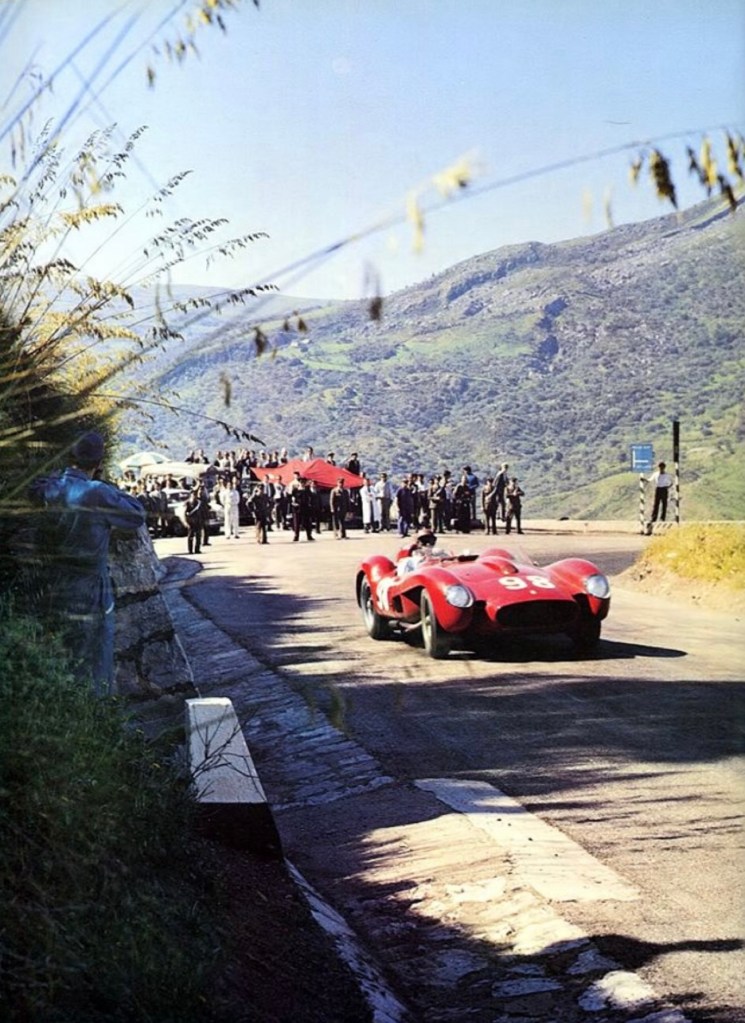
‘Yep, I’ll supersize that with fries.’ Musso in command of the leading 250 Testa Rossa, not in need of assistance from the Ferrari pit, way out west (unattributed)Porsche did well with results as per the postcard
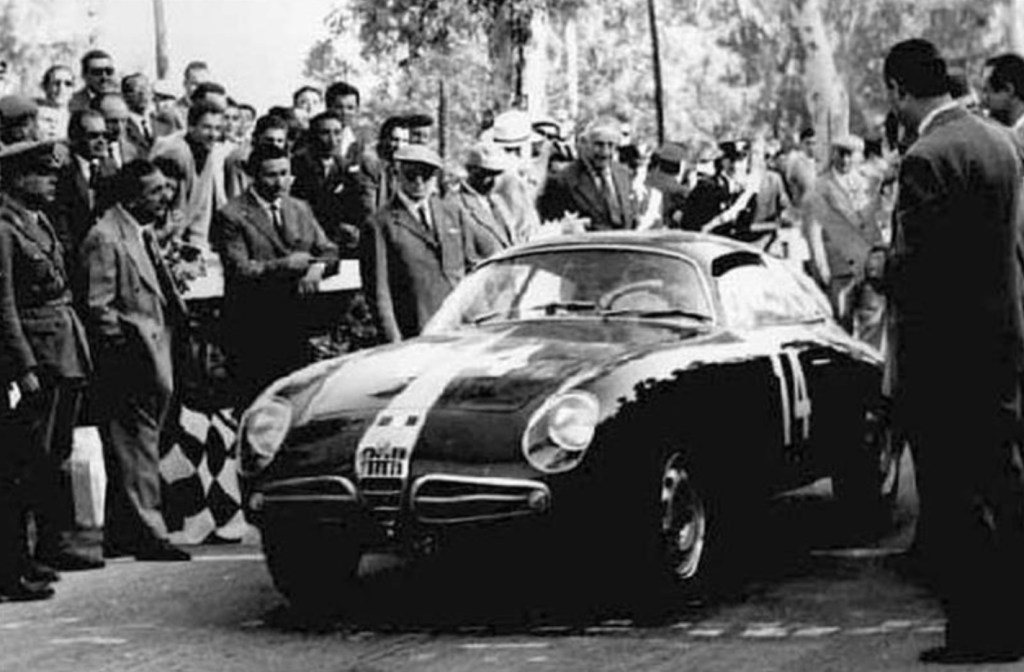
Musso’s car lost its brake fluid, but such was the car’s lead that he pitted, the Scuderia mechanics fixed the problem and Gendebien brought the car home first in the 10 lap race on 10hr 37.58 from Jean Behra/Giorgio Scarlatti Porshe 718RSK 10:43.38 with Wolfgang von Trips/Mike Hawthorn third in another works Ferrari 250TR on 10:44.29.
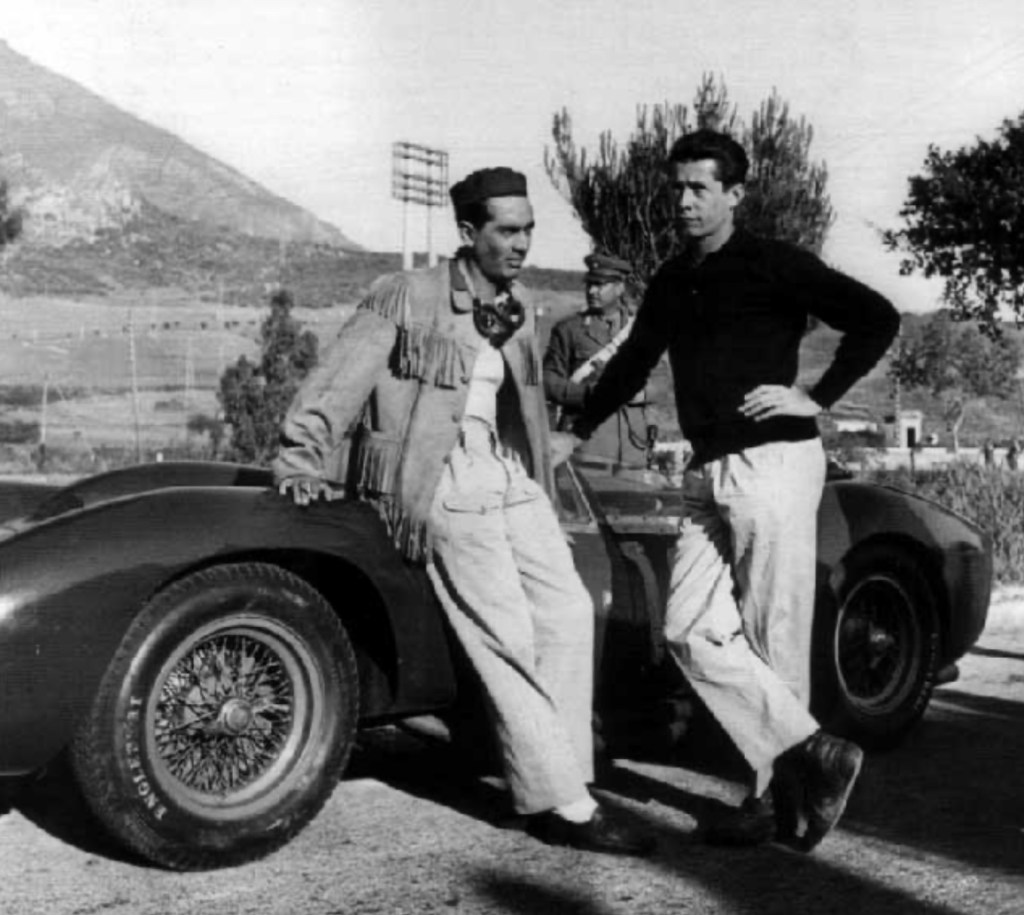
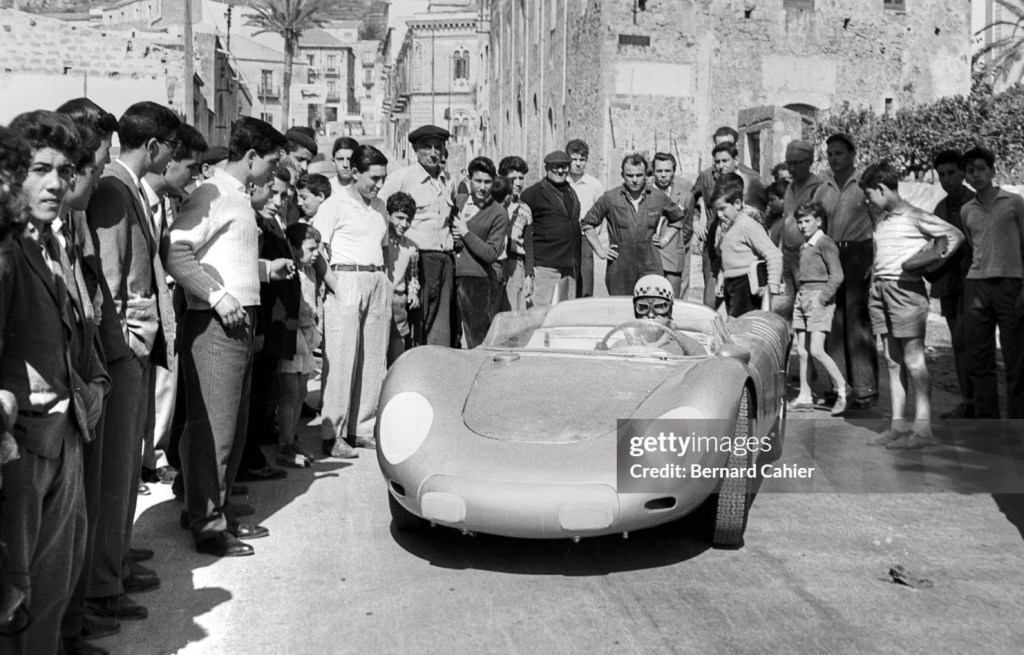
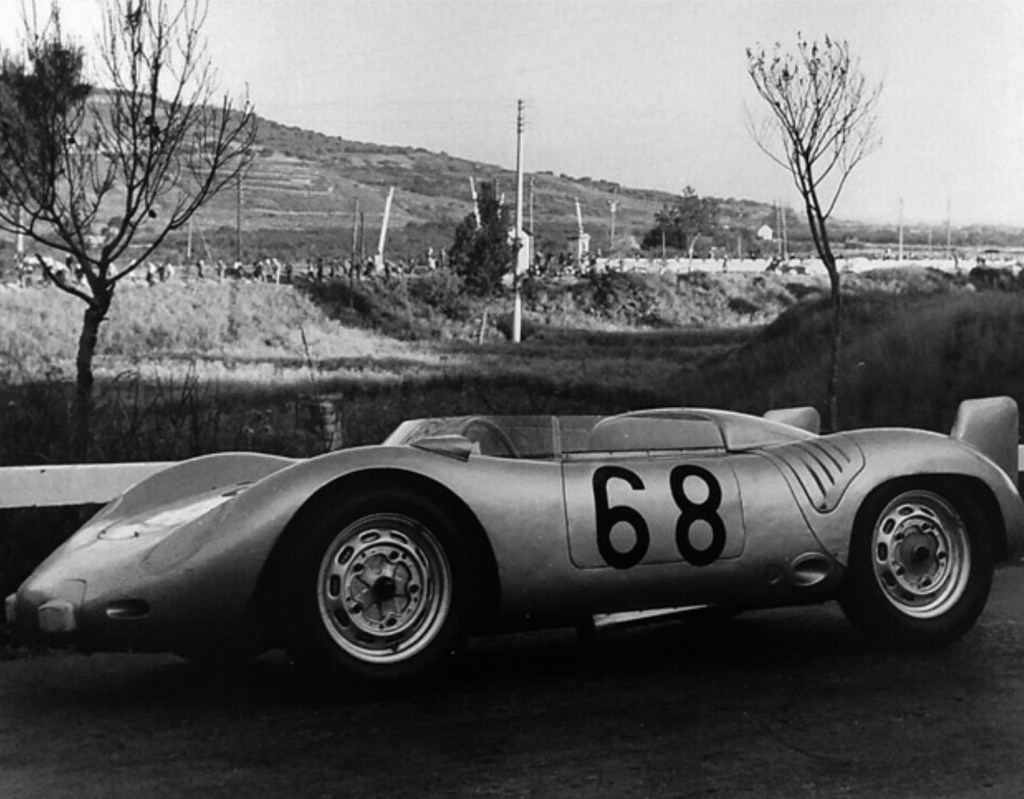
Luigi Musso and Olivier Gendebien before the off, while below, Jean Behra gets ready to start in the RSK he shared with Giorgio Scarlatti, and below that, the same car at rest.
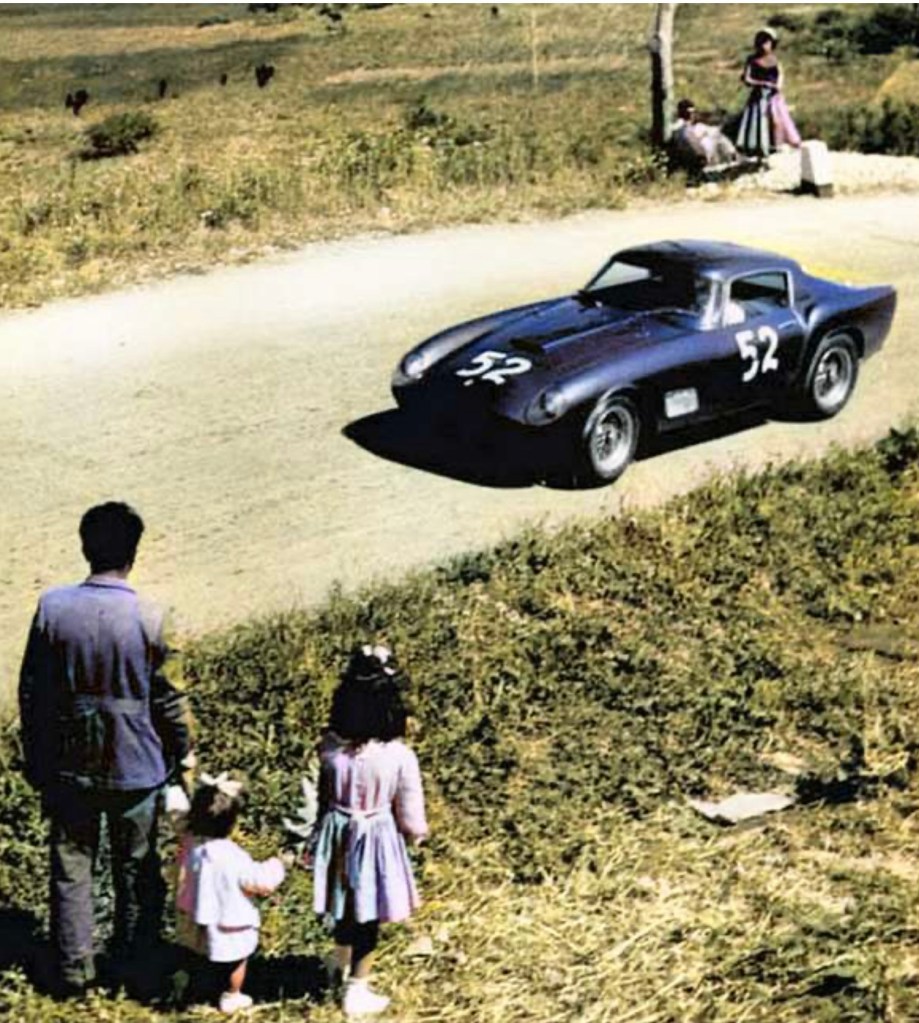
Classic Targa family shot, the cautious family man on the inside of the corner watch the Ferraro brothers – Pietro and Paolo – Ferrari 250 GT LWB (DNF) while macho-man puts himself and the babe at risk on the outside.
(unattributed)
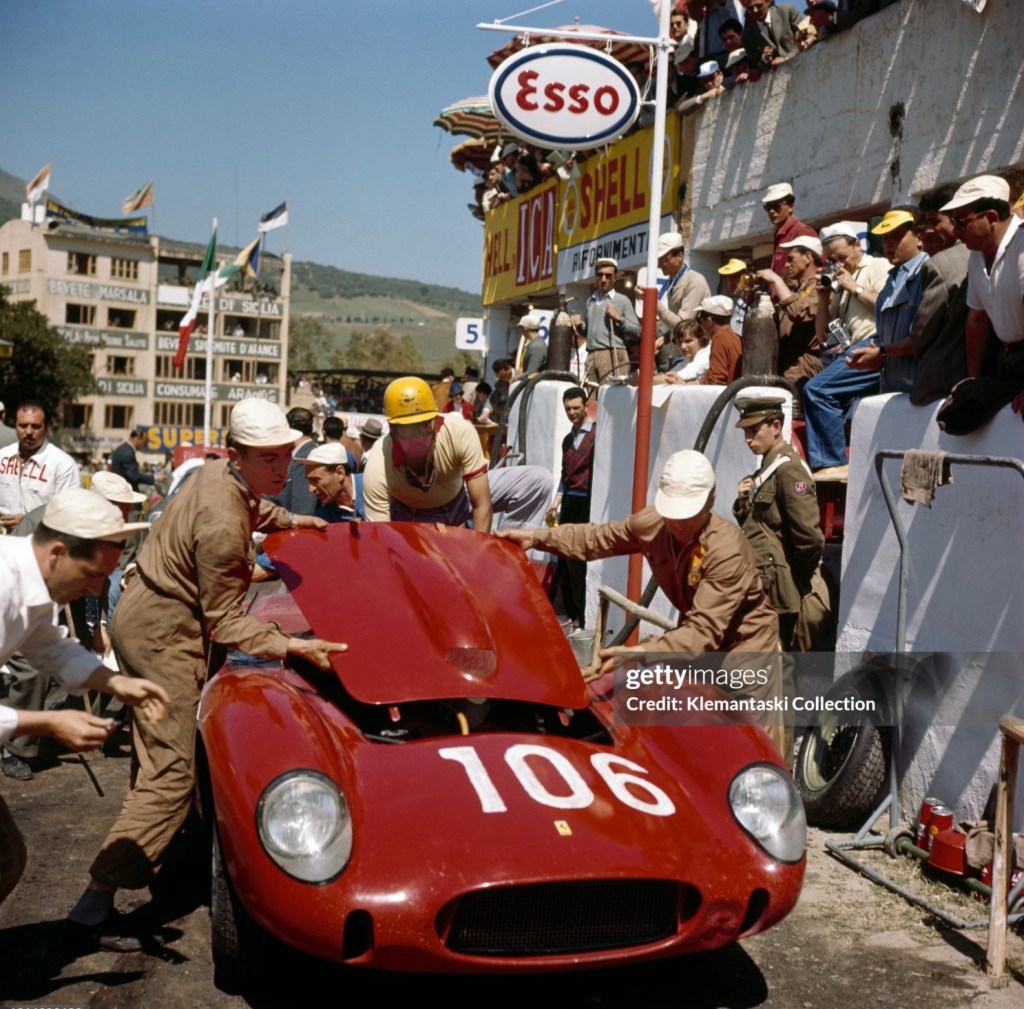
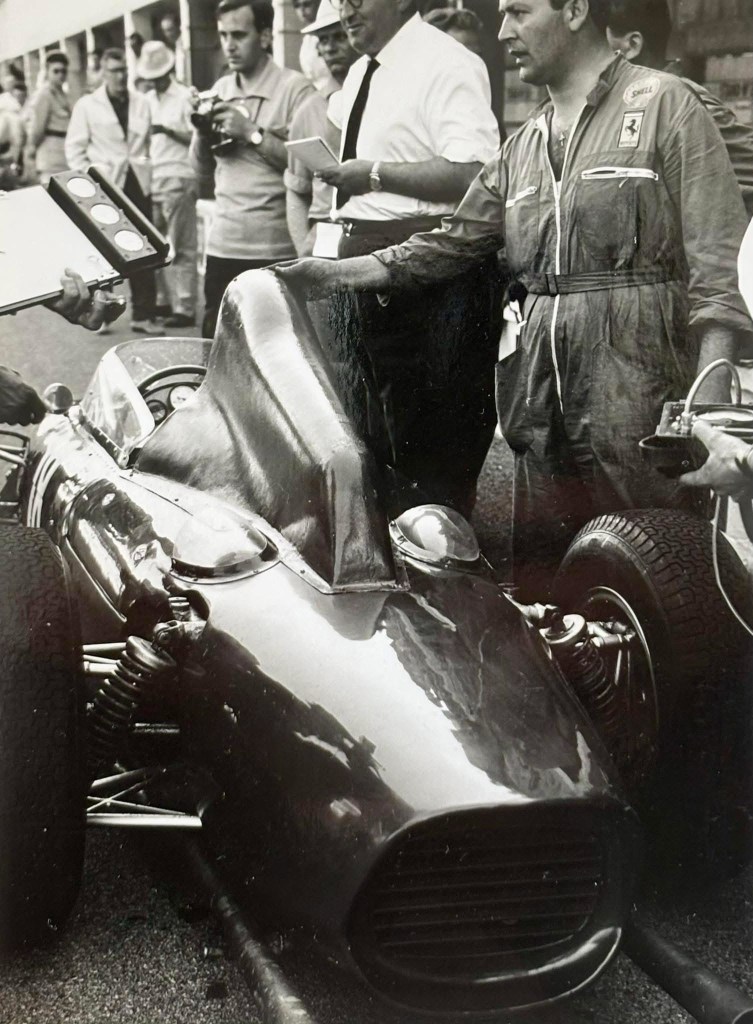
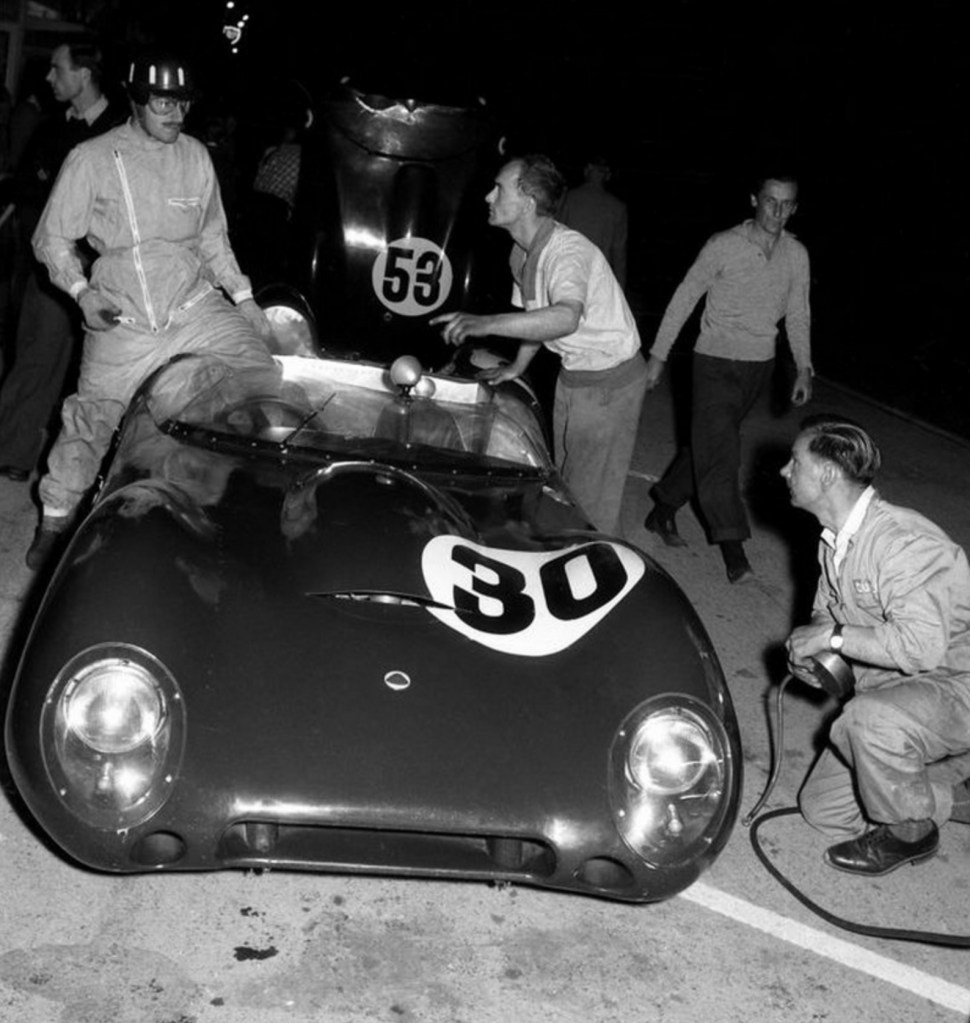
Luigi Musso jumps out of the winning car in the shot above, the more you look the more you see! Mechanics in natty brown overalls, lots of ’em, quick-lift jack to the right, the Shell man to the left and overall vibe grab mine.
While Peter Collins does his thing in the Testa Rossa he shared with Phil Hill to fourth place, 2.5 minutes or so behind the race winners, below.
(Getty-Klemantaski)(J Alexander)
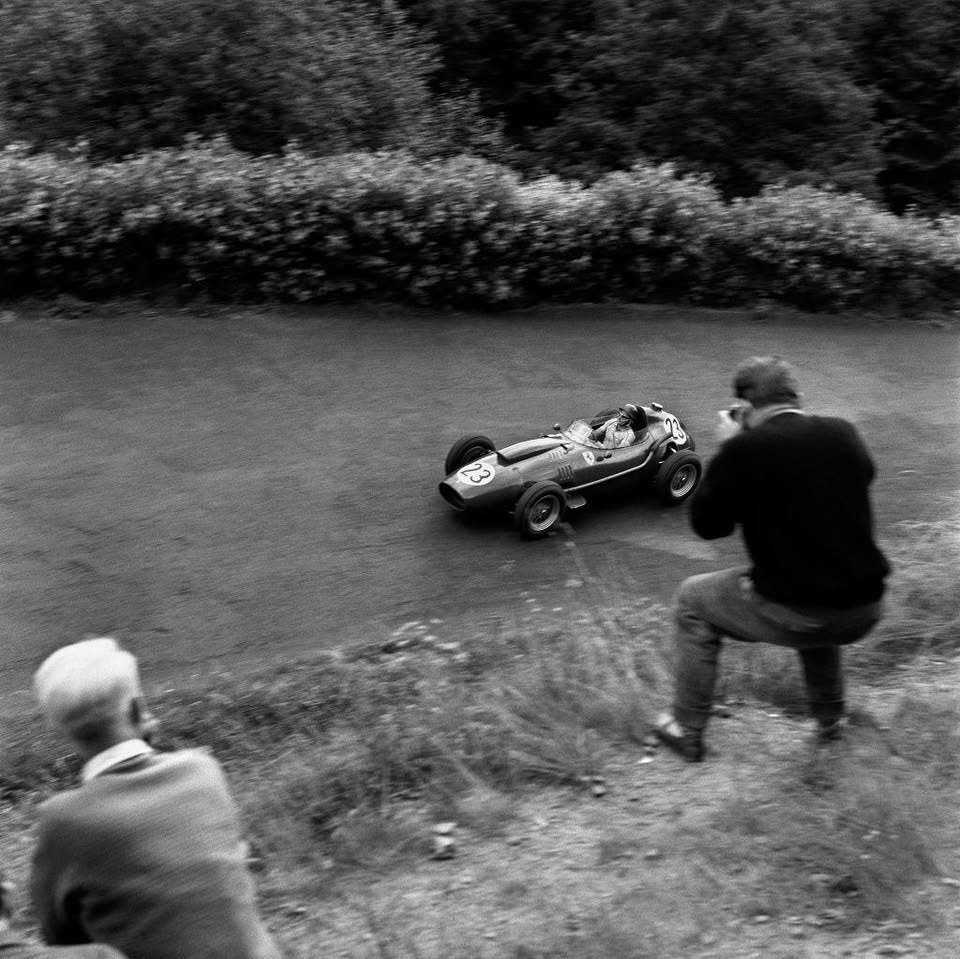
This pairing reminds me that Phil Hill made his Grand Prix debut with Scuderia Ferrari on the Nurburgring, during the 1958 German Grand Prix on August 3, the day Peter Collins died at the wheel of a Ferrari Dino 246, Phil was in a 156, the F2 variant, shot above.
Luigi Musso died chasing Mike Hawthorn during the French Grand Prix at Reims a month before on July 6, both on 246 Dinos.
Alfonso de Portago died at Cavriana during the May 12, 1957 Mille Miglia aboard a Ferrari 335S, while Eugenio Castellotti was killed at the wheel of Ferrari 801 testing at Modena that March 14.
Mike Hawthorn’s death at the wheel of his Jaguar Mk1 on the Guildford Bypass – as the reigning but retired Ferrari World Champion – bookended a horrific two years for Ferrari. Driver error in all cases folks, mistakes could be awfully expensive in them-thar days…
Etcetera…
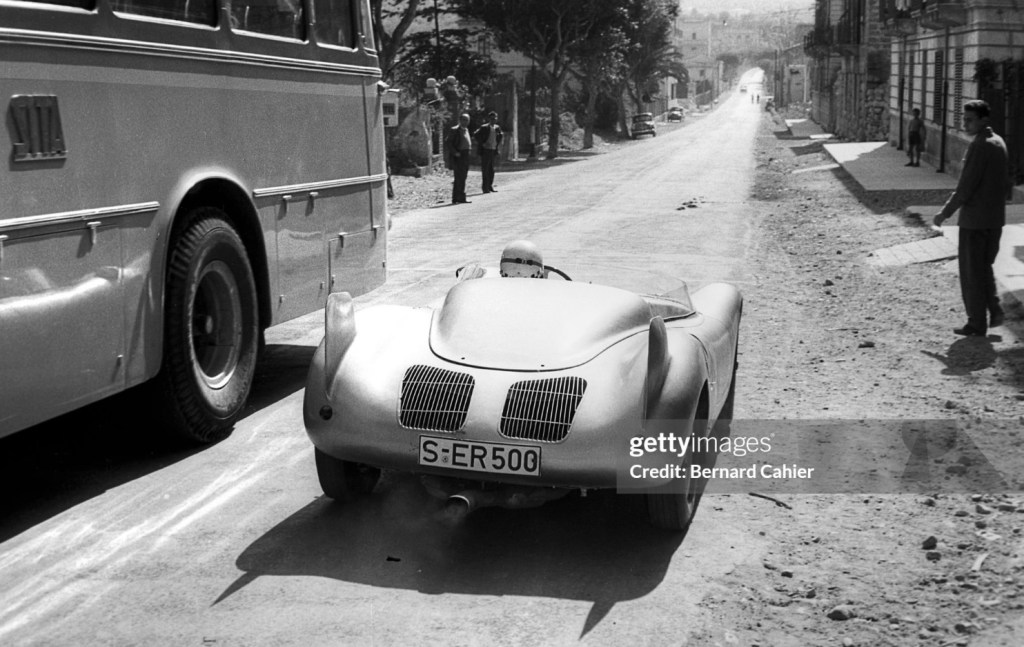
Jean Behra blows off a bus during practice…while Peter Collins shows off the voluptuous lines of the Testa Rossa below.
(Wikipedia)
The FIA reacted to the 1955 Le Mans and 1957 Mille Miglia tragedies by limiting outright cars contesting the 1958 World Sportscar Championship to a capacity of no more than 3-litres.
Ferrari picked up where they left off with the 4-litre 335S, the 3-litre, circa 300bhp 250 Testa Rossa won four of the six championship rounds: Buenos Aires, Sebring, Targa and Le Mans and the championship from Porsche, the other pair of outright wins on the Nurburgring and at Goodwood went to the Aston Martin DBR1/300 who were third in the title chase.
Collins, maaagic shot! (Y Debraine)(T Matthews)
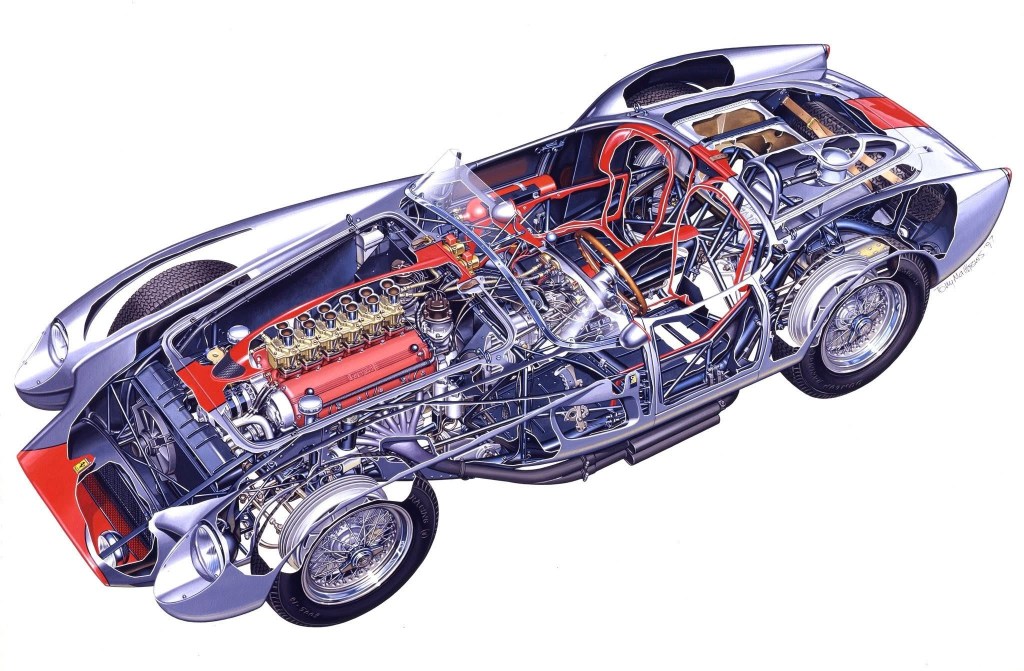
Technical Specifications in brief…
Tipo 128LM 60° SOHC two-valve Colombo V12, alloy block and head. Bore/stroke 73.0/58.8 – 2953cc, Compression ratio 9.8:1, six Weber 36DCN carbs, two distributors, circa-300 bhp @ 7200rpm.
Four speed all synchro gearbox, diff ratios:3.55, 3.77, 4.00, 4.25, 4.59, 4.86:1
Tipo 526 welded steel ladder frame chassis, 2350mm wheelbase, 1308 front track, 1300 rear track.
Independent front suspension by upper and lower wishbones, coil springs and Houdaille shocks. Rigid rear axle on customer cars, De Dion on factory cars, coil springs, Houdaille shocks
Drum brakes, Borrani wire wheels with 5.50 x 16 inch front tyres and 6.00 x 16 rears. Body by Scaglietti. Weight circa-900kg
Moss chases Collins
Credits…
Michael Wright, targapedia.com, Ted Walker, Getty Images-Bernard Cahier-Louis Klemantaski, Yves Debraine, Tony Matthews, Jesse Alexander, barchetta.cc
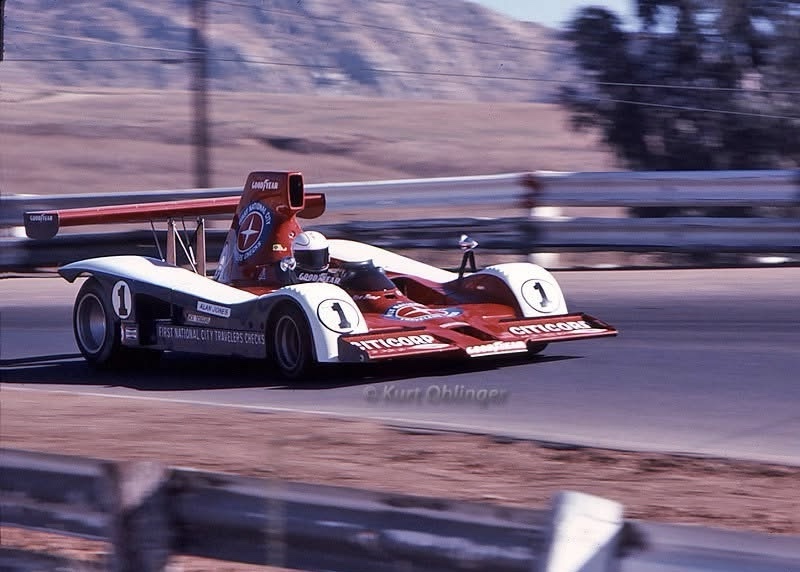
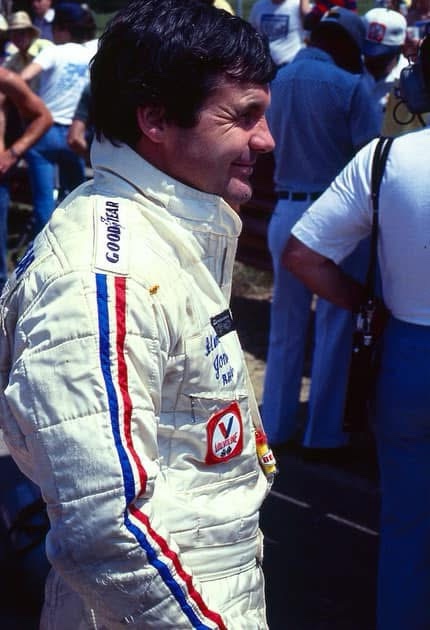
Alan Jones was a formidable weapon in anything; it took him four or so years to clear F3, but it was whammo after that as he stepped into more powerful cars: Formula Atlantic, F5000 and F1.
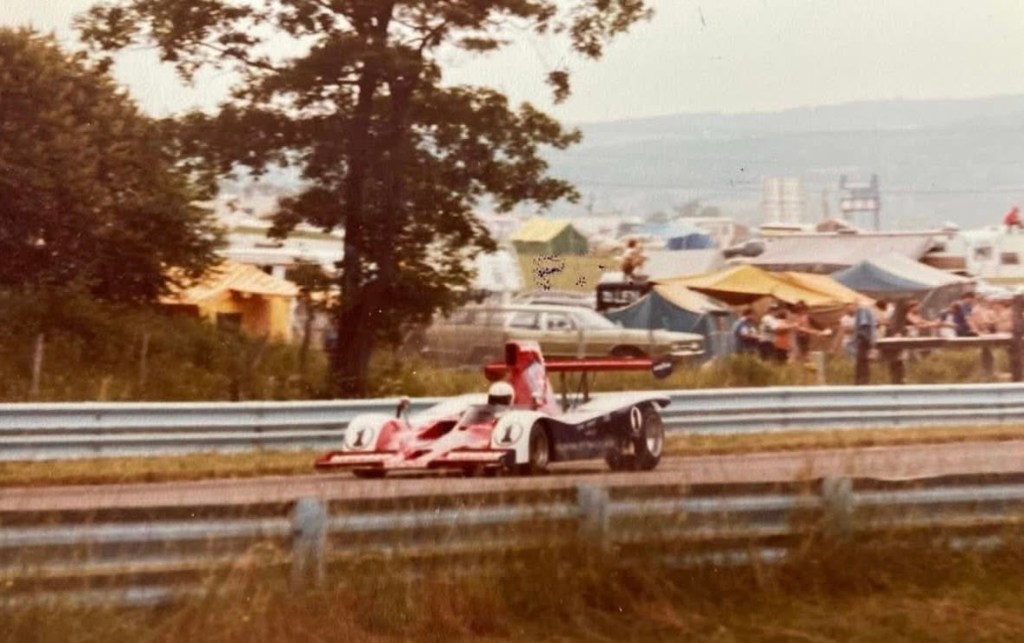
He raced F5000 on most continents, here in an F5000 in drag, a 5-litre central-seat Can-Am car, Carl Haas Lola T333CS Chev, at Riverside on October 15, 1978, where he won from fellow Aussie, Warwick Brown’s similar VDS Racing machine.
(R Deming)
Jones won five of the 1978 championships’ ten rounds, gathering 2712 points and the title from Brown, on 2548 then Al Holbert in another T333 on 1674 points.
Watkins Glen 1978 (P Goesina)
Jones is swapping notes in the Watkins Glen pits above with Jean-Pierre Jarier who raced a works Shadow DN10 Dodge, Q6/DNF gearbox. Brown won that round from Al Holbert and Rocky Moran, all three raced Lola T333CS, with Jones a DNF.
Jones at Watkins Glen (P Goesina)(P Goesina)
The rear of Jones’ T333CS Chev in the Watkins Glen paddock, essential elements at this end of the car are a 5-litre 525bhp or so Chev V8 and Hewland DG300 five-speed transaxle.
In the US, many Lola T332 Chev F5000 cars became Lola T332CS Chev Can-Am cars by buying the requisite body kit from Lola. You could buy a T332CS from the factory as well. The mildly updated Lola T333CS could be converted back the other way. The VDS Racing Lolas that Warwick Brown raced in the 1978-79 Rothmans F5000 internationals were T333 HU1 and HU2 fitted with good ‘ole T332C bodywork.
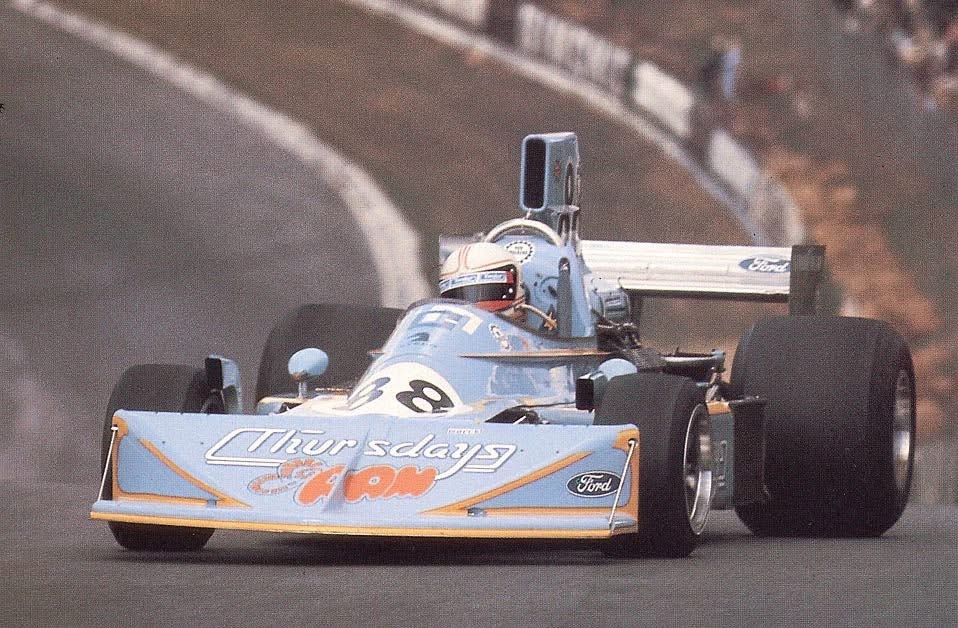
Despite missing half the season, Jones was equal seventh in the 1975 Shellsport British F5000 Championship 1975, together with Bob Evans. He won two rounds in RAM Racing cars, here at Brands Hatch on August 25, aboard a March 75A powered by the Ford Cosworth GAA 3.4-litre twin-cam, four-valve V6 fitted to Ford’s Cologne Capri RS3100 touring cars. Tony Brise and Guy Edwards were second and third aboard T332 Chevs.
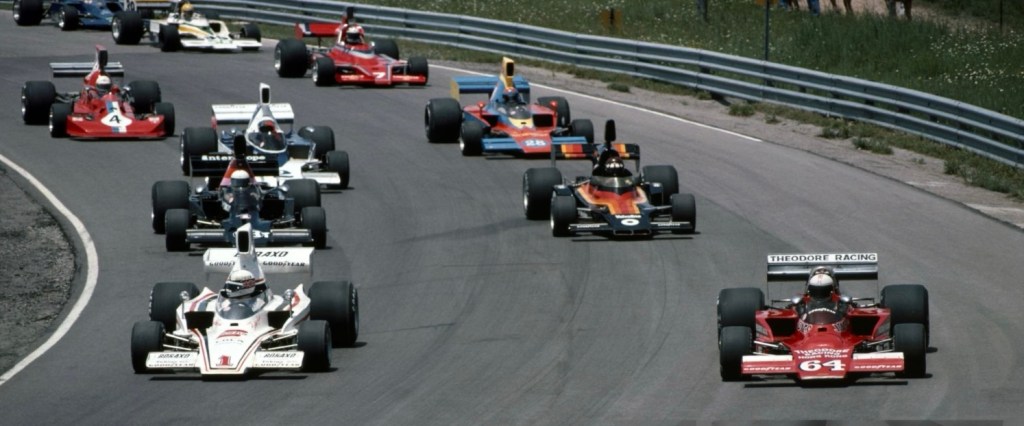
Redman, Lola T332C Chev, Jones, Lola T332 Chev, Ongais, Lola T332 Chev, Oliver, Shadow DN6B Dodge and the rest #4 Pilette, Lola T430 Chev and #7 Sam Posey Talon MR-1A Chev (Getty)
Brian Redman and Alan Jones on the front row of the rolling start Mosport Park round of the 1976 US F5000 Championship on June 20, 1976.
Jones won here and at Watkins Glen later in a season where Jones mixed his Surtees F1 and F5000 programs, finding the latter much more satisfying!
Allan Brown wrote, ‘With two rounds to go, Jones (2 round wins) and Oliver (1 win Shadow DN6B Dodge) were tied for the championship lead, but when Oliver retired at Road America, and Jones had to miss the race to be at the Dutch GP, Redman (3 wins) won and leapt into a significant points lead. Third place in the last round secured the Lancastrian his third successive title, while Al Unser’s win (1 win Lola T332) propelled him into second place in the final points table.’
Grids of great depth that year, in addition to the above, competitors included Warwick Brown, Vern Schuppan, Teddy Pillette, Peter Gethin, Graham McRae, John Cannon, Brett Lunger, Danny Ongais, and occasionals/one-offs David Purley, Bruce Allison, Derek Bell, Maurizio Flammini and Patrick Tambay.
Jones, Sid Taylor/Teddy Yip Lola T332 Chev leads Peter Gethin, VDS Racing Chevron B37 Chev early in the 1977 Sandown International won by Max Stewart, his final race win (B Forsyth)
Jones was far and away the quickest bloke on the grid in Australia’s four-round Rothmans F5000 Championship in 1977. Still, he jumped the start in the Oran Park AGP, boofed a car in Surfers Paradise, then had overheating at Sandown and DNFd. Still, he won in Adelaide and made it awfully clear to his countrymen – having not raced in Australia since finishing second in the September 1968 Sandown 3-Hour touring car race in a Holden Monaro GTS327 shared with Clive Millis – just how blindingly quick he was!
Sandown pits (R Steffanoni)
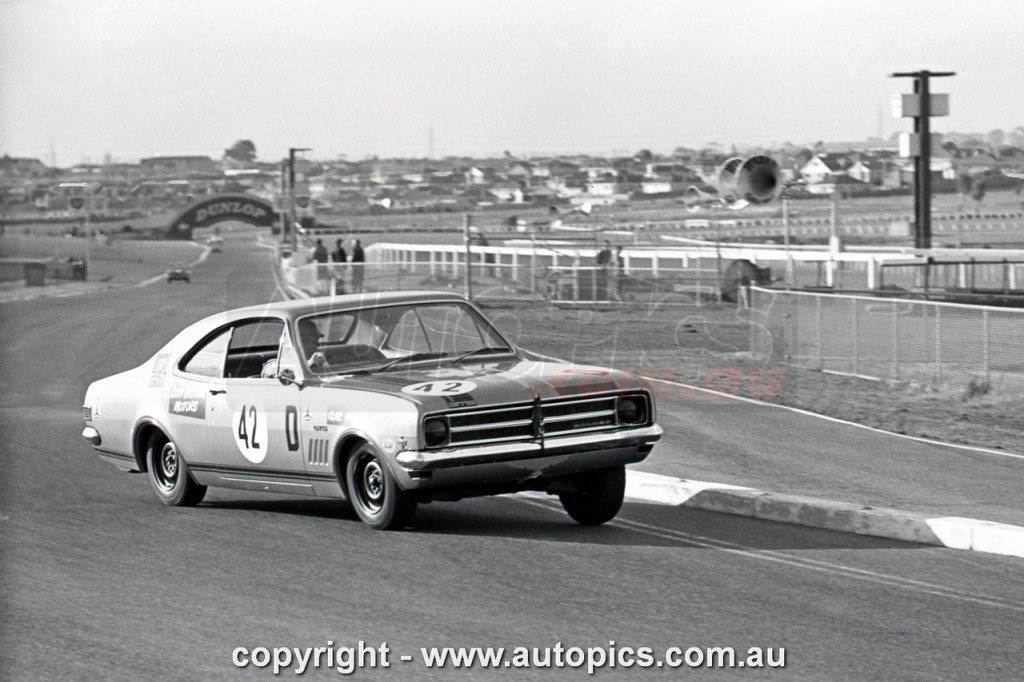
The Jones/Millis second place Holden HK Monaro GTS327 at Shell Corner, Sandown during the September 3-Hour ‘Bathurst warm up’.
While entered by Jones, the car has Lloyd Holyoak Holden signage on it. Holyoak – still with us – was one of Stan Jones’ oldest friends/employees/confidants/supporters, so for sure Lloyd will have pulled the car off his Warrandyte dealership forecourt. One little old lady owner etc…
(M Bisset)
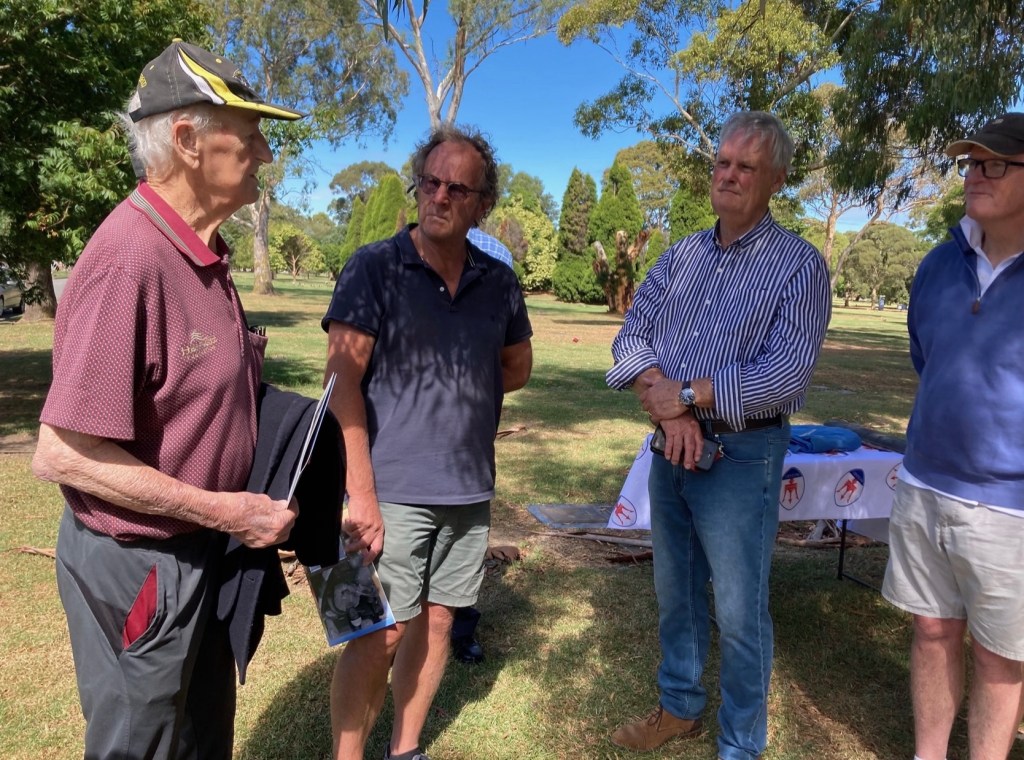
Melbourne enthusiast/historian David Zeunert (second from right) organised a small gathering of Stan Jones Nutters to pay our respects on the centenary of Stans birthday, March 16, 2023, at Springvale Cemetery, a stone’s throw from Sandown.
That’s Lloyd Holyoak sharing his recollections of all things Stan. Some Melburnian Aussie Rules fans may recall Holyoak, a very handy cricketer and football player in his youth, as the North Melbourne Football Club President when North won the VFL ’77 Flag.
(M Bisset)
Credits…
Kurt Oblinger, Richard Deming, Peter Goesina, Lola Heritage, Rod Steffanoni, autopics.com.au
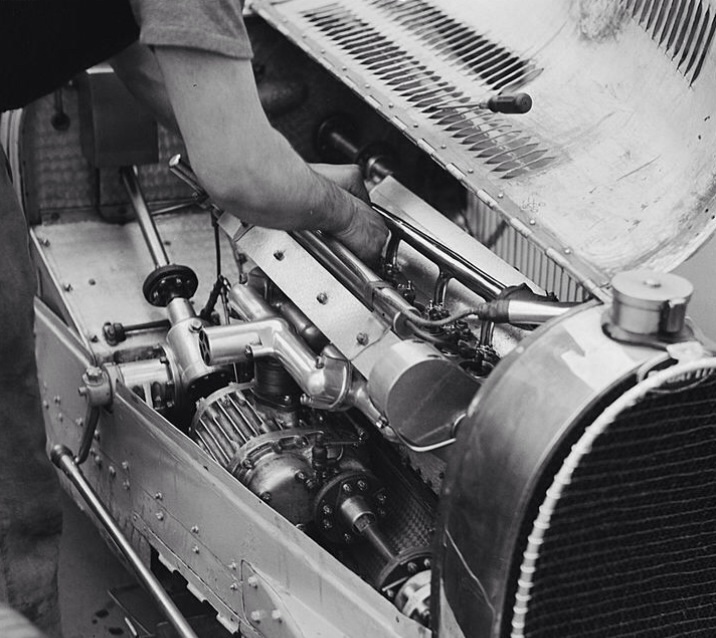
The magic hands are those of Bugatti’s Chief Mechanic, ‘Le Grand Robert’, Frenchman Robert Aumaitre working on a T51 straight-eight, twin-cam, 2.3-litre engine…
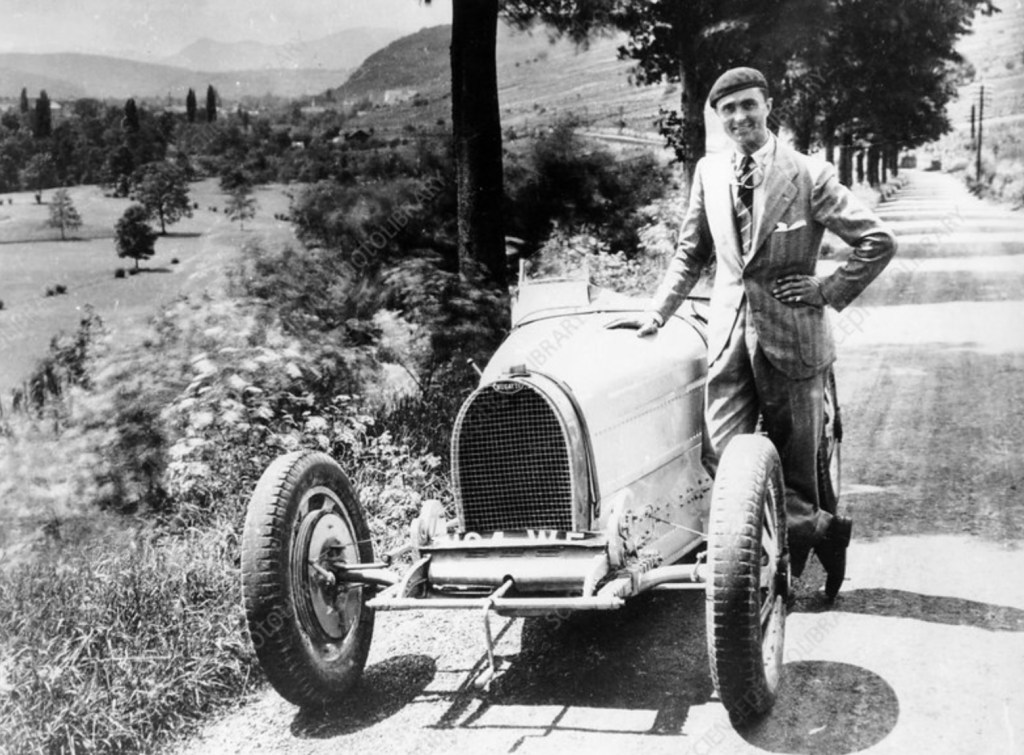
Louis Chiron with his Bugatti Type 51 near Molsheim in 1931 (sciencephoto.com)T51, Nurburgring German GP July 19, 1931. Race won by Rudy Caracciola’s Mercedes-Benz SSKL by over a minute from the Louis Chiron and Achille Varzi Bugatti T51s (Z Glass)
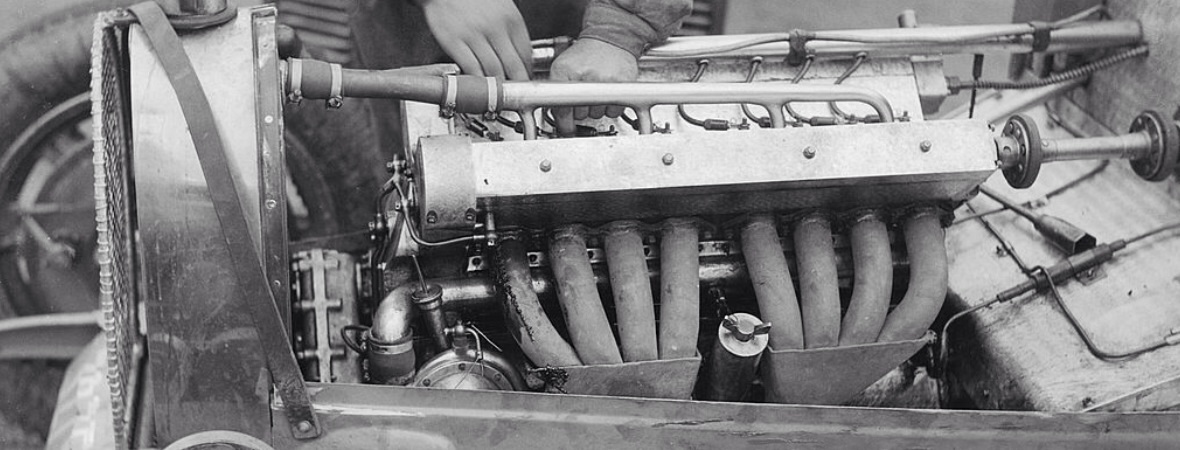
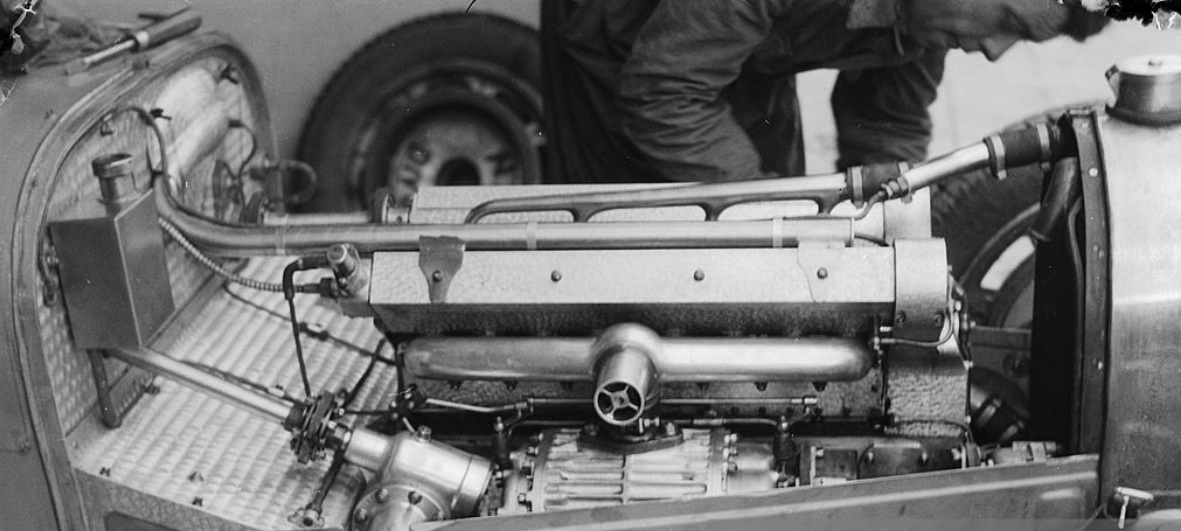
Bugatti’s Miller 91-inspired twin-cam design – 1931-35 T51 2262cc 60×100, T51A 1493cc 60×66, T51C 1991cc 60×88 – featured a monobloc design with a shared crankcase. The main bearings comprised three ball bearings in the middle and two roller bearings, one at each end. Rod bearings were roller. Lubrication was by jet and splash with a special oil pipe for the front main bearing.
The twin overhead camshafts were driven by a train of gears mounted at the front of the engine and operated two valves per cylinder. A single (T51) Zenith 48K carb fed a Roots type supercharger, with a Scintilla magneto firing one plug per cylinder. The engine gave about 180bhp @ 5500rpm.
T51 Nurburgring German Grand Prix July 19, 1931. Inlet side (Z Glass)Robert Aumaitre and Pierre Veyron at the Avus, Berlin. Veyron won the Avusrennen Voiturette race, 197km, in a Type 51A on May 21, 1933, from Ernst Burggaller’s similar car (Z Glass)
Robert Aumaître ‘came to service with Bugatti in 1930 and was Jean Bugatti’s mechanic. He experienced Jean’s last moments, when he was killed on August 11, 1939, a traumatic experience that haunted hm until his own death,’ recorded the bugattipage.com.
‘After WW2, he assisted French driver Jean Monneret and was involved in record attempts with various Vespas at Montlhery. He designed a Vespa-driven catamaran that crossed the channel in 1947, and was involved in a rally for bicycles with engines from Paris to Alpe d’Huez. After his retirement as manager of a big Cognac company, he spent his last years in Molsheim,’ where he died aged 93 on January 11, 1997.
Strange is that this piece omits Aumaitre’s time with Gordini post-war, where he was again Chief Mechanic.
Credits…
Zoltan Glass/Science and Society Picture Library, bugattipage.com, National Science and Media Museum, Bradford, sciencephoto.com
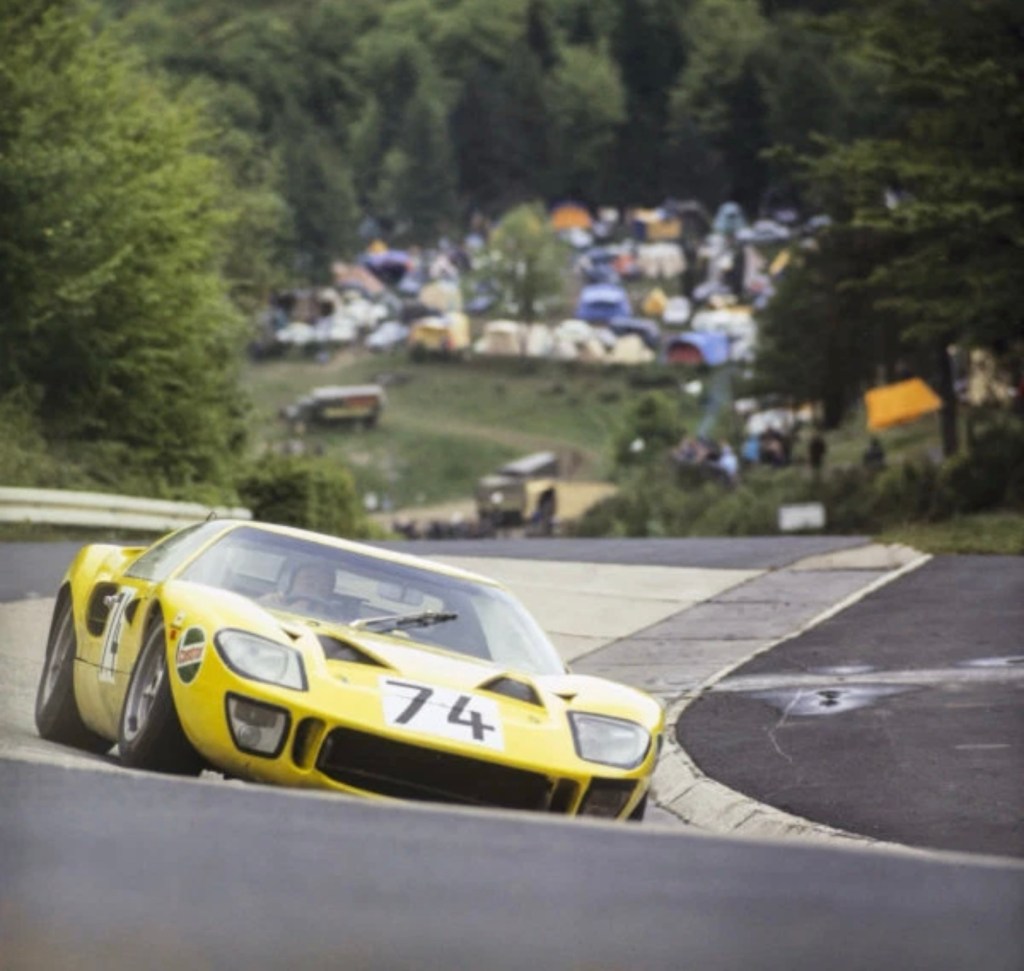
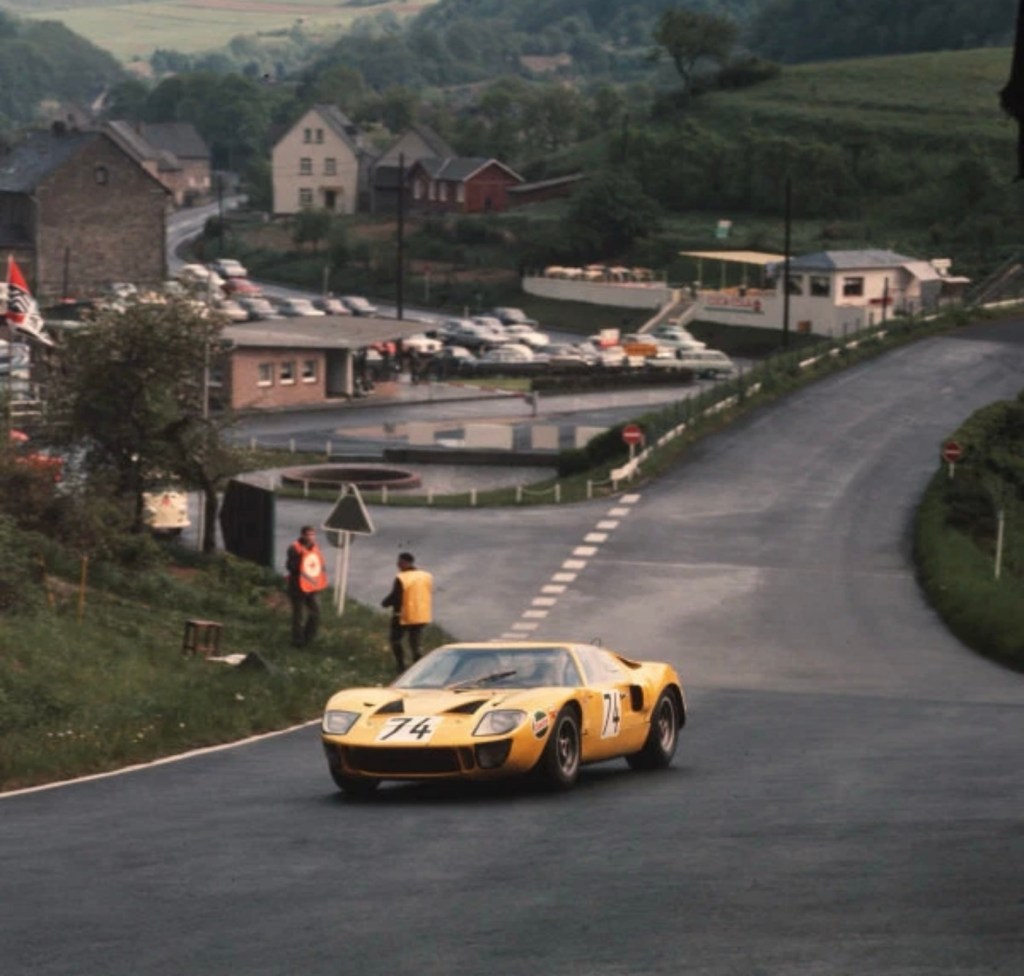
The John Reaburn/Nicholas Granville-Smith Ford GT40 during the 1968 Nurburgring 1000 km.
Melbourne-born John Reaburn – 20/10/1936-26/11/2016 – raced sports cars briefly in Europe in the mid-1960s before retiring at the ripe old age of 32 at the end of ’68.
He inherited the bug from his father Wal who raced a Humpy Holden and operated WJ Reaburn Auto Electrical Engineers Pty. Ltd. from 891-893 High Street, Armadale, Melbourne.
Reaburn’s Holden FJ at the Geelong Speed Trials date unknown (R Simmonds Archive)A brace of Buchanans. John Reaburn chases Wally Mitchell at Phillip Island, date unknown
John raced the Holden and then made his name with consistent winning pace in a potent Buchanan Holden from April 1960 to July 1961. Into the mix were drives in Jaywood Motors, Appendix J Holden Humpy, and FC.
He competed in the 1960-64 Armstrong 500 at Phillip Island and Bathurst, sharing a Singer Gazelle with Harry Firth in 1960, and then Firth’s works Ford Cortina GT, Zephyr MkIII and Falcon. He also raced a FoMoCo Cortina GT in the first Sandown enduro, the 1964 6-Hour International, with Geoff Russell finishing a rousing third outright..
Reaburn in the Ford Falcon XP he shared with Harry Firth during the April 1965 Ford 70000 Mile Durability Run at the FoMoCo You Yangs proving ground (Ford)Firth/Reaburn works-Cortina GT during the April 1964 Lowood 4 Hour, winning their class and ‘outright’
He took on the big-car challenge in 1965, finishing fifth in the one-race Australian Touring Car Championship at Sandown won by Norm Beechey’s Ford Mustang. Raeburn’s mount was the 7-litre Ford Galaxie left in Australia after the ’64 Sandown International by Sir Gawaine Baillie.
Reaburn jumped on a ship for Europe with the intention of racing the car in the UK, but Baillie had sold it before he got there. Brian Muir was third in that Sandown ATCC in his Holden EH S4; he too was soon heading off to the UK, very successfully so.
Reaburn, perhaps, in the Baillie Galaxie at Warwick Farm in 1965 (P Reynell)
Undeterred, Reaburn started working for Graham Warner’s Chequered Flag Motors in 1966, driving their Shelby Cobra in the Zeltweg 500 km (DNF oil leak) that September. He was in the best of company, sharing the grid with GP drivers Jochen Rindt, Jo Siffert, Mike Spence, Innes Ireland, Mike Parkes, David Hobbs and Bob Bondurant.
Nick Brittan wrote about Reaburn in Motoring News during 1966, ‘Raeburn Shines in Driving Test. I don’t seem to be able to get through a month in this column without making some comment about a new Australian driver. In fact I’ve been accused of running an Antipodean news sheet.’
Johnny Reaburn is the latest of the “gday there mate” brigade that are invading our shores. Johnny, a massive, lantern-jawed Melburnian, ran Holdens and FoMoCo cars back home.
JR in the Zeltweg pits in 1966. Bob Bondurant raced the other Chequered Flag Cobra, DNF engine. And yes, like me, the signwriter struggled with the spelling of JR’s name (JR Archive)JR during the September 1966 Zeltweg 500km DNF oil leak in the Chequered Flag Shelby Cobra. Race won by the works Porsche 906 crewed by Gerhard Mitter and Hans Hermann (Zdjecie)
‘Bathurst class successes, three Lowood 4 hour races on the trot, second in the Sandown 6 hour, plus numerous other solid performances, are grounds for giving the bloke a trial.’
‘What shook everybody up last week was his performance at the passout at Brands with the Motor Racing Stables outfit in front of a big crowd of journalists and enthusiasts. Eight lessons in a Formula Ford with the passout in an F3 in the reverse direction on the Club circuit, Johnny equalled the time set by professional driver and instructor Tony Lanfranchi on his fourth lap.’
‘He improved his time by a full seven-tenths of a second on the remaining six laps. Tony then jumped back in the car, but it took him twelve laps to equal the time Johnny had set. He should be deported or given a drive, as this was his first time in open wheelers.’
He raced Mike de Udy’s Porsche 906 with Roy Pike in the Reims 12 Hours in 1967 (DNF), and took part in several 1968 World Sportscar Championship rounds. His car was a yellow Ford GT40, chassis #1001, owned by Andy Cox, ‘who had won money on the football pools and bought himself a GT40,’ wrote Doug Nye.
Reaburn’s driving partners were Nicholas Granville-Smith and another Australian tyro who did a stint at The Chequered Flag, Tim Schenken.
Monza 1000km grid April, 1968 (JR Archive)Nurburgring 1000km April 1968, on the way to 21st place (LAT)
At the Monza 1000 km in April he shared the car with Schenken, DNF engine. At the Nürburgring on May 19, he and Granville-Smith were 21st in the 1000 km.
At Spa-Francorchamps, the week after the Nurburgring, back with Tim, John had a major off on the first lap of the 1000 km enduro.
Doug Nye was there reporting the event for Motoring News and wrote on The Nostalgia Forum, ‘It absolutely widdled with rain and early in the race John dropped the car in the pack on the right hand kink coming down the hill from La Source, past the pits. The GT40 spun round and round and round in a ball of spray and only near the bottom of the hill – entering Eau Rouge – did it finally slither off onto the grass and subside into a ditch on the left side of the track. It was very spectacular, with phenomenal avoidances all round. Pity, he’d been driving it pretty well until then.’
Nurburgring, JR ahead of the second place works Porsche 907 of Hermann/Attwood (LAT)Raeburn with Brigitte Bardot (JR Archive)
Reaburn reported his exploits back home via Racing Car News. Amongst the unreported good times of high performance off the track was a week-long dalliance with Brigitte Bardot that was memorable enough for her to purchase him a Rolex watch inscribed, ‘To Johnny, Love BB’. ‘True story’ confirms Greg Smith, who had a lot to do with Reaburn in the modern historic era, ‘I’ve seen the watch.’
‘Don’t forget that he was instrumental in getting the David Price-written Joan Richmond book published (Joan Richmond: The Remarkable Previously Untold Story),’ chipped in Bob King.
Reaburn tested an F3 car at Brands Hatch in 1966, matching class front-runner Tony Lanfranchi’s times, and a works F2 Lotus 48 Ford FVA at Hethel in 1967, but, being a tall unit, decided to concentrate on sports car racing.
He quit racing at the end of 1968, aged 32. In recent years John lived in retirement with his wife in Mooroolbark, Victoria. He died of a stroke on Saturday, 26 November 2016, aged 80.
Etcetera…
A Truish Story from 1965 by Clark Watson.
‘Young John Reaburn, south-eastern suburbs of Melbourne, six-foot-five in his socks, had come to England on the back of a Bathurst class win with Harry Firth. Europe didn’t care. Single-seater cockpits were built for midgets, so John ended up on the showroom floor of Chequered Flag Motorsport in Savile Row, selling Elans and the odd Ferrari while demonstrating Colin Chapman’s ultra-rare analogue driving simulator — one of only two ever made.’
‘One day, a Scottish Lord named Andy walked in — heir to half the Highlands, banned from racing by his mother until he produced heirs of his own. Instead, he spent the family’s millions running sports-car teams and collecting rogues like McLaren, Amon, Rindt, Surtees, and Bondurant. He took one look at the giant Australian and decided he liked him. Soon, John was testing for Andy’s private outfit and sharing a flat in Clapham with Bruce McLaren and Chris Amon.’
‘What happened in that flat stayed in that flat — except one story that finally slipped out. One winter evening, Andy dropped John home after a test day and said only, “Midnight. Sofa. Helmet. I’ll pick you up.” Over dinner, Bruce and Chris just sniggered. When John reached for the wine, they pushed water at him and told him to sleep. Just after midnight, a rattly old lorry reversed down the lane. Andy was directing mechanics who whipped a sheet off the load to reveal a gleaming silver Shelby Daytona Cobra, already thudding and rocking on its springs. Andy climbed into the passenger seat. “You drive.” They ghosted through sleeping London, turned right into Hyde Park itself — gates closed, lights out — pure madness.’
‘Fifty metres from disaster, the park blazed into light and the gates swung wide. Men in bowlers closed them again behind the Cobra. Andy grinned. “Foot flat, Johnno. The gates always open if you’re quick enough.”
‘The Midnight Stakes – the exact course. Horse Guards Parade → up the Mall → full slide around the Victoria Memorial (“the cake top”) → hard left into Hyde Park along South Carriage Drive → blast out at Marble Arch → down Park Lane → left into Constitution Hill → long, long opposite-lock slide back into Horse Guards Parade forecourt. Roughly 2.9 miles door-to-door. They did a slow reconnaissance lap first, just to let the oil warm and the tyres scrub in. Then they lined up again on the gravel.Top hats, tails, cigars, brandy, chalkboards, bowls of £100 notes. Tradition since the Napoleonic Wars on horseback, motorised by the Bentley Boys in 1929. Tonight it was John’s turn.’
‘Andy smacked the quarter panel. “Helmet on. The clock starts the moment you leave the forecourt. Don’t lift for the park — the gates will open.” John tightened the belts until they bit, clicked first, and dropped the hammer. Out of Horse Guards flat in second up the Mall, braked as late as he dared for the right into the park — 150 mph showing — then flat again. Lights flared, gates flew open, the Cobra thundered through the empty park like a silver bullet. Hard left at Marble Arch, 152 mph down Park Lane, police Pandas with blues twinkling, blocking every side street. One huge four-wheel drift around the Victoria Memorial — two perfect black doughnuts for the tourists to puzzle over next morning — then flat out down Constitution Hill and a long opposite-lock slide back into Horse Guards 1 minute 58.4 seconds dead.’
‘New outright record. John was dragged from the ticking Cobra, bundled into a waiting black cab and whisked home while the toffs threw top hats in the air and settled their bets. The record stood exactly thirteen nights. Then Chris Amon took the same 2.9-mile loop in a full Le Mans-spec GT40, big Ford V8 spitting blue flame, touching 198 mph past the Dorchester, and stopped the clocks at 1 minute 47 seconds flat. That night, the birds left every tree in Hyde Park in one black cloud, and half the palace windows rattled in their frames.’
‘The next morning, a humourless new Assistant Commissioner killed the game stone dead. The Cobra disappeared onto a ferry for Ireland before lunch, the chalkboard vanished, and the Horse Guards Midnight Stakes were declared finished “for the duration”.
‘Or so they say. Because if you’re ever in central London on a moonless night and you hear a big American V8 or a Le Mans Ford bark just once after the clocks strike twelve, sending the birds flying from the trees……you’ll know the gates are still opening for someone.’
Reaburn in the Buchanan Holden at Rob Roy, date unknown (L Sims Archive)AMS September 1960 (G Edney Collection)(JR Archive)
Outside Rootes HQ in Melbourne (?) 1960 with Harry Firth. Seventh in Class C 1960 Armstrong 500 at Phillip Island, up front of the class was the Geoff Russell/David Anderson/Tony Luxton Peugeot 403.
(JR Archive)
The word according to Harry…’Now listen here cock, just do this, this, and that, and we’ll win the class’, date and place unknown, yes, Harry is leaning on a Cortina.
(B Wells)
Bathurst 500 1964, the Bill Buckle/Brian Foley Citroen inside the Firth/Reaburn FoMoCo Cortina GT. Third in Class D and Class C respectively.
Zeltweg 500km grid on September 11, 1966. Johannes Ortner, Abarth 1300 GT, John Reaburn, Shelby Cobra and David Hobbs in Bernard White’s Ferrari 250LM.
(JR Archive)
In the Monza pits during the 1968 1000km weekend, that’s Tim Schenken in the sunglasses awaiting his turn at the wheel.
Schenken was a prudent co-driver choice, being the man on every team manager’s list. That year, he won the British Formula Ford Championship, Merlyn Mk11, the BRSCC-MCD British F3 Championship, Chevron B9 Ford/Brabham BT21X Ford/Brabham BT28 Ford and the Grovewood Award. Not bad…
Credits…
John Reaburn Archive via Greg Smith, Ebay, LAT, Ron Simmonds Archive, Leon Sims Archive, Peter Reynell, Brier Thomas, Graham Edney Collection, Bruce Wells, Ford Motor Company, Zdjecie on Historia jakiej nie znacie, David Lowe photo via Tony Johns’ archive
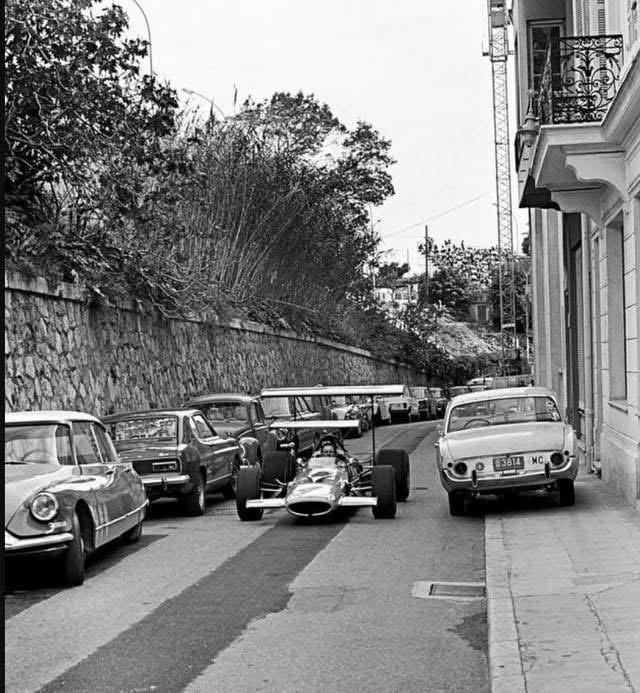
And below making up for lost time through traffic in the latter stages of the 1969 Monaco GP, McLaren M7C Ford, where Bruce was fifth in the race won by Graham Hill’s Lotus 49B Ford.
The CSI/FIA banned the hi-wings overnight Friday-Saturday so I guess this is the Thursday.
(G Johannson)
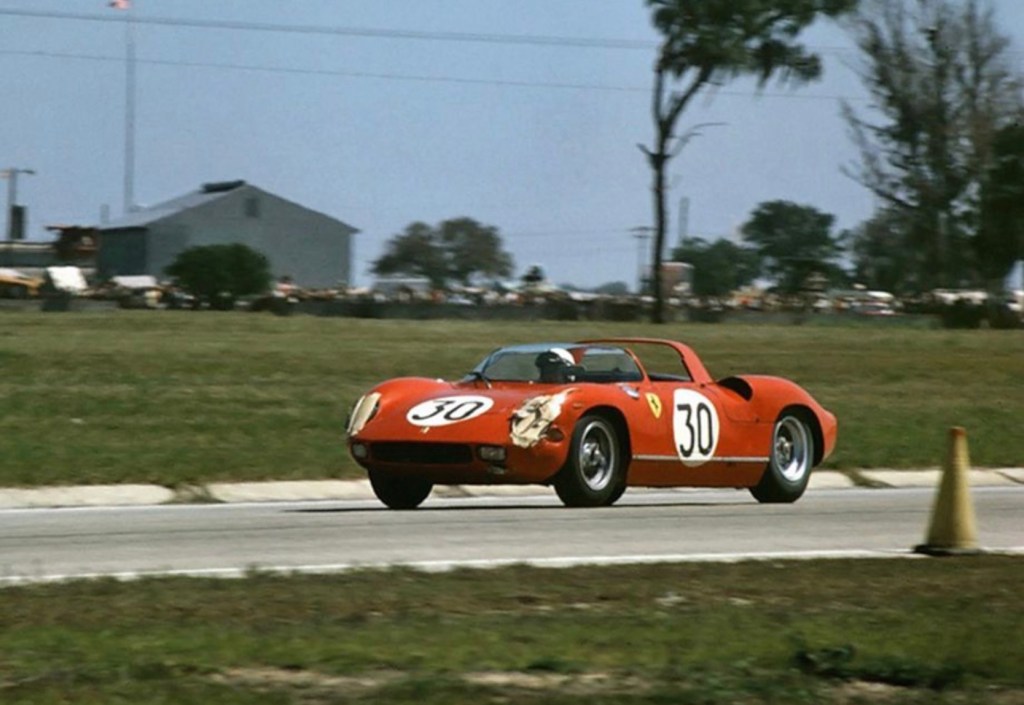
The victorious Surtees/Scarfiotti Ferrari 250P at Sebring in 1963, the Scuderia’s sixth outright Florida win in eight years
Ferrari took the first three places in the prototype and GT classes, the Index of Performance and the lap record, not a bad weekend’s work…
(M Fistonic)
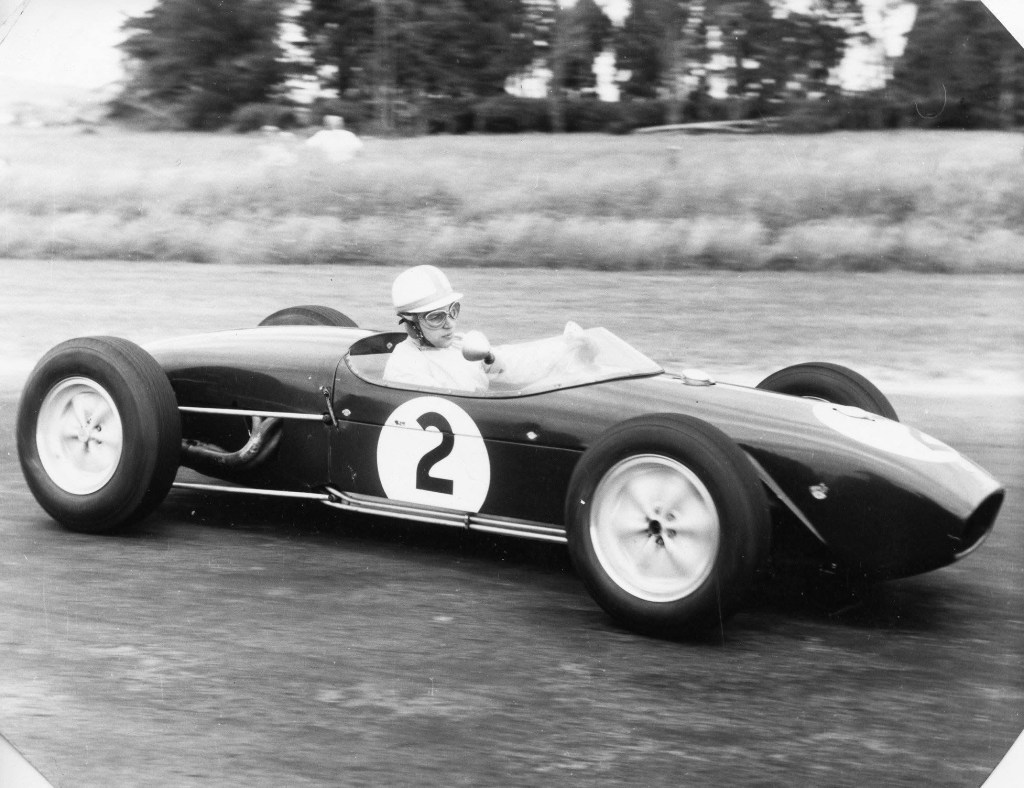
John Surtees guides his works-Lotus 18 Climax FPF 2.5 around Ardmore Aerodrome during the January 7, 1961 New Zealand Grand Prix.
Colin Chapman sent a pair of Lotus 18s south that summer to keep his drivers sharp over the European winter: team drivers Surtees, Jim Clark and Innes Ireland made the trip with Lotus’ Queerbox doing its bit to despoil the results.
Surtees was NZ GP DNF gearbox (winner Brabham Cooper T53), Levin DNF radiator (Bonnier Cooper T51), and Wigram DNF undisclosed from pole (Brabham Cooper T53).
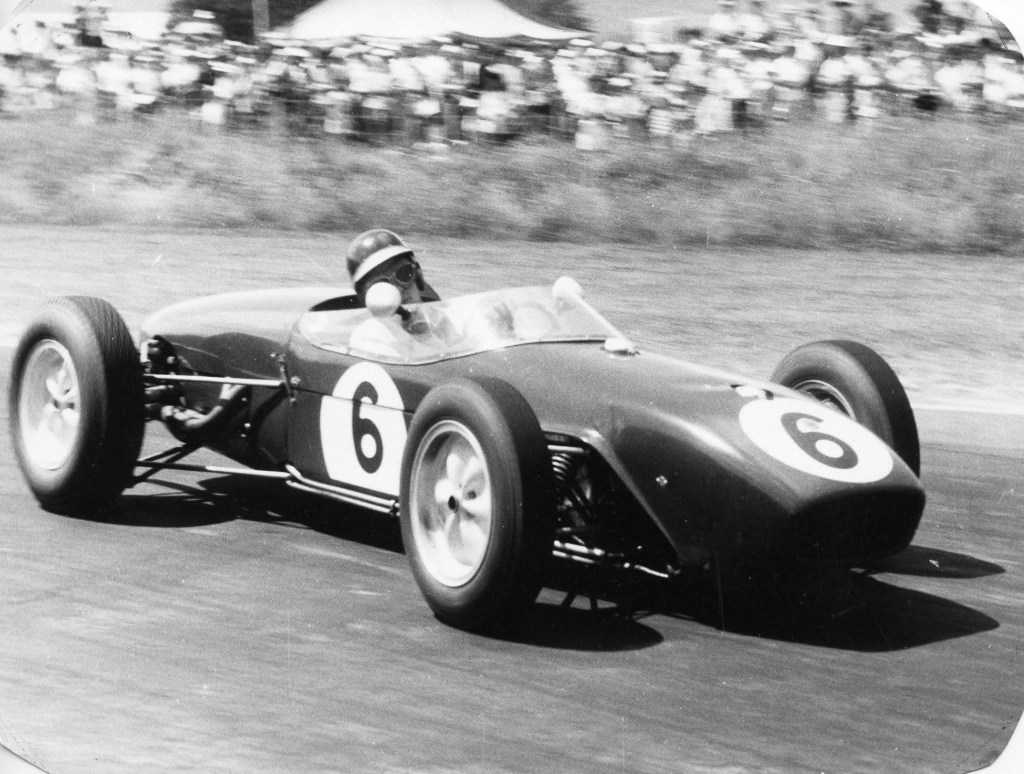
(M Fistonic)
For Jim Clark above, it’s a little better: NZ GP sixth, Levin second and Wigram DNF stall.
For the record, Roy Salvadori was a DNF gearbox at Wigram and second at Teretonga (Bonnier Cooper T51) in a Yeoman Credit Lotus 18 ‘on his way’ to Australia to do the Oz Internationals in one of Jack’s Cooper T51s.
Ireland was second to Moss in the ferociously hot Warwick Farm 100 (Moss Lotus 18) but DNF in the Victorian Trophy at Ballarat Airfield (Dan Gurney BRM P48).
A couple of stud-meisters at Warwick Farm in 1961, Innes DOB 12/6/1930, Stirling 17/9/1929 (M McGuin)(CAN)
I’d forgotten Jo Bonnier’s two ‘Tasman’ wins in 1961 aboard an old Cooper T51 Climax.
Here he is on the Teretonga International grid on pole at right with Denny Hulme’s Cooper T51 Climax, Pat Hoare, Ferrari 256 and Tony Shelly’s Cooper T45 Climax – with ? Lycoming Special looming large at the far right.
Bonnier won from Roy Salvadori, Lotus 18, then Hulme, Hoare and Shelly.
(CAN)
And, the wonders of Facebook, one for the Cooper historians from Classic Auto News‘ Allan Dick.
‘Bonnier had a successful 1961 tour with Yeoman Credit. He won convincingly at Levin (beating Jim Clark) and Teretonga despite having an old car. After winning the main Teretonga race, he went off in the Flying Farewell (an all-in race at the end of the race weekend, a ‘Butcher’s Picnic’ in Australia), damaging the car so badly that it wasn’t considered worthwhile taking it back to Europe, so it was stripped of its parts and left in Invercargill. Nobody knows what happened to it. Here it is being recovered from the lupins (above) at the end of the main straight.’
(Lister Cars)
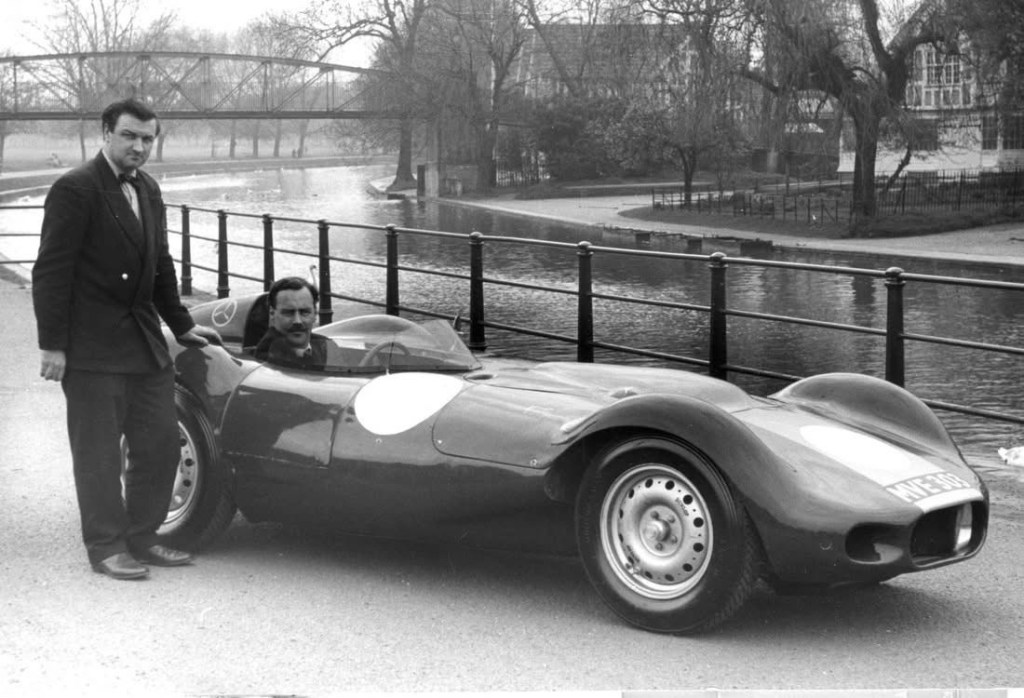
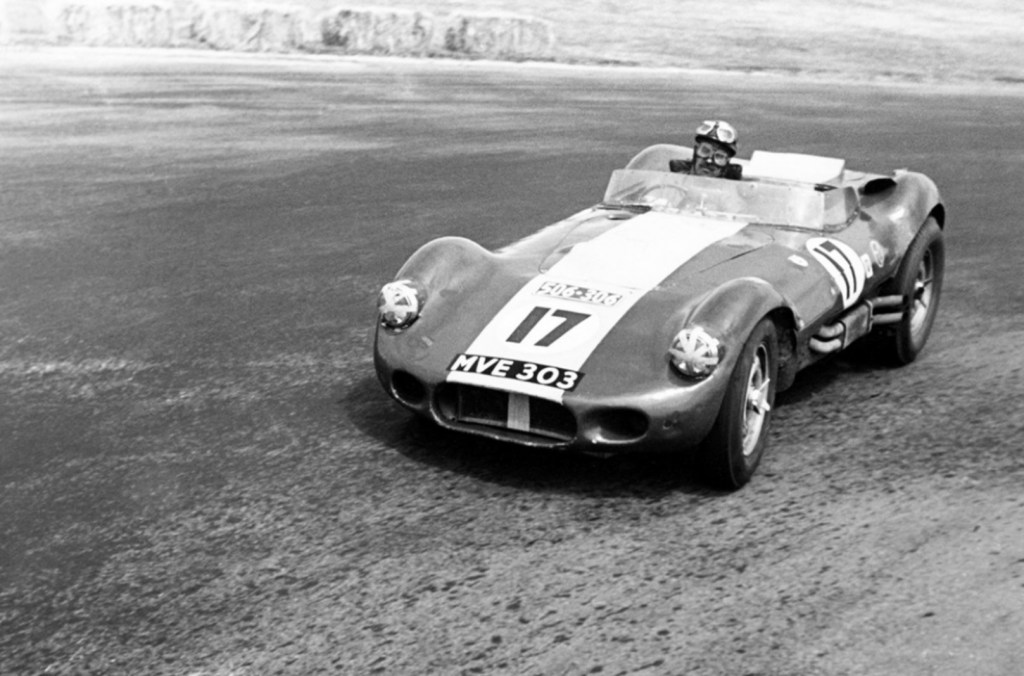
Archie Scott-Brown and Brian Lister ponder the construction of the prototype Lister-Jaguar chassis BHL2, registered MVE303…and 506 306 in late 1956 or early 1957 at the Lister family’s Cambridge workshop.
Scott-Brown had a fabulous season, winning 11 of the 14 races he entered including breaking the unlimited sportscar lap record, during the race or practice, on every circuit the team visited.
Press release, what date folks? (Lister Cars)(Classic & Sportscar)
He and a mechanic then took the Lister to New Zealand for their 1958 summer internationals, where the car – registered 506-306 – won two more races. Archie took a 12-lap Le Mans start preliminary at Teretonga and the 150-mile Lady Wigram Trophy (above), finishing ahead of two Grand Prix cars: Ross Jensen’s Maserati 250F and shooting star Stuart Lewis-Evans’ Bernie Ecclestone-owned Connaught B3 Alta.
In an era where such fast cars were usually sold to a lucky (or not) colonial at the end of the trip, the Lister returned home ‘to clear the Customs bond in New Zealand,’ wrote Doug Nye. Sadly, BHL2 was then torn down with many of its fit and well components used in the build of other car(s).
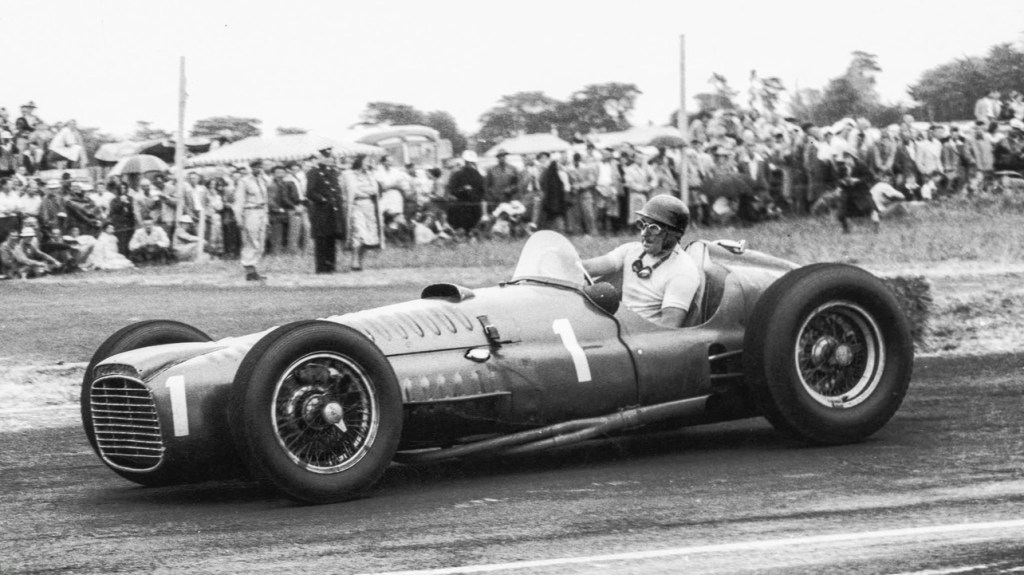
Ken Wharton punts his awesome BRM P15 V16 around Ardmore during the January 9, 1954 New Zealand Grand Prix
He had the 100 lap 300km race shot to bits when brake problems intervened, finishing second behind Stan Jones in Maybach 1, with Tony Gaze HWM Alta third.
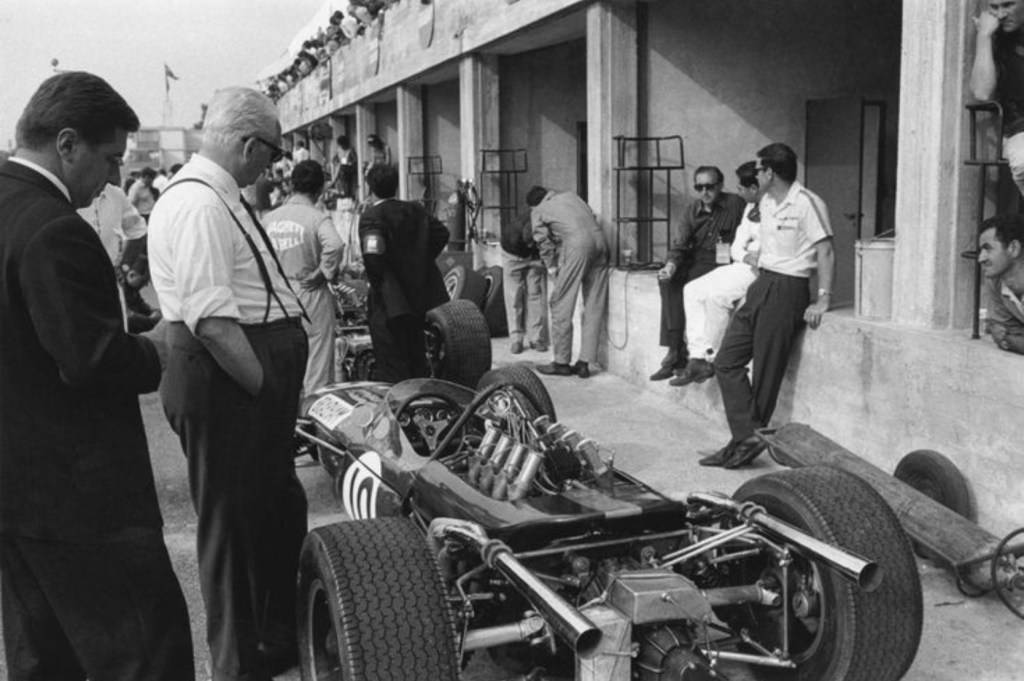
Enzo Ferrari ponders the 300bhp, SOHC, two-valve Repco-Brabham V8-engined Brabham BT19 in the Monza pits during the September 1966 Italian GP weekend.
Ludovico Scarfiotti brought home the pancetta for the Scuderia, mind you, winning the race from Mike Parkes in another Ferrai 312 with Denny Hulme third in his Brabham BT20 Repco.
(LAT)
Still, the pace of the little-ies shouldn’t have surprised Enzo in that transitional year: the 2-litre Coventry Climax and BRM-powered Lotus 33s of Jim Clark and Graham Hill, and his own Dino 246 of course. The title was there for Ferrari’s taking; all they had to do was keep John Surtees in the saddle for the year…
Meanwhile, Jack was having a grouse time. Time enough to slip home mid-season for the opening week of Surfers Paradise International Raceway – his race was on August 14 – collect some cash, demonstrate Repco’s wares to the punters, then go back to Europe and wrap up the World Championship…which he did at Monza.
(NAA)
The logistics of it all are interesting.
Win the German GP in BT19 on August 7, pop it in a Qantas 707 to Australia (or whatever), get it from Melbourne or Sydney to Surfers. Do the whole thing in reverse, get BT19 race prepped, then truck it off to Italy.
Meanwhile, Jack jumped a jet to Scandinavia and won two ‘Euro F2’ rounds from Denny: the Kanonloppet, Karlskoga on August 21, and the Finlands GP at Keimola Ring on August 24. JB in a BT21 Honda, DH in a BT18 Honda. August wasn’t a bad month, really. Some sort of engine problem let the Repco side down in Queensland, it could easily have been a win a weekend for Jack…
(Ebay)
Mike Spence at the wheel of the Chaparral 2F Chev he shared with Phil Hill at Le Mans in 1967, DNF transmission failure after 225 laps in the race won by the Ford Mk4 raced by Dan Gurney and AJ Foyt.
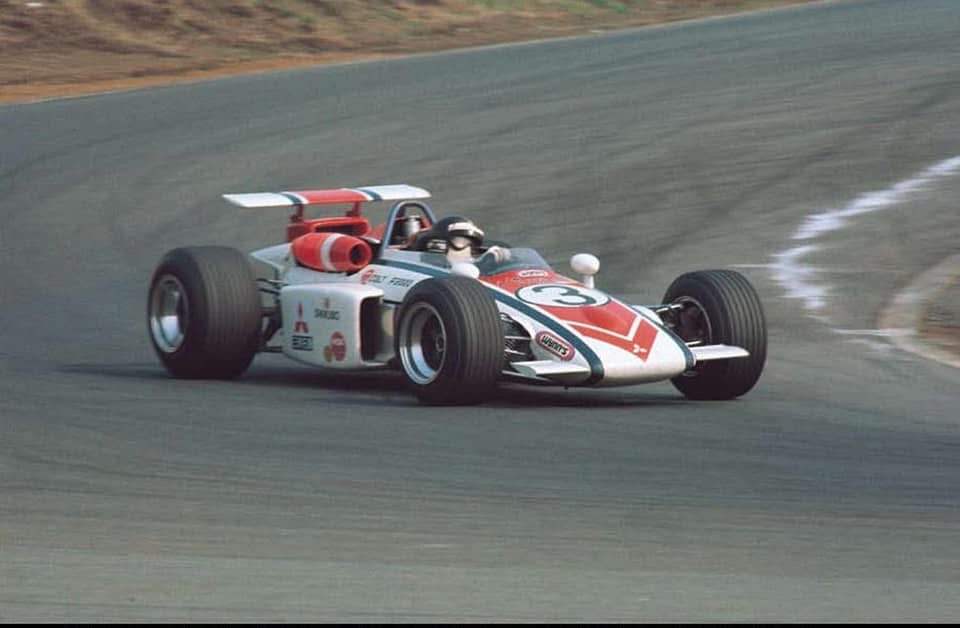
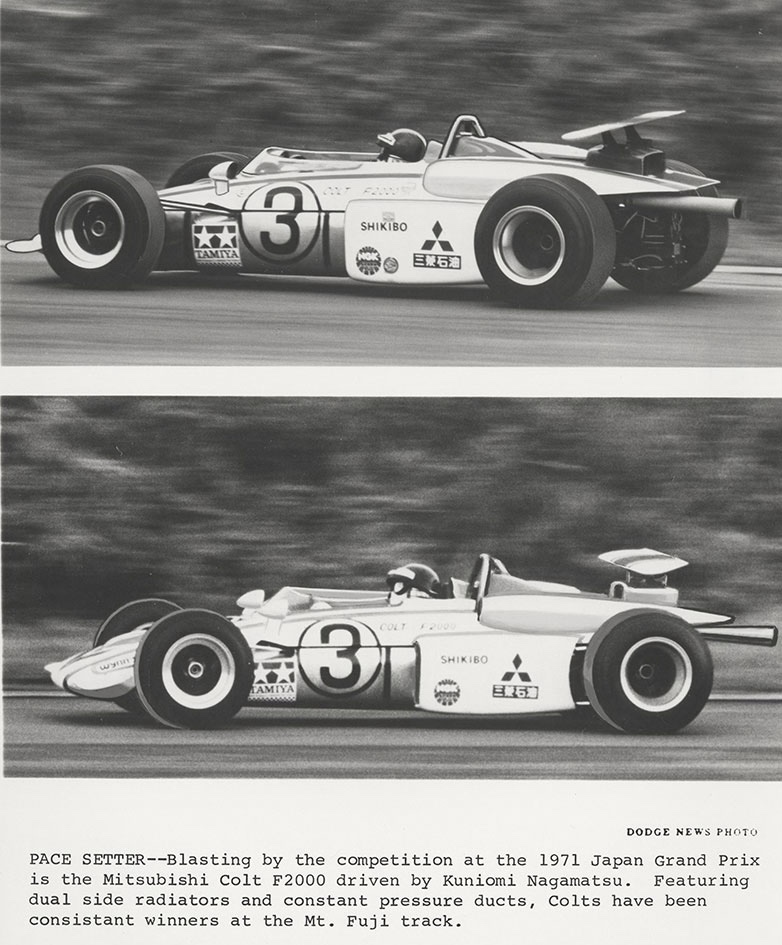
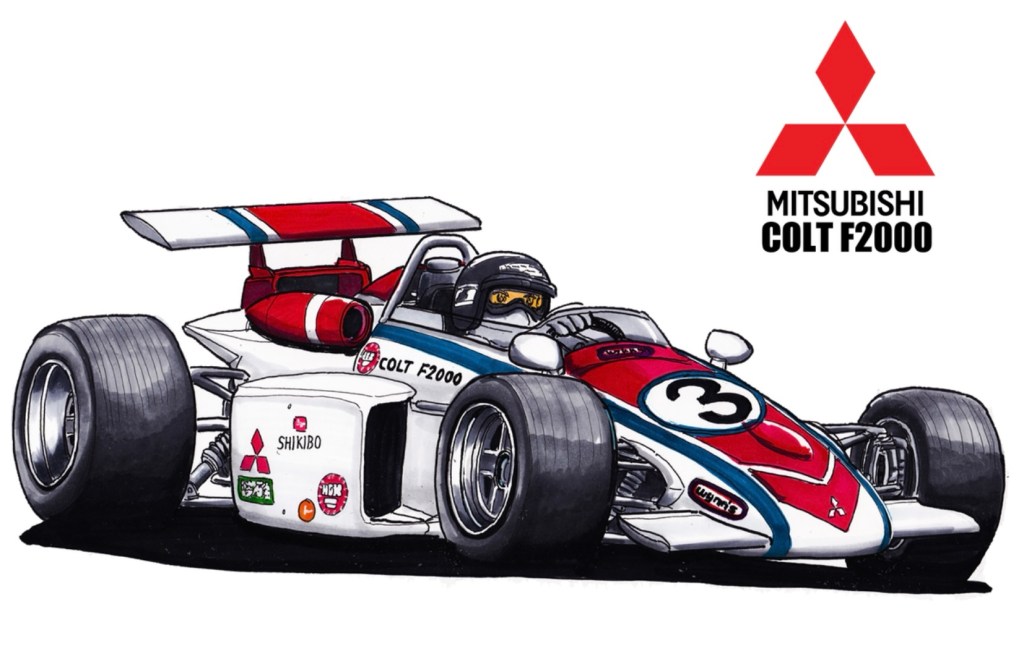
Kuniomi Nagamatsu on the way to victory in the May 3, 1971 Japan Auto Federation Japanese Grand Prix at Fuji International Speedway aboard his Mitsubishi Colt F2D/F2000 R39B 2-litre.
He won the 35 lap, 225km race from his teammate Osamu Masuko in another F2D from then Japanese International Tetsu Ikuzawa’s Lotus 69 Ford FVC 1790cc in third place.
Nagamatsu’s win was the culmination of six years of Mitsubishi single-seater racing in Japan and Macau using Brabham chassis/copies thereof; the F2Ds are Brabham BT30 chassis in drag. Lower drag that is, the aero on these cars was the work of Mitsubishi’s aviation subsidiary.
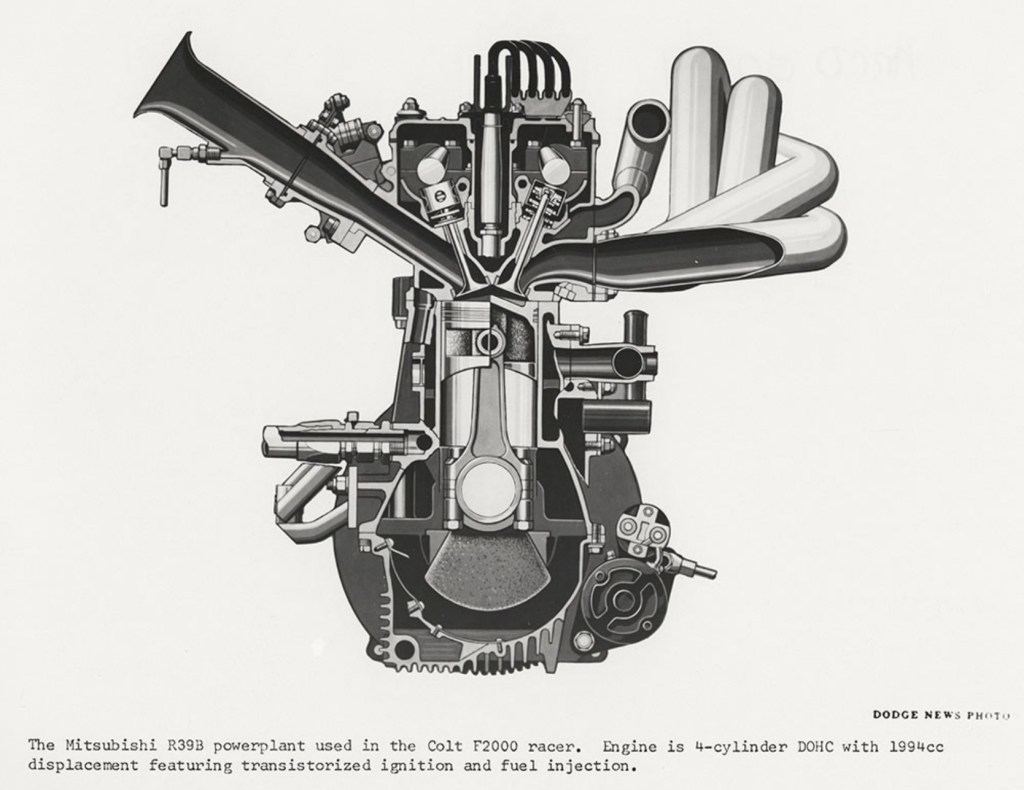
The engines were home grown too. Initially production motors with the usual mix of increased bore, heads, carbs and cams but by 1971 Topsy was a 2-litre, twin-cam, four valve, fuel injected F2 engine that should have won the 1972 European F2 Championship if someone – how bout Bernie Ecclestone, having just acquired Brabham – had done a deal. Instead, Mitsubishi handbrake turned away from single-seaters and into the forests where they were already gaining international success…
Who said high-airboxes were started by Tyrrell/Matra during 1971?
Ferrari gave it a whirl on Richie Ginther’s Ferrari 156 at Reims during practice for the 1961 French Grand Prix, he didn’t race with it, so presumably the jury was out as to its performance. That’s Carlo Chiti with the top of his head chopped off.
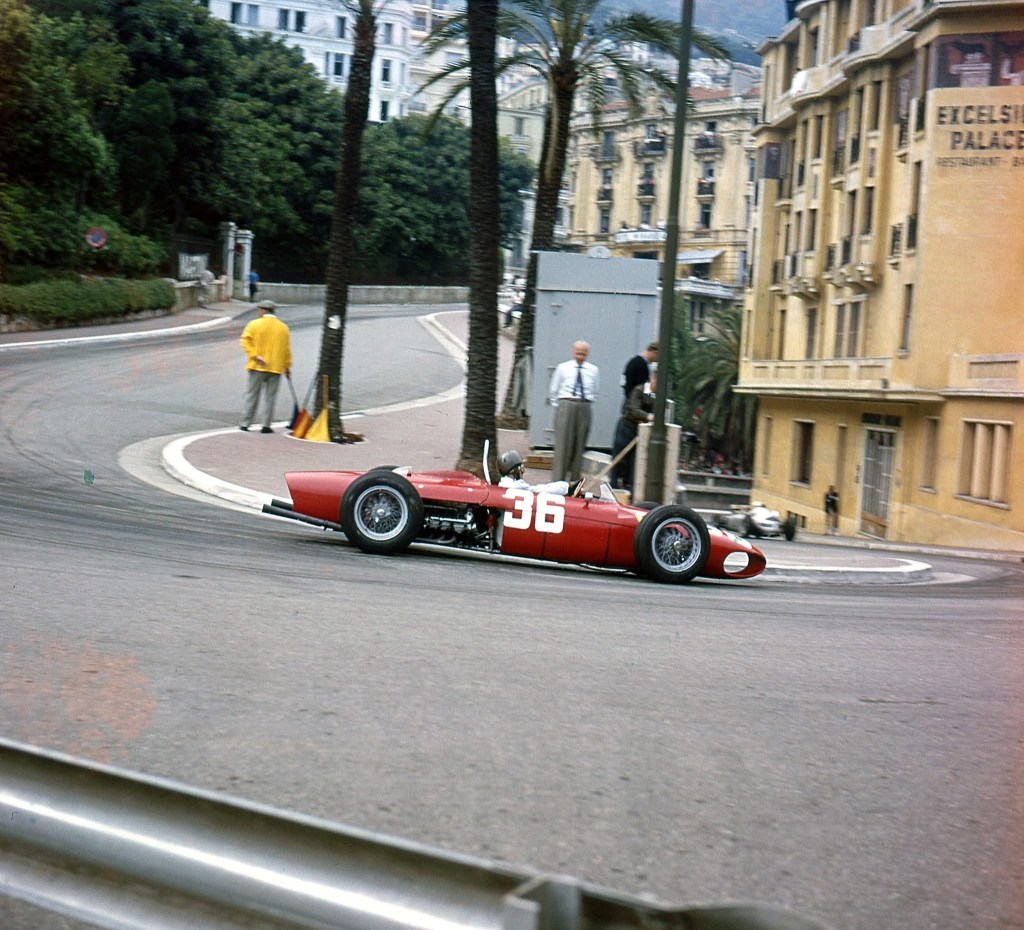
And below in the LWB (it’s a joke folks) Ferrari 156 #0001 at Monaco on May 14 where he scored a rousing second place behind Mighty Moss in Rob Walker’s Lotus 18 Climax and in front of more-fancied teammates Phil Hill and Wolfgang von Trips. See here for the evolution of 246P to 156:https://primotipo.com/2015/10/04/monaco-panorama-1958/
(GPL)
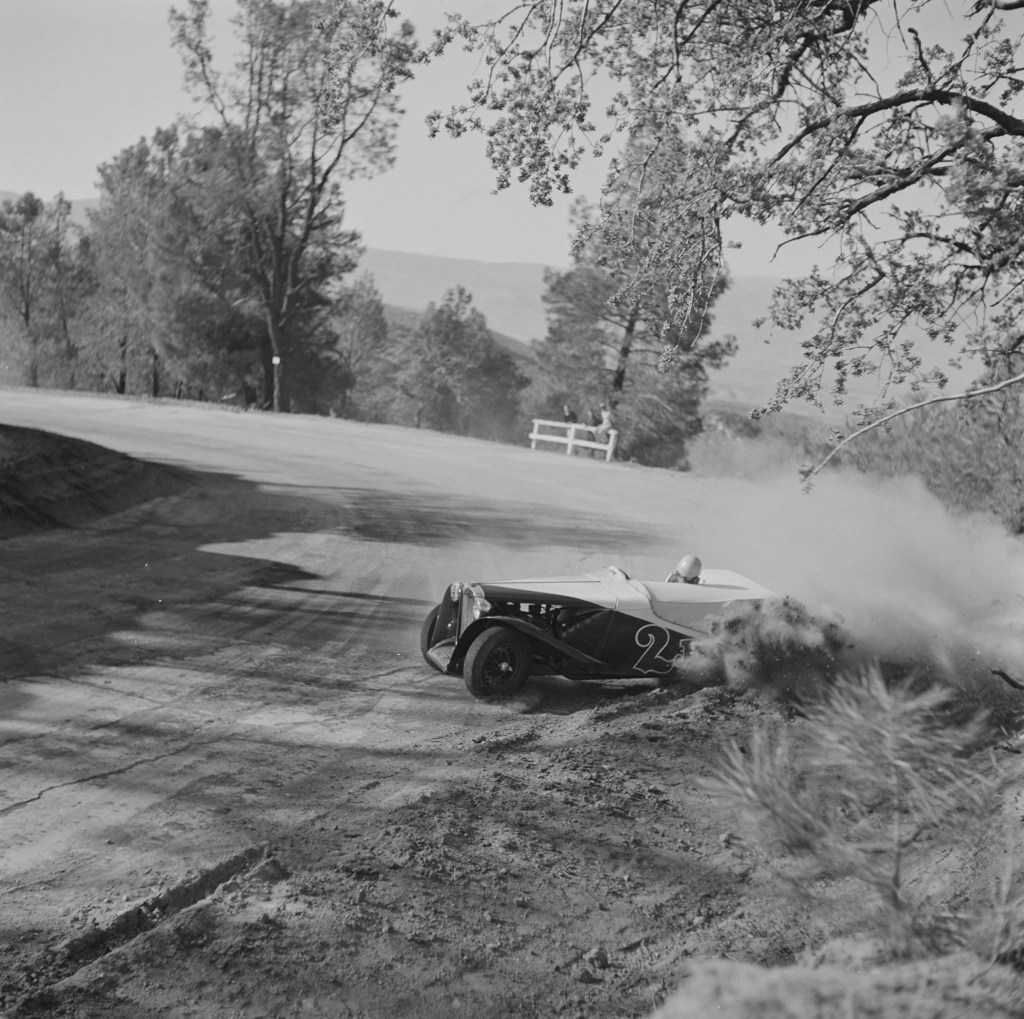
And below Richie all, fast and loose in his competition debut at Sandberg Hillclimb on April 8, 1951. The car is Bill Cramer’s MG TC 2 Junior Ford V8, the poor little chassis would have been groaning at the seams…
(Revs Institute)(primotipo archivio)
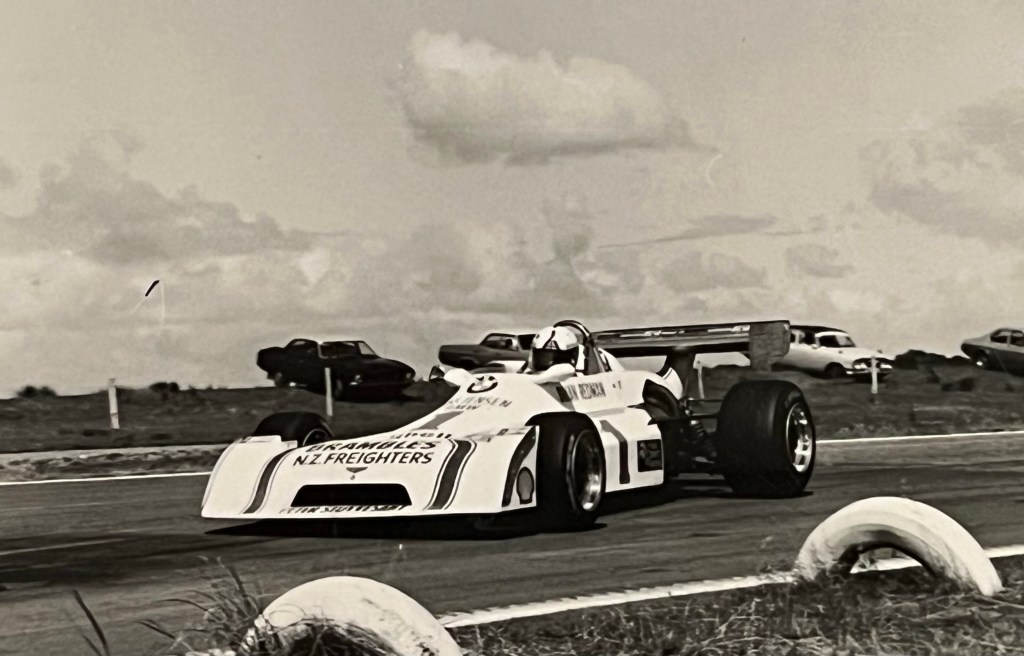
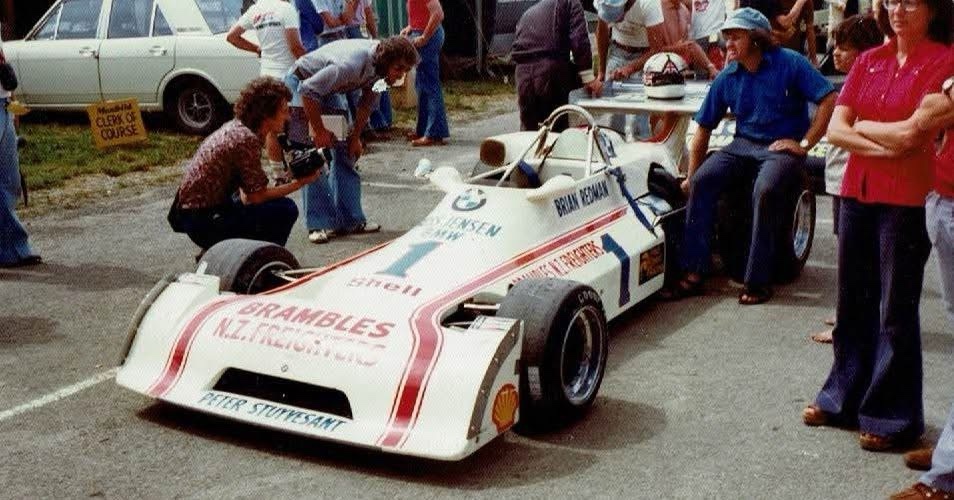
Brian Redman contesting the 1976 Teretonga International aboard a Fred Opert Chevron B29 BMW 2-litre Euro F2 car in the Peter Stuyvesant International F5000 Series.
F5000’s greatest star was to race a RAM Racing F5000 but Fred Opert came to the rescue after they withdrew. Brian thrilled the Kiwis with his talent, he was equal fourth in the series with Graeme Lawrence’s Lola T332, Ken Smith won the four race series in his Lola T330/332 Chev.
Redman was fourth at Pukekohe, second at Manfield, DNF engine at Wigram and DNF wheel at Teretonga.
Manfield pits 1976 (D Bull)(Getty)
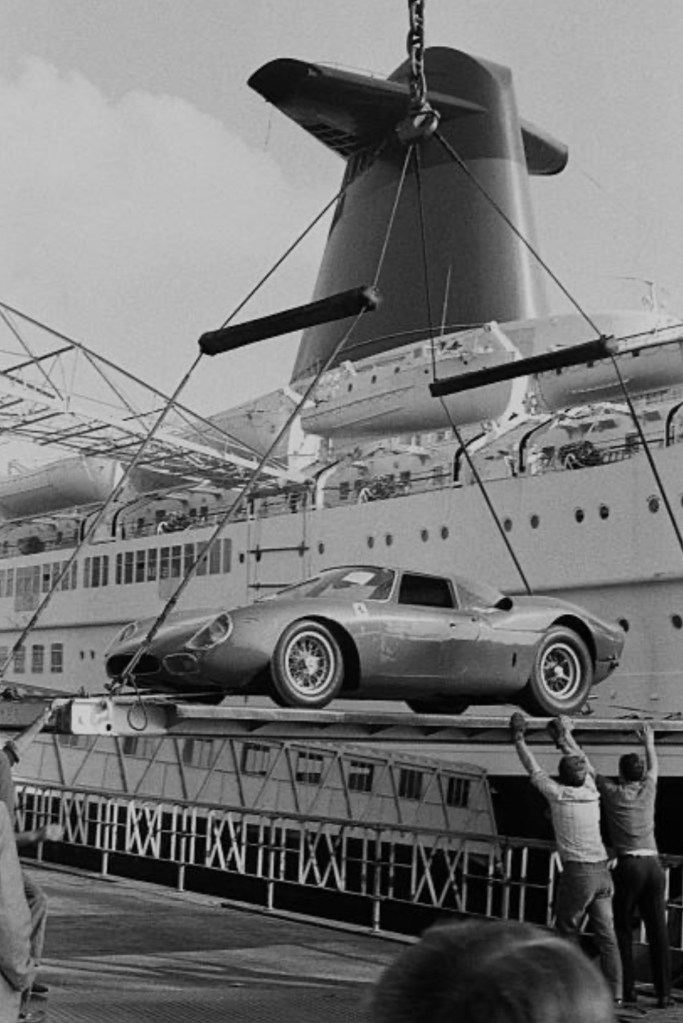
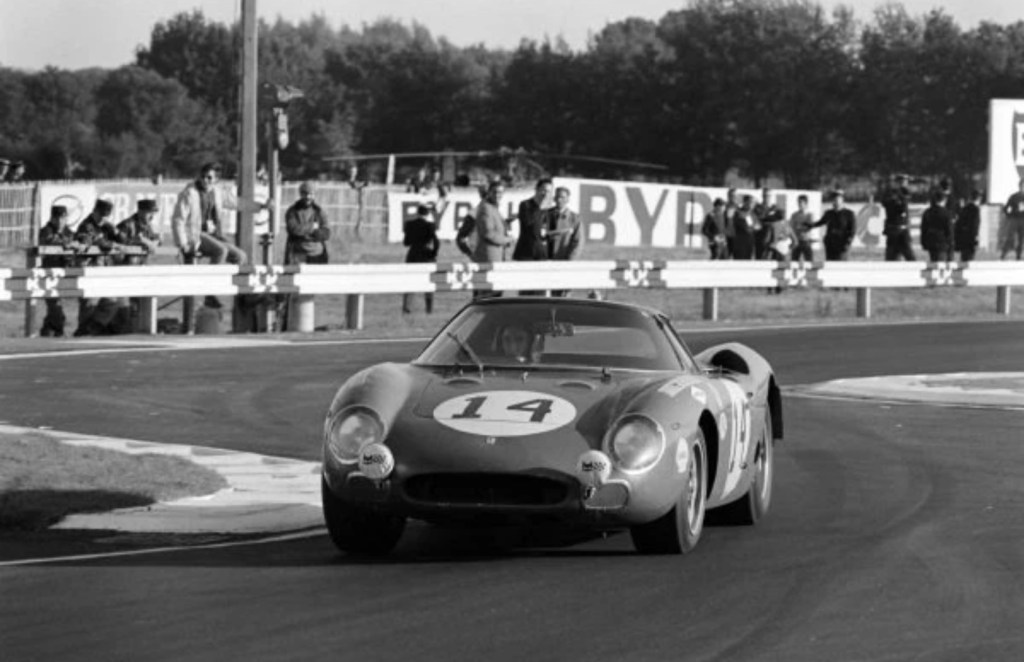
N.A.R.T.’s Ferrari 250LM #5893 – the 1965 Le Mans winner in the hands of Johen Rindt and Masten Gregory – dangles above the wharf at Le Havre after its trip from New York on the liner, France, September 18, 1968, destination, La Sarthe.
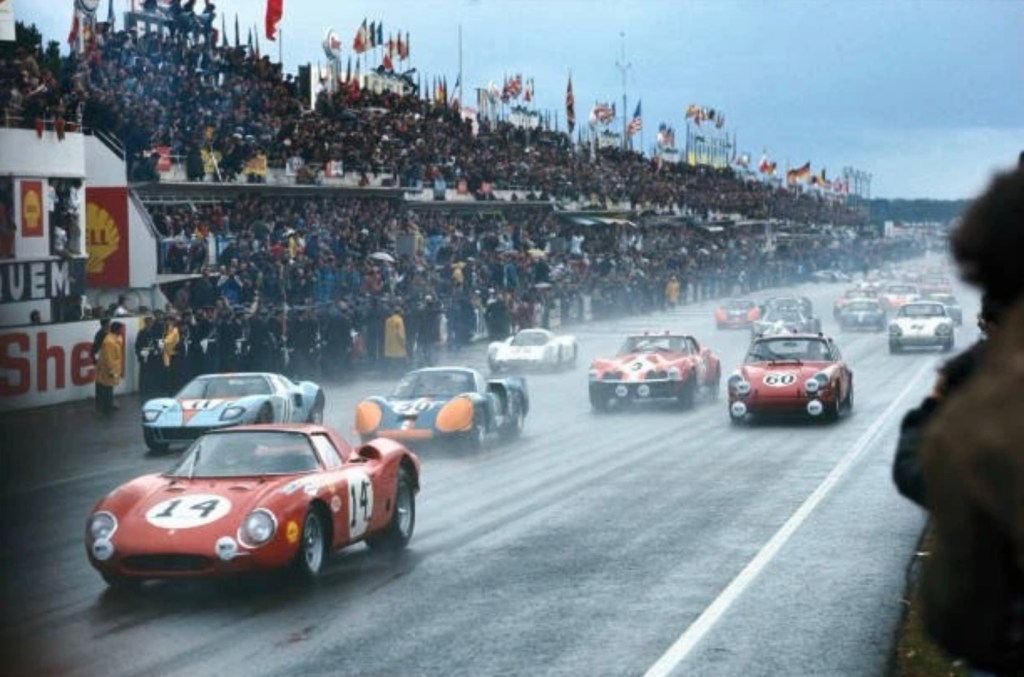
Masten Gregory ahead of a bunch of cars, including #11 Brian Muir’s Ford GT40, Andre De Cortanze #30 Alpine A220 Renault Gordini, the #60 Willy Meier Porsche 911T and Umberto Maglioli’s Chev Corvette. All were DNFs with the exception of the De Cortanze/Jean Vinatier Alpine, which was tenth. The ’68 race was won by Pedro Rodriguez/Lucien Bianchi in a JW Automotive Ford GT40.
(EBay)
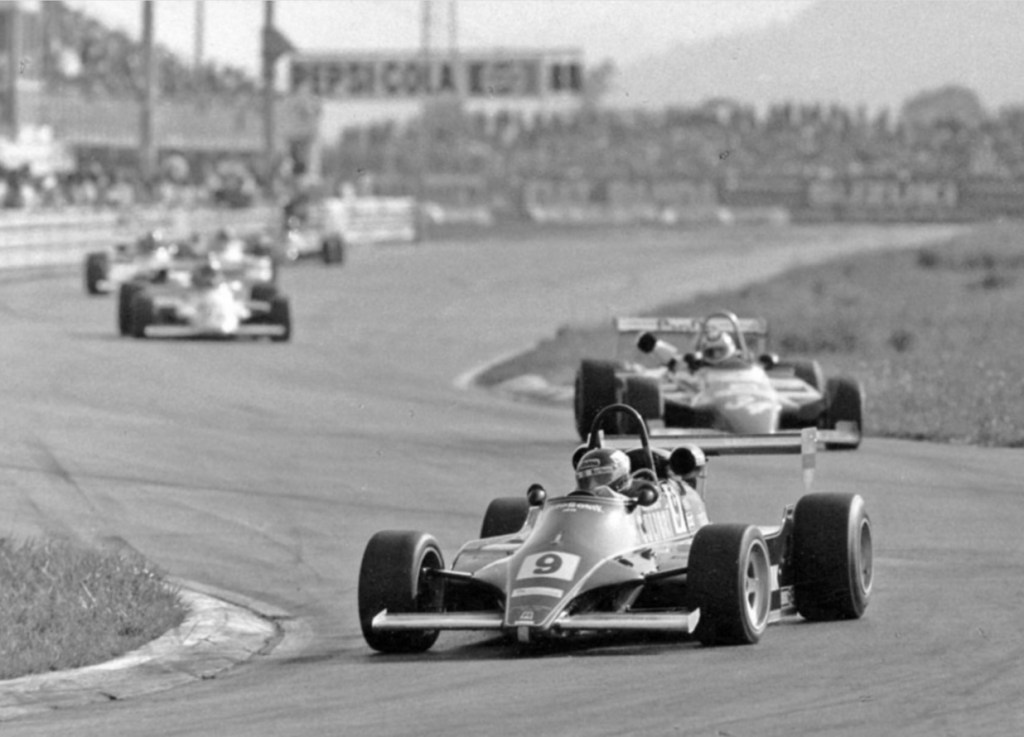
The Gran Premio dell’Adriatico 1981 European F2 Championship round at Misano with Miguel Angel Guerra’s works Minardi Fly 281 Ferrari Dino, 13th, ahead of Oscar Pedersoli’s Ralt RT2 BMW, DNF.
McLaren Cars, Milan Fistonic, Lister Cars, Stuart Dent Collection, Gerry Johannson, GP Library, National Archives Australia, David Bull, Ebay, Revs Institute, Getty Images, LAT, CAN Classic Auto News via Allan Dick, Mitsubishi, Michael McGuin
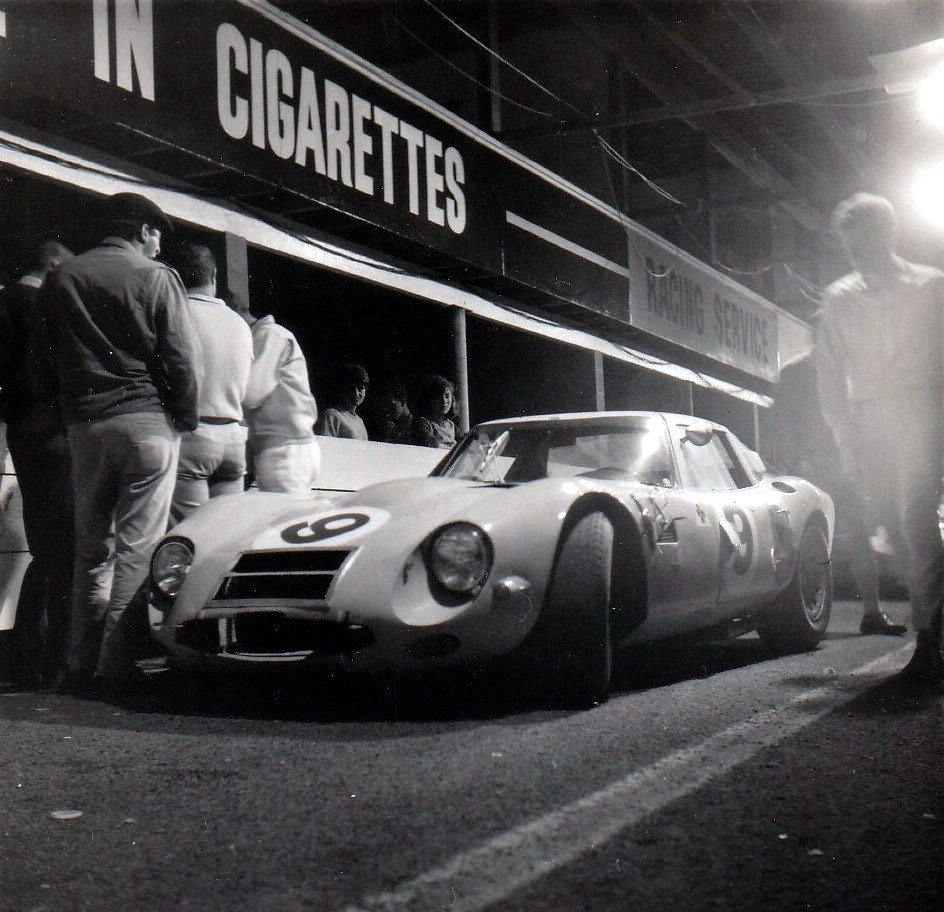
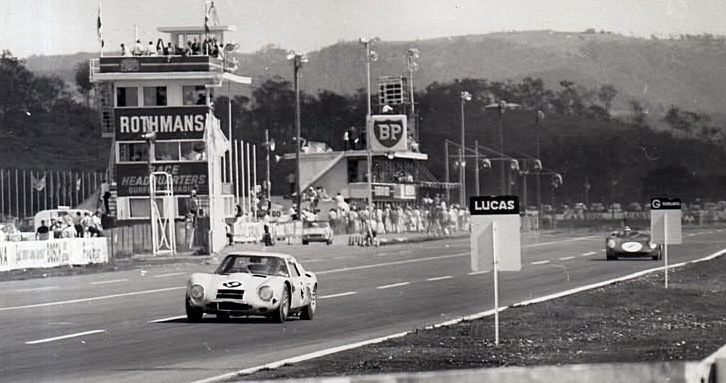
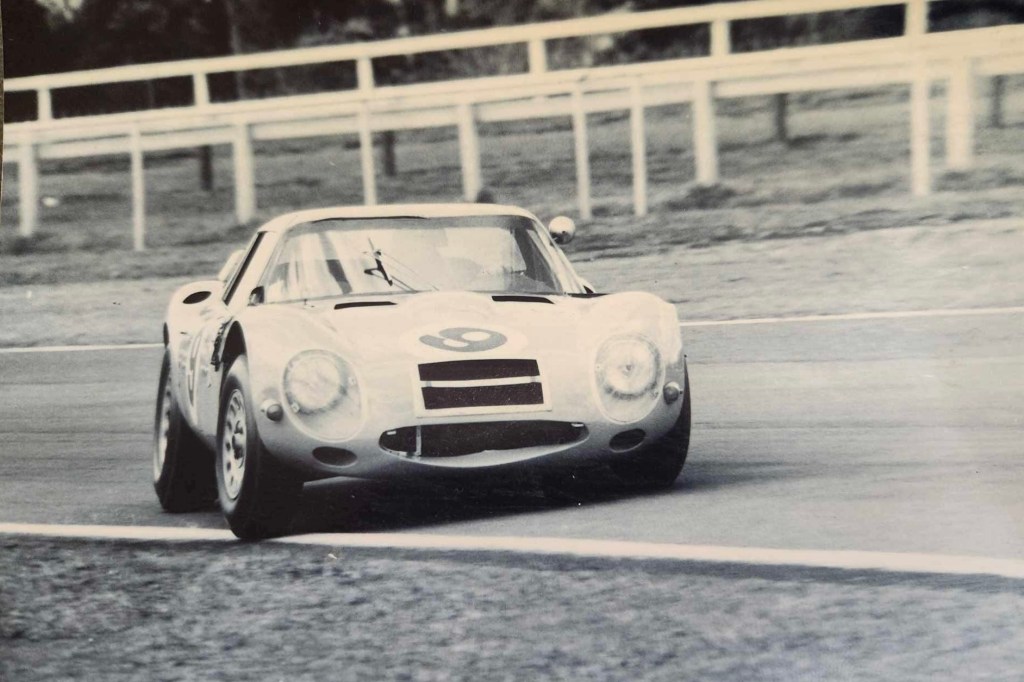
I love Stewart Johnson’s moody, evocative shot of Alec Mildren’s Alfa Romeo TZ-2 taken during the 1966 Surfers Paradise 12-Hour run over the August 21 weekend.
These cars were built for endurance events, not the five or ten-lap screamers prevalent in Australia, so it was a chance for the team to contest a 12-hour event of the type for which Autodelta designed the car.
(J Crawford)
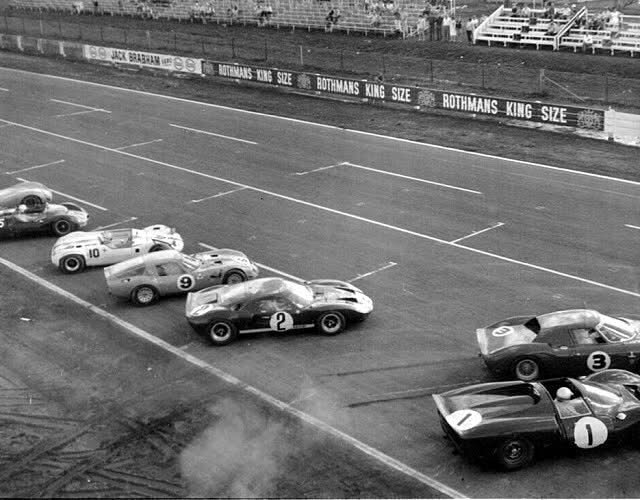
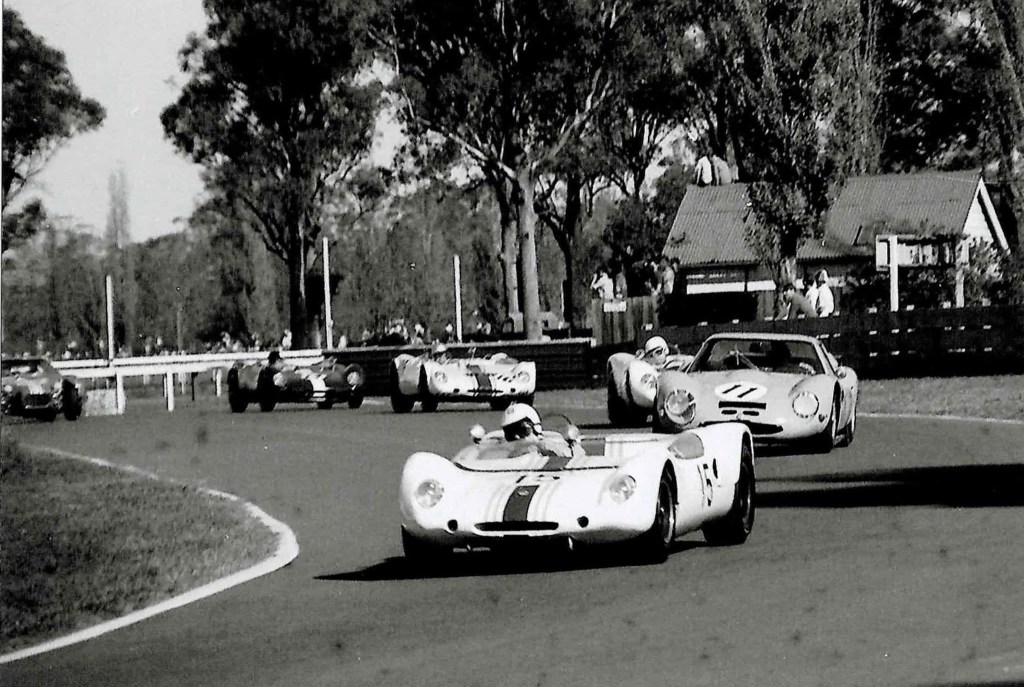
Jackie Stewart is best away at the start in the Scuderia Veloce Ferrari 250LM from the David Piper/Richard Attwood Ferrari 365 P2 #1, the Peter Sutcliffe/Frank Matich Ford GT40, the Bartlett/Chivas TZ2 and then the first of the Lotus 23B Lotus-Fords driven by Frank Demuth and John Harvey.
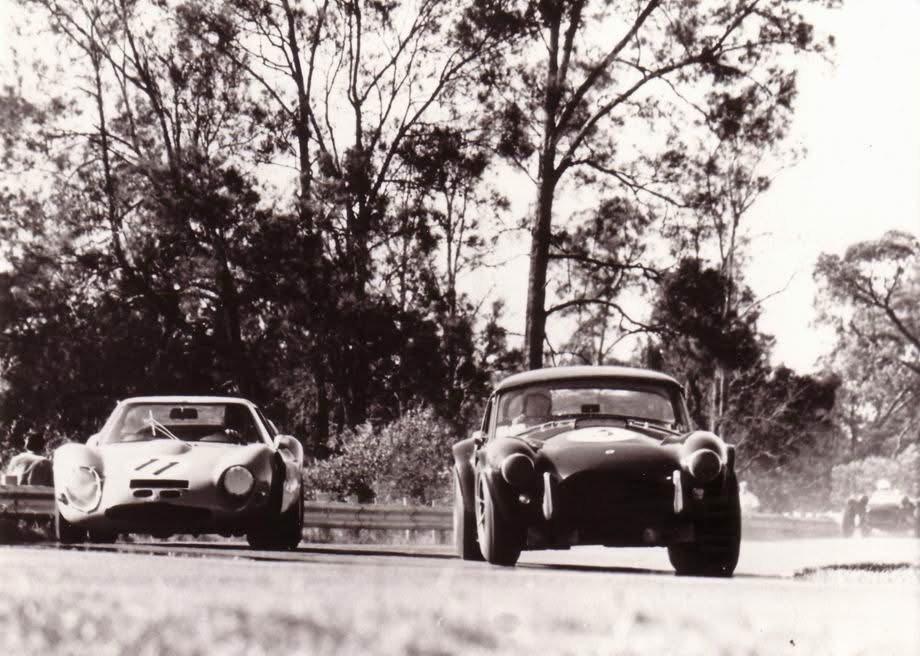
Below, the third-placed Bartlett/Chivas TZ-2 is ahead of the Piper/Attwood Ferrari 365 P2 DNF. Up front was the winning Stewart/Buchanan Ferrari 250LM, one lap ahead of the second-placed Sutcliffe/Matich Ford GT40.
(B Williamson Archive)Ain’t they sweet…Kevin Bartlett TZ-2 and Spencer Martin in Bob Jane’s Jaguar E-Type Lightweight on the front row of the Country Club GT Trophy grid at Warwick Farm on September 18, 1966 (R Kaleda)
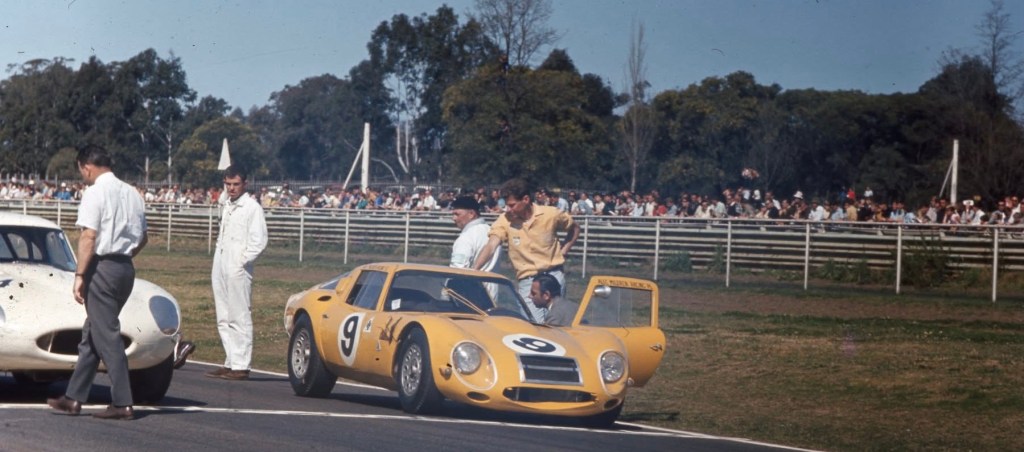
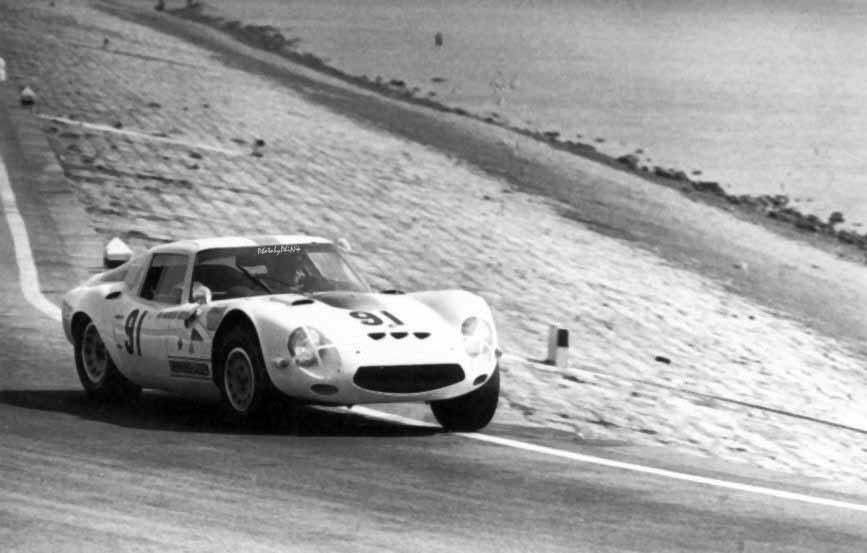
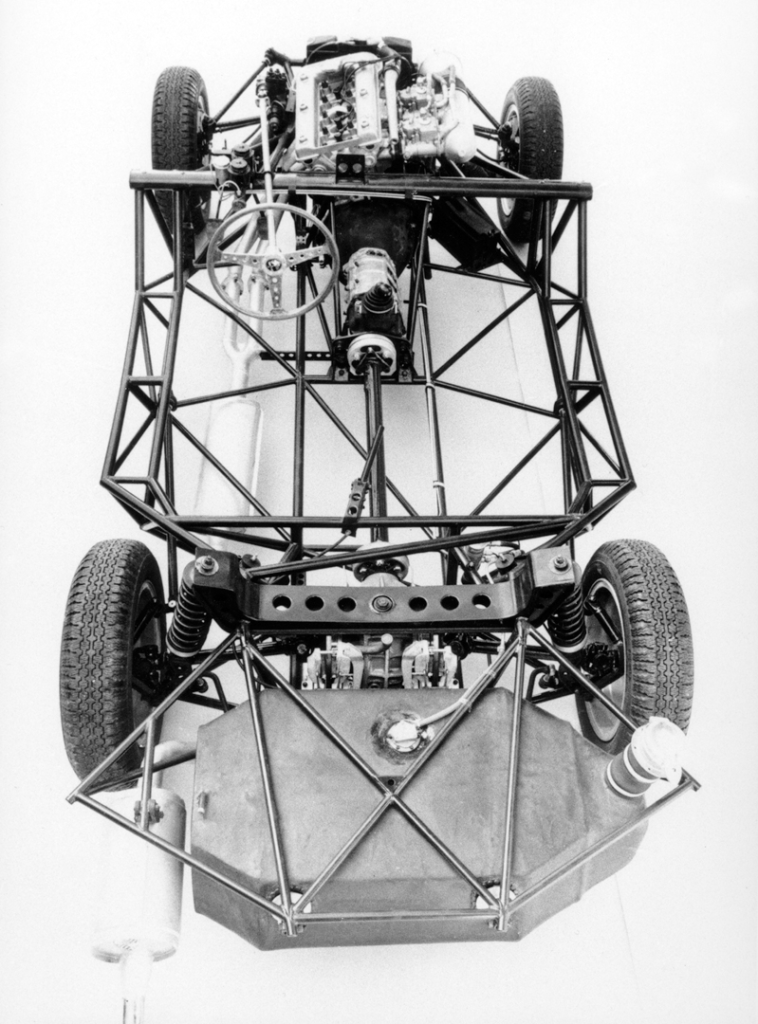
Chassis AR10511-750112 was built on a modified TZ-1 chassis; number 750072 was a chassis, not a complete car, and had an aluminium body, ‘presumed to be the only all-aluminium car and to have been used as the mould for the fibreglass cars,’ wrote zagatocars.com.
Registered UD111834, the works Autodelta machine was first raced by Roberto Bussinello and Andrea de Adamich in the April 25, 1965 Monza 1000km – round five of the World Sportscar Championship – finishing first in class and seventh outright. The race was won by the Mike Parkes/Jean Guichet Ferrari 275 P2.
It was then off to the Targa Florio on May 5. This time Bussinello was paired with Nino Todaro, but they failed to finish after an accident on lap 6 of 10. Up the front was the Vaccarella/Bandini Ferrari 275 P2.
Suitably repaired, 750112 was prepared for the Nurburgring 1000km a fortnight later, May 23, with Bussinello again at the wheel, this time paired with Teodoro Zeccoli, where they were 30th with 36 laps completed compared to winners’ Surtees/Scarfiotti’s 44 laps aboard a Ferrari 330 P2.
750112 in the Le Mans pits 1965 (unattributed)Le Mans 1965. Zeccoli plans his attack on the Mulsanne sand dune while the works-Ford GT40 Mk2s of Ken Miles and Phil Hill – DNFs both – rumble past on their second lap (unattributed)
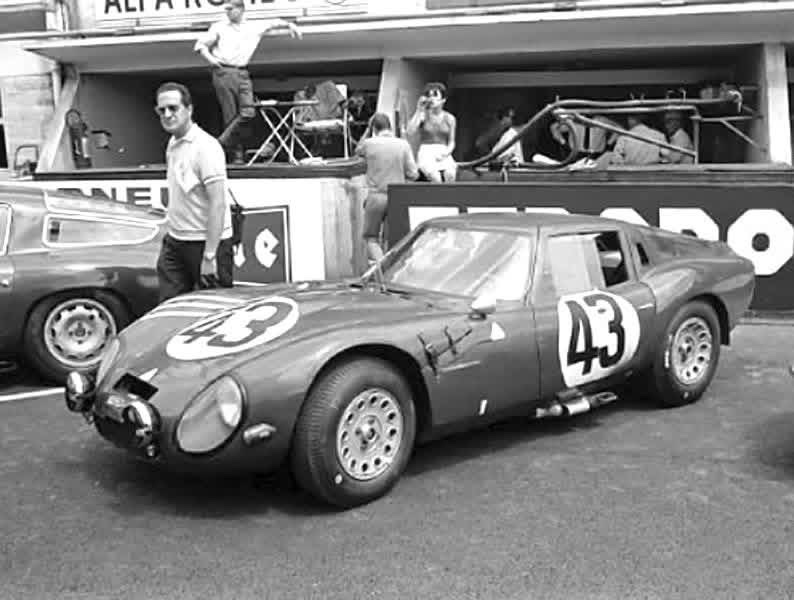
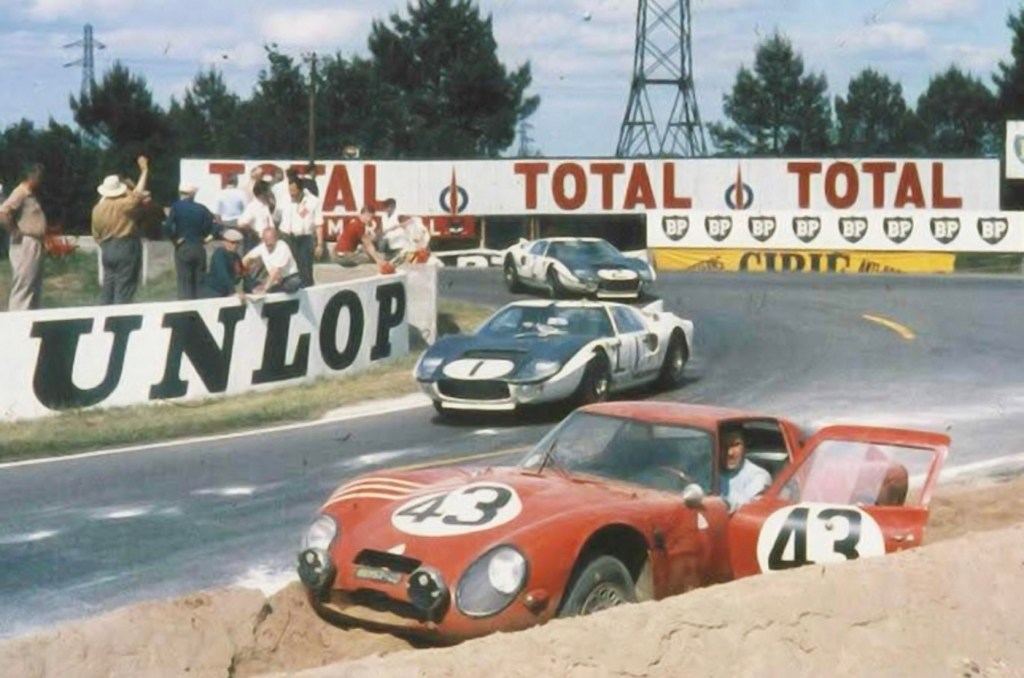
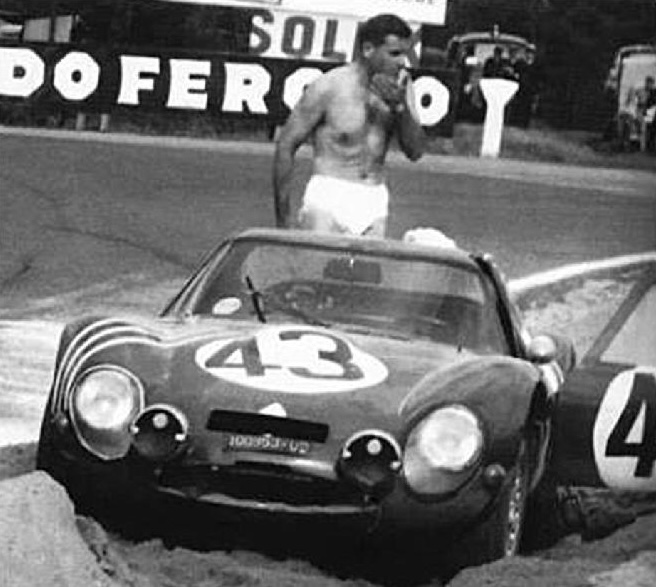
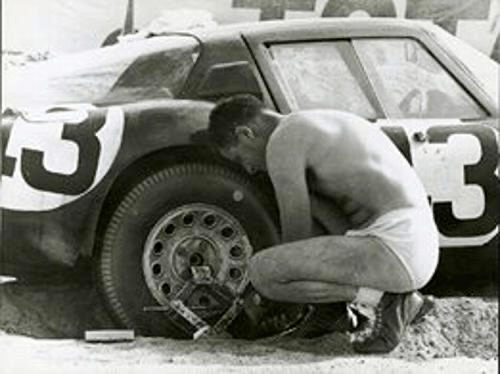
The car’s final European outing before its sale to Alec Mildren was at Le Mans on June 19-20 where Zeccoli shared it with Jose Rosinski. The weekend looked promising enough but it all came undone come raceday when Teodoro went off at the end of the Mulsanne into the sand trap from which he never escaped.
He didn’t give up, though. The spectators were treated to a gritty two-hour performance where Zeccoli tried to dig the car loose, the final element of which involved stripping down to his jocks to use his race suit under a rear wheel in an attempt to get more traction. Unsuccessfully, unfortunately.
(Alfa Romeo)(Alfa Romeo)
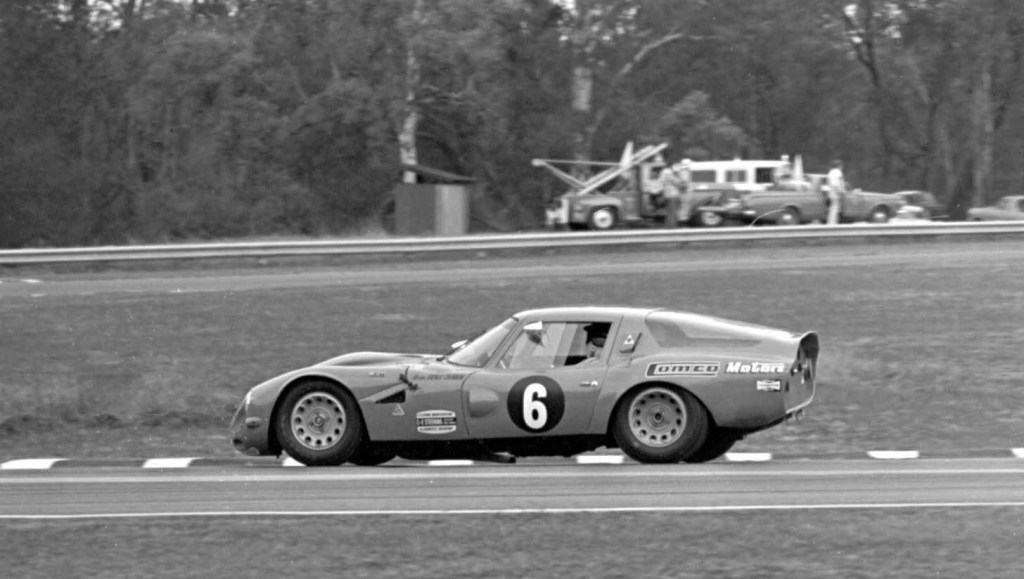
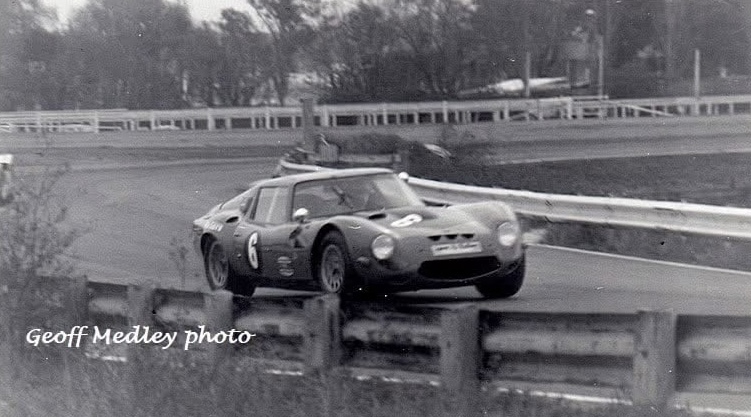
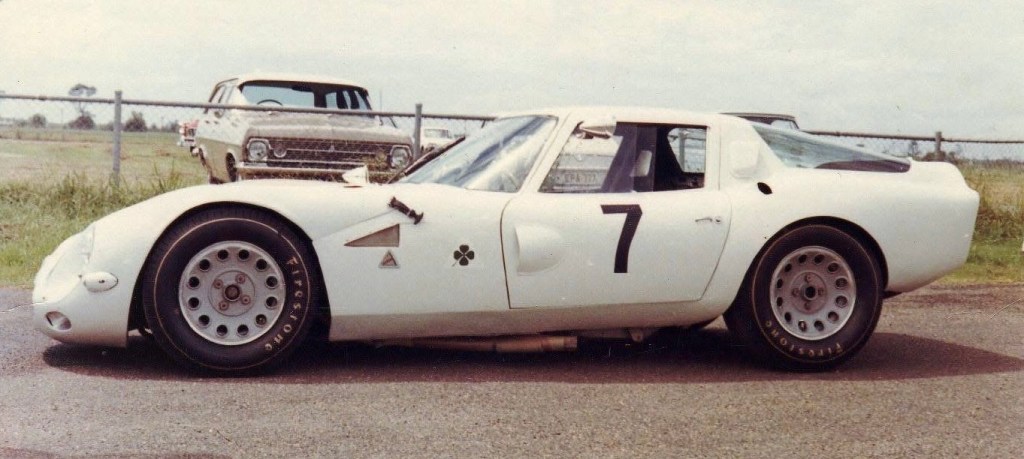
Mildren then imported 750112 to replace the second of his GTAs in mid-1966 with its regular pilot, Kevin Bartlett, seen below giving the now yellow car plenty at Warwick Farm in 1966.
(K Bartlett Arc)(K Crump via E Holly)
Amongst the sprinters. Frank Demuth’s Lotus 23B from Kevin Bartlett, Alfa Romeo TZ-2, Niel Allen, Lotus 23B, Lionel Ayers, MRC Lotus 23B and Greg Cusack’s Lotus 23B then the obscured Les Howard’s Lotus Super 7 and Spencer Martin’s Ferrari 250LM on June 15, 1966
And below, Bartlett chasing Ron Thorp’s AC Cobra, again at Warwick Farm
(G Dowdle)
750112’s ownership roll call in Australia is fairly long, although most of them didn’t race it.
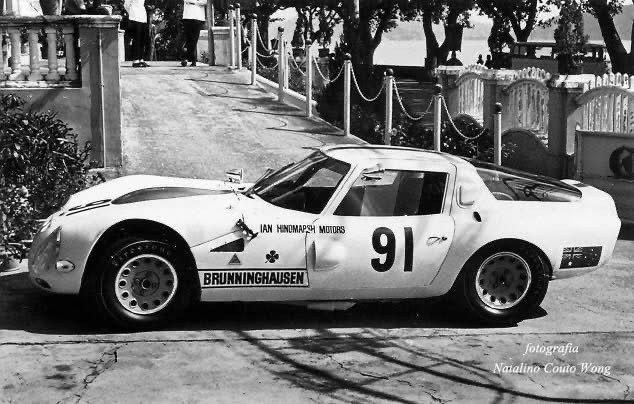
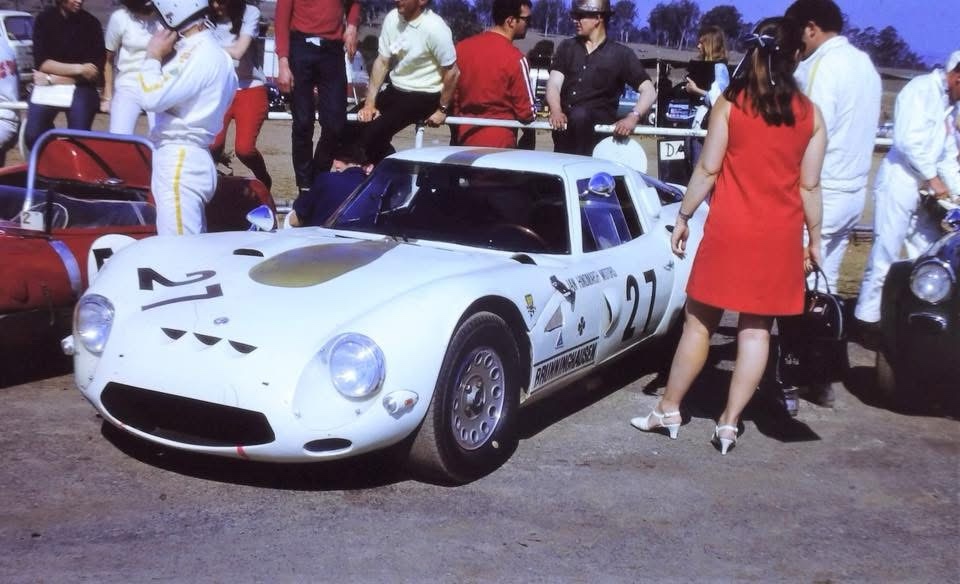
From Mildrens the car went to Roy Compton, then Max Brunninghausen in 1967, Compton trading the TZ-2 on Brunninghausen’s TZ-1. Max raced it extensively, including a trip to the Macau Grand Prix in 1968, where he finished a splendid third in the sports car behind Jan Bussell’s winning Brabham Lotus-Ford and Hengkie Iriawan’s Elfin 600C Ford FVA.
The robust TZ-2 was ideally suited to the rough road circuit, although Max had his challenges after differential failure during practice. Divine Intervention came via Alec Mildren and the Australian Government, who shipped a spare diff from Sydney to Macau via a Diplomatic Bag!
Max Brunninghausen at Macau in 1968 (Z Drummer)(N Wong)
Another Sydneysider, Denis Cribbin followed in 1969, the cars contemporary racing history, including two or three decent hits along the way, was then over.
The trail of ownership then goes something like this. Les Miller bought it in 1971, followed by Messrs. Robertson, Hopkins, and Whiting in quick succession (is this correct? I’ve never heard of them in connection with this car), then Royce Fullard of Eltham, Victoria. Royce may have sold it to Nick Langford, who lived not far away in Mitcham.
When I saw the car in Langford’s restoration business at Castlemaine circa 1978, it was in a million bits. Langford – an Alfisti through and through – would have done a great job with the restoration, but its sale as a result of his matrimonial earthquake shook the car loose, and it left our shores for good circa-1980. Current custodian folks?
Denis Cribbin at Warwick Farm in September 1969 (L Hemer)
Etcetera…
(Marouf Collection)
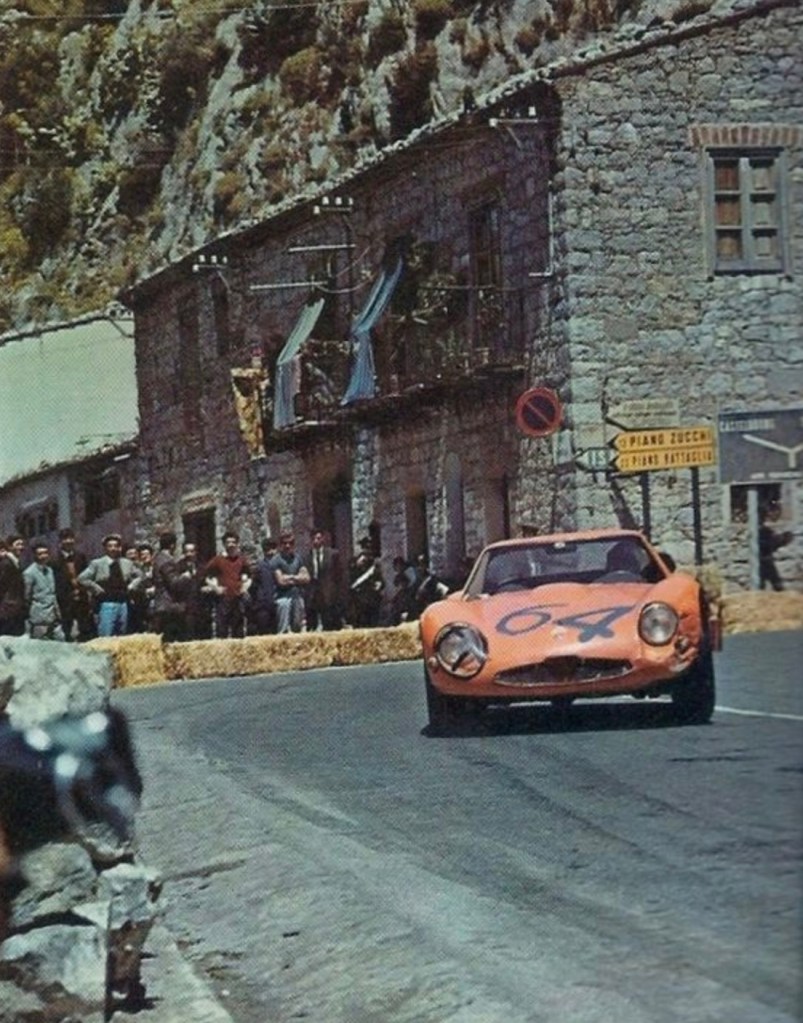
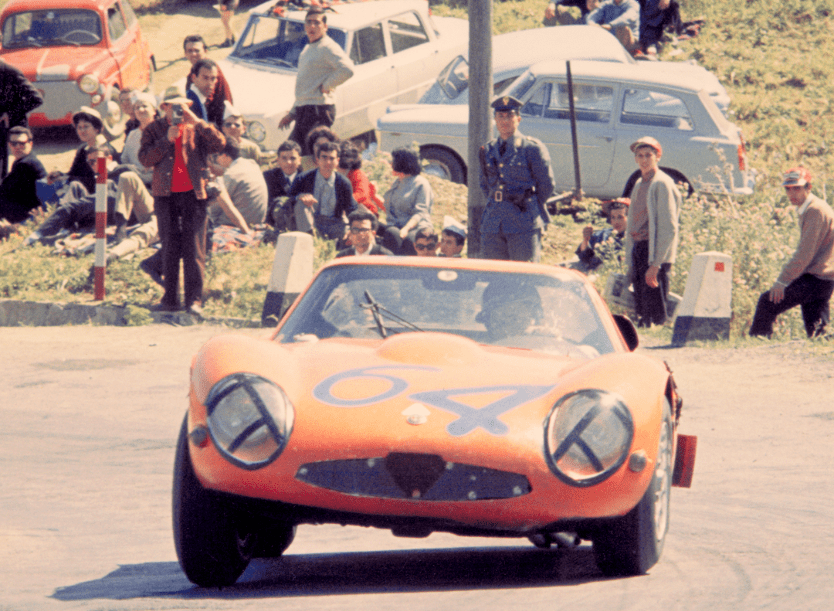
The Bussinello/Todaro TZ-2 #750112 during the 1965 Targa Florio.
Denis Jenkinson wrote in MotorSport about the new car’s Targa appearance. ‘The special bodied orange Alfa Romeo GTZ of Autodelta, the factory team, came screaming into sight at the far end of the village street, and snarled as it slowed and changed down for the corner in the square.’
The secret of the car’s success was the careful evolution of the TZ-1 chassis and engine. Later in its competitive life in Australia, the capacity of the twin-plug twin-cam four-cylinder engine fitted to 750112 was circa-1.9-litres rather than the 1.6-litre unit first fitted.
To reduce weight, the TZ’s aluminum body was replaced with a lighter fibreglass one, with the exception of ‘our’ 750112. Designer Ercole Spada created an erotic, lower, leaner, more aggressive body. All of the improvements resulted in a car that sat 140 mm lower, produced 20 extra horsepower and weighed 40 kg less than the TZ-1.
(Alfa Romeo)
Alfa Romeo historian/author Ed McDonough wrote that, ‘Unfortunately, by the time the TZ-2s made their race debut at Monza in 1965, Alfa management had already told Carlo Chiti, Autodelta’s director, that his shop was to concentrate its efforts on developing the GTA and the Tipo 33.’
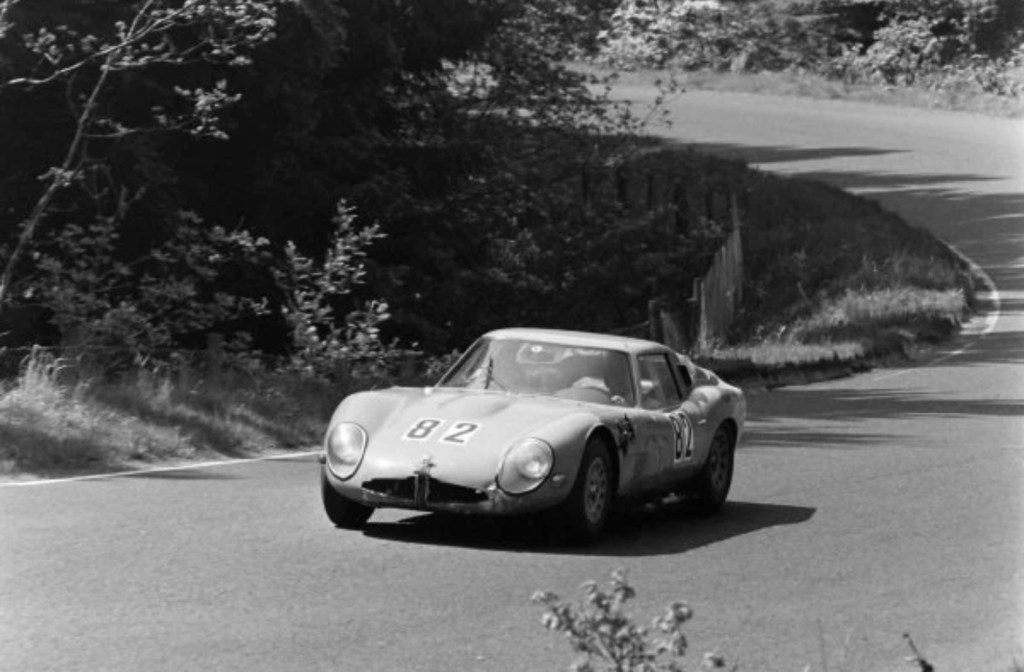
‘This was done at the TZ-2’s expense, and soon the cars were sold off to privateers. The TZ-2 raced successfully for another two seasons and scored class and sometimes even overall wins in a variety of events, including sprints, endurance races, and hillclimbs. The TZ2 extended the TZ-1’s victories with wins in the 1600 GT class at Sebring, the Targa Florio, the Nürburgring 1000 km, Monthlery, Spa and Monza.’
(B Reid)
Max Brunninghausen in the Warwick Farm form up area above, and in the Surfers Paradise pits in 1968 below.
(J Gray)
‘There are constant arguments as to how many TZ-2s were built, ‘ wrote Ed McDonough. ‘According to Alfa expert L. Fusi, twelve were made from chassis 750.114 to 750.121, obviously leaving some numbers out. Author David Styles says ten were built, while Hull and Slater say twelve, as does Belgian Tony Adrieansens. Adrieansens argues eight were made in 1965, and four of the 1965 TZ-2 chassis were built with TZ-1 chassis numbers. For example, 750.104 is a TZ-1 chassis number but is an early TZ-2. 750.1106 is the same and was one of the early test cars. Possibly 750.112 is the only aluminium-bodied car.’
‘All the nine Zagato-bodied racecars are accounted for and most are in racing condition. Since the running gear is production based, they are relatively inexpensive to run in vintage racing. However, you’ll first need more than a million dollars to buy one, as that’s what the last one sold for at auction.’
Credits…
Stewart Johnson, John Crawford, Ray Kaleda, Zito Drummer, Natalino Wong, Geoff Dowdle, Bill Reid, Ken Crump via Ed Holly Archive, Kevin Bartlett Achive, John Gray, Lynton Hemer, Geoff Medley, Alfa Romeo Archive, Marouf Collection, zagato-cars.com, ‘Colour and Noise:40 Years of the Macau Grand Prix’ by Phillip Newsome, Ed McDonough ‘Alfa Romeo TZ2-Delta Force’ article on supercars.net.
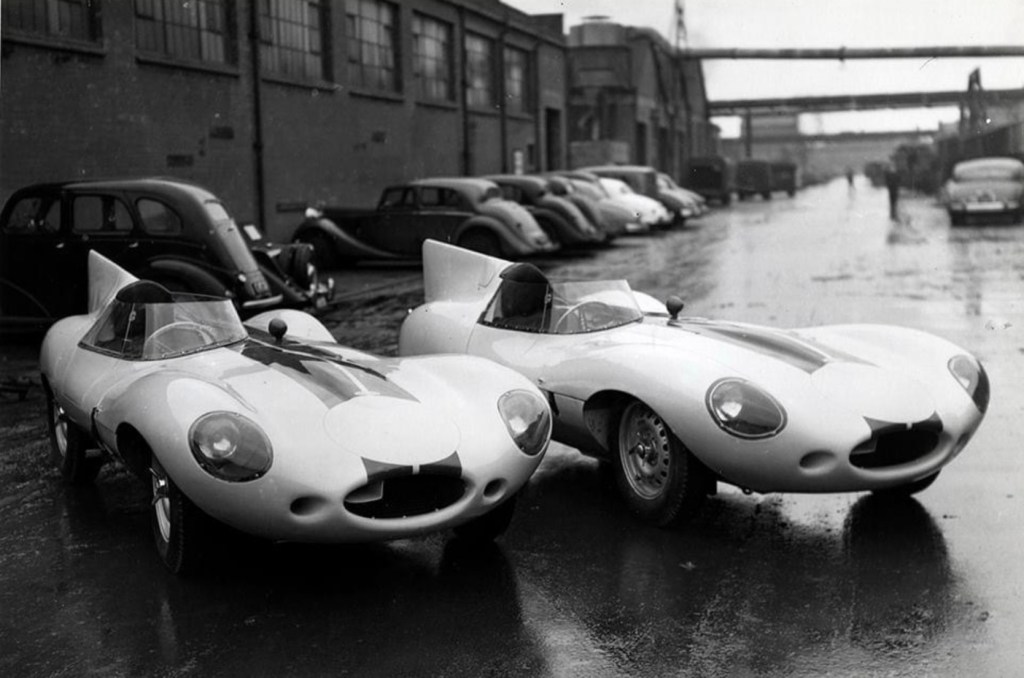
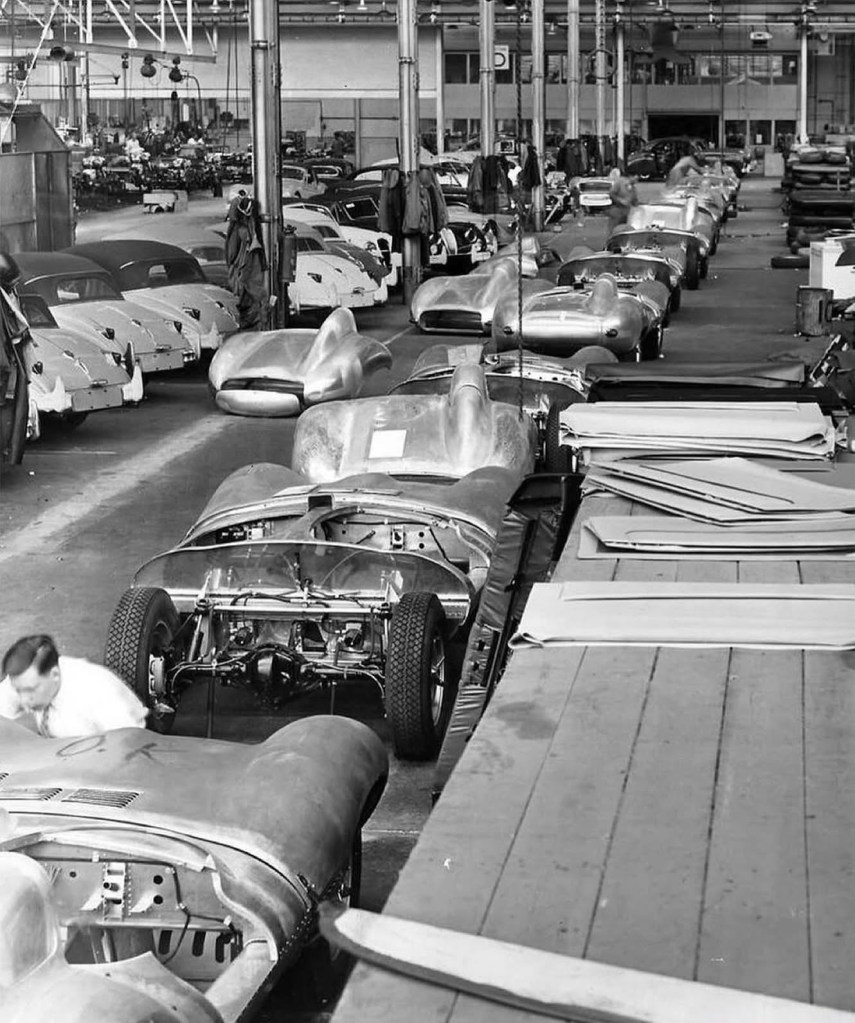
A couple of fantastic Browns Lane, Allesley, Coventry, Jaguar factory shots.
The one above is of Briggs Cunningham’s D-Types after Le Mans in 1955 before shipment to New York, and the one below is a production run of XKDs, surrounded by XK140s in 1956; the factory fire was on February 12, 1957.
(Jaguar)
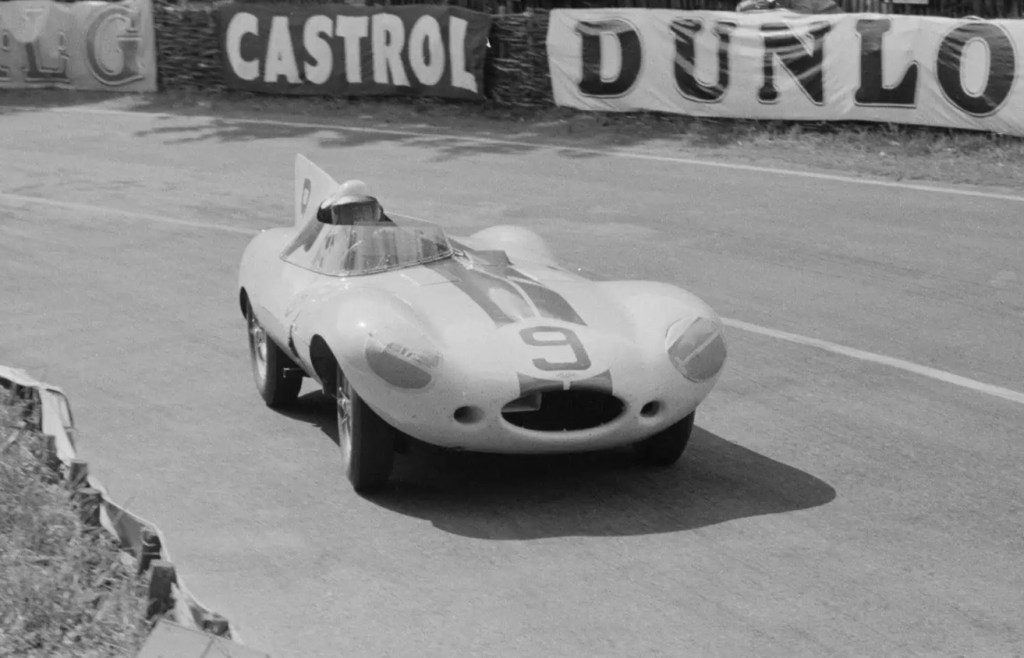
Cunningham’s cars were painted white with a blue stripe: they are XKD507 and XKD508.
XKD507 was driven by Phil Walters/Bill Spear at Le Mans on June 12, DNF with valve or ignition problems in the seventh hour with 43 laps to their credit.
Cunningham’s D-Types were ‘works blessed’, meaning Jaguar New York – Briggs Cunningham and Alfred Momo – had factory support to represent Jaguar on U.S. tracks.
The machine was first in the GP of Watkins Glen, at the SCCA National at Hagerstown, Maryland and the Nassau Production Sports Car race driven by Sherwood Johnson that year. John Fitch drove it to a win at Nassau the following year.
Walt Hansgen raced it to the Sports Car Club of America’s (SCCA) D-Modified championship in 1956 and 1957. On Bonneville’s Salt Flats it hit 185 mph.
These days, XKD507’s custodian is the Revs Institute.
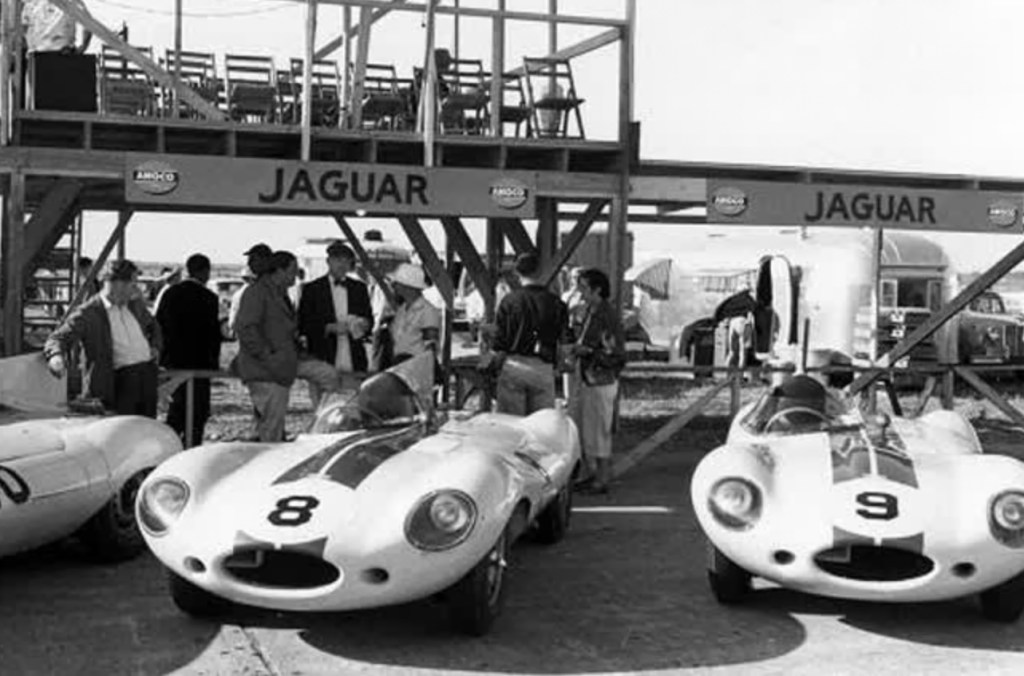
The Walters/Spear XKD507 at Le Mans in 1955, DNF (unattributed)The #8 Mike Hawthorn/Desmond Titterington XKD507 and #9 Hamilton/Bueb XKD508 at Sebring in 1956 (unattributed)
XKD508 was a works entry at Le Mans in ’55 for Don Beauman and Norman Dewis, accident and sandtrapped after 106 laps in the 11th hour.
Then shipped to Jaguar New York, fitted with Engine no. E3006-9 and painted in Cunningham colours.
It contested the 1956 Sebring 12 Hours, Duncan Hamilton/Ivor Bueb DNF. Hansgen won at Eagle Mountain and Thompson Raceway that year, and Walt was the Watkins Glen GP winner in it in September 1957. It remained with Cunningham and was modified by Momo. It was crashed, was returned to Browns Lane and scrapped.
For the sake of completeness, in March 1957, after the factory had withdrawn from racing, Jaguar sold XKD605, a used car, to the Cunningham team.
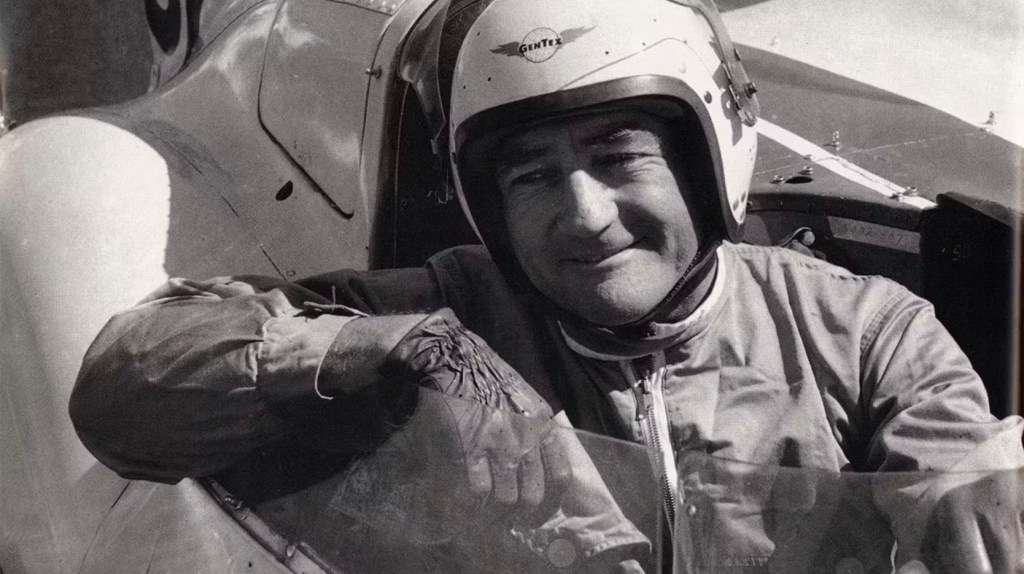
Briggs Cunningham in one of his D-Types, date and place unknown. Note the GenTex – General Textile Corporation – US military helmet (Revs)(Watkins Glen Historic)
Walt Hansgen and Ed Crawford start the September 21, 1957, Watkins Glen Grand Prix as Tex Hopkins does his thing. Walt won the 44-lap, 163 km race, and Ed was fourth. Cunningham was eighth in one of his D-Types.
Etcetera…
(D Morton)
Ivor Bueb aboard XKD605 shared with Mike Hawthorn at Sebring in 1957 and the engine bay of one of the team Ds at the same event.
(D Morton)(K Ludvigsen)
Mike Hawthorn at Sebring ahead of the Cunningham/Bill Lloyd D, DNF valve. Perilous nature of the 44’s marking the course readily apparent…and the cause/contributor to the death of Bob Goldich, Arnolt Bristol in this race.
Credits…
Jaguar Cars, coventryracers.com, Watkins Glen Historic, Revs Institute, Doug Morton via the Automobile Racing Club of Florida, Karl Ludvigsen
Paul Hawkins shared Jackie Epstein’s Ferrari 250LM in the 1966 Targa Florio. They were 30th in the race won by the Willy Mairesse/Muller works-Porsche 906.
Its funny where I’m finding photos, which give me the ideas for articles, in recent times. Ebay facilitates sales of lotsa things, including motor racing photos. So, Googling, ‘Paul Hawkins Ferrari’ up popped the two Ebay ad shots. Punters put the shots up at just about a sharp enough resolution to use. So there you have it, the photo credits here are all Ebay unless identified otherwise. And yes, the sellers rarely credit the original photographer, albeit I recognise many as LAT/MotorSport Images material…so I’ve just slapped LAT on the lot.
(LAT)
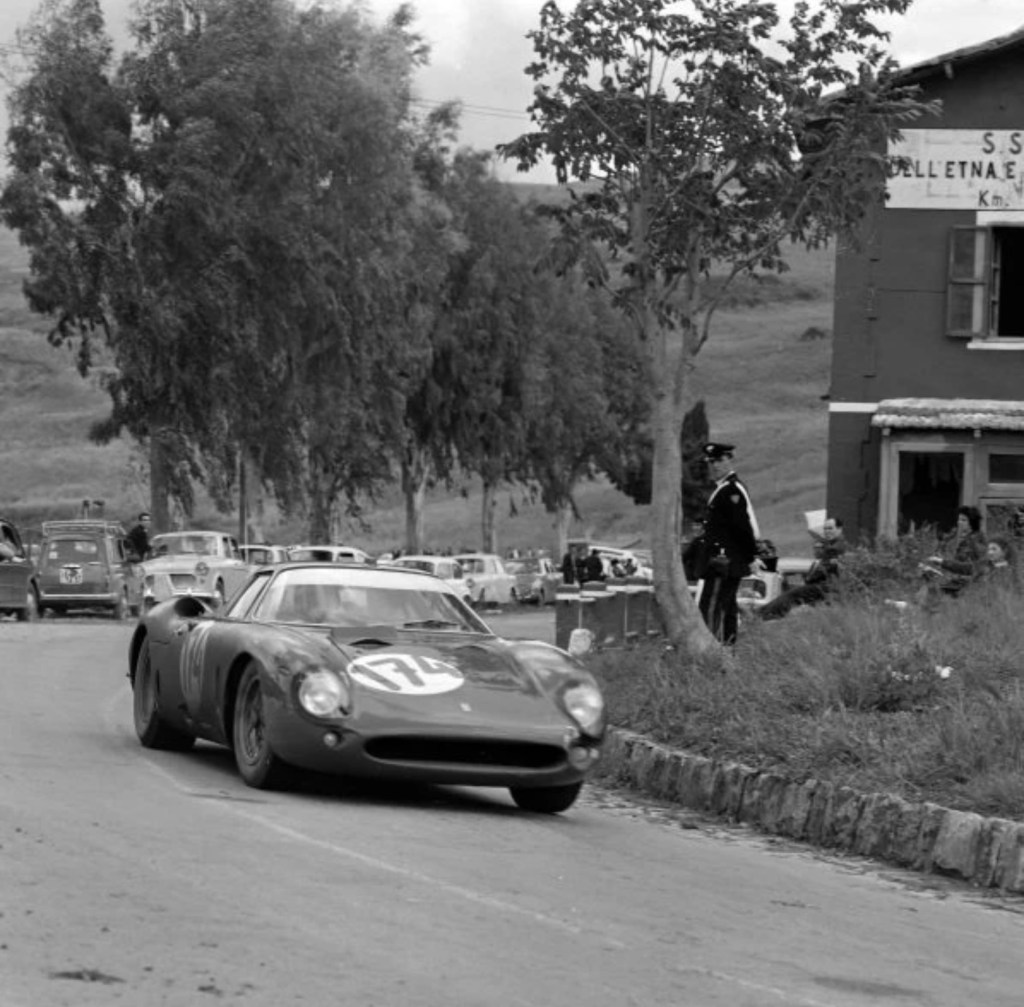
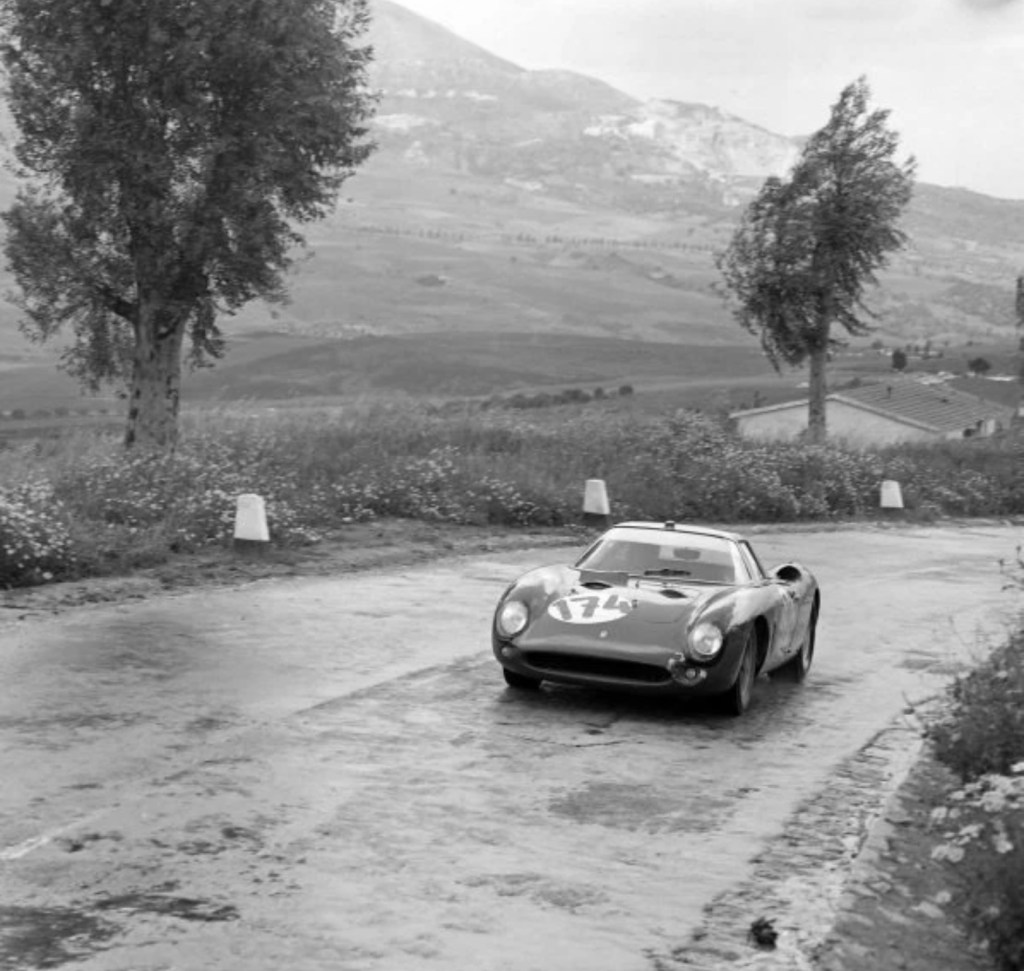
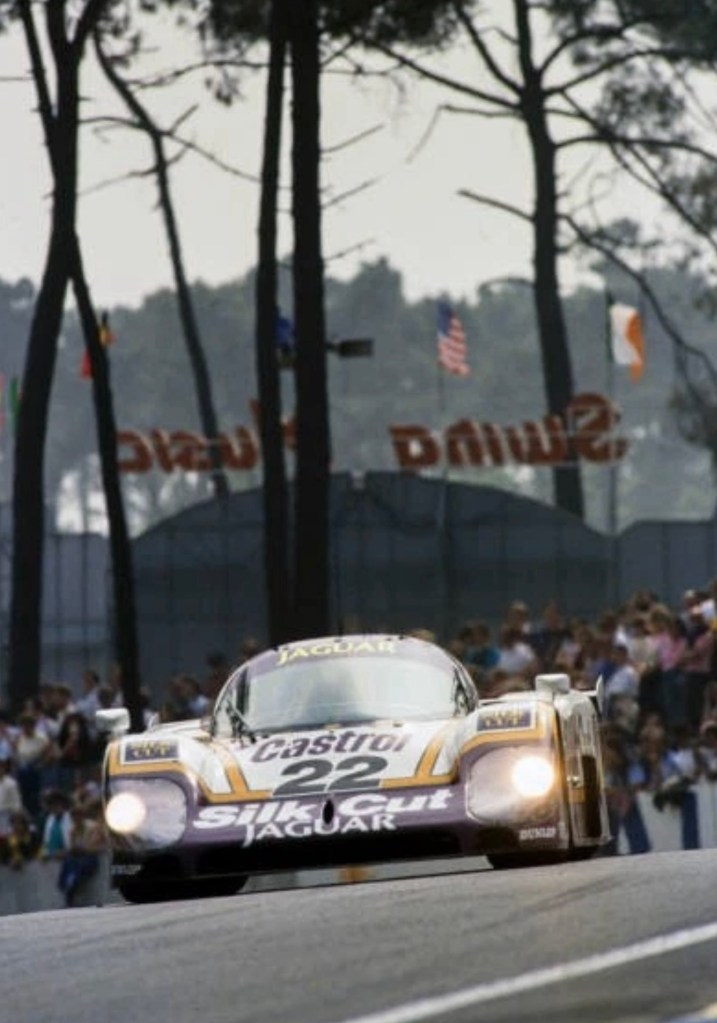
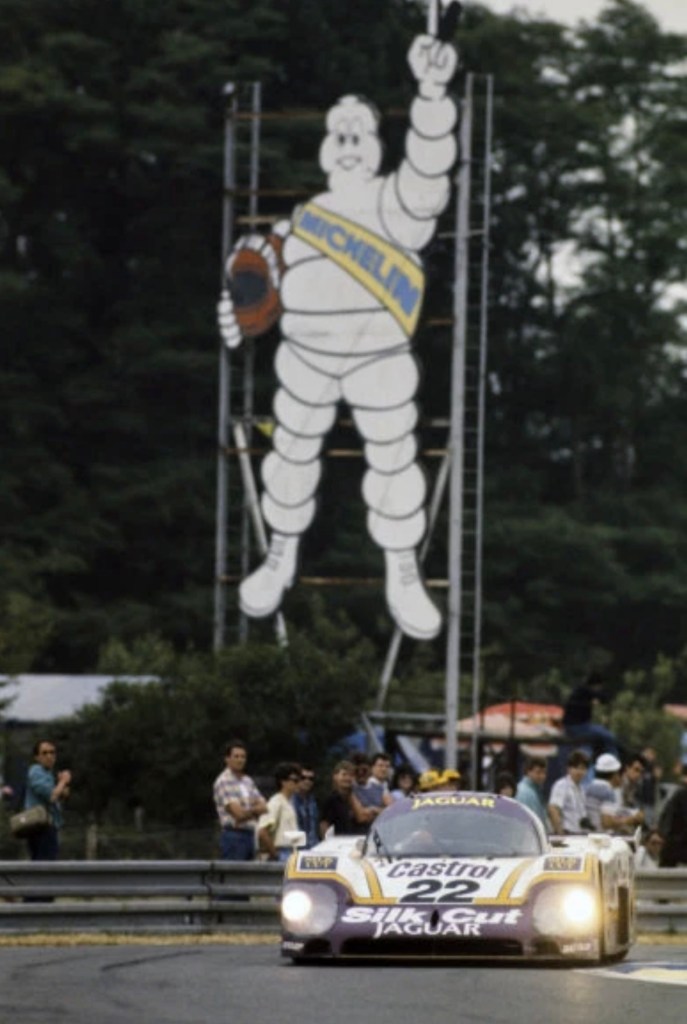
The Larry Perkins/Kevin Kogan/Derek Daly fourth placed TWR Jaguar XJR-9 V12 at Le Mans in 1988.
Jaguar’s 1988 Le Mans victory was an endurance racing defining moment, marking Jaguar’s return to the top after decades of Porsche dominance; they last won Le Mans in 1957: D-Type Ron Flockhart/Ivor Bueb.
Their weapon of war was Tony Southgate’s, TWR-built, carbon fibre XJR-9 7-litre V12. Jan Lammers, Johnny Dumfries and Andy Wallace won while Larry was fourth, his purple and white machine shared with Irishman Derek Daly and American Kevin Cogan.
The race was a long, tense Jaguar-Porsche duel with a light rain adding to the late race drama, allowing Hans Stuck’s 962 to close the gap. Jaguar’s lead remained intact despite a gearbox failure in the final hour. Jan Lammers kept the car in fourth gear for the balance, nursing the XJR-9 to victory and delirious joy from the army of Jag enthusiasts present.
Larry was an easy choice for Tom Walkinshaw. Both were on the slippery slope of the intensely competitive European scene in the early 1970s; Tom watched Larry rise to the top. F1. Not to forget that they had jumped into bed together via Holden Special Vehicles in Australia in 1988; Perkins Engineering were contracted to run Holden’s race program.
(LAT)
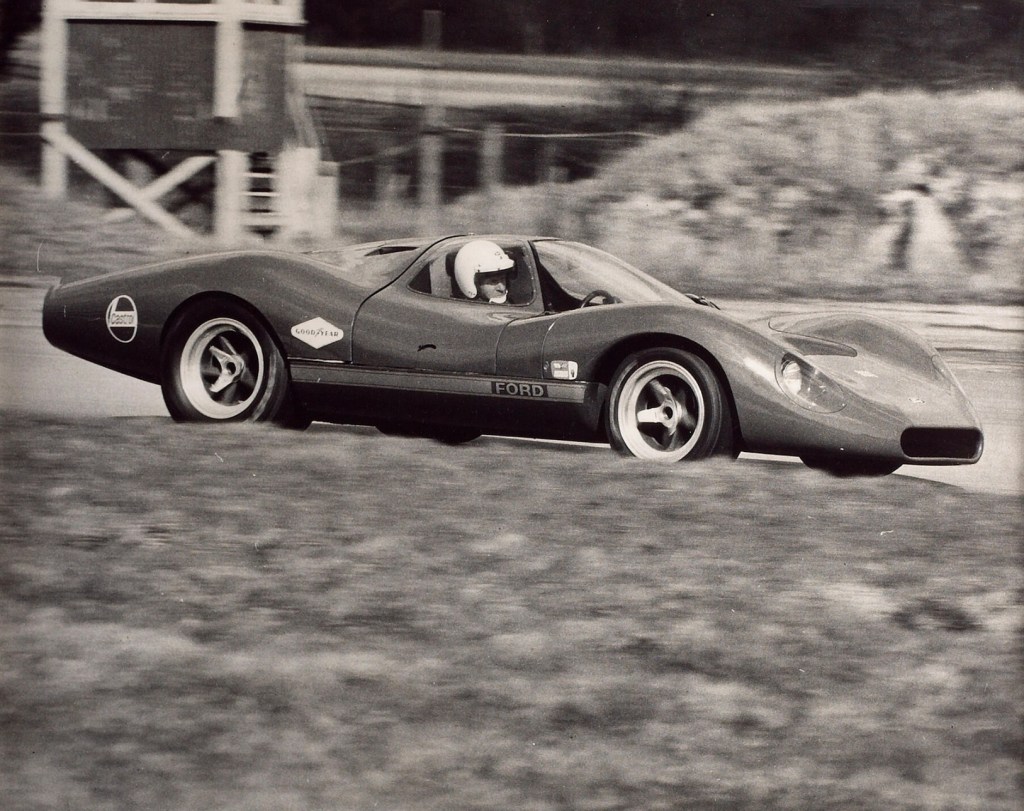
Frank Gardner testing the Ford F3L/P68 at Goodwood in 1968, date folks?
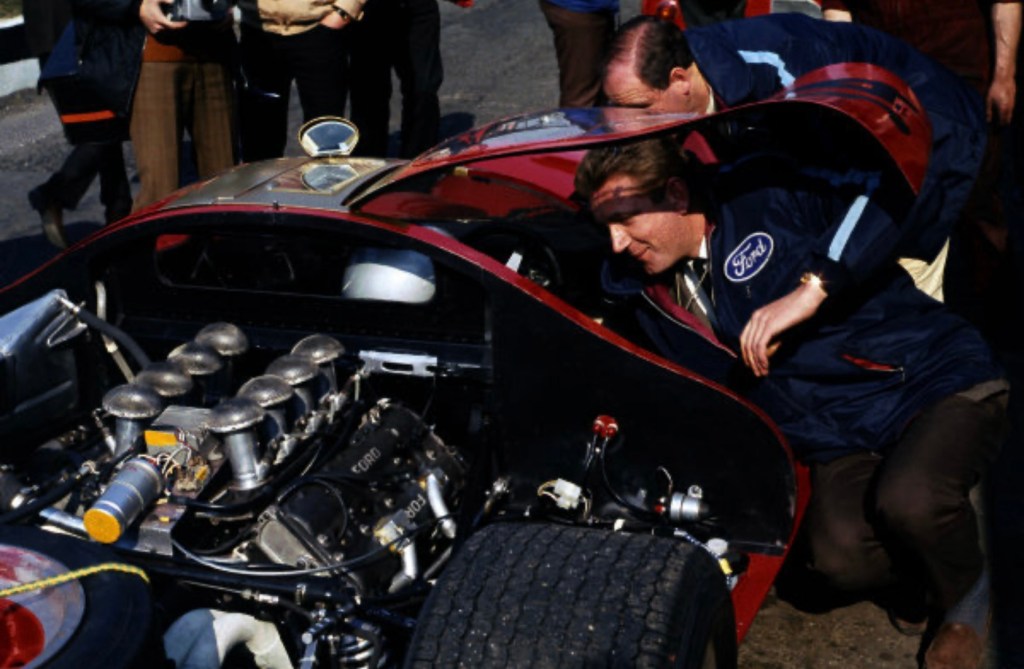
Meanwhile, Alan Mann gets the lowdown from Bruce McLaren below. 3-litre Ford Cosworth DFV in clear sight, Hewland DG300 gearbox not so. The engine, which was designed to be used as a stressed member, wasn’t, and that’s about where the problems started…
(LAT)
The John Raeburn/Nicholas Granville-Smith Ford GT40 during the 1968 Nurburgring 1000 km.
Melbourne-born John Raeburn raced sports cars briefly in Europe in the mid-1960s before retiring at the ripe old age of 32 at the end of ’68.
John raced Holdens and then made his name with his consistent winning pace in a Buchanan Holden from April 1960 to July 1961. Into the mix were drives in Jaywood Motors Appendix J Holden Humpy and FC.
He competed in the 1960-64 Armstrong 500 at Phillip Island and Bathurst, sharing a Singer Gazelle with Harry Firth in 1960, and then Firth’s works Ford Cortina GT, Zephyr MkIII and Falcon.
He took on the big-car challenge in 1965, finishing fifth in the one-race Australian Touring Car Championship at Sandown. His mount was the 7-litre Ford Galaxie left in Australia after the ’64 Sandown International by Sir Gawaine Baillie. He jumped on a ship for Europe with the intention of racing the car in the UK, but Baillie sold it before he got there.
Undeterred, he started working for Graham Warner’s Chequered Flag Motors in 1966, driving their Shelby Cobra in the 500 Zeltweg 500 km.
He raced Mike de Udy’s Porsche 906 with Roy Pike in the Reims 12 Hours in 1967, and took part in several 1968 World Sportscar Championship rounds at Monza, Spa-Francorchamps and Nürburgring. His car was a yellow Ford GT40, chassis #1001, owned by Andy Cox, ‘who had won money on the football pools and bought himself a GT40,’ wrote Doug Nye.
Among his driving partners were Nicholas Granville-Smith and another Australian tyro who did a stint at The Chequered Flag, Tim Schenken.
Reaburn reported his exploits back home via Racing Car News. Raeburn tested a Formula 3 car at Brands Hatch in 1966, matching Tony Lanfranchi’s times, and a works F2 Lotus 48 Ford FVA at Hethel in 1967, but, being a tall unit, decided to concentrate on sports car racing.
He quit racing at the end of 1968, aged 32. In recent years John lived in retirement with his wife in Mooroolbark, Victoria. He passed away from a stroke, on Saturday, 26 November 2016, aged 80.
Keep an eye out for a feature coming up on John thanks to my mate Gregory Smith…
(LAT)(LAT)
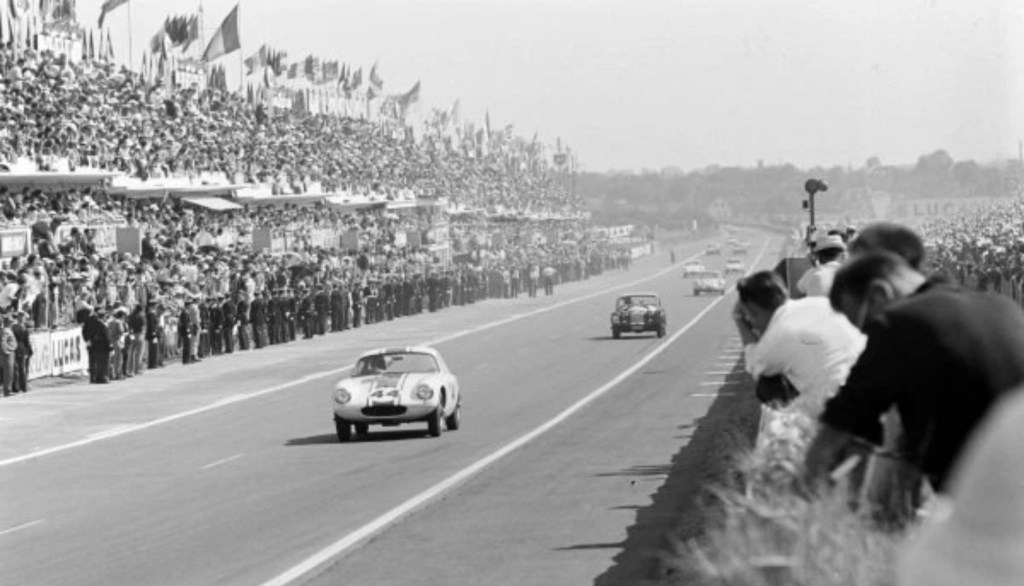
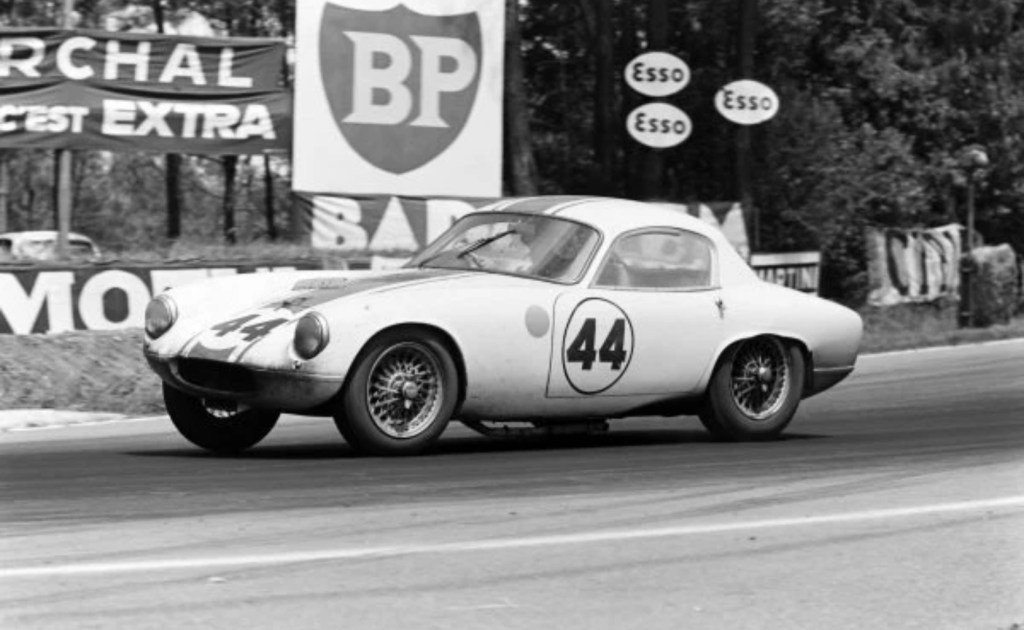
The Frank Gardner/David Hobbs Lotus Elite during the 23-24 June 1962 Le Mans 24 Hours.
Team Elite entered two cars, Hobbs/Gardner shared the #44 (chassis 1678) and Clive Hunt-Jesse Wyllie #45 (chassis 1792). #44 car finished eighth and #45 11th. That was again a win in the 1151-1300 cc class. There was also a double finish (first and third) in the Index of Thermal Efficiency. The #45 car finished eleventh.
This Le Mans is remembered for the clash of the titans, Colin Chapman and the ACO. Chapman entered his new Lotus 23 Lotus-Ford twin-cam 1.5 in the Experimental class.
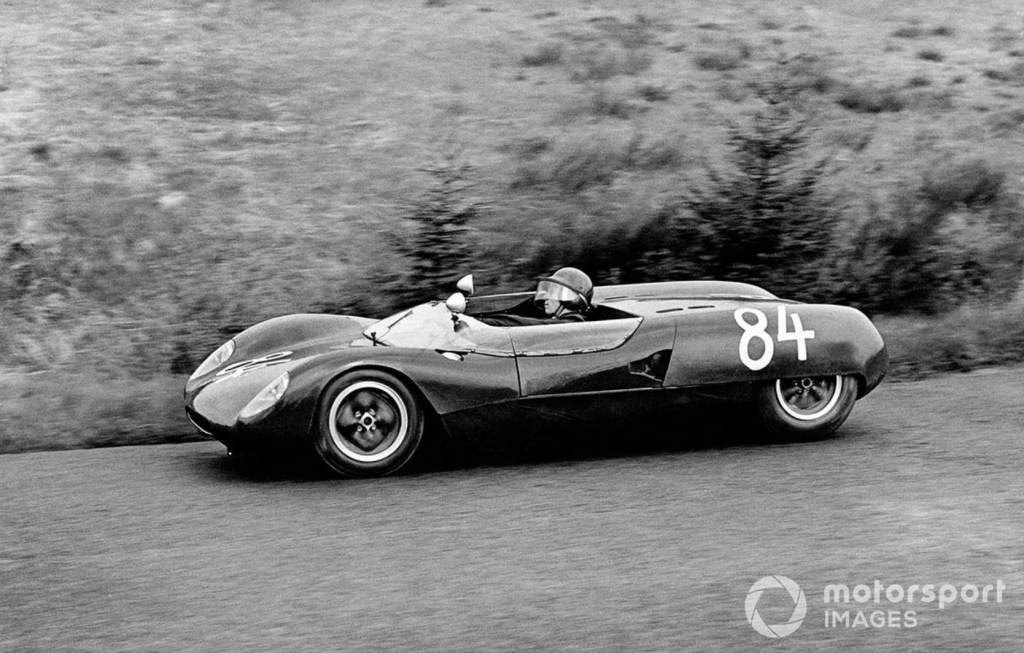
Jim Clark wowed the pundits with a staggering Lotus 23 performance in front of the V6 and V12 engines in the May 27 1000 km Nürburgring before problems intervened.
Clark/Taylor Lotus 23 Lotus-Ford twin-cam 1.5 DNF Nurburgring 1000 km 1962 after 11 of the winners 44 laps. Jim at the wheel
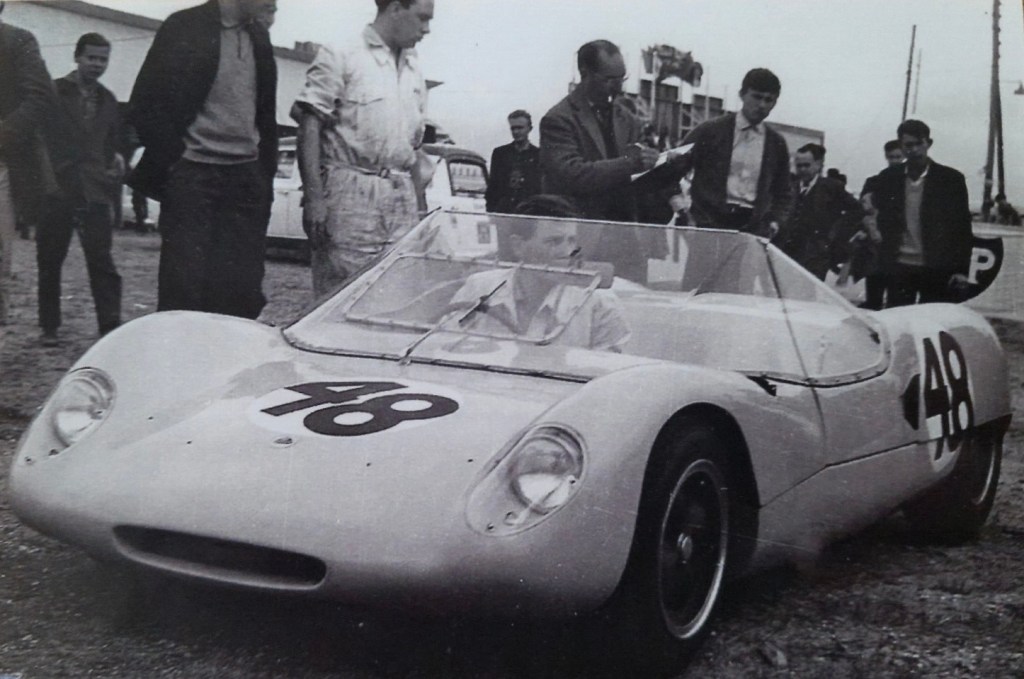
The #47 Lotus 23 was fitted with a 997cc Ford Cosworth MAE twin-cam engine as a potential Index of Performance winner in the hands of works F1 drivers Clark and Trevor Taylor. The other #48 Lotus 23 (below) was a UDT Laystall entry for Les Leston and Tony Shelly.
The Les Leston/Tony Shelly UDT Laystall Lotus 23 Coventry Climax FWM 747cc. ‘Refusé au pesage’ by the ACO (unattributed)
Both cars looked odd because of the required front window dimensions, but they weren’t allowed to be scrutineered due to insufficient ground clearance, an illegally oversized fuel cell and non-conventional fixation of the wheels (four bolts in the front and six at the back).
Chapman flew Frank Costin from London to plead his case that a four-bolt wheel affixation sufficed; the team made the change in the paddock. He offered a stress test, but the scrutineers still said no, so the two Lotus 23s couldn’t take part! Chapman was incandescent with rage, swearing that never again would a works Lotus race at Le Mans.
(LAT)(LAT)
Horst Kwech in the Alfa Romeo T33/2 he shared with John Martino in the July 14, 1968 Watkins Glen 6 Hour.
Ok, Horst was born in Austria, lived in Cooma during his formative years and spent most of his adult life in the US, but he always wore a ‘Roo on his helmet, so we’ll claim him…
The then Alfa GTA Trans-Am star was out after only 17 of the winner’s 286 laps (Lucien Bianchi/Jacky Ickx JW Ford GT40), having qualified the car 11th, he got up to 10th before the engine cried enough. The best placed 2-litre car, the fourth placed Frank/Trieschman Porsche 906.
Earlier in the year, Kwech shared a Shelby-prepared Ford Mustang in the Daytona 24 Hour with then US-based Allan Moffat. We’ll claim that Canadian too!
The shot below shows Kwech on the outside of the Paul Vestey/Roy Pike Ferrari 250LM. Car #1 is the fourth placed! Jerry Titus/Ronnie Bucknum Shelby Mustang. Horst and Allan were out after 176 of the winners 673 with a rear suspension problem. Up fromt was two 2.2-litre Porsche 906s: driven by Vic Elford/Jochen Neerpasch/Rolf Stommelen/Jo Siffert/Hans Herrman! and Siffert/Hermann.
The works-Porsche 910 Paul Hawkins shared with Gerard Koch to second place in the May 28, 1967 Nurburgring 1000 km is about to be monstered by the 7-litre Chev powered Chaparral 2F driven by Phil Hill and Mike Spence, DNF.
Tim Schenken aboard the Ferrari 312PB 3-litre flat-12 he shared with Carlos Reutemann at Le Mans in 1973
Tim had a big year with Surtees in F1 in 1972 and did the full endurance season with Scuderia Ferrari, usually sharing his Ferrari 312PB with good mate Ronnie Peterson. They won the 1000 Km Buenos Aires and the Nurburgring 1000 km and were second at Daytona, Sebring, Brands Hatch and Watkins Glen and third in the Monza 1000 km in a solid contribution to the points haul that won Ferrari the Munufacturers Championship 160 points to Alfa Romeo, 85, and Porsche, 66.
Tim returned to Ferrari the following year, but the Matra MS670/670B had bridged the performance gapso his best results were two second places in the car he shared with Carlos Reutemann at the Vallelunga 6 Hour and Monza 1000 km.
At Le Mans, the pair were out in the 12th hour with engine troubles; the Ickx/Redman machine followed suit in the final hour, leaving the Art Merzario/Carlos Pace 312PB second, but six laps adrift of the victorious Henri Pescarolo/Gerard Larrousse Matra-Simca MS670B. More about the Matra here:https://primotipo.com/2023/09/19/matra-random/
(LAT)(LAT)
The only other Australian works-Ferrari driver was Paul Hawkins who shared a Ferrari P4 with Jonathan Williams in the 1968 Brands Hatch 6 Hour. Sadly, it was Paul’s only Scuderia Ferrari drive, but far from his last drive of a Ferrari! More about the 1967 ‘World Sportscar Championship’ and the Ferrari P4 here:https://primotipo.com/2015/04/02/ferrari-p4canam-350-0858/
The Donald Healey Motor Company, Lola, Porsche, Ford and Ferrari isn’t a bad list of works outfits to have raced for!
Speaking of the DHMC, here are some shots of the Hawkins/Timo Makinen Austin Healey Mk3 during the 1965 Targa Florio with Hawkeye at the right, ready to jump aboard. The pair were 21st in the race won by Nino Vaccarella and Lorenzo Bandini’s works-Ferrari 275 P2.
(LAT)(LAT)(LAT)
Brian Muir co-drove this Allan Mann Racing Ford GT Mk2 with Graham Hill at Le Mans in 1966
In 1966 Muir did a full season in a Willment Racing Ford Galaxie in the British Touring Car Championship. At the Norisring-Rennen in Germany, he won the GT race in Willment’s AC Daytona Cobra and finished third in the sportscar race in the team’s Lotus 30-Climax, setting the fastest lap.
Given his pace, Muir was signed to steer the Ford MkII with Hill. During the race, the pair ran in the top six before the front suspension broke during the eighth hour. More about Muir here:https://primotipo.com/2022/09/03/brian-muir/
I think the only other Le Mans entry Graham Hill shared with an Australian was with Derek Jolly in a Lotus Engineering 2-litre Lotus 15 Coventry Climax FPF in 1959.
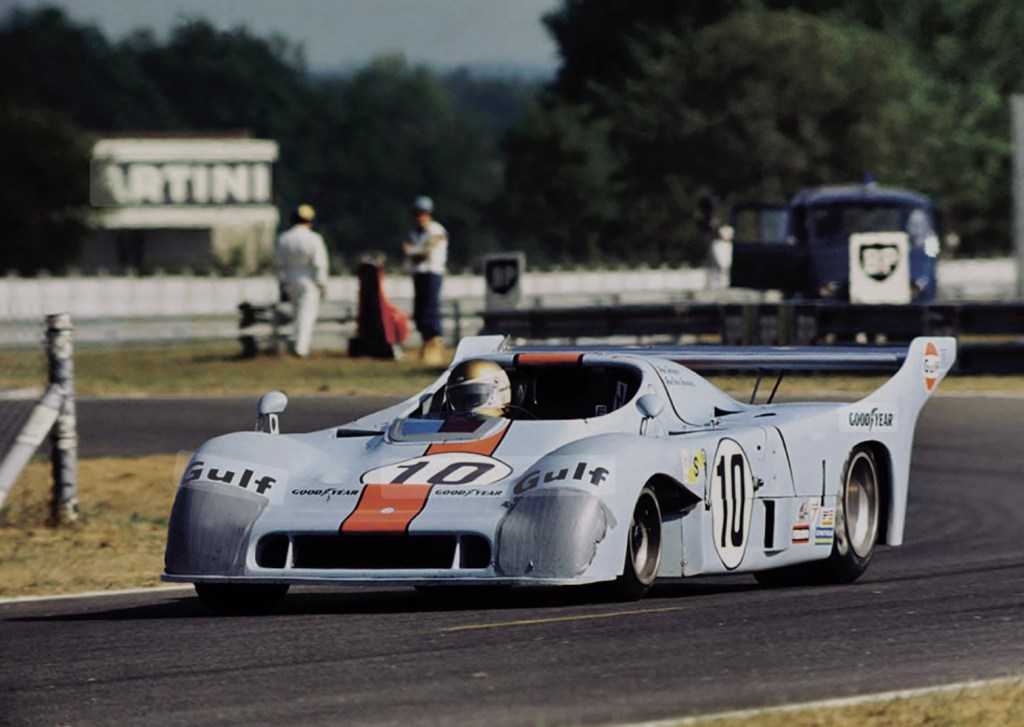
Vern Schuppan in the Gulf Mirage GR8 Ford Cosworth DFV he shared with Jean-Pierre Jaussaud to finish third at Le Mans in 1975.
Up front was the other team car driven by Derek Bell and Jacky Ickx, in second was the similarly powered Ligier JS2 crewed by Jean-Louis Lafosse and Guy Chasseuil.
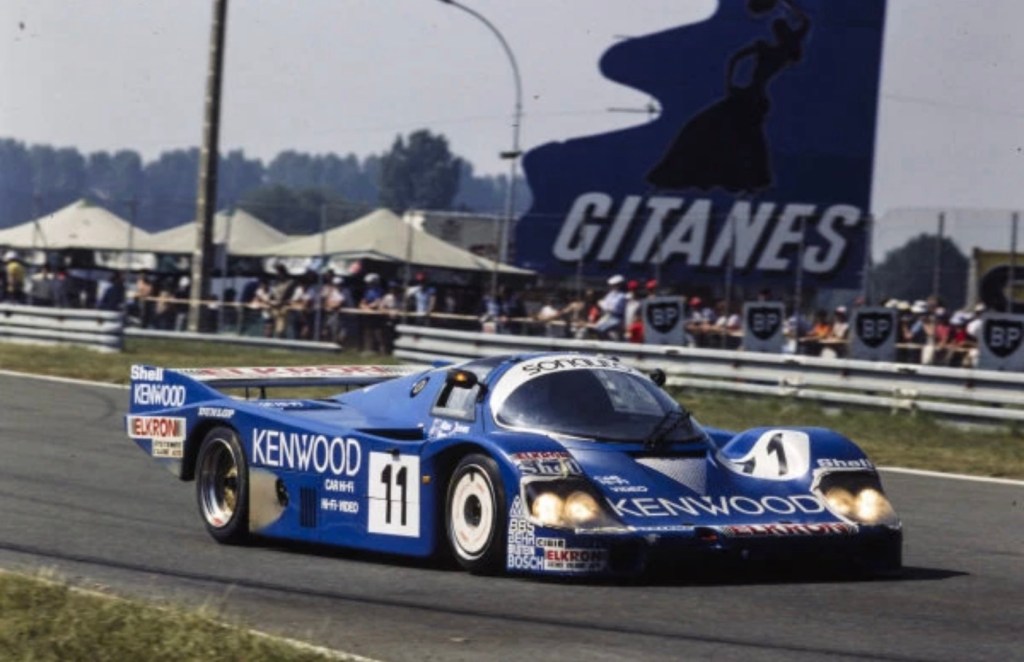
Nearly a decade later, Vern shared a Kremer Racing Porsche 956B with Alan Jones; the pair finished sixth in the race won by the Joest 956B raced by Henri Pescarolo and Klaus Ludwig.
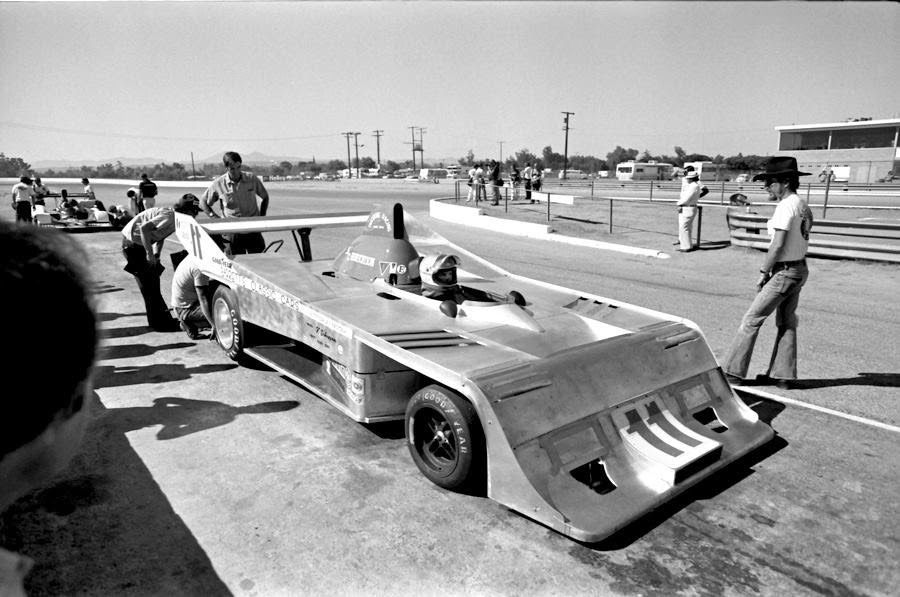
Vern in a sports car of a completely different type, an Elfin MR8C Chev F5000 converted into a central seat Can-Am machine, here at Riverside in 1977, resplendent in brand new John Webb aluminium bodywork. I’ve prattled on about this car before, see here: https://primotipo.com/2018/10/02/hit-with-the-fugly-stick/
Credits…
Ebay-LAT-MotorSport Images, Larry Roberts, Gardner Lotus Elite-History Racing Pedia, F2Index-Fastlane, Getty Images, Racing Sports Cars
Jack Brabham’s screaming Matra MS650 3-litre V12 and the rumbling Henry Greder/Jean-Pierre Rouget Chev Corvette 7-litre V8 (eighth) blast past the Le Mans pits during the 1970 Le Mans 24-Hour on June 13-14.
By all accounts, the triple world champ enjoyed his races with Matra on an all care and no responsibility basis rather than his chief cook and bottle washer responsibilities at Motor Racing Developments and the Brabham Racing Organisation, with all due deference to Ron Tauranac
He shared Le Mans mount with young French thruster, Francois Cevert, who, in addition to his endurance responsibilities, took his GP debut aboard a Tyrrell March 701 Ford that year. They failed to finish at La Sarthe, as did the other MS650s raced by Jean Pierre Jabouille/Francois Cevert and Henri Pescarolo/Jean-Pierre Beltoise; a real who’s-who of French GP winning drivers of the mid-late 1970s.
Up the front, Hans Hermann and Richard Attwood took Porsche’s first outright win aboard a 4.5-litre Porsche Salzburg 917K; the best of the 3-litre cars was the Martini 908/02 raced by Rudy Lins and Helmut Marko.
Brabham and topless Cevert watch as Bruno Morin hand on wing, Philippe Chasselut engine man, in checked shirt standing, Georges Martin crouching, with Guy Prat behind him in the Elf jacket, Gerard Ducarouge also crouching at right, behind him is Dominique Codreanu, with the head leaning in front of the gendarmes Michel Polard (J-P Fabre Collection)Brabham ahead of Derek Bell’s works Ferrari 512S during the long Le Mans night (LAT)
That year, Brabham and Dan Gurney were the two GP winners on the Equipe Matra-Elf endurance program payroll. It would be fascinating to know what those two senior citizens and noted driver/engineers thought of the Matras overall and especially its two key constituent parts: the chassis and engine. Do any of you Frenchies have anything documented in relation to this? Dan only did Sebring but Jack did the season, enough to have provided input into the development direction of the cars.
Jack on the Daytona banking, just imagine the sound of that fabulous raucous V12 echoing around its vast confines! (unattributed)That’s the rather talented Gerard Ducarouge and Jack at Daytona, Jack and Francois were tenth in the race won by the Pedro Rodriguez/Leo Kinnunen Gulf-Wyer Porsche 917K
The best results for Matra’s sports car squad that year were wins for the MS630/650 in the 1000 km of Buenos Aires-Beltoise/Pescarolo, for the MS650 in the Tour de France-Beltoise/Depailler/Jean Todt and for the MS660 at the 1000 km Paris at Montlhery-Brabham/Cevert.
Brabham had been under pressure from his wife, Betty, to retire for several years. He would have too, had Jochen Rindt returned to Brabham for the 1970 season, but Chapman offered him the earth, moon and stars to stay at Lotus, so Jack tore up the Austrian’s contract and convinced Betty he had to do one last season. Further proof of Jack’s intent was that he had sold his stakes in BRO and MRD before the end of 1969.
Doug Nye advises that when Jack’s father tapped him on the shoulder and called time, that was decisive…So Jack fitted as much as he could into that final pro-season: F1 with BRO, some F2 – John Coombs Brabham BT30 – and endurance racing with Matra.
Brabham, MS650 during the Brands 1000 km, noting the wing in search of more front bite, and the car’s rear below (M Charles)(A Damfreville)
Jack opened his Matra racing account at Daytona on February 1, where he and Cevert were 10th at the start of a season of utter domination by Porsche.
Where the 12-cylinder 917Ks didn’t win, the flat-eight 908/03 did, except Sebring, where the Ferrari 512S driven by Ignazio Giunti, Nino Vaccarella and Mario Andretti prevailed. Porsche won the International Championship of Makes, 63 points to Ferrari’s 37, Alfa Romeo’s 10 (T33/3 3-litre V8) and Matra-Simca’s four.
Brabham was pretty chipper at Brands Hatch on April 12 as he had won the South African Grand Prix in early March, showing the new breed – the array of 1970 F1 newbees included Emerson Fittipaldi, Francois Cevert, Ronnie Peterson and Clay Regazzoni – there was life in the old dog yet!
He was paired with JPB in an MS650 in the Brands 1000 km, the pair finishing 12th, 34 laps adrift of Pedro Rodriguez, who blew the minds of onlookers with his handling of the JW Automotive Porsche 917K in the most atrocious weather conditions.
Brabham in the MS650 he shared with JPB at the April 25 Monza 1000 km in 1970. Aerospace company knew a thing or two about aerodynamics. This angle allows a good look at what they thought worked, the only tacked-on ‘appendage’ is the front wing, that seems to be unique to this particular chassisMS650 at Monza in 1970. The Matra 3-litre V12 in MS12 endurance spec gave about 410 bhp @ 10400 rpm
The same duo were fifth in the Monza 1000 km, then came Le Mans, and that season-ending Paris 1000 Kilometres win for Jack and Cevert at Montlhery on October 18. The Aussie-Franco duo won this non-International Championship of Makes round aboard a new MS660 monocoque by three laps from the Jose Juncadera/Jean-Pierre Jabouille Ferrari 512S and the Larrouse/Chasseuil/Ballot-Lena Porsche 908/02. More about their Montlhery victory here:https://primotipo.com/2016/09/09/jack-and-francois-matra-ms660/
It was Jack’s final pro-race win, as against mucking around in touring cars in Australia in the mid-late 1970s, he ‘retired’ after the Mexican Grand Prix on October 25, so that Montlhery win would always have been memorable as he very soon felt, strolling around his Wagga Wagga paddocks and Bankstown Ford dealership, that he had retired too early…
I’m not so sure about that. He is one of the few who retired at the top of his game; had fortune favoured him, he would have won the Monaco and British Grands Prix, if not one or two others that season. His timing was immaculate…and he was alive.
Beltoise/Pescarolo Matra M630 Ford, Montlhery, Paris 1000 km, October 1967 DNF gearbox (Matra)
Matra M630-MS650…
Matra entered racing with the F3 monocoque MS1 in 1965, the MS3 Djet was their first sports car launched the same year, whereas their first sports-racer, the MS4/620, was built in 1966. More about the MS620 here:https://primotipo.com/2015/11/15/matra-m620-brm-le-mans-1966/
The MS630 spaceframe coupe succeeded it in 1967, and was powered by a 2-litre P60 BRM V8 as a prototype (all three ’66 Le Mans entries DNF) and with a Ford 289/4.7-litre V8 as a sports car. In 1968, it raced as a 3-litre prototype fitted with Matra’s new V12 engine. While both cars again failed to finish the all-important race at Le Mans, Q4 and Q5 were indicative of race pace.
For 1969, chief engineer Bernard Boyer designed and built the MS640 coupe and MS650 spyder around the same key components inclusive of the MS630 spaceframe chassis but fitted with a comprehensive evolution of the V12 engine.
The MS12 had relocated intake ports which had been placed between the camshafts on the 1968 MS9. The MS12 ports were within the 60-degree Vee, a more conventional ‘crossflow’ position. Twin camshafts actuated four valves per cylinder and Lucas fuel injection was retained. The endurance spec engines were slightly detuned in comparison to Matra’s F1 units and produced about 410 bhp at 10,400 rpm. A robust ZF five-speed transaxle was also specified.
The Guichet/Vaccarella M630 Coupe ahead of the Courage/Beltoise MS650 at Tertre Rouge during Le Mans 1969 (unattributed)MS9 Matra V12 in the Guichet/Vaccarella MS8/M630 at Le Mans in 1969 (A Damfreville)
The MS640 Coupe was ready for the Le Mans test on March 30. The striking car featured a very curvaceous, slippery body, inclusive of a pair of tail-mounted vertical fins and partially enclosed rear wheels.
While Choulet’s body was slippery, it produced bulk lift over 300 km/h, the Matra got away from Henri Pescarolo before he had done many laps. He escaped from a massive accident with ‘only’ serious burns, but that chassis was destroyed, and the other MS640 was probably rebuilt as an MS650 spyder.
Matra MS20/640, early test with Henri Pescarolo in 1969, venue folks? (F Hurel)Piers Courage looks pretty happy with fourth place at Le Mans in 1969, MS650. Didn’t he have a sensational F1 year with Frank Williams’ Brabham BT26 Ford (Matra)
At Le Mans, Matra entered and raced a 1968 spec M630 Coupe, a pair of M630/650 hybrids and a new MS650. The updated 1968 cars and MS650 were fitted with spyder/roadster bodies that were low, wide, long-tailed and incorporated a small rear spoiler; learnings from Pesca’s accident.
Piers Courage and Jean-Pierre Beltoise raced the MS650 from grid 12, while one of the M630/650s was a bit quicker and started eleventh. The JPB/Courage MS650 was fourth, the Jean Guichet/Nino Vaccarella MS630 fifth, and the surviving Nanni Galli/Robin Widdows M630/650 was seventh.
Following Le Mans, the MS650 and an M630/650 were raced in select rounds of the World Championship, with the first real success at the Paris 1000 km at Montlhéry, where Jean-Pierre Beltoise and Henri Pescarolo drove the MS650 to victory, followed home by the MS630/650 crewed by Pedro Rodriguez and Brian Redman.
Beltoise/Pescarolo MS630/650 winners in the Paris 1000 km Montlhery 1969 (P Vauvert)Two more Daytona shots help us with the MS650’s (M Lebold)Brabham chopped and changed his helmets in 1970 between ye-olde-faithful Bell Magnum, as here, a Bell Star, and US military-derived Gentex SPH-4 (L Galanos)
Two further MS650s were produced and campaigned at Sebring, Daytona, Brands Hatch, Monza, and Le Mans during 1970.
Given the pace of other 3-litre prototypes: Porsche 908, Alfa Romeo T33 and Ferrari 312P Matra’s the MS650 raced at Le Mans alongside its replacement MS660 (Beltoise/Pescarolo DNF gearbox). While outwardly similar, it featured an all-new aluminium monocoque chassis. It was a step forward, but it took the 5-litre to 3-litre engine regulation change for the new for 1972 Matra MS670 to deliver the goods at Le Mans from 1972-74.
Henri Pescarolo on the way to 1972 Le Mans victory aboard a Matra MS670 shared with Graham Hill. A great day for France (LAT)
Etcetera…
(A Damfreville)
Matra MS620 (MS620-01) BRM 2-litre V8 during the April 3, 1966 Le Mans test weekend.
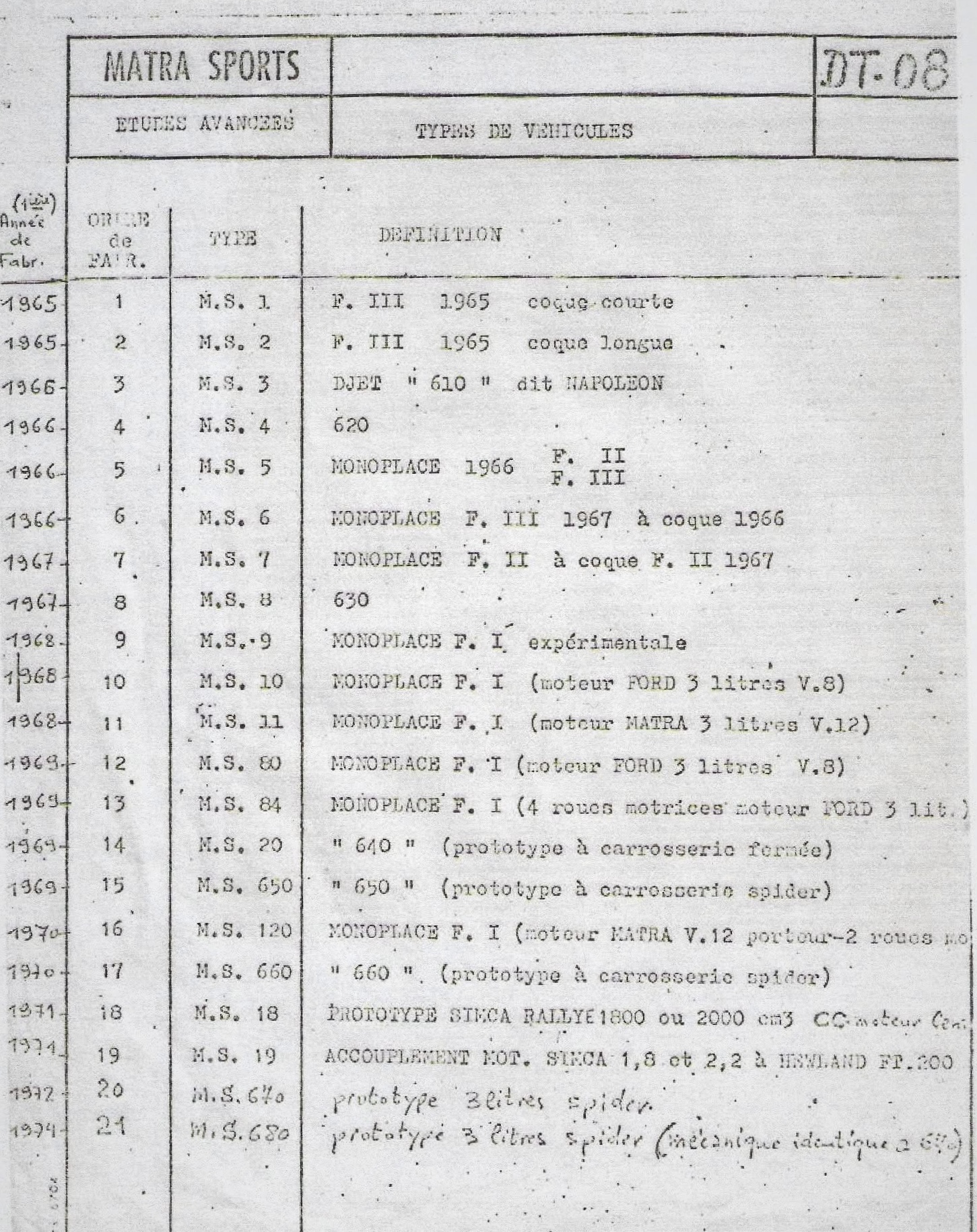
Matra Sports Type List and Designations
MS630 and a couple of MS7 Ford FVA F2 cars. Perhaps, thanks to reader, ‘Pete, ‘it looks like the location might be Marigny airport (in the Champagne-Ardenne region of France) where they did testing ahead of Le Mans.’
(Matra)
1970 Le Mans pit panorama.
#32 is the Brabham/Cevert MS650, #31 the Beltoise/Pescarolo MS660 DNF transmission in the seventh hour. The other obscured MS650 was raced by Patrick Depailler/Jean-Pierre Jabouille/Tim Schenken, it too was out in the seventh hour with an engine problem. If my memory of a conversation with Tim serves, he did very few practice laps and didn’t get a steer in the race.
Let’s not forget that Matra – Matra MS80 Ford – were the reigning World F1 Champions in 1970, both Constructors and Drivers.
This Elf PR session at Montlhery in October 1969 shows Jackie Stewart in his 1969 World Championship winning MS80 Ford DFV from Henri Pescarolo’s MS7 Ford FVA F2 car, then Jean-Pierre Beltoise aboard an MS650, then, perhaps Johnny Servoz-Gavin, MS630/650 and finally an MS630…
Eric della Faille, Jean-Pierre Fabre Collection, Francois Hurel, Michel Charles, Marc Lebold, Revs Institute, Antoine Damfreville, Louis Galanos, Patrick Vauvert, Matra Sports Facebook group, F2Index-Fastlane, racingsportscars.com