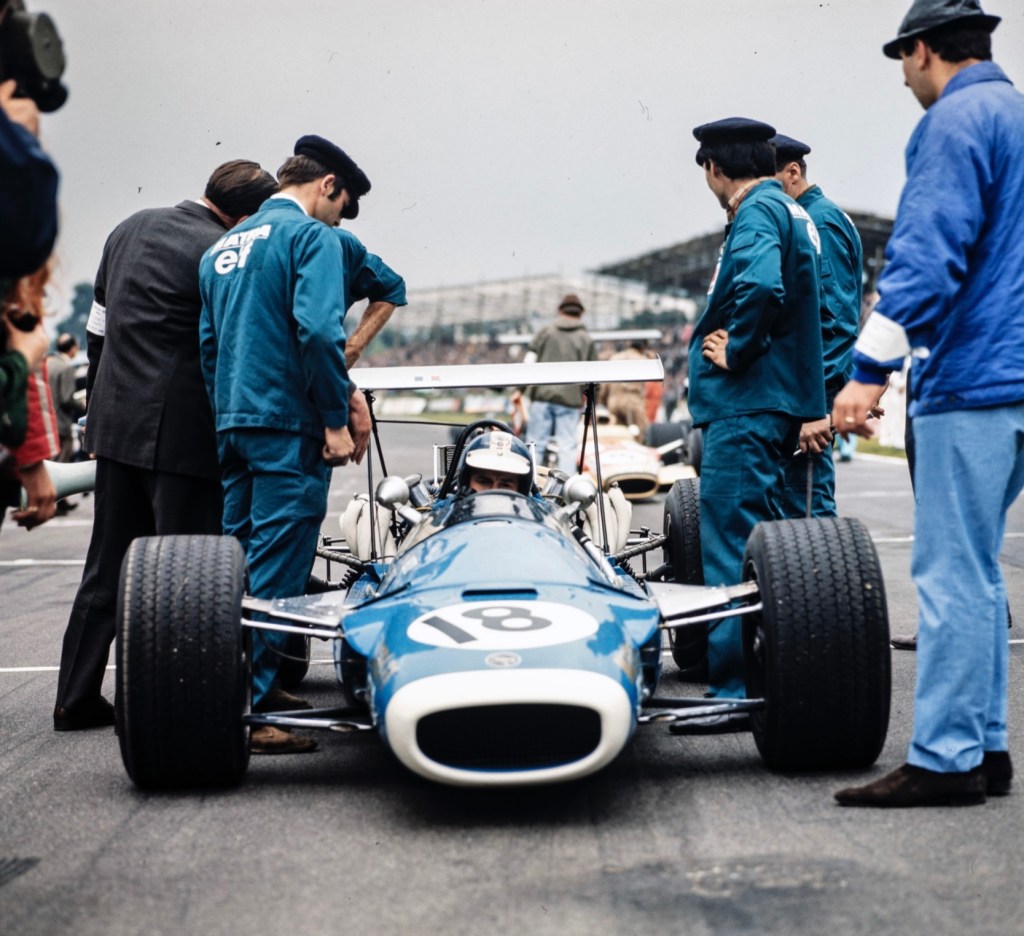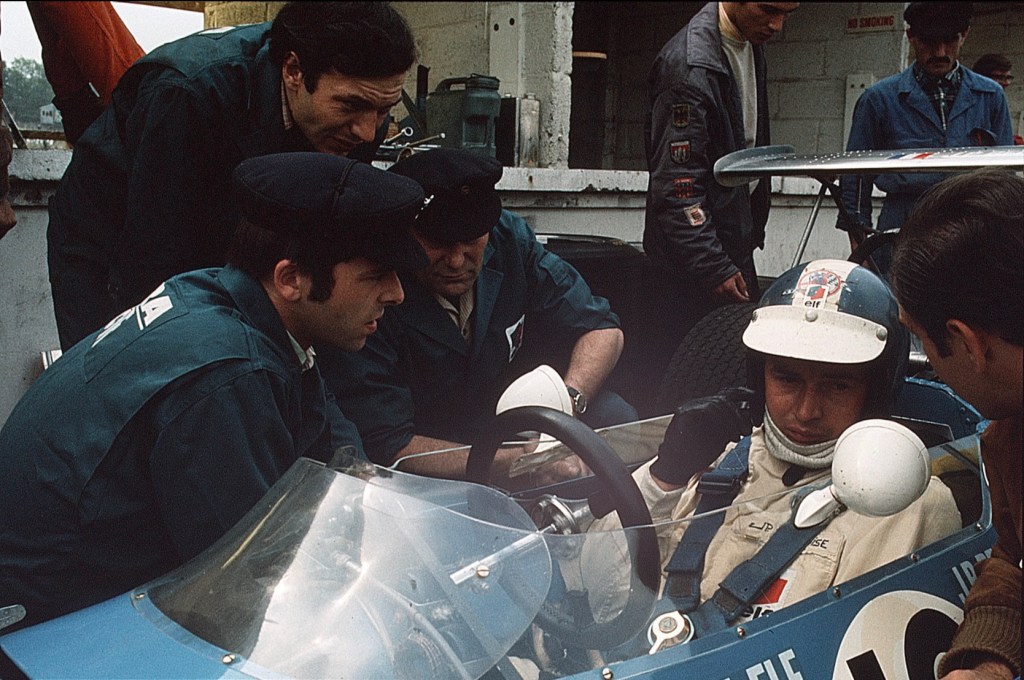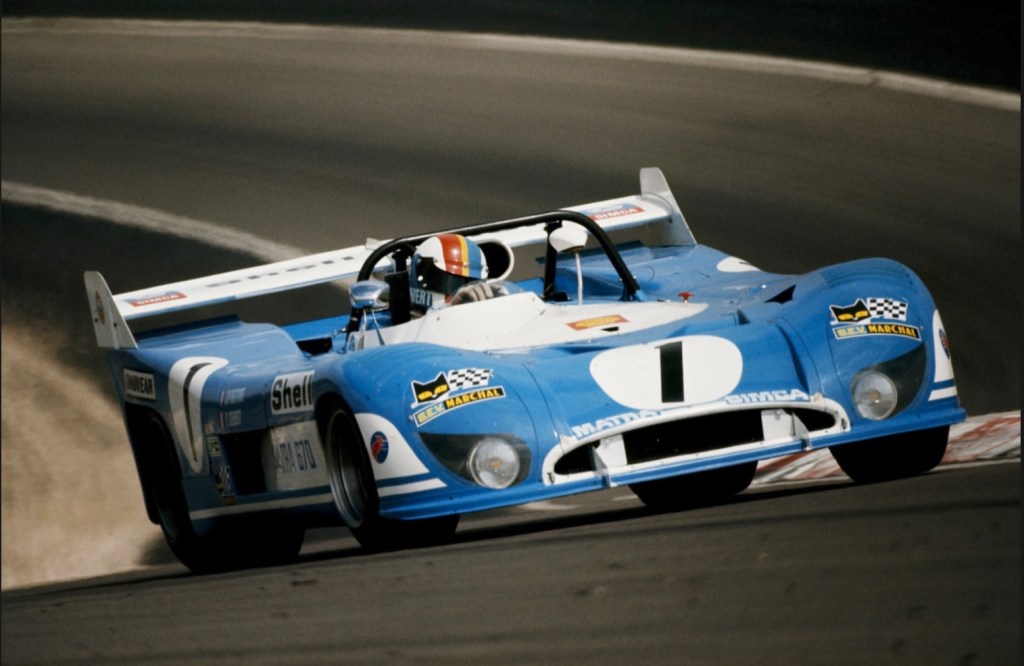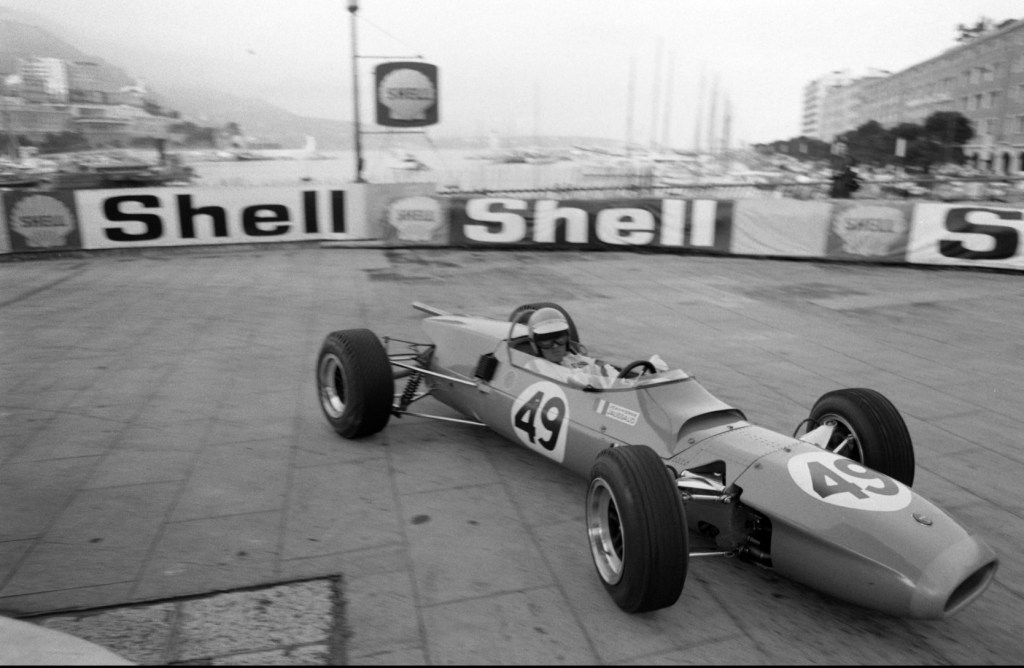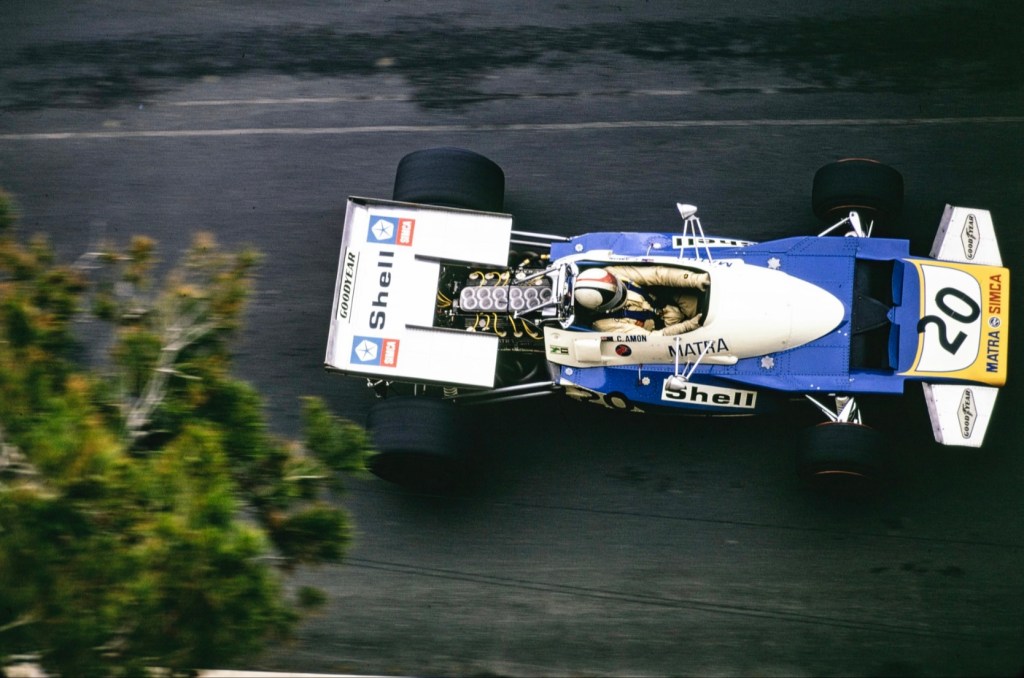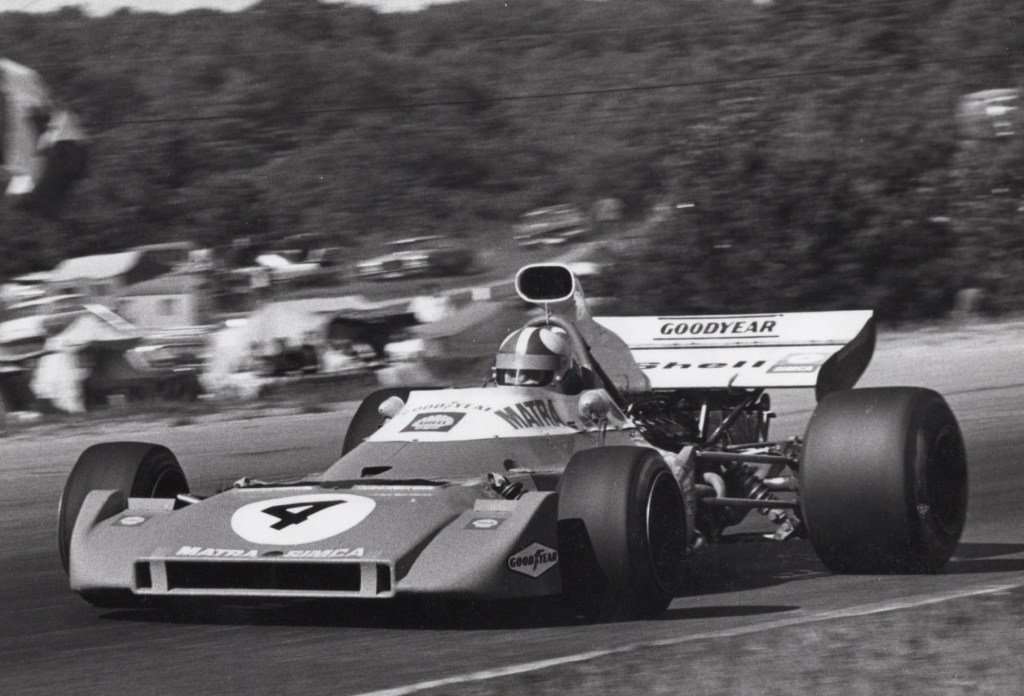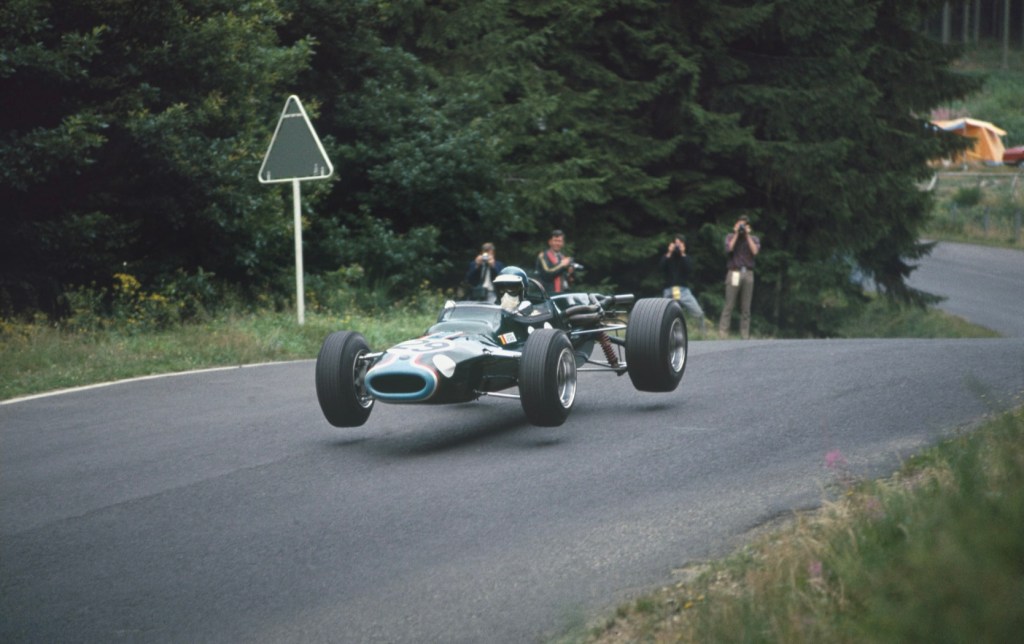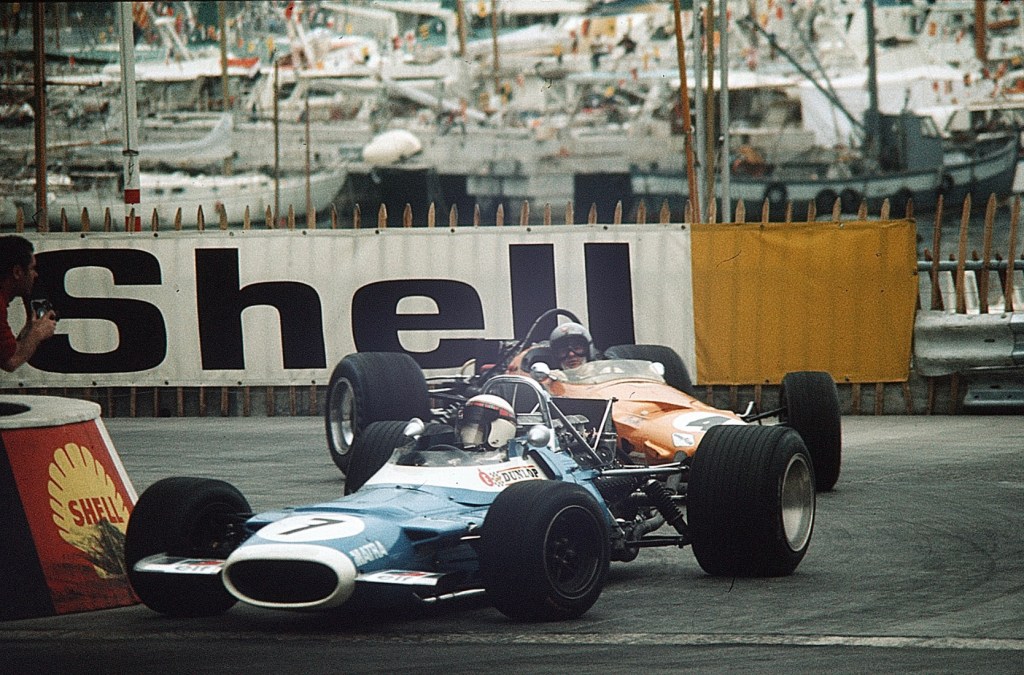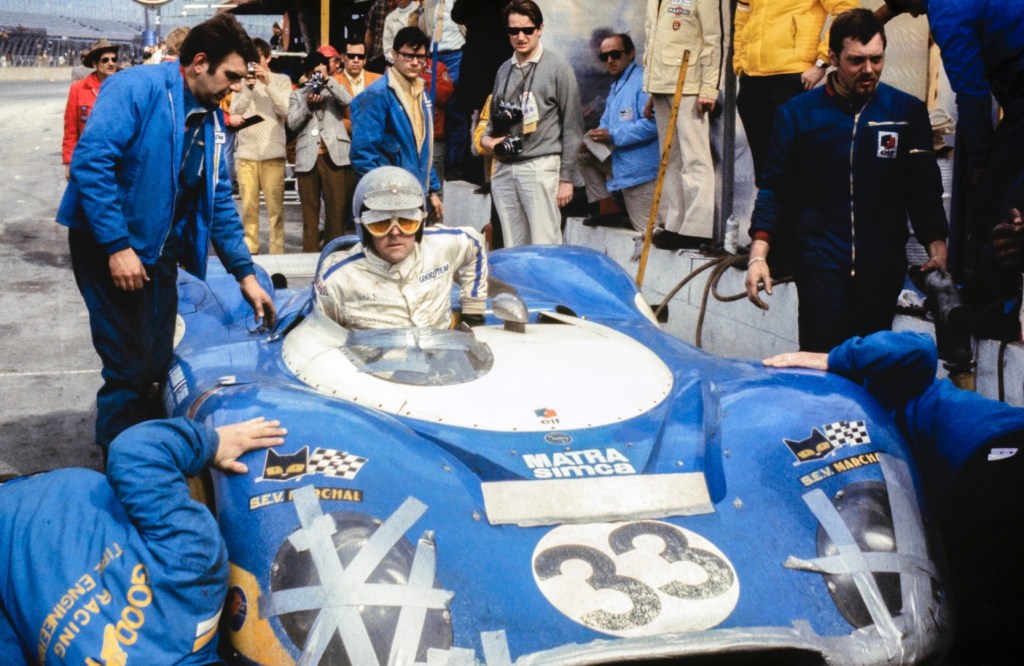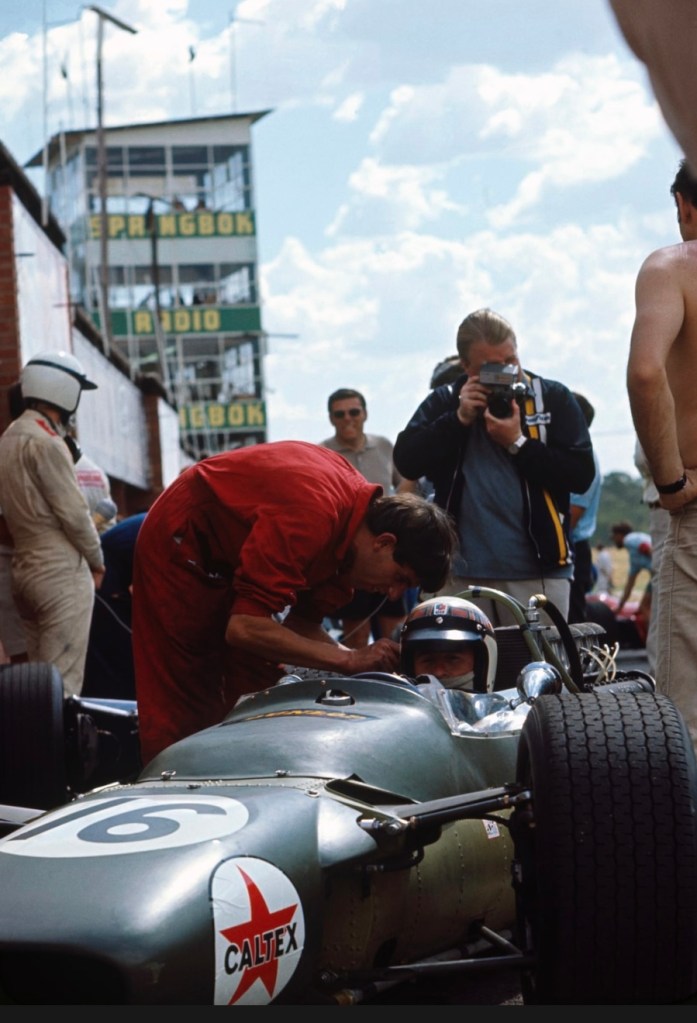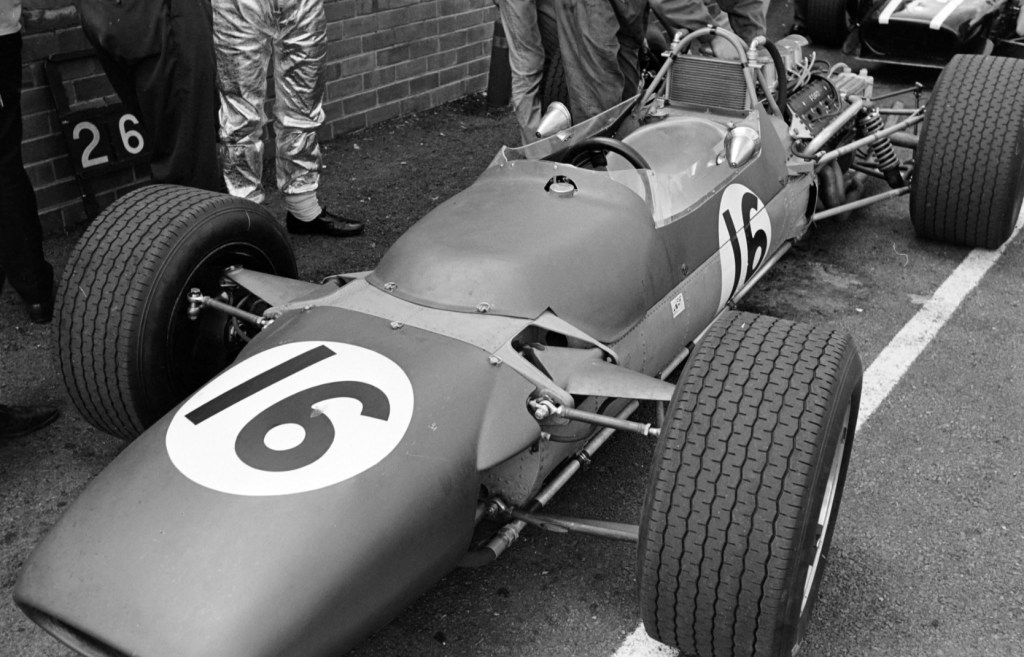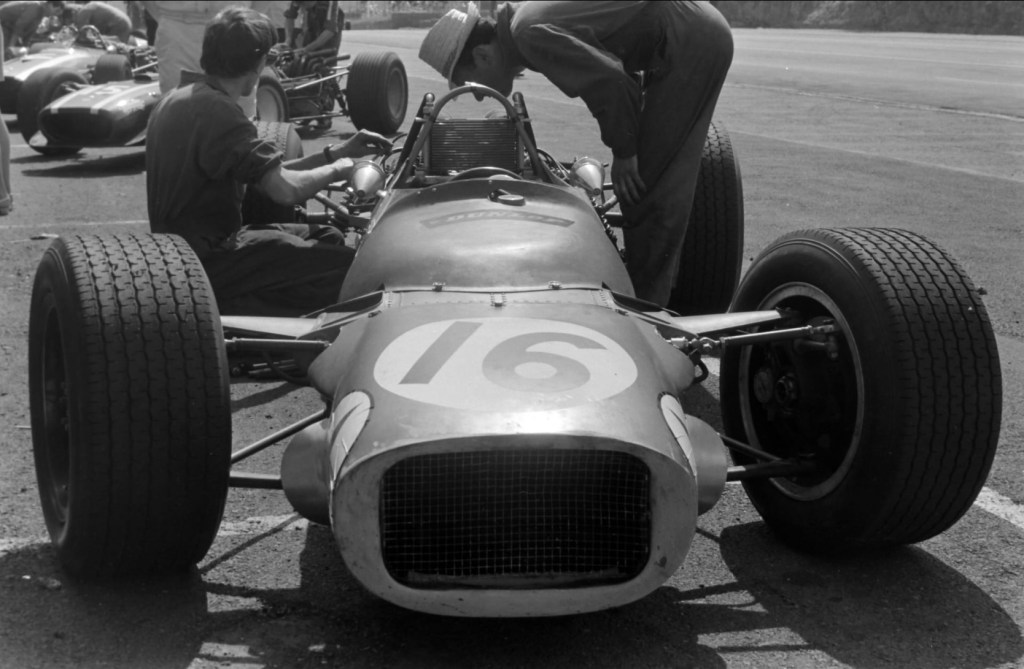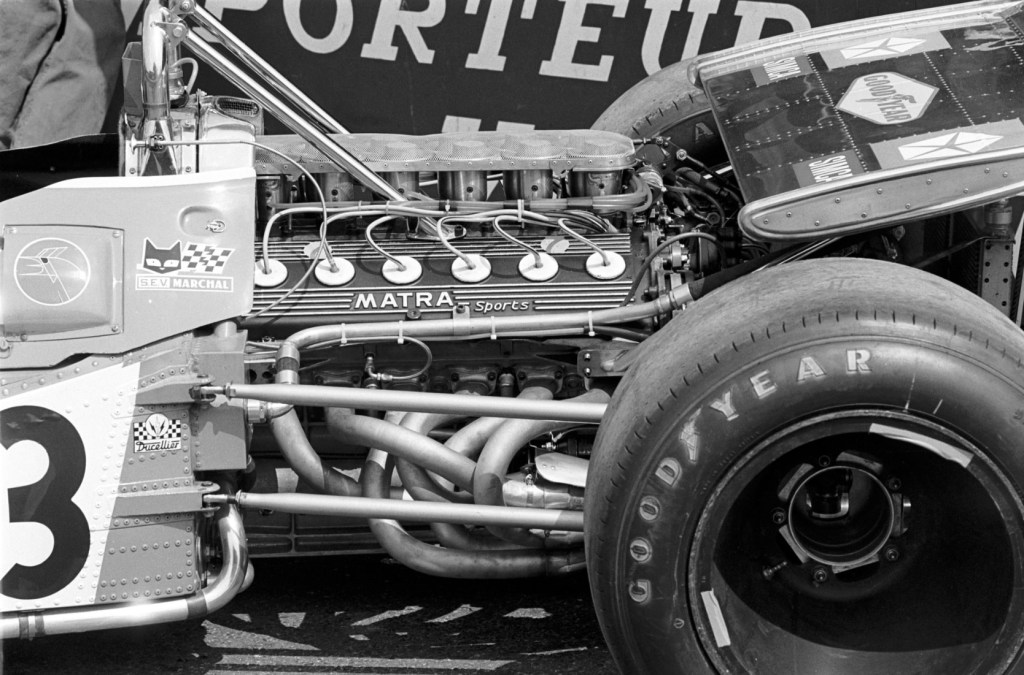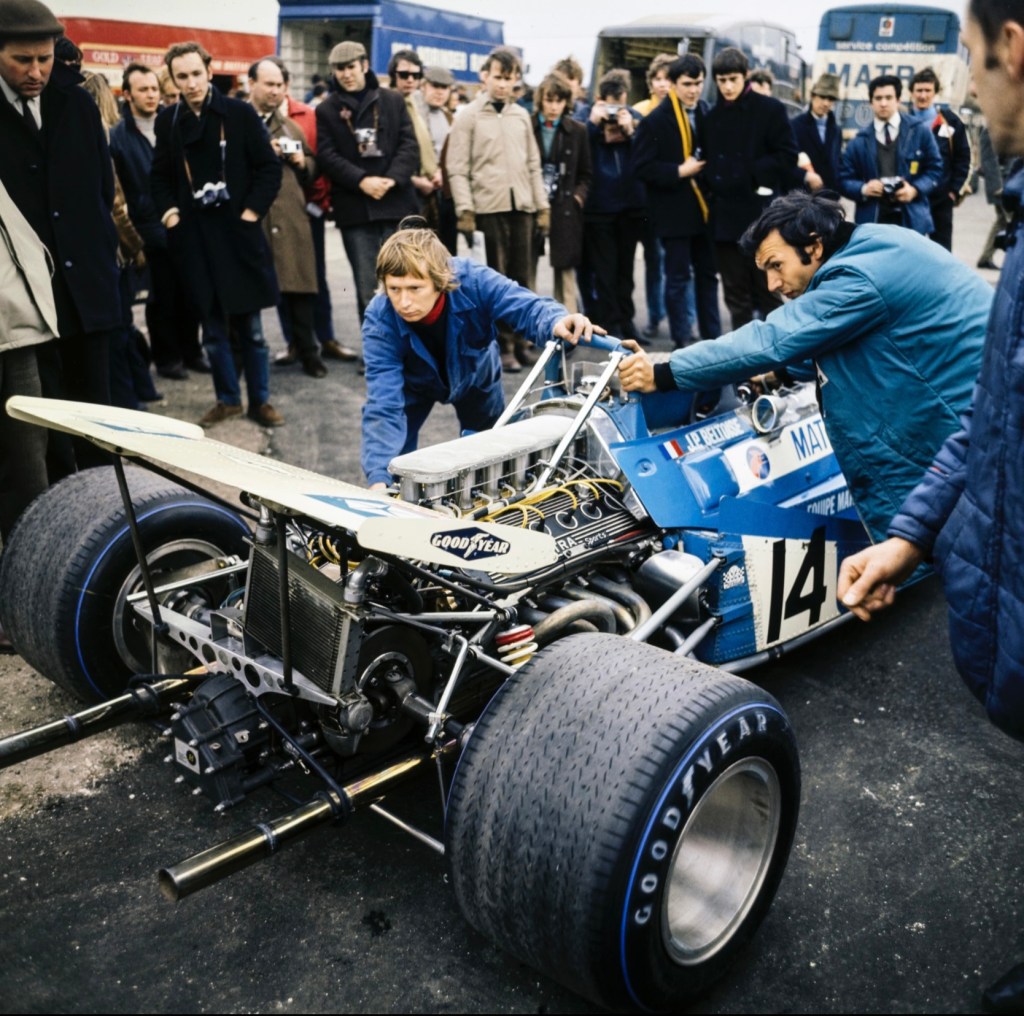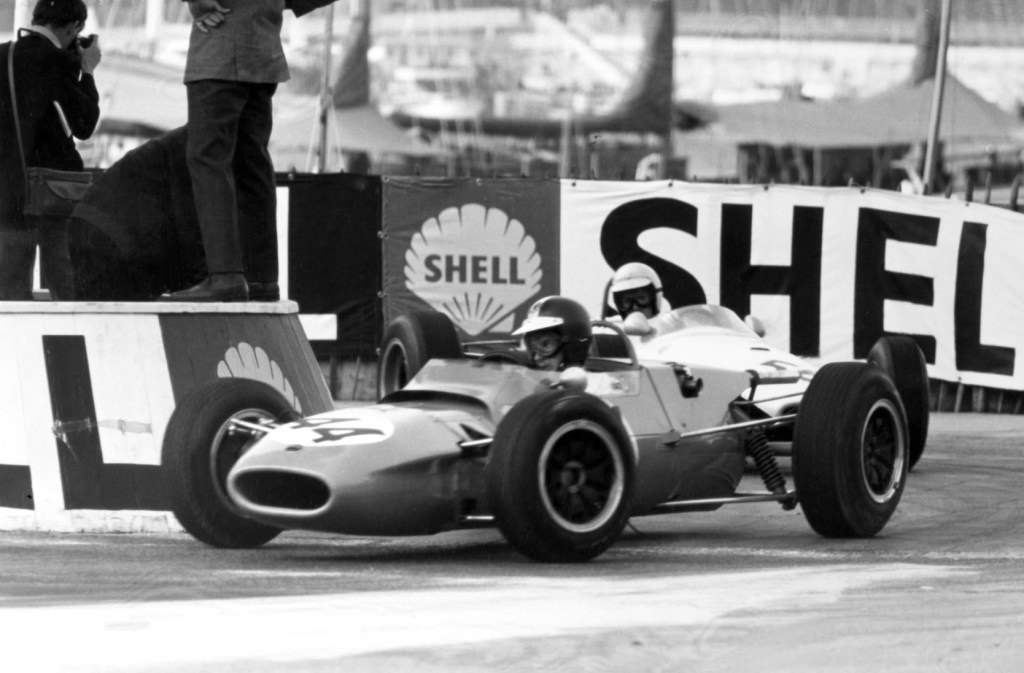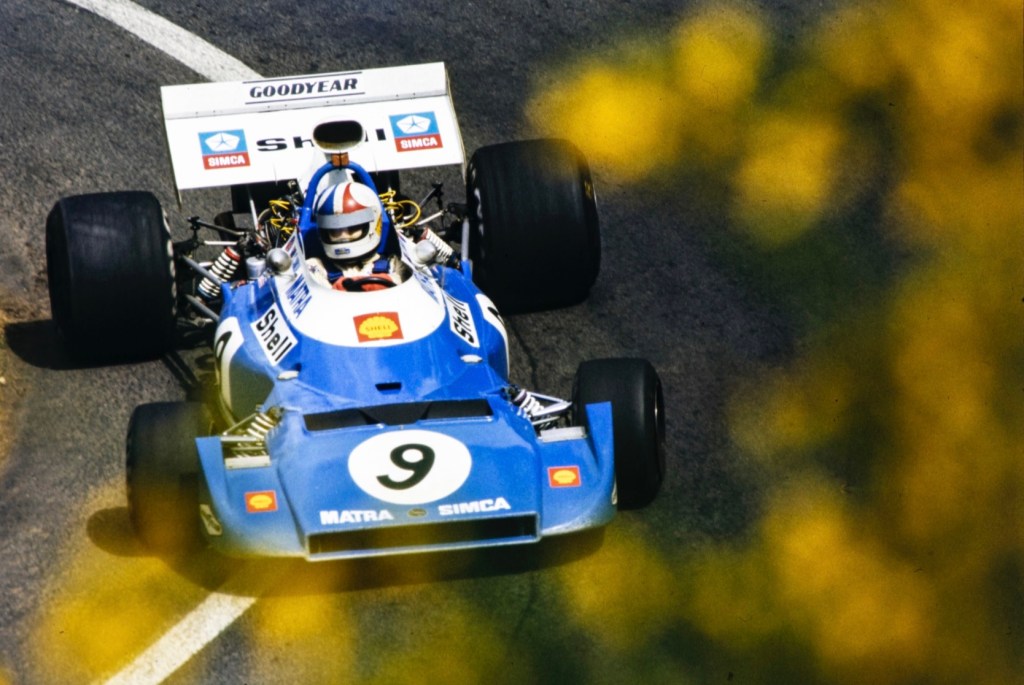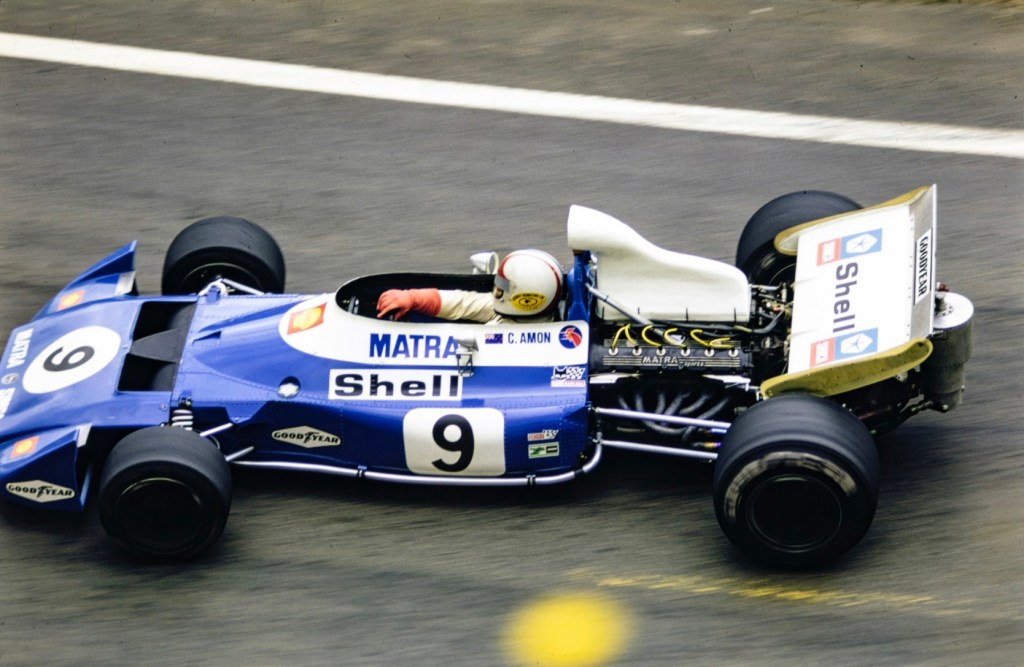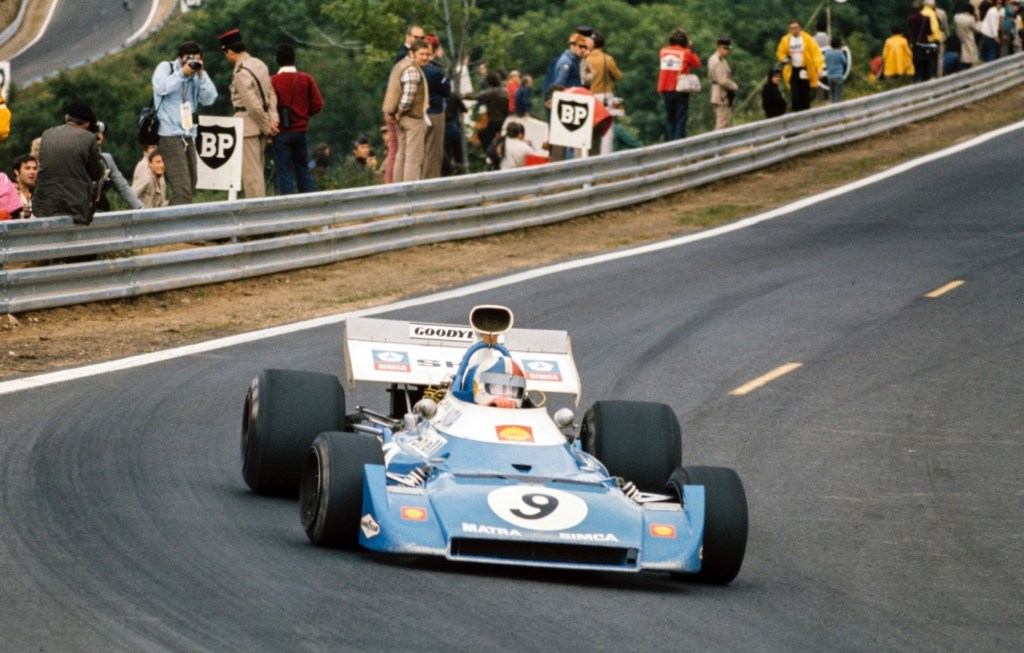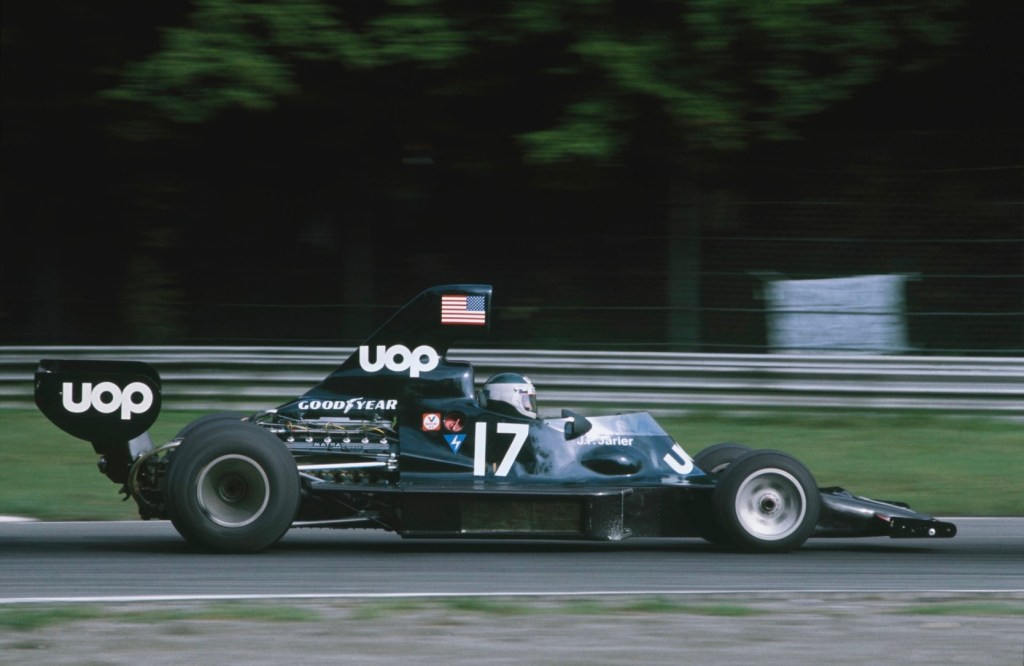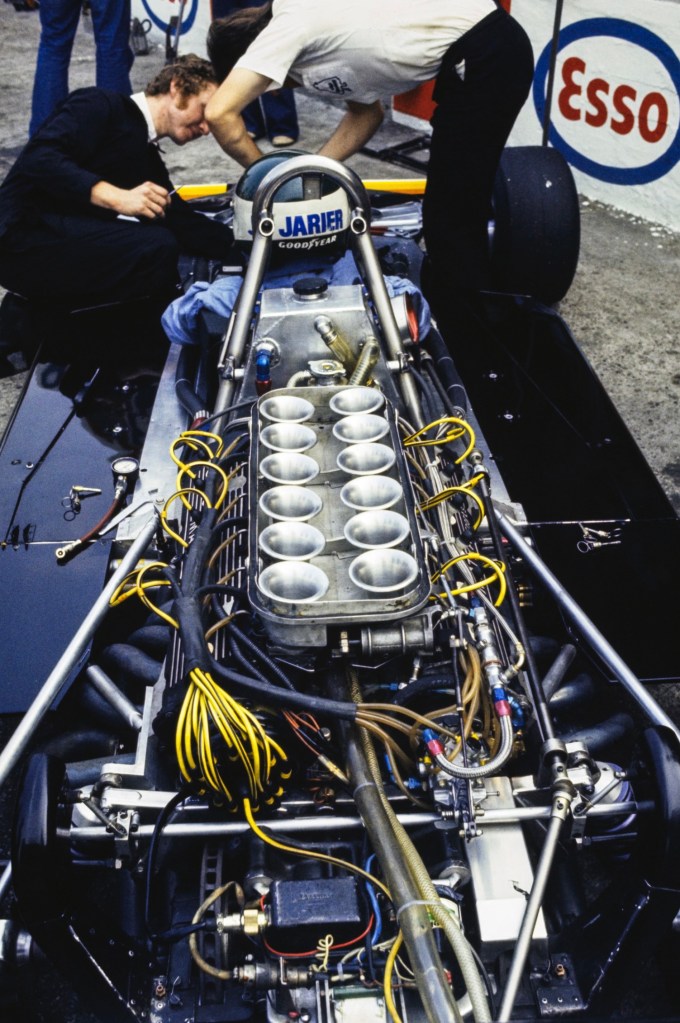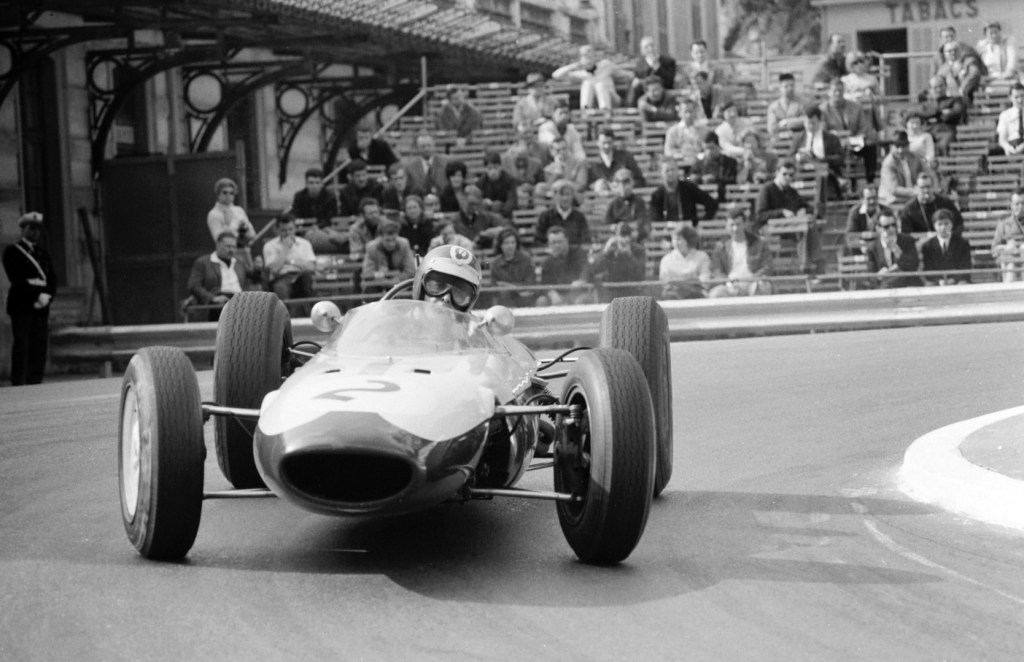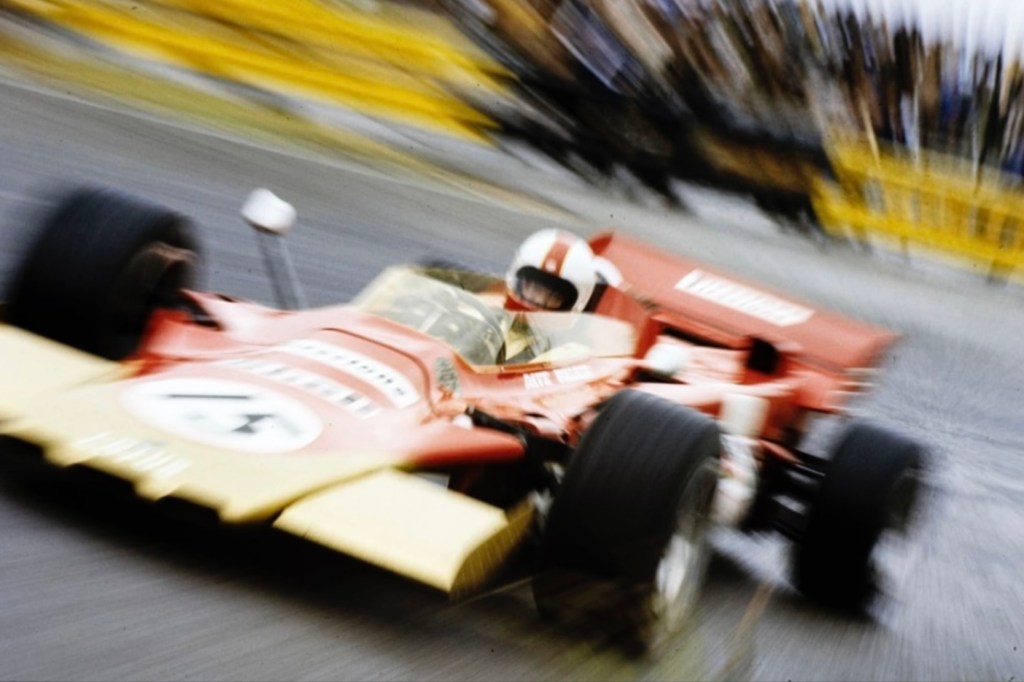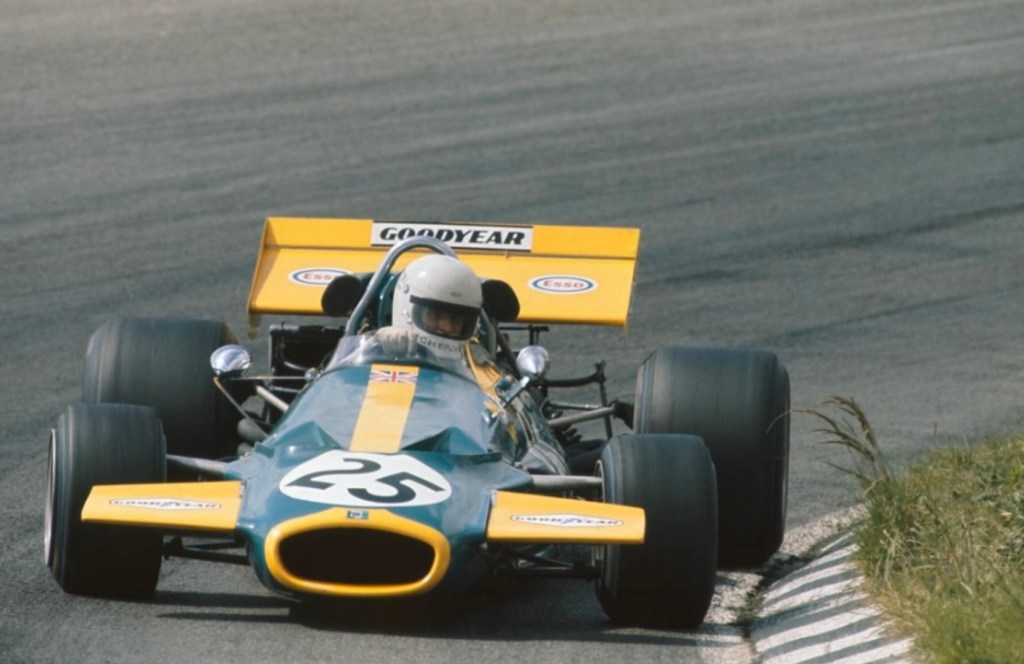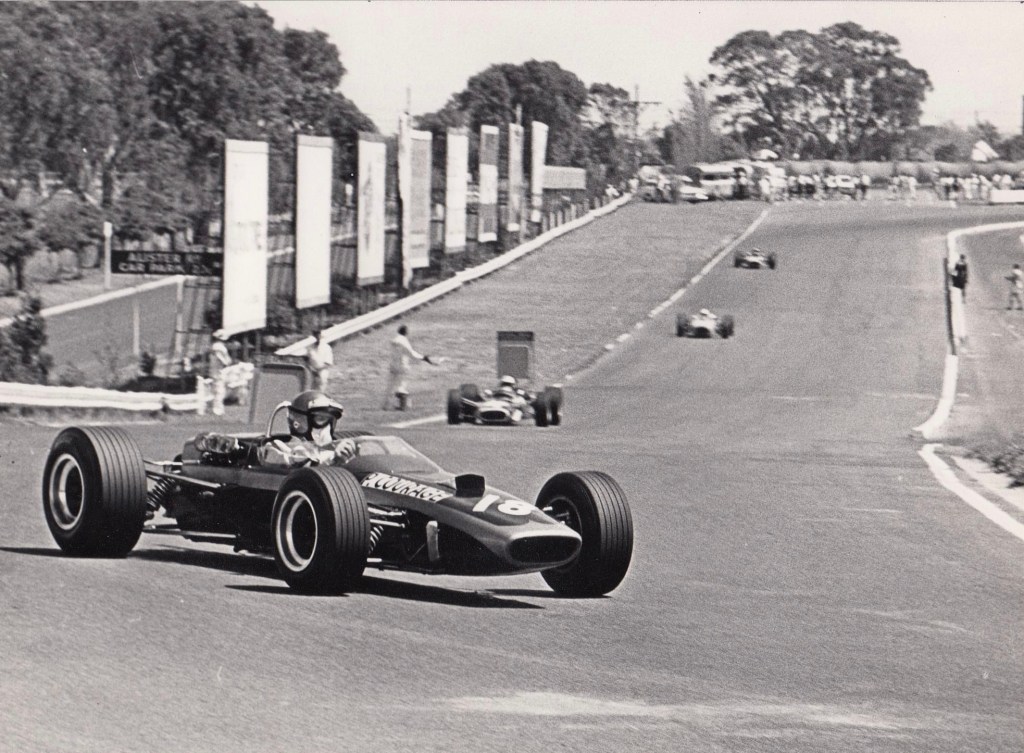
Monaco GP weekend 1964, Revson – Parnell Racing Lotus 24 BRM, DNQ. Graham Hill won, BRM P261 (MotorSport Images)
I love this letter to the editor of MotorSport from Ray Truant, of Hamilton, Canada, their Star Letter in the September 2023, current issue, highly recommended of course.
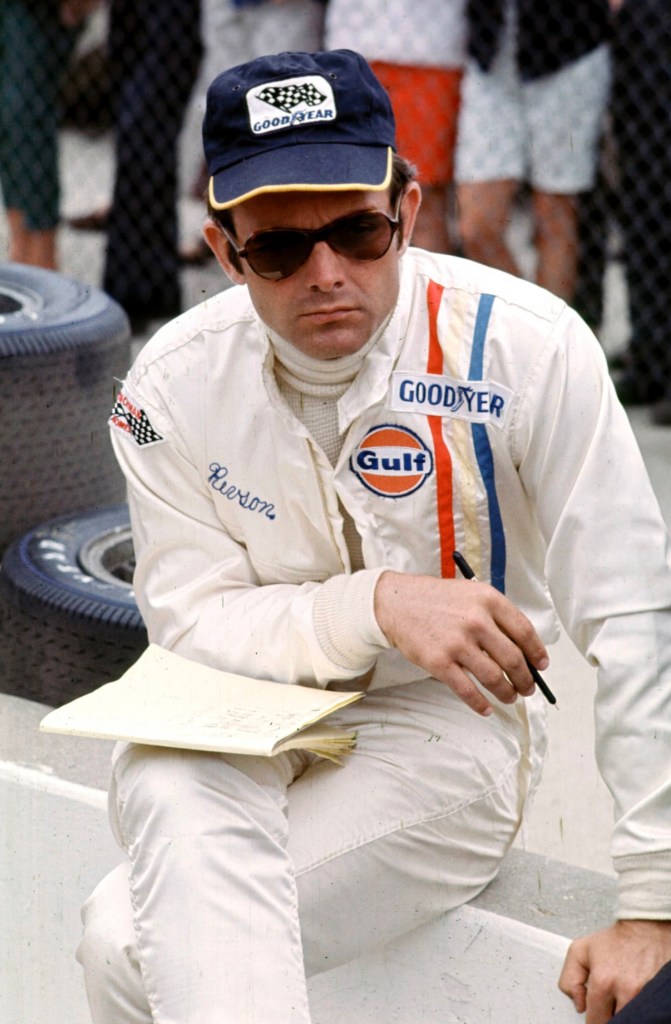
“In F1 Retro…Peter Revson is referred as ‘the heir to the Revlon cosmetics fortune.”
“This is a statement repeated during Revson’s entire racing career by the media, but was never correct. While he was a Revson, Peter’s father split his interest in the Revlon firm very early from his brothers Charles and Joseph in 1958 and had no equity in Revlon.”
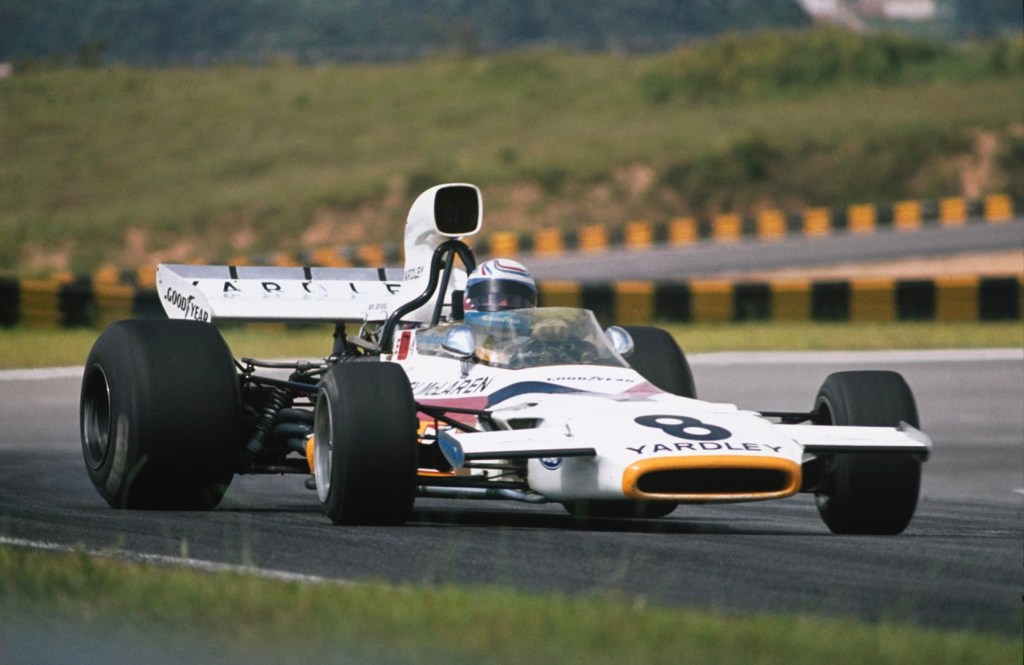
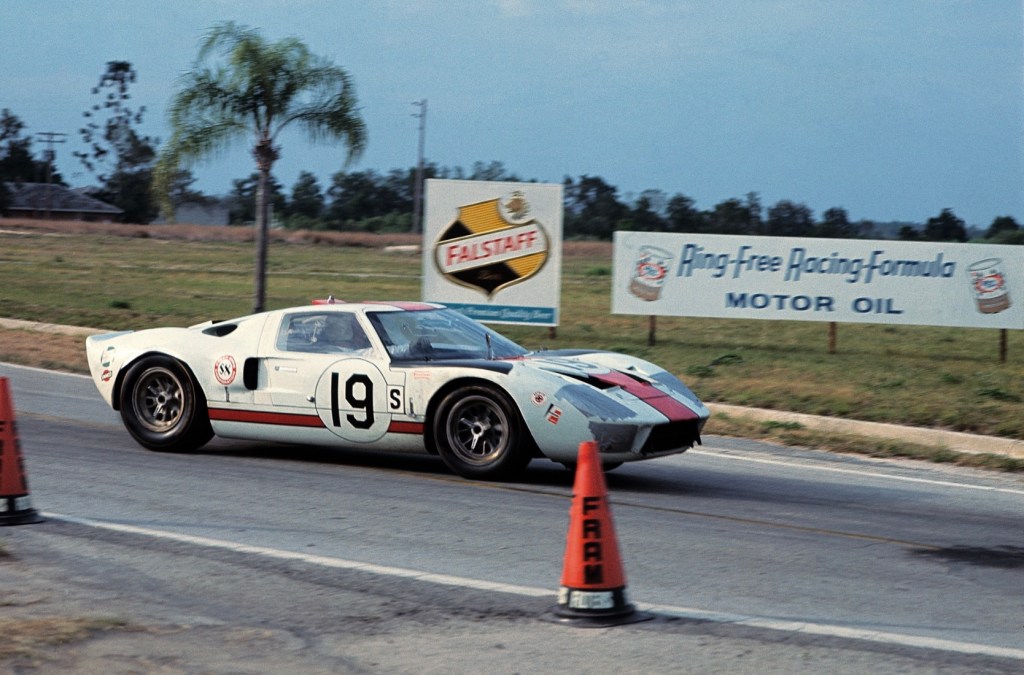
1973 Brazilian GP, McLaren M19A Ford. DNF gearbox after 3 laps from Q12, Emerson Fittipaldi won in a Lotus 72D Ford on his way to the drivers title (LAT)The 1969 Indy 500 carnival had its moments but fifth place in the Brabham BT25 Repco 760 V8 was a career turning point in the view of some – from dilettante to pro. Mario Andretti won in a Hawk 3 Ford (MotorSport)Sebring 12 Hour 1966, Essex Wire Ford GT40, third shared with Skip Scott. Ken Miles and Lloyd Ruby won in a GT40 X-1 Roadster (LAT)
“Charles and Joseph Revson ran Revlon subsequently into an empire, but Peter’s father was not involved. He ran Del Laboratories and lived to an incredible 105 before dying in 2016. Interestingly, Martin Revson left Revlon over ethical concerns of how the company was marketing to women.”
“The media loved the playboy heir story so much they ignored the reality and it persisted throughout Revson’s career, despite Revson’s attempts to correct this myth repeatedly in interviews.”
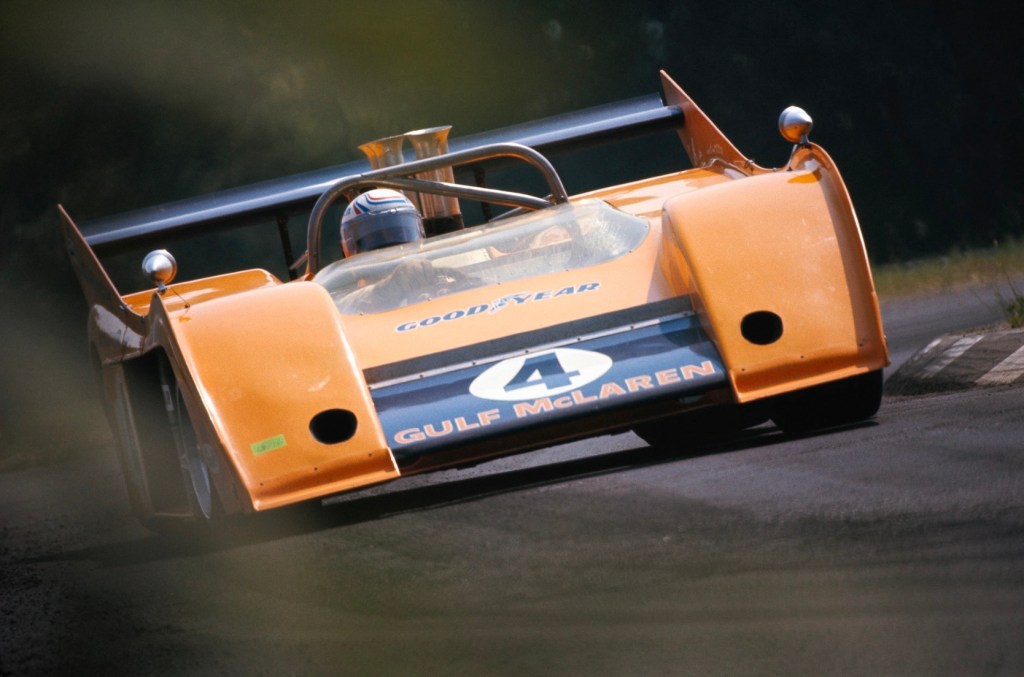
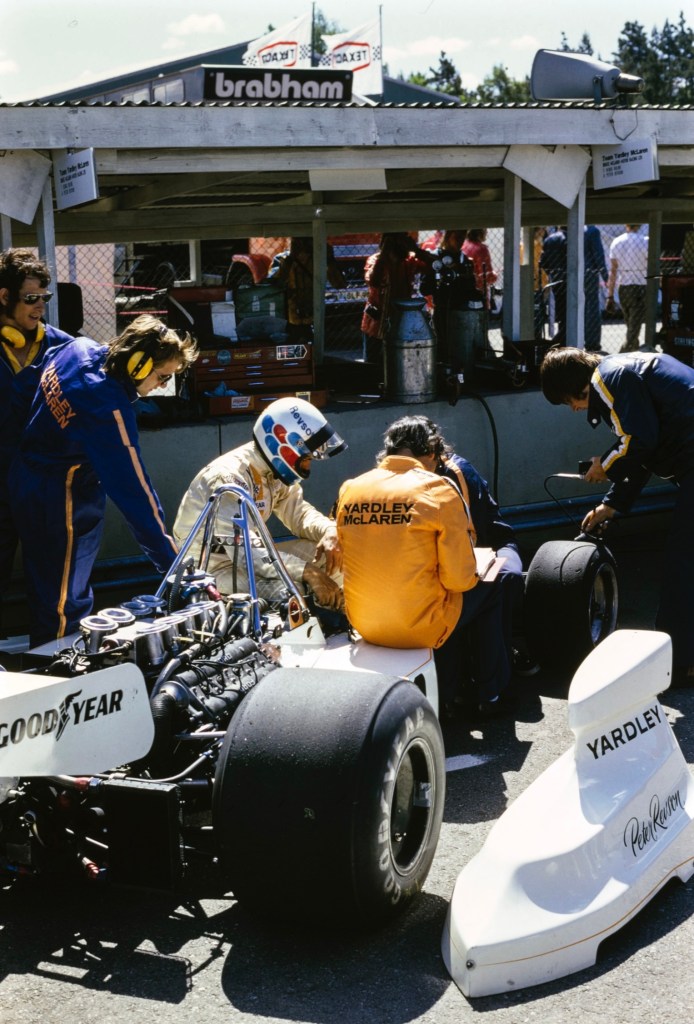
McLaren M20 Chev at Watkins Glen in July 1972, the reigning Can-Am Champ was second to Denny’s M20 that day (MotorSport/R Schlegelmilch)Chassis sorting the McLaren M23 Ford during the June 1973 Swedish GP weekend at Anderstorp, Q7 and seventh in the race won by Denny Hulme’s sister car (MotorSport/D Phipps)
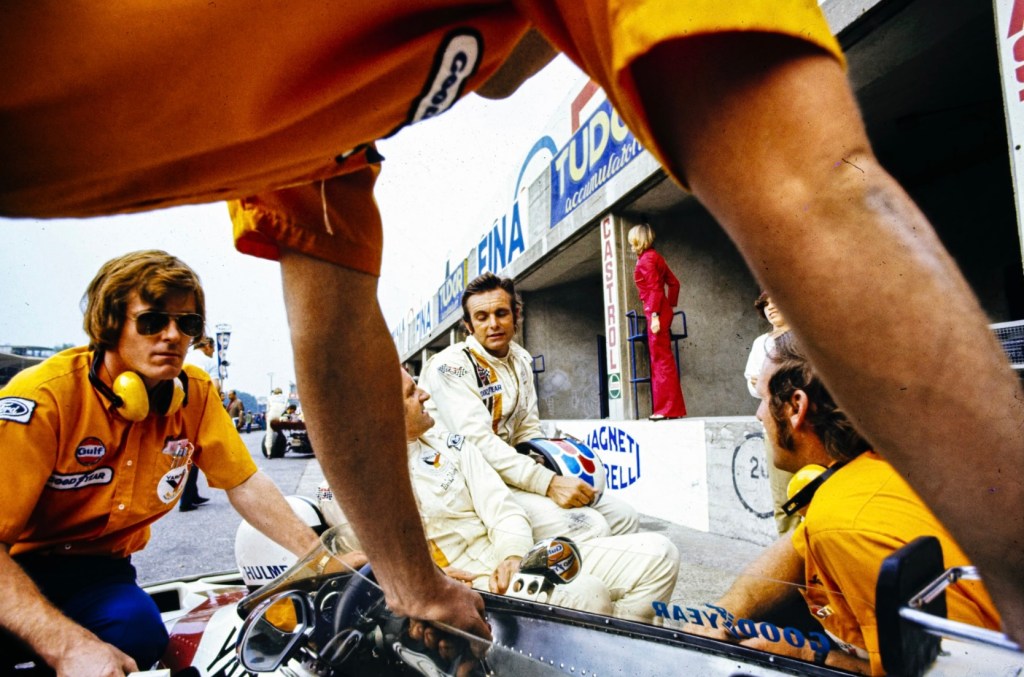
Practice session meeting of the type established by Bruce McLaren. Alastair Caldwell ponders while Denny and Revvie chew the fat. Monza 1972, where they were third and fourth in their M19C Fords, Emerson Fittipaldi’s Lotus 72D Ford won.
Credits…
MotorSport and Ray Truant, MotorSport Images, LAT Photographic
(MotorSport)
Tailpiece…
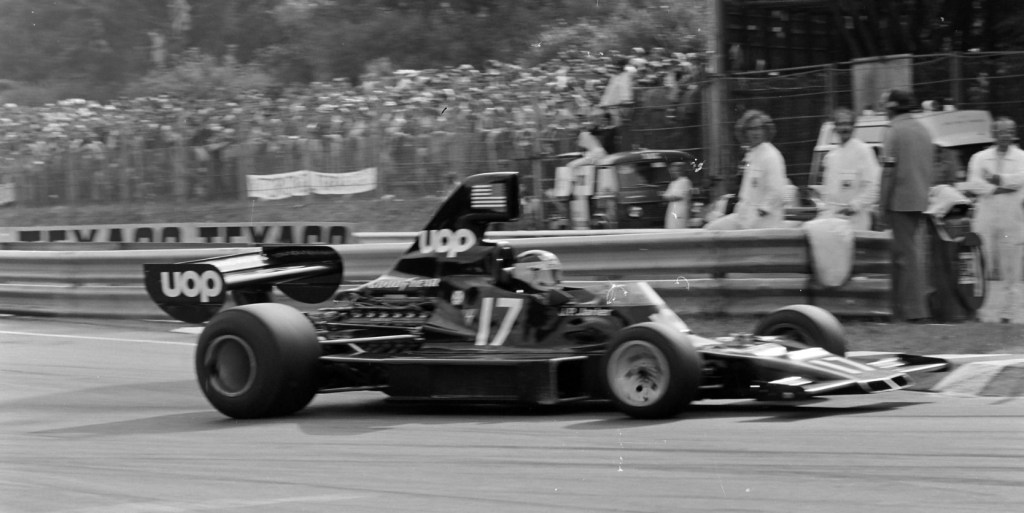
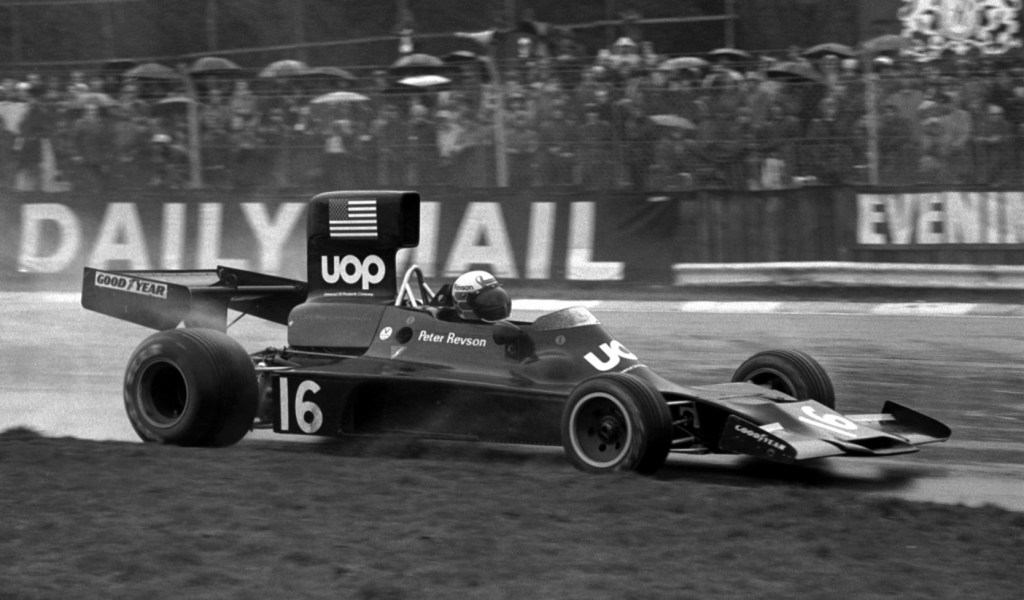
Sixth place in a gloomy Race of Champions at Brands Hatch on March 17, 1974, Shadow DN3 Ford. Sadly the car in which Peter perished due to component failure – a titanium ball joint – during practice at Kyalami, South Africa, the week after Brands on March 22.
Frank Matich leads a Triumph TR4 and Austin Healey 100 on the short stretch of road between Long Bridge as he aims his Lotus 19B Climax into the progressively more-uphill-on turn-in Newry Corner during the 1964 Australian Tourist Trophy, February 29, 1964.
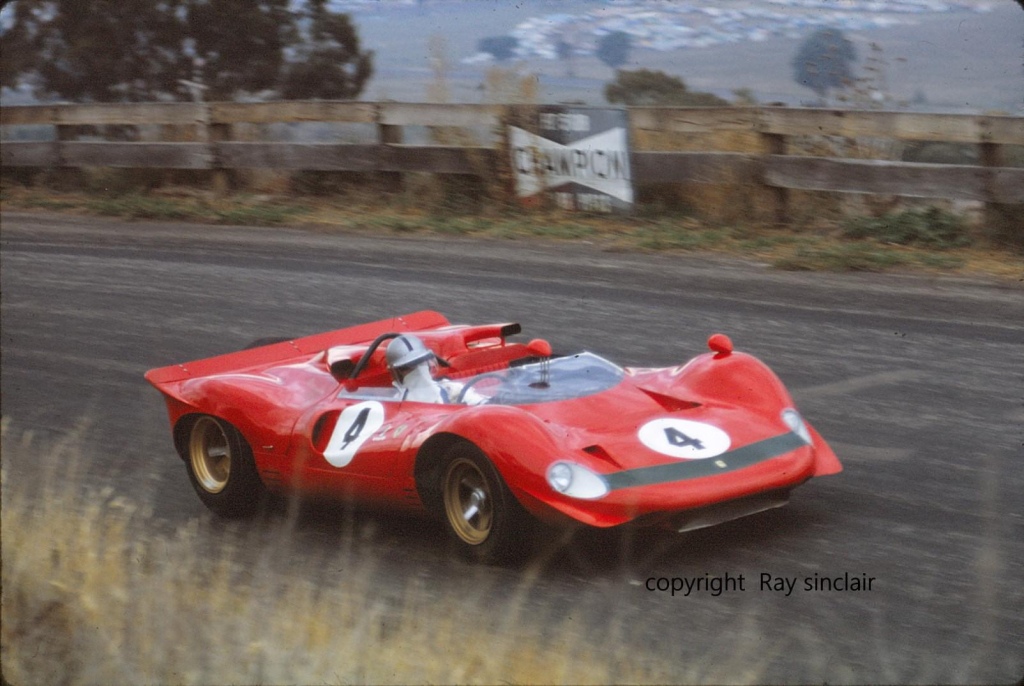
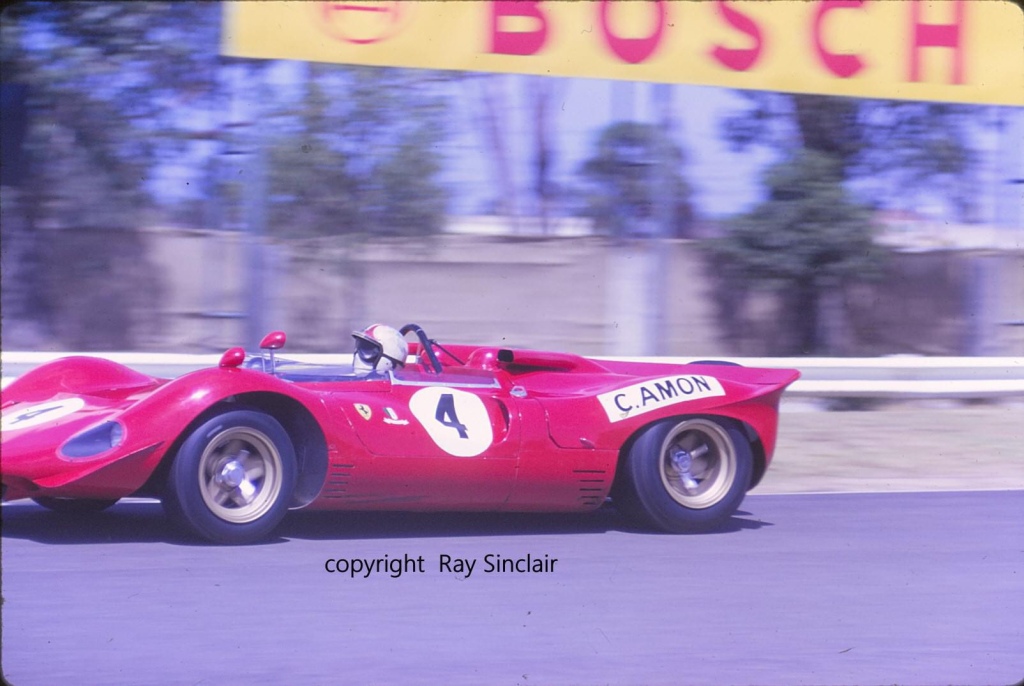
Bill Brown in the Scuderia Veloce Ferrari 350 Can Am – aka P4 – at Bathurst during the 1968 Easter meeting. Such a marvellous evocative shot of the most seductive of cars.
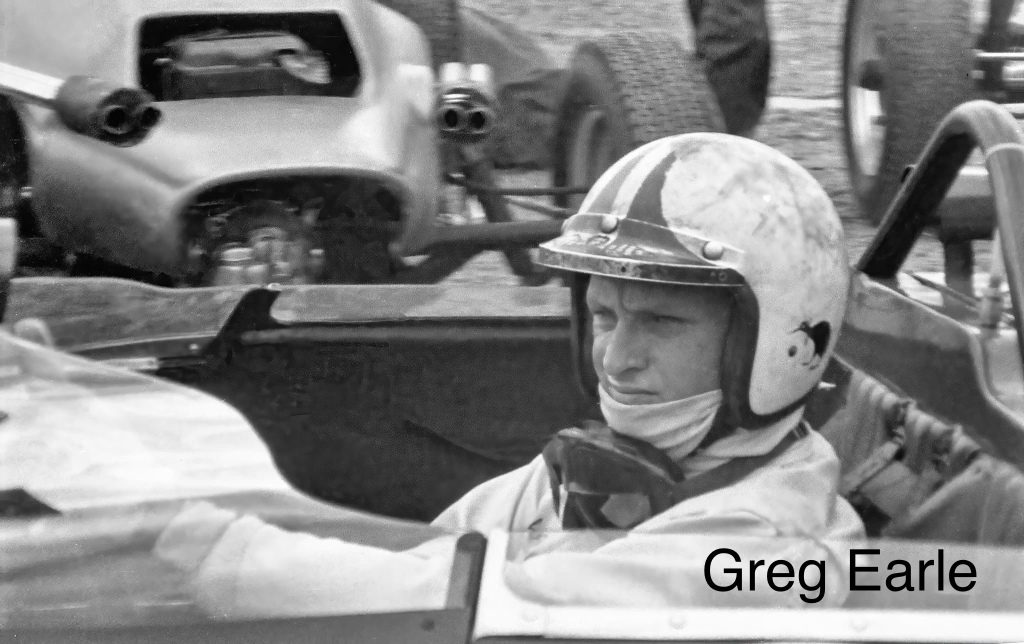
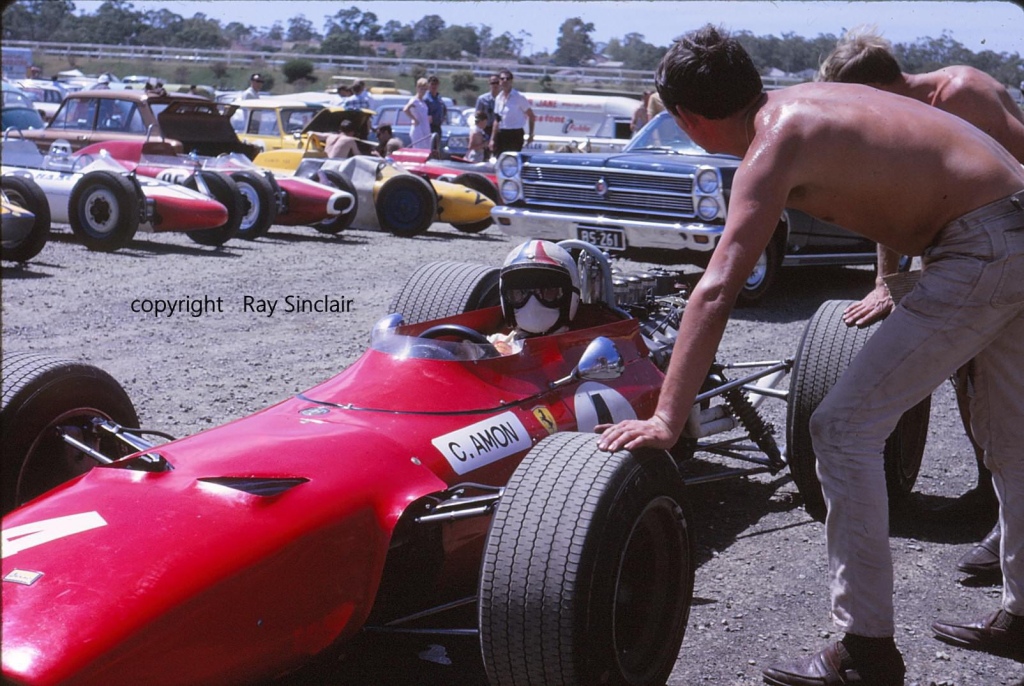
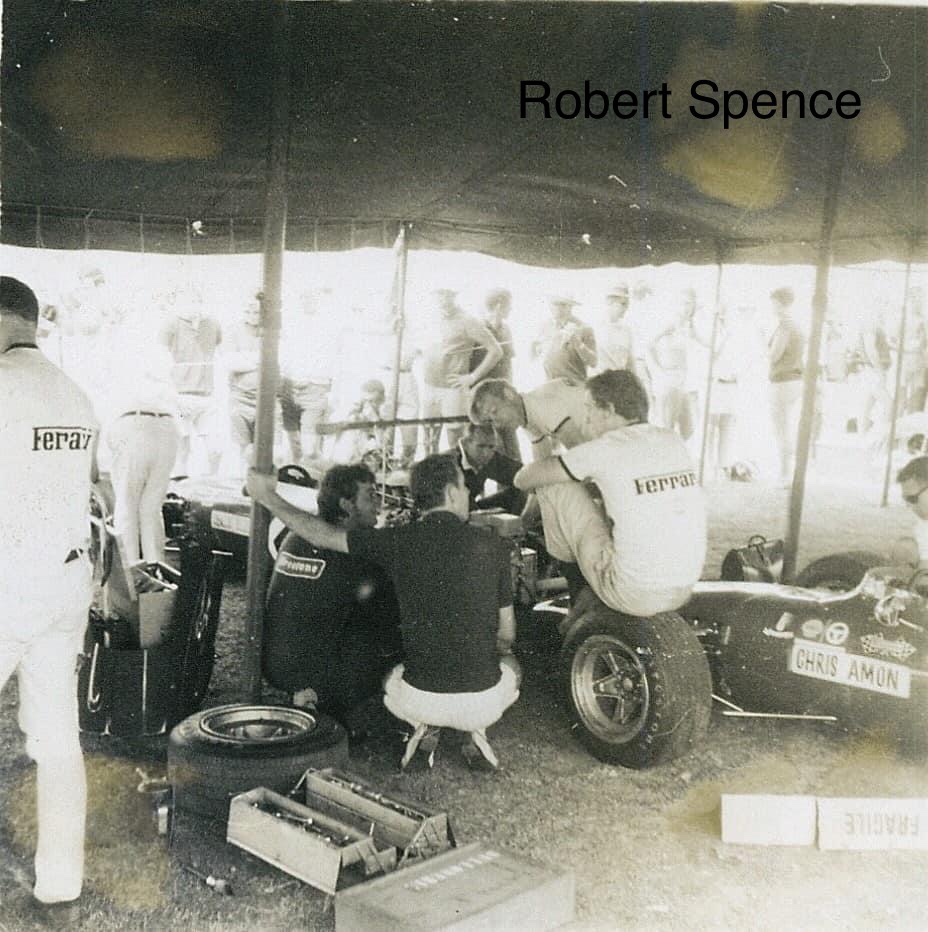
In the space of a week photographs popped up on Bob Williamson’s FB site on Scuderia Veloce topics from three different photographers, Ray Sinclair, Greg Earle and Robert Spence.
In the shot below the scowling Kiwi is motoring through the Sandown paddock, perhaps miffed that his 4.2-litre 480bhp V12 was beaten by Frank Matich in the Sydneysider’s 4.4-litre Repco V8 powered Matich SR3. See here for a feature on this Ferrari; https://primotipo.com/2015/04/02/ferrari-p4canam-350-0858/
Chris Amon at very sunny Sandown earlier in the year aboard his Ferrari 246T, with a line of Formula Vees behind, with Bib Stillwell arriving at the circuit in the Ford Galaxie.
Chris just failed to pip Jim Clark in the closest of finishes in the Sandown Australian Grand Prix Tasman Cup round the following day, the official margin was one-tenth of a second. With that the Scot took both his last final GP and championship win – the Tasman Cup – aboard his works Lotus 49 Ford DFW. See here for a piece on that weekend; https://primotipo.com/2021/03/06/1968-australian-gp-sandown-2/
350 Can Am in the Sandown paddock. The #7 Brabham is Greg Cusack’s SV machine, the BT23A Repco raced by Jack Brabham the year before. Quickie on the BT23A here; https://primotipo.com/2017/01/04/scuds/
On the blast past the old pit-counter at Sandown, paradise for a young enthusiast, with the V12 howling its fabulous song in third gear.
Amon was given the short back-and-sides by Frank Matich’s Matich SR3 Repco V8 at the three meetings they met in the sportscar Tasman Cup round supports that summer; Warwick Farm, Surfers Paradise and Sandown. I wonder why FM didn’t take the SR3 to Longford to bag the Quadrella?
Bill Dutton’s gorgeous little Alta 1100 Special in the Fishermans Bend paddock during the 29-30 January, 1950 Victorian Tourist Trophy meeting. Love the ‘works’ Alta overalls.
George McKaige attended the meeting and took some marvellous photographs. A prolific enthusiast, driver, restorer and photographer, he and his son Chester published two books of George’s work, called ‘Beyond The Lens’, the shot above is on the cover of Volume 1.
This little known car was conceived when Bill Dutton – of the famous Melbourne car trading family – bought the supercharged, DOHC Alta 1100c engine (number 25S) which had been cast aside when Bill Reynolds bought Alta 21S from probable British MI5 spook, Alan Sinclair. Sinclair raced the car in Australia in 1938, an exhaustive and exhausting account is here; https://primotipo.com/2018/11/08/the-spook-the-baron-and-the-1938-south-australian-gp-lobethal/
Reynolds replaced the troublesome Alta four with a big, fat, lazy, powerful and reliable Ford V8. The Alta engine was surplus to requirements until Dutton saw its potential and built a car around it. The evolution of Alta 21S from four-cylinder sweetie to brawny V8 marauder is covered here; https://primotipo.com/2015/11/27/the-longford-trophy-1958-the-tornados-ted-gray/
Alta 21S as built, an 1100cc sportscar delivered to Scotland’s AJ Cormack on March 19, 1934. Here at Donington Park later that year (G Smith)The svelte Alta 21S 1100cc sports of the previous picture, by the time of the 100 miles January 3, 1938 South Australian GP at Lobethal, had become a dumpy, upright 1100cc single seater. Probable MI5 spook, Alan Sinclair up (N Howard)
Tony Johns tells me that the Dutton family business had all of the mechanical, engineering and body building skills to create the car on their Burnley Street, Richmond site. Stephen Dalton points out that Bill Dutton thanks Jack Dongers and Tom Stevenson for construction and body help respectively in the October 1949 issue of Australian Motor Sports. Do theses chaps ring a bell with any of you?
The 1950-51 Motor Manual Yearbook records that the Alta 25S four was 1096cc in capacity, was of twin-cam, two-valve type and fed by an Alta built Roots type-blower/SU carb giving 130bhp @ 5800rpm with 15lbs of boost. It was mated, via a bespoke bellhousing and metal to metal clutch, to a four-speed gearbox of unspecified make.
The Alta Spl it is a fine example of the body-builder’s art, but who was the gifted chappy? (R Edgerton Collection)
The chassis was made of chrome-moly steel tube, the main members of which were 16 gauge and two inches in diameter. The tubular front axle was specially made and suspended by transverse leaf springs front and rear with Armstrong hydraulic/Hartford friction shocks. The back axle was also specially made and used Ford bevel gears.
Brakes were hydraulic using modified Chev/Ford drums front/rear, wheels were pressed steel, 16 inch x 6 inch in size, with the whole lot clad ‘in a single-seat aluminium panelled racing body with a long tail, similar to a Grand Prix Alta.’
Ted Gray aboard Alta 21S Ford V8 (aka the Male Special / Ford V8 Special) at Penrith Speedway, west of Sydney in 1940 according to John Medley. Racer Ken Wylie is in the goggles at right, perhaps Jim McMahon left. I’ve still to get to the bottom of Pinocchio’s presence on the scuttle. Just look at all those names on Byron Gunther’s image…Ted Gray clears Hell Corner for the run up the mountain, Bathurst October 1950, the left front is just clear of terra firma (J Blanden Collection)
Bill Dutton engaged Wangaratta’s Ted Gray to drive his new car. Ted initially showed speed on pre-War speedways and in two very impressive appearances in the Male Special midget against Peter Whitehead’s ERA R10B at Rob Roy and Aspendale in 1938. Gray’s Alta credentials became impeccable when his patron, Melbourne car dealer, Alan Male bought Alta 21S Ford with which Gray took 24 wins from 26 starts pre-War according to John Blanden.
After the conflict, Ted re-commenced racing in another famous old-Oz racer, the ex-JAS Jones Alfa Romeo 6C1750 Zagato into which, you guessed it, Ted fitted a Ford V8. Blanden records that the Alta Special’s first race as being at the Fishermans Bend October 29-30, 1949 meeting where a broken cam-follower ended proceedings early in the day. ‘In the late 1940s, early 1950s, the car was a regular competitor, however the engine problems continued. The little car was third in the F1 Scratch Race at Woodside in October 1951,’ a better performance.
(T Johns Collection)(T Johns Collection)
In the 1950s ‘the car simply disappeared’, one theory is that it sat on a service station roof in St Kilda (an adjacent suburb to AGP venue Albert Park) as a drawcard for punters after the servo owner refused to pay an exorbitant Alta engine repair bill from a Sydney business. Then Melbourne pilot/enthusiast/engineer Graeme Lowe responded to a VSCC Newsletter ad for an engine in 1967. His £10 purchase of 1100 #25S was the catalyst of a very long, thorough reconstruction/restoration of Alta 21S which was completed and then made its public debut in Betty Lowe’s hands in 1999.
In recent times 21S was acquired by Fiona Murdoch, the shot below was taken at Gladysdale, Victoria on March 4, 2023 during a drive – one I won’t forget in a big hurry – and photo session for a feature article just published in issue 07 of quarterly Australian classic car magazine, Benzina. If you can’t find it in a newsagent, a decent example of which is as rare as rocking horse shit in Australia these days, email the publisher, Jack Quinn; jack@benzinamagazine.com
(M Bisset)
Credits…
George and Chester McKaige, Ron Edgerton Collection, ‘Historic Racing Cars in Australia’ John Blanden, 1950-51 Motor Manual Year Book, Graham Smith Collection, David Woodhouse, Norman Howard, Byron Gunther
Etcetera…
(T Johns Collection)
The other pages of the 29-30 October, 1949 Fishermans Bend (correct spelling of the place according to our Government and lack of apostrophe by the way) programme sent by Tony Johns.
I always find these documents of wonderment as I don’t have a collection of them. This was fundamentally a local meeting but there are a swag of interstaters too, its interesting to see the Top Guns, Future Top Guns and Notables in the mix. Mine are – in no particular order – Ted Gray, Reg Hunt, Otto Stone, Lex & Diana Davison, Ken Tubman and Dick Cobden (NSW interlopers), Stan Jones, Gib Barrett, Rupert Steele, Tony Gaze, Jim Leech, Charlie Dean, Eldred Norman (Adelaide Hills), Doug Whiteford, Tom Hawkes, Ron Edgerton, Jim Gullan, Lou Molina, Murray Carter, Hedley Thompson, Arnold or Arthur Terdich, Peter Manton, Bill Patterson, Derek Jolly and no doubt others who just don’t ring-the-bells for me.
(T Johns Collection)
What jumps off the pages too is the importance of Australian Specials, and MGs in particular, which provided the lifeblood and bulk of Australian motor racing grids for decades. Depending on the year MG provided both outright contenders and the ‘Formula Vee’ in unmodified form, and ‘Formula Ford’ in modified form entry-level classes of the day.
Rolf Stommelen jumps aboard the Alfa Romeo T33/TT/3 he shared with Nino Vaccarella in the May 5, 1972 Targa Florio, the pair retired with valve-spring failure on lap three.
The car carries #1 in recognition of Alfa’s fantastic win the year before when local lad Nino Vaccarella won with Toine Hezemans aboard a T33/3 3-litre V8. The brilliant Schlegelmilch shot below captures Nino during his winning ’71 drive.
(R Schlegelmilch)
It was a great year for Alfa Romeo/Autodelta, they won the Brands Hatch 1000km (Andrea De Adamich/Henri Pescarolo) and Watkins Glen 6-Hour (De Adamich/Ronnie Peterson) as well, not to forget class wins at Monza, Spa and Zeltweg. The opposition 3-litre flat-8 Porsche 908-03s and flat-12 Ferrari 312P were plenty quick too, not to forget the 5-litre 12-cylinder Porsche 917s and Ferrari 512S’.
(MotorSport)
Vaccarella, sharing the T33/TT/3 shown in the painting with Rolf Stommelen during the 1972 race. Despite the Porsche 908/03 inspired T33/TT/3 spaceframe chassis – lighter, weight-forward, still V8 powered (TT is telaio tubolare or tubular chassis) – making its debut in practice at Targa twelve months before, the four Autodelta entries still couldn’t knock off a late-entry singleton Ferrari 312PB 3-litre flat-12 driven by Arturo Merzario and rally-ace Sandro Munari.
Rolf Stommelen creating huge interest in the Targa pits in 1971, he is about to do some laps in the first Tipo 33/TT/3 spaceframe car. Its 219cm wheelbase was 13cm less than a T33/3 and at 560kg it was 50kg lighter. Rolf lapped in the 37 minute mark – reporting it too stiff – compared with other cars doing 34/35s. While entered for Carlo Facetti/Teodoro Zeccoli it was not intended they race it, nor did they drive it, but Rolf and Nino did, the long test process was underway
Nanni Galli and Helmut Marko were 17-seconds behind the winning Ferrari and catching it hand-over-fist at the end of the race, Marko set a lap record of 33min 41sec in his epic chase. De Adamich and Toine Hezemans were third in another Alfa T33/3, while the Vic Elford/Gijs Van Lennep duo were out with engine failure without completing a lap. As recorded, Vaccarella/Stommelen were out with a broken valve spring after completing three laps. 38 cars finished the gruelling event with a massive 37 DNF’s, five due to accident damage.
Art Merzario in – very low as always! – the winning Ferrari 312PB (P Lyons)(Wiki-unattributed)
The first of the privateers placed fourth, the Antonio Zadra and Enrico Pasolini Scuderia Brescia Corse 2-litre Lola T290 Ford FVC is shown above at Collesano in a classic Targa shot, they also won the 2-litre class.
MotorSport)
The winning Ferrari (above) completed the 792km journey in 6hr 27min/48seconds. The Armco-installer must have been well-lubed with grappa when he executed his contract.
This wonderful race was living on borrowed time for yonks, it became a national race from 1974 until 1977 when the race ceased, albeit the Targa Florio Rally was a round of the Italian Rally Championship for some years.
Tribute events have popped up around the world, not least Targa Tasmania, itself in the news in recent years because of fatalities as a consequence of a mix of (mainly) amateur drivers, high speeds and unyielding eucalypts.
Butt shot of De Adamich in his T33/TT/3 during the 1972 race. Feel the vibe folks, you are so lucky if you experienced this lot!Gijs Van Lennep swaps notes with an Autodelta technician before the off in 1972 (unattributed)The Businello/Zeccoli/De Adamich/Galli Alfa T33 2-litre Periscopica heads out for practice on the Nurburgring during the May 1967 1000km weekend. They were fourth in the race won by the Udo Schutz/Joe Buzzetta Porsche 910 (unattributed)
With a view to class and outright wins Chiti and his team started development of a 3-litre Tipo 33 which used an aluminium monocoque chassis rather than the complex cast magnesium chassis of the earlier 2-litre (and some 2.5-litre) machines.
Fitted with 2998cc 90-degree V8s giving between 400bhp @ 9000rpm and 440 bhp @ 9800rpm over the life of the 1969-72 program, and first six, then later five-speed Alfa gearboxes, the cars were first tested in early 1969.
Vaccarella during his victorious 1971 Targa win with Toine Hezemans. Alfa T33/3 monocoque, with Bernard Cahier’s rear body-off shot (below) of one of the T33/3s during the same meeting
With ongoing development, class wins at Imola and Zeltweg were achieved in 1970, with a magnificent run of success, as covered above in 1971.
Inspired by the ultra-light 908/03, and detuned-F1-powered Ferrari 312P, a new spaceframe T33/TT/3 was built, tested and raced in 1971 before an assault on the 1972 World Championship of Makes. While Alfa Romeo finished a very good second to Porsche in the 1971 World Sportscar Championship (72/51 points), things were grim in 1972 when Ferrari beat them resoundingly, 160 points to 85, with the Alfas not taking a win.
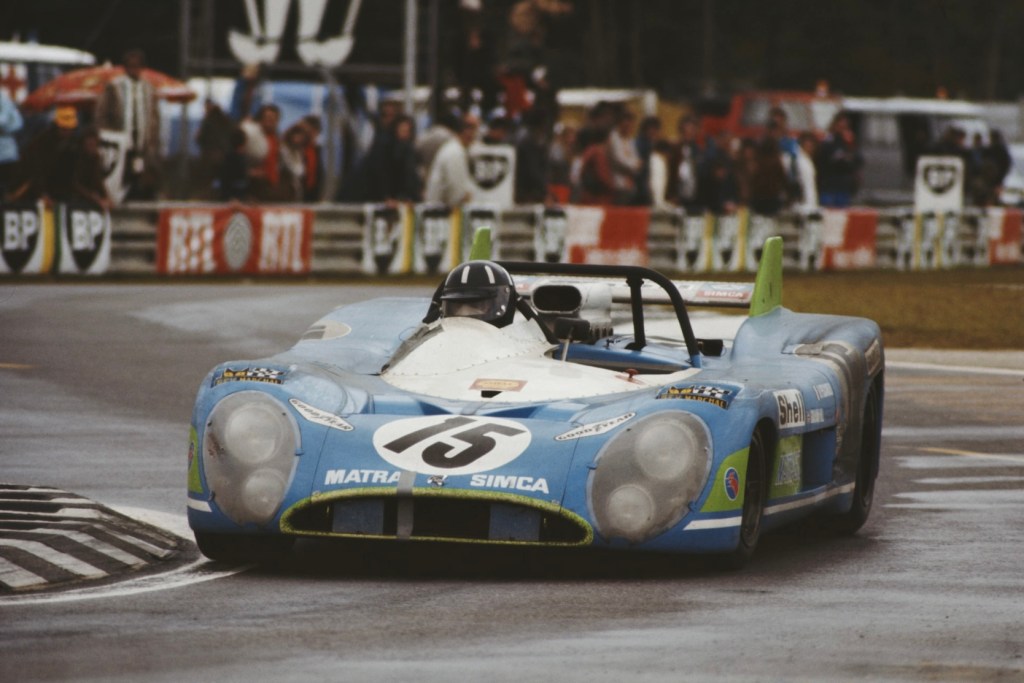
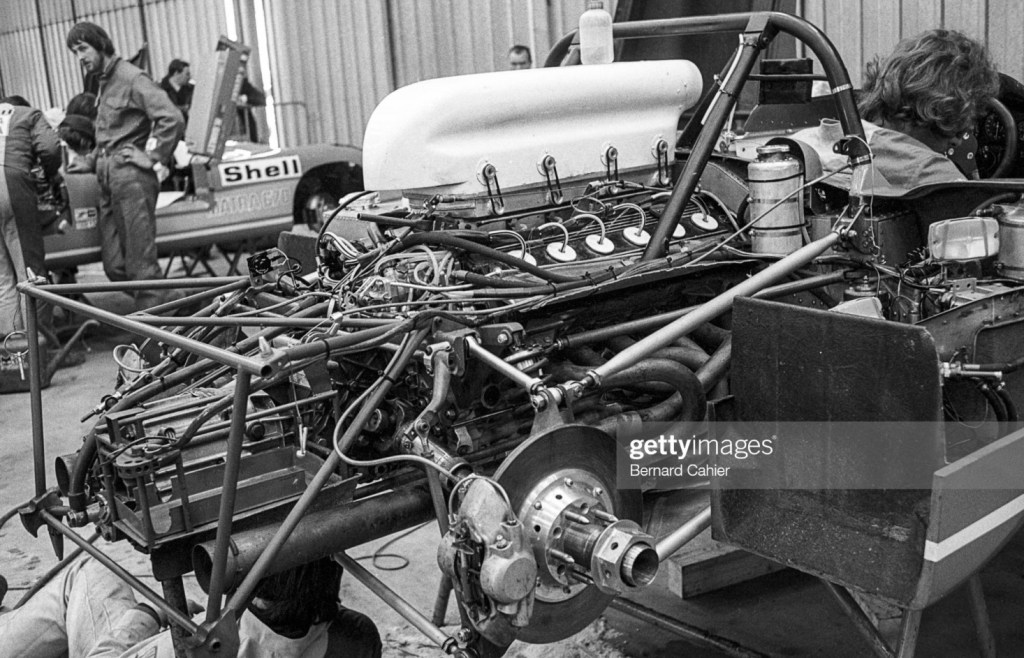
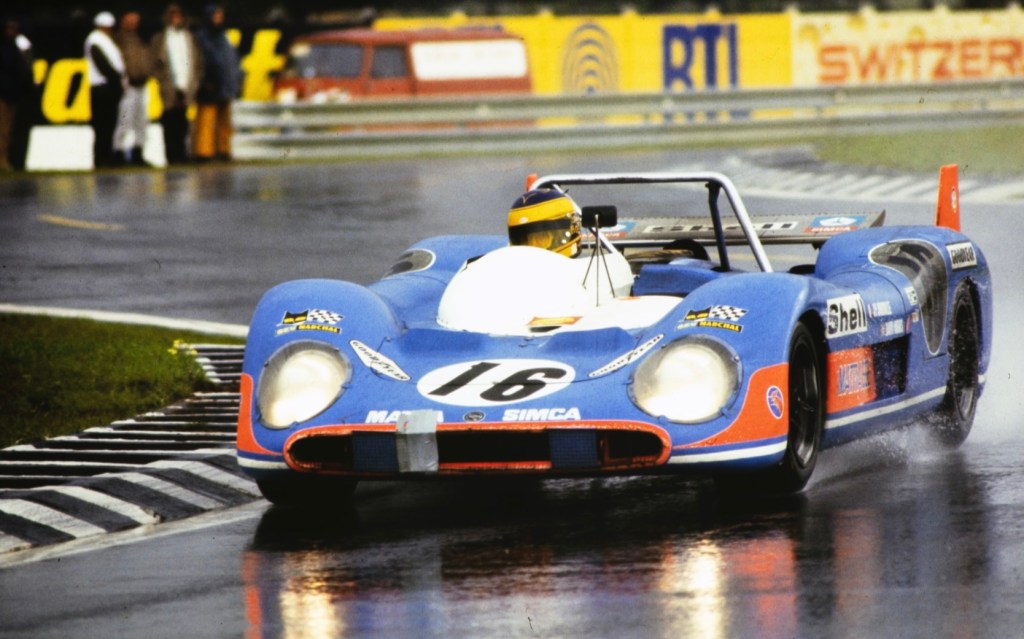
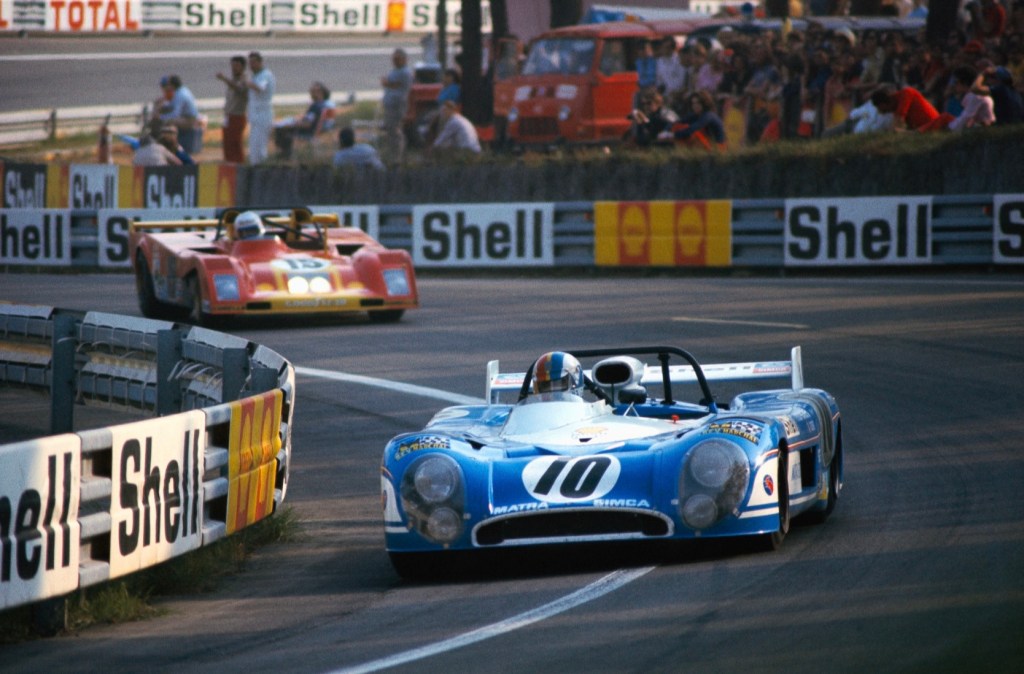
Ferrari won 10 of the 11 qualifying rounds with their 312PB, electing not to contest Le Mans on the basis that their detuned F1 engined cars wouldn’t last the distance. A 3-litre detuned F1 engined Matra MS670 V12 driven by Henri Pescarolo and Graham Hill took an historic win for France that day instead. While on one level Ferrari’s Le Mans non-appearance was savvy – they had the WSC locked up – it was also gutless, they dipped out on the only sportscar race that really matters every year.
Vaccarella aboard the Alfa T33/TT/3 he shared with Toine Hezemans to third place behind the Ferrari 312PBs of Mario Andretti/Jacky Ickx and Ronnie Peterson/Tim Schenken, Sebring 12-Hours March 1972Duo of Alfa T33TT/12s on the Eau Rouge swoop, Spa 1000km 1975. Jacky Ickx from Henri Pescarolo, the Pesca/Derek Bell machine won from Ickx/Art Merzario
Context for Ferrari’s amazing 312PB dominance in 1972 is that they sacrificed their 1971 5-litre 512M program by selling cars/512S update kits to privateers but elected not to race the 512M as works cars, effectively gift-wrapping the final 5-litre Era endurance title for Porsche. It’s staggering in the sense that Ferrari could only finance the build of these 25 5-litre cars due to the sale of of his business to Fiat in 1969.
The pay-off was that the single 312P prototype that raced (driven mainly by Jacky Ickx and Clay Regazzoni) throughout 1971 was turned into a panzer division of evolved, ready-to-rock 312PBs in 1972. Despite ongoing development at Maranello, Matra caught Ferrari napping in 1973, winning five of the ten rounds, Le Mans and the title that year, change is the continuum after all.
Alfa T33/SC/12 1977. Monocoque chassis, five-speed Alfa transaxle, 180-degree V12 ‘flat-12’, 2995cc, gear driven DOHC, four-valve, Lucas fuel injected circa 520bhp @ 12000rpm (B Betti)Alfa Romeo 520bhp 3-litre flat-12 during the Dijon 500km weekend in 1977. The Jean-Pierre Jarier/Art Merzario T33/SC/12 won this race
Alfa Romeo returned with the Tipo 33 TT/12 in 1973 – spaceframe 3-litre 500bhp flat-12 – and finally took the World Championship of Makes in 1975 with that car, and the World Sportscar Championship in 1977 with the Tipo 33 SC/12 – where SC is Scatolato, a boxed or monocoque chassis 3-litre 520bhp flat-12 and Tipo 33 SC/12 Turbo – monocoque 2.164-litre 640bhp flat-12 – open sports-prototypes.
Vittorio Brambilla enroute to a Monza 500km victory in April 1977, Alfa T33/SC/12
Credits…
Yuriy Shevchuk, Rainer Schlegelmilch, Pete Lyons, Getty Images, Bruno Betti, MotorSport Images, ‘Alfa Romeo Tipo 33 : The Development & Racing History’ Peter Collins and Ed McDonough
(MotorSport)
Tailpieces…
Evocative shot of Helmut Marko on-the-hop in his furious pursuit of the leading Ferrari 312PB in the closing stages of the 1972 Targa. It really was an impressive drive of the T33/TT/3 on this most toughest of tracks.
(MotorSport)
While these days best known as Red Bull’s stock-picker, Marko had the makings of a fine GP driver in 1972. He was, with Gijs Van Lennep, the reigning Le Mans champion aboard a fearsome Porsche 917K, but his racing career ended with the loss of sight in his left eye after an incident at Clermont Ferrand.
A stone thrown up by Emerson Fittipaldi’s Lotus 72D Ford penetrated his visor while at the wheel of a BRM P160B (above) during the closing stages of the July 1972 French GP. Marko later commented that, new to the car, his seat wasn’t fully sorted so he was sitting 15cm higher than in the P153B. But he was still happy to be at the wheel of a more competitive car, he qualified it sixth too, but that 15cm made all the difference with that small, sharp, missile…
Jack Brabham, Cooper T39 Climax, and the Bib Stillwell-Bill Pitt Jaguar D-Types just before the start of The Argus Cup 8-lap, 25-mile sportscar support race before the Australian Grand Prix. December 2, 1956.
On row two are the red Ausca Holden of Paul England at left, and Lex Davison’s HWM Jaguar alongside. The third row comprises Stan Coffey’s Ferrari 750 Monza, Ron Phillips’ Austin Healey 100S and Tom Sulman’s green Aston Martin DB3S at right.
This AGP day grid excludes some of the cars which contested the ATT the week before including the first three placegetters, Moss and Behra, Maserati 300S and Ken Wharton, Ferrari 750 Monza. By that stage the Maseratis may have been sold to locals Doug Whiteford and Reg Smith, if not they were very much for sale, so best not to put them at risk by racing them, cash was critical to Maserati.
Brabham and Stillwell
Brabham’s 1.5-litre Climax FWB engined machine won the race by nine seconds from Stillwell’s D-Type, Jack’s task was made easier when Pitt – first Aussie home in the ATT the week before – clipped a kerb in his D-Type on lap one and rolled it, he handily landed amongst the hay bales while the Jag was rendered somewhat second-hand. In a motor-dealer strong field, Bill Patterson’s T39 Bobtail was third, then Paul England in the superb Ausca from Kiwi, Ross Jensen’s AH 100S and then Ron Phillip’s similar car in sixth.
The single-seater shots are of course the machines contesting the AGP won convincingly by Stirling Moss’ works-Maserati 250F from team-mate, Jean Behra’s similar 2.5-litre F1 car. Peter Whitehead was third in a Formula Libre 3.4-litre Ferrari 555 Super Squalo from local 250F exponents Reg Hunt and Stan Jones.
The gathering of drivers before the off is interesting, perhaps it’s just before the drivers briefing. Mind you, they may be discussing their flight connections that evening, the army’s Southern Command Band marched and played on…and on, as landlords of part of this particular manor, they weren’t keen to leave the track after their moment of glory, ensuring the race started an hour late.
From the far-left it’s Whitehead’s #3 Ferrari, the guy in the brown sports-jacket looks like Bib Stillwell to me. He didn’t contest this race but still may have ambled up for a gander. Based on the shot below, the guy in the green/blue helmet is perhaps Whitehead, but who is the driver in the white helmet? Behra is in his car with Moss perched on his left-rear, Stirling’s car is on pole. Look at that crowd and the Repco sign.
Moss’ car is about to be fired up, a mechanic is inserting the battery operated starter-shaft, the silver car on row two at right is Ken Wharton’s Maserati 250F, DNF engine failure. What wonderful theatre it must have been.
These colour shots really do allow you to feel the vibe, the palette – high quality Kodachrome film here I think – of clothing is so much more muted than today’s. This stretch of road and trees are still there, It’s roughly parallel with the current front straight, and between it and the lake. Look at the press-men in their stereotypical brown ‘flasher’ trench coats. Isn’t the lady elegant and rare, these days Drive To Survive has ’em out in droves, happily motor-racing remains a girlfriend free zone for me.
That’s Whitehead’s Ferrari 555 with, perhaps, Lex Davison’s 3-litre Ferrari 500/625 being pushed into place behind, he shared the second row with Ken Wharton’s Maserati 250F, on the third row was Reg Hunt’s 250F, Reg Parnell in the other Ferrari 555 Super Squalo and Kevin Neal in the ex-Hunt 2.5-litre Maserati A6GCM.
Credits…
Ian Curwen-Walker and Russell Garth many thanks, ‘Glory Days : Albert Park 1953-58’ Barry Green
Tailpiece…
Moss on the hop before the rains came, he beat Jean Behra by close to two minutes, the 80 lap/250 miles journey took him 2 hours 36 15.4 min/secs.
Enzo Ferrari and buddies launch their new for 1970 Le Mans contender, the fabulous 5-litre V12 Ferrari 512S to the press at Modena on November 6, 1969.
Bonus points for anyone who can identify the attendees…
My propensity for multiple articles on my favourites is well established practice, but again, rather than write another I’ve added a lot of material to an existing quickie to make it more valuable as an overview to these erotic Italians, however ordinary their race results in 1970-71 under the heel of the Porsche 917-908/3 onslaught were.
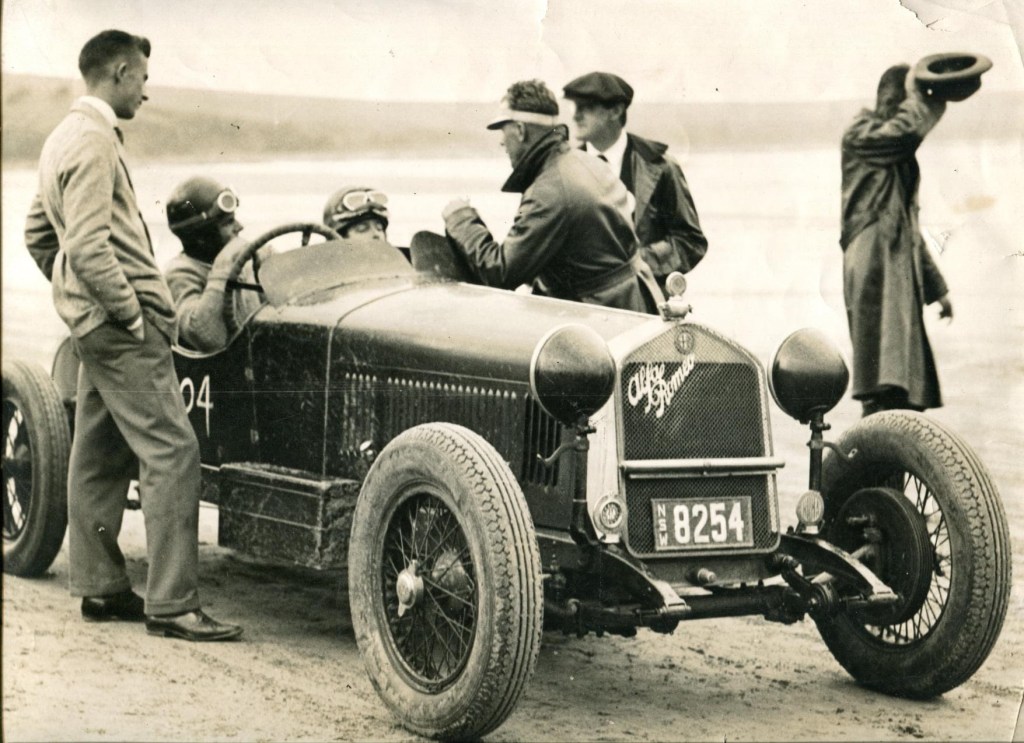
Percy Hunter and Vida Jones – aka Mrs JAS Jones – aboard her Alfa Romeo 6C 1750 SS Zagato on the beach at Gerringong, New South Wales south coast in 1930. Click here for a long feature on this oh-so-famous Oz racing car; https://primotipo.com/2018/02/15/mrs-jas-jones-alfa-6c-1750-ss-zagato/
(Keith Anderson Photography)
Only in Australia…
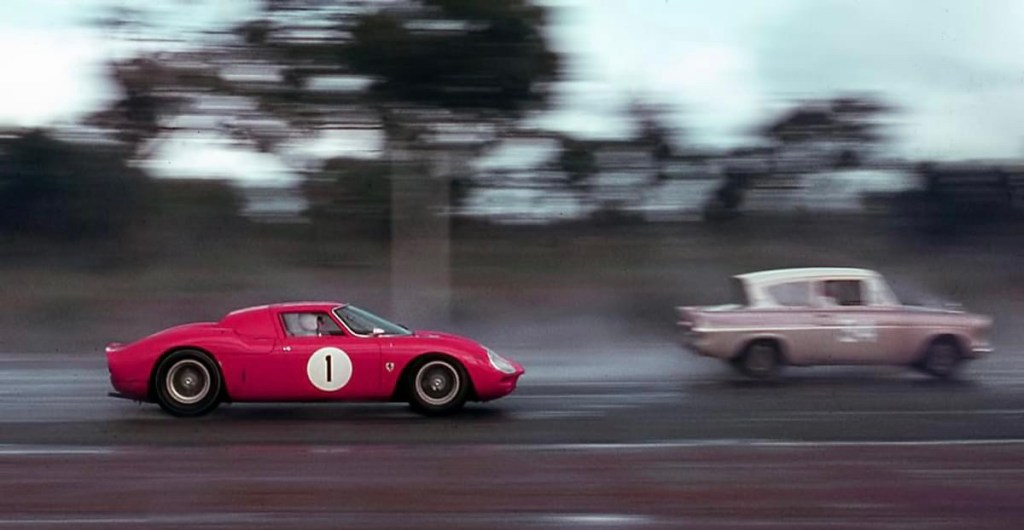
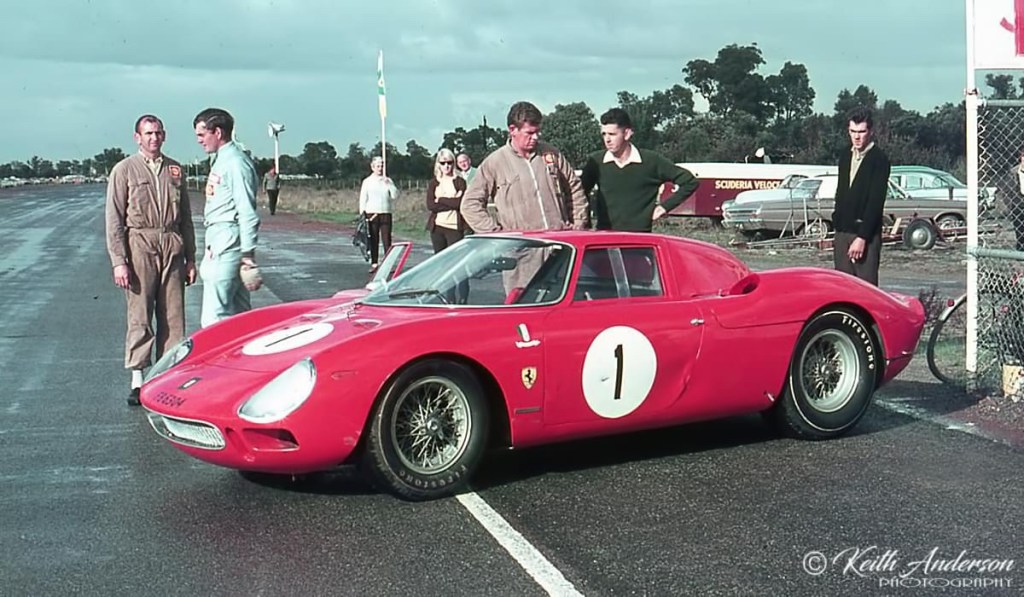
And no, the little Angle-box isn’t blowing off Enzo’s finest, the Andy Buchanan Ferrari 250LM at Caversham during practice for the 1966 6-Hour race.
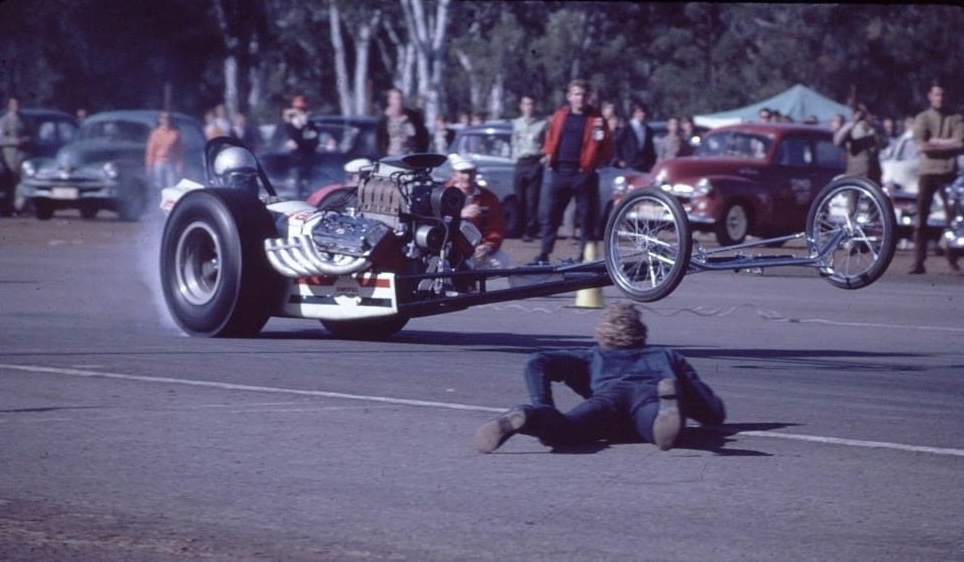
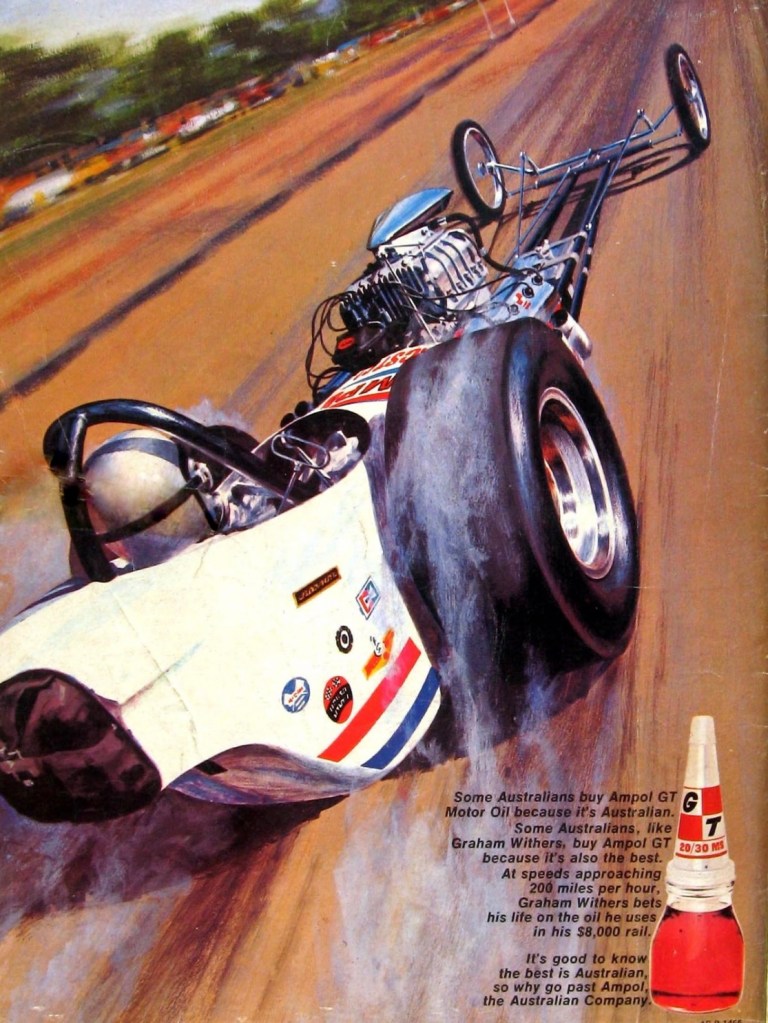
Graham Withers ‘slingshot’ Ampol GT sponsored dragster/rail at Castlereagh in 1968.
Whether the dude with the death-wish is a crew member sussing just how much air Mr Withers is taking on launch, or perhaps been ingesting tablets of a type not dispensed by suburban pharmacists is an interesting question. Do let me know if you can put all of our minds to rest. Manufacturer of the machine folks?
(B Williamson Collection)
Ron Hodgson’s Lotus 11 GT has to be Fugly Car Cup contender.
Here in the Warwick Farm paddock circa 1962. The story of how some lovely sportscars were re-purposed is told in this article about Murray Carter here; Forever Young… | primotipo…
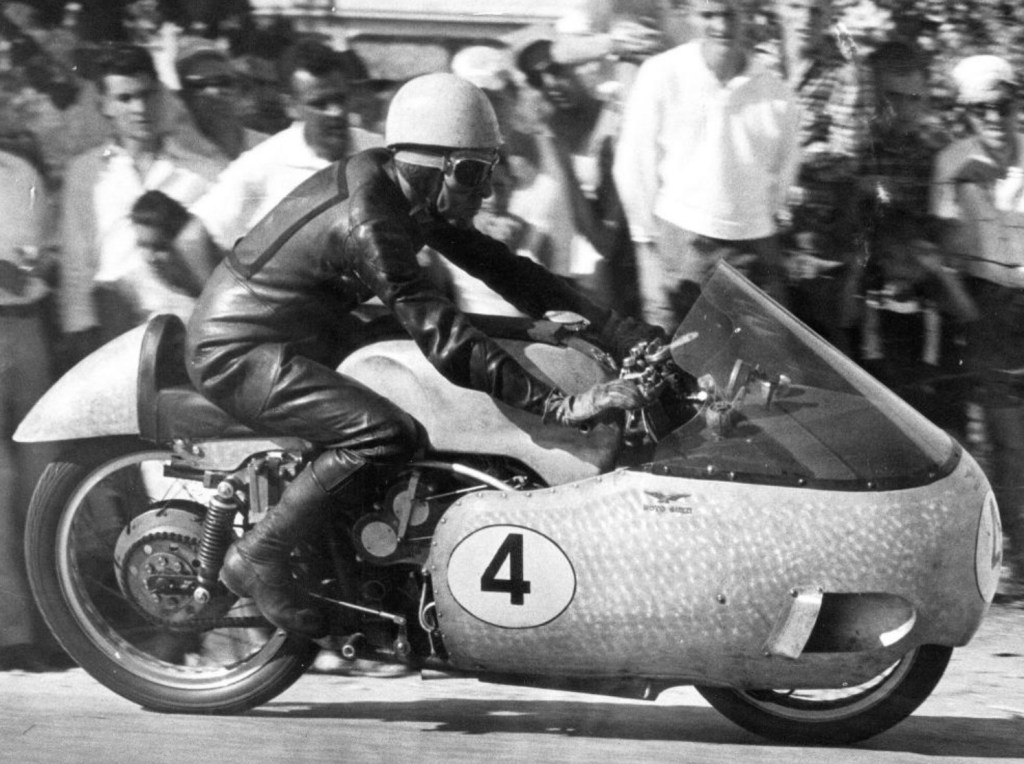
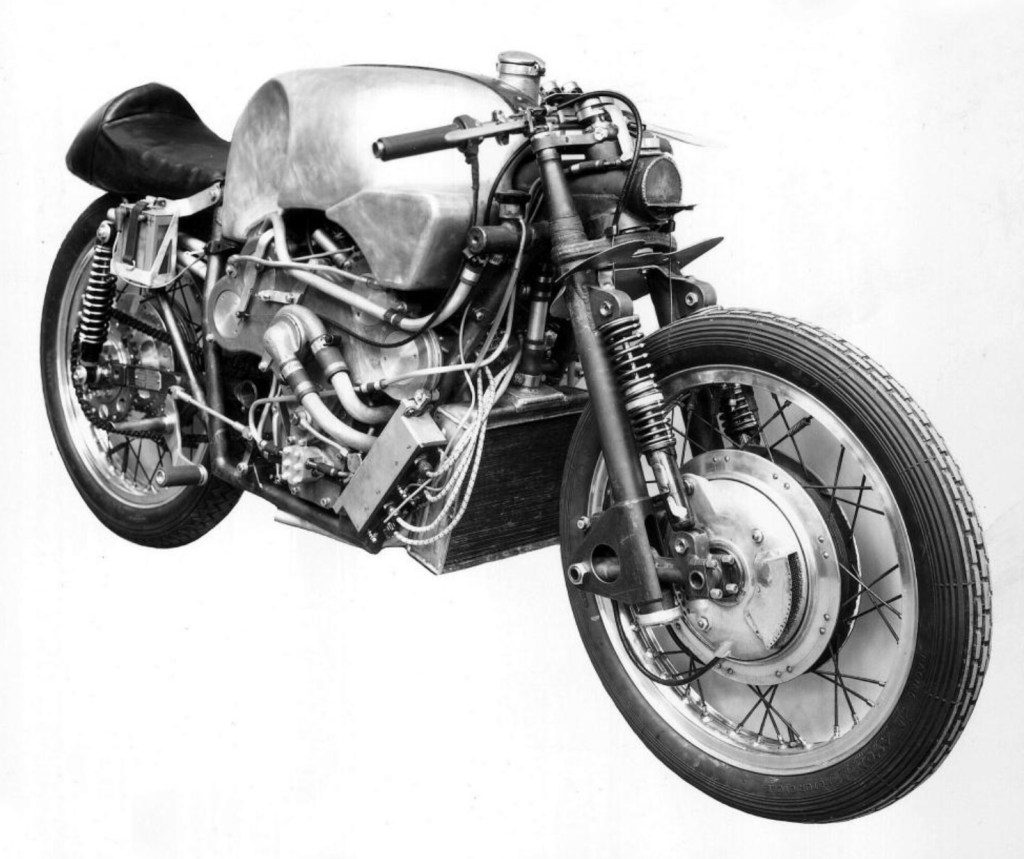
Ken Kavanagh aboard the awesome Moto Guzzi 500 V8 GP machine during the 1956 Senigallia Grand Prix.
This wild machine made its race debut at the Belgian GP in June 1955, read about Kavanagh’s time with Moto Guzzi in this feature; Moto Guzzi… | primotipo…
(Moto Guzzi)(MotorSport)
Dave Walker and Tim Schenken during the 1971 Dutch Grand Prix weekend at Zandvoort.
Walker started the Lotus 56B Pratt & Whitney 4-WD from grid 22 and was looking good for a while in the very soggy conditions but like so much of the grid, missed his braking point – in a car in which he hadn’t done a huge number of laps – and ran off the track after completing only five laps. Quickie on DW here; https://primotipo.com/2022/01/05/walkin-on-water/
Tim Schenken’s Brabham BT33 Ford was a more competitive mount. In its second year – Brabham won the South African GP in one in 1970, and should have won two or three more – it was still competitive in the young Melburnian’s hands, third place at the Osterreichring was his best result of the year.
At Zandvoort he started from grid 19 but DNF with suspension failure in the race won by Regenmeister Jacky Ickx’ Ferrari 312B2. Short piece on Tim here; https://primotipo.com/2019/01/02/tim-schenken/
(MotorSport)(Reg Hunt Collection)
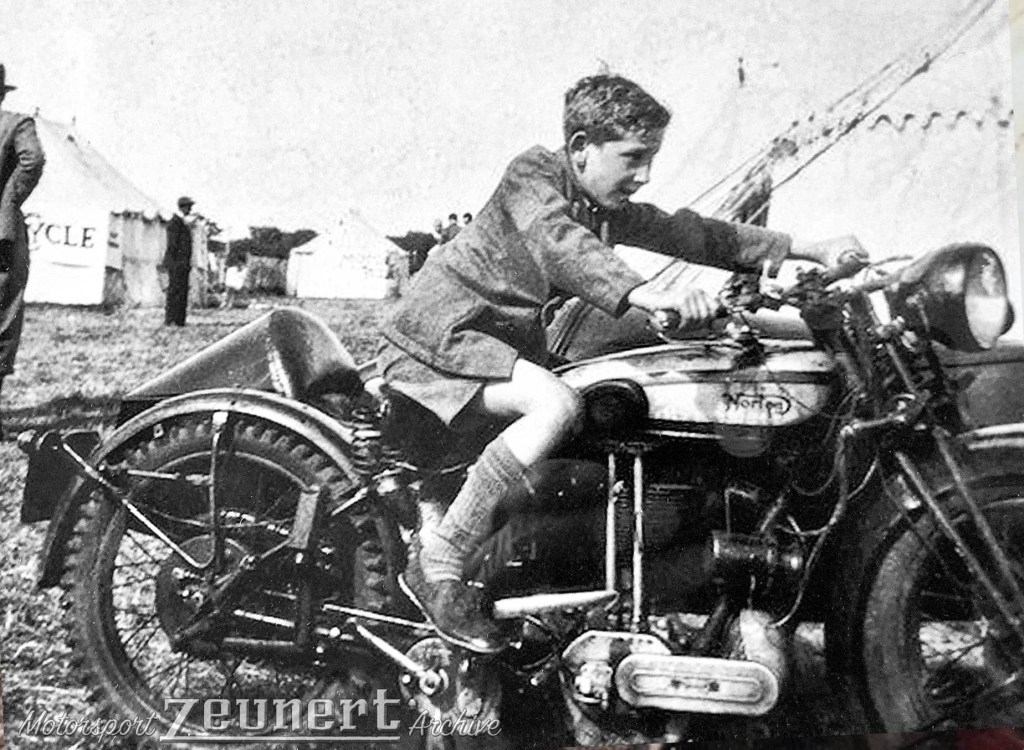
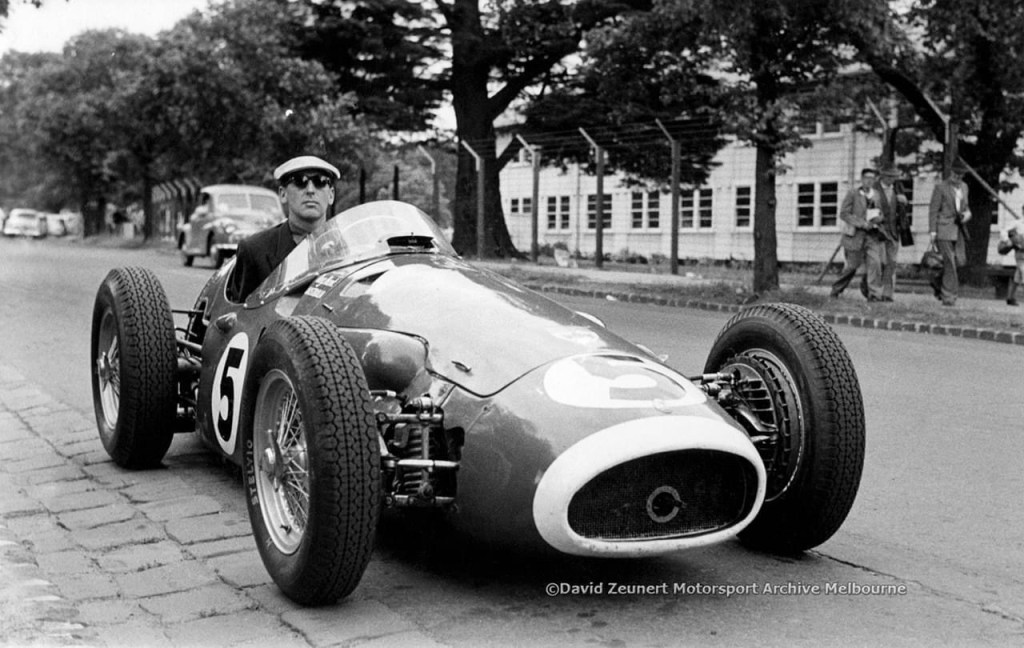
Reg Hunt dreaming about future conquests on one of his parents Nortons, aged nine, in the early 1930s in the UK, and living the dream at Albert Park in 1956 aboard his Maserati 250F below.
He and his A6GCM and 250F were Australia’s fastest combinations in 1955-56, then he retired early to focus on his family and motor dealerships, amassing a fortune. See more about Reg here; https://primotipo.com/2017/12/12/hunts-gp-maser-a6gcm-2038/
(Reg Hunt Collection)(P Miller)
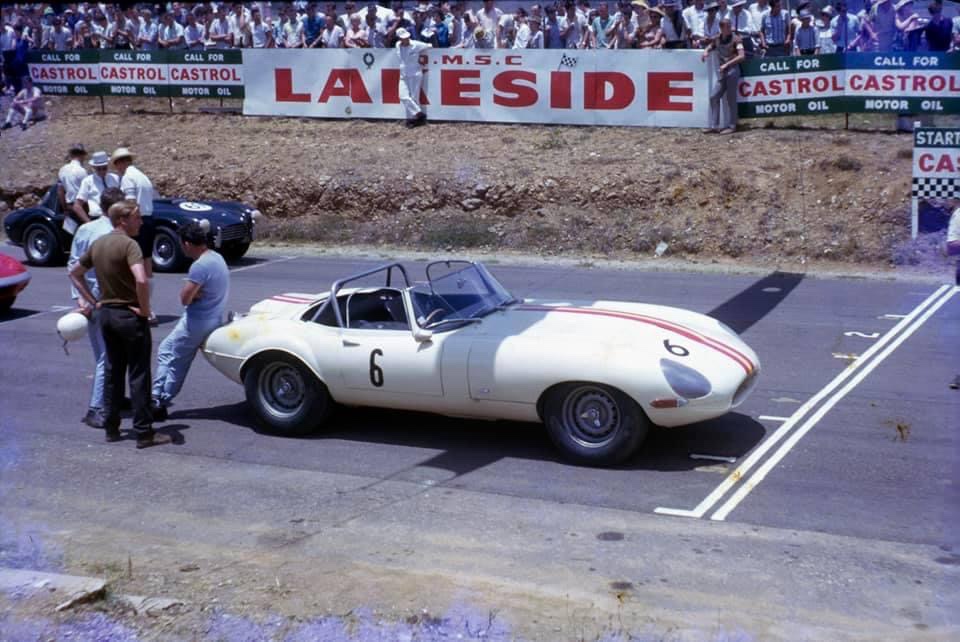
Bob Jane relaxes on his Jaguar E-Type Lwt during the Australian Tourist Trophy meeting at Lakeside over the November 14, 1965 weekend.
This is a heat or support race, Bob was fourth in the ATT, while Ron Thorp – it’s his AC Cobra you can see – didn’t start. Pete Geoghegan won from Greg Cusack and Spencer Martin: Lotus 23B Ford, Lotus 23 Ford and Ferrari 250LM.
The dude in the brown shirt is longtime Bob Jane Racing chief mechanic/team manger John Sawyer, no idea who the driver is, the tiny splash of red is Bill Gates’ Lotus Elan. Jane usually raced this darlin’ of a Jag with its factory hardtop but wasn’t averse to running topless on hot days. Click here for a feature on the car; Perk and Pert… | primotipo…
Piers Courage on the hop during the Warwick Farm 100 Tasman Cup round in January 1968.
Giving away a bit of horsepower at old-Sandown, a power track. Piers pitches his McLaren into Peters Corner with the Richard Attwood BRM P126 V12 , and, I think, Kevin Bartlett’s Brabham BT11A Climax behind. This fabulous race had an amazing dice between Jim Clark’s Lotus 49 Ford DFW and Chris Amon’s Ferrari 246T, resolved by a smidge in favour of the Scot. It was his last race, and series win.
(D Simpson)
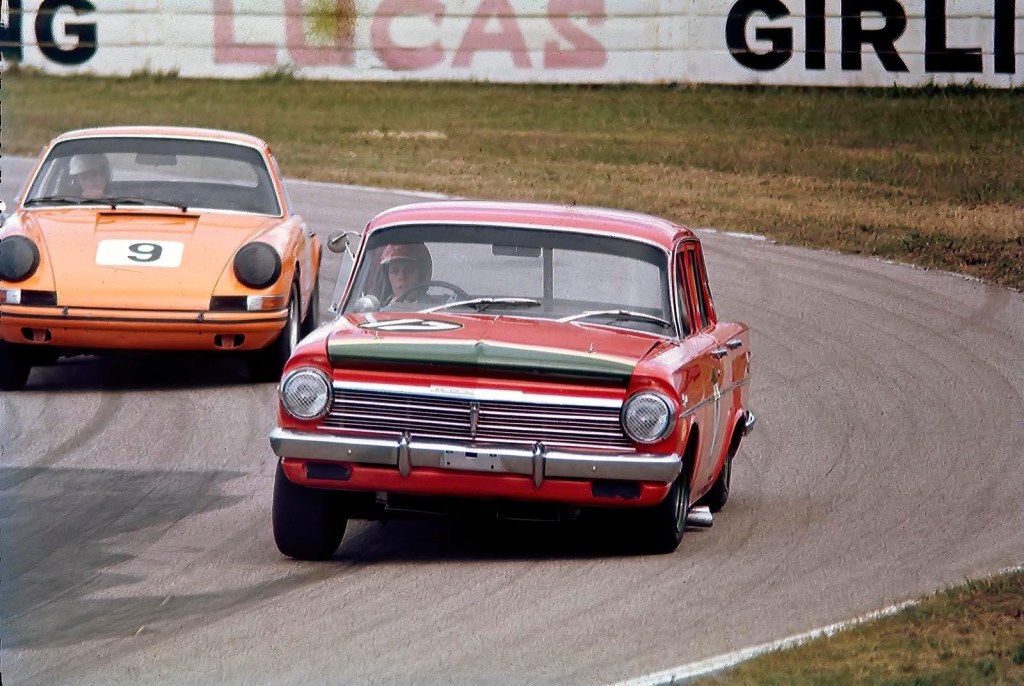
This is the Queensland Touring Car Championship meeting at Surfers Paradise in August 1969, a round of the Australian Touring Car Championship. Dick Johnson’s EH Holden in front of Alan Hamilton’s Porsche 911
Norm Beechey’s Holden Monaro GTS327 won – taking the first ever ATCC win for a Holden – with Hamilton second and Jim McKeown third in a Lotus Cortina Mk2.
Dick Simpson recalled a funny moment related to his photo. “A couple of laps after that shot, as the EH was entering Lucas Corner, there was an almighty bang, a massive cloud of blue smoke and black engine oil and a number of red bits of metal pouring out of the engine right on the apex of the corner. The noise stopped and the EH silently trundled on around Repco Hill and disappeared.”
“We had a flag post right beside us and had been chatting with one of the flaggies who was most impressed that we were keen enough, or stupid enough to drive all night from Wollongong. So he said he had to go and clean up the mess and would we like a couple of souvenirs? He brought up a couple of bits of steel, one looked like a huge main-bearing cap and plonked them on top of the fencepost to cool off. About an hour later a young kid who looked a lot like the EH driver came along and demanded his bits back. So we had a quick chat with a young DJ!”
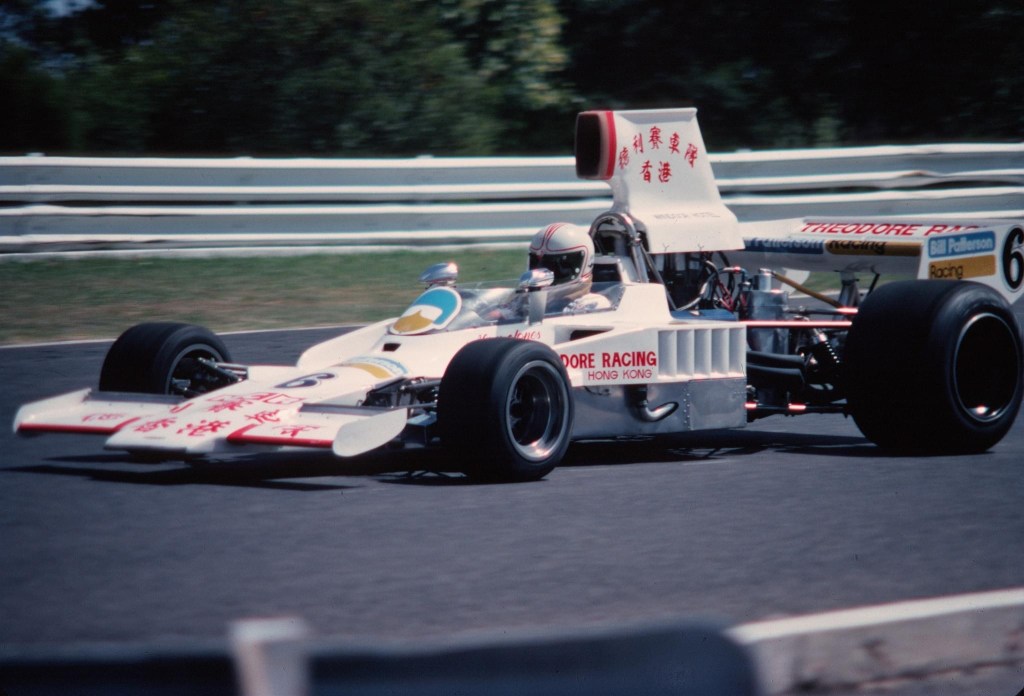
Alan Jones was stunningly quick in Sid Taylor/Teddy Yip Lola T332 Chevs during Australia’s 1977 Rothmans International F5000 Series.
While Warwick Brown won it in his Racing Team VDS Lola T430 Chev, Jones was the series-ace, let down by mechanical dramas and a mistake or two of his own; a jumped start at Oran Park and writing off a car in practice at Surfers Paradise.
(R Steffanoni)
Here at Sandown he grabbed the lead from the start but retired with overheating. He won the fourth, final round at Adelaide International at the start of a year in which he won his first F1 Grand Prix aboard a Shadow DN8 Ford at the Osterreichring (below).
(LAT)(I Smith)
Amazing Ian Smith pan of Allan Moffat in his legendary Trans-Am Mustang at Oran Park during the final round of the Australian Touring Car Championship on August 8, 1972.
Steve Snuggs tells us that he was wearing an oxygen mask in protest to CAMS not allowing him to remove the car’s carpets which smouldered from the hot exhausts and gave off fumes.
Incredibly rare colour shot of Pedro Rodriguez’ works-BRM P261 2.1-litre V8 during the 1968 Longford Trophy.
He is on the rise having exited the Newry right-hander in second or third gear – that line of poplars and road is still there – before an open left-kink then onto The Flying Mile.
Pedro nicked second-place from Frank Gardner’s Brabham BT23D Alfa in the final lap but fell well short of Piers Courage McLaren M4A Ford FVA F2 car in demanding wet conditions. More about BRM in the Antipodes here; https://primotipo.com/2020/02/22/1966-australian-grand-prix-lakeside/
(I Smith)
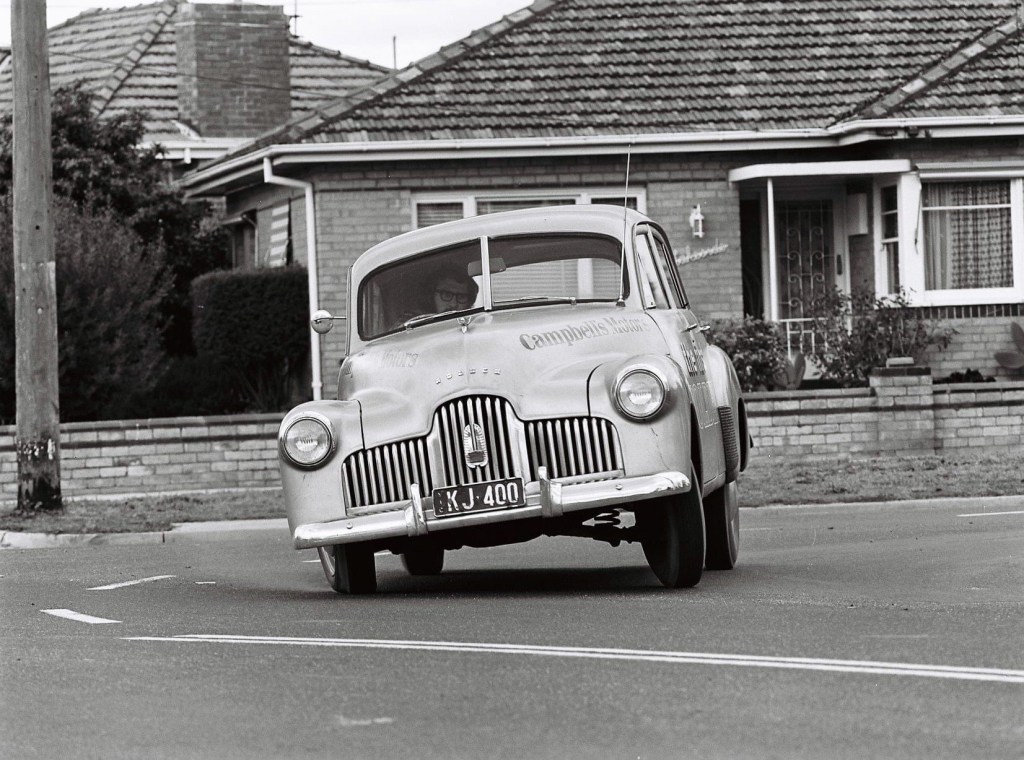
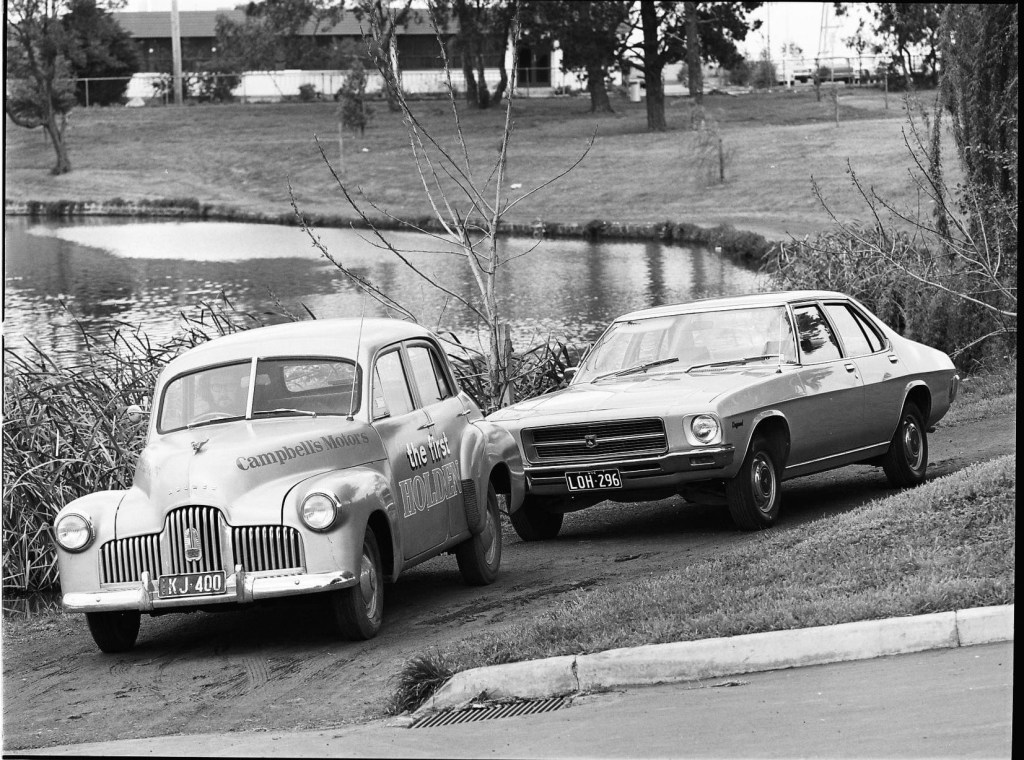
The great Ian Smith is sharing his back-catalogue of photographs in great dollops via Facebook. I enjoyed this series of shots taken in Reservoir, suburban Melbourne during a compare and contrast Wheels road-test between the then new Holden Kingswood HQ, and the original 1948 Holden 48-215 circa 1972.
(I Smith)
The reason for the strange location is probably because Campbells Motors Holden were in High Street, Preston and they didn’t want their luvverly old-Humpy being taken too far from ‘home’. See here for a piece on the 48-215; https://primotipo.com/2018/12/06/general-motors-holden-formative/ The locale is Edwards Park Lake, Reservoir.
(I Smith)(Mitsubishi)
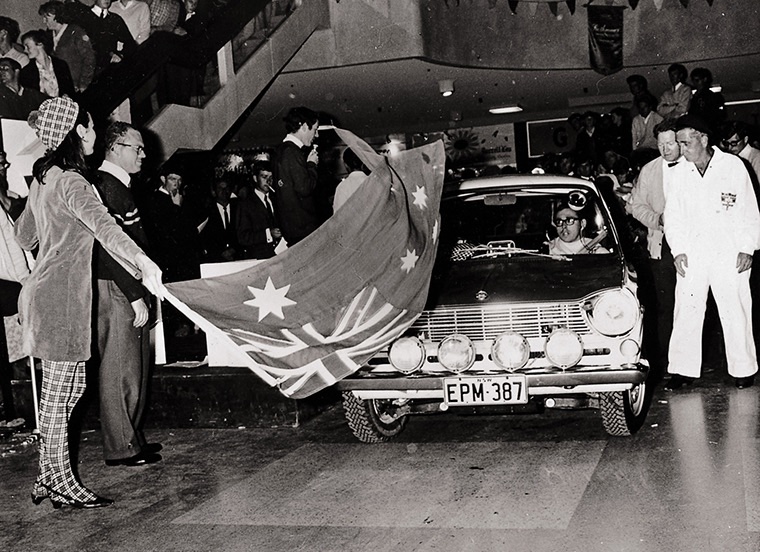
The giant-killing Colin Bond/Brian Hope, fourth place overall Mitsubishi Colt 1000F at the end of the 1967 Southern Cross Rally at Port Macquarie.
Michael Gasking Collection, Keith Anderson Photography, Bob Williamson Collection, oldracephotos.com-Dick Simpson, Moto Guzzi, Reg Hunt Collection via David Zeunert, Peter Jones, Peter Miller, Rod Steffanoni, Bill Forsyth, Ian Smith, IC Walker Collection via Russell Garth
Tailpiece…
(oldracephotos.com/DSimpson)
Dick Simpson’s artistry catches Niel Allen on the hop in Garrie Cooper’s first monocoque sportscar, the Elfin ME5 Chev on the entry to Homestead corner at Warwick Farm in 1969. It was a twitchy beast of a thing with its short-wheelbase, arguably, only Niel got the best out of it in the short time he owned it before buying a McLaren M10B Chev F5000.
Social media just keeps giving and giving. This time enthusiast Russell Garth has posted some great ’56 AGP colour shots taken by the late Ian Curwen-Walker at Albert Park on Bob Williamson’s Old Motor Racing Photographs Australia Facebook page.
Sometimes I’ve got so many different articles on the same topic I’m confusing myself – not that is difficult to do I might add – so rather than start another ’56 AGP piece I’ve added the shots to this existing article; https://primotipo.com/2018/01/16/james-linehams-1956-agp-albert-park/
The photograph above is Paul England’s Ausca Holden-Repco which contested the 25 November, 34 lap, 100 mile Australian Tourist Trophy. He was 12th outright and second in class, in the car he and Bill Hickey built after hours at Repco Research’ Sydney Road, Brunswick premises on the other side of town. The flash of blue to the right is the Norman Hamilton owned Porsche 550 Spyder driven that weekend by Otto Stone, lasting only one lap. Otto would have been a busy boy that fortnight, looking after Stan Jones’ 250F, or was he preparing it at that early stage?
Tony Johns tells me the “bloke (with his back to us) in the white overalls with the fag is Norman Hamilton,” who created the Porsche Cars Australia empire in Australia, famously the first Porsche importer/dealer outside Europe.
Chris Amon hustles his March 707 Chev around Riverside, during the weekend in 1970. Isn’t it a big, handsome brute, fast too…
The scale of March’s F1 achievement in 1970 from a standing start is unbelievable, 11 March 701 Ford DFV’s were built and won three F1 races that year. Jackie Stewart took the fiery Spanish Grand Prix and the Race of Champions at Brands Hatch, while Chris Amon won the International Trophy at Silverstone.
In addition, they created the infrastructure and team to build customer Formula Ford, F3 and F2 cars, and this Group 7/Can-Am program, “credited to SCCA Pro Racing Director Jim Kaser’s trip to Europe to drum up more business” wrote Hunter Farnham. In his spare time – sic! – Robin Herd led the design of a car that was immediately competitive in Helmut Kelleners’ hands in the European Interserie, and in the much more competitive Can-Am Challenge, where McLaren remained supreme, later in 1970.
“The detail design was executed by ex-Lola man Martin Slater (a friend of one of the March founders, Graham Coaker) and John Clark, a freelance designer who was involved with most of the early Marches, while further refinements were made during its construction by John Thompson, Roger Silman and Peter Turland.” wrote Mike Lawrence in ‘The History of March’. Well aware of how thin the businesses resources were, Amon enticed his long-time mechanic, Kiwi Bruce Wilson – who had not too long before prepared and spannered the Ferrari 246T in which Chris had won the 1969 Tasman Cup – to Bicester to help complete the cars.
Chris testing 707-01 at Silverstone sans bodywork – Bruce would be proud of him! – in May 1970 (B Wilson Collection)March 707 Chev technical specifications as per text, chassis depicted is Amon’s 707-02 (Bill Bennett)
Herd was partially responsible for the McLaren dominance of course, together with Bruce McLaren he designed and drew the 1967 McLaren M6A Chev, the first of the Papaya-Steamrollers comprising the 1967-71 M6A-M8A-M8B-M8D and M8F, all of which were Chevrolet V8 powered.
As was the case with the 701, Herd designed a simple car – nothing wrong with that, McLaren’s dominance was achieved with utterly conventional superbly designed, built and prepared racing cars – given the time constraints and customer queue. No way could he afford an expensive, time consuming development program with angry customers if an innovative approach turned-turtle.
Robin’s monocoque was fabricated in 20-gauge aluminium alloy with magnesium bulkhead castings at front and rear. It housed 70 gallons of fuel located in four Firestone bladders. In a neat touch, typical of some F1 cars of the day, the tub ended at the aft cockpit bulkhead with the engine and rear suspension/transaxle assembly bolted to a steel frame that attached to the back of the tub. With the fixings undone, the whole rear of the car could be rolled away for necessary maintenance.
707-02 getting pretty close to being ready for Chris first gallop at Silverstone by the look, no belt yet fitted tho. Lots of flat sheet to minimise the compound curvature fabrication challenges. Bruce Wilson second from the right, who are the other fellas folks? (B Wilson Collection)(B Wilson Collection)Ally block, capacity quoted as 494/502ci, Lucas injection, magneto ignition, Mota-Lita steering steering, Hewland LG ‘box (B Wilson Collection)
March purchased 494/502cid/8-litre Chaparral-Chev aluminium, pushrod, fuel injected V8s giving circa 720bhp @ 6500rpm. The ubiquitous Hewland LG600 gearbox transmitted its huge power and torque through roller-spline driveshafts to mag-alloy wheels and 23-inch wide Firestones at the rear.
Front and rear suspension was period typical. Upper and lower wishbones, coil spring-Koni damper units and adjustable roll-bar and mag-alloy uprights at the front. The rear used a single top link, twin parallel lower links, and radius rods, again with an adjustable bar and attaching to big, beefy but light mag-alloy uprights.
Brakes were Girling calipers with 12-inch rotors, steering was of course rack and pinion, the whole lot less fuel weighed a claimed 1460 pounds. The wheelbase, as published, was 96 inches, front track 68, rear track 64, length 156, and width 93 inches.
Pete Lyon’s ran his tape-measure over the cars and found that “the tape across the nose-fins was no wider that 83.5 inches, while the rear wheel arches swelled to only 83.75. That years M8D taped out at 79.5 at the latter point.” Lyon quoted Chris Amon from a Karl Ludvigsen – Motor Trend article as saying the true weight of the 707 was between 1600-1800 pounds. Big cars indeed…
Bruce Wilson and Chris catching up early in-build, 707-01, maybe (B Wilson Collection)(B Wilson Collection)(B Wilson Collection)
Chassis 707-01 was ready for Chris to test at Silverstone in mid-May (above). He was excited by the prospect of racing two 707s, which were part of his retainer agreement with March. Lawrence wrote that Chris viewed this effort as potentially a first step in establishing ‘Amon Racing Team’ to give him a measure of independence, and longer term security after he’d hung up his helmet.
In the end, March retained the cars, “the books would be balanced to suit” wrote Lawrence. Ultimately, Chris was never paid what he was owed by March, not that he was alone, just one of the first…
Chris complained of front end instability when he tested the car, the cockpit was so large that Robin Herd joined him for a few laps, the mechanics joked that “he’d designed the 707 that wide so he could hitch rides in it.”
Kelleners 707-01 was ready in time for the first Interserie round at the Norisring on June 26. He led both heats but was ousted by gearbox problems, a good effort as the brakes were troublesome and the weight distribution still wasn’t quite right. Progress was swift though, he won at Croft in July and at Hockenheim in October. The six round championship was won by Jurgen Neuhaus, Porsche 917K who was also victorious twice but was more consistent throughout the short season. Kelleners was the class of the field, despite the presence of some works-assisted Porsche 917s, with more reliability he would have won the title. Importantly, the lessons learned with the car were built into Amon’s machine which was quick and finished races from the start.
Helmut Kelleners 707-01 during the 1970 Trophy of The Dunes at Zandvoort on September 20 (unattributed)Zandvoort again, the shot chosen to highlight the fabulous mix of cars; Groups 5, 6 and 7, fitted with engines ranging in capacity from 2-8-litres! Gijs Van Lennep, Porsche 917K here leads Kelleners (MotorSport)
After the Italian Grand Prix, Amon took his March 707 to round 8 of the Can-Am at Donnybrooke, McLaren had won almost all of the preceding rounds in the superb, Batmobile M8D Chev. Dan Gurney was victorious at Mosport and St Jovite until sponsor-clashes brought his McLaren F1 and Can-Am drive to an end. Denny Hulme then won at Watkins Glen, Edmonton and Mid Ohio until Peter Gethin took the Road America round in the car vacated by Gurney.
The odd-ball victory of the season was Tony Dean’s in the wet at Road Atlanta in mid-September when his nimble, light 3-litre Porsche 908 Spyder beat all of the 6-7 litre machines
When Amon appeared at Donnybrooke during the September 27 weekend he was immediately on the pace despite a lower front suspension arm pulling away from the chassis in practice.
Amon arrived in Minnesota early enough to do some mid-week practice, “but twice its practice was cut short with suspension failures,” Pete Lyons in ‘Can-Am’ wrote. The ‘Boeing’ was third on the grid, with ‘patches’ fitted to each side to rectify the suspension problem, behind Peter Revson’s Carl Haas-works Lola T220 Chev and the Hulme M8D; Chris matched Denny’s qualifying time, not bad…
In the race he ran second for a while, then, despite fuel pick up problems while running third – one tank wasn’t emptying into the other – Chris was classified fifth, having pulled off to the side of the track, behind Hulme, Gethin, Revson and Jim Adams’ Ferrari 512P.
(B Wilson Collection)Amon negotiates Laguna Seca’s corkscrew (unattributed)(B Wilson Collection)
Then it was off to Laguna Seca for another promising run on October 18. This time Q5 and fourth, coping with spongy brakes on the challenging track behind Hulme, Jackie Oliver’s Autocoast TI22 Mk2 Chev – who engaged in a long thriller of a dice with Denny – and Revson’s Lola. Clearly 707 had plenty of promise and pace despite missing the bulk of the races and the ongoing development which is a part of that process.
It was more of the same in the final round at Riverside, Q5 and fourth for Chris, third until fuel woes re-emerged and he had to pit for a splash and dash. This time the finishing order was Hulme, Oliver and Pedro Rodriguez in the BRM P154, the Bourne marque also having a crack that season but not making as much impact as March’s much shorter campaign.
At the end of 1970 both cars were returned to Bicester. 707-01 was modified by the removal of the hammerhead nose, and the front mounted radiators were moved to the chassis’ side. Dubbed the 717, Kelleners struggled with reliability in 1971 and sold the car at the season’s end to Austrian racer, Stefan Sklenar who race it sporadically without much luck.
Chris’ 707-02 was rebuilt and demonstrated occasionally. Despite the very promising start, March didn’t return to the Can-Am Challenge but rather focused mainly on volume production of single-seater categories where they were globally successful. In the later 1970s 707-03, a spare chassis, was built up and fitted with 707 bodywork, the cars live on.
Etcetera…
(unattributed)
Helmut Kelleners looking for a bit of love from his crew in the Croft pitlane, a successful July weekend for the team in that short 25 lap race. He won aboard 707-01 from Jurgen Neuhaus, Porsche 917K and John Lepp, Spectre GP6 Ford.
The photographs in this section are a mix from Bruce Wilson’s collection including some March works shots from in-period press releases, and the Getty Images’ archive. They are mixed up to get a nice visual mish-mash of monochrome and colour.
(MotorSport)
Plenty to smile about at Riverside, while Karl Ludvigsen’s shot below on the same November 1 weekend is much more moody, the shadows enhance that distinctive hammerhead nose with quite separate wing-section.
It’s such a shame that March didn’t race on with an evolved car in the 1971 Can-Am though it is hard to be critical of the commercial choices made by the March Boys, whilst noting the ever present and well documented ongoing cashflow dramas.
(K Ludvigsen)It’s clear how much influence the F1 701 had on the nose-aero of its big Can-Am March sibling in this low angle shot (B Wilson Collection)Monterey GP pits, Laguna Seca 1970. Bruce Wilson in the red shirt (H Thomas)
The sheer subtlety of Can-Am machines is what makes them so attractive to so many of us…
1970 was the last real Can-Am in the minds of many experts of the class. The Chapparral 2J Chev was such a threat to orthodoxy, it was thown out. Doubtless in accordance with FIA rules. But when Jim Hall said ‘go and get rooted’, or the Texan equivalent thereof, everything good about the unlimited, truly wild class was gone. Those of you who saw them race in-period are so lucky…
(B Wilson Collection)Amon, again 707-02 at Laguna Seca in 1970 (H Thomas)“How’s the F1 car going Bruce?” “Hmm, Ferrari have come good pal!” (B Wilson Collection)
Bruce Wilson and Chris Amon were the best of buddies. Bruce was key to Amon’s success right back to his Maserati 250F days before Reg Parnell popped him on a plane to England in early 1963.
Coopers galore in NZ circa 1961, circuit folks? Chris aboard his Cooper T41 Climax with Bruce’ hand on rear body (B Wilson Collection)
Wilson wrote a lovely book – The Master Mechanic- about his life and times in racing in the Antipodes and Europe, I’m told it’s great, it’s certainly on my list. I don’t believe the publisher has any – it was released almost as he died in 2017 – so go the online route.
(B Wilson Collection)
Credits…
Bruce Wilson Collection, cutaway by Bill Bennett, Karl Ludvigsen, Can-Am review in ‘Automobile Year 18’ by Hunter Farnham, ‘The History of March’ Mike Lawrence, ‘Can-Am’ Pete Lyons, Getty Images-Henry Thomas