Chris Amon hustles his March 707 Chev around Riverside, during the weekend in 1970. Isn’t it a big, handsome brute, fast too…
The scale of March’s F1 achievement in 1970 from a standing start is unbelievable, 11 March 701 Ford DFV’s were built and won three F1 races that year. Jackie Stewart took the fiery Spanish Grand Prix and the Race of Champions at Brands Hatch, while Chris Amon won the International Trophy at Silverstone.
In addition, they created the infrastructure and team to build customer Formula Ford, F3 and F2 cars, and this Group 7/Can-Am program, “credited to SCCA Pro Racing Director Jim Kaser’s trip to Europe to drum up more business” wrote Hunter Farnham. In his spare time – sic! – Robin Herd led the design of a car that was immediately competitive in Helmut Kelleners’ hands in the European Interserie, and in the much more competitive Can-Am Challenge, where McLaren remained supreme, later in 1970.
“The detail design was executed by ex-Lola man Martin Slater (a friend of one of the March founders, Graham Coaker) and John Clark, a freelance designer who was involved with most of the early Marches, while further refinements were made during its construction by John Thompson, Roger Silman and Peter Turland.” wrote Mike Lawrence in ‘The History of March’. Well aware of how thin the businesses resources were, Amon enticed his long-time mechanic, Kiwi Bruce Wilson – who had not too long before prepared and spannered the Ferrari 246T in which Chris had won the 1969 Tasman Cup – to Bicester to help complete the cars.
Chris testing 707-01 at Silverstone sans bodywork – Bruce would be proud of him! – in May 1970 (B Wilson Collection)March 707 Chev technical specifications as per text, chassis depicted is Amon’s 707-02 (Bill Bennett)
Herd was partially responsible for the McLaren dominance of course, together with Bruce McLaren he designed and drew the 1967 McLaren M6A Chev, the first of the Papaya-Steamrollers comprising the 1967-71 M6A-M8A-M8B-M8D and M8F, all of which were Chevrolet V8 powered.
As was the case with the 701, Herd designed a simple car – nothing wrong with that, McLaren’s dominance was achieved with utterly conventional superbly designed, built and prepared racing cars – given the time constraints and customer queue. No way could he afford an expensive, time consuming development program with angry customers if an innovative approach turned-turtle.
Robin’s monocoque was fabricated in 20-gauge aluminium alloy with magnesium bulkhead castings at front and rear. It housed 70 gallons of fuel located in four Firestone bladders. In a neat touch, typical of some F1 cars of the day, the tub ended at the aft cockpit bulkhead with the engine and rear suspension/transaxle assembly bolted to a steel frame that attached to the back of the tub. With the fixings undone, the whole rear of the car could be rolled away for necessary maintenance.
707-02 getting pretty close to being ready for Chris first gallop at Silverstone by the look, no belt yet fitted tho. Lots of flat sheet to minimise the compound curvature fabrication challenges. Bruce Wilson second from the right, who are the other fellas folks? (B Wilson Collection)(B Wilson Collection)Ally block, capacity quoted as 494/502ci, Lucas injection, magneto ignition, Mota-Lita steering steering, Hewland LG ‘box (B Wilson Collection)
March purchased 494/502cid/8-litre Chaparral-Chev aluminium, pushrod, fuel injected V8s giving circa 720bhp @ 6500rpm. The ubiquitous Hewland LG600 gearbox transmitted its huge power and torque through roller-spline driveshafts to mag-alloy wheels and 23-inch wide Firestones at the rear.
Front and rear suspension was period typical. Upper and lower wishbones, coil spring-Koni damper units and adjustable roll-bar and mag-alloy uprights at the front. The rear used a single top link, twin parallel lower links, and radius rods, again with an adjustable bar and attaching to big, beefy but light mag-alloy uprights.
Brakes were Girling calipers with 12-inch rotors, steering was of course rack and pinion, the whole lot less fuel weighed a claimed 1460 pounds. The wheelbase, as published, was 96 inches, front track 68, rear track 64, length 156, and width 93 inches.
Pete Lyon’s ran his tape-measure over the cars and found that “the tape across the nose-fins was no wider that 83.5 inches, while the rear wheel arches swelled to only 83.75. That years M8D taped out at 79.5 at the latter point.” Lyon quoted Chris Amon from a Karl Ludvigsen – Motor Trend article as saying the true weight of the 707 was between 1600-1800 pounds. Big cars indeed…
Bruce Wilson and Chris catching up early in-build, 707-01, maybe (B Wilson Collection)(B Wilson Collection)(B Wilson Collection)
Chassis 707-01 was ready for Chris to test at Silverstone in mid-May (above). He was excited by the prospect of racing two 707s, which were part of his retainer agreement with March. Lawrence wrote that Chris viewed this effort as potentially a first step in establishing ‘Amon Racing Team’ to give him a measure of independence, and longer term security after he’d hung up his helmet.
In the end, March retained the cars, “the books would be balanced to suit” wrote Lawrence. Ultimately, Chris was never paid what he was owed by March, not that he was alone, just one of the first…
Chris complained of front end instability when he tested the car, the cockpit was so large that Robin Herd joined him for a few laps, the mechanics joked that “he’d designed the 707 that wide so he could hitch rides in it.”
Kelleners 707-01 was ready in time for the first Interserie round at the Norisring on June 26. He led both heats but was ousted by gearbox problems, a good effort as the brakes were troublesome and the weight distribution still wasn’t quite right. Progress was swift though, he won at Croft in July and at Hockenheim in October. The six round championship was won by Jurgen Neuhaus, Porsche 917K who was also victorious twice but was more consistent throughout the short season. Kelleners was the class of the field, despite the presence of some works-assisted Porsche 917s, with more reliability he would have won the title. Importantly, the lessons learned with the car were built into Amon’s machine which was quick and finished races from the start.
Helmut Kelleners 707-01 during the 1970 Trophy of The Dunes at Zandvoort on September 20 (unattributed)Zandvoort again, the shot chosen to highlight the fabulous mix of cars; Groups 5, 6 and 7, fitted with engines ranging in capacity from 2-8-litres! Gijs Van Lennep, Porsche 917K here leads Kelleners (MotorSport)
After the Italian Grand Prix, Amon took his March 707 to round 8 of the Can-Am at Donnybrooke, McLaren had won almost all of the preceding rounds in the superb, Batmobile M8D Chev. Dan Gurney was victorious at Mosport and St Jovite until sponsor-clashes brought his McLaren F1 and Can-Am drive to an end. Denny Hulme then won at Watkins Glen, Edmonton and Mid Ohio until Peter Gethin took the Road America round in the car vacated by Gurney.
The odd-ball victory of the season was Tony Dean’s in the wet at Road Atlanta in mid-September when his nimble, light 3-litre Porsche 908 Spyder beat all of the 6-7 litre machines
When Amon appeared at Donnybrooke during the September 27 weekend he was immediately on the pace despite a lower front suspension arm pulling away from the chassis in practice.
Amon arrived in Minnesota early enough to do some mid-week practice, “but twice its practice was cut short with suspension failures,” Pete Lyons in ‘Can-Am’ wrote. The ‘Boeing’ was third on the grid, with ‘patches’ fitted to each side to rectify the suspension problem, behind Peter Revson’s Carl Haas-works Lola T220 Chev and the Hulme M8D; Chris matched Denny’s qualifying time, not bad…
In the race he ran second for a while, then, despite fuel pick up problems while running third – one tank wasn’t emptying into the other – Chris was classified fifth, having pulled off to the side of the track, behind Hulme, Gethin, Revson and Jim Adams’ Ferrari 512P.
(B Wilson Collection)Amon negotiates Laguna Seca’s corkscrew (unattributed)(B Wilson Collection)
Then it was off to Laguna Seca for another promising run on October 18. This time Q5 and fourth, coping with spongy brakes on the challenging track behind Hulme, Jackie Oliver’s Autocoast TI22 Mk2 Chev – who engaged in a long thriller of a dice with Denny – and Revson’s Lola. Clearly 707 had plenty of promise and pace despite missing the bulk of the races and the ongoing development which is a part of that process.
It was more of the same in the final round at Riverside, Q5 and fourth for Chris, third until fuel woes re-emerged and he had to pit for a splash and dash. This time the finishing order was Hulme, Oliver and Pedro Rodriguez in the BRM P154, the Bourne marque also having a crack that season but not making as much impact as March’s much shorter campaign.
At the end of 1970 both cars were returned to Bicester. 707-01 was modified by the removal of the hammerhead nose, and the front mounted radiators were moved to the chassis’ side. Dubbed the 717, Kelleners struggled with reliability in 1971 and sold the car at the season’s end to Austrian racer, Stefan Sklenar who race it sporadically without much luck.
Chris’ 707-02 was rebuilt and demonstrated occasionally. Despite the very promising start, March didn’t return to the Can-Am Challenge but rather focused mainly on volume production of single-seater categories where they were globally successful. In the later 1970s 707-03, a spare chassis, was built up and fitted with 707 bodywork, the cars live on.
Etcetera…
(unattributed)
Helmut Kelleners looking for a bit of love from his crew in the Croft pitlane, a successful July weekend for the team in that short 25 lap race. He won aboard 707-01 from Jurgen Neuhaus, Porsche 917K and John Lepp, Spectre GP6 Ford.
The photographs in this section are a mix from Bruce Wilson’s collection including some March works shots from in-period press releases, and the Getty Images’ archive. They are mixed up to get a nice visual mish-mash of monochrome and colour.
(MotorSport)
Plenty to smile about at Riverside, while Karl Ludvigsen’s shot below on the same November 1 weekend is much more moody, the shadows enhance that distinctive hammerhead nose with quite separate wing-section.
It’s such a shame that March didn’t race on with an evolved car in the 1971 Can-Am though it is hard to be critical of the commercial choices made by the March Boys, whilst noting the ever present and well documented ongoing cashflow dramas.
(K Ludvigsen)It’s clear how much influence the F1 701 had on the nose-aero of its big Can-Am March sibling in this low angle shot (B Wilson Collection)Monterey GP pits, Laguna Seca 1970. Bruce Wilson in the red shirt (H Thomas)
The sheer subtlety of Can-Am machines is what makes them so attractive to so many of us…
1970 was the last real Can-Am in the minds of many experts of the class. The Chapparral 2J Chev was such a threat to orthodoxy, it was thown out. Doubtless in accordance with FIA rules. But when Jim Hall said ‘go and get rooted’, or the Texan equivalent thereof, everything good about the unlimited, truly wild class was gone. Those of you who saw them race in-period are so lucky…
(B Wilson Collection)Amon, again 707-02 at Laguna Seca in 1970 (H Thomas)“How’s the F1 car going Bruce?” “Hmm, Ferrari have come good pal!” (B Wilson Collection)
Bruce Wilson and Chris Amon were the best of buddies. Bruce was key to Amon’s success right back to his Maserati 250F days before Reg Parnell popped him on a plane to England in early 1963.
Coopers galore in NZ circa 1961, circuit folks? Chris aboard his Cooper T41 Climax with Bruce’ hand on rear body (B Wilson Collection)
Wilson wrote a lovely book – The Master Mechanic- about his life and times in racing in the Antipodes and Europe, I’m told it’s great, it’s certainly on my list. I don’t believe the publisher has any – it was released almost as he died in 2017 – so go the online route.
(B Wilson Collection)
Credits…
Bruce Wilson Collection, cutaway by Bill Bennett, Karl Ludvigsen, Can-Am review in ‘Automobile Year 18’ by Hunter Farnham, ‘The History of March’ Mike Lawrence, ‘Can-Am’ Pete Lyons, Getty Images-Henry Thomas
Duncan Ord completes a donut out front of a Shell Servo in suburban Perth, date and place unknown…
I laughed at the sight of this oh-so-pedigreed racer being subjected to useage more often applied to ‘Humpy’ Holdens of the day!
This 3.3-litre, DOHC, straight-eight Bugatti T57T #57264 was first raced by Earl Howe in the 1935 Ulster Tourist Trophy later passing into the hands of Pierre Levegh who contested the 1937 GP des Frontieres at Chimay amongst other races. It, perhaps, passed through Jean-Pierre Wimille’s hands before being sold to visiting Perth racer Duncan Ord in the UK. He shipped it home, first racing it at Pingelly, Western Australia in January 1939, where it remained a pillar of the local scene into the dawn of the swinging-sixties.
Among sports-racing Bugattis, the Type 57 is one of the most illustrious. Chassis 57264 is a Type 57 Tourist Trophy Torpedo, originally designated chassis 57222, this was later changed by the factory. The car is unusual in that despite a racing history of over thirty years it retains its original chassis largely intact, and original crankcase, gear-box and front and rear axles as well as other less critical components.
Detailed research by foremost French Bugatti authority Pierre Yves Laugier has confirmed this machines history, “The first mention of the car is in the August 1935 list of bodywork at the Bugatti factory which contains the entry ‘2 Voitures Course 24 Heures, moteurs 223 et 224’. While no chassis serial numbers were recorded for these two cars, on August 29 that year – in the factory’s list of cars sold – the chassis serial number 57222 Torpedo Tourist Trophy with motor number 224 is mentioned. Francis, Earl Howe, drove Bugatti Type 57 TT, engine 224, to finish third in the Ulster TT race, at Ards, Ulster (as below) on September 7, 1935.”
(MotorSport Images)Earl Howe beside his trusty steed at Ards before the off (MotorSport Images)
In its report of the race MotorSport said, “The Bugattis driven by Lord Howe and the Hon. Brian Lewis were models of light construction with their duralumin shell bodies, and weighed only 26 cwt, with driver, fuel and water. Georges de Ram shock absorbers were used and the engines were said to develop over 160hp at 5,500rpm, which sounds rather fantastic. At any rate the compression ratio was well over 8 to 1 thanks to the efficient shape of the twin (sic) combustion chambers. Lord Howe’s car did close on 120mph while Lewis’s car was somewhat slower….”.
During the first practice day Francis, Earl Howe, had in fact made fastest lap time in 10 minutes 16 seconds which was some six seconds faster than his RAC handicap time. During the race Brian Lewis – the younger man and a faster driver than Howe – led the race, before his Bugatti developed clutch slip due to an oil leak from the gearbox. This left Howe leading, only to make an immediate refuelling stop. He subsequently fought his way back onto the leader board, MotorSport commenting “Howe had been making splendid progress on the Bugatti, and on the 33rd lap caught the two Aston Martins to secure third place…” – behind winner Freddie Dixon’s fleet Riley and Eddie Hall’s very special 3.6-litre Bentley.
By January 1936, the car was listed for sale with dealer Dominique Lamberjack back in Paris at 60,0000 Francs. The car was also referred to in period as chassis serial 57264/moteur 224 Torpedo TT as the factory had re-allocated serial 57222 to a new Competition Torpedo with its gondola shaped Type 57S chassis.
57264 was possibly entered at Le Mans in 1936 but the event was cancelled due to the political unrest throughout France. On June 11, 1936 the car was co-driven by Yves Giraud-Cabantous and Bugatti company salesman Roger Labric in the Spa 24-Hours. Labric, a friend of Bugatti, managed the marque’s showroom on the Avenue Montaigne, Paris. Unfortunately he overshot at the Stavelot Hairpin and burst the car’s radiator. When repaired it was offered for sale at the Avenue Montaigne showroom.
The car pictured in France during Pierre Levegh’s ownership (Bonhams Collection)
It found a buyer on April 8, 1937 in talented French gentleman/sportsman – talented cyclist, skier, ice hockey and tennis player – owner/driver Pierre Bouillin. Born in Paris on December 22, 1905, he was the son of an antiques dealer and had become the director of a brush factory in Trie Châ-teau in the Oise region. The Type 57 was his first Bugatti.
Bouillin idolized his uncle – Alfred Velghe – a pre-war pioneer racing driver. Bouillin shuffled the letters of that surname to adopt the anagram nom de guerre ‘Levegh’ for his racing exploits.
Pierre became obsessed with winning Le Mans and in 1952 came close – over-revving his Talbot-Lago and blowing the engine after 23 hours of a solo drive – while well-established in a probably uncatchable lead. His misfortune gifted the race to the works Mercedes-Benz 300SL Gullwings which finished first and second.
When Mercedes returned to Le Mans with a team of 300SLRs in 1955 they invited 49 year old Levegh to drive for them. It was aboard an SLR that he became innocently involved in the terrible collision which claimed the lives of over 80 spectators, in addition to the luckless Bouillin himself.
57264 perhaps at Miramas, Marseilles with Levegh in June 1937 (Bonhams Collection)
In happier times during 1937 he paid 32,500 Francs in instalments to purchase 57264 for his competition debut. On May 15, 1937, he raced the T57 in the Grand Prix des Frontieres at Chimay, Belgium finishing third, running sans mudguards. On June 6 he contested the Marseilles 3-Hours, finishing eighth, then on September 19 at Montlhery, Levegh entered the the Autumn Cup sports car race, the machine by then fitted with larger Delahaye-style mudguards, but failed to finish.
Pierre then advertised the car for sale in the L’Auto March 15,1938 issue, describing it as a “Type 57, unique car, capable of 190km/h. Write to owner at 54 Avenue de Choisy”.The car was spotted at Brooklands during that period and clocked at 192km/h. It had already been modified with the addition of a 40-gallon riveted aluminium fuel tank behind the driver’s seat, different doors, an additional oil cooler ahead of the radiator and further modified mudguards. It also featured cable-adjustable Repesseau shock absorbers.’
Contemporary references are confusing but it’s possible Levegh sold it to French Ace Jean-Pierre Wimille who used it as his roadie before passing it on to an unknown purchaser, who shipped it to Brooklands, but died before he could compete there. It then passed to London based sports car specialist J.H. Bartlett who advertised it in the May 1938 issue of Speed, “Bugatti special 3.3-litre 120 m.p.h. competition 2 seater, fitted late series 57S engine, special electron body, special streamlined wings, spare tanks, etc…£450.” It was acquired by visiting Australian racer Duncan Ord.
Ord, Pingelly Speed Classic, on the cars race debut in Australia, January 30, 1939 (J Krajancich Collection)
Another Pingelly shot, year unknown, note the oil cooler up-front (K Devine Collection)
On arrival in Australia the car was unloaded from the ship at Fremantle where it created considerable local interest as a contemporary machine described in the press as a “1934 Le Mans model two-seater fitted with long range 60 gallon fuel tanks and had been refurbished at Molsheim before being clocked at 120 mph at Brooklands.”
Ord entered the Great Southern Speed Classic at Pingelly on 30 January, no doubt the step up in performance of the Bugatti compared to the P-Type MG he started racing in 1936 was deeply impressive. Ord’s handling of the car was noted as being particularly good but he was slowed by clutch troubles and a spin on the last lap which dropped him to fourth.
Interestingly this handicap race was won by the supercharged MG TA Spl driven by the very young Alan Tomlinson. On 2 January 1939, three weeks before, ‘The Three Kids from Perth’ (Tomlinson, Minder- Bill Smallwood, Manager- Clem Dwyer both of these latter fellows no slouches as drivers themselves) won a famous Australian Grand Prix victory on the daunting Lobethal which confounds historians to this day. Confounds in the sense that the sustained speed of the little MG beat some serious heavy-metal including the Jano Alfas of Alf Barrett, Jack Saywell and John Crouch, the Delahaye 135CS of John Snow and others on a track regarded as Australia’s greatest ever motor racing challenge.
The racing fraternity in Western Australia had a great relationship with the authorities which was reflected in a vast number of Round The Houses racing on closed public roads of small towns they secured over many decades, the first of which was at Albany in 1936.
The venues were away from Perth, to its south east was Pingelly 150km away, and Cannington 10km. Narrogin was-is 200km to the north east, Goomalling 130 km and Dowerin 160km. Byford Hillclimb was 45km south of Perth whereas Albany was a very long tow, 420km south to the edge of the continent’s coast. Busselton is 225km ‘down south’ as the Perthies say, too, on a magic stretch of coast. Bunbury was and is an important port on the west coast, it too is south of Perth, 175km from the state capital. This is by no means a complete list, I’ve just covered the towns in which the Bugatti raced.
Duncan Ord pressing on, place and date unknown (J Krajancich Collection)Ord again at Pingelly, uncertain of the year – he raced there from 1939-41 carrying #9 on each occasion – at the Review Street corner (K Devine Collection)
Pre-War the West Australians did more racing miles than racers in any other state on tar or bitumen. On the odd occasion they competed on the east coast – a cut-lunch and a camel ride away – given the transport network and roads of the day, the best of them could be prodigiously fast, Alan Tomlinson being the prime example.
As the war clouds gathered in Europe Ord raced the car in the June Dowerin winter meeting, finishing second in the open championship to Jack Nelson’s Ballot Ford V8 Spl. A fortnight later he was at Cannington for the Quarter Mile Trials where the Bug did a 17.2 second standing quarter and a flying quarter mile pass at 94.73 mph. He was second in each event again to Nelson’s Ballot which achieved 16.5/104.64 mph.
Whilst Australia was at war in 1940, Ord competed three times for a second place to Bob Lee’s Riley in the (handicap) Great Southern Speed Classic at Pingelly, and second in the Albany Tourist Trophy. Of his performances Bob King reported in his ‘Bugattis of Australasia’ that Ord “thrilled many thousands of spectators at Albany and Pingelly by the skilful and dashing manner in which he was handling the big, blue Bugatti. Ord demonstrated at Albany this year when he broke the course record that he had mastered the car.”
Ord, Patriotic Grand Prix, Applecross 1940. What was that about Motor Racing is Dangerous bit on the entry-ticket?! (P Partridge Collection)Jack Nelson, White Mouse Ford 10 Spl from Duncan Ord, Bugatti T57, Applecross 1940 (K Devine Collection)
Let’s not forget the Patriotic Grand Prix, a four event race meeting held through the then outer suburban streets of Applecross 8km from Perth’s CBD to raise money for various charities which looked after returned serviceman and their families.
Between 20,000 and 40,000 spectators turned up, appropriately on Armistice Day, November 11, and paid a shilling to enter with a program a further sixpence. The feature event was a handicap for racing cars and won by Harley Hammond’s Marquette Spl with the big Bug setting a lap record but retiring with engine trouble. “Oddly one race was held for cars fitted with gas producers, perhaps as a sop to those who felt motor racing was wasteful during a war,” Bob King wrote.
While in his ownership Ord fitted hydraulic brakes and moved the radiator forward to lower the bodywork, perhaps improving cooling, exactly when these changes were made is unclear.
Ord was first in the January 1941 Great Southern Speed Classic 5 lap scratch race at Pingelly before laying the car up for the balance of the war years. This carnival was literally the last race meeting in Australia until the conflict ended.
Victory shot at Pingelly in 1940. Duncan Ord, third at left, Bob Lee (Riley Brooklands) the winner in the middle and second placed Bill Smallwood (MG TA) at right (K Devine Collection)Duncan Ord – with goggles around his neck in the middle of the group of three – lines the T57T for a standing-quarter competition behind the very neat MG TA Spl of Norm Kestrel, at Nicholson Road, Forrestdale in 1946 (MG Specials – Aust – Pre-War and T Type Collection)
The Bunbury Flying 50 in November 1946 was Duncan’s first competitive post-war run, perhaps the big beast was unhappy about being disturbed after such a long slumber as it failed to finish. In January 1947 the WA Speed Championships were run on the RAAF Airfield at Caversham – a venue close to Perth which remained the home of motor racing in WA until the late-sixties – when Wanneroo Park was built. Ord was second in the 50 Mile Handicap,
He returned twelve months later and shared the car with prospective purchaser, South Australian Durrie Turner, who had placed a deposit on it pending a race in it. Fuel feed problems prevented Turner taking the start in his event with Ord then winning a 6 mile scratch.In the Airforce Trophy 25 lapper, Turner broke the lap record, but pitted with an overheating engine. Ord took over but on the following lap left the road, travelling through the boonies at great speed, before coming to rest too badly damaged to continue. The corner was subsequently known as ‘Bugatti Corner’!, to add to Ord’s woes Turner didn’t proceed the purchase.
AD ‘Durrie’ Turner is flagged away in the 25 lap Air Force Trophy handicap, Caversham on 13 March, 1948 (T Walker Collection)
Six years elapsed before the car reappeared at the Great Southern Flying 50 at Narrogin in March 1954 when it was driven by MG and Morgan driver and photographer David Van Dal to eighth, and last place last in a 3 lap scratch. He didn’t race in the feature won by Sid Taylor’s TS Special so perhaps had dramas in the earlier race. I’m not sure who owned the car by this stage, it’s said David Van Dal, but Phil Hind raced the Bug to twelfth in a preliminary and a DNF in the June 1954 Goomalling Classic.
In October Hind contested the Byford Hillclimb on the south-eastern Perth fringe but was unplaced. In this period Van Dal raced the BRM Morgan. It’s said at some time that Phil Hind bought the car, and in an effort to keep it competitive modified the chassis by shortening it 2 feet 6 inches between the rear kick-up and the cockpit. In addition, the original body was discarded and replaced by a contemporary style slender monoposto racing version, coil-springs were fitted at the front.
The T57 returned to Byford hill in October 1956 this time raced by R Annear to equal fourth place, or was it V Smith racing the car?
(K Devine Collection)T57T, Busselton in ‘monoposto’ form 1957, David Van Dal up (B King Collection)
By 1957 the Bugatti was back in David Van Dal’s hands, running in the Busselton Derby at the towns airstrip in January 1957, prior to the ’57 Australian Grand Prix held at Caversham in March. He was fourth in a 5 lap racing car scratch but failed to finish the Busselton Derby.
In a full field of the best cars of the day at Caversham for the AGP – Lex Davison’s Ferrari 500/625, Stan Jones Maserati 250F, Len Lukey’s and Tom Hawkes’ Cooper T23 Bristols, Jack Brabham’s Cooper T41 Climax and many others – the monoposto Bugatti was an also-ran but that was hardly the point, Van Dal was out there competing.
He shared the drive on an excruciatingly hot Perth summers day with John Cummins, a Sydney racer/mechanic/raconteur and fellow Bugatti driver, Cummins usually raced a Bugatti T37A Holden. The pair didn’t finish the race won in somewhat controversial circumstances by Davison who shared his car with fellow Melbourne driver/Holden Dealer Bill Patterson, whereas burly, rough and tough Stan Jones raced solo, and in the minds of some, won in disputes over lap counts. It was not the first time this occurred at elite level, nor the last!
Again, the ownership of the car isn’t clear throughout this period with Don Hall racing it in the state championships at Caversham in September, he was unplaced in the 7 lap scratch. David Van Dal raced a Morgan at the state championship meeting. Is it the case that David owned it from 1954 with others also having a race during this continuing period of ownership?
The Type 57T again in monoposto form, circa 1956 (K Devine Collection)(K Devine Collection)
In 1958 Van Dal sold it to Jim Krajancich, a Perth motor engineer. He had spotted 57264 advertised for £600 in Australian Motor Sport and offered Van Dal £400 payable in instalments. Van Dal had already been offered £400 by Melbourne-based Bugatti Type 51 owner Peter Menere, but since this would cost him a good deal more in transport he accepted Jim’s offer.
Krajancich then entered the car in the WA State Championships at Caversham in September 1958. He was sixth in both the first and second heats and DNF the third heat, a 10 lap race. N Rossiter won all three events in the TS Special with John Cummins second in the BRM Morgan raced previously by Van Dal.
The old beast’s final race before a very long hibernation was the Christmas Cup meeting at Caversham on November 22, 1958. In an ignominious end to such a long period of racing in Europe and Australia Jim was unplaced in the 5 lap scratch and the 15 lap Chrismas Cup, no doubt the machine needed a major ‘pull through’!
Jim decided to rebuild it in Maserati 300S style, but time passed and upon marriage in 1962, Bugatti T57T 57264 was mothballed as he bought it.
(Bonhams)(Bonhams)(Bonhams)
Bonhams picks up the story “Restoration work to original 1935 form finally commenced in 1973 and the work continued until 2010, Krajancich completing almost all the work himself. This included re-lengthening the chassis using works T57 drawings and painstakingly re-making the body and road equipment from archive photos. The brakes were re-converted to mechanical operation, the original radiator was acquired from Van Dal while the car’s original starter motor, dynamo and radiator shutters were reacquired from Ord. The radiator shell came via Wolf Zeuner and had come from Australia, it is in fact believed to be the car’s original. Original Type 57 rear springs came from Barry Swann in Malaysia, replacement original cylinder block and crankshaft were also sourced from Malaysia (the cars originals included with sale of the car), the spring hangers came from Zeuner, while the rear torque arm is old stock Molsheim spares.“
“Original pedal pads were obtained from Henry Posner, and when Gavin Sandford-Morgan re-bodied the sister 57627 he sold numerous original parts to Krajancich including the fuel tank, cast aluminium dashboard brackets and bonnet catches. The Repesseau adjustable friction shock absorbers now fitted at the rear were the fronts when the car arrived in Australia in 1938, the vendor having fitted original de Ram dampers on the front (sold to Krajancich by Bob King who obtained the ‘very heavy!’ units ex-Lex Davison’s Alfa Romeo P3 from Diana Davison) as fitted for the 1935 TT.”
(Bonhams)(Bonhams)(Bonhams)
The only replica mechanical parts used in 57264’s rebuild are the rear-brake back plates, the brake cross shafts and the dashboard instruments while original parts being sold with the car but not used in the rebuild include gearbox internals, crankshaft, cylinder block, steering wheel, steering drag link, oil pump, Stromberg carburettor – two SUs are mounted presently on the original manifold – while in addition there is a spare radiator ex-Sandford-Morgan.”
Bugatti authority Pierre Yves Laugier has personally inspected the car, “From this we can confirm correct number stampings identify the engine crankcase, gearbox, chassis, front and back axles as being original to this car.”
(Bonhams)(Bonhams)
Credits…
‘Bugattis in Australasia’ Bob King, MotorSport Images, Bonhams sale description/car history, Terry Walker Collection, Jim Krajancich Collection, Ken Devine Collection, Peter Partridge Collection, Tony Johns Collection
Etcetera…
(K Devine Collection)
Fantastic sharp shot of Duncan Ord at Pingelly in 1940.
(unattributed)
Huge crowd awaits the start of the Patriotic Grand Prix at Applecross in 1940. Clem Dwyer’s very successful Plymouth Special in front of Duncan’s T57T.
(J Krajancich Collection)
No address or date for this shot but it’s still in Duncan Ord’s ownership, given the presence of #9, but looking decidedly tatty.
(T Johns Collection)
Really interesting contemporary newspaper article, especially on Duncan Ord’s pre-Bugatti racing phase and where the T57T sat in the contemporary WA racing pantheon.
(J Krajancich Collection)
Applecross ladies in their finery dodging the noisy, smelly racing cars…
Tailpiece…
One look at this magnificent Bugatti after it had been tampered with – I’ve got no issue with racers trying to remain competitive mind you – made me think of Queen’s Fat Bottomed Girls…
57264 very late in its competitive life at Caversham in ‘comfy monoposto or tight bi-posto’ form. Ken Devine tells me the driver is Don Hall, the meeting is the 1957 WA Championship. “The car in this form was also driven by Peter Nichol of motorcycle scramble fame.”
Ad published in The Referee, Sydney on March 22, 1933
I’ve always had a soft-spot for Wolseleys, Nana and Pa Bisset had three of them from the mid 1950s to the early 1970s. Some of my earliest motoring memories are of sitting in the back seat with the wonderful smell of leather in the last of these cars (no idea what model) with Nana at the wheel behind a lovely wood dash, she had the period granny blue-rinse of course, and all topped off by a hat.
Jim Gullan’s Wolseley Hornet Special was a car of much greater performance. Gullan had built up a good reputation racing a 1.1-litre Grand Prix Salmson and was offered the six-cylinder SOHC Hornet Special which is the subject of this piece at a good price to help promote the marque in Australia. “It had been specially built by the MG Racing Department and competed in a team event at Brooklands, lapping at over 100mph.” Gullan wrote in his autobiography.
The FS Hutchens and BH Wickens Hornet Spl Daytonas, and at right EJ Erith’s Hornet International
Stanley Hutchens entered the winning team of cars in the The Light Car Relay Race held at Brooklands on July 16, 1932. Hutchens was Sales Manager of London Wolseley dealer Eustace Watkins Ltd. The cars comprised two new ‘Eustace Watkins Daytonas’ built on Hornet Special chassis – one of which was the Gullan car – and one 1931 ‘EW International’ built on a standard Hornet chassis. Hutchens, Bertram Wickens and Edward Erith won the 90 lap handicap event from 29 other three-car teams on at an average of 77.57mph, the quickest team member averaged 82mph.
MotorSport noted that “No one could catch the EW Hornet Special and at 5pm Erith crossed the line after a trouble free run. These cars, intended as fast and comfortable road vehicles, showed a turn of speed and stamina which even their keenest supporters hardly expected, and entitles them to rank amongst our most successful small cars.”
Hutchens told MotorSport after the race that “the car felt good for an unlimited number of laps. The engine was held at a steady 5200rpm, doing several laps at 86mph.”
When the Hornet was launched by Wolseley in April 1930 Eustace Watkins turned to Kings Road, Chelsea coachbuilder Whittingham & Mitchel for the first of many Wolseley Hornet EW Daytona Specials. This first handsome cycle-wing car – the photo was published in The Autocar in April 1931 – “became a visual template adopted by many other coachbuilders when bodying both Hornets and chassis from other marques.” (prewarminor.com)
Although its image in later BMC (British Motor Corporation) years became difficult to differentiate from others within the empire, in the early 1930s Wolseley was up-there in the ranks of sportscars. The Nuffield group of companies – Wolseley, Riley, Morris and MG – produced a great array of sportscars and while there was some standardisation of engines and other components, each car was distinctive in appearance and character and was built in a different factory with all of the cultural differences that implies.
The Hornet, based on a lengthened Morris Minor chassis, was released in April 1930 and was built in two and four-seat open and closed body configurations. The Hornet Special – sold only in chassis form and priced at 175 pounds from April 1932 – was initially fitted with the ‘short’ 1271cc (57x83mm bore/stroke) version of the Wolseley SOHC, two-valve straight-six. Fitted with twin-SU carbs and an oil cooler it was good for about 45bhp and a top speed of 75mph, depending on coachwork. With 12-inch hydraulic drum brakes, a remote shift-four speed ‘box, semi-elliptic springs and Luvax hydraulic shocks (some were fitted with Andre Hartford friction dampers) all-round, and of light weight overall, the Hornet Special was spritely for its day.
Wolseley Hornet Special as built and sold in its original – pre-crossflow engine and underslung chassis – form. This is the chassis spec of the car Jim Gullan raced while noting the engine differences (Wolseley)
For 1934 the Hornet Special chassis was strengthened and changed to an underslung axle arrangement at the rear. A new block was fitted and a crossflow cylinder head adopted, the 1378cc engine developed 47bhp. In addition, synchromesh was fitted on 3rd/4th gears.
In 1935 the ‘New Fourteen’ 1604cc (61.6x90mm bore/stroke) 50bhp @ 4500rpm engine was fitted to maintain performance as coachwork became porkier. Sadly, the model was dropped when Wolseley passed from the personal control of Lord Nuffield to Morris Motors Ltd late in 1935, ending the era of sporting Wolseleys.
Referee Sydney, December 12, 1935. NSW rego #30-183“Specially built Wolseley engine. Three carburettors, extra exhaust pipe from centre of cylinder head” (Gullan)Gullan and Wolseley at Rob Roy in 1937. Under 1500cc record. Victorian rego #228-334 (Gullan)
Jim Gullan outlined the specifications of his machine, car and chassis number unknown, but engine number 108A/127. “It was fitted with a Laystall crankshaft, high-compression Bartlett pistons and engine modifications included optional two or three SU carburettor inlet manifolds. There were two cast iron exhaust manifolds leading into separate exhaust pipes on the left hand side of the engine. On the right hand side a single exhaust pipe came out of the centre of the cylinder head, this to obviate head gasket failure through overheating of the cylinder head in the centre.”
Driven by Sydney racer, Noel Spark – who had competed in a standard Hornet in preceding years – in 1934-35. “It set class records of 18.5 seconds and 102mph for the standing and flying quarter mile and the combination won the Light Car Club’s coveted Castrol Trophy for success in a series of different competitive events in 1935.”
The car was then despatched to the Victorian Wolseley agents, Kellow Falkiner’s showrooms in St Kilda Road, Melbourne for display. “Looking out of place amongst the Rolls Royce and Wolseley sedans, it was disposed of to my advantage,” Gullan quipped. See this post for some background on this under-rated Australian racer;
Equipped with “an incredibly smooth” four-main-bearing six-cylinder engine, P80 Lucas headlights, Lockheed hydraulic brakes, an oil radiator and selective Free-Wheel, it was very much an upmarket car which cost nearly half as much again as an equivalent MG.”
“With the car came a type-written folder which gave the top speed of the car as 102mph at 6200rpm, with an allowable limit of 6500rpm through the gears. Different individual valve clearances were given for each valve and included were optional carburettor needles. There was a warning not to exceed 2000rpm until the oil pressure had dropped from 150 to 100psi, when starting from cold. This abnormally high oil pressure foretelling future lubrication troubles.”
After early plug and carburettor maladies were solved Gullan contested an event on Mitcham hill, placing second behind Lyster Jackson’s MG K3. This performance led to an invitation to contest the Boxing Day 1936 South Australian Centenary Grand Prix on a new rectangular course of roads between Victor Harbor and Port Elliott on Adelaide’s Fleurieu Peninsula. Aged 21, he was one of the youngest to contest an event appropriated as an Australian Grand Prix.
Awaiting the off, Gullan and Mick O’Neill, Wolseley Hornet Spl, Australian GP, Victor Harbor, December 1936. Tim Joshua’s MG alongside (Gullan)
The car was prepared by split-pinning “various nuts and bolts that had been disregarded in England”, removing the ‘Brooklands’ aluminium undertray, fitting an auxiliary fuel tank, “wheels were balanced with lead wire around the spokes. My motorcycle crash helmet was exchanged for two white polo-type helmets with peaks, their adequacy in an accident may have been doubtful, but at least they looked the part.”
Gullan provides valuable period context, “In 1936 the average person didn’t own a car, let alone have a garage to put it in. Most who owned cars were wealthy or used them for business purposes. The only member of the team who had a car was Tom Broadhurst who used it in his family business. He offered his new Ford V8 as transport to Victor Harbor and I could then drive the Wolseley back to Melbourne. There was no continuous road between Melbourne and Adelaide then. The route through Mount Gambier was three days, the alternative through Bordertown impractical.”
“With equipment and enthusiasm the team set off for Victor, the road to the South Australian border was good, but it deteriorated and finally disappeared after leaving Millicent and became a series of tracks across the salt lakes, all heading in the same direction. By the time we reached Meningie we had not seen another car, finally we reached Lake Alexandria and crossed by ferry to continue on to Victor Harbor.”
The Wolseley was entered for both the 250 mile GP and 50 mile Olympic Handicap in the three day carnival. Gullan deemed “the track a safe one, most of the accidents which occurred were due to misjudging stopping distances and ending up among the sandbags, most being able to stop and continue on.”
On the way to fourth place in the 50 Mile Olympic Handicap at Nangawooka Hairpin, Victor 1936 (Gullan)
Accompanied by Mick O’Neill as mechanic, car #30 started 38 minutes from scratch and held station behind the winning Les Murphy MG P-Type until being consistently out cornered by it, and he drove away. After 147 miles the boy’s race was over after leaving the road on sand deposited by a spinner on the track, then hitting a small, hidden tree-stump while returning onto the track. The front axle and track rod were bent, with their race over, the offending parts were sent to Adelaide for repair, then re-installed before the Olympic Handicap. There the car was fourth behind the Barney Dentry Riley Brooklands, Lord Waleran in John Snow’s MG K3 and Les Burrows’ Terraplane Spl.
Over the following two years Gullan had good results in the car at Phillip Island, Rob Roy hillclimb and elsewhere, even using it in a Treasure Hunt. This became a full-blown rally starting from Brighton Beach and then went around the suburbs. After a Morris landed in a golf course, a Salmson became airborne and an MG ran into a lightpole it was the end of Treasure Hunts!
Phillip Island Trophy race in 1937, Wolseley here ahead of Alf Barrett’s Morris Bullnose Spl (Gullan)
“If I’d been asked if the Wolseley was reliable by the standards of the day I’d have said yes. But looking back (in 1993) cars were anything but reliable with blown head-gaskets and failed crankshaft bearings the main problems.”
“On two occasions the Wolseley lost power when the head gasket failed between the two centre cylinders caused by exhaust gases passing from one side of the overheated cylinder head to the other, and the reason for the extra exhaust pipe.”
“Gaskets then were made of two sheets of copper with a layer of asbestos in between. In time the thickness of the asbestos was reduced with beneficial results. Soaking the gasket in water showed little confidence in the product, and it was necessary to examine the gasket before fitment to ensure any overlapping edges were correctly aligned. Supercharged cars were fitted with solid copper or steel gaskets, the supercharger pressure would just blow the asbestos out off a normal gasket,” vastly experienced racer/engineer Gullan wrote. “It was one reason why early Bugatti, Bentley, Maserati and Salmson engines were fitted with non-detachable heads.”
“The other major problem pre-war involved crankshaft bearings. Before steel-backed shells, white metal was cast into the connecting rods and crankshaft bearing caps then machined to size. Although white metal bearings had excellent wear properties, the load carrying capacity of the soft metal was poor. To compensate, a number of shims were placed between the the parting faces of the bearings. As the running clearance increased, shims were removed to bring back the clearance to minimum size, one reason engines were required to be run-in.”
“It was not unusual, with a run-bearing, when stranded out on the road, to remove the connecting rod and piston, together with the spark plug lead, as there were stories of sumps being blown off by a firing spark plug.”
“For any high-speed work everyone used castor oil or Castrol R, it may have been a way to stop run-bearings, but the gummy sludge it created caused a lot of other problems. When high viscosity mineral oils came into vogue, they were really welcomed.”
The Ballot 5/8 LC #1004 in suburban Melbourne (Gullan)
The Wolseley’s fate was determined when Jim Gullan walked into Alan Male’s Latrobe Street, Melbourne car showroom and fell-in-lust with the 1919 ex-Louis Wagner/Alan and Hal Cooper/Fred Bray Indy Ballot 5/8 LC, a fast, complex 4.8-litre twin-cam, four-valve straight-eight racer. “An enormous trade-in price on the Wolseley sealed the deal.”
Melbourne solicitor Adrian Akhurst was the next owner, he fitted a circa 2.5-litre Durant engine and ran it in the Victorian Light Car Club Reliability Trial. It then faded from view in the war years to reappear at a 1947 Rob Roy meeting driven by Bill Whitchurch. Fitted with a Willys-Jeep 2195cc engine, he competed body-less while building up a new body. Peter Thomas, of later Aviation Welding fame, was involved in the engine installation, the car was then registered GV410.
Sold to Eltham’s Richard Ham in 1948, then to Walter Nowell who offered it for sale from Hawthorn and Windsor addresses in 1953-54. In the final advertisement the car was dismantled, what was unsold was scrapped. And that rather special engine? One Gordon Opie advertised it for sale, “perfect, complete to flywheel” from a Gardenvale address in April 1948, its whereabouts unknown.
A sad end for this Wolseley Hornet Special. About 31686 Hornets were built, 2300 of which were Hornet Special chassis, of those about 100 came to Australia.
(Ferguson/LAT)
Etcetera…
1932 Wolseley Hornet Spl clad in Eustace Watkins Daytona coachwork. EW were the London Wolseley dealers in the 1930s and contributed hugely to the growth of the brand with their special bodies, the majority of which were sportscars.
The bodies weren’t made by Eustace Watkins but rather contracted from coach builders Whittingham & Mitchel and Abbey Coachworks in Merton, later Acton. Other Hornet body builders included Swallow, Jensen, Maltby, Holbrook & Trinity and Hardy.
The chassis number of the Gullan car is a mystery to me, doubtless one of you Hornet perves will know it. On identification numbers, Graham Whitaker wrote, “For cars before 1934 models – those with inlet and exhaust on the nearside, Wolseley did not stamp the number on the chassis. It was on the axles but usually cannot be read. The numbers were on brass plates fastened to the bulkhead, thus easy to fake. From 1934 onward the same brass plates were used, plus the chassis number was on the nearside of the chassis, as well as the axles.”
Check out this wonderful article about the history of Wolseley, the origins of which are the Wolseley Sheep-Shearing Company established by Frederick Wolseley in Sydney in 1887; https://www.aronline.co.uk/cars/wolseley/marques-wolseley/
Obiter…
(P Partridge Collection)
Some photographs of the Wolseley Hornet Special owned by the Cato family in Perth, the local Wolseley dealers.
The car was owned by Frank Cato and driven by his son Fred and was raced on the Round the Houses tracks laid out on the public roads of country towns, and at Lake Perkolilli. Note the enthusiasm of the co-pilot below!
(P Partridge Collection)(P Partridge Collection)
Frank Cato prepared this ageing Wolseley for the 1931 Lake Perkolilli event but had a troublesome weekend with front axle failure.
(G Thomas/SLV)
Wolseley Hornet contesting the Rob Roy hillclimb meeting on April 20, 1947. Rob Roy is in the Christmas Hills to Melbourne’s east. Victorian rego – 200-777 – of this car should make the owner of this car possible to work out?
(B Gunther via C Devaney)
These two photographs were taken during the Light Car Club’s team really race held at Olympia Speedway, Maroubra, an inner oceanside suburb south of Sydney on January 26, 1933; Australia Day.
Wolseley and an Austin above, an Alvis 12.50 driven by Bill Oxley below…lookout for the cars kids!
Tim Shellshear advises both the date of this meeting and that the team of Wolseleys was captained by JO Sherwood. More information appreciated.
(B Gunther via C Devaney)
Credits…
‘As Long as It Has Wheels’ Jim Gullan, Graham Whitaker on the wolseleyregister.co.uk, MotorSport August 1932, MotorSport Images, LAT, ‘Wolseley Hornet Specials in Australia and New Zealand’ by Russell, Santin and Clucas via Cummins Family Collection – many thanks Paul Cummins, Peter Partridge Collection, George Thomas via the State Library of Victoria, Byron Gunther via Col Devaney’s Collection on Bill Williamson’s FB page
(MotorSport Images)
Tailpiece…
Bubbles or beer? Beer I think, ah, they are proper chaps! Hutchens, Erith and Wickens celebrate their Brooklands first placing. Car is a 1931 Wolseley Hornet fitted with Watkins Eustace International body.
FM in SR3-1 Oldsmobile on Sandown’s main straight during his victorious Victorian Sportscar Championship run on April 16. Car pretty as a picture, the SR3’s got more butch as the aero-revolution kicked in from 1968 onwards (R Davies)
One of my online buddies is to blame for yet another variation on Frank Matich themes.
‘Catalina Park’ – I hate this avatar bullshit, if ‘yer name is Freddie Fuddpucker be loud and proud of it right?! – sent the link to this clip of Frantic Francis Matich winning the Victorian Sportscar Championship at Sandown in April 1967, it got me thinking about that year. See here; https://youtu.be/IYJOnQZGJzA
Winner of the Australian Tourist Trophy that year, there is little doubt that FM’s new space frame design – whether it was an exact copy of his existing Elfin 400 chassis with a few extra tubes, or almost exact copy of the 400 with a few extra tubes is a moot point – was the best Australian sportscar of the year.
The 4.5-litre Oldsmobile V8 powered machine was quick outta-the-box from its debut Tasman Cup support event performances that January-February, and was a jet by the time it was fitted with a 390bhp Repco Brabham 620 SOHC, two-valve, Lucas injected V8 in time for the Can-Am Cup that September-November.
“Jesus they are quick”, or thoughts to that general effect by Matich and Mabey. This and the following shots were taken at Bridghampton – Can-Am round 2 – over the September 17, 1967 weekend. Chassis SR3-3, RB 620 4.4-litre V8, spaceframe chassis, ZF transaxle and period typical rear suspension; mag uprights, single top-links, lower inverted wishbones, twin radius rods, coil-spring/shocks and adjustable roll bar (S Rosenthall)“What next?” Matich was as good a design and race engineer as he was driver, the full-package. The watermark you can see is ‘Revs Institute’, which I recommend as a research resource. The nose of car #1 behind is Sam Posey’s – he raced a Surtees TS11 Chev in the ’73 Tasman, remember? – Caldwell D7 Chev (S Rosenthall)
Mind you, he got blown ‘orf the face of the planet over there. The SR3 was very light but its all-alloy 4.4-litre V8 – however many cams it had – was positively poofhouse-effete compared with the big, brawny 6-litre and above yankee-pushrod V8s. 1967 was the start of the Papaya-Revolution, the dominance of McLaren Cars in the Can-Am from 1967-71 before Porsche rained on their parade.
Matich entered four of the six rounds – Road America, Bridgehampton, Laguna Seca and Riverside – and failed to finish any of them, he only got past the halfway mark once, at Bridghampton. But he impressed pit-pundits with the speed of his cars, and both Team Matich and Repco Brabham Engines got their heads around 200-mile races, Can-Am events were GP length, so the cars needed a blend of speed and endurance.
Frank did good business over there, he sold two cars – SR3-1 to Marvin Webster and SR3-2 to Kent Price, both buyers were Californians. Matich used SR3-2 at Road America, and SR3-3 in the rest of the US races, then brought it home and clobbered Chris Amon’s ex-works Scuderia Veloce owned and run Ferrari P4/Can-Am 350 in the 1968 Australian Tasman Cup support rounds.
That was the benefit of the trip to the US, Matich and Peter Mabey honed SR3 to a fine-pitch in the intensity of competition stateside, with all of their learnings applied to the 4.8-litre Repco 760 V8 engined SR4 for 1968 Can-Am competition, but the car ran late. That saga is related at length here; https://primotipo.com/2016/07/15/matich-sr4-repco-by-nigel-tait-and-mark-bisset/
Hinchman overalls, Bell Magnum helmet – pro-driver paradigms for the day. Note the lack of a spare wheel/tyre, Can-Am rules dispensed with that stupidity. Note also the four-point harness, not a fitment – I think – he had in SR3-1 before going away. I don’t think they were mandated in the Can-Am – USAC mandated them in Champcars mind you – then but I may be wrong. A good idea all the same…the rollover bar is a tad-low mind (S Rosenthall)
Credits…
Robert Davies, Stanley Rosenthall-Revs Institute,
Tailpiece…
(S Rosenthall)
Yep, yep, I noticed the mechanic. Given my very school-boy smutty mind, my immediate thought was the acrobatics of a particularly athletic girlfriend when I was 19, my-lordy she had a trick or three. Anyway, I wonder what Mr Mabey or the other mechanic – who is he, wasn’t Rennmax Engineering’s Bob Britton, who fabricated the chassis over there for a bit? Whoever it was would have needed a chiropractic treatment for a fortnight after returning to the pitlane…
George showed some pace too, he qualified fifth at both Road Atlanta and Donnybrooke, was sixth on the grid at Edmonton and eighth at Laguna Seca but he had a shocking run of reliability with various chassis, engine and engine ancillary failures. The team’s Chev engines were prepared at Bourne.
(MotorSport)
His best finish was third at St Jovite, a performance matched by Pedro Rodriguez who raced another P154 at Riverside, and at Laguna where he was fifth.
The team’s 1970-71 P153-P160 grand prix cars were race winners, so BRM had bigger fish to fry. It’s a shame they didn’t build on the Can-Am learnings of 1970 with a full two-car works effort the following year all the same.
Phillips-Parsons airborne on the Wirlinga road circuit (cars4starters.com.au)
The Jack Phillips – Ted Parsons 1934 Ford V8 was Australia’s fastest of the breed pre-war. Here the machine is aviating on the Wirlinga road circuit – 10km northeast of Albury – on the Kings Birthday weekend in June 1940. The duo are on what was then called Orphanage Lane (now St Johns Road), the two crests which allowed the cars to take to the sky were near Corrys Road, Thurgoona, many thanks John Medley and Ray Bell.
The car was one of the most successful of all Australian racing cars in the immediate lead up to the conflict, placing sixth and third in the 1938 and 1939 Australian Grands Prix at Bathurst and Lobethal respectively. “In Victoria for the 1937-38 season, the Phillips Ford was awarded ‘The Car Trophy’ for the most successful competitor,” John Medley wrote.
The duo also won the Interstate Grand Prix/Albury and Interstate Cup on the Albury-Wirlinga road course in 1938-39 and the South Australian 100 at Lobethal in January 1940. On the same day the pair finished second to Les Burrows’ Hudson Terraplane Special in the Lobethal 50.
Bill and Ben the Flowerpot Men? Phillips/Parsons on the way to winning the South Australian 100 on New Years Day 1940 at Lobethal (unattributed)
As the lights were progressively turned down throughout 1940, the Phillips/Parsons pair were ninth in the Easter Bathurst 150 mile race won by Alf Barrett’s Alfa Romeo Monza. The car’s final meeting before being put on display for much of the conflict in their Wangaratta Motors Ford dealership was the 75 mile Albury and Interstate Cup Race on June 17, 1940. It was the final meeting on this road course and Barrett set the all-time lap record at 2 minutes 52 seconds but broke an axle and retired from the race. Harry James’ Terraplane won in a steady performance from John Crouch’s Alfa Romeo 8C2300 Le Mans with Phillips/Parsons third.
A great shot but whereizzit? Note the Victorian rego-plate and ‘tuned-length’ exhaust which will have aided driver and passenger comfort in longer races by dispensing with fumes and noise well-aft of the conducteurs. Quality of the body and standard of presentation impressive (cars4starters.com.au)
Based on a fire-damaged ‘34 sedan with over 20,000 miles on the clock, the car was modified in the partner’s Wangaratta, Victoria Ford dealership by fitment of a special, swoopy, lighter body. Engine enhancements included twin Winfield carburettors, Scintilla magneto, modified heads and free-flowing exhausts.
Timed at 115mph in top gear, it did 80 in second – at a then heady 6000rpm – using the 3.5:1 rear axle ratio. It was a paragon of solid reliability too, not suffering the overheating afflictions of so many modified Ford flatties.
The masked avengers on the Victor Harbor – Port Elliott road circuit during the 1936 South Australian Centenary Grand Prix, well protected from road detritus and here are using all of the available real estate. DNF after completing 21 of the 32 laps (B King Collection)
John Medley observed the car’s strengths, “The Phillips Ford simply soldiered on in prewar races on dirt and gravel roads, built tough to last to the finish. It continued to race postwar particularly in Victoria and South Australia where it was raced by South Australian Granton Harrison, by which time the newer breed of generally smaller and lighter V8 Specials could out-pace it.”
“Still it had been the mould in which the later V8s were shaped. In the postwar period, with T-Series MGs, Ford V8 specials were the backbone of Australian road racing.”
The Phillips/Parsons Ford was destroyed when it was crashed into a bridge, the remains were scrapped. Ted Parsons Jnr and his son Rob recreated the car between 2008-2014, the car took its bow at Winton in 2014.
Likely lads, who is the chap at left and where was the shot taken? (B King Collection)
Historian, Rob Bartholomaeus has worked out, by looking at his photographic archive, that a rebuild involving lightening and lowering the car and replacing the ’34 grille with a 1935 unit and a change in colour scheme from the one above, to the diagonal stripes shown in most of the other shots was made in late 1938 rather than 1937 as documented elsewhere. It seems the car started with underbody exhausts, then evolved to the side exhausts as above which were retained after the car was modified and repainted.
(B King Collection)
As noted above, the car’s last pre-war meeting was at Wirlinga in 1940. Bob King has this photograph in his collection, the caption on the back lists the racer as Bill Sinclair and the place, Oakleigh in 1942. I can find no Trove reference to this meeting at what is now a southern suburb of Melbourne. It appears as though the car is running the same number/roundel combination from Wirlinga, quite probably untouched. If anybody has information about the event do get in touch.
(unattributed)
It’s not clear when Granton Harrison bought the machine but he added to its tally of Australian Grands Prix entries, racing it at Point Cook to Melbourne’s west in 1948, where he placed fourth, and in 1950 at Nuriootpa in South Australia’s Barossa Valley where he was 11th in the race won by Doug Whiteford’s Ford V8 Special ‘Black Bess’, Bess was inspired by the Ossie Cranston and Phillips/Parsons Ford V8s.
The shot above is of Granton contesting the South Australian 100 at Lobethal on New Years Day, 1948. A good day for him too, he was second behind Jim Gullan’s Ballot Oldsmobile Special – and did fastest race time in the handicap event – continuing this car’s reputation for competitive reliability.
Back to the sequence of owners. Stephen Dalton has Granton advertising the car for sale in the February 1948 issue of Australian Motor Sports, with Jack O’Dea running it at Rob Roy in January 1949, perhaps Jack ran it as a borrow/view to purchase. As we can see Granton raced on for a couple of years after that, if anyone can help with the ownership sequence, do get in touch.
Ted (Edwin) Parsons wearing Warren Safety Helmet, goggles, white overalls – the pocket of which had the Ford V8 symbol embroidered – wearing a leather kidney belt. “To look your best under the overalls it was common for Ted to wear a white shirt and tie,” Ted’s son Rob Parsons wrote. Wirlinga 1939 perhaps, chap behind unknown (Parsons Family Collection)
Etcetera: The Warren Safety Aviation Helmet…
WT Warren invented the Warren Safety Helmet in 1912. The spring-equipped pilot safety helmet, made of leather and cork with vented ear collars was padded with horse hair and designed to minimise head injuries, the major cause of aero accident deaths at the time. The helmet was part of RAF listed kit issue from 1920-24.
Later models incorporated an ear audio piece and a breathing mask. By the time Phillips and Parsons used them they had been pensioned off by the RAF. Curtis and Taut & Co made the helmets under licence, the inscription in Parsons’ helmet, retained by the family, reads ‘No 2 Tuatz & Co Patent 17855 Aviators Safety Helmet. Maker Tautz & Co, Hunting Military and Multifit Tailors, 12 Grafton St, New Bond St, London.’
Phillips and Parsons with their distinctive Warren helmets after winning at Wirlinga in 1938 (J Dallinger)
Rob Parsons explained further, “While the helmet was obsolete for aircraft, they were used by Phillips and Parsons from 1935-39. With a lack of sporting regulations, these cars lacked the safety features of safety belts which were not considered a benefit for car racing. Drivers had a steering wheel and the co-driver a grab handle to hold onto. It would be common in rollovers to duck-down and brace yourself, perhaps to be trapped or otherwise flung free of the car, all with grave consequences.”
“Ted Parsons first introduction to motor racing was at the Benalla Airstrip circuit, perhaps a likely place to find such a helmet. On the back page of his photo album, he list drivers who died racing during his involvement, a reminder of the sport’s dangers. He retired from racing after the war to pursue golf and film-making.”
“Jack and Ted wore leather face shields to protect themselves from their own flying stones and other track debris, an idea adapted from the oxygen flying mask. The leather was painted white to match the colour of the car, aviation goggles protected their eyes,” Parsons wrote.
(Der Spiegel)
WT Warren tests his new helmet – as one does – by headbutting the wall of William Ewen’s Hendon flying school, where Warren was a trainee, in 1912.
What follows is the German-English translation from an article in Der Spiegel.
“In a 1912 issue of Flight magazine, British inventor WT Warren’s invention, a protective flight helmet is demonstrated. The image is often erroneously reported to be a football helmet.”
‘The wall against which the helmet carrier ran belongs to the flying school of William Hugh Ewen. The owner (middle) and and his chief pilot LWF Turner (left) are behind. The Lord in the foreground is his student Mr WT Warren. And, no, he has not failed the flight test and is just reacting to his anger.” Clearly the German hilarity is lost in translation.
“Dated 1912, Mr Warren is a tinkerer. He introduced his latest invention to experienced pilots: a protective helmet ‘that will attract considerable attention’, Flight magazine wrote. Warren’s leather cap was padded with horsehair: A system of steel springs should intercept any impact, thus reducing the risk of injury. Head injuries were the leading cause of death in flight accidents.”
Credits…
‘John Snow:Classic Motor Racer’ John Medley, State Library of Western Australia, cars4starters.com.au, Bob King Collection, ‘The Warren Safety Aviation Helmet’ by Rob Parsons in the July 2021 issue of ‘The Light Shaft’ – Austin 7 Club magazine, Parsons Family Collection via austin7club.org, John Dallinger, Der Spiegel
Tailpiece…
(SLWA)
I’m cheating a bit, this 1934 Ford is a V8 ute rather than a sedan, but you get the jist of it.
The Phillips-Parsons racer was not too far removed from a roadie, rather than an out-and-out bespoke racer, reliant as it was on the standard chassis, axles wheel to wheel, differential and gearbox.
The ute is singing for its supper, doing a meat delivery in country Western Australia in 1937.
Brian Muir at Brands Hatch during the 1969 BOAC International 500, held over the April 13 weekend.
Muir shared the car with Lotus engineer and soon to be GP driver, John Miles. The pair qualified the new car 16th, finishing 13th outright and first in the 2-litre Prototype class.
The race was a Porsche rout, with the Jo Siffert/Brian Redman, Vic Elford/Richard Atwood and Gerhard Mitter/Udo Schutz 908/02s taking the podium. The Chris Amon/PedroRodriguez Ferrari 312P was fourth, the JW Automotive Ford GT40 crewed by David Hobbs and Mike Hailwood fifth with the other Porsche works car – yes, it finished too – raced by Hans Hermann and Rolf Stommelen in sixth. The 908 was quite a machine, about as reliable a racer as the 911 was/is a roadie.
(MotorSport)
It’s all about the engine really, this car. It was to a large extent a development exercise for the Lotus Vauxhall 2-litre LV240 Type 904 engine which, with lots of development, replacement of the Vauxhall block with bespoke Lotus alloy unit, and a whole lot more, later powered a couple of generations of Lotuses for 25 years or so. More about the engines gestation and useage at the end of this piece.
(MotorSport)
The arguments within Lotus Components about the location of the dry-sump oil tank would have been interesting! It’s all Tecalemit Jackson fuel injection componentry isn’t it. The metering unit is sharing the distributor drive (below). See the oil filter, “The heavy oil tanks sits too high Martin!” you can feel Our Col saying to designer Martin Waide. “Yep, I know but this car has bodywork Colin, I can’t shove it wherever I like compared with the open-wheelers.
A ZF 5DS five speed manual gearbox sits where a Hewland FT200 transaxle really belongs. Doncha-reckon Chapman said “use one of those things” and pointed to one of the ZFs pensioned off when Lotus got with the strength and fitted Hewland DG300s to the Lotus 49Bs?
(MotorSport)
240bhp @ 8000rpm is claimed for the 1992cc, twin-cam, four-valve, oversquare (95.3mm x 69.9mm bore/stroke) cast iron block, aluminium head engine. See the nicely boxed reinforcements for the top-hats of the coil spring damper units and cable drive for the Smiths chronometric tach. Plenty of Aeroquip there too, it’s coming into vogue…
(MotorSport)
The Lotus Europa parentage is clear enough, but parentage is putting things crudely, there is nothing Europa about this car other than the body. Two of these purpose built Group 6 racers were built. The thing clearly didn’t want to turn-in given the aero experimentation shown in this series of shots.
(MotorSport)
Front end detail, spaceframe chassis and conventional for the day front suspension comprising upper and lower wishbones, alloy uprights, coil spring/damper units and roll bar. Disc brake rotors are 12-inch Girlings, who also provided the calipers, weight of the car is circa 1250 pounds.
(MotorSport)
On the hop through Bottom Bend. The other cars in the 2-litre prototype class at this meeting were Chevron B8 Ford, Ferrari Dino 206S, Nomad Mk1 BRM, Abarth 2000S and Ginetta G16A BRM. The Muir/Miles Lotus 62 won the class from the Beeson/DeCadenet Dino and Blades/Morley B8 Ford.
26 year old racing driver/mechanical engineer John Miles, and 38 year old racing driver/mechanic Brian Muir will surely have extracted all their new mount offered and added a sizeable dollop of mechanical sympathy to boot (MotorSport)(MotorSport)
Lots of sheet aluminium to reinforce the tubular chassis. Lotus cockpits of this era, open and closed are the yummiest of workplaces. Attention to detail and finish of their racing cars is exceptional, while freely acknowledging the under-engineering on way too many occasions that also went into the package…
(MotorSport)
Hard to tell who is up? Mechanic’s names welcome. That’s one of the four Porsche System Engineering 908/02s behind, the numbers of which all started with a 5…I can see the short-arse driver but cannot pick him.
Lotus fitted development versions of their 900 engines to their Bedford CF van, Vauxhall VX4/90 and Viva GT in addition to the two Lotus 62s (B Wellings)
History of the 900 Series Lotus Engines by Tim Engel…
The production 9XX engines are Lotus designs. To expedite development, early versions of the cylinder head was bolted onto a Vauxhall block. No non-Lotus blocks were used beyond the first prototype iteration (904) and certainly not in production. Whether the 907 is a blueblood or a bastard is one that periodically comes up.
16 Apr 1997, Erik Berg <Erik.Berg@trw.com> wrote: OK, does anyone know more about the history of the development of the 62 engine? My recollection is that it was *not* in fact a 900 series engine, but was a four-valve head adaptation of the existing Vauxhall 2-litre block.
The Mk 62’s 904 engine was a development mule for the 907, and was a composite of a Vauxhall 2-litre iron-block assembly, a Lotus-spec’d, longer stroke crank and a Lotus prototype cylinder head. Lotus recognised that the most development intensive part of the engine design was going to be the head. To expedite head development without waiting for the complete engine to be designed and prototyped, they ‘borrowed’ the cylinder block from the very similarly sized/ configured (slant four) Vauxhall Victor 2.0 and mated it to the prototype head.
Later, the Mk 62 received the 906 engine, which was a further development of the Lotus design with a prototype sand-cast aluminum block. The 906 eliminated the Vauxhall crutch that had allowed the development program to get a faster jump start and got the engine closer to it’s final, all-Lotus design.
The Mk 62 car was built as much as a development test bed for the new engine as a race car. It was felt that racing the engine would accelerate the learning curve.
(MotorSport)
The aluminum 907 block is very different from the iron Vauxhall block and not just an alloy adaptation of an existing design. However, it’s probably (I’m jumping to a conclusion) more than coincidence that the bore centers are the same. The head was first designed to fit the Vauxhall block. Once that was done, why incur the extra work of re-designing it to fit a different bore spacing? Just design your new block to fit the head that was developed in advance of the rest of the program.
Iron block 2.0 race engine with T-J fuel injection, July ’68 (aka, LV220 = Lotus-Vauxhall, 220bhp)
Iron block 2.0 road car engine (non-production, test only).
Die-cast aluminum block 2.2 N/A Lotus road car engine
The 904 had a 95.25mm (3.75 in) bore x 69.85mm (2.75 in) stroke for a 1995 cc displacement… just under the racing class limit. The similar Vauxhall Victor 2000 used the same 95.25 bore, but a shorter 69.25 stroke for a 1975 cc displacement. As installed, the 904 crank was a Lotus specific part; however, I don’t know if it was machined from a Vauxhall blank or made from scratch.
Later, the 907 used the same 95.25 (3.75) bore as the Vauxhall, but with a claimed 69.2 (2.72) stroke/ 1973 cc displacement. Just a weeee bit smaller than the Vauxhall engine. The Elite/Eclat/Esprit manuals give the bore dimension to 4 decimal places, but leave the stroke at 69.2 (2.72).
I wouldn’t doubt (but I don’t know) that the stroke and displacement numbers (.05mm / 2cc smaller than the Vauxhall) were more of a weak marketing attempt to give the 907 it’s own non-Vauxhall identity by simply rounding off the numbers.
The 907 was supposed to be an important step for Lotus in establishing itself as a stand-alone manufacturer. However, when Lotus fast-started it’s development program by basing the first prototypes on the Vauxhall block, the press grabbed onto the Lotus-Vauxhall identity with a death grip and Chapman couldn’t break it. After a while, hearing the press continually refer to his new engine as a Vauxhall or Lotus-Vauxhall started to SERIOUSLY rub Chapman the wrong way.
Etcetera…
In a previous life I was CEO and a partner in one of Australia’s best graphic design and branding firm. I saw plenty of corporate identity standards manuals along the way but never one where the client felt the need to define the plural of the entity, as Chairman Chapman or his PR apparatchiks felt the need to do.
I don’t think anybody took any notice either, ‘Lotuses’ seems to have been in common use since Jim Clark was in shorts. I used Loti until someone observed that I had a touch of the Setrights. So I stopped.
Clearly the name of ‘our car’ is officially the Lotus 62 Europa albeit I follow the racing car nomenclature practice started by DC Nye and some of his buddies during the 1960s, viz; make-model-engine maker, that is Lotus 62 Vauxhall. Mind you, a more accurate description is perhaps Lotus 62 Lotus-Vauxhall given the mix of Lotus and Vauxhall mechanicals, mind you that sounds shit. How bout Lotus 62 Vauxhall-Lotus. Nah, that’s not too flash either. I think Lotus 62 Vauxhall will do the trick, application of the KISS Principle is always the way to go.
(MotorSport)
Credits…
MotorSport Images, Tim Engel 900 engine article on gglotus.org, bedfordcf2van.blogspot.com, Bruce Wellings
Tailpiece…
(MotorSport)
I wonder who took out the rest of the BOAC sign? An expensive accident no doubt.
Arthurs Seat. Port Phillip Bay at right, Bass Straight in the distance, next stop King Island then Tasmania (N French)
I’ve taken a step sideways from my motor racing core and have started contributing to Benzina Magazine, a quarterly classic-car mag.
It’s the brainchild of Australian classic motoring and historic motorsport entrepreneur Jack Quinn. We have just put away issue #6, it’s published in Australia and the UK, so you Pommies should be able to find a copy too.
What was it Frank Gardner and Jim Hardman taught me at Calder in 1975? Very comfy in here all day, steering heavy, ‘box devine (N French)Test of the toupee near Flinders, the exhaust note at speed is six-cylinder sonorous. Victorian B-roads at present are shit, they must have Covid, but the independent suspension front and rear is well up the challenge though. Hang on Dr King, purple will not catch on by the way (N French)
My feature in this issue (#6) is an historic treatise and driving impressions on the AC Ace Bristol, the first and best of the breed. I co-wrote a piece on the late Australian racer/businessman Reg Hunt too. #5 on back-issue was an article on the Lou Abrahams and Ted Gray Tornado V8s.
Check the mag out, we’re still locking down the ‘standard mix of articles’ so do give me your impressions on the good, the bad and the ugly. https://benzinamagazine.com/
Nico French is the photographer, a talented, fun guy to work with, a Lotus driver so say no more. The venues in-shot are Arthurs Seat, Shoreham and Flinders on Victoria’s Mornington Peninsula. The car is Bob King’s 1960 Ace, a machine delivered to its original Australian military-man owner in Europe but otherwise always resident here.
(N French)
The 2-litre BMW derived, two-OHV, Bristol triple-Solex fed straight-six is good for circa 135bhp in this tune, more than enough for the 1960 light, spaceframe chassis car. These magnificent machines have racing-roots, it shows in every aspect of their performance.
Photo Credits…
Nico French
Shoreham looking at Point Leo (N French)
Nothing beats a pert, perky, two-handful rump. No fat, no frills and no baubles. Perfetto…
John Snow, Delahaye 135S Competition during the 1939 AGP at Lobethal (B King Collection)
Sydney rich-boy-racer, John Snow was on a mission from god to spend plenty of the family company – Sydney Snow Ltd was a retail softgoods company – money to race some of the best pre-war cars and to change the face of Australian motor racing by importing – for his mates and others – decent European racing exotica.
Three of the cars which arrived in one of his final pre-war shipments were an Alfa Romeo Tipo-B/P3 for Jack Saywell, an Alfa Romeo 8C2300 Le Mans which shortly after arrival was sold to John Crouch, and a Delahaye 135SC for his own use. To look after these machines and other customer cars, Saywell and Snow bought the Monza Service business located at 393 Riley Street, Surry Hills (later 217 Bourke Street, East Sydney). Together with the cars, they also enticed the impeccably-credentialled British mechanic, Jock Finlayson, who arrived with Snow on the Monterey and the cars at Number 1 Wharf, Darling Harbour, Sydney on Monday September 5, 1938.
The catalyst for this piece was yet another photo-share from Bob King to me (god bless his cotton-socks), including shots of the three cars mentioned, taken during the 1939 Australian Grand Prix weekend at Lobethal, and discovery of the article below. It all reminded me of an apocryphal story about poor Finlayson during his short time in The Colonies…
This photograph appeared in The Sun, Sydney on Sunday March 5,1939. The caption, with spelling corrected reads “Racing cars, two of them capable of speeds up to 150mph, being prepared for the Grand Prix meeting at Bathurst on Easter Monday. Left foreground, Paul Swedberg’s Offenhauser; right front towards rear, Jack Saywell’s Alfa Romeo, John Snow’s Delahaye, R Curlewis’ MG. O Debbs’ MG, J Crouch’s Alfa Romeo. The Monza Service garage in which the cars are being prepared, is owned by Snow and Saywell, and is in the charge of the English racing mechanic JD Finlayson.”Newspaper ad in Sydney’s Daily Telegraph, Monday April 3, 1939. Like all motor traders, everything is always for sale, including the Delahaye 135SC (or is it CS?) which Snow had barely used in Australia. The Bugatti, see photo below, and Mercedes are both Snow imports. The Alvis Hudson is the engine-less ex-Phil Garlick machine traded by John Crouch in the deal that bagged him the Alfa Romeo 8C2300 Le Mans. The Hudson engine was fitted to the Alvis by Frank Kleinig in a quid-pro-quo deal with Snow, who lent Kleinig the cash to travel back to Sydney after the Lobethal January 1939 meeting, fitment of the engine represented payment. There are hundreds of little gems like this in Medley’s John Snow book!The Bugatti referred to in the ad above Bob King identifies as Type 46 #46577 ex-Giles Brothers in the UK. The 1950s shot shows Mrs Pengilley in the (long) time she and husband Eric Pengilley owned the 5.3-litre unsupercharged straight-eight. Pengilley’s Cammeray, Sydney home was a well known Bugatti ‘nursing home’ from which many fine cars arose from the dead after Pengilley sold said remains (B King Collection)
At Lobethal, Finlayson’s new charges all finished the race, Snow in fourth place, Saywell in sixth and Crouch seventh, all of them were well behind the extraordinarily fast Alan Tomlinson’s MG TA Spl s/c. The bigger cars suffered from tyre problems during the very hot 150 mile race on January 2. In truth, none of the Monza Service equipe racers was intimately familiar with his new car, other than Snow, who had raced the 3.5-litre Delahaye to fourth place in the 1938 Antwerp Grand Prix and in the 24 Hours of Spa (not that I can see any proof of the latter). See here for the 1939 AGP report; https://primotipo.com/2020/12/04/tomlinsons-1939-lobethal-australian-grand-prix/
“JD ‘Jock’ Finlayson had been a mechanic for the Bentley boys, particularly Tim Birkin and Australian Bernard Rubin,” John Medley wrote in his superb ‘John Snow:Classic Motor Racer’. “When Birkin died in 1933, Finlayson found himself swept up in the remarkable motor racing campaign of 21-year-old Cambridge undergraduate the wealthy American Whitney Straight.”
“Finlayson spent two years with Straight, spending much of his time with the Italy end of the organisation, strongly influenced by the same Lofty England who became legendary post-war as the Racing Manager of the even more successful Jaguar Racing Team. He was no less strongly influenced by Giulio Ramponi, who took him with him when Whitney Straight had achieved his goals and moved on from motor racing.”
Dick Seaman and Jock Finlayson, Coppa Acerbo August 15, 1935. Seaman won the Coppa Acerbo Junior voiturette race in his ERA B-Type (R1B) by a minute. Here they are, before the off, with the car sitting on pole (LAT-Robert Fellowes)Giulio Ramponi being pushed by Jock Finlayson in Dick Seaman’s Delage 1.5LS into the Donington Park paddock during the Junior Car Club 200 meeting on August 29, 1936. The pair had enhanced the performance of the ‘old beast’ by lightening it, fitment of hydraulic brakes, improving the gearbox and coaxed over 185bhp @ 8000rpm from its 1.5-litre supercharged straight-eight. Dick Seaman won the race, which was a mixed GP and Voiturette grid. It was his third win in as many weeks; the Coppa Acerbo Junior, Prix De Berne and JCC 200 (L Klemantaski)
“Richard Seaman had raced the former Whitney Straight MG K3, so when he decided to adopt a more professional approach to his racing, used an ERA, and ended up with the cleverly rebuilt 1927 Delage in 1936, he like Straight before him with Birkin’s men, chose to chase the very professional mechanics from the Straight operation. Giulio Ramponi was his first choice and it was Ramponi that both suggested the purchase of the Delage and modified it to be the best voiturette racer of 1936. Before that it had been Seaman’s employing of Ramponi that had changed Seaman’s success rate in 1935. And Ramponi had taken Finlayson with him, directly from the Straight team to the Seaman team. Seaman had the highest opinion of his new mechanics, Jock Finlayson apparently no less than Giulio Ramponi. It was Richard Seaman who recommended Jock Finlayson to John Snow.” John Medley wrote.
After the heat of Lobethal and Adelaide, poor Finlayson looked after the Saywell and Snow cars during speed record breaking attempts they had organised on a 10-mile-loop course on the dry, dusty Coorong pipeclay surface under merciless sun and temperatures of 96-106 degrees Fahrenheit on January 5 and 6, 1939.
On the first day, Snow set nine national records before the Delahaye was slowed by valve trouble. Saywell took the wheel of the 2.9-litre Tipo-B/P3 the next day, attacking both the standing start, and flying mile records. Using a four mile run-in, Saywell averaged 134.7mph in the big, booming Grand Prix Alfa, over the flying-mile, and 89.2mph in the standing start, both were new Australian records. See here; https://primotipo.com/2018/12/11/coorong-speed-records/
Jack Saywell’s Alfa Romeo Tipo-B #5002, during early practice at Lobethal. The #1 allocated to him for the race has not yet been applied to the machine (B King Collection)Jock Finlayson beside Jack Saywell’s Alfa Tipo-B (is the stout guy behind the wheel him?) and Delahaye 135SC at the Coorong, South Australia in January 1939. Fred Pearse Collection shot, perhaps taken for Castrol, undoubtedly a sponsor. Mind you, if you were a sponsor you wouldn’t want all the nuffies in shot! although perhaps they are the SCC South Australia timing officials. Check out the bloke – fifth from the left – with a pistol down-his-strides, if the gun goes off his wedding-tackle will end up in Glenelg. Perhaps he was on snake-patrol (F Pearse Collection)
The two cars next ran in the New South Wales Grand Prix at Bathurst on Easter Monday, April 10, 1939. There, cars imported by John Snow dominated the results. John Sherwood’s MG NE Magnette won from visiting American midget-ace, Paul Swedberg in Snow’s Delahaye (he was overseas), John Barraclough MG NE Magnette, John Crouch, Alfa Romeo 8C2300 LM, Bob Lea-Wright’s Hudson Six Spl, and Jack Saywell – well in the lead of the handicap race off scratch until terminal brake problems – Alfa Romeo Tipo-B. Only the Lea-Wright Hudson hadn’t been imported to Australia by John Snow. NSW GP report here; https://primotipo.com/2018/08/03/history-of-motor-racing-in-australia-by-john-sherwood-in-1953/
Saywell’s Alfa had broken the lap record during its fantastic run at Bathurst, but the fateful decision was made to rebuild the engine and the brakes. The challenges posed by Vittorio Jano’s superb 2.9-litre twin-cam, two-valve, supercharged engine were considerable but should not have been difficult for a mechanic of Finlayson’s experience.
“Legend has it that all was well until the rebuilt engine was restored to its rightful place in the car,” Medley wrote. “It wouldn’t start. Despite protests from onlookers Jock Finlayson then chose to tow it behind another vehicle to try to clutch-start the Alfa Romeo, not realising that he had the timing wrong. Bent valves were apparently the least significant damage. The main damage was to Finlayson’s reputation: Saywell and Snow fired him, and he caught a ship back to England.”
John Crouch, Alfa Romeo 8C2300 Le Mans #2311202 8C, Lobethal 1939 (B King Collection)
No longer trusting anyone other than the Alfa Romeo factory, Saywell had the engine packed onto the ‘S.S.Minnow’ for a rebuild in Milan by July 1939. It wasn’t a good time to be on the high-seas though, Germany invaded Poland on September 1 1939, as a consequence Great Britain and Australia declared war on Germany on September 3.
With the Kriegsmarine’s U-Boot wolfpacks marauding the seas, the ‘Minnow’ was easy pickings. Saywell’s engine, the Skipper and the Professor, Gilligan, Thurston Howell (the third) and his wife, Ginger, not to forget poor Mary-Ann of course – I always fancied her more than Ginger or Mrs Howell – gurgled to the bottom of the sea, never to be seen again.
The Alfa Tipo-B raced again post-war, but that is another story…
Eyes on the prize Gilligan. These days American cultural imperialism gives me the shits but I couldn’t get enough of it as a kid!
Etcetera…
As is so often the case, after finishing this piece I then had a proper Google – yep, I know, it would be better to do it first, but I get excited sometimes about a topic and this is one of ’em – finding the Coorong shot in a long forgotten article of my own, the Donington shot and this marvellous piece by Doug Nye in MotorSport, which I’ve paraphrased a bit.
“Its amazing just how much detailed history has come down to us not necessarily recorded in any history book, but instead scribbled on scraps of paper, on the back of photographs, or as a fleeting caption in a scrap book.”
“One of the best respected of all racing mechanics in the 1930s was Jock Finlayson. I recently unearthed a couple of the late Jock’s photographs, the first showing the Bentley pit at Phoenix Park, Dublin, after the 1929 Irish Grand Prix there for sportscars. In the 300 mile Eireann Cup handicap, an Alfa Romeo 1750 led home the work’s two Speed Six Bentleys driven by Glenn Kidston (second) and Sir Henry ‘Tim’ Birkin (third).”
(Jock Finlayson-GP Library)
“In the Finlayson photo, taken just after the finish, urbane ex-naval officer Kidston is relaxing on the pit counter, inevitable cigarette in his right hand, while immediately behind him, marked with an-inked ‘X’ is Jock, minus spectacles, but with goggles slung around his neck – and with Tiger Tim to the right. Jock’s caption is simple enough, reading just, ‘My second ride with Birkin.'”
“Another hugely significant photo he preserved – given the shortage of such nutsy-boltsy shots of the engine of the nine-year-old Delage 1.5LS Grand Prix car in 1936 when he won almost everything in sight – as written by Jock, ‘1936 Berne Delage motor 1st Seaman 1 1/2-litre class.’ Here it is taken on the day on which Mercedes Benz team manager Alfred Neubauer sat up and took notice of a young British racing driver, named Dick Seaman and began to consider him seriously for a Mercedes test-drive…”
(Jock Finlayson-GP Library)
Credits…
Bob King Collection, ‘John Snow : Classic Motor Racer’ John Medley, ‘Bathurst:Cradle of Australian Motor Racing’ John Medley, LAT-Robert Fellowes, Louis Klemantaski, Fred Pearse Collection, Doug Nye in MotorSport, GP Library, The Golden Era
Tailpiece…
(B King Collection)
Yet another of the John Snow top-end racing cars (probably) imported to Australia was Melbourne man, Tim Joshua’s Fraser Nash monoposto. Here he is at Bathurst during the 1938 AGP won by another blueblood, the ERA B-Type raced by Peter Whitehead.
This machine had a very long competitive life in Australian racing – including fitment of the inevitable Ford Flatty V8 during its mid-life crisis – is getting close to being restored to correct specifications in a small Murray River village.
The thoroughly delightful Eunice Fidock is shown beside an Austin 7 Special at Dowerin, Western Australia circa 1935.
Dowerin is a wheatbelt community 160km north-east of Perth. It had two pre-war racing venues, the Lake Koombekine one mile, dirt, circular speedway, and the Dowerin Showgrounds speedway in town. I’m not sure which of the two this is, but I’m happy to take advice.
My friend Tony Johns, Austin racer/historian is on the job as to chassis type and number, albeit he suspects a Perth built body on a standard or Super Sports chassis.
Eunice hails from Cottesloe, an inner Perth beachside suburb. Looking like that she would have cut quite a dash at Cotts’ Indiana Teahouse. Resplendent in leopard-skin shorts, she is showing lots of bumpy-curvy bits for the times and is therefore well armed to keep the more amorous of Dowerin suitors at bay. I’ll leave the make of weapon to you NRA members.
Credits…
Lake Perkolilli Revival Facebook page, State Library of Western Australia
Tailpiece…
(SLWA)
A slightly later model Austin – an Austin Junior Forty – shown in a Perth dealership circa 1951.


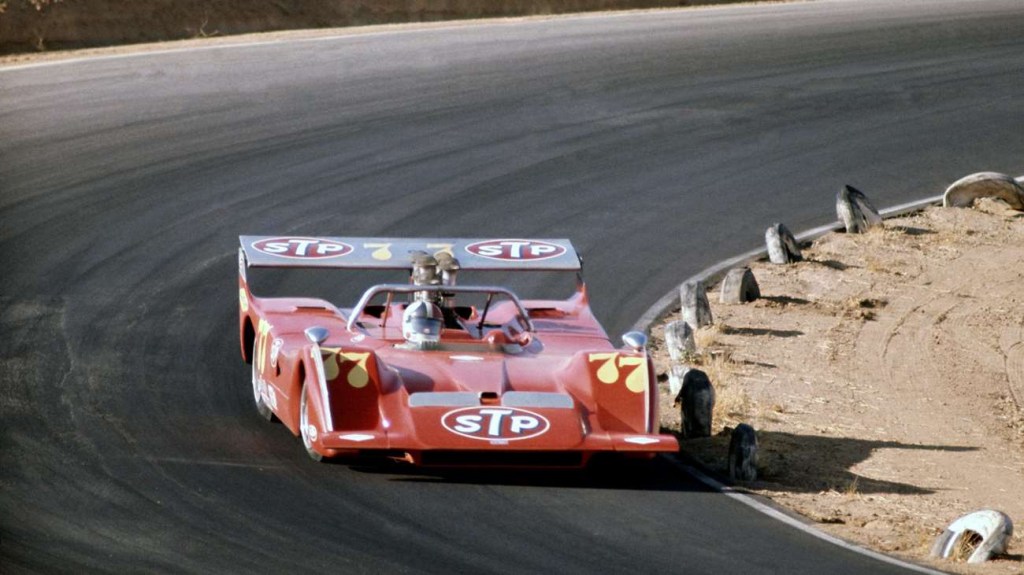
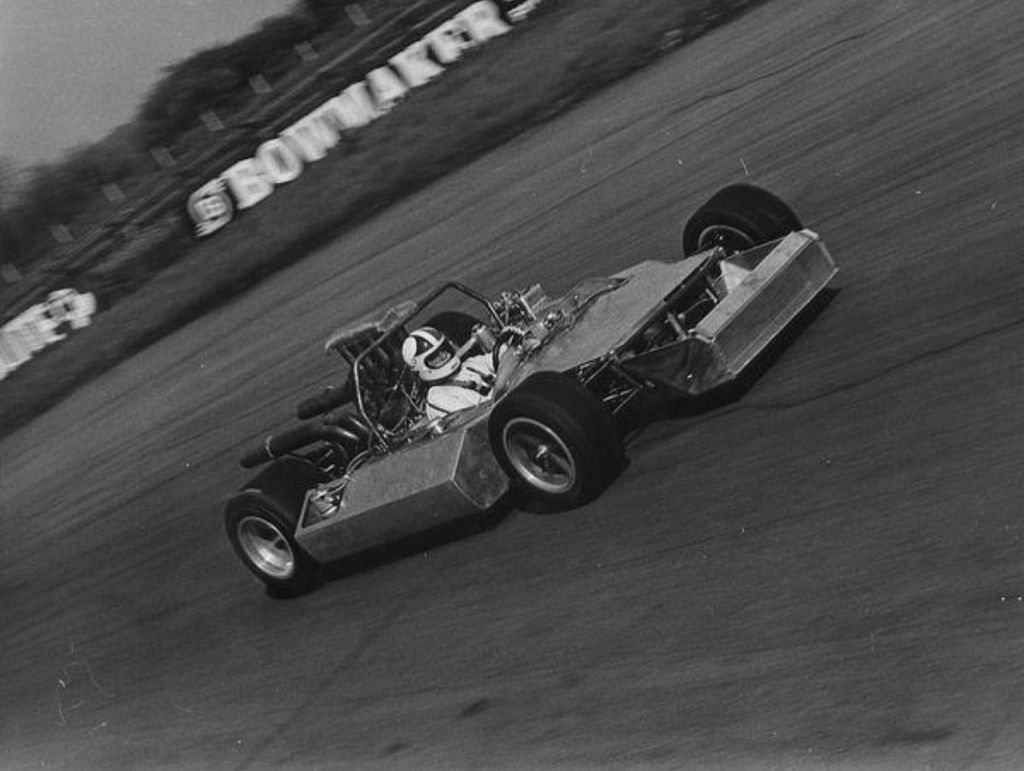


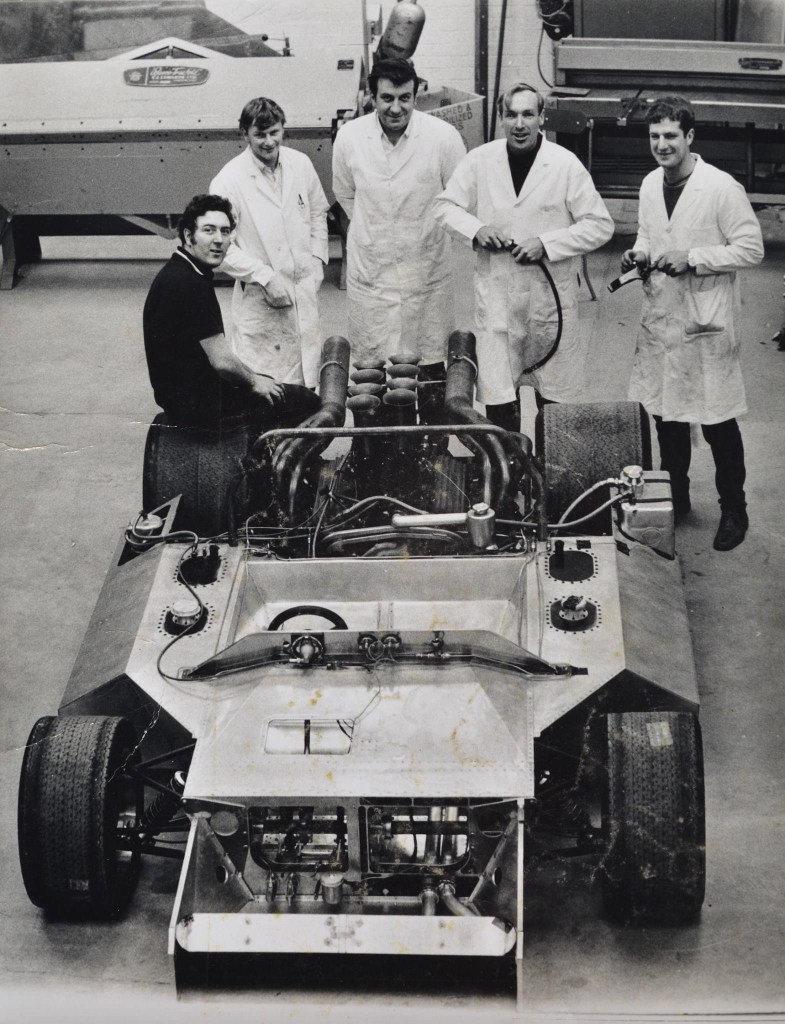
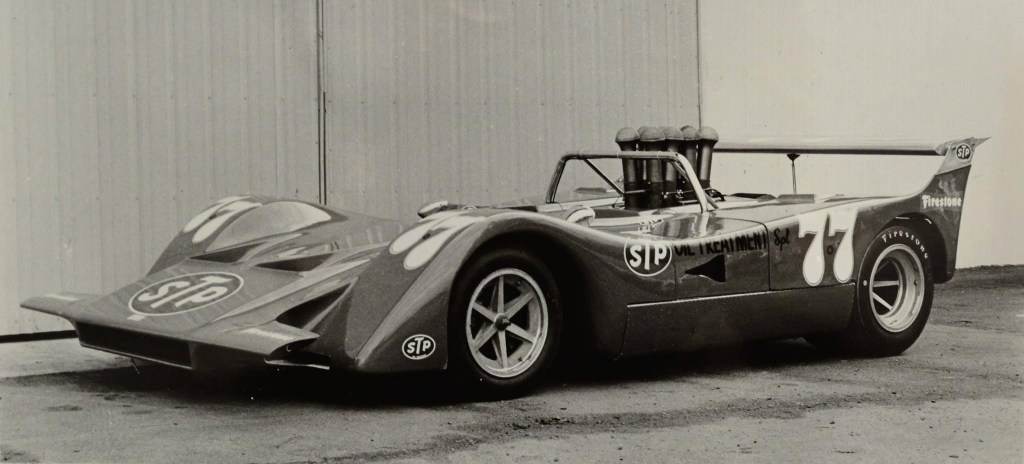


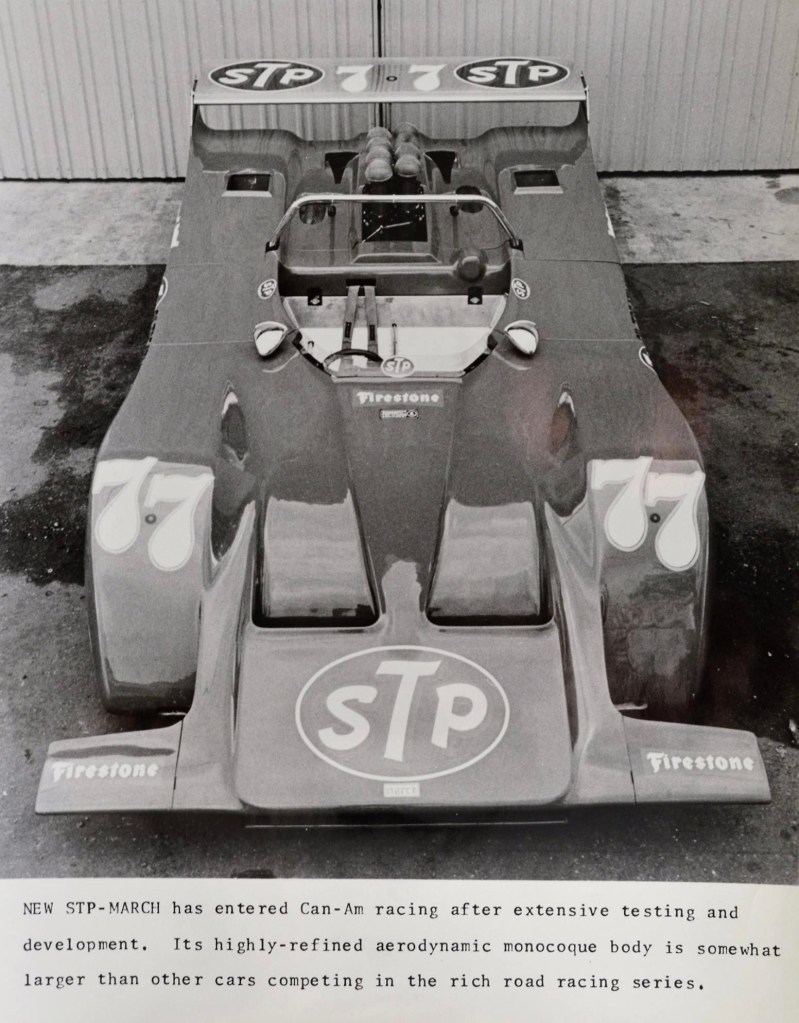
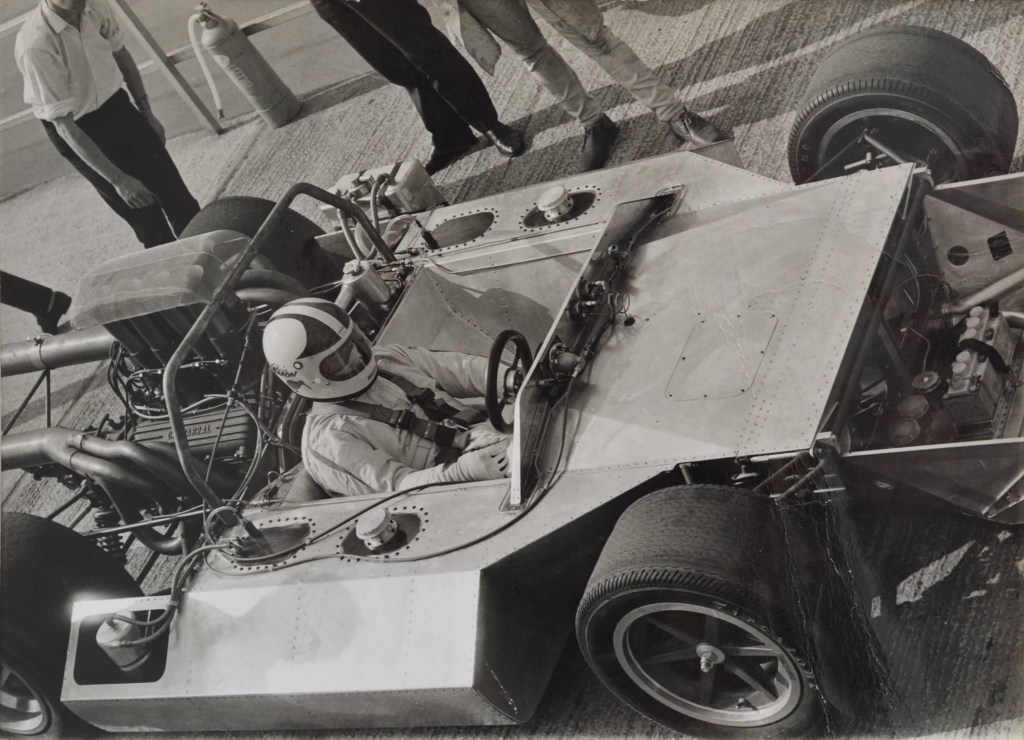


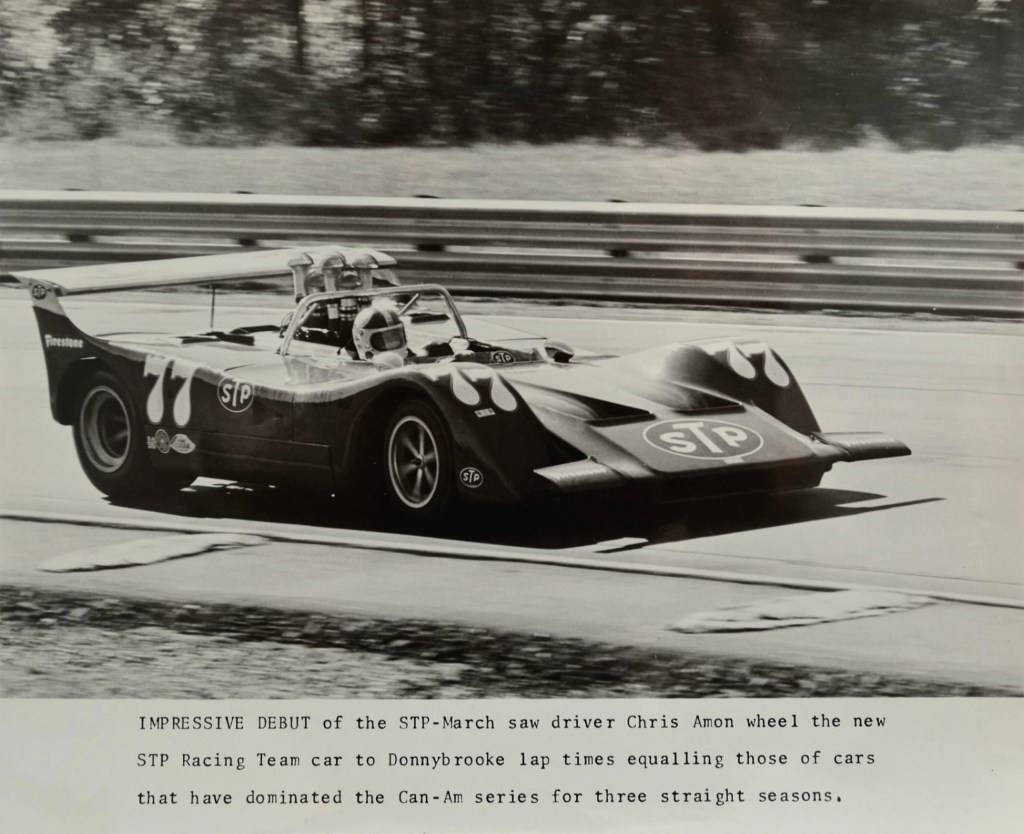

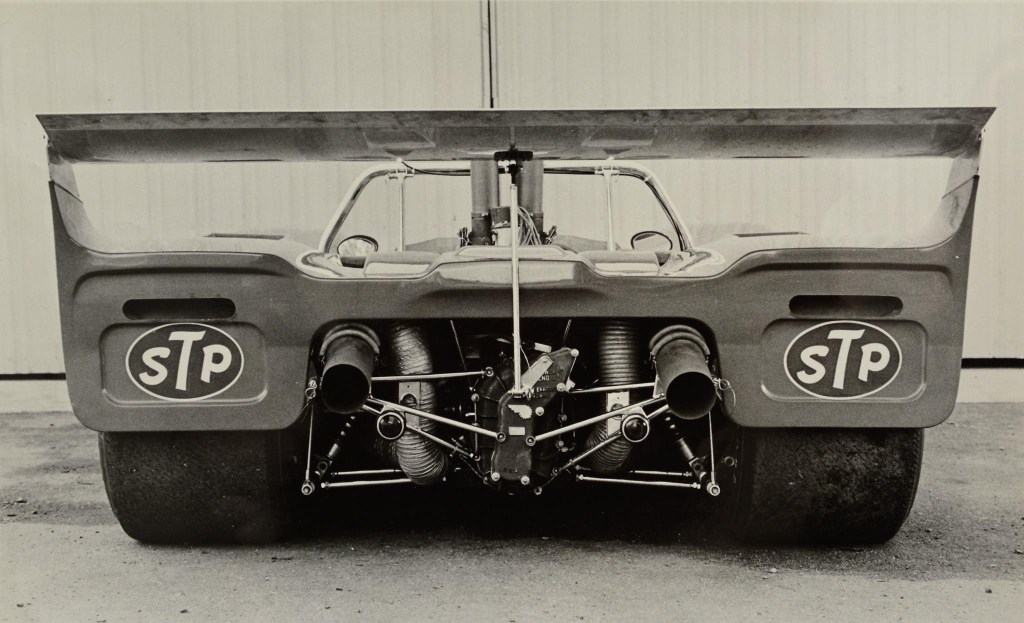


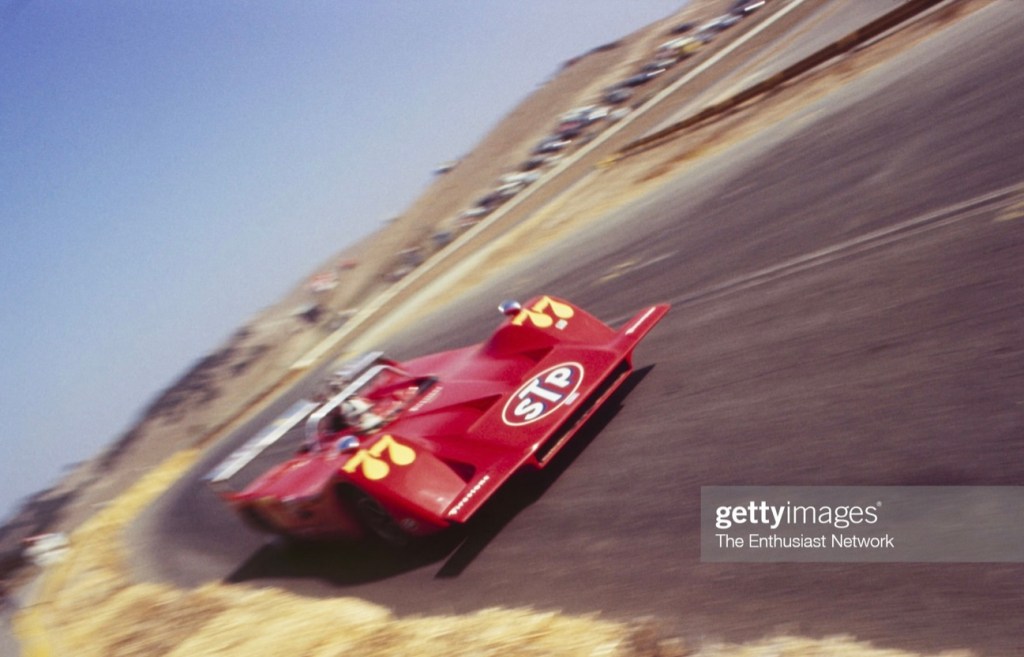

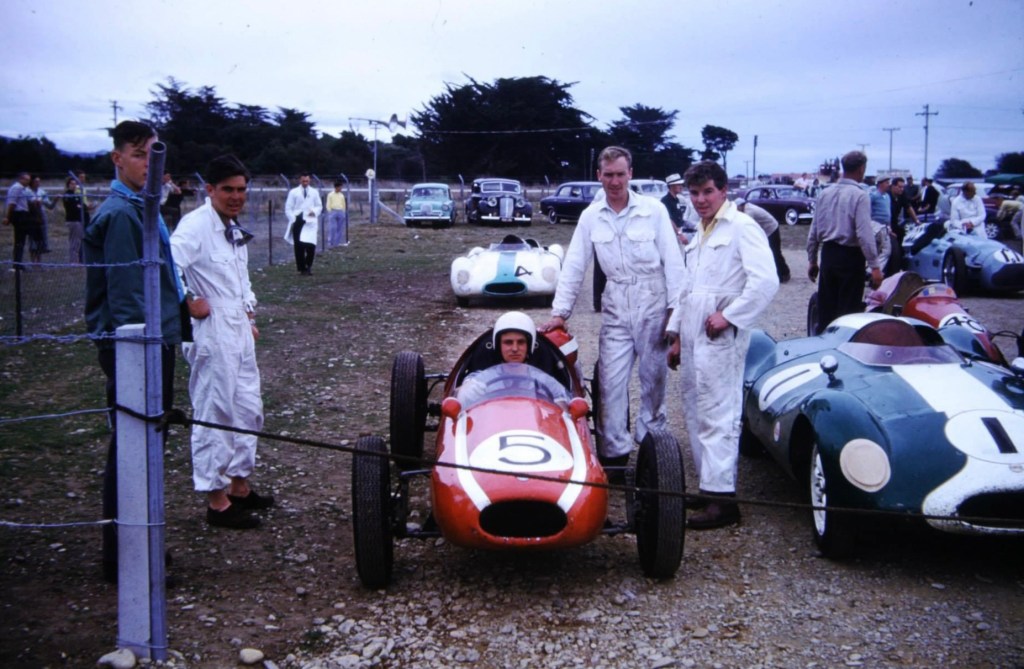


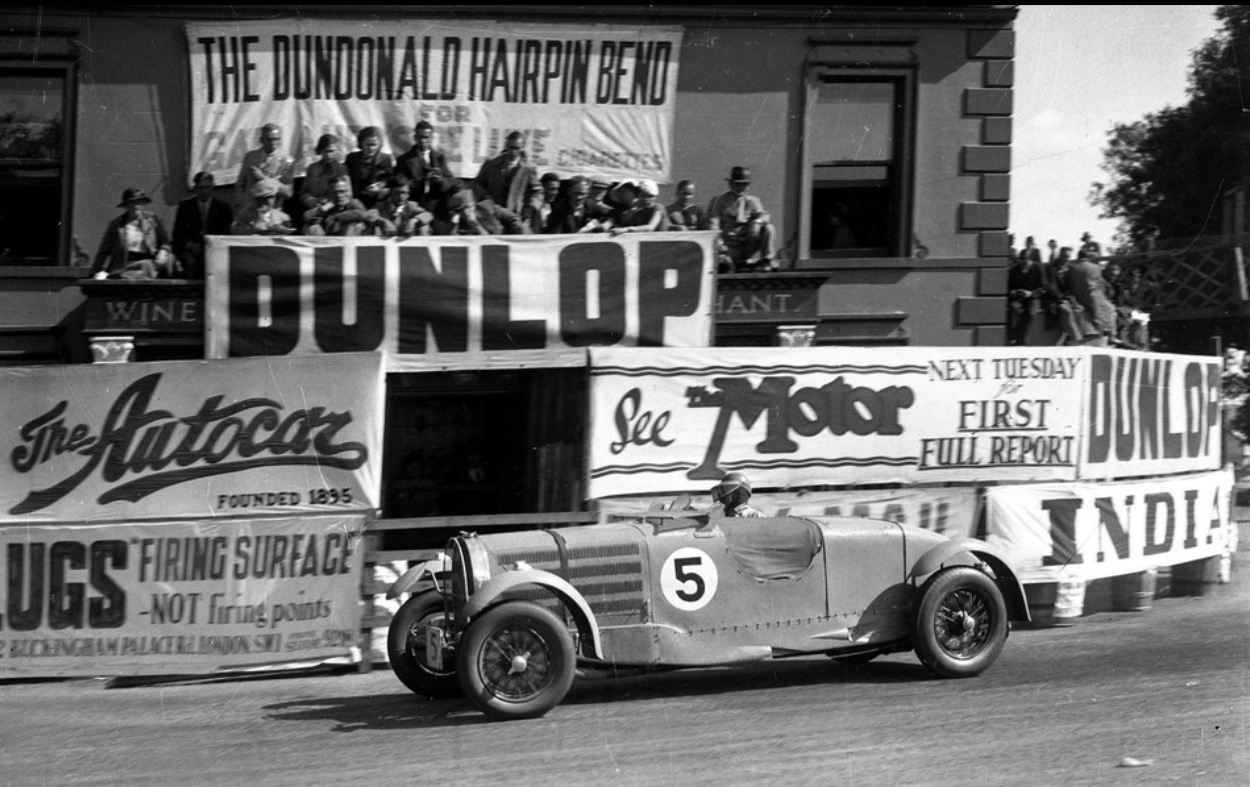


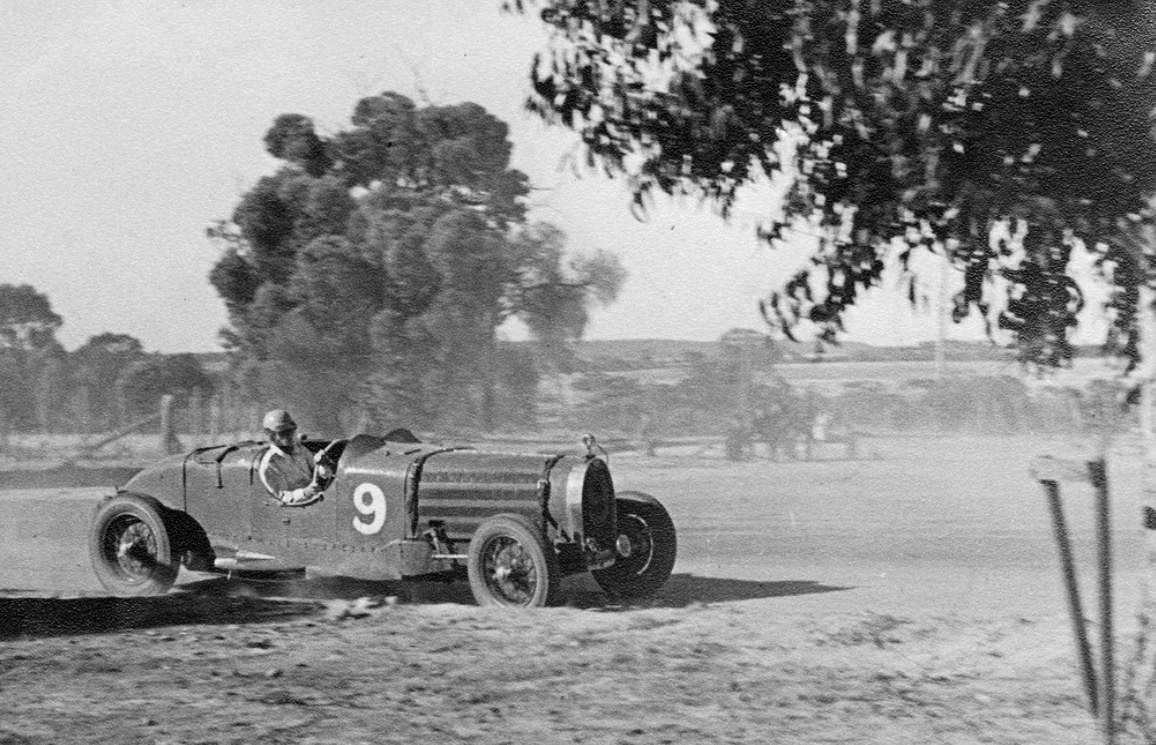
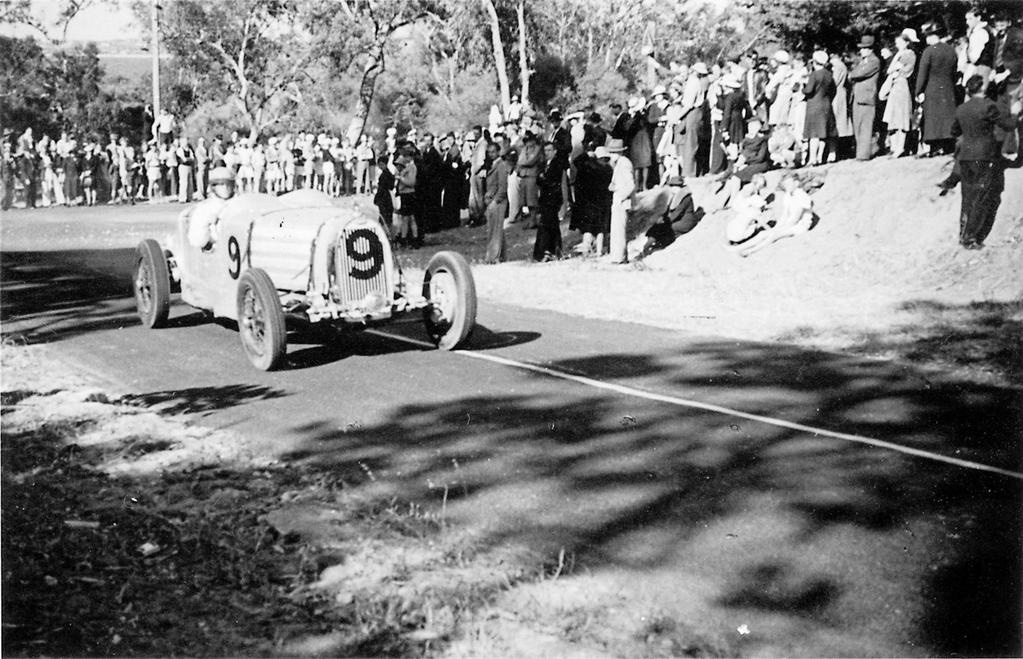
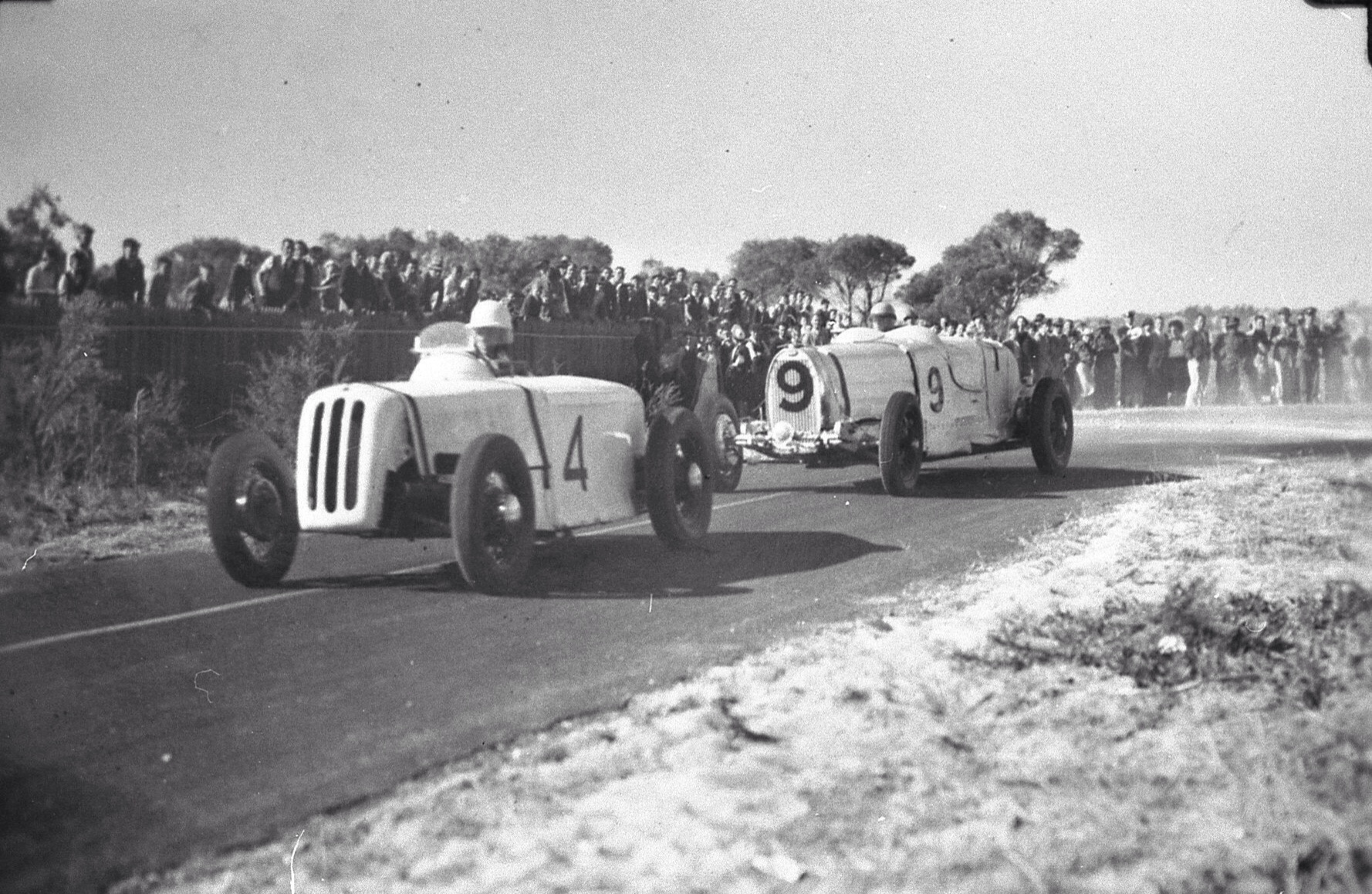



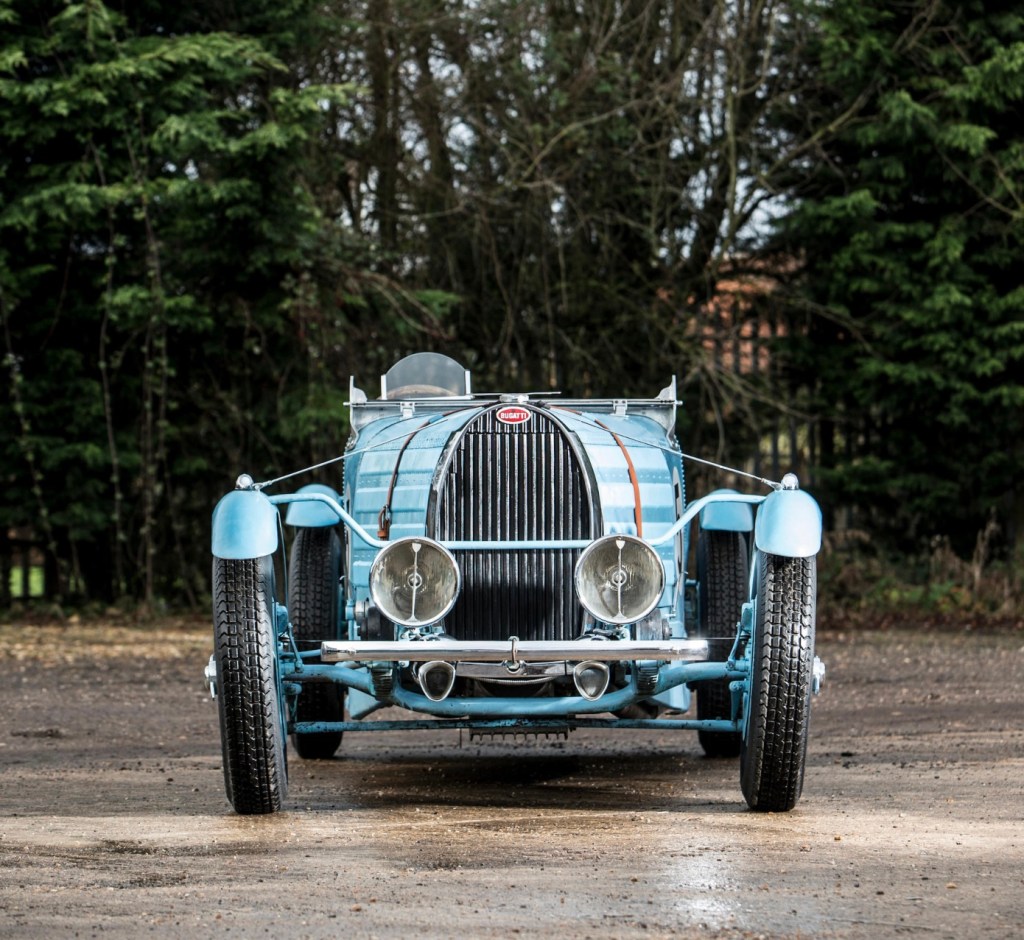
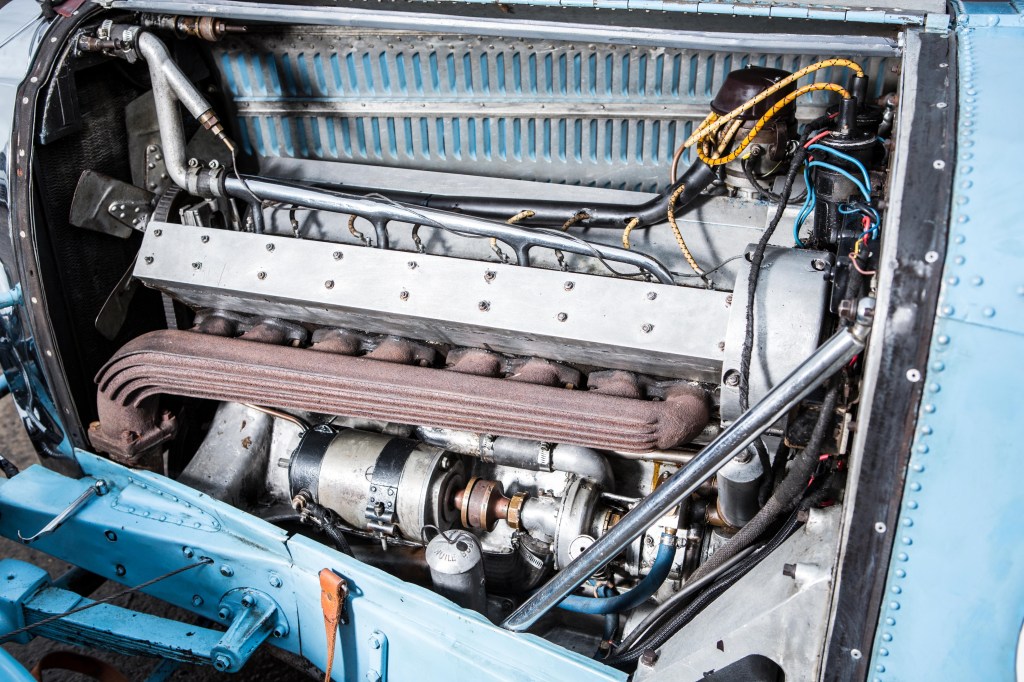
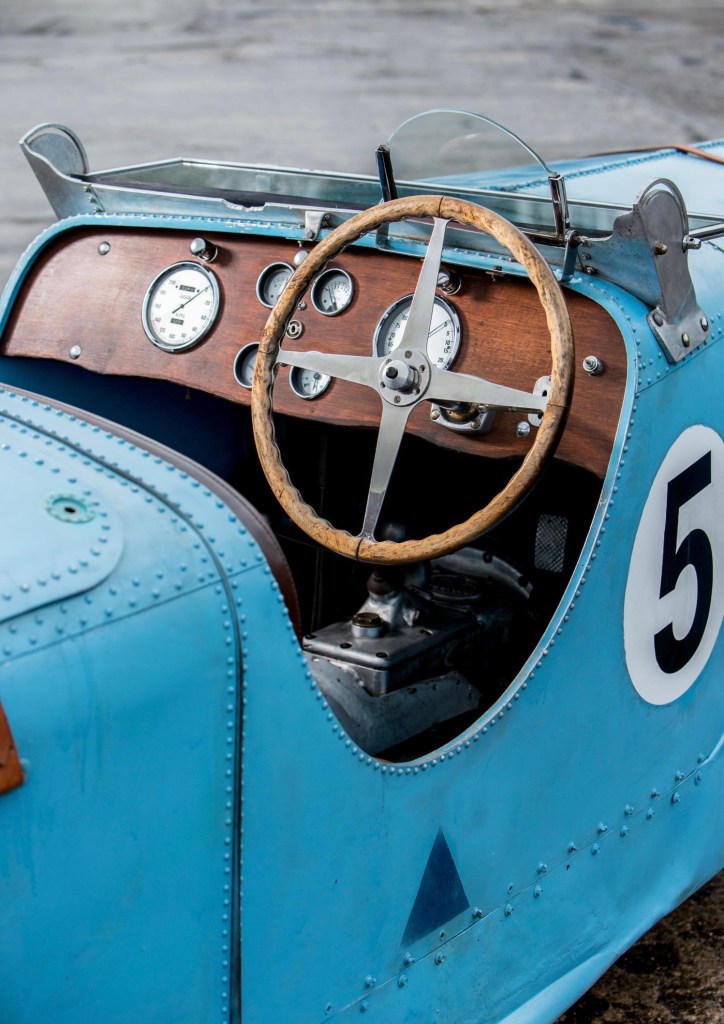


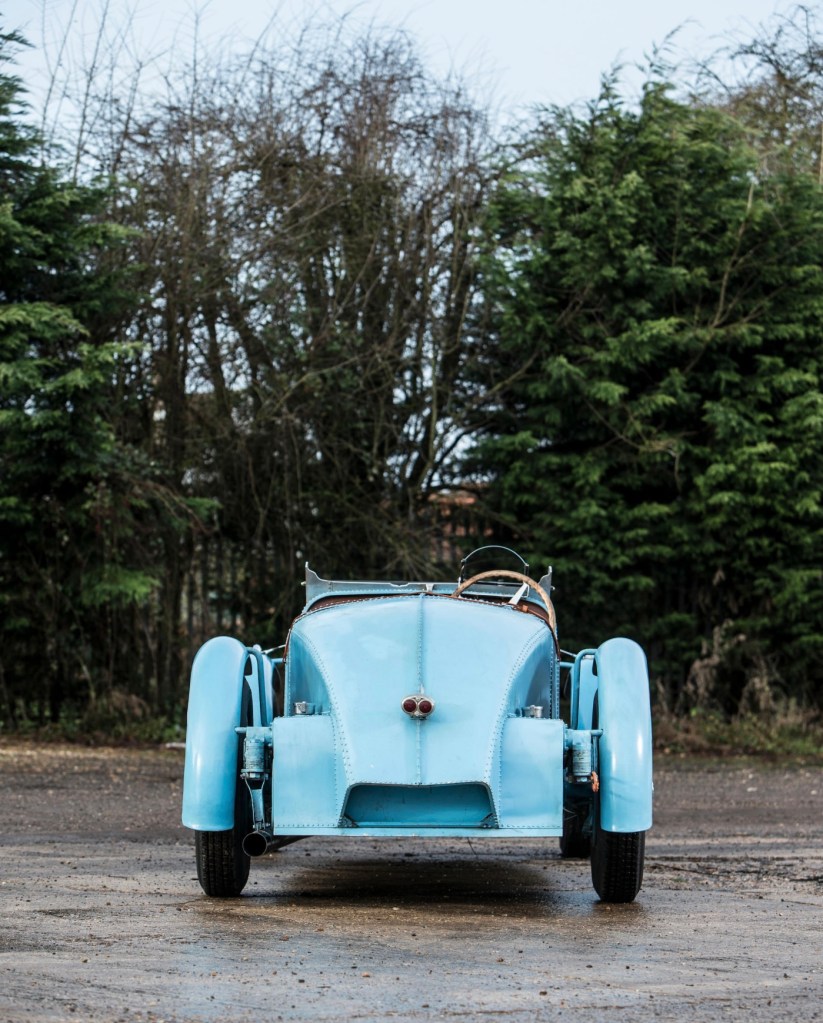
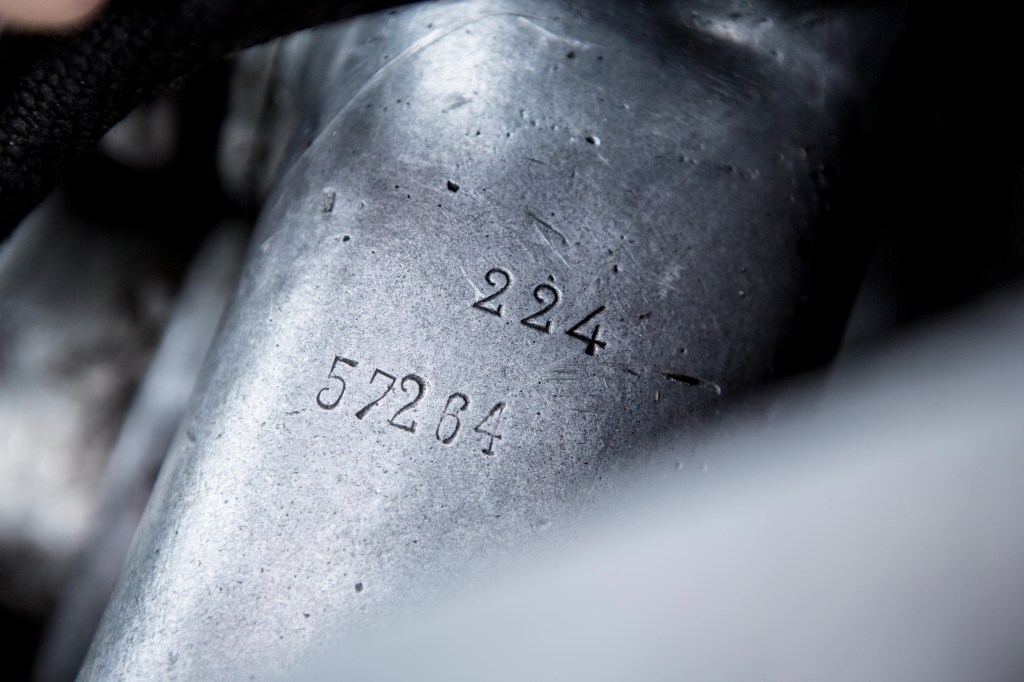
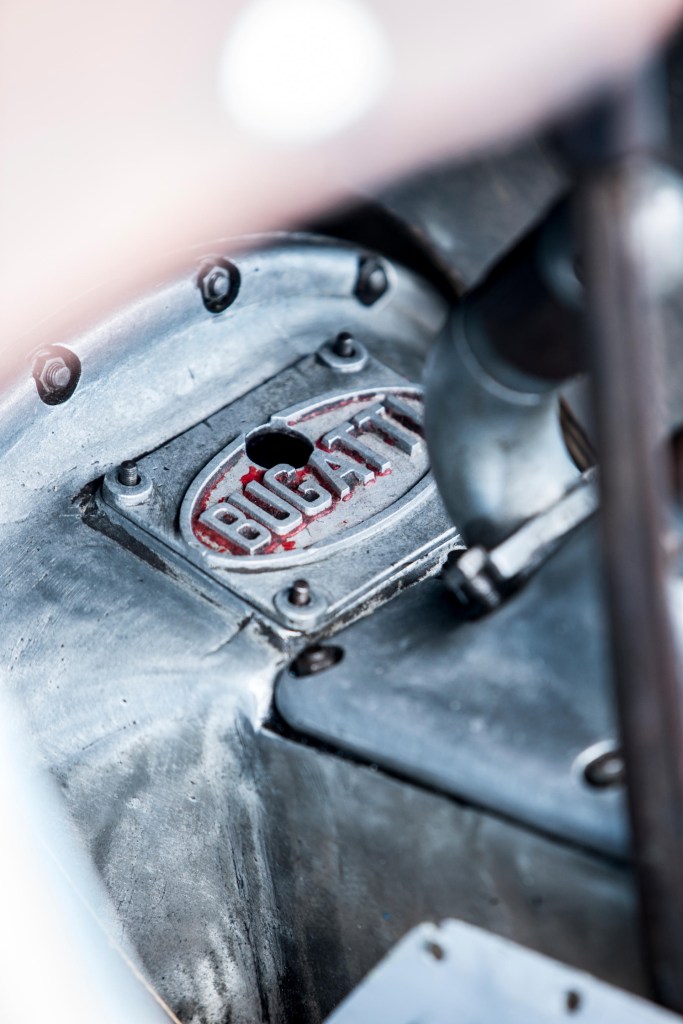


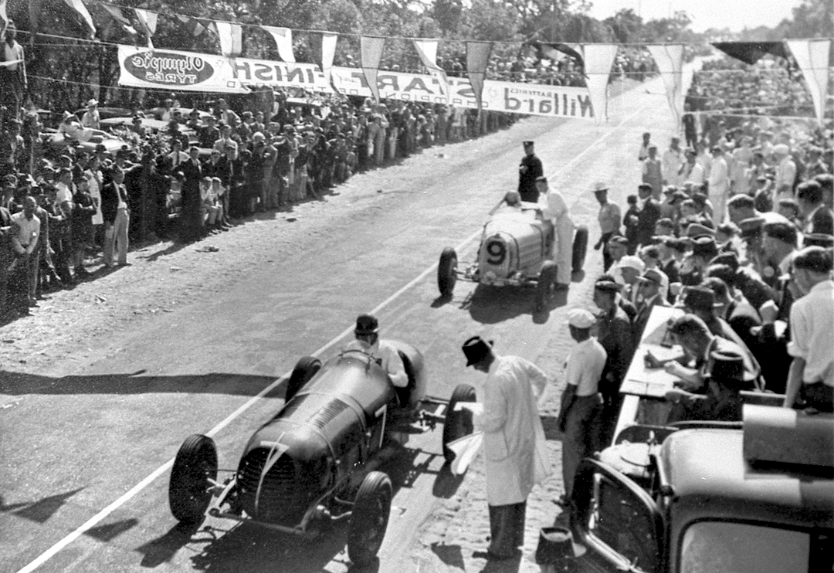
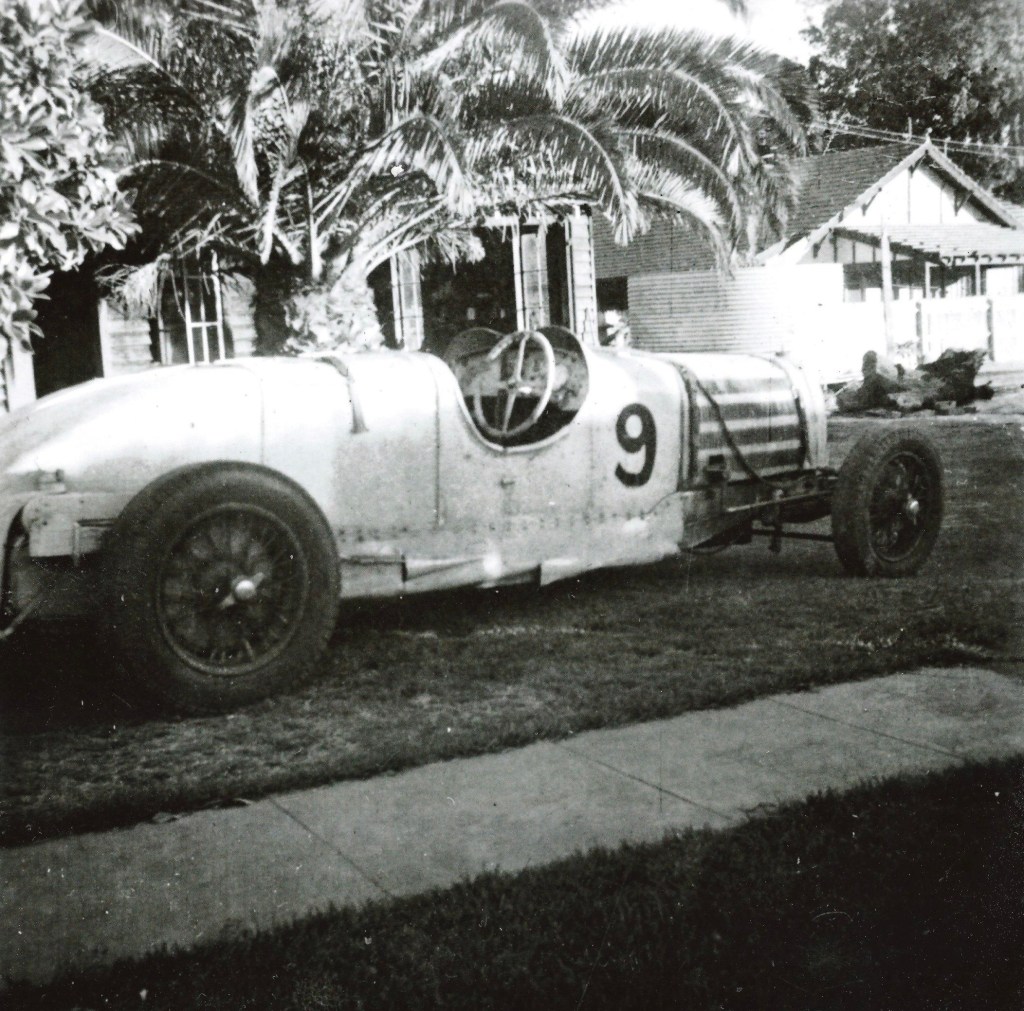


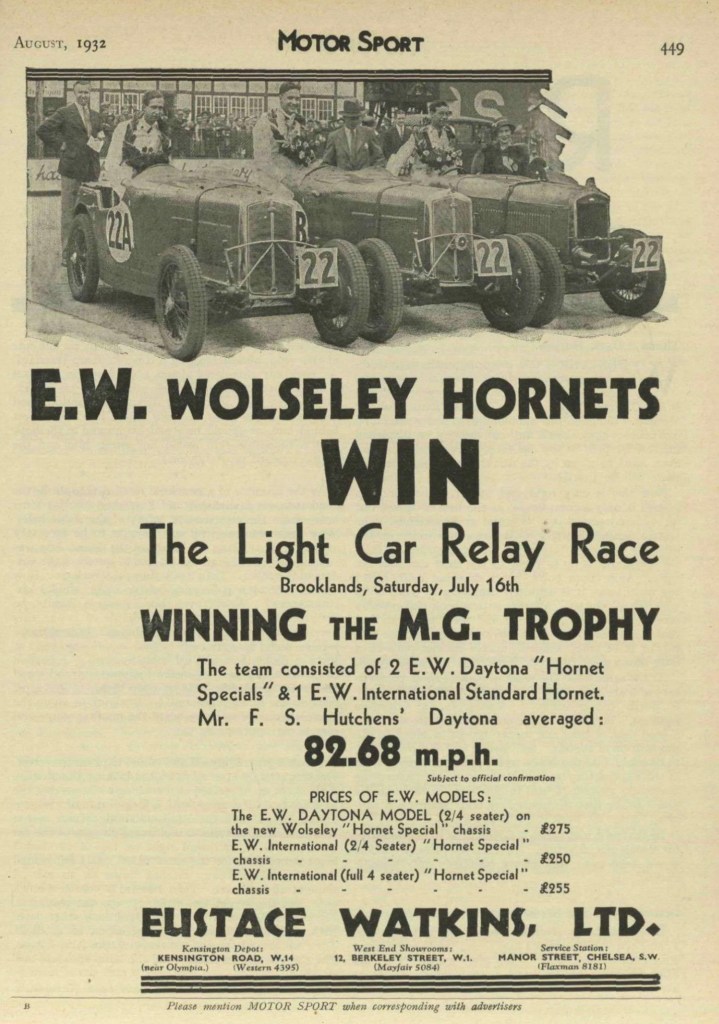
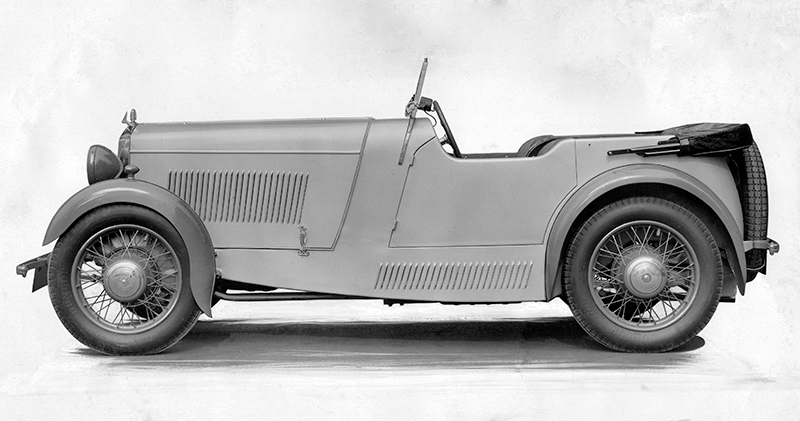
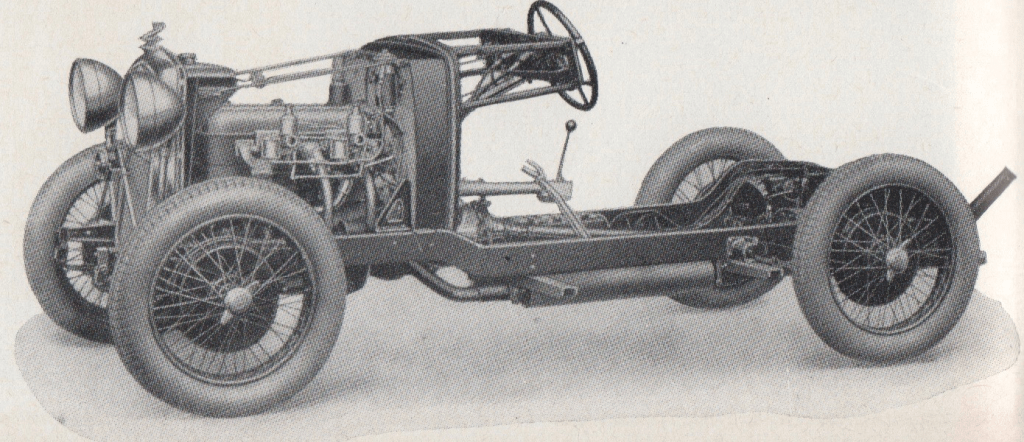
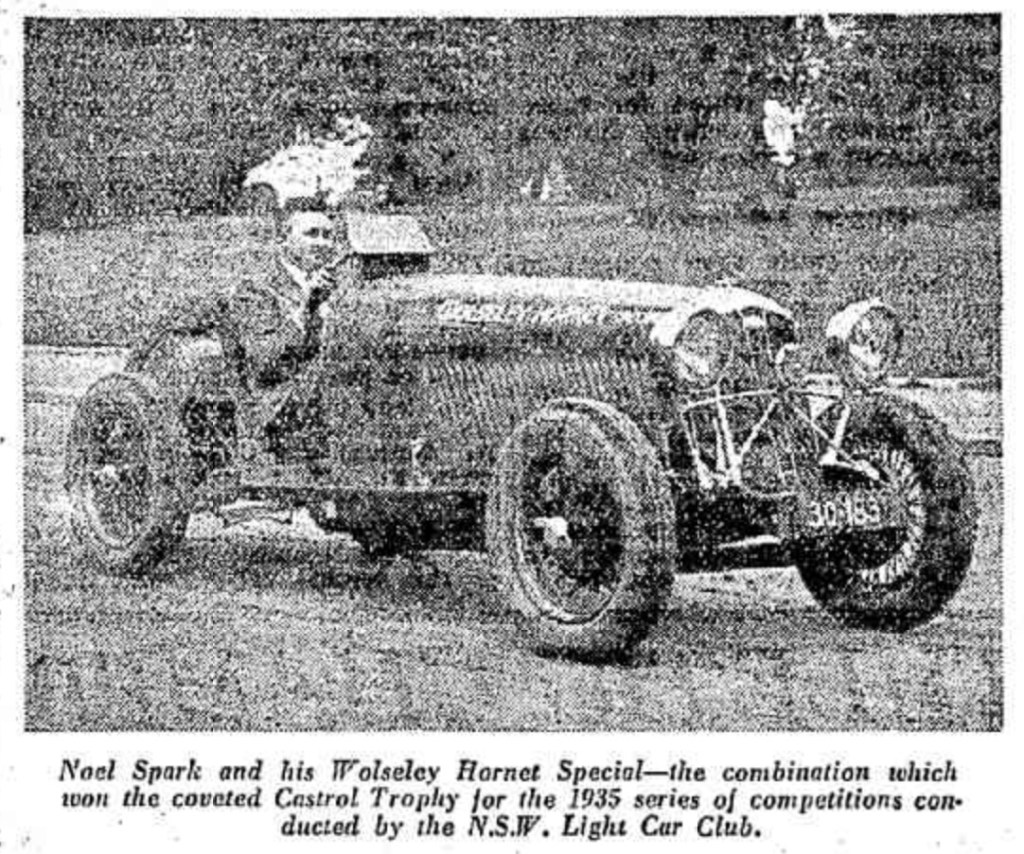


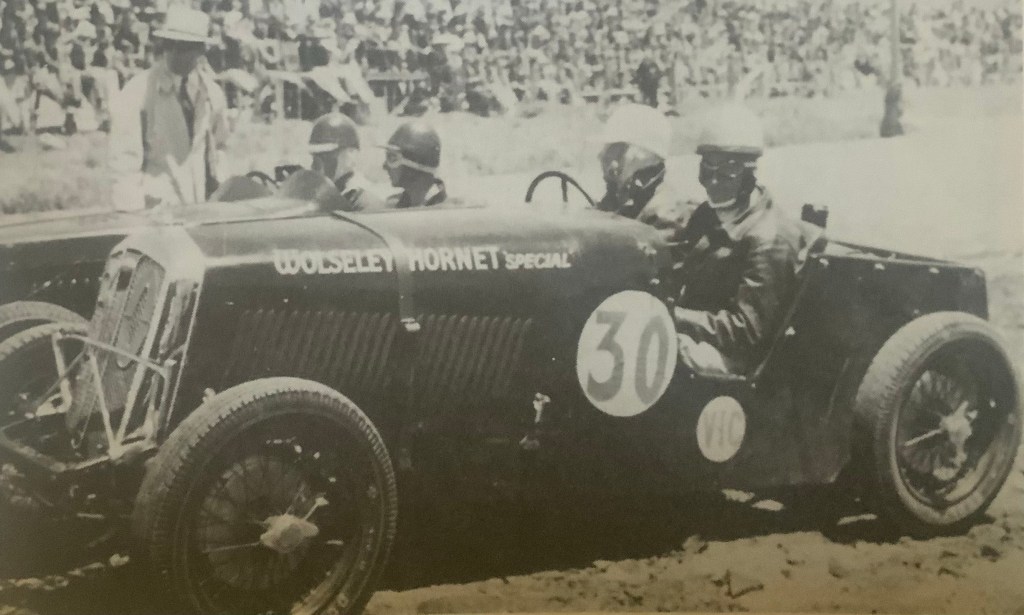


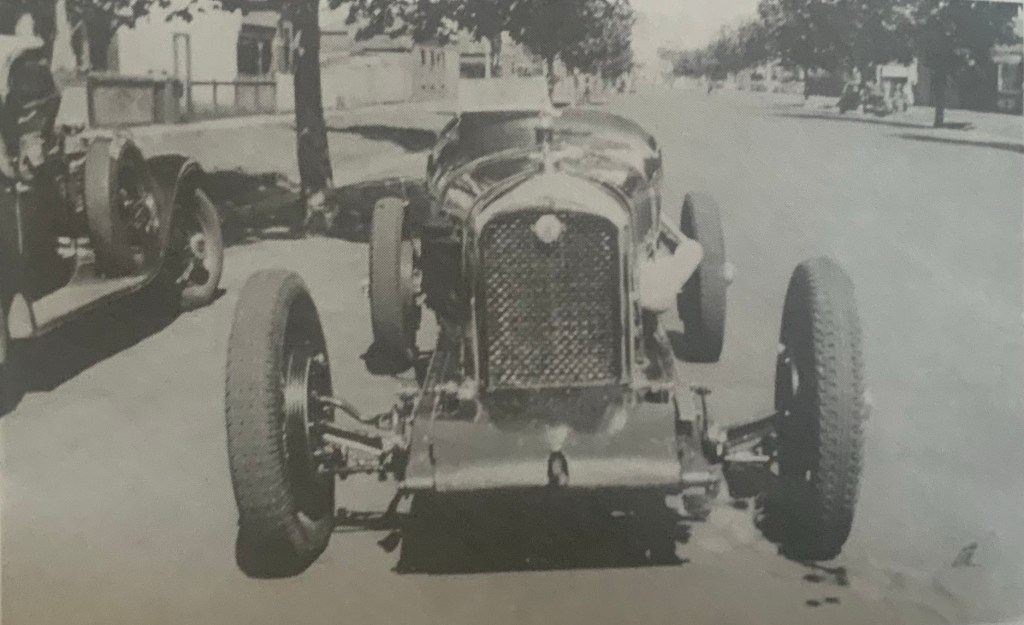


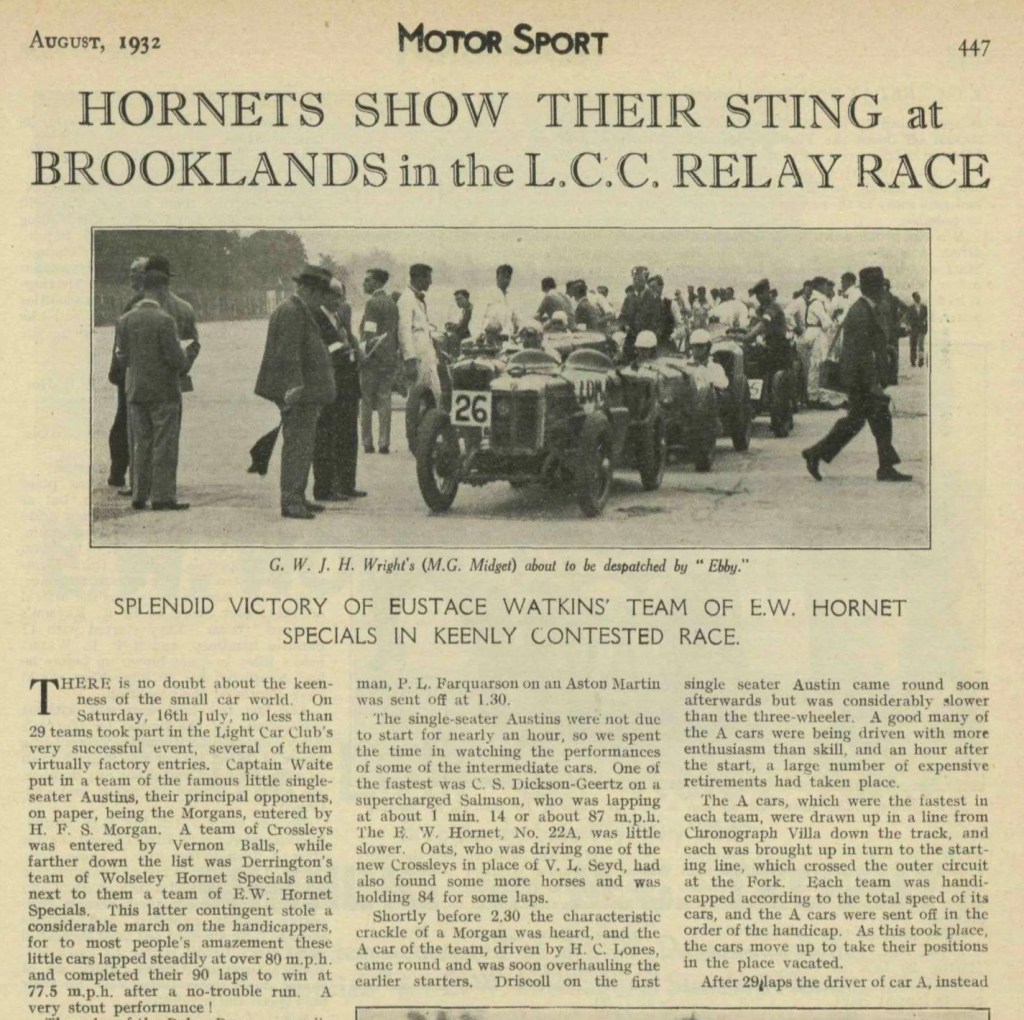


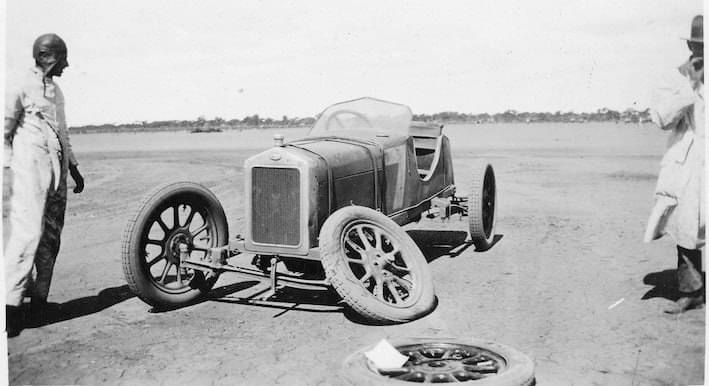
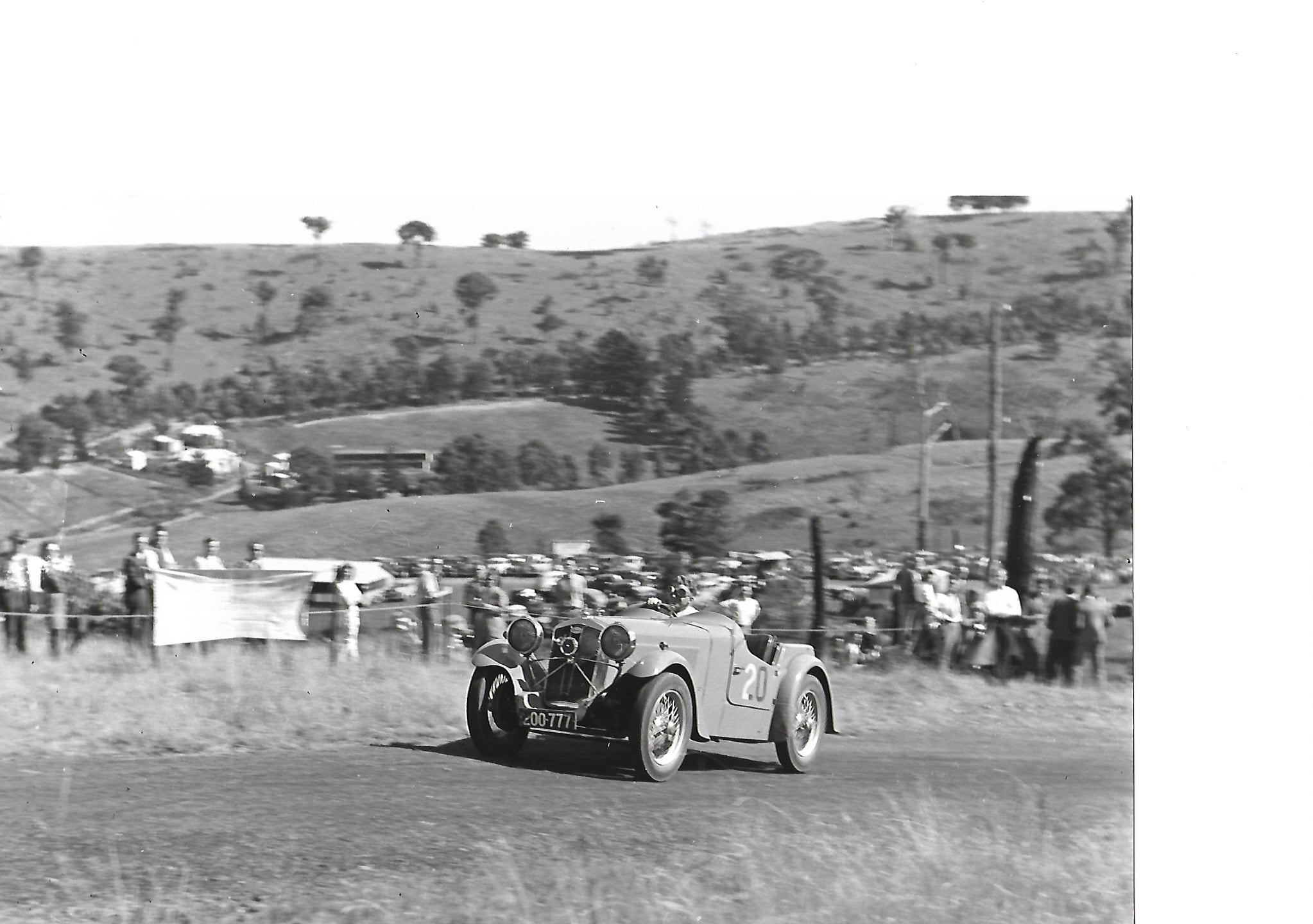
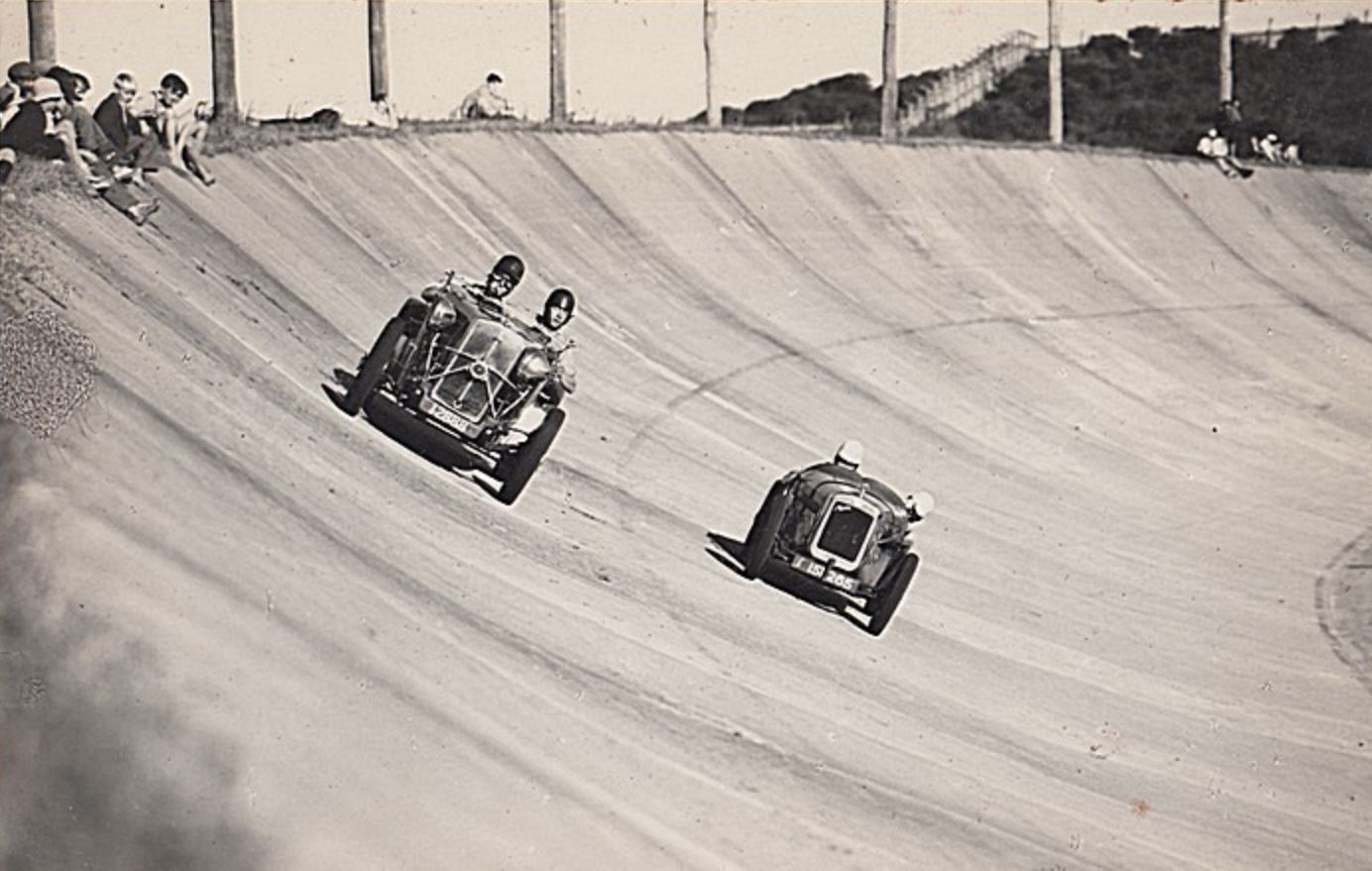

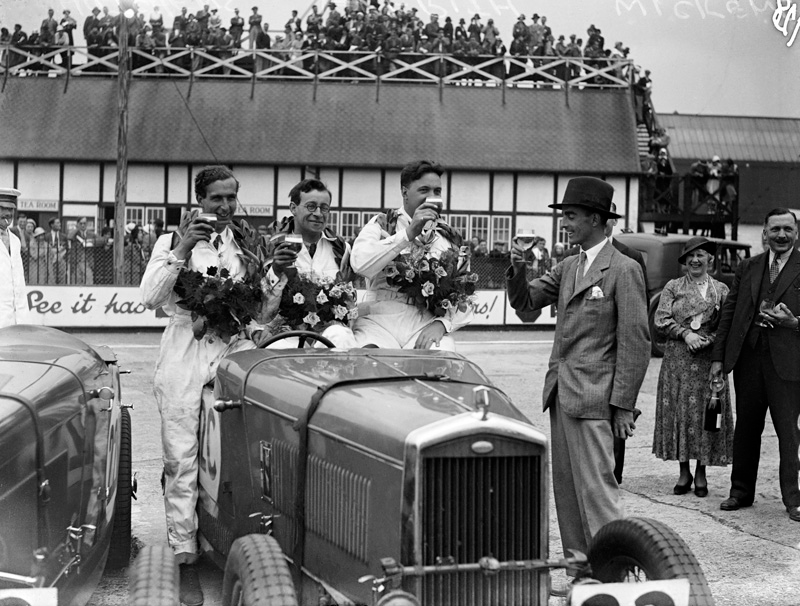


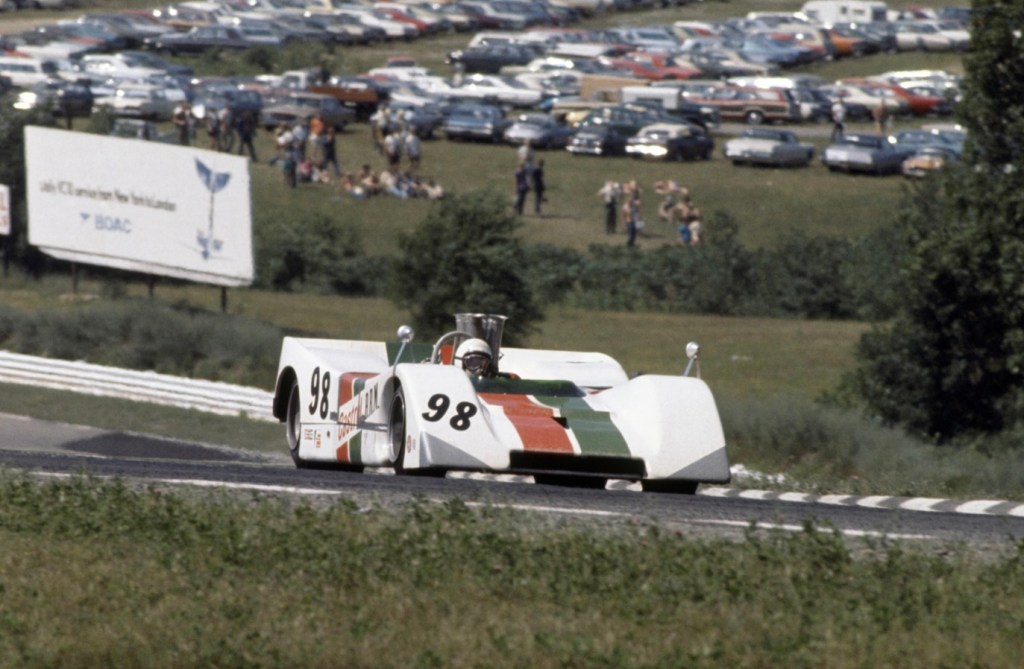
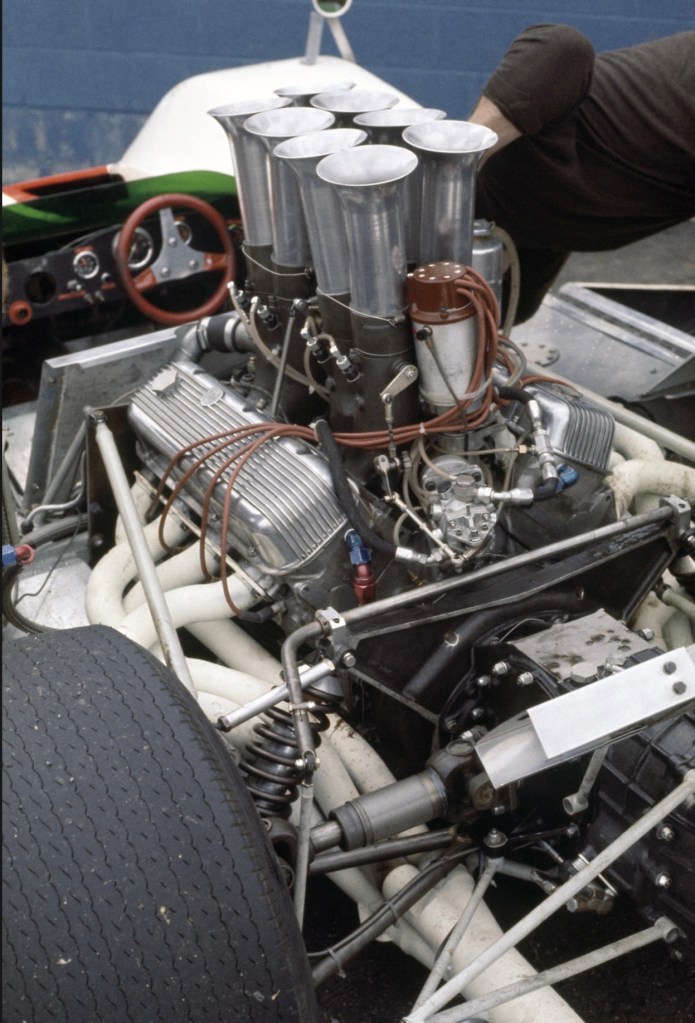


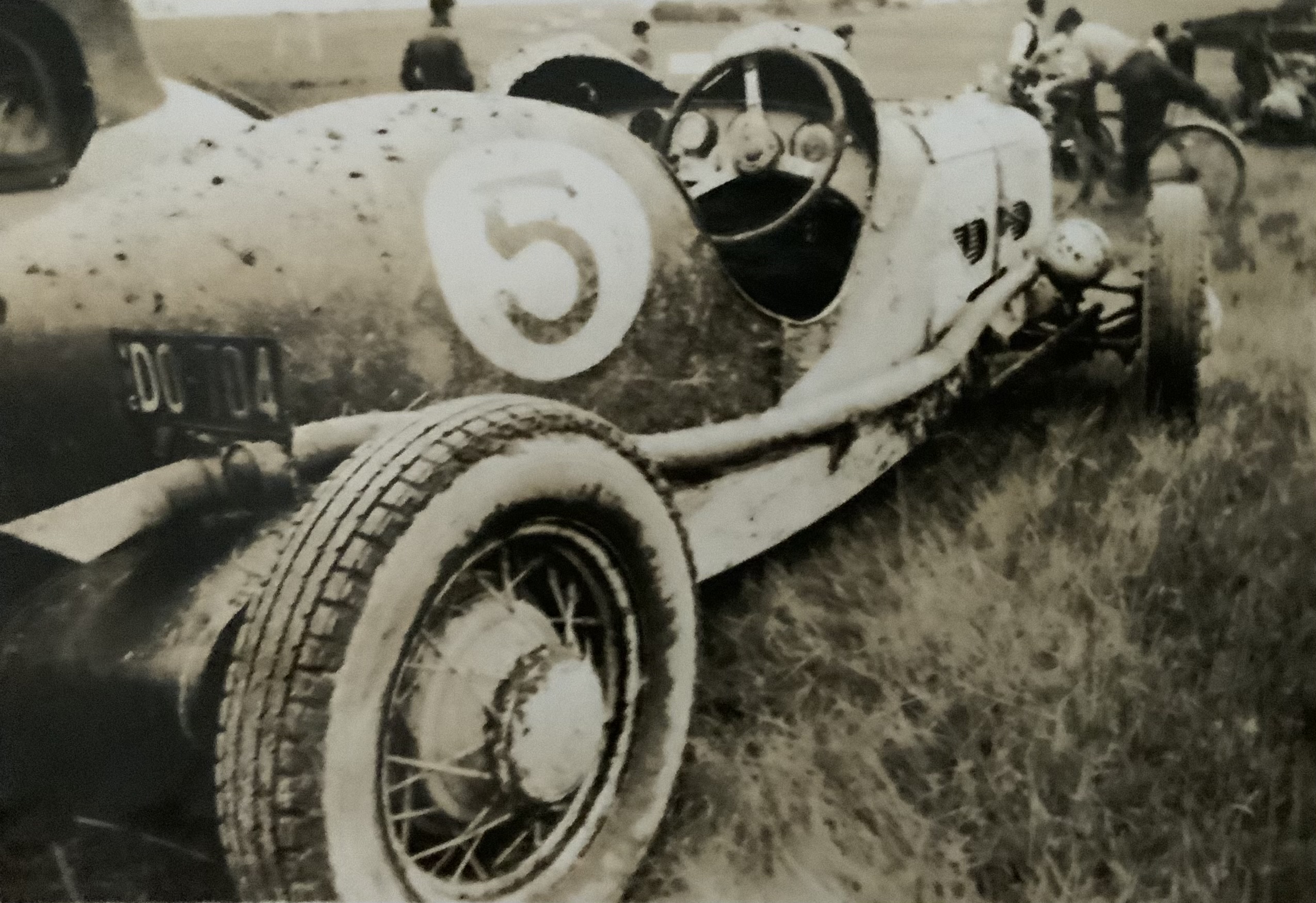


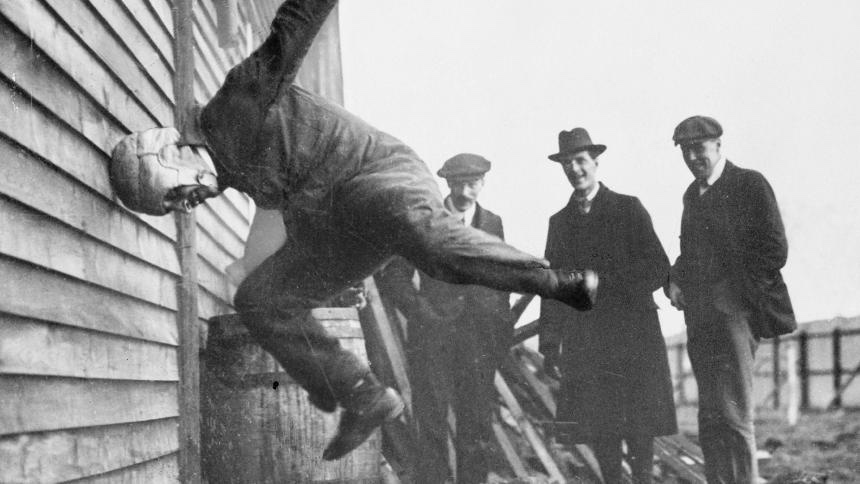
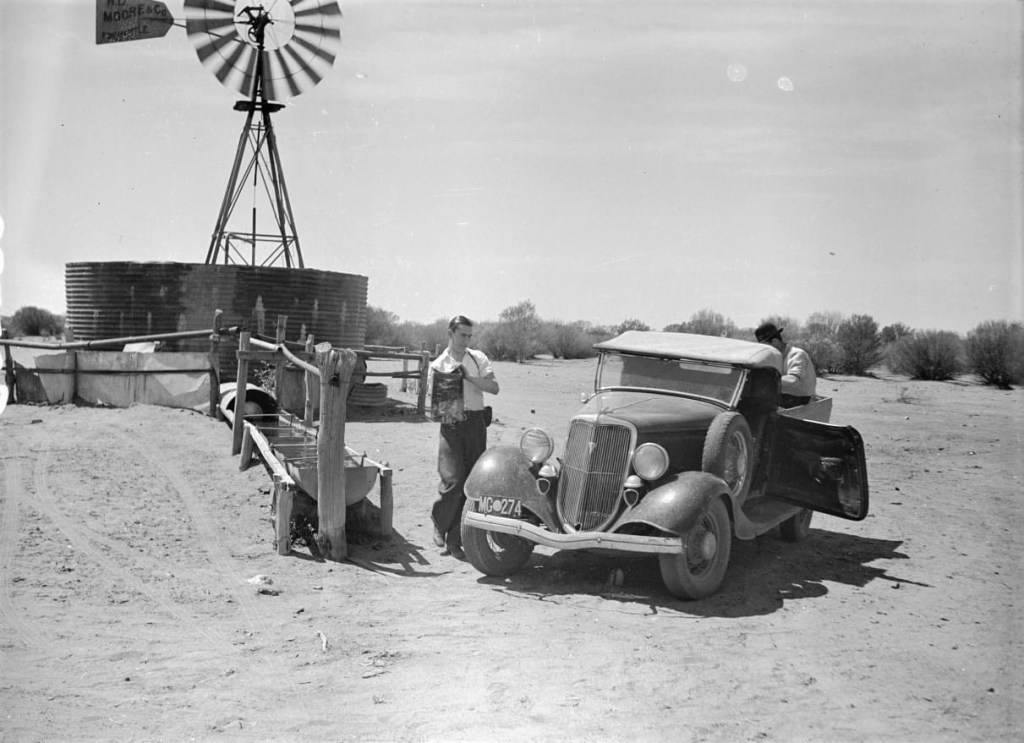


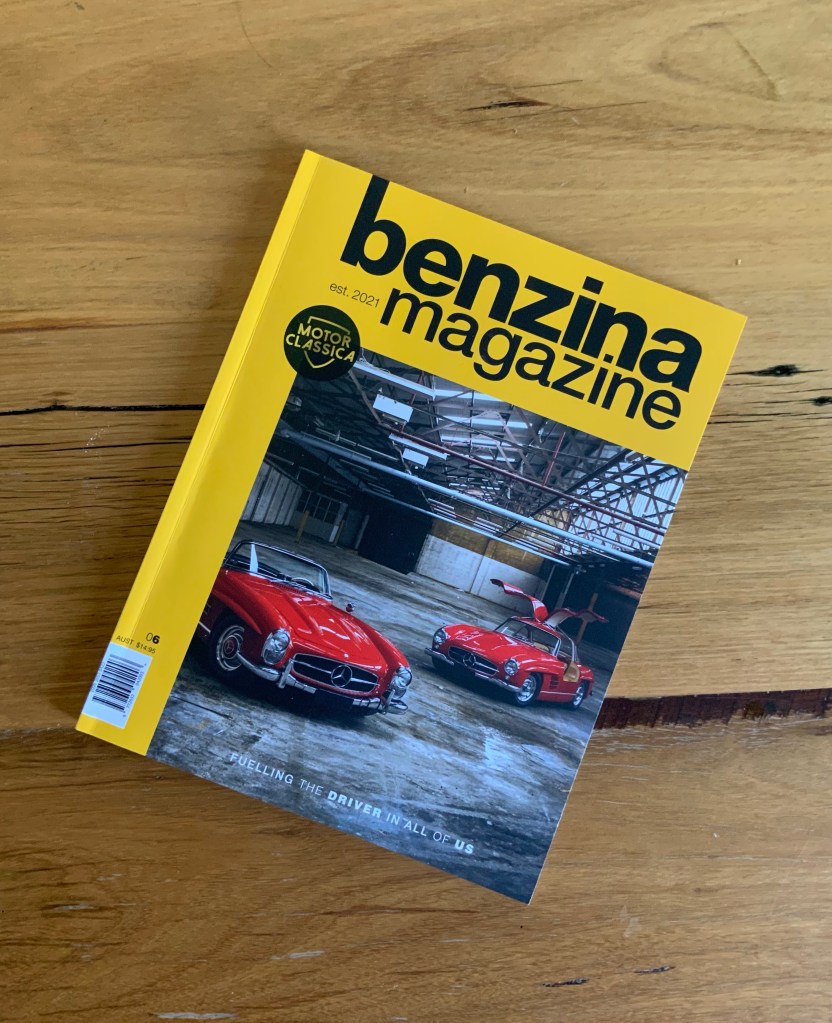


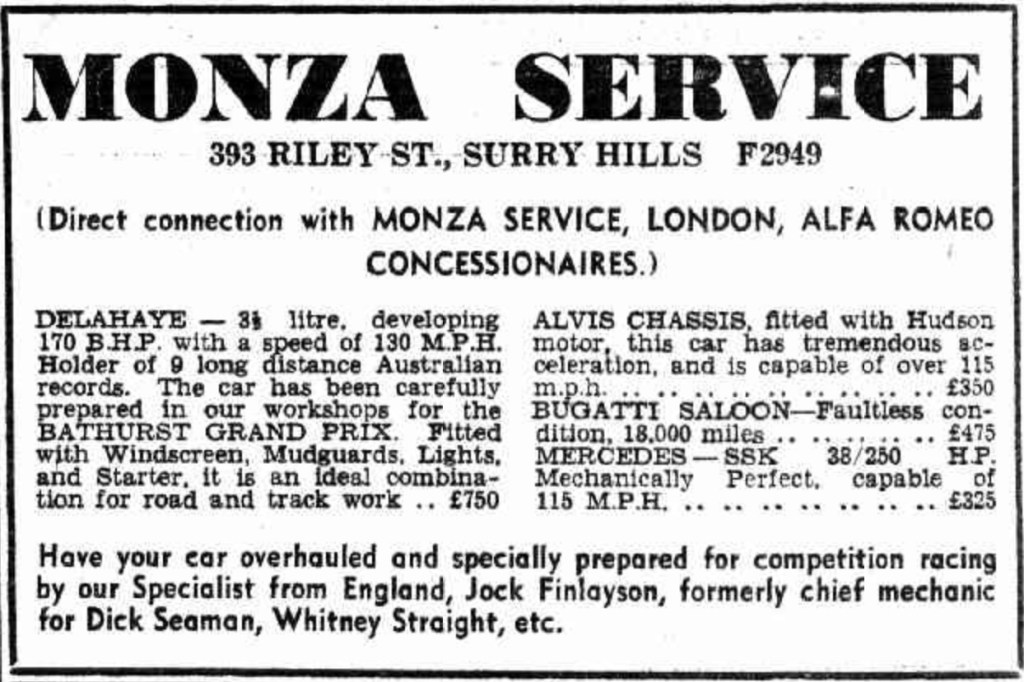
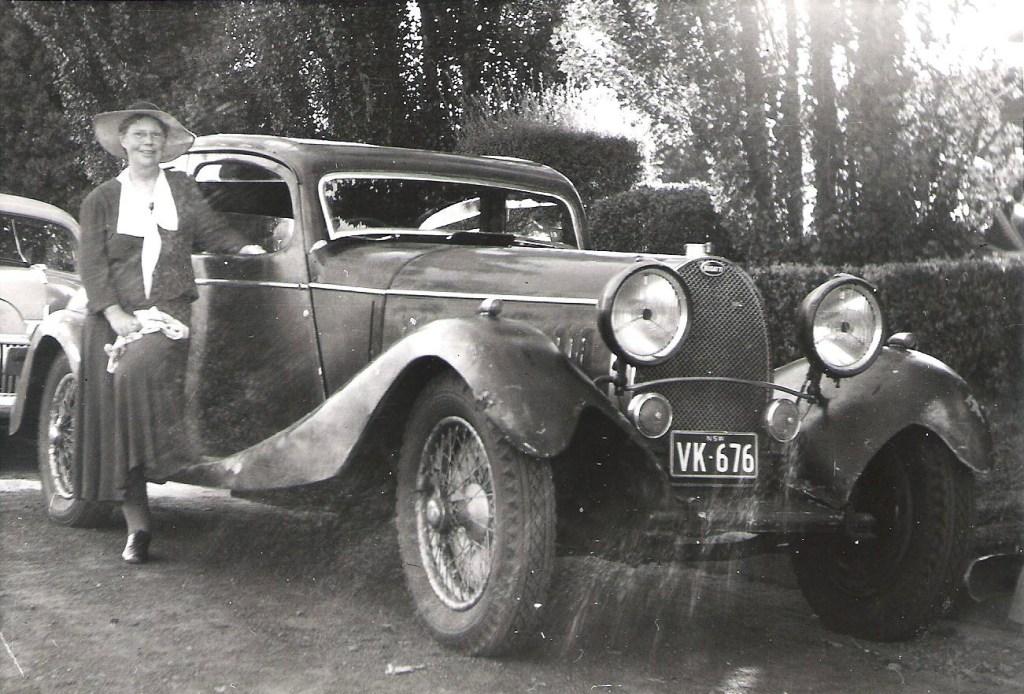
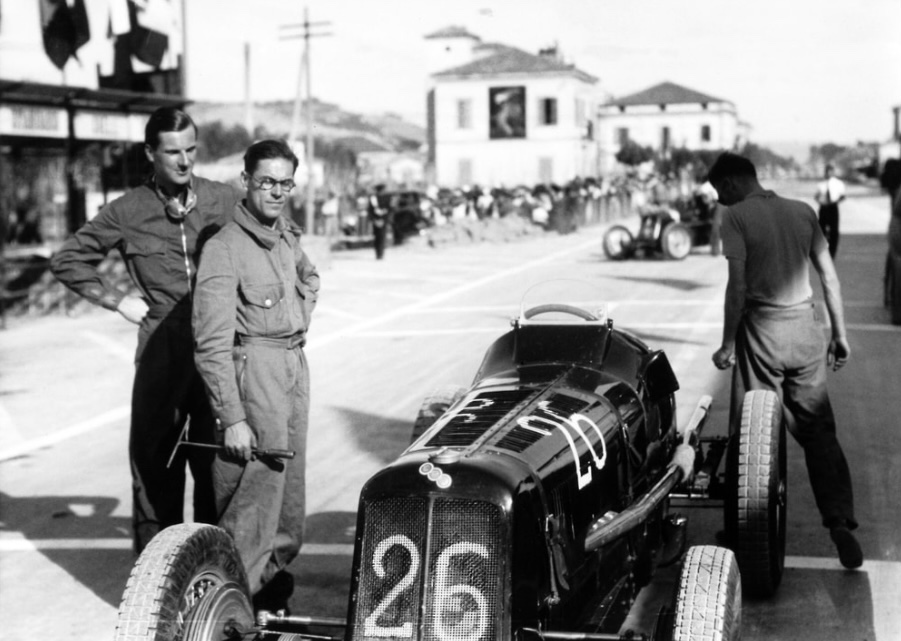


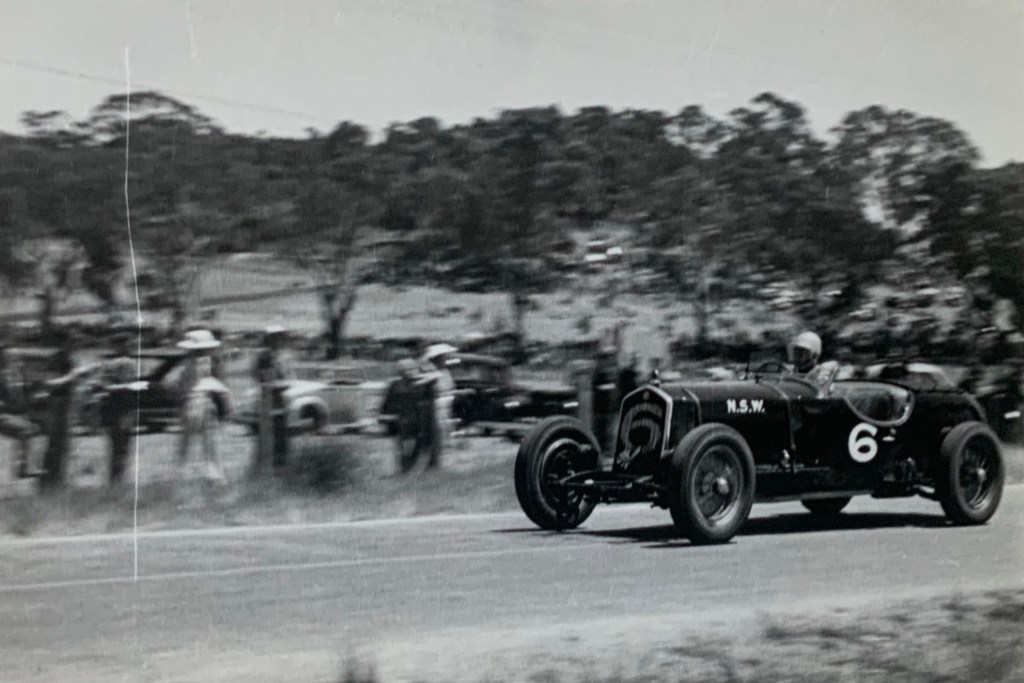


 primotipo...