Now here’s a bit of McLaren history you didn’t know.
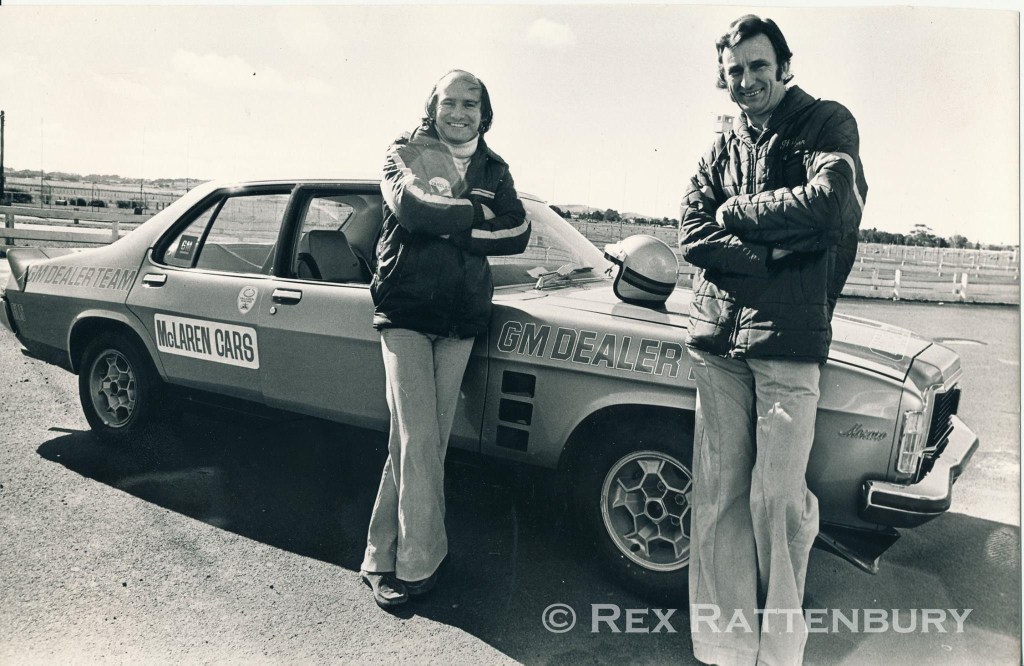
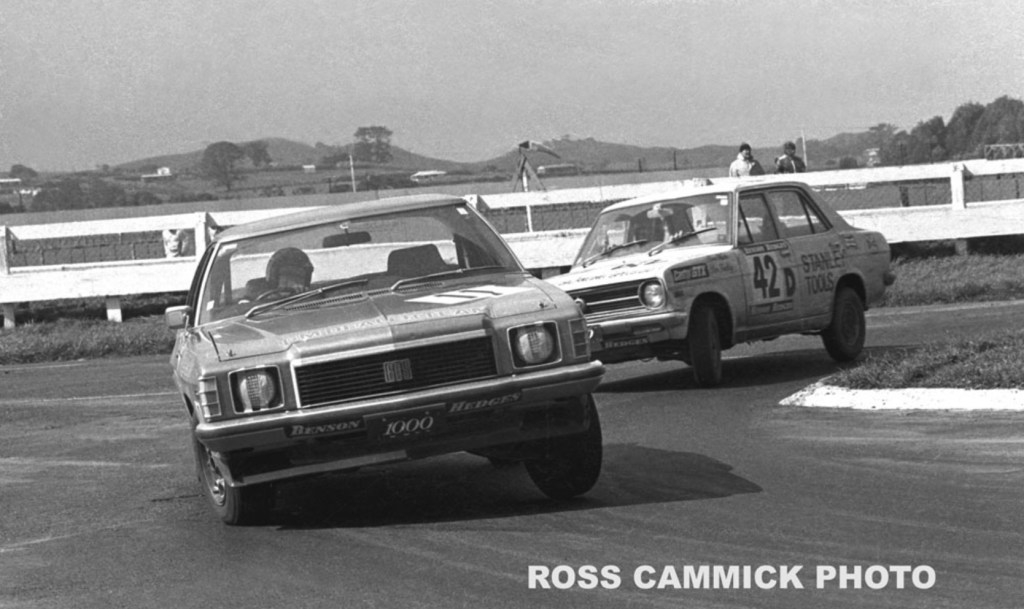
McLaren Cars ‘entered’ a Holden in New Zealand’s annual touring car endurance classic, the Benson & Hedges 1000 at Pukekohe in 1976.
The four-door Holden Monaro GTS 308 V8 was crewed by Mike Hailwood and Phil Kerr with none other than 1967 World Champion, Denis Clive Hulme as Team Manager.
Phil Kerr ahead of the Dave Winter/Ron Findlay Datsun 1200. DNF in the race won by the Jim Little/Graeme Richardt Chrysler Valiant Charger.
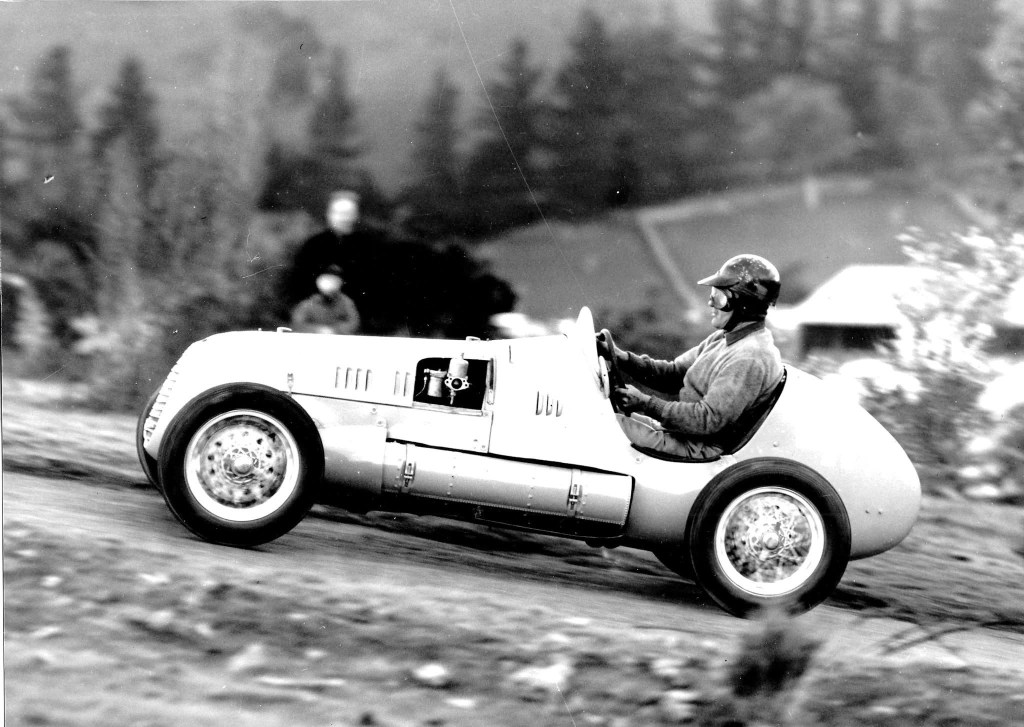
Legendary Australian Touring Car racer/engineer/tuner/team manager/CAMS politician Harry Firth ascends Rob Roy aboard a Cisitalia D46 in 1958. What a magic, crisp pan shot.
This ex-everybody car never did much in Australia. Its arrival more or less corresponded with the end of our long handicap racing era, and we didn’t have the right class for the car, 1100cc events here and there duly noted.
‘Only months earlier (May 4, 1958) Reg Nutt took the borrowed Leech Cisitalia to the top of the Hill in 28.30 secs. Now it was Harry’s turn however he couldn’t match Reg’s time. Harry’s time of 29.52 secs was more than 1 sec slower. But Harry probably won the most money on the day driving a Hillman for a second, Triumph TR2 for a first and the Cisitalia for a second,’ wrote Leon Sims.
Firth prepared and raced plenty of sportscars before his highly successful 1960-80’ish tourer-era but he didn’t race many monopostos? That SU carb doesn’t look kosher on an Italian car either, surely it didn’t arrive here so equipped…
(G Hill)
Leon Sims, ‘This photo is from our (MG Car Club) second annual historic and classic meeting Feb 28, 1994. From the left: John Crouch, AGP winner, Australian Hillclimb Champion and Australia’s Cooper distributor in the 1950s. Harry Firth, multiple class winner and class record holder at Rob Roy. Bill Prowse, Rob Roy competitor from the 1947 LCCA years and also MGCC years.’
(L Sims Archive)
Credits…
Leon Sims, The Age via Leon Sims Archive, Gary Hill
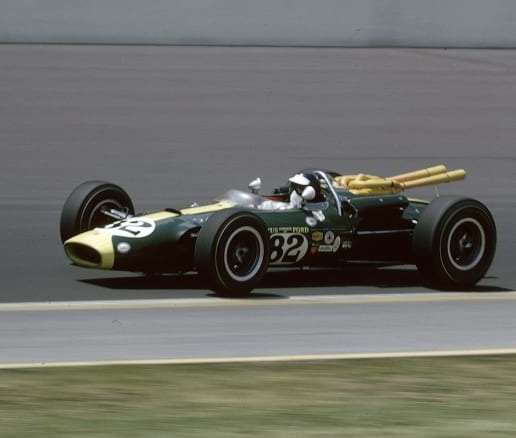
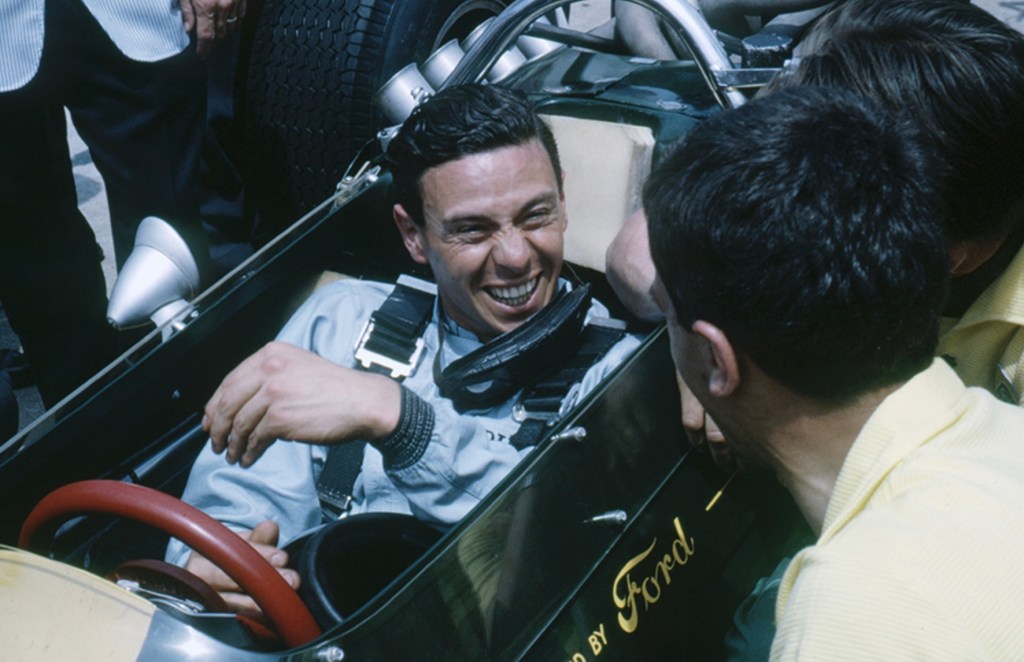
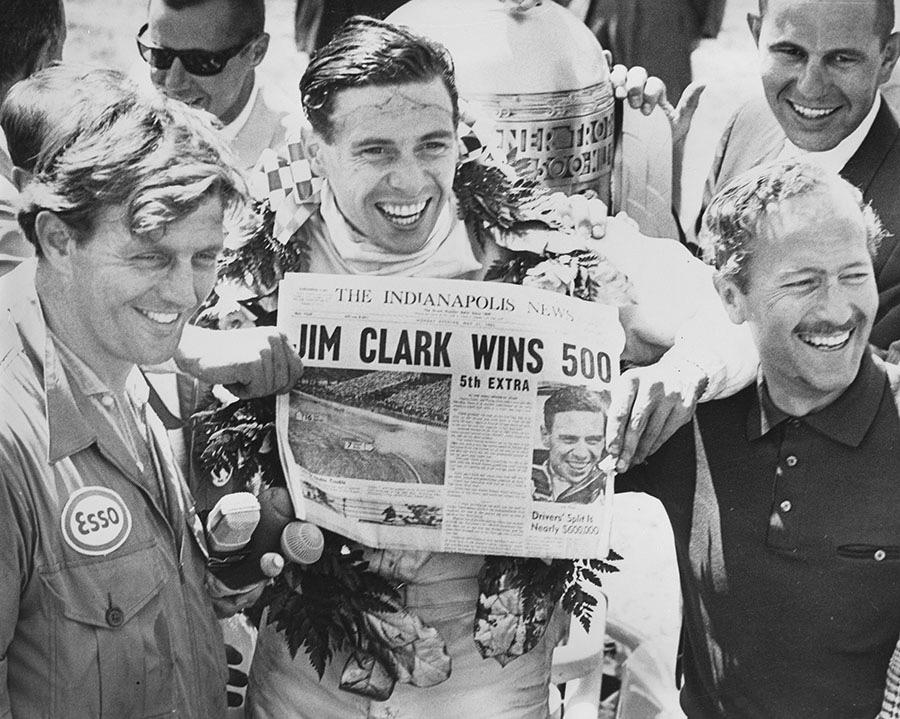
He bagged the Tasman Cup, Indianapolis 500, World Drivers Championship, the French – read Eiropean – F2 Championship plus a swag of touring car and sportscar victories.
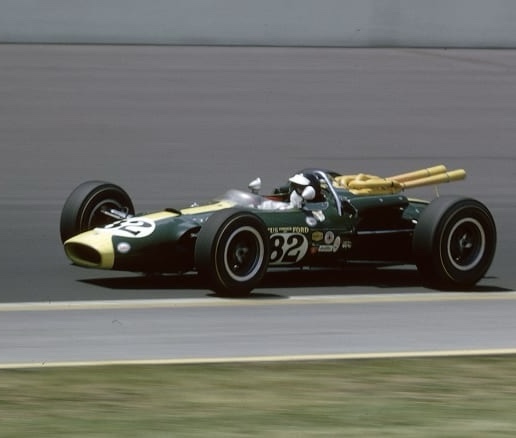
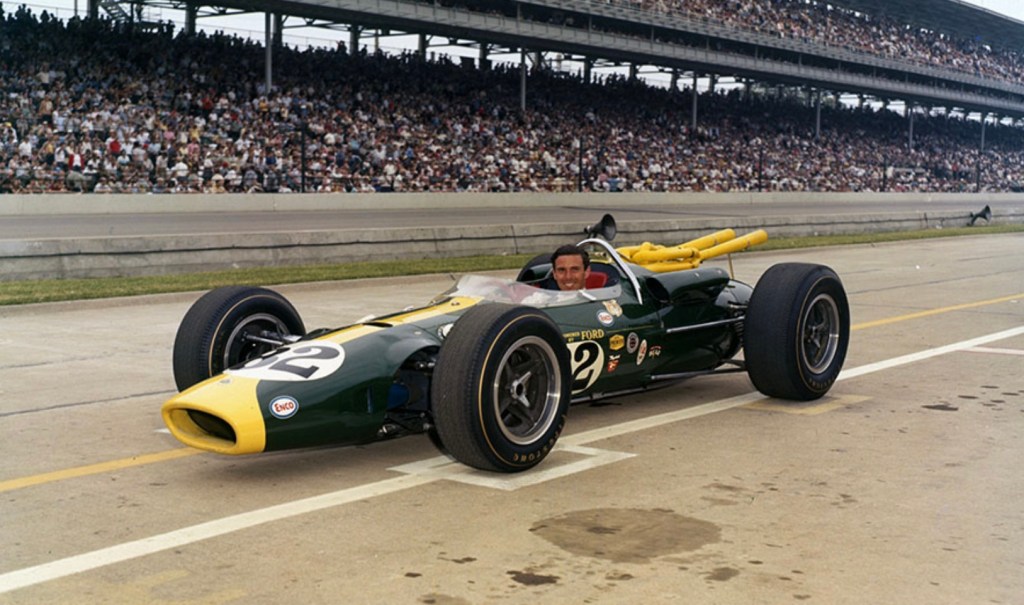
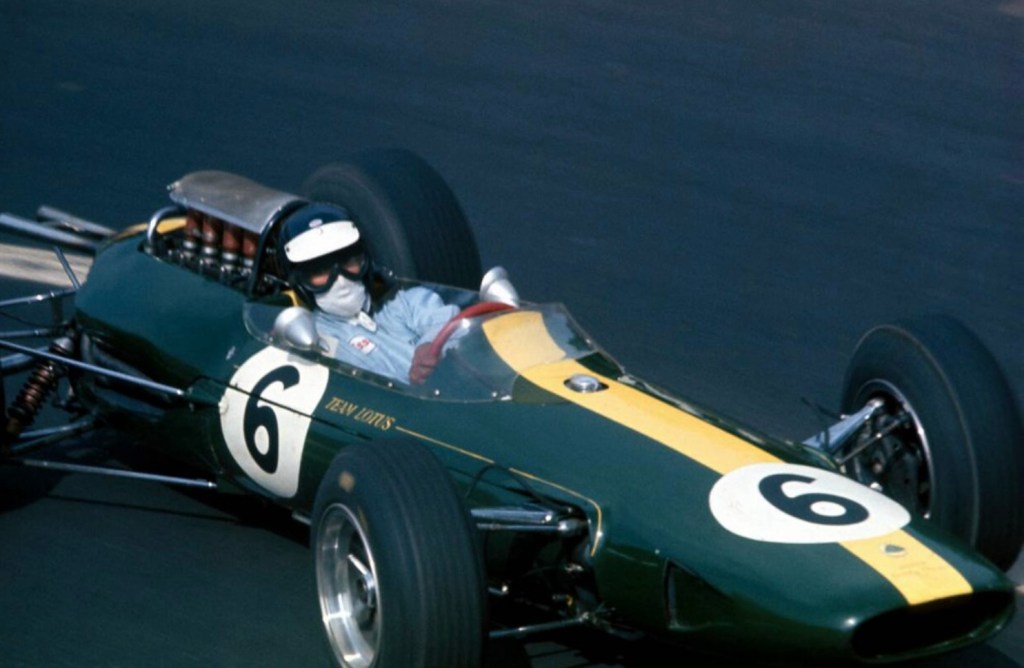
The shot above is of Clark enroute to victory at Indianapolis on May 31, 1965, Lotus 38 Ford-Indy 4.2-litre V8.
Hethel circa-1967 (unattributed)Lakeside 99, March 1965. Lotus 32B Climax. Jim won from Frank Gardner and Spencer Martin in Brabham BT11As (Daily Telegraph)
‘Can you give us a hand with the car Jimmy? Yep, no worries Ray (Parsons) I’ll do the fronts.’
Clark and Parsons ready Clark’s Lotus 32B Climax FPF 2.5 for the Warwick Farm 100 during the February weekend. That’s Roy Billington, Jack Brabham’s mechanic on the far left by the pit counter and Lanky Frank Gardner in the white helmet. Meanwhile, Frank Matich blasts past in his Brabham BT7A Climax.
Clark romped home in the Tasman, winning four rounds. He won Levin, Wigram, Teretonga and Warwick Farm on-the-trot, then picked up the Lakeside non-championship round at the end of the tour. Bruce McLaren was second and Jack Brabham third.
No way did Jim get home to Scotland on too many occasions in 1965.
By my reckoning – aided by and improving on Peter Windsor’s article of 10 years ago – Clark had 29 winning drives in 1965, ranging from short Tasman Cup heats to the 500 miles at Indianapolis.
Peter’s list of 26 wins missed two Grands Prix, amazingly, and one F2 victory, so for mine, it’s 29 wins in that very big year.
(IMS)
Clark was edged out of pole at Indy by AJ Foyt’s Lotus 34 Ford but Jim took the May 31 win that had been coming for two years, leading 190 of the 200 laps.
Parnelli Jones was second, Lotus 34 Ford, and Mario Andretti aboard a Hawk 1 Ford wad third. Al Miller’s Lotus 29 Ford was fourth; yes it was a great race for the Lotus lads.
(IMS)(IMS)
The win was well merited to say the least. Fortunate for Colin Chapman too, Ford would have pickled his testicles had there been a fuck-up like the year before!
In Team Lotus’ first year at the Brickyard in 1963 the Indy Establishment simply shafted the interlopers in favour of one of their own…
Of course Clark’s main programme for the year was Grand Prix racing.
That season he won three non-championship F1 races: the first heat of the Race of Champions at Brands Hatch, the Syracuse GP and the Sunday Mirror Trophy at Goodwood. He also took six of the ten championship events, four from pole: the South African, French, British, German, Italian and Mexican Grands Prix.
(unattributed)Clark on the hop at Goodwood during the August 1964 RAC Tourist Trophy, Lotus 30 Ford (Sutton)
Team Lotus wasn’t all beer and skittles. Every now and then Chapman built a shit-box, the Lotus 30 Ford 289 V8 was one of them.
While the concept of a backbone-chassis somewhat akin to the Lotus Elan made marketing, and, perhaps, theoretical sense, in practice it had a level of flaccidity the engineering equivalent of a couple of Blue-Bombers was never going to fix.
Clark wrestles with the gorgeous but recalcitrant 350bhp machine above, and with the ‘ten more mistakes’ – as Richie Ginther described it – aboard the Lotus 40 Ford in the LA Times GP at Riverside in October 1965; he was second to Hap Sharp’s Chaparral 2A Chev in a marvellous drive. One of Clark’s many attributes was to get the best out of a car, even a sub-optimal one. A bit more Lotus 30 here:https://primotipo.com/2016/08/30/rac-tourist-trophy-goodwood-1964/
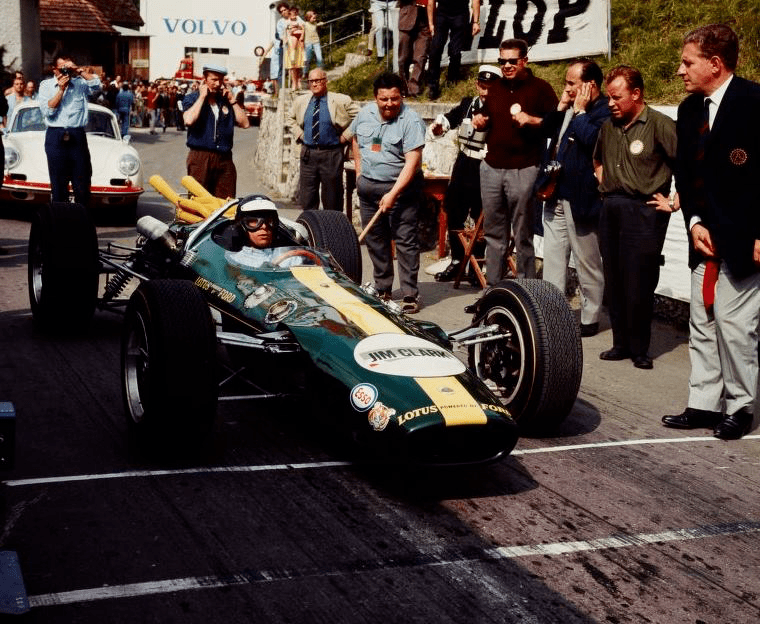
Of course, just when you think The Boss might give you a weekend off he comes up with the notion of doing a hillclimb or two in your Indy winning Lotus 38 Ford in the Swiss Alps.
‘Don’t fret Jimmy, we’ll give you a car with symmetrical suspension – it was chassis 38-4 rather than the Indy winner, chassis 38-1 – and off to St Ursanne-Les Rangiers we go on August 22.
Clark did a demonstration run in 5:20.8 while Jo Siffert did FTD in his Brabham BRM 1.5 V8 F1 car. Charles Vogele was second and Silvio Moser third.
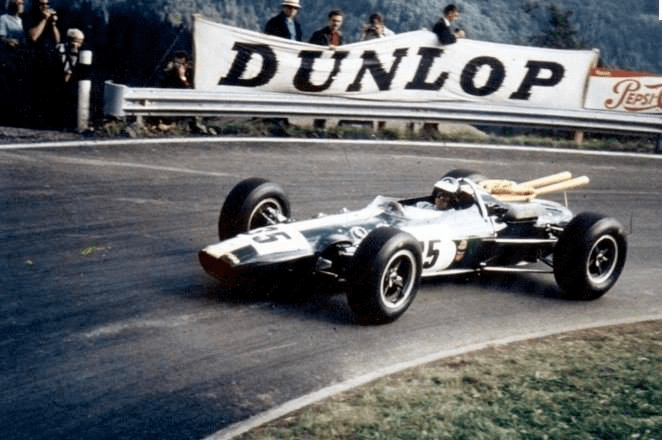
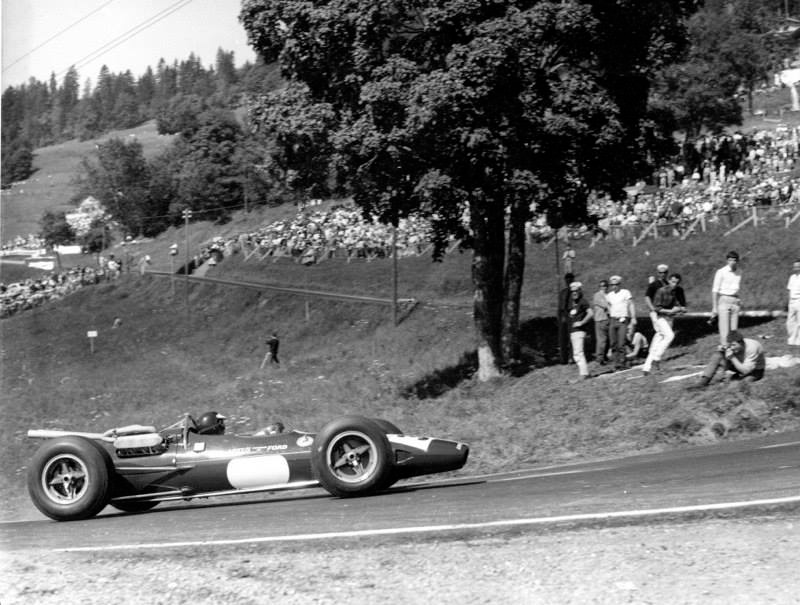
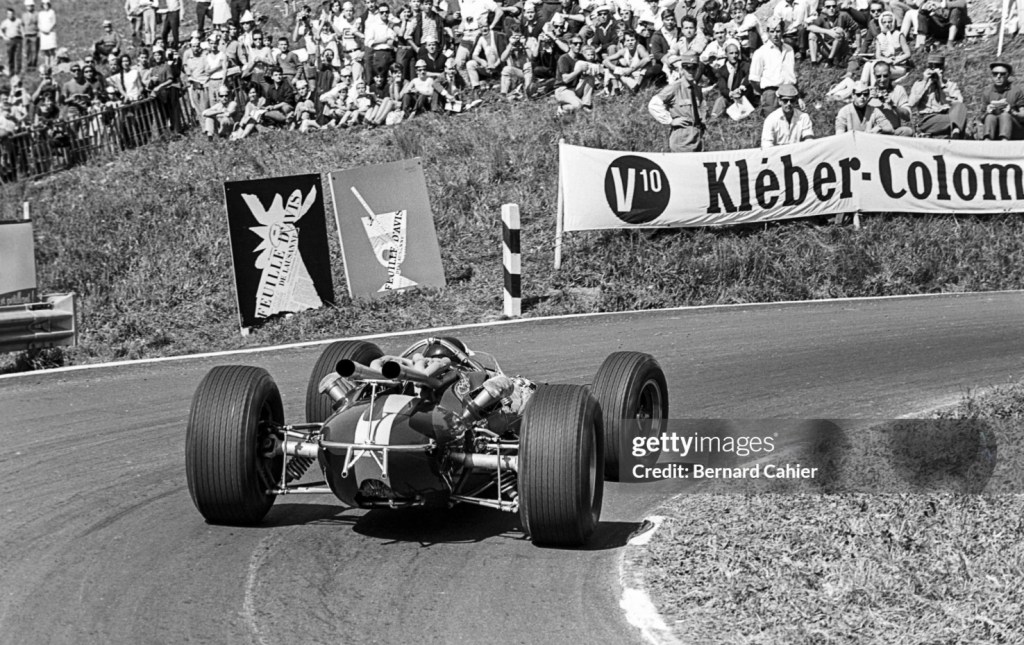
Next was Ollon-Villars also in Switzerland on the following weekend, August 29.
Lou Drozdowski wrote, ‘Clark spun off the course during practice and spent much of the afternoon among the sheep and pastures making his way back. He did however set a time of 4:34 compared to Ludovico Scarfiotti, Ferrari 206P FTD of 4:09.’ Gerhard Mitter was second and Gianpiero Biscaldi third.
Ollon-Villars (unattributed)Ollon-Villars (unattributed)Big-bertha’s butt at Ollon-Villars (B Cahier)(LAT)
Lotus’ relationship with Ford was strong and multi-faceted, one element of which was the Ford Cortina Lotus Mk 1 and 2 and the Escort Twin-Cam, all of which were fitted with the Lotus-Ford twin-cam, two-valve twin-Weber fed engine.
While it could be seen as hit-and-giggle in the context of his other ‘65 race-programmes, moving-metal was a very serious business so Clark approached his Lotus Cortina races that year in the UK and North America just as seriously as he did everything else.
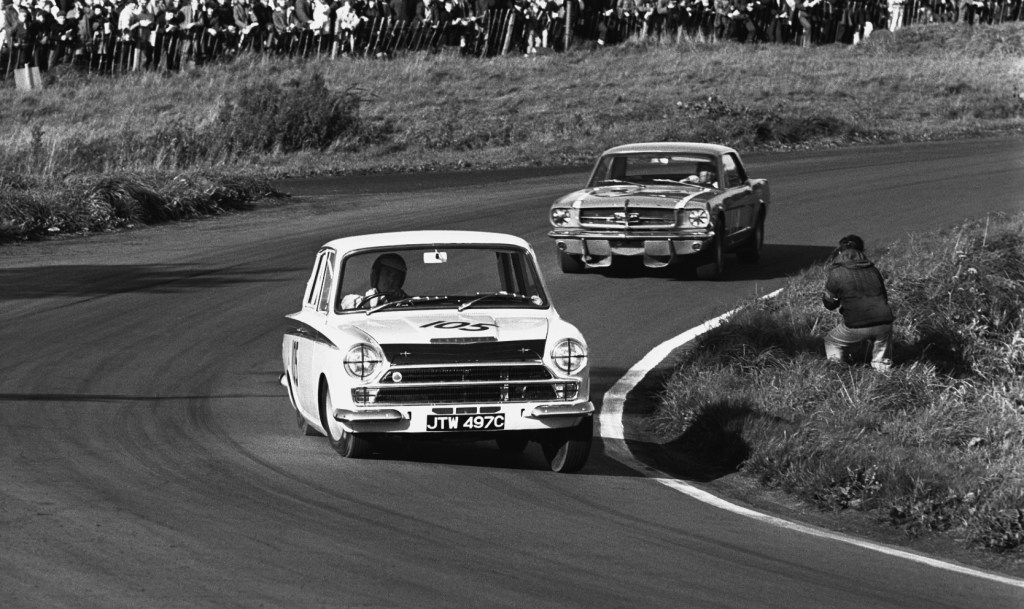
Here he is giving Jack Brabham a run for his money at Oulton Park during the British Saloon Car Championship round on September 18, 1965. Jack’s mount is Alan Mann’s Ford Mustang. More on the Lotus Cortina here: https://primotipo.com/2014/11/16/jim-clark-lotus-cortina-sebring-1964/
Etcetera…
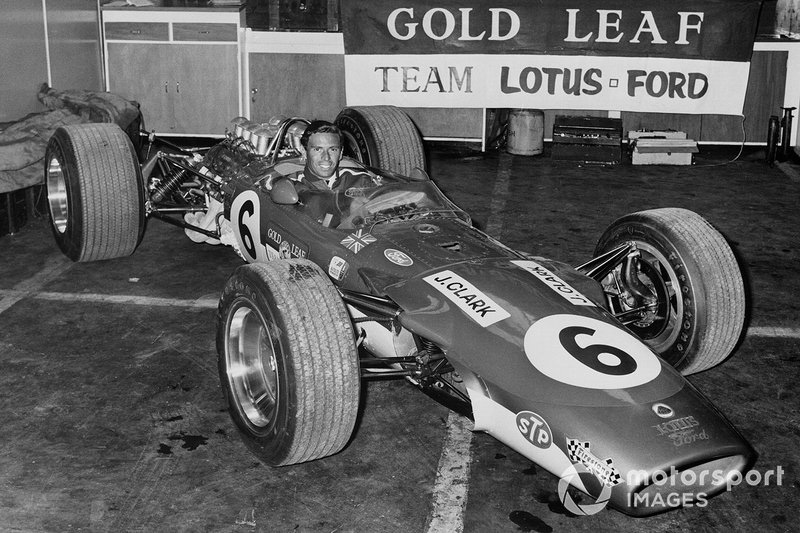
The Lotus 49 first ran in Gold Leaf Team Lotus colors during the Lady Wigram Trophy on January 20, 1968.
The transformation from Team Lotus’ perfect livery to fag-packet occurred during the week between the Levin International on January 13 and Wigram.
With a done deal in London, the Lotus team arranged for a skilled signwriter at Hutchinson Ford in Christchurch to apply the new Gold Leaf livery to Jim’s Lotus 49.
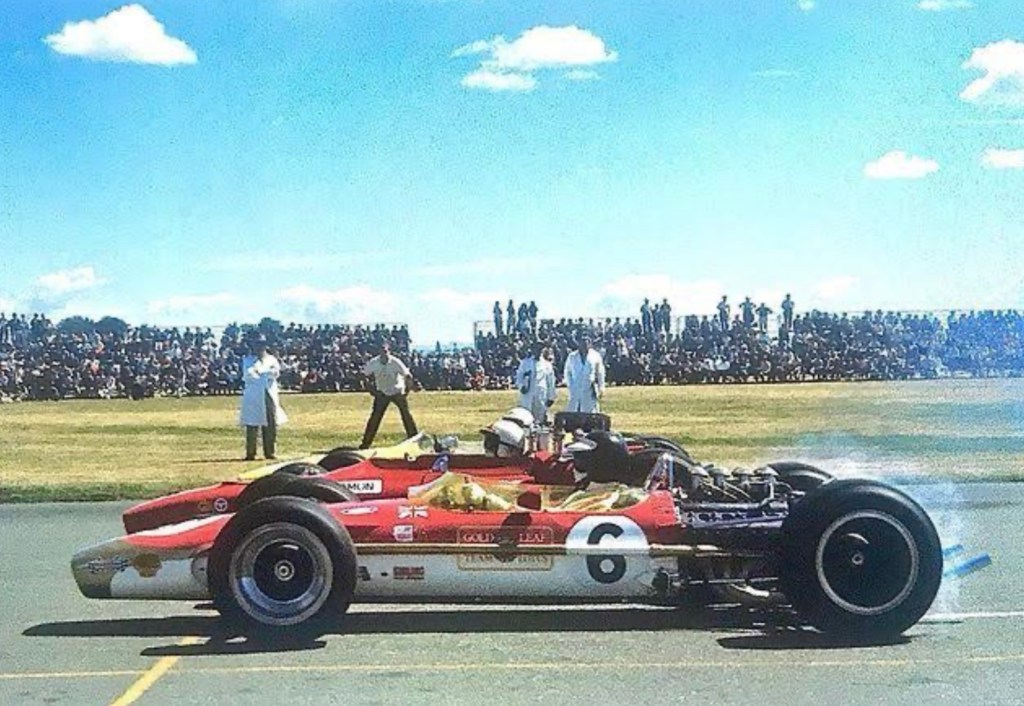
Clark, Amon, Gardner: Lotus 49 Ford DFW, Ferrari 246T and Brabham BT23D Alfa Romeo. Wigram 1968
Outside the US and some other countries it was the beginning of big corporate sponsorship in motor racing.
Ever the leader, Chapman’s quick commercial response and applying the new sponsorship colours demonstrates just how rapidly change took place once advertising restrictions in racing were lifted prior to the 1968 season.
(unattributed)
Credits…
Indianapolis Motor Speedway (IMS), Bruce Wells, The Jim Clark Trust (TJCT), Lou Drozdowski in lotuseuropa.org
Tailpiece…
(TJCT)
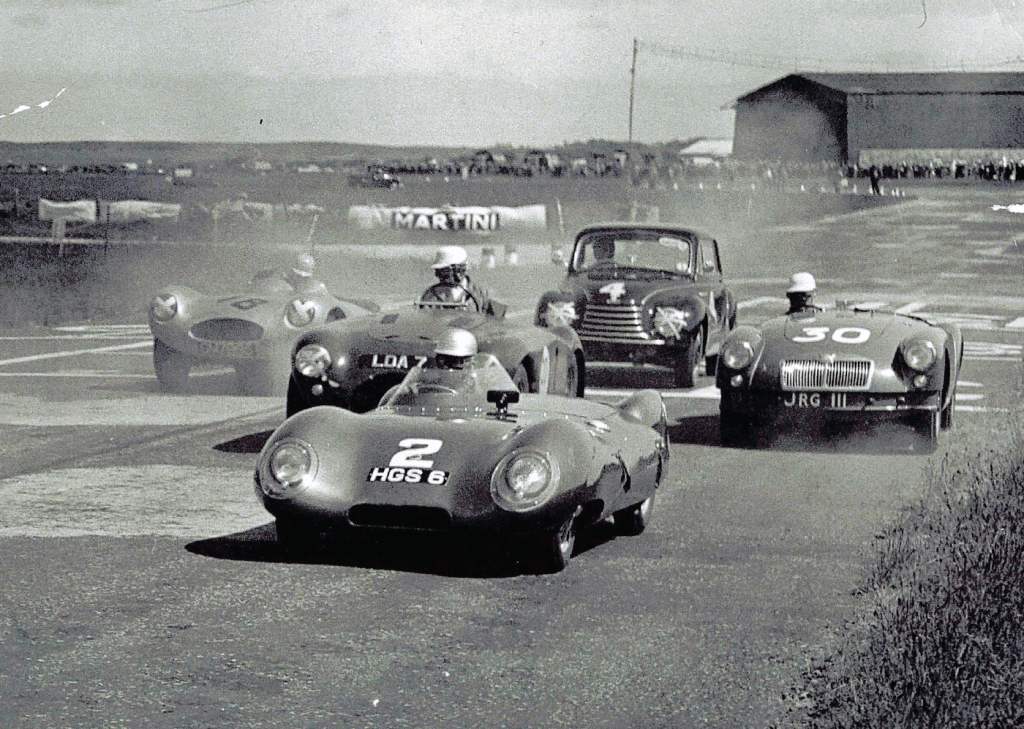
Jim Clark’s first race was at Crimond, aboard Ian- Scott-Watson’s DKW Sonderklasse on June 16, 1956.
That’s JL Fraser Lotus 11 front-and-centre, then from the left #18 AR Millar Saltire, LDA7 Kenny McLennan’s Kit MG, #4 Clark in Scott-Watsons DKW Sonderklasse, and John Campbell, MGA.
The Jim Clark Trust wrote that ‘In the sportscar race there was no handicap, so the DKW was hopelessly outclassed. Clark did pass one car but his joy was short-lived. The tailender was heading for the pits with broken halfshaft and the DKW finished in last place.’
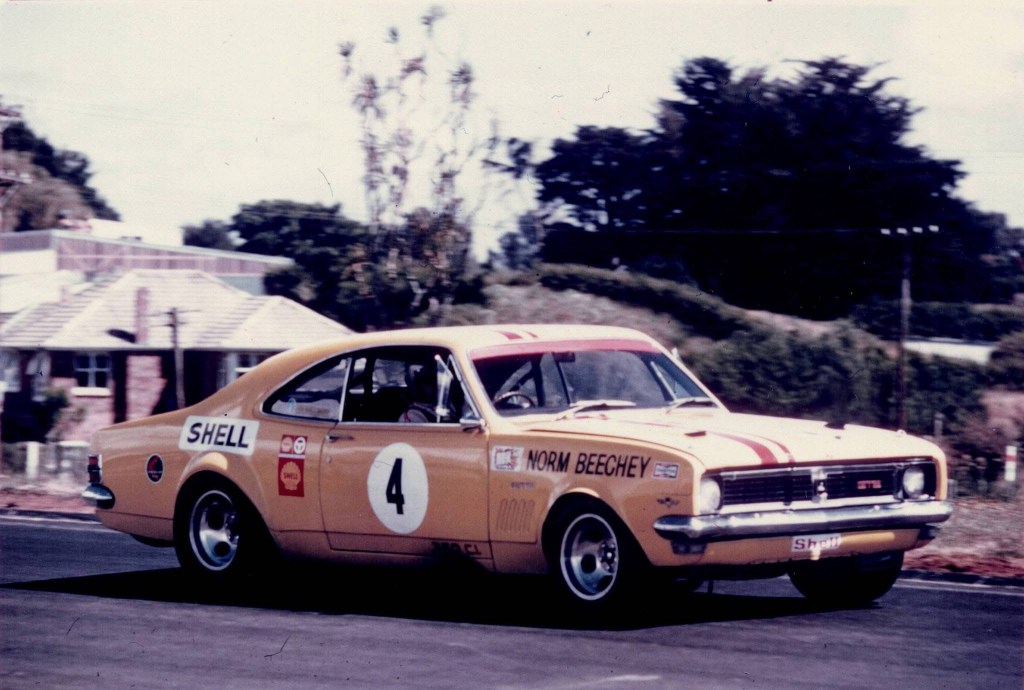
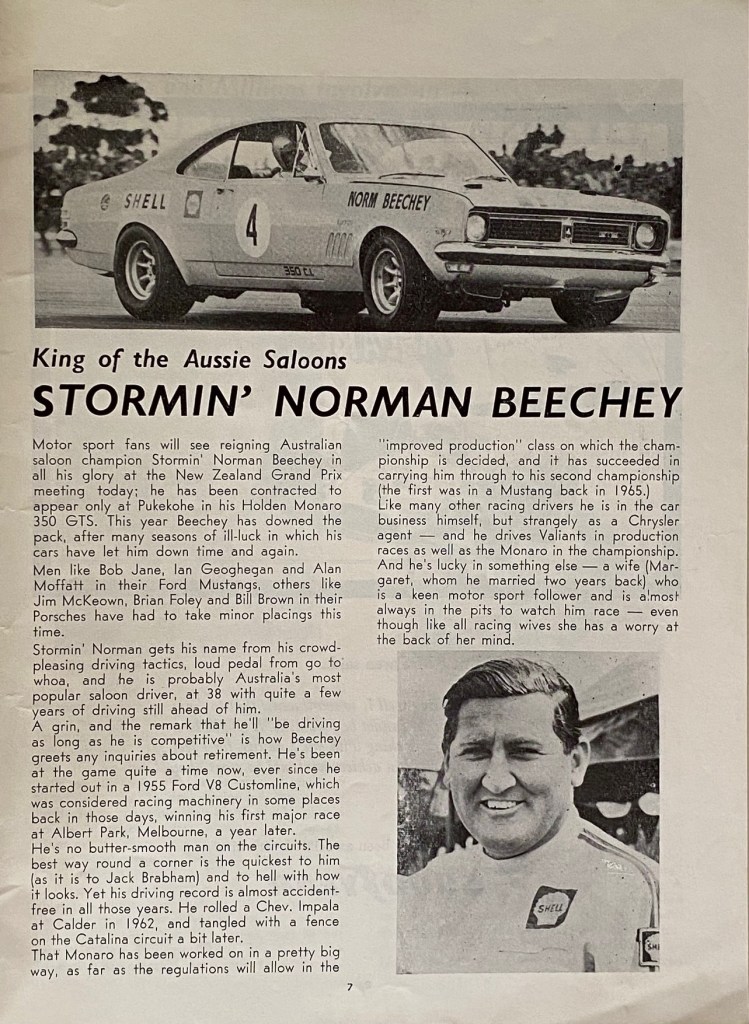
Beechey exits the Pukekohe hairpin in his legendary 1970 Australian Touring Car Championship winning Holden Monaro HT GTS350 during the 1971 NZGP weekend.
The idea for the first in this occasional series of Australian Touring Cars Abroad came from my latest photo raid of two fantastic Kiwi racing FB sites: Old New Zealand Motor Racing and South Island Motorsports, suss them both out.
But of course New Zealand wasn’t/isn’t the only country ‘Oz tourer pros‘ have visited. I’ve prostituted the idea a bit by including blokes like Frank Gardner, Brian Muir and Horst Kwech whose over-there touring car racing was based over-there not here, if that makes sense as a differentiator…
(Bay of Plenty News)
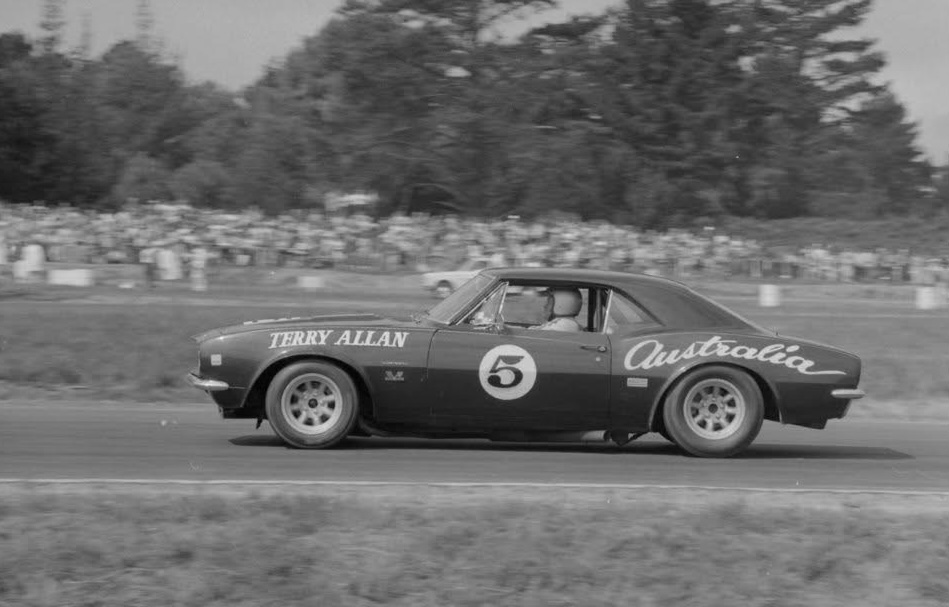
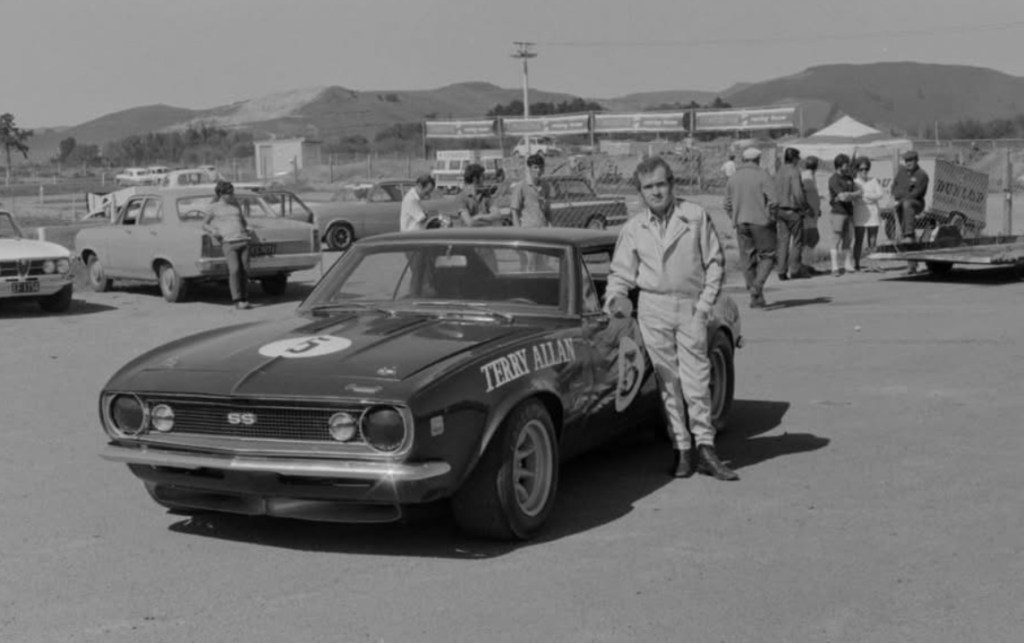
Terry Allan at Baypark in May 1970
Steve Holmes wrote on The Roaring Season, ‘In 1967, young Melbourne motorsport enthusiast Terry Allan took a trip to the US and purchased a new Camaro to race in Australia. Fitted with a 396ci big block Rat motor, and quad-side draught Webers, the Camaro caused a huge stir with race fans on its debut in May 1967, as this was the first Camaro to race anywhere in Australasia.’
‘Allan raced the Camaro from 1967 to 1971, then sold it to Graeme Blanchard. From there it went to Lakis Manticas and then to Barry Wearing in 1974, after which it appears to have vanished.’
‘Information about Terry Allan’s Camaro has been difficult to find. A couple of magazines have attempted to trace its current whereabouts, or ultimate fate, but have drawn blanks. Rumours surrounded the car, and its US origins, and the possibility it may have been race prepared at the workshop of GM racing guru Bill Thomas, but these were all hearsay.’
What became of Terry Allan folks?
(Bay of Plenty News)
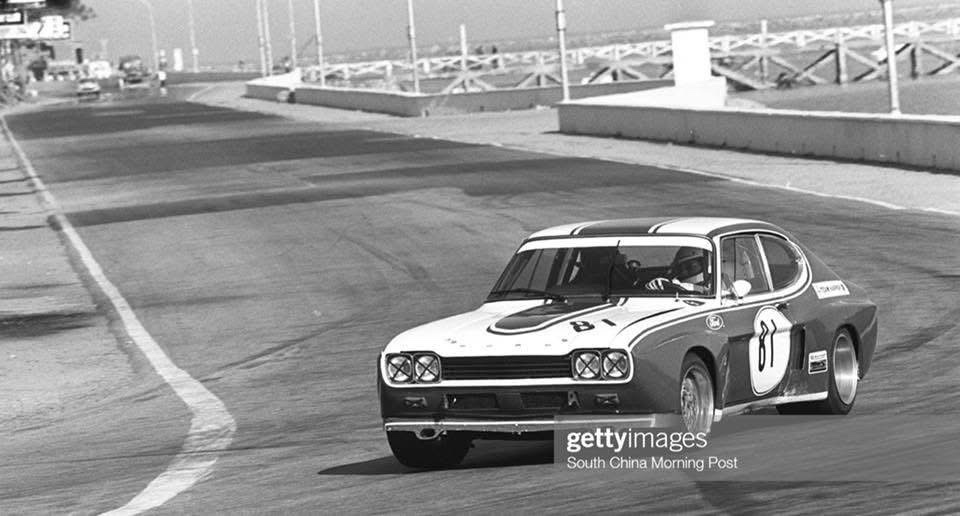
Allan Moffat’s Team Harper/Ford Cologne Ford Capri RS2600 on the way to winning the 53 lap November 18, 1973 Touring Car Race at Macau. Second and third were Tachi Nobuhide and Jose Ramirez aboard Toyota Celica GTs.
Moffat must have been impressed, a year later FoMoCo Oz had an RS3100 on the water for him to race in Australia. Macau was a little bit of try before you buy in a sense. See here: https://primotipo.com/2015/04/09/australias-cologne-capris/
(T Growden)
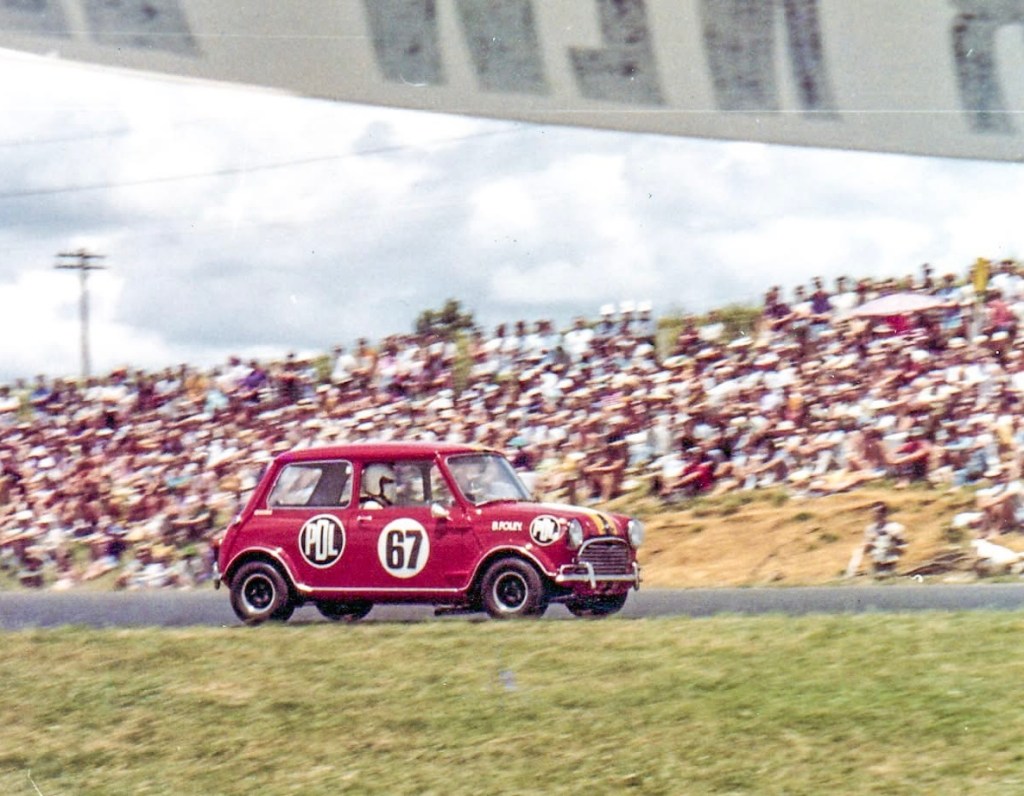
Brian Foley’s Morris Cooper S at Pukekohe during the 1969 New Zealand Grand Prix weekend. ‘Second in the the 1000-1300cc race.’
The title for Australian King of the Coopers was a tussle between Sydney based Foley, and Melbourne based Peter Manton, with honourable mentions to John Leffler, Lynn Brown and Don Holland. And yes my friends, there are more depending upon the period you have in mind.
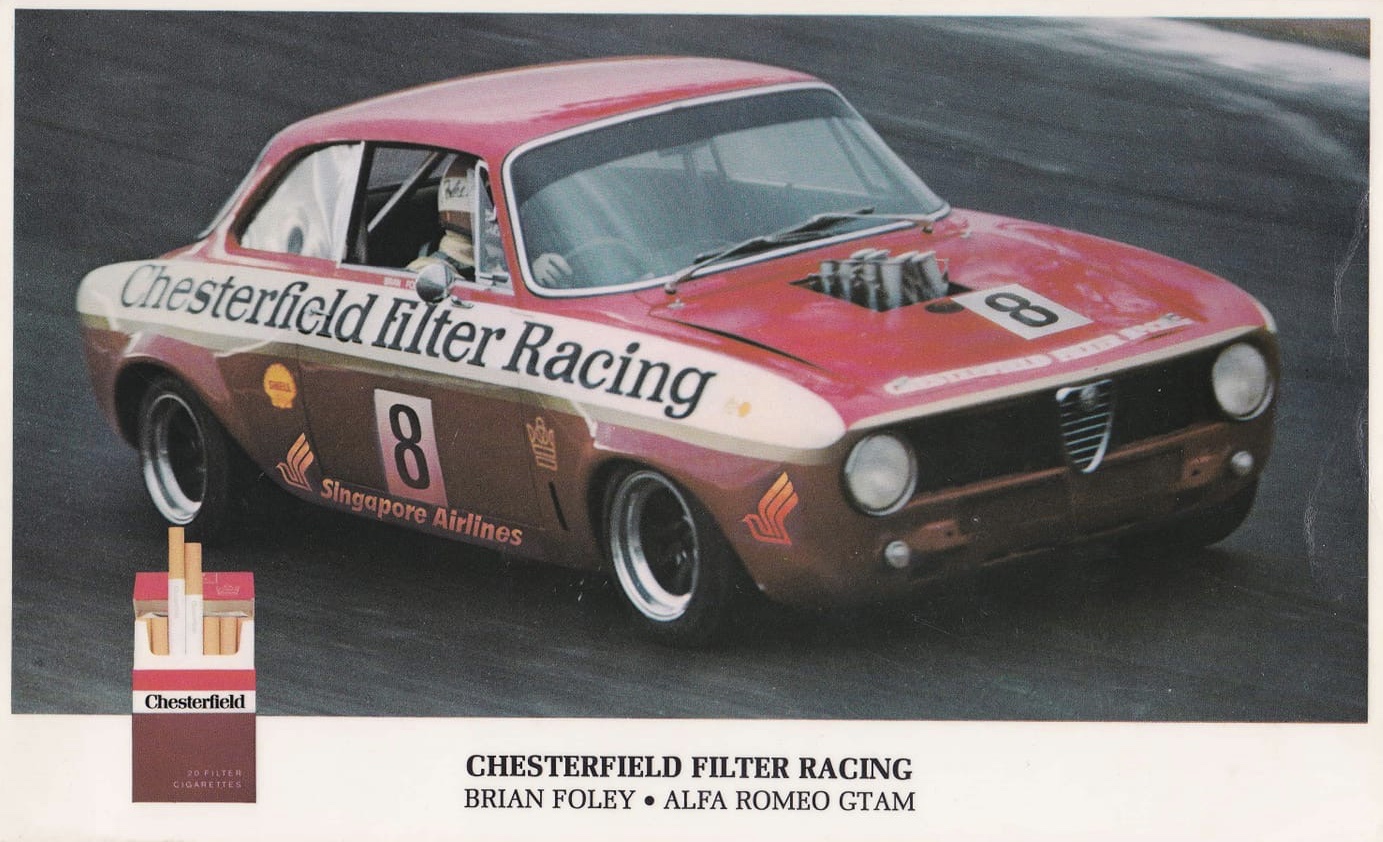
By 1971 Brian was teasing Australian Alfisti with this ex-Auto Delta Alfa Romeo 1750 GTAm. The 2-litre machine was under-gunned against the V8 Pony Cars that had the ATCC stitched up, but it was still a crowd-pleaser and ‘2-litre Class’ winning machine.
Here he is below at Shah Alam, Kuala Lumpur, Malaysia in 1972.
Peter Brock raced overseas a bit: BMW 3.5-litre CSL, Porsche 956 and some Commodores but maybe not as much as one would have expected of one of the world’s greatest touring car drivers of his era?
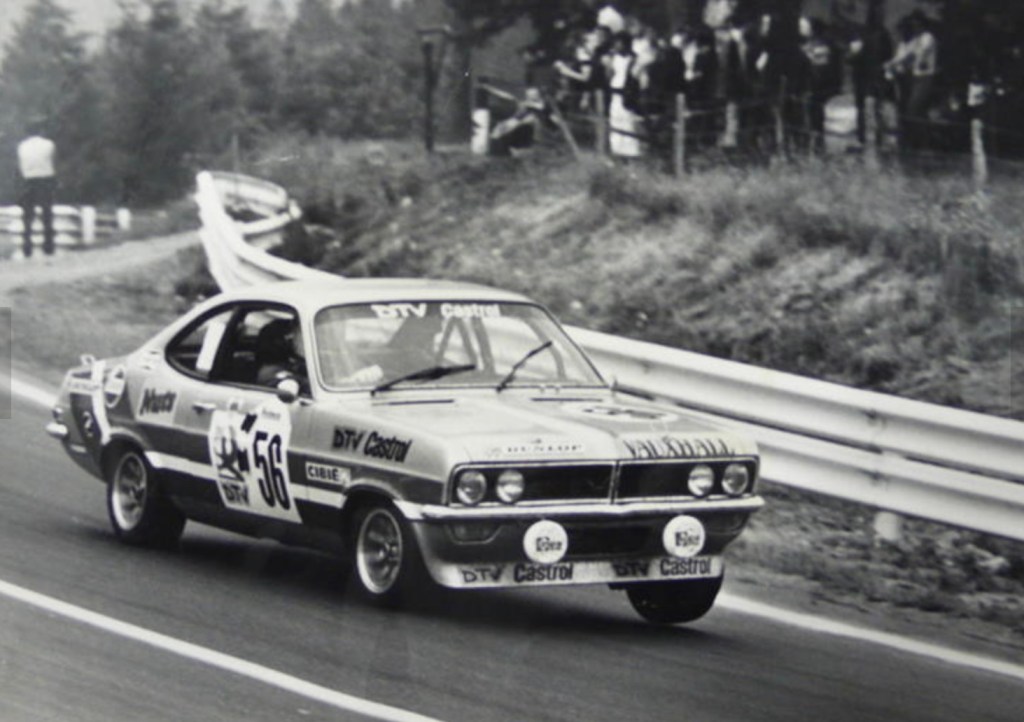
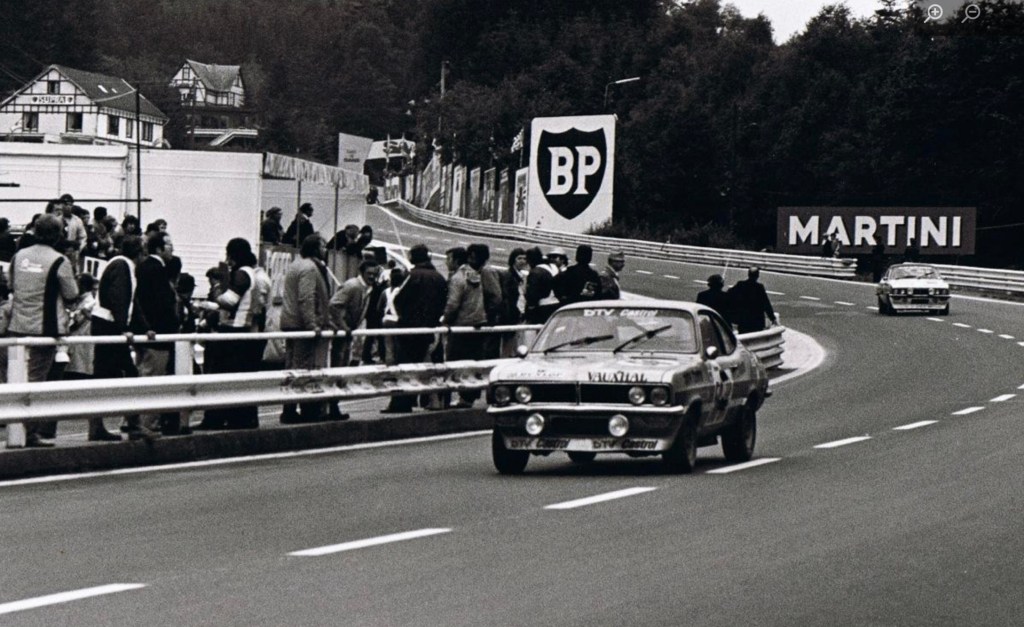
In 1977 he teamed up with his ‘UK GM equivalent’, Gerry Marshall for the 24 Hours of Spa in a factory Vauxhall Firenza Magnum.
Built by Bill Blydentein’s Dealer Team Vauxhall squad, the Group 1 Spa Magnum had some trick modifications including twin Weber 48DCOEs and a cam fitted to the 2.3-litre slant-four increasing its power to circa-172bhp. A Getrag five-speed ‘box completed a light, fast package.
(Bonhams)
Marshall and Brock were second at Spa with the Beefy-Brit chasing down second with 30 minutes to go, they also took the ‘Coup du Roi’ teams and the Index of Performance.
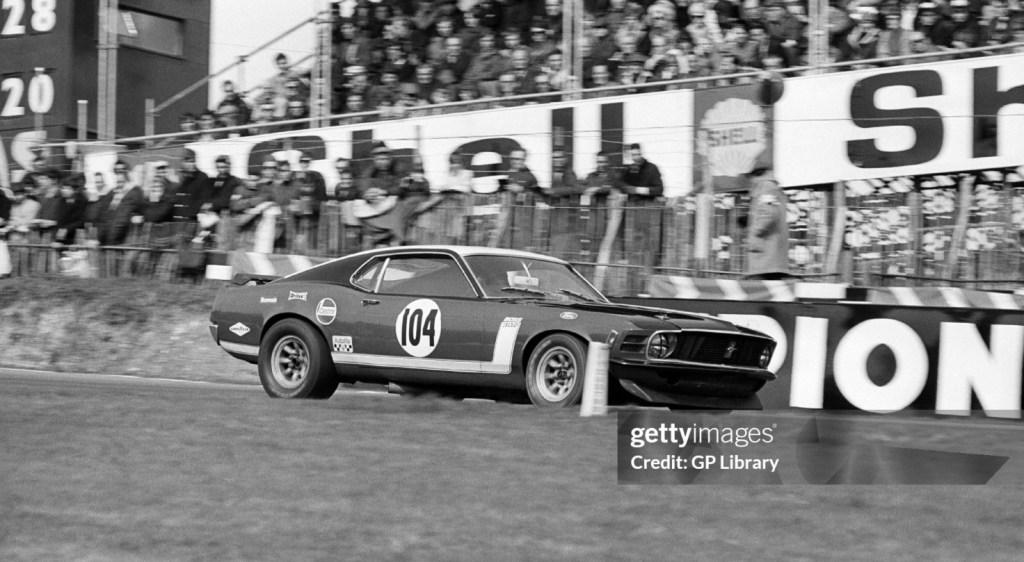
Frank Gardner on the way to winning a Guards Trophy race at Brands Hatch in May 1970, Ford Mustang Boss 302.
FG won the British Saloon/Touring Car Championship in 1967-68 aboard a Ford Falcon Sprint and Lotus Cortina/Ford Escort Twin-Cam respectively. In a decade long dream run in Europe, Gardner annually had single-seater, sportscar and touring car programmes/races in all corners of the globe and did justice to all of the different disciplines.
He returned to Australia in late 1974.
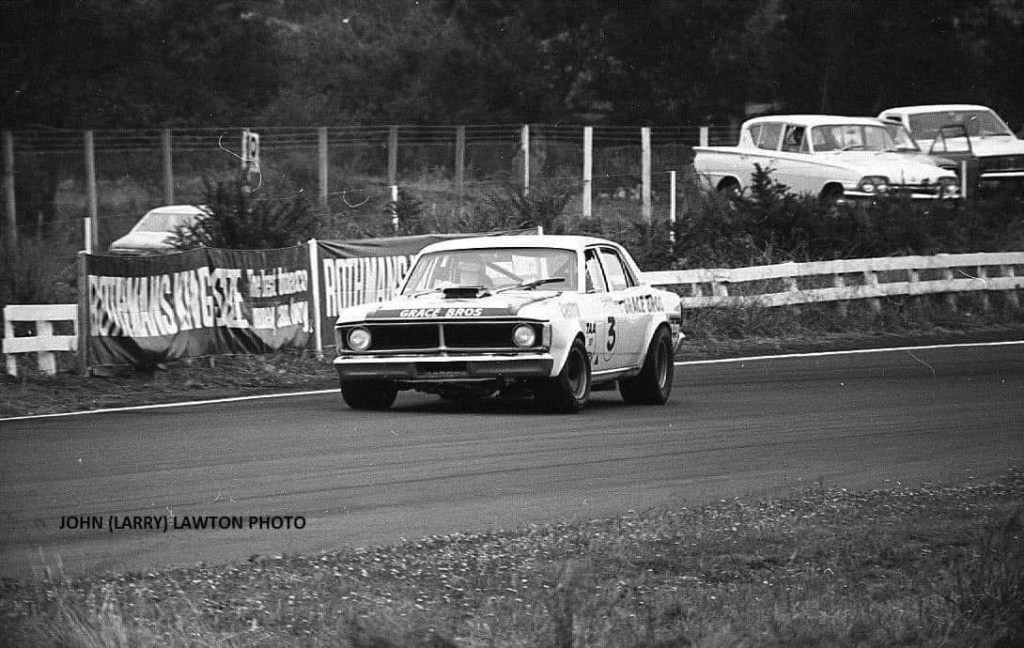
(John Lawton)
Pete Geoghegan in characteristic style giving his Ford Falcon GTHO Super Falcon a lungful at Baypark in 1973.
Pete took pretty much all of his cars across the ditch, I’ll do a post of those exclusively some time soon.
(S Laverick)
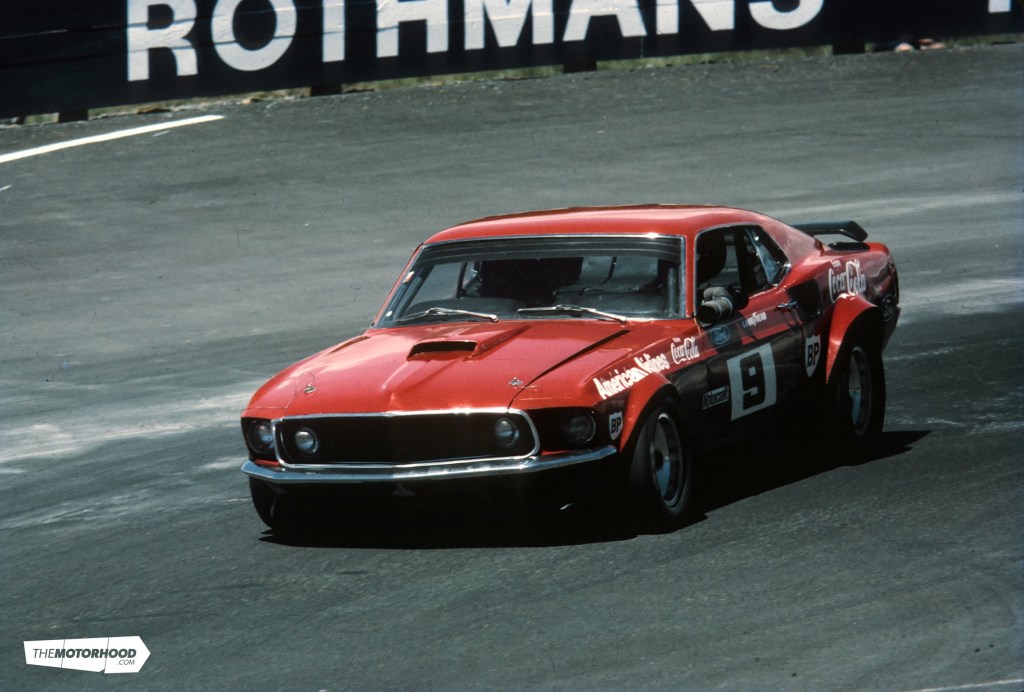
Moffat’s Coke Mustang Boss 302 at rest in the Pukekohe paddock in 1972, and on the move below.
More often than not race-paddocks are shit-holes, not so Puke which always looks wonderful in photos with its undulations, leafy trees and grass.
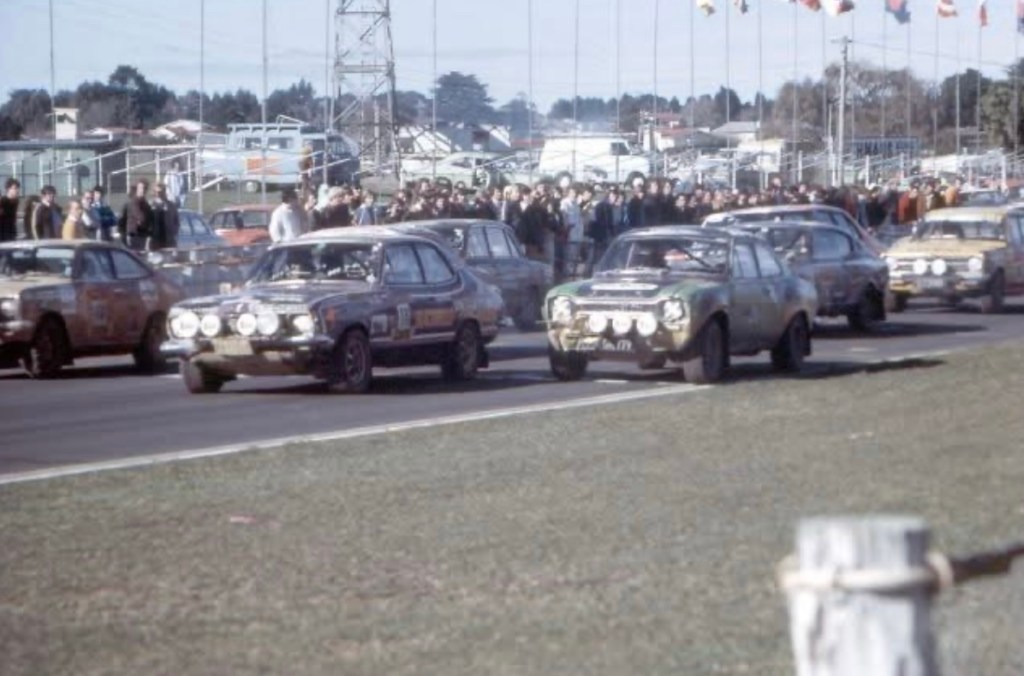
Colin Bond in the NZ Holden Dealer Team Holden Torana GTR XU-1 during the 1973 Heatway Rally run between July 7-14 out of Christchurch.
120 cars entered the event which was won by 1983 World Rally Drivers Championship winner Hannu Mikkola and Jim Porter, and Mike Marshall and Arthur McWatt both in Ford Escort RS1600 Mk1s, then Shekhar Mehta and Wayne Jones Datsun 180B, then the Bond/George Shepheard LJ XU-1.
Bondy was a crowd favourite in whatever he drove and is one of Australia’s most versatile drivers of any era. On-the-dirt he won three Australian Rally Championships in 1971-72-74, all with George Shepheard alongside and all in GTR XU-1s. Funny, in my mind he bagged another in his Escort RS days, but not so…albeit Greg Carr won one aboard a CB prepared Escort in 1978.
(S Taylor)(Alpina Auomobiles)
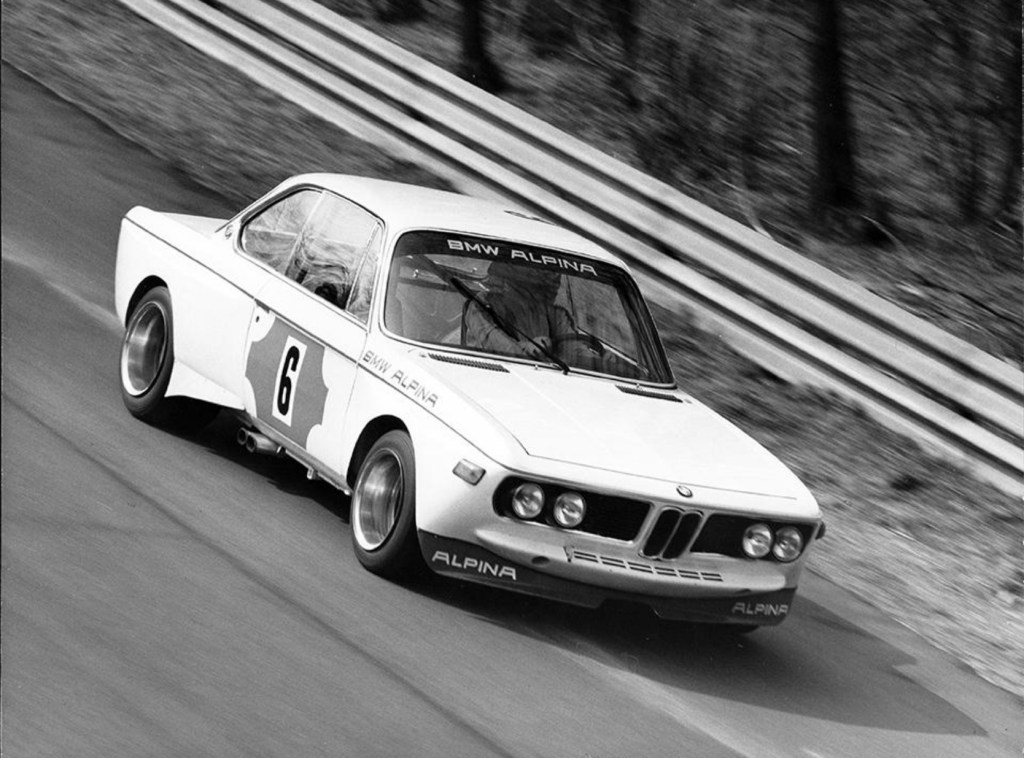
Brian ‘Yogi’ Muir in the Alpina BMW CSL 3-litre during the first round of the 1973 European Touring Car Championship at Monza in March 1973. He shared the car with Niki Lauda. See here: https://primotipo.com/2022/09/03/brian-muir/
Amazing career as a UK based international from the mid-1960s in touring cars and sportscars until his death from a heart attack on the way home from the RAC Tourist Trophy at Silverstone on September 11, 1973. He was only 52, born June 30, 1931.
Brilliantly conceived by Sydney racer Tom Nailard, the project was acquired by Frank Gardner who essentially created a two-seat Lola F5000 car with his expansive knowledge of the Huntington company’s parts catalogue.
Winner of the Australian Sports Sedan Championship from 1977-79 for Gardner/Grice/Grice before CAMS’ legislative pencil caught up with them.
(unattributed)
Peter Brock on the way to second place in the Guia Production Car race at Macau in 1971.
LC XU-1 with Globe Rallymaster wheels. Which car izzit, the Holden Dealer Team wrenches had wenches nicknames for the cars didn’t they?: Saggy Sally, Juicy Lucy! Raunchy Rita or whatever!?
(NAS)
Moffat again, this time during the 1973 Singapore Grand Prix weekend on the tough, dangerous Thomson Road circuit.
FoMoCo Oz bought this Alan Mann Racing built Ford Escort Ford FVA for AM to race as a sports sedan about 1970. It was always a struggle to keep up with the V8s. There ain’t no substitute for cubes. Sometimes.
By the time it got to Singapore it was probably fitted with a 2-litre Ford BDG engine. The spec and destiny of the car is of interest if someone can fill me in.
Moff won a heat but had a flat in the final that caused an accident, Brian Foley’s Alfa GTA Lwt won the final.
(Klemantaski Collection)
Speaking of which, here is Horst Kwech racing an Alfa Romeo GTA in a 1970 Trans-Am round at Mid Ohio, and below a Ford Capri RS3100 in an IMSA race in 1974, circuit unknown.
The Baypark promoters were clearly very touring car friendly, they promoted a lot of NZ v Oz contests which must have been fantastic to watch and hear.
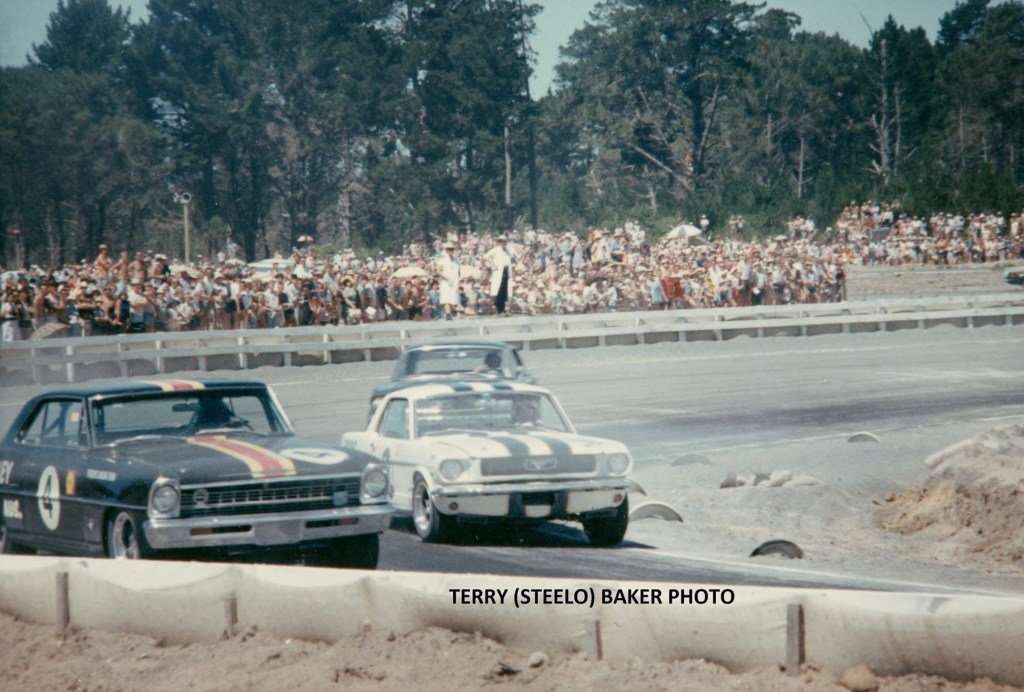
Here Melbourne’s own is doing battle in his Chev Nova with, I think, Paul Fahey’s Ford Mustang. Who won these December 1996 or 1967 hitouts? A little bit more here: https://primotipo.com/2019/09/26/norm-jim-and-pete/
(R Grimwood)
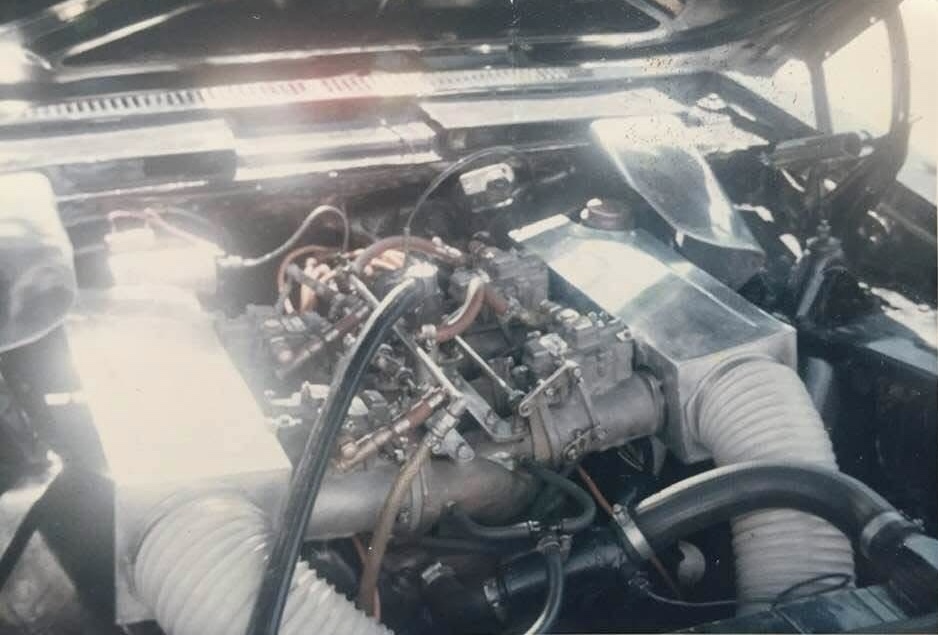
The cars got presence hasn’t it! Not the rare under bonnet shot of the 327 fed by four Weber DCOs on a neat crossover inlet manifold nicely ducted with cool air.
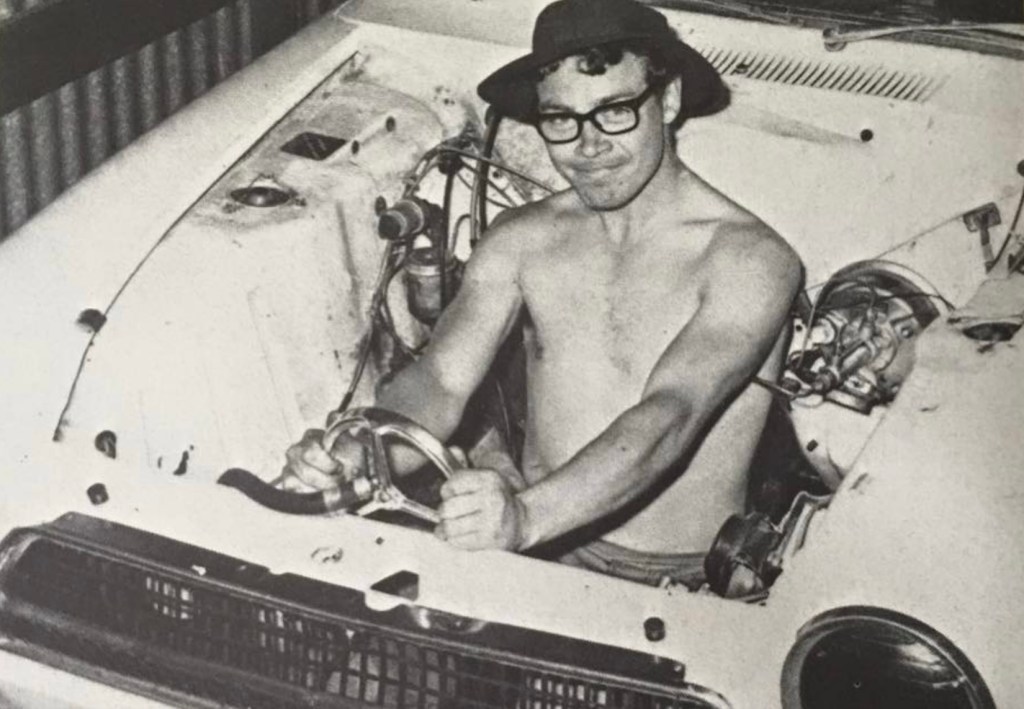
Did Claude Morton do Norm’s engines?
(J Copsey)(J Copsey)
Credits…
Steve Elliott, Stephen Dalton Archive, Bay of Plenty News shots via Bryan Miller, National Archive of Singapore, Klemantaski Collection, JD Decrevel, Getty Images, Stephen Laverick, Sean Taylor, Bruce Scott, Alpina Automobiles, Klemantaski Collection, JD Decrevel, Rod Grimwood, The Motorhood, Terry Baker, Jeff Copsey
‘50 years ago today, Gentleman Jim Richards chasing Allan Moffat at Wigram, Christchurch, New Zealand, January 19, 1975,’ wrote Mike Norris.
‘On this occasion Allan took the honour of being the only saloon car to average 100mph over a lap. As Jim recorded the same lap time just inches behind him the record was equalled within the blink of an eye. As Allan had done it first he got the chocolates.’
Mike’s post was on Facebook, one of his respondees observed ‘Kar-Kraft vs Chook Shed’ in terms of the respective Moostang’s parentage! Murray Bunn’s was one helluva shed! Boss 302 vs Boss 351 mind you.
Jim Crossed the Ditch in ’75 of course, Bathurst ’74 duly noted. I was at that first wet Sandown meeting he did in June/July. I don’t remember who he beat – ok, he had 12-inchers rather than the tens or whatever he had to have here – but it was a convincing display, the first of thousands of great drives in Australia.
I dips ‘me lid to them both…
(T Marshall)
Same weekend with Jum on it and up it, flat knacker into Bombay…final in-period meeting for Moff’s car that weekend?
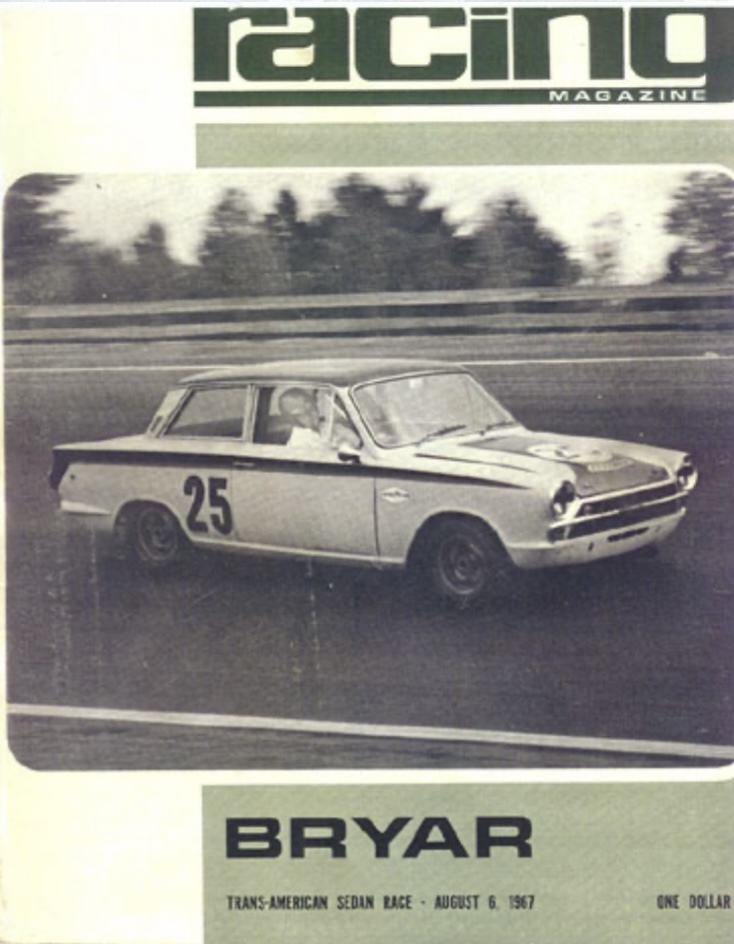
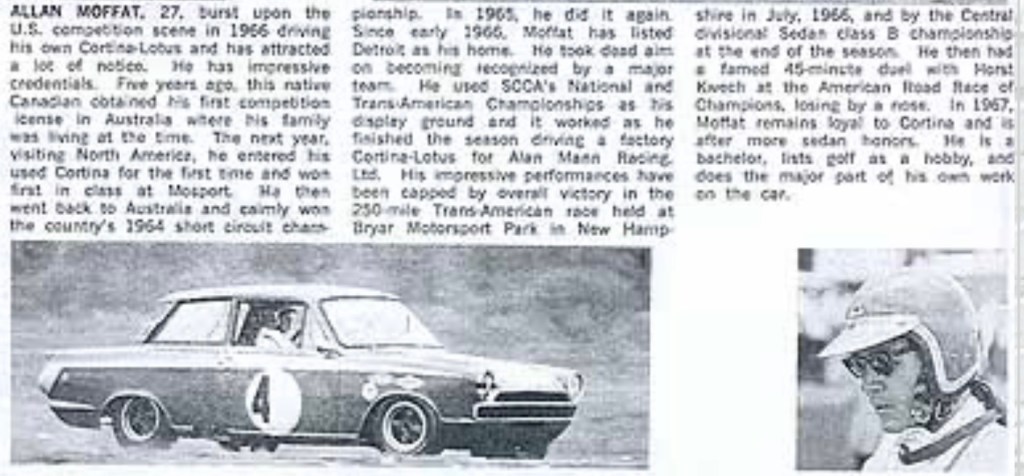
Racing Magazine, Vol 2 # 7 August 1967, cover shows Allan Moffat, probably that year (lotus-cortina.com)
It’s interesting to see how the Americans rated him in 1967.
‘Allan Moffat, 27 (born November 10,1939) burst upon the U.S. competition scene in 1965 driving his own Cortina Lotus and has attracted a lot of notice. He has impressive credentials. Five years ago, this native Canadian obtained his first competition license In Australia where his family was living at the time.’
‘The next year, visiting North America, he entered his used Cortina for the first time and won first in class at Mosport. He then went back to Australia and calmly won the country’s 1964 short circuit championship. In 1965 he did it again.’
‘Since early 1966, Moffat has listed Detroit as his home. He took dead aim at becoming recognized by a major team. He used SCCA’s National and Trans-American Championships as his display ground and it worked as he finished the season driving a factory Cortina-Lotus for Alan Mann Racing. His impressive performances have been capped by victory in the 250 mile Trans-American race held at Briar Motorsport Park in New Hampshire in July 1966 and by the central divisional Sedan B-class championship at the end of the season. He then had a famed 45 minute duel with Horst Kwech at the American Road Race of Champions, losing by a nose.’
‘In 1967 Moffat remains loyal to Cortina and is after more sedan honours. He is a bachelor, lists golf as a hobby, and does the major part of his own work on the car.’
The first motor race I attended was the Sandown Tasman round in 1972, the Australian Grand Prix that year. Despite being based in the Castrol tent surrounded by the HDT Torana XU-1s and works Chrysler Valiant Chargers there were only ‘two cars’ of interest to me that weekend: all of the single seaters and Moffat’s Mustang! The factory Falcon GTHO’s had as much presence as the Trans-Am but not its menace or sensual, muscular brutality.
With an Economics degree in my pocket I commenced working for a small chartered accounting firm in Toorak and used to see AM around and about there all the time. His workshop was for many years at 711 Malvern Road, Toorak, he lived in the area and I often saw him schmoozing clients at Topo Gigio and more often Romeo’s. While Topos has been gone for five years, Romeos is still there and Allan is an honoured long-standing guest when there with his wonderful minders; dementia sufferer as he is.
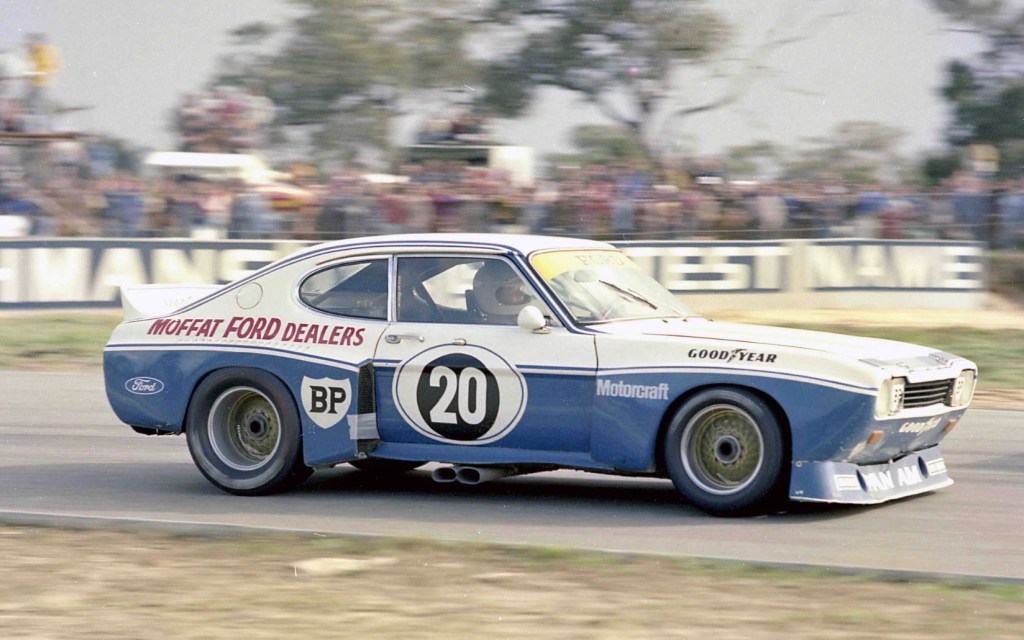
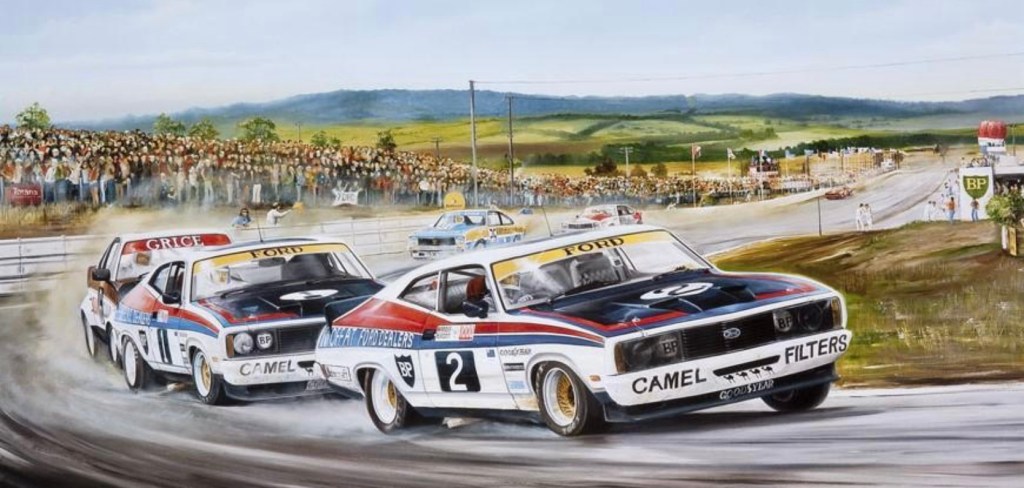
Moffat, ex-works Ford Capri RS3100, Wanneroo Park circa 1976 (autopics.com)That memorable Bathurst 1-2 in 1977: Colin Bond/Alan Hamilton from Allan Moffat/Jacky Ickx at Hell Corner, Ford XC Falcon GS500 Hardtops. The order was reversed at the end of course. That season was such a potent mix of Moffat, Bond, Carroll Smith and Peter Molloy all singing from the same hymn book (R Wilson)
As I got the hang of the working world a bit I developed a keen appreciation of Moff’s commercial skills in addition to his on-track prowess. He was very young when Ford US did a deal with him to run their surplus-to-requirements Lotus Cortinas in 1967. After his works-Ford Oz drives – 1969-73 plus bits and pieces subsequently – came to an end he did deals with Mazda, Holden, Porsche Cars Australia and others that kept him winning and in the public eye.
You have to figure he was trustworthy and gave value for money to his supporters and sponsors…I’m not saying there wasn’t a litigation blip or three along the way.
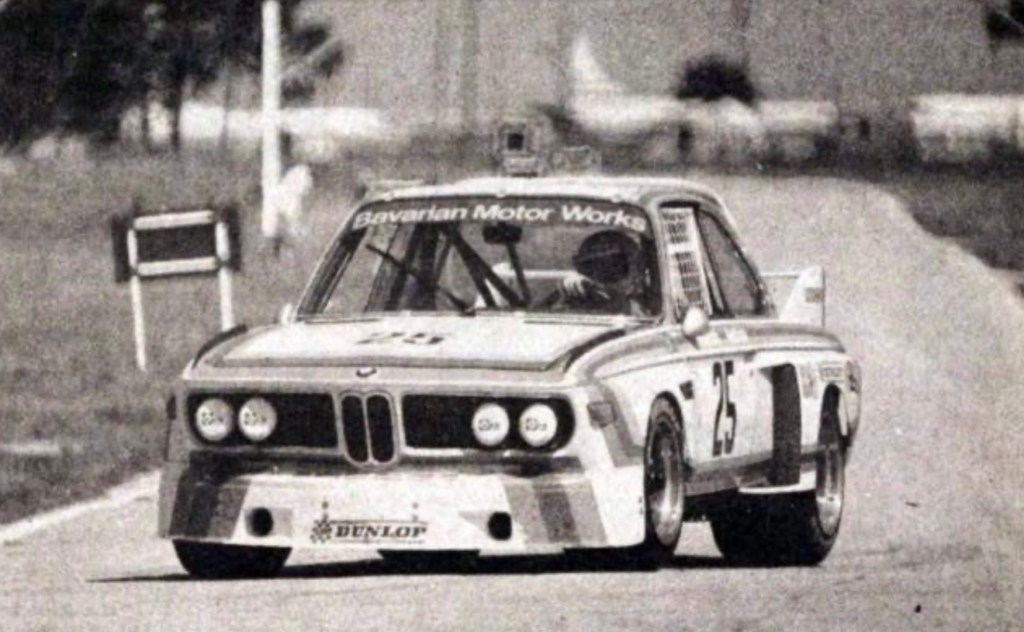
Moffat at the wheel of the 1975 Sebring winning BMW 3.0 CSL. This is a shit-shot, but it’s the only one I’ve seen where it’s definitely Moff at the wheel (Autoweek)
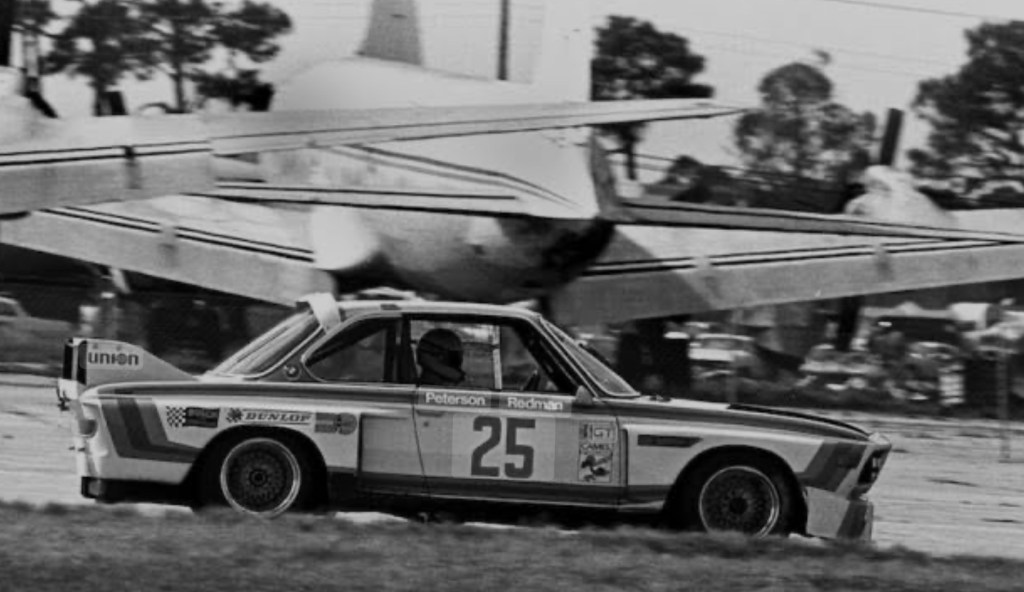
By early 1975 Allan Moffat had won the Australian Touring Car Championship, the Bathurst classic three times, and more long distance races than you can poke a stick at. So when the FIA wouldn’t let Ronnie Peterson contest (WTF?) the 1975 Sebring 12-Hours in a factory BMW 3-litre CSL there were enough folks in high places in the US who remembered Moffat to suggest him for the drive alongside the versatile and very quick Brian Redman. It was Moff’s first pro-drive of a make other than a Ford.
Moffat did an early stint then Redman took the wheel. Later, BMW’s pair-of-hares, Hans Stuck and Sam Posey joined in too after their car was sidelined; an oil leak led to a blown engine. Redman did about seven of the 12 hours, but it was a shared victory, a crucially important one for BMW too, it was their first big race win in America that gave their market presence and credibility a big lift.
Allan had a 911 SC roadie circa 1979, so the handling characteristics of a 911 Porsche – a triumph of engineering over physics – would not have been a huge surprise to him when Allan Hamilton entered him in a Porsche 934 in the 1980 Australian Sportscar Championship; he won three of the five rounds and the series handsomely.
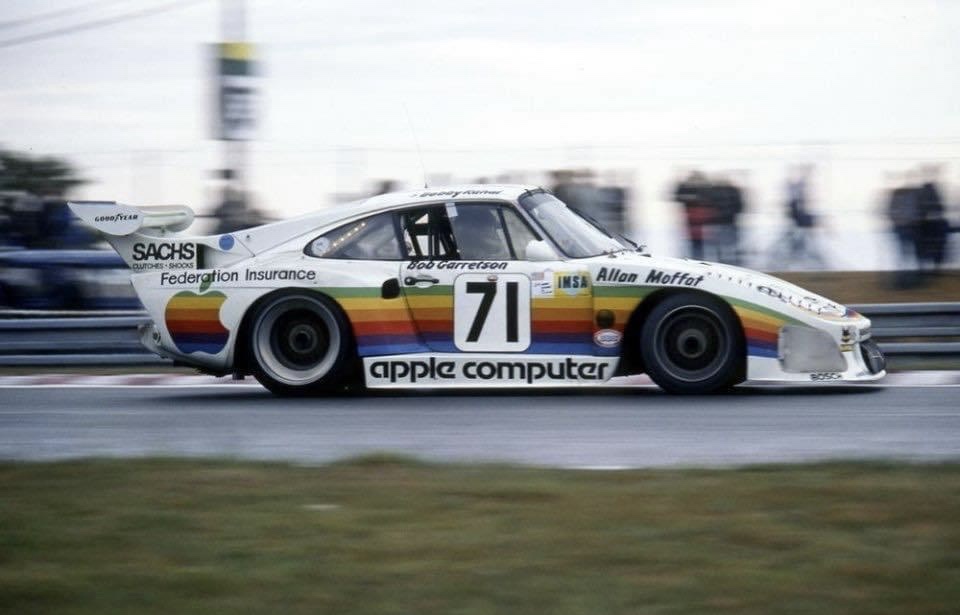
Doubtless the Dick Barbour Racing Porsche 935 K3 he raced with Bobby Rahal and Bob Garretson at Le Mans in 1980 was a thrill and challenge of a much higher order!
The result was a DNF after piston failure. The crew completed 134 laps, and retired in the 11th of the 24 hours. Dick Barbout entered three 935s, the only one that finished was the pole-car, raced by John Fitzpatrick, Brian Redman and Barbour himself to fifth place. Fitzpatrick, a familiar Bathurst winning name to Australian enthusiasts, put the 935 K3 1980 Kremer machine on pole.
(M Heurtault)Dekon Chev Monza, Sandown, July 4, 1976. Under brakes into Shell (R Davies)
One of the things I loved most about Al-Pal was his propensity to import cars and talent, rather than buy-local. That it drove most of the Taxi-Boganisti of this country nuts made it even better.
The Dekon Chev Monza is a case in point. The irony is that Aussie Export Horst Kwech was a key member of the team that developed and raced the cars in the Ewe-Ess-A. I was there the day he ran the 200 Year USA celebration livery at Sandown in 1976 but I’ve no idea if he won the Sports Sedan feature?
Imagine how lacking in colour Oz touring car racing would have been without Moffat’s imported Lotus Cortina, KarKraft Mustang, Cologne Capri, B52 Falcon Hardtop (sort of), Dekon Monza and the Mazdas. Moffat in a ‘fuckin Rice Burner’ was more than the fanatical Bathurst Fruit Loops could take…priceless it was!
(LAT)
Moffat’s powers of lobbying and schmoozing officialdom came to the fore in and around the racing of the Mazda RX7 in the Australian Touring Car, and Manufacturers Championships…but let’s not go there.
He won the first ATCC round for a Japanese car at Lakeside on April 3/4 1982, and then brought home the bacon by taking three of the five Australian Endurance Championship rounds in 1982, and the 1983 Australian Touring Car Championship, winning four of the eight rounds, taking both titles.
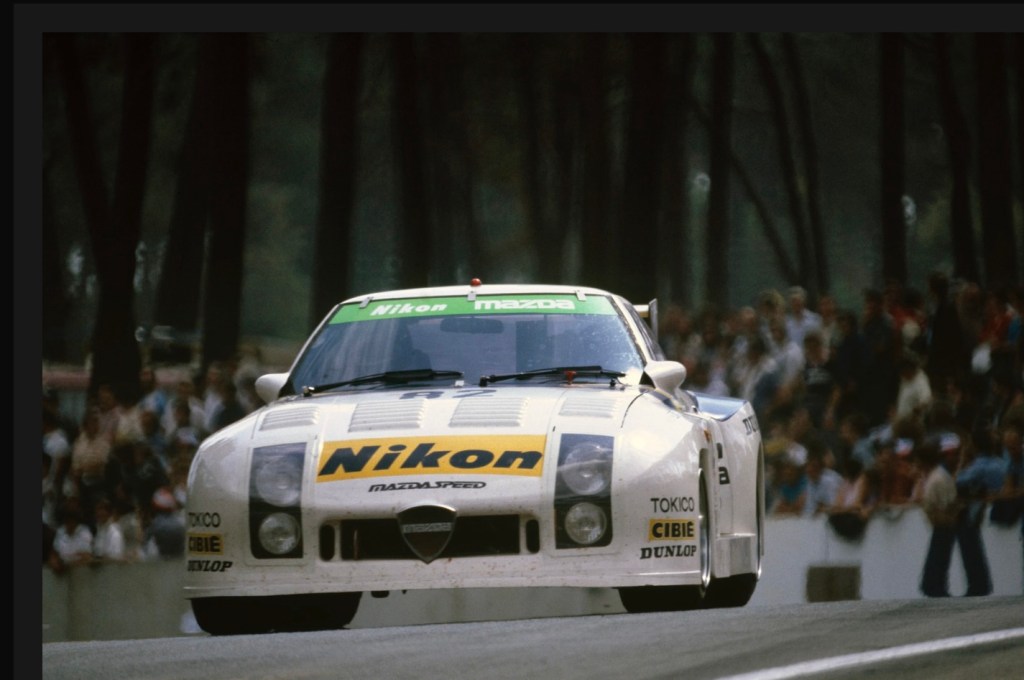
The century old, Hiroshima based multinational rewarded Moffat’s success with his final drive at Le Mans in 1982. He shared a Mazda RX-7 254i GTX IMSA class machine (above) to 14th place sharing the drive with Japanese racers, Yojiro Terada and Takashi Yorino.
Nobody who was around can forget the tragic self-immolation of Peter Brock in 1986-87 over ‘his Energy Polariser (magnetism and chrystal placement) that enhanced vehicle performance’ debacle.
But before that, .Brocky threw his mate and intense rival – thanks to the recommendation of John Harvey, Brock’s tight-hand-man and a personal friend of Moff – Moffat a motor racing lifeline in the form of a Holden ride for selected rounds of the ‘86 Euro Touring Car Championship and Oz long distance enduros.
Larry Perkins, already working for Brock, was of course the logical choice for the ride but he left Peter over the Polariser, as far as he was concerned Brocky was just jerkin’-the-gherkin.
When the combination of a particularly potent brew of Hurstbridge wacky-bakky, the influence of Witch-Doctor Eric Dowker, a Messiah Complex and whatever else got the better of Brock – a staggering Australian in every respect – General Motors Holden pulled the plug on him in February 1987; it was entirely the appropriate remedy for them of course.
Moffat told his biographer, John Smailes, ‘If I’d been in the position where I had General Motors in my hip-pocket, I would never, never, never have put myself above them. That’s not corporate cowardice; it’s just common sense. Peter could have lived to fight another day (if he backed down on the polariser fitment to the Commodore Director and subjected the car to GM’s homologation processes). Who knows? In some parallel universe he might even have got the polariser up.’
‘John Harvey, the last man standing, resigned, I went with him. There seemed nothing, really, to stay around for. Ten months later Peter won Bathurst again. Despite all that had gone down, he had accomplished a rise from the ashes that made my Project Phoenix all those years ago look paltry.’
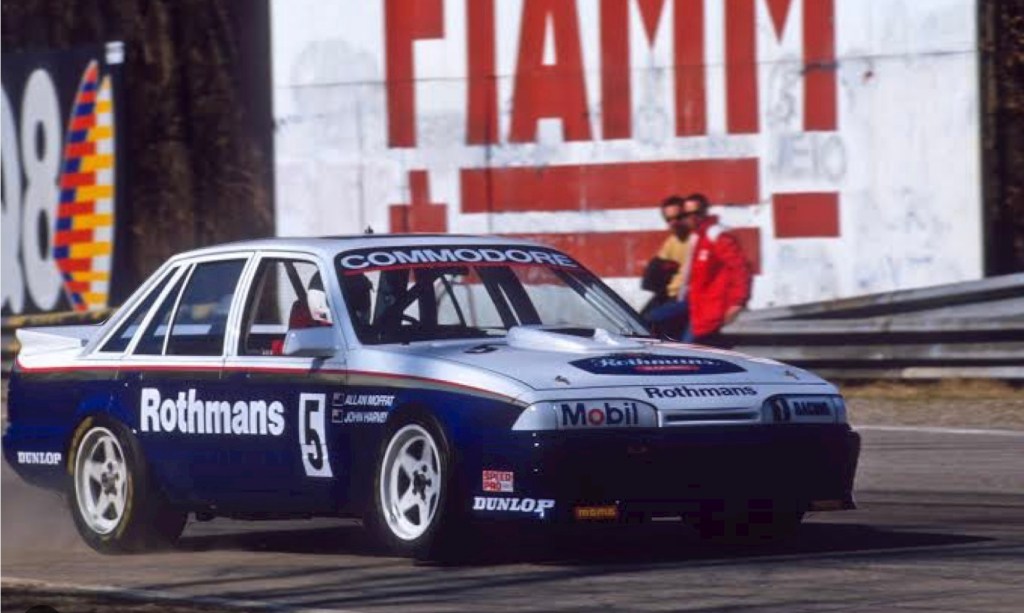
Moffat at Monza in 1987, the nascent team had precious little in the way of spare parts, fortunately the new VL SS Group A behaved rather well (Garry Rogers)
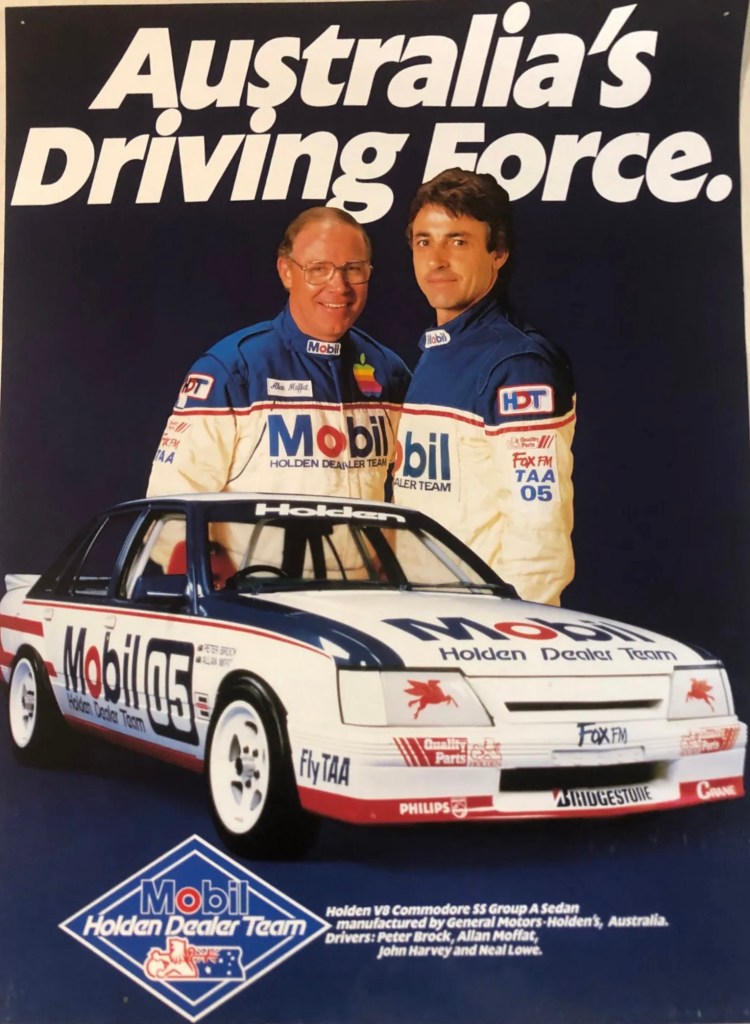
In the short term Brock had his creditors to deal with. Without a car, and still intent in contesting some of the 1987 World Touring Car Championship rounds – Brock and Moffat did four rounds in ’86 as preparation for ’87 – Moffat acquired, via an intermediary, Brock’s new, unraced 1987 05 car, a Holden VL Commodore SS Group A.
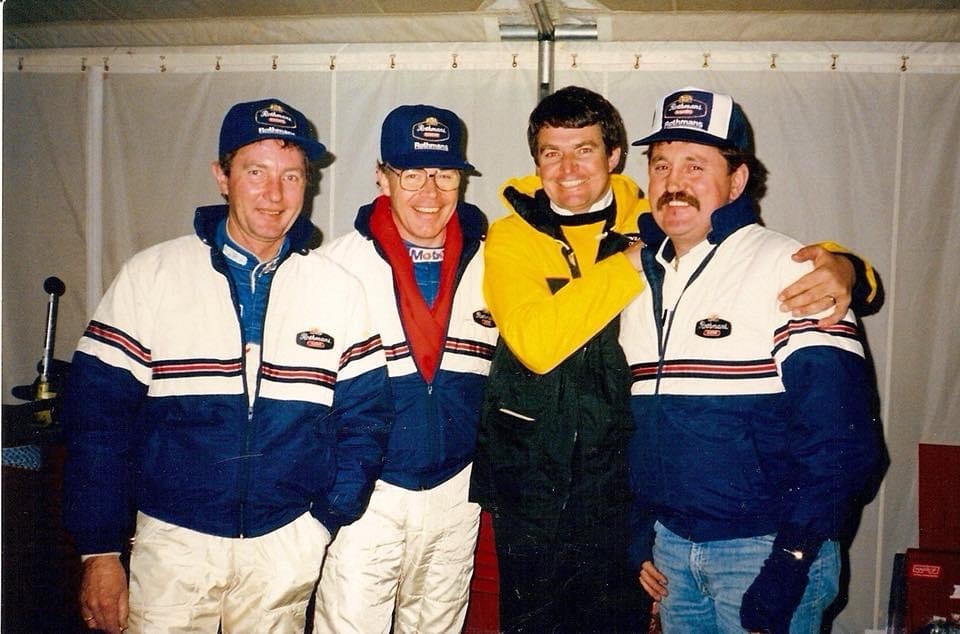
Showing his commercial skills again, Moff quickly, in not much more than a month, pulled together some sponsors, popped the Commodore on a plane and contested four rounds of the 1987 WTCC with John Harvey as co-driver. They sensationally and famously won the first round at Monza after the first six cars home – BMW M3s – were pinged for being illegally light on the evening after the race!
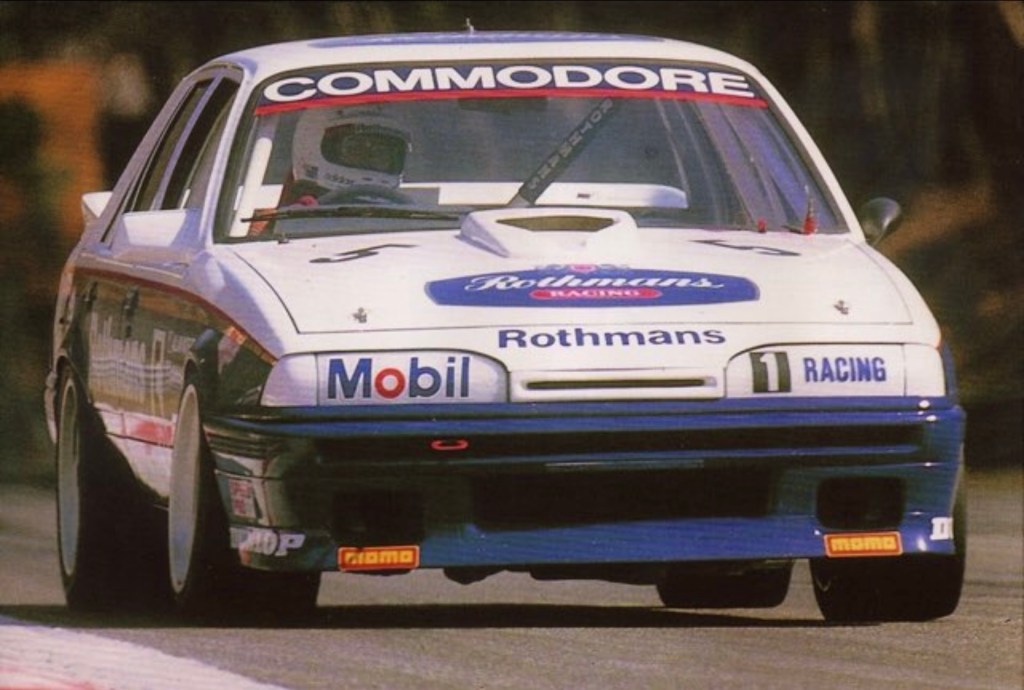
Harvey, Moffat, Dunlop Oz’s Russell Stuckey, and Mick Webb at Monza in 1987. Happy chappies indeed (R Stuckey Collection)I never thought the VL Commodore was a pretty car but it sure looked good in Rothmans livery! Monza ’87 (an1images.com)
Moffat’s 1987 European Safari results are as follows: 22/3/87 Monza 500km Q10 and first, 19/4 Jarama 4-Hours Q11 DNF lost wheel on lap 78, 10/5 500km de Bourgogne-Dijon Q10 DNF blown engine on lap 44, and 1-2/8 Spa 24-Hours Q18 fourth.
When Allan got home he had a Ford Sierra RS500 for Bathurst, while Brock had the winning car…
Etcetera…
(B Williamson Collection)
Al-Pal using all the road to stay ahead of Bob Jane on the exit of Mountford corner during the March 1965 Longford Tasman round; Lotus Cortinas both, Moff’s ex-works, Jano’s locally developed.
These blokes dooked it out on-circuit for years of course, I wonder at what meeting they first swapped-paint!?
(B Stratton)
Moffat in the Cologne Capri at Oran Park in 1976. If the sight of it didn’t move the erectile tissue the sound of it most certainly did.
The price was right of course – FoMoCo supplied – but otherwise the relatively heavy 3.4-litre, quad cam, four-valve, injected Cosworth Ford GAA powered long distance coupe lacked the cubes’-and-pubes’ – cubic inches and torque – for Australian Sports Sedan racing.
With a need for big V8 punch out of our predominantly point and squirt type of tracks the Capri was never going to be a consistent winner. And so it proved. So he bought the Monza, but then Ford cracked the shits so he put the Monza aside and jumped back into the ‘Crappy. I wonder how many meetings he did in both of these cars as a consequence of all of that?
Allan Moffat in America Facebook page, Mathieu Heurtault, Randall Wilson, Robert Davies, Autoweek, Brian Stratton, an1images.com, Bob Williamson Collection, Russell Stuckey Collection, ‘Climbing the Mountain’ Allan Moffat and John Smailes
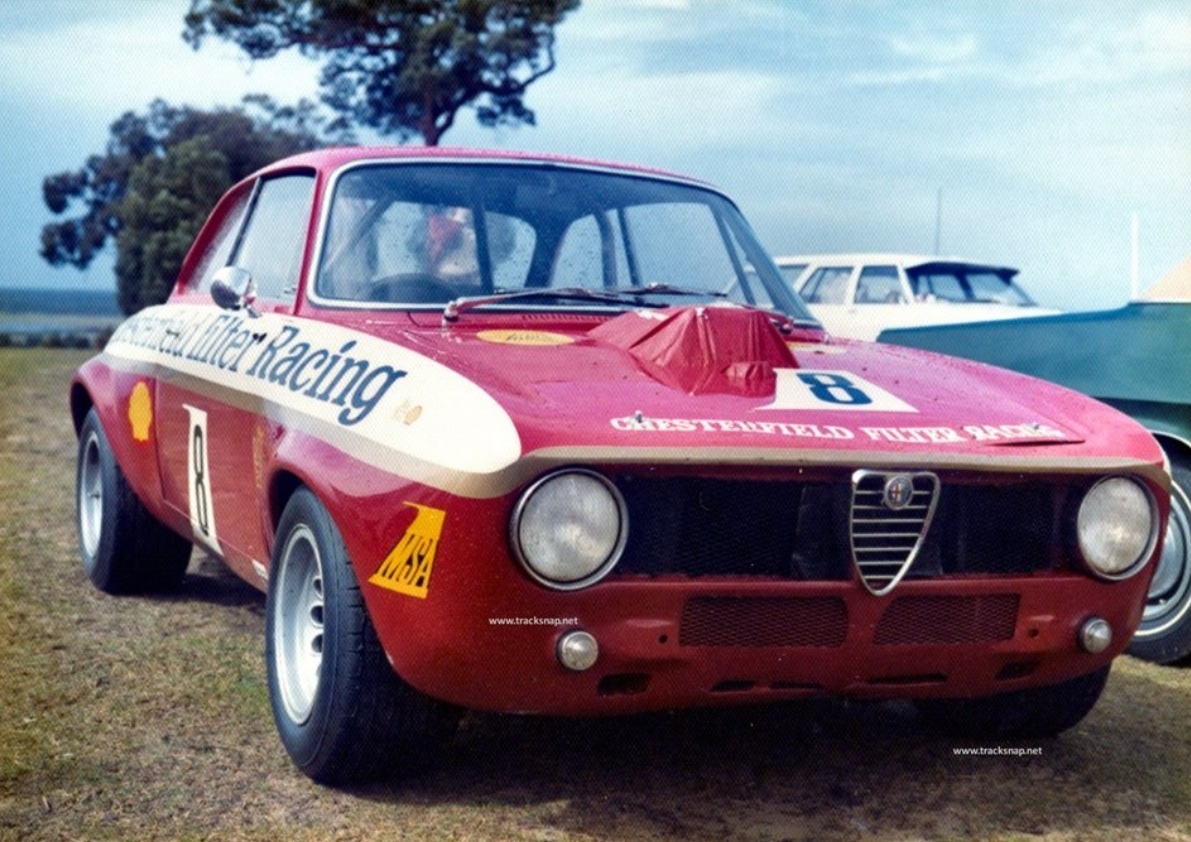
I’ll take the one with stripes…Brian Foley’s Alfa Romeo 1750 GTAm on the showroom floor of his Parramatta Alfa Romeo dealership, Sydney in 1972.
Look at all those 105s, a 2-litre Spyder with a Berlina alongside, boxy Giulia Super, a couple of 1750 GTVs, oh, and a 1750 GTAm at centre-stage, as it should be.
There have been some stunning ex-works touring cars raced in Australia down the decades, the must lustworthy for me are Alan Moffat’s ’69 KarKraft Mustang Trans-Am, his ’75 RS3100 ‘Cologne’ Capri and Foley’s GTAm.
Brian made his name in Minis. Together with Melbourne’s Peter ‘Skinny’ Manton, he was top of the Cooper S pops in the mid-1960s and became an outright contender with acquisition of a Porsche 911S in 1970. But if the Porker was outgunned by the big V8s in the Australian Touring Car Championship – Pete Geoghegan and Allan Moffat Mustangs, Norm Beechey’s Holden Monaro GTS350 and Bob Jane’s Camaro – Brian’s GTAm would struggle bigtime, and so it did.
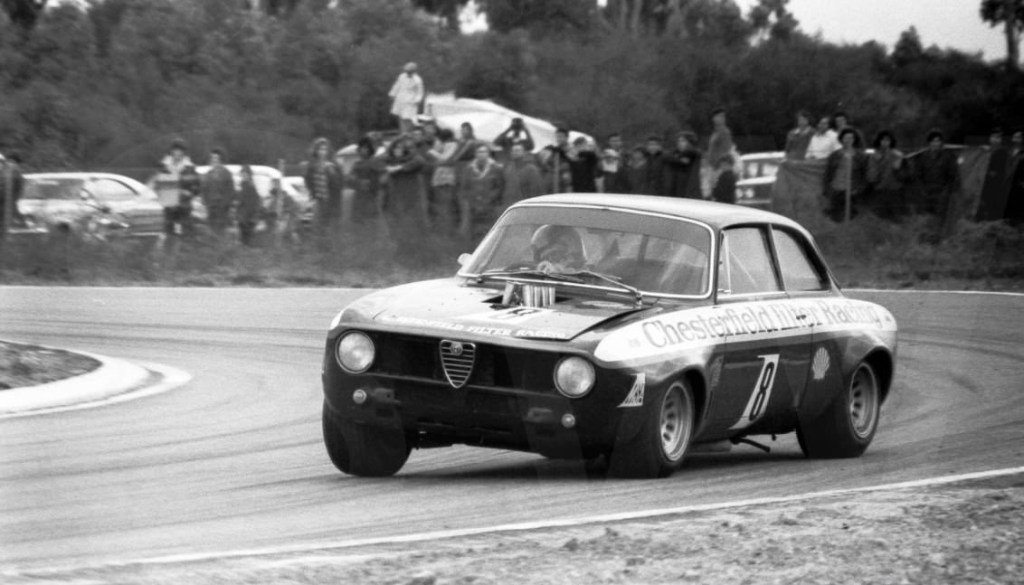
Dick Simpson artistry: Brian Foley on the hop through Lakeside’s Karrussel during the 1970 ATCC round, Porsche 911S (D Simpson)1971 Chesterfield press release shot, note the 10-inch Minilites (Foley Collection)The Toine Hezemans/Carlo Facetti GTAm on the way to fourth place in the July 1971 24 Hours of Spa-Francorchamps (unattributed)
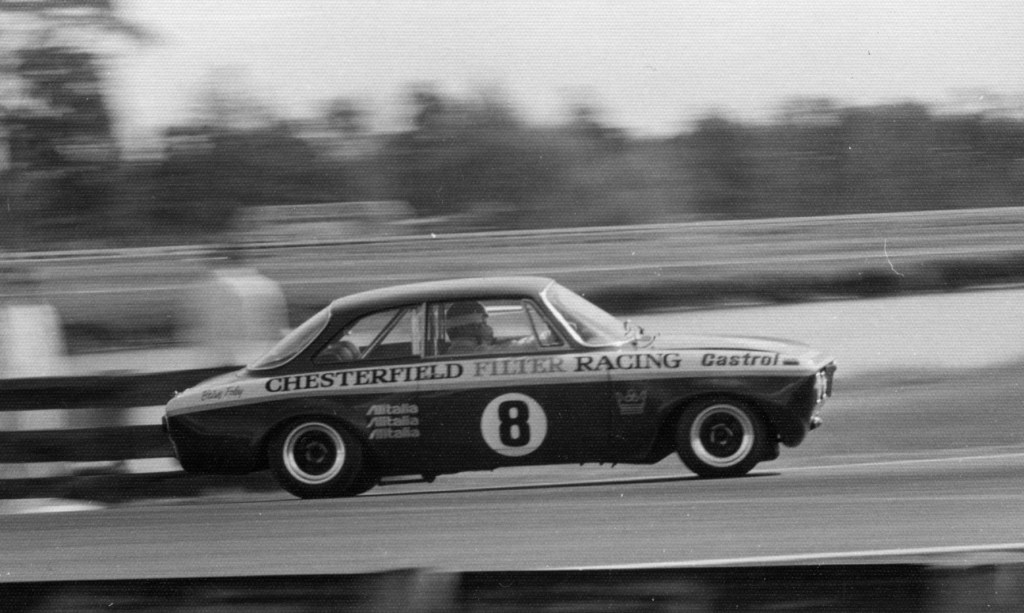
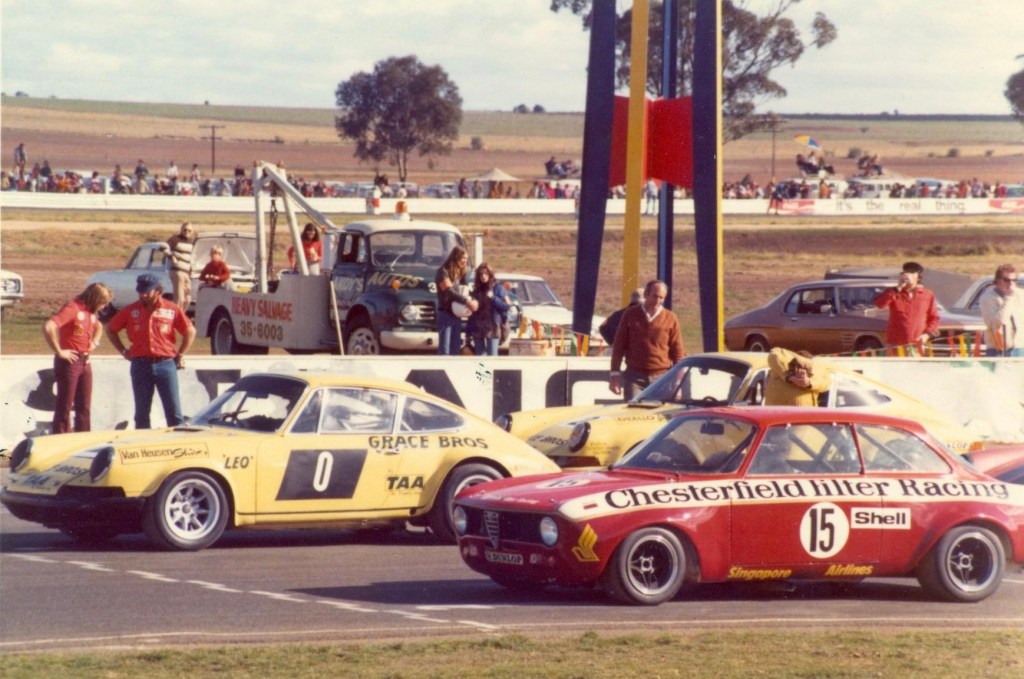
The purchase made commercial sense though. Brian Foley Automotive, formed in 1967, became an Alfa Romeo dealer, Foley had support for the car from Alfa Romeo Australia in addition to old sponsor, Castrol, Alitalia and of course Chesterfield ciggies.
Toine Hezeman had already won the 1970 European Touring Car Championship – four wins in nine rounds – in a works-1750 GTAm by the time Foley ordered his car.
While the Giulia Sprint GTA (700kg) was built by Alfa Romeo, the 1750 GTAm (970kg) (2000 GTAm from the introduction of the 2000 GTV) was built by Autodelta, and sometimes by other specialists using bodies they acquired or were supplied by clients, then built up with parts supplied by Autodelta.
1750 GTAm and Giulia GTA Junior in 1970 (Autodelta)Andrea De Adamich about to jump aboard his GTAm during the 19 Nurburgring (unattributed)
The model was homologated around the US version of the 1750 GTV – Tipo 105.51 – these cars were left-hookers’ fitted with Spica fuel injection to meet emissions regs: for racing purposes the rules allowed the use of competition fuel injection, usually Lucas. Having said that, right hand drive Tipo 105.44 shells were also used.
For years there have been several schools of thought as to the ‘Am’ bit of the name. One was that it stood for alleggorita maggiorata – increased and lightened, another was alleggorita modificata – modified and lightened, and the other is that the Am stood for America. Marco Fazio of Alfa Romeo Documentazione Storico put the matter to rest when he confirmed on the Spettacolo Sportivo in September 2011 that ‘America’ is the official type name, therefore Alfa Romeo 1750 GTAm/Alfa Romeo 2000 GTAm.
Chassis #1531068 was completed by Autodelta on February 24, 1970. It was acquired by Foley late in the year after an uncertain history, perhaps it had been used as a test hack during the Targa Florio weekend by works T33/3 drivers. When it arrived in Sydney, the car’s mechanicals: engine, gearbox and differential required rebuilds, so Foley missed the first three rounds of the 1971 Australian Touring Car Championship at Symmons Plains, Calder and Sandown.
Foley, GTAm in the Warwick Farm Essex during the November 1971 AGP meeting. Bill Fanning’s superb Escort Waggott following (L Hemer)Foley in front of Jim McKeown at Mallala in 1971 (J Lemm)David McKay and Robin Sharply during the Oran Park stage of the Dulux Rally on August 8, 1971. GTAm engined Alfa 1750 GTV (L Hemer)
Foley was then sixth at Surfers Paradise, fifth at Mallala and seventh at Lakeside. He missed the final round at Oran Park because he loaned the engine to David McKay for his assault on the Dulux Rally aboard a 1750 GTV (above). See here for more about the Dulux, not the correct year mind you: https://primotipo.com/2015/04/09/australias-cologne-capris/
Wanting to race competitively and give his sponsors a reasonable crack of the whip, Foley decided to run the car as a Sports Sedan in 1972, a class that allowed more significant modifications to be made.
He and his mechanics, Colin Devaney and Colin James created a unique GTAm by fitting a Tipo 33 2.5-litre V8 into the reasonably tight engine bay!
Alec Mildren Racing had a float of three of these 2.5-litre, quad-cam, two-valve, twin-plug, fuel injected V8s that had been fitted to the team’s Brabham BT23D and Mildren ‘Yellow Submarine’ single-seaters raced by Frank Gardner and Kevin Bartlett from late 1967 until late 1969 (the Sub was fitted with a Waggott in time for the Hordern Trophy in December 1969). KB won Gold Stars in 1968-69 so equipped.
When Mildren replaced the Tipo 33 V8s with Merv Waggotts 2-litre TC-4V engines Foley bought one of the V8s in bits. When rebuilt it gave circa 305bhp.
Kevin Bartlett decamps the Mildren Brabham BT23D Alfa Romeo during the 1969 Warwick Farm 100 Tasman round (B Jackson)(B Jackson)
It wasn’t that simple though, the all aluminium engine was an incredibly tight fit, with Foley telling Australian Muscle Car’s Paul Newby that the sub-optimal exhaust system they were forced to run could have lost up to 50bhp. Costly, given the V8 was 70kg heavier than the 1985cc twin-cam, two-valve, twin-plug, fuel injected four which gave 194bhp when it was first rebuilt, and 217bhp after further development.
The car was converted to RH-steering during the rebuild – which involved a bigger hole in the floor pan to accommodate a larger bell-housing – but the running gear otherwise remained as built by Autodelta: gearbox, diff, suspension, Campagnolo wheels and brakes.
It’ll fit somehow…(C James)Foley leans on it as he crosses Warwick Farm’s causeway in 1972, GTAm T33. Same car but now fitted with T33 2.5 V8, RHD and with single headlight 1600 Junior front-clip (J Semple)
Newby wrote that the car had wins at Adelaide and Amaroo Park, and one victory over Allan Moffat’s Mustang at Warwick Farm and a successful visit to Malaysia.
Despite that, Foley decided a better Sports Sedan starting position was a much lighter aluminium GTA, to that end he bought the ex-Mildren/Foley RHD GTA and gave it to Bowin Designs’ John Joyce to work his magic. A story for another time.
Over time it’s amazing how many racing Alfa Romeos have headed West, perhaps the LHD Mildren GTA was the first…Sure enough, when Foley advertised the GTAm it was Perth Fiat dealer Frank Cecchele who bought it, a good thing!
Gordon Stephenson was his driver, but it wasn’t too long before CAMS caught up with them. The GTAm was powered by an exotic full-race V8, it was not a production based engine as the rules required. While the Montreal V8 might look a bit the same, it shares not one component with Autodelta’s race V8.
After a while in the naughty-boys-corner, it was fitted a twin-turbo Rover V8 and won some state titles so powered in the 1980s before it was badly damaged in a testing accident at Wanneroo, by that time the car was fitted with a twin-turbo Fiat V6.
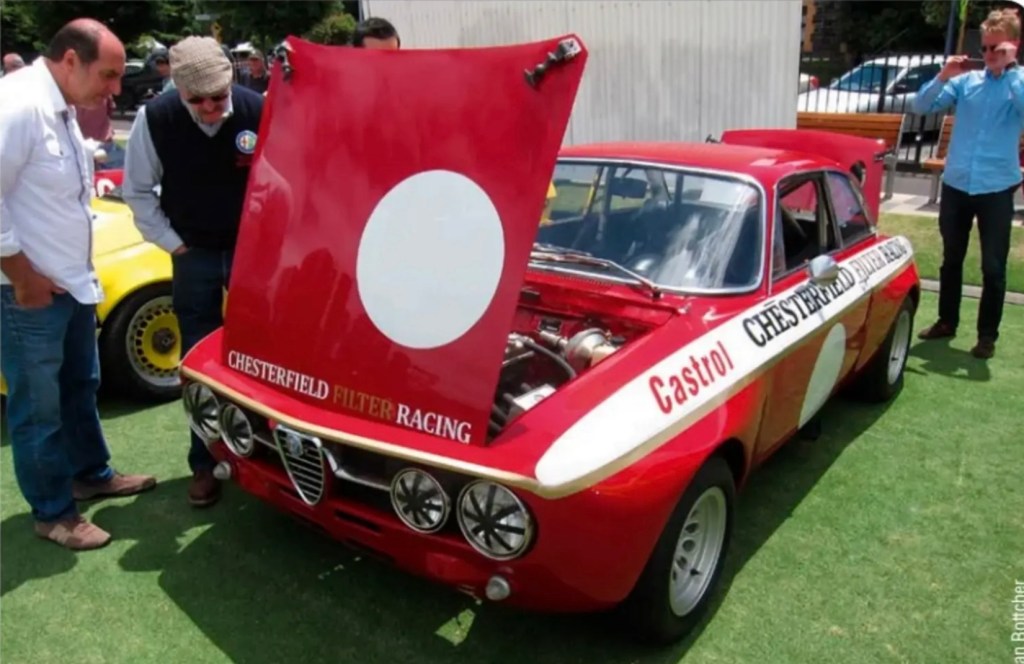
Various approaches were made to Cecchele down the decades to buy #1531068, and finally he succumbed to Vin Sharp’s entreaties in 2006. Vin is a member of a much respected Victorian Alfa Romeo family and has done a brilliant job restoring the car to original condition aided and abetted by Cecchele who kept all of the key components, with the exception of the engine.
Vin Sharp and Brian Foley unveiled the restored GTAm at the Alfa Romeo Owners Club of Victoria annual Specattolo day at Melbourne High, South Yarra in late 2013 (E Bottcher)Dale Harvey captures the GTAm on the WF causeway in 1971 (D Harvey)
Specifications…
Summary of Peter Wherrett’s article on the Foley GTAm published in the June 1971 issue of Racing Car News
Body: Steel, bonnet and boot lid fibreglass, doors aluminium GTA with sliding perspex windows, all glass other than the laminated screen are perspex. The lower half of each guard is fitted with fibreglass flares which are bonded or pop riveted. Lightweight bumper if required.
All interior trim is removed and replaced with lightweight material. Front seats fibreglass, dashboard replaced with a lightweight unit, Momo steering wheel
Engine: 1985cc, DOHC, two-valve, twin-plug, Lucas fuel injected four cylinder, aluminium engine. 84.55×99.5mm bore/stroke. 220bhp DIN @ 7200rpm quoted.
Gearbox: 5-speed GTA with vast choice of gear and diff ratios
On tour. Foley at Bay Park, New Zealand in the summer of 1971-72 (B Williamson Collection)Mallala ATCC round in 1971 (J Rogers)
Suspension:
Front: Independent coil springs, Armstrong adjustable heavy duty double acting shock absorbers, heavy duty anti roll bar
Rear: Coil springs with coaxially mounted Armstrong fully adjustable, heavy duty, double acting shock absorbers. Adjustable heavy duty roll bar
Rear axle: Anchored to the body structure by two trailing arms and upper magnesium A-brackets for transverse anchorages; all with metal bushes on the frame and axle. Hypoid final drive with pawl and clutch type limited slip differential. Choice of final drive ratios
Wheels: Standard wheels are Campagnolo 13 x 9 inch and 13 x 10 inch Minilites “which have an additional inch of offset over those from Autodelta to allow the car to fully exploit local regulations with a track two inches wider than the homologated figure.” The 10 inch rims will be dries, the 9 inchers wets.
Brakes: Four wheel discs, ventilated at the front, aluminium calipers
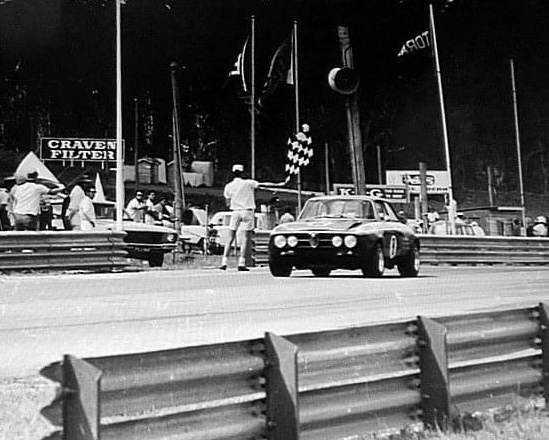
Foley crosses the finish line at the end of the Lakeside 1971 ATCC round (B Thomas)
Etcetera…
(unattributed)
Two more shots of the Hezemans/Facetti GTAm during the July 24-25 1971 Spa 24-Hour.
The car’s head and radiator were replaced during the event, the strategically long pit stops of the other two Autodelta cars ensured the pair finished third. The race was won by the the Dieter Glemser/Alex Soler-Roig Ford Capri RS2600.
(unattributed)Foley, Warwick Farm Creek Corner exit May 1971 (L Hemer)In sports sedan guise at Wanneroo Park, Perth August 20, 1972, and again below (R Hagarty)(Speedwest)
James Semple, Lynton Hemer, Colin James, Dick Simpson, John Lemm, Brian Jackson, Olaf Zagato on The Nostalgia Forum, Racing Car News May 1971, John Rogers, Brier Thomas, Euan Bottcher, Bob Williamson Collection, Glenn Moulds Collection
Tailpieces…
(G Moulds Collection)
It seems sorta-right to conclude with Foley’s subsequent weapon of war, an even lighter variant of the ex-Mildren-French GTA ‘RHD’, at Calder in May 1973.
(L Hemer)
My friend Lynton Hemer captured ‘Foles’ saying gedday to the fans on the warm-down lap of the 1971 AGP touring car support race, GTAm, seems a nice way to finish…
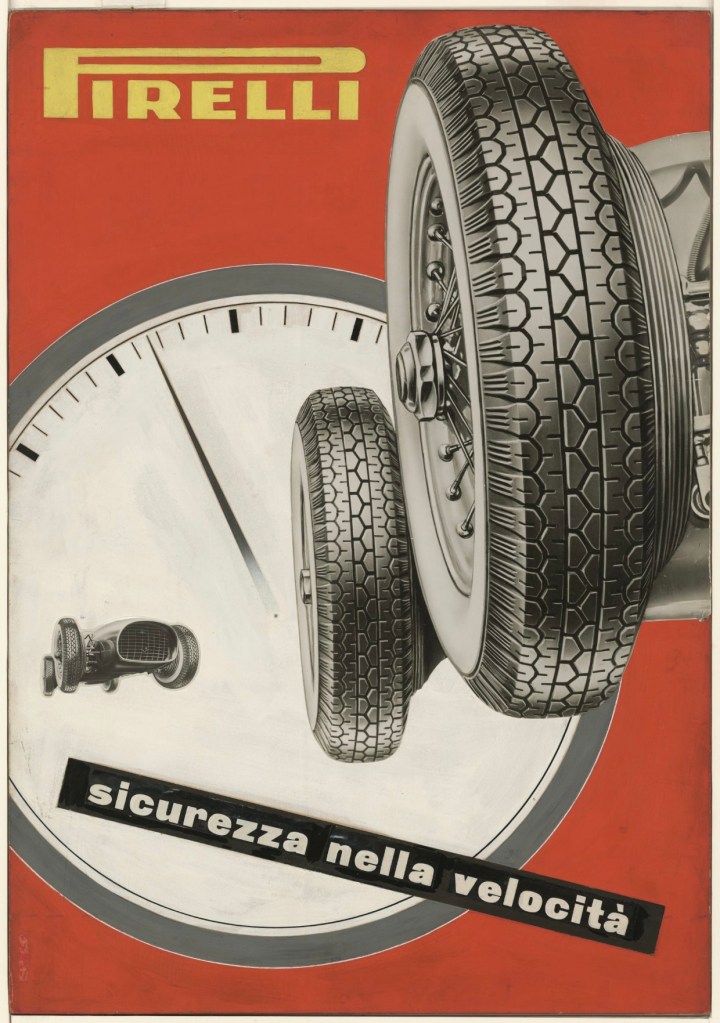
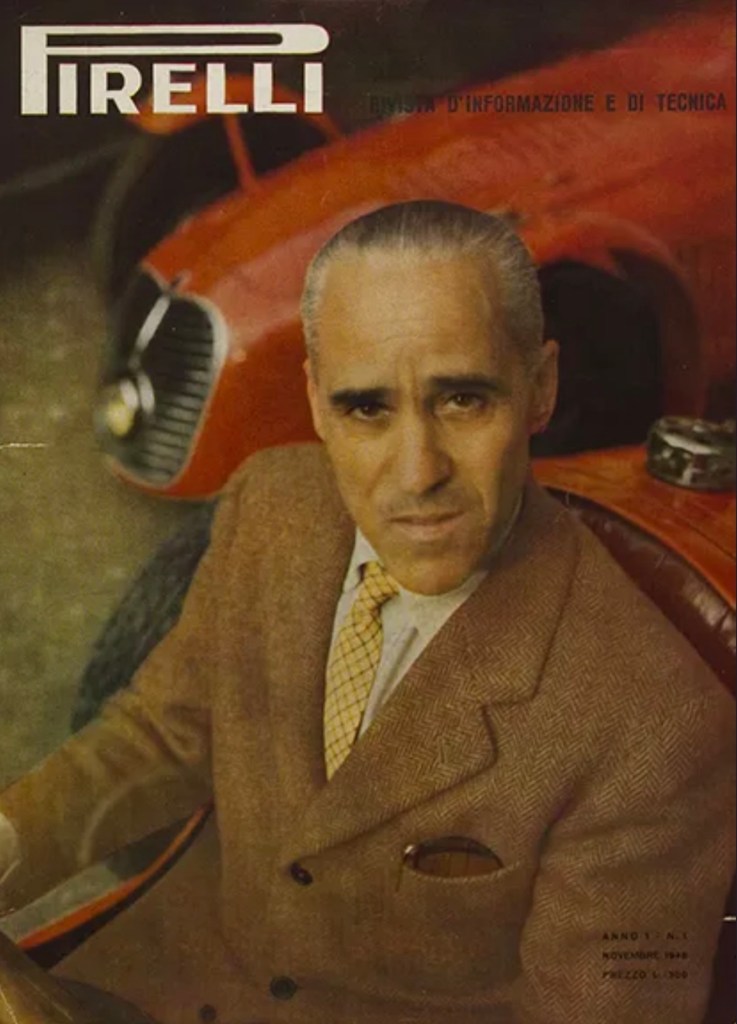
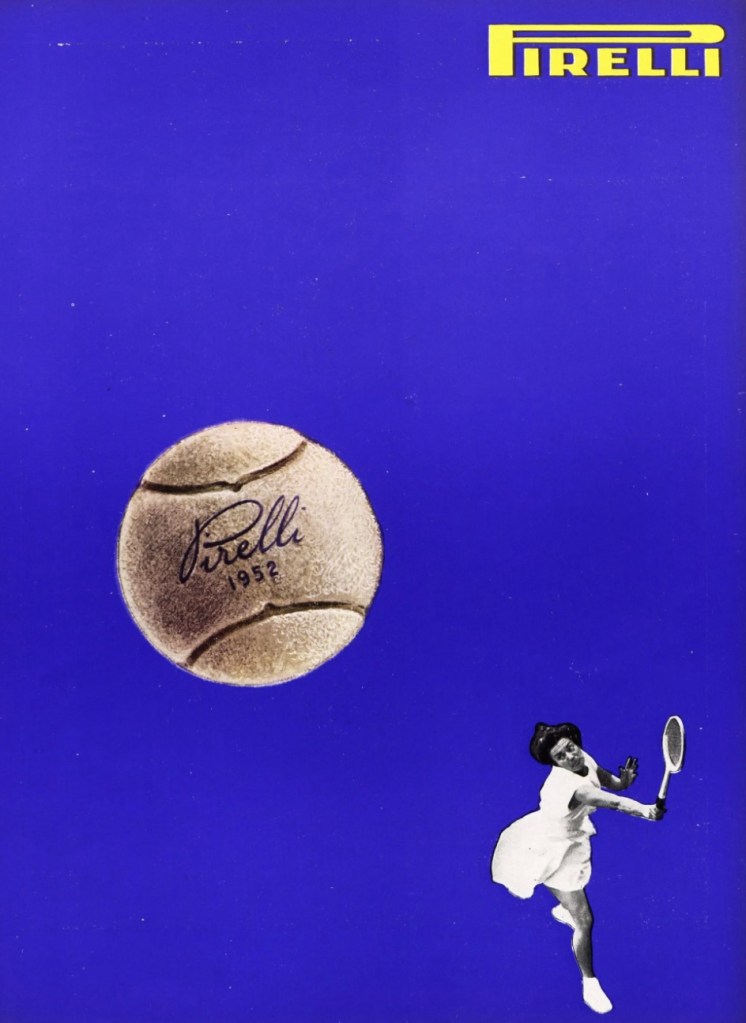
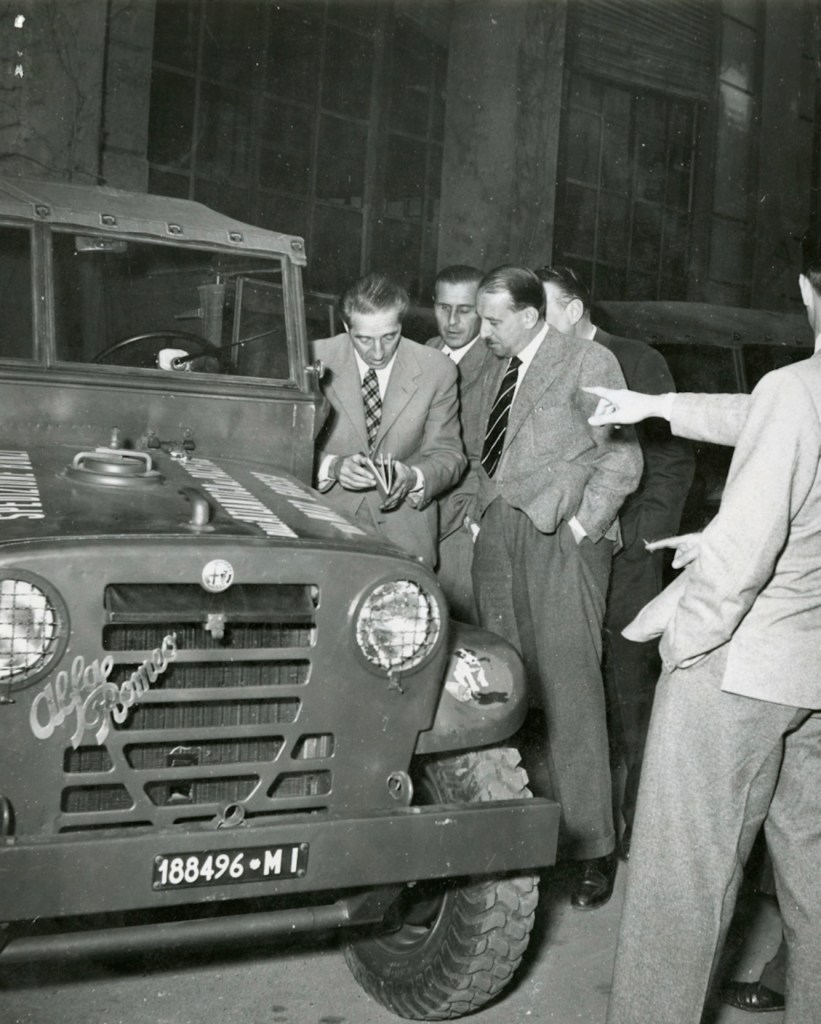
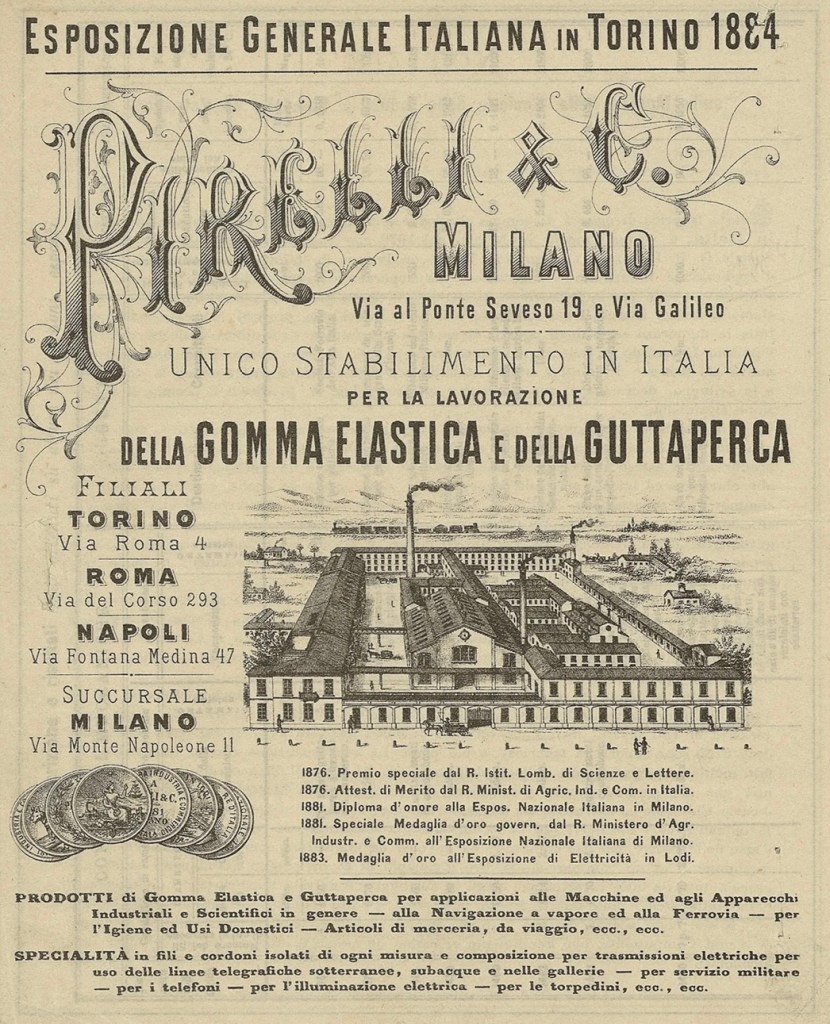
One thing leads to another. I was researching Giuseppe Luraghi, a longtime CEO of Alfa Romeo. Apart from mega talent as a corporate leader he was somewhat of a renaissance man, a gifted writer and poet. He initiated the Pirelli magazine way back in 1948 when he headed up Linoleum, a Pirelli Group subsidiary.
Pirelli, “Addressed it to the general public, it was a way of reaching out to the consumer with much more than a simple advertising message. Above all it was a way of conveying business culture.”
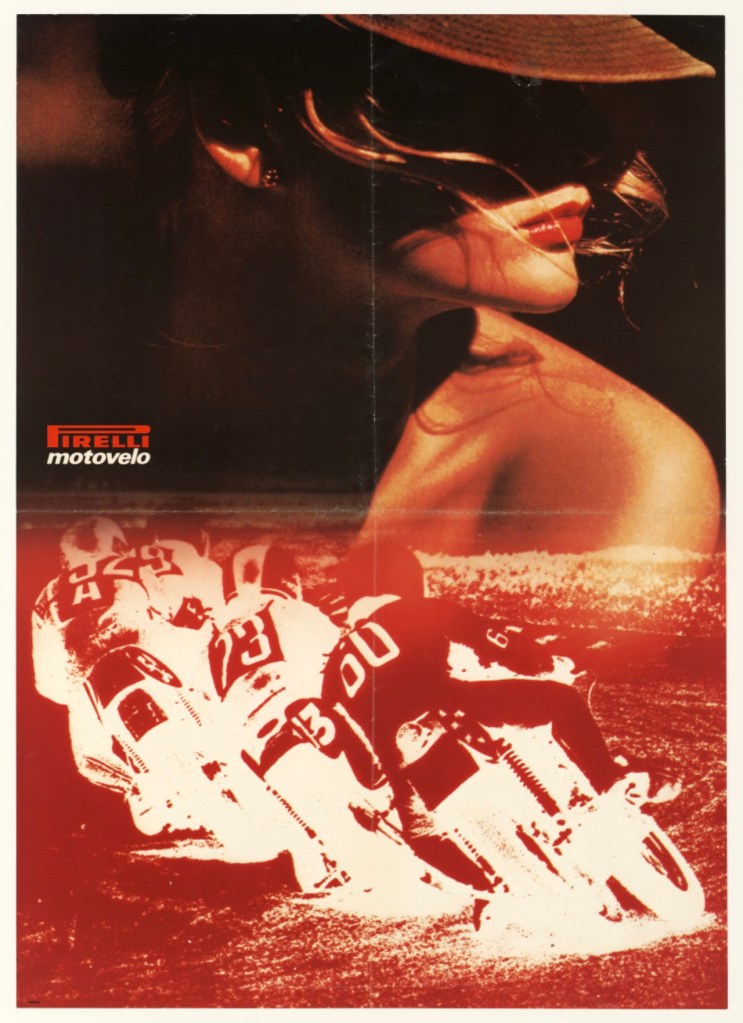
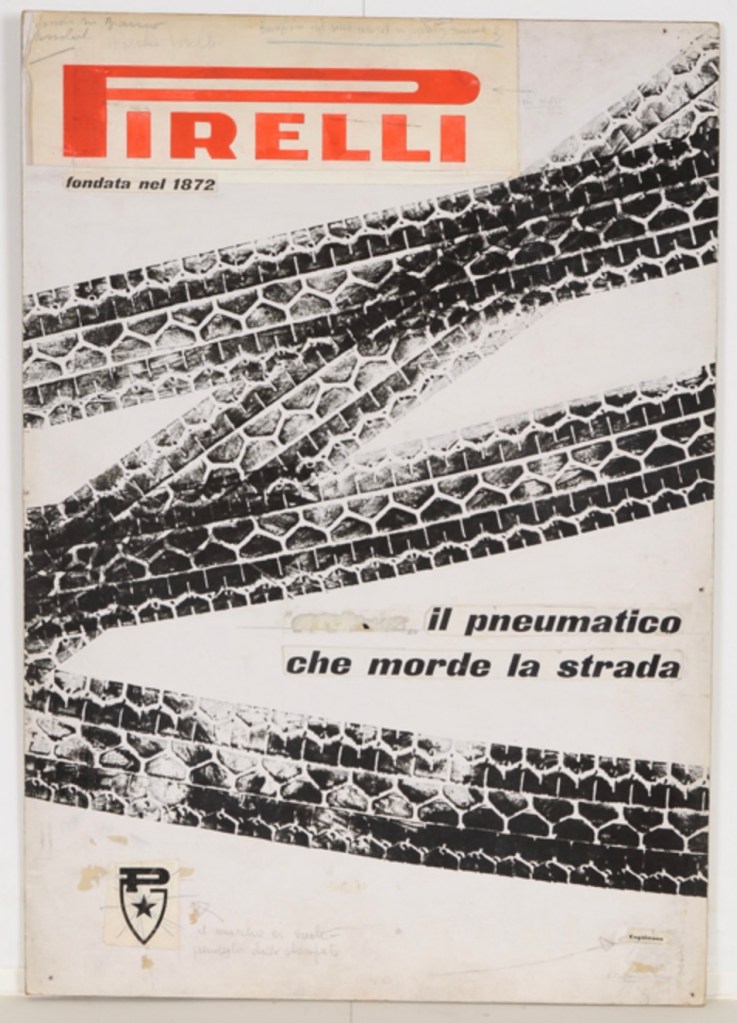
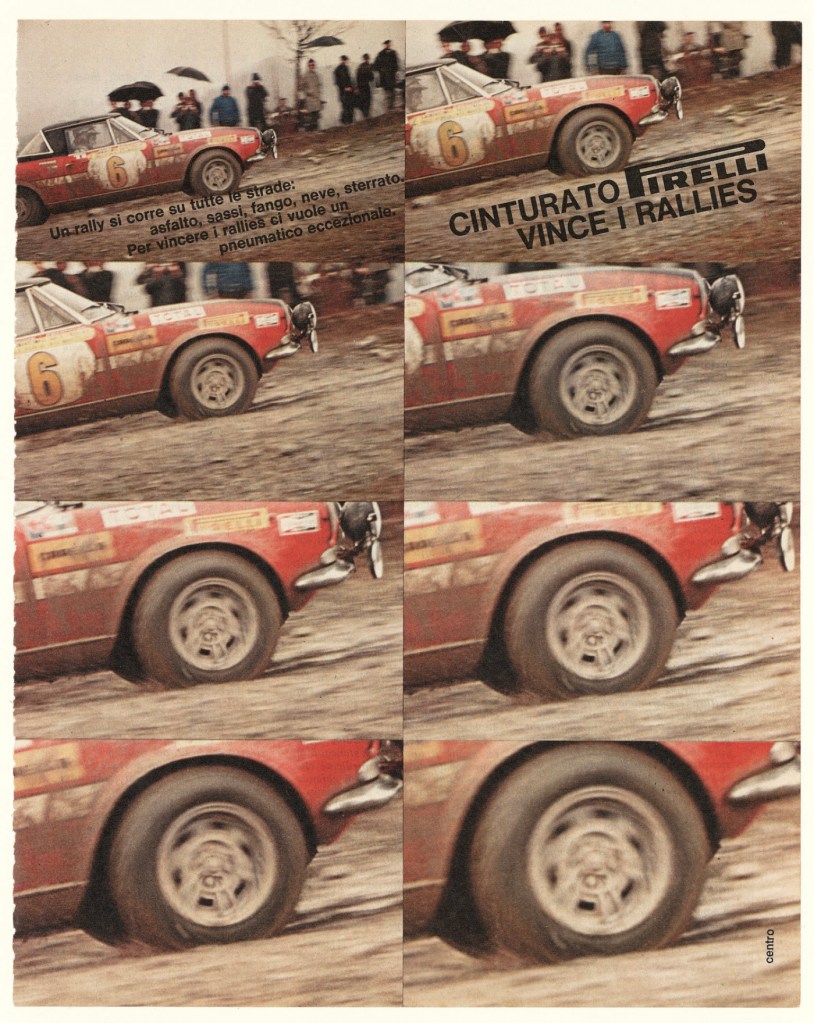
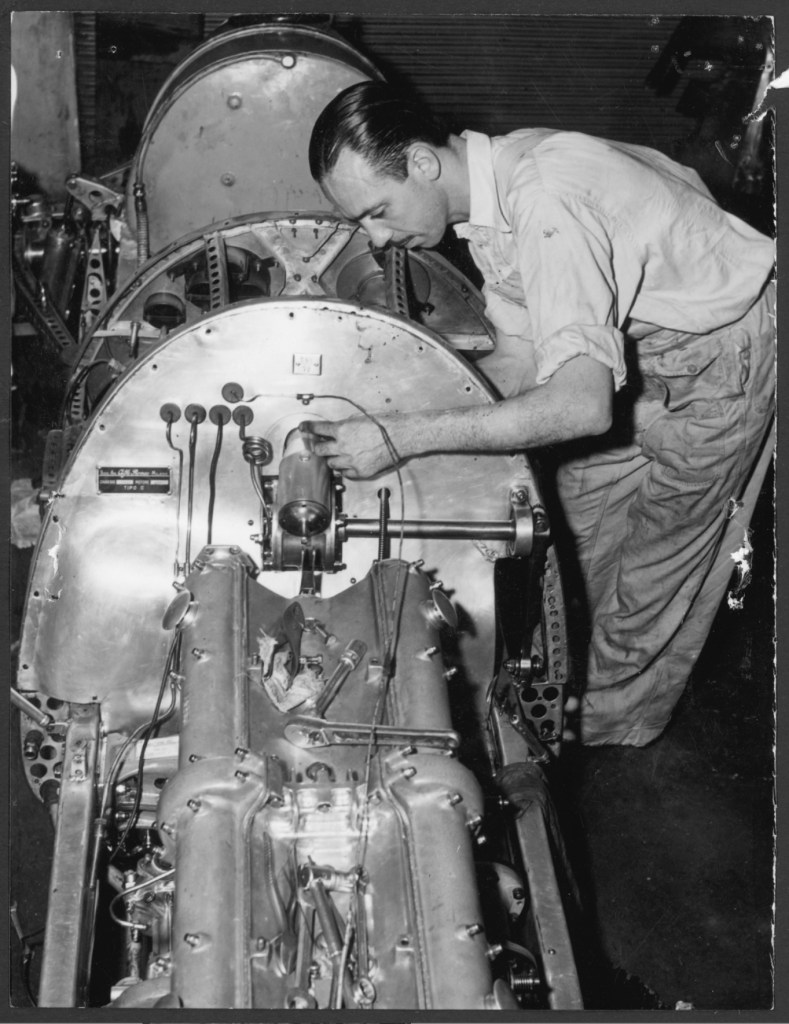
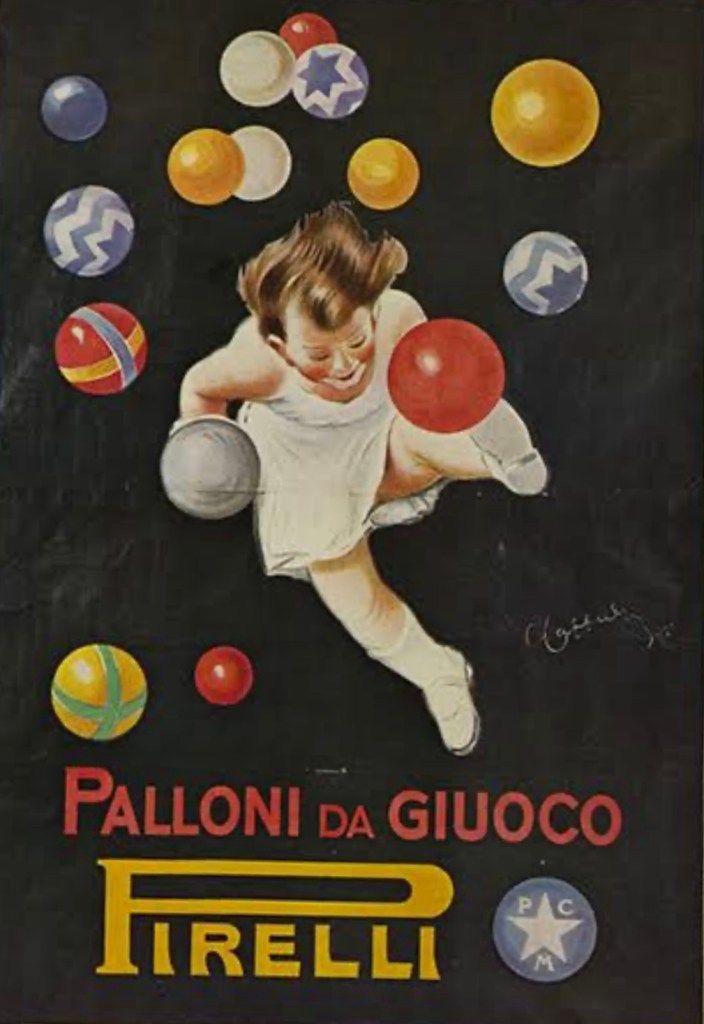
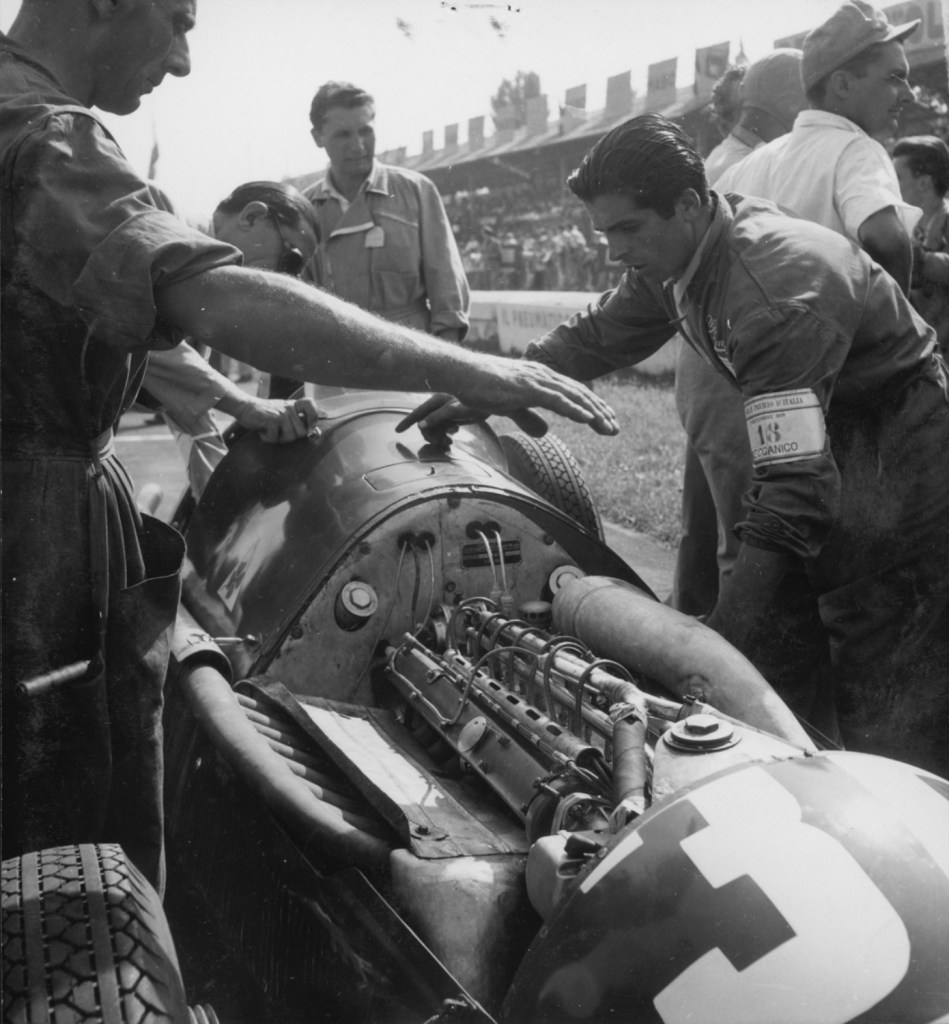
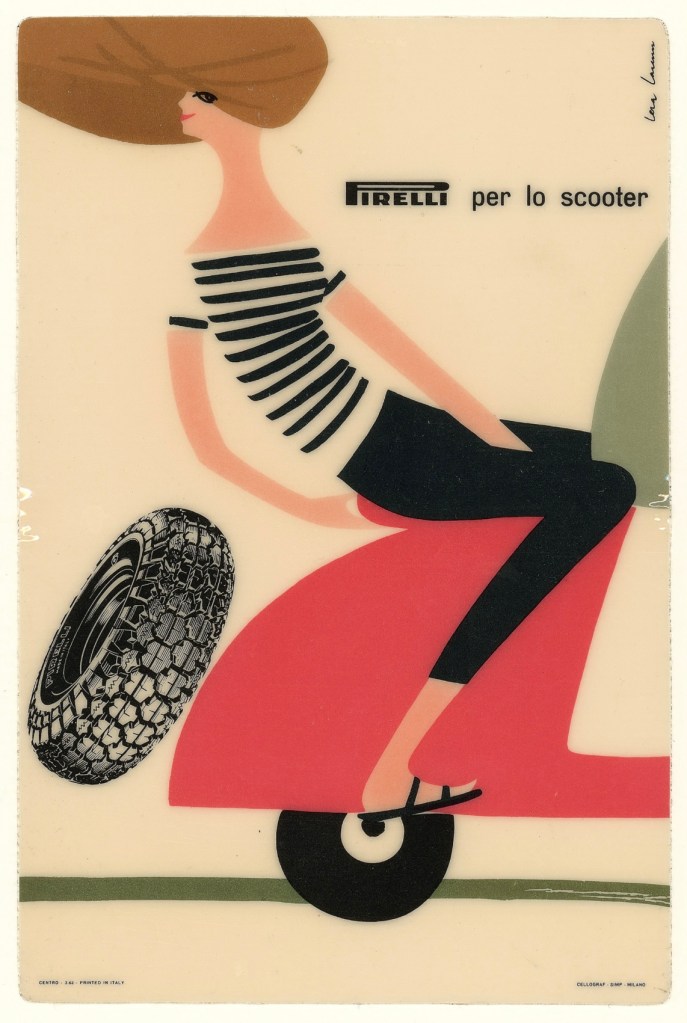
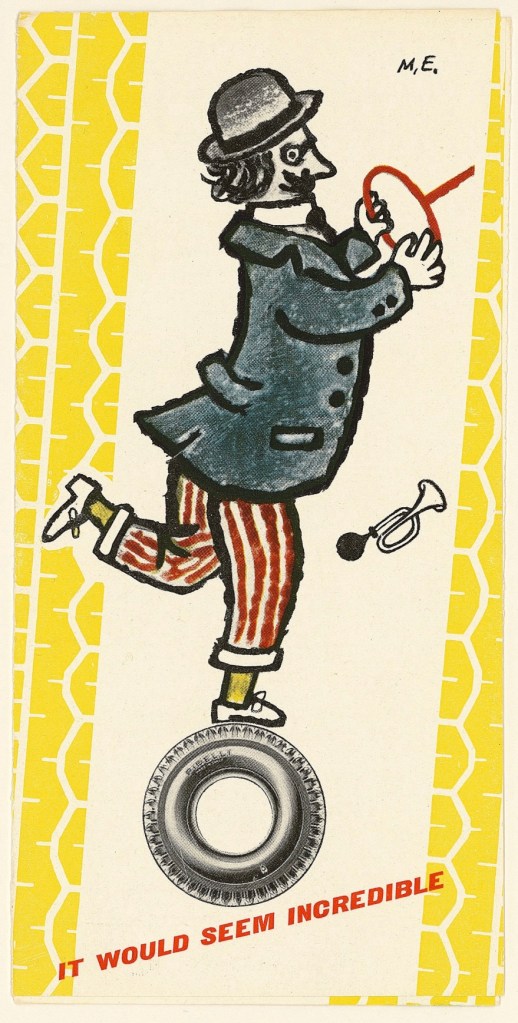
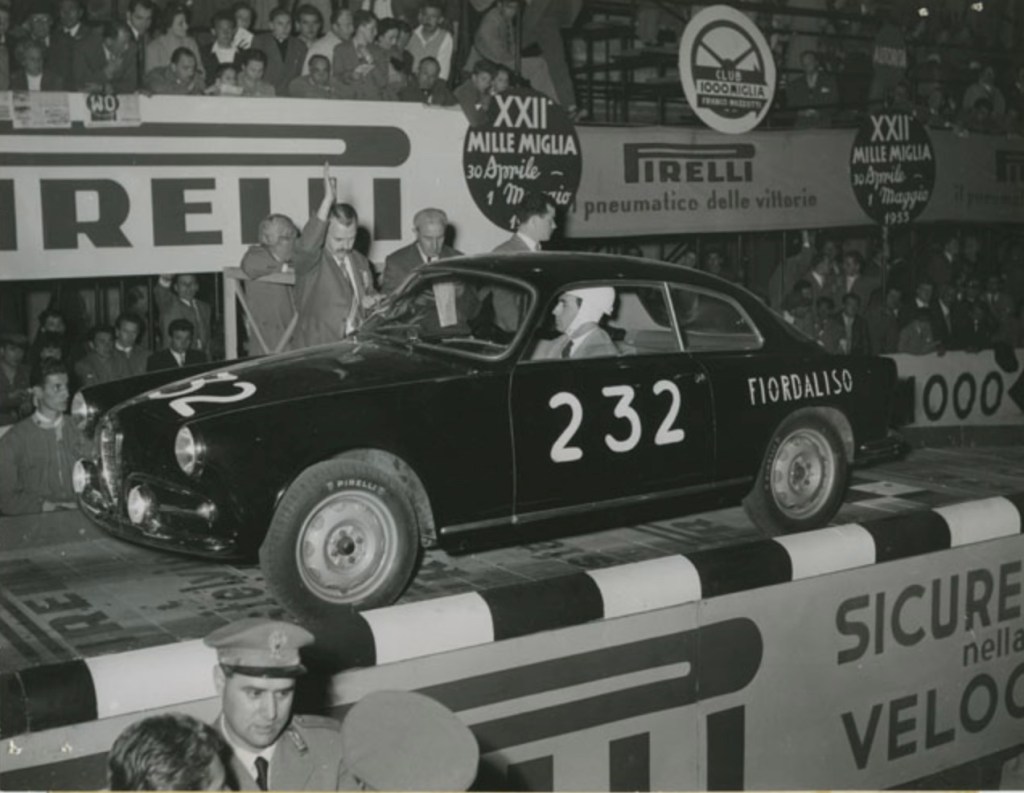
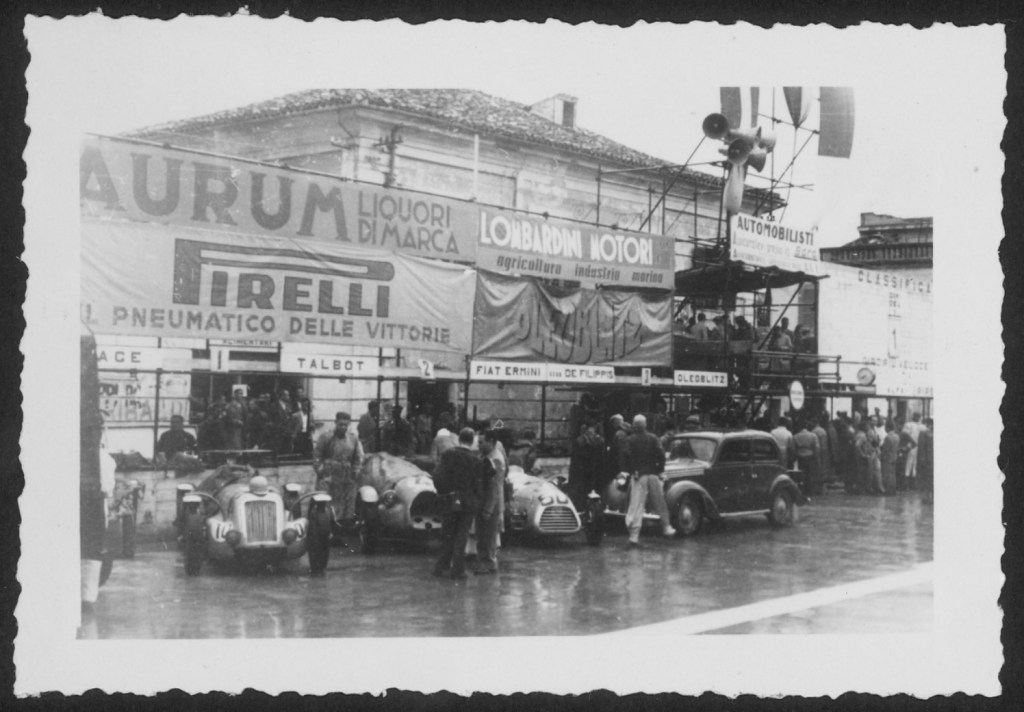
So, then yer go digging on that internet thingy and find Pirelli’s archives, these shots are the amazing result. I’ve mixed them up, they aren’t placed in chronological order so I’ve visually separated them by choosing Pirelli magazine covers or impactful or clever advertisements so you know when we are onto another subject. I’ve kept the words to a minimum, let the pics do the talkin’…
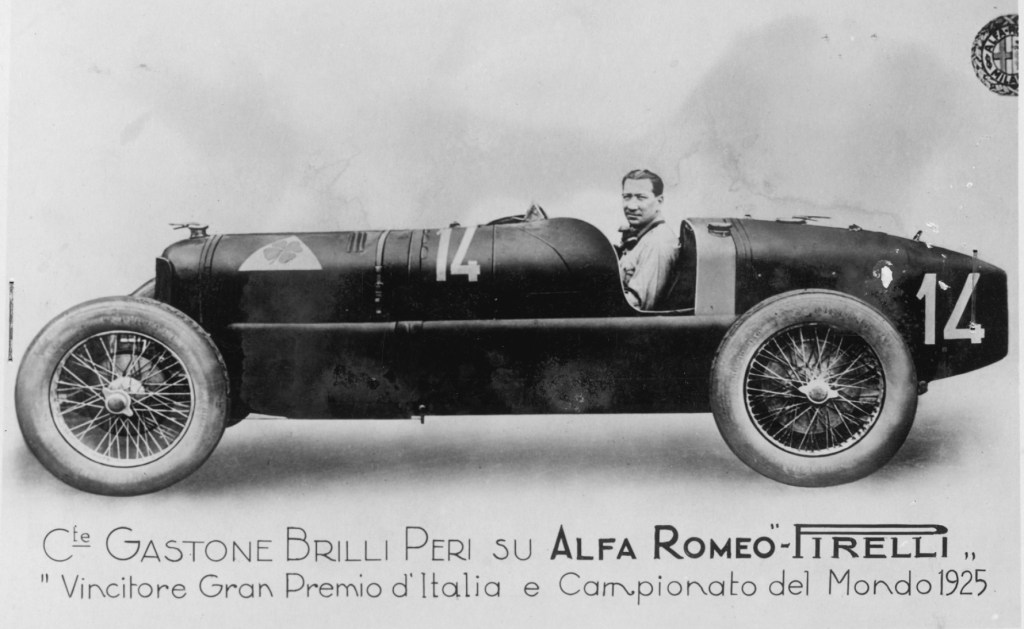
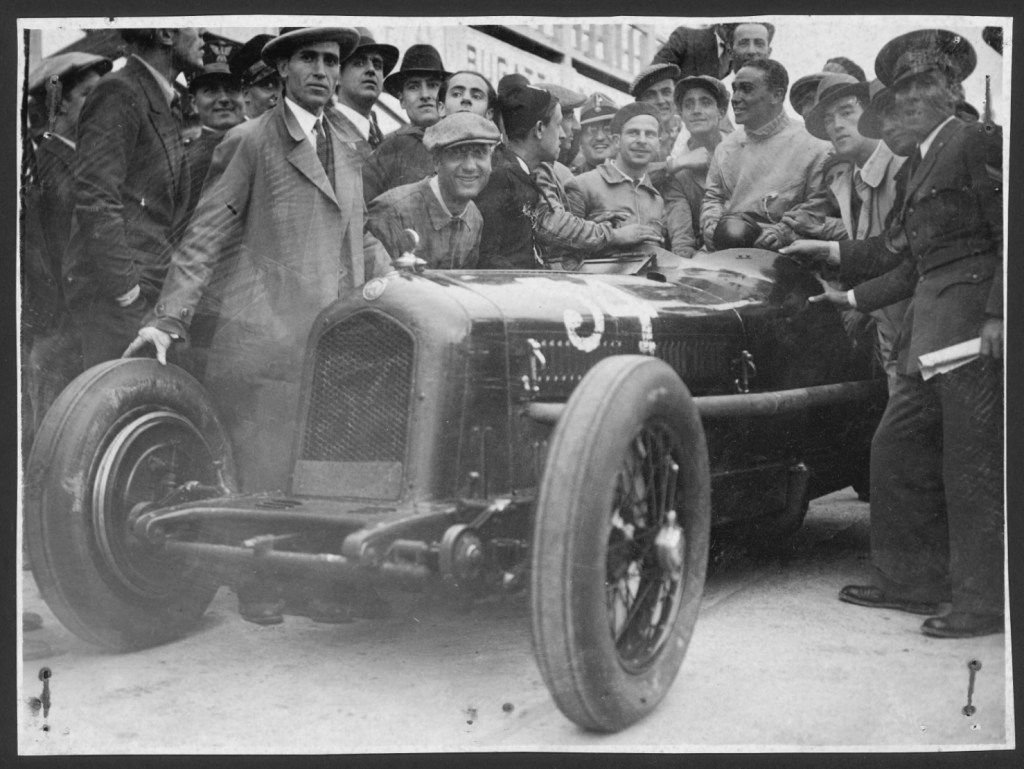
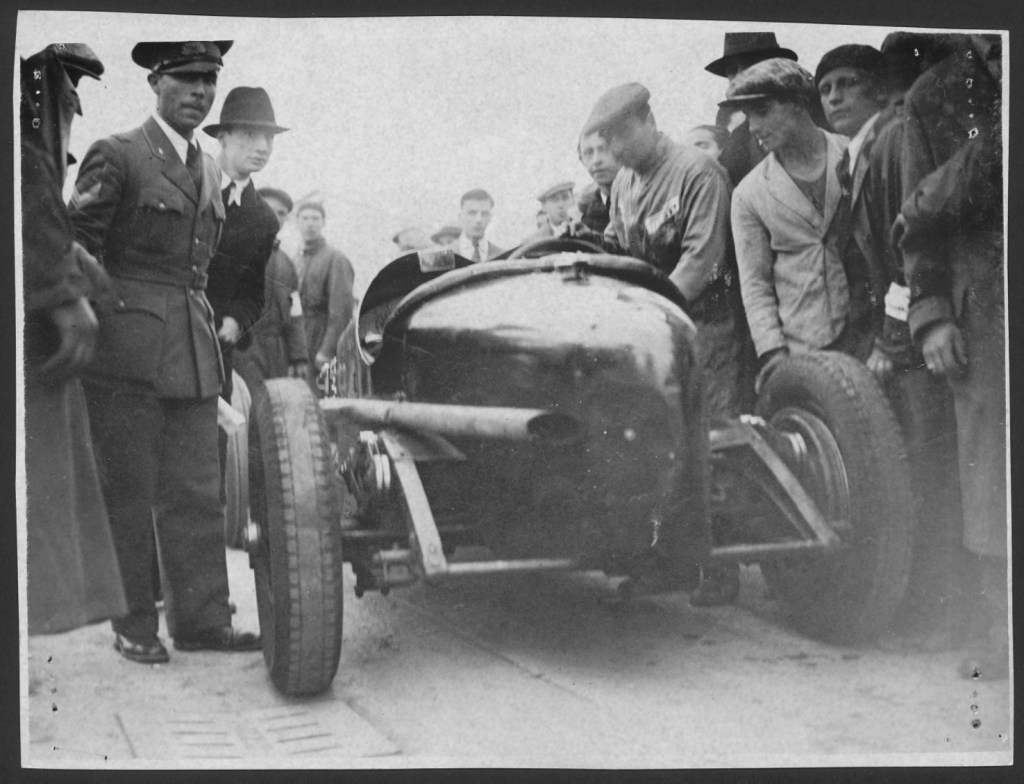
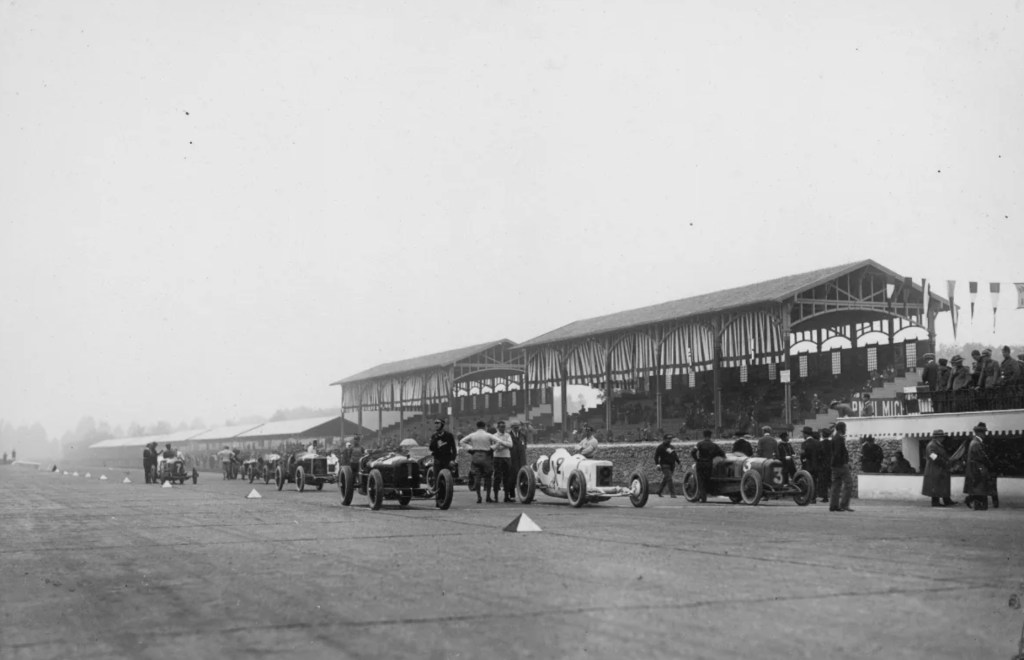
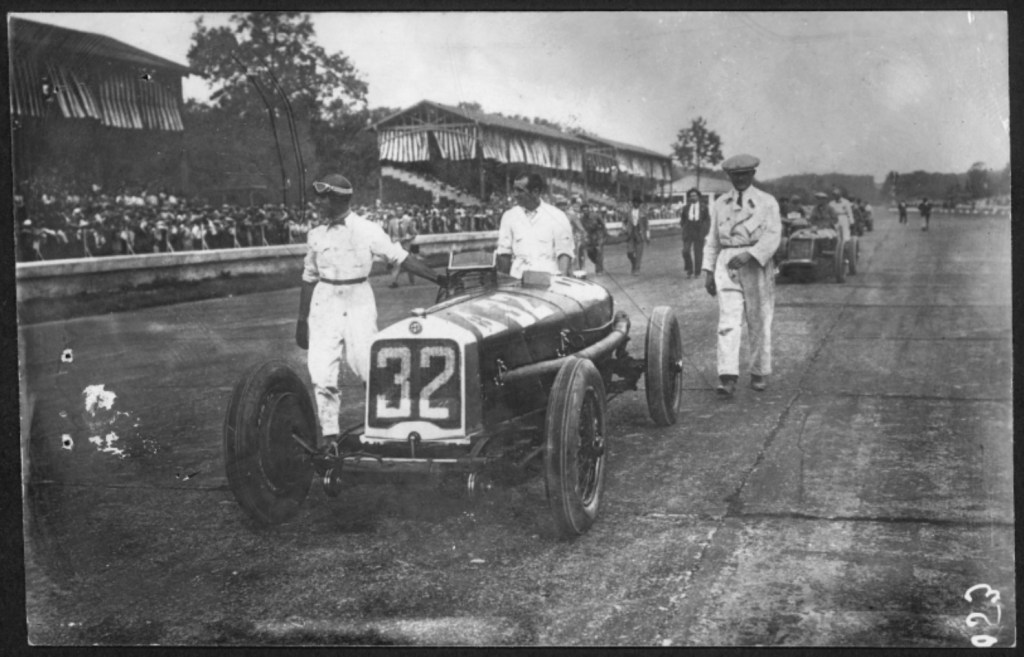
Gastone Brilli-Peri, by winning the Italian Grand Prix, gave Alfa Romeo the four-round 1925 Manufacturers World Championship in an Alfa Romeo P2.
Pete DePaolo won the Indy 500 in a Duesenberg 122, Albert Divo the French Grand Prix in a Delage 2LCV, while Alfa’s P2 won at Monza and at Spa, where Antonio Ascari drove the winning machine in the Belgian Grand Prix.
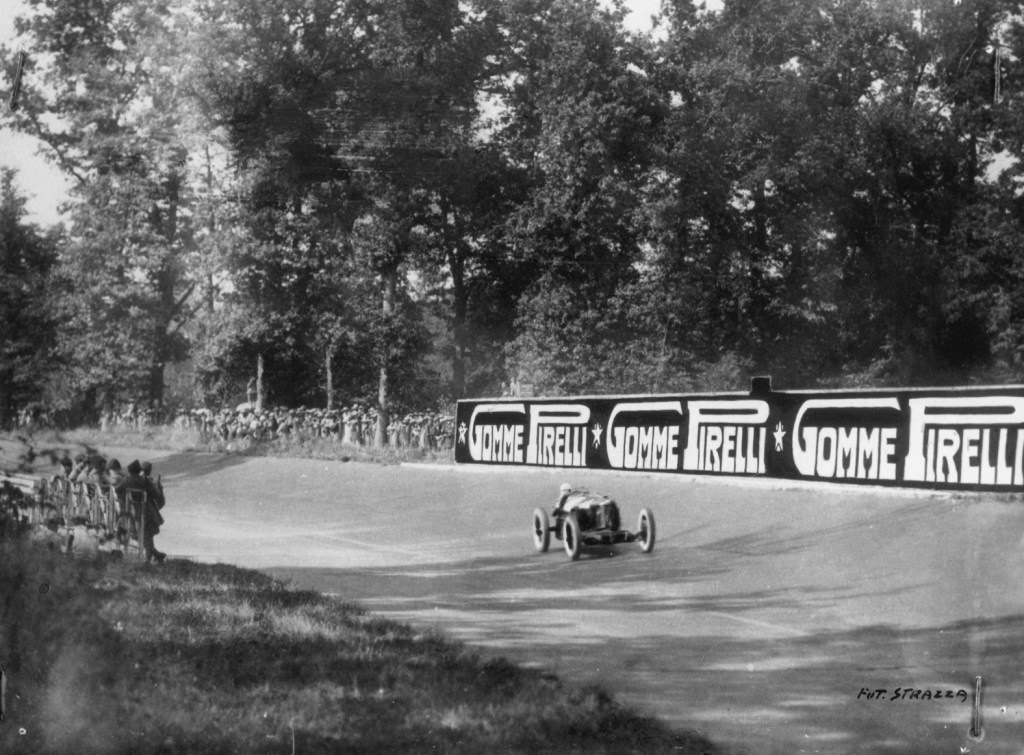
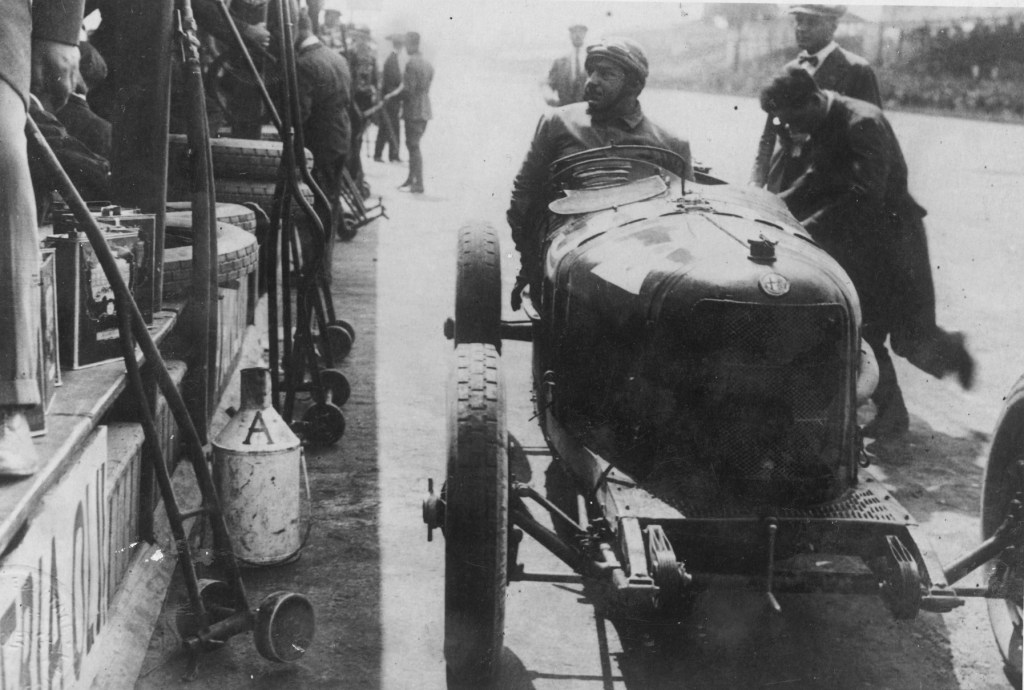
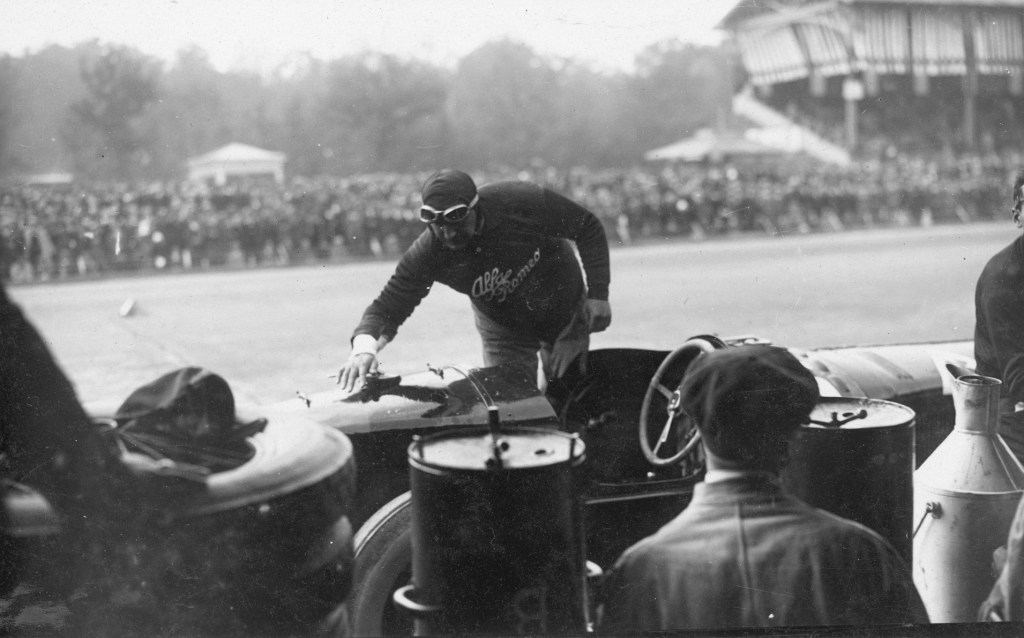
Brilli Peri, enroute to his Italian GP win and Campari below, in another P2 in the pits. Brilli Peri won from Giuseppe Campari/Minozzi/Sozzi with Meo Costantini third in a Bugatti T39.
Poster 1977
Antonio Brivio after winning the 1935 Targa Florio in a Scuderia Ferrari Alfa Romeo Tipo B.
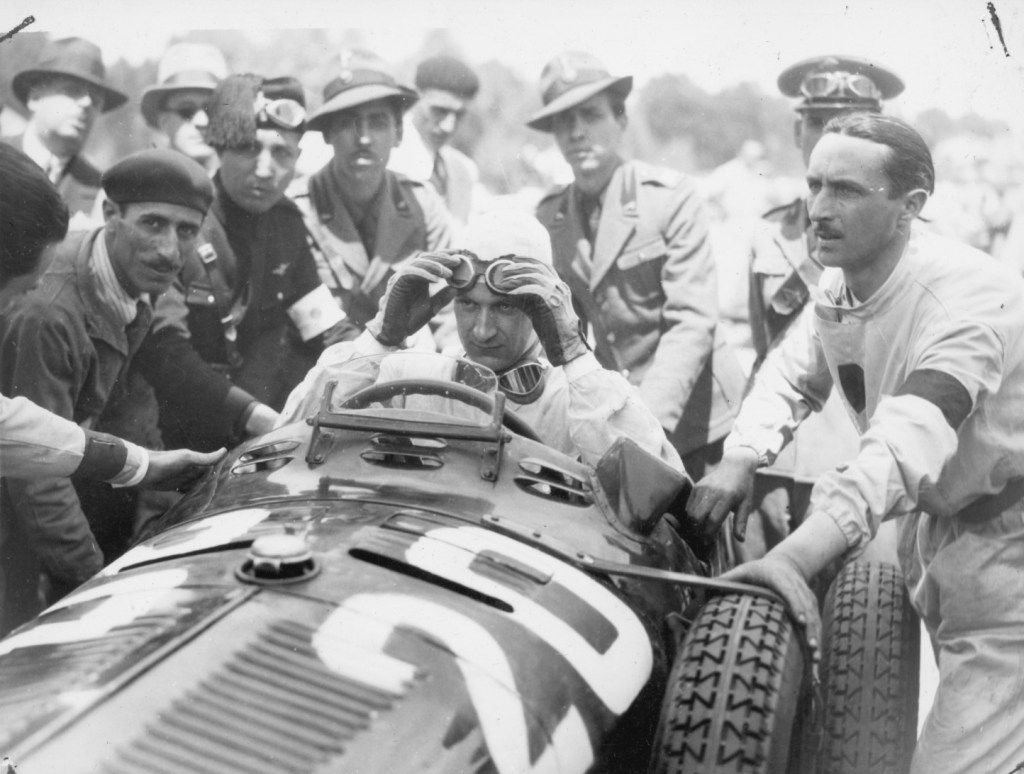
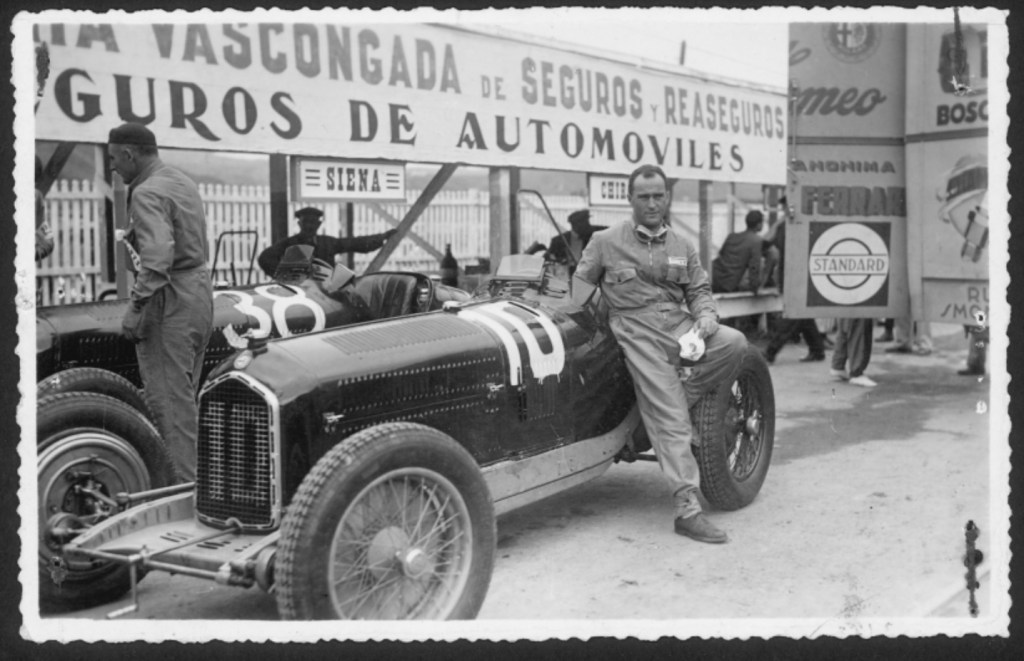
Sticking with the P3 theme, Luigi Fagioli stands beside his car during the September 1933 Spanish Grand Prix weekend. The race was won by Louis Chiron’s Alfa P3 from Fagioli, and held on the Laserte road circuit near San Sebastián.
Mock up for a 1952 ad by Pavel Engelmann
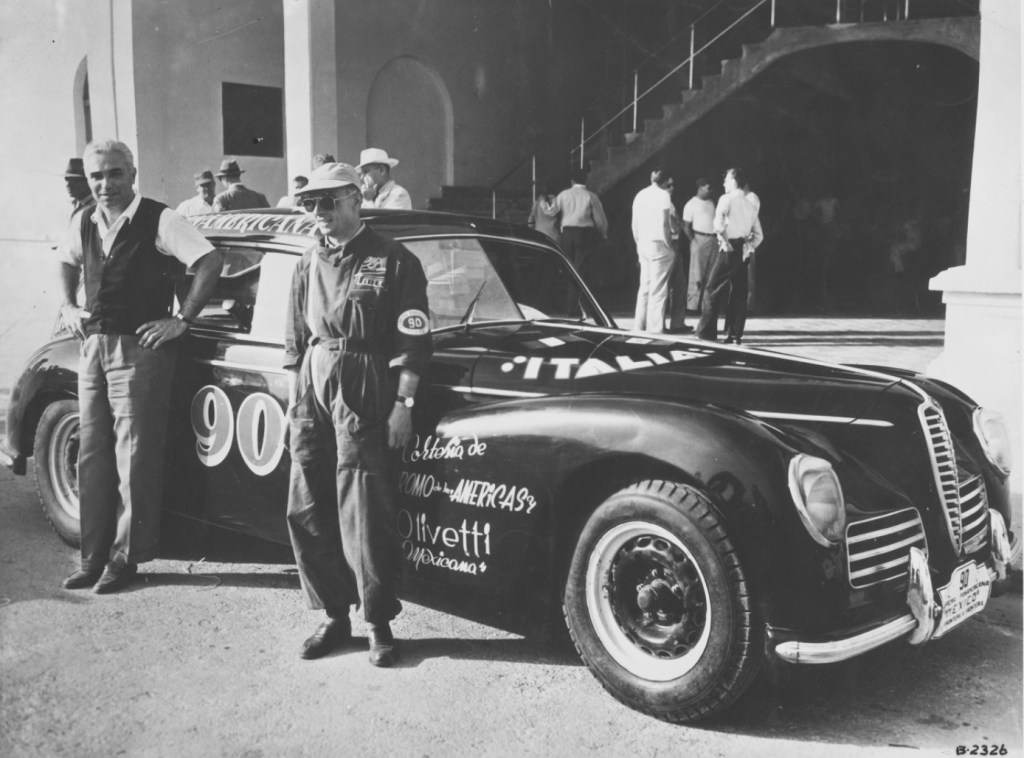
Piero Taruffi and navigator Isidoro Ceroli with Alfa Romeo 6C2500 Sport during the first Carrera Panamericana from May 5-10 1950.
They finished fourth behind three American crews driving an Oldsmobile and two Cadillacs.
Piero Taruffi, again, but a little earlier, here with a shock of dark hair! and his Scuderia Ferrari Alfa Romeo 8C2300 Monza after finishing second in the April 1932 Rome Grand Prix.
The race, held on the 4km Circuito del Littorio, was won by Luigi Fagioli’s works-Maserati V5 5-litre V16.
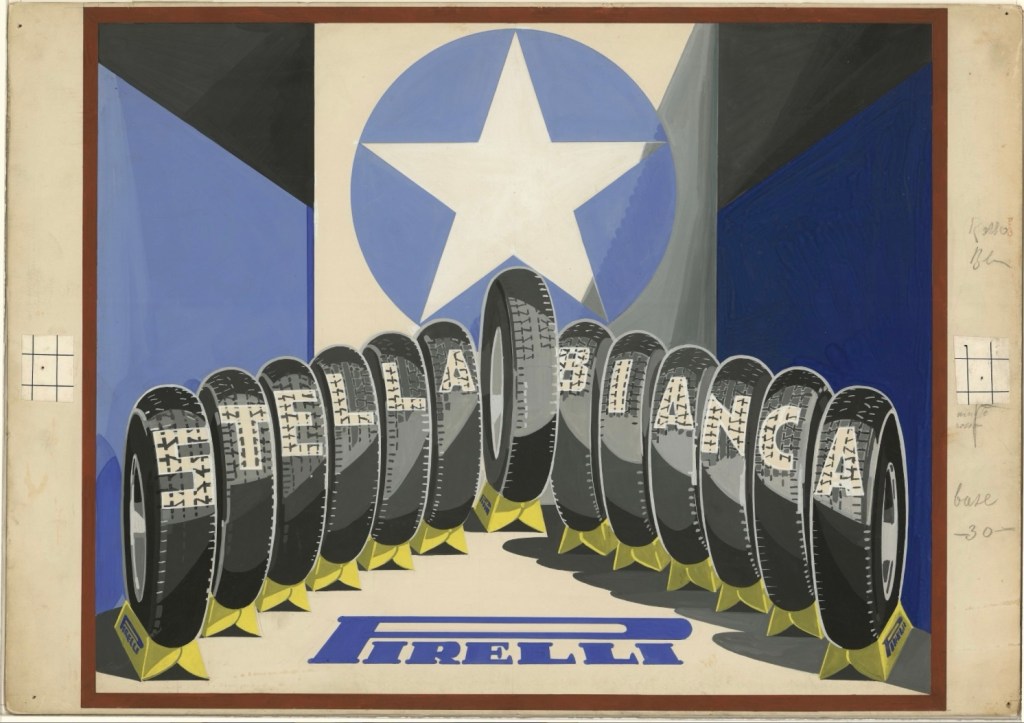
Pirelli White Star, sketch for an exhibition stand in 1931
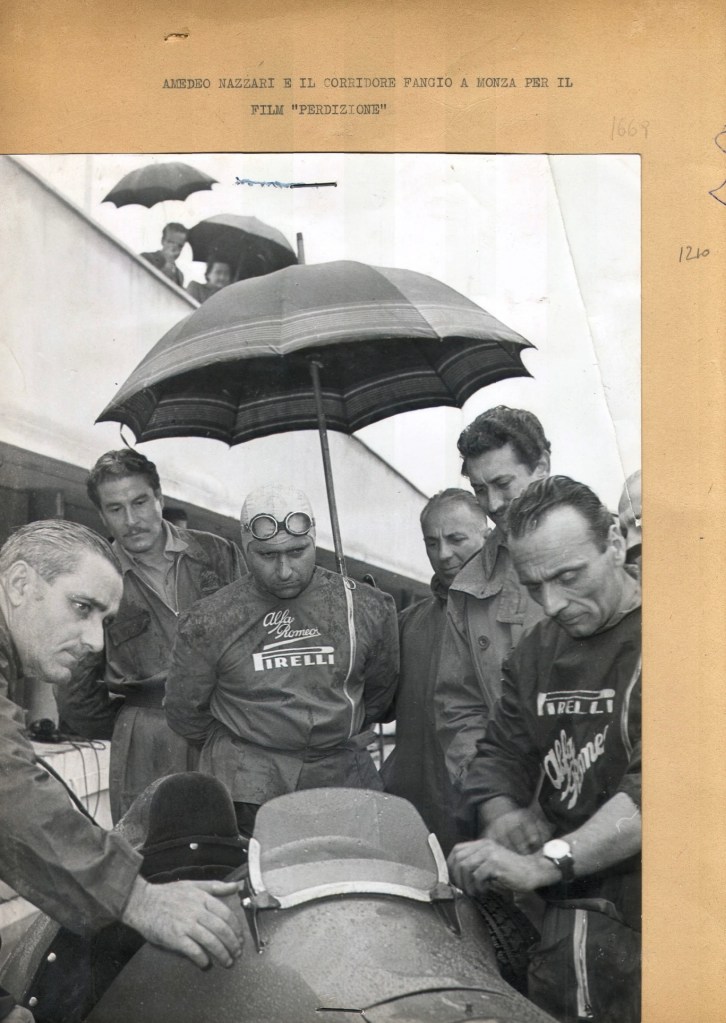
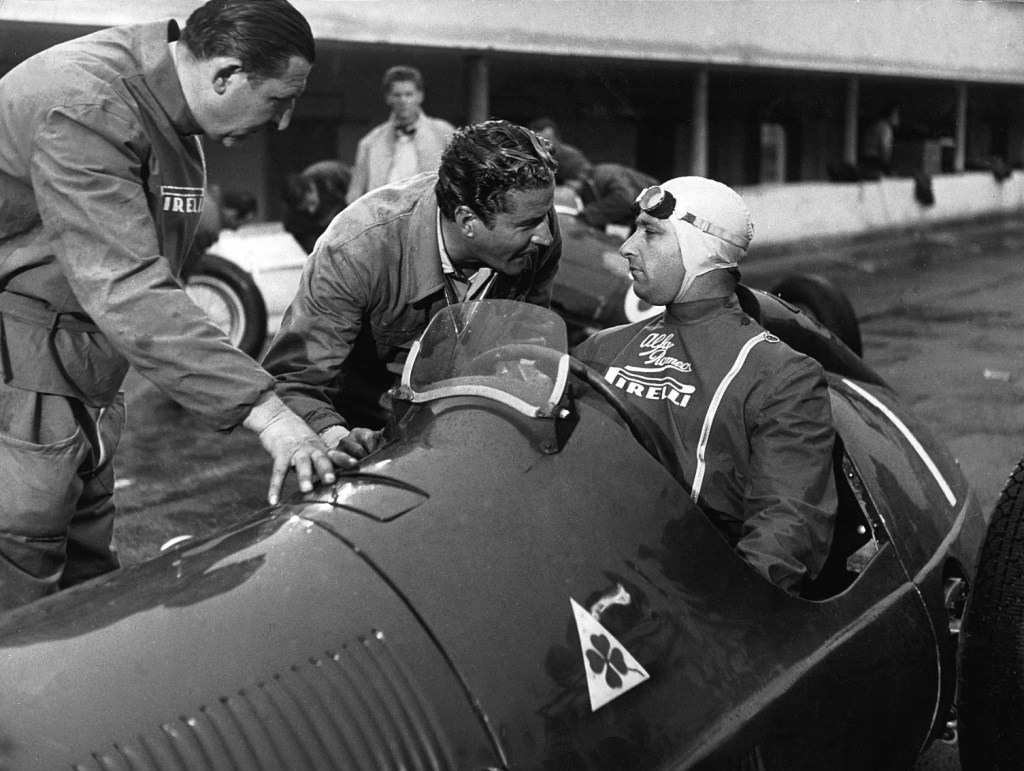
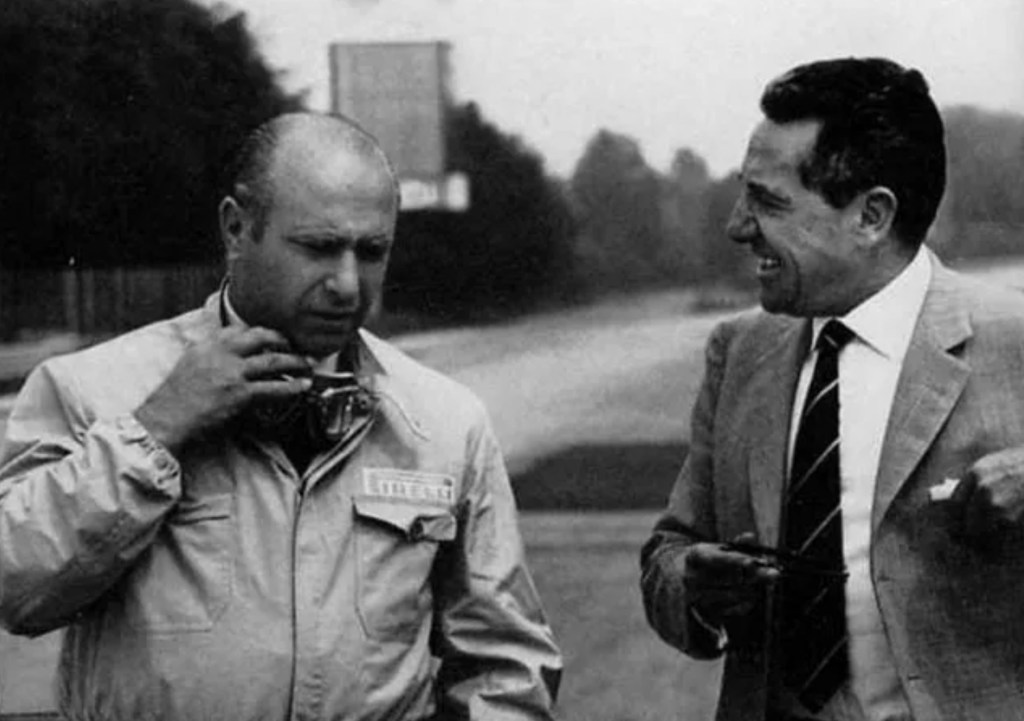
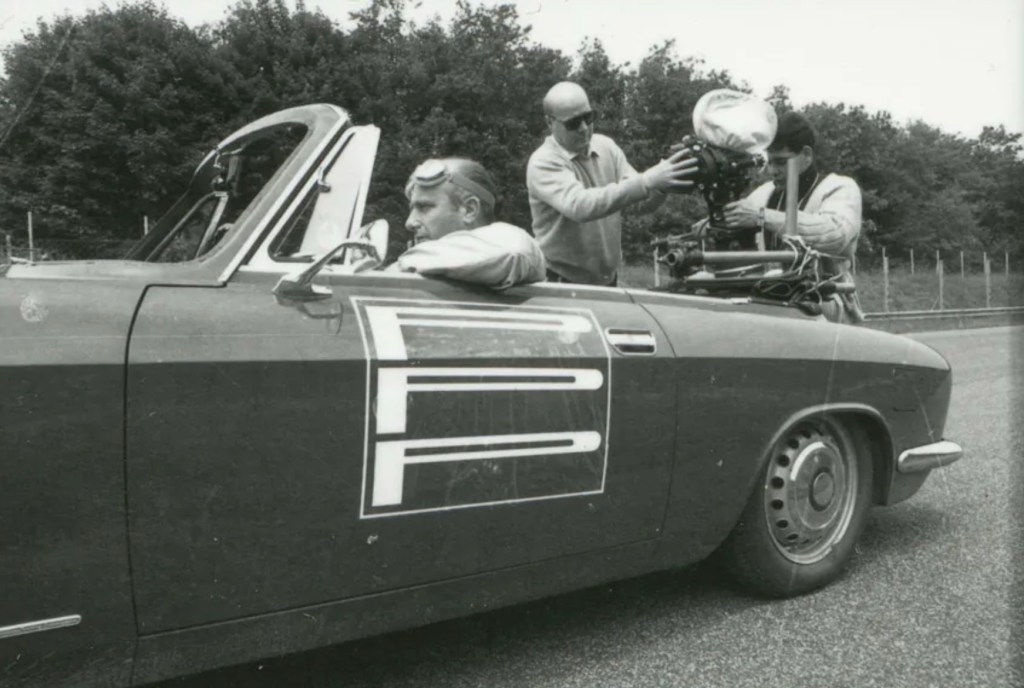
Pirelli wrote that of all the motor racing films, “there was only one racing driver who was called upon time and again to play himself in front of the camera – the Argentine Juan Manuel Fangio.”
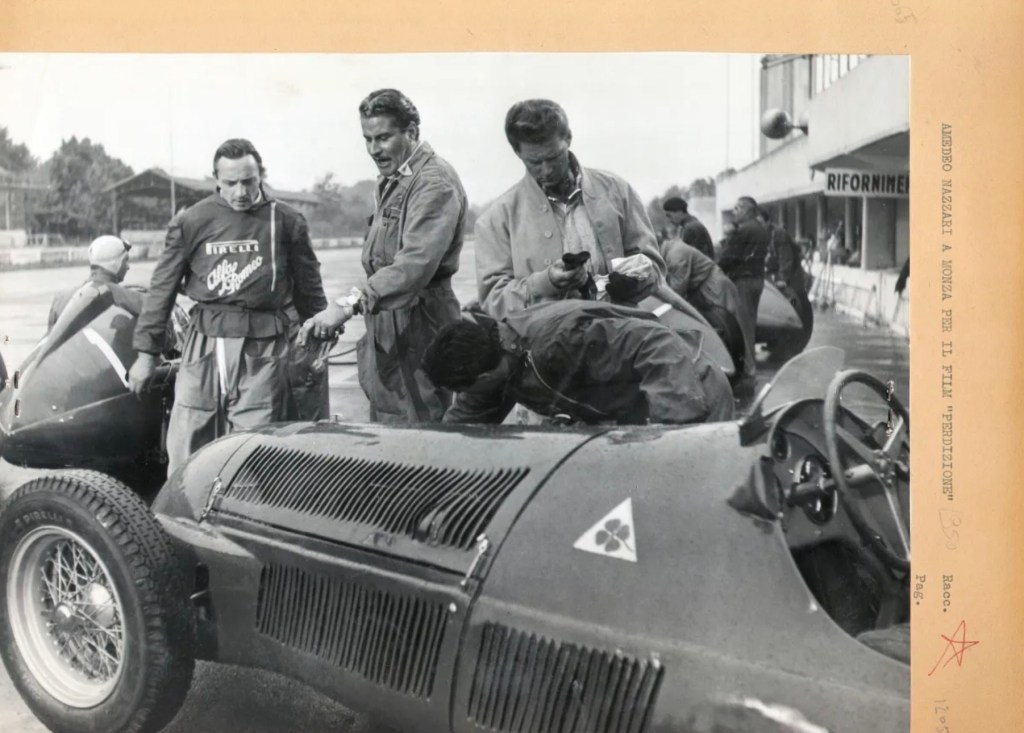
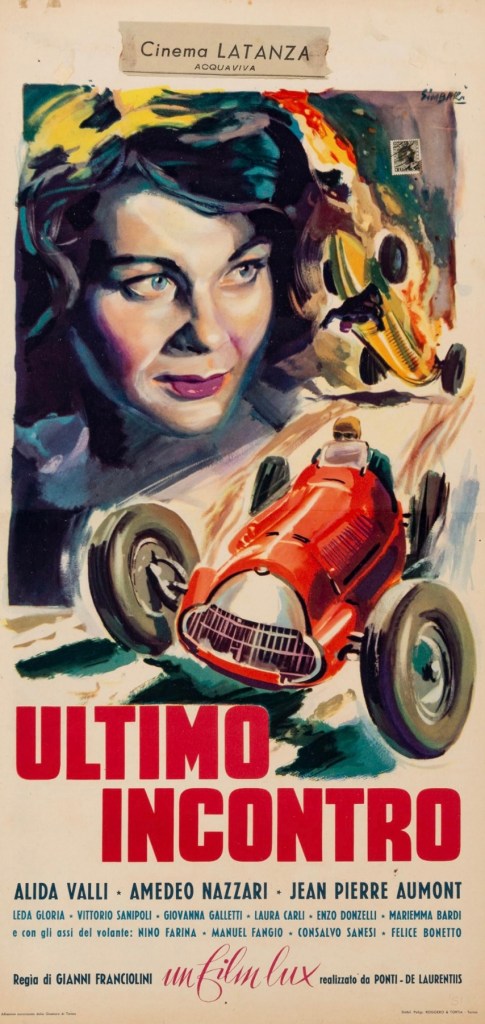
“It was in 1950: in the photos now in the Pirelli Historical Archive, the film is referred to with its provisional title Perdizone. It was actually released the following year as Ultimo incontro (last meeting).”
“We are on the Monza racetrack, with the protagonists Amedeo Nazzari, Alida Valli and Jean-Pierre Aumont. It is a sombre tale of betrayal and blackmail in the world of motor sport, in which the driver Fangio plays…the driver Fangio.”
“That year the Argentine was racing with the mighty Alfa Romeo team along with legends of speed such as Nino Farina, who went on to win the (1950) world title.”
“The long P-logo of Pirelli, which supplied the read Alfa Romeo cars with Stella Bianca tyres, is embroidered on their overalls, underneath the cloverleaf symbol.”
“In Perdizone/Ultimo incontro, Fangio was already on his way to becoming a legend, but his serious, watchful look is that of a true actor. The driver from Balcarce stopped racing in the late 1950s, with five world championships under his belt.”
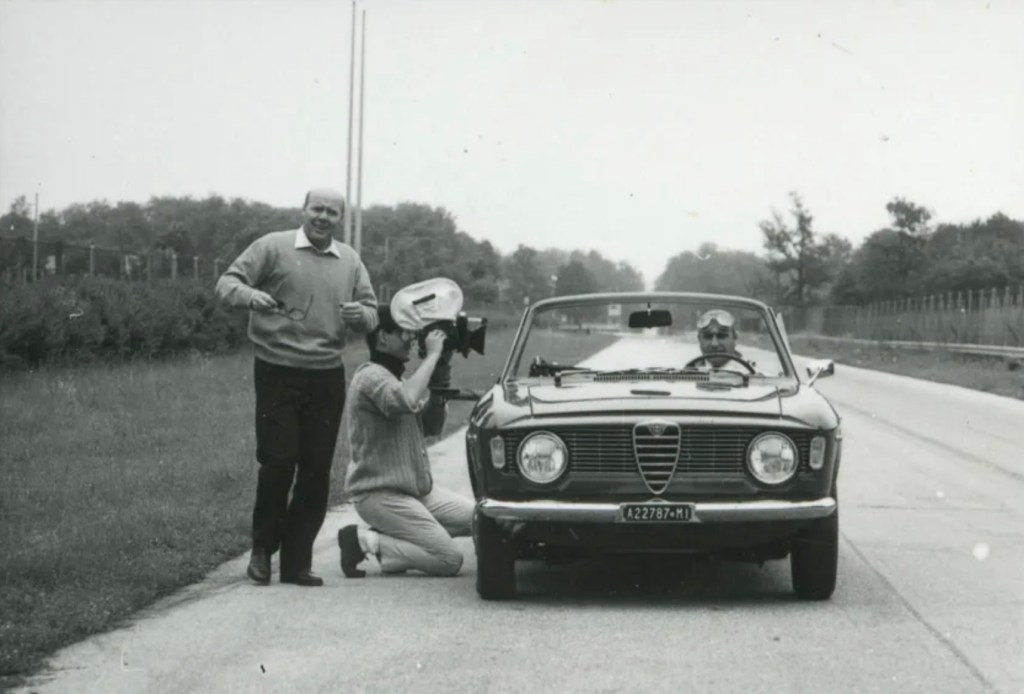
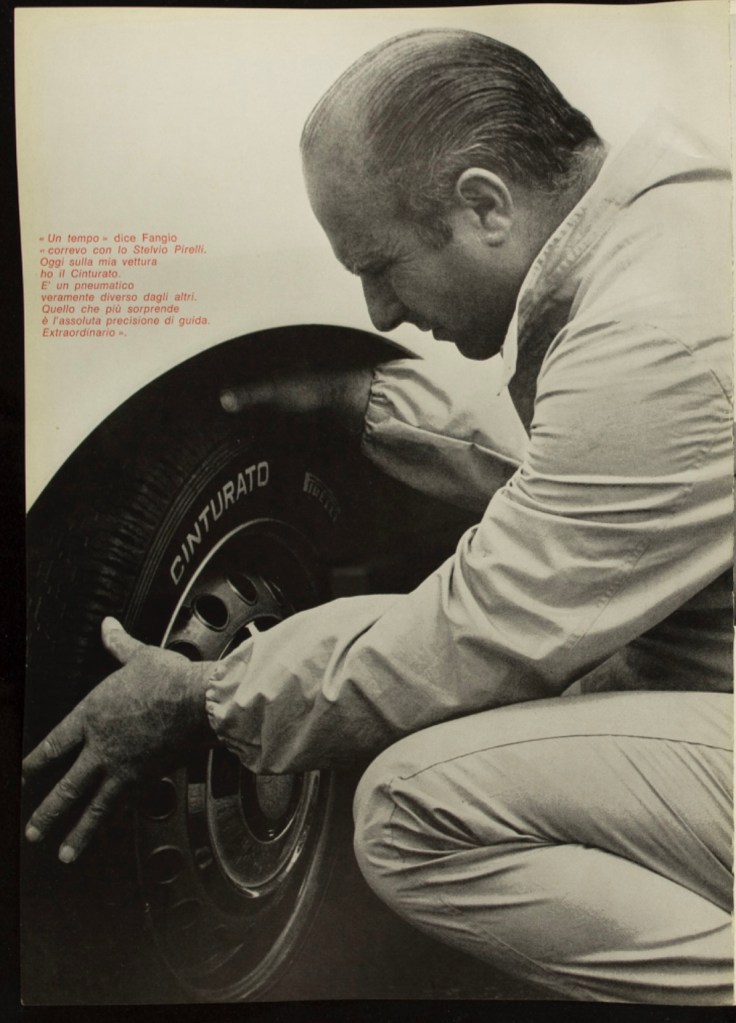
“During his career his name appeared a number of times next to that of Pirelli: it happened again in 1965, and once again there was a camera there to record it. This was a spot produced for Carosello TV commercials with reportage by Ugo Mulas.”
“The driver once again played himself, the legendary Juan Manuel Fangio now clocking up the laps in his Alfa Giulia GTC.”
“When he gets out, he looks into the camera and recalls: ‘I used to race with the Stelvio, but now this Cinturato is really different from the rest. Extraordinario!’ And in his magnificent Italian-Argentine manner, Fangio goes on to tell the audience on the television screen about his endless string of successes.”
75th anniversary poster
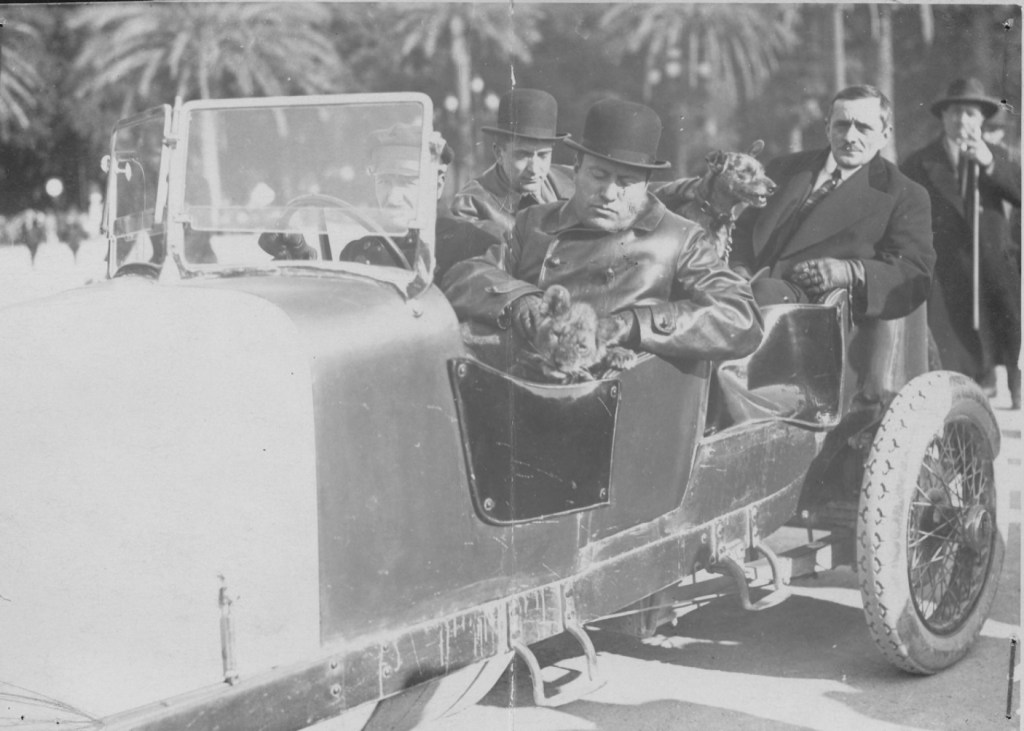
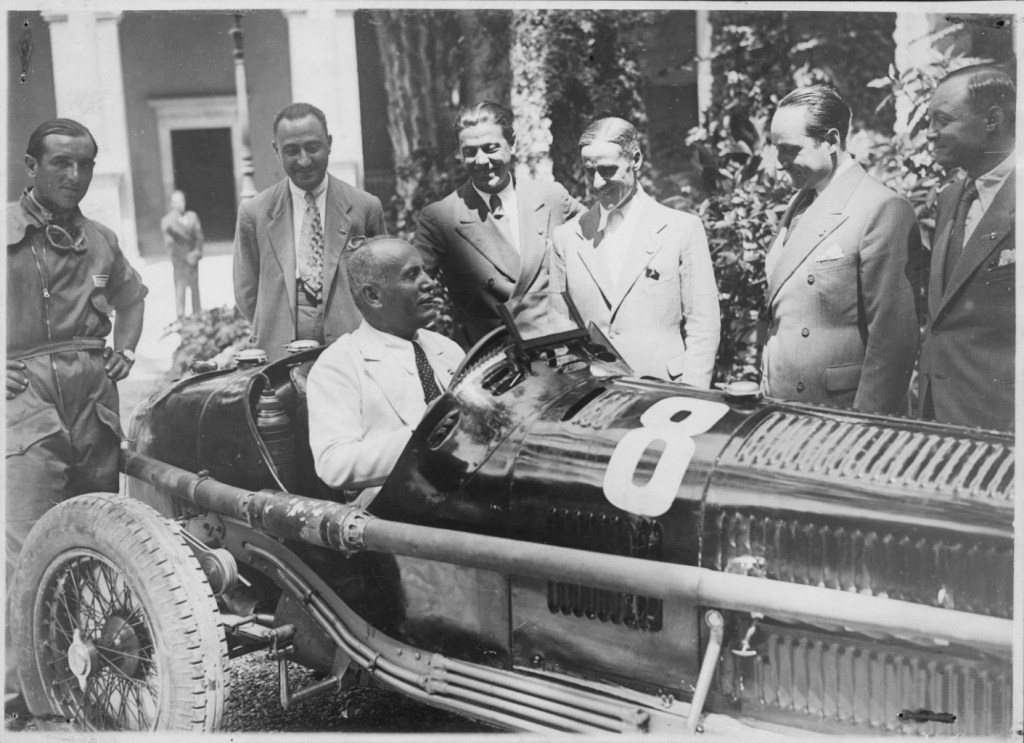
Benito Mussolini and pet pussy aboard an Alfa Romeo in 1923. What model is it I wonder?
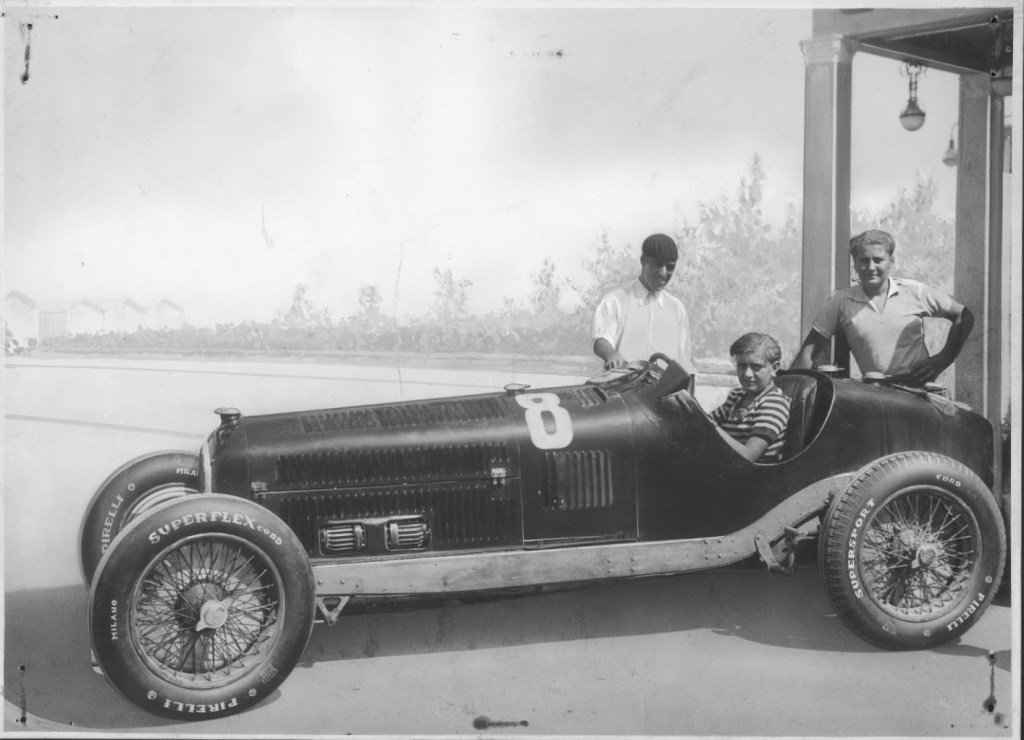
Meanwhile poor old Tazio is tasked with amusing Ill Duce’s sons in his P3, Bruno in the driving seat and Vittorio behind.
Mussolini with Nuvolari again, and the director-general of Alfa Romeo Prospero Gianferrari (both in the centre). “The P3 is probably the car with which Nuvolari won the August 14, 1932 Coppa Acerbo.”
1971
Antonio Ascari in the P2, with designers Luigi Bazzi in the light coloured overalls at left, Vittorio Jano and Giorgio Rimini during the 1924 Italian Grand Prix weekend.
Before the start of the race: Antonio Ascari’s Alfa P2 #1 Christian Werner’s Mercedes M72 #2 and Jules Goux’ Rolland-Pilain Schmid #3.
Alfa Romeo won in a rout taking the first four placings: Ascari, Louis Wagner, Campari and Bruno Presenti, and Fernando Minoia.
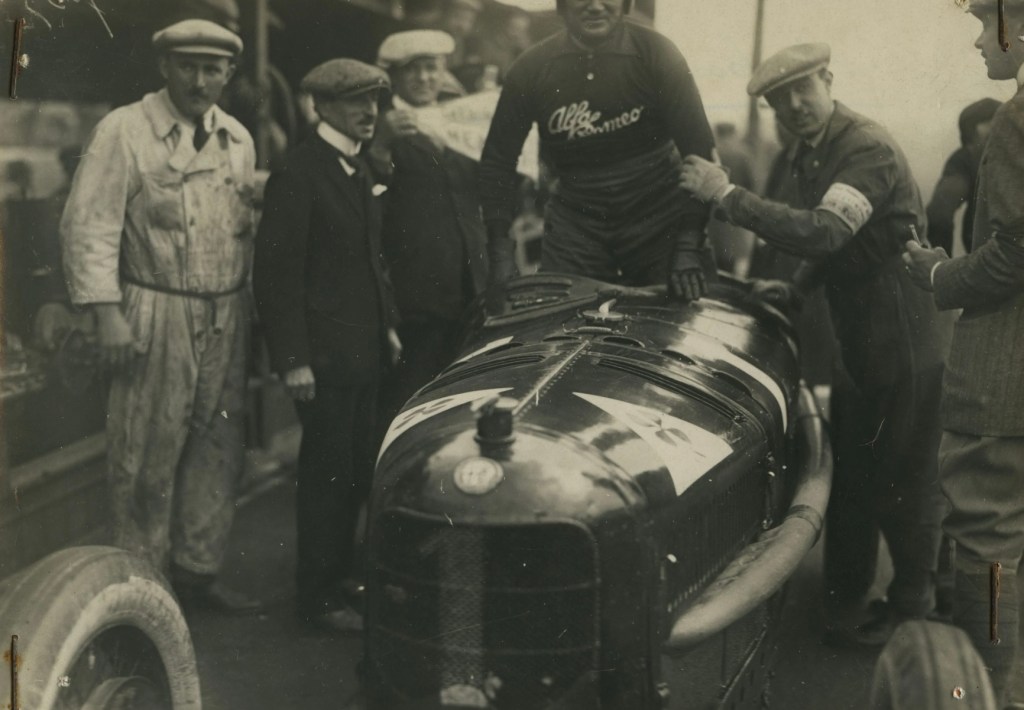
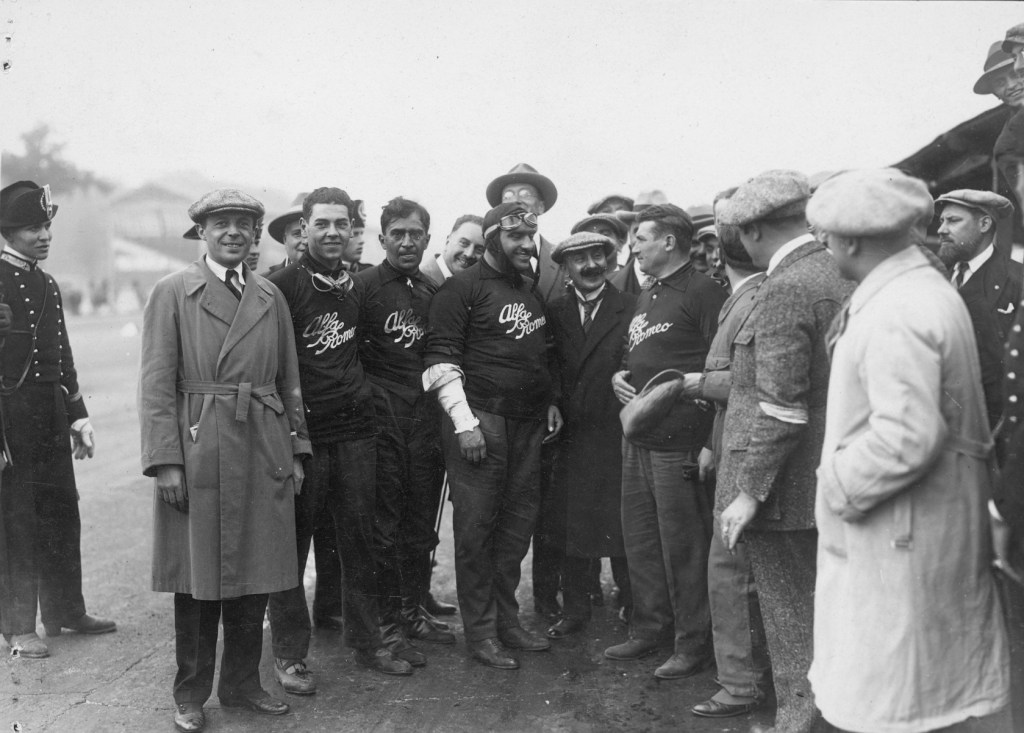
Scuderia Alfa Romeo: unidentified in the overcoat, mechanic Giulio Ramponi, drivers Minoia and Campari, the engineer and entrepreneur Nicola Romeo, and driver Antonio Ascari.
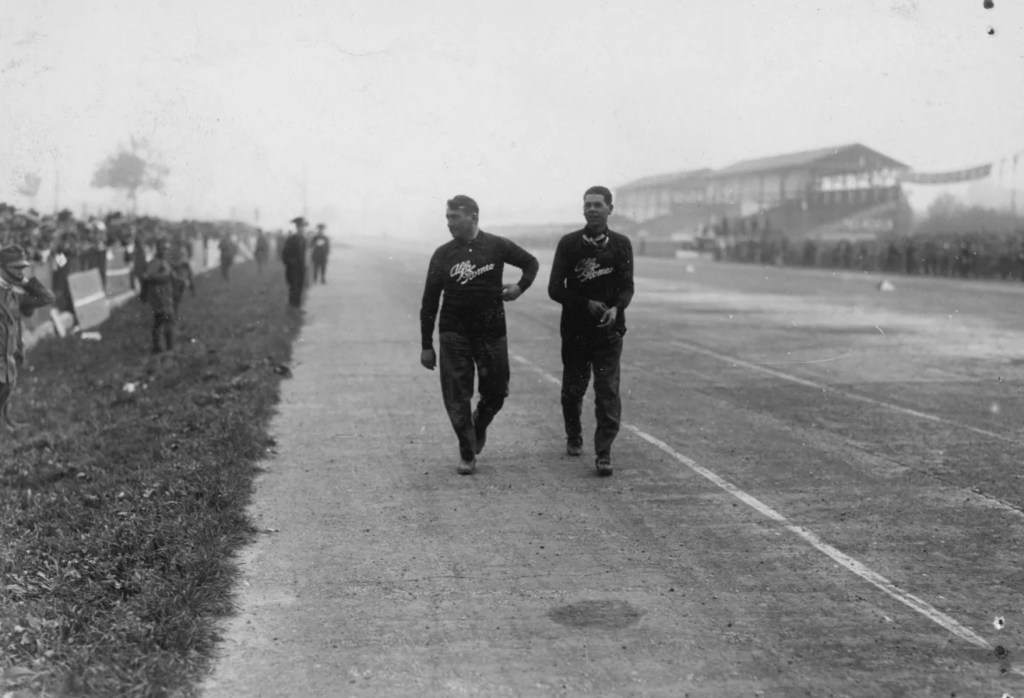
Ascari and Ramponi go for a greet-the-punters wander.
Giuseppe Campari and P2.
(Federico Patellani)
Gigi Villoresi, Nino Farina and Alberto Ascari in 1950, this photo was published on the cover of the January-February issue of the Pirelli magazine. Nice portrait of Gigi in a Ferrari below.
(Ferrucio Testi)
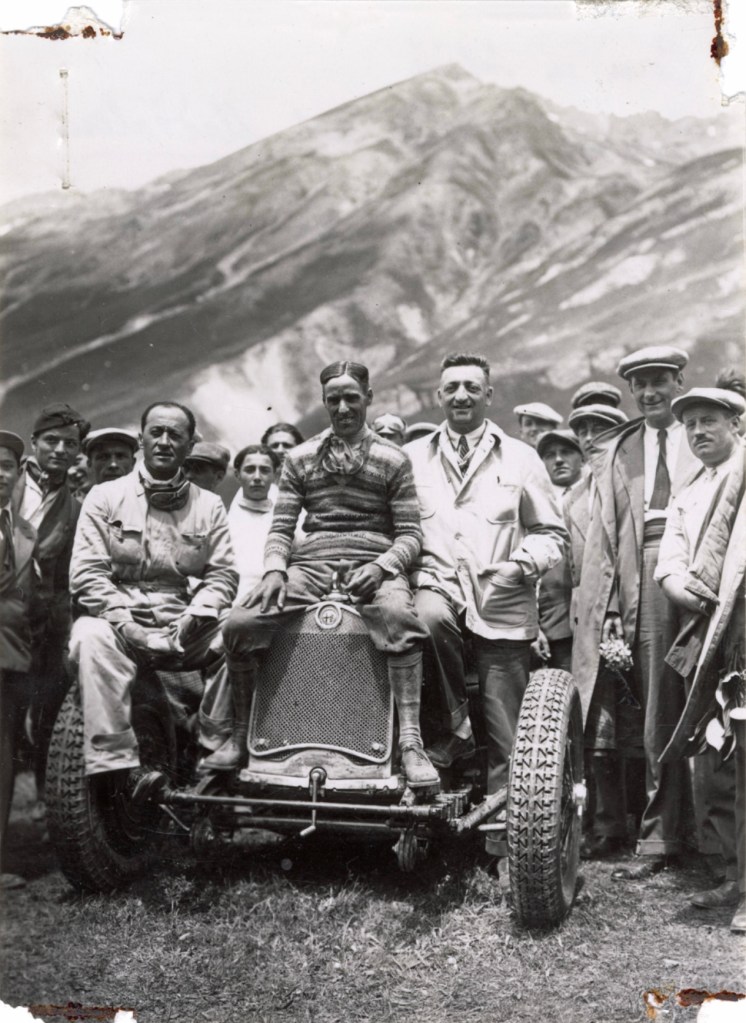
Scuderia Ferrari shot of Luigi Arcangeli, Tazio Nuvolari and Enzo Ferrari sitting on an Alfa Romeo P2 during the European Hillclimb Championship in June 29, 1930
The Pirellis are Stella Bianca’s, the venue is Cuneo-Colle della Maddalena. While Pirelli wrote that Tazio was first and Luigi third, Rudy Caracciola won the day on a Mercedes.
And below walking to the start alongside an Alfa – a modified P2 of the type Achille Varzi used to win the Targa Florio in 1930 Bob King reckons, a quick look at Hull & Slater confirms this – circa 1930. Does anybody recognise the venue?
Antonio Ascari and a mechanic aboard, “probably an Alfa Romeo P1”, venue unknown.
I’m not so sure about the P1 theory…Giuseppe Merosi’s Fiat 804 copy wasn’t much chop. His engine had most of the same features as Fiat’s Type 404: DOHC, 65x100mm bore/stroke 1991cc six so the power output was about the same but the Gran Premio Romeo was longer and heavier. Its aero was inferior too, the epochal Fiat had a staggered mechanics seat which slimmed down its profile, the Alfa did not.
While P1s were entered for the 1923 Italian Grand Prix – for Ugo Sivocci, Alberto Ascari and Giuseppe Compari – after Sivocci crashed to his death in practice the team withdrew from the meeting as a mark of respect, the P1s never raced.
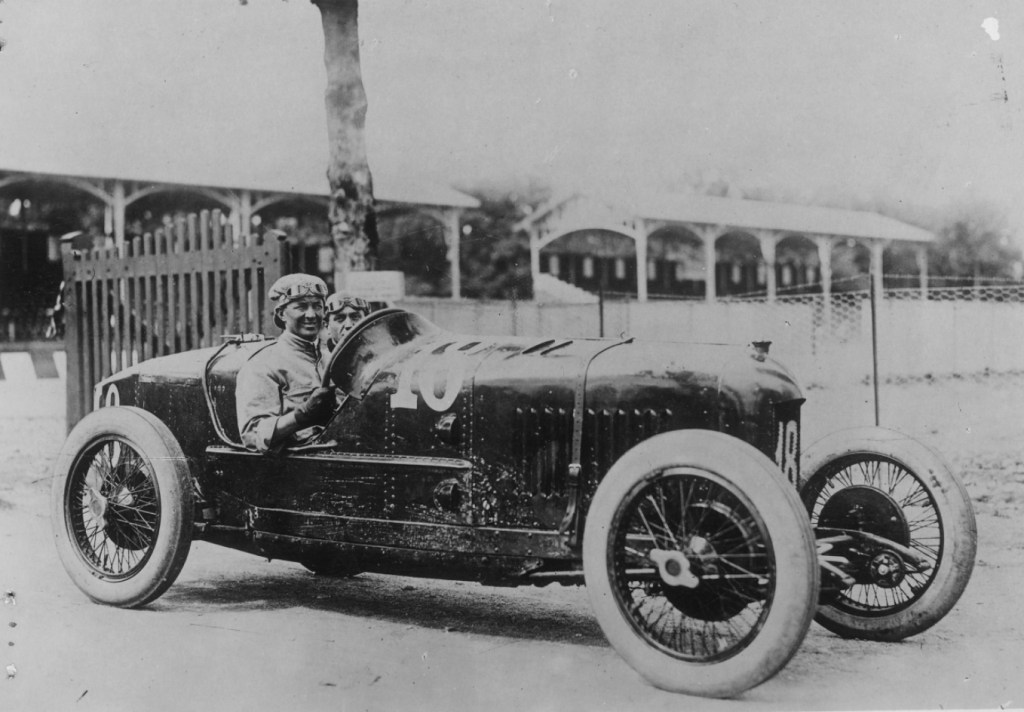
The car shown above carries #18, the Monza P1s used numbers, 6, 12 and 17, so the shot wasn’t taken on or about that weekend.
Is the car shown a P2, an early one? The Golden Era of Grand Prix Racing is my reference site for the results of the major races in this era, I cannot see an Alfa P2 number 18 entered in any of the races the site covers in either 1924 or 1925. A mystery…
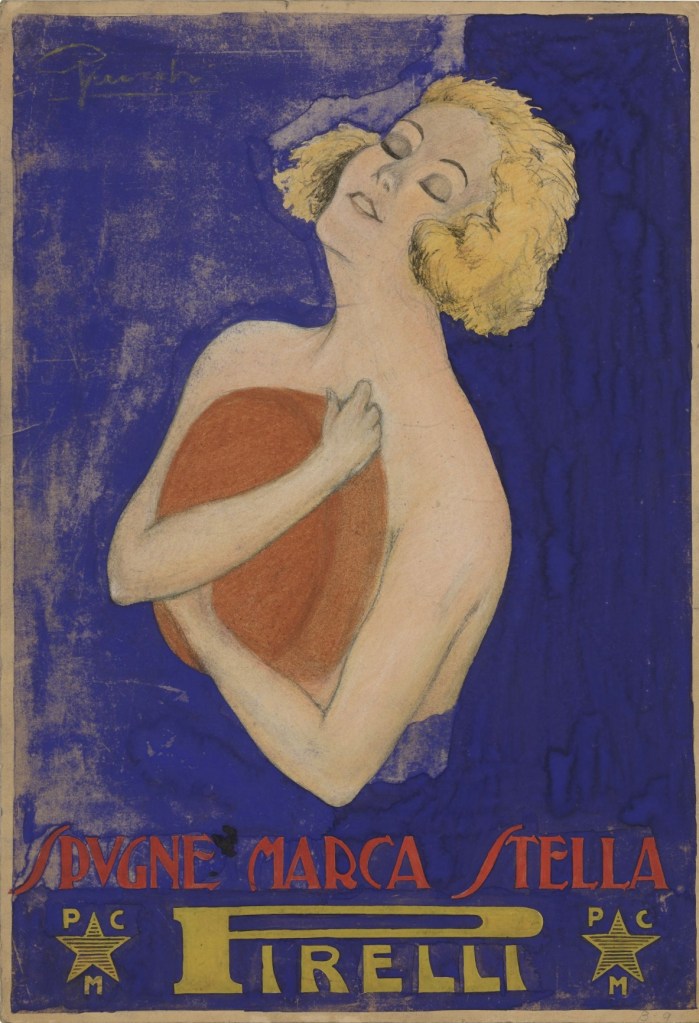
Pirelli sponge ad 1922 by A Franchi
Oscar Galvez fettles the engine of his 3-litre supercharged straight-eight Alfa Romeo 308 in January 1949, can’t quite read the chassis number…
He was third in the Buenos Aires Grand Prix behind the Maserati 4CLT’s raced by Alberto Ascari and Gigi Villerosi.
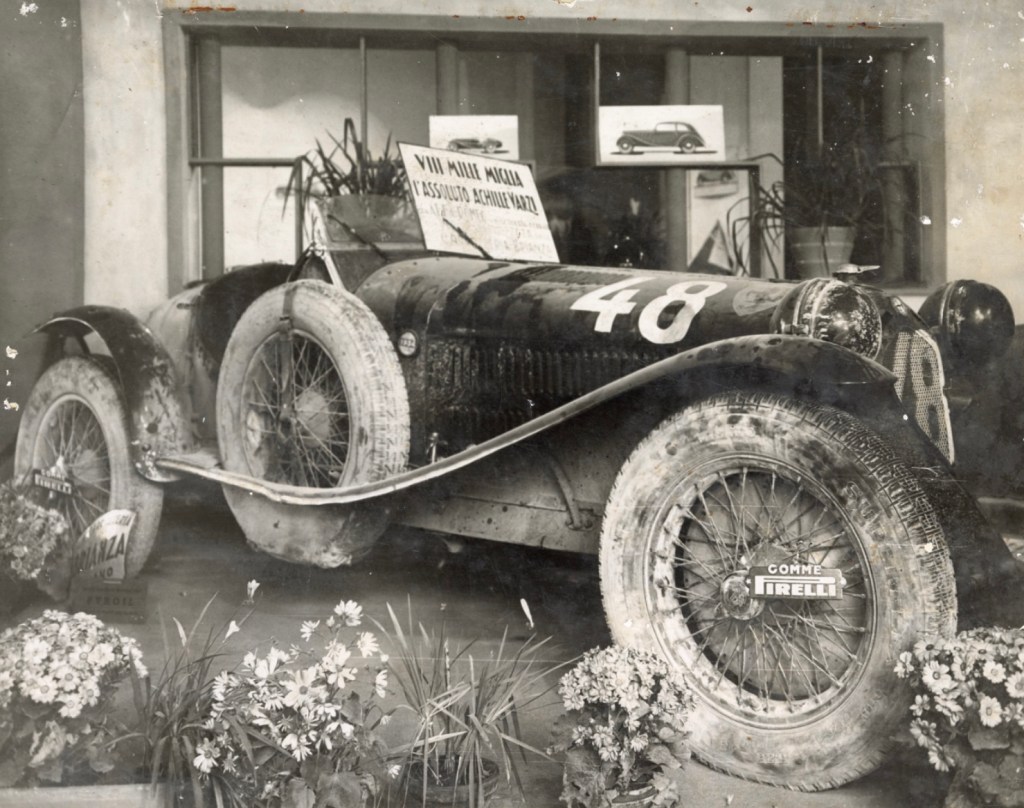
Achille Varzi’s Mille Miglia winning Alfa Romeo 8C2600 Monza Spider Brianza on the Carozzeria Brianza Stand in 1934.
The first four cars home were (2654cc) 8C2600 Monzas: Varzi/Bignami, Nuvolari/Siena, Chiron/Rosa and Battglia/Bianchi.
Fangio plugs Cinturato’s in 1965
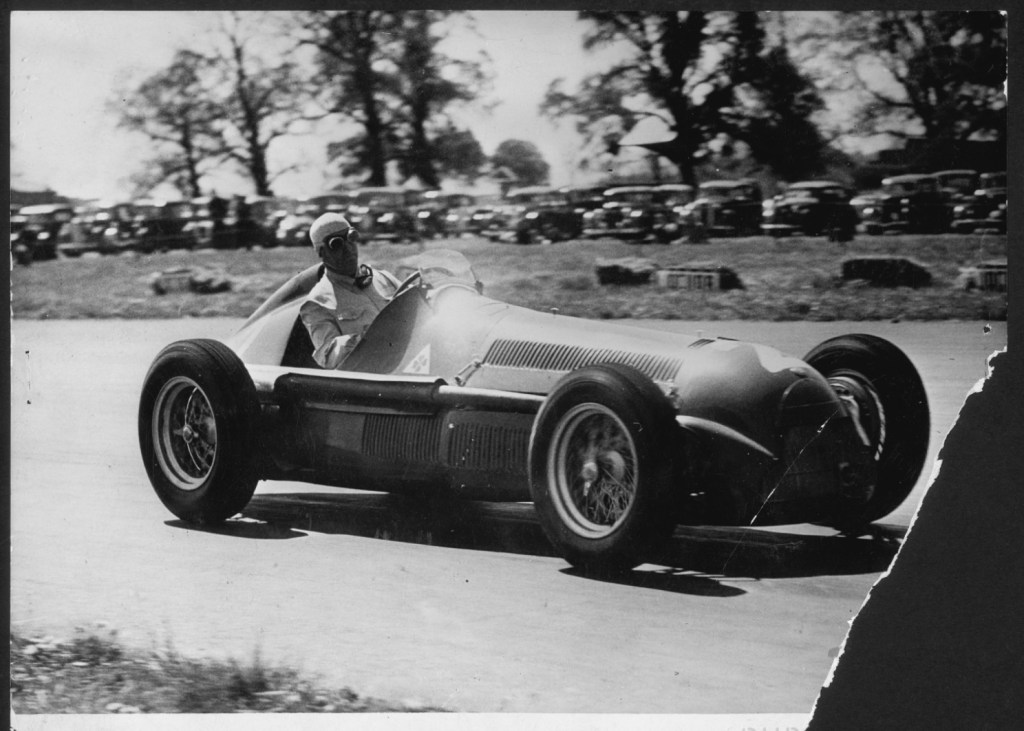
Classic shot of Nino Farina on the way to winning the July 1950 British Grand Prix in an Alfa 158.
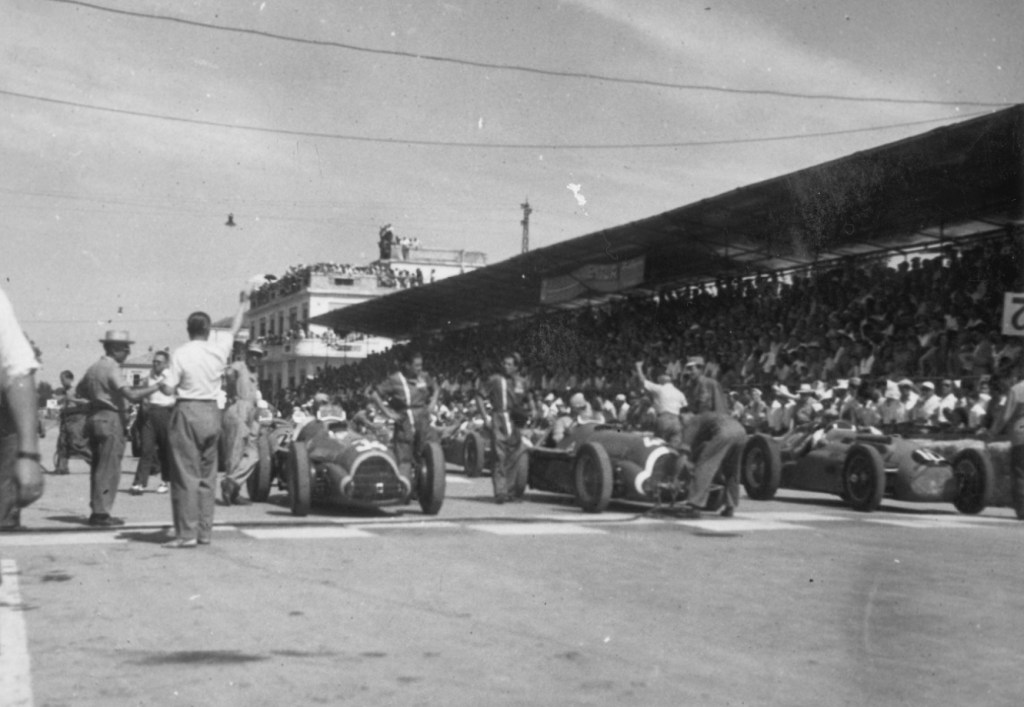
A month later the circus is on the grid at Pescara for the August 19 Grand Prix on the road circuit of the same name.
From the left is Fangio’s #34 Alfa 158, then the similar machine of Luigi Fagioli’s, with Louis Rosier’s Talbot-Lago T26C on the right. The race was won by Fangio from Rosier and Fagioli.
(F Patellani)
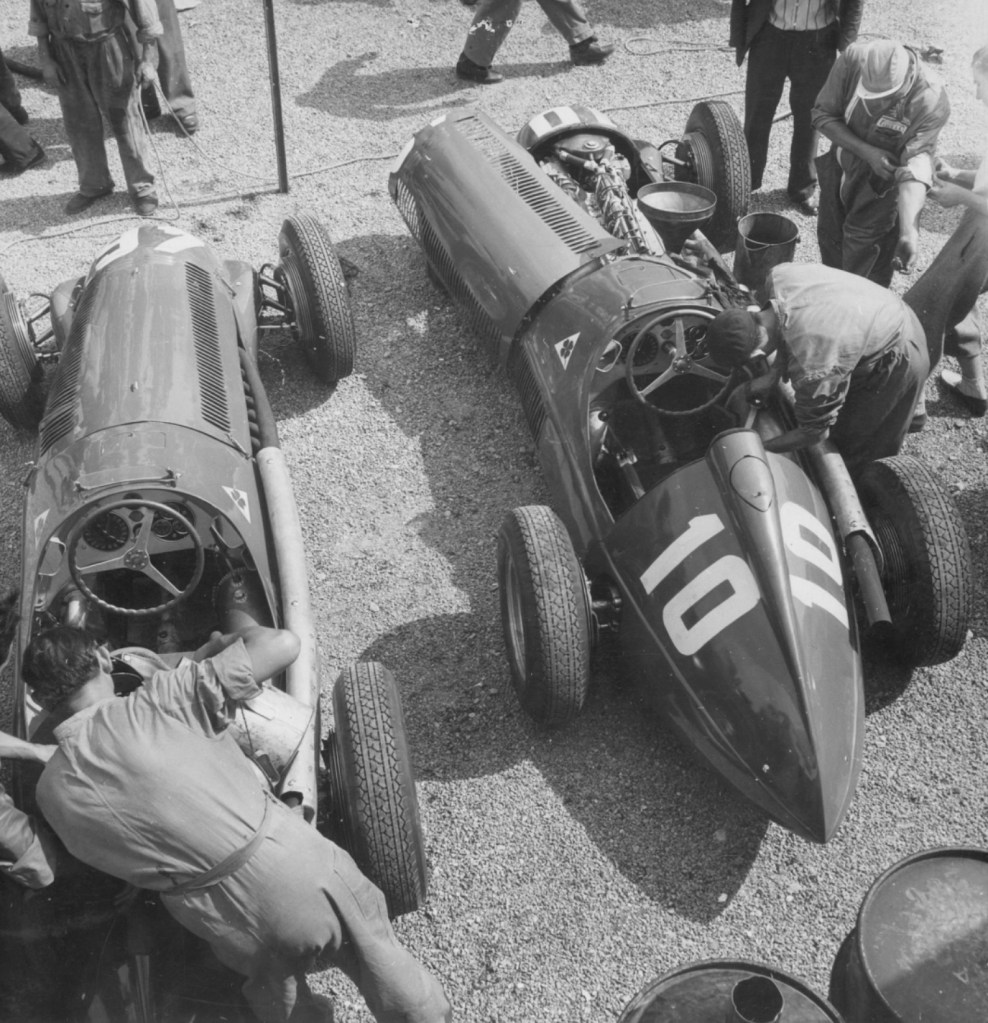
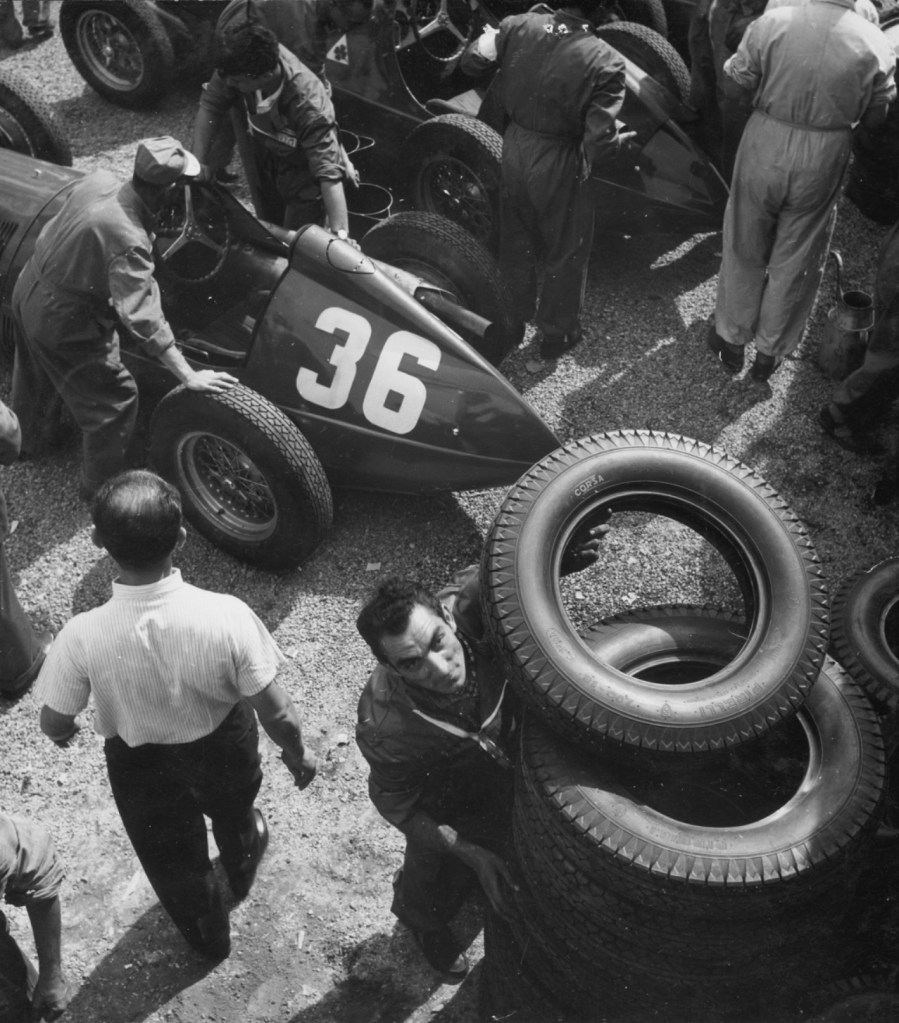
Paddock scenes at Monza during the September 1950 Italian GP weekend.
The Consalvo Sanesi 158, and Giuseppe Farina #10 Alfa Romeo 159 above, and Fagioli’s 158 below. Farina won the race from Alberto Ascari’s Ferrari 375, then Fagioli.
(F Patellani)
Below mechanics attend to the engine of Fagioli’s 158.
1959(Publifoto)
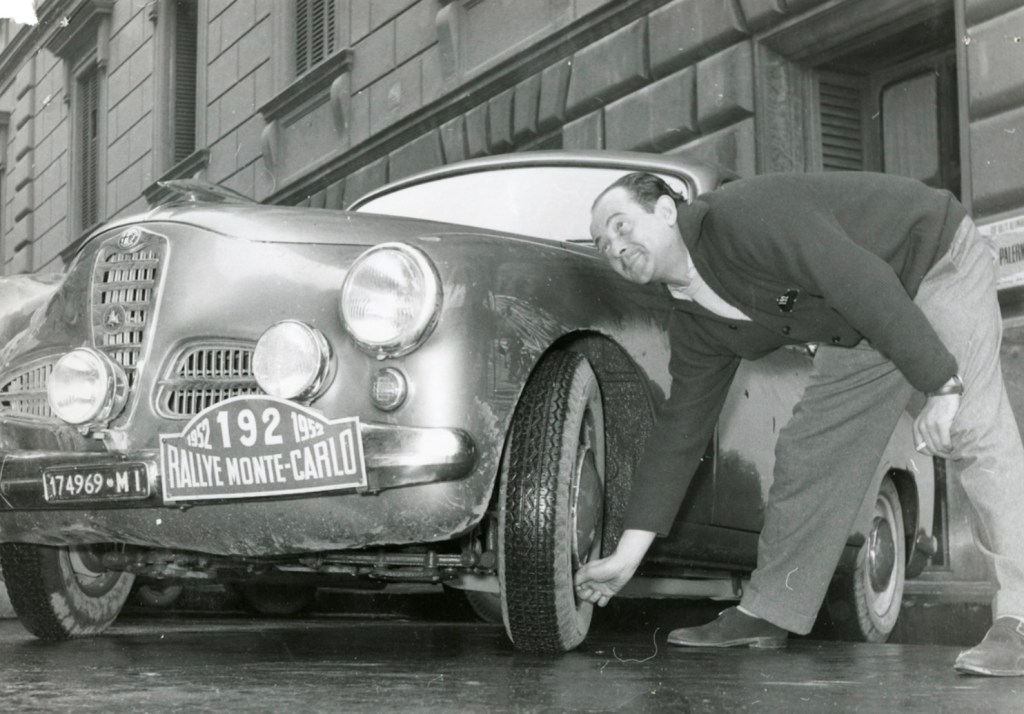
Prince Raimondo Lanza di Trabia inspects his left-front Pirelli, Alfa Romeo 1900 TI during pre-event scrutineering in Milan before the start of the 1952 Monte Carlo Rally.
He was 72nd in the event won by Sydney Allard/Guy Warburton Allard P1, the best of the Alfa’s was the 17th placed Andersson/Lumme 1900TI.
Pirelli Stelvio tyre ad 1956 (L Bonzi)
Count Leonardo Bonzi alongside his Alfa Romeo in Bicocca, Milan before the start of the Mato Gross Rally in 1952.
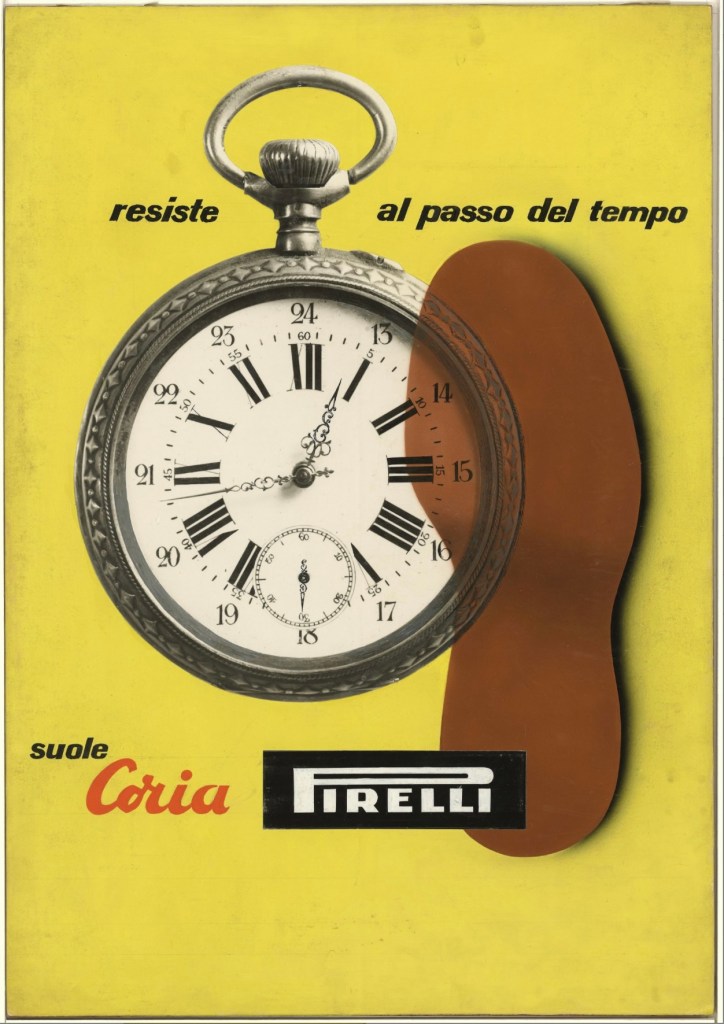
Pirelli Coria soles resist the passage of time Ezio Bonini 1953 (INCOM)
Mille Miglia 1955 start with the Santo Ciocca Alfa Romeo Giulietta Sprint on the ramp DNF. The race was of course won by the Stirling Moss/Denis Jenkinson Mercedes Benz 300SLR.
View of the pits during a soggy August 1949 Pescara Grand Prix weekend. Franco Rol won in his Alfa Romeo 6C2500 SS from Robert Vallone’s Ferrari 166S. Car 10 is Henri Louveau’s third placed Delage D6, #4 Louis Rosier’s Talbot Spéciale (DNS) and car #50, Bormioli’s ?
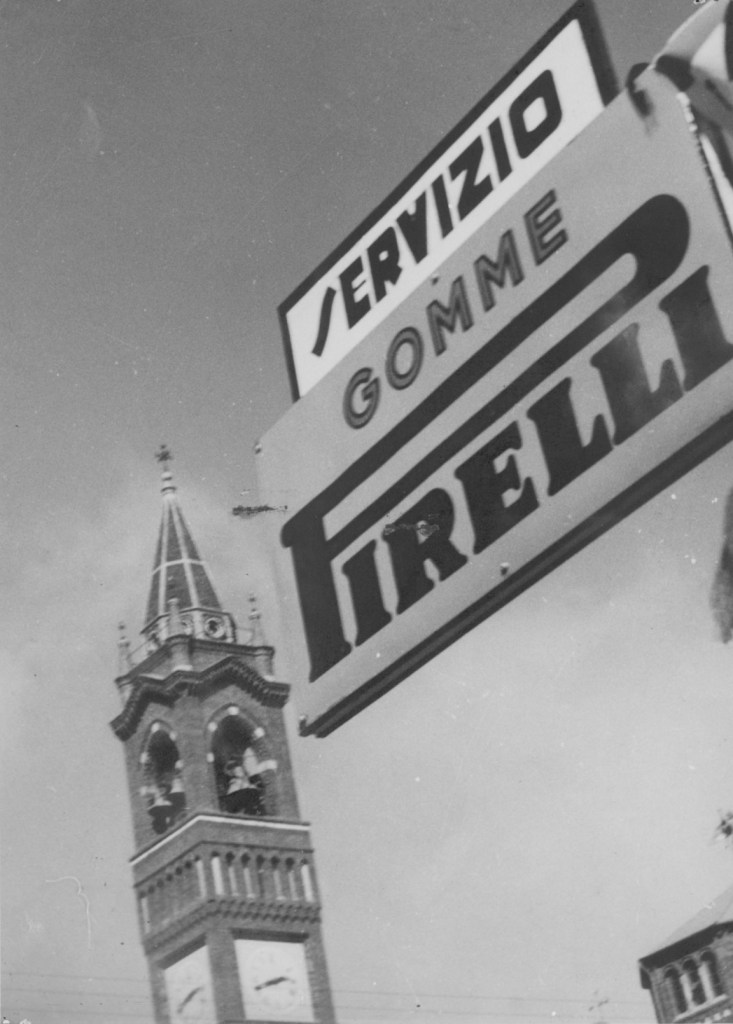
Asmara December 1938, site of the first Coppa di Natale. Behind the Pirelli sign is the Beata Vergine del Rosario church
Credits…
All images are from the Pirelli Foundation archives. Leonardo Bonzi, Publifoto, Federico Patellani. ‘Alfa Romeo A History’ Peter Hull and Roy Slater
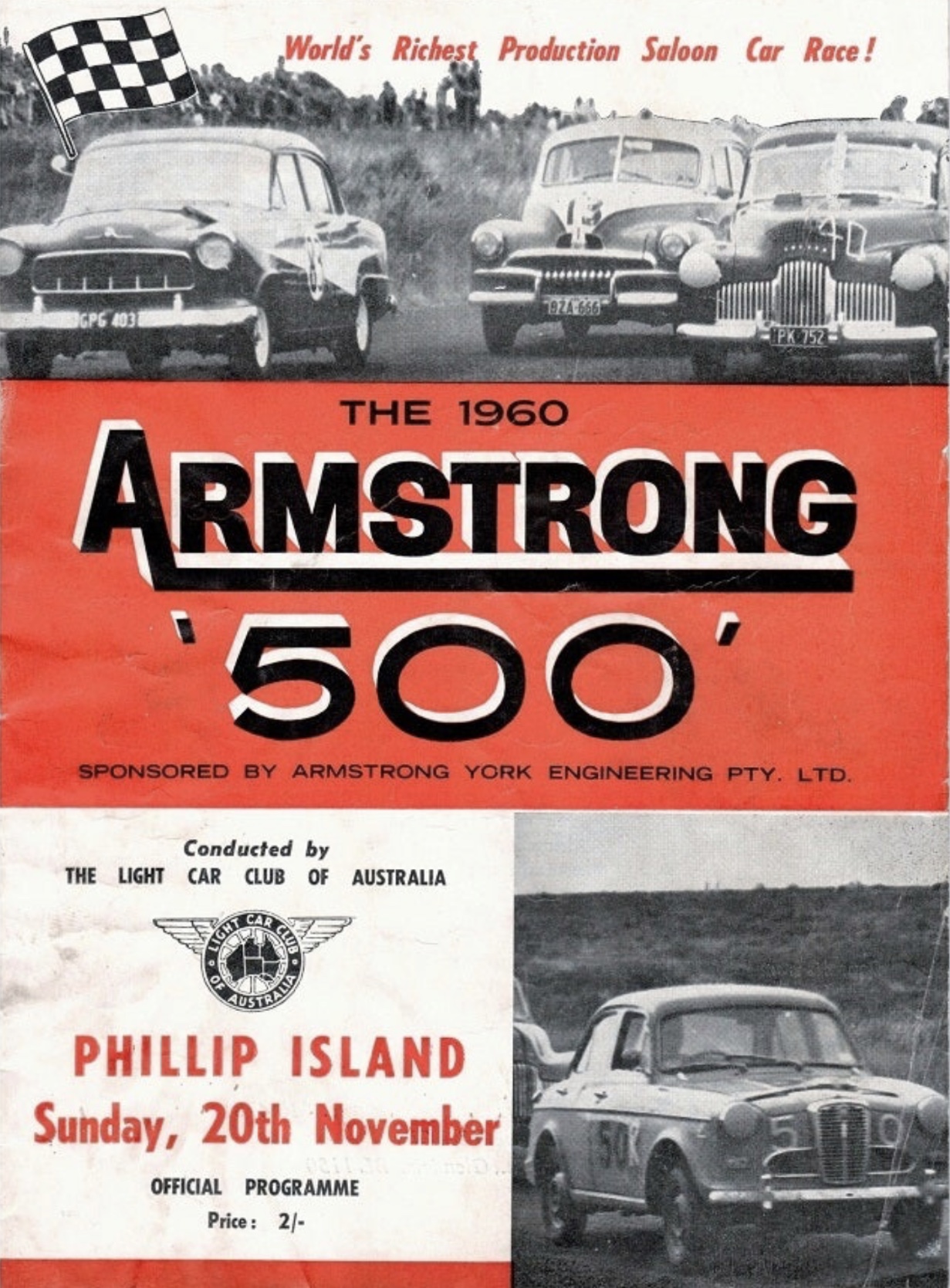
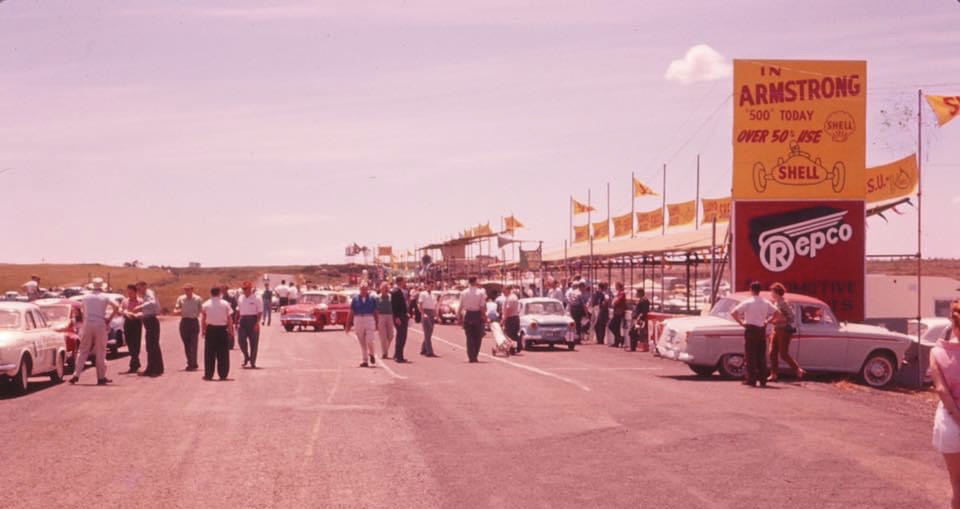
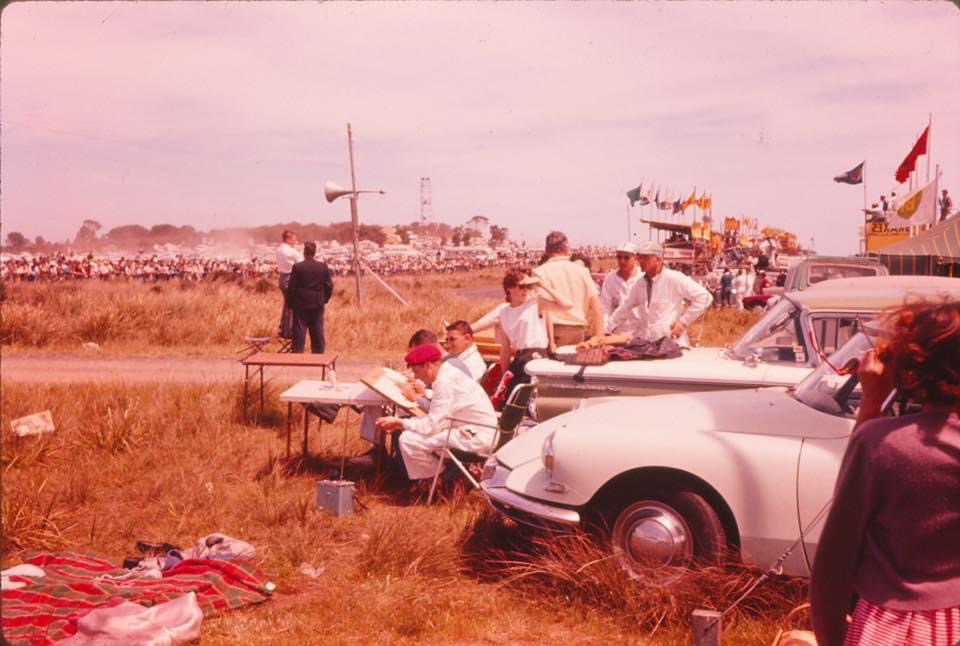
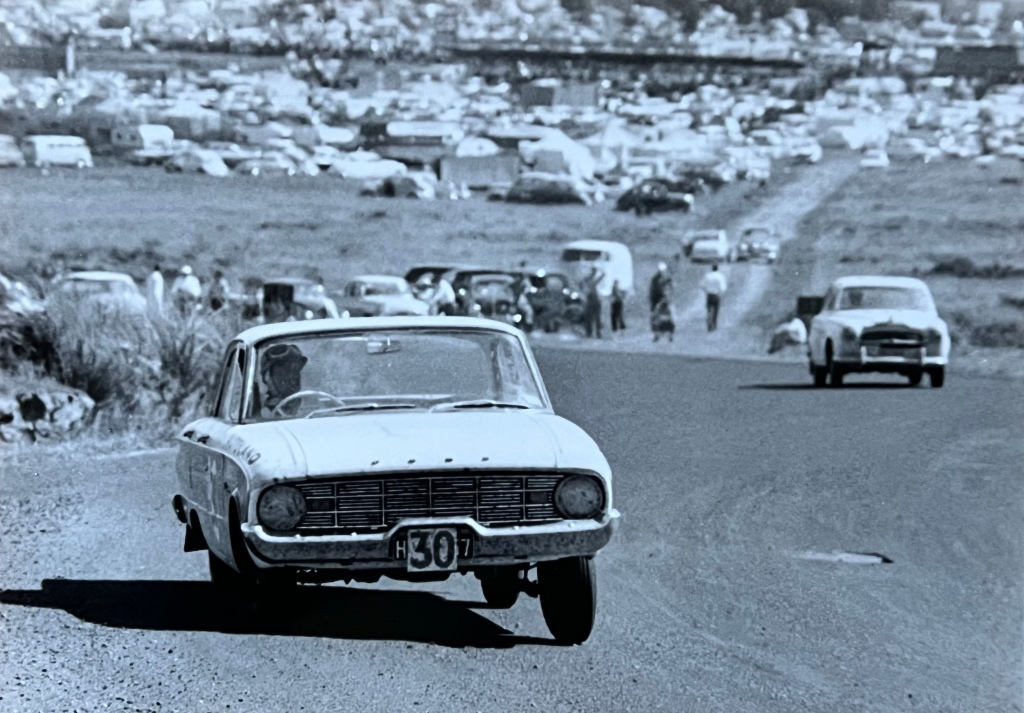
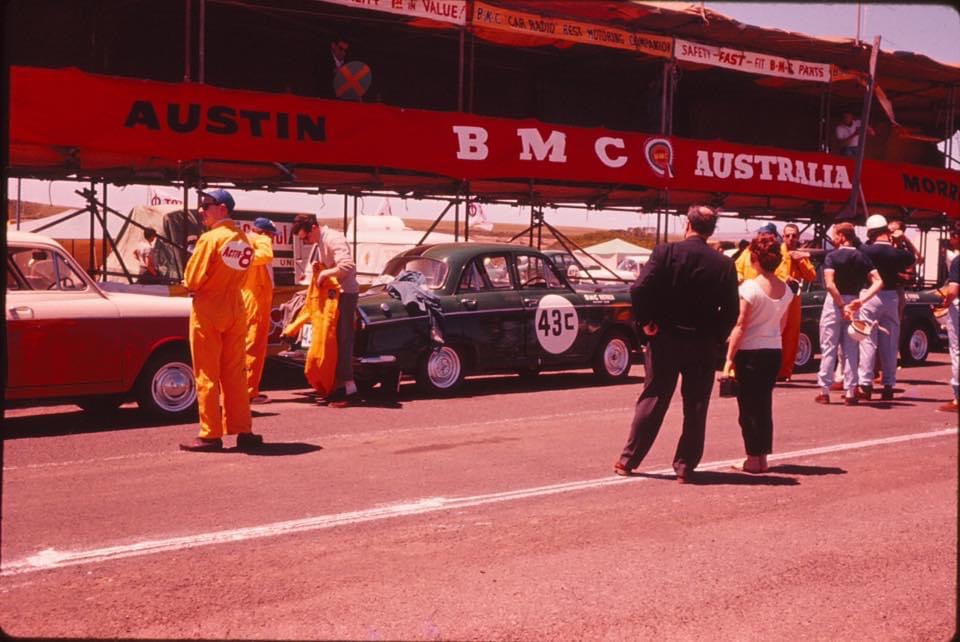
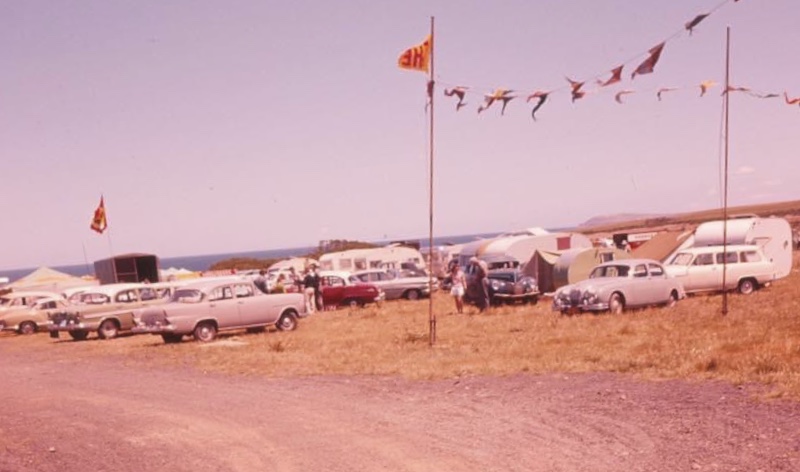
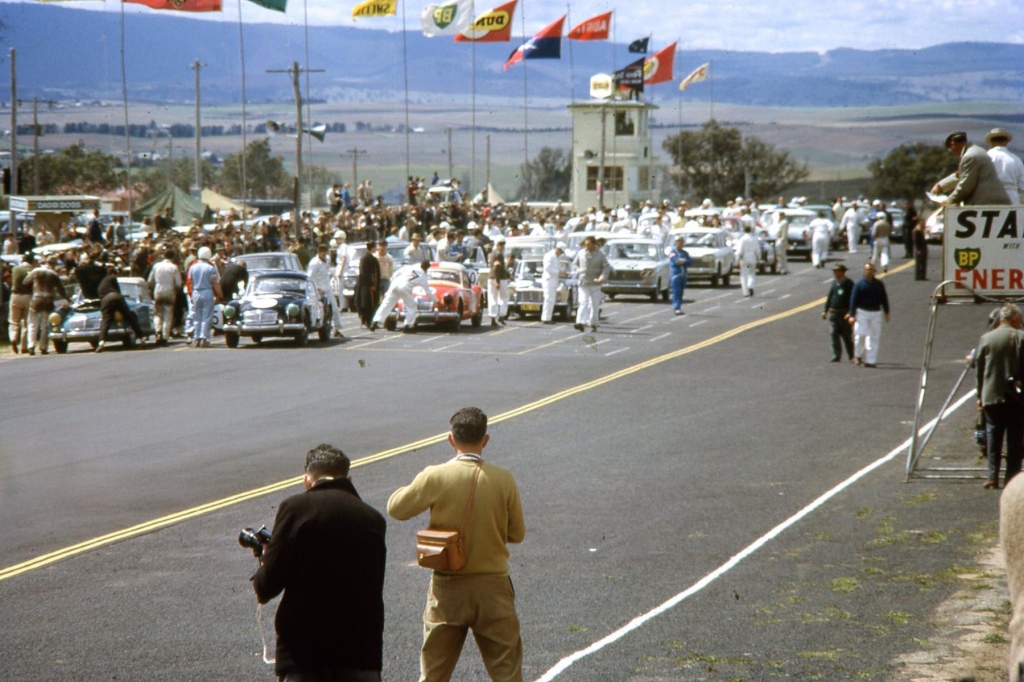
The Light Car Club of Australia ran the ‘Worlds Richest Production Saloon Car race’ – the Armstrong 500 – at Phillip Island on 20 November 1960…
The race soon morphed into the Bathurst 500 – I’m going to ignore sponsors names henceforth – but let’s give credit where it is due to the first commercial supporter of this iconic Australian classic.
Eligibility criteria extended to unmodified production cars manufactured or assembled in Australia. That may sound quite restrictive but in those days, with a nice tall tariff wall to protect the local industry, there was a broad entry of machines across capacity based classes, all chasing a total purse of £11,000.
(M Gallagher)
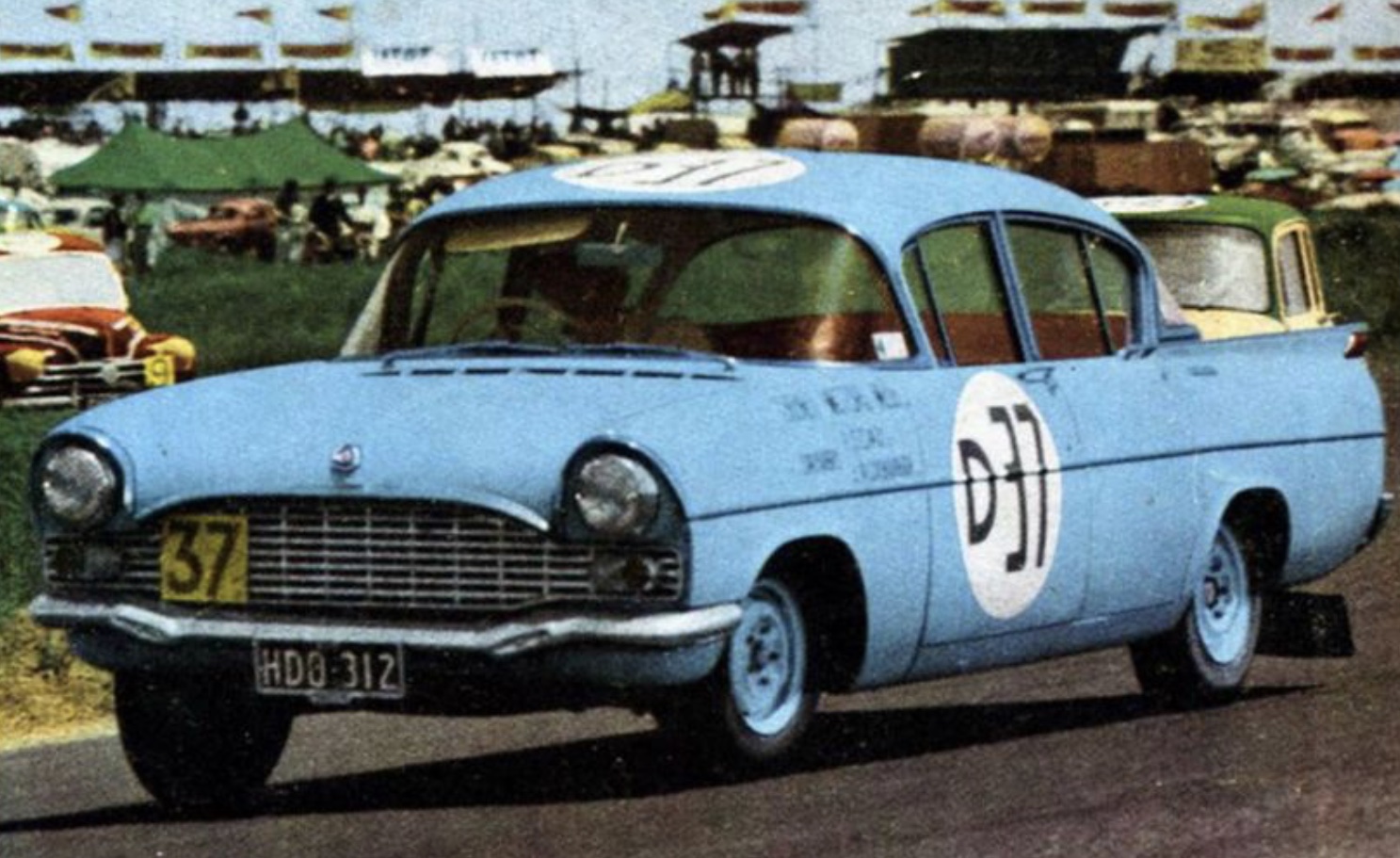
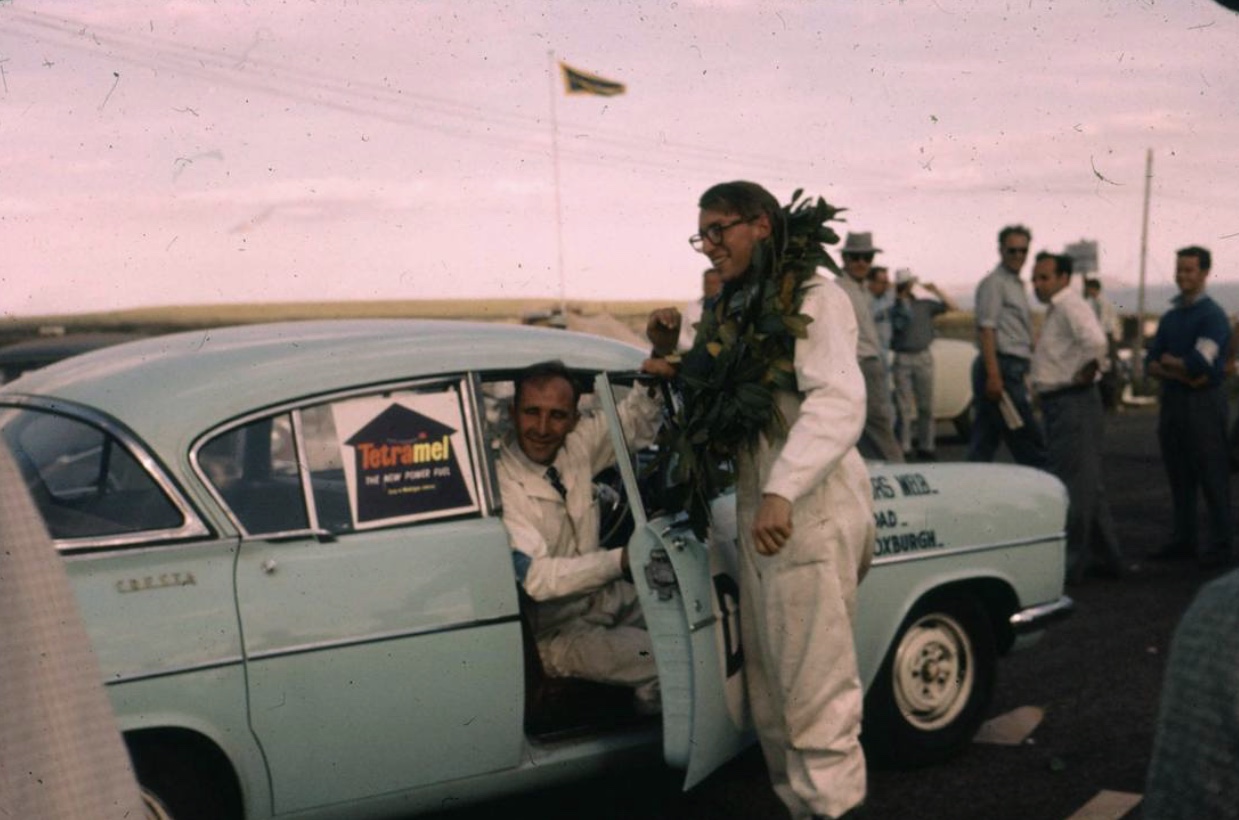
Whilst officially there was no outright victor, class placings were recognised only, as time has gone on, and as part of the ‘Great Race Bathurst Pantheon’ the first car/crew across the line in the early Philip Island events is recognised in the history books. That honour fell to Frank Coad and John Roxburgh in a Vauxhall Cresta in 1960.
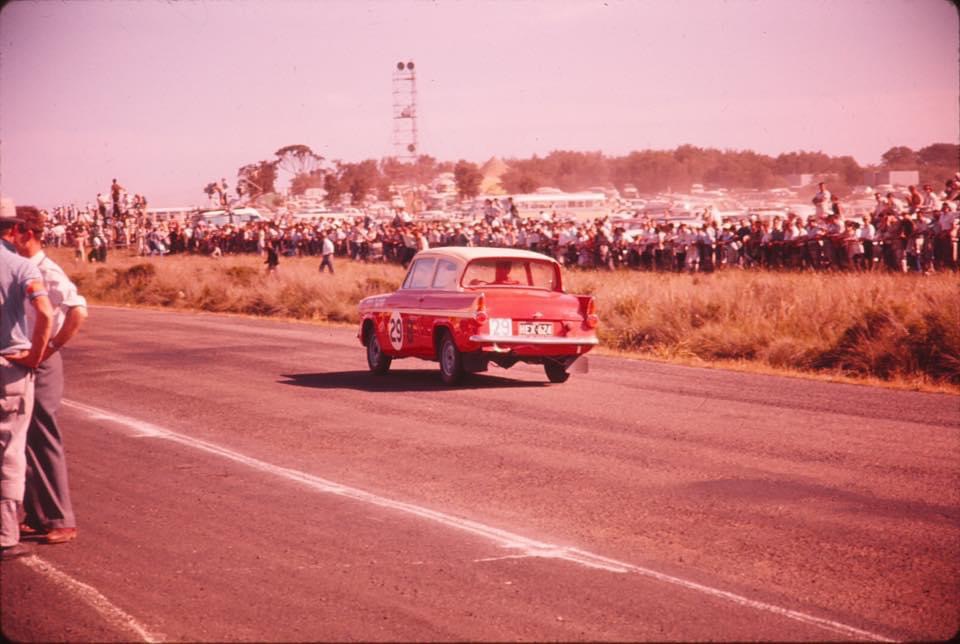
Class A, up to 750cc, was won by Doug Whiteford and Lex Davison in an NSU Prinz, other cars entered included Fiat 600 and Renault 750. Class B, up to 1300cc, was won by the Murray Galt and Bill Murray Sinca Aronde, there was plenty of variety in that mix including Ford Anglia, Renault Dauphine, Triumph Herald and VW Beetle.
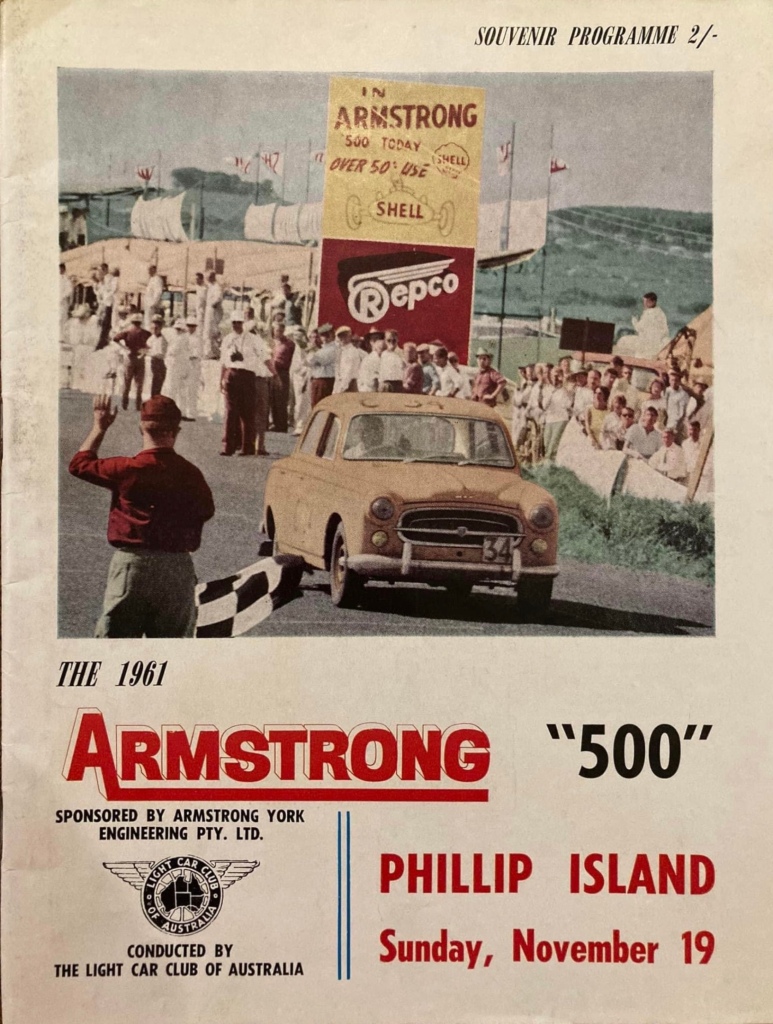
Class C, for under 2-litre cars included Austin Lancer, Hillman Minx, Morris Major and Singer Gazelle, and was won by the Geoff Russell/David Anderson/Tony Loxton, Peugeot 203. Many people to this day believe that car won outright. It’s claimed the trio finished the race in a quicker time than the feted Vauxhall crew, the argument arises due to the starting procedure which released each class at 30 second intervals, click here for the arguments: http://www.pccv.org/wp-content/uploads/2013/07/1stArmstrong500.pdf
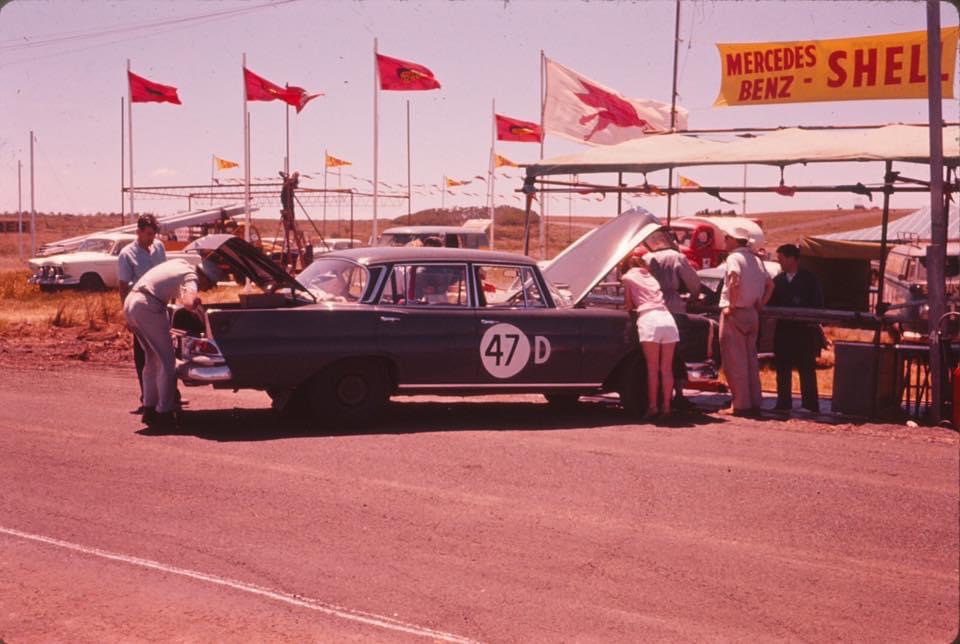
The Coad/Roxburgh Vauxhall took the under 3.5-litre Class D ‘family car class’ which included the likes of the new Ford Falcon, Humber Super Snipe, MercedesBenz 220SE and Vanguard. Ray Gibbs and Murray Carter took Class E for over 3.5-litre cars in a big Ford Customline, no other vehicles ran in the big car class.
The Russell/Anderson/Loxton Peugeot 203 on the cover of the ‘61 programme(M Gallagher)(M Gallagher)
There was plenty of driver talent in the mix including Australian Grand Prix winners Lex Davison, Doug Whiteford and Bill Murray, and other well credentialed open wheeler racers Jim Gullan, Ern Seeliger, Arthur and Ken Wylie, Paul England, David McKay, Austin Miller and Bruce Walton.
Sportscar topliners included Bill Pitt, Ron Phillips, Murray Carter, Lou Molina and Bob Jane whilst established touring car racers were Harry Firth, Leo Geoghegan and Des West, prominent rally drivers Firth, Jack Murray, Eddie Perkins and Graham Hoinville.
There were a staggering number of up-and comers or future champions including Frank Kilfoyle, Greg Cusack, Peter Manton, Bob Holden, Brian Muir, Jim Smith, John Raeburn, Brian Foley, Norm Beechey, John French, Gavin and John Youl. Quite a list and almost all were in ‘works entries’ such was the level of industry support.
Lap scorers settle in for a long day (M Gallagher)The Bob Jane/Lou Molina – looks like Lou at the helm – Ford Falcon ahead of one of the Peugeot 403s (unattributed)The works Morris Major raced by Rod Murphy/John Callaway, sixth in C-class (M Gallagher)
The Phillip Island years ran from 1960 to 1962: Harry Firth and Bob Jane won in 1961 and 1962 aboard a Mercedes 220SE and Ford Falcon XL respectively. The ’62 race did irreparable damage to the road surface which could not cost-effectively be made good due to an inability to get the right road-making machine across the then narrow bridge between San Remo in ‘Australia’ and Newhaven on the ‘Peoples Republik of Phillip Island’..
For 1963 the first of the Bathurst 500s were held at Mount Panorama, a tradition which of course continues to this day as a 1000 km event of global interest.
(M Gallagher)
Eighth in Class B – 15 starters – the Bill Calder/John Ampt Ford Anglia.
Etcetera…
(F Fleming Collection)
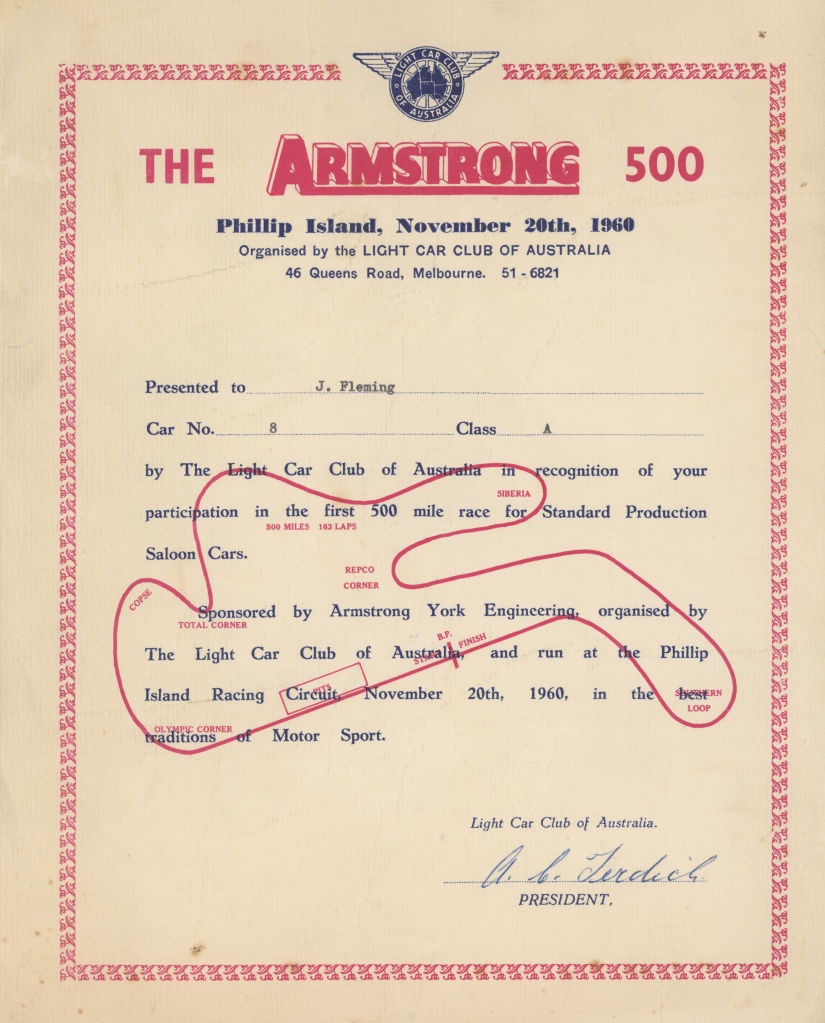
Noted Austin 7 builder/racer, the late John Fleming’s certificate of participation. Wonderful stuff thanks Tony Johns.
(M Gallagher)
The Youl Bros, Gavin and John, Smith Street Motors entered Mercedes Benz 220SE. DNF after 67 laps.
(M Gallagher)
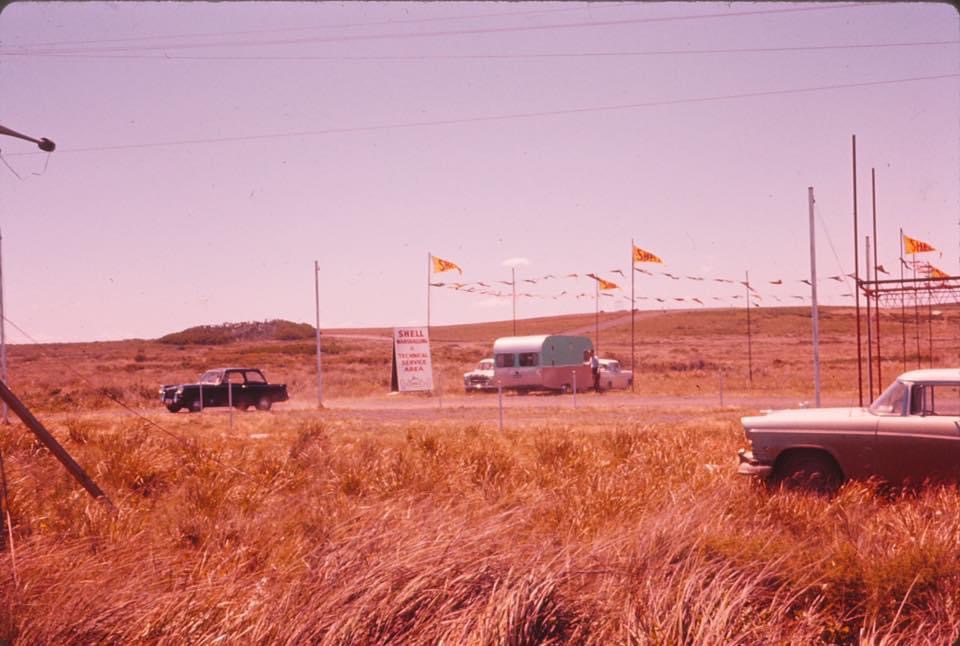
View towards The Copse.
Etcetera…
Some comments from my old Formula Ford mate, Bob Morrow.
“I was at the 1960 Armstrong 500 and it was a great event. There was no outright winner but everyone knew who it was , however there was heaps of interest in the classes.
Interesting facts
1 Why no Holdens?
There was lots of private practice before the event and it was found that after 2 laps the Holden’ big ends were shot due to horrific oil surge. Apart from Armstrong shockers [obviously] and straight out exhausts so at least they sounded like racing cars, cars had to be absolutely bog-standard
2. If you had to work on the car in the first 100 miles you could only use the tools that came with the car when new.
Those were the days…”
Credits…
Martin Gallagher, Fiona Fleming Collection
Tailpiece…
One helluva garland for Frank Coad and John Roxburgh.
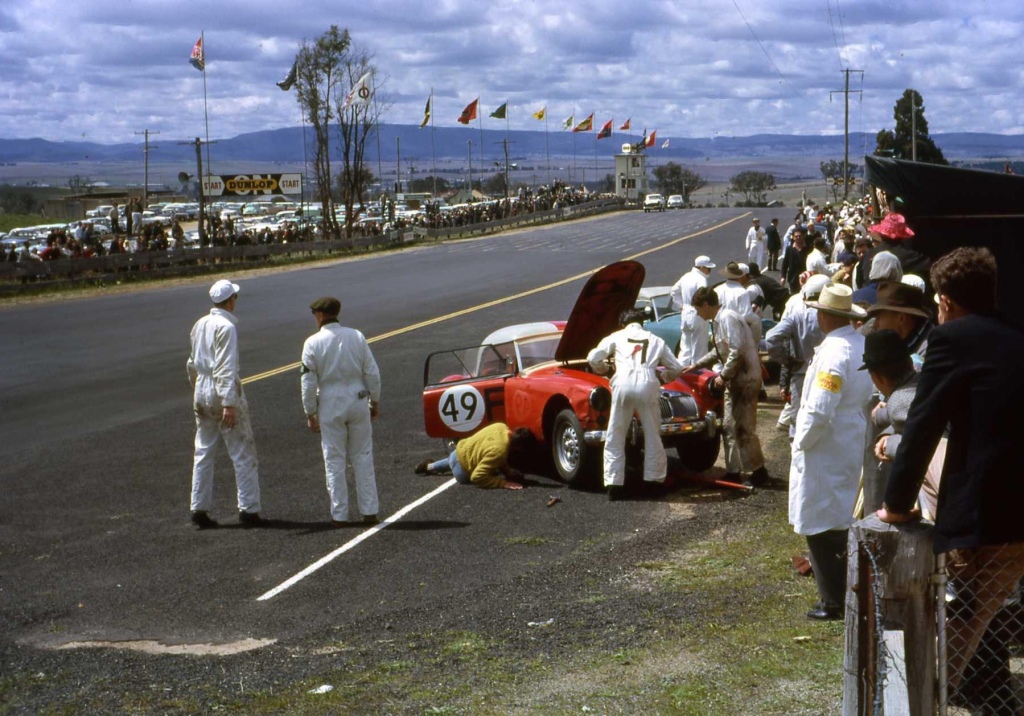
The grid gets way at the start of the September 30, 1962 Bathurst 6-Hour Classic. The entry comprised a mix of production sports and touring cars divided into price based classes. The front row comprises the three MGA Twin-Cams of Matt Daddo/Bill Stanley, N Claydon/Fred Gibson and Clarke/Lazich, with the C Lansdowne/Dianne Walker Triumph TR4 on the inside.
The Bathurst promoters, the Australian Racing Drivers Club, perhaps ran the event off the back of the success of the Phillip Island 500-milers (Armstrong 500) first run in 1960, which would soon after become the ARDC’s after the debacle of the Phillip Island October 1962 event in which the track surface famously, in essence, fell to bits.
(B Richards)
A total of £3,000 in prize money was split evenly among the classes or divisions: A-production touring cars up to £900, B-production touring cars £901-£1050, C-production touring cars £1051-£1250, D-production touring cars £1251-£1700, E-production sportscars up to £1500, F-production sportscars £1501-£2000.
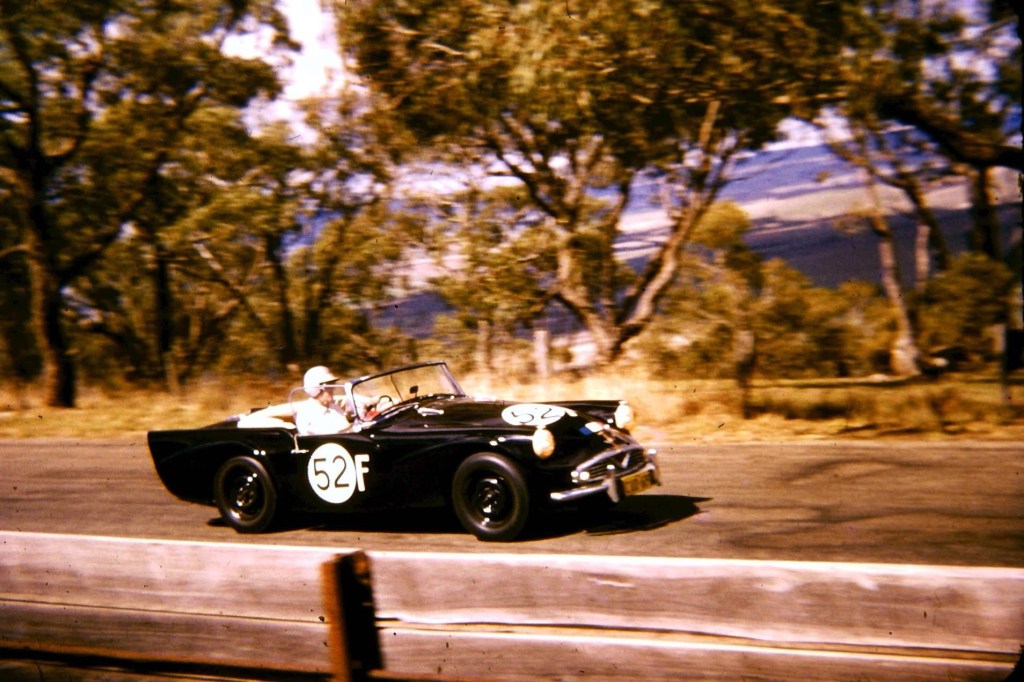
While there was officially no outright winner, the interest of the punters was amongst the top-guns which included the V8s: Studebaker Larks, the brothers Geoghegan’s Daimler SP250 and potentially the best of the little-cars, the Bruce McPhee/Barry Mulholland Morris Cooper.
What strikes me now is that the entry list was a who’s-who of (mainly) New South Wales stars of the day and of the immediate future with a swag of Gold Star, Australian Touring Car and Sportscar Championship, and Bathurst winners in the mix.
It appears that the sportscars had to start with their tops up, so this is practice or the first stint for Leo and Pete Geoghegan’s winning Geoghegan Sports Cars entered and prepared Daimler SP250 (B Wells)Pete Geoghegan blasting across the top of the mountain. Alan Howard said of his shot, ‘You can see the bit of rope used to hold the drivers door closed late in the race.’ (A Howard)
Morris 850s dominated Division A – 14 cars, of which all but one finished – where the winners were Frank Kleinigs senior and junior. Kleinig Snr was an Australian great pre-and post-war and always polls well in lists of Greatest Australian Drivers Never to Win an AGP. Junior was no slouch either as a racer and constructor of Formula Vees. There was no shortage of notables in this class including Des West, Bill Pitt, Arnold Glass, John French and Paul Bolton, while Tom Sulman would have run Kleinig Snr close in a contest for who started racing first.
Seven cars contested Division B, the victors were John Martin and C Hodges in a Skoda Felicia of all things. This group included cars raced by Ron Hodgson, Digby Cooke, Alan Heasman, Peter Wherrett, Doug Stewart and Alan Stanfield.
Bruce McPhee and Barry Mulholland went on to win the Bathurst 500 outright aboard an HK Holden Monaro GTS327 in 1968, they prevailed in Division C where Bob Jane and Harry Firth were much fancied in a works-Ford Falcon XK.
The Jane/Firth C Division Ford Falcon XK from the ‘E’ MGA 1600 driven by K John/Peter Caldecoat (B Wells)Lap 39, Firth is ok and out of the Falcon via the back window but she needs a turret! Bob Williamson recalled, “They towed the Falcon up the escape-road on its roof with a tractor. You should have heard the noise, roof on a gravel road.” (B Richards)
Ford planned to race their new Falcon XL in the Armstrong 500 at the Island on 21 October, in addition they decided, wisely, to contest the Bathurst Six Hour Classic to be held only three weeks before. The catch was that Ford didn’t want to race the XL at Mount Panorama so Firth set about preparing an XK Falcon for the race.
Firth takes up the story in his typically self-serving way, “Having not been to Bathurst for some years, I had to rely on hearsay information like, “no, it is not hard on brakes and the circuit has not changed. I did all the usual things such as a valve grind, compression check, set the camshaft properly, gave the pistons plenty of clearance, deck-heighted the head and put the engine on the dyno.”
“I fitted a set of heavy Armstrong shockers and some well-worn springs. I made up some Ferodo brake shoes but ended up leaving them at home, thinking they wouldn’t be needed. I drove the car to Bathurst myself. Practice proved two things: the car was the fastest sedan and the brakes were not good enough.”
The Jim Clarke/A Lazich MGA Twin-Cam receives some attention, DNF (B Richards)
The two wily Melbourne racers – who went on to win three of these Phillip Island and Bathurst 500s together – led their class early, but the brakes were progressively showing signs of stress as the pedal crept inexorably closer to the floor.
Harry took over from Bob after a scheduled stop and then on lap 39 “As he braked for Hell Corner, the fronts suddenly over-energised and locked on, the nose dug in and the car rolled.” The roof was crushed with Harry extremely lucky he wasn’t badly hurt, the car had no roll bar or cage of course. He exited via the rear window as fuel spilt over the tarmac, but did not ignite.
The Division D winning Studebaker Lark raced by Algie/Hibbard. I’m old enough to remember when these beasts were popular cop-cars in Australia (B Wells)
Division D’s 10 car entry included three Studebaker Larks, with the Don Algie/Kingsley Hubbard entry the winner on 99 laps, then the well credentialed David McKay/Greg Cusack duo in a Fiat 1500 from Peter Williamson and K Whiteley third in another Fiat 1500. Other notables in that class were Bill Buckle, Brian Foley and George Murray.
Only four cars contested Division E, with the Tony Reynolds/Les Howard Morgan Plus 4 ahead of the Bill Reynolds/Kevin Bartlett Austin Healey Sprite Mk1.
The Geoghegans won Division F for the more expensive sportscars from the G Lansdowne/Holt Bonnie Triumph TR4. The Top-Three outright were the Geoghegan Daimler on 104 laps, then the Lansdowne/Binnie TR4 on 100 and the Algie/Hibbard Studebaker with 99 completed laps.
The entries for this race are staggering in their diversity, here the fourth in Division D Scuderia Veloce Citroen ID19 driven by Bill Buckle and Brian Foley (B Wells)
Credits…
Bill Richards, Bruce Wells, Shannons Falcon XK article by Mark Oastler, SS Auto Memorabilia, Alan Howard
Tailpiece…
(SS Auto Memorabilia)
Leo Geohegan at the wheel of the winning Daimler SP250 above and below. With a 2.5-litre V8 and light fibreglass body it proved a quick car but the duo had some challenges, most notably the drivers door opening on a regular basis as the body flexed, and the loss of first gear on the start-line.

































 primotipo...