Archive for the ‘Who,What,Where & When…?’ Category

mille miglis

(Max Staub)

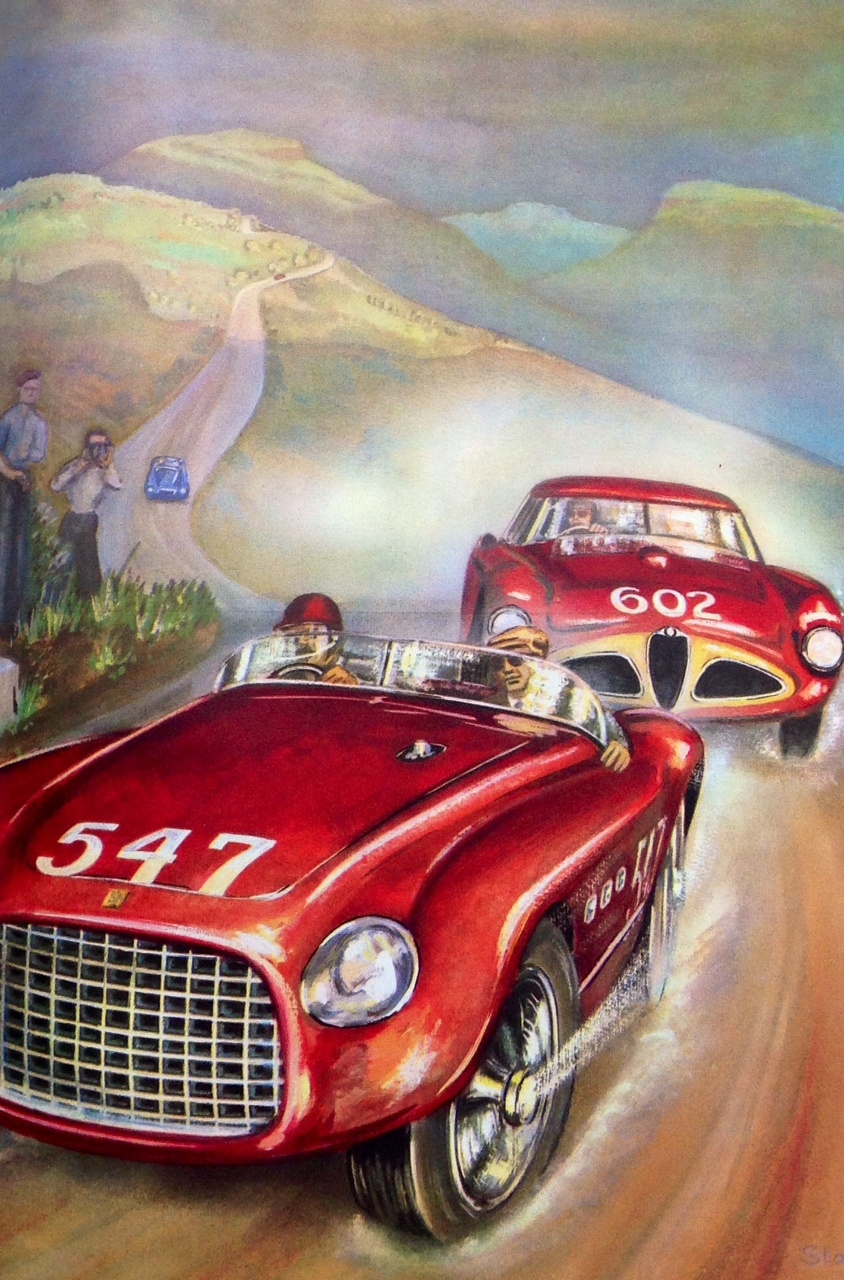
Count Giannino Marzotto and Nearco Crosaro spur their Ferrari 340MM on ahead of Fangio’s Alfa Romeo 6C3000CM during the 1953 Mille Miglia…

The Italian duo won the race, held from 25-26 April by nearly 12 minutes over Fangio’s car navigated by Giulio Sala and Felice Bonetto/U Peruzzi Lancia D20.

The new Alfa’s, powered by a 3 litre DOHC 6 cylinder engine led 4/5ths of the race but Marzotto’s victory was emphatic, he broke  the average speed record set in 1938, leaving it at 142kmh.

Credit…Max Staub

l illustre

The ’23 French GP was held on the ‘Circuit de Touraine’ Tours on 2 July was won by Henry Segrave in a Sunbeam…

The Le Petit Journal illustration depicts the 3rd placed Bugatti T32 ‘Tank’ of Ernest Friderich ahead of Segrave’s winning 2 litre, 4 cylinder Sunbeam. The course was 22.8Km, the total distance of 799Km took Segrave 6:35.19, Albert Divo 2nd in another Sunbeam is portrayed in the distance.

Credits…

Le Petit Journal

Tailpiece…

image


image

Tazio Nuvolari in his Scuderia Ferrari Alfa Romeo P3/Tipo B after winning the ’35 Pau Grand Prix…

Nuvolari and Rene Dreyfus dominated the 25 February 80 lap, 137 mile race in their Scuderia Ferrari P3’s finishing 1st and 2nd, Rene 26 seconds adrift of his team leader. Tazio was so happy, he did not one but two victory laps, the shot above is the end of the celebration!

image


Credits…

Keystone France

image

Dreyfus ahead of Nuvolari, Pau 1935. Alfa P3, 3.2 litre straight 8 (Keystone)


image

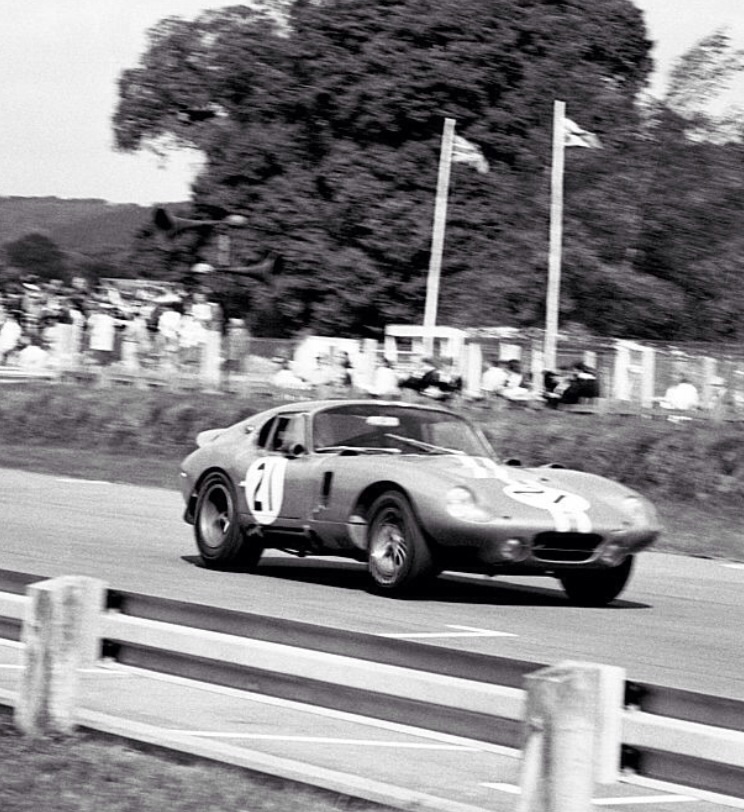
Jack Sears chases Graham Hill, #21 Dan Gurney, Denny Hulme and Mike Salmon in line astern; AC Shelby Cobra, Ferrari 330P, Shelby Cobra Daytona Coupe, Brabham BT8 Climax and Aston Martin DP214, 29 August 1964…

This group of cars is indicative of the quality of the field, Hill won the race of changing fortunes from David Piper’s Ferrari 250LM and Dan Gurney’s Shelby Cobra Daytona Coupe.

image
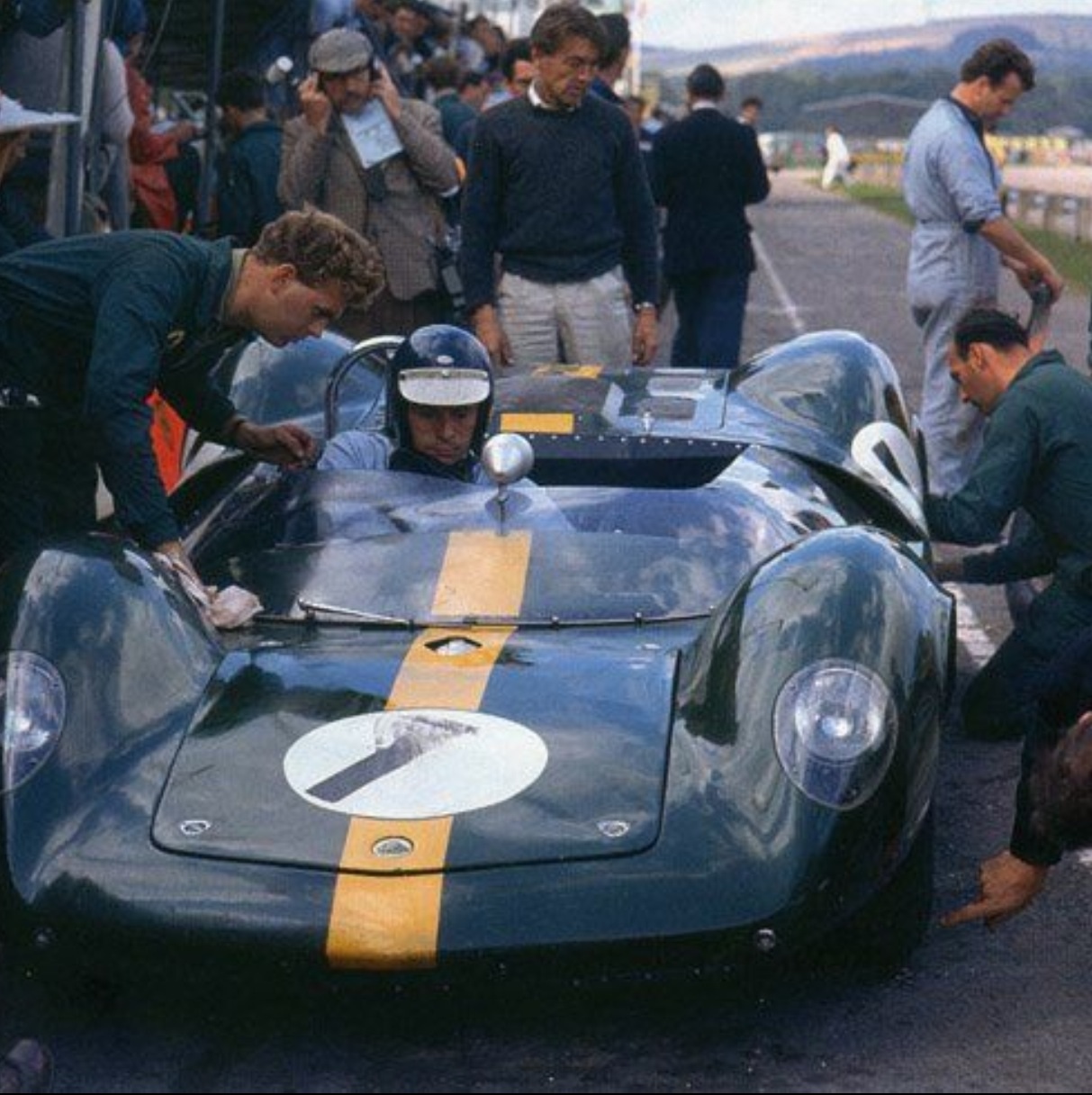
Clark and Lotus 30 Ford during practice. Thats Team Lotus’ Jim Endruweit behind the car and deer-stalker topped John Bolster with the headset on. Pitstops during the race not so serene! (unattributed)

Entry…

The Tourist Trophy is a much coveted sportscar victory, the 29th running of the classic at Goodwood on 29 August 1964 was no exception to the strong field of entrants…

The drawcards were GeePee drivers Bruce McLaren, Jim Clark and Graham Hill in outright contenders: ex-Penske ‘Zerex Spl’ Cooper Olds, works Lotus 30 Ford and Maranello Concessionaires Ferrari 330P respectively. Other potential frontrunners were David Piper’s Ferrari 250LM and five AC Shelby Cobras driven by Dan Gurney, Phil Hill, Jack Sears, Bob Olthoff and Roy Salvadori.

Denny Hulme and Hugh Dibley raced Brabham BT8 Climaxes. John Surtees, Richie Ginther, Innes Ireland and Tony Maggs Ferrari GTOs. Most of the drivers elected to race the 132 miles solo, it was a  typically spectacular international grid of sporties of the day.

image
Goodwood paddock; #23 Jack Sears Shelby Cobra, #22 Phil Hill and alongside him, Dan Gurney in Shelby Cobra Daytona Coupes (unattributed)

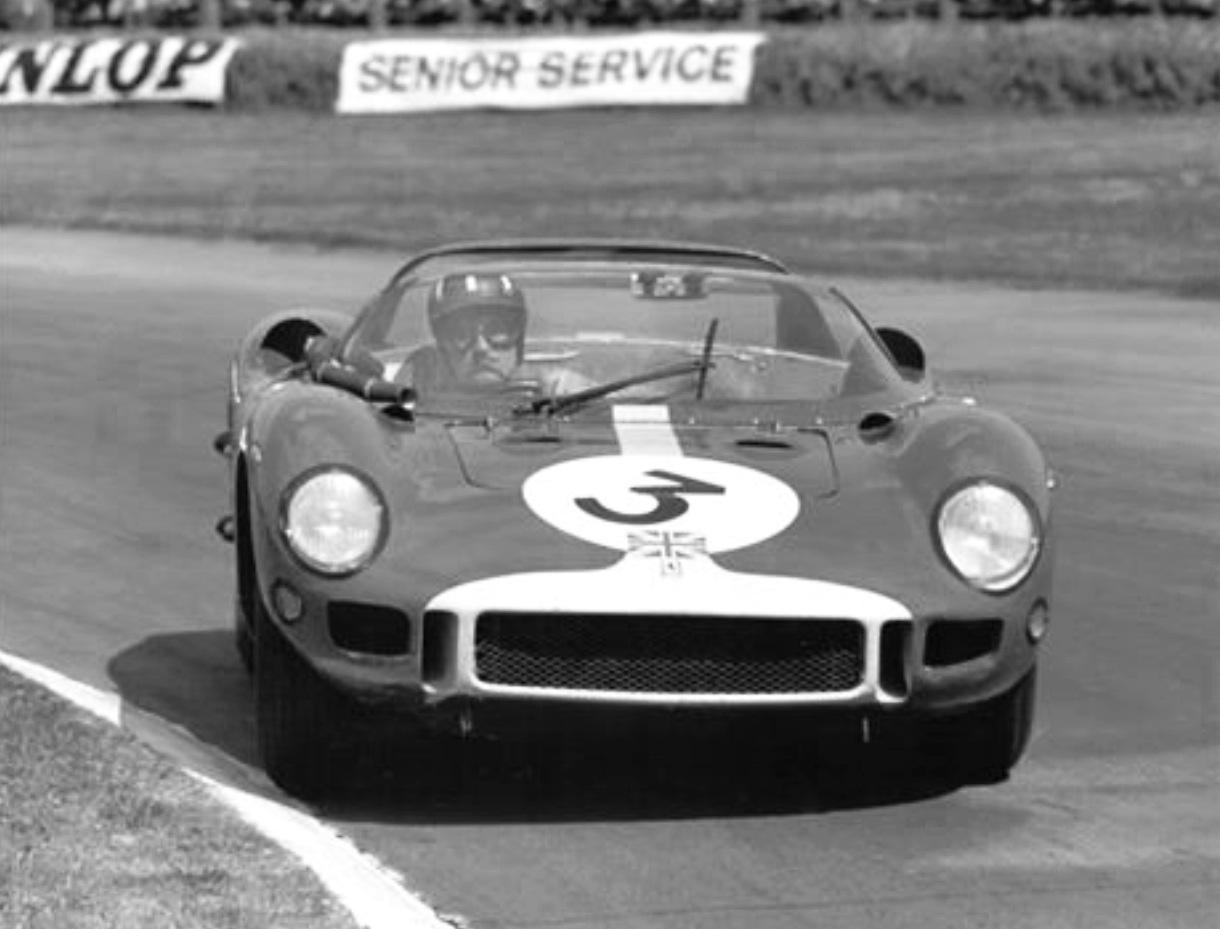
Graham Hill ponders the speed of his Maranello Concessionaires entered 4-litre Ferrari 330P chassis #0818 during practice. It may not have been the quickest car in the race but it had the endurance the Group 7 sprinters lacked.

image
goo start
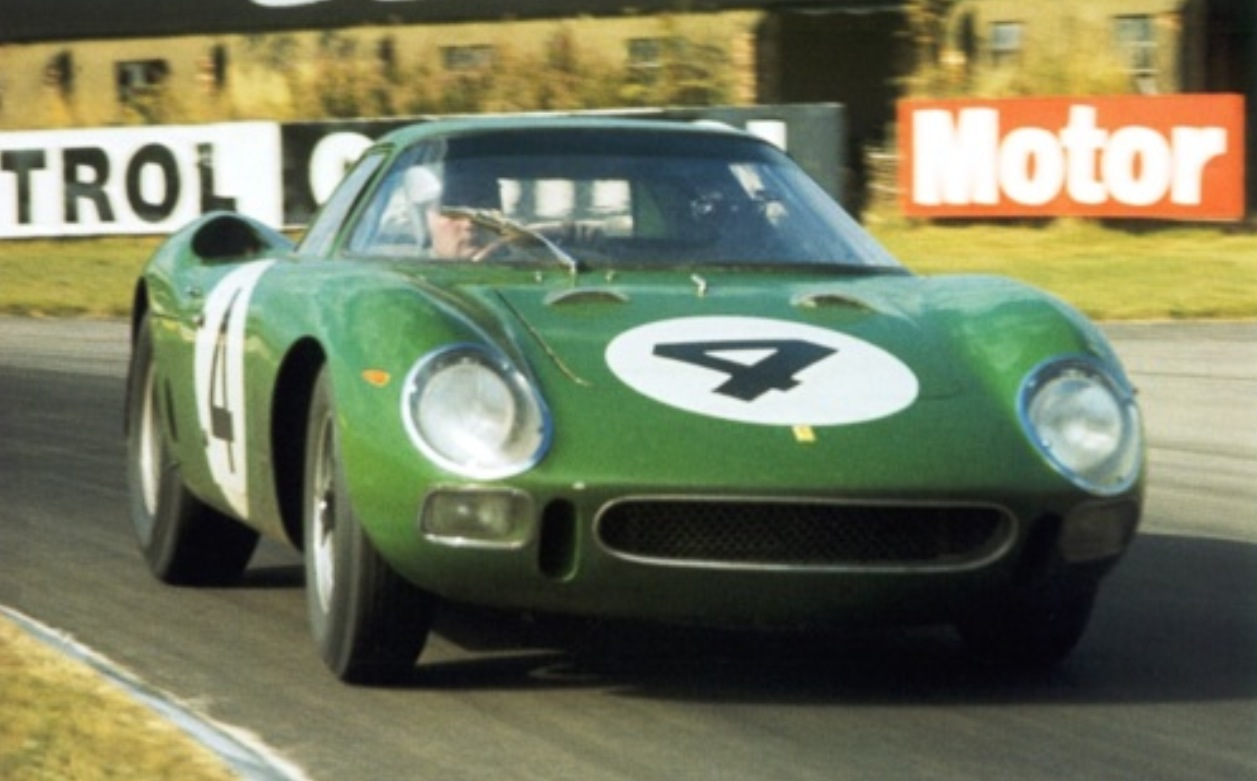
The start, front row L>R; McLaren, Clark and Hill, Hugh Dibley in the white Brabham BT8 Climax, #4 Piper Ferrari 250LM (unattributed)

The Race…

Bruce popped the Zerex on pole from Clark, Hill and Dibley. Dan was the quickest of the GTs in his big, booming Cobra.

From the start McLaren led from a ‘very busy’ Clark, the Lotus much more of a handful than Bruce’s mongrel-Cooper T51 based special! Denny was third in his nimble Brabham with Trevor Taylor’s Elva BMW in fourth. Bruce’ clutch failed to transmit the power of his ally-Olds V8 and retired. The order was then Clark, Hulme, Taylor and Hill G. After 25 laps Piper and Salvadori were a lap back such was the pace of the frontrunners.

image
Dan Gurney was third in the best placed Shelby American entered Daytona Cobra Coupe (Getty)
image
(LAT)

Graham Hill spun the Ferrari at Woodcote on lap 17, Tony Maggs whips past in David Piper’s Ferrari GTO, the South African finished tenth.

Graham started to push, coming up to third, then second. Clark pitted for fuel on lap 64 giving Hill the lead, more drama for Clark as the Lotus had been under-filled, another 15 gallons were added, and oil, then the hot motor wouldn’t fire; by this stage Hill was nearly a minute up the road.

Clark then treated the crowd to a superb demonstration of on the limit driving ‘… in a hurry, needing all the road. He would come out of Woodcote, dust rising as the tail of the Lotus 30 touched the verge, accelerate in a burst of power that lifted the nose, slip through the chicane and like as not use the kerb out of it to bounce the car straight. Stop watches were out, Clark might close on Hill a couple of laps from the end…’

But it was not to be, Clark made a third pitstop when the car felt odd, the diagnosis was a bottom wishbone locking ring had slackened off and was contacting a front wheel, so Graham Hill’s 330P Ferrari won from Piper’s 250LM, then came the AC Cobras of Gurney, Sears and Olthoff in coupe, sports and hardtop respectively! Hills average speed was 97.13mph and Bruce McLaren set a new sportscr car lap record of 1:23.8 in the Zerex Cooper Olds before his retirement early in the race.

Etcetera…

goo piper
David Piper’s Ferrari 250LM (unattributed)
goo hill
Hill, Fazz 330P (unattributed)

Credits…

MotorSport October 1964, Sutton Images, LAT

Tailpiece…

image
(Sutton)

The TT would have been a nice win for the Lotus 30 Ford, not Chapman’s greatest bit of work. Clark at speed…

Finito…

image

(Jonathon Ferrey)

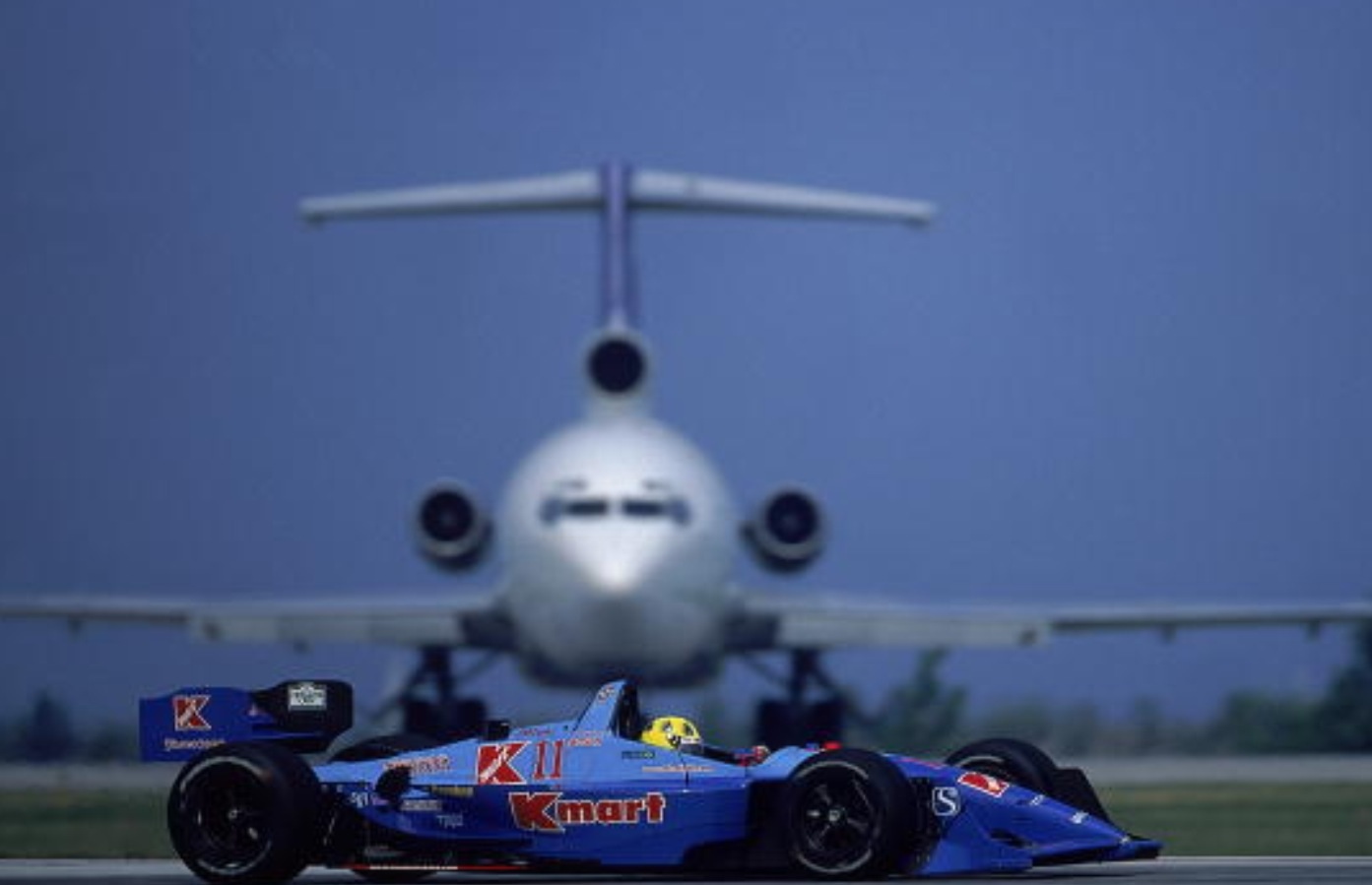
Christian Fittipaldi’s Newman-Haas Lola Toyota during the Marconi Cleveland Grand Prix at Burke Lakefront Airport on 30 June 2001…

This popular race was held 26 times in Cleveland, Ohio from 1982 to 2007, the operational airport was closed for racing one week a year and converted to a course which was tough for drivers and superb for spectators. Its wide, flat expanses meant punters could see most of the track from the grandstands, the races noted for lots of wheel to wheel dicing and many passing zones.

dqario boat

Dario Franchitti passes a ship on Lake Erie, Cleveland 2001 (David Maxwell)

The 2001 race was won by Dario Franchitti from Memo Gidley and Bryan Herta the variety in this wonderful class demonstrated by the cars used; Reynard 01i Honda, Lola B1/00 Toyota and Reynard 01i Ford respectively! I loathe the plethora of controlled formulae globally today. Christian Fittipaldi qualified his Lola B1/00 Toyota 15th and finished 11th. Gil de Ferran won the CART title that year in a Team Penske run Reynard 01i Honda.

Credit…

Jonathon Ferrey, David Maxwell

Tailpiece: Dario Franchitti’s winning Reynard Honda…

dario plane

(unattributed)


image

James Hunt dives for the inside line in his March 713S Ford, AJ and his Brabham BT28 Ford has left a gap way bigger than he ever did when they slugged it out in GP racing…

It’s 1971, the BRSCC MCD Shell Super Oil British F3 Championship at Brands Hatch on 1 March 1971 and both drivers are trying hard to jump up to the next level, the road for Hunt would be easier than Jones, James a coming star with the Hesketh March 731 in 1973 and Jones an F1 ‘occasional’ from 1974.

The ‘facts’ are from the photo caption, the cars and drivers are correct but the date/Brands event don’t accord with the ‘F2 Register’ record of that event, my F3 race resource. It appears AJ didn’t race with #69, a number with obvious appeal to him at all during ’71.

One for the British F3 historians amongst you!

Credit…

Grand Prix Photos

image

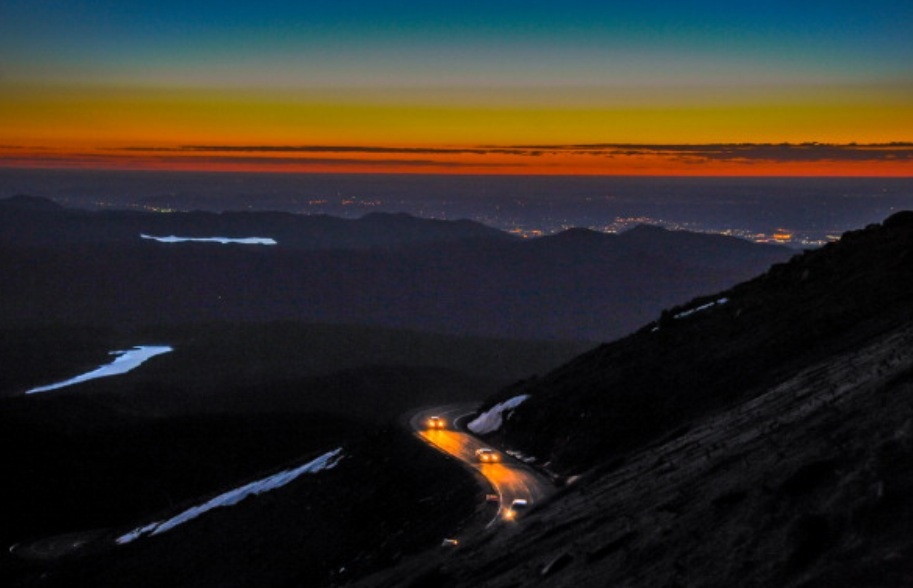
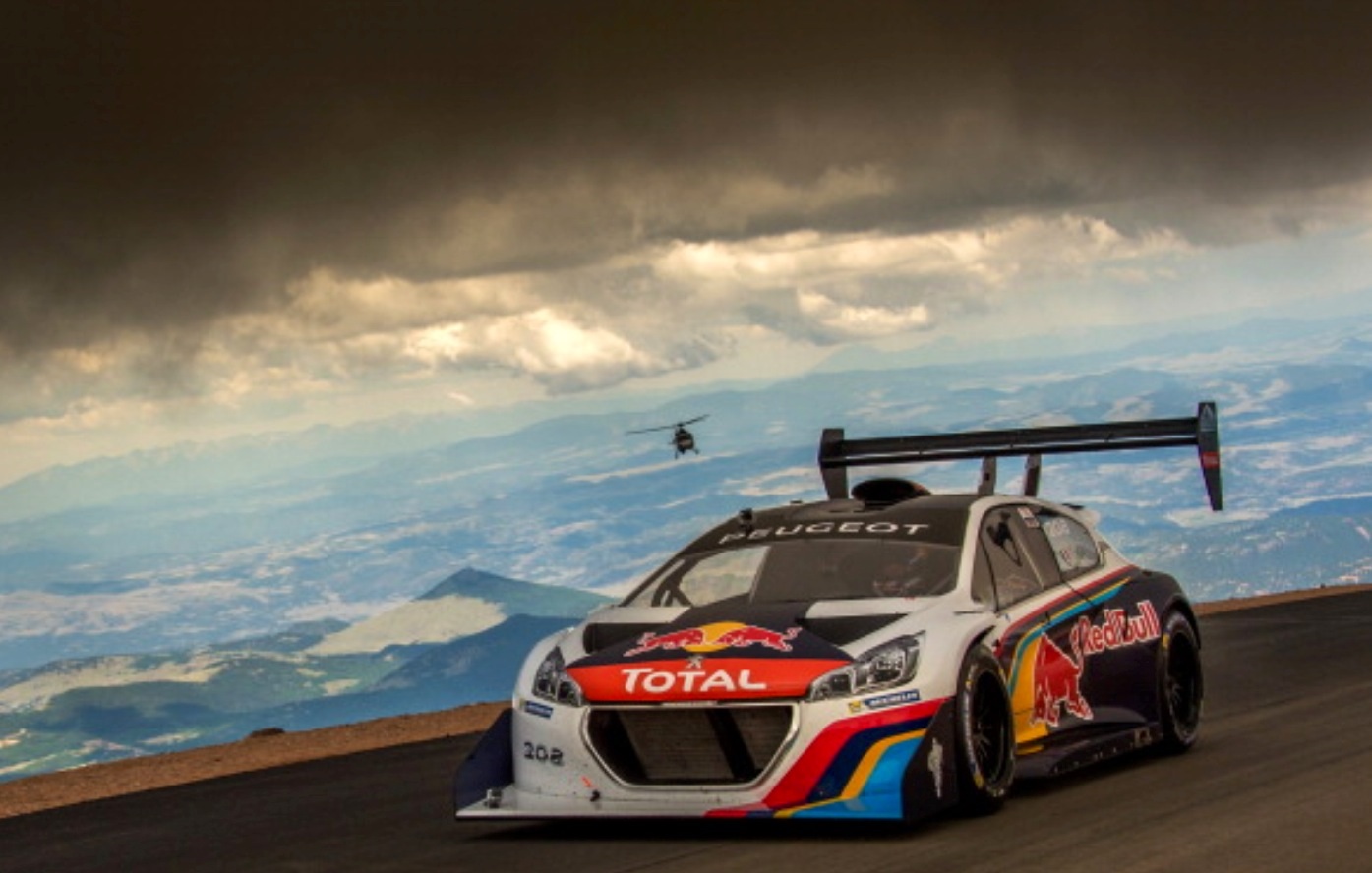
Sebastien Loeb takes his Peugeot 208 T16 over the Pikes Peak finishing line on 30 June 2013. He set the current climb record at Pikes Peak in his 208 T16 that weekend…

His time of 8:13.878 was 50 seconds quicker than second placegetter Rhys Millen’s time which was 44 seconds quicker than his previous best! It was an all-out ‘big budget’ attack on the event which was repaid in spades by the 9 times World Rally Champion.

Loeb spoke of the particular challenges of preparing for the event on the Red Bull website;

‘It was quite short on time for Peugeot to build a car and for me to test it. I had the first test near Paris, just for an hour. Then I wanted to go on a track because I needed some space to understand how the car behaves, it’s so impressive, with so much acceleration, braking and downforce, that I needed to drive on a big track. So we went to Circuit Paul Ricard and then to Mont Ventoux in France. It’s a place that looks a little bit like Pikes Peak, so it was good to practice there.’

image

‘You need to be 100 percent sure of every corner of the track. Before I went to America, I started to watch some videos to start to learn it. Then I went there with my rally co-driver, Daniel Elena and I took some notes like I take in a rally, describing all the road, all the corners, all the angles, everything. Then I started to learn these notes by heart and before every corner I knew, OK, that’s the 130 right, that’s the 140 left and so I could remember all the track like that.’

‘This car is closer to a racing car than a rally car because you have big slicks, you have a lot of downforce, a big engine. You also have 4WD and that’s a bit closer to rally, but it’s so powerful compared to a rally car that you cannot really compare. The driving is very different, you have to drive more like on a track with a racing car, using the downforce, keeping the speed in the high speed corners and braking very late because of the downforce. It’s a car you cannot slide. When you start to slide it starts to bump, so it’s not made for that! You drive it like an F1 car, just using the right line and not sliding.

‘When I was on the start line I was really ready and 100 percent confident with the car. I was sure of my preparation and feeling good. There was no point where I really had a moment. I was pushing, but I was feeling safe, so no big moments and I was able to put all my best sectors together for race day’.

image

Technical Specifications…

Peugeot described the car as ‘practically an out-and-out endurance racing prototype’. Half of the downforce generated by the 208 comes from the specially designed undertray which sits beneath the car.

The 3.2-litre, twin-turbo V6 engine develops 875bhp, a 6 speed sequential gearbox, 4 wheel drive, carbon brakes and double wishbone suspension all round with pushrods actuating torsion bars all part of a highly sophisticated package.

The 208 chassis was of ‘old school’ multi-tubular spaceframe construction the car weighing 875Kg.

Peugeot Sport engineer Jean-Christophe Pallier said: ‘Your imagination is the only limit when you set out to design a car for Pikes Peak. We’ve shaved the car down to 875 kilogrammes and as a result we’ve achieved the magic and symbolic power to weight ratio of 1:1, one bhp for every one kg of weight.’

The six-speed transmission, carbon brakes, air intake and aero-including the two-metre wide rear wing, are all from the 908 Le Mans car. The mid-engined 208, as geared, did 0-62mph in 1.8 seconds and zero to its top speed of 150mph in 7 seconds.

Results…

Click on this link for a good article on the 2013 event

http://www.autoblog.com/2013/07/01/race-recap-the-lion-roars-at-2013-pikes-peak-international-hill/

image

YouTube footage of Seb’s run is worth a look!…

Credits…

Joe Klamar, Red Bull Racing

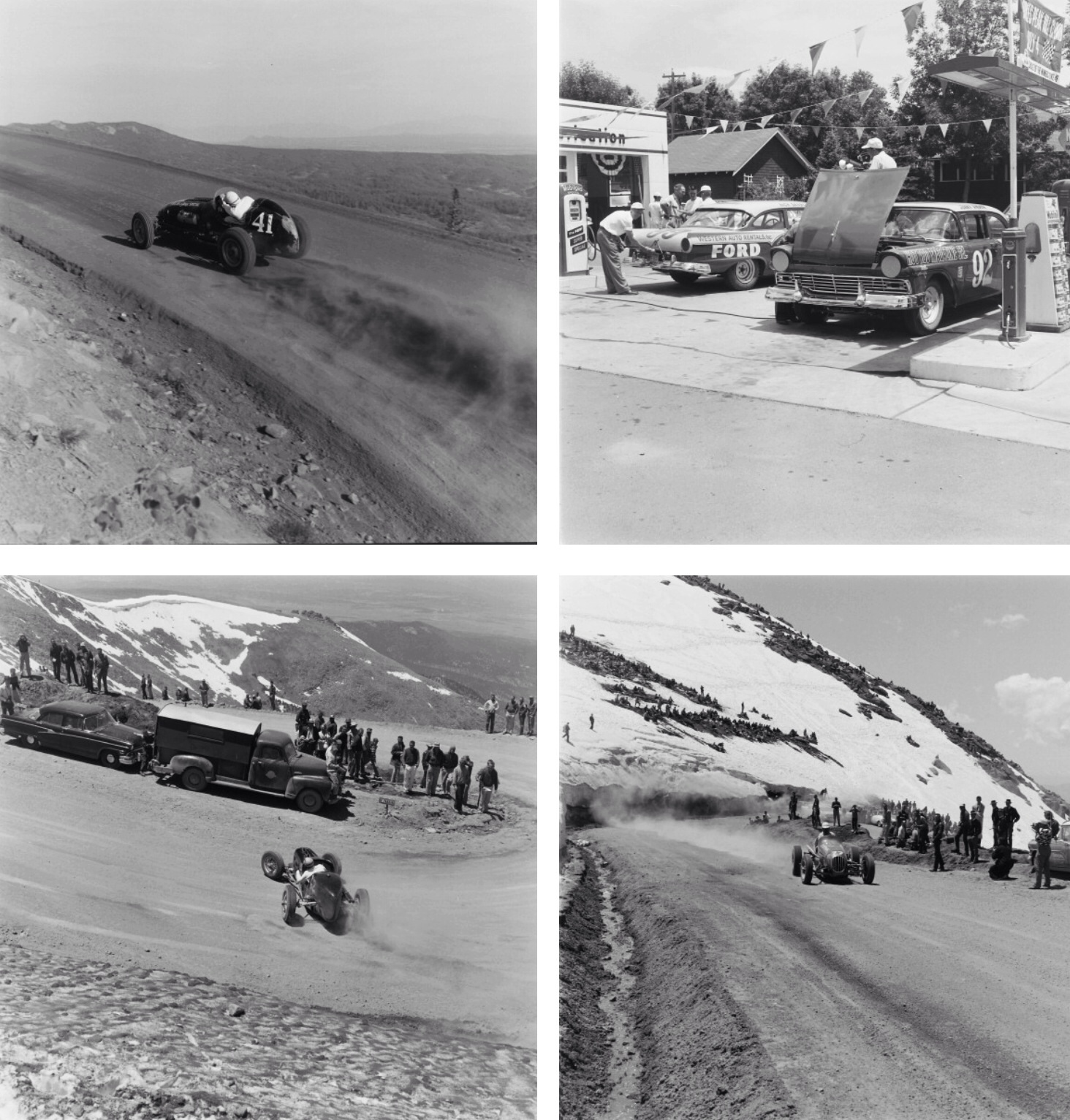
Tailpiece: The Peak 1957…

image


image

‘The good news is the car isn’t completely rooted, the bad news is I can’t get it going…’

Eric Thomson giving the Aston Martin team the sad news that the impressive run by the big Lagonda (Development Project) DP115 V12 has come to an abrupt halt. As the pictures show it was not for lack of trying. He spun and crashed the car in The Esses.

Thomson got the car mobile and back to the pits but it was retired after completing 26 laps, co-driver Dennis Poore didn’t get a drive in the race. Froilan Gonzalez and Maurice Trintignant won in a Ferrari 375 Plus, click on this article i wrote a while back;

Le Mans 1954…

image

No doubt there were plenty of yellow flags but Thomson was exposed as he successfully got the car running. Passing is the Pilette/Gilberte Gordini T17S DNF and Moss/Walker Jag D Type DNF, ’54 the D’s first Le Mans (Jack Garofalo)


image

(Klemantaski)

Eric Thomson blasts the brutally handsome Lagonda DP115 towards ‘White House’ during the early hours of the ’54 Le Mans…

He was running strongly in 3rd place at that stage of the race in a field that year which included the Ferrari 375 Plus, D Type Jags making their Le Mans debut, Cunningham C4R Chrysler V8’s, the DB3S were also potential outright cars in the ‘right circumstances’, the V6 Lancia D24’s and Porsche 550 Spyders to ‘pick up the scraps’.

image

Some ‘delicate’ panel beating of the Lagonda’s aluminium flanks by Eric (Jack Garofalo)


image

Lagonda DP115; Chassis tubular, front suspension trailing links, transverse torsion bars. Rear de Dion, trailing links & torsion bars, roll bars front and rear. Drum brakes.  Engine; 60 degree, aluminium 4486cc DOHC, 2 valve V12. 3 Weber IFC4 carbs, bore/stroke 82.5mmx69.8mm, compression ration 8.5:1. Circa 310bhp@7500rpm. Gearbox DB S32 5 speed. Weight circa 1140Kg (Klemantaski)

Lagonda’s new car during early tests on 22 April 1954.

Gearbox/transmission manufacturer David Brown bought Aston Martin and Lagonda, the acquisitions made as he admired the newly developed box-section Aston Martin chassis and the W.O. Bentley/’Willie’ Watson designed Lagonda straight-six engine. Initially he made the focus on road car development, the Aston’s used the old four cylinder engines.

One of these was hurriedly prepared for the 1948 Spa 24 Hours and won! It was the start of Aston Martin’s renewed racing efforts, both as a works team and selling racers as customer cars into the dawn of the sixties.

Using the Lagonda design as a basis, Aston Martin developed a new ‘DB3S’ sports racer at the start of the 1953 season. It was a  good 3 litre class car, but as an outright car it was bested by Lancia, Ferrari and Jaguar ‘heavy metal’. The CSI didn’t mandate a 3litre capacity upper limit for Sports Cars, to slow them down, until the start of 1958.

To compete for outright victory Aston Martin needed a larger more powerful engine, but there was no road going Aston into which to fit such an engine to make the project economically feasible.

Brown therefore decided to revive the Lagonda name and design a new V12 for both a racer and Lagonda road car.

image

Thomson in DP115 ‘neatly parked’ in The Esses. Car looks okey-dokey both front and rear in this shot. Note difference in cars nose compared with the earlier images of Brown at the wheel above and Parnell below (Jack Garofalo)

‘Willie’ Watson developed a 4.5 V12 engine. Following the basic design elements of the straight six, the new engine featured twin overhead camshafts and two plugs per cylinder. To keep weight down, the engine was cast in aluminium. Equipped with three quad-choke Webers it initially produced 280 bhp, but with development there was the potential for much more. Mated to a four speed ‘box, the engine was installed into an enlarger and ‘beefed up’ DB3S chassis. Similarly the body was DB3S derived albeit with three separate front air intakes.

image

Reg Parnell racing DP115 in its debut race, Silverstone BRDC International Trophy Meeting on 15 May 1954. Great looking car (GP Library)

During its first test, with David Brown at the wheel ‘DP115’ caught fire! The car was hurriedly repaired to contest the 1954 Silverstone ‘International Trophy’ F1 meeting supporting sportscar race, Reg Parnell finished 5th, well behind the Ferraris and Jaguars, but ahead of its 3 litre class winning sibling Astons.

By then after some fettling the engine produced circa 310 bhp, whereas the Ferrari’s claimed outputs were of greater than 350bhp. Initial problems included cold starting and handling characteristics, but there was no time to do the necessary development work before Le Mans on 12/13 June.

image

First lap Le Mans 1954, 2nd placed D Type of Rolt/Hamilton and #10 Bouillin Talbot Lago T26 GS. Check out the photographer? atop the pole!  (GP Library)

For Le Mans the four speed gearbox was replaced by a stronger five speeder and the nose of the modified with a single larger air-intake similar the DB3S.

Aston Martin entered 2 DP115s, but one was withdrawn and replaced by a 4th DB3S. The cars handling contributed to Eric Thompson’s spin after 2 hours, whilst lying in 3rd place. After the strenuous efforts clear in the photos he managed to coax the big V12 back to the Aston pits, but it was damaged too badly to be made raceworthy. In a poor race for the team none of the other Astons finished.

image

Thomson beavering away, he did ‘cut and shut’ the rear of the thing considerably, other shot is of Gonzalez in thw winning Ferrari 375 Plus (Getty)

The other DP115 first raced in the 1955 British Grand Prix support sportscar race, it finished 4th behind three DB3S. Neither car was raced again.

The cars 1954 results were poor but unsurprising with a relatively new and underdeveloped chassis and engine. Undeterred, for 1955, Brown’s team built two new multi-tubular spaceframe/backbone chassis to which the engine was fitted, the cars were designated  ‘DP166’.

image

The Parnell/Poore Lagonda DP166 in the Le Mans pits 1955 (unattributed)

One car was entered at the ’55 Le Mans, driven by Reg Parnell and Dennis Poore the Lagonda DP166 retired after 93 laps of the tragic race with fuel feed problems. That was the effective end of the V12 program. Encouraging for Brown was the 2nd place finish of the DB3S driven by growing GP star Peter Collins and equally developing endurance racer Paul Frere.

The focus for the next few years was the DB3S program. The chassis of both DP166s were later used to form the basis of the Aston Martin DBR2s. Le Mans and World Sportscar Championship success came of course in 1959 with the glorious 3 litre DBR1’s…

Le Mans 1959: Aston Martin DBR1/300…

Checkout this website of Michael Green’s, his mother, father and uncle worked at Aston’s during these years, his recollections fascinating reading…

http://www.offroadexperience.com/wcb/aminfo.htm

Credits…

ultimatecarpage.com

Tailpiece: Merde! Thomson gets plenty of advice from the Aston pit…

image

Finito…


ray m

(unattributed)

I have always been a big Derek Bennett and Chevron fan, ditto Formula 2 nutter. It was a pity Bernie f@cked the category over by creating F3000 as a home for all those F1 redundant Ford Cosworth DFV’s in my book…

The photo above is of Ray Mallock at Nogaro during the 1977 European F2 Championship round on 3 July. His works car was disqualified for being underweight, the race win was taken by Rene Arnoux’ Martini Mk22 Renault V6, the championship taken by the plucky little Frenchman on his way to F1 that year.

Best placed of the Bolton Bolides that weekend was a Chevron favourite, Riccardo Patrese in a Trivellato Racing, BMW engined B40 in second place, only a second behind the flying French V6. Patrese was the highest placed of the Chevron B40 pilots that year having done the full championship, he was 5th in the title, a year of consistency. Rosberg took a race win at Enna and Lamberto Leoni’s Trivellato Racing Chevron B40 Ferrari Dino another at Misano.

Plenty of ‘hotshots’ had a steer of the B40 in addition to Patrese including Alan Jones, Keke Rosberg, Patrick Tambay, Jacques Laffitte, Clay Regazzoni, Art Merzario, Derek Daly, Brian Henton, Elio de Angelis and Tiff Needell amongst others. Many of these ‘guested’ in the Fred Opert Racing entries, Fred the US importer of Chevrons and key Rosberg entrant in F2 and F Atlantic/Pacific.

Keke Rosberg Attacks the Pukekohe Chicane, New Zealand Grand Prix, January 1978…

alain

Alain Prost in an Opert B40 Hart at Pau in May 1978, DNF engine in the race won by Bruno Giacomelli’s works March 782 BMW, Euro F2 champ that year . The 2 litre Hart 420R, injected, DOHC, 4 valve engine gave circa 300bhp (unattributed)

Perhaps Ray Mallock was not at the absolute elite level of some of the dudes above, but after a successful career in the junior single-seater formulae and sportscars the Brit, son of Arthur ‘U2’ Mallock built a very successful business constructing and racing cars for a wide variety of global road car manufacturers, click on this link to suss the achievements of RML Ltd; http://www.rmlmallock.co.uk/

ray ralt

Ray Mallock, Ralt RT4 Ford BDD at Calder, AGP 8 November 1981, the red RT4 behind is John Smith’s car, Q8 and DNF (John Brewer Collection)

Australian enthusiasts of a certain age may remember Mallock contesting the 1981 Australian Grand Prix at Calder, the first of three AGP’s won by Roberto Moreno. Mallock raced the Ralt RT4 in which he won the ’81 British F Atlantic Championship with 9 wins. He plonked the thing mid grid at Calder, finishing 7th. In front of him were Moreno, Piquet, Geoff Brabham, Larry Perkins, Andrew Miedecke and David Oxton, behind him Bruce Allison, Alfie Costanzo and John Smith. Alan Jones, Jacques Laffitte and John Bowe all failed to finish the race. I saw the full race weekend and thought Ray’s was a great race so far from home.

Credits…

John Brewer Collection

Tailpiece: Mallock’s works B40 at Nogaro ’77…

ray m 2

Chevron B4o chassis an aluminium monocoque, the gearbox the ubiquitous Hewland FT200 5 speed transaxle (unattributed)


image

(Schlegelmilch)

Silvio Moser’s Brabham BT24 Ford racing with Lancia D50 style pannier tanks during the 1969 Monaco Grand Prix…

He retired from the race won by Graham Hill’s Lotus 49B, Moser is one of those privateers who so enriched GeePee racing in the days when such things were allowed, encouraged even.

Silvio was keen on Brabhams, he raced an ex-works BT20, Denny’s chassis ‘F1-2-66’ in 1968 before buying the car above, BT24/3 after Piers Courage raced it in the 1969 Tasman Series.

bt 20

Silvio is his Charles Vogele Racing Team Brabham BT20/2 Repco. DNF, Daily Mail Race of Champions meeting, Brands Hatch, 17 March 1968. Bruce McLaren won in his M7A Ford (Ed Lacey)

It was the last of the BT24’s built, Jochen Rindt raced the 1967 championship winning design during early season 1968 Grands Prix whilst Jack tried to coax some reliability from the quad cam, 32 valve, powerful but problematic ‘860 Series’ Repco V8 engined BT26.

brab rindt

Jochen Rindt’s Brabham BT24/3 Repco, his ’67 spec ‘740 Series’ Repco SOHC V8 powered car beside Jack’s new BT26 powered by the ‘860 Series’ DOHC, 32 valve V8, DNF for both, Monaco 1968. Hill won in a Lotus 49 B Ford (R Schlegelmilch)

Dan Gurney also had a steer, the lanky Californian crammed himself into the car at Zandvoort (below) then Kurt Ahrens raced it to twelfth in the German GP, the cars only GP finish in 1968.

brab dan

(R Schlegelmilch)

Kurt Ahrens (below)  in BT24/3 during the awfully wet German GP at the Niuburgring, Jackie Stewart triumphed in his Matra MS10 Ford aided by some trick Dunlop wets that day. Kurt was on Goodyears, finishing in a one off drive on home turf.

The cars spec was ever evolving, check out the wing package, the same as that used on the factory 1968 BT26’s, Nurburgring was the only race of the year in which both Jack and Jochen finished a race in the fast but unreliable BT26. Kurt’s cars wing has ‘Fosters Flop’, it’s in full droop mode, the simple support bracket came adrift on the bumpy Eifel Mountains course.

image

(Unattributed)

Frank Williams then bought the car and converted it to Tasman spec by fitting a Ford Cosworth DFW V8, the 2.5 litre variant of the famous DFV. Piers did well in it in the Antipodes, his best result a win at the Teretonga International on 25 January 1969.

Here (below) he is behind Jochen Rindt’s Lotus 49 DFW and the Ferrari 246T twins of Chris Amon and Derek Bell, the ‘flash’ grandstands are nicely juxtaposed against the cars. This must be the warm up lap as Jochen’s driveshaft failed on the line, the cars are in grid order.

puk 1

(Ian Peak)

And below Bell’s Ferrari 246T from Hill’s Lotus 49B and Courage’s BT24/3. Courage won from Hill and Amon. Variety of approaches to wings is interesting, checkout that crowd and the el-casual vantage points.

puk 2

(Ian Peak)

Courage had a prophetic summer to a sensational F1 season driving another ex-works Brabham, a BT26 adapted to accept a DFV, he established himself as an Grand Prix front runner in 1969, second at Watkins Glen to Jochen Rindt the seasons highlight.

Frank Williams then popped the BT24 into the ‘Autosport’ classifieds after the Tasman to sell it, Silvio was the eager purchaser. All the hard work had been done, he bought a DFV and slotted it into the spaceframe whence the DFW had been. He needed more fuel tankage though, Tasman races were 100 miles, GP’s were 200 miles and the DFV was a good deal more powerful and less fuel efficient than the Repco 740 around which the car was designed, hence the pannier tanks- ok for 1969 but no-go in 1970 when ‘bag tank’ rules came into being.

BT24/3 still exists in Switzerland, owned by the Moser family, there is also a replica tagged 24/3.

dutch

Silvio’s Brabham BT24 DNF engine, about to be swallowed by Amon’s Ferrari 312 3rd, Hulmes McLaren M7A Ford 4th and Brabham’sBrabham BT26 Ford 6th, Zandvoort, Dutch GP June 1969 (unattributed)

Etcetera…

(unattributed)

A nice close-up of BT24/3’s Tasman specification during the Australian Grand Prix weekend at Lakeside on the 2 February 1969 weekend.

The DFV was not mounted as a stressed member in this spaceframe chassis. Two big, tall wings- note the lack of endplates and front winglets, perhaps the wings were made by the factory- Motor Racing Developments.

Piers went like a jet in practice, popping the hybrid second on the grid to Amon’s AGP winning Ferrari. In the race he had a difference of territorial opinion with Graham Hill attempting an outside pass on the Lotus 49 at BMC Corner- they touched, Piers retired with bent front suspension.

It was all a pointed to a great season for the plucky, popular but sadly, ill-fated Brit.

Credits…

Rainer Schlegelmilch, Ed Lacey/Popperfoto, Ian Peak Collection/The Roaring Season, Denis Lupton

oldracingcars.com- click here for Allen Brown’s summary of the Brabham BT24s; https://www.oldracingcars.com/brabham/bt24/

Tailpiece: Silvio Moser on his way to a great sixth place in his Brabham BT24/3 Ford at Watkins Glen during the 1969 USGP, he is being passed by Jacky Ickx’ latest, works Brabham BT26A Ford, DNF. Jochen Rindt won in a Lotus 49B Ford…

ickx

(unattributed)

Finito…