


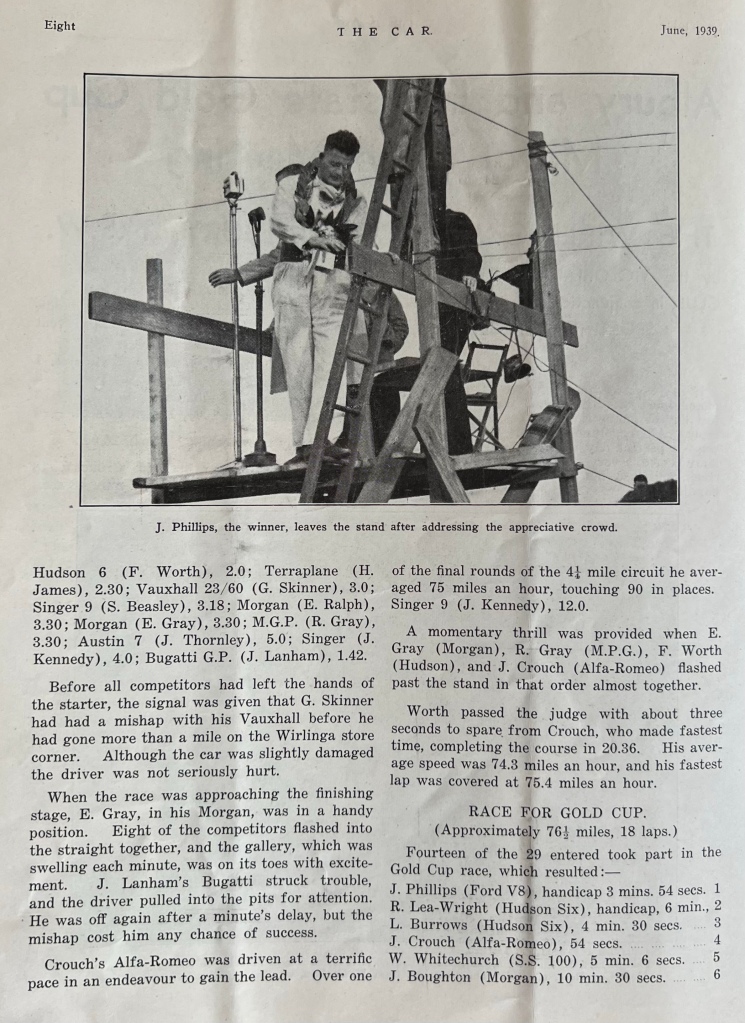
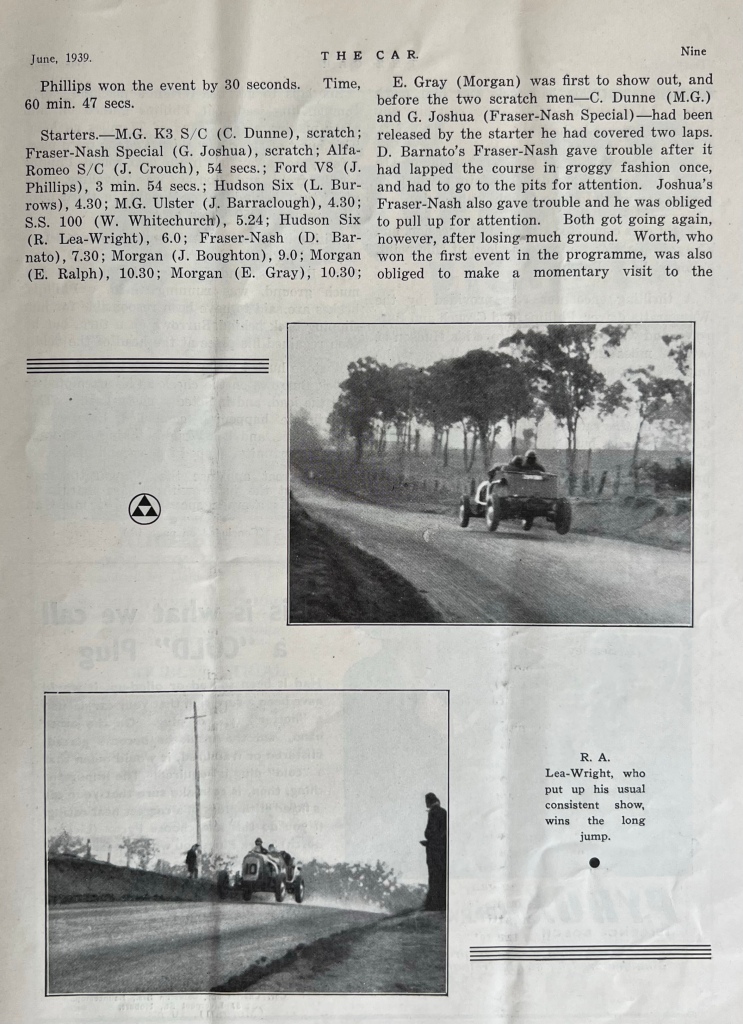
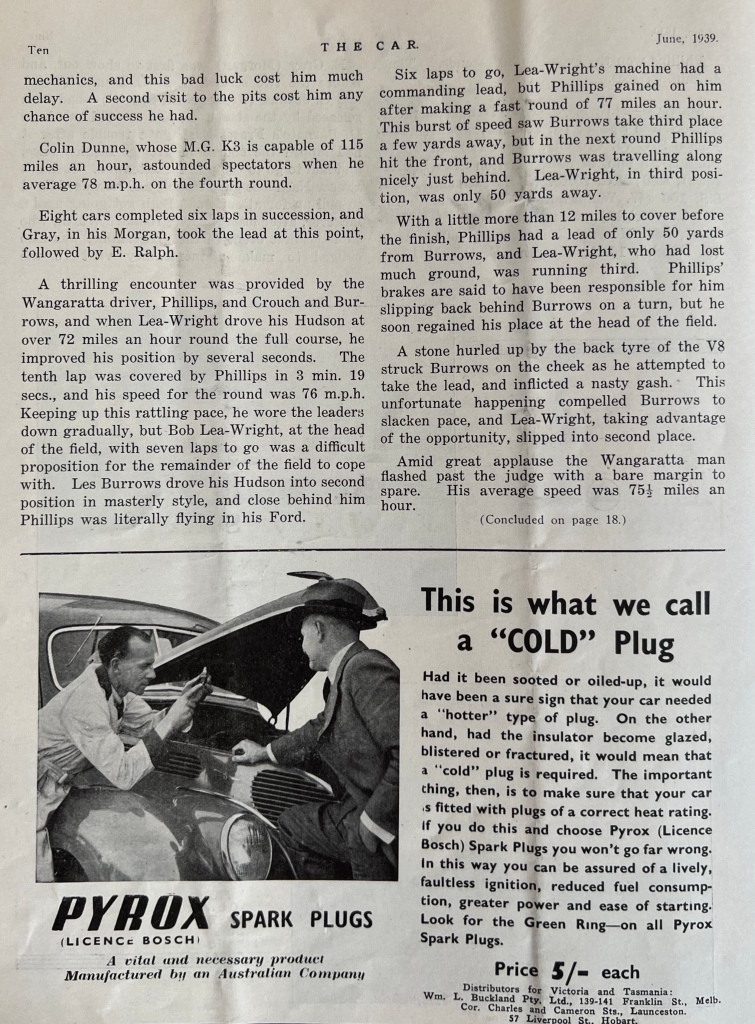
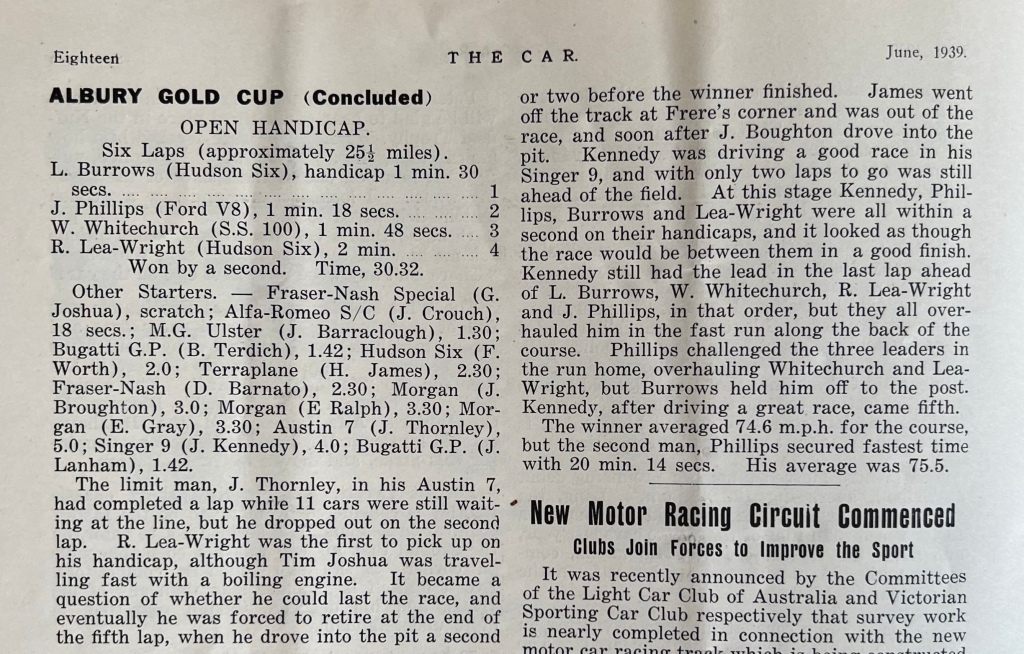
Credits..
The Car June 1939 via the Bob King Collection…
Finito…
Credits..
The Car June 1939 via the Bob King Collection…
Finito…
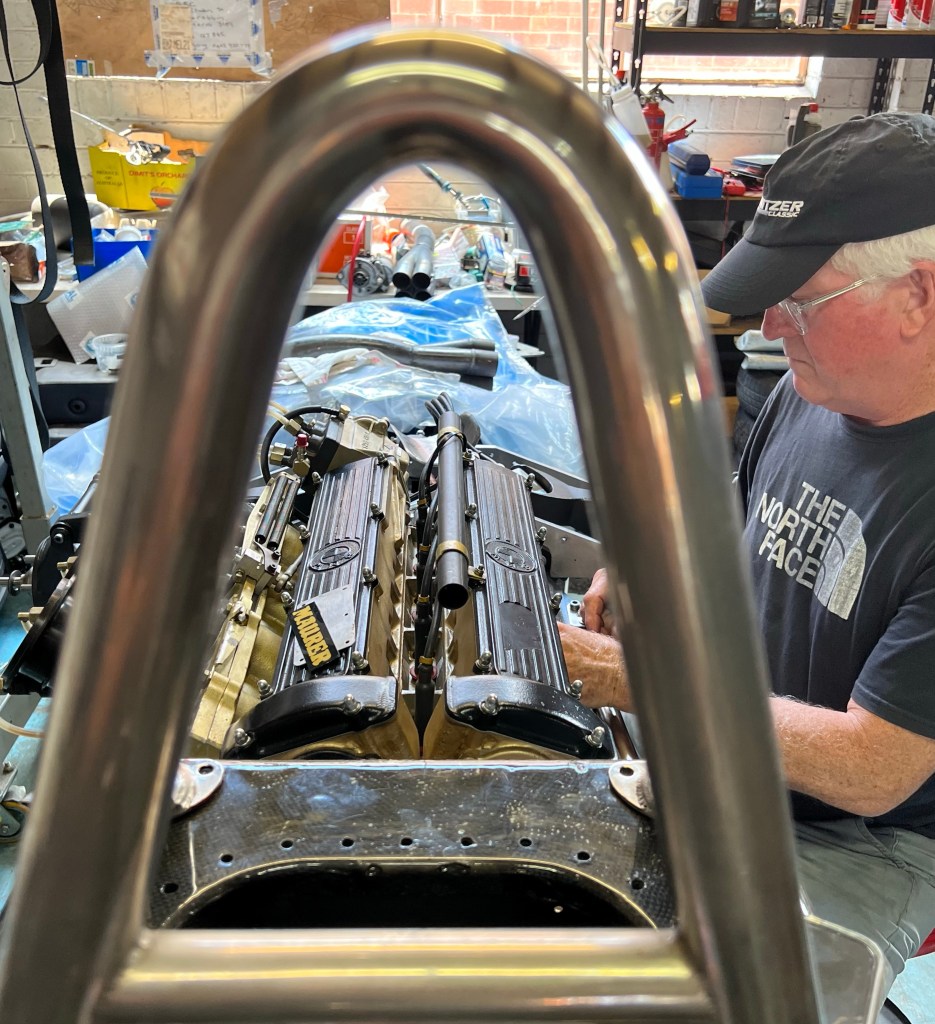
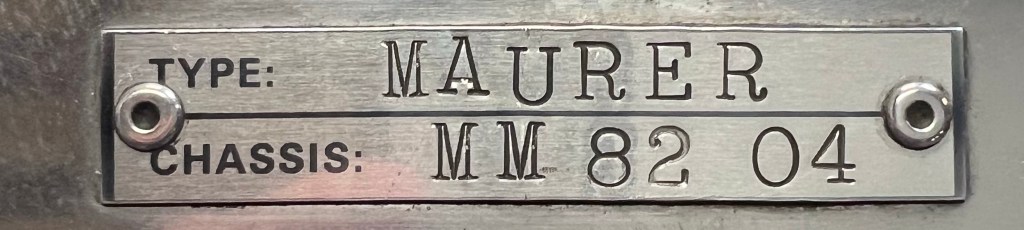
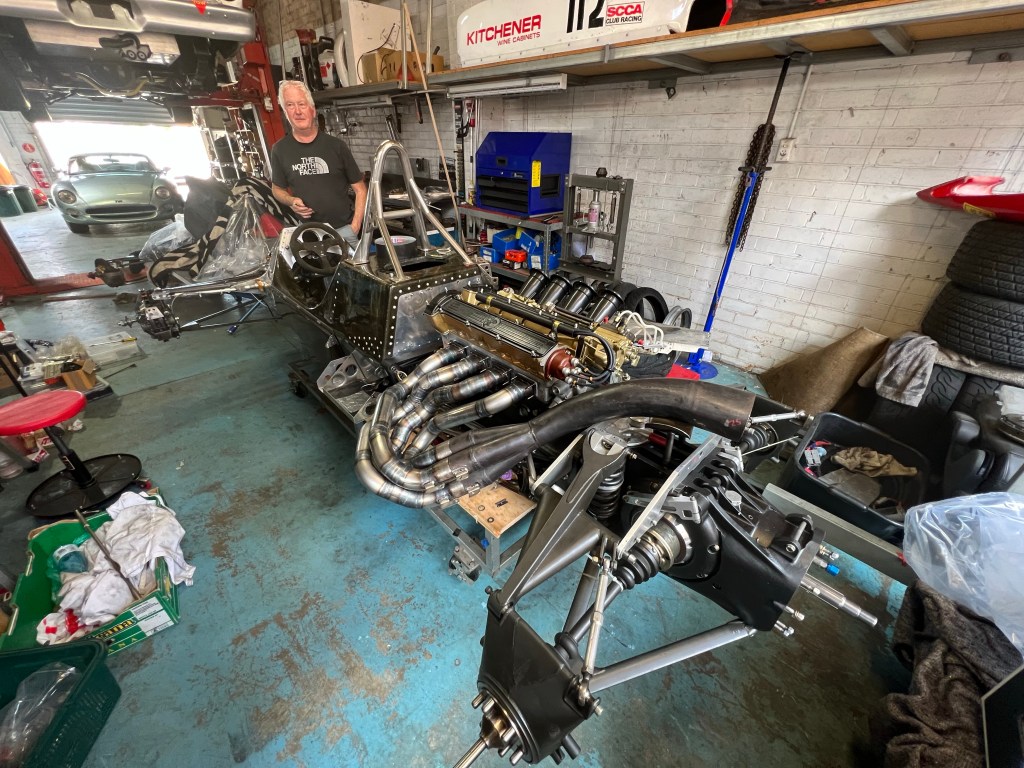
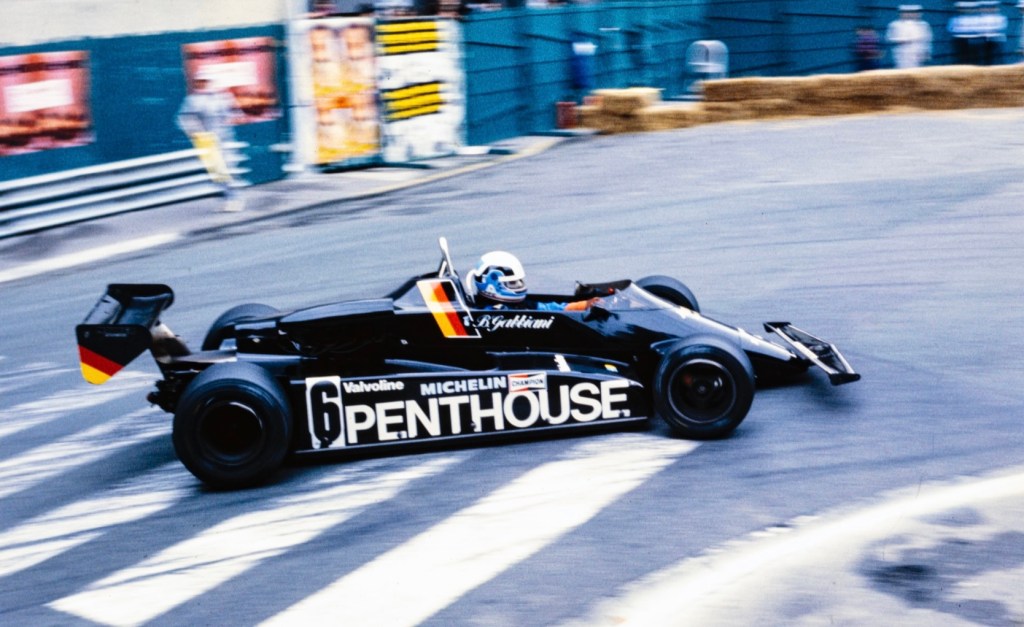
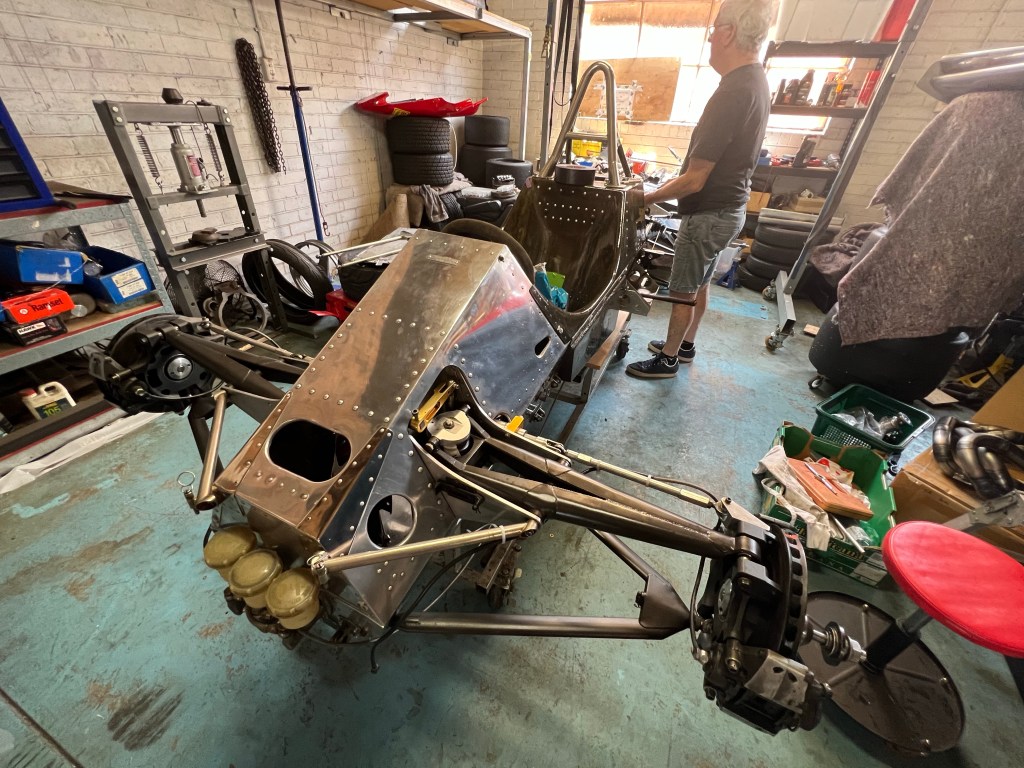
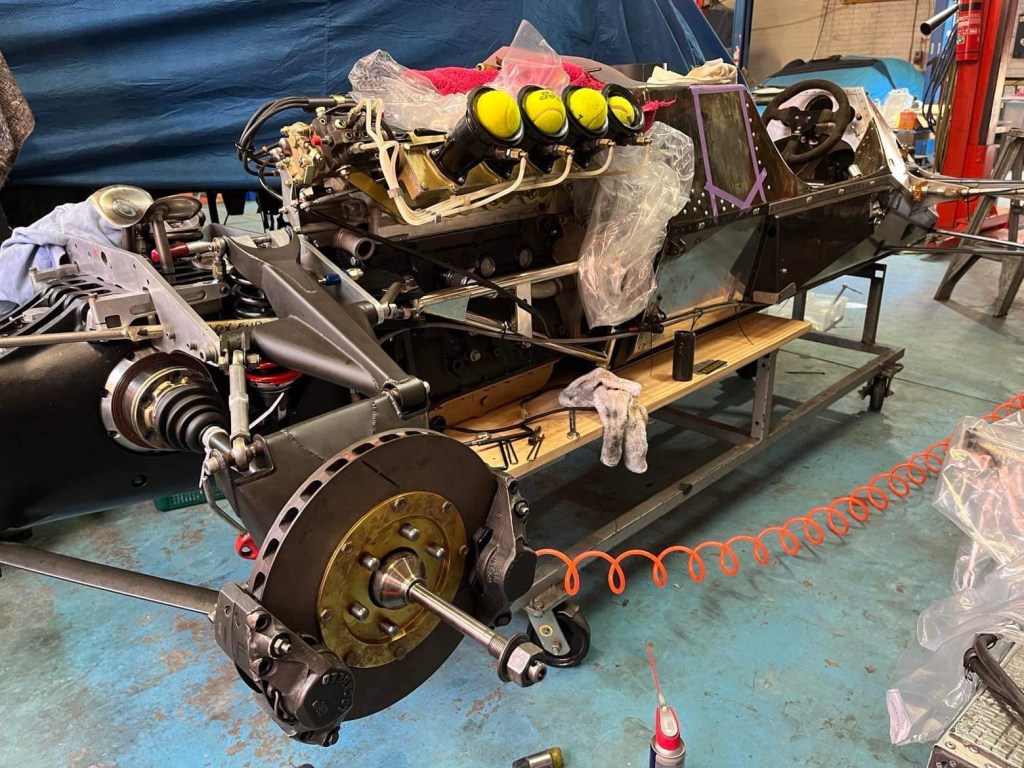
Andrew McCarthy beavers away on the rebuild of his 1982 ex-Beppe Gabbiani works-Maurer MM82 2-litre F2 machine, chassis 04.
For a stock broker, he’s a pretty handy mechanic. He gets a prize for commitment too, this shot was taken at beer-o’clock, lunchtime on December 24, an occasion when most of us normal folks are getting Santa’s snack ready for his night-time arrival.
The target first race appearance is the Phillip Island Classic in March. Even though the bulk of the hard work in a five year journey so far has been done, there is no shortage of fettling to come to meet that deadline.
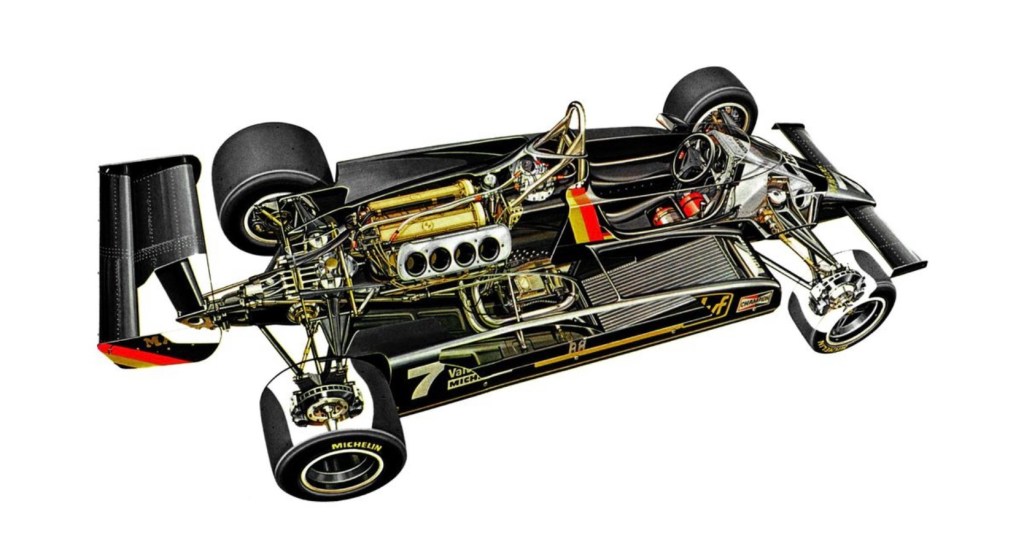
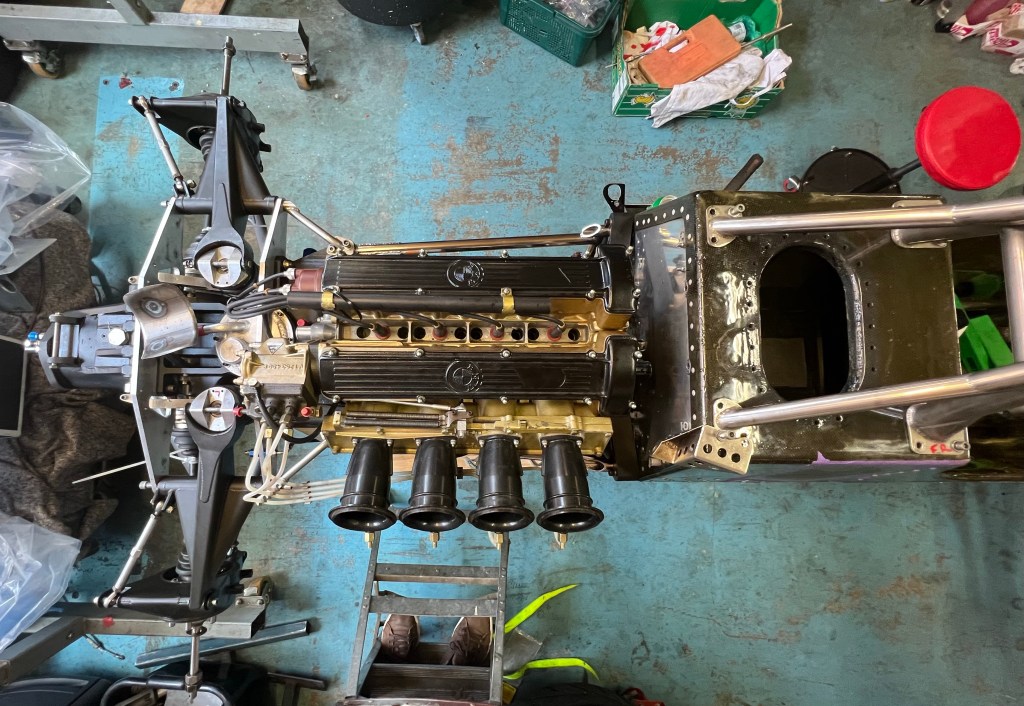
The essential elements of Willy Maurer’s, Gustav Brunner penned, period-typical, ground-effect F2 car are an aluminium monocoque chassis, BMW M12/7 four cylinder, DOHC, four-valve, fuel injected 2-litre engine giving about 300bhp and a five-speed Hewland FG400 based transaxle in a bespoke Maurer case.
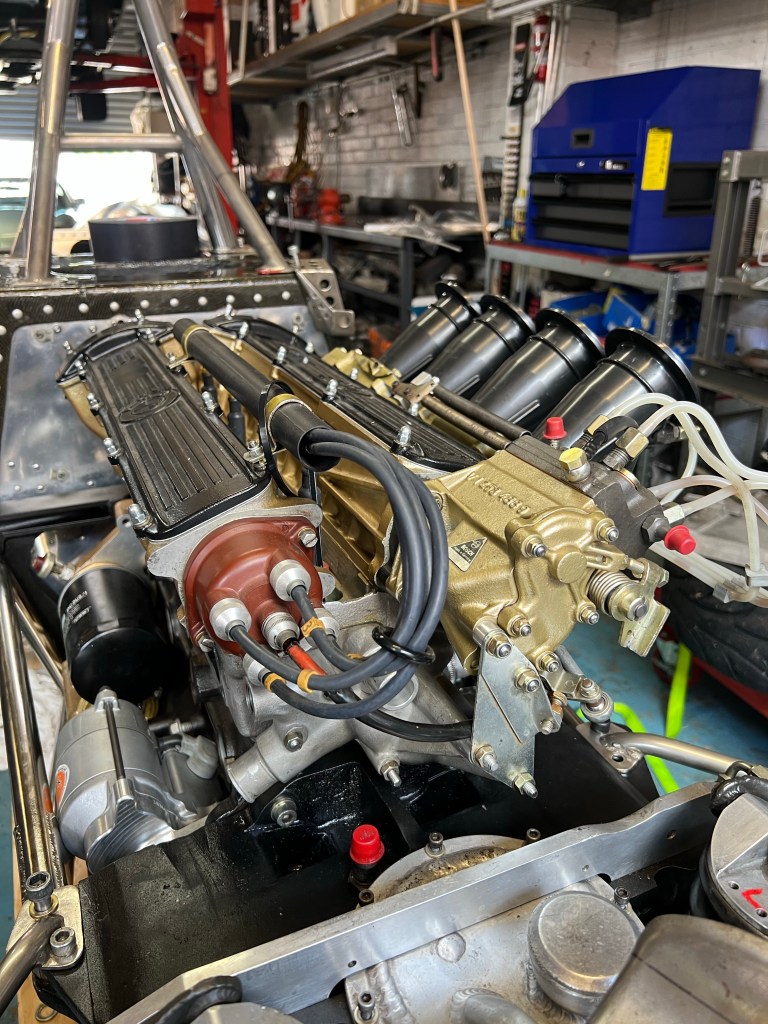
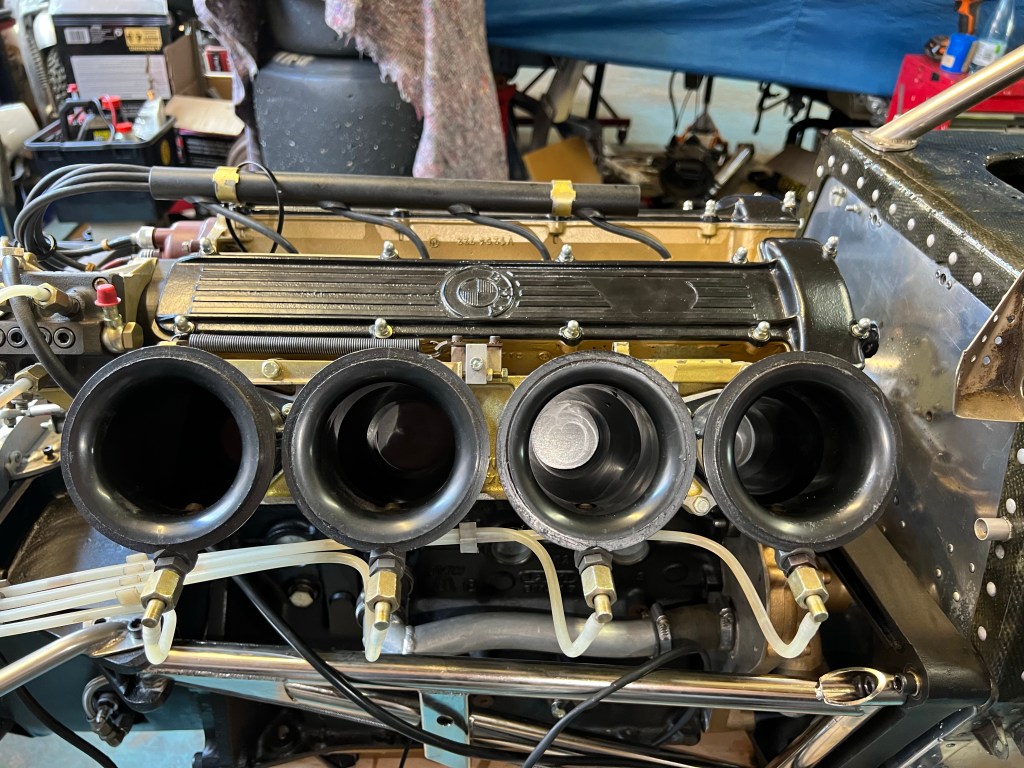
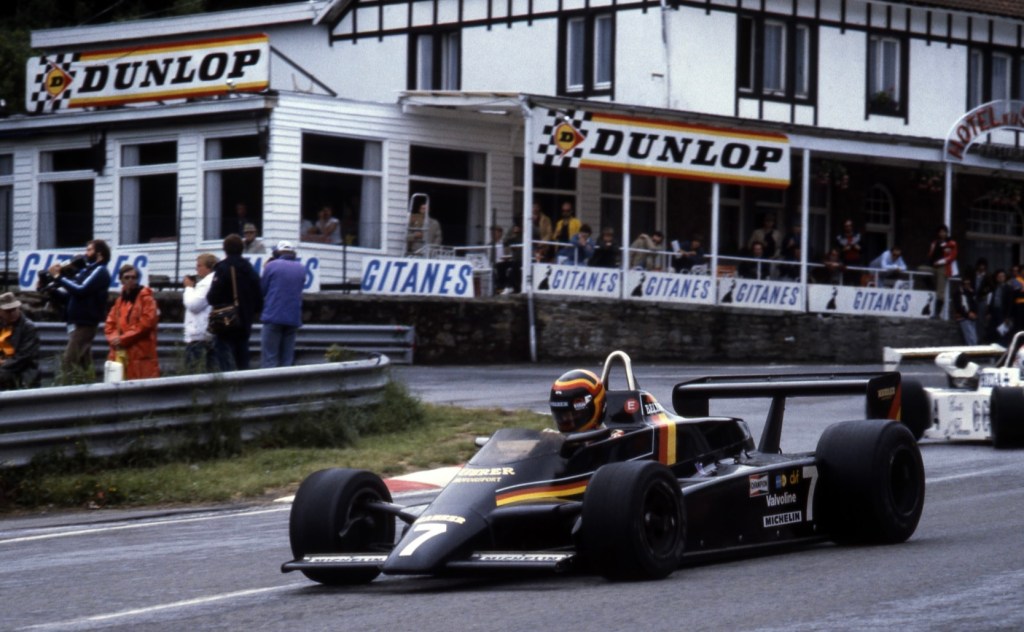
Let’s save the Maurer major story for when Mad Andy has MM82-04 running. In essence young entrepreneur Willy Maurer had access to substantial sponsorship cash via the German, Mampe drinks manufacturer.
After an initial sponsorship foray in German Group 5 with Ford Zakspeed and Kremer Porsche, Maurer decided to take one of his drivers, Armin Hahne, into F2. Rather than follow the herd and buy a March or Ralt he decided to build his own cars.
The first 1979 car (MM79) was a slug, then, via former Chevron racer, Eje Elgh, Maurer was introduced to the ex-Chevron team who were out of a job after the demise of the Bolton marque in its original form; said ending was a delayed reaction to company founder, Derek Bennett’s death in a hang-glider crash in March 1978.
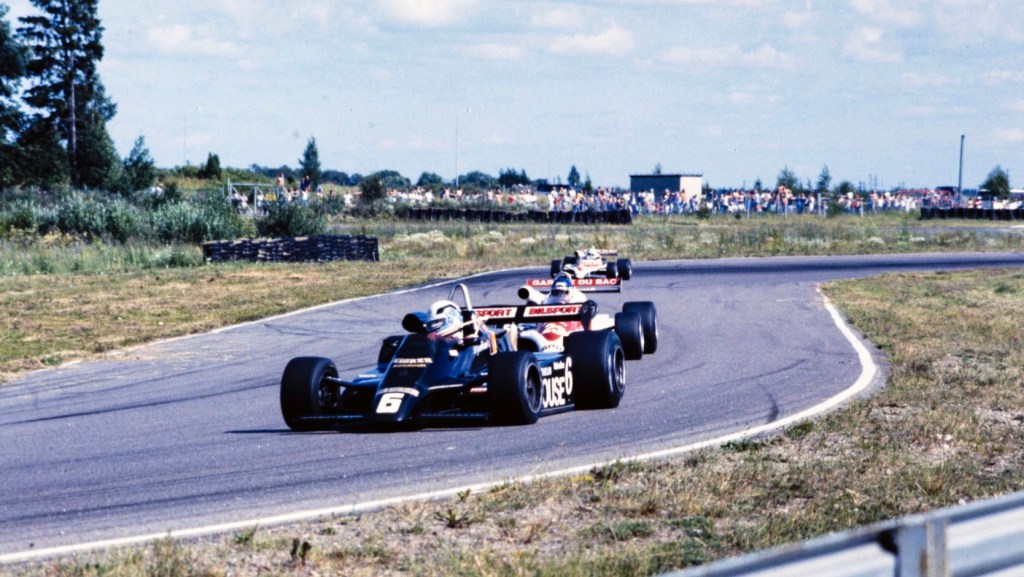
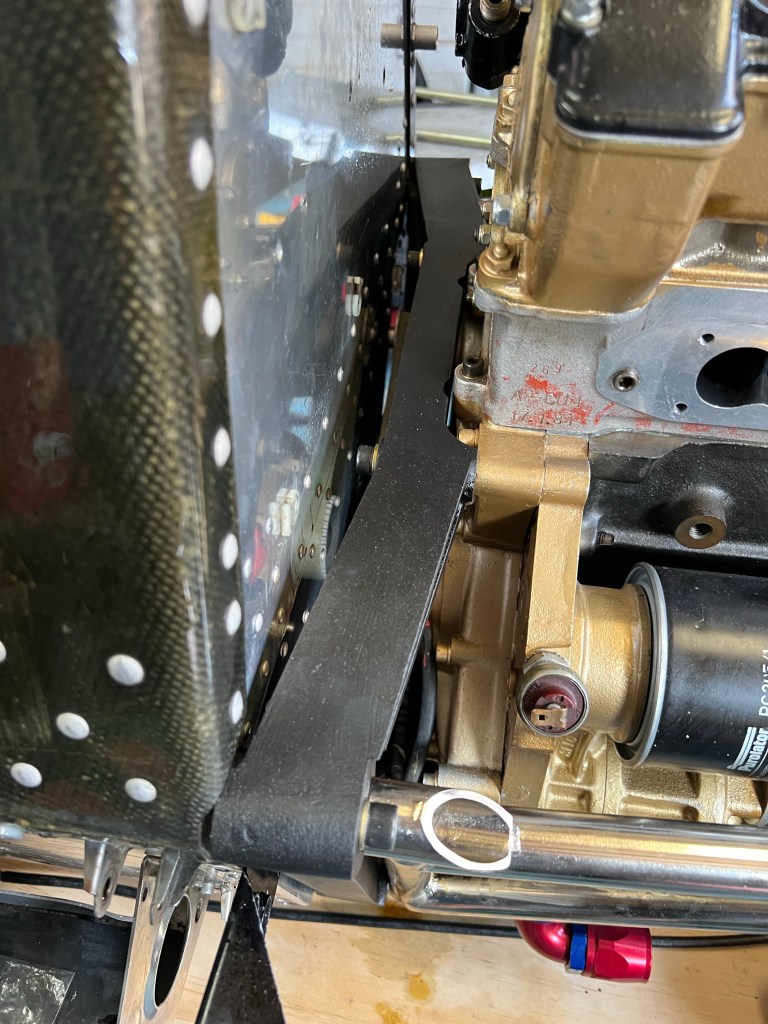
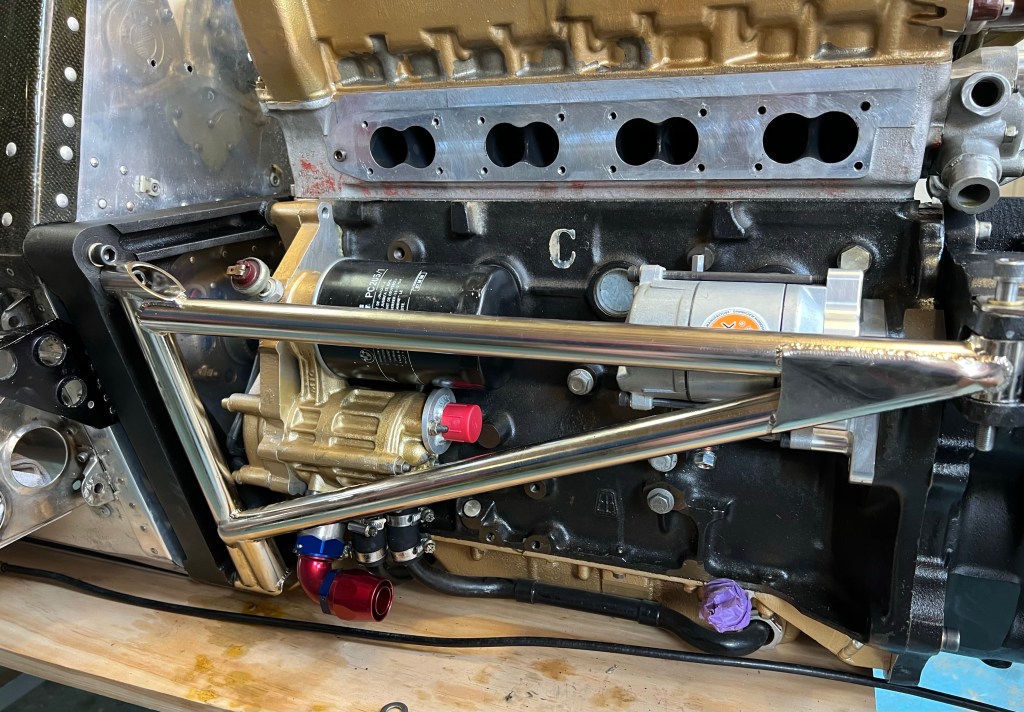
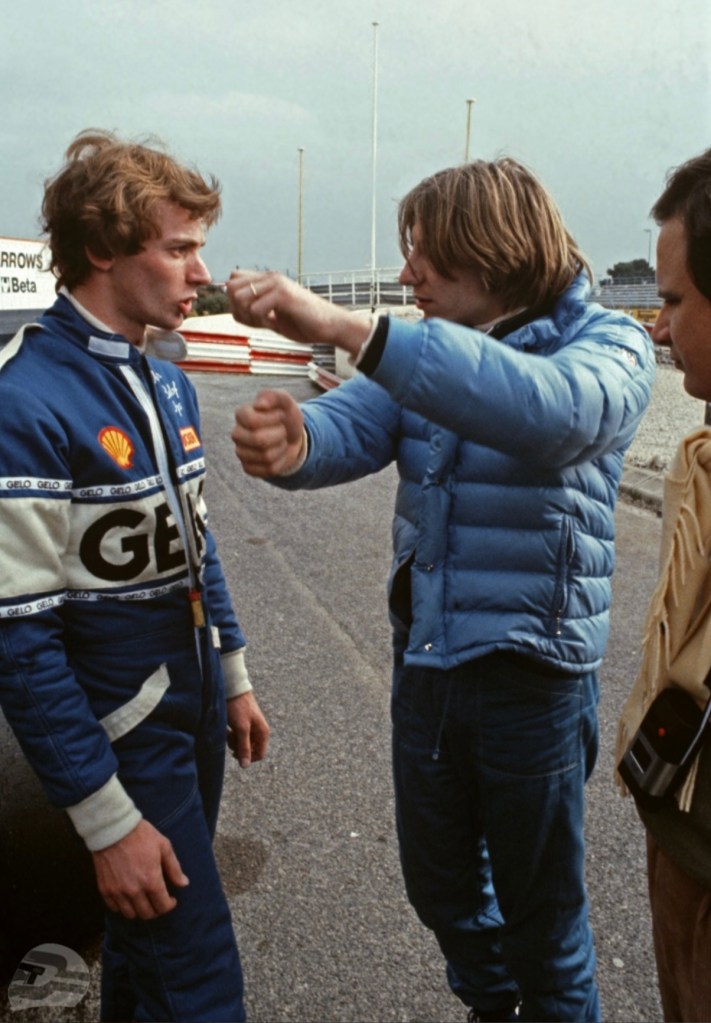
The 1981-83 Maurers, designed by Brunner, interpreted and engineered by Paul Brown, and built and maintained by a team run by Bennett right-hand-man Paul Owens, Ian Harrison, Paul Brown, Graham Hall and others from premises in West Haughton, Manchester were fast cars which won four Euro F2 Championship races.
German wunderkind Stefan Bellof was victorious in two rounds – winning his first ever F2 race at Silverstone – and set five fastest laps (in 1982), while Roberto Guerrero and Elgh won a race apiece in 1981.
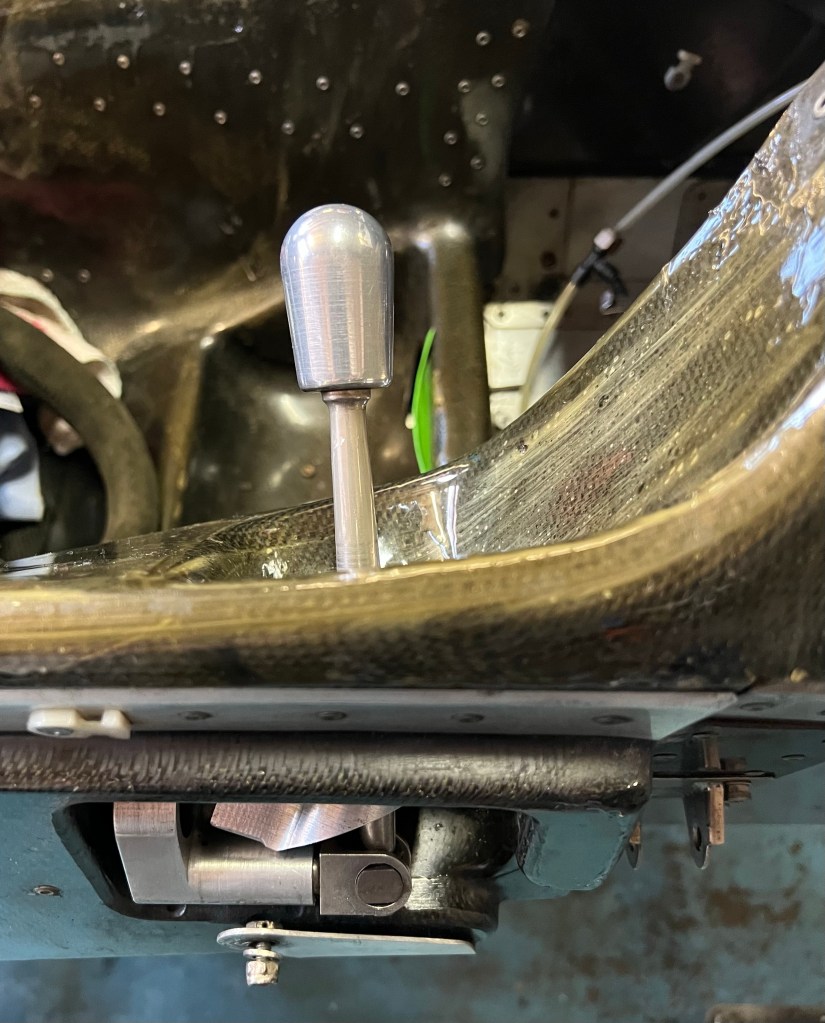
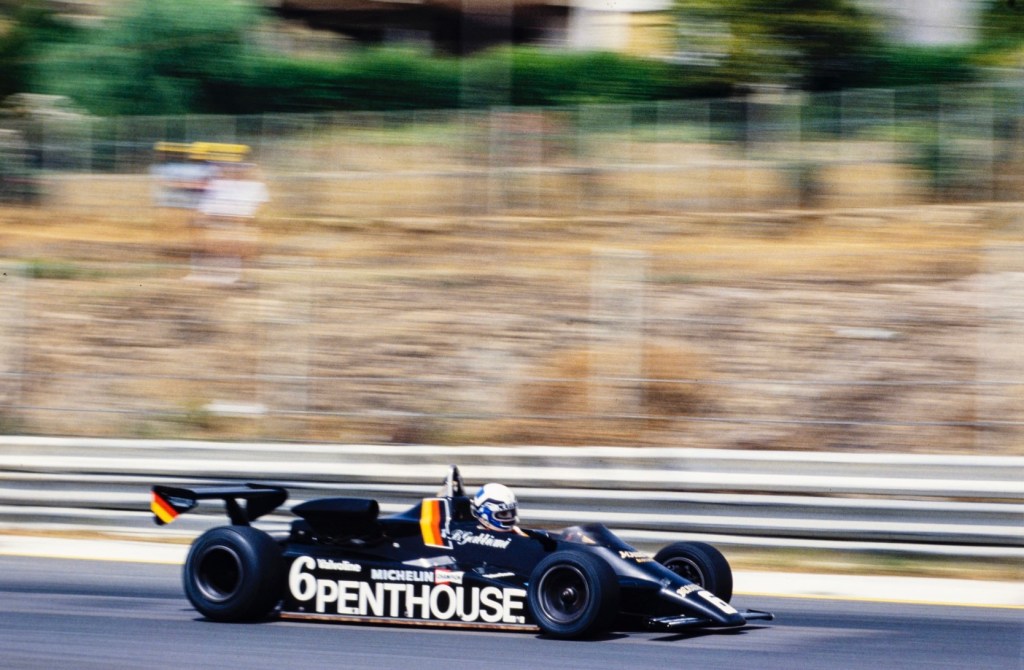
Italian F1 driver, Beppe Gabbiani raced a works MM82 alongside Bellof in 1982. The cars were jets, in part as a result of an ingenious suspension locking mechanism which allowed a very low ride height which enhanced the ground effect created by the car’s underbodies/tunnels, and powerful, but very fragile, short-stroke Heidegger prepared BMW engines.
Corrado Fabi won the championship aboard a works-March 822 BMW (five wins) with Bellof fourth and Gabbiani fifth. Beppe’s best in MM82-04 was second place at Enna. In an appalling run of reliability, he had five DNFs and Bellof six. By contrast, Fabi scored points in eight of the 13 championship rounds.
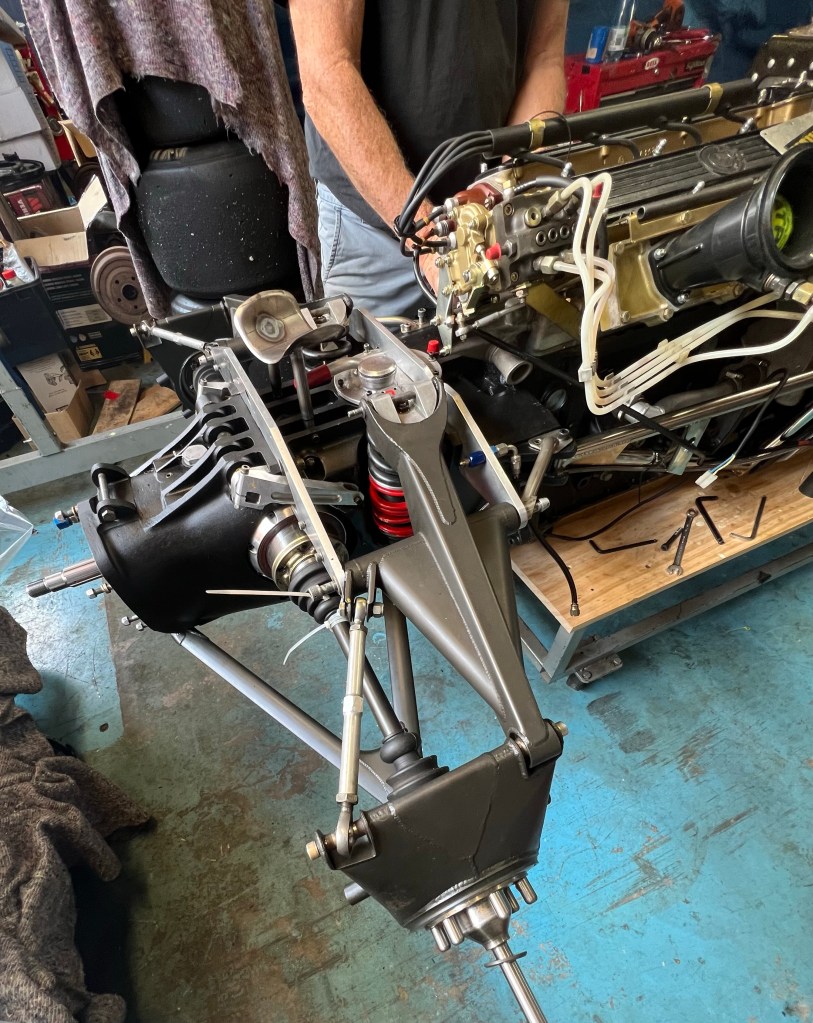
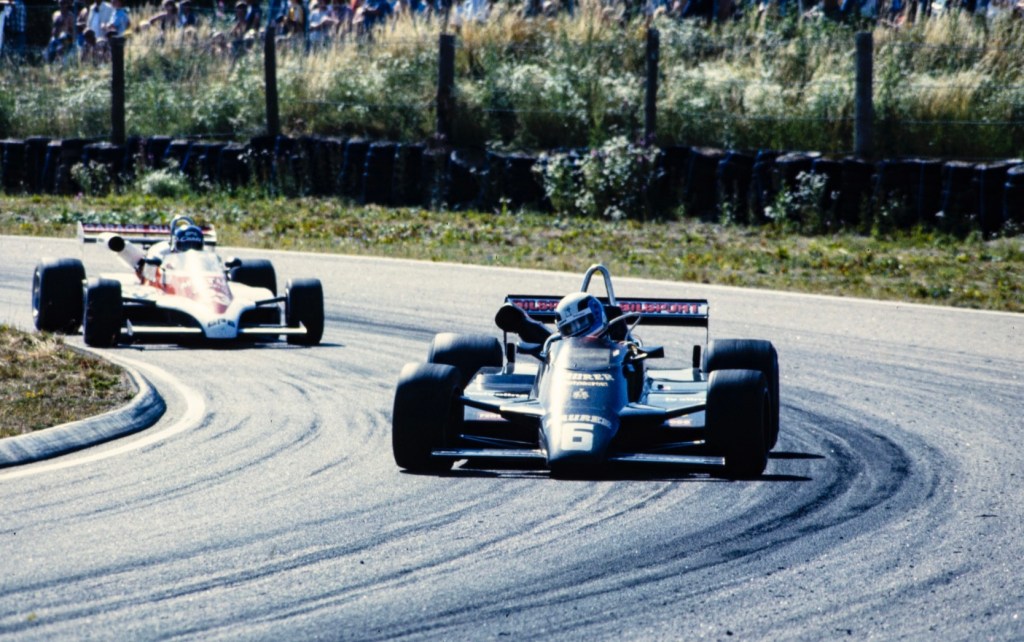
By the time Maurer relocated the team back to Germany in 1983, after local press criticism, Brunner had already left for ATS and Willy was brawling with Heidegger in the courts.
Gabbiani moved to Onyx March for the 1983 F2 Championship, finishing an excellent third and best-of- the-rest behind the Ralt RH6 Honda duo of Jonathan Palmer and Mike Thackwell.
The MM83’s were still quick in the hands of Stefan, Alain Ferte and Kenny Acheson, but the four points-scoring finishes of the three works cars was an appalling record of reliability as things unravelled. Owens began cutting off the supply of spares…his bills were going unpaid, he decamped at the end of the year. Willy walked away from his F1 design and parked Bellof at Porsche in ’83 and Tyrrell for 1984, where his pace in both teams was of course mega!
It was all over, but not without merit. McCarthy’s car has ingenuity and quality throughout, MM82-04 is one of four Maurers in Australia, oh to have them all on the same grid one day.
“Hop to it Andrew, and hand me another Coopers Red sunshine”…
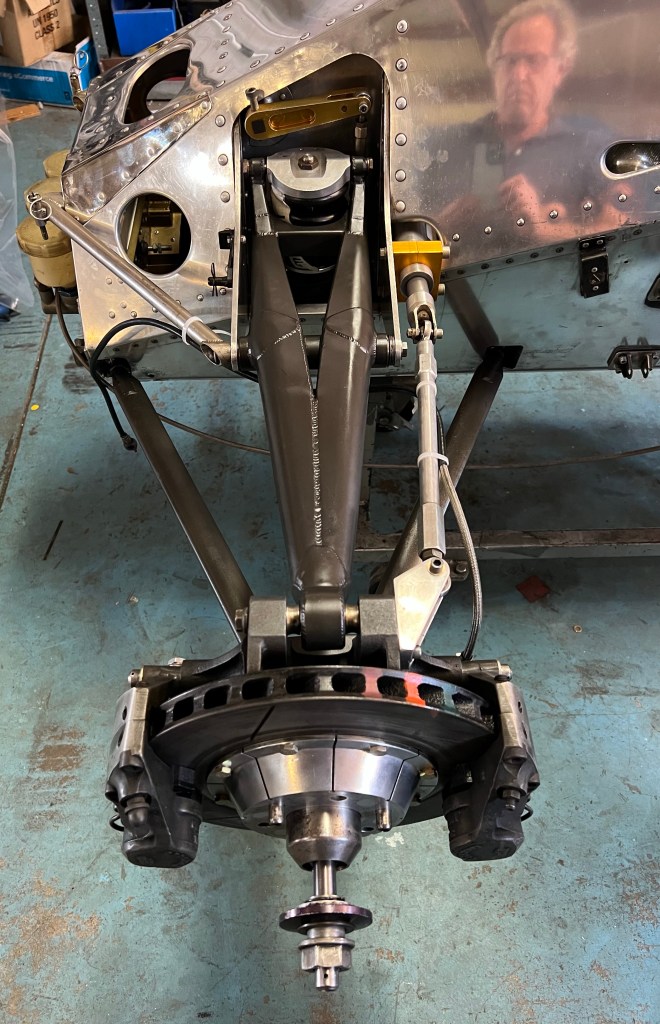
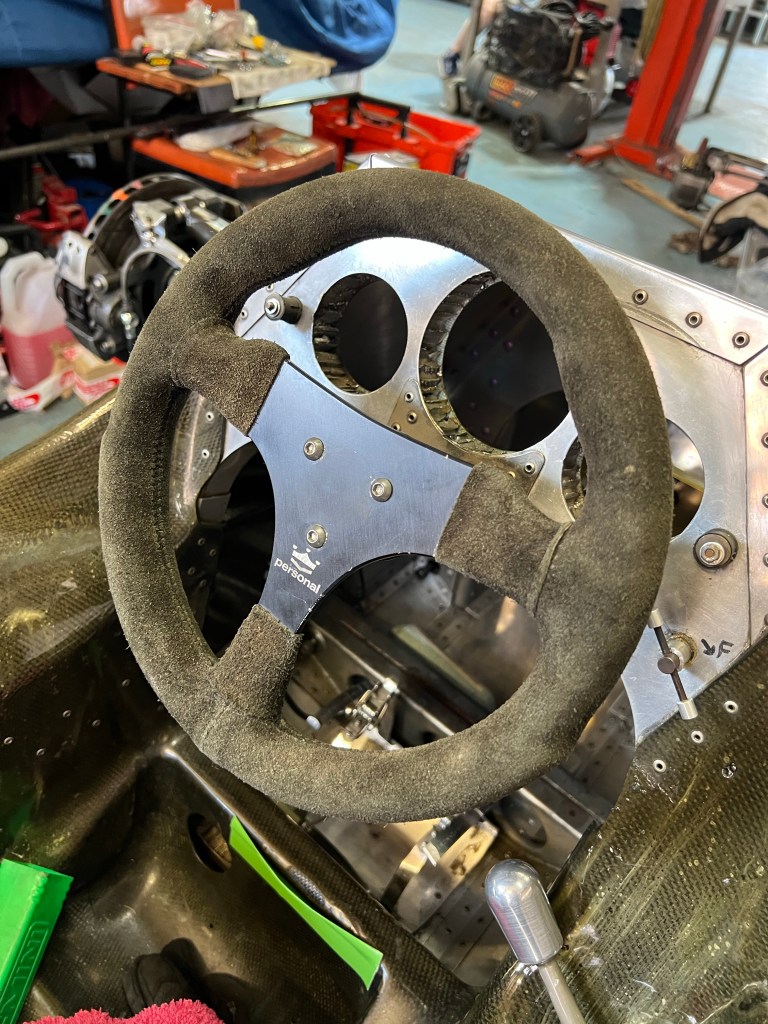
Original Personal wheel to be recovered in leather, and nice look at the magic of ally-honeycomb panels.
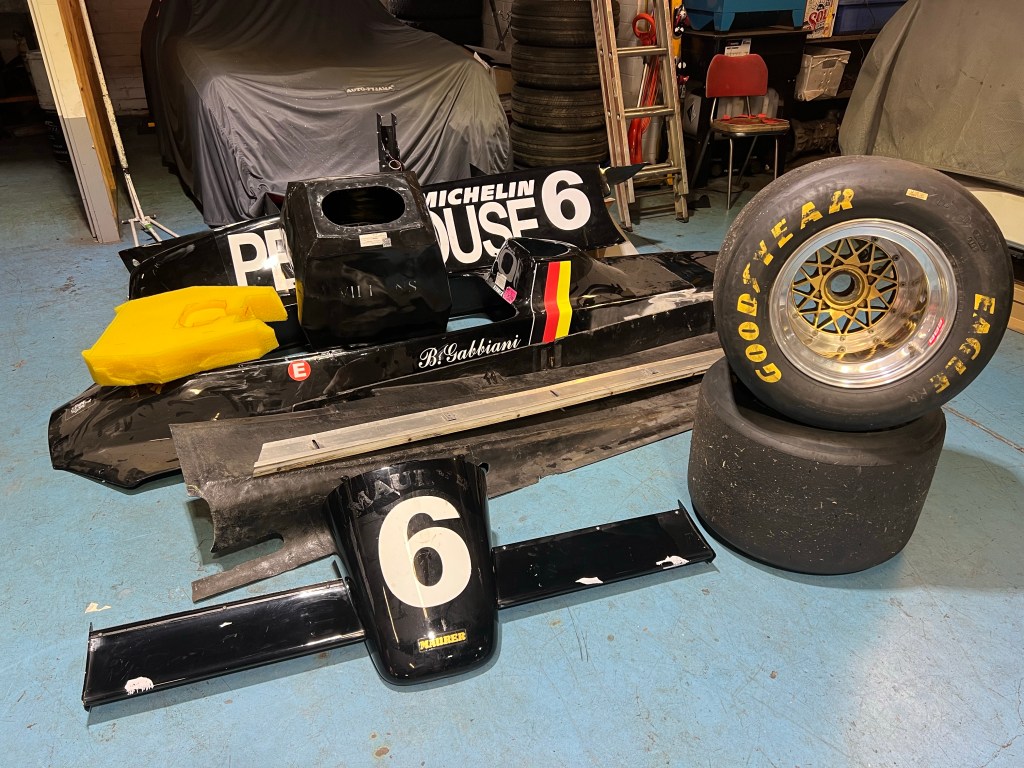
Bodywork, BBS wheels and new Willans fuel cell await their turn for attention.
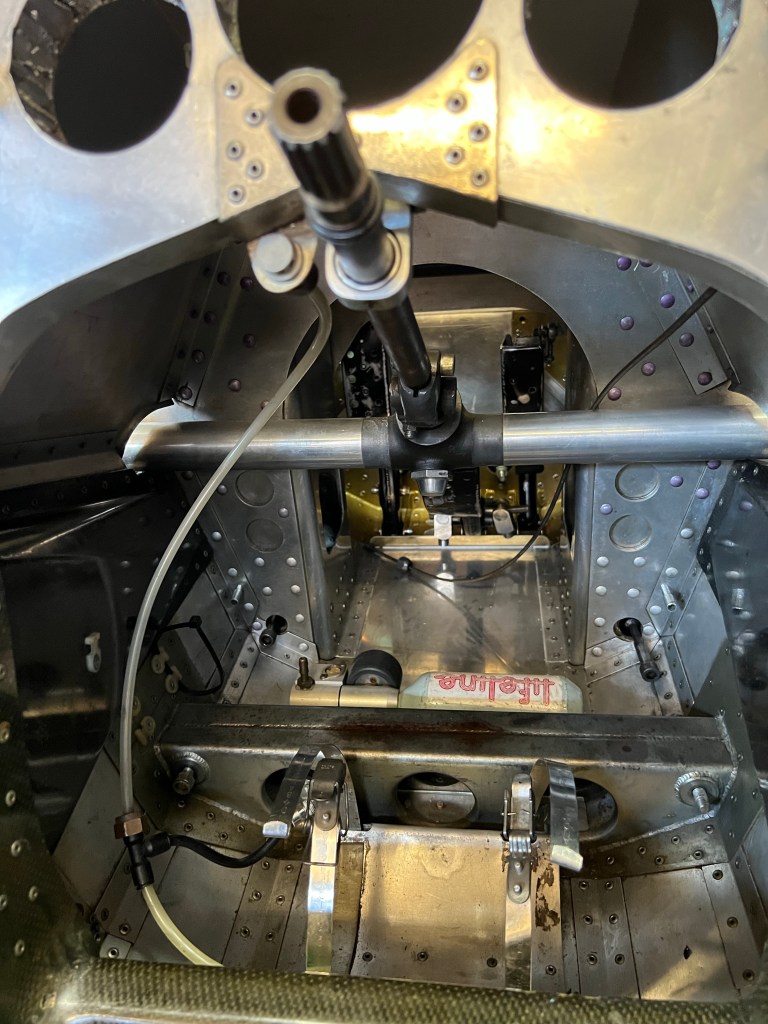
It’s as well McCarthy is a slim (ish) short-arse. The Maurers were works cars built for underfed pubescents, they aren’t like a customer car such as an early Ralt RT4, for example, which do accommodate Ford F150 driving Fat Bobs. Note the steering rack of course, and the way the beefy-bulkheads provide torsional stiffness.
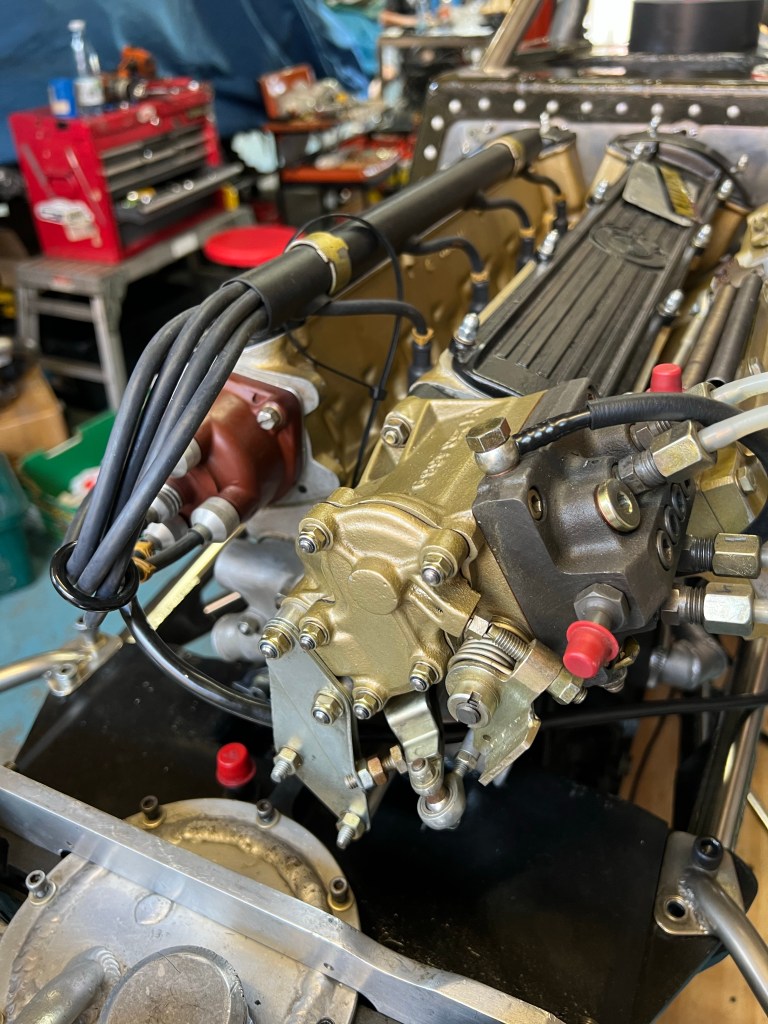
Andrew wishes to record the work of and thank Sam Henderson of Rotorweld, Auckland NZ for the perfect honeycomb work on the tub floor, Paul Deady at Melbourne’s Dana Engineering for wheel hubs and gearbox machining. Mo Meghji (ex Arrows F1 fabby) in Melbourne did the perfect A-frames and exhaust tig work and Garry Simkin in Sydney, the gearbox internals and setup.

The thing should stop ok…
Credits…
‘Young, Gifted and Black’ MotorSport article by Gary Watkins, F2 Index-Fastlane, MotorSport Images, Ferdi Kraling Motorsport, Mark Bisset, Andrew McCarthy, Stephen Dalton
Tailpiece…
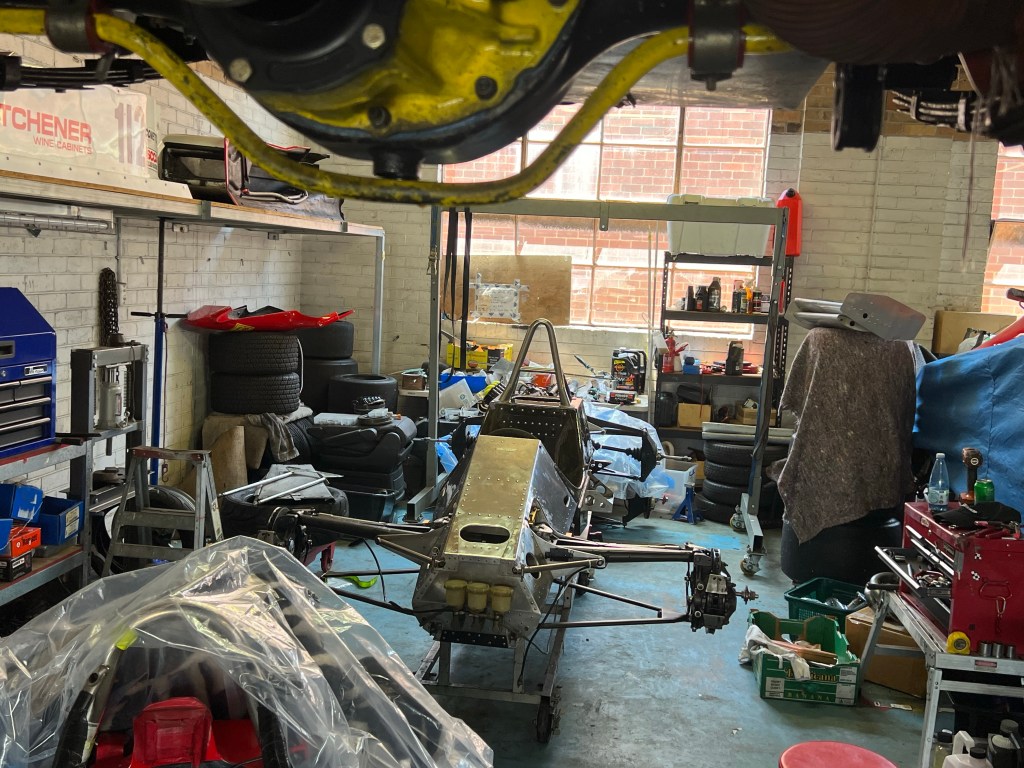
Maurer MM82-04 framed above by a Ford 9-inch diff (attached to a Ford Falcon Sprint) and a Ralt RT4 below.
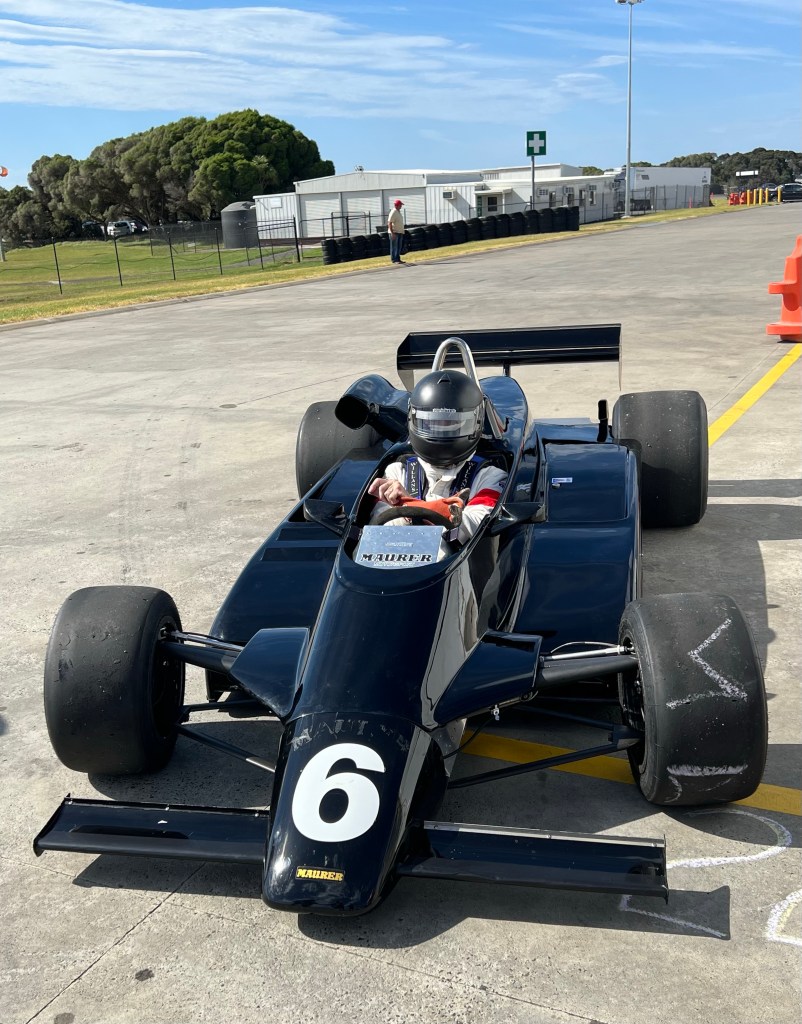
Postscript…
I thought that there was snowflakes chance of McCarthy having the car running at the Phillip Island Classic on March 8-10 but “Ye of little faith!” as my friend said.
Fellow Maurer racer Simon Gardner said, “You should have seen what still had to be done here on Thursday morning”, but he made it even if he ran the car with braking problems and without a clutch at all. The latter is manageable as the races for these cars use rolling starts and it wasn’t hard for us to push the car to allow Andrew to pull it into first.
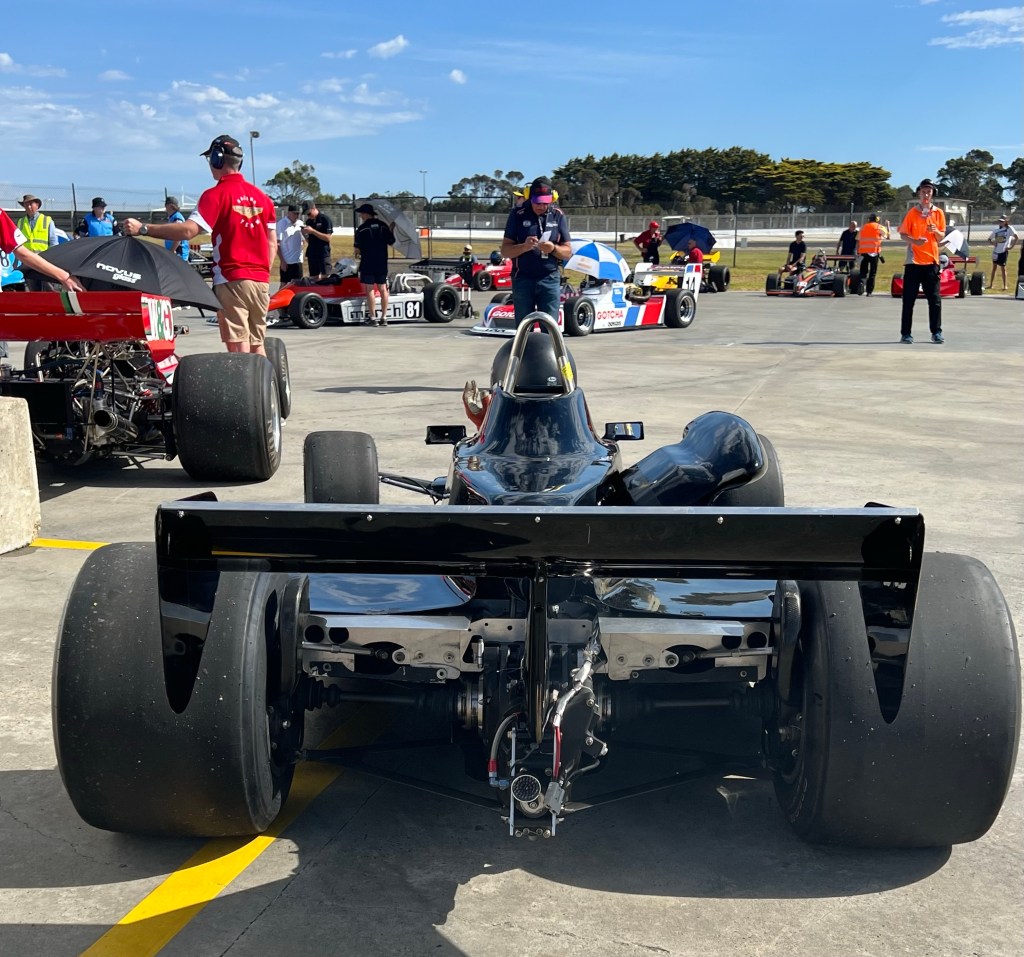
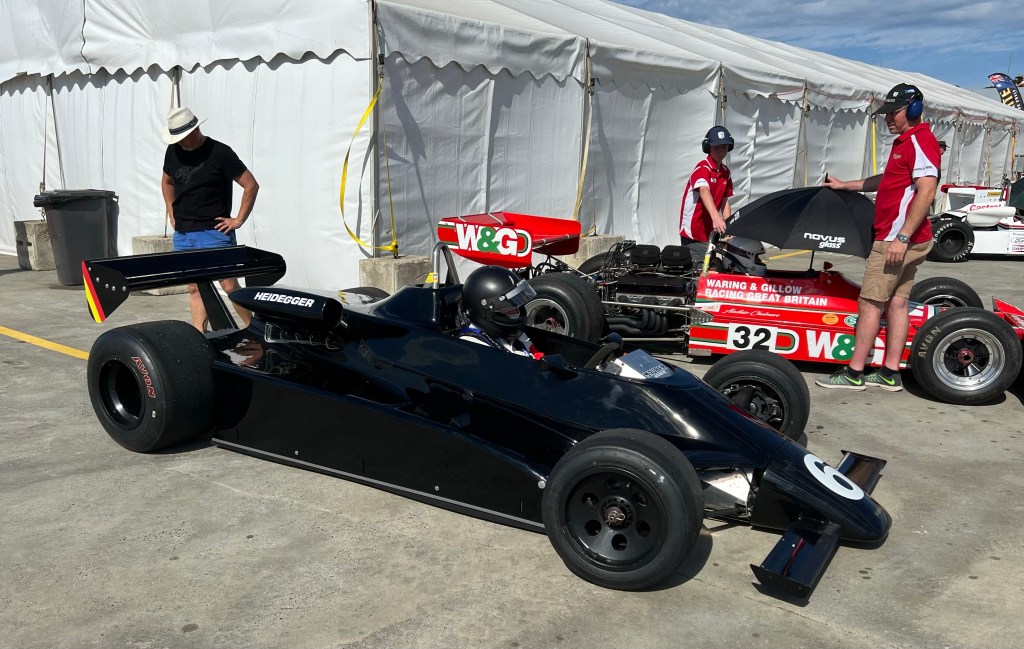
A lower front wishbone retaining bolt came loose going into Southern Loop at about 9000rpm, there was a bit of luck there, and the throttle linkage came loose in the last race but bloody well done getting it all done while holding down a full-time gig.

Now all ya gotta do is rectify the dramas and make it safe, the inherent pace of the thing is already clear.
Andrew’s crew, Finn Kelly and Craig Armstrong both deserve valour awards as our intrepid pilot was in ‘hyper-drive mode’ throughout the weekend…
Finito…

Start of the Australian Tourist Trophy at the Lowood airfield circuit in Queensland on June 14, 1959.
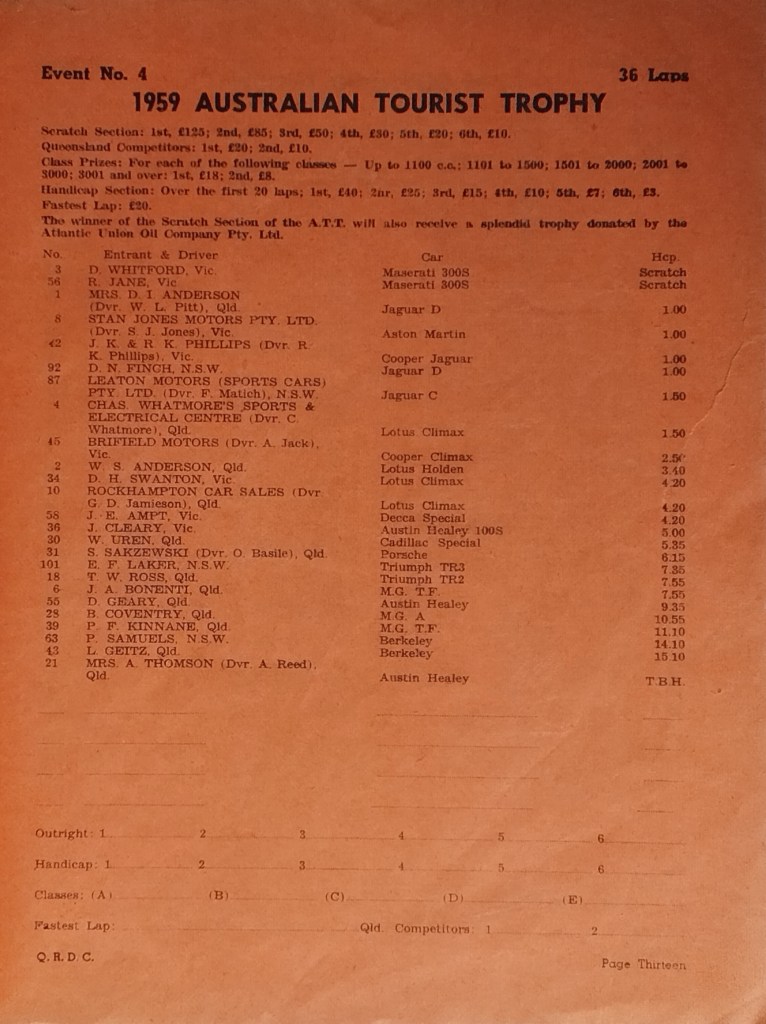
The 36 lap, 102 mile race was won by Wangaratta racer, Ron Phillips’ ex-Whitehead Cooper T38 Jaguar (#42 partially obscured on the second row). Bill Pitt’s Jaguar D-Type #1 was second, Bob Jane, Maserati 300S #56 third and John Ampt, 1100cc Coventry Climax engined Decca Special #58 was fourth. Car #87 is Frank Matich’ Jaguar C-Type.
These fantastic photographs were taken by Mr R Donaldson and published in the Pix news-magazine, one of those slightly naughty magazines to be found in Steve’s, the local barber shop. The meeting also featured the sixth round of the Australian Drivers Championship, the Gold Star, and drew a crowd estimated at 20,000.

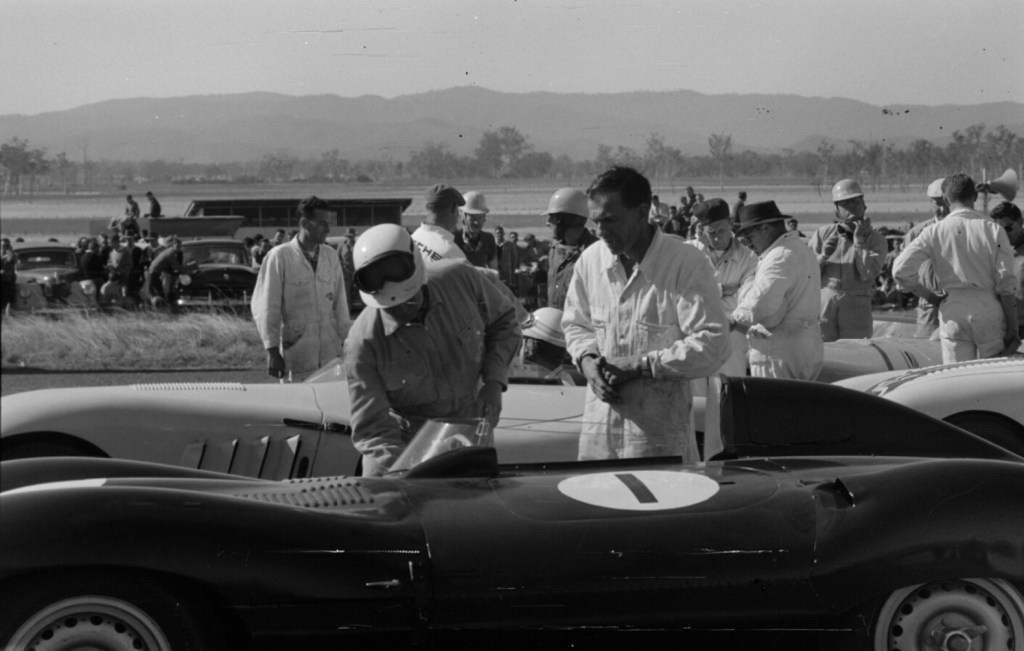
Bill Pitt prepares to climb aboard the Westco Motors D-Type while Frank Matich is ready to roll in the Leaton Motors C-Type behind. More on the C-Type: https://primotipo.com/2014/08/05/gnoo-who-gnoo-blas-circuit-jaguar-xkc-type-xkc037/ and the D-Type here:https://primotipo.com/2016/03/18/lowood-courier-mail-tt-1957-jaguar-d-type-xkd526-and-bill-pitt/ Leaton Motors acquired XKD526 when it was sold by Westco for Frank to race.

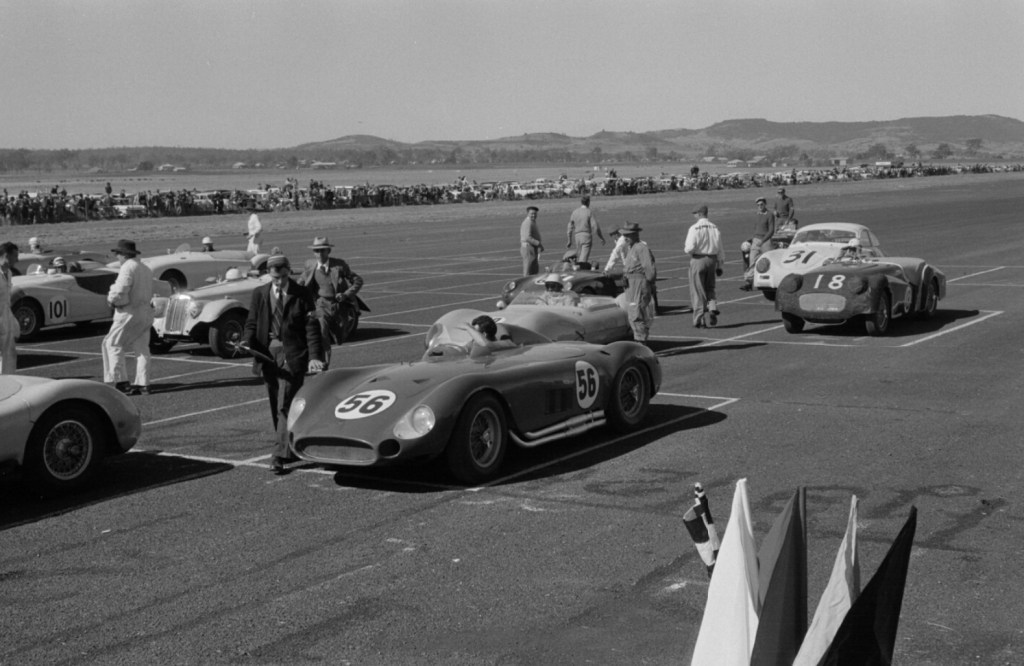
Another grid shot with a youthful Bob Jane in his superb Maserati 300S, a car he retained well into the historic period. See here: https://primotipo.com/2015/05/15/bob-jane-maserati-300s-albert-park-1958/
#18 is Tom Ross eighth place Triumph TR2, #31 Tony Basile, Porsche Carrera and #101, E Laker, Triumph TR3.
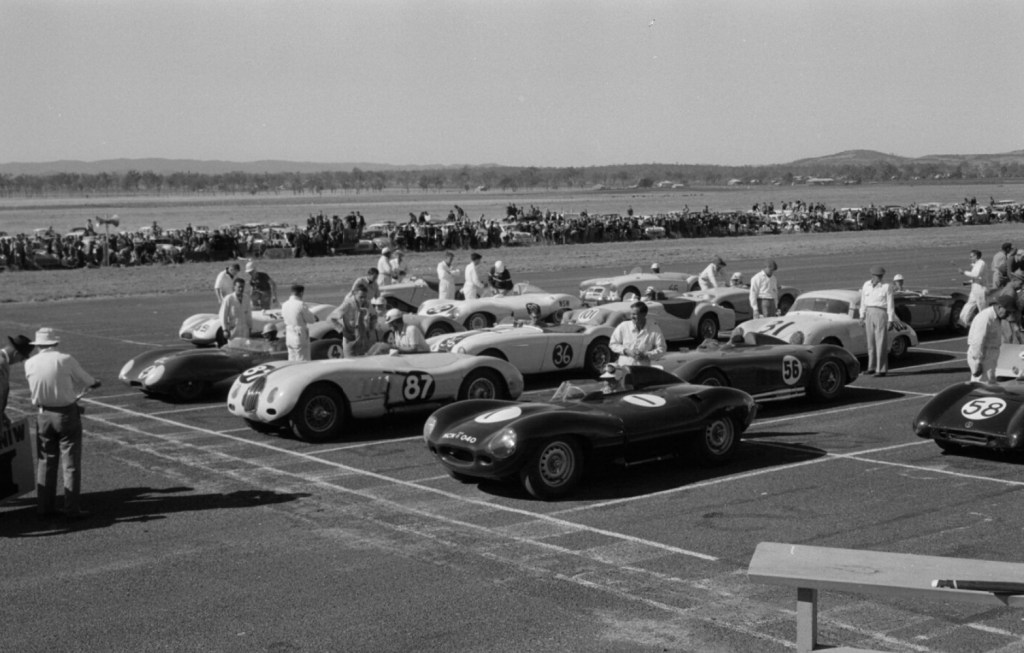
The grid ready to start with the Chas Whatmore Lotus 11 Le Mans Climax at left on the front row, then Matich and Pitt. The second row comprises Allan Jack’s Cooper on the left, winner, Phillips’ largely obscured Cooper Jag, John Cleary’s Healey 100S, Jane’s 300S and John Ampt’s Decca Climax.
Ampt was a later owner of the Cooper Jag and raced in Formula Junior in Europe with some success in the early 1960s.

With the flag dropped, Phillips is at the far left, the Bobtail Cooper is Allan Jack’s Type 39 Climax, #36 John Cleary, Austin Healey 100S, #10 Les Agnew, Lotus 11 Climax, #56 Jane, #31 Basile, #28 B Coventry, MGA and #18 Tom Ross, Triumph TR2.
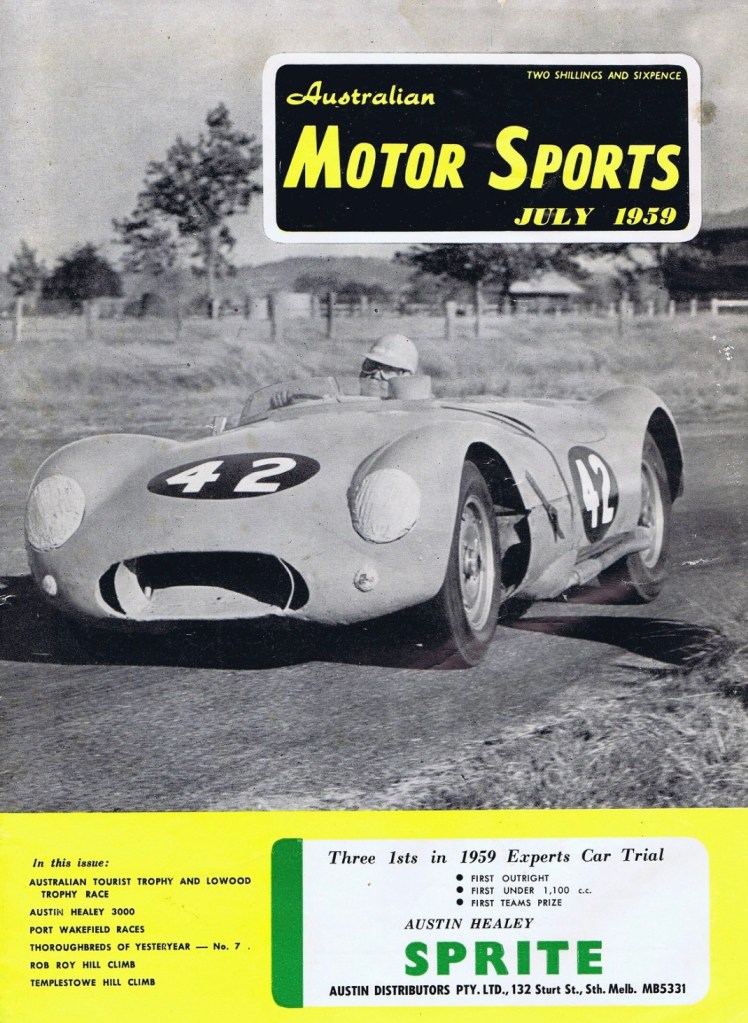
While Bob Donaldson did a great job, he has managed not to take a decent shot of the winning car. Here it is, shown above on the way to victory on the cover of the July issue of AMS.

David Finch’s D-Type in front of one of the Lotus 11s. See here about XKD520: https://primotipo.com/2020/04/17/stillwells-d-type/

Test of straight-line-squirt between the E Laker TR3 and J Ausina MGA. And below the beautiful lines of the Allan Jack Cooper T39 Climax.


That battle between the Triumph TR and MG seems to have been settled in the TR’s favour.

Bob Jane and John Ampt. The grunt of the 3-litre, DOHC-six engined, relatively light 300S prevailed over the very light 1.1-litre Decca. See here for lengthy feature on Derek Jolly and his Decca and Lotus cars: https://primotipo.com/2017/11/09/dereks-deccas-and-lotus-15s/
Awards were made for outright and class placings in the TT. Phillips won outright and the over 3-litre class, Jane the 2-3-litre class, Ampt the 1100cc class, Allan Jack, Cooper T39 Climax the 1.1-1.5-litre class. Tom Ross took the 1501-2000cc class in his Triumph TR2. Unusually, the organisers, the Queensland Racing Drivers Club, ran a handicap event over the first 20 laps, with Coventry’s MGA prevailing over the Ross TR2 and Tony Basile’s Porsche Carrera.

Lowood Trophy Gold Star round…
1959 was the third year in which the Gold Star was contested. Lex Davison won it aboard his famous ex-Ascari Ferrari 500/625 3-litre in 1957, with Stan Jones the reigning champion during 1959, his primary weapon of war was a Maserati 250F but his Maybach 4 Chev occasionally got a run too, as here at Lowood.
Lowood was the sixth of twelve rounds – the longest Gold Star series of all – and in a year where victory honours were spread widely. Melbourne auto-parts manufacturer, Len Lukey won with a mix of speed and consistency aboard a Lukey Bristol and an ex-Brabham Cooper T45 Climax.


Alec Mildren won three races in his Cooper T43 and T45, and Stan Jones, Bill Patterson and Lukey two apiece, with singleton wins for Jack Brabham, Ross Jensen and Bib Stillwell. Brabham and Jensen were non-residents and therefore ineligible for Gold Star points.
At Lowood, Mildren won from Stan Jones in Maybach 4 Chev, Arnold Glass, Maserati 250F, Arthur Griffiths, Ferrari 555 Super Squalo and Glyn Scott, Cooper T43 Climax.

Coopers had a mortgage on the Gold Star for a while: Cooper drivers, Len Lukey won it in 1959, Alec Mildren in 1960 (T51 Maserati), Bill Patterson in 1961 (T51 Climax) and finally Bib Stillwell won in 1962 (T53 Climax). The Brabham era followed…

Credits…
R Donaldson-State Library of New South Wales
Tailpiece…

Stan Jones hustles his Maybach 4 Chev around Lowood.
He used four cars in his fight to retain the Gold Star, primarily his Maserati 250F – it was just quick enough to prevail over Len Lukey’s 2-litre Cooper at Longford during the AGP – Maybach 4, which had been extensively updated by Ern Seeliger, not least by fitment of a Chev 283 engine, Sabakat and a Cooper T51 Climax.
Finito…

Seasonal salutations to those of you of a religious bent, and all the best for a well earned break for the rest of you. As father-time meanders on I do find my staunch atheism evolving towards an each-way-bet form of neo-agnosticism on the basis that one needs all the help ‘yer can find towards the end of one’s innings. “You fucking hypocrit!” my eldest son observed, fair comment too.
One of my mates asked me about my automotive highlights of the year the other day, I thought the contents of that discussion might be a good end of year topic.

When I think about it, all are related to my mate Bob King: medico retired, racer retired, restorer retired and author current with four Bugatti book tomes so far. My racing interests had been largely post-war until we had a series of illicit, coffee-infused research and talking-shit sessions during Covid. The Peoples Republik of Victoria was locked down tighter than a nuns chastity belt in 2020-21.
As a consequence, much of my research these days relates to earlier times, it’s fun as the learning journey is steep and rich. I worked out in 2022 that I could have my cake and eat it too if I mixed a car’s road impressions with the usual dose of history.
This combo has yielded 2023 articles on King’s AC Ace Bristol (published in Benzina magazine), the Murdoch Family’s two supercharged, twin-cam Altas: 1.1-litre #21S and 2-litre #55S (Benzina and The Automobile) and Richard Stanley’s 3.2-litre, six-cylinder, OHV Sunbeam 20/60 (The Automobile).
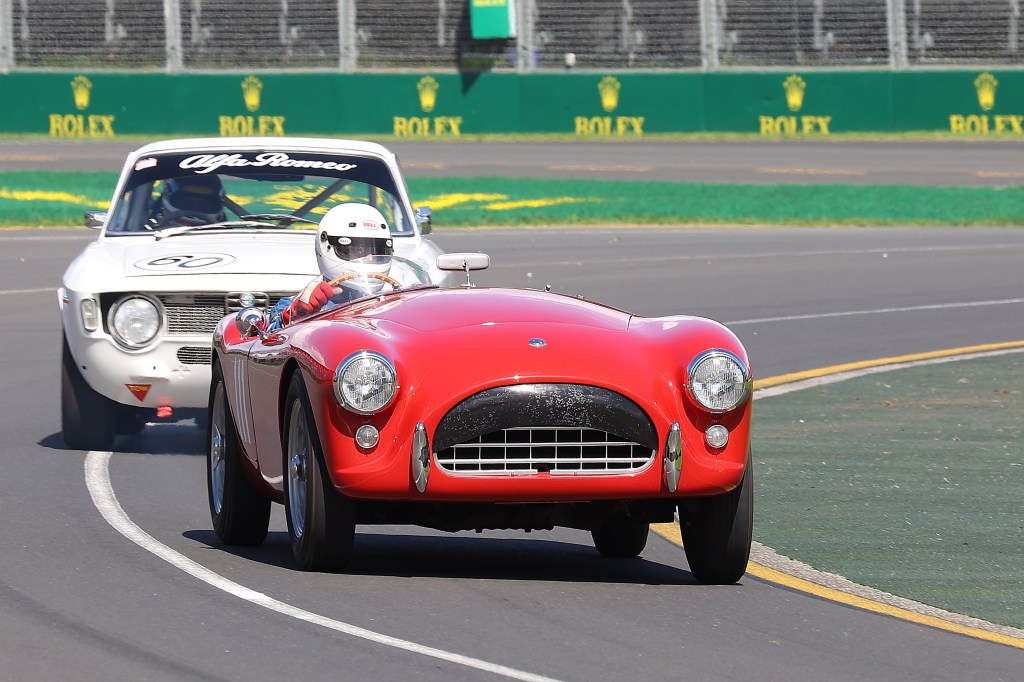
Driving these cars were the highlights of the year.
On top of that I get to drive Bob’s Ace very regularly, the best of those steers was participating in the Historic Demos (on all four days) of the AGP carnival at Albert Park. The pace is very-fast-road not full-race, its such a sweetie, a mix of just enough power (circa 135bhp), superb spaceframe chassis and predictable handling via independent suspension at both ends, rare in the day. See here: https://primotipo.com/2023/02/21/benzina-magazine/
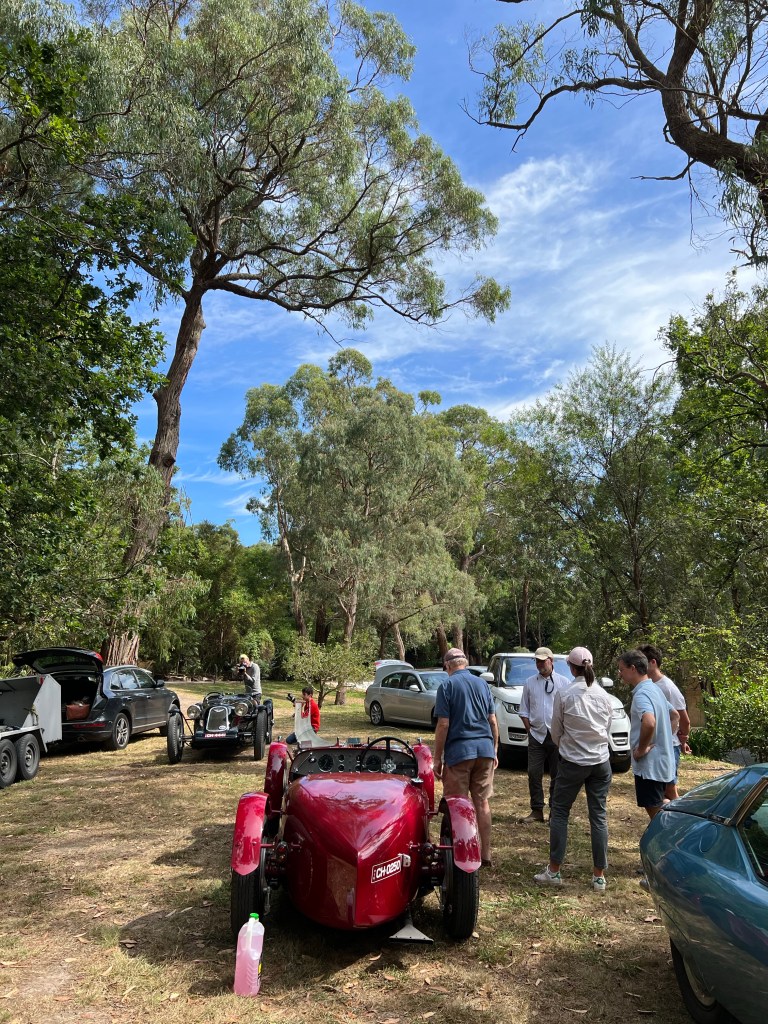
The logistics of these road impression exercises are not to be sneezed at. The rendezvous point for the Alta day (the week before the AGP in March) was in the Upper Yarra with one of the cars being trailered from Melbourne. There was a five-person-Murdoch Posse in attendance, David Hewison and his son manning the lenses, plus Bob and the two British stars of the show, who behaved well despite an exceptionally hot day.

THE DRIVE of the year was in Fiona Murdoch’s little #21S. It’s a car first brought to Australia by MI5 spook Allan Sinclair in 1938. I’ve written about it a lot in primotipo and have been all over and into the lore surrounding it – Sinclair, the DKW touring team of 1938, Bill Reynolds, Ron Edgerton, Ted Gray, Ford V8s, Tornado, restored by Graeme Lowe and all the rest – so to drive it was very special, evocative, memorable. See here: https://primotipo.com/2018/11/08/the-spook-the-baron-and-the-1938-south-australian-gp-lobethal/ and here: https://primotipo.com/2015/11/27/the-longford-trophy-1958-the-tornados-ted-gray/
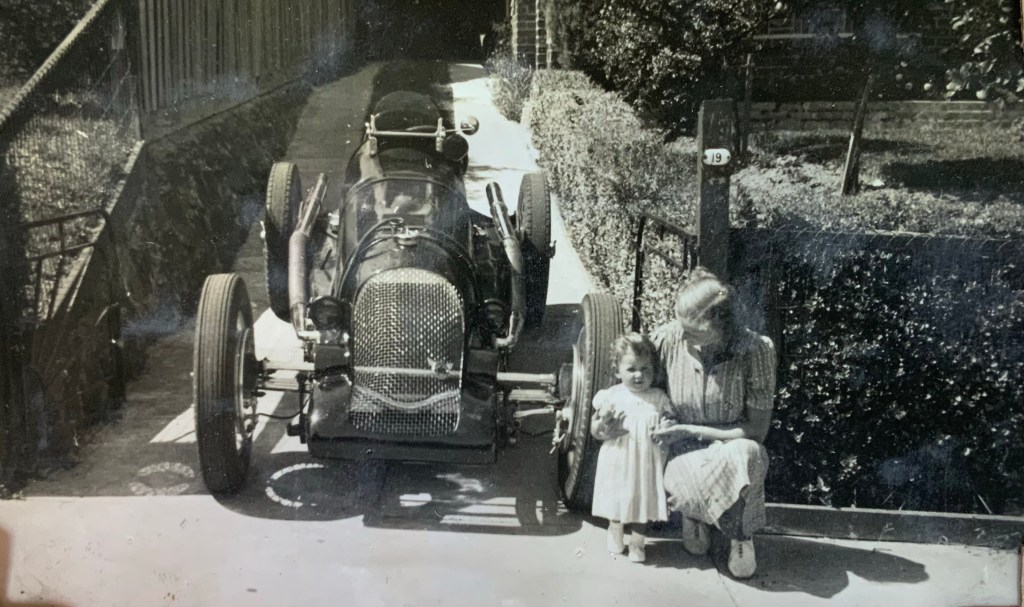
Nico French did the AC Ace shoot on Mornington Peninsula roads very familiar to me: a loop comprising Arthurs Seat, Main Ridge, Red Hill, Flinders and Shoreham and then a blast to Mornington for lunch en route home.
Kingy really doesn’t like the verbal foreplay between his car – mainly directed towards it’s perky little rump – and I in his garage before we set off on these occasions. There are only six-hundred-thousand-reasons she isn’t mine!
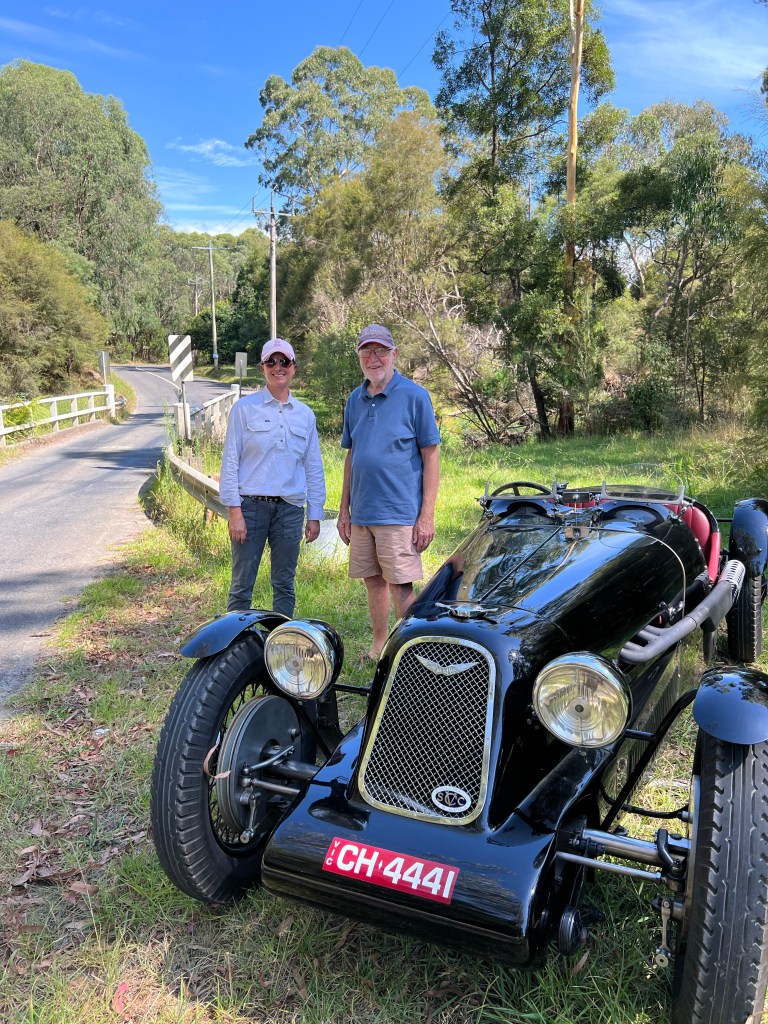
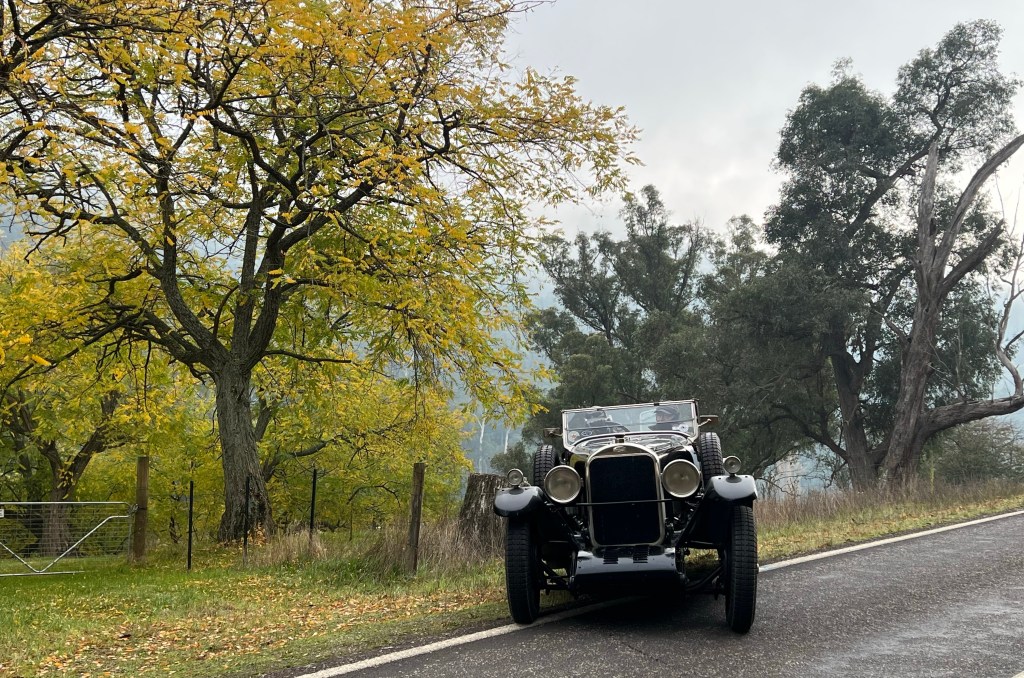
I froze my nuts off in the back of Richard’s Sunbeam way back in late April when I was the third-wheel on the annual Ye Olde Codgers Stanley-King Alpine Tour into Victoria’s high country.
Clad in my favourite Thredbo ski-gear, with rear windscreen erect and struggle-rug over my legs it was fantastic fun but, far-canal, it was a true British winter touring experience in The Great Brown Land.
I pitched the Sunbeam piece to The Automobile and it got up against two other ideas I rated more but were knocked back. The drive day was a warm one in mid-October, David Hewison did the static shots in Lancefield and the drive was via the Burke and Wills Track to Redesdale.
The 3.2-litre tourer was surprisingly spritely, the right hand change crash-box novice friendly. No pressure here in the driving, Stanley is a renowned Kiwi/Oz historic racer and has owned the car since restoring it in the early 1970s. He drives it with supreme finesse. Victorian country C-roads are bad at present given the lack of funds deployed to maintaining them, what surprised me was just how the twenties Sunbeam ate the B&W Track in a way my Alfa 147 GTA didn’t: low profile tyres and the rest.
Hewison produced his party trick this time, working with a drone for the first time was interesting, and adds another dimension to considering the terrain in which you shoot. More on the Sunbeam here: https://primotipo.com/2023/05/20/sunbeam-20-60/
Photos continue to be the inspiration for the primotipo articles but it’s yer mates and confidants, mentors, supporters and sub-editors (the latter are readers who pick up and point out the f-ups) that sustain you. So, many thanks to Bob King, Tony Johns, Stephen Dalton and Alistair MacArthur, Bruce Williams, Tony Davis and Doug Nye, and Geoff Harris and Rob Bartholomaeus.

Etcetera…
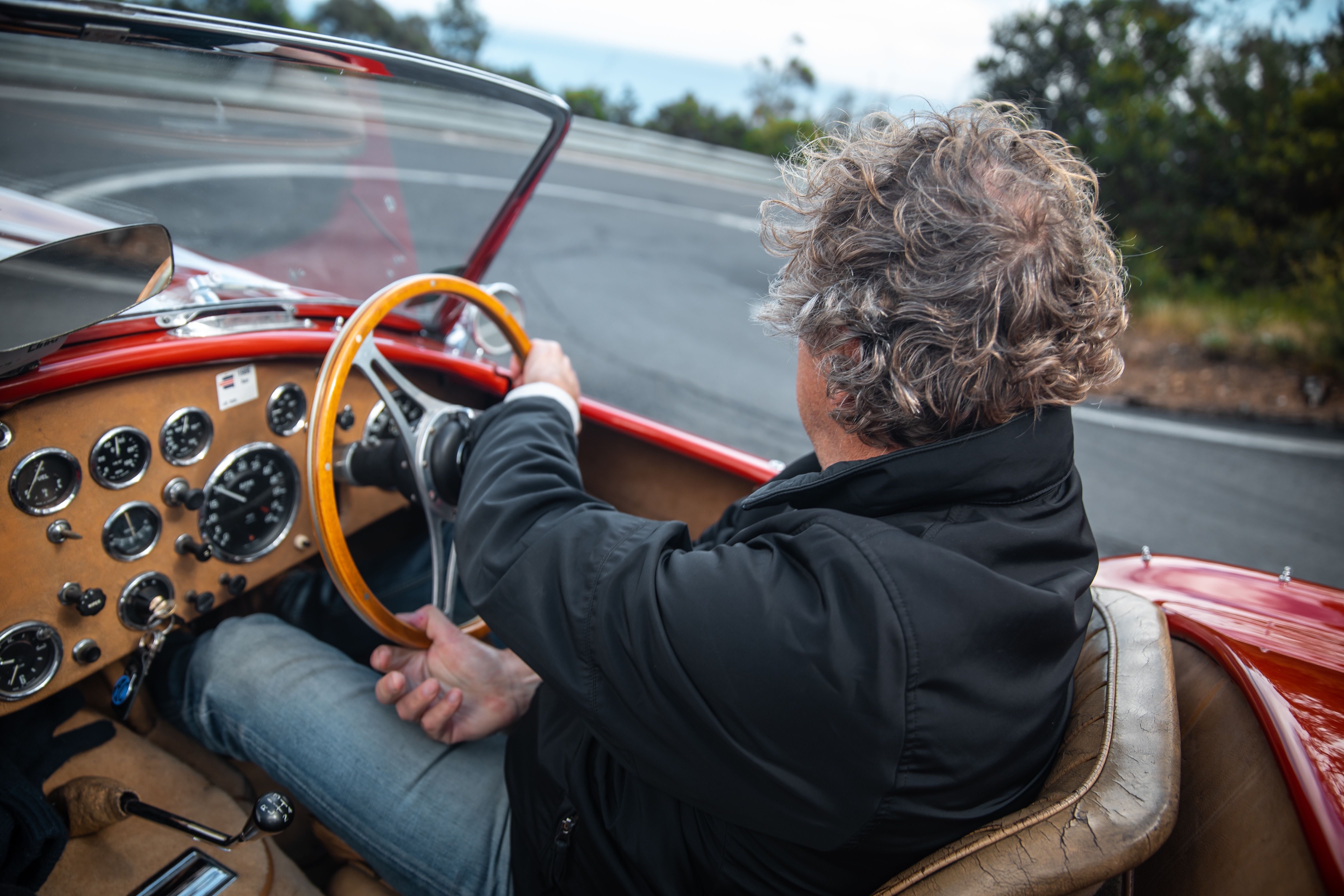
This shot of Bob King was the ‘money shot’ of the AC shoot, a ripper. Three-quarter front floats the editor’s boat. The owner is having a ball, there a couple of places on the steep climb where the chairlift goes over the road.
Bob competed here in his Bugatti Type 35 Anzani – the ‘Anzani Bugatti’ in Australia – in the early 1990s. There were two climbs (I think) in the modern era which aped the use of the venue pre-war, then officialdom got in the way, as it usually does.
These days the best approach to enjoy this magic stretch of road is an illicit dawn blast having first done a recce to ensure moisture levels of the surface, with many overhanging trees, won’t cause grief…


Rest assured it was as cold as it looks, what superb drivers roads they are. The two old-fellas were cocooned in the front while I was ‘punished’ in that airy rear seat. Kevington countryside, the local pub is great, albeit with a dang-diddl-lang-dang-dang factor about it.

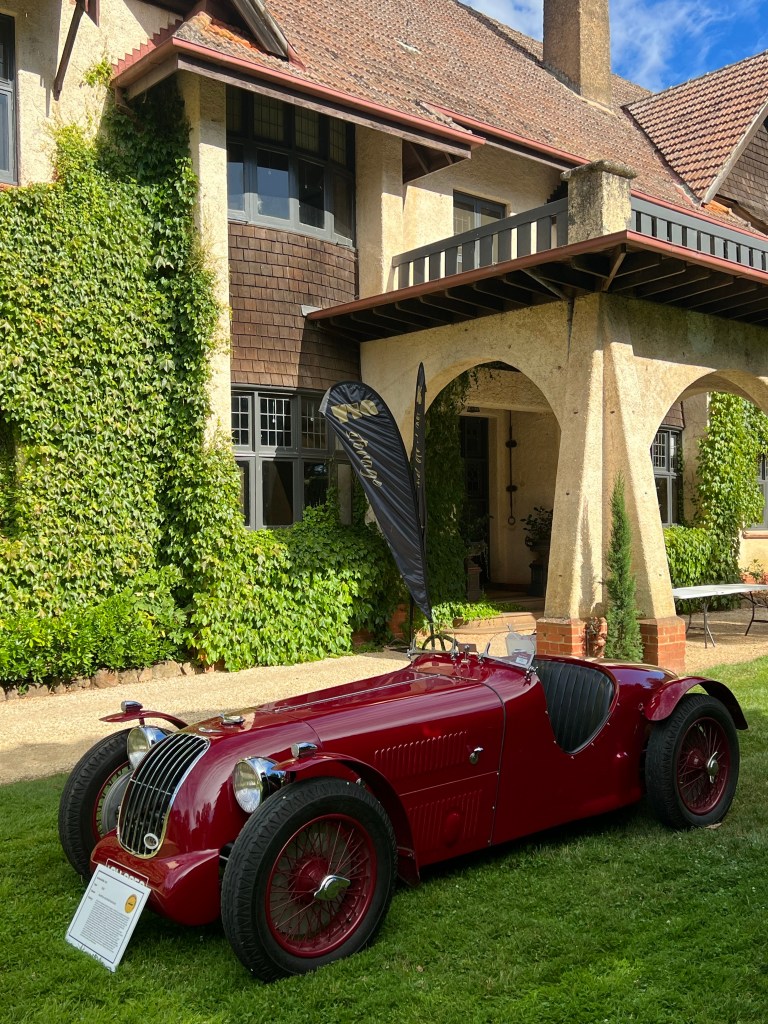
Geoff and Neill Murdoch’s 2-litre Alta 55S at Jack Quinn’s Benzina Concours at Wombat Hill, Daylesford in March. See here: https://primotipo.com/2023/02/25/wombat-park-classic/
Easily the best of this years piss-up type events, it’s on again in 2024, with me as a judge. It’s a very dangerous choice as someone who regards these things as wank-fests, and will fulfil his duties with that degree of conviction….

Neill Murdoch me showed just how quick this supercharged 2-little mid-1930s Alta accelerates, “think of it as a two-seater ERA” was meant indicatively rather than definitively but sums the thing up in a nutshell. Geoffrey Taylor’s marque is so underestimated.
Credits…
David Hewison, Nico French, Mark Bisset, CC Collection
Tailpiece…

What it’s all about, a long and winding road that leads to a hotel door…with apologies to Paul and John.
Richard Stanley and Bob King with Sunbeam 20/60 burbling it’s beautiful six-cylinder song on the Maroondah Highway, Molesworth, Victoria on April 25, 2023.
Merry Christmas, may you all have a peaceful and restful break with lots of good health and luck in 2024.
Finito…

Cathy Ford looking all pert and perpendicular in a Paula Stafford bikini, a mighty fine chequered flag design it is too. The car is a Valiant Charger R/T (road/track) at Surfers Paradise International Raceway in 1972’ish…
Once upon a time Australia had a motor industry. It was largely owned by the US Big Three, Chrysler was the smallest. Based in Tonsley Park outside Adelaide, the company punched well above its weight, the product, especially the Hemi-six cylinder engined cars were good in the context of the times.
The Big Three’s pony cars in 1971-72 comprised Ford’s four-door road Falcon GT 351 and Bathurst winning GTHO 351 variant, General Motors Holden’s mid-size 202cid six-cylinder road Torana GTR and Bathurst winning GTR-XU1, and the 265cid-six powered road Charger R/T E37 and Bathurst E38 in 1971, and E48/49 in 1972.
These amazing Australian designed and built road cars – in world terms they were fast and acccomplished – were fundamentally built to win Series Production races, especially the annual Bathurst 500 bash. Win on Sunday, Sell on Monday, it was that simple for the snappily dressed marketing men and their whiteshoe, sales foot-soldiers.
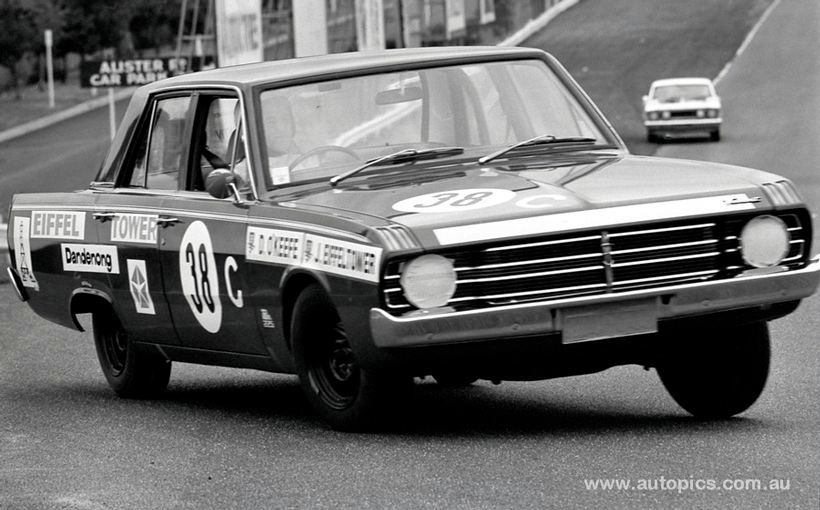
Valiant put a toe in the competition water with mildly tuned ‘Pacer’ variants of their four-door VF and VG family man machines in 1969-70. Then they got serious with the new shortened 105 inch wheelbase Charger which was released two months after the mainstream 111 inch VH Valiant sedan in 1971.
The American styled VH suited guide-dog-owners, it’s big arse, cavernous overhangs, high waisted looks and narrow track weren’t a patch on the looks of the contemporary Holden HQ, Falcon XY or XA.
When Chrysler Oz CEO David Brown realised what a mutt his new car was going to be, he bundled up a tiny-budget and built a two door coupe, the design of which was led by Brian Smyth at Tonsley Park. It had to plug a hole in his range and grab some halo-effect for his four-doors.


And what a horn-bag Smyth and the Chrysler International Design Studio, under Bob Hubbach, came up with. Charger was an immediate sensation when released in August 1971. The best bit of the Valiant, its front, was retained and otherwise the team crafted a low, squat, muscular, sexy machine that still looks great from every angle.
With Elle McPherson looks at an affordable price it was a sales smash aided and abetted by a brilliant marketing campaign. Hey Charger! was on everybody’s lips, young or old, male, female or confused. Winning Wheels magazine’s coveted Car of The Year award in ’71 was the cherry on the cake.
The range went from the poverty-pack 215cid, drum braked, three-on-the-floor Charger to the fire-breathing race-bred 265cid – a bored-out 245 Hemi – 1971 E38 280bhp @ 5000rpm and 1972 E49 302bhp @ 5600rpm R/T machines of interest to us.
For a while 70% of all Chrysler sales were Chargers, but they were far from niche. With a big back seat and a boot you could fit granny in, they were legit four-folk-family-cars. Read Mel Nichols’ account of what a great drive these competition bred Chargers were on the road; https://www.classicandsportscar.com/features/chrysler-valiant-charger-australian-odyssey
Chrysler competition chief, engineer John Ellis put together a strong development team in the Pacer days which included 1970 Gold Star champion single-seater racer, Leo Geoghegan who raced the cars and acted in a consulting capacity. Another sportscar/single-seater racer/mechanic, Ian Cook, a Chrysler employee was key too. This group, and others, concocted a potentially race winning car, the only missing ingredient in the formative stages was a four-speed gearbox…


The A84 Track Pack option included a very direct 16:1 ratio steering box, Sure-grip LSD, a choice of tall 3.23:1 and short 3.50:1 diff ratios, light 14×7 R.O.H. cast alloy ‘Dragmag’ wheels and a huge 35-gallon tank with twin-fillers.
On paper, the big-Val had Bathurst shot-to-bits but the lack of a four-speed box was a big shortcoming; there was no Oz four-speeder available at the time, a situation rectified in 1972.
While it looked the goods, there were other shortcomings, as Mark Oastler outlines. “The Charger was built on a relatively short 105-inch wheelbase, which magnified the ‘see-saw effect’ of dynamic weight transfer from front to rear, resulting in excessive squat under acceleration and forward pitch under heavy braking.”

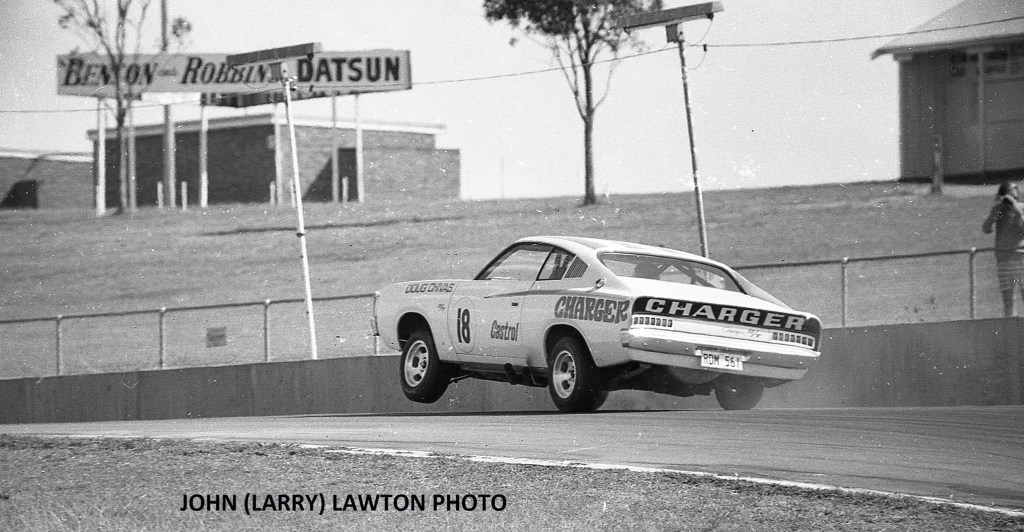
“This was not helped by the high location of the big long-range fuel tanks fitted to the Bathurst cars. The VH Valiant’s bulbous bodywork ended up being more than 100mm wider than that of the VF/VG ute-based development mules, which added to the R/T’s lateral inertia and tendency to understeer in hard cornering. The Charger’s wheelbase was also quite short relative to its track. This wheelbase-track ratio created a car that was very responsive to directional change, but was twitchy and nervous at high speeds.”
The Charger’s track was similar to the GTHO but its wheelbase was six-inches shorter than the big Roaring Ford. It wasn’t stable on high speed Mount Panorama but was better suited to shorter, twistier tracks. The Chargers were dominant in NZ production racing for years, a status never accorded them at home.
The 11-inch non-power assisted ventilated front discs and calipers (which flexed badly) were marginal on track too. Ford’s similar challenges with the beefy 351 Cleveland powered HO were met late in the 1971 piece with Ferodo’s trick DP11-103 pads.
Oastler quotes Leo Geoghegan as saying that the Chargers could have beaten the Toranas in ‘the six-cylinder class battle’ and applied greater pressure on the HO’s had Chrysler sorted its front-disc problem. A set of pads was only good for 60 miles if given a hard workout.

In 1971 expectations were high after Doug Chivas won a 100 lap enduro at Oran Park a fortnight before Bathurst. While it was a great drive, Chivas was advantaged by Colin Bond’s HDT XU1’s race-long gear selector problems…the works HO’s were absent too.
With vastly inadequate Bathurst preparation: simulations to determine fuel consumption, brake and tyre life etc, Geoghegan’s Top 10 Q8 was great – quickest of the Class D cars including the XU1s – but was still six seconds off Moffat’s GTHO Phase 3 pole.
Moffat won by a lap with Geoghegan’s Charger seventh outright and second in class behind Bond’s HDT XU1. Impressively, eight of the 10 Chargers that started, finished. Geoghegan’s post-race list of shortcomings included tyre wear, fuel consumption far greater than that anticipated and brakes…
In the later rounds of the 1971 Australian Manufacturers Championship (Manchamps), Chivas was third at the Phillip Island 500K, while Geoghegan was second to Moffat’s HO in the Surfers Paradise 250 – ahead of the two LC XU1s of Brock and Bond – with Chivas sixth. Progress was being made.


Chrysler’s response for 1972 was the 302bhp @ 5600rpm E49 Charger variant…fitted with Borg Warner’s new four speed gearbox, the more aggressive cam-profile was possible thanks to a better set of ratios which could exploit the peakier power delivery.
Just as in 1971, the E49 was short on Bathurst development, in part as a result of the Supercar Scare, see here for chapter-and-verse on that important bit of Australian Motor Racing History: https://primotipo.com/2018/04/12/holden-torana-gtr-xu1-v8/
A byproduct of the Supercar Scare was Chrysler’s withdrawal from motor racing with factory cars, an incredible decision really after all the clever development and homologation. The better call would have been to contest that years Manchamps and then pulled the plug; but Chrysler was in big financial strife globally.
Noel Hurd raced his E49 to fifth in the first round of that championship, the Adelaide 250 in August, while at Sandown, the traditional Bathurst curtain-raiser, the two cars raced by Victorians, Tom Naughton and Lawrie Nelson failed to finish.
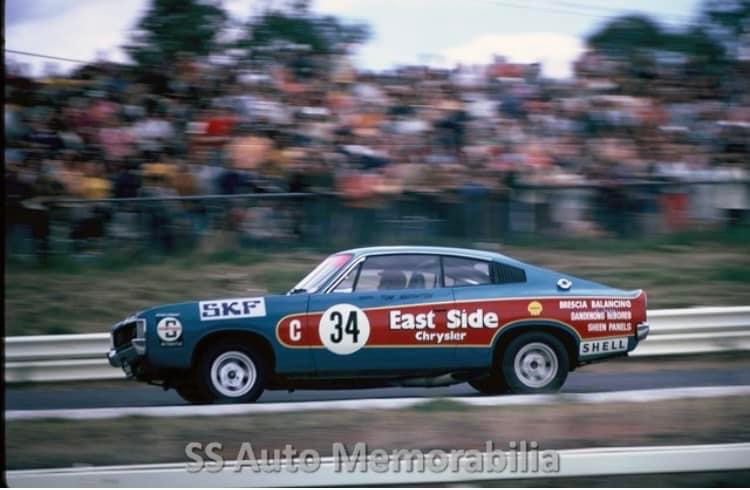

Off to Bathurst, Geoghegan was again the quickest of the Chargers at Mount Panorama, qualifying sixth. Again Moffat was on pole in an XY GTHO, but this time the margin to the E49 was 3.3 seconds. Leo led for a while early in the race but a faulty starter motor, loose battery lead and misfire late in the race ruined what could have been a good run. Geoghegan was fourth in the race won by Peter Brock’s GTR XU1, with John French’s GTHO second, with the Doug Chivas/Damon Beck E49 the best of the six Chargers entered, in third.
Tom Naughton was sixth at the Phillip Island 500K, while Leo was sixth in the Surfers Paradise 300. Chrysler placed fifth in the the Manchamps behind the GTHO, XU1, Ford Escort Twin-cam and Mazda 1300.

With the end of Improved Production and Series Production in 1972, and adoption of Group C as the formula to which the Australian Touring Car Championship and Australian Manufacturers Championship were run in 1973, a group of New South Wales and Victorian Chrysler dealers supported the construction of a Group C-spec Charger built by ace engineer/mechanic, John Sheppard at his Monaro Motors workshop in Melbourne. It was to be raced by Leo’s brother, four-time Australian Touring Car Champion, Pete Geoghegan.
Pete finished sixth in the ATCC in this quick, often forgotten car, but switched camps to Ford for the Manchamps. Successfully so, he co-drove Moffat’s factory XA 351 GT Coupe – FoMoCo’s response to the two-door Monaro and Charger – to victory at The Mount. This Group C Charger is beyond the scope of this article but is a good one to pick up soon with some input from Sheppo, who is still razor sharp.

Etcetera…
In Chrysler’s own words above, “You’re watching Charger’s Hemi/Weber Six Pack during a dyno endurance test. After 480 hours at both ends of the rev range, it’s running red hot at peak revs for longer than it ever would on road or track. The Six Packs an unbelievable mill. But don’t get the idea it’s just a 265 cube Hemi with three double-barrel Webers bolted on.
The whole engine’s been tuned to the Webers. In fact, we flew a car (a VG Pacer driven by John Ellis from London to Bologna) over to the Weber factory in Italy. Breathings been freed up with a high overlap camshaft, bigger valves and tuned length extractors. And the crankshaft, conrods and valve springs have been shot-peened for high-speed strength.
But there’s more to a Six Pack Charger than just a great engine. The E37 Street version offers dual disc clutch, close ratio gears, 20:1 steering, 3:23 diff and pancake air-cleaners to pick up bottom end torque. The E38 Track Pack version picks up compulsory alloy wheels and special engine, brake and suspension mods. All of which make it ready to roll straight on to the track.
Your Chrysler/Valiant dealer has the Six Pack systems to make you believe in the unbelievable. And at Charger prices, you can’ attord not to.
CHRYSLER. GREAT IDEAS IN MOTION. BELIEVE.”

Laurie Nelson’s Group C Charger E49 being harrasssed by an LJ GTR XU1 at Shell corner, Sandown circa 1973.

Following the privateer theme – these cars were very fine cars for those on a tight budget – here is Tim Slako’s car at Wanneroo Park circa 1971.
Credits…
Chevron Publishing, ‘Australian Touring Car Championship’ Graham Howard and Stewart Wilson, ‘VH Valiant:The R/T ‘Super-Charger’ that never made it’ Mark Oastler, Lynton Hemer, SS Auto Memorabilia, Graham Ruckert, Chrysler Car Club, Julian Edwards, John Lawton, Laurie Nelson

Tailpiece…
The ROH aluminium alloy ‘Dragmag’ was adopted by Chrysler for the Charger programme. It was made across town in Finsbury by Rubery Owen and Kemsley Pty Ltd one of the local subsidiaries of Owen Organisation/Rubery Owen, a global automotive UK based transnational of which the Owen Racing Organisation/BRM (British Racing Motors) F1 team was a part.
I wondered whether Chrysler inspired the design of the fabulous Dragmag – easily my favourite Oz Alloy of the period – for the Charger programme but Moff ran the wheels on his famous Boss 302 Trans-Am in 1970, and the ad above was in the June 1970 issue of Wheels so they were on the market at the time Charger was being developed.
Obiter…

It transpires – the power of internet searches – that the factory Rubery Owen Kemsley took over in 1946 dates back to WW2. After the British retreat at Dunkirk in 1940 the Australian Government decided to decentralise ammunition production away from the more populous eastern seaboard cities, Adelaide’s Finsbury/Hendon were two such locales.
The Finsbury ammunition factory was established on a massive 50acre/123ha site and commenced production in February 1941. It comprised about 20 buildings where up to 4000 people made cartridge cases and shell fuses for munitions, but not the explosives themselves. The castings and arms cases were sent by rail on a new spur line from Woodvile to Finsbury, to the Salisbury Explosives Factory for filling and assembly.
The factory is now a tyre warehouse.

Finito…
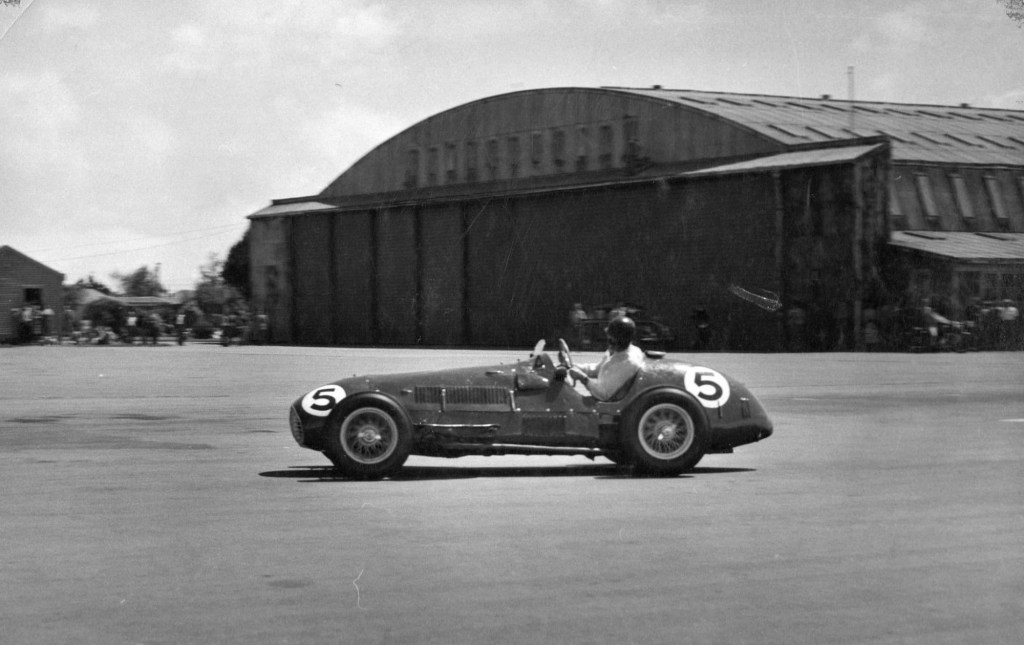
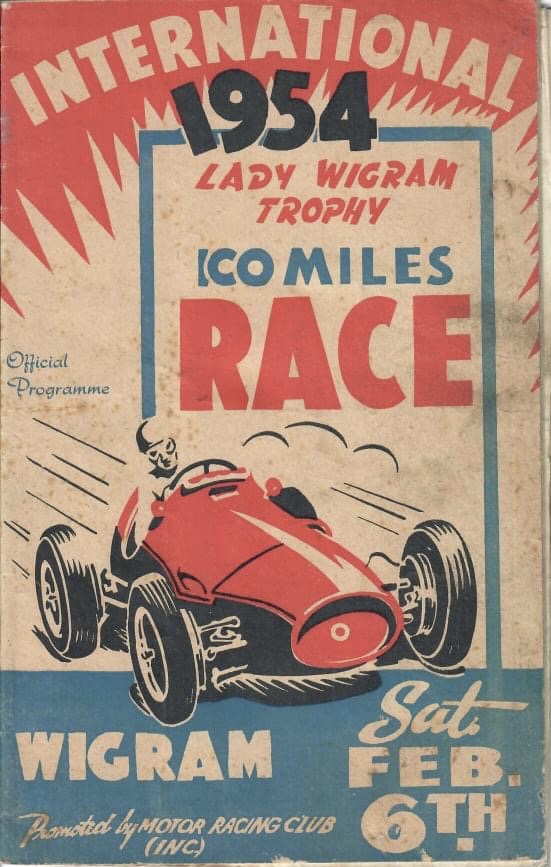
Superb shot of British International Peter Whitehead’s Ferrari 125 (#0114) enroute to winning the Lady Wigram Trophy in 1954.
He won the race from Tony Gaze’s HWM Alta 2-litre s/c and Ken Wharton’s BRM P15 1.5-litre V16 s/c. Whitehead’s mechanic brings the car back into the paddock to a most appreciative crowd below.
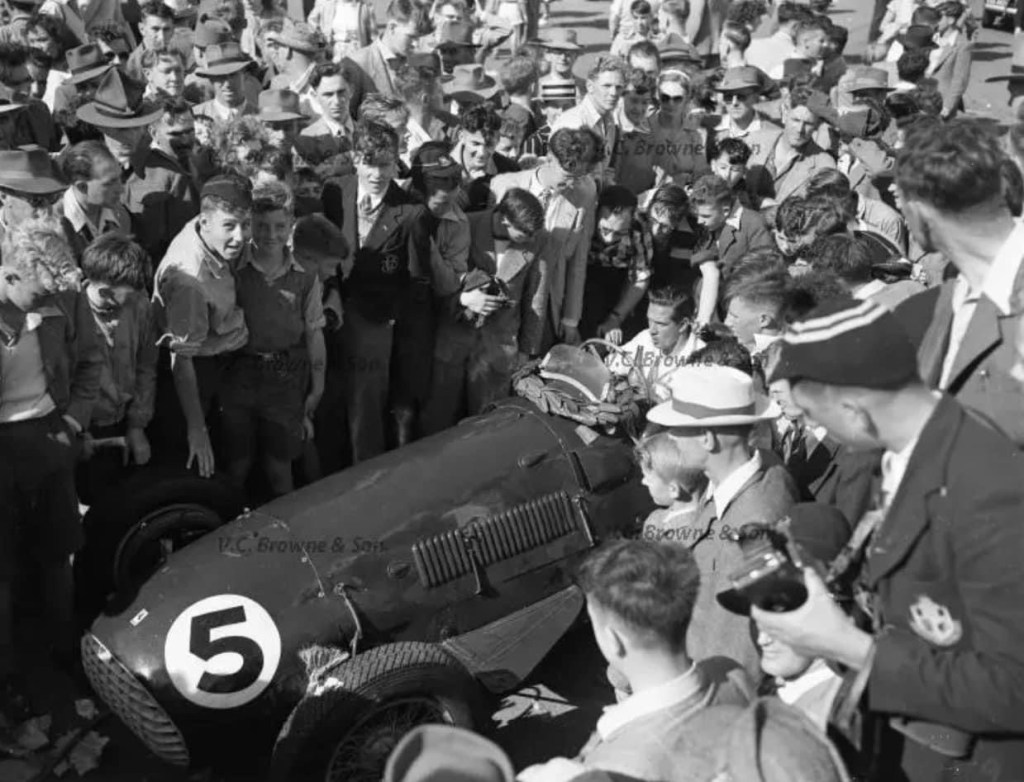
The Ferrari is shown in the Ardmore paddock below during the NZ GP weekend, that race was won by Stan Jones’ Maybach 1 after the star of the show, Ken Wharton’s BRM retired with mechanical problems. See here for a piece on the 1954 NZ GP: https://primotipo.com/2019/11/18/ken-wharton-and-brms-grand-turismo-south-in-1954/ and on Whitehead’s Ferrari 125, later sold to Dick Cobden, and later still one of Tom Wheatcroft’s first Grand Prix car purchases here: https://primotipo.com/2020/04/09/1955-south-pacific-championship-gnoo-blas/
Upon reflection, nobody did more to build the Ferrari brand in New Zealand way back then, than Peter Nield Whitehead. Others quickly followed mind you!

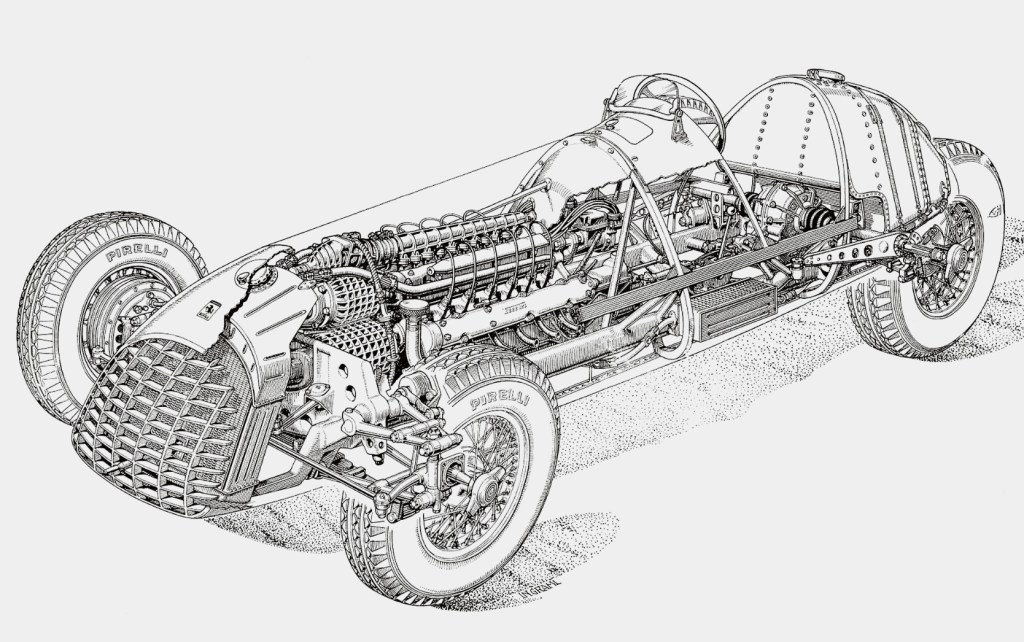
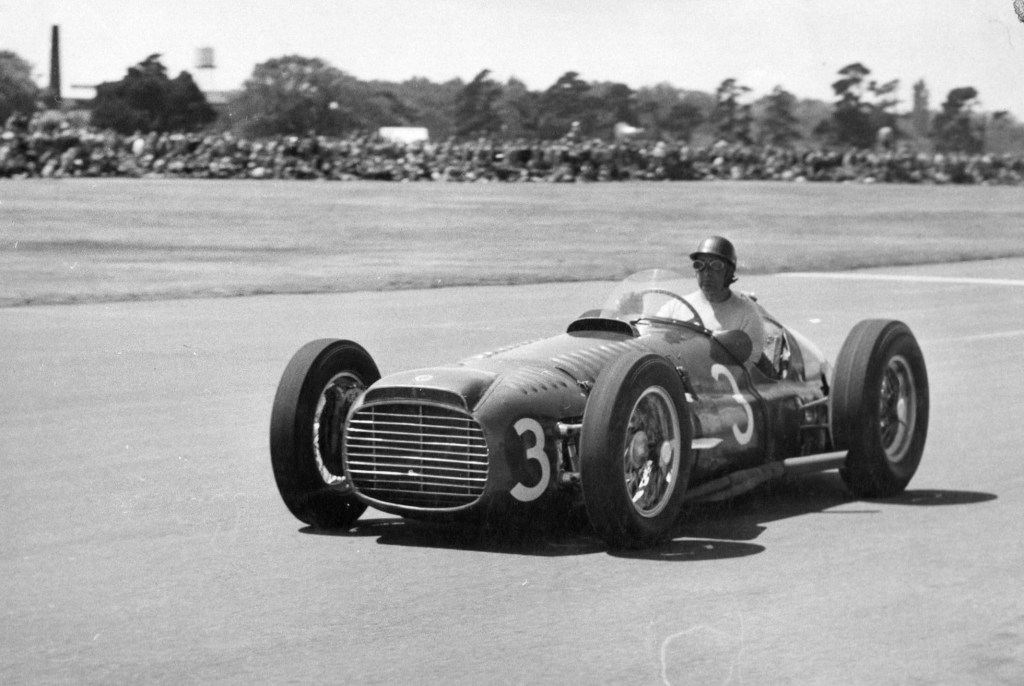
Whitehead had a nice little earner going with his Grand Prix Ferraris. By carefully specifying his ex-F1 Formule Libre cars he made a nice little earner from start and prize money post-war, visiting New Zealand from 1954-57 and doing exceptionally well.
In 1955-56, Peter and his Australian buddy, Tony Gaze raced a pair of F1/F2 2-litre Ferrari 500s fitted with 3-litre Monza engines. With these Ferrari 500/625s they did rather well: at Ardmore Whitehead was second in the’55 NZ GP, and Gaze third, while Whitehead won at Wigram and Ryal Bush, and Gaze at Dunedin in 1956. Peter was third in the NZ GP that year in the race won by Moss’ Maserati 250F.
More about the Ferrari 500 here: https://primotipo.com/2019/06/24/1956-bathurst-100-lex-davison/
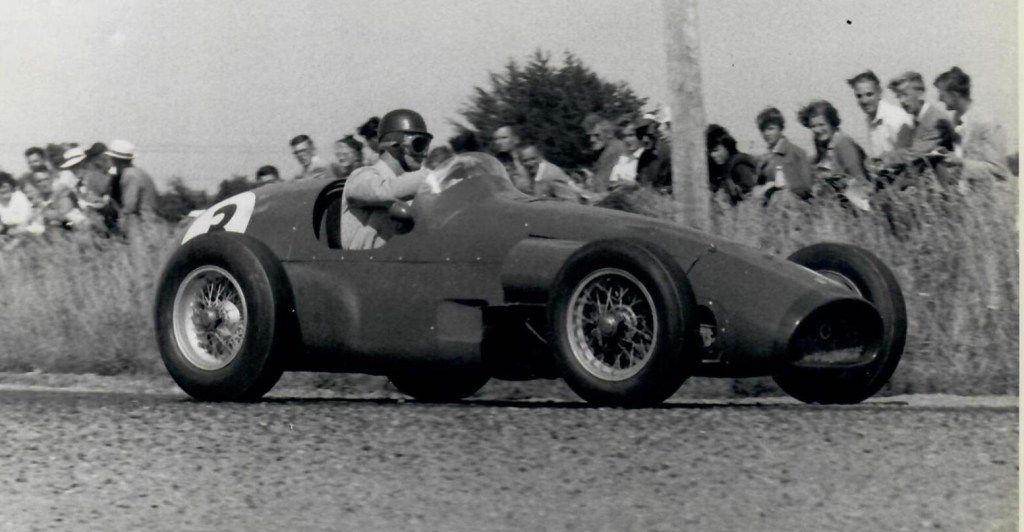
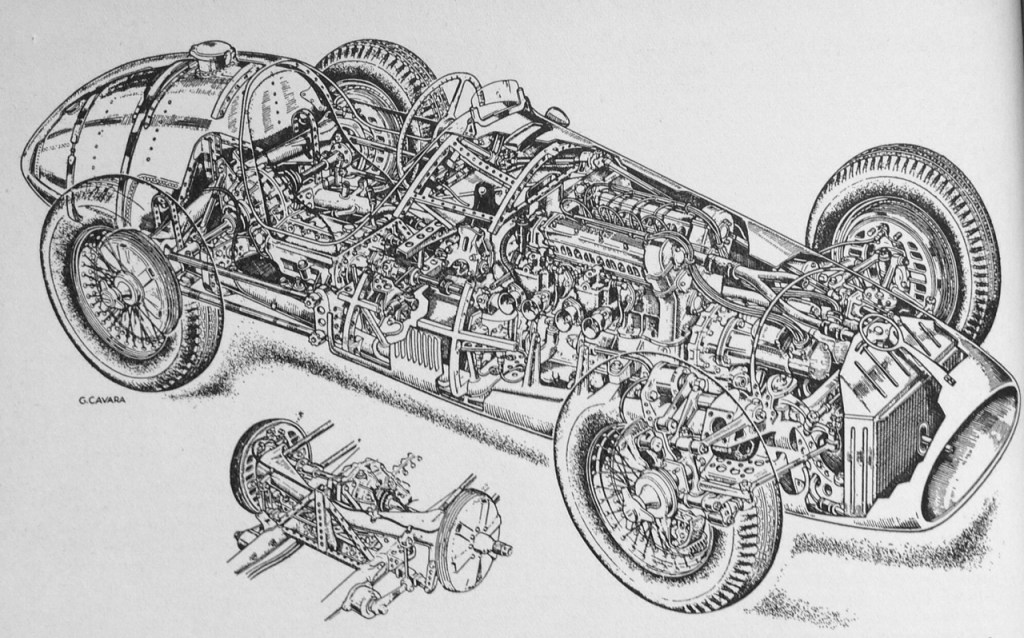
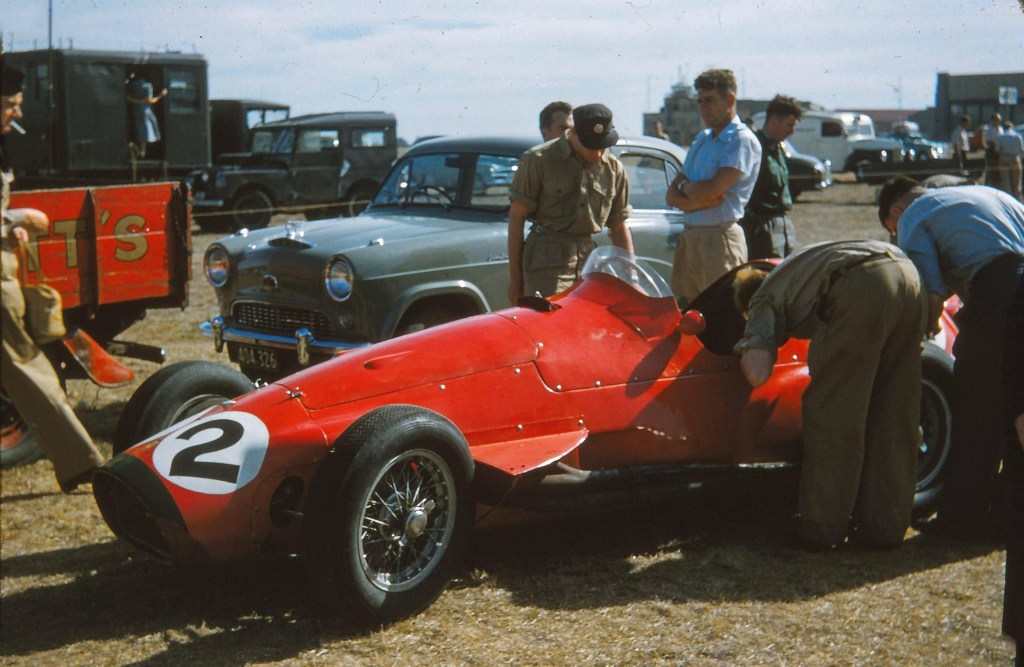
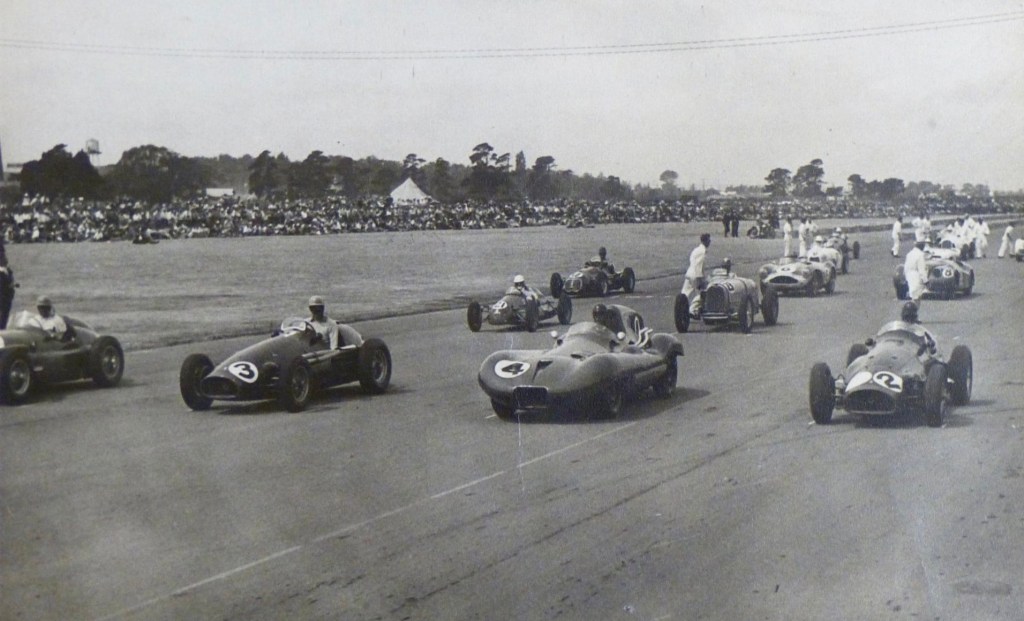
The grid at Wigram in 1956 with the partially obscured Reg Parnell at left aboard the one-off Aston Martin DP155. Then Whitehead’s Ferrari 500/625, Lesley Marr’s Connaught B-Type Jaguar and Tony Gaze’s Ferrari 500/625. On row two is Ron Frost, Cooper 500, and Ron Roycroft’s Bugatti Jaguar
With no shortage of quick Maserati 250Fs racing in non-championship F1 and Formule Libre racing around the globe Whitehead returned to Maranello for a faster car. Unsurprisingly, wily Enzo Ferrari palmed Peter – no fool by any stretch – off with a pair of 3.5-litre Monza engined 555 Super Squalos, one of the unsuccessful series of cars that led Enzo to beg for the Lancia D50 programme after Gianni Lancia’s profligacy drove his family company into the wall at warp-speed.
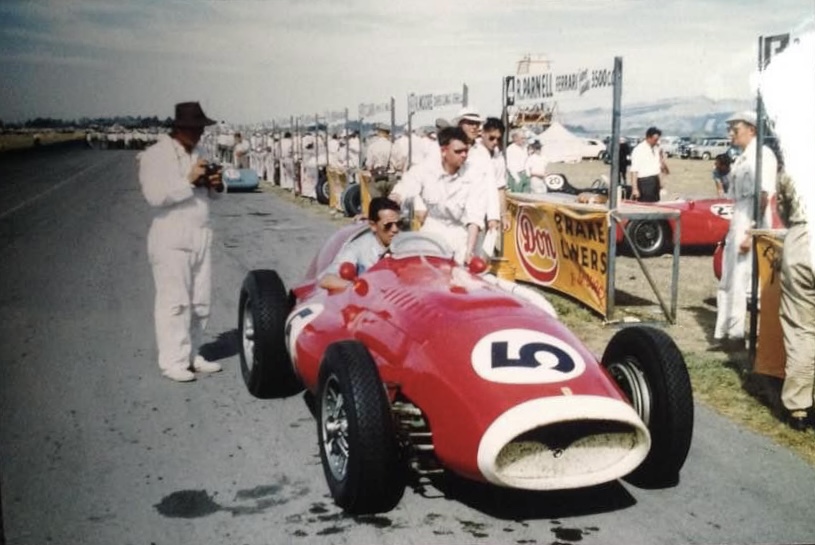
These Ferrari 555/860s were driven with great skill by Whitehead and his new ‘teammate’ Reg Parnell. The factory Aston Martin racer was another worldly businessman who enjoyed his tour of NZ with an uncompetitive Aston Martin DP155 the year before and was keen to return for more with a competitive mount.
The pair finished one-two in the NZ GP with Parnell ahead of Whitehead after 120 laps/240 miles. Reg repeated the dose at Dunedin, while Whitehead won at Wigram and Ryal Bush.


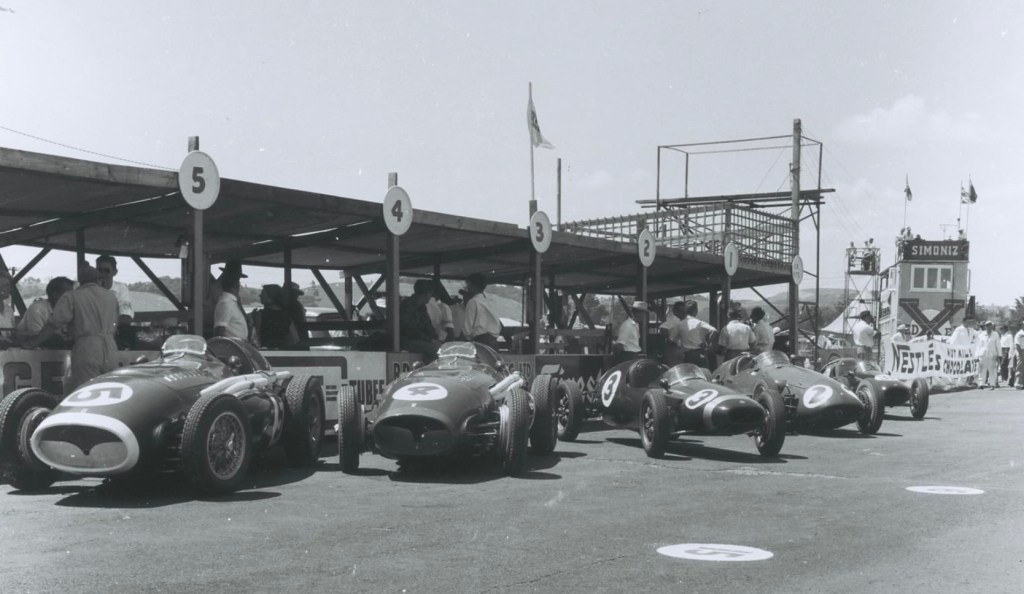
I love this ‘the times are a changin’ shot below, not that said paradigm shift was clear at the time. The big beefy Ferrari 555/860s of Reg Parnell and Peter Whitehead stand at left with no shortage of presence in the Ardmore pitlane during the January 1957 New Zealand Grand Prix weekend.
#3 is Jack Brabham’s Cooper T41 Climax 1.5 FWB, and at far right is Alex Stringer’s similar Cooper T41 Climax FWA 1100 he had leased from the by then dead Ken Wharton. #2 is Horace Gould’s Maserati 250F. It’s the sheer economy of the Cooper’s packaging – and ride height – that grabs the eye.
Parnell won from Whitehead and Stan Jones’ Maserati 250F. Brabham and Stringer were 10th and 12th, while Gould dropped a valve in the 250F. As the Cooper’s Climax engines approached 2-litres the mid-engined packaging advantages became abundantly clear.
More on the Whitehead and Parnell Super Squalo’s here: https://primotipo.com/2015/08/25/arnold-glass-ferrari-555-super-squalo-bathurst-1958/ and on the epochal series of Coopers here: https://primotipo.com/2019/10/04/cooper-t41-43-45-51-53/
Etcetera…

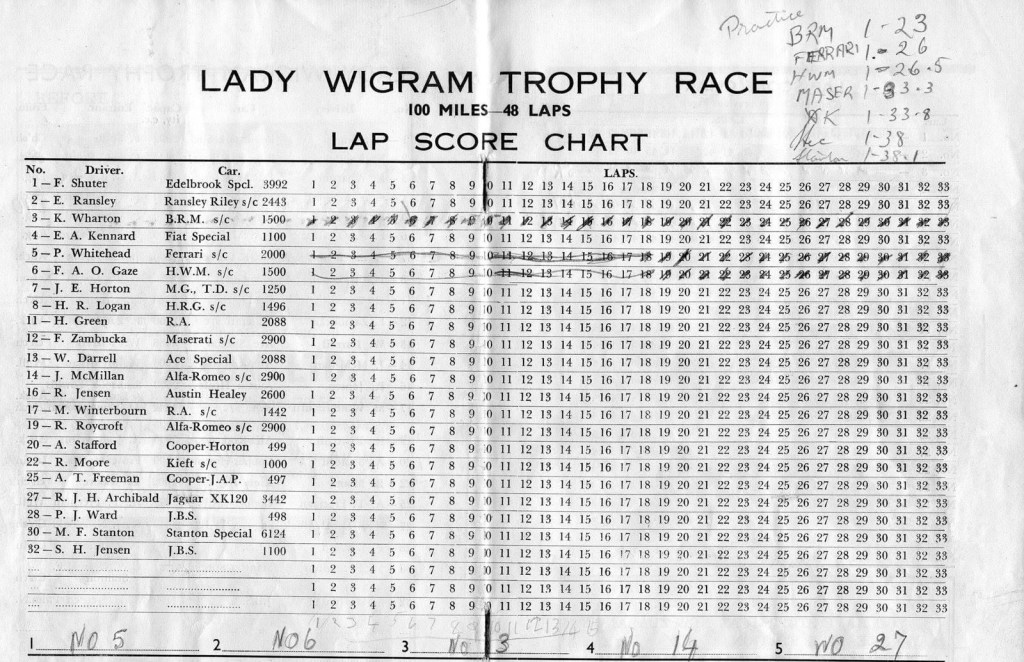
The front row of the Lady Wigram Trophy grid in 1954. Ken Wharton, BRM P15, Whitehead’s Ferrari 125, then Tony Gaze’ HWM Alta and on the far side, #12 Fred Zambucka, Maserati 8CM.

Peter Whitehead ahead of Leslie Marr at Ryal Bush in 1956, Ferrari 500/625 and Connaught Jaguar. And below being pushed into the dummy grid.


Whitehead with the spoils of victory at Ryal Bush in 1956, and below aboard his Ferrari 555/860 in the two shots below in 1957.


Credits…
John Manhire, Graham Woods, Vic Browne, Tony Adams, Kelvin Brown, Gordon Nimmo, Milan Fistonic, Nigel Logan, Giuseppe Cavara, MotorSport Images, Naomi Tait, Robert Sternberg
Tailpieces…

Peter Whitehead didn’t start 1958 as he had the previous four years, but had one more great result before his untimely death.
Peter and his half-brother, Graham Whitehead contested the June 1 Nurburgring 1000km in a privately entered Aston Martin DB3S and finished eighth in a warm up to Le Mans, which was held three weeks later. Peter had won at Le Mans with Peter Walker in 1951, taking Jaguar’s first historic win aboard a C-Type.
There, the Whiteheads finished a magnificent second behind the winning Olivier Gendebien/Phil Hill Ferrari TR/58 – the two cars are shown in the shot above. It was an amazing save for Aston Martin after all three of the works DBR1 300s failed to finish.
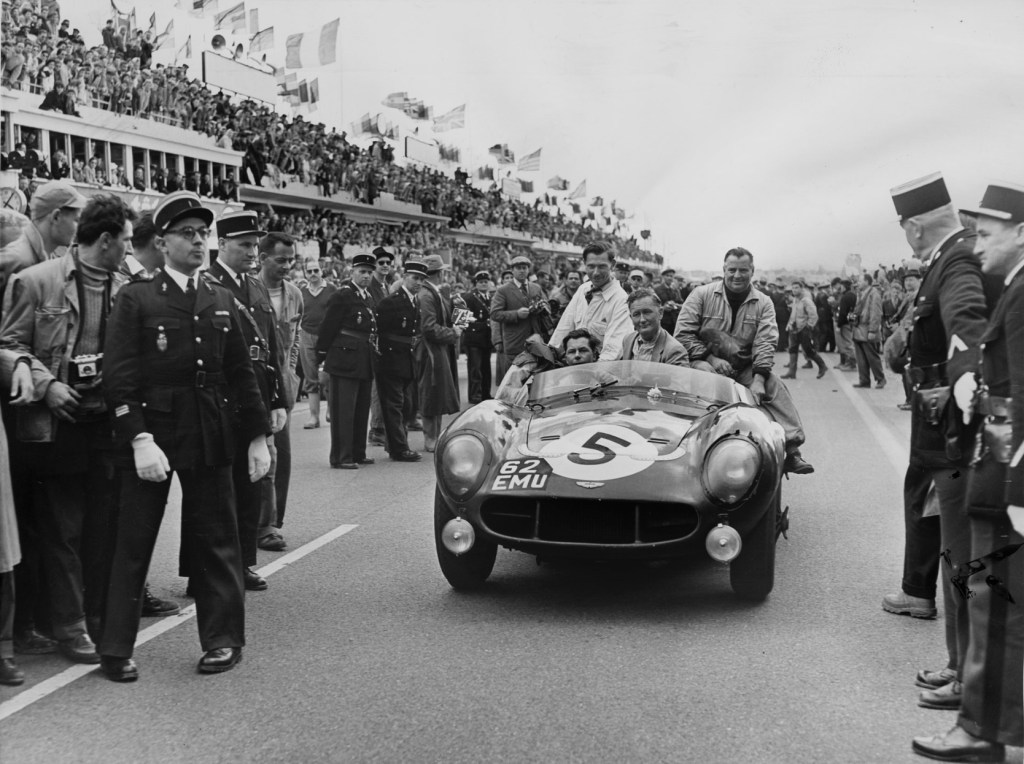
On September 20 the pair were contesting the fourth stage of Tour de France Auto in a 3.4-litre Jaguar Mk1. They were leading the touring car category when Graham lost control on a dark, foggy transport section between Mont Ventoux and Pau. The Jag plunged off a bridge in Cros landing upside down in a stream in a ravine 35 feet below. Poor Peter, still only 43, was killed instantly, Graham survived with minor leg injuries.
It was a sad end for the popular, talented wealthy sportsman who served his country in the war and barely bent a panel on any of the cars he raced…
Finito…

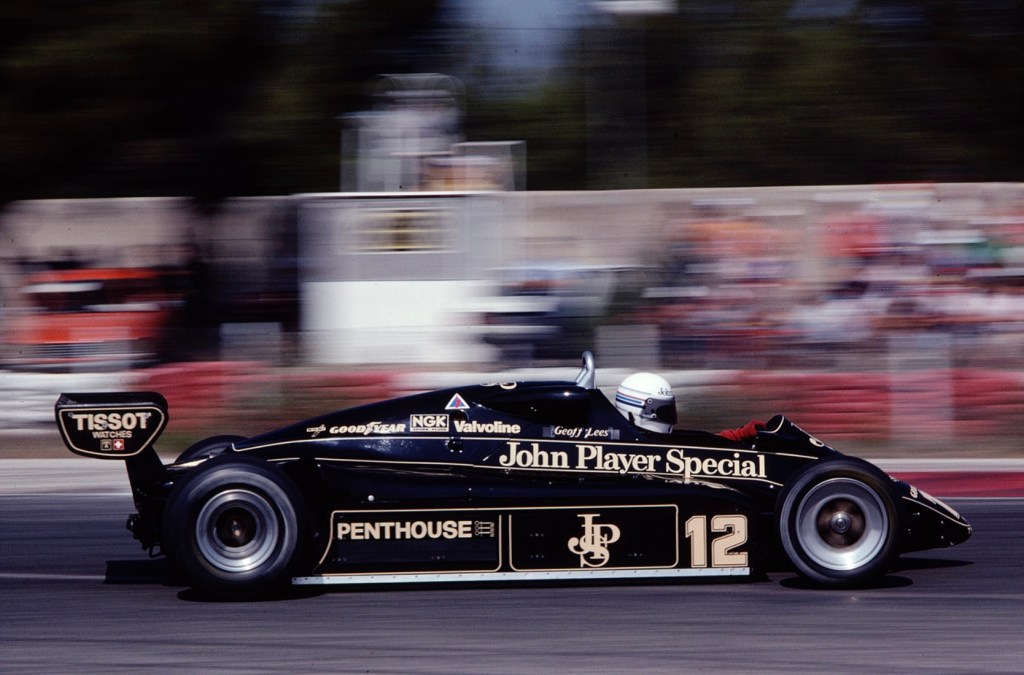
Geoff Lees, Ralt RH6 Honda V6 during practice of the Spa European F2 Championship round on August 9, 1981. He won the race from Thierry Boutsen, March 812 BMW and Eje Elgh, Maurer MM81 BMW.
Lees won the championship with wins in three of the 12 rounds at Pau, Spa and Donington, he was second at Mugello, Misano and Mantorp Park, together with a few other points he amassed a total haul of 51 from Boutsen on 37, and Elgh 35.

The season could have been quite different had Lees teammate, Mike Thackwell, who seemed destined for the very top, not had an horrific accident at Thruxton. He had started the season with a bang, winning the opening round at Silverstone from Ricardo Paletti, and was then third at Hockenheim – on both occasions in front of Lees – before it all turned to custard at Thruxton on the April 20 weekend.
“I was so cocky I had it coming. I won the first race, then went to Thruxton, it was my home circuit, I knew it like the back of my hand. Ron Tauranac had me on hard tyres and dampers to test. I saw Geoff Lees in the distance, during practice, and thought, ‘He’s an old boy I’ll catch him, no problem’and I went over the bump and the car bottomed out and I crashed.” he told journalist James Mills in 2020.
He was badly knocked about with a broken leg, injured heel and concussion.


The show always goes on of course. Boutsen won at the Nurburgring and Elgh at Vallelunga, before Corrado Fabi won at Mugello in another works March 812 BMW on May 24. Lees was fifth – fifth – and second at Mugello with Thackwell a mighty plucky fifth on his return race. Hobbling around the paddock, he walked with the aid of supports for much of the rest of the season.
Lees won at Pau with Thackwell sixth, then the pair had a shocker of a weekend at Enna-Pergusa in late July when Mike was disqualified for passing under a yellow flag, and Geoff had problems with his Bridgestones. Lees won at Spa while Mike had an accident on lap four, Lees carried the momentum at Donington in mid-August where Thackwell was fifth.
Michele Alboreto took a popular victory for Minardi BMW at home – Misano – from Lees and Thackwell on September 6, with Stefan Johannson taking the final round at Mantorp Park in a year-old Toleman TG280 Hart from Lees with Thackwell a distant 15th.


Thackwell during the season ending J.A.F. Japanese GP on the November 1, 1981 weekend. Satoru Nakajima, soon on his way to F1 with Lotus, won aboard a March 812 Honda from Boutsen and Johannson. Geoff Lees was fourth and Mike tenth.
Thackwell badly needed a win that weekend but was still suffering the after-effects of his accident and was on-the-nose with Team Managers as a result. He would come back with a bang, with Ralt too, but ultimately walked away from racing despite stunning god-given-gifts, a story for another time.
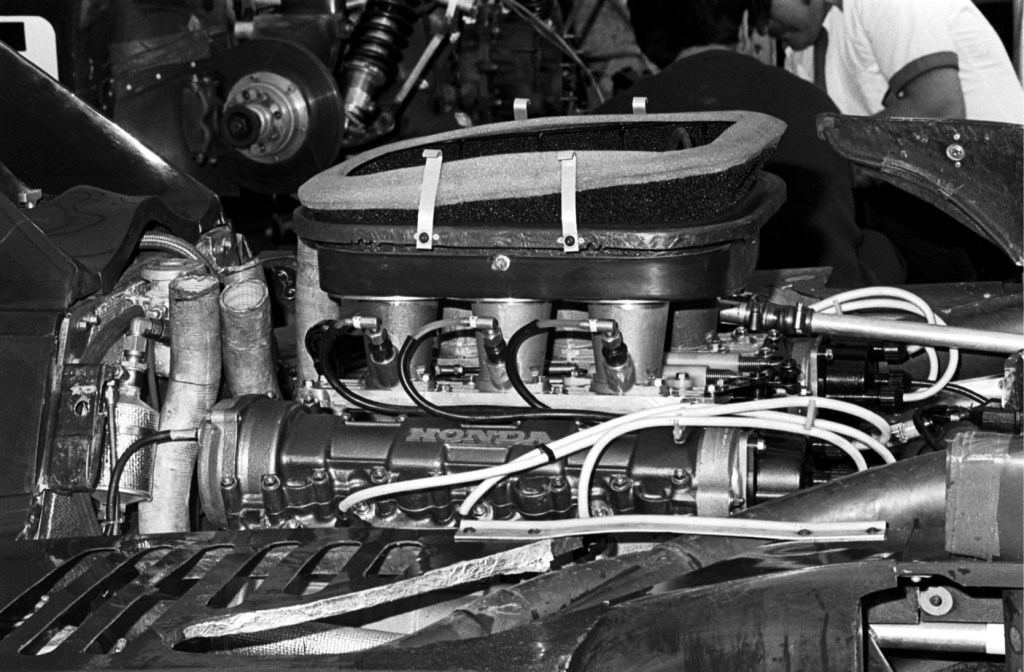
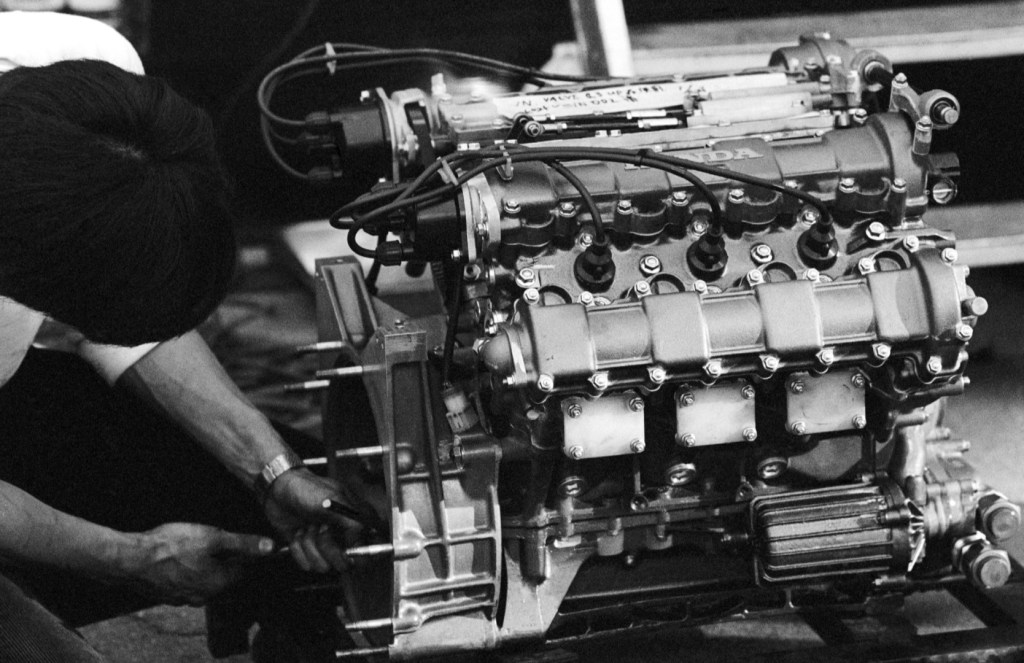
Honda RA260E V6…
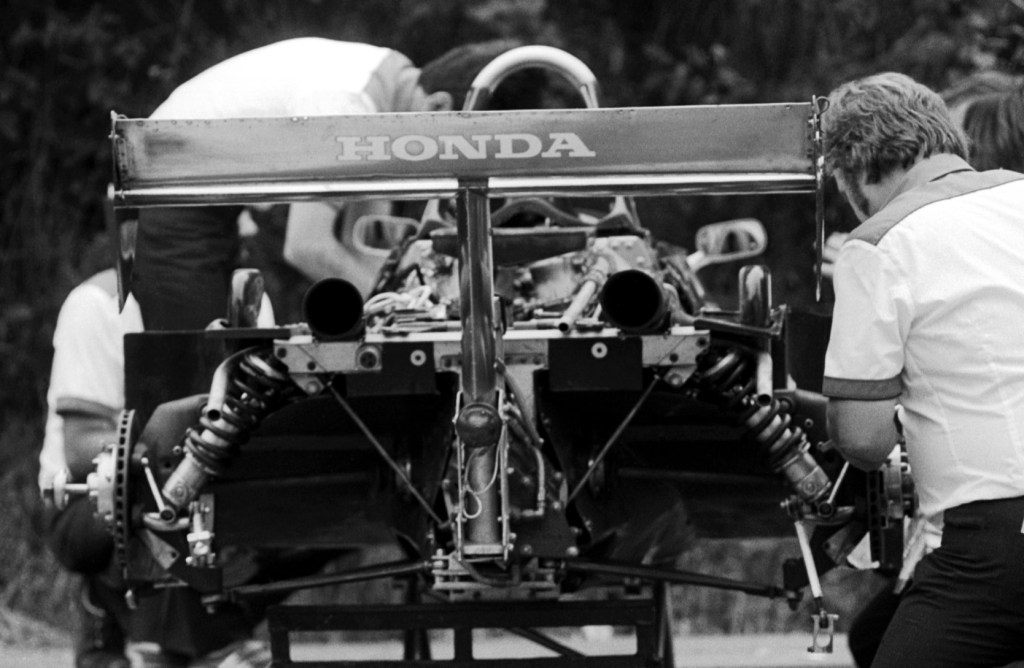
Nobuhiko Kawamoto’s 80-degree, cast iron block, aluminium otherwise, DOHC, four-valve 1993cc – 90mm x 52.3mm – V6 produced about 310bhp @ 10500rpm.
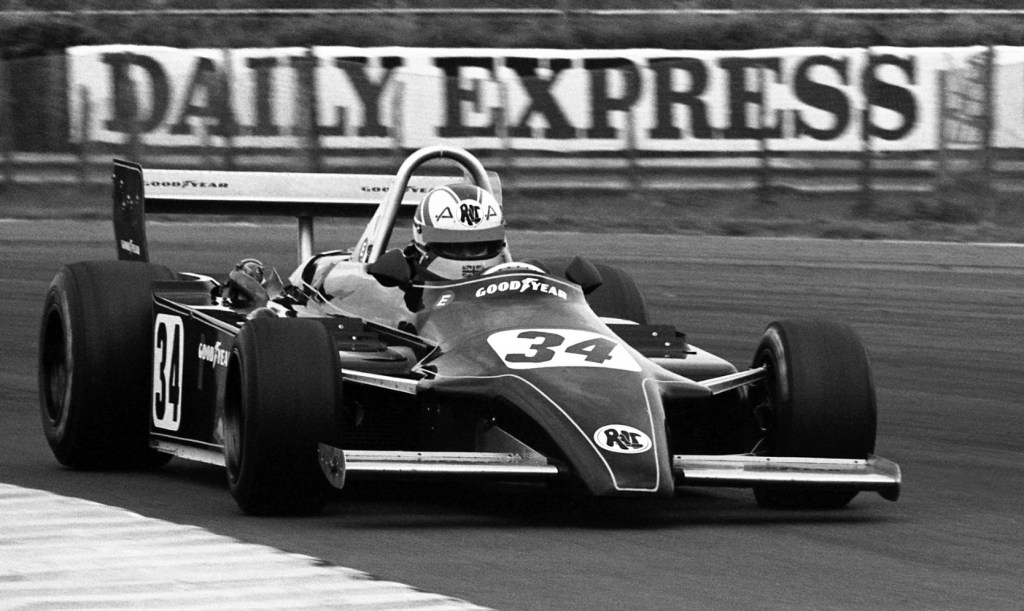
The RA260E first raced in the back of a Ralt RH6/80 driven by Nigel Mansell in the June 8, 1980 Silverstone round of the Euro F2 Championship (below). He was 11th in the race won by Derek Warwick’s Toleman TG280 Hart.
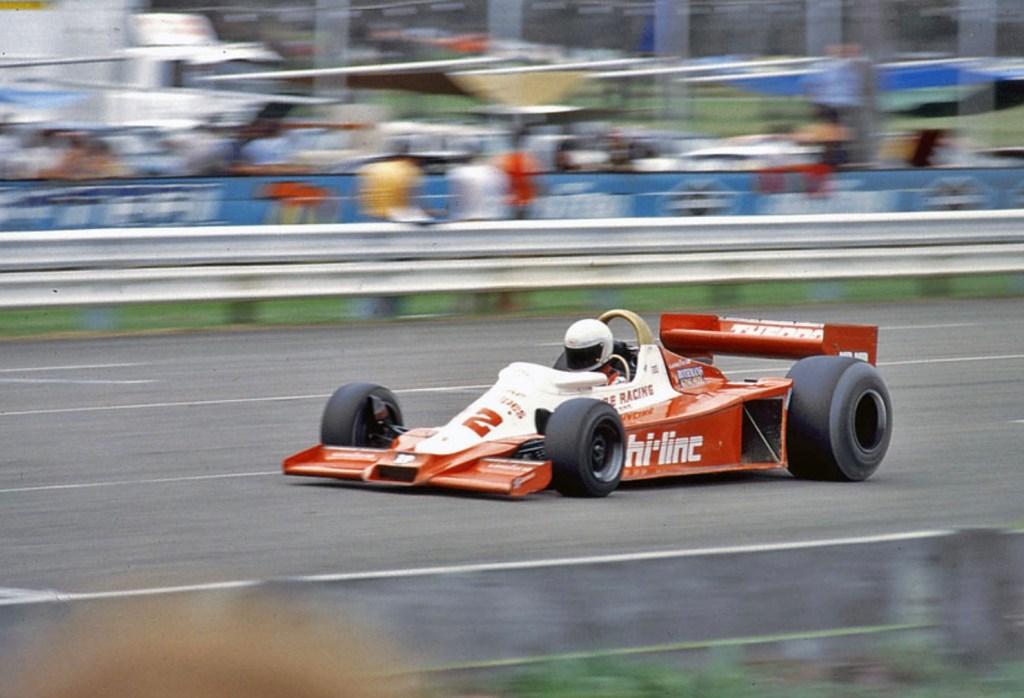
In a developmental season doing half the rounds, the car’s best result was Mansell’s second place in an RT2 Honda behind Two Fabi’s works-March 802 BMW at Hockenheim. American Formula Atlantic ace, Tom Gloy, raced an RH6 at Enna and Misano.
Over that winter development changes included adopting Bosch instead of Lucas fuel injection, and alterations to combustion chamber shape. The 1981 variant of the motor was dubbed RA261E.
Geoff Lees…
Geoff Lees blasting down Surfers Paradise main straight during the 1979 Rothmans International Series, Wolf WR3 Ford Cosworth DFV.
Geoff came out together with David Kennedy as a three F1 car Theodore Racing lineup – Wolfs WR3 and WR4 and Ensign N177 – to mix it with the F5000s, as much as the rock-hard Goodyears they were forced to run would allow anyway.
I’d followed them both since their FF days, which overlapped. Both became occasional F1 drivers too, not quite getting a foothold at the top level but vastly competent elite level professionals all the same. Kennedy won at Surfers (WR4) but the F5000s prevailed, Larry Perkins was the series victor in a works-Elfin MR8-C Chev, despite not winning a round. Alf Costanzo was second in Alan Hamilton’s Lola T430 Chev, winning two rounds.
Racing for Ralt in 1980 was a ‘step back from F1 to win in F2 and re-enter F1 manoeuvre’ but Honda spent another year developing their F1 engine so Geoff never got the good gig he wanted. With strong relationships in Japan he had a highly paid career there in F2, winning the 1983 title, and in sportscars, inclusive of annual forays at Le Mans.
Credits…
MotorSport Images, Anthony Fosh, LAT Photographic
Finito…

Denny’s South African Office…
Cockpit shot of Denny Hulme’s second placed – Jack won in his Brabham BT33 – McLaren M14A Ford during the March 7, 1970 South African Grand Prix weekend at Kyalami.
Smiths instruments of course: the chronometric-tach telltale is on 10,100rpm, the DFV developed all of its punch from 8-10000. Oil pressure and temperature is the priority, fuel pressure and water temperature secondary and out of Hulme’s direct line of sight. Switches are for the rev limiter, ignition, electrical fuel pump (starting only) and the starter button. I’ve always liked a nice big ignition kill switch, but let’s not get picky.

The M14A was an evolution of Robin Herd and Bruce’s 1968 M7 design. A profitable Grand Prix winning design, not to forget the McLaren M10A and M10B F5000 cars which made McLaren and Trojan Cars plenty of dollars.
The cars had a few steerers in 1970: Bruce and Denny, then Dan Gurney after Bruce’s fatal Goodwood accident, and after that, Peter Gethin when conflicting oil company sponsorship contracts got in the way of Dan’s F1 and Can-Am McLaren drives.
Gurney’s qualifying best was a second adrift of Denny in the British GP, it would have been interesting to see if he could have got back his old Grand Prix race-pace had he finished the season with McLaren. He was right on-the-money in the Can-Am Cup mind you, winning the first two races at Mosport and St Joliet from pole in his M8D Chev – no doubt relishing the very first ultra competitive Can-Am car he had ever raced! – and qualified second on the grid at Watkins Glen, then faded with undisclosed dramas in his last race for the team.

There is no such thing as an ugly Papaya McLaren! Note the full monocoque aluminium chassis under that inspection hatch.
In a very tough year for the team, Bruce’s best was second place in the Spanish GP in M14A/1, and Dan’s best in three Grands Prix with that car, was sixth in the French at Clermont Ferrand.
Denny raced M14A/2 to second at Kyalami, and third in the Race of Champions at Brands Hatch and the German Grand Prix. He missed the Belgian and Dutch GPs after burning his hands at Indianapolis when an imperfectly secured quick-release cap on his McLaren M15 Offy leaked methanol and caught fire.
Peter Gethin then raced M14A/2, placing second in the Spring Trophy at Oulton Park and in the International Trophy at Silverstone.

M14A/3 became Peter Gethin’s car from the 1970 Italian GP until the Spanish in March 1971. In eight meetings his best was sixth in the Canadian GP at Mont Tremblant.
Ultimately the M14A fell a bit short in 1970, while noting again the mitigating factors. It was a rare GP season in which victories were spread far and wide amongst the Lotus 72 Ford, Ferrari 312B, Brabham BT33 Ford, BRM P153 and March 701 Ford! Jochen Rindt posthumously won the drivers title and Lotus the constructors.

Hey you in the Big Banger…
No it’s not a single-seat M8 Can-Am car, in 1969 McLaren converted M7A/3 to ‘Lancia D50 spec’ by placing all the fuel centrally and low. By filling in the space between the wheels Bruce and Gordon Coppuck were also playing with the aerodynamics of the car; the car was then tagged M7B/3.
It didn’t work though, after racing the car on debut in the South African GP at Kyalami in January 1969, and then the Brands Hatch Race of Champions (above) the car was sold to Colin Crabbe, of Antique Automobiles, for Vic Elford to drive.
Vic was fifth in the French GP, then sixth in the British before crashing it at the Nurburgring in an accident not of his making. Mario Andretti crash-landed his Lotus 63 Ford 4WD and Vic collected one of its wheels, flipped and ploughed into the trees destroying the car and breaking his arm in three places. I guess the Ford DFV and Hewland DG300 gearbox from that car found their way into the new March 701 that Crabbe bought for Ronnie Peterson to race in 1970?


Bruce drove a new car, M7C/1 for the rest of 1969. The major factor which enhanced this cars performance was the use of a full monocoque aluminium chassis derived from the M10A F5000 car, itself derived from the bathtub-monocoque M7A.
McLaren’s conventional 2WD cars didn’t get as much love as they otherwise would have in 1969 given the attention lavished upon their 4WD brother, the M9A. McLaren, together with Lotus, Matra and Cosworth pursued this blind-alley. Ultimately, very quickly, wings and the tyre company Polymer Chemists solved the ‘3-litre problem’ of too much power and too little grip far more cost-effectively than then complex mechanical 4WD mechanisms.

Bruce’s 1969 M7C – as we have seen, a lineal descendant of the 1968 M7A – begat the 1970 M14A. The major advances from M7C to M14A were inboard rear brakes, new front uprights and a smidge greater fuel capacity.
See Allen Brown’s Oldracingcars.com for more detail: here: https://www.oldracingcars.com/mclaren/m7a/ and here: https://www.oldracingcars.com/mclaren/m4a/ not to forget my own masterpiece on the M7A here: https://primotipo.com/2018/07/13/mclaren-m7a-ford-dfv/
Etcetera…

A few more shots of the wideboy McLaren M7B Ford during that March 16, Race of Champions weekend at Brands Hatch in 1969.
High wings were the rage but Lotuses ‘cavalier’ engineering of their wing supports and their repeated failures – the last straw the breakages of Rindt’s and Hill’s wings and resultant crashes of their Lotus 49s at Montjuïc – saw them banned during the Monaco GP weekend that year. More tightly controlled, they stayed.
The photographs in this article demonstrate the changes being made by the teams to adapt in a a period of about 12 months, not to forget the related 4WD adventures for the affected teams!


Credits…
MotorSport Images, oldracingcars.com
Tailpiece…

Our pit-babe was at Clermont during the 1970 French GP weekend, the cars are Denny and Dan’s M14As and Andrea de Adamich’s M14D Alfa Romeo. Another of Rainer Schlegelmilch’s signature shots!
Finito…

Jackie Stewart on his way to victory in the second heat of the Rand Grand Prix aboard a works Lotus 33 Climax. Kyalami, December 12, 1964.
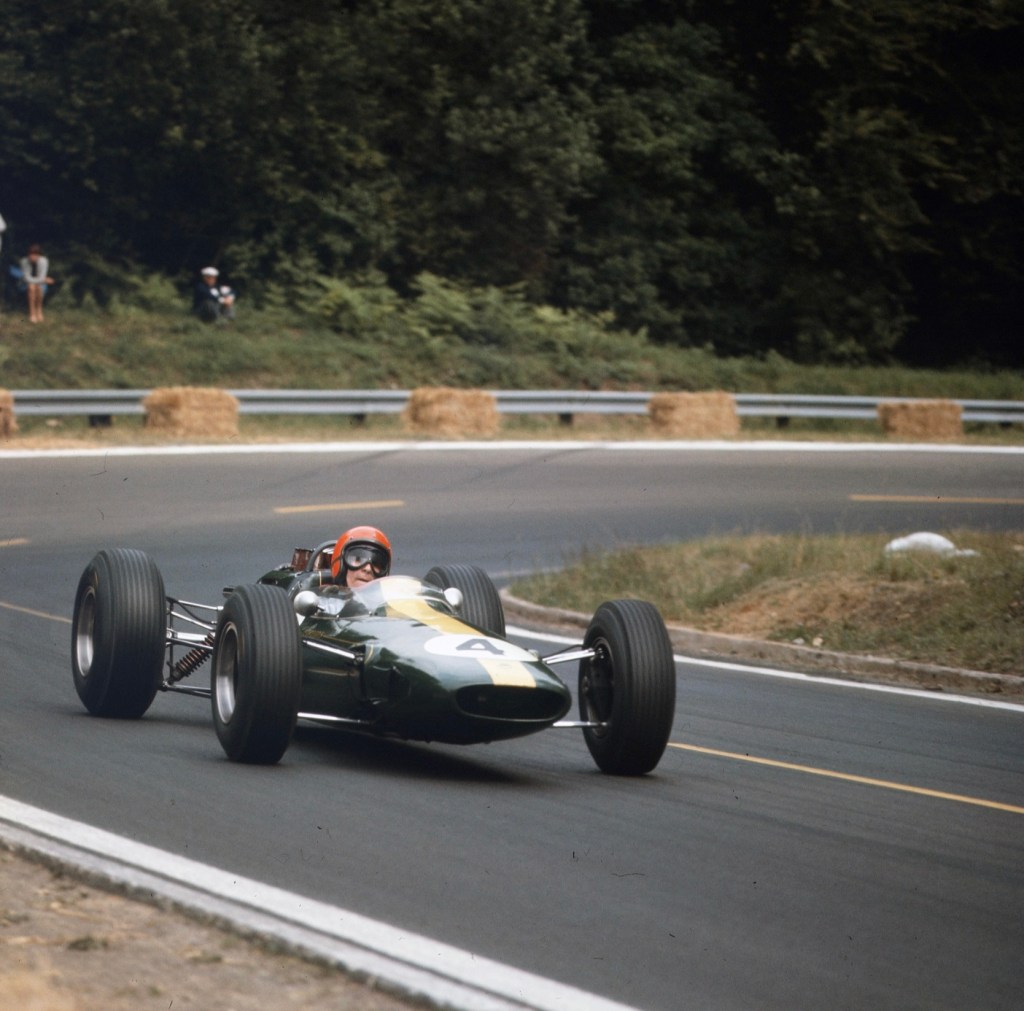
Stewart’s first drive of a Grand Prix car had been organised by Jim Clark during the 1964 British Grand Prix weekend at Brands Hatch on the July 11 weekend.
Dominant in one of Ken Tyrrell’s Cooper T72 BMCs that F3 season, Clark convinced Colin Chapman to give the young charger a few laps in Clark’s Lotus 33 Climax at the end of practice. The marshalls were asked to stay in situ for an extra 20 minutes to allow the test to take place. Using Jim’s car and his settings: pedals, seat etc, off went The Other Scot down the pitlane to complete only a few laps before the engine failed.
Despite the short session, JYS impressed, a week later Jackie had the first of a half-dozen meetings in a works-Ron Harris Racing Lotus 32 Cosworth SCA F2 car at Clermont Ferrand. The opportunity arose as a result of Peter Arundell’s misfortune.
Arundell was badly injured during the Reims F2 GP on July 5. In a slipstreaming group, he got onto the rough at the kink on the straight, corrected, but lost a bit of speed and was hit by Richie Ginther’s Lola T55 Cosworth SCA. Peter parted company with his car in mid-air, breaking an arm, thigh and collarbone and was comatose for a fortnight. At that time he was in joint third place in the F1 World Championship standings with Ginther, behind Clark and Graham Hill. Arundell eventually returned to F1 with Team Lotus in 1966, a tough place to be at the time: see here for a great summary of Peter’s career: https://www.f1forgottendrivers.com/drivers/peter-arundell/
Meanwhile, Jackie Stewart was immediately on the pace at Clermont, placing second behind Denny Hulme’s winning Brabham BT10 Cosworth SCA. Jackie then won at Snetterton, was second at Montlhery and third at Oulton Park.
So when Clark sustained a back injury at Cortina d’Ampezzo during a snowball fight at a Ford Cortina marketing event, it was an easy call for Chapman to engage Stewart to replace him in South Africa. Lotus had contracted to provide two cars to contest the Rand Grand Prix and touring car support races at Kyalami that weekend.
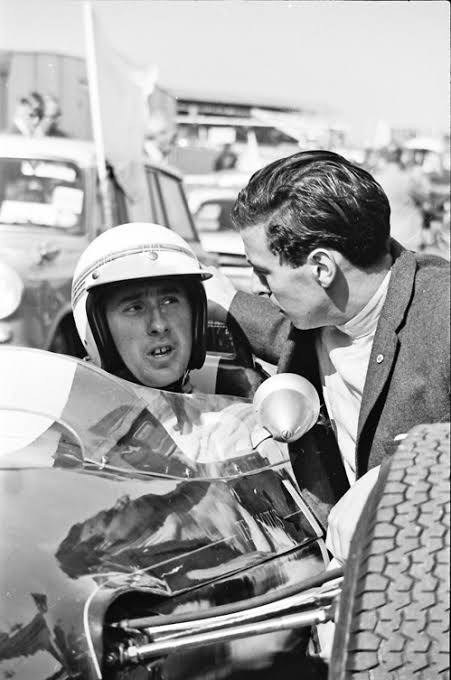

Stewart initially thought that he should make his GP debut with BRM, to whom he was contracted for 1965, but “I telephoned Ken Tyrrell and asked his advice. He said ‘don’t be such a stick in the mud, you’ve got to get out and drive the thing sometime’ and pointed out that this Formula 1 scamper would calm my nerves rather than taking my first appearance in a full-scale Grand Epreuve. I think from that aspect I couldn’t have done better than drive at Kyalami and perhaps I wouldn’t have done it if someone hadn’t kicked me in the backside and told me to get on with it,” he told the F1 Grand Prix Drivers Club.
Chapman cleared the drive with BRM’s Tony Rudd and Stewart promptly qualified on pole in a brand new Lotus 33 Climax (R10). The field included his teammate Mike Spence, his soon to be teammate at BRM, Graham Hill in a Willment entered Brabham BT11 BRM, Bob Anderson’s BT11 Climax and two Brabham BT10 Lotus-Ford twin-cams raced by Paul Hawkins and David Prophet. There was a swag of competent locals too including John Love, Piet de Klerk and Sam Tingle.
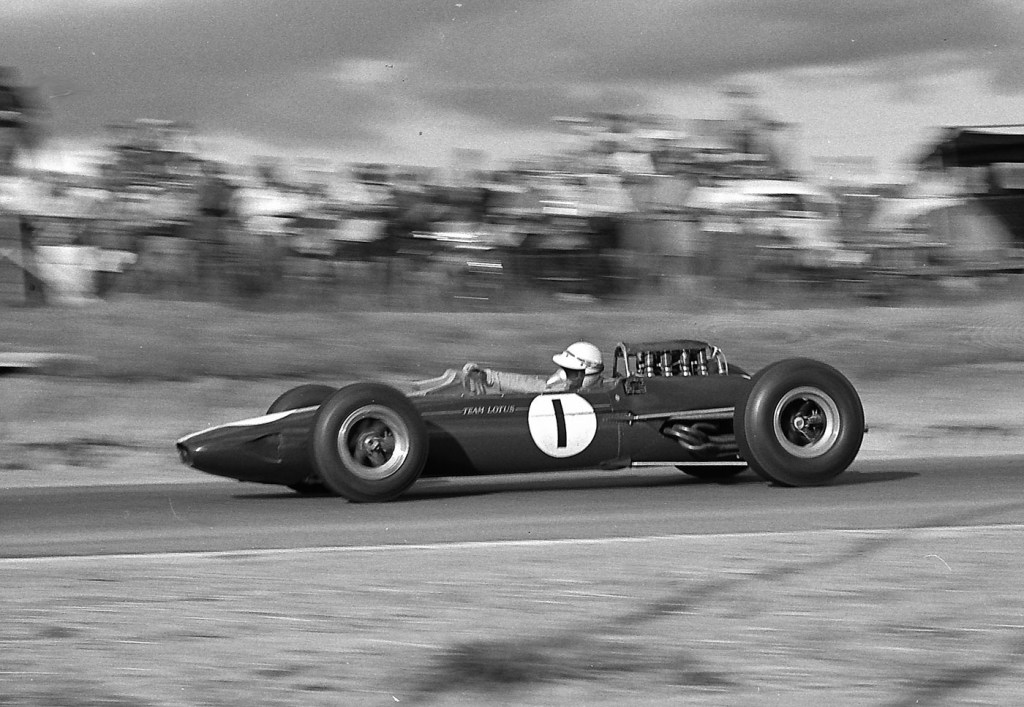
Jackie’s Lotus broke a driveshaft on the line of the first heat – causing maximum chaos behind – but the Team Lotus mechanics, ever competent, had the car ready for the second heat which Stewart won from Hill. Graham won the Rand GP overall from Hawkins and Anderson. Mike Spence was second in the first heat but had a rose-joint fail after only one lap in the second.
See here: https://www.f1grandprixdriversclub.com/jackie-stewart-fifty-years-ago/ and here: https://velocetoday.com/jackie-stewarts-first-f1-drive/
Credits…
F1Grand Prix Drivers Club, VeloceToday.com, Robert Young, Peter Tempest, MotorSport Images, f1forgottendrivers.com
Tailpiece…
Paul Hawkins raced John Willment’s Brabham and Ford Galaxie that weekend, getting the better of Stewart’s Lotus Cortina in the touring car support races. Look at the size of that thing…
Finito…

Dan Gurney’s – Brabham Racing Organisation – Coventry Climax FWMV 1.5-litre V8 during the 1963 Monaco Grand Prix weekend. F1-1-63’s second race.
The car is a Brabham BT7, the second type of GP Brabham, Jack having debuted the BT3 Climax in 1962. Two F1 BT7s – there was also two BT7A Intercontinental/Tasman Formula cars – were built. Dan debuted BT7 F1-1-63 at the International Trophy, Silverstone on May 11, 63, and Jack first raced F1-2-63 at Zandvoort on June 23, 1963.

Dan in front of Tony Maggs (fifth) and Willy Mairesse (DNF final drive) at Monaco that year: Brabham BT7 Climax, Cooper T66 Climax and Ferrari Dino 156. Gurney was out with crown wheel and pinion failure in the race won by Graham Hill’s BRM P57 from teammate Richie Ginther’s P57. Bruce McLaren’s Cooper T66 was third.

Gurney on the way to an historic first Championship Grand Prix win for the Brabham marque aboard his BT7 at Rouen-les- Essarts, France in June 1964. Dan also won the non-championship 1964 Mexican GP with this F1-1-63, while Jack’s best in F1-2-63 was a pair of wins in in the Aintree 200 and the Silverstone International Trophy in April/May 1964.
Somewhat incredibly, Allen Brown records the last of 48 in-period race meetings for this (Jack’s) car was at Indianapolis, where Dave Rines won the SCCA Regional at Indianapolis Raceway Park in May 1968, at which point the car was powered by a 3-litre Coventry Climax FPF-four.

Credits…
MotorSport Images, LAT Photographic, oldracingcars.com: https://www.oldracingcars.com/brabham/bt7/
Tailpiece…

Coventry Climax FWMV 1.5-litre Mk3 V8: Lucas fuel injected, DOHC, two-valve, 195bhp @ 9500rpm. Early five speed Hewland HD gearbox with distinctive upside-down VW Beetle case, but not yet with neato, bespoke side-entry rear housing. The ‘vertical bomb’ is Lucas’ hi-pressure fuel pump. Rear end comprises mag alloy uprights, inverted wishbones at the top, single links at the bottom plus two radius rods doing fore-aft locational duties. Ron changed his mind about the respective locations of the wishbones and links pretty soon after this.
Finito…
 primotipo...