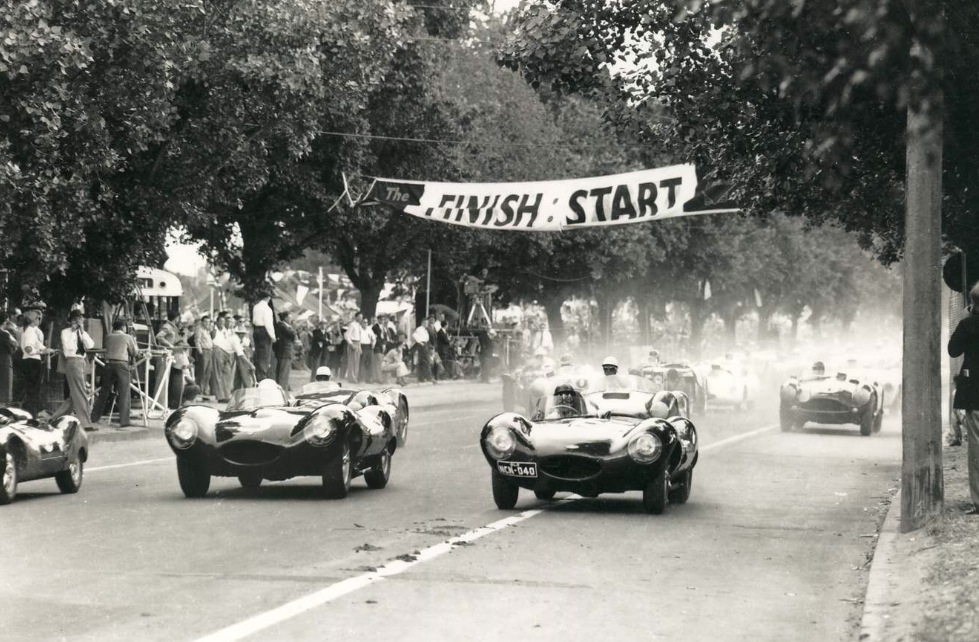
Jack Brabham, Cooper T39 Climax, and the Bib Stillwell-Bill Pitt Jaguar D-Types just before the start of The Argus Cup 8-lap, 25-mile sportscar support race before the Australian Grand Prix. December 2, 1956.
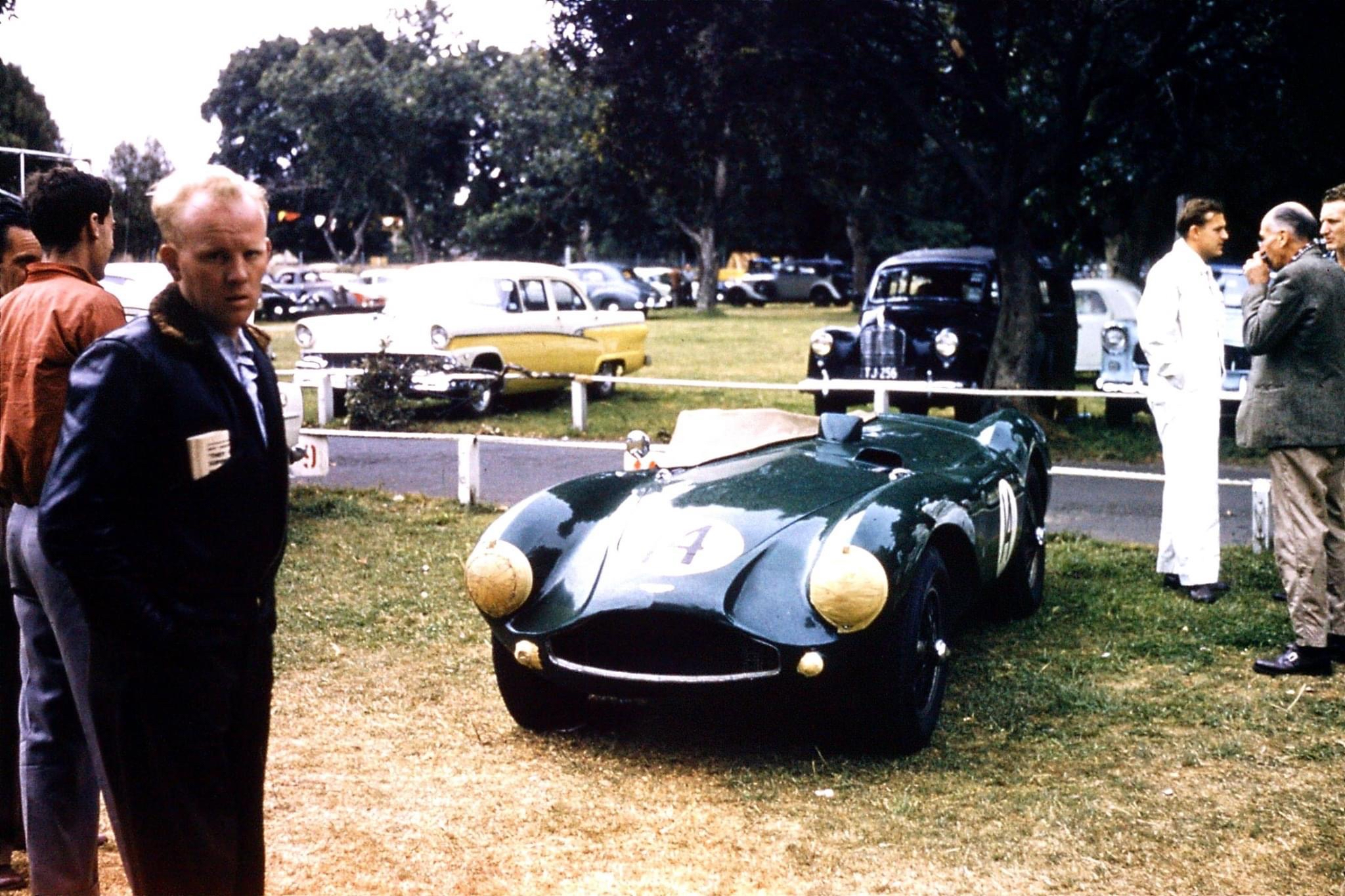
On row two are the red Ausca Holden of Paul England at left, and Lex Davison’s HWM Jaguar alongside. The third row comprises Stan Coffey’s Ferrari 750 Monza, Ron Phillips’ Austin Healey 100S and Tom Sulman’s green Aston Martin DB3S at right.
This AGP day grid excludes some of the cars which contested the ATT the week before including the first three placegetters, Moss and Behra, Maserati 300S and Ken Wharton, Ferrari 750 Monza. By that stage the Maseratis may have been sold to locals Doug Whiteford and Reg Smith, if not they were very much for sale, so best not to put them at risk by racing them, cash was critical to Maserati.
Brabham and Stillwell
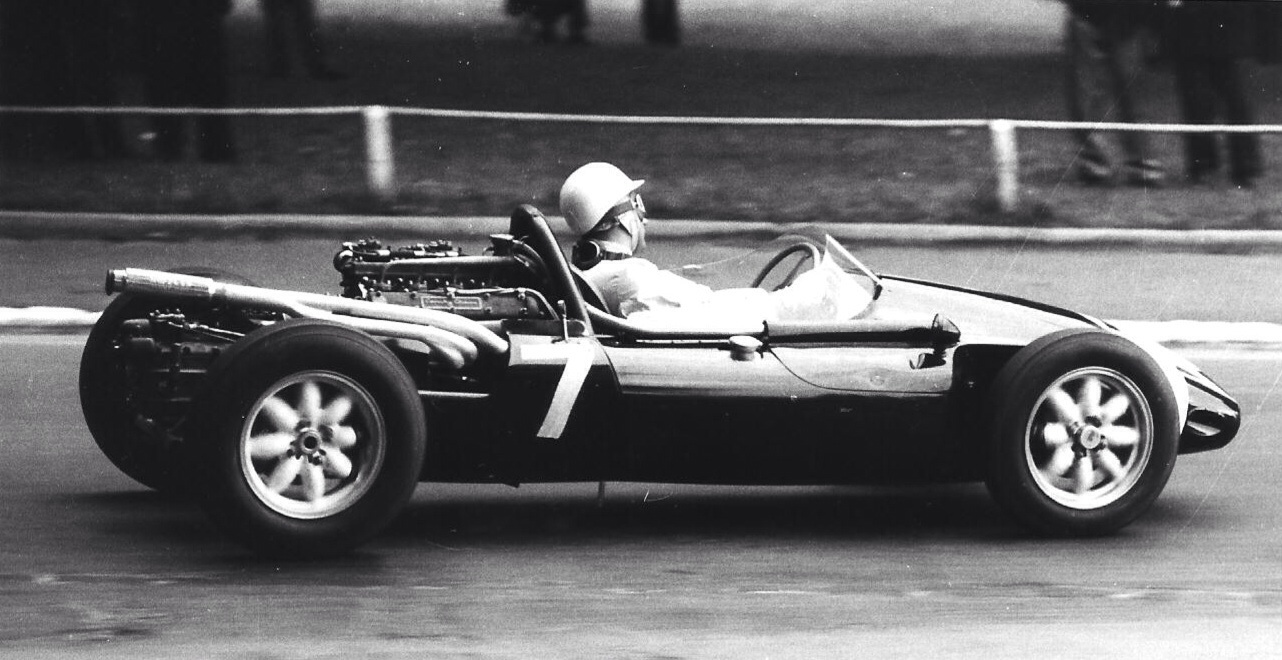
Brabham’s 1.5-litre Climax FWB engined machine won the race by nine seconds from Stillwell’s D-Type, Jack’s task was made easier when Pitt – first Aussie home in the ATT the week before – clipped a kerb in his D-Type on lap one and rolled it, he handily landed amongst the hay bales while the Jag was rendered somewhat second-hand. In a motor-dealer strong field, Bill Patterson’s T39 Bobtail was third, then Paul England in the superb Ausca from Kiwi, Ross Jensen’s AH 100S and then Ron Phillip’s similar car in sixth.
The single-seater shots are of course the machines contesting the AGP won convincingly by Stirling Moss’ works-Maserati 250F from team-mate, Jean Behra’s similar 2.5-litre F1 car. Peter Whitehead was third in a Formula Libre 3.4-litre Ferrari 555 Super Squalo from local 250F exponents Reg Hunt and Stan Jones.
The gathering of drivers before the off is interesting, perhaps it’s just before the drivers briefing. Mind you, they may be discussing their flight connections that evening, the army’s Southern Command Band marched and played on…and on, as landlords of part of this particular manor, they weren’t keen to leave the track after their moment of glory, ensuring the race started an hour late.
From the far-left it’s Whitehead’s #3 Ferrari, the guy in the brown sports-jacket looks like Bib Stillwell to me. He didn’t contest this race but still may have ambled up for a gander. Based on the shot below, the guy in the green/blue helmet is perhaps Whitehead, but who is the driver in the white helmet? Behra is in his car with Moss perched on his left-rear, Stirling’s car is on pole. Look at that crowd and the Repco sign.
Moss’ car is about to be fired up, a mechanic is inserting the battery operated starter-shaft, the silver car on row two at right is Ken Wharton’s Maserati 250F, DNF engine failure. What wonderful theatre it must have been.
These colour shots really do allow you to feel the vibe, the palette – high quality Kodachrome film here I think – of clothing is so much more muted than today’s. This stretch of road and trees are still there, It’s roughly parallel with the current front straight, and between it and the lake. Look at the press-men in their stereotypical brown ‘flasher’ trench coats. Isn’t the lady elegant and rare, these days Drive To Survive has ’em out in droves, happily motor-racing remains a girlfriend free zone for me.
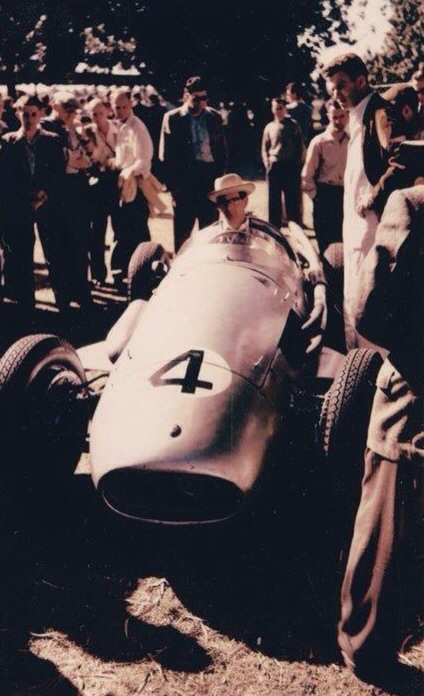
That’s Whitehead’s Ferrari 555 with, perhaps, Lex Davison’s 3-litre Ferrari 500/625 being pushed into place behind, he shared the second row with Ken Wharton’s Maserati 250F, on the third row was Reg Hunt’s 250F, Reg Parnell in the other Ferrari 555 Super Squalo and Kevin Neal in the ex-Hunt 2.5-litre Maserati A6GCM.
Credits…
Ian Curwen-Walker and Russell Garth many thanks, ‘Glory Days : Albert Park 1953-58’ Barry Green
Tailpiece…
Moss on the hop before the rains came, he beat Jean Behra by close to two minutes, the 80 lap/250 miles journey took him 2 hours 36 15.4 min/secs.
Father Time waits for no-one, not even ‘the immortals’, sadly the great man’s time had come- Stirling Moss, 17 September 1929 to 12 April 2020.
What an extraordinary life of achievement.
To me he personified grace, sportsmanship and fairness despite being a fierce competitor, a certain clever conservatism but with an impish naughty streak and sense of humour. He was everything that is great about Britain and the essence of what to me it is to be a Brit.
Without doubt he was the living embodiment of motor racing, his passing deprives the sport of its greatest global spokesman and ambassador.
I can’t remember if I was aware of Stirling before seeing the Chrysler Valiant ‘Hemi’ ads as a kid on Australian telly circa 1970 (remember those?) or whether it was after my interest in the history of the sport commenced a couple of years later.
Whatever the case he has been a constant in Australia since he first raced here in 1956 through the 1961 internationals, then into the Tasman years after he had retired from the cockpit when more often than not he travelled with the circus, and from 1985, first in Adelaide and now Melbourne was a regular in F1 historic support parades and events.
I have a photo of him with my youngest son taken in the Albert Park historic tent, even though it was the five-millionth time he had done that, he still exchanged a few pleasantries with Nick- he still remembers it despite being six at the time, twenty years ago.
RIP from all your Australasian friends Mr Moss, we salute your achievements, applaud the way you conducted yourself and thankyou for all the entertainment and pleasure you gave us…
Behra, Moss, Albert Park, AGP 1956 (unattributed)
Credits…
Mal Simpson, Stephen Dalton Collection, John Ellacott
Etcetera: ‘For All The Right Reasons’…
For international readers the Chrysler, Valiant factory shown in the first ad was on a 65 acre site named ‘Tonsley Park’ at Clovelly Park, 12km south-west of Adelaide. The beach scenes will be closeby to that facility on one of the Fleurieu Peninsula beaches.
Etcetera…
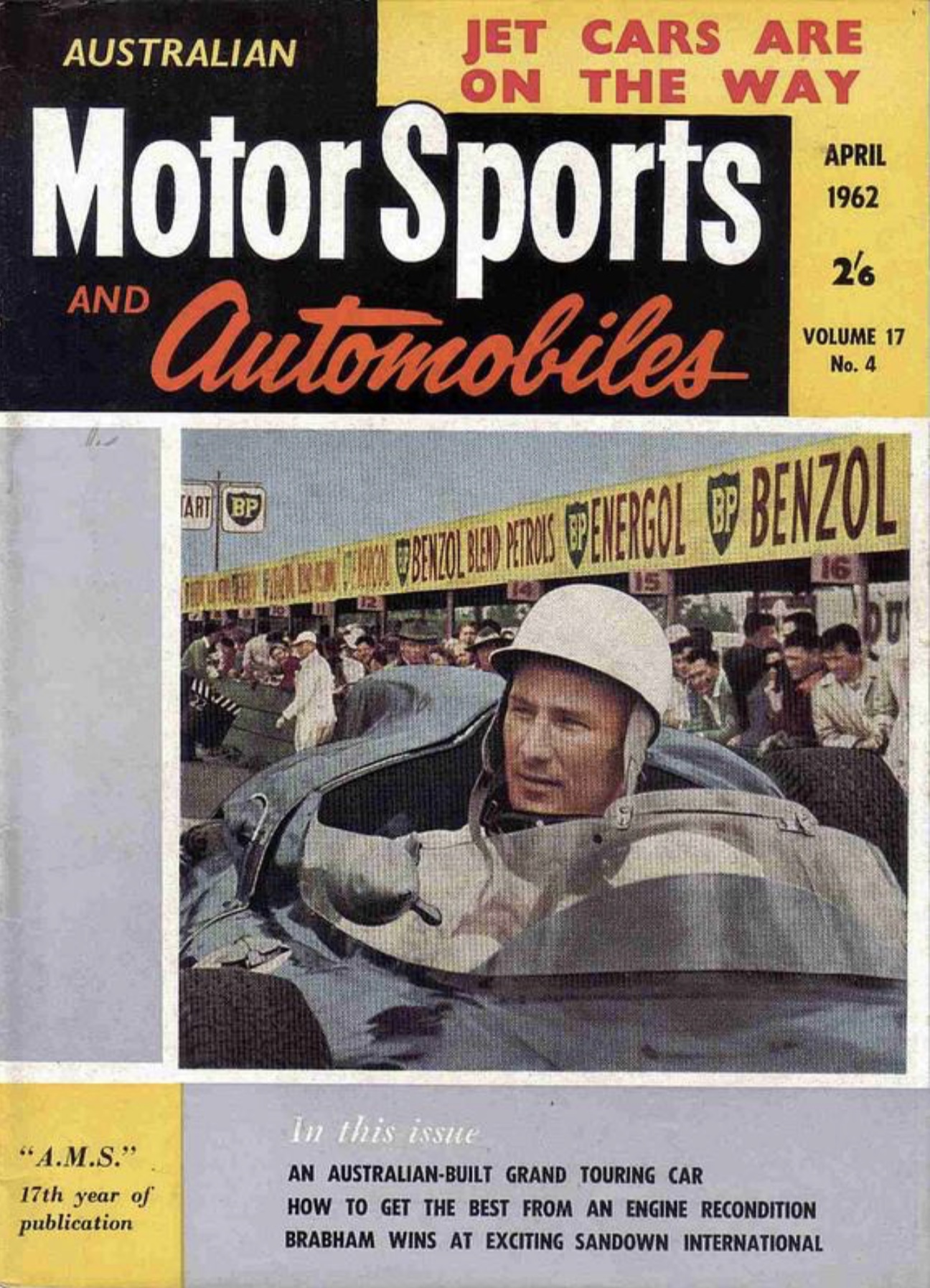
A couple of Australian motor magazine covers from Stephen Dalton’s Collection with Stirling on the cover- as he so often throughout the world was!
This photo taken by John Ellacott posted on The Noatalgia forum by Ray Bell is of Stirling giving Paul Samuels’ Lotus 18 Ford Formula Junior a whirl at Warwick Farm in 1961.
His Rob Walker Racing Cooper T53 and Lotus 21 (car in the first photo) were late arriving in Sydney from New Zealand so he jumped into a couple of cars to do some familiarisation laps of the new, quite technical Warwick Farm layout.
Richard Croston popped onto that internet thingy some amazing factory data on the 1955 Ferrari Super Squalo ‘555-2’ raced by the factory in Grands Prix that season, and then acquired by Reg Parnell for modification to Formula Libre specifications by fitment of a Monza 860 3.4 litre engine where a 2.5 litre Gee Pee jobbie once nestled.
He and Peter Whitehead, in ‘555-1’, raced the cars in the 1956 Australian Grand Prix at Albert Park and then did the New Zealand internationals in January/February 1957 before selling the cars locally and then high-tailing it back to Europe. Suss this ’56 AGP piece; https://primotipo.com/2018/01/16/james-linehams-1956-agp-albert-park/
Richard Croston Collection, George McKaige from ‘Beyond The Lens’
(unattributed)
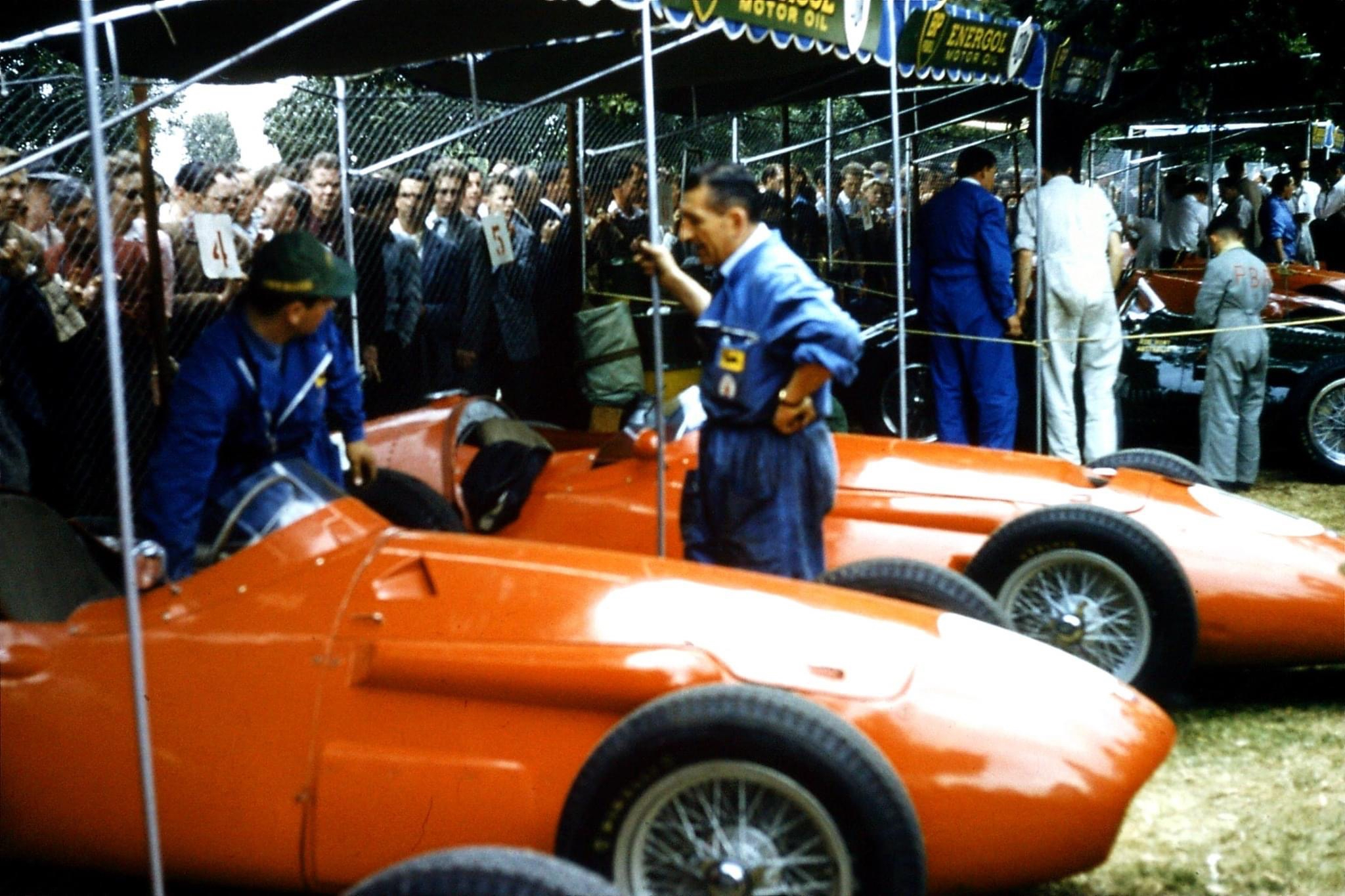
The black nose-banded Parnell 555 Ferrari takes centre stage in the Albert Park paddock during the 1956 Australian Grand Prix weekend- the car behind is Whitehead’s identical machine.
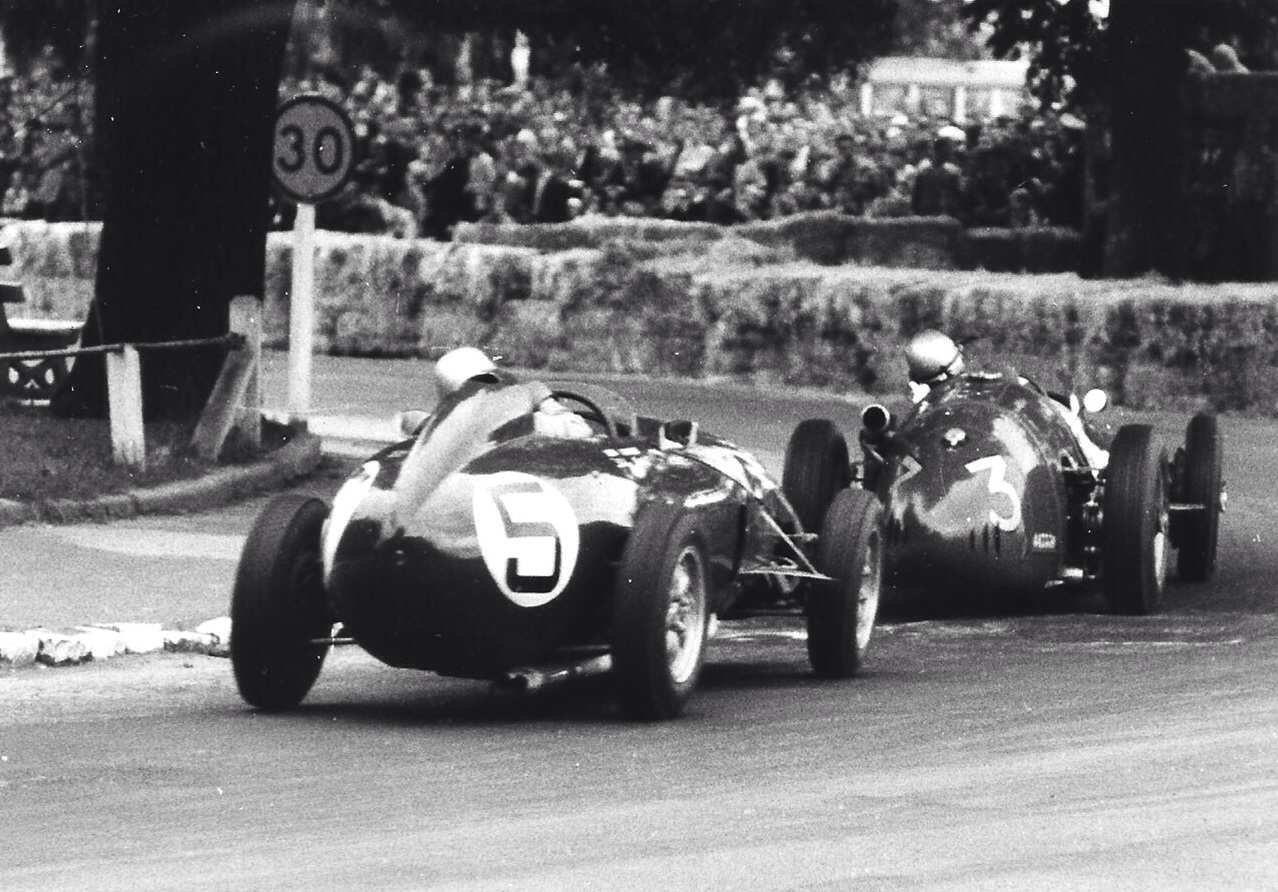
Car #5 is the nose of Reg Hunt’s Maserati 250F, the #8 Ferrari Monza is I think Stan Coffey’s albeit he raced with number 9- it isn’t Ken Wharton’s who raced with #10. Theory folks?
Who is the short, burly driver standing behind Whitehead’s car?- it isn’t slight Peter or burly but balding Reg.
(G McKaige)
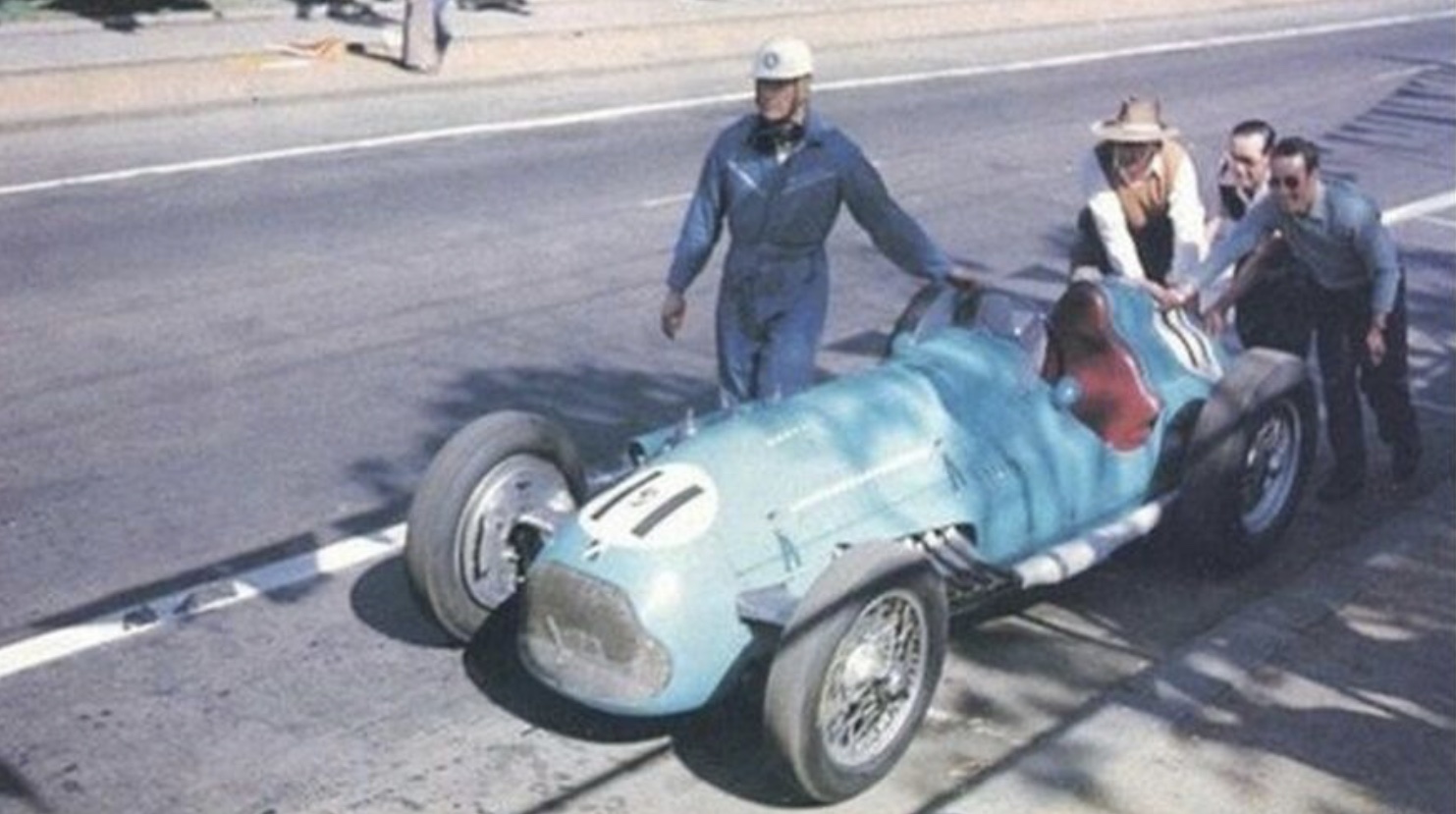
Reg and the boys push 555-2 onto the Albert Park grid- Stirling Moss won in a works 250F that day from Jean Behra’s sister car, then Whitehead in 555-1 and Parnell in 555-2.
(G McKaige)
Rare colour shot of Reg on the move during the race from George and Chester McKaige’s wonderful book ‘Beyond The Lens’. Many pundits are of the view that Parnell- who had a great career, was potentially one of Britain’s best Grand Prix drivers but he was one of the generation who lost a chunk of time by virtue of WW2.
A analytical racer with outright pace in single-seaters and mechanical understanding and sympathy in endurance events.
Tailpiece…
From Australian Motor Sports Review 1958-1959
Arnold Glass and 555-2, I wonder how big a seller ‘Bardahl’ was in Australia in the day?- plenty of competition amongst the various oil companies to have the better drivers on their books in those pre-advertising on cars days.
The third place in the 1959 AGP touted was achieved in Glass’ ex-works/Hunt/Stillwell Maserati 250F not the 555 Super Squalo shown mind you.
‘It is not common for racing cars to be photographed from the rear- more usually from the side or front.
Here are a few rear views (or views of rears) from my archives’ – Bob.
Jack Saywell, above, in his only appearance at Bathurst in his 2.9 Alfa Romeo P3, Easter 1939.
He could do no better than 6th when his engine was reluctant to start after a pitstop to adjust the brakes. The photo below is from ‘The Magnificent Monopostos’ by Simon Moore- this pitstop one of several during the very hot 1939 AGP at Lobethal, the heat caused major tyre problems for the heavier cars which did not afflict winner Allan Tomlinson’s nimble, light MG TA Spl s/c, Jack was 6th again.
(GP Library)
My anal side, not dominant at all in normal life kicks in with a wonderful selection like this- I feel the need to pop in chassis numbers where I can- but I am going to resist given the time required to do so! Good ole Google works pretty well- ‘Jack Saywell Alfa Romeo P3 chassis number’ will give you anoraks a path to finding what you want, otherwise just enjoy these magnificent photographs from Bob’s archive, Mark.
(unattributed)
Paul Swedberg drove John Snow’s Delahaye 135CS to 2nd place at the Bathurst 1939 meeting, in John’s absence overseas. Paul’s own Offenhauser Midget, in which he was virtually unbeatable on the on speedways, was not entered.
(unattributed)
Ted McKinnon finished 13th in the 1953 Australian Grand Prix at Albert Park in his Maserati 6CM. Doug Whiteford won that day aboard the first of his two Talbot-Lago T23C’s.
(S Wills)
An unknown car exhibiting the disadvantages of a swing rear axle system. Something tells me that this is DW Stephenson in his DWS? Templestowe Hillclimb in outer eastern Melbourne, September 1954.
(S Wills)
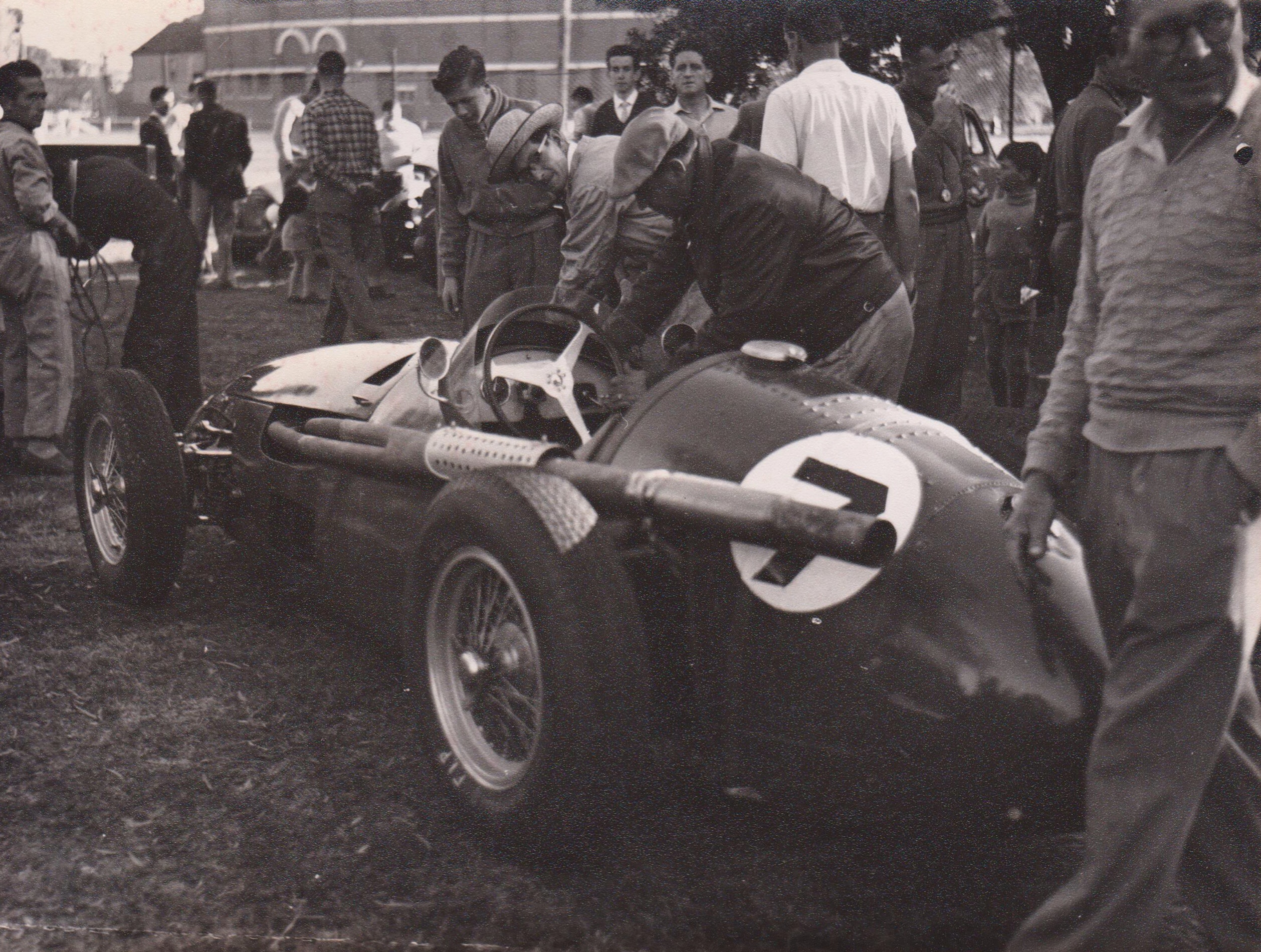
Maserati’s chief mechanic Guerino Bertocchi is leaning into the cockpit of Moss’ victorious Maserati 250F at Albert Park during the AGP weekend in 1956.
Having debuted as a riding mechanic with Alfieri Maserati in the 1926 Targa Florio and subsequently being riding mechanic in thirteen Mille Miglias as well as the 12 Hour of Pescara, it has always saddened me that he should die in 1981 as a passenger to an American during a trial drive of a modern Maserati. Car enthusiast Peter Ustinov told an amusing story concerning Bertocchi. Guerino delivered a new Maserati road car to Ustinov in Switzerland and said to Peter “I don’t know who you are Senor Ustinov, but you must be important to have me, Bertocchi, delivering your car”.
(S Wills)
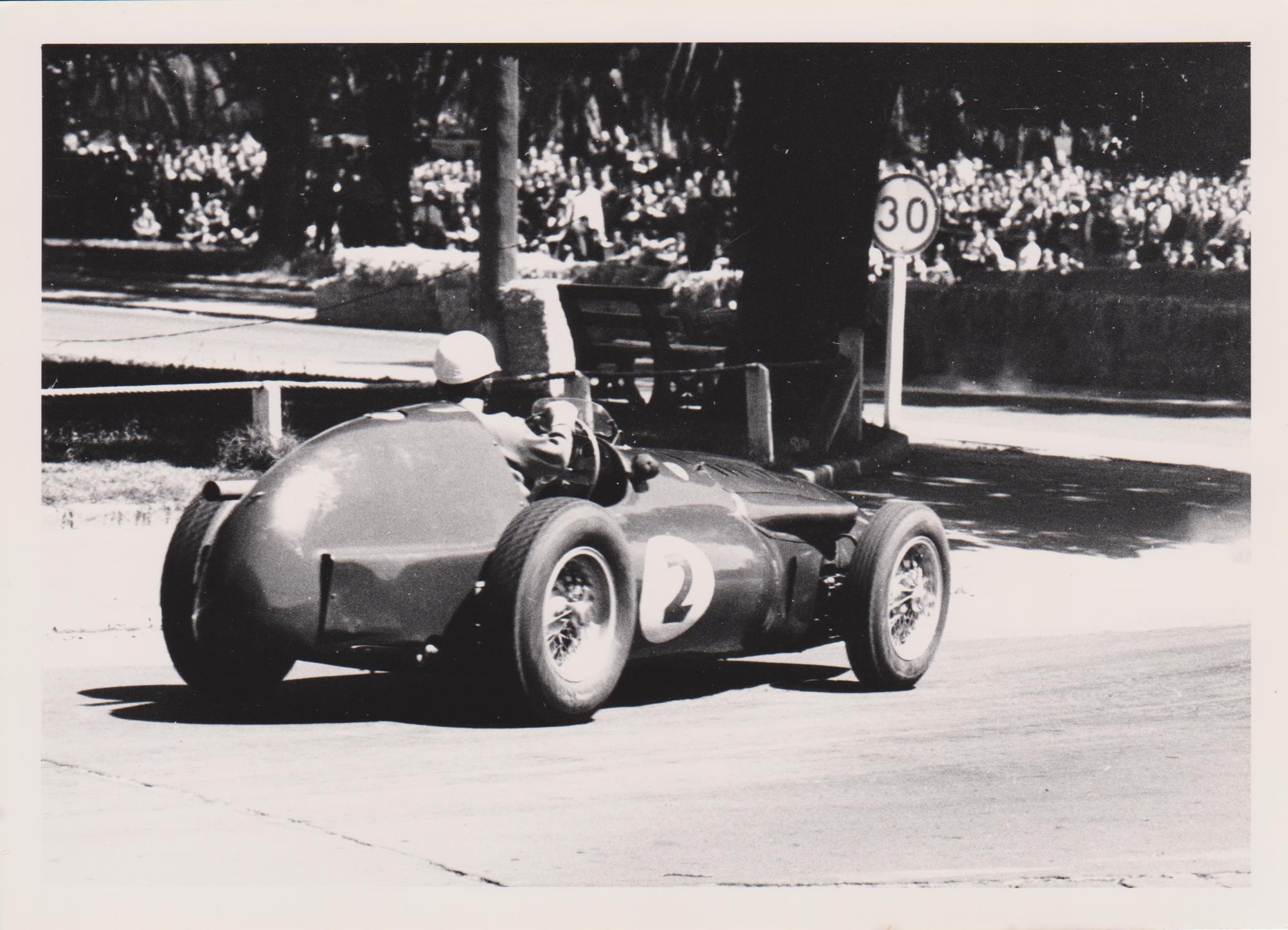
Reg Parnell enters Jaguar corner in his Ferrari Super Squalo during the same wonderful 1956 AGP weekend.
The 30mph sign would not have deterred him. It also serves to remind us that ridiculous speed limits are not a new phenomenon – this sign was at the start of Albert Park’s main straight.
(S Wills)
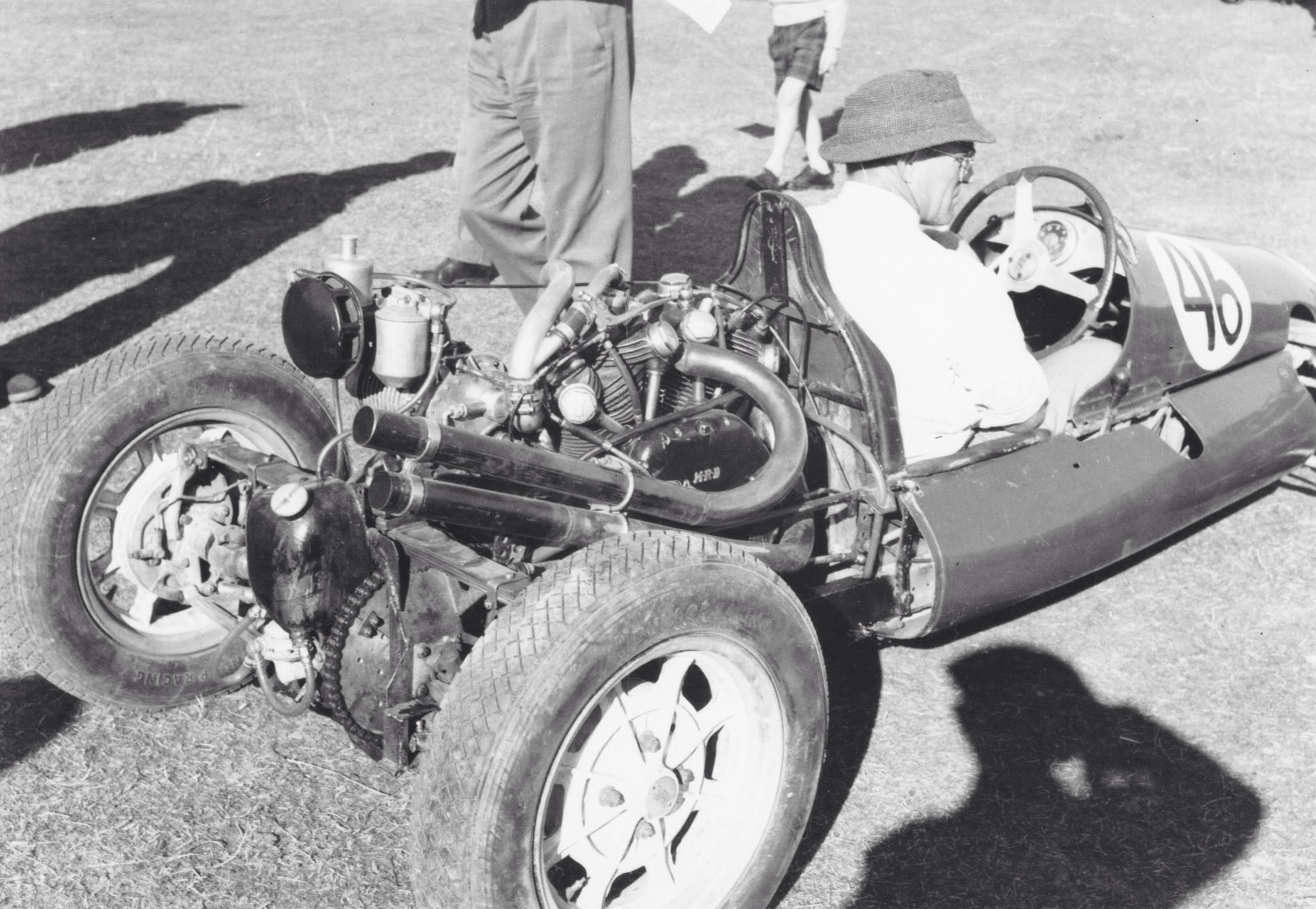
This photograph shows the large SU required to feed the highly modified supercharged Vincent engine in LexDavison’s Cooper. Phil Irving was the designer and the modifier of this motor – still labelled H.R.D on its timing cover. Templestowe 1957.
(S Wills)
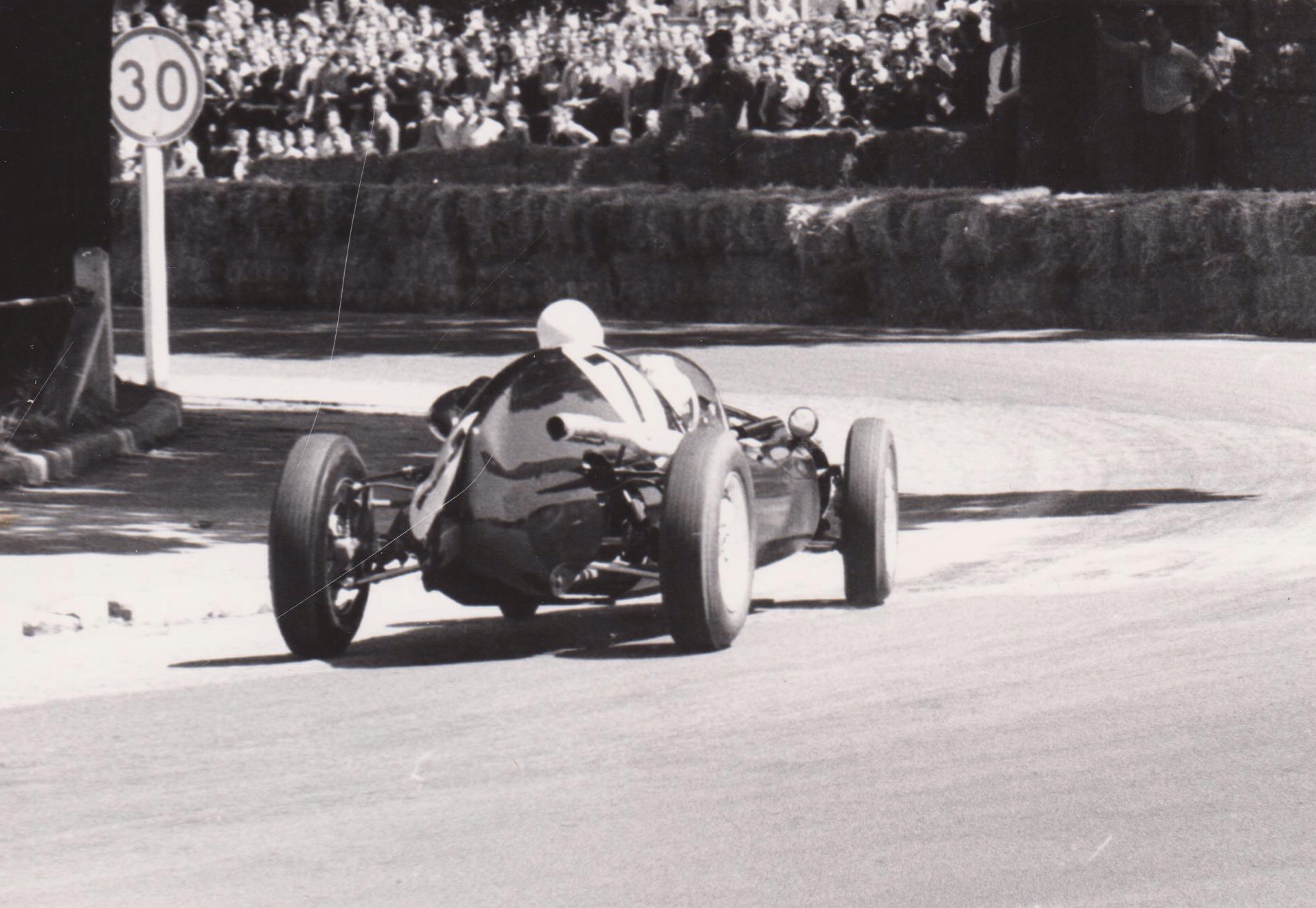
Stirling Moss in the Cooper T45 Climax FPF 2 litre, Melbourne Grand Prix, Albert Park, November 1958.
This photograph is taken during practice – the race was held on a hot day and the Cooper was denuded of much of its rear body work in an endeavour to keep the driver cool. The long shadows show that the photograph was taken in the early morning – I seem to recall that practice was at 6.30am.
In spite of the hour, note the huge crowd at Jaguar corner. In a previous post I have mentioned that Moss really only showed his sublime skill during the 1956 AGP when it began to rain with just six laps to go. On this morning Stirling was struggling with locking brakes and again demonstrated phenomenal car control – I was crowd marshalling at about the point from where this photograph was taken.
(S Wills)
Almost a rear view – note the missing engine cover to cope with the heat. Moss won the 32 lap, 100 mile race from Jack Brabham’s similar Cooper T45 Climax FPF, Doug Whiteford’s Maserati 300S and Bib Stillwell’s Maserati 250F.
Sadly this was the last race meeting at the ‘Park until the modern AGP era.
(S Wills)
Len Lukey (5th) in the Lukey Bristol tailing Bib Stilwell in the 250F Maserati through Jaguar corner in 1958.
(S Wills)
Ted Gray in the Tornado 2 Chev- again at Albert Park of course in 1958, Ted retired the Lou Abrahams car after completing only 4 laps.
(S Wills)
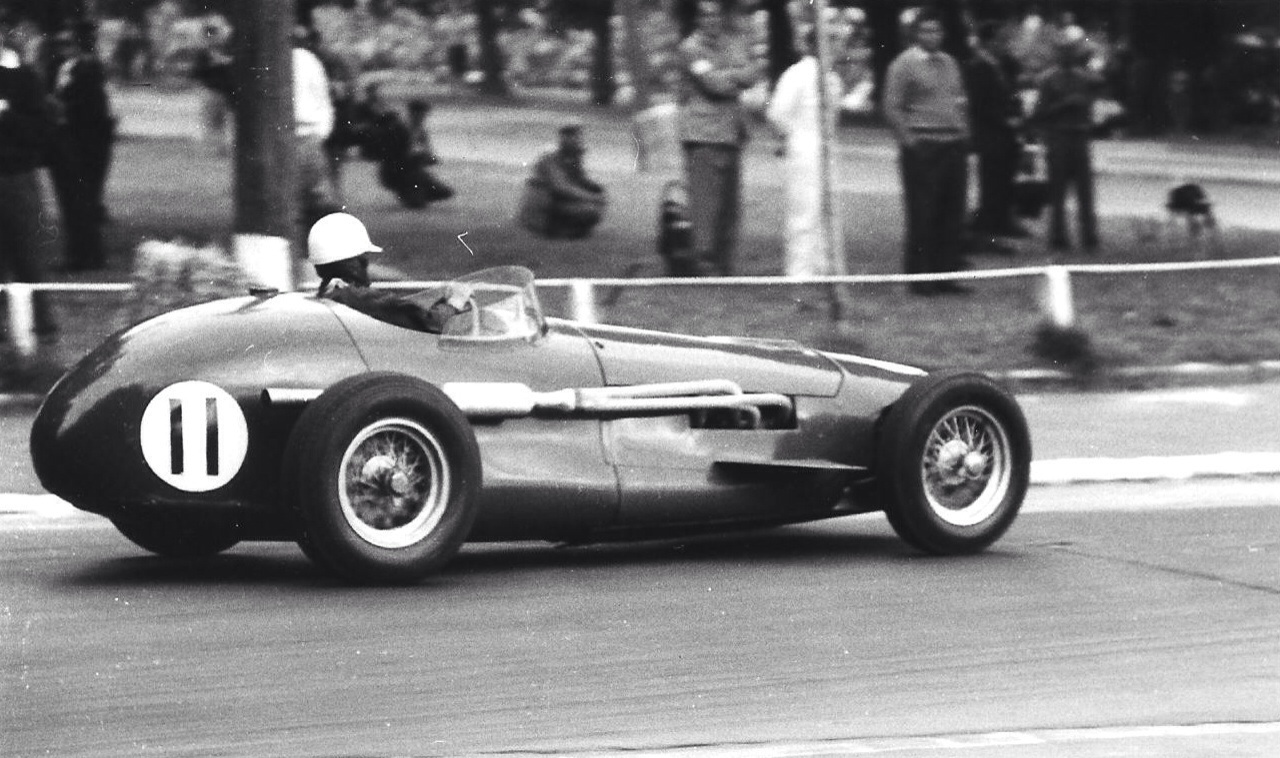
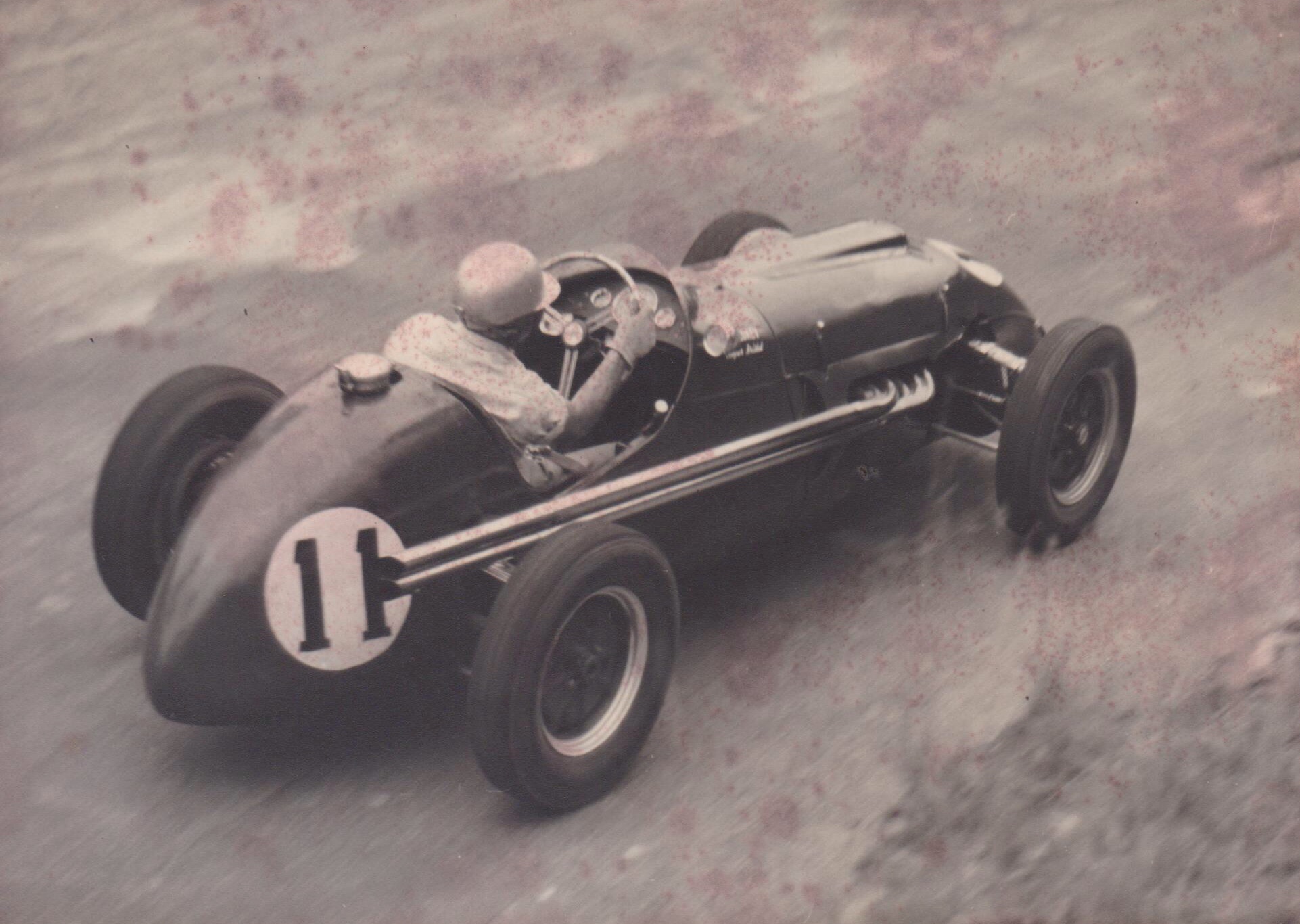
Len Lukey in the eponymous Lukey Bristol at Templestowe 23/3/1958 – or was it still called the Cooper T23 Bristol until it got its Vanwall inspired body?
(S Wills)
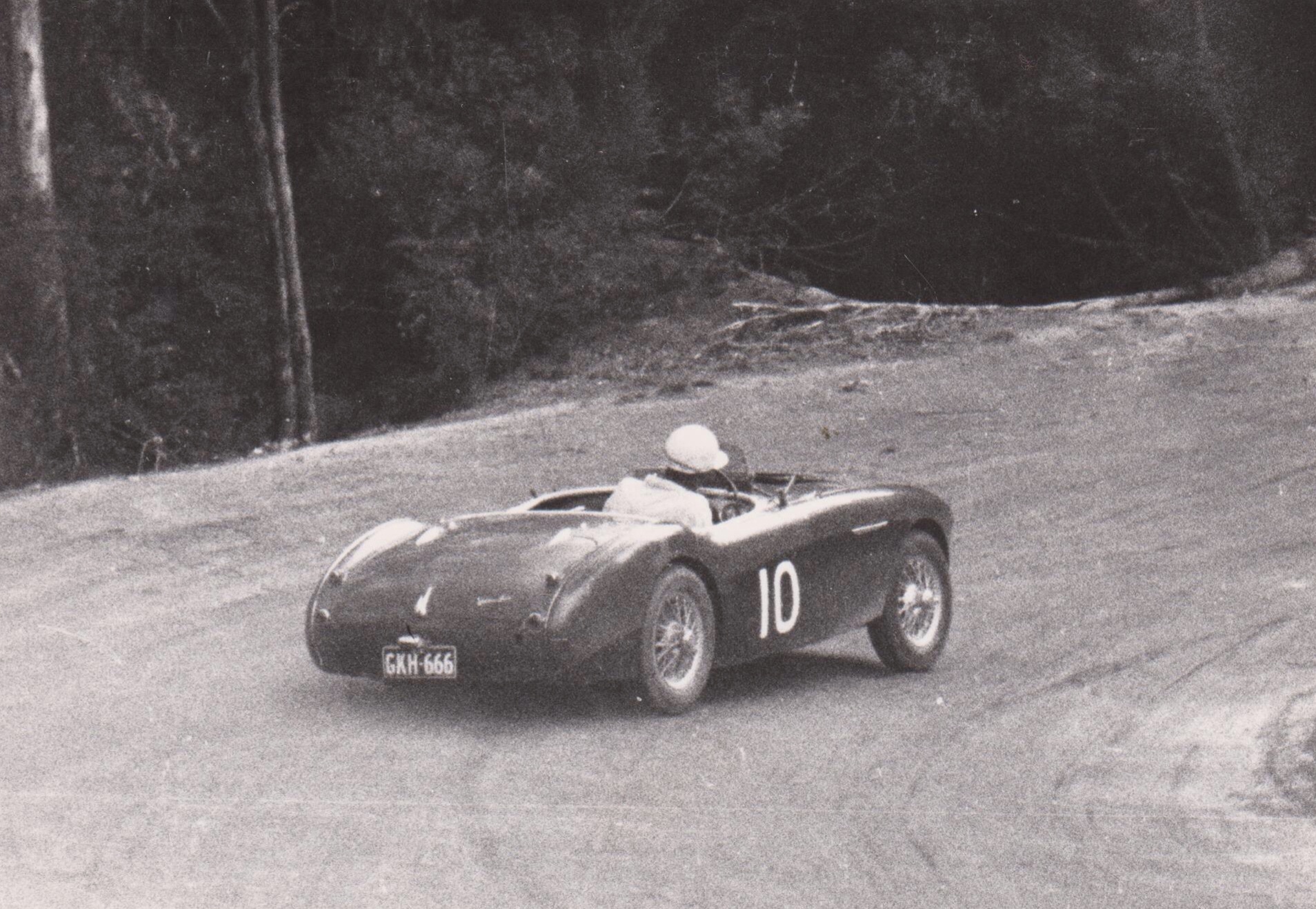
JW Philip in an Austin Healey at Templestowe on 20/04/1958. We know nothing of this car and driver.
(S Wills)
Jack French in a Cooper Norton of only 499cc, but still good enough to break the magic (to me) 30 seconds. His time 28.15 Rob Roy, 1959. Coopers with various power plants were ‘King of the Hills’ in those days.
(S Wills)
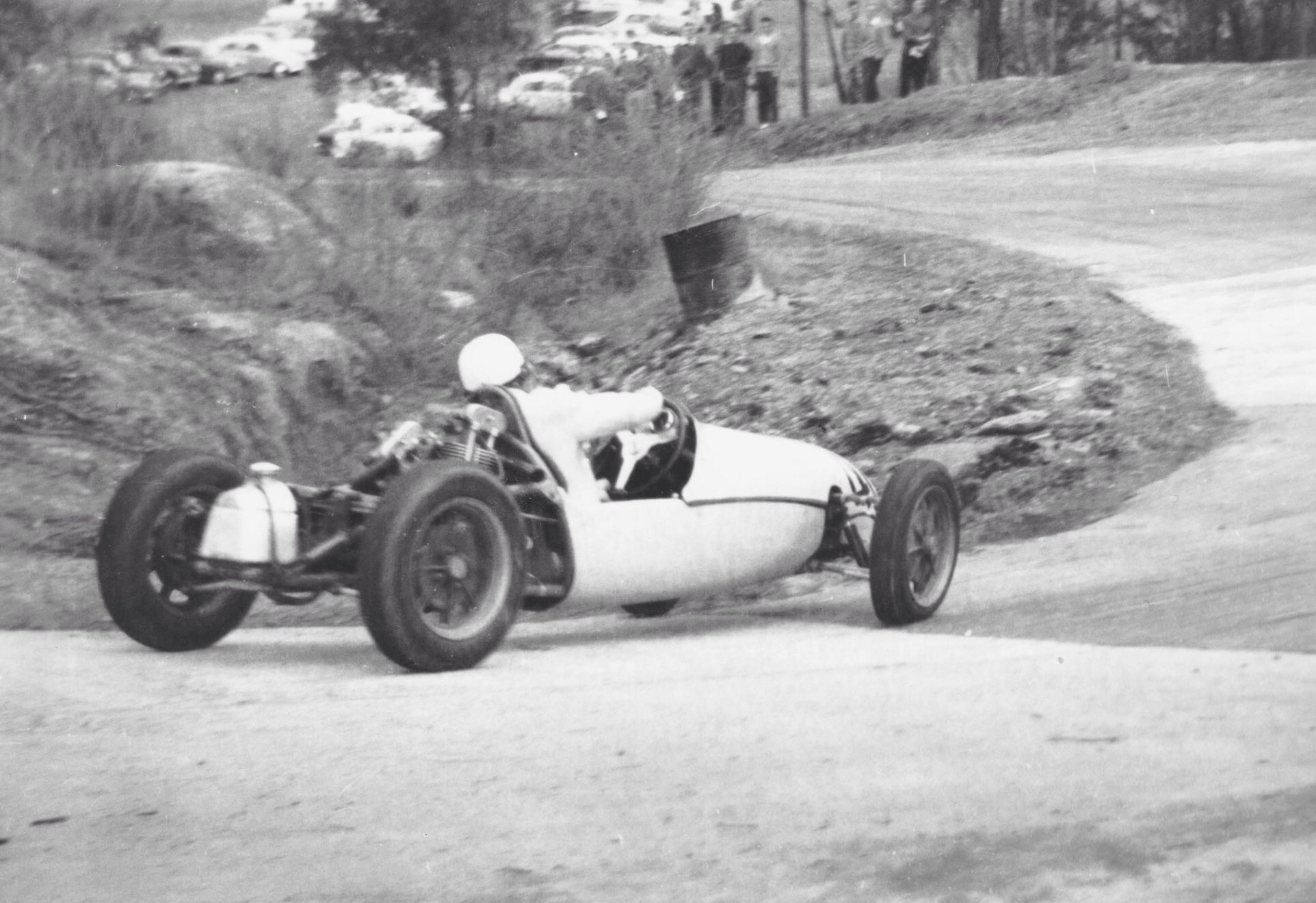
At Templestowe in 1958; Bruce Walton in his Walton Cooper. Six times Australian Hillclimb Champion from 1958 to 1963.
(N Hammond)
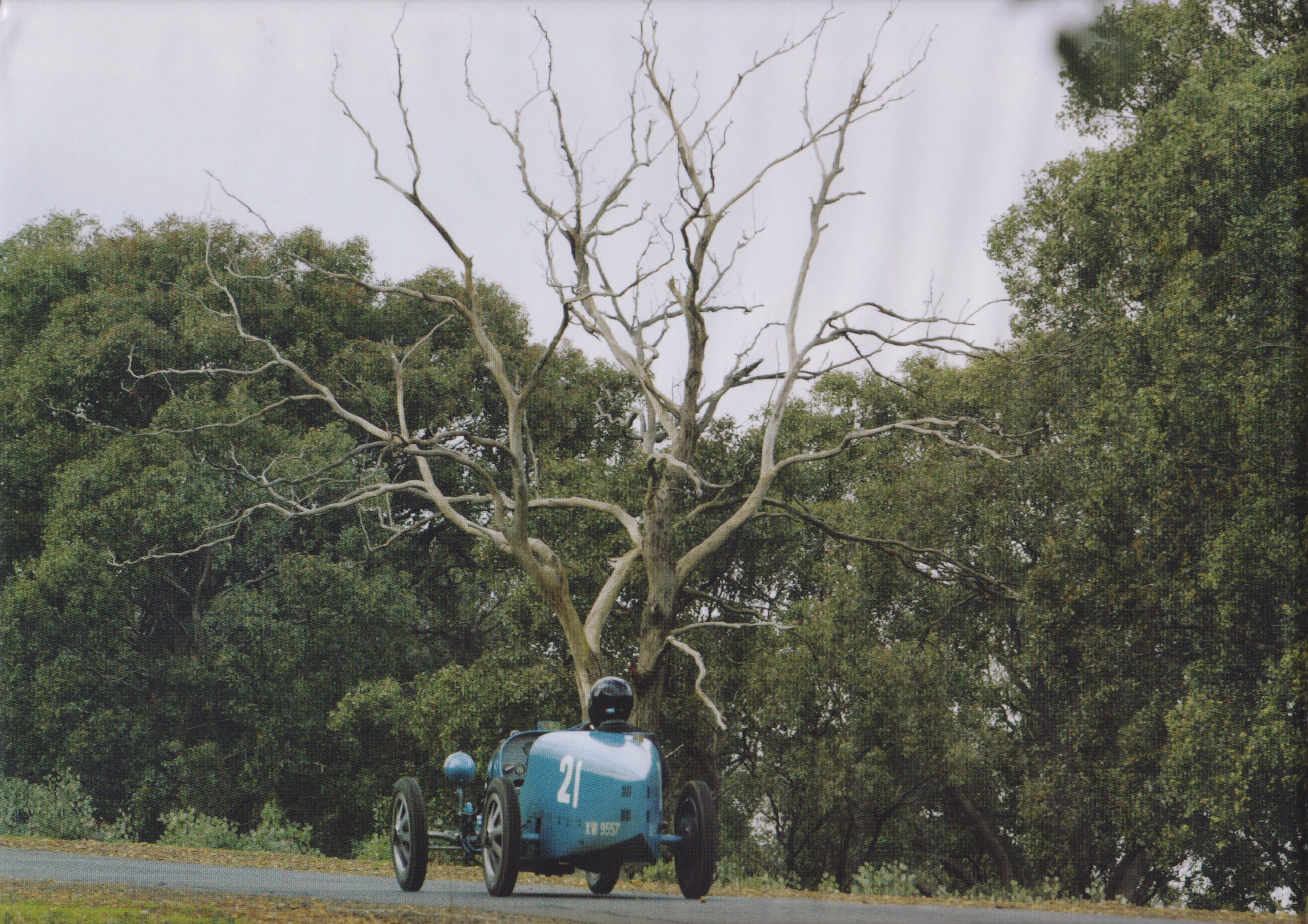
And lastly, me at Rob Roy in my Type 35 Bugatti in 2008.
Credits…
Bob King Collection
References: ‘AGP – Howard et al’, Bathurst: Cradle of Australian Motor Racing John Medley, ‘ The Magnificient Monopostos’. Simon Moore. ‘Bugattis in Australia and New Zealand, 1920-2012. King and McGann
Tailpiece: Spiro (Steve) Chillianis, Rob Roy 1960, with some work to do …
(S Wills)
Car is the ex-Eddie Perkins rear engined Lancia Lambda Special, now fitted with an Austin A70 engine, or should we say ‘was fitted’. He recorded a time of 80.88 seconds- perhaps the ambulance broke the timing strip?
Stirling Moss was at his impeccable best in his works Maserati 250F in winning the 1956 Australian Grand Prix held over 250 miles at Albert Park, 2 December 1956…
With six laps remaining it suddenly rained and it was only then we saw what a true master Moss was- controlling his slipping and sliding car on the treacherous track with sublime skill.
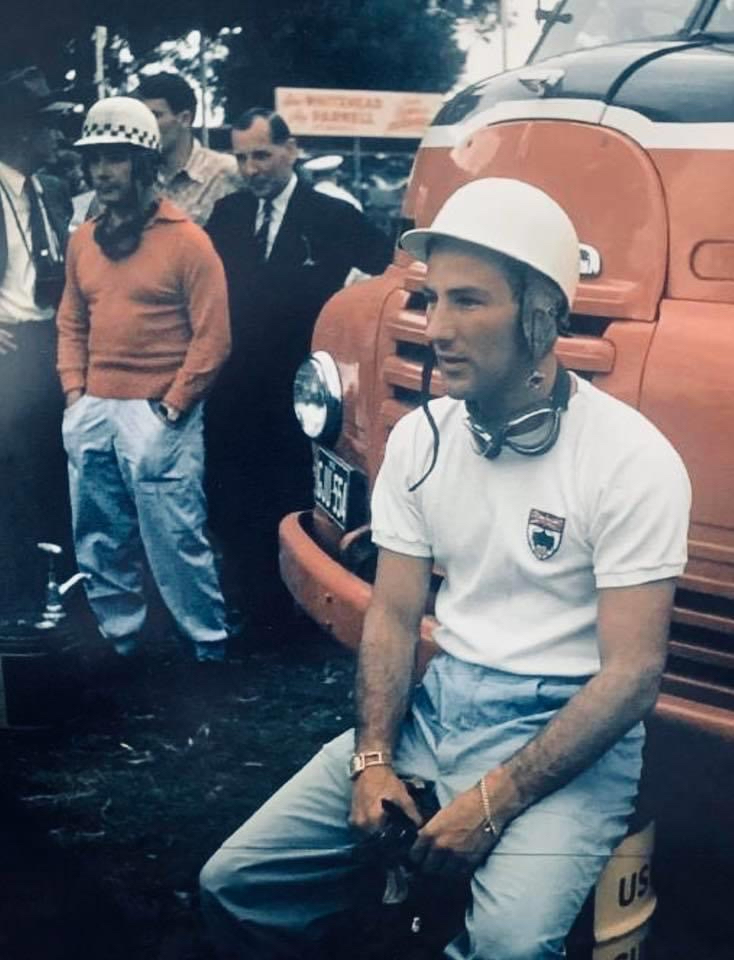
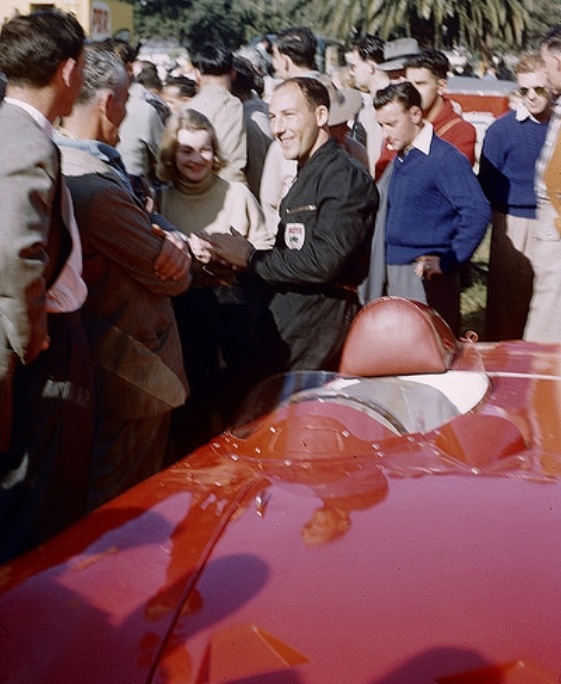
Stirling is probably being interviewed by a journalist, or perhaps he is attending to an autograph? Known for his love of sleek cars, it is said he was not averse to sleek women. We think the young lady at right is his current friend. Does anyone have any clues as to her identity? What about the Moss wrist-watch, a distinctive part of his race apparel at the time- can any of you horologists advise us of make and model?
In the photograph below he may have been telling Reg Hunt, fourth and first local home in his 250F, how easy it was. Reg is already in street attire whilst Moss has not had a chance to change. We know the curly, dark headed boy is John Calligari, but who is the partially obscured driver on Reg’s left?
Look at all the boys, young and old, their eyes riveted on the man of the moment, or more particularly one of the two men of the era…
(S Wills)
Regular readers may recall the first of racer, restorer and author Bob King’s ‘Words from Werrangourt’ article a month ago. Bob has amassed an immense collection of photographs in sixty years of intense interest in motorsport which he is keen to share.
My traditional Sunday offering is a ‘quickie’- a few words and an image or two. This format will be used to gradually get the work of some wonderful photographers ‘out there’- fear not, there is enough to keep us going for a decade or so. And many thanks to Dr Bob!
Reg Hunt #5 and Guerino Bertocchi #7 in Maserati 250Fs prior to Saturday practice, Albert Park, Australian Grand Prix, 1 December 1956…
Hunt looks pretty happy with himself whilst Maserati’s legendary tester/mechanic Bertocchi wonders if everything is AOK with the Moss #2501. To the left of Hunt’s car is Tom Sulman’s Aston Martin DB3S.
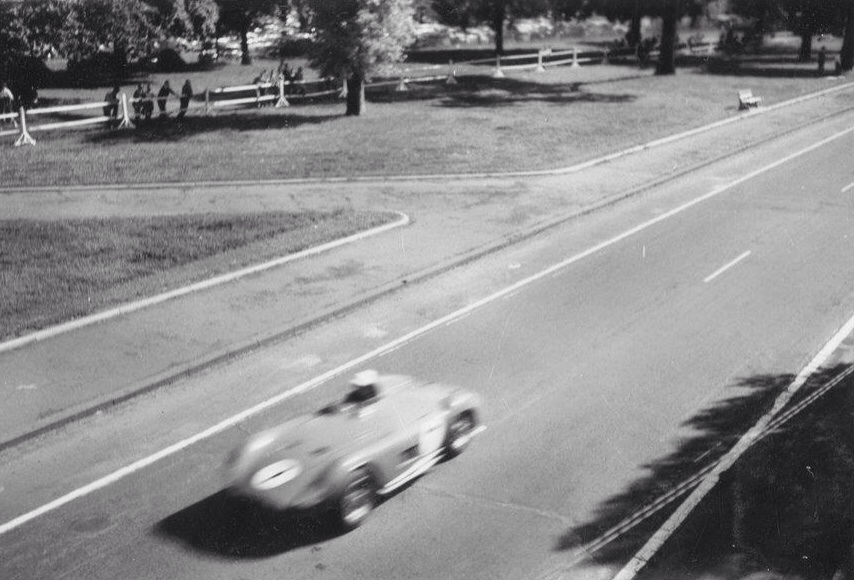
James Lineham had a fantastic day at the ‘Park, the sun shone making it ideal for spectators, especially those with cameras. He used his expensive colour film wisely in the paddock, his camera wasn’t sophisticated, so best to take snaps of stationary or slow moving cars. Then he shot off some monochrome action work whilst he walked Albert Park’s huge expanse.
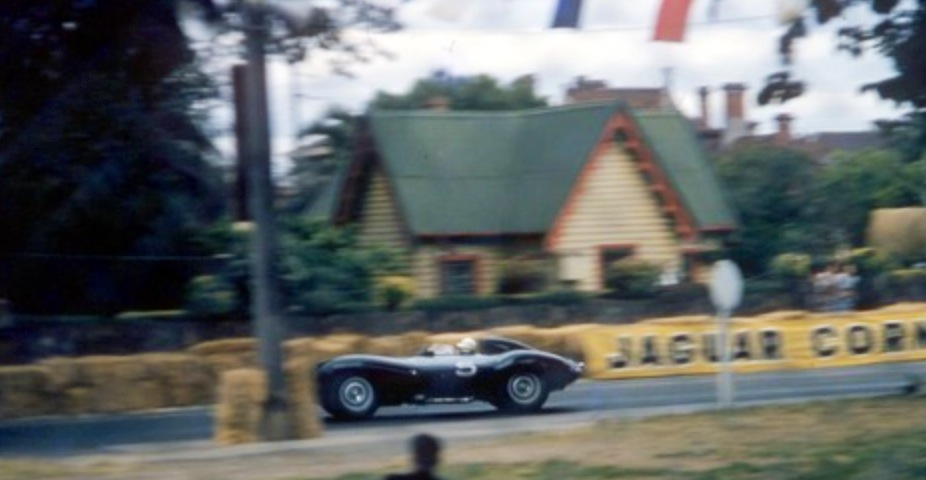
Bib Stillwell’s Jag XKD perhaps, on Lakeside Drive looking to the south of Albert Park Lake (J Lineham)Paul England’s superb Ausca Holden-Repco, built after-hours by England at Repco Research (I Curwen-Walker)
James life spanned 1925 to 1997, he was a young enthusiast aged 31 when he attended this meeting. After his death his wife carefully went through all of his precious belongings, found these photographs and donated them to the State Library of Victoria for enthusiasts like you and I to see, in 2014.
Many thanks James and Catherine Lineham. Blurry though some of them are, they ooze atmosphere of a weekend spoken about in reverential terms by those fortunate enough to have attended. One of the journalists of the day, wrote of the weekend as ‘when Australian motor racing came of age’.
Moss or Behra Maser 300S on the pit or main straight, Aughtie Drive. Race direction these days the other direction, or clockwise (J Lineham)Tom Sulman’s Aston Martin DB3S with Tom in the blazer at right (I Curwen-Walker)Circuit map from the meeting program (G Dobie)
I’m obsessed with a few circuits in Australia in particular; Warwick Farm, Mount Panorama, Longford, Lobethal and Albert Park – Longford and the ‘Park especially. I live in Windsor 750 metres from Albert Park’s Austin Healey Corner/Turn 13, the Union Street/Queens Road second gear right-hander.
I run around it every other day, I think about the fellows who conquered it’s oh-so-quick unguarded challenges in the 1950s and do so in much more safety today. I feel its wonderful rhythm, vibe and sense of history all the time. These snaps gimme that vibe, Albert Park is a wonderful place to be even at 5.15am with only the park’s Daffy Ducks as company!
When originally posted, the article comprised James’ shots only, but the piece has grown over the years as other photographs have appeared online and I have plucked them from certain obscurity on FB.
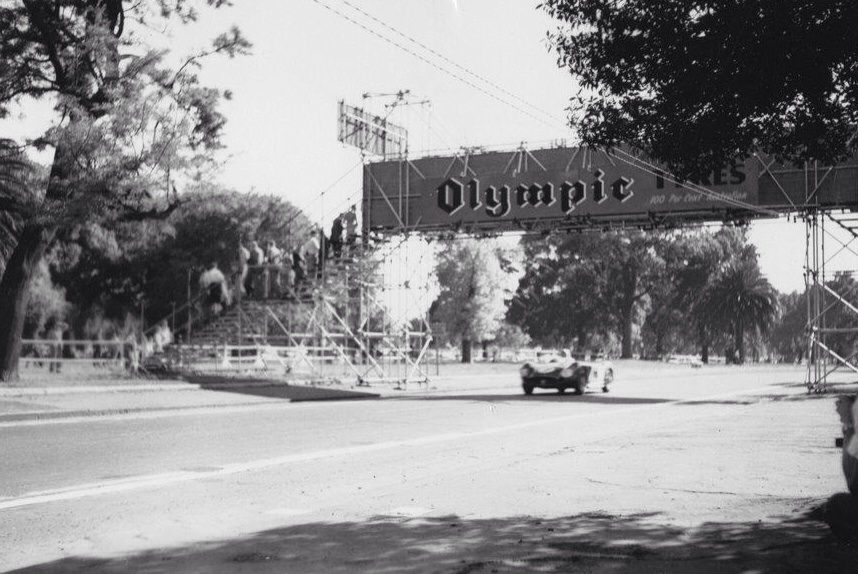
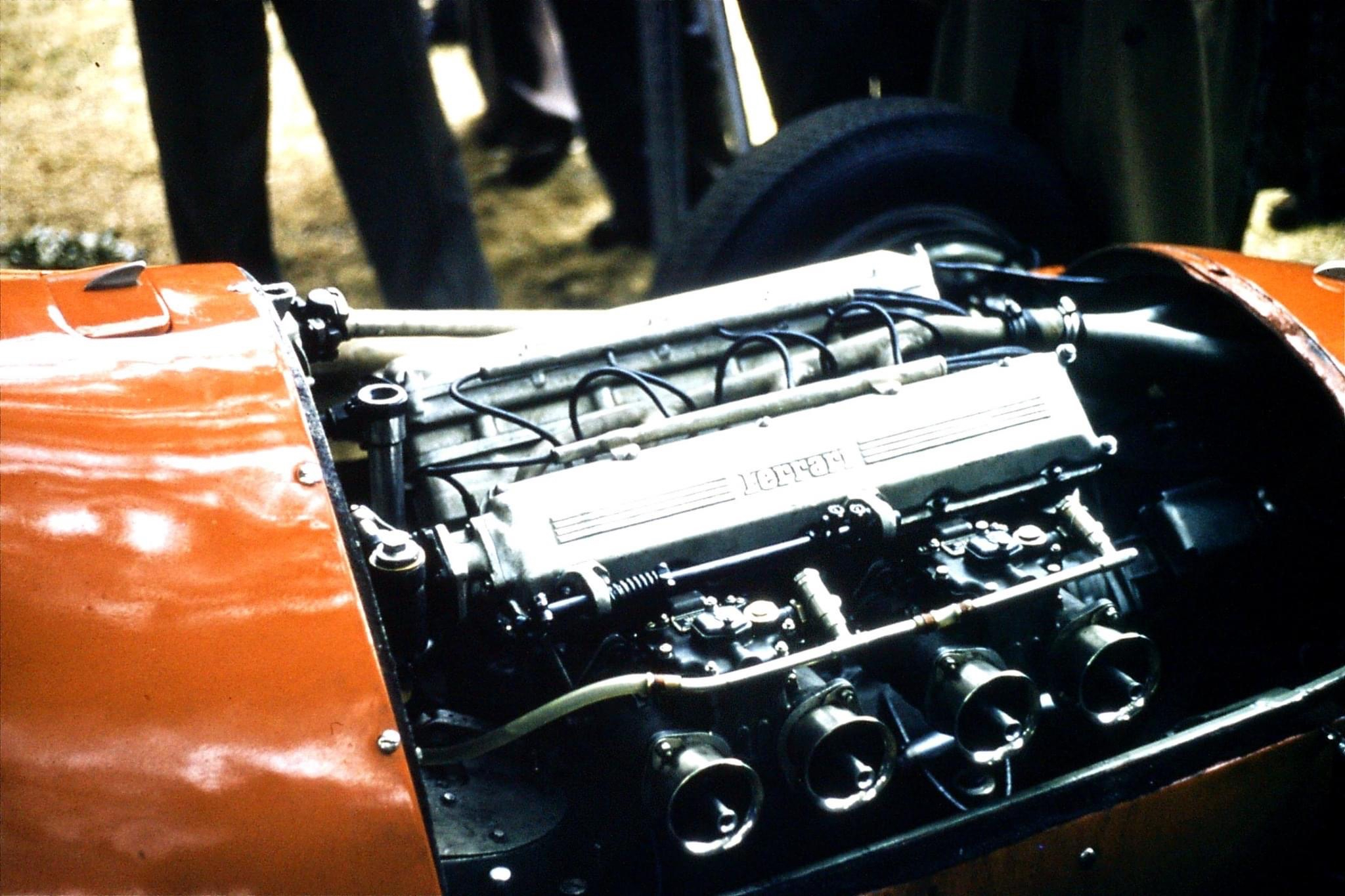
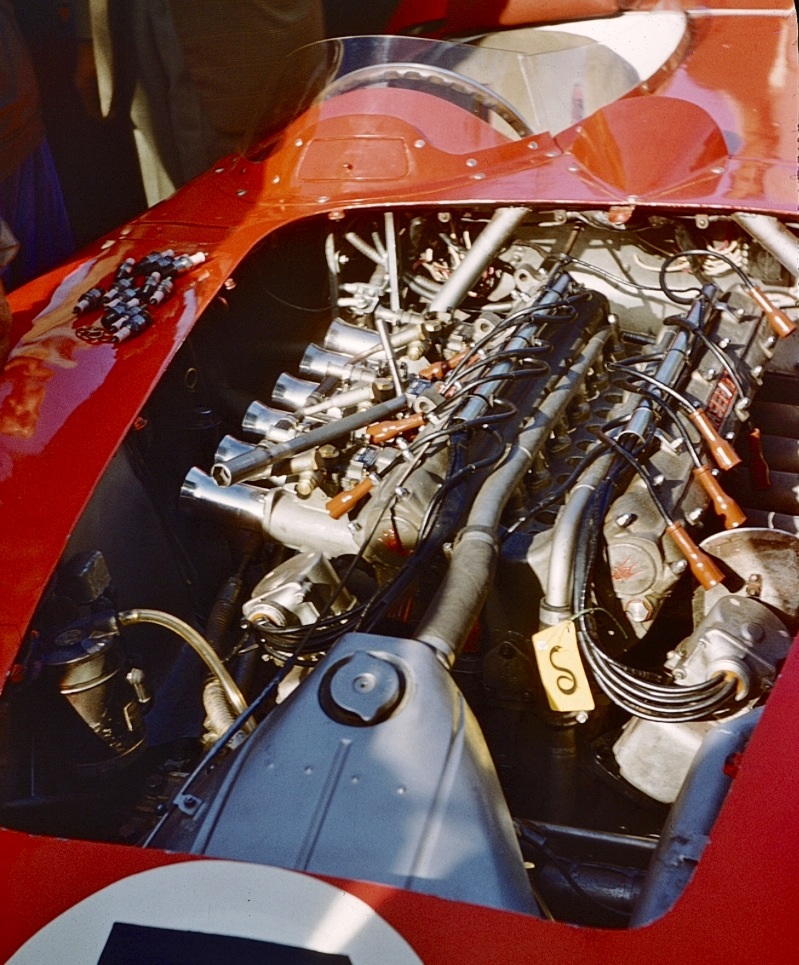
Vrrooom in a six-cylinder 3-litre, DOHC kinda-way. Moss Maser 300S. Aughtie Drive from the Olympic Tyres Bridge (J Lineham)Reg Parnell’s Ferrari 555 Super Squalo with Peter Whitehead’s similar car at left (I Curwen-Walker)3.4-litre, DOHC, two-valve engine of Parnell’s car (I Curwen-Walker)
Attached are links to articles already written about this motor racing fortnight during the 1956 Melbourne Olympic Games which ‘put Melbourne, if not Australia on the map’.
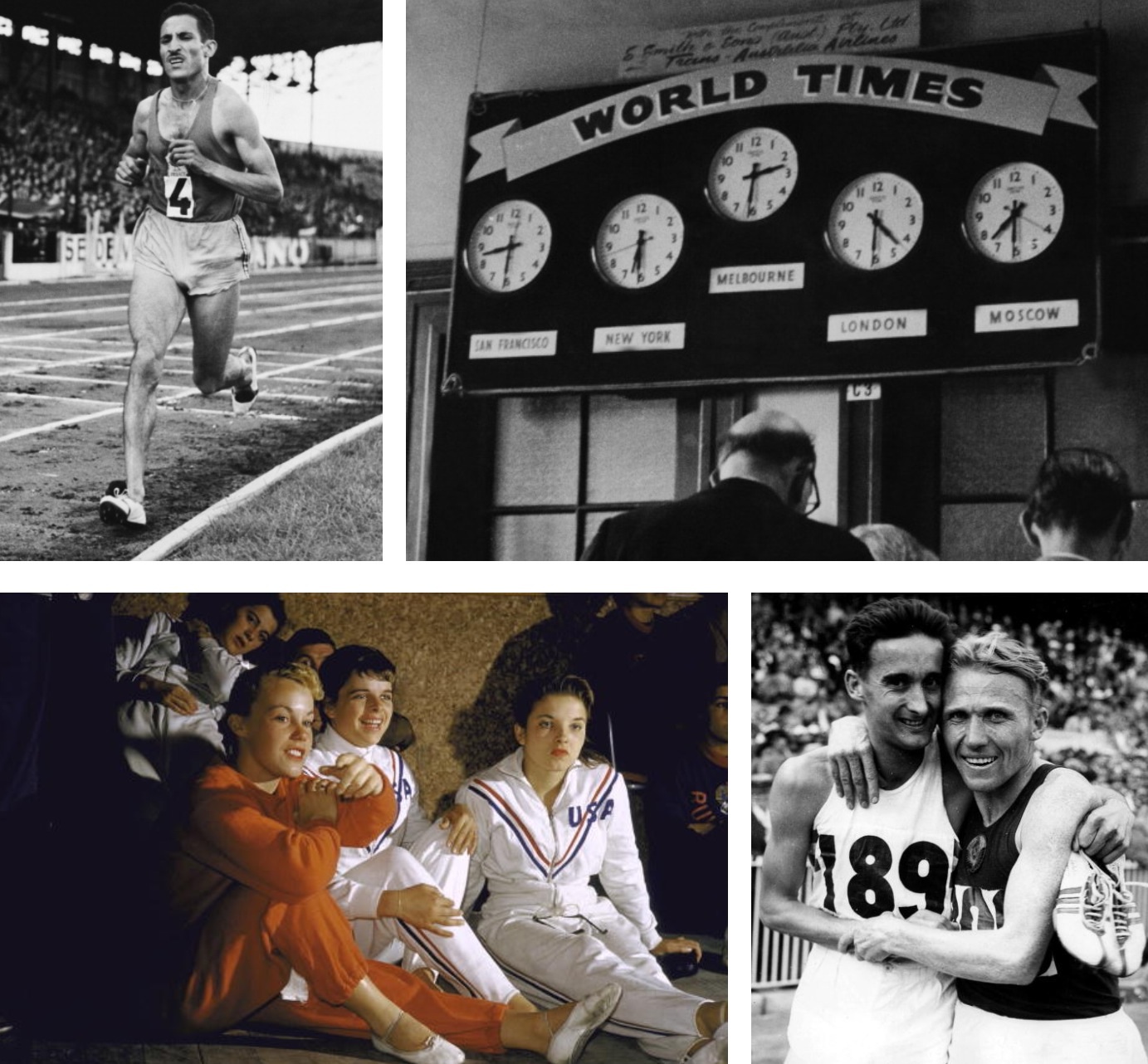
In fact James had a big choice to make that day. He could have taken a vantage point on the men’s marathon course from Clayton to the Melbourne Cricket Ground. Algerian born Frenchman Alain Mimoun won it in 2:25.00 from Franjo Mihalic of Yugoslavia a minute and a half behind.
The short story of the race is that Stirling Moss won the 80 lap, 250 mile event on 2 December 1956…
He did so by a lap from teammate Jean Behra, Peter Whitehead’s Ferrari 555 Super Squalo, Reg Hunt’s Maserati 250F and Stan Jones’ similar machine. It was a dominant display from the plucky Brit who was always, and still is immensely popular when he visits Australia.
International representation included the two works Officine Maserati drivers Moss and Behra (#1 above) who brought no less than five Masers with them. They shipped three 250Fs, two of the latest specification and an earlier chassis, and two 300S sportscars both of which remained in Australia post event. The cars were based at Reg Hunt’s Holden Dealership just up St Kilda Road on the Nepean Highway in Elsternwick a few kilometres from the circuit, the 300S’ being famously driven between workshop and racetrack.
Stirling Moss enroute to victory in his Maserati 250F (Melbourne Argus)
Prince Bira and Jean Behra in the Albert Park paddock (S Landrigan)
Jean didn’t have a great year, being comprehensively bested by one of the most gifted drivers in the world, but third places at Buenos Aires, Monaco, Reims, Silverstone and at the Nurburgring is hardly shabby. Over the two weekend Australian carnival it was Moss winning both the AGP and the Australian Tourist Trophy held the weekend before.
Moss raced #7 250F chassis number 2501 and Behra #1 2522. The spare car – 2507 – was driven by both Moss and Hunt during practice. At one point it was thought Jack Brabham may race it, not having an AGP ride that year, but it was not to be. A pity, by that stage Jack had two seasons of racing in Europe behind him so would have given all but Moss and Behra a good-go.
Two of the three Officine Maserati works 250Fs, chassis numbers as per text. #1 is Behra’s machine (I Curwen-Walker)
Scuderia Ambrosiana entered two Ferrari 555 Super Squalos powered by 3.4-litre 860 Monza four cylinder engines.
The AGP at this time was run to Formula Libre rules, the cars above were driven by #2 Reg Parnell, chassis number FL9002 and #3 Peter Whitehead, chassis FL9001. Whitehead was a regular visitor to Australia dealing with the family wool business and had won the Australian Grand Prix way back in 1938 aboard his ERA chassis R10B, when he was 24, in 1956 he was 42 years of age.
Whitehead started the carnival well winning the Bryson Industries Cup support event to the Australian Tourist Trophy the week before, ahead of Hunt and Kevin Neal, Maserati A6GCM.
Whitehead and Parnell were unlikely to be on the pace of the works Masers but would be good bets as best of the rest, as indeed they were, Peter was third and Reg sixth. The Parnell car remained in Australia, click here to read about it;
Car #9 in the background of the photo above is Lex Davison’s Ferrari 500/625, Alberto Ascari’s 1952/3 dual World F1 Championship winning chassis #0005, iconic in Australia and winner of the 1957 and 1958 AGP’s at Caversham and Bathurst respectively. The 3-litre car, which then carried chassis number #0480 was seventh, five laps behind Moss with various problems.
Behra and Moss at the driver’s briefing (S Landrigan)(J Lineham)
Ken Wharton was a well credentialled Brit in both single-seaters and sportscars,but his ‘Ecurie Du Puy’ (John Du Puy was an American resident in Switzerland) silver Maserati 250F was said to be, and looked, tired.
Chassis #2521 had been Behra’s works machine – a new car that season – and raced in eight events earlier in the year before being sold to Du Puy. But it looked in-need-of-a-birthday before leaving Europe, it was the latest bit of kit, properly prepared the car was a top-three contender.
Ken retired the car on lap 19 and then journeyed on to race the Maserati and his Ferrari Monza in New Zealand that summer, unfortunately dying in a tragic accident aboard the Monza on 12 January 1957 at Ardmore during the NZ GP weekend.
The best prepared and equipped of the locals were the well-heeled Victorian motor dealers, Reg Hunt and Stan Jones in Maserati 250Fs of similar specification and cobbler Lex Davison, who owned a shoe manufacturing and distribution business.
Lex’ Ferrari was older than the 250Fs but was quick with its 3-litre four cylinder, DOHC engine and was beautifully prepared by Alan Ashton at AF Hollins motor engineers just up the road from the ‘Park in Armadale. In fact all three of these cars lived close to the circuit. Hunt was fourth, and best of the locals, Jones fifth and Davison seventh.
(J Lineham)
Doug Whiteford was another local – very – his dealership/workshop was in Carlisle Street St Kilda, a drop-kick from Albert Park.
Whiteford’s first Talbot-Lago T26C, chassis #110007 was an astute purchase, the robust, simple design was well suited to Australian events. It was beautifully prepared and driven by ‘Dicer Doug’ who won two of his three AGPs in it, at Bathurst in 1952 and at Albert Park in 1953. Click here for a piece on Doug’s TLs;
The purchase of the second T26C (photo above) wasn’t quite so smart though. An earlier chassis #110002 but later spec mechanically than #110007 sounded ok but the game in Oz had moved on. He needed something more modern and competitive.
Whiteford was a consistent third in the ’55 AGP at Port Wakefield behind Brabham and Hunt but by ’56 the old Talbot Lago was simply not on the pace. Still, his bankroll was more modest at the top level than most. A shame, as Doug, 42 then and as vastly experienced and tough as they come didn’t give a yard to any of the locals. Whiteford in a 250F or something of that performance envelope would have been worth travelling a few miles to see. It’s a shame he bought a 300S off Maserati after this meeting rather than a 250F.
The Whiteford Talbot Lago T26C in the paddock, and below being pushed by Doug and the crew towards the start (I Curwen-Walker) (unattributed)Kevin Neal, Maserati A6GCM 2.5-litre (J Lineham)
Reg Hunt made everybody take notice in his ‘Flying Bedstead’ Hunt JAP Spl in hillclimbs and on the circuits in the late 1940s/early 1950s and then refined his craft with a season racing a 500 F3 Cooper machine in the UK in 1954.
On his way back to Oz he acquired a superb Maserati 250F engined Maserati A6GCM chassis #2038 (above with Kevin Neal at the wheel) with which he belted the locals in 1955. Only mechanical failure kept him from the ’55 AGP won by Brabham’s Cooper T40 Bristol. Hunt ordered a 250F for ’56, he was allocated a rebuilt 1955 works machine chassis 2516 with Melbourne haulier Kevin Neal – who had also raced an ex-Hunt Cooper T53 Bristol – the purchaser of the A6GCM.
Neal had a shocker of an AGP, bending the car severely and injuring himself late in the race when he lost the car in the greasy conditions. I wrote a long feature about the A6GCM;
Stan Coffey’s Ferrari 750 Monza sportscar below. He raced the car in the Australian TT, DNF in the classic won by Moss from Behra and Ken Wharton’s Ferrari Monza.
It’s a rare, clear shot of the man, now whatever became of him? There is an obscure article topic, he raced a few interesting cars too, Cooper Bristol etc…
(J Lineham)
Entry List…
(B Moyle)
Etcetera…
(J Hunting)
The photograph above is in the AF Hollins Pty.Ltd workshop in 604 Hight Street, Armadale (the building still exists as a tyre fitter/retailer). Julian ‘Gib’ Barrett’s #19 Alta GP-2 1.5 s/c alongside Lex Davison’s Ferrari 500/625. Behind are the two Ferrari 555s, Reg Parnell’s partially obscured on the left and #3 Peter Whitehead on the right. The other car we can just see at far left is the Wharton silver Maserati 250F.
(Gray Family)
Reg Parnell’s Ferrari Super Squalo, Lex Davison’s Ferrari 500/625, looking smaller in comparison, and the dark coloured Kevin Neal Maserati A6GCM which did not look quite so pristine at the end of the weekend.
(I Curwen-Walker)
Quite what is going on here I’m not sure, it’s most certainly not the start of the touring car race!
(I Curwen-Walker)
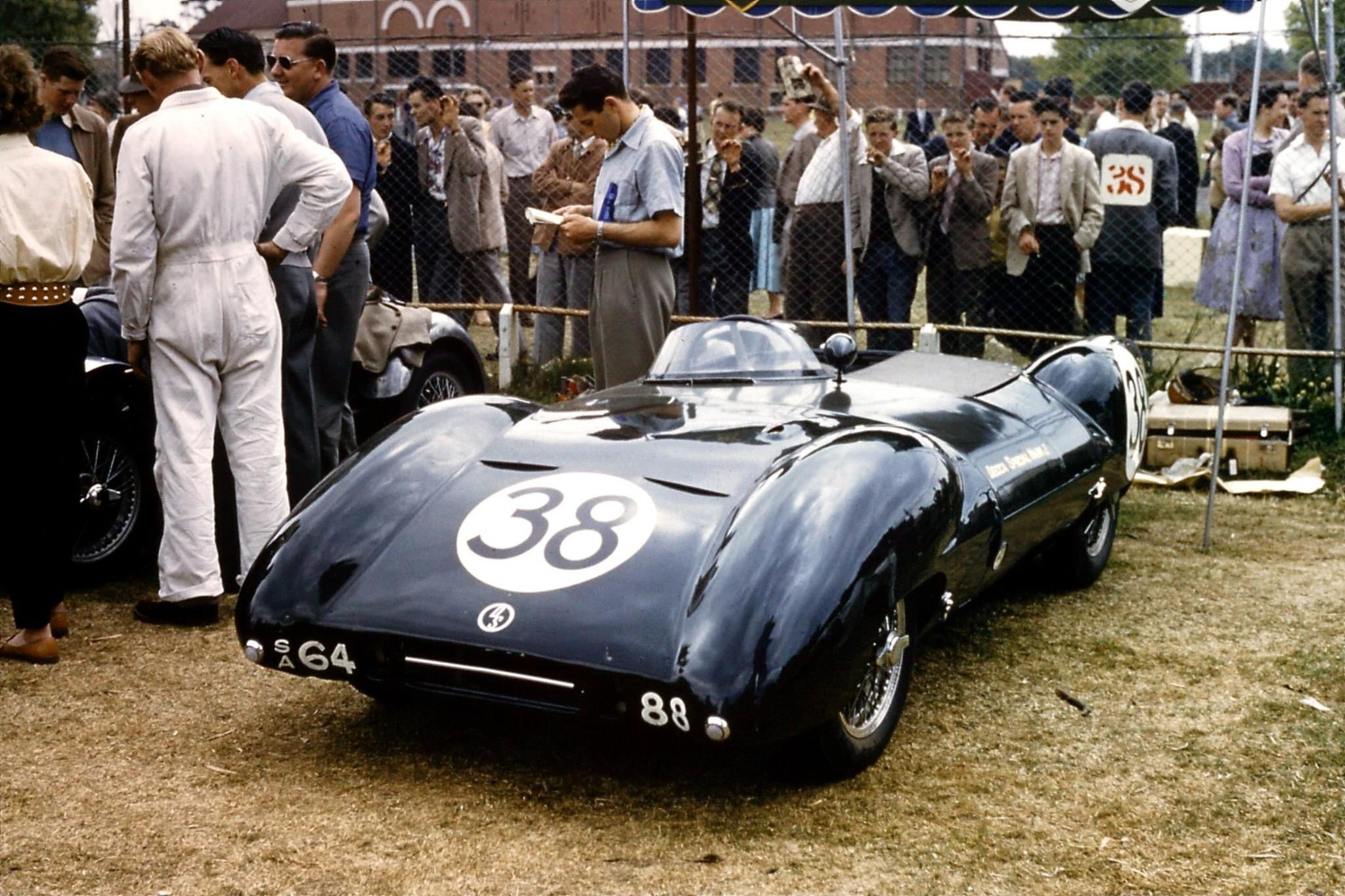
Derek Jolly’s very successful Lotus 11-esque Decca Mk2 Climax. 13th outright and first in class in the Australian Tourist Trophy won by the Moss Maserati 300S. See here for more on Derek and his cars; https://primotipo.com/2017/11/09/dereks-deccas-and-lotus-15s/
(R Jackson)
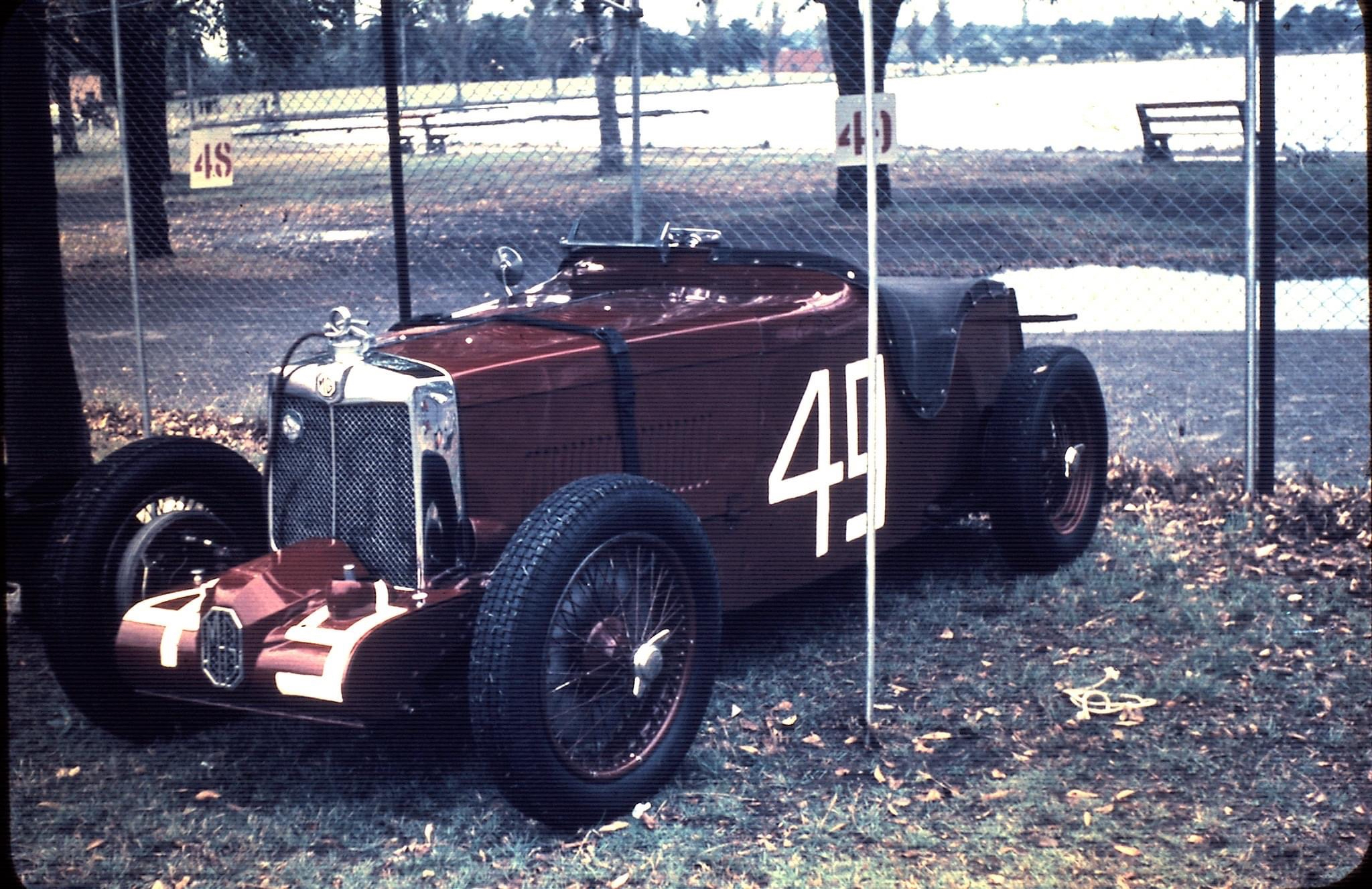
Otto Stone’s MG K3 looking very lonely in the seemingly deserted Albert Park paddock.
Stone was a legendary driver/engineer who fettled all manner of exotic machinery not least Stan Jones’ Maserati 250F during Stan’s glory years including his 1958 Gold Star and 1959 AGP Longford campaigns.
Stone placed second in the curtain raiser, opening event on the first weekend of the carnival, the 16 lap Argus Cup handicap for racing cars. Neil Charge won aboard the Charge brothers MG Special with the C Martyr Sunbeam third.
8W.forix.com on Maserati 250F chassis numbers, oldracingcars.com
Photo Credits…
James Lineham, State Library of Victoria, Simon Landrigan, Brian Moyle Collection, Gordon Dobie Collection, Oscar Plada, John Hunting, Gray Family Collection, Ian Curwen-Walker, Melbourne Argus, Ron Jackson
Tailpiece…
(I Curwen-Walker)
The Maserati corner of the Albert Park paddock, how good would that have been! The factory spare and Behra’s race-car in shot with Kevin Neal’s 2.5-lite A6GCM behind being looked after by the short-arse mechanic.
Stirling Moss leads the 1956 Australian Grand Prix at Albert Park in his works Maser 250F…
The dark, gloomy, wet weather shot could be in Europe. Stirling won the 80 lap, 250 mile race held on 2 December 1956 by a lap from teammate Jean Behra, Peter Whitehead’s Ferrari 555 Super Squalo, Reg Hunt’s Maserati 250F and Stan Jones’ similar car.
The excitement of this post Melbourne Olympic Games race meeting run over two weekends I covered in an article about the Australian Tourist Trophy which Moss also won the week before, in another works Maser, this time a 300S, click here to read it;
Moss during the 1958 Melbourne Grand Prix metting in Rob Walker’s Cooper T45 Climax. He raced sans the rear engine cover in the final, such was the heat, so this is a practice shot or heat (Fairfax)
This short article is pictorial in nature, I rather like the justaposition between his win in the conventional, state of the art 250F in 1956 and victory two years later in the 1958 Melbourne Grand Prix. On that occasion Stirling was in a paradigm shifting, mid-engined Cooper, a T45 Climax. He took the first modern era, mid-engined GP win on January 19, 1958 in a Cooper T43 Climax at the Buenos Aires circuit in Argentina.
Moss chills in the Albert Park paddock before the off in 1956 (S Landrigan)
Stirling won that 32 lap, 100 mile Albert Park, Melbourne GP race run in super hot conditions on 30 November 1958…
Behind him was Jack Brabham’s similar Cooper T45 Climax 2.2 FPF- Doug Whiteford’s Maser 300S and Bib Stillwell’s Maser 250F were third and fourth.
The race was a Formula Libre event attended by over 70,000 spectators. Brabham led away at the start but Moss soon passed him and moved steadily away keeping a strong lead despite easing in the final laps given his cars water temperature, which was off the Smiths clock!
(R Jones)
Melbourne GP start, Jack gets the jump in the centre from Moss on the left, both in Cooper T45’s and Stan Jones Maserati 250F.
Stirling’s car was fitted with an Alf Francis built Coventry Climax FPF, 4 cylinder DOHC, two valve, Weber carbed engine of 2051cc, it was a ‘screamer’ with trick cams and crank. Jack’s T45 toted a 2.2 litre FPF, revised Ersa five-speed ‘box and double wishbone rear suspension.
Jack Brabham ahead of Dick Cobden, Ferrari 125 Chev
The two new-fangled Cooper T45’s were the class of the field, Moss and Jack took a heat apiece. The natural order of things in Australia changed very rapidly, just like everywhere else, albeit the last Australian Grand Prix won by a front-engine car was Stan Jones’ win at Longford several months after the Albert Park meeting, on 2 March 1959.
Jack’s Cooper being fettled in the Albert Park paddock in 1958, probably a practice day shot, T45 Climax (G Rhodes via KBY191)
Brabham was still on the rise as a driver, he raced in F2 in 1958 (and in the F2 class of some GP’s) but took fourth in the Monaco classic, sixth in the French, seventh in the Portuguese and eighth in the Dutch GP at Zandvoort-all in works F1 Cooper T45’s. His time was shortly to come of course, in 1959 and 1960.
Moss takes the chequered flag in his Cooper T45, Melbourne GP, November 1958 (LAT)
Sadly, the 30 November 1958 Albert Park race was the last race meeting until the modern Albert Park era
That commenced with the first of the F1 Grands Prix in 1996, or more precisely with some historic events in the years before which ‘softened up the public’ to the concept. The use of the park for motor racing became enmeshed in 1950s Victorian State politics, the net result was the end of racing for nearly forty years.
Barry Green observed in his book, ‘Glory Days’, ‘In many ways that final meeting represented a changing of the guard. The two nimble, little rear-engined cars had blitzed the field, underscoring the fact that the writing was on the wall for the big, front engined cars’.
‘So too, the days of the wealthy sporting amateur, of racing for a silver cup and the fun of it all. Professionalism had arrived- to see that, one had to look no further than the darkening sky over Albert Park; to a hovering helicopter, about to pluck Stirling Moss from the crowd and whisk him off to Essendon Airport and connections to the Bahamas for the Nassau Speed Week’.
Start of one of the heats won by Brabham’s Cooper T45 on this side. In the middle is Ted Gray’s big, booming Tornado Chev with Bill Patterson in the white Cooper T43 Climax (R Jones)Same heat as above- Brabham, Cooper T45 Climax, Ted Gray, Tornado 2 Chev, Stan Jones, Maserati 250F, Tom Clark, Ferrari 555 Super Squalo, Derek Jolly, Lotus 15, Bill Patterson, Cooper T41 and the rest
Checkout this fantastic BP film, supporters of Moss’ attendance at the event, of the 1958 Melbourne GP meeting…
With Reg Hunt at left and Ken Wharton, right, before the start of the Australian Tourist Trophy- Moss’ winning Maserati 300S at right- and en-route to victory below.
Reg Hunt settles into his 250F before the off (JA Dennison)
Jean Behra grabs a quick drag whilst Moss deals with a fan.
And below corrects a delicate slide on the fast, demanding Albert Park road course- Maserati 250F.
A pity about that errant thumb- but still nice atmo and the Whitehead Talbot-Lago and it’s three big SU carbs (JA Dennison)(J Russell)
Victory shot on soggy race day- wonderful, rare photograph.
Bibliography…
‘Glory Days-Albert Park 1953-8’ Barry Green
Credits…
stirlingmoss.com, LAT, Fairfax Media, Graham Rhodes, Simon Landrigan, Robert Jones, Australian Motor Heritage Foundation via Brian Caldersmith, Janet Russell Collection, JA Dennison
Tailpiece…
(unattributed)
And what a fine tail it is too. Moss, Maser 250F and mechanic in more recent times. “I won’t remember your number, text-me,” is the gist of the conversation.
Stirling Moss cruises his works Maserati 300S chassis #3059 through the Albert Park paddock prior to winning the Australian Tourist Trophy on 25 November 1956, he repeated the dose in a 250F in the following weekends Australian Grand Prix…
One of the wonderful things about this internet thingy is the number of unseen photos of our sport which pop up from time to time giving people like me something to write about. And so it is that Sharaz Jek recently posted photos his father took as a paying-punter at the Australian Grand Prix carnival at Albert Park held during the Olympic Games.
It would have been more considerate had he posted them six months ago when i first wrote about the two Maser sportscars brought to Australia as part of a five car team by Officine Maserati!. But hey, it gives me a chance to write about the ATT specifically, click here to read the earlier article, i won’t repeat the background or destiny of the two 300S’ which stayed in Oz post event;
I wasn’t born in 1956 but its fair to say i was more than a twinkle in my parents eyes, so i didn’t attend the mid-fifties Albert Park meetings which older enthusiasts speak so fondly about. Running around the lake last weekend i reflected on how little Albert Park had changed but also how much Melbourne had, the skyline of the city a short 2 Km away.
In 1956 Melbourne’s population was circa 1.5 million people, now it’s 4.7 million, the war ended only a decade before and with it successive Australian Governments established an aggressive migration program which provided, and continues to provide us with the wonderful, peaceful mix of people and their cultures which makes this such a special country and city in which to live. Disgraceful offshore detention centres notwithstanding!
The ’56 Olympic Games, held from 22 November to 8 December was an important part of opening our society to other cultures and equally allowed us to showcase our country, city and capabilities to the world.
The same can be said about the 1956 Albert Park International race meetings and their impact on Australian motor-racing; Barry Green in his wonderful book ‘Albert Park: Glory Days’ said; ‘The weekend was the proverbial moment which changed the face of motor racing in this country. Here for the first time we had a current works sports car and F1 team and other leading international drivers in ex-factory cars; their presence prompting the best of the locals to upgrade their machinery, spend even more and charge harder. A world class field deserved a world class venue and world class crowd. And in the picturesque Albert Park and thousands of international visitors filling Melbourne to overflowing for the first Olympic Games to be held south of the equator, it had just that’.
So, to put you in the zone of the times before reading this piece I have added some photos of Melbourne in 1956 to give you the ‘feel of the joint’ and flavour of the times six decades ago, the racing stuff is after that if you wish to cut to the chase…
The ‘Eyetalians’ brought their weird steaming coffee making machines with ’em post-war, the local coffee obsession was underway, school below is Melbourne High in South YarraTV was introduced to Australia in the lead up to the games, here some locals are sussing the weird new contraption in the window of ‘Myers’ department store in Bourke Street‘Sultry beauty Gunhild Larking, 20, Sweden’s entry for the high jump pensively awaiting her turn to compete’ is the caption. A post sporting career in modelling or TV awaits d’yer reckon!?
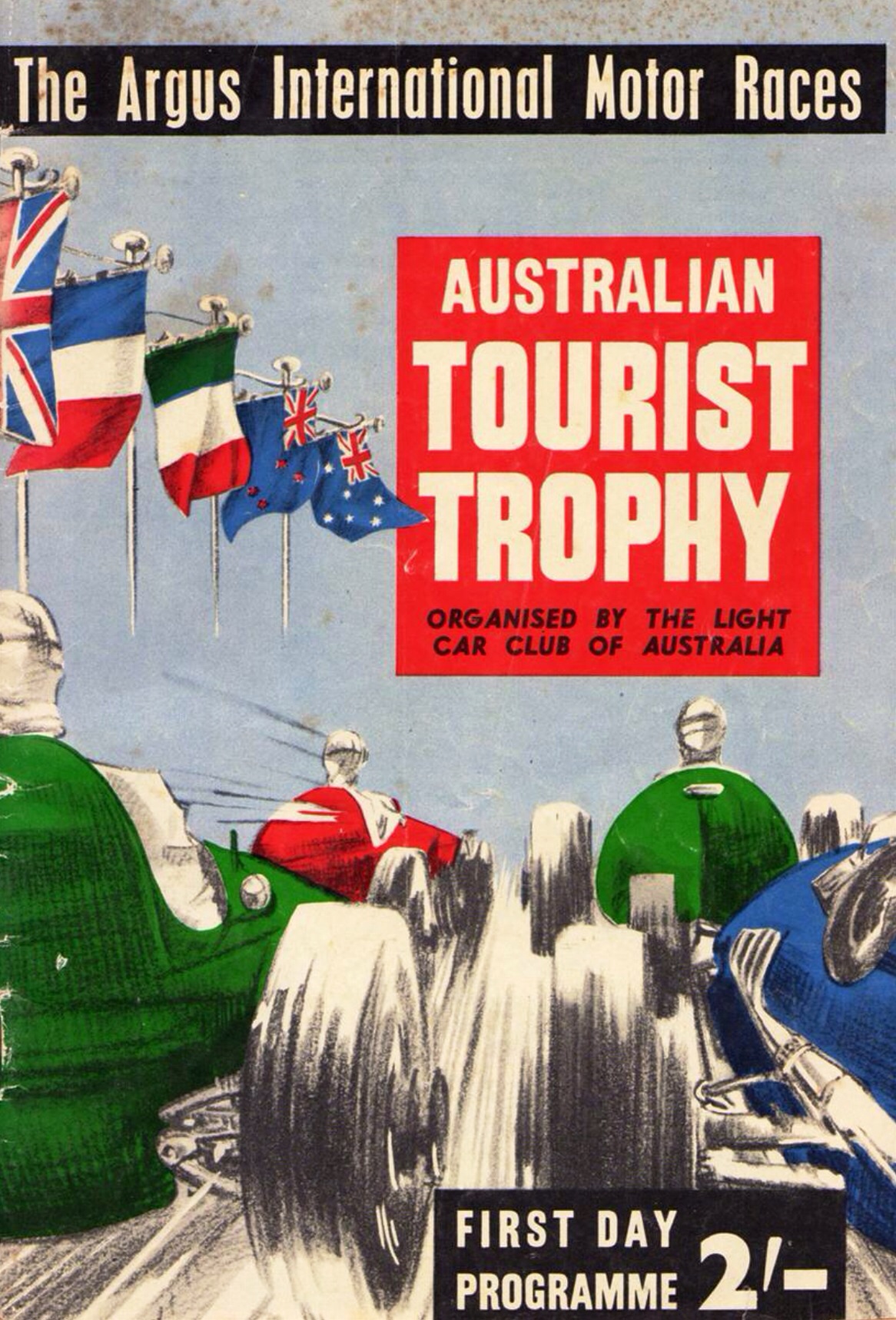
The first weekend of the two week AGP carnival comprised four events, the feature the Australian Tourist Trophy for Sports Cars was held on 25 November…
A convoy of Maserati mechanics drove the 250F and 300S, the 5km from Australian International and 250F driver Reg Hunt’s Elsternwick Holden Dealership, where the cars were maintained each day to Albert Park, on the Nepean Highway and St Kilda Road. Not too much of a problem then but guaranteed to boil a Maserati 300S sans radiator fan these days!
Behra and Moss @ Albert Park in 1956, the first and only time, sadly, Behra raced here but Moss was an annual, usually victorious visitor to Oz till the end of his career in the Masers, then Rob Walker entered Coopers and Loti (Graham Hoinville)
Most of the drivers stayed close by in the ‘Espy’, the Esplanade Hotel in St Kilda, it’s still there if you want a ‘bevvy’ during the AGP carnival and is well known to Australians as the home of the ‘RocKwiz’ music quiz show.
Fitzroy Street St Kilda felt exotic and buzzed with thousands of visitors from all over the world eager to explore the local delights of the bayside suburbs restaurants and bars. They were full of people including recent European migrants eager to get a touch of home for a few hours at least. The Espy and Tolarno’s were ‘chockers’ and no doubt the proprietors of the areas ‘red light’ precinct did good trade.
Guerino Bertocchi, Maserati chief mechanic and factory test driver and his helper start the 5 Km journey from Albert Park to Reg Hunt’s Elsternwick Holden dealership where the team were based (Arnold Terdich)Maserati’s as far as the eye can see! Masers brought 5 cars to Oz, 3 250F’s (one unraced spare which at one stage looked as tho it may have been raced by Brabham but ’twas not to be) and 2 300S, Reg Hunt Motors, Nepean Highway, Elsternwick (Eileen Richards)
In ’57 the factory 300S’ were campaigned by Moss, Behra and Piero Taruffi taking wins at Silverstone, Nassau, the Nurburgring, Rouen and Buenos Aires; the works allocated # 3055 to Behra and # 3059, the ‘featured car’ here to Moss. Stirling was in sparkling form having won the Venezuelan Grand Prix in Caracas a fortnight before arriving in Melbourne, Behra also contested the race.
There was a strong entry for the ATT of around 36 cars; Peter Whitehead returned to Australia hoping to repeat the success of his 1938 tour which culminated in an ERA Bathurst Australian Grand Prix win for him.
His entry in the ATT was a Ferrari Monza, similar cars were entered by Brit Peter Wharton and local motor dealer Stan Coffey. The Whitehead and Wharton Ferrari’s were garaged at AP Hollins in Malvern where Lex Davison’s mechanic/engineer Alan Ashton, well familiar with 4 cylinder Ferrari’s (Davison raced the ex-Ascari Tipo 500/625) could keep a close eye on them.
Lex, already the winner of one of his four AGP’s in 1954, entered his HWM Jaguar, his Ferrari was raced in the AGP won by Moss’ 250F the following weekend.
Stan Coffey’s Ferrari 750 Monza, of earlier vintage than those of Wharton and Whitehead but still quick if tricky to drive (John Blanden)
Jaguar D Types were entered for Kew motor dealer and later multiple Australian Gold Star champion Bib Stillwell and Queensland’s Bill Pitt driving the Mrs Anderson owned car.
Jack Brabham returned from Europe where he was establishing a strong reputation to drive a Cooper T39 ‘Bobtail’ Climax with future Gold Star Champion Bill Patterson, another Melbourne, Ringwood, Ford dealer in a similar car.
Jack refuels the Cooper T39 in the Albert Park paddock. ‘COR’ is Commonwealth Oil Refineries soon to be BP (John Blanden)
Veteran Tom Sulman raced his ‘Kangaroo Stable’ Aston Martin DB3S, the quicker entries rounded out by Austin Healey 100S’ for multiple AGP winner Doug Whiteford and Ron Phillips.
Moss positions his Maser on the front row of the ATT grid, Behra started on pole. Such a sexy shape . Properties on Canterbury Road near the Mills Street corner in the distance (Sharaz Jek)Behra’s 300S gets the jump at the start, thats Whitehead’s Monza at left, Moss 300S slightly behind, the Jag is Stillwell’s D at left and the little car on the far right Brabham’s Cooper T39 (John Blanden)
A fantastic crowd of 150,000 people gathered to watch the days racingwhich was marred by the critical injury and subsequent death of Peter Catlin in the first race of the day after he lost control of his Bugatti at Melford corner.
This dominated the tabloids coverage of the race but ‘The Argus’ noted Moss’ lap record of 1:55.8 ‘set in a sportscar, the record previously held by a racing car’ and ‘one of the finest exhibitions of race driving seen in Melbourne’.
To the surprise of many Behra put his car on pole and lead from the start of the 100 mile race with Patterson flipping his Cooper at Melford Corner without too much damage to him or the car on the first lap.
Behra hard on the brakes in pursuit of Moss. Maser 300S (Philip Skelton)
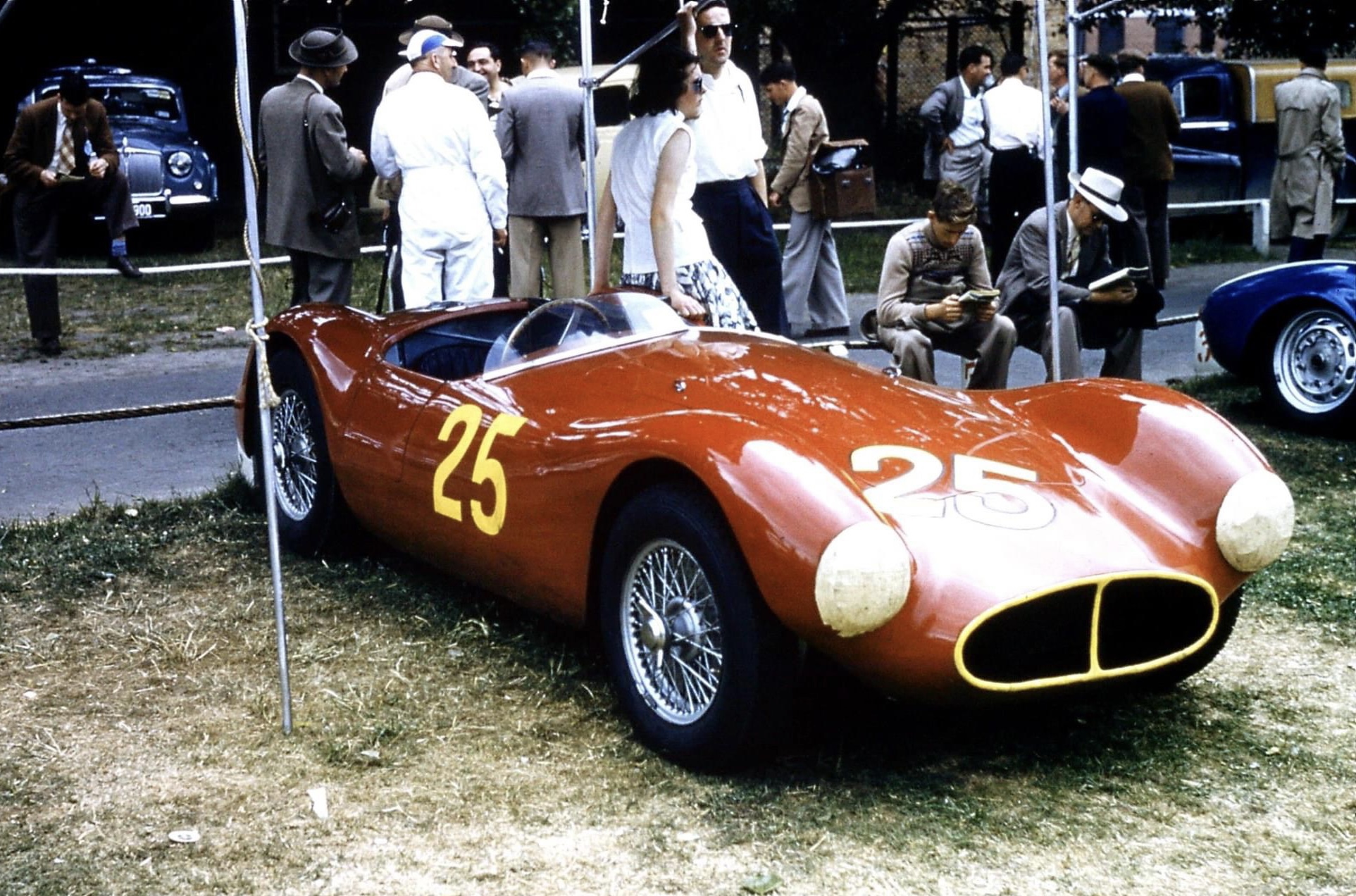
Behra lead the other 35 competitors at the end of lap 1 from Moss, Stillwell’s D Type, the two Monza’s of Wharton and Whitehead, Brabham’s Cooper T39, Bill Pitt’s D type and Paul England’s beautifully designed Ausca. The car was built by England in his spare time at Repco, was powered by the first Holden/Repco Hi-Power cylinder head engine.
Pitt’s Jag D chasing Jim Leech’s MM Holden Spl with the Ron Phillips Austin Healey 100S behind (unattributed)
On lap 2 Moss gave his French teammate a blast on his Masers ‘Fiamms’ at Jaguar Corner to let him through, and an even bigger one when he did so, team orders not new in motor racing! At the front Wharton and Brabham slipped past Stillwell with Bill Pitt getting progressively quicker in his XKD and closer to the shapely tail of Whitehead’s Monza.
Brabham wringing the little Cooper T39’s Climax engine hard! (John Blanden)
Moss had a lead of 20 seconds from Behra, Stillwell spun giving Pitt ‘a sniff’ at him as Moss set fastest lap on the 27th tour, passing lots of slower traffic in the process.
By the race’s end only Jean Behra was on the same lap as Moss, the Brit took the flag from Behra, Wharton, Pitt a great 4th and first local home, Stillwell, Whitehead, Lex Davison’s HWM Jaguar and Kiwi Ross Jenson in an Austin Healey 100S and the rest.
Moss exits Jaguar corner in his 300S complete with accumulated hay from bales disturbed by other errant competitors during the race’ 100 miles, in the cars inlet (Graham Hoinville)‘Motori Porno’ innit!? Plug change, 12 of them for Moss’ twin plug #3059. Twin distributors, big Weber 45DCO3 carbs of the 2992cc circa 280 bhp 6 cylinder, DOHC 2 valve engine all clear (Sharaz Jek)
Other ATT Meeting Photos…
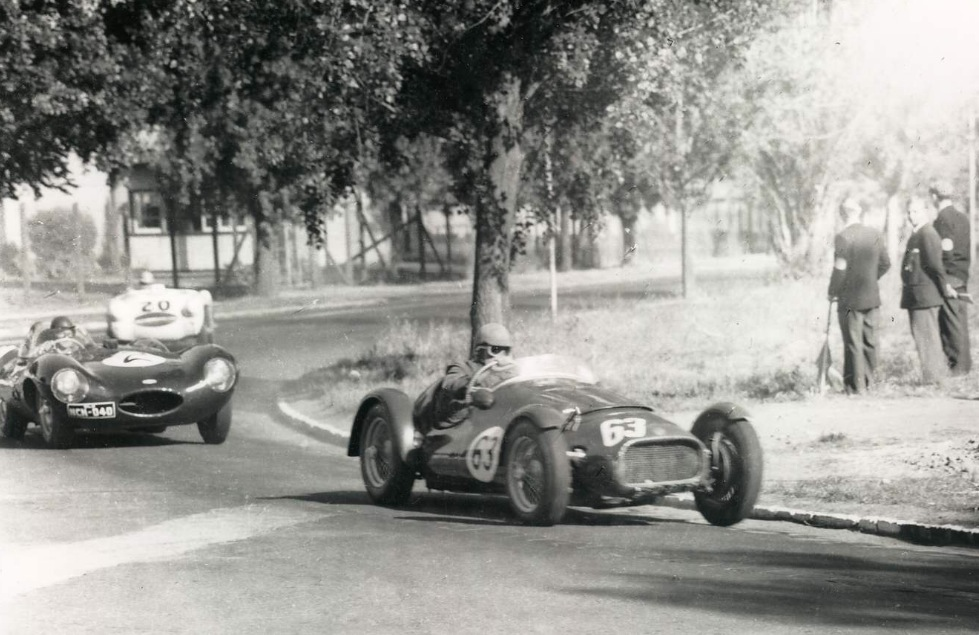
Albert Park vista #20 the Phillips Austin Healey 100S (unattributed)Another start shot, row 3 this time with the 2 D Types of Stillwell and Bill Pitt (right) in shot, thats Sulman’s Aston DB3S on the far right (unattributed)Phillip’s 8th placed pretty Austin Healey 100S, great run for the Melburnian in a model very popular in Oz, sadly most have now left our shores (unattributed)Stan Coffey’s Ferrari 750 Monza behind its Holden FE towcar (Sharaz Jek)Moss passing and thanking with a wave MG T driver Newman for his track etiquette (Arnold Terdich)Ken Wharton’s races his Ferrari 750 Monza to 3rd place. Southern Command Army buildings in the background. He raced this car in NZ that summer and sadly died in it at Ardmore on 12 January 1957 (John Blanden)Bib Stillwell’s ‘XKD520’, the seventh D Type Jag built appropriately going thru Jag Corner. An important step in the later Australian Champs rise thru the ranks, he raced it in ’56 to early ’57 , then progressed to Hunt’s 250F (autopics.com)Another paddock vista which again has ‘COR’ Commonwealth Oil Refineries in shot, clearly the firms PR function was working well! the Phillips Healey 100S and a Porsche Speedster in shot (unattributed)
Etcetera…
Fifties circuit conceptually similar to but not identical to the contemporary one, direction of racing opposite to the present (Barry Green)
Bibliography…
Barry Green ‘Albert Park: Glory Years’
Photo Credits…
Sharaz Jek especially for the shots which inspired the article, Getty Images for all of the Melbourne ‘atmo’ 1956 shots, Arnold Terdich, Eileen Richards, John Blanden, Philip Skelton, Graham Hoinville, autopics.com
Tailpiece: She is MY daughter Stirl don’t even think about it!…
Stirling Moss being briefed by Jack Myers about his Cooper/WM Holden before lapping Cumberland Park Speedway, Parramatta, Sydney, November 1956…
The WM Holden is the prototype ex-John Cooper/Mike Hawthorn/ Bernie Ecclestone/Stan Coffey Cooper T20 Bristol # CB/1/52 acquired damaged by Myers, rebuilt and fitted with a Holden six-cylinder ‘Grey Motor’. The standard OHV iron head was replaced by an alloy DOHC head developed by the incredibly talented Sydney engineer Merv Waggott, and then renamed WM (Waggott Myers) Holden.
Moss was in Australia to race factory Maseratis in the Australian Grand Prix carnival at Albert Park in Melbourne, a two week event during which Moss won the AGP in a 250F and the Australian Tourist Trophy in a 300S.
Quite how he came to drive Myers’ car at Cumberland Park in Sydney is a bit of a mystery but was perhaps part of a fuel company promotion, I am keen to hear from anyone who knows the story. Moss didn’t race the Cooper but did a number of demonstration laps around the quarter mile speedway on the outside of Cumberland Park, which was also used for cricket and rugby. Jack Myers also contested the Australian Grand Prix at Albert Park, the WM finished 12th and lapped several times by the Moss 250F.
A tad too much understeer or neutral steer on the oval!? Moss Cumberland Park
WM is Waggott/Myers…
The cylinder head was initially fed by six Amal carbs but these were later replaced by 6 1 3/4inch SU’s. The engine developed around 197bhp at its peak making the car an outright contender in its day.
‘Grey Motor’ was the colloquial name of these engines which, painted grey, were first fitted to the 48-215 Holden, General Motors first Holden sedan built in Australia. Later iterations of the Holden OHV straight-six were Red Motors and Black Motors as the blocks were, you guessed it, painted red and black. The standard Grey displacement was 132.5 cubic inches or 2170cc, the 6 cylinder OHV, four main bearing, single Stromberg carb engine produced 60bhp in standard form.
The Waggott engine’s block, crankshaft and conrods were made by GMH (General Motors Holden) but the head, pistons, dry sump lubrication system and other components were made by Merv Waggotts’ business. Capacity was increased to 2440cc with the camshafts driven by chain from the crank.
Six or seven heads were built, the engine won the Australian GT Championship for Queenslander and later Bathurst winner John French in his Centaur in 1962. The market for the heads essentially dried up when the new touring car/sedan racing regulations of the day, Appendix J did not allow changes to cylinder heads other than modifications to standard heads. Waggott built modified Holden heads to these rules as well.
The WM/Cooper used an MG TC gearbox with specially cut gears, the differential was initially a Holden 48-215 unit but this was later replaced by a Ford V8 component. Suspension was standard Cooper, most of the damage to the car was to the body hoops and the body itself which was repaired by the talented Myers.
WM Holden engine bay, Mt Druitt May 1958, plug change. The neat alloy DOHC, chain driven head on display. Holden Grey Motor, a cast iron block, capacity 2440cc, circa 200bhp at its peak. Myers did a 15.01 second standing quarter that day (John Ellacott)Doug Whiteford’s Talbot Lago passing Myers in the WM Holden during the 1956 AGP at Albert Park. They finished eighth and 12th respectively in the race won by Moss’ Maser 250F. This is the second of Dougs’ Lagos, the 12-plug-head-car which is still in Australia and owned by Ron Townley (Unattributed)
Jack Myers raced the car very successfully…
It reapppeared after repair and installation of the Holden engine at Bathurst in October 1956. In November he attacked the Australian Land Speed record setting a new mark for Class D at 25.46 seconds for the standing kilometre. Moss ran the car at Parramatta shortly thereafter and the week after that Myers finished 12th in the AGP. Moss and the car were reunited many years later.
Jack at Caversham during the 1957 AGP (K Devine)
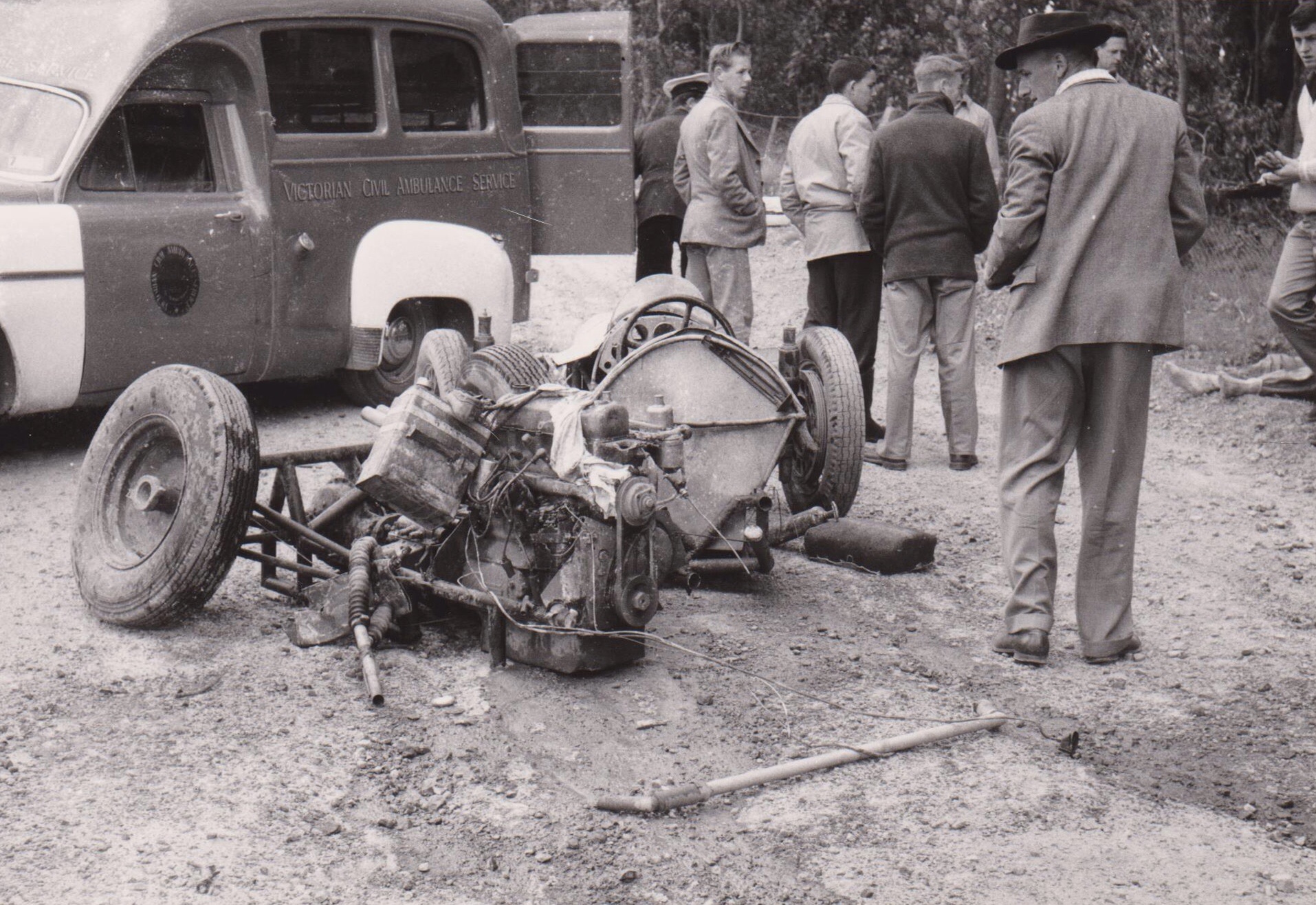
The car overheated in the scorching hot 1957 AGP at Caversham WA, the chassis was replaced after an accident at Bathurst in 1957 when Jack bounced the car from bank to bank going into Forrest’s Elbow.
This time the car was rebuilt from scratch, the team constructed a new tubular frame to replace the original box-section chassis. John Blanden records that Myers had completed the rebuilds of the McMillan Ferrari Super Squalo and Jack Davey D-Type Jaguar chassis and incorporated some ideas from those experiences including lowering the engine by three inches. The suspension was re-designed but still used many Cooper parts, a quick change diff was built by Myers, and D-Type clutch incorporated.
The WM was immediately successful, going even faster still when fitted with disc brakes, it finally met its maker at Bathurst in October 1960 when Jack ended up in a ditch on the way into The Cutting escaping injuries, but the car’s chassis and suspension were badly damaged. The WM was split up and its core components sold.
1959 Bathurst 100 qualifying heat front row. Myers on the left in the distinctive yellow and black T-Shirt he always wore beside the WM, Stan Jones #1 Maser 250F and Kiwi Ross Jensen similarly mounted. Myers completed 24 of the 26 laps the race won by Jensen (Myer family)Jack Myers returns to the Bathurst paddock, AGP Meeting 1958. WM Holden (Kevin Drage)
Myers was sadly killed in a race at Catalina Park, Katoomba, in the Blue Moutains outside Sydney not long afterwards.
In 1962 Syd Fisher bought the remains of the car and fitted a Chev Corvette 283cid V8, Alvis gearbox, Halibrand type quick change rear axle to which a ZF limited slip diff was fitted, achieving seventh in the 1963 Victorian Road Racing Championship.
The car passed through others into the caring hands of John Emery, and then to Gavin Sandford-Morgan in 1972. There it was rebuilt by a dedicated team of volunteers at the Birdwood Mill Museum outside Adelaide to its Jack Myers spcification including the Waggott engine, the car making its debut at the 2000 Australian Grand Prix where it was driven by Stirling Moss, exactly as it was at Parramatta in 1956.
Merv Waggott fettling one of his jewel like aluminium 2-litre four-valve engines, here mounted in Kevin Bartlett’s Mildren Racing Mildren ‘Yellow Submarine’ Waggott. Engine produced circa 260bhp with a useable rev band of 6800-8750rpm and weighed circa 230lb. Wigram, NZ Tasman 1970 (The Roaring Season)
Merv Waggott developed his own 4 cylinder, DOHC four valve, fuel injected engine in the late 1960’s in capacities of 1.6, 1.85 and 2 litres, the smaller engines used Ford Cortina blocks, the 2-litre an aluminium bespoke crankcase and cast iron block developed by Waggotts.
These engines won many races and championships including the 1969, 1970 and 1971 Australian Drivers Championships – the Gold Star – for Kevin Bartlett, Leo Geoghegan and Max Stewart in the Mildren ‘Yellow Submarine’, Lotus 59B and Mildren Waggott chassis respectively. I will write about this engine in detail at some point.
Waggott Engineering still exists however Merv Waggott died in an ultralight plane accident in 1992.
Cooper T20 Bristol Chassis # CB/1/52…
Cooper T20 Bristol drawing. 1971cc Bristol/BMW six cylinder engine circa 130bhp and Bristol four speed ‘box. Steel box section chassis with tubular reinforcements, aluminium body. Lockheed hydraulic drum brakes. Suspension front and rear lower wishbones and upper transverse leaf springs with Armstrong shocks (Unattributed)
Doug Nye’s research for the book Cooper Cars found this car to be the prototype T20 which was shown to the press in January 1952. John Cooper drove it on its debut at Goodwood on 14 April 1952. It was also driven by Reg Parnell, Mike Hawthorn – whilst he awaited delivery of his own T20 – and Bernie Ecclestone before being sold to Fred Tuck, a Brit who raced the car in the New Zealand Grand Prix in 1954.
During that trip the car was sold to Sydney’s Stan Coffey who raced it as the ‘Dowidat Special’, in deference to his sponsors, a manufacturer of hand tools. Amongst Coffey’s competitors was Jack Brabham in the ‘Redex Special’, a Cooper T23 Bristol.
The Coffey ‘Dowidat Spl’ at Gnoo Blas Orange circa 1955 (K Devine)
Coffeys results were not startling but he finished eighth in the 1954 AGP at Southport, Queensland. He raced the car little in 1955 but contested the AGP at Port Wakefield, South Australia. Brabham won the race in the Cooper T40 Bristol Bobtail he had built in time for the 1955 British GP. Coffey rolled the car halfway through the race, the car left the track and tripped on the grass verge. Stan broke his nose but was otherwise uninjured, selling the car to Myers in as-is condition. The car was taken to Myers’, Maroubra, Sydney workshop where its rapid transformation to Waggott Holden power was completed.
The Cooper Bristols were built as 2-litre European F2 cars, the engine was the BMW 328 6 cylinder design which fell into Bristols’ hands as part of WW2 reparation compensation and was further developed post-war by BMW designer Fritz Fiedler. The 1971cc engine developed circa 127bhp @ 5800rpm.
Jack Myers working his magic on the WM in his Maroubra, Sydney Southern Beaches workshop. The Holden Grey block is at left, the long studs to retain the deep head. The cast aluminium engine/gearbox adaptor is still attached to the block. Diff was initially Holden but later Ford, uncertain of which here. MG-TC ‘box is in front of the bench. Standard T20 suspension, chassis box section can be seen in th shot as well as the body hoops.
Etcetera…
Cooper T20 Bristol-Stan Coffey
Stan Coffey in the Cooper T20 Bristol ‘Dowidat Spanners Special’ at Mount Druitt, date unknown. The wind on Coffey’s large body must have been incredible and top speed limiting! (Ivy & Jack Carter)
WM Holden-Jack Myers
Both these shots were taken in 1957 at Caversham during the AGP weekend. The Holden engine installation was very neatly and professionally executed by Myers, whilst the machine was called the WM Holden, Cooper Holden was perhaps more indicative until the chassis was substantially changed by Jack and his team. Carbs on the engine are Amals at this point, six 1 3/4 inch SU’s later fitted.
(MrFire)(MrFire)Another shot of the engine bay and Waggott DOHC head, this time with six SU’s. Car here, above, at the Birdwood Mill Museum in SA, restored. (Unattributed)
WM Holden-Stirling Moss
Scratchy unattributed shot of Moss circulating in the WM at Cumberland Park, fashions of the day to the fore!
Credits…
Myer Family Collection, John Ellacott, MrFire, Ivy & Jack Carter, The Roaring Season, Kevin Drage, Ken Devine Collection, John Ballantyne
John Blanden ‘Historic Racing Cars in Australia’, Doug Nye ‘Cooper Cars’, ‘Memories of Jack Myers’ aussieroadracing.homestead.com
Tailpiece: WM Holden by John Ballantyne, beautiful work…





















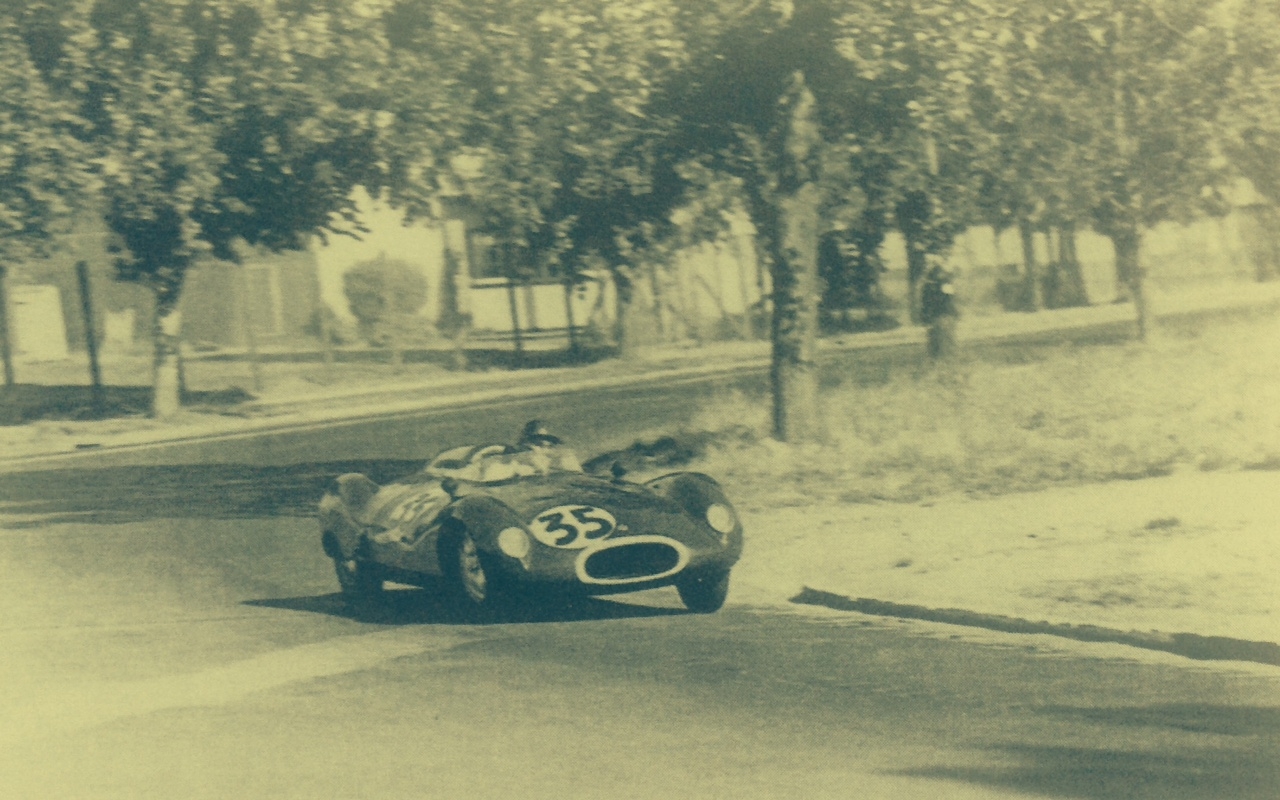




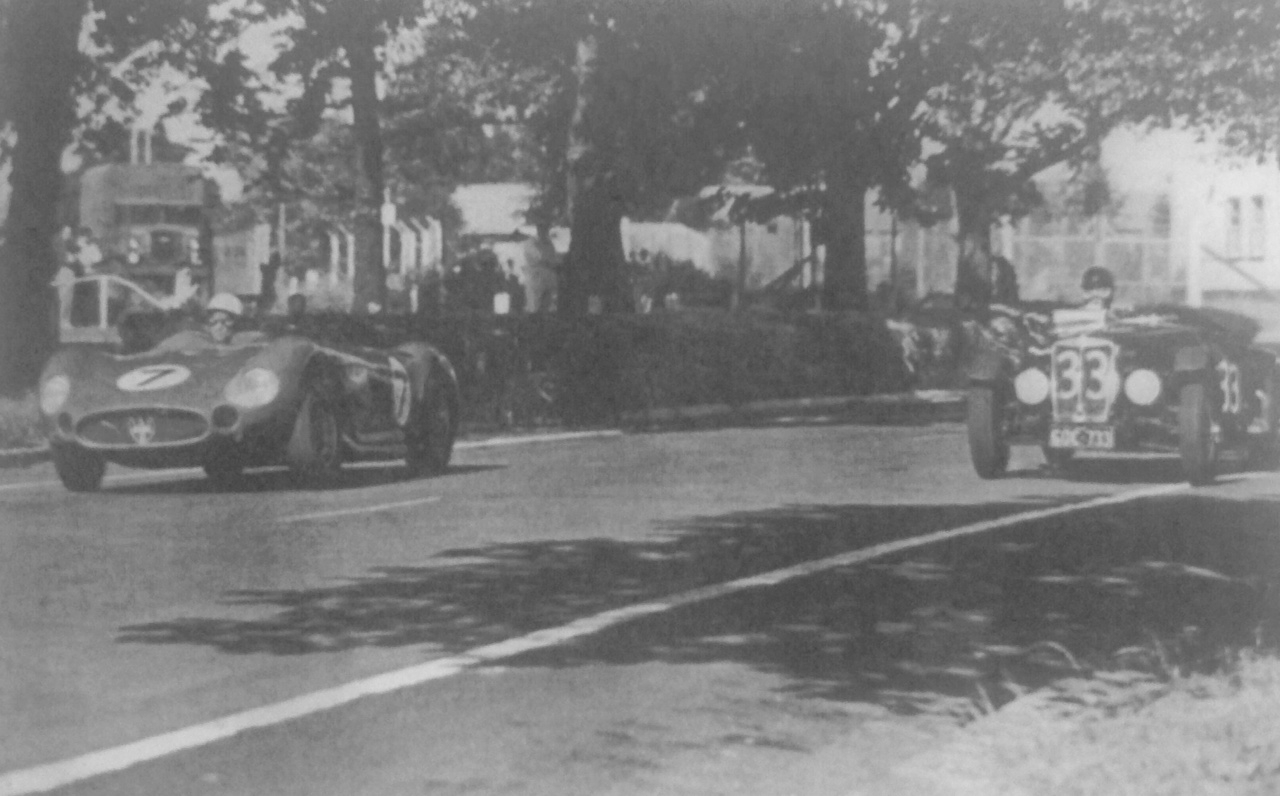





 primotipo...