Posts Tagged ‘Bruce McLaren’

image

(John Ellacott)

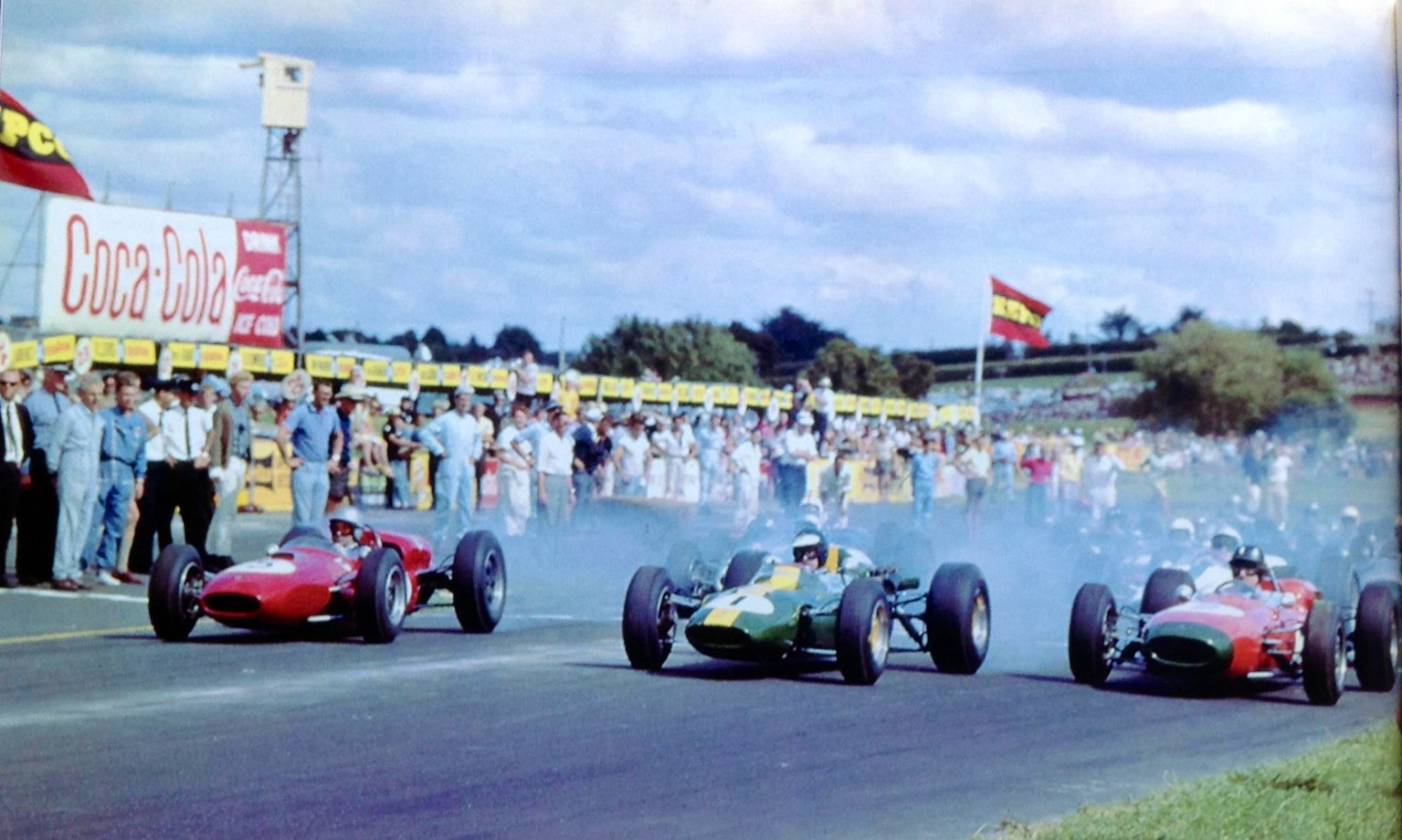
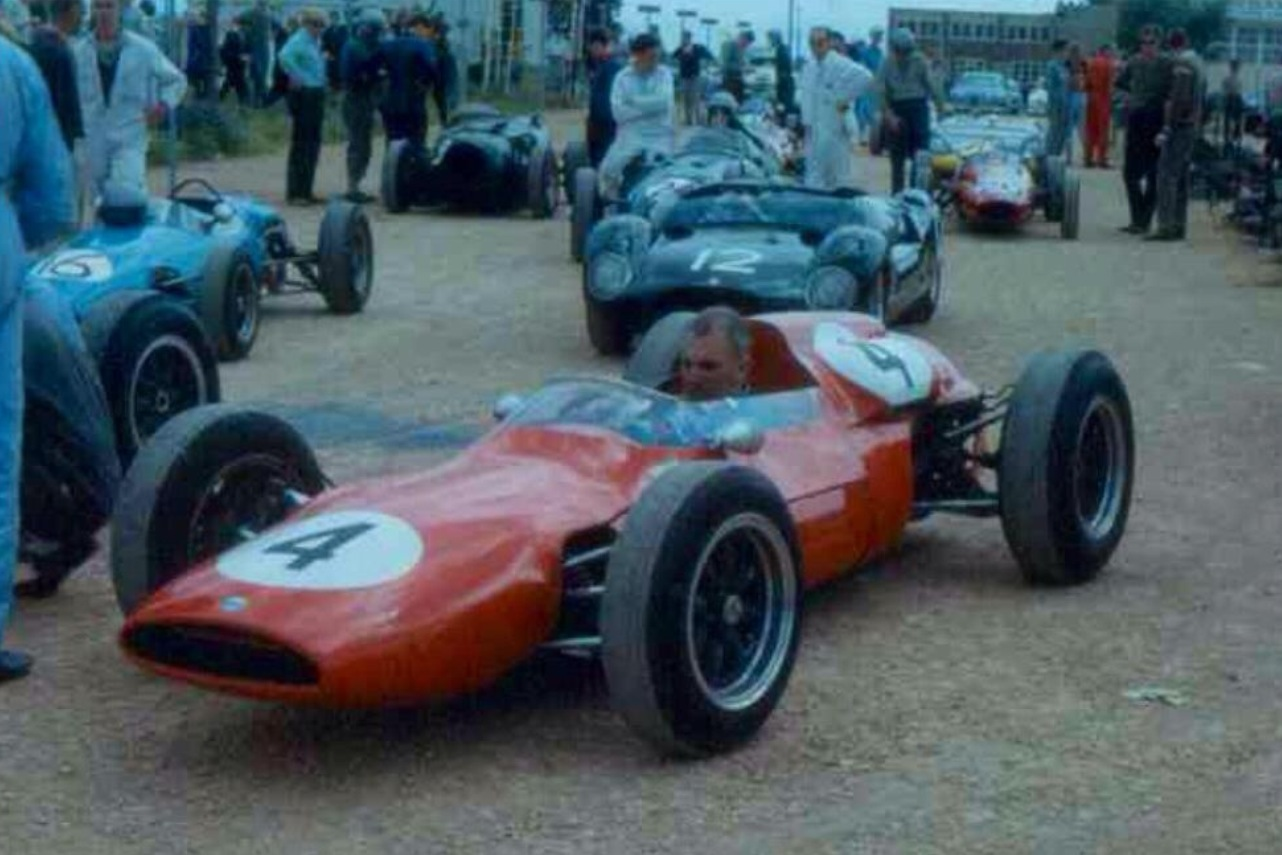
Lex Davison #4 lights up his Dunlops with Bib Stillwell and David McKay on the front row of the ‘Victorian Trophy’ grid, Calder Raceway on 13 March 1963…

They finished in this order, Lex’ ex-McLaren Cooper T62 the winner from the Stillwell and McKay Brabham BT4 Climaxes. David’s was a ‘little’ 2.5 litre FPF, the other two were toting big ‘Indy’ 2.7 litre engines.

In a season of consistency Stillwell won his second Gold Star, Taswegian John Youl won at Warwick Farm and Mallala, Davo won at Calder, Bathurst and Sandown but only Sandown was a championship round so the Melbourne motor dealer took the second of 4 Gold Stars on the trot, 1962-1965.

image

Calder Victorian Trophy grid 1963 from the front, Davo, Stillwell and McKay (John Ellacott)

Tale of the Cooper T62 #’CTA/BM/2’…
It’s a sad tale too. This car was successful, winning races in the hands of both Bruce Mclaren for whom it was built and for Lex Davison who raced it next. But for those around the car there was much tragedy, so its an interesting tale if not a happy one. Rocky Tresise died at its wheel, not much has been written about the young Melburnian, Davo’s protégé. The point of the article is largely to right that a little, if you can add more to Rocky’s story I am interested to hear from you to flesh it out further.

Perth hosted the Commonwealth Games in 1962…

The Lord Mayor, like so many before and after him globally saw the games as a way of putting his city on the map and expediting the development of much needed infrastructure.

The event was tiny by the standards of Commonwealth and Olympic games today; 35 countries sent 863 athletes to compete in 9 sports but the event was huge in the context of the cities small population of around 500,000 people.

image

The games were the first to have an athletes village, till then competitors had been housed in hotels and billeted in private homes. As a fan of Perth’s City Beach I was astounded to learn the area was largely bushland until 65 acres were developed for the village in advance of the games. Now it’s a great place to live beachside and an easy train ride into town.

At the time the Australian Grand Prix didn’t have a permanent home, the event was rotated around the countries six states. This was good and bad.

Good in the sense that spectators/competitors had a chance to see/participate in their home race every few years but bad in the sense that no one circuit owner/promoter could set up ‘infrastructure’ knowing they had one or two big events they could plan their revenues and therefore capital outlays around. This ‘sharing arrangement’ applied until the first F1 AGP in Adelaide in 1985, which became Albert Park when the nasty Victorians ‘nicked the race’ from SA.

image

image

Perth circa 1964 (unattributed)

It made good sense to have the AGP in Perth at the time of the games to get along a decent crowd of locals and overseas visitors.

The ‘Games, held from 22 November-1 December were noted for ‘heat, dust and glory’. The opening ceremony was 105 degrees fahrenheit, (40.5 centigrade) the heat continued throughout the competition. The army were pressed into service ferrying constant supplies of water to parched competitors.

image

image

The 18 November 1962 AGP was held at Caversham, an ex-military airfield circuit in Perth’s Swan Valley, 20 km north-east of the city centre and was also scorching hot.

The circuit hosted two AGP’s in 1962 and 1957, that race was won somewhat controversially by Lex Davison’s Ferrari 500/625, co-driven by Bill Patterson, again in scorching heat. To this day many pundits believe the race was won by Stan Jones Maser 250F who took the chequered flag but subsequently the win was given to his great friend and Melbourne rival after ‘lap countbacks’ and protests

In order to secure some world class competitors Brabham and McLaren were paid to attend, both brought cars intended to compete in the Antipodean summer internationals which traditionally commenced in New Zealand early in the new year.

The Brabham BT4 and Cooper T62 were variants of the respective marques 1962 F1 cars, the BT3 and T60, both powered in that application by the Coventry Climax 1.5 litre FWMV V8.

For ‘Tasman’ use, actually Formula Libre at the time, both cars were fitted with 2.7 litre Coventry Climax FPF 4 cylinder engines, CC’s 2.5 litre very successful 1959/60 World Championship winning engine taken out to 2.7 litres. These ‘Indy’ engines were originally developed for Jack’s first Cooper mounted Indianapolis appearance in the Memorial Day classic.

brab mac

Brabham and Stillwell take to the Caversham track, AGP weekend 1962. Brabham BT4 and Cooper T53 (Terry Walker)

‘The History of The Australian Grand Prix’ relevant chapter was written by Graham Howard. He records that Jack and Bruce started the race very evenly matched; Jack ‘popped’ his 2.7 Climax in practice, Bruce lent him his 2.5 spare, indicative of the great friendship between two guys who were also fierce competitors particularly on ‘their home turf’ during the annual Tasman races.

For McLaren’s part, Bruce had his Cooper handling beautifully having tested the car at Goodwood prior to his trip but then John Cooper grabbed the springs fitted to it for Monza F1 use leaving Bruce with a skittish, twitchier chassis than was his optimum.

So, Bruce had a bit more ‘puff’ than Jack, the alcohol fuelled 2.7 FPF giving around 260bhp to Jack’s 230 but Jack had the sweeter handling car- the scene was set for a fascinating contest.

Whilst the entry was ‘skinny’ the race promised to be a close one and so it was.

Other entries included the Coopers of Davison T53, John Youl T55, Bib Stillwell T53 and Bill Patterson, the latter somewhat hamstrung by driving an older T51.

agp bib

Stillwells Cooper T53 cruising the Caversham paddock (oldracephotos.com)

Local enthusiasts who raced were Syd Negus’ Cooper T23 Holden, E Edwards TS Spl and Jeff Dunkerton’s Lotus 7.

cav start

Small field shown in this start shot, fortunately the torrid duel between Brabham and McLaren made up for the paucity of competitors. Brabham then dark green Coopers, Patterson’s white one, Davo’s red Cooper and similar colored BRM P48 Olds of Arnold Glass, then the front engined Cooper T23 Holden of Negus, green TS Spl of Ted Edwards and finally the green Lotus Super 7 of Jeff Dunkerton, the last sports car to start an AGP. Note the State Governor’s Roller in the foreground (Lyn Morgan/Terry Walker)

The race only had 10 starters, Perth is a long way from the east coast where most of the Gold Star contenders were based. The balance of the field was made up of WA competitors. Indicative of the change in the nature of AGP fields is that this race was the last for a front engined car (the appearance of the Ferguson in 1963 excepted), the last for an air-cooled and Holden engined cars.

cav brabham

Brabham’s brand new BT4 Climax at Caversham, this car the first of many very successful ‘Intercontinental’ Brabhams; the Coventry Climax powered BT4/7A/11A won a lot of races in Australasia (Milton McCutcheon)

Even though the field was small the race settled into an absorbing battle between McLaren and Brabham at the front. The thrust and parry continued for over 40 laps, the gap varying between 2 and 8 seconds as attack and counter-attack was staged.

agp lex

Lex with a big smile for the cameras! Cooper T53 Climax 2.7 ‘Lowline’ . The T53 was the works only ’60 GP car and sold to customers for ’61 (oldracephotos.com)

The race went on with Jack unable to get past Bruce but opportunity arose when Bruce ran wide lapping Arnold Glass for the second time.

Jack focused on Bruce, Glass took his line for the next corner, he and Brabhamcollided, the latter racing an ex-Scarab aluminium Buick V8 powered BRM P48. Arnold finished but JB was out on lap 50 leaving Bruce to take a popular win.

cav mac win

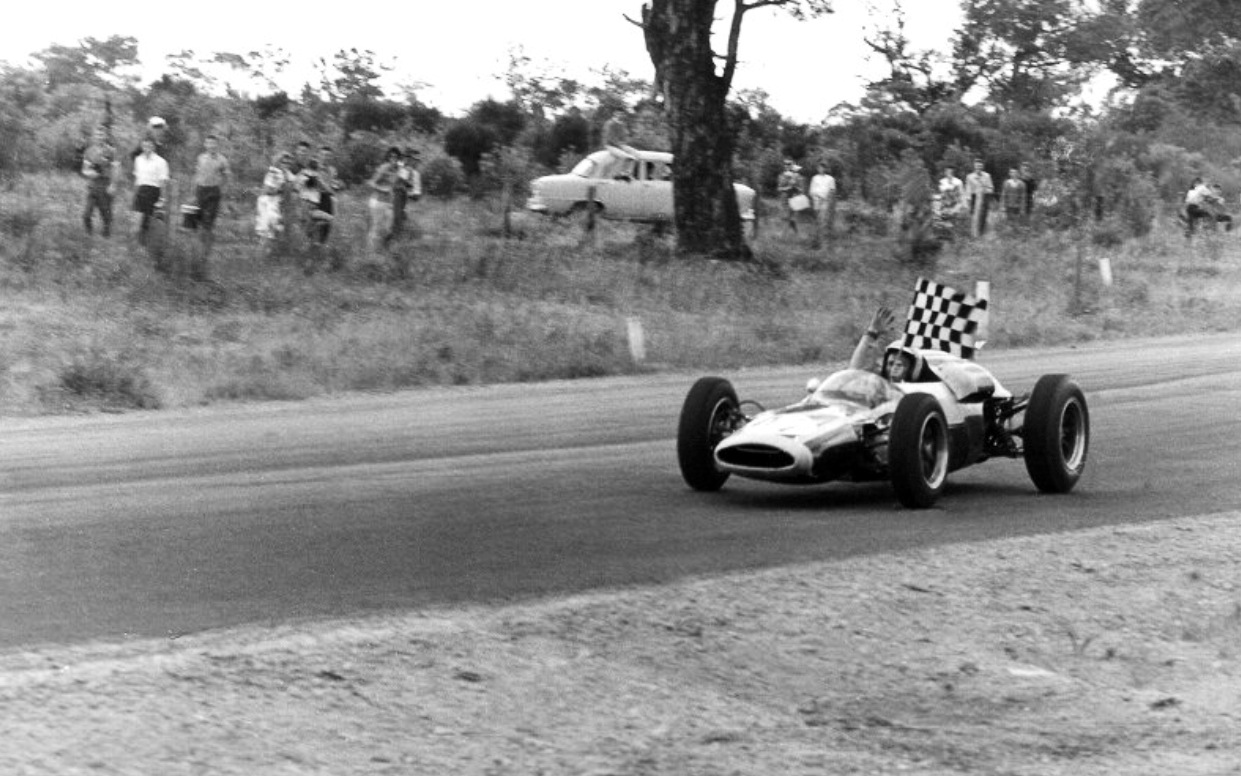
McLaren takes the plaudits of the crowd on his victory lap, Caversham 1962 (Terry Walker)

Youl was 2nd after an interesting battle with Stillwell 3rd, 4 seconds behind, Patterson 4th, then Glass in the BRM and Negus the first of the locals in the Cooper T23 Holden.

cav gov

McLaren takes the plaudits of the crowd and the Governor, McLaren manager/journalist Eoin Young is the ‘blood nut’ in glasses behind the governor (Terry Walker)

With that Bruce and Jack returned to Europe for the finish of the season and then returned in January to race the cars in the annual Australasian summer series of races.

t 62 front

Bruce McLaren shows racer/journo/team owner David McKay his new T62 toy, McKay could not race having damaged his ex-McLaren Cooper T55, famously demolishing a marshalls ‘dunny’ after an off into Warwick Farm’s infield. Front wishbone suspension, Alford & Alder uprights, big oil reservoir for the CC FPF and aluminium side fuel tanks all clear (Peter Longley/Terry Walker)

Cooper T62 Climax…

The Cooper was conventional for its day the T60 F1 chassis was laid out by Owen Maddocks after discussion with Bruce and John Cooper.

The T62 was built on the T60 jig by Tommy Atkins team at his Chessington ‘shop, Harry Pearce and Wally Willmott did the work. The rear frame was designed to take a P56 BRM 1.5 litre V8, the plan was for Bruce to drive it in non-championship F1 races Cooper themselves were not interested to contest.

When the engine was late, Atkins shelved the project and instead modified its frame to accept a 2.7 litre ‘Indy’ Coventry Climax FPF engine and Colotti T32 5 speed transaxle for ‘Tasman’ use.

t62 rear

Bruce and David again, rear frame detail and big 58DCO Weber fed 2.7 litre CC FPF engine, circa 260bhp on alcohol (Terry Walker)

Suspension was upper and lower wishbones and coil spring/shocks at the front and rear. There were adjustable roll bars front and rear, rack and pinion steering and disc brakes all round clamped by Girling BR/AR calipers front/rear. Wheel diameter was 15 inches.

coop bruce

#10 McLaren Cooper T62, Tony Maggs Lola Mk4 and Davison Cooper T53 on the ’63 Longford grid preliminary race (Ellis French)

McLaren raced the car that summer in the Antipodean Internationals

He took Kiwi wins at Wigram and Teretonga in January and then Sandown and Longford in Oz.

He was third at Warwick Farm and retired at Pukekohe, Levin and Lakeside. Bruce then sold the car, which had won five of its nine starts to Lex and headed back to Europe.

coop agp

1963 AGP at Warwick Farm 10 February 1963; #2 Surtees Lola Mk4a 2nd #5 David McKay Brabham BT4 4th #10 McLaren Cooper T62 3rd, Brabham won the race in his BT4 (Howard)

1963 Internationals and Gold Star…

As stated in the first paragraphs of this article, Bib Stillwell won the second of his four Gold Stars with consistent performances in his Brabham BT4 all year. Lex showed plenty of speed in the T62 winning the Victorian Trophy at Calder and Bathurst 100 but neither were Gold Star rounds that year. Sandown was another T62 win, a hometown one and a championship round in September.

Jack Brabham won the AGP at Warwick Farm, the race held on 10 February whilst the ‘Tasman’ drivers were in the country, a pattern which continued for years, making the race much harder, and prized, to win by locals. Bruce was 3rd in the T62 with John Surtees 2nd in his Lola Mk4A.

McLaren won, as stated in the T62 at Longford and Sandown before selling the car to Lex and John Youl took two great wins in his Geoff Smedley fettled Cooper T55 at Mallala and Warwick Farm, the final 2 races of the Gold Star championship.

t62 bath

Davison with ‘Bathurst 100’ victory laurels 15 April 1963, the Cooper T62 looks superb, his cars always beautifully presented and prepared by Alan Ashton and the rest of the crew (John Ellacott)


calder

Lex T62 ahead of Stillwell’s Brabham BT4 during the Victorian Trophy, Calder 11 April 1963 (‘stan patterson’)

Lex had 1963 Gold Star speed if not reliability. In the ’64 Tasman Series, he contested  the Sandown, Warwick Farm and Longford rounds for DNF/8th/6th  in the T62.

Bruce returned to the Antipodes with a 2 car team in 1964, the so-called ‘first McLarens’ were Cooper T70’s designed by Bruce, albeit built in the Cooper ‘shop. Bruce took 3 wins, Brabham 3 as well in his new BT7A but greater consistency gave Bruce the title.

Denny Hulme was Jack’s teammate in the Brabham BT4 Jack used the previous year, the car Davison would later purchase at the series conclusion.Tim Mayer showed great speed and promise in the other T70 but sadly lost his life in an accident at Longford.

davo sandown

oopsie! Lex having a moment in the T62 at Sandowns turn 1 or Shell Corner, in front is Frank Matich  and behind Jack Brabham both in Brabham BT7A Climaxes. AGP which Brabham won, 9 February 1964, the other two both DNF (Howard)

Lex joined the ‘circus’ for his home race, the AGP at Sandown on 9 February but was out with piston failure in the T62 on lap 29, Jack won the race.

Davo was 8th and 2nd local home behind Stillwell at Warwick Farm, Brabham again taking the win.

He didn’t contest the ‘Lakeside 99’ in Queensland but was 6th a little closer to home at Longford in early March, this time Graham Hill won in a Brabham, David McKay’s Scuderia Veloce BT4.

image

Longford ‘South Pacific Trophy’ grid 2 March 1964; #2 Brabham BT7A, Hill in the red winning BT4 and Matich in the pale BT7A, then Stillwell on row 2 in the dark BT4 with Lex alongside in the red T62 and the rest (Geoff Smedley)

Lex started the ’64 Gold Star series in the Cooper but soon ‘got with the strength’ and bought one of Ron Tauranac’s ‘Intercontinental’ Brabhams, the marque pretty much had a stranglehold on the domestic competition from this point for the next few years. From 1963-68 to be precise.

coop and brab

Cooper T62 (right) and new Brabham BT4 with Davison team engineer Alan Ashton’s Ford Mainline ute towcar. ‘The BT4 was JB’s works car then Denny Hulme’s winning the AGP and Tasman Champs then to Davo and later John McCormack’s first ANF1 car. This is the BT4’s first run at Calder by Davison still in factory colors, after this meeting ’twas painted red (Terry Walker/Denis Lupton)

Stillwell again won the Gold Star, his well developed and beautifully prepared Brabham BT4, the national championship now run to the Tasman 2.5 litre formula.

He was more than quick enough to take the title with a win at Lakeside and strong placings elsewhere including an excellent 2nd to Brabham at Sandown in the AGP contested by the internationals on 4 February.

Lex won at Mallala in his new Brabham BT4 with Rocky Tresise finishing third at Warwick Farm in Lex’ Cooper T62, the nearly 1 hour race great preparation for the internationals Tresise was to contest that summer. The quicker 2.5’s of Matich and Stillwell didn’t finish the race but Rocky finished in front of Lex who was 4th. Leo Geoghegan and Greg Cusack were 1st and 2nd in Ford/Lotus 1.5 powered Lotus 32 and Elfin FJ respectively

Rocky Tresise…

Davo raced the Brabham from the 13 September Lakeside round giving Rocky Tresise, an up-and-comer and neighbour some races in the now second-string T62 during 1964.

Rocky’s first exposure to motor racing was as a 15 year old Melbourne Grammar schoolboy attending a Fishermans Bend meeting in 1958 with a mate whose family knew David McKay. The Scuderia Veloce chief was racing his Aston DB3S at the meeting.

Tresise was hooked ‘the noise, the smell and the excitement really got me in and from then on I bought every motor magazine I could get to try to learn more about motor racing’ he said in an AMS article about him in June 1964.

rocky

Rocky Tresise in 1964 aged 21 (AMS)

Rocky worked as a ‘servo’ pump attendant and on a farm in his school holidays to get together sufficient money to buy a car when he turned 18, his MGA contested 52 races at Sandown and Calder in 1962 having started in sprints and hillclimbs.

In 1961 the Davisons moved to Clendon Road, Toorak, one of the best streets in Melbourne, the Tresise family were the neighbours.

Chris Davison, Lex’ son and a racer himself recalls; ‘We grew up at Killara Park, the farm at Lilydale my grandfather established, dad used to commute into Collingwood each day where the shoe factory was. (Paragon Shoes) As we got older and needed to be closer to Burke Hall (Xavier Junior School) in Kew dad bought a house at 81 Clendon Road, Toorak just over the road from St Johns Toorak’.

‘Rocky had obviously heard via the grapevine we were moving in and on the very first night, the first night as we sat down to dinner there was a helluva racket, an engine being blipped and revved next door. Dad said ‘what the hell is that?’ and went next door to investigate, so they literally met the first night we moved into Clendon Road! Rocky’s furious blipping and revving of the engine was to let dad know there was a racer next door’

‘Rocky was a terrific bloke, i was 13/14 and liked him a lot. I often travelled with he and his girlfriend Robyn Atherton between race meetings. Rocky’s dad died some years back and Lex quickly became someone Rocky looked up to. A bit of a father figure and as time went on dad spoke of Rocky as his protege. Dad was famous for his Dame Nellie Melba (Australian opera singer) like retirements and comebacks but he knew his time to retire wasn’t too far off. The one of these i remember most was during one of the Albert Park meetings when we had Stirling Moss staying with us, we spent the whole weekend on a boat in the middle of Albert Park Lake so dad wouldn’t be tempted to get involved!’.

tres tri

Tresise scoots thru The Esses in the Triumph 2000 Mk1 he shared with Lex at Bathurst in 1964 (autopics)

Rocky, having gained useful experience, but not winning any races in his stock car, realised he would not be competitive without extensive and expensive modifications to the MGA.

RT had met Jack Hunnam racing a Morris 850 in the same team during the 1962 Armstrong 500 at Phillip Island, Hunnam sold Rocky his Lotus 18 Ford FJ, Hunnam was moving up to an Elfin.

The MG was sold, his road car an A Model Ford, his goal of an open-wheeler the important next step was a choice made with Davo’s advice. Rocky’s first race in the car was at Calder in January 1963, he didn’t exactly cover himself in glory touching wheels with another and having it aviate over the top of his Lotus.

In another race a rear suspension failure resulted in a spin, these mechanical problems were typical of his 1963 but he worked hard at night at Hunnams to better prepare the car whilst Lex assisted with advice on race craft, lines and so on. His first success, a 3rd in the 1963 Australian FJ championship. Tim Schenken later bought the Lotus which was an important part of his ascension.

After that success Rocky managed 4 wins and a 2nd from 5 starts in FJ events. By this stage he was working fulltime as a hardware salesman for the family business. Chris Davison did some research and identified WP Tresise & Co Pty. Ltd. with outlets in Flinders Lane, Melbourne and Lower Malvern Road, East Malvern as the family company.

On April 9 1964 Tresise (real name Rodney) was given the ultimate 21st birthday present when Lex gave him an Ecurie Australie pocket emblem as a welcome to the team, he was to drive the Cooper T62 at the 19 April Victorian Trophy Sandown meeting.

‘Dad wasn’t an easy bloke, he was a stickler and a tough disciplinarian so he would have had Rocky under a tight rein and insisting on him doing as he was asked. The famous occasion was when Rocky ran off at the bottom of Conrod at Bathurst during the 500 and arrived back at the pits…’what about getting the car son!’ was dads response!’

lex

During lunchtime on the Friday before the April Victorian Trophy meeting Lex drove the circuit with Rocky in his DB4 Aston. They stopped at various points to discuss lines, gear change and braking points and then played ‘follow the leader’, Lex in the Brabham, Rocky the Cooper.

Tresise got his times down to mid 14’s, the lap record then was Brabham/McLaren’s 1:8.1. Tresise  ‘I thought I’d be frightened of the car, but I wasn’t. Even when it’s sitting still you know it’s tremendously fast, everything is so functional but the biggest thing about it is it’s fantastic acceleration’ he quipped.

Spencer Martin was having his second start in the Scuderia Veloce Brabham Climax both of the young drivers performed well albeit Rocky fluffed a gear off the grid causing engine failure later in the race.

In the 15 lap feature he was last into Shell Corner, having botched a change but got his times down to the mid 12’s, up to 5th by lap 4 and on lap 10 3rd behind Stillwell and Lex after Frank Matich retired from the lead. On lap 13 the engine popped but 1:12.3 was good after only half an hour behind the wheel of what was one of the fastest single-seaters on the planet at the time. These 2.7 litre FPF Climax engined cars were quicker than the 1.5 litre F1’s of the day.

Lex Davison had this to say of Tresise in his AMS column; ‘…he has had over 60 starts. This is more than Bib Stillwell, Bill Patterson, Doug Whiteford, Stan Jones or myself had in our first 10 years of racing. His driving has improved gradually and after the usual errors of youth, over-confidence and inexperience he has developed a businesslike and earnest approach to driving racing cars’.

During 1964 Davison and Tresise shared a Triumph 2000 in the Bathurst 500 finishing 8th in class D, the race was won by the Bob Jane/Harry Firth Ford Cortina Mk1 GT.

In November 1964 Tresise borrowed Ian Kaufman’s ex-works Frank Matich driven Elfin for the Victorian 1500cc Championship, the final of five rounds of the Lucas/Davison Trophy Series. Rocky was 4th outright and won the 1100cc class in the race taking out the 1100cc championship, the car prepared by Lou Russo ‘in such good shape that some of the 1500cc cars couldn’t get near it’, the Australian Motor Sports race report said.

Hunnam won the series from Leo Geoghegan’s Lotus 27, Tresise was 5th in the pitscore and Lex presented Geoghegan and Rocky their trophies. Interestingly AMS records Alan Jones racing Stan’s Cooper T51 Climax in a special handicap race ‘Alan handled the big car well to come 2nd’ to Bib Stillwell’s Cooper Monaco Buick.

Ecurie Australie December 1964

Ecurie Australie in the Warwick Farm paddock during the Hordern Trophy weekend, December 1964. L>R Jon Davo, Lou Russo, Lex, Alan Ashton, Rocky, Peter Davo and Warwick Cumming, Brabham BT4 left and Cooper T62 right (Chris Davison Collection)

As stated earlier Tresise contested the ‘Hordern Trophy’ at Warwick Farm over the weekend of 5/6 December 1964.

Rocky finished third in the Cooper T62, the nearly 1 hour race great preparation for the internationals Tresise was to contest that summer. The quicker 2.5’s of Matich and Stillwell didn’t finish the race but Rocky finished in front of Lex who was 4th. Leo Geoghegan and Greg Cusack were 1st and 2nd in Ford/Lotus 1.5 powered Lotus 32 and Elfin FJ respectively.

17

Rocky in the T62 at Warwick Farm during the ‘Hordern Trophy’ 1964 (Bruce Wells)


davo nz

He may not have been the youngest driver in the field but Davo could still make a car dance; here left on the front row in Brabham BT4 alongside Clark’s Lotus 32B and Hills Brabham BT11A, NZGP Pukekohe 1965 (Jack Brabham with Doug Nye)

1965 Tasman Series…

The ’65 Tasman was won convincingly by Jim Clark’s Lotus 32B Climax, who started his amazing 1965 season with a bang. That year he won the Tasman, Indy and his second F1 World Championship.

Lex raced his Brabham BT4 in the season opening NZ GP at Pukekohe starting off the front row and proving their was very much still ‘life in the old dog’ starting alongside Hill and Clark and ahead of all the rest including Brabham, Gardner, McLaren, Phil Hill and others. It was an amazing performance which deserved better than a DNF with overheating on lap 33.

He chose not to race the remaining Kiwi rounds, shipping the car back to Oz, direct to Sydney where Ecurie Australie, Lex in BT4 and Rocky in T62 contested the ‘Warwick Farm 100’ on 14 February.

wf roc

Rocky has the Cooper T62 on tippy-toes as he finesses the big,powerful car around the technically challenging ‘Farm circuit 14 February 1965 (Bruce Wells)

Clark won the race, Rocky was 9th, 3 laps behind Clark with Lex withdrawing on lap 3 with a broken steering wheel, not the first time that had happened to him! Rocky’s was a good performance, he was behind the 1.5’s of Roly Levis and Leo Geoghegan but he still lacked miles in the car.

wf roc and bib

Tresise ahead of Bib Stillwell during the Tasman ‘Warwick Farm 100’, Cooper T62 and Brabham BT11A, Bib first resident local home in 4th 14 Feb 1965 (Bruce Wells)

Racing in this company and finishing was a fillip to his confidence. It was only his third meeting in the car. The top 6 were Clark, Brabham, Matich, Stillwell, Hill G and Jim Palmer, drivers of vast experience and calibre…

wf lex

Lex in the Brabham BT4 at Warwick Farm during his last race, a broken steering wheel the cause. Thats the Ecurie Australie badge to the right of the mirror. He died at Sandown 6 days later (Bruce Wells)

Sandown Tasman Meeting, 20 February 1965…

The teams then pointed their trucks south down the Hume Highway, from Sydneys western outskirts horse racing venue to Melbournes eastern outskirts horse racing facility, Sandown Park.

During that tragic weekend Lex Davison died when his Brabham left the circuit on a Saturday practice session in an undemanding part of the track, the gentle right hand kink on the back straight, he went over a culvert and hit the horse racing perimeter fence coming to rest some distance further on in the circuit infield.

Chris Davison, a racer himself; ‘Dad had done a few ‘Nellie Melba’s’, retired and come back. He’d had some warnings about his heart from the doctor. What is probable is that something happened to his heart, maybe not an attack as such but he may have momentarily blacked out, the car following him, Glynn Scott, said the car turned inexplicably left and we lost him as a consequence of the collision itself. Days later his badly damaged helmet was delivered home to Clendon Road by a couple of policemen, I’m still not sure where it is now after all these years’.

I don’t propose to go into this further, the salient facts above are sufficient.

The result was that one of Australian motor racings greatest, a titan since the 1940’s was lost.

Rocky’s Cooper was of course, withdrawn from the meeting.

photo (25)

Chris Davison; ‘I really like this photo with all the Davo clan and a young Rocky. Taken at the Vic Trophy Race at Calder in 1963. That’s me wearing Dad’s cap and Richard with Rocky at the back wheel’ Cooper T62 (autopics)

The impact of Davison’s death cannot be overstated in Melbourne at the time…

Lex was a four time AGP and the inaugural Gold Star title winner, a well known sportsman in a city obsessed with sport. He was a successful, respected businessman, Paragon Shoes, the business his father started was an employer of a large number of people. A good looking athletic bloke, his wife Diana was an attractive woman so they cut a fine figure as a couple in Melbourne at a time it was small. It was big, very sad news for the broader populace let alone the Davison family and extended network.

Enthusiasts of a particular age remember what they were doing when they heard the news on 20 February 1965, it was one of ‘those’ events in ones lifetime.

Aussie GP driver Tim Schenken, a Melburnian provided a personal perspective in a MotorSport interview ‘…in 1964 Rocky Tresise was selling his Lotus 18 because he was joining Lex Davison’s team. I borrowed the money from my dad to get it. Now I was in a proper racing car started attracting a bit of attention at Calder, Winton, Tarrawingee and Sandown…’

‘Then out of the blue Lex Davison called. He was a major figure of course and a real hero of mine. He told me he was going to retire and Rocky Tresise was going to take over his big single-seaters. He’d watched me in the Lotus 18 and wanted to put me in his Elfin. (Lex had paid a deposit on a new Elfin 100 ‘Mono’ 1.5 Ford) It was unbelievable for me’. Barely a week after Lex’ conversation with Tim, Lex died at Sandown and then Rocky the weekend after that at Longford.

‘Because of Lex’s status in Australia, there were hundreds of people at his funeral in Melbourne’s St Patricks Cathedral including Jack Brabham and Bruce McLaren. I’d never been to a funeral before and it was dreadful. On the coffin was a chequered flag his helmet and gloves. I didn’t know anyone, I just hung around on the edge of it, very muddled about it all’.

‘It was terrible, Lex and Rocky dying on consecutive weekends. It just stunned everybody. The thing was the weekend after Rocky’s crash I was due to run for the first time under the Ecurie Australie banner at Calder in my Lotus 18. The newspapers got hold of it and were speculating about whether it would be three fatal crashes in 3 weekends. I went to see Diana Davison and she pleaded with me not to race at Calder. I was under a lot of pressure not to drive; I felt I couldn’t talk to my parents about it but all I wanted to do was to go racing. I was a very confused boy’, Tim raced the Lotus at Calder entered in his own name, the transmission broke on the startline.

Matich Rocky Tresize Warwick farm 1964

Frank Matich, left and Rocky at Warwick Farm during the Hordern Trophy meeting in December 1964 (autopics)

Australian Grand Prix, Longford 1 March 1965…

Chris Davison ‘Longford was usually one of ‘my’ races as a kid so i knew the place well. A few days after dads funeral which was huge, it was like a State funeral so many people attended, the city was brought to a standstill, i was still numb just trying as a kid to absorb what had happened. It was like looking outside watching people going about their daily lives and wondering why they didn’t see what you are going through, that things weren’t the same at all’.

‘Rocky and dads team; Alan Ashton, Lou Russo and Warwick Cumming came to the house to see the family and find out if they should race the car the following weekend at Longford. To go or not to go was the call we had to make. Over all these years when this question comes up i ask people what you would do, what would you have decided was the right thing? Most say ‘race on in Lex’s honor’ which is of course what we decided’.

And so the scene was set. Ecurie Australie crossed Bass Straight on the overnight ‘Princess of Tasmania’ voyage. After berthing in Devonport the team took the short drive to Longford, a picturesque village 25km from Launceston, Tasmania’s ‘northern capital’ in the Apple Isles northern midlands.

The race was always held on a long weekend and was well supported by non-motor racing type Taswegians as a major sporting event on their calendar, over 30000 attended the ’65 event.

This 1964 documentary footage captures the essence of the place and its inherent dangers in a modestly powered sedan, let alone a GP car, click here to see and enjoy it;

Overseas visitors to Oz doing a ‘motor racing tour’ should include Longford amongst your ‘must visit’ circuits. Other circuits/ex-circuits whilst itinerary planning are Phillip Island and Albert Park in Victoria, Mount Panorama at Bathurst NSW, and the Lobethal and Nuriootpa road courses in SA’s Barossa Valley. Lobethal is amazing. Checkout the Adelaide GP street circuit whilst you are in town of course.

longford rocky

Middle of the grid before the ‘Examiner Trophy’ preliminary race. Stillwell #6 Brabham BT11A, Matich BT7A and Frank Gardner in the yellow Mildren BT11A with Rocky in the red Cooper T62 in the row behind (Stephen Dalton)

Rocky hadn’t raced on the demanding, dangerous, fast, over 100mph average speed and technical road circuit before. Lex wasn’t there to guide him. Its intriguing to know who looked after him in terms of getting his head around the circuit and his approach to it that weekend with all of the tragedy of the week before at the forefront of his mind. He was a very brave young fella of great character to race.

He practiced and started the preliminary race ‘The Examiner Road Racing Championship’ without incident. Bruce won from Jack and Graham Hill, Rocky was 10th.

He had misgivings about contesting the main race ‘The South Pacific Trophy’ on the Monday though.

‘Racing Car News’ and ‘History of The Australian GP’ journalist Ray Bell recalled on The Nostalgia Forum in 2015 ‘Rocky did have some serious misgivings about driving in the race. He’d been talking to (Tasmanian racer) Lynn Archer earlier in the day. Lynn told him if he didn’t feel like driving he should tell the team and pack the car away, but it was his decision and nobody else could make it for him’.

coop tres

The Ecurie Australie Cooper T62 is pushed onto the grid for its last fateful race in Rocky’s hands 1 March 1965 (oldracephotos.com)


long

Start of the AGP Longford 1965. Graham Hill BT11A on the right gets away well with Brabham BT11A in the middle and winner McLaren Cooper T79 at left. #8 is Clark’s Lotus 32B, #7 Gardner’s Brabham BT11A, #11 is Phil Hills Cooper T70, #3 Matich BT7A and Stillwell alongside Frank in the dark BT11A, Tresise in #12 T62 is to Bibs left with Bob Jane in the light colored Elfin Mono Ford 1.5 beside and behind Rocky #15 is Jack Hobden’s Cooper T51 and #9 Bill Patterson’s light coloured Cooper T51 (Howard)

In terms of the Grand Prix itself, Bell summarised it thus; ‘ It was a stinking hot day, we saw the greatest race I ever saw. A contest that had four World Champions (Phil and Graham Hill, Jack Brabham, Jim Clark) and a multi-times second placegetter (not to mention Tasman Champion, Bruce McLaren) at each others throats for the whole distance…Phil Hill had his last open-wheeler race, it was more than that to him. It was the best race he ever drove in his opinion and when I reflect on what I saw that day it certainly was a great drive’.

longford map

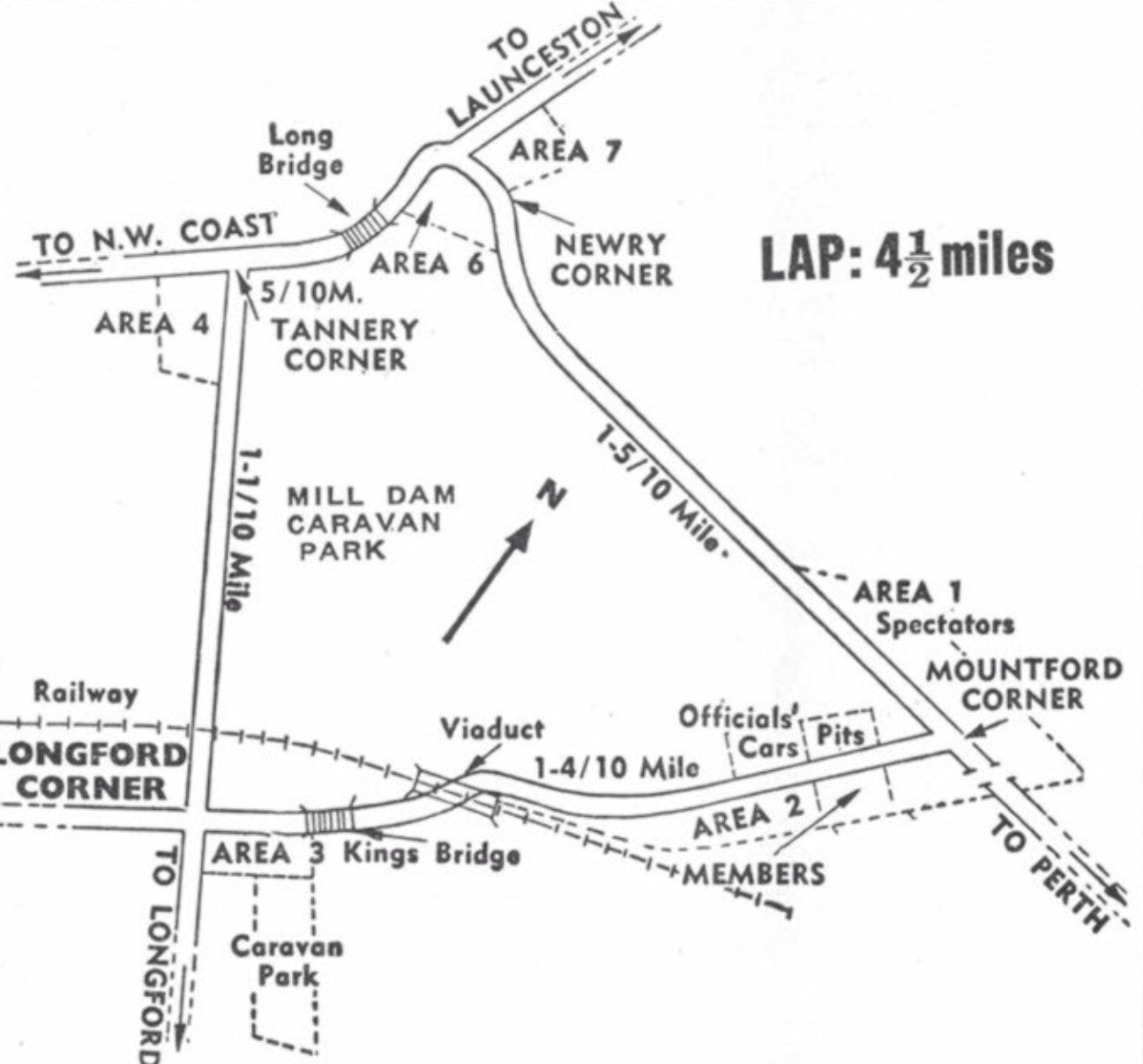
The road narrows beyond Mountford Corner as the cars pass the end of the pits which is where the accident ocurred. You can see from the start shot above how wide the circuit is in that start/finish/pits area of the track

Rocky‘…had trouble all weekend getting first gear out of Mountford. The first time he got it right (that is selected and used 1st gear from the tight corner) was at the end of that first lap, then he came boiling out of the hairpin passing 1.5 cars one after the other. Tragically that’s why he ran out of room (where the circuit narrows). I’d met Robin d’ Abrera just a few weeks earlier, he was with Peter Bakalor whom I’d known for a year or two. He was really enjoying being with the other photographers and following this important series for Autosport.’

‘So for Anthony Davison, the family representative that day, a young man, (17)  after running across to the crash site and learning of Rocky’s death, he had that to deal with before, an hour or so later, having to present the new trophy named in his fathers honour to Bruce McLaren’ the race winner in his Cooper T79. Jack was next, 3 seconds behind in his BT11A and Phil Hill a further second back in Bruce’ Cooper T70.

longford bruce

Bruce McLaren won the tragic ’65 AGP in a great drive, Cooper T79 Climax. Two motorcyclists also perished at Longford that weekend, an incredibly black one for the sport (Howard)

The Davison family ordeal was far from over though, Bell; ‘The night of the race Anthony, Peter and Jon (Davison) flew back to Essendon Airport, Melbourne and went straight to the Tresise home. There Rocky’s older brother and sister were waiting to hear what happened to their brother. The older brother asked Jon (a decade later a leading F5000 racer) ‘He kept his foot down when he should have backed off’ said Jon. It was that simple. The road has narrowed as he ranged alongside Glynn Scott (Lotus 27 Ford 1.5), with two wheels in the dirt the car lost traction, skewed sideways and started the crazy flight that took the lives of Rocky and Robin d’Abrera’.

Chris Davison; ‘I didnt go to Tasmania that year in all the circumstances of course but i can still recall arriving home from rowing practice on the Monday evening (of the South Pacific Trophy in which Tresise died) and a friend of the family giving me the news about Rocky’s accident. I was devastated, the team, dad, Rocky dead. It was just too much for a kid to absorb, tragic on so many levels. Rocky had two other brothers, one was an army officer, David, Ian the other brother was at the races decades later when David Purley raced here in the LEC sponsored Lola T330 F5000, he had some sort of connection with that company. Rocky was special, he was kind and generous to me, gave me space that was sometimes hard to get with my older brothers dominating the space’.

As to the future of the Tresise family little is known, Chris; ‘Rocky’s mother was Val Tresise, she married some years after Rocky was killed…a man from Western Victoria, or Penola in South Australia, i think his name was Arch de Garris. Rocky’s fiancé was Robyn Atherton and sadly I have no idea what happened to Robyn after Rocky was killed. I guess I was too young to really understand what was happening in those difficult years after both Lex and Rocky were killed, and by the time I was 17, I just wanted to get on with my own life, so I went bush as a jackaroo at Hay and lost contact with many people. The person who was all knowledgeable on these matters was my mother and sadly she has taken all this knowledge with her’.

Anything i say at this point would be trite or superfluous. I am very thankful to Chris for discussing and sharing his recollections of this quite extraordinary fortnight in the lives of the Davison and  Tresise families.

The remains of the Ecurie Australie Brabham and Cooper were advertised and bought by Victorian racer Wally Mitchell who used some of the components to build the ‘RM1 Climax’ sportscar.

Mitchell crashed the car at Symmons Plains on 12 March 1967 suffering burns which claimed him, he died on 18 April, to make the story even more macabre.

Prior to his demise historian Stephen Dalton advises his uncle, John Dalton had done a deal with Mitchell to acquire the T62 bits, these components passed to John after delicate discussions with his distraught widow.

Dalton; ‘I remember it under my uncles house at Olinda during the September school holidays of 1978, I was earning some money tidying things up to put more MG stuff under there! I was 13 and didn’t know the sad history of the car at the time’.

‘The car remained a crumpled wreck until the mid to late eighties when a new chassis was built by Charlie Singleton, the car was displayed in chassis form at one of Paul Sabine’s Classic Car Shows in the late 80’s/early 90’s. Things went pear shaped financially and John sold it in the early 1990’s. By the time it was displayed Roger James had ownership and perhaps Richard Bendell was involved. I think Gary Dubois built the body for it’.

The car was sold to the ‘States in the early 1990’s and has been sold a couple of times since when I saw it at Sandown Historics in 2014, but I’m not sure who owns it’, but it seems the car is now owned by an American enthusiast.

bruce

Bruce McLaren winning the 1962 AGP at Caversham in the Cooper T62 Climax (oldracephotos.com)

The Cursed Car?…

Its a fact that a whole swag of people closely associated with the Cooper T62 died before their time, not just the obvious four; McLaren, Davison, Tresise and Wally Mitchell. Later owners or part owners John Dalton and Roger James died early, so too Paul Higgins a respected Melbourne journalist ‘attached’ to the Davison team who was murdered along with his wife in gruesome circumstances twenty years ago.

The above are facts not the stuff of a fictional thriller. For those of us a little superstitious the reality is that some cars shouldn’t be rebuilt, but buried. Perhaps this is one such car…

Etcetera…

coop fac

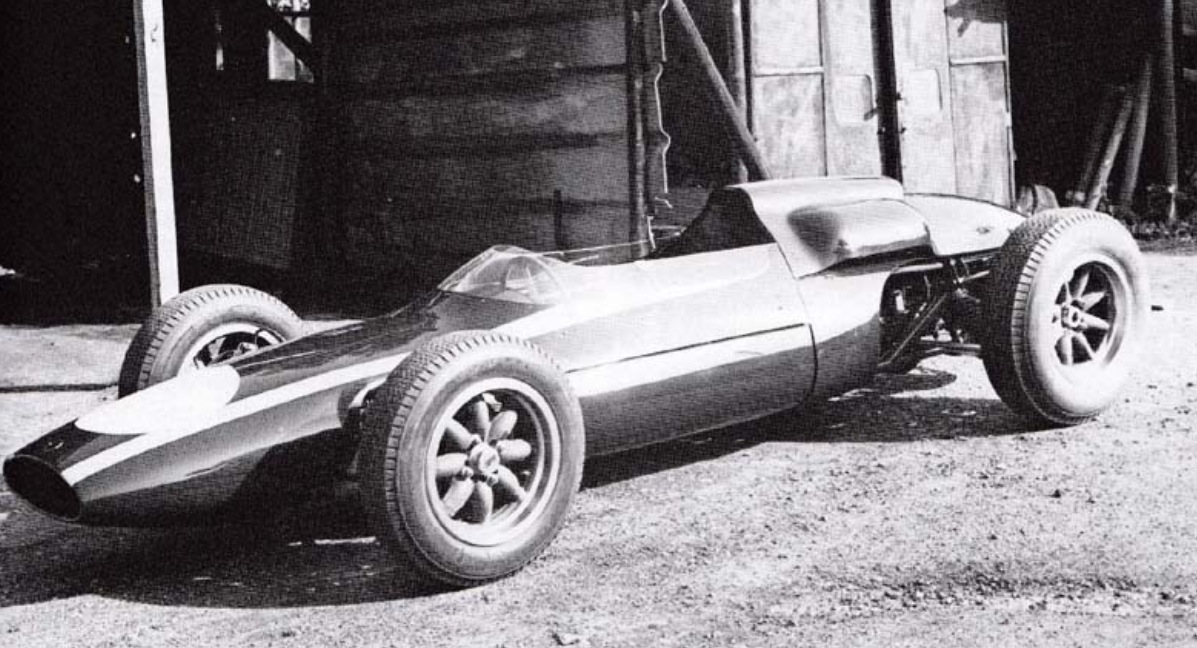
Cooper T62 upon completion at an early Goodwood test in late 1962 prior to shipment to Fremantle, WA (Mike Lawrence)


McLaren in the Lakeside paddock in early 1963, Tony Shelly behind (B Williamson)


coop mallala

Alan Ashton aboard Lex’ T62 at Mallala, Gold Star round 14 October 1963. Behind is Stillwell’s Cooper Monaco and Pat Hawthorn’s Aston Martin DBR4, blue #16 is Mel McEwin’s Elfin FJ Ford. John Youl won this race in a Cooper T55 (Kevin Drage)


cav ad

Credits and Bibliography…

Chris Davison who was very generous with his time and insights into a very difficult part of his life as a young teenager

‘History of The AGP’ by Graham Howard and Ors in particular the 1962 and 1965 chapters written by Howard and Des White

‘The Nostalgia Forum’ threads in relation to Lex and Rocky in particular the contributions/insights of Ray Bell and Stephen Dalton

‘Australian Motor Sports’ June 1964 issue, the Melbourne ‘Age’ newspaper 20 February 1965

‘MotorSport’ interview with Tim Schenken

Stephen Dalton Collection, Chris Davison Collection John Ellacott, Terry Walker, oldracephotos.com, Milton McCutcheon, Peter Longley, Ellis French, Geoff Smedley, Ron Lambert Collection, Denis Lupton, Geoff Smedley, autopics.com.au, Murray Lord, Bob Williamson

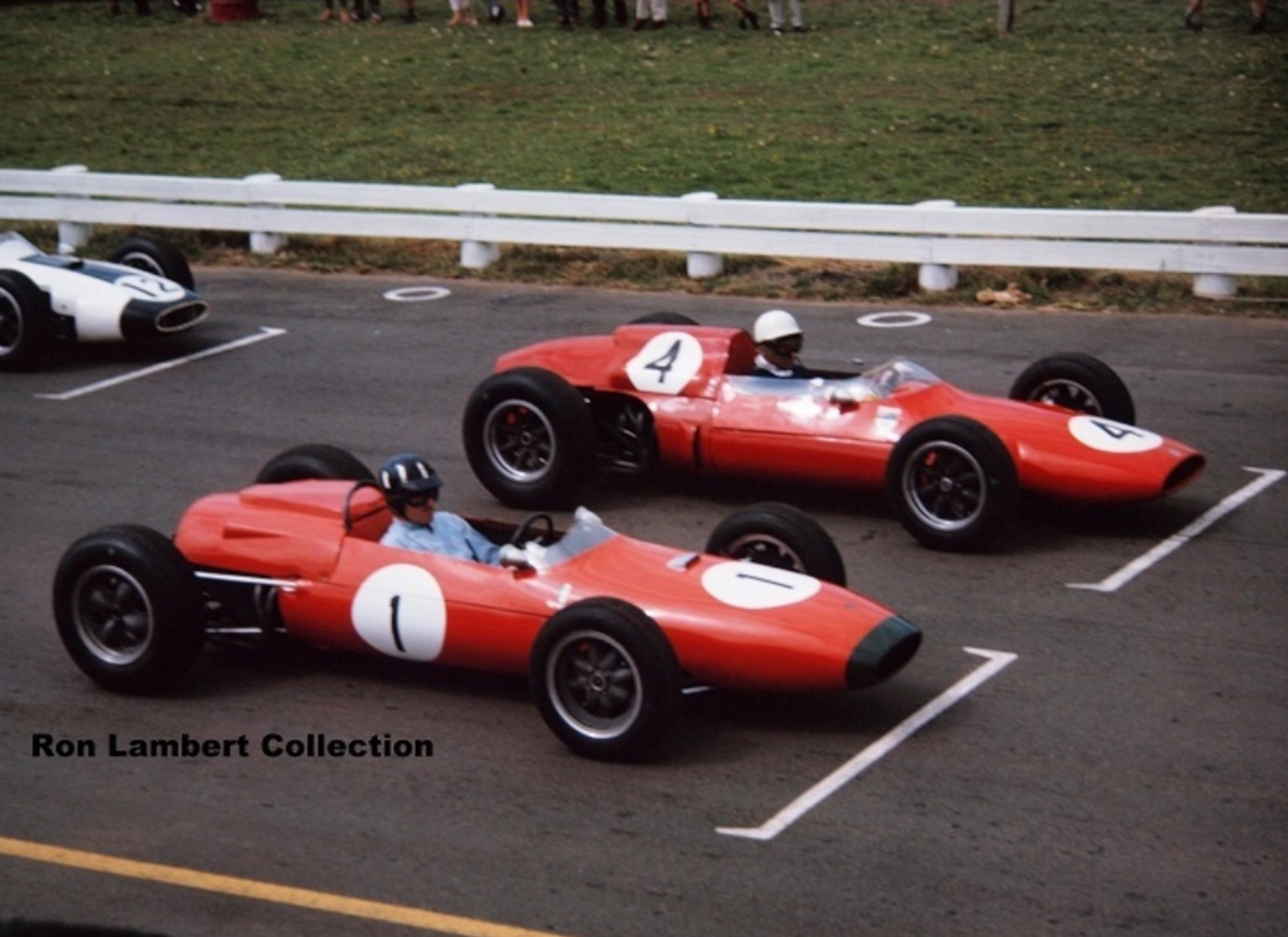
Tailpiece: Davo in the best of company: Graham Hill’s Brabham BT4, Davison’s Cooper T62 and the white nose of Jim Palmer’s Cooper T53 Climax, Longford 1964

coop lex

(Ron Lambert Collection)

Finito…

image

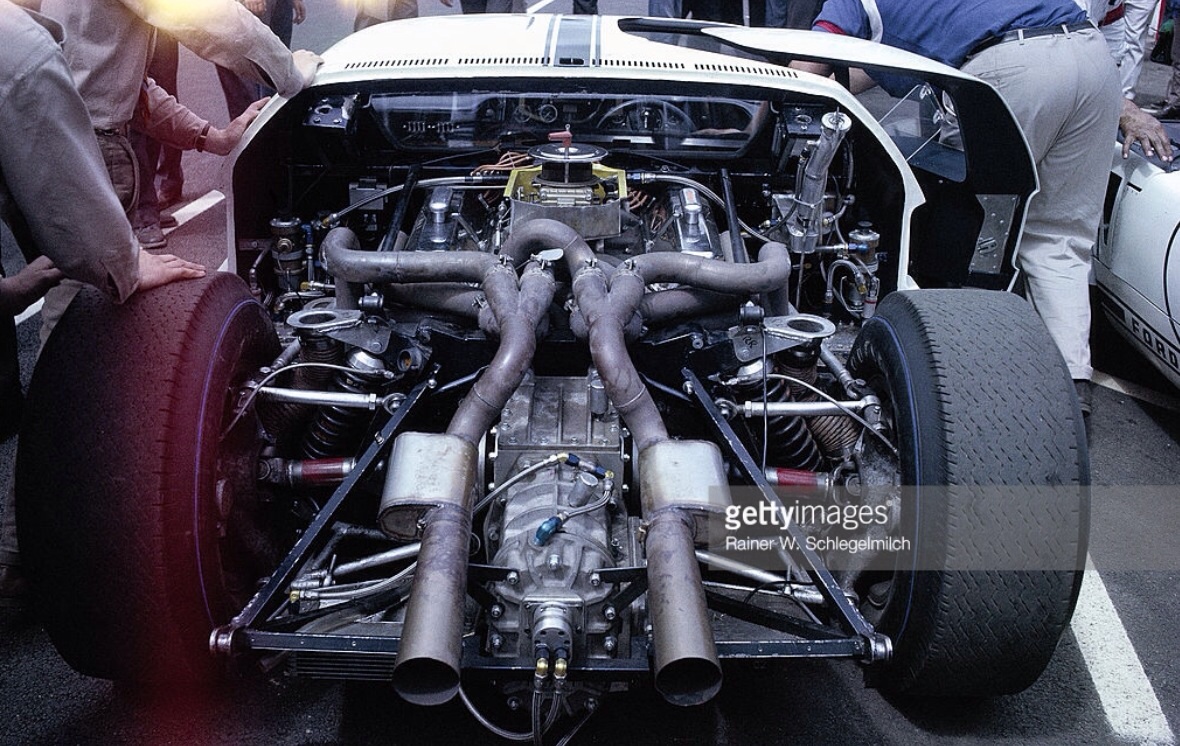
A Shelby American mechanic fettles the Bruce McLaren/Ken Miles Ford GT40 Mk2 ‘106’ prior to the Le Mans 24 Hours commencement on 20 June 1965…

I always thought the 4.7/5 litre GT40 variants were masterpieces of Eric Broadley packaging, if a bit beefy given the steel rather than aluminium monocoque mandated by Ford- but the 7 litre Mk2 and Mk4 are altogether less subtle expressions of the genre! Successful ones at that.

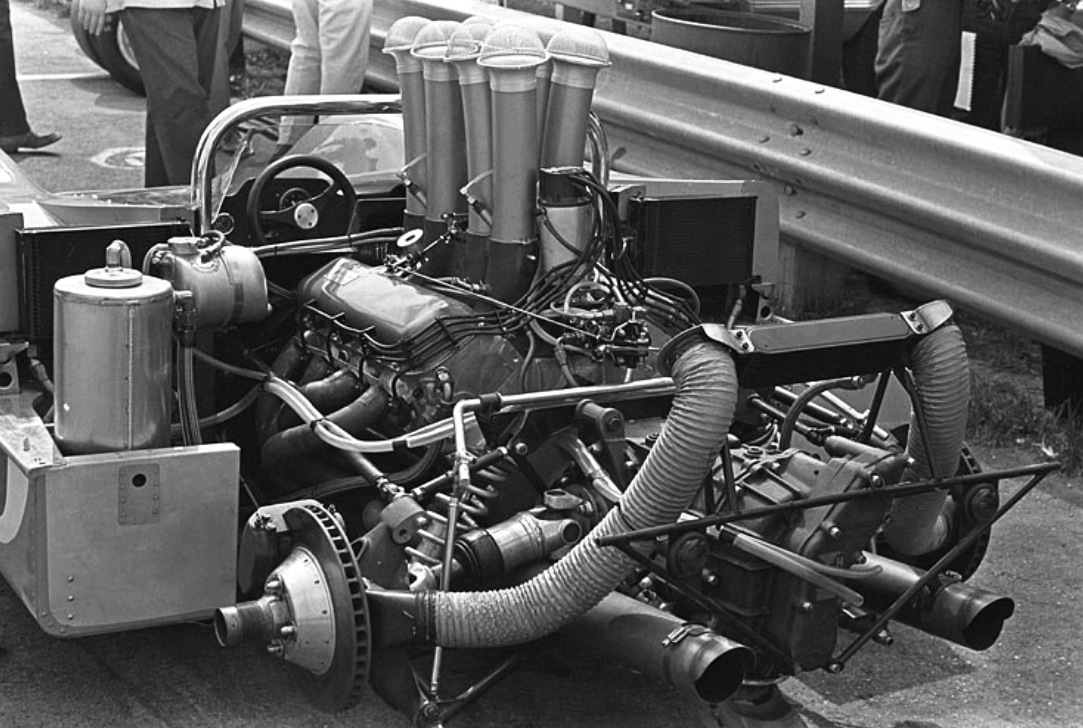
You can’t see ‘Henrys’ cast iron blocked, ally headed 427cid pushrod OHV V8 under all the plumbing, the dry sumped 90 degree, 107.2mm X 96.1mm lump was fed by a single, big Holley 4-barrel 780CFM carb developing circa 485bhp@6200rpm and 475lb.ft of torque@3200-3600rpm, plenty for a car weighing 1200Kg.
The ‘cross-over’ exhaust sytem is a masterpice of the pipe-benders art, mufflers interesting and unusual on a racer, maybe to save the drivers ears a tad? You can just see the gulping, big mouth of the monster Holley in front of the exhausts.

To the right near the roof is the water radiator neck, filler and temperature sender, to the right are the gold colored fuel pumps, the fuel tank had a capacity of 159 litres.

You can see the Kar-Kraft / Ford T44 four-speed ‘box, in fact ’twas the failure of this very special transaxle, the design of which was led by Ed Hull, which caused chassis #’106′ retirement on lap 45 of the classic.

There are plenty of lovely ‘Aeroquip’ aircraft braided fittings too, well in advance of their adoption in F1, for brake lines and various oil feeds around the transaxle, note the transmission oil-radiator under the mech’s elbow.

See the big, rear, grey stove enamelled chassis diaphragm below the exhaust and above the ‘box to support the engine/gearbox and location of the rear suspension, the top of the spring/shock’s clear- there, too, is the brake cooling duct which takes air collected from the body. Big cast magnesium uprights, beefy driveshafts and top suspension link and forward facing radius rod and brake calipers for the outboard mounted, ventilated discs are also in shot.

image

The quick-lift jack and ‘captive frame’ on the car is typical of Shelby’s thoughfulness and endurance racing knowledge…

Mind you they had a shocker of a race!

Five cars were entered, two Mark 2’s and three Daytona Cobra Coupes and all failed to finish; the Miles/McLaren Mk2 after 45 laps due to gearbox failure, the Amon/P Hill Mk2 on lap 89-clutch. The Johnson/Payne Daytona ‘2287’ was out on lap 158-head gasket, Gurney/Jerry Grant Daytona ‘2286’ on lap 204-engine and Daytona ‘2601’ Schlesser/Allen Grant on lap 111-clutch.

So, a disaster for Ford, their best placed car was the AC Cars Ltd entered Daytona Cobra Coupe driven by Sears/Thomson which finished eighth, the race was won, famously by the 3.3 litre V12 Ferrari 250LM of Masten Gregory and Jochen Rindt, the latter flogging the thing to within an inch of its life!

It was Ferrari’s last Le Mans win with the first of four on the trot to come for Ford from 1966-69- wins for the Mk2 and Mk4 in 1966 and 1967 and 1968/9 for the Mk1 5 litre GT40.

Finally, Shelby American made amends in 1966, taking the first two places in the infamous ‘Ford Form Finish’ ahead of arch rivals, the Holman Moody prepared Ford Mk2’s…

Etcetera…

image

(unattributed)

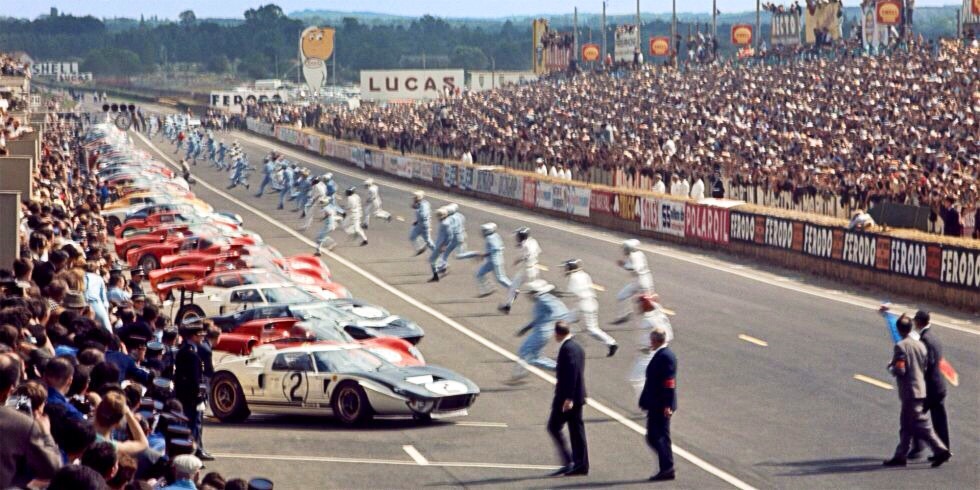
Le Mans 1965 start.

The Amon/Hill GT40 Mk2 on pole, then Surtees/Scarfiotti Ferrari 330P2 , Bondurant/Bucknum GT40 in 3 and McLaren/Miles GT40 Mk2 in grid 4

image

(unattributed)

McLaren/Miles Ford GT40 Mk2 early in the race, Le Mans 1965.

Both Mk2’s failed due to transaxle preparation mistakes with a gear that was intended for scrap being put into one gearbox and dirt on a bearing surface in the other.

image

(unattributed)

Carroll Shelby beside the Chris Amon/Phil Hill GT40 Mk2 chassis ‘106’ at Le Mans 1965- note the ‘at meeting’ fabricated rear spoiler addition.

image

(unattributed)

Shelby American Le Mans garage- Daytona Cobra Coupes #12 Schlesser/J Grant, #10 Johnson/Payne #9 Gurney/A Grant- all DNF.

Credits…

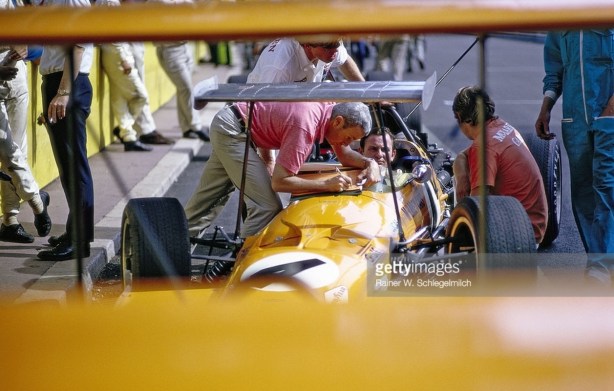
Rainer Schlegelmilch, teamdan.com

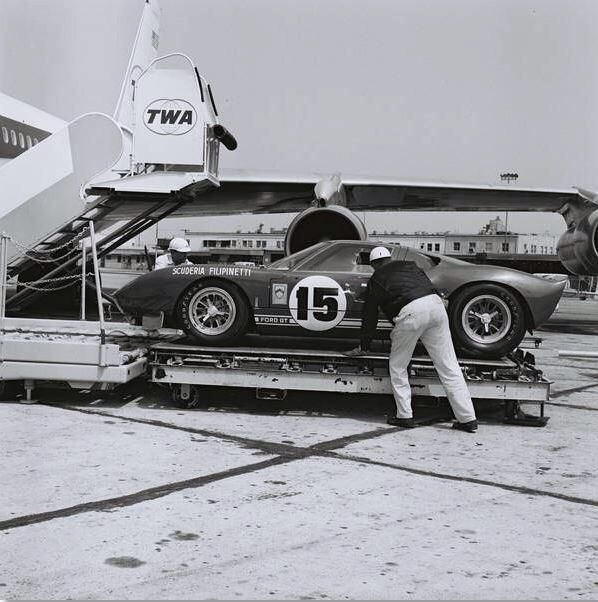
Tailpiece: Filipinetti’s GT40 Mk2, prepped by Shelby American on the way to Europe at LAX, it too failed to finish driven by Ronnie Bucknum and Herbie Muller…

image

Finito…

bruce

Bruce McLaren poses for this studio shot on 26 April 1967…

He was the all-rounder; tester, driver, designer, engineer, company director…and male model! I bet Teddy Mayer had to twist his arm for this job tho. ‘Daily Express’ shot so it was possibly to go with a feature on the multi-talented Kiwi Champion.

A good year, the team took its first Can Am title, Bruce winning in the M6A Chev he co-designed with Robin Herd. He raced a factory Ford GT40 Mk4, in sports car events, one of Dan Gurney’s Eagle T1G’s whilst his own GP car was made race-ready, then of course there were the Elva built customer cars to consider and sponsors to look after. And a company to run…

Credit: McKeown/Getty Images, Dave Friedman Archive, The Enthusiast Network

image

McLaren and his M6A Chev at the 1967 Road America Can Am, Denny Hulme won this round. Look closely and you can see the ‘McLaren Engines Flower Power’ decal on the 6 litre, injected, ‘Heavy-Chevys’ rocker cover! (Dave Friedman)

image

Bruce McLaren, Road America September 1967. DNF with an oil leak from grid 1. Hulme in the other M6A took the win  (Dave Friedman)


Tailpiece: Las Vegas sunset, Stardust Raceway, Bruce McLaren and M6A Chev, 14 November 1967…

image

Not a good race weekend for Bruce as he blew an engine from grid 1, but he did win the ’67 championship! Surtees took the round win in his Lola T70 Mk3B Chev (The Enthusiast Network)


coops

(Getty)

One tends to sometimes forget that British Entrepreneur, Engineer, Team Owner John Cooper was also a driver and the birth of Cooper as a marque is a function of his need for a racer…

The great Brit is piloting his works Cooper T20 Bristol F2, the caption for the photo says in the ‘IV Daily Express International Trophy’ race at Goodwood on Whit Monday, 10 May 1952′. In fact JC was entered for that meeting/race at Silverstone on that day as #14 but did not arrive, so ‘praps this is a practice shot.

Before focusing on the construction and sales of his cars and managing the team he was a very capable driver taking many 500cc wins, a class for which the first Cooper, famously constructed of two Fiat 500’s welded together to provide an independently suspended car, was built.

image

Cooper 500 Drivers L>R in this 1948 photo; John Cooper, George Saunders, Charles Cooper, the shot credits Chas as the cars designer and Stirling Moss. ‘New midget racing cars made by Charles Cooper at his Surbiton, Surrey garage’ is the caption (Popperfoto)

The front-engined Cooper Bristols Types 20 and 23 ‘launched’ the successful careers of Mike Hawthorn and Jack Brabham amongst many others, i wrote an article about them, click here for the link; https://primotipo.com/2015/02/10/stirling-moss-cumberland-park-speedway-sydney-cooper-t20-wm-holden-1956/

I started to research an article to write on John Cooper’s career and influence and came upon the obituary published by Britain’s ‘The Telegraph’ on 27 December 2000, it seems to me it covers things rather well so here it is, truncated slightly and with my photographic additions…

image

JC at left, having already done a few laps, slightly quizzical supervises Ken Wharton’s test of a Cooper T23 Bristol at Goodwood in 1953. What a ripper period scene, love the casual dude in suit pants, vest, tie and fag! (Popperfoto)

‘John Cooper, who has died aged 77, was one of the great figures in the history of motor racing; his Cooper-Climax cars were the force behind Jack Brabham’s dominance of the drivers’ championship in the early 1960s, while his Mini Cooper was destined to become a symbol of the decade itself.

Cooper and his small design team at Cooper Cars first came up with a rear-engined sports car in 1955. Based around a Coventry Climax firepump engine, the “Bobtail” Cooper-Climax was without peer in its class. By narrowing the chassis and fitting slender bodywork which left suspension and wheels exposed, Cooper then created a rear-engined Formula Two car which could easily be upgraded to meet the demands of Formula One.

image

Jack Brabhams Cooper T40 Bristol ‘Bobtail’ on the way to a lucky Australian Grand Prix win at Port Wakefield, South Australia in 1955 (unattributed)

By 1957, the Australian Jack Brabham had joined Coopers, and a 2-litre version of the Formula Two car was entered for the Monaco Grand Prix. Brabham pushed it home in sixth, having been third. On twisting circuits, the nimble rear-engined Cooper could challenge the comparatively flat-footed Ferraris’, Maseratis’ and Vanwalls’ which traditionally competed for places on the podium.

image

Stirling Moss on his way to the first mid-engined car F1 win, Cooper T43 Climax 1.9, Argentine GP 19 January 1958 (Getty)

The next year, in the Argentine Grand Prix, Stirling Moss drove a Cooper to a first world championship victory by the rear-engined car, and at Monaco another Cooper won, this time driven by Maurice Trintignant.

image

Moss, Argentina 1960, Moss giving away more than 500cc to his competitors, the Coventry Climax FPF 1.9 litres (Getty)

The persuasive Cooper then managed to talk Coventry Climax into building full-sized 2.5 litre engines for his works’ drivers – Brabham and Bruce McLaren – and under his direction Coopers promptly won both the 1959 and 1960 Formula One constructors’ titles, while Brabham took two consecutive world champion drivers’ titles. By 1962 every Formula One marque had put their engines where Cooper had his – behind the driver.

cooper

John Cooper aboard the Cooper T49 ‘Monaco’ in March 1959 during a press release, Brands Hatch (John Ross)


image

Lap 1 Portuguese GP 1960; Brabham’s Cooper T53 Climax from Gurney’s BRM P48 DNF and Surtees Lotus 18 Climax DNF. Jack won the race having had a huge accident in Oporto the year before (Autosport)


image

Argentine GP 1960 post victory in the UK; McLaren 1st Cooper T51 Climax, Brabham DNF and JC (unattributed)

In the mid-1940s, Cooper had competed against Alec Issigonis, the designer of the Mini, in hill-climbs. Soon after its launch in the mid-1960s, Cooper suggested to George Harriman, head of the British Motor Corporation (the Mini’s manufacturer), that he should market a tuned-up version. Harriman doubted that he could sell more than 1,000; the final total of owners attracted by Cooper’s modifications exceeded 125,000.

Cooper was consulted regularly about improvements to the design and an entire family of Mini Cooper variants evolved, among them the Mini Cooper S. The Mini Cooper lorded it over rally racing for the rest of the 1960s, winning multiple championships and four consecutive Monte Carlo rallies between 1964 and 1967.

image

It was the first economy car to become a status symbol, the height of chic. Its owners included King Hussein of Jordan and members of The Beatles. “Drive a Mini Cooper – the most fun you can have with your clothes on!” ran the advertisements. “If your tyres survive more than 2,000 miles, you’ve driven like a wimp.”

At the end of the decade the car featured prominently in the film The Italian Job (1969), in which Michael Caine and his team of bullion raiders made the most of the Mini’s virtues of small size and great speed to escape pursuit via the roofs, sewers and marble staircases of Turin. The Minis were painted red, white and blue, and the film not only helped boost sales of the Mini Cooper all over the world but, by identifying the car with a time of great British style and ingenuity, helped it also to attain immortality.

image

John Cooper was always going to be involved with cars! Caption of this 27 May 1935 photo’ Dwarfed by a full-sized car, Mr CW Cooper of Surbiton drives the miniature racing car which he built for his son John. The tiny vehicle is fitted with a 1.25 horsepower two-stroke engine and can travel 52 miles an hour. The other car is an Alfa Romeo 8C Monza, does anybody know who the occupants are? (Fox Photos/Getty)

Cooper was born on July 17 1923 at Kingston, Surrey. His father Charles ran a modest garage in nearby Surbiton; among the cars he maintained for customers was the Wolseley “Viper” raced at Brooklands by Kaye Don. When John was eight, his father made him a half-scale car with a motorcycle engine. At 12, he was given a lightweight Austin 7-based special capable of 90mph; he tried it out at Brooklands but was chased off the track by enraged officials.

On leaving Surbiton County School at 15, John became an apprentice toolmaker, and after RAF service in 1944-45, he and his friend Eric Brandon (later a successful racing driver) built themselves a single-seater racing car for the new 500cc class. Two scrap Fiat 500 front-ends were welded together to provide an independently suspended chassis, on to which was mounted a 500cc motorcycle engine behind the driver’s seat to chain-drive the back axle.

Wearing sheet aluminium bodywork, this first Cooper racing car was very successful, and a second was built for Brandon in 1947. Cooper and his father then founded the Cooper Car Company to build a batch of 12 replica 500s for sale. One of their first buyers was the 18-year old Stirling Moss.

The Cooper Car Company quickly became the first, and largest, post-war specialist racing car manufacturer; Lotus, Lola and March – among others – would follow them. While John Cooper provided the firm’s enthusiasm and drive, Charles Cooper kept control of the firm’s finances.

image

Cooper after victory at Rouen in 1952. Cooper MkV 500 (Heritage)

John Cooper was also a very capable racing driver in his own right. In 1952 at Grenzlandring he scored the first 500cc race to be won at an average of more than 100mph, and the next year drove his streamlined works car to victory in the Avus Speedbowl, Berlin. He also enjoyed first places at Monza and at Rouen.

image

JC record breaking at Monthlery, France on 9 October 1951, car is streamlined, slightly stretched Cooper MkV JAP. 500 & 1100cc engines used (Popperfoto)

Click here for an interesting article on the Cooper Land Speed Record cars;

http://www.ugofadini.com/cooperstory.html

image

JC in the chassis of the Mk V record-breaker, a variety of JAP engines used, 15 November 1952 (Central Press)

In the early 1950s, Coopers diversified into front-engined sports and single-seater racing cars. The first British world champion driver, Mike Hawthorn, first made his mark in a 1952 Cooper-Bristol Grand Prix.

A warm, even extrovert man, John Cooper relished every moment of his fame, although he was perhaps never the same after being badly injured in 1963 when his prototype four-wheel drive Mini Cooper crashed. It was many months before he was fully fit, and in 1965 – the year after his father died – he sold the Cooper Car Company to the Chipstead Motor Group.

image

1966 US GP Watkins Glen; front row Brabham in BT19 Repco DNF, Bandini Ferrari312 DNF and Surtees Cooper T81 Maserati 3rd. Jim Clark took the only win for the BRM H16 engine in his Lotus 43  (Alvis Upitis)

Although he continued to co-direct the Formula One racing team until 1969, when it was disbanded, from the mid-Sixties onwards its homegrown construction was overtaken by more sophisticated and better-funded technology at Lola, Lotus, BRM and Ferrari. Characteristically, Cooper never felt any envy as his company was upstaged.

He retired to the Sussex coast, where he founded the garage business at Ferring, near Worthing, which still bears his name. Recently, he had been much cheered by the decision of Rover to develop a new generation of Mini Coopers, primarily for enthusiasts in Japan. Rover’s new owner, BMW, has embraced the project, and just before his death Cooper was delighted to see his son drive the prototype BMW Mini Cooper.

John Cooper was appointed CBE last year. He leaves a wife, a son and daughter. Another daughter predeceased him.’

image

JC ‘races’ the ‘first Cooper ‘ his dad built for him in 1930 (Keystone France)

Credits…

‘The Telegraph’ John Cooper obituary 27 December 2000,  GP Library, GP Encyclopaedia

Getty Images, Keystone France, Alvis Upitis, Central Press, Popperfoto, Heritage Press, Fox Photos, Autosport, John Ross Motor Racing Archive

Tailpiece: ‘I don’t care Bruce just go faster!’ With Bruce McLaren and Phil Hill in 1964…

image

European/British GP, Brands Hatch 1 July 1964; JC, Phil Hill 6th and McLaren DNF #10 is Hill’s Cooper T73 Climax. Clark won the race in a Lotus 25 Climax (G Pollard)

Finito…


mc l m8
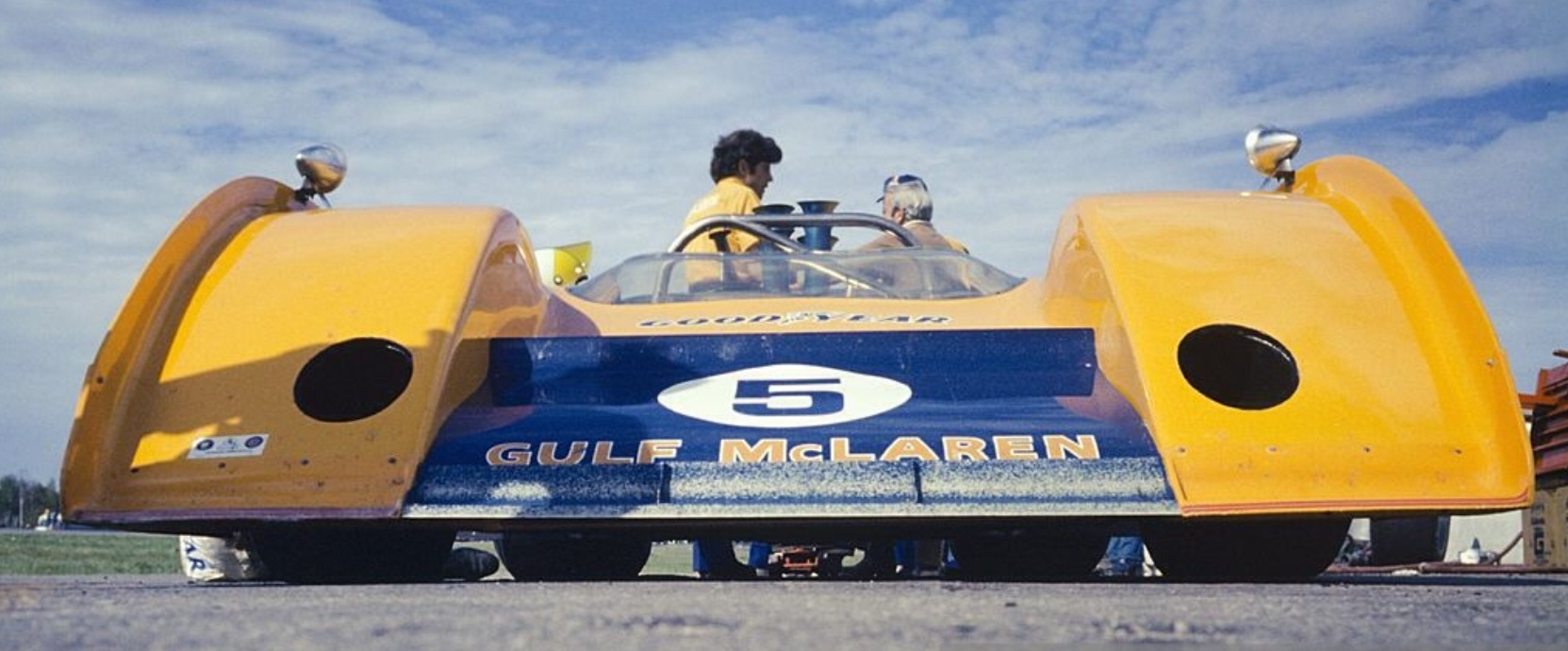
McLaren M8A at rest 1968 (unattributed)

I re-read Mark Donohue’s excellent biography not so long ago. He refers to his Lola F5000 as a ‘little car’ which made me laugh!

I’ve never seen F5000s as anything other than big-cars but I ‘spose it’s all relative. When your frames of reference include McLaren M16 Offy Indycars and Porsche 917/30 Can-Am racers they are…

spankers
The ‘brand spankers’ M8A out front of McLaren’s salubrious David Road, Colnbrook facilities in early 1968. A contrast with the opulence of Woking today (unattributed)

There is nothing small and subtle about Can-Am cars, everything is BIIIGG!

They were built for 200 mile races, GP distance. The engines, 7-litres and up, the chassis had to be big and strong to carry the engine and its fuel, they used a lotta fuel! The dimensions were unrestricted, with bodies large to provide downforce. Big engines, lots of power and torque needs a big gearbox and driveshafts, the shot above of a 1968 McLaren M8A in all its naked glory illustrates the point.

Denny Hulme took the 1968 Can-Am Cup from teammate McLaren with three wins to Bruce’s one in six races.

mc and team
The team, Tyler Alexander left and Gary Knutson, sorting an M8A engine drama at Bridghampton 1968. The car ran a bearing in the race while Denny’s broke a rod, Donohue won in an M6B Chev. Bruce patiently awaits. Few racing drivers as intelligent, analytical and thoughtful. Or quick (Pete Lyons)

M8A’ s vital statistics

7-litre/427 cid McLaren modified aluminium block Chev ZL-1 engine. Bore and stroke 108mm x 95mm, pushrod OHV, Vertex magneto, Lucas fuel injection with the package giving circa 620bhp @ 7000rpm. Hewland LG500 four speed transaxle.

Monocoque chassis of rivetted and bonded aluminium with fabricated steel bulkheads. The Chev engine was a stressed member of the chassis. Wheelbase 94 inches, front and rear tracks 57.5 and 54.5 inches, length 153 inches and height to the top of the roll bar 36 inches. Weight circa 1350 pounds.

denny
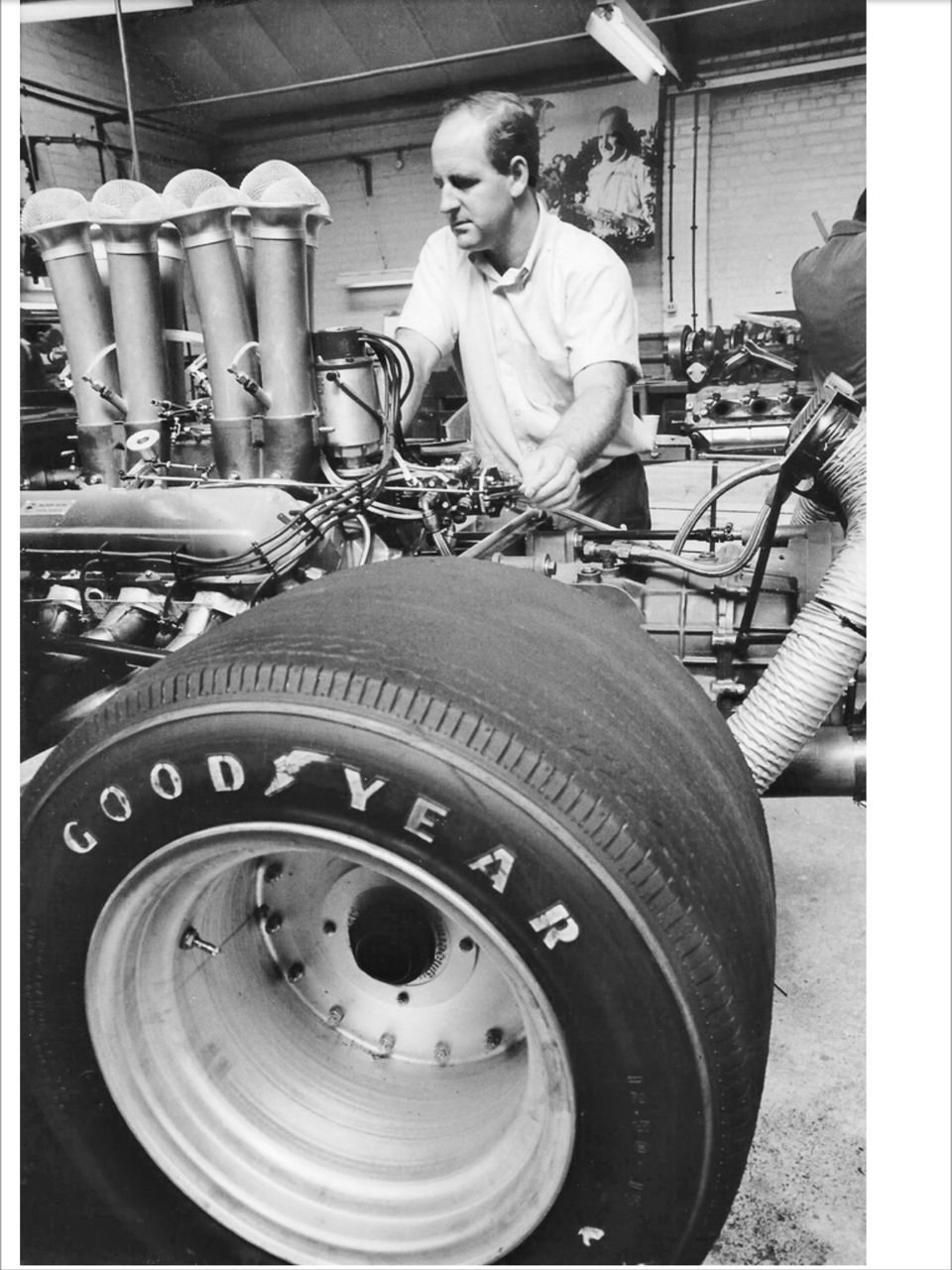
Hulme in the workshop prior to the M8A’s departure to the ‘States. Engine extractors, Lucas injection trumpets, (horizontal) fuel metering unit and (vertical) Vertex magneto, Hewland gearbox casing and brake ventilation ducts all clear. The rear wheels are fabricated magnesium, McLaren had two attempts at making these work and both failed. It’s a top shot, Denny spent a lot of time in the workshop when not racing (Jabby Crombac)

Rear suspension comprised single top link, reversed lower wishbones, twin radius rods, coil spring/damper units and adjustable roll-bars. Front was by unequal length wishbones, coil spring/damper units, adjustable roll-bars.

Brakes are Lockheed calipers outboard front and rear, McLaren cast magnesium wheels of 15 inches diameter and up to 11 inches wide and 15 inches and up to 16 inches wide at the rear…Big, like everything else!…

m8 cutaway
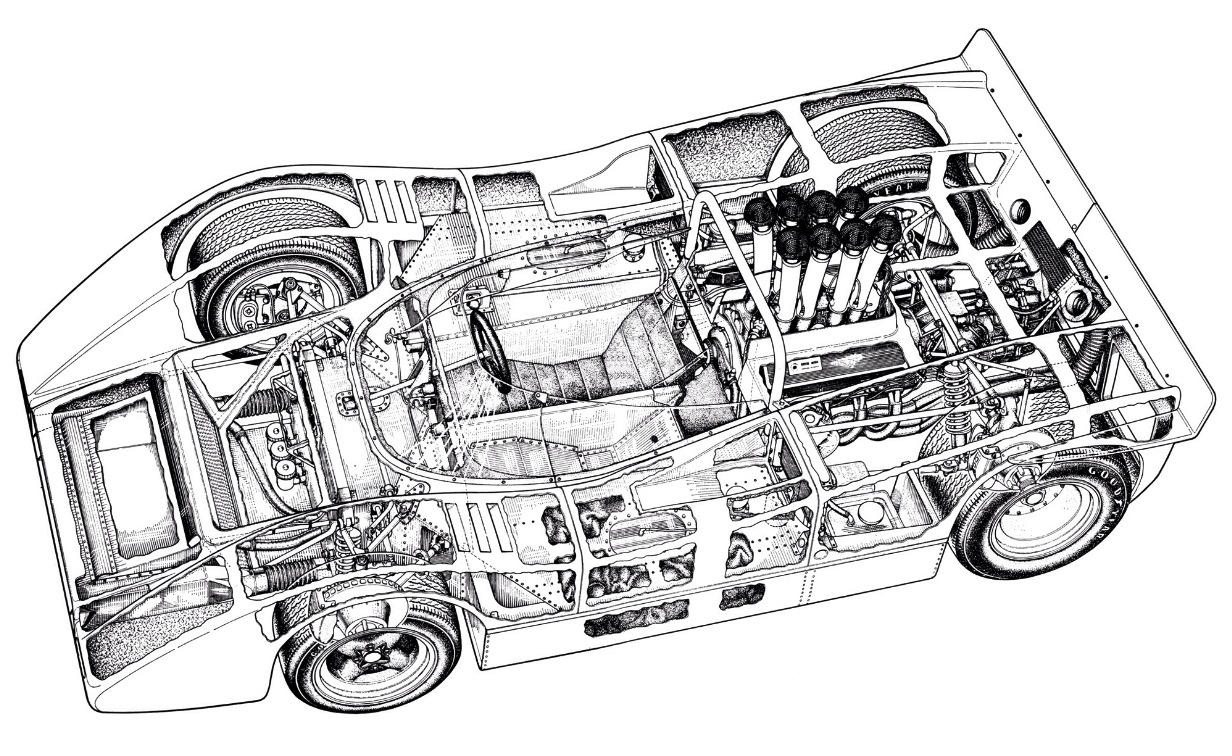
McLaren M8A Chev cutaway drawing. An incredible successful series of cars, the M8 family: M8A, M8B, M8D and M8F won the Can-Am title in 1968-71 respectively (M Palk)
cars loading
All hands on deck to load the cars for shipment to the US. Teddy Mayer on the trailer with Bruce’s car, note the standard four spoke cast wheels on the front of Hulme’s car and experimental fabricated ones on the rear (N Beresford Collection)
denny m8a
Denny Hulme, M8A Laguna Seca practice 1968. John Cannon won this race, famously held in very wet conditions when so many fell off the Island. Cannon’s old McLaren M1B Chev won from Hulme and George Eaton’s McLaren M1C Ford (tamsoldracecarsite.net)

Credits…

‘Cars in Profile No8 McLaren M8 Series’ by David Hodges, Pete Lyons, Jabby Crombac and Nigel Beresford Collection via ‘kayemod’ TNF, tamsoldracecarsite.net

Finito…

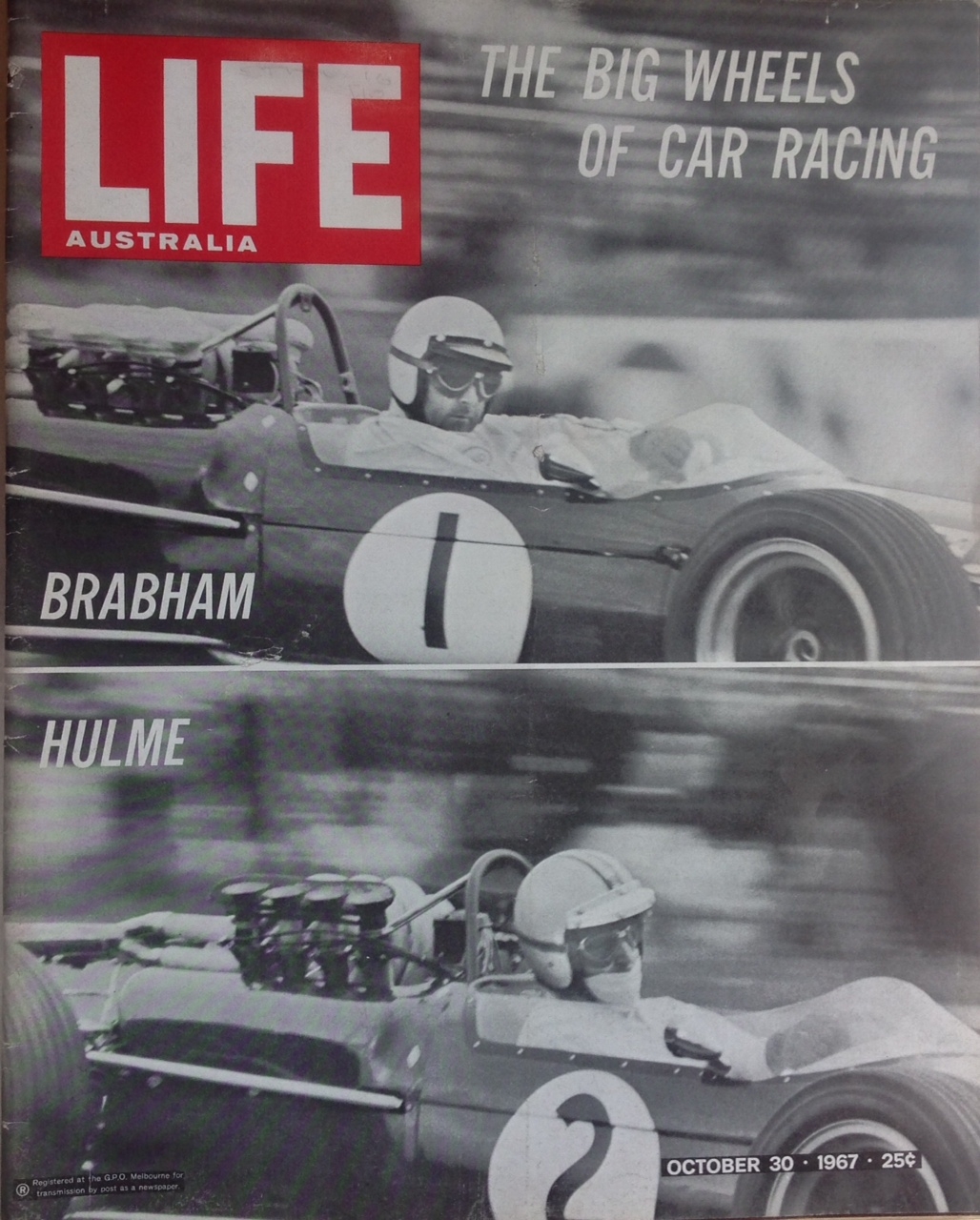
brabham life 2

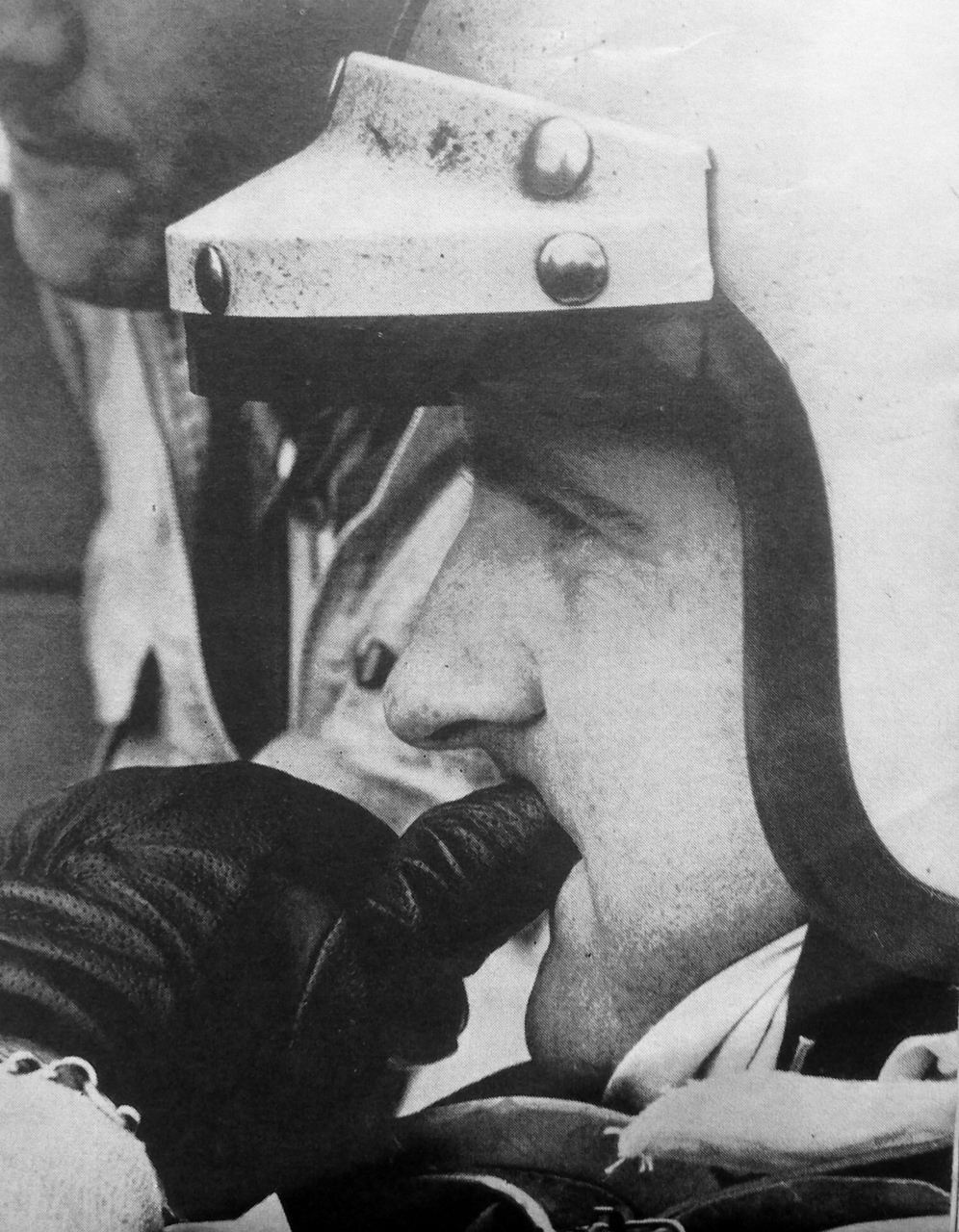
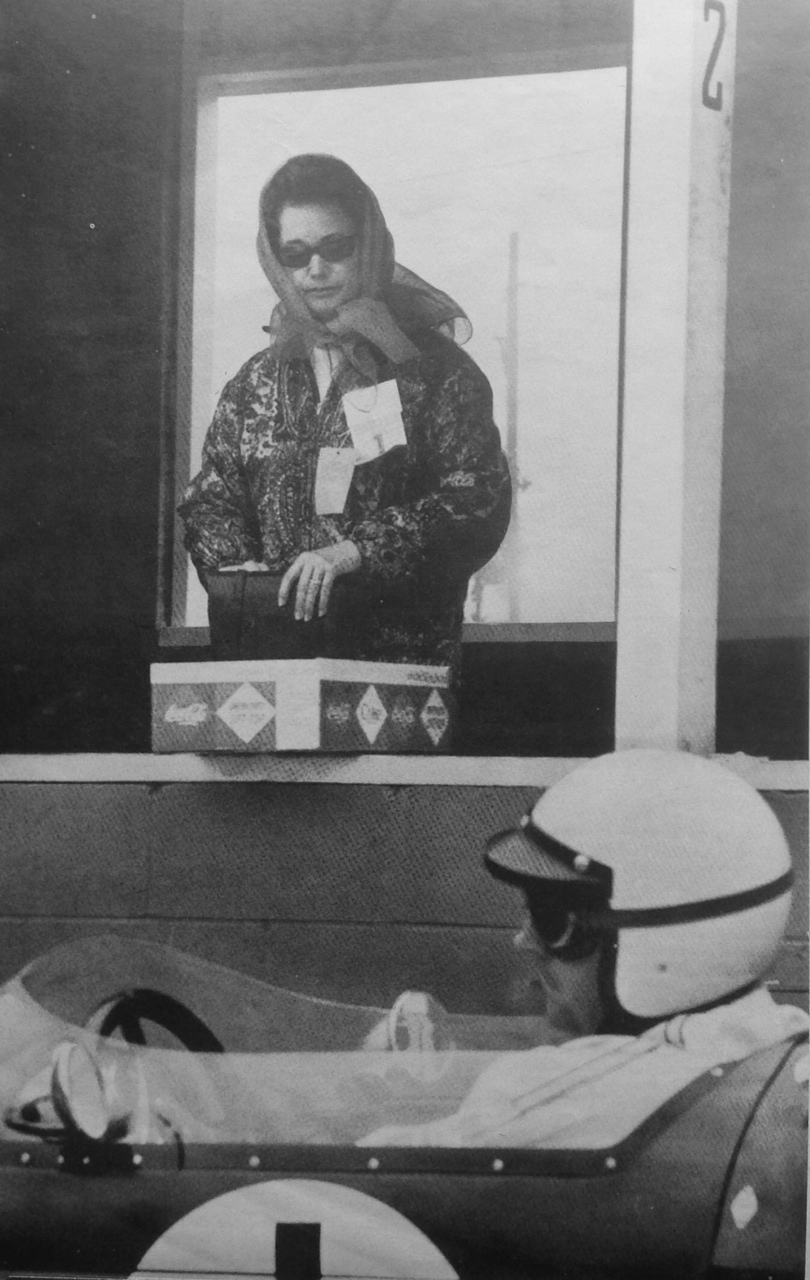
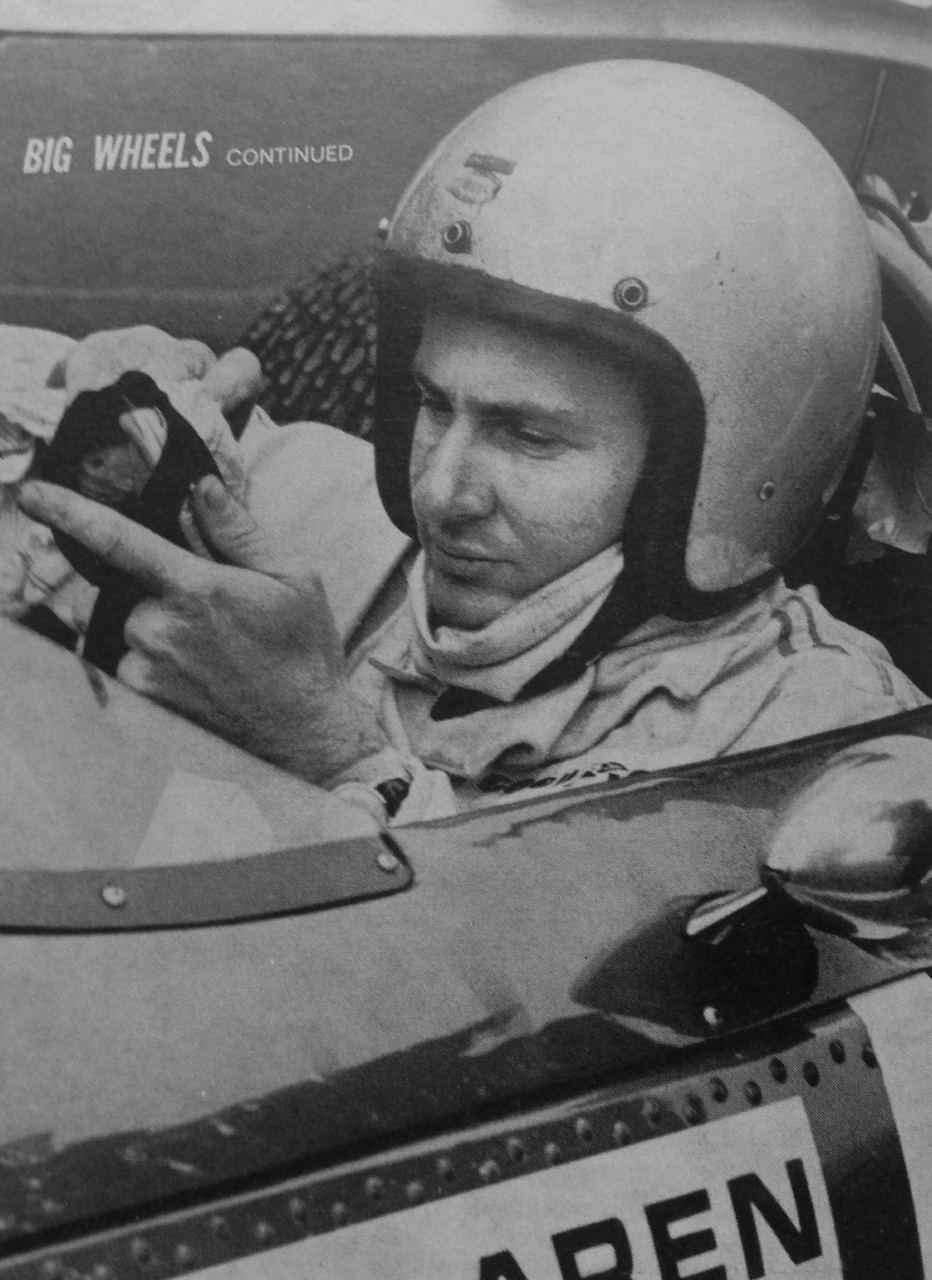
This 1967 Life magazine was staring at me, waiting for me to pick it up in my favourite bric-a-brac store in Chapel Street, Windsor. I  was more than happy to give it a good home. It celebrates the Brabham F1 team achievements in 1967…

Articles on motor racing have never been mainstream in such global publications, of course the article has a lot of general rather than specific enthusiast interest stuff. But I thought the photos worth posting and a little of the contents.

jack evocative
Jack Brabham pondering setup changes. US GP 1967 (Life)

All of these photos were taken during the US Grand Prix weekend, held on 1 October at Watkins Glen.

By that stage of the season the new Lotus 49s had the consistency as well as the speed they demonstrated from debut at Zandvoort in May. Clark and Hill finished 1-2 at the Glen in the Ford Cosworth DFV engined cars.

Denny Hulme was fourth and Jack fifth. Denny won the 1967 Drivers title and Brabham the Constructors, for the second year on the trot.

Those spaceframe BT24s powered by 3-litre Repco ‘740 Series’ SOHC, between the Vee exhaust V8s were chuckable, fast, successful cars. They were still quick in Jochen Rindt’s hands early in 1968 against even more formidable opposition, despite having only 320bhp or so.

denny evocative
Denny Hulme, Watkins Glen 1967 (Life)
jack and betty
Betty Brabham and Jack. Car is BT24 Repco. Watkins Glen, US GP 1967 (Life)

‘Life’ credit ‘The pre-eminence of Australia and New Zealand in automobile racing to Brabham…

He is responsible not only for the Brabham Racing Organisation (the F1 team), but also for Motor Racing Developments Ltd, which constructs the Brabham designed cars (Ron Tauranac may have a view on that!): Jack Brabham conversions Ltd which produces go-faster kits and treatments; and Jack Brabham Motors Ltd, a garage and car dealership’.

Jack was a busy boy indeed! I think at that stage he was still ‘ghosting’ a magazine column or two as well in addition to managing the relationship with engine partner Repco.

mc laren
Bruce McLaren in his McLaren M5A BRM, US GP 1967. DNF with water hose failure. With Cosworth power from 1968 his GP cars found success (Life)

‘It isn’t only Jack Brabham and Denis Hulme who bring glory to their part of the world…

Contributing to the lustre are Bruce McLaren, 30, as well known as a manufacturer of racing cars as a driver, and Chris Amon, 25, who was in fourth place in the World Championship standings going into the final race (the Mexican GP)…McLaren has won three GP’s during his career. Amon…still seeks his first victory which could come at any time’.

amon
Chris Amon, Ferrari 312. Watkins Glen 1967. DNF in the race with engine failure (Life)
jack trailer
Jack Brabham; post race, happy mode in the Brabham pit. Looks like an apple in hand! Watkins Glen 1967 (Life)

Credit…

Life Magazine 30 October 1967

Finito…

penske zerex

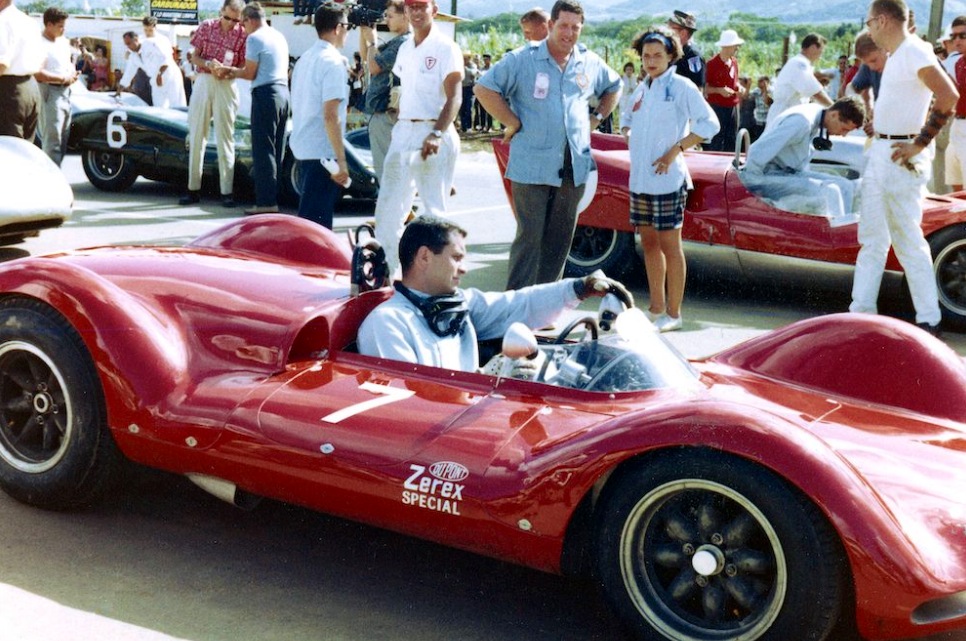
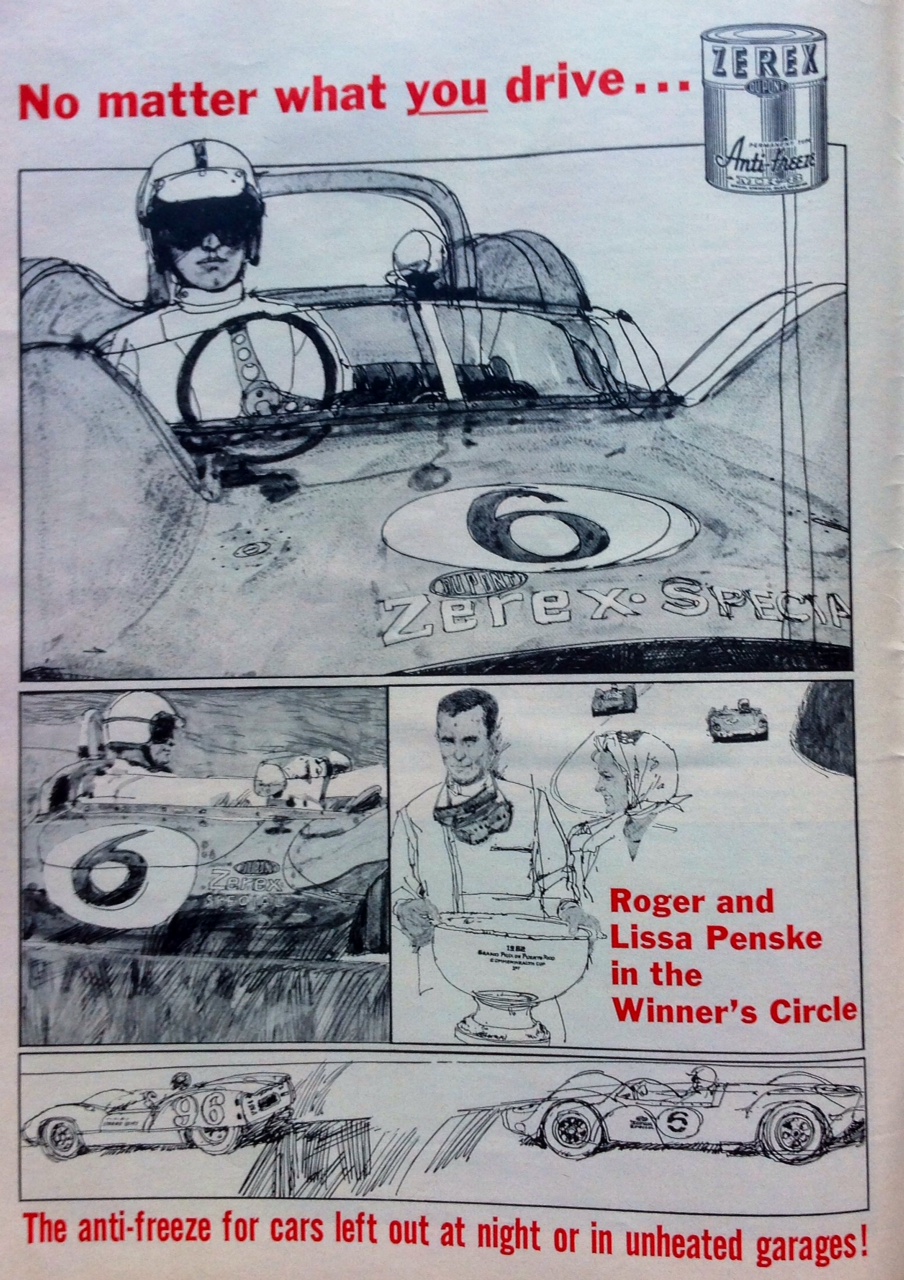
Roger Penske aboard his devilishly clever Zerex Special sportscar in 1963…

By 1962 Penske was a well established competitor. While later his friend and driver Mark Donohue coined The Unfair Advantage phrase in racing, Roger himself contrived a clever plan to develop a very quick sportscar for the lucrative US series.

After careful study of the SCCA Rulebook Penske concluded that while the sports car regulations required said cars to have two seats, the rules didn’t define their dimensions.

Roger’s cunning stunt involved resurrection and fitment of a very small passenger seat and sportscar bodywork to a Cooper T53 Climax F1 car (chassis #T53 F1-16-1) crashed by Walt Hansgen during the 1961 US Grand Prix at Watkins Glen.

Walt was launched over Olivier Gendebien’s Lotus, Olivier having spun and re-entered the circuit right in Walt’s path. Briggs Cunningham, the Cooper’s owner, sold the damaged car to Penske in the ‘Glen paddock less engine.

hansgen cooper

Walt Hansgen Cooper T53 Climax T53 F1-16-1, the Zerex donor car, behind is Penske in his Cooper T53 Climax. US GP Watkins Glen 1961. Both cars 1.5-litre Coventry Climax FPF powered (Ron Nelson)

zerex puerto rico grid

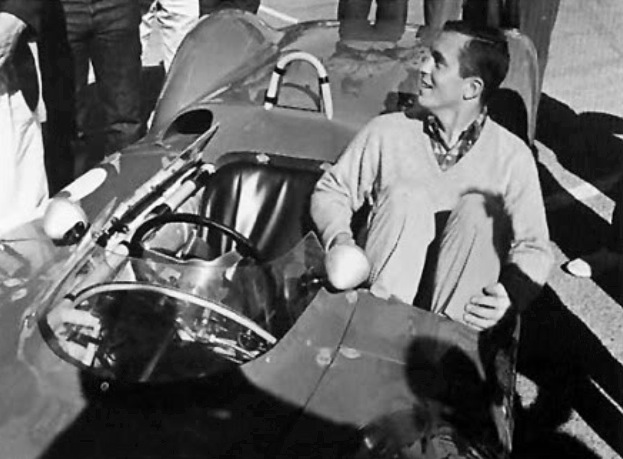
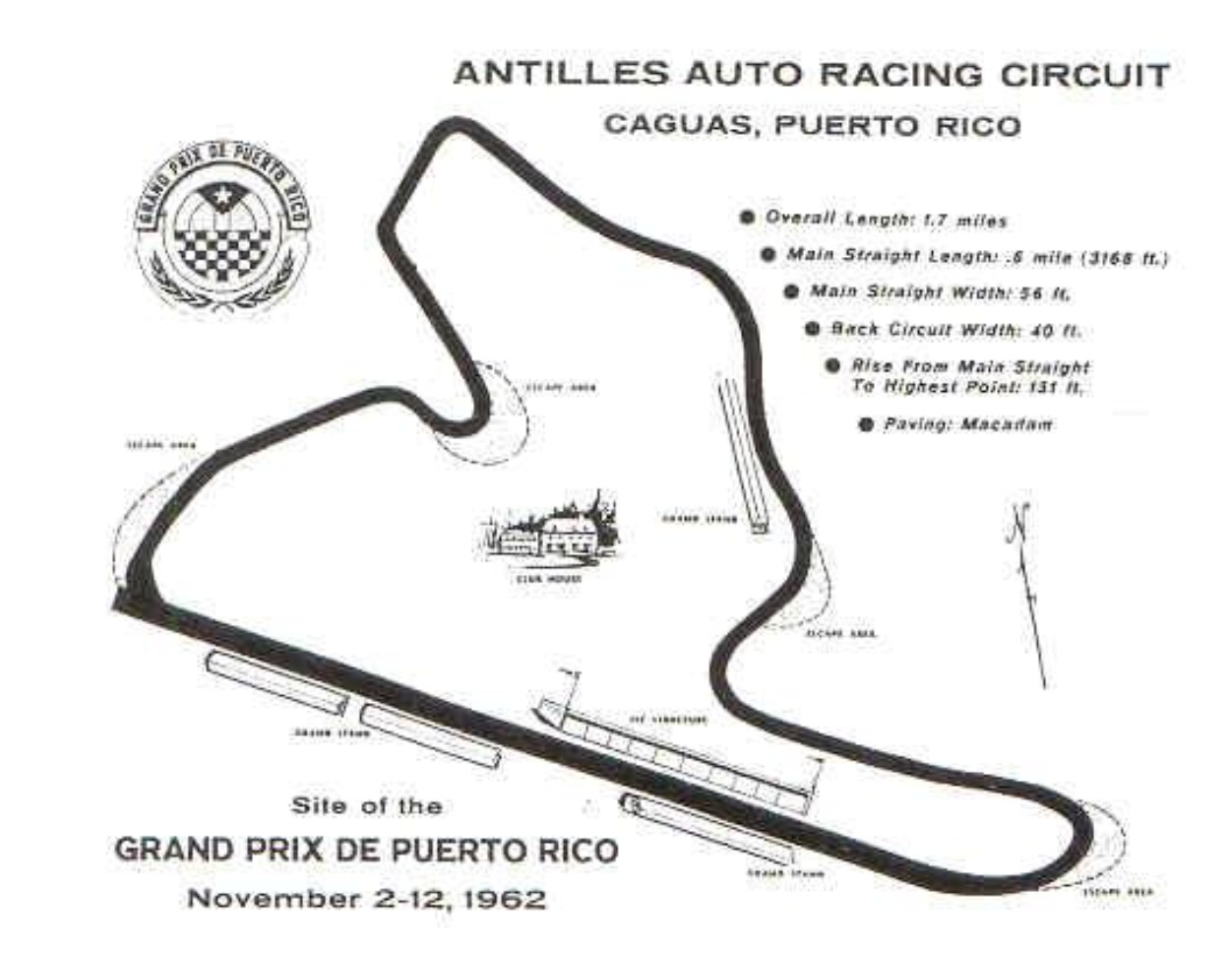
Zerex Climax looking absolutely superb on pole as Penske settles himself into the cockpit for the 200 mile Puerto Rico GP in 1962. He won from Tim Mayer’s Cooper T57 Monaco and Dan Gurney, Porsche 718 WRS (Getty Images)

The car was then repaired, rebuilt and transformed by Roy Gane and Penske himself  by fitting a wider alloy body with round and square tubing and added brackets to support the new body and mini-seat. Its first race, still 2.7-litre Climax FPF powered, was the LA Times Grand Prix at Riverside in October ’62.

It was an International event that attracted the world’s best including Jack Brabham, Graham Hill, Dan Gurney, Innes Ireland and Masten Gregory as well as world class Americans Penske, Jim Hall, Hansgen, Ken Miles, Lloyd Ruby and others.

The Zerex, to all intents and purposes a current GP car with an all-enveloping body, promised to be competitive!

At a distance, even up close, the car appeared to be a single seater in contravention of the rules, as soon as it was unloaded in the paddock the SCCA was deluged with protests.

Watched by a large crowd of media, mechanics, spectators and drivers Penske calmly undid the Dzus fasteners attaching the left side panel to reveal a small, cramped, passenger seat, whereupon the lanky Philadelphian attempted to insert himself into said seat…The car was kosher, legal to the letter of the rules, Penske was canny enough to have the SCCA Chief Technical Inspector see the car when it was being concepted and approve it as being compliant.

penske in car

Nearly in…Penske sees the funny side even if the competition doesn’t before the car takes to the track, LA Times GP 1962 (Dave Friedman)

The car won three events in late 1962; at Riverside during its first race meeting from Jim Halls Chaparral 1 Chev, at Laguna Seca and the Puerto Rico GP.

The Riverside and Laguna races were USAC sanctioned. The car was protested but USAC allowed it to run, but storm clouds were brewing from some very pissed off, wealthy, influential car owners.

la times 62

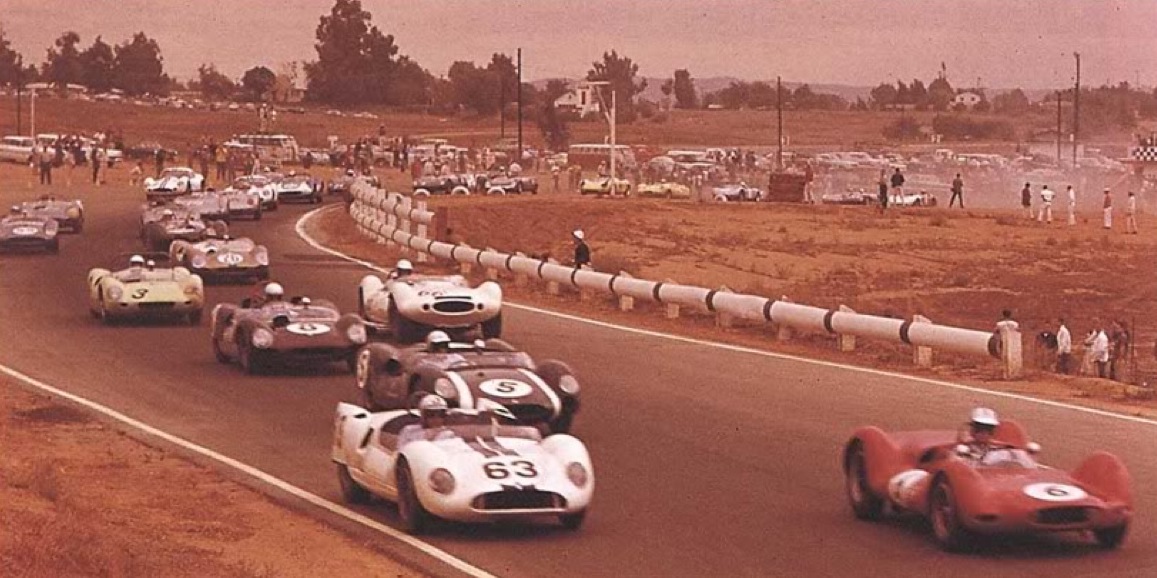
LA Times Riverside 1962. Penske leads # 63, the Hansgen Cooper Buick, #5 McLaren Cooper Monaco Climax, #8 Jerry Grant Lotus 19 Buick, #66 Jim Hall Chaparral 1 Chev, #3 Masten Gregory and #26 Lloyd Ruby both Lotus 19 into turn 1 lap 1. Penske won (Dave Friedman)

zerex pqurto

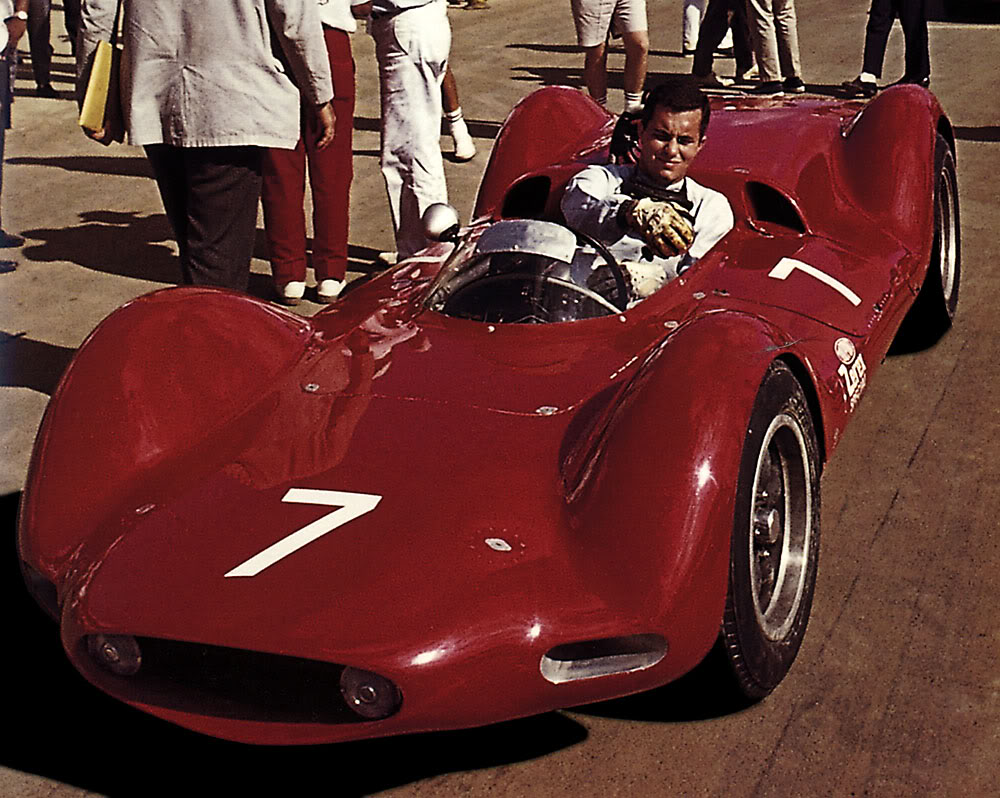
Penske on the grid at Puerto Rico. The car looks simply fantastic, workmanship a treat (Dave Friedman)

pr circuit

In the winter of 1962, the entire chassis centre section was cut, shut and widened by Penske’s team to provide a seat either side of the Zerex centre-line to meet the quickly-tightened 1963 rules…

The car (lets call it Evolution 3 in this form) was sold to John Mecom, the body modified to conform, a new windshield and roll bar was added and the machine repainted in Mecom’s blue and white colours.

zerex in paddock

Zerex in the paddock, circuit unknown in 1963 with full roll bar and space for second seat, offset driving position-Zerex Evolution 3. Climax FPF and CS5 ‘box on display, as are simple brackets to retain the body and truly ‘orrible but seemingly effective curvy frame (unattributed)

The Zerex raced throughout 1963 in this form winning two SCCA national events at Marlboro Motor Raceway and Cumberland. Across the Atlantic it was first in the Guards Trophy at Brands Hatch in August, Roy Salvadori placed second in a Cooper Monaco Climax that day.

mecom owned la times 63

LA Times GP, Riverside 1963. Owned by Mecom, still driven by Penske it was  second to Dave McDonald’s Cooper Ford ‘King Cobra’ (Dave Friedman)

la times 63 penske and macca

LA Times GP ’63. A fantastic 200 mile race initially led by Halls Chaparral, DNF. Here is the later dice between Penske and McDonalds’ Shelby Cooper Ford for the lead, McD prevailed in the 289cid small block Windsor engined Cooper (Dave Friedman)

See this YouTube footage of both the 1963 LA Times GP and 1964 Sebring 12 Hour…

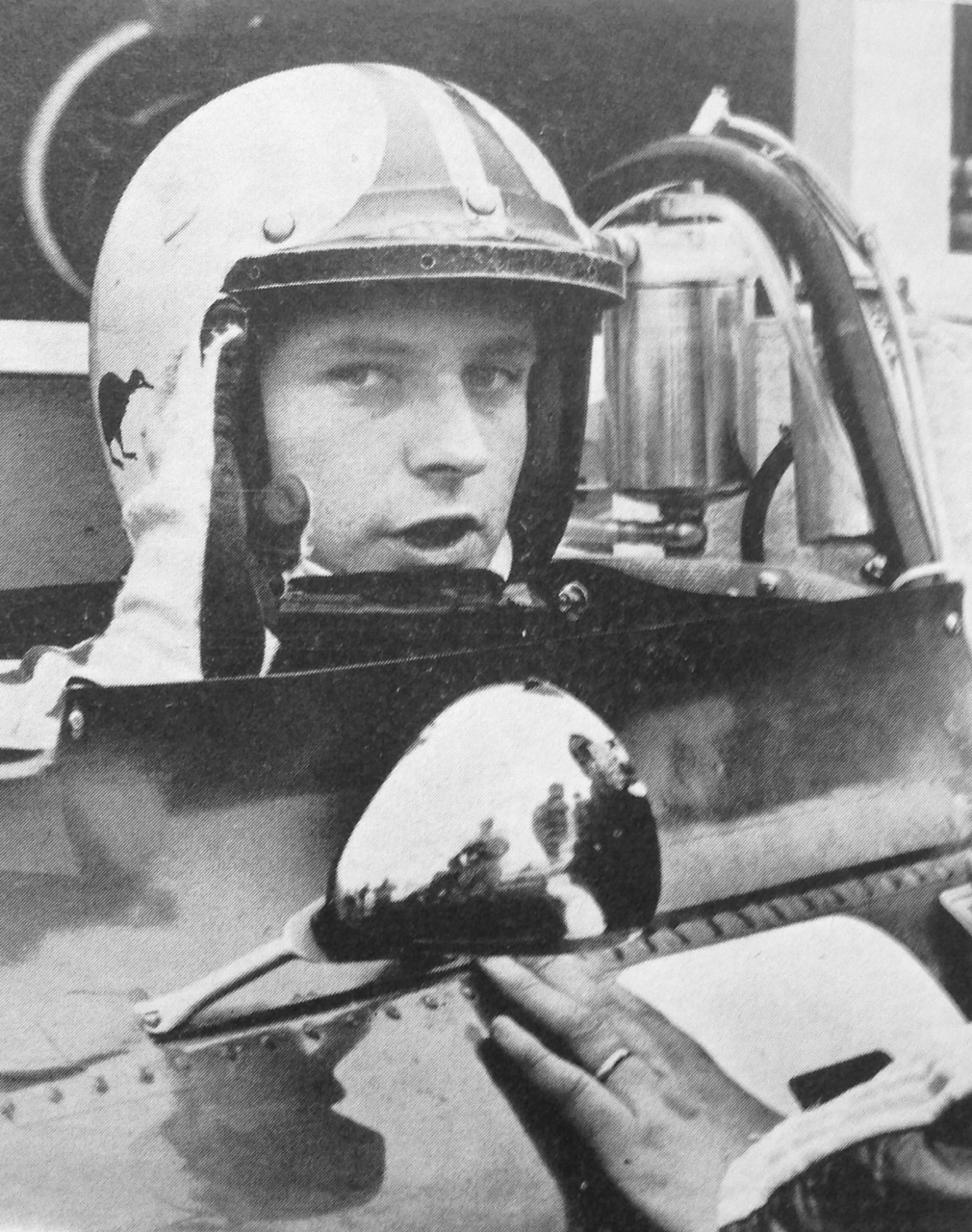
The Zerex is historically significant in that it was sold to Bruce McLaren after Nassau in 1963. It was effectively the first in the long line of very successful McLaren sportscars which became the dominant force in Can-Am/Group 7 racing from 1967…

In 1962 Bruce, a factory Cooper driver, and Penske shared a Cooper Monaco Maserati at Sebring. Bruce later wrote, “After that race I came back to England and asked Charlie Cooper if I could run the sports car side of the Cooper Car Company because I felt sure there was a tremendous market for this type of car to use an American engine for American racing. I was convinced at that stage that sportscar racing was going to really boom providing there were cars available, and that it would be a great market for an English manufacturer. Charlie turned me down flat.”

Penske moved on from the Zerex as it became less competitive. He drove a Chev engined Cooper for Mecom and later a Chaparral before retiring from driving in late 1964, having signed to race for Jim Hall again in 1965.

The Zerex Climax was still sitting in John Mecom’s workshop together with an aluminium Traco modified Oldsmobile F85 engine which had never been fitted to the car. Bruce bought it and shipped it back to the UK, fitted with a 2.7 FPF. The Olds F85 (the block was used in much modified form, as the basis of the 1966 F1 Championship winning Repco Brabham RB620 3-litre V8) was on a pallet.

Bruce raced it with the 2.7 Climax and slightly modified bodywork (Evolution 4 if you like) in the Aintree 200 where he defeated Jim Clark’s Lotus 30 Ford, and in the Silverstone International where he won again, this time from Salvadori’s Cooper Monaco Maserati 5-litre.

aintree 200 sports 64

Start of the 1964 Aintree 200. L-R: #87 John Coundley Lotus 19 Climax, #95 Tony Lanfranchi Elva Mk7 BMW, Jack Sears AC Cobra, Bruce is on the right in the Zerex Climax. McLaren won from Jim Clark, Lotus 30 Ford and Sears’ Cobra (unattributed)

The day after Silverstone Zerex was stripped at Bruce’s new, modest, dirt-floor workshop in New Malden, South London where the chassis rebuilt from just behind the front suspension to just ahead of the rear suspension with a new McLaren designed centre-section welded in. The work was done by Wally Willmott and Tyler Alexander.

In its Penske modified form the car lacked the torsional rigidity to cope with the additional power and torque of the Olds V8. The (Evolution 5) chassis was far stiffer that the Zerex modified frame. The main chassis longerons performed dual purposes as structural members and as conduits for oil and water from the respective radiators to the engine. A Colotti gearbox from one of Bruce’s Tasman Cooper T70s was mated to the Olds engine.

With no time to fabricate a new exhaust system, the car was flown to Mosport with eight stub exhausts poking up through the tail, there he won first time out.

zerex mosport mac laren 64

McLaren victorious upon debut of the (then named) Cooper Oldsmobile with its new chassis centre section and Olds engine. Players 200, Mosport, Canada 1964 (unattributed)

Given the sensitivities about Jack Brabham’s departure from Cooper and construction of his own cars with Ron Tauranac, calling the car a McLaren was not going to wash with Charlie and John Cooper so the hybrid was entered as a Cooper Oldsmobile at Mosport.

Back in the UK he won the Guards Trophy at Brands Hatch in August, then starred at Goodwood’s Tourist when he started from pole, led and set fastest lap before retiring.

With all of his research complete – with the aim of building a McLaren sportscar – Bruce sold the car, via John Mecom and Teddy Mayer to Dave Morgan. The Texan raced it throughout 1965 and 1966 in the US and Nassau. From Morgan the car was sold to Leo Barboza in Venezuela and then on to two other South American owners.

The prototype McLaren M1A Oldsmobile appeared later in 1964, dominance was not too far away!

Continually modified, the hybrid Cooper T53/ Zerex/McLaren Olds maintained its Unfair Advantage for three years…

zerex in venezuela

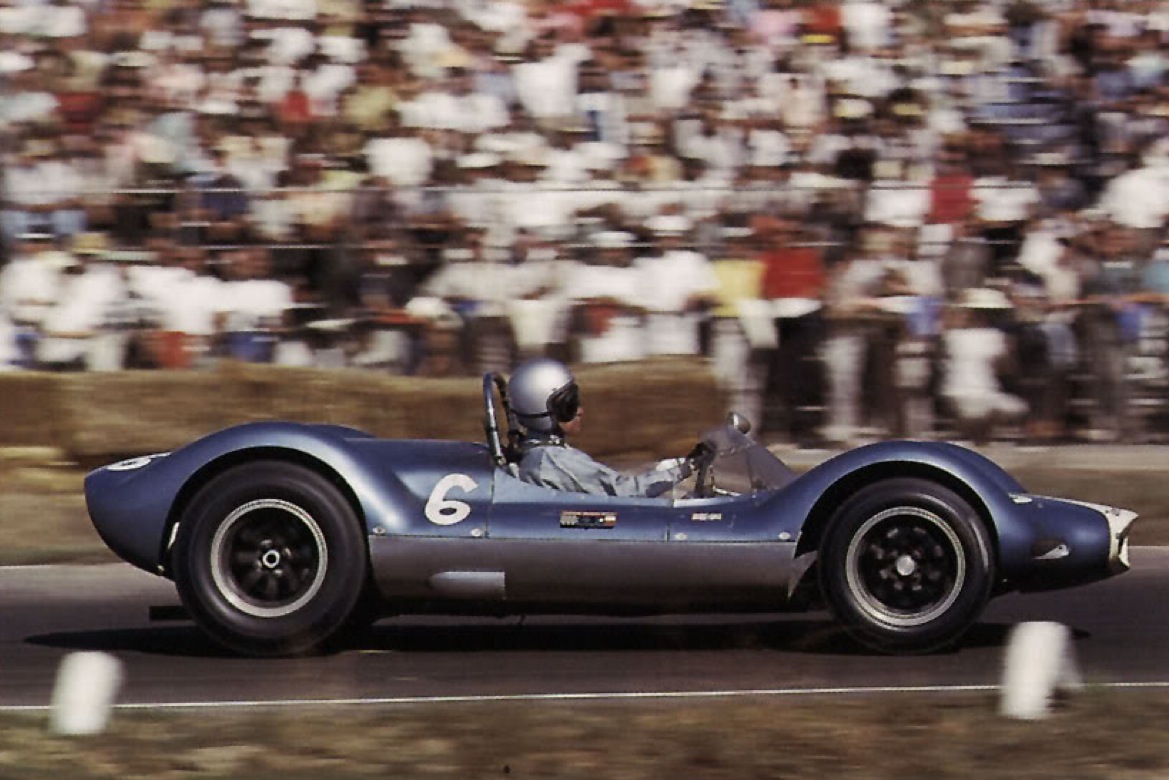
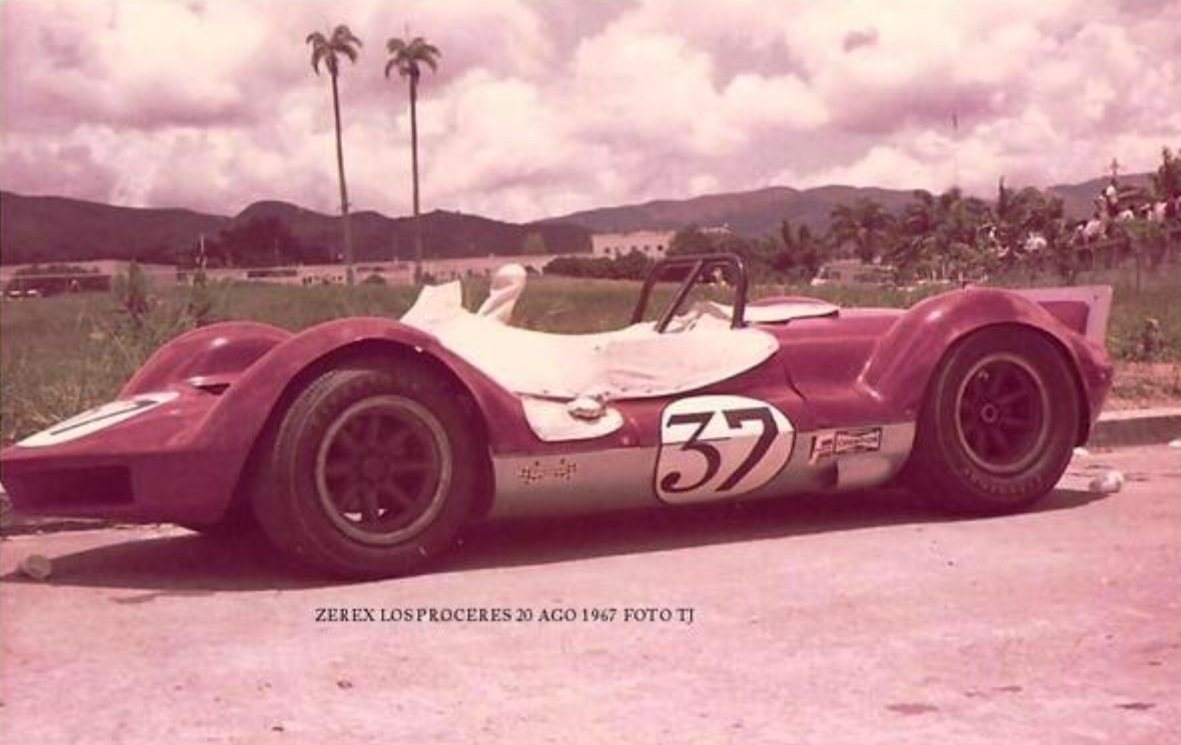
Cooper T53 aka Zerex aka Cooper Olds in Venezuela shortly after its arrival in 1967 (unattributed)

In late June 2022 the Zerex/Cooper Olds was shipped to the UK and is to be offered for sale by Bonhams during the September 2022 Goodwood Revival Meeting.

Check out this Nostalgia Forum Thread for more information and photographs of this wonderful car; Taproot of the McLaren marque – The Nostalgia Forum – The Autosport Forums

Etcetera…

zerex paddock 2

Paddock shot in 1963, circuit unknown. Cooper T53 standard front suspension comprises upper and lower wishbones and coil spring/damper units. Evolution 3 widened chassis and offset driving position, and second full size seat to comply with end of ’62 tightened rules is clear (unattributed)

zerex butt shot

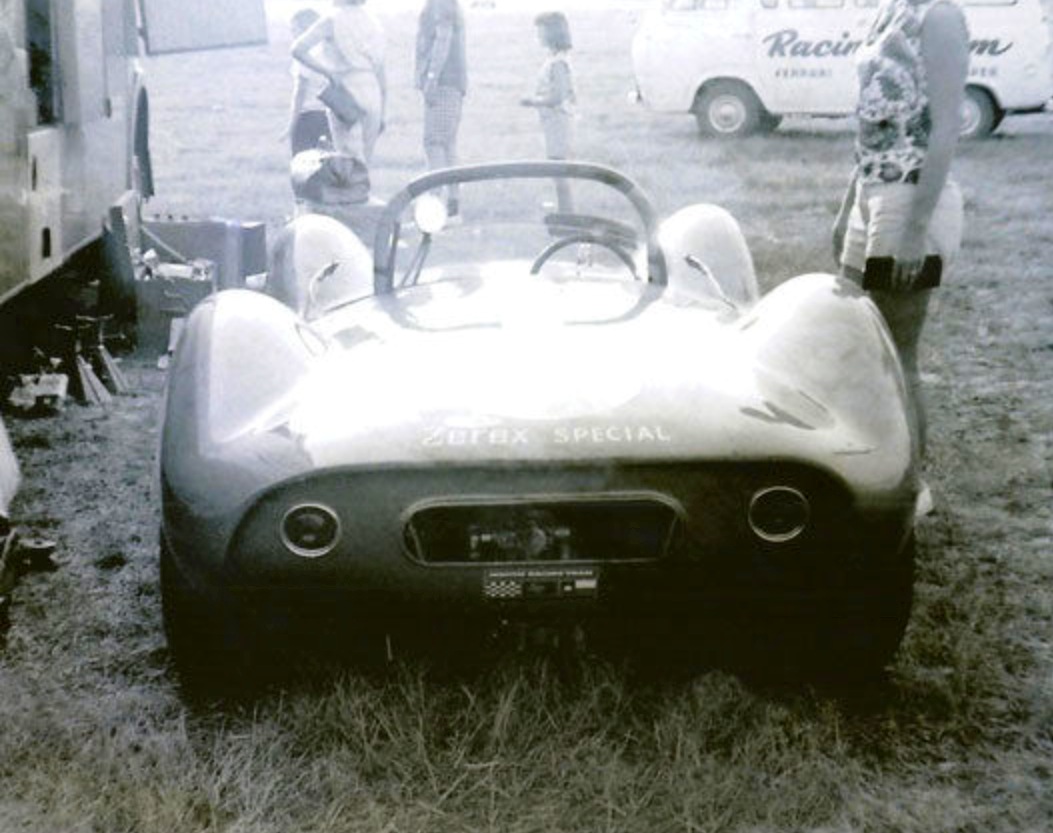
Zerex butt shot in 1963. Beautifully fabricated aluminium body, circuit unknown, Pensacola perhaps (unattributed)

cooper mosport

Mosport ’64 colour shot of Bruce’s ‘new’ Cooper Olds – ain’t she sweet? (Bruce McLaren Trust)

Bibliography and Credits…

The Nostalgia Forum generally and Doug Nye’s posts on topic specifically, Bruce McLaren Trust, MiniWerks Forum. Photos credits David Friedman, Ron Nelson and the Bruce McLaren Trust

Tailpiece…

zerex ad

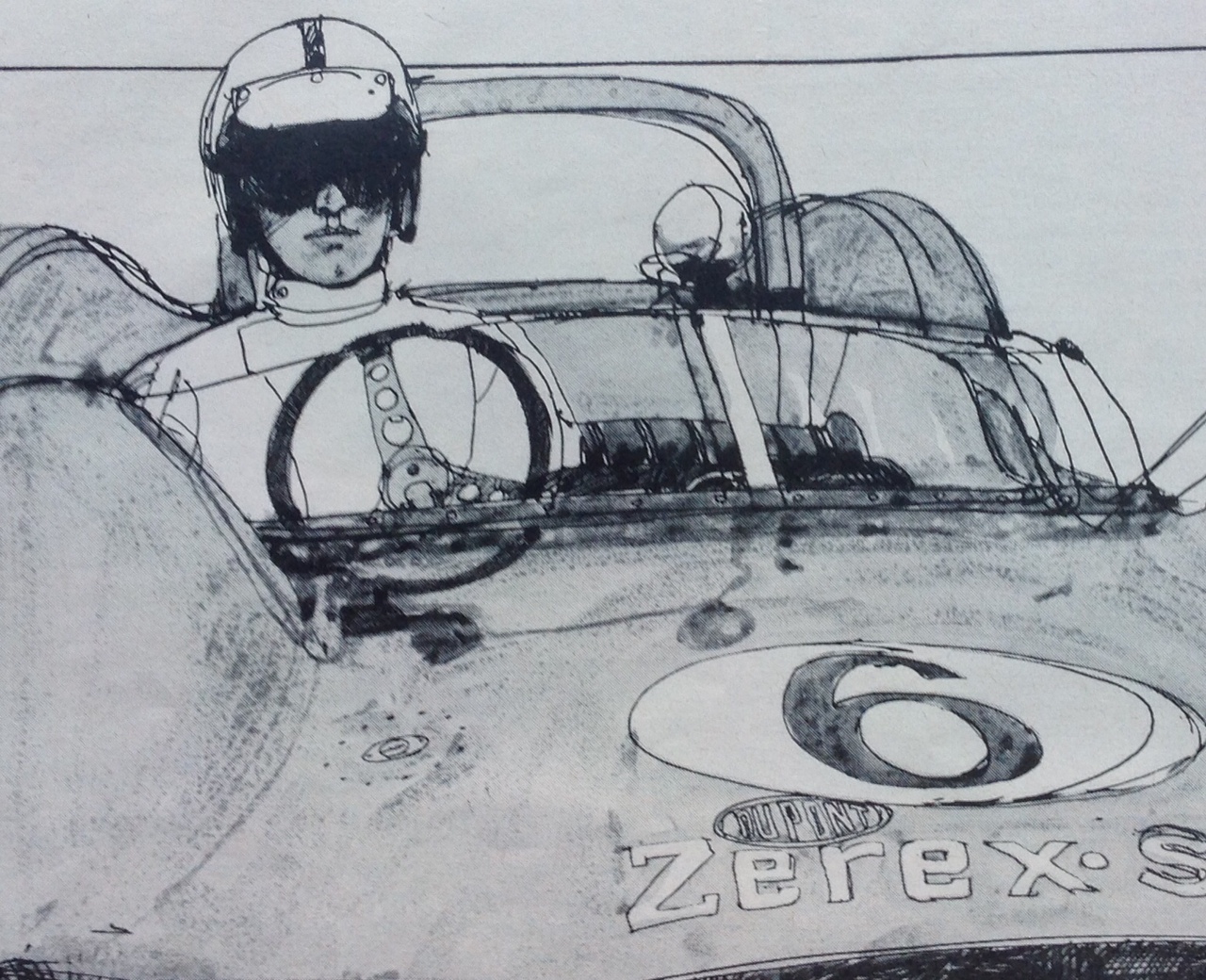
The ad which inspired this article I spotted in a pile of Road and Track magazines I bought. I was well aware of the Zerex Special, if not the infinite detail. The thing I didn’t know or care about was the derivation of the Cooper’s name. Penske secured sponsorship from Dupont to promote their Zerex antifreeze, not a product ever available in Australia, so now I know!

Finito…