Jack and Betty Brabham during the 1954 Australian Grand Prix weekend in the Southport paddock attending to the needs of Jack’s Cooper T23 Bristol.
I’ve done Cooper Bristols to death but these two colour shots of Jack are the earliest I’ve seen – Kodachrome at its best – so I thought I’d pop them up rather than add them to an existing post and effectively lose them.
Brabham had a lousy weekend in Southport, out with engine troubles on lap 2. Lex Davison won the race in his HWM Jaguar after Stan Jones suffered a chassis weld failure that pitched him off the road and through the undergrowth, killing the car but thankfully not its intrepid driver.
Brabham at Mount Druitt, the youngster is a youthful Pete Geoghegan (D Willis)(LAT)
CB/Mk2/1/53 was pretty trick by this stage, where is the photo above folks?
Jack had been racing it for a couple of years and made some modifications – some suggested by British mechanic/engineer Frank Ashby who was then living at Whale Beach on Sydney’s Barrenjoey Peninsula – including fitment of triple Stromberg carbs instead of the usual trio of Zeniths and taking bulk weight off the Bristol engine’s flywheel by adapting a Harley Davidson type clutch as used on his speedcar, and extensive machining. The Stromberg BXOV-1 carbs were lightly modified units of examples fitted as standard to the Holden 48-215.
Stan didn’t have it for long before selling it to Tom Hawkes in time for the 1955 Australian Grand Prix at Port Wakefield.
The rare shot below shows Hawkes in Jack’s old Cooper Bristol #8, with Brabham looking on from car #6, the monoposto Cooper T40 Bobtail Jack built at Coopers for his championship Grand Prix debut at Aintree in the British GP that July. He then brought it home and scored a lucky win at Port Wakefield after top-guns, Reg Hunt, #5 Maserati A6GCM-250 and Stan Jones, #4 Maybach 3 retired.
(E Steet)Hawkes on the way to a DNF in the 1957 AGP at Caversham in the ex-Brabham Cooper T23, now fitted with a Repco-Holden engine (E Steet)
The ultimate spec of CB/Mk2/1/53 was created when Tom Hawkes got his hands on it. He raced it initially as was and then made changes to the suspension, replacing the transverse leaf suspension with wishbones and coil springs, added a slimline body, fitted wider Lukey alloy wheels, and critically, replacing the 2-litre Bristol six with a 2.3-litre pushrod Holden Grey six topped by a crossflow Repco Hi-Power cylinder head and a pair of SU carbs.
Hawkes in the Albert Park paddock, 1956 AGP weekend. Repco-Holden engine, car still fitted with transverse-leaf IFS (NAA)Hawkes ascends Mount Panorama during the ‘58 AGP weekend, note the stance of the car and Lukey alloy wheels (T Martin)
Tom was third in the 1958 AGP at Bathurst – the ultimate Australian power circuit – with the Cooper in this spec behind Lex Davison’s 3-litre Ferrari 500/625 and Ern Seeliger’s 4.6-litre Maybach 4 Chev V8. Sure, Ted Gray, Tornado 2 Chev and Stan Jones, Maserati 250F retired from the lead, but was the best ever AGP finish for a Holden six, a great achievement.
Etcetera…
Brabham and crew at Mount Druitt circa 1953, names folks? (A Cox)(A Patterson Collection)(A Patterson Collection)
John Sherwood and Jack Brabham, perhaps at one of the send-off functions for Jack when he left for the UK in early 1955
Brabham chats to Doug Whiteford on the Australian Grand Prix-Port Wakefield grid in 1955. Cooper T40 Bristol and Talbot Lago T26C.
(unattributed)
This pair of shots show Jack aboard the Cooper T40 Bristol during the January 30, 1956 South Pacific Championship meeting at Gnoo Blas. Brabham was second behind Reg Hunt’s new F1 Maserati 250F with Kevin Neale third in, you guessed it, a Cooper T23 Bristol.
These cars – Type 20 and Type 23 or Cooper Bristol Marks 1 and 2 if you like – were hugely important machines in Australian racing for a decent chunk of the 1950s in original spec and modified from mild to wild…
(unattributed)
Credits…
Old Motor Racing Photographs Australia, Dick Willis, Allen Cox, LAT photographic, Ed Steet shots via David Zeunert, Lex Denniston shot via Tony Johns, Tony Martin, Adrian Patterson Collection
Tailpiece…
Three of the 1954 AGP protagonists on the cover of Wheels magazine in January 1955. Lex Davison’s HWM Jaguar, an ex-Moss F2 chassis fitted with a C-Type engine, Dick Cobden’s ex-Whitehead Ferrari 125 s/c and Jack Brabham’s RedeX Special Cooper T23 Bristol.
Quite why yerd’ put the winner, Davison, on the cover and two DNFs I know not…the answer is probably the timelines in hand-colouring the photographs for a race held on November 7, 1954.
Reg Hunt, Maserati 250F, on his way to winning the Victorian Trophy at Fishermans Bend on February 12, 1956
Context…
Australian motorsport’s governing body was the Sydney based Royal Automobile Club of Australia until 1953 when the Melbourne based Confederation of Australian Motor Sport took over. CAMS Ltd trading as Motorsport Australia (CAMS) still rules the roost today.
One of the CAMS’ rare acts of decision-making excellence was the creation of the Australian Drivers Championship – the Gold Star – from 1957.
Lex Davison, Ferrari 500/625 was the first recipient of the award for points gained in nine rounds spread across all states except Tasmania – remedied in 1958 – on an 8-5-3-2-1 points basis for first to fifth places in each round.
1956 Faux Gold Star Championship…
I’ve thought for a long while that it would be interesting to summarise our elite level Formule Libre racing results by seasons, if for no other reason than when I want to research one thing or another a summary of the competitor set exists. Why not, I thought, extend the idea to calculating notional Gold Star points?
Of course it’s a fucking stupid thing to do as it simply didn’t happen! In the words of that great Australian philosopher, ‘Sir’ Frank Gardner, “If yer’ Aunty had balls she’d be yer’ Uncle”. In other words, deal with what is/was, rather than what isn’t/wasn’t.
But of course CAMS run a who-gives-a-fuck-about-facts (WGAFAF, pronounced ‘woggafaff’) motor racing history model. They don’t recognise the January 1927 Australian Grand Prix at Goulburn as the first AGP, yet we have 1928 and 1937 Australian Grands Prix, apparently, neither of which actually took place then, as officialdom chooses to brand them now. So, in accordance with established Oz-racing fast-and-loose WGAFAF precedent, what follows is a summary of the 1956 Gold Star, Faux Division.
Officialdom awaits the ‘Champion of the Day’ of the 100 Miles Road Race at Phillip Island held on Saturday 31 March, 1928. Oopsie, sorry there were two 100 Mile Road Races that day. The morning one started at about 11am, oopsie again, sorry, B-Class started at about 11am, and D-Class at about 11.05am. The afternoon race, races really, started at about 2.25pm for A-Class and then C-Class at about 2.30pm. All ‘Akin to European GP practice’ is the favoured line of some
The readily apparent State-The-Obvious flaw in my Faux Gold Star award is that as there was no such championship, drivers didn’t enter meetings they may have otherwise if they aspired to win such a title. However, the rich/well-funded in every era raced far and wide beyond their local meetings, this was certainly the case for the 1956 motor trader front runners, so I’m not so sure the top-3 are impacted by this factor.
Some criteria points. I’ve basically followed the equivalent 1956 meetings that CAMS recognised in ’57, even though some of the races are too short, in my mind, to be of championship length. Where there were two Formula Libre races of ‘championship length’ – over 75 miles – at the one meeting, such as the Albert Park Moomba meeting, the longer, feature event prevails. Results are scratch based only. I’m only awarding points for first to fourth placings as those are the records I have. If someone has more comprehensive records, spreadsheet skills and OCD knock yer’ socks off and I’ll update this masterpiece.
Away we go.
Reg Hunt on Gnoo Blas’ Main Straight while the 4.05pm to Sydney gets ready to depart. Maserati 250F (GB.com)
Gnoo Blas, Orange, New South Wales (NSW) : South Pacific Championship : January 30, 1956
This season opening race meeting on the Gnoo Blas road circuit at Orange, 260 km west of Sydney had become Australia’s only international meeting in prior years. The Australian Sporting Car Club always managed to entice a few of the drivers doing a full southern summer season In New Zealand across-the-ditch to the Great Brown Land before they headed back to Europe. As an aside, the Kiwis were five years or so in front of us in the Big Race Stakes.
Our Jack was the only international in ’56 mind you. He raced the 2-litre Cooper T40 Bristol that he built for himself at Surbiton to make his championship GP debut at the British Grand Prix at Aintree in July 1955. Brabham brought the car home at the end of the year, winning the AGP with it at Port Wakefield after frontrunners, Stan Jones in Maybach 3 and Reg Hunt’s Maserati A6GCM/250 (a 2.5-litre 250F engined A6GCM 2-litre F2 car) had problems, then did the Kiwi season and would sell it to Reg Smith before heading back to the UK.
To rub in his advantage, Reg Hunt brought along both the Maserati he raced throughout 1955 and his new 250F on the long tow from Melbourne to Orange, then disappeared into the distance, winning the 27 lap, 100-mile race in the 250F from Brabham.
Stan Jones gave vigorous chase, but blew the 3.8-litre Maybach SOHC six fitted under the long bonnet of Maybach 3 sky-high on lap 22 when 39 seconds adrift of his fellow Melbourne motor trader.
That blow-up proved a defining moment in Australian Motor Racing History of that era as it marked the end of the Charlie Dean/Repco Research/Stan Jones/Maybach period. Repco’s stock of 3.8 and 4.2-litre Maybach cylinder blocks was at an end, so the car couldn’t easily be rebuilt. In any event, Stan realised he needed a Big Red Car to remain competitive, taking delivery of a 250F later in the season. Ern Seeliger created the very fast Maybach 4 Chev V8 of course, it proved to have a surprise or two in 1958-59, but the big-blue Maybach sixes were no more.
Kevin Neal was third in his Cooper T23 Bristol, then came Curley Brydon’s ex-Peter Whitehead – present at Gnoo Blas in the previous two years – Ferrari 166 and then Col James’s MG Special. Jack was a non-resident by then so he doesn’t get Gold Star points for his second place, so we have our top-four below.
1.Hunt Maserati 250F 8 points 2.Neal Cooper T23 Bristol 5 points 3.Brydon Ferrari 166 3 points 4.James MG Special 2 points
End of an era. Jones aboard Maybach 3 – very Mercedes W196’esque in appearance – before the engine let go, South Pacific Championship, Gnoo Blas in 1956 (GB.com)
Fishermans Bend (once Fishermen’s Bend) Melbourne : Victorian Trophy : February 11, 1956
Top guns entered for the 24 lap, 52.8 miles Formula Libre race included Hunt’s Maserati 250F, Lex Davison’s HWM Jaguar (“now with latest D-Type head and Weber carbs” according to AMS), Doug Whiteford’s Talbot-Lago T26C, Stan Jones’ Cooper T38 Jaguar sportscar, Brabham’s Cooper T40, Tom Hawkes Cooper T23 Bristol and Bill Craig’s Alta Holden.
While billed as on international meeting to attract some spillover visitors to New Zealand that summer, the only ‘internationals’ were Brabham from New South Wales and Craig from South Australia…
Hunt romped away, Whiteford’s old T-L, somewhat surprisingly, proved quicker than Davison’s ’54 AGP winning HWM Jag, then Davo spun, while broken throttle linkages accounted for Jones and Hawkes.
1. Hunt, Maserati 250F 8 points 2.Whiteford Talbot-Lago T26C 5 points 3. K Neal Cooper T23 Bristol 3 points 4.W Wilcox Ford Special 2 points
Albert Park, Melbourne : Moomba Meeting – Argus Trophy : March 18, 1956
Albert Park – promoted by the Light Car Club of Australia – hosted a pair of international two-weekend carnivals in ’56: the Moomba meeting in March and Olympic meeting in November/December.
The feature on March 11 was the Moomba Tourist Trophy for sportscars. Tony Gaze won that 150-miler in his HWM Jaguar VPA9, from Bib Stillwell’s brand-spankers Jaguar D-Type and Ron Phillips’ Austin Healey 100S.
F.A.O. Gaze DFC and Two Bars, OAM had decided to retire from racing and sold his HWM and ex-Ascari Ferrari 500/625 to his good mate, Lex Davison before the meeting. Tony had raced both cars in New Zealand that summer together with Peter Whitehead. Davison’s deal included racing the Ferrari in the Argus Trophy, the Formula Libre, 48-lap, 150-mile feature on the following weekend, March 18.
Davo had some serious opposition though, not least Hunt’s 250F and Melbourne haulier, Kevin Neal, who had bought Hunt’s immaculate A6GCM/250. Other expected front-runners included Hawkes’ Cooper Bristol, Stillwell’s D-Type, not to forget Arthur Griffiths, who had bought the ex-Moss HWM Jaguar just vacated by Davison, and Reg Smith in the Cooper Bristol similarly vacated by Jack Brabham.
Somewhat predictably, Reg Hunt won the race in his current model Maserati 250F – one of the great GP cars of any era – from Davison, with Neal, Hawkes and Stillwell third to fifth.
Lex’s old-bus dated back to 1952 – in 2-litre spec it was Alberto Ascari’s main weapon of choice in his triumphant 1952-53 World Championship years – but fitted with a 3-litre DOHC four-cylinder ‘Monza’ engine it proved for several years to have the measure of the fastest cars in the country thanks to a combination of Davo’s speed and almost peerless reliability. Tony Gaze had the Ferrari prepared by Alan Ashton and his AF Hollins crew in High Street, Armadale. He implored Lex to continue the relationship, Davo did so and it was key to his ongoing success with this car.
Reg Hunt from Lex Davison during the Argus Trophy at Albert Park, March 1956. Maserati 250F and Ferrari 500/625 (D Meale)
Port Wakefield, South Australia : Easter Saturday : March 31, 1956
Not all the serious boys spent Easter at the traditional Bathurst fixture, some contested the 50-lap, 65- miles Wakefield Trophy at Port Wakefield, South Australia: Tom Hawkes, Cooper T23 Bristol, Kevin Neale, ex-Hunt Maserati A6GCM/250, Ted Gray, Tornado 2 Ford, and Derek Jolly, Decca Mk1 Climax FWA Spl included.
The weekend feature was for the 20 fastest cars. Soon after the start, the race developed into a Cooper and Maserati duel a lap in front of the rest of the field. Hawkes, in a great performance in the slower of the two cars, won from Neal’s Maserati, Ron Phillips’ Austin Healey 100S and TE Stevens, MG TC Spl.
Interesting are the top speeds recorded on Century Straight (all mph): Gray Tornado Ford V8 110.5, Neal Maserati 2.5 108.5, Hawkes Cooper Bristol 2-litre 104.7, Eldred Norman in the legendary Norman Zephyr Spl s/c 102.5, Murray Trenberth, Vincent 1000, 100, and Eddie Perkins, VW Spl s/c 99.5
The 26-lap, 100-mile handicap, Bathurst 100 had a huge field, “more entries from interstate than Bathurst has seen for some time” wrote Australian Motor Sports. Stan Jones and Jack Brabham weren’t at the meeting, Maybach 3 was dead and Stan’s 250F hadn’t arrived, while Jack had returned to the UK.
The handicap was won by Davison from Hunt, Bib Stillwell, Jaguar D-Type, and Paul England’s Ausca Repco-Holden. To be consistent, Gold Star points are awarded for the scratch results: Hunt, Maserati 250F, Lex Davison Ferrari 500/625 3-litre, Stillwell D-Type, and Tom Sulman’s Aston Martin DB3S.
1.Hunt Maserati 250F 8 points 2.Davison Ferrari 50/625 5 points 3.Stillwell Jaguar D-Type 3 points 4.Sulman Aston Martin DB3S 2 points
Port Wakefield Road Races : South Australian Trophy : June 4, 1956
Stan Jones took delivery of his Maserati 250F in May, demonstrating it in an untimed run at the Geelong Sprints meeting on May 27, Port Wakefield was chassis #2520’s Australian baptism of fire.
Other fast cars which took the trip to the desolate, wind-swept permanent race track included Davison, Stillwell and brilliant, intuitive Adelaide engineer, Eldred Norman in his Norman Zephyr Spl s/c. Most significantly, Ted Gray was present in the Lou Abrahams owned, Gray/Mayberry Bros/Abrahams built Tornado 2 Ford. Tornado 1 Ford died a terrible death at the October ’55 Bathurst meeting, Tornado 2 was a new car using few of T1’s bits, amongst the exceptions were the Ford Ardun/Abrahams fuel injected OHV V8 and Ford truck ‘box. Ted was ok after a very long convalescence too.
At this point of 1956 the key machines of Australian Formula Libre racing from 1956-59 were in place: the two Maserati 250Fs, Davo’s Ferrari and Tornado 2…two-litre Coopers were still to come.
Held in a big rainstorm, the 30 lap South Australian Trophy race, early on was a close contest between Stillwell – pretty comfy in his Jag sportscar – with Stan all over him, but unable to pass and see…
Davo spun on lap 3, so too later in the race did Gray, although another column in AMS says Ted didn’t even start the race due to a broken CV joint… The race was won by Stillwell from Jones, Norman and ??
Somewhat prophetically, Bob Pritchett wrote in the July 1956 issue of Australian Motor Sports, “Who said Ted Gray’s Tornado Special doesn’t handle. Ted was, I think, the only high-powered operator who did not spin off in the meeting (the guy that wrote the race report sez otherwise!) and in winning the A-grade scratch race 6-lapper, held Stan’s Maserati for four laps until Stan spun off in the wet.”
In the same column, Pritchett reported that Tom Hawkes was considering a Maserati four to get more speed out of his Cooper T23 Bristol, that engine being at the end of its development potential; a Repco-Holden Grey shortly thereafter provided a potent and more cost-effective solution.
Similarly, he mused about the possibilities of Maybach 3, “by dropping in one of those 300-plus USA V8 monsters that are now available.” – the very path followed by Ern Seeliger, and Ted Gray with hot 283 Chev Corvette V8s being popped under the bonnets of Maybach and Tornado before too long.
Yes, the little-tacker in the lower shot is Alan Jones. He has recounted over the years his disappointment in finding Dad’s new, red Italian car was a Maserati and not a Ferrari! Bob Chamberlain at left Bob King thinksTed Gray from Stan Jones during their Port Wakefield scrap in June 1956. Tornado 2 Ford V8 and Maserati 250F; plenty of scraps to come from this pair from 1956-59. Gray’s experience went all the way back to giving Peter Whitehead and ERA R10B a run for their money at Aspendale and Rob Roy in 1938 aboard a speedway-midget
Lowood Airfield Queensland : Lowood Trophy : June 3, 1956
“Queensland Racing Drivers Club conducted this year’s ‘Lowood Trophy’ meeting in typical Queensland winter sunshine, before a crowd of about 6000. The 2.7-mile circuit was in good condition…34 entries was received, including eight from NSW…” recorded AMS.
Top guns included Arthur Griffiths’ ex-Davison HWM Jaguar, Ken Richardson’s ex-Whiteford Talbot-Lago T26C, Steve Ames aka Count Steve Ouvaroff ex-Davison Alfa Romeo P3, John Aldis’ ex-Whitehead/Jones Cooper T38 Jaguar and Arnold Glass’ Maserati 4CL; it wasn’t a great entry of modern cars.
The 12 lap, 32 miles Lowood Trophy results were as follows:
1.Griffiths HWM Jag 8 points 2. S Mossetter Austin Healey 100S 5 points 3.R Weintraub Healey Silverstone 3 points 4.J Johnson MG TC 2 points
Bathurst : NSW Road Racing Championships : September 30, 1956
A crowd of 8-10,000 people fronted up to cold, blustery conditions for the second traditional Bathurst meeting a year, October fixture.
While Stan Jones was present to sharpen his skills in advance of the Australian Grand Prix two months hence, Lex Davison and Reg Hunt were notable by their absence, ‘preserving the machinery’ or whatever.
Bill Pitt was there in the Geordie Anderson/Westco Motors Jaguar D-Type and Jack Myers in the WM Special, a much-modified (by Myers, a highly skilled Sydney mechanic-cum-engineer) Cooper T20 fitted with a Waggott-Holden twin-cam, two-valve circa 200bhp ‘Grey’ six-cylinder engine.
Handicaps were still prevalent, if not the norm in Australian racing, with the 26 lap NSW Road Racing Championship (Racing Cars) no exception. Jones set a new lap record of 2min 44sec without being hard pushed. While ‘J Archibald’ (who was he?) won the handicap classification in his MG Spl, the scratch results and Gold Star points allocations are as follows:
Fishermans Bend, Melbourne : Astor Trophy : October 14, 1956
You might think the Victorian Contingent would be out in force in advance of the rapidly approaching AGP, but not so. While Hunt, Whiteford, Neal and Gray were present, Davison and Jones were AWOL.
Then, having satisfied himself that his 250F was all tickety-boo in a 5-lapper, Reg Hunt didn’t take the start of the start of the 24-lap, 52.8-mile Astor Trophy feature.
While Kevin Neal’s Maserati A6GCM/250 was a far quicker car than Doug Whiteford’s – relatively new to him, but geriatric – Talbot-Lago T26C, there was no way Neal was going to beat the aggressive, cagey, vastly experienced triple AGP winner! Ted Gray and Owen Bailey were/are the other recipients of Gold Star points aboard Tornado 2 Ford and ex-Whiteford Talbot-Lago T26C respectively: third and fourth placings.
“Tell him, he’s dreamin…’ Count Stephen Ouvaroff aka Steve Ames offers his ex-Scuderia Ferrari/Davison Alfa Romeo P3 chassis #50003 for sale, £895 is the ask. In 2024 dollars that is $A32,700, the value of a P3 is, however, in the ‘your guess is as good as mine’ categoryMoss Mastery – high speed drift at Albert Park, Maserati 250F, AGP December 1956
1956 Australian Grand Prix : Albert Park : December 2, 1956
120,000 people watched 22 starters contest the ’56 AGP held in the afterglow of Melbourne’s staggeringly successful Olympic Games.
Furriners included a five-car squad from Officine Maserati: three 250Fs and a pair of 300S (sportscars for the Australian Tourist Trophy contested and won by Moss from Behra the week before) for works drivers Stirling Moss and Jean Behra, while Peter Whitehead and Reg Parnell raced their 3.4-litre Ferrari 555s.
Moss disappeared into the distance, winning the 80-lap 250-miles race in 2hr 36min 15.4sec, over two minutes ahead of Behra, then came Peter Whitehead.
The battle-within-the-battle was a local Melbourne Holden Dealer Derby – Davo’s farming and shoe making interests duly noted – between the 250Fs of Reg Hunt and Stan Jones, and Lex Davison’s Ferrari 500/625.
Graham Howard points out in his 1956 chapter of the ‘History of The Australian Grand Prix’ that “It was to be, surprisingly, the first encounter of the Hunt and Jones’ 250Fs, and Davison – at that stage the only driver to beat the Hunt 250F – was also there in his Ferrari.”
“Hunt and Jones had, to be strictly correct, lined up against each other the weekend before, in a short sprint race in the supporting program to the Tourist Trophy, but it had been inconclusive. With Hunt on pole position and Jones right beside him, the race had an explosive start as Jones – ‘jockeying for position’, as AMS discreetly termed it – hit the kerb and then a tree on Hunt’s side of the course within a hundred metres of the start. The car was fortunately not too badly damaged and was ready for the AGP the following weekend.”
At the start of the Grand Prix, Moss led from Behra, the Whitehead and Parnell Ferrari Super Squalo’s, then the Trident Trio: Hunt, Neal and Jones. Davison was slowed by engine maladies.
By lap 5 Jones was behind Hunt, and after two fast laps, passed him, where he stayed – with Hunt pacing himself behind – for 35 laps, “With both driving with a concentrated ferocity, which was almost tangible – no errors, no let- up, certainly no smiles.”
When Stan’s Maserati started to blow smoke from under the bonnet, he eased on lap 40, gifting his place to Hunt. Post-race the problem was disclosed as a broken breather.
The Gold Star points go to the fifth, sixth, seventh and eighth placed local finishers:
Reg Smith competing at Templestowe hillclimb outside Melbourne in May 1956. His Cooper T40 Bristol was Jack’s ’55 British GP car and AGP winner. He can’t have been enamoured of the Cooper, replacing it with one of Officine Maserati 300S sold at the end of the ’56 AGP weekend
Gold Star Championship Points and Observations…
Drum roll…the winner of the 1956 Australian Gold Star Faux Championship is Reg Hunt, Maserati 250F, with 40 points, well clear of Kevin Neal’s 21 points gained with Cooper T23 Bristol and Maserati A6GCM/250, then Stan Jones, third on 18 points in his new 250F. Fourth was Whiteford, Talbot-Lago T26C 15 points, then the Davison Ferrari 500/625 on 13 points with Bib Stillwell sixth, on 11.
What does it all prove? Absolutely sweet-f-all, but I enjoyed it, which is all that really matters here.
I wish I could show you a neato little points chart or a spreadsheet of results for the year but I don’t know how to do those, so this hand-job will have to do, a remedy with which many of you will be familiar. Since publishing this, Stuart Murray – bless him – has done the vastly better spreadsheet which appears further below.
In my mind I’ve long thought Reg Hunt was the rock-star in 1955-56 aided and abetted by having The Best Equipment in the country in those two years by far. I’ve not done this exercise for 1955 yet to further prove the point, I’ll get around to it some time.
Having ‘came, saw, and conquered’, Reg retired from racing at the end of the season, aged only 33, to focus on his family and in building a staggeringly successful motor-dealership empire centred on his ‘Golden Mile of Cars’ in Brighton, Melbourne. He returned to historic racing in the 1980s with a Maserati 300S and Talbot-Lago T26C and died just shy of 100 on August 22, 2022.
Fellow Melbourne motor trader and later four-time Gold Star champ, Bib Stillwell bought the Hunt 250F (chassis #2616) but couldn’t resist the temptation of a factory freshen-up, so didn’t see it for the best part of 12 months. It’s a long boat ride between Port Melbourne and Genoa and back, and Maserati had bigger fish-to-fry, not least a World Championship to win with JM Fangio at the wheel of factory 250F’s.
At the end of ’56 the stage was set, the key players in 1957 seemed likely to be Jones, Davison and Gray with a tight contest likely given all three were well-funded ‘pro-outfits’ by Australian standards of the day. In the end Davo’s Ferrari 500/625 crushed the opposition with five Gold Star wins in nine rounds, a story for another time…
Credits…
Australian Motor Sports all 1956 issues, ‘Bathurst: The Cradle of Australian Motor Racing’ John Medley, ‘The History of The Australian Grand Prix’ edited by Graham Howard, ‘A History of Australian Grand Prix 1928-1939’ John Blanden, VSCC Victoria Collection, David Meale-Collections Victoria, gnooblas.com, Paul Cummins/Cummins Archive, Stuart Murray
Tailpiece…
(Cummins Archive)
Champions cockpit…the 1958 one’s actually – Stan Jones’ Maserati 250F chassis #2520, not Hunt’s #2516.
Paul Cummins wrote, “On the back of the photo it reads – this is the cockpit of Victorian racing driver Stan Jones’ new 2 1/2 litre ‘250F’ model Maserati which he has just imported from Italy. When that revolution counter shows 7800rpm his engine is developing 270hp giving a speed in excess of 165mph. It is expected to be the fastest car in Australia. It cost £7,200, but with freight cost and spare parts (including a 3-litre 300S engine), the actual landed cost is expected to be nearly £12,000.”
“The Maserati which will be using Mobilgas Racing Fuel and Mobiloil exclusively was built in October last year (1955) and taken to South America for the Argentine Grand Prix Season, but it was never raced. Stan Jones will race it for the first time at Port Wakefield South Australia on 4 June.”
Veglia instruments, right-hand shift for the 5-speed transaxle, note the far-left clutch location given Stan sits astride the driveline tunnel – Jones has clearly specified a ‘conventional’ right-hand throttle and central brake setup.
Finally, while Maserati’s bullshit story to Stan may have been that #2520 was a new car, in fact it was slightly shop-soiled. It had been raced as a works-car by Froilan Gonzalez at Buenos Aires on 22 January 1956 (DNF) and by Pablo Guile at Mendoza on February 5 (eighth).
The nose of the car as landed in Australia in the earlier arrival photographs rather suggests the car was shipped straight from South America rather than via the Modena paint-shop. What is in no doubt is that 250F #2520 has one of the simplest, most straight-forward histories of all Maserati 250F’s, so too does #2516 for that matter.
Stan Jones wins the 1954 Victoria Trophy at Fishermans Bend in his shortlived, brand new Maybach 2, 21 March 1954…
Regular readers may recall the feature on Stan, Alan’s dad and a champion in his own right a while back. There are not many photos of Maybach 2 as it was only raced briefly before Stanley comprehensively destroyed it after a chassis weld failure, at the ’54 AGP at Southport on Queensland’s Gold Coast.
Jones raced Maybach 2 at Easter Bathurst, then Altona, Victoria on May 2 and at Fishermans Bend in October before that fateful November weekend. Still, he was lucky not to lose his life in the high speed trip backwards through the Southport scrub and trees.
The beauty of these online blogs is that you can continually update them as you find new shots, this set are so good I thought it worth a fresh post.
Davison in his new HWM Jag (VHRR Archive)
Maybach wasn’t ready for the Victoria Trophy preliminary on Saturday, but contested the 64 mile feature eventon the airfield circuit in Melbourne’s inner west.
He took the lead from Lex Davison’s HWM Jaguar before the first corner. Davos’ original intention was to fit the HWM with the engine from his Alfa Romeo P3, the complexities of that undertaking with the straight-eight, supercharged engines central power take-off were immense! He therefore fitted the HWM with a Jaguar engine topped by a C-Type head, the car was victorious at Southport in November winning the first of Davison’s four AGPs.
It was Jones’ Victorian Trophy though, he lapped the field, leading Jack Brabham’s Cooper T23 Bristol over the line by three miles.
Davison #3 HWM Jag, Ted Gray #8 Alta Ford V8 and Brabham’s obscured Cooper T23 Bristol. Fishermans Bend 1954 (VHRR Archive)
Arthur Wylie in the Wylie Javelin ahead of Brabham’s Cooper Bristol. Victorian Trophy 1954 (VHRR Archive)
Silvio Massola’s HRG, Fishermans Bend 1954 (unattributed)
Etcetera…
(The Age)
Stan won in 1953 too.
Here he is, two happy chaps Ern Seeliger at left, again at Fishos, on this occasion Ern had prepared Maybach. But he was also a racer as well as an engineer, famously adapting Maybach 3 to accept a Chev V8 creating, you guessed it, Maybach 4.
A very talented man, little has been written about him and the products of his Richmond workshop, a great future topic.
If the 1938 Australian Grand Prix at Bathurst was our first international event, by virtue of visiting Brits Peter Whitehead and his ERA B Type, and Alan Sinclair, Alta 1,100 s/c, our second international, and first of the modern era, was the South Pacific Championship at Gnoo Blas held in January 1955.
Peter Whitehead liked the place so much he came, saw, and conquered again, just as he did seventeen years before at Mount Panorama, albeit the 1955 field had a bit more depth that of 1938.
Peter and Tony Gaze raced Ferrari 500/625s, Bira a Maserati 250F with the better equipped locals Dick Cobden’s Ferrari 125 and Jack Brabham’s Cooper T23 Climax. Kiwi’s John McMillan and Fred Zambucka in Alfa Romeo Tipo B and Maserati 8CM respectively came across the ditch but both cars were too long in the tooth as was Tom Sulman’s Maserati
Non starters were Reg Hunt, short of parts for his new Maserati A6GCM, and Lex Davison’s HWM Jaguar
This shot isn’t kosher, it was staged for Modern Motor magazine but is still a cracker showing the Whitehead Ferrari, Brabham Cooper off to the left and Jack Robinson’s Jaguar Special aft of Peter. Further back is the unmistakable shape of a Bugatti, perhaps the John Hall Holden engined Type 37.
The grid on Huntley Road. From left, Jack Brabham, Cooper T23 Bristol, John McMillan, Alfa Romeo Tipo B, Peter Whitehead, Ferrari 500/625 and Jack Robinson, Jaguar Special (unattributed)
(unattributed)
This group of wonderful colour photographs were taken by George Causbrook, an Orange electrician who worked at the time for Tom Barrett, owner/driver of the #97 MG TF.
Barretts Milk was a successful local business with a factory/depot including an airstrip. Causbrook’s family, the Beasleys, made available the shots to the Gnoo Blas Classic Car Club from whom I have shoplifted them, with thanks!
George had a fine eye, his colour shots of this challenging road course help us understand better its nature sixty years after the final Gnoo Blas meeting.
Ted Gray is shown below fussing over his brand new Lou Abrahams owned Tornado 1 Ford, just finished in Gray’s workshop in Melbourne.
By the October Bathurst meeting the team were starting to get the new beast sorted, but a huge accident in practice destroyed the car and came close to killing its plucky driver who took six months to recover from his injuries. See here for Tornado; https://primotipo.com/2015/11/27/the-longford-trophy-1958-the-tornados-ted-gray/
(unattributed)
(unattributed)
T Borrer’s VW Beetle entered in the production car race, October 1954 meeting.
The sportscar race grids (October ’54) seemed to be particularly well supported, with T Jordan’s 2.4-litre Riley-engined Healey Silverstone, Austin Healeys, #90 W Kelly and #104 Robert Page Jaguar XK120s in the shot below.
(unattributed)
(unattributed)
The ‘pretty boy’ with the Ray Bans in the XK120 is none other than local Cake Shop proprietor Bill Kelly, he would be as in fashion at an historic meeting in 2020 as he was in 1955!
Clearly there was plenty of money in pies and lamingtons in the fifties.
(unattributed)
The great Eldred Norman’s least favourite car was this 1937 Maserati 6CM 1.5-litre six cylinder Voiturette.
Chassis ‘1542’ was originally raced by Franco Cortese throughout 1937, but the going was tough against the dominant ERAs. The machine then made occasional appearances as part of Ciro Basadonna’s various teams both pre and post-war. It was imported to the UK for Gilbey Engineering in 1947, Colin Murray raced it in the UK throughout 1949 and 1950 then brought it to Australia to contest the Narrogin 1951 AGP before its sale to Norman.
When the engine blew shortly thereafter Norman fabricated a steel block and cast detachable bronze heads then cobbled together Fiat 1500 conrods and BSA pistons when Maserati originals were unavailable. Eldred raced it for a year or so before he sold it to Edward David ‘Ted’ McKinnon who finished fifteenth in the 1953 Albert Park AGP.
‘1542’ then passed to Eddie Thomas briefly, before Albury’s Seaton Brothers bought it in poor shape, they solved the engine reliability issues by fitting a Holden Grey six-cylinder unit. In this form Jack Seaton ran it and Ken Cox raced it on the country tracks of Victoria between 1957-1959.
Stephen Dalton places the above shot as during the October 1954 Gnoo Blas meeting with Tom Sulman the driver. Ted Gray was entered but he has been crossed off Stephen’s program and Sulman substituted- well familiar with Maseratis.
The car went through a variety of hands before passing to Doug Jarvis, then some years later to Alf Blight, a talented engineer who did a great job over a decade with its restoration, it left Australia in the early eighties.
(unattributed)
Tom Barrett, now racing a Triumph TR2 during the January 1956 meeting. I wonder if he caught it?
The fences to catch the wayward or unfortunate at ‘Mrs Muttons Corner’, the intersection of what is now Bloomfield and Huntley Roads, are clear and poignant in the context of Ian Mountain’s fatal accident during January 1955.
Stan Coffey, Cooper T20 Bristol, at Windsock Corner ‘due to the location of the old windsock when the Orange Aerodrome was in Jack Brabham Park during October ’54. The picture is looking towards Applebar/Pybar. The area that is now Leewood is in the background to the right, and in the middle of the background one can see what is now Blowes Road when it was dirt!’
Our friend Tom Barrett in the MG TF ‘at what is now the intersection of Huntley Road and Leewood Drive, where the level crossing now is’ and a special entering, the high speed Connaghans corner.
(unattributed)
Mr Barrett and MG TF.
Credits…
Modern Motor, Stephen Dalton
George Causbrook via Deidre and Brett Beasley and the Gnoo Blas Classic Car Club Facebook page
Brabham’s Cooper T23 Bristol was billed as the fastest car of its type in the world as a Jack’s ongoing development of it with Frank Ashby’s advice and mentoring off to the side.
These images from the Brabham Family Collection were taken at Mount Panorama during the Easter 1954 meeting, the start of the A-Grade scratch race.
Jack’s T23 being tended by Keith Holland in the white overalls and Arthur Gray of Belshaw Foundry in the blazer (Brabham Family)
Len Lukey’s Cooper Bristol, Mount Druitt, NSW, in May 1958, having set FTD at 13.53 sec for the standing quarter (J Ellacott)
‘Now that really is a beautiful looking racing car! Wotizzit I wonder’, the young gent seems to thinking…
The smartly attired chap is surveying the lines of Len Lukey’s Cooper T23 Bristol at Mount Druitt in Sydney’s west in May 1958. Len Lukey was both a champion driver and successful businessman, founding ‘Lukey Mufflers’ in the 1950s, a brand still respected today.
Melbourne-born, Lukey started racing relatively late, aged 32, having established and built Lukey Mufflers from its Nepean Highway, Highett base. Generations of enthusiasts are aware of his name because of the original equipment and performance exhausts and mufflers he produced. No lowered, worked EH Holden with wide chromies and twin SUs was complete without the distinctive Lukey logo being displayed on its exhausts for following traffic to know its performance intent.
Lukey started competition in the Victorian hills with a side-valve Ford Mainline Ute, Australia’s ubiquitous workhorse down the decades. It was in this car at the opening Altona meeting in 1954 that he frightened the life out of Stan Jones in Maybach when he spun whilst coming through The Esses, the car looking all the while as though it had lost its way transporting a load of mufflers from Highett to Williamstown. The competition regulator, the CAMS, frowned upon the use of such utilitarian vehicles in racing, so he switched to the first of a series of Ford Customlines.
Len Lukey, Ford Customline, Rob Roy, 1957 (B King)Equipe Lukey during the 1959 AGP weekend at Longford, Cooper T45 Climax: unknown, Neil Marsden, Helen Lukey, Claude Morton and Len Lukey (Jock Walkem)Awesome shot at the start of the 1959 AGP at Longford, showing not least how narrow the track was then. The old start line was on The Flying Mile towards Mountford Corner. Winner Stan Jones has the jump in his Maserati 250F, then Len, partially obscured in his Cooper T45 Climax, then Arnold Glass, Maserati 250F, Doug Whiteford, Maserati 300S, Ron Phillips, Cooper T33 Jaguar, Alec Mildren, Cooper T45 Climax and the rest (unattributed, I’d love to know the name of the photographer)
It’s interesting to review the stunning march of touring car domination of Australian motor racing and look at the role Len Lukey had in its rise. Australian Motor Sports had this to say in its January 1960 issue, ‘…there can be no doubt that by tuning these massive cars to the highest possible pitch, Len Lukey started the ball rolling towards the day when the term production car racing became such a farce that a special Gran Turismo Class had to be instituted’.
Lukey had some spectacular moments as he learned his craft, a trip through the hay bales at Albert Park and a lucky roll at Phillip Island, there was no rollover protection in those days, both were lucky escapes.
The car was timed at 106mph at Gnoo Blas, Orange in 1956, beating both Jack Myers and the Aldis Bristol. His dices against Jack Myers, the Sydney Holden driver, were crowd pleasers in the way Geoghegan/Beechey battles were a little further down the track.
He soon took hillclimb class records at Rob Roy, Hepburn Springs and Templestowe, all in Victoria.
Both Myers and Lukey progressed into single-seaters via Cooper Bristols. In Lukey’s case, his ascent to the top was quicker than just about any Gold Star winner, and then, he almost immediately upon achieving the prestigious award in the longest ever season, 12 rounds in five states, retired as a competitor but remained in the sport as a circuit owner and sponsor.
Team Lukey during the 1957 AGP weekend at Caversham- Customline and Cooper T23 Bristol (K Devine)
Lukey commenced racing the ex Reg Hunt/Kevin Neal Cooper Bristol in 1956…
He was ninth in the ‘Olympic’ Australian Grand Prix won by Stirling Moss at Albert Park in a works Maserati 250F.
In the 100-mile Victorian Trophy race he was fifth behind Davison’s Ferrari 500/625 3-litre, Brabham’s Cooper Climax, Doug Whiteford’s Maserati 300S and Tom Hawkes’ Cooper T23 Holden, it was an auspicious open-wheeler debut. He started a campaign to contest the Gold Star the following year- the first time the Australian Drivers Championship had been contested.
The season commenced at Caversham, 16km from Perth, held in searing heat and famously won, after much argument about lap-counting, by Davison’s Ferrari, which was shared by Lex and Bill Patterson. Len was fourth in a fast, reliable run in the Cooper. He was fifth at Albert Park and then late in the season scored two thirds in the New South Wales Road Racing Championships at Mount Panorama and in the Port Wakefield Trophy held at the South Australian circuit in rough bush country 100km north-west of Adelaide.
He set Australian National Speed Records in both the Cooper – 147.4mph and the Customline at 123.3mph – outside Coonabaraban in north-western NSW in 1957.
The Cusso was timed one way at 130mph, the car that weekend was festooned with masking tape, shields over its headlights, an enclosed radiator and sealed doors and boot to squeeze every bit of speed from the beast. Len had to enter the car through the windows; safety was again very much to the fore!
The car which ran at Coonabarabran was a new shell, but all the learnings and good bits of the earlier one were transferred across. Len raced it for a further year before being selling it to Melbourne driver Owen Bailey but it was badly damaged in an accident at Albert Park in 1958, Bailey’s first meeting in it.
On the way to winning the South Australian Trophy, Gold Star round at Port Wakefield in April 1958, Cooper T23 Bristol (unattributed)Lukey at Albert Park during the Melbourne GP in November 1958, Lukey Bristol, Jaguar Corner. ‘Vanwall-esque’ nature of the body clear if not as beautiful in execution (B King)Len Lukey is being congratulated by Derek Jolly for his second place in the October 1958 Victorian Road Racing Championship at Fishermans Bend. Lukey Bristol, Ted Gray won in Tornado 2 Chev (K Drage)
Its amazing to compare and contrast the short four or five round Gold Star contests of later years with the more arduous nature of the series earlier on, particularly given the standard of Australian highways then.
The 1958 award was contested over nine rounds, starting at Orange in New South Wales, from there to Fishermans Bend in Melbourne, then south across Bass Straight to Longford, to Port Wakefield north of Adelaide in South Australia, then two rounds at Lowood, Queensland, in June and August. So I guess depending upon other race commitments, one could leave your car up north, then to Mount Panorama, Bathurst in New South Wales for the Australian Grand Prix in October and then, finally, two rounds in Victoria- Albert Park in November and Phillip Island in early December.
The 1959 Gold Star was held over a staggering twelve rounds, and so it was that Len committed himself to a couple of serious tilts at the title in 1958-59, the lessons learned in 1958 were applied with great success the following year when he won the title.
Len was third in the opening South Pacific Championship round at Gnoo, Blas Orange in January, Jack Brabham won that event in his Cooper T43 Climax but was ineligible for Gold Star points as a non-resident.
Back home to Victoria, Len was fourth at Fishermans Bend in February and fifth in the Longford Trophy in March. Stan Jones won at the Bend and Ted Gray at Longford in the big, booming Chev Corvette 283cid V8-engined Tornado 2.
He scored his first splendid Gold star win in the South Australian Trophy at Port Wakefield in April, winning from Austin Miller’s Cooper T41 Climax and Keith Rilstone in the amazing Zephyr Special s/c.
Then followed a long haul back to Melbourne to ready the car and then a 1650km tow to Lowood Queensland for the two rounds held on the disused airfield circuit.
He bagged a pair of thirds in the Queensland Road Racing Championship at Lowood in June and the Lowood Trophy in August. Alec Mildren won both of these events in his Cooper T43 Climax, with Len looking lovingly and with considerable longing for one of these mid-engined cars, an aim he would realise before the year was out.
Lukey had developed his own thoughts on how to improve the performance of his Cooper and built a new spaceframe, high-bodied chassis, the ‘Lukey Bristol’, into which the mechanicals of the factory car were fitted.
Ready for the AGP, the car was taken to Bathurst but finished a distant sixth, two laps in arrears of Lex Davison, Ern Seeliger and Tom Hawkes aboard a 3-litre Ferrari 500/625, a 4.6-litre Maybach 4 Chev and a 2.3-litre Cooper T23 Holden-Repco, respectively.
The last two rounds of the championship were back in Victoria, he was fifth in the Melbourne Grand Prix, an exciting race weekend in which Stirling Moss and Jack Brabham scrapped at the front of the field in 2.2-litre Cooper T45 Climaxes, the race won by Moss from Brabham then Doug Whiteford’s Maserati 300S, Bib Stillwell’s ex-Hunt Maserati 250F and then Len.
Lukey was quickly in discussion with Brabham about the purchase of the Cooper T45, the very latest of Surbiton’s machines at the time, and would soon have the 2-litre Coventry Climax FPF-engined machine in his workshops, providing him with the tool to do the job in 1959.
Len was still active on the hills, winning both a new NSW sprint record and FTD at Mt Druitt in 13.53 seconds; this article’s opening photo is at that meeting. In July, he spun at the end of Rob Roy when the throttle jammed open. Len was thrown from the car before it rolled to a halt, but it was a lucky escape.
The final Gold Star event was the Phillip Island Trophy on Boxing Day but Len spun the Cooper in a preliminary event, damaging the car’s suspension enough to non-start the championship race. The Coad brothers sportingly lent him their Vauxhall Special but the car was outclassed, with Lukey third in the Gold Star with 21 points, then Alec Mildren on 23 with Stan Jones deservedly taking the title with 31 points. Stan won two rounds at Fishermans Bend and Phillip Island and was third on three occasions- Gnoo Blas, Longford and the first of the two Lowood rounds.
The Lukey boys push the Cooper T23 Bristol thru the Longford paddock in March 1958, behind is the Lou Abrahams owned, mighty Tornado 2 Chev, victorious that weekend (HRCCTas)Len and Stan Jones on the cover of the March 1959 issue of AMS in recognition of a marvellous AGP dice resolved in Jones’ favour 1959- Cooper T45 Climax from Maserati 250F
After Brabham contested three New Zealand internationals in early January 1959, Lukey bought the car from Jack. It was fitted with a 2-litre FPF rather than one of the 2.2s Jack had been using. These engines were rare with the full 2.5-litre variants built around new blocks being readied back in Coventry for Cooper, Rob Walker and Lotus’ use in F1 that season – rather successfully so as events transpired.
In 1959, as mentioned above, the Gold Star was contested over 12 gruelling rounds, between 26 January and 14 June, the halfway mark of the season, those on the title chase travelled from their home base, to Orange, then Fishermans Bend, Longford, Port Wakefield, Bathurst and Lowood – Victoria, Tasmania, New South Wales and Queensland, with an arduous second half of the season still to come.
The competition was strong, Len and Alec Mildren raced Cooper T45s, Bill Patterson a T43 with Stan Jones the other racer who had committed to most of the rounds, racing his Maserati 250F, Maybach 4 Chev and later in the season he took delivery of a Cooper T51 Climax as did Bib Stillwell, David McKay and Austin Miller but the latter trio did not race across the continent in the manner Len, Alec and Stan did.
In much the same way that the new-fangled Coopers were challenging the front-engined orthodoxy in Europe, so too, of course, was the case in Australia, albeit there was no surprise at the speed of the Coventry Climax-engined cars, given the giant-killing nature of the air-cooled Coopers since the first appearance of one at Bathurst in the dawn of the 1950s.
Only two points separated the Cooper T45 Climax duo of Lukey and Mildren at the seasons end – Len won the title with 68 points to the Canberra motor-dealers’ 66.
Mildren won three rounds, Fishermans Bend and the two Lowood rounds mid-season, whereas Len won two- at Caversham and the last round at Phillip Island when the pressure was well and truly on. The Cooper’s differential failed during Saturday practice. Len did not have a spare; Noel Hall did, but it was affixed to his car, which was in Sydney. Jack Myers removed the gearbox and popped it onto a plane, the precious cargo was collected from Essendon Airport and then taken to Phillip Island where it was fitted to the car. The machine was finally ready about an hour before the off. Lukey led from the flag and on the final lap equalled the lap record, a memorable win indeed.
Alan Jones quizzing Lukey about the handling characteristics of his Cooper. Otto Stone, racer/engineer/mechanic and fettler of the Stan Jones Maserati 250F at the time, is to the right of Alan, and Stan is at the far right but one in the white helmet ready for the off, Phillip Island 1959 (unattributed)Lukey and Jones scrapping through Longford Village, AGP 1959, pub corner. Cooper T45 and Maserati 250F (oldracephotos.com)
Stan Jones won two rounds as well, notably the Australian Grand Prix at Longford after a race-long dice with Len. It was a classic battle of the time between the powerful front-engined 2.5-litre Maserati and the more nimble, but less powerful 2-litre Climax-powered Cooper. There was a bit a karma in Stan’s race win as no-one in the field, other than Mildren, deserved an AGP win more and Alec’s time came twelve months afterwards after an even more thrilling dice between Lex Davison’s 3-litre Aston Martin DBR4/300 and Mildren’s 2.5-litre Cooper T51 Maserati at Lowood.
Jones also won at Port Wakefield in March in the big, booming Maybach 4 Chev, stepping back into the car he vacated two years before when he acquired his Maserati 250F. His friend and engineer, Ern Seeliger had replaced the SOHC straight-six Maybach engine with a Chevy V8, and made other changes to what had been called Maybach 3. There was something a bit poetic about a Maybach taking one last win this late in the piece, given the front-running nature of this series (of three or four variants of cars, depending on how yer do your count) of cars for the best part of a decade.
Bill Patterson, like Mildren and Jones had a very long race CV which he enhanced in 1959 with two wins in his Cooper T43 Climax – arguably a quicker driver than Mildren and Lukey, if not Jones – Patto was also in a run to Gold Star victory, his turn would come in 1961 aboard a Cooper T51 Climax the year after Mildren.
Single round wins that year were taken by Jack Brabham, taking his traditional win at the season opening Gnoo Blas South Pacific Championship before heading back to the UK and by Kiwi Ross Jensen’s Maserati 250F in the prestigious Bathurst 100 at Easter, but neither qualified for Gold Star points as non-residents.
Bib Stillwell was the other round winner in his new Cooper T51 Climax at Bathurst in October. Bib was perhaps the slowest of all of this generation to mature as a driver at the absolute top level but he won four Gold Stars on the trot from 1962 to 1965 with a blend of speed, consistency and the best of equipment.
What was impressive about Lukey’s ’59 win was his relative inexperience against the fellows he beat, all of whom had fifteen years to a couple of decades on him in race experience, but it was a close-run contest. That year, a driver could only count their scores from nine of the twelve rounds. Len and Alec scored in ten rounds apiece; both had to drop a round – both discarded three points, and so it was after a long, intense year of racing criss-crossing the vast brown land that Lukey won from Mildren by only two points. Amazing, really, but the CAMS learned the lesson and the event was never held with that many rounds again.
Lukey only raced once more, in the 1960 NZGP at Ardmore and then sold the car to concentrate on his business interests.
It was a good performance too, seventh on the grid amongst all of the 2.2 and 2.5 litre FPFs but it all came to nothing after undisclosed dramas after finishing 36 of the events 75 laps. Brabham won from McLaren, Stillwell and Jones – two Cooper 2.5s from two Cooper 2.2s rather put the state of play at the time into sharp relief.
No photoshop here, Jones and Lukey during their 1959 Longford AGP dice getting some serious air as they cross the railway line on the outskirts of Longford village on Tannery Straight (C Rice)Left to right, Lukey and Mildren in Cooper T45 Climaxes and Bib Stillwell in his new T51 at Caversham in October 1959- Len took the win (K Devine)(B King)
Whilst Lukey retired from competition to focus on his business, he remained a friend of motor racing until his untimely death in 1978…
He provided financial support to various competitors, not least Jack Brabham. The works F1 Brabhams of the 1960s used Lukey exhaust systems right into the 1966-67 championship-winning Brabham BT19 620 and BT24 740, all of the works F1 cars were fitted with Lukey exhaust systems.
Look closely at the rear of one of the Brabham BT24 Repco 740s during the 1967 GP season in the photograph below, and you can see the Lukey Mufflers made exhausts on the car, and the company name on the chrome-plated exhaust endpieces.
In 1962 Len acquired a Holman Moody built Ford Galaxie ‘R Code’ 406cid four-door which was raced initially by Lex Davison, Len no doubt encouraging his purist racing car friend in the direction of the ‘dark side’. The shot below is of Norm Beechey racing the machine against Max Volkers’ Cortina at Lowood in August 1964, I wonder who got the better of this encounter in the wet? The Galaxie still exists.
(B Thomas)Brabham BT24 Repco during the 1967 season (unattributed)
The 1962 Armstrong 500 (miles) production car race resulted in extreme circuit damage to the Phillip Island track. The Phillip Island Auto Racing Club (PIARC) could not afford to repair the bitumen out of meagre club funds, and as a consequence, the track sat idle for two years.
During the initial track fund raising a decade before, Repco and Olympic Tyres supported bank guarantees for PIARC to a value of £17,000. Without funds to service the loan, no race meetings and therefore no income, Repco and PIARC made the regretful decision to sell The Island property.
Shortly thereafter Lukey was chatting to racer/enthusiast George Coad at Essendon Airport whilst awaiting a plane. Upon learning from Coad that PIARC was forced to sell the facility, Lukey immediately rang the clubs President and offered to buy it for £13,000.
As part of the deal, Len imposed a condition on the club that racing be revived. Lukey would develop the property and PIARC re-build the track and facilities and run four events a year for ten years. Lukey had a passion for the island and the circuit but also knew what it would take to revive and run the place having been a PIARC committee member some years before. PIARC paid Len $2 per year in rent.
The first public race meeting was held three years later in September 1967. The circuit was sold again after Lukey’s death and is now the wonderful facility we all know and love, without Lukey’s timely investment it would not be there today.
The Lukey brand hasn’t been in family hands for decades but lives on as a wonderful reminder of its founder, a great driver of both touring cars and single-seaters, a lifelong enthusiast and supporter of the sport.
Love this shot of the Cooper T23 Bristol during the 1956 AGP weekend at Albert Park, the machine is getting plenty of attention. Finned drum brakes and top transverse leaf springs, front and rear, clear (G Smedley)
These big barges occupy a lot of real estate and did no harm at all to attract the punters. Touring cars were on the rise, sadly, even in 1956. Len Lukey from Norm Beechey in Ford Customlines during the 1956 AGP carnival. Is the Holden 48-215 on the right front below that of Jack Myers?
(unattributed)
Cooper T23 Bristol..
(unattributed)(B King)
Lukey’s Cooper T23 Bristol blasts past the Army Barracks at Albert Park during the 1956 AGP, and below the cockpit of the immaculately prepared Cooper at Templestowe Hillclimb in Melbourne’s east.
(B King)
Doug Nye wrote the history of the 1953-built Cooper Mk2 Bristol chassis on The Nostalgia Forum in 2003. Nye lists ’11 (ish) to 12 (ish) chassis. The Lukey car is ostensibly ‘CB/9/53’.
‘1953 ‘5’ The Tom Cole Mk2 – in effect totally destroyed in fire at Syracuse
1953 ‘5B’ The Tom Cole Mark 2 rebuilt as above around a fresh frame, driven by Swaters, Cole, Graham Whitehead – to Dick Gibson – sold to Australia, probably Reg Hunt. (Reg Hunt’s Mark 2- alleged sold NEW in 1954) for Kevin Neale in Australia – to Len Lukey – Frank Coad – Eddie Clay – Ken Cox – Peter Menere – Jumbo Goddard, and to Tom Wheatcroft for The Donington Collection. But this was surely in reality the ex-Tom Cole second Mark 2 of 1953…ex-Gibson’ Nye wrote.
(B King)
Gardening at Templestowe circa 1958, no harm done by the look of it.
(A Lamont)
It would have been a wild ride around Longford, mind you, the forgiving nature of the Cooper Bristol chassis would have made it slightly less challenging than some other cars of the day.
This wonderful shot is during the 1958 Gold Star meeting in March, the first ‘national’ Longford meeting won by Ted Gray in Tornado 2 Chev.
(unattributed)
Len at Albert Park, guessing 1957, who and what is that behind him?
(B King)
Lukey Bristol...
(unattributed)
Lukey heads up the Mountain, Mount Panorama, during the 1958 Australian Grand Prix in October. He was well and truly outgunned in his new Lukey Bristol, which had made its race debut at the previous Lowood Gold Star round, on a circuit that rewards power and a forgiving chassis.
The Lukey Bristol was an evolution of the factory product, but lighter with a chassis designed by Lukey. It had a more enveloping body, clearly influenced by Frank Costin’s Vanwall design, and used castings made and machined in Melbourne. The engine from his Cooper Bristol was used; the new machine also had a transverse leaf rear end like the original.
It was advertised for sale in this form, as were the various components and fibreglass body panels. Bob King believes three of the chassis were built: the Lukey Bristol, Faux Pas and a third. Both cars mentioned are in the hands of David Reid.
(Miller Family)
The photograph above and below are of the construction of the Lukey Bristol at right, with the Cooper T23 at left denuded of its constituent parts, at the Lukey factory in the Nepean Highway.
Note the rifle on the wall to scare off late night intruders, ‘chicky-babe’ calendars on the wall and robust spaceframe chassis, who the artisans are would be great to know.
Things have progressed in the shot below with a rear suspension corner, straight off the T23 soon to be bolted on, transverse top leaf spring carried over, the chassis clearly lower and wider than the original.
(Miller Family)(B King)
The page above is included for the section about the ‘Lukey Mufflers Chassis’ and related components. I was going to crop and then thought, let’s all read it and weep – Frank Shuter’s Maserati 8CM will do me!
The ad makes mention of both front and mid-engined chassis availability, the former were of the type used on the Lukey Bristol, the latter built off a jig created from the Cooper T45 chassis. One of the Cooper experts will be able to hazard a guess as to how many chassis were built using this jig, it was not the only T45/T51 jig in Australia, either!
(B King)
Len Lukey, Lukey Bristol chase Bib Stillwell’si 250F during the 1958 Melbourne Grand Prix; they were fourth and fifth, ex-Hunt Maserati respectively. Stirling Moss won the race in a Rob Walker Cooper T45 Climax from Brabham’s similar car – the chassis bought by Len at the end of the summer, and Doug Whiteford’s Maserati 300S. Look at the lean of the heads into the corner and the relative roll of the Lukey Bristol compared with the Maserati.
(unattributed)
Winning at Part Wakefield in the Cooper Bristol in 1958 and contesting the 1958 AGP at Bathurst the same year, he was sixth. The #56 car behind is Bill Reynolds in the Orlando MG Spl 1.5 – Murrays Corner.
(B King)
More Australian Motor Sports, this time incorporating the ad for the sale of the Lukey Bristol.
Cooper T45 Climax...
(G McNeill)(unattributed)
Lukey rounds Stonyfell Corner, Port Wakefield, South Australia, in the 1959 Gold Star round- Cooper T45 Climax. The shot below was taken during the Fishermans Bend Gold Star round in early 1959.
(unattributed)
Information about this car is a bit opaque, like so many Coopers of the period, but the story goes something like this. Chassis T45 F2-10-58 was believed to be a factory machine raced by Jack Brabham until it was damaged at the 1958 Moroccan Grand Prix.
It was acquired by Jack after being rebuilt around a new frame, brought to Australia and raced to second place behind Stirling Moss’ similar Rob Walker owned car in the 1958 Melbourne Grand Prix at Albert Park, the last race meeting held at the celebrated circuit in its first iteration as a motor racing venue.
Jack then took it to New Zealand to contest the 10 January Ardmore NZ GP, again finishing second behind the Walker/Moss T45. He was second at Wigram and third at Teretonga behind Ron Flockhart, BRM P25 and Bruce McLaren’s Cooper T45 Climax and then headed back to Europe, Len acquired the car at this point.
The car was then bought by Melbourne’s Jon Leighton, who raced it successfully for a couple of years, albeit the competition got pretty tough with so many 2.2 and 2.5-litre FPF engine T51 Coopers on the scene.
It passed into the hands of Melbourne Architect Richard Berryman, then later to Len Lukey’s widow, the car was an attraction at the Phillip Island museum for many years during the long period the Lukeys owned the track, and was occasionally raced by Keith Lukey, Len’s son.
Robert Shannon, founder of the insurance business well known in Australia was the right kind of owner sensitive to the car and it’s importance. I recall speaking to him about it during Melbourne City Chamber of Commerce meetings on several occasions.
After Robert’s sudden death by heart attack, Ron Walker, ‘father’ of the Albert Park Australian GPs of today, owned it, did nothing with it, and then rather blotted his local copybook by selling it via Bonhams in the UK. It would have been rather nice if the Cooper, with such a significant Australian history, had been advertised locally and stayed here.
Do contact me if you can assist in filling the gaps.
Cooper T23 Bristol Today…
In June-July 2025 Guy and Harry Plante – father and son – custodians of the ex-Lukey Cooper T23 got in touch with the following information and photographs.
‘The Cooper Bristol was purchased by me (Guy Cape) in 2014 in the UK from Bob Gilbert, who bought it from the Tom Wheatcroft Museum. TW was friendly with a gentleman called Jumbo Goddard, a Bentley man who lived in Sydney, who sourced the car for him in Australia to then put in his UK museum.
(G Plante Collection)
When I bought the car, it was painted in Aussie colours, yellow and green ( I have pictures). Having researched its previous life before going to Australia I learned that the first owner was Tom Cole, a British – American racing driver, who, with his parents moved to the US the day before WW2 broke out. Cole raced a Cadillac-Allard J2 with the marque founder Sydney Allard, Cooper T23s and later a Ferrari 340MM in which he was later killed at Maison Blanche in Le Mans.
I returned the car to Cole’s Atlantic Stable racing team colours whilst keeping it as original as possible.
I still race it today with the Historic Grand Prix Association and have entered the Monaco Historique Grand Prix with it three times. Last year, I won the class with an overall 9th position out of 24 entries, beating my previous best of 14th position.
(G Plante Collection)(G Plante Collection)
A few years back HGPCA drivers were invited to race in Australia. We did so at Philip Island where I was amazed to see so much history and memorabilia in the circuit’s museum. I told the lady in the museum that I know owned the car which she said ‘you can’t do it’s in a museum in the UK!’ She was very good friends with Keith and Lyn Lukey whom she telephoned to say some English nutter reckons he owns his dad’s car. We all met up, they came to watch me race and two weeks later we had a demonstration race before the F1 Grand Prix at Albert Park.
I was overseas at the time in 2024, but the car was also driven by my friend Will Nuthall at Goodwood Members’ Meeting, where it came first, winning the Parnell Cup (see some tremendous footage online).
I am 63 years old but have no intention of retiring from racing or ever selling this most wonderful car – it will be Harry’s turn next! I hope you find the above interesting – Harry has started the continuation of this fabulous part of motoring history.’
(G Plante Collection)
Credits and references…
John Ellacott, Kevin Drage, Ken Devine Collection, Bob King Collection- Spencer Wills photographer, ‘History of The Australian Grand Prix’ Graham Howard and others, Doug Nye on ‘The Nostalgia Forum’, oldracingcars.com, Wikipedia, Jock Walkem, Charles Rice, Geoff Smedley, Andrew ‘Slim’ Lamont, Greg McNeill, Austin Miller Family Collection, Guy and Harry Plante. Special thanks to Bob King for some wonderful photographs and tidbits from his AMS collection,
Tailpieces: Lukey with Cooper T23 Bristol sans bodywork, Templestowe circa 1958…
My theory is that there are only a relatively small number of ‘T-Intersections of Life’ decisions which are key in determining the paths which follow…
Its interesting to read Tony Davis’ biography (with Akos Armont who has directed the accompanying documentary due in cinemas early next year) of Jack and pick what those may be.
Johnny Schonberg’s wife and her pressure on him to give up racing in 1948 gave Jack his start- that it was a speedway car meant Brabham both got a taste of competition and also entered the sport in Australia at its professional end- that is he quickly realised there was a dollar to be made if you were good.
David Chamber’s suicide meant his Cooper T23 Bristol was available when it landed in Australia in 1953- Jack was able to buy it with his savings and assistance from his parents and REDeX. Whilst Jack was a name in speedway the RedeX Special put his name in lights on the circuits. Cooper inclined, he bought Peter Whitehead’s Cooper Alta to race in England- a shit-heap as it transpired, but he attracted the attention of the John and Charles Cooper with it when he moved to the UK, donned some overalls in Hollyfield Road, initially on an unpaid basis and six years later had bagged two World F1 Titles with the team.
Jack poses with Number 28, the Midget he and Johnny Schonberg built which was then powered by a 996cc 8/80 JAP engine. It’s his first race night in a 23 year career, Parramatta’s Cumberland Oval on 5 December 1947 (T Wright)
Brabham’s Cooper T23 Bristol REDeX Spl at Mount Druitt circa 1954. The sponsorship arrangement and advertising, not allowed by CAMS, caused Jack plenty of grief (Nye/Brabham)
Betty Evelyn Beresford was the right choice of Jack’s partner in life- she allowed Brabham to have absolute focus on his racing whilst she brought up the family of three boys- all successful racers themselves of course.
It transpires that Brabham was ‘Jack The Lad’ and not averse to a bit of Hanky Schpanky outside the matrimonial boudoir, this ultimately caused the end of his marriage in 1994. Jack’s second marriage to his secretary, Margaret Taylor, in 1995 is not explored in the book, a shame as she looked after him for over two decades but maybe this was simply too painful for the Brabham boys who unsurprisingly adored their late mother. Conversely, Gary Brabham’s charges and jail for child sexual offences in 2009 and 2016 are covered in brief, to the credit of Davis and the Brabhams.
The partnership between Ron Tauranac and Jack was key of course, this relationship dates back to 1951. Brabham involved him in consulting on major modifications to the Cooper T45/51 whilst he and his brother Austin were building the first series of Ralts before he came (home in a way, he is a Brit by birth) to England to commence Motor Racing Developments Ltd with Jack at the dawn of the sixties.
It transpired they needed one another too- Davis explores Jack’s ‘relevance deprivation syndrome’ and mental health after he retired to the bucolic splendour of outback Australia and Ron had been shafted in the sale of MRD to Bernard Charles Ecclestone within twelve months of Jack jumping a Qantas 707 to enjoy his boat on the Georges River.
Yeah, well you may well be the boss of McLaren in a decade cocko but to soften the front bar turn it the other way! Tauranac, Brabham and Ron Dennis at Monaco in 1970- BT33 Ford Cosworth, second after that last lap mistake- Jochen Rindt the winner in Lotus 49D Ford
Repco RBE640 2.5 litre ‘Tasman’ V8 in the back of Jack’s Brabham BT23A at Warwick Farm in the summer of 1967 (B Wells)
The precise start of Brabham’s relationship with Repco- when they gave him his first free part is unknown and never will be but from little acorns did big things grow. Jack saw close up Charlie Dean and his Repco Research Team and their work in building and racing the Maybachs, got a further sense of their facilities and capabilities in the manufacture of the Repco Hi-Power cylinder heads for the Holden ‘grey-six’ cylinder engine- designed by one PE Irving. At some stage, probably via Charlie Dean, Jack met ‘Dave’ McGrath, Repco Ltd CEO, Frank Hallam saw on opportunity to look after Jack’s Coventry Climax FPF’s in Richmond circa 1962, and the rest- a cuppla world titles is history.
The final T-Intersection call was to retire at the end of 1970- its significant in that Brabham pulled the stumps at the top of his game and was able to die in his Gold Coast bed, an opportunity Bruce McLaren, Piers Courage and Jochen Rind- statistics in 1970 did not have. Davis relates how Jack thought he still had a year or three in him but Geoff Brabham speculates that Brabham knew it was getting harder for an older guy to run at the front as cars became more aero dependent and developed greater G-forces. Jack was 44 in 1970, Ronnie Peterson was 26 to put the Australian’s challenge into some kind of competitive perspective…
She’ll be ‘comin down The Mountain, Easter Bathurst 1969. Brabham BT31 Repco RBE830 2.5 V8- its practice, he raced with the rear wing only- first place in his last commitment to Repco in Australia (D Simpson)
Betty, Jack and his self built monoposto, all enveloping bodied Cooper T40 Bristol during his championship F1 debut at Aintree in 1955. Happy times and the world at their feet (S Dalton)
This is the fourth book on Brabham but the first biographical account- what makes it different are the perspectives of Geoff and David Brabham, Ron Tauranac, Stirling Moss, John Surtees, Denny Hulme, Frank Matich and many others rather than the account being largely Jack’s perspective.
There is plenty of ‘nuts and bolts’ for we uber-enthusiasts, i do like Tony’s ‘Cooper T45 Climax’ rather than ‘Cooper’, much of the story will be familiar to those of us of a certain age but there are a heap of fragments which were new to me. What was interesting throughout the process- i need to declare a bias here as i was engaged twelve months ago to read and comment upon the manuscript along with a few others, was to get to know Tony and understand some of the commercial elements of publishing. The intended readership is much broader than you and i, targets extend to more casual observers and those from outside racing, i believe Tony has made that ‘straddle’ of ‘average punter’ to enthusiast masterfully.
Australian readers of the Sydney Morning Herald and Australian Financial Review will be aware of Davis as a motoring writer but he is also a noted author of adult and kids fiction as well as a number of motoring books. He is the son of Pedr Davis, who turned 90 in November, one of the doyen of Oz ‘muttering rotters’ from the sixties to nineties.
After reading the first few chapters of the manuscript i rang Tony and advised him that he was a Perick! ‘Why?’, he enquired. ‘Because you write with a beautiful descriptive fluidity, and i have been made acutely aware of my own limitations’ i responded.
Do buy the book, its a great read over the festive season or otherwise!
‘Brabham- The Untold Story of Formula One’, published by Harper Collins, ISBN: 978 1 4607 5747 5 (hardback) and ISBN: 978 1 4607 1122 4 (ebook)
Photo and other Credits…
Terry Wright’s ‘Loose Fillings’, Stephen Dalton Collection, Dick Simpson, Getty Images, Nye/Brabham, Bruce Wells
Jack loved the races he did for Matra in 1970- all he had to do was rock up and drive rather than have responsibility for ‘the lot’.
Here he is in the MS650 3 litre V12 prototype during the Brands Hatch 1000km- he shared the car with Jean-Pierre Beltoise to twelfth, Jack’s best result was a win at Montlhery later in the year, the Paris 1000km, his co-driver on that occasion was Francois Cevert in an MS660.
Ken Wharton, BRM P15 V16 during the 1954 Lady Wigram Trophy…
Alfred Owen started what became a long commitment to race his BRM’s in Australasia to further the Owen Organisations commercial interests with a trip by the stupendous, stunning and thoroughly nutty P15 V16 to New Zealand in 1954.
Its fair to say the car underperformed as it usually did, but the impact it made on all who saw and heard the marvellous machine at both Ardmore for the NZ GP and Wigram has endured for far longer than a more reliable but less memorable beast.
Wigram (VC Browne)
Such free and easy days- Wharton warms the car up before the NZ GP start at Ardmore (J Short)
The 1954 New Zealand International Grand Prix was the second in the history of the race, the first was won by local, John McMillan’s Ford V8 engined Jackson Special in 1950.
The Kiwi organisers leapt over their Australian neighbours across the ditch in attracting an international field to their Formula Libre race including Wharton, Peter Whitehead’s Ferrari 125, Horace Gould in a Cooper Mk23 Bristol as well as Jack Brabham’s similar car, Tony Gaze, HWM Alta, Stan Jones in Maybach 1- the eventual winner, Lex Davison’s ex-Moss/Gaze HWM and others.
Wharton had the race won in P15 chassis ‘2’ but suffered complete front brake failure- vaporised brake fluid streamed from the front brake cylinders coming down the main straight so Wharton slowed and came into the pits.
Repairs were impossible so the front brake pipes were disconnected with Stan Jones in Maybach 1 winning the race, and subsequent protests about lap-scoring. Stan had more than his share of those post-race contests over the years but he won this one, perhaps at Gould’s expense.
Wharton was second ‘…in what must have been one of the greatest drives of his career to bring the BRM home and to complete the longest race in the cars history’ wrote Doug Nye- Tony Gaze was third, Horace Gould fourth, Ron Roycroft fifth in an Alfa Romeo P3 and Jack Brabham sixth.
Wharton’s problems were caused by a bit of circuit grit lodging in one of the calipers preventing a piston returning fully and causing the brakes to overheat through constant friction, eventually popping off a brake hose union and releasing fluid onto the scorching disc.
(CAN)
At Wigram (above) Wharton again started from pole from Peter Whitehead’s Ferrari, Tony Gaze’s HWM Alta and Fred Zambucka in a pre-war Maserati 8CM.
Whitehead won from Gaze and Wharton, then John McMillan in an Alfa Romeo Tipo B the first local home. Wharton bagged the fastest lap and lap record- as he had at Ardmore.
The BRM had a fresh engine installed between the meetings the car exceeding 150mph on the back straight- shrieking and bellowing in the most audio-erotic fashion in all of motor racing.
(M Hanna)
‘Wharton more or less had the race under control until he had to pit around lap 42 and took on a gallon of oil, the car eventually quit short of the finish line, Wharton pushed it across the line home for third place’ wrote Bob Homewood.
‘The long-distance venture had not proved to be the prestigious demonstration Owen Racing Organisation had hoped…The car was shipped home on the SS Karamea…Ken Wharton flew home via Hawaii…while (mechanic) Gordon Newman decided that New Zealand was such a pleasant country he eventually settled there’ Doug Nye wrote in ‘BRM 1’.
(BRM 1)
Ken Wharton pushed the big, beefy BRM a quarter of a mile over the line just as fourth placed man McMillan’s Alfa Romeo P3 commenced its last lap, encouraged by the BRM mechanics.
(B Homewood)
Gold dust- a Lap Chart from Bob Homewood’s collection ‘…from my BRM in NZ stuff, I make no claim that the pencil lap times are correct’ he quips.
Whilst the Mk2 P15 returned to the UK the team would return many times to Australasia, on the next occasion with a Type 25 for Ron Flockhart in 1959, shown below at Wigram- he won the prestigious Lady Wigram Trophy from Brabham and McLaren’s Cooper T45 Climaxes that day, a story for another time…
(CAN)
Credits…
VC Browne & Son, Classic Auto News, Bob Homewood Collection, Winton Bristow via Roger Dowding, Merv Hanna Collection, ‘BRM 1’ Doug Nye, sergent.com
Etcetera…
(BRM 1)
Jack and Ken at Ardmore.
Brabham in the cap looks across as Wharton sets off for some screaming but sonorous 1.5 litre V16 supercharged practice laps, Cooper T23 Bristol ‘Redex Spl’ looking suitably modest alongside its more aristocratic but far less successful countryman.
(BRM 1)
Lotsa plugs and lotsa plug changes…Newman and Southcott set to it, which of the two airfield circuits is unclear.
(unattributed)
Beast at rest in the Wigram pits
(W Bristow)
Roger Dowding wrote ‘…sketch by Winton Bristow…I have about eight of them, some finished some not (love to see ’em!) but interesting cars, I have Win’s notes too. Win was a car enthusiast…’. Luvvit!
Pity the long distance travelling race mechanic in 1954, read Nye’s account of Gordon Newman and Willie Southcott’s trip from Lincolnshire to the other end of the world in December 1953.
’…the adventure began at 8am in Bourne, when they caught the bus to Peterborough.
This was followed by a train to King’s Cross, London to report to KLM’s Sloane Street office at noon, a bus to Heathrow and then a 5pm flight to Amsterdam, thence to Auckland via Sydney, Australia.
They had a worldwide Letter of Credit with them, value £130, comprising 50% of 15 weeks wages (£60), expenses at £3 a week (£45) and an extra £25 for contingencies. The NZ GP was…run on January 9 and…Wigram…in the South Island on February 7 with sundry exhibition dates in between.’
No rest for the wicked…
The mighty supercharged 1.5 litre V16 engine (Vic Berris)
Wigram again (unattributed)
Tailpiece: Wharton, Wigram 1954- not exactly a light car, just ask Ken…
Stan Jones, Maser 250F and Bib Stillwell Cooper T43 Climax joust into Mountford Corner during the 1958 ‘Longford Trophy’ Gold Star round, 3 March…
It was the first time the great Tasmanian circuit hosted a round of the national drivers championship, the locals turned out in droves, including enthusiast/photographer Bob Young who took these remarkable, crisp oh-so-clear, evocative photographs.
Colour photos of this quality are so rare of Australian racing then. Each one in some ways deserves to be posted on its own but in the end I decided it was better to do a short article around them as a group. They are not the only shots he took on the day mind you- others have already been posted on the Historic Racing Car Club of Tassie Facebook page and filched by me! See the links at the articles end to view some of them.
I wonder whether Stan is having a shot down the outside of Bib or is Bib plunging down the tiny- but just big enough gap Jones left for his fellow Melbourne motor dealer buddy/competitor. Whatever the case, i suspect Stan The Man- and he was very much one of them at the time, gathered Bib up on the long run out of the tight right-hander, gently rising and then steeper towards the Water Tower- 2.5 litres of Maser six having a bit more grunt than a 1.7 litre Climax FWA four.
Otto Stone steering, Stan and John Sawyer, 250F, Longford 1958. Racer/engineer Stone’s counsel and car preparation were key factors, with perhaps Jones growing maturity as a driver, in Stan’s well deserved success. Pirelli Stelvio tyres BTW- photo is that sharp! It’s early in the weekend, the team have not applied the real race number decals to the car yet (B Young)
Bib sold his ex-Hunt 250F to Arnold Glass and jumped into the first of many water-cooled Coopers with the T43 (F2/9/57 according to John Blanden) whereas Stan, who changed racing cars more often than he did his Jocks- and had a long history of Cooper air-cooled and T23 experience, hung onto the 250F (chassis ‘2520’) and profited from the decision rather than jump into a Cooper just then. He did of course buy T51’s in time, with which he was very fast.
Stan won the 1958 Gold Star with two victories at Fishermans Bend and Phillip Island- book-ending his season with wins and returned to Longford twelve months hence and finally won the AGP he so richly deserved aboard the 250F from Len Lukey.
By that stage Lukey had switched from the Cooper T23 Bristol shown below to an ex-Brabham Cooper T45 Climax Jack raced in Australasia in late 1958 and over the summer races of 1959 before heading back to the UK and a World Championship aboard factory Cooper T51’s.
Len jumped from Ford Customline Touring Cars into this Cooper Bristol and an evolved Lukey Bristol in a relatively too brief racing career, his ‘Lukey Mufflers’ business funded his racing efforts- he was a friend to motor racing via Phillip Island and other means for the rest of his life. Another mighty shot, Len has just started his turn-in to Mountford, car looks just superb, as indeed it was-well prepared and driven (B Young)
Lukey’s Cooper Bristol was the ex-Tom Cole-Reg Hunt-Kevin Neal machine, chassis ‘CBR/2/9/53’ with which he did so well in 1957-8, but the reality was the car wasn’t an outright winner, hence the upgrade to the then, very much latest available, Cooper T45. With this he pursued Gold Star 1959 success in a year of speed, consistency, good preparation and perseverance- at twelve rounds it was the longest ever Gold Star championship.
Late in its ‘in period’ Australian life the front engined T23 was fitted, as all of the Australian Cooper Bristols were, with a Holden ‘grey’-six or Chev small-block V8, in the case of this car a Holden engine. The racer eventually passed to the Donington Collection in the early seventies and later still back into private hands.
The Man in Red- Lukey nattily dressed with his wife holding a serious camera. Long chromed exhaust said to be unique to this ex-Cole-Gibson-Hunt-Neal-Lukey et al car (B Young)
There is little doubt a 2.5 litre Coventry Climax FPF powered Cooper would have very comfortably won the 1959 AGP and Gold Star but them things were like hens teeth- 2.5 FPF’s were issued only to works and favoured teams in Grand Prix racing until the Climax lads could keep pace with global demand which in practical terms meant during 1960.
Ted Gray won the Longford Trophy on this clear but chilly Tasmanian weekend, to have heard the big, booming fuel-injected Chev V8 engined Tornado blasting its way around Longford would have been really something! This car does sound just like an F5000, imagine that in 1958!
It’s showtime. Raceday. Just love this shot, atmosphere plus.
Len Lukey’s and Lou Abrahams’ boys push their steeds to the form-up area. That beautiful, clever beastie to the left is Tornado 2 Chev 283, the yellow Cooper in the background is Aussie Millers T41. Note the Repco service van- its chilly too, 3 March is still summer’ish but most of the chaps are well rugged up against Tasmanian cool.
(HRCCT)
Business end of the Tornado 2 Chev in the Longford paddock. GM Corvette ‘small block’ 283 CID V8 with lots of goodies from the US including Vertex magneto and home grown fuel injection using some Hilborn Travers components, circa 380bhp (B Young)
As you would have surmised from the foregoing descriptions of the cars, Australian National F1 at the time (until the end of 1963) was run to Formula Libre, hence the presence of Doug Whiteford’s ex-works Maserati 300S below.
I have bemoaned the fact that Doug bought a sportscar from the Officine Maserati team at the end of the 1956 AGP weekend at Albert Park, rather than one of the three 250F’s they had with them.
Whilst Douggie was no spring-chookin’ by then- he started racing pre-War and won his first AGP aboard his Ford V8 Spl ‘Black Bess’ back in 1950, he still would have given his contemporaries a serious run for their money in his always beautifully prepared and driven cars.
Doug sold this car in the early-sixties to Bill Leech, the racer and pillar of the Victorian Light Car Club who used the car both on the road- it was a familiar sight on Beach Road jaunts from Brighton, and at historic meetings in the early years of such racing in Australia. It was a sad day when this ‘mobile Monet’ left our shores.
Ooh-la-la. Sex on wheels and what a backdrop- the vivid red Maser 300S ‘3055’ contrasted against the dark shadows and green Mountford Pine- it’s still there by the way (B Young)
It was another batch of Bob Young’s photos which inspired an article I wrote a little while back on Norman Hamilton’s Porsche 550 Spyder, which on this weekend was driven by Melbourne Hillclimb ace Bruce Walton in the sportscar events.
(B Young)
The photo below is of the A Edison entered 1250cc MG TF Spl- I know nothing about the car or driver, who can fill us in?
Constabulary ensuring the Course Car- Clerk of The Course perhaps, leaves the circuit to make way for the racers.
(B Young)
Paddock scene may be the 1959 AGP meeting.
(L Lukey)
The Lukey Cooper Bristol again.
Credits…
Bob Young on Historic Racing Car Club of Tasmania Facebook page, ‘Historic Racing Cars in Australia’ John Blanden
(B Young)
Tailpiece: The ‘Tasmanian Tyre Service’ Handicap…
It’s a bit of a puzzling photo really- the handicap grid sort of makes sense but Doug Whiteford belongs up the back with Stan as ‘scratch- men’ rather than at front left. John Youl’s red Porsche 356 stands out, other drivers and cars folks?
By the way, they are in the original starting line area, on The Flying Mile, just a way back from Mountford Corner, clearly Bob Young stuck to this part of the track and the paddock- to the right of the racing cars.
Cropped version of the above photo, the focus Stanley, ‘2520’ and the lads (B Young)
John Sawyer is leaning on the tail, Otto Stone is on the right approaching, Stan readies himself in the cockpit, I wonder who the fella in the neato Maserati overalls is, and in the MG TF up the road to the right is Charles Button, still active in the Historic Racing Car Club of Tasmania today Grant Twining tells me.
Lex Davison’s HWM Jaguar won the Sunday 7 November 1954 Australian Grand Prix at Southport on Queensland’s Gold Coast…
Here, (above) just after the start, Lex is behind Kiwi Fred Zambucka’s Maserati 8CM, with Dick Cobden’s Ferrari 125 behind the HWM and then Jack Brabham’s partially obscured Cooper T23 Bristol ‘Redex Special’.
Race favourite Stan Jones, in the Repco Research built Maybach 2 is already out of shot and some distance up the road ahead of this next group. Stan led until lap 14 when some welds on the chassis of the new car failed causing a very high speed excursion backwards through the Queensland countryside, writing off the car but fortunately without causing injury to the plucky Melbourne motor-trader.
Sydney’s Curley Brydon’s MG TC Spl s/c was second in the Formula Libre, scratch, 150 mile event from Ken Mitchell’s Brisbane built Ford Spl in third place. Davison’s time was 1 hour, 50 minutes and 18 seconds.
After heavy rain in the days before the meeting the race was run ‘on one of the hottest days of the season and drivers had a trying time with the heat and dust’. It was Davo’s fifth attempt at the AGP- a race he was to win four times- in 1954, 1957, 1958 and 1961.
Australia after the initial ‘Phillip Island AGP era’ (1927 Goulburn AGP duly noted) for decades had a wonderful tradition of each of the states hosting the AGP in turn- in that sense ‘everybody got a fair crack of the whip’. The disadvantage was that there was not until the sixties investment in a permanent facility to stage motor-racing let alone events on longer courses of the sort appropriate for events of Grand Prix length. Warwick Farm and Sandown are examples of fine venues and circuits but even then were built within pre-existing horse racing facilities.
The #15 John McKinney MG TC Spl 1.3 DNF lap 11 and Curley Brydon’s MG TC Spl 1.3 s/c, 2nd in a fast reliable run (B Thomas)
Queensland’s first GP was held in September 1949 when 30,000-40,000 people converged on Leyburn,a quiet little hamlet on the Darling Downs- the race was held on a disused wartime airstrip and won by John Crouch in a Delahaye 135S imported by John Snow pre-War.
The venue for the 1954 event was similarly distant from major population centres, an hours drive from Brisbane on a good day, being a road circuit using roads in the Ashmore/Benowa/Bundall areas a mile or so from Southport. International readers are probably aware of the Surfers Paradise location from television coverage of the annual Indycar race, Southport is close by.
These days the Gold Coast City has a population of 560,000, back then before the tourist boom of the sixties the area was a quiet farming and agricultural hamlet adjoining the Pacific Ocean. The organisers, led by the Queensland Motor Sporting Car Club laid out a 5.7 mile course on public roads- the event was contested over 27 laps of the undulating, narrow bitumen surface in sparsely settled, scrubby coastal bush. The local population of 40 swelled to somewhere near 60,000 on raceday!
(Brisbane Courier Mail)
The organisers said the road, much of which had not been sealed before, had a minimum usable width of 22 feet made up of 14 feet of bitumen and at least 4 feet of smooth gravel shoulder on each side. There were two no-passing sections at the causeway leading into the main straight at Boston’s Bend and another about 40 yards long on a narrow bridge at the start of the tight section beside the Nerang River, past Dunlop Bend at the start of the second long straight.
The intersecting two straights as you can see above formed one corner of the triangular course , the section beside the Nerang up to the Courier Mail hairpin was continuously jinking. There were some very quick curves on the return section with a total rise and fall of 60 feet- including several jumps where faster cars became airborne and blind corners with the road overall very bumpy- and surrounded by barbed-wire fences for most of the distance. The organisers forecast a 90 mph lap average by the faster cars which proved to be quite accurate
The Maybach main men- Stan Jones and Charlie Dean. With the marvellous but shortlived Maybach 2, perhaps at Fishermans Bend in early 1954- cars technical specs as per article linked at the end of this piece. Dean a remarkable fella- engineer, businessman, racer inclusive of several AGP’s and public company Director. No book about him sadly! (unattributed)
The bulk of the racers in the smallish Australian racing scene were based in Sydney and Melbourne so it was a long tow up northfor many, but the competitors nevertheless journeyed north to contest the event, the biggest such social occasion ever held in South Queensland to that point.
From Victoria their were six entries including the fast-boys Jones and Davison. The New South Wales contingent of 11 included Stan Coffey in a Cooper Bristol and similarly mounted ‘Pre-race favourite ex-speedway champion Jack Brabham driving a 1971cc Cooper Bristol’, as one of the Brisbane papers saw it. No way did Jack’s 2 litre machine have the mumbo to win this event though.
Redex Round Australia Trial personality/winner Jack Murray added to the gate, he raced an Allard Cadillac V8. Dick Cobdens Ferrari 125 V12 s/c was acquired from Peter Whitehead after the ’54 NZ GP with the wealthy Cobden very quickly getting to grips with the tricky handling of the rear swing-axle suspension car. His dices with Brabham at NSW meetings in the months before Southport were a spectacle all enthusiasts looked forward to at the time with Brabham the better racer but there was little difference in lap times between the two cars.
This paddock shot does not show the muddy conditions competitors endured. #4 is Charlie Whatmore, Jaguar Spl 3.4 7th and #9, the 3rd placed Ken Richardson Ford V8 Spl (D Willis)Bill Pitt’s Jaguar XK120 Special, entered by Geordie Anderson, was 11th (Stewart Johnson)
The Queenslanders came out in numbers, sixteen in all. The group included Charlie Whatmore’s Jaguar Spl built around a Standard 14 chassis with Jag Mk7 power and Rex Taylor who had bought Doug Whiteford’s dual AGP winning Talbot-Lago T26C. With the replacement Lago a long way off Doug raced ‘Black Bess’, his famous Ford V8 Spl and winner of the 1950 AGP. Arthur Griffiths had just bought the Wylie Javelin.
Much was expected of Kiwi Fred Zambucka’s Maserati 2.9 litre s/c but the very stiffly sprung pre-war machine was all at sea on the very bumpy country roads.
Maybach 2 in the very muddy Southport paddock- almost literally so (J Psaros)
Stan Jones’s new Maybach 2 was a classic single seater built around the same engine and gearbox as Maybach 1 but was shorter, narrower and lighter and was the real favourite for the race. The Melburnian had his tail up as a consequence of his NZ GP win at Ardmore aboard Maybach 1 in January and the speed of Maybach 2 built by Charlie Dean and the rest of the Repco Research team in Bruswick after they returned from NZ. Its pace had been proved from its first appearance in winning the Victorian Trophy at Fishermans Bend in March and was reinforced at Bathurst over the Easter weekend.
The car was without doubt the quickest in Australia at the time, remember too by this stage the AGP was a scratch event (the 1951 Narrogin AGP was started in handicap order but the AGP winner was the car/driver which completed the distance in the fastest time- Warwick Pratley in the Ford V8 powered George Reed Spl) so a machine capable of winning the event on speed and reliability was required. This change had immense impacts on the content of our grids. Very quickly, older or lower powered machines which were half a chance in the handicap days were rendered uncompetitive at AGP level overnight. The time was right for the change mandated by the Australian Automobile Association but that view was hardly one universally held at the time.
Lex Davison before the start, lovely profile shot of the winning HWM Jag (J Psaros)Lex Davison, HWM Jag, Southport. Circuit safety aspects clear- crowd close to the action! (Davison)
Lex Davison’s HWM Jaguar had been continuously developed by Ern Seeliger and his artisans over the previous 12 months since it’s unsuccessful debut during the 1953 AGP weekend at Albert Park.
There the ex-Moss/Gaze (then Alta powered) car ran its bearings in practice and did so again shortly after the start of the race. The car was modified terms of its lubrication, oil and water cooling and other areas almost on a race by race basis becoming fast and reliable. The ‘C Type’ spec 3.4 litre engine gave 187bhp on the Repco dyno in early 1954 but the clever car was not as quick as Stan, Jack or Dick’s- it had gained reliability though, a quality which was to be rather a valuable one come raceday.
Despite the new Southport circuit being unfamiliar to the drivers, practice was available for only two one hour sessions on the Saturday, the time was allocated after the longer sessions planned were diminished by clearing up the debris of the Mrs Geordie Anderson driven Jaguar XK120 Coupe which left the track on the fast swerves of the return section of the course and hit a telegraph post. She was not badly injured but the car was substantially damaged.
Dick Cobden, Ferrari 125 s/c (F Pearse)
After a rainstorm cleared, faster times were recorded in the afternoon session with Cobden a little quicker than Jones. There had been fifteen consecutive consecutive weekends of rain before the meeting, and plenty in between, so the course road shoulders were soft and the paddock areas boggy which made for rather grim conditions for crews and spectators alike.
Only Stan and Dick got under 4 minutes with Cobden the quicker at 3:55, an average of 88mph. Whilst the times were indicative of performance they did not count for grid positions which had been allocated by the organisers at their discretion.
Jack had engine problems running in a fresh Bristol motor which would also play out on raceday whilst Maybach needed repairs that evening to repair a split fuel tank and reportedly to raise the ride height. Davison’s HWM also needed repairs to the underbody and to straighten some suspension parts after an off by Lex, his best time was 4:14.
Whatmore’s Jaguar Spl, Standard 14 modified chassis and fitted with a Jag 3.4 Mk7 engine for this race. Car descended from a Studebaker powered ex-speedway machine he raced in the 1949 Leyburn AGP (HAGP)
Spectators near Skyline Bend, 4.5 miles from the start reported the faster cars were leaping two feet into the air as they crested the top of the hill. Over 5,000 people attended practice causing plenty of chaos to surrounding access roads indicating the challenges of race day access!
The quick guys were worried about the driving standard of some of the locals with Brabham not confident his Cooper would last the race without some sort of chassis breakage.
In an interesting sequence of events which played out during the race the Maybach’s aluminium fuel tank was split during practice, as was Davison’s.
Whilst Brian Burnett had built much of the Maybach body, chassis and other parts he attended Southport as part of Davo’s crew not Jones’ team so prioritised Lex’s repair over Stan’s. In the end he did not have time to complete the Maybach repair due to an incident whilst working on the HWM’s tank ‘…when Burnett prepared to weld up the crack by following his customary method of clearing fuel vapour out of the drained tank- by waving a lit welding torch inside- the tank exploded. He gathered up the scattered pieces, worked out where they belonged, hammered them back into shape and then, finally, was ready to start welding the tank back together again.’
The Repco crew push start Maybach 2 before the off (J Psaros)
Between 50,000-60,000 attended on raceday, the early birds camped overnight with day-trippers arriving from 4am. The day dawned bright and sunny in contrast to recent weather patterns…
‘People dressed in gay holiday clothes, some in swimming costumes, went in transport ranging from a family in a horse-drawn buggy to the latest model sedans’ the Brisbane Courier Mail reported.
‘Farmers let down their fences to allow thousands of vehicles to park…at the township of Benowa people watched the roaring motors from the shade of a church. Others watched from houses, some from the rooftop whilst men and boys perched in the trees. Dairy calves not far away ran into the bush as the quiet bitumen road running through tall green turned into a snorting carrier for Australia’s fastest cars…’
Sounds fantastic to me!
The huge crowd blocked the track between races and strolled across the circuit whilst races were running, the chaos was not helped by the lack of an effective public address system throughout much of the course area.
Brightways and Farren Price Trophy sportscar race- A Mills Jag XK120, leads David Griffiths Triumph TR2 and G Greig’s Austin Healey (E Steet)
The program commenced at 11.15 am with the ‘Brightways and Farren Price Trophy’ 5 lapper won by won by Adelaide’s Eldred Norman in a G.M. 2-71 supercharged Triumph TR2.
Norman was an extraordinary character as a businessman, racer, engineer and specials builder- the twin Ford V8 engined ‘Double Eight’ and Zephyr Special s/c are at the more extreme end of his creativity and speed. Somewhat ironic is that his most conventional AGP mount, the TR2 gave him his best AGP result- he was 4th in the car later in the day.
The TR2 was still hot when he contested the ‘Cords Piston Ring Trophy’ First Division event which he also won, the Trophy was won by Les Cosh in an Aston Martin DB2 who did the fastest time in the Second Division event for closed cars.
At the conclusion of the meeting Eldred loaded up the TR2, the first delivered in South Australia, re-attached a lightweight trailer containing two empty 44 gallon drums of methanol racing fuel, some basic spares, tools, odds and sods to the sportscar and then drove back to his base in Halifax Street, Adelaide. The trip is 2050Km one way, so lets say he did around 6,000 Km in all inclusive of the return trip, a bit of tootling around the Gold Coast, race practice, two race wins…and fourth in the AGP. I’d call that a pretty successful trip up North!
The Grand Prix was due to commence at 2.45 pm, but by that time the program was an hour late for the reasons mentioned earlier. This was then exacerbated by speeches of the Southport Mayor to welcome Queensland’s Deputy Premier- who made a speech formally opening the GP and finally another by the local State MP who gave a vote of thanks to the Deputy Premier. Still, to their credit, the Queensland politicians allowed the race to take place on public roads, a situation which existed only in WA and NSW at the time.
Lex hustling the victorious HWM Jag thru Olympic Corner, preceding the start/finish straight (B Thomas)
The drivers waited patiently and nervously with the start, not based on lap times remember, and a road not nearly wide enough for the 2-1-2-1 grid. Their difficulties now also included the sun which was lower in the sky than would have been the case had the program been running to time.
The two front slots were allocated to the fast Stan Jones/Maybach and the slow Rex Taylor in the fast Lago. Then came Fred Zambucka’s very stiffly sprung pre-War Maser which was said to be almost uncontrollable on the bumpy Queensland country back-roads.
The sprint to the first corner with the quicks Cobden, Davison and then Brabham promised to be interesting whilst Stan, up front was not to be impacted if he got away cleanly.
AMS reported that ‘The two minute board went up, engines were started, then their was a minute to go, then ten seconds, then they were off in a mad frenzy of wheelspin, smoke, haze and dust.’
When the flag dropped Jones and Maybach disappeared, he had a lead of 10 seconds at the end of the first lap. All the front runners survived the first corner unscathed but there was a tangle of mid-fielders which was cleared by the time the leaders emerged 4 minutes later.
Stan led Lex by 10 seconds from Jack 6 seconds back who had already passed Dick Cobden’s Ferrari.
‘The order and intervals reflected the various drivers success at passing Taylor and Zambucka; Brabham and Zambucka’s cars had actually touched’ wrote Graham Howard.
Almost immediately Jack’s Cooper cried enough with re-occurrence of the Bristol engines practice dramas where a camshaft bearing shell rotated in the block, cutting off the oil supply and seizing the camshaft, shearing the timing-gear key, bending valves and pushrods. Jack would take a Bristol engined AGP win at Port Wakefield in his self constructed mid-engined Cooper T40 at Port Wakefield, South Australia in 1955.
John McKinney putting out an Xpag engine fire in his MG TC Spl. He needed assistance to restart so retired (HAGP)Taylor has just spun the Lago and Jack Murray joins the fun in his Allard- the latter restarting, the former DNF after receiving outside help, Ferodo Corner (HAGP)
Jack Murray provided early excitement and entertainment in the pits as he arrived very quickly in his Allard soaked with fuel from a failed jerry-rigged auxiliary fuel-tank system.
Murray unzipped his fuel soaked britches to reveal that the fuel had dissolved his nylon jocks- all he was wearing was the elastic waistband of said garment! He got the Allard going, having borrowed a set of overalls, only to retire on lap 8 but not before a half lose spinning and just kissing Taylor’s Lago which had arrived shortly before Murray, see the photo above.
Ken Richardson, Ford V8 Spl and Owen Bailey, MG Holden- track verge indicative of the huge volumes of rain in the days before the race (J Psaros)Jones and Maybach 2, on the hop, as ever, Olympic Corner (E Steet)
Meanwhile up front the gaps between the top three cars widened by the end of lap 5 with the Maybach 20 seconds up the road from the HWM and then 40 seconds further back to the Cobden Ferrari.
‘Nonetheless there was a touch of desperation about Stan’s erratic lap times, and reports that the Maybach was again leaking fuel suggested he might have to make a pitstop.’ To be fair the cause of his erratic laptimes was passing back- markers- he was lapping them from lap 3.
Cobden started to speed up from lap 6 with times of around 4:04 sec- shown a ‘faster’ sign by the crew he dropped his times to 3:55 by lap 9 and closed the gap to Davo to 7 secs and Jones to 30.6 seconds. On that circuit, in that car that drive would have been great to see- he barged past the HWM on that lap taking 4 more seconds from Stan’s lead. And did the fastest lap of the race at 3:51.0 seconds.
The speed that thrills…On the next lap passing the Sefton Ford Spl after the no-passing bridge Dick was gone, Cobden was baulked, both cars spun away from the direction of the river with Cobden motoring the 2 litre, supercharged Ferrari into retirement. Sefton was illegally push-started but was not black-flagged until late in the race.
Cobden, Fred Pearse and ? after the race in a local Gold Coast servo- Ferrari 125 showing the bruise sustained during battle (F Pearse)Stan Coffey’s Cooper Bristol ahead of Downing’s Rilry Imp Spl with Lex Davison bearing down on the pair, Olympic Corner (HAGP)Dick Cobden’s Ferrari 125 #49 passes Rex Taylor’s Talbot-Lago T26C just after the pits at the start of lap 2, Taylor completed only 6 laps and Cobden’s wonderful charge was ruined when a back-marker took Dick’s line on lap 10 (HAGP)
Howard writes that Stan’s press-on style had not abated despite the easing of the threat ‘Stan Coffey had a chip taken out of his Cooper Bristol’s front wheel when Jones slashed past; one magazine reported Jones was black flagged for passing in a no-passing area, but did not stop, and the flag was withdrawn…Jones…in the fast curves of the return section…came through lap after lap, airborne and sideways over a crest at about 115mph.’ Oh to have seen the bellowing six-cylinder Maybach do that too!
AMS reported that Maybach was still leaking fuel and that therefore Stanley was building up sufficient a lead to do a ‘splash and dash’ to get him through the 157 miles. His margin over Davison at half distance was more than 40 seconds.
Howard, on ‘The next lap Jones too was gone. Through the fast sweeps and crests of the return section the Maybach had a major chassis failure, the car became unsteerable, and at well over 100 mph it slithered off the road and disappeared into thick scrub. Spectators rushed to rescue Jones- who was miraculously unhurt- and others manhandled the detached front suspension and wheels off the road.’
The very ill Maybach 2 in the Southport countryside, devoid of ‘front suspension section’ which detached, causing the accident. Its said Stan mowed down 4 trees, some of the more substantial ones in this shot would not have readily yielded to the car and its fearless pilot (HAGP)
The car had chopped down four trees, jumped a six foot deep culvert and finished in a gully under the tangle of uprooted casuarina trees with Stan still strapped in the driving seat, unhurt other than a cut on his face.
Lex drove past the mess- skid marks, dust, debris, scurrying officials and spectators and then did his fastest lap of the race, and then slowed right down at the scene to ensure his friend and Monte-Carlo Motors business partner was ok- and then raced on to victory.
He reduced his pace by about 2 seconds a lap, and other than muffing an upshift passing the pits had a comfortable run to the line having taken 1 hour, 50 minutes and 18 seconds to finish the 157 miles, an average of 83.7 mph. At the time of Jones accident his lead over Curley Brydon’s MG TC Monoposto was 1.5 laps.
#16 Snow Sefton Ford V8 Spl 4.2, being passed by Ken Richardson’s Ford V8 Spl with Owen Bailey’s smoke obscured MG Holden on the inside behind and then Gordon Greig’s Austin Healey. Meanwhile Taylor’s Lago is stranded at left. Ferodo Corner lap 2 (HAGP)Courier Mail Corner action- #29 Frank Tobin in the Rizzo Riley Spl 1.5, 6th, leads the 10th placed Charlie Swinburne Cooper Mk4 Norton 500 and 5th placed David Griffiths Triumph TR2 (HAGP)
Doug Whiteford’s Black Bess was out mid-race with Ford V8 maladies, Bill Pitt’s Jaguar Spl had a tyre go flat with Whatmore’s Jag engined machine out with head gasket failure.
Survival was the whole story of this race.
On his victory lap Davison stopped at the crash scene and picked up Stan who rode back to the pits astride the tail of the HWM. Stan was a force in all of the AGP’s he contested, he finally took one, most deservedly, aboard his Maser 250F at Longford in 1959 whilst Lex took four as recorded earlier. Both were very fast drivers, both drove very well prepared cars, perhaps Lex was the more mechanically sympathetic of the two. For sure Lex had more AGP luck than Stan.
The remains of Maybach 2 on its trailer ready for the long trip back to Sydney Road, Brunswick in Melbourne. ‘…this photo shows how hard the car hit the trees- parts of the cast alloy cam-cover and upper cylinder head have been broken. Other evidence of the impact is the pile of broken SU pieces (bottom left) near the flattened right-side main tube frame. Closer inspection reveals some telling details: front wheels and nose section have just been dumped as a unit and the spare wheels have been almost thrown onboard, as has the hand operated pump which would have been used to fill a re-fuelling churn’- G Howard (HAGP)
For years Jones ‘carried the can’ for the 1954 Maybach crash until Graham Howard carefully researched the matter in preparing the ’54 Southport chapter of ‘The Bible’- ‘The History of The Australian Grand Prix’.
It seems that in the day it was chosen not to report in accurate fashion Repco’s engineering failure as the accident cause with Stan holding his tongue rather than ‘bite the hand which fed him’ in terms of Repco’s ongoing support.
Howard addresses all of this at length in the 1954 chapter he wrote. Note that this wonderful book was written by a number of writers -Howard, John Medley and Ray Bell included….
I’ve included this section of the chapter in full as Stan still seems to get the blame from older enthusiasts for the accident to this day and for international readers who will probably not be aware of the situation, somewhat arcane as it is.
Graham Howard wrote ‘…It is difficult to find the full story of Stan Jones’ Maybach accident, partly because it happened well away from any of the crowded areas, but also- quite obviously – because most writers chose to conceal the truth.
The deservedly respected ‘Australian Motor Sports’- whose report of the race was written by by Bob Pritchett, one of Dick Cobden’s Ferrari pitcrew- offered a number of possible causes, none of them the real one, and a month later recounted what was termed “the correct story told to us by Stan Jones and Charlie Dean” which blamed chassis/axle contact which in turn put the car off line.
Brisbane’s daily ‘Courier Mail’ merely reported that Jones had crashed, and did not offer any possible reasons. General-motoring monthly ‘Wheels’ quoted “the official explanation” and “other probables” while obliquely making the point that “the car was in two pieces”. ‘Modern Motor’ came closest to an outright declaration. “Officials said a broken chassis had caused the accident…” its race report said, observing “the car appeared to split in two.”
Yet if this had happened it was remarkably quickly forgotten, and has never been referred to since in histories of the Maybachs. Without the ‘Modern Motor’ story there would have been no published clue to the real cause of the accident.
Only a remark by Len Allen sparked this book’s enquiry. He remembered how he and a mate had walked around the inside of the course, and had found a great spot to watch Jones, who was so spectacular they chose to wait for several laps purely to watch the Maybach aviate into view. On the critical lap, Allen remembers watching the Maybach touch down and immediately asking himself, “What’s happened to his ground clearance?” Allen and his mate joined the people running after the crashed car, which ended up hidden from the road down a trail of flattened scrub and trees. Allen was adamant something had broken on the car, and – while AMS, the Courier Mail and Wheels gave him no support- Modern Motor’s hearsay evidence suddenly became very credible.
In following up this issue, chapter and verse was willingly provided by Brian Burnett, the man who actually built the chassis at Repco. He explained that the two main chassis rails, of 4 inch 16g chrome molybdenum alloy steel, passed through holes in the diaphragm-type front cross-member and were completely electrically-welded in position. These welds crystallised and cracked, and in the course of the Grand Prix one chassis tube eventually broke away and touched the ground. It was as simple- and as enormous- as unfamiliarity with new materials and techniques.
The Maybach was not rebuilt in its Southport form, but emerged- after another incredibly fast revision- as the inclined-engine, offset driveline Maybach 3 which made its debut at Bathurst at Easter 1955. This car used locally-developed continuous- flow fuel injection, partly because at least two of its three 2 3/16-inch SU carburettors had been broken in the Southport crash. The amazing part was how little else had been damaged- not least the car’s remarkable driver.
Yet it was Stan Jones who became burdened with the responsibility for the accident. It was a situation which, 30 years later, (the AGP book was first published in the mid-eighties) says a lot about the rarity of mechanical failure at the time, and about the veneration which both then and today surrounds those wonderful Maybachs.’ Graham Howard wrote.
From top to bottom- Davison HWM Jag, Cobden Ferrari 125 and Brabham Cooper T23 Bristol (G Edney)
The question which flows from the collective non-reporting or misrepresenting the truth as to the cause of Maybach’s demise is why those choices were made by those who knew the facts?…
Lets explore that, my ‘educated surmises’ are as follows.
As Graham Howard wrote, the accident itself happened ‘out in the boonies’ away from the sight of large sections of the crowd or where the pro-photographers situated themselves. In the rush to rescue Jones the focus was rightly on him not so much the car. Not everybody had a camera then as they were expensive and iPhones were in short supply, so there is little in the manner of photographic evidence taken amongst the casuarina trees where Maybach came to rest.
The racing scene in Australian then was very small with ‘everyone knowing everyone’ and Jones, Dean and all of the Repco crew were part of that scene, liked and respected. It is not the case that, unlike today, that ‘blame’ be sheeted home in a public way. Best we ‘keep it in the family’.
Repco were the only corporate to provide significant support to motor racing in Australia at the time. Whilst Maybach 1 was built by Dean, the balance of the cars were built by Dean and his team with the tacit corporate support of Repco in the Repco Research premises in Sydney Road Brunswick. In fact this factory was where Maybach 1 was built before ‘Replex’, Dean’s electric transformer business was acquired and absorbed within the Repco conglomerate.
Jones certainly bought Maybach 1 from Dean but the commercial arrangements between Stan and Repco after that have always been opaque, but there is no doubt it was to their mutual advantage. When I say opaque I mean unknown not dodgy. Repco’s press advertisements of the day, on occasion used Maybach in its ads. Dean, a racer, engineer and arch enthusiast- and a Repco senior employee (and a decade or so later a Director of Repco Ltd) would have been intent on that Repco support continuing and therefore keeping quiet the accident. Jones equally wanted the support to race so the form of words given by he and Dean to AMS was a narrative which did not accurately portray what happened but were words unlikely to cause corporate offence or embarrassment to Repco- and at the same time making clear ‘chassis/axle contact put the car off line’ and in so doing sought to get Jones ‘off the hook’, unsuccessfully it seems, as the accidents cause.
Repco were a major advertiser in the press of the day, that is the daily newspapers, general motoring magazines such as Wheels and Modern Motor and Australian Motor Sports, the racing specialist monthly. It would not have been in those publications commercial interests to put at risk valuable ad revenues by publishing the truth of the accidents cause in the event said ads were pulled as ‘retaliation’ for negative Repco press.
Motor racing was still very much a fringe sport in Australia in 1954. The authorities (including the police) were downright antagonistic about motor racing generally and specifically about using public roads for that purpose, particularly in New South Wales. Negative racing publicity of any kind at the time was not needed by the sport as it sought to become more prominent, recognised and respected.
Whilst negative press about motor racing was probably of no issue or concern to daily papers the general motor magazines and especially AMS would have been keen to avoid coverage detrimental to the growth of the sport, and therefore a circumspect approach by them makes sense. For the general press the day after the race they had moved on to the latest bit of death and destruction locally or globally.
Its easy to take pot shots of course in retrospect. Hindsight is one of my strengths my sons tell me. But what would I have done, what would I have written in publishing the November 1954 issue if I were Arthur Wylie, racer, editor and owner of Australian Motor Sports- knowing the facts of the accident?
Exactly what he did and wrote my friends in all the circumstances outlined above…
For Davison the post race celebrations started when he saw the chequered flag, his wife, a noted racer herself was given the flag to greet Lex as he completed his final lap.
After the formalities trackside the HWM was driven on public roads from celebratory gig to gig by the very popular Davo who became increasingly pickled as the evening progressed. Different times, wonderful times.
Things were more serious in the Maybach camp of necessity, their debrief took place at the Chevron Hotel in Surfers. During these discussions Brian Burnett was stupid enough to tell Jones he had driven ‘too fast and recklessly’ only to have Stanley floor him with one punch. In the circumstances he is lucky the pugnacious, tough little nugget from Warrandyte didn’t launch him into the next decade.
Maybach would be back of course, Maybach 3 had more than a nod to the contemporary 1954 Mercedes Benz W196 but alas Maybach never bagged the AGP win one of the cars surely deserved?…
The Maybachs…
The feature I wrote about Stan Jones is as much an article about Charlie Dean’s Maybachs, click on the link below to read about this amazing series of three cars- albeit the machines were under constant evolution as befits any ‘works’ racers, the cars were effectively Repco factory entries.
In my analysis and assessment of Repco’s racing history there were a series of distinct steps which led to Repco-Brabham Engines P/L World Championship success in the mid-sixties. The first is the ‘Maybach Phase’, the second the shorter ‘Coventry Climax FPF/Repco Phase’ and the next RBE itself. The final bit is the Redco Engine Developments P/L ‘F5000 Phase’ of 1969-1974. So, the Maybach piece is a long, critical foundation component to put its importance into the correct historical context.
This group of photographs taken by George Litfin are not clear so have limited use but are great to add context and flavour.
(G Litfin)(G Litfin)(G Litfin)(G Litfin)(G Litfin)(G Litfin)Brisbane Truth report of Geordie Anderson’s Jaguar XK120 practice accident (N Barnes Collection)Brabham’s Cooper, Cobden’s Ferrari and the nose of Jones’ Maybach in the background (R Baker)Davison’s winning HWM Jaguar (R Baker)(D Willis)
Brydon’s second placed MG TC Spl being fettled during practice.
Bibliography…
Various newspapers via Trove, ‘Australian Motor Sports’ November 1954, ‘The History of The AGP’ Graham Howard and others, ‘Larger Than Life: Lex Davison’ Graham Howard, ‘From Maybach to Holden’ Malcolm Preston, Graham Edney Collection, ‘Wheels’, George Litfin, Noel Barnes Collection
Photo Credits…
Eddie Steet, Brier Thomas, ‘Larger Than Life: Lex Davison’, ‘The History of The Australian Grand Prix’ (HAGP), ‘From Maybach to Holden’, Dick Willis, Stewart Johnson, Jock Psaros, The Nostalgia Forum, Fred Pearse, Robert Baker
Tailpiece: If only- Stan Jones, Maybach 2, Southport ’54, pressing on as usual, maybe he was a bit more of a ‘percentage driver’ towards the end of his career, maybe…


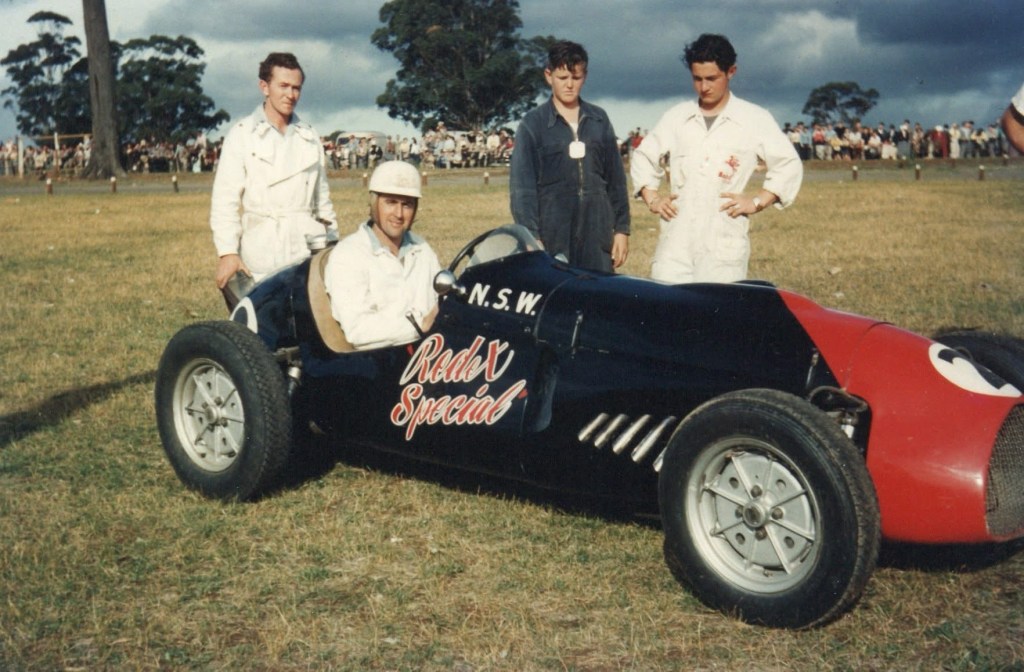


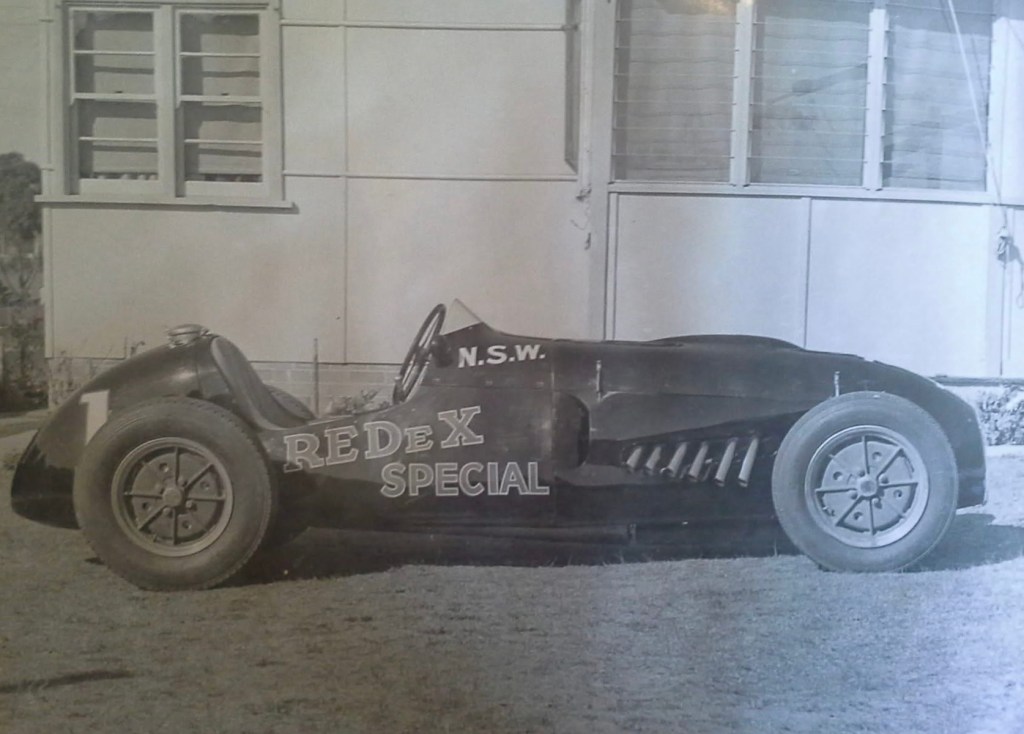


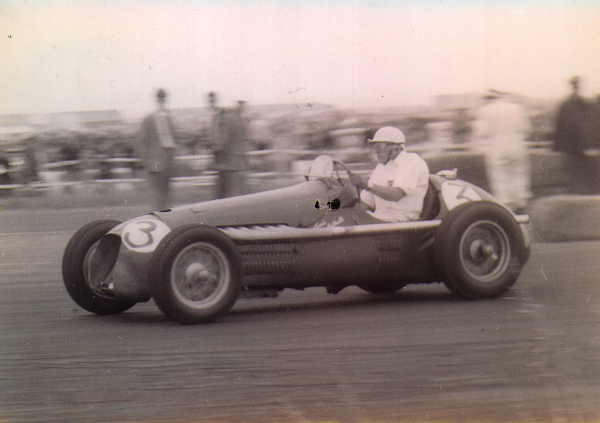
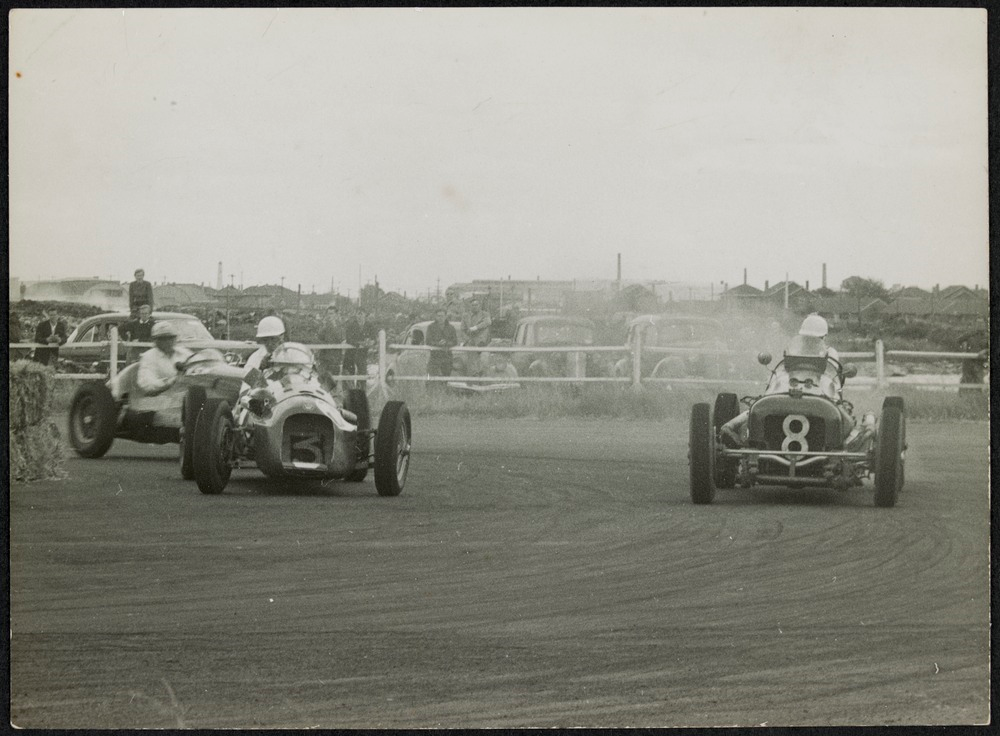


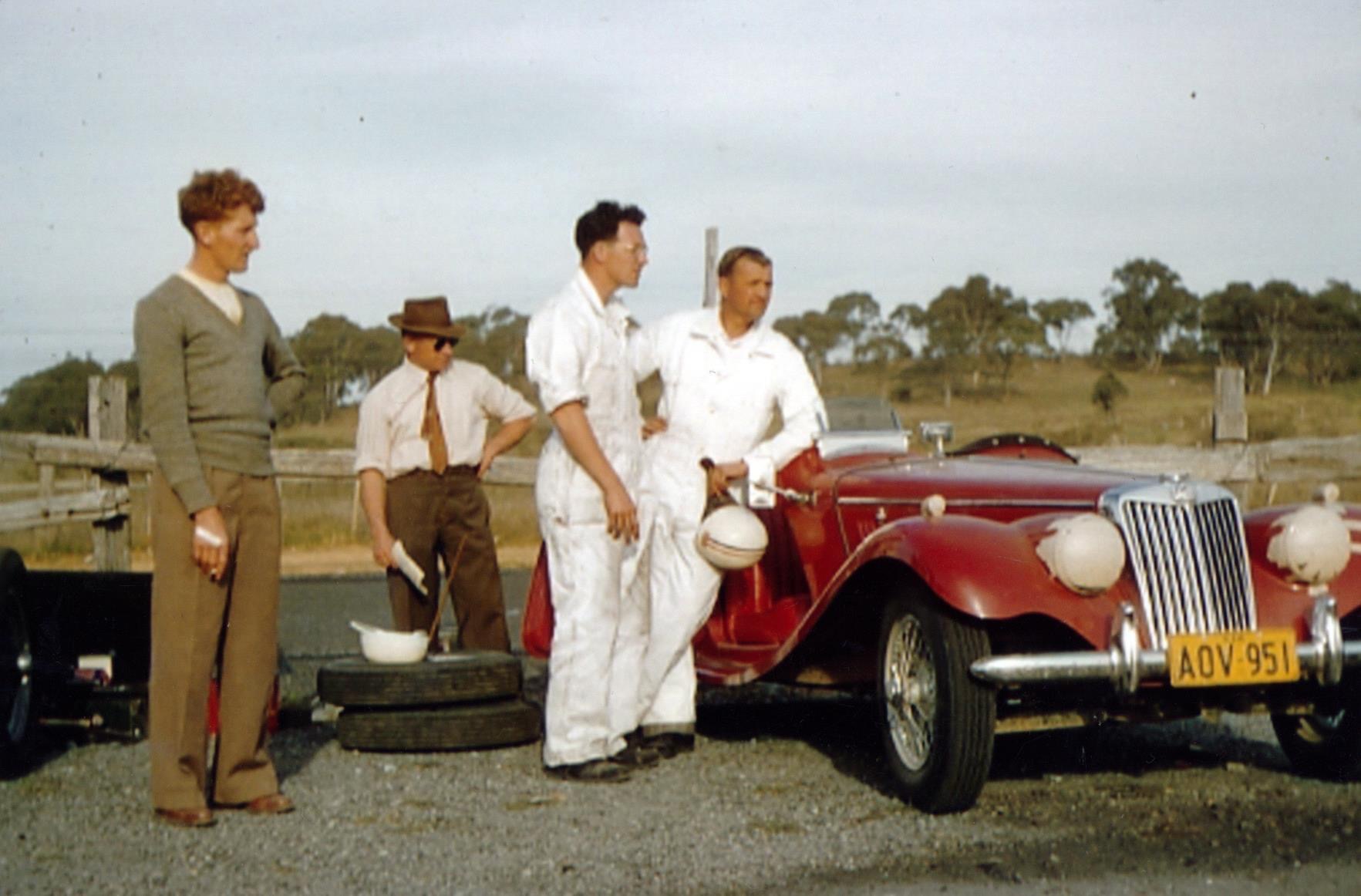


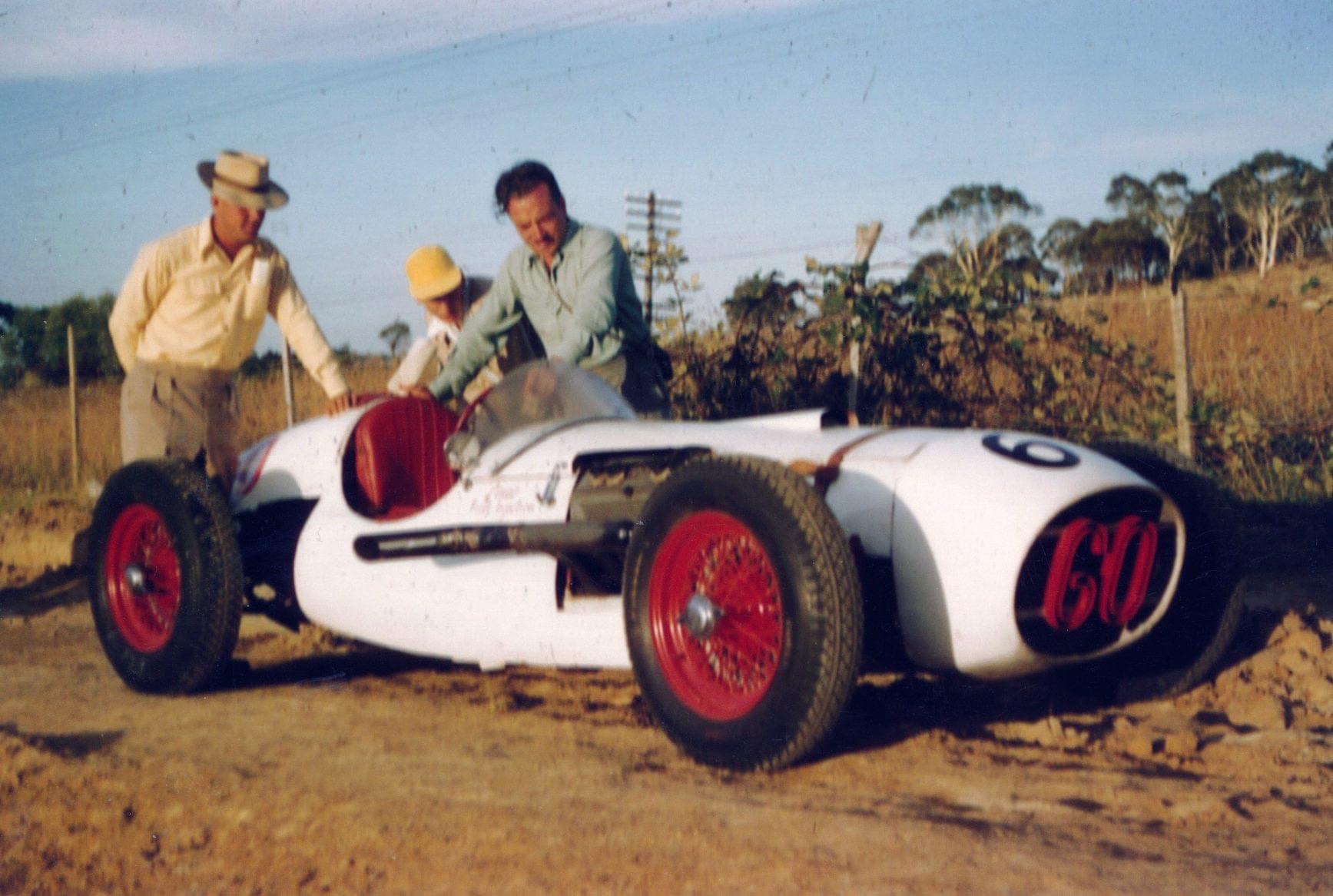
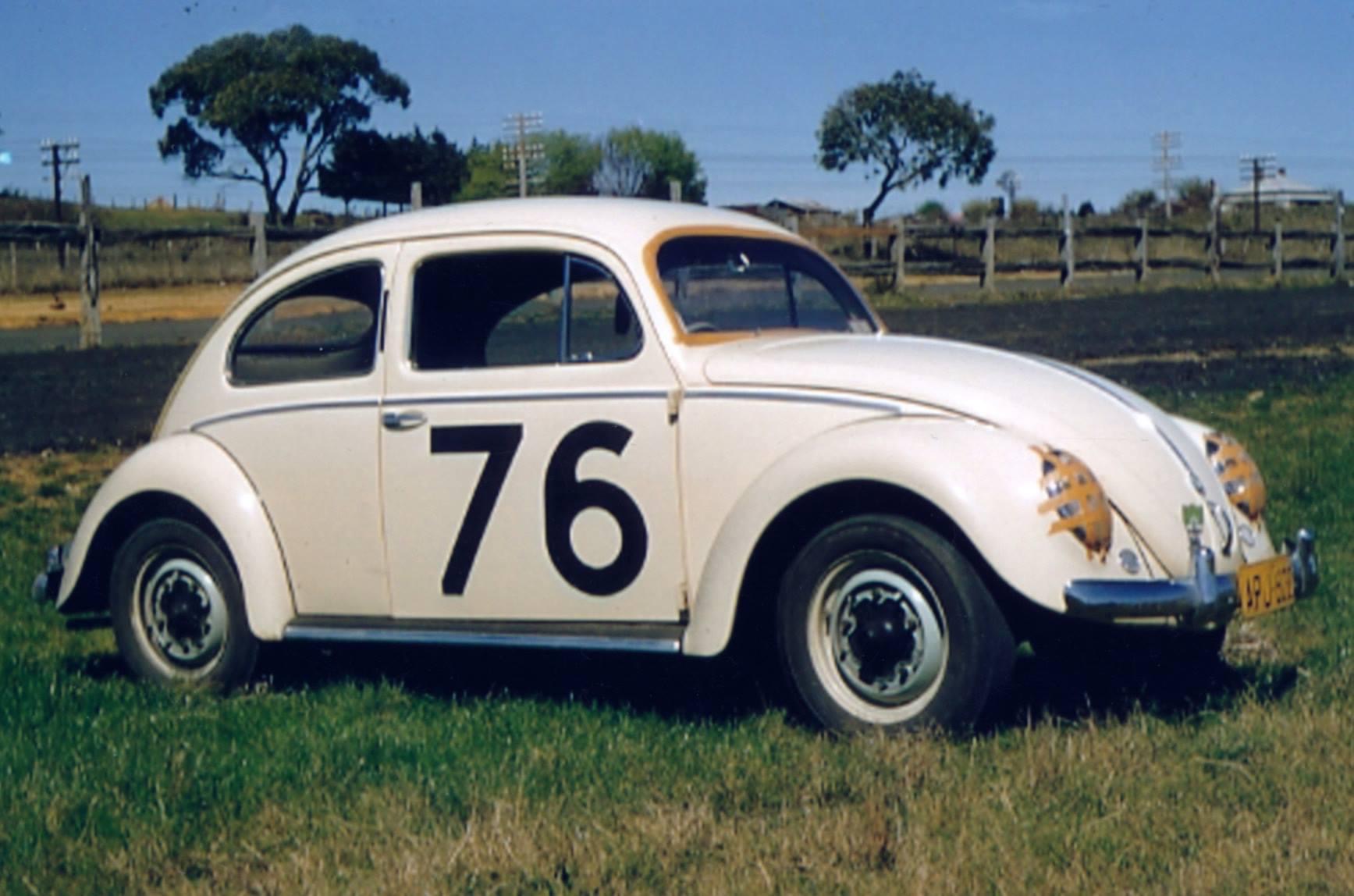


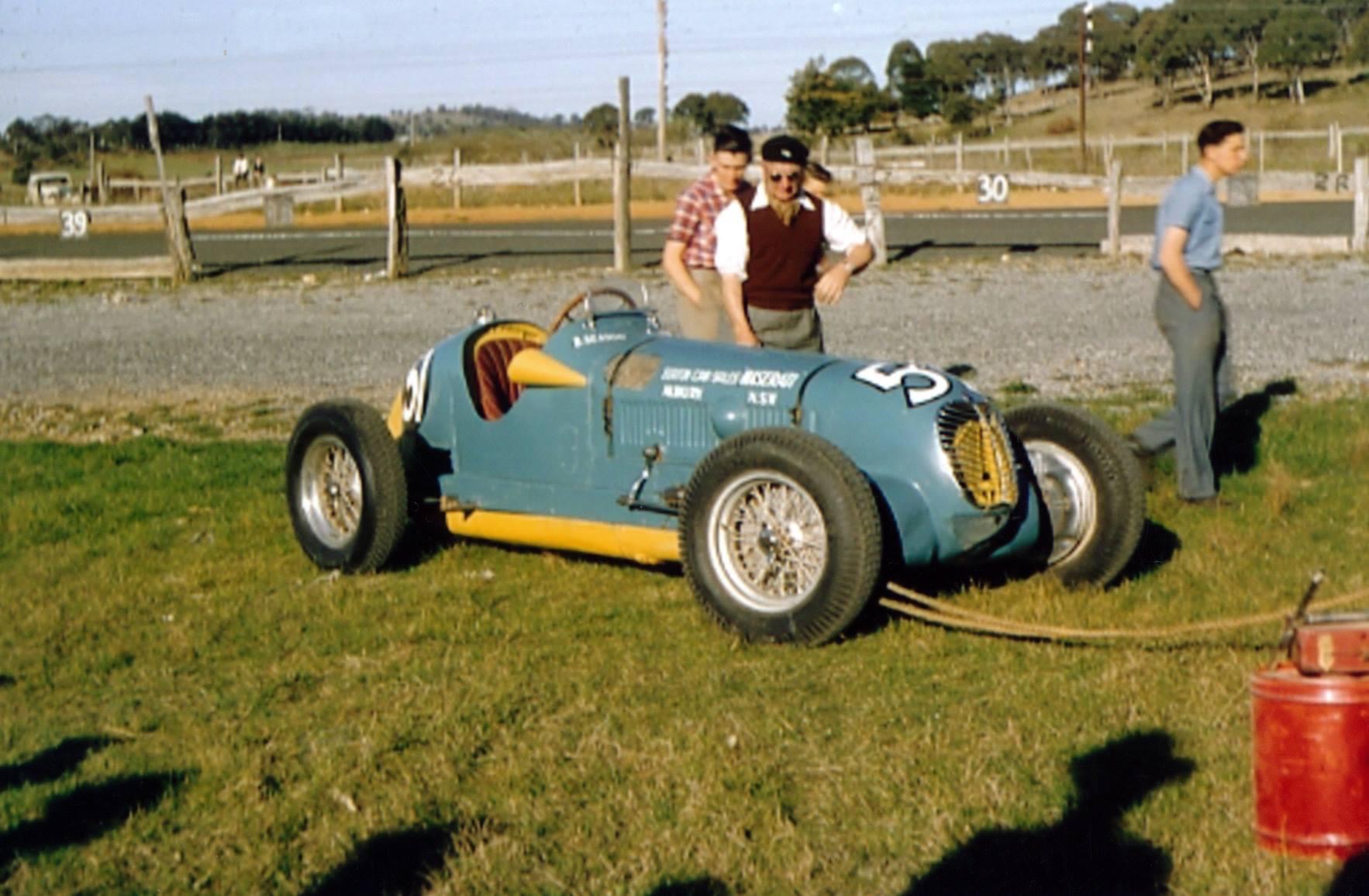
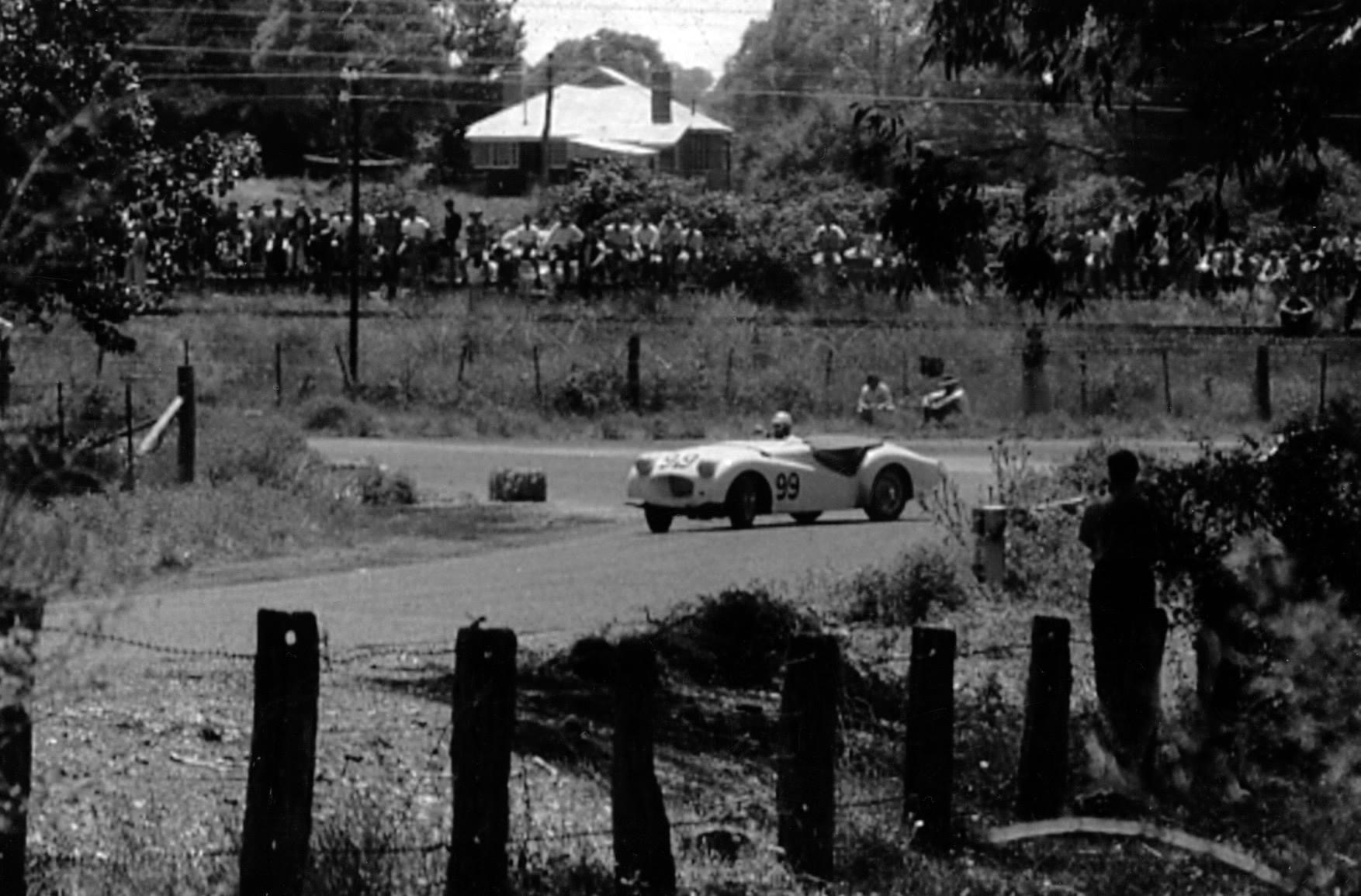

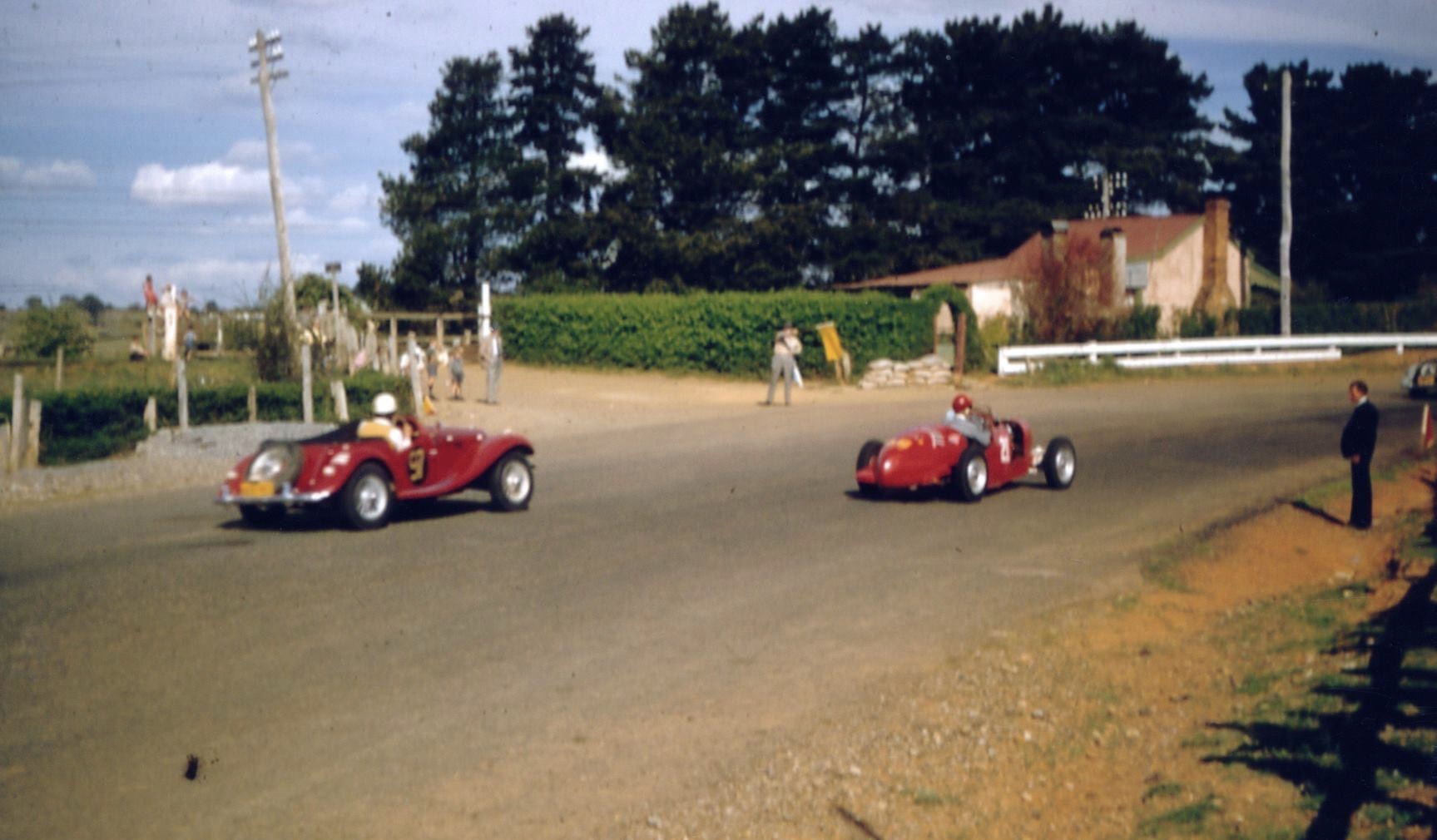
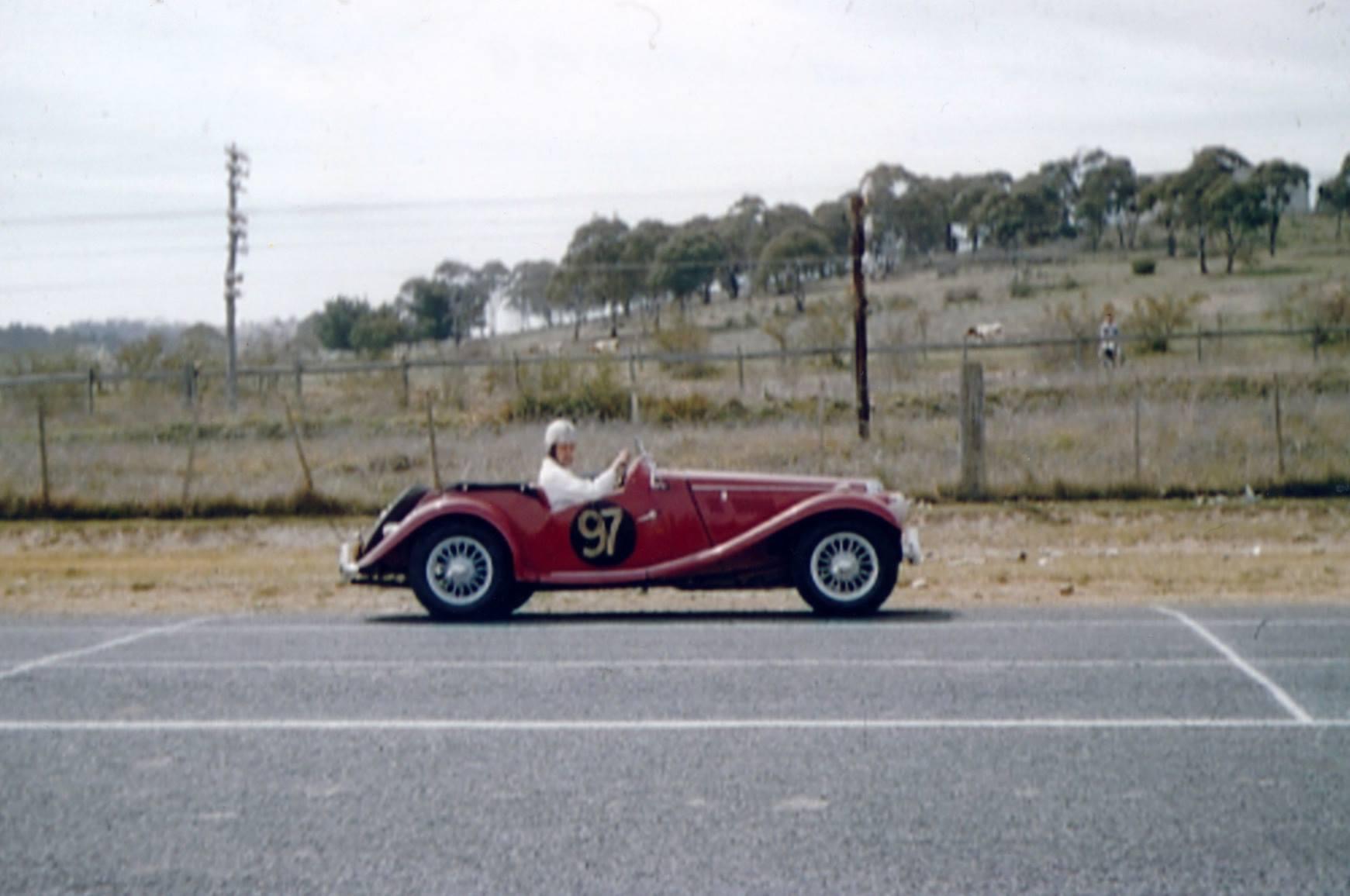
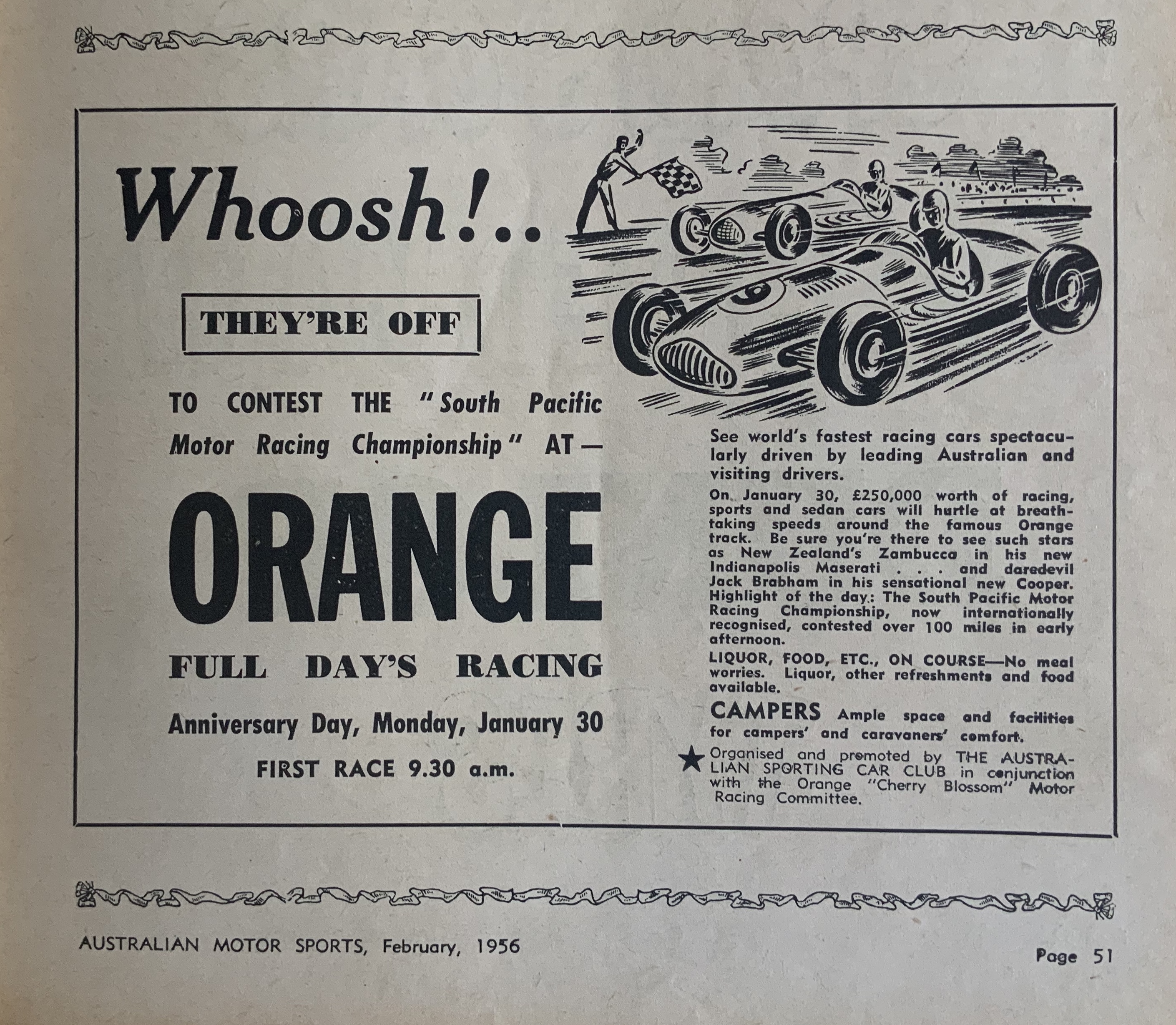
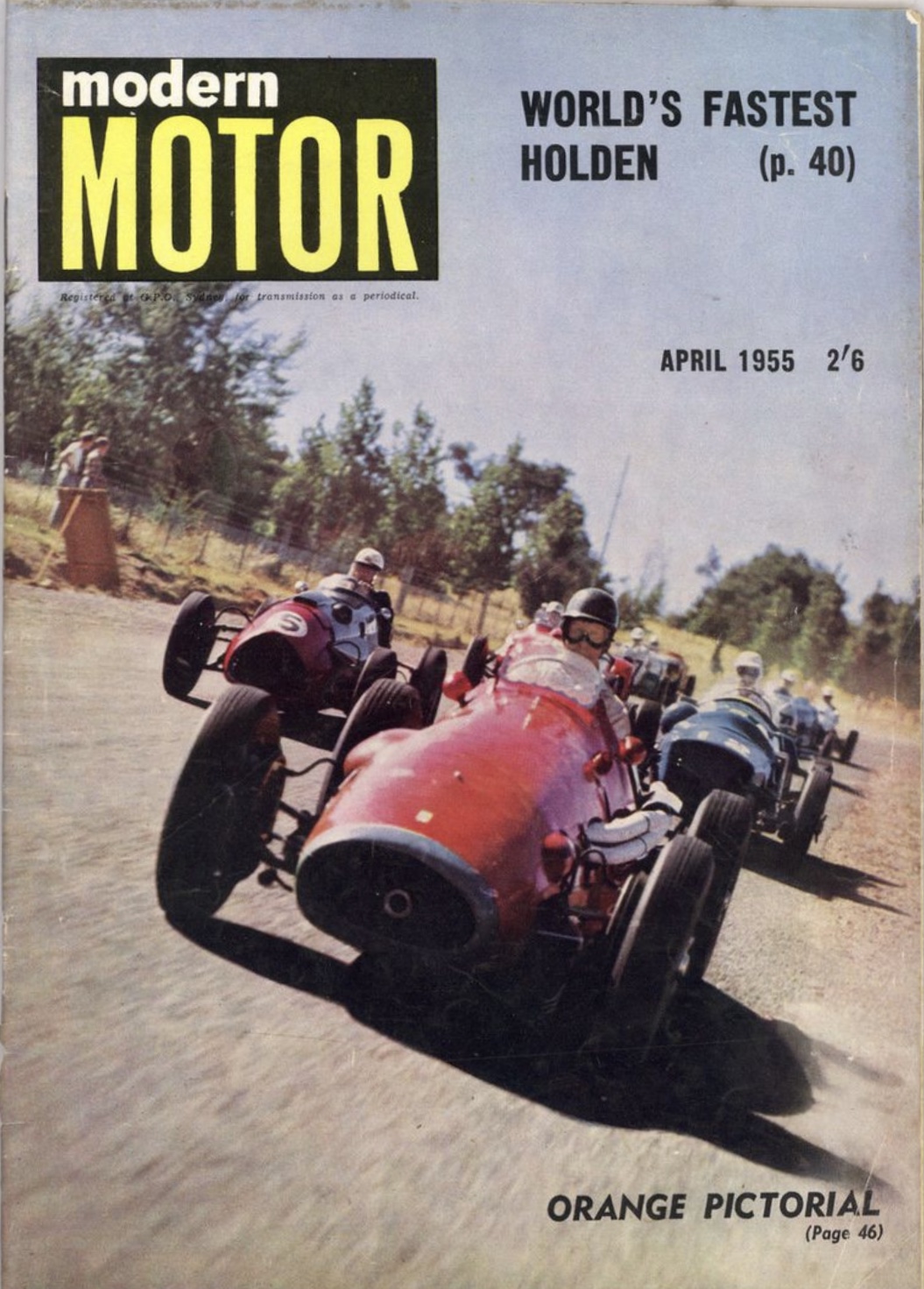


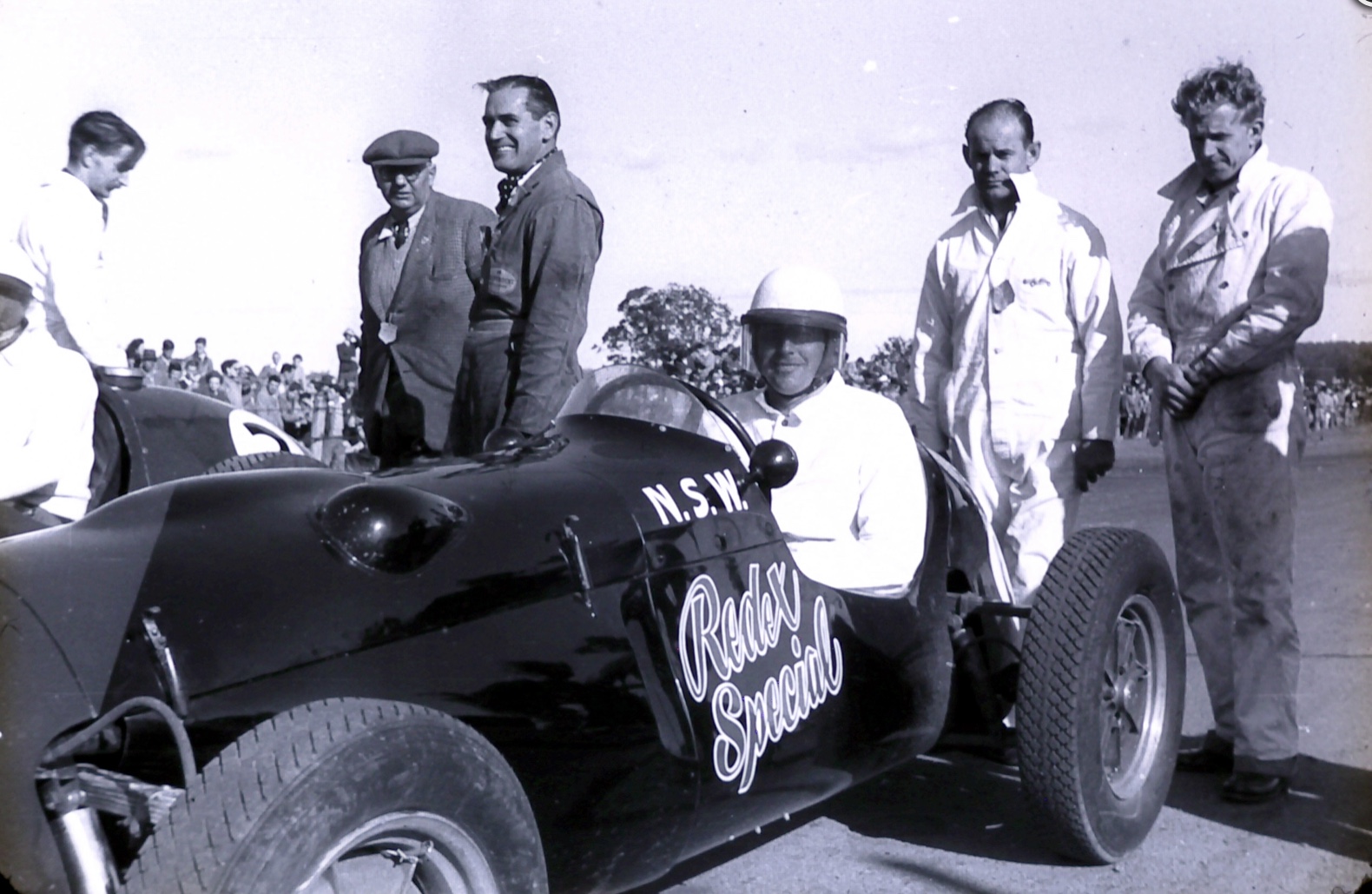

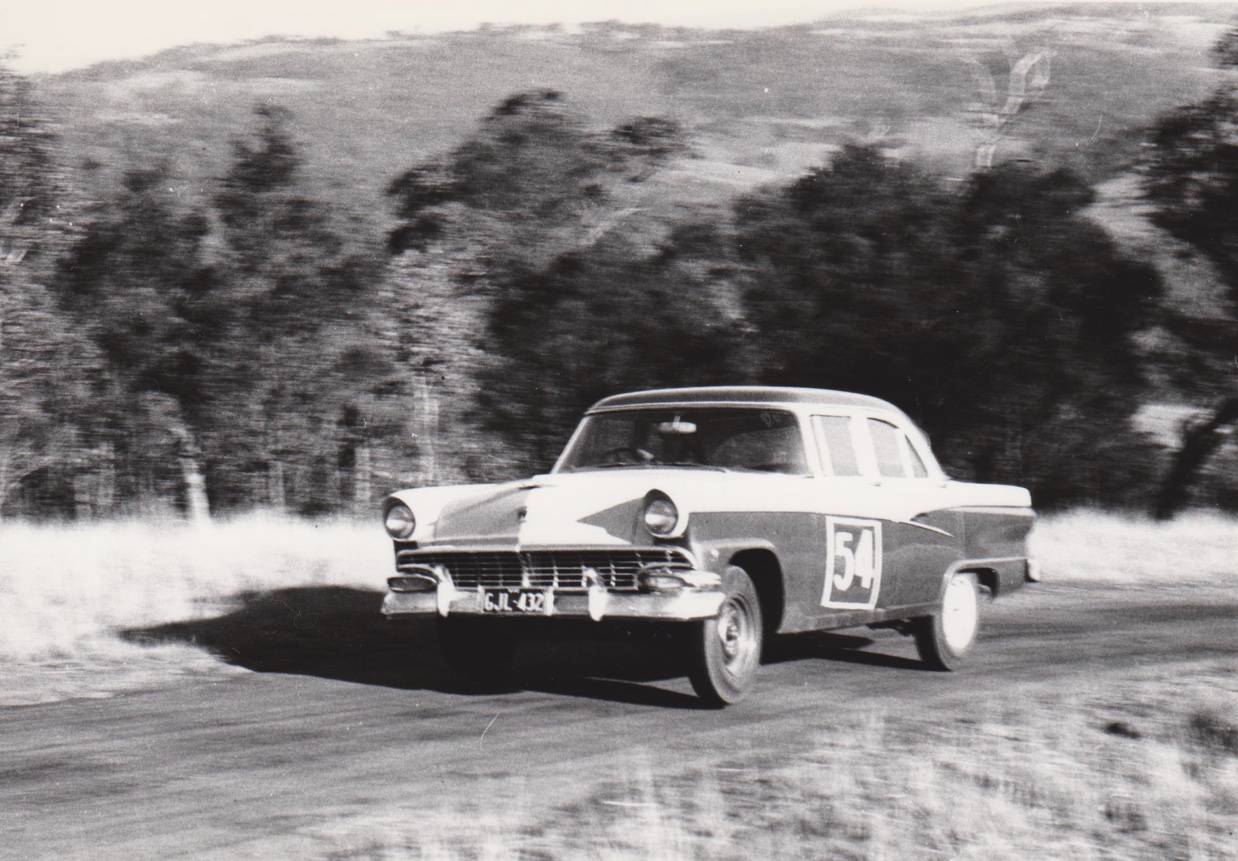

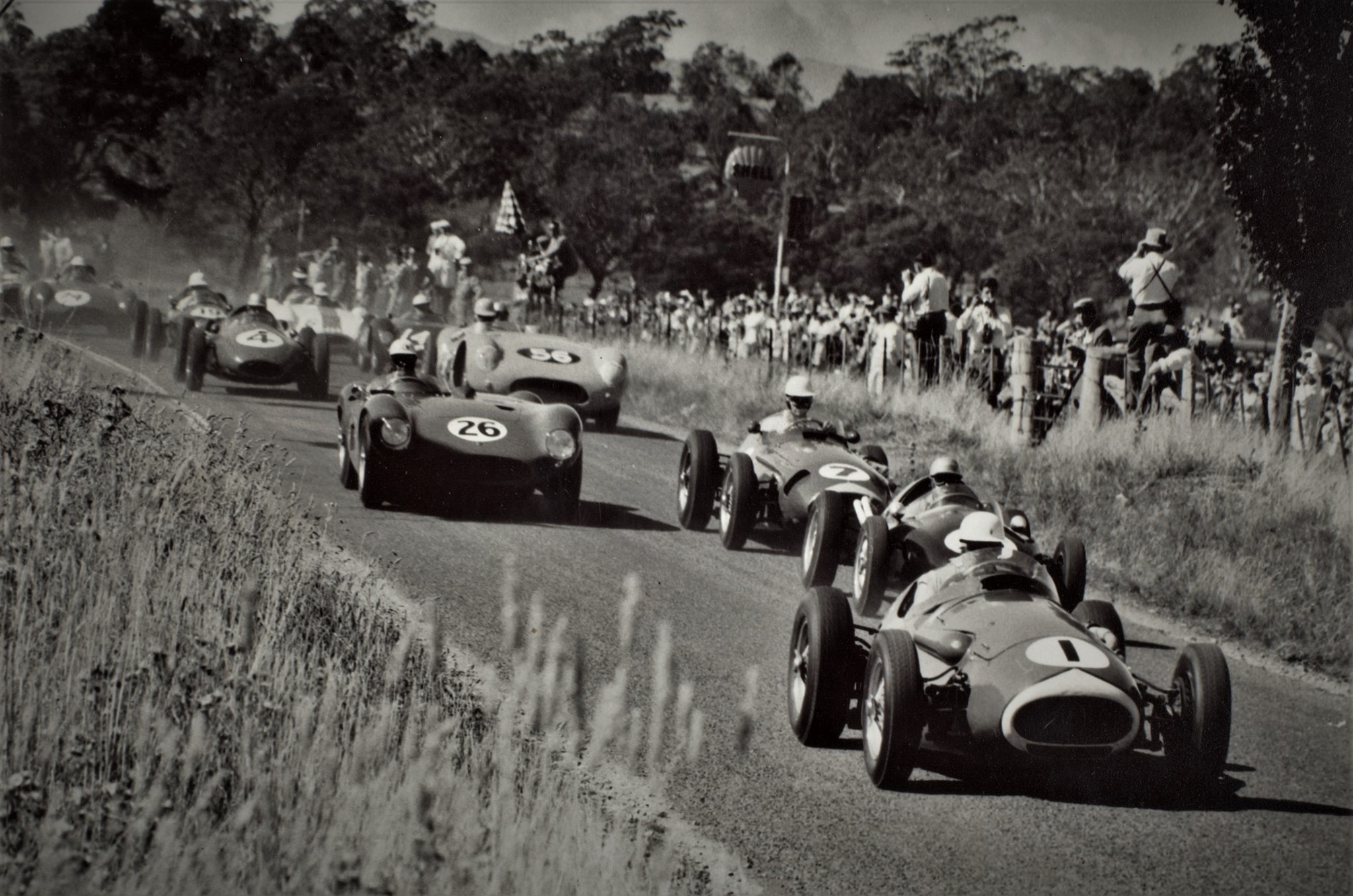


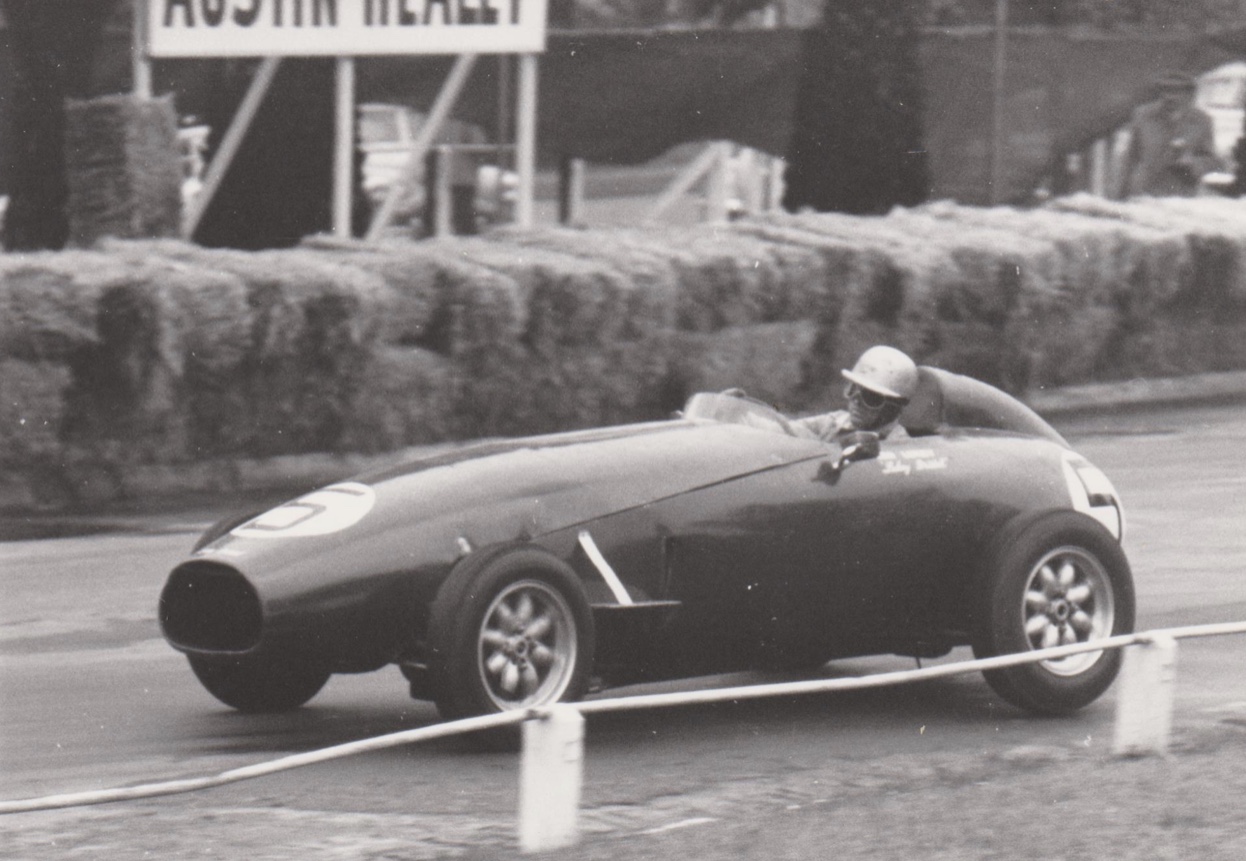


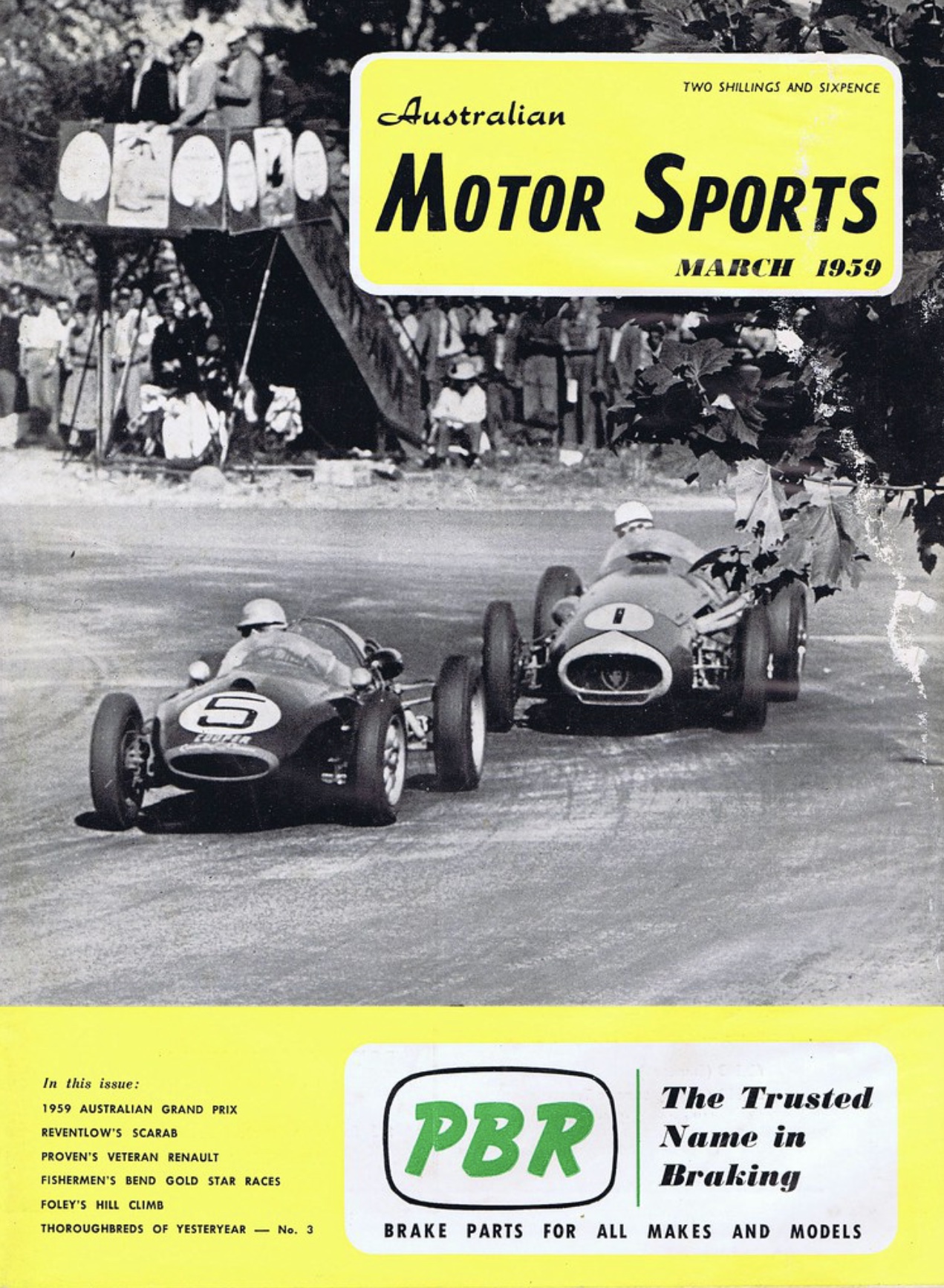
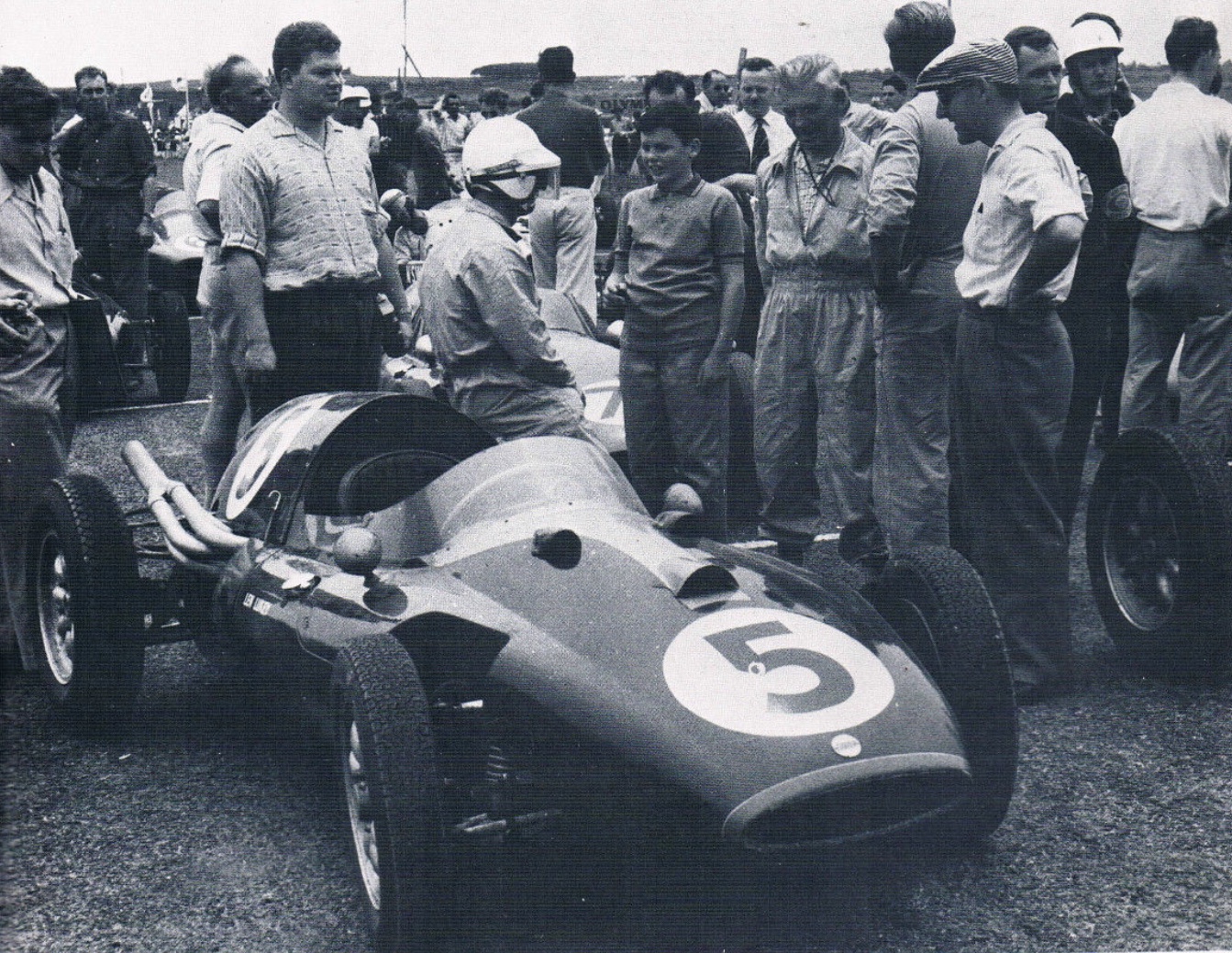
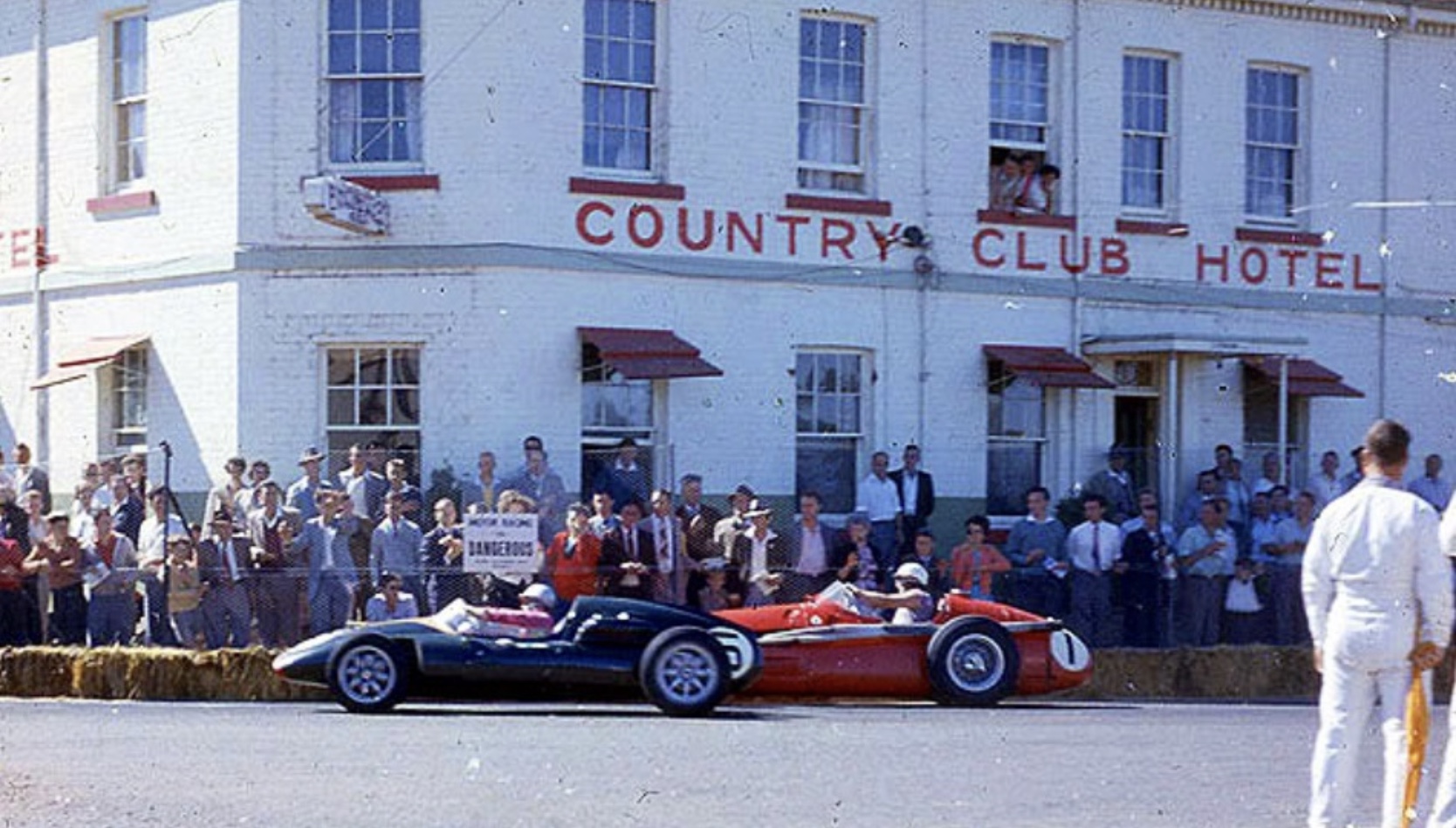


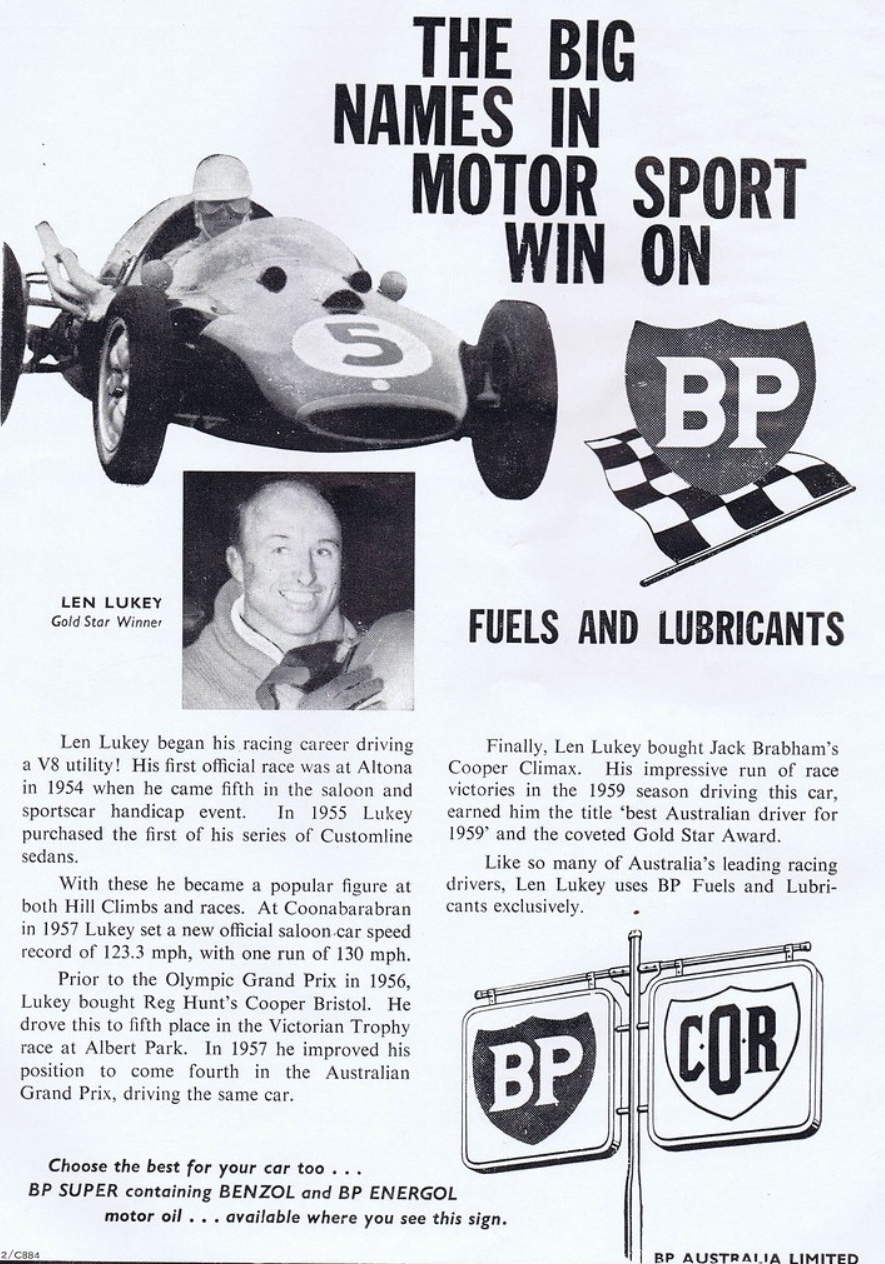
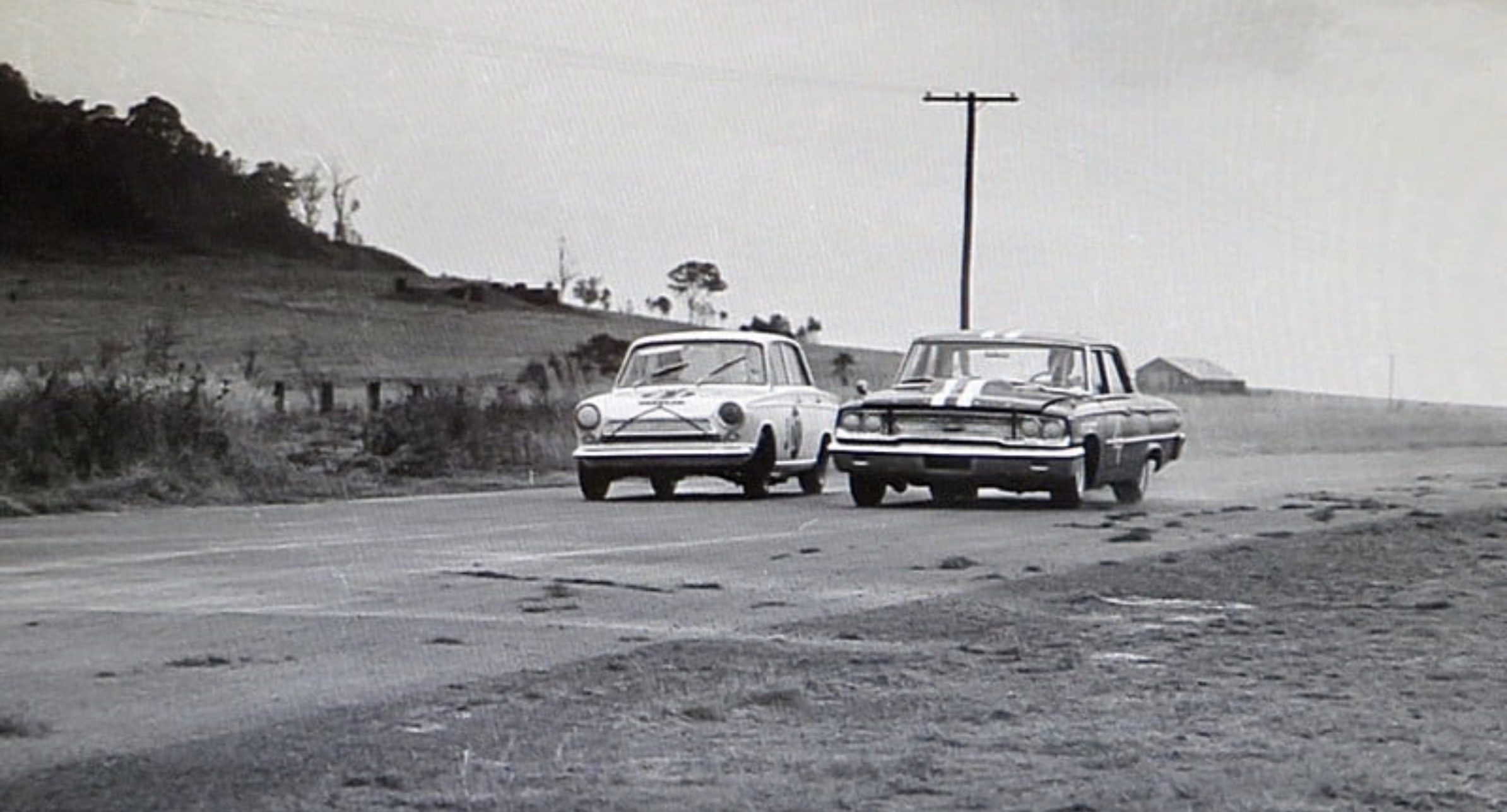

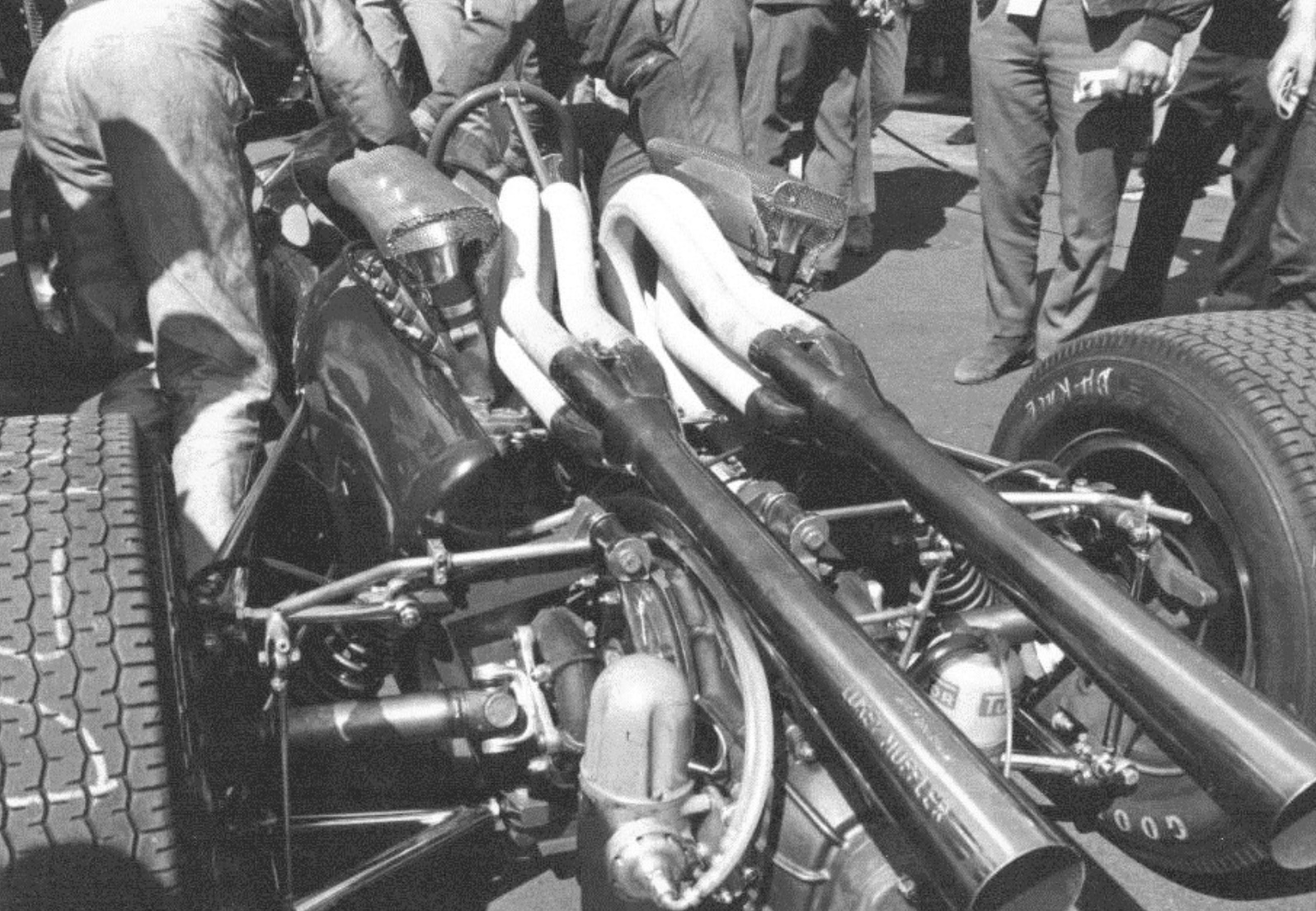

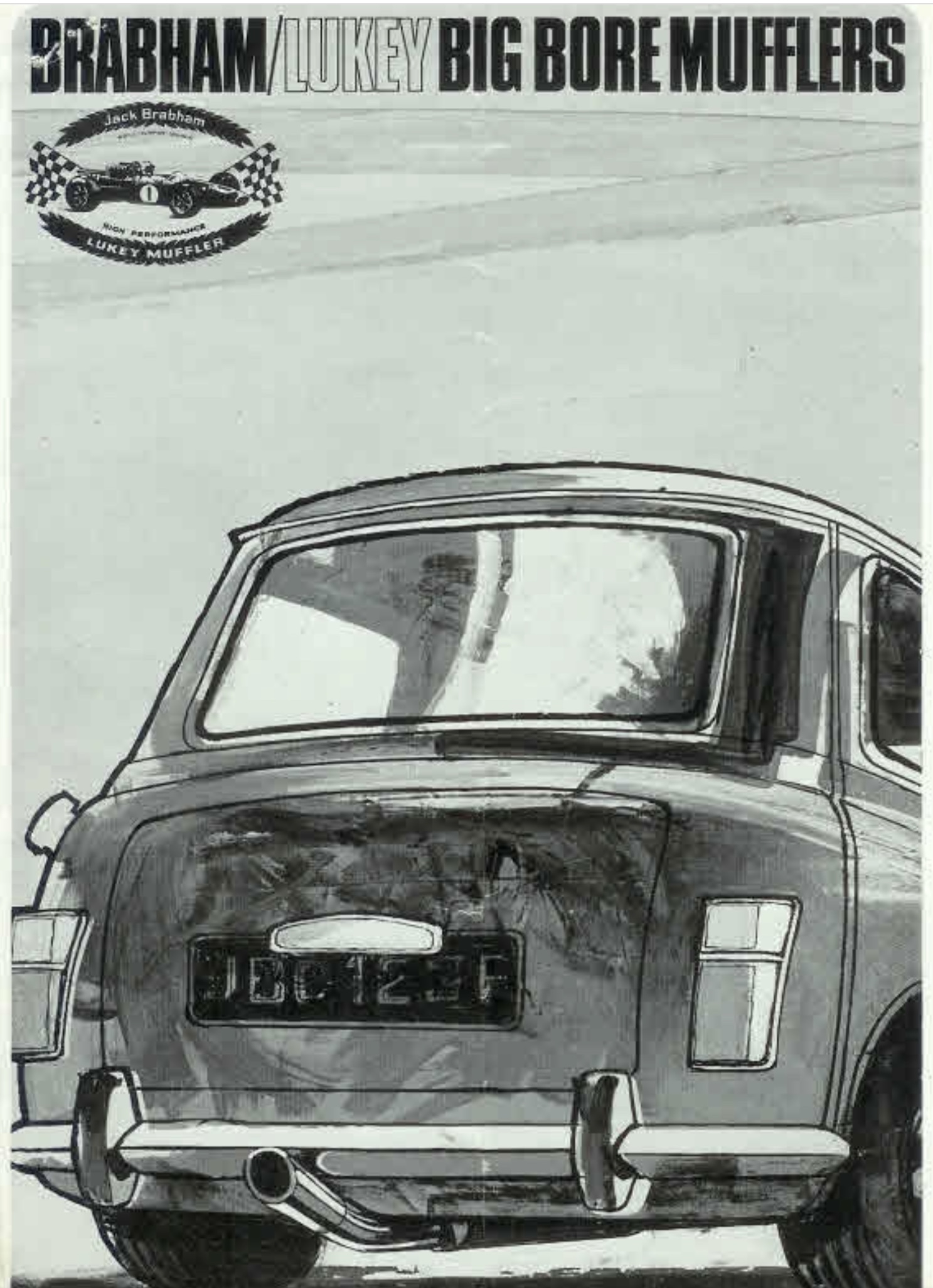


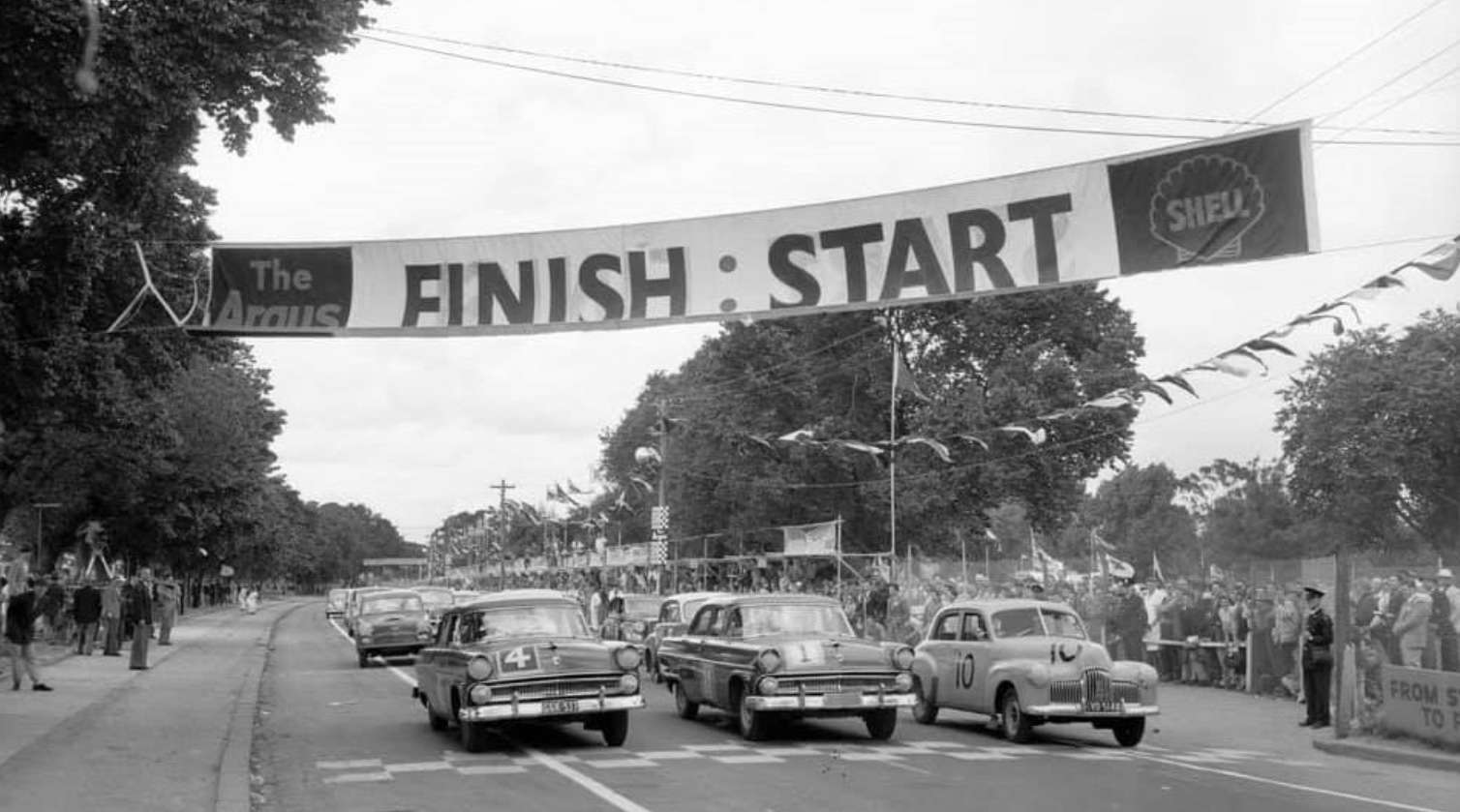
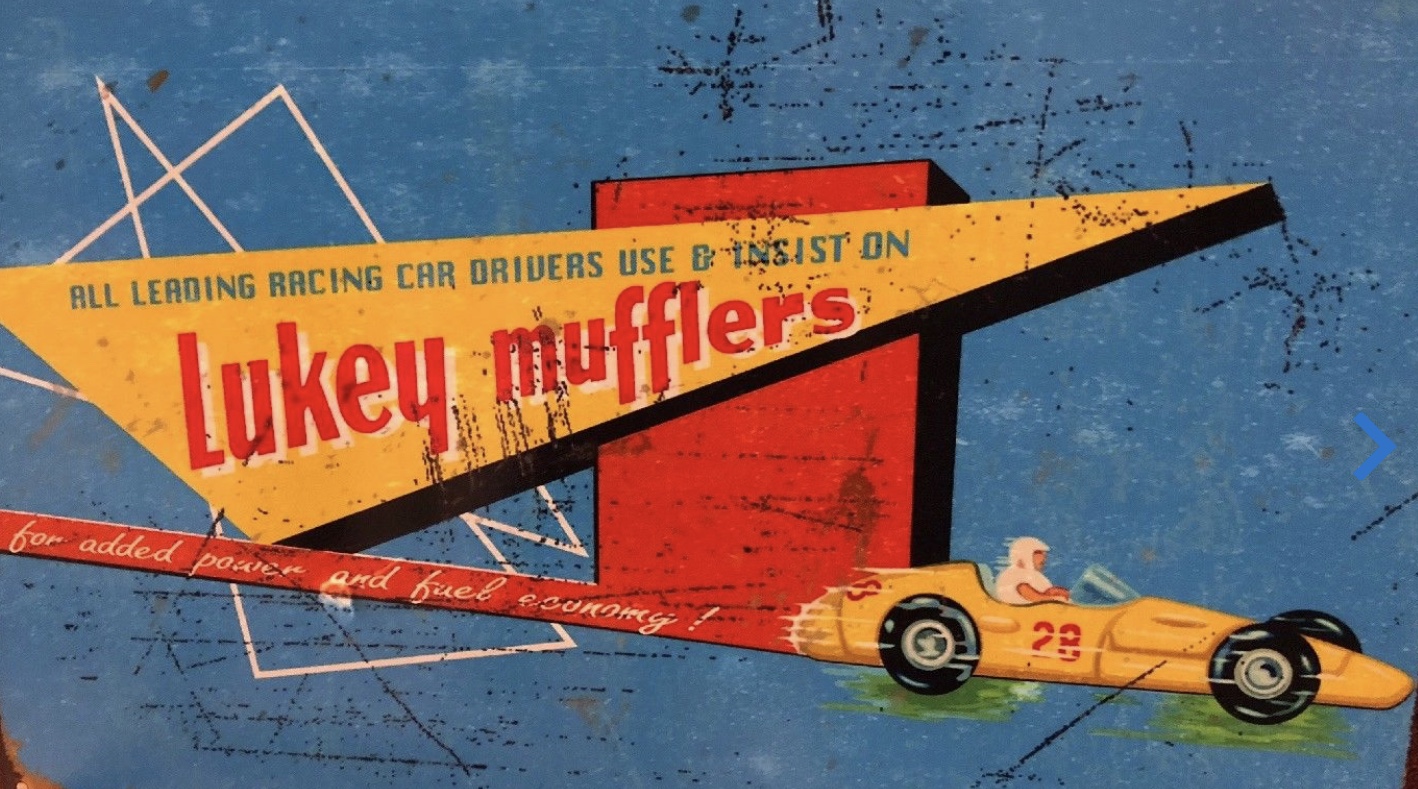

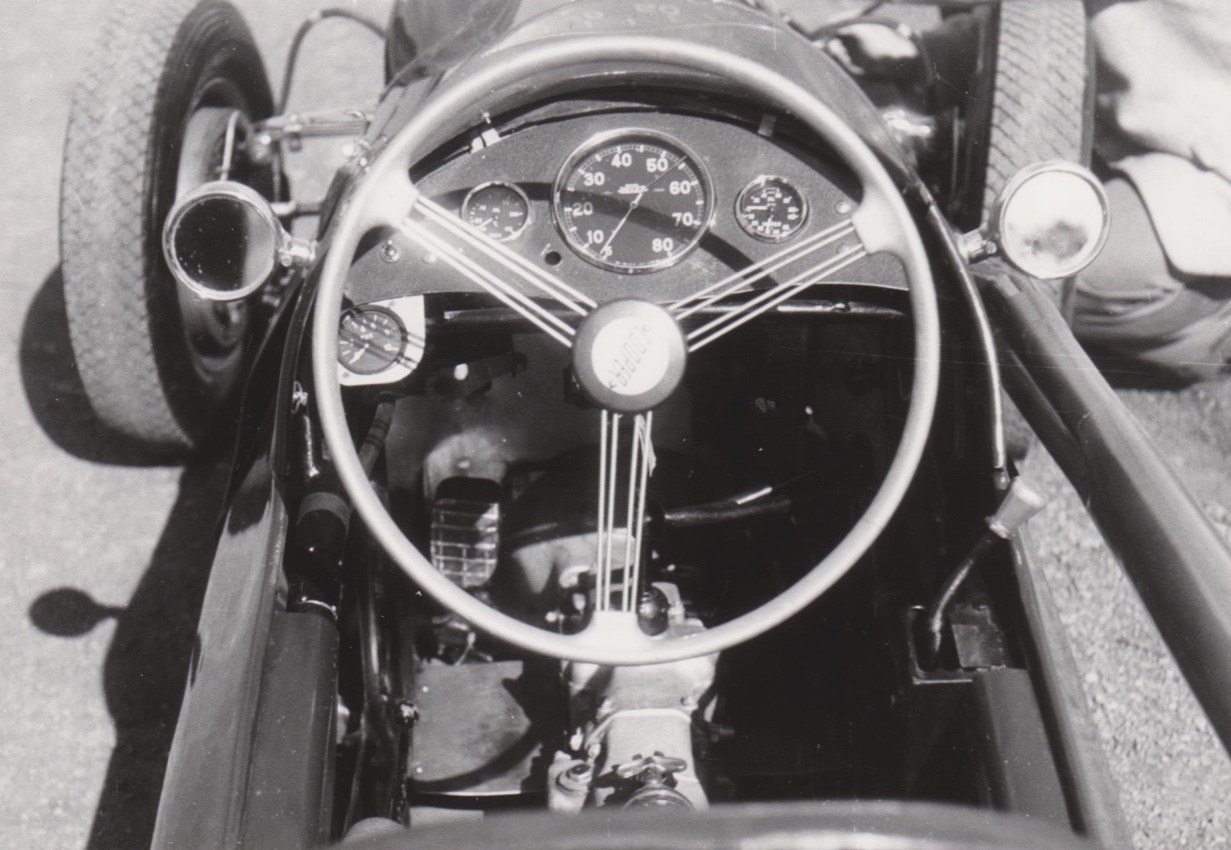


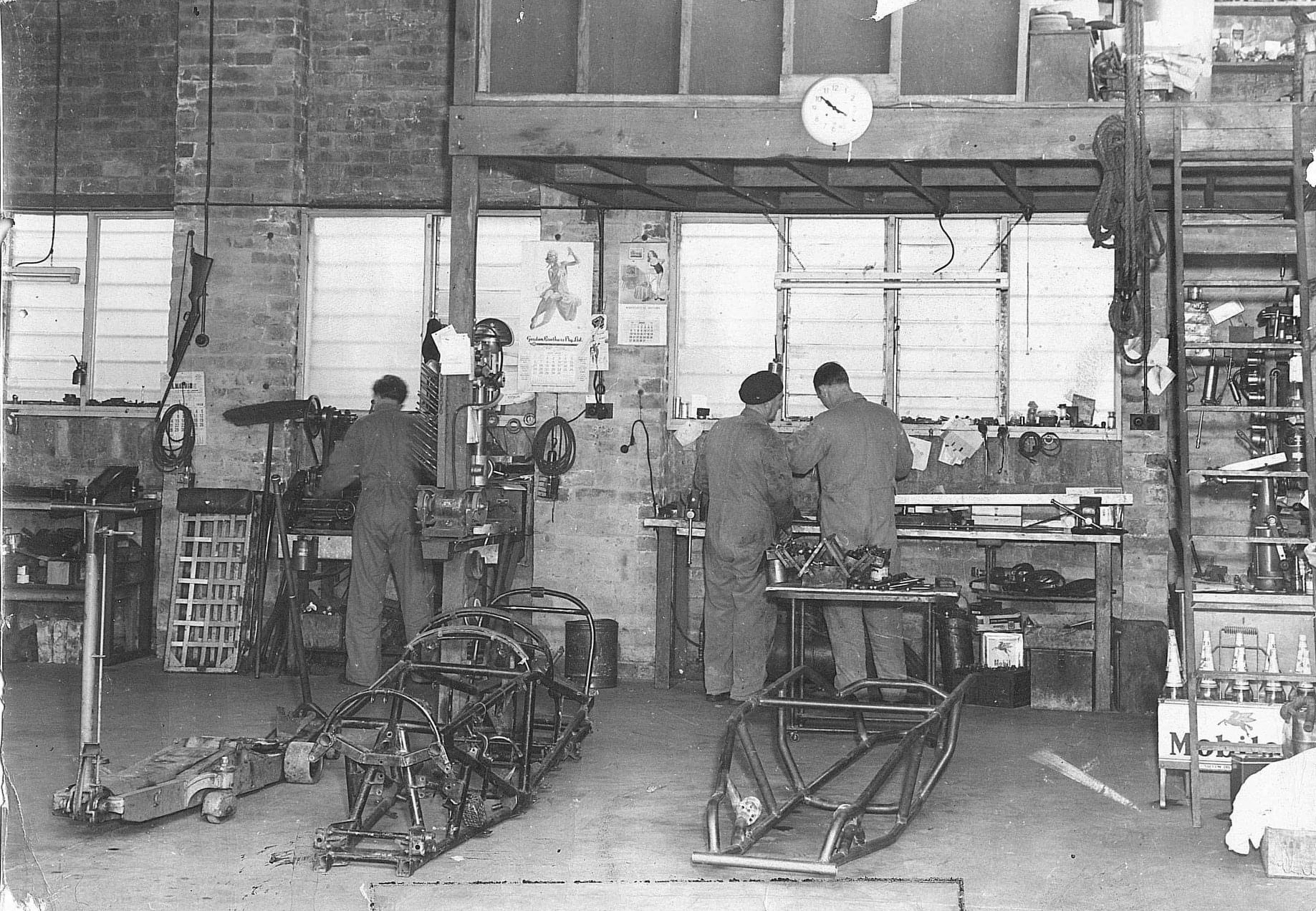

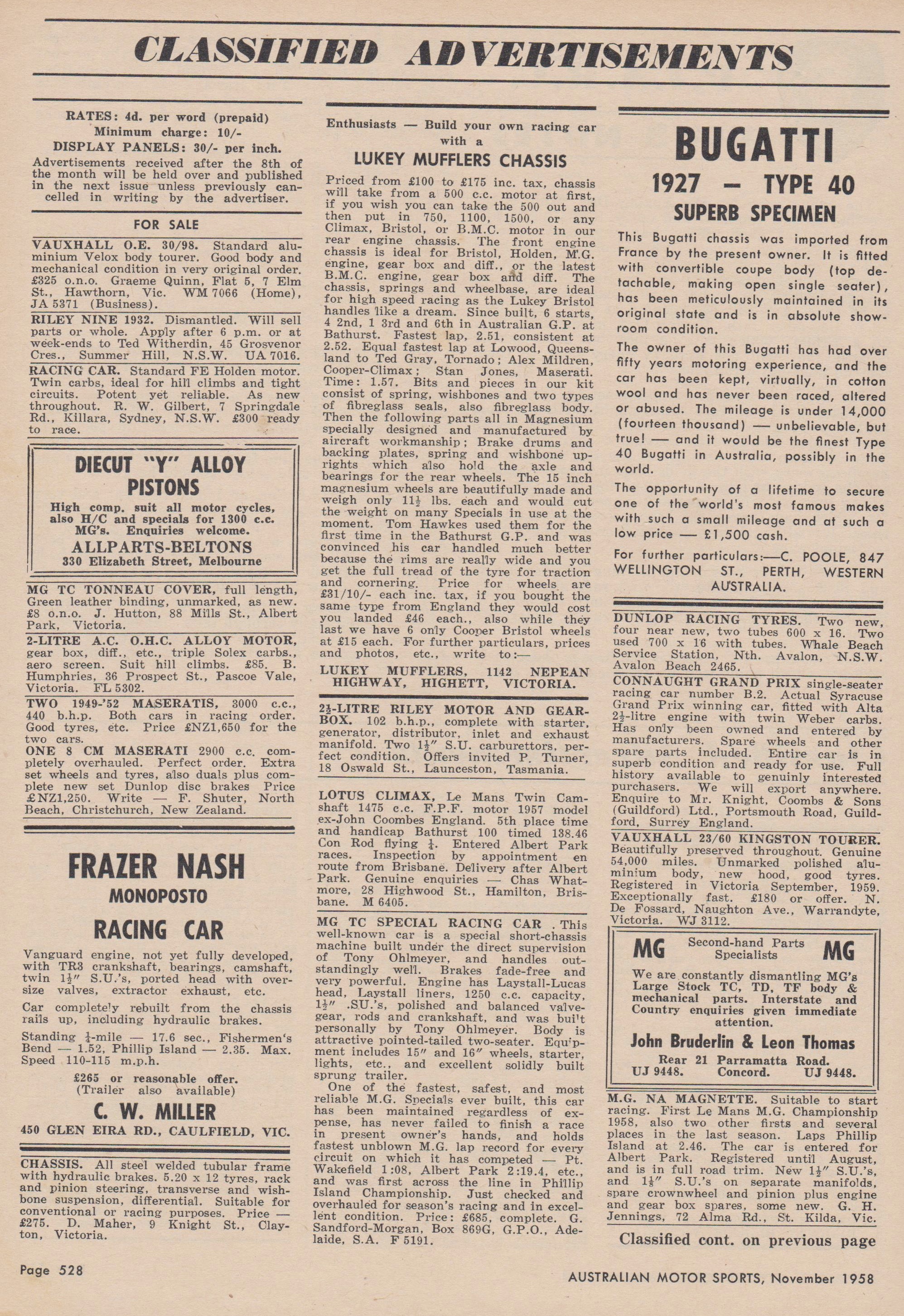
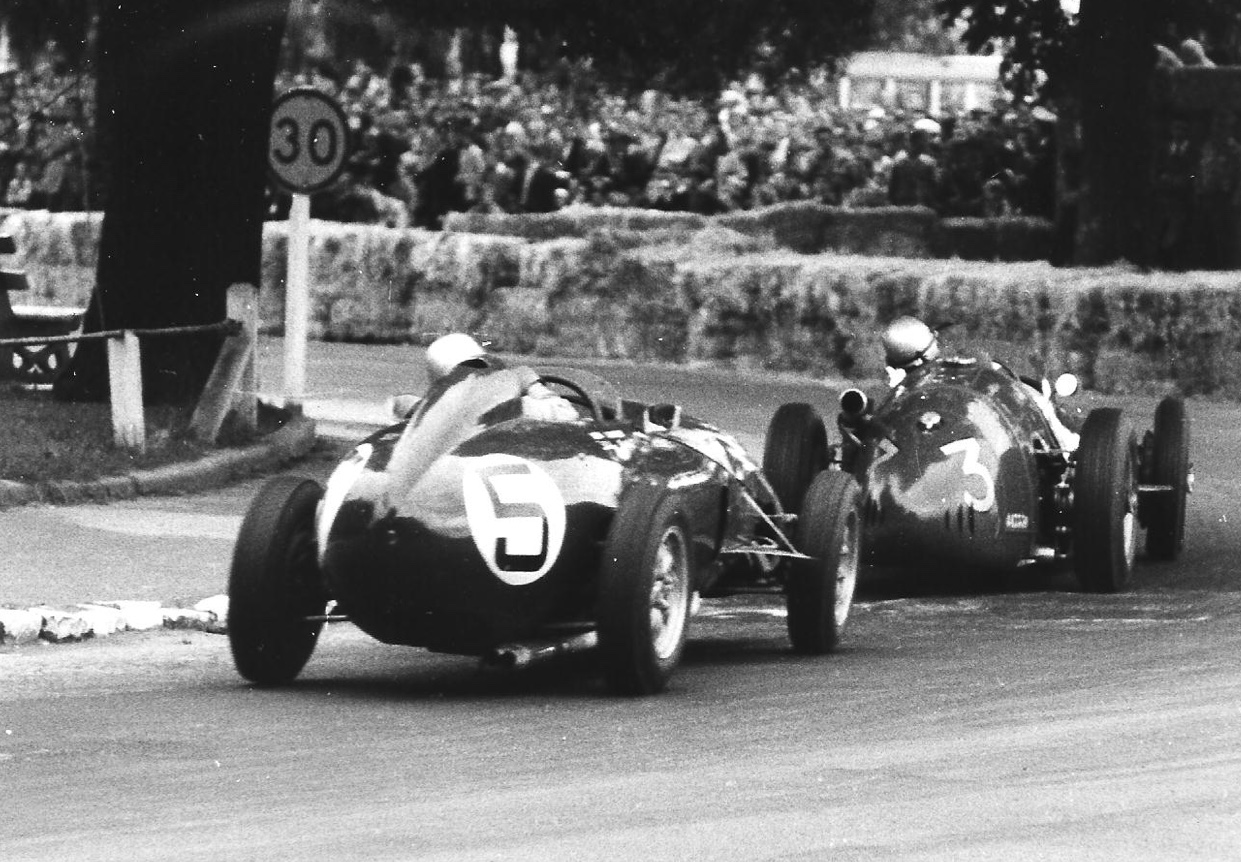

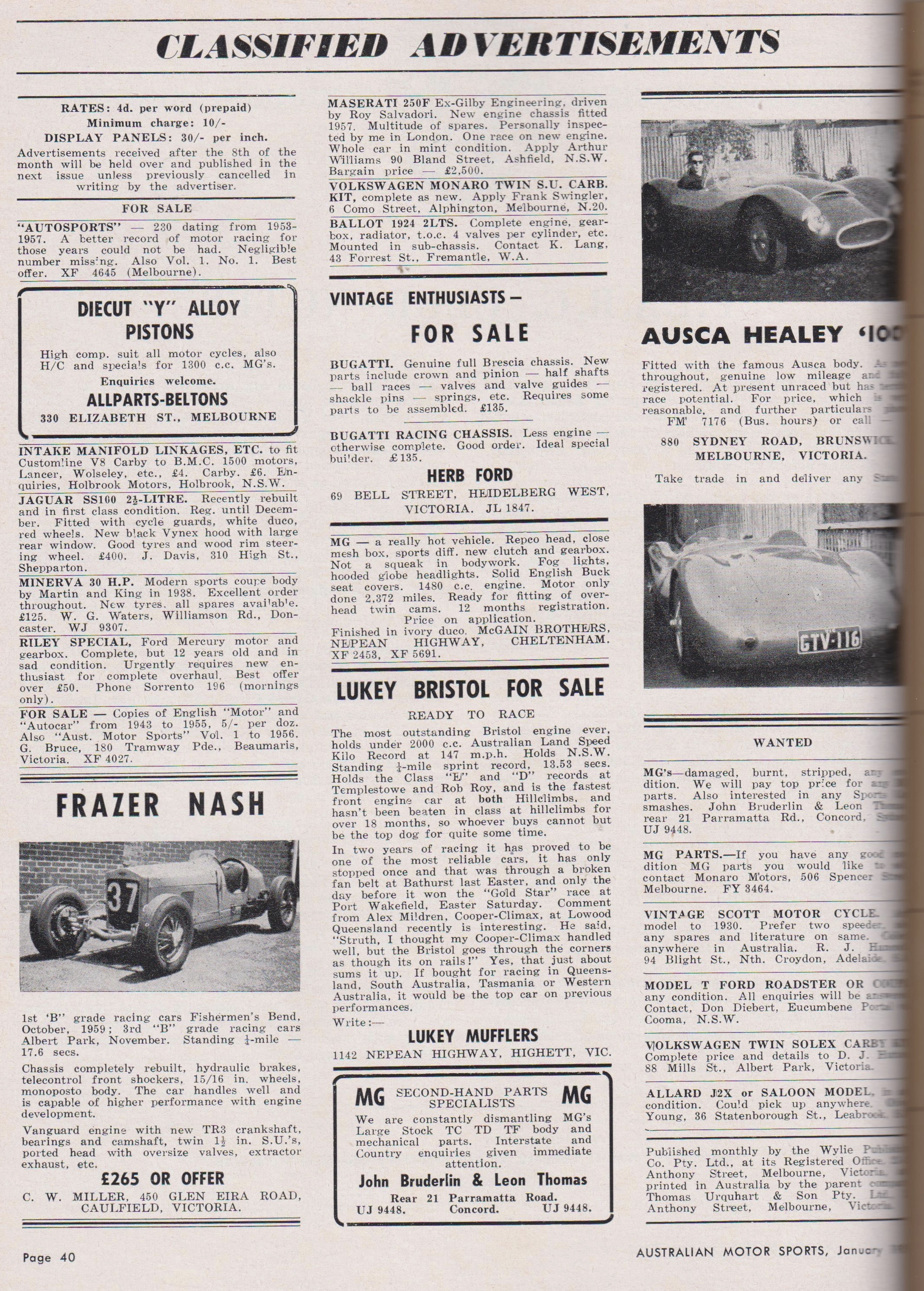
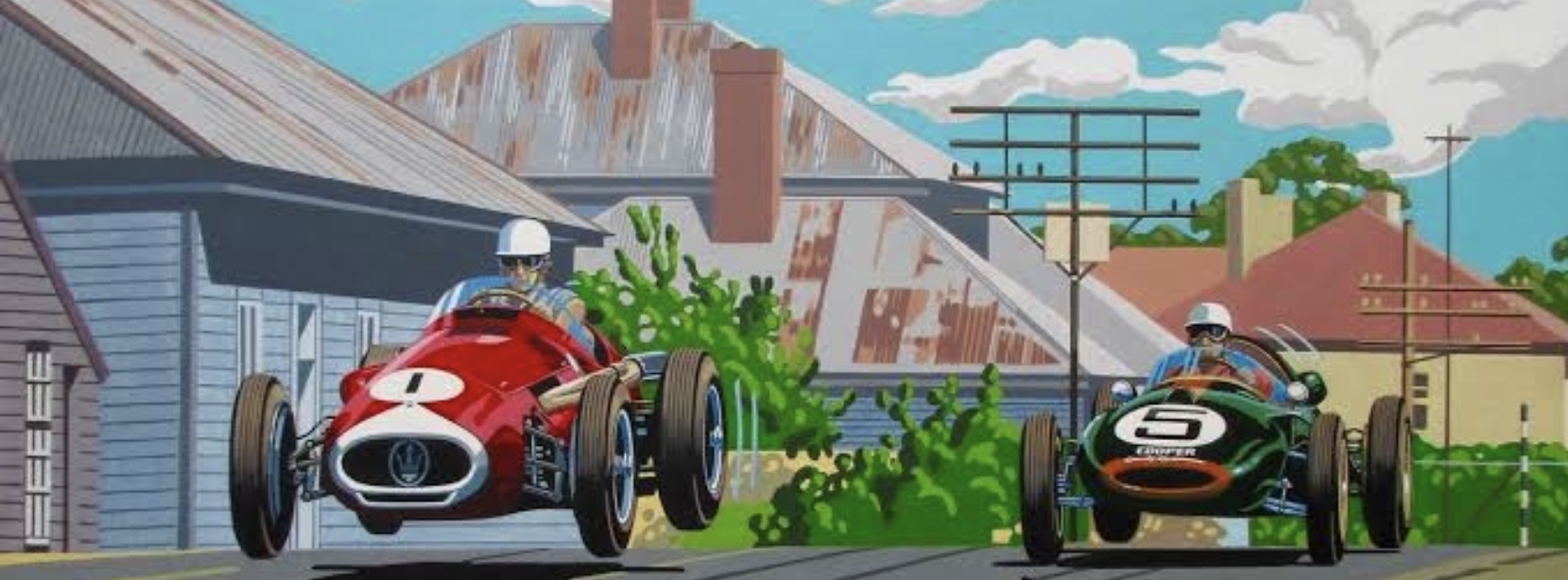

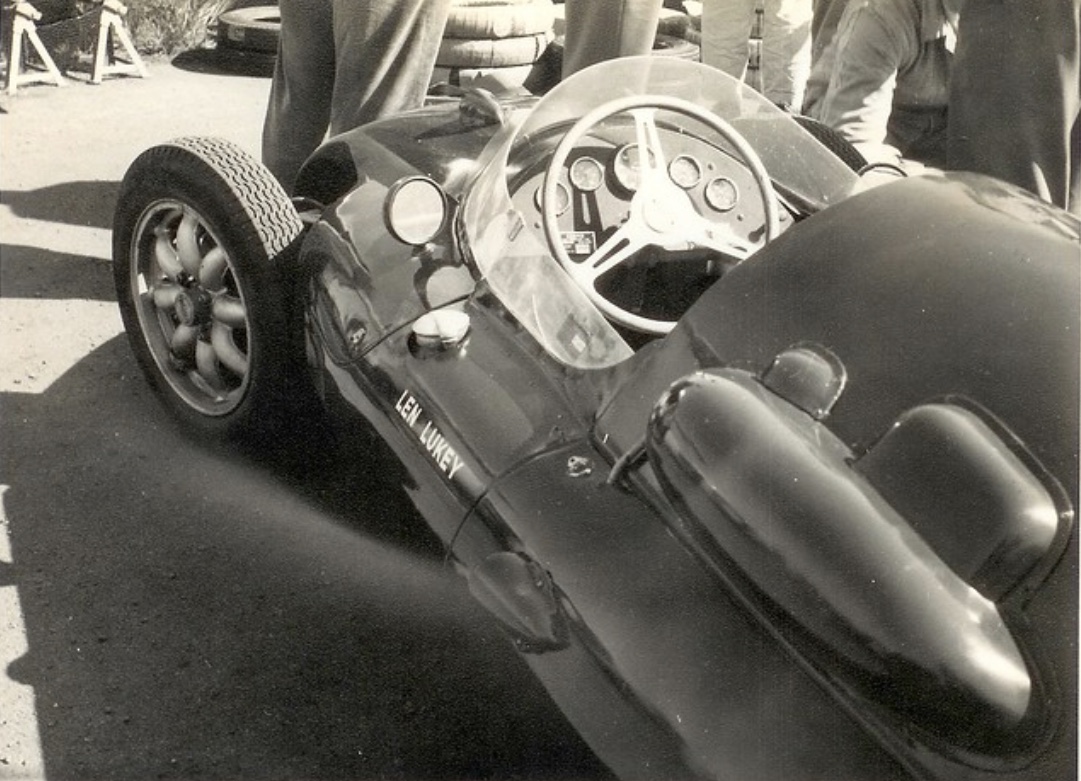


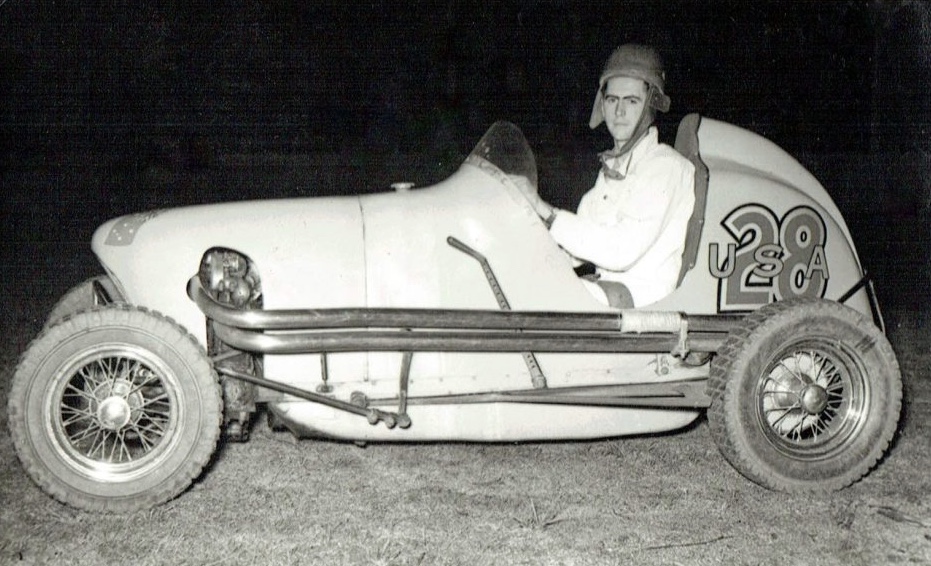


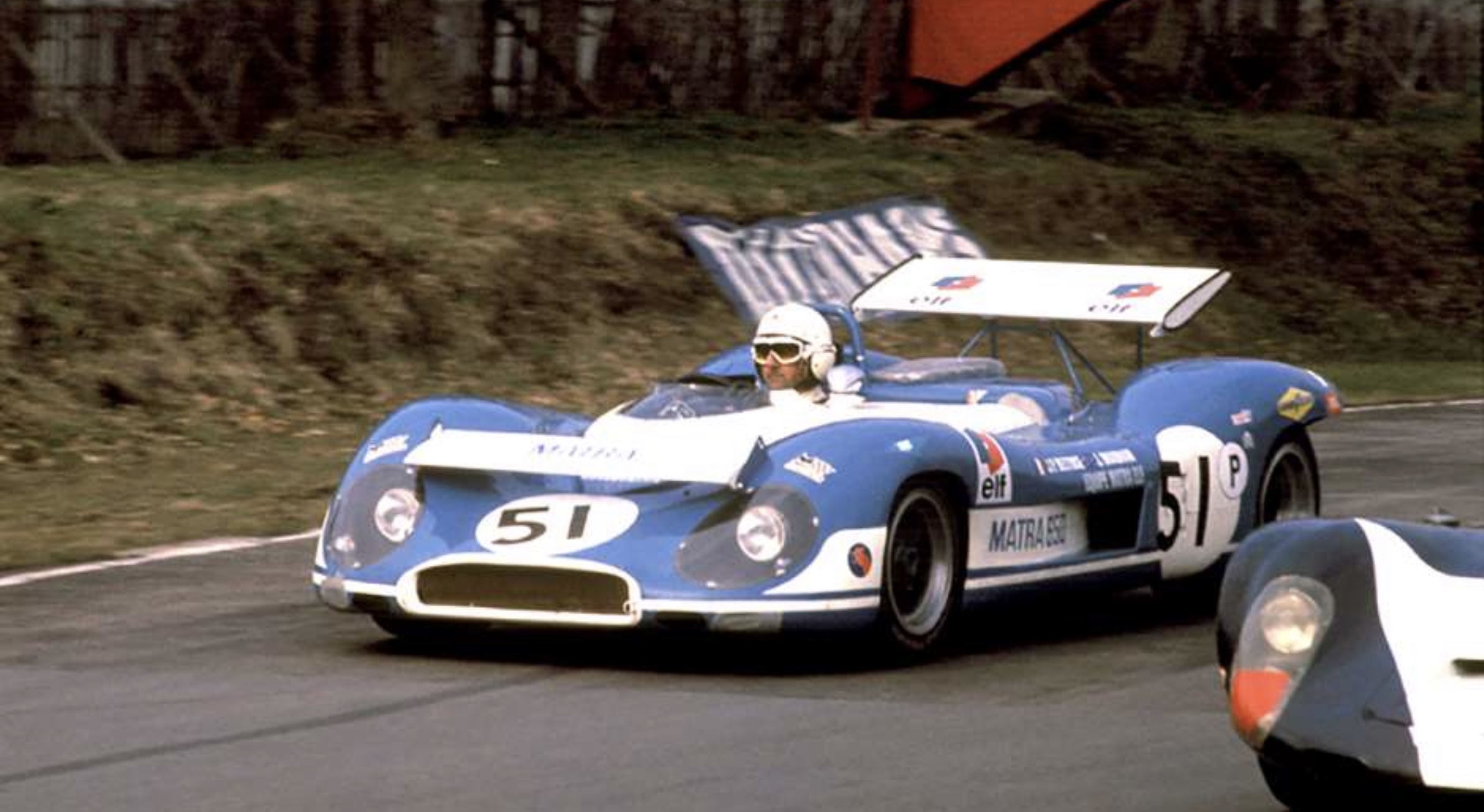

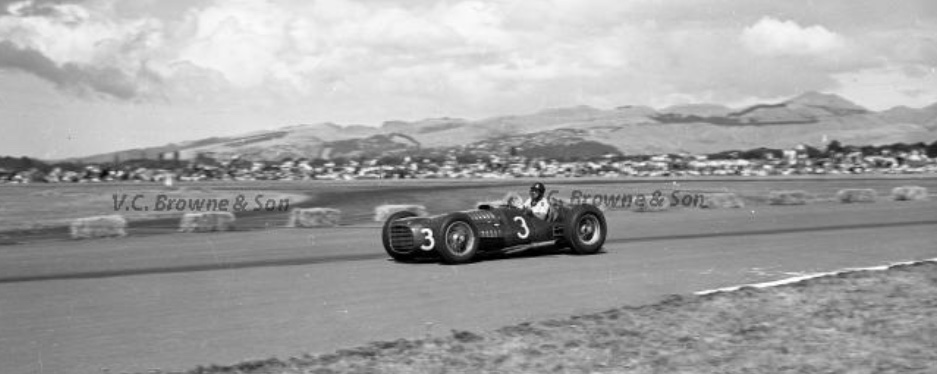


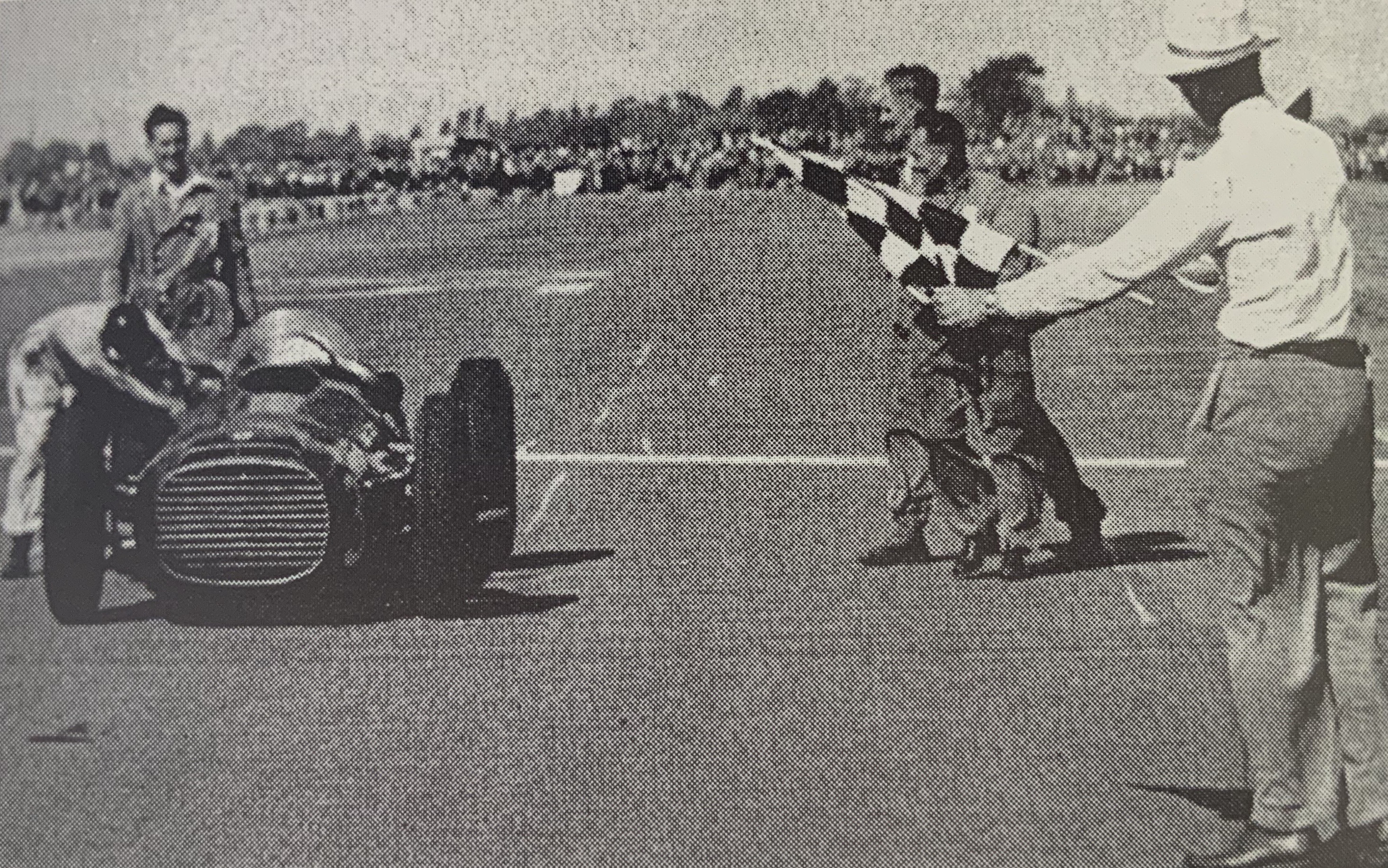
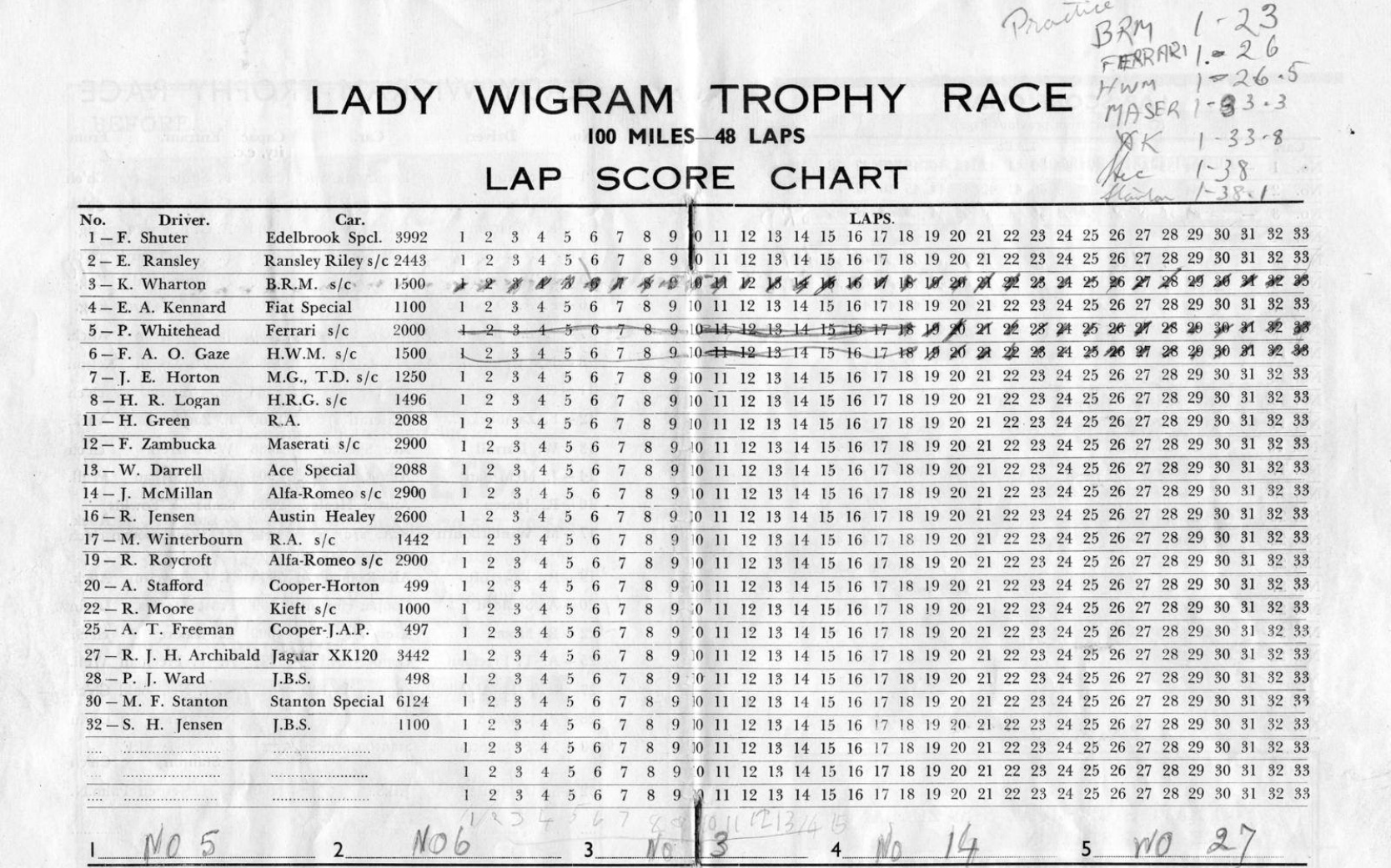
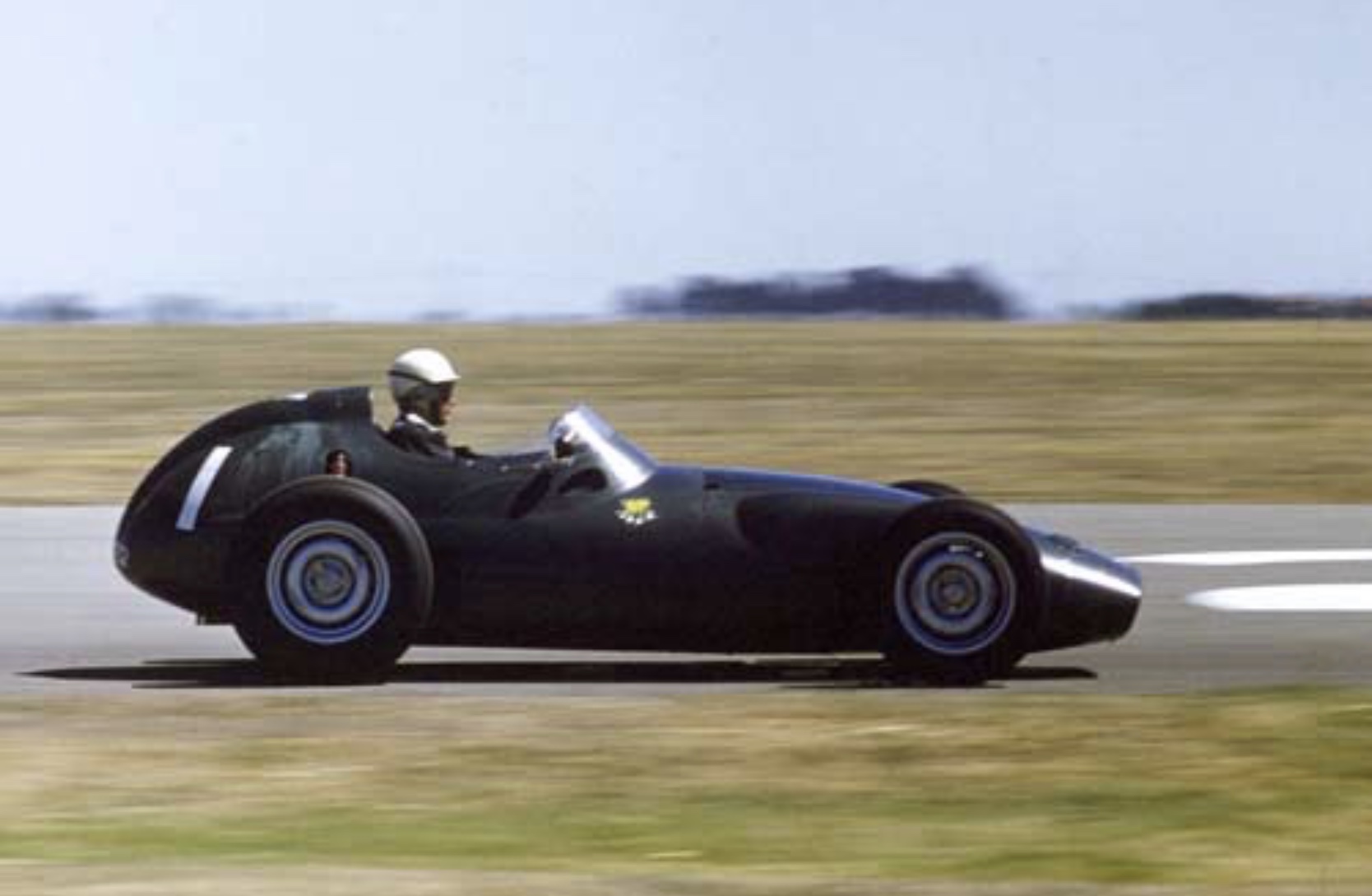


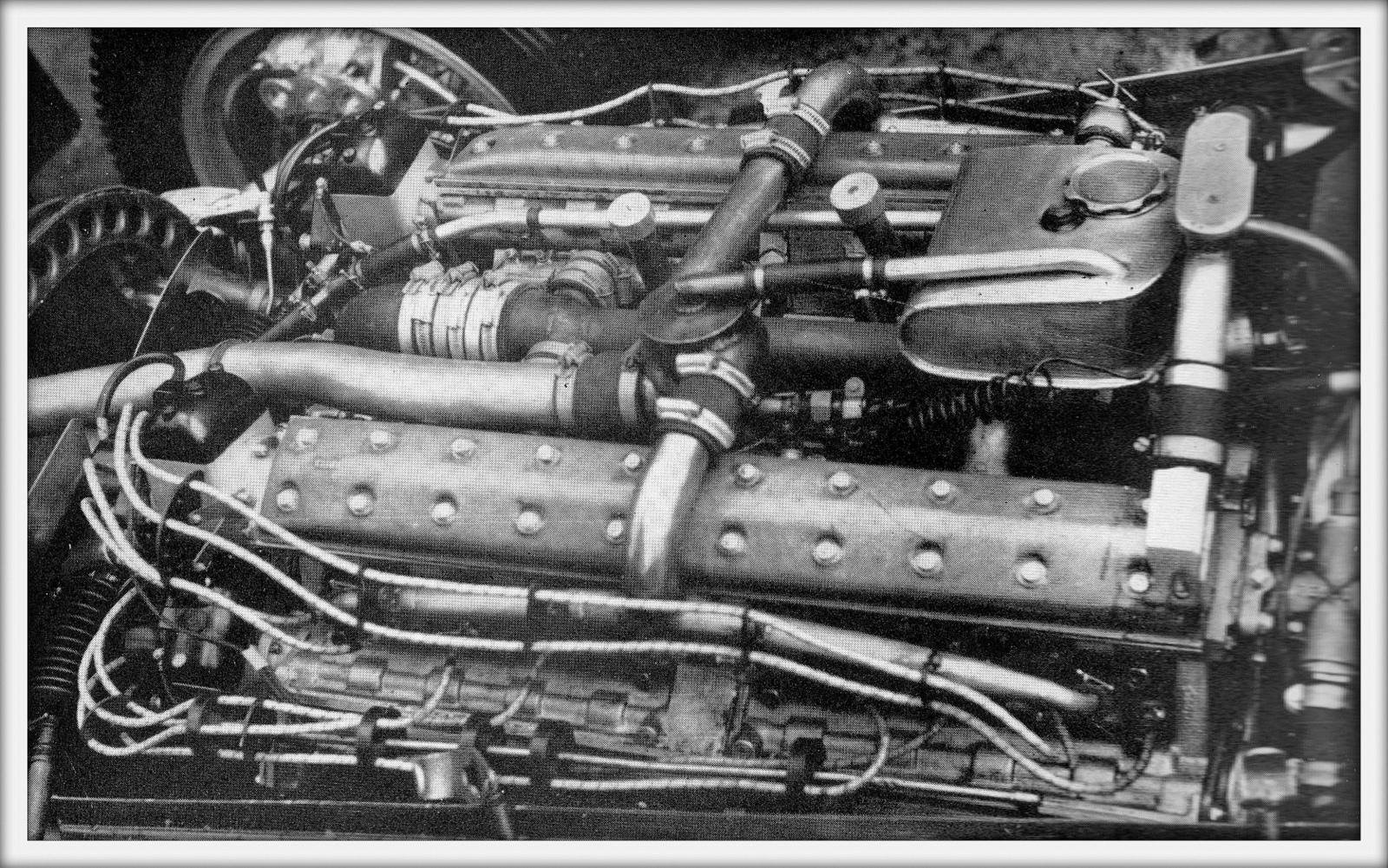
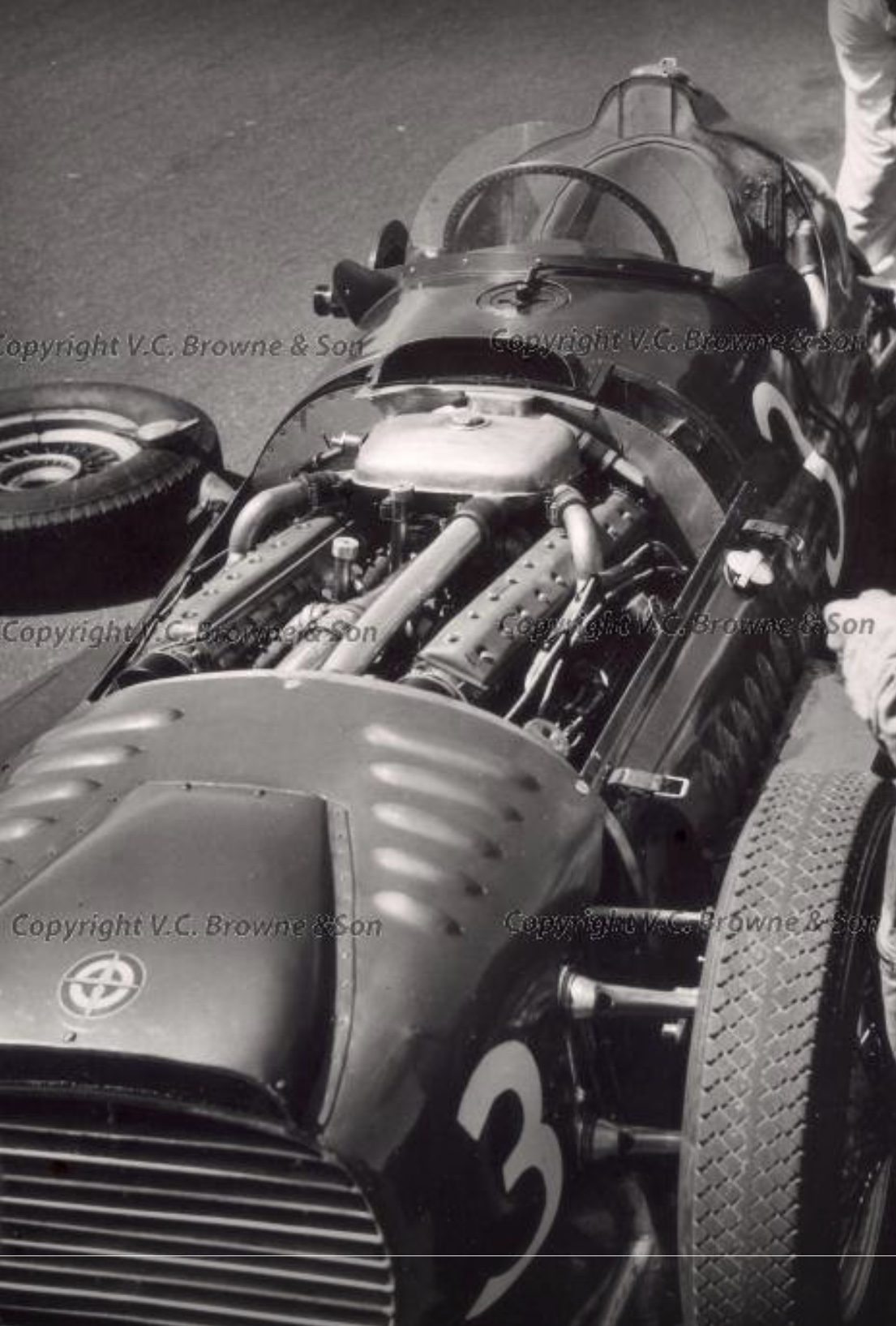


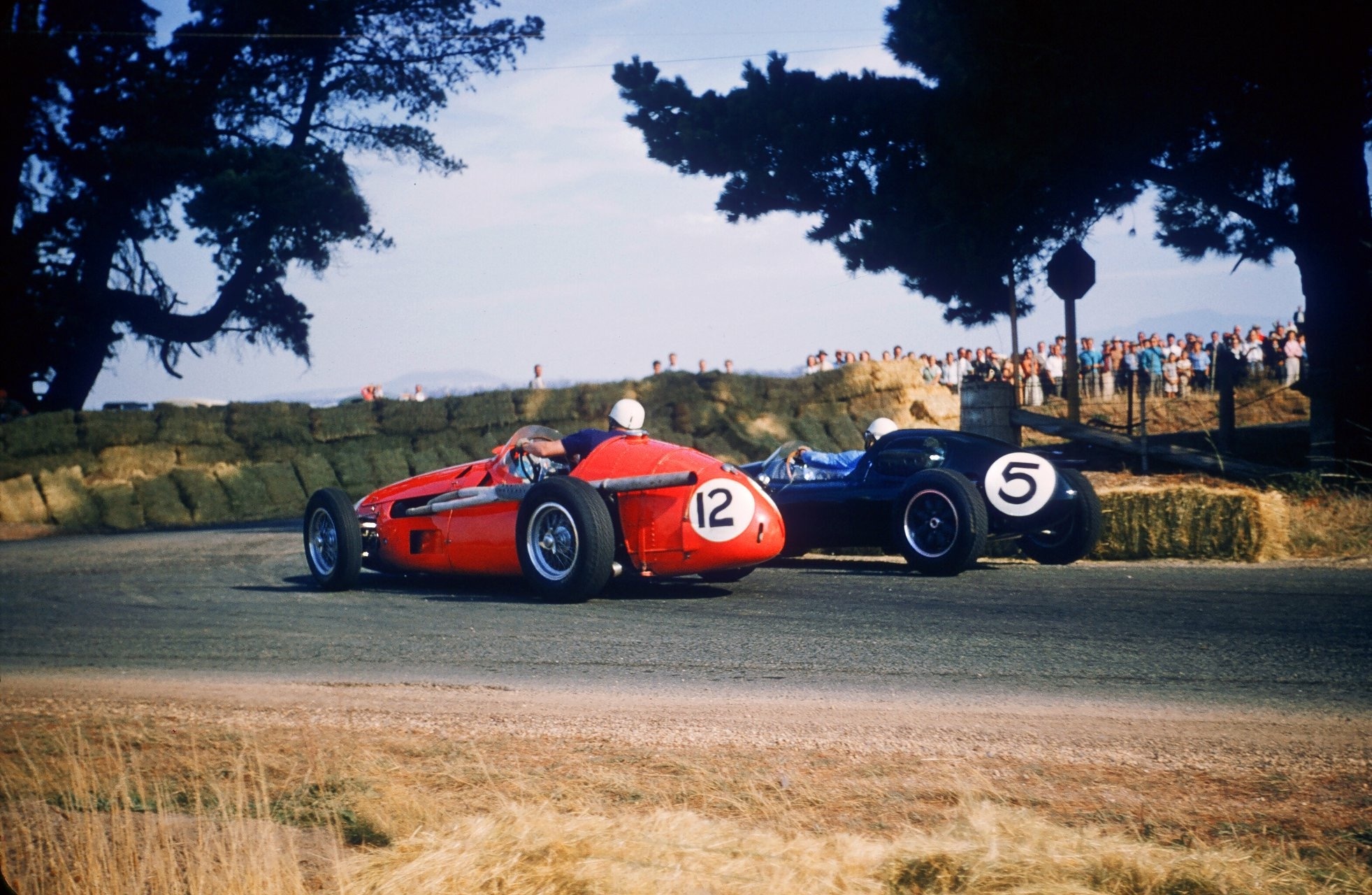
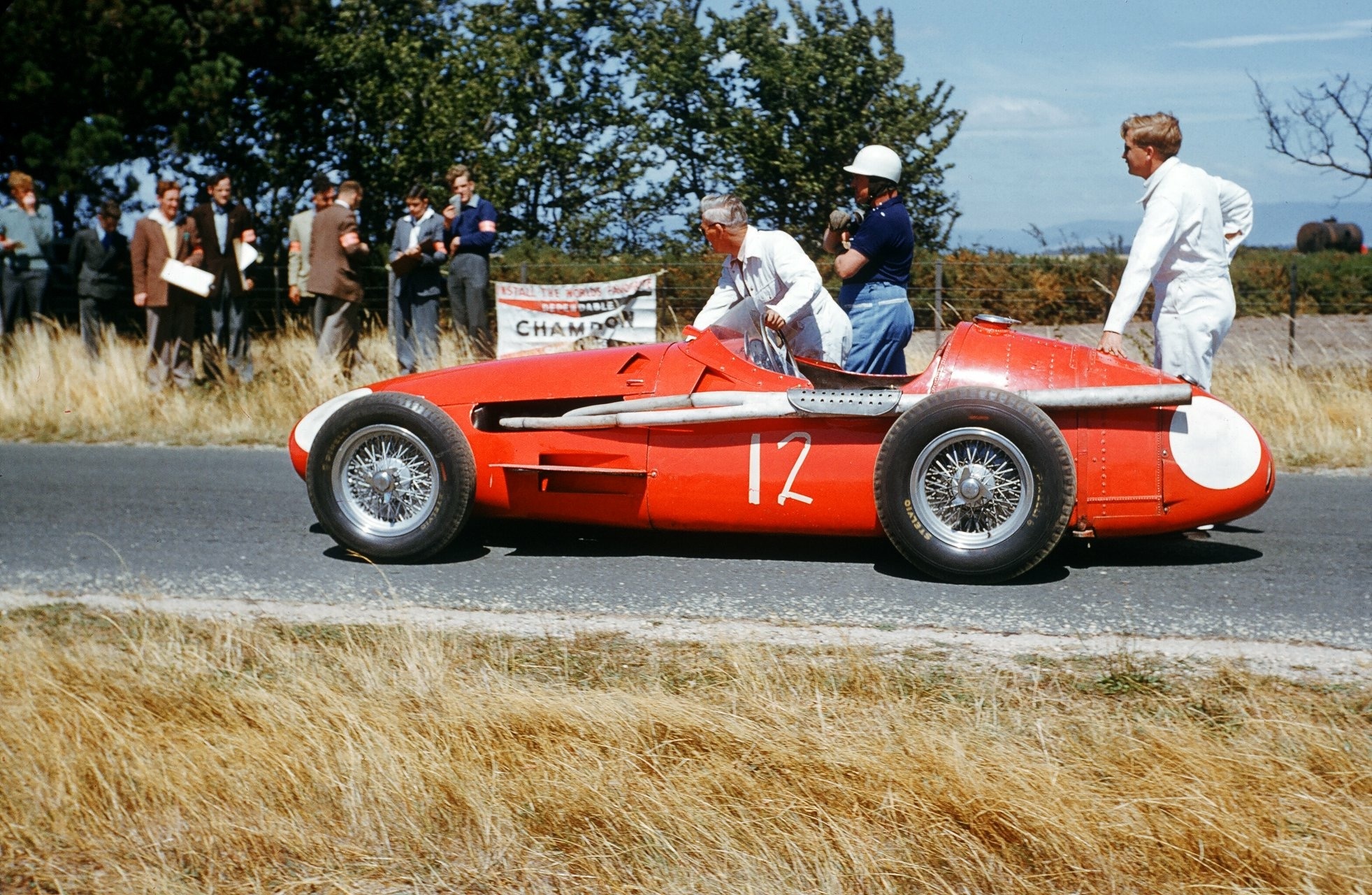

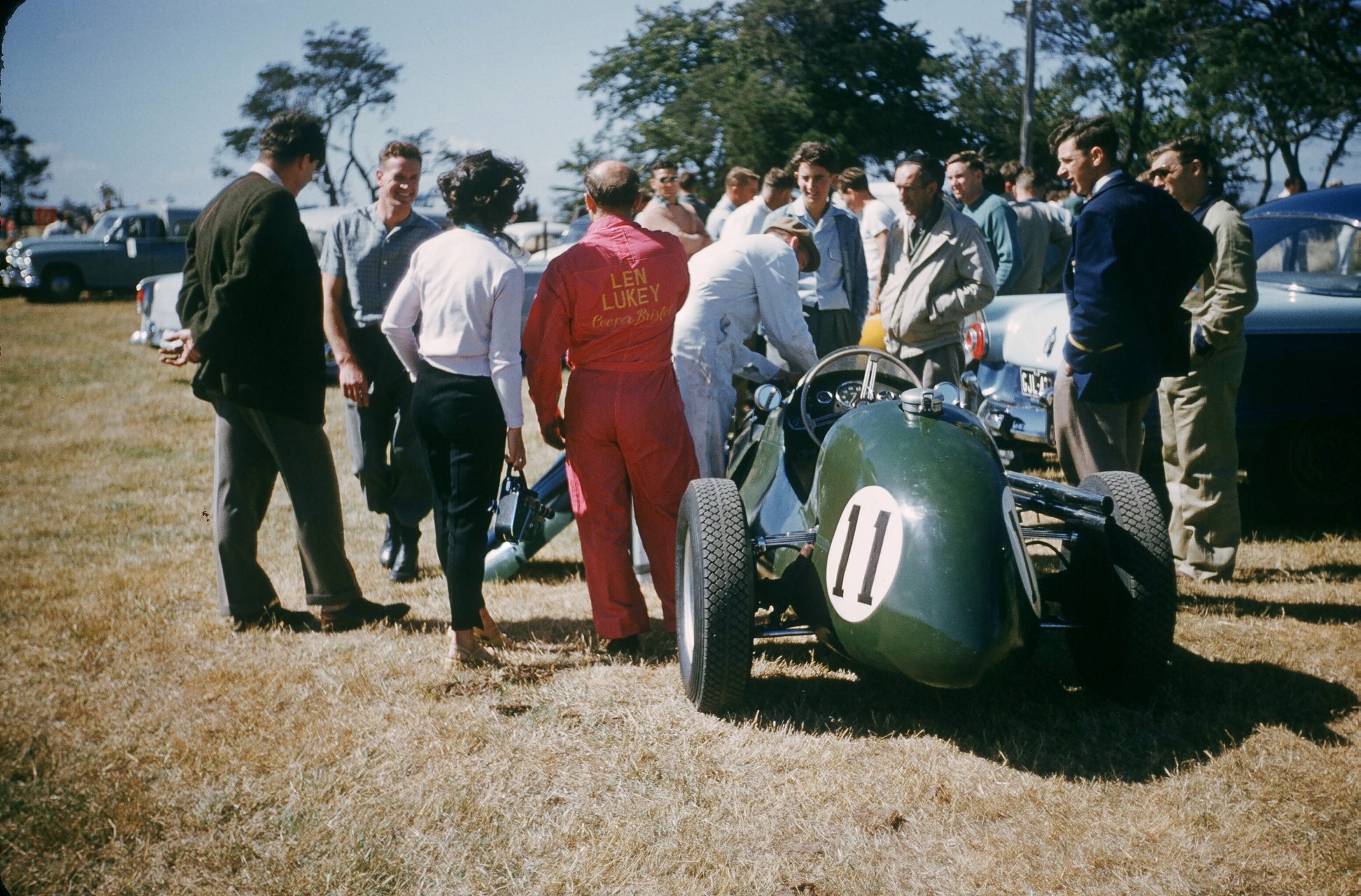

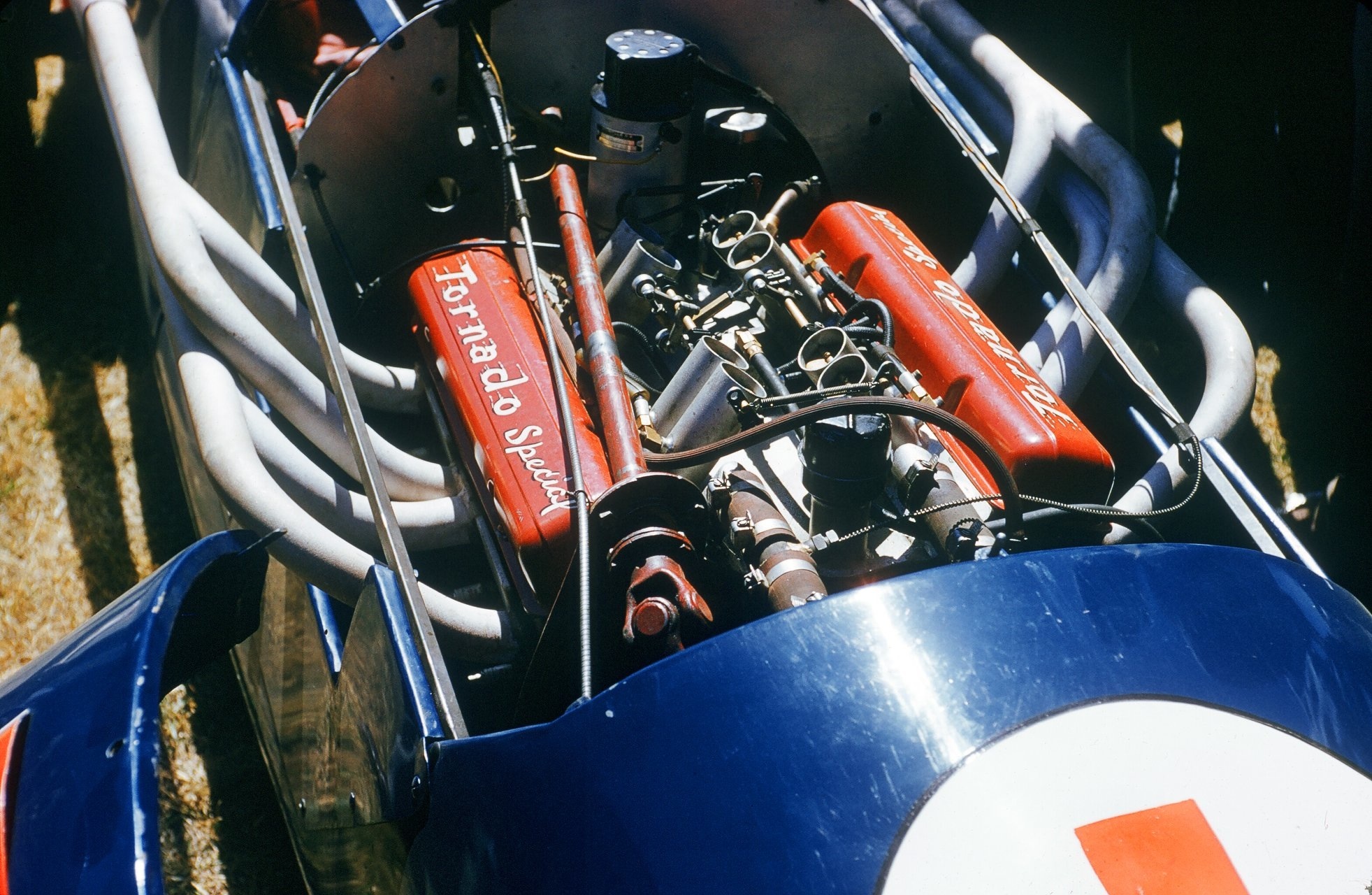

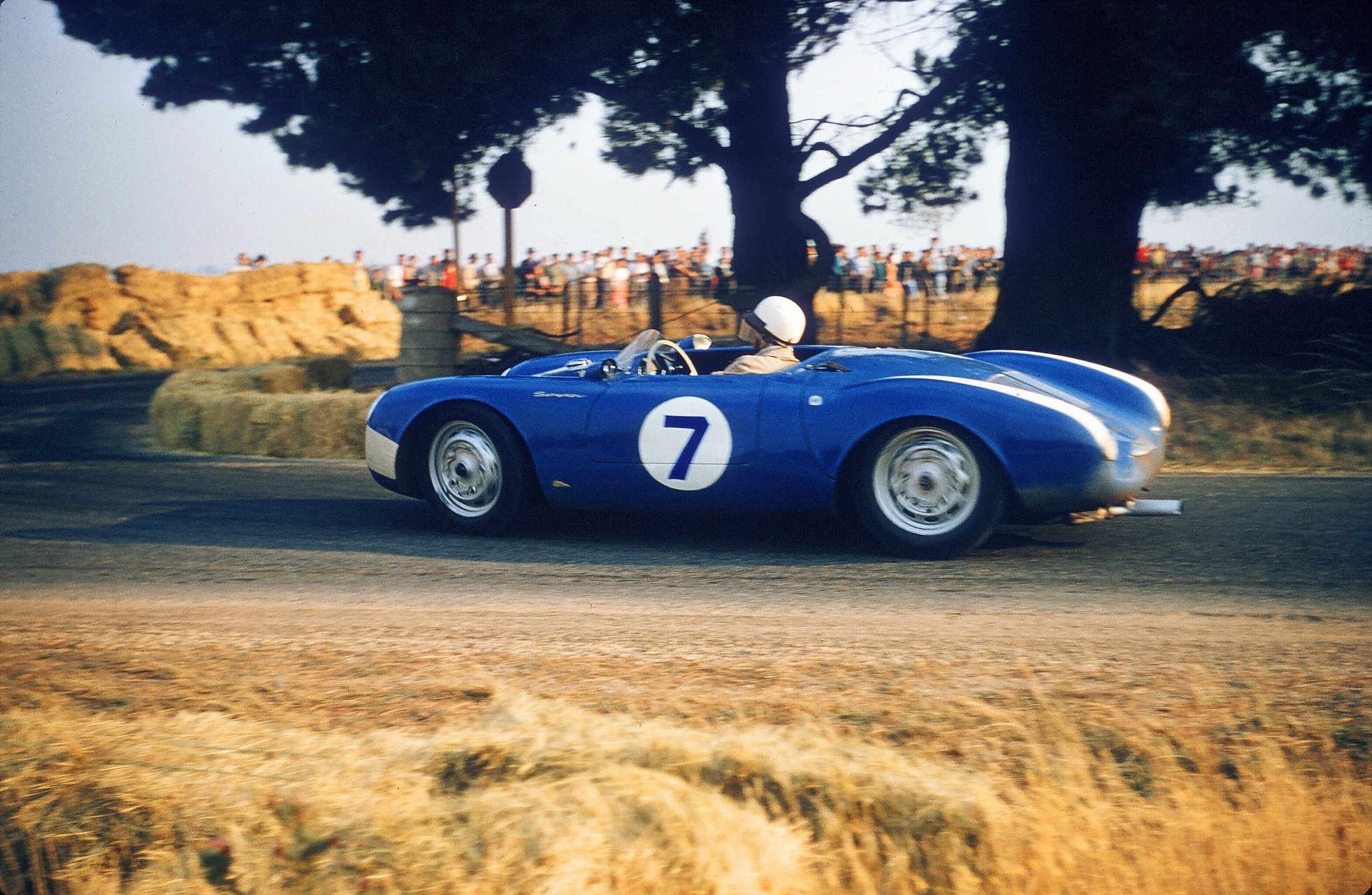
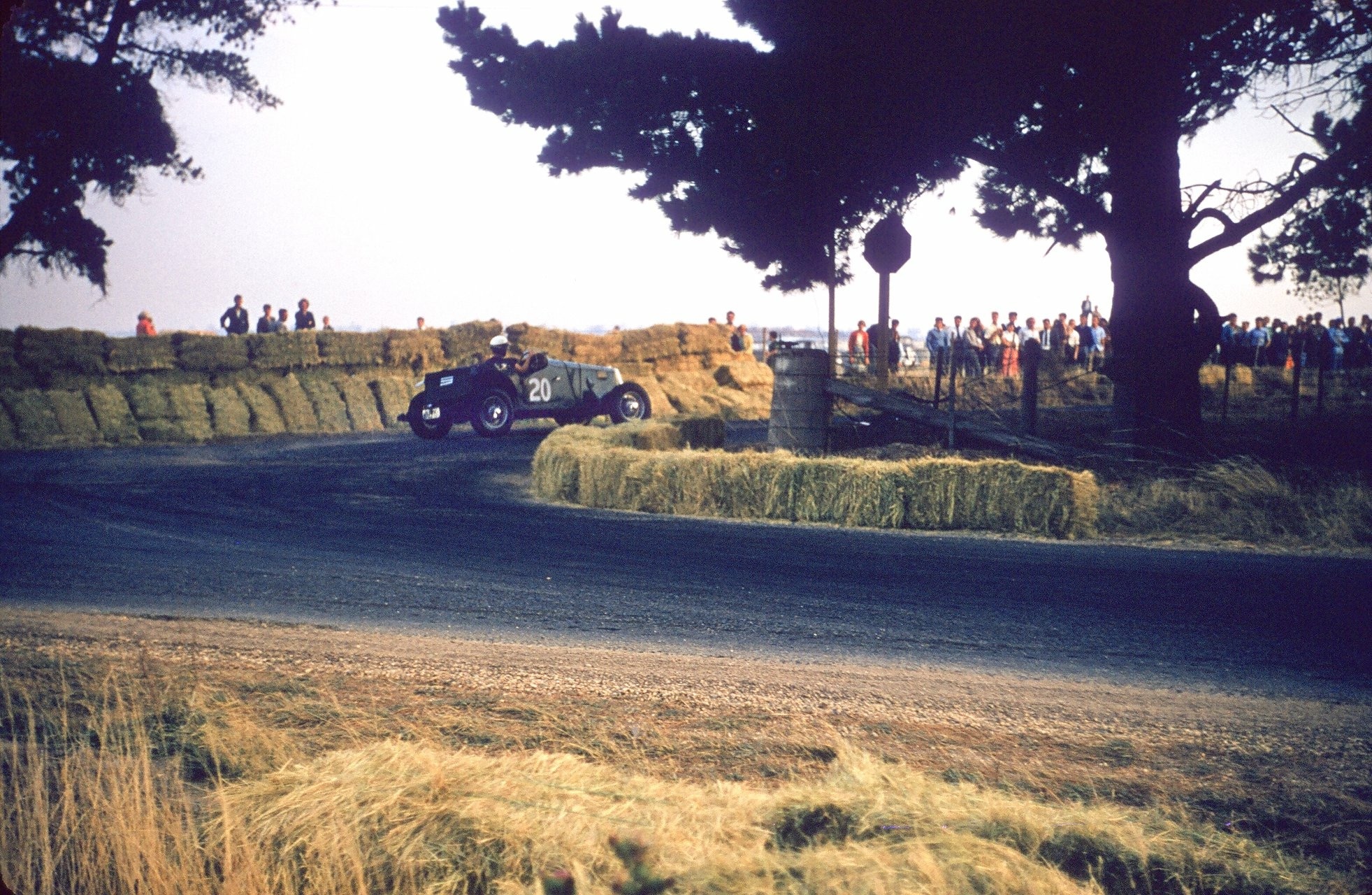


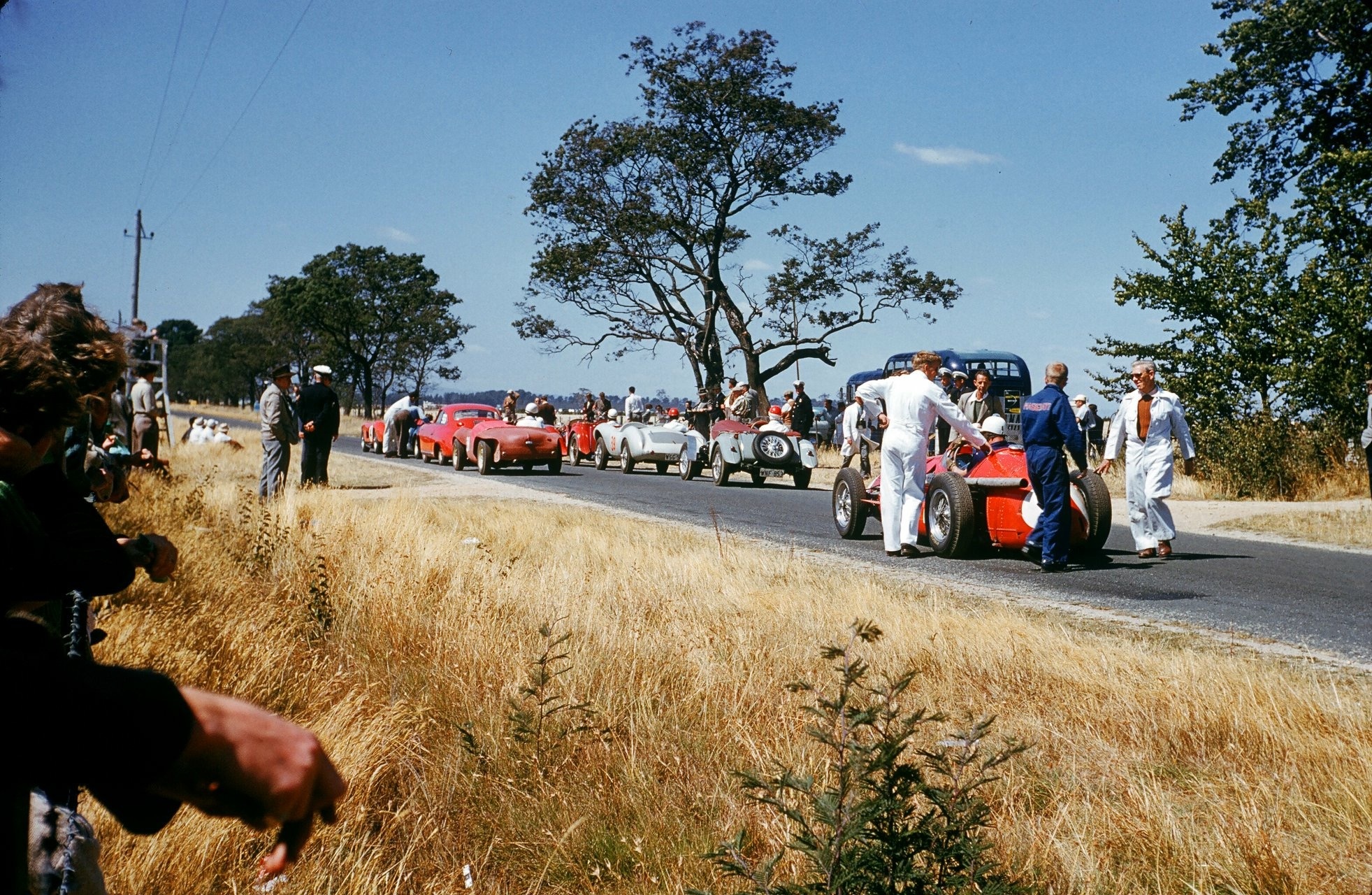
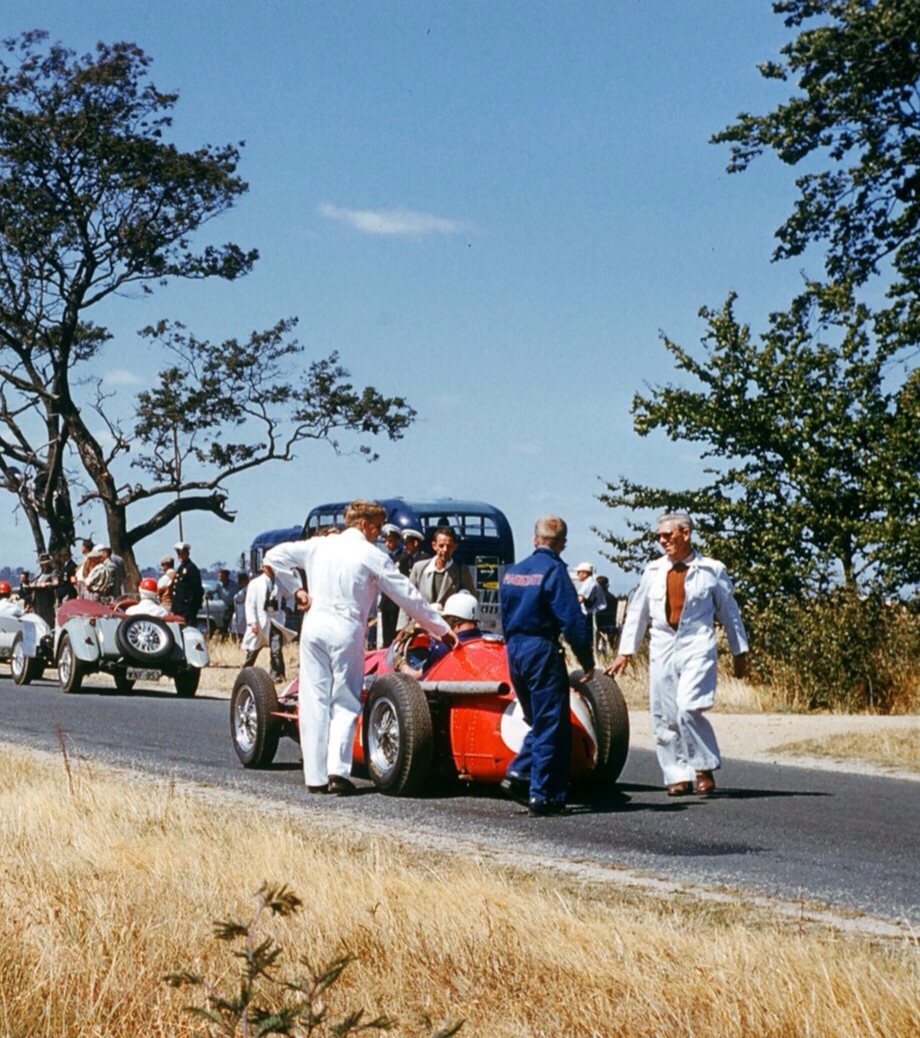
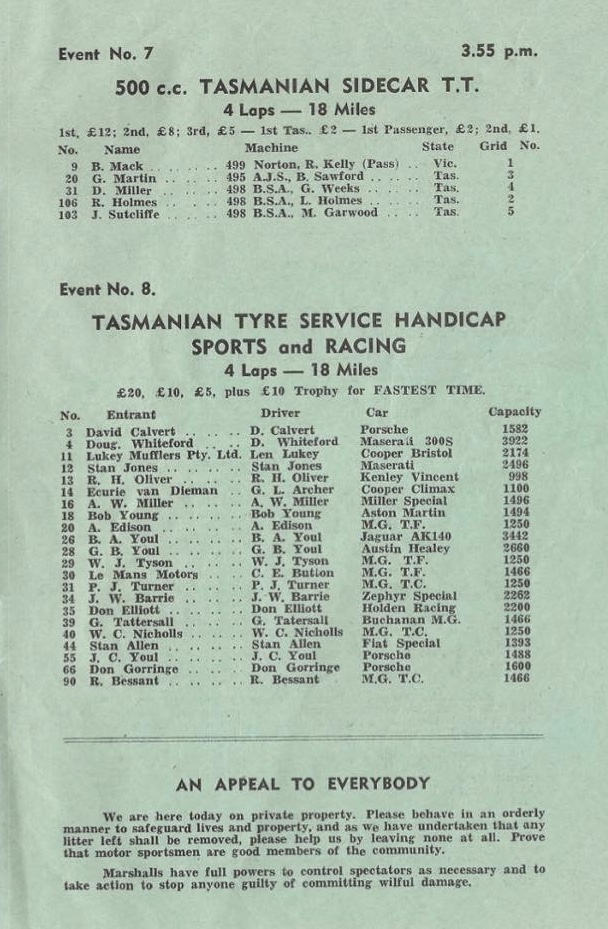


 primotipo...