Posts Tagged ‘Paddy Hopkirk’

(Donaldson/SLNSW)

“Don’t even think about!” said Liz Stanton of the Mini Automatic. “It hasn’t got enough poke to pull ‘yer foreskin back, the Cooper S is the go for a studmeister like you,” or words to that general effect.

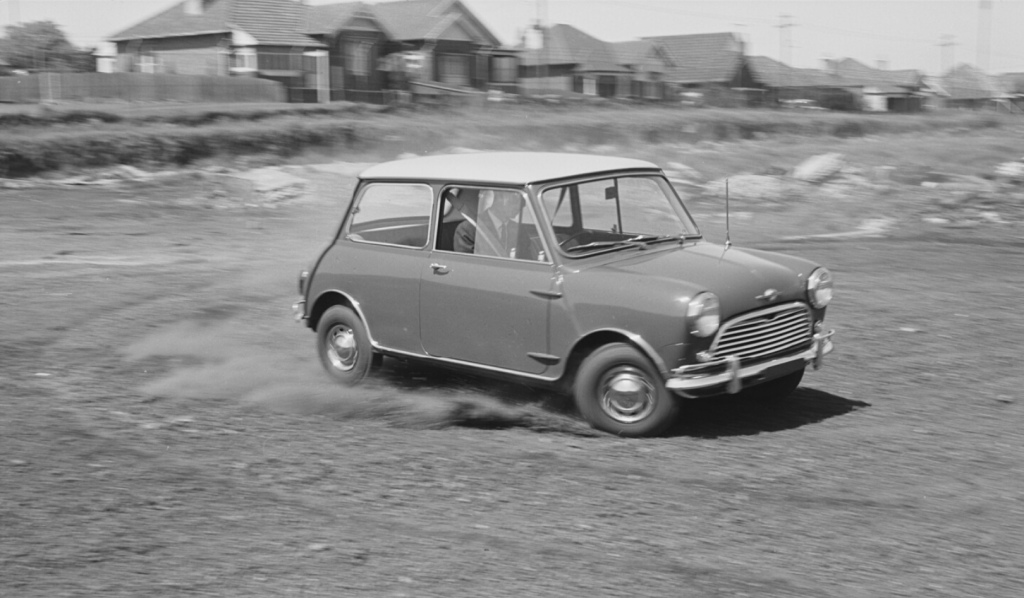
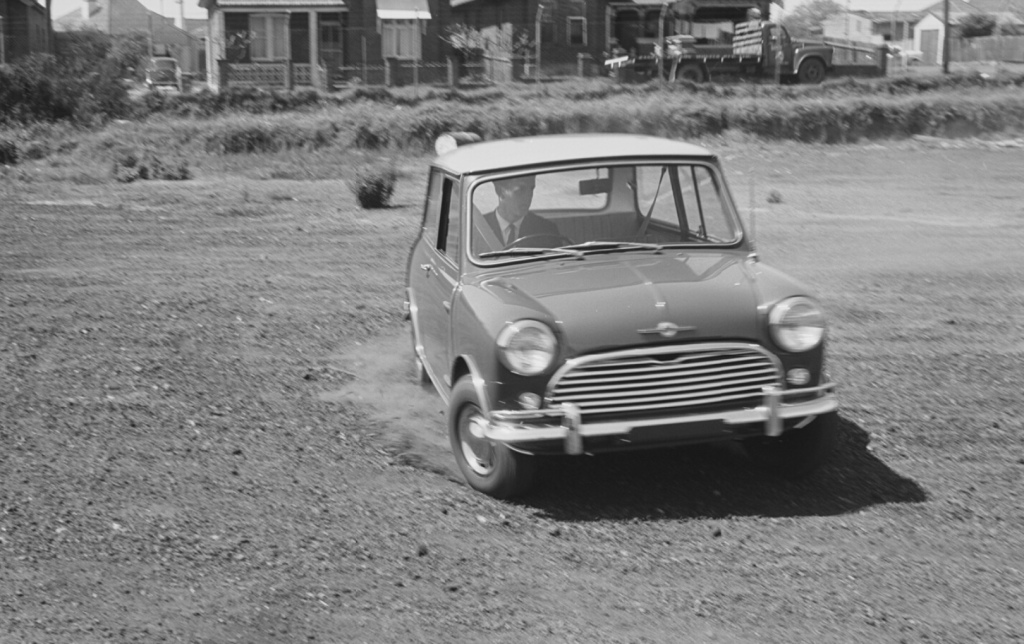
Pix photographer Bob Donaldson shot the Mini Matic launch at Surfers Paradise in September 1967 and five years before, a Morris Cooper test in October 1962, not to forget his November 1964 Zetland Grand Prix shots…
(Donaldson/SLNSW)
Morris 850 at left, Cooper at right (Donaldson/SLNSW)

By the look of the backgrounds on some of the action shots, the drive and photos took place on the British Motor Corporation’s massive site centred on Zetland, six kilometres south of Sydney.

While common knowledge to Oz motor enthusiasts, some of you furriners may not be aware that a huge range of BMC cars were manufactured in full in Australia – bodies and engines included – until the favourable tariff treatment afforded the mother-country was eliminated in the early 1970s, after you bastards joined the EU…

Click here for a timeline of key BMC/Leyland Australia events from 1950-1975, from the company’s birth until death: http://www.bmclaheritage.org.au/timeline.htm This one outlines the various factories/facilities: http://www.bmclaheritage.org.au/sites.htm
(Donaldson/SLNSW)
(Donaldson/SLNSW)

Surely there has been no better small performance car on road, track, the hills and in the forests than the Cooper/Cooper S? Not to forget the iconic status of Alec Issigonis’ brilliant, original ADO15 (Austin Design Office) design.

Topsy grew in engine capacity – but critically not in size – from 997cc-54bhp to 998cc-54bhp, then 1071cc-69bhp, then for a while 970cc-64bhp, and 1275cc-75bhp, before settling at that 1275cc magic-number…

(Donaldson/SLNSW)

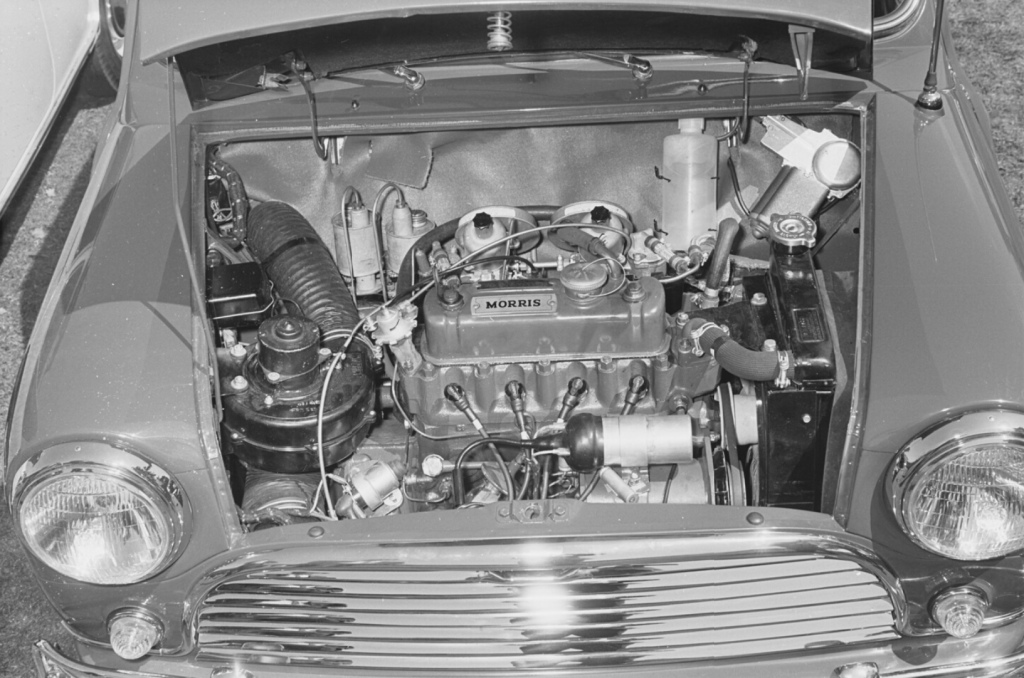
Note the factory extractors and twin HS2 SU carbs, the 997 gave circa 54bhp, not shedloads, but the thing weighed nothing and far more was easily capable of being extracted.
(Donaldson/SLNSW)

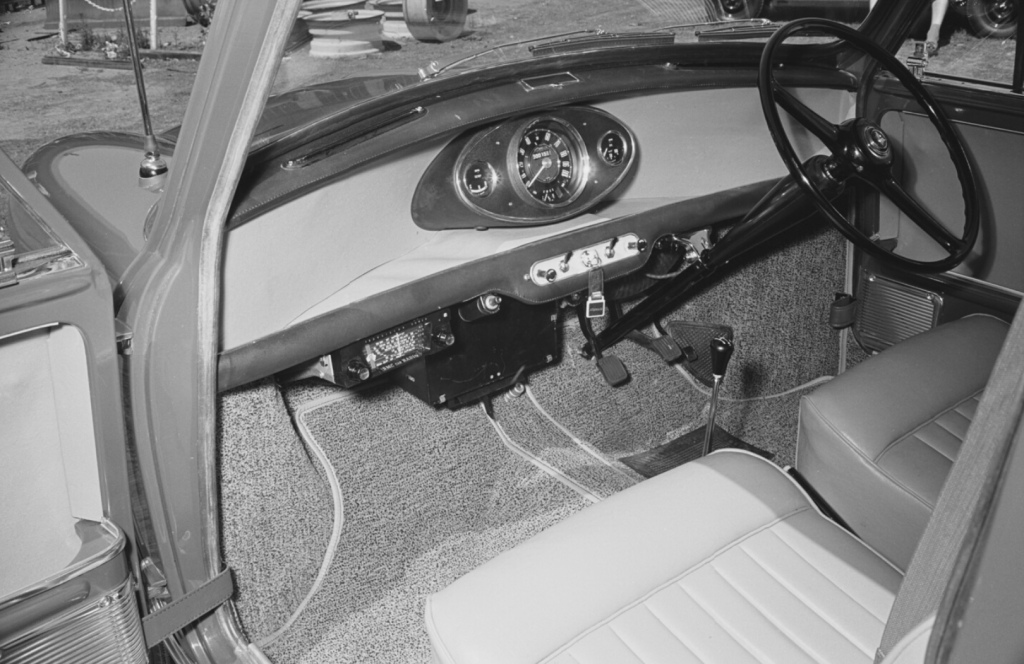
That instrument-pod never changed, thankfully. Coopers got a remote gearshift which was fast and great to use, the 850 got a long pudding-stirrer. The standard steering wheel was shit but no Cooper was complete without aftermarket Mota-Lita or Momo wheels and a Smiths tach. Oh yes, a racy mirror too, but only on the driver’s side.

(Donaldson/SLNSW)

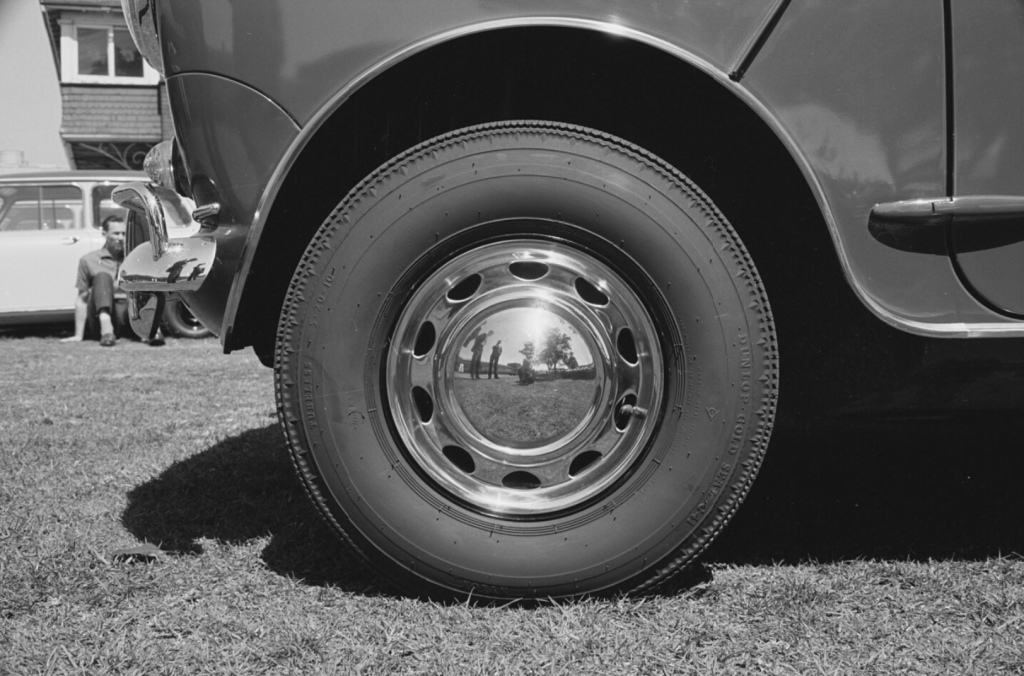
The 7.5 inch front discs were effective, rare on small cars then too. Issigonis and John Cooper knew a thing or two about competition after all.

(Donaldson/SLNSW)

“Where is the other 5-gallon tank?” you ask. That came with the 1275cc S from 1966.
(Donaldson/SLNSW)
(Donaldson/SLNSW)

“Oh no!” Those steel wheels have got to go, and usually did. The well heeled bought Minilites but I always thought a set of Cosmic wheels were hard to toss visually, and were a bit stronger for road use and abuse.

For another level of minutiae on the Australian Coopers, click on this Nostalgia Forum thread written largely by my friend, Cooper expert, Stephen Dalton: https://forums.autosport.com/topic/199685-mini-coopers-in-australia/

(Donaldson/SLNSW)

Zetland Grand Prix…

(Donaldson/SLNSW)

Paddy Hopkirk competes in the little known ‘Zetland Grand Prix’ in November 1964.

Factory BMC drivers Hopkirk – winner of the Monte Carlo Rally aboard a Cooper S partnered by Henry Liddon that January – John Fitzpatrick, Timo Makinen and Rauno Aaltonen were in Australia to contest the first Sandown 6-Hour enduro on November 29.

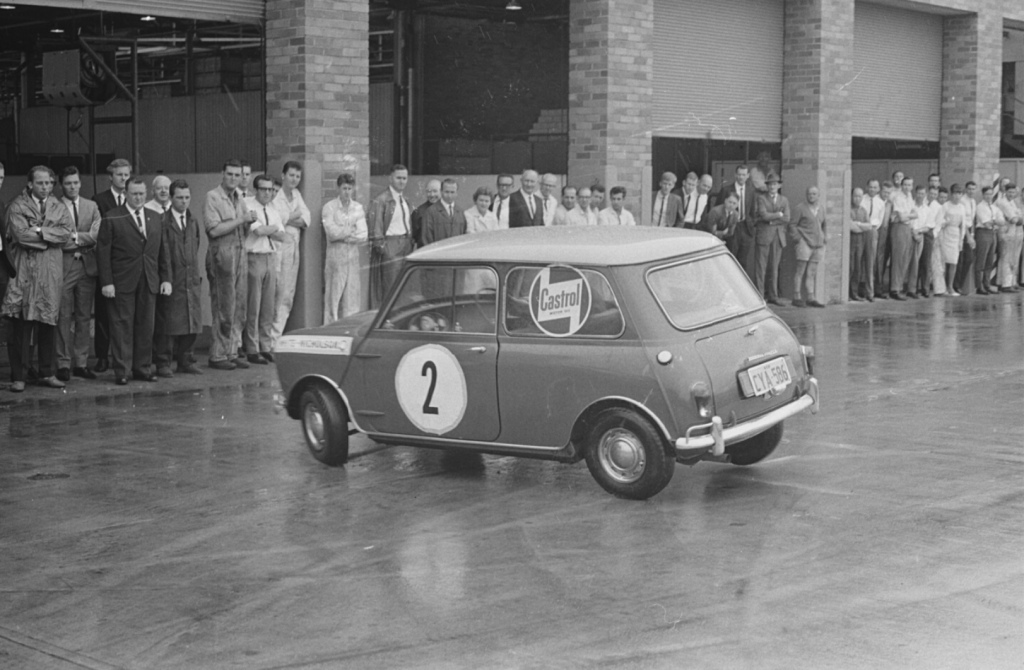
Evan Green at the left? Paddy Hopkirk in the centre, and John Fitzpatrick, perhaps, at right (Donaldson/SLNSW)
(Donaldson/SLNSW)

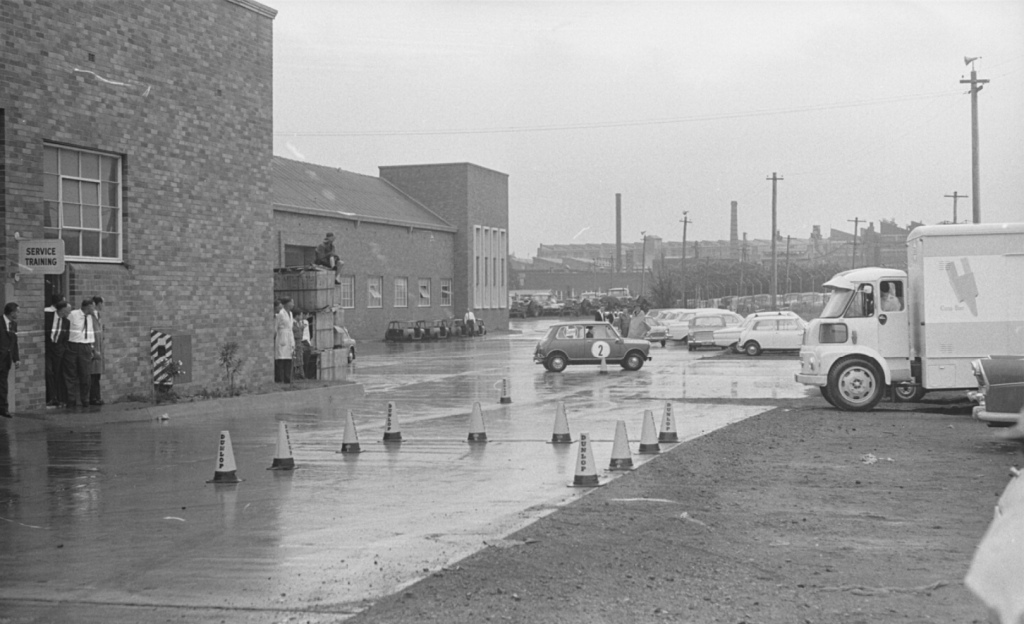
Part of the promotional activities set up by BMC Oz while the visitors were in their grasp was this demonstration of the capabilities of the cars built by the Sydney workers right in their own backyard.

Note the content of the safety processes/briefings: to the workers, ‘keep an eye on the cars’ and to the drivers, ‘try not to hit anyone’…Mission accomplished I believe. What a blast that would have been.
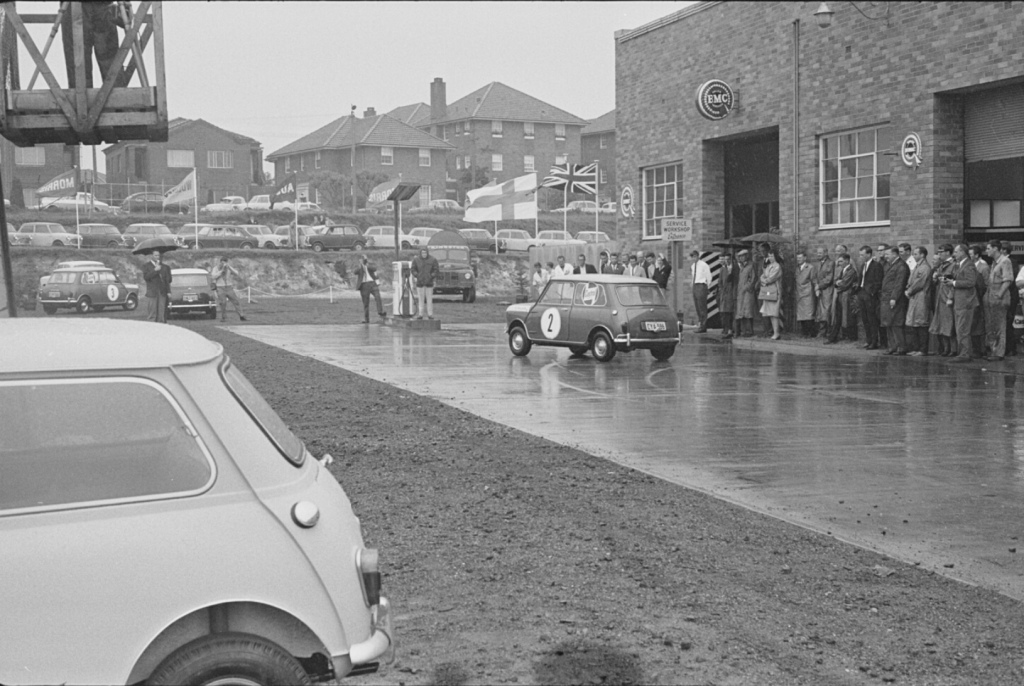
(Donaldson/SLNSW)

Credits…

Bob Donaldson, Pix, State Library of New South Wales, The Sun UK, LAT, Ashley Tracey

Tailpieces…
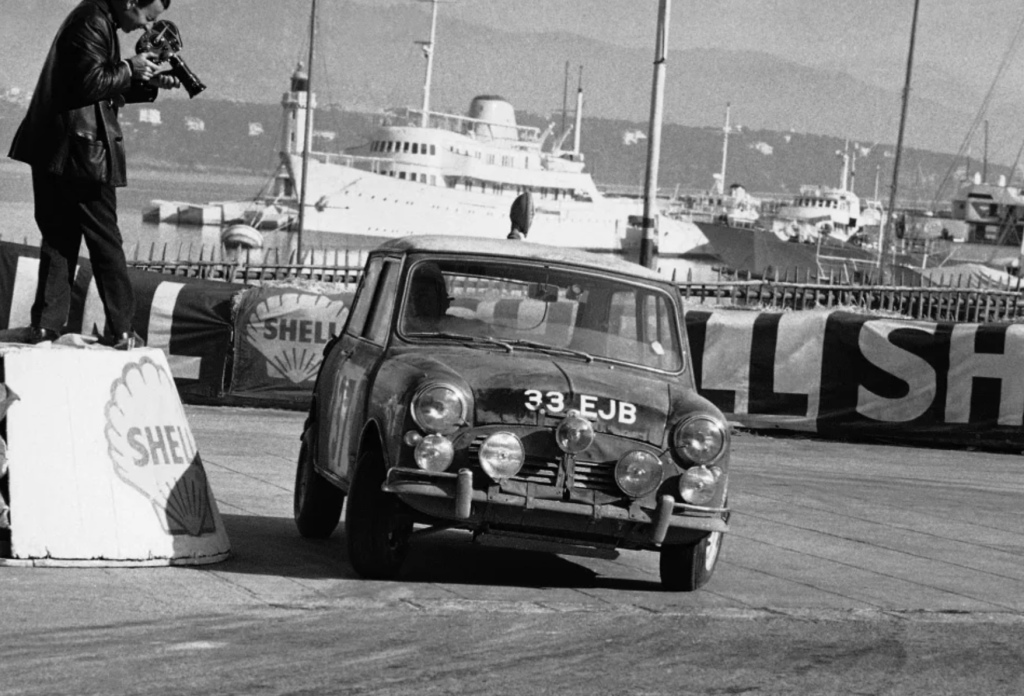
(The Sun UK)

Paddy Hopkirk races around Monaco during the final 1964 Monte stage, and below after securing the historic win, with co-driver, Henry Liddon.
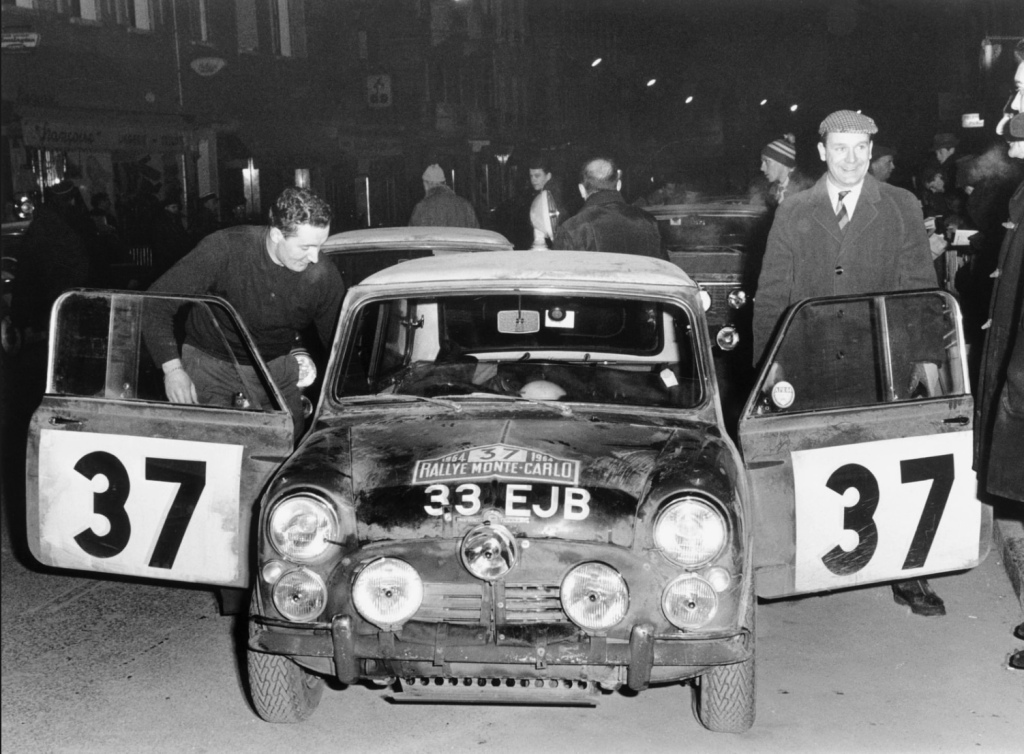
(LAT)
(A Tracey)

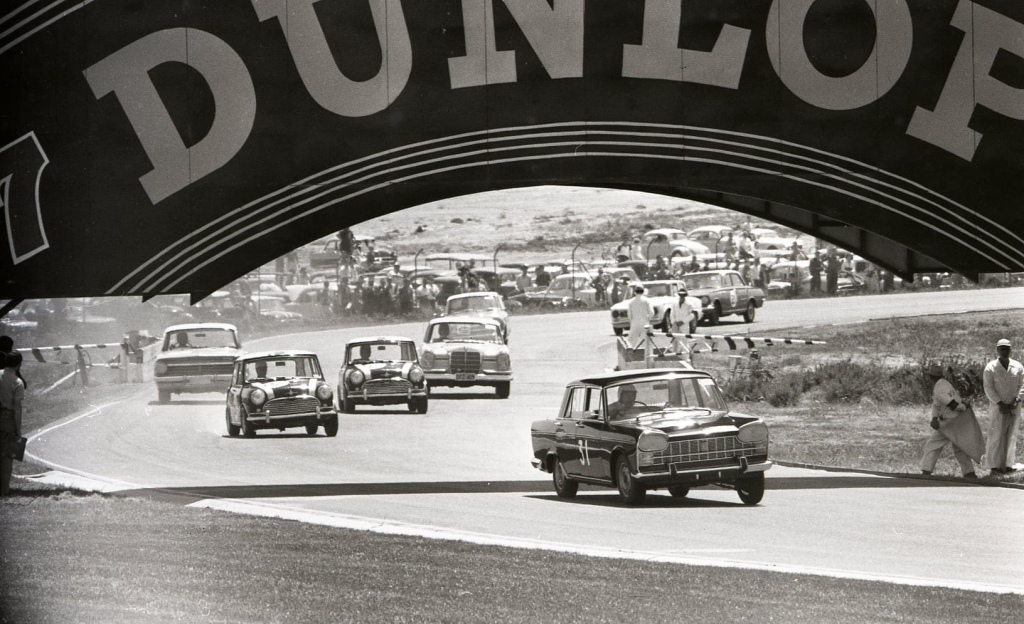
Sandown 6-Hour 1964, the end of the first lap perhaps with the Barry Topen/Digby Cooke Fiat 2300 leading two of the three works-Cooper S.

These 1275 S were British built cars brought to Australia for the event by Zetland’s newly formed competition department, the idea of BMC PR Manager – and rally driver – the much respected Evan Green.

Alan Kemp managed the department, while the three Cooper S racers were prepared for Sandown by the legendary Peter Molloy – then working with Brian Foley in Sydney – at BMC’s Melbourne workshop in Moorabbin.

Peter Manton/Brian Foley were second, seven laps adrift of the victorious Alec Mildren Racing Alfa Romeo TI Super driven by Roberto Businello and Ralph Sach. The Hopkirk/Fitzpatrick car was sixth, while the Makinen/Aaltonen pair failed to finish after losing a wheel and rolling. See here for some footage of the race: https://youtu.be/LZiQ4PJSmyo?si=Sb39mqNzckopf-kK

Finito…

image

(Rolls Press/Popperfoto)

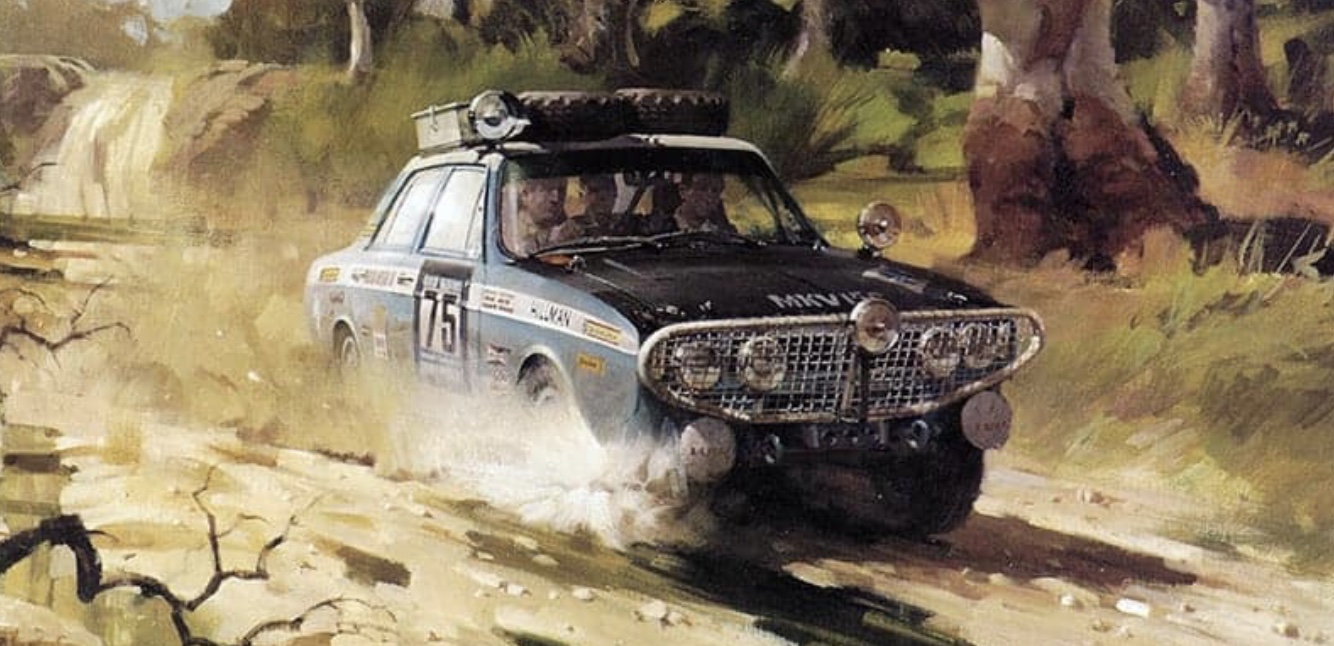
Andrew Cowan’s works Hillman Hunter blasts through the never-ending and oh-so-demanding Australian scrub during the last, long, tough leg of the London-Sydney Marathon in December 1968…

I posted an article written by Bruce Thomas a while back featuring some of his photos, but I thought these too good to ignore, click on this link to see the article;

https://primotipo.com/?s=london+sydney+marathon

image

Andrew Cowan, Brian Coyle and Colin Malkin alight their BOAC flight at Heathrow, their low budget works Hillman Hunter winners of the London-Sydney, December 1968 (Rolls Press/Popperfoto)

Andrew Cowan shared the drive with Colin Malkin and Brian Coyle, in some ways it was a lucky win but these ultra-long endurance events need a combination of luck, consistency, reliability, high levels of concentration for long periods, driving and navigational skill and resilience to overcome the inevitable dramas large and small.

image

The Bianchi/Ogier Citroen DS21 leading the event during the Numeralla Stage. 4 Miles from the end of the Nowra stage, the end of competition, the car with Ogier at the wheel, Bianchi asleep hit a Mini head on travelling against them on the rally road. The Citroen was destroyed with Bianchi suffering leg and chest injuries. Hopkirk’s Austin was first on the scene, immediately returned 4 miles to a radio point to get help (Bruce Thomas)


bianchi

Italian born, Belgian domiciled Lucien Bianchi cleans the windscreen of his Citroen, in the lead at the end of the Numeralla-Hindmarsh stage. Disaster struck in the following transport stage. A remarkably versatile driver, he won the ’68 Le Mans with Pedro Rodriguez in a JW Automotive Ford GT40, was third at the ’68 Monaco GP in a works Cooper T86B BRM and should have won the London-Sydney, not bad results in one year in such diverse cars and disciplines! Sadly he died at the wheel of an Alfa T33 during the Le Mans test weekend in March 1969 (Bruce Thomas)


image

Lucien Bianch’s Cooper T86B BRM V12 ahead of Graham Hill’s Lotus 49B Ford, 3rd and 1st, Monaco GP 1968 (unattributed)


Cowan was raised in Duns where he established a close friendship with Jim Clark another young local farmer.

‘We each had to have a car. We were able to drive in fields, off road, and of course through all the twisty roads around here where there was practically no traffic in those days. That definitely refined our driving skills. We had advantages that other drivers didn’t.’ said Cowan.

Both men were active in the Berwick and District Car Club during the 1950s, whilst Clark gravitated to open-wheelers Cowan ventured off-road. He soon contested 1960 RAC Rally finishing 43rd in a field of over 200 starters in a Sunbeam Rapier. His father acquired a more powerful Rapier in which he won the 1962 and 1963 Scottish Rallies. As a consequence the Rootes Group invited him to become their ‘works’ driver.

image

The works Paddy Hopkirk/Tony Nash driven Austin 1800 ‘Landcrab’ finished an excellent 2nd in the Marathon, here on the Numeralla Stage (Bruce Thomas)

Cowan had much success with both Rootes and subsequently Mitsubishi. He also won the 1977 London-Sydney Marathon in a Mercedes 280E with Colin Malkin again one of the co-drivers. I can still remember the thrill of seeing him and the rest of the field charging through the still, frigid winter air of the sub-alpine control Victorian Alfa Club Members manned north of Mansfield in September 1977.

cowan 2

Andrew Cowan Benz 280E somewhere in Australia during the ’77 London-Sydney (unattributed)

Cowan was a popular and much respected figure in Australia, he won five consecutive Southern Cross Rallies in Mitsubishi’s (1972–76), the 1977 Rallye Bandama Cote d’Ivoire, the 1976 Scottish Rally Championship and the world’s longest rally, the 20,000-mile South American Marathon in 1978. In the Safari Rally he finished in the top 4 four times in five years. In the Paris-Dakar, his best result was second in 1985. He retired as a driver in 1990.

cowan

Andrew Cowan and Fred Gocentas during their October 1975 victorious Southern Cross Rally win, Mitsubishi Lancer GSR 1600, no helmets. Rally HQ Port Macquarie, NSW (unattributed)

In 1977, he was awarded the British Guild of Motoring Writers’ Driver of the Year Award, the Jim Clark Memorial Trophy for ‘outstanding achievement by a Scottish driver’ and the BRDC’s John Cobb Trophy for a British driver of outstanding success.

After Cowan’s retirement as a driver he established a European base for Mitsubishi. ‘Andrew Cowan Motorsports’ was based in Rugby, Warwickshire and morphed into Mitsubishi Ralliart taking Tommi Makinen to four consecutive World Rally Championship titles (1996-9) and a manufacturers title for Mitsubishi in 1998. He retired in 2005.

falcon

The 6th placed Bruce Hodgson/Doug Rutherford works Ford Falcon ‘XT’ GT, the Vaughan/Forsyth car was 3rd and Firth/Hoinville car 8th giving FoMoCo Oz the team prize. The cars were prepared by Harry Firth and Ken Harper. Not bad for a family car with a 5 litre/302cid V8 designed for the Bathurst 500 rather than Rally Forests! Numeralla stage (Bruce Thomas)


munro

The works (GM) Holden Monaro ‘HK’ GTS 327cid V8 powered car of Barry Ferguson, Doug Chivas and Johnson best of the Holdens in 12th. Doug (thrice Australian GP winner)Whiteford/Eddie (father of Larry) Perkins were 14th and David McKay/Reynolds car DNF. Both Ford and Holden fielded well prepared cars and drivers of great experience and depth. The ‘Bathurst’ cars both performed well as rally machines. Whilst the Holden Team was organised by Scuderia Veloce’s David McKay the cars were prepared by Holden and entered in the name of their sponsor ‘Sydney Telegraph Racing’ the Packer owned newspaper for whom McKay wrote his motoring columns, to be clear it was a ‘works’ entry (Bruce Thomas)


1968, London-Sydney (unattributed)

Credits…

Rolls Press/Popperfoto, Bruce Thomas, Wikipedia, bobwatsonrally.com.au, southerncrossrallyblogspot.com, ewrc-results.com

Tailpiece: Cowan’s Hillman Hunter, known colloquially as ‘grunters’ in Oz, in 2nd place during the Numeralla to Hindmarsh Station stage, typical Australian sub-alpine terrain and vegetatation…

image

(Bruce Thomas)

Finito…