Archive for 2014

  1. lella brands

    Lella Lombardi, Lola T330 Chev ‘HU18’ , Brands Hatch ’74


Lola’s T330…

Lola’s F5000 domination started with the ’72 model T300, the process completed by the ’73 T330, and 332, 332C, single seat Can Am T333 variants of the car built over a decade.It is one of the most successful competition cars ever in terms of race wins and longevity, if not THE most successful.

Eric Broadley’s evolution of the T300 produced an extremely competitive car for one of F5000′ s most competitive seasons, the cars aluminium monocoque ‘dressed’ in curvaceous bodywork executed by Specialised Mouldings. If ever an F5000 looked right this was it.

The 1973 season and those which followed proved that beauty was far from skin deep.

T330 ‘HU18’…

T330 ‘HU18’ was sold in March to Jackie Epstein Racing for the ’73 European F5000 championship. Epstein was a long time race entrant of sports cars before changing to F5000 after the death of his business partner, racer Paul Hawkins.

The Radio Luxembourg # 208 sponsorship was iconic at a time when the BBC had a monopoly on the radio airwaves in the UK. Radio Luxembourg, on frequency 208 medium wave were an offshore broadcaster of popular shows into the UK.

The car’s driver for 1973 was ’71 Le Mans and ’72 British F5000 Champion Gijs Van Lennep. His best results a 2nd at Snetterton and 3rds at Mondello Park and Jyllands-Ringen. Whilst Gijs was away on sports car duties Tony Trimmer, Clive Santo and Ray Allen also raced the car, albeit without success.

Teddy Pilette won the 1973 title with a demonstration of consistent speed in his Chevron B24.
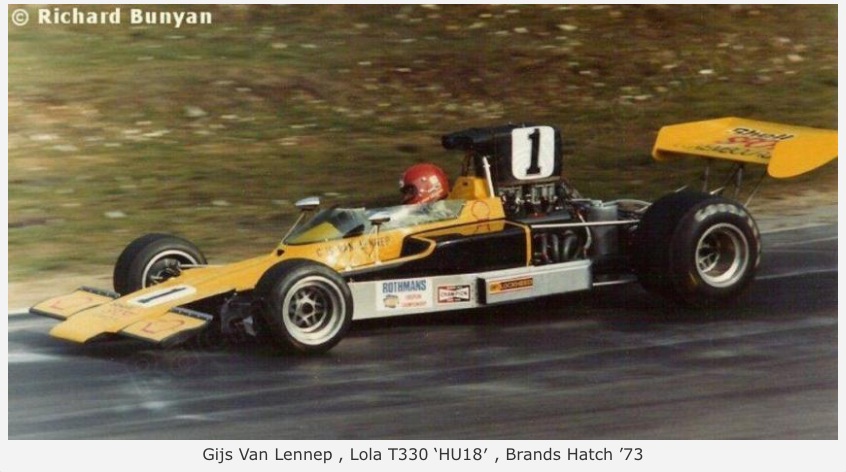
brands van l

Into 1974 Epstein signed Lella Lombardi, she had come through Italian racing and European F3 and immediately impressed with her handling of HU18. Her best results 4ths at Brands, Monza, Oulton Park and Mallory Park. In ’74 the title was won by Bob Evans in a T332.

Lombardi raced in F1 for March in ’76, HU18 was sold by Epstein to John Turner, the car also driven by Keith Holland and Richard Scott that year. Hollands 4th at Brands was the best result.

monza

From Europe to Obscurity in the US for 34 Years and into Peter Brennan’s TLC…

Peter Brennan picks up the story, ‘Allen Karlberg was an American working in the UK at the time and was commissioned by countryman Jim Burnett to acquire a car for conversion to a central seat Can Am spec, F5000 having morphed into Can Am in an attempt to improve crowd numbers. The car was shipped to Portland, Oregon in 1977 where it remained for 36 years’

‘It was disassembled and some work done, for example the DG300 had a new crown wheel and pinion but essentially it was untouched, the only thing preventing considerable damage to the car was the fact it was in parts and the bits and pieces far enough away from a workshop fire which melted the right-front corner of the tub some time in the ’90’s.’

‘Burnett died several years ago and his Executors approached Karlberg to sell the car, I was cruisin’ the internet as I do. I was looking for another F5000 to restore and spotted a small ad in a club magazine which said something like ‘fire damaged F5000 for sale, major project’.

‘Whilst their was a lot of junk in the workshop around the bones of the car I could make out what it was and also see that the factory chassis plate was on it. I agreed to buy it and with a little research from the pictures he sent me, the front brake ducts and oil tank, for example, I was confident it was HU18 even before he called me to advise the plates details !’

‘Even though the car had been in bits forever it had remained in the same place so the tub, ‘box, 4 complete corners, wheels and spares, exhaust, radiators, fuel cells, swirl pots etc, etc were all there. Shipping it out of Portland was a pain in the arse but Kevin Bailey’s ‘Cheetah Imports’ always helps me and it finally arrived, then the real work began’.

Our intrepid racer has owned and restored Elfins, Matich and Lola F5000’s, everything but a Chevron. HU18, as the most lightly raced of the surviving T330’s, most of which were converted to T332 spec, is something special.

Peter is the ‘real deal’ as a racer enthusiast ‘…the main reason I do this is that I love the challenge, meeting and making new friends, it’s not all about the racing. It’s a real journey, going to all parts of the world in pursuit of parts and information’.

We look forward to sharing the journey with you PB.

Next month, the mammoth task of resurrection begins.

Tub as found

First photo of the tub allowed Brennan to identify it as probable T330, RHF tub melted away readily visible.

front suspension

Front suspension in need of a crack-test…
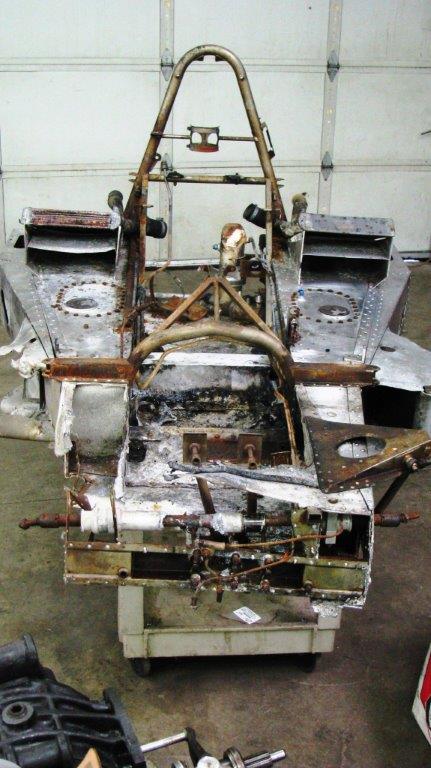
Tub as it arrived

‘HU18’ tub as it arrived in Australia

boxes of bits

‘HU18’ as it arrived out of the container in Port Melbourne, despite 34 years of neglect, and the fire, most of the critical parts had remained in the workshop in Portland close to the car

Box

Hewland DG300, oil tank, wheels and discs
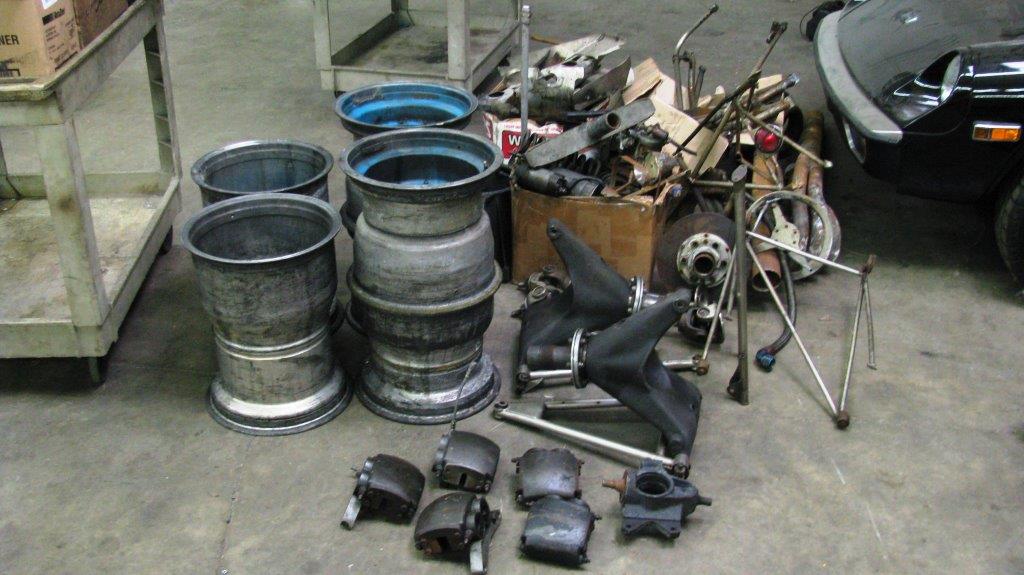
wheels

Original Lola wheels, calipers and rear uprights, nose-cone support, suspension componentry, second hand Mota-lita steering wheel,and much-much more

boxes

lotsa stuff…

brennans workshop

‘Racers Retreat’ just arrived’, Peter Brennans workshop in suburban Melbourne…’HU18′ tub, Arrows A1, a Ralt RT4 or 2, Cosworth BDD head and sundry other bits of interest..always an intriguing place to have a beer

pre strip

‘HU18’ tub pre-strip

stripped

‘HU18’ tub post strip…and ready for Episode # 2

Photo Credits…

Richard Bunyan, Peter Brennan
 

pistol

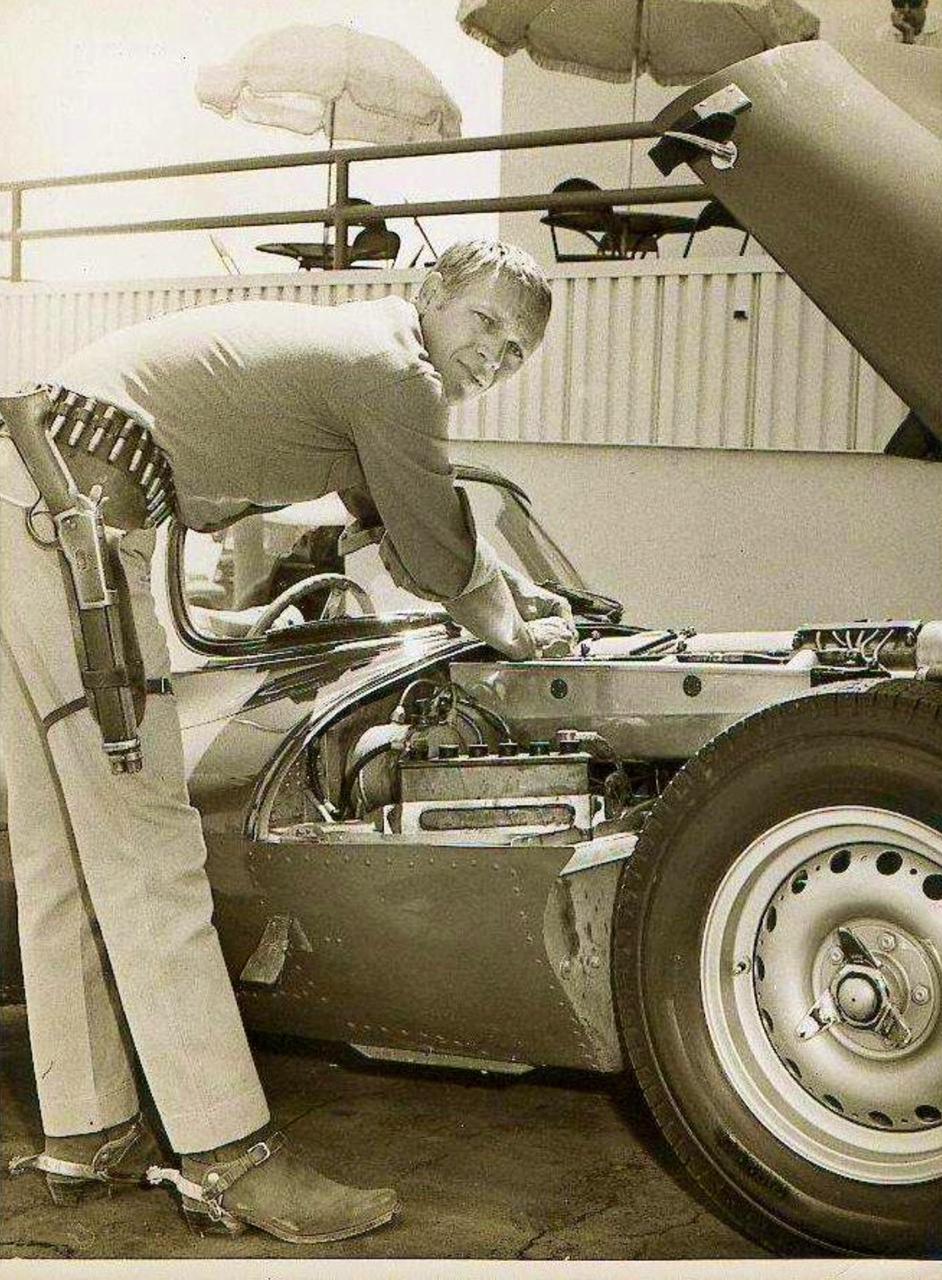
Steve McQueen , the ‘King of Cool’ to a couple of generations fettles his Jaguar XKSS on the set of ‘Wanted : Dead or Alive’…

McQueens movie exploits included such classics as ‘The Magnificent Seven’, ’The Great Escape’, ’The Thomas Crown Affair’, ’Papillon’, and in an automotive sense ‘Bullitt’ and the iconic racing movie ‘Le Mans’, ‘up there’ with ‘Grand Prix’ and now ‘Rush’ perhaps as THE racing movie.

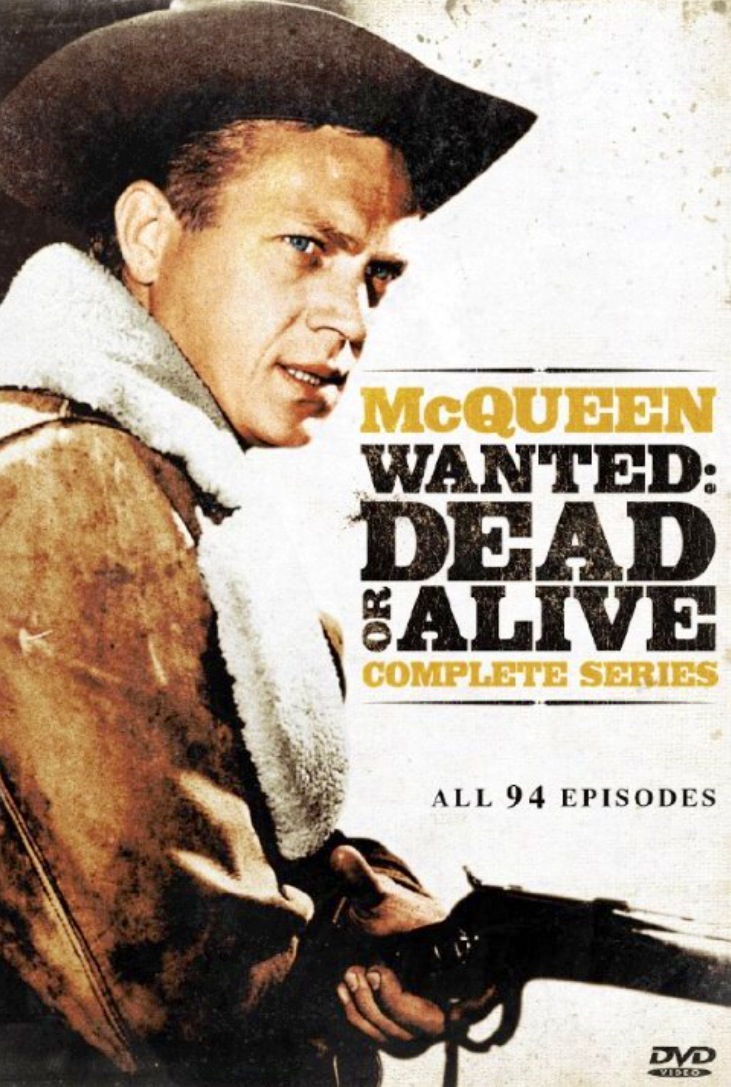
‘Wanted : Dead or Alive’ ran as a tele-series in the US from 1958 to 1961 McQueen playing the role of bounty hunter Josh Randall, it essentially made his career, he was the first TV star to cross over to equivalent movie success.

He was a car, ‘bike and motor racing fanatic  competing early in his career until the studios said ‘its racing or us, your choice!’.

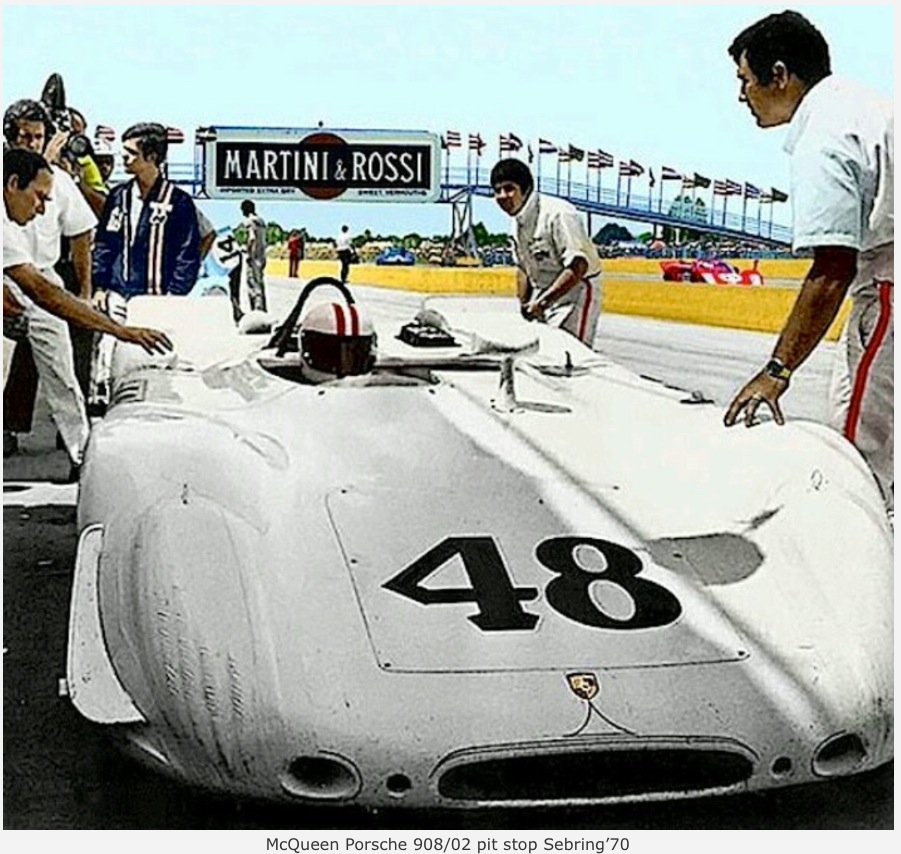
Amongst the cars he owned were Cooper T62 Formula Junior, Lotus 11 Le Mans, Austin Healey (Sebring) Sprite, Porsche 1600 Super, AC Cobra and perhaps most famously the Porsche 908 he placed second in the 1970 Sebring 12 Hour race, one of the Blue Riband endurance events then as now.

revvie and steve

Revvie and McQueen being interviewed by Chris Economaki at the end of Sebring 1970. Revson looks fresh enough to do another race! Revson on the cusp of greatness at the time. (Dave Friedman)

Sebring 12 Hour ’70…

In those days Grand Prix Drivers also competed in the World Endurance Championship, McQueens  co-driver Peter Revson, a Lola Can Am racer in 1970 ,and later a Grand Prix winner with Mclaren drove the greater number of laps but McQueen  who raced in a plaster cast as a consequence of a broken ankle in a motorbike accident several weeks before was no slouch in a field which included Mario Andretti, Jacky Ickx ,Pedro Rodriguez, Jo Siffert and many more. The race was won by Andretti, Ignazio Giunti and Nino Vaccarella in a works Ferrari 512S.

Steve in pits

McQueens own company ,Solar Productions, made ‘Le Mans’ , ‘his cars owned cv’ therefore includes the cars used in making the film ; Ferrari 512S, Porsche 917, LolaT70, Ford GT40, Chevron B16 and so on…some of the best sports cars of all time.

XKSS…

The Jaguar XKSS is the roadgoing variant of Jaguars ‘50s endurance winner the XK’D’ Type which won Le Mans 3 years on the trot , 1955-57. McQueens car is chassis number # 713, construction of the cars ending with the awful fire which all but destroyed Jags’ Browns Lane, Coventry factory in February 1957. 16 were built and later that year 2 more D Types were converted to full XKSS specs, but retaining their XKD chassis plates.

The division between the seats of the ‘D’ were cut away, headrest removed, and a windscreen fitted. The spartan interior was trimmed, a ‘pack rack’ mounted on the boot, hood and sidescreens fabricated.

Most of the cars went to the ‘States and all retained their D Type mechanical specifications making them amongst the fastest road cars of their day…3.4 litre DOHC straight 6, 3 X 45 DCO3 Webers , 4 speed box, independent front suspension, live rear axle, Dunlop disk brakes, circa 250 BHP and good for between 124 and 166 miles per hour dependent upon the final drive ratio specified.

The automotive tastes and talent of the ‘King of Cool’ were great, McQueen died of cancer, aged 50 on November 7 1980

D Type cutout

Jaguar ‘XKSS’ Cutaway drawing ‘The Autocar’ magazine


Mc Queen D Type

Checkout this YouTube footage of  the ex McQueen XKSS # 713 in Jay Leno’s hands…

http://youtu.be/4Ai0uSj_OVE

Photo Credits…

Photos ‘Pinterest’ unattributed, ‘The Autocar’ cutaway, ‘Profile Publications’, Dave Friedman

pistol 2

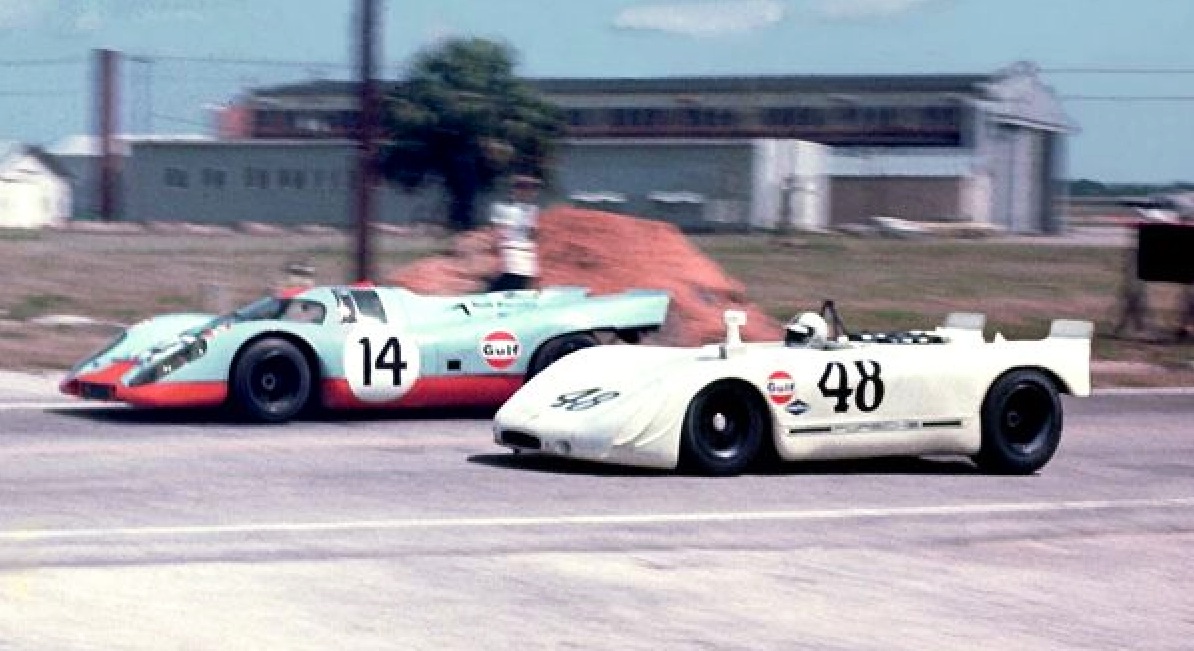
The John Wyer Engineering Porsche 917K of Siffert/Redman/Kinnunen (DNF) passes the Solar Productions Porsche 908/2 of McQueen/Revson

pistol 3

Nico-Rosberg2

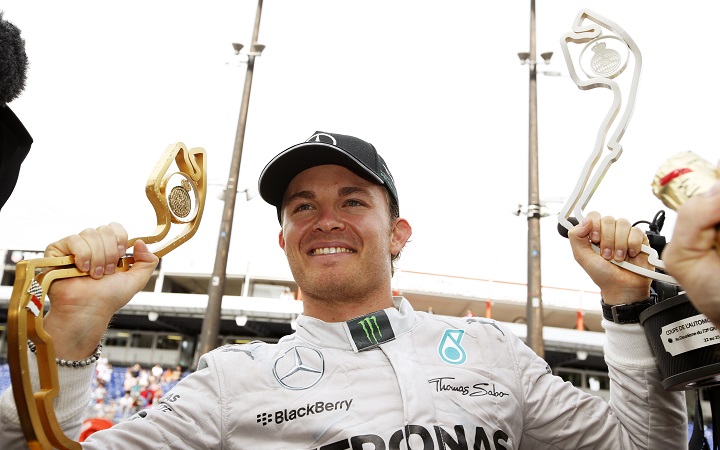
http://www.motorsportmagazine.com/f1/reports/2014-monaco-gp-report/

photo (2)

Ronnie Peterson and Colin Crabbe…

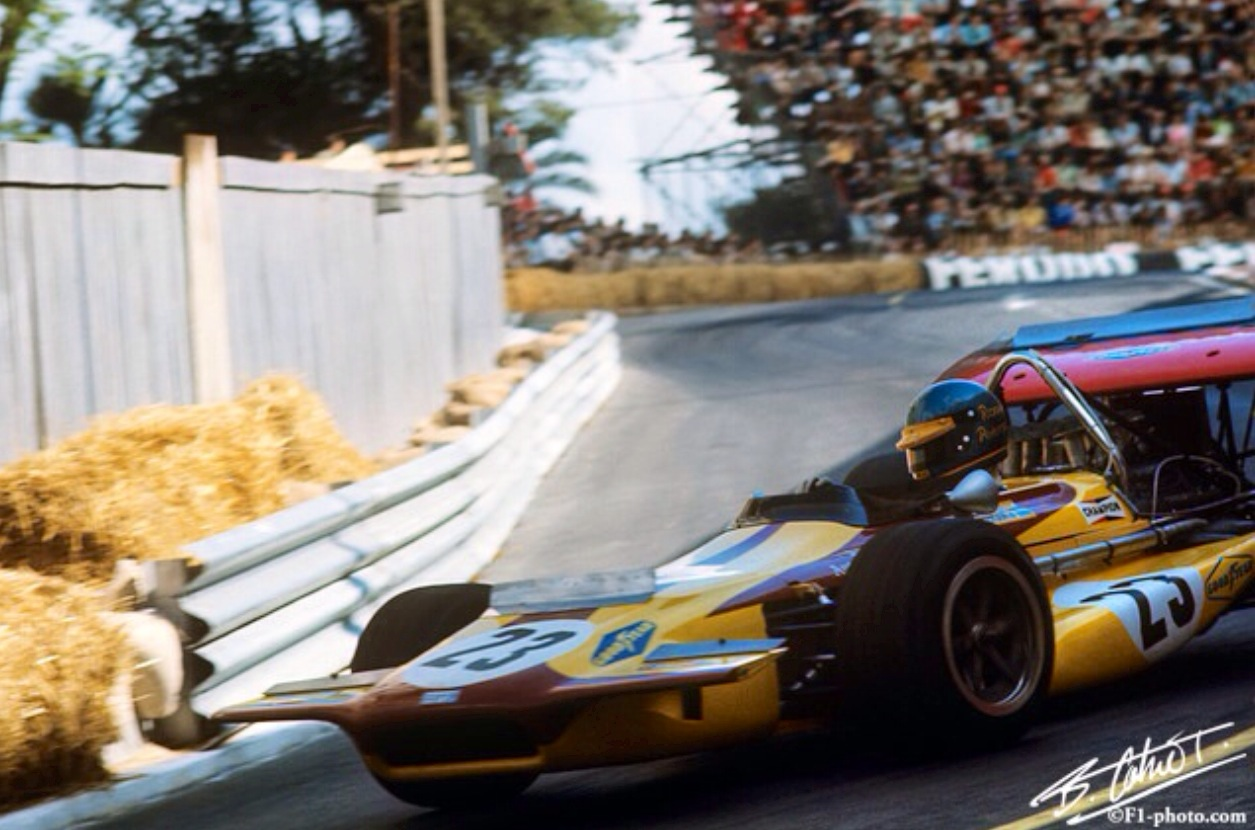
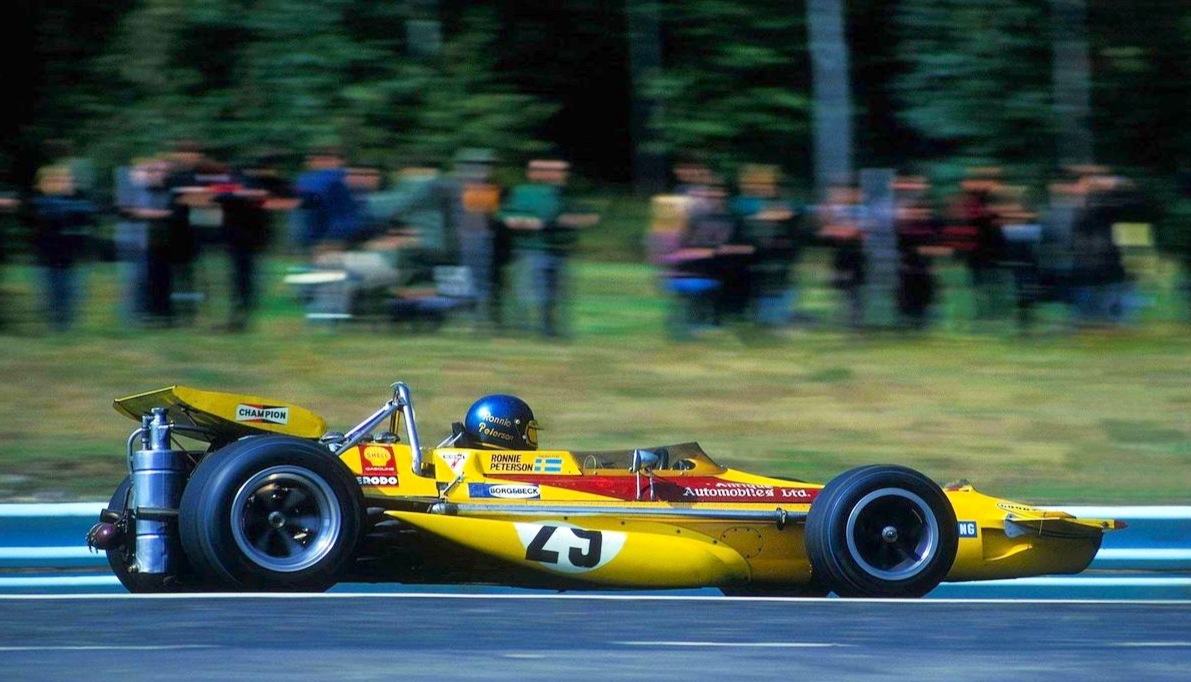
This superb shot is of Ronnie Peterson at La Source hairpin, Spa 1970 aboard privateer Colin Crabbe’s Antique Automobiles March 701 Ford.

In the good ‘ole days one could, if one had the readies, buy a car, pay the entry fees and race in Grands Prix.

Perhaps the greatest in modern times was Rob Walker’s Team (he of the whisky company) which scored the first championship victories for Cooper and Lotus (in Stirling Moss’ hands) and the last victory for a privateer team when Jo Siffert triumphed in Walker’s Lotus 49 in the 1968 British GP.

Since the early 1980s the FIA have mandated that F1 entrants own the intellectual rights to the chassis they enter, in essence this means that the entrant builds the car and races it, ending the long tradition of private entrants buying and racing cars built by others in the sport’s highest echelons.

Crabbe’s Antique Automobiles business entered Vic Elford in a Mclaren M7 in 1969. March’s Max Moseley offered Crabbe/Peterson a 701, all Colin needed to provide were the engine and ‘box both of which he happened to have from the previous years campaign with Elford. And the readies of course which he was confident of securing through trade support.

Peterson jumped from the F3 ruck in 1969 winning the European F3 Championship, including the Monaco F3 GP race in a Tecno. At the end of the the year he raced the very first March, the 693 F3 car which James Hunt also raced that winter.

ronniw monaco 69

The Birth of March…

Due to unusual circumstances March’s first year in the sport resulted in them supplying customer F1 701 cars to the reigning world champion Team Tyrrell who were unable to run Matras with a Ford Cosworth engine as they had in the previous two years. The French concern wanted their own V12 to be used exclusively in their cars.

Jackie Stewart tested the MS120 but was convinced the DFV remained the superior engine. Lotus and Brabham were not prepared to sell Tyrrell cars, so off to Bicester Ken went; no pressure on designer Robin Herd in designing a car for the reigning world champ!

Matra never won a GP with their own V12 engined car, despite going very close with their single car Chris Amon entries in 1971-72, that  Matra honour going later to Ligier with Jacques Laffite’s first GP win in Sweden in 1977.

That Tyrrell couldn’t buy a competitive car was the reason he became a manufacturer rather than a privateer, he set designer Derek Gardner to work on the first Tyrrell which appeared in late 1970.

But I digress. March also sold a privateer 701 which was driven occasionally by Mario Andretti in addition to the March works cars for Chris Amon and Jo Siffert, a remarkable roll call of drivers in a constructors first year, not the full list either!

Aussie rival, friend and 1972 Ferrari 312P sports car teammate, Tim Schenken nicknamed Peterson Mad Ronald, observing up close one of the sport’s automotive acrobats sublime car control, tail out balls-to-the-wall style in the mould of Nuvolari, Rindt and Gilles Villeneuve.

The 701 wasn’t the ‘cream of the 1970 crop but it was good enough to win the Spanish GP in Stewart’s hands plus non-championship events in Stewart and Amons hands.

peterson

Ronnie did well in his car #701-08 justifying March’s faith in him and the rest, as they say, is history. Petersen won nine Grands Prix for Lotus as well as March’s only factory team win, their prodigal son returned in mid 1976 frustrated by the uncompetitiveness of his Lotus 76 and took the Italian GP in a March 761 Ford.

Peterson, racing a Lotus 78 was an innocent victim of an accident at the start of the 1978 Italian Grand Prix and died of his injuries the following day.

watkins

march cutaway 701

March 701-08 cutaway drawing.

Aluminium monocoque chassis, Ford DFV 3-litre V8, Hewland DG300 gearbox, classic and very effective ‘British F1 Kit Car’ of the period. Ronnie’s car first raced at Monaco in May 1970.

11 March 701 chassis were built, see Allen Brown’s old racing cars for the chassis by chassis list: https://www.oldracingcars.com/march/701/

(LAT)

Etcetera…

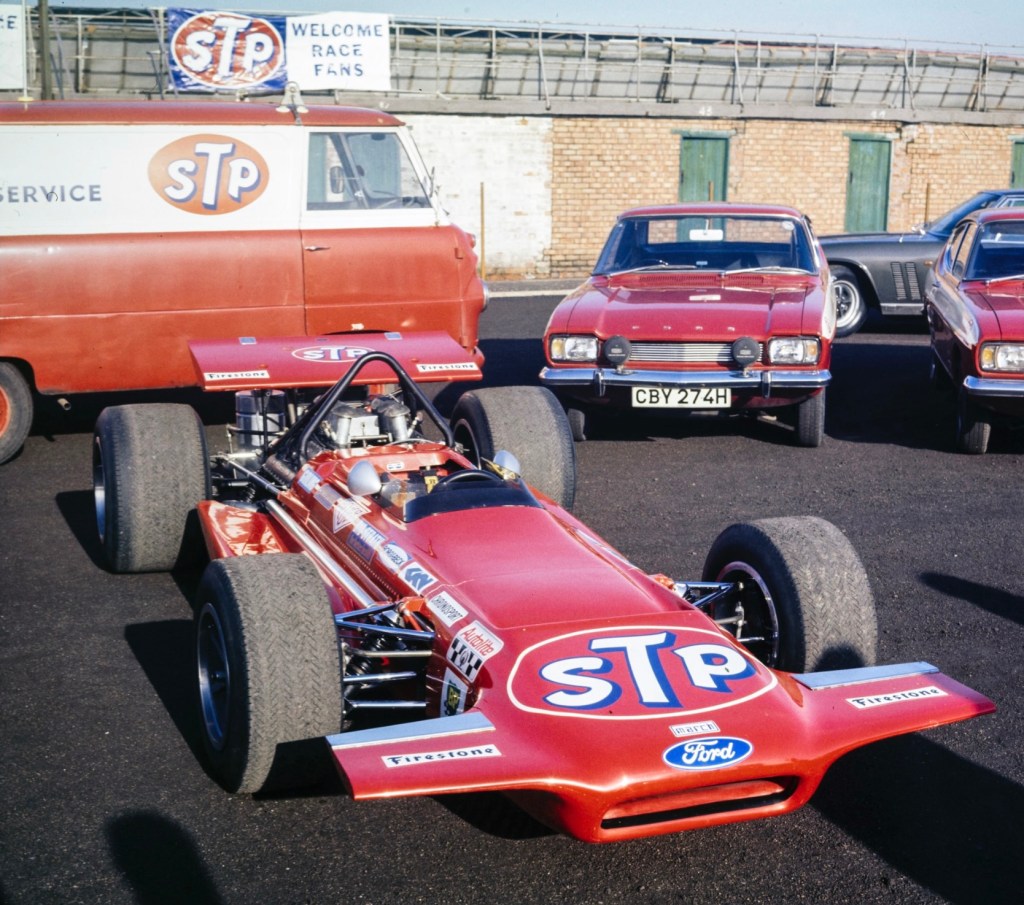
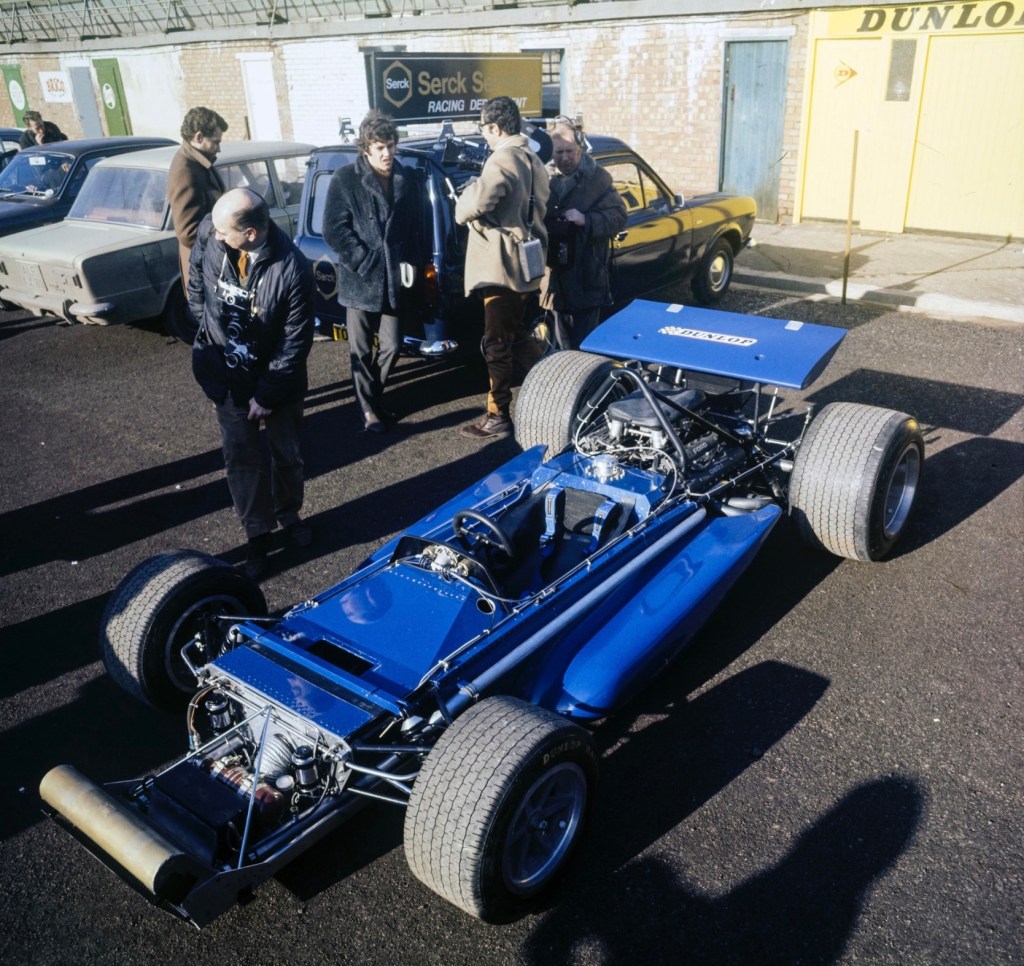
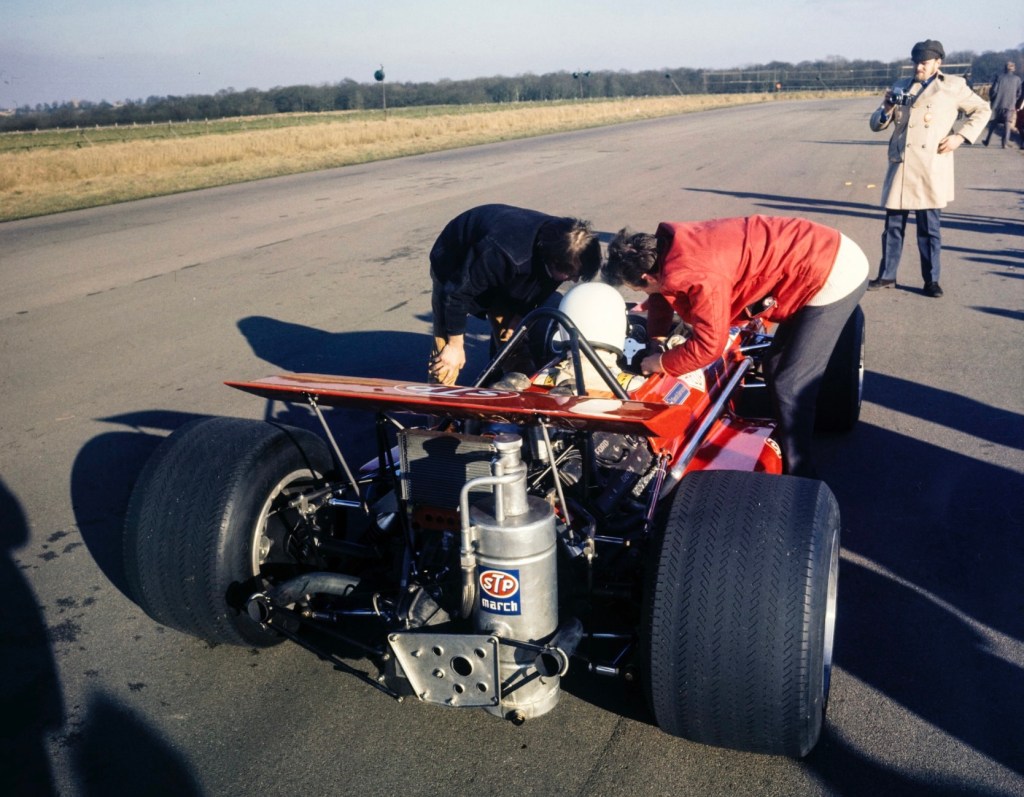
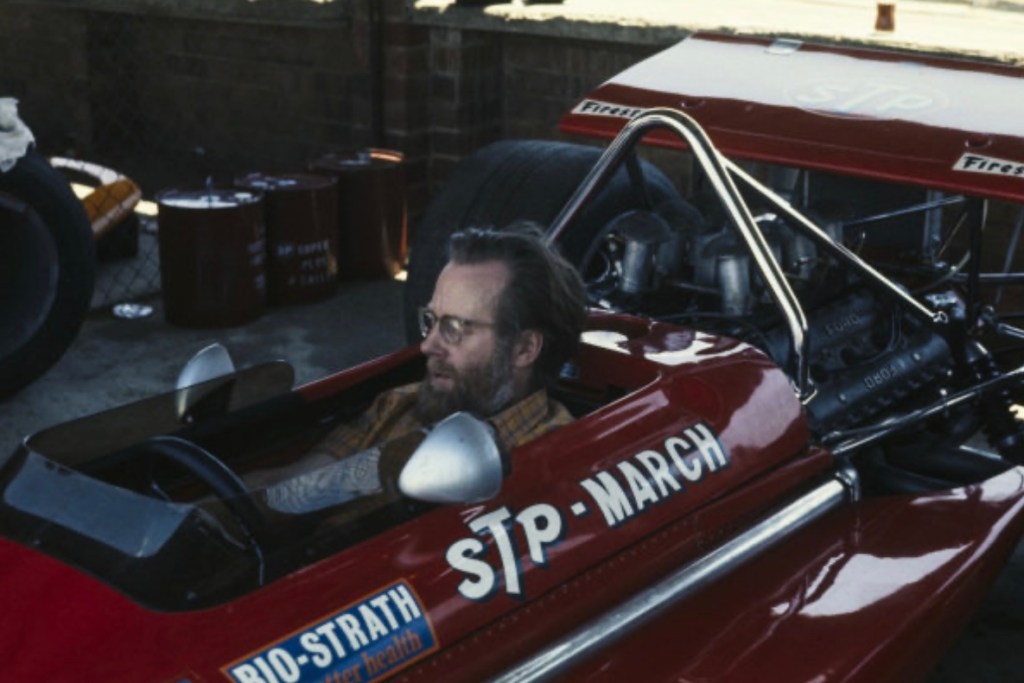
This group of photographs were taken at Silverstone on February 6, 1970 at what appears to be the press launch of the 701, you will note the presence of both works and Ken Tyrrell cars.

(LAT)

John Bolster, notebook in hand, takes in Robin Herd’s new design. Chris Amon’s chassis 701-01.

(LAT)

This shot of Chris Amon’s second placed car at Spa on June 7, 1970 is out of sequence with the rest. It shows the elegant simplicity of the design, which simply, given the number of orders in hand, had to work right outta the box. Its biggest shortcoming was perhaps its weight.

(LAT)

Jackie Stewart’s Ken Tyrrell March 701-02.

(LAT)
(LAT)
(LAT)

A journalist about to go for a whirl in Amon’s car, I wonder who?

(LAT)

Photo Credits…

Rainer Schlegelmilch, The Cahier Archive, oldracingcars.com, LAT Images

Tailpiece…

(LAT)

“Vrooom, vrooooom. I’m only a little bloke, maybe they won’t see me and I can do a touring lap!?”

Denis Jenkinson tries Chris Amon’s car for size at Kyalami during the 1970 South African GP weekend.

Finito…

photo (4)

Australian Sportscar Championship, the ‘Endeavour Cup’, Phillip Island 1975…

One of the stranger public relations exercises in 1975 was Alfa Romeo Australia’s entry of a Motor-Show Circuit-Queen in the Australian Sports Car Championship.

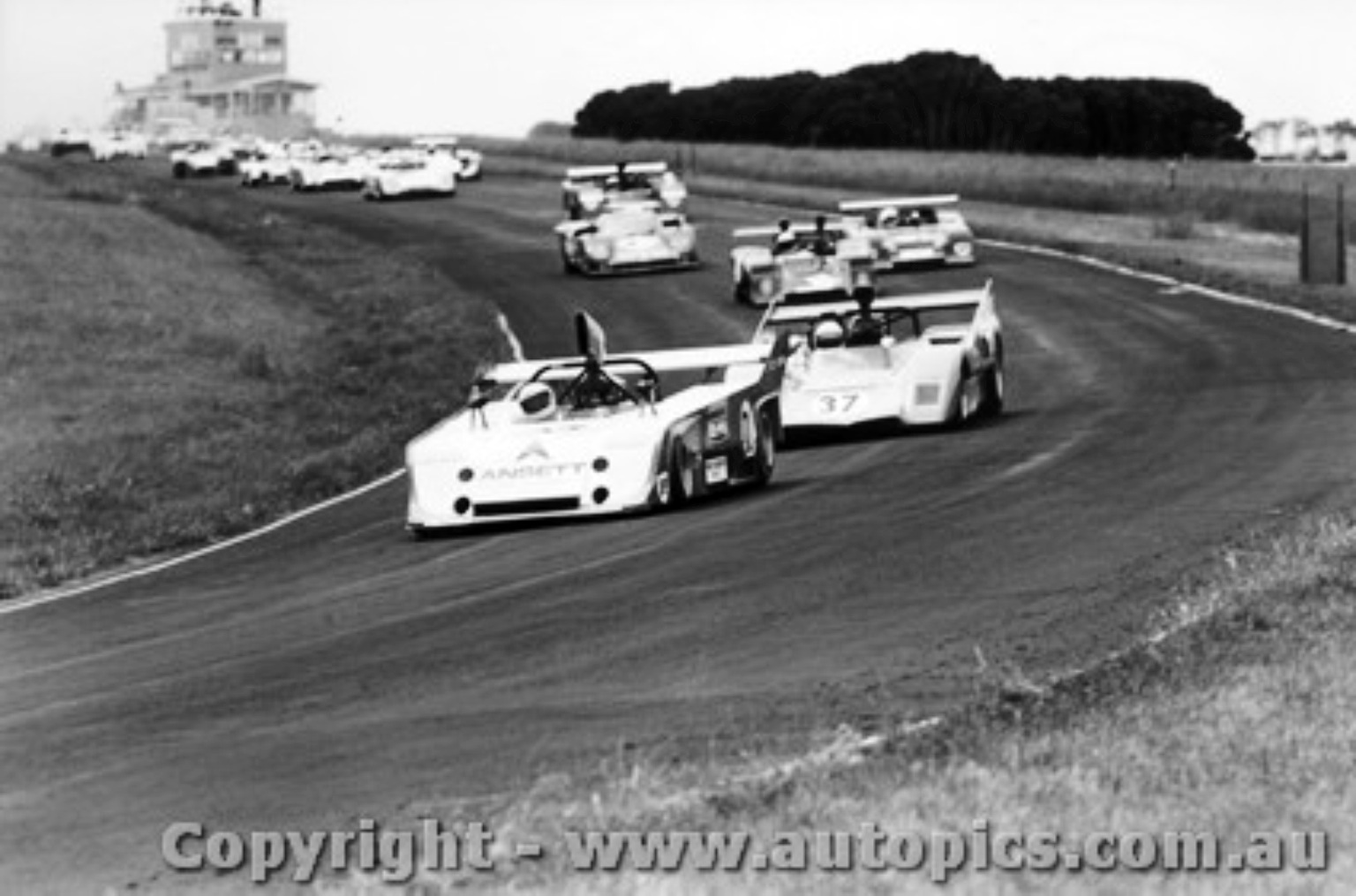
The one race Endeavour Cup – 30 laps 143km – held at Phillip Island on 30 November attracted a strong field of 40 or so of Group A or Can-Am type open sportscars, Production Sports and Clubman cars.

Elfin’s Garrie Cooper built a new car to contest sportscar racing in 1974, his MS7 was powered by one of his F5000 Repco-Holden engines, and was designed using all of the experience Ansett Team Elfin had gained in running 5-litre single-seater cars since 1971. The Elfin would offer the Alfa’s major competition.

Tipo 33/3 ‘75080-005’ Coupe…

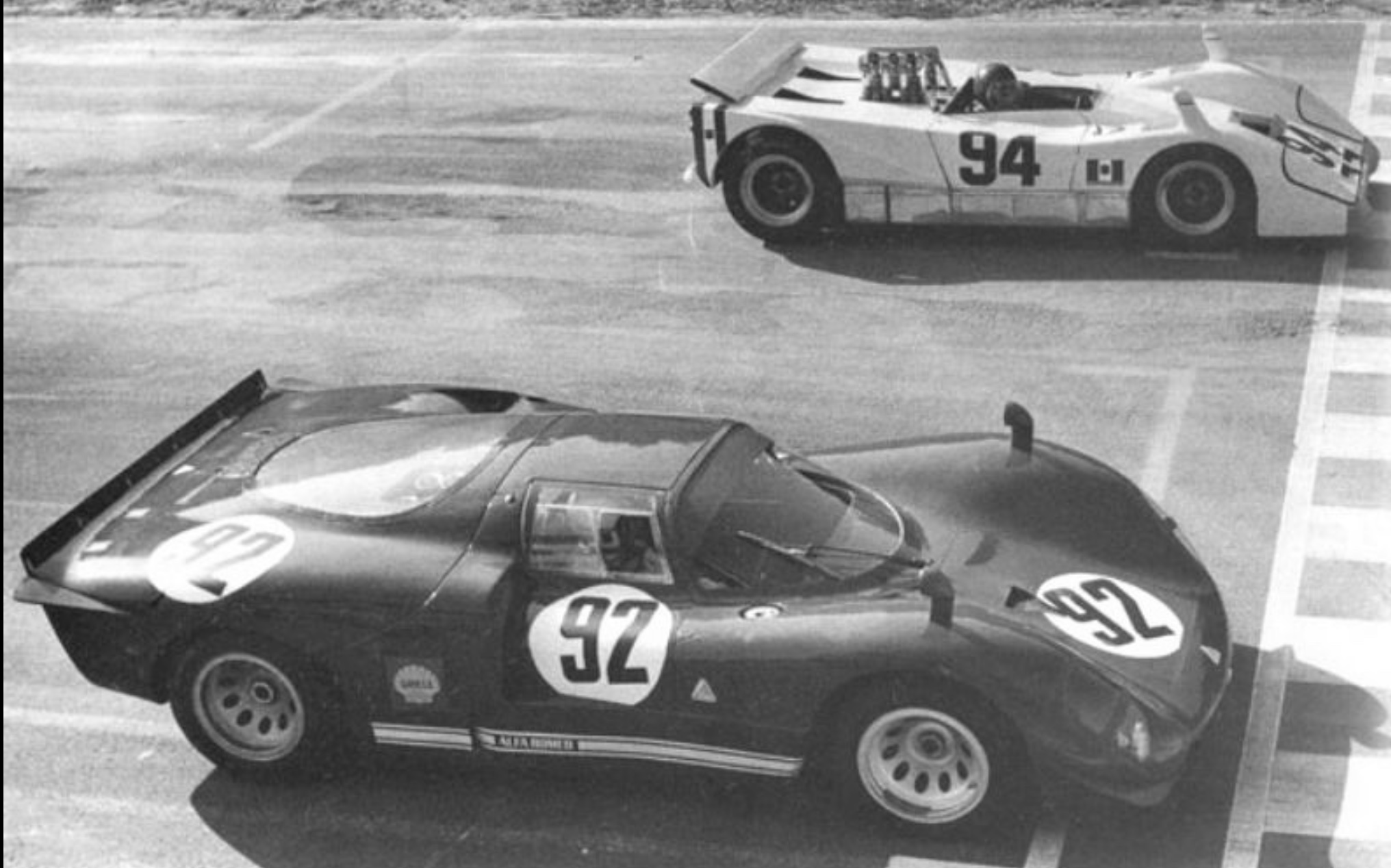
The superb looking Alfa Tipo 33/3 had been on the show circuit for some years, including an appearance at the Melbourne Motor Show in early 1975.

Alfa’s Tipo 33 in various forms was Autodelta’s entry in the World Sports Car Championship or Championship of Makes for over ten years with Alfa winning the championship in 1975 and 1977 using flat-12, circa 500-530bhp 33TT12 and 33SC12 machines.

‘Our’ Tipo 33/3 Coupe was built in 1969. The accepted history is that the car was updated by Autodelta in 1971 and is possibly chassis #75080-005.

The consensus is that the car is the machine raced by Nino Vaccarella at Hockenheim in July 1969. He popped the swoopy-coupe on pole at the Solituderennen and finished third behind Hans Hermann in David Piper’s Lola T70 Mk3B Chev, and Gerhard Koch in a Porsche 908/02. A month later in Sicily, he won the Coppa Citta di Enna against modest opposition. The rest is a bit uncertain, but at some point, perhaps 1971, a 4-litre DOHC, four-valve, circa 510bhp V8 replaced the 3-litre circa 400bhp four-valve unit originally fitted when raced by the Sicilian.

The 4-litre unit was developed for Can-Am series use. Chassis T33/3 75080-023 was raced by the Otto Zipper team with both 3 and 4-litre motors fitted. It was driven by Scooter Patrick without much success in the famous Group 7 series in 1970 and 1971. The results are hardly surprising given the 7-litre papaya coloured monsters (McLaren M8D/F Chev et al) running up front.

Zipper’s “4-litre car, a T33/3 was often referred to as a T33/4” according to Collins and McDonough. In the same way that T33/2s which raced with 2.5-litre V8s did not become T33/2.5s when so fitted, so too, our subject car when fitted with its 4-litre V8 did not become a T33/4.

Both the Zipper and subject car, are Tipo 33/3s. These are type, or model numbers, not engine capacities. To differentiate both cars (Zipper and the subject car) from T33/3s fitted with the usual 3-litre V8, the correct description is Tipo 33/3 4-litre. If evidence can be produced of Autodelta or Alfa Romeo using the T33/4 model designation in period, I will stand corrected.

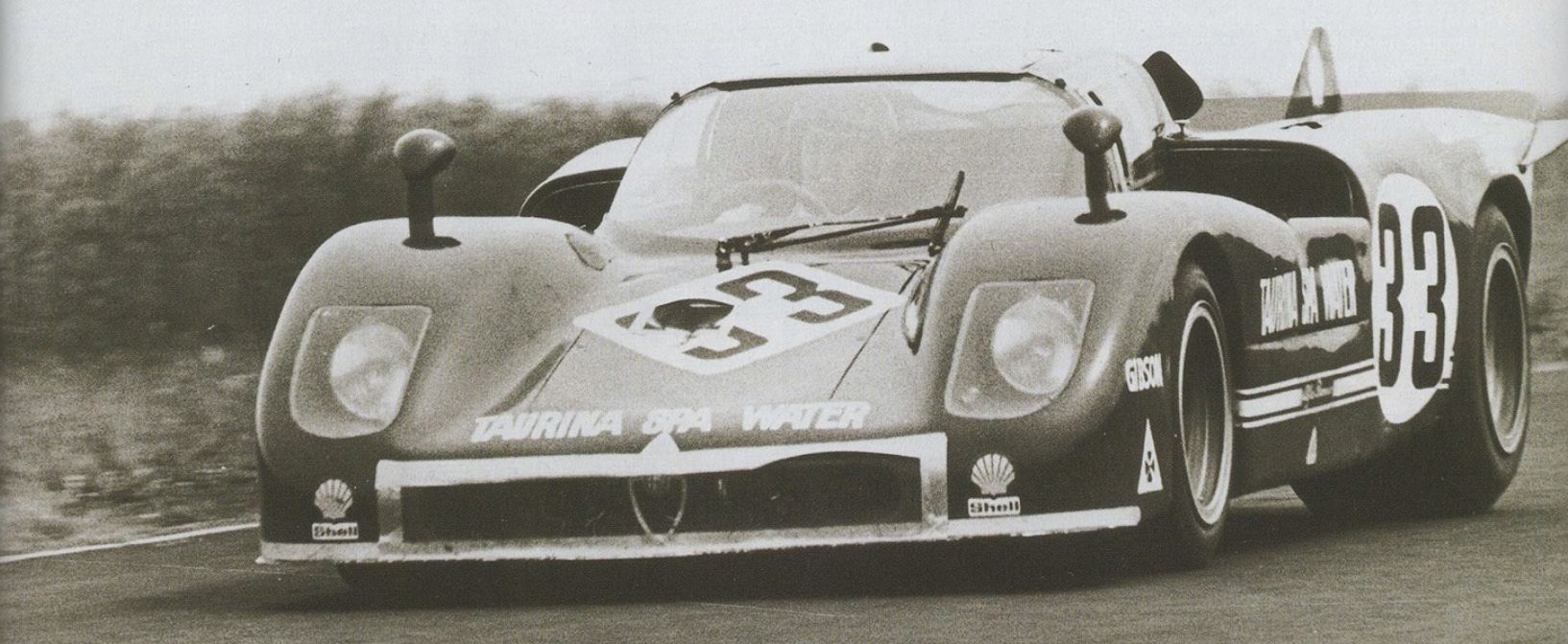
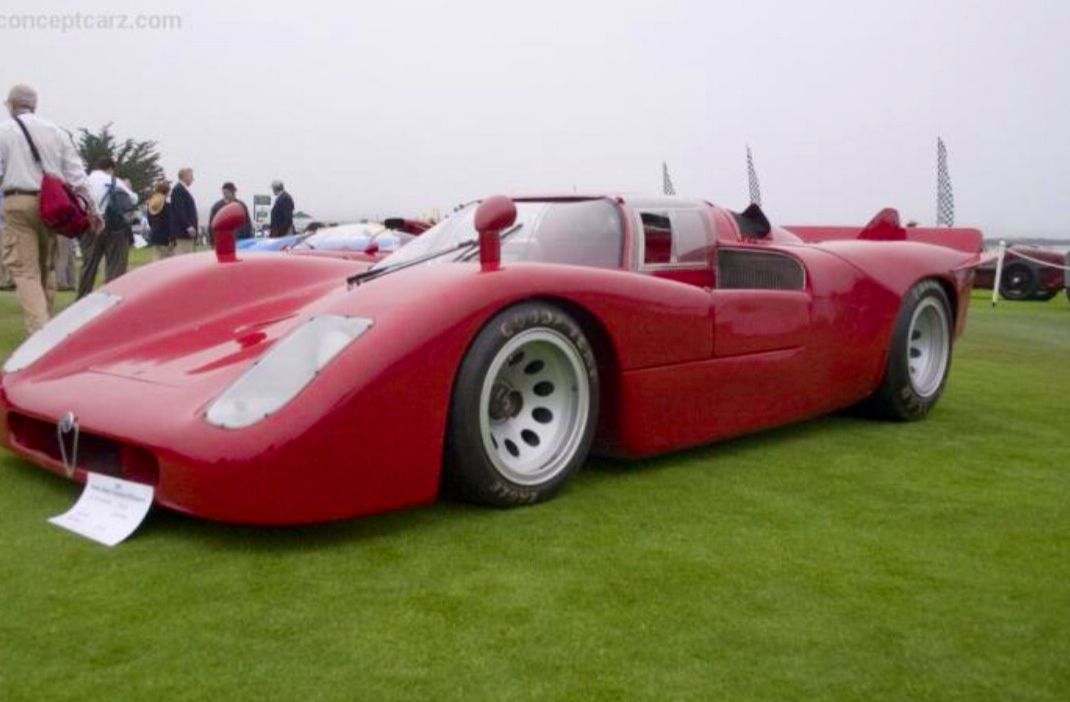
In addition to the engine change, the T33/3 4-litre’s curvaceous original nose (see photos) was replaced by one to later 1971 specifications, which is as it raced in Australia. No photographs have come to light of the car competing in this later form elsewhere in the world.

The Alfa is a marked contrast visually with Cooper’s Elfin which was aerodynamically influenced by the all-conquering 1972-73 Can-Am Porsche 917/10-30.

By 1972 the Alfa T33/3 4-litre was being used as a promotional tool by Alfa Romeo globally in car shows, some poor quality photographs online show it in Beijing that year in the form shown below.

33 front

The Race…

The exotic Alfa Romeo created a lot of interest at Phillip Island but it wasn’t race prepared, and was fitted with unsuitable gear ratios. It smoked its way around the ‘Island for three days, Fred Gibson did a great job bringing the gorgeous, misfiring car home in third place.

Fred was in Alfa Romeo’s touring car squad at the time running 105 Series 2000 GTVs, but his pedigree included a potent Brabham BT16 Climax Tasman 2.5 single seater and a 5 litre-Elfin 400/R&T Chev sports car. His considerable engineering prowess and mechanical sympathy brought her home and gave we spectators the chance to see the fabulous car race in Australia for its one and only appearance. A lesser driver would not have been able to stroke the thing home.

Garrie Cooper ran away with the event, his sprint car was far quicker than the heavy endurance racer, unprepared as it was. Henry Michell was second in the Elfin 360 Repco 2.5 in which he won the Australian Sports Car Championship in 1974 (a four race series). Fourth was Paul Gibson in a Rennmax Repco 2.5 and fifth, Stuart Kostera in an ex-Frank Matich, Matich SR3A.

The shrill note of the 2.5-litre Repco Tasman V8s and muscular note of the Alfa, also running a single plane crankshaft was in marked contrast to the basso-profundo bellow of the Chev and Repco Holden production based V8s; that long straight and open nature of Phillip Island was, and still is an aural and visual feast.

autopics

I was there for the weekend which also featured the final round of the Australian Formula 2 Championship. Geoff Brabham won that race and title in a Birrana 274 Hart-Ford, then headed off to Europe to pursue F3 and subsequent fame and fortune.

The ordinary black and white paddock shots were the best I could manage with my little Olympus Trip 35 but show the car’s lines well. Call it Alfa’s 917 or 512S in looks without quite the success rate!

Retirement…

The Tipo 33/3 was sold to Melbourne Alfista Ern Stock for a nominal sum, and the cost of outstanding Customs duties, it was just an old racing car after all!

Stock was more of an old-car-guy than a racer. The car appeared at an Alfa Romeo Owners Club day at Winton driven by Col Goldie once. It also did a few laps of a Canberra Motel carpark at an Alfesta – the annual Easter gathering of the Australian Alfa Romeo clubs – one morning in the early 1980s. The poor old Canberra pollies had not heard such excitement since the Petrov Affair!

Eventually the car was Hoovered up by an American dealer as cars of its ilk became global Automotive Monets.

Only Alfa would have done the nutty thing they did, but god bless ’em for doing so, the car was worth travelling a long way to see and hear. It only ran in Australia, just once!

photo (5)

The scrappy photos above and below show the car being driven in anger. While perhaps not as pretty as in its original 1969 guise the machine has a muscular beauty all of its own – quite Ferrari 512S like.

It does make you wonder how it could have fared had it raced at 4-litres in 1970 or 1971 in endurance events. I’m not suggesting it would have knocked off the Ferrari or dominant Porsche 917 mind you, but in 1971 the T33/3 3-litre prototypes were quicker and more reliable than hitherto, taking wins at Brands Hatch, Targa and Watkins Glen thereby giving Alfa Romeo/Autodelta a very well deserved second placing behind Porsche, in the International Championship of Makes; a 4-litre Coupe in the mix is an interesting mighta-been?

G1

Fred Gibson, Phillip Island 1975

G1 (3)
(M Bisset)

Butt shot at Phillip Island 1975. With the addition of fresh rubber and attention to coolant, lubricants and brake fluid, a safety check and a wheel alignment it was off-we-go-with-what-we-have, superb opportunism by Alfa Australia really.

With a fresh engine and suitable ratios the car would have been competitive, but would not have knocked off Cooper’s Elfin. Melbourne Alfista and historian, Vin Sharp, recalls that Ern Stock bought a second engine with the car. Presumably the spares’ health was unknown otherwise the team could have swapped engines overnight at the Island to address the weekend long misfire.

photo (15)
(M Bisset)
image

Bullshit…

retirement

conceptcarz.com wrote in an article about the ‘1970 Tipo 33/4 Tasman Coupe’, and that the T33 was ‘Driven by Pescarolo and De Adamich in three liter form in Europe, it was later run with a 4 liter V8 in Europe’s InterSeries (in blue livery) driven by Teodoro Zeccoli. Later sent to Australia, at the request of Sig Tadini of Alfa-Romeo, Australia, the car was campaigned in the Tasman Cup, since it was already fitted with the larger V-8. It was driven by Graham Lawrence. It was brought to the United States in 1988’ our star writer/researcher wrote. Richard Cranium is his name I suspect.

I can be accused of slavishly following, what has on occasion turned out to be the utter crap written by others, but this nonsense is a total crock-of-shit.

The T33/3 Coupe was never, ever, referred to as a ‘1970 Tipo 33/4 Tasman Coupe’ in period – in any period, not at least until it became a beauty princess in the USA.

The 1970 Tasman Series was a championship of seven races in New Zealand and Australia that January/February for Tasman 2.5 (and under) and Formula 5000 single-seater racing cars. Not 3-litre or 4-litre or sportscars of any sort. The 1970 Tasman was won by Graeme (not Graham) Lawrence, a Kiwi, in an ex-Chris Amon Ferrari Dino 246T, a little, itty-bitty, red, cigar shaped cutey-car which bares little similarity to a big, red, butch 1969 Alfa Romeo T33/3 Coupe or a ‘1970 Alfa Romeo T33/4 Tasman Coupe’, whatever that is.

Lets raise a glass to utter Disney-esque, fanciful bullshit…

Etcetera

Another shot of Col Goldie?, Amaroo Park ‘Tribute to Alfa Romeo’ meeting in the eighties.

The car when owned by Ern Stock during an Alfesta in Canberra, 1982.

Dick Willis and Colin Bond (left) with the Tipo 33/3 4-litre during the launch of the Alfa 33 road car at Dick’s Coffs Harbour Alfa Romeo/Datsun dealership in 1984.

Bondy was racing Alfa’s amongst other things by that stage, and was present as an ‘Alfa Ambassadore’ as Dick put it.

Smile kid. ‘Walter Anker’ and our star car date and place unknown.

Photo and other Credits…

Autopix, Alfa Bulletin Board, Vin Sharp, Autodelta, Mark Bisset, Conceptcarz.com, ‘World Sports Racing Prototypes’- wsrp.cz, racingsportscars.com, Claudy Schmitz, Dick Willis, Tim Bartsch, ‘Alfa Romeo Tipo 33:The development & racing history’ Peter Collins & Ed McDonough, Auto Action December 4, 1975

Finito…

photo (3)

No ‘Tom Toms’ in those days! Superb PR shot shows the beautiful lines to great effect…

Not too many of the 1954-1957 1400 cars didn’t end up in the US , the cars of Sophia Loren & Pablo Picasso exceptions.

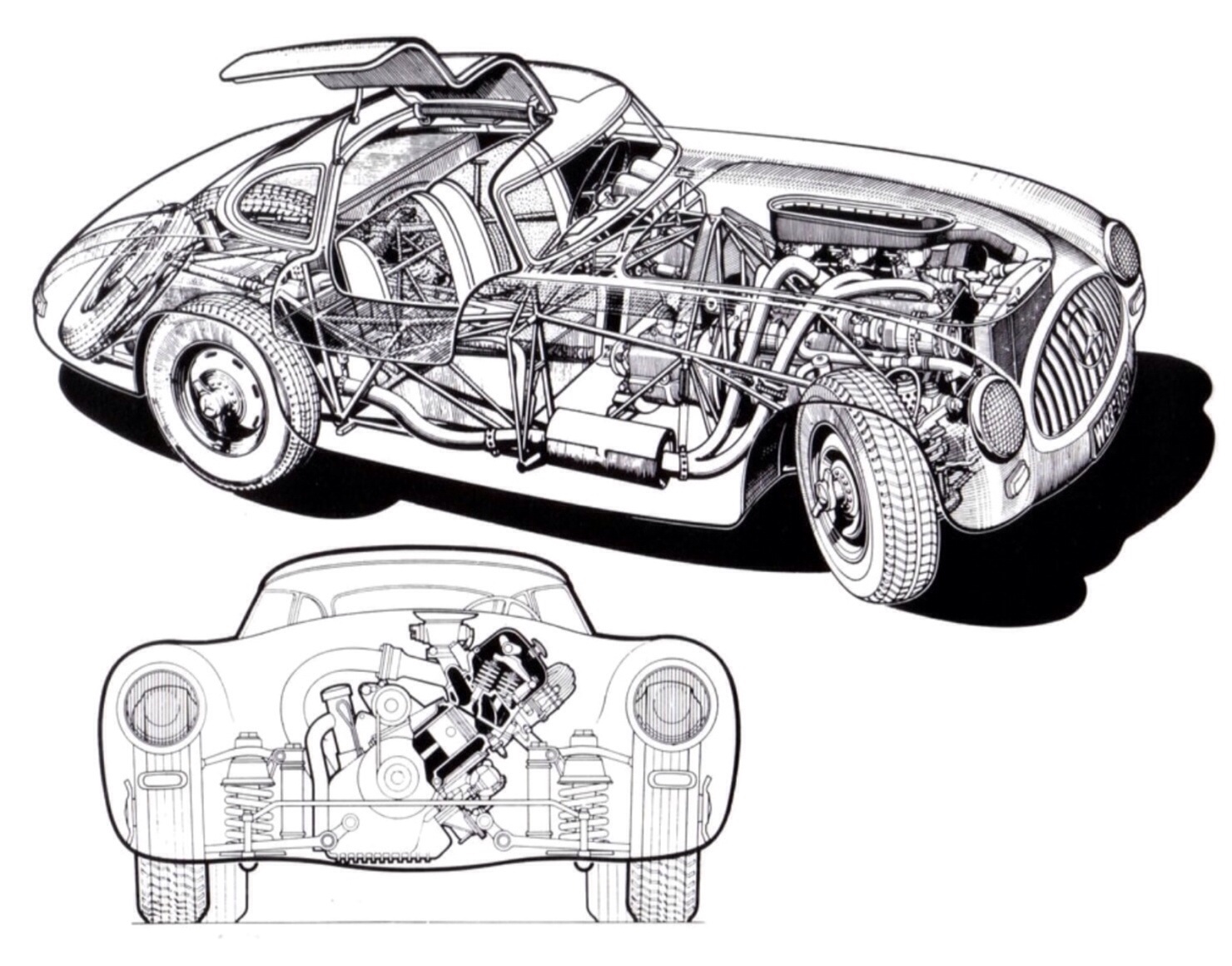
The road going variant of Rudi Uhlenhaut’s 1952 Le Mans winning 300SL was the most advanced road car of its day. Its features included a spaceframe chassis, the gull-wing doors necessary to clear the frame side members, front and rear independent rear suspension and a dry-sumped, fuel injected 240bhp 3-litre straight-six cylinder engine which made it the fastest road going car of its day as well…and one of the sexiest.

A bit like Sophia Loren really.

photo
slr build
(Mercedes Benz)

Factory SLR build shot shows off the cars spaceframe chassis, engine, front and rear suspension and big drum brakes to good effect

(unattributed)

Credits…

Cutaway Shin Yoshikawa, Vic Berris

Tailpiece…

image

Finito…