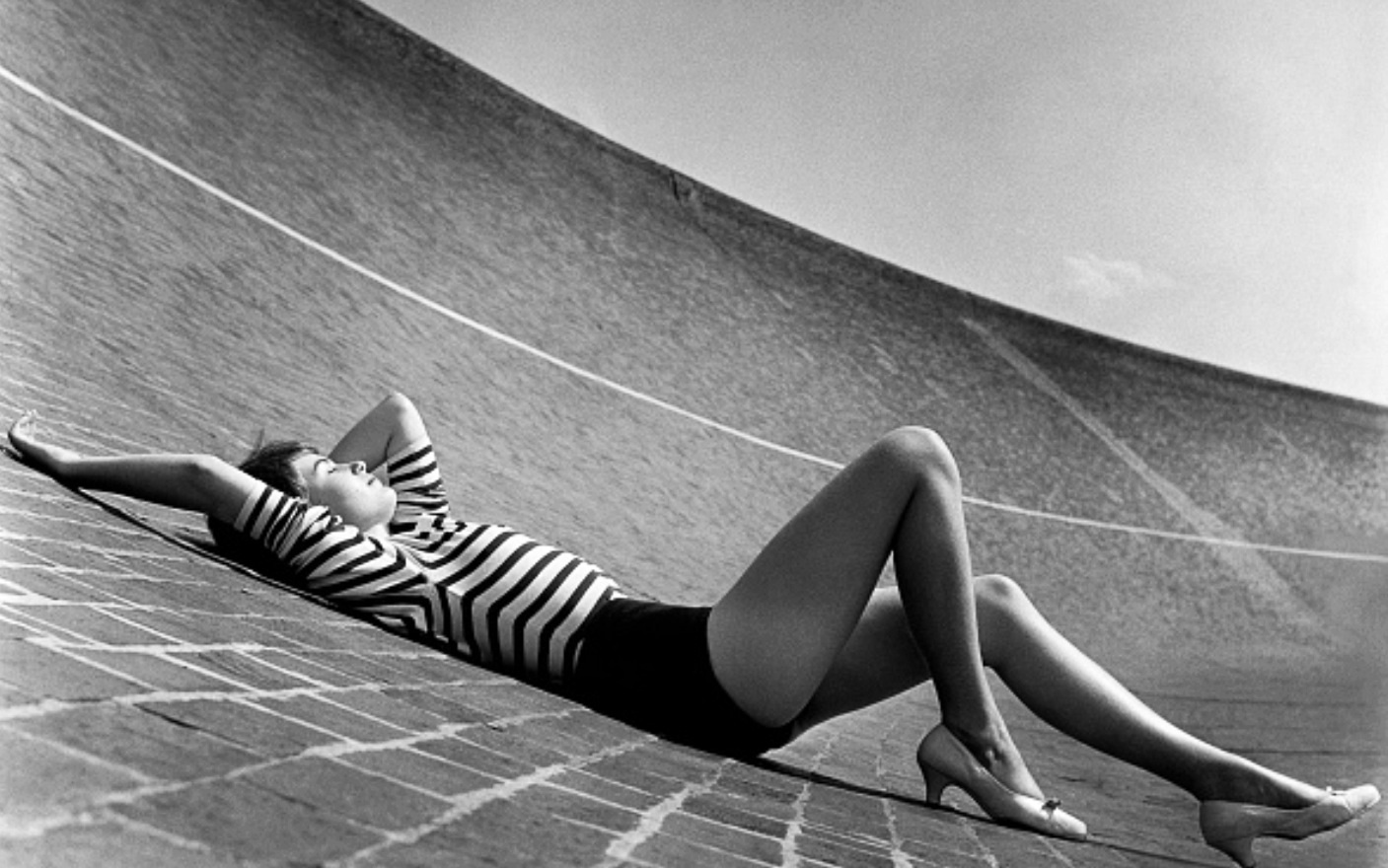
It doesn’t look very comfy, and the young gal lacks ‘padding’ for Avus’ rough surface, but ’tis rather a becoming shot…
Credit…
Gert Kreutschmann
 | Don Capps on Repco Racing Programme 1940-19… |
 | markbisset on Pat Hoare’s Ferrari 256… |
 | Reinhard Windeler on Pat Hoare’s Ferrari 256… |
 | Berok Graffiti Barce… on Crocodile Rock: Audi R8 Croc-M… |
 | Kenneth Moore on Bathurst 100 1959… |
It doesn’t look very comfy, and the young gal lacks ‘padding’ for Avus’ rough surface, but ’tis rather a becoming shot…
Credit…
Gert Kreutschmann

Jackie Stewart jumps his Ken Tyrrell ‘Equipe Matra International’ MS80 Ford during the German Grand Prix on August 3 1969…
In a marvellous GP season Jackie triumphed over friends and rivals Jochen Rindt, Lotus 49, Jacky Ickx and Piers Courages’s Brabham BT26’s, the Kiwi McLaren twins Hulme and McLaren and Chris Amons fast but unreliable Ferrari.

Jean-Pierre Jaussaud with his Matra MS2 Ford prior to the start of the Zandvoort Trophy, 29 August 1965 DNF. Kurt Ahrens won the race in a Brabham BT16 Ford (Revs Institute)
Matra had raced in the the ‘junior’ F3 and F2 formulae as well as in endurance racing since 1965. From the very start the single-seaters used sophisticated monocoque chassis with technology borrowed from Matra’s aerospace arm in having its fuel contained directly in box section pontoons which were sealed with a polymer resin.

MS80 tub being assembled at Velizy in early 1969. Note the lateral bulkheads referred to in the text, immensely strong, it looks heavy but wasn’t (Ludvigsen)
The competition used bag tanks, the advantage of the Matra approach was that that each pontoon had lateral bulkheads greatly improving both the strength and torsional rigidity of the tubs. Results weren’t initially great but soon the French crowd had blue coloured cars to cheer, Jean Pierre Beltoise taking a notable first win at Reims.
Jabby Crombac, the famed French racing journalist introduced Matra boss Jean Luc Lagardere to Ken Tyrrell. After Jackie Stewart test drove a modified F3 Matra fitted with a 1 litre BRM F2 engine and was blown away with its traction, he raced the cars in 1966, the year Jack Brabham swept the board in F2 with his Honda powered cars.

Jacky Ickx racing his Tyrrell Matra MS7 Ford F2 car during the 1967 German GP, DNF with suspension failure. Denny Hulme won the race in a Brabham BT24 Repco (unattributed)
For 1967, the new 1.6 litre F2 formula commenced. Matra Ford FVA powered cars won many races driven by Stewart, Jacky Ickx in the other Tyrrell entered car and the works Matras driven by JPB, Henri Pescarolo and ‘Johnny’ Servoz Gavin. Ickx won the title driving both MS5 and the later MS7 chassis.
Matra’s Grand Prix program was the result of a happy confluence of events… Race success meant it was ready and keen to step up and in reality it could afford to do so from its own group resources. The French government had just created a state owned oil company ‘Essence et Lubrificants Francaise’ or ELF. The marketing decision was taken that motor racing sponsorship and success would be the best way to promote the company rather than traditional mass media advertising. Further, the French Government, aware of Matra’s success to date saw GP racing success via Matra as a means of restoring French national prestige.

The Beltoise/Pescarolo Matra MS630 prior to the 1967 1000Km of Paris at Montlhery DNF, race won by the Ickx/Hawkins Mirage M1 Ford (unattributed)
And so Elf agreed to support Matra (and an amazingly successful driver support program over the decades to come), the government kicked in about £800,000. Doug Nye wryly noted that the nominated engineer, former Simca technician Georges Martin saw a racing car for the first time at that years 1967 London Racing Car Show! He proved to be a fast learner mind you!
Over at Ockham in Surrey Ken Tyrrell was evolving his own Grand Prix Racing plans which in essence evolved around several factors. His own team infrastructure, based at his timber yard were ‘up for it’ having raced successfully in the junior classes for over a decade. Jackie Stewart had tired of BRM with whom he entered F1 in 1965, but ’65 was his best season, the teams H16 was uncompetitive despite every effort to squeeze pace and reliability from the spectacular, ambitious, heavy beast. Stewart himself had absolute confidence in Ken and his team and was looking for a new ’68 drive.
Walter Hayes confirmed to Ken that Cosworth would sell Ford DFV’s engines to him for the ’68 season, Colin Chapmans exclusivity agreement being broken by Hayes with Colin’s reluctant agreement.
Matra agreed to sell Ken a variant of their V12 chassis designed around the DFV’s compact dimensions. This was an incredibly smart decision by Matra and perhaps the government, a lot of expectation had been created around the Matra V12 program in the media, to the extent the V12 took a while to be competitive, and it did, another car with a proven engine/driver would help ease the pressure. Finally Ken secured Dunlop and Matra support to fund his ambitious program, and so was created a combination which won the World Drivers and Manufacturers titles within 2 years.

JPB in the V12 Matra MS11 at Spa in 1968. He was 8th in the race won by Bruce McLaren’s McLaren M7A Ford, Stewart was 4th in an MS10 Ford (Heritage Images)
Matra’s first F1 cars were the Ford powered MS9 and 10 raced by Stewart in 1968, from Monaco the Velizy outfit entered the MS11 powered by their own 3 litre V12. The evolution of these V12 F1 cars I wrote about a while back, click on this link here to read about them, the focus of this article is the Ford engined cars;

Jackie Stewart during the 1968 South African GP in the MS9 Matra prior to its Ford Cosworth conrod failure, Jim Clark won his final GP in a Lotus 49 Ford , 1 January (unattributed)
The prototype of the 1968 MS9 was a modified ’67 F2 MS7 chassis to which a DFV was bolted directly to the monocoques rear bulkhead. The difference between this prototype and the MS9 was that the latter car had a lightweight frame extending from the monocoques rear bulkhead to a fabricated suspension pickup diaphragm fitting around the gearbox.
The structure wasn’t designed to take suspension loads but rather to keep the suspension settings in place when engine changes were effected. Chassis designer Bernard Boyers’s approach was practical, in the case of the Lotus 49 and all of its ‘copyists’ the car had to be wheel aligned and brakes bled after a ‘Cossie engine change.

JPB in his MS10 during his guest drive at the ’68 Spanish GP. Note the MS 10 monocoque and bulkhead above his knees, DFV and brakelines atop the top radius rods (unattributed)

JPB guesting for the injured Stewart at the 1968 Spanish GP, he qualified and raced 5th, the race won by Hill’s Lotus 49 Ford (unattributed)
The cars monocoque was as described earlier, rocker arm top and lower wishbone suspension with coil spring/damper units were used at the front and single top link, inverted lower wishbone, twin radius rods and coil spring shocks again at the rear. In short all ‘period typical’. Uprights and hubs were donated by the MS630 endurance racer, the gearbox the robust Hewland DG300 5 speed transaxle.

JYS on the way to winning the ‘International Gold Cup’ at Oulton Park on 17 August 1968, Chris Amon was 2nd in his Ferrari 312 and Jack Oliver 3rd in his works Lotus 49B Ford (unattributed)
This hybrid was tested and raced in South Africa, JYS popped it on the front row and lead Clark before it’s DFV swallowed a valve. The car, short of tankage given it’s F2 derivation, would have needed a quick stop prior to the races conclusion.
The definitive 1969 MS10 had an extra fuel cell between the driver and engine made its debut in the Brands ‘Race of Champions’. Whilst fast the cars issues were around the weight of its endurance derived suspension and wheel hardware which affected the cars sprung/unsprung ratio. There were then some problems of durability in lightened components. Stewart lost the Spa lead when the fuel pumps didn’t pick up the ELF he needed to complete the race.

Front row of the French GP at Rouen on 7 July 1968. The nose of Jochen Rindt’s Brabham BT26 Repco, the much maligned ‘860 Series’ Repco V8 was fast whilst it held together DNF, with JYS in the middle in his MS10 Matra 3rd and victor Jacky Ickx, Ferrari 312 (Schlegelmilch)
A lighter FG400 Hewland box was fitted at Rouen but the car, despite its aerospace parent was behind in the evolution of wings realtive to some other teams.
But at the Nurburgring in streaming wet conditions it all came together; Stewart’s wrist damaged in an F2 Matra at Jarama was ok, the midships mounted wing worked as did the Dunlop wets and Jackie drove superbly taking Matra’s first GP win.
Stewart won again at Oulton Park and at Watkins Glen and was in with a title shot in Mexico, tank sealing polymer detached and jammed his DFV’s fuel pump with Graham Hill taking the ’68 drivers, and Lotus the manufacturers championship. By any objective assessment 1968 was an amazing season for GP ‘newbees’ Tyrrell and Matra, the experienced Stewart delivering in spades.

JPB in the 4WD Matra MS84 trailing Jo Sifferts Lotus 49B, both Ford DFV powered thru the fields on Northhamptonshire during the ’69 British GP at Silverstone (Schlegelmilch)
For 1969 some insightful decisions were taken by Matra with a view to winning the title…
They redesigned the V12, the new ‘MS12’ appeared in the MS120 chassis in 1970. Whilst the V12’s were raced in their ’69 endurance program they were withdrawn from F1, the focus of the ’69 program the Ford powered cars.
Tyrrell would therefore race 2 cars in ’69 driven by JYS and JPB, the conventional rear drive MS80, a new car designed by Bernard Boyer. In addition an ‘MS84’ Cosworth powered Matra 4WD using the British Ferguson transmission was designed and built. Stewart wanted the cars available for wet races of which there were several in 1968. It’s a story for another time but the belief at the time was that the tyres of the day even with the growing downforce provided by wings would not provide sufficient grip/traction given the potency of the 3 litre engines and in particular the punch of the DFV. 4WD was being used successfully at Indy at the time, whilst duly noting the particular nature of that circuit. The Ferguson GP car and its system is described in this article;
Ferguson P99 Climax: Graham Hill: Australian Grand Prix 1963…

Matra MS80…
Boyers’s starting point for his new car were the deficiencies of the MS10. These were its mid-ship fuel tank which was inadequately stressed compromising the chassis’ overall stiffness. There was too much front suspension camber change for tyres growing in width, this resulted in lots of understeer and instability under braking. The inboard front suspension mount caused the shocks to overheat and finally at the rear inadequate toe control caused toe steer as the wheel prescribed its arc as the suspension moved up and down.
Boyer applied the same monocoque fuel tank construction system even though it would be outlawed by mandated bag tanks from 1970. His ‘one season’ car had its tanks ‘Coke Bottle’ style in bellied tanks getting the fuel load around the cars centre of gravity. The fuel tanks were baffled by the addition of polyurethane foam. The tub was a ‘full monocoque’ in that the scuttle was fully stressed (not open like the MS10) , the oil tank was moved from its MS9/10 forward mounting to a spot between the drivers shoulders and the DFV.

Ken Tyrrell’s team fettle one of the MS80’s during the Italian GP weekend in ’69. Hewland FG ‘box, note the twin parallel lower links mentioned in the text, single top link and coil spring/damper complete the rear suspension package (Schlegelmilch)
Front suspension went to conventional if slightly less aerodynamic upper and lower wishbones rather than the top rocker deployed in 1968. The suspension geometry was and always is determined by the needs of the tyres. The Dunlops for 1969 were 13/15 inches in diameter front/rear. Parallel lower links first used by LenTerry/BRM were used at the rear to get better toe control, brakes at the rear were mounted inboard next to the Hewland FG ‘box reducing unsprung weight.
In terms of the cars aero, and their would be much change in 1969, broad front wings either side of the nose would trim the front/rear balance of a tall strut upright mounted rear wing. The DFV at the time developed about 430bhp @ 9500rpm, when first tested at Montlhery the car weighed 535Kg, 15 less than the MS10.

1969 GP Season depth…Ickx Brabham BT26A 1st with Stewart 2nd and Rindt DNF in Matra MS80 and Lotus 49B and Denny Hulme’s papaya yellow McLaren M7A DNF, all of those cars Ford Cosworth DFV powered (unattributed)
The most competitive packages of 1969 were Stewart’s Matra MS80 Ford and the similarly powered Brabham BT26 of Jacky Ickx and the Rindt/Hill Lotus 49 twins, especially Jochen…
Rindt left Brabham after a year of BT26 speed and Repco ‘860 Series’ quad cam V8 unreliability. Ickx won 2 1969 GP’s (Germany and Canada) with the mildly updated, but Cosworth powered BT26, a car in which Jochen may well have taken the ’69 title had he stayed. Not that his Lotus 49 lacked speed, he finally won his first GP late in the season at Watkins Glen but the prodigiously fast Austrian wasn’t easy on a car and it’s preparation let him down. The surprise of the season was Piers Courage’ speed in the year old, and converted from Repco power ex-works BT26, the BT34 ‘Lobster Claw’ wasn’t a great design but Ron Tauranac never built an F1 dud?! Don’t mention the Trojan I guess!
The McLaren M7A’s were quick all year. Bruce had reliability and consistency, Denny had speed and DNF’s, a bad run of reliability. Bruce took the Can Am drivers title in ’69 in the M8B Chev and Denny won the season ending Mexican GP, which was some sort of reward for the M7, a typically simple, beautifully engineered McLaren.

Stewart on the way to MS80 victory on the majestic Clermont Ferrand road circuit during the ’69 French GP (unattributed)
The ‘other Kiwi’, Chris Amon was consistently top 5’ish on Saturday despite the Ferrari V12 giving away considerable power and torque to the ubiquitous DFV, but the car was way too unreliable to allow a sustained attack on a race let alone the title. He ‘chucked’ Ferrari around the time of Monza after one engine breakage too many. The new Flat-12 failed, again, behind him at Modena, a decision to leave Maranello (in F1, he still drove the factory 512S sporty in 1970) he forever rued as that engine quickly became a GP great of the seventies.

Chris Amon and JYS from the ’69 Monaco front row. It was a tough year for Chris and Ferrari, both had pace but the Fazz was hopelessly unreliable. Amon and Stewart both DNF at Monaco, the race won by Hill’s Lotus 49B Ford (Schlegelmilch)
The conclusion to be drawn from the foregoing is that 1969 was a season of great depth, there were plenty of car/driver combinations who were contenders for the ‘69 crowns as the teams set off from Europe for Kyalami at the seasons outset…
The MS80 was tested at Montlhery but didn’t do too many miles so Tyrrell elected to race MS10 to a win in South Africa in Stewart’s hands.

Jackie Stewart leading the ’69 Spanish GP at fabulous Montjuic Park, Barcelona. MS80 racing a full GP with high wings for the last time, wings banned over the Monaco ’69 weekend (unattributed)
Another victory followed for the MS80 upon its race debut in the ‘Brands Hatch International’ and a championship win at Montjuic Park, Barcelona in the Spanish Grand Prix. This is the famous race in which both Lotus 49 rear wings failed precipitating an instant ‘high wing’ ban by the FIA mid way through the following Monaco GP weekend. Click on this link for an article about those events;

JYS and Ken Tyrrell at Monaco 1969, MS80 (Getty)
Hill won at Monaco for the final time, both MS80’s retired on the same lap when cracked gearbox universal joints, discovered pre-race failed during the tough on transmissions event.
Jackie won at Zandvoort, the cars evolved aerodynamically with neat wing-cum-engine covers and JPB reinforced his speed in a front running car by running 2nd to JYS in a glorious win for Matra at Clermont Ferrand, a sensational road course.

Stewart in his MS80 1st, Rindt DNF in helmet beside his Lotus 49B Ford with champion Graham Hill’s 7th similar car behind in the Zandvoort pitlane in June 1969 (Heritage)
Jackie then won the British GP at Silverstone after a titanic dice with Jochen and after overcoming a practice crash caused by a bit of loose kerbing puncturing a front Dunlop. Dunlop, Firestone and Goodyear were involved in a war for F1 supremacy at the time, Ickx’ superior Goodyear G20’s a big part of his Nurburgring success.

JYS prior to the ’69 German GP 2nd, MS80 (Schlegelmilch)
At Monza Ken Tyrrell counselled JYS to fit an ultra tall 2nd gear to avoid an extra change on the last lap run to the line of a typical Italian slipstreaming battle; in the event that made the difference, JYS narrowly pipping Rindt’s Lotus to take the race and the ’69 titles. The Mosport, Watkins Glen and Mexico City races went to Ickx, Rindt and Hulme.
And so ended the race career of MS80 but not before Ken Tyrrell gave ‘it one last shake’…
Matra’s lack of sales success with its Type 530 road car was largely due to lack of a decent dealer network. Whilst powered by a Ford V4, Lagardere’s attempts to sell the car via Fords network fell on deaf ears. Undeterred, Matra designed a new car powered by a Simca engine, such car would be sold through its dealers but only on the basis that Matra end it’s relationship with Ford in F1 terms. A modified for 1970 MS80 was out despite Tyrrells overtures.
Upon Lagardere’s insistence JYS tested his MS80 DFV against the new for 1970 MS120 V12 at Albi but the canny Scot was convinced the DFV was still the engine to have. And so a series of events unfolded which saw JYS race Tyrrell run March 701 DFV’s until Derek Gardner’s MS80-esque Tyrrell 001 appeared in August 1970, cars which yielded drivers and constructors titles in 1971 and 1973.

JPB Matra MS120 at the Osterreichring in 1970 6th (unattributed)
Mind you JYS in a Matra MS120 is a tantalising 1970 thought!
JPB and Henri Pescarolo raced the MS120 that year, both worthy drivers, JPB a GP winner but that car was definitely a race winner in the little Scots hands in 1970. As it was Matra didn’t win another GP, albeit the V12 did win a race or two in Ligiers some years later, an updated MS80 in 1970 for sure would have given Rindt, Brabham and Ickx a run for their money.

JYS at Monaco in 1969, MS80, no wings, this shot during the race (unattributed)

The dominant equipe of 1969, Tyrrell’s Matra International at Silverstone with Beltoise’ MS80 and MS84 4WD (Patrick Jarnoux)
Etcetera…

(Matra)

JPB heads into Druids Hill at Brands during the ’68 British GP, Matra MS11 V12 (unattributed)

Stewart at Zandvoort 1968. A win in his MS10 Ford from JPB’s MS11 which was over a minute and a half behind (unattributed)

Stewart on his way to a marvellous Nurburgring victory in 1968, Matra MS10 Ford (unattributed)

JPB in the Monaco pits during 1969. Its early in the weekend, his MS80 still has its wings (unattributed)

Stewart at Clermont in 1969, compare and contrast the MS80 neat engine cover come rear wing with the high strut mounted wings of the early season, a quintessential Matra MS80 shot . JYS won from JPB, a second in arrears of his team-leader (unattributed)
References and Photo Credits…
Doug Nye ‘History of The Grand Prix Car’, ‘Matra MS80’ in Profile Publications, oldracingcars.com- always a primary reference source for me, checkout Allen Brown’s pieces on all of the F1 Matras; https://www.oldracingcars.com/f1/matra/
Rainer Schlegelmilch, Getty Images, Patrick Jarnoux, Karl Ludvigsen
Tailpiece: JYS enters the Nurburgring circuit from the paddock, 3 August 1969, MS80 Ford…

(unattributed)
Finito…

The Adventures of Tintin was a post-war weekly Belgian/French comic, subtitled (luvvit) ‘The Journal for Youth from 7 to 77’, it was originally published by Le Lombard in 1946 and ceased publication in 1993…
I was researching an article on Alberto Ascari’s Lancia D50 Monte Carlo ‘harbour swim’ in ‘55 and tripped over the Tintin cover below featuring that amazing event and more recently the Nuvolari Alfa Romeo P3 cover above. Unfortunately I don’t speak French and therefore understand the articles the covers relate to, a shame as the artwork itself is so arresting. Maybe one of you Tintin fans can tell me what the articles were about!?
As usual, not knowing much about the publication, my enquiring mind got the better of me, this precis of Tintin is the result.

As a kid I sorta missed the ‘comic phase’ altogether. I dunno why, the only time I looked at cartoon mags was in Steve The Barbers Fine Emporium of Short Back n’ Sides waiting chair and even then only when their were no ‘nudie-rudie’ publications in the rack. ‘Truth’ (‘Lies’ would have been more apt) was a naughty paper in Oz then and much in demand by barber customers for its page 3 ‘editorial direction’. The back pages were also pretty good if I recall.
The first magazines of any sort I bought were about racing cars; dragsters for 6 months before circuit racing made more sense, ‘round and round’ rather than ‘a standing quarter’ looked to be the go from my 12 year old perspective.
I think I ‘found cars’ via the cheap annuals mum and dad gave as Xmas stocking fillers. No Autocourse or Automobile Year ever found their way into those sacks sadly! My diet of young kids books was all Pommie stuff by Enid Blyton. ‘Noddy’, very politically incorrect these days segued into her ‘Secret Seven’ and ‘Famous Five’ series. Next came Capt WE Johns ‘Biggles’ (dads books) and then the more demanding and interesting stuff mandated once I ascended to Secondary School. Quite wot happened to the ‘Batman’, ‘Mad’ etc phase I dunno, a lost opportunity I suspect. The compensation being I am NOT collecting those comics now being afflicted by that obsession enough already! There is only so much space to keep all this shite.
Tintin’s primary content focused on a new page or so from several coming but unpublished comic albums. There were always several ongoing stories at any given time, all of which provided wide exposure to lesser-known artists.The content included ‘filler material’; alternate versions of pages of Tintin stories, interviews with authors and artist etc.
Raymond Leblanc and his partners started a small publishing house after World War II, the concept an illustrated youth magazine. Tintin was perfect, as the intrepid reporter hero was already well known, having been created by Belgian artist Georges Remi aka ‘Hergé’ in 1929 for Le Petit Vingtieme. A deal was done, Tintin and Le Lombard publishing group was away.
The first issue was published in September 1946, a Dutch edition, titled Kuifje, was published simultaneously, 40000/20000 Belgian/Dutch copies were published. In 1948 it grew from 12 to 20 pages and a French edition was created. Hergé had artistic control over the magazine for decades.
In the 1950s new artists and series commenced, the magazine became more international and successful: at one time there were French, Swiss, Canadian, Belgian and Dutch versions with 600,000 copies a week published.
Jean Graton joined Tintin in 1957 and soon created the very popular character, F1 driver ‘Michel Vaillant’, that series was about his racing exploits and those of the family race team. It was so successful that it was published in album format by Lombard until 1976, the character still going strong today.


In the 1960s the magazine kept attracting new artists, its editorial direction biased in favour of humor. In the 1970s the comics scene evolved to reflect the changing times, its characters given psychological dimensions, ‘real women characters appeared’ and sex. New foreign artists series were added, moralising articles and long biographies disappeared. These changes were successful, Tintin won the prestigious ‘Yellow Kid Prize’ at the Lucca Comics Festival in 1972.
In the 1980s demand steadily declined despite attempts to attract new audiences. At the end of 1980 the Belgian edition was cancelled. The French edition remained, by 1988 its circulation dropped to 100,000. The name was changed to Tintin Reporter, but attempts to revive the magazine ceased after six months of significant losses. The Dutch version ended in 1992 and the French title renamed ‘Hello BD’ disappeared in 1993.
Time and time again we see that everything has a ‘shelf life’!?
In our own specialist world the efforts of MotorSport are a good example of a great publication which has ‘picked the windshifts’ proactively or reactively enough to survive and thrive since 1923, long may it and others of its ilk continue!
Credits…
Wikipedia, tintin.com
Tailpiece: Ascari being rescued from the Monte Harbour deep…


Evocative Jesse Alexander pre-start shot of the Mario Andretti/Lucien Bianchi Ford GT Mk2 and a young Ford fan…
The American, Italian/Belgian combo survived 97 laps before retiring with head gasket failure of their 6982cc pushrod V8.
Andretti was the ‘young gun’. He won the USAC Championship in 1965 and had plenty of wins too in 1966, but had limited sportscar experience, Le Mans, was his first GT40 race! Bianchi was the opposite, vastly experienced in such cars with three straight Tour de France victories from 1957-9 and a Sebring 12 Hour win with Jo Bonnier in 1962 to his credit.
The pair started 12th and steadily worked their way up the field, but luck was not on their side, retiring in the eighth hour.
They hit it off though, Holman & Moody paired them together again in a MkIV in 1967.

Pre race preparation, Hawkins/Donohue Ford Mk2 in the foreground, the #6 Andretti/Bianchi car clear…a military operation! (Dave Friedman)
The GTs’ famously failed to win in the previous two years but Ford made no mistakes in 1966, no less than thirteen of the powerful cars, both GT40’s and Mark 2’s started with Bruce McLaren and Chris Amon victorious in a Shelby American entered Mk2.
They ‘beat’ Ken Miles and Denny Hulme in the ‘infamous form finish’ in another Shelby Mk2.
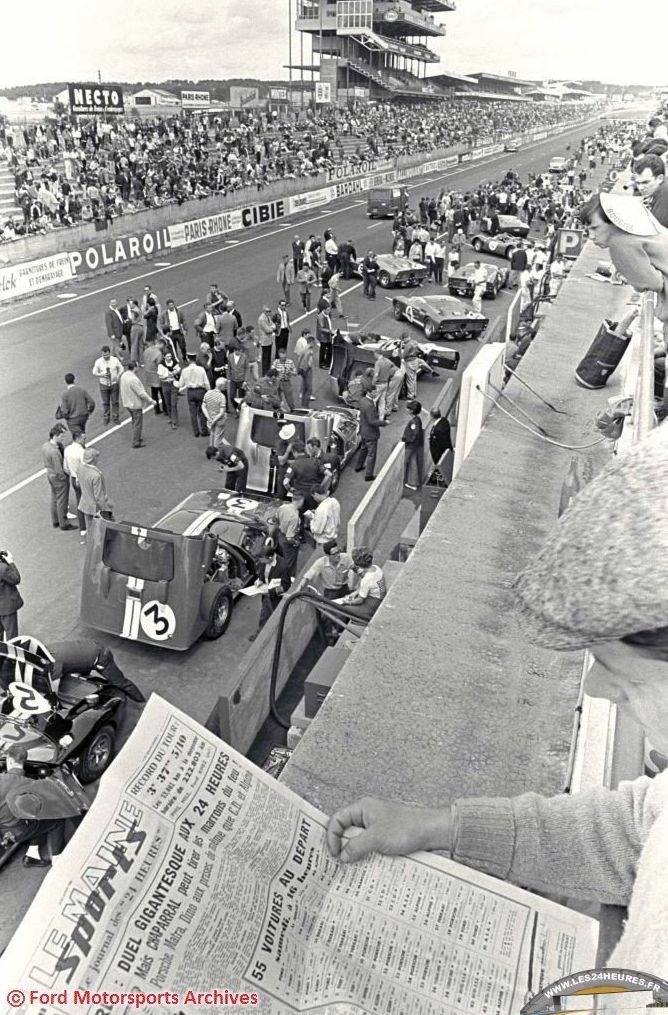
(Ford Motorsports Archive)
Gridding up pre start, above.
#2 is the victorious McLaren/Amon Mk2, #3 Gurney/Grant Mk2 (DNF), #4 Hawkins/Donohue Mk2 (DNF), and the rest. Captures the moment doesn’t it?

(unattributed)
Le Mans ’66 start, look at that crowd.
#3 Dan Gurney, #4 Paul Hawkins, from grid slot 11!- what a blinder from the race start from the Aussie, #1 Ken Miles, the yellow car alongside is John Whitmore, #2 Bruce McLaren in the winning car- all Ford Mk2, you can just see the tail of the Bucknum Mk2, from 9th on the grid! and the rest.
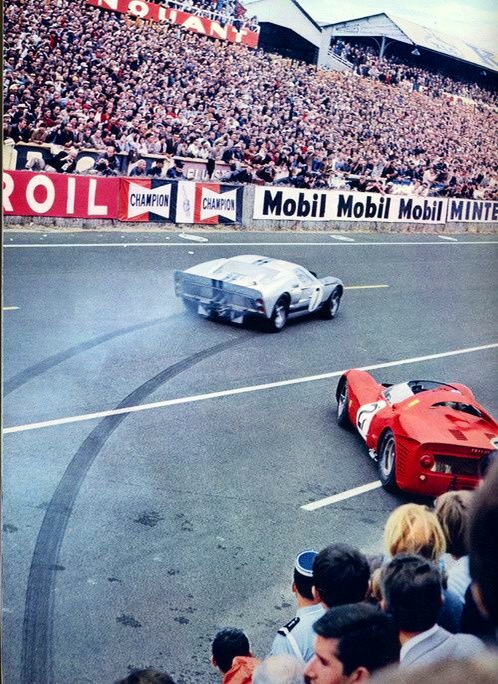
(Automobile Year 14)
Every man and his dog have used this photograph in online and more traditional media down the decades! I first saw it in Automobile Year- I should check to see who the photographer is- such a marvellous action shot.
Graham Hill squirts his Alan Mann Racing Ford Mk2 off the line leaving the NART Pedro Rodriguez/Richie Ginther Ferrari P2/3 ‘Spyder’ on the line…’slippery diff functioning well.
In a race of incredible attrition amongst the front-runners only three of the thirteen Ford GT’s which started finished and only two Ferrari GT’s of 14 which set off at 4pm were running 24 hours later. The Hill/Brian Muir Mk2 retired on lap 110 with front suspension damage and the Ginther/Rodriguez car on lap 151 with gearbox failure.
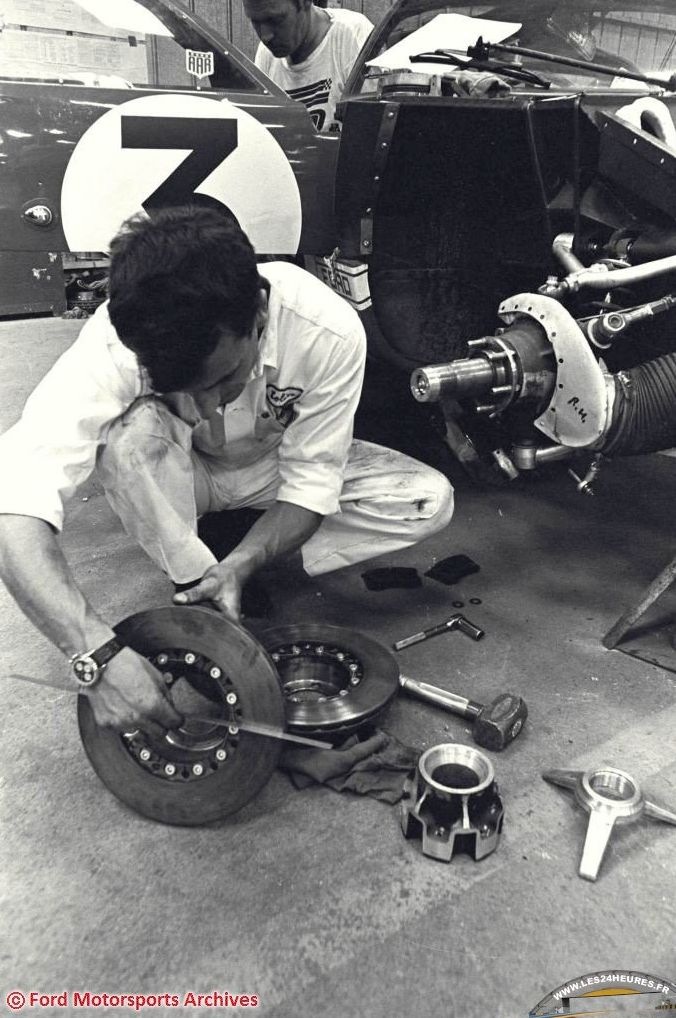
(Ford Motorsport)
A Shelby-American mechanic checks a new disc before fitment to the Gurney/Grant Mk2 hub assembly.
The beautiful standard of fabrication and workmanship of the front upright and suspension assembly clear in this shot. Front suspension comprises double wishbones, coil spring/damper units and adjustable sway bar. Steering arm also in shot, knock off nut etc.

(unattributed)
Almost to the finish…the Shelby American cars of McLaren on the left, Miles on the right, at about this point Miles backs off allowing McLaren/Amon to take the win.
The absolute detail of the finish has several versions but the sequence as follows seems to be generally accepted.
At the race halfway mark four GT Mk2’s comprised the lead group. By 9 am only three Mk2’s were left of the ? which started- all the GT40’s had retired. Ford Director of Racing Leo Beebe was not happy as Ken Miles and Dan Gurney had been dicing for the lead- against team orders- the Gurney/Grant car was the last of the Mk2’s to retire just before 9 with head-gasket failure.
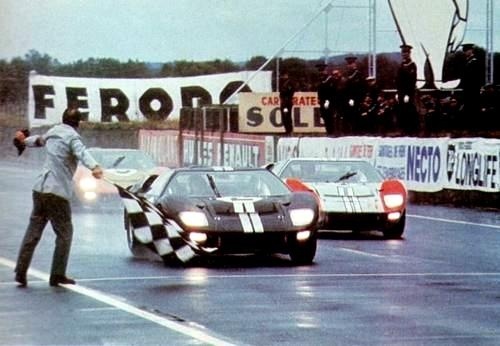
(unattributed)
It was at this point that Beebe decided upon a ‘dead heat’ between his two lead cars. This, it was thought, would stop the competition between the remaining cars and emphasise the win as one for the car rather than the driver.
The organising club, the ACO told him that a dead-heat would not be possible as the McLaren/Amon car, which started from grid slot 2, would have covered a greater distance than the Miles/Hulme car which started from pole- a difference according to the club of 8 and 20 metres depending upon the account.
But, assuming the cars were still running at 4 pm, Beebe decided to push ahead with his plan and instructed Miles to ease his pace at the last pit stop- the Miles/Hulme car led at that point, to allow McLaren to catch up.
Just before 4 pm it started to drizzle again. Ken Miles whilst pissed off, wants no part of it of the contrived finish, so eases gently before the flag in the photo above, or Bruce surged, depending upon the account, allowing Bruce McLaren and Chris Amon /McLaren to take the win.
Miles was dead in a Ford J car testing accident at Riverside, California within two months. The great British American the lead development driver of the GT40 program was in the view of many the more deserving of the drivers to win the race- but there are many layers to this race finish. Beebe’s successful attempt to get his cars to the finish and over the line first is understandable, to say the least, given the failures of the GT40 and Mark2’s at Le Mans in 1964 and 1965.
In terms of ‘deserving drivers’ lets not forget Bruce did a huge amount of the initial GT40 testing for JW Automotive way back in 1964 and subsequently, not to forget that he raced the cars at Le Mans in 1964, (GT40 with Phil Hill DNF gearbox on lap 192) 1965, (Mk2 with Miles DNF gearbox on lap 45) 1966 and 1967 (MK4 4th with Donohue).
Photo Credits…
Jesse Alexander, Ford Motorsport Archive, Automobile Year
Tailpieces…

Andretti and friends before the off (Jesse Alexander)

Mk2 business end, Daytona 1967. Note 2 roll bars to counteract the forces on the bankings (Automobile Year)
Finito…
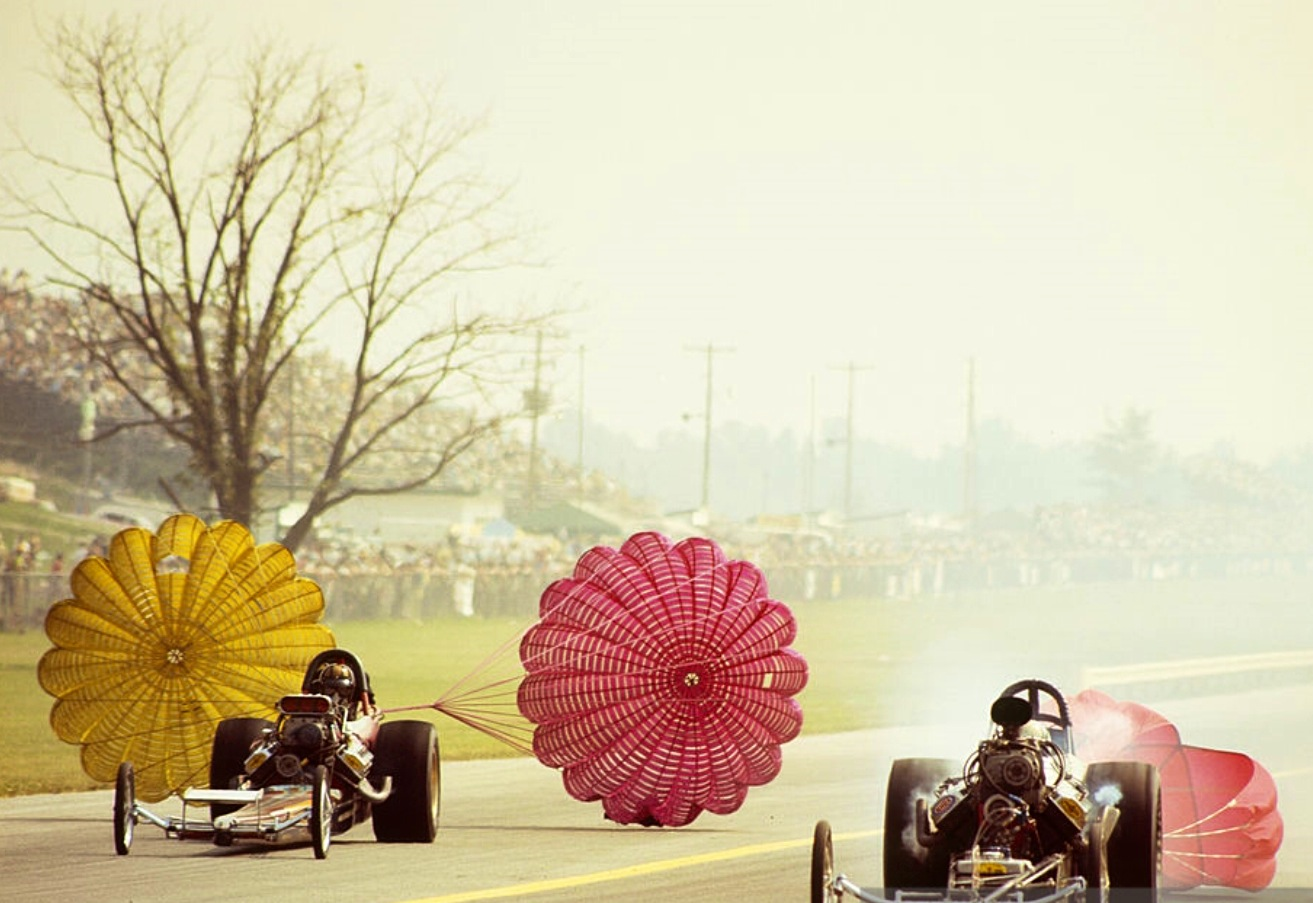
The beautiful soft light contrasts with the sheer other worldly ferocity of these awesome ‘Top Fuel’ Rails during the 15th National Hotrod Association Nationals at Indianapolis on 3 September 1969…
There are no details on the captions of the cars and drivers, so interested to hear from any drag racing enthusiasts who may know who is who!

Checkout the YouTube footage of the meeting…Its an interesting period piece documentary in itself.

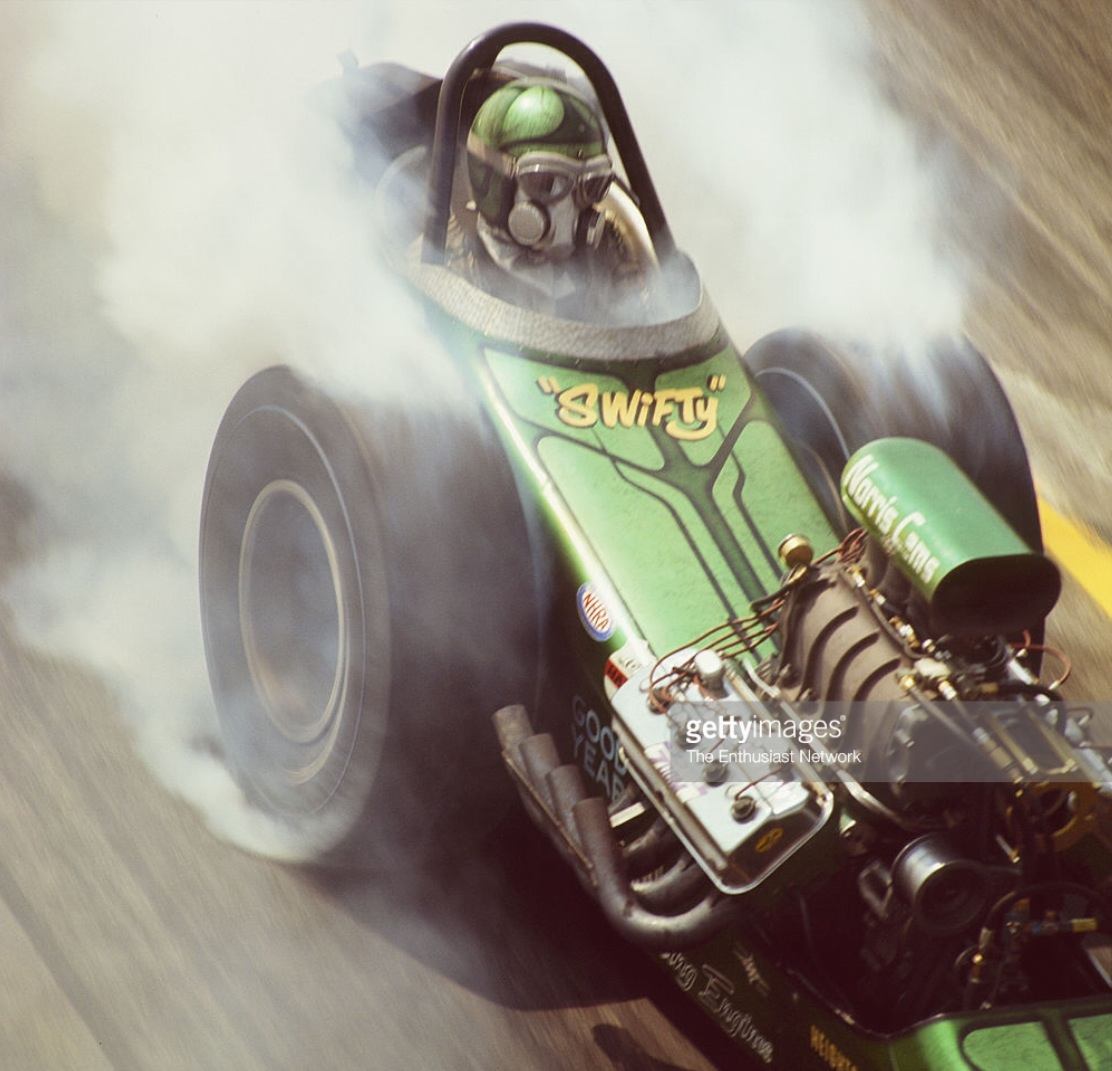
The happy dude is Danny Ongais, later CART/Indycar and several times F1 racer, he raced a Mickey Thomson entered Ford Mustang ‘Funny Car’ (The Enthusiast Network)
Credits…
The Enthusiast Network
Tailpiece…

Brabham, Cooper T23 Bristol, Altona, 9 March 1954 (SLV)
Jack Brabham thrilled a crowd of over 12000 with his Cooper Bristol’s speed during the inaugural car meeting of the new Altona circuit in Melbourne’s inner west on 9 March 1954…
Brabham made the switch from speedway to circuit racing in, one of the characteristics of his driving style was the ‘Brabham Crouch’ over the wheel, its much in evidence down the years and very much present at the 2 1/4 mile Altona track.
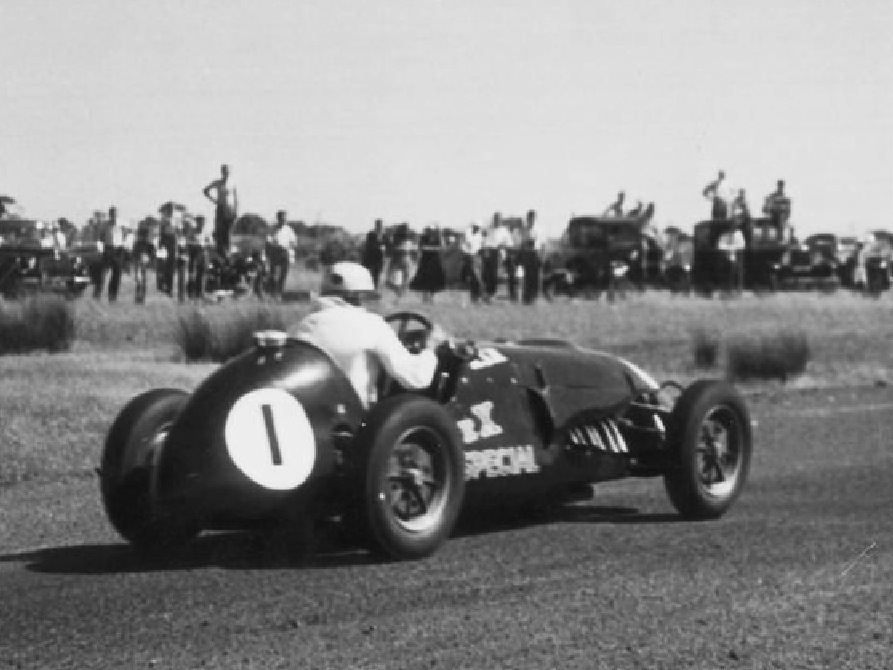
Brabham crouch, Cooper Bristol, Altona 1954 (SLV)
Jack set a lap record of 1:50, an average speed of 73.5 mph, the Cooper was timed at nearly 130 mph. Stan Jones won the F Libre open event after Jack’s Cooper sheared the magneto drive of its Bristol engine. ‘The duels between Brabham and Jones Cooper 1100 were a feature of the meeting, the brilliant cornering of the latter helping him hold the bigger faster car’ The Age newspaper reported.
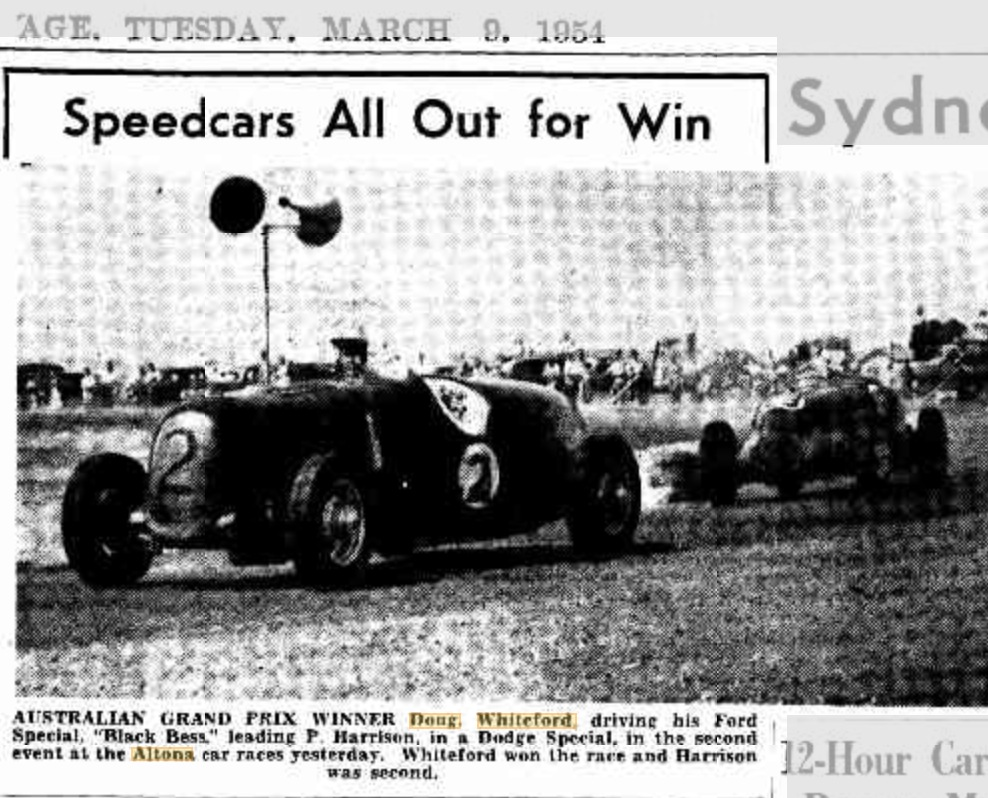
Many of the noted racers of the day entered the meeting; Jones, Reg Smith, John O’Dea and Lex Davison in 1100 Coopers and Bill Patterson in a 500. Cec Warren’s Maserati 4CLT, Ted Gray’s Alta Ford, Tom Hawkes Allard, Doug Whieford in his Ford Spl ‘Black Bess’ as well as Lex Davison’s HWM Jaguar, it won the AGP at Southport on Queensland’s Gold Coast, later in the year completed a strong line-up

Aerial view of the Altona Circuit and Williamstown horse racing course taken in 1958 after the circuits closure , at the top of the shot is Port Phillip Bay (SLV)
Over the years there was motor racing at Point Cook (one race only, the 1948 AGP on the airforce base) Fishermans Bend and Altona, they are all in the ‘same part of the world’, respectively 26/6/16 Km from Melbourne’s CBD. Of the three, Altona was the least successful, only six meetings were held.
Well known Melbourne racer/businessmen Stewart and Neil Charge invested between 35000-40000 pounds in the venture. They acquired land on the west side of Millers Road transforming ‘ a swamp into a GP track…they formed the Altona Motor Racing Co with preliminary work to commence in two weeks’ the ‘Williamstown Chronicle’ reported on 2 April 1953.
Neil Charge took leave from the family trucking business to pull the enormous project of creating the facility, ‘the track was built from fly-ash from the South Melbourne gasworks’
The swamp was converted into ‘Cherry Lake’, later reports suggested the promoters intention to ‘dredge the lake (deeper) to form a speedboat circuit’. Six meetings year were planned with local charities to benefit to the tune of about 4000 pounds per year.
Somewhat prophetically ‘The Chronicle’ noted the circuit may pose new problems for the promoters of Phillip Island, the expectation that Altona because of its close proximity to Melbourne may draw larger crowds. In the event, Phillip Island is still with us, despite a few ups and downs over the decades and Altona is long gone and largely forgotten!
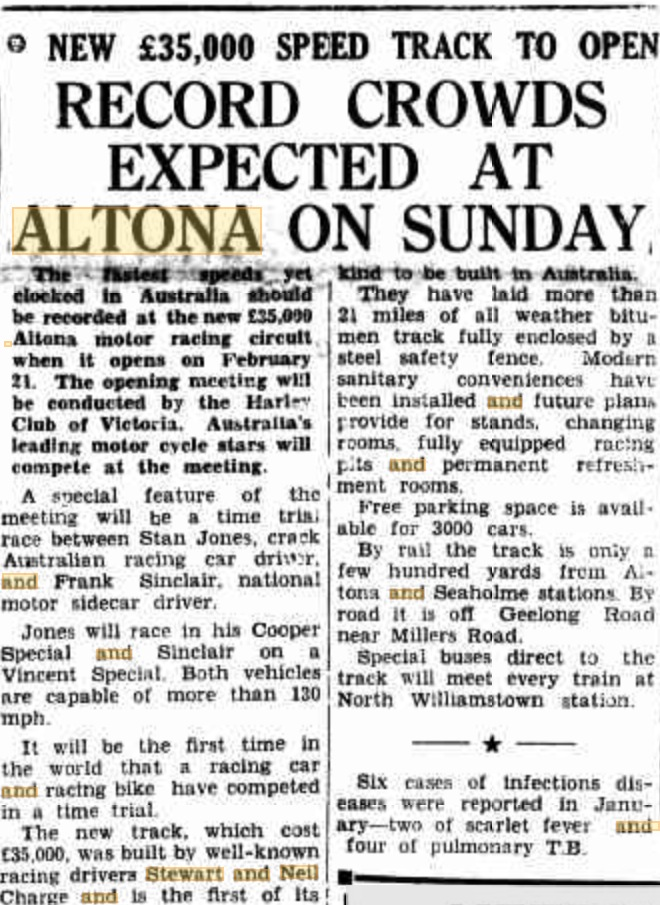
‘Williamstown Chronicle’ 19 February 1954
Altona was completed on time, its first meeting, for bikes, was opened by former Australian Olympic cyclist, Federal Parliamentarian, Sir Hubert Opperman on 21 February 1954…
Before the opening meeting the Williamstown Chronicle described the circuit as the first of its type in Australia, the Charges ‘have laid more than 2 1/4 miles of all weather bitumen fully enclosed by a steel safety fence…future plans provide for stands, changing rooms, fully equipped racing pits and permanent refreshment rooms’. The opening included a novelty match race between Jones Cooper and F Sinclair’s Vincent Spl sidecar, its not reported who won!
Car racing events were promoted by the Victorian Sporting Car Club, there were problems with the surface from the start. The track was ‘re-surfaced and built up where necessary after the recent ‘consolidation’ meeting. The track surround is safer with the removal of boulders and an encircling safety fence’. Edges were levelled to give a safe emergency run-off area. The Argus reported the improvements cost 4000 pounds with speeds expected to be higher by 20% compared with the first meeting.
In a 2013 interview Altona owner Neil Charge said that had the investors in the consortium, (there were 6 he said, not just he and his brother as reported by the media at the time) known that Albert Park was to be used for motor racing they would not have proceeded with their investment. International readers will understand the inherent beauty of Albert Park and its proximity to Melbourne’s CBD. Imagine the exact visual opposite; what was then flat, featureless, muddy or dusty, industrial land on the cities outskirts. In short, in a popularity contest close to Melbourne’s CBD, Albert Park wins hands down every time from a spectators perspective.
That the Charge brothers didn’t know about Albert Park as a racing possibility is a little hard to fathom, they were well connected Melbourne businessmen and stalwarts of the local racing community, which was even more incestuous then than now.
Other issues which inhibited the circuits success was the converted swamp land upon which it was built, land consolidation not understood as well then as now. The land continually subsided making the track difficult to maintain and dangerous, which is the reputation it gained from competitors. Entry numbers suffered as a consequence. If you can’t attract the cars, the ‘punters’ don’t come to watch and so a bit of a downward spiral started.
The Phillip Island Auto Racing Club in its own history relating the trials and tribulations of getting their circuit running have this to say; ‘ One example of a circuit hurriedly built and opened was Altona in 1954. With sharp corners, narrow straights and a dangerous lack of shoulders running along the edge of the circuit the track started to deteriorate from the very first (motor cycle) race. With four cars rolling over the same spot and several parts of the track crumbling to powder, it was clear the track was doomed from the beginning. This was despite an average lap speed of below 65mph’
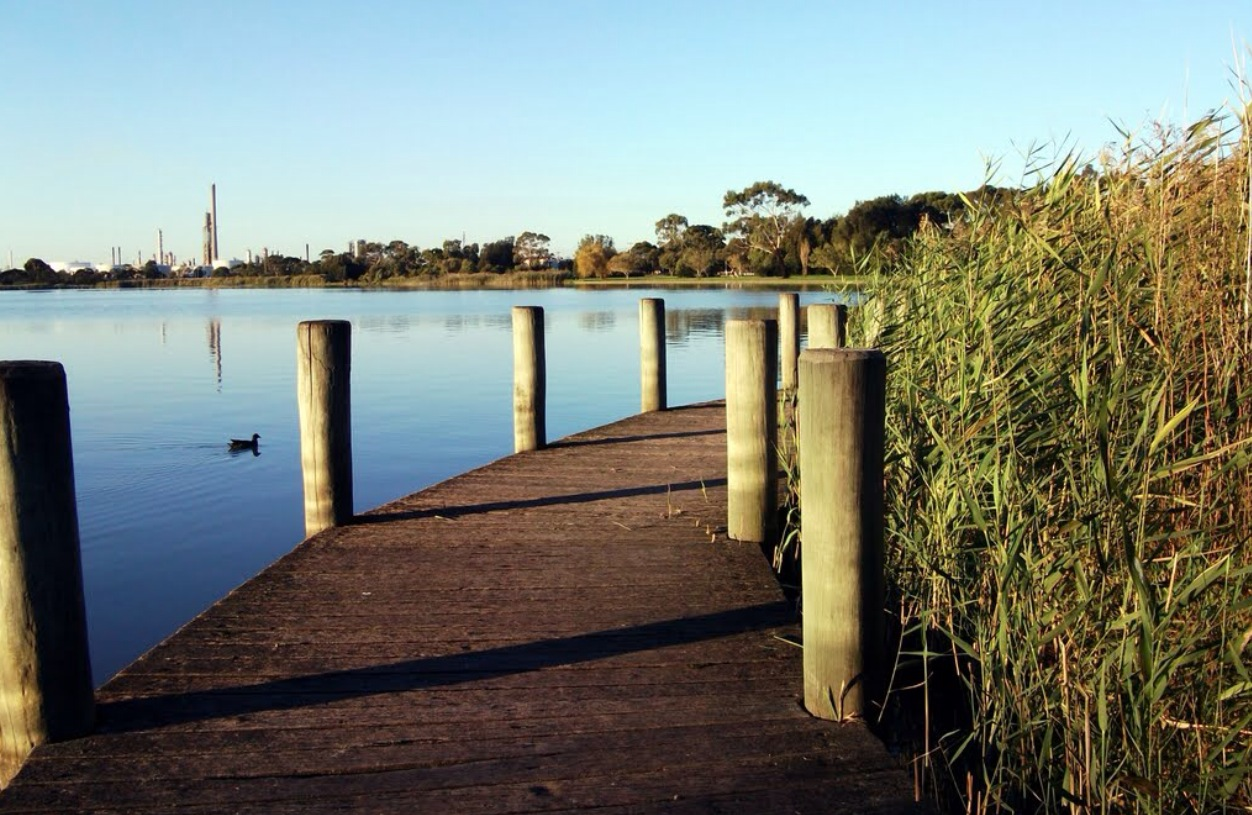
Cherry Lake, Altona in modern times, the industry of the Inner West is in the distance (unattributed)
Ultimately the Altona investors made the commercial decision to sell the land, the acquirer, local authorities who used it as parkland. Charge said the transaction resulted in a small profit which must have been some kind of miracle given the sum invested and paucity of spectator numbers in the 6 meetings run. Now the area is a residential one, the local amenity very much enhanced by Cherry Lake!
There are few photos to be easily found of this interesting track, if any Australian readers have an image or three you would like to share I am sure we would all like to see them! Please get in touch.
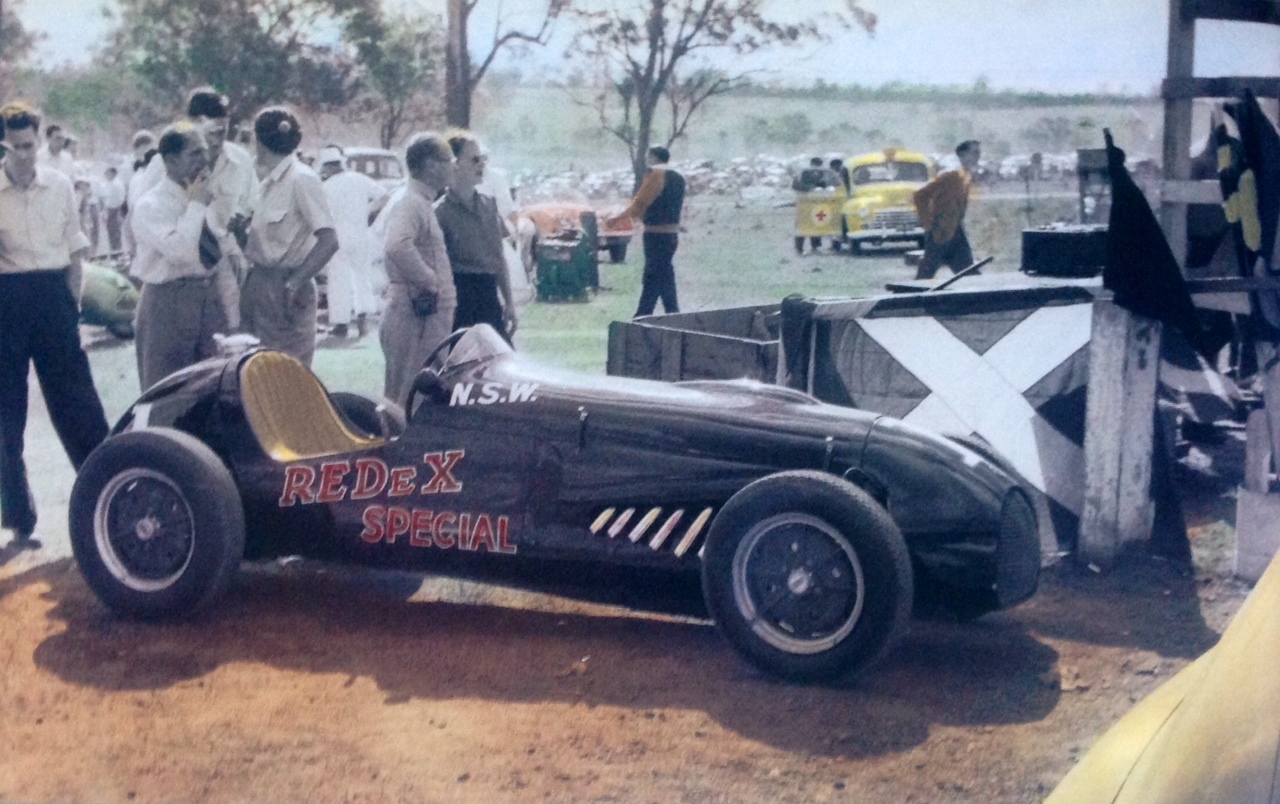
Hand colored print of the Redex Spl prior to the 1954 AGP at Southport on Queenslands Gold Coast. (Kev Bartlett reckons its Mt Druitt not Southport) The Bristol engines front camshaft bearing turned in its housing blanking off the drilling for lubricating oil, seizing le moteur. Stub exhausts interesting, not they way they were raced in the UK (Nye/Brabham)
Jack’s Cooper T23 Bristol…
I have done the ‘Cooper Bristol to death’ in terms of articles written, check these links out for information and photos about these important, wonderful cars, rather than me repeat it all again;
The shots of Jack’s car do beg the question about its history though, important as it was in his development as a driver. His success in it directly lead to his decision to try his hand in England in 1955, in fact he regretted selling the car in Oz, carefully developed as it was. Peter Whitehead’s Cooper Alta, the car he bought and raced when he first arrived in the UK was not a patch on the car he left behind.
The summary of the car is based on an article from John Blanden’s book, that research largely based on Doug Nye’s Cooper tome albeit its somewhat truncated. The best source of information on Jack’s formative years is the biography he wrote with Doug Nye, picking that book up always brings a smile to my face.
JB publicised ‘The Jack Brabham Story’ in Melbourne shortly after it was published and in the Friday before the 2004 AGP. He spoke at a function at the Windsor Hotel, the book was sold after the event and autographed by the champ for those prepared to stand in a long queue. My youngest son was 8, the only kid amongst 300 businessmen at the breakfast.
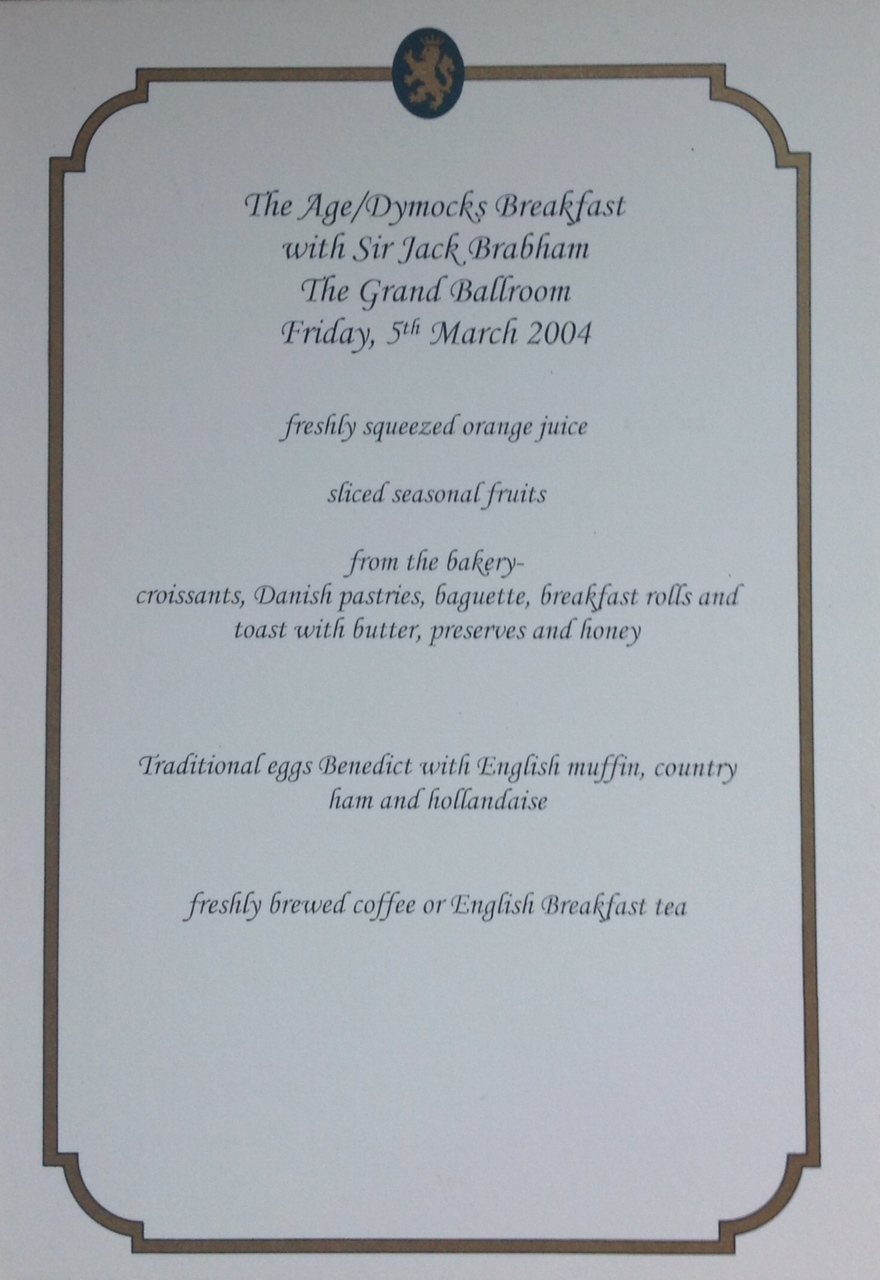
Windsor Hotel menu of the day! I wish i had the presence of mind to get Jack to sign this as well as the book! Sponsors are the Age Newspaper and Dymocks, a book retailer
Local ‘motor-noter’ and TV commentator Will Hagon was MC for the event, they used a question and answer format which worked well. Hagon was a great choice as the ‘right questions’ were asked rather than the crap someone with no knowledge of the sport, ‘how fast did she go Jack?’ ask.
Brabham was an absolute prince in the way he dealt with Nick when we collected his signature. ‘Bic’ still remembers that gig, Jack and the long day we had together strolling the wide open spaces of Albert Park. We still do the wide open spaces of Albert Park but all three sons are as interested in the beers on dad as much as the racing! You would think I would get one racer outta them given the number of events they did with me racing my Historic FF!? (Lola T342 at that time)
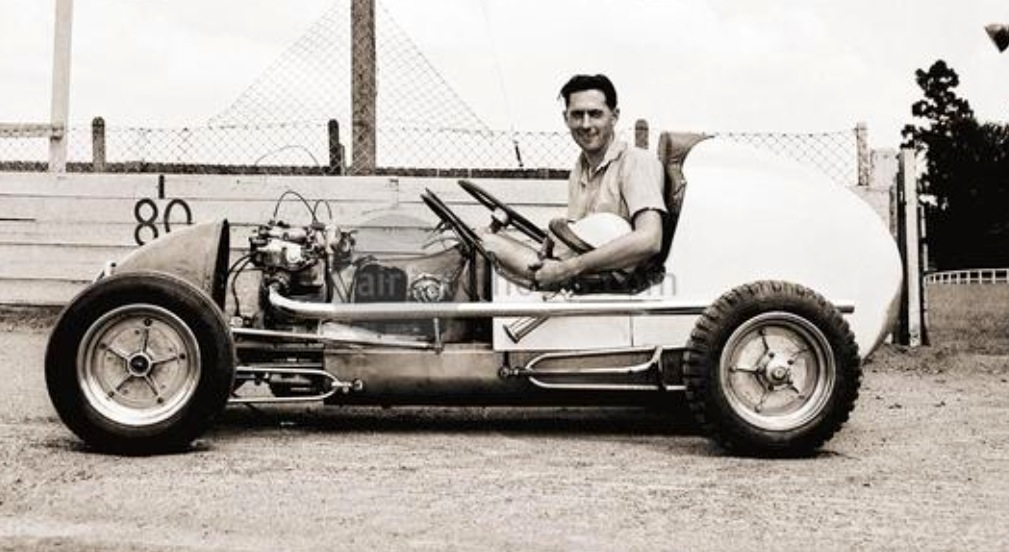
Brabham at Parramatta Speedway on 26 February 1954. Harley V twin engined speedcar owned by Spike Jennings modelled on Jack’s old car (Fairfax)
Brabham cut his racing teeth in the immediate post-war years on Sydney Speedways. By the early fifties he was essentially making his living on his prizemoney, racing three times a week made it difficult to keep up with the workload of his machine shop as well. He ran his Speedcar in some hillclimbs, and, fitted with front brakes won the 1951 Australian Hillclimb Championship at Rob Roy in outer Melbourne.
Beating the road racers with his Speedway car caused quite a stir, but also ‘put his name and capabilities up in lights’. He was effectively a professional in an amateur sport (road racing in Oz) well before he left for the UK. It was during these years he met Ron and Austin Tauranac who were racing their Ralts at the time, RT of course the other half of the ‘BT’ partnership.
Jack enjoyed the hillclimbs which convinced him to give circuits a go. In quick succession he acquired and raced Coopers Mk 4 and 5. To fund his road racing he sold his speedcar, continuing to race on the dirt tracks in a car owned by Spike Jennings with whom he shared the prizemoney.
The big step up was purchase of the Cooper Bristol.
Chassis ‘CB/Mk2/1/53’ was despatched to Australia as a new car to the order of David Chambers, prior to the cars arrival by sea, he committed suicide as a consequence of the financial trauma in which he was engulfed. The car was offered for sale on behalf of his deceased estate, Brabham’s bid of 4250 pounds, supported by some funds from his father and Redex, his sponsor, was the successful one.
Jack recounts how, upon testing the new car at Mt Druitt, an old WW2 emergency landing strip just outside Sydney for the first time, the Bristol engine lost oil pressure within a few laps. A subsequent tear-down revealed a bent crank and badly worn bearings. It soon became apparent that the new car was thoroughly ‘shop-soiled’, it had been raced by its first owner, John Barber in Argentina. Upon return to the UK, it was given a ‘cut and polish’ and then despatched to Chambers as a new car. It was not the first or last time ‘colonials’ were shafted by ‘nasty furriners’ in the UK and Europe a long way from the South Pacific!
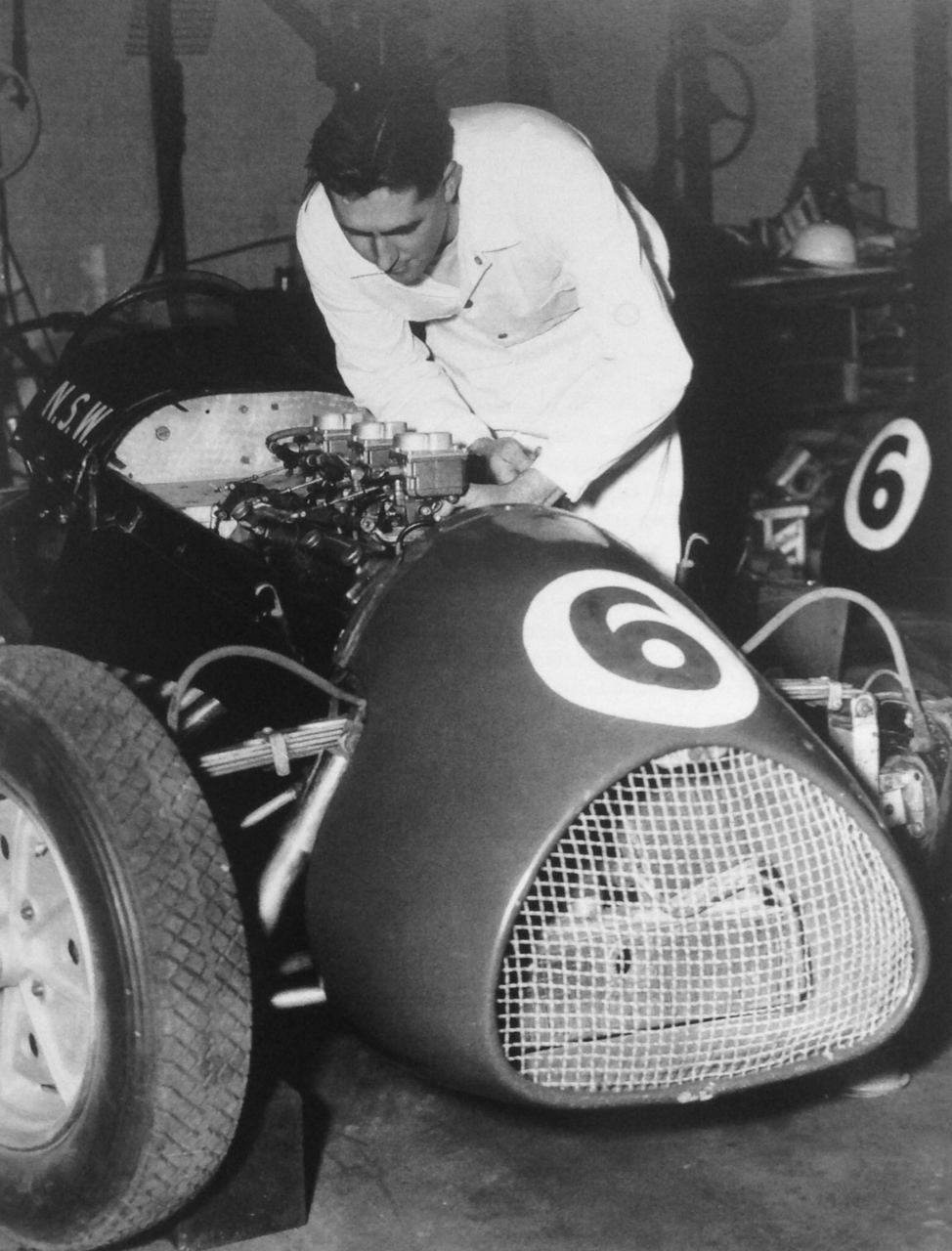
Jack fettles the Cooper in his Penshurst workshop. He recounts the story of welding a crack under the engine, the torch ignited some fuel vapours. Brabham’s extinguished was in another locked shed, he ripped the lock off in his bare hands to get the ext and doused the fire but ‘that day i could have lost everything’ (Nye)
When Jack carefully assessed the Bristol engine, having raced the car a few times, he couldn’t believe the hefty flywheel and quickly modified it along the lines of the Harley Davidson clutch assembly used on his Speedcar. He lightened the clutch/flywheel assembly from around 34Kg to 7kg thereby vastly improving the responsiveness of the engine and its reliability. The long, thin crank of the Bristol engine was a weakness because of the vast weight of the flywheel assembly. Further improvements to the engine were made with the assistance of British pre-war racer Frank Ashby who had moved to Sydney’s Whale Beach.
Jack had already replaced the Bristol’s Solex carbs with ex-Holden Stromberg units which were modified further after Ashhby’s suggestion to incorporate smoothly shaped bell mouths to aid air entry with consequent increases in power. Jacks hands-on engineering capabilities were part of his ‘competitive back of tricks and unfair advantage’ which never left him.
Brabham quickly established himself as one of the men to beat with the Cooper winning many events. His battles with the nascent Confederation of Australian Motorsport and their ‘no advertising on cars’ policy became a constant thorn in his side, RedeX’ commercial involvement essential to his ability to run the car.

Brabham at Altona again in 1954 (SLV)
In Europe and the UK the ‘no advertising thing’ didn’t seem to hold the sport back, there were enough wealthy individuals to make up the numbers and manufacturers to give worthy drivers without wealth a steer. Here in the mid fifties the drivers of ‘ANF1’ cars were either ‘silvertails’ like Lex Davison, mind you he made much more than he inherited or ‘self made’ blokes, a whole swag of whom were motor traders (Mildren, Jones, Stillwell, Patterson, Hunt, Glass and others, I’ve included Patto and Stillwell on this list but they too had family $ behind them from the start). The point is it was RedeX money which helped fund Brabham’s campaign, without it he probably wouldn’t have achieved what he did. What am I saying? The Americans goddit right from the start with a totally commercial approach which allowed those with talent access to sponsors funds to help them progress.
The cars race debut was at Leyburn, Queensland on 23 August, he won the ’53 Qld Road racing Championship. Brabham set quickest time in the NSW GP at Gnoo Blas, Orange but non-started the 1953 AGP at Albert Park after he ran the Bristol’s rear camshaft bearings in practice due to excessive friction.
Brabham contested the 1954 New Zealand Grand Prix, finishing 6th, meeting Tony Gaze, Reg Parnell, Peter Whitehead, Ken Wharton and a VERY young Bruce McLaren. Jack stayed in the McLaren home, Leslie McLaren a local racer and garage owner. The race was won by Stan Jones Maybach .
The car continued to do well throughout Australia, his clashes with Davison’s HWM Jag, Dick Cobden’s Ferrari and Jones Maybach were highlights of the period.
At the ’55 NZGP meeting two visitors from the UK, Dunlop Racing Manager Dick Jeffrey and Dean Delamont, Competition Manager of the RAC, convinced him he should try his hand in the UK the following year. By the time he alighted the ship on the journey back to Sydney he determined to do just that, and the rest as they say is history.

Stan Jones in the ex-Brabham Cooper T23 Bristol, Altona, date uncertain (unattributed)
Stan Jones was the eager buyer of the Cooper having destroyed his new Maybach 2 whilst leading the 1954 AGP. Stan was lucky to survive a very high speed journey backwards through Southport’s trees. Whilst Charlie Dean and his band of merry, Repco men designed and built Maybach 3, Stan first raced the CB in the Victorian Trophy at Fishermans Bend on 19 February. The nose of the car was slightly modified before his next race at Albert Park in March 1955.
Stan retained ownership and had Ern Seeliger race at Bathurst Easter 1955, Ern was 2nd in the ‘Bathurst 100.’ Jones was forever buying and selling racing cars, ‘moving metal’ was his business after all! Have a read of my article about the champion racer if you are unfamiliar with Alan’s father and his own impressive racing CV;
Stan Jones: Australian and New Zealand Grand Prix and Gold Star Winner…
Later in 1955 Jones sold the car to ‘Ecurie Corio’s’ Tom Hawkes, the Geelong businessman raced the car for 3 years before leaving for Europe.

Hawkes in the Cooper T23 Holden at Port Wakefield, SA, Labor Day meeting 1957. Top shot! (Geoff Chennells)
Hawkes first race was the 1955 AGP at Port Wakefield, winning a heat but DNF in the race itself with fuel feed problems. Tom then modified the car by lengthening the nose, altered the front suspension and most importantly fitted a Holden ‘Grey Motor’ incorporating a Phil Irving Repco ‘Hi-Power’ head. The car raced in this form at Albert Park in March 1956 and over the next 2 years in this spec.
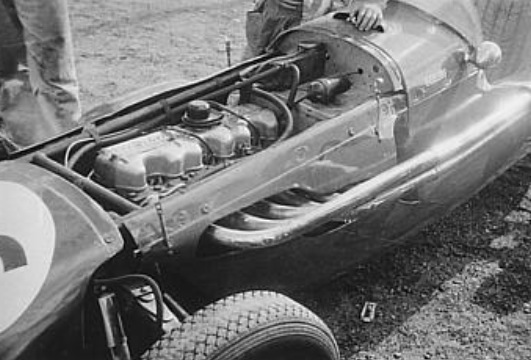
Cooper T23, with its neat 6 cylinder Holden Repco engine Gnoo Blas or Bathurst (Ian McKay)
The car was very fast in this form, not quite an outright contender amongst the ‘heavy metal’ of 250F’s, Ferrari 500/625 and Ted Gray’s V8 engined Tornado but still quick enough to finish 2nd in the 1957 Gold Star series to Davison. Those points were amassed by finishing 4th in the Victorian Trophy, 2nd in the Qld Road Racing Championship, 2nd in the NSW Road Racing Championship. He was a terrific 3rd in the 1958 AGP at Bathurst.
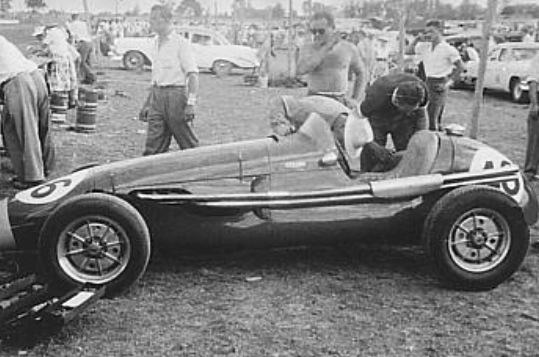
Same meeting as the pic above, longer in the nose and all the prettier and quicker for it. Gnoo Blas or Bathurst (Ian McKay Collection)

Tom Hawkes, Cooper T23 Holden Repco, about as pretty as racer of the period can get, and mighty fast in ‘Hi-po’ Repco head form (Ellis French)
Ace historian/researcher Stephen Dalton dates these Phillip Island shots (above and below) of Tom’s T23 as during the October 1957 meeting, note the mixed grid of MG T Spls. The shots show just how sleek the car has become in its ‘definitive’ later Repco headed Holden form. It may not have quite been an outright car in terms of outright performance by then but Hawkes did a mighty fine job of extracting all the car could give.
Next to Hawkes Cooper T23 Holden on the right is Eddie (father of Larry) Perkins, Porsche Spl and Ted Gray in the Tornado Chev at left, Unlimited Racing Car event, October 1957, Phillip Island (Ellis French)
When Hawkes left for the UK at the end of 1958 he retained the car but tasked Murray Rainey to fit a Chev Corvette 283cid ‘small block’ V8 into the Coopers lissom spaceframe chassis.
This job was completed by Earl Davey Milne who bought the car in April 1962. Gearbox used was Borg Warner T10, a slippery diff was also fitted and the bodywork modified. The car is still retained by his family 50 years later. Because it never raced ‘in period’ in this form the Cooper is ineligible for a CAMS ‘Certificate of Description’ and appropriate logbook.
The car appears in demonstrations from time to time, looking immaculate, its importance as the first Mk2 CB and its role in the ‘Brabham Ascent’ appreciated by all enthusiasts.
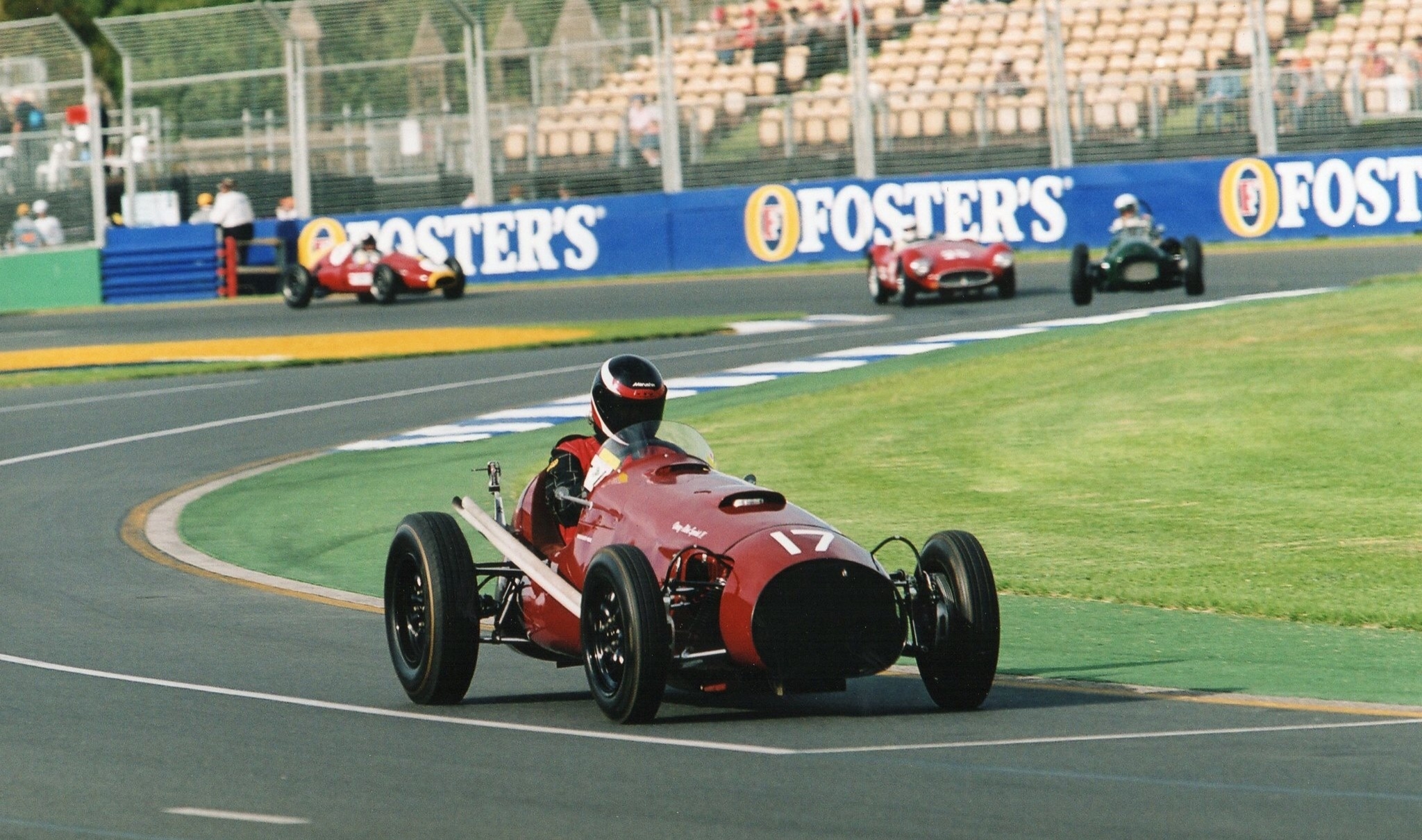
The ‘Cooper Corvette’ ex-Brabham T23 driven by Troy Davey-Milne at Albert Park in one of the historic demonstrations during the AGP carnival (Davey-Milne)
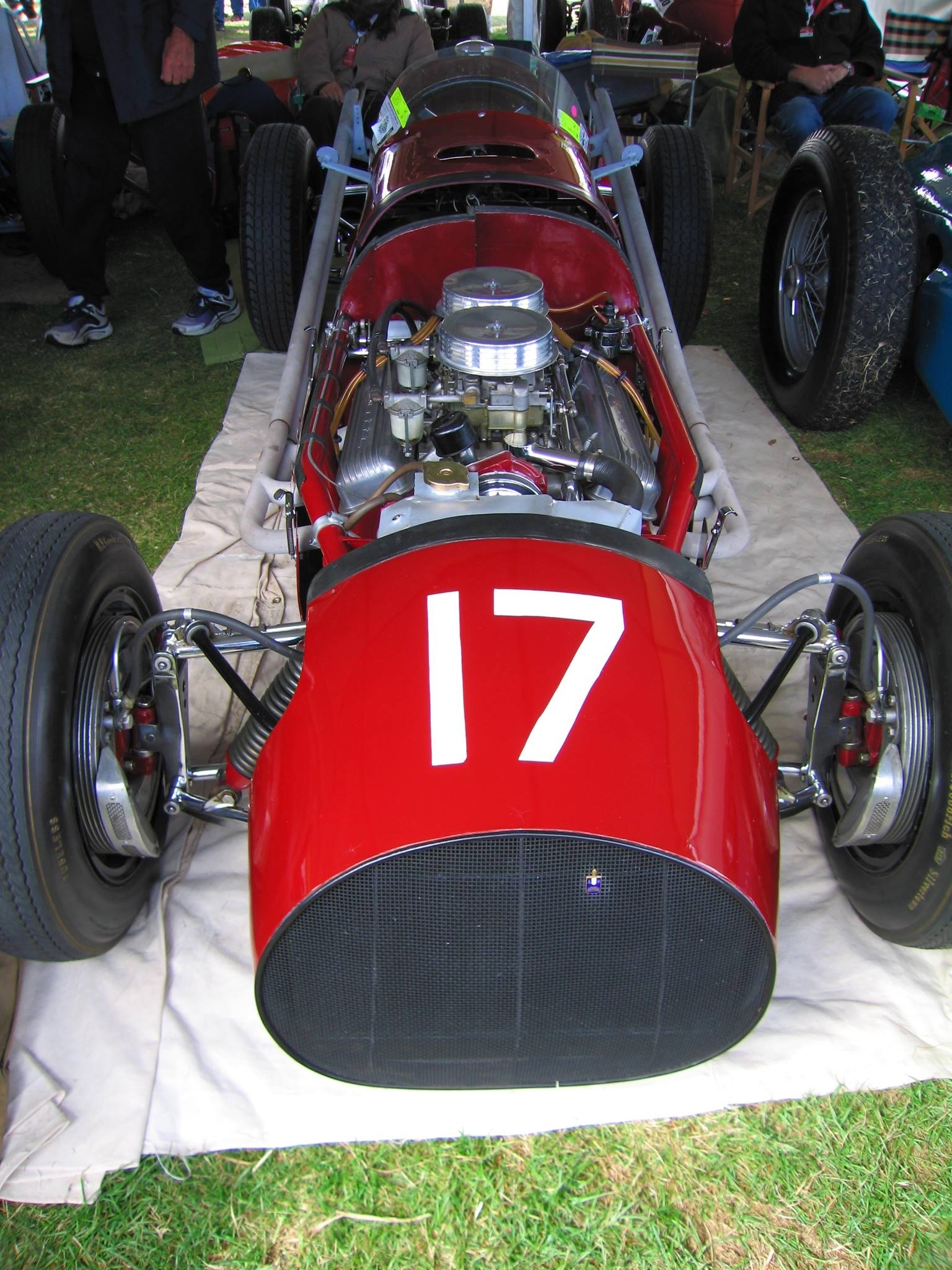
Chev 283 Corvette ‘small block’ with 2 big Holleys atop, installation very neatly done ‘in period’ but ‘Cooper Corvette’ never raced in this form. Albert Park 2006 (Davey-Milne)

Troy Davey-Milne in #CB/Mk2/1-53 Cooper T23 Chev at the wet Geelong Sprints, Ritchie Boulevard in November 1995 (Stephen Dalton)
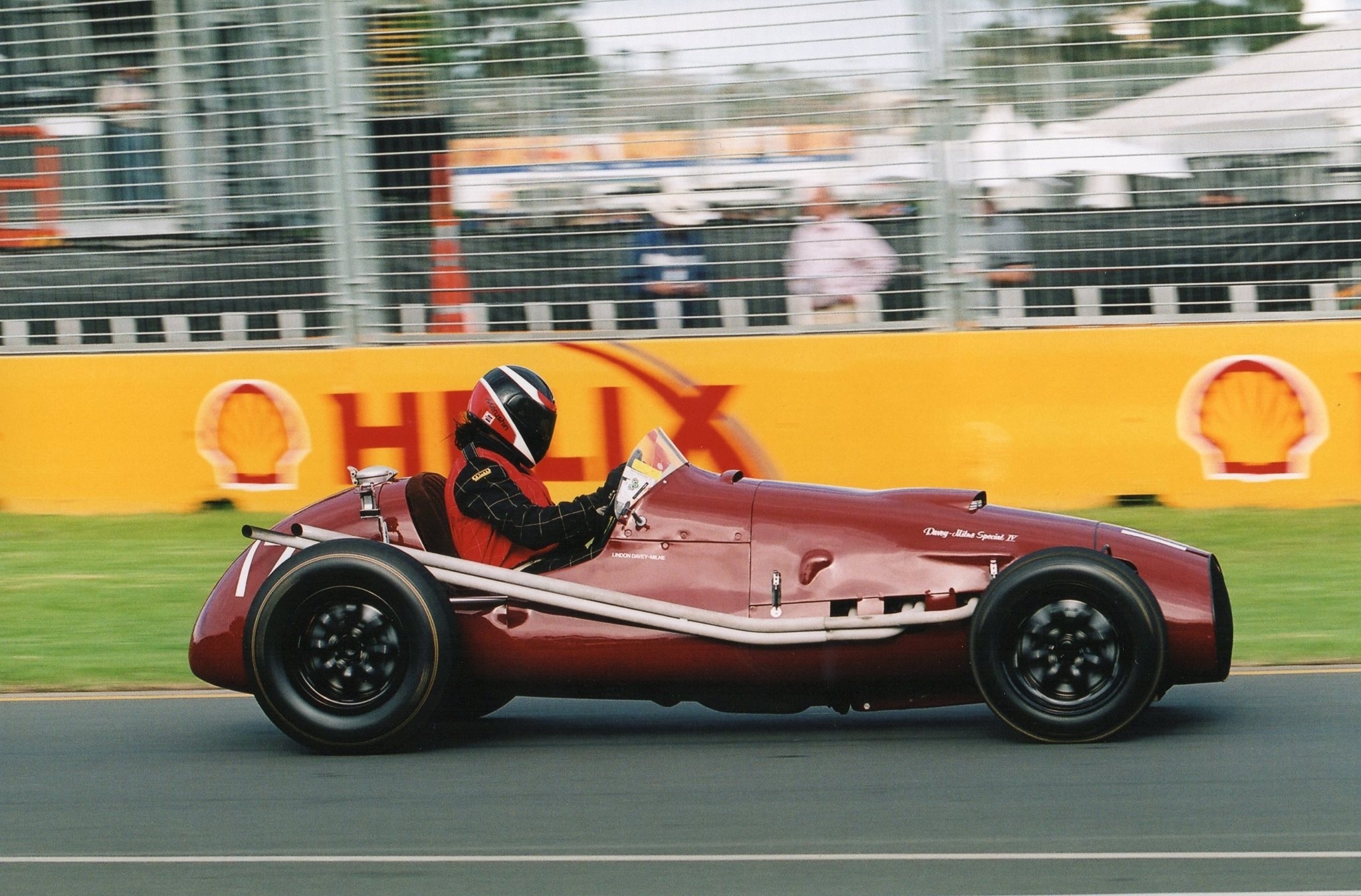
Still a handsome car, Troy Davey Milne at Albert Park in 2006 (Davey-Milne)
Etcetera…
Probably too arcane a topic for international readers but some Australian enthusiasts may find this short photo based article about the Charge Brothers on the great ‘Aussie Homestead’ site, of interest. None of the photos of the brothers cars are at their Altona circuit. In fact they are everywhere in Victoria but the place which is not what I wanted at all! Click on this link to have a look;
http://aussieroadracing.homestead.com/Charge-Bros.html

Photo Credits…
State Library of Victoria, Stephen Dalton Collection, Fairfax Media, Troy Davey-Milne, Ellis French, Ian McKay Collection, Geoff Chennells
Bibliography…
The Age 3/3 and 9/3 ’54, Williamstown Chronicle 2/4/53, 19/2/54, The Argus 17/2/54, 28/4/54
Doug Nye ‘The Jack Brabham Story’
Tailpiece…

JB again @ Altona in 1954 (SLV)

Some say this is the best view of modern Grand Prix cars, it’s not only ‘crusty curmudgeons’ who are subscribers to that theory either…
Personally the cars of every era appeal to me, mind you the technology of the current crop is beyond my ‘non physics’ brain! It’s the sound of the things, or lack thereof which gives me the shits! There is, or was, nothing on the planet like the visceral, primeval scream of an F1 engine in anger. Till the present. When the sounds of the cars in a GP weekend’s supporting races or demos surpass that of the main event you know things are ‘Daffy Ducked’!
The artistic shots are of the Lotus Team, Pastor Maldonado above and Romain Grosjean below during Abu Dhabi qualifying at Yas Marina during the November 2015 GP weekend.
The Lotus E23 Mercedes were Q 15 and 13 respectively with Grosjean 8th in the race won by Nico Rosberg’s Mercedes F1 WO6, Maldonado DNF.

Credits…
Mark Thomson

The 1950 Isle of Man meeting on June 10 was a mix of the new and old…
New was Geoff Duke, signed by Norton to compete in the Junior and Senior events after winning both the Clubman’s TT and Manx Grand Prix the year before.
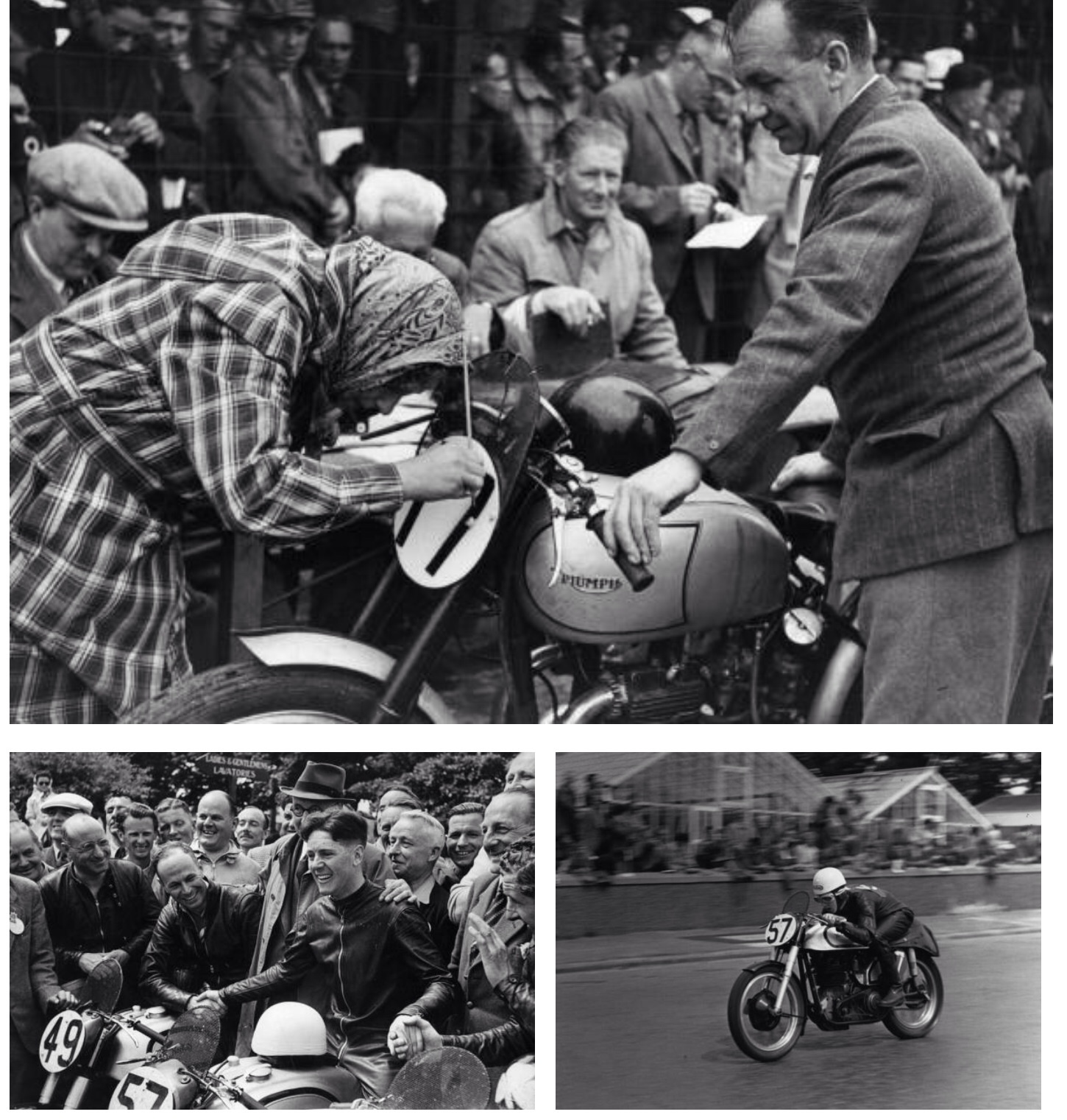
Number being painted on W Hall’s Triumph 500, Bottom left the 3 Norton teammates , # 57 Geoff Duke
Norton also introduced the new ‘Featherbed’ frame, developed by the McCandless brothers, the combination of Duke and the Featherbed were instantly competitive. The light, trim, all welded (rather than lug and tube) frame lowered the bikes centre of gravity and had a shorter wheelbase which suited the challenging TT course.

The TT said goodbye to pool petrol, and its was immediately celebrated by record laps in all three classes.
Duke’s debut in the seven-lap Senior was amazing. Riding the new Norton, he led from start to finish, smashing both race and lap records, winning in 2 hours 51 minutes 45.8 seconds.
Artie Bell’s Norton took the Junior honours with Duke runner-up as Harold Daniell filled the last podium place in his final TT. It was at the Junior prize-giving ceremony that Daniell commented ‘the new Norton was so comfortable that you could sleep on it-rather like being on a feather bed’, so creating the frames name.
Whilst Norton’s success in both Junior and Senior TT’s was clear, the Lightweight produced one of the closest finishes of all time. Just 0.2 of a second separated Italian Dario Ambrosini’s Benelli and Maurice Cann’s Moto Guzzi after 264 nail-biting miles!
Race Build Up…

Spectators check out H Daniell’s works Norton 500 prior to the Senior TT
The development of the Norton frame is an interesting story about advancing technology. In 1949 racer and self taught Belfast motorcycle engineer Rex McCandless began working on a new type of frame which used a welding process developed during the war. ‘Sif bronze welding’ used an alloy that melted at lower temperatures but had high tensile strength and can be built into fillets.
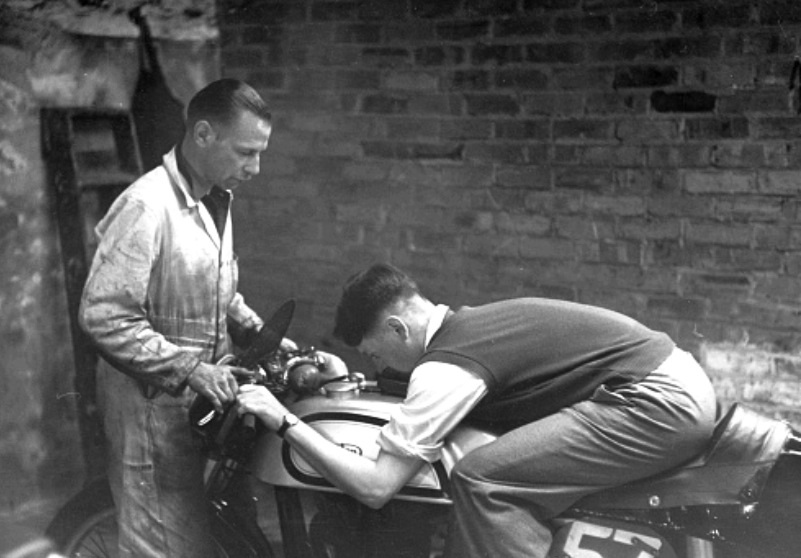
Mechanics fettle Duke’s Norton pre-race
A works 500 engine was mounted into the frame which was lighter and stronger than Nortons ‘garden gate’ frame. Tested at the IOM by Bell against a standard frame bike ridden by Duke, it was much quicker, further tests at Montlery near Paris, proved its speed.
In January 1950 McCandless and Norton’s Edgar Franks took the frame and the McCandless jigs to the Reynolds Tube Company who built the frames from their famed 16 gauge ‘531’ high tensile steel tube on their own jig adapted from the Norton approved McCandless one.
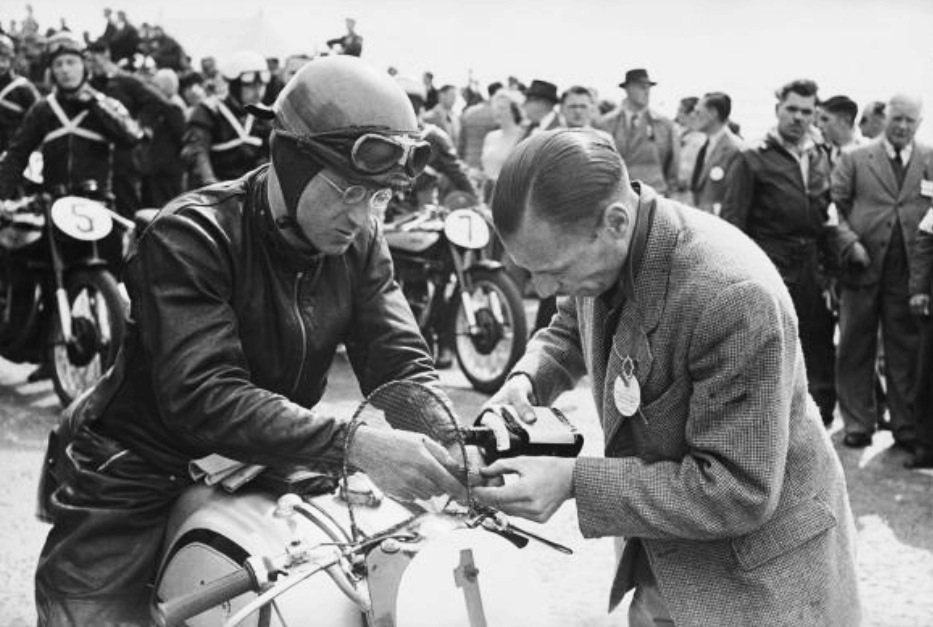

Reynolds were to keep quiet the fact that they built the frames, rather than Norton themselves, but of course their origin soon became widely known. In a great example of ‘racing improves the breed’ the ‘Featherbed’ found its way into Norton’s production bikes in concept if not street frames actually made from ‘531’ tube.

Nice side on shot of Duke’s new ‘Featherbed’ Manx. Reynolds 531 alloy steel frame either made by the McCandless Bros or by Reynolds on the McCandless jig depending on the reference. Either way a great step forward, Nortons frame design until the mid-sixties ‘Isostatic’

Duke and his Norton teammates before the off
Whilst the IOM Official website is quite useful i haven’t been able to find a competitor list with numbers to identify the bikes, other than those which had captions which i have reproduced. If you can help with any of the captions please get in touch. Once again, the photography of ‘Picture Post’s’ Bert Hardy inspired this article. So, whilst it may lack a little of the detail hopefully Bert’s fantastic, evocative shots make up for it!
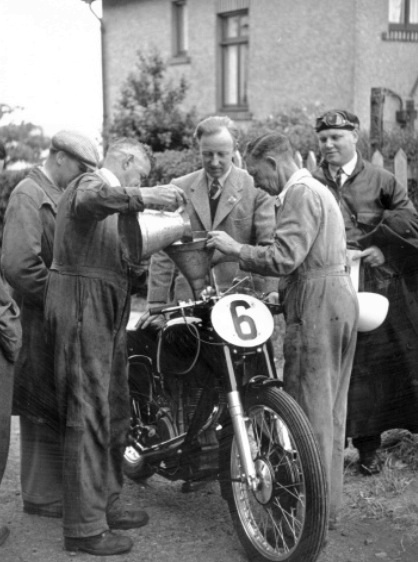

Senior TT Race…

Senior TT competitors commence the race

C Horn, Norton

R St J Lockett, Norton 500
Finish…

Geoff Duke #57 and Artie Bell both on wworks Manx Norton ‘Featherbed’ 500’s race for the finishing line

Norton teammates Harold Daniell, Geoff Duke and Artie Bell, Isle of Man Senior TT 1950
Photo Credits…
All photos by Bert Hardy
References…
iomtt.com, nortonownersclub.org
Tailpiece…


Gilbert Klecan won the first post-war ‘All American Soap Box Derby’ by covering his machine and himself in graphite, his ‘Unfair Advantage’, Akron, Ohio on 9 August 1946…
This shot gave me a chuckle, reminding me of my own ‘billy-cart’ days. The tight ’46 finish is shown below, the wonderful tradition of these events continues to this day.
Credit…
Racing One


Al Unser blasts out of the pits during his victorious 1970 Indy 500 win in his Lola/Colt ‘Johnny Lightning Special’…
Opportunistic American mechanics, drivers and team owners were slow to recognise a good thing.
Jack Brabham’s first appearance at the Brickyard in 1961 with his little 2.7-litre Cooper T54 Coventry Climax FPF saw him qualify 13th, finish 9th and take home a big payday by the GP standards of the day.

With John Cooper and Jack having made clear the advantages of mid-engined cars on their patch American team-owners and mechanics followed the path started by Cooper in the early 1950’s, their first GP win, in Argentina 1958, when Moss won in a 2 litre Cooper T43.
The first in the US to recognise the mid-engined trend was Mickey Thompson, he teamed with Dan Gurney with a proprietary chassis and aluminum Buick V8 power to qualify 8th in 1962, he was classified 20th with 92 laps.
 Dan Gurney in Mickey Thompson’s Buick stock block V8 powered ‘Harvey Aluminium Special’, Thompson in the dark shirt at right, Indy 1962. This engine, famously the brother of the F85 Olds, the block of which formed the basis of the Repco Brabham ‘RB620’ 1966 World F1 Championship winning 3 litre V8. Chassis designed by Brit John Crosthwaite, 3 cars built for the ’62 race (unattributed)
1963 made it clear the Indy roadster’s days were numbered when Jim Clark and Gurney brought Colin Chapman’s lightweight Ford pushrod V8 powered Lotus 29 to The Brickyard. In that first year Clark was barely beaten by Parnelli Jones in a Watson Offy roadster. Some say given the oil the Watson was dropping that only the Indy ‘establishment’ prevented a victory that was rightfully Clark/Chapman’s. Jones took the lesson to heart.
 Jim and Dan (right), Lotus 29 Ford, Indy, morning practice 18 May 1963, note offset suspension. Superb bits of kit (Bob Jennings)
In 1964, 12 of the 33 of the grid were mid-engined cars. Their builders are a directory of Gasoline Alley; Watson, Epperly, Huffaker, Vollstedt, Thompson and Halibrand, only two constructors were ‘furrin, Lotus and Brabham.
In 1965 only a single roadster, Gordon Johncock’s Watson Offy, finished in the top ten. There were only 6 front-engined roadsters in the 33 car field, Clark finally won in his Lotus 38 Ford. By 1966 there was only one roadster left. The transition was complete, in five years the Indy field and the shape of American champcar racing had been transformed.
 Lotus 38 Ford erotica Indy 1965, the year of Jim Clark’s win in one of these cars, Bobby Johns drove the other factory car. Essential elements the aluminium monocoque chassis, DOHC Ford ‘Indy’ V8, mid-engined layout of course and superb Lotus attention to detail (Bob D’Olivo)
The period of innovation continued throughout the ’60’s…
Andy Granatelli’s STP Corporation raced a four wheel drive Pratt and Whitney turbine engined car driven by Parnelli Jones at Indy in ’67. After leading nearly every lap of the rain interrupted race a 25 cent part in the gearbox failed, bringing the ‘whooshmobile’ to a halt giving the win to A.J. Foyt’s now conventional Coyote-Ford V8. Jones was classified 6th.
What made this period a golden one apart from the innovation of cars like Parnelli’s Granatelli turbine were a confluence of events which included Ford’s global drive to dominate all forms of racing; Grands Prix, Le Mans, drag strips, NASCAR and USAC. Firestone and Goodyear also battled each other like the heavyweight champs they were, in the process creating tyres of great grip as the understanding of polymer chemistry developed exponentially.

The advantages of 4WD were shown by Jones in 1967. George Bignotti sought to exploit it by combining 4WD grip with the dominant Ford V8 in 1968 with a 4WD Lola T150 for Al Retzloff , founder of a Houston based chemical company, to be driven by Al Unser. And so the basis of the later ‘Johnny Lightning Special’ was born.
I wrote an article about the equally iconic ‘American Red Ball Spl’ Lola T90 Ford, which provides some context in terms of Lola’s early Indycars and which took Graham Hill to his 1966 Indy win, click here to read it;
Graham Hill’s ‘American Red Ball Spl’ Lola T90 Ford: Indy Winner 1966…
 Al Indy ’68, Lola T150 Ford (unattributed)
In the 500 Unser qualified the new 4WD Lola outside the second row in 6th but crashed on lap 40 when a spindle broke, brother Bobby won in an Eagle Offy.
 Lola T150 Ford at Indy ’68, note the vestigial ‘wing’, their is no such thing as an ugly Lola, bias duly acknowledged! (unattributed)
After repair back at Lola’s Bromley works in England the T150 returned in time for the USAC road course race at Indy Raceway Park. Unser proved his versatility on road circuits, winning both heats. His victory came a week after taking his first USAC Championship victory on the dirt at Nazareth. He followed up both wins with another victory later in the season at Langhorne.
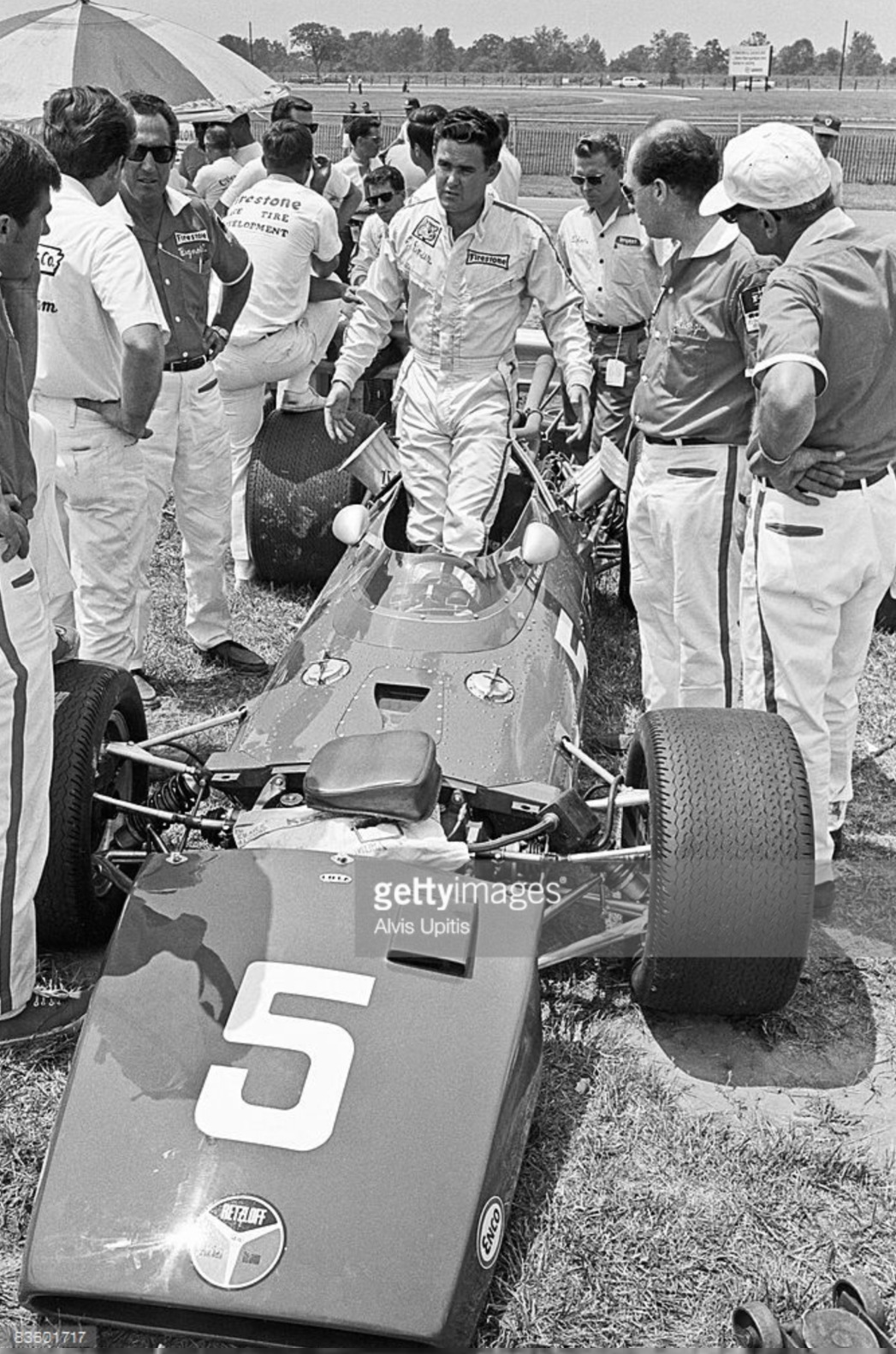 Al in the T150 on 21 July 1968, he won at Indianapolis Raceway Park, Clermont, Indiana. Aluminium monocoque tub, upper and lower wishbone and coil spring damper unit front suspension all clear. Look carefully and you can see the front driveshaft behind the steering arm (Alvis Upitis)
 Unser’s Lola T150 Ford chasing Jo Leonard’s Lotus 56 Pratt & Whitney turbine 4WD, Clermont, Indiana, 1968 . The photo says everything that was good about Indy in the ’60’s, innovation! For a while anyway, inevitably political pressure was applied to maintain orthodoxy and contain ‘runaway costs’ (Alvis Upitis)
A major development in 1969 US racing was the foundation of the ‘Vel’s Parnelli Jones’ Ford team which would go all the way to F1 with Mario Andretti in 1975.
Supported by Ford and Firestone, Vel Miletich and Parnelli Jones set up their own team, buying out Al Retzloff, acquiring his Lola Fords and the services of legendary chief mechanic George Bignotti, his co-chief Jim Dilamarter and Al Unser. Their objective was to dominate USAC racing and also to race competitively in F1, taking the Firestone banner into Goodyear dominated territory.
USAC reacted predictably to the advantages of 4WD by restricting them to just 10-inch tyre widths, effectively robbing the promising but expensive technology of its advantage and protecting the status quo of USAC car owners.
Bignotti and Dilamarter converted the T150, carrying USAC #3 signifying Al Unser’s 1968 driving championship standing, to rear wheel drive with side-mounted fuel cells and the distinctive ‘coal chute’ rear decks feeding air to rear-mounted oil coolers. The Lola was renamed the Vel’s Parnelli Jones Special.
In its first race at Phoenix, Al put the VPJ Spl on pole but the Ford V8 dropped a valve on lap 14 whilst in the lead. After Hanford on April 13 the show headed for Indianapolis for the long month of May.
It rained continuously throughout the first week of qualifying. Unser was fast, but broke his leg in a motorcycle accident whilst waiting for the weather to clear! This car was given to veteran Bud Tingelstad who qualified 18th and was classified 15th when a Ford valve again broke on lap 155.
 Bud Tingelstad in the VPJ Lola T150 Ford, at Indy in 1969 (unattributed)
Jim Malloy qualified and finished 2nd in the T150 in the ‘Rex Mays Classic’ at the Milwaukee Mile, then 7th at Langhorne. Unser crashed in practice for the 151 mile road course race at Continental Divide on July 6, taking over Malloy’s car for the feature but dropped out with broken suspension.
Al capped the car’s season with a win from pole at Phoenix on November 15, finishing 2nd in the 1969 driver’s championship to Mario Andretti, amazing given that after his motorcycle accident at Indy he had only 19 starts to Andretti’s 24.
Unser spoke to Gordon Kirby about 1969; ‘If I hadn’t broke my leg in 1969 the car was totally capable of winning the 500 in ’69,’ he said. ‘It was already there and 1970 showed it. Look at the races I won through the last half of ‘69 and in ‘70 I just dominated everything. The Indycar and the dirt car (King Ford) were both fantastic cars to drive’.
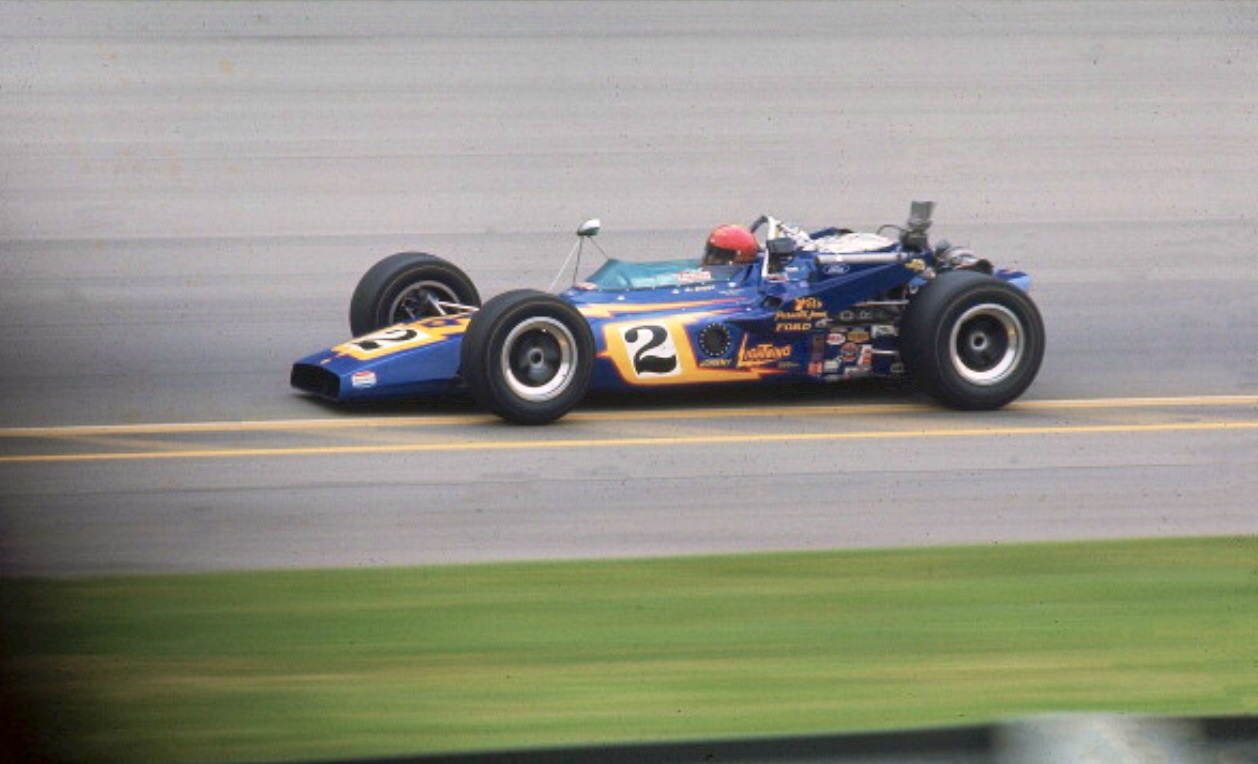
For 1970 the Lola-based Vel’s Parnelli Jones Special was again modified with aerodynamic improvements and changed its identity yet again to ‘Lola-Colt’… Bignotti and Dilamarter built two more cars using this proven and highly developed car as the pattern. They were known as ‘P.J. Colts’. In 1970 Unser used two cars; the 1968 continuously modified Lola T150 Ford as his short paved oval/road course car and one of the new Colts as his long circuit car including Indy.
Miletich and Jones signed Topper Toys as the team’s sponsor, its ‘Johnny Lightning’ blue livery with bold yellow lightning bolts outlined in red became one of racing’s most recognized, brilliant and striking liveries.
Unser had an amazing 1970 in which he won 10 of 18 starts including the Indy 500, had a record 15 top-5 finishes and 8 poles. It was close to total domination and set Al Unser on the way to his 4 Indy 500 wins.
 Unser in the winning PJ Colt Ford ‘Johnny Lightning Spl’ during the 1970 ‘500 (unattributed)
With the Lola T150 he won at Phoenix in the season opener, at Indianapolis Raceway Park in July, the Tony Bettenhausen 200 at Milwaukee in August and the Trenton 300 in October. He was two laps in the lead in the California 500 at Ontario in September when the transmission broke with just 14 laps to go.
Other placings included 3rd at Sears Point, Trenton and in the Rex Mays 150 at Milwaukee, 2nd at Langhorne, 5th on the road course at Continental Divide and 2nd at the season-ending race at Phoenix.
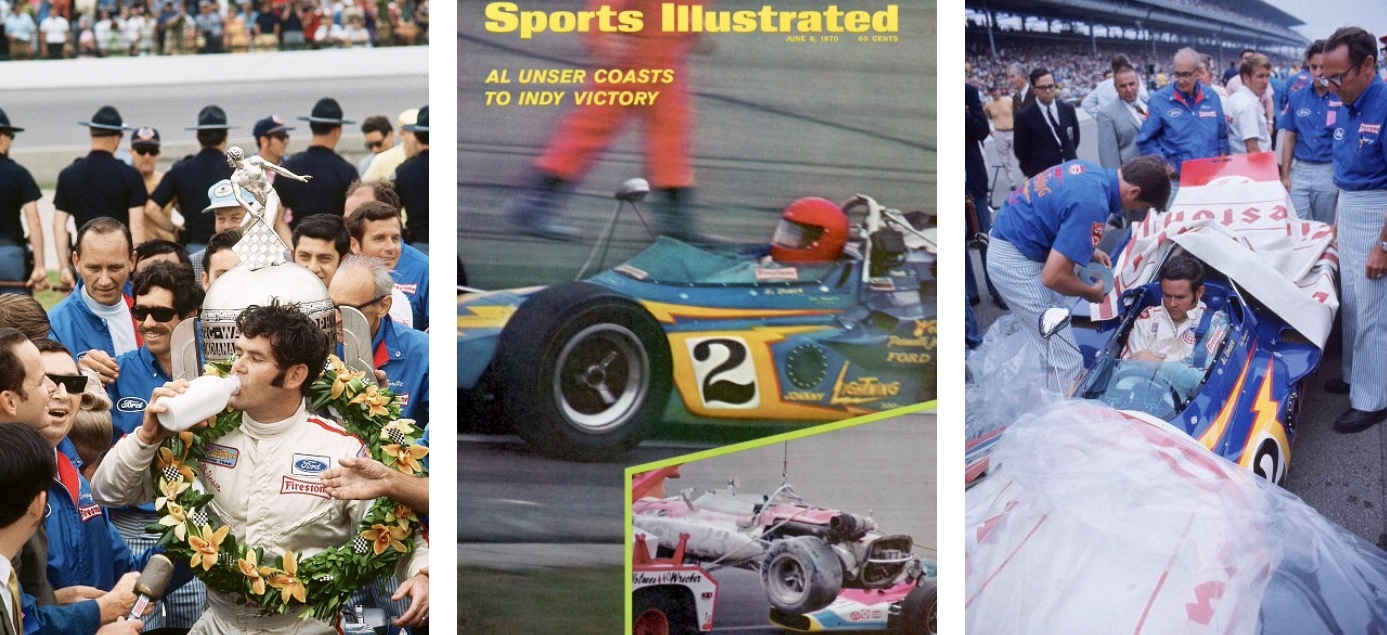
The 54th Indy 500 was held on Saturday, May 30, 1970, Unser dominated the race, winning pole position and leading 190 laps en route to victory in the PJ Colt Ford. He joined his brother Bobby as the first duo of brothers to win at Indy. It was the first of 4 wins there for Al.
Joint car owner Parnelli Jones, race winner in 1963, became the second person (after Pete DePaolo) to win separately as both a driver and team owner. Unser carted $271,697 back to New Mexico of a record $1,000,002 purse, the first time an Indy prize fund topped $1 million.
Rain on race morning delayed the start by about thirty minutes. On the pace lap, Jim Malloy smacked the outside wall in turn 4, which delayed the start further. All 33 cars in the field were turbocharged for the first time.
 (Getty)
In his MotorSport interview with Kirby Unser gives full credit to George Bignotti. ‘Once George understood you he was absolutely a terrific mechanic. He could figure things out. George also always hired the right people. He put a team together and made it work. George had a knack for that. He was good at performing and making sure the car finished the races. As long as I didn’t crash, i finished the races. George Bignotti made my career. Without George I would’ve never been able to handle it.’
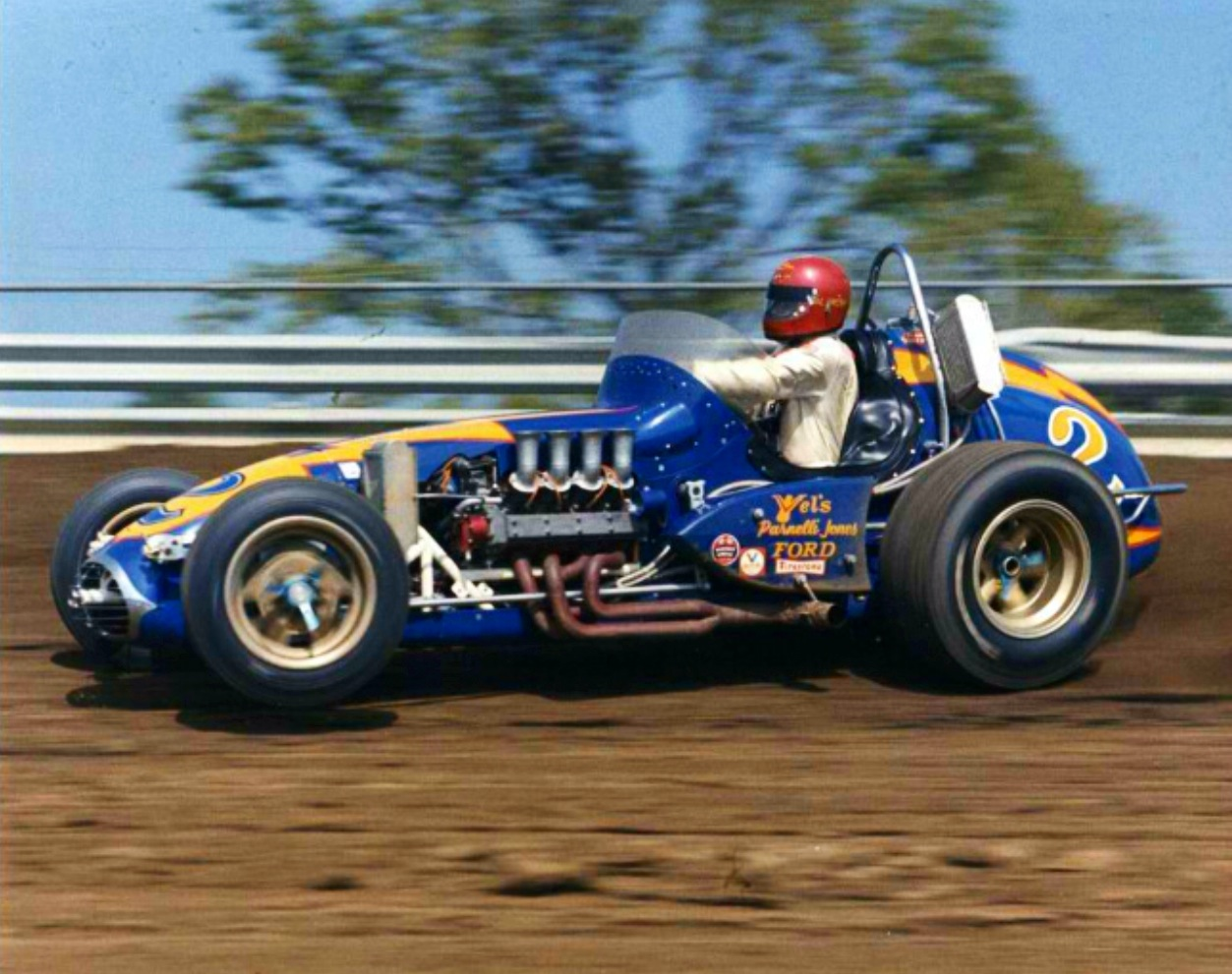 Another ‘Johnny Lightning Spl’ 1970 win for Al on the way to his USAC crown, this time in the King Ford during the ‘Golden State 100’ at California State Fairgrounds, Sacramento on 4 October 1970. Al led 99 of 100 laps of 1 mile after Mario Andretti crashed his King Ford on lap 69
Big Al has fond memories of a great era in American racing and is disgusted with modern Indycar racing and the arrival of the spec car age. ‘People were always trying new things and looking for new ways of doing things. Today there isn’t any of that. It just tears me up. There’s nothing but a spec car to buy and you’re told what to do with it. You not allowed to do anything. It’s unbelievable!’
 Unser in the ‘Retzloff Racing’, see the badge on the cars nose, at Clermont, Indiana in 1968 (Alvis Upitis)
Lola T150 Specifications 1970…
Aluminium monocoque chassis, Ford DOHC 4 valve turbo-charged 159cid V8 giving circa 900bhp@ 8500rpm, 4 speed Hewland LG500 gearbox.
Suspension; Front upper and lower wishbones with coil spring/damper units. Rear single top link, inverted lower wishbone, coil spring/damper units and single radius rod. Adjustable roll bars front and rear. Disc brakes and rack and pinion steering.
Originally delivered as a 4wd car for 1968, the car was converted to normal rear wheel drive as per the text in 1969. The T150 still exists, beautifully restored as does the PJ Colt ’70 Indy winner.
 Unser’s Lola T150 Ford beside Ronnie Bucknum’s winning Eagle Offy prior to the Michigan International Speedway race at Brooklyn, Michif gan on 13 October 1968 (Alvis Upitis)
Etcetera…

 Al Unser’s Lola T150 Ford leads Mario Andretti’s Hawk Ford at Indianapolis Raceway Park, Clermont, Indiana on 21 July 1968, Al took the win (Alvis Upitis)
 Unser and the stunning ‘Johnny Lightning Spl’ graphics. Lola/PJ Colt Ford, Indy 1970 (Bettman)
Credits…
glennmason.com, Alvis Upitis, The Enthusiast Network, Bob D’Olivo, Bob Jennings
Bibliography…
MotorSport magazine interview by Gordon Kirby of Al Unser, Sotheby’s
Tailpiece: Al Unser in the Indy Museum with the 1911 winning Marmon Wasp and tyres indicative of progress…

 primotipo...