Author Archive

Emeryson…

Posted: April 10, 2016 in Fotos, Obscurities
Tags: ,
image

(Bert Hardy)

Paul Emery racing ‘the wrong way’ at Brands Hatch in 1951…

Car is the Emeryson 500 front-engined and front wheel drive car built by he and his family. Click here for an interesting article on the various Emeryson cars.

http://www.500race.org/web/Marques/Emeryson.htm

The photo below is Emery being pushed onto the grid in his Emeryson JAP twin 500cc car ‘for race 1, amateur built cars, the very first race at Brands Hatch during the inaugural Brands event on 16 April 1950’.

emery

Credits…

Bert Hardy, Fox Photos

image

I was lookin’ for shots of chicks and cars as I do a fortnightly post of a babe with a car. When I spotted this image ’twas the lady who initially caught my eye…

But we ‘anoraks’ are so into chassis numbers right?

‘935’ on the engine cover stood out, a Lotus 18 number I thought- a quick google and no less an authority than DC Nye identified the car as a Lotus 21 delivered to Rob Walker, its locale Monza, lets come back to that.

Stirling Moss raced ‘935’ in the Australasian summer ‘Tasman’ races in early 1962.

Here it is below after its victorious run in the very wet, Ardmore, New Zealand Grand Prix. I love the way the gent ‘touches the greatness of Moss’ by giving the Lotus an affectionate pat! ‘Red cap’, a more technical type of bloke is sussing the rear suspension of the 21 compared with the Lotus 18s from the year before.

image

(Stephen Page)

Lotus 21: The Forgotten Chapman GP Car?…

When you think about it Colin Chapman peaked early as an F1 designer.

His 1956 Vanwall, or rather his chassis design and choice of Frank Costin as it’s body designer/aerodynamicist was a GP winner, not too many fellas have done that with their first car.

image

Press launch of the Lotus 12 Climax F2 car in 1956, note the extraordinary smallness of the car, the 12 and 16 remarkable bits of front-engined GP kit. Cliff Allison did 167mph in a Coventry Climax 2207cc FPF engined 12 on Masta Straight, Spa in 1958, with much of his small body outside the cockpit! He was fourth but famously could have won the race had it gone another lap as the first 3 cars all failed to complete the cool-down lap (John Ross)

His first Lotus GP design was the 16, Chapman always referred to the 12, which competed in Grands’ Prix from Monaco 1958, as an F2 car, the design was originally used in 1.5 litre racing before being fitted with Coventry Climax 1960cc and 2207cc engines for F1 use.

One of the things which intrigues me given his subsequent record as the designer/design inspiration for so many epochal cars is why Chapman didn’t design a mid-engined car for 1959? Cooper blazed that trail, GP winners from Argentina 1958, Moss of course taking that win in a Rob Walker Cooper T43 Climax.

image

Allison, tenth in the Lotus 16 Climax, Nurburgring 1958. Brooks won in a Vanwall, Lotus 16 famously the ‘Mini-Vanwall’, both Chapman chassis designs  (Klemantaski)

Whilst the front engined 12 is understandable, it appeared in late 1956 and was quite the smallest front engined ‘F1 car’ ever, the 16 shoulda’ been mid-engined?

The 16 was quick mind you, but fragile in both chassis and it’s ‘queerbox’, Lotus’ own gearbox which was unreliable largely due to one small set of dogs trying to pick up every gear. The 16 also didn’t receive a 2.5litre Climax FPF until later in the piece. But if Chapman set trends, and he did, he was a slowish adopter of the mid-engined trend.

image

Works Lotus 18 Climax, Zandvoort, Dutch GP 1960. Chapman was quick to refine the mid-engined paradigm! 2.5 litre CC FPF, 5 speed Lotus ‘box, rear suspension notable for lack of a top-link, the fixed length driveshafts performed locational duties as well as motive ones. This is Alan Stacey’s car, DNF gearbox on lap 57 from Q8. Ireland’s car was second from Q3, quick cars 18’s! Brabham won in his Cooper T53 Climax (Dave Friedman)

His first such design, the 18 was an immensely successful car in FJ, F2 and F1 specification.

Despite its ‘chubster, biscuit shaped’ looks it was the fastest 2.5 Litre F1 car of 1960 if not the most robust or reliable. No less than Moss himself had strong views on Chapman’s ‘marginal engineering’ of key components the failure of same caused some massive accidents.

image

Ireland, works Lotus 18 Climax, Monaco 1960, 9th in the race won by Moss’ similar car. Lotus’ first GP win (Dave Friedman)

Roll on into 1961, the first year of the 1.5 litre F1, the Brits were faced without a suitable engine as their ‘racing mafia’ were convinced the CSI, in the end, would not make the change to the smaller engines. They did, Ferrari the beneficiary with their 156, a car developed in F1/2 in 1960, click here for a story on that wonderful conveyance;

Ferrari’s first mid-engined Car: The 1960 Dino 246P…

Whilst BRM and Coventry Climax worked hard to get their V8’s completed all of the British firms persevered with Mk2 versions of the 1.5 litre Coventry Climax FPF- in 2.5 litre form the championship winning engine of 1959/60.

Chapman and his team had the dimensions of the coming Coventry Climax FWMV V8 when they set to work on the 21, their 1961 contender, but they knew initially the little, underpowered FPF would be used.

So, light weight and aerodynamic efficiency were key design tenets of the new Lotus 21.

These aims were achieved by lying the driver down in the cockpit, Chapman went further in 1962 with his 24/25 designs, but the trend was set by the 21. The car was notably small in size, low in frontal area, the body enveloping the chassis all the way to the casing of its ZF gearbox, specially made for the car. Have a look at a 21 beside a 156 and see just how ‘butch’ in size the Fazz is by comparison.

Chapman used a top rocker and lower wishbone for the cars front suspension, getting the spring/shocks outta the airstream, thus further adding to top speed. At the rear the suspension was outboard- single top link, inverted lower wishbone and coil spring/damper unit with twin radius rods for location.

image

Lotus 21 Climax FPF cutaway, specifications as per text (James Allington)

Lotus Components built eleven of the 21 chassis’ during the year, which otherwise in specification were leaders of the mid-engined paradigm- multi-tubular spaceframe chassis, Chapman the high priest of chassis design. Rack and pinion steering, discs on all four wheels, magnesium alloy (Lotus ‘wobbly web’) wheels, Ferrari still used heavy Borrani wires till 1963. The CC 1495cc, DOHC, 2 valve, all alloy, Weber carbed 4 cylinder engine gave circa 155bhp, the Lotus weighed 990lb, had an 89 inch wheelbase and a track of 53 inches front and rear.

The prototype was built from scratch in six weeks, just missing the Aintree 200 meeting but was tested at Silverstone two days later, the car made its debut at Monaco in May. The works cars in 1961 were steered by two Scots- Innes Ireland, the seasoned professional and up and coming Jim Clark who graduated from the works Lotus 18 FJ he raced in 1960.

Fitted with the new Coventry Climax V8 the Lotus 21 was a winning car in Moss’ hands if not Ireland’s or Clark’s.  But as it was Chapman didn’t get his hands on an FWMV in 1961 due at least in part to the spat he was having with Climax’ MD Leonard Lee about the quality of the CC FWE engines supplied for his Elite road cars- the engines weren’t the Elites only reliability problems mind you!

In the event the 21 won only one championship GP at Watkins Glen, Innes Ireland broke through for both Team Lotus and his first win that October.

image

Ireland’s winning Lotus 21 leads Gurney’s second placed Porsche 718 and Graham Hill’s fifth placed BRM P48/57 Climax, US GP Watkins Glen, 8 October 1961 (unattributed)

The cars chances of more wins were missed by Chapman’s decision not to sell Rob Walker his latest car, as he had with the 18 the year before. Moss’ two wins in 1961, remarkable ones, were in the Walker 18 at Monaco and 18/21 hybrid at the Nurburgring. Armed with a new 21 all year he may, praps have taken one or two wins off Ferrari despite the car’s relative ‘lack of puff’.

The 21 took wins in non-championship 1961 events- the Solitude GP for Ireland in July, the Flugplatzrennen at Zeltweg again for Ireland in September, and the Rand, Natal and South African Grands’ Prix in Jim Clark’s ‘African Tour’ in December 1961. As written here Moss did well in Australasia in early 1962.

The Lotus 21 should be remembered as both a GP winner and the progenitor of the design maxims Chapman’s ever creative mind evolved with the 1962 spaceframe  Lotus 24 and it’s revolutionary monocoque sibling, the 25.

image

Love the atmospherics of this 1961 Italian GP, Monza paddock shot. #10 is Brabham’s Cooper T58 CC V8, contrast it with McLaren’s #12 CC FPF powered T55 behind. #38 and 36 are the Ireland/Clark Lotus 21 CC FPF’s before the ‘jiggery pokery’ with the chassis swap between Innes and Stirling. The pale green painted ‘T’car is UDT-Laystall’s spare, the Cooper T51 is Jack Lewis’ (Hutton Archive)

Moss’ first drive of a Lotus 21 was his steer of  Innes Ireland’s works car at Monza on 10 September.

That weekend was infamous for the tragic race collision between Jim Clark’s Lotus 21 and Taffy von Trips Ferrari 156 which resulted in von Trips death as well as that of 15 innocent spectators.

Moss took Lotus’ first ever GP win at Monaco in May. Whilst Chapman was eternally grateful he wasn’t inclined to give Moss or Walker too much of a ‘free-kick’ by selling them his latest car, the 21, given his primary aim was works car wins. In fact its probably Esso we have to blame as they were Lotus’ fuel supplier, BP were the sponsor of Rob Walker/Moss, both companies had their commercial positions to protect.

image

Moss and Ireland swapping notes at Monza, Italian GP, September 1961 (GP Photo)

The Monza weekend was also significant for the first race appearance of the new 1.5 litre BRM P56 V8 and the further appearance of the Coventry Climax FWMV V8 first raced by Jack Brabham at the Nurburgring the month before.

Jack qualified his new Cooper T58 on grid 2 in the Eifel Mountains but crashed on lap 1 with a sticking throttle so the engine hadn’t been race-tested.

The P56 V8’s were fitted to modified BRM P48/57 chassis, the CC V8 to Jack’s Cooper and a specially modified Lotus 18/21 built up by the Walker Team. Team Lotus were unable to secure an engine as noted earlier, so appeared in 21’s powered by the 1.5 litre 4 cylinder FPF Mk2 used by the British teams, including BRM that year.

BRM tested their new engines with no intention to race them, Brabham raced his Cooper despite problems in practice.

Moss was sportingly offered Ireland’s factory 21 FPF, chassis ‘933’. Chapman and Ireland reasoned that Moss would have a better chance of success in a 21 rather than the tired Walker 18/21. Moss was the only Lotus driver with a vague (very) chance at the World Championship, Ireland raced the Walker 18/21 FPF engined car. In Denis Jenkinson’s race account he writes about the ‘cloak and dagger’ stuff behind closed garages to make the necessary change of chassis and body work between Moss and Ireland, the secretive stuff was doubtless so as not to upset the trade supporters of both teams.

Which brings us back to ‘ole 935’ and the photo at this articles outset.

The two works Lotus Monza chassis according to Nye’s ‘Theme Lotus’ were ‘933’ and ‘934’. If ‘935’ was at Monza there was no point making the chassis and bodywork changes between the Moss/Ireland cars both Jenkinson and Nye report took place. If ‘935’ were at Monza either as a works spare or delivered to the Walker Team Moss would have raced it and Ireland his regular works 21 rather than the inferior Walker 18/21.

So, whats the explanation of the photo then?

Either it isn’t Monza, although i am inclined to believe Nye who has been there once or twice! The probable story is that the engine cover of the new ‘935’ was ‘borrowed’ and fitted to one of the works Lotus 21’s for the weekend. The first race entry for ‘935’ i can find, looking at non-championship and championship Grands’ Prix results later in 1961 seems be its races in New Zealand in early 1962-the 1962 NZ GP report by sergent.com describes ‘935’ as unraced before that event on 6 January.

image

Moss and Alf Francis confer during Monza practice, by the look of it neither are ‘happy campers’, the Lotus 18/21 CC FWMV  chassis #’906′ was always a handful (GP Library)

The Moss 18/21 was modified to fit the FWMV V8 with the assistance of Ferguson Research.

The rear of the 18 chassis aft of the drivers seat was ‘chopped off’ and replaced with a frame to suit the width and mounting needs of the new engine. 21 rear suspension was incorporated comprising new 21 uprights which were located at the top by a link to the chassis thus relieving the half shafts of the suspension loads the solid ‘shafts of the 18 performed- the new components had Hardy Spicer splined shafts to accommodate ‘plunge and droop’.

A Colotti Type 32 gearbox was used. The rear framework was a complete assembly which attached to the main frame by large bolts screwed into the ends of the tubes, which had been plugged and tapped. The structure was made from small diameter tubing which had to be detached completely before the engine and gearbox could be removed. The car was finished in a big hurry so the old Lotus engine cover was retained with a bulge to clear the four downdraft Webers.

Whilst no-doubt well engineered it doesn’t all add up to the levels of torsional stiffness no doubt required to put all of the new engines power to the ground effectively.

During the race the tragic accident between Clark and von Trips occurred on the first lap, the German and hapless spectators killed, the race continued whilst the carnage was attended to.

Moss retired on lap 36 with wheel bearing failure, Ireland on lap 5 with chassis problems and Brabham’s FWMV failed on lap 8 due to overheating problems- shortcomings sorted over the winter off-season.

Phil Hill’s Ferrari 156 won the race and  1961 title from Gurney’s Porsche 718 and McLaren’s Cooper T55 FPF.

image

The Walker Lotus 18/21 CC V8 during 1961 Monza practice (GP Library)


image

Italian GP ’61 start with a swag of 5 Ferrari’s up front, leading green car at left is probably Hill G’s BRM Climax, Clark is between Hill and a Ferrari, thats Gurney’s Porsche 718 on the right from grid 12, the carnage took place shortly thereafter (Klemantaski)


image

Moss in the Walker bodied works Lotus 21 CC FPF during the race, dicing with Gurney’s 2nd placed Porsche 718 (GP Library)

New Zealand…

Over that 1962 European winter Coventry Climax worked on the reliability of the FWMV and BRM their P56 V8 and the P578 chassis to carry it. At Cheshunt Colin Chapman was building the spaceframe 24 and its epochal monocoque sibling, the Lotus 25.

Both marques were the key players in an amazing 1962 season which in the main didn’t feature Stirling Moss, whose Glover Trophy career ending accident took place on Easter Monday 23 April 1962 in the Walker Lotus 18/21 Climax V8 ‘906’ described above.

The Walker Team would make do with their 18/21 in GP’s, later in the season they raced two Lotus 24 FWMV’s but by the time they were ready Moss’ career was finito.

image

Moss looking after the fans, Kiwi kiddies drawn to the great Brit, Ardmore NZGP meeting. Car is 21 ‘935’ (Stephen Page)

For Moss, in the meantime there were the annual summer internationals to contest in Australasia.

Whilst Stirling loved the speed of his Lotus he revelled in the forgiving ‘chuckability’ and robustness of Coopers. Robust is not an apt adjective to describe the Lotus single-seaters of the period. So, hedging his bets for his 1962 Australasian Tour he had Rob Walker ship both ‘935’ as well as a Cooper T55 ‘F1-7-61’  on the long voyage south. Both cars were Coventry Climax FPF powered- engines of both 2.5 and 2.7 litres capacity were used, our International Series was run to Formula Libre in its pre-Tasman Cup formula days.

image

Moss and second placed Surtees on the Ardmore victory dais (Stephen Page)

Moss raced the Lotus to an NZ GP win at Ardmore on 6 January and at the Wigram Airfield circuit event fitted with 2.5 litre FPF’s. At Levin and Teretonga he was second in the Cooper powered by a 2.7 FPF, Brabham won at Levin and McLaren at Teretonga- so Moss’ campaign had started well.

image

Borgward Isabella and 21 off to the next round of the NZ Internationals at Levin. Shot shows the inboard front suspension, the top rocker actuating inboard mounted spring/shock. At the rear is a single top link, reversed lower wishbone, outboard spring/shock and twin radius rods. Extreme lowness clear as is the slippery nature of the body and reduction in driver space which advanced as a trend over the following decades!  (Stephen Page)

The NZ Internationals were contested by Moss, Surtees, McLaren and Salvadori, the latter three drivers in Cooper T53 Climaxes, Bandini in a Cooper T53 Maserati, Brabham a Cooper T55 Climax and Ron Flockhart, a Lotus 18 Climax.

Chris Amon made his first international appearances that summer in the ex-BRM/Brabham Maser 250F, other ‘local heroes’ were Pat Hoare Ferrari 246/256 V12, Angus Hyslop, Cooper T53 Climax and Aussies Bib Stillwell, Aston Martin DBR4/250, David McKay, Cooper T51 Climax and Arnold Glass’ in a BRM P48.

Moss ‘brained’ the NZGP field in an awful, wet race- he lapped the field winning from Surtees, McLaren and Salvadori.

Australia…

image

Beautiful shot of Moss in the Walker Lotus 21 Climax 2.5 ‘935’ on Warwick Farm’s pit straight, he practised the car but raced the more ‘chuckable’ Cooper (Mal Simpson)

The cars were then shipped to Sydney, the first race of the Australian leg was the ‘Warwick Farm 100’ on the testing, technical outer western Sydney circuit on 4 February.

Moss practised both cars but elected to race the Cooper to a race win from McLaren and Stillwell.

image

Moss in his Lotus 21 passes John Youl sneaking a peek over his shoulder, Cooper T51 Climax during WF practice. Youl DNF in the 2.2 litre car with clutch problems in the race, the Taswegian a very quick steerer (John Ellacott)


image

WF 100 front row, 4 February 1962- Moss, Brabham, McLaren in Coopers T53, T55, T53 (Mal Simpson)

Moss missed the Lakeside event won by Brabham’s T55 Cooper and Longford’s ‘South Pacific Championship’ race won by Surtees Cooper T53 Climax but raced ‘935’ fitted with a 2.7 litre FPF at the Australian Grand Prix, Sandown’s inaugural meeting on 12 March.

Jack Brabham won the race in his 2.7 engined Cooper from Surtees, McLaren and Chuck Daigh in the very interesting Scarab RE Buick V8, the cars only race- read my Chuck Daigh article for that cars interesting story.

image

Moss cruises the Sandown paddock in the 2.7 ‘Indy’ FPF engined Lotus ‘935’, March 1962. The man absolutely the best and fastest driver in the world at the time (Kevin Drage)

In between these Australian events, reinforcing the regularity and intensity of his racing schedule, Moss raced in the Daytona 3 Hours, finishing fourth in a Ferrari 250 GT SWB on 11 February.

After Sandown he returned to the US to contest the Sebring 3 Hours and Sebring 24 Hours on 23/24 March finishing third in an Austin Healey Sprite and DNF in a NART Ferrari Dino 248SP respectively.

image

Moss, AH Sprite, Sebring 3 Hour 1962 (Tom Bigelow)


image

Moss, maidens, Sebring 1962. That he was in such great physical shape no doubt a factor in his attraction to the babes but it  also stood him in good stead in surviving the horrific Goodwood shunt, surgery and month long coma (Tom Bigelow)

Moss then returned to Europe for the 1 April GP of Brussels and Lombank Trophy at Snetterton on 14 April yielding second and seventh in the Walker Lotus 18/21 FWMV V8 ‘906’ before that fateful day at Goodwood on 23 April.

image

Moss, Goodwood, Lotus 18/21 ‘906’ not long before the prang, Easter Monday 1962 (Doug Nye)


image

It took over an hour to cut Stirling free from the mortally wounded Lotus. One of the things I have learned and detest in researching various pieces is the vast number of gruesome images of racing crashes on the internet- you won’t ever see them here, I am all for ‘freedom of the press’ but believe there is a place for censorship of said images (Victor Blackman)

Moss was an enormously popular visitor to Australia from the mid-fifties, sadly his Goodwood 1962 accident was not too far away during his early 1962 tour.

His Antipodean fans never forgot him though.

We turned out in droves to see his ‘comeback’ drive in a Holden Torana L34 V8 at Bathurst in 1976, he shared the car with Jack Brabham. The all-star combination had a shocker of a race when Jack copped a Triumph Dolomite ‘up the arse’ on the startline thanks to his Holden’s clutch failure.

Brabham was stranded as the rest of the field moved post-haste towards Hell Corner, the unsighted Dolly was an innocent victim of Black-Jacks misfortune, the car was patched up but Jack and Stirling failed to finish, a great shame!

Moss, a great man, ’tis wonderful he remains one of our sports great ambassadors.

image

Brabham/ Moss, Holden Torana L34, Bathurst 1976 (Autopics)


image

Moss and Brabham at Bathurst in ’76, that’s Scuderia Veloce’s David McKay in between (autopics.com)

Bibliography…

Automobile Year, MotorSport 1961 Italian GP race report by Denis Jenkinson, Doug Nye ‘Theme Lotus’, William Taylor ‘The Lotus Book’, oldracingcars.com, GP Encyclopaedia, silhouet.com, Team Dan

Photo Credits…

GP Library, James Allington, Mal Simpson, Kevin Drage, Stephen Page, John Ellacott, Klemantaski Collection, John Ross Motor Racing Archive, Dave Friedman Collection, autopics.com, Victor Blackman, Doug Nye, Tom Bigelow

Tailpiece: The future. Jim Clark at Sandown, Lotus 21 Climax ‘933’, World Champion in the new, epochal monocoque Lotus 25 within two years and a GP winner within months. Here with the lower sidepanel removed due to Melbourne summer heat…

image

(Kevin Drage)

Finito…


image

image

image

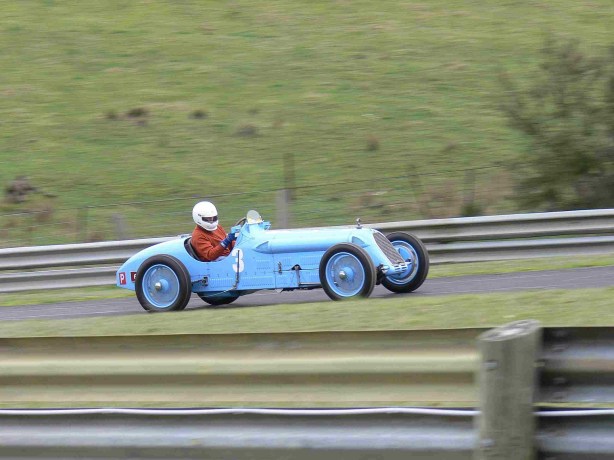
The Quifel-ASM Team Lola B05/40 AER of Miguel Amaral, Guy Smith and Oliver Pla zooms past the Le Mans funfair during final qualifying for the 2008 running of the endurance classic…

They finished 20th in their 2 litre entry, the race won by the Capello/McNish/Kristenson Audi R10.

lola

The Pla, Amaral, Smith Lola B05/40 AER at Le Mans 2008; carbon composite monocoque chassis with wishbone and pushrod suspension front and rear, Ohlins shocks. Rack and pinion steering, carbon discs, 6 speed paddle operated Lola sequential ‘box. AER XP-20 all alloy 1995cc DOHC, 4 valve, injected turbo engine, weight 750Kg (unattributed)

Credit…

Mike Hewitt

Tailpiece…

image


bruce

Bruce McLaren poses for this studio shot on 26 April 1967…

He was the all-rounder; tester, driver, designer, engineer, company director…and male model! I bet Teddy Mayer had to twist his arm for this job tho. ‘Daily Express’ shot so it was possibly to go with a feature on the multi-talented Kiwi Champion.

A good year, the team took its first Can Am title, Bruce winning in the M6A Chev he co-designed with Robin Herd. He raced a factory Ford GT40 Mk4, in sports car events, one of Dan Gurney’s Eagle T1G’s whilst his own GP car was made race-ready, then of course there were the Elva built customer cars to consider and sponsors to look after. And a company to run…

Credit: McKeown/Getty Images, Dave Friedman Archive, The Enthusiast Network

image

McLaren and his M6A Chev at the 1967 Road America Can Am, Denny Hulme won this round. Look closely and you can see the ‘McLaren Engines Flower Power’ decal on the 6 litre, injected, ‘Heavy-Chevys’ rocker cover! (Dave Friedman)

image

Bruce McLaren, Road America September 1967. DNF with an oil leak from grid 1. Hulme in the other M6A took the win  (Dave Friedman)


Tailpiece: Las Vegas sunset, Stardust Raceway, Bruce McLaren and M6A Chev, 14 November 1967…

image

Not a good race weekend for Bruce as he blew an engine from grid 1, but he did win the ’67 championship! Surtees took the round win in his Lola T70 Mk3B Chev (The Enthusiast Network)


tim

‘Don’t worry about the T-Shirt Tim, it was the only one in the cupboard this morning! Go quicker than him and I’ll  make some with your name on them!?’…

FW exhorting Tim Schenken to get more speed from his steed.

Frank Williams raced the De Tomaso 505 Ford in 1970, a car designed for him by Gianpaolo Dallara. But it was shitbox, nowhere near as fast as the second-hand Brabham BT26 Frank ran in 1969 for his great friend Piers Courage. He drove with skill and conviction, second place the seasons highpoint at Watkins Glen in the US GP.

The De Tomaso was slow, too heavy amongst other shortcomings from the start, Piers Courage died in it at Zandvoort. I’m not suggesting a component failure was the accident’s cause but perhaps trying too hard to compensate for its lack of pace was.

image

Piers Courage, De Tomaso 505 Ford, Zandvoort, 21 June 1970. He qualified the car 9th, was in 7th place on lap 22 when he ran wide into a sand bank, hit a post, overturned the car which then caught fire. Rindt won, the Lotus 72’s first win, no joy for Jochen, his close friend died (unattributed)


Brian Redman raced the car for FW at Clermont Ferrand and Hockenheim, Tim took over the drive at  the Osterreichring, Monza, Mosport and Watkins Glen. He retired in every event except Mosport where he was not classified but qualified 17th, his best ‘result’.

image

Schenken, 16 August, Zeltweg, Austria 1970, DNF on lap 25 with engine failure, Q19. Ickx won in a Ferrari 312B (unattributed)

Schenken made the most of the opportunity FW gave him, he was recruited by Ron Tauranac for 1971, Jack Brabham retired that winter, Tim was teamed with Graham Hill who drove the problematic BT34. Tim raced the year old but still very quick BT33, his best placings 6th and 3rd at the Nurburgring and Osterreichring respectively.

Bernie Ecclestone bought Brabham during 1972, Tim was uncertain about Bernard Charles ability to run the team and left for Surtees, he was later to rue ’twas not the best career decision i ever made’…

tim

Schenken in the Williams De Tomaso 505 Ford in the rain, Zeltweg 1970 (unattributed)

Credit…REX Shutterstock

image

One of the most glamorous, charismatic pre-war drivers was the Bentley-Baronet, Sir Henry ‘Tim’ Birkin. Here taking to Brooklands on 11 March 1930 in his new 4.5 litre supercharged Bentley Single-Seater…

image

Birkin, Spa 1933 (unattributed)

His ‘Bentley Boy’ high-society image was combined with fearless driving talent. For a generation of British racing enthusiasts, ‘Tiger Tim’s’ moustachioed, goggled figure, in wind cap, usually with a polka-dot scarf fluttering in the slipstream personified an English ideal.

image

4.5 litre, SOHC 16 valve engine fitted with Amherst Villiers Roots Type 4 supercharger, 182bhp@3900rpm with 10 pounds of boost (Fox Photos)

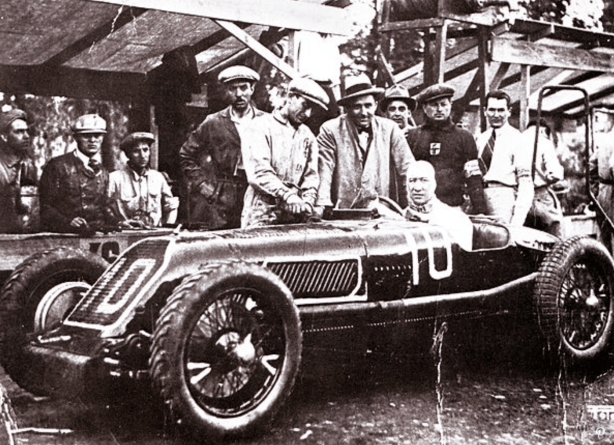
With fellow enthusiast/racer Mike Couper, ‘Birkin & Couper Ltd’ was established at Welwyn where the prototype 4.5 litre Blower Bentley was produced in the summer of 1929. W.O. recalled: ‘They would lack in their preparation all the experience we had built up in (our own) racing department over 10 years. I feared the worst and looked forward to their first appearance with anxiety’.

image

This is the car/chassis which was transformed into the Birkin single-seater, chassis # HB3402 (unattributed)

Birkin ran his prototype tourer-bodied car, later rebuilt as the single-seater special in the Brooklands 6-Hour race on June 29,1929, it retired. At Dublin’s Phoenix Park race two weeks later the two supercharged Bentleys finished 3rd and 8th. In the RAC Tourist Trophy at Ards, Ulster, Bernard Rubin’s ‘Blower’ overturned while Birkin, who had challenged W.O. to act as his riding mechanic (the marque’s founder accepting), placed second overall and won his class. The third ‘Blower’ broke its engine.

image

4.5 blower build, chassis number unknown, March 22 1930. Ample! girder chassis, mechanical drum brakes all clear (Fox Photos)

Birkin then retired from the Brooklands 500-Miles and the entire team retired from the Double-Twelve race at Brooklands in May 1930.

bentley brook

Birkin practices a Bentley 4.5 blower for the 1930 Brooklands ‘Double 12 Hour’ race 8 May 1930 (Popperfoto)

double 12

Pit scene before the 1930 ‘Double Twelve’ at Brooklands, race won by the Barnato Bentley, 7 May 1930 (Fox Photos)

W.O. embittered by the collapse of his company, summed it up as follows; ‘The supercharged 4.5 never won a race, suffered a never-ending series of mechanical failures, brought the marque Bentley disrepute and incidentally cost Dorothy Paget a large sum before she decided to withdraw her support in October 1930…’ W.O. added the sting in the tail: ‘Tim managed to persuade Barnato to allow him to enter a team in the 1930 Le Mans (in which none survived) and we were obliged, in order to meet the regulations, to construct no less than fifty of these machines for sale to the public….

W.O’s. assertion that the ‘Blower’ Bentley ‘never won a race’ is wrong. The car featured here is the exception, it not only became a multiple Brooklands race winner but also holder of the Outer Circuit lap record there.

image

Gearbox 4 speed ‘D type close ratio, front and rear suspension beam axles with leaf springs with Bentley and Draper shocks (Fox Photos)

Birkin, disappointed by his failure at Le Mans in 1929 decided during the summer to make a firm entry for the BRDC 500-Mile race at Brooklands, using a car with the potential to break the Outer Circuit lap record there.

Bentley Motors had been wobbling in The Great Depression as sales of expensive cars plummetted when Tim Birkin became determined to supercharge the 4.5 litre Bentley.

image

Birkin’s normally aspirated Bentley 4.5 during the 1928 Le Mans, he finished 5th sharing with Jean Chassange. Car being passed is the Samuelson/King 2 litre Lagonda. Barnato/Rubin won in another Bentley (Heritage Images)


These were the great years of Bentley success with consecutive victories at Le Mans in 1927-30. Tim wanted more power and speed as W.O. explained: ‘Tim had a constant urge to do the dramatic thing, a characteristic which I suppose had originally brought him into racing. His gaily vivid, restless personality seemed to be always driving him on to something new and spectacular, and unfortunately our 4.5 litre car was one of his targets… Tim used all his charm and persuasion to induce first Amherst Villiers to build a special blower for his 4.5, next Woolf Barnato’ – company financier as well as leading team driver – ‘to give it his blessing, and finally the Hon. Dorothy Paget to put up the money for a works at Welwyn just north of London – ‘and to buy and modify the chassis’.

image

At Welwyn, this special track-racing ‘Blower’ Bentley was developed alongside the road-racing endurance sports cars (above). Captain, later Lt. Colonel, Clive Gallop was largely responsible for the new track-racing car. Working under his direction were foreman E.A. Jennings, Walter Whitcombe, Birkin’s riding mechanic, Messrs Logan and Newcombe, who were successively Bentley’s chief engine fitters; Mr Browning, the chief chassis fitter and Billy Rockell, the works’ supercharger fitter.

The Bentley chassis was of 10 feet 10 inches in wheelbase, it was chassis number ‘HB 3402’, the selected engine was ‘SM 3901’.

image

(Bonhams)

image

(Bonhams)

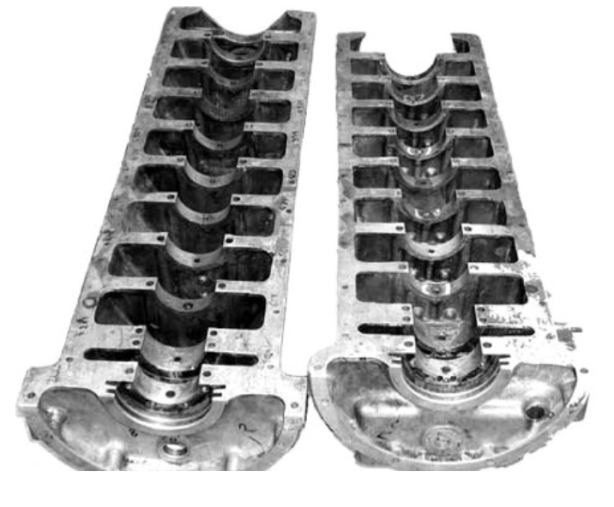
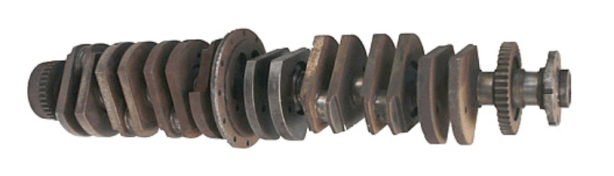
Amherst Villiers designed the supercharger and its configuration. The engine’s enlarged-diameter crankshaft, with 90mm journals and and special rods were detailed by Villiers’ chief draughtsman, Tom Murray Jamieson of later racing Austin and ERA fame.

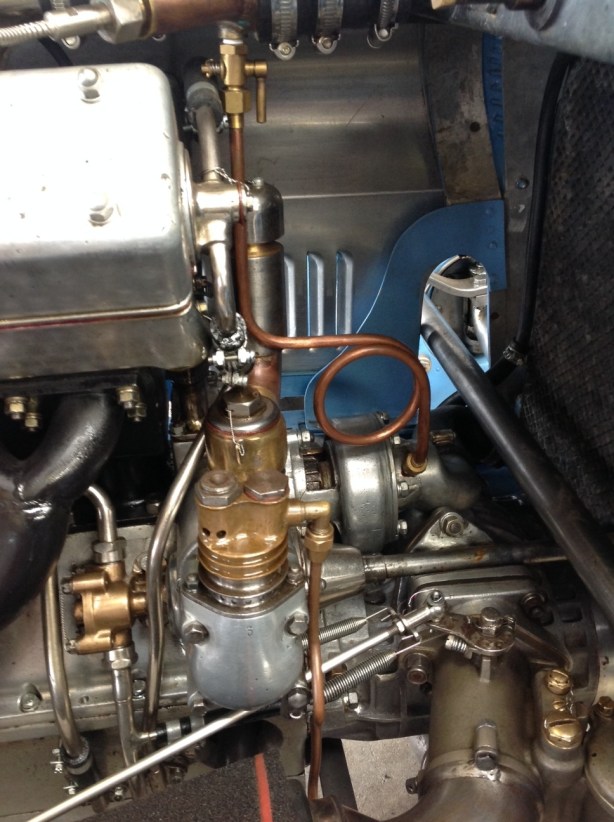
The Villiers Roots-type supercharger used a standard casing as on the sports cars, but had larger rotors to increase boost. Otherwise, according to Clive Gallop at the time, the engine was the normal 4-cylinder with four overhead valves per cylinder actuated by a single-overhead camshaft.

The ports were highly polished as was as much of the cylinder head as possible, but not re-machined.

image

The body initially fitted was of ‘1½-seater’ form, with fabric skin stretched over a spring-steel lattice framework. The radiator was exposed whilst the supercharger, dumb-irons and carburettors were all partially cowled. The body was painted in a rich mid-blue.

image

‘Fill ‘er up matey’ Birkin, Brooklands 1930 (Popperfoto)

The Outer Circuit was a great challenge in 1929. The old concrete bankings and straights were frost-heaved, patched and bumpy. Given the pounding the track meted out a fuel tank design adapted from the 42-gallon Le Mans 24-Hour race type was mounted by means of a Le Mans-style cross-tube at the back which passed through the tank and which was carried within a rubber-lined trunnion on each of the two main frame rails. A third mounting point using a plate shaped to the match the front end of the tank, carrying a nickel-steel pin that accommodated the spider of a Hardy-Spicer universal joint was also used.

A structure rising from the chassis then carried another spider which coupled to that on the tank, thus providing a flexible forward mounting.

During practice on the eve the 1929 500-Mile race, the nickel-steel pin attached to the tank sheared due to embrittlement. Gallop drove the car back from Brooklands to Welwyn for repair without mudguards, lamps and starting handle and with a police car following him right into the factory yard!

A short term fix was a normal steel strap packed with rubber and felt placed round the front of the tank and then attached to the chassis by reinforced angle plates, welded into place.

Just after dawn on race day, Clive Gallop drove the car back to Brooklands doing 120mph along the Barnet Bypass road. The car was delivered just in time for the race start.

Gallop found the car so tractable on the road that eventually a Welwyn-Brooklands route was selected which included London suburban traffic. If a spark plug oiled up, Gallop’s standard procedure was to stop on the hill at Putney Vale, on the stretch passing the KLG spark plug factory where he would fit a fresh plug and then roll-start down the remainder of the gradient there.

When the big cars were finally flagged away in 1929 BRDC 500-Miles race, Birkin immediately set the pace, lapping at over 121mph. A great duel ensued between the ‘Blower’ Bentley and Kaye Don’s V12-cylinder Sunbeam. The blue Bentley began to spray a thin mist of engine oil from its bonnet louvres, the droplets coating the aero screen, cockpit coaming and driver’s head and shoulders. Birkin soon found his hands slipping on the steering wheel rim, and his vision impaired so he tore into the pits to clean up.

The Clive Dunfee/’Sammy’ Davis Speed Six Bentley took over the lead on scratch, while on handicap small-capacity Amilcars and Austin Sevens held the advantage. By 90 laps George Eyston’s Sunbeam ‘Cub’ was up into to second place and after 108 laps it led overall. Dudley Froy, partnering Kaye Don in the big Sunbeam, also led before retiring with a broken back spring – the Brooklands bumps offering no mercy – and Eyston’s Sunbeam would also break a spring.

Having rejoined Birkin then had further trouble, a hole in the exhaust system caused flame which blasted onto the fabric body skin and set it alight. Birkin returned to the pits trailing flame and smoke, the fire was quickly doused, but his race was over.

image

For 1930, Birkin then decided to attack track racing seriously with the single-seater. In its 1930 form with Villiers supercharger driven from the crankshaft nose and inhaling through two huge horizontal SU carburettors, the engine developed circa 240bhp on alcohol fuel mix. This was 65bhp more than a standard ‘Blower’ Bentley on petrol. Its rear axle featured a new nose piece housing a special pinion which provided a final-drive ratio of 2.8:1. Fuel flow at full throttle was quoted as being approximately one gallon every 74 seconds!

Reid Railton was commissioned to design a new (fire proof!) aluminium body to replace the fabric original, it was hand made for the car by A.P. Compton & Co of Merton. The regulation Brooklands silencer on the car’s nearside now bolted directly to the exhaust manifold. Front-wheel brakes were deleted and the car rode on 32-inch x 6.50 Dunlop Racing tyres.

image

The first Brooklands Meeting of 1930 saw Birkin battling against his starting penalty, taking second place in the three-lap Kent Short Handicap race despite a slipping clutch and with supercharger casing cracks hastily plugged just before the start, using plasticene. His flying lap was still clocked at 123.89mph. He then contested the meeting’s Surrey Short Handicap, setting fastest lap at 124.51mph.

In the four-lap Kent Long Handicap, Birkin then had the chance to overcome his penalty, winning by one second at 119.13mph average and setting fastest lap at 126.73mph.

This was the first race victory ever achieved by a ‘Blower’ Bentley. While Sir Henry, car owner the Hon. Dorothy Paget and their supporters were delighted, W.O. Bentley, whose distaste for supercharging was often declared had mixed feelings.

Birkin won the Brooklands Easter meeting Bedford Short Handicap before a 20,000 crowd, winning at 117.81mph and lapping at 134.24!

image

Birkin’s big beast leaves the ground on the Members Banking hump where the track crosses the River Wey, circa 1932 (Heritage Images)


As the late Bill Boddy recalled in his definitive ‘History of Brooklands Motor Course 1906-1940’ – ‘Plug troubles foiled Birkin’s hopes in the Dorset Lightning Short Handicap but he turned out again for a 3-lap match race against Dunfee’s GP Sunbeam. Sadly Dunfee’s car had thrown a rod, so Birkin came out alone, to attempt to beat Kaye Don’s lap record. The Bentley was in grand trim, roaring very high round the Byfleet banking, dropping to the Fork in a puff of dust, clipping the verge by the Vickers’ sheds and going onto the Members’ banking each time with that characteristic and disturbing little snake that those who saw the car in action are not likely to forget. From the notorious bump” – where the Hennebique Bridge near the end of the Member’s Banking had subsided slightly into the River Wey  ‘… it leapt some 70 feet, clear of the Track, onto the Railway Straight. It was a grand sight, Birkin’s scarf flirting with the fairing behind his head as he held the car to its course. The ‘Blower’ Bentley certainly provided as great a thrill for the onlookers of the 1930s as had the V12 Sunbeam and the ‘Chittys’ for the 1920s…’.

image

Birkin contesting the 1930 French GP at Pau in his sports Bentley 4.5 blower (unattributed)


‘Tiger Tim’s heroic driving that resulted in a lap in 1 minute 13.4 seconds, 135.33mph, beating Don’s existing outright record by 0.73mph. On its standing lap the Single-Seater lapped at 133.88mph, then completed its succeeding three laps at 134.60, 134.60 and finally the new record 135.33mph.

Birkin’s Blower Bentley single-seater was clearly Great Britain’s fastest track racing car of the time. After that day’s racing he flew back to Le Touquet to claim the dinner that ‘Babe’ Barnato had promised him that morning if he could break the Outer Circuit lap record.

Kaye Don first equaled the new Birkin Bentley record in his V12 Sunbeam at Brooklands’ Whitsun Meeting and then shattered it by lapping at 137.58mph, a 2.25mph improvement.

image

4.5 blower engine in the Welwyn test cell (unattributed)

The Hon. Dorothy Paget entered Birkin to drive the Single-Seater again in the Brooklands August Bank Holiday meeting, only for the fuel tank to split causing his retirement from the feature ‘Gold Star’ Handicap.

High winds and the threat of rain made high speeds impossible in the Brooklands Autumn meeting, but Birkin and the Single-Seater reappeared for the BRDC 500-Miles on October 4. A front tyre burst at top speed during practice which both car and driver survived despite ‘some astonishing subsequent gyrations’. Birkin shared the drive with George Duller but the car ran badly and neither enjoyed the experience, their car ‘sounding like a motor cycle’ and finishing ninth. The 1930 Brooklands season closed with Kaye Don and his V12 Sunbeam holding the Outer Circuit lap record.

The Hon. Dorothy Paget loved being involved with competition but only if she was on the winning side! That winter she withdrew her backing from the ‘Blower’ Bentley endurance racing team, but retained the successful Single-Seater.

The BARC Whitsun Meeting in 1931 saw the great car’s return to Brooklands, but Birkin’s best efforts with it were overshadowed, lapping at a best of 128.69mph in the Gold Star Handicap, then 131.06 in the Somerset Senior Long before retiring.

image

1931 Belgian Grand Prix Spa. Birkin was 4th in his Alfa 8C2300 #16. #6 Divo/Bouriat Bugatti T51 DNF, #4 Grover-Williams Bug T51 1st, #2 Minoia Alfa 8C2300 3rd, #12 Varzi/Chiron Bug T51 DNF, #18 Wimille/Gaupillat Bug T51 7th #8 Stoffel/Ivanowski Mercedes SSK 5th (unattributed)


Birkin consulted George Eyston and at his suggestion fitted a PowerPlus vane-type supercharger in place of the Villiers’ Roots-Type. The Single-Seater returned to the historic track in August, but a gusty wind hampered attempts by Birkin and Gwenda Stewart in the 2-litre Derby Miller to attack the Kaye Don lap record. Birkin’s best attempt running alone as part of a special record attempt feature within that August meeting was clocked at 134.97mph, but later that afternoon in the London Lightning Long Handicap race he clocked an improved 136.45mph despite the wind

Tim’s great friend and fellow ‘Bentley Boy’ Dr J.D. Benjafield was entrusted with the Single-Seater for the 1931 BRDC 500-Miles, only for its engine to break. Birkin wrote: ‘The few days before this race were not without their thrills…when I was coming off the Byfleet Banking at about 130, the auxiliary petrol tank caught fire and flames began to lick the legs of my overalls….the cockpit certainly did become rather hot. So I switched off the engine and put on the brakes; but before the car stopped, I had to climb out of the seat and, perched on the back of the car, steer as best I could from a crouching position. I jumped off once it was safe and put out the fire. But the cockpit and my hands were both burnt…’. The original Villiers supercharger then replaced the PowerPlus.

At that year’s Autumn Meeting, in the Cumberland Senior Long Handicap Birkin finished third after starting from scratch, after which he continued for two extra laps to attack Don’s 137mph lap record, yet again falling just short at 136.82mph.

image

For 1932, the Single-Seater was repainted red and its engine bored to 100.5mm, a capacity of 4,442cc.

The season opened on Easter Monday, four days prior to the meeting Birkin attacked the Kay Don Outer Circuit lap record and broke it at last, at 137.96mph.

In the subsequent Easter meeting, John Cobb’s V12 Delage just edged out the now re-handicapped Lap Record-holding Single-Seater to win by 0.2 sec from Birkin, whose best lap was at 134.24mph compared to Cobb’s best of only 128.36.

In the Norfolk Lightning Long Handicap, Birkin nearly lost control on his second lap, skidding viciously under the gusty wind as it shot out from beneath the Members’ Bridge. Birkin and the Bentley then won for their third time at Brooklands, averaging 122.07mph and lapping at 134.26.

The BRDC later held a 100-mile Outer Circuit race. Birkin held the advantage in his heat until the Single-Seater’s right-front tyre stripped and he made a pit stop, finishing fourth. He led the Final at half-distance but only until ‘…the long red car came round misfiring and spluttering, took on water, boiled and retired a lap later with the cylinder block cracked’. Another retirement was then posted in the 1932 Whitsun Meeting,

At a special Brooklands day organised in aid of Guy’s Hospital, Birkin won the Gala Long Handicap and equaled his former lap record of 137.96mph. In the six-lap Duke of York’s race the Bentley threw the tread from its right-rear tyre which flailed high over the heads of spectators round the Members’ Banking!

image

(Bonhams)


The threat of rain at the August Meeting saw Birkin not run the Single-Seater in one race, but in the 3-lap invitation event for 100 Sovereigns, Birkin confronted John Cobb’s V12 Delage. The French car was the faster starter, leading by 3.8 seconds completing the opening lap. But on lap 2 Tim lapped at 135.70mph and was just 1.2 seconds off Cobb’s tail.

Bill Boddy: ‘The crowd was on its toes… And round they came, the Bentley gaining, yard by yard, on the Delage. As Birkin hurtled off the banking the ‘bump’ shot his car well clear of the Track and the padded rest on the fairing behind his head came adrift, to fly, a small dark object, high into the air. In a supreme effort, Birkin caught Cobb and drew ahead, winning one of Brooklands’ most intense races by a mere one-fifth of a second, or about 25 yards. He averaged 125.14mph and that glorious last lap was run at 137.58mph (0.28mph below the record).’ Out again in the Hereford Lightning Long Handicap, Birkin swept around at 136.45mph, being classified second at the finish.’

image

Brooklands , Birkin 16 April 1930 (Popperfoto)

Despite his Brooklands heroics, in 1932, Birkin wrote of the Motor Course: ‘I think that it is, without exception, the most out-of-date, inadequate and dangerous track in the world…Brooklands was built for speeds of no greater than 120mph, and for anyone to go over 130, without knowing the track better than his own self, is to court disaster… The surface is abominable. There are bumps which jolt the driver up and down in his seat and make the car leave the road and travel through the air’. He concluded this onslaught with the line ‘If I could find anything true to shed an attractive blur over all Brooklands’ diseases, I would make use of it at once; but there is nothing at all…’ He was a brave man, then, to unleash this ‘Blower’ Bentley Single-Seater there as fearlessly as he did.

In the sports-racing ‘Blower’ Bentleys, Sir Henry had already set a record-breaking pace at Le Mans in 1930, and that same year ran his ‘Blower’ in the French Grand Prix at Pau in southern France, describing it as akin to ‘a large Sealyham surrounded by greyhounds’, yet finishing an astonishing second overall.

But by 1931 Bentley Motors and the ‘Blower’ project were in collapse and Sir Henry was racing private Alfa Romeo 8C-2300s shared with Earl Howe, winning Le Mans for the Italian marque (below).

image


Tragically, early in 1933 ‘Tiger Tim’ burned his arm at Tripoli in Libya while running a Maserati 8C in the Lottery Grand Prix. Already ailing with recurrent malaria, first contracted during World War 1 , this British hero was quickly overwhelmed by septicaemia. Despite tremendous efforts to save him by his friend and loyal supporter Dr Benjafield Sir Henry died in a London hospital three weeks after the Libyan incident, on June 22, 1933, aged just 36.

Paget, retained the Single-Seater, unused until 1939. Bentley enthusiast Peter Robertson-Rodger blew-up the engine of his ex-Birkin French GP ‘Blower’ Bentley at Donington Park, and convinced Paget into selling him the track car, to use its engine. Then came World War 2, the number one ‘Blower’ engine was returned to the single-seater, which Robertson-Rodger converted into a two-seat roadster.

Bentley mechanic Bill Short did the conversion work during the war, the project finally completed in the late 1940s using a two-seat body designed by Robertson-Rodger built by Chalmers of Redhill. This new body retained the single-seater’s appearance in side profile, complete with pointed tail. Bentley specialist and VSCC luminary John Morley subsequently worked on the car, and when Robertson-Rodger died in 1958 he bequeathed the Single-Seater in his will to Morley.

ss

Birkin at Brooklands, the caption says ‘taking part in the 500 Mile Race at Brooklands’ but it looks more like a test day, picture dated 1 January 1931 (Central Press)

Boyhood Birkin fan and Bentley enthusiast ‘Rusty’ Russ-Turner had been a long-term admirer of the car. He recalled: ‘I had never lost my fascination for that car and one day I was at the Bentley Drivers’ Club Hendon driving tests meeting when a fellow member mentioned rumours that the Birkin single-seater was going to be sold to America. I went to see John Morley who said that nobody in England seemed to want it. After long negotiations we came to an agreement in 1964. It had the 2-seat body but Morley also sold me the original track body. When I climbed behind the wheel it was the realization of a dream. I was wearing a white silk shirt and by the time I got home I was soaked in oil from head to foot!’

The car’s bearings were badly worn and its dry-sump system scavenge pump on the nose of the supercharger had been re-piped to feed an oil-cooler under such pressure that the excess oil squirted everywhere. He painstakingly rebuilt the car and ran it for several years with its Robertson-Rodger 2-seat body in place whilst the single-seater aluminium shell sat on the floor of his garage.

‘Its cockpit was just too tight for me…and one day I climbed into it, there on the floor, and couldn’t get out, I had to stand up, wearing the thing like a skirt. Eventually we found that by making a minor modification and cutting out just one spar behind the seat we could gain about four inches, and that was just enough for me to squeeze in’.

With this unobtrusively modified original body remounted on the famous old chassis, front wheel brakes replaced by Robertson-Rodger and some other minor concessions to road equipment, the Birkin single-seater emerged as ‘a long-legged vintage motor car of the most colossal distinction’.

‘Rusty’ Russ-Turner found the pedals demandingly confined with the centre throttle and right-side brake, while cockpit heat was always high as hot air wafted back from the engine compartment. The aluminium body paneling ‘…warms up nicely in sympathy with the massive exhaust and Brooklands silencer along the left-hand side. He found the brakes excellent although ‘…one does have to make arrangements when approaching a corner’. The car was absolutely at home at anything above 70mph at which it became ‘delightfully stable’.

The standard D-Type Bentley gearbox he rated as being ‘as good as any’ while he also owned the original track-racing gearbox which he found contained the ’rounded-off straight-cut gears preferred by Birkin…’. ‘Tiger Tim’ either could not or would not double de-clutch and he liked to snatch the gears straight through. ‘They called them Mangle Gears and this explains the fantastic background gear noise which was so characteristic of the car when it was being raced’, he explained.

Gearing was 36mph per 1,000rpm, the rev limit was set at 4,000rpm.. ‘…although it can get very expensive around there’, he warned.

‘Rusty’ Russ-Turner suffered a fatal heart attack at Silverstone while racing the car, it was acquired by George Daniels and then later sold again.

image

Bibliography…

Bonhams; sold the car several years ago, this article is a truncated and edited version of their documentation of the cars history.

Photo Credits…

Getty Images, Heritage Photos, Popperfoto, Fox Photos, Getty Images, Bonhams

Tailpiece: 16 April 1930…

image


image

Jim Clark’s Aston Martin DB4GT Zagato ‘2 VEV’ exits the chicane during the Tourist Trophy at Goodwood on 19 August 1961…

I wrote an article about this car a while back, click here to read it, wonderful evocative shot isn’t it!;

Aston Martin DB4GT Zagato ‘2 VEV’: Lex Davison and Bib Stillwell…

image

Jim Clark circa 1962 (Getty)

Credit…

GP Library, Getty Images, Nicholas Watts

Tailpiece: Clark from the Moss and Mike Parkes Ferrari 250SWB’s…

image

(Nicholas Watts)

Finito…
image

British GP, Brands 1970

A winning racing cars performance is greater than the sum of its individual components, said items often of great engineering beauty…

The left front corner of the 1970 F1 Ferrari 312B is a good example of an exquisite bit of a very cohesive design which was quicker than the ‘sum total of its bits’.

I wrote an article about this car, a personal favourite a while back, click here to read it;

Life Is All About Timing? Chris Amon and the Ferrari 312B…

So, what have we got?

The upright is fabricated rather than cast, the neat bracket to pick-up the steering arm has a few pick-ups indicative of a bit of experimentation.

The brake caliper is Girling’s, the F1 grid that year split between Girling and Lockheed as suppliers. The disc itself is 10.5 inches in diameter and is cast iron, the use of composites still a decade or so away.

I’ve a feeling Bruce McLaren may have introduced braided steel ‘Aeroquip’ lines for fluids into F1 via his exposure to them in his US Can Am campaigns, his ’66 M2B F1 car certainly had them. Ford fitted them to their Indy Ford V8 engines provided to Lotus from 1963 but Chapman didn’t quickly adopt them for brake and clutch lines in his cars. By ’70 they were F1 passe as here on Forghieri’s Fazz.

The aluminium disc bell, drive pegs for the wheels and centre-lock hubs finish a luvverly, competitive bit of Maranello kit…

Credit…

GP Library, Racecar Engineering

Click on this link for an interesting article on contemporary F1 Cars Braking Systems;

F1 2014 explained: Brake systems

image

Nico Rosberg, Mercedes F1 W06, Mexico GP practice 2015 (Clive Mason)


image

What a shot! A fashion shot I guess. The lady and her Adler Trumpf Junior was originally published in ‘Die Koralle’ magazine in 1937, no details of exact location or loco sadly…

Credit…

Heinz von Perckhammer

image

(The Enthusiast Network)

Frank Kurtis, Wally Parks and Ray Brock inspect the ‘D-A Lubricants’ Teams new Kurtis 500H Offy 255 to be driven by Johnny Thompson at Kurtis’ Glendale, California factory on March 24, 1958 …

image

(The Enthusiast Network)

Notable is the independent front suspension which Kurtis believed “although heavier than a tube axle, will provide better traction on the corners and give better control and less tyre wear”. In fact 500H chassis #715 was the only one of Kurtis’ Indycars fitted with Dubonnet trailing arm independent suspension.

This later model Kurtis Roadster also has a ‘full-laydown’ and ‘offset’ 255cid 360bhp Offy to lower the cars profile and put more weight to the inside of the car, trends Kurtis started in 1952. The 500H was radical for its day and was widely reported upon in various magazines as here in Motoring Life.

k 500h

Frank initially laid down the Cummins diesel in 1952, tilting the Offys fitted to the other two roadsters that year by 36-degrees from being straight in the frames.

Although he wanted the Offy ‘flatter’, Meyer Drake didn’t make the internal changes to the engine to allow that logical change. This feat was achieved by George Salih, a former Meyer Drake employee who built and modified an engine with Meyer Drake’s assistance which was fitted to a Quinn Epperly built chassis to suit in 1957, setting a new trend.

The 1958 500 was won by Jimmy Bryan’s Salih Offy, Johnson’s Kurtis Offy (in color below) started from grid 21 completing only 52 laps.

Thomson, one of the best drivers of the era, was innocently involved in a massive 15-car lap one crash which killed Pat O’Connor. He continued with bent front suspension, but tyre wear and handling and steering problems forced his retirement in a tragic race.

Chassis #715 raced at Indy in 1959 driven by Duane Carter and in 1960 by Don Freeland for seventh place and a withdrawal respectively. Smokey Yunick bought and entered the car for Carter, converting it to a conventional beam front axle setup. ‘Twas a pity as the IFS was never really sorted, appropriate testing and development never really gave the car the chance it deserved in its original form. The car still exists, albeit in beam axle spec, it was restored in 2007.

image

(unattributed)

Thomson had a very successful 1958 season, he won four of the thirteen championship races at Springfield, DuQuoin, Syracuse and Sacramento, all were in the team’s Kuzma Offy on dirt. He was third in the USAC Championship behind Tony Bettenhausen and George Amick.

Johnny was killed in a sprintcar race at Allentown , Pennysylvania in September 1960, his car crashed and flipped into Allentown Fairgrounds infield.

kurtis

Factory 1948 Kurtis 1000 chassis #316 Offy which was ninth in the 1948 Indy 500 driven by Tommy Hinnerschitz, the Eastern Sprintcar champion. Fantastic shot of the well back, aluminium crankcase, iron block, 500 pound Offy 270cid/325bhp @ 5500rpm engine, spaceframe chassis, its 1948 remember. Made of ‘4130’ chrome-moly steel tube, beam front axle not so pretty from a road-racing perspective, but these were dual purpose dirt and pavement cars, drum brakes and fuel all carried up the back. Quite a thing of beauty (Offenhauser)

Frank Kurtis is best remembered for his all-conquering midget and Indy racers, but he also built sprint cars, sportscars, quarter midgets and karts…

The United States boomed in the late 1940s after recovery from the Great Depression and World War II. The racing world reflected better economic times, in 1942 the Indy 500 was canceled after the government banned motor racing. Restored after lack of use, the first postwar Indy in 1946 was a box-office-smash. Many new and innovative cars took to the track, among them Kurtis racers, the first of which appeared in the mid 1930’s.

image

Undated shot of a staged Kurtis Midget production line, for a time he was building a car a day! Kurtis built more of the things than any other manufacturer (Frank Curtis Collection)

image

Huge field of Midgets on lap one of a race at Mineola Fairgrounds, Nassau County, New York on 23 August 1948. This venue used from 1925 to 1949 (Racing One)

Frank Kurtis, a native of Crested Butte, Colorado was born on January 25, 1908. He moved with his Croatian born family – his real name was Kuretich – he was one of eight children, to Los Angeles in 1922. He began building cars as a youngster at his father’s blacksmith shop in Pueblo, Colorado which repaired cars and horse-drawn buggies. It was Frank’s talented father who instilled precision craftsmanship into the youths psychy.

His first car was a T-Model Ford to which he added a special body. In the early 1920’s Kurtis began his car making apprenticeship with Don Lee Coach and Body Works, the local Cadillac dealer, broadcaster and racer nut who built custom cars for Hollywood stars. Father and son both worked at Lee’s, Frank improved his welding and metal shaping skills building some quite exotic car bodies.

image

The beautiful rail-frame midget on the right, known as the Jewel Box was built by Kurtis for Charlie Allen and driven, and later by owned, Roy Sherman. The guy between the two frame-rail midgets being built is Kurtis’ Ted Halibrand, later famous for his alloy wheels (unattributed)

Kurtis’ first work on a racing car seems to be the construction of a one-off radiator shell for a roadster run at Jeffries Ranch, a half-mile dirt track at Burbank, California. Work on the Atlas Chrome Special and Stagger Valve Fronty Ford followed.

Frank’s first complete Midget was built for Tommy Lee, Don’s son in 1936. A succession of cars followed including the Jewel Box Offy and other Midgets for Charley Allen, Lou Fageol, Rex Mays, Bob Swanson, Roy Sherman, Ted Halibrand and others.

image

Bill Schindler’s Mike Caruso owned Kurtis Black Deuce Offy won 53 races in 1947 and 1948, taking the American Drivers Club title in 1948. Kurtis set a styling trend which continued for decades if not today (Racing One)

Post war, by 1946, he was building an assembly line of Offy engined midgets. Watching pre-war midgets bucking and bouncing through the turns, he thought their centre of gravity was too high and suspensions too stiff, his racers points of difference addressed these ills.

Frank’s chassis were stiff spaceframes made of ‘4130’ chrome-moly tube rather than the sheet steel rail-frames of his earlier cars and those of most of the competition. The suspension used torsion bars which reduced unsprung weight and allowed better road holding. He used Dzus fasteners which allowed the body to be removed in minutes, which meant the Offy could be serviced more quickly between events. The cars were lower and more softly sprung which made his chassis easier to handle and gave superior traction so the powerful Offy’s could put all their horses to the dirt. He built hundreds of them.

The Midget craze was dying by 1948, race fans were losing interest in the smaller cars, being attracted by bigger Champ Cars and Kurtis was there to service that market…

image

Walt Faulkner in his JC Agajanian Grant Piston Rings 1948 Kurtis 2000 Offy 220 at the California State Fairgrounds on 15 October 1950. He is contesting an AAA Sprint/Champcar race, note the difference in size compared with the various Midget photos (Racing One)

image

Johnny Parson’s Kurtis Offy 270 1950 Indy winning chassis. The car had no type designation but was built in 1948/9 and called Kurtis Kraft Spl . Parsons was second the year before in the same car (unattributed)

In 1949 a Kurtis-Kraft dirt car won the AAA title, in 1950 the same chassis driven by Johnny Parsons – the Wynns Oil Spl – won the Indy 500.

In this period Frank built a one of a kind Buick and a production sportscar which was later to become the Muntz Road jet in 1950. More of the sportscars later in the article.

image

The 1951 Indy 500 was won by a stretched-midget built from Kurtis parts supplied to Meyer Drake, the Offy engine manufacturers.

It was allocated chassis # 327-49. Originally powered by an experimental centrifugal-supercharged Offy Midget engine with a capacity of 106.81cid, weighing 280 pounds. So fast was the car, that their customers complained about unfair competition, so Meyer Drake sold it to Murrell Belanger.

It won the 1951 500 in Lee Wallard’s hands with a slightly-undersized 241cid Offy. The engine was a combination 270 block and 220 crank which they managed to squeeze into the chassis designed for the much smaller 107cid blown Midget engine.

image

1951 Indy front row;  Jack McGrath KK 3000 Offy, winner #99 Lee Wallard K Offy and#18 Duke Nalon Kurtis Novi  V8 (unattributed)

image

Lee Wallard Kurtis Offy 241 1951 winner. Stretched-Midget built by Meyer Drake from Kurtis parts (unattributed)

image

Popular Mechanics May 1952 article about the upcoming Indy 500, pic shows the low build of the Kurtis 1952 roadsters

In 1952 Kurtis built three pioneering roadsters (500 Series) with elongated wheelbases and lowered bodywork and centre of gravity.

Popular Mechanics reported that the cars weighed 1500 pounds, the frames were of chrome moly elliptical section tube plus a nine inch deep aluminium sheet box that also served as part of the skin. To save weight, the cowl and firewall were designed as structural parts of the frame. The front suspension system comprised two torsion bars mounted in a crisscross fashion instead of parallel to the frame.

Joe Scalzo, “They showed up at the speedway looking like freaks among all the high bodied dirt track cars and antediluvian front-wheel drives.”

The cars fates varied. The Cummins Diesel was out early with a broken supercharger but its huge, tall 401cid straight-six, with the engine laid on its side, plonked it on pole despite weighing 2150 pounds dry. In so doing Frank Kurtis built the first laydown-chassis Indycar.

The Auto Shippers, an upright roadster (type 500A) didn’t start, but oilman Howard Brighton Keck’s Offy 270 powered Fuel Injection Spl’\ driven by national midget champion, Bill Vukovich, dominated the race before a steering pin failure resulted in a kiss of the wall with 20 miles to run.

Vukovich won in the Kurtis 500A ‘Fuel Injection Spl’ in 1953/4.

image

Vukovich, Jim Travers and Frank Coon after their 1953 500 win, Kurtis Kraft 500A Offy 270. The Offy 270 gave circa 345bhp @ 5500rpm in 1952 on methanol. Fuel rules at Indy were not strictly enforced then, a dose of ‘pop’ – nitro-methane – in qualifying for four or so laps was good for another 40bhp! (unattributed)

Scalzo related the changes needed to make the car competitive. “Arriving…late for its debut, it was immediately hailed a disaster by Howard Keck’s longtime mechanics Jim Travers and Frank Coon…the ‘Toonerville Trolley’ had torsion bars behind the rear axle and in front of the front axle and the anchor points were wrong. It had a vertical steering shaft holding the two steering arms together and its steering geometry was off…the track surface made the out of balance Fuel Inj Spl a flexing spastic. Travers and Coon rescued it with remedial repairs…Jim and Frank were rich in racing savvy and were veterans of weekly Midget brawls at Gilmore Stadium and Culver City Speedway, they were used to tricking out Keck’s stable of 110cid Offys.”

“To overcome the flaws of the Fuel Inj Spl they fell back on old speedway racing habits. Among other things they ‘jacked-weight’ across its rear end, and by deliberately misaligning its 270cid Meyer-Drake by one-bolt and 36-degrees to the bell-housing, wedged hundreds of static pounds to the FI Spl’s left…All this worked like a charm…Additionally, they and colleague Stu Hilborn had a reputation for…making Offy horsepower,” Scalzo said.

image

Vukovich sets off after a pitstop in his victorious Kurtis 500A Offy 1953 run. He won in 1954 but died in the ’55 500 in an accident not of his making (Racing One)

Kurtis cars won the 500 in 1953, 1954 and 1955. For the next eight seasons through to 1963, when Kurtis made his ‘model 500L for lemon-Scalzo’, (the bulbous American Rubber 73 missed the cut) upwards of 60 KK’s raced at Indianapolis. Production numbers of the cars appears as follows; 11 in ’53, 10 in ’54, 6 in ’55, 5 in ’56, 16 in ’57 and 7 between 1958 and 1962.

Scalzo, “The end of Frank Kurtis was sad. A disgruntled and embittered FK turned into an awful grouch pigeonholing Kuzma, Epperly, Lesovsky and especially AJ Watson as thieves who stole all his roadster ideas and became heroes at his expense.”

image

George Bignotti beside his 1960 Indy entry, the Kurtis Seal Fast Spl driven by AJ Foyt, DNF clutch. The ultimate expressions of the roadster trend started by Kurtis were full-lay-downs built by Salih, Epperly, Kurtis and others. Also Watson’s ‘offsets’ built with ‘short-tower’ lower block Offys than the 270’s taken back to 255cid used by others; the regs demanded a 4.2-litre unsupercharged limit from 1957. This car was built as a Kurtis, but for 1960 had an Epperly chassis, body and front end. Offy engine a 255 cid four cylinder, five bearing, monobloc, DOHC four valve, Hilborn injected unit giving circa 350/360bhp @ 6200rpm on methanol, weight 452lbs (The Enthusiast Network)

Frank Kurtis’ Indy track record is to be envied in the extreme. His Offy powered cars sat on the Indy pole eight times, he won five times; in 1950 (Parsons), 1951 (Wallard), 1953/4 (Vukovich,) and 1955 (Sweikert). His cars were also fourth in 1947, third in 1948 and second in 1949 and 1952. Fifteen of the top 20 cars at Indy in 1953 were Kurtis chassis!

The last Kurtis chassis victory in a National Championship event was Van Johnson’s victory at Langhorne on June 14, 1959 in Kurtis Kraft 4000 chassis #368-53.

image

Champion Ad promoting Bob Sweikert’s 1955 Kurtis 500D Offy Indy win

One of the most famous and bizarre Kurtis appearances was Rodger Ward’s entry of a Kurtis Offy Midget in the inaugural F1 US Grand Prix at Sebring in 1959…

Promoter Alec Ullman was chasing bums-on-seats, the entry of Ward, the 1959 Indy champ made commercial sense. Ward had had some road racing success, racing his Midget against sports cars, notably at a Lime Rock meeting during a Formula Libre race.

kurtis ward

Rodger Ward’s Kurtis Offy Midget chasing, and soon passing George Constantine’s Aston Martin DBR2 at Lime Rock, a twisty ‘right hand’ road course on 25 July 1959. Ward beat some of the best sports racers in the country in this F Libre race (Offenhauser)

For the Grand Prix though, his two-speed gearbox, two-speed rear axle, hand braked, supercharged 1.7-litre Offy was at a severe disadvantage to the other front engined F1 cars, let alone the revolutionary Coopers. The Kurtis was chassis #O-10-46, yes folks it was built in 1946! The car raced on 12-inch wheels and Firestone slicks pre-dating their reappearance in F1 in 1971!

Ward qualified last and DNF with clutch failure after 20 laps in the race won by Bruce McLaren’s Cooper T51 Climax after Jack Brabham ran out of fuel on the last lap. His fourth place, pushing the Cooper over the line, gave him the title.

image

Rodger Ward contesting the 1959 USGP at Sebring in his supercharged Kurtis Offy Midget. He won the Indy 500 that year in a Watson Offy 255 Roadster (Louis Galanos)

While the focus of this article is the Indy cars, Kurtis also built some fantastic sports cars…

In 1949 he built the Kurtis Sports Car which featured on the cover of the very first Motor Trend magazine in October 1949. Kit prices started at $1495, inflation drove costs up so much that only 17 kits were sold, Kurtis sold the rights to Earl Muntz in the early 1950’s. Almost 400 of these steel bodied, Caddy/Lincoln engined Muntz Jet’s were built.

In 1953 Kurtis built the 500S, the chassis and suspension of which took its cues from the 500A Indy Roadster. The chassis was a ladder-frame, drilled for lightness, the solid front axle was tubular suspended by trailing arms and torsion bars. A live axle was also used at the rear, again suspended by torsion bars.

The 500S could be supplied as a kit or complete ex-factory, the body was aluminium, and with cycle-guards was aggressively handsome. The complete car sold for $4986 less engine and ‘box. It’s estimated that 30 500S cars/kits were sold from 1953-5.

Bill Stroppe’s short-wheelbase, 282cid ‘flathead’ Mercury V8 powered car was the most successful racer, achieving many wins in 1953/4.

image

Kurtis 500S, 1955 Sebring 12 Hour. The Jack Emsley/Jim Rathman car was out on lap three with Cadillac engine failure. The race was won by the Hawthorn/Phil Walters Jag D-Type (unattributed)

The 500X followed, it was an evolution of the earlier car but with a much nicer spacefame chassis. Although live-axle suspension remained, the rear axle incorporated a Halibrand quick-change unit. Between six and 12 were built (quite a range!) the cars were clothed in a very attractive aluminium body.

The 500M was designed for smaller engines, used a fibreglass body, and the Kurtis 500KK kit chassis pictured below, 18-20 cars were built.

image

In the early 1960’s Kurtis laid down three machines which were essentially widened Indy Roadster chassis. One of these, Jack Lufkin’s 1964 Bonneville Streamliner, was the fastest Kurtis ever, topping 245mph in 1968. Several other racers were built, including a ’62 Bonneville A-Model pickup, a pair of dragsters and a Saab powered H-Modifed car also in 1962.

Kurtis designed and built the start-carts for the Lockheed Corporations SR71 Blackbird, a project which continued into the 1980’s.

Frank Kurtis retired in 1968, but his son Arlen continued the business which diversified into high performance drag racing and water skiing. In more recent times he has built “limited productions of a few models of cars and parts his dad once built.”

Etcetera…

image

The factory Kurtis Kraft ‘1000’ Offy’, 1948 Series Champcar. Powered by ‘270’ Offy. Cutaway from a photo original  (John Wickhart)

image

The 1951 Meyer Drake built stretched-midget built from Kurtis parts is sometimes allocated chassis # ‘327-49’ . Won ’51 Indy fitted with Offy ‘241’ cid engine (unattributed)

image

image

I love this shot as it gives great human-scale to these Midgets and 91 or 110cid Offys. The Kurtis was raced by Don Lowe at left, fettling the car with owner Miles Spickler on June 2, 1949. The upcoming meeting is at Lakeside Speedway, Denver. Offy Midget engines were 100/102 and 110cid in the 1960’s. Iron block, aluminium crankcase, three bearing monobloc – the block and head one unit – DOHC, two-valve, circa 237lbs in weight. Post-war they were fitted with two 1.5 inch Riley carbs and later, Hilborn continuous fuel injection. By 1947 the engine produced 120bhp @ 6000rpm on alcohol and in 1950 injected form 143bhp @ 8000rpm on alcohol (The Denver Post)

image

Kurtis Kraft Offy Speedcar, not sure of date or model. Hilborn injected 110cid engine  (David Kimble)

image

Vukovich, Kurtis Kraft 500A Offy 270, 1954 Indy winner. Vukovich used the same chassis #353-52 in his 1952-54 races (unattributed)

image

Vukovich leads the 1953 Indy 500, Kurtis 500A Offy (Max Staub)

offy 270

Leo Goossen’s factory drawing of the Offy 270 which was the supreme engine in championship racing from 1947-56. This is a later injected version. When the capacity limit was reduced to 4.2-litres the engine capacity was reduced from 274 to 255cid, Meyer Drake simply reduced the internal dimensions of the engine a smidge (Leo Goossens)

image

Bibliography…

Joe Scalzo ‘Indianapolis Roadsters 1952-64’, Popular Mechanics May 1952, Don Capps on The Nostalgia Forum, Gordon Eliot White ‘Offenhauser’

Photo Credits…

The Enthusiast Network, Racing One, David Kimble, John Wickhart, Frank Kurtis Collection, Louis Galanos, Max Staub

Tailpiece…

image