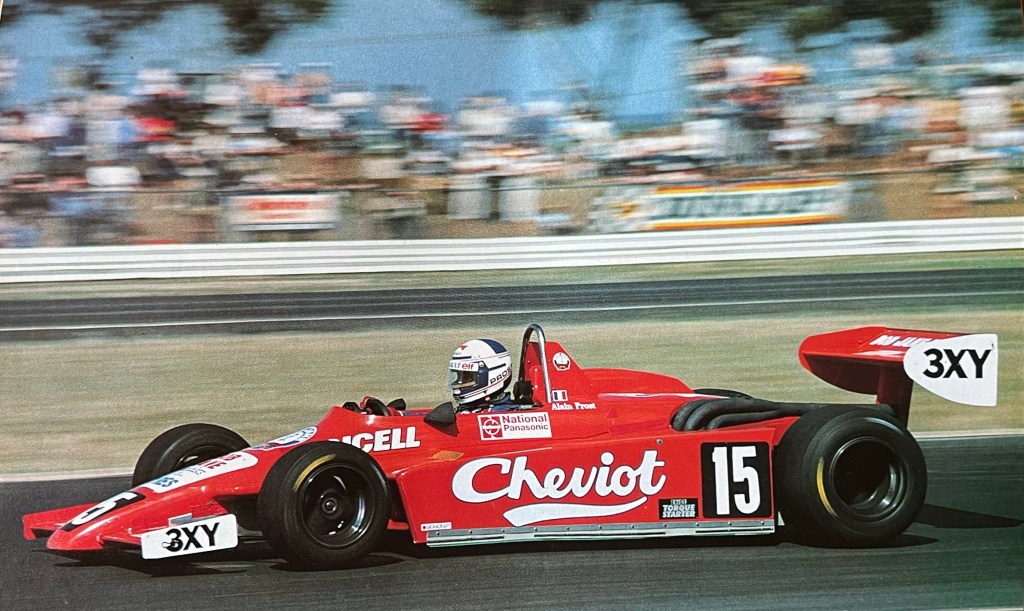
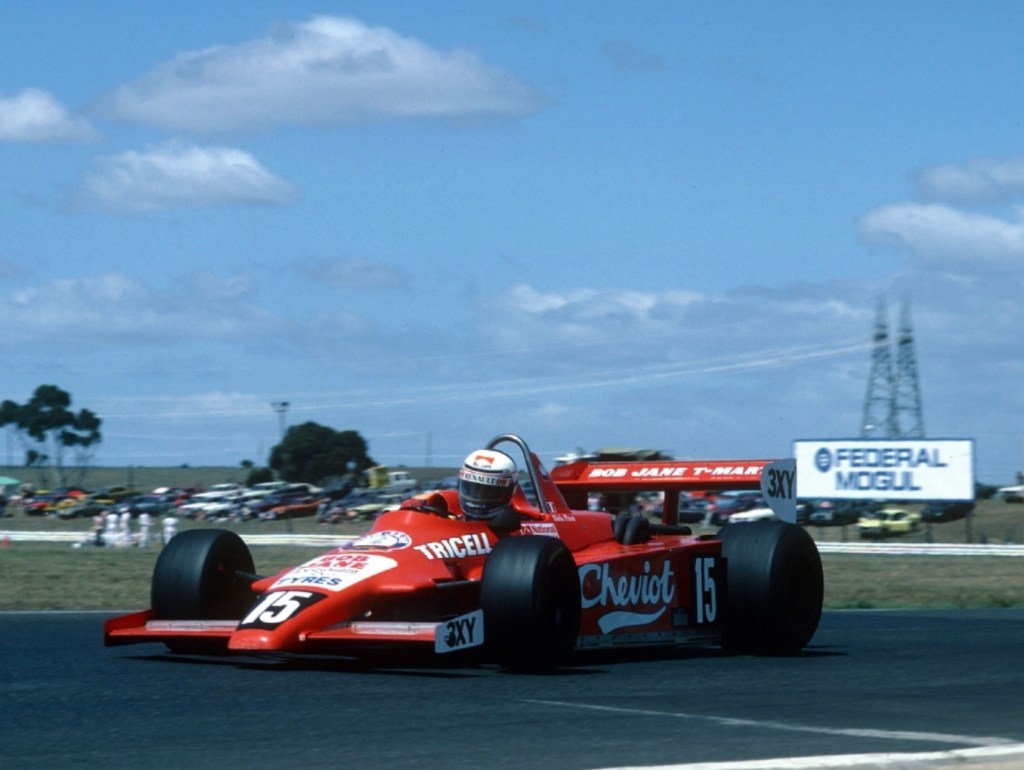
Alain Prost came, saw, and conquered the Calder Park circuit to win the 100 lap, 100 mile Formula Pacific Australian Grand Prix on November 8, 1982. His weapon of choice, a Ralt RT4 Ford BDA of course.
Bob Jane, bless the Melbourne entrepreneur, bagged the AGP for his ‘Melbourne International Raceway’ from 1980-84. Roberto Moreno was the dominant racer in that era, winning the Formula Pacific AGPs in 1981, and 1983-84. Alan Jones won the F5000/F1 event in 1980 aboard a Williams FW07B Ford.
The international stars in 1982 also included Roberto Moreno, Nelson Piquet and Jacques Laffitte, while the local hotshots were Alan Jones, John Bowe, John Smith, Alf Costanzo, Andrew Miedecke and Lucio Cesario. The whole lot of ’em were mounted in Ron Tauranac’s Ralt RT4s with the exception of Costanzo who raced an Alan Hamilton/Porsche Cars Australia owned Tiga FA81 with bags of modifications made by Jim Hardman. F5000 became Formula Lola and Formula Atlantic/Pacific became Formula Ralt from the day the first RT4 rolled out of Ron’s Byfeet Road, Weylock Works in Weybridge…
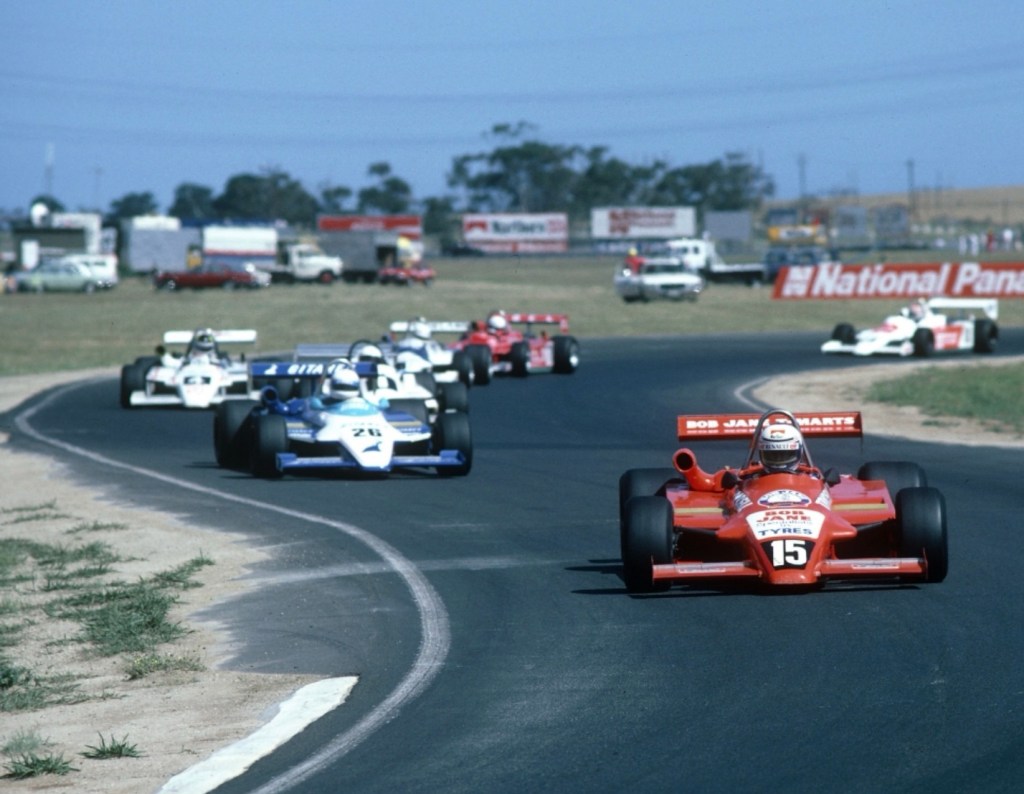
Prost, Laffitte, Costanzo obscured, Bowe and the rest thru Tin Shed on lap 1 of 100, AGP 1982 (R Berghouse)
The Renault team leader – victor of the South African and Brazilian Grands Prix that year aboard 1.5-litre Renault RE30B V6 turbos – bagged pole from Laffitte, Costanzo, Bowe and Piquet and then convincingly jumped-off well from the start and won the race from Laffitte, both of them in Bob Jane Racing owned and prepared RT4s. Roberto Moreno was third, Kiwi, Dave McMillan was next and Alf Costanzo fifth. Alfie’s points – and a spin by John Bowe – bagged him his third Gold Star, the Australian Driver’s Championship.
Moreno shot himself in the foot by stalling at the start, but then provided much of the event’s fizz by driving back through the field. Alan Jones was even less fortunate after his Ralt ‘broke its flywheel’ (WTF does that mean?). A great fifth place dice between John Smith and Nelson Piquet’s Ralts was ruined on lap 35 when a collision between Peter Williamson’s Toleman TA860 Toyota 2T-G and Graham Watson’s RT4 took all four off. Smithy was the only one to continue, he placed ninth.
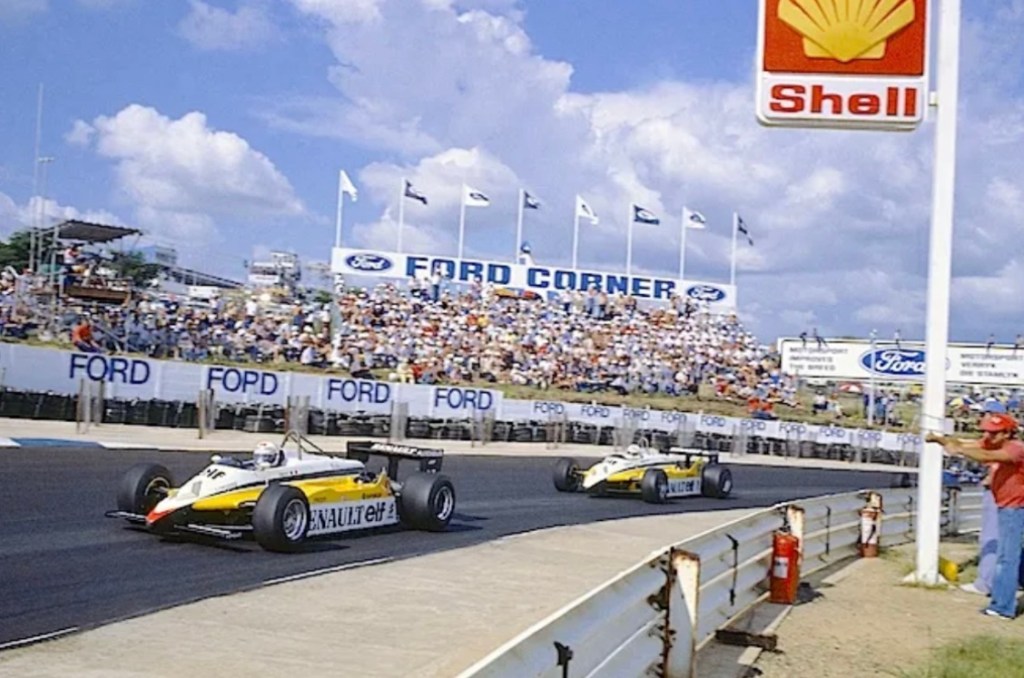
Alain Prost ahead of Rene Arnoux in the 1982 South African Grand Prix at Kyalami, Renault RE30Bs (unattributed)(Twitter)
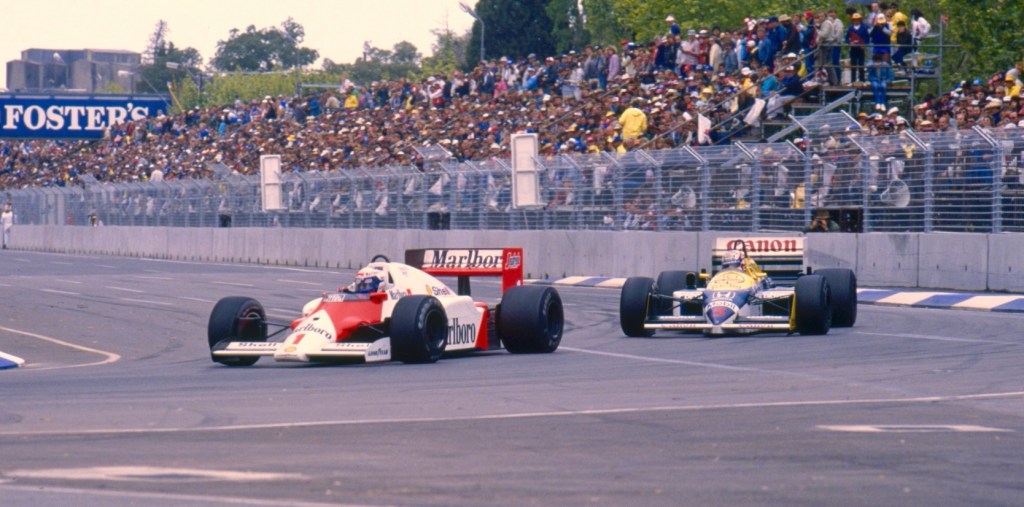
Of course Prost returned to Australia annually in the F1 Adelaide AGP era, winning the race – and his second World Championship on-the-trot – aboard a McLaren MP4/2C TAG-Porsche in 1986.
The shot above shows him ahead of Nigel Mansell’s Williams FW11 Honda at the end of Dequetteville Terrace – the main straight – site of Noige’s spectacular 180mph’ish Goodyear blowout, and William’s correct call for Nelson Piquet in the other William s to take a precautionary pitstop that effectively decided the championship in Prost/McLaren’s favour.
A useless Wiki statistic is that this victory made Alain the only driver to win both ‘domestic’ and World Championship AGPs.
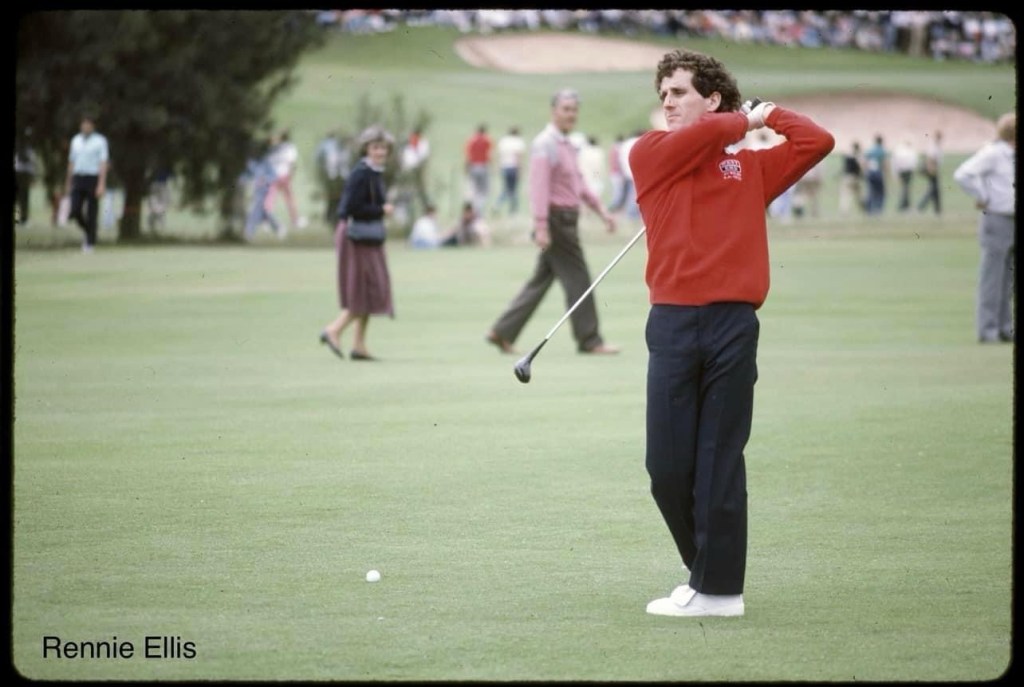
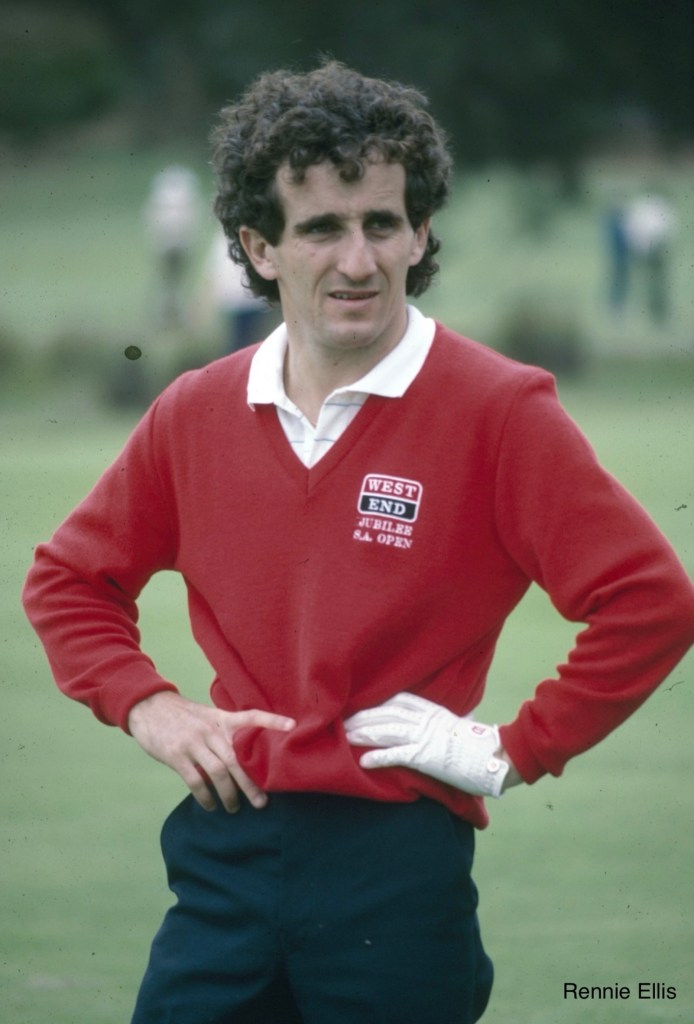
Missed by that much…the great, four-time World Champ looking pretty chillaxed during the Pro-Am golf-day over the South Australian Open weekend at Kooyonga, Adelaide in 1986.
Credits…
Australian Motor Racing, Ray Berghouse on alainprost.net, Twitter, Rennie Ellis, State Library of New South Wales, ‘The Official History of the Australian Grand Prix’
Tailpiece…
(R Berghouse)
Prost about to flick Ralt RT4/81 chassis 263 through the Calder’s Tin Shed left-hander.
This car – raced by Jones in the 1981 AGP – was owned by Bob Jane/related entities forever until sold at auction a couple of years ago, who owns it now?
By the way, Cheviot, the primary sponsor of Alain’s car, was a prominent Australian mag-wheel brand that was acquired by ROH Wheels Australia in the late 1980s. ROH are located at 28 Sheffield Street, Woodville North, South Australia.
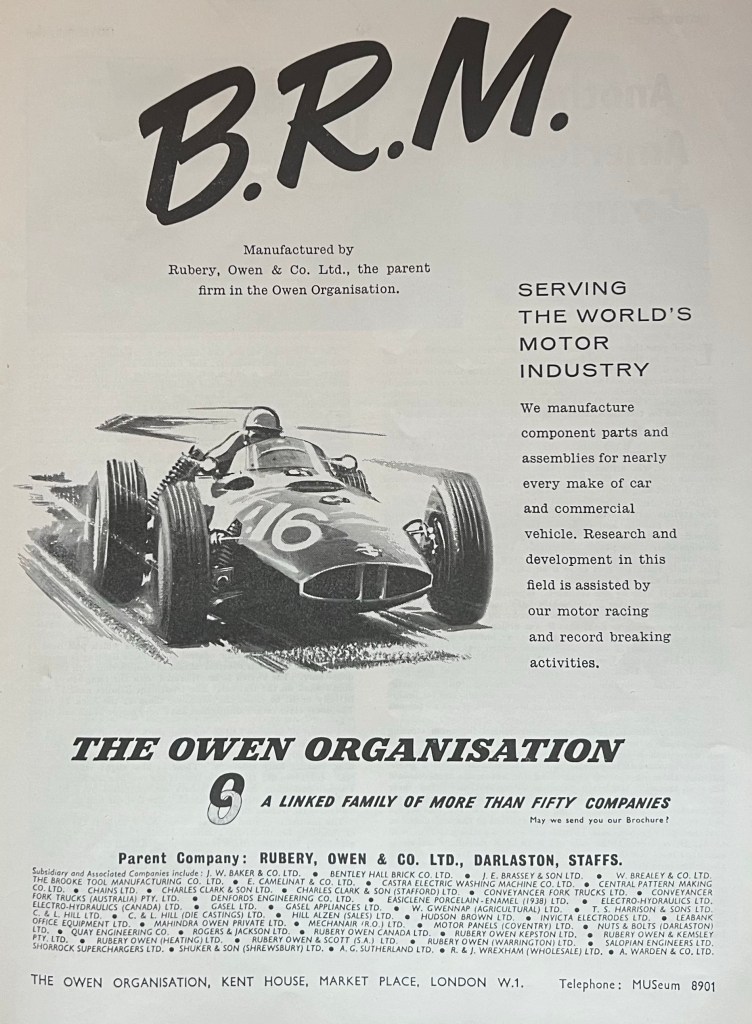
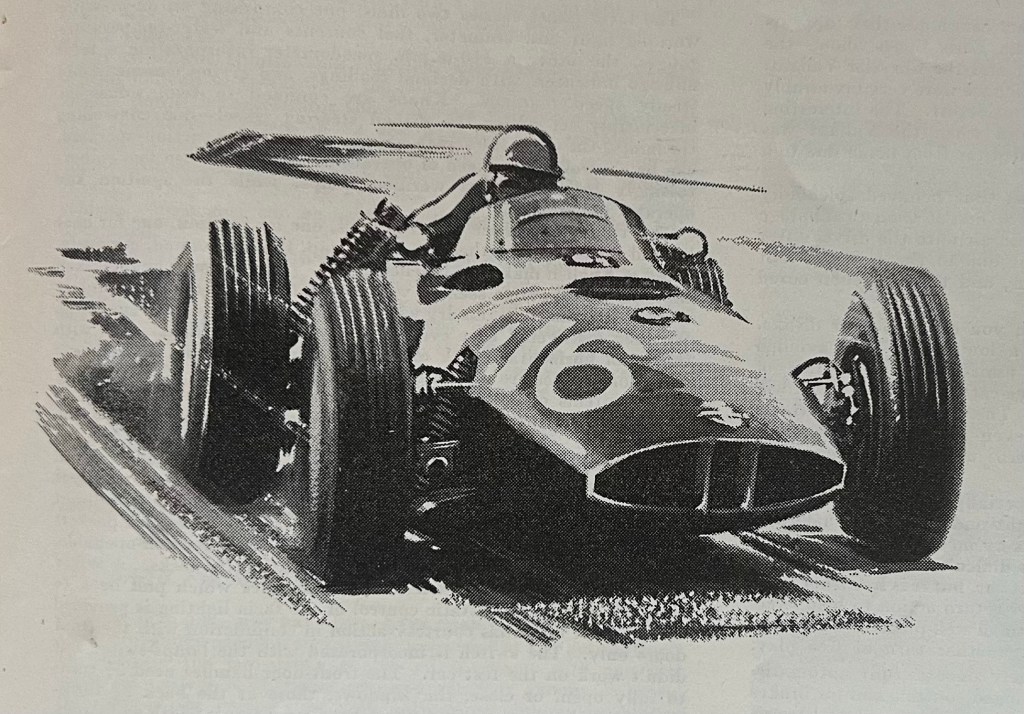
There is a British Racing Motors connection here. ROH Wheels, a wholly owned subsidiary of England’s vast vertically and horizontally integrated Rubery Owen manufacturing transnational, commenced making original equipment steel wheels in Woodville for the then nascent Australian motor industry way back in 1946. The assets of the bankrupt BRM Trust, the original manufacturers of BRM cars, were acquired by Rubery Owen in October 1952.
So…the reason the Owen Racing Organisation raced their superb BRMs in New Zealand, and later Australia too, was to help promote the parent group and its far flung colonial enterprises owned way-back in mother-England…
(SLNSW)
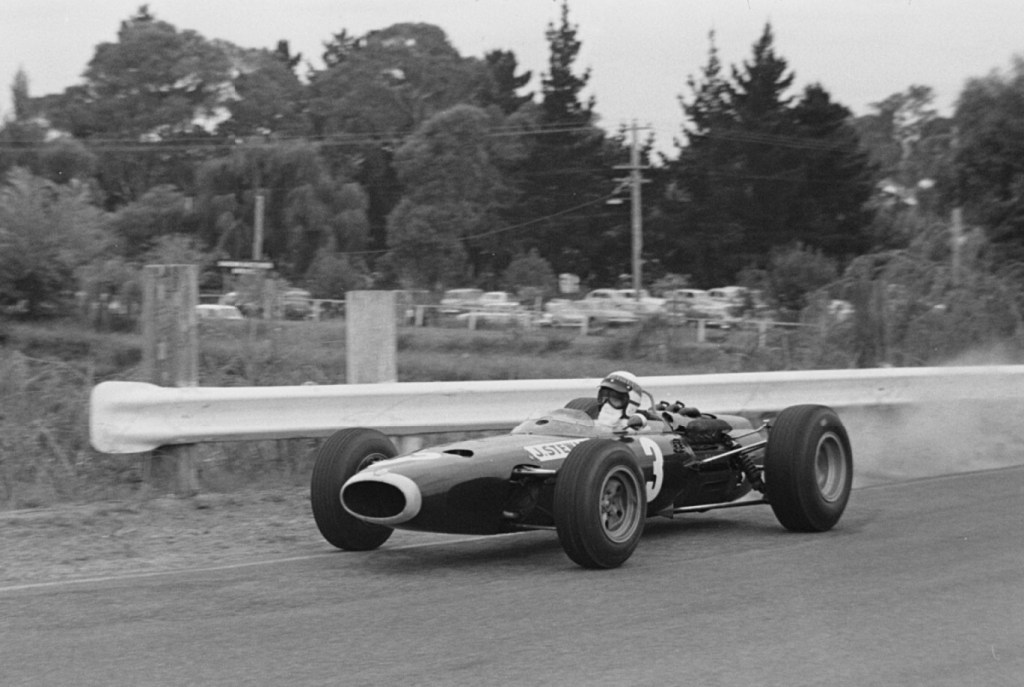
Here Jackie Stewart is rallying his BRM P261 on the exit of Peters during his victorious run in the February 27, 1966 Sandown Park Cup, Tasman Series round. Oh yes, he won the Tasman Cup too.
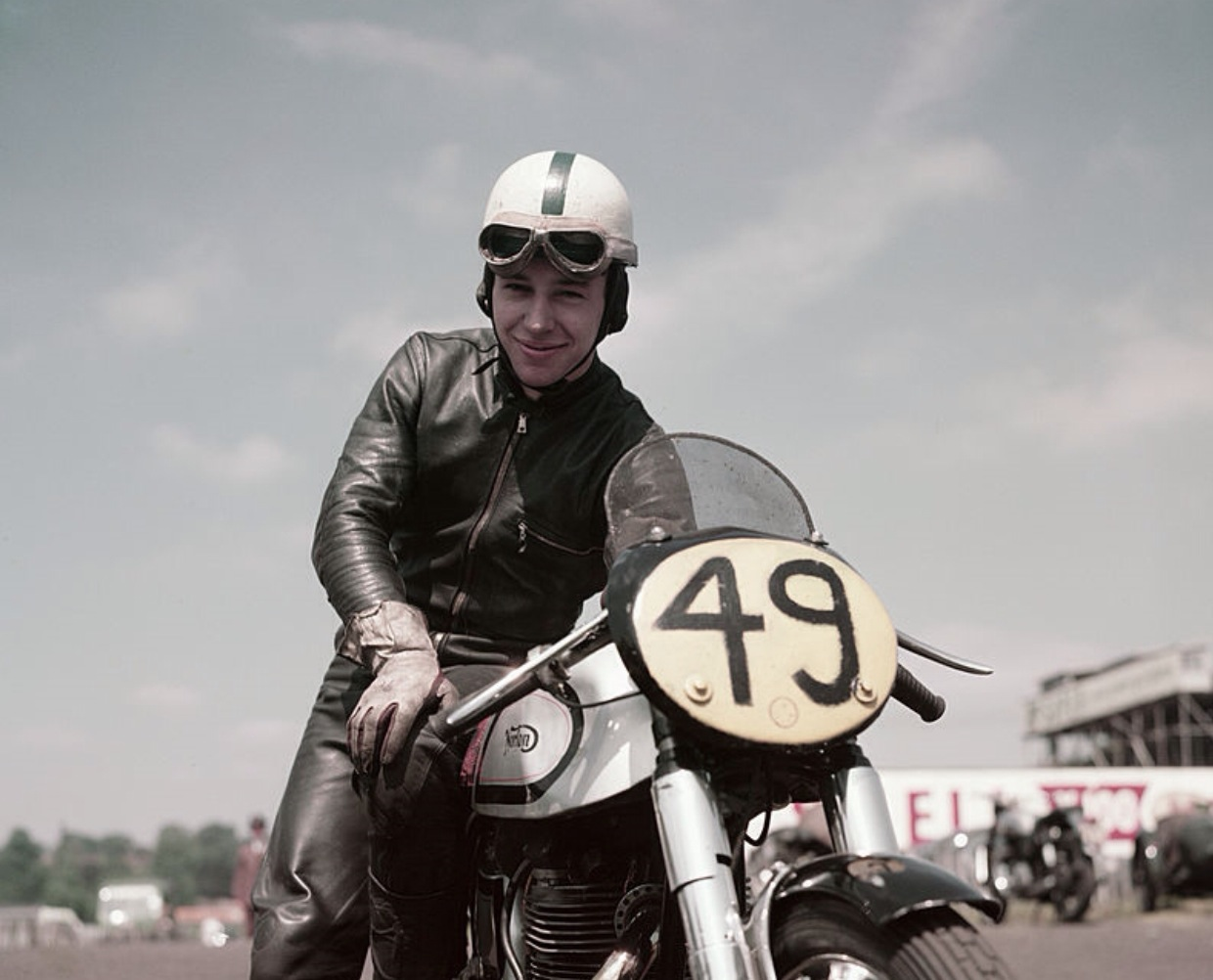
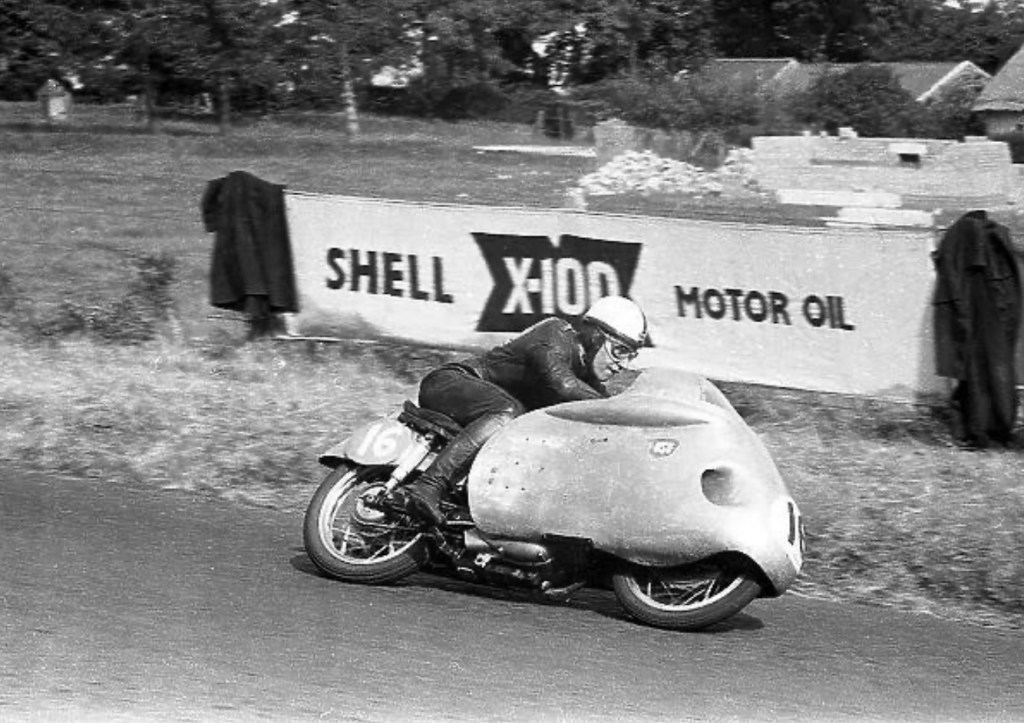
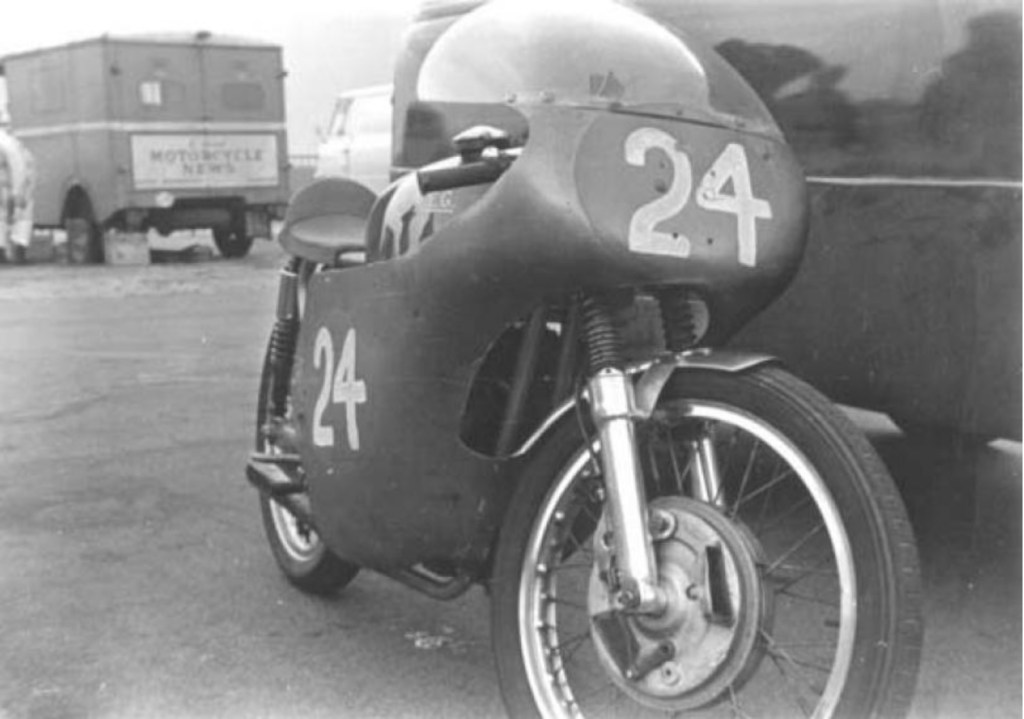
John Surtees and works-Norton Manx 500 prior to the start of a race at the International Meeting, Silverstone 9 April 1955…
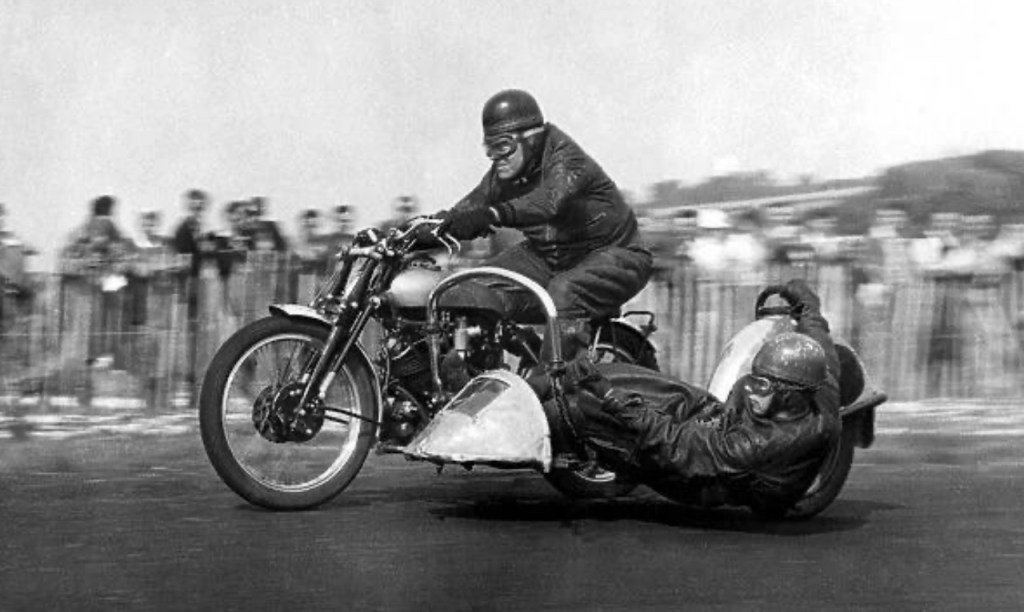
Born in 1934 (11 February 1934-10 March 2017) at Tatsfield, Surrey, Surtees famously grew up working in his dad’s South London motorcycle shop. Jack Surtees was a former bus driver turned sidecar racer, it was on his father’s Vincent 1000cc sidecar-outfit that John first competed at 14.
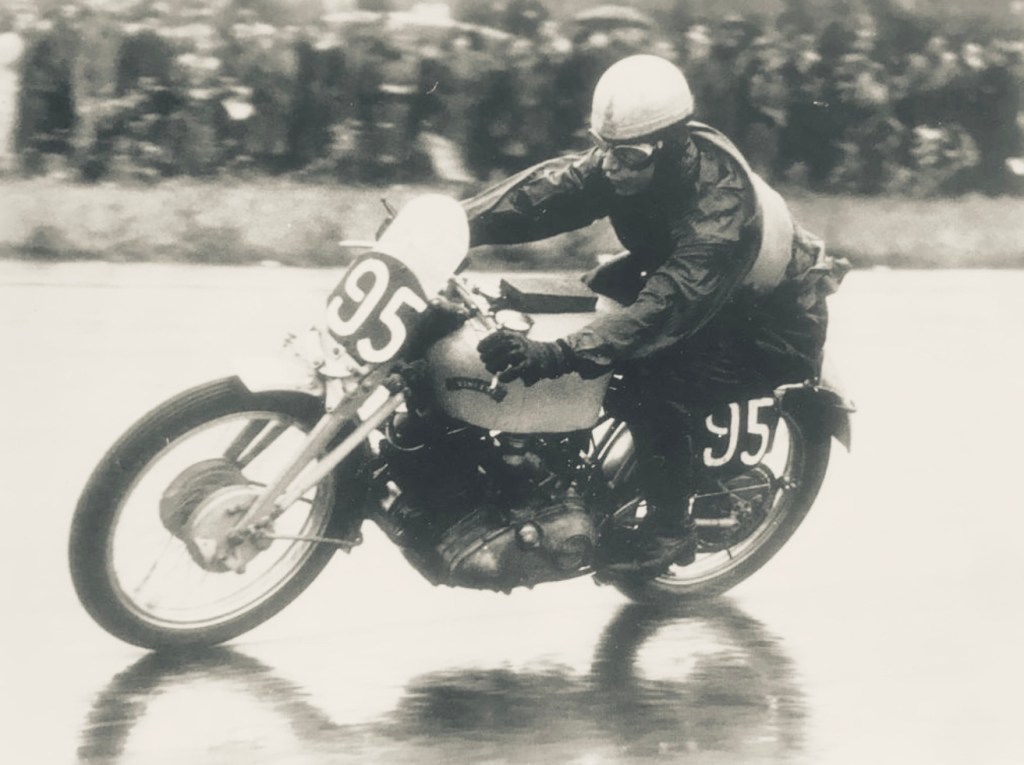
As a school leaver at 15, John contested grass track races at Brands Hatch on a Excelsior-JAP B14 500, soon graduating to road racing, initially aboard a Triumph Tiger 70 250, at Brands in April 1950. After commencing his apprenticeship with Vincents’ Stevenage factory the same year he soon commenced racing a self-prepared Vincent Grey 500 single, taking his first win at Aberdare Park, South Wales.
Jack and John Surtees on Jack’s Vincent 1000cc outfit at Brands Hatch in 1952 (J Topham)On the Vincent Grey Flash 500 single, circuit folks? (John Surtees World Champion)
In 1951 he hit the headlines after giving World Champion Geoff Duke’s factory twin-cam Norton curry on his pushrod single at Thruxton, soon establishing himself as one of Britain’s future stars, graduating from the Vincent in 1952 to a 500cc Manx Norton on which he contested his first World Championship race, finishing sixth in the Ulster GP.
In 1953 John made his Isle of Man debut having been loaned a pair of factory Nortons by race chief Joe Craig. But he got himself in Craig’s bad-book as he’d already committed to run Dr Joe Ehrlich’s works 125cc EMC two-stroke, only to crash it in practice and break his wrists after front-fork failure.
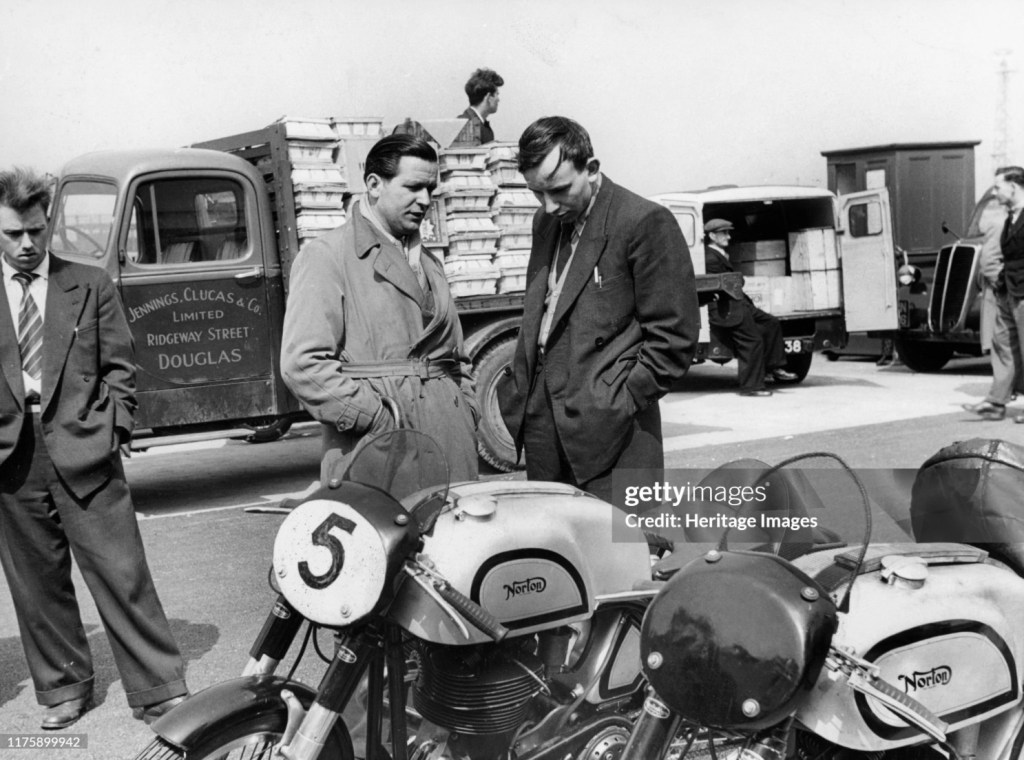
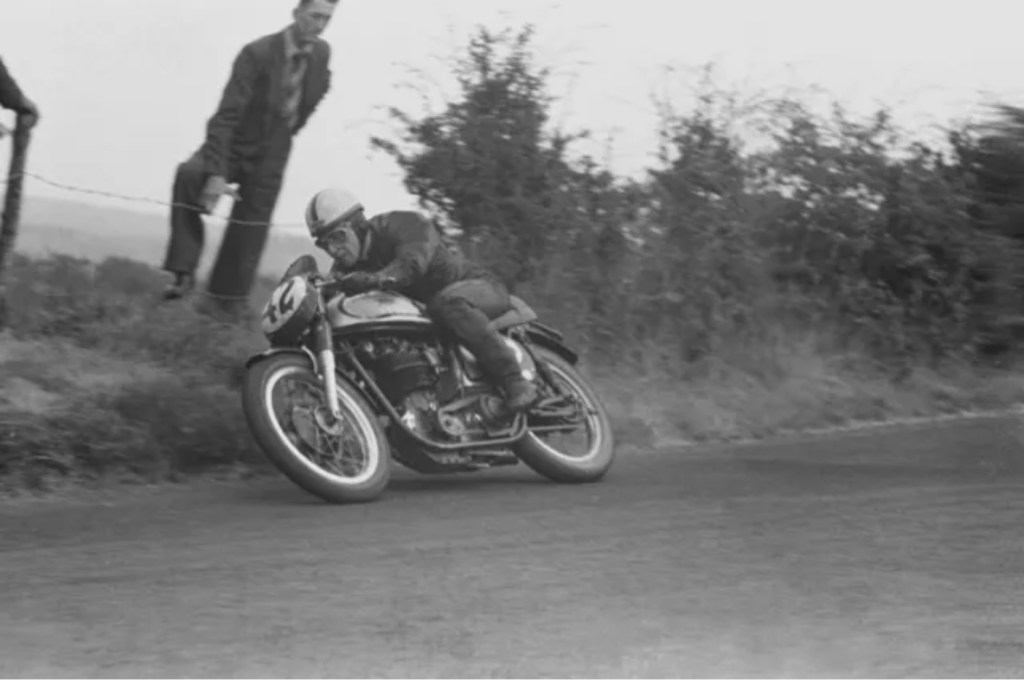
John Surtees at right during the June 1954 IOM TT weekend: 15th in the Senior and 11th in the Junior TTs on his privately entered machines. #5 is perhaps the 350
Craig cracked the shits when he couldn’t race his Nortons so John raced a pair of customer Norton 350/500s with great success in 1954. On these bikes he was 11th in the IOM 350cc Junior race and 15th in the 500cc Senior, also taking the British 250cc championship that year by winning 15 races of 17 starts on the unique R.E.G. 250 DOHC parallel-twin built by talented businessman Robert E Geeson.
As a consequence of that great season, Craig finally gave Surtees his first works Norton rides in what proved to be the British manufacturer’s final season of racing what were by then outclassed singles in 1955. John won 69 of 75 races that he started in Britain and raced regularly on the Continent, but it was on an NSU Sportmax that he recorded his first GP win, the 250cc Ulster GP at Dundrod on August 13.
Surtees, NSU Sportmax, 250cc Ulster GP winner, Dundrod August 13, 1955 (unattributed)Surtees, works-Norton Manx 500, Ulster GP, Dundrod, 1955 Senior TT. Led until his fuel stop then DNF with mechanical failure. Bill Lomas won both the 350 and 500 races on Moto Guzzis (A Herl)
With Norton’s end-of-season retirement from racing imminent, John finished the year by twice beating reigning 500cc World Champion Geoff Duke’s Gilera 500-4 at Silverstone and then Brands Hatch. Gilera, Moto Guzzi and BMW (for whom he’d ridden in the German GP on an RS500 Boxer) all chased his signature on a contract for 1956.
Instead Surtees began a five-year association with MV Agusta – after Count Domenico Agusta’s elderly mother had inspected him to decide whether she liked the cut-of-his-jib – winning his first seven races on the sonorous Italian in early-season British national races before winning the Isle of Man Senior TT, his debut World Championship Grand Prix race on the MV 500-four. And the rest, as they say, is history…click here for my article on the champion: https://primotipo.com/2014/11/30/john-surtees-world-champion-50-years-ago/
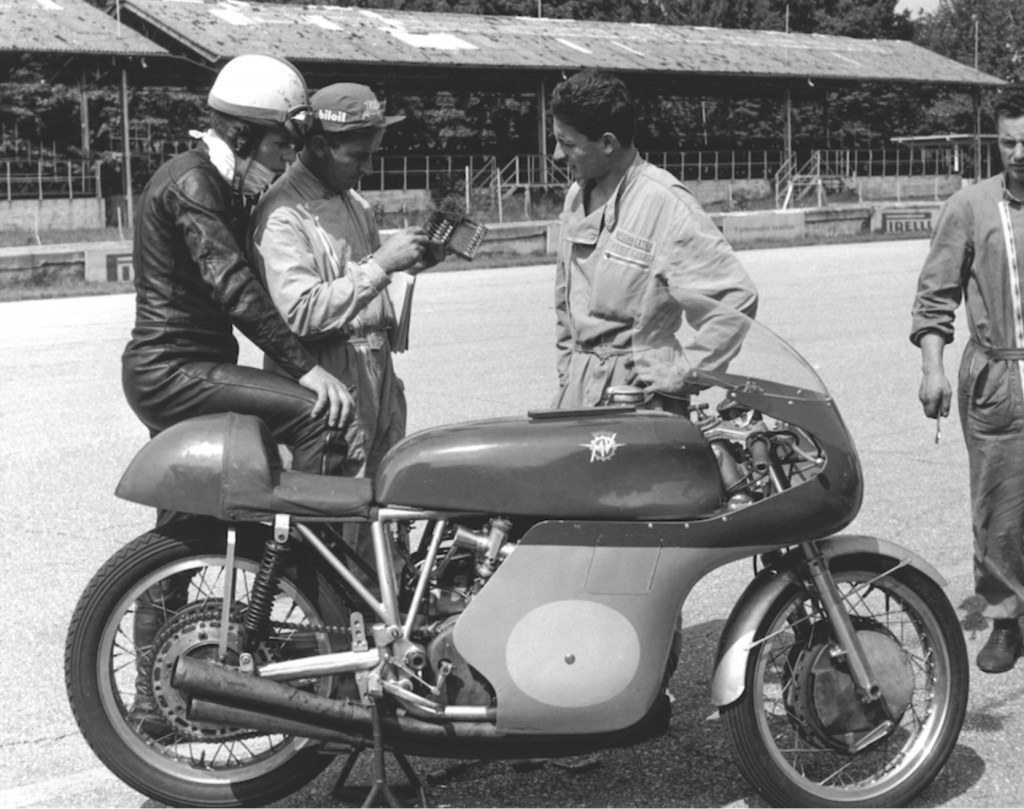
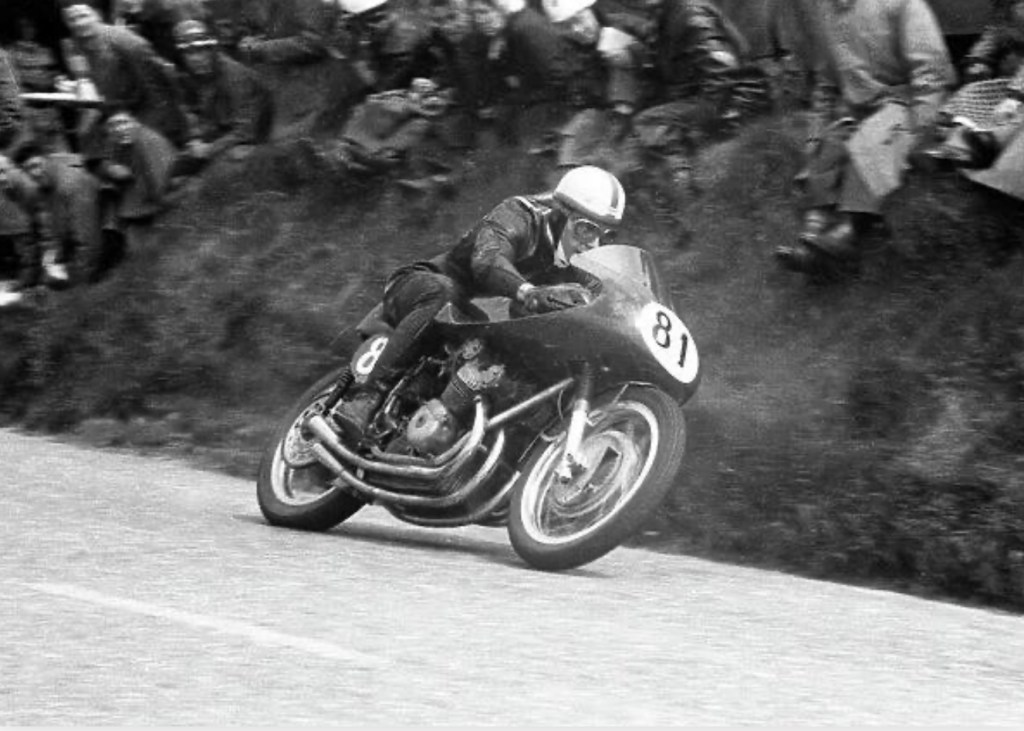
Surtees testing an MV, date and place unknown (unattributed)Surtees on the way to winning the Senior TT at Kates Cottage on the Isle of Man in 1956, MV 500 (ttracepics.com)
Credit…
Central Press, ridersdrivemag.com, A Herl, ttracepics.com, ‘John Surtees-World Champion’ by John Surtees and Alan Henry, J Topham-TopFoto, Rodger Kirby
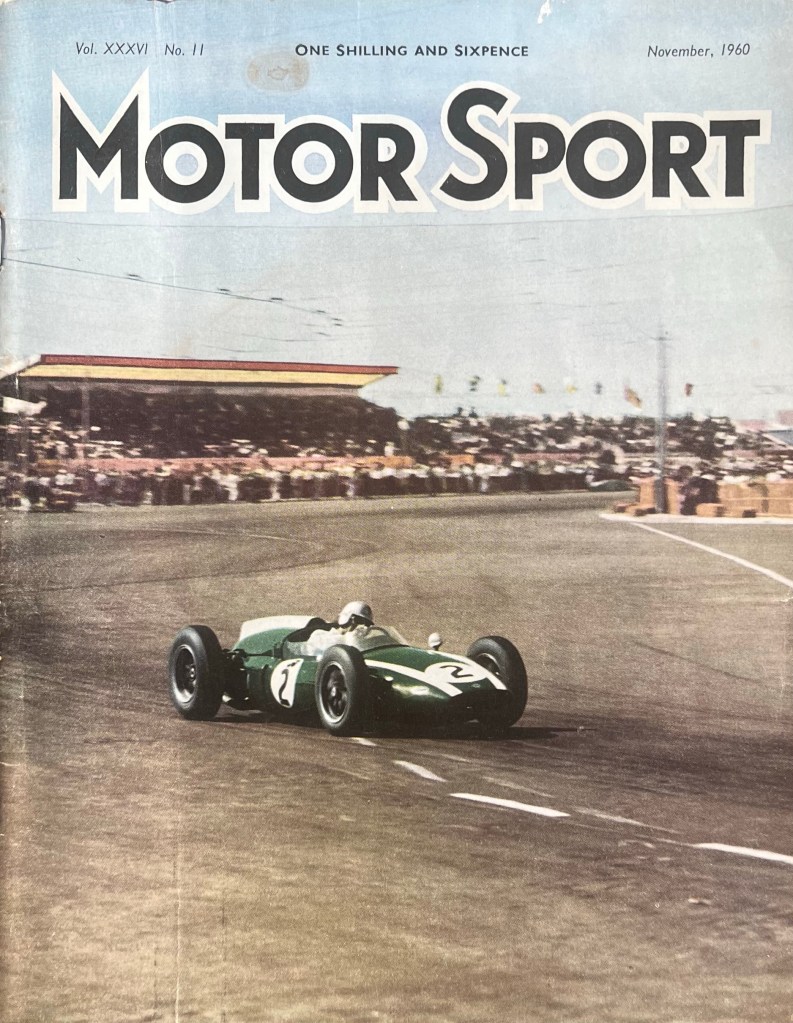
Jack Brabham on his way to winning the 1960 Portuguese Grand Prix on the Circuito da Boavista, Oporto on August 14. Cooper T53 Climax, Bruce McLaren was second in the other team T53 while Jim Clark was third in a Lotus 18 Climax.
He won his second drivers world championship that day – round seven of nine qualifying rounds – while Cooper bagged their second manufacturer’s championship too. Jack would collect another F1 title or two, Cooper did not. Sadly.
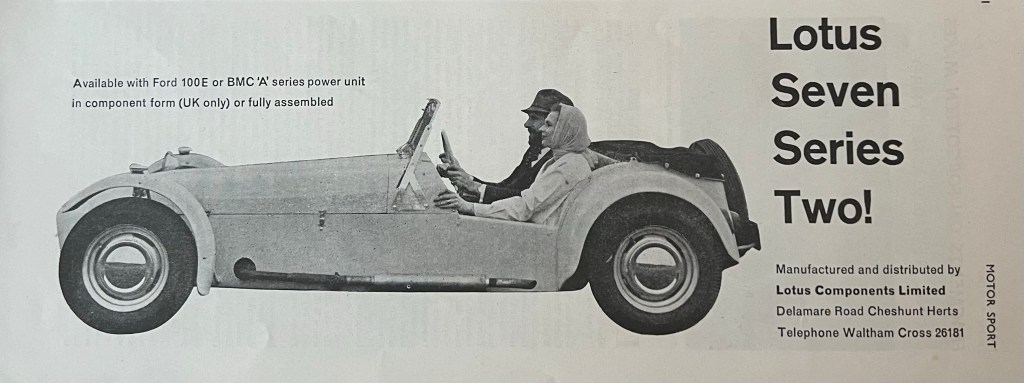
When flicking through old mags the ads are often as interesting as the editorial material.
At that stage ‘yerd be taking your Lotus 7 with the A-series I guess, the release of Ford’s 105E rather shifted the balance of course, especially once Messrs Duckworth and Costin did their thing thereon.
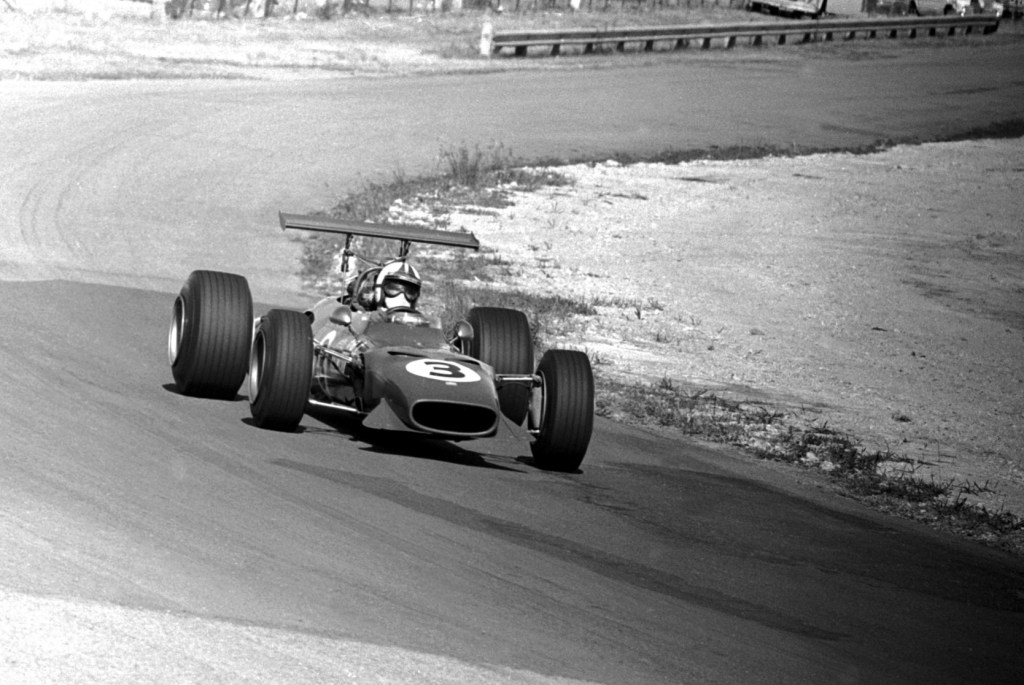
Chris Amon sneaks a look in his mirrors, no need to worry too much! Ferrari Dino 246T/69 #0008 (MotorSport)
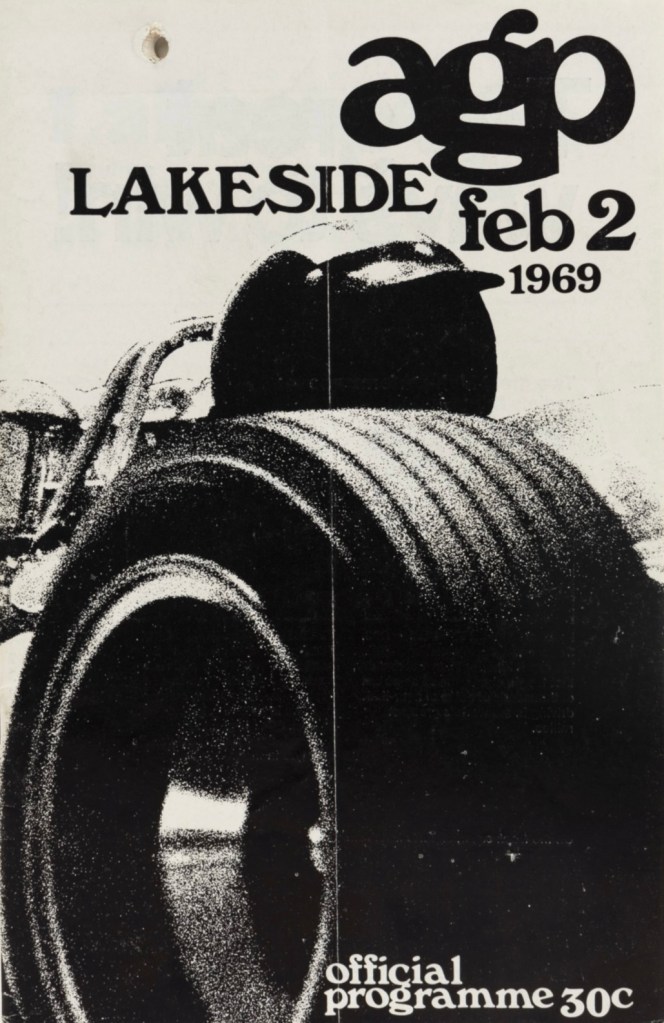
Unlike previous years when the cars had been shipped across The Ditch – the Tasman sea – from New Zealand to Australia, in 1969 they were air freighted as there was only a week between the Teretonga and Lakeside rounds, that year the site of the 1969 Australian Grand Prix held on February 2.
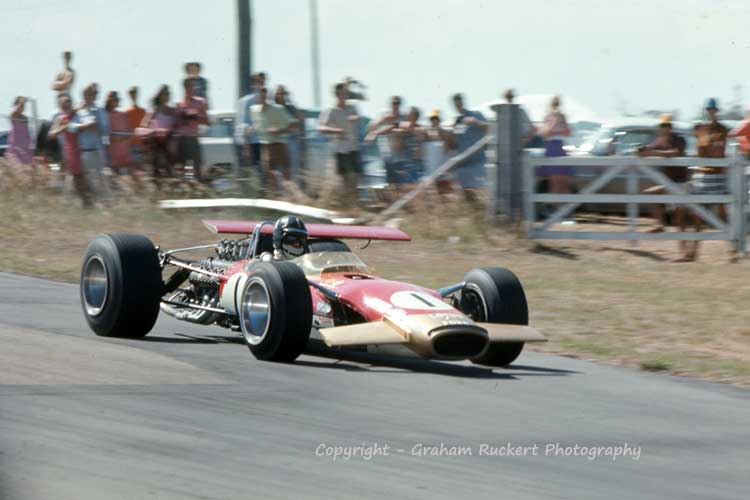
Top Guns were the Scuderia Ferrari/Chris Amon/Scuderia Veloce run Ferrari Dino 246Ts of Chris Amon and Derek Bell and the Gold Leaf Team Lotus Lotus 49B Ford DFW V8’s of just minted World F1 Champion Graham Hill and The Hunter-Jochen Rindt, with everything to prove.
The 1969 Tasman Cup gets underway at Pukekohe on January 4 with the gig-two on the front row. Chris Amon, Ferrari Dino 246T and Jochen Rindt, Lotus 49B Ford. Amon won from Rindt and Courage (MotorSport)
At the end of the four Kiwi rounds Amon was looking the goods for Tasman Cup honours, having won at Pukekohe and Levin and picking up third place points at Wigram and Teretonga. While the Lotuses were the fastest cars, they weren’t as reliable as the Ferraris: Amon and Bell had six out of seven point scoring finishes, while Rindt, Hill and Piers Courage – in Frank Williams Brabham BT24 Ford DFW – scored off only four races. Chris won the cup with four race wins (his two in Australia were at Lakeside and Sandown) to Jochen’s two (Wigram and Warwick Farm) and Piers’ one (Teretonga).
Rindt, Lotus 49B Ford #R10 heads towards The Karussel with Lake (MotorSport)
Practice…
Of the internationals, Only Ferrari and Piers Courage managed to get themselves sorted out in time, Bruce Sergent wrote. “While Lotus had all sorts of problems with customs and freight. It was apparent that Ford Australia weren’t behind the Lotus effort this year, for they had to do most of their own organising right from administration down to transport for drivers and mechanics.” Ferrari, of course had the well drilled David McKay/Scuderia Veloce organisation to deal with the logistics, and it showed throughout the weekend.
The new stiffer rear springs Amon was after from the start of the series were waiting for the two Ferraris in Brisbane, and with these fitted the cars were out early on Friday and soon showed it would be a tough round Lotus to even make a clean breast of. While Amon and Bell were making hay on a clear track, Lotus had only just received their cars and both needed attention. Rindt’s engine was misfiring, and Hill’s blew up shortly after starting up in the garage. Even with getting an engine back from Courage, it still left them with one very sick car, Rindt’s.
On Saturday, Amon comfortably took pole pole from Courage. Gardner had fitted a bi-wing set-up to his Mildren Racing Mildren Yellow Submarine Alfa Romeo V8 like Courage’s in unofficial practice but didn’t have the time to evaluate it and had to remove the front one and save it for testing on home turf at Warwick Farm, Sydney, the following week. Hill broke his wing in practice – the curse of Team Lotus at the time – but still managed fourth fastest, while Rindt was only able to push his Lotus 49B to fifth, creditable under the extreme circumstances.
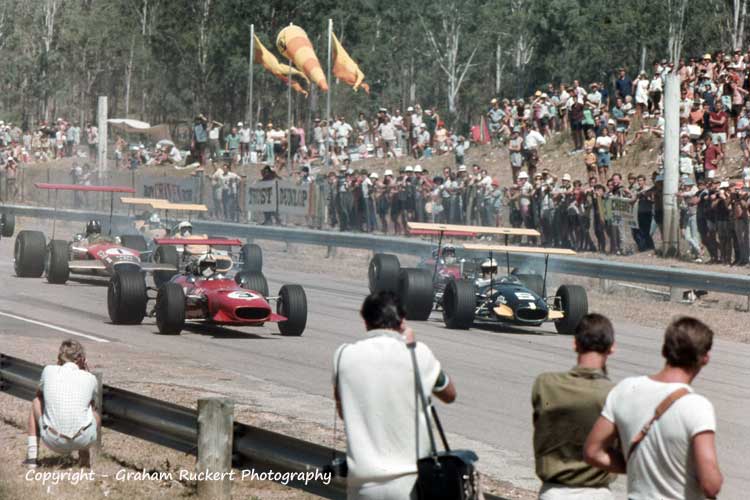
Piers Courage, Brabham BT24 Ford DFW from Jochen Rindt, Lotus 49B Ford DFW thru the kink. The start-finish line is just out of shot (MotorSport)They are off: Amon and Courage, Hill and Bell partially obscured by Courage, then the two yellow winged Mildren entries of Gardner and Bartlett (G Ruckert)
Race…
Amon won the jump from Courage and streaked off into the afternoon sun while Hill, Courage and Bell lined up for battle behind, then followed Gardner, Rindt and Kevin Bartlett aboard the Brabham BT23D Alfa Romeo Tipo 33 2.5-litre-V8 that Gardner raced in the ’68 Tasman and was then driven by KB to victory in that years Gold Star, the Australian Drivers Championship. Next was Niel Allen’s ex-Courage McLaren M4A Ford FVA. It was Niel’s first drive at Lakeside after his huge accident during the Gold Star round in July 1968, the car’s monocoque having been rebuilt/replaced by Bowin Cars.
Positions remained static for a bit until Courage closed in on Hill and tried to pass on the outside as they ranged under brakes for BMC bend. But Piers didn’t quite make it and there wasn’t enough room left for both cars, Graham didn’t give way, being on-line for the corner so the two cars touched and Courage suddenly ran out of track and retired the car on the dirt with slightly bent front suspension. Hill lost four seconds giving Bell his opportunity and he went through into second position to make it a Ferrari 1-2 for the first time in the series.
Bartlett retired on the following lap with no water and blown head gaskets, giving away his position to Niel Allen. Then he overdid it under brakes, the front set locked, and he lost four places getting things in hand. He picked up one of the lost places immediately and set out on a long hard haul back through the field.
Rindt hustles his Lotus – engine problem duly noted – into BP Bend, Q5 and DNF. With fresh engine he made good and ‘blew the field off the planet’ in the Warwick Farm 100 one week henceFrank Gardner, Mildren Alfa Romeo V8 aka the Mildren Mono/Yellow Submarine (MotorSport)
Jochen Rindt made the next move when he displaced Leo Geoghegan’s ex-Clark Lotus 39 albeit with a Repco Brabham V8 rather than the Climax FPF four, on the 13th lap for fifth spot, but Geoghegan was hanging on grimly and didn’t let the Austrian get away from him. But Rindt pulled out every horse he could find in the ailing Cosworth V8 and slipped by Frank Gardner on lap 19, making the order Amon and Bell in Ferrari Dinos, Rindt’s Lotus 49B, Gardner’s Mildren Alfa, Geoghegan’s Lotus Repco, Max Stewart, Mildren Alfa 1.6 F2, Allen, Glyn Scott, Bowin P3 Ford FVA F2 and Malcolm Guthrie, Brabham BT21B Lotus-Ford 1.6.
Rindt held onto this position, trailed by Gardner, who was becoming concerned over oil pressure. His fears were confirmed when the Alfa Romeo engine blew an internal oil line and he was forced out of the race on lap 12. Gardner’s demise brought everyone up a place but Jochen Rindt’s forceful run ended when the Cosworth Ford V8 engine lost power and he quickly shut off and headed for the pits.
Derek Bell, Ferrari Dino 246T/69 #0010. No adjustable wing for Derek (MotorSport)
Chris Amon was busy lapping all but his team mate, Derek Bell, while Leo Geoghegan was sitting in a wonderful position behind Graham Hill in fourth spot. Col Green, ex-Hill/Gardner Brabham BT16 Climax 2.5 FPF was in and out of the pits with gearbox and engine problems while Alf Costanzo, McLaren M4A Ford FVA F2 had retired after a spin over the back of the circuit, then stalled and was unable to restart.
The rear wing on Hill’s Lotus 49 had looked shaky for a few laps and finally it broke and folded over his rear wheel. He tried to keep the car as steady as possible so not to be black flagged, and finally pitted to have the offending piece of iron cut from the car. Geoghegan, meanwhile, seeing Hill’s problem, had speeded up and went by as Hill was having the operation finished to his wing. He came back into the fray bent on getting his third spot back from Geoghegan, but the Lotus was suffering from oversteer with the now, light rear end, and he steadily lost ground.
Graham Hill’s 49B #R8 with the rear wing mount problems that Lotus never satisfactorily solved. No bodily harm caused on this occasion. Ultimately the FIA solved Lotuses problem for them with their intervention over the 1969 Monaco GP weekend (G Ruckert)Niel Allen, McLaren M4A Ford FVA. #M4A/2 is the ex-John Coombs/Courage ’67 Euro F2 entry, then, in Pier’s ownership his ’68 Tasman machine, and Longford round winner (MotorSport)
Niel Allen, worked hard to make up time lost in two spins and managed to catch Max Stewart in the surviving Alec Mildren Racing entry, the Mildren Alfa/Autodelta 1.6 four-valve F2 car and, now in fifth spot, went on to win the battle of the F2’s. Englishman, Malcolm Guthrie, having sat behind Glyn Scott on the Queenslander’s home circuit, finally made a last-minute burst and finished ahead of the Bowin. Scott was still waiting for a set of rods to come from Cosworth for his FVA engine, he was running on a set borrowed from Allen.
With two rounds to run, Amon’s win put him into an almost uncatchable Tasman Cup points lead. Only Piers Courage, with a bit of luck and by winning the final two races, could take the championship from the New Zealander. Rindt and Hill, equal on 15 points, were at that stage relegated to fighting out second spot.
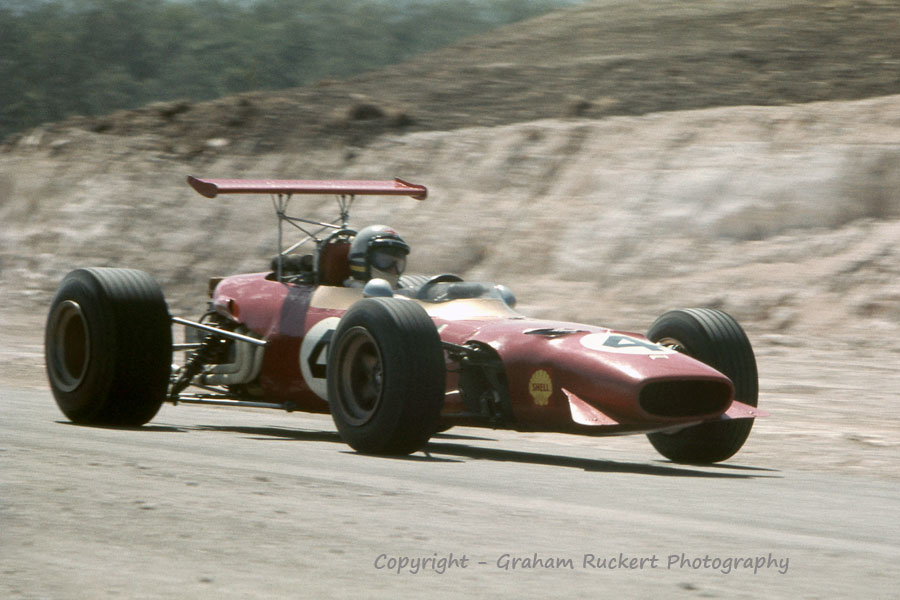
Ain’t she sweet, Graham Ruckert has captured the car with its unloaded left-front off the deck. Note the hydraulics to operate Chris’ rear wing
Etcetera…
(MotorSport)
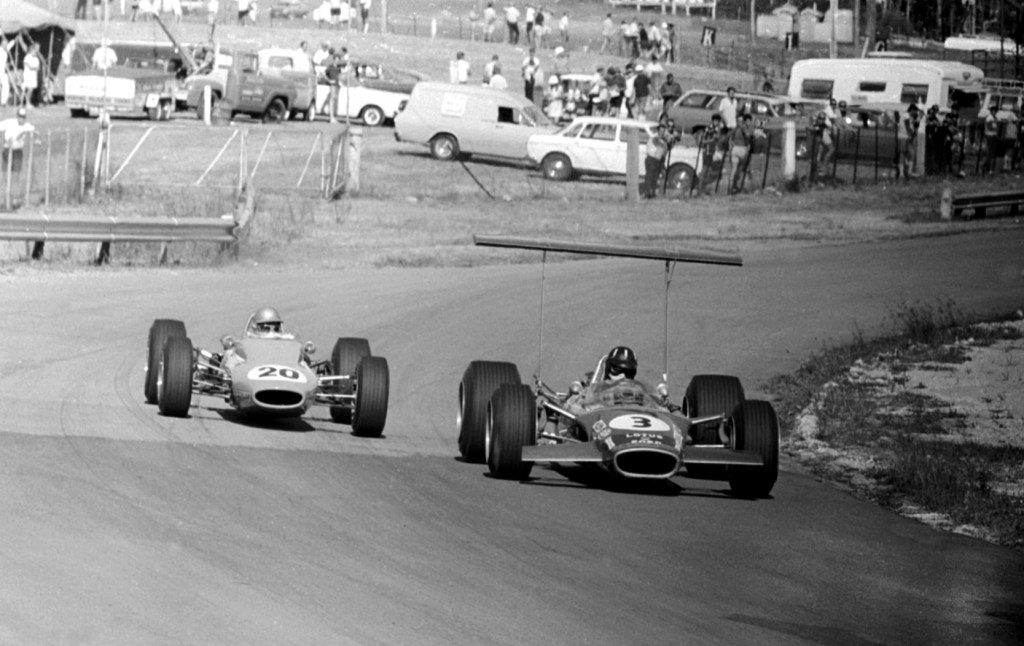
Graham Hill blasts through the hole left for him by Glyn Scott at Lakesides flat-knacker Kink.
It’s a David and Goliath shot. John Joyce’s superb monocoque was Lotus inspired too, he had a number of senior engineering posts at Lotus between 1963 and late 1967 when he returned home to start P3 – Project 3 – his first two cars (Projects 1 and 2) built before he left for his stint in the UK were a modified Cooper and the Koala Formula Junior. More about Glyn and the Bowin P3 here: https://primotipo.com/2020/07/24/glyn-scott/ and here: https://primotipo.com/2021/05/06/ian-peters-ex-glyn-scott-bowin-p3-101-68/
(MotorSport)
Nah, its too skinny to be Sergeant Schultz! It must be Jochen Rindt with a touch of the Adolfs, not the best protection for the searing Queensland summer sun, and with a smile on his face despite the challenges of the weekend.
Piers Courage took up where he left off in the ’68 Tasman, as a front runner in the clever car Frank Williams assembled for him. Brabham BT24-3 was ex-Brabham/Rindt/Gurney/Ahrens, with its F1 3-litre 740 Series Repco Brabham V8 removed and a 2.5-litre Ford Cosworth DFW installed the bi-winged Brabham was a very competitive car raced ably throughout. Piers ultimate pace was reinforced during that years GP season where he proved one of the quickest men around…he arrived that year big time.
Courage, Brabham BT24 Ford. Generally, but not completely, Ron Tauranac’s wings remained where he intended them from the start to the finish of the weekend (MotorSport)(MotorSport)
Frank Gardner’s (above) Len Bailey designed, Alan Mann Racing built Mildren Alfa used many Brabham BT23 components and was ‘best of the rest’ behind the big-five. Gardner arrived in New Zealand ‘under-winged’, he scored in four of the seven rounds and would have gained a bit with more downforce from the start of the series.
It’s one of the most iconic and instantly recognisable single-seaters ever raced in Australia by – in turn – FG, Kevin Bartlett, Bob Muir and Ray Winter with Tipo 33 2.5 V8 as here, then Waggott 2-litre TC-4V and finally 1.6-litre Lotus-Ford twin-cam in ANF2 spec.
Derek Bell drove well throughout the series, a pair of seconds at Lakeside and Warwick Farm his bests. He was fourth at Pukekohe, and fifth at Wigram, Teretonga and Sandown. Depending upon your source, Scuderia Ferrari provided four of the latest spec 2.4-litre, DOHC, four-valve fuel injected V6s for the two-car touring team. Bell was given less revs to play with than his team-leader!
I truncated and added to Thomas B Floyd’s race report in the Australian Motor Racing Annual 1969, Sutton, MotorSport Images, Graham Ruckert Photography, Bruce Sergent on sergent.com, oldracingcars.com
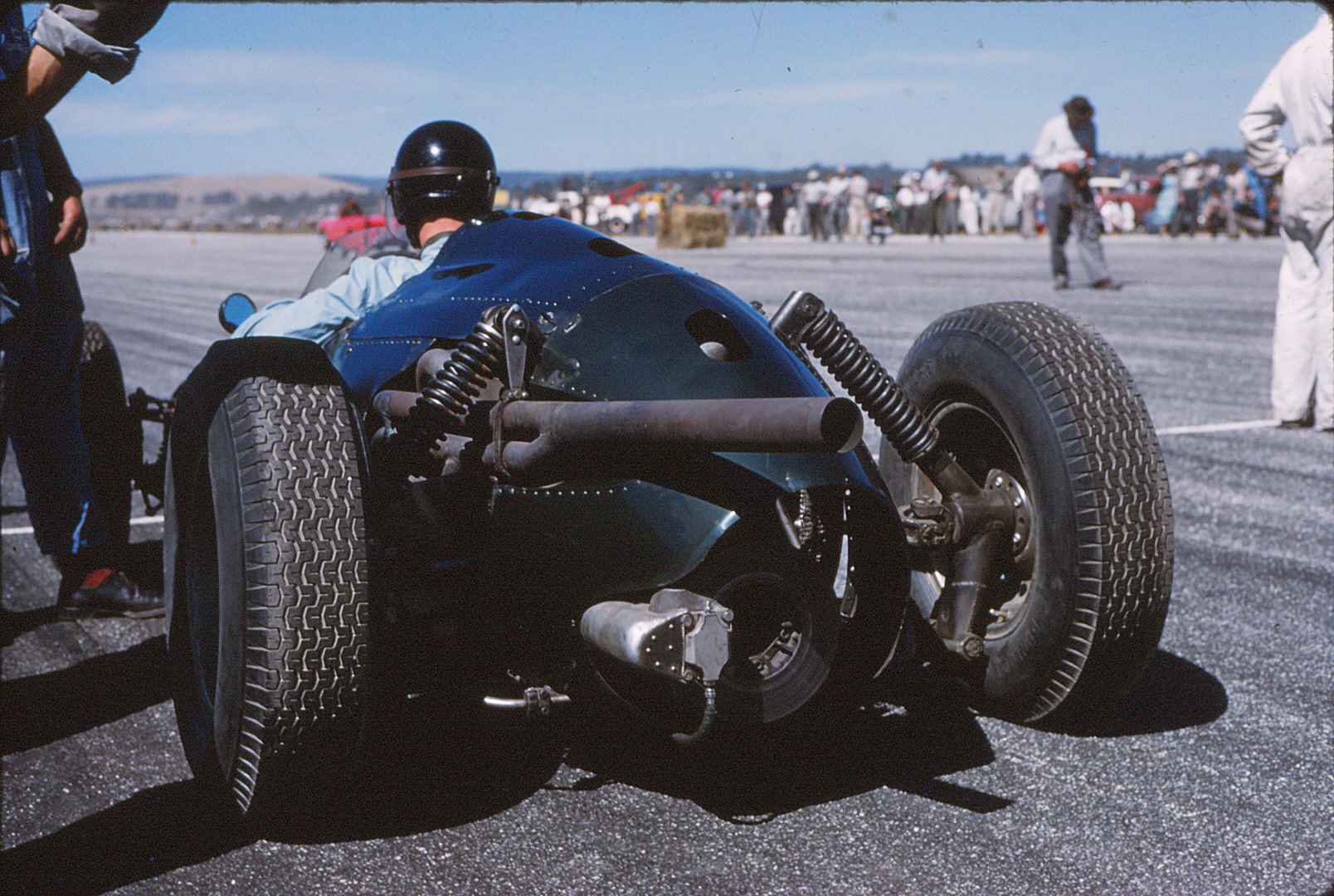
Graham Hill, Dan Gurney and the BRM mechanics await the start. Dan’s car is P48 #486 (D Jolly)
Make sure you buy the August 2024 issue of The Automobile, it contains a piece I wrote about Dan Gurney’s win at Ballarat Airfield in a BRM P48 on February 12, 1961.
That Victorian Trophy victory was the only international win for a P48 in Dan’s last drive for the Owen Racing Organisation.
There are some fantastic, never-seen-before colour shots taken by Australian Lotus ace/works-driver and Australian importer Derek Jolly at the meeting, courtesy of Lotus historian/restorer Mike Bennett.
Further ‘Australian content’ comes in the form of the cover car, Bugatti Type 35 chassis 4450. Better known to many of us as the Lyndon Duckett/Bob King Anzani Bugatti, the car is the subject of a long feature celebrating the centenary of the landmark T35. See here too: https://primotipo.com/2021/09/17/werrangourt-archive-9-lyndon-duckett-by-bob-king/
Towards the end of his 52 years of use on the road and in competition Bob restored the 4450 to its original, ex-factory specification. The same spec as that when it was delivered to first owner, George Pearson Glen Kidston in Molsheim on February 16, 1925. In a neat book-end of history Simon Kidston, Glen’s nephew, is the current custodian of #4450, not that it looks much like it did in Australia clad in its road-going garb.
Another fascinating article for proponents of Oily Rag Restoration, is a report on the Best in Show award going to an unrestored Alfa Romeo 8C2300 at May’s Concorso d’Elegance Ville d’Este.
It’s the first time the premier award in a ‘Grand Prix Concours’ has gone to a Preservation Class car. Great stuff, as Jörg Sierks ended his piece, ‘We can only hope that such appreciation of patina and preservation will be upheld and leave its mark on the future of Ville d’Este and other world-class concours events.’
The Automobile is in-store now in the UK, and two months away on the slow-boat to the Antipodes, other than to subscribers who should have it about now. Why not subscribe here: https://www.theautomobile.co.uk/subscribe/
Rear of Dan’s P48. Macpherson strut, single lower wishbone and radius rod rear suspension, and famous Dunlop ‘bacon-slicer’ ventilated single rear disc brake mounted to the gearbox output shaft (D Jolly)
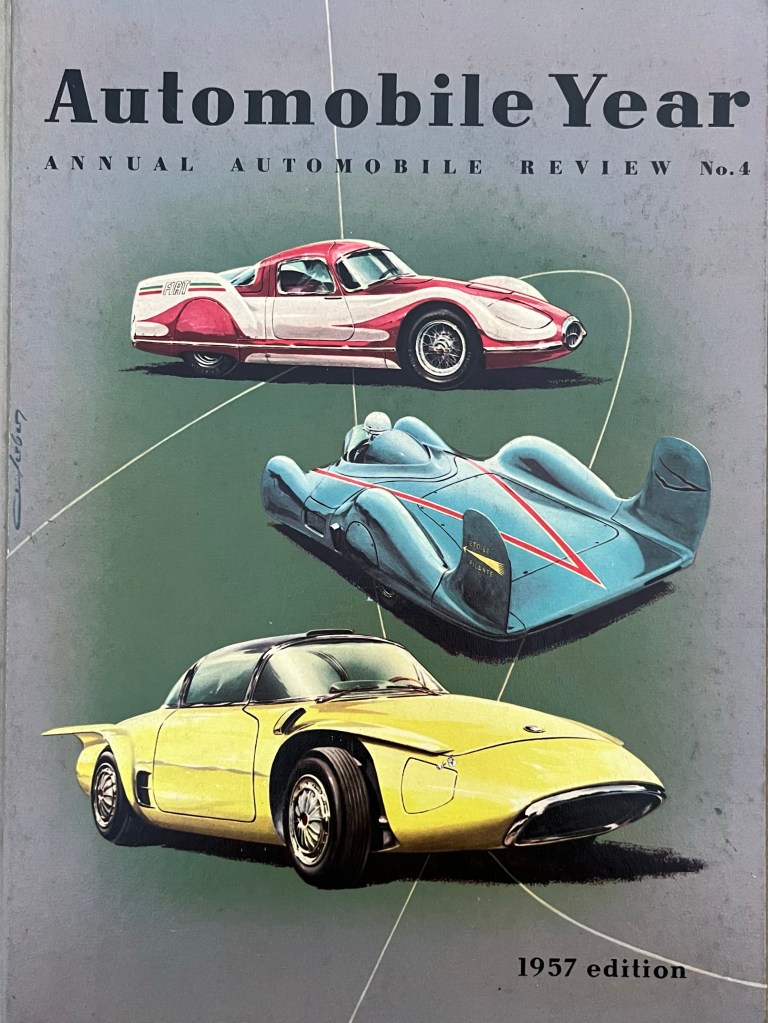
My friend Tony Johns lent me a couple of early AutoCourses that I turned into a couple of interesting posts. I’ll continue with that but thought I’d add an occasional piece based on my own collection of Automobile Years.
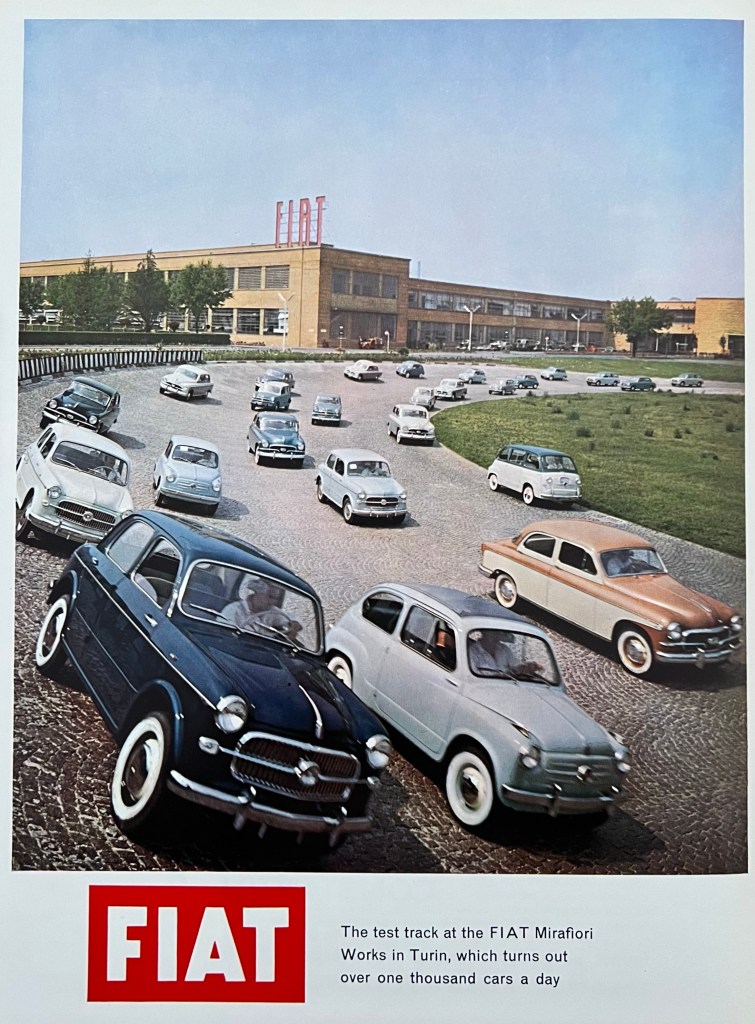
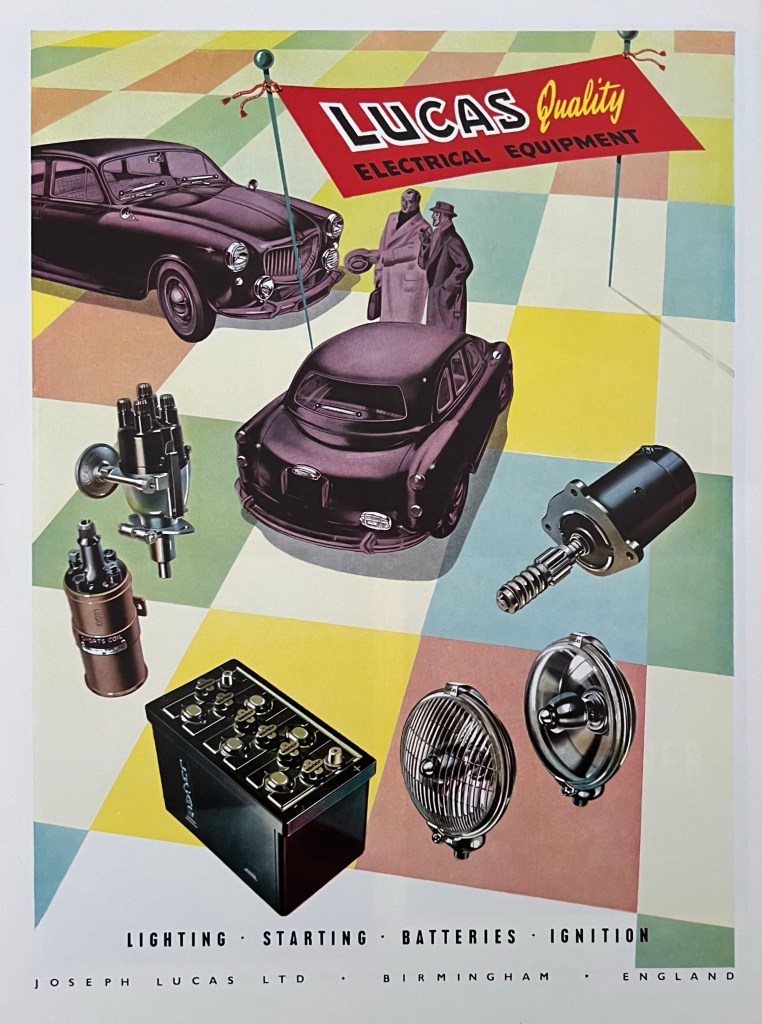
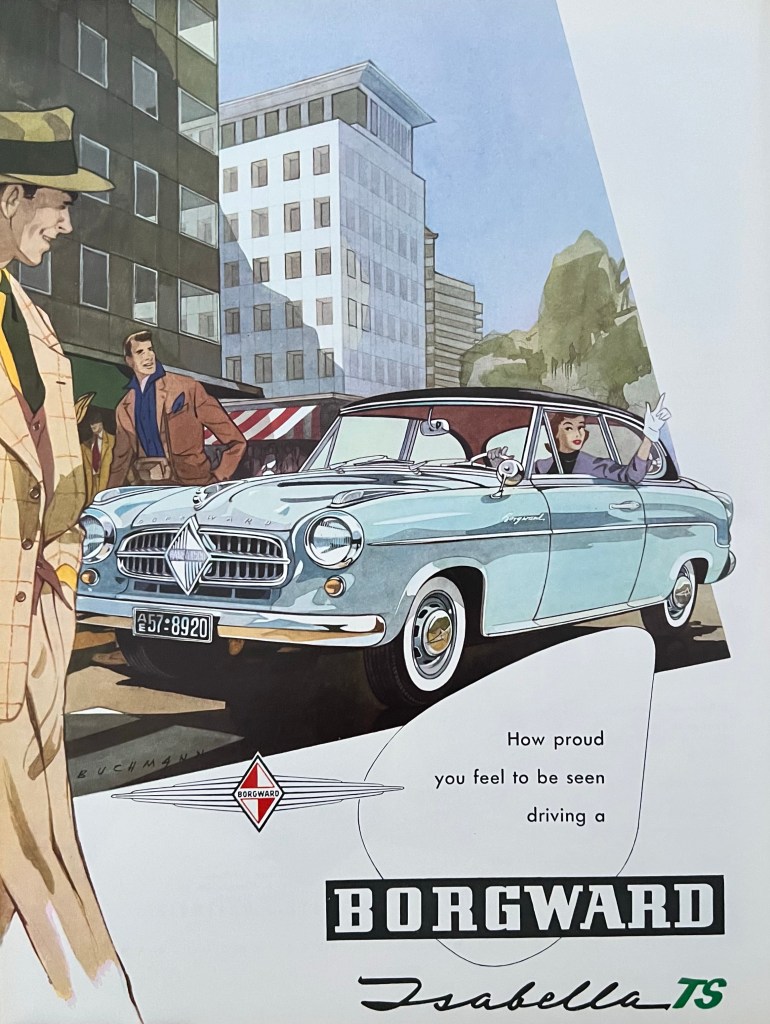
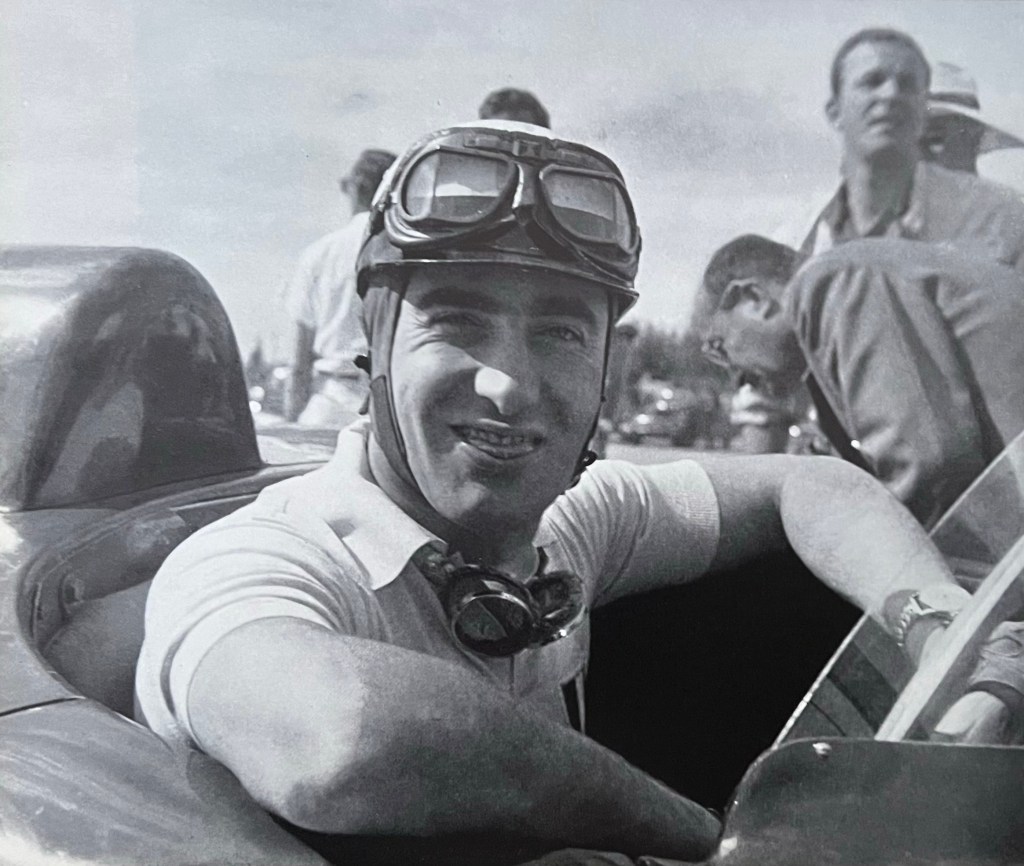
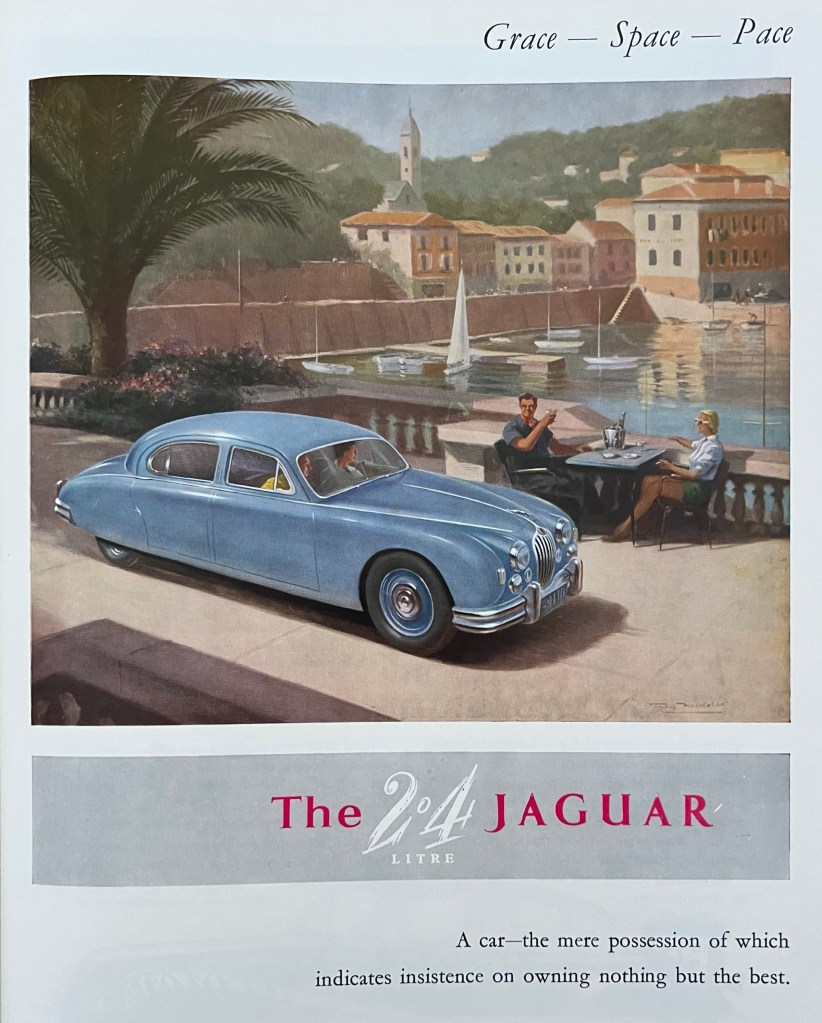
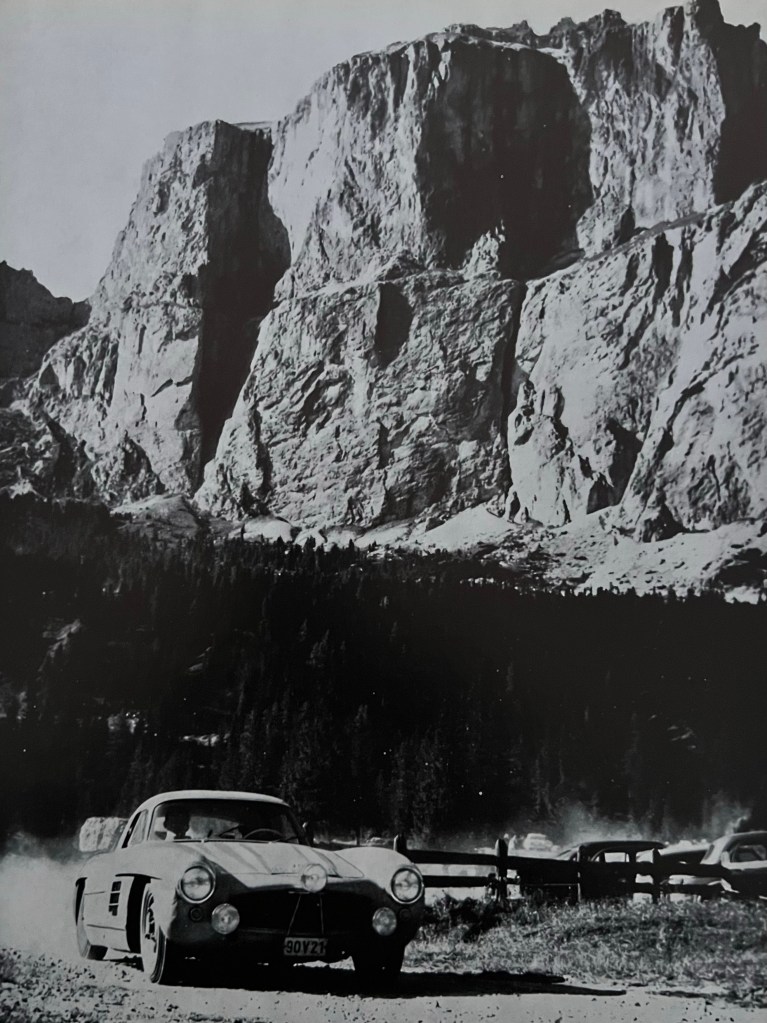
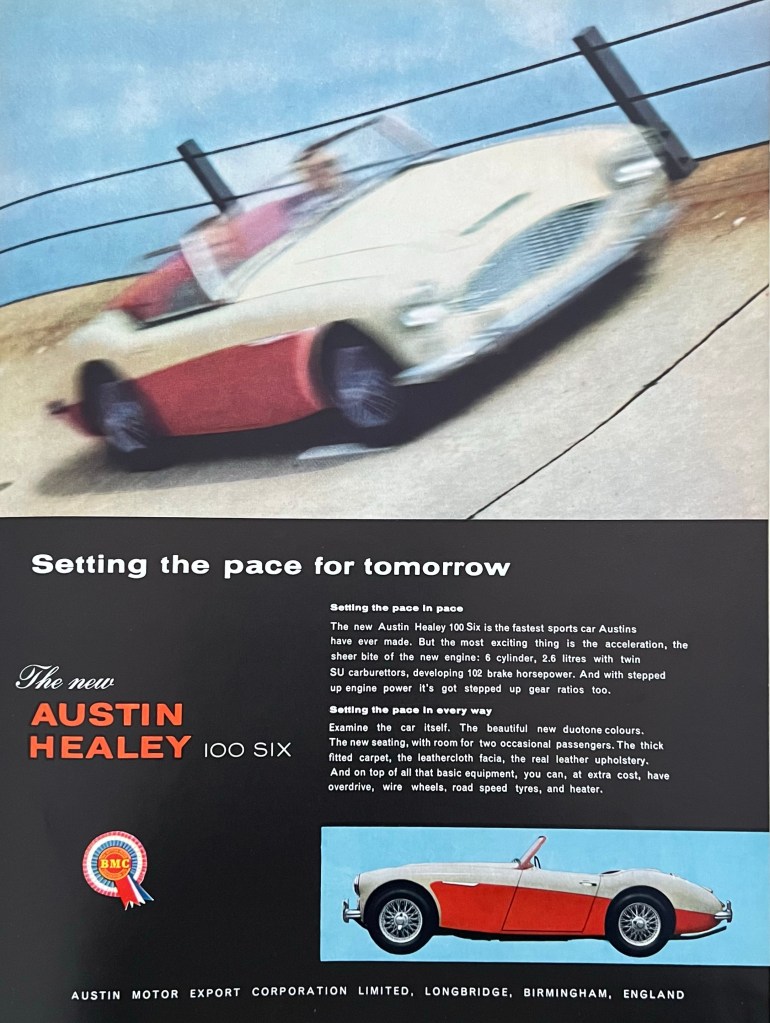
It’s the beauty of the some of the ads that really caught my eye. The reproduction of small monochrome racing shots isn’t that flash so I’m sharing the best of the relatively small number of colour shots and a few monochrome photographs within the mix of ads.
The artwork on the cover has a name but I can’t read it, nor is it disclosed elsewhere. The cars shown are a Fiat 8001 Turbina, Renault Shooting Star, General Motors XP-500 gas turbines.
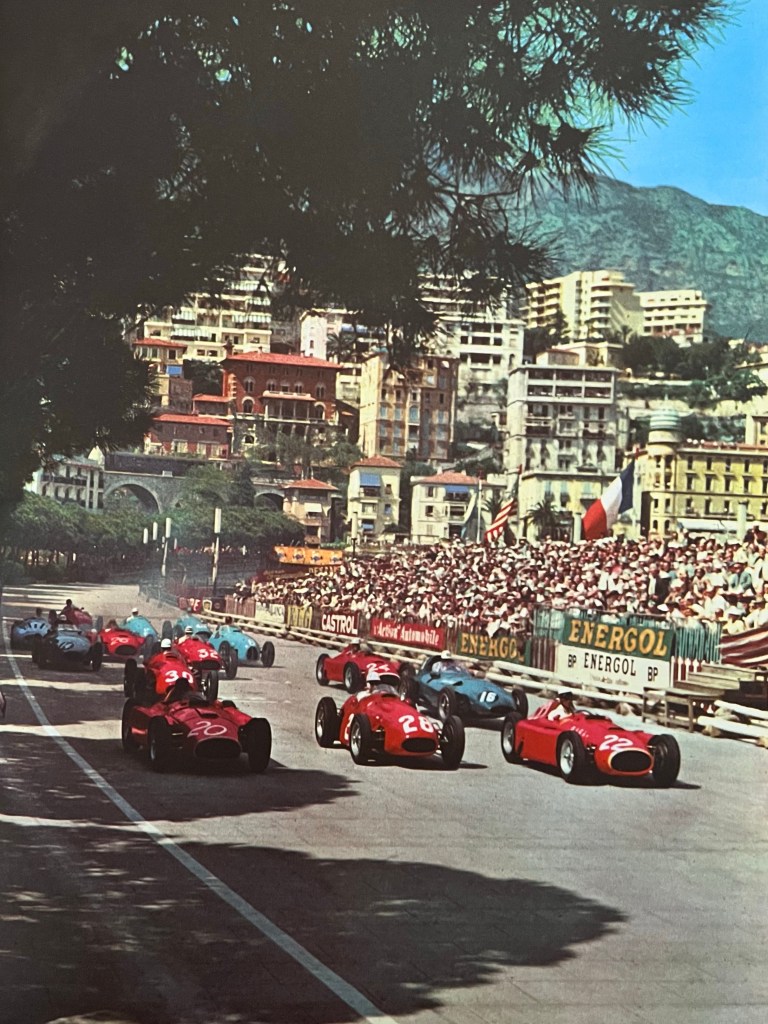
Superb Yves Debraine shot of the start of the 1956 Monaco Grand Prix.
The two Lancia-Ferrari D50s of JM Fangio and #22 Eugenio Castellotti sandwiching Stirling Moss in a works-Maserati 250F. #16 is Harry Schell, Vanwall VW1, #30 Jean Behra, 250F, #24 Luigi Musso, Lancia-Ferrari D50, #32 Cesare Perdisa in another works Maserati 250F.
(Yves Debraine)
‘Stirling Moss had been in the lead from first to last and gave a faultless display of brilliant driving and faultless race strategy (being under great pressure from Fangio’s Ferrari late in the race). The discovery of the day was Peter Collins (Ferrari second) . Behra drove a steady race into 3rd place, with no incidents (250F).’ See here for more: https://primotipo.com/2014/08/21/stirling-moss-monaco-gp-1956-maserati-250f/
(Y Debraine)
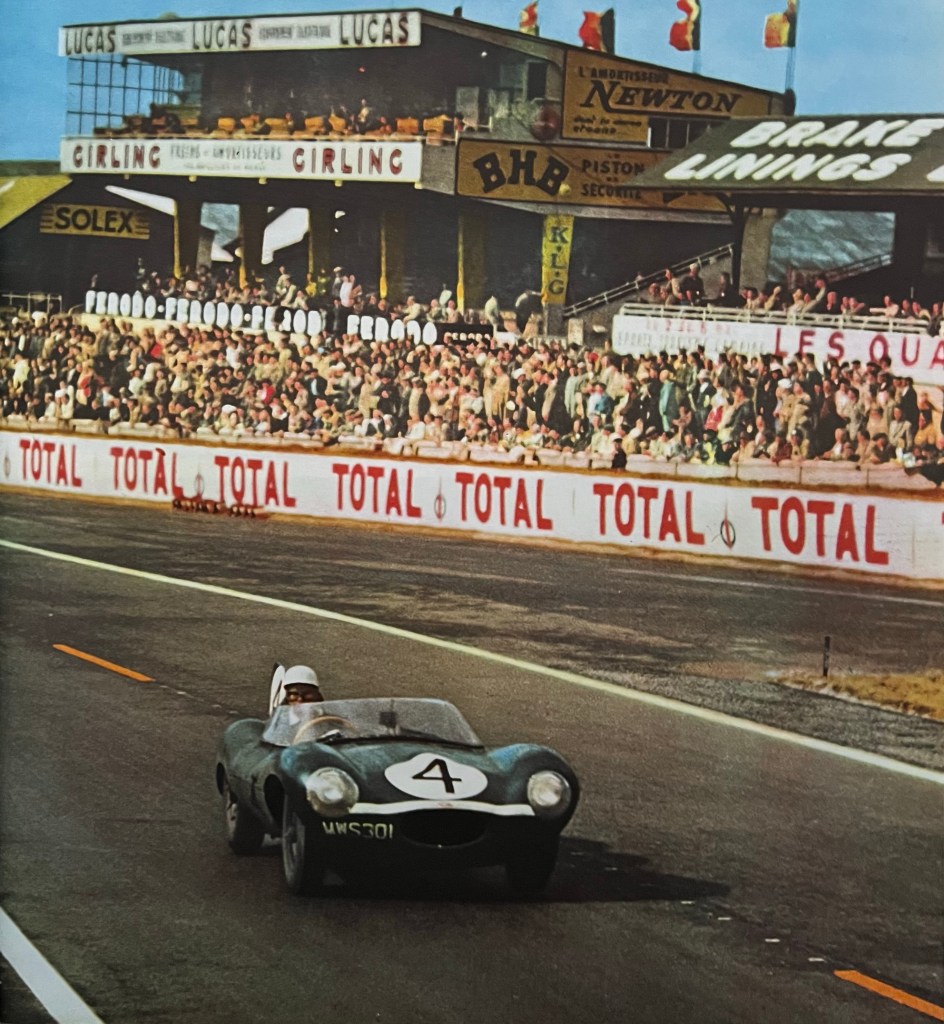
Le Mans 24-Hours.
‘The privately entered Ecurie Ecosse Jaguar D-Type driven by Ron Flockhart and Ninian Sanderson gave Jaguar an unexpected victory – the fourth since the war – after bad luck had struck the works team.’
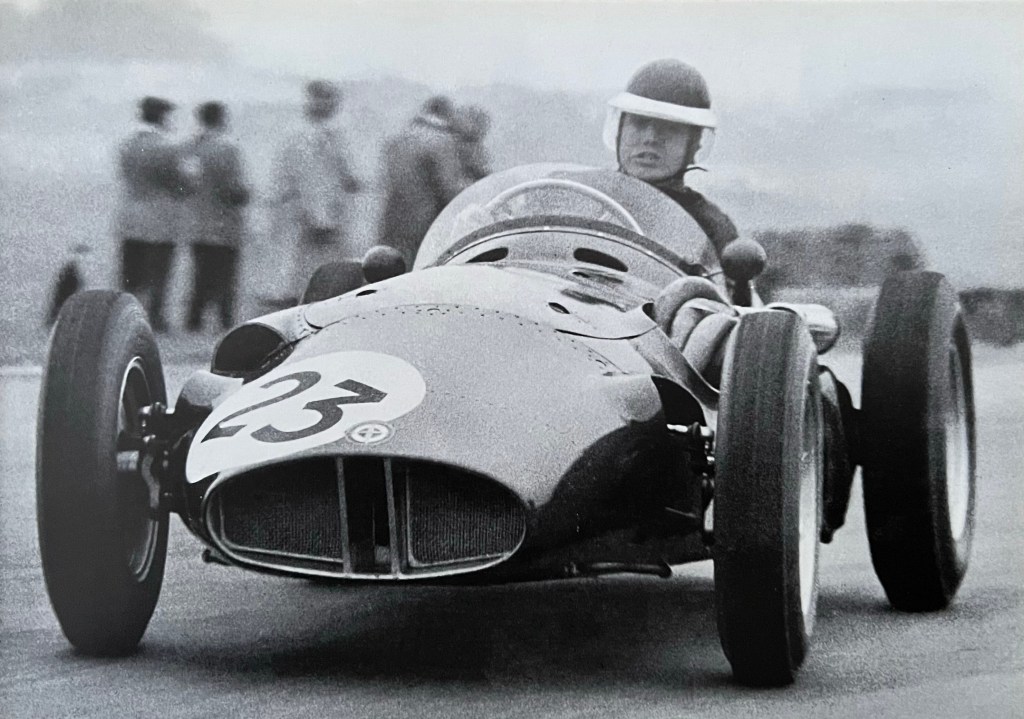
‘Mike Hawthorn was in magnificent form and held the lead (of the British Grand Prix at Silverstone) for 15 laps.’
‘The BRM (Type 25) showed again that it is probably the fastest of all current Grand Prix cars, but Hawthorn was eventually passed by Moss (Maserati 250F) and others before being forced to retire at 23 laps by loss of lubricant to a rear universal joint, which produced incipient seizure.’
Moss the led until the 68th lap when misfiring intervened with Roy Salvadori driving the race of his life in the Gilby Engineering 250F, holding second place for 30 laps in front of all of the works cars! Fangio, Lancia-Ferrari D50 led to the finish after Moss retired, with Peter Collins/Alfonso de Portago second and Jean Behra, Maserati 250F third.
(B Cahier)
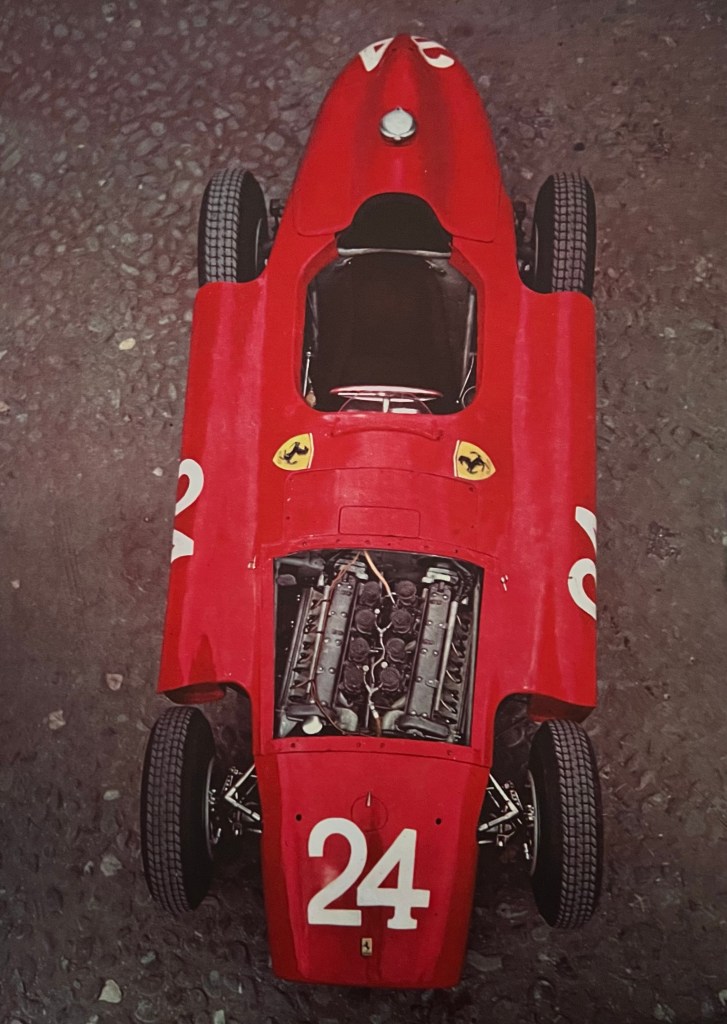
JM Fangio’s F1 Drivers Championship winning Lancia-Ferrari D50.
‘Front engine, V8 mounted at an angle. Bore and stroke 76 x 68.5mm, 2495cc. Maximum power 285bhp @ 8500rpm, 4-overhead camshafts, chain driven. 4 downdraught Solex twin-choke carburettors. Dual ignition: 2 magnetos, 16 plugs. Clutch at rear in unit with 5-speed gearbox and differential. Front suspension by double wishbones with transverse leaf spring. Rear suspension De Dion, with transverse leaf spring. Drum brakes. The tanks in the wheel fairings are no longer used, all the fuel being carried in the tail.’
(Y Debraine)
The Big Red Cars to the fore at the start of the French GP, Reims, July 1: Peter Collins, Eugenio Castellotti and JM Fangio in Lancia-Ferrari D50s ahead of the Moss Maserati 250F, Harry Schell’s Vanwall VW1 #22, and Jean Behra’s 250F, then one of the Gordinis, and the rest…
Fangio led until he pitted on lap 40, but he joined the fray after a change of plugs. Harry Schell raced brilliantly, retired his own Vanwall, then took over Hawthorn’s while it was in seventh place, and then chipped away at the leading Ferraris passing all but Fangio until injection pump trouble intervened.
Collins won from teammate Castellotti by three-tenths after 2 hr 34 min of close racing, then Behra 30 seconds back.
Sebring 12-Hour
‘The victory of the Fangio-Castellotti team (in the Sebring 12-Hour) was largely the work of the young Italian. Fangio, feeling unwell, had handed the car to him for the last hours of the race. The 3422cc four-cylinder Ferrari (860 Monza) covered a distance of 1008.72 miles in twelve-hours and put up a new record by doing twelve more laps than the winning Jaguar (D-Type) in 1955.’
Luigi Musso and Harry Schell were second in another Scuderia Ferrari 860 Monza with the Bob Sweikert/Jack Ensley Jaguar D-Type third.
Mille Miglia 1956…
I was going to give the shot below the same treatment as the rest and then I read the prophetic piece that went with it…not too long before the 1957 Mille disaster. It’s worth sharing in full I thought, an insiders view of the time clearly expressed.
‘For a long time after the catastrophe at the Le Mans Twenty-four Hours in 1955, motor-racing circles feared that the XXIInd Mille Miglia had been the last of the series. That race, in which 365 cars competed over 1,000 miles of roads lined by hundreds of thousands of spectators, is the most dangerous of all motor races for the drivers and even more so for the spectators.’
‘Therefore those who love the sport were all the more pleased when, after long and bitter disputes, the XXIII edition of the race was permitted-for it was a triumph over the enemies of motor racing-but they felt some uneasiness nonetheless. So few changes had been made in the regulations that the old risks were still there. The competitors were still to start off in the pitch dark and charge at headlong speed along roads lined – and in some places obstructed – by enthusiastie spectators many of whom had taken up their stand at the most dangerous points.’
‘The rain that fell incessantly throughout the race made the surface slippery in the extreme. Several cars left the road and the day closed with 7 fatal casualties – two of them among the spectators – and 16 injured. Indeed it was really only by sheer good luck that there were not a great many more. For these reasons we are against the Mille Miglia in its present form.’
‘Sooner or later it is bound to lead to a catastrophe fraught with the direst consequences because it could be so easily avoided. There must be fewer starters with a severe selection of the entries, and the most dangerous points-especially where the cars come out of a bend-must be closed to spectators. If these conditions, which without eliminating all danger would reduce the risk to reasonable proportions, cannot be satisfied the Mille Miglia will have to be considered anachronistic. We have nothing against the organizers. We simply believe that in common sense it must be admitted that the pleasure and interest of a limited number of people together with the technical advances brought about by the event are no justification for the terrible risks involved in a race where for 20 hours on end thousands of spectators without the slightest protection are within arm’s length of meteors unleashed at terrific speed.’
(‘A fine colour study which catches the typical atmosphere of many Mille Miglias. Rain pelting down from a leaden sky, spectators huddled together under umbrellas, and a brilliantly coloured car, headlamps blazing, as it roars on towards the finish at the end of the long day. The car is Collin’s Ferrari (860 Monza Scaglietti), taking second place in the XXIIIrd Mille Miglia with photographer and journalist Louis Klemantaski acting as navigator’ Y Debraine)
‘The XXIIIrd Mille Miglia was run in appalling weather which prevented the repetition of performances on a par with those recorded in 1955. The times chalked up by all the classes were slower than last year with the sole exception of Michy on RENAULT 750 c.c, who broke the record set up by Galtier in 1955. All in all one may say that the small, and therefore less speedy, cars were less severely handicapped by the rain than the powerful machines capable of doing over 125 m.p.h.’
‘Victory smiled on Eugenio Castellotti on a 3 ½-litre 12-cylinder FERRARI (290 MM Scaglietti). He took 1 hour 29 minutes 22 seconds more than Moss last year to cover the 1,597 kilometres of the course but his average speed was most impressive in view of the atmospheric conditions he was up against. Second place was taken by another FERRARI – a 3 1/2 litre 4-cylinder model – driven by Peter Collins whose passenger was our contributor Klemantaski, a bearded British journalist like Jenkinson.’
‘FERRARI won all the laurels taking 3rd, 4th and 5th places with Musso, Fangio and Gendebien, the latter being the winner of the “Grand Tourisme” class. In the next three places we find three MERCEDES 300 SL privately entered but prepared by the works. The MASERATIs were a disappointment although Scarlatti took first place in the class for sports cars under 2,000 c.c., while Perdisa was first in the under 3,000 c.c. class but only 28th in the general classification. Stirling Moss, No. I member of the team, whose car was not quite up to scratch, ran off the road before Rome and withdrew from the race.’
‘The ALFA ROMEO GIULIETTA which had disappointed in 1955 put up a magnificent show this year. As usual PORSCHE took first place in the “Grand Tourisme” class under 1,500 c.c. but was defeated in the sports class by Cabianca’s OSCA 1500 and Jean Behra’s MASERATI. All four RENAULT DAUPHINES entered by the works finished the race although Paul Frère capsized when leading the team. The winner was Gilberte Thirion at an average of 65.85 m.p.h. Our contributor Bernard Cahier, at the wheel of his own DAUPHINE – a production model in every respect – covered the course at 58.28 m.p.h. Michy on a modified 4 H.P. RENAULT produced a fine performance, as already mentioned, by lowering the record for his class established in 1955 on a dry surface by Gaultier with a car of the same type.’
‘Of the 427 entries, 365 started but only 182 reached the finish – a wastage of 50 per cent.’
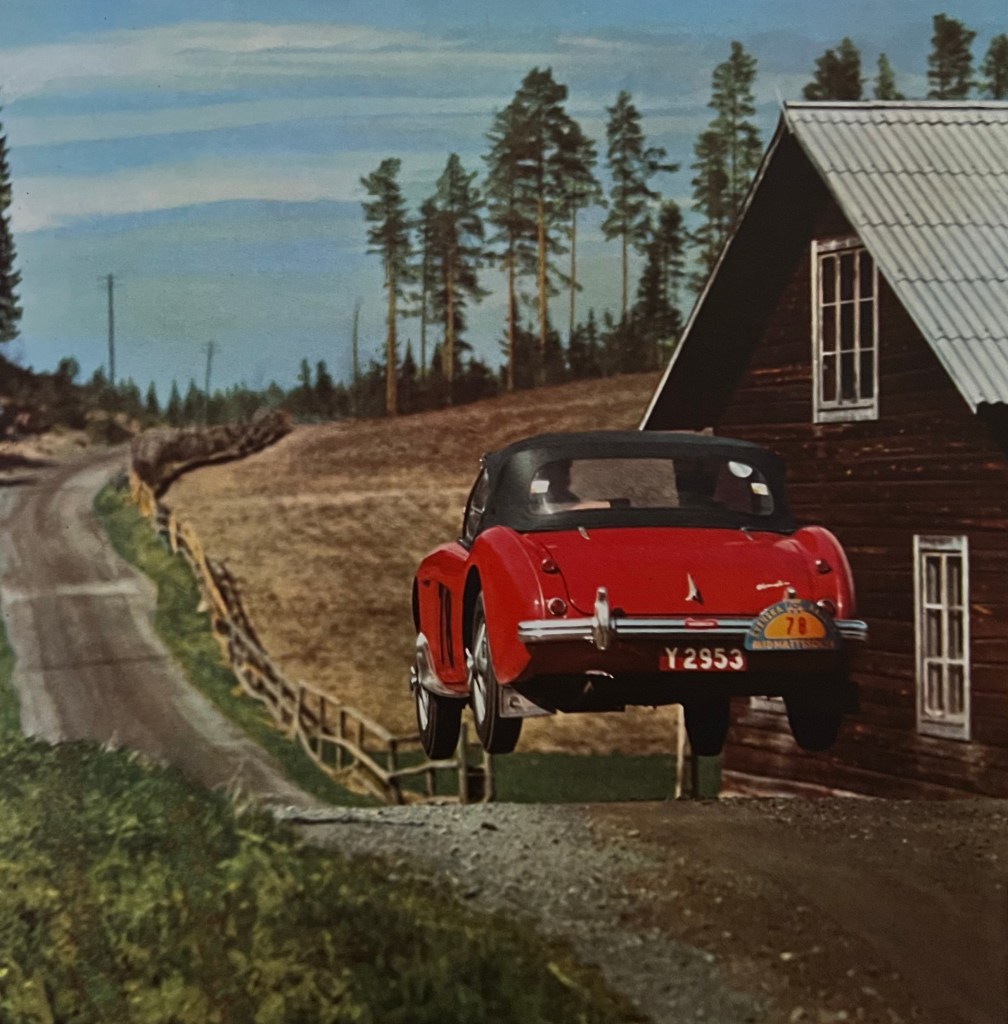
‘The Frölander and Lindbergh, shortly after take-off, on their flight to the Midnight Sun in a single-engined (?) Austin Healey.’ This crew didn’t finish in the top-10, the May 29-June 3, 1956 event was won by a VW 1200 driven by H Bengtsson and navigator A Righard.
Credits…
Automobile Year, Yves Debraine, Louis Klemantaski, Junior, Bernard Cahier, B Gronlund
Tailpiece…
I’ve long thought the power of an ad is inversely proportional to the word count…particularly if the visual imagery is up to snuff!
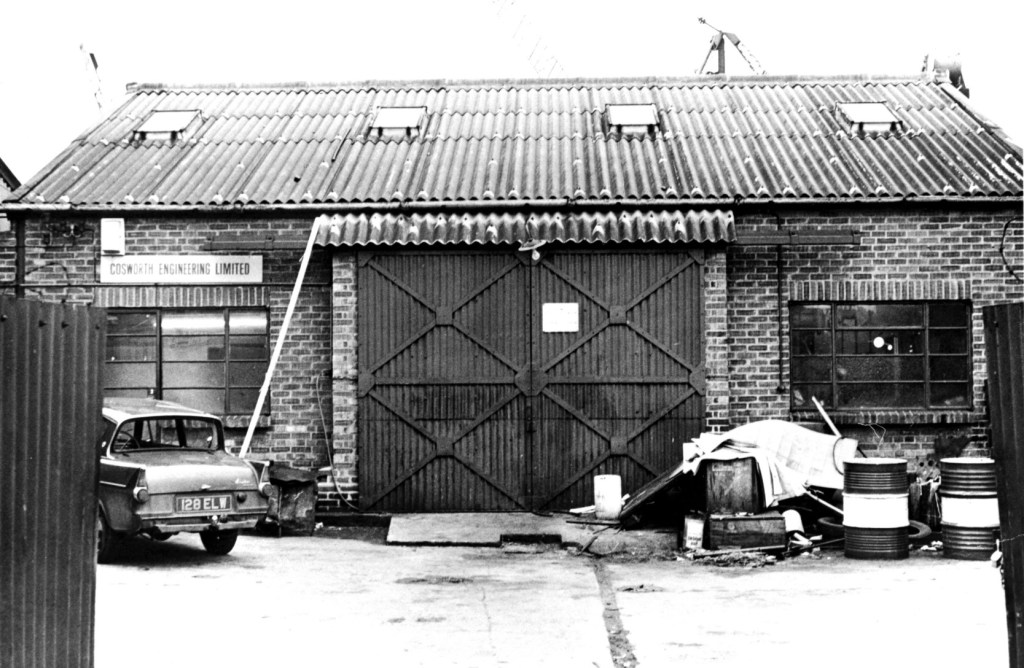
Cosworth Engineering Ltd was established on September 28, 1958 and originally operated from this modest facility in Shaftesbury Mews, London W8.
Mike Costin was the Technical Director of Lotus by day and Cosworth partner by night, while Keith Duckworth worked on the new enterprise full time.
The firm’s rate of growth can be gauged from moves to larger London premises in Friern Barnet in 1959 and then again to Edmonton in 1961.
Their first projects in 1959-60 were the Mk1, a modified Ford Anglia 105E engine design, the Mk 2, a production Formula Junior race engine based on the learnings of the Mk1, and the Mk3, an improved version of the Mk2 using their A3 cam, with a stronger bottom end and optional dry sump.
Cosworth were up and running…
I’ll take your advice as to chassis and gearbox manufacturer. The ‘Aeroquip’ fittings and roll bar height suggests a modern shot? (Cosworth)
Credits…
Cosworth Engineering
(Cosworth)
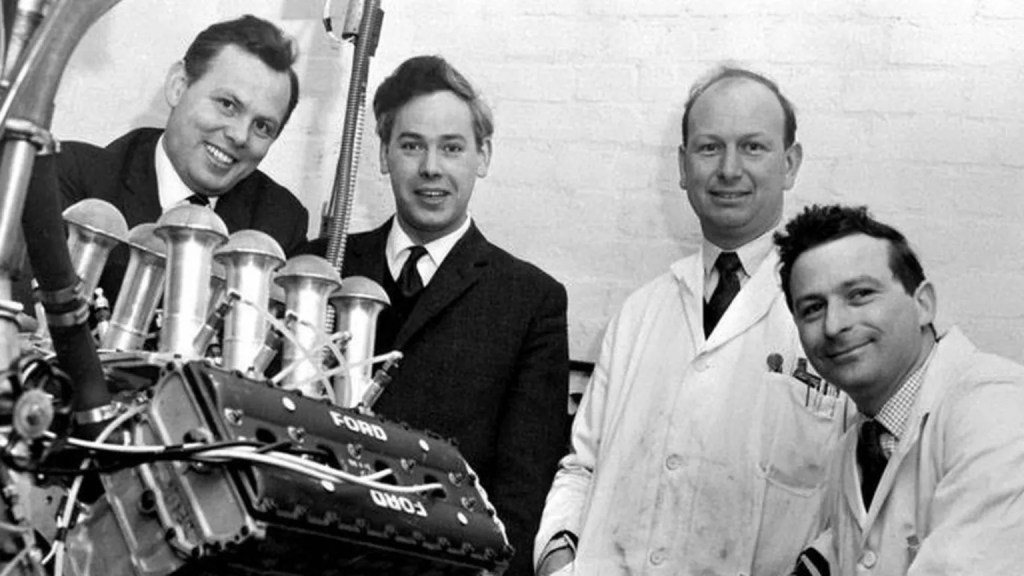
Cosworth’s Bill Brown, Keith Duckworth, Mike Costin and Ben Rood with the almighty, most successful racing engine of all time, the Ford Cosworth DFV 3-litre V8 F1 design. More about the engine here: https://primotipo.com/2016/05/12/me-an-my-dfv/
John Surtees is chasing Jack Brabham hard in the latter stages of the 1963 Australian Grand Prix at Warwick Farm on February 10, 1963. He is racing a Lola Mk4A Climax 2.7 FPF chassis #BRGP44.
Jack’s Brabham, Brabham BT4 Climax passed him late in the race, John fell short by 12 seconds in a race run in intensive heat, but he had a good southern summer, winning two of the eight Australasian internationals, the NZ GP at Pukekohe and the Lakeside International.
Dick Ellis cutaway of an F1 Lola Mk4 Coventry Climax FWMV 1.5 V8Surtees, Team Lotus Lotus 18 Climax at Ardmore during the 1961 NZ GP, DNF (M Fistonic)
1963 wasn’t his first trip Down Under. Il Grande John did the Kiwi Internationals with Team Lotus in 1961 when Innes Ireland, Jim Clark and Surtees raced Lotus 18 2.5 FPFs fitted with the dreaded Queerbox. In a grim tour for the team, Surtees didn’t finish any of his three races at Ardmore, Levin or Wigram.
He was back again in 1962, running a Reg Parnell Cooper T53 2.7 in Australia, finishing second at Sandown and winning from Jack Brabham’s Cooper T55 2.7 on Longford’s daunting mix of roads, undulations, railway viaduct and barbed wire.
Parnell ran a pair of Lola T4 Climaxes, 1.5 FPF powered early on, then 1.5 FWMV V8 engined when the engine became available in Grand Prix racing that year. Surtees finished a great fourth in the World Drivers Championship during the season in which the monocoque Lotus 25 Climax rewrote the chassis design rulebook.
Surtees winning Lola Mk4A and Bruce McLaren, Cooper T62 on the front row at Pukekohe, NZ GP 1963. That’s Brabham’s #4 BT4, and Tony Maggs in the other Parnell Lola Mk4 at far left (D Oxton)Later Kiwi Ace, David Oxton attends to a Colotti ratio change on Surtees’ car, Pukekohe (D Oxton)
Reg (Bowmaker-Yeoman Racing Team) fitted 2.7FPFs to two of his T4s in place of the smaller F1 V8 for the 1963 Formula Libre Australasian Internationals for Surtees and South African driver, Tony Maggs use. Parnell knew the local-ropes, having raced a Ferrari Super Squalo 3.4 as part of a two car team together with Peter Whitehead in the 1957 New Zealand Internationals. He did well too, winning the NZ GP and the Dunedin Road Race in what was his last hurrah as a driver before taking on Aston Martin team management duties.
Other hot-shots that summer included Jack Brabham in his new F1 BT3 derived BT4 2.7 FPF, while Bruce McLaren raced the similarly powered Cooper T62 with which he won the 1962 Australian Grand Prix at Caversham, near Perth that November. Graham Hill (and Innes Ireland in some NZ races) raced the radical, fast Ferguson P99 albeit he lacked the mumbo of his completion, running 2.5 FPF’s rather than the more fancied 2.7 ‘Indy’ variant.
Young Cooper T53 mounted thrusters included Chris Amon, Jim Palmer and Angus Hyslop. In Australia the local quicks included David McKay and Bib Stillwell in new BT4s, while Lex Davison and young grazier John Youl raced Coopers T53 and T55 respectively.
Surtees’s Lola Mk4A #BRGP44 was quick everywhere, starting the tour with a bang by winning the NZ GP at the new Pukekohe circuit near Auckland, then gearbox problems caused DNFs at Levinand Wigram. He failed to finish at Teretonga as well, albeit Maggs placed second behind McLaren at the track near Invercargill at the very south of the South Island.
Surtees in the Wigram – RNZAF airfield – paddock. That Ferrari 250 SWB belonged to ‘Richardson’ for those wanting to do further research (W Collins)Surtees and handsome Mk4A at Teretonga, ninth after undisclosed problems (G Woods)
There was then a fortnight to ship the cars across the Tasman Sea to Sydney Harbour for the AGP to be held on the challenging, technical Warwick Farm on February 10.
Surtees put down a marker, popping his Lola on pole in Jack’s backyard. He then led the race until Brabham – who started well back on the grid having sorted a new BT4 chassis during practice – passed him with 14 laps to run, the Brit suffering along with many others in the intense heat. John had the consolation of meeting fastest lap.
Then it was off to Lakeside, north of Brisbane. There Surtees started from Q3 and won from Hill, bagging the P99’s best result for the tour, with Stillwell third in his new Brabham BT4. Chris Amon was fourth and impressing pit-pundits with every drive. At the end of the summer Reg Parnell took the 19 year old off to Europe where he did rather well…initially racing #BRGP44 FWMV powered throughout 1963.
Shell drivers at Warwick Farm: David McKay, Tony Maggs, Graham Hill, John Surtees, Jim Palmer and Chris Amon (C Galloway)Surtees hooks into the right-hander at the end of Pit Straight, Paddock, at Warwick Farm 1963 (B Donaldson)
Surtees returned to Europe to meet his new Ferrari team commitments, missing the final two races at Longford and Sandown, with Tony Maggs, sixth and second in the Parnell Lolas respectively.
Had there been a Tasman Cup that summer – the first was contested and won by Bruce McLaren in 1964 – Bruce would have won it. Brabham won at Levin and Warwick Farm, Surtees at Pukekohe and Lakeside, while McLaren was victorious at Wigram, Teretonga, Longford and Sandown.
The Lolas had proved very competitive Formula Libre machines but were thoroughly outclassed in ’63 GP racing: Amon, Maurice Trintignant, Lucien Bianchi, Mike Hailwood and Masten Gregory all failed to bag a point for Reg Parnell Racing.
Surtees Mk4 during 1962. The idea of that yellow enamelled spaceframe chassis was to make it easy to see any cracks that arose (unattributed)
Etcetera…
(MotorSport)
Pretty car. Surtees during the soggy German Grand Prix was second behind Graham Hill’s BRM. He first raced the chassis he used throughout his 1963 Australiasion Tour, T4A #BRGP44, at Karlskoga in August, there he led until a valve spring broke.
(MotorSport)
Main Men. Reg Parnell, Surtees and who? during the May 1962 Dutch Grand Prix weekend at Zandvoort. John popped his car on pole but crashed in the early laps after a wishbone failure.
(MotorSport)
More Main Men. Surtees and Lola’s Eric Broadley at Aintree during the British GP meeting in July. And below, John with the car in the paddock. FWMV is on Webers, a bit cheaper, but less powerful than the Lucas injected alternative.
Lola had a fantastic weekend with Surtees qualifying and finishing second in the race. The cars gained pace after the cockpit area was found to be flexing by Surtees in the lead up to the Belgian Grand Prix, when additional tubes were added to the suspect area.
(MotorSport)(N Beresford Collection)
Don Beresford – father of engineer Nigel Beresford of Ralt, Tyrrell, Penske Cars et al fame – working on a T4 at Bromley during 1962. It’s after the chassis cockpit section was strengthened, note the additional tubular section which has been added, so it’s probably the chassis Surtees raced carrying #6 in the December 29, 1962 South African Grand Prix at East London, DNF.
The ’63 New Zealand GP was a week later on January 5, no rest for the wicked!
Credits…
Bob Donaldson-State Library of New South Wales, Dick Ellis, Colin Galloway, Milan Fistonic, David Oxton Collection, Graham Woods Collection, Warner Collins, Lynton Hemer, Dick Simpson-oldracephotos.com, Michelle Glenn, Nigel Beresford Collection
Tailpieces…
Surtees, Surtees TS8/9 Chev, Alan Hamilton, McLaren M10B Chev, Colin Bond, McLaren M10C Repco-Holden and Graeme Lawrence, Brabham BT29 Ford FVC (L Hemer)
John Surtees was a busy lad throughout the 1960s with Grand Prix, World Endurance Championship and Can-Am programmes in most seasons, so he never did do a Tasman.
Scuderia Ferrari had plans afoot for Surtees to race a Ferrari Dino V6 – the ‘Surtees Tasman Special’ Ferrari 246 #006 – in 1966 but a late season Can-Am accident at Mosport in a Lola T70 Chev hospitalised him that winter so that didn’t happen. Chris Amon subsequently went rather well with updated 246 variants in 1968-69.
(M Glenn)
By 1971 Surtees’ commercial imperatives had evolved somewhat. Not only was he contesting Grand Prix racing with a two car team, he was also a constructor of customer racing cars, including Formula 5000 machines, which had been adopted as the Tasman Formula from 1970.
So it made sense for Surtees to contest the November 1971 Australian Grand Prix at Warwick Farm in a Surtees TS8/TS9 Chev, perhaps selling a car or two, then leave the car here for his protege, Mike Hailwood to race in the following 1972 Tasman.
Surtees in front of Max Stewart’s Mildren Waggott TC-4V in the Farm’s Esses (D Simpson-oldracephotos.com)
Surtees qualified ninth after fraught practice sessions sorting handling problems, then had a miserable race without his preferred Firestones, but he still got as high as fourth before pitting for a new left-front tyre, losing three laps in the process, before having another puncture late in the race, finally finishing 14th. “He certainly gave the crowd good value while he was going, “The History of The Australian Grand Prix” recorded.
Frank Matich triumphed that day in his brand new Matich A50 Repco-Holden with Kevin Bartlett and Hamilton second and third in their McLaren M10B Chevs.
Finally, Mike Hailwood did well in the 1972 Tasman Series, he was second to Graham McRae’s Leda GM1 Chev despite not winning round, and was then the best of Team Surtees F1 drivers that season; eighth in the World Championship.
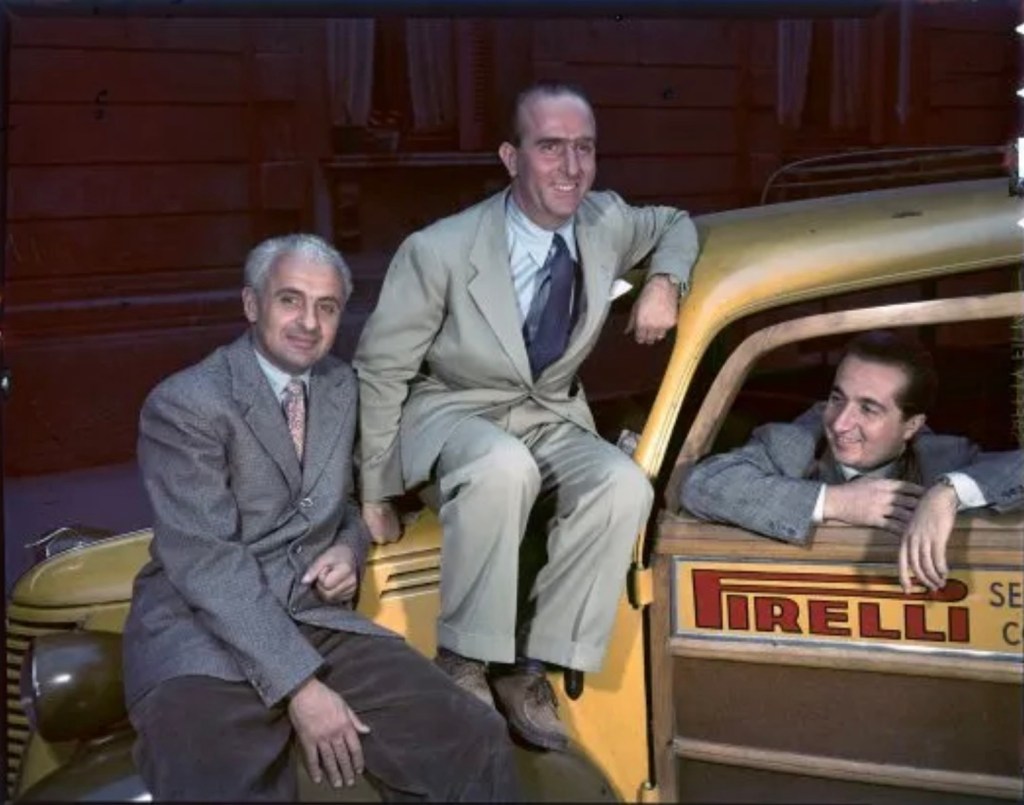
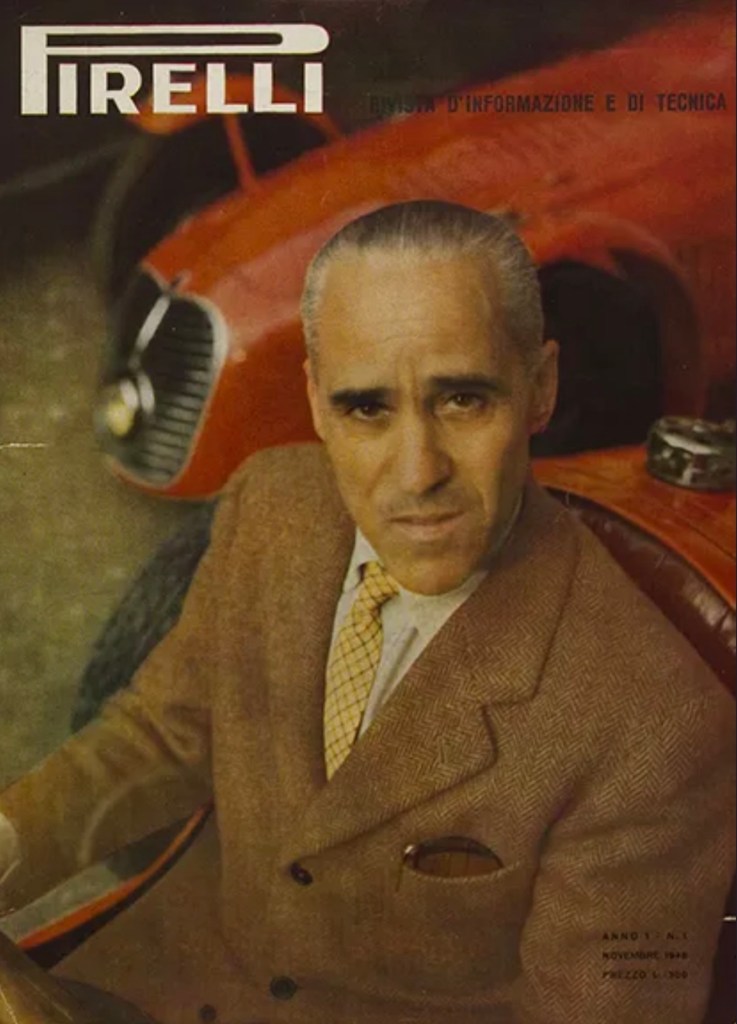
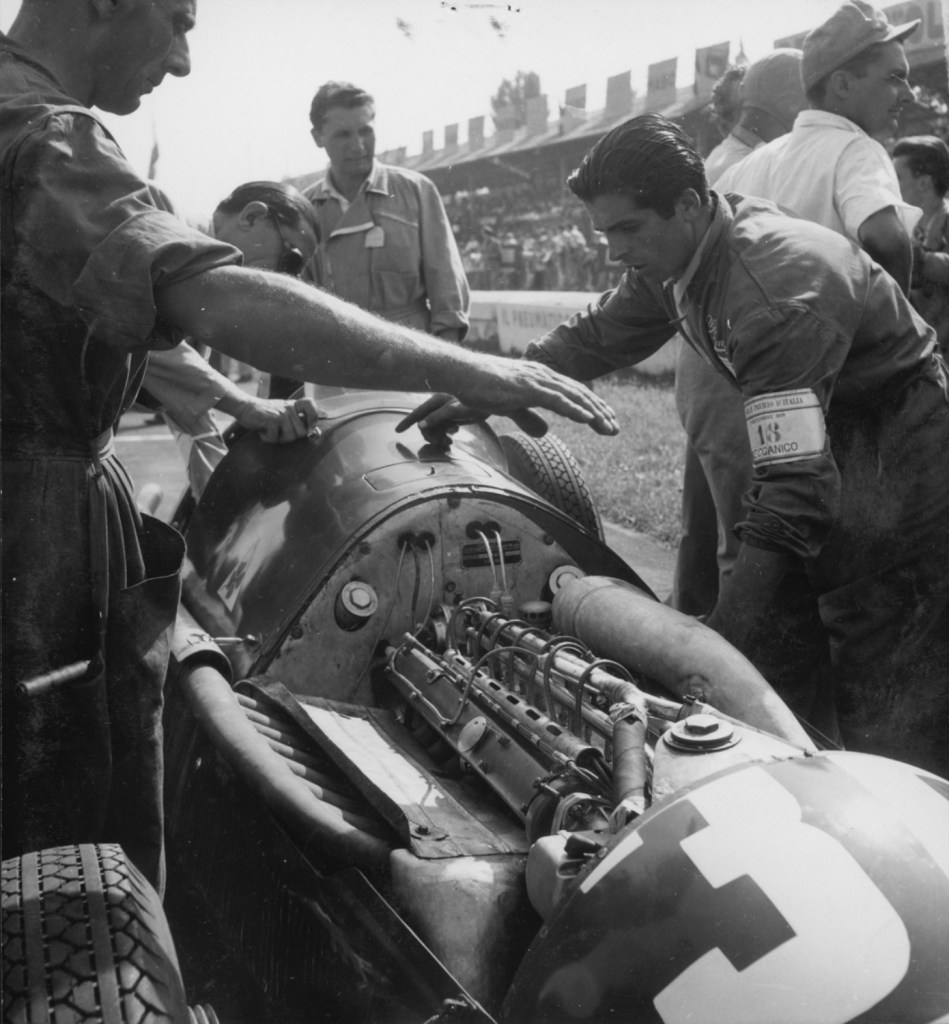
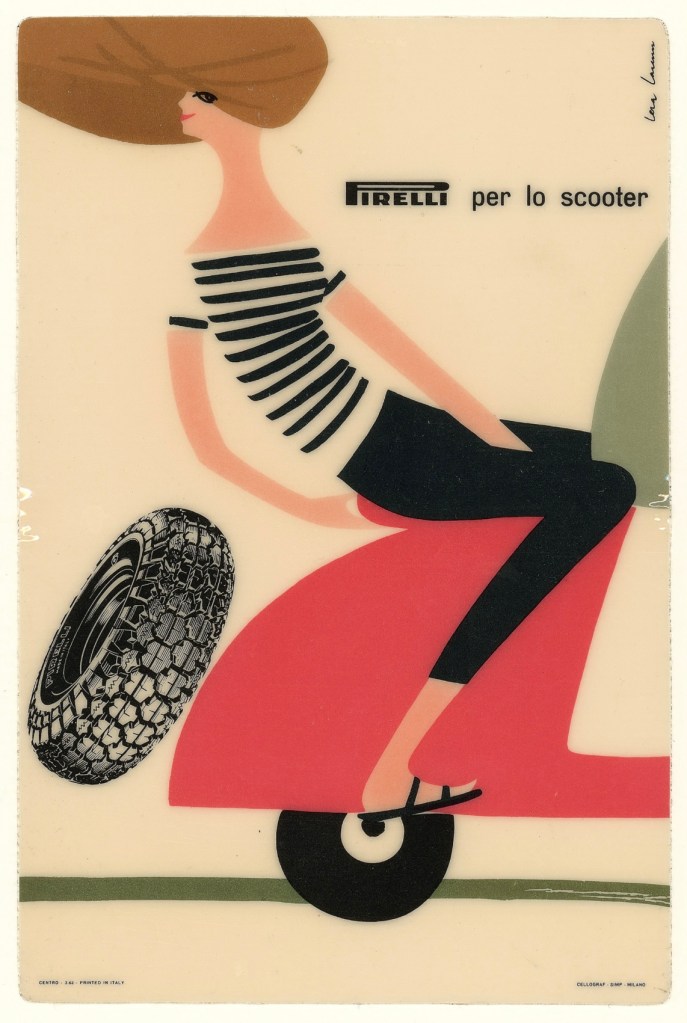
One thing leads to another. I was researching Giuseppe Luraghi, a longtime CEO of Alfa Romeo. Apart from mega talent as a corporate leader he was somewhat of a renaissance man, a gifted writer and poet. He initiated the Pirelli magazine way back in 1948 when he headed up Linoleum, a Pirelli Group subsidiary.
Pirelli, “Addressed it to the general public, it was a way of reaching out to the consumer with much more than a simple advertising message. Above all it was a way of conveying business culture.”
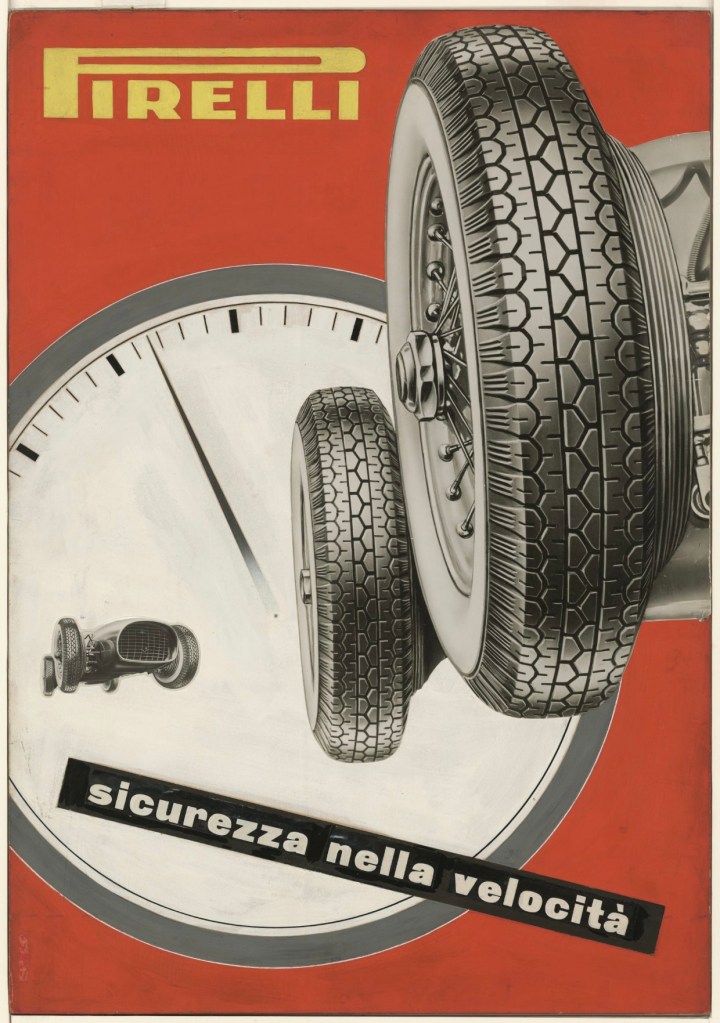
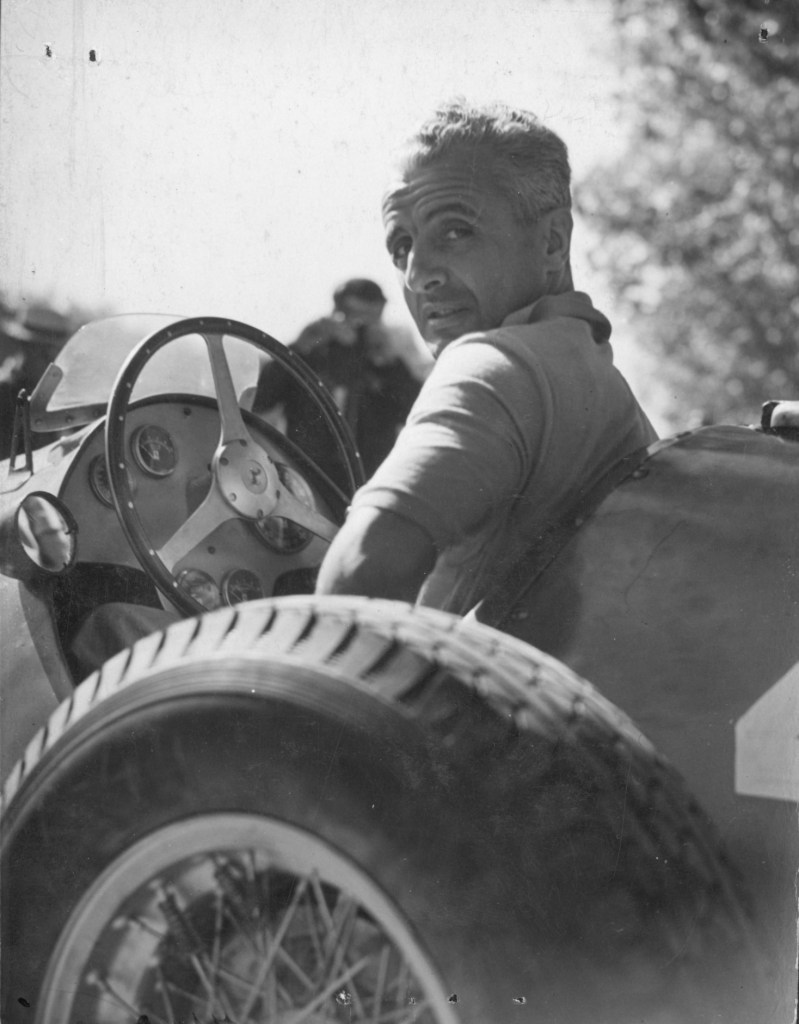
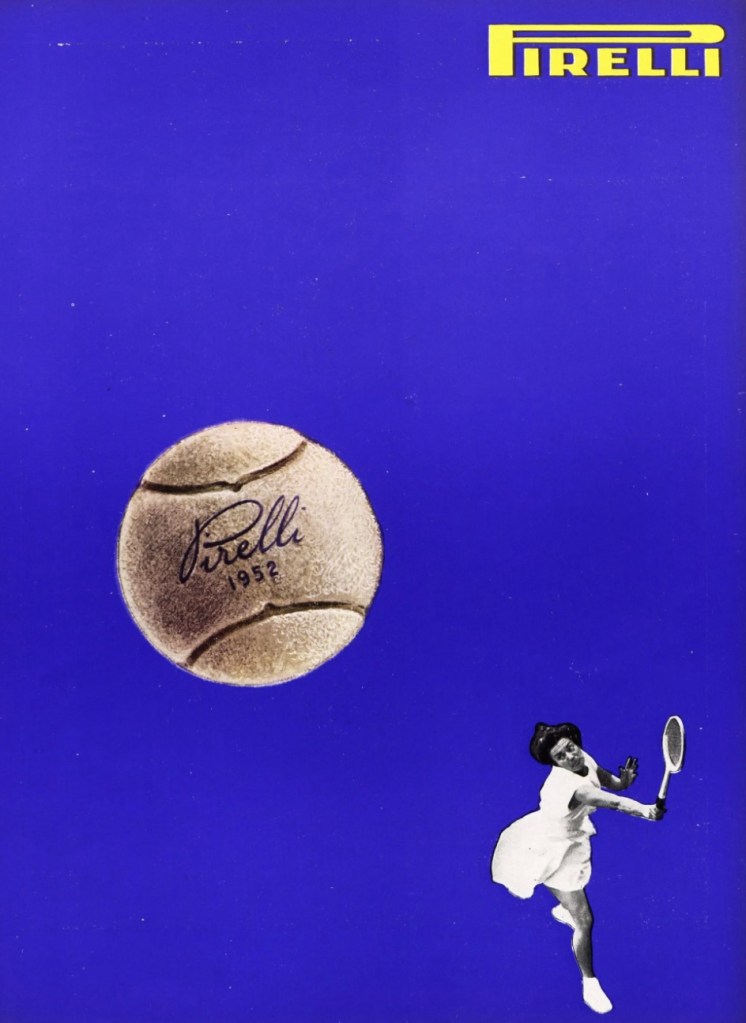
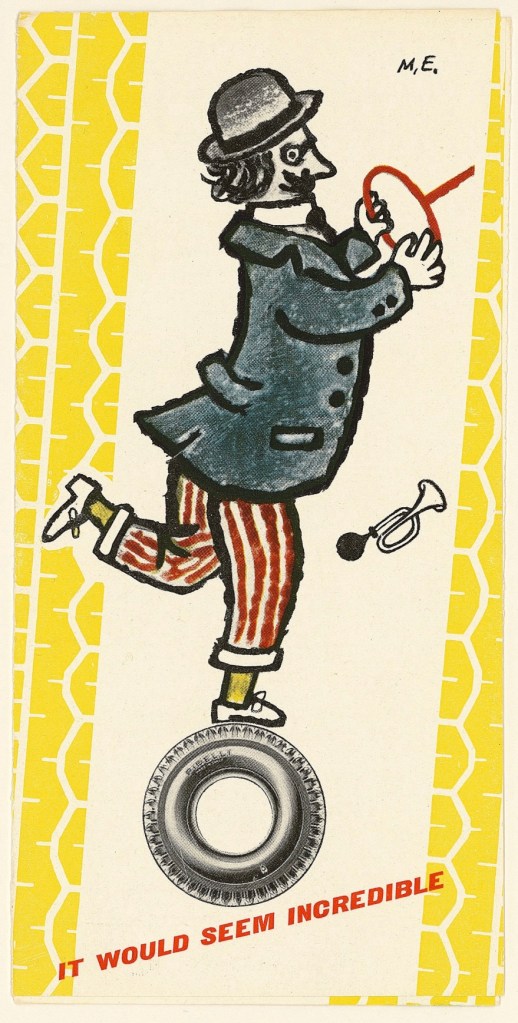
So, then yer go digging on that internet thingy and find Pirelli’s archives, these shots are the amazing result. I’ve mixed them up, they aren’t placed in chronological order so I’ve visually separated them by choosing Pirelli magazine covers or impactful or clever advertisements so you know when we are onto another subject. I’ve kept the words to a minimum, let the pics do the talkin’…
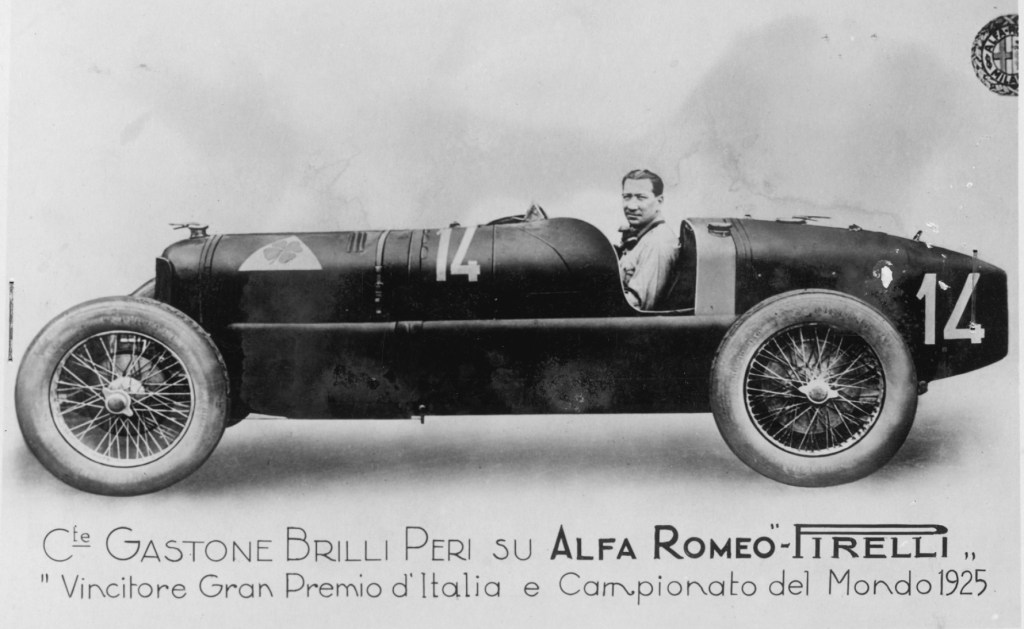
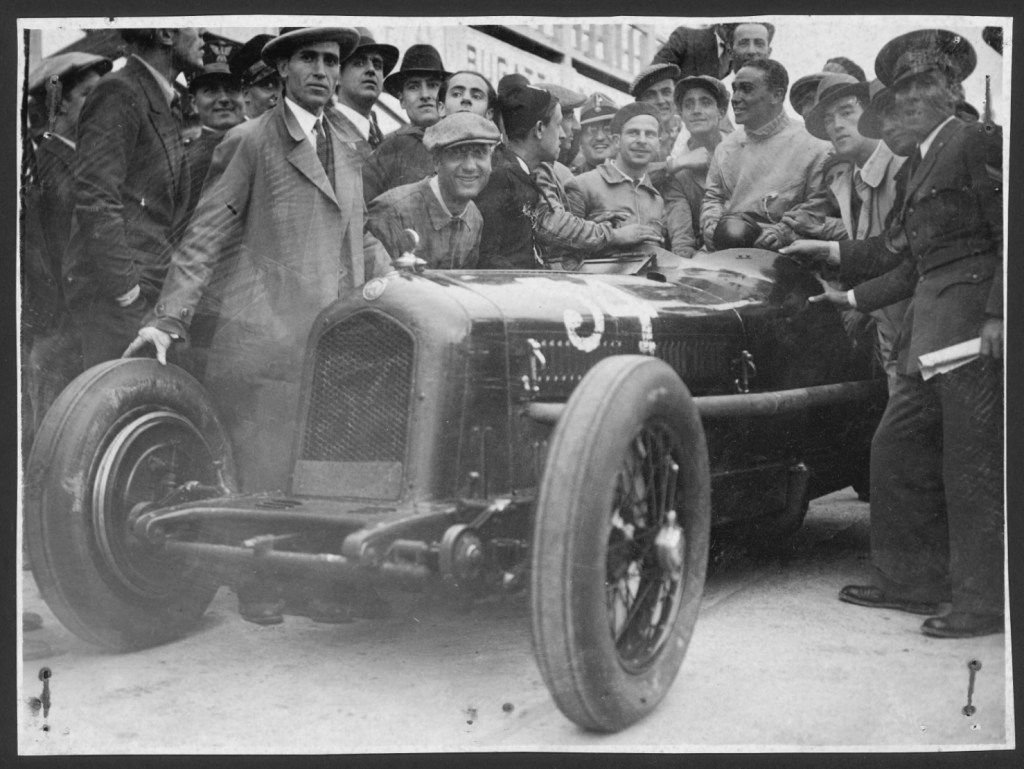
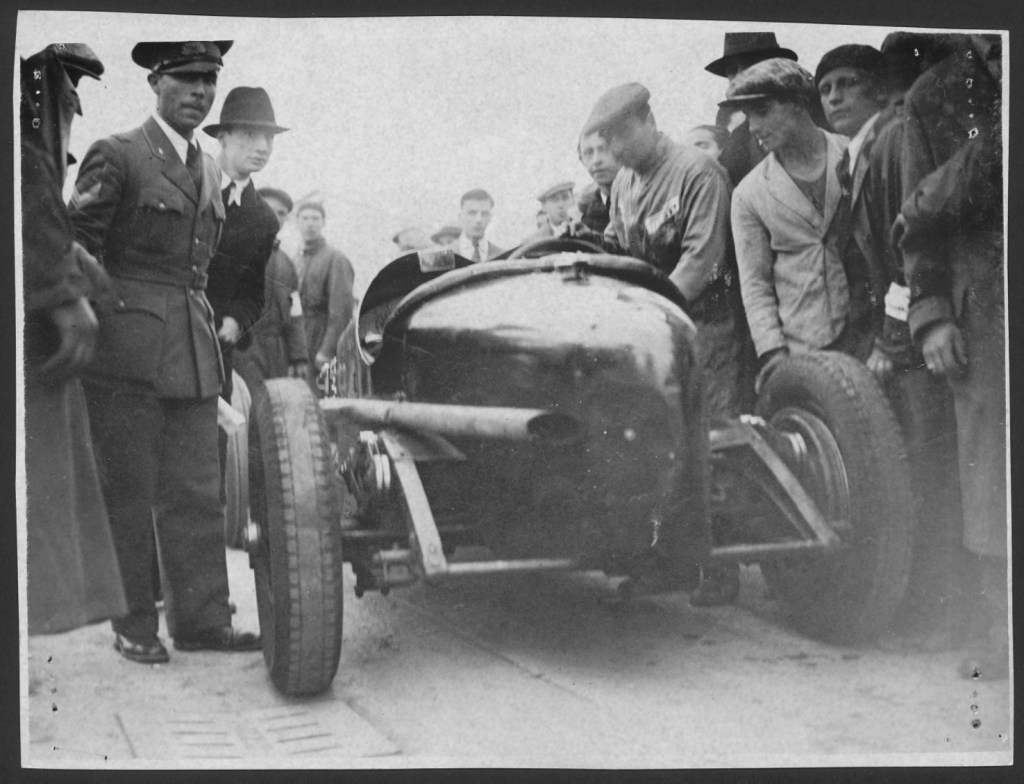
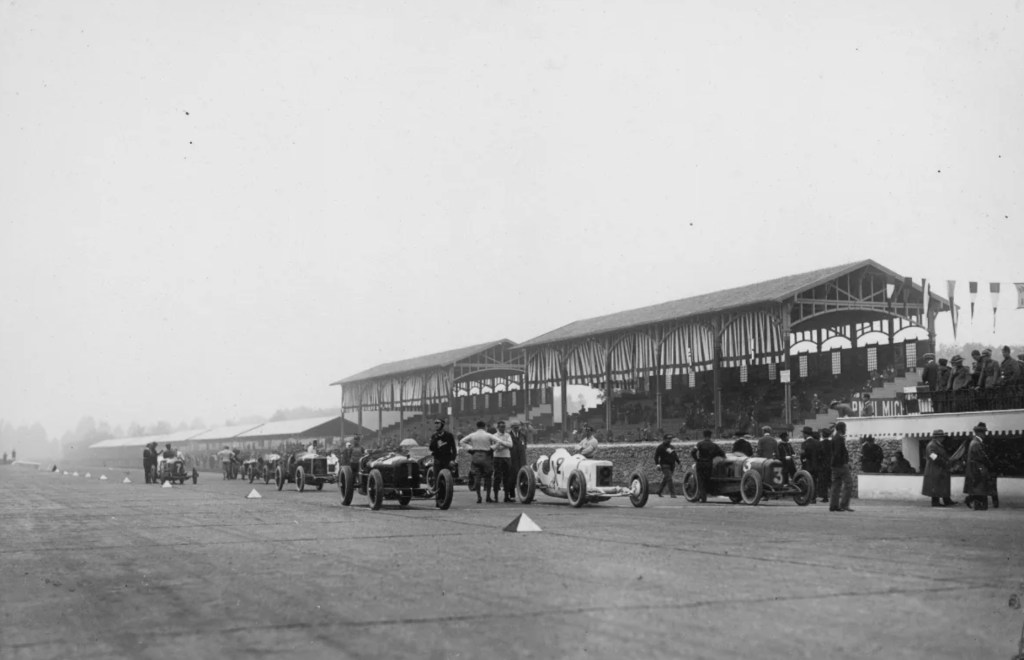
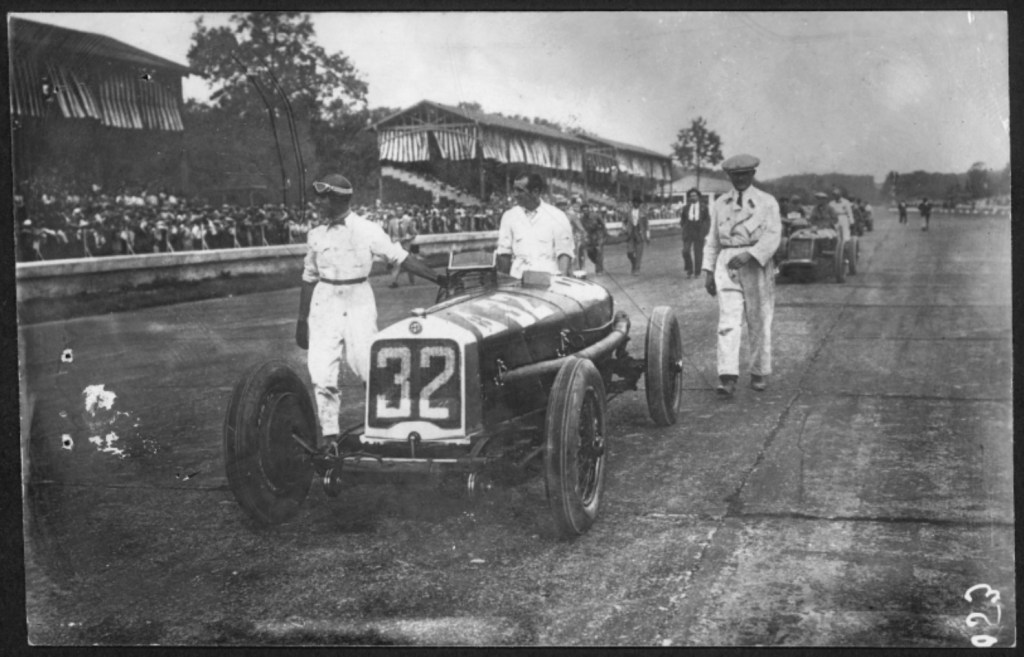
Gastone Brilli-Peri, by winning the Italian Grand Prix, gave Alfa Romeo the four-round 1925 Manufacturers World Championship in an Alfa Romeo P2.
Pete DePaolo won the Indy 500 in a Duesenberg 122, Albert Divo the French Grand Prix in a Delage 2LCV, while Alfa’s P2 won at Monza and at Spa, where Antonio Ascari drove the winning machine in the Belgian Grand Prix.
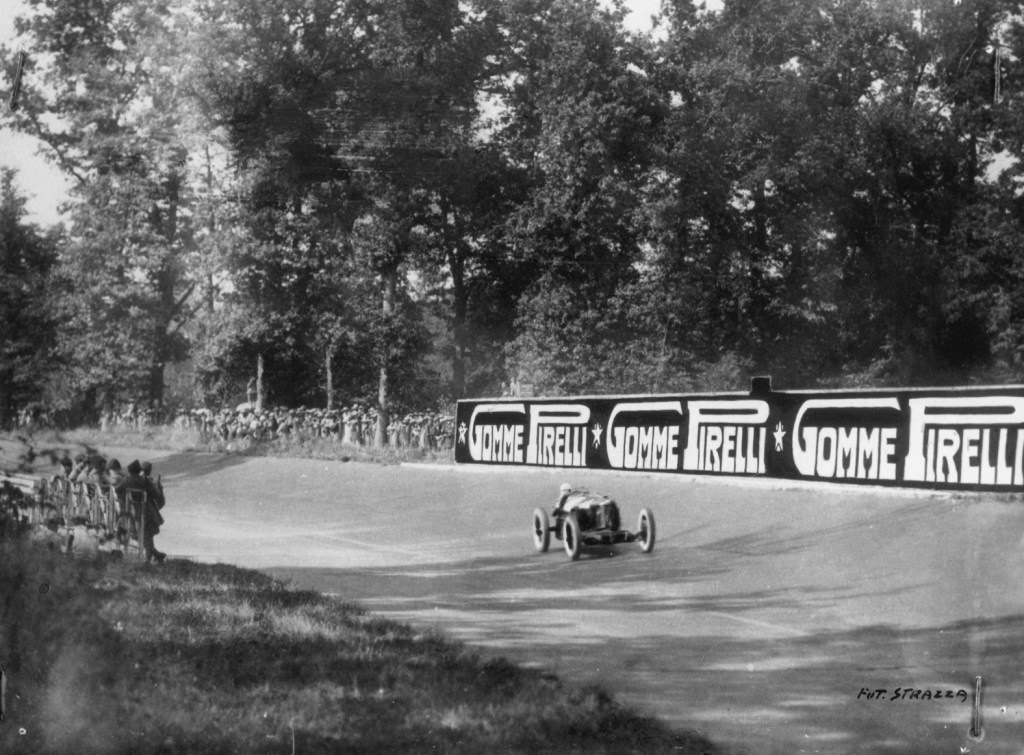
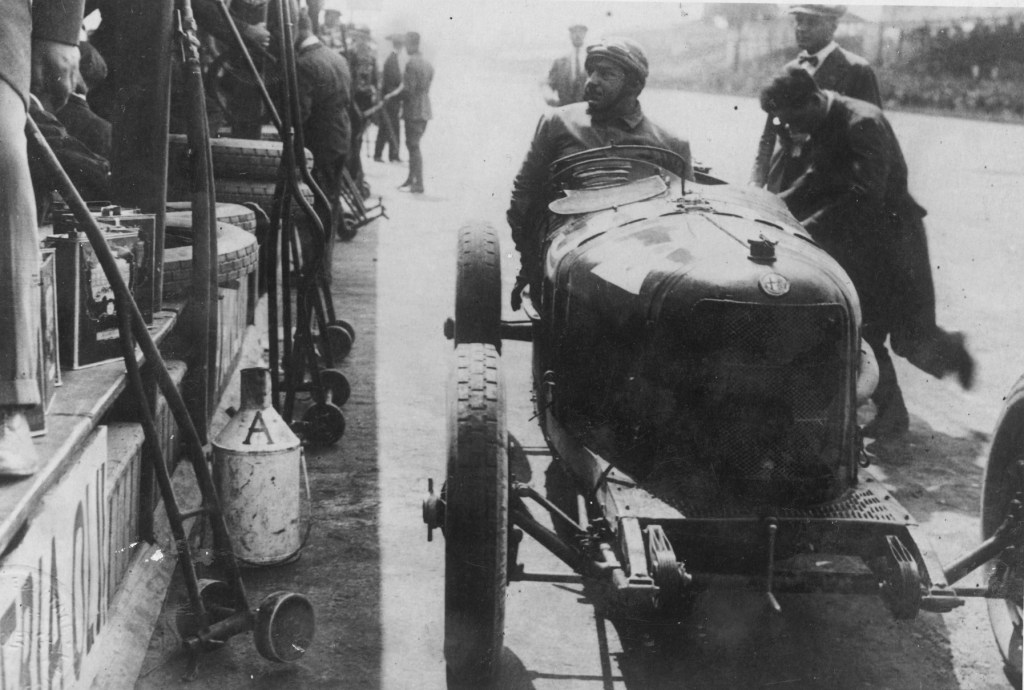
Brilli Peri, enroute to his Italian GP win and Campari below, in another P2 in the pits. Brilli Peri won from Giuseppe Campari/Minozzi/Sozzi with Meo Costantini third in a Bugatti T39.
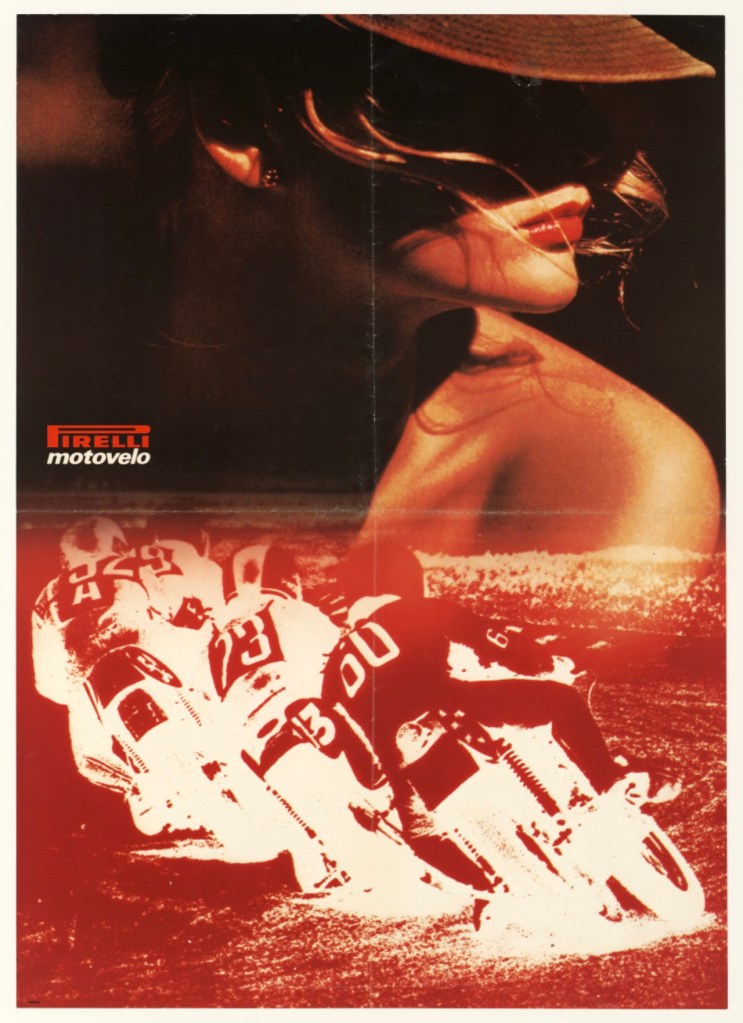
Poster 1977
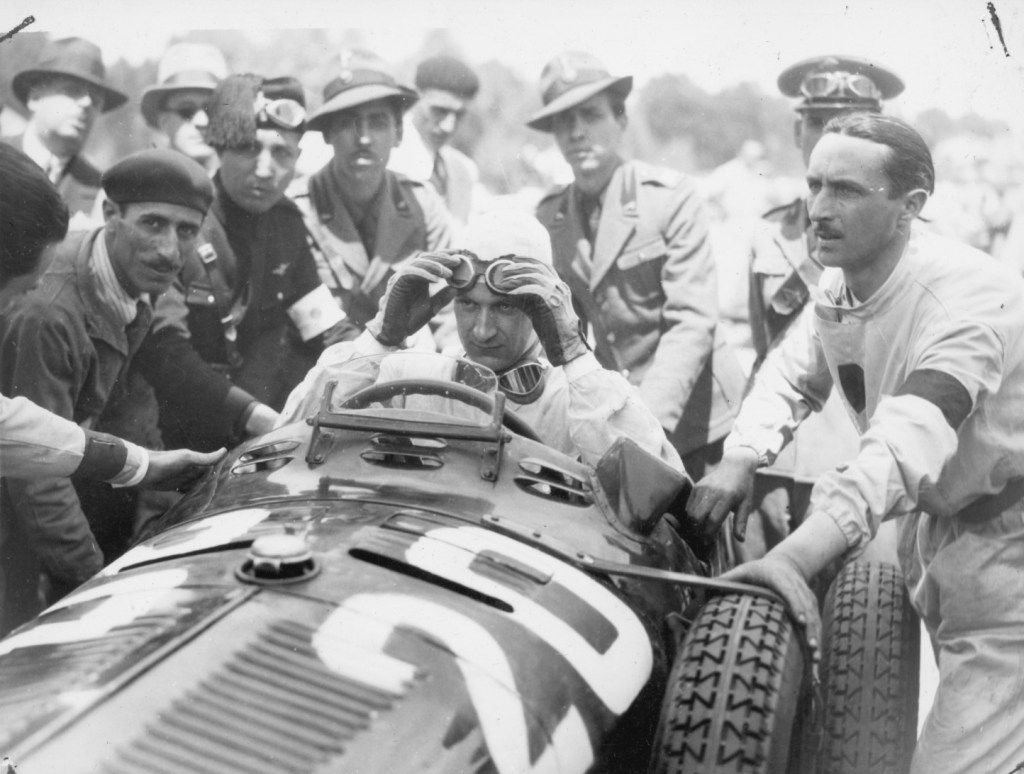
Antonio Brivio after winning the 1935 Targa Florio in a Scuderia Ferrari Alfa Romeo Tipo B.
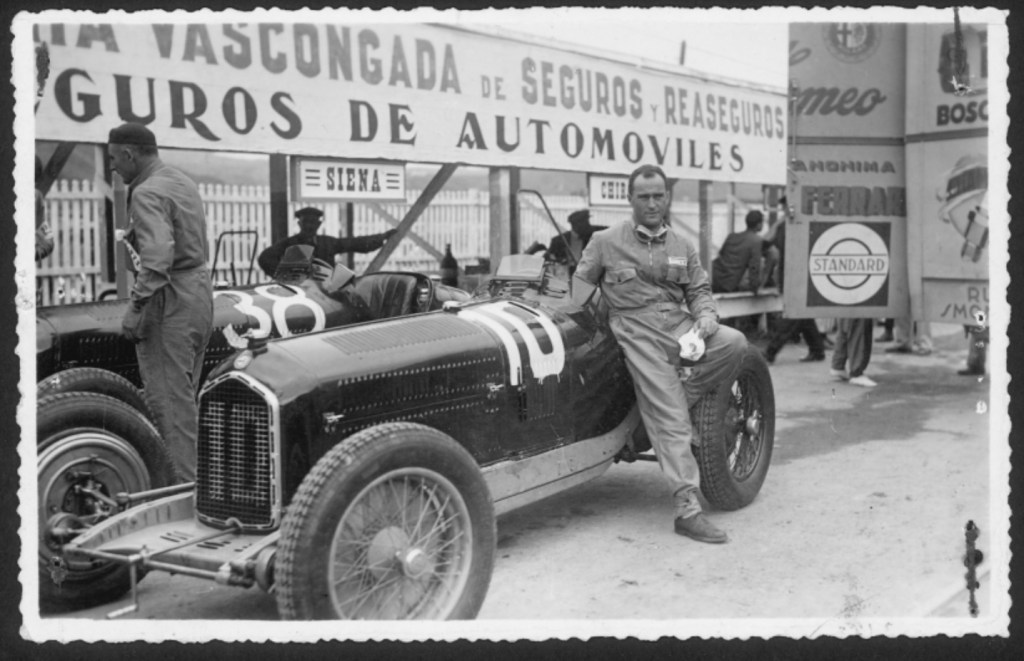
Sticking with the P3 theme, Luigi Fagioli stands beside his car during the September 1933 Spanish Grand Prix weekend. The race was won by Louis Chiron’s Alfa P3 from Fagioli, and held on the Laserte road circuit near San Sebastián.
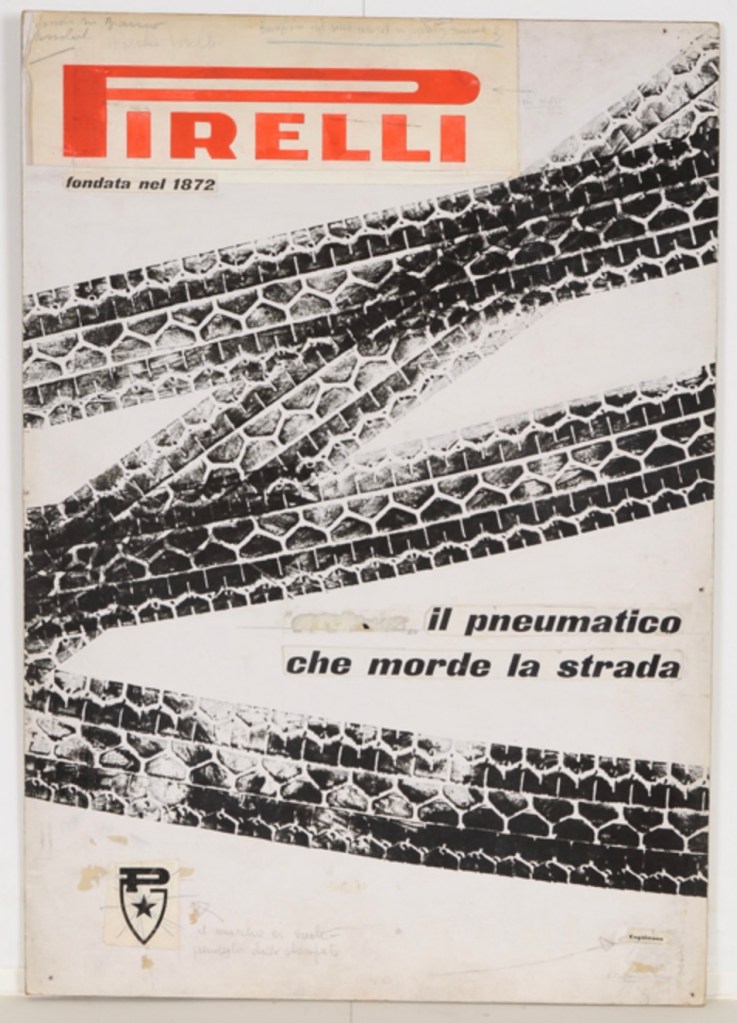
Mock up for a 1952 ad by Pavel Engelmann
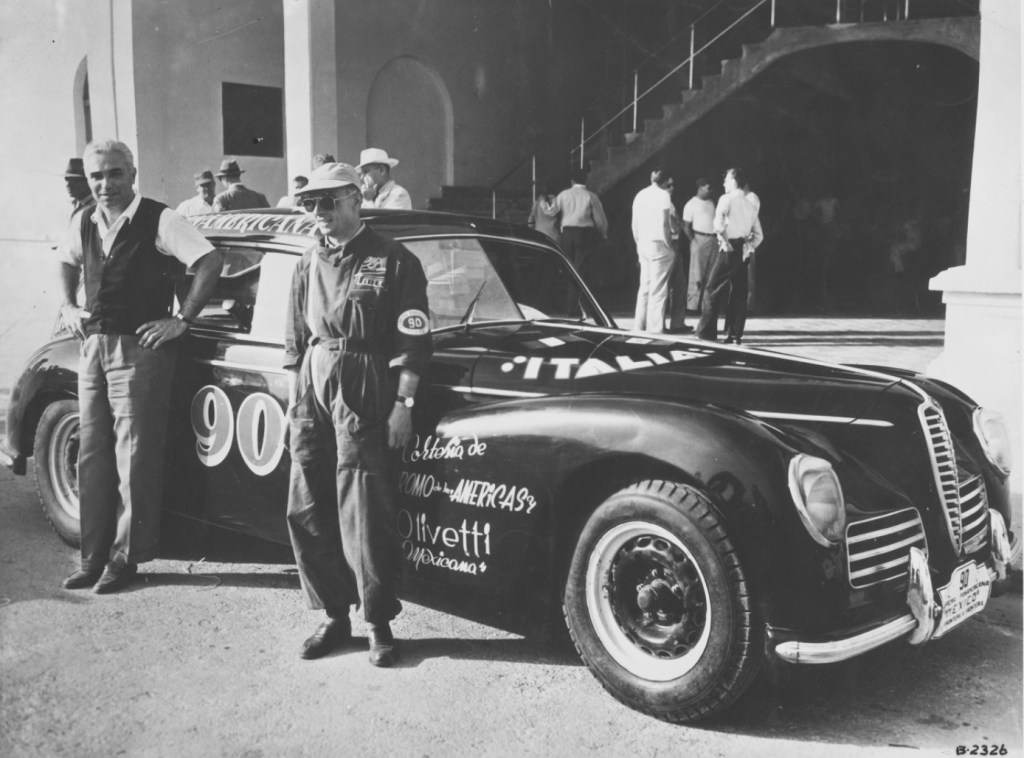
Piero Taruffi and navigator Isidoro Ceroli with Alfa Romeo 6C2500 Sport during the first Carrera Panamericana from May 5-10 1950.
They finished fourth behind three American crews driving an Oldsmobile and two Cadillacs.
Piero Taruffi, again, but a little earlier, here with a shock of dark hair! and his Scuderia Ferrari Alfa Romeo 8C2300 Monza after finishing second in the April 1932 Rome Grand Prix.
The race, held on the 4km Circuito del Littorio, was won by Luigi Fagioli’s works-Maserati V5 5-litre V16.
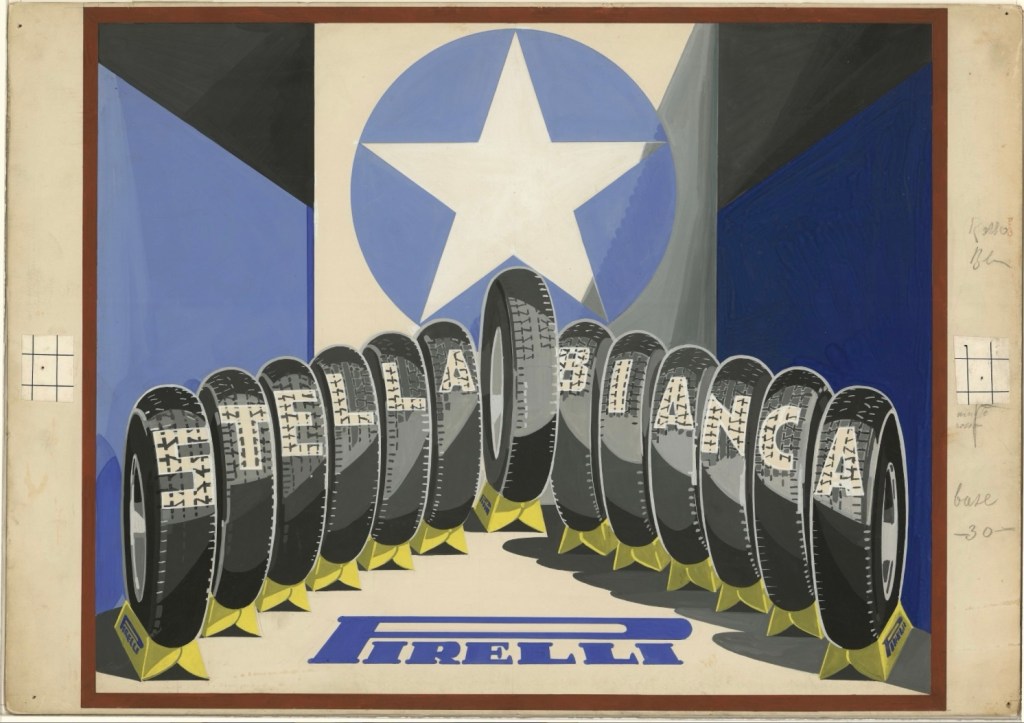
Pirelli White Star, sketch for an exhibition stand in 1931
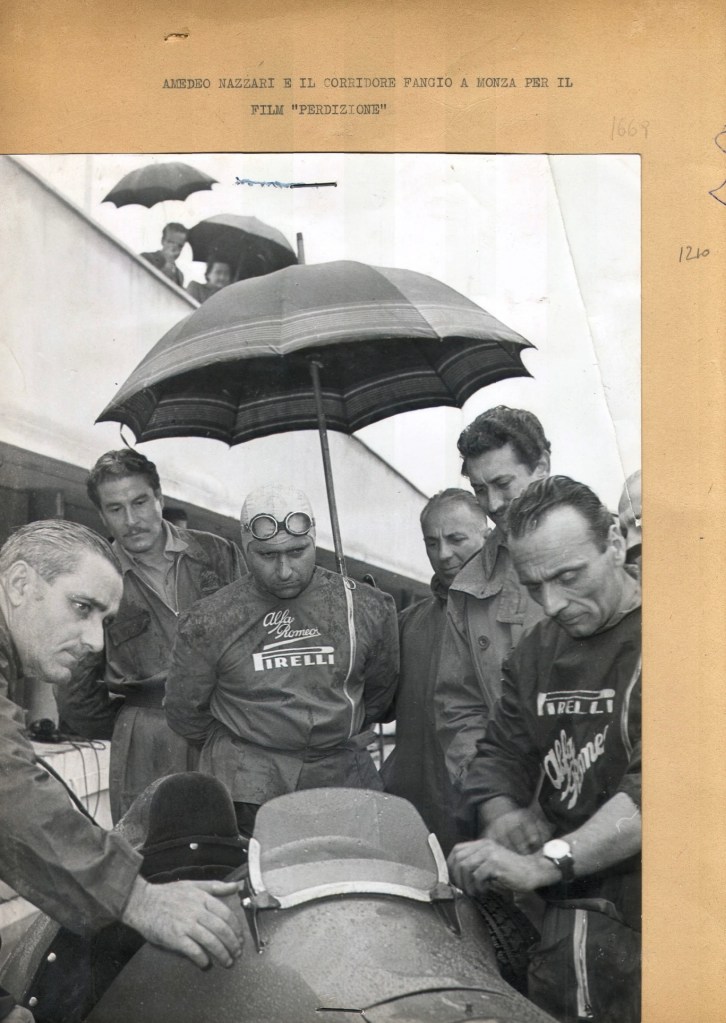
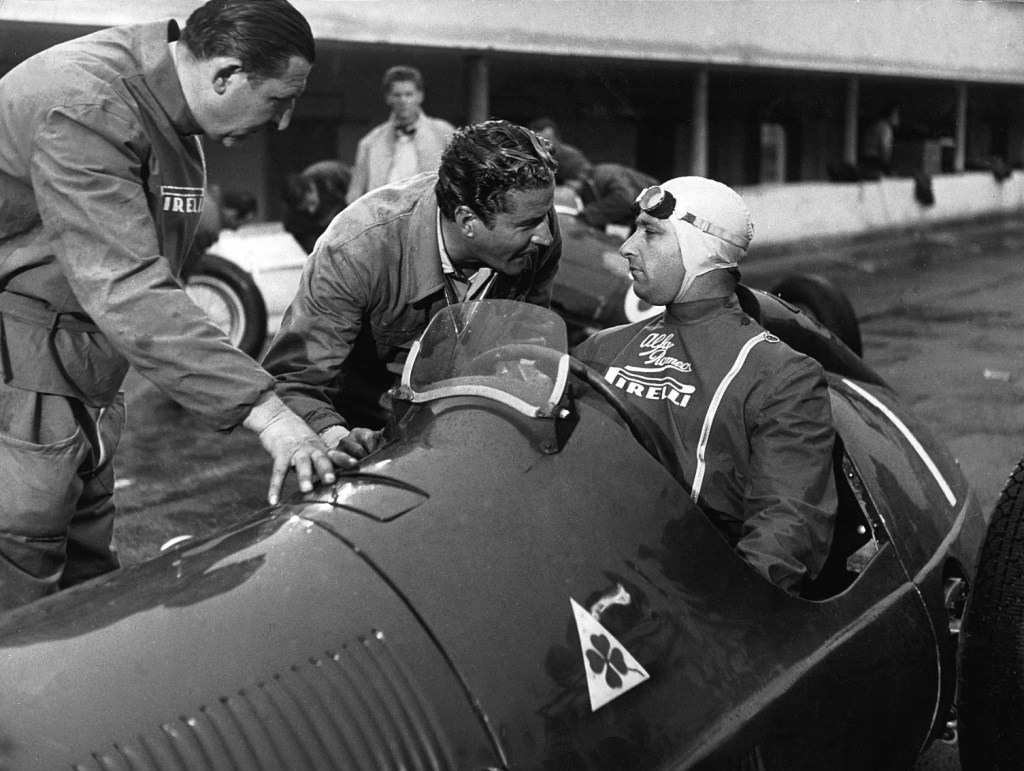
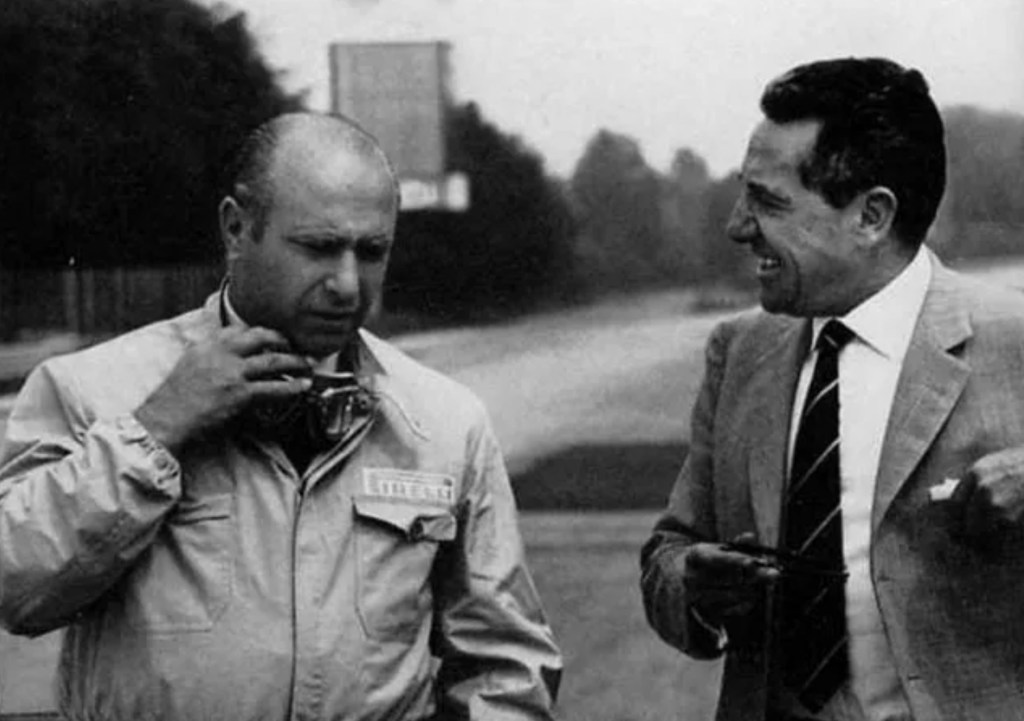
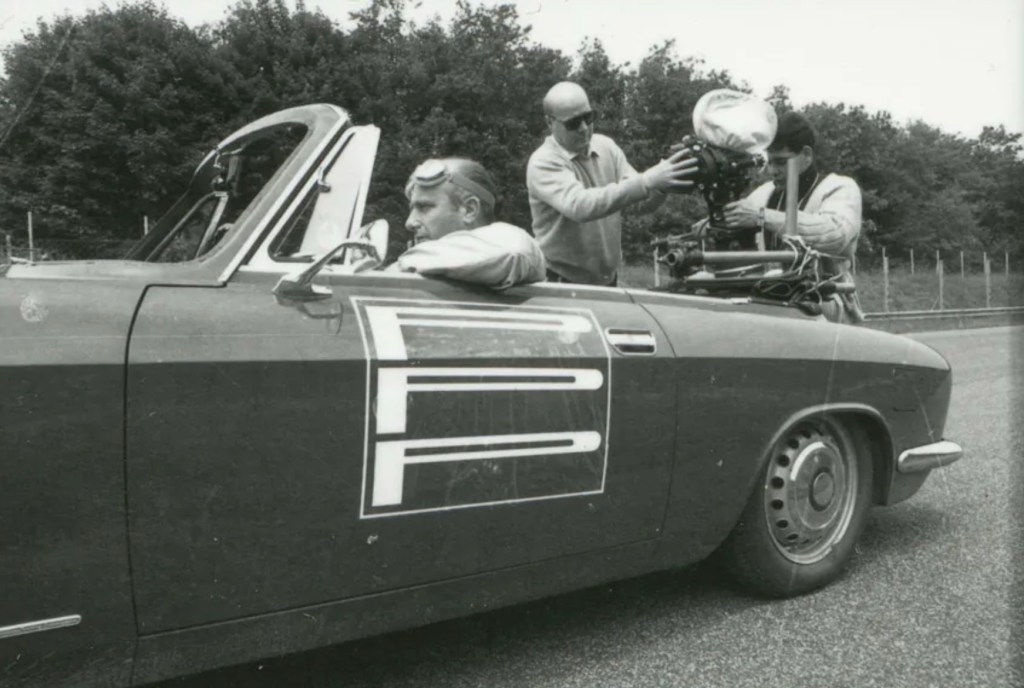
Pirelli wrote that of all the motor racing films, “there was only one racing driver who was called upon time and again to play himself in front of the camera – the Argentine Juan Manuel Fangio.”
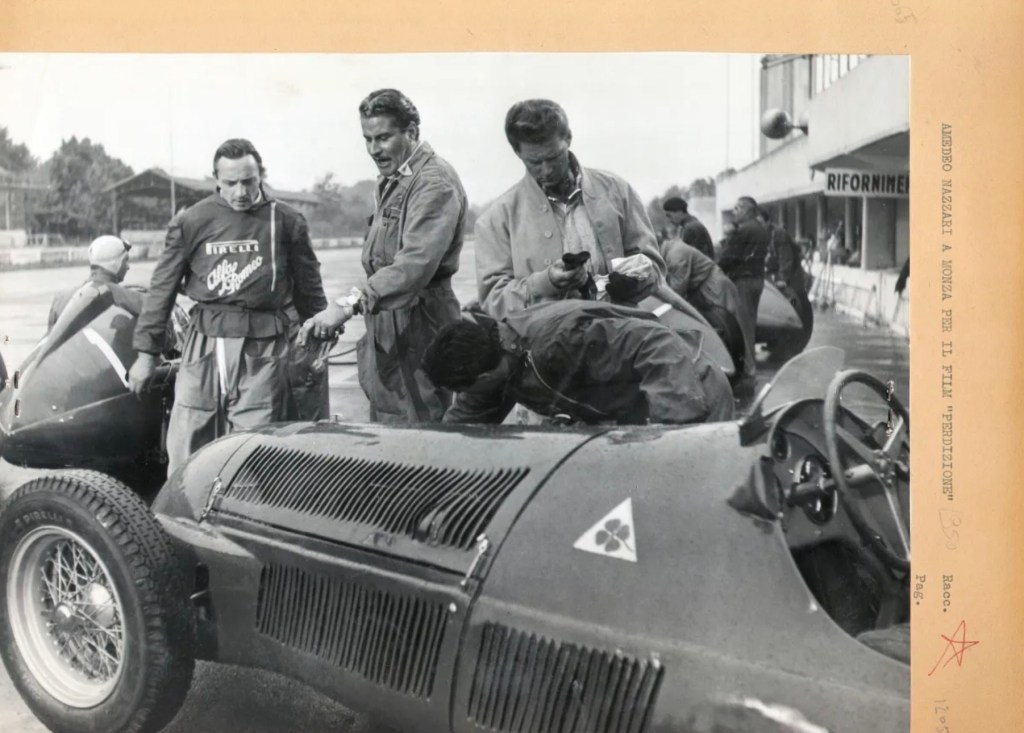
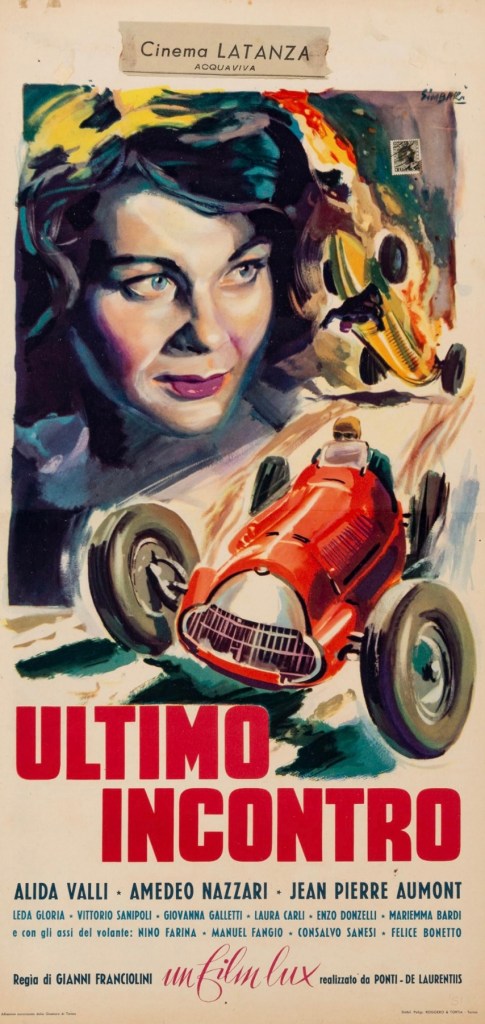
“It was in 1950: in the photos now in the Pirelli Historical Archive, the film is referred to with its provisional title Perdizone. It was actually released the following year as Ultimo incontro (last meeting).”
“We are on the Monza racetrack, with the protagonists Amedeo Nazzari, Alida Valli and Jean-Pierre Aumont. It is a sombre tale of betrayal and blackmail in the world of motor sport, in which the driver Fangio plays…the driver Fangio.”
“That year the Argentine was racing with the mighty Alfa Romeo team along with legends of speed such as Nino Farina, who went on to win the (1950) world title.”
“The long P-logo of Pirelli, which supplied the read Alfa Romeo cars with Stella Bianca tyres, is embroidered on their overalls, underneath the cloverleaf symbol.”
“In Perdizone/Ultimo incontro, Fangio was already on his way to becoming a legend, but his serious, watchful look is that of a true actor. The driver from Balcarce stopped racing in the late 1950s, with five world championships under his belt.”
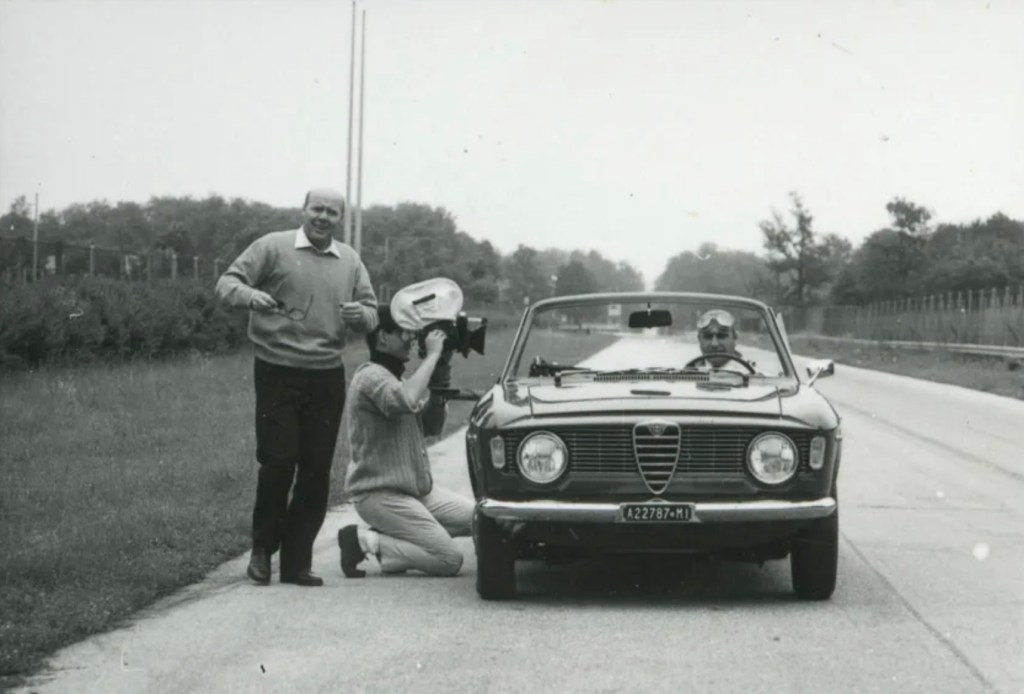
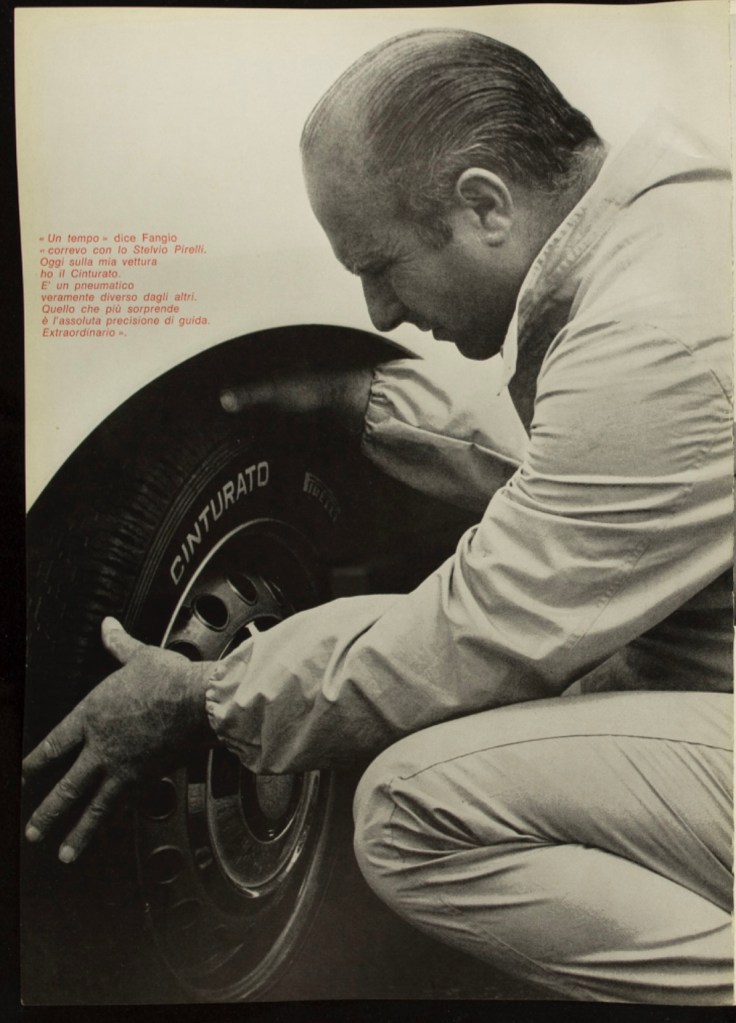
“During his career his name appeared a number of times next to that of Pirelli: it happened again in 1965, and once again there was a camera there to record it. This was a spot produced for Carosello TV commercials with reportage by Ugo Mulas.”
“The driver once again played himself, the legendary Juan Manuel Fangio now clocking up the laps in his Alfa Giulia GTC.”
“When he gets out, he looks into the camera and recalls: ‘I used to race with the Stelvio, but now this Cinturato is really different from the rest. Extraordinario!’ And in his magnificent Italian-Argentine manner, Fangio goes on to tell the audience on the television screen about his endless string of successes.”
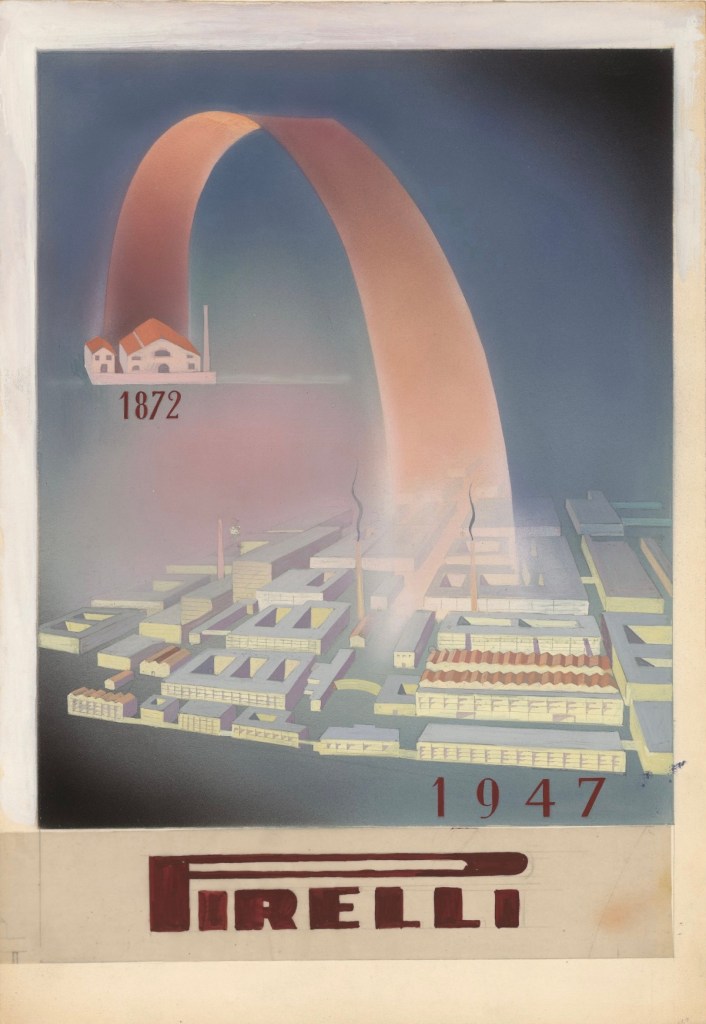
75th anniversary poster
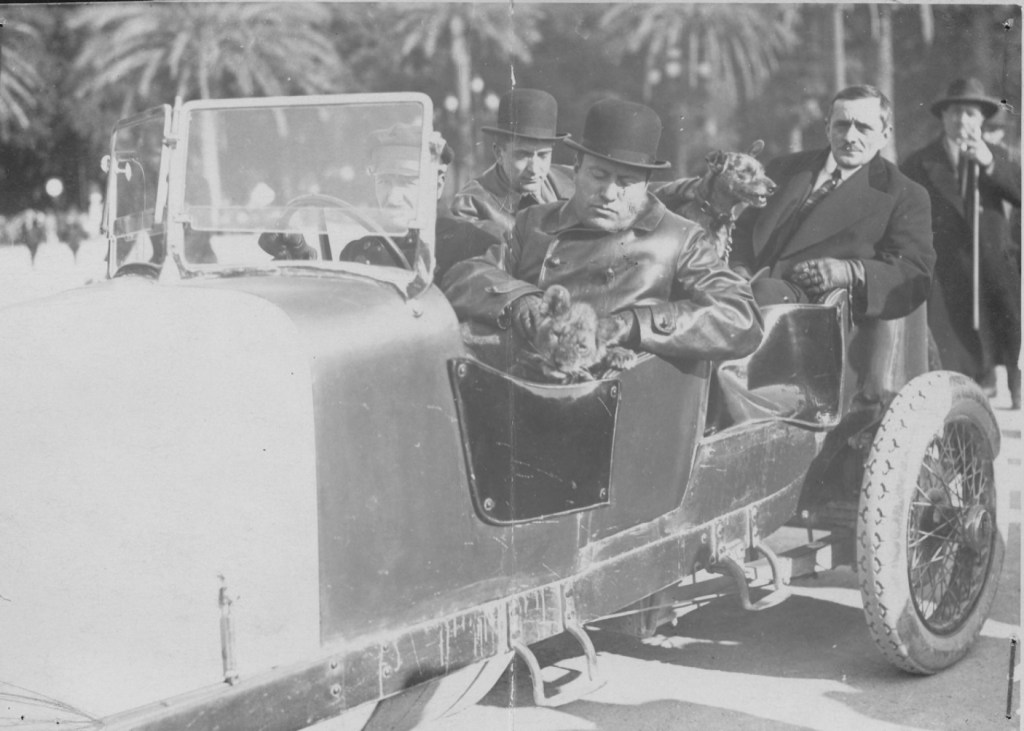
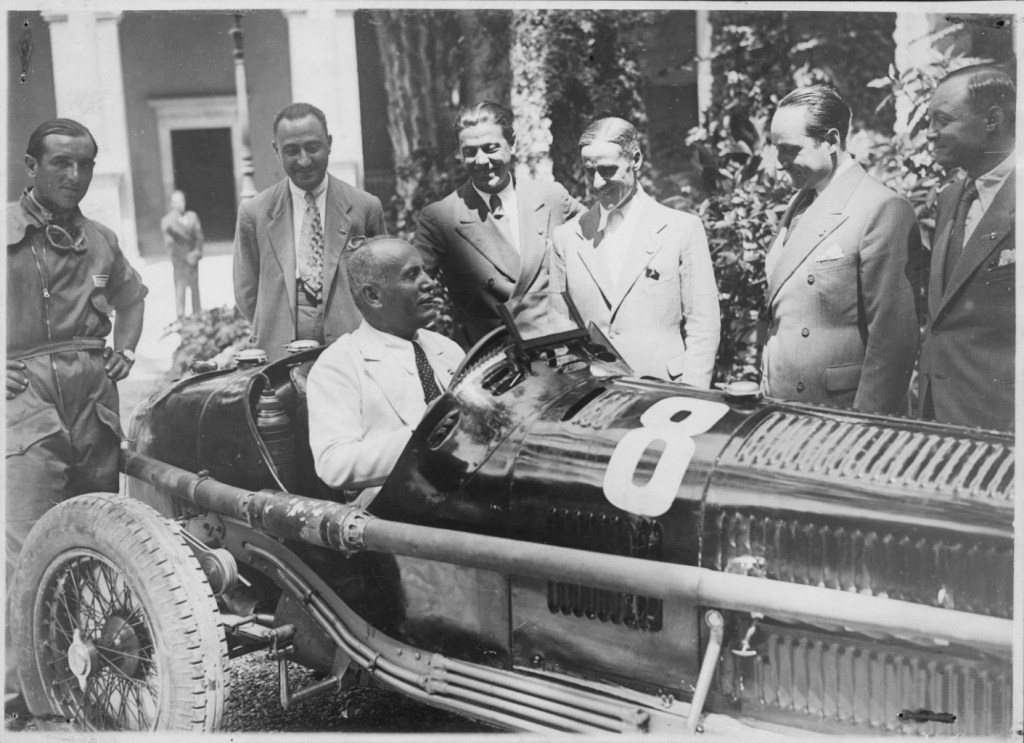
Benito Mussolini and pet pussy aboard an Alfa Romeo in 1923. What model is it I wonder?
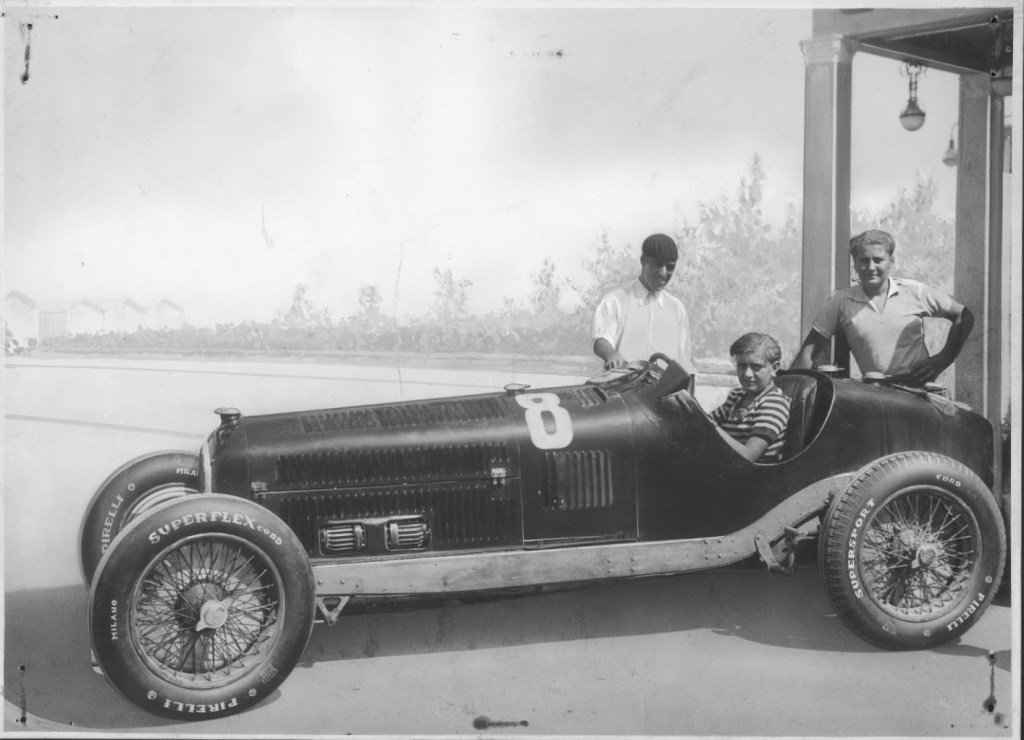
Meanwhile poor old Tazio is tasked with amusing Ill Duce’s sons in his P3, Bruno in the driving seat and Vittorio behind.
Mussolini with Nuvolari again, and the director-general of Alfa Romeo Prospero Gianferrari (both in the centre). “The P3 is probably the car with which Nuvolari won the August 14, 1932 Coppa Acerbo.”
1971
Antonio Ascari in the P2, with designers Luigi Bazzi in the light coloured overalls at left, Vittorio Jano and Giorgio Rimini during the 1924 Italian Grand Prix weekend.
Before the start of the race: Antonio Ascari’s Alfa P2 #1 Christian Werner’s Mercedes M72 #2 and Jules Goux’ Rolland-Pilain Schmid #3.
Alfa Romeo won in a rout taking the first four placings: Ascari, Louis Wagner, Campari and Bruno Presenti, and Fernando Minoia.
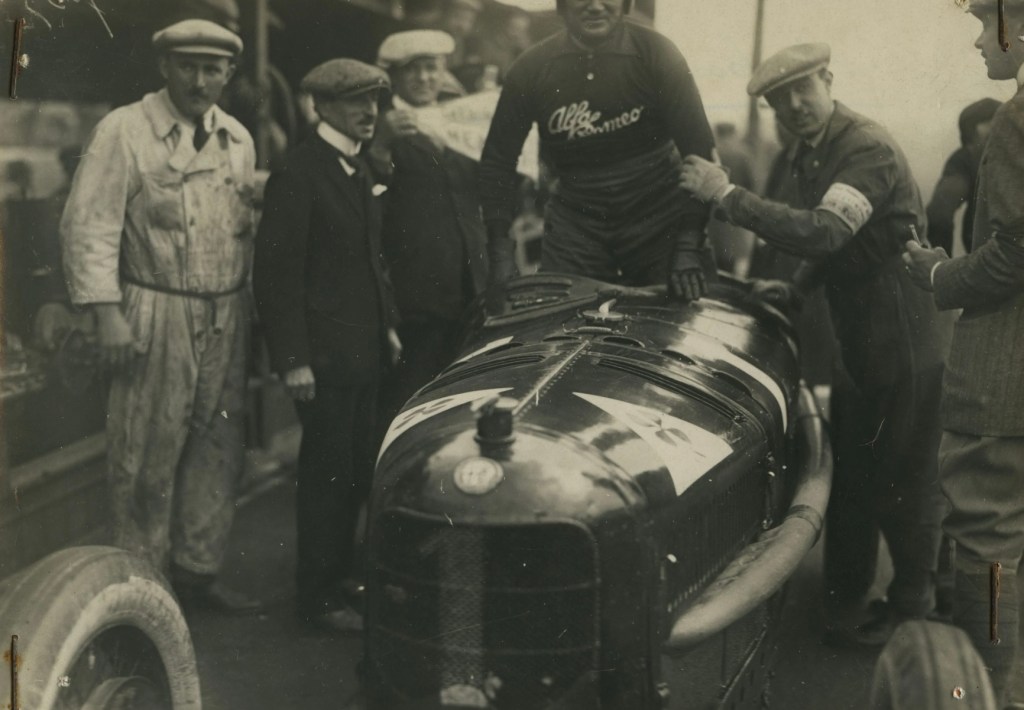
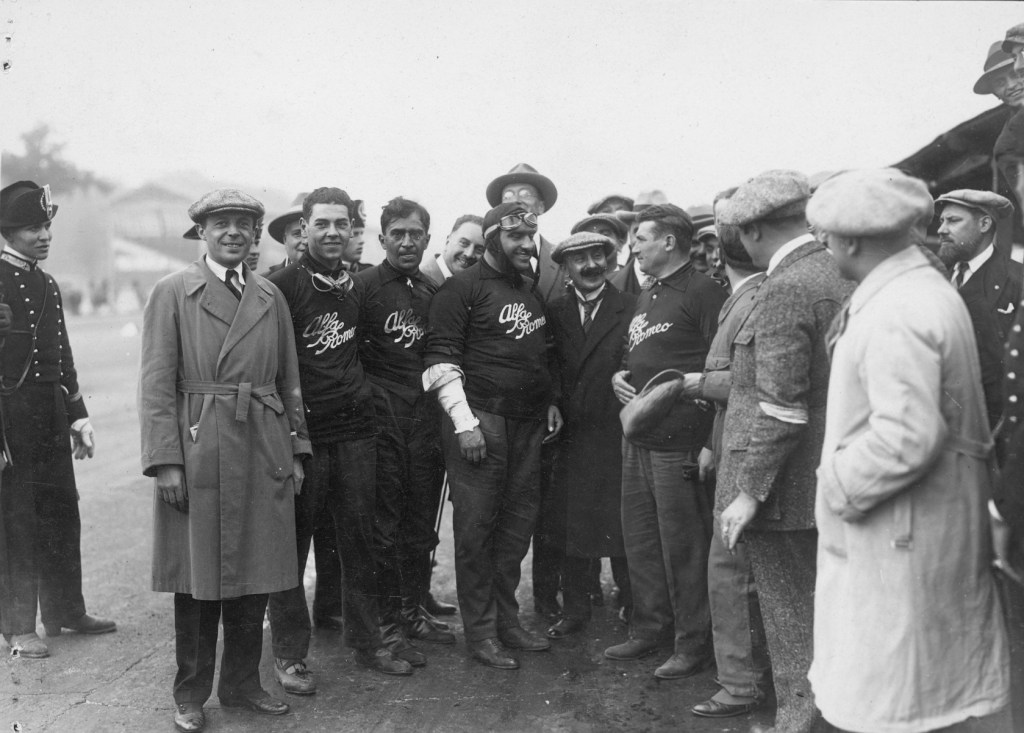
Scuderia Alfa Romeo: unidentified in the overcoat, mechanic Giulio Ramponi, drivers Minoia and Campari, the engineer and entrepreneur Nicola Romeo, and driver Antonio Ascari.
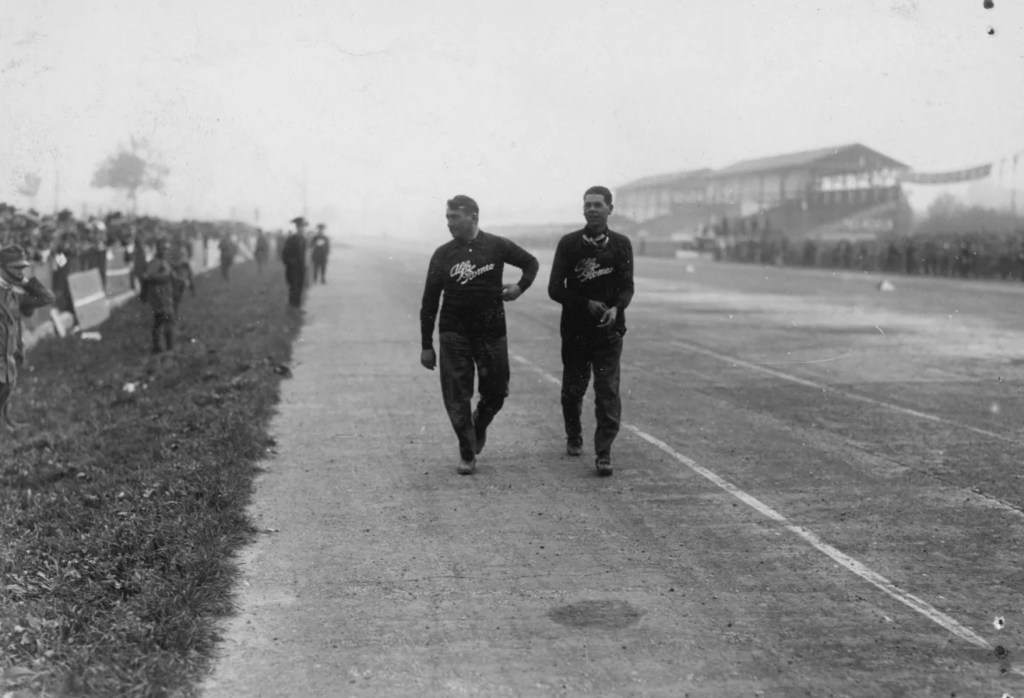
Ascari and Ramponi go for a greet-the-punters wander.
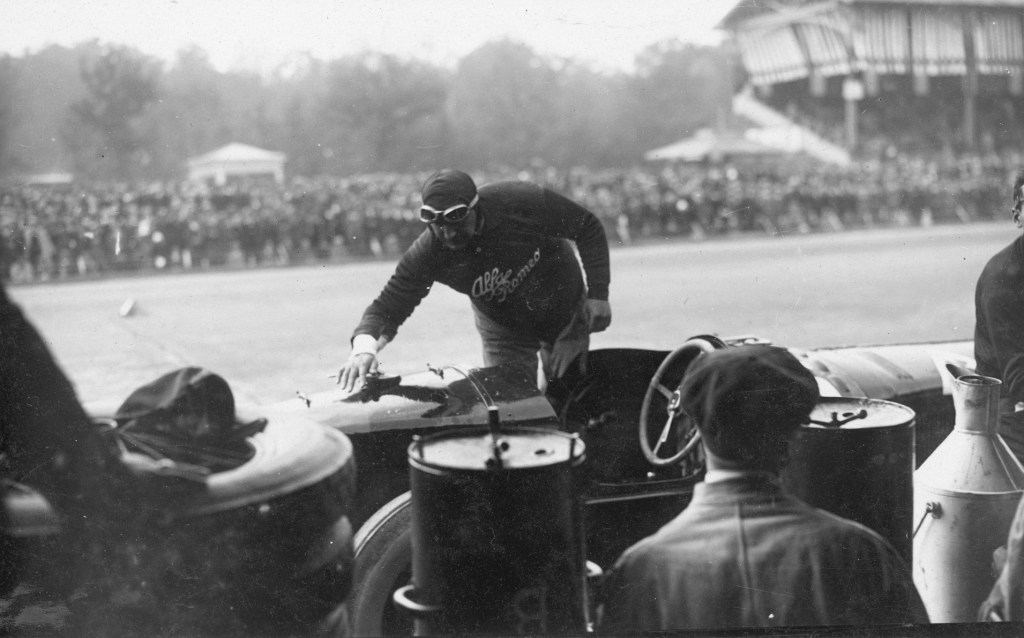
Giuseppe Campari and P2.
(Federico Patellani)
Gigi Villoresi, Nino Farina and Alberto Ascari in 1950, this photo was published on the cover of the January-February issue of the Pirelli magazine. Nice portrait of Gigi in a Ferrari below.
(Ferrucio Testi)
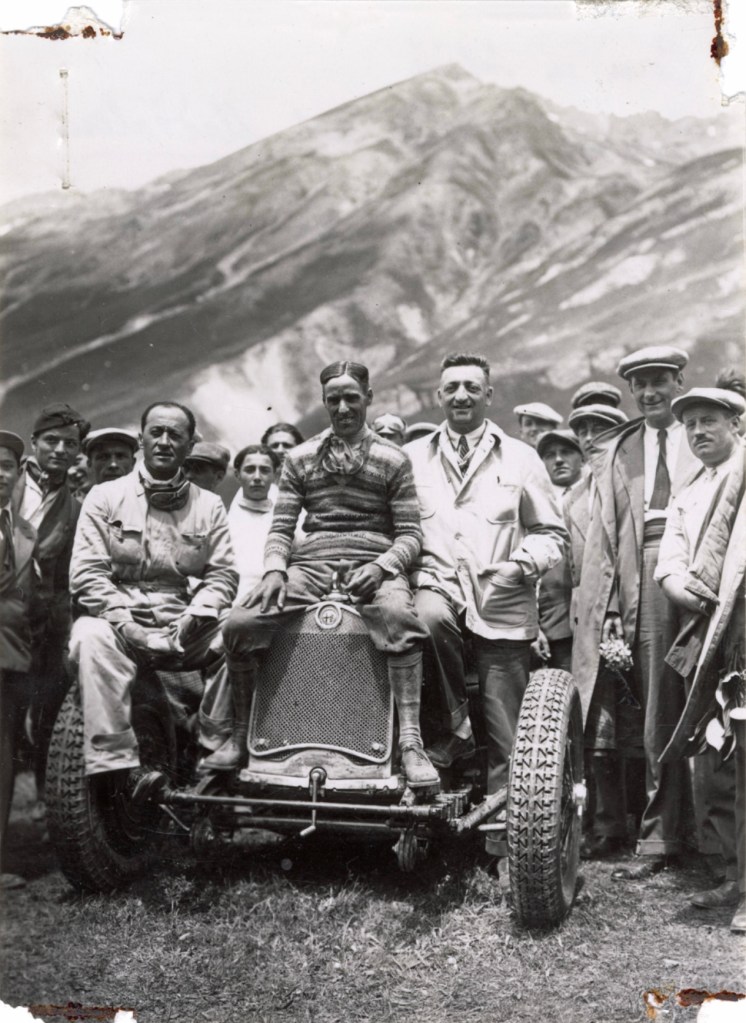
Scuderia Ferrari shot of Luigi Arcangeli, Tazio Nuvolari and Enzo Ferrari sitting on an Alfa Romeo P2 during the European Hillclimb Championship in June 29, 1930
The Pirellis are Stella Bianca’s, the venue is Cuneo-Colle della Maddalena. While Pirelli wrote that Tazio was first and Luigi third, Rudy Caracciola won the day on a Mercedes.
And below walking to the start alongside an Alfa – a modified P2 of the type Achille Varzi used to win the Targa Florio in 1930 Bob King reckons, a quick look at Hull & Slater confirms this – circa 1930. Does anybody recognise the venue?
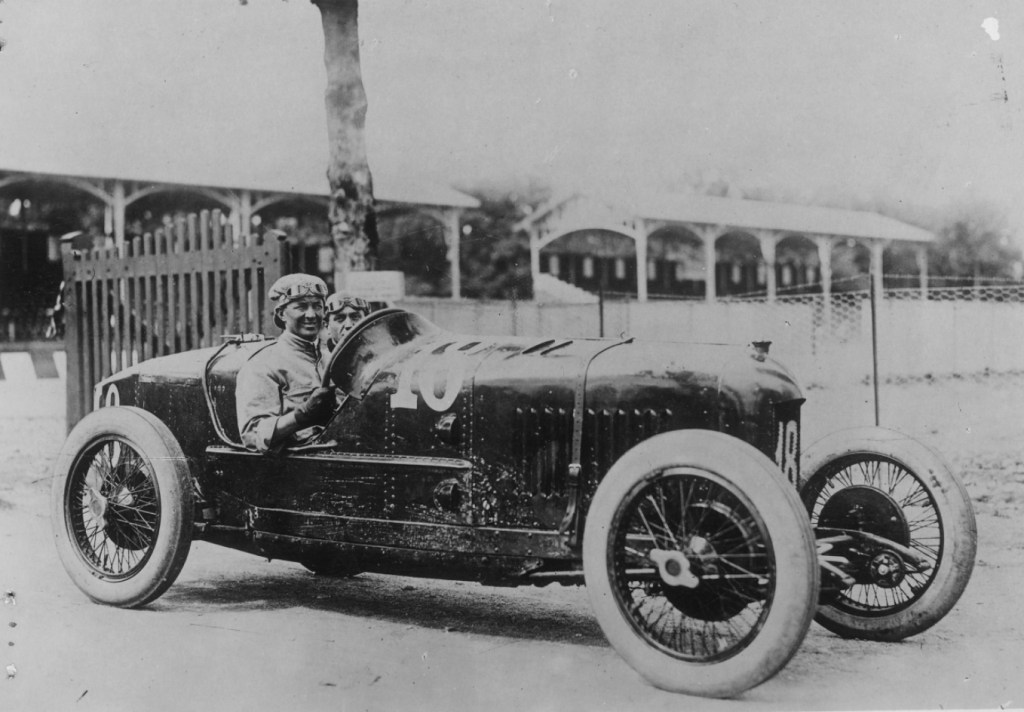
Antonio Ascari and a mechanic aboard, “probably an Alfa Romeo P1”, venue unknown.
I’m not so sure about the P1 theory…Giuseppe Merosi’s Fiat 804 copy wasn’t much chop. His engine had most of the same features as Fiat’s Type 404: DOHC, 65x100mm bore/stroke 1991cc six so the power output was about the same but the Gran Premio Romeo was longer and heavier. Its aero was inferior too, the epochal Fiat had a staggered mechanics seat which slimmed down its profile, the Alfa did not.
While P1s were entered for the 1923 Italian Grand Prix – for Ugo Sivocci, Alberto Ascari and Giuseppe Compari – after Sivocci crashed to his death in practice the team withdrew from the meeting as a mark of respect, the P1s never raced.
The car shown above carries #18, the Monza P1s used numbers, 6, 12 and 17, so the shot wasn’t taken on or about that weekend.
Is the car shown a P2, an early one? The Golden Era of Grand Prix Racing is my reference site for the results of the major races in this era, I cannot see an Alfa P2 number 18 entered in any of the races the site covers in either 1924 or 1925. A mystery…
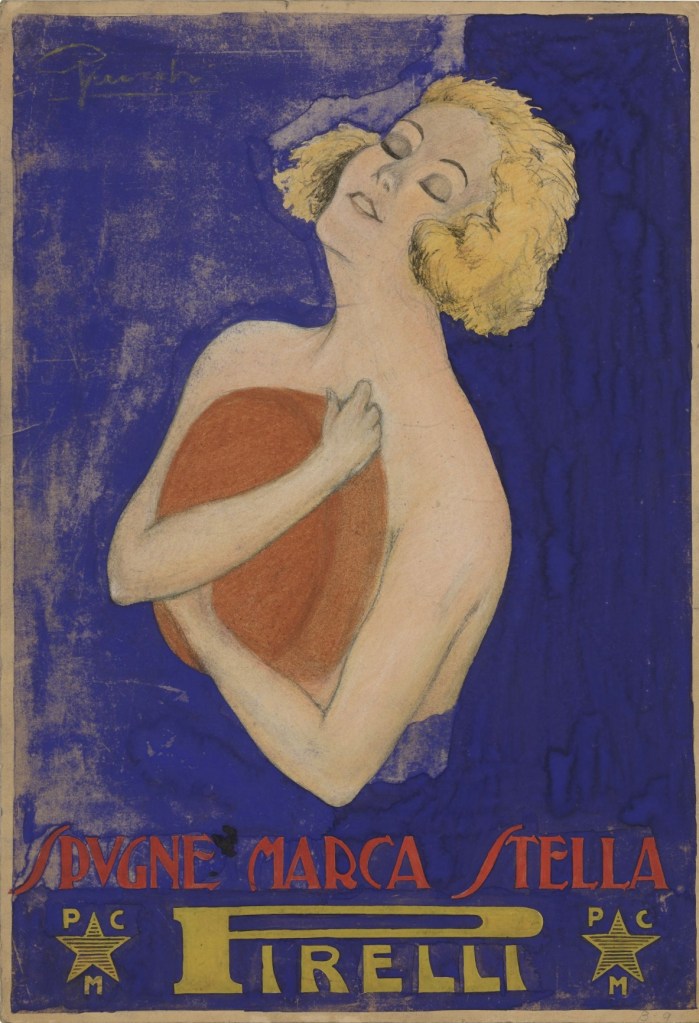
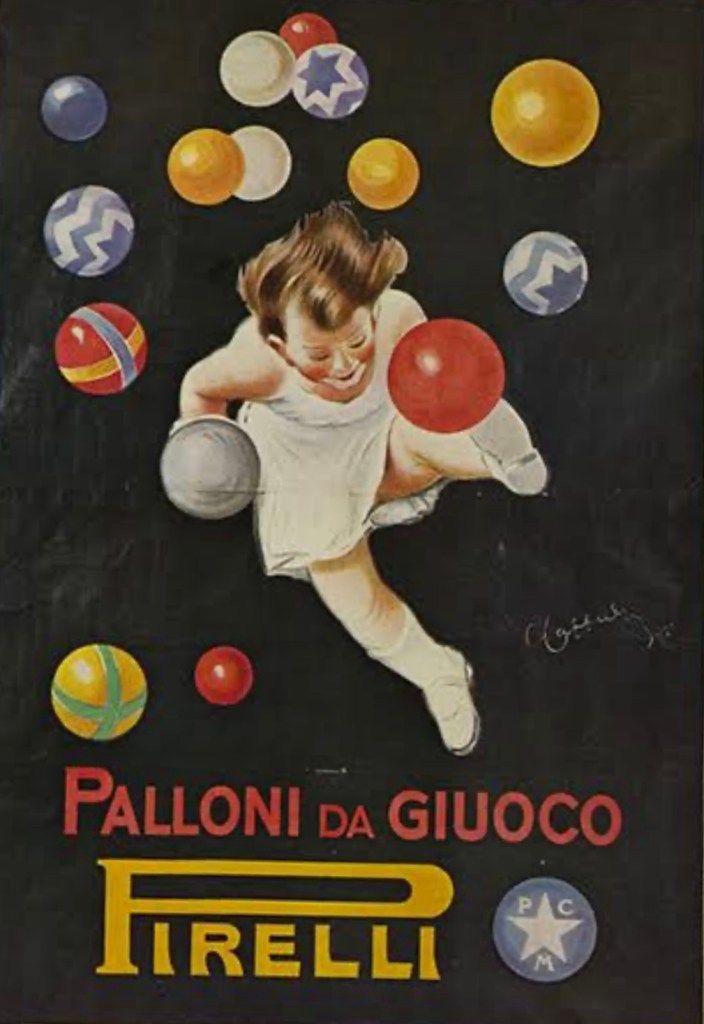
Pirelli sponge ad 1922 by A Franchi
Oscar Galvez fettles the engine of his 3-litre supercharged straight-eight Alfa Romeo 308 in January 1949, can’t quite read the chassis number…
He was third in the Buenos Aires Grand Prix behind the Maserati 4CLT’s raced by Alberto Ascari and Gigi Villerosi.
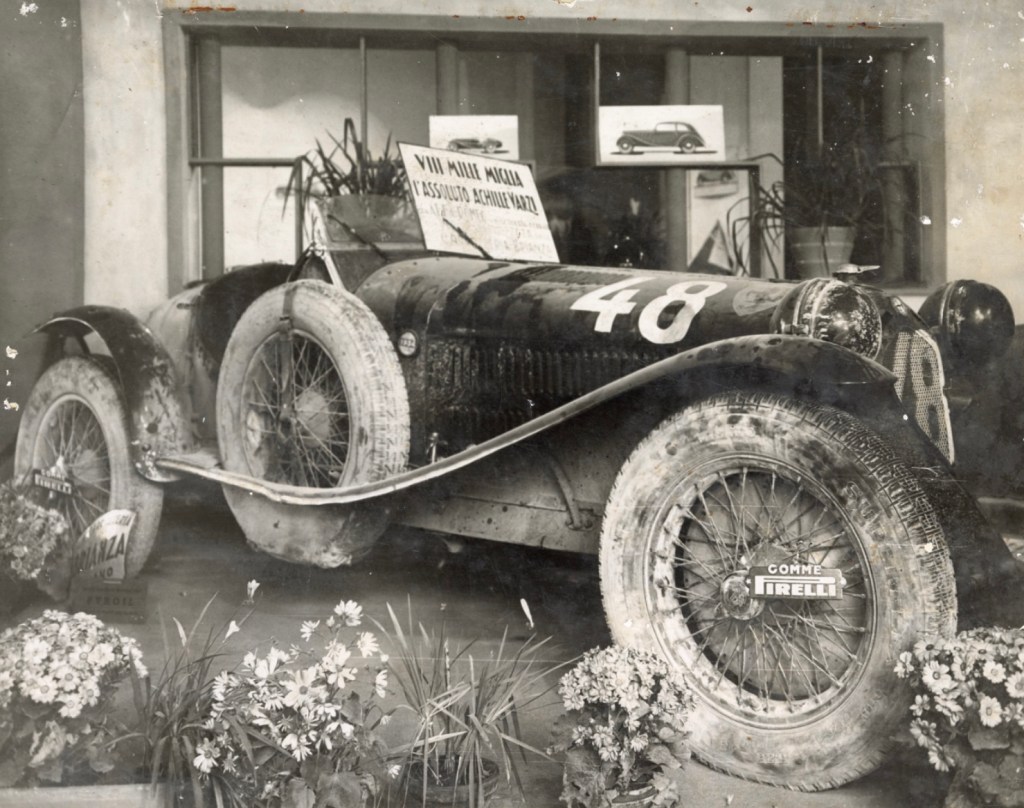
Achille Varzi’s Mille Miglia winning Alfa Romeo 8C2600 Monza Spider Brianza on the Carozzeria Brianza Stand in 1934.
The first four cars home were (2654cc) 8C2600 Monzas: Varzi/Bignami, Nuvolari/Siena, Chiron/Rosa and Battglia/Bianchi.
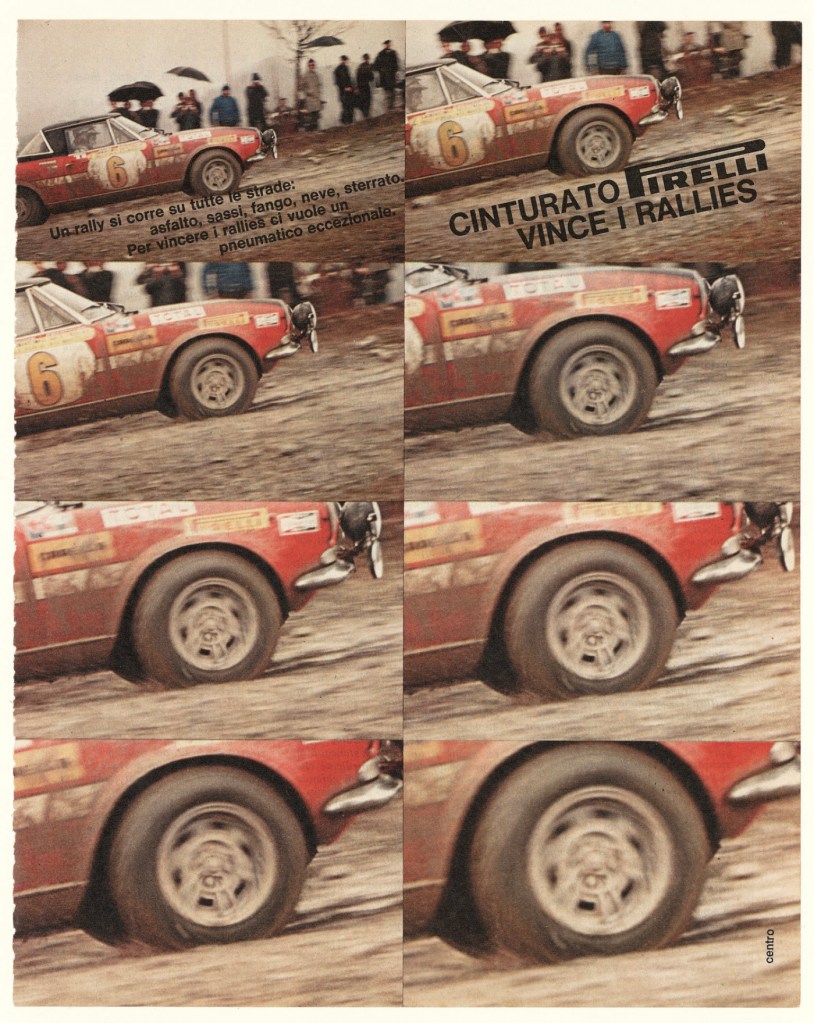
Fangio plugs Cinturato’s in 1965
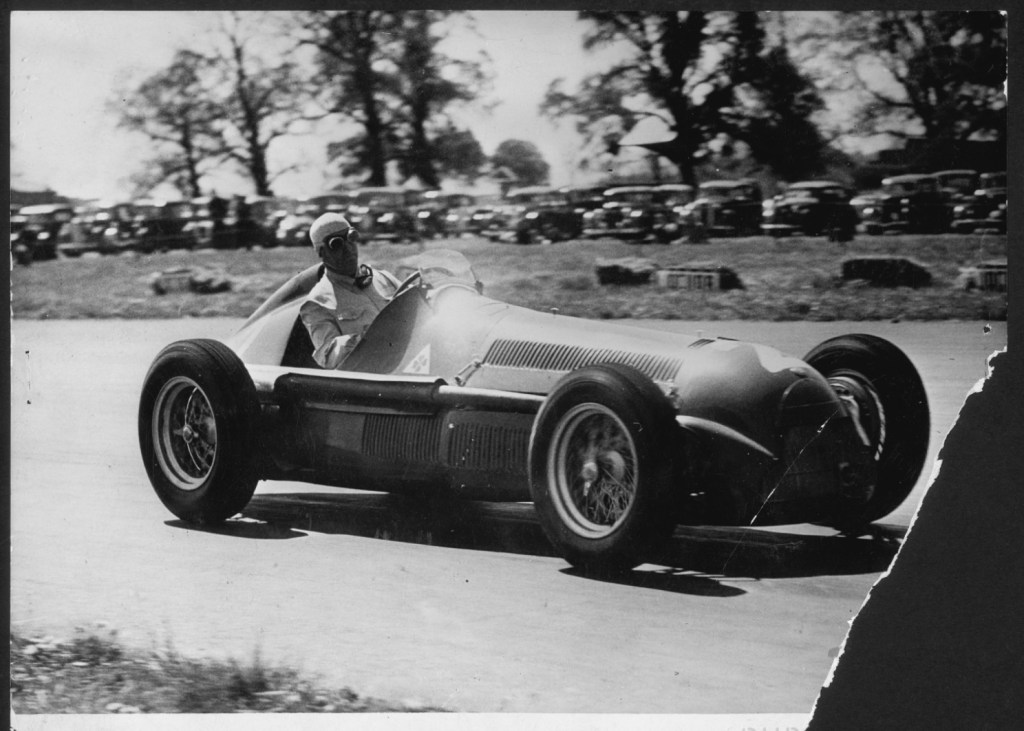
Classic shot of Nino Farina on the way to winning the July 1950 British Grand Prix in an Alfa 158.
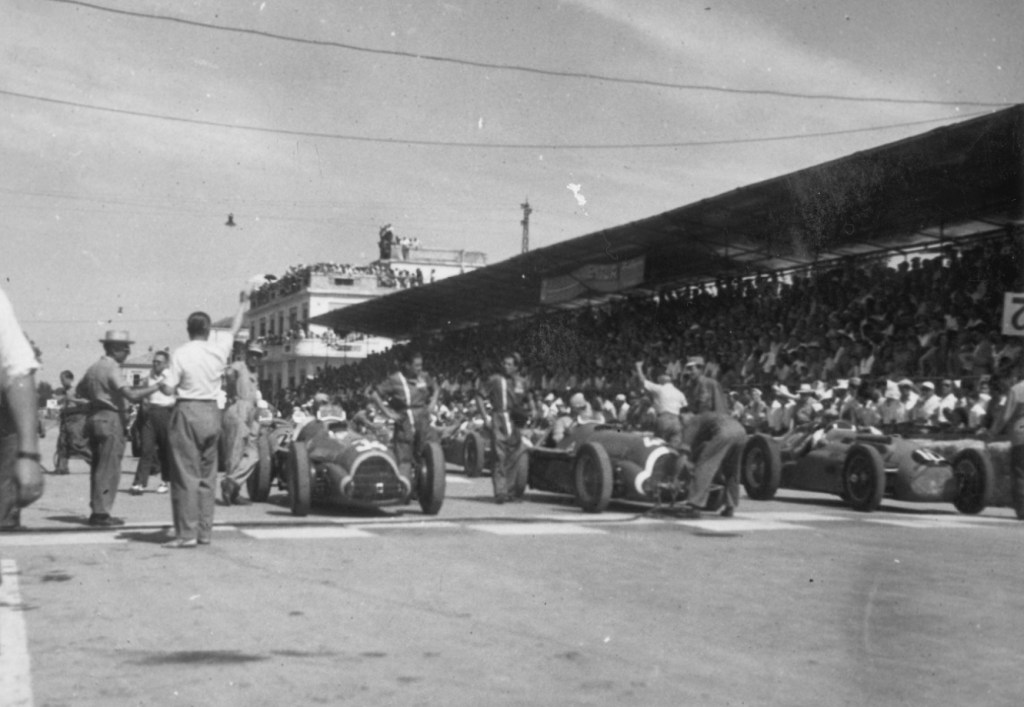
A month later the circus is on the grid at Pescara for the August 19 Grand Prix on the road circuit of the same name.
From the left is Fangio’s #34 Alfa 158, then the similar machine of Luigi Fagioli’s, with Louis Rosier’s Talbot-Lago T26C on the right. The race was won by Fangio from Rosier and Fagioli.
(F Patellani)
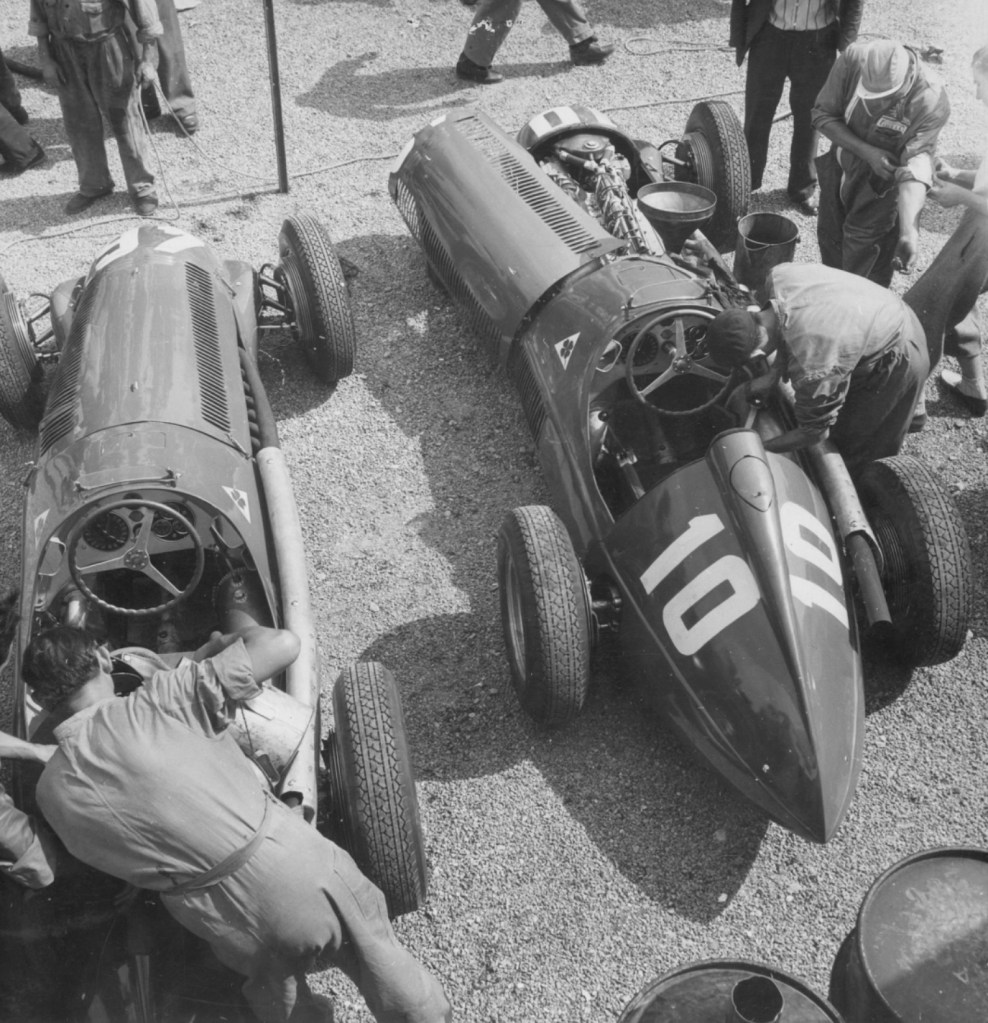
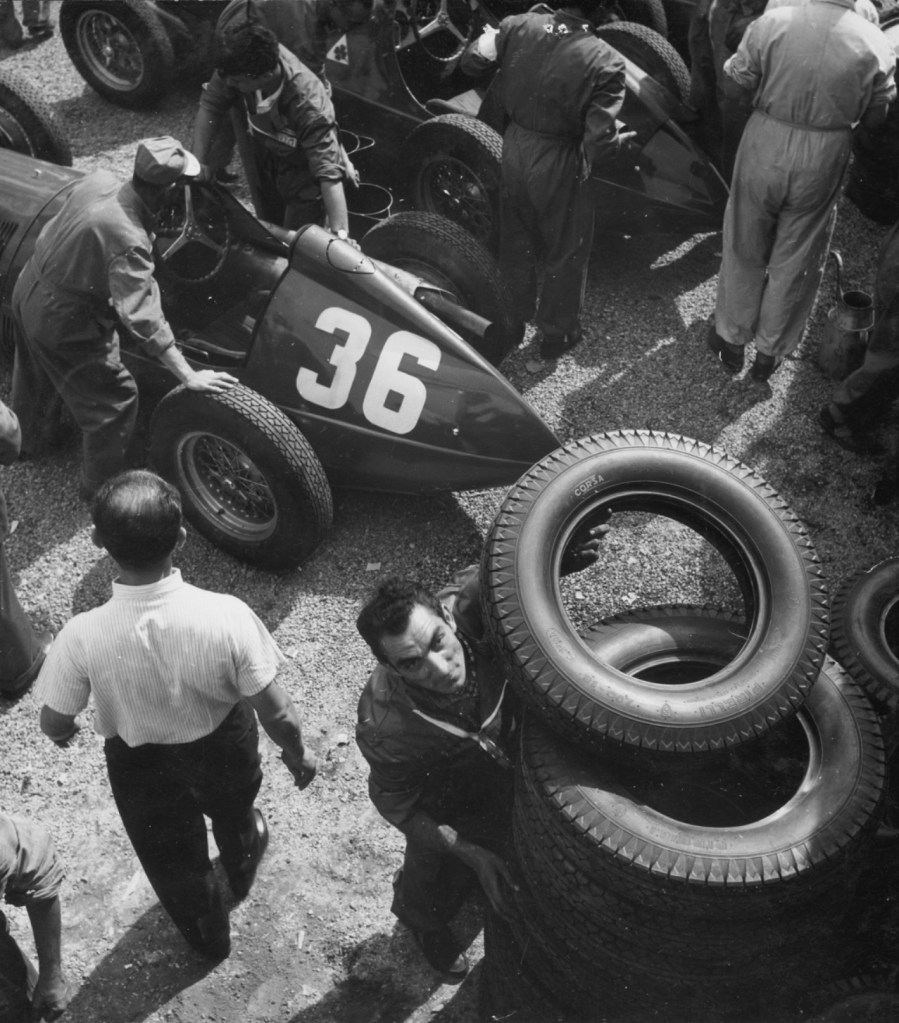
Paddock scenes at Monza during the September 1950 Italian GP weekend.
The Consalvo Sanesi 158, and Giuseppe Farina #10 Alfa Romeo 159 above, and Fagioli’s 158 below. Farina won the race from Alberto Ascari’s Ferrari 375, then Fagioli.
(F Patellani)
Below mechanics attend to the engine of Fagioli’s 158.
1959(Publifoto)
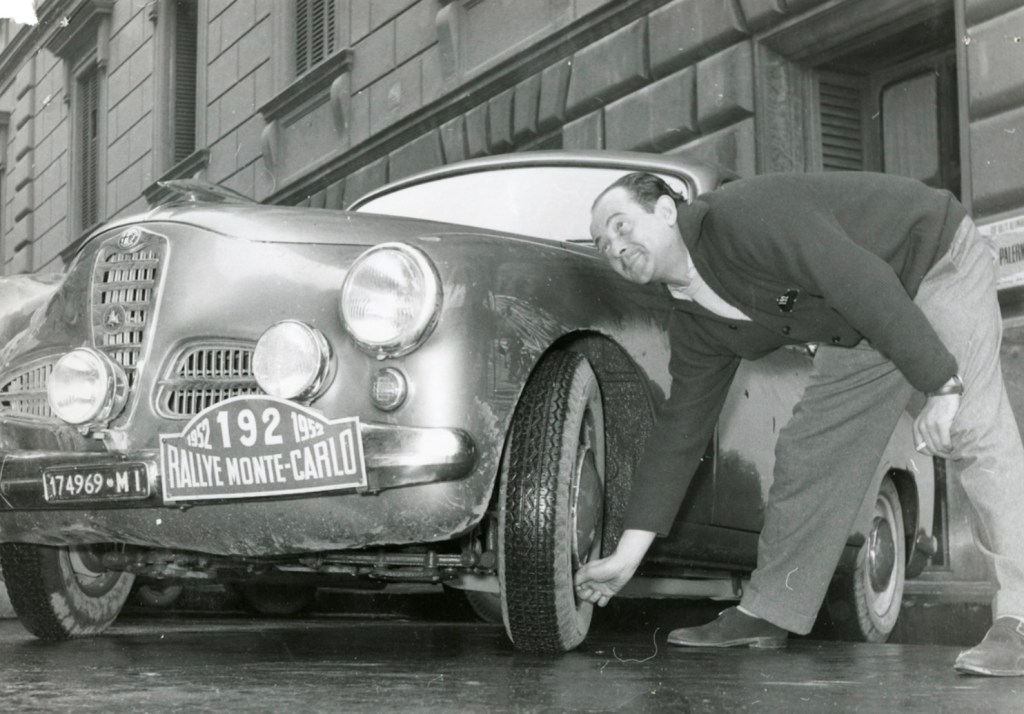
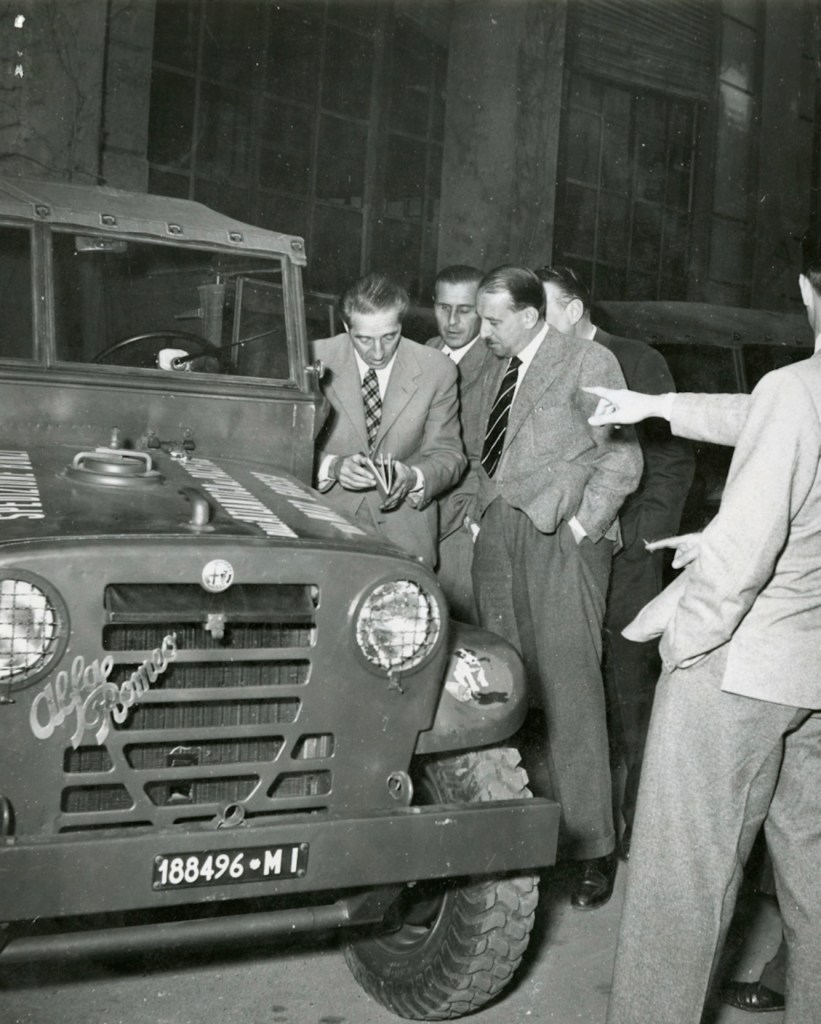
Prince Raimondo Lanza di Trabia inspects his left-front Pirelli, Alfa Romeo 1900 TI during pre-event scrutineering in Milan before the start of the 1952 Monte Carlo Rally.
He was 72nd in the event won by Sydney Allard/Guy Warburton Allard P1, the best of the Alfa’s was the 17th placed Andersson/Lumme 1900TI.
Pirelli Stelvio tyre ad 1956 (L Bonzi)
Count Leonardo Bonzi alongside his Alfa Romeo in Bicocca, Milan before the start of the Mato Gross Rally in 1952.
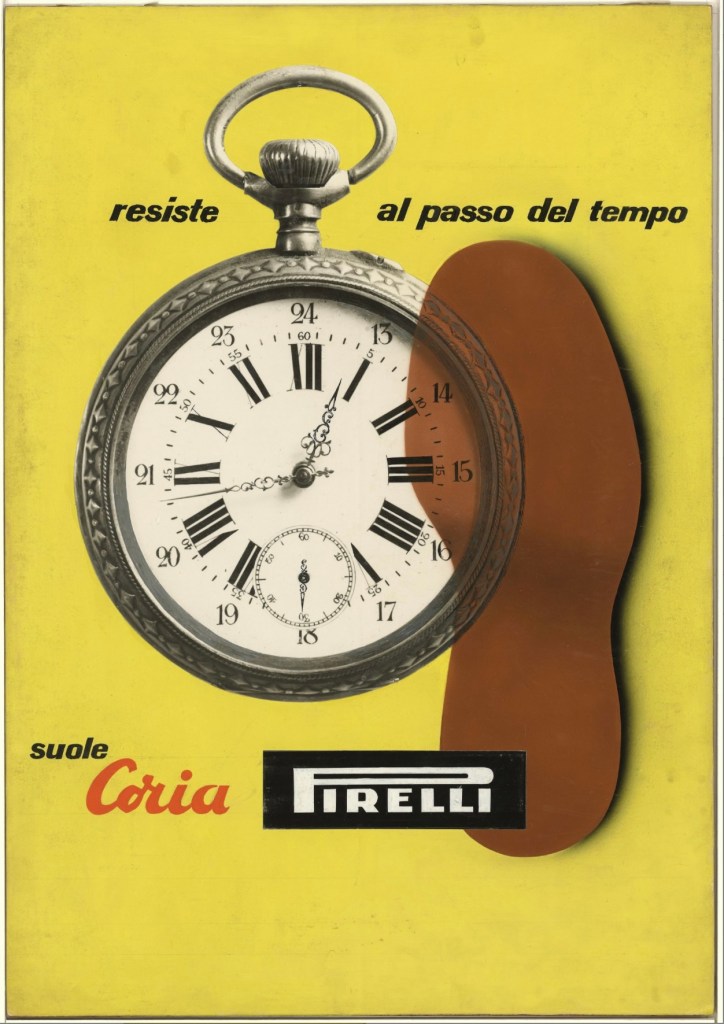
Pirelli Coria soles resist the passage of time Ezio Bonini 1953 (INCOM)
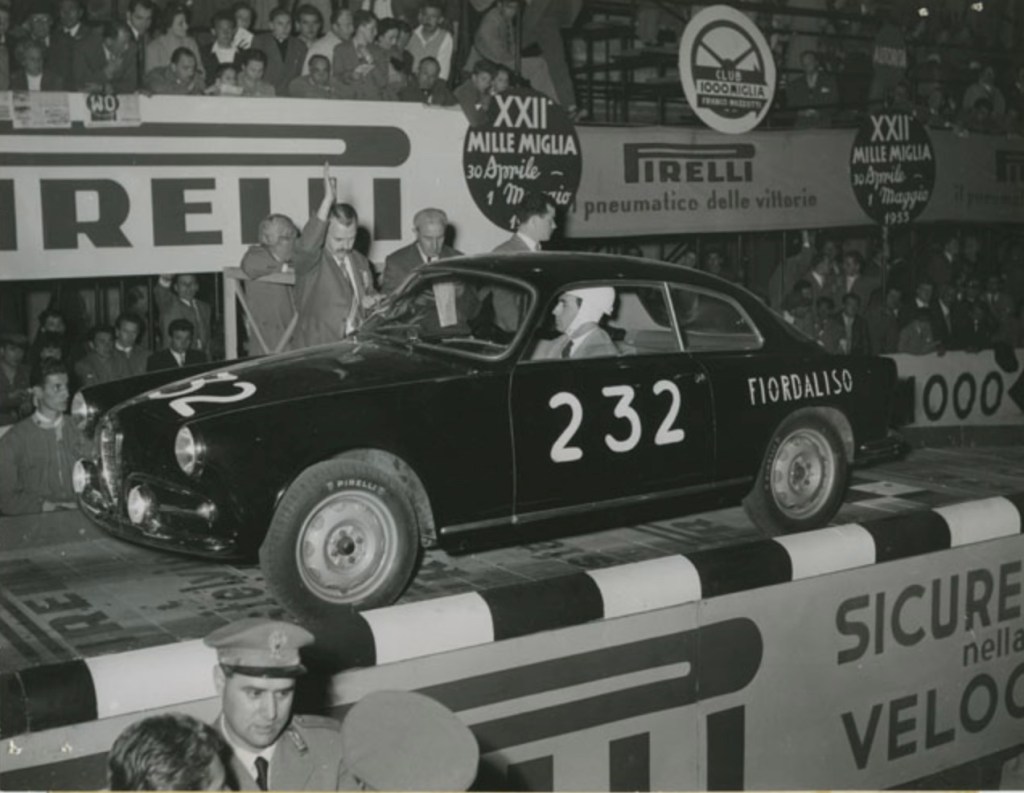
Mille Miglia 1955 start with the Santo Ciocca Alfa Romeo Giulietta Sprint on the ramp DNF. The race was of course won by the Stirling Moss/Denis Jenkinson Mercedes Benz 300SLR.
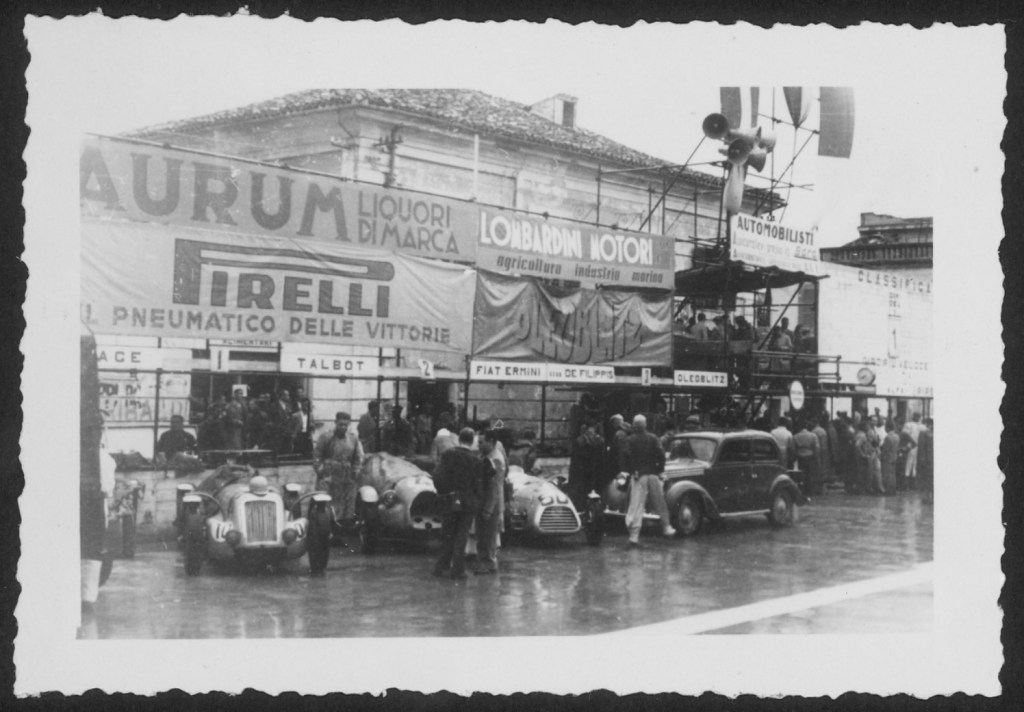
View of the pits during a soggy August 1949 Pescara Grand Prix weekend. Franco Rol won in his Alfa Romeo 6C2500 SS from Robert Vallone’s Ferrari 166S. Car 10 is Henri Louveau’s third placed Delage D6, #4 Louis Rosier’s Talbot Spéciale (DNS) and car #50, Bormioli’s ?
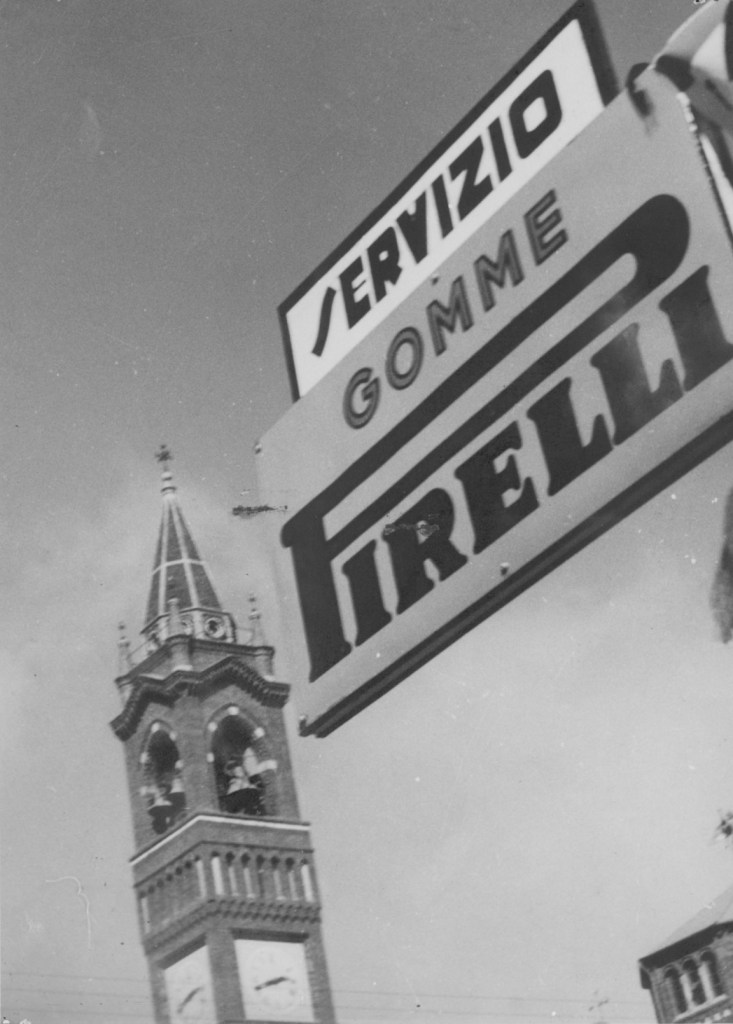
Asmara December 1938, site of the first Coppa di Natale. Behind the Pirelli sign is the Beata Vergine del Rosario church
Credits…
All images are from the Pirelli Foundation archives. Leonardo Bonzi, Publifoto, Federico Patellani. ‘Alfa Romeo A History’ Peter Hull and Roy Slater
Sydney born, ‘Dave’ Walker died aged 82 last week in Queensland (June 10, 1941-May 24, 2024).
The very gifted Walker raced two revolutionary Grand Prix Lotuses in 1971-72: the four-wheel-drive, gas-turbine powered Lotus 56B Pratt & Whitney and epochal, edgy-wedge, side radiator, torsion-bar sprung Lotus 72 Ford.
He cut his competition teeth in club competition aboard an MGA Twin-cam, soon progressing to a Brabham BT2 Ford with support from David McKay’s Scuderia Veloce. Walker had an Australian Grand Prix (Sandown 1964) and Bathurst 500s (1963-65) under his belt before jumping on a ship at Circular Quay to take on the world’s best in Europe.
Armed with a Merlyn Mk10 Ford he became a Formula 3 Gypsy, racing across Europe for start and prizemoney throughout 1967, winning the Adriatic GP at Opatija, Yugoslavia in June.
He then figured he needed to go backwards to go forwards so did a deal to race a Russell-Alexis Formula Ford in 1968, doing well enough to bag a quasi-works Jim Russell Race Drivers School Lotus 61 FF ride in 1969.
Heathrow, February 27, 1971 with his trophy for winning one of the four F3 Torneio Brasiliero rounds aboard his works Lotus 59A Ford-HolbayWalker awaits the start of the Monaco F3 GP from pole in 1971, he won. Lotus 69 Ford-Novamotor (R Schlegelmilch)
He won the Les Leston Championship with it and was then picked up by Gold Leaf Team Lotus to race their F3 Lotus 59 and Lotus 69 Fords throughout 1970-71. In 1971, a year of unparalleled dominance, Walker won 25 of 32 F3 race starts including the prestigious Monaco and British GP rounds and two of the three British titles.
Lotus boss, Colin Chapman rewarded him with his first F1 drives that year, Walker having had his first big-car experience in some F5000 races in the UK and a quick trip home to Sydney in November 1970 to contest the AGP at Warwick Farm in an uncompetitive F5000 Lotus 70 Ford.
Walker during dry practice, 1971 Dutch GP, Zandvoort. Q22, he was looking good for a points finish early in the wet race, but with limited experience of the unusual car Dave ran off into the dunes on lap six, as did many others. Lotus 56B Pratt & Whitney (MotorSport)Walker, Lotus 72D Ford at Brands during the 1972 British GP weekend. Q15 and DNF suspension (MotorSport)
In 1972 Dave was Emerson Fittipaldi’s #2. Like Fittipaldi in 1971, Walker struggled with a car that took some learning, unfamiliar circuits and not a lot-of-love from the team. Emmo won the title and Dave got the flick in favour of Ronnie Peterson at the seasons end with seven DNFs from 10 starts, all due to mechanical failure.
It wasn’t quite as bad as many would have you believe though, he was fifth in the non-championship Brazilian Grand Prix and in the running for points in South Africa, Monaco and Spain.
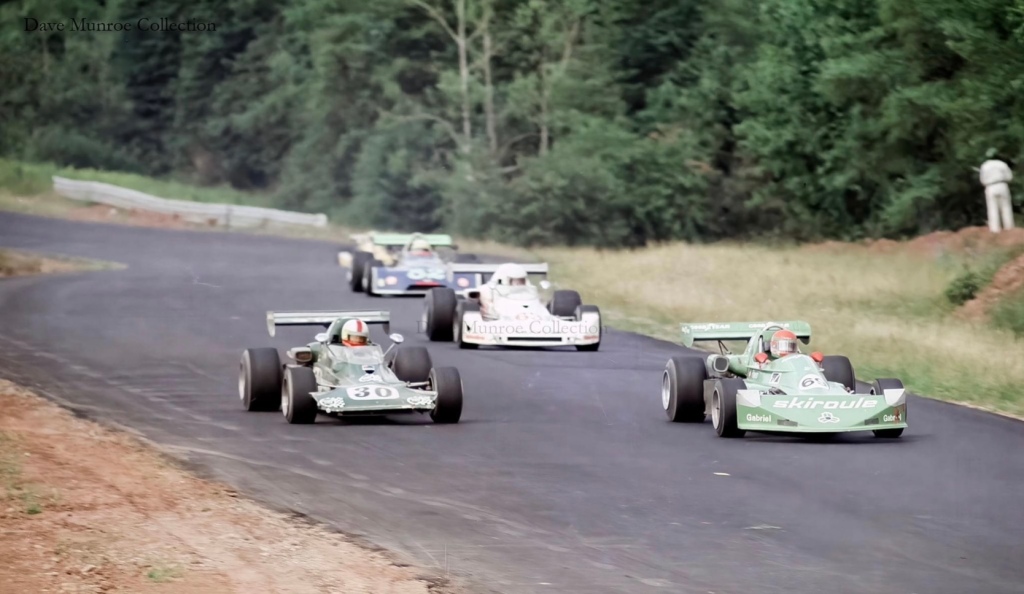
Canadian Formula Atlantic. Walker on the left, Lola T360, with Gilles Villeneuve, March 75B alongside at Halifax on July 7, 1975. Tom Klausler, T360 and Tom Bagley, Chevron B27 following. Bill Brack won from Klauser, Howdy Holmes and Walker (D Munroe)
In the following years Walker had sporadic F2, F5000, F Atlantic and sportscar drives but two road car crashes in 1973 – he broke a leg in one and almost severed his left arm in the other – sealed his competition fate, a few Canadian Formula Atlantic drives in 1975 were his last – the GP de Trois-Rivieres on August 31 perhaps the very last – before hanging up his helmet.
Walker worked in Canada for a while, getting involved in a boat chartering business. He and his wife Jan returned to Australia and have parlayed those skills in a successful business on the Whitsunday Coast since.
I had several phone calls with the beautifully spoken and sharp-as Dave in 2021-22, keep an eye out for a primotipo or Auto Action feature on Walker soon.
Etcetera…
(R Donaldson-SLNSW)
1964 Bathurst 500, with the Walker/Brian Hilton VW1200 – seventh place – ahead of the Bolton/Schroeder Hillman Imp and Weldon/Needham Studebaker Lark.
(L Mason Collection)
Reader, Laurie Mason owns “the 1968 Vauxhall Ventora that David drove in the 1968 London-Sydney Marathon. He was an engaging and welcoming man and we had many discussions about the car and their eventful journey across the world in 1968. I spoke with David only last month so this news is very sad.”
(L Mason Collection)
A Grand Prix racing car of the finest type: bold, innovative, on the edge. The exact opposite of highly regulated, restricted modern F1, let’s not call it Grand Prix Racing because there is nothing Grand about it. Lotus 56B Pratt & Whitney, Zandvoort, 1971.
Credits…
MotorSport Images, Dick Simpson-oldracephotos.com, Rainer Schlegelmilch, J Wilds-Getty, R Donaldson-State Library of New South Wales, Dave Munroe
Tailpiece…
(D Simpson/oldracephotos.com)
Superb shot of Dave attacking the Warwick Farm Esses aboard the Lotus Components Lotus 70 Ford during the November 1970 AGP. It was no M10B McLaren, with which Frank Matich won the race. Walker was Q7 and fifth. The brave snapper is Lance Ruting, one of the stars of the era.
























 primotipo...