Archive for the ‘F1’ Category

(B Donaldson)

John Surtees is chasing Jack Brabham hard in the latter stages of the 1963 Australian Grand Prix at Warwick Farm on February 10, 1963. He is racing a Lola Mk4A Climax 2.7 FPF chassis #BRGP44.

Jack’s Brabham, Brabham BT4 Climax passed him late in the race, John fell short by 12 seconds in a race run in intensive heat, but he had a good southern summer, winning two of the eight Australasian internationals, the NZ GP at Pukekohe and the Lakeside International.

I’ve had a crack at this topic before, but there are a swag of shots looking for a home, so why not? See here: https://primotipo.com/2017/10/05/cruisin-for-a-bruisin/ And here too, Lola Heritage have a great article: http://www.lolaheritage.co.uk/type_numbers/mk4/mk4.html

Dick Ellis cutaway of an F1 Lola Mk4 Coventry Climax FWMV 1.5 V8
Surtees, Team Lotus Lotus 18 Climax at Ardmore during the 1961 NZ GP, DNF (M Fistonic)

1963 wasn’t his first trip Down Under. Il Grande John did the Kiwi Internationals with Team Lotus in 1961 when Innes Ireland, Jim Clark and Surtees raced Lotus 18 2.5 FPFs fitted with the dreaded Queerbox. In a grim tour for the team, Surtees didn’t finish any of his three races at Ardmore, Levin or Wigram.

He was back again in 1962, running a Reg Parnell Cooper T53 2.7 in Australia, finishing second at Sandown and winning from Jack Brabham’s Cooper T55 2.7 on Longford’s daunting mix of roads, undulations, railway viaduct and barbed wire.

Parnell ran a pair of Lola T4 Climaxes, 1.5 FPF powered early on, then 1.5 FWMV V8 engined when the engine became available in Grand Prix racing that year. Surtees finished a great fourth in the World Drivers Championship during the season in which the monocoque Lotus 25 Climax rewrote the chassis design rulebook.

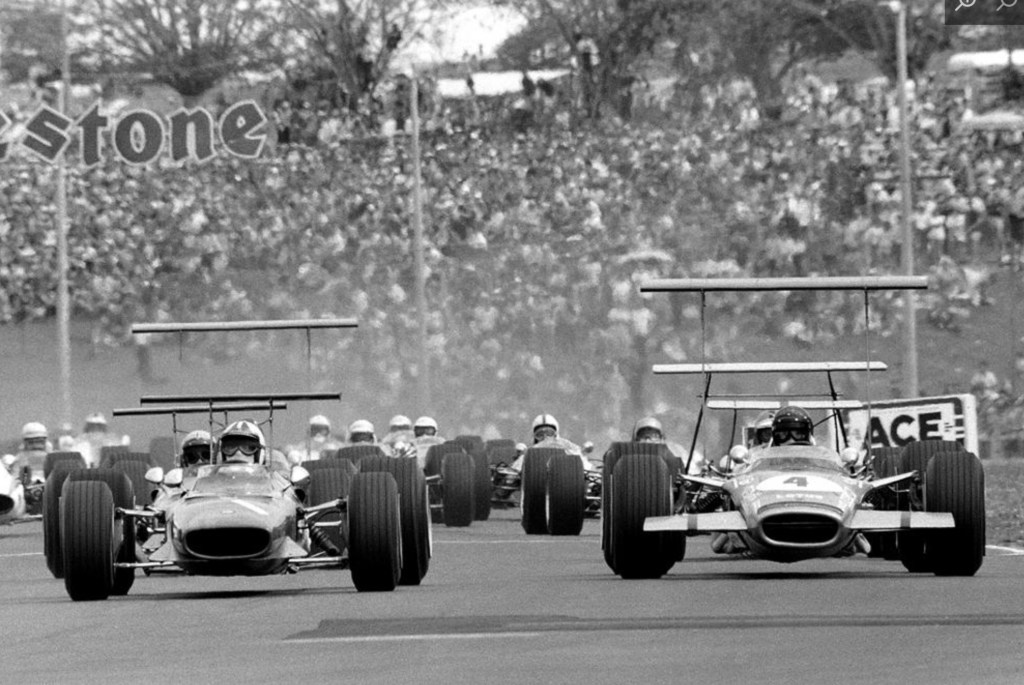
Surtees winning Lola Mk4A and Bruce McLaren, Cooper T62 on the front row at Pukekohe, NZ GP 1963. That’s Brabham’s #4 BT4, and Tony Maggs in the other Parnell Lola Mk4 at far left (D Oxton)
Later Kiwi Ace, David Oxton attends to a Colotti ratio change on Surtees’ car, Pukekohe (D Oxton)

Reg (Bowmaker-Yeoman Racing Team) fitted 2.7FPFs to two of his T4s in place of the smaller F1 V8 for the 1963 Formula Libre Australasian Internationals for Surtees and South African driver, Tony Maggs use. Parnell knew the local-ropes, having raced a Ferrari Super Squalo 3.4 as part of a two car team together with Peter Whitehead in the 1957 New Zealand Internationals. He did well too, winning the NZ GP and the Dunedin Road Race in what was his last hurrah as a driver before taking on Aston Martin team management duties.

Other hot-shots that summer included Jack Brabham in his new F1 BT3 derived BT4 2.7 FPF, while Bruce McLaren raced the similarly powered Cooper T62 with which he won the 1962 Australian Grand Prix at Caversham, near Perth that November. Graham Hill (and Innes Ireland in some NZ races) raced the radical, fast Ferguson P99 albeit he lacked the mumbo of his completion, running 2.5 FPF’s rather than the more fancied 2.7 ‘Indy’ variant.

Young Cooper T53 mounted thrusters included Chris Amon, Jim Palmer and Angus Hyslop. In Australia the local quicks included David McKay and Bib Stillwell in new BT4s, while Lex Davison and young grazier John Youl raced Coopers T53 and T55 respectively.

Surtees’s Lola Mk4A #BRGP44 was quick everywhere, starting the tour with a bang by winning the NZ GP at the new Pukekohe circuit near Auckland, then gearbox problems caused DNFs at Levinand Wigram. He failed to finish at Teretonga as well, albeit Maggs placed second behind McLaren at the track near Invercargill at the very south of the South Island.

Surtees in the Wigram – RNZAF airfield – paddock. That Ferrari 250 SWB belonged to ‘Richardson’ for those wanting to do further research (W Collins)
Surtees and handsome Mk4A at Teretonga, ninth after undisclosed problems (G Woods)

There was then a fortnight to ship the cars across the Tasman Sea to Sydney Harbour for the AGP to be held on the challenging, technical Warwick Farm on February 10.

Surtees put down a marker, popping his Lola on pole in Jack’s backyard. He then led the race until Brabham – who started well back on the grid having sorted a new BT4 chassis during practice – passed him with 14 laps to run, the Brit suffering along with many others in the intense heat. John had the consolation of meeting fastest lap.

Then it was off to Lakeside, north of Brisbane. There Surtees started from Q3 and won from Hill, bagging the P99’s best result for the tour, with Stillwell third in his new Brabham BT4. Chris Amon was fourth and impressing pit-pundits with every drive. At the end of the summer Reg Parnell took the 19 year old off to Europe where he did rather well…initially racing #BRGP44 FWMV powered throughout 1963.

Shell drivers at Warwick Farm: David McKay, Tony Maggs, Graham Hill, John Surtees, Jim Palmer and Chris Amon (C Galloway)
Surtees hooks into the right-hander at the end of Pit Straight, Paddock, at Warwick Farm 1963 (B Donaldson)

Surtees returned to Europe to meet his new Ferrari team commitments, missing the final two races at Longford and Sandown, with Tony Maggs, sixth and second in the Parnell Lolas respectively.

Had there been a Tasman Cup that summer – the first was contested and won by Bruce McLaren in 1964 – Bruce would have won it. Brabham won at Levin and Warwick Farm, Surtees at Pukekohe and Lakeside, while McLaren was victorious at Wigram, Teretonga, Longford and Sandown.

The Lolas had proved very competitive Formula Libre machines but were thoroughly outclassed in ’63 GP racing: Amon, Maurice Trintignant, Lucien Bianchi, Mike Hailwood and Masten Gregory all failed to bag a point for Reg Parnell Racing.

Surtees Mk4 during 1962. The idea of that yellow enamelled spaceframe chassis was to make it easy to see any cracks that arose (unattributed)

Etcetera…

(MotorSport)

Pretty car. Surtees during the soggy German Grand Prix was second behind Graham Hill’s BRM. He first raced the chassis he used throughout his 1963 Australiasion Tour, T4A #BRGP44, at Karlskoga in August, there he led until a valve spring broke.

(MotorSport)

Main Men. Reg Parnell, Surtees and who? during the May 1962 Dutch Grand Prix weekend at Zandvoort. John popped his car on pole but crashed in the early laps after a wishbone failure.

(MotorSport)

More Main Men. Surtees and Lola’s Eric Broadley at Aintree during the British GP meeting in July. And below, John with the car in the paddock. FWMV is on Webers, a bit cheaper, but less powerful than the Lucas injected alternative.

Lola had a fantastic weekend with Surtees qualifying and finishing second in the race. The cars gained pace after the cockpit area was found to be flexing by Surtees in the lead up to the Belgian Grand Prix, when additional tubes were added to the suspect area.

(MotorSport)
(N Beresford Collection)

Don Beresford – father of engineer Nigel Beresford of Ralt, Tyrrell, Penske Cars et al fame – working on a T4 at Bromley during 1962. It’s after the chassis cockpit section was strengthened, note the additional tubular section which has been added, so it’s probably the chassis Surtees raced carrying #6 in the December 29, 1962 South African Grand Prix at East London, DNF.

The ’63 New Zealand GP was a week later on January 5, no rest for the wicked!

Credits…

Bob Donaldson-State Library of New South Wales, Dick Ellis, Colin Galloway, Milan Fistonic, David Oxton Collection, Graham Woods Collection, Warner Collins, Lynton Hemer, Dick Simpson-oldracephotos.com, Michelle Glenn, Nigel Beresford Collection

Tailpieces

Surtees, Surtees TS8/9 Chev, Alan Hamilton, McLaren M10B Chev, Colin Bond, McLaren M10C Repco-Holden and Graeme Lawrence, Brabham BT29 Ford FVC (L Hemer)

John Surtees was a busy lad throughout the 1960s with Grand Prix, World Endurance Championship and Can-Am programmes in most seasons, so he never did do a Tasman.

Scuderia Ferrari had plans afoot for Surtees to race a Ferrari Dino V6 – the ‘Surtees Tasman Special’ Ferrari 246 #006 – in 1966 but a late season Can-Am accident at Mosport in a Lola T70 Chev hospitalised him that winter so that didn’t happen. Chris Amon subsequently went rather well with updated 246 variants in 1968-69.

(M Glenn)

By 1971 Surtees’ commercial imperatives had evolved somewhat. Not only was he contesting Grand Prix racing with a two car team, he was also a constructor of customer racing cars, including Formula 5000 machines, which had been adopted as the Tasman Formula from 1970.

So it made sense for Surtees to contest the November 1971 Australian Grand Prix at Warwick Farm in a Surtees TS8/TS9 Chev, perhaps selling a car or two, then leave the car here for his protege, Mike Hailwood to race in the following 1972 Tasman.

Surtees in front of Max Stewart’s Mildren Waggott TC-4V in the Farm’s Esses (D Simpson-oldracephotos.com)

Surtees qualified ninth after fraught practice sessions sorting handling problems, then had a miserable race without his preferred Firestones, but he still got as high as fourth before pitting for a new left-front tyre, losing three laps in the process, before having another puncture late in the race, finally finishing 14th. “He certainly gave the crowd good value while he was going, “The History of The Australian Grand Prix” recorded.

Frank Matich triumphed that day in his brand new Matich A50 Repco-Holden with Kevin Bartlett and Hamilton second and third in their McLaren M10B Chevs.

Finally, Mike Hailwood did well in the 1972 Tasman Series, he was second to Graham McRae’s Leda GM1 Chev despite not winning round, and was then the best of Team Surtees F1 drivers that season; eighth in the World Championship.

Finito

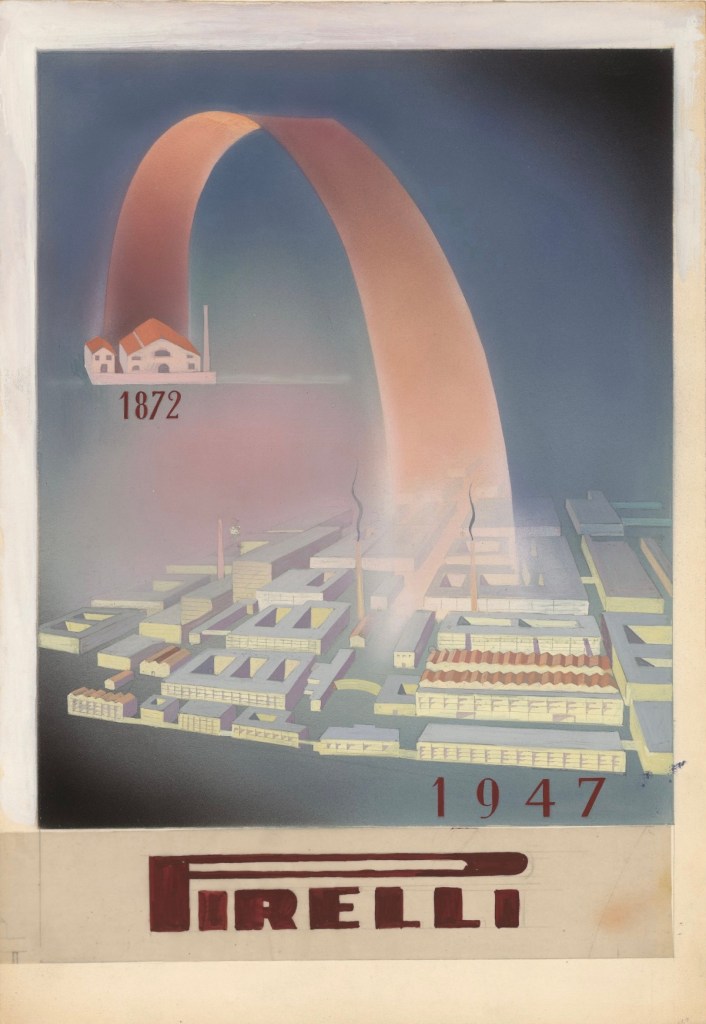
One thing leads to another. I was researching Giuseppe Luraghi, a longtime CEO of Alfa Romeo. Apart from mega talent as a corporate leader he was somewhat of a renaissance man, a gifted writer and poet. He initiated the Pirelli magazine way back in 1948 when he headed up Linoleum, a Pirelli Group subsidiary.

Pirelli, “Addressed it to the general public, it was a way of reaching out to the consumer with much more than a simple advertising message. Above all it was a way of conveying business culture.”

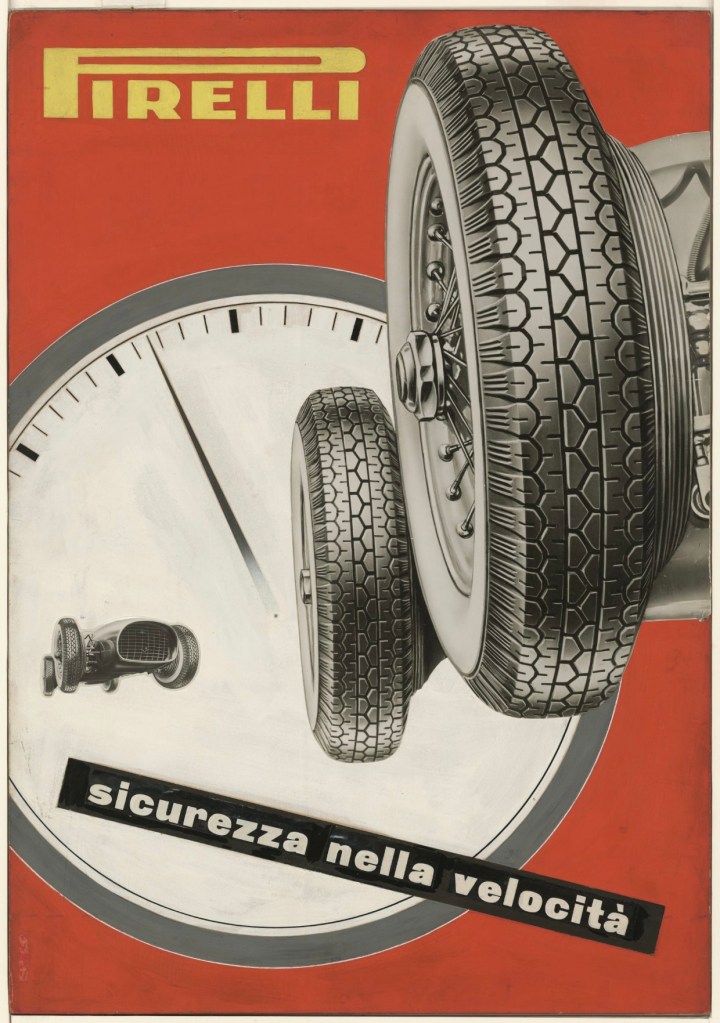
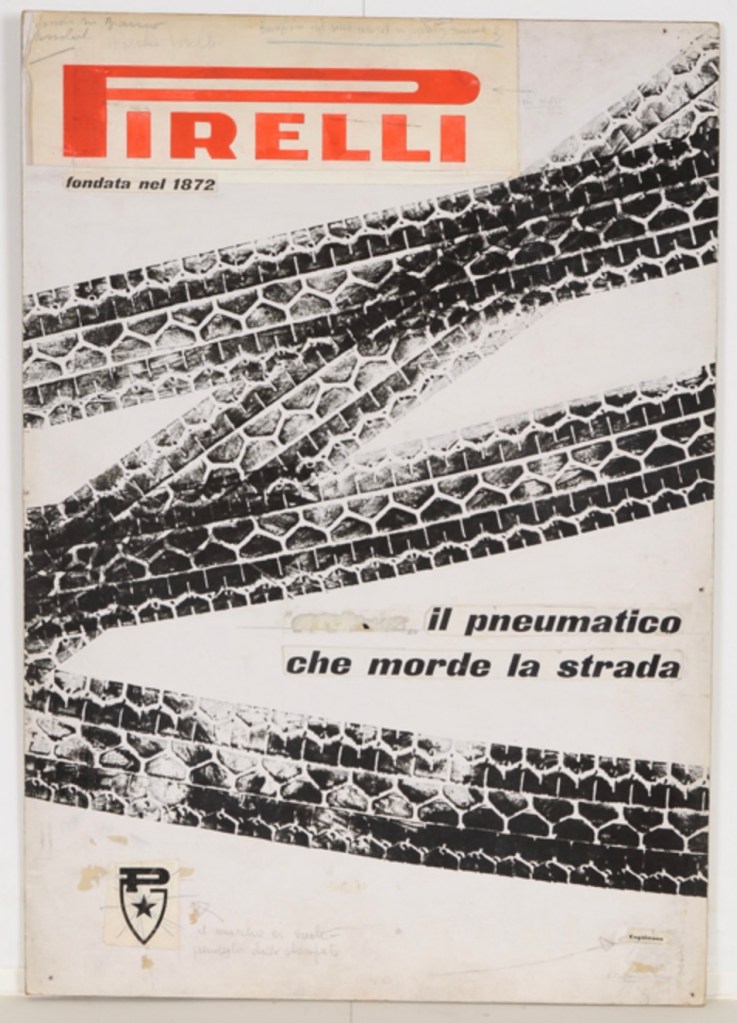
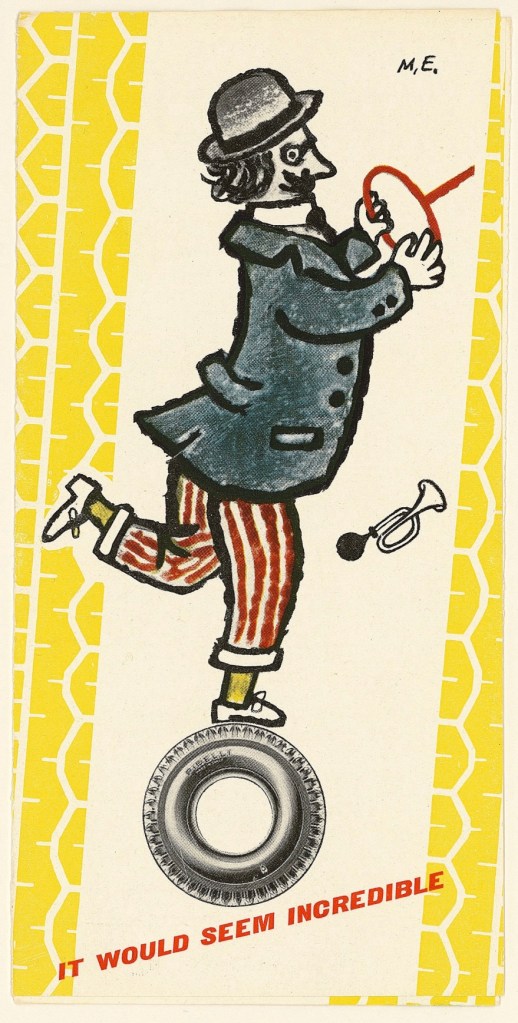
So, then yer go digging on that internet thingy and find Pirelli’s archives, these shots are the amazing result. I’ve mixed them up, they aren’t placed in chronological order so I’ve visually separated them by choosing Pirelli magazine covers or impactful or clever advertisements so you know when we are onto another subject. I’ve kept the words to a minimum, let the pics do the talkin’…

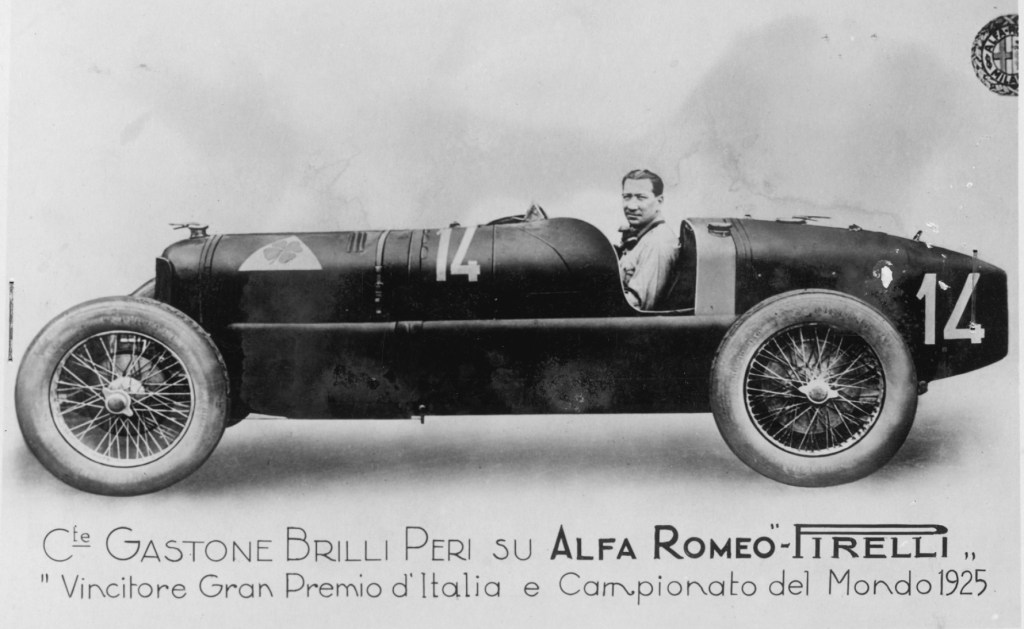
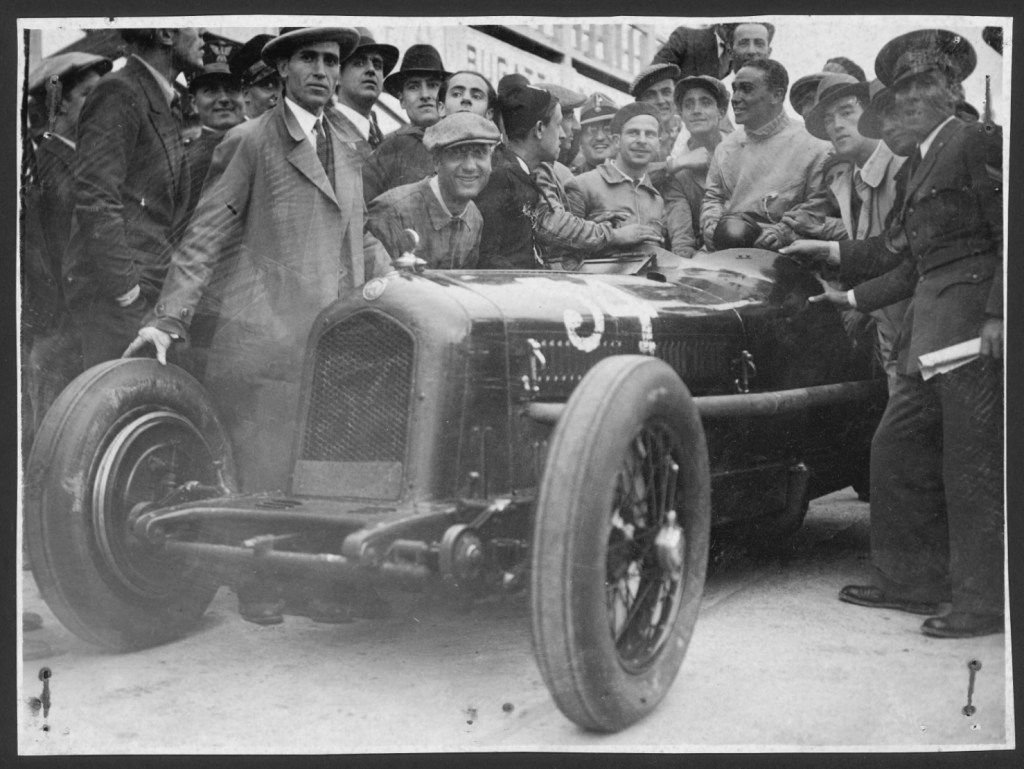
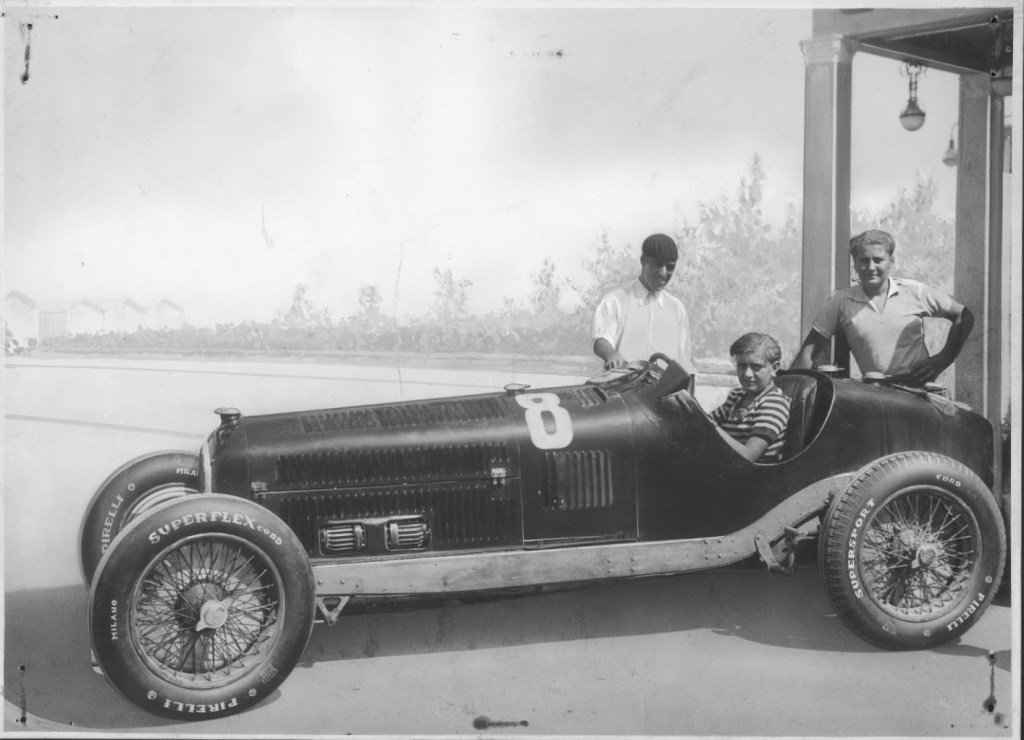
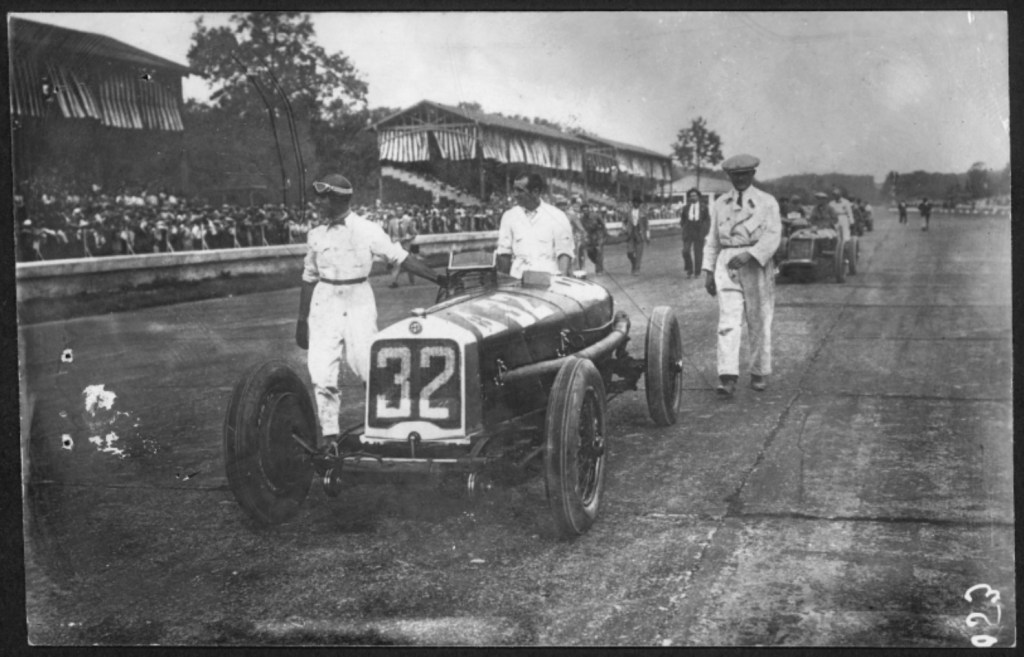
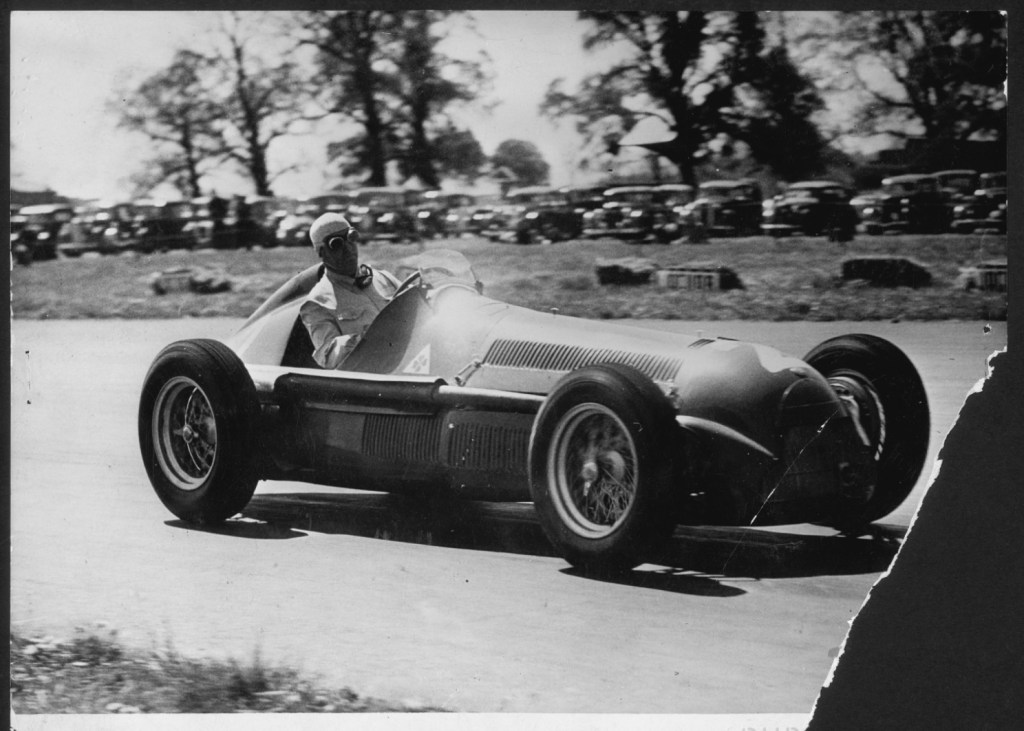
Gastone Brilli-Peri, by winning the Italian Grand Prix, gave Alfa Romeo the four-round 1925 Manufacturers World Championship in an Alfa Romeo P2.

Pete DePaolo won the Indy 500 in a Duesenberg 122, Albert Divo the French Grand Prix in a Delage 2LCV, while Alfa’s P2 won at Monza and at Spa, where Antonio Ascari drove the winning machine in the Belgian Grand Prix.

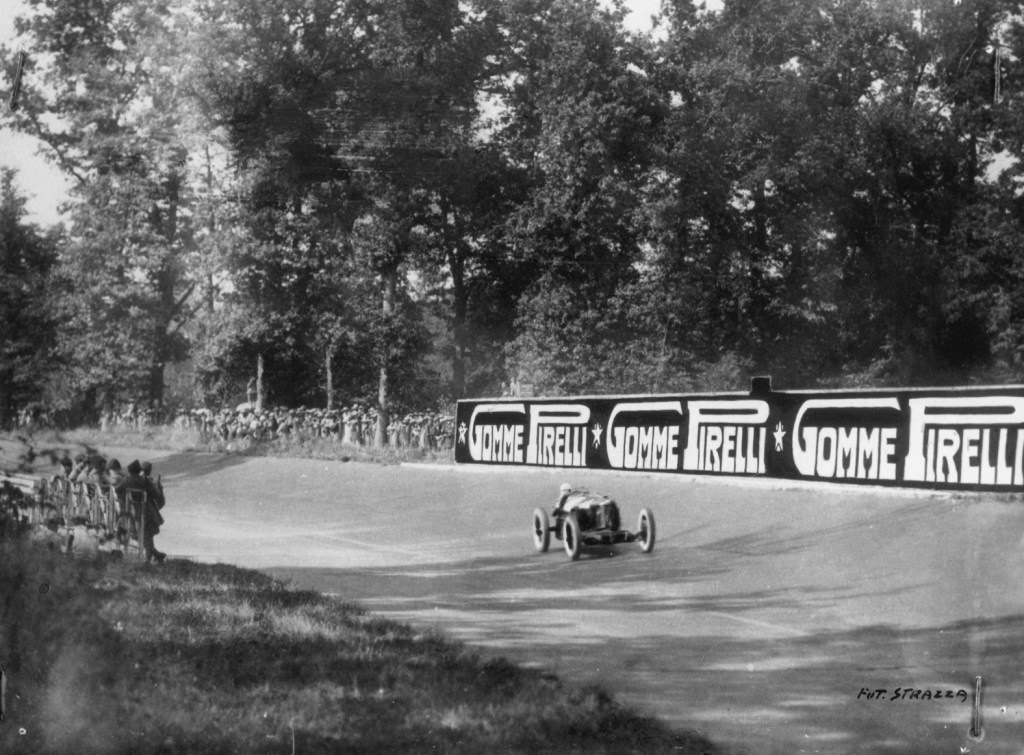
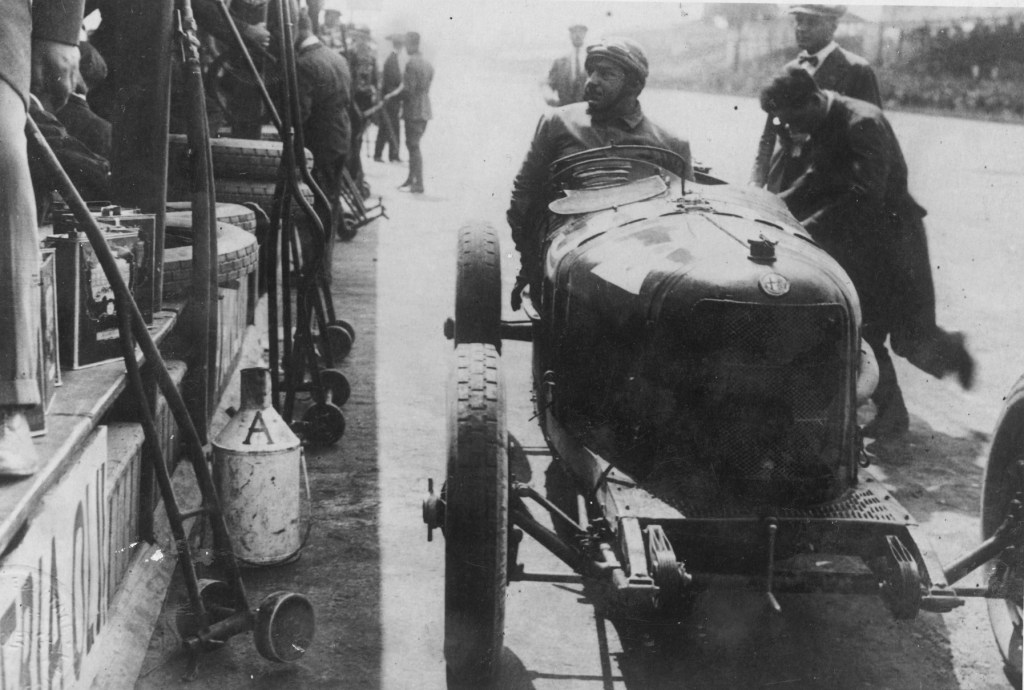
Brilli Peri, enroute to his Italian GP win and Campari below, in another P2 in the pits. Brilli Peri won from Giuseppe Campari/Minozzi/Sozzi with Meo Costantini third in a Bugatti T39.

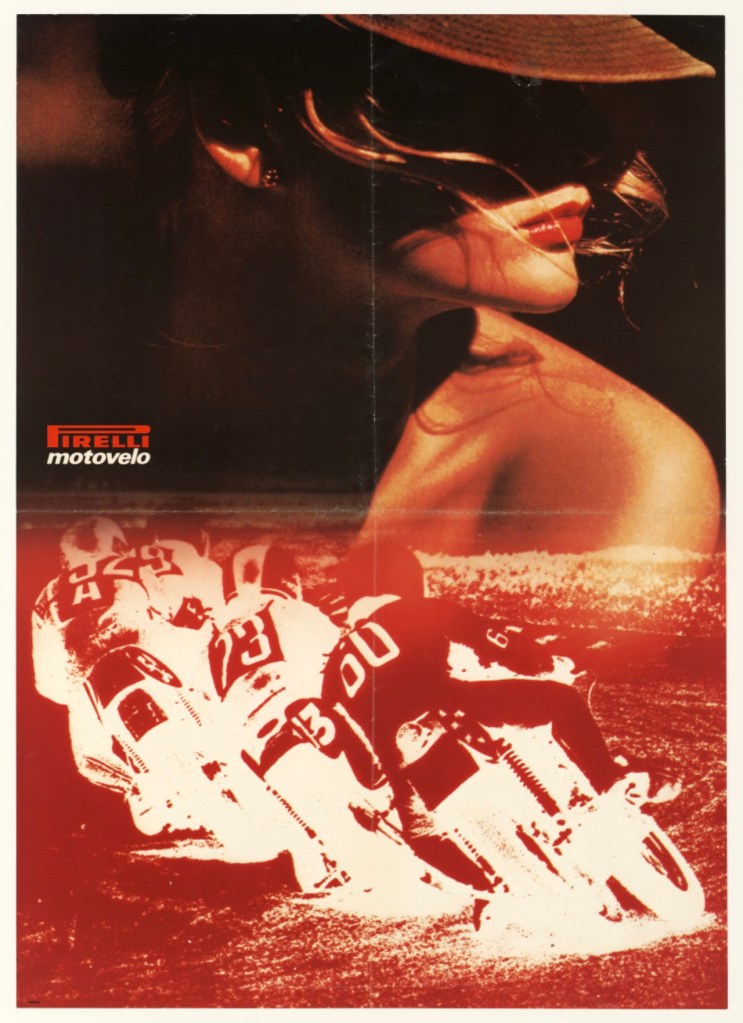
Poster 1977

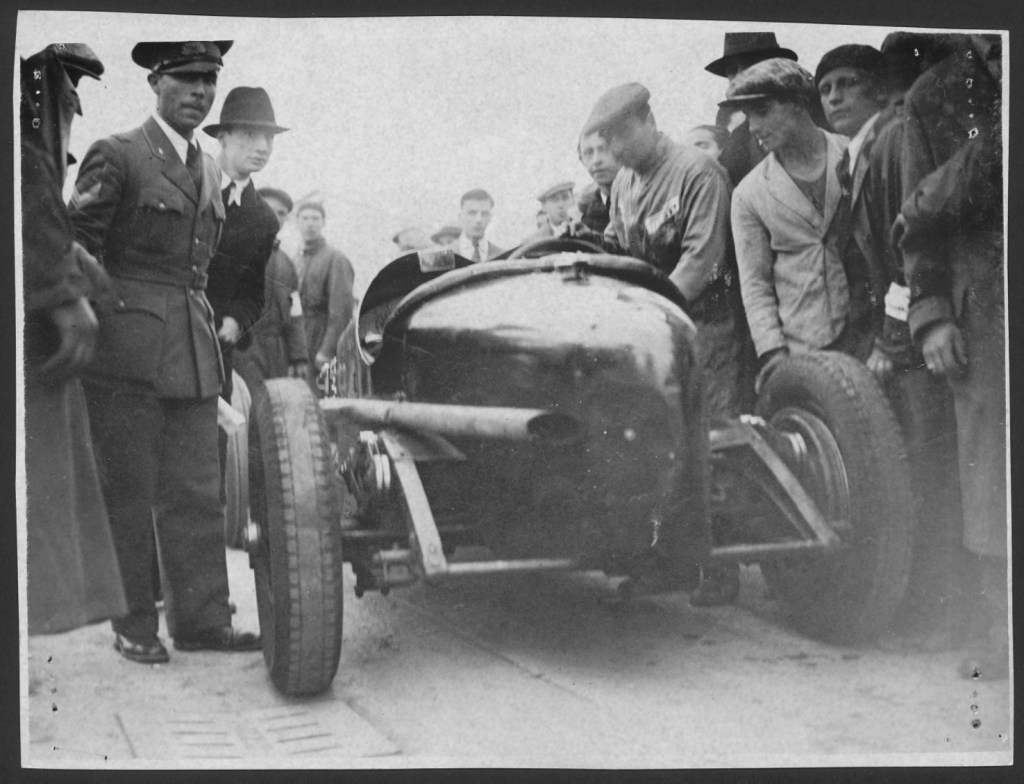
Antonio Brivio after winning the 1935 Targa Florio in a Scuderia Ferrari Alfa Romeo Tipo B.

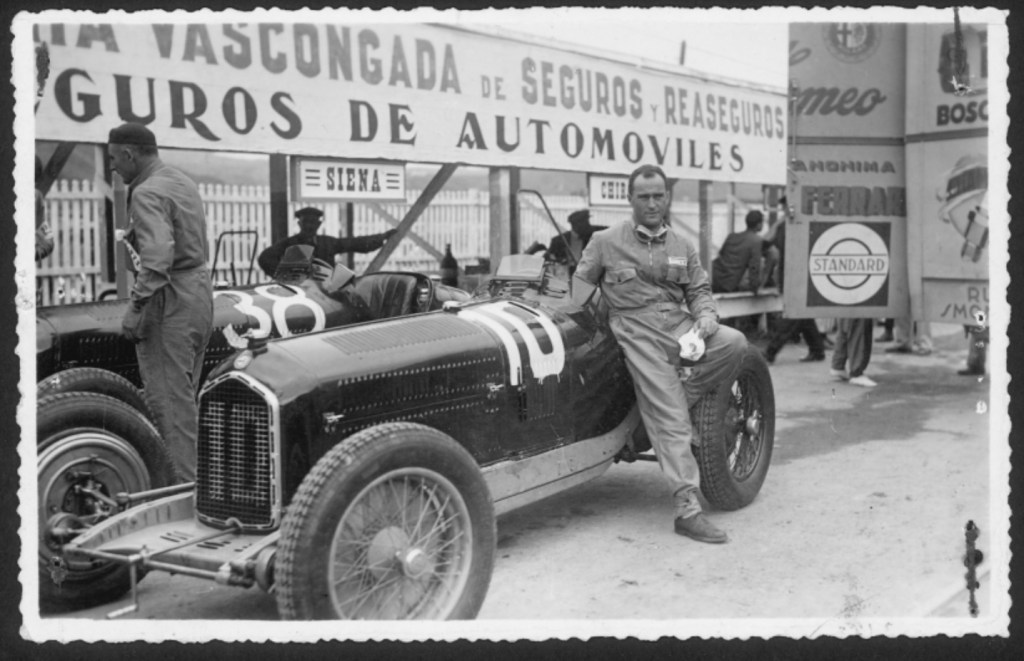
Sticking with the P3 theme, Luigi Fagioli stands beside his car during the September 1933 Spanish Grand Prix weekend. The race was won by Louis Chiron’s Alfa P3 from Fagioli, and held on the Laserte road circuit near San Sebastián.

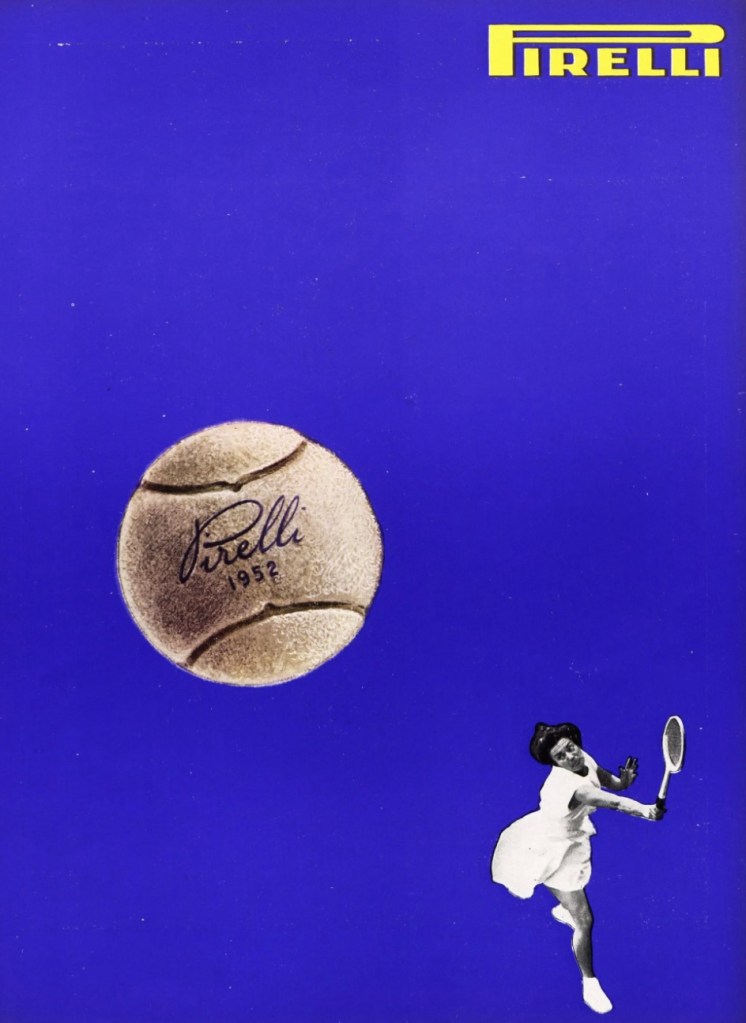
Mock up for a 1952 ad by Pavel Engelmann

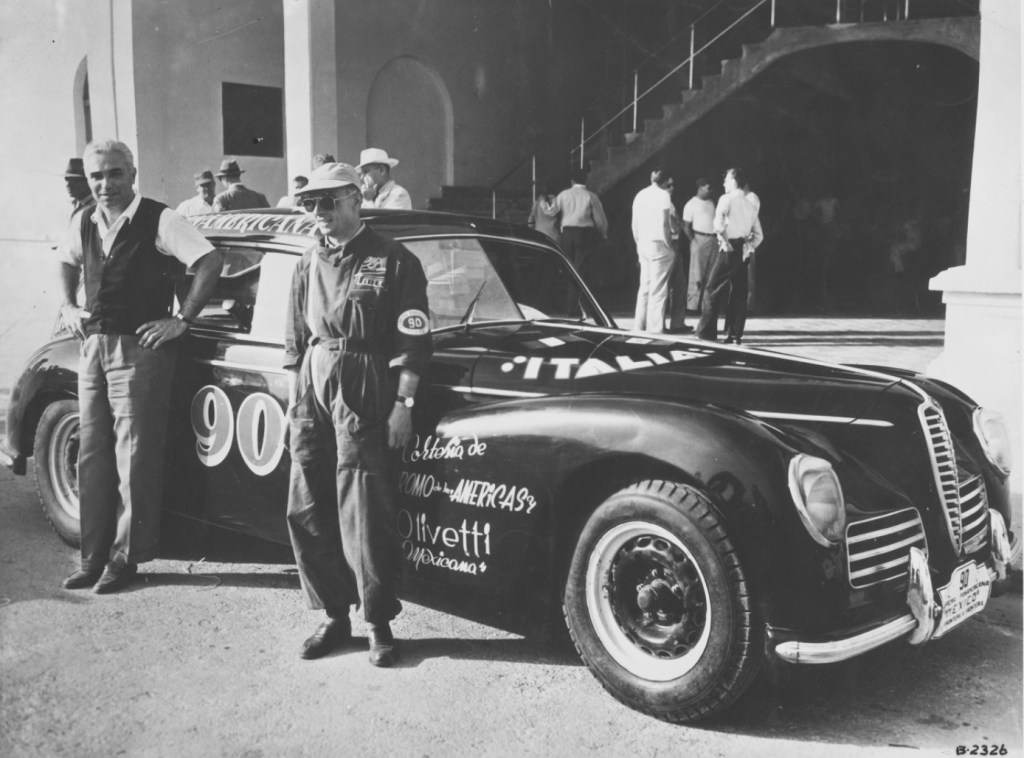
Piero Taruffi and navigator Isidoro Ceroli with Alfa Romeo 6C2500 Sport during the first Carrera Panamericana from May 5-10 1950.

They finished fourth behind three American crews driving an Oldsmobile and two Cadillacs.

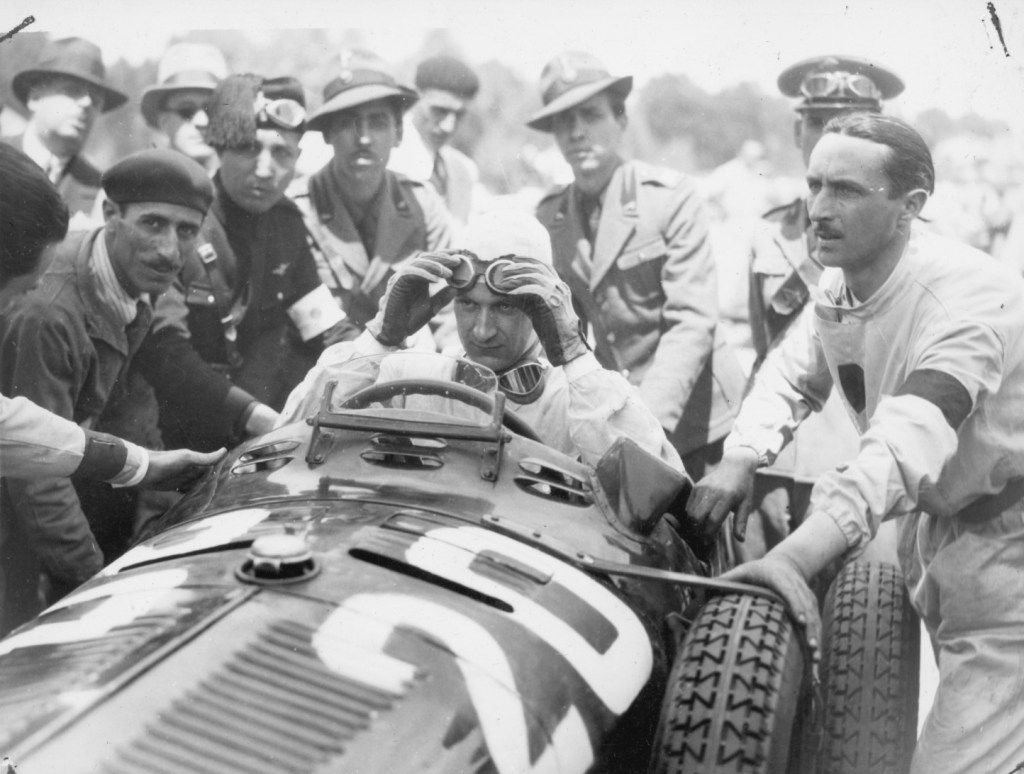
Piero Taruffi, again, but a little earlier, here with a shock of dark hair! and his Scuderia Ferrari Alfa Romeo 8C2300 Monza after finishing second in the April 1932 Rome Grand Prix.

The race, held on the 4km Circuito del Littorio, was won by Luigi Fagioli’s works-Maserati V5 5-litre V16.

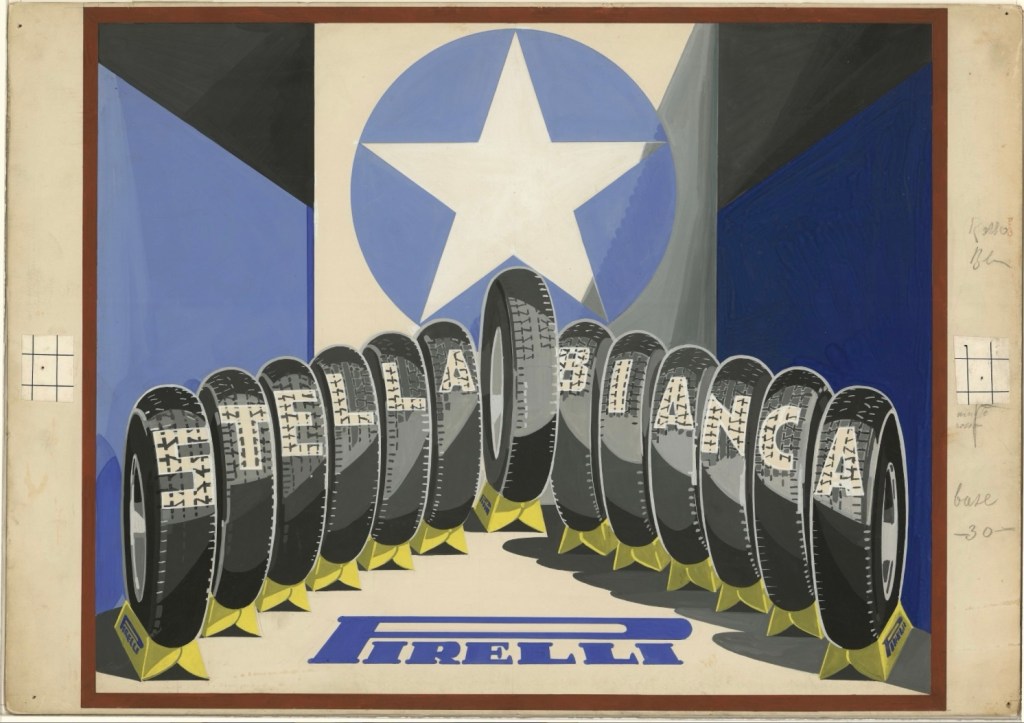
Pirelli White Star, sketch for an exhibition stand in 1931

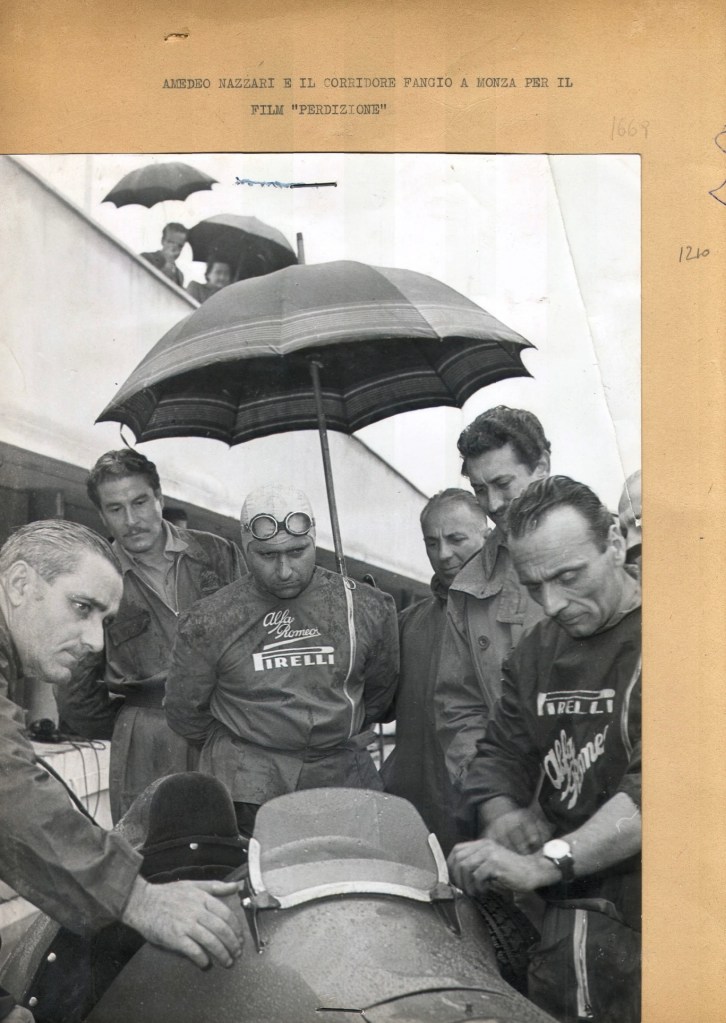
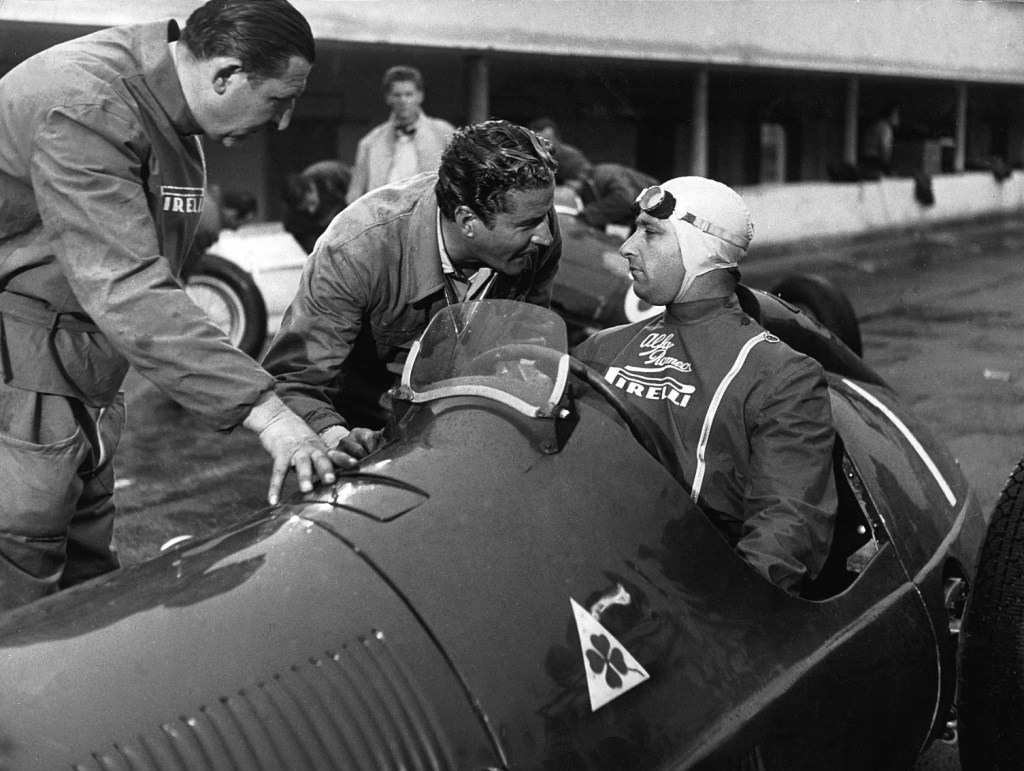
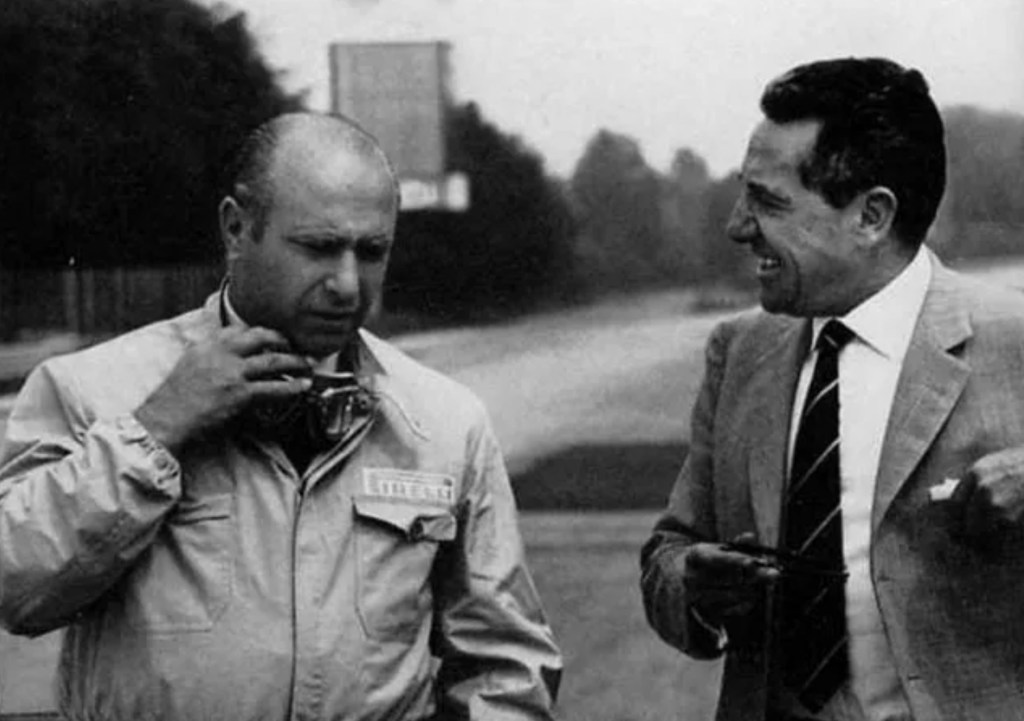
Pirelli wrote that of all the motor racing films, “there was only one racing driver who was called upon time and again to play himself in front of the camera – the Argentine Juan Manuel Fangio.”

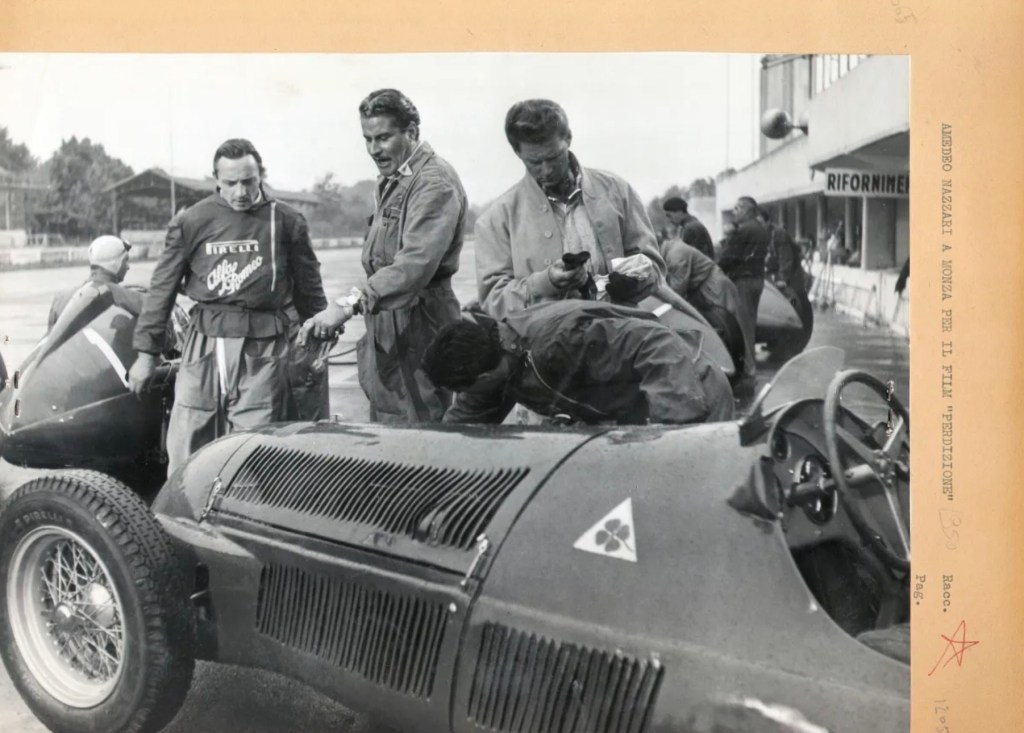
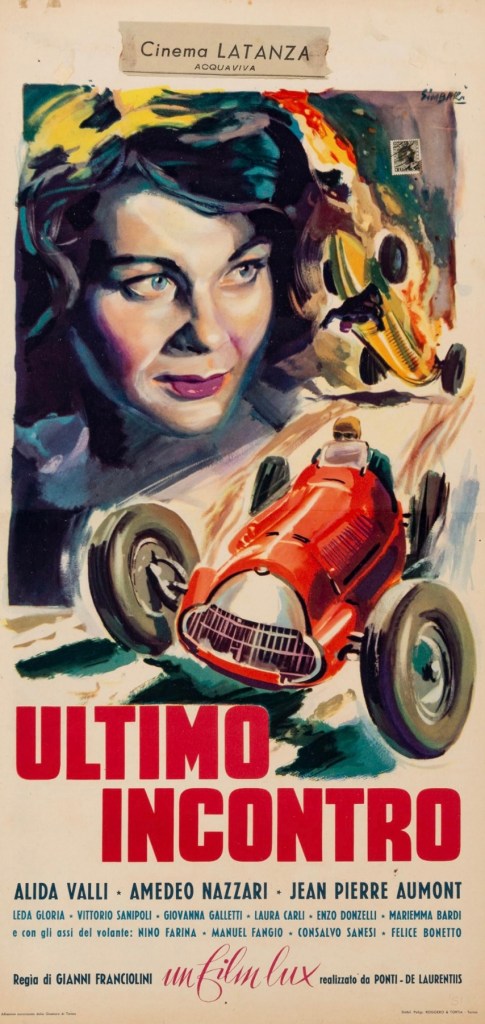
“It was in 1950: in the photos now in the Pirelli Historical Archive, the film is referred to with its provisional title Perdizone. It was actually released the following year as Ultimo incontro (last meeting).”

“We are on the Monza racetrack, with the protagonists Amedeo Nazzari, Alida Valli and Jean-Pierre Aumont. It is a sombre tale of betrayal and blackmail in the world of motor sport, in which the driver Fangio plays…the driver Fangio.”

“That year the Argentine was racing with the mighty Alfa Romeo team along with legends of speed such as Nino Farina, who went on to win the (1950) world title.”

“The long P-logo of Pirelli, which supplied the read Alfa Romeo cars with Stella Bianca tyres, is embroidered on their overalls, underneath the cloverleaf symbol.”

“In Perdizone/Ultimo incontro, Fangio was already on his way to becoming a legend, but his serious, watchful look is that of a true actor. The driver from Balcarce stopped racing in the late 1950s, with five world championships under his belt.”

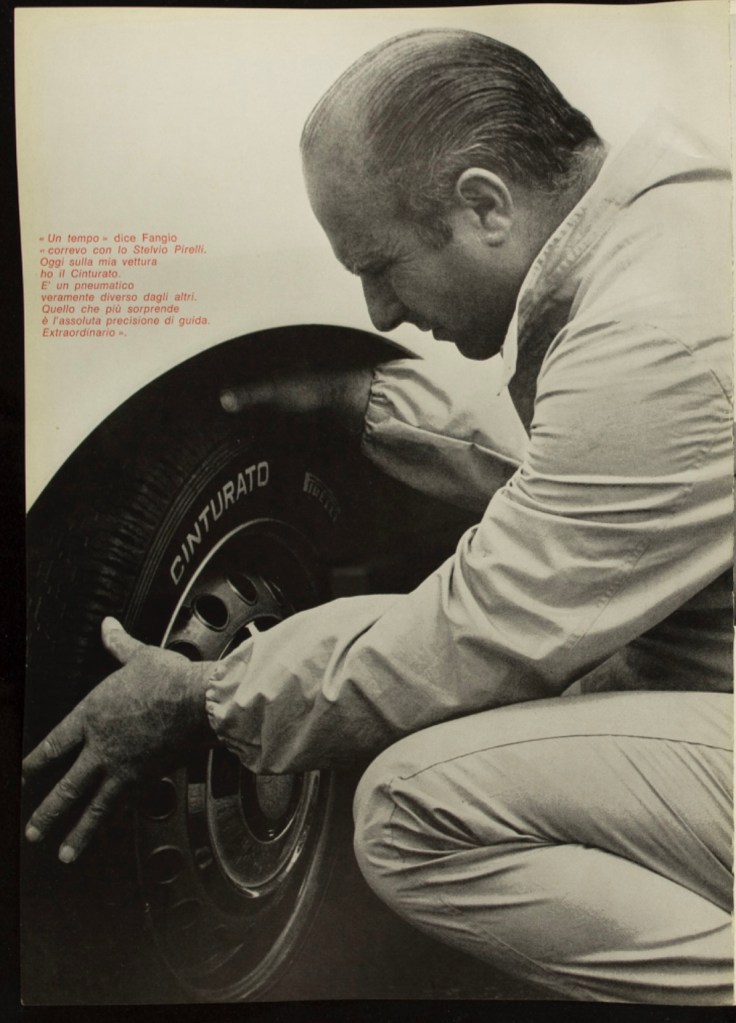
“During his career his name appeared a number of times next to that of Pirelli: it happened again in 1965, and once again there was a camera there to record it. This was a spot produced for Carosello TV commercials with reportage by Ugo Mulas.”

“The driver once again played himself, the legendary Juan Manuel Fangio now clocking up the laps in his Alfa Giulia GTC.”

“When he gets out, he looks into the camera and recalls: ‘I used to race with the Stelvio, but now this Cinturato is really different from the rest. Extraordinario!’ And in his magnificent Italian-Argentine manner, Fangio goes on to tell the audience on the television screen about his endless string of successes.”

75th anniversary poster

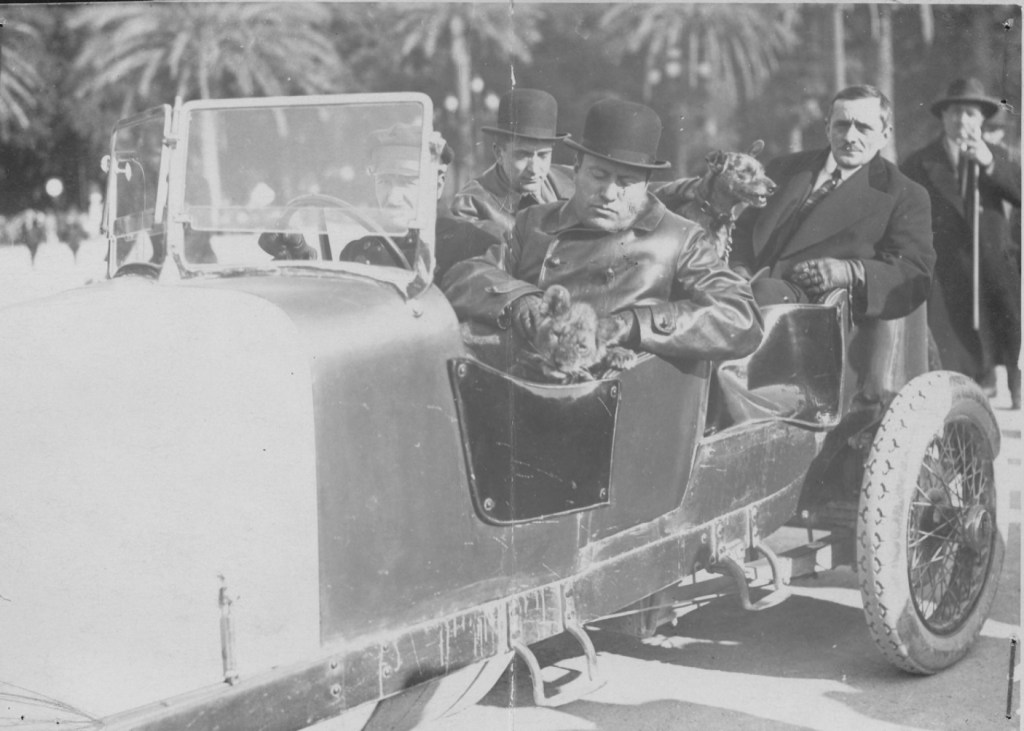
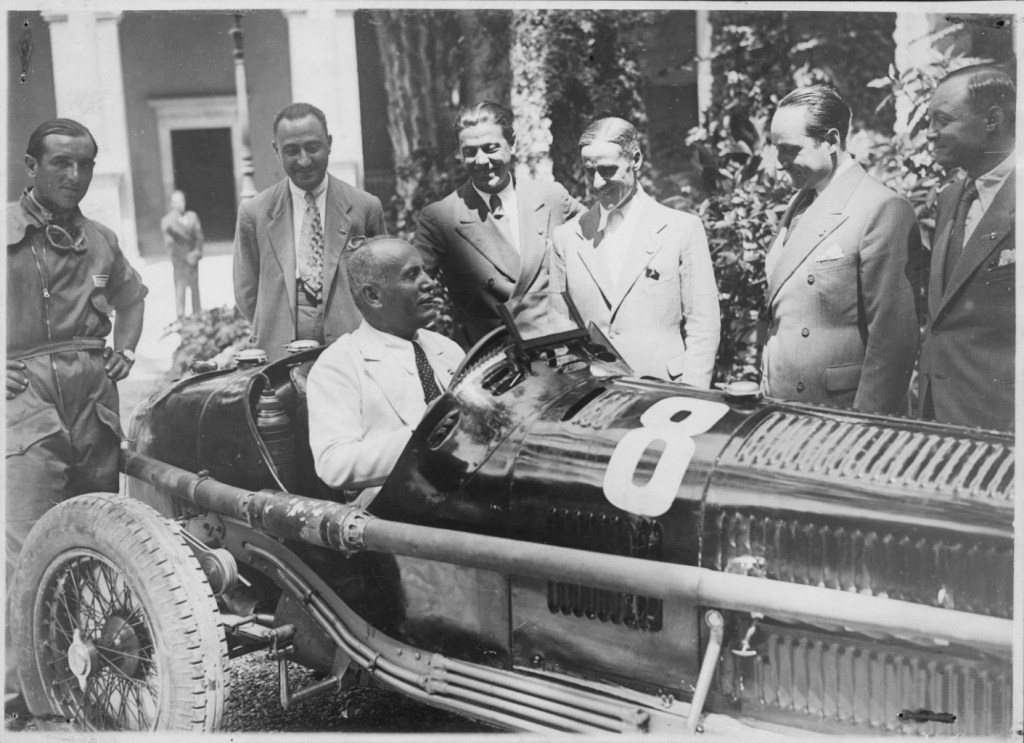
Benito Mussolini and pet pussy aboard an Alfa Romeo in 1923. What model is it I wonder?

Meanwhile poor old Tazio is tasked with amusing Ill Duce’s sons in his P3, Bruno in the driving seat and Vittorio behind.

Mussolini with Nuvolari again, and the director-general of Alfa Romeo Prospero Gianferrari (both in the centre). “The P3 is probably the car with which Nuvolari won the August 14, 1932 Coppa Acerbo.”

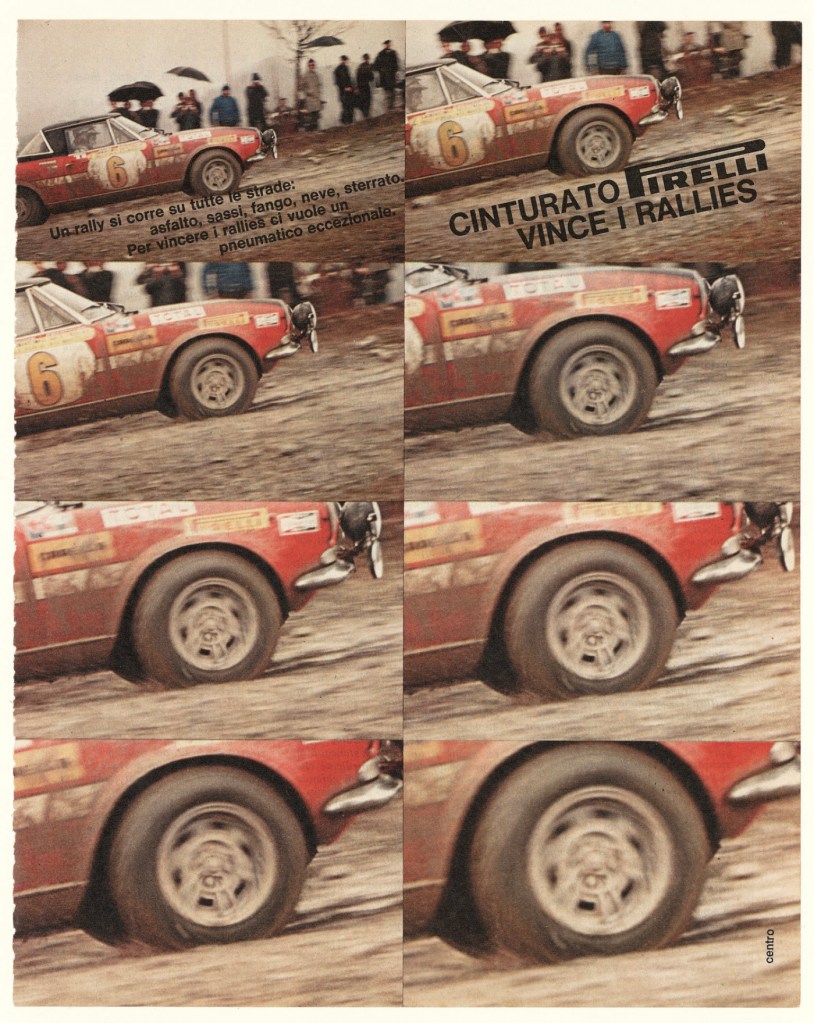
1971

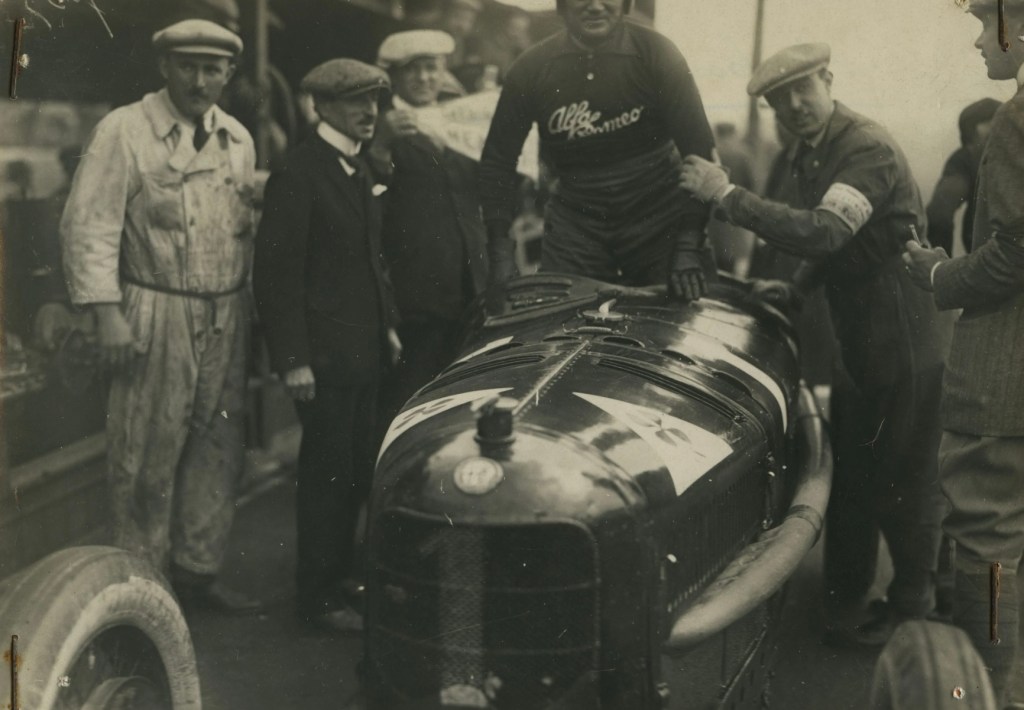
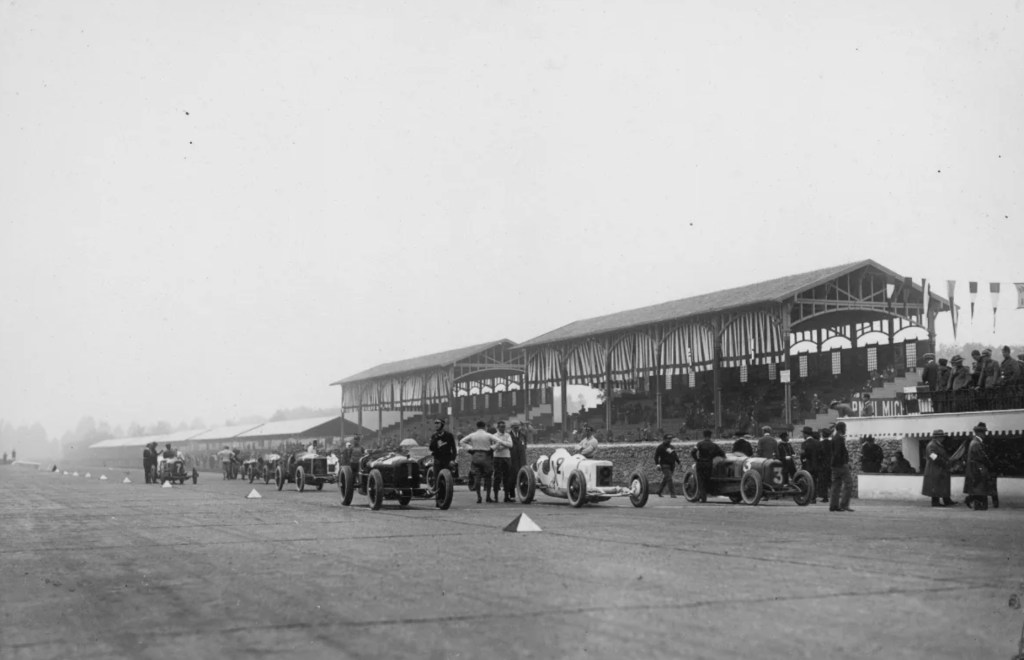
Antonio Ascari in the P2, with designers Luigi Bazzi in the light coloured overalls at left, Vittorio Jano and Giorgio Rimini during the 1924 Italian Grand Prix weekend.

Before the start of the race: Antonio Ascari’s Alfa P2 #1 Christian Werner’s Mercedes M72 #2 and Jules Goux’ Rolland-Pilain Schmid #3.

Alfa Romeo won in a rout taking the first four placings: Ascari, Louis Wagner, Campari and Bruno Presenti, and Fernando Minoia.

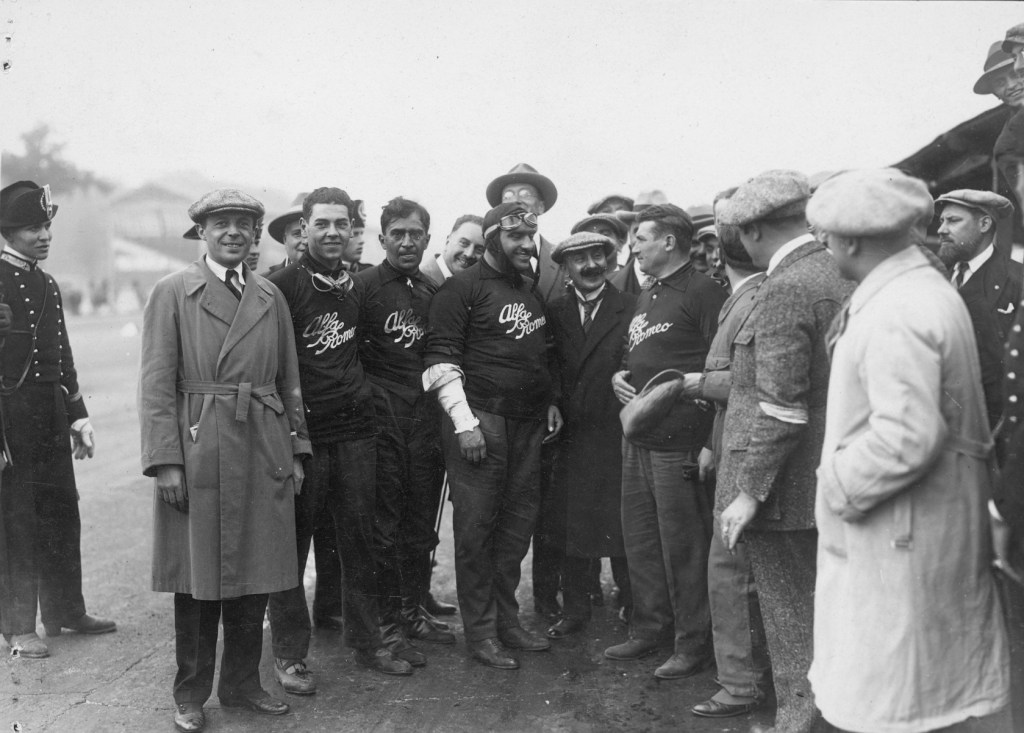
Scuderia Alfa Romeo: unidentified in the overcoat, mechanic Giulio Ramponi, drivers Minoia and Campari, the engineer and entrepreneur Nicola Romeo, and driver Antonio Ascari.

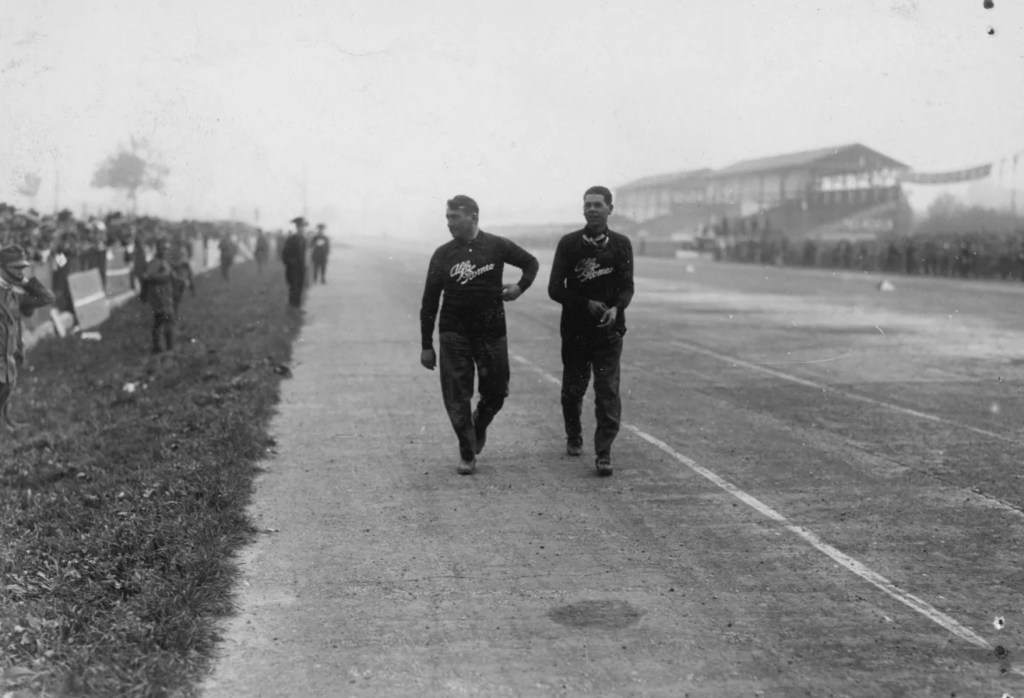
Ascari and Ramponi go for a greet-the-punters wander.

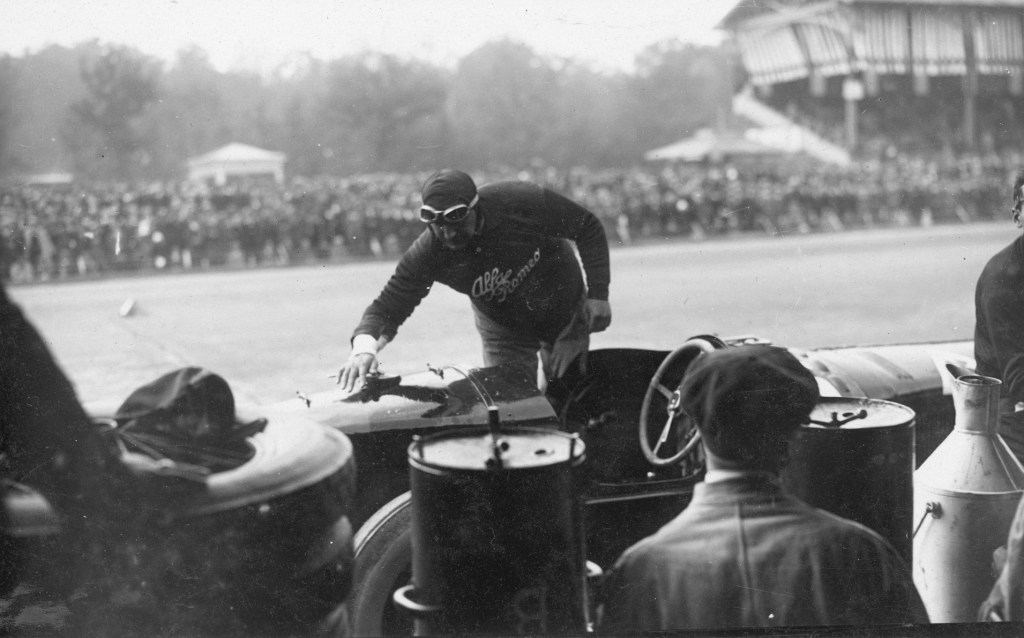
Giuseppe Campari and P2.

(Federico Patellani)

Gigi Villoresi, Nino Farina and Alberto Ascari in 1950, this photo was published on the cover of the January-February issue of the Pirelli magazine. Nice portrait of Gigi in a Ferrari below.

(Ferrucio Testi)

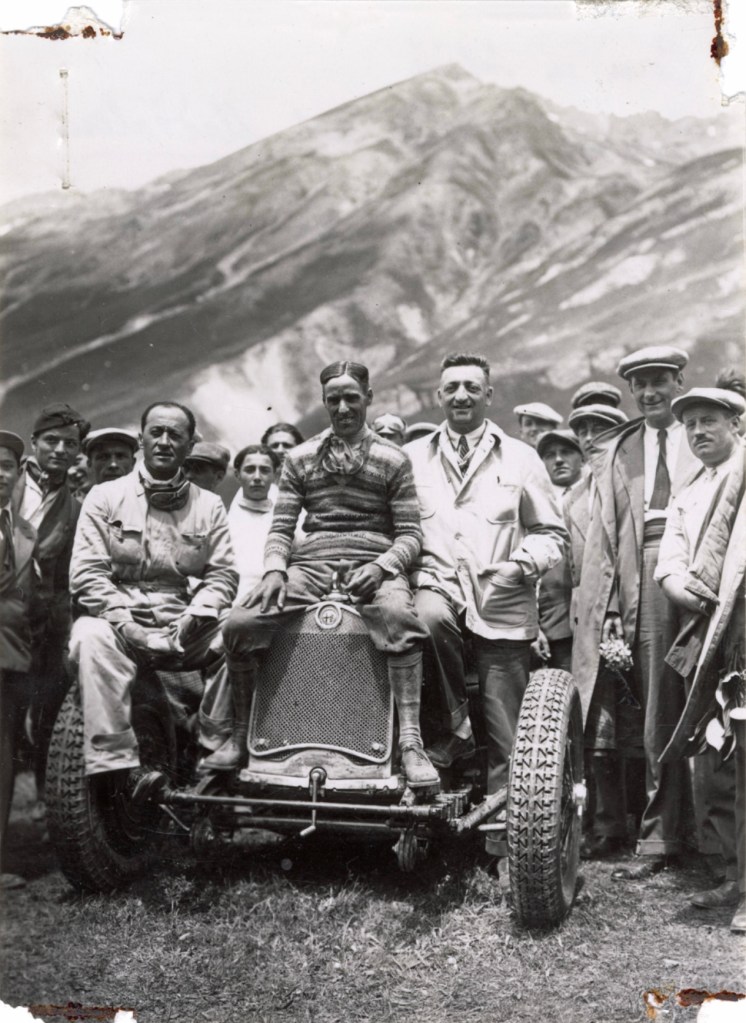
Scuderia Ferrari shot of Luigi Arcangeli, Tazio Nuvolari and Enzo Ferrari sitting on an Alfa Romeo P2 during the European Hillclimb Championship in June 29, 1930

The Pirellis are Stella Bianca’s, the venue is Cuneo-Colle della Maddalena. While Pirelli wrote that Tazio was first and Luigi third, Rudy Caracciola won the day on a Mercedes.

And below walking to the start alongside an Alfa – a modified P2 of the type Achille Varzi used to win the Targa Florio in 1930 Bob King reckons, a quick look at Hull & Slater confirms this – circa 1930. Does anybody recognise the venue?

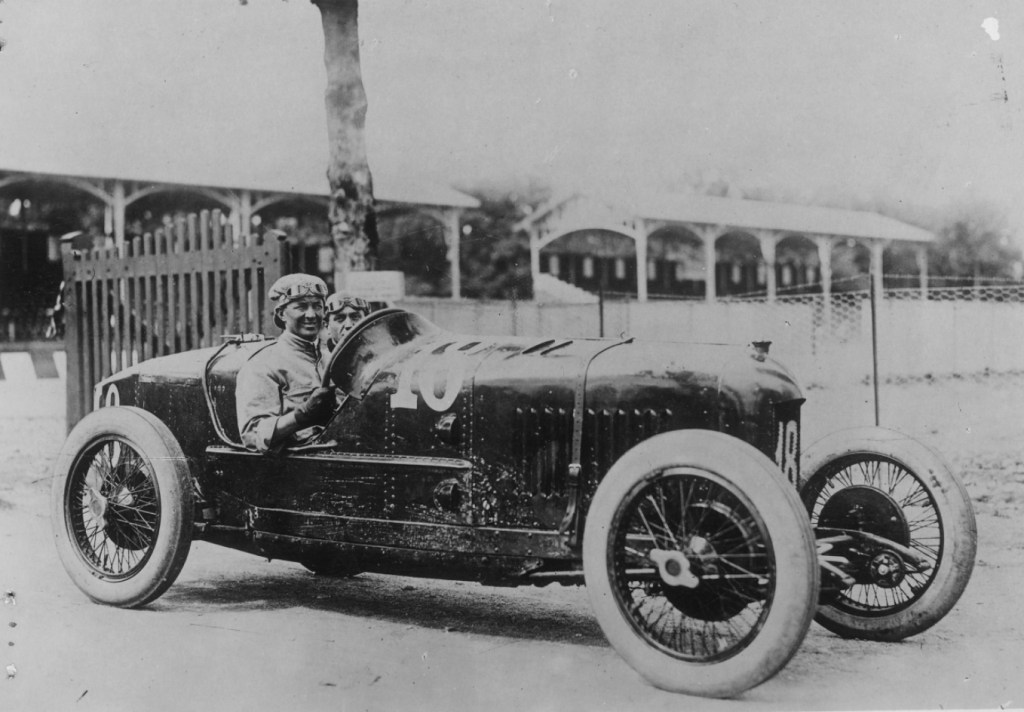
Antonio Ascari and a mechanic aboard, “probably an Alfa Romeo P1”, venue unknown.

I’m not so sure about the P1 theory…Giuseppe Merosi’s Fiat 804 copy wasn’t much chop. His engine had most of the same features as Fiat’s Type 404: DOHC, 65x100mm bore/stroke 1991cc six so the power output was about the same but the Gran Premio Romeo was longer and heavier. Its aero was inferior too, the epochal Fiat had a staggered mechanics seat which slimmed down its profile, the Alfa did not.

While P1s were entered for the 1923 Italian Grand Prix – for Ugo Sivocci, Alberto Ascari and Giuseppe Compari – after Sivocci crashed to his death in practice the team withdrew from the meeting as a mark of respect, the P1s never raced.

The car shown above carries #18, the Monza P1s used numbers, 6, 12 and 17, so the shot wasn’t taken on or about that weekend.

Is the car shown a P2, an early one? The Golden Era of Grand Prix Racing is my reference site for the results of the major races in this era, I cannot see an Alfa P2 number 18 entered in any of the races the site covers in either 1924 or 1925. A mystery…

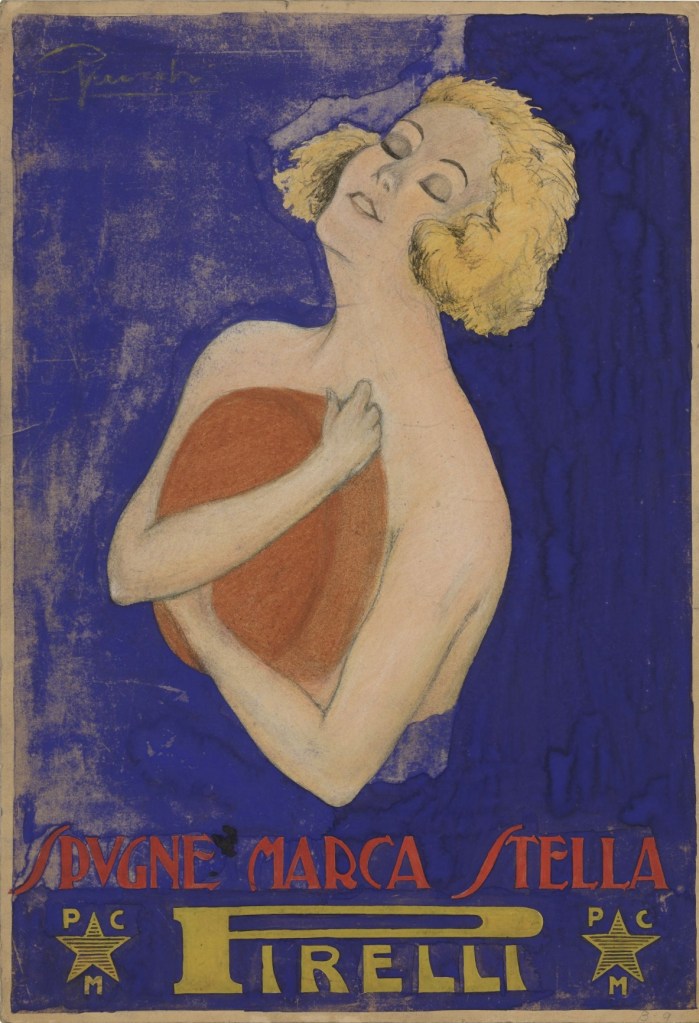
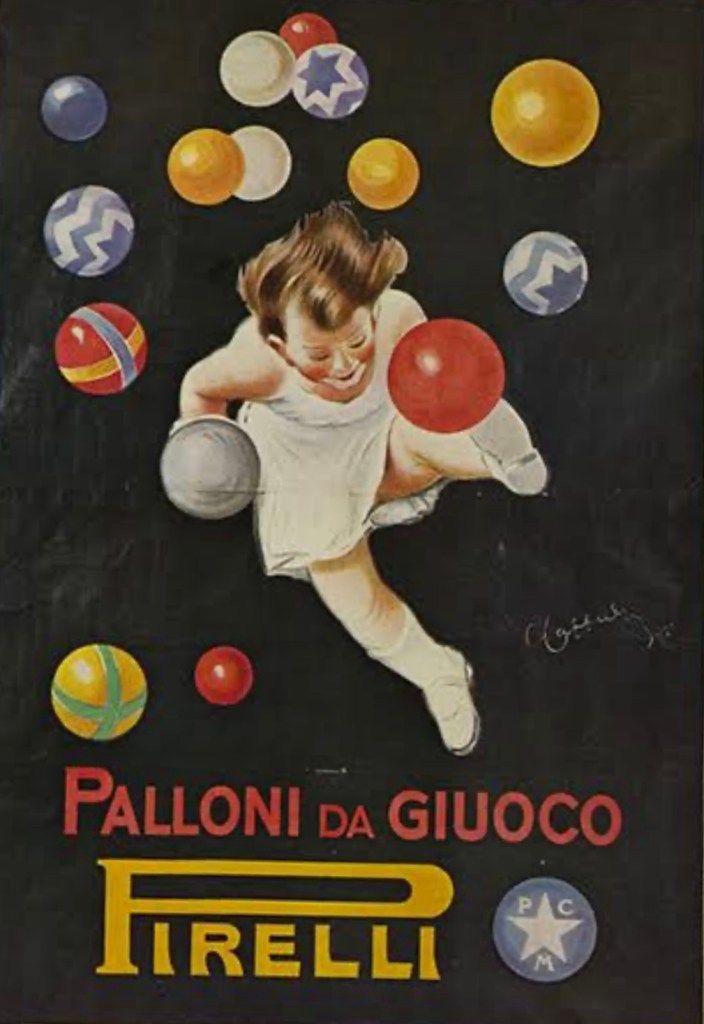
Pirelli sponge ad 1922 by A Franchi

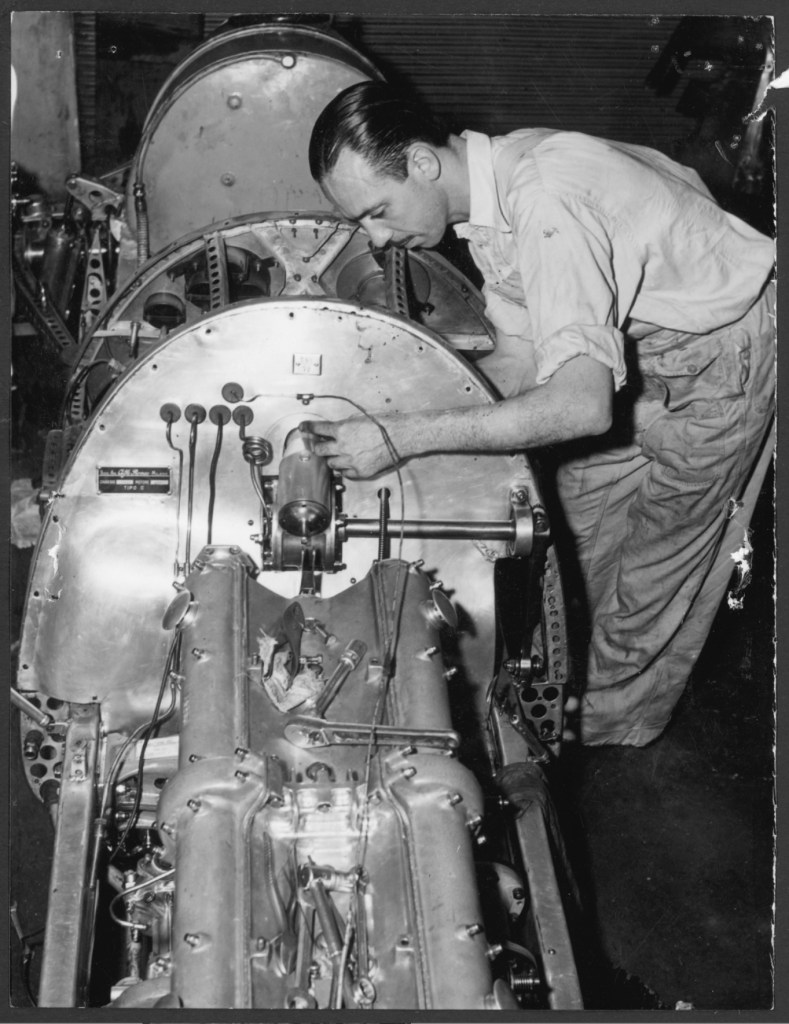
Oscar Galvez fettles the engine of his 3-litre supercharged straight-eight Alfa Romeo 308 in January 1949, can’t quite read the chassis number…

He was third in the Buenos Aires Grand Prix behind the Maserati 4CLT’s raced by Alberto Ascari and Gigi Villerosi.

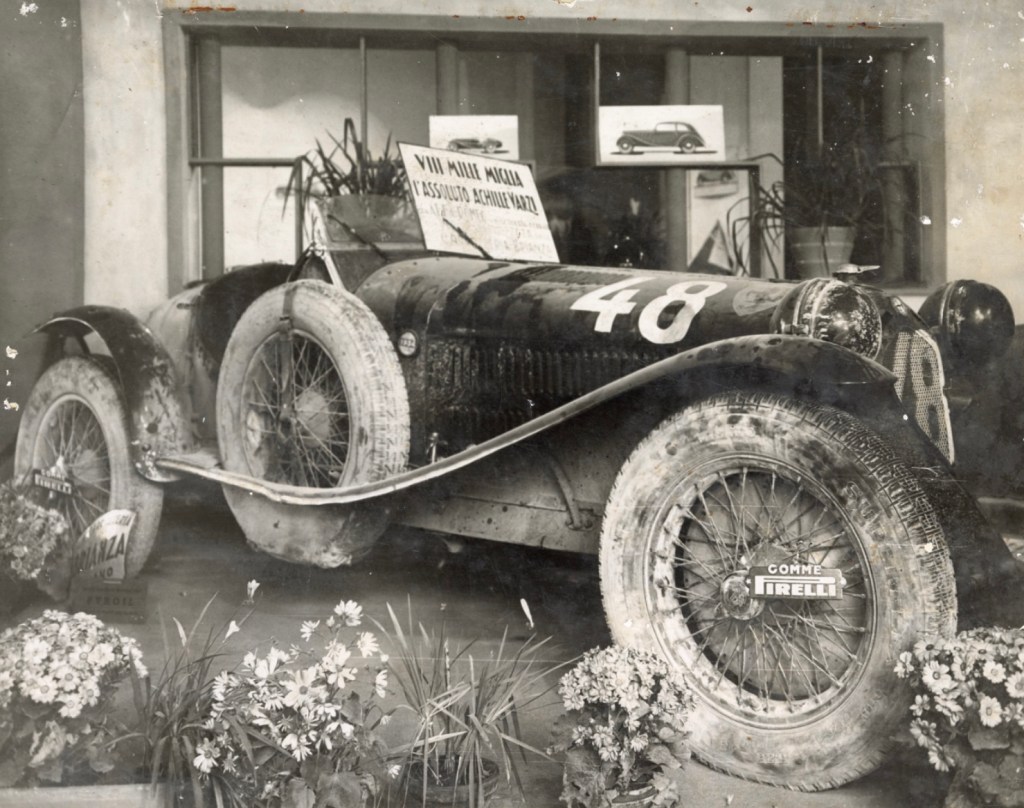
Achille Varzi’s Mille Miglia winning Alfa Romeo 8C2600 Monza Spider Brianza on the Carozzeria Brianza Stand in 1934.

The first four cars home were (2654cc) 8C2600 Monzas: Varzi/Bignami, Nuvolari/Siena, Chiron/Rosa and Battglia/Bianchi.

Fangio plugs Cinturato’s in 1965

Classic shot of Nino Farina on the way to winning the July 1950 British Grand Prix in an Alfa 158.

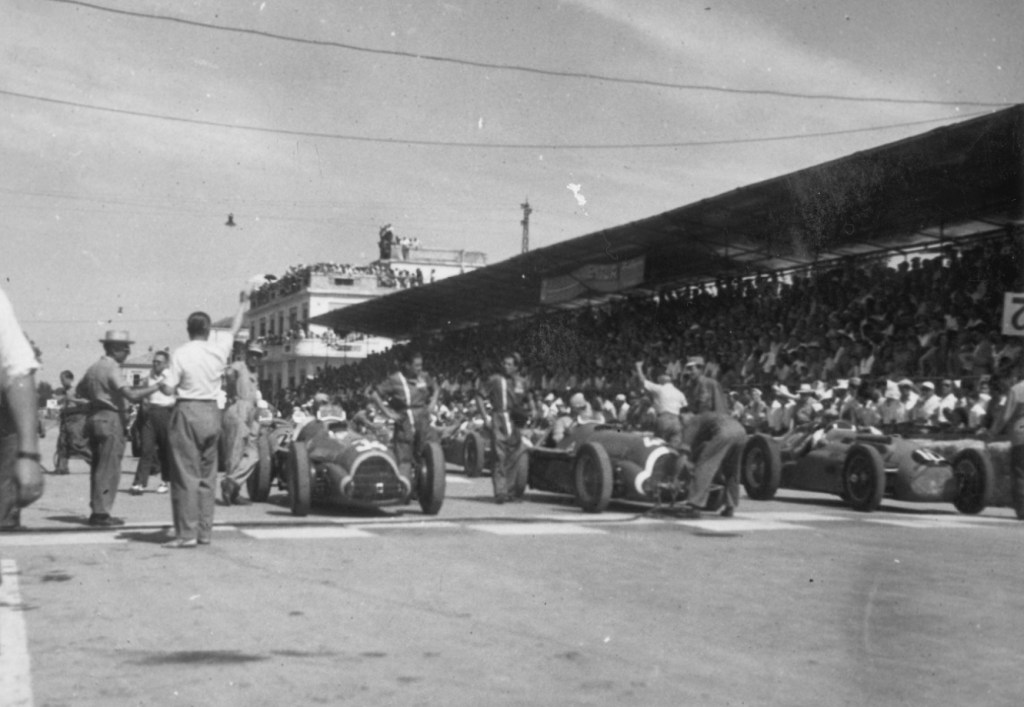
A month later the circus is on the grid at Pescara for the August 19 Grand Prix on the road circuit of the same name.

From the left is Fangio’s #34 Alfa 158, then the similar machine of Luigi Fagioli’s, with Louis Rosier’s Talbot-Lago T26C on the right. The race was won by Fangio from Rosier and Fagioli.

(F Patellani)

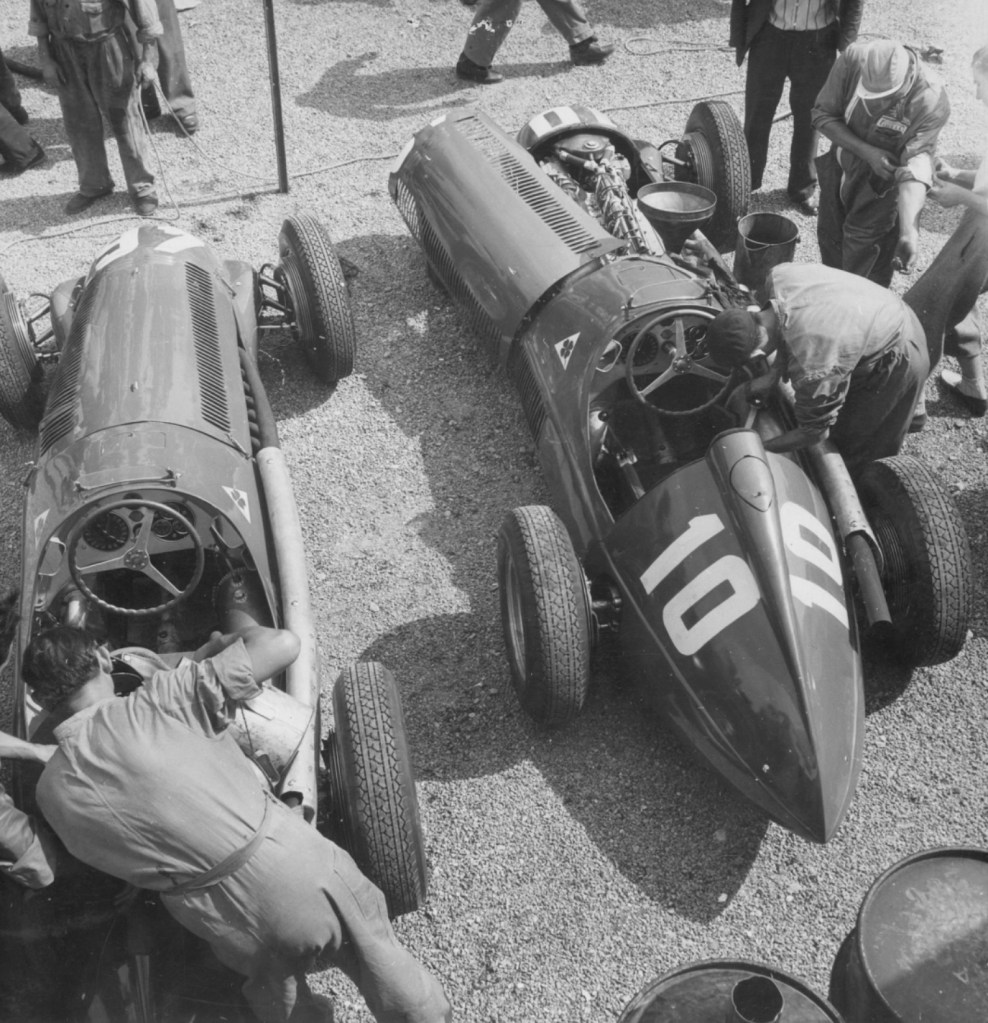
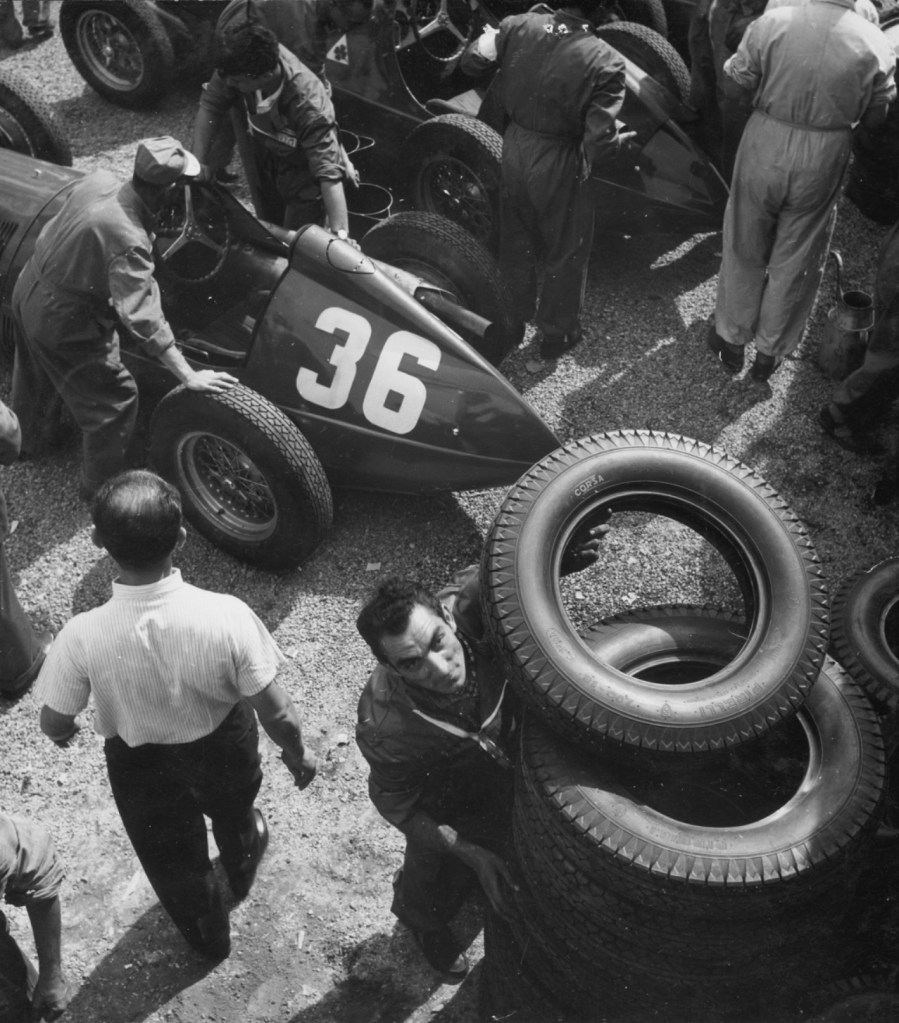
Paddock scenes at Monza during the September 1950 Italian GP weekend.

The Consalvo Sanesi 158, and Giuseppe Farina #10 Alfa Romeo 159 above, and Fagioli’s 158 below. Farina won the race from Alberto Ascari’s Ferrari 375, then Fagioli.

(F Patellani)

Below mechanics attend to the engine of Fagioli’s 158.

1959
(Publifoto)

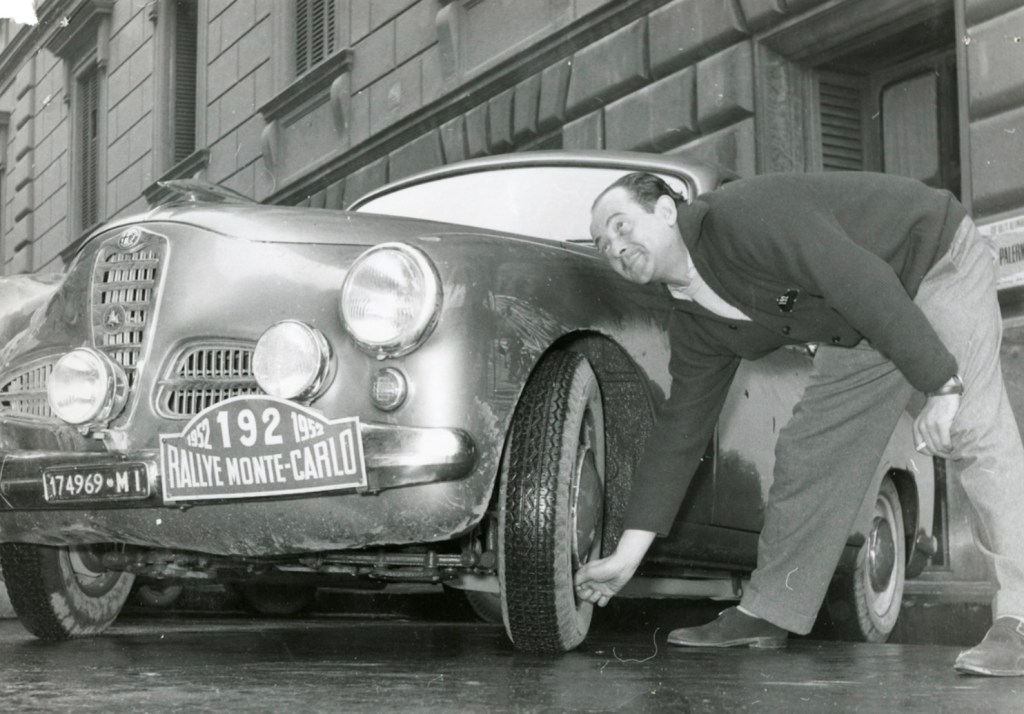
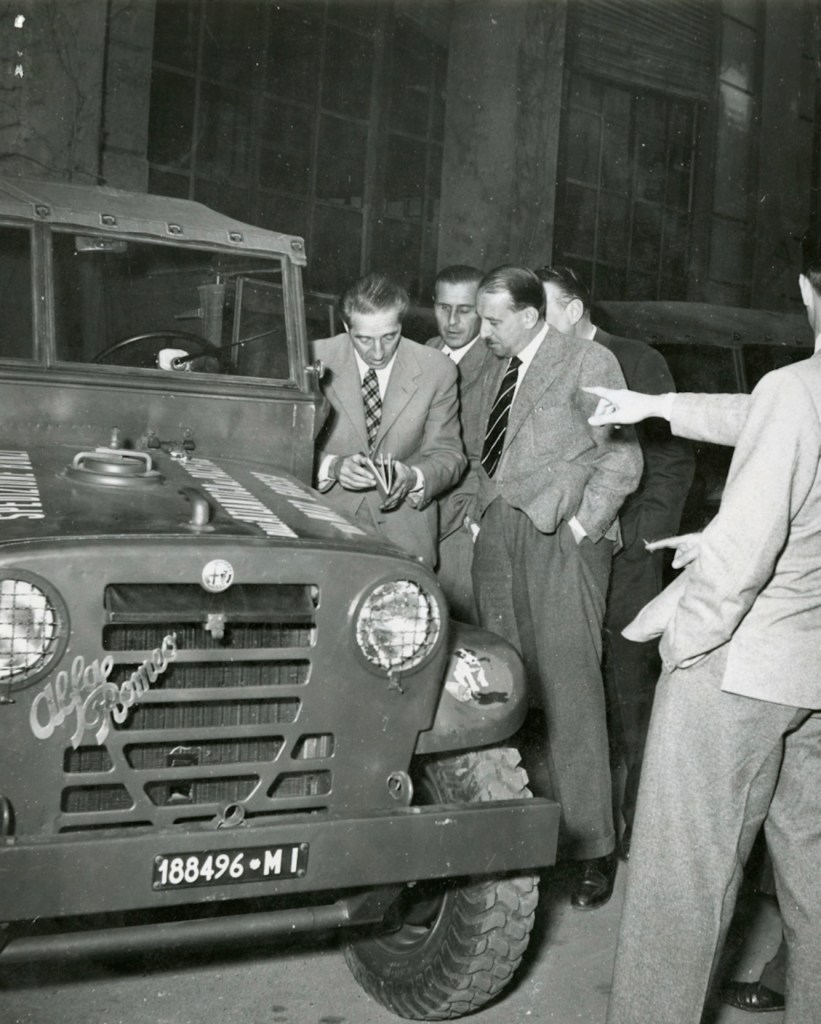
Prince Raimondo Lanza di Trabia inspects his left-front Pirelli, Alfa Romeo 1900 TI during pre-event scrutineering in Milan before the start of the 1952 Monte Carlo Rally.

He was 72nd in the event won by Sydney Allard/Guy Warburton Allard P1, the best of the Alfa’s was the 17th placed Andersson/Lumme 1900TI.

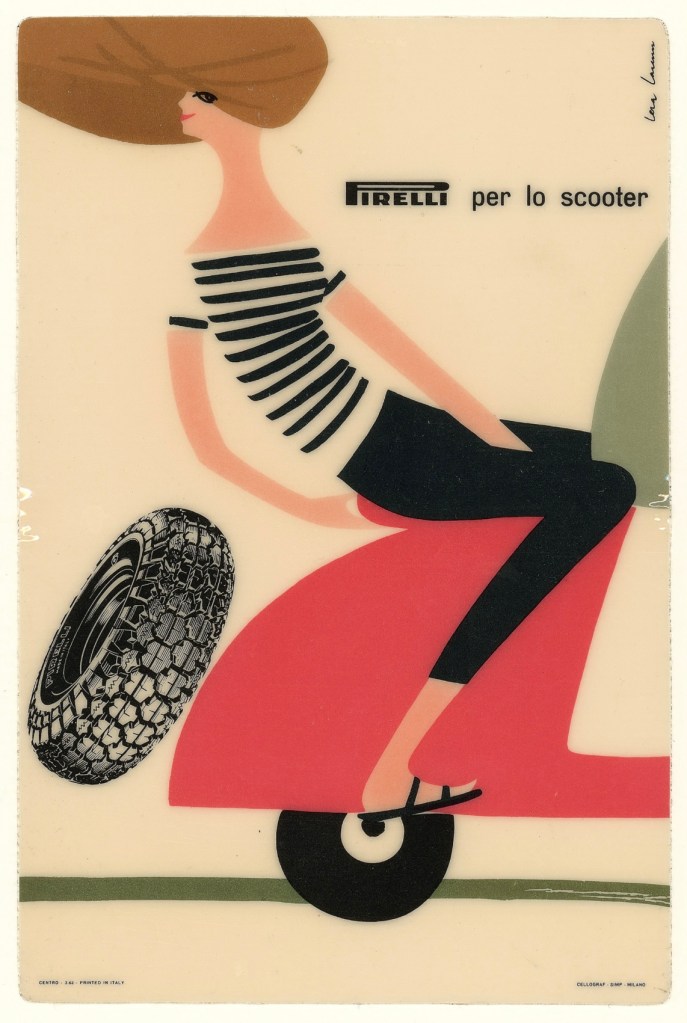
Pirelli Stelvio tyre ad 1956
(L Bonzi)

Count Leonardo Bonzi alongside his Alfa Romeo in Bicocca, Milan before the start of the Mato Gross Rally in 1952.

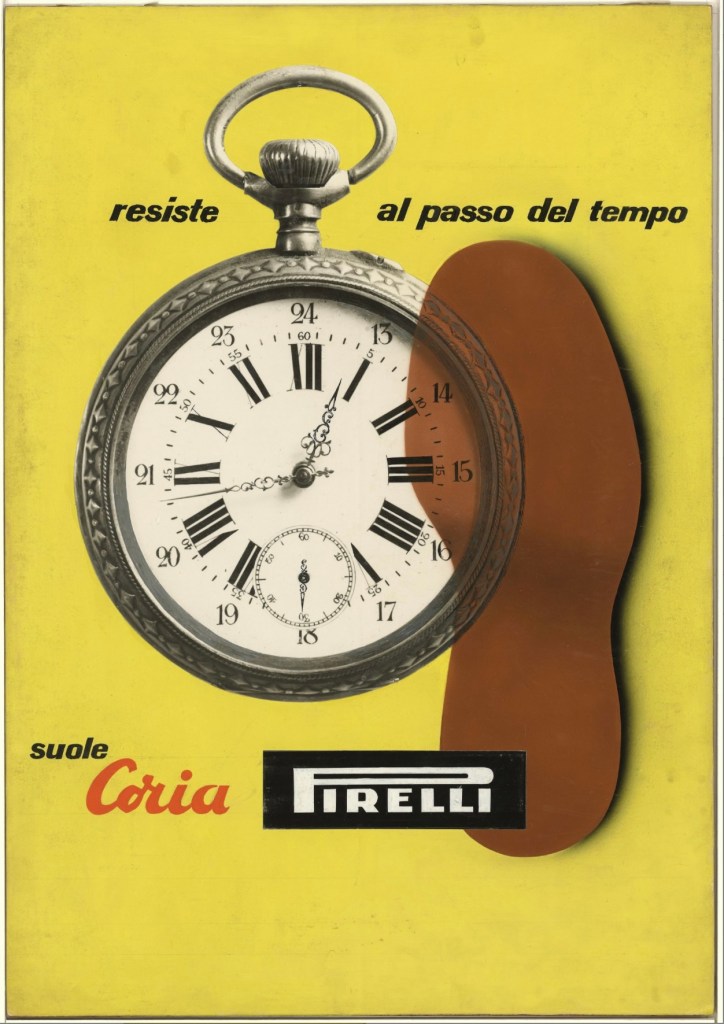
Pirelli Coria soles resist the passage of time Ezio Bonini 1953
(INCOM)

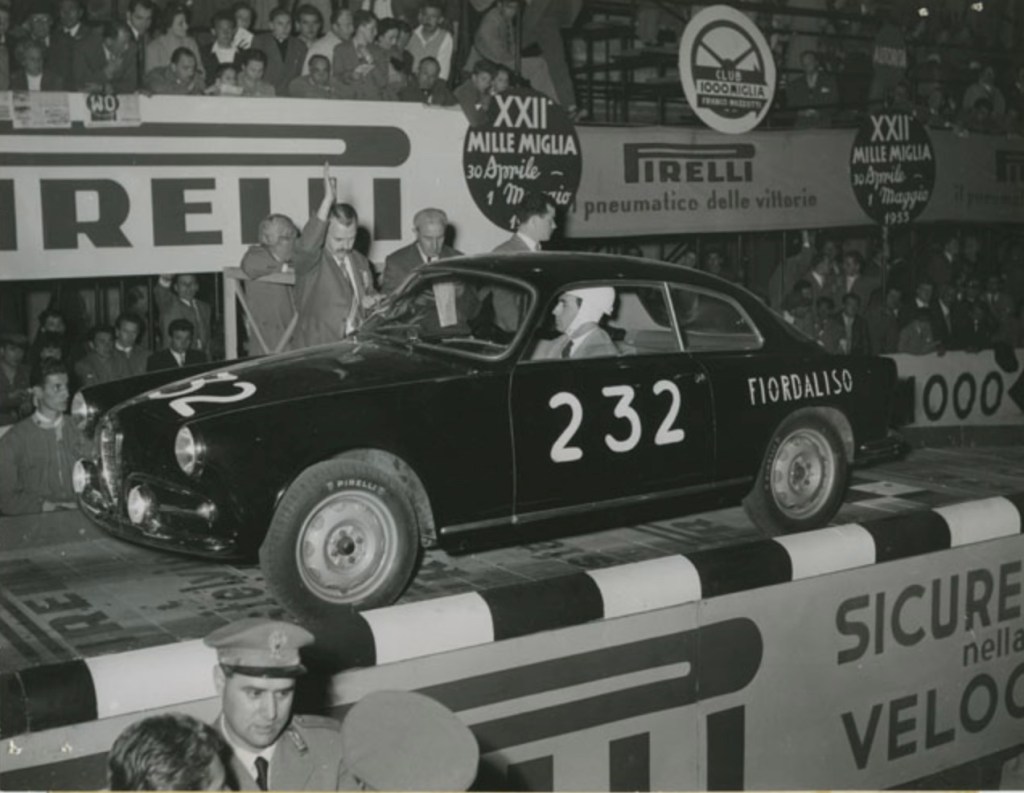
Mille Miglia 1955 start with the Santo Ciocca Alfa Romeo Giulietta Sprint on the ramp DNF. The race was of course won by the Stirling Moss/Denis Jenkinson Mercedes Benz 300SLR.

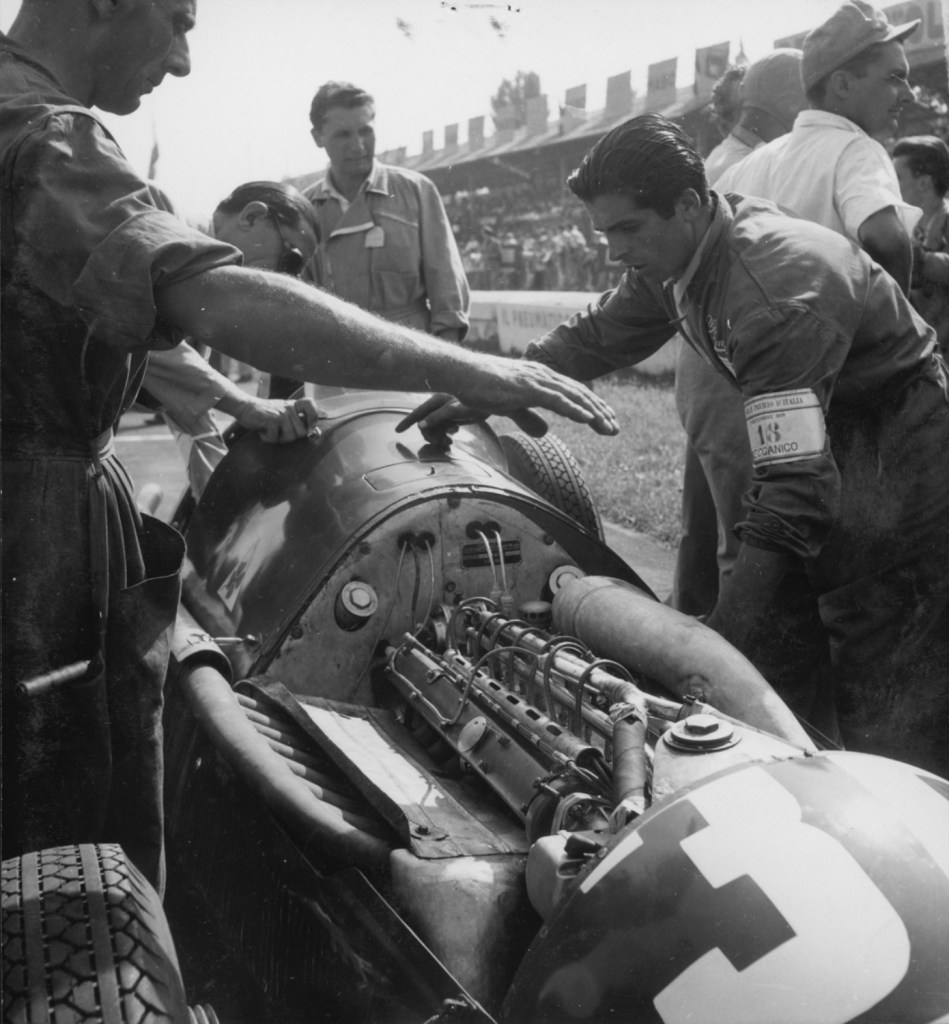
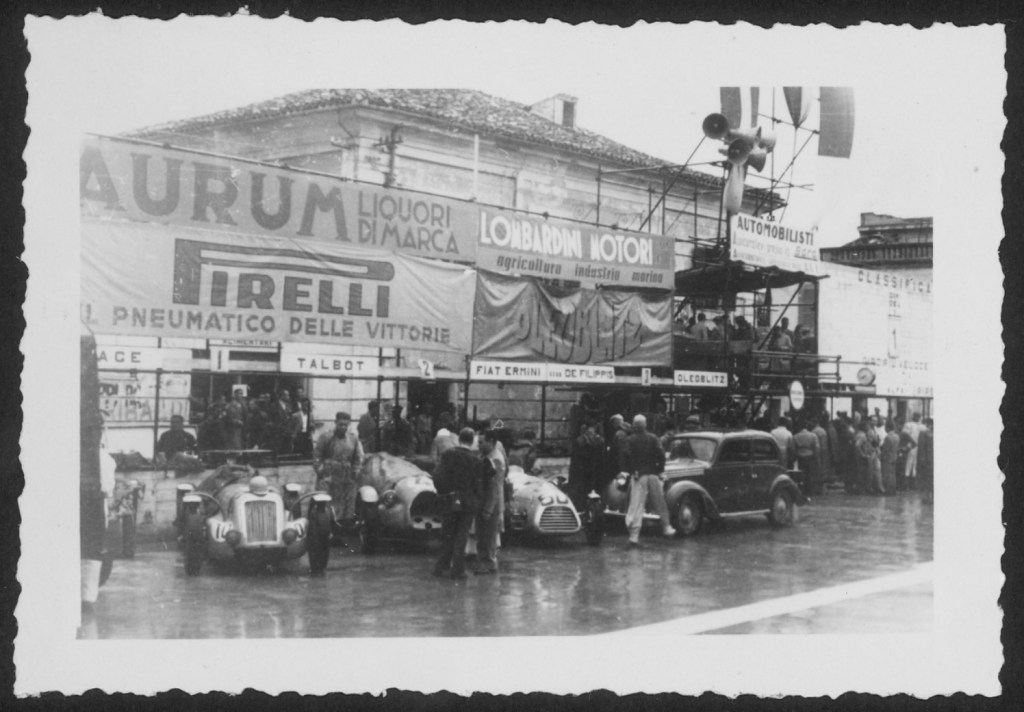
View of the pits during a soggy August 1949 Pescara Grand Prix weekend. Franco Rol won in his Alfa Romeo 6C2500 SS from Robert Vallone’s Ferrari 166S. Car 10 is Henri Louveau’s third placed Delage D6, #4 Louis Rosier’s Talbot Spéciale (DNS) and car #50, Bormioli’s ?

Asmara December 1938, site of the first Coppa di Natale. Behind the Pirelli sign is the Beata Vergine del Rosario church

Credits…

All images are from the Pirelli Foundation archives. Leonardo Bonzi, Publifoto, Federico Patellani. ‘Alfa Romeo A History’ Peter Hull and Roy Slater

Tailpiece…

Finito…
Lotus 72D 1972 (MotorSport)

Sydney born, ‘Dave’ Walker died aged 82 last week in Queensland (June 10, 1941-May 24, 2024).

The very gifted Walker raced two revolutionary Grand Prix Lotuses in 1971-72: the four-wheel-drive, gas-turbine powered Lotus 56B Pratt & Whitney and epochal, edgy-wedge, side radiator, torsion-bar sprung Lotus 72 Ford.

He cut his competition teeth in club competition aboard an MGA Twin-cam, soon progressing to a Brabham BT2 Ford with support from David McKay’s Scuderia Veloce. Walker had an Australian Grand Prix (Sandown 1964) and Bathurst 500s (1963-65) under his belt before jumping on a ship at Circular Quay to take on the world’s best in Europe.

Armed with a Merlyn Mk10 Ford he became a Formula 3 Gypsy, racing across Europe for start and prizemoney throughout 1967, winning the Adriatic GP at Opatija, Yugoslavia in June.

He then figured he needed to go backwards to go forwards so did a deal to race a Russell-Alexis Formula Ford in 1968, doing well enough to bag a quasi-works Jim Russell Race Drivers School Lotus 61 FF ride in 1969. 

Heathrow, February 27, 1971 with his trophy for winning one of the four F3 Torneio Brasiliero rounds aboard his works Lotus 59A Ford-Holbay
Walker awaits the start of the Monaco F3 GP from pole in 1971, he won. Lotus 69 Ford-Novamotor (R Schlegelmilch)

He won the Les Leston Championship with it and was then picked up by Gold Leaf Team Lotus to race their F3 Lotus 59 and Lotus 69 Fords throughout 1970-71. In 1971, a year of unparalleled dominance, Walker won 25 of 32 F3 race starts including the prestigious Monaco and British GP rounds and two of the three British titles.

Lotus boss, Colin Chapman rewarded him with his first F1 drives that year, Walker having had his first big-car experience in some F5000 races in the UK and a quick trip home to Sydney in November 1970 to contest the AGP at Warwick Farm in an uncompetitive F5000 Lotus 70 Ford.

Walker during dry practice, 1971 Dutch GP, Zandvoort. Q22, he was looking good for a points finish early in the wet race, but with limited experience of the unusual car Dave ran off into the dunes on lap six, as did many others. Lotus 56B Pratt & Whitney (MotorSport)
Walker, Lotus 72D Ford at Brands during the 1972 British GP weekend. Q15 and DNF suspension (MotorSport)

In 1972 Dave was Emerson Fittipaldi’s #2. Like Fittipaldi in 1971, Walker struggled with a car that took some learning, unfamiliar circuits and not a lot-of-love from the team. Emmo won the title and Dave got the flick in favour of Ronnie Peterson at the seasons end with seven DNFs from 10 starts, all due to mechanical failure. 

It wasn’t quite as bad as many would have you believe though, he was fifth in the non-championship Brazilian Grand Prix and in the running for points in South Africa, Monaco and Spain.

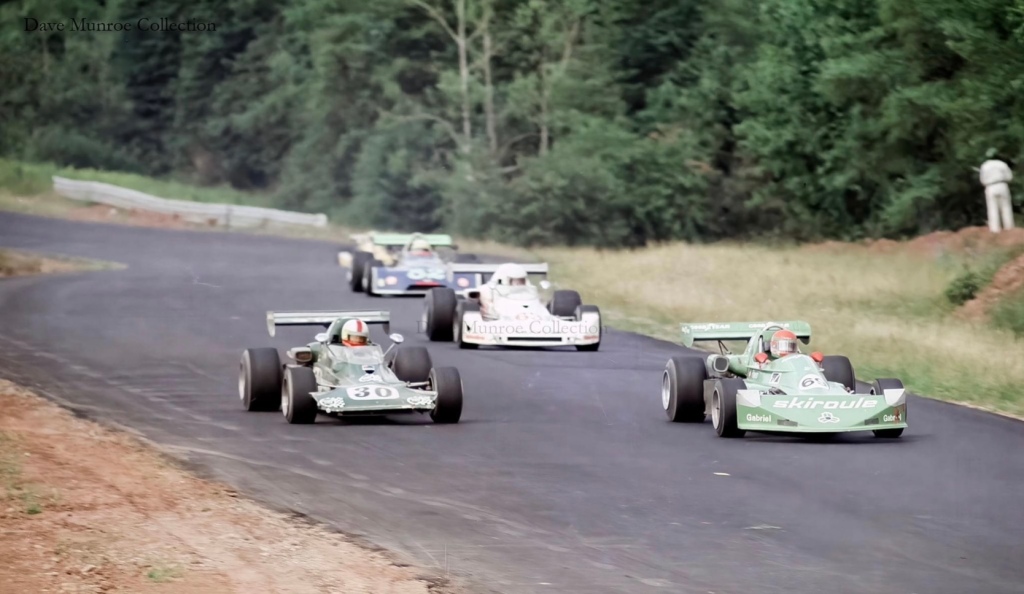
Canadian Formula Atlantic. Walker on the left, Lola T360, with Gilles Villeneuve, March 75B alongside at Halifax on July 7, 1975. Tom Klausler, T360 and Tom Bagley, Chevron B27 following. Bill Brack won from Klauser, Howdy Holmes and Walker (D Munroe)

In the following years Walker had sporadic F2, F5000, F Atlantic and sportscar drives but two road car crashes in 1973 – he broke a leg in one and almost severed his left arm in the other – sealed his competition fate, a few Canadian Formula Atlantic drives in 1975 were his last – the GP de Trois-Rivieres on August 31 perhaps the very last – before hanging up his helmet.

Walker worked in Canada for a while, getting involved in a boat chartering business. He and his wife Jan returned to Australia and have parlayed those skills in a successful business on the Whitsunday Coast since.

I had several phone calls with the beautifully spoken and sharp-as Dave in 2021-22, keep an eye out for a primotipo or Auto Action feature on Walker soon.

Etcetera…

(R Donaldson-SLNSW)

1964 Bathurst 500, with the Walker/Brian Hilton VW1200 – seventh place – ahead of the Bolton/Schroeder Hillman Imp and Weldon/Needham Studebaker Lark.

(L Mason Collection)

Reader, Laurie Mason owns “the 1968 Vauxhall Ventora that David drove in the 1968 London-Sydney Marathon. He was an engaging and welcoming man and we had many discussions about the car and their eventful journey across the world in 1968. I spoke with David only last month so this news is very sad.”

(L Mason Collection)

A Grand Prix racing car of the finest type: bold, innovative, on the edge. The exact opposite of highly regulated, restricted modern F1, let’s not call it Grand Prix Racing because there is nothing Grand about it. Lotus 56B Pratt & Whitney, Zandvoort, 1971.

Credits…

MotorSport Images, Dick Simpson-oldracephotos.com, Rainer Schlegelmilch, J Wilds-Getty, R Donaldson-State Library of New South Wales, Dave Munroe

Tailpiece…

(D Simpson/oldracephotos.com)

Superb shot of Dave attacking the Warwick Farm Esses aboard the Lotus Components Lotus 70 Ford during the November 1970 AGP. It was no M10B McLaren, with which Frank Matich won the race. Walker was Q7 and fifth. The brave snapper is Lance Ruting, one of the stars of the era.

Finito…

(C Rice)

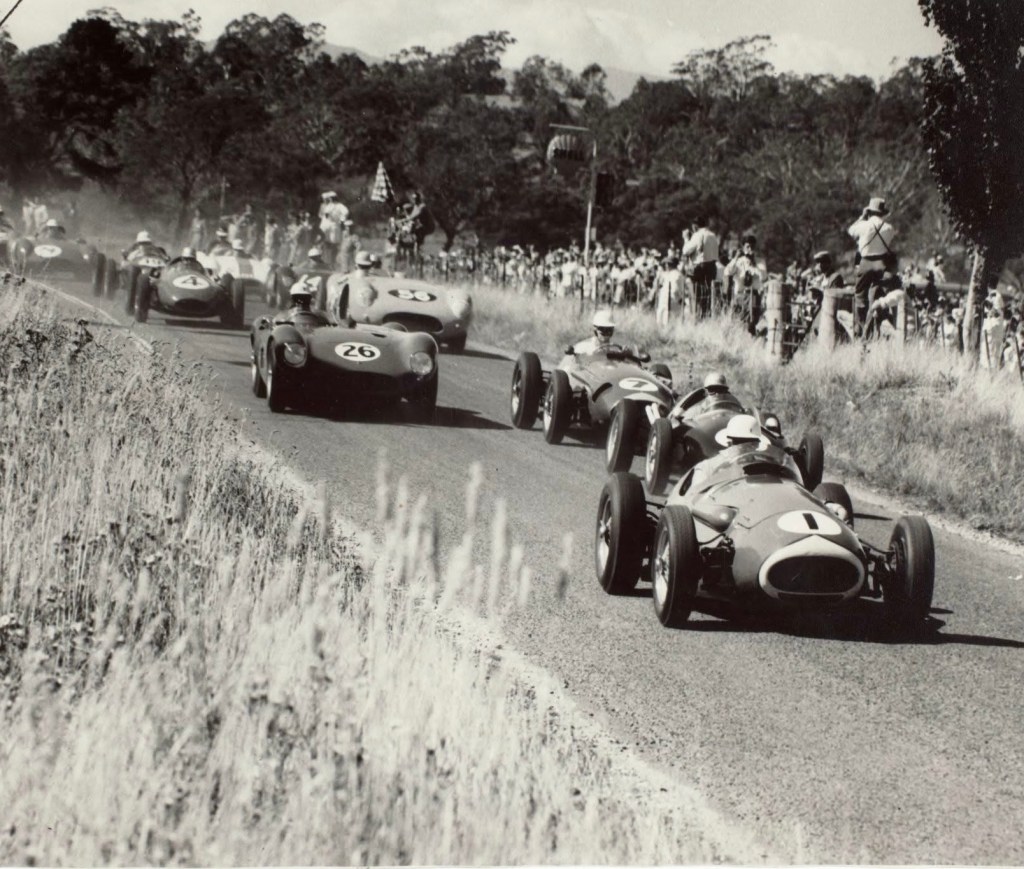
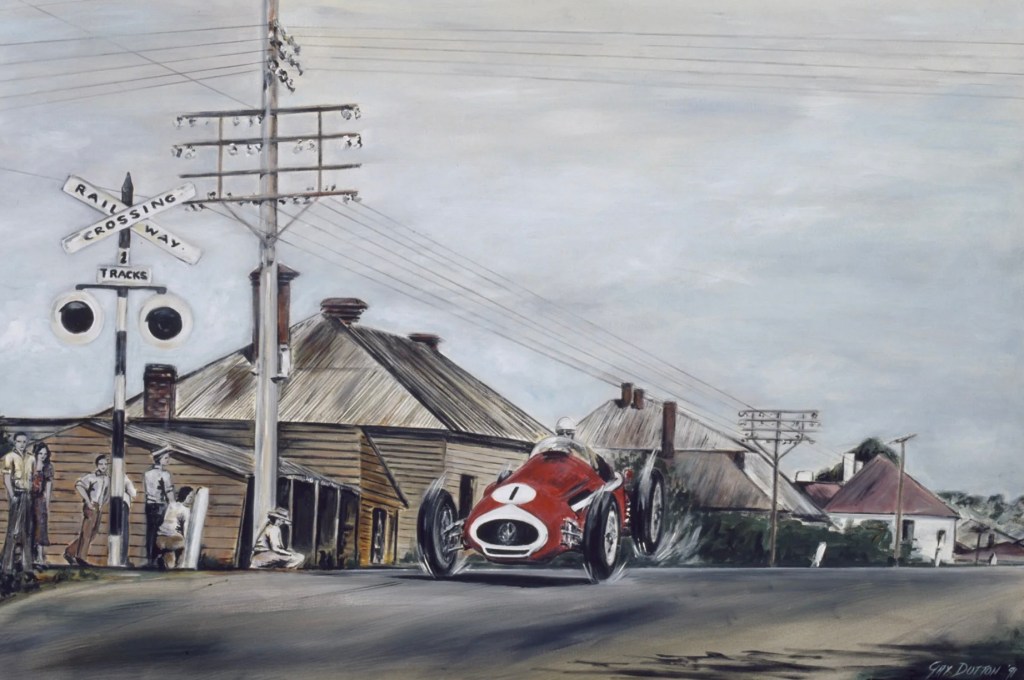
Stan Jones, well aloft over the railway crossing on Tannery Straight at Longford aboard his Maserati 250F, leads Len Lukey, Cooper T45 Climax 2-litre, during their epic battle for honours in the March 2, 1959 Australian Grand Prix.

(SLT)

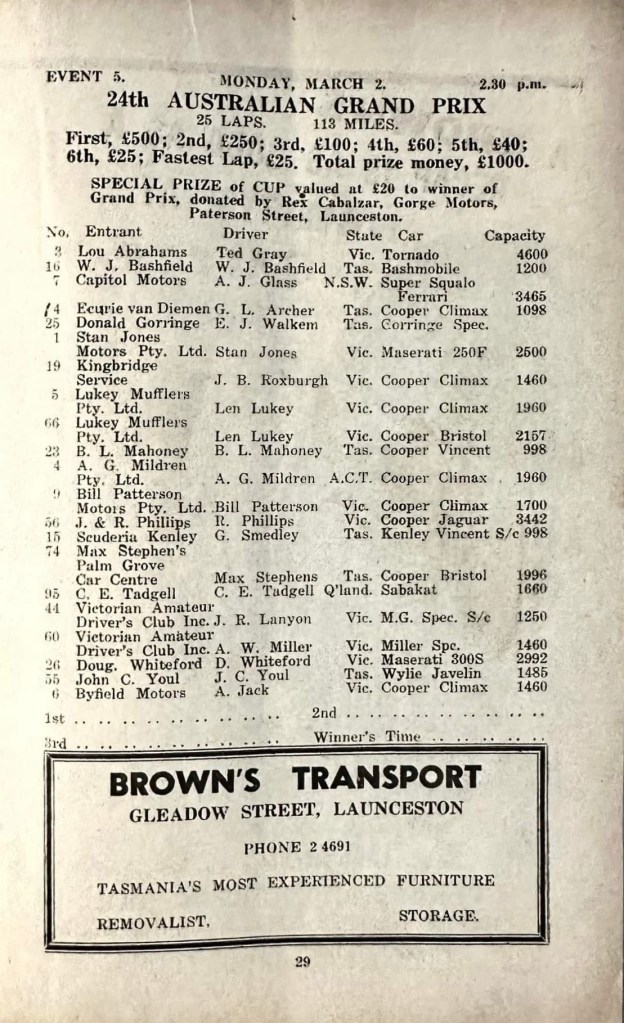
Stan Jones gets the jump in his Maserati 250F at the start of the 25 lap, 110 mile Formula Libre race from Len Lukey, Cooper T45 2-litre, Arnold Glass, Maserati 250F, Doug Whiteford, Maserati 300S, Ron Phillips’ Cooper T33 Jaguar 3.8, and #4, Alec Mildren, Cooper T43 Climax 2-litre.

‘Take it easy Dad!’ Alan to Stan Jones before their victory lap (Dunstan Collection)

In a long race of thrust and parry between the nimble Cooper and brawny Maserati, 30,000 spectators saw the battle resolved in Stan’s favour.

The reigning Gold Star champion had just enough power to offset the handling and roadholding advantage of Lukey’s new fangled mid-engined Cooper. Armed with a 2.5-litre Coventry Climax FPF – not readily available to customers at that time – the result wouldn’t have been the same, but karma looked after Stan that day, he had well-and-truly paid his AGP dues since 1952 after all!

More about Stan here: https://primotipo.com/2014/12/26/stan-jones-australian-and-new-zealand-grand-prix-and-gold-star-winner/

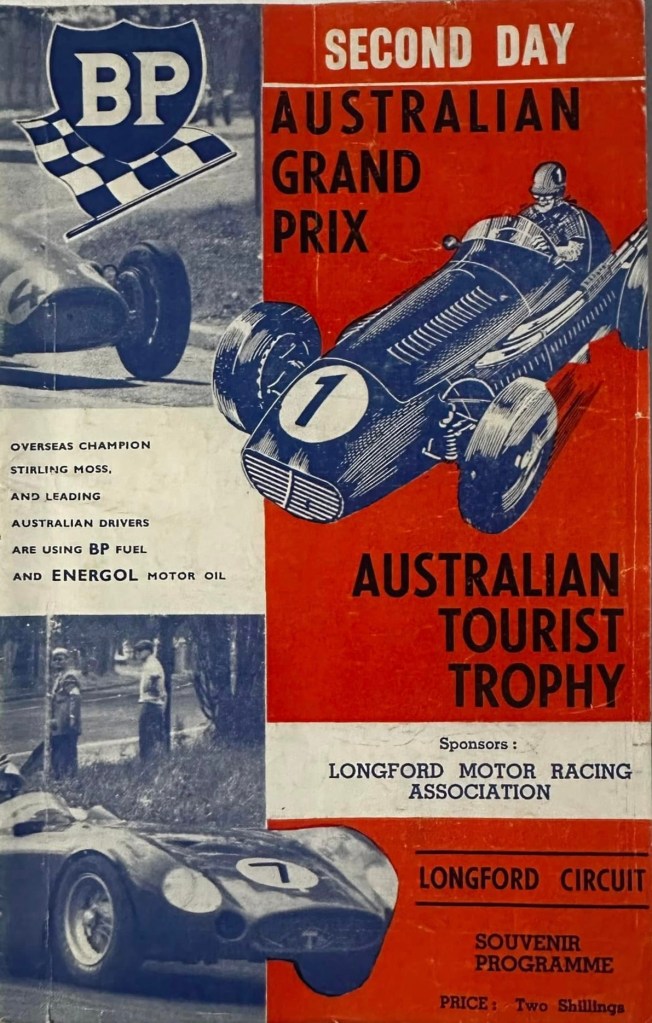
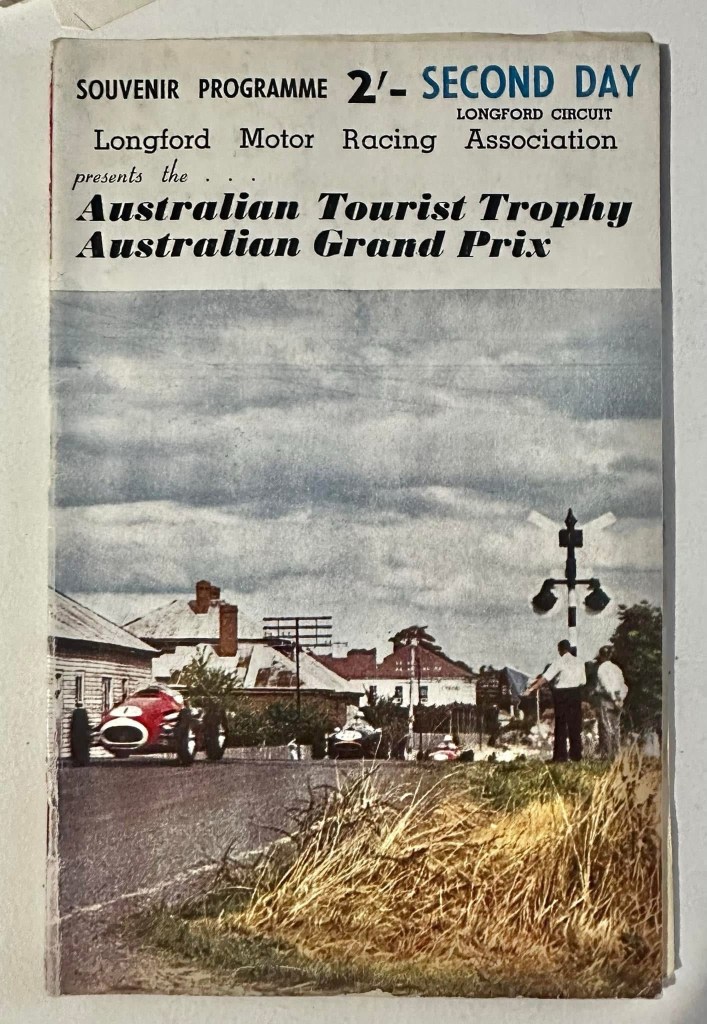
1959 Longford AGP program cover. The ATT was a motorcycle event(s) (A Lamont)

While Len Lukey missed out on that ‘59 AGP win, the Melbourne proprietor of the substantial Lukey Mufflers business took a great Gold Star win in a long championship of twelve rounds. He only won two of them but was a consistent front runner and point scorer throughout. Jones and Bill Patterson won two rounds, and Alec Mildren three, taking this pace into 1960, winning the title in a locally developed Cooper T51 Maserati.

Kiwi Ross Jensen’s Maserati 250F Bathurst 100 March 30, 1959 win was the last Gold Star victory for a front-engined car.

(A Lamont Collection)

Etcetera…

(B Young Collection)

So near to Australian Grand Prix wins in 1954, 1955, 1957 – he took the chequered flat that Caversham day – and 1958, it must have been an immensely satisfying moment for the 1954 New Zealand Grand Prix winner and reigning Australian Gold Star champion, Stan Jones, to take the chequered flag at super demanding Longford.

(unattributed)

Otto Stone and Stan exchange congratulations in the Longford paddock. It wasn’t just the superb car preparation of racer/engineer Stone that made the difference to Jones’s results in 1958-59, it was a little bit more of a percentage play in his driving as well.

Otto was no slouch behind the wheel, there seems little doubt that he was able to communicate with Stan as a peer ‘to bring the thing home’. And yes, I’m not forgetting that (Repco’s) Charlie Dean was a good steerer too.

Jones only won two of the nine Gold Star rounds to win the title in 1958 but he had enough consistency to win a championship he richly deserved, let’s not forget Otto’s role in that regard…

Key Team: Jones, Jones with obscured Otto Stone behind Alan and John Sawyer at right (The Northern Courier)
(A Lamont Collection)

Super rare colour shot of the 1959 AGP dice between Jones and Lukey on the cover of the 1960 Longford program.

(G Dutton)

Gay Dutton’s tribute to Stan’s great victory.

Credits…

The much used and abused money-Longford-shot was taken by Charles Rice, here courtesy of Paul Cross’ collection, Bob Young Collection, Lindsay Ross’ oldracephotos.com, Andrew ‘Slim’ Lamont Collection, Gay Dutton, The Northern Courier

Tailpiece…

(oldracephotos.com)

‘Don’t even think about it Stanley!’ muses Len Lukey as Jones shoves his nose into a rapidly diminishing gap. What a shot! The money-shot used on the cover of Neil Kearney’s excellent book actually…

Finito…

(C Lynch/SLNSW)

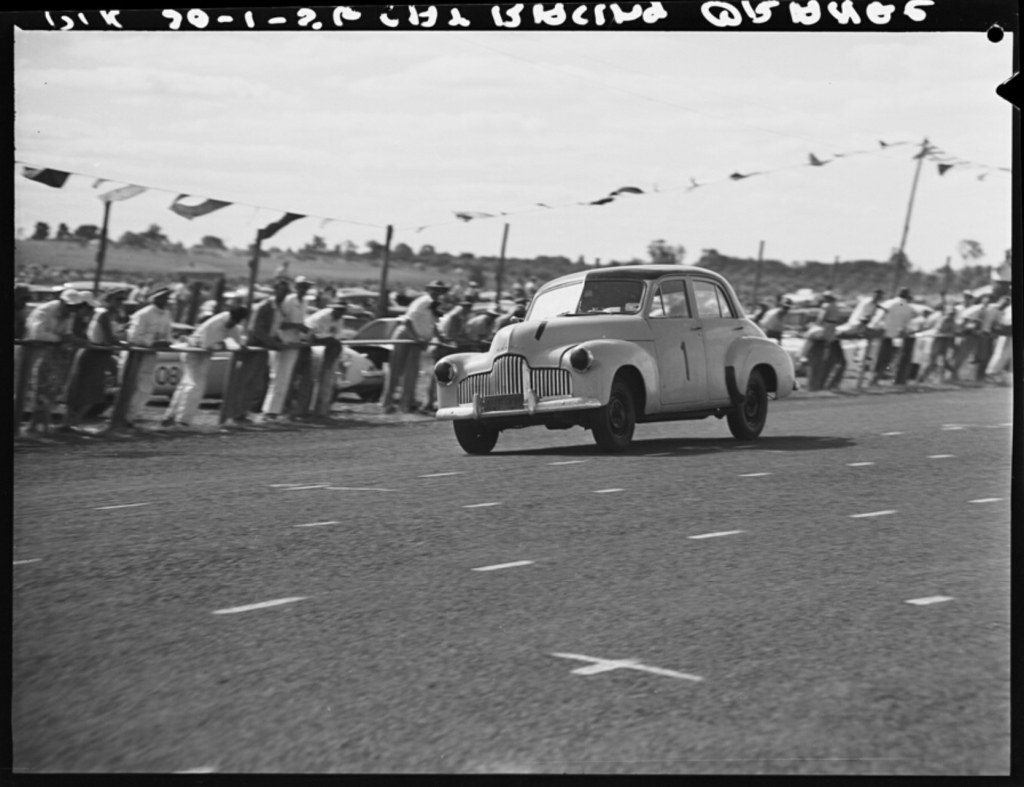
Jack Myers may well have been the very first Holden Hero, but if not he was certainly an early bird in the very long line of touring car champs to race General Motors Holdens’ products.

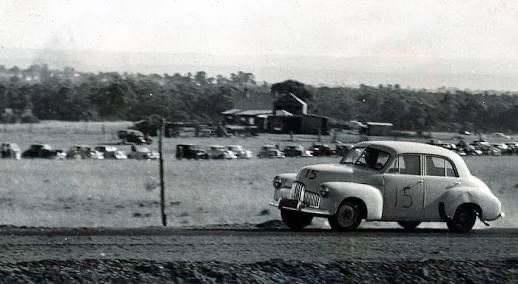
Here he is in front of the pack aboard his very quick, self modified 48-215 during a South Pacific Trophy support race at Gnoo Blas, Orange in January 1956.

Hard chargers both, Stan Jones and Jack Myers at Mount Panorama during the October 1960 Craven A International weekend (C Lynch-SLNSW)
(B Williamson Collection)
Myers at Bathurst in 1958

The Kingsford, NSW racer/mechanic/engineer/retailer was up to his armpits in Holden 48-215s from early on, racing a 110mph cream Humpy from 1953.

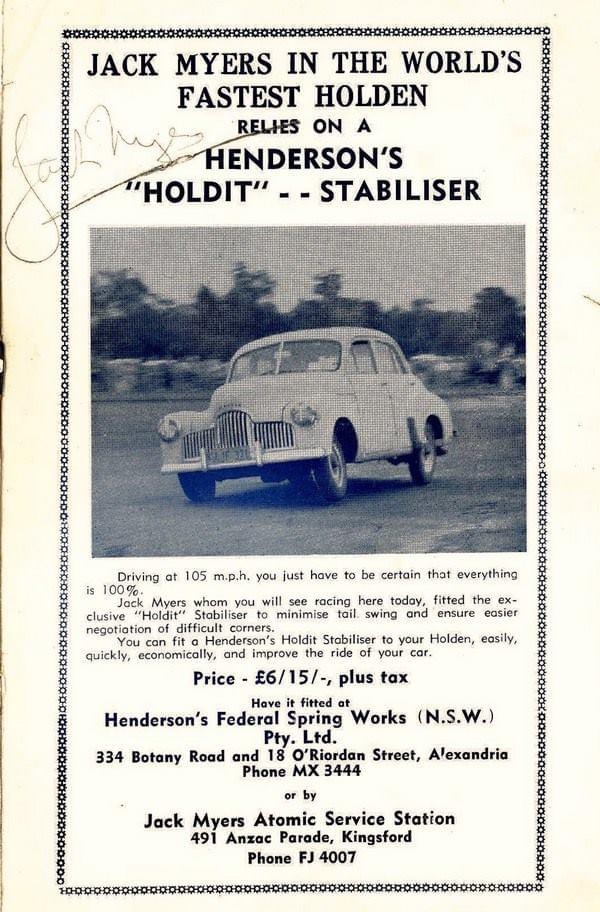
Myers soon offered 100 mph Holden motoring to all for £130. His kit involved boring your block to 3 3/16 inches, new pistons and rings, a shaved-head, re-ground cam, 12 inner valve-springs, an additional Stromberg carb, Myers inlet manifold and extractors, sports air-cleaners and a Lukey muffler. Seems as-cheap-as-chips!

Bathurst’s first ‘Production Car Race’ was held in October 1950; the first Holden entered at Mount Panorama was R Isackson’s Uni Motors car during the Easter 1951 meeting, but he didn’t start the race. The first Holden finisher on this holiest of racing turf was the 48-215 driven by R Mitchell who was fifth in a six lap sedan handicap in 1954. He was timed at 91mph down Conrod.

Fittingly, the first Mount Panorama Holden winner was Jack. John Medley anointed him “the Holden wonder-man of the mid-1950s, his black-roofed yellow car going progressively more quickly over the years.” 109.9mph down Conrod during the Easter 1956 weekend to be precise. He took that win in a six lap handicap in October 1955, the following year he was back in one of the swiftest Greys of all.

Myers aboard the Cooper T20 Holden during the 1957 AGP at Caversham. DNF in the race won by the Lex Davison/Bill Patterson Ferrari 500/625
Aboard the more advanced, spaceframe chassis, but still Cooper derived, WM Holden Special on Pit Straight during practice for the the Craven-A International at Bathurst in October 1960. DNS in the race won by Jack Brabham’s Cooper T51 Climax 2.5 FPF

After campaigning the winning Holden far and wide: Mount Druitt, Gnoo Blas, Mount Panorama, Strathpine, Lowood, Fishermans Bend and Port Wakefield, Myers was up for the next challenge.

He bought Stan Coffey’s, rolled Cooper T20 (#CB-1-52) single-seater and repaired it at his Anzac Parade ‘shop. Then, together with Merv Waggott, he built and progressively developed the big-daddy of early Holden engined racers, the 2.4-litre DOHC Waggott-Holden WM Holden.  

It was always fast among the high-priced European exotica of the day, a front of the grid heat-start in the ’59 Bathurst 100 was indicative of its place in the pecking order. But the machine was an ongoing development exercise so finishing results weren’t great. See here for a feature about the car: https://primotipo.com/2015/02/10/stirling-moss-cumberland-park-speedway-sydney-cooper-t20-wm-holden-1956/

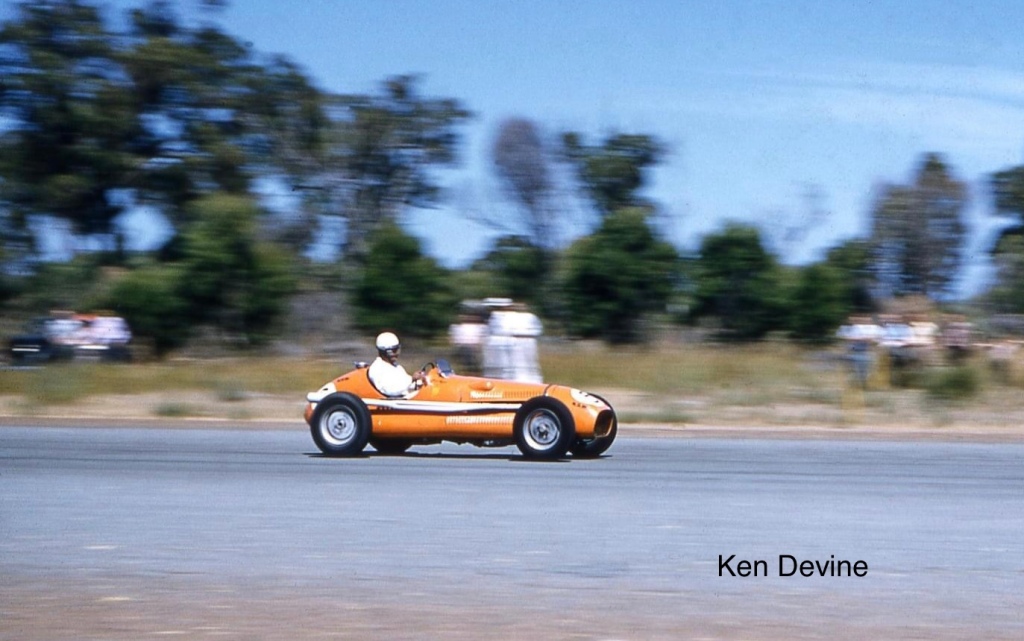
Stirling Moss was so fascinated by this home-grown application of technology to a Cooper type he knew so well, he did some demonstration laps in it at Sydney’s Cumberland Speedway whilst in Oz for the November 1956 AGP at Albert Park. Jack was twelfth at the Park and first Australian car home.

Myers was typical of so many Holden Heroes from the 1950s to 1970s, he serviced them for customers, modified them, made and sold hot-bits and raced them.

Etcetera…

(SLNSW)

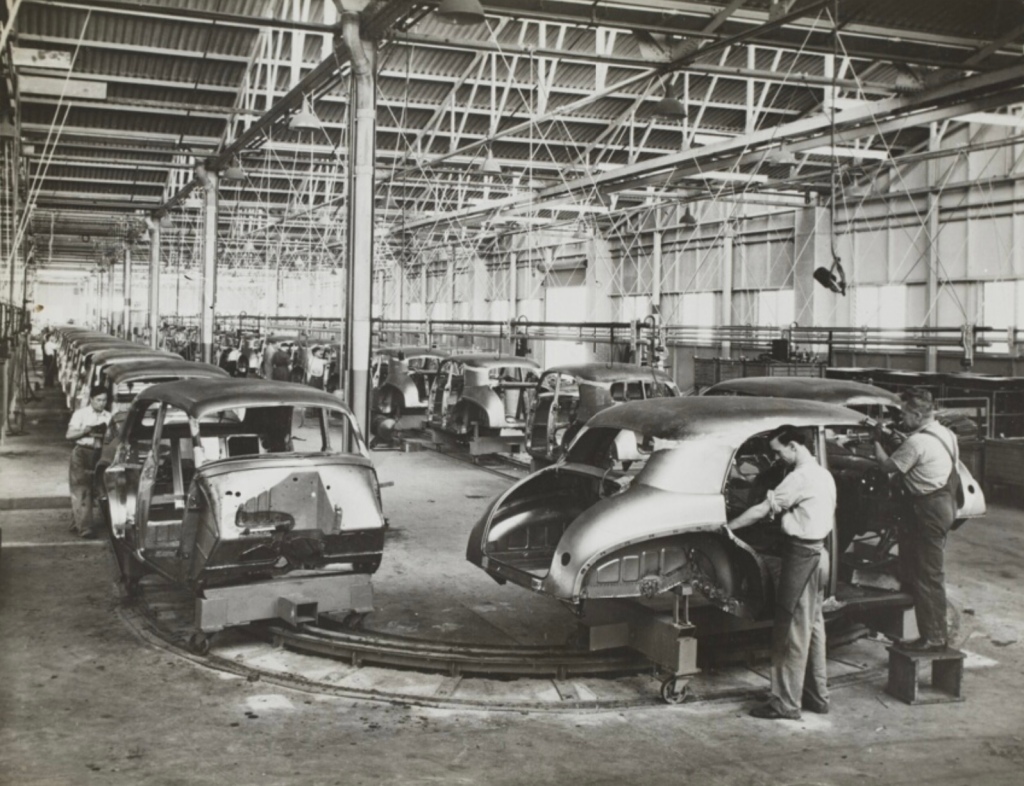
Holden 48-215s on the production line – ‘the car floor press’ – at the GMH Woodville plant in South Australia, 1949. Holden’s early days are covered here: https://primotipo.com/2018/12/06/general-motors-holden-formative/

(L Mortimer)

Myers Holden 48-215 at Mount Druitt, Sydney in the early 1950s.

Sitting up in the breeze! Myers, Cooper T20 Waggott-Holden, at Caversham, AGP 1957

Myers in the form-up area, or dummy-grid depending upon your religion, Craven-A International meeting at Mount Panorama in October 1960. That’s Austin Miller’s Cooper T51 at left.

While early on in his ownership of the ex-Stan Coffey Cooper T20, the car was rightly called a Cooper, but as Jack crashed and rebuilt the car/developed it, the machine became more Myers than Cooper, and fitted with that extraordinary twin-cam six fitted, more Waggott-Myers than Cooper!

Note the disc brakes above, albeit the front suspension still looks kosher-Cooper T20, the stylised Jack Myers brandmark in a neat touch. Myers didn’t start the car in the feature won by Jack Brabham’s Cooper T51 Climax.

Brabham was present at Bathurst for the first time since 1955, 6,000 people turned up for practice to see the twice World Champ. Unfortunately, as John Medley wrote, “Jack Myers crashed the newly disc-braked WM Cooper on top of the mountain, bending the chassis and destroying the suspension. There would be no overnight (or any) rebuilds this time. The motor was sold, the remains of the car sold separately, Myers borrowed the little Dalro Reno to run at this meeting, and would then turn his attention to his little hillclimb special – the ex-Saywell/Reynolds Mark IV Cooper with his Triumph ‘twin-twin’ engine.”

Tragically, Jack died at the wheel of the Cooper Triumph at Catalina Park, Katoomba on January 21, 1962 (7/1/18-21/1/62). The WM Holden was ultimately restored and lives at the National Motor Museum, Birdwood Mill campus, in the Adelaide Hills.

Myers – famous for racing in these horizontally hooped T-shirts – and crew in the Mount Panorama paddock, Easter 1959. Bonus points for crew-members names folks? That is a Cooper alloy wheel.

The boys push start that Waggott-Holden twin-cam six into life before the start of the 1959 Bathurst 100 on March 31. Stan Jones’ Maserati 250F is in the middle and race victor Ross Jensen’s 250F on pole at right. All the fun of the fair, look at that crowd! Jack was an excellent fourth behind Jensen, Len Lukey, Cooper T45 Climax, and Arnold Glass, Maserati 250F.

Stan is in the early stages of his best season and a bit ever, he was the reigning Gold Star Champion (1958) and at this stage of the year had won the Australian Grand Prix at Longford a month before. Jensen was seriously quick, he ran the Maserati at Bathurst in ’58, but failed to finish the 100, and finish the job he did a year later in convincing style!

WM Holden in the pits at Gnoo Blas, and again at the start of a race below, in February 1960. The ex-Whiteford Talbot-Lago T26C #110007 was raced by Barry Collerson.

While it is true that the WM-Holden was the sexiest and quickest Holden-powered racing car of the period, the most successful was Tom Hawkes’ Cooper T23 Repco-Holden (below). Chassis #CB/Mk2/1/53) was no less a car than the ex-Jack Brabham Redex Special – a Bristol 2-litre six cylinder powered T23 – albeit continuously evolved by Hawkes after Jack sold the car (to Stan Jones then on to Hawkes) when he left for Europe in early 1955. Its Repco Hi-Power crossflow headed engine was far less exotic than Merv’s twinc, but was more reliable.


(NAA)

Tom Hawkes aboard his Cooper T23 Repco-Holden during the 1956 AGP weekend at Albert Park. The potent, reliable, twin SU fed, Repco Hi-Power crossflow 2.3-litre engine on display; his best was a tremendous second in the 1957 Gold Star and third in the 1958 AGP at Bathurst. See here for features on this car: https://primotipo.com/2017/08/16/tom-hawkes-1958-australian-grand-prix/ and here: https://primotipo.com/2016/06/24/jacks-altona-grand-prix-and-cooper-t23-bristol/

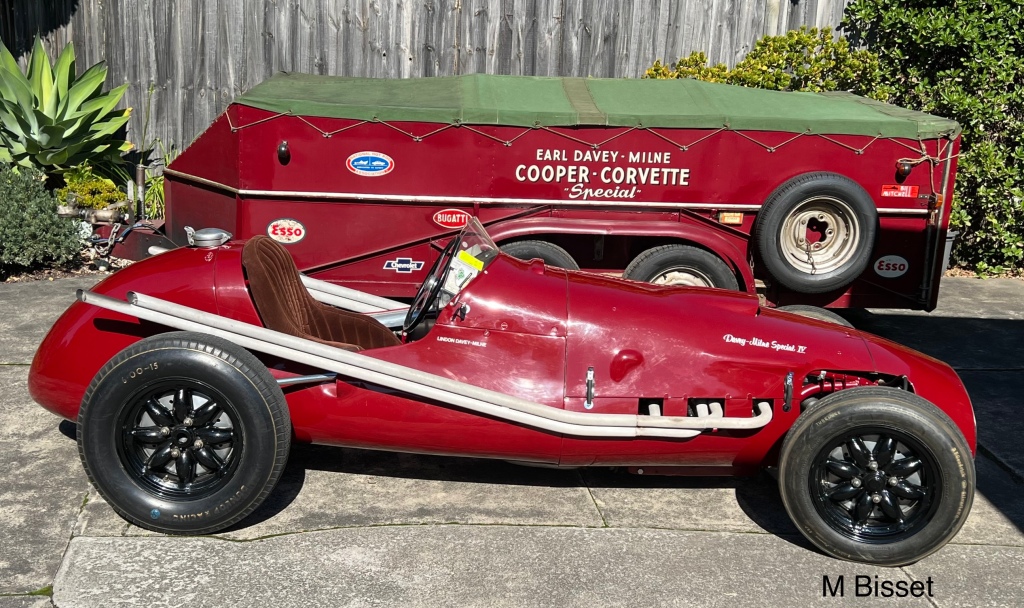
Very late in its in-period competitive life the T23 was fitted with a Chev 283cid V8, a task commenced by Tom Hawkes and Murray Rainey, and finished by Earl Davey-Milne. It’s still owned by the Davey-Milnes and is shown below last week. Mighty fine it is too…

(C Lynch-SLNSW)

Back where we started, Gnoo Blas in 1956, how did Jack do in the touring car races that weekend, and who is at the wheel of in that little VW Beetle 1200!?

Credits…

Cec Lynch-Pix-State Library of New South Wales, Bob Williamson Collection, Les Mortimer, David Medley, Ken Devine, Kelsey Collection, Kaleda Family Collection, National Archives of Australia, ‘Bathurst:Cradle of Australian Motor Racing’ John Medley

Tailpieces…

(Lynch/SLNSW)

“Don’t even think about it kid, my 48-215 has been worked over by Jack Myers, you don’t have a chance!”

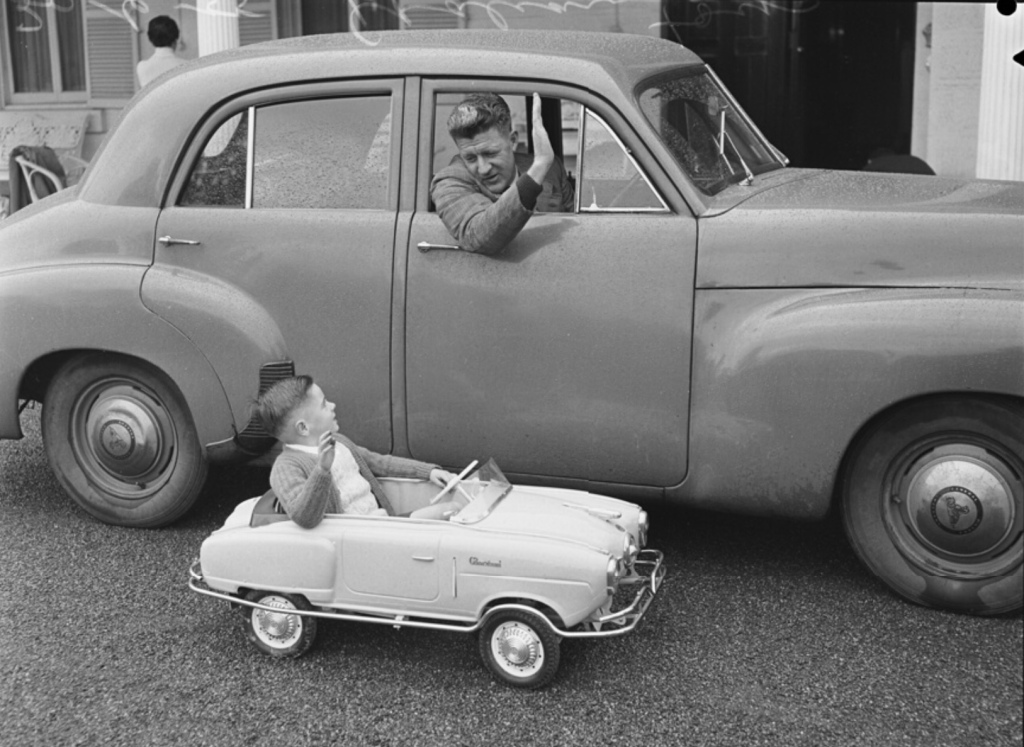
This shot is from a Pix puff-piece in 1955 promoting Italian toy cars for David Jones, a national department store chain. The little dude appears to be a handy-mechanic and would be 80’ish now. Chassis number and make of EV unknown…

(Lynch/SLNSW)

Finito…

Jack Brabham from Bruce McLaren: a works Cooper T51/Climax 1-2 seemed likely for much of the race (MotorSport)

A thrilling race of course, Bruce McLaren took an historic win – as the youngest ever F1 championship GP winner, a title he held for yonks – after Jack Brabham’s Cooper T51 Climax ran out of juice on the last lap. Jack was fourth, Maurice Trintignant, Cooper T51 Climax was second and Tony Brooks, Ferrari Dino 246 was third.

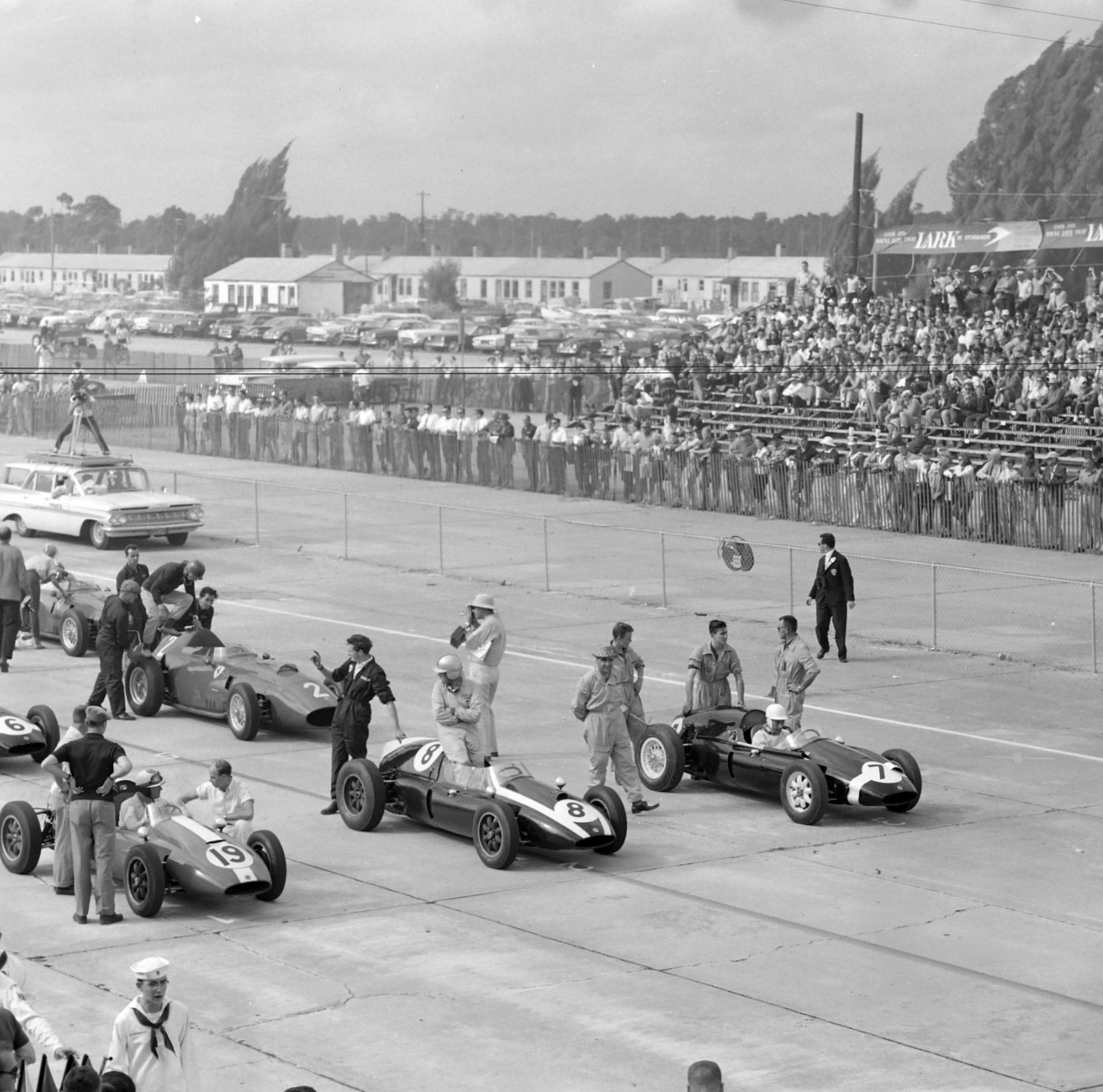
Just before the off, Harry Schell, Jack Brabham and Stirling Moss all aboard Cooper T51s on the front row; Harry controversially so as he had taken a short cut during qualifying! #6 is Maurice Trintignant’s Walker T51, #2 Tony Brooks’ Ferrari Dino 246 (MotorSport)

The Americans entered F1 etc – Indy being part of the F1 World Championship from 1950-1960 duly noted – but the interesting thing was the mix of cars. Not just Rodger Ward’s utterly nuts and utterly wonderful, Kurtis Kraft Offy, but also Fritz d’Orey’s Tec-Mec F415 Maserati, Allesandro de Tomaso’s Cooper T43 OSCA Streamliner and Bob Said’s Connaught C-Type Alta.

(MotorSport)
(MotorSport)

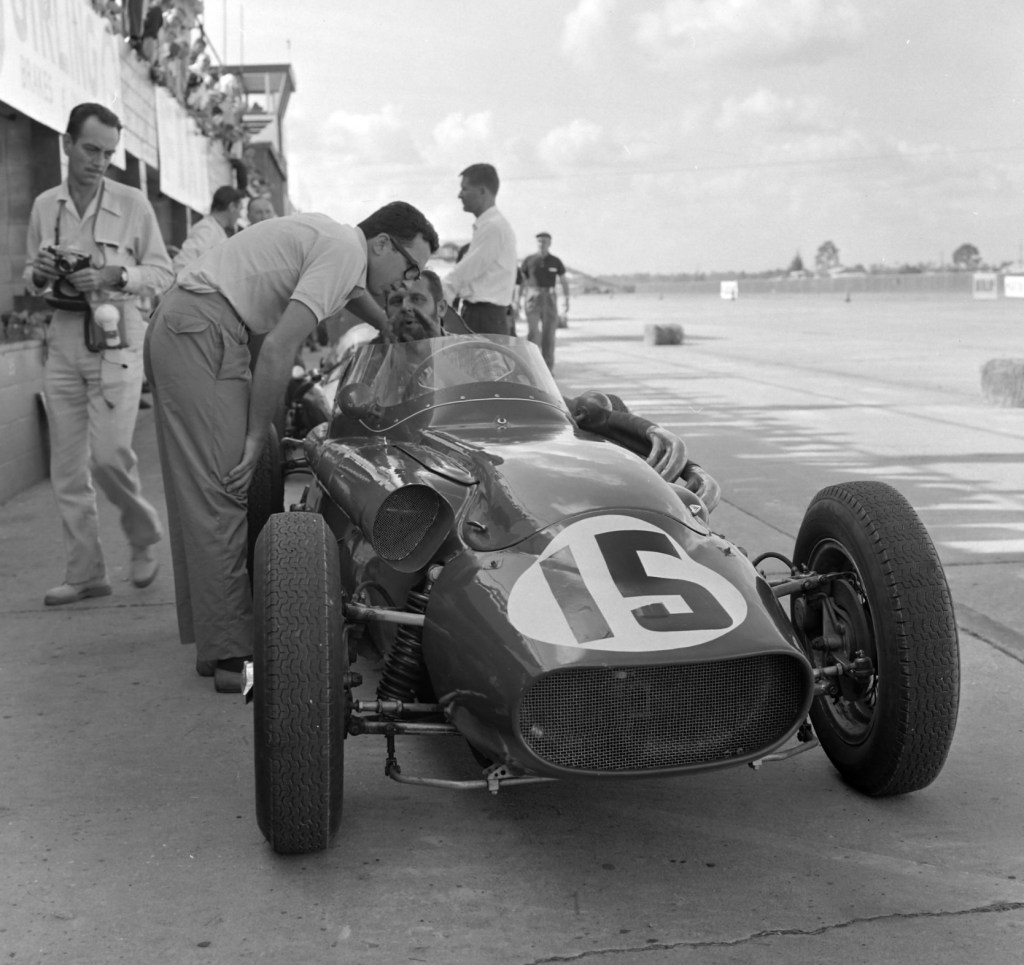
Fritz d’Orey in the one-off Valerio Colotti designed, Gordon Pennington owned Tec-Mec F415 Maserati at Sebring during practice.

Remember those days before carefully homogenised and pasteurised, hermetically clean and certified absolute sameness and dull-shit-boredom. Where did it all go wrong? See here for a story on this car: https://primotipo.com/2024/03/11/tec-mec-f415-maserati/

(MotorSport)

De Tomaso’s works Officine Specializate Costruzione Automobili entered Cooper T43 OSCA 2-litre was only ever going to be an also-ran given the modest displacement and endurance background its twin-cam, Weber fed four-cylinder engine. He qualified the car 14th on the 19 car grid and completed 14 laps before brake troubles intervened.

The car’s swoopy, beautifully finished and fitting body is far more attractive than any of the Coopers of that era, and more aerodynamically efficient? While said to be a Cooper T43, the chassis may be a copy, the wheels are also of De Tomaso’s design and manufacture. An interesting experiment, what became of the car?

(MotorSport)
(MotorSport)

It made great commercial sense for the organisers to run the reigning Indy 500 champion, Rodger Ward, in the race. If you believe the hype, Ward thought his lightly modified Kuris Kraft Midget would give the ‘European Buggies’ a run for their money.

Jack Brabham related to Doug Nye, “The next day he, Bruce, and and I arrived together at the first corner of the track, and just as we jumped from brake to throttle pedal and streaked away from him he was astonished. To his credit he took it well.”

Ward’s qualifying time was well short of pole-sitter Stirling Moss in Rob Walker’s Cooper T51 Climax: 3 min dead vs 3 min 43.8 sec. Rodger lasted for 21 of the race’s 42 5.2-mile laps, getting as high as ninth as others retired, before clutch failure intervened.

A popular racer and a good sport, he became a Cooper convert overnight and worked on Jack and John Cooper to convince them to run a car at Indianapolis. After the 1960 US GP Jack ran his GP Cooper T53 Climax at Indy in a series of tests, aided and abetted by Ward; Coopers participation in the 1961 500 with a Climax powered Cooper T54 changed Indy history, and Rodger Ward played a key role.

(MotorSport)

Ward’s 1946 Leader Card Kurtis Kraft Midget, chassis #0-10-46 was powered by a 1.7-litre, DOHC, two-valve Offenhauser engine that gave away heaps of performance to the mainly 2.5-litre competition. It had a two-speed gearbox, a two-ratio rear axle, hand-disc-brakes and the usual other dirt-track accoutrements! Those Halibrand wheels are 12-inches in diameter and Firestone provided the tyres.

The beam front axle is sprung by a transverse leaf and located bt two radius rods. I’ll take your advice on shock-absorbers. Note the front discs, nerf protection in front of the rear wheels and high standard of preparation and presentation.

(MotorSport)

Jesse Alexander observed the following about the Kurtis Kraft in his Sports Cars Illustrated meeting report.

“The greater part of the two practice sessions was spent getting the car to run properly on Avgas (rather than the usual methanol). The several times that it did appear on the circuit it was obvious that the few modifications to the chassis to suit it better for road racing were worthwhile. Surprisingly stabile and getting through many of the corners as fast (in some cases faster) as much of the field.”

“The red and white Offy differed from normal midgets in having its engine fitted several inches farther forward in the chassis as well as having a supplementary 2-speed transmission installed. This meant that actually there were two 2-speed units, one behind the engine and the other in unit with the final drive gears. But these alterations could never possibly make up for the displacement gap between the parky Midget and her overseas competitors.”

“Rodger Ward deserves credit for his spirit and enthusiasm – it was great to see him at Sebring and lets hope it won’t be the last time out for an Offy-engined car.”

I wrote about the Valerio Colotti designed Giuseppe Console built Tec-Mec F415 Maserati – ‘the ultimate expression of the Maserati 250F’ – a while back, see here: https://primotipo.com/2024/03/11/tec-mec-f415-maserati/comment-page-1/

By late 1959 the car was owned by Florida man Gordon Pennington, he decided to enter the machine for its one-and-only race at Sebring.

With Brazilian wealthy-journeyman Fritz d’Oley at the wheel, the new car, being run for Pennington and D’Oley by the Camoradi Team, managed to qualify 16th, one grid-slot in front of the only 250F in the race driven by Phil Cade.

The Tec-Mec completed 7 laps before an oil leak forced Fritz’ withdrawal, while Cade didn’t take the start given the old-gal’s lack of pace: 3 min 39 sec in qualifying. While Tony Brooks’ front-engined Ferrari Dino 246 was third, and the Dinos raced on into 1960, Ferrari wheeled out a mid-engined prototype at Monaco that year.

Fritz d’Orey, Tec-Mec F415 Maserati during the race. “The Tec-Mec was never driven quickly enough to show up any defects. The only time we know of it being driven fast was when Jo Bonnier took it around the Modena Autodromo last summer. His comments were not all that favourable. He complained of, among other things, a flexing chassis.”

Fritz d’Orey, Tec Mec F415 on the hop (MotorSport)
Bob Said in the Connaught C-Type Alta. Unusual and attractive body, Dunlop alloy wheels (MotorSport)

A bit like the Tec Mec, the Connaught C-Type Alta (chassis #C8) was also stillborn.

Rodney Clarke’s spaceframe chassis, disc braked, strut/De Dion tube rear suspension, double wishbone front suspension, Alta DOHC, two-valve four powered, Wilson pre-selector ‘transmissioned’ vast improvement of Connaught’s successful B-Type was tested but unraced when the assets of Connaught Engineering were sold in 1957.

Passed in at the auction, #C8 was later sold to Paul Emery (of Emeryson fame) and “keen amateur racing driver John Turner”. They soon did a deal with American driver, Bob Said, to race the car at Sebring.

Inevitably, shipping delays meant the project was knee-capped from the start. Poor Said had little testing time, with fuel injection difficulties adding to the challenge. He qualified the car a great 13th in the circumstances but had clutch problems in the race and then crashed it when he was caught out by the Alta engine’s erratic throttle response without completing a lap.

Jesse Alexander wrote, “The Connaught with Bob said driving drew many interested onlookers. This was the first racing appearance of the space-framed car that was under construction back when Connaught decided to cease building and racing cars. They never sold this one, which embodies many novel design features like a telescoping de Dion tube and servo-operated Lockheed disc brakes. Paul Emery got it running well enough for Said to turn a 3:27.3sec practice lap.”

Connaught C-Type #C8 in-build at Send. Note Alta engine and spaceframe chassis which looks very torsionally stiff in this photo and the one below. Double wishbone IFS and bespoke? uprights. Who are they folks? (W I’Anson Ltd)
Dunlop wheels, diff clear but not the strut/De Dion arrangement. It all looks thoroughly modern and light, Wilson pre-selector box more weighty (W I’Anson Ltd)

While outside the scope of this article, the car was repaired back at the Send factory, near Guildford. With six inches added to the wheelbase, cut-down bodywork, a push-bar, and the Alta fuel injected engine tuned to 260bhp on methanol, Jack Fairman attempted unsuccessfully to qualify the car for the 1962 Indianapolis 500.

It’s such a shame this Connaught didn’t contest Grands Prix in 1957 as planned…

C8 was sold via a Road & Track ad and then lived in a private California museum from late ’62 until 1974 when Rodney Clarke repatriated the car to the UK. In another Tec Mec similarity, the car has been an historic racing front runner for decades, initially in Indy LWB spec and since the late 1990s in its original GP specifications.

Stirling Moss in the Walker Cooper T51 in front of the seventh placed Harry Blanchard’s Porsche RSK and Taffy Von Trips’ Ferrari Dino 246, sixth (MotorSport)

Stirling Moss’ Rob Walker Cooper started from pole but was out after only five laps with Colotti gearbox failure.

Alf Francis had modified the rear suspension from the standard Cooper transverse leaf setup to coil springs and ‘wishbones’ as shown in the shot below.

Jesse Alexander explains, “The new rear suspension had been tried out in the Fall back in England. Stirling liked its feel, then proved it by bettering the Goodwood lap record. Wire wheels at the rear, and the Colotti five-speed transmission were the only major differences bwtween the Walker cars and the works cars of Brabham and McLaren.”

(MotorSport)
(MotorSport)

Bruce McLaren – with Jack in front of him – demonstrates the geometry of the standard T51 transverse leaf layout (at Sebring) where said spring performs that task, and locational duties. The 1960 Cooper Lowline (T53) quickly concocted by Messrs Cooper C, Brabham, McLaren and Maddock after the first race of the year, included among its successful bag-of-tricks a coil sprung rear end.

(MotorSport)

McLaren enroute to victory above. Alexander tells us that Brabham had initially practiced this car but “it had experimental settings for 1960” and Jack didn’t like the feel of it, so he and Bruce swapped chassis. “McLaren had not even expected to race at Sebring when I spoke with him in England in October. He expected to be in New Zealand for Christmas and participate in their Grand Prix. As it turned out, Masten Gregory’s injuries failed to heal in time for him to race at Sebring and Bruce replaced him.”

Didn’t fate play a couple of hands in Bruce’s favour!

(MotorSport)

Credits…

MotorSport Images, Jesse Alexander in Sports Cars Illustrated March 1960 via Stephen Dalton’s archive, William I’Anson Ltd

Tailpiece…

(MotorSport)

Just luvvit…

Finito…

(MotorSport)

I’m a big fan of Ron Tauranac’s Brabham BT34 Ford ‘Lobster Claw’. The one and only BT34/1 raced throughout 1971 by Graham Hill isn’t at her Elle MacPherson best sans clothes, wings front and rear specifically. Italian Grand Prix practice, Monza, September 5 weekend in 1971.

I’ve almost finished a feature on BT34, but this shot got me thinking about which car(s) were the last to test or race at Monza without wings. It was the practice in the early-winged-era – 1968-71 at least – for much of the grid to test with and without wings to assess drag/grip/top speed tradeoffs in the quest for the optimum race setup. Does anybody know who was the last to do so, small things amuse small minds I know. More on the BT34/BT37 here: https://primotipo.com/2016/11/15/carlos-bt37-butt/

Graham raced winged, Q14 and DNF gearbox in one of the best ever F1 races won magnificently by Peter Gethin’s BRM P160 by a bees-dick from Ronnie Peterson’s March 711 Ford. Their official times were 1hr 18m 12.600sec and 1:18:12.610 respectively.

(MotorSport)

Graham early in the race – his BT34 aero-kit now fitted – with John Surtees, Surtees TS9B Ford (DNF engine) and Nanni Galli’s #22 March 711 Ford (DNF electrics).

BT34’s best results were in non-championship F1 races: Hill won the May 1971 BRDC International Trophy at Silverstone and Carlos Reutemann the March 1972 Brazilian GP.

By 1971 Graham was arguably past his F1-best. While Hill got the better of his team-mate, Tim Schenken – 1970 BT33 mounted – in the first half of ’71, the reverse was the case in the ‘back-nine’. It would have been interesting to see what Tim could have done with the car. Reutemann certainly showed its pace, not only did he win in Brazil but sensationally put the BT34 on pole on his championship GP debut in Argentina in late January.

Not that Graham was a spent force. He won the Thruxton Euro F2 round in a Rondel Racing Brabham BT36 Ford FVA from Ronnie Peterson’s March 712 in March 1971, and another, the GP della Lotteria di Monza on June 29, 1972 aboard a Brabham BT38 Ford BDA. Not to forget Le Mans that year of course, where Graham shared the winning Matra MS670 with Henri Pescarolo over the June 10-11 weekend. See here: https://primotipo.com/2023/09/19/matra-random/

Credits…

MotorSport Images, LAT, F2 Register

Tailpiece…

(LAT)

Hill (above) on the way to winning the 1972 Monza Lottery GP F2 race, still in search of the optimum low drag Monza setup on his Brabham BT38 Ford BDA: no front wings and a very shallow angle of incidence at the rear.

May as well finish with another question, this time for the Graham Hill experts. Was that Monza Lottery win – not a Euro F2 Championship round that year – on June 29, 1972 Graham’s final race win?

More BT34 soon. Oh yes, the Fugly Car Cup will be an occasional article.

Finito…

Maybach 2 on display at the Melbourne International Motor Show, Exhibition Buildings, April 1-10 1954 (D Zeunert Collection)

A while back I published an article about Maybach 1, the first in a series of three chassis – four cars – built by Charlie Dean/Repco Research and Ernie Seeliger between 1947 and 1958. Click on this link to that piece: https://primotipo.com/2024/01/15/maybach-1-technical-specifications/

As with that article, this one is also a copy of the technical specifications and evolution of these machines published in the Australian Motor Sports Annual 1958-59. The author’s name isn’t cited, so I’ve credited it to John Goode, the book’s editor.

The photo choices are mine, so too the are the Notes sections. I’m taking as-read a general knowledge of Maybach, but if you need a refresher, click on the links at the end of this piece.

(L Sims)

Introduction…

Here are three photographs to illustrate the journey from Maybach 1 in 1947 to Maybach 1 Series 3 – the 1954 New Zealand Grand Prix winner in Stan Jones’ hands – to get us to the start of this article, Maybach 2, which commenced its life in April 1954.

The shot above shows Charlie Dean and the brave Jack Joyce aboard Maybach 1 at Rob Roy during the Melbourne Cup long-weekend in November 1947. What a wild road car the beast would have made, the car received its body immediately prior to the 1948 Australian Grand Prix held at Point Cook, in Melbourne’s inner-west.

(G Thomas)

The shot above shows Dean on-the-hop at Rob Roy in 1948 – Maybach 1 painted in its original white – and below coloured blue, on test at Willsmere, near Dean’s Kew home circa 1951. And then below that, the Repco advertisement shows Maybach 1 Series 3 winning the 1954 NZ GP at Ardmore.

(D Stubbs)
Compare and contrast: Maybach 1 Series 3 above, with Maybach 2 below (B Caldersmith)

MAYBACH II (April 1954-November 29, 1954)

ENGINE: 6 cyl. in-line single oh. camshaft. Bore and stroke: 91 × 110mm. Capacity: 4,250 c.c. Output: 257 b.h.p. at 5,000 .p.m. (bench tested). Carburettors: Three 2 3/16″ S.U. Compression Ratio: 11 to 1. Fuel used: 60% Methanol, 20% Benzol, 20% Aviation Petrol Octane rating: 110. Cast iron cylinder block with wet liners.

Single casting cast iron cylinder block and crankcase, with sump joint well below the crankshaft centre line. Crankshaft machined all over and fully counter balanced, running in eight white metal lined bearings, one between each crank throw and an extra one behind the camshaft drive pinion situated at rear end of crankshaft. Wet liners fitted to cylinder bores with lightweight balanced connecting rods and other reciprocating parts.

Single camshaft running in seven white metal bearings, opening valves by means of rocker arms fitted with eccentric bushes which could be rotated and locked to adjust valve clearances. Rockers had roller cam followers. Valves inclined at 65 degrees in hemispherical head and located on opposite sides. Helical timing gears with idler (originally compounded fabric, but replaced by steel).

Wet sump lubrication through filter with pressure fed oil supplied to centre main bearings, then to other caps, and through the crankshaft to big end bearings. Also fed to valve rocker shafts and camshaft bearings.

Complete body and chassis redesign converting it into a single seater. Mk. I Series 3 Maybach motor used.

NOTES:

The wording in relation to the chassis is misleading. Maybach 1’s chassis was set aside – tired and much modified as it was – and a new single-seater chassis was designed and fabricated for Maybach 2.

The engine came from a German half-track vehicle captured during the Middle East campaign and shipped to Australia for technical study by the military.

Maybach 2 in the Southport paddock during the November 1954 Australian Grand Prix meeting, racer, Owen Bailey at far left (VSCC Collection)
Stan being pushed onto the grid. He led the race before a chassis weld broke on lap 14 of 27, pitching him down the road at high speed. Jones was miraculously ok but Maybach 2 was very dead (J Psaros)

TRANSMISSION: Gearbox: four speed using Fiat 525 case with Repco manufactured gears. Ratios: First- 7.08:1 Second-4.94:1 , Third-3.78:1, Top-3.14:1.

DRIVESHAFT: Dropped to pass beneath back axle and driving a short forward shaft into differential through two helical gears, easily accessible from rear, permitting alteration to overall ratios up or down by 3%. Differential: Resembled American Four Lock locking type constructed by Repco workshops from their own and American components. Rear Axle: Vibrac type high tensile steel.

CHASSIS: Frame: Based on two 4″ dia. 16 gauge steel tubes.

Suspension: Front – Independent with wishbones and Delco shock absorbers with low placed 3 leaf traverse spring. Rear Panhard type with reversed quarter elliptic springs and torque arms anchored to heavy cross member linking two main longitudinal tubes of the chassis. Tubular Monroe Wylie shock absorbers.

Steering: Peugeot rack and pinion.

Brakes: Paton’s Hydraulic using twin parallel master cylinders, one operating front and one the rear. Action on both integral but operation separate permitting one set in action if others fail. Front shoes, twin leading design with I6in. special helically finned drums, cooled by air scoops to forward sides. Rear shoes of leading and trailing type in 14 in. drums.

Wheels: Locally constructed wire type with Rudge Whitworth hubs. Front 18″ dia. Tyres: 5.25 × 18. Rear 16″ dia. Tyres: 7.00 x 16.

Body: Single light aluminium shell easily removable in three seclions. Fuel Capacity: 25 gallons in tail mounted aluminium tank.

Dimensions: Wheelbase 94″ • Track: Front 4 ft. 3 ins. Rear 4 ft. I ins. Weight: 16 cwt. Power/weight ratio: 7 Ibs. per b.h.p.

“Rare photograph showing the front crossmember of Maybach 2 where the chassis tube broke” (S Scholes Collection-Wheels May 1955)

NOTES:

In many ways Maybach 2 was the one that got away…

It went like a jet from the start, Jones won the Victorian Trophy at Fishermans Bend in March 1954 on its race debut, then won again at the Easter Bathurst meeting where he took the two preliminaries before gearbox failure scuttled his run in the feature. He was victorious again at Altona in May and was second to Jack Brabham’s Cooper T23 Bristol there in June. At Fishermans Bend in October he had gearbox failure again.

Then it was off to Southport for the AGP in November where Stan simply drove away from the field until the chassis weld failure caused the massive accident that destroyed the car, and from which Jones very fortunately walked away…

This 4.2-litre 257bhp @ 5000 rpm, 725kg monoposto was one helluva fast racing car.

In the woulda-coulda-shoulda stakes were the battles we never got to see with Stan aboard Maybach 2 and Reg Hunt’s Maserati A6GCM/250 in 1955. Hunt upped the local ante big-time when he imported a current GP car, and was immediately quick in it, his talent refined with some 500cc F3 racing aboard a Cooper MkVIII in Europe in 1954.

Reg’s Maserati gave about 240bhp @ 7200rpm and weighed between 500-580kg. Both the Maserati and Maybach 2 had four-speed ‘boxes, IFS and live-rear axles. Maybach’s weakness was its ginormous, all cast iron engine which weighed circa 320kg; let’s not forget it was designed for the German military not competition use. The 250F engine’s quoted weight is 197kg, much of the weight differences between the two cars is in engine weight.

While torque figures for Maybach 2 weren’t quoted, the long stroke 4.2-litre six would have produced more torque than its twin-cam Italian competitor but not, one suspects, enough to offset the considerable weight disadvantage.

Whatever the case, when Maybach 2 was destroyed at Southport, all of the momentum gained by building, racing, and refining the car was lost. Maybach 3 (below) didn’t appear until the April 1955 Bathurst 100 weekend when the team started the process again, by which time Reg was used to and exploiting his car successfully.

What is my point? The Repco-Maybach program effectively ended post-Southport, with only one remaining engine to instal in Maybach 3, a 3.8-litre unit at that. Stan confronting Reg in 1955 aboard Maybach 2 really would have been something to see…woulda-coulda-shoulda.

AMS Annual 1958-59
Jones in Maybach 3 during the 1956 South Pacific Championship (R Donaldson)

MAYBACH III (1955 – Jan 1956)…

ENGINE: 6 cyl. in-line inclined 60 degrees to left. Shortened stroke crankshaft (approx. 10% ). Bore and stroke: 90 × 100 mm. Capacity: 3,800 c.c. Compression Ratio: 11 to 1. Power Output: 260 b.h.p. at 5,000 r.p.m. Direct fuel injection by Dean and Irving.

TRANSMISSION: Clutch: Repco single plate. Gearbox: Four speed with top overall ratio 3.2 to 1. Drive: Open propeller shaft passing on right of driver to offset differential. Differential: limited slip (as previous model).

Charlie Dean at Rob Roy, date unknown. The competition debut of Maybach 3, was at Templestowe Hillclimb on May 8, 1955. 68.56sec where Dean was third in the over 3-litre racing car class (SLV)
(SLV)
(Davey-Milne)
Rob Roy again. Despite the fuzziness, note the the considerable reduction in engine height achieved by the 60-degree laydown of the Maybach six (Davey-Milne)

CHASSIS: Frame: Built up from two 4″ dia. steel tubes, linked by transverse tubing. Redesigned body of flatter appearance due to inclined engine.

Suspension: Front – Independent with transverse leaf spring set low. Rear Quarter elliptics with radius rods.

Dimensions: Wheelbase 95″. Track Front 4 ft. 3 ins. Rear 4 ft. 1 in. Steering: Marles box and divided track rod.

Maybach 3 in the Gnoo Blas paddock in 1956. Trumpets of Repco built fuel injection clear (B Caldersmith)
(B Caldersmith)

NOTES:

The beginning of the end. Jones (above) is an absolute bolter at the start of the January 1956 South Pacific Championship at Gnoo Blas, New South Wales.

Reg Hunt’s new Maserati 250F is way back here but will reel Stan in. Being pushed hard to hang onto the very best European F1 car of the day, the Maybach engine let go in a big way.

Jones had a 250F several months later. Stan let his good friend, ace engineer/mechanic/racer Ern Seeliger loose on Maybach, its evolution to Chev Corvette 283 V8 power and other modifications – Maybach 4 – was soon underway.

(B Caldersmith)
(AMS Annual 1959-60)
Stan Jones, Maybach 4 Chev, Australian Grand Prix, Lowood, June 1960 DNF engine (B Thomas)

MAYBACH IV March- 1958

ENGINE: Chevrolet Corvette 8 cyl. Vee motor. 4.6 litre. Compression ratio: 9.2:1. Bore and stroke: 98.501 × 76 mm stroke. 2 four-barrel Carter Carbs. 274 b..p. at 6,000 r.p.m. 300 Ibs. torque at 3,500 r.p.m. All oilways completely modified. Bearings altered in regard to oil ways. Engine dry sumped. Modified cooling system.

GEARBOX: As previous Maybach. Drive: As previous Maybach. Differential: As previous Maybach modified with shortened axles incorporating constant velocity joints. Clutch: Seeliger designed and built multi-plate clutch.

CHASSIS: As previous Maybach but chassis lengthened lo take Di Dion rear end. New 30 gallon fuel tank fitted.

Suspension: As previous Maybach with mods. to front end by fitting an anti-roll bar incorporating brake forque rods and transverse leaf in place of quarter eliptics at rear.

Dimensions: Same as previous Maybach, but rear track widened to 4 ft. 2 ins. All up weight reduced to 14} cwt. with 4 gals. of petrol. Full oil and water.

NOTES: Ern Seeliger first ran Maybach 4 at Fishermans Bend in March 1958.

Ern Seeliger, Maybach 4 Chev, Bathurst 1958 AGP (AMHF)
(R Edgerton)

In one of The Great Australian Grands Prix, Stan Jones, Maserati 250F, Lex Davison, Ferrari 500/625 and Ted Gray, Tornado 2 Chev battled up front for most of the ‘58 race on Mount Panorama until Lex was the last-man-standing. Ern Seeliger drove a great race into second, with Tom Hawkes third in his much modified ex-Brabham Cooper T23 Repco-Holden.

Jones proved further the pace of Seeliger’s final Maybach evolution by winning a Gold Star round in it at Port Wakefield in 1959. It would have been very interesting to see what times Stan could have done in Ern’s car in practice at Bathurst over that ’58 AGP weekend!

(AMS Annual 1958-59)

Etcetera…

(VHRR Archive)

Prettiest of the lot in my opinion…Stan the Man on the way to winning the Victorian Trophy at Fishermans Bend in 1954, Maybach 2.

(B Caldersmith)
Maybach 2 in the Southport paddock over the 1954 AGP weekend (J Psaros)

Starting grid of the 1955 Australian GP (or is a heat, whatever) at Port Wakefield, South Australia. #5 Reg Hunt, Maserati A6GCM/250, Jones, Maybach 3, #8 Tom Hawkes, Cooper T23 Bristol, #6 Jack Brabham in the winning Cooper T40 Bristol and #10 Kevin Neal, Cooper T23 Bristol.

This is a good contextual shot showing Jones in Maybach 3 – Mercedes W196 styling influence clear – among current’ish European cars: Reg Hunt’s Maserati A6GCM 2.5 – the so-called interim 250F – two Cooper T23s of Tom Hawkes #8 and Kevin Neal. Plus the nose of the winner and newest car here, Jack Brabham in the mid-engined Cooper T40 Bristol he built in time for the British Grand Prix at Aintree that July.

(G McKaige)

The final evolution of the Dean/Repco Research Maybach engine development programme. ‘Short-stroke’ 3.8-litre and fuel injected delivering circa 260bhp @ 5000rpm. George McKaige took this shot of Maybach 3 at Fishermans Bend in October 1955. I wonder what that plate in the engine bay says?

(Q Miles)

Great colour photograph of Maybach 4 Chev in the Lowood paddock inJune 1959. Note how the twin-Carter-carbed Corvette 283 V8 is offset to the right allowing the driver to sit low to the left rather than high atop the driveshaft.

Credits…

Australian Motor Sports Review 1958-59, Brian Caldersmith, Brier Thomas, Jock Tsaros, Davey-Milne Family Collection, George McKaige and Chester McKaige via their superb two ‘Beyond The Lens’ books, Stan Griffiths, Dacre Stubbs, VSCC Vic Collection, J Montasell, Clem Smith, Quentin Miles, Ron Edgerton Collection

Tailpiece…

(K Drage)

Towards the end of a very long competitive Maybach road.

Stan Jones lines Maybach 4 Chev up alongside Alec Mildren’s tiny, mid-engined 2-litre Cooper T45 Climax before the start of the South Australian Trophy, Port Wakefield Gold Star round in March 1959.

Jones won the race from Len Lukey and Keith Rilstone – it was the last championship level win for Maybach in-period.

Finito…

(LAT)

The days of sublime, simply beautiful Grand Prix photographs are long gone, sadly. I friggin’ hate modern abbreviations like OMG but it does make a point, very economically.

Dan the Man is blasting his Ferrari Dino 246 around the Circuito de Monsanto, a port city in Lisbon, Portugal, during the August 23, 1959 Portuguese Grand Prix. He was third behind the Cooper T51 Climaxes raced by Stirling Moss and Masten Gregory.

(LAT)

Back then, photographs weren’t usually attributed to the artist, so sadly we cannot give the talented ‘snapper the accolade he/she/uncertain deserves: try this https://primotipo.com/2017/07/14/composition/

Of course, rather than completely wallowing in the past, the challenge is to find some modern settings which match the OMG-WOW Factor of photographs like these. This is the first in what will be an ongoing series…

Credits…

LAT Photographic

Finito…

(MotorSport Images)

Oh yeah baby!

The 1970-71 BRM P153/P160 are two of my favourite Grand Prix cars, designer Tony Southgate at his best. Jackie Oliver is using every inch of Snetterton in this first test (?) of Bourne’s new P153.

It’s chassis P153/01 on January 1, 1970. This car had rather a short life sadly, it was burned to a crisp after Oliver had front stub-axle failure on the first lap of the Spanish Grand Prix on April 19. Ollie ploughed into the innocent Jacky Ickx’ Ferrari 312B – 312B/01 in fact – the ensuing massive conflagration and incompetence of the marshalls ensured both cars were destroyed.

The P153/P160 were race winning cars too. Pedro Rodriguez was victorious in a P153 in the 1970 Belgian Grand Prix after an epic dice with Chris Amon’s March 701 Ford. He also won the Oulton Park Spring Cup in 1971 aboard a P160. P160 championship victories went to Jo Siffert and Peter Gethin at the Osterreichring and Monza in 1971, while Gethin also won the non-championship Brands Hatch Victory Race that October. In 1972 Jean-Pierre Beltoise took his only GP win at Monaco in soggy conditions in a P160B.

The P153 in its early traditional, pre-Yardley, BRM green with orangey-red trim looked superb! We have Southgate to thank for the new colour too. “The F1 BRMs had been painted a dark, dull, metallic green I thought looked terrible. I called it British Racing Mud…I persuaded the team to change to a more lively green and I ended up with a colour used by Vauxhall Motors, which looked great.

“Cor, this BRM really does look the goods boys!” Snetterton, January 1, 1970 (MotorSport)
(MotorSport)

After the phenomenal speed and results of the simple, light 1.5-litre P261 V8 Grand Prix car from 1963-65, BRM had been in the doldrums since 1966-67 with the phenomenal lack of speed of its complex, heavy P83 H-16.

While the 1968-69 P101 and P142 V12 powered P126/133/138/139 had shown occasional flashes of speed, to an extent Bourne had lost its way in both chassis and engine competitiveness. See here: https://primotipo.com/2018/01/25/richard-attwood-brm-p126-longford-1968/

Much respected, long-time engineering chief Tony Rudd – the architect of BRM’s late 1950s-early 1960s rise and rise – left Bourne for Hethel where he became Group Lotus’ Director of Engineering in mid-1969 and was replaced by Tony Southgate who had been drawing and building winning Eagles for Dan Gurney in California.

Tony Rudd fettles his nemesis at Monaco in May 1966, the gloriously-nuts P75 H-16 engined BRM P83.
Oliver gives his early impressions of the new car to a Dunlop technician at left, and who else? Snetterton (MotorSport)
BRM Brains Trust during the 1971 British GP weekend: Tony Southgate, technician Gerry van der Weyden and Tim Parnell with the Bastard! look on his face

When 29 year old Tony Southgate arrived at BRM in June 1969 his boss was the self-styled, polarising, ‘Lord’ Louis Stanley. The leadership team comprised Southgate, in charge of chassis design and development, Aubrey Woods of engine development with Alex Stokes as the gearbox specialist.

“My brief was to improve the existing P139 for the remainder of the 1969 season, if possible, and then to deliver an all-new car for 1970,” he wrote in his great ‘Tony Southgate : From Drawing Board to Chequered Flag’.

Southgate decided Alec Osborn’s (who departed BRM along with Peter Wright when Southgate arrived) P139 wasn’t worth spending time on as “Some of the suspension systems and mountings deflected, which produced very spooky handling…Surtees withdrew from the German Grand Prix on the Nurburgring after two of the three practice periods; he was convinced that something was going to break on the car…”

As many of you will recall, John Surtees was having something of an annus horribilis that year, driving shit-heaps on ‘both sides of the Atlantic’: the BRMs and Jim Hall’s Chaparral 2H Chev in North America.

Jack Oliver giving his P153 plenty during the 1970 South African GP weekend (MotorSport)
Kyalami pits 1970 (MotorSport)

Design and construction…

Tony Southgate wrote that “The philosophy behind the P153 design was maintaining my obsession with low CG, with the fuel concentrated in the centre of the car to achieve minimal interference with the weight distribution as the fuel level changed. Coupled with this was very good torsional stiffness between the wheel centres, and great rigidity of the suspension and its mountings.”

“Aerodynamic testing in 1969 was still basic by modern standards…The full-size race car ran in the MIRA wind tunnel, and the scale model work was done in the Campbell tunnel at Imperial College, London.”

“One of the cars interesting points of note was that it ran on 13-inch diameter wheels both front and rear, when the opposition were using 15-inch at the rear. The car ran on very fat Dunlop tyres (their last year in F1), giving it a very low, squat appearance.”

“The monocoque was unusual in that it had a very pronounced double-curvature shape, being 4 feet wide at the centre. The panels were hand rolled in-house and have a very ‘pregnant’ look to the car.”

(MotorSport)

Front suspension was period typical: magnesium uprights, upper and lower wishbones with Koni shocks and coil springs and an adjustable roll-bar.

Engine change of Rodriguez’ P153 on Sunday June 7, 1970 during the victorious Belgian Grand Prix weekend (MotorSport)

“The V12 engine, as originally designed by Geoff Johnson, was unstressed, but we modified it to make it semi-stressed. A small, neat triangular framework was added to the rear of the monocoque to take part of the load. The engine was very light for a V12. It weighed the same as a Cosworth DFV and had more or less the same maximum horsepower, approximately 427bhp, but less torque. We used 11,200rpm whereas at that time the DFV was limited to around 9300rpm.”

Doug Nye adds further detail about the 1970 engine developments of the 48-valve BRM P142 engine in his ‘History of the Grand Prix Car 1966-85’.

“In 1970, the P142s powered more adequate Southgate designed chassis and began winning races, but power was not destined to improve dramatically in the years left to BRM and its V12 engines. After Rudd had gone to Lotus, Aubrey Woods took over engine development.”

“Woods considered the chain-driven four-cam centre exhaust P142 overheated both its water and oil too easily, and suffered badly from detonation. Its relatively long stroke was a limiting factor, new pistons were required and they took along time to make. He designed new cylinder heads lowering engine CoG with outside exhausts and in’ve inlets with improved ports and enlarged cooling waterways. The crankcase was now cross-bolted and stiffened to allow use as a semi-stressed chassis member.”

“The BRMs would always retain their camshaft chain-drive as the systems last refuge in Formula 1.”

Southgate, “The (Project 131) gearbox for the P153 was the existing one carried over, but with a new outer casing and rear cover castings carrying the complete rear suspension, the rear wing and oil tank assembly. The P153 had np problem getting down to the minimum weight requirement…”

Oliver, Kyalami 1970 (MotorSport)

Racing the P153 in 1970…

“The car was immediately quick, but somewhat fragile. Our new number-one driver, Pedro Rodriguez, did a great job and became an instant star within the team. He was amazingly easy to work with, simply a natural, but not a technical driver like John Surtees.”

Frustrated with the lack of progress, and already building Surtees F5000 cars, Big John left to build and race his own F1 cars and to expand his range of customer cars. Jackie Oliver replaced him.

“I had some problems with the P153 in the beginning. A rear axle broke during Kyalami testing…then a similar problem at the front caused a famous fiery accident…” that destroyed both Oliver’s P153 and Jacky Ickx’ Ferrari 312B at Jarama, Spain.

At Monaco the ‘commercial rot had set in’, or less emotionally, commercial reality, the pristine P153 pledged allegiance to Yardley. Not entirely though, George Eaton’s was in each-way bet livery as below: green car and Yardley-gold wings (MotorSport)
Pedro leads Chris at La Source during their titanic dice at Spa in 1970. That day the mighty BRM stayed together, Rodriguez sizeable wedding-tackle did the rest (MotorSport)

“Reliability was the main problem of 1970. The engine oil system was being particularly difficult. I tried ‘trick’ oil tanks, and by the time we got to the Belgian Grand Prix at Spa-Francorchamps, the oil-tank had grown to 4.5 gallons in capacity and was fed by 1.25 inch bore Aeroquip pipes (these were hardly hoses)! Miraculously, this did the job for a while. Pedro won the race after leading most of the way, closely caused by Chris Amon’s March 701 Ford. BRM was back…”

“But engine problems still dogged BRM throughput the year, although Pedro gained a second place in the US GP at Watkins Glen and a couple of fourths in other races, and he also won the non-championship Gold Cup at Oulton Park.”

Pedro was leading at Watkins Glen until a splash-and-dash pitstop for fuel, Doug Nye wrote. Fuel consumption had slipped from about 4.8mpg to 6mpg at St Jovite, the BRMs were forced to make pitstops in both Canada and the US as a consequence.

Southgate, “My thoughts on the engine problem were simple: the main bearings were all too small, too narrow. However, this was one of the main reasons the engine was so short. There was no chance of any major design changes in this area, so we had to do with lots of detail design improvements including even better oil tank systems.”

To Southgate’s point, look at the truly massive oil tanks under the BRM’s rear wing in the Mont Tremblant, Canada pitlane below; a few RPM were lost in aero-drag in that lot! Some of the fuel consumption problem is right there…

Pedro readies himself in the Mont Tremblant-St Jovite pitlane, fourth that weekend. #15 is Oliver’s P153 (LAT)
Pedro, Mont Tremblant 1970 (MotorSport)

In 1970 BRM finished 16 times from a total of 37 starts and placed sixth in the World Constructors Championship with Rodriguez seventh in the driver’s and Oliver a disappointing twentieth after retirements in 10 of the 13 rounds!

Nye, “Southgate produced the finest 3-litre BRM in 1971: the definitive chisel-nosed P160, a cleaner, lower, lighter development of the P153, though actually incorporating few interchangeable parts.” A story for another time folks…

Big Lou extolls the virtues of the new BRM P160 and Cougar aftershave – ‘it’ll drive your mistress wild I tell you’ – place unknown, February 17, 1971

Etcetera…

(MotorSport)

A pair of compare and contrast shots: George Eaton, 1970 BRM P153 at Monaco in May 1970 above, and John Surtees, 1969 BRM P139 during the British GP meeting at Silverstone that July.

The photographer in the Surtees shot looks suspiciously like Rob Walker, he has wandered away from his car, Jo Siffert’s Lotus 49B Ford.

Note the flatter, wider aerodynamic form of the P153, partially informed by the wind tunnel, and earlier P138.

The front suspension of Southgate’s car comprises simpler outboard wishbones, the earlier car uses more complex to make, and more aerodynamic, top rocker and lower wishbone layout. Rear suspension is the same albeit the more advanced two-lower links on the P138 were replaced by Southgate with lower inverted wishbones.

The engine fitted to the P153 is 1970 spec P142 inlet between the vee and side exhaust, that to the P139 is a 1969 spec P142 centre-exhaust V12.

Louis Stanley, Jean Stanley nee-Owen, Raymond Mays, Sir Alfred Owen and Tony Rudd with a BRM P83 at Bourne, allegedly in 1969.

I say allegedly as by 1969 the H16 hadn’t been raced since late 1967, and it makes sense for the PR shot to be with the latest model, not the problem-child. The H-16’s solitary GP win was powering Jim Clark’s Lotus 43 at Watkins Glen in 1966.

In the best tradition of nepotism, Stanley’s power and position arises from his marriage to Jean Stanley, Alfred Owen’s sister.

John Surtees tells it like it is to his boss, Sir Alfred Owen at Silverstone during the July 19, 1969 British GP meeting. Owen was a great industrialist and corporate leader, respected by all who came within his orbit. The AP-Lockheed lady is all over what’s going on, the rest are doing their best to look the other way…

Surtees qualified his BRM P139 sixth, and Oliver his P133 13th, Surtees was out with a suspension problem after completing one lap and Oliver on lap 20 when his transmission failed.

By that weekend Southgate was already onboard. He discloses in his autobiography that the approach for him to join BRM was made by Surtees in the US, John being delegated the task given his regular travel between the UK and US.

Lovely portrait of Tony Southgate (born May 25, 1940) at Silverstone during the July 1971 British GP weekend.

The funniest part of Southgate’s BRM chapters involves his first month at Bourne and running-the-gauntlet from the ageing (August 1, 1899-January 6, 1980) but still very frisky ‘Gay Ray’ Mays!

By that stage – the English Racing Automobiles and British Racing Motors founder – “RM had no particular job at BRM but he was still very much on the scene as a sort of ambassador.” As a handsome young bloke, Southgate was potential Mays’ fresh-meat despite the fact he was married.

Suffice it to say – and do re-read the chapter, in fact the whole fantastic book – after Tony declined to return RM’s car-keys to him to his bedroom, having borrowed said vehicle to visit the team mechanics across town earlier in the evening. Mays then refocussed his energies back on the hotel bell-boys for which he was somewhat infamous…

This fantastic shot of the BRM design team is diminished only because the caption cites four names rather than the requisite five!

Alec Stokes, Aubrey Woods, Alec Osborn and Geoff Johnson in 1959, who is missing folks? The drawing office was then located in the old maltings building behind Raymond Mays’ house.

(BRM Association Archive)

P153 launch at Silverstone, the car has grown a Dunlop decal since Snetterton in early January. Date folks?

From the left, back row – Dunlop employee Ken Spencer, Alec Stokes, Dave Mason, Len Reedman, Alan Challis, Tim Parnell, Gerry Van-Der-Weyden, Aubrey Woods, then two Shell employees, Willie Southcott, Dunlop employee. Centre Jackie Oliver and Pedro Rodriguez. Front, Jean and Louis Stanley.

Tony Rudd with BRM P83 at Bourne on May 17, 1966.

I suspect there are a couple of generations of BRM fans like me who feel we almost know Tony Rudd thanks to the all-embracing manner in which he worked with Doug Nye to produce the magnificent ‘Saga of British Racing Motors’ Volumes 1-3, with Vol 4 in-the-pot at present.

There are so many documents and corporate reports contained within written by him that you can form an impression of the way he thought, operated and communicated as part of the team. There nothing to suggest he was anything other than someone to know, like, trust and respect…

He was clearly determined, and stubborn too…Doug Nye wrote that “the ultimate, much modified, magnesium block four-valve-per-cylinder H16 engine (yes 64 valves, 128 valve springs – imagine assembling it all) was completed and tested for 1968 but the policy decision was taken to set it aside and concentrate on the simpler, lighter V12.”

Despite that, “The engine continued in test as late as from 13 December 1968 to 25 January 1969. It was number ‘7541’ and the best of its eight runs peaked at only 378bhp at 10,300rpm; that was nothing like enough to compete with Cosworth’s DFV, which was already beyond 430bhp.”

It seems the catalyst, or straw that broke the camels back in terms of Rudd’s departure from BRM was pursuing the H16 for too long, contravening the policy direction of a year or so before. Southgate wrote that “Tony Rudd…hadn’t done what had been ordered, which was to drop the team’s H16 engine programme and proceed with the V12 only.”

Clearly pink was in! Southgate, Alec Stokes, Stanley and Aubrey Woods perhaps at the time the Yardley deal was done. Bourne.

George Eaton, BRM P153, Monaco 1970 (MotorSport)

Every man and his poodle raced a BRM P153…

The long-lived machines, in P153, P153/P160B spec, were raced by a swag of drivers, many of them F1 virgins. The roll-call includes Rodriguez, Siffert, Oliver, George Eaton, Howden Ganley, Reine Wisell, Helmut Marko, Alex Soler-Roig, Vern Schuppan, Peter Westbury (DNQ US GP 1970) John Miles and John Cannon. Quite a list, in part due to Stanley’s crazy Marlboro-multiple-entry 1972 season and renta-ride availability.

Allen Brown’s chassis by chassis record of the seven P153s built from late 1969 to early 1971 is here: https://www.oldracingcars.com/brm/p153/ The shot below shows three BRM P153 pilots at Brands Hatch in early 1971: John Miles, Howden Ganley, and Jo Siffert in the car.

Jack Oliver, South African GP, Kyalami 1970 (MotorSport)

Credits…

‘Tony Southgate : From Drawing Board to Chequered Flag’ Tony Southgate, ‘History of The Grand Prix Car 1966-85’ Doug Nye, MotorSport Images, Rainer Schlegelmilch, Getty Images, GP Library, BRM Association Archive

Tailpiece…

(MotorSport)

Superb MotorSport Images shot of Pedro Rodriguez blasting through Eau Rouge on his way to that hard-fought Belgian Grand Prix, P153 3-litre V12 win.

Any win at daunting Spa was pretty special, and Pedro had a few there, but that one must have been the sweetest of all given fabulous Chris Amon pushed him very hard all the way. It was the last Grand Prix held on the old circuit too…

(LAT)

Finito…