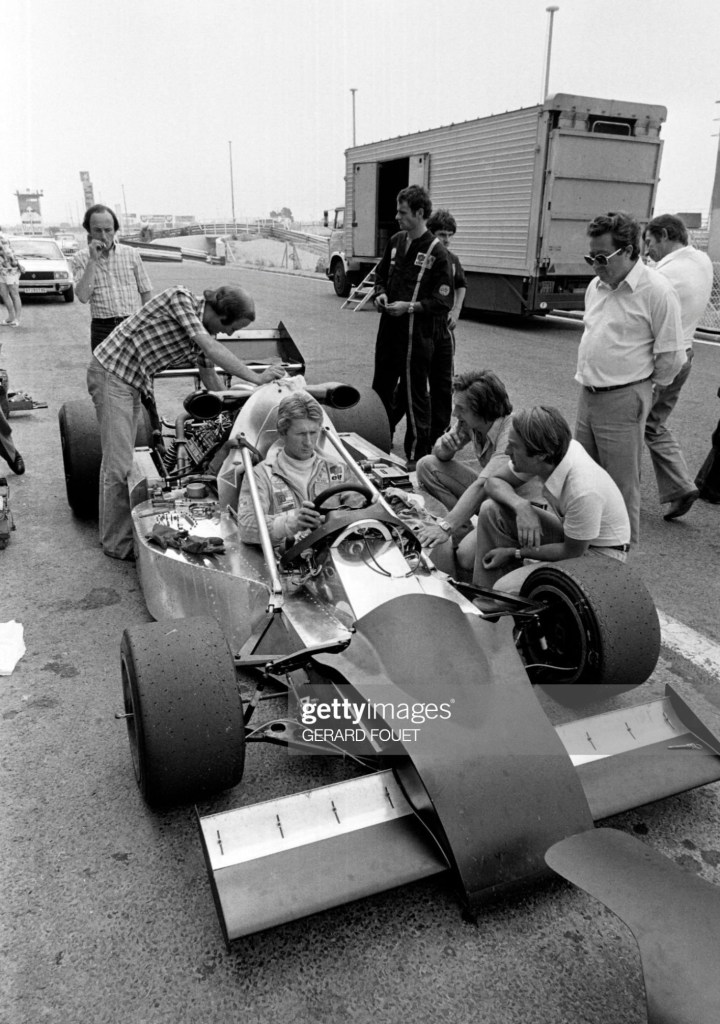
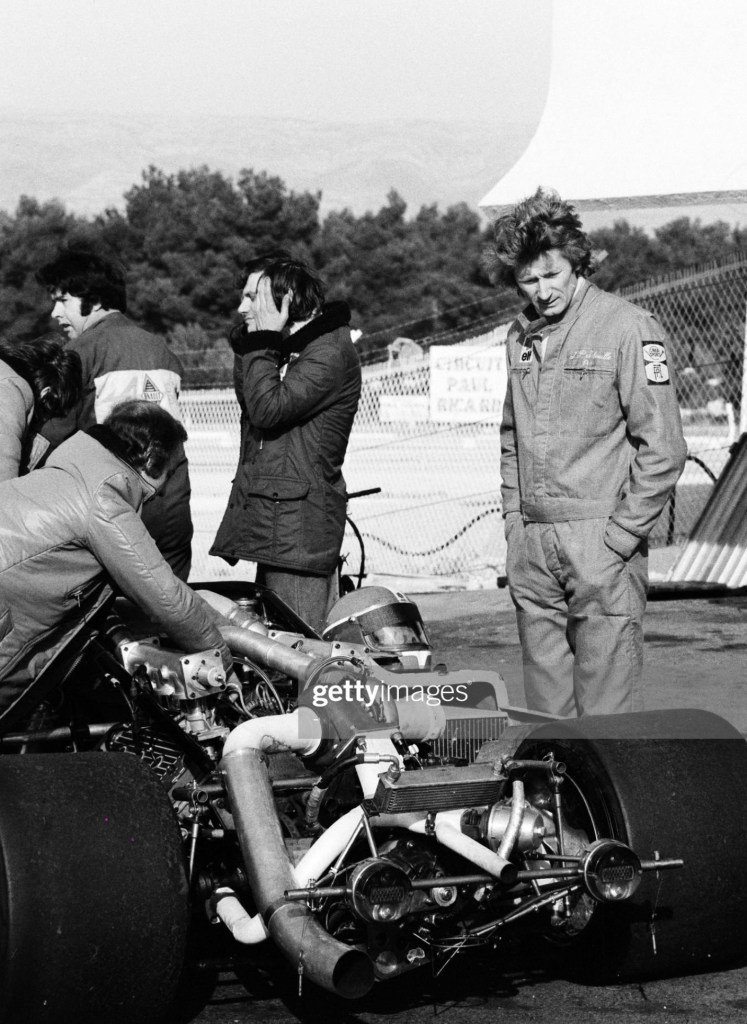
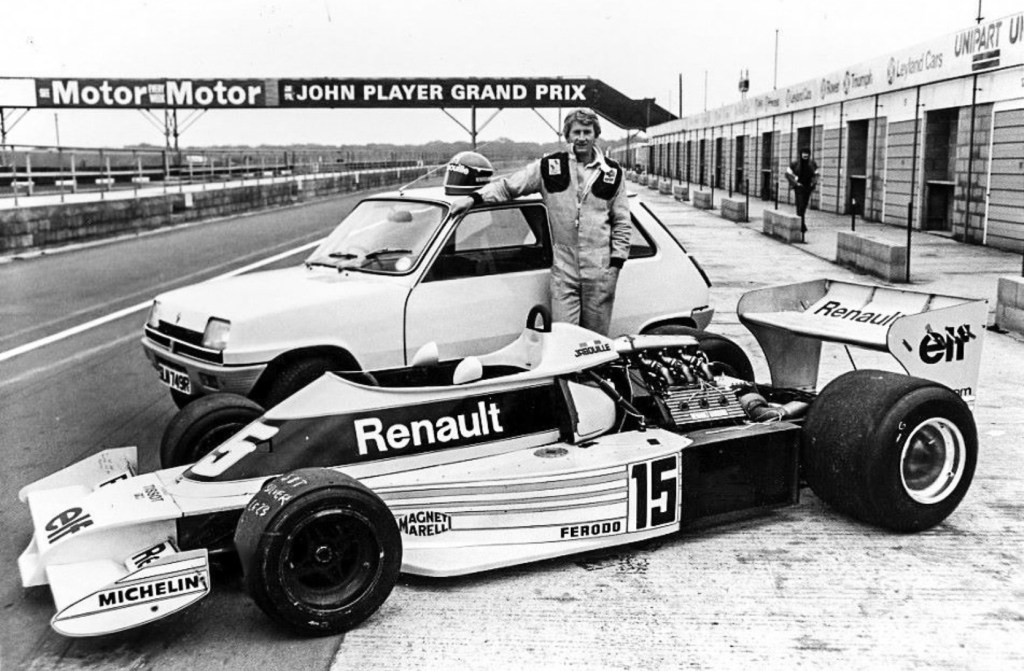
JPJ ponders the challenges of the day, the not long retired Gerard Larrousse by the left-front. ID’s of others folks?
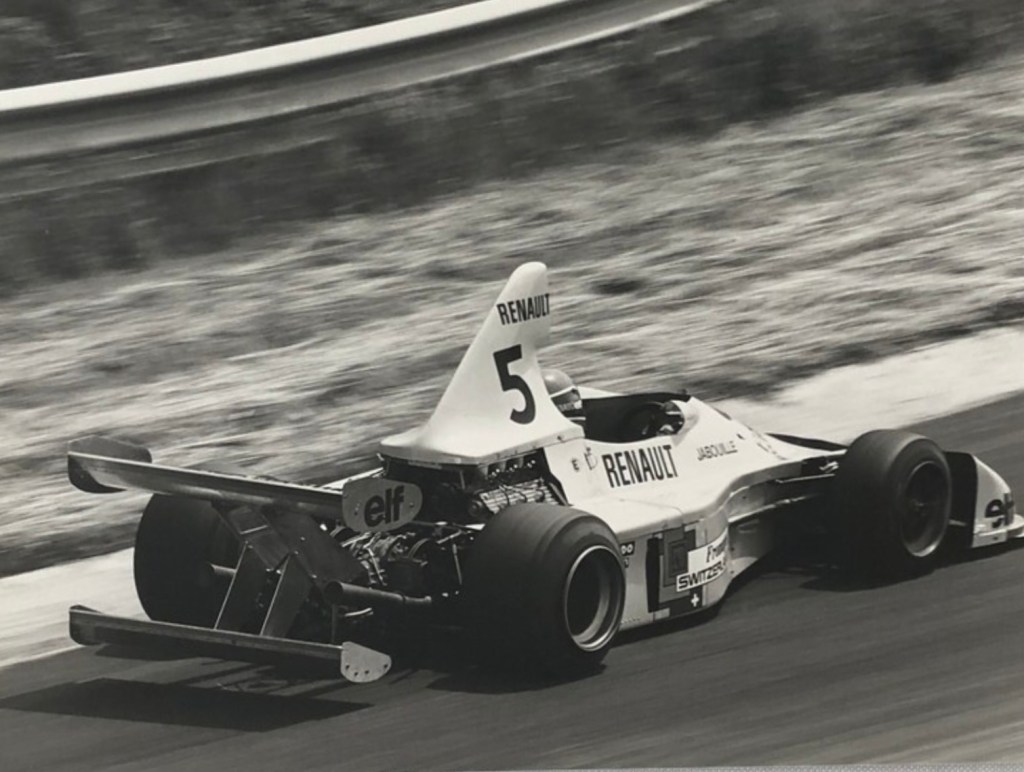
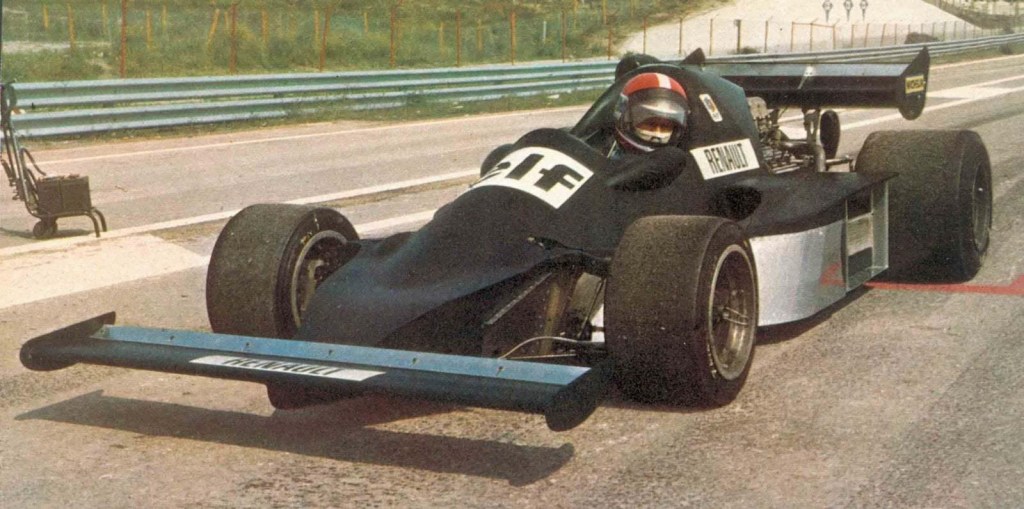
Jean-Pierre Jabouille (JPJ) gathers his thoughts at the wheel of the Renault Alpine A500 Formula 1 test car during a two day session at Paul Ricard/Le Castellet, June 6, 1976. It’s a year before JPJ raced a Renault RS01 at Silverstone during the British GP weekend, the return of the great Regie to Grand Prix racing.
I tripped over this shot during my Patrick Tambay obituary research, it made me chuckle as Jabouille was a very busy boy that year, at the epicentre of three Renault race programmes; the European F2 and World Sportscar Championships and F1 test program.
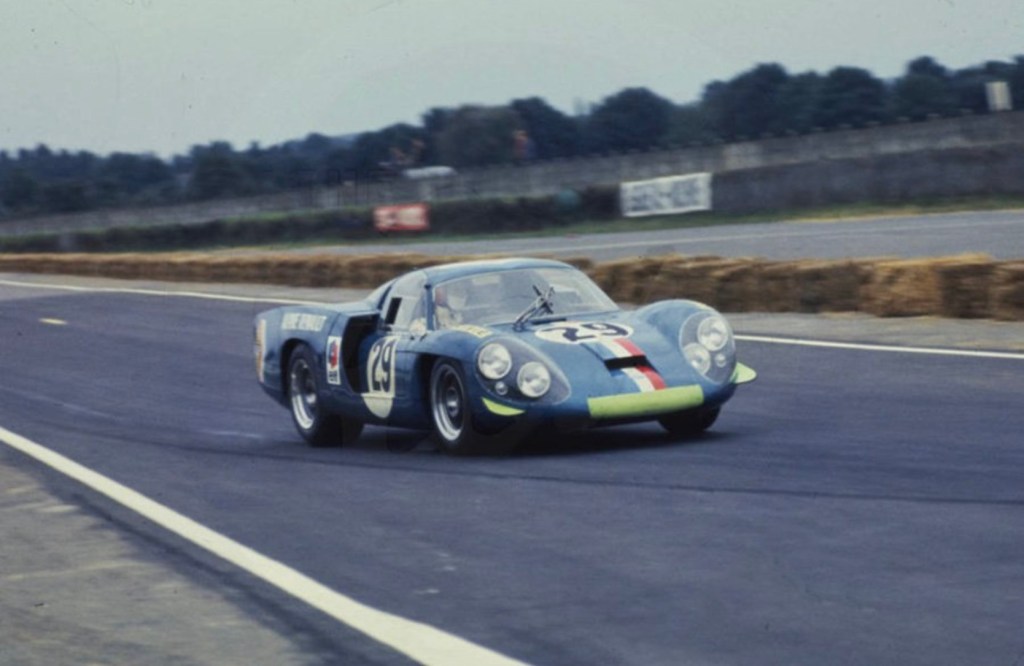
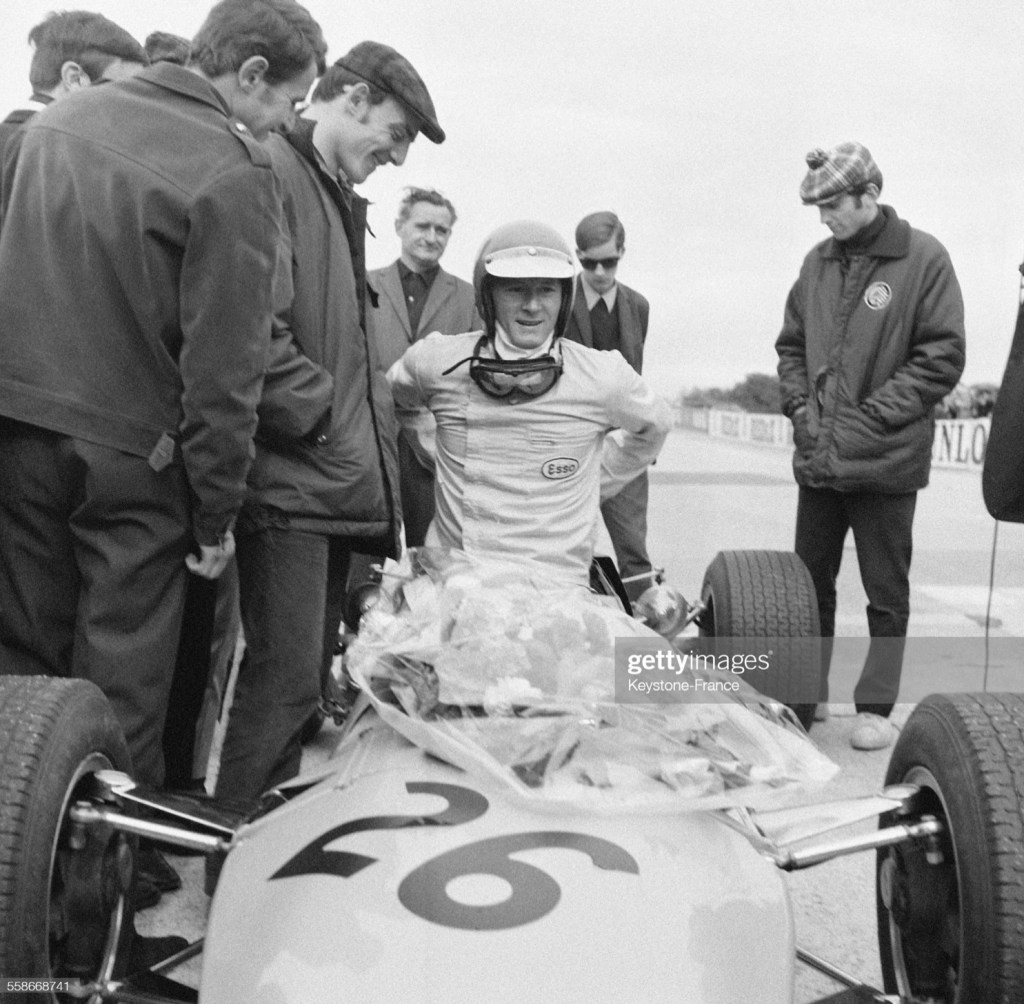
The JPJ (up) Jean Guichet, Alpine A220 3-litre V8 at Le Mans in 1968, DNF electrics in the 16th hour. Rodriguez/Biancho won aboard a JW Ford GT40, 3-litre class by the 2.2-litre Rico Steinemann/Dieter Spoerry Porsche 907 (Twitter)Happy chappy. JPJ after a win in the AGACI Cup, Montlhery April 28, 1968. Matra MS5 Ford, in front of Depailler’s works Alpine A330 Renault and Bernard Baur Brabham BT21B Ford
By then he was already a driver with vast experience, having started racing in the Coupe Renault 8 Gordini in 1966, then progressing through Formula 3 and Formula 2. He placed second in the French F3 championship, behind Francois Cevert in 1968, and Patrick Depailler in 1971, racing Matra MS5 Ford and Alpine A360 Renault respectively.
In 1968 JPJ made both his Le Mans and F2 debuts, and from 1970 mixed F2 racing and sportscar competition for a best of third at Le Mans aboard Matra MS670Bs in 1973-74. Despite an education in the humanities he developed a gift for the engineering of racing cars and their development, a role he performed for Alpine throughout.
JPJ aboard the Matra MS670B he shared with Francois Migault at Le Mans in 1974. They were third in the race won by the sister MS670C of Henri Pescarolo and Gerard Larousse (LAT)JPJ, Alpine A440 Renault-Gordini 2-litre V6, Magny Cours 1973. The poor performance of the cars in 1973 led to the winter developments which made the cars utterly dominant in 1974 (unattributed)Tyrrell 007 Ford during the 1975 French GP at Dijon. JPJ was Q21 and 12th in the race won by Niki Lauda’s Ferrari 312T. Scheckter was Q2 and ninth, Depailler Q13 and sixth in the other two 007s
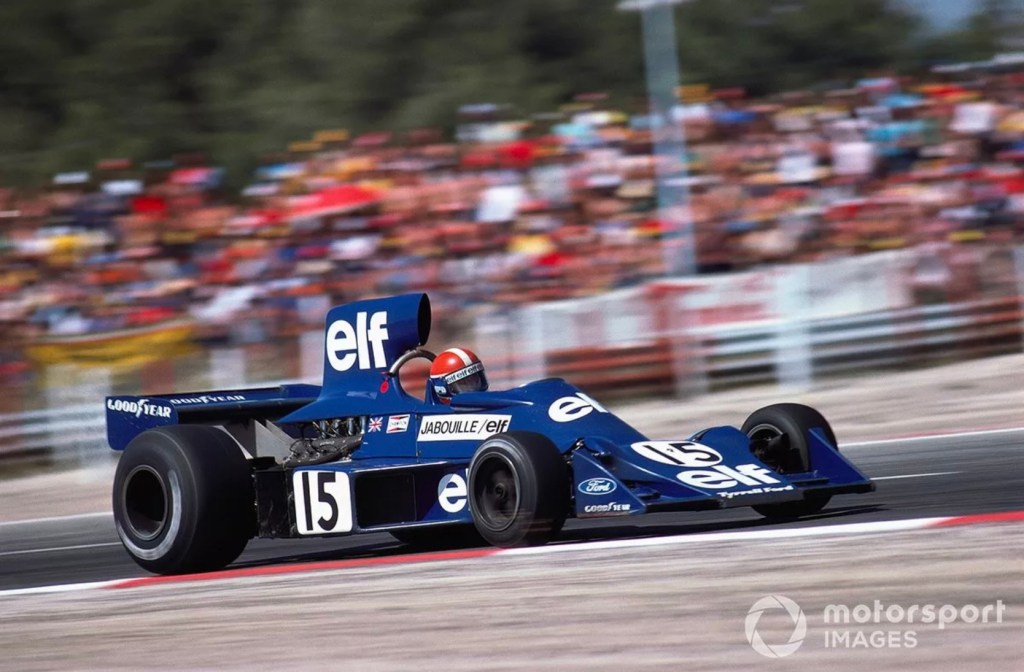
After a couple of failed attempts to qualify for a Grand Prix he made the cut for Tyrrell in the 1975 French GP, qualifying 21st and finishing 12th in a Tyrrell 007 Ford. Importantly this gave him an appreciation of a competitive F1car, albeit a normally aspirated one, as he and his colleagues toiled to get the turbo-charged Renault-Gordini CHS V6 engine competitive in terms of power, throttle response and longevity…quite a challenge, despite the wealth of engineering nous the French giant possessed.
JPJ Elf 2J Renault-Gordini from Patrick Tambay, Martini Mk19 Renault-Gordini at Nogaro in 1976 – perhaps Jean-Pierre Jarier’s Opert Chvron B35 Hart behind (MotorSport)Renault-Gordini 2-litre CH1B V6 in the back of an Elf 2J at Thruxton in April 1976, both cars DNF. Maurizio Flammini won in a works March 762 BMW (MotorSport)
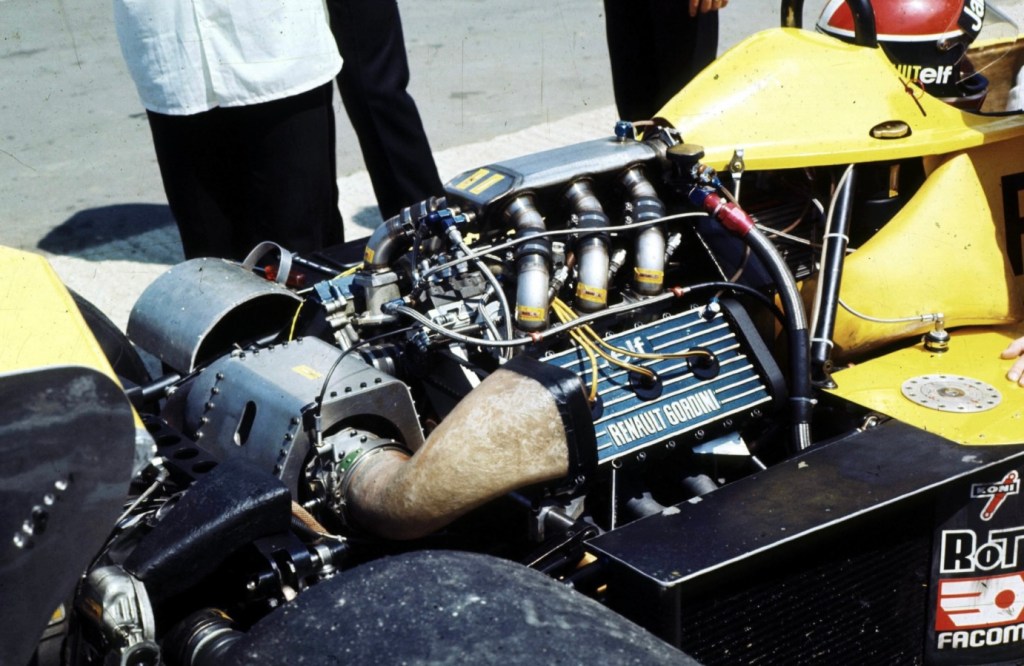
The jewel of a 2-litre, quad-cam, four valve, fuel injected V6 – the design of which was credited to a team led by Francois Castaing – was blooded in 2-litre sports-prototype competition. After a shaky start in 1973 the revised Renault Alpine A441 won all seven races of the 1974 2-litre Championship. The 300bhp CH1B engine was then handed to Jabouille and Tico Martini to mount a two team, four car, Elf supported attack on the 1976 European F2 Championship.
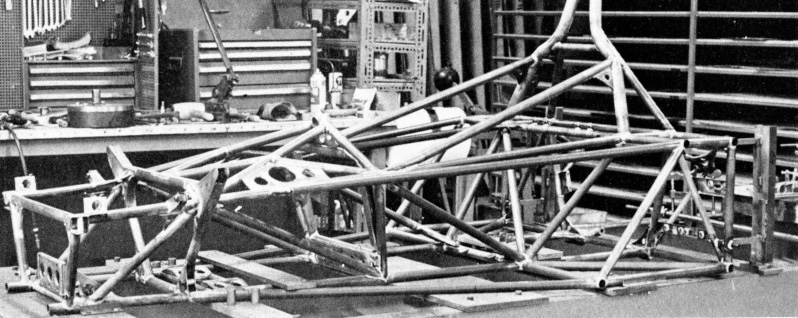
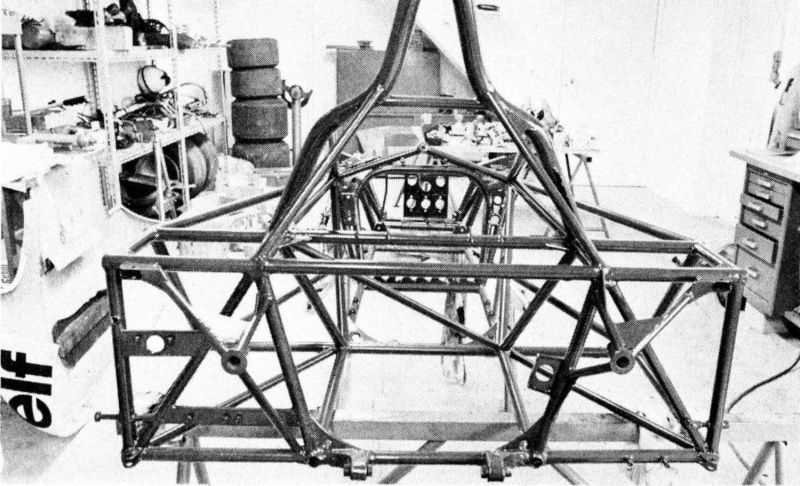
An Elf 2J spaceframe takes shape in Jabouille’s workshop, where folks? (G Gamand Collection)JPJ with the bi-winged Elf 2J, Rome GP 1976. Jabouille perhaps inspired by Frank Matich’s success in a similarly endowed Matich A50 Repco-Holden F5000 machine in 1972-73 (unattributed)
In 1975 JPJ and his collaborator, engineer and ex-motorcycle/F3/sportscar racer Jean-Claude Guenard had built a spaceframe Elf 2J BMW F2 car which won the Salzburgring round of the F2 championship. They built two, or perhaps three new machines that winter for a a torrid All French F2 Battle in 1976.
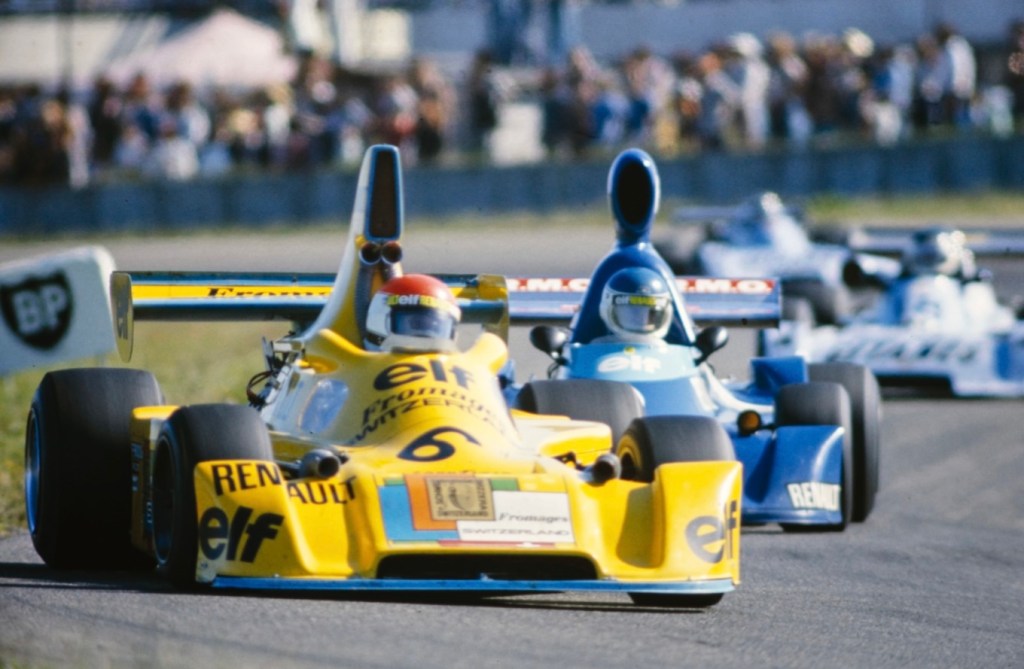
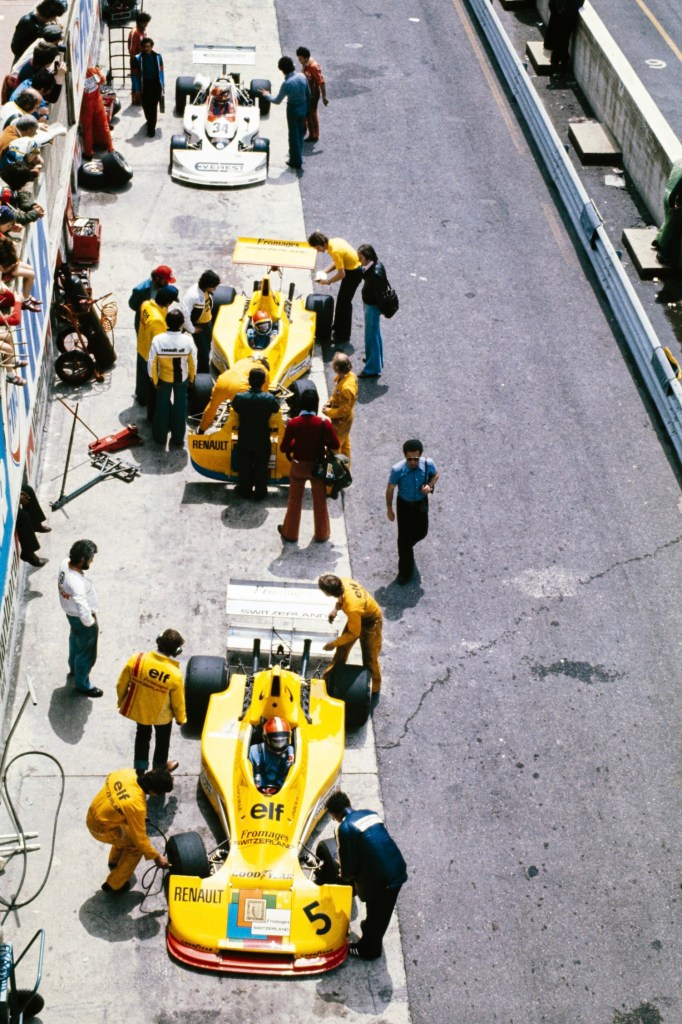
The Equipe Elf Switzerland Elf 2J (aka Jabouille 2J) team – sponsored by the Swiss Gruyere and Emmental Cheese Foundation – took first Renault-Gordini blood over the Ecurie Elf Martinis at Vallelunga in early May. JPJ won the GP di Roma from Patrick Tambay, while Michel Leclere was fourth in the other Elf 2J, and Rene Arnoux retired the other Martini Mk 19 with engine failure.
Spaceframes weren’t so common in 1976 – they are still about today of course – so Ron Tauranac must have had a chuckle at Porsche’s ongoing success and the Elf 2J triumphs in endurance racing and F2 that year (G Gamand Collection)JPJ, Michel Leclere and Giancarlo Martini, March 762 BMW at Vallelunga during the 1976 Rome GP weekend (MotorSport)
It was a timely win. JPJ and Patrick Depailler managed to run into one another from the front row of the Nurburgring 300K enduro aboard Renault Alpine A442 prototypes in front of Renault’s top-brass the month before. “Patrick was on pole, I was third but made a good start and took an immediate lead, imperative because it was raining and if you weren’t at the front it would be impossible to see anything,” JPJ recalled to Simon Taylor in a MotorSport interview.
Jabouille and Cevert had of course been scrapping with one another for years in France and the circuits of Europe. “I braked fairly late for a downhill left-hander, but Patrick tried to follow me and slid off hard into the barriers. We hadn’t touched, but I hit a drainage cover, got sideways and crashed. All the Renault managers were there and after about one kilometre both cars were out. They were absolutely livid, not so much with me, but suspended (the by then very well established Tyrrell GP driver) Patrick for the next three races. I think that was something of a first in the sport…”
Jabouille at Le Mans in 1976. He shared his Renault Alpine A442 with Patrick Tambay and Jose Dolhem, DNF with piston failure in the 11th hour. Race won by the Jacky Ickx/Gijs Van Lennep Porsche 936 (MotorSport)The unseen long, hard slog of racing, JPJ testing an A442 Renault Alpine at Paul Ricard in February 1975
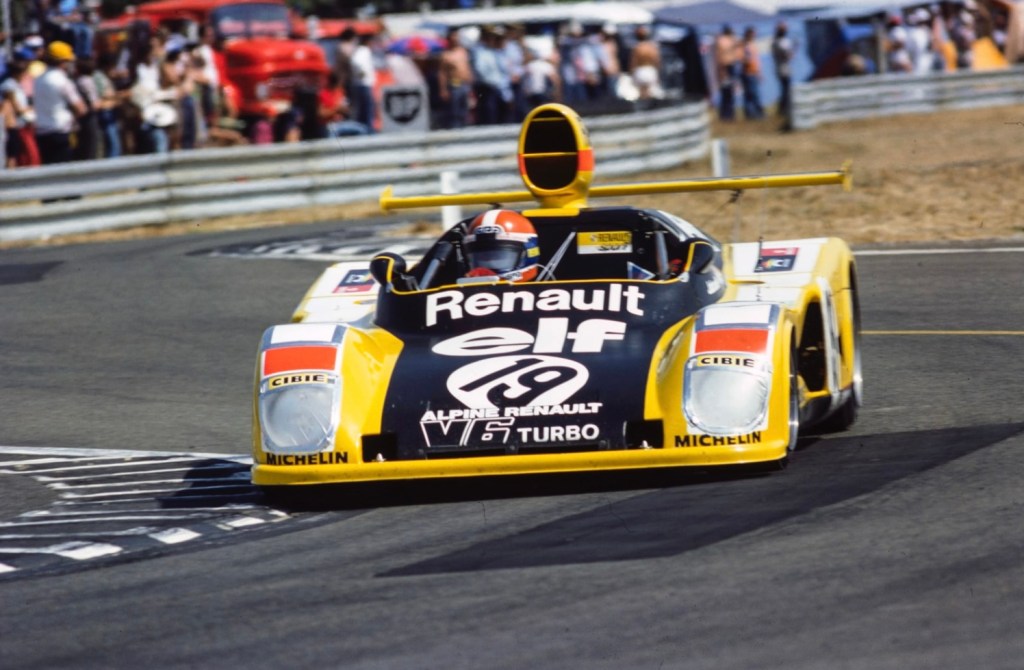
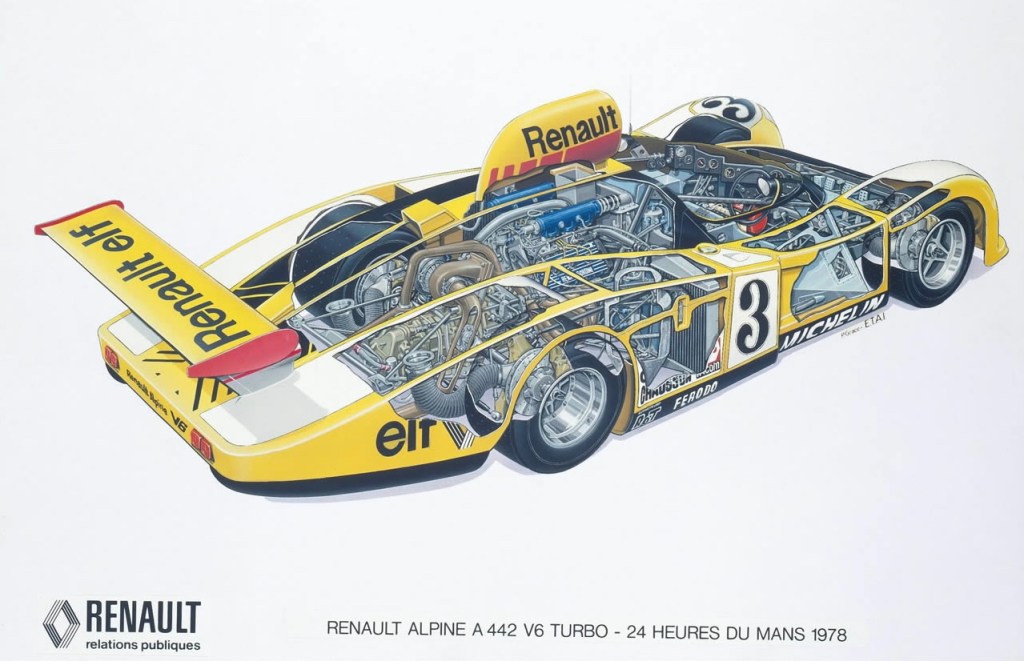
That season Renault-Alpine finished a distant second to Porsche in the World Sportscar Championship, with 47 points to the Zuffenhausen outfits 100 achieved with the Porsche 936 turbo. Renault would of course eventually win at Le Mans in 1978 when Didier Pironi and Jean-Pierre Jaussaud triumphed aboard a A442 . In 1976 JPJ’s best result was third place sharing his A442 with Jean-Pierre Jarier at Dijon.
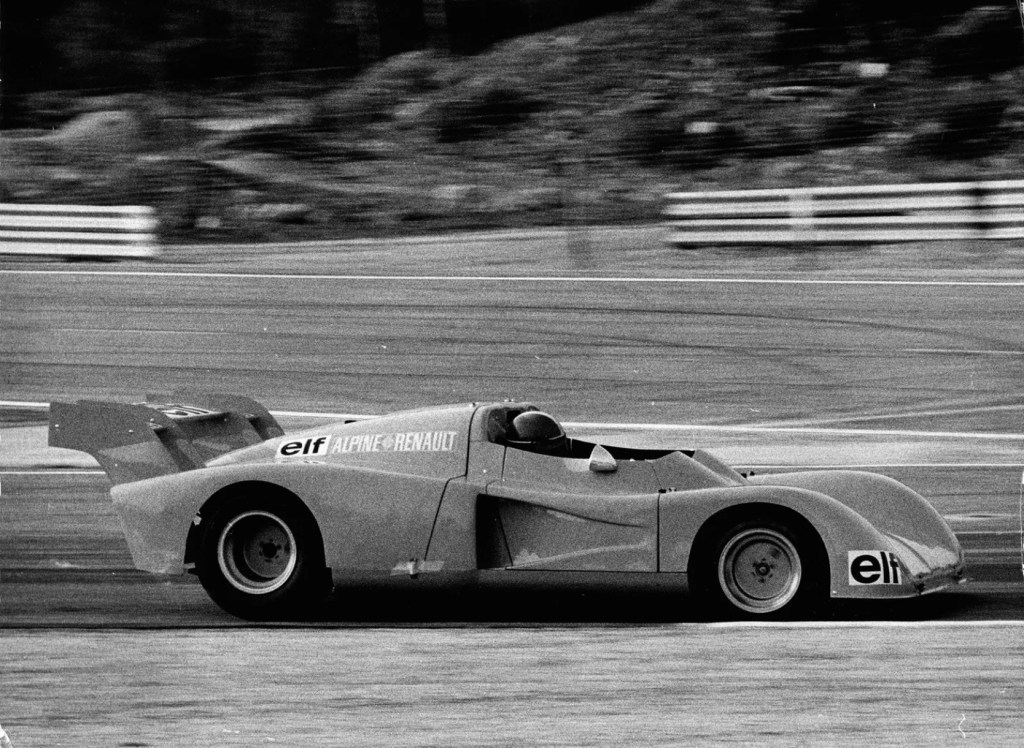
At that stage – the first WSC win for Renault-Alpine was at Mugello when Gerard Larrousse and JPJ triumphed in 1975 – Renault’s primary competition goal was to win at Le Mans. But as they made the 1997cc, Garrett turbo-charged circa 490bhp semi-monocoque, Hewland TL-200 equipped sports-racer consistently competitive there was cross pollination to the 1.5-litre F1 engine development program in which JPJ was totally immersed.
There was no such reliability problems for the circa 300bhp @ 10500rpm CH1B F2 V6 variant mind you. JPJ and Rene Arnoux went at it hammer-and-tongs all of that 1976 season with Arnoux winning four rounds of the ’76 Euro F2 title, JPJ three, and Leclere one. In the wash-up JPJ scraped home by a point, 53 to 52. There was karma in this, Jabouille had had a long F2 apprenticeship and of course designed and built his weapon of war, both would enter Grand Prix competition soon enough.
(unattributed)(unattributed)
Engineer Bernard Dudot was instrumental in the development of the team which developed the turbo-charged engine. He outlined to Doug Nye that the 1976 F1 project team comprised four people, engineer, Jean-Pierre Boudy and two or three mechanics with Dudot splitting some of his time to it among his endurance commitments.
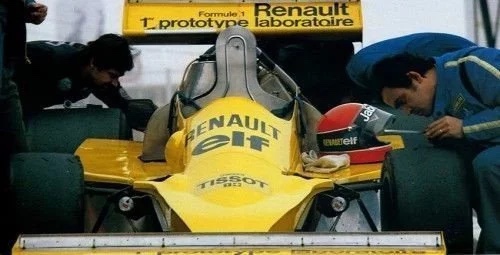
By then Castaing was General Manger of Renault Sport – formed in 1976 – and it was he who designed the F1 Alpine A500 laboratoire monoplace test car (photos above), Dudot having told Renault Chief Executive that it was possible to make a competitive F1 engine out of the cast iron block V6.
Initially Jabouille tested 2.1-litre CHS type Le Mans, and EF1 1.5-litre engines back-to-back in A442 sportscars at Paul Ricard. Initially Jabouille found the 1.5-litre undriveable, “The compression ratio was so low that we couldn’t get sufficient fuel pressure to start the engine,” JPJ recalled.
“Every morning one of the mechanics would get up before the others and put a camp-stove beneath the engine to warm it up, at the time it was the only way we could get it started. It seemed a long road from there to an engine capable of winning GPs…”
The huge problem of throttle response was addressed, in part by running a little less boost, “while Mahle and Goetze, their piston, liner and ring suppliers learned with them, as did Garrett, whose production turbochargers were made to inadequate tolerances for F1. Compressor wheels, turbines and axle wheels all failed, at this time they were running 130000rpm on plain bearings.” Doug Nye wrote.
These brief paragraphs do nothing more than skim the surface of the engineering and manufacturing challenges presented and overcome. A more thorough exploration of the evolution of the V6 from victorious 2-litre endurance and F2 engine to fire-breathing 1.5-turbo is for another time.
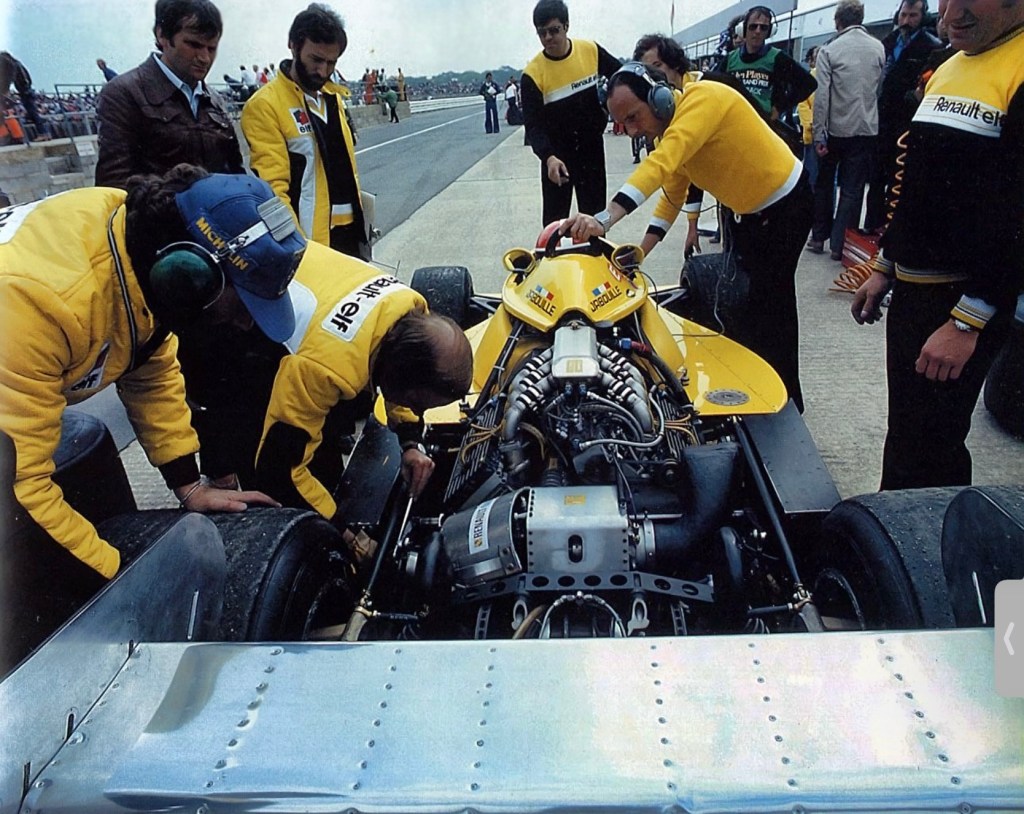
Three photographs during the 1977 British GP weekend at Silverstone. JPJ, Renault RS01 Q21 and DNF lap 17 with turbo failure. Race won by James Hunt’s McLaren M26 Ford from Niki Lauda’s Ferrari 312T2 and Gunnar Nilsson, Lotus 78 Ford (MotorSport)(Twitter)Renault Gordini EF1 1492cc single Garrett-turbocharged 510bhp @ 11000rpm engine (MotorSport)
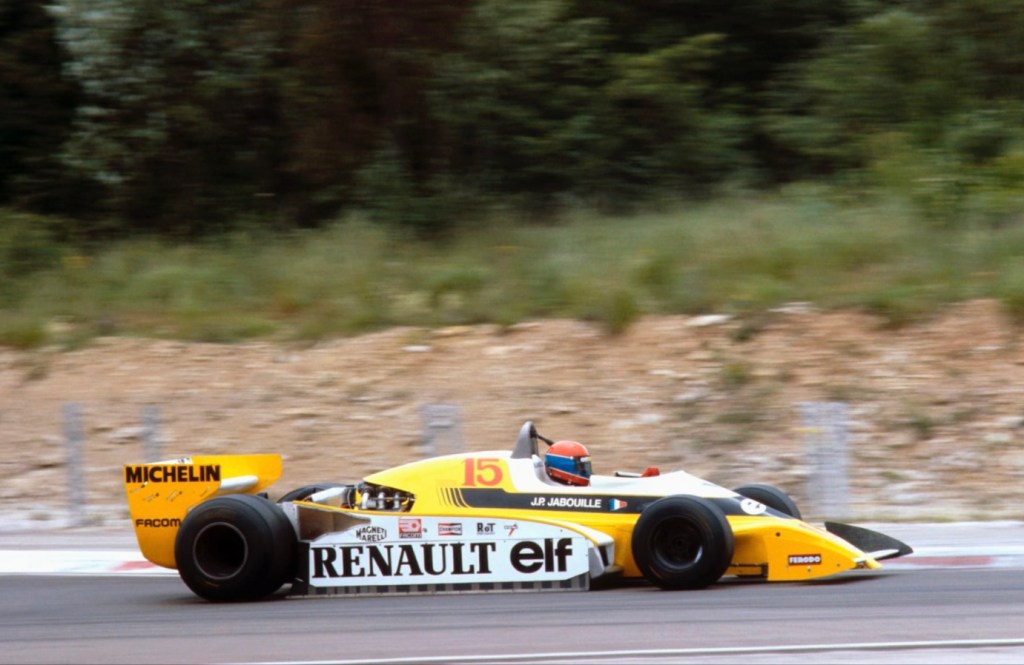
JPJ made the Renault RS01’s race debut at Silverstone in 1977, where the Yellow Teapot retired from the race but not before making a big impression with what would become the new engine paradigm.
At the 1978 US GP Jabouille bagged the first points for Renault and turbo-engines. Critically, by this stage, Renault had their Le Mans Cup in the boardroom display case so all of Renault Sport’s resources were applied to F1. Jabouille took pole in South Africa in 1979 and that first fabulous home win at Dijon the same year.
Credits…
Motorsport, Gerard Gamand Collection, ‘History of The Grand Prix Car’ Doug Nye, Getty Images, LAT Photographic
Tailpiece…
(MotorSport)
JPJ on the way to that win at Dijon on July 1, 1979 aboard his Renault RE10. The first championship Grand Prix victory for a forced-induction engine since Juan Manuel Fangio’s Spanish GP win at Pedralbes on an Alfa Romeo 159 on October 28,1951.
During the final laps most eyes were focussed on the titanic wheel to wheel battle 15-seconds back between two-magnificent-maddies, Gilles Villeneuve and Rene Arnoux, Ferrari 312T4 and Renault RE10, a nail-biter resolved in the French-Canadian’s favour.
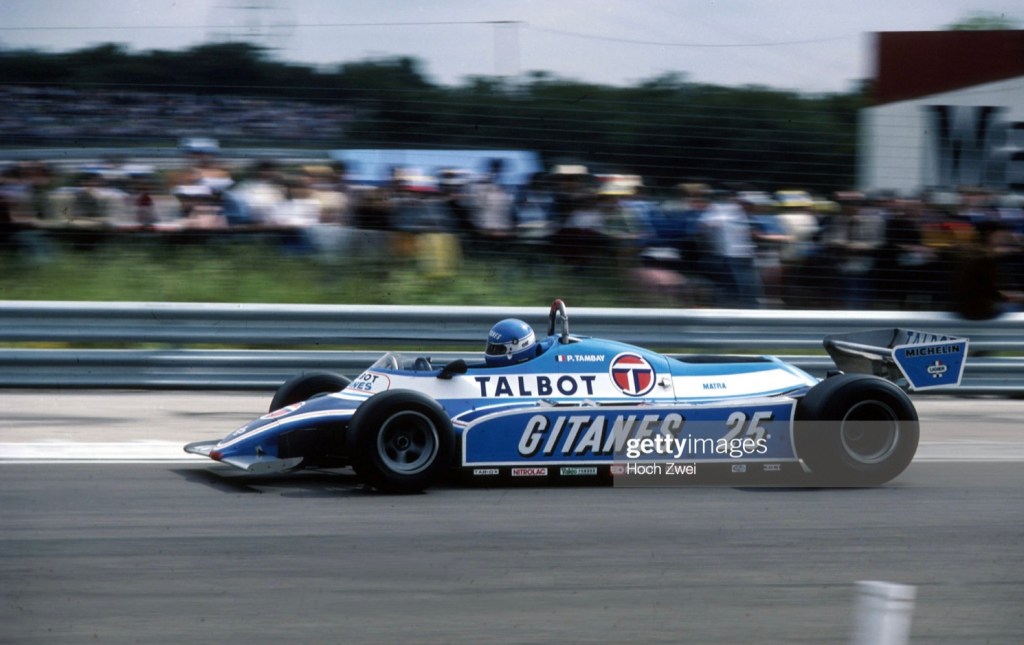
PT aboard the Ligier JS17 Matra at Dijon in 1981. Q16 and DNF wheel bearing in his first race for the team. Alain Prost won in a Renault RE30
Patrick Tambay, grand prix winner and Can-Am champion died on December 4, 2022 after a long battle with Parkinson’s Disease, aged 73.
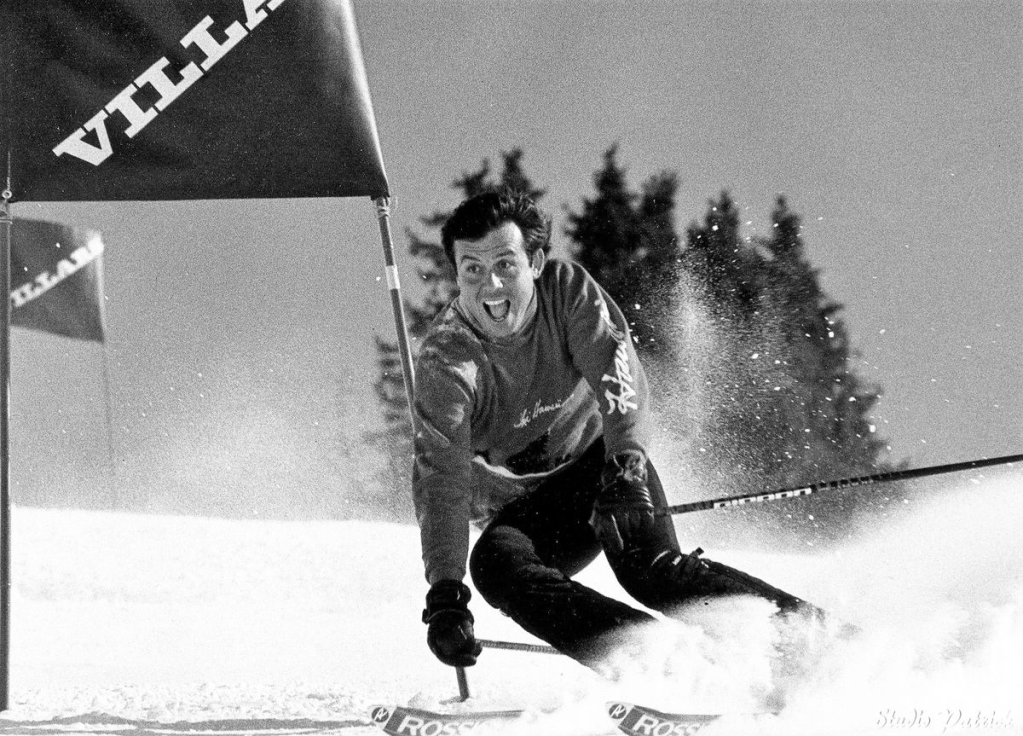
Every girl’s idea of a racing driver, the dashing Frenchman developed his need-for-speed in the European Alps where he was a schoolboy ski champion, but cars then grabbed his attention.
Total, Motul and Elf invested vast petro-francs to develop French drivers from the 1960s. The first wave who made it to F1 included Johnny Servoz-Gavin, Henri Pescarolo, Jean-Pierre Beltoise and Francois Cevert. Tambay was one of the mid 1970s talent-wave along with Jacques Laffitte, Jean-Pierre Jabouille, Rene Arnoux, Didier Pironi and Jean-Pierre Jarier.
PT at Villars, Rossignol ski type and year unknown! (unattributed)Aboard an Alpine A366 Formula Renault at Paul Ricard during1972 (Winfield School)Pau GP 1976, Martini Mk19 Renault V6. DNF accident, Rene Arnoux won in the sister car. Jabouille won the title in a Jabouille 2J Renault (MotorSport)
Tambay won the Winfield Racing School’s Volant Elf competition in 1971. After two years in Formula Renault he graduated to F2, finishing second in the European Championship to Jacques Laffitte’s Martini Mk14 BMW aboard a works March 752 BMW in 1975. He was third in 1976 aboard a Martini Mk19 Renault, behind fellow Equipe Elf pilots, Jabouille and Arnoux.
Patrick was picked up by Carl Haas to replace the injured Brian Redman in his works central-seat Lola T333 CS Chev Can-Am team in 1977. Tambay shone in the 525bhp Chev V8 missiles, taking the championship with six wins, and befriending Gilles Villeneuve who raced an unwieldy Wolf WD1 Chev for much of that season.
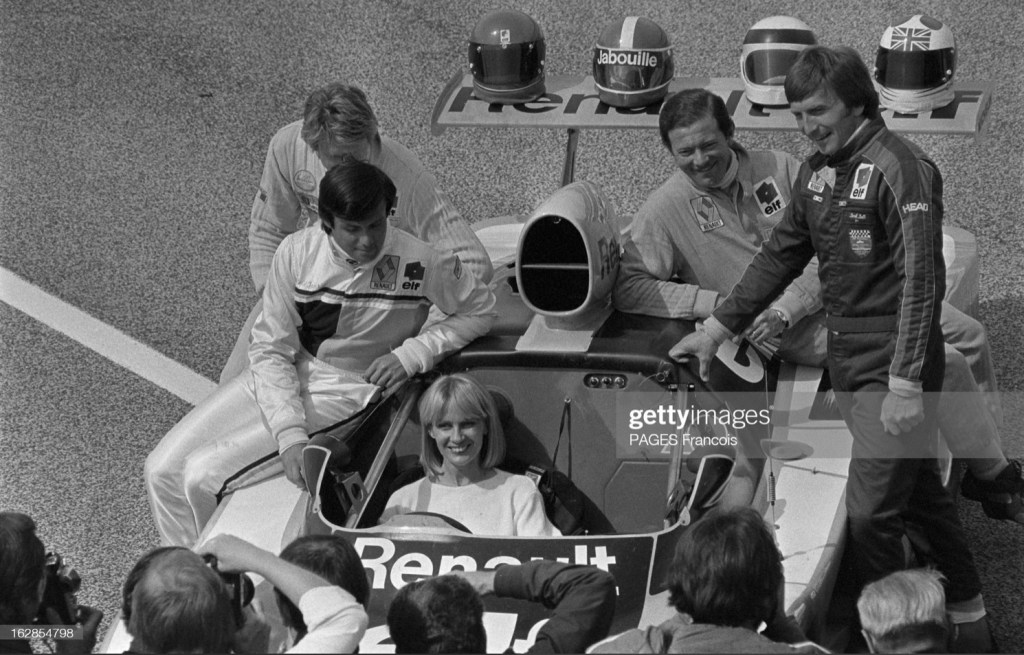
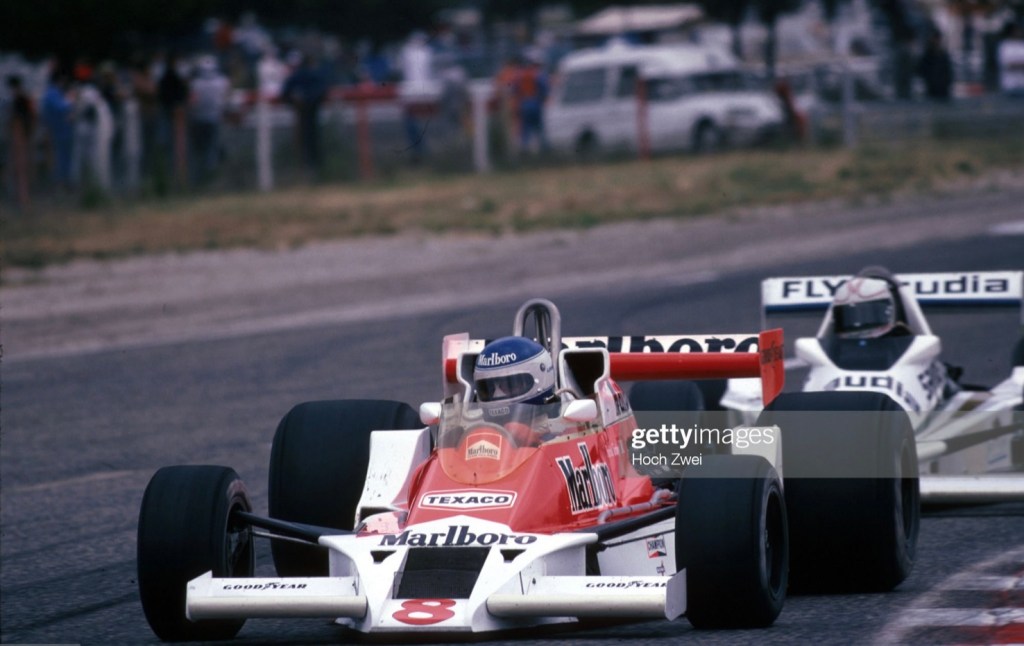
Press call for the Alpine A442 Renault at Paul Ricard in April 1977. Obscured J-P Jabouille, PT, Marie-Claude Beaumont, Jean-Pierre Jaussaud and Derek Bell. None of the cars finished Le Mans that year, with much more to come!Feel the earth move. Haas Lola T333CS Chev at Mosport in August ’77. PT won the Can-Am race from George Follmer and Peter Gethin, Lola T332C and T333CS respectively (unattributed)Ahead of Alan Jones during the 1978 French GP at Paul Ricard. McLaren M26 Ford and Williams FW06 Ford. Ninth and fifth in the race won by Mario Andretti’s Lotus 79 Ford
Both impressed during the ’77 British GP weekend at Silverstone, Patrick aboard a Theodore Racing Ensign N177 Ford, and Gilles a works McLaren M23 Ford. That silly-season McLaren signed Tambay and Ferrari got Villeneuve, Patrick topped the Scuderia’s list but Teddy Mayer beat them to the punch.
Tambay then endured two shocking years with McLaren, who were on one of their downers, then bounced back into F1 in 1981 with Theodore Racing, after winning another Can-Am title for Haas, racing a Lola T530 Chev in 1980.
In mid-1981 fortune again favoured Tambay when he replaced the injured Jabouille at Ligier, but he had shocking reliability, mechanical failures in every race. His GP career seemed on the rocks until Villeneuve’s fatal 1982 Zolder accident, he replaced his friend at Ferrari.
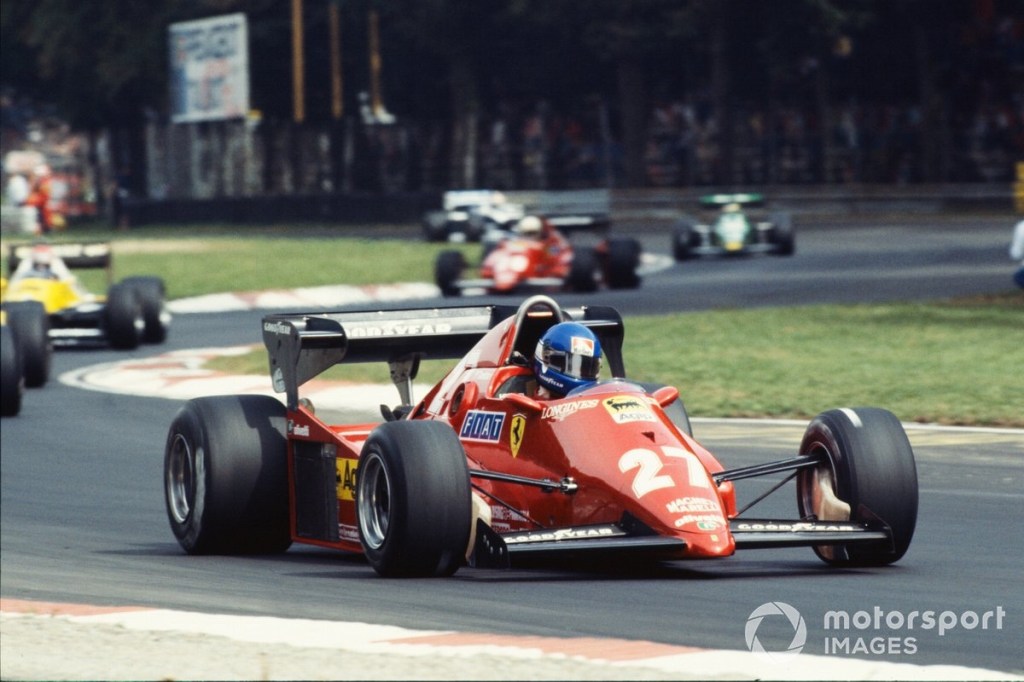
Tambay relished the competitive car, taking a tough win at Hockenheim the day after Pironi’s career-ending Ferrari crash. Third at Brands Hatch and second at Monza helped the team win the Constructors Championship with the Ferrari 126C2.
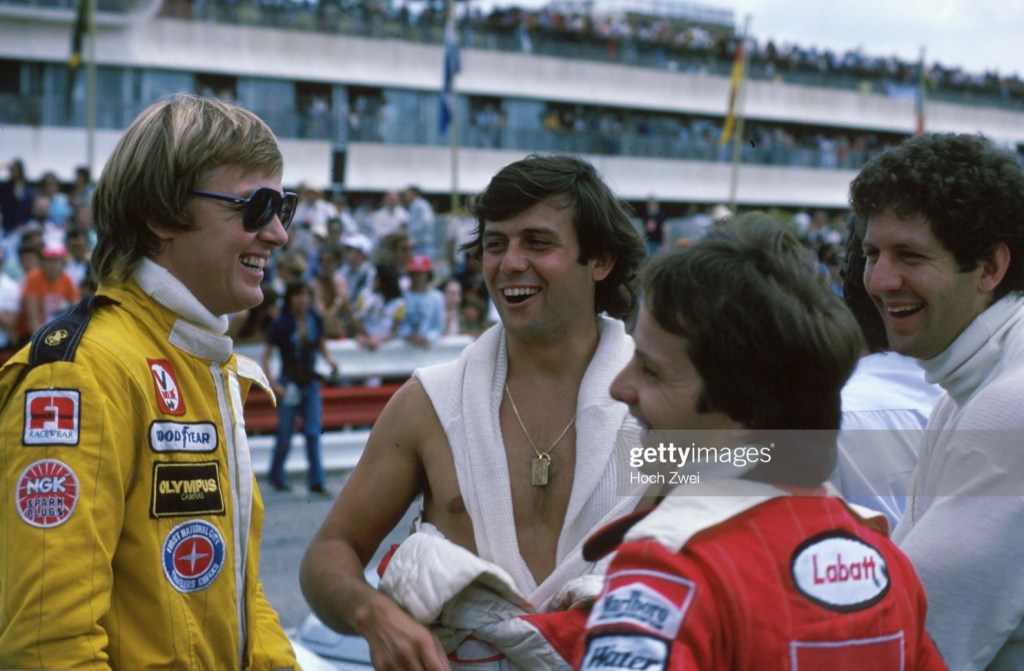
In the best of company. Ronnie Peterson, PT, Gilles Villeneuve and Jody Scheckter, Paul Ricard 1978PT, Ferrari 126C3, Italian GP 1983. Fourth, race won by Nelson Piquet’s Brabham BT52B BMW, Arnoux was second in the other Ferrari It looked the goods at least. PT aboard the Lola THL2 Ford at Spa during the 1986 Belgian GP weekend. DNF after first lap prang, Jones was 11th and out of fuel. Mansell’s Williams FW11 Honda won
Patrick won again at San Marino in 1983, finishing a career best of fourth in the driver’s title. Ferrari won the ‘constructors again, but teammate Rene Arnoux’ three wins eclipsed him.
Two years with Renault followed in 1984-85, he was well placed occasionally, but a second and a couple of third placings was his best. Tambay was reunited with Teddy Mayer and Carl Haas at Beatrice Racing in 1986, his final F1 season. Good as the Lola chassis was, its Hart, and later Ford Cosworth GBA V6 lacked grunt and reliability, Patrick and Alan Jones had a grim season.
After a year aboard a Jaguar XJR-9 V12 in 1989 and two thirds in the Paris-Dakar, an event he loved, Patrick returned to F1 as a TV commentator and involvement in Cannes politics.
Two GP wins isn’t reflective of Patrick Tambay’s place in the pantheon of drivers, but his grit, valour and composure in the face of Parkinson’s reminded pit pundits just what an outstanding man he was.
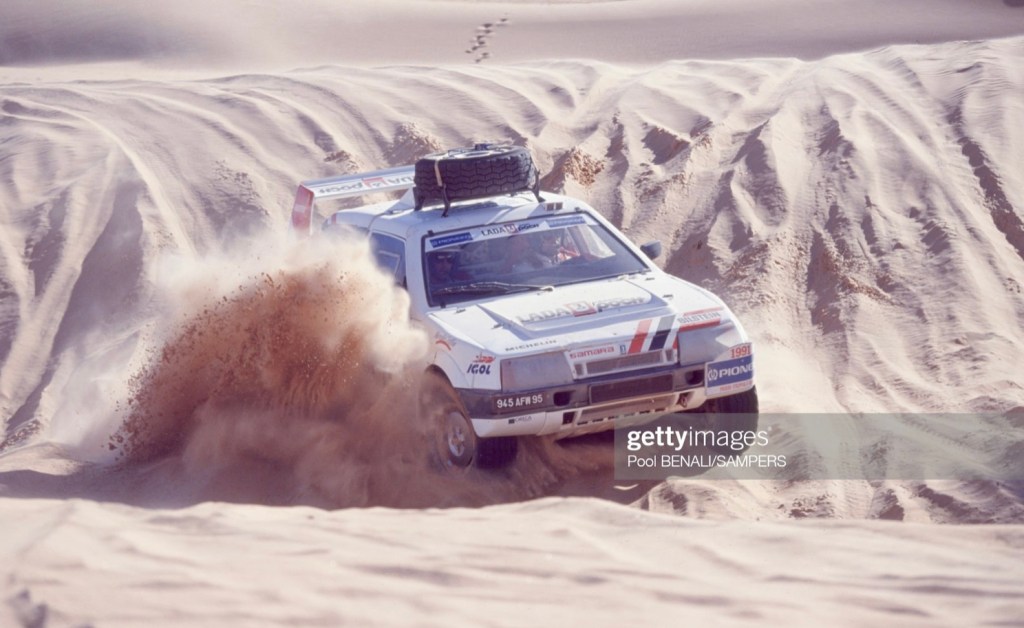
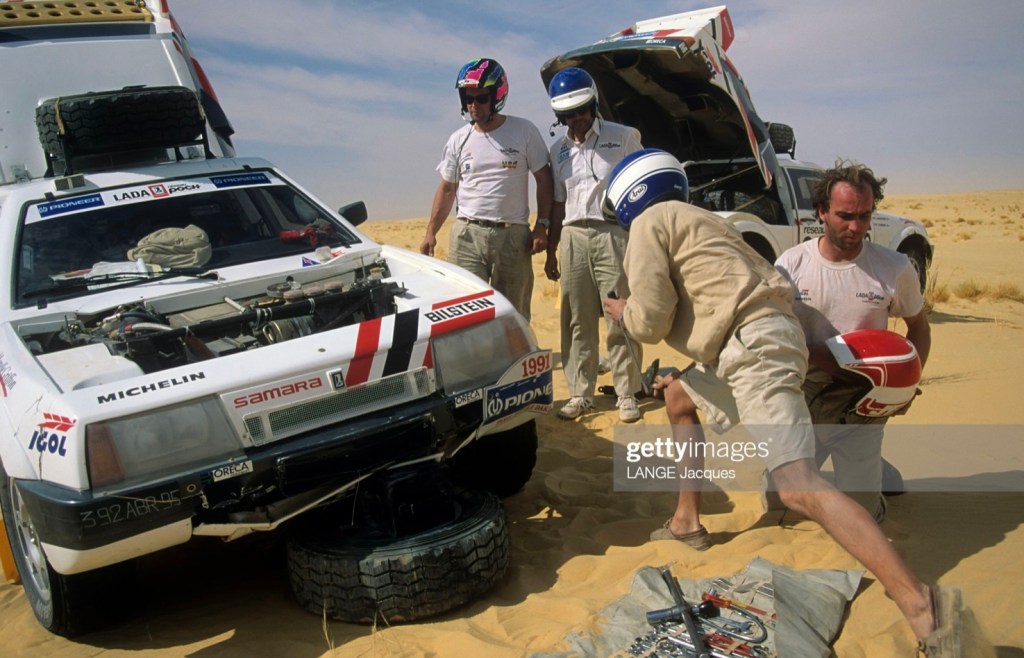
PT’s Lada ‘Poch’ Samara T3 Porsche 3.6 during the 1991 Paris-Dakar, sharing the car with Lemoyne. The pair were seventh, the event won by the Ari Vatanen/Berglund Citroen ZX
Credits…
MotorSport Images, Getty Images, Roger Hermsen, Winfield School Facebook page
Tailpiece…
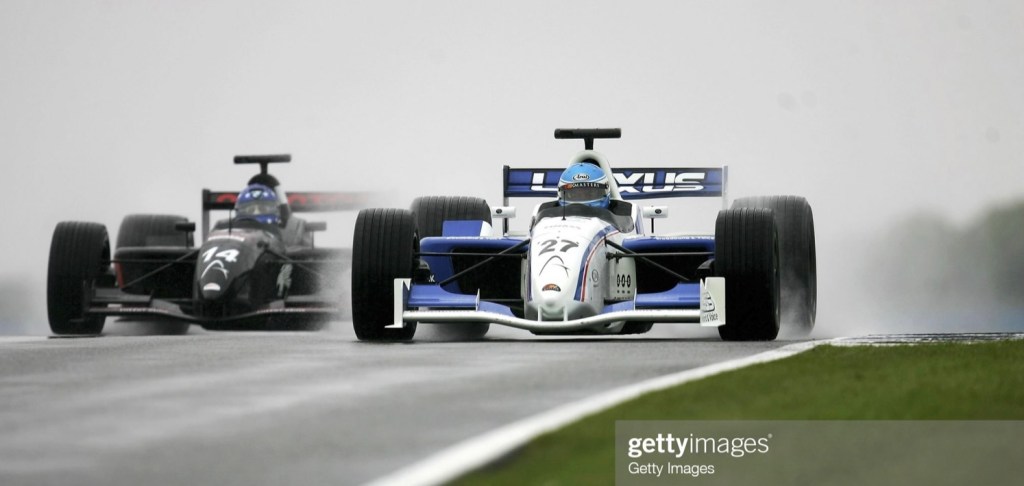
Hans Stuck and Patrick during the GP Masters round at Silverstone in August 2006. Stuck was fourth and PT 11th in the race won by Eddie Cheever.
The cars, based on Reynard’s 2000 model 2KI Indycar, were built by Delta MotorSport. The engines were Ford XB derived 3.5-litre Nicholson-McLaren 80-degree, fuel injected V8s producing about 650bhp @ 10400rpm.
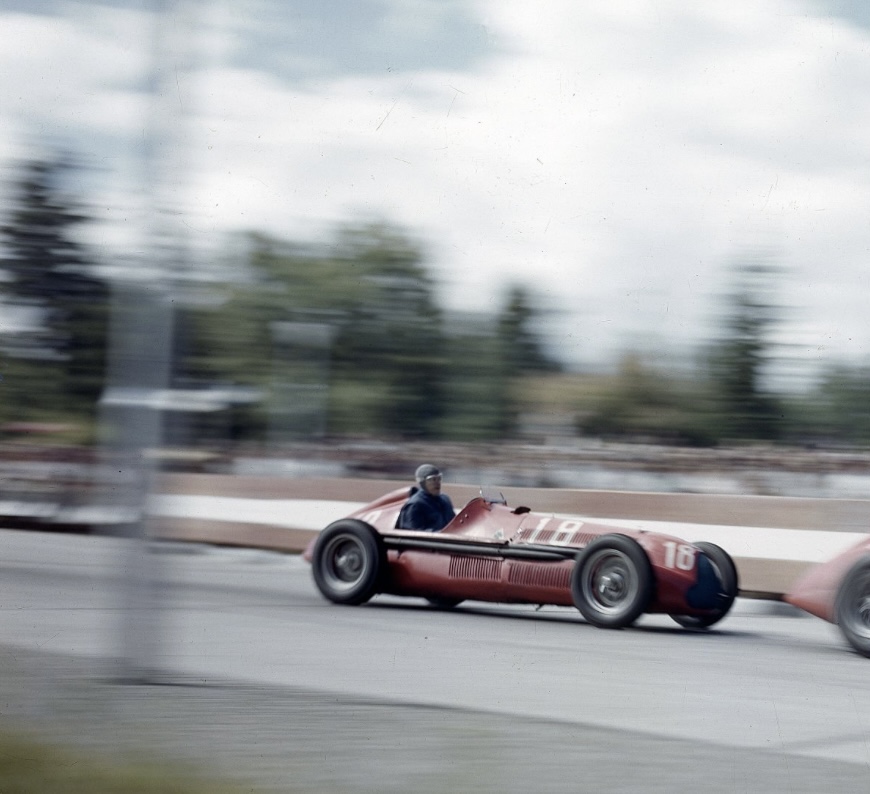
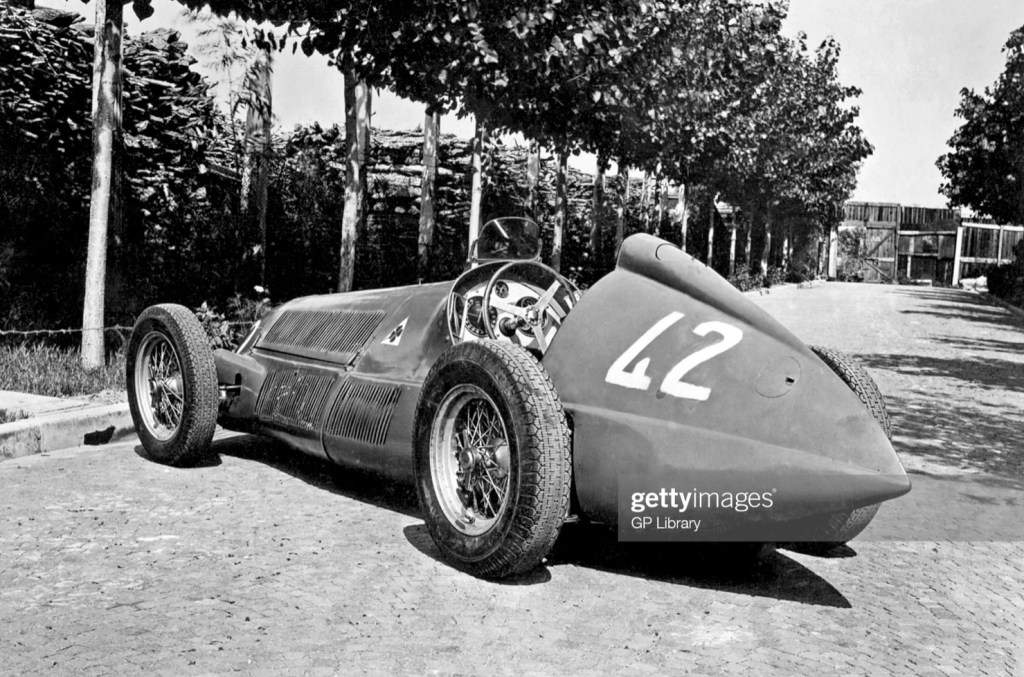
Alfa Romeo’s pre-war design in its various evolutions was the dominant Grand Prix car in the immediate post war period from 1947-1951.
The supercharged 1.5-litre straight-eight powered Voiturette – Alfa’s design team was led by Gioacchino Colombo – initially developed about 200bhp @ 7000rpm in its original 1938-1940 specifications. Postwar, in a relentless ongoing process of chassis and engine development, the engine was tickled up to circa 246bhp in 1946, then 300bhp in the 158/47 spec raced in 1948.
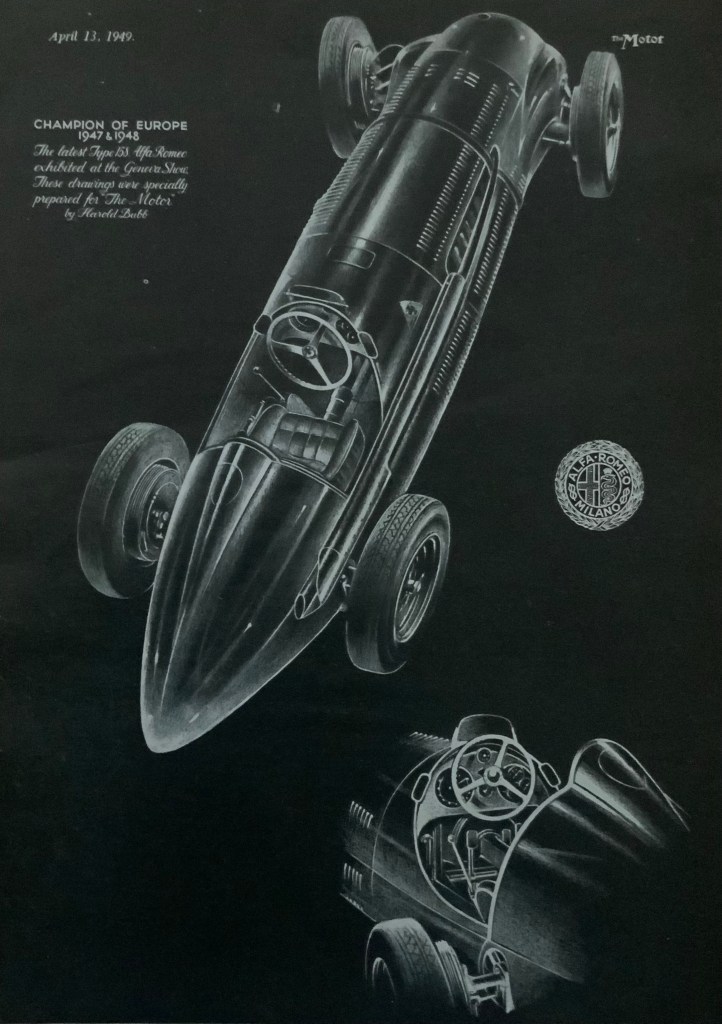
The Motor recognised the achievements of the cars in 1947-48 with this lovely drawing by Harold Bubb published in its April 13, 1949 issue.
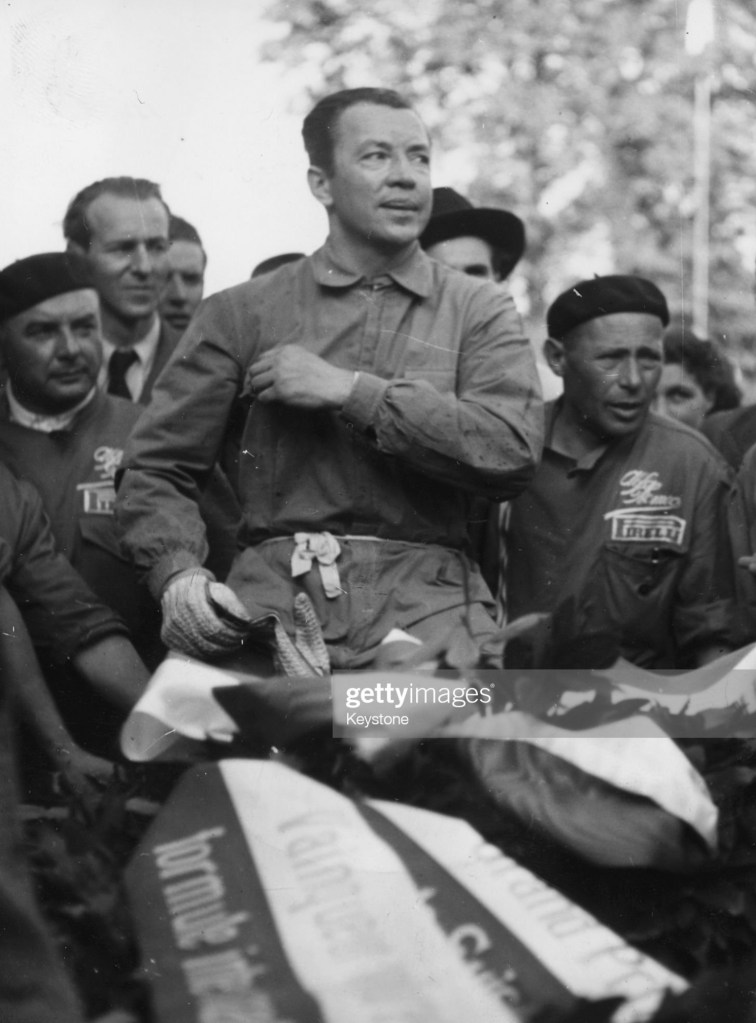
Jean-Pierre Wimille during the GP des Nations, Geneva over the July 21, 1946 weekend. He won his heat, so too did Giuseppe Farina his, and the final. Carlo Trossi was second and Wimille third, all aboard 158s (Getty-Klemantaski)Wimille and the Alfa Corse crew after winning the 1947 Swiss GP at Bremgarten
Jean-Pierre Wimille won the Unofficial World Championship in 1947 with victories at Bremgarten and Spa, and second placings at Nice and Lausanne. Achille Varzi won at Bari, and Carlo Trossi at Monza in a major rout for the Portello grand-marque where they placed first-fourth; Trossi, Varzi, Consalvo Sanesi and Alessandro Gaboardi.
It was more of the same in 1948 when Wimille won the French and Italian Grands Prix, while Trossi won in Switzerland. In all three races Wimille started from pole and bagged fastest lap. Maserati interloper, Giuseppe Farina won at Monaco, the other Grand Epreuve, aboard a 4CLT. Wimille also won the minor Monza GP in October, again Alfa bagged the first four placings, with Trossi, Sanesi and Piero Taruffi this time the minor placegetters.
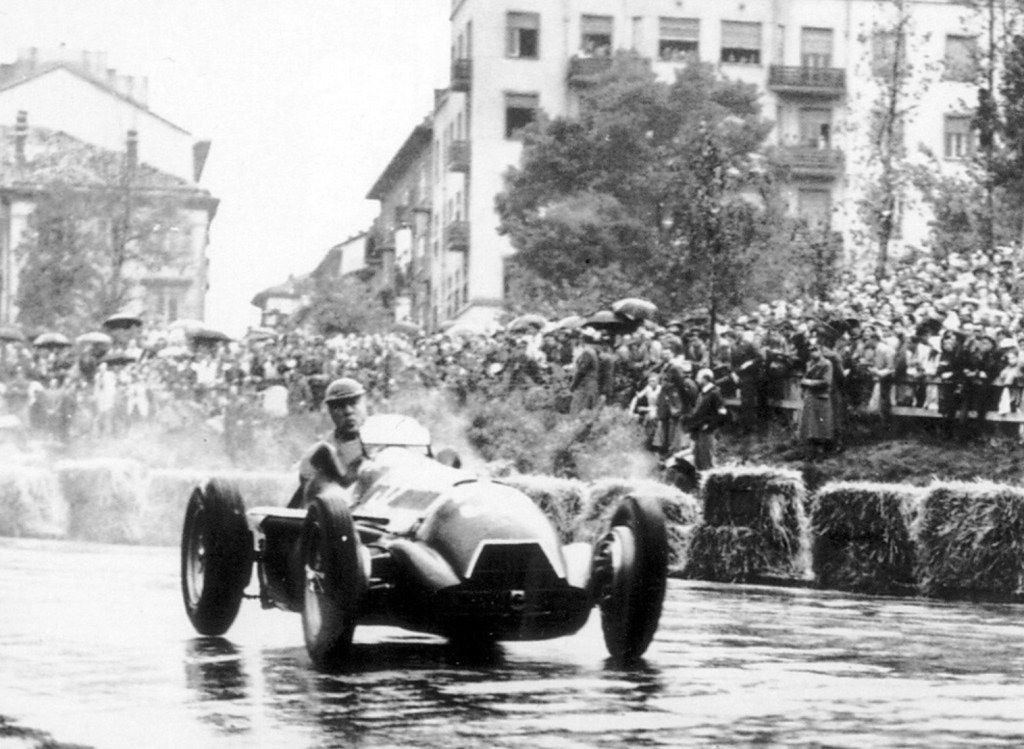
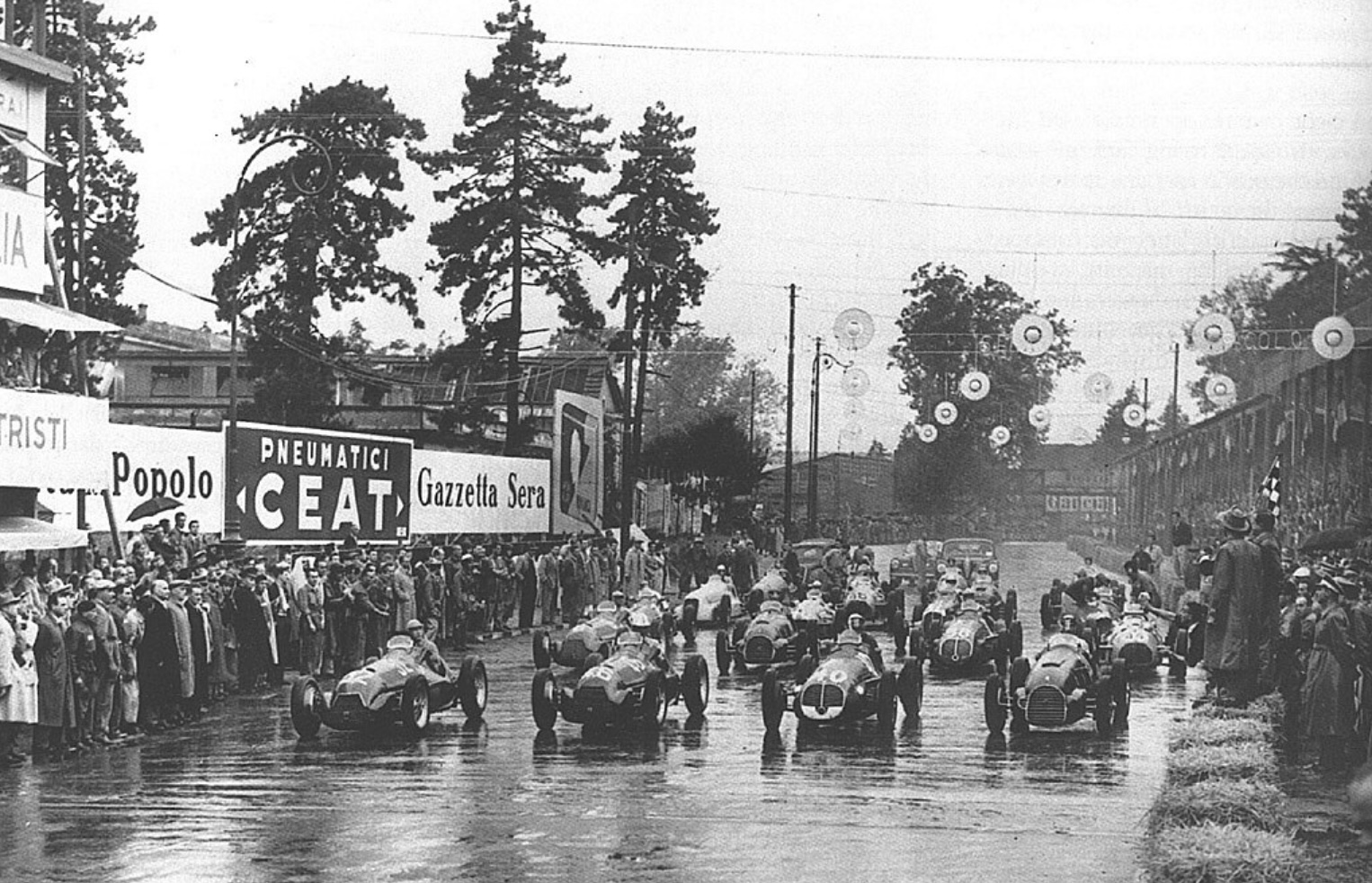
Wimille on the way to a very soggy win at Valentino Park, Turin in September 1948. He won the Italian Grand Prix from Gigi Villoresi, Maserati 4CLT/48 and Raymond Sommer’s Ferrari 125.
The off at Turin, the front row is L>R J-PW and Carlo Trossi’s Alfa 158, Villoresi’s Maserati and Sommer’s Ferrari.
(C Draijer)
Credits…
Getty Images, Cor Draijer Collection
Tailpiece…
Giuseppe Farina’s Alfa 158 in Geneva during the GP des Nations weekend, July 1946.
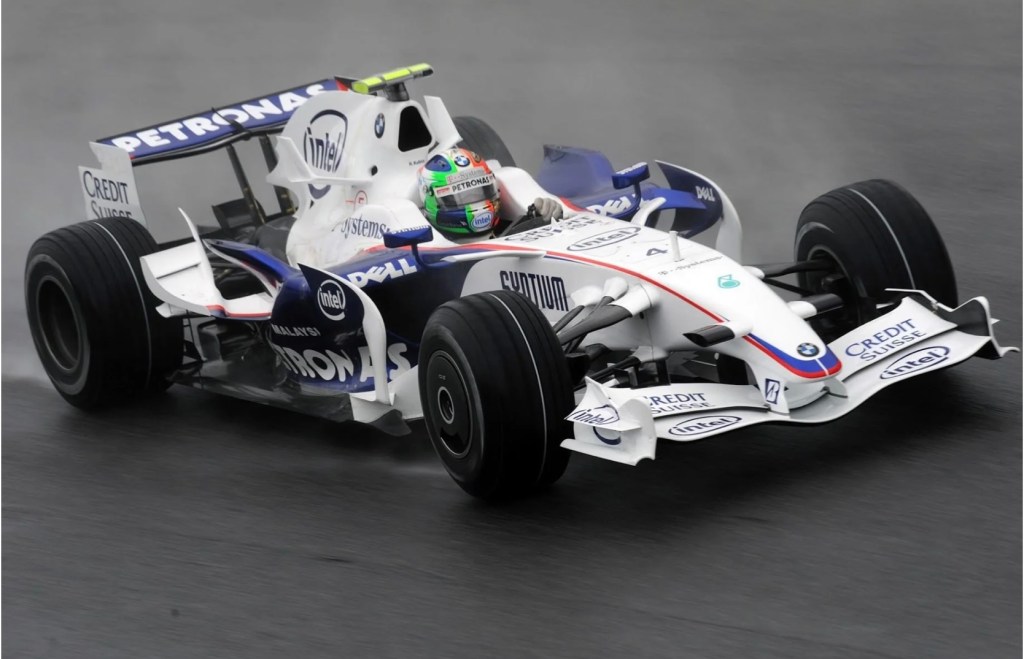
Nick Heidfeld battles the elements in his Sauber F1.08 BMW, the complexities of the cars aero treatment are the ‘outstanding’ feature of the car, Monaco GP 2008.
He was 14th, last in the race won by Lewis Hamilton’s McLaren MP4/23 Mercedes. Teammate Robert Kubica was second in a great drive, Felipe Massa, Ferrari F2008 third and Mark Webber, Red Bull RB27 Renault fourth.
Technical Director, Willy Rampf explains the aero rationale “Monaco demands maximum downforce. This means parts where aerodynamic efficiency is not good but which generate downforce. It’s the circuit with the slowest average speed and downforce therefore maximum priority.”
“We used the front wing with maximum downforce. The modified synchroniser retainer plates with top deflectors combine with the flap to exert significant influence on the air flow around the front tyres. There was a small T-wing for more downforce on the so-called Batman in front of the rear wheels. The rear wing was our steepest producing maximum tread pressure, this was mounted over central supports on the gearbox. We used rim covers in a modified version for the first time, which also generated additional downforce.”
Willy Rampf headed the BMW Sauber AG design team, with Australian Willem Toet the Head of Aerodynamics. He has been back home for a while now, I really should chase him down, does anyone have contact details?
The carbon fibre chassis, upper and lower wishbones, push-rod suspended, BMW P86/8 2.4-litre V8 powered car was raced by Robert Kubica and Nick Heidfeld in 2008.
It was quick too. Nick was second in Melbourne, Robert second in Malaysia while Kubica took pole in Bahrain with the pair finishing 3-4 behind the leading Ferraris of Kimi Raikkonen and Felipe Massa. Kubica won in Canada from the front row, but the F1.08 fell away in speed relative to Ferrari and McLaren as Sauber started to prepare for 2009. This pissed Kubica off as he was leading the championship at the time! Worse was that the 2009 F1.09 proved to be a shit-heap.
Lewis Hamilton won the first of his World Championships aboard the McLaren MP4/23 Mercedes with Ferrari victorious in the World Constructors Championship using the Ferrari F2008.
Robert Kubica, Sauber F1.08 BMW, Italian GP 2008 (Reddit)
Compare and contrast Monaco and Monza (above) aero setups, “the only genuine high-speed circuit left on the calendar’,” quipped Rampf.
“We used a low downforce aero package, the main focus of which was drag reduction. We accepted a 30% loss of downforce compared with Monaco and used a different front wing with only two elements. While the Tomcat wings were omitted, there were two additional wings on the monocoque, known internally as Manta Rays, which conducted air flow optimally over the engine cover and hence improved the effect of the rear wing. The side wings on the engine covers were omitted for drag reasons. The rear wing was very different from the others used. It had a small main element and a much bigger flap with a serrated Gurney. The synchroniser plates with a clearly defined cutout were striking, they ensured a stable airflow when cornering.”
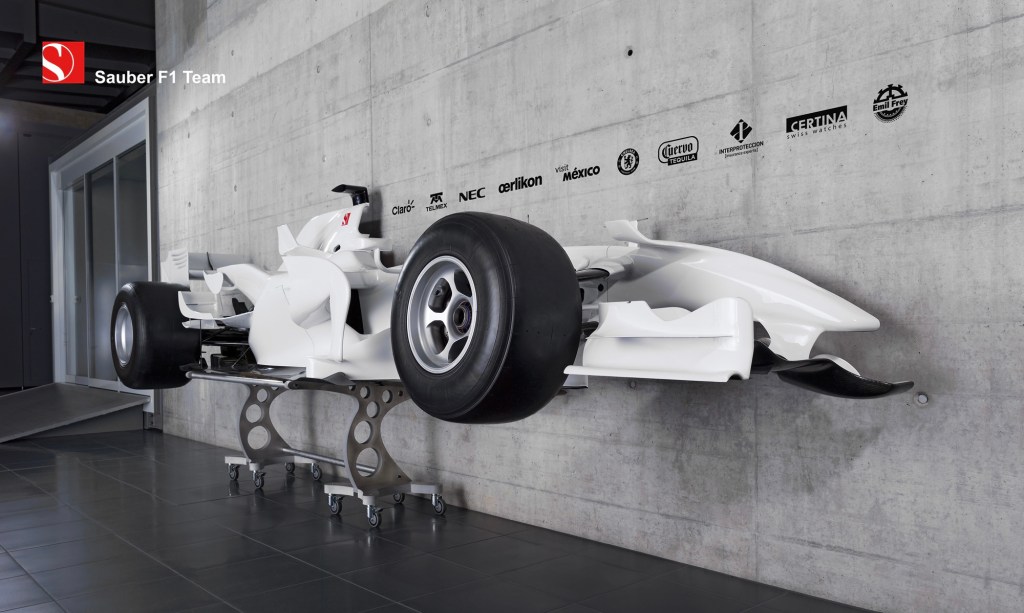
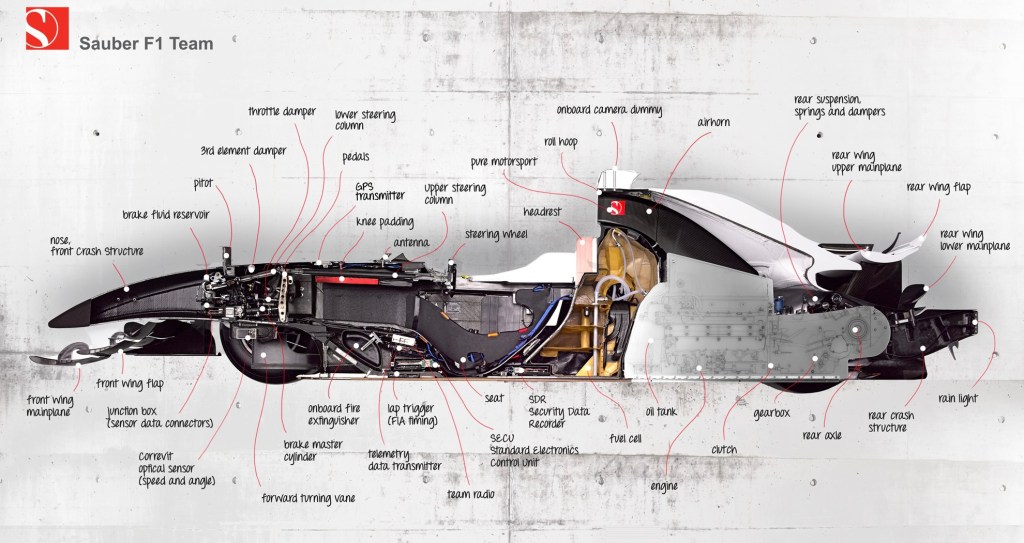
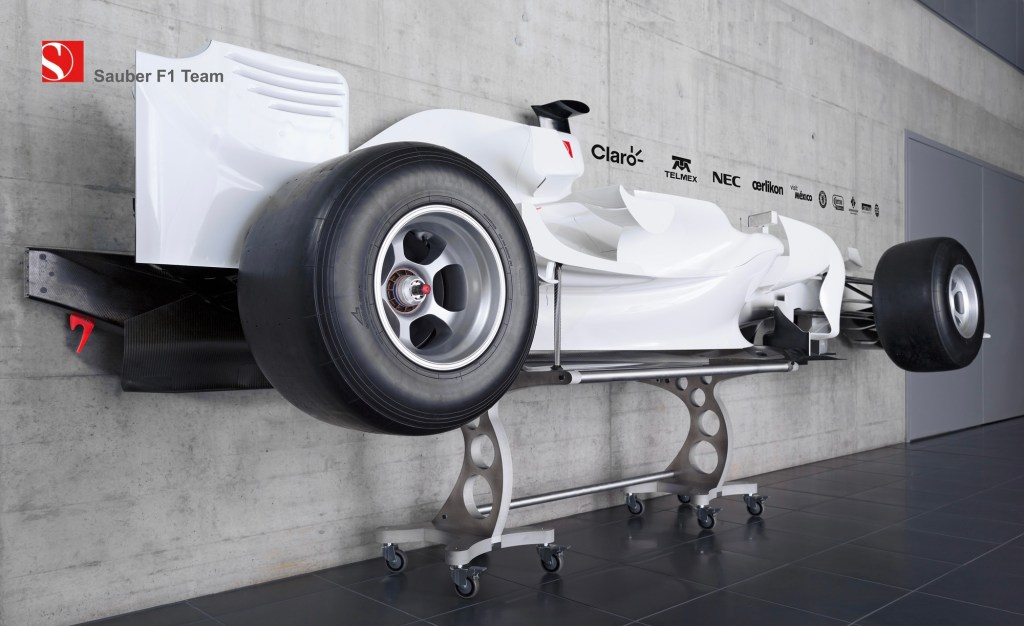
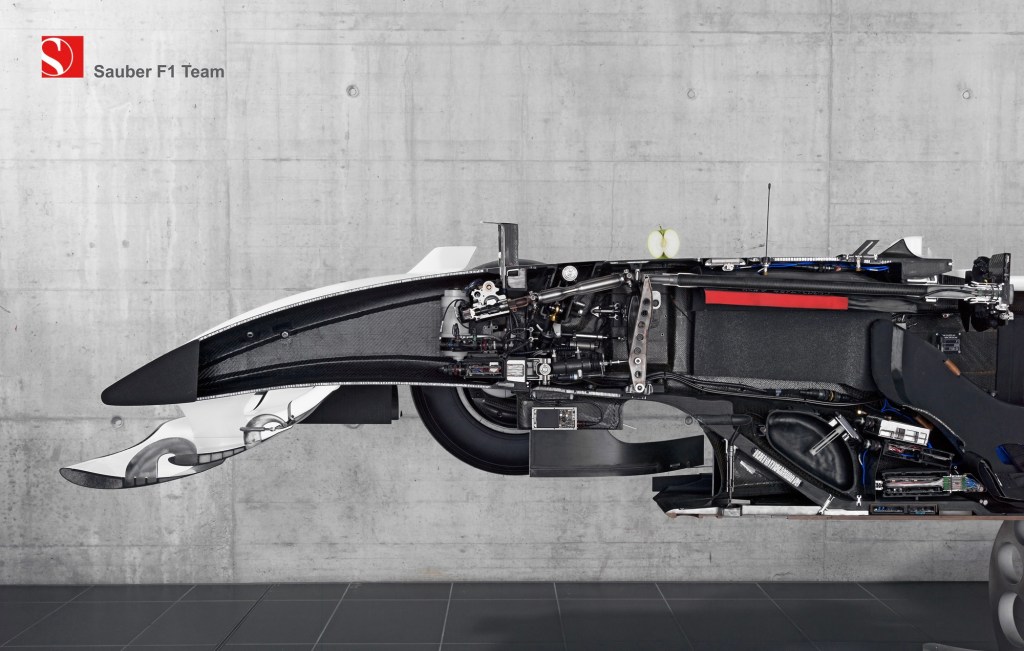
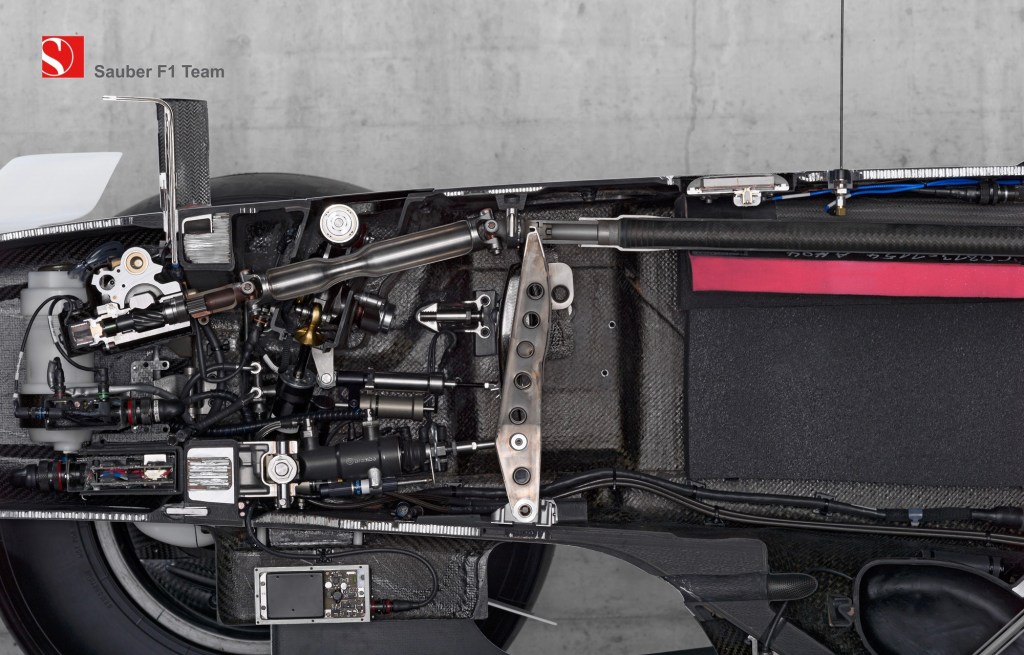
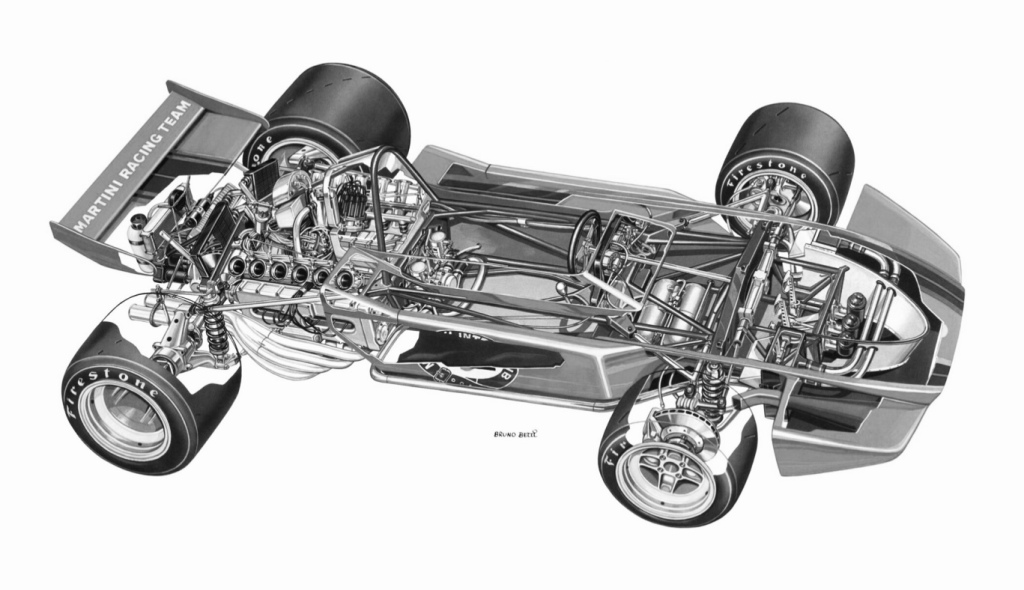
The idea to slice and dice a Sauber F1.08 – chassis F1.08-2 – was ex-Sauber man Sergio Bonagura’s idea in 2009. It’s a powerful way of getting a handle on the packaging and technology of modern’ish F1 cars. It took team mechanics two years to prepare the exhibit, by spring 2012 the project was complete.
More on the design of the car.
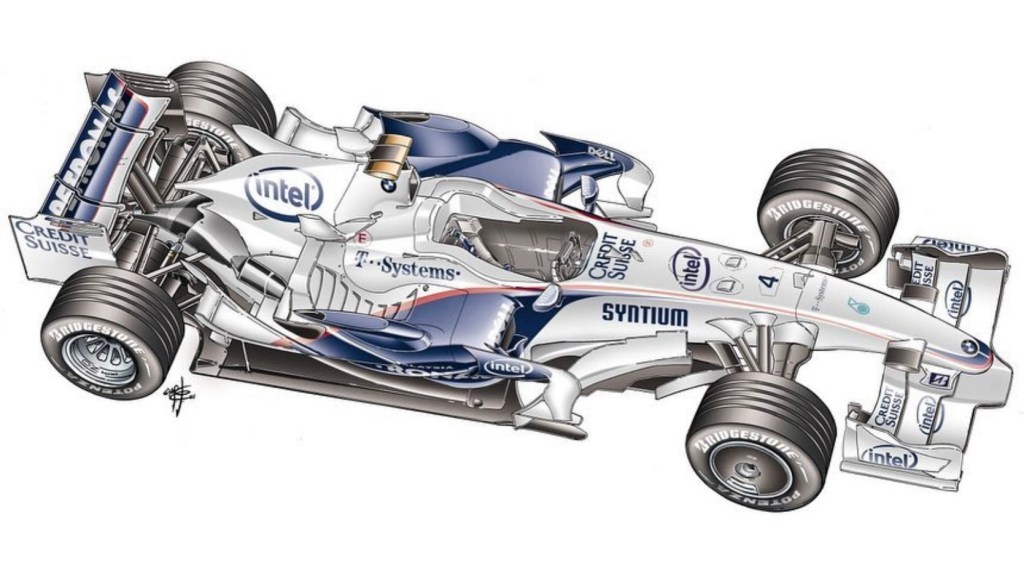
Traction control was banned in 2008 so a well balanced machine was critical. Fortunately the F1.07 zero-keel carbon fibre chassis design was a good car, aspects of it were carried forward. The zero-keel feature removes obstructions from under the nose and allowed undisturbed air to strike the splitter below the driver, directing airflow around the car.
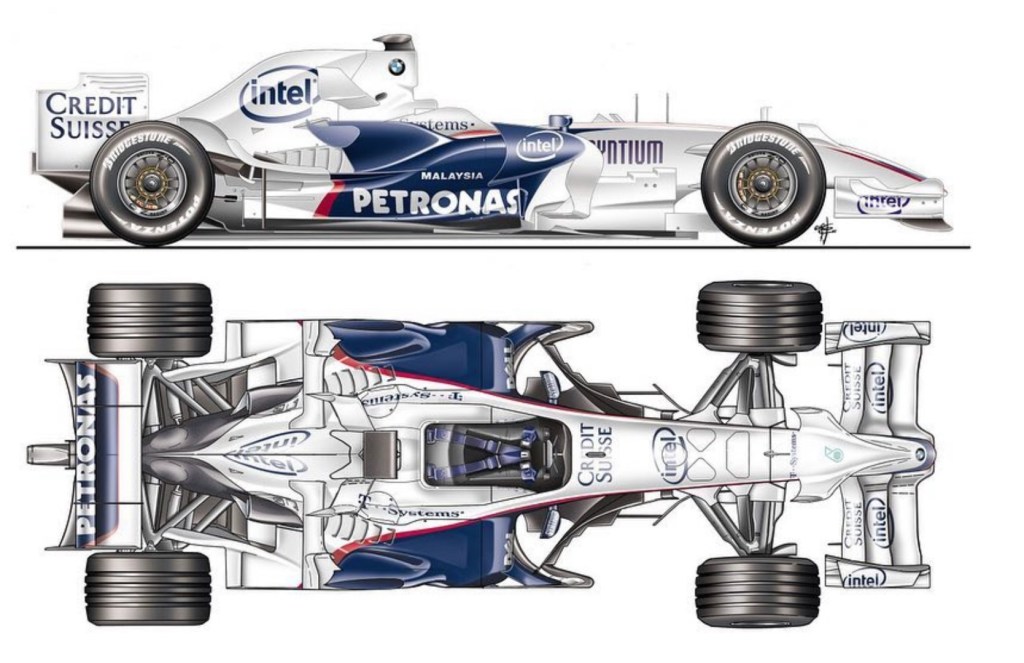
F1.08 had a narrower nose, and the wing more of a box-design under the nose, giving the car a more pronounced gull-wing look. The tri-deck remained on the front wing, with the addition of wings atop the nose, a trend that year across the grid. Early in the season Sauber incorporated an integrated sidepod ear and bargeboard to rout air from behind the front wing all the way to, and around the sidepods. A byproduct was enhanced radiator efficiency.
The sidepods were pulled in tighter towards the rear with taller chimneys incorporated to enhance cooling. There was a fin down the spine of the engine cover to help control airflow at the rear especially under braking. A mid-span wing attached to the T-wing from the engine cover. This small wing located centrally on the car helped load-transfers, aiding stability under brakes and acceleration.
(G Piola)(G Piola)
The rear wing was located on endplates (as on the F1.07), it allowed undisturbed airflow under the rear wing and out the back of the car. The wing itself was simple compared to most of the competition, having two fences, and, in common with most other teams, gill-like cutouts to allow turbulent air to spill out the sides, reducing drag induced turbulence. Sauber also adopted Ferrari like ‘shields’ over the wheels which aided braking and aerodynamics.
The front and rear suspension, wishbones and pushrod actuated inboard spring/Sachs shocks were carried over with minor refinements from F1.07. The brakes were Brembo six-pot calipers and Carbone Industrie rotors, wheels OZ, and tyres Bridgestone. Weight including driver was 605kg.
The transaxle was the BMW-Sauber seven speed. It and the BMW P86/8 19000rpm rev-limited 2398cc 90 degree – “over 720bhp V8” was quoted by BMW so far more than that – was also carried over.
(Sauber BMW)
Credits…
BMW Sauber AG, F1network.net, Wikipedia, conceptcarz.com, G Piola
1947 was the first full-year of the post-war Grand Prix racing. 32 Grands Prix – to the pre-war 1.5-litre supercharged/4.5-litres unsupercharged formula – were held throughout Europe and South America, but there was no championship as such.
The more prestigious Swiss, Belgian, Italian and French GPs were recognised as Grandes Epreuves with Jean-Pierre Wimille winning two of these, the Swiss and Italian GP aboard his works Alfa Romeo 158. The winningest-driver was Gigi Villoresi who took 13 of the 32 events aboard Maserati 4CL’s.
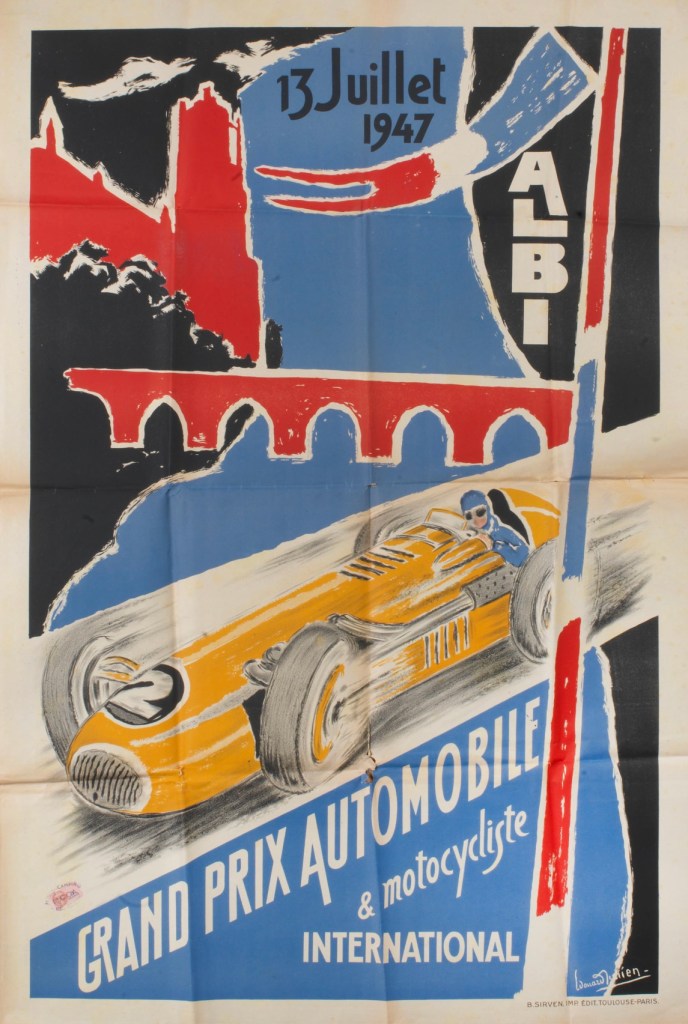
The 355km IX Grand Prix de l’Albigeois comprised 40 laps of the 8.9km les Planques road circuit and was won by Louis Rosier from Raymond Sommer and Charles Pozzi. They raced Talbot Lago T150SS, Simca Gordini T11 and Delahaye 135S respectively.
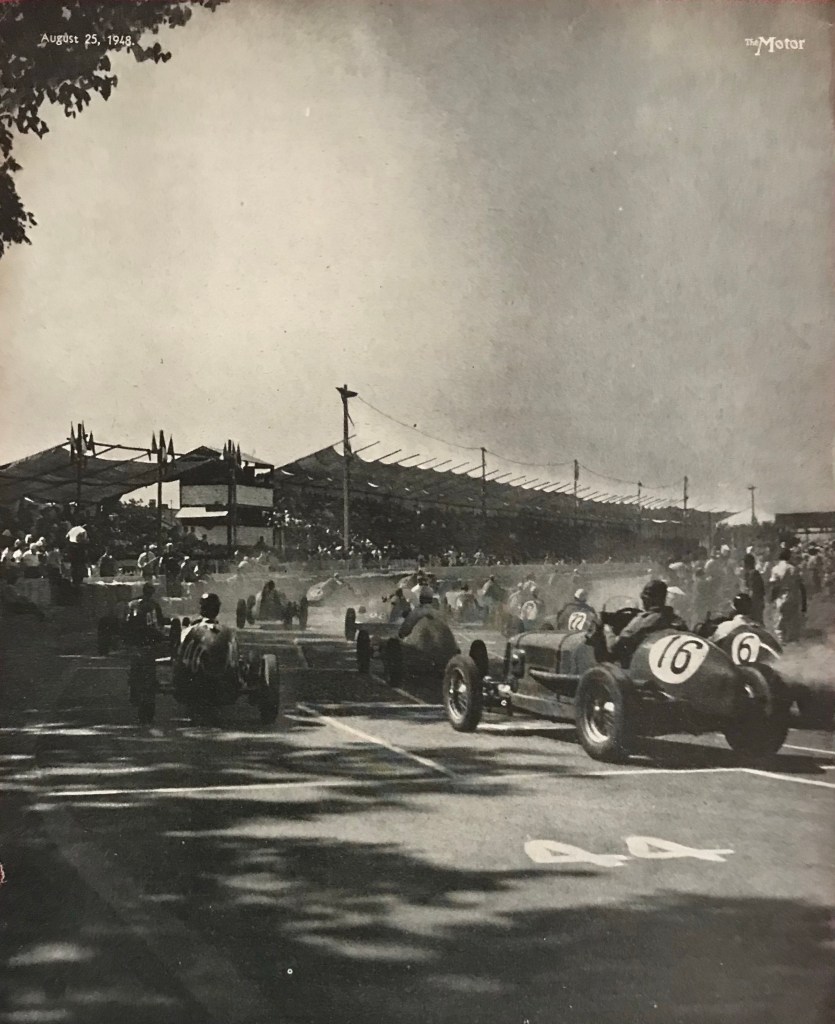
The cars shown at the-off are – from the left – the #44 Roger Loyer, third place Cisitalia D46 Fiat, #40 Eugenio Minetti, Cisitalia D46 Fiat #22 Reg Parnell, Maserati 4CL, #16 Fred Ashmore, ERA A-Type and #6 Ian Connell, Maserati 6CM.
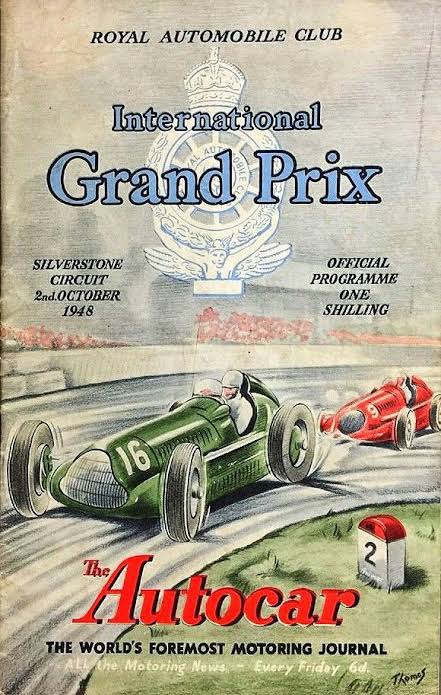
This evocative photograph was published in The Motor, August 25, 1948 issue. It’s a beauty from Bob King’s vast scrap book/archive, and was described in the magazine, under the heading, “The Sport of Motor Racing”, “The skirl (a shrill, wailing sound apparently!) of exhausts rises…the flag wavers, drops…and as one, the cars dart forward off the starting grid, drivers seeking an opening among those ahead, acceleration nose to tail, wheel to wheel, like a crazy traffic jam until they begin to string out on the open circuit beyond…and the spectators sink back into their seats with a sigh, for they have witnessed one of the most thrilling spectacles in all modern sport.”
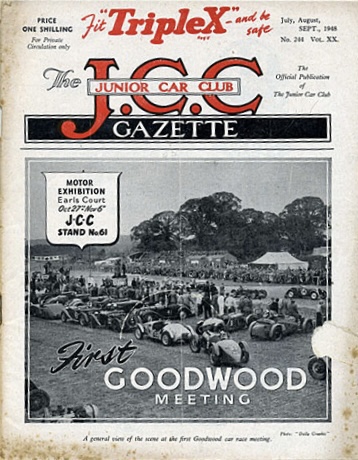
The final paragraph of The Motor’s page provides context, “With the Junior Car Club’s (very first) Goodwood meeting on September 18 (1948) and the Royal Automobile Club’s full Grand Prix at Silverstone on October 2, motor racing at its best at last returns to this country and once again we shall see the drivers battling together at full throttle down the straight, swirling with screaming wheels round the curves.”
(via Bonhams)(unattributed via ESPN)
Etcetera…
Having mentioned the Silverstone and Goodwood events we had better add a shot of each.
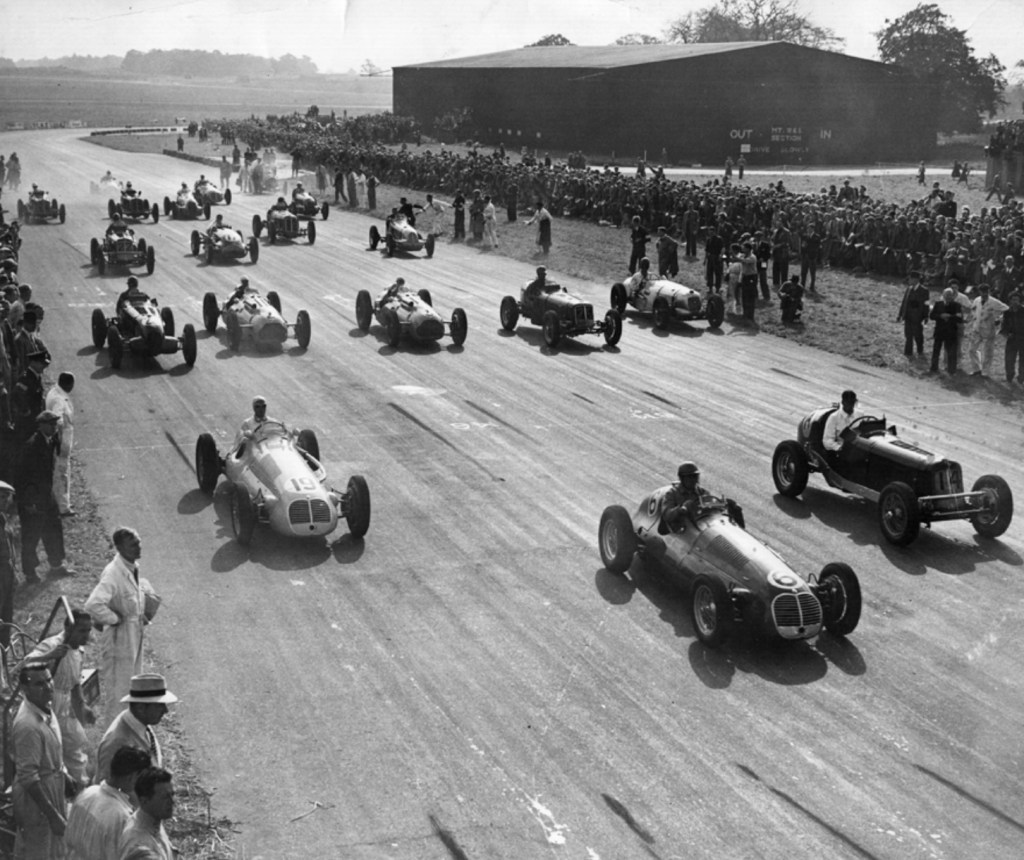
The British GP was won by Villoresi from Alberto Ascari and Bob Gerard, two Maserati 4CLT/48s and a more elderly but quick ERA B-Type.
At the jump, local boy Reg Parnell is fast away in his 4CLT/48 from grid 7, Peter Walker’s ERA B-Type at right and Bira’s Maserati 4CL on the left.
I’ll take your advice on identification of the cars on the second row other than the two Talbot Lago T26C’s of Louis Rosier and Louis Chiron. There is an ERA but the other two car’s silhouettes are unfamiliar.
(Klemantaski Collection)
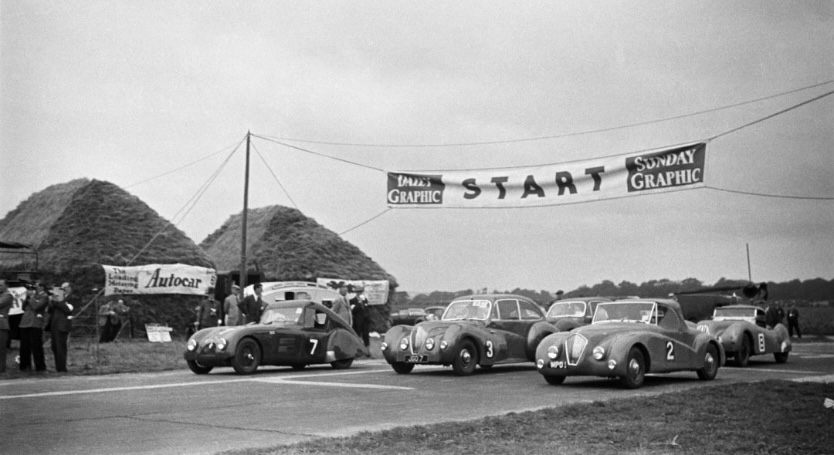
And above the start of the very first race, at the very first Goodwood meeting, on September 18, 1948.
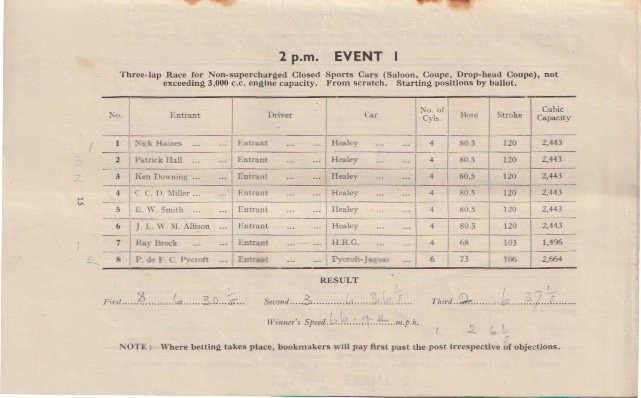
The field comprised six Healeys, an HRG and a Mycroft Jaguar. Again, if you gave a program, please do get in touch. The most impressive haystacks were moved elsewhere on the estate when proper paddock facilities were established.
Etcetera…
(R Clark Collection)
After posting the article as above, Roger Clark, a UK historian friend provided these scans from his collection, many thanks Roger, for the material and comments.
(R Clark Collection)
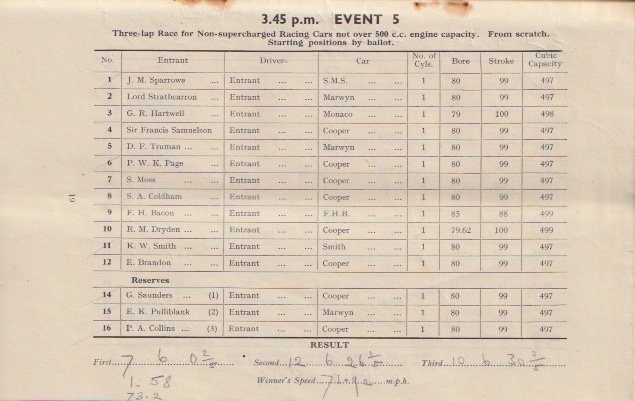
“The programme said that all races were limited to 12 starter, the entry above is for the first race.”
(R Clark Collection)
“The entry for the 500cc race. This was Moss’s second circuit race. He won (below) by over 30 seconds, not bad for a 10 lap, 12.2 miles race! I think that PA Collins is Peter’s father but he didn’t start the race.”
(R Clark Collection)
“The first of many…”
(R Clark Collection)
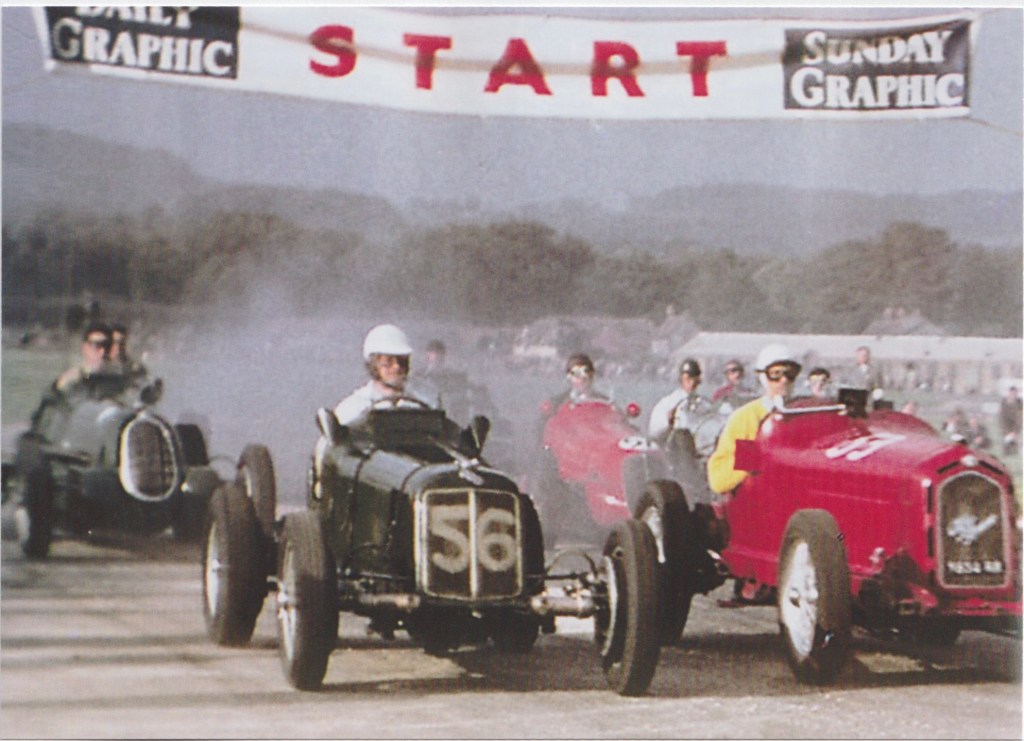
“The start of the event for racing cars over 1450cc. I can’t think why they chose that capacity. There was also a race for Formula 1 cars. The most easily identifiable cars are George Nixon #56 (ERA R2A), David Lewis (Alfa Monza), Dennis Moore, (Alfa 8C/35 rear left) and David Murray (Maserati 4CL) behind the Monza.”
Credits…
The Motor, Bob King Collection, Klemantaski Collection, Roger Clark Collection
So, with John’s support, he helped himself to the stock of components on the Surbiton shelves and built himself a 50mm longer-wheelbase GP Cooper. It was only 2-litres, despite the oft-quoted 2.2-litres, so Jack was giving away a half-litre in capacity to the more sophisticated twin-cam, 2.5-litre opposition.
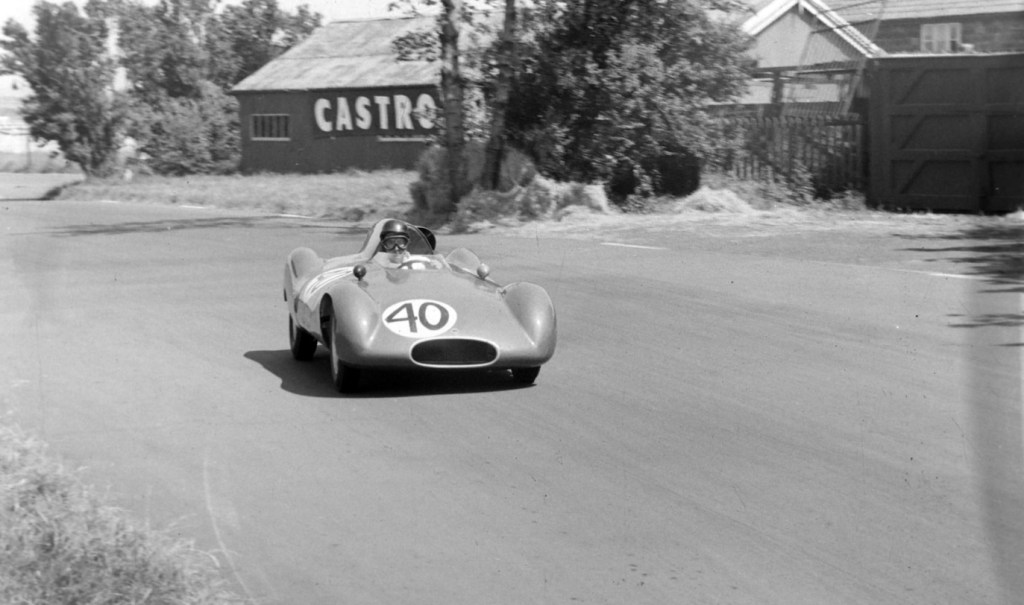
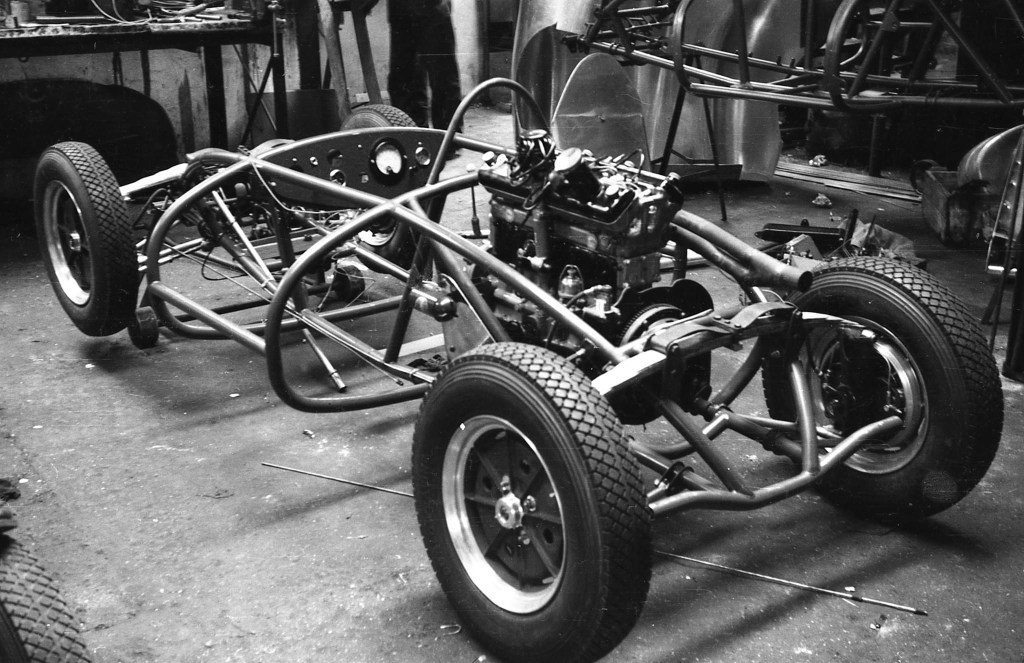
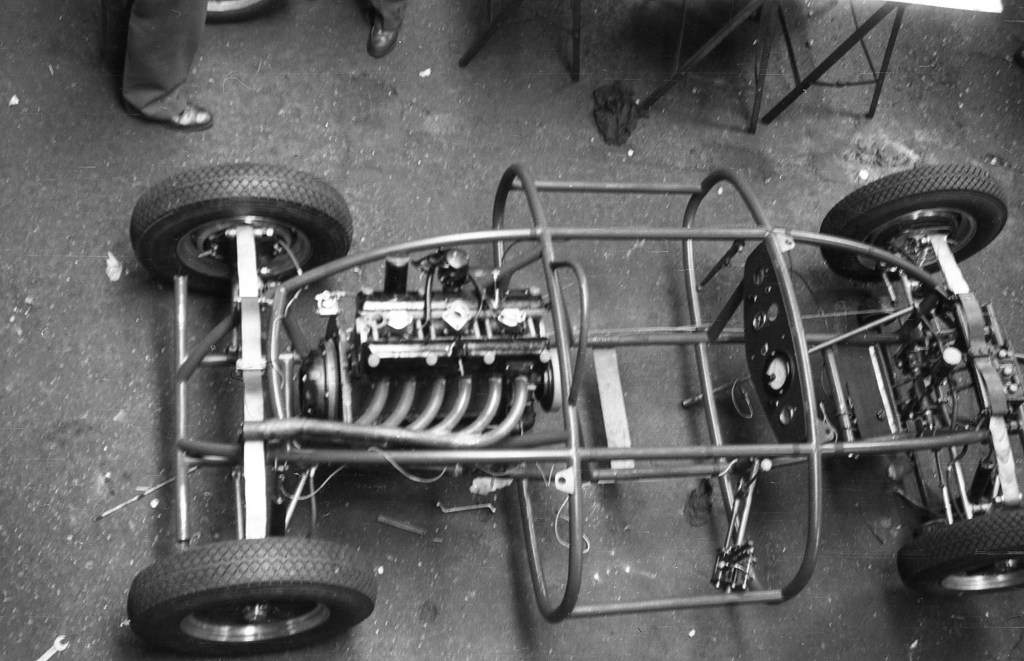
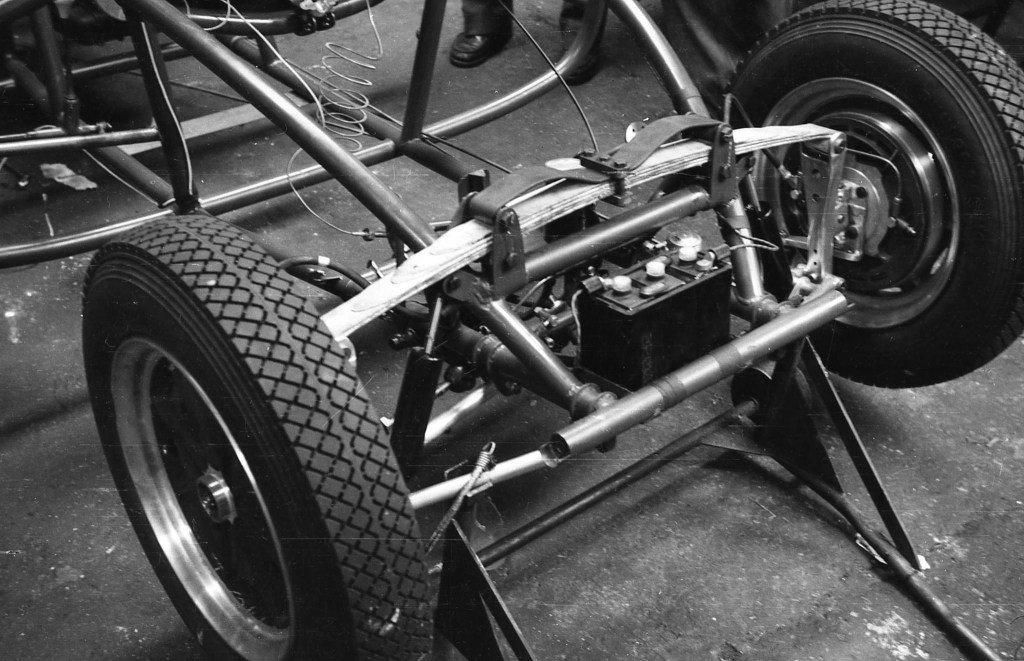
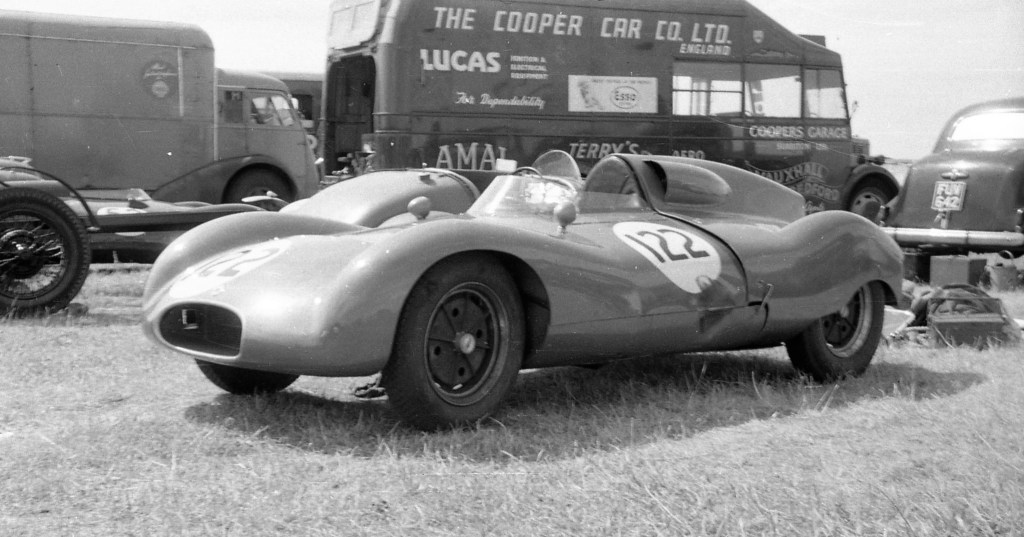
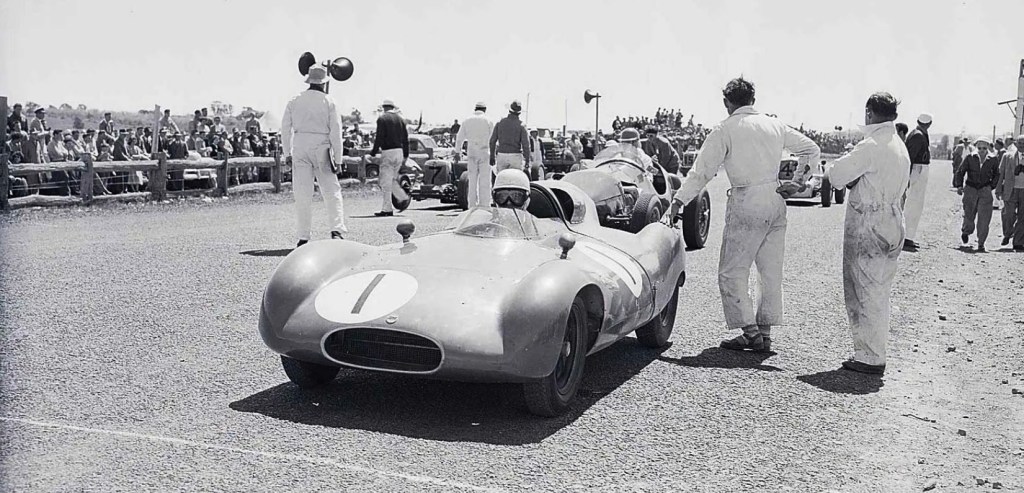
The key elements of the car are shown by three photographs taken by Australian mechanic, Fred Pearse, who spent that summer in Europe tending Aussie, Dick Cobden’s ex-Peter Whitehead Ferrari 125. I wonder if Fred helped Jack with the build of the Cooper, christened Type 40?
(F Pearse)
No way was Cooper designer Owen Maddock’s hula-hoop chassis drawn from his Kingston Technical College engineering course, but was more likely inspired by the organic forms of brilliant Catalan architect/designer Antoni Gaudi. Remember, you read it here first: La Sagrada Cooper has a nice ring to it, n’est-ce pas?
(F Pearse)
Technical specifications of the Cooper T40 as per the feature article linked above. I know the engine isn’t plumbed and still awaits its Citroen-ERSA transaxle, but the sheer economy of a moteur mounted mid-ship is readily apparent.
(F Pearse)
Unsurprisingly the car ran late, so Jack had no time to test it before Aintree. He qualified at the back of the grid and failed to finish after clutch problems in the race memorably won by Stirling Moss. It was his first championship GP victory, aboard a Mercedes Benz W196.
The ’55 British was the only F1 GP the Cooper contested, but Brabham took in a number of non-championship F1 races in the UK before the car was shipped to Australia where it won the that year’s Formula Libre Australian Grand Prix at Port Wakefield, South Australia.
The works-machine first contested the London Trophy at Crystal Palace on July 30 where Brabham was third in his heat behind Harry Schell’s Vanwall and Paul Emery’s Emeryson Alta, but didn’t start the final.
Then it was off to Charterhall in Scotland for the August 6 Daily Record Trophy. Jack was fourth on the grid, fourth in his heat, and, you guessed it, fourth in the final, behind the Maserati 250Fs of Bob Gerard, Horace Gould and Louis Rosier.
(F Pearse)
With time for one more event before shipment to Sydney, the Cooper was entered for the 25-lap RedeX Trophy at Snetterton (above) on August 13. Jack was way back on the grid, but again finished fourth behind the Vanwalls of Harry Schell and Ken Wharton and poleman, Stirling Moss, aboard the family Maserati 250F. Despite giving away plenty of power, T40 #CB-1-55 was plenty quick, Jack was out fumbled by Moss but finished ahead of three Maseratis – two 250Fs and an A6GCM – as well as a swag of Connaughts.
There seemed to be as promising a future for water-cooled, mid-engined Coopers as their air-cooled mid-engined siblings…
Credits…
Fred Pearse photographs via Peter Reynell, MotorSport Images, gnooblas.com
Tailpiece…
(gnooblas.com)
On the grid of the 27-lap, 100-mile, January 1956, South Pacific Championship at Gnoo Blas, Orange, New South Wales.
The little Cooper was again blown-off by a Maserati 250F, this time Anglo-Australian Reg Hunt’s machine, Brabham was second, with Kevin Neal’s Cooper T23 Bristol in third place.
Only one of hundreds of Kart manufacturers made it to F1. Tecno had won Kart, F3 and F2 championships before they leapt into Grand Prix racing in 1972 but the venture failed dismally after only 10 grand prix starts thanks to Ferrari-esque levels of intrigue and infighting.
Bolognese engineers Luciano and Gianfranco Pederzani ran a successful truck hydraulics business named Oleodinamica Pederzani & Zini which was inspired by the technology in American trucks they saw post-war. Another American idea they rather liked was Karts!
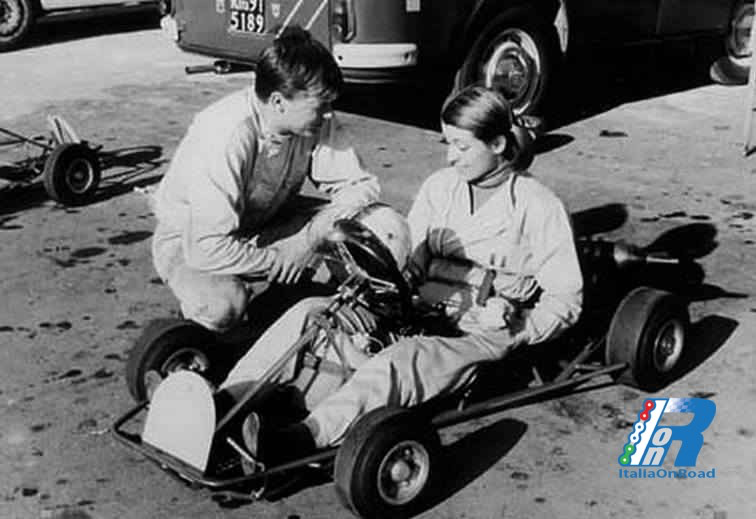
Ronnie Peterson and Susanna Raganelli, Tecno Barilla in Denmark during the 1966 Kart World Championship weekend, she won
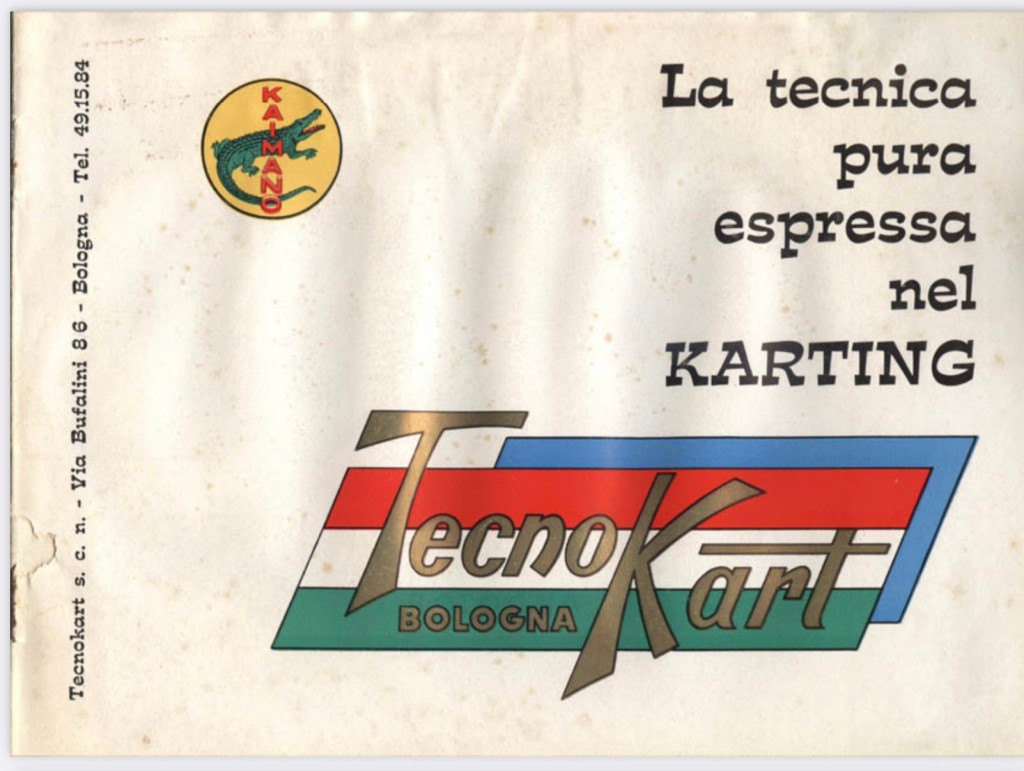
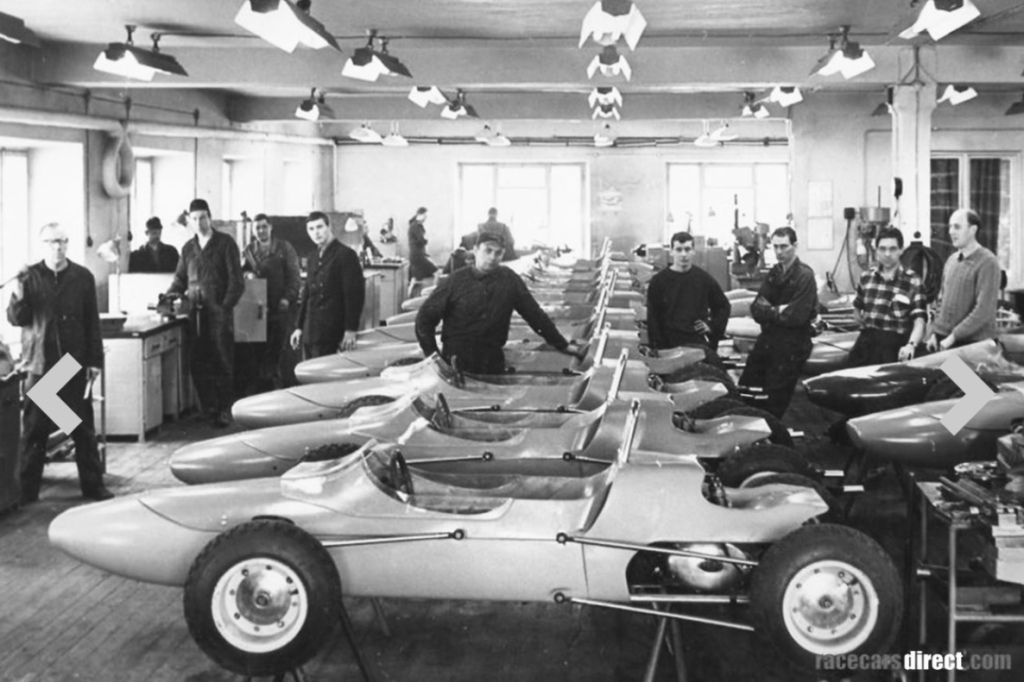
Tecno Kart operated from premises in Via Bufalini, Borgo Panigale, Bologna from 1962. Tecno were the first to volume produce ‘sidewinder’ chassis to take advantage of the newly developed Parilla air-cooled, rotary-valve motors.
These Parilla GP15L powered Tecno Kaimono’s (the caiman is a small alligator, the reptile featured on the Tecno logo) won the World Kart championship three times on the trot from 1964-66. Ex-Italian GP motorcyclist Guido Sala was victorious in 1964-65, then Susanna Raganelli won in 1966 after a furious battle with a couple of Swedes, Leif Engstrom and Ronnie Peterson.
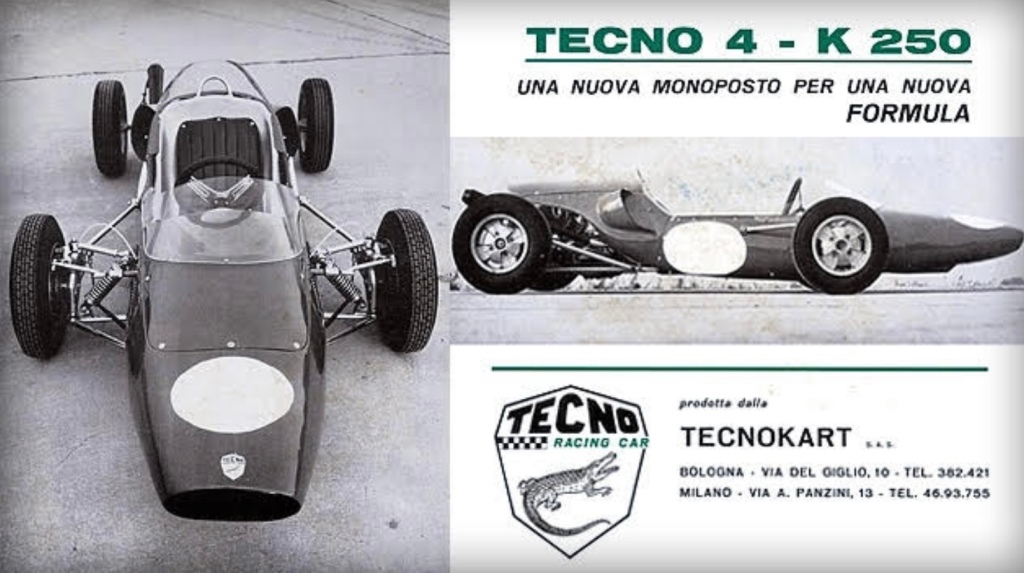
Tecno put a toe in the water with Formula 250 cars in 1964, then Formula 850 machines in 1966, before building their first F3 car in 1966.
Tecno Automobili’s kart inspired, wide-track, short wheelbase TF66 debuted with Carlo Facetti at the wheel at the Circuito del Mugello on July 17. Two laps of a challenging 66km road course through the Tuscan countryside was a good test for the new chassis! In a good start for the marque, he finished fourth, Jonathan Williams was up front in a De Sanctis Ford.
Other early Tecno F3 pilots included Grand Prix winner, Giancarlo Baghetti, Chris Craft, Mauro Nesti and Tino Brambilla. Tecno’s breakthrough win came when Brambilla’s TF67 Ford won the Luigi Musso Trophy at Vallelunga in October 1967. Clay Regazzoni’s TF67 Ford Novamotor took the honours in the more prestigious GP Espana, Jarama, a month later.
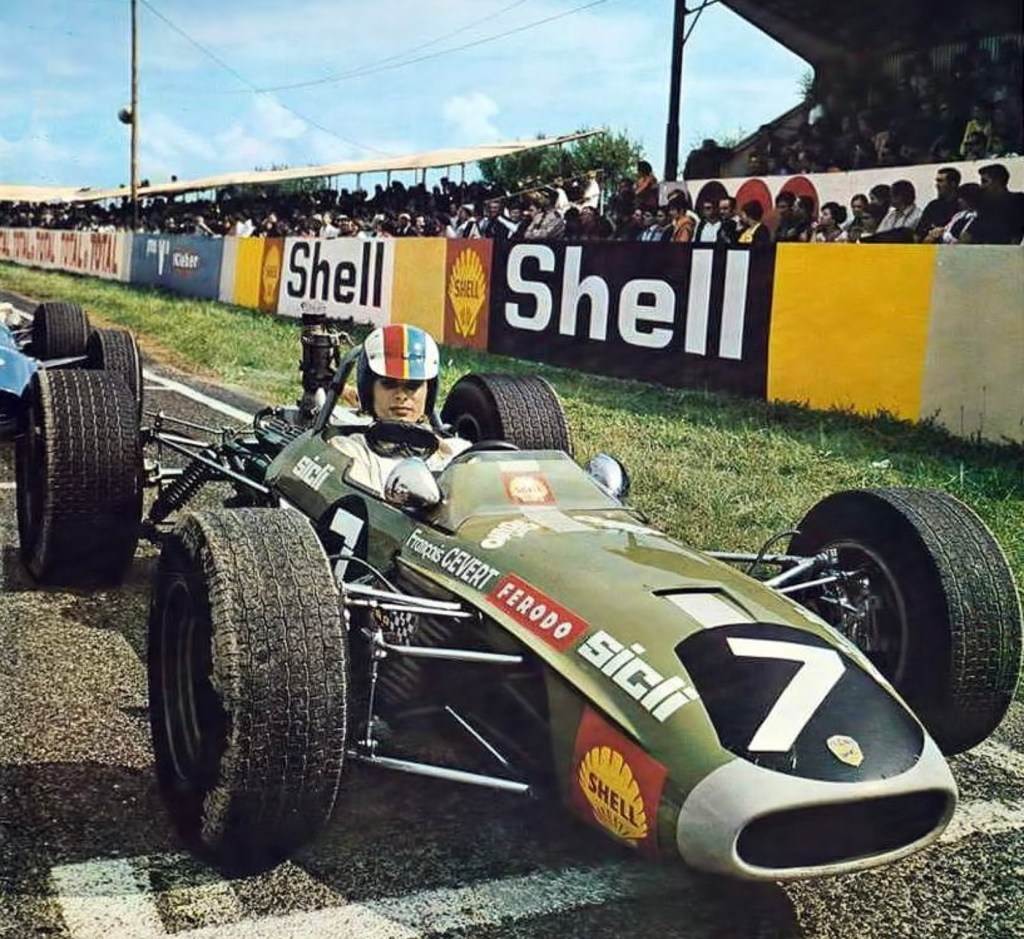
After a modest start in 1967, Tecno sold 40 cars in 1968, commencing a great run of F3 success. They won the Italian championship from 1968-71, three French titles from 1968-1970 (Francois Cevert in 1968), not to forget Swedish titles for Reine Wisell and Ronnie Peterson in 1968-69.
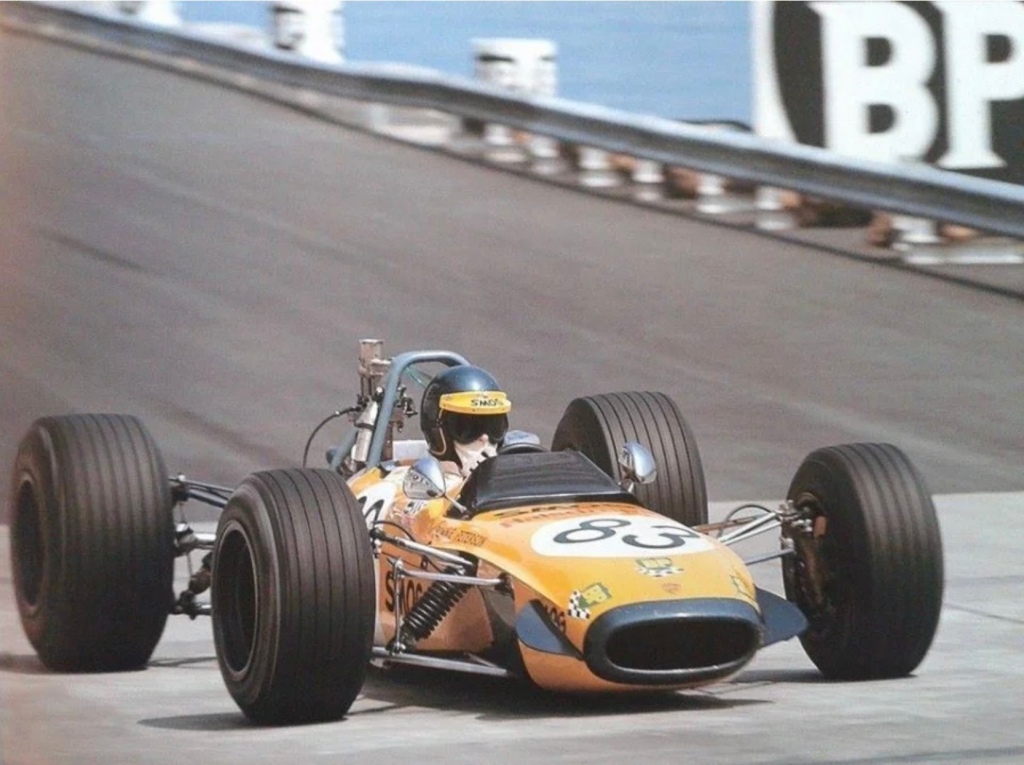
Tecnos were quick at Monaco too, with wins for Jean-Pierre Jaussaud and Ronnie Peterson in 1968-69, and in Switzerland where they won championships in 1969 and 1972.
Francois Cevert, Tecno 68 Ford, winner of the Circuit de Vitesse at Nogaro in August 1968 (unattributed)Ronnie Peterson on the way to winning the Monaco F3 GP in 1969, Tecno 69 Ford-Novamotor (unattributed)
Luciano Pederzani adapted his Tecno 68 design to F2 specifications by adding bigger brakes, a five-speed Hewland FT200 transaxle and 210bhp Ford FVA 1.6-litre engine. 1968 works cars were raced by Regazzoni, Jaussaud and Facetti. Regga’s sixth place in the European championship was the best of the Tecnos which included Ron Harris entered cars for such notables as Pedro Rodriguez, Richard Attwood and Jonathan Williams.
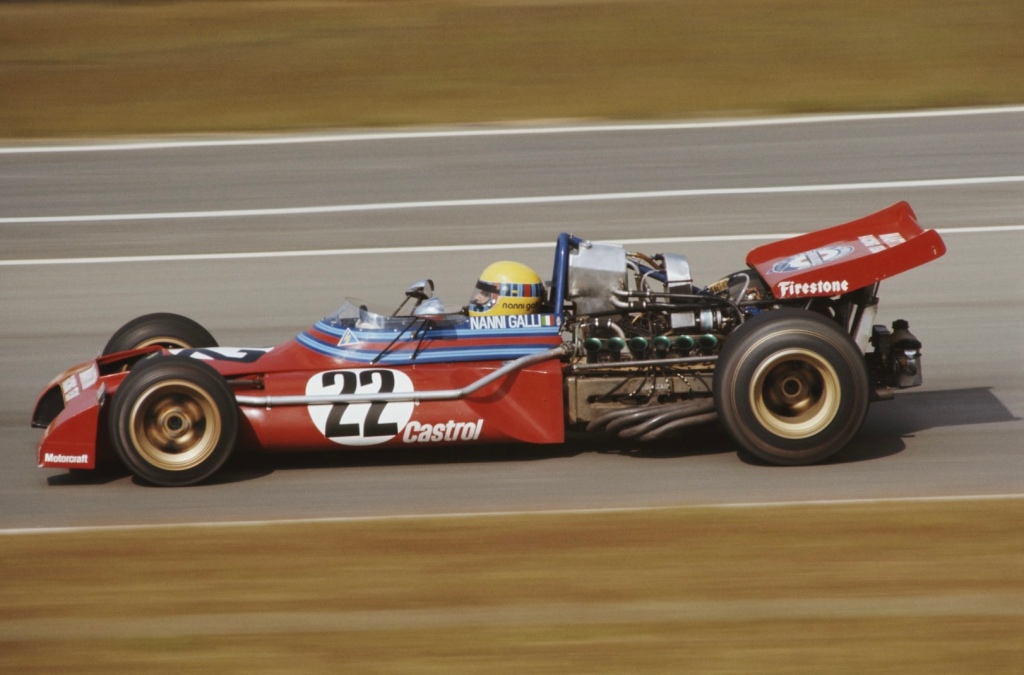
Cevert and Nanni Galli raced the works F2s in 1969, with Francois taking Tecno’s maiden F2 victory in the GP de Reims in June. Cevert was third in the championship and Galli seventh in a year the Bologna boys built 60 F2 and F3 spaceframe chassis.
The bring-home-the-bacon (pancetta actually) year was in 1970 when Clay Regazzoni won the Euro F2 title with victories in four of the eight rounds, with Cevert sixth. That year both Tecno men made their F1 debuts, Regazzoni with Ferrari and Cevert with Team Tyrrell.
For 1971 the Pederzani’s secured Elf sponsorship but Equipe Tecno Elf had a lean time despite the best efforts of Cevert, Jean-Pierre Jabouille and Patrick Depailler, all of them rather handy Grand Prix pilots of the future.
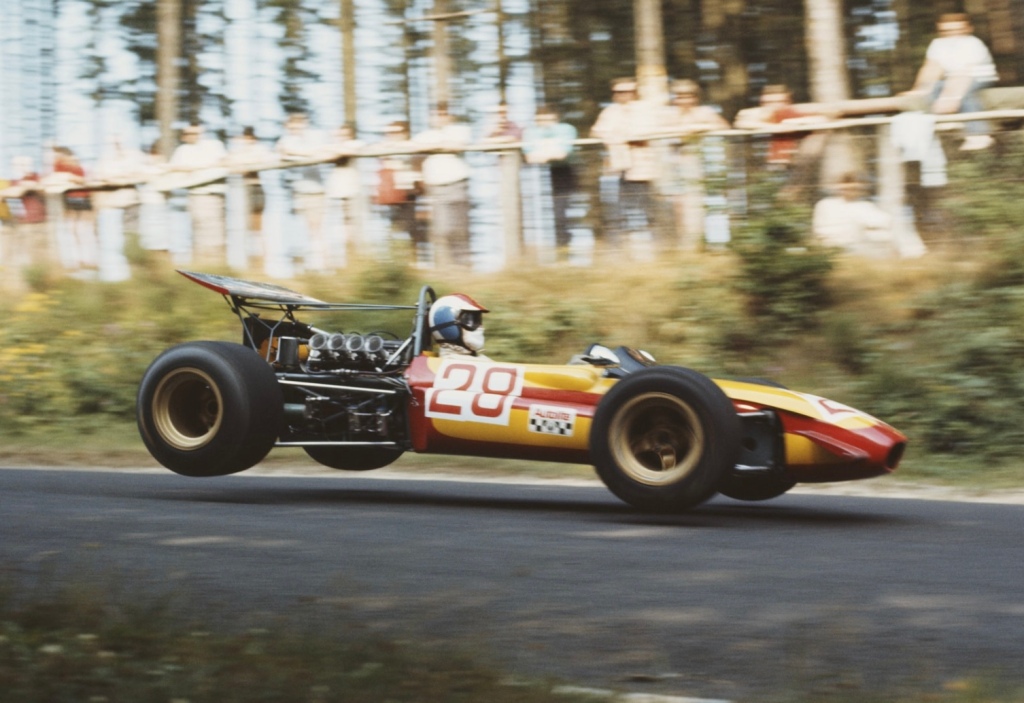
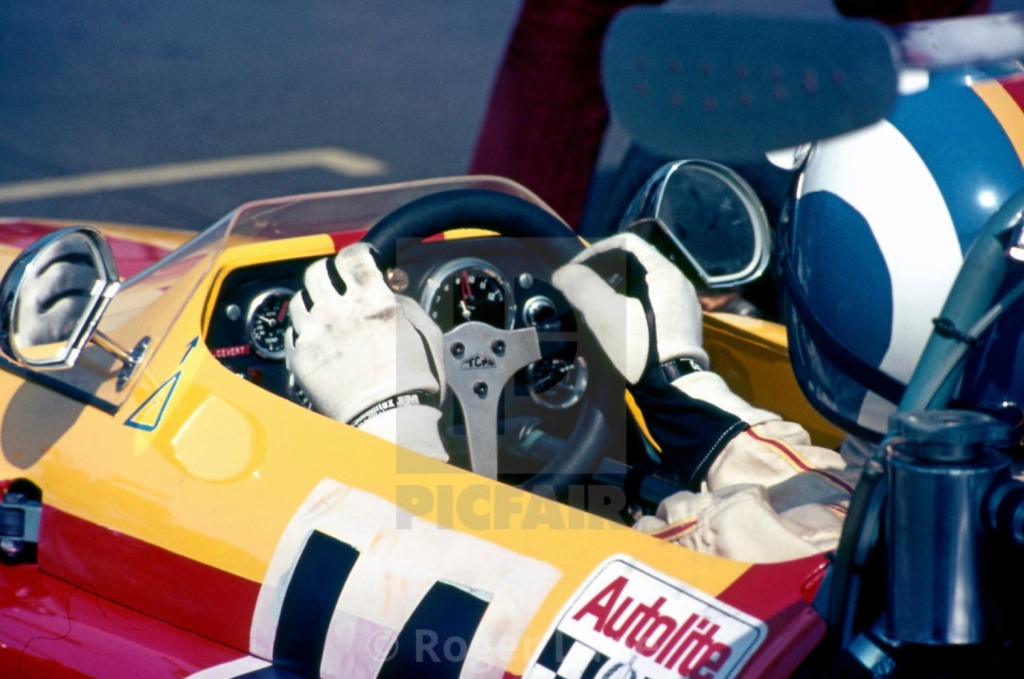
Francois Cevert, Tecno 68 Ford FVA aviating during the 1969 German GP, DNF CWP. Henri Pescarolo won aboard a Matra MS7 Ford (MotorSport)Drivers angle into the cockpit of Cevert’s Tecno 68 Ford FVA at Thruxton in 1969. Eighth in the race won by Jochen Rindt’s Lotus 59B Ford (picfair.com)Clay Regazzoni, Tecno 69 Ford FVA. Second in the London Trophy at Crystal Palace May 1970. Jackie Stewart won in John Coombs’ Brabham BT30 Ford (LAT)
For 1972 the Pederzanis, confident in their own abilities, decided to take the giant leap into Grand Prix racing.
Not for them the garagista path either, purchase of a Ford Cosworth DFV 3-litre V8 would have been too easy, after all, they had been fitting Ford Cosworth FVAs into their F2 cars for three years!
They decided to build the chassis and engine, both of which had more than a nod to Ferrari practice.
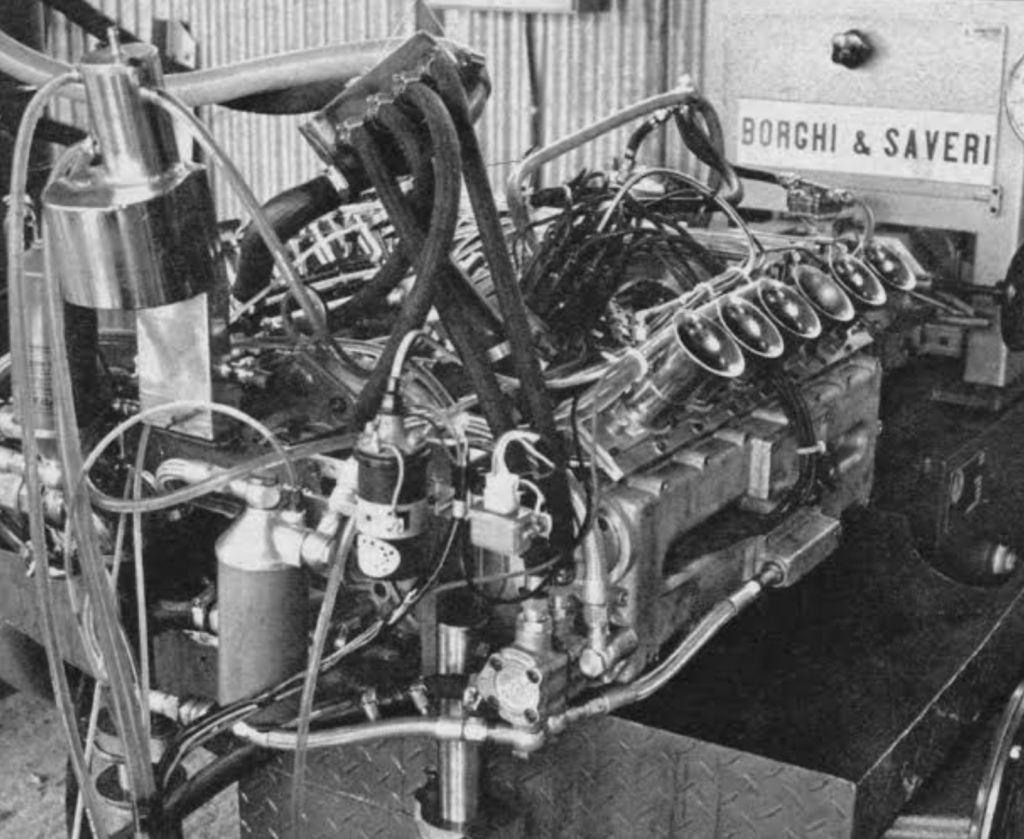
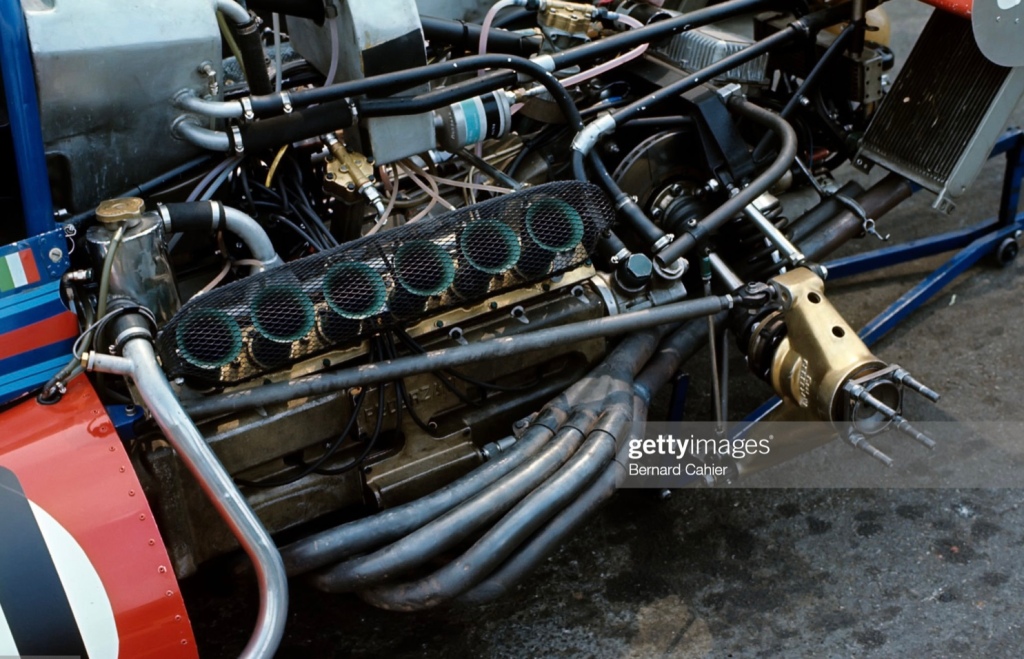
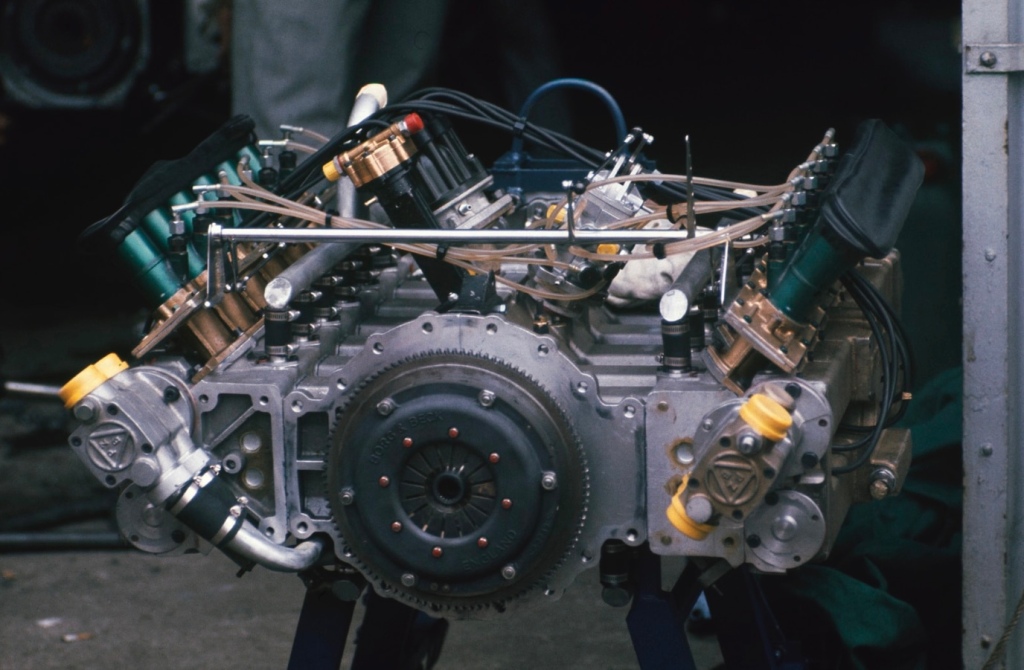
Luciano Pederzani, Renato Armoroli – recruited from Ducati just down the road in 1968 – and other technicians commenced work on Project 123 (12-cylinders, 3-litres) a twin-cam, four valve, fuel injected a 180 degree 3-litre flat-12 in early 1971.
To shorten development time the team adopted the familiar bore and stroke ratio of Ford/Cosworth’s 1-litre F3 engines – 80.98x48mm – which resulted in a displacement of 2960cc, later tickled up to 2995cc by a small increase in stroke.
By early 1972 the first way-too-heavy (205kg, 40 more than a Cosworth DFV) engines were on the dyno, the best result after early fettling was a claimed 402bhp @ 11,000rpm.
Tecno hired Parma born engineer Giuseppe Bocchi from Ferrari, where he had been working on engine structural stiffness and vibrations. Bocchi redesigned the Tecno engine to incorporate four main bearings, rather than its original seven – just like Ferrari’s flat-12 – making the structure lighter and stiff enough to be used as a structural chassis member.
Tecno PA123-72 (B Betti)Tecno flat-12 on the test bed in 1971 (researchracing)Tecno PA123/1 public unveiling in Milan, December 24, 1971
While progressing the engine, the team also turned their attention to a narrow track, short wheelbase chassis based on existing F2 practice; at 2270mm it was 120mm shorter than the Ferrari 312B.
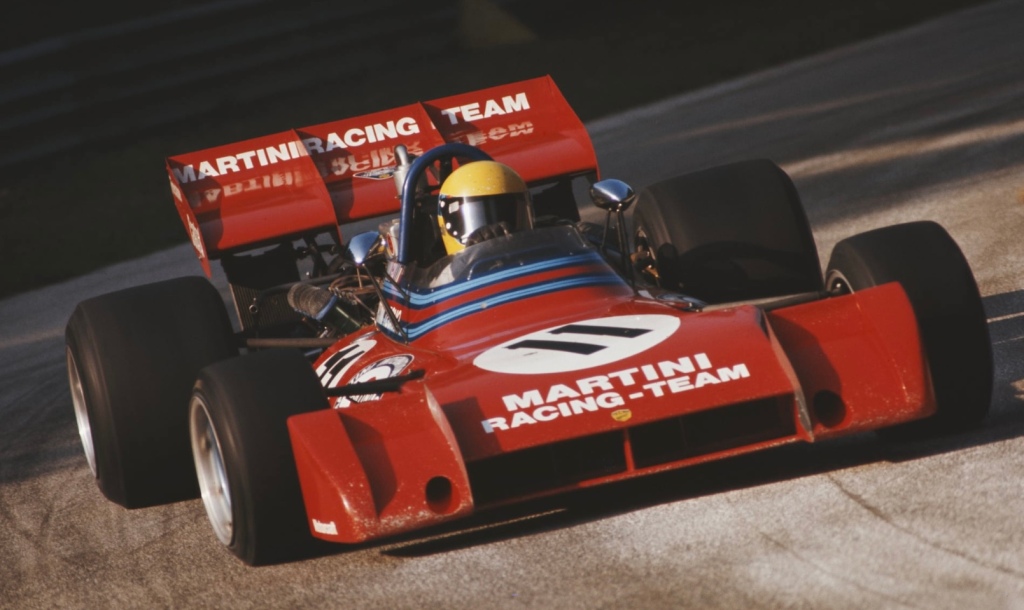
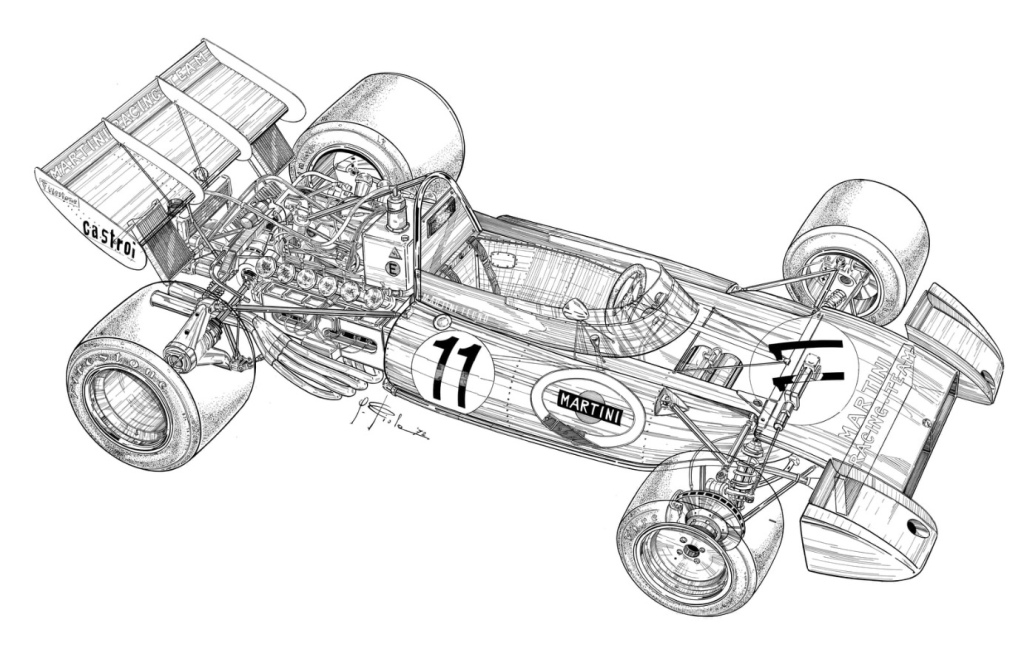
Tecno’s first monocoque chassis was designated PA123 (Pederzani Automobili- 12 cylinders-3-litres) and followed Ferrari Aero practice. It comprised aluminium sheets rivetted and glued to a light-gauge tubular frame. While side radiators were planned, the engines voracious appetite for coolant resulted in a large front radiator, and bluff-nose of the type Tyrrell popularised in 1971.
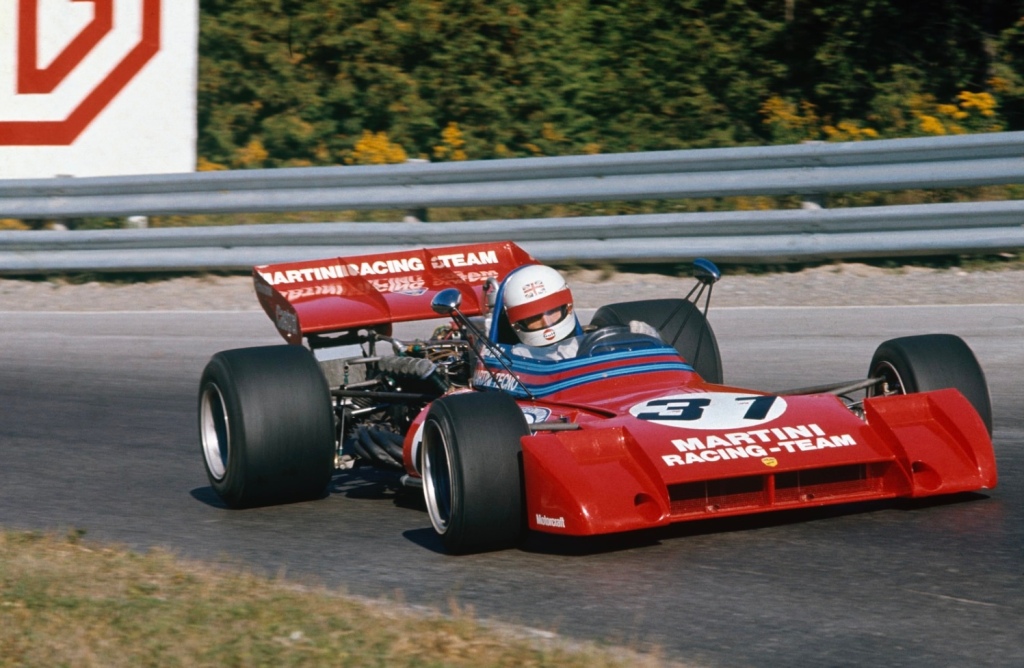
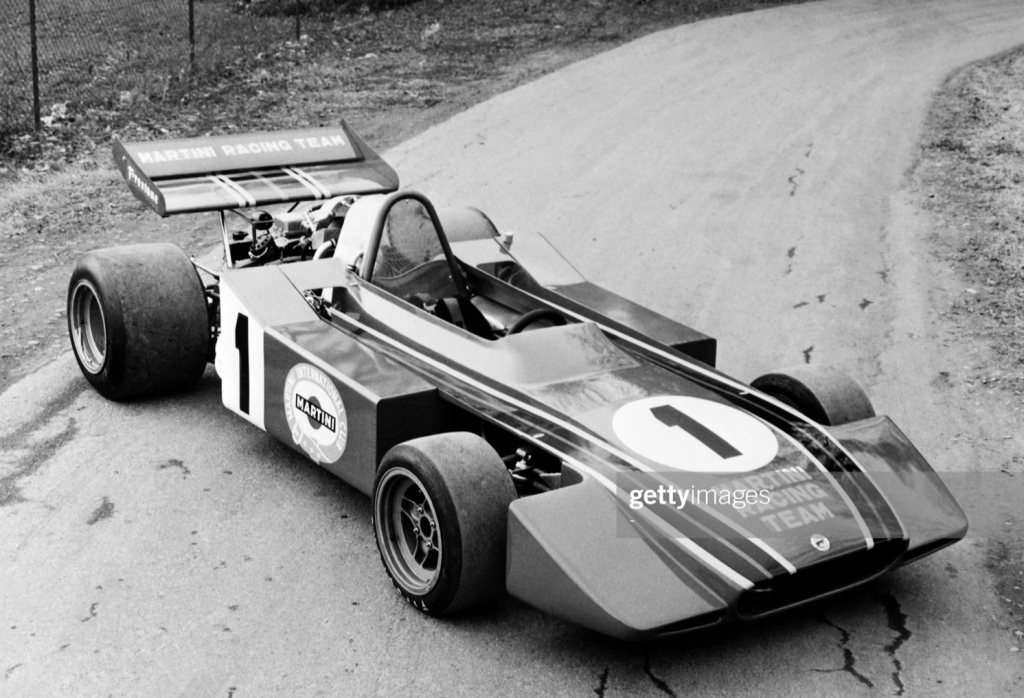
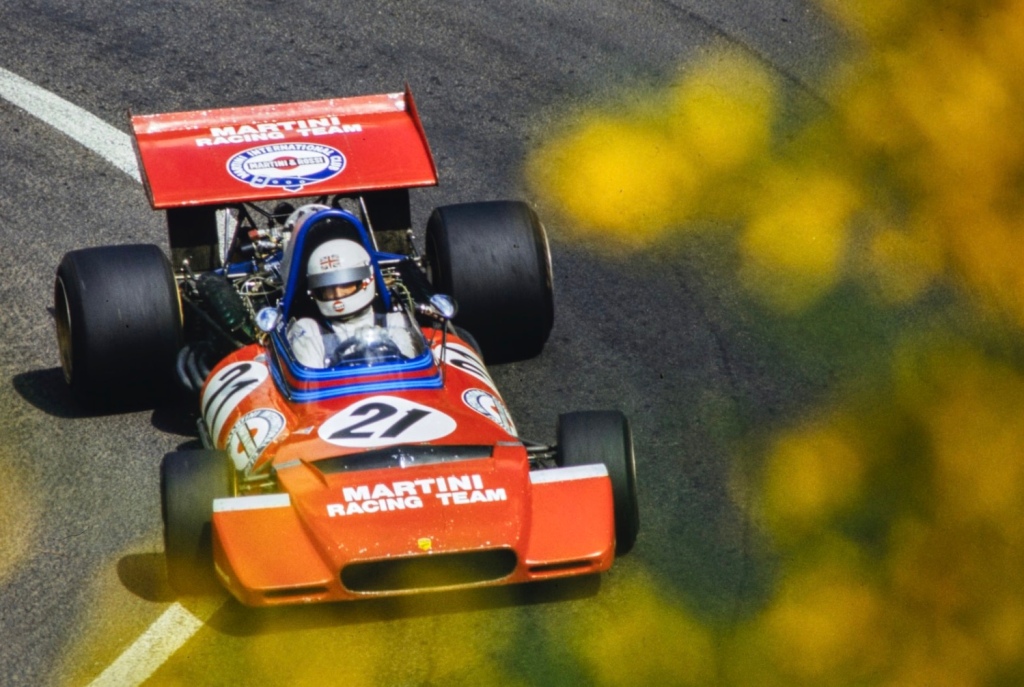
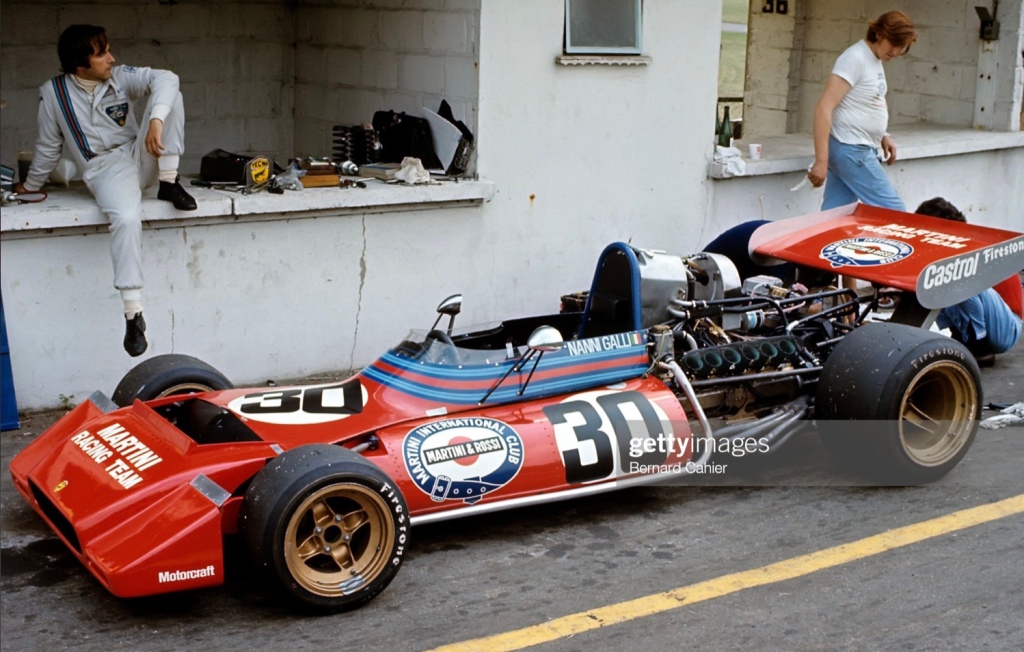
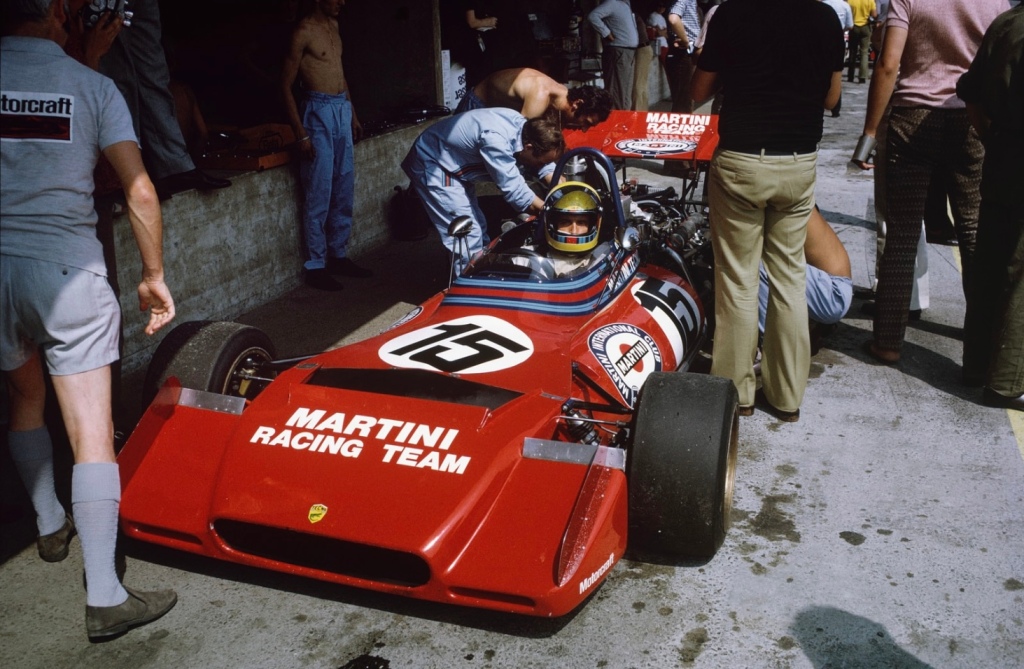
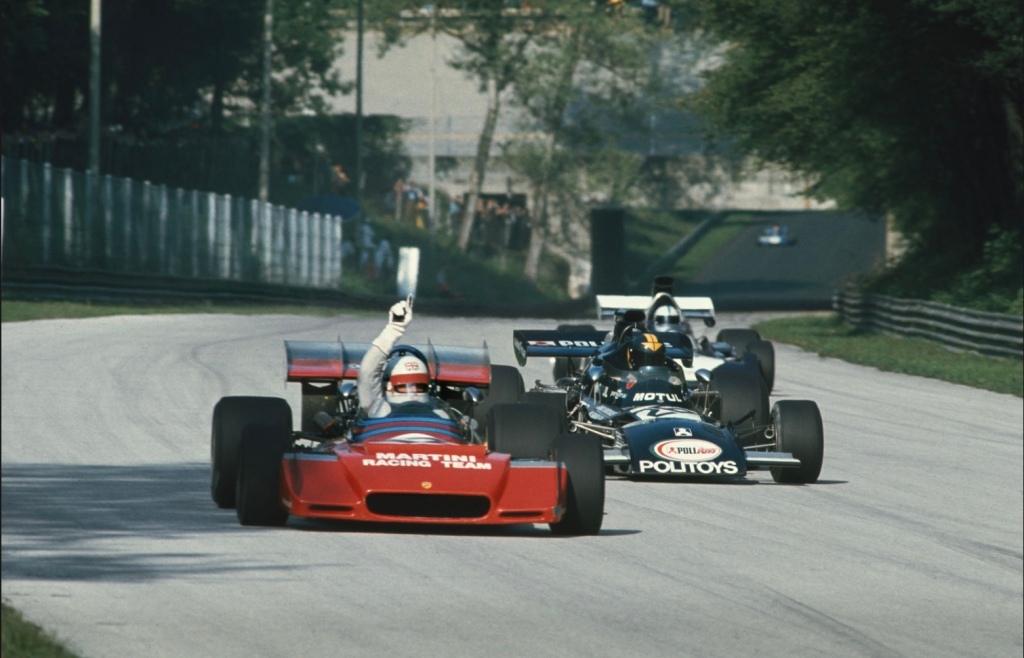
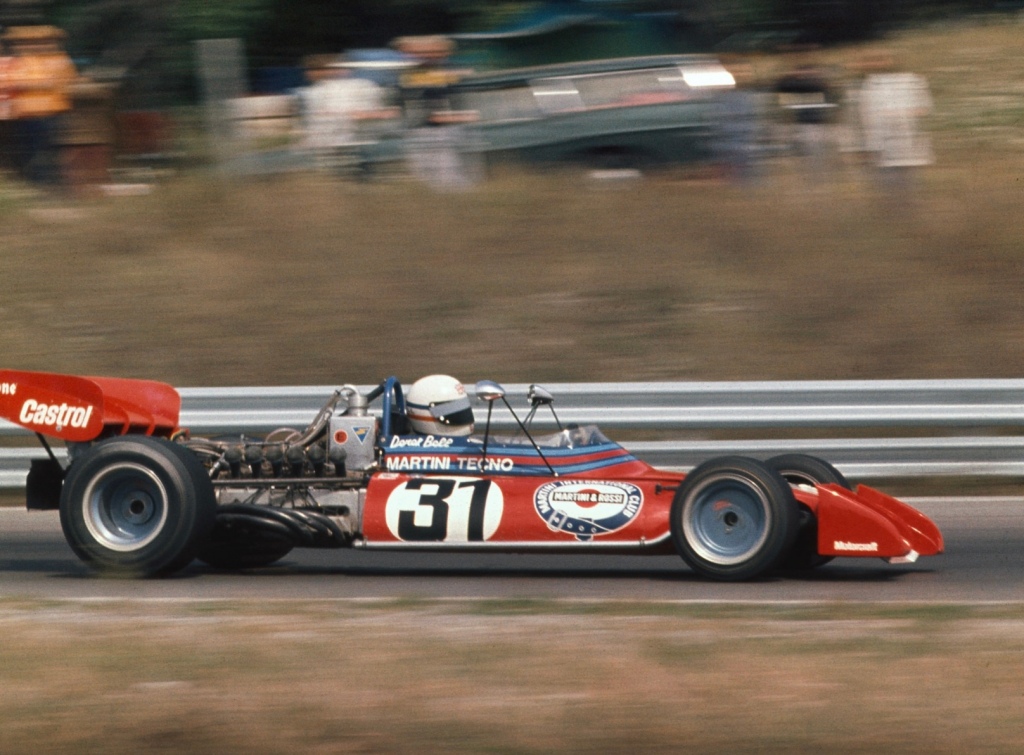
Martini and Rossi’s spectacular livery had adorned Porsche Salzburg 908s and 917’s in 1971, but with the end of the fabulous 5-litre sportscar era their sponsorship was destined for Tecno’s GP racing adventure.
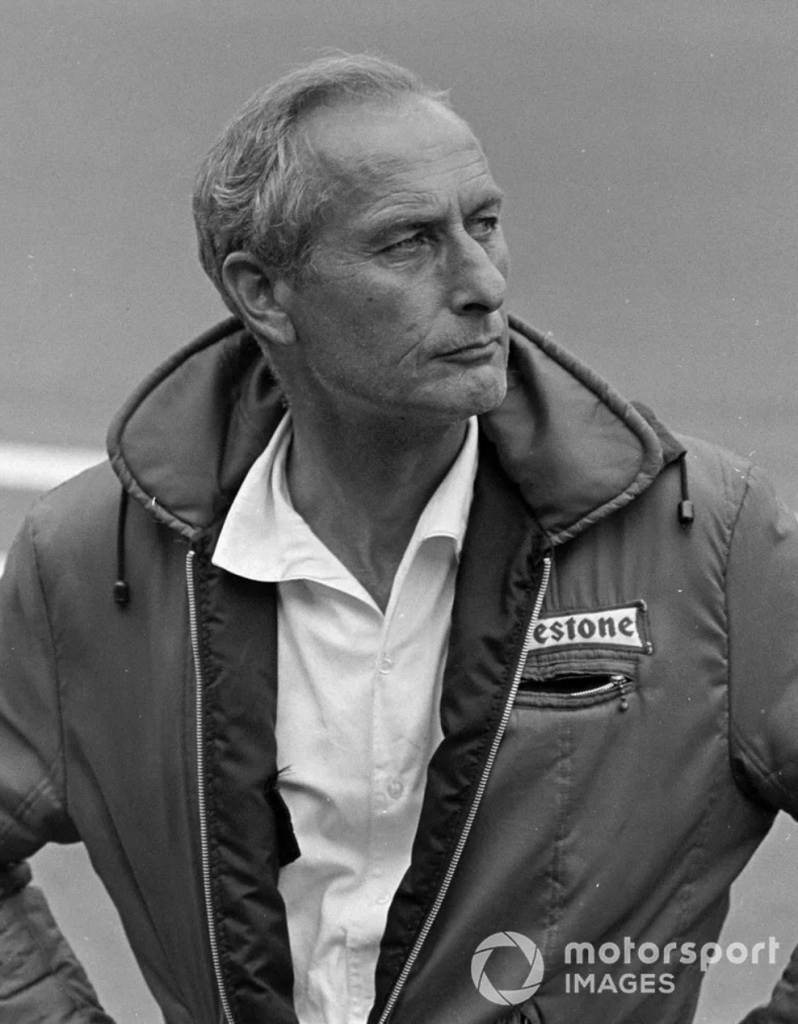
Upon John Wyer’s suggestion, Count Gregorio Rossi engaged the now out of work, very well credentialled JW Automotive Team Manager, David Yorke, as motor racing consultant for Martini & Rossi International to replace Hans-Dieter Dechent.
Vic Elford aboard the winning Martini Porsche 908/3 he shared with Gerard Larrousse at the Nurburgring 1000km in 1971 (MotorSport)
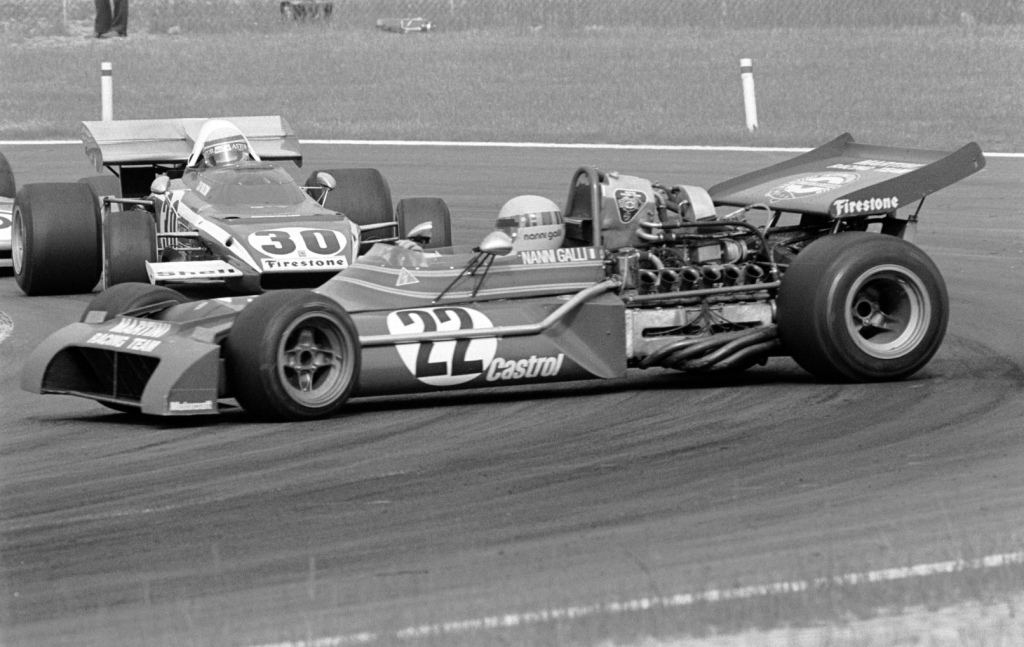
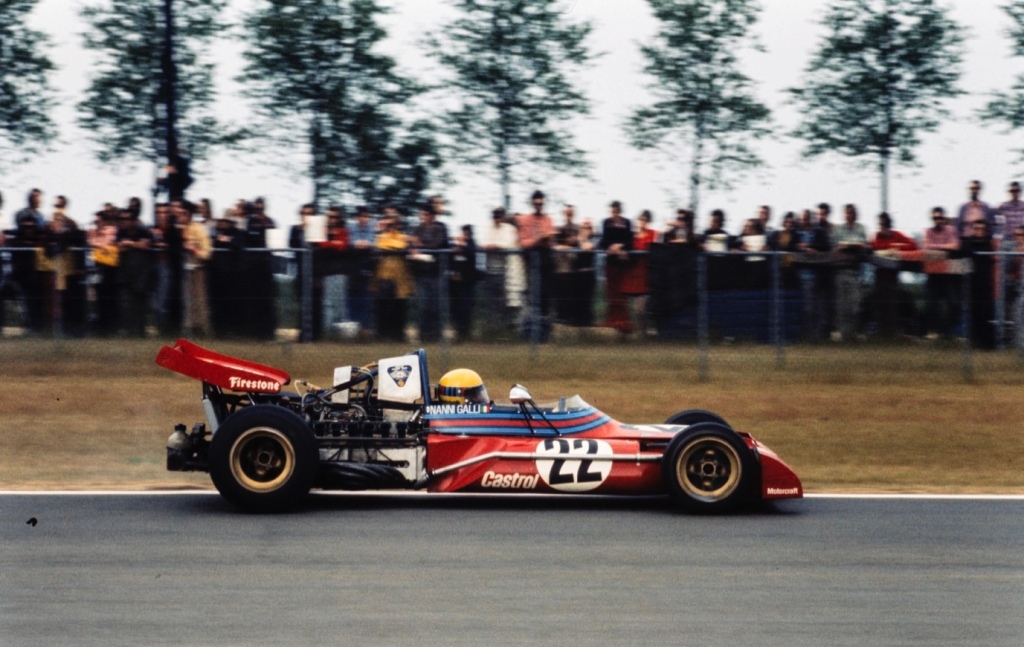
Initially it appeared the M&R money was destined for Brabham, a home it found in 1975. Derek Bell had been offered a Brabham drive, but ultimately Tecno got the lire, their nominated team were drivers Nanni Galli and Bell with Yorke as team manager.
Predictably, despite track tests in December 1971, the complexity of building the car’s core components in-house ensured the Tecno PA123 ran late. Derek Bell expressed his admiration for Tecno about that first test to MotorSport all the same.
“Finally, we (Bell and Yorke) got the call to fly to Italy. We arrived at Pirelli’s test track to find a delegation from the Rossi family but no car. First, I was hoping it wouldn’t show and, when it did, that it wouldn’t start. I’m convinced that if Tecno had had a disaster that day, I would have been off to Brabham. It was an icy cold day and the team poured hot water in the engine, fired it up and it ran and ran. We couldn’t believe it. David had to concede that it was a remarkable showing for a first test.”
(MotorSport)
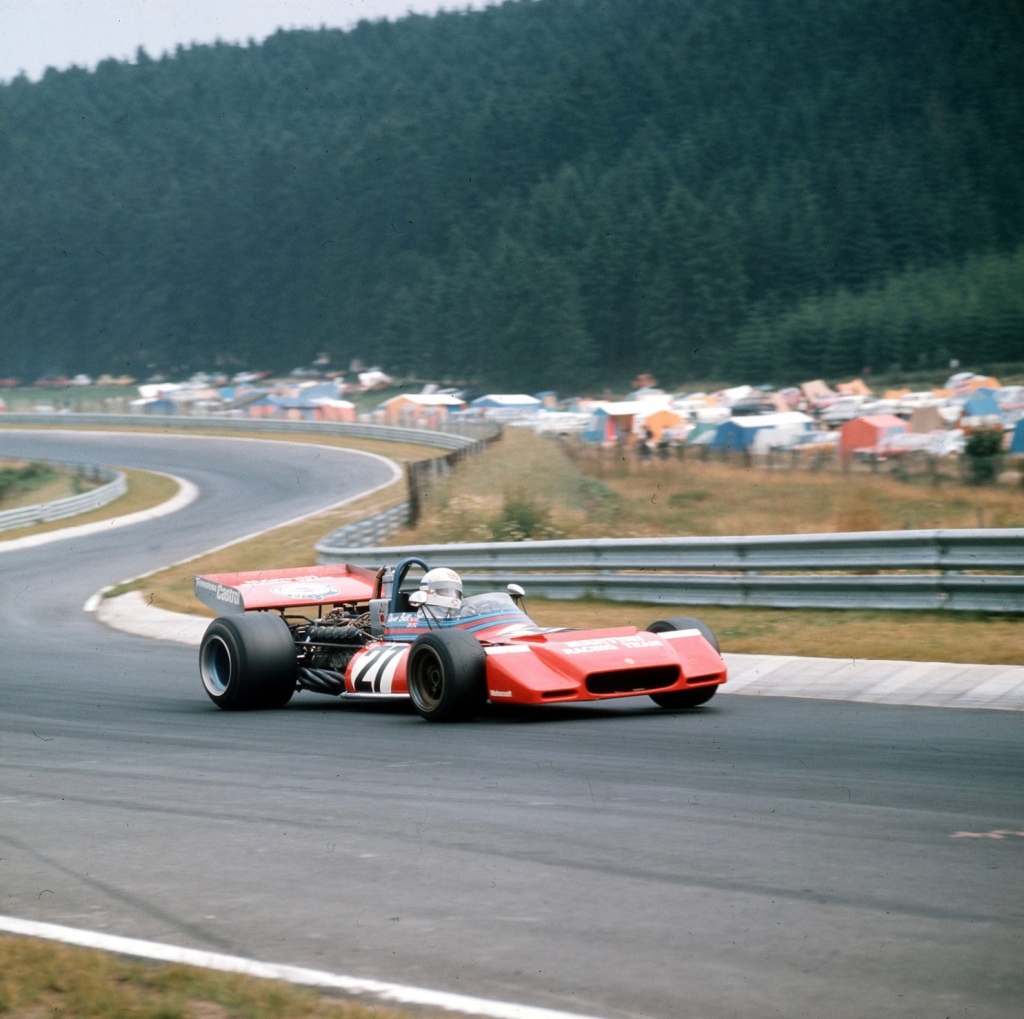
The car took its public bow during the Belgian GP weekend at Nivelles (above), the fifth round of the 1972 championship ultimately won by Emerson Fittipaldi’s Lotus 72D Ford.
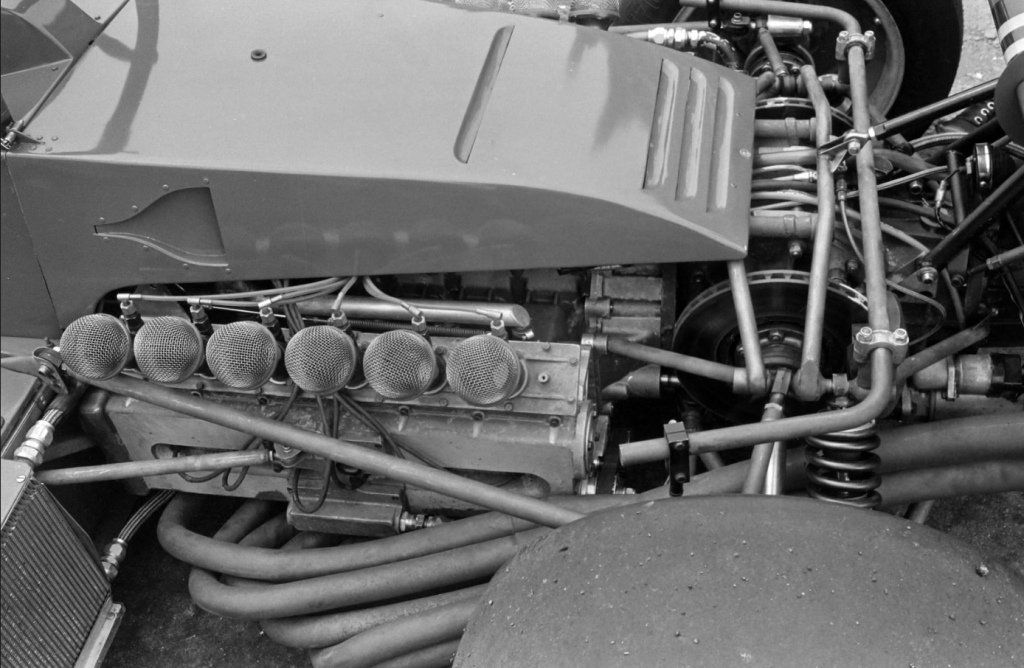
Galli about to spin, and be hit hard enough to write off PA123/1, by Clay Regazzoni’s Ferrari 312B2 (MotorSport)PA123/1 certainly had a touch of the prototypes about it. Luciano Pederzani has gone to all that effort to have a nice low engine – in part to aid the flow of the airstream onto the rear wing – and then we go and plonk the oil tank and related up high in the air costing rpm and upsetting airflow onto the all-important wing (MotorSport)
PA123/1 impressed the masses with its sound if not its speed. Galli qualified second last but ran reliably until spinning and taking out Tecno compatriot, Clay Regazzoni’s Ferrari. The Tecno was written off in the process.
The team next contested the non-championship Gran Premio della Republica Italiana at Vallelunga in mid-June. Galli finished third aboard a new car, PA123-2, in a performance which cheered the team despite the machine being way off the pace in a small, but reasonably classy eight car grid.
Bell at Clermont Ferrand in PA123/2 Nanni Galli on the Brands Hatch pit counter, PA123/2PA123/2, Brands Hatch
Bell had his first race drive in that car at Clermont Ferrand but got no further than practice. Four of the nine bolts attaching the engine to the rear chassis bulkhead had cracked from the engine’s massive vibrations, somewhat impairing the car’s handling. Good Vibrations they were not.
Galli was entered at Brands Hatch where PA123-2 appeared with a new rear suspension cross-member which mounted the coil spring/dampers more conventionally (mounted less vertically) on the advice of Ron Tauranac.
Tauranac was freelancing having sold Motor Racing Developments, and later left them, he was marginalised and short-paid by Bernard Charles Ecclestone.
Nanni qualified the car 18th on the 27-car grid, not bad at all given its shortage of power and surfeit of weight on this technically demanding circuit.
The Tecno 123 never gave more than 420/430bhp, 20 and 60 less than the contemporary DFV and Ferrari, while the car weighed 640kg, far more than the 550kg Ferrari 312B2, 540kg Tyrrell 003 Ford and 575kg McLaren M23 Ford.
The relative practice performance was ruined by an accident on lap 10 of the race.
Bell in PA123/2 at the Nurburgring (LAT)Engine change for Bell in Germany (LAT)Galli in the Osterreichring pits, PA123/2 (MotorSport)
Bell was the more experienced Ring racer and took the wheel of PA123-2 in Germany. The car was further modified with wider front track and revisions to the oil tank. Derek was Q25 of 27 but out after only four laps with valve failure. Up front, the other flat-12 car, a 312B2 driven by Ickx won from pole.
Back in Bologna, Pederzani and his team wrestled with engine vibrations and lubrication issues in the same way Mauro Forghieri struggled to stop his flat-12 breaking its crankshafts early in its late 1969 life; seemingly insurmountable problems which resulted in Chris Amon leaving Ferrari…
Off to Austria, Galli qualified Q23 of 36 but 3.5 seconds adrift of winner/poleman Fittipaldi’s fastest Lotus 72 practice time. This time the Tecno finished the race with invaluable race mileage, albeit an unclassified 17th nine laps adrift of Emerson. Tecno had such a climb to make!
There was plenty of pressure too, with unhappy drivers, sponsors and Bologna technicians. The team’s home event at Monza was next. Armaroli left in frustration, believing the engine unreliability was due to inexperienced engine fitters at base and among the race team members.
Derek Bell aboard PA123/2 waving Carlos Pace and John Surtees through at Monza; March 711 Ford and Surtees TS14 Ford (LAT)Galli in PA123/5 at Monza in 1972 (MotorSport)Tecno PA123/5 drawn in 1972 Monza spec (G Piola)
Two cars were entered in Italy. A new machine, chassis PA123-5 (sic-what happened to chassis 3 and 4?) with neater front suspension and Matra-like nose for Galli, alongside PA123-2 for Bell.
With Fittipaldi again up front, Galli was Q23, while poor Derek didn’t make the cut. Worse still, in front of their home crowd – Galli’s, the Pederzani’s and Rossi’s – the car only completed 6-laps before, you guessed it, the engine failed.
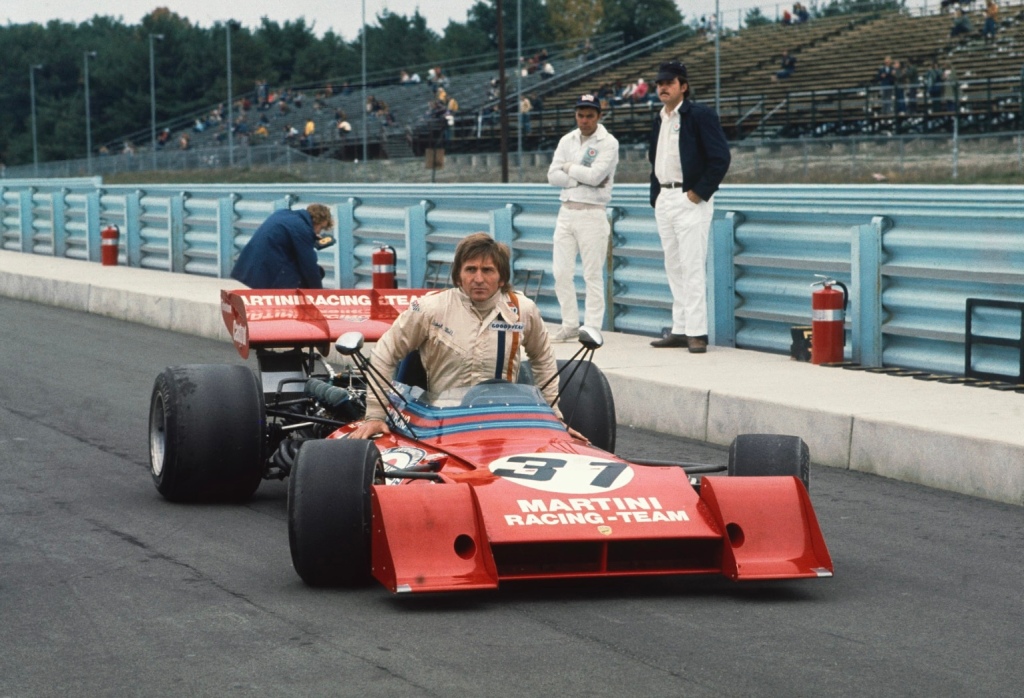
The Martini Racing Team took the new car to North America for Bell to race, but it wasn’t a happy trip with Derek crashing on the warm up lap at Mosport from Q25, last on the grid.
On the fast, technically challenging Watkins Glen track in upstate New York, Derek was Q30 of 32, seven seconds adrift of Jackie Stewart’s Tyrrell 005 Ford pole. Again, the Tecno’s engine went pop, this time after 8 laps.
At best the year was a character building one, in reality it was a clusterfuck of some scale which got a whole lot worse in 1973.
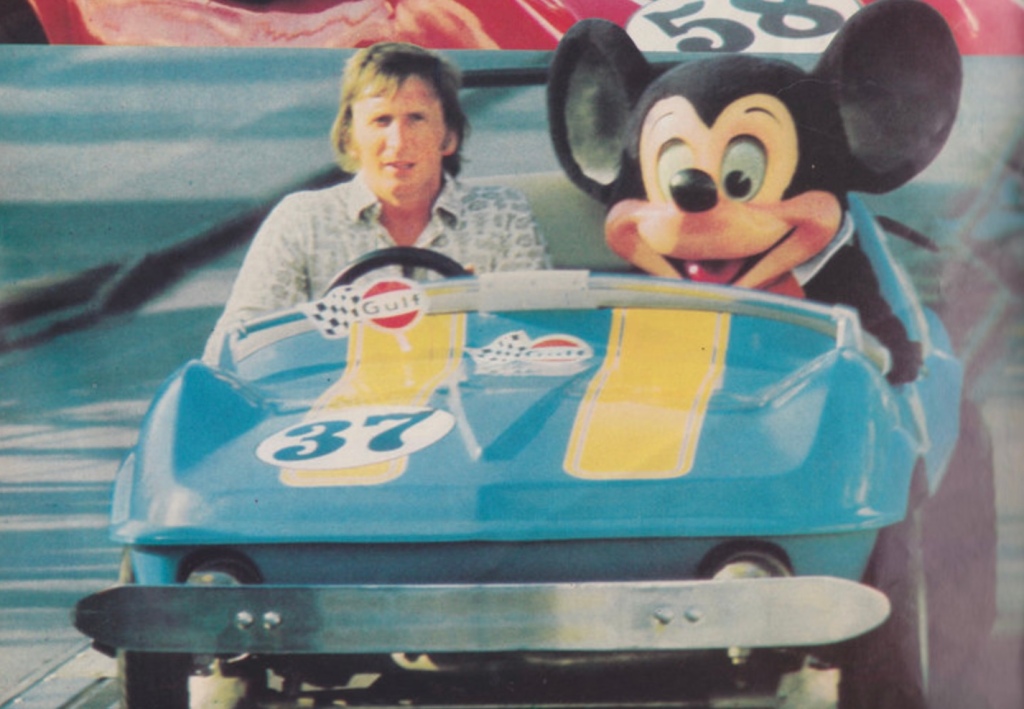
Bell, Mosport 1972 in PA123/5. Note the Melmag wheels, popular at the time. Oil tank smaller but still not optimally placed (MotorSport)Get me outta here…Bell in PA123/5 at Watkins Glen 1972 (MotorSport)Derek Bell trying to forget about the task at hand, Disneyland 1972 (unattributed)
In a perfect world the plan for 1973 should have been obvious. Race one DFV powered Tecno while continuing to develop the flat-12 until it was competitive. That way the team would have gained valuable miles to develop the chassis while getting the engine to required levels of power and endurance.
Of course, sound decisions are only possible if all parties in a business cooperate and communicate; the Pederzanis, Rossis and Yorke. Clearly, they were not, despite that, to their credit, Martini & Rossi saddled up for another year.
Instead of commonsense – the chain of events differs depending upon your source – Yorke convinced the Rossi’s to back a plan involving him constructing a car in the UK.
For reasons Yorke never disclosed, he engaged his friend, Gordon Fowell’s Goral Engineering to design a car which was fabricated by John Thompson’s respected Northhampton firm. Professor Tim Boyce, also working with McLaren at the time, provided advice on aerodynamics.
Fowell’s design credentials then were entirely outside racing. His involvement in motorsport was as an amateur driver and partner to journalist Alan Phillips in a company which produced audio tapes of race engines. Goral was their latest venture.
David Yorke lost in thought at Le Mans in 1969, a good weekend for JW Automotive, the Pedro Rodriguez/ Jackie Oliver Ford GT40 won
David Christopher Yorke was a war-hero. He became an RAF Flying Officer (#37059) in 1937 and was twice awarded the Distinguished Service Order for bravery during the Battle of France. The first was for carrying out low-level reconnaissance on German positions in a Gloster despite heavy anti-aircraft fire, the second was a similar act which involved dropping supplies to beleaguered troops in Calais. The award of Flight Lieutenant Yorke’s Distinguished Flying Cross was recorded in The London Gazette on July 23, 1940.
He then flew Hurricanes in The Battle of Britain before being posted to India as a Squadron Leader in 1941. By the end of the David Yorke was serving as a Group Captain in the Far East.
He remained with the RAF post-war but in 1949 accompanied another former RAF officer, Peter Whitehead to the Czech Grand Prix. Whitehead won the race in his Ferrari 125 and offered Yorke the role of team manager, he commenced in 1950. Success with Whitehead, Vanwall, Aston Martin and JW Automotive followed in the succeeding two decades.
This extraordinary man was described in one of his medal recommendations as a “commander and organiser of exceptional merit.” In this case, however, he was most cavalier with Martini & Rossi’s money, his choice of Goral Engineering to design the save-our-bacon Tecno was a remarkably low percentage play.
The Pederzani’s – successful industrialists before they commenced racing, and even more so after they did, had no shortage of lire – thought stuff-this! They engaged Alan McCall’s Tui Engineering to design a new state of the art contemporary chassis, or a PA123-B, depending on your source.
“Luciano was offended because Yorke had suggested Italians couldn’t do monocoques,” McCall told MotorSport. “My car was intended as nothing other than an exercise to show that he could build his own tub.”
McCall was one of a small number of very talented Kiwi engineer/mechanics who had huge influence on elite level motor racing in the sixties, seventies and beyond. His CV included stints at Team Lotus and McLaren before venturing out on his own with the construction of Tui F2 cars.
His team commenced work on New Year’s Eve 1972 and completed the car, retaining only the original design’s rear end, an amazing 10 weeks later.
So, what could possibly go wrong?
Two opposing camps, one based in England, the other in Italy, within a team with poor communication and levels of trust, developing a chassis each powered by a limited supply of engines which struggled to string more than 10 race laps together. Oh yes, loss of driver continuity too, both Galli and Bell’s services weren’t required in 1973, or more likely they ran for the Dolomiti…
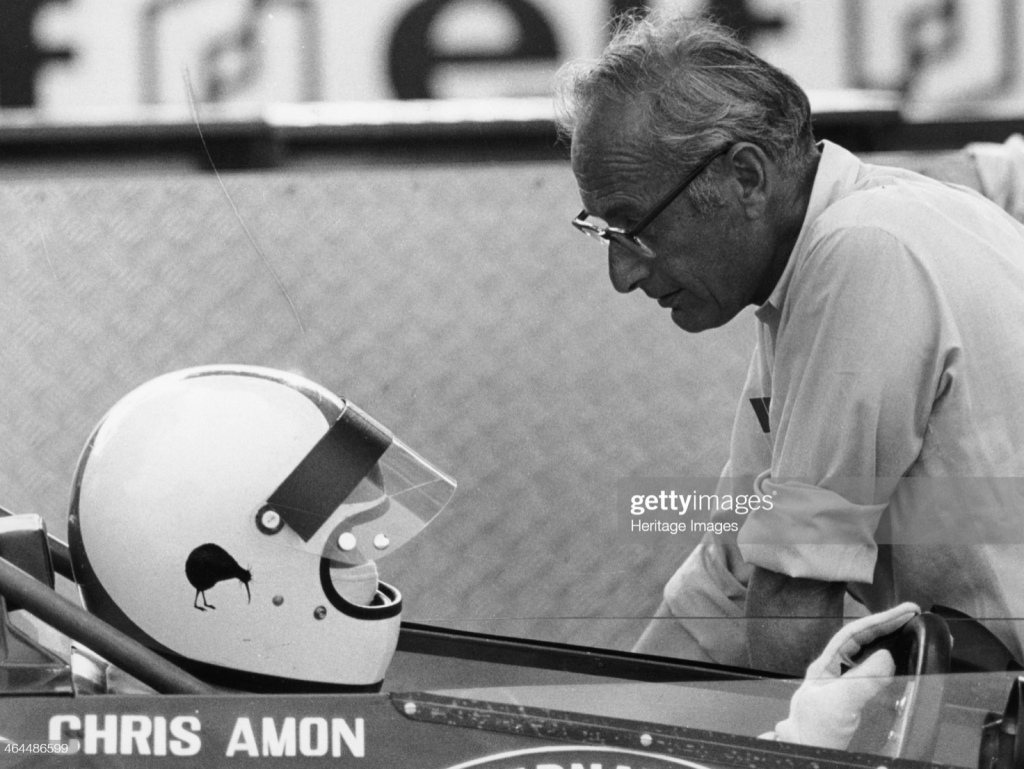
Chris Amon, Matra MS120B from an obscured Tim Schenken, Brabham BT33 Ford during the 1971 French GP at Paul Ricard (MotorSport)‘Joisus David, my 250F was quicker than this!’ Amon and Yorke during a difficult 1973
Meanwhile, back home in New Zealand, Chris Amon was enjoying a long, languid summer. His Matra drive ended at the conclusion of 1972 when the French aerospace giant ceased their one-car F1 program.
Amon agreed terms to rejoin March, with whom he had a tempestuous 1970. Somehow, again the reports differ, the deal went awry and collapsed, so Chris signed with Martini & Rossi after an approach from Yorke.
Chris was still one of F1’s quickest drivers. The young veteran (29), schooled by Bruce McLaren, was also a gifted development driver. Amon was great for Tecno, albeit the Bologna boys were way below Chris’ status in life, but beggars couldn’t be choosers in the late summer of ‘73…
Amon told MotorSport “When I agreed to drive, I had no idea what car I’d be driving. “Then Yorke filled me in, explaining that the McCall chassis was nearly ready, and that Fowell’s would be for later.”
Chris tested the McCall/Tui chassis, PA123-6, at Misano in March, Vittorio Brambilla had a steer that day too, he happened to be there testing his F2 March.
“When Pederzani saw the thing, he suddenly got excited about racing it,” remembers McCall, who corroborates press reports of the time that the car could have raced as a Tecno Tui.
In a crazy situation, McCall claims that Yorke “rode roughshod over the Pederzanis” with the result that Luciano “felt insulted”. McCall’s right-hand man, Eddie Wies, recalls “the British turning up one day, covering our car in Martini stickers and claiming it as theirs.”
This scenario is entirely possible given the Goral/Fowell machine was still nowhere near complete, Tecno needed a race-ready car.
At this point the relationship between the parties was trashed, the marriage was over with only the final act to be played out in a truncated 1973 F1 season.
“After that (the takeover of the McCall car) Luciano said he was only going to fulfil his obligations and no more,” recalled McCall, who departed Tecno straight after the Misano test.
“His contract was to supply engines, transport, and the mechanics. He’d built something like 12 engines, but no development was undertaken. He didn’t even put them on the dyno.”
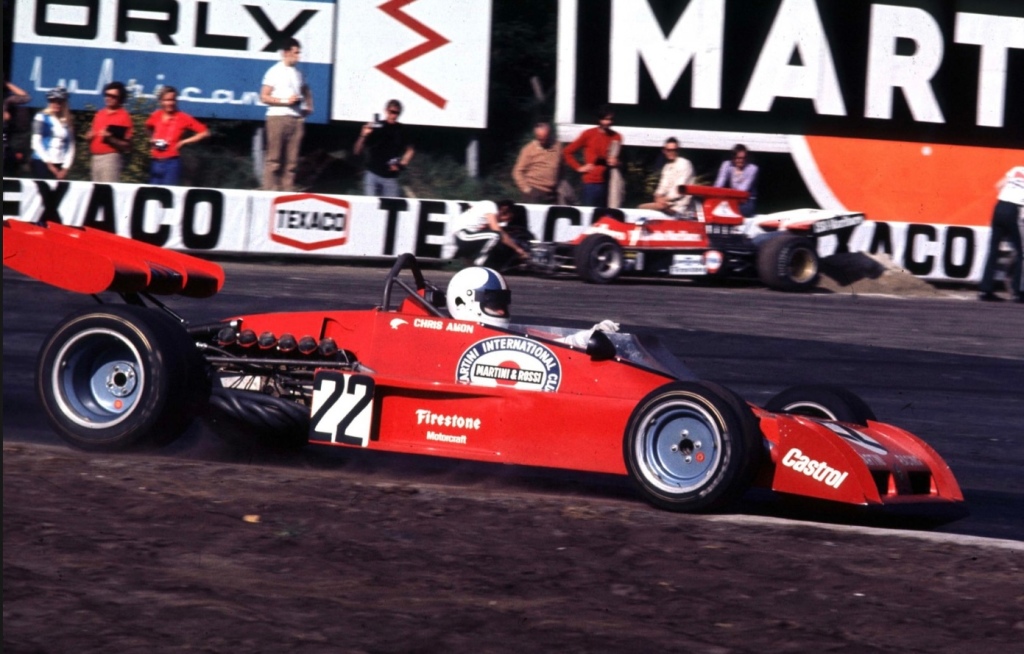
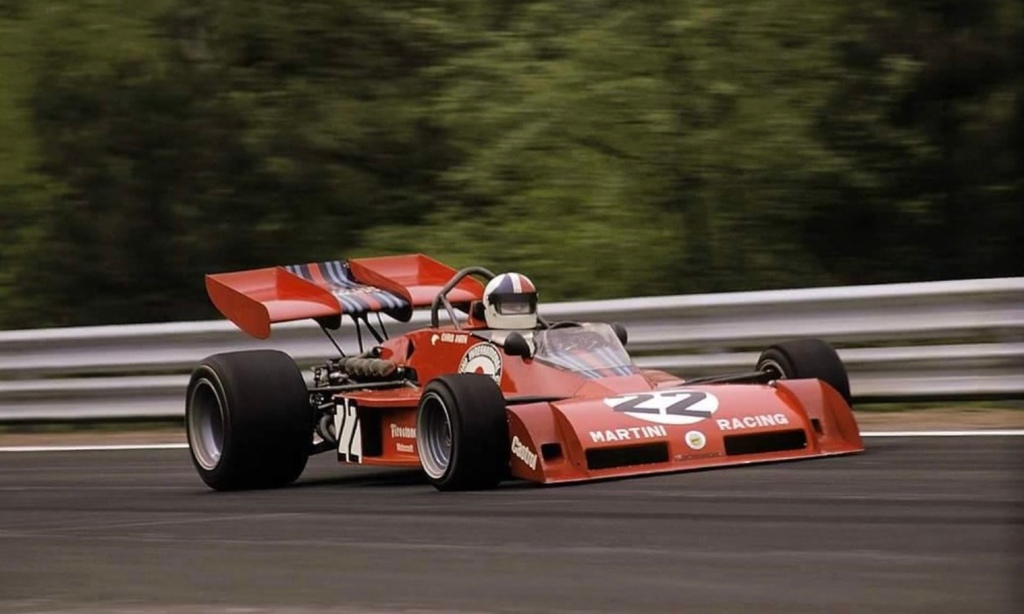
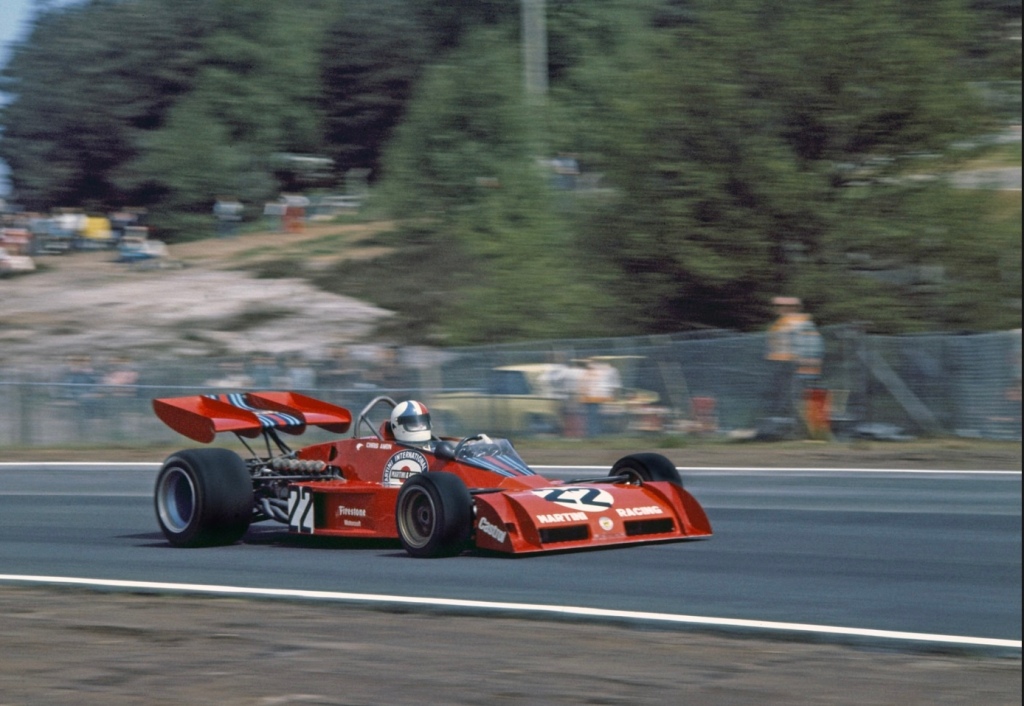
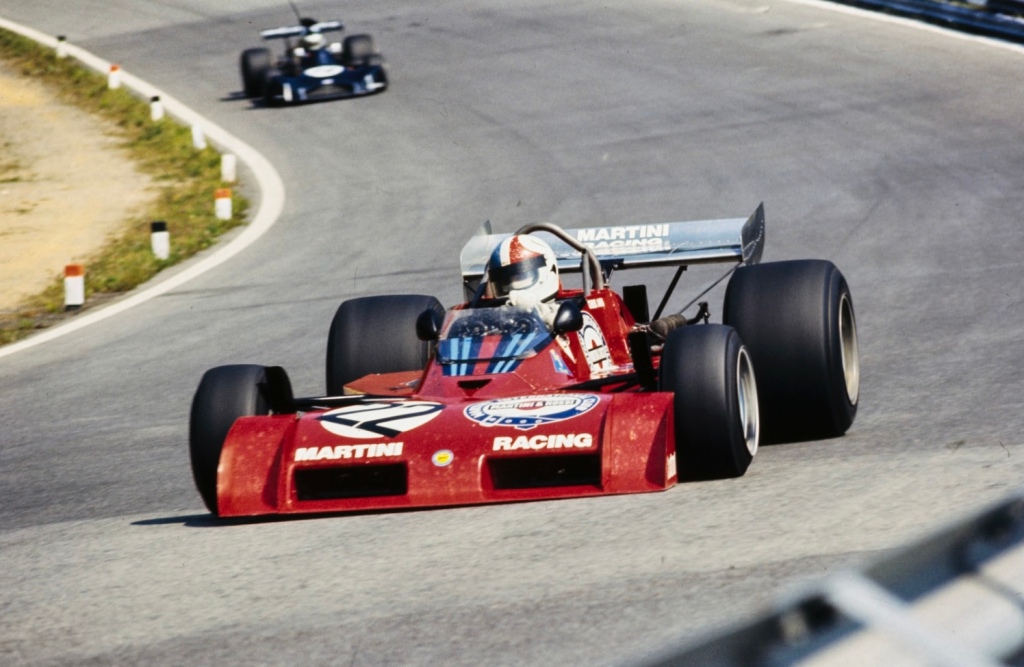
Amon in PA123/6 at Zolder in 1973. Sixth in a rousing if uncompetitive performance (LAT) Amon with plenty of rear wing at Zolder (unattributed)(LAT)
When the Tecno transporter rumbled into the Zolder paddock for the Belgian Grand Prix in mid-May the team had already missed the Argentine, Brazilian, South African and Spanish Grands Prix.
Emerson Fittipaldi had won three of them for Lotus, while Jackie Stewart took one for Tyrrell. JYS was about to start a serious run for the title aided and abetted by Fittipaldi, and his new Lotus teammate, Ronnie Peterson taking driver’s championship points off each other.
At Zolder, Amon qualified 15th of 26 cars and finished a rousing, point-scoring sixth, totally exhausted due to high temperatures inside the cramped cockpit. He was three laps adrift of Stewart, but it was a typically gritty drive.
At Monaco things seemed even better. Amon started a fantastic 12th and was running as high as seventh before he stopped with braking problems on lap 15, then retired on lap 19 with the same drama.
“It wasn’t a bad chassis at all. It was a little bit too heavy, but in handling terms was probably a match for anything around. On the tighter tracks it went well, but once we got to somewhere like Silverstone we were in trouble.”
Amon on the hunt at Monaco, seventh was stunning while it lasted. The drive says plenty about Amon’s skill but also the quality of the chassis, and , perhaps, the torque of the Tecno flat-12 Kiwis both. Amon in front of Denny Hulme’s McLaren M23 Ford at Monaco in 1973 (MotorSport)
The team skipped the Swedish GP in mid-June but entered the French GP, held at Paul Ricard on July 1. Amon and Yorke arrived from England, but the truck from Italy was nowhere to be found.
By then the Goral chassis, the Tecno E731 had run for the first time. Bruce McIntosh, an Italian speaker after seven years with Serenissma, was employed by Yorke to put the car together. “We built the monocoque over here at John Thompson’s place, but we never had a dummy engine,” McIntosh recalled. “So, I had to take the tub to Italy and work out all the systems at the rear end.”
Doubtless the sheer stupidity of this duplication of effort with limited resources isn’t lost on you. There wasn’t a lot of love either. In one meeting Luciano Pederzani floored Yorke, in another Amon’s frustration boiled over in Tecno’s offices. He picked up an ashtray and chucked it across the room, a journalist standing outside throughout duly reported the shenanigans in the following morning’s Gazzetta dello Sport.
The Goral Tecno first ran down a back alley behind Tecno’s workshops on Via Ducati before being transported back to England and tested at Santa Pod. On both occasions there it spewed out oil.
Amon with two toys to play with at Silverstone in 1973; The McCall/Tui PA123/6 in the lower shot, and Fowell/McCall E731 in the upper shot (MotorSport)
Amon had no recollection of driving this car until the British Grand Prix weekend when Chris practiced both Tecnos.
Ultimately, he qualified 29th, and last for the race in the Tui/McCall car. The result was hardly surprising on this power circuit, Amon felt the car had no more than 400bhp. In the (restarted) race he retired after only six laps with failing fuel pressure.
A fortnight later the Goral/Fowell E731 was taken to Zandvoort, and again, after driving both cars, Amon practiced and raced the PA123-73. He qualified 19th of 24 cars in the tragic race which cost Roger Williamson his life aboard Tom Wheatcroft’s March 731 Ford. Chris was out with a fuel system problem after 22 laps.
Amon heading out to practice the Tecno E731 at Zandvoort (MotorSport)
Tecno missed the German GP but rejoined the circus at the Osterreichring for what proved to be their final race, an act of the complete farce.
Pit pundits were amused to see the Tui Tecno arrive in the Tecno transporter and the Goral Tecno on a trailer behind Fowell’s Road car; one-for-all and all-for-one.
Amon qualified the PA123-73 second last on the grid but didn’t take the start. There simply wasn’t a suitable race-engine to install, he departed in disgust and contempt.
And that, sadly, was that.
Chris, PA123/6 Osterreichring 1973 (MotorSport)Tecno E731 Osterreichring 1973. Note the neat location of the big oil tank and radiator, Hewland FG400 gearbox and challenging exhaust pipe runs (MotorSport)
The Pederzani’s withdrew from racing but continued with their other enterprises. Amon finished the season with a couple of guest drives for Team Tyrrell, albeit his drive at Watkins Glen evaporated after Francois Cevert’s tragic death during practice in a sister car.
Looking back decades later, Amon claimed that Tui Tecno PA123-73 was the better car, but conceded the Goral Tecno didn’t get a fair crack of the whip. “It was a beautiful looking car, but it lacked development” Indeed, given its late arrival the E731’s potential was never unlocked according to those involved.
“Fowell was a clever guy,” says McIntosh, who remained with the designer to work on Amon’s own F1 car the following year; another catastrophic piece of Amon decision making.
Thompson recalls the final Tecno incorporating a host of “different ideas”. It was the first F1 chassis, he claims, to run a fibreglass rear wing.
McCall and McIntosh, from opposite camps, agreed that Luciano Pederzani was a talented engineer. McCall describes the Italian as “a hands-on mechanic and a real smart man”. McIntosh remembers him as “an intuitive engineer”.
MotorSport wrote that “The end appears to have come at Silverstone, and explains why the team ran out of engines two races later. The story below was told to Wies by a Tecno mechanic years later…”
“He told me that a very long top gear was put in our chassis. The idea was to try to make the British (Goral Tecno) car look better than it was.” That might explain why the Tecno did not qualify that weekend.
This makes no sense to me…The Tecnos wouldn’t have had the torque/power to pull a super tall top gear. A short top would have popped engines due to over revs, a tall one? Not so.
“As soon as Luciano found out he went home and said that he would never be seen at a racetrack again.” Work on a flat-eight F1 engine was immediately stopped.”
Luciano Pederzani kept his word right up to his death in his Bologna workshop in January 1987, he never did return to racing. It was very much motor racing’s loss.
Any assessment of Tecno’s considerable achievements should be viewed over a decade, not the much narrower F1 prism of 1972-73.
Chris Amon, PA123/6, Monaco 1973 (unattributed)
Etcetera: Tecno PA123/6...
(MotorSport)
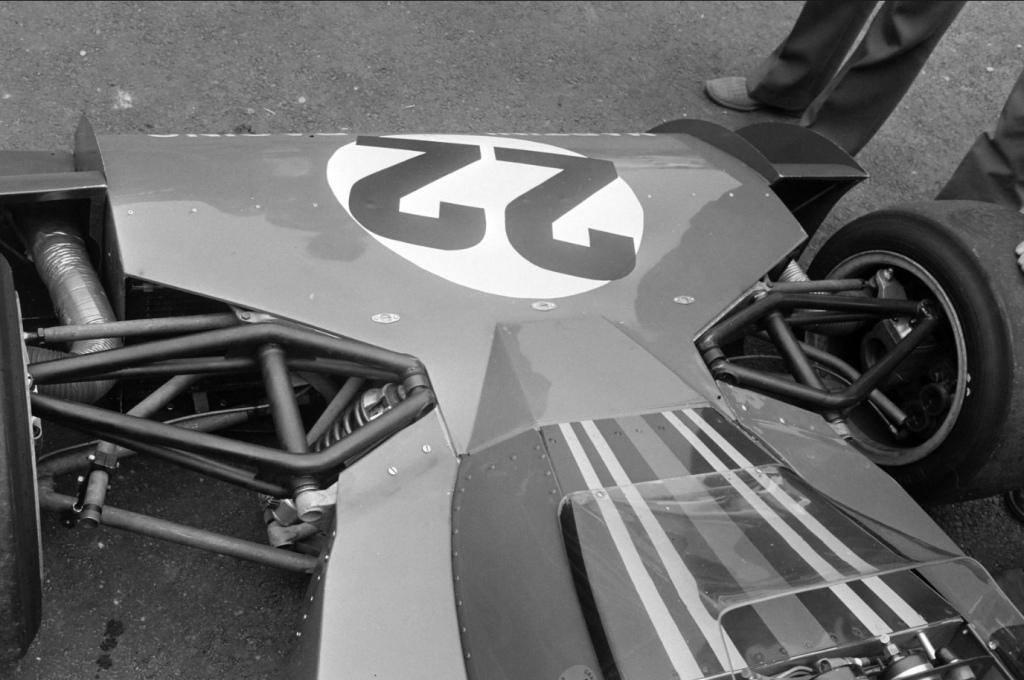
Beautiful fabrication wherever you look. Tubular rocker operating coil-spring Koni damper and lower wishbone. Bodywork is aluminium.
(MotorSport)
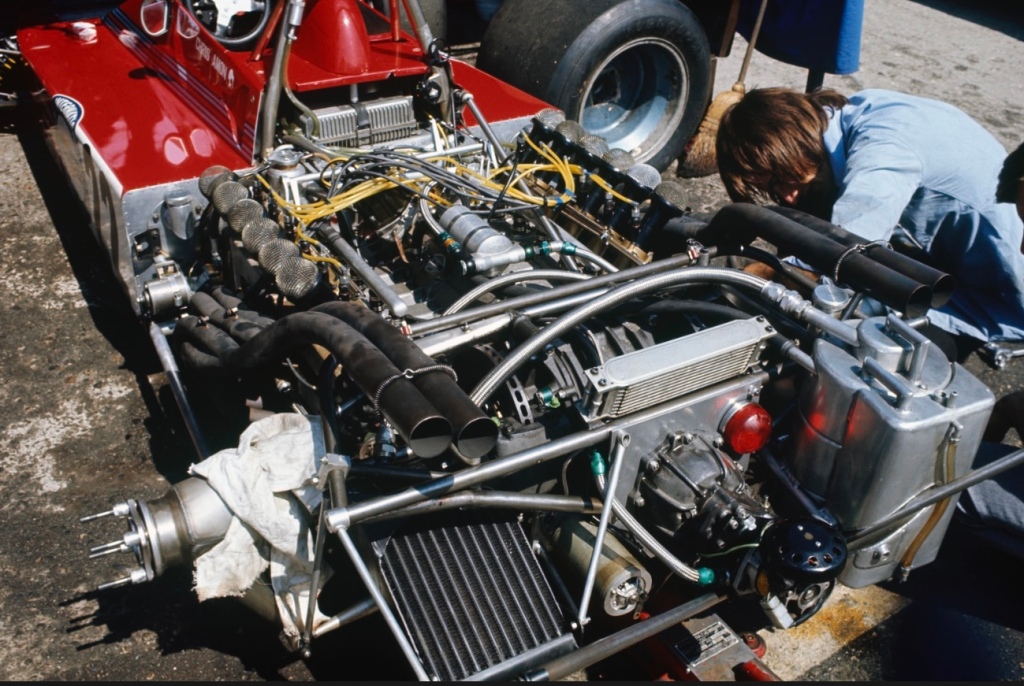
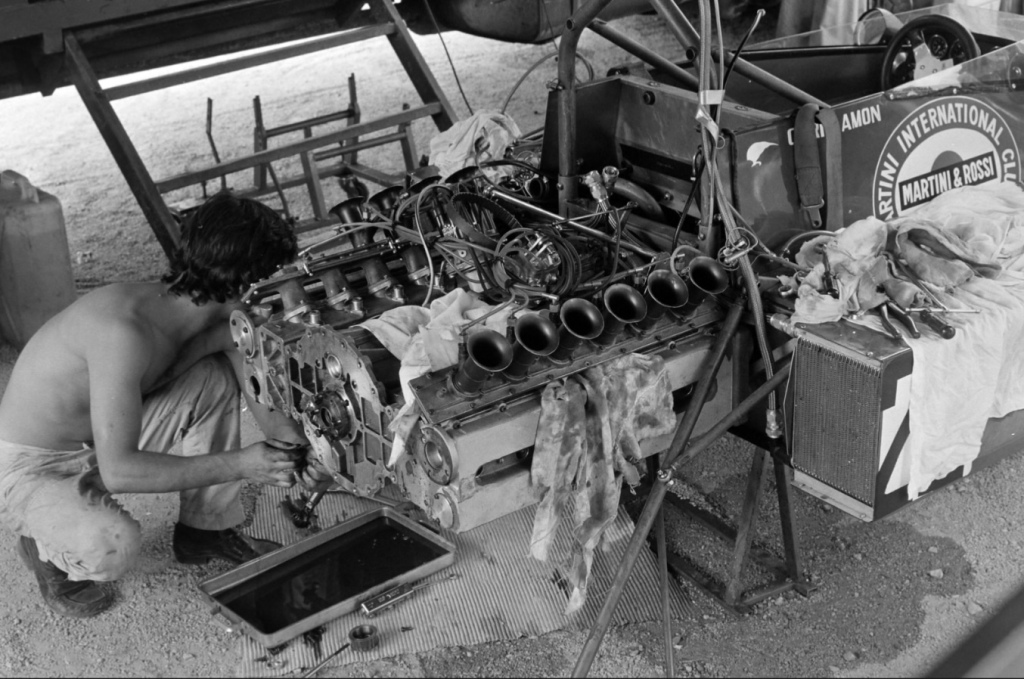
Amon’s car having an engine change at Monaco. Just how low these flat-12s sit in the car – a stressed component as you can see – is shown from this shot. Rear of the 123-73 is the same as 123-72; a design mandatory requested of Alan McCall.
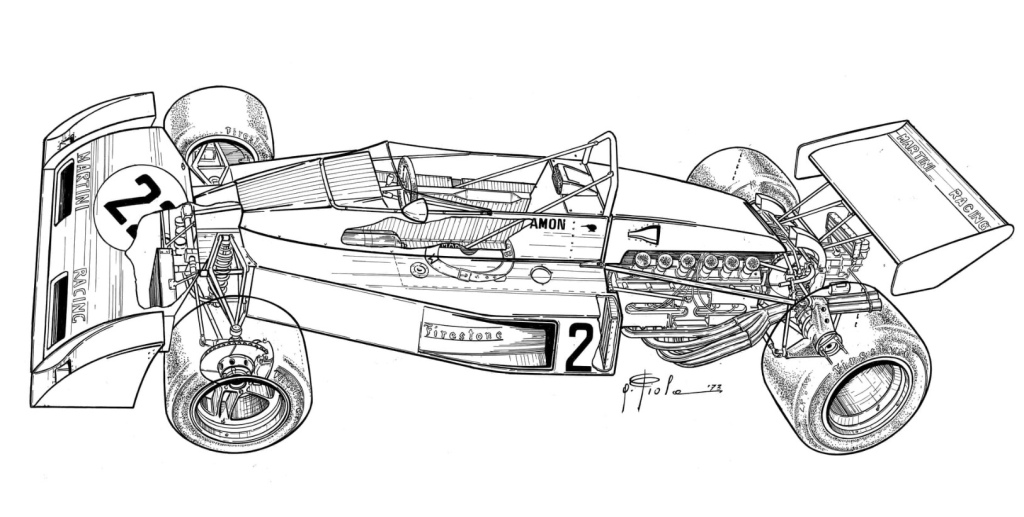
(G Piola)(unattributed)
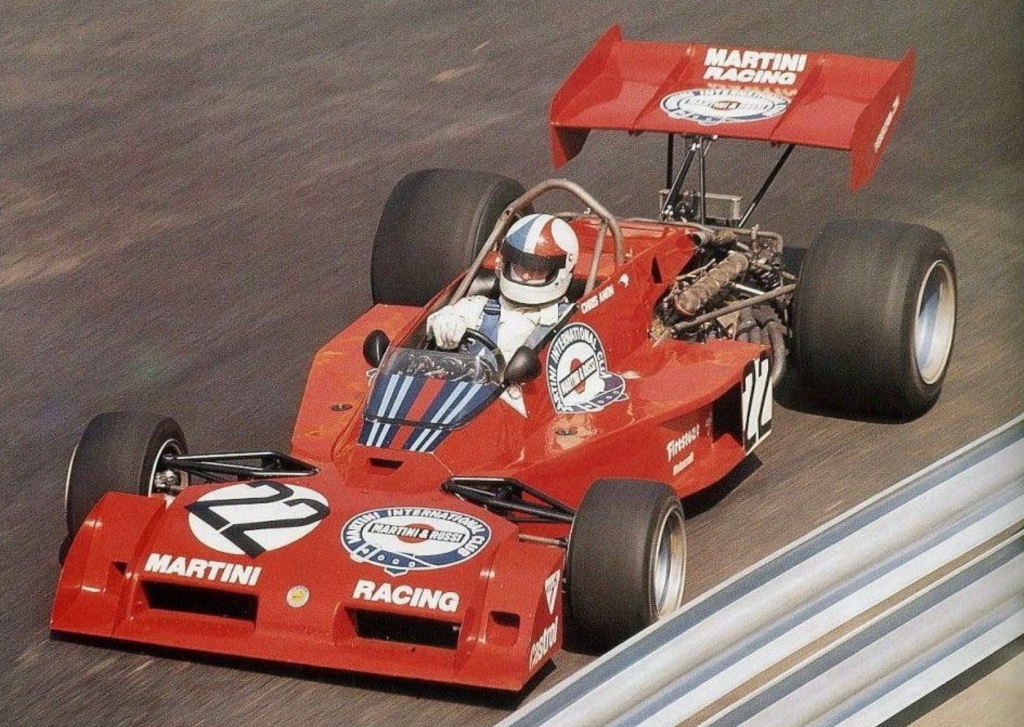
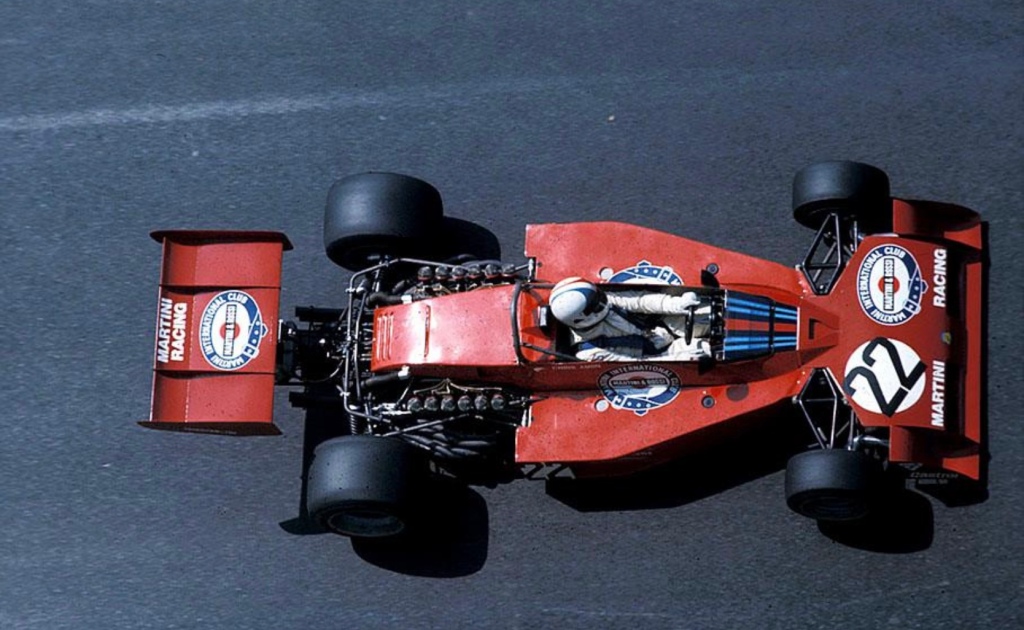
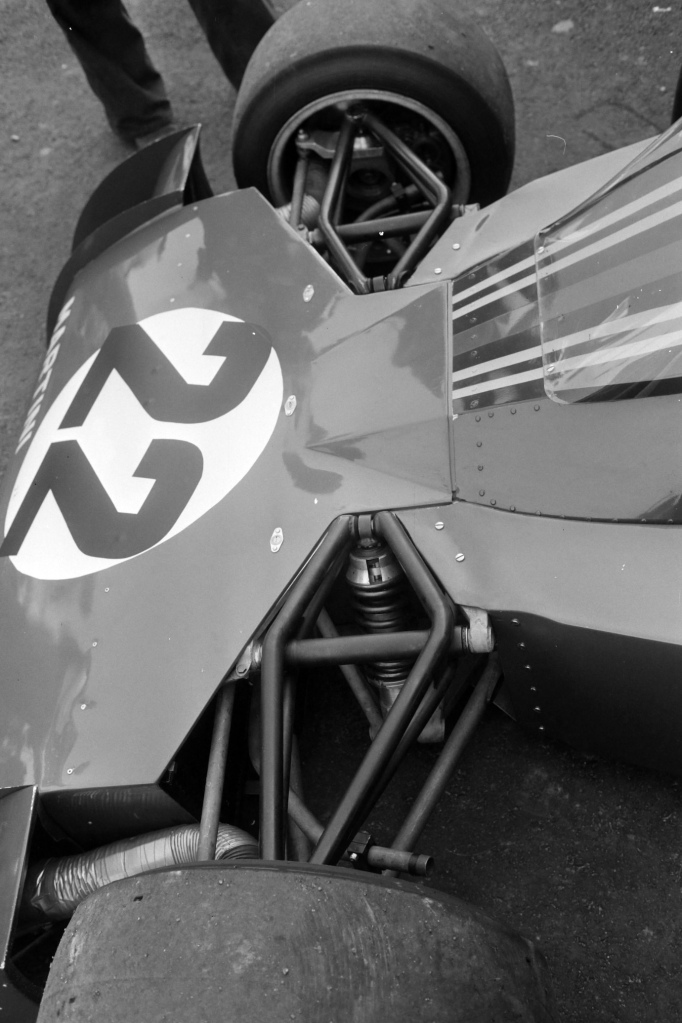
The overhead shot from a Monaco apartment shows the shape of PA123/6 and it’s width. Deformable structures were mandated by the FIA that season, some teams did a better job of integrating them than others.
(MotorSport)
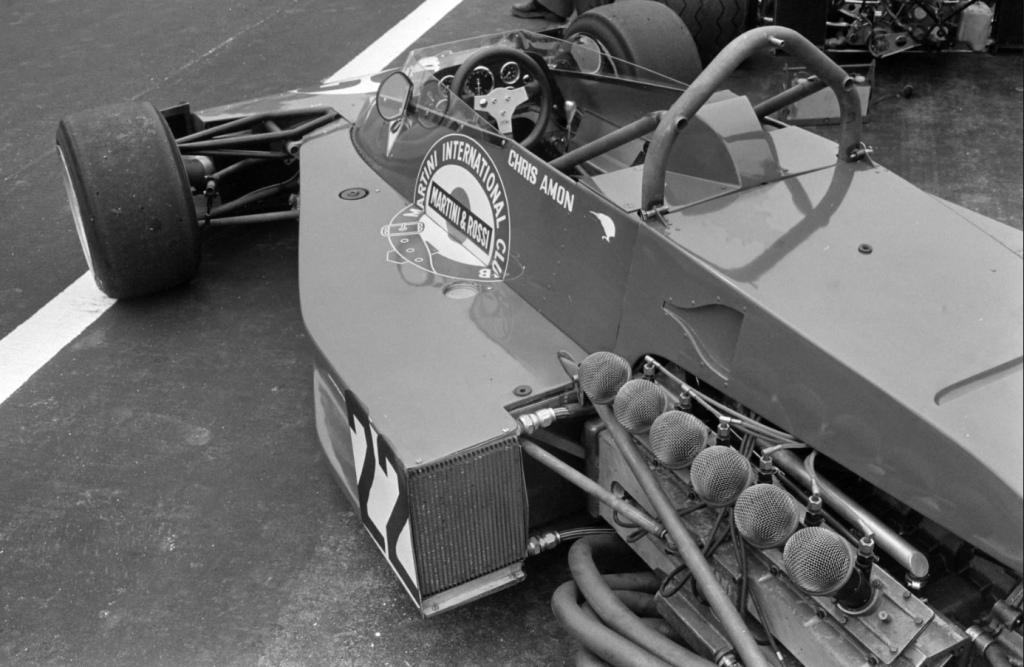
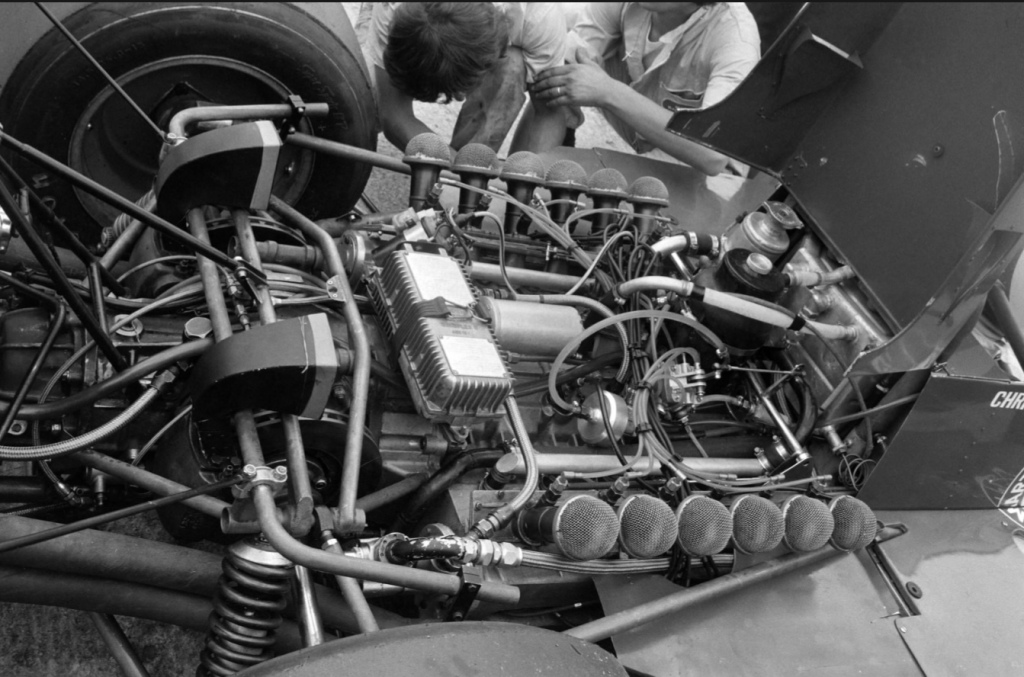
Note fuel rail and Lucas fuel injection and forward facing roll bar. There is no need to knock the chassis, Amon said it was good.
(MotorSport)
Flat-12 engine output somewhere north of 420bhp while noting Amon’s view that it felt more like 400, inboard rear discs, Hewland FG400 gearbox,
(MotorSport)(MotorSport)
The far more resolved location of ancillaries of the 1973 PA123 is clear. Note fuel metering unit, electronic ignition box and brake ducts.
Reference and photo credits…
MotorSport Images, Tecno Register, Italiaonroad.it, oldracingcars.com, ‘History of The Grand Prix Car’ Doug Nye, MotorSport, Automobile Year 21
Tailpiece…
(MotorSport)
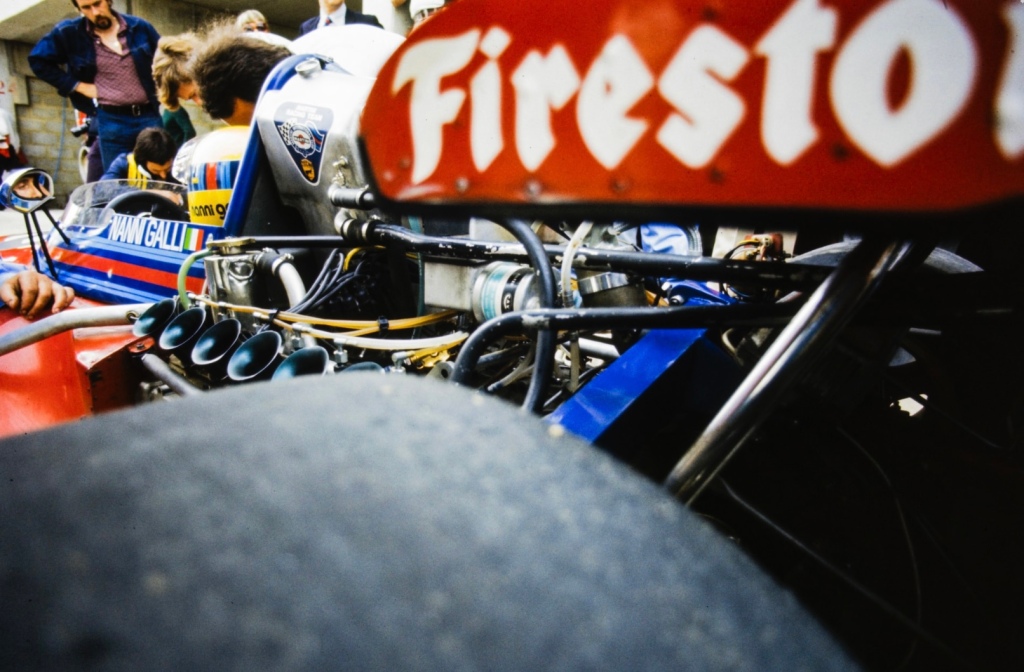
Let’s finish where we started with the F1 cars; PA123/1 at Nivelles on debut in 1972. Rainer Schlegelmilch’s typically wonderful arty-farty shot of Nanni Galli during the Belgian GP weekend.
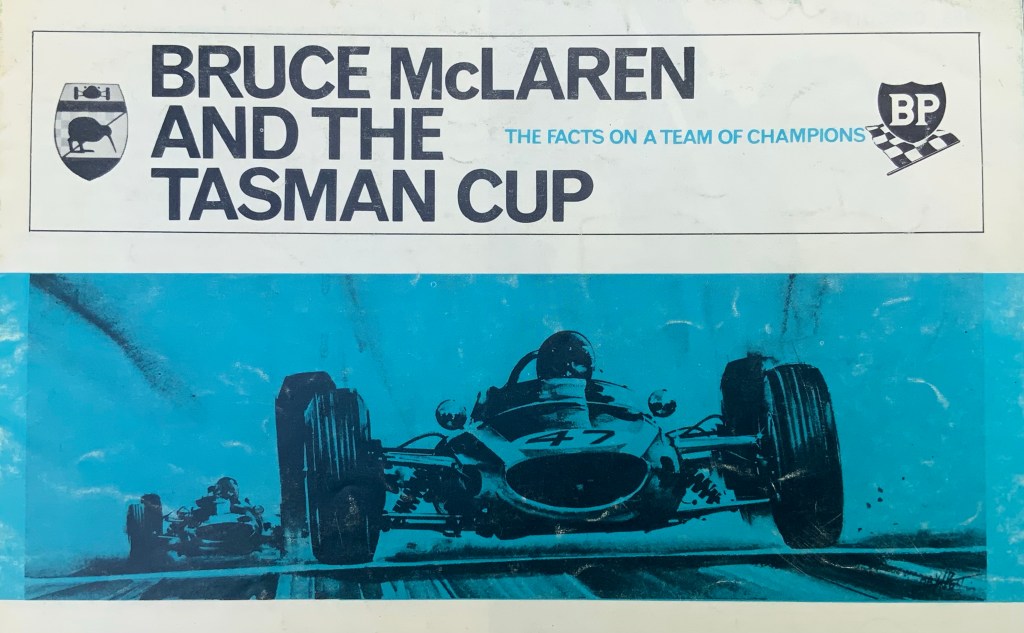
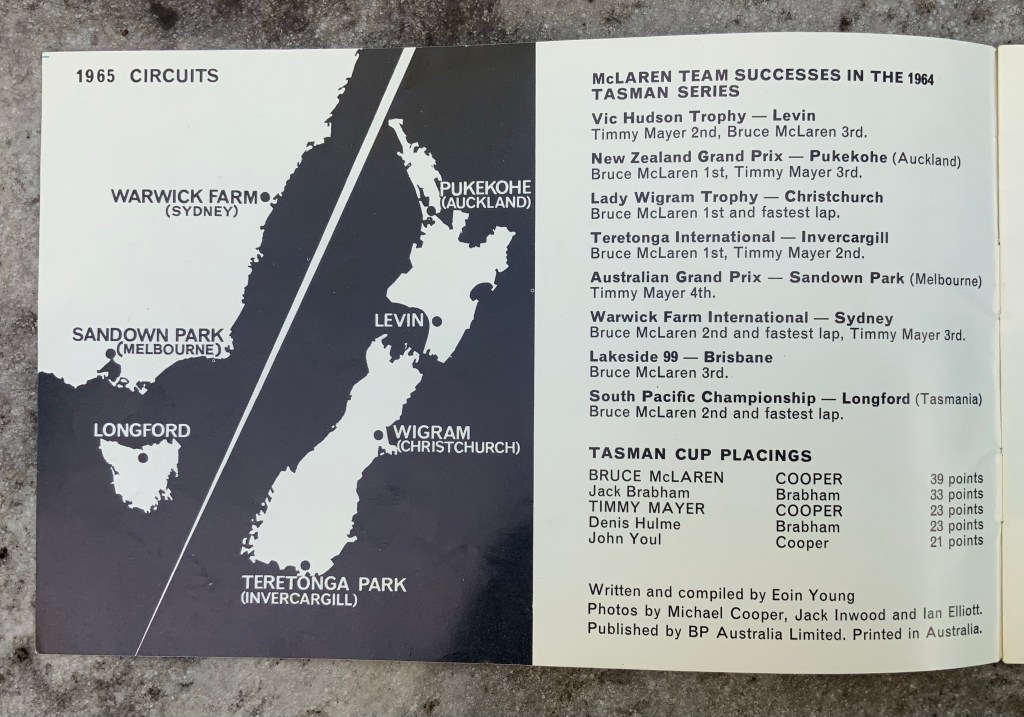
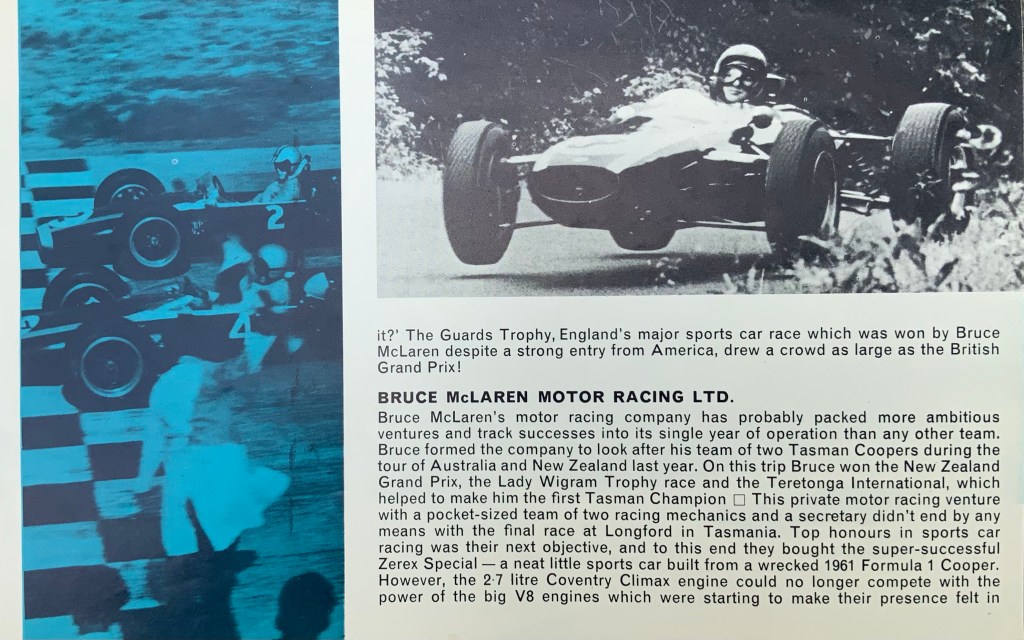
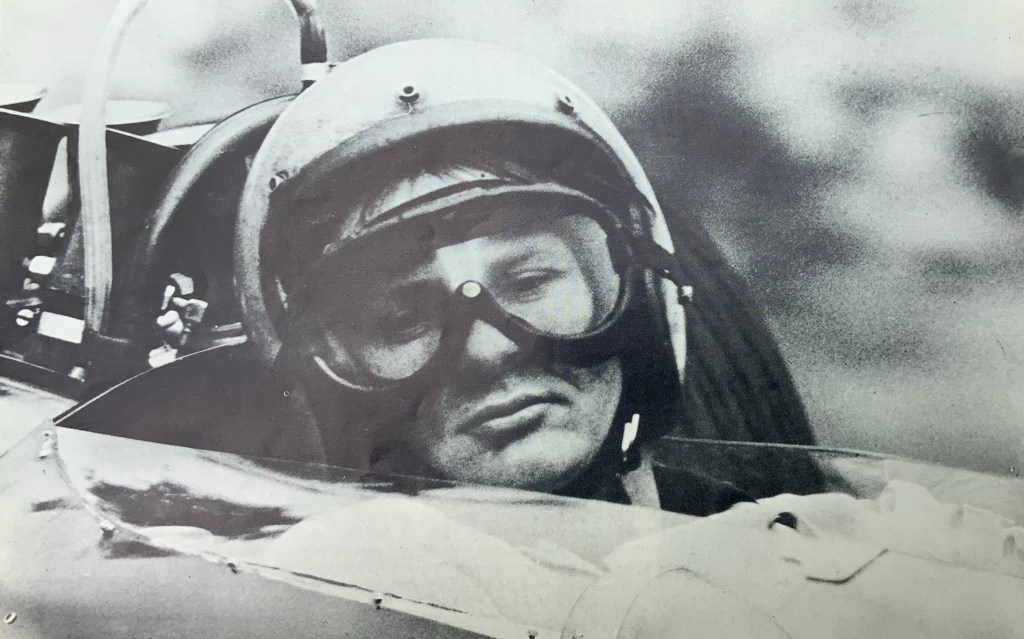
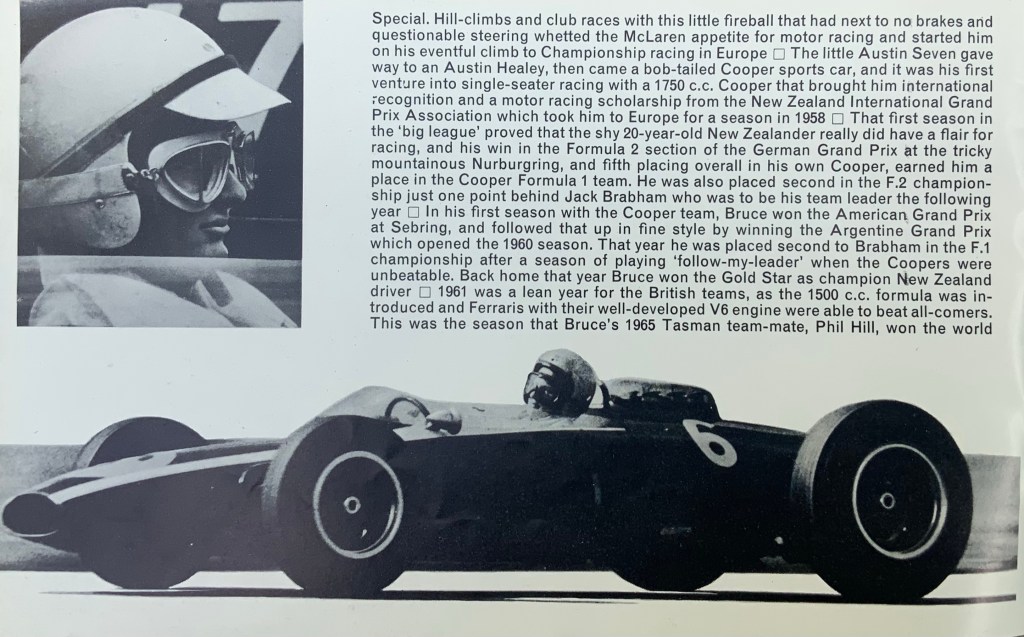
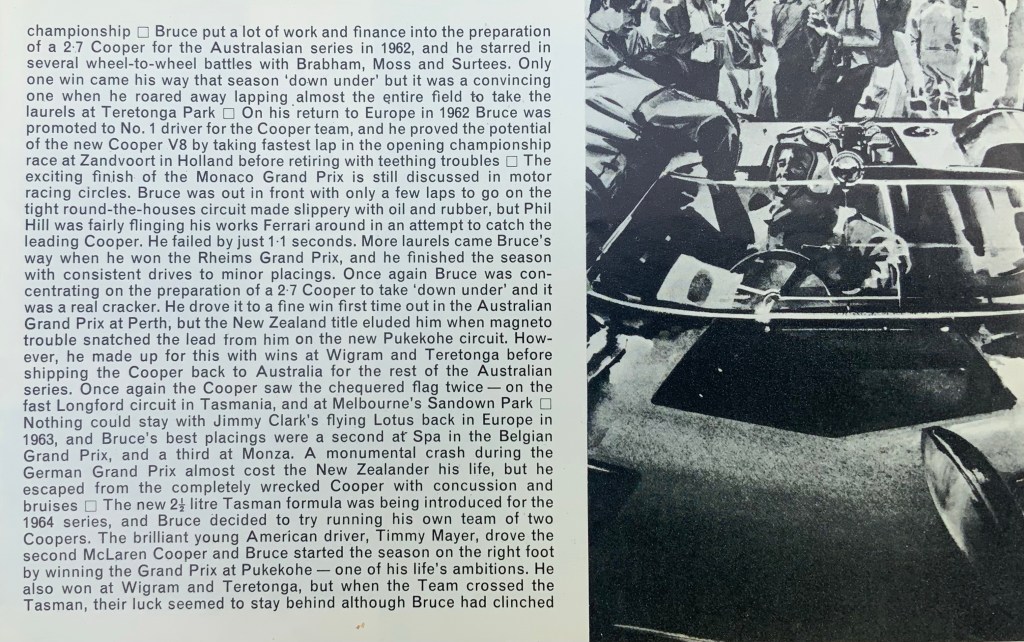
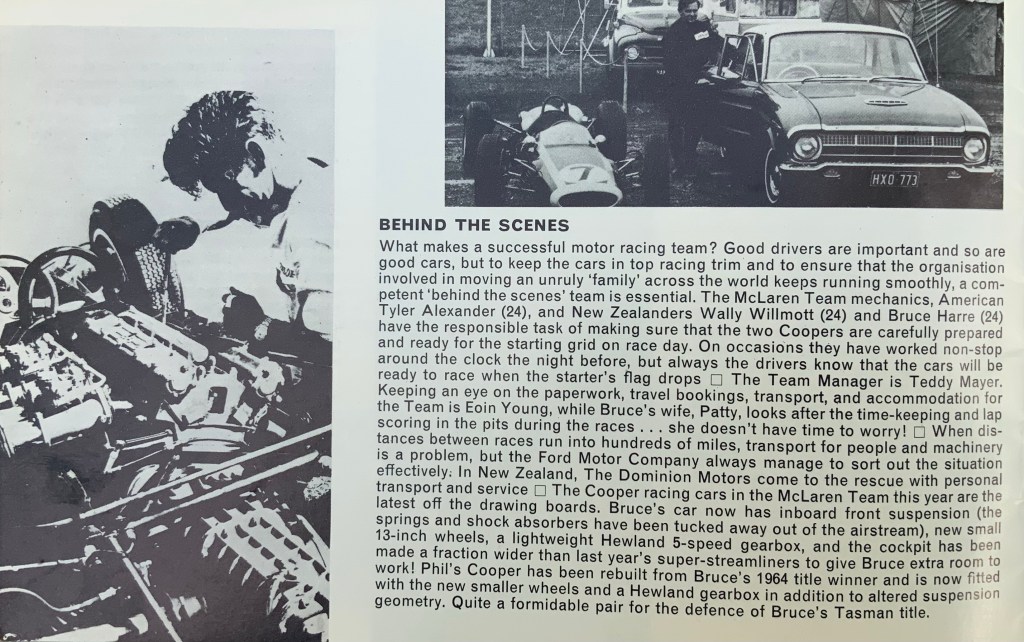
Bruce McLaren won the first Tasman Cup/Series in 1964 aboard the first ‘real McLaren’, a 2.5-litre Cooper T70 Climax FPF.
Two of these machines were designed and built by McLaren and his friend/confidant/mechanic and fellow Kiwi, Wally Willmott, at Coopers in late 1963.
The nascent Bruce McLaren Motor Racing Team cars were raced by the boss and young, very talented American thruster, Tim Mayer. That years Tasman was a triumph for McLaren, he won three of the seven rounds, but it was also disastrous as Mayer lost his life in the final round at Longford.
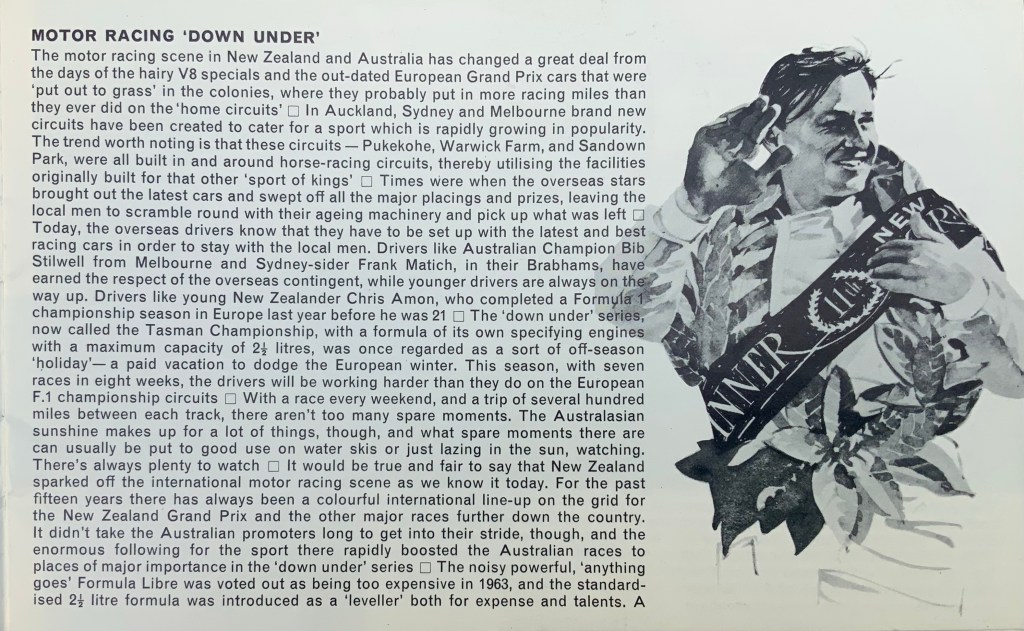
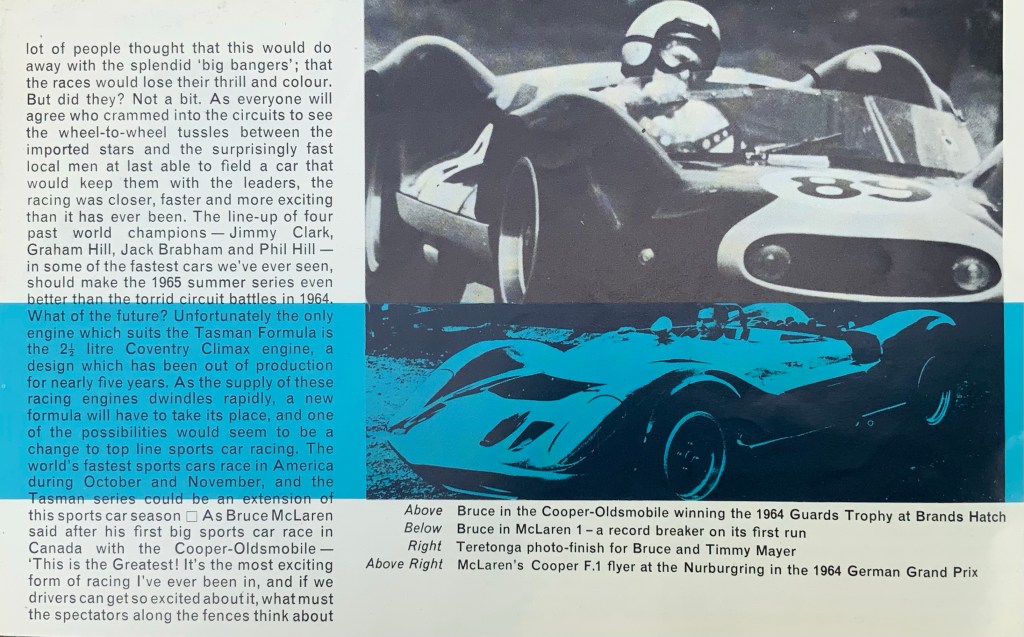
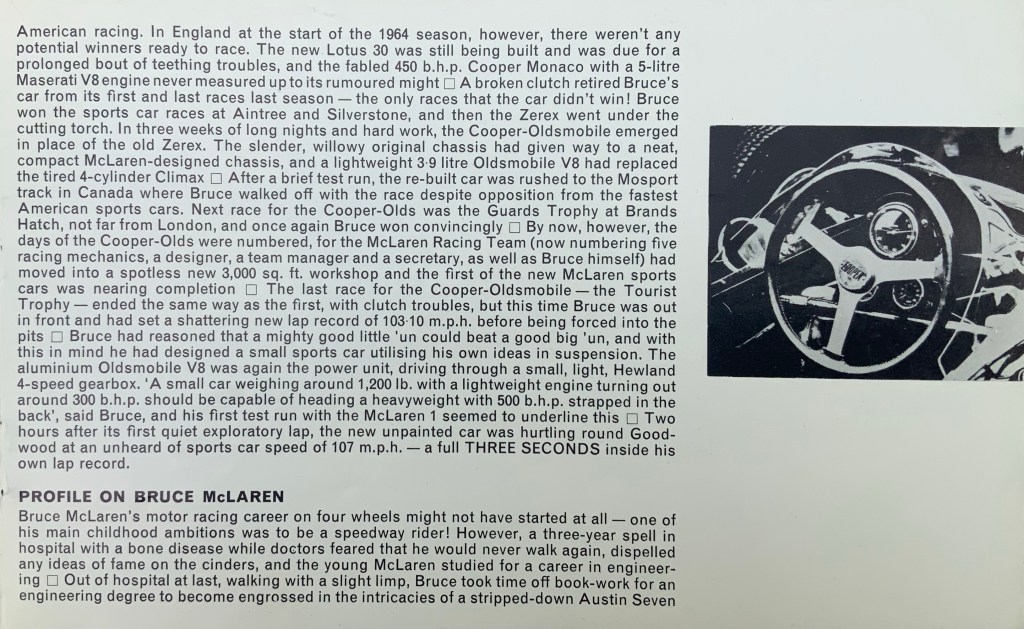
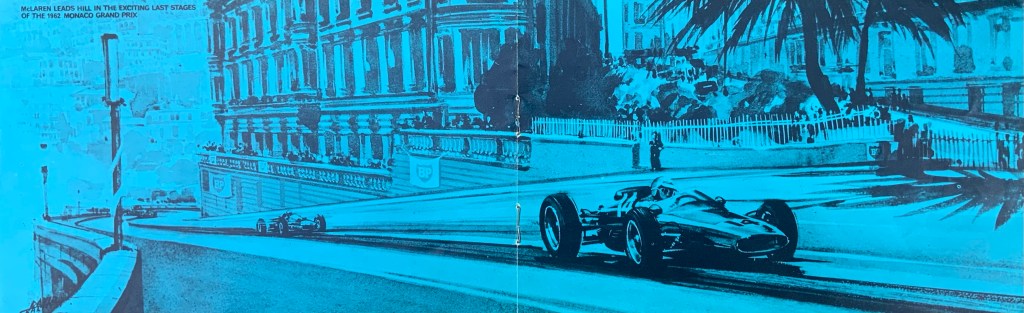
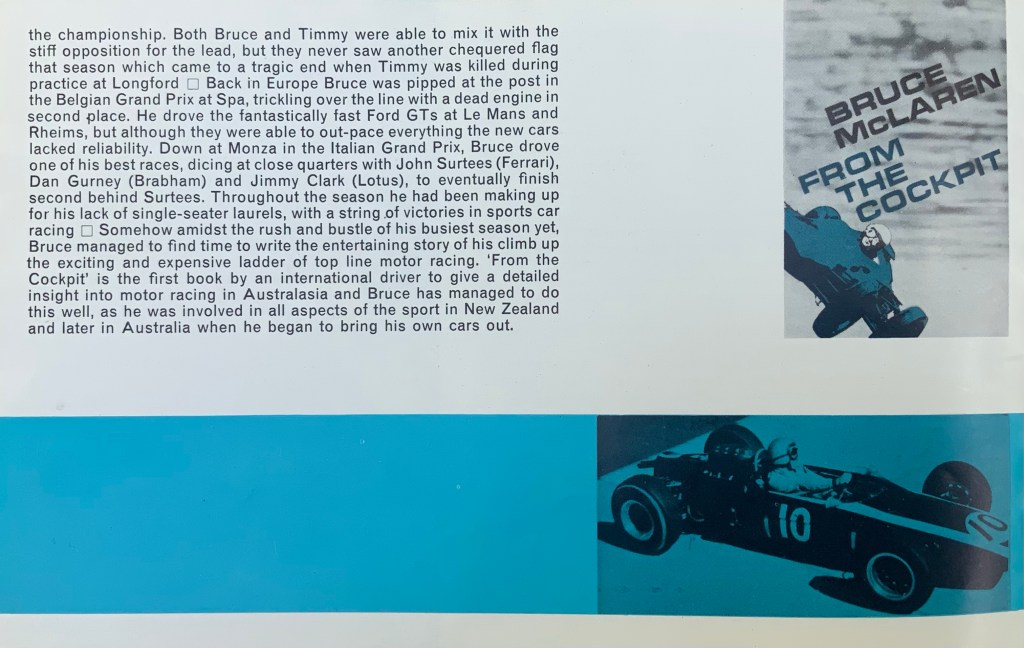
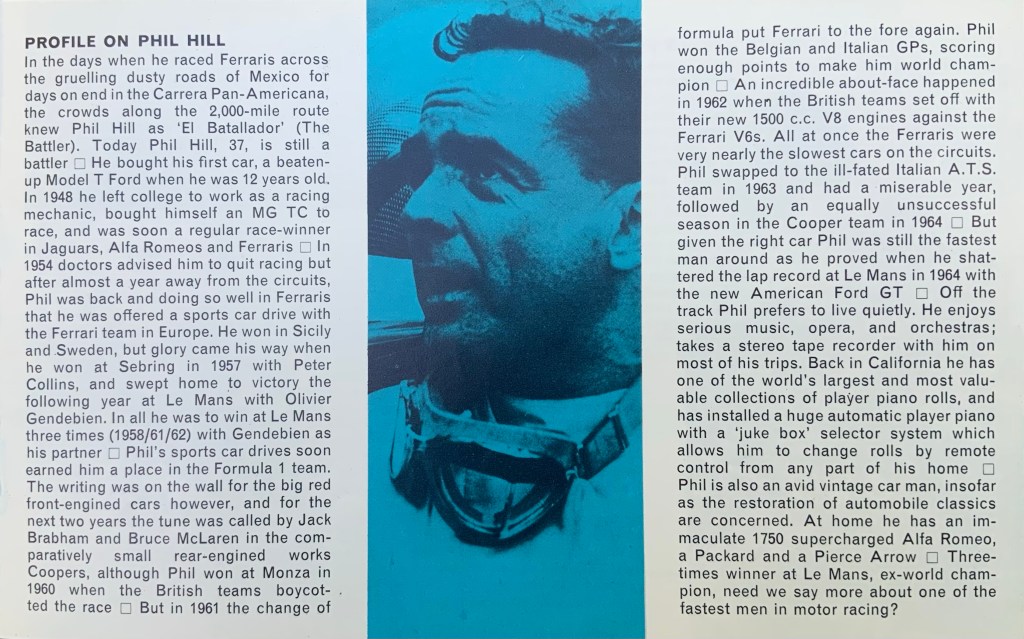
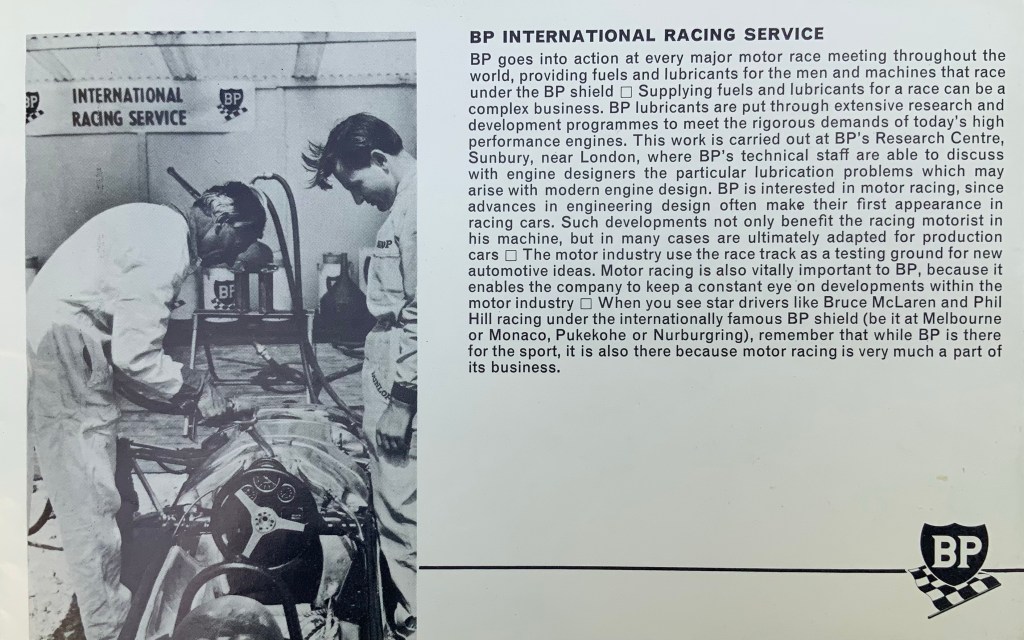
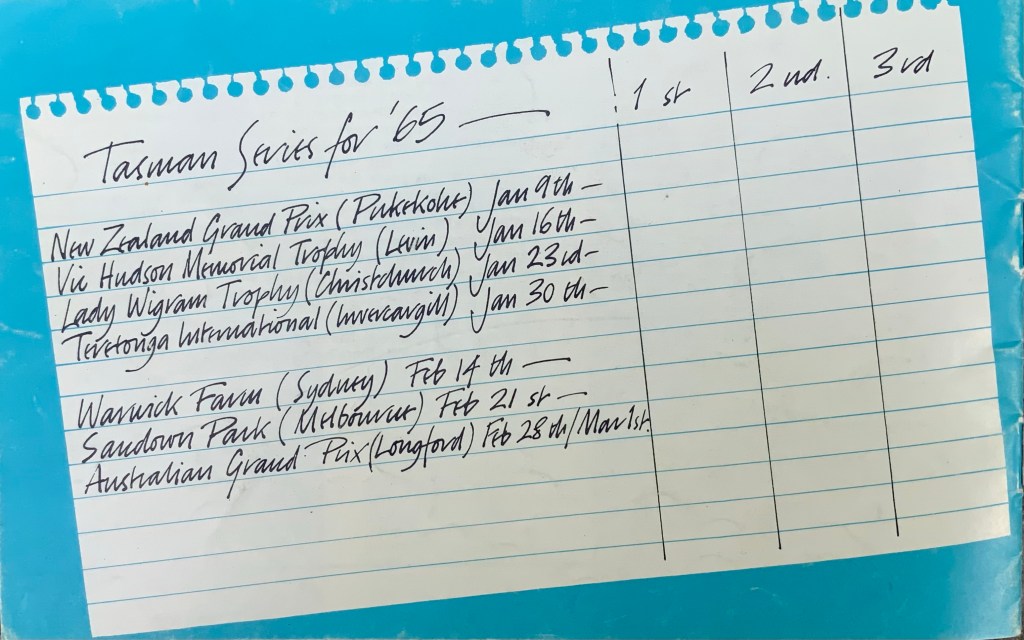
This brochure was produced by BP as a handout during the ’65 Tasman, and is wonderful, I just-gotta share it with you.
Ex-Repco Brabham Engines senior technician Michael Gasking has become a good friend. He’s been in Melbourne (from Adelaide) this weekend to catch up with family and take in Motorclassica. He is also helping me with a new project, amongst all of his mega-collection of memorabilia and photographs was this little brochure I’ve never seen before.
Credits…
Michael Gasking Collection
Tailpiece…
Jim Clark won the ’65 Tasman aboard a works Lotus 32B Climax, winning four of the seven rounds. Bruce won the Australian Grand Prix at Longford and was second overall aboard a Cooper T79, a new car akin to Cooper’s contemporary T77 and T75 F1/F2 designs.
Jack Brabham was third racing a new BT11A, with Phil Hill equal fourth in the surviving T70, together with Jim Palmer and Frank Gardner in Brabhams BT7A and BT11A respectively.
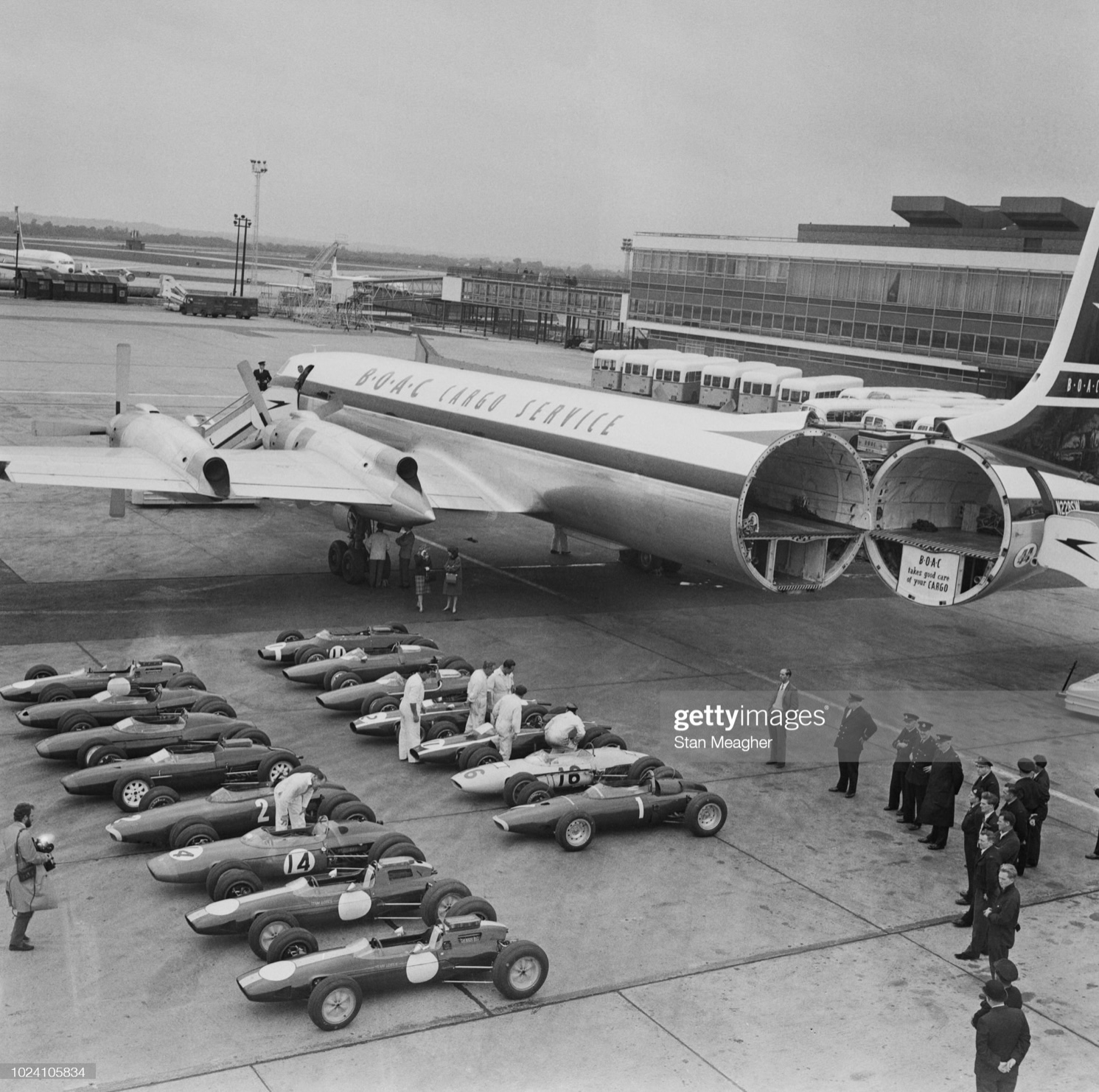
A BOAC Bristol Britannia ‘Whispering Giant’ (actually a Britannia based Canadair CL-44D4-1 – thanks Jon Farrelly!) awaits its precious cargo before departure from Heathrow to the fly-away, end of season United States and Mexican Grands Prix, October 1963…
The cars in the foreground are the factory Lotus 25 Climaxes of Jim Clark, victorious at Mexico City, and Trevor Taylor. #1 and 2 are the reigning World Champion BRM P57’s of Graham Hill and Richie Ginther, they finished first and second at Watkins Glen.
#16 is Jim Hall’s Lotus 24 BRM and #14 is Jo Siffert’s similar car. #11 and 12 are Jo Bonnier and Bruce McLaren’s Cooper T66 Climaxes, note that Bruce raced carrying #3 in both events.
For the aircraft buffs amongst us here is a link to a period BOAC documentary about the Bristol Britannia
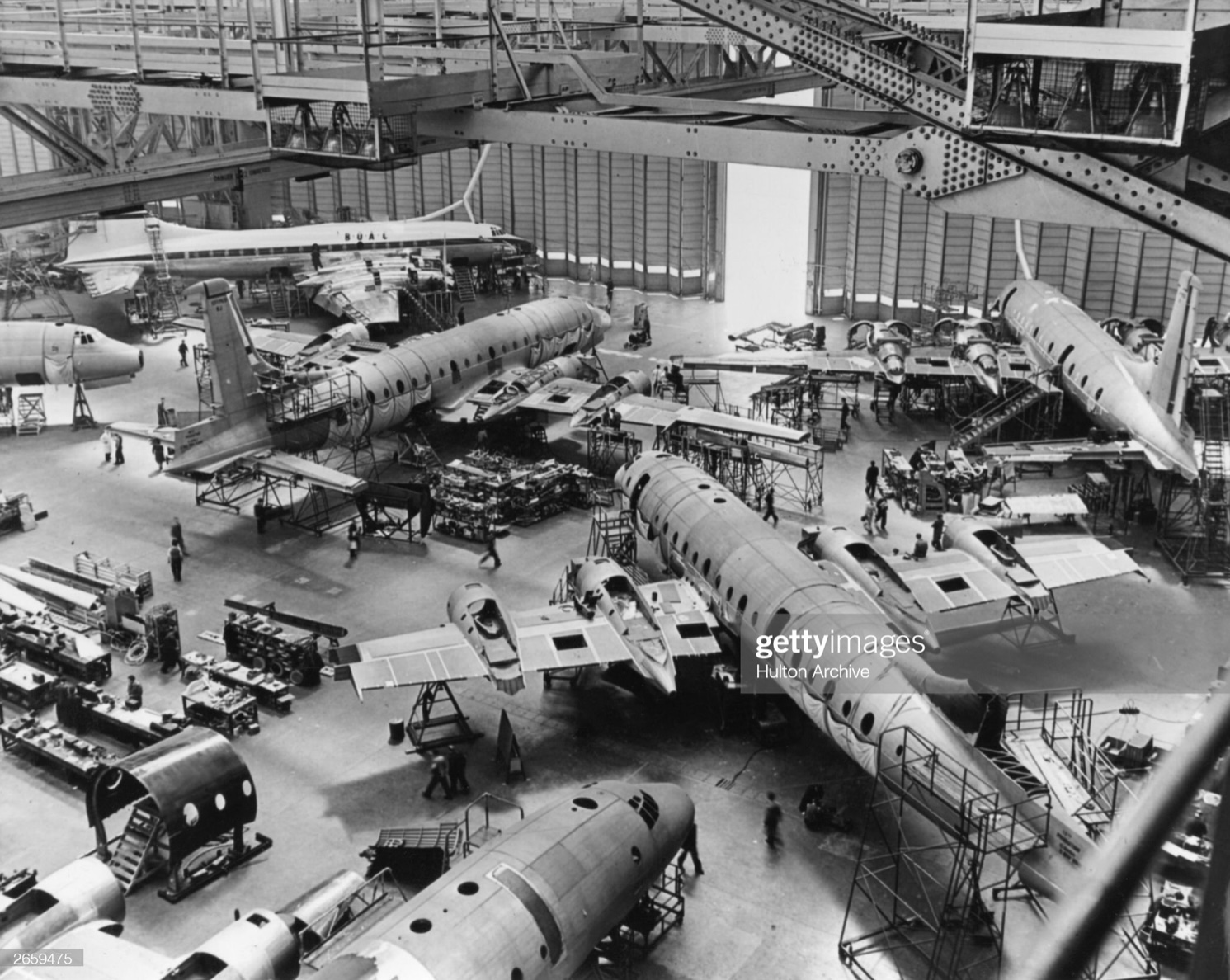
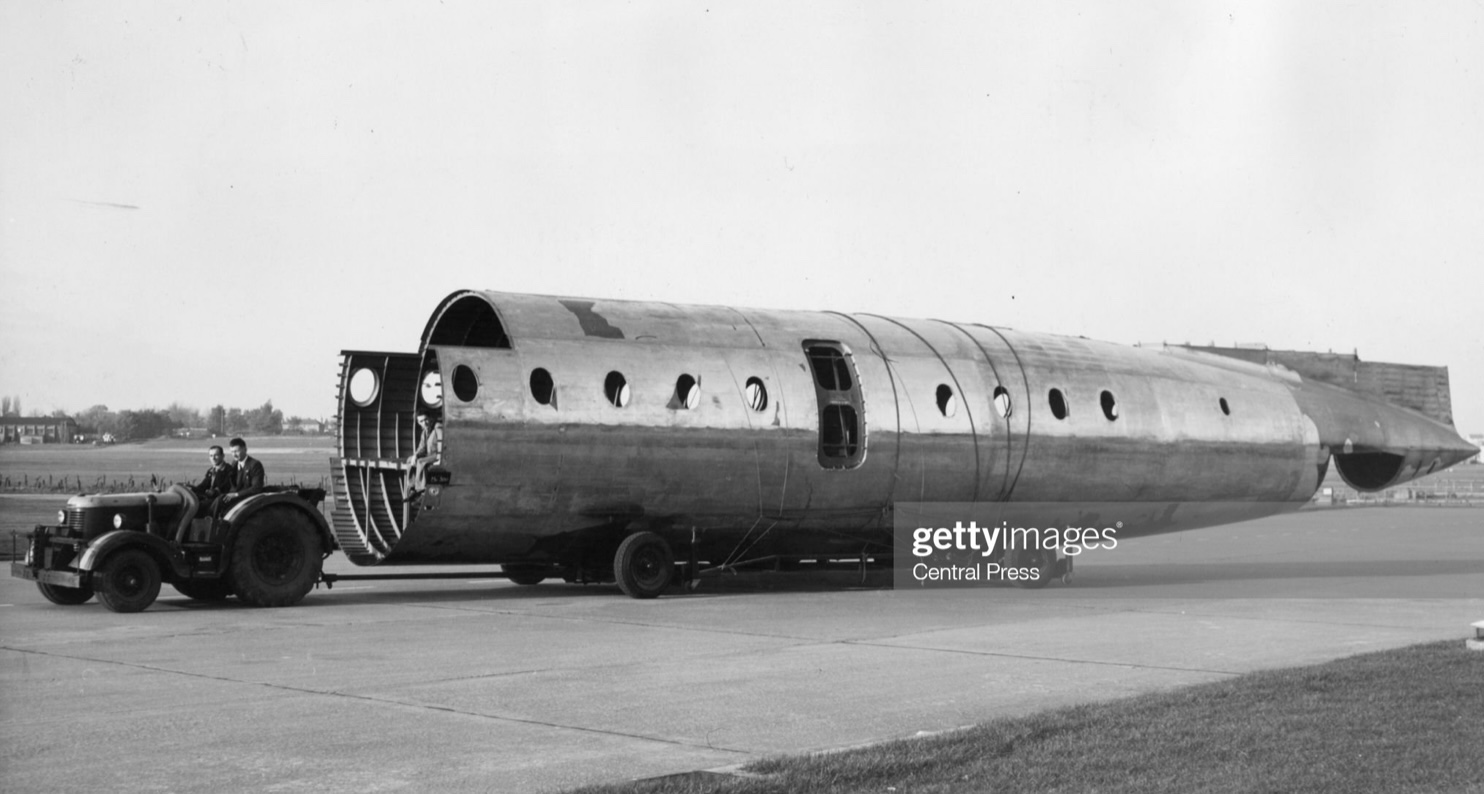
I love these two photographs of construction of Bristols in the mid-1950s.
The first shows Britannia 100s being completed in Bristol’s Assembly Hall at their Filton, South Gloucestershire aerodrome/manufacturing facility about four miles north of Bristol, in January 1956.
The second, dated a year earlier, may well have been the inspiration for Colin Chapman’s monocoque Lotus 25! (that was a joke). It’s such a powerful shot showing the conceptual simplicity and strength of such (highly sophisticated) structures.
In 1959 Bristol Aircraft merged with several other companies to form the British Aircraft Corporation, which in turn became a founding piece of British Aerospace, now BAE Systems. BAE Systems, Airbus, Rolls Royce, MBDA and GKN still have a presence on this Filton site. More Bristol Aircraft reading here; https://www.baesystems.com/en/heritage/filton–bristol
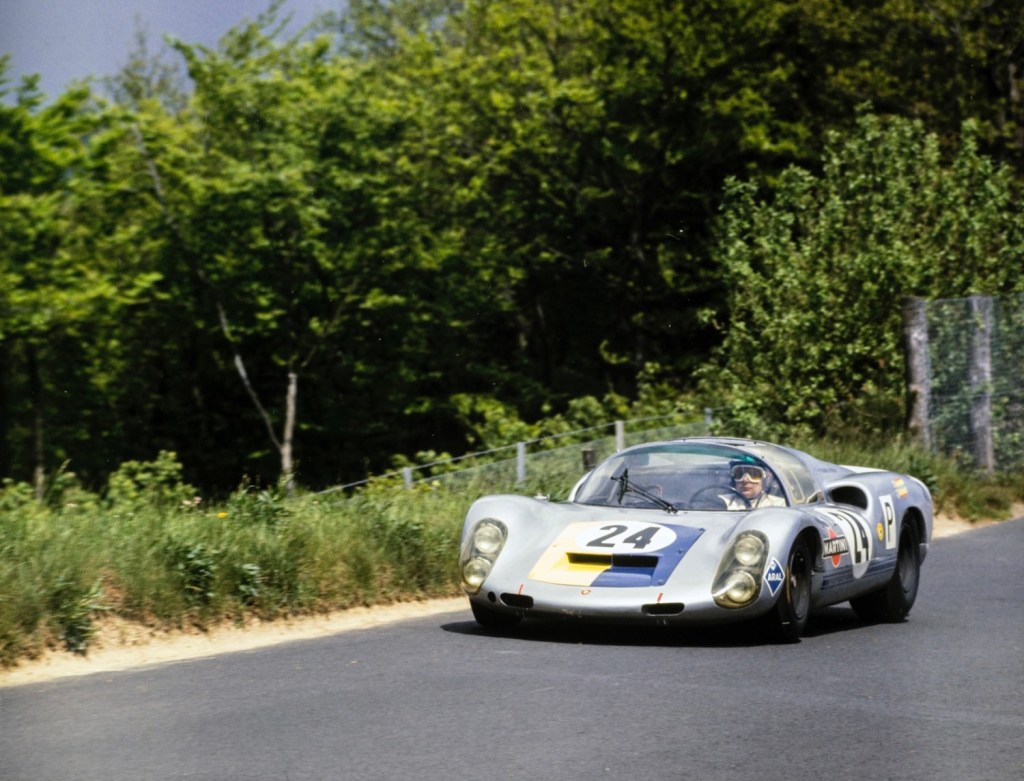
Hans-Dieter Dechent wasn’t quite in on the start of Martini & Rossi’s (M&R) support of motor racing, but his Lufthansa Racing Porsche 910 was the first racer to carry the famous livery substantively, when non-trade advertising was permitted on racing cars in 1968.
Here he is enroute to a DNF with engine failure in the 910 he shared with Robert Huhn in the 1968 Nurburgring 1000km.
M&R sponsored two Alfa Co US entered Alfa Romeo Giulietta SZ’s raced by Charlie Kolb and Paul Richards at the 1962 Daytona 3 Hours. The machines were devoid of the corporate branding with which we are all so familiar, instead they had Martini & Rossi Racing Team discretely sign-written atop the front quarter-panels.
Paul Richards’ Alfa Giulietta SZ in the Daytona 3 Hours paddock in 1962 (N Cerutti)(MotorSport)
Martini’s German head of PR, Paul Goppert, and his friend, Dechent, took things up a gear with M&R’s support of the Scuderia Lufthansa Porsche 910 (above) owned and driven by Robert Huhn, a Lufthansa executive, together with Dechent.
Among strong results Dechent won his class racing a Porsche 906 in the 1967 Nurburgring 1000Km and was third outright in a 907 at the 1969 Monza 1000Km behind the works 908/2s of Jo Siffert/Brian Redman and Hans Hermann/Kurt Ahrens.
In 1970 the Martini & Rossi International racing team – later Martini Racing – was formed.
Gijs Van Lennep in the Porsche 917K he shared with Helmut Marko to victory at Le Mans in 1971 (DPPI)(DPPI)
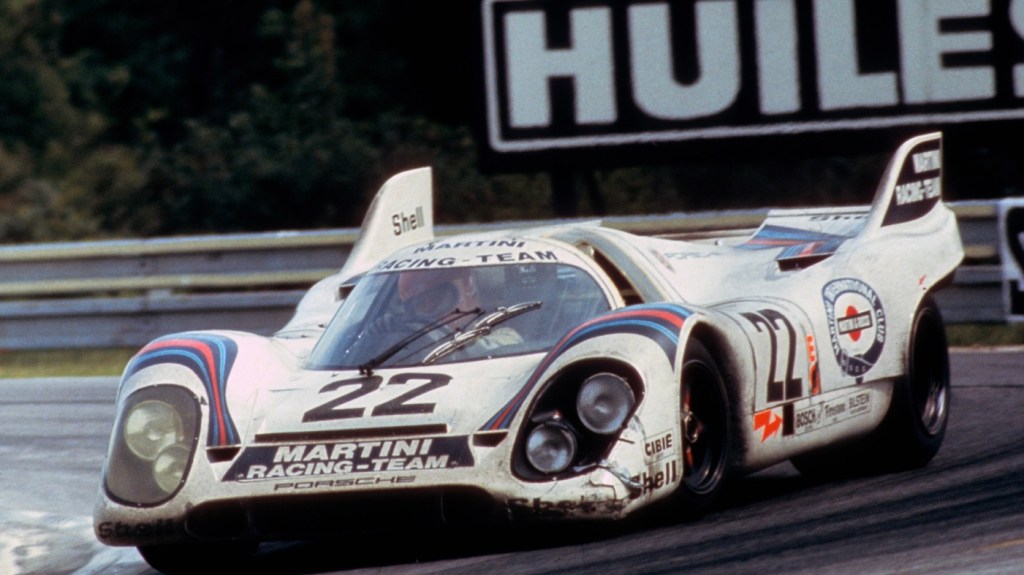
With the assistance of Hans-Dieter the Martini & Rossi relationship with Porsche became enduring. He hung up his helmet to take on the role of Team Manager of Porsche Salzburg in 1970, and in addition had responsibility for the M&R sponsorship. The first M&R Le Mans win followed in 1971, the victorious Porsche 917K was crewed by Gijs Van Lennep and Helmut Marko.
Dechent moved on from Martini Racing to other motor racing team management roles (see here; Motorsport Memorial – Hans-Dieter Dechent) he was replaced by David Yorke at the end of 1971. Lets not forget the critical role Dechent played in ‘commencing’ an iconic team/brand/livery.
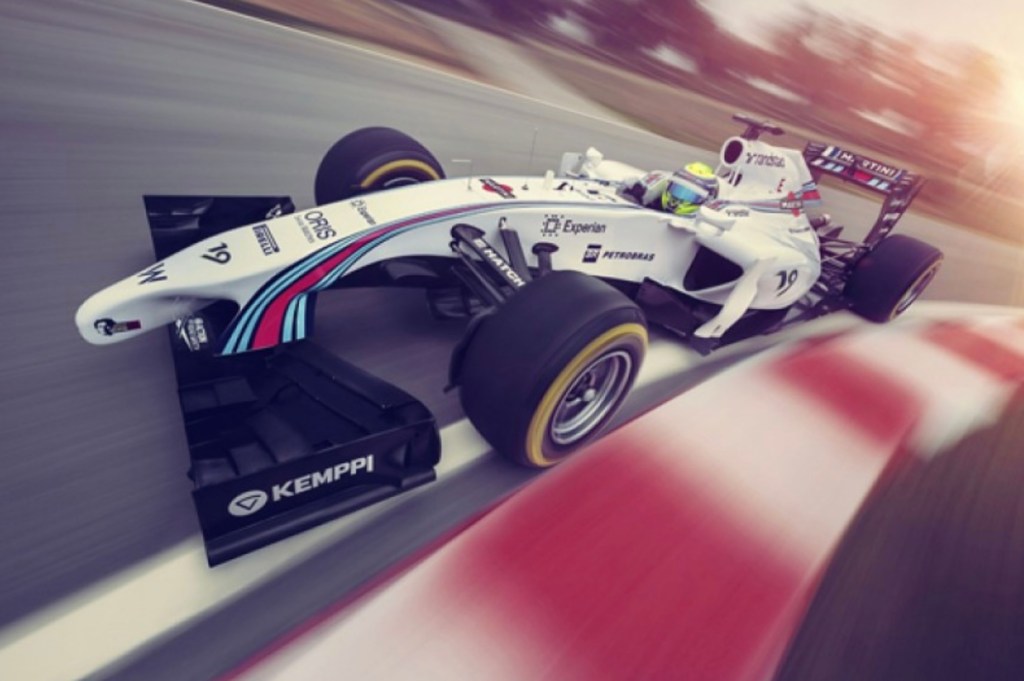
The 2014 Williams FW36 Mercedes with Felipe Massa up. Best results for the year were third places for Valtteri Bottas in Austria, Hungary, Russia and Abu Dhabi, and Felipe Massa in Italy and Brazil (Autosport)
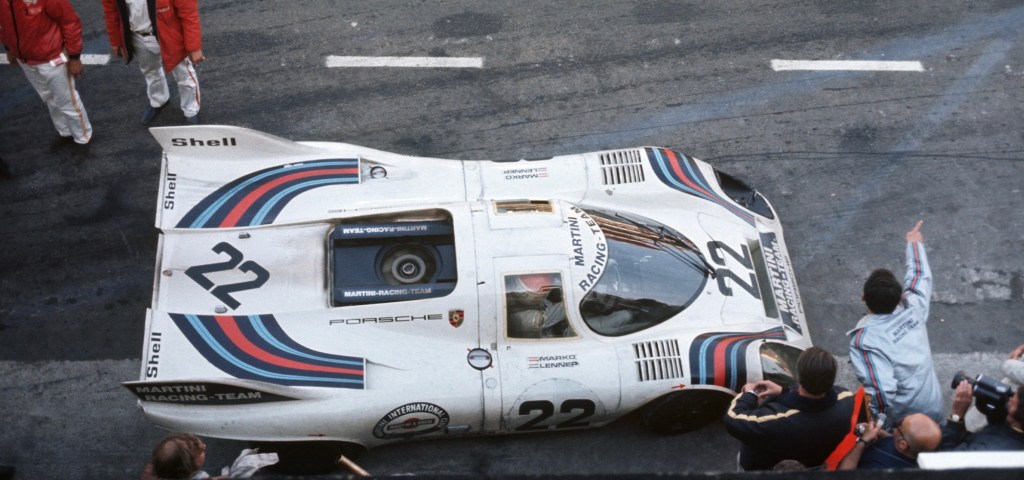
The amazing thing about the Martini & Rossi house-style – as the brand consultants call it – is that it makes every car to which it’s applied look better, faster…
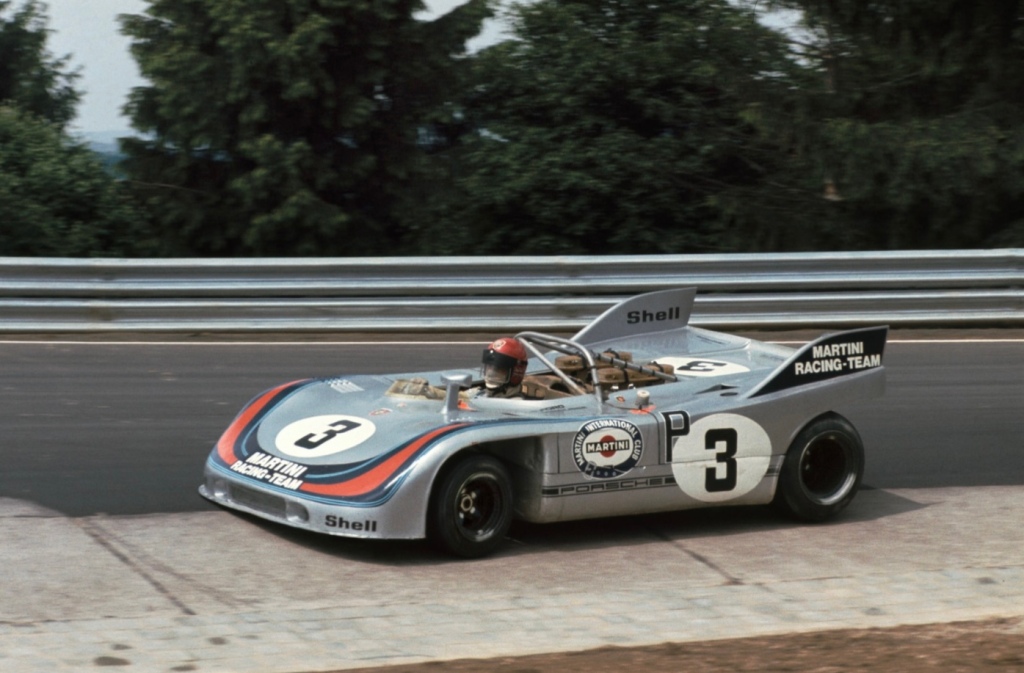
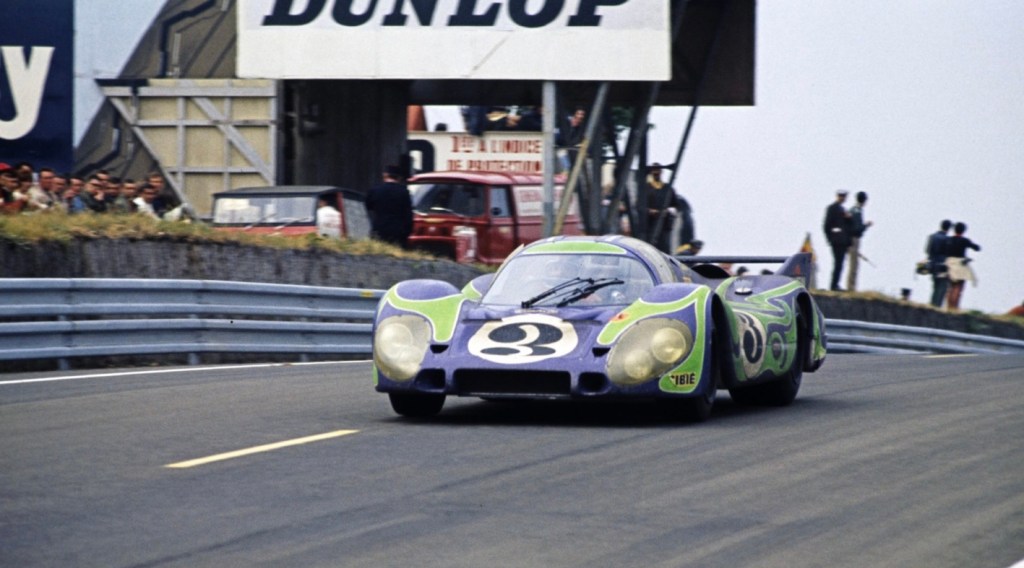
Surely one of the most iconic racing car liveries of all is the car Hans-Dieter Dechent turned over to Porsche designer Anatole Lapine for special treatment in 1970.
The Gerard Larousse/Willy Kauhsen Porsche 917 Langheck, chassis 917/21, first raced at Le Mans in June.
The Martini & Rossi sponsored, swirling psychedelic, green and purple Hippie-Car – second behind the winning 917K of Dick Attwood and Hans Hermann – has a cult following which transcends race-fans.









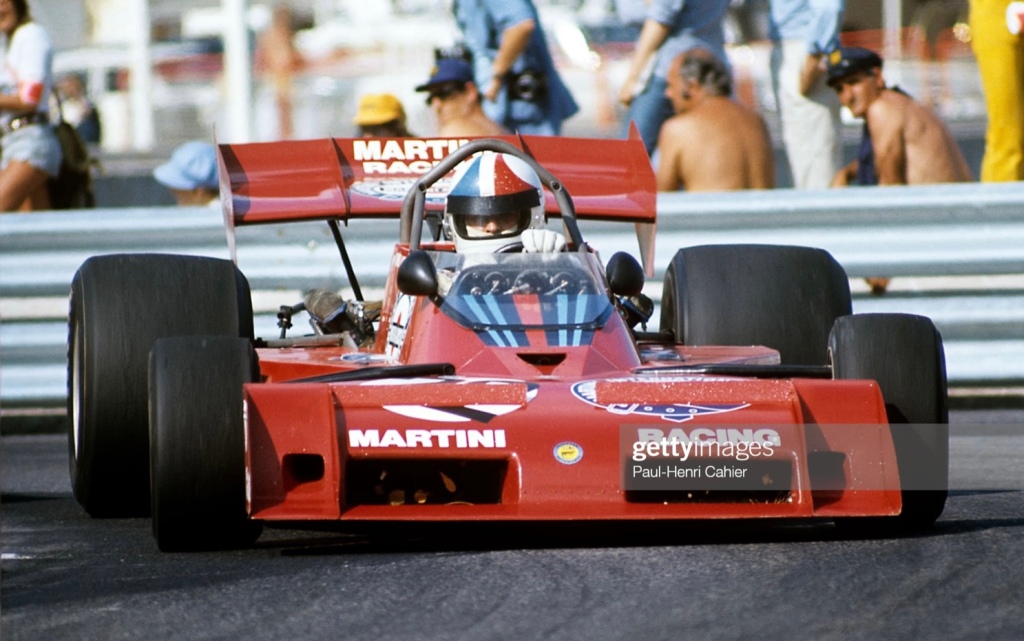
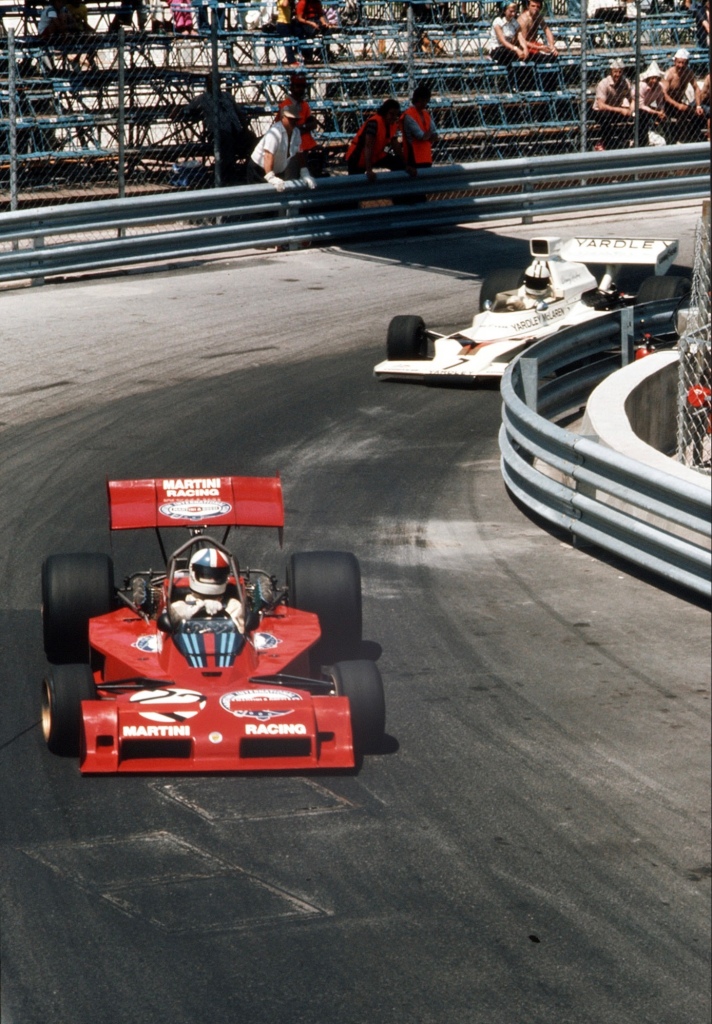
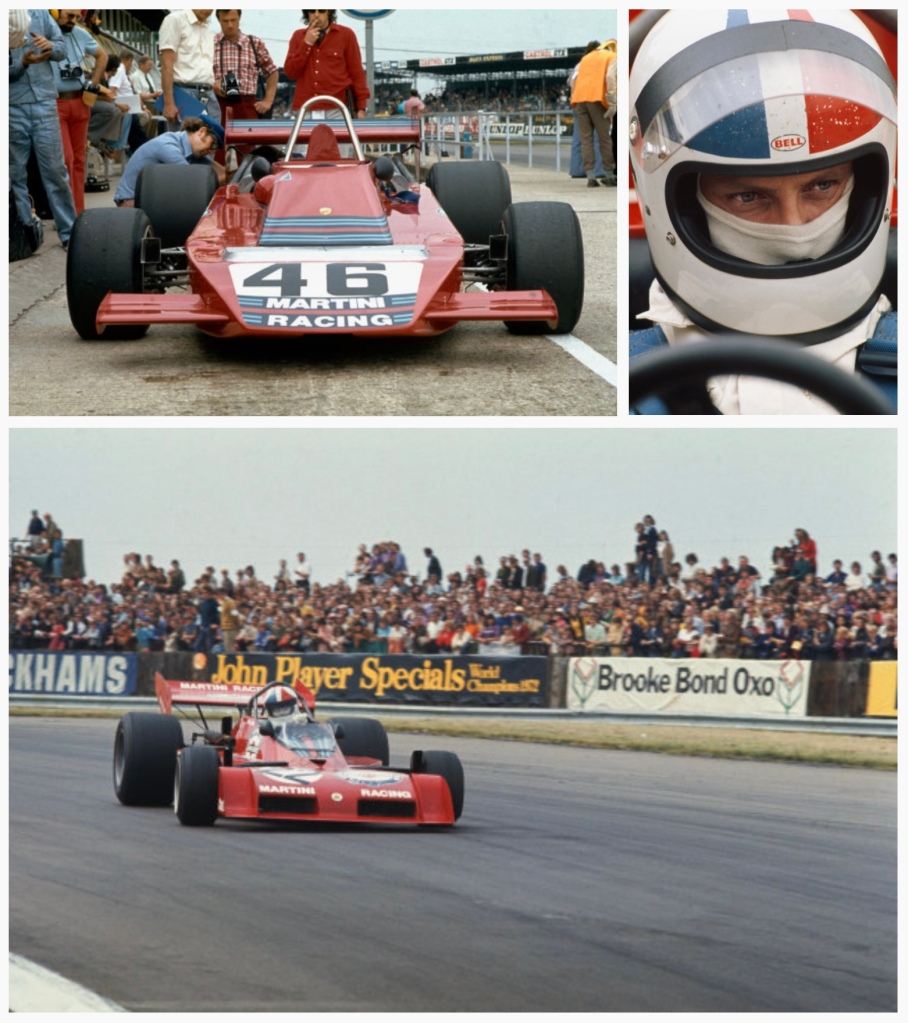
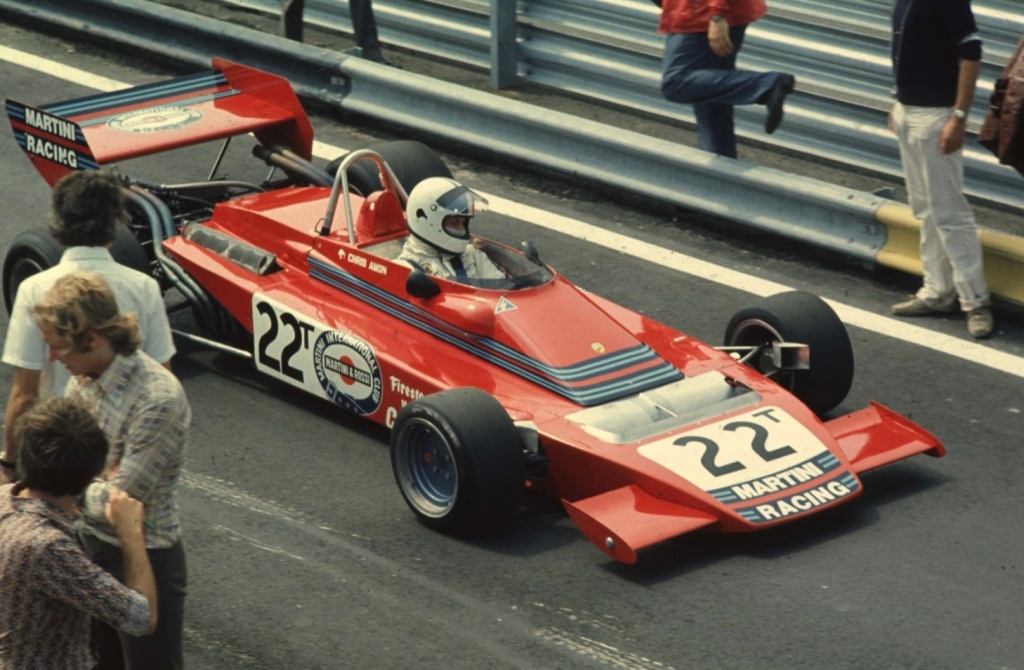

 primotipo...