Archive for the ‘Features’ Category

(G Fry)

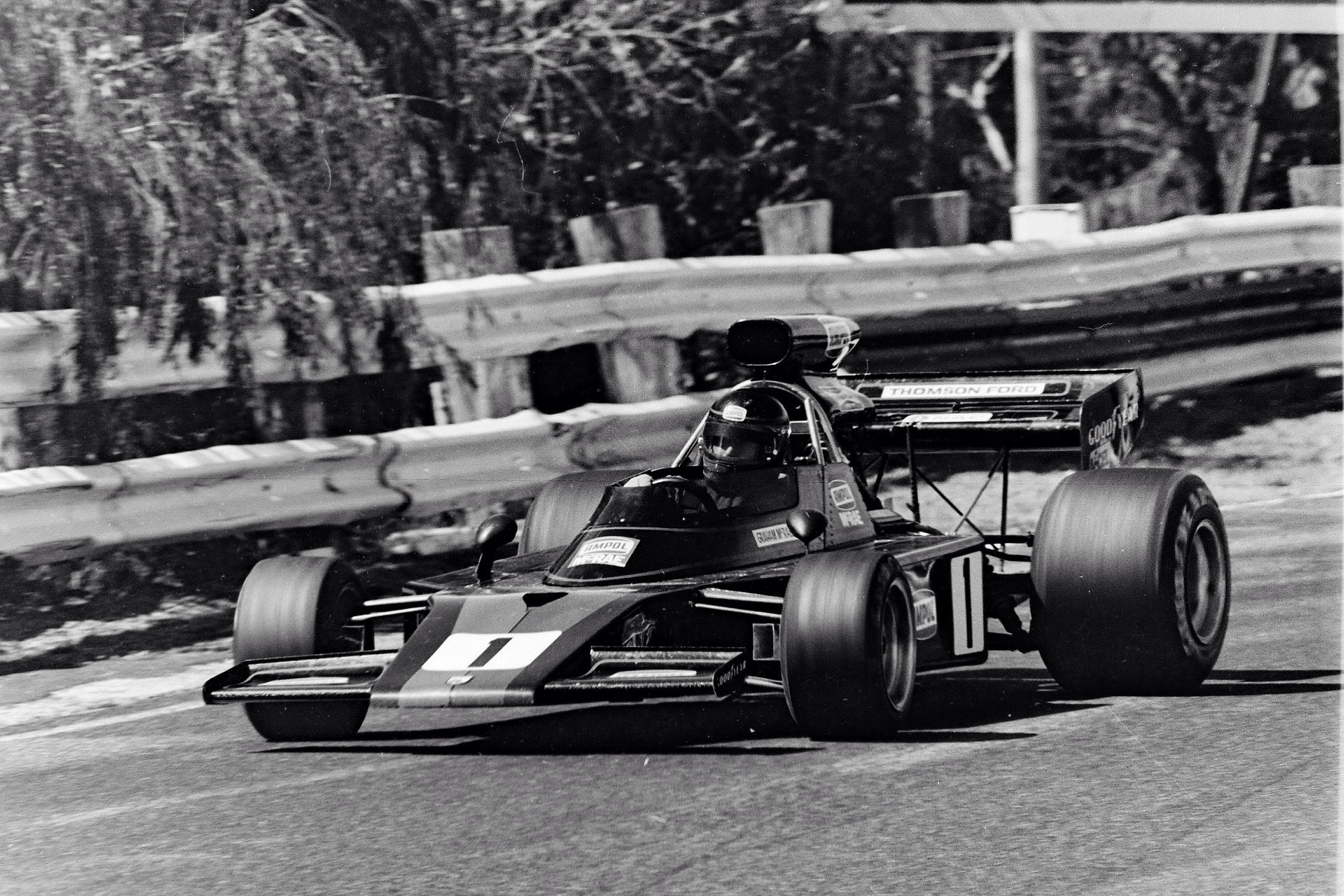
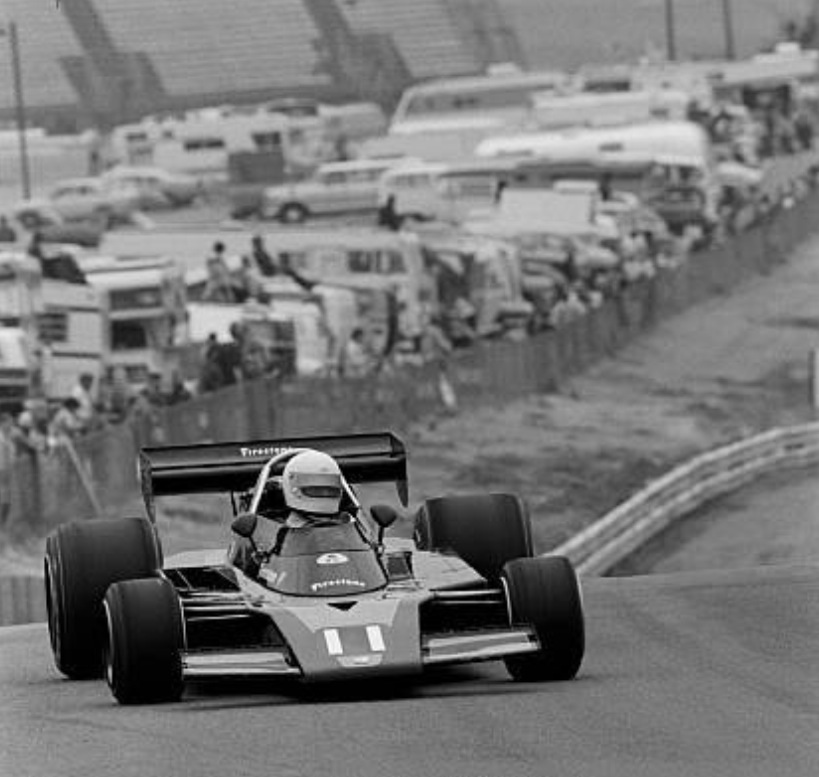
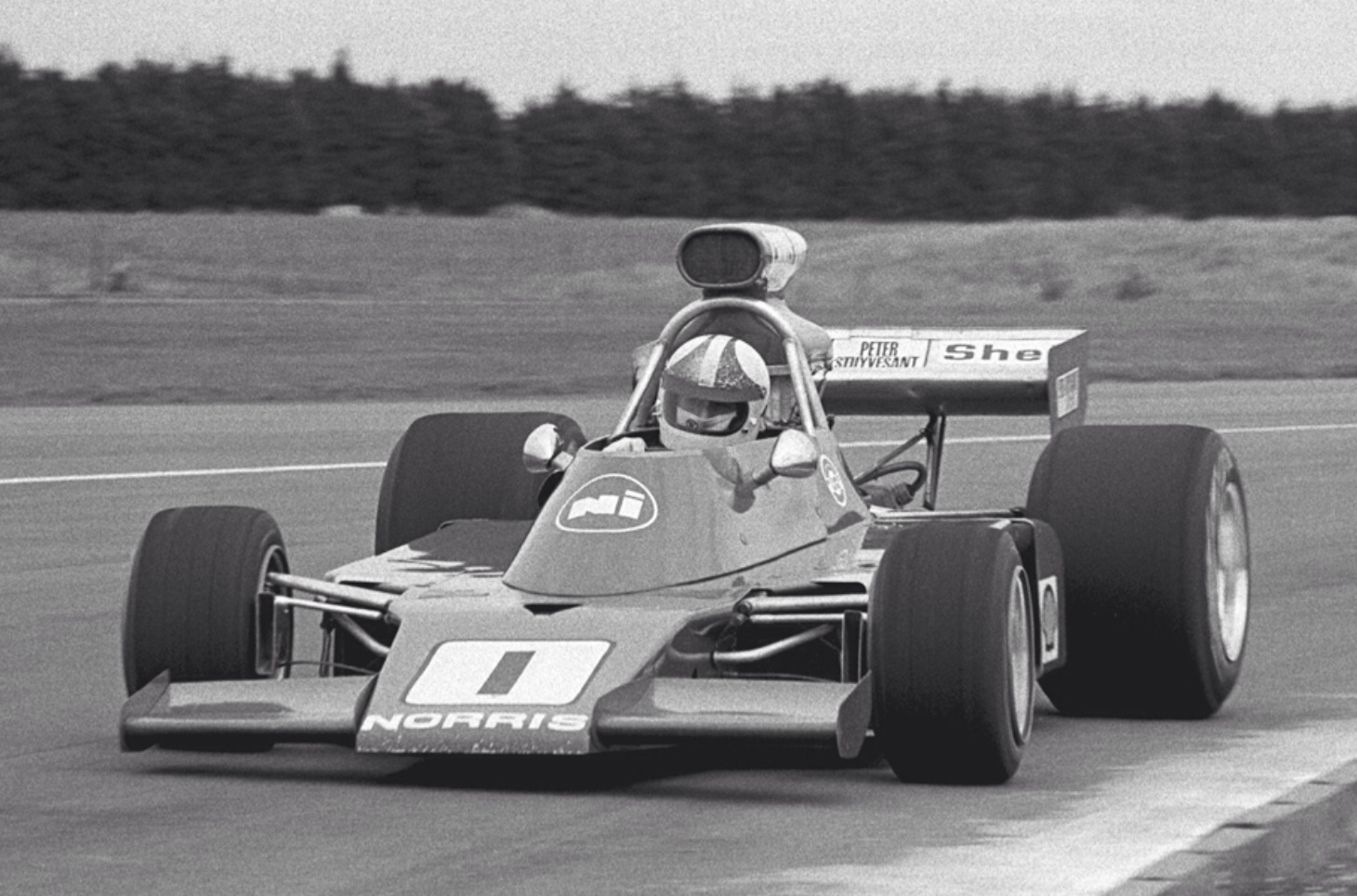
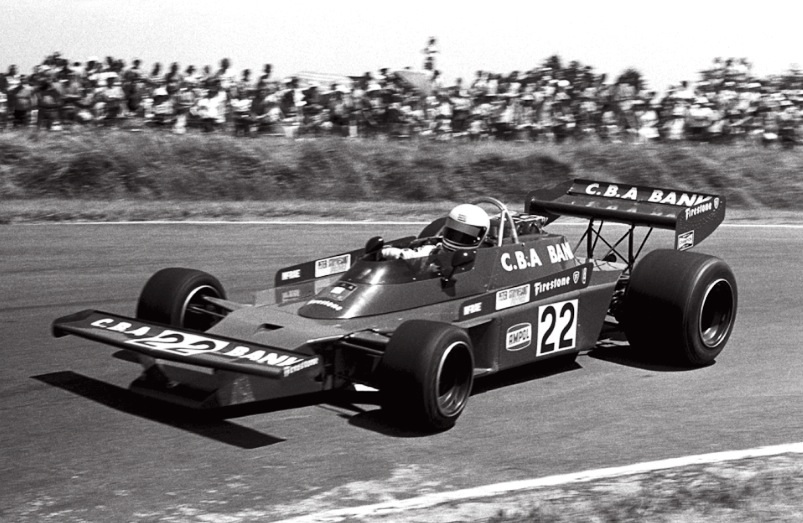
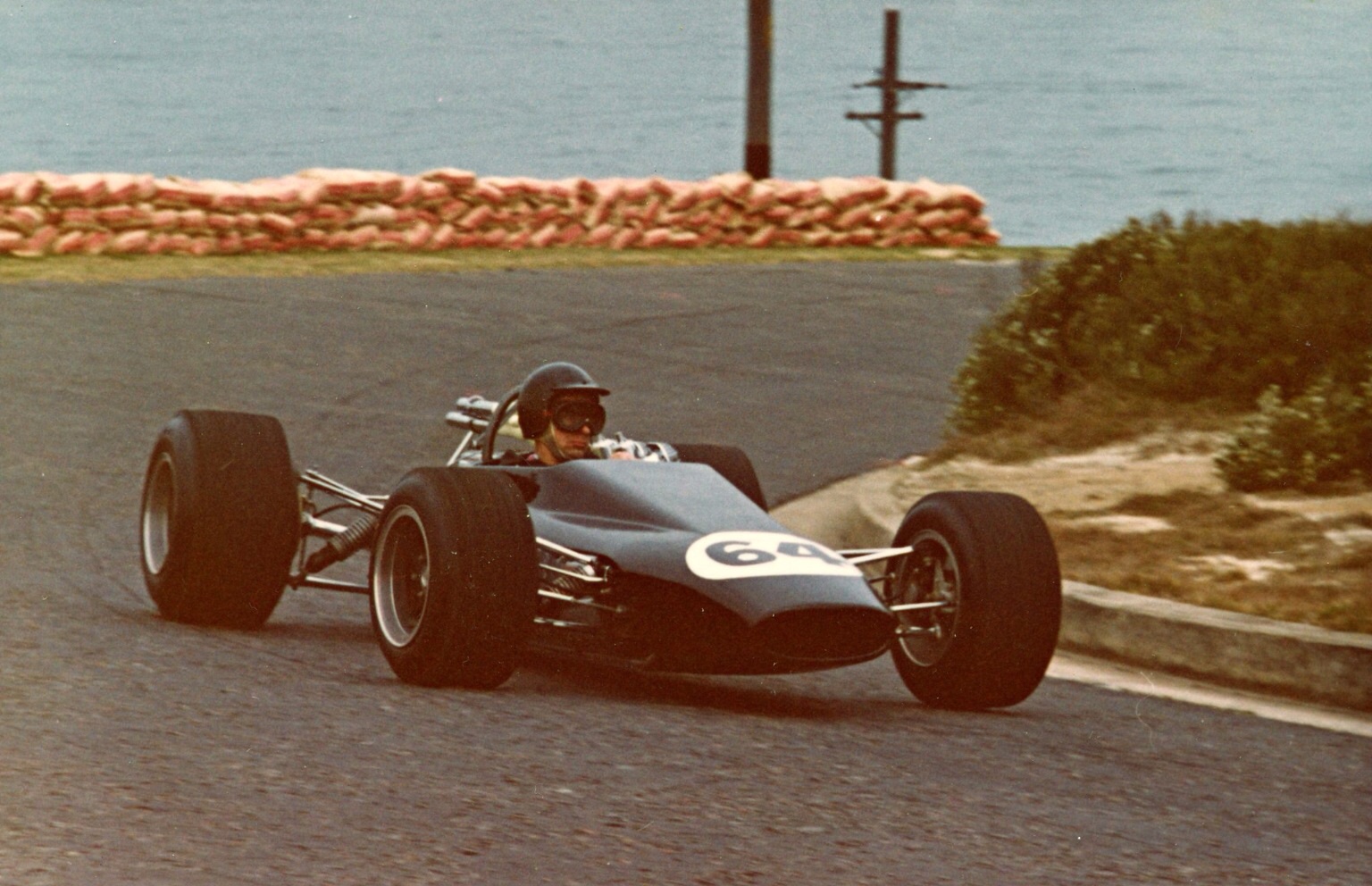
Chris Amon on the downhill plunge from Sandown’s Rise into Dandy Road, Talon MR-1 Chev, Sandown 100, January 1975…

When I first became interested in motor racing Chris Amon loomed large as an ace from ‘across the ditch’, he wasn’t Australian but he was a Kiwi which was more than close enough. Surely no two countries on the planet are closer in every respect?

One of the first posters I had on my bedroom wall was of ‘that shot’-Chris tickling the throttle of his Ferrari 312 into a gorgeous slide at Oulton Park during the Gold Cup in 1968. From that point on I willed him into that championship F1 win that cruelly never came.

Chris Amon Ferrari 312 on his way to 2nd behind Jackie Stewart, Matra MS10 Ford, Oulton Park Gold Cup in August 1968 (LAT)

By the 1975 Tasman Series Chris had been in a horrid career downer with dogs of F1 cars way beneath him for a couple of years- his own AF101 rocket in 1974 and the two Tecno’s the year before, they were shit-heaps at best.

In fact he had a ‘good finish’ to his F1 career in Mo Nunn’s Ensigns in 1975/6 proving yet again his pace but one mechanical failure too many finally made him chuck it all in at the tender young age of 33- later in ’76- brief Wolf Can-Am interlude in early 1977 duly noted.

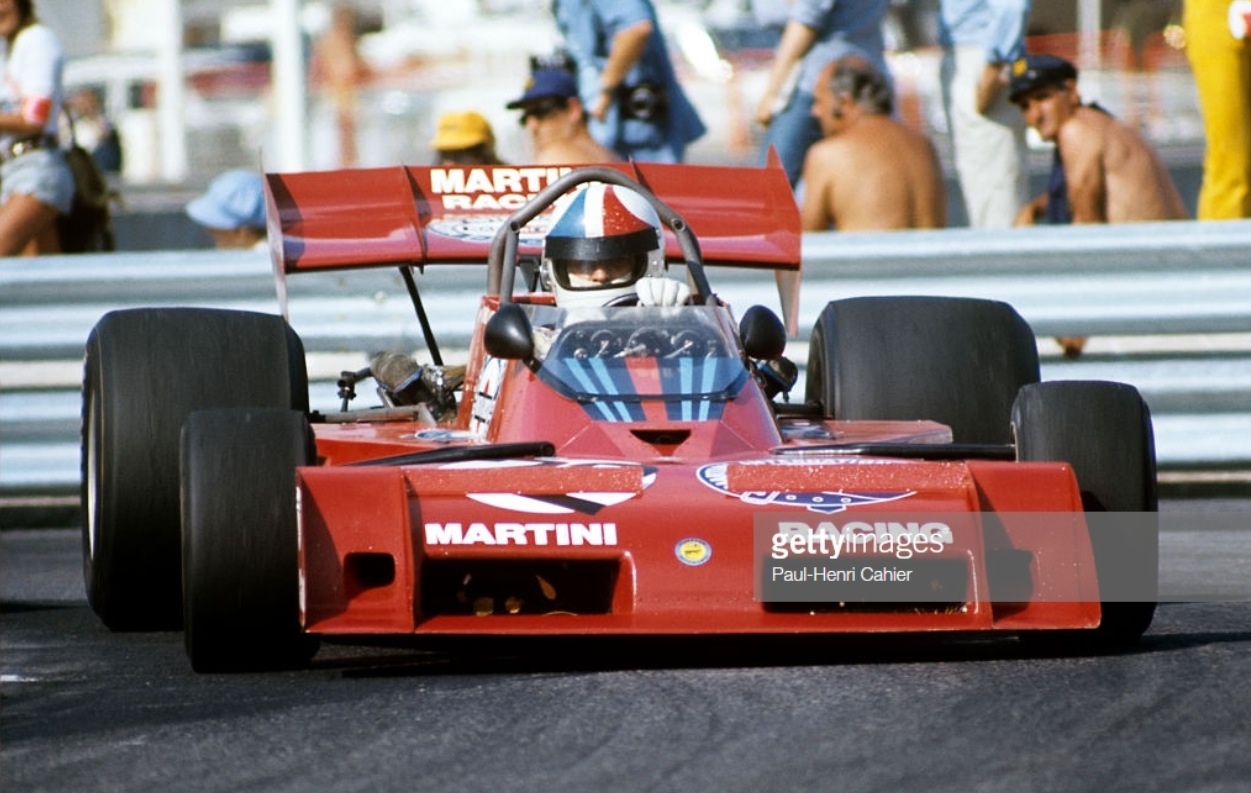
Amon, Tecno PA123,  Monaco 1973. Chris put the car 12th on the grid but DNF lap 22 with overheating. Stewart won in Tyrrell 006 Ford (P Cahier)


Amon, Amon AF101 Ford, Jarama 1974. Chris Q23 and out with braking problems on lap 22, Niki Lauda won in a Ferrari 312B3 (Twitter)


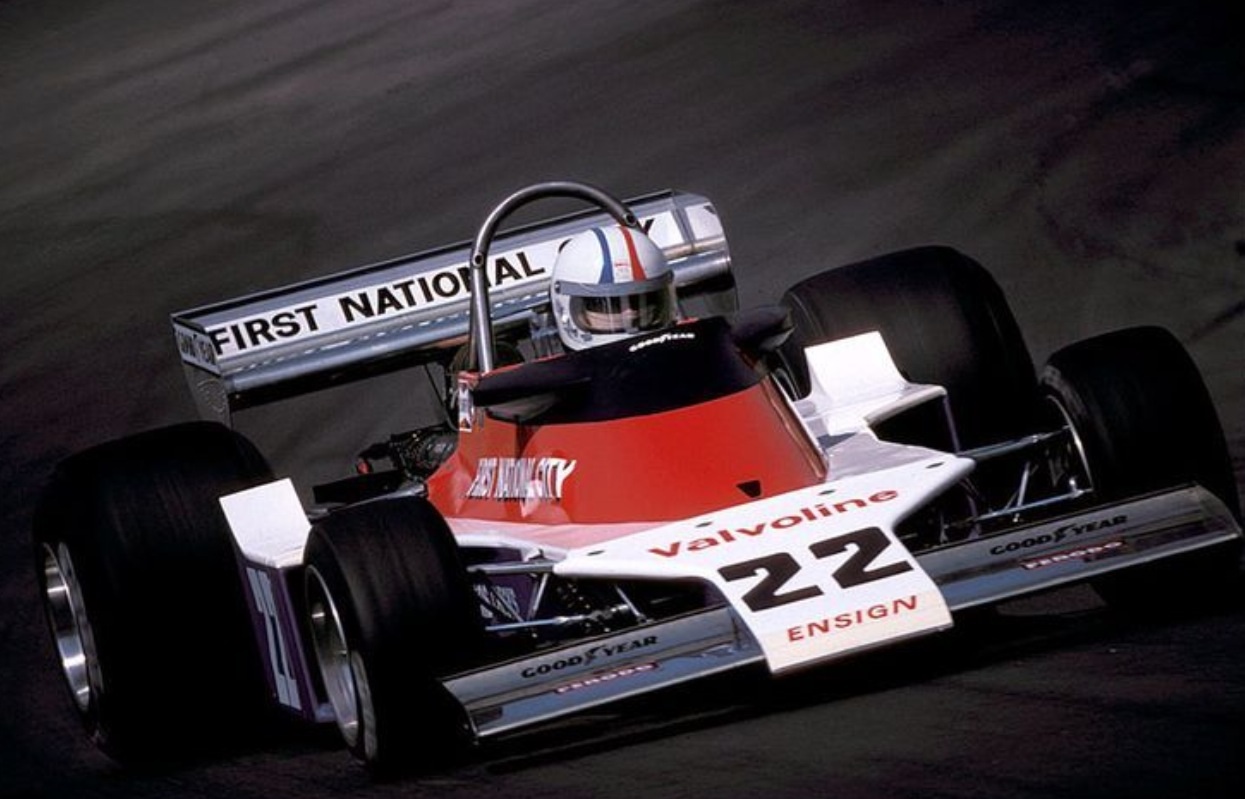
Chris, Ensign N176 Ford, British GP, Brands 1976. Stunning Q6 in the small teams car, DNF lap 8 with a water leak, James Hunt took the win in a McLaren M23 Ford (Pinterest)

But as I trundled out to Sandown in mums trusty Morris 1100 in 1975- I’d ‘conquered Sandown’ only a week or so before, a week after getting my drivers licence during a Peter Wherrett Advanced Course in that performance machine. I was keen to see how Chris handled a layout on which he had last won in 1969 when he wrapped up the final Tasman round, and series win, in his works Ferrari 246T.

Like so many really fast blokes he made it look easy.

Not much attitude on the car at all, but quick. Braking late, with a late blip of the throttle using few revs on the down-changes, he was as smooth as silk throughout. Good with feedback to his mechanics, I stalked him the whole weekend! i could hear some of it, the Jack McCormack Team were a seasoned F5000 outfit having run Sam Posey in the States for some years before.

GM ahead of Garrie Cooper’s Elfin MR5 Repco at Oran Park in 1974 (B Stratton)

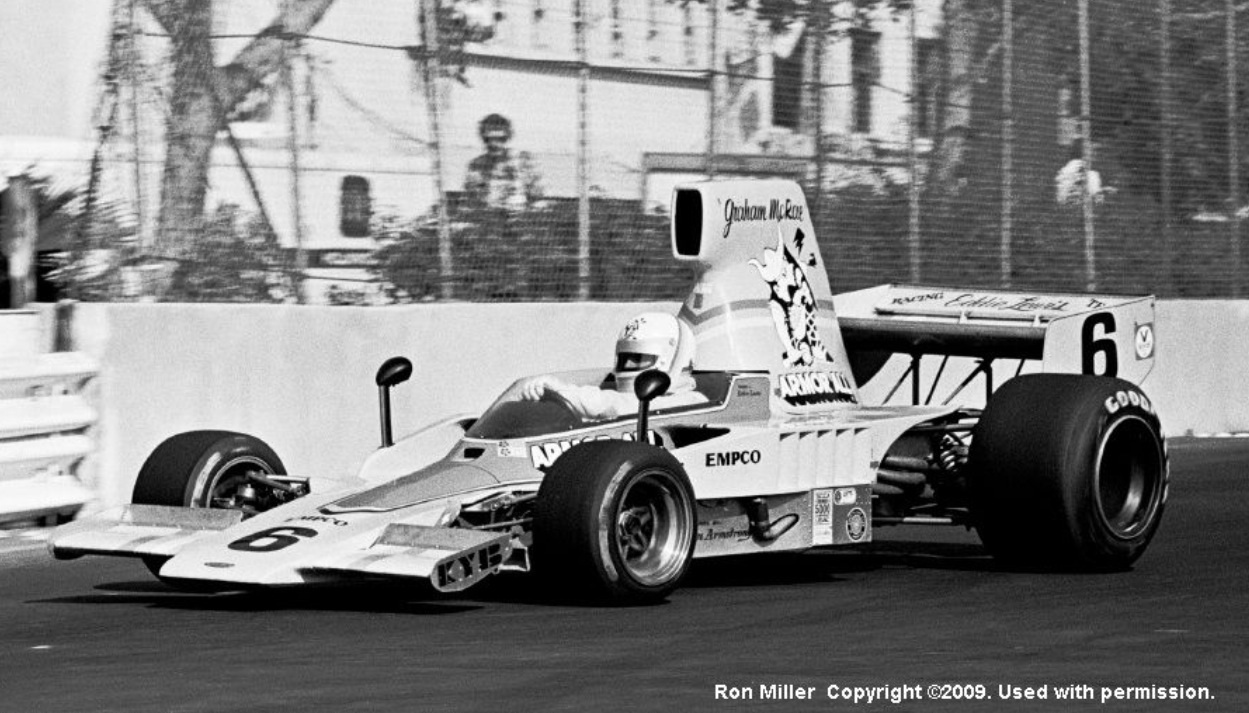
Both Graham McRae and Chris made those cars- the GM2 Chev and it’s twin, the MR-1 Chev sing that summer but there were way too few finishes to threaten the three fellas who fought out that final Tasman round at Sandown- Graeme Lawrence, John Walker and Warwick Brown all in Lola T332’s- the greatest of all F5000 machines. Brown won the title and John Goss an eventful race in his Matich A53 Repco .

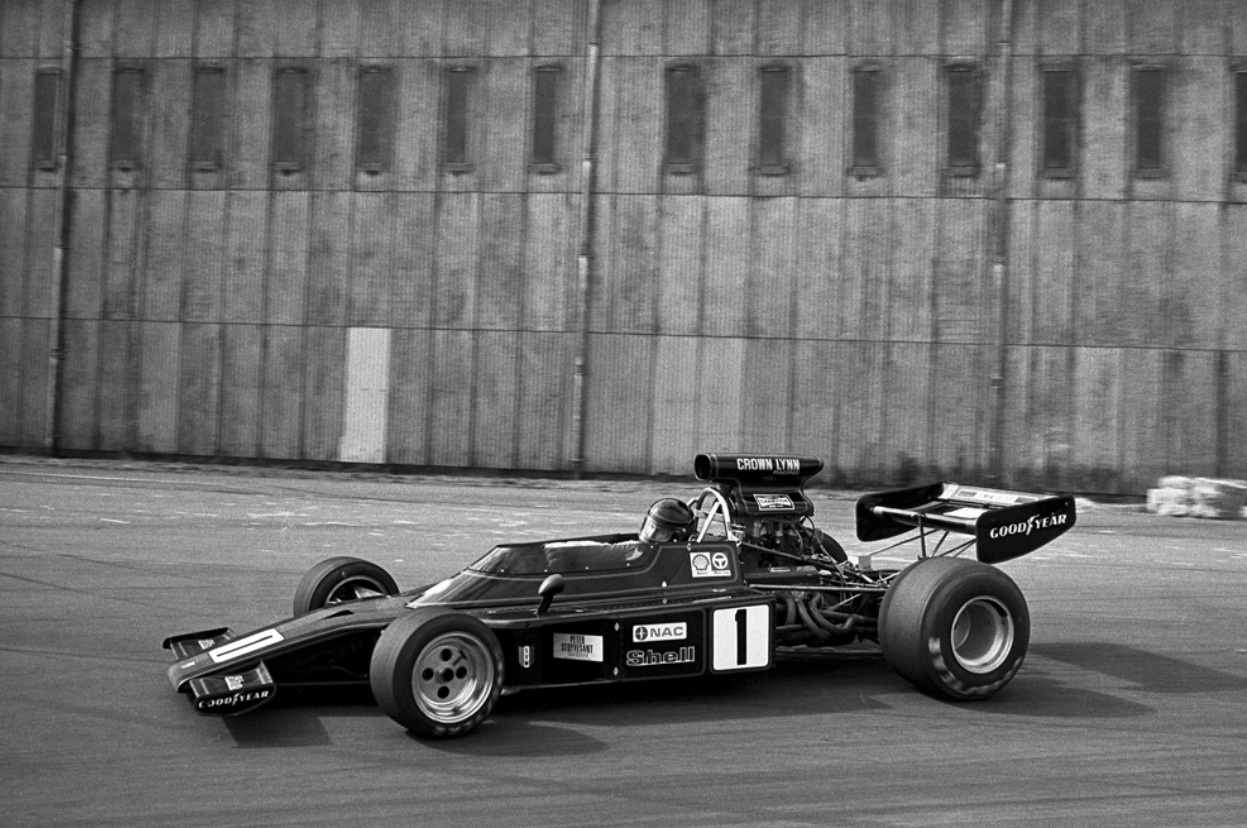
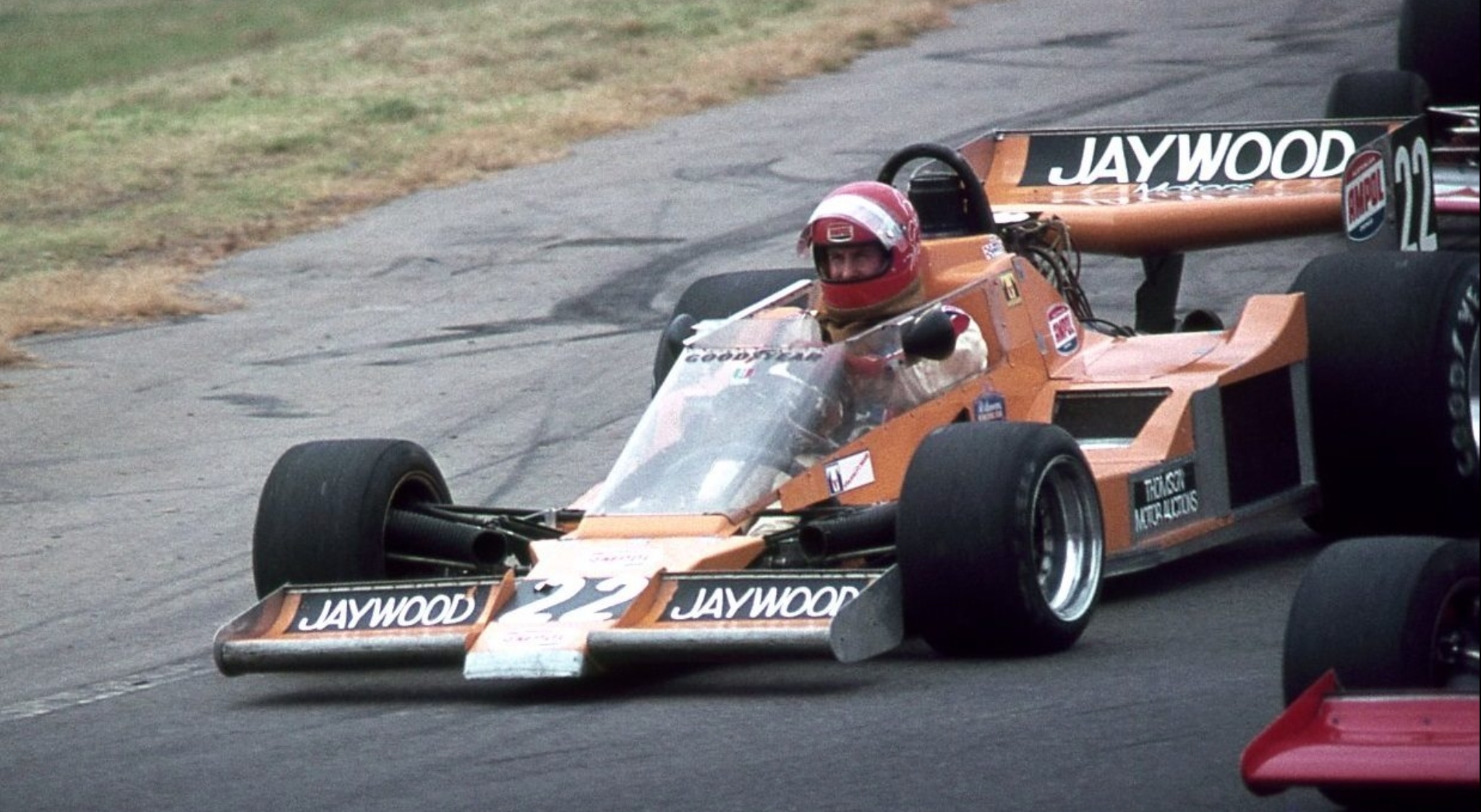
McRae followed up his very successful Len Terry designed Leda LT27/McRae GM1, a car Graham ‘concepted’ together with Terry, with the GM2. It was raced once in the UK- at the final 1973 Euro F5000 round at Brands on 21 October having troubles with a duff shocker- before landing in Australia in time for the November AGP held at Sandown, a race ‘Cassius’ won in his new car by two seconds from John McCormack’s Elfin MR5 Repco and John Walker’s unique, similarly powered Lola T330.

I spectated at the race as a teenager. In the year of the Lola T330 the GM2 was a superb looking, ‘McLaren M23-esque’ machine. With its rocker front suspension, deformable for 1974 mandated side pods and very careful attention to aerodynamics it really looked the goods.

Later in 1973 John Heynes, McRae’s business partner sold their Poole factory to the Penske Team to house their F1 effort- and the drawings and intellectual property rights of the GM2 design to Jack McCormack in California who built several cars designated Talon MR-1 and MR-1A. I will pick up this topic later in the article.

Feel The Earth Move: NZ GP Puke 1974. GM and Peter Gethin, the winner, GM2 and Chevron B24, #18 David Oxton and John McCormack- Begg FM5 Chev and Elfin MR5 Repco. The keen eyed will see the Lawrence and Walker Lolas- T332 and T330 and the rest. Tasman F5000 at its height (T Marshall)


GM exits Torana Corner @ Sandown 1974, check out the front rocker angles as the GM3 is booted hard in second gear for the blast up the back straight (B Keys)

In the 1974 Tasman Series Graham was prodigiously fast starting from pole in the NZ GP at Pukekohe and setting fastest lap in three of the four Kiwi rounds- Levin, Pukekohe and Teretonga but he had problems in three of the races- oil pressure, valve spring and rear aerofoil, 2nd at Teretonga was his only points yield at home.

In Australia he was 6th, 2nd and 7th at Surfers, Sandown and Adelaide and disqualified at Oran Park. The speed he had displayed in the three previous Tasmans was mainly there but the reliability was not, by then the Louis Morand Chevy’s had been replaced by another engine-builder’s products.

Peter Gethin won the championship in a VDS Chevron B24 from Max Stewart’s Lola T330 Chev and John Walker, John McCormack and Teddy Pilette- all on 21 points driving Lola T330 Repco, Elfin MR5 Repco and Chevron B24 Chev respectively.

GM, past the Wigram aircraft hangars in 1974 (T Marshall)


Sandown Tasman 1974 with GM seated. Rocker front suspension in an F5000 of the period unusual, rest of the car typical- and superbly finished and built, the last car built by McRae at Poole prior to the factory sale to Roger Penske. Aluminium monocoque, Melmag wheels, Hewland DG300 ‘box (R Davies)

With money tight GM didn’t contest the European Championship but took the GM2 to the US in 1974.

He started the season in a Talon MR-1, racing it at Mid Ohio and Mosport and then switched to a Lola T332, finishing 4th behind Andretti, Redman and Eppie Wietzes at Watkins Glen, DNF from Q6 at Road America and then raced the McRae GM2 at Ontario Q25 with problems and DNF, Laguna Seca Q16 and 10th. Perhaps the final Riverside round was an indicator of the cars speed against the best in the F5000 world- he was fifth behind the T332’s of Mario Andretti, Brian Redman, Warwick Brown and Al Unser from Q10.

Sam Posey and Jon Woodner also raced Talons that season with Woodner doing the best of the pair.

McRae aboard a Talon MR-1 Chev, Mid Ohio 1974 (M Windecker)


US F5000 Championship Riverside 1974, Graham aboard GM2 ‘001’ (A Upitis)

By the time the 1975 Tasman commenced McRae had shipped the car home to New Zealand and developed the GM2’s aerodynamics with a Ferrari inspired bladed front wing and long fences atop each sidepod.

Clearly, given the speed of GM2 against strong (Tasman) opposition the car was not as bad as has been portrayed in some texts which have not looked carefully at the cars qualifying pace but rather only the results- which are not quite so flash as the machines ultimate pace as expressed in qualifying.

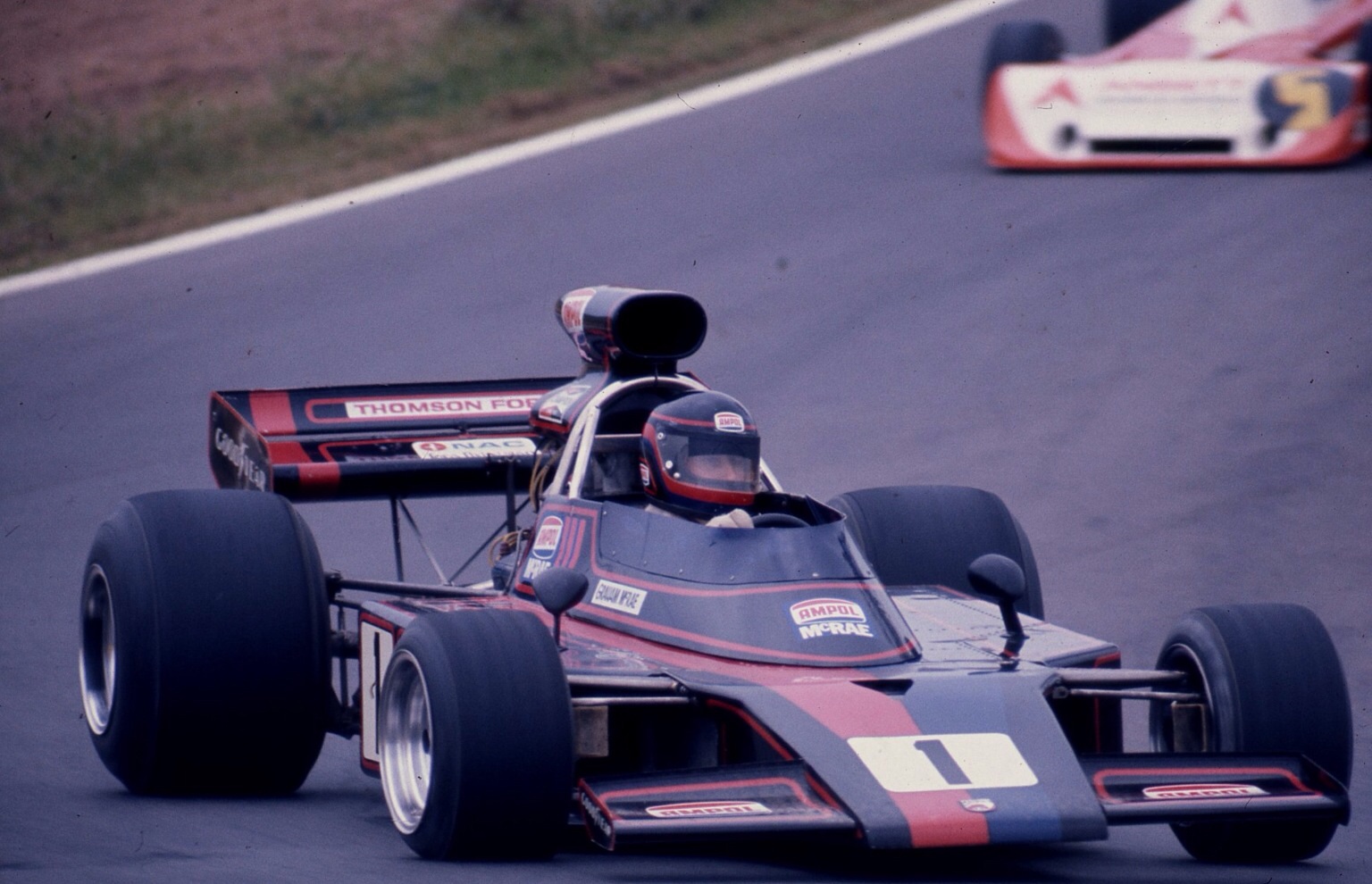
Chris Amon, Talon MR-1 Chev, Wigram 1975 (T Marshall)


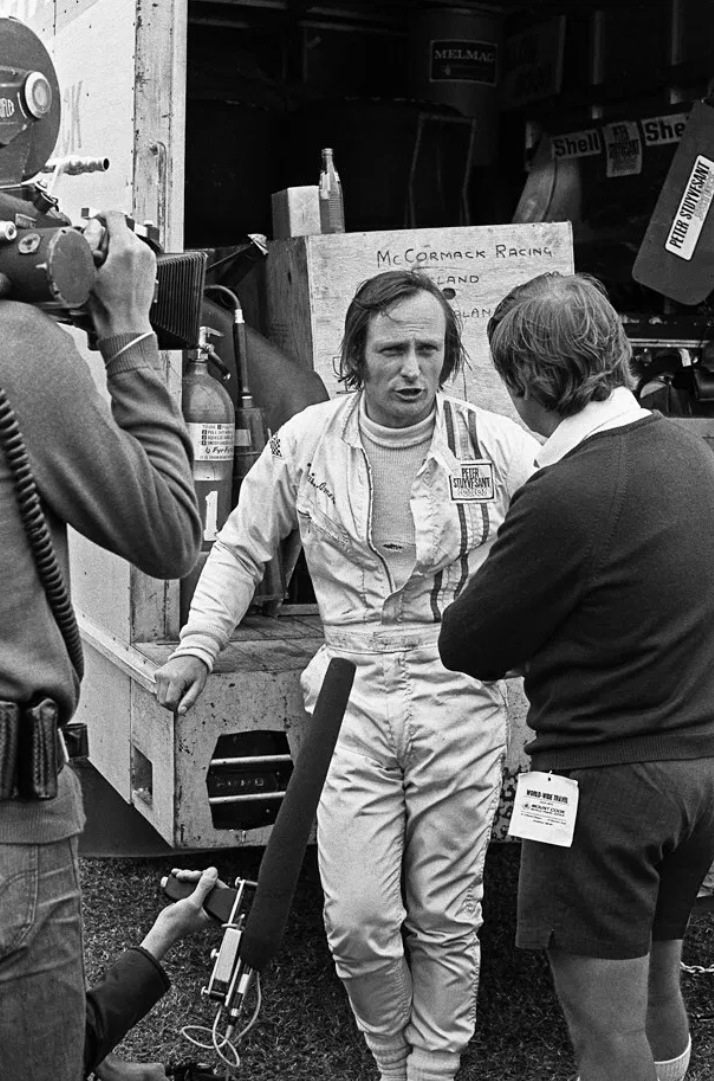
Chris taking care of the media at home in 1975 (T Marshall)


John Walker Lola T332 Repco from Chris and Graeme Lawrence Lola T332 Chev at Surfers Paradise in 1975 (B Thomas)

The GM2/MR-1 was on pole in McRae’s hands at Levin, Pukekohe, Wigram and Teretonga with Chris in his heavy, underpowered MR-1 second on the grid at Pukekohe, Wigram, Teretonga, Oran Park and Adelaide.

They won 2 of the races- McRae at Wigram and Amon the following weekend at Teretonga with Lola T332’s winning five rounds and John Goss in his Matich A53 Repco winning one, Sandown. The Lola T400, the Huntingdon marques new for 1975 machine was in strife with Kevin Bartlett and Max Stewart struggling to find the pace the T332 had- an update kit designed by Patrick Head would do the trick but it was no help for the two buddies from New South Wales, their Tasman was shot.

GM, McRae GM2 Chev, Wigram 1975 (T Marshall)


GM and Chris at Oran Park in 1975, GM2 and it’s ‘child’ the MR-1 Talon (V Hughes)


McRae Levin 1975, GM2 (T Marshall)

Into the US Series in 1975 the Talon MR-1A’s were not nearly as quick as the Lola T332C- awesome racing weapons driven by some of the most talented blokes on the planet at the time, and slipped down the grids.

Warwick Brown raced a works MR-1A with his Australian patron, mining magnate, Pat Burke’s support in 1975 but commented more than once that he should have taken his Tasman winning T332 Chev ‘HU27’ back for a full tilt at the title in 1975 given his immediate pace in the small team’s limited 1974 US campaign. There is no doubt in my mind that the self belief for WB to win the ’75 Tasman was a direct result of proving to himself he could do it amongst the big hitters mentioned earlier in this article in the US in late 1974.

Generally the MR-1A fell down the grid from a qualifying perspective from Pocono Q5 and Mosport Q3 early in the season. WB had a year of good reliability from the car and Peter Molloy’s powerful, trusty Chevies with third at Mosport behind the Andretti and Redman T332’s and fourth at Watkins Glen his best performances.

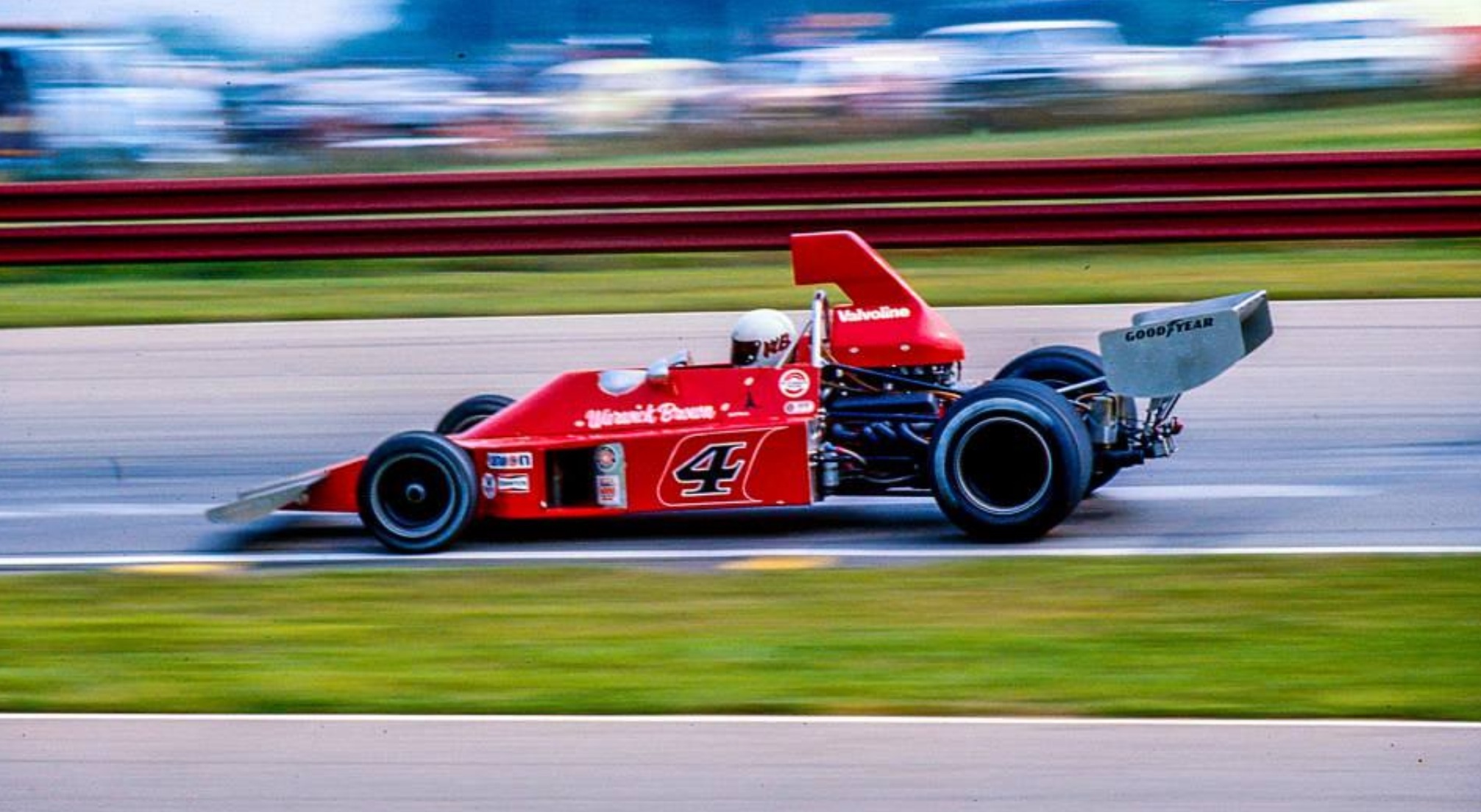
Warwick Brown, Talon MR-1A Chev, Mid Ohio 1975. Slinky from this angle (R Deming)


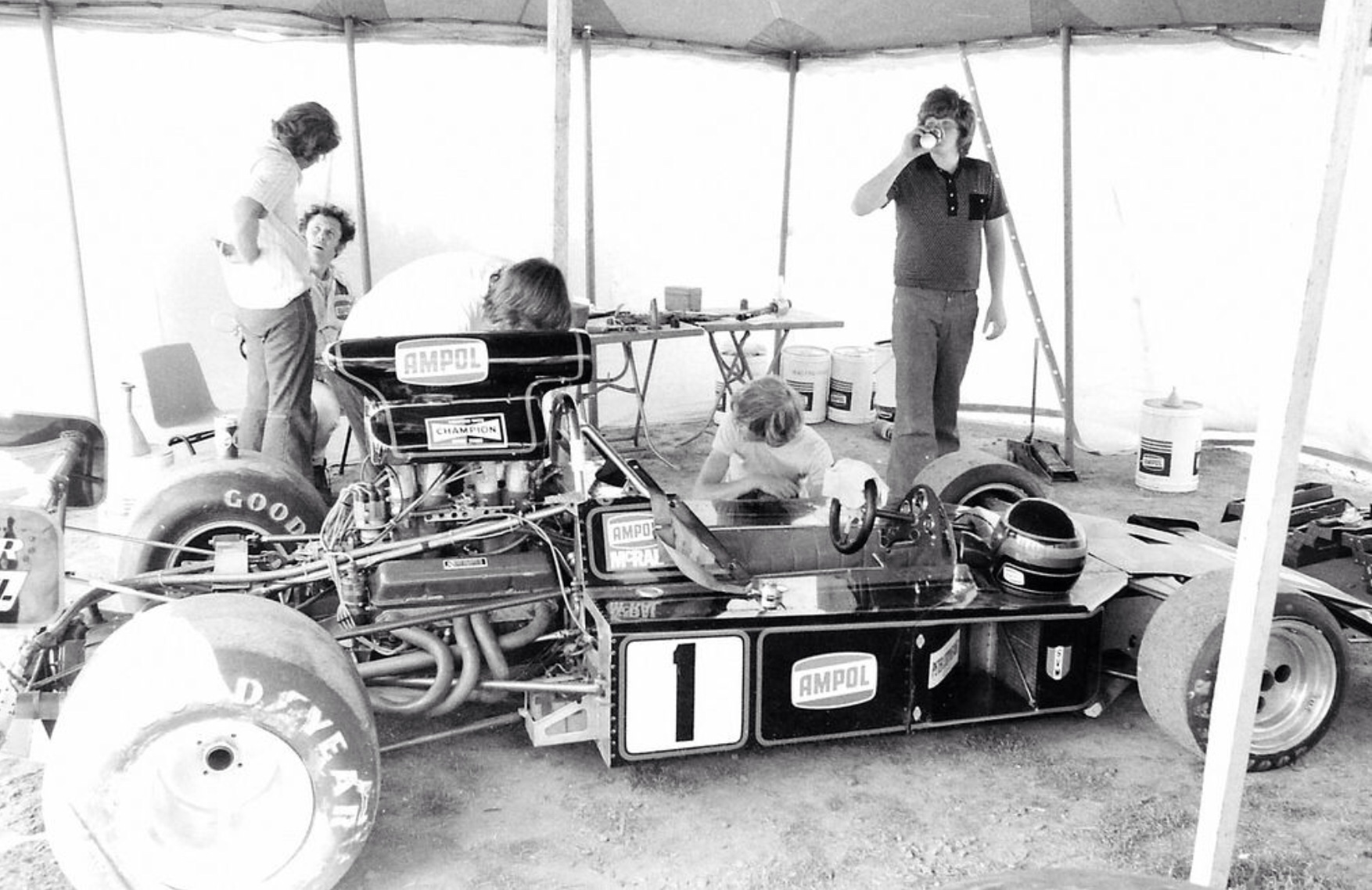
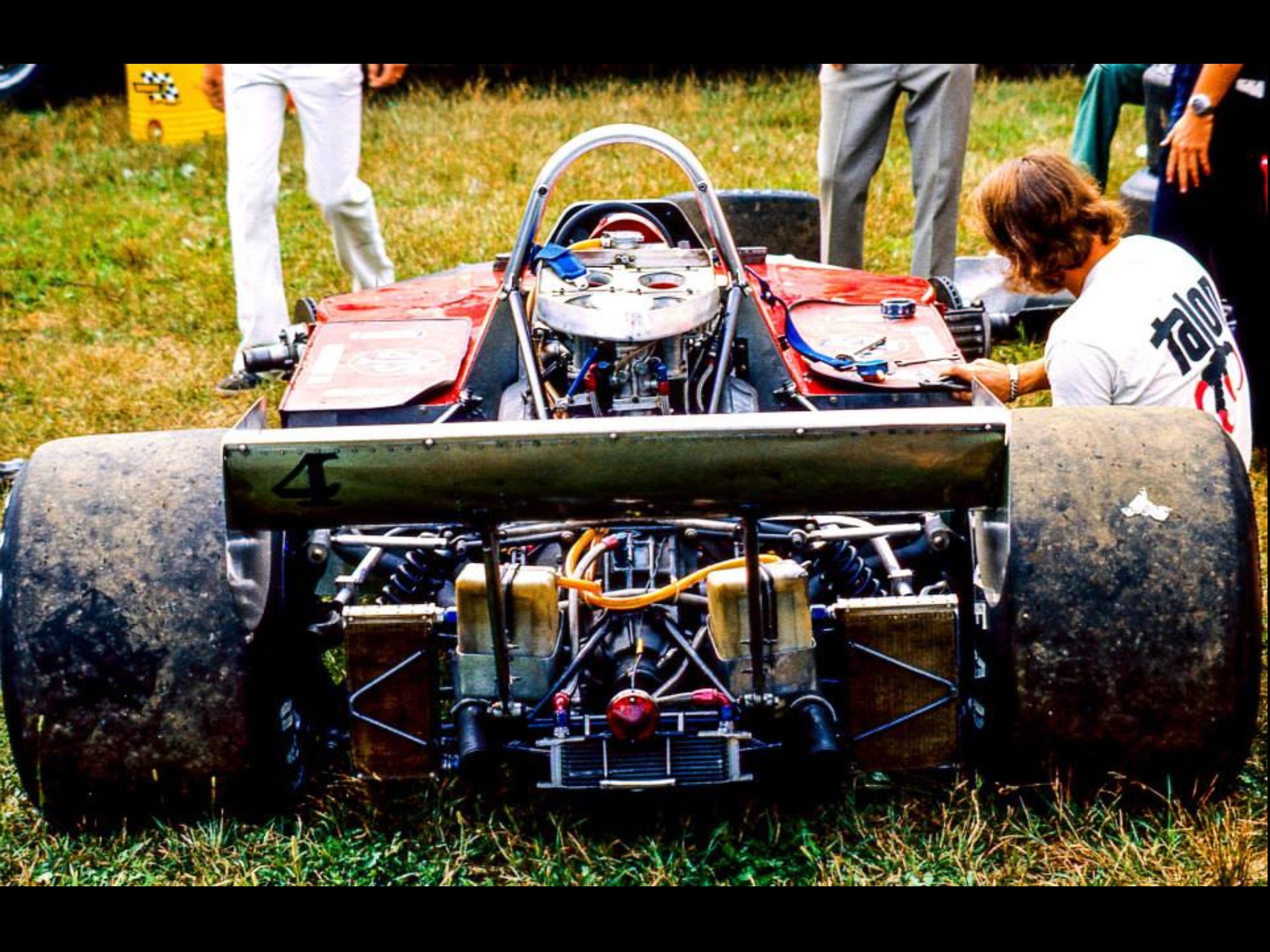
Brown’s Talon in the Mid Ohio paddock 1975 (R Deming)


Chris Amon joined Warwick at the marvellous Long Beach GP won by Redman’s T332.

Their qualifying positions were a bit dreary, WB 19th and Chris 26th but both raced to sixth in their heats with Amon fourth in the feature race and Brown two slots behind in sixth. Vern Schuppan was second in Dan Gurney’s Eagle 755 Chev and Eppie Wietzes third in his Lola T400M Chev with David Hobbs fifth in a Lola T330/332 Chev to provide the top six of a race which would be run to F1 from the following year.


Warwick Brown in the ‘works’ Talon MR-1A Chev he raced during 1975, Long Beach GP


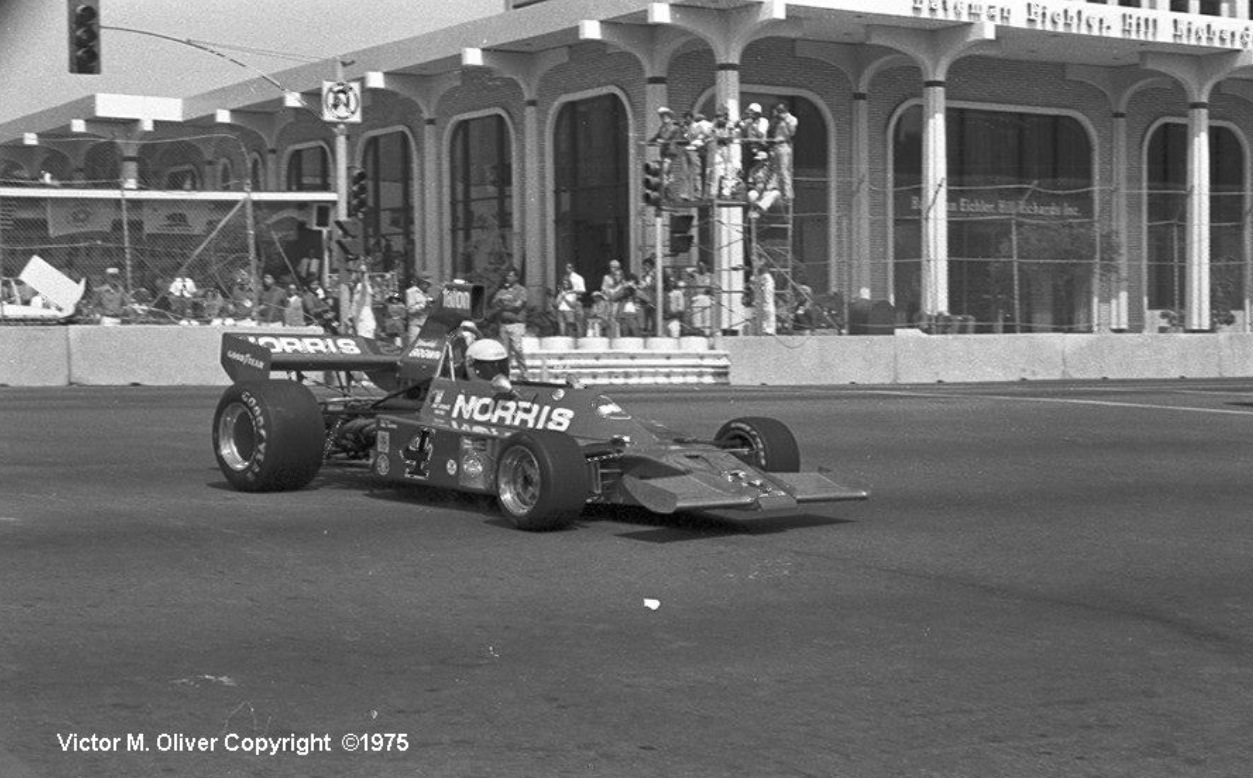
Bleedin’ the brakes, Chris, Long Beach 1975, Talon MR-1A. Poor run in qualifying belied a strong race (K Hyndman)

McRae raced a Lola T332 in the US in 1975.

His results were as follows; Watkins Glen Q9 and DNF suspension, Elkhart Lake Q12 and 7th, Long Beach Q8 and DNF after colliding with John Gunn’s T332 on lap 1. At Laguna Seca he was Q4 and 8th- and 2nd in his heat behind Unser’s T332, and at Riverside Q13 and DNF with engine problems before completing a lap.

GM, Lola T332 Chev, Long Beach 1975

Back home with the Tasman Series at an end he didn’t race in the Australasian 1976 Internationals- which that year were two separate F5000 series in New Zealand and Australia with different sponsors, it was the first time for the best part of a decade McRae didn’t compete on home turf.

GM, Torana Corner, Sandown on the way to winning the 1978 AGP, McRae GM3 Chev 1978 (HAGP)

Graham McRae’s final car, the F5000 GM3 Chev was radical in looks with its wonderful perspex cockpit bodywork which showed the driver at work is really beyond the scope of this article, its a nice topic for another time, but here is a summary.

Apart from its looks the car was a conventional F5000 machine built by GM in Costa Mesa, California with Graham Lister lending a helping hand on a trip through Los Angeles. The cars race debut was the very last round of the US Championship in 1976 at Riverside for Q22, 6th in his heat and DNF in the final.

Teddy Pilette, Lola T430 Chev from GM’s new GM3 Chev and Peter Gethin’s one of a kind Chevron B37 Chev- all three of these cars later had successful careers in Australia in the hands of GM himself, Alf Costanzo and Bruce Allison (unattributed)


GM in the GM3 Chev Can-Am in 1977, Riverside Turn 6. Check out the vestigial bodywork, almost reminds one of Vern Schuppan’s first Can-Am body on his Elfin MR8? (Eric Schaal)

With that, Graham converted the car into a Can-Am contender with vestigial sportscar bodywork racing it at Watkins Glen, Road America, Mid Ohio and Riverside which yielded his best result, Q11 and sixth.

Gerry LaRue’s magic, ‘right in the cockpit’ shot of GM at Riverside in 1977 below makes McRae’s design intent crystal clear! GM2 Chev Can Am- look closely at this shot and others of the car in F5000 format and you see just how minimalist the sportscar bodywork of the design is.


(G LaRue)

At the end of the North American season the Kiwi then converted the chassis back to F5000 specification and shipped it from California to Australia to contest the 1978 Rothmans International Series.

There his results were- Sandown Q3/DNF, Adelaide Q7/5th, Surfers Paradise Q14/7th, and Oran Park Q2/3rd. The car stayed in Australia that season with GM winning both the 1978 Australian Grand Prix at Sandown and the three round Gold Star Series- two round wins, in fact these were his last major victories.

The cars final iteration, and model name change from GM3 to GM9, then took place in New Zealand with the chassis and body substantially modified for GM’s Can-Am final races in the US in late 1980, 1981 and into 1982 and the then the cars sale. It’s still extant in New Zealand.

GM, McRae GM9 Chev, Caesars Palace Can-Am October 1981 (B Thomas)


McRae, Sandown’s Peters Corner, on the way to victory, McLaren M10B 1971 (I Smith)

Malaya Garages, Leda Cars and Len Terry…

Let’s now go back a few steps to retrace Graham’s F5000 career from its earliest days.

McRae made his name in small bore single-seaters in NZ, demonstrating his engineering prowess- he is Engineering degree qualified with the twin-cam powered McRae 69 1.5 Ford twin-cam and its forbears giving the Tasman 2.5 machines plenty of curry each summer.

His foray into the big F5000 league was funded by Tom Clark and his Crown Lynn Potteries business which acquired the McLaren M10A Chev ‘#300-6’ GM raced in the 1970 Tasman Series. Clark knew what it was to be a racer, he contested races in both New Zealand and Australia during the 1950’s aboard a variety of cars including a Maserati 8CM and Ferrari Super Squalo 555.

GM’s self constructed McRae S2 Ford 1.5 twin-cam ahead of Graeme Lawrence’s Ferrari Dino 246T at Levin in November 1969- GM finished 6 and 3 seconds respectively behind Graeme in two races that day (T Marshall)

McRae had his first foray in Europe in mid-1969 when he contested six Euro F2 Rounds as his NZ Driver to Europe prize in a Frank Williams run Brabham BT23C Ford FVA. His best result was 4th in the GP of Limbourg at Zolder behind Jochen Rindt, Jacky Ickx and Piers Courage in a car which by then was hardly the latest bit of kit. For the record, he also raced at Thruxton, the GP of Madrid, Hochenheim, Monza and the GP of Reims yielding DNF/DNF/9th/12th/11th.

Contesting the 1970 Tasman in a McLaren M10A he was immediately comfortable in these big demanding beasts of cars taking two of the nine rounds at Teretonga and Surfers Paradise.

That year the series was contested by a mix of F5000’s, Tasman 2.5’s and 2 litre cars with Graeme Lawrence winning in the same Ferrari Dino 246T chassis Chris Amon used to win in 1969.

Superb Terry Marshall portrait of GM on the grid at Levin in 1970, McLaren M10A Chev- he stares him down before the off. I love this shot (T Marshall)

The M10A wasn’t going to do the trick in Europe so was replaced by an M10B chassis ‘400-11S’ with which Graham achieved several seconds before taking the final Brands Hatch round in late September to ‘break through’ a long way from home. The series was won by Peter Gethin’s McLaren M10B with other hotshots that year Mike Hailwood, Howden Ganley, Frank Gardner, Trevor Taylor, Reine Wisell and others.

McRae returned home to the Antipodes and brained them with his extensively developed M10B in the ’71 Tasman. In the same chassis he used in Europe he won three rounds of the series- at Levin, Wigram and Sandown and took the first of his three Tasman titles, all of which were won on the trot. Frank Matich’s McLaren M10B Repco and Niel Allen’s McLaren M10B Chev were second and third with Frank Gardner’s works Lola T192 Chev fourth. There was plenty of depth in that field, it was a very good win.

At this point, lets pause for context again.

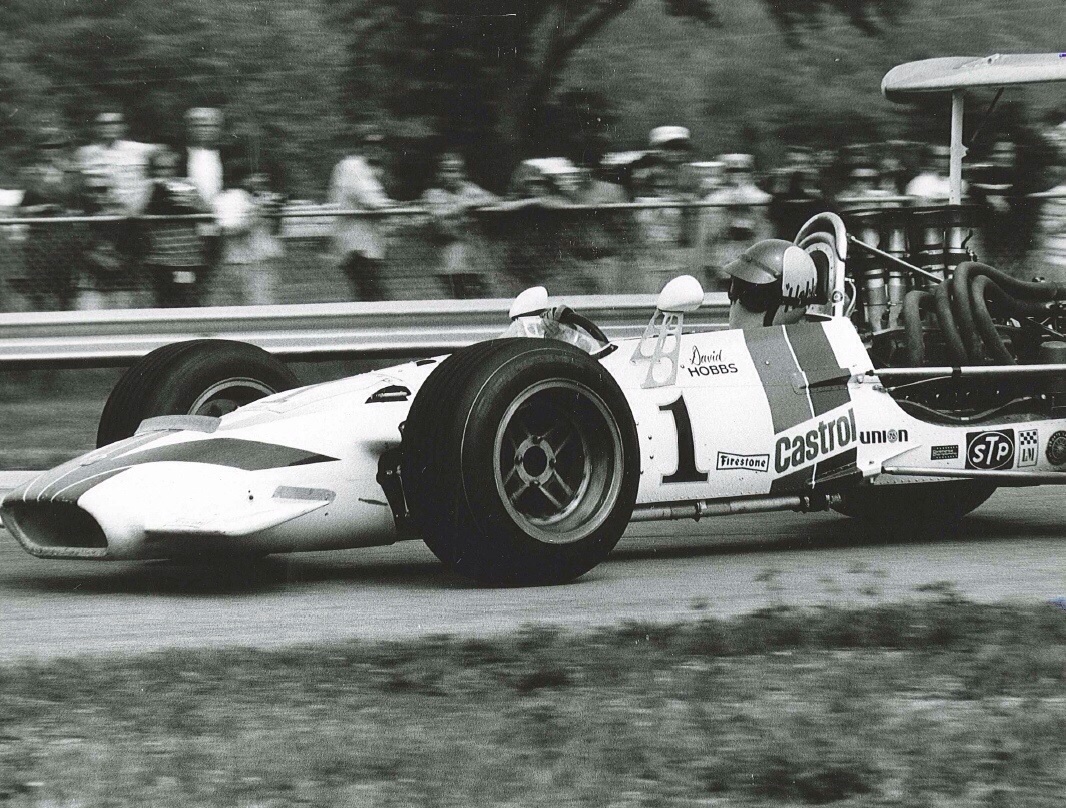
John Surtees approached Len Terry to design an F5000 car for him- Terry’s Leda LT17 intended for Roger Nathan was taken over by James Garner and John Surtees becoming the 1969 Surtees TS5 with which David Hobbs did so well.

David Hobbs, Team Surtees, Surtees TS5A Chev (Terry’s LT17 design) at Road America, July 1970- 2nd to John Cannon’s McLaren M10B Chev (unattributed)

Terry decided commercially it would be more profitable to build cars in volume rather than design them for a one-off fee. He entered into a commercial arrangement to do so with Malcolm Bridgelands Malaya Garages, who took over the majority interest in Leda Cars towards the end of 1969- the name was one Len had ‘on the shelf’ as an alternative name for business relationship with Dan Gurney during the Eagle phase of his career Le (Len) and Da (Dan).

The successful LT17/TS5 design was replaced by the 1970 LT20, a disaster. It was a lower, lighter version of the Surtees TS5 with totally interchangeable front and rear suspension which simply did not work. In August, one LT22 was built which was an LT20 with conventional multi-link rear suspension, it too was not a star, despite the testing efforts of Roy Pike, Frank Gardner and Graham McRae to get it working better.

Martin Lyons, who worked for Leda Cars relates GM’s Leda test and this Frank Gardner exchange with Len Terry after FG put the LT22 through its paces at Silverstone in 1970;

‘Graham tested the LT22 at Silverstone in 1970 for us.

He shared our workshops in Billingshurst, West Sussex. Graham after a few warm up laps, pitched the car into Woodcote as he would in his M10B. All we heard in the pits was tortured tyre squeals that went on forever (or so it seemed) and we all anticipated that dull crump/thump. It never happened and Graham came into the pits, as white as a sheet!

Len asked Frank Gardner to drive the car as well at Silverstone and after a few laps Frank peeled into the pits, rolled to a halt and killed the engine. Len paced briskly and knelt down next to Frank. After about 30 seconds (which seemed like 5 minutes) Frank drolly said “Congratulations Len!” Another pause, Len thinking a compliment was coming his way, leant further into the cockpit. “You’ve designed one car and made it handle like two!” Frank unbuckles, levers himself out of the car and walks away back down the pitlane. Everyone in our team heard this and are looking away stifling laughter…’

Roy Pike testing the brand new Leda LT22 Chev, Snetterton, 31 August 1970 (J Ballantyne)

The LT22 was replaced with the 1971 LT25 and achieved some top-five placings in the hands of ex-Lotus GP driver Trevor Taylor who had enjoyed some race wins with Team Surtees in F5000 before joining the Malaya Garages outfit.

When Graham McRae returned to the UK in early 1971 he figured he needed a new car so decided upon a McLaren M18- not McLaren’s finest of racing weapons as events transpired, not that the model didn’t win a race or two mind you.

The ‘Team Trojan’ entered M18 ‘500-02’ had one of the shortest of lives of any racing car when Graham boofed it bigtime in private practice at Snetterton before the second round of the European series in early April. He went off sideways at Russell, hit the bank, flew up into the air and landed upside down before the car rolled back onto its wheels. The racer was totally rooted but the hapless driver was AOK and ready to fight another day!

McRae, who had missed the opening round at Mallory Park- and then the Snetterton, Brands Hatch, Mondello Park, the Silverstone International Trophy and Castle Combe rounds, returned with a vengeance to win at Mallory Park in late May with none other than good ole M10B ‘400-11S’! It was a great reminder of who the class of the field generally was even if his car wasn’t the latest bit of kit.

In mid-summer of 1970 Graham came to the arrangement with Malaya Garage’s Malcolm Bridgeland to garage, prepare and transport his McLaren to meetings together with the Leda entries, Martin Lyons mentioned above. Inevitably McRae got to know the crew at Billingshurst pretty well.

At Monza in June he didn’t qualify the McLaren M10B but practiced Len Terry’s Leda LT25 ‘1’ to get a good feel for the car. That weekend was a good one for the team, Trevor Taylor finished second in another LT25 Chev just behind Alan Rollinson’s Surtees TS8 Chev, clearly the car had some merit.

McRae won in the old-nail McLaren again at Thruxton on the August day the F5000 world changed- the Lola T300 prototype made its race debut in Frank Gardner’s hands. The man who concepted the T300 knew a thing or two about engineering racing cars, it would take a couple of rounds before FG took the T300’s first race win but McRae knew he needed something pretty special to be competitive in 1972 given Gardner’s pace in Lola’s existing T192 let alone Huntingdon’s new weapon.

And so it was that Graham explored his ideas about what he wanted in his next car with Terry- thoughts strongly influenced by his McLaren experiences, the Leda LT25 and the Lola T300. He was also mindful of the very competitive ‘pregnant belly’ F1 designs of the time- the BRM P153/160, McLaren M19 and Tyrrell 001-002.

Leda LT27/GM1 ‘001’ 1972 (T Matthews)

Trevor Lister recalls ‘Graham was determined to set his engine as low in the chassis as physically possible so he redesigned the engine sump so there was the minimum possible clearance between the crankshaft and the bottom of the sump. This enabled the engine to be installed lower and reduced ground clearance.’

Perhaps a fair description of the LT27’s design is that conceptually it was largely McRae’s with the detail design and drawing all Terry’s. Along the way they decided to use some McLaren hardware, notably the suspension uprights, which suggests the Leda bits were regarded as inferior to McLaren’s or simply that was what GM wanted- a known quantity which would work straight away.

Lister also recalls ‘At one stage we encountered continual cracking of the brake discs and Graham decided he would drill holes to improve the cooling by dissipating the heat build-up. I remember him standing at the drill-press for hours one day drilling dozens of holes in all the discs, I believe he was the first to do this in F5000 and it was copied by some teams even in F1? He also grooved the discs from inside to outside to improve the clearance of brake dust. Again, other teams copied very quickly but some had the grooves running the wrong way’.

Leda Cars were based in the Malaya Garages premises along with Alan McCall’s (another very talented Kiwi) Tui Super Vee project and a project to build a Morgan like road car. The F5000 plan for 1972 was for McRae and Taylor to race two LT27’s in the 1972 Euro F5000 Championship, but Graham first had his Tasman title to defend.

Ampol ad proclaiming McRae’s 1973 Tasman Series win. Pic is of GM Leda LT27/GM1 Chev ahead of Kevin Bartlett’s McLaren M10B Chev at Adelaide International in 1972- David Hobb’s McLaren M22 Chev won that day

Frank Matich figured he had the goods to win the ’72 Tasman, his new Matich A50 Repco had won right out of the box at Warwick Farm, taking the 1971 AGP from John Surtees amongst others.

The 1972 Tasman line-up was particularly strong with works Surtees, Lola and Trojan Cars entries for Mike Hailwood, Frank Gardner and David Hobbs. In addition there was strong competition from Kevin Bartlett, Max Stewart and the Ansett Team Elfin duo of John McCormack and Garrie Cooper.

It isn’t clear how much testing McRae had completed in his new Leda LT27/GM1 Chev but the neat, squat, STP sponsored machine was fast right from the off complete with powerful, reliable, Weber carbed Morand Chevys.

McRae won at Levin, Wigram, Surfers Paradise and Sandown and took pole at Pukekohe, Levin and Wigram- notable was that the car was quick on a variety of circuits. Clearly Leda had a competitive customer car to compete with the Lola T300 and Chevron B24 which promised to be the marques available in quantity that season.

Yay team, Malaya Garages Auosport ad, March 1972 (M Lyons)

McRae returned to Europe and raced the same chassis in the Brands, Mallory Park, Snetterton rounds with dramas in all three races before breaking through for his first win of the championship that year in the April Brands round- a car for Taylor finally appeared at the April Silvertone meeting.

After the first three or four races the Malaya Garages people decided to withdraw their support for the race team with the drivers looking likely to be left high and dry- arguably Taylor already was. A London insurance broker and wealthy motor racing enthusiast, John Heynes came to the rescue and acquired premises in Poole, Dorset installing McRae in charge. Terry resigned his directorship of Leda Cars Ltd and relocated his own business ‘Design Auto’ to his home in Dorset. A contemporary Autosport report has it that Len’s only relationship at that point was as a shareholder of Leda Cars.

With the takeover complete, from 1 July 1972 the LT27 design became known as the McRae GM1 with 14 cars built and sold in 1972/1973. To that point the cover of Leda’s own sales brochure described the car as ‘Leda Type 27/GM’, which should put to an end any conjecture as to what the car’s model designation was formally prior to 1 July 1972.

Whilst all these corporate manoeuvrings were going on McRae had races to contest, his season being set up by STP- who had backed the new car during the successful 1972 Tasman campaign and decided to continue their sponsorship to forays in both the US and Europe.

GM and crew, Leda GM1 Chev, Laguna Seca practice 1972 (R Rodgers)


Brainerd Donnybrooke July 1972. Sam Posey Surtees TS11 Chev, John Cannon McLaren M10B Chev, McRae in GM1 (A Upitis)

McRae won the US L&M Championship and surely would have taken the Euro one too were it not for conflicting rounds which precluded him contesting sufficient races to do so- as it was he won the Nivelles, Silverstone, Brands (July) and Oulton Park rounds and finished third in the title chase behind Gijs van Lennep and Brian Redman in Surtees TS11/McLaren M18 and McLaren M10B/Chevron B24 respectively.

In the US McRae faced strong opposition from Brian Redman (also contesting both the European and US titles), David Hobbs, Derek Bell, Peter Gethin and Aussies Bob Muir, Kevin Bartlett- not all these fellas did the whole series mind you.

Despite that and being new to the circuits and having all the logistical challenges of a different country he won the Laguna Seca, Watkins Glen and Road America events of the eight round series taking the ‘SCCA L&M Continental 5000 Championship’ title with 87 points from Sam Posey, Surtees TS11 Chev and Brett Lunger’s Lola T300 Chev.

McRae, GM1, Warwick Farm 1973 (B Stratton)

Into 1973 McRae easily again won the Tasman Series, the combination of the GM1 design, Morand engines and McRae’s preparation and driving talent saw off fields of great depth. The GM1 took five of the eight rounds, McRae won four and Alan Rollinson one.

But it was to be a different thing in the US with a double-whammy of plenty of Lola T330’s on the grids and Jody Scheckter aboard a Trojan T101- whatever Ron Tauranac’s design may have lacked in pace relative to the Lola was more than compensated by Jody’s prowess behind the wheel.

During the year McRae’s versatility was demonstrated with a drive at Indianapolis via the relationship he had with the Granatelli’s, there STP company was also the sponsor of the three car Patrick Racing Team. In a superb effort, GM popped the Patrick Eagle Offy 16th on the grid completing 91 of the 133 laps with a header problem- in the process he was awarded the Rookie of The Year trophy.

It was a bitter/sweet weekend for Pat Patrick and the team- whilst Gordon Johncock won the race in another Eagle the teams other car driven by Swede Savage crashed very badly with the hapless young thruster succumbing to his injuries, or more particularly post-surgery complications, five weeks after the race.

The obligatory Indy qualifying shot- GM in the Patrick Racing Eagle Offy, 1973 (unattributed)


McRae in Frank Williams Iso IR Ford in the Silverstone British GP pitlane in 1973. The eagle eyed will spot Jackie Stewart aboard Derek Gardner’s experimental chisel-nosed Tyrrell 005 Ford behind. This was the chassis Chris Amon was to race in the North American away races- in the end he only raced the car in Canada, Francois Cevert’s death during Watkins Glen practice resulted in the team’s withdrawal from the meeting- which was JYS last GP (LAT)

Needless to say McRae was a ‘man of the moment’ at the time- then like now you need to grab and hold the spotlight with your results to get F1 opportunities. Unfortunately Ken Tyrrell’s offers of a race or two were declined as a result of prior contractual commitments. Unfortunately when the planets did align GM’s F1 career became one of the shortest on record.

Frank Williams was well aware of McRae’s record in the Tasman Series when FW ran a car for Piers Courage in 1969, and of course the Kiwi’s F2 drives with him in early ’69. And so it was that GM raced FW’s Iso IR Ford in the 1973 Silverstone British GP- a race made famous by the huge Woodcote lose of Jody Scheckter which then took out the best part of half the field. McRae’s car was not destroyed unlike many but the Iso’s Lucas injection throttle slides were jammed with sand, so he didn’t take the restart of the race won by Peter Revson’s McLaren M23 Ford.

McRae needed a new F5000- the GM2 was the result drawing upon ideas absorbed from the contemporary racers of the day and built in the Poole workshop. It wasn’t the last racing car built there, Penskes would follow but one can only surmise that John Heynes worked out that the only way to make a lot of money out of motor racing was to start with even more. And so McRae Cars in that incarnation ended, the facility was sold, as were the GM2 design rights and drawings to Jack McCormack.

And that folks, is about where we came in…

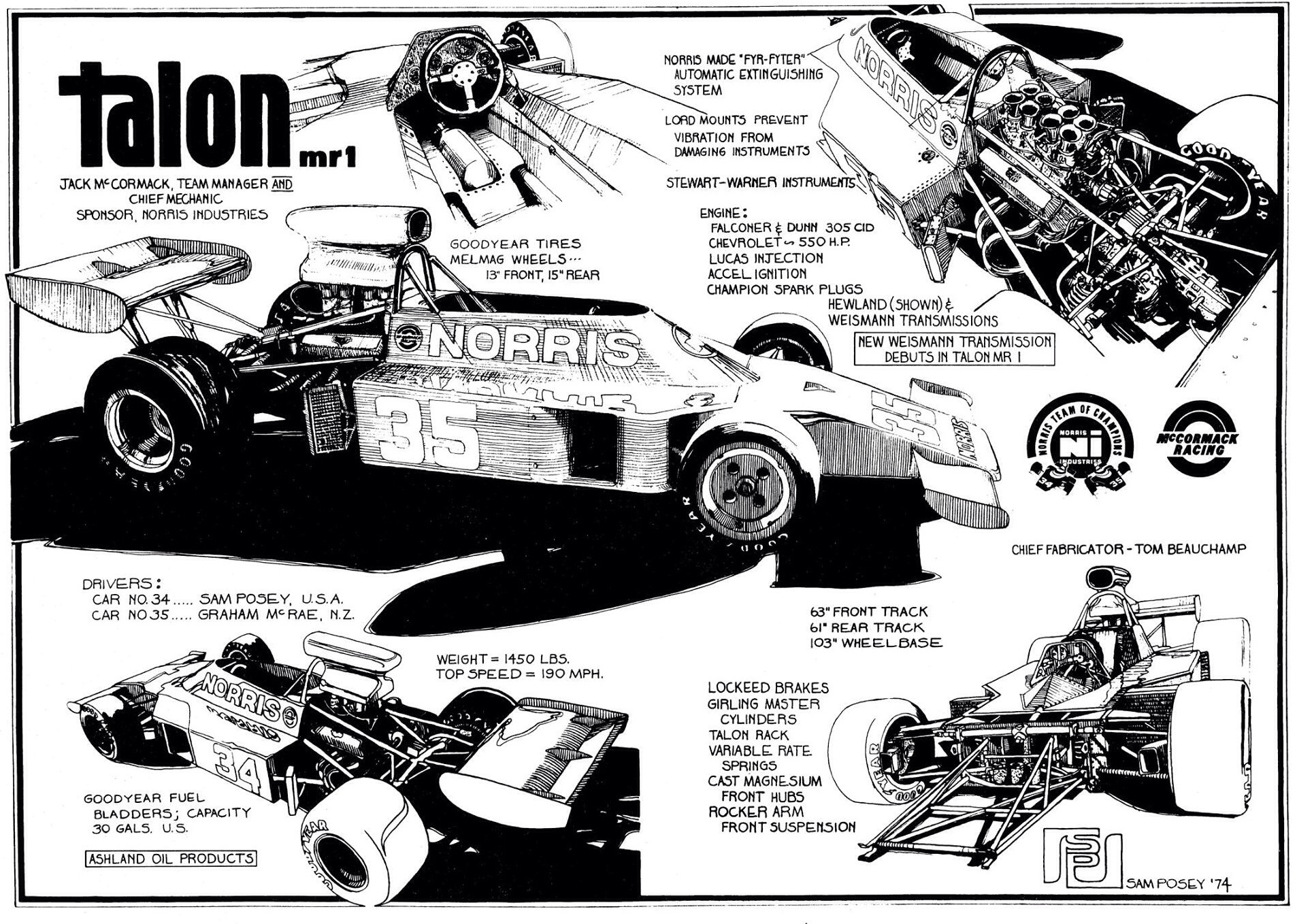
Sam Posey’s, yes the very same! Talon MR-1 drawing

After-thought: Formula 5000 Needed a Production McRae GM2 in 1973/4…

Formula 5000 was dead and buried by the Americans at the end of 1976, the knock-on effect went around the planet other than good-ole Australia who hung on to the class for way toooo long- love the category as I did/do.

The causes of F5000’s demise were multi-faceted but primarily was due to the dastardly Lola T330/332/332C which simply rolled over the top of everything its path including the Lolas designed to replace them- the 1975 T400 and 1976 T430!

The punters were getting bored with ‘Formula Lola’ in F5000 so the nuffies in the SCCA and the circuit promoters created single-seat Can-Am- and preserved Formula Lola as the T332CS/T333CS simply preserved the status quo- a non T332 derivative did not win the Can-Am until the Lola T530 did so in 1980.

And so, my thesis goes the class needed another strong make/model to give drivers another competitive mount and the punters another shape to look at. There is no reason why McRae’s development capabilities could not have turned the GM2 into a winning car built by his Poole factory in numbers exactly as the GM1 was. No doubt John Heynes business decision to sell made perfect sense to him- he saw the books and could no doubt assess the commerciality of the arrangements of a company led by a man at the time who could have been seduced to F1. His main asset could have disappeared from the scene for all manner of reasons- think of Chevron in terms of the impact of Derek Bennett’s death or closer to home Garrie Cooper’s at Elfin Sports Cars.

If the Chevron B28 were quicker, if the Chevron B37 were quicker in 1976, if the Lola T400 and T430 were quicker in 1975/6, if the McRae GM2 were built in numbers- and were quick maybe the variety we spectators like would have been provided and F5000 would have survived a little longer at least.

If yer aunty had balls she’d be yer uncle too, I know…

GM at Oran Park, Rothmans International Series 1978, McRae GM3 Chev- soon to be significantly modified in NZ into the Can-Am GM9 (N Stratton)

Etcetera…

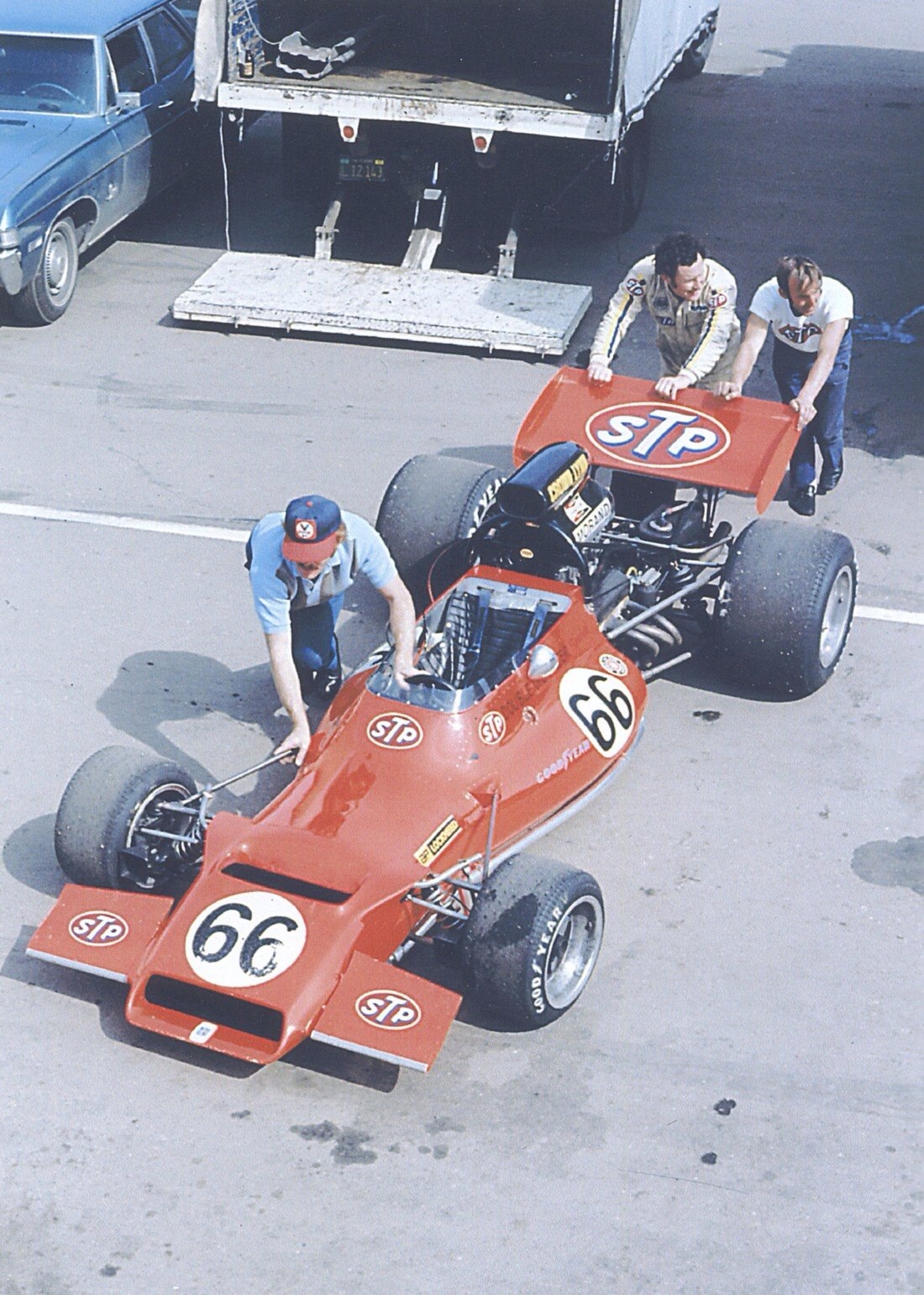
Leda LT27/GM1 in the US early in the 1972 campaign. Ken Stepney steering, Joe Wright pushing with GM sharing a joke. Overhead shot shows the lines of the car and it’s complex, compound curvature to good effect- and its Leda badge on the nose which Martin Lyons dates the shot as pre-July


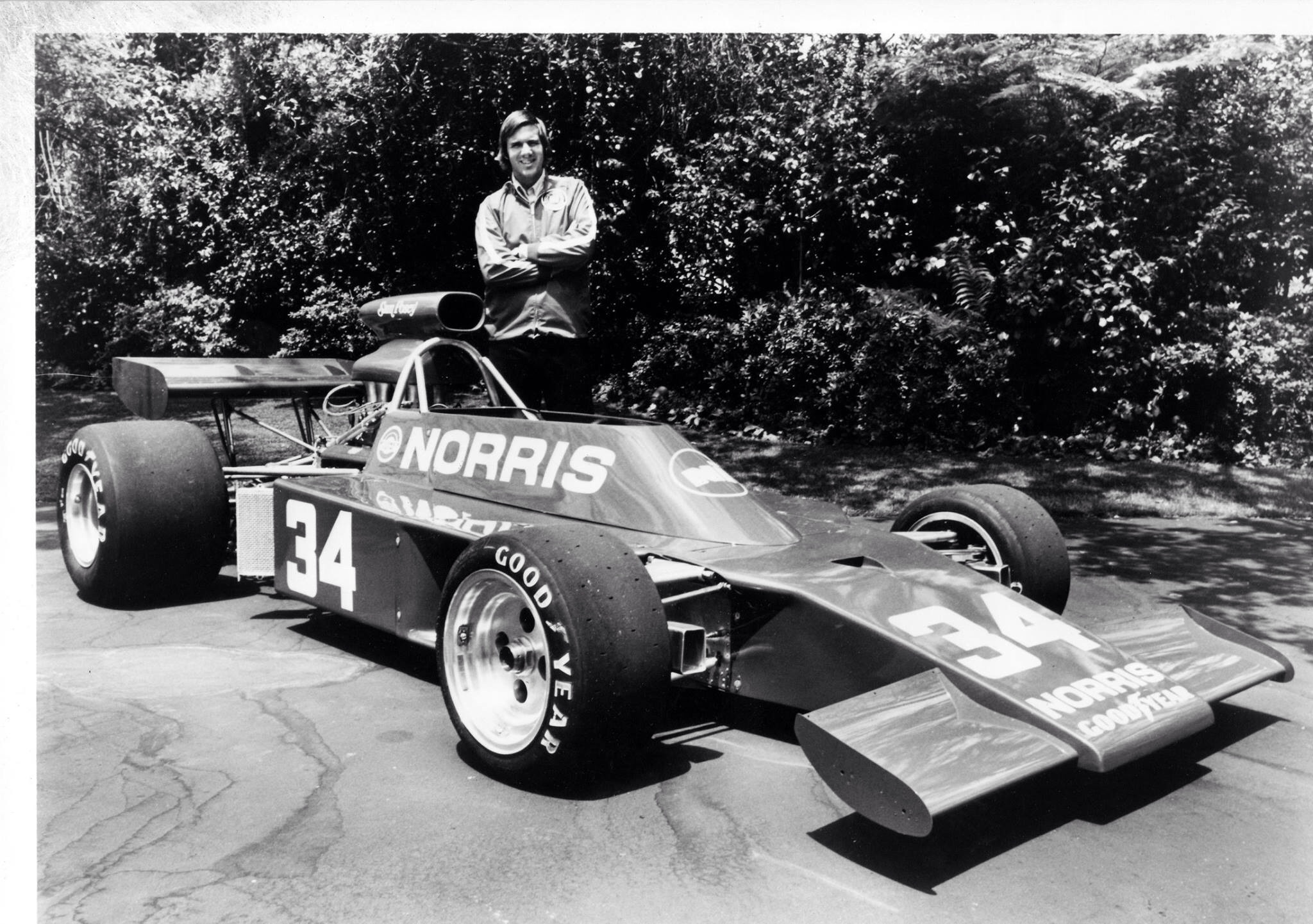
Sam Posey with his Talon MR-1 Chev prior to the start of the 1974 US season (J McCormack)


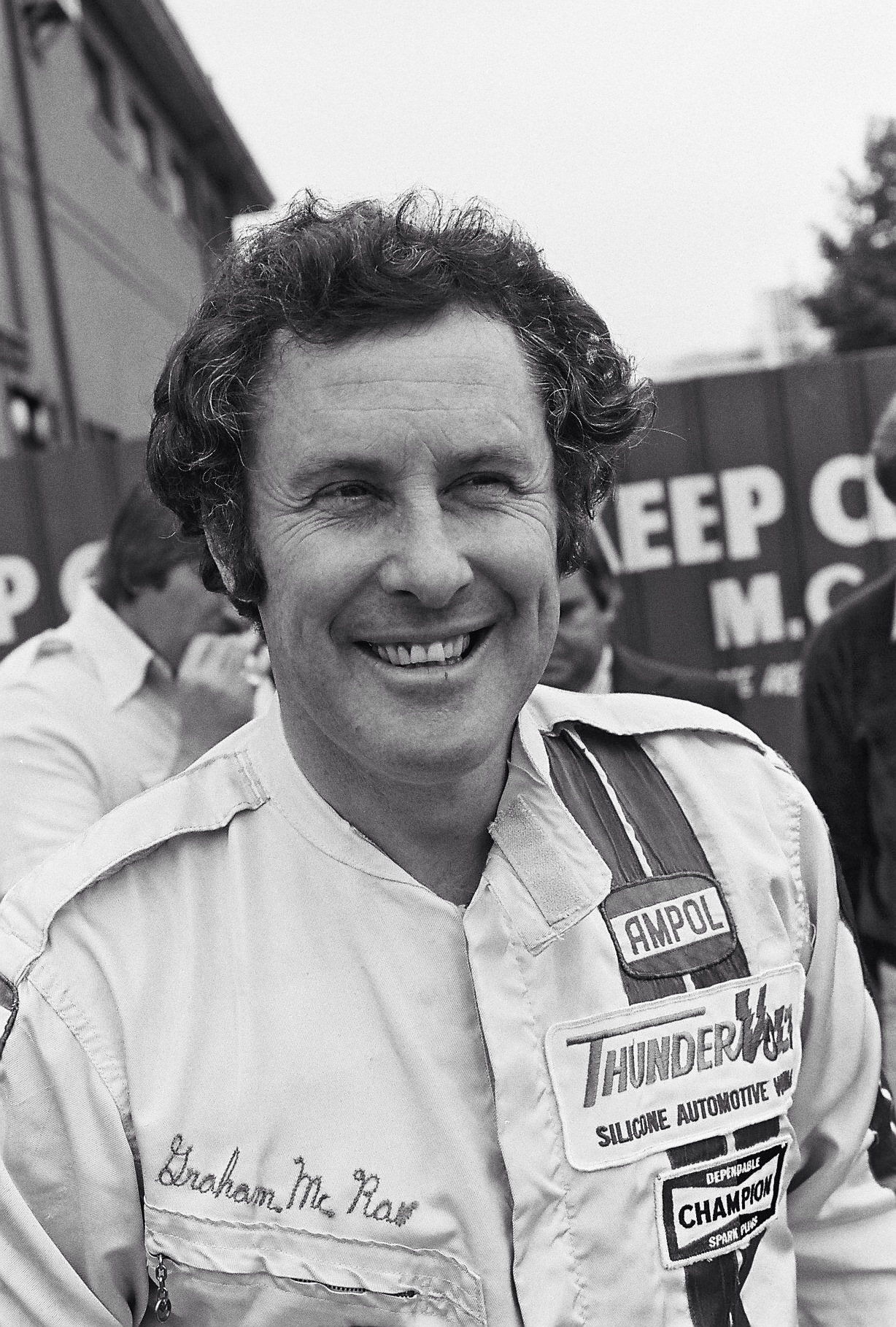
The man in 1978, Sandown or outside the Light Car Club perhaps (I Smith)

Martin Lyons on ‘Living The Dream’ as a young member of the Malaya Garages Team…

‘My first test day with the team was on Wednesday June 9th 1971 at Snetterton race circuit in Norfolk.

I was picked up by Stan, the other race mechanic who had joined us that winter from Rob Walker’s disbanded F1 team. We left Billingshurst at 6.45am in our race-car transporter, which had been owned by the American Eagle F1 team from 1966 to 1968. It still had the AAR badge on the dashboard.

We arrived at the circuit by 10am having emerged from a grey overcast sky to unbroken sunshine only a few miles from Snetterton. The car was unloaded, I filled up the fuel drums with 5-star fuel via handpump.

The car was fuelled and Trevor Taylor, our driver, had arrived in a blue Ferrari Daytona and got changed into his race kit in the transporter. We shared the track with three motorbikes that day (!) and one of them fell off in fright when our car passed him on a corner (or that’s what Trevor speculated!). We were testing a flat plate just above the carburettors and when the car went past the pits you could see a mist of fuel lapping around the plate. It never appeared on the car again. We packed up at about 4.30pm and began the journey home, arriving back in Billingshurst some 4 hours later.

Stan then gave me a lift home in his Mini Traveller (the Mini estate with wooden trims on the body). It had been a day of days. Through my Boots polaroid sunglasses, styled like Jackie Stewart’s the sky looked bluer, the grass looked greener and I was living a dream!!!’

McRae and the curvaceous, wild GM9 Chev Can-Am in 1981/2 (unattributed)

Further information on individual chassis, see Allen Brown’s Oldracingcars…

On McRae http://www.oldracingcars.com/f5000/mcrae/

On Leda http://www.oldracingcars.com/f5000/leda/

Photo Credits…

Special thanks to Terry Marshall for his marvellous evocative work, Gavin Fry, Brian and Neil Stratton, Gerard Richards, Brier Thomas,  oldracingcars.com, LAT, Sam Posey, Tony Matthews, R Deming, Mark Windecker, Roger Rodgers, Ian Smith, Bruce Keys, Gerry LaRue, Eric Schaal, Ken Hyndman

Bibliography…

oldracingcars.com, Martin Lyons and his collection

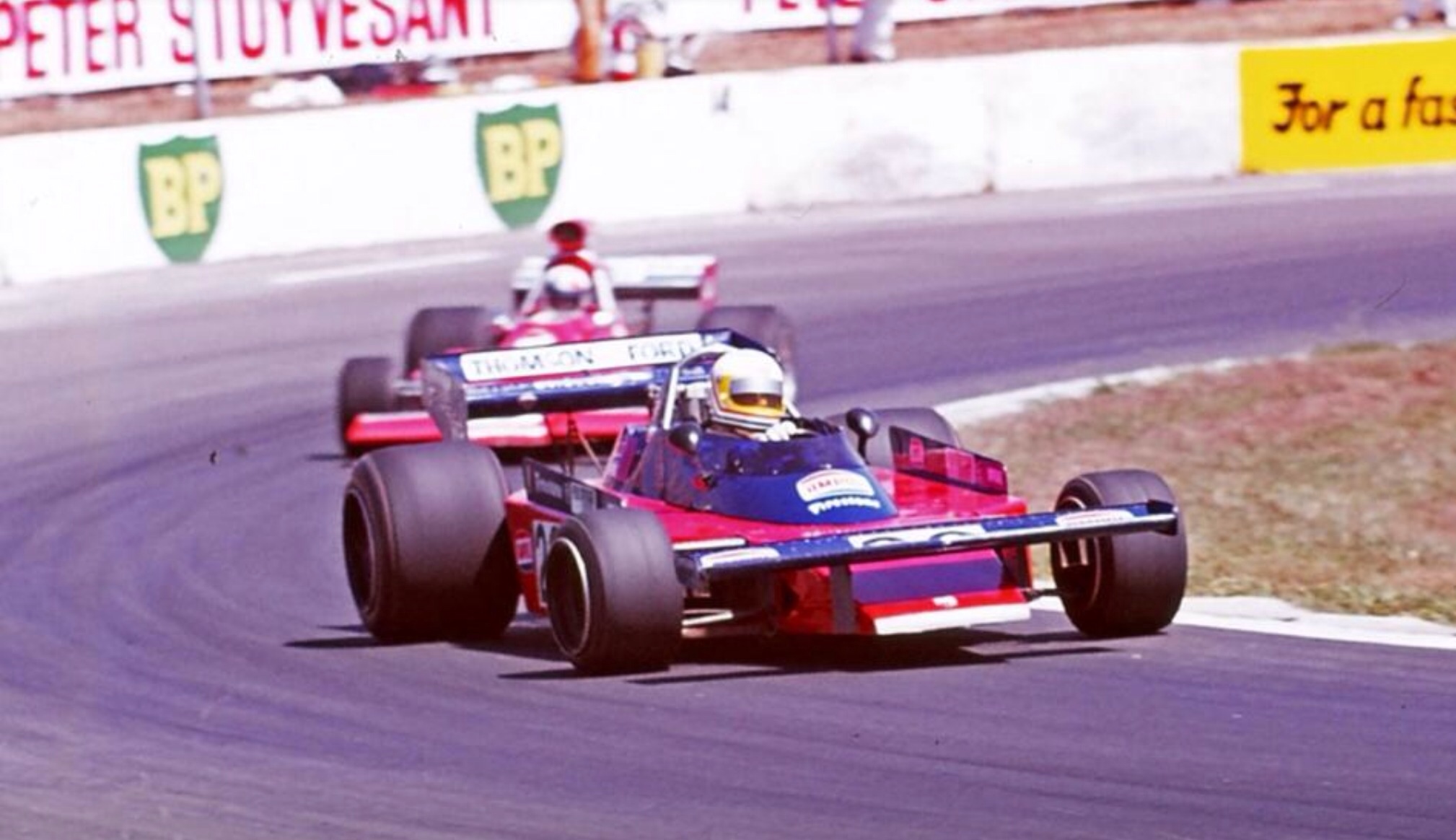
Tailpiece: Finish as we started, Chris, Talon MR-1 Chev, here at Wigram 1975…

(T Marshall)

Finito…
(Bennett)

It’s an exciting time for Formula Fordsters in Australia, the fiftieth anniversary of the first FF race in Australia, at Sandown on 25 November 1969, takes place in 2019…

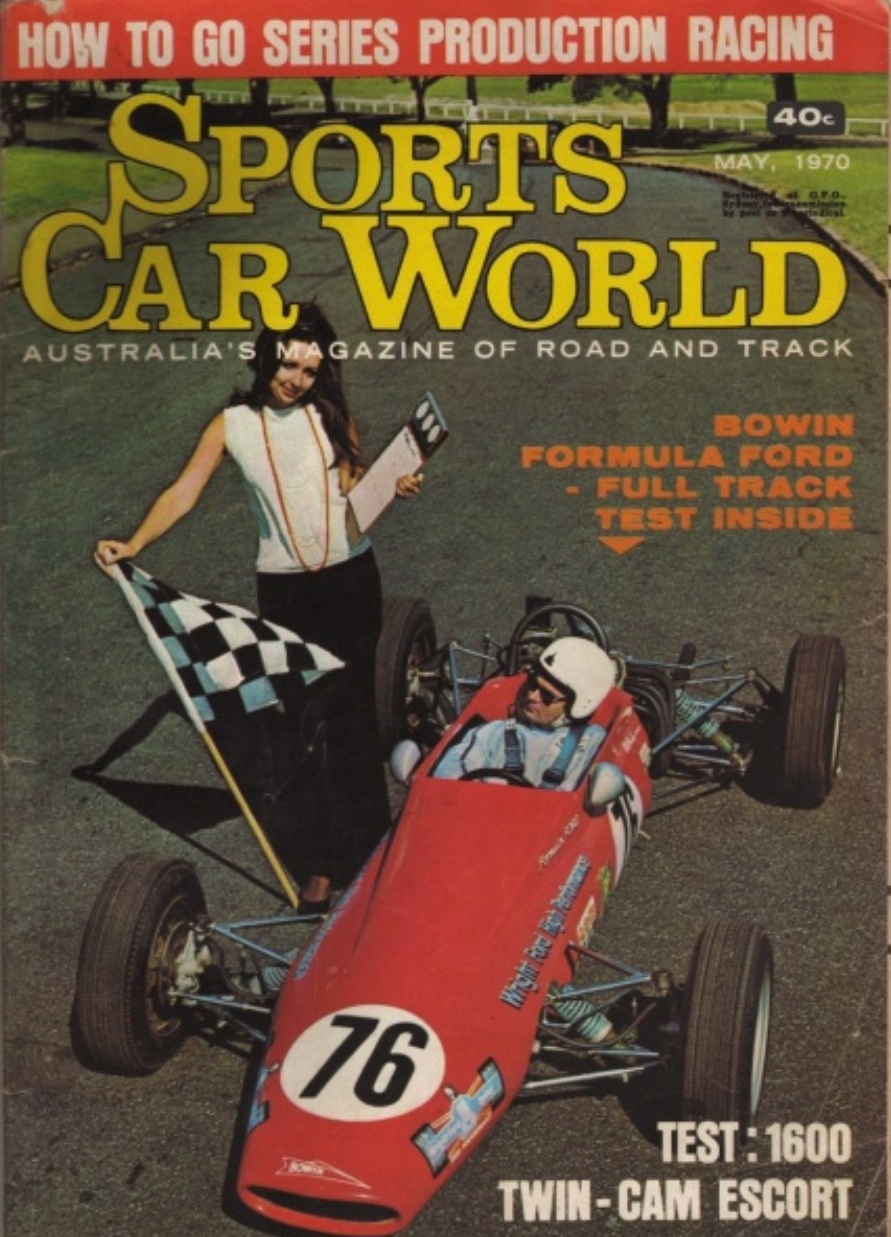
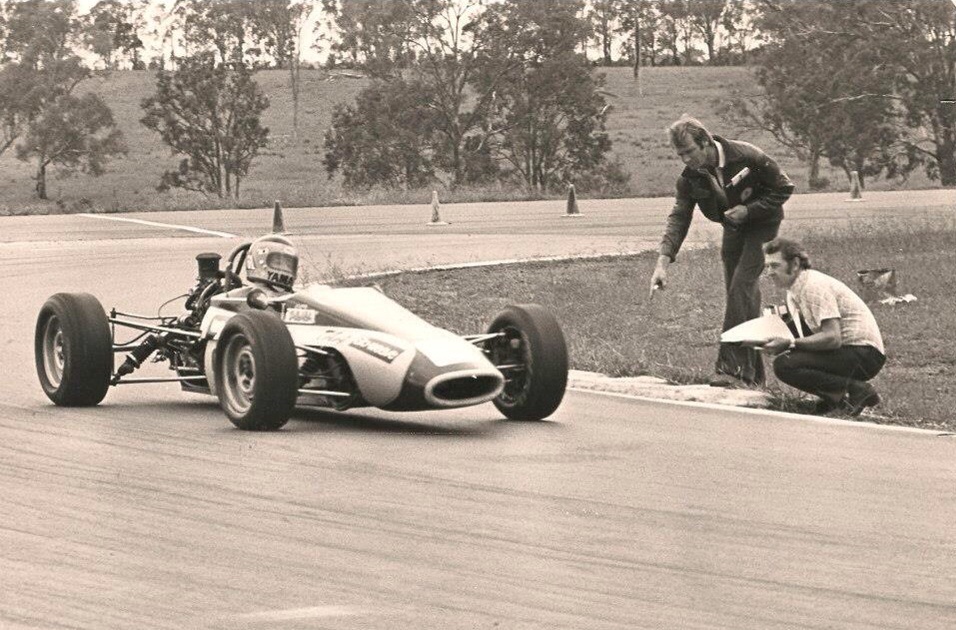
The shot above is of Paul Harrington keeping an eye on a journalist about to have a spin aboard a Bowin P4A at Calder, date and drivers name folks? John Joyce built twelve P4’s, one of which was acquired by Ford for promotional purposes, this car, chassis ‘P4A-108-70’ still exists in the hands of Geoff Fry at Bathurst.

LCCA Sandown program entry for the first FF race in Australia in November 1969 (A Mann)

Harrington came to Australia from the UK in the late sixties and was initially employed as General Manager of the Queens Road, Melbourne based Light Car Club of Australia, well known to Australian enthusiasts as the promoters of Sandown and Lakeland Hillclimb in its latter days and venues such as Albert Park earlier on. Harrington joined Auto Action in 1971, a magazine which exists to this day, although Paul died some years back.

He is at Calder given the role the LCCA had in providing administrative support for the FF category which continued until the clubs demise as a result of the fiscal disasters which occurred due to running two poorly attended World Sportscar Championship races in the mid-eighties. Jon Davison saved the sports bacon by picking up the circuit lease but that central LCCA gathering place and watering hole on the corner of Roy Street and Queens Road for Victorian racing folks has never been replaced.

That first Australian FF race at Sandown on 25 November 1969 was contested by a mix of bespoke FF’s and converted Formula 3 cars. The race was won by Richard Knight’s Bib Stillwell owned Elfin 600 from Murray Coombs’ Lynx and Allan Ould’s Aztec AR8 driven by Bob Minogue- many years later a fast F5000 competitor in the ex-Brown/Hamilton/Costanzo Lola T430 Chev. The Elfin 600 is still about with Allan Ould looking for a Hewland Mk4 or 5 gearbox to complete the Aztec in time for the Sandown fifty year celebration meeting. The Lynx, I’m not so sure about.

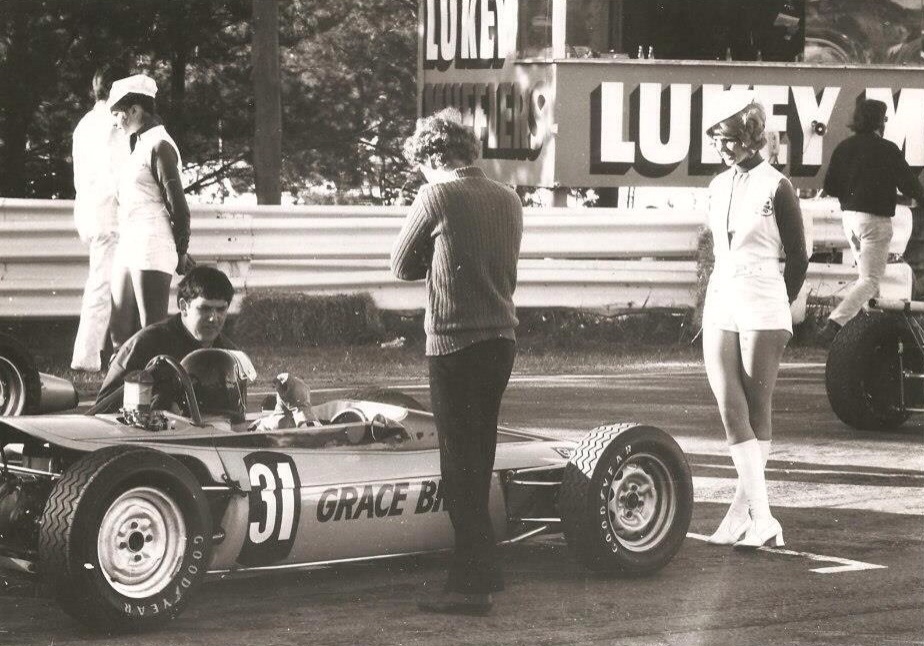
Bowin Clan Meeting in early 1975 at Oran Park: Track day attended by John Joyce on the lectern’s left with John Leffler in dark Grace Bros clobber standing on the start line addressing the troops. Sitting down on the tyre opposite Leffo is Paul Bernasconi, shortly off to Ralt and European F3. Cars are a mix of front radiator P4A’s and chisel nosed P6F’s- front and centre is Leffler’s P8 Chev F5000. The day was reported at length by Barry Lake in Sports Car World magazine- drivers and their fettlers were coached on car preparation, set-up, with on-circuit suspension adjustments made throughout the day inclusive of reasons for the changes recommended (SCW)

When John Joyce- I’ve another article on Bowin half-cooked which provides the background to the marque, returned from his long stint with Lotus in the mid-sixties he initially built three monocoque F2 cars.

These machines designated ‘P3’ (Project 3) were raced initially by Glynn Scott, Ian Fergusson and Barrie Garner. Glynn’s was the first built and was fitted with an ex-Piers Courage Ford FVA engine, Ian’s with a Lotus/Ford twin-cam whilst Barrie’s was a hillclimb machine powered by a Holden ‘Red’ six cylinder motor.

Joyce’s 1959 ‘P1’ and 1962 ‘P2’ were both Formula Juniors- one was Cooper based and the second was named ‘Koala’, both cars raced by John.

Barrie Garner in his Bowin P3 Holden at King Edward Park Hillclimb, Newcastle, NSW in 1971 (D Harvey)

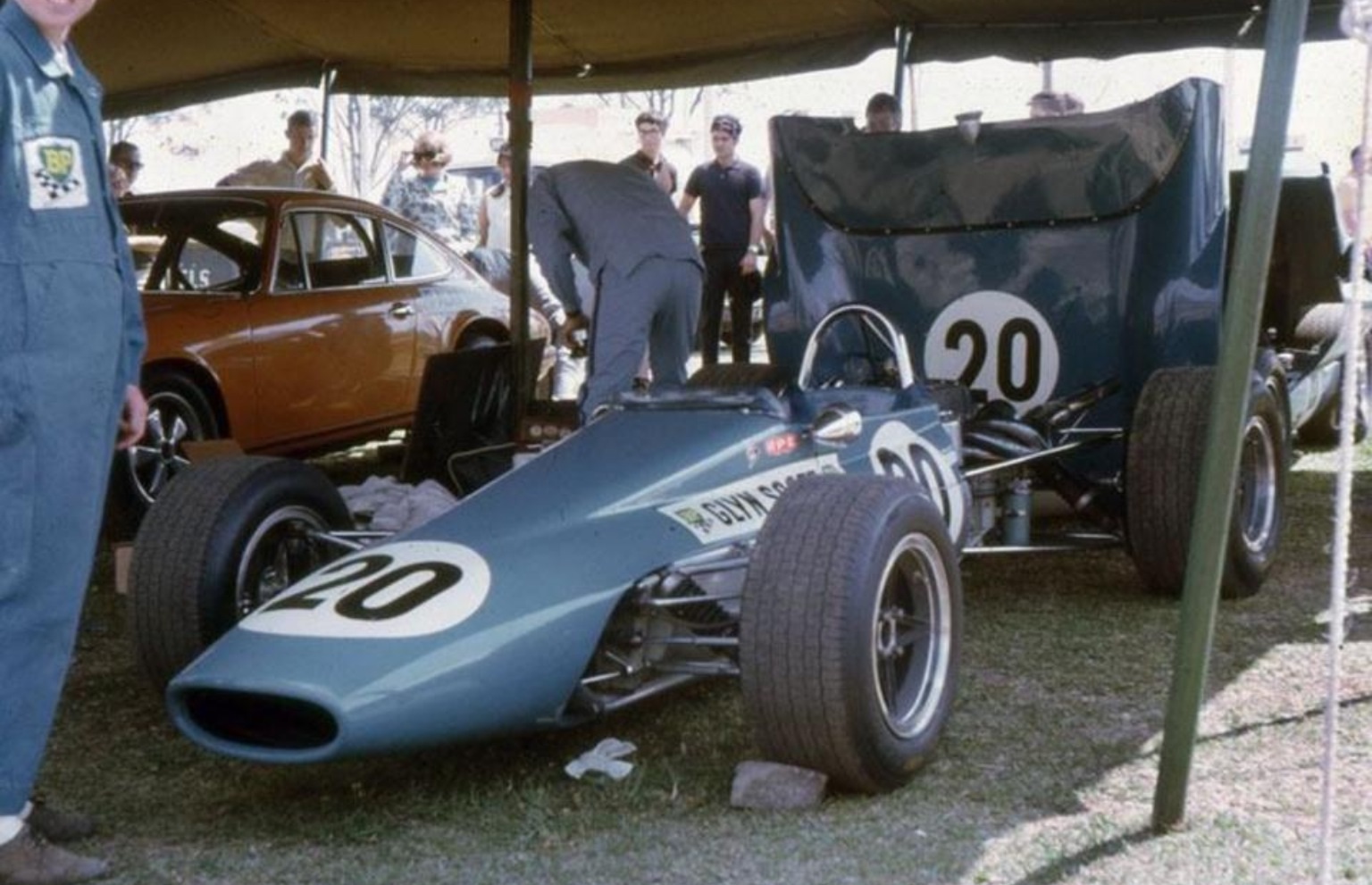
Glynn Scott’s Bowin P3 Ford FVA and Lotus 23B Ford in the Lakeside paddock in October 1968. The 911 T/R is Alan Hamilton’s, just arrived and so impactful in the 1969 ATCC (G Ruckert)

With the advent of FF in Oz, Joycey adapted the P3 design’s conventional upper and lower wishbone and coil spring/shock front- and single top link, inverted lower wishbone and twin radius rod, coil spring/shock rear suspension design to a (mandated) spaceframe chassis to suit FF.

Power was of course the class issue cast iron, four cylinder, Ford 681M, 691M, 2737M- and from 1971 in Australia the 711M 1968/69/70/71 Cortina/Escort/Capri pushrod, OHV, twin-choke Weber fed 105bhp’ish motor. Hewland Mk8 or Mk9 4-speed transaxles completed the key mechanical elements of the package.

Mike Stillwell in Graham North’s Wren- the first FF Wren built by Bill Reynolds, Graham Gilbert’s self built Corsair FF and Brian Beasy’s self built Beasy FF at Calder in 1970. These days, since 1972! Ian Mayberry owns the Wren with the Corsair and Beasy still extant (A Clifford)

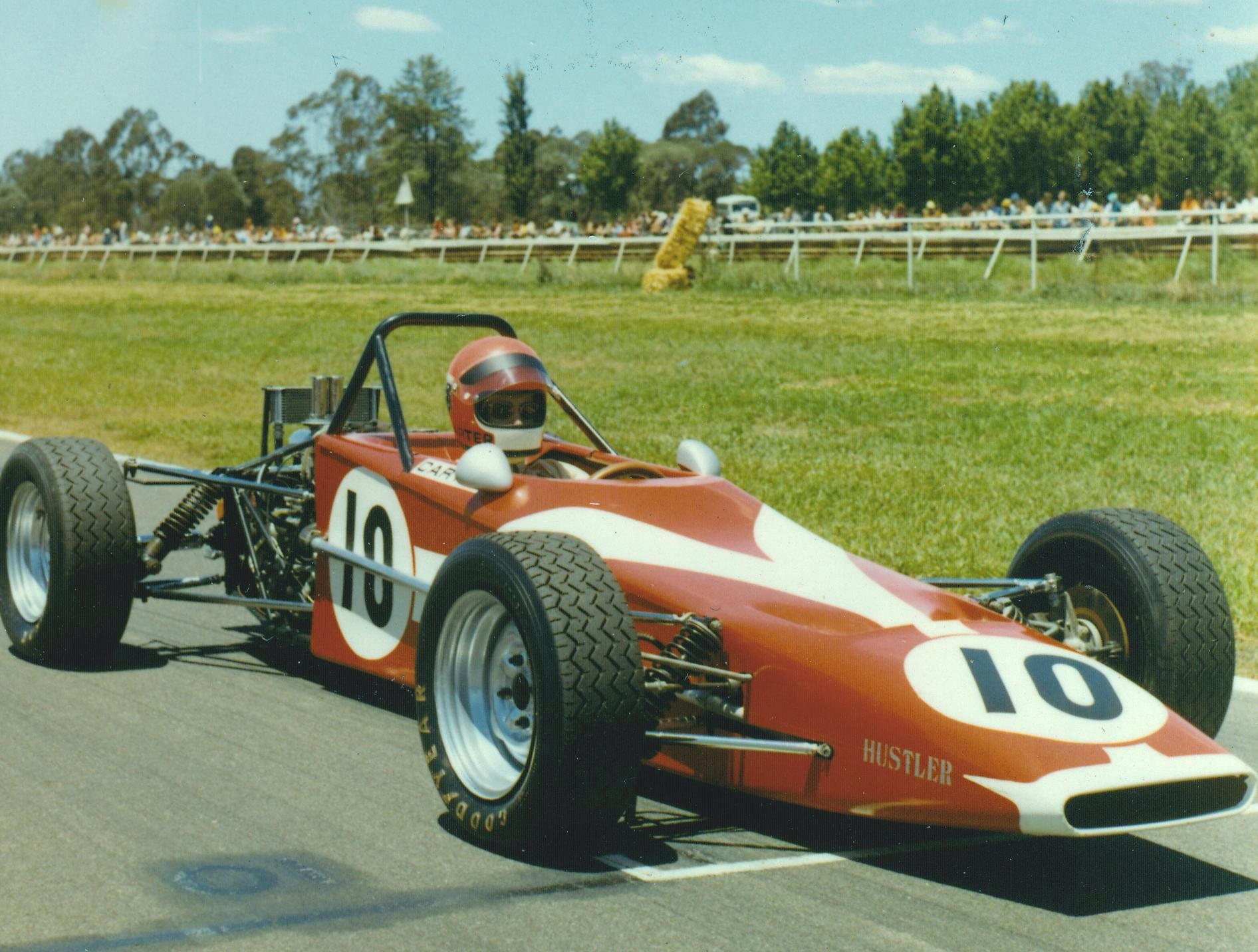
Richard Carter in the Tony Simmons built Hustler FF, Warwick Farm circa 1972. Tyres are Goodyear RR12’s (N McDonald)

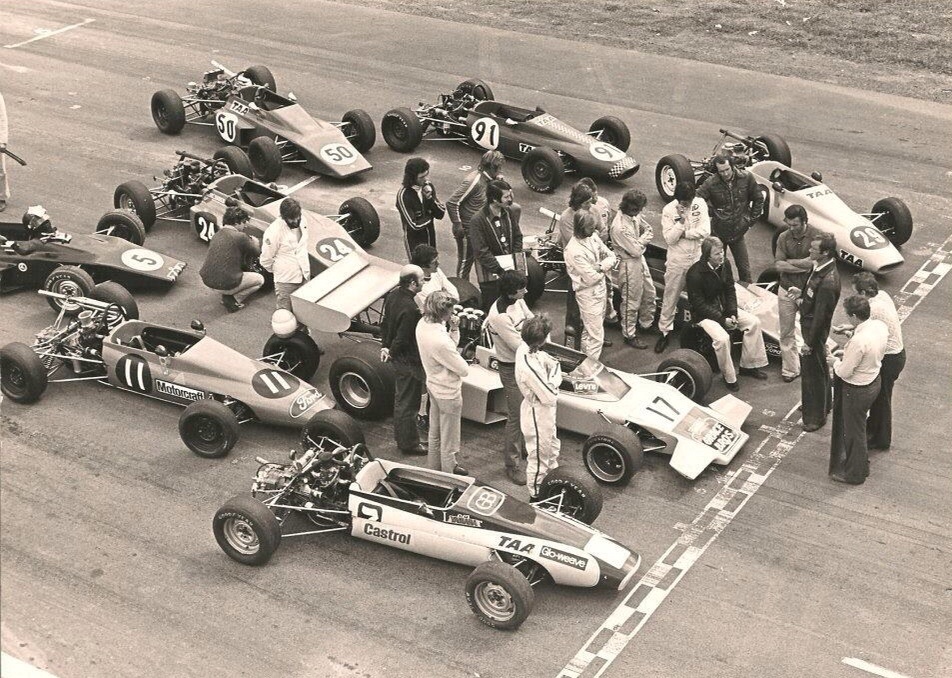
One of the neat things about the class in its early Australian days were the number of one or two off cars encouraged by rules which initially excluded foreign designs. So, in those early years Corsair, Aztec, Hustler, Fielding, Beasy, Nota and others chased race wins together with ‘factory’ built Wrens, Bowins, Elfins and a little later Birranas.

The WA built Fielding FF driven by future quick Bob Creasy during the 1971 Warwick Farm Tasman meeting (L Hemer)

Garrie Cooper’s highly adaptable Elfin 600 design (variants of which won in FF, ANF3, ANF2 and ANF1!) ‘dominated’ early on with Richard Knight, who made his name in an Improved Production Cooper S the winner of that first Sandown race in 1969 and victor in the Bib Stillwell owned 600 of the first national FF Championship in 1970.

Knight moved to the UK, racing a ‘Palliser WDF3 FF at the head of the UK/Euro fields against Scheckter et al until funds ran out. After several attempts in other categories including F5000 he set up Richard Knight Cars and became a highly successful Mazda and Lancia dealer in the UK’ wrote FF and Hillclimb ace Peter Finlay.

Larry Perkins in another of Bib’s 600’s won the title in 1971 and took his Trans Australia Airlines sponsored ‘Driver to Europe’ prize in late 1972 contesting the inaugural Formula Ford Festival at Snetterton in the first Elfin 620 FF.

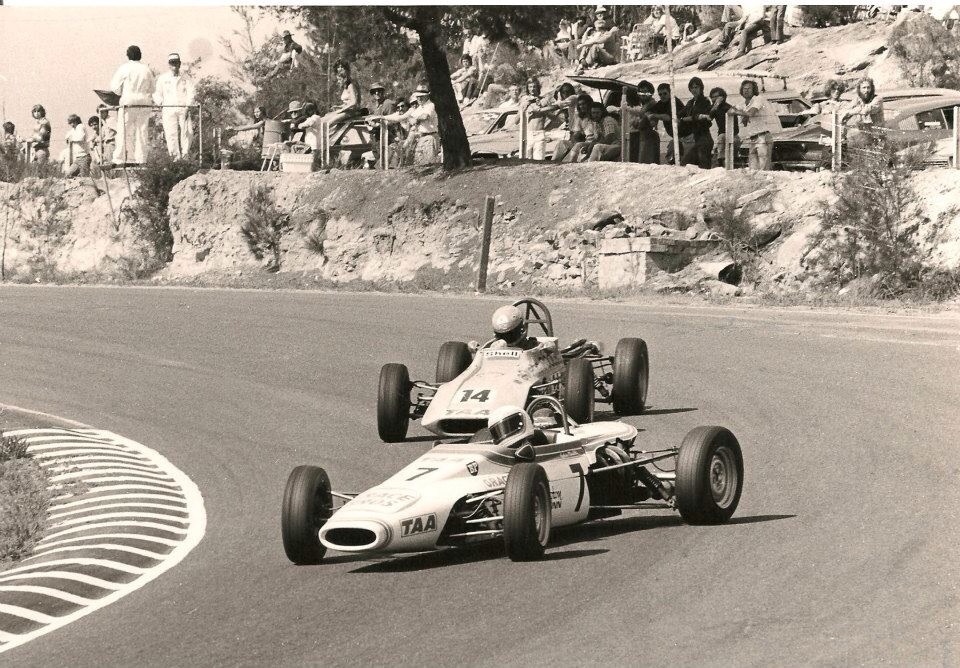
John Leffler in his P4A at Hume Weir in early 1973. TAA (later absorbed into Qantas) were the then government owned domestic airline carrier and provided great support sponsoring the ‘TAA Driver to Europe Series’ for well over a decade, inclusive of providing some ‘hosties’ at some of the rounds. These days from amongst the old gay blokes and boilers you couldn’t put any eye candy on a grid from inside a Qantas cabin…(Bennett)

1972 Bowin P4A DTE champion with his new P6F- the very first one built, chassis ‘P6F-119-72’ alongside Larry Perkins equally new Elfin 620 far, far from home in the Snetterton paddock during the Formula Ford Festival weekend. Rising or progressive rate suspension linkages of the P6 clear. This chassis returned to Oz, and fitted with Hart/Ford twincam, Hewland FT200 box, appropriate wings, wheels, tyres and brakes contested the 1973 ANF2 Championship. Larry stayed in England and did rather well, the 620 came home (Bennett)

Fellow Aussies John Leffler and Bob Skelton also made the trip and raced Bowin P4A and brand new P6F respectively. I wonder how Skello would have gone had he raced the known quantity P4A in England in which he won the 1972 DTE rather than the radical, chisel shaped, side radiator, rising-rate suspended and ultimately very successful P6F?

Leffler and Skelton finished fourth in their respective heats but did not make the final in which Perkins was third behind Ian Taylor and Derek Lawrence. Aussies Buzz Buzaglo ran in third early and then faded when his distributor shifted and Peter Finlay was tenth in his Palliser in a field which included later F1 drivers Danny Sullivan, Patrick Neve and Tiff Needell in addition to Larry.

Skelton, Leffler (who won the 1973 DTE title in a P6F) Bob Beasley and speedway star Garry Rush- who Joyce rated very highly in a conversation I had with him in the early nineties, were early very fast P4 exponents.

Garry Rush Bowin P4A leads Phil Webber Elfin 600, another Elfin then David Green Wren and Richard Knight, Elfin 600 in the November 1970 DTE round at Warwick Farm (L Hemer)

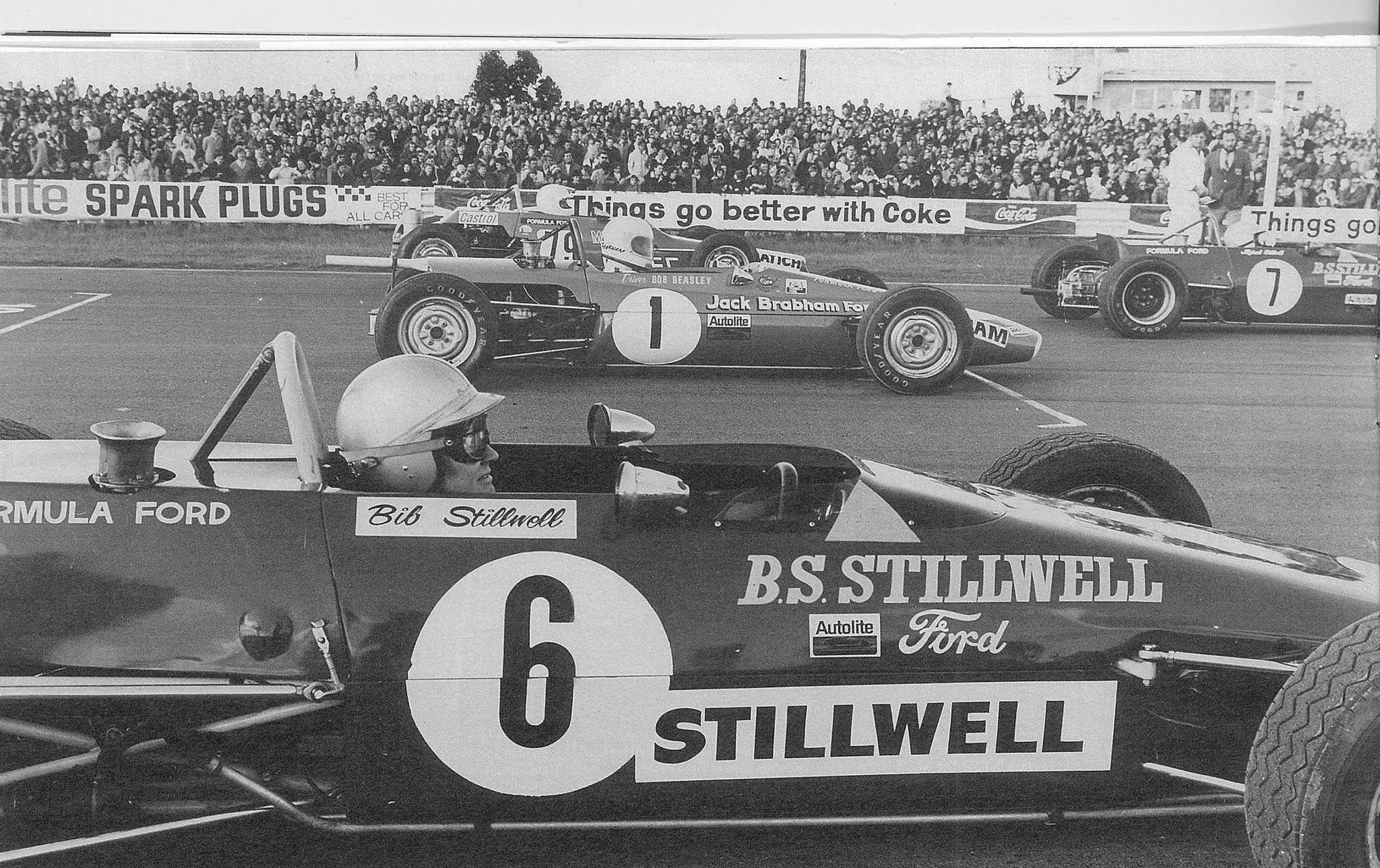
Perhaps the best credentialed of all Bowin P4 pilots was Australian triple world champion Jack Brabham in car #1!, the P4X raced that year with Jack Brabham Ford sponsorship by Bob Beasley. Jack won this 1971 Calder Park ‘Race of Champions’, his last event ‘in period’- he retired at the end of 1970 of course but could not resist appearing at this meeting- I wonder how much practice he did at Oran Park in this car?! Calder was not new to him- he tested his BT31 Repco Tasman machine at Calder on the day it’s assembly was completed in January 1969. The field for the ROC included Bib Stillwell #6, and Bob Jane #7, both in Stillwell Elfin 600’s raced that year by Larry Perkins and Mike Stillwell in the DTE Series, Frank Matich is alongside Jack with Allan Moffat, Kevin Bartlett and Alan Hamilton the other starters (Bennett)

The P4 design had a second wind in the mid-seventies with the sudden 1975 mid-season change in Australian FF regulations back to road tyres.

Australian FF evolved from mandated road tyres from the classes introduction, to the Goodyear RR12 ‘all weather’ race tyre and then to a Goodyear slick- shortages of that tyre forced a mid-season change to the Bridgstone RD102 during 1975- a great road-going radial of the time, I had a set on my uni-student special (read rooted) burnt orange Capri.

After cutting his teeth in Australian Formula Vee Peter Finlay left Australia and lived the life of a racing gypsy with his wife in the UK, doing so very successfully for several years, finishing third in the EFDA/European FF Championship in 1973. Peter recalls ‘coming back from the UK to Australia at the end of 1973, my Palliser WDF2 arrived early in 1974 and I fitted Goodyear slicks straight away. The ‘wets’ were Goodyear ‘RR12’s. In 1975 I joined the Grace Bros team and we ran the Goodyear slicks and a different type of Goodyear wets until Matich (Frank Matich was the Goodyear Race Tyre importer) was unable to continue supply from about mid-year. I was on the Formula Ford Australia Committee and used my car to test the Bridgestone RD102 radials…They were as cheap as chips but the car(s) handled poorly…Having driven the Palliser on Goodyear slicks I can’t say that the Bridgestones were any fun at all’.

It soon became clear that the good-ole P4 and its suspension geometry suited the tyres very well so the sight of the old-school, front-radiator Bowins knocking off the vary latest of FF designs from both Australia and Europe- imports by then were allowed, became the usual sight in mid-later seventies Oz FF.

John Smith in his Grace Bros sponsored P4A at Oran Park in very Smithy- and very Bridgestone RD102 radial tyre slide. Not necessarily what the drivers preferred (in terms of a tyre) but very crowd pleasing (Bennett)

1976 DTE round at Amaroo Park. Richard Carter Birrana F73 on pole- unseen on the front row is his Grace Bros teammate John Davis in the P4X, in blue is John Smith and yellow Mike Quinn, both P4As. The red car is Birrana F71/1 with Terry Shiel at the wheel- the very first Birrana initially raced by John Goss. Carter won the 1976 DTE with the P4’s of Smith, Davis and Quinn second to fourth (Bennett)

Gerry Witenden Birrana F71/1 (same car above albeit modified by Elwyn Bickley) ahead of 1978 DTE Champ John Wright P4A and Richard Davison, Hawke DL17 getting a helping hand from a P6F, Amaroo Park 1978 (C Davison)

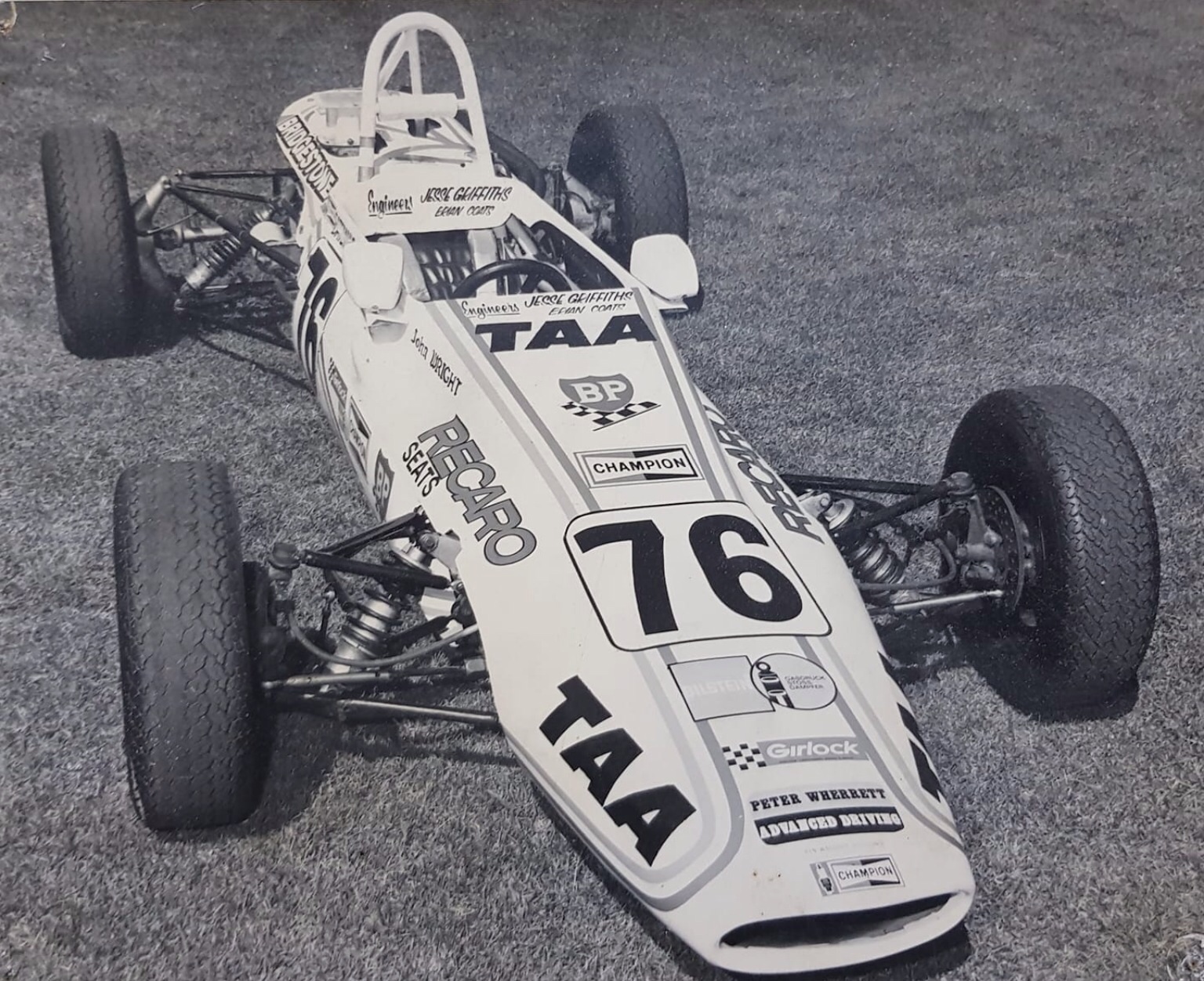
Great P4 exponents in this later renaissance era for the older chassis were John Davis, Mike Quinn, Warren Smith, Graham Smith, John Wright and John Smith (none of the Smiths related)- the latter one of the high-priests of Australian FF and a bit later Formula Pacific. Smithy and John Wright won the DTE in 1977 and 1978 respectively. Wright was also an awesome racer who jumped straight from FF to the ex-Leffler F5000 Lola T400 Chev, and made the thing look as easy to drive as the FF he had just stepped from.

Who is that man in a P4? Surfers circa 1978. Meanwhile Ron Barnacle, later DTE winner in a Royale RP31 in 1984 makes up ground having done some lawn-mowing for circuit owner Keith Williams, Elfin 620B (C Davison)

Oran Park 1976 DTE Bowins as far as the eye can see! John Davis, John Smith and Mike Quinn all in P4s, then Richard Carter Birrana F73- Carter still prodigiously fast in historic racing to this day (Bennett)

1976 Oran park P4A butt-shot, Quinn chasing Smith. Mk9 Hewland box, single top link, lower inverted wishbone, coil spring-/shocks and mechanic adjustable roll bar all period typical albeit by this stage a few rockers were starting to appear on cars such as the Royales and Lolas in Oz (Bennett)

These days Bowins are not the familiar sight they should be in very healthy Australian Historic Formula Ford despite classes which should encourage all to compete. A number of us, me included, pushed hard to admit cars built up to 31 December 1989 into historic FF which has had the knock-on effect of drivers buying cars of this later period- owners of the pre-1977 and pre-1983 classes these days stay away in droves. Come back folks!- please bring your Elfin 600, 620B, Birrana F71-3, Lolas, Royales, Hawkes, and especially your P4 Bowins along…

Smithy made it look so easy- rest assured folks it is not! Here the maestro leads Grant Walker, the Kiwi aboard a Tiitan at Amaroo in 1977. A year later I was lookin’ after me mate Alan Bisset’s ex-Brabham/Davis Bowin P4X at Amaroo and witnessed some almighty ANF2 racing between ex-FFers Smith and Larner in the Ford pushrod powered Galloway HG1 and Elfin 700 respectively on this late, lamented outer Sydney circuit (Bennett)

By the late-seventies the going was getting tough for the old P4 with a swag of English cars adapted locally to suit the needs of the Bridgestones and some newer local designs on the scene. The Richard Davison Hawke DL17 developed by Bill Reynolds, the ‘everybody raced’ ex-Arnel Lola T440, several Royale RP21’s and Van Diemen RF77’s, David Earle’s Elfin Aero and Elwyn Bickley’s superb Elwyn 02 all spring to mind.

Warren Smith (no relation) still made Smithy’s old jigger sing well enough to finish second in the 1980 DTE with one win, but time for a car first built in late 1969 had finally arrived…

We have lift off- Sandown DTE 1978. Elwyn Bickley Elwyn 02, obscured Peter Krefel Royale RP21, Richard Davison #5 Hawke DL17, to the right near the fence Lyndon Arnel Lola T440- look down on the fence side of the grid and you can see the distinctive P4 nose of that years champ- John Wright’s car (C Davison)

Etcetera…

Bowin…

The Bowin P4A- PR shot of John Wright’s chassis. 12 cars built between 1969 and 1972 (Bennett)

The Bowin P6F, John Leffler at Amaroo Park in his 1973 DTE winning mount ‘P6F-120-72’. Geoff Brabham also raced this chassis doing his first full year of FF in 1974- he won the 1975 ANF2 Championship in a Birrana 274 Ford/Hart and then left for European F3. 26 cars built between 1972 and 1976. Leffo perhaps the greatest of all the Bowin racers?- winner in the P4 and P6 in FF, in the P8 ANF2 car and a ‘coulda been’ 1975 AGP winner aboard the much maligned P8 Chev F5000 machine had the planets been aligned and the cars ignition not drowned in the latter stages of the Surfers Paradise race, won in the end by Max Stewart’s Lola T400 Chev (Bennett)

Sandown November 1969…

Brian Beasy, Beasy FF exiting Dandenong Road with a gaggle of cars including a winged F3 or F2 car. Decades later Historic Formula Ford in Australia would not have happened without the late Brian’s influence and guidance in the CAMS Historic Commission on all things related to FF inclusive of car eligibility (Beasy Family)

Bob Minogue, Aztec AR8, Sandown, Dandenong Road, November 1969 (autopics.com)

Allan Ould’s Aztec AR8 was raced to 3rd as in this photo in the November 1969 first Oz FF race

FFA membership list as at the end of 1970

Current historic Van Diemen RF86 racer Anthony Mann dreaming of his own Formula Ford as a 9 year old kid aboard the FF ‘display car’ a Wren FF in Shepparton 1969 (Mann)

Arcane and Irrelevant…

Australian Formula Ford tyres- strictly for FF anoraks only! List developed during some Facebook banter mainly between me, Peter Finlay and Nick Bennett

1969-1971 Road tyres of drivers choice. In the UK Finlay notes the Firestone Torino ‘wide ovals’ were a road crossply with a racing compound

1972-1973 Goodyear RR12 all weather

1974-1975 mid-year Goodyear slick with RR12 wets and very expensive but superior G10 winter treads for sopping wet races

1975-1980 Bridgestone RD102 road radial

1981-1983 Dunlop slick ‘592’ compound

1984-1994 Dunlop CR82 all weather

1995-2015 Avon ACB10 all weather

2016 on Yokohama A048 all weather

Peter Finlay, Palliser WDF2 from Peter Larner, Elfin 620B, Calder early 1975 just before the Goodyear slick- check out the tyre distortion folks, were changed due to supply problems to the Bridgestone RD102 radial. Finlay won 3 rounds that year and Larner 1 with both tied for second in the title chase won by Paul Bernasconi in a Mawer 004. Finlay later owned and ran Peter Wherrett Advanced Driving and was a hillclimb ace- Larner still is a great engine builder and raced an AGP or two in the Formula Pacific era (Finlay)

Photo and Other Credits…

Laurie and Nick Bennett Collection, Chris Davison, Nick McDonald, Oz Classic FF Facebood site, Lynton Hemer, Dale Harvey, Anthony Mann, Sports Car World, Peter Finlay, Graham Ruckert, Beasy Family Collection, A Clifford, Grant Burford

Tailpiece: In Search of An Apex…

(SCW)

John Leffler, Australian Gold Star Champion in a Lola T400 Chev in 1977 and kneeling John Joyce trying to get their Bowin charges to apex correctly during the Oran Park Bowin test day in early 1975.

Harry Macklin aboard the ex-Leffler P4A John raced in the early 1973 DTE rounds before switching to his new P6F.

Finito…
Freddy McEvoy, aka Suicide Freddy and Tiger to the babes he charmed, was a ladies man, adventurer and friend of fellow Australian and screen star Errol Flynn. He was an accomplished car racer, an Olympic medallist and World Champion on the ice, a sailor, gambler, suspected Nazi agent and a whole lot more…

Here the intrepid Australian is aboard his Maserati 6CM prior to the start of the 1936 Vanderbilt Cup at Roosevelt Raceway, Westbury, Long Island, New York on 12 October.

Frederick Joseph McEvoy was born in Melbourne’s inner southern suburb of St Kilda on February 12, 1907 and moved to England with his mother when he was 10. Educated at the famous Jesuit boarding school Stonyhurst College in Lancashire, his later professions seemingly included jewellery design, public relations consultant, yacht dealer and perhaps arms and contraband trader. He admitted later in life to being a rogue, swindler and a conman who used his intelligence and charm to mix with the upper echelons of society.

Said to have generously proportioned wedding-tackle by a number of his mounts, he reputedly also knew how to use said equipment. As a consequence of his looks, physical attributes and line of chat Freddy cut a swathe through the ladies with various sources crediting him as also running a team of gigolos who kept the bored ladies of the south of France entertained in a manner which put smiles permanently upon their faces.

Exactly how he ratcheted himself up the totem pole of life is not entirely clear but Freddy’s journey took him from partying with young Errol Flynn in Melbourne/Sydney to wild times with the great and the good in England and onto the French Riviera in its golden years pre-war.

The Australian Truth newspaper, a tabloid perhaps more aptly titled Lies, has it in 1948 that McEvoy was the scion of a prominent Sydney family who went abroad with his mother and brother as youngsters when she took them to Switzerland for the winter sports season. He soon became popular with the international sporting set and was well known for his bob-sledding prowess.

Another 1951 Truth report records that Freddy (Frederick signed his own name in short-form as Freddy not Freddie as is practically the case in any reference source one views) was virtually unknown when he first hit Europe in the 1930s. He was then in his early twenties and arrived with his widowed mother and ailing brother Theodore. ‘…Gradually the young man with the film star smile, bronzed figure and quick Irish-Australian turn of wit began to be noticed’.

Of the relationship with Flynn, Truth reports that Freddy and Errol were close friends back in the 1920s in Melbourne when both worked for Dalgety, a huge national wool enterprises business at the time.

Whatever the case, Freddy figured out that easy money was to be made through the legs of the idle-rich, becoming an adept lover, diver, boxer, racer, skier and bobsled competitor where he was a familiar sight at some of the more fashionable European resorts of the day ‘plying his trade’.

Max-Everist Phillips writes that ‘Bobsleigh competitors of the 1930’s prided themselves on three inter-related pursuits: dangerous sports, daring women and dubious money. McEvoy’s skills at the first facilitated his success with the second, who usually provided the third’…

Before the 1936 Winter Olympics, (above) where he was a member of the British team, McEvoy had proved his daring and speed as a tobogganist on the famous, dangerous Cresta Run at St Moritz, Switzerland where he was awarded the ‘Cresta Colours’ that year for his accomplishments.

Keen to compete at the highest level, he would not have been eligible to represent Australia through the Australian Olympic Federation, as there was no State or National governing body for tobogganing or bobsleigh in Australia at the time. In fact there was no sport of skiing at the time to speak of!

Without wanting to give a dissertation on the development of skiing in Australia, the first moves on skis are thought to have been carried out by Norwegian gold-miners at Kiandra in the New South Wales Alps during the long winter of 1861. The first ski-lift was built near Mount Beauty in Victoria in 1936, but in simple terms the Alpine areas of Tasmania, Victoria and New South Wales were not developed as ski-fields until post-war when European migrants, some of whom worked on the Snowy Mountains Scheme (a massive post-war twenty year hydro-power generation and irrigation scheme – one of the ‘engineering wonders of the world) saw the potential of the Australian Alps and made formative investments at places like Thredbo and Perisher Valley. The sport itself did not boom until the 1970s with baby boomers looking for activities a bit more sophisticated than those which were available to, or could be afforded by many of their parents.

‘It is quite likely that he (McEvoy) associated with British bobsledders in Switzerland and was, as a British subject, eligible to compete for the mother country. It would have been difficult for the British authorities to overlook his nomination or prowess’ the Sydney Morning Herald reported.

Freddy was accorded the highest team honour by the British Olympic Committee to carry the British flag at the opening ceremony of the 1936 Games; that does amuse me, an Aussie carrying the flag for the Brits on such an august occasion!

Freddy, captain and steering, British 4 man bob, Garmisch Olympics 1936 (Getty)

Freddy and his team took the bronze medal with four runs down the treacherous bobsled course, finishing behind two Swiss combinations in front of a crowd of about 32,000 people. ‘Suicide Freddy’ was pipped for a medal in the two-man bob, finishing fourth with Garmisch-Partenkirchen well known for its bobsled run on which several men had died. Freddy wasn’t the only motor racer contesting events on the Olympic ice, GP racer Count ‘Tonino’ Brivio was eleventh in the the two-man bob and tenth in the four-man.

Bad weather limited training on the course before the Olympic race and crews had only two or three days’ practice on the fast and difficult run with ‘Britain fortunate to have an experienced and daring driver to steer both the four- and two-man bobs’, the British Teams post event report said.

One of the great bobsledders of the time, Bill Fiske of the US, wrote: ‘Freddie McEvoy has invented one of the most lethal toboggans ever seen on the run. He had a toboggan constructed of hollow ground runners…tremendously fast on a straight course but impossible to manoeuvre around corners…’

McEvoy proved after the 1936 Olympics that he was no flash in the pan. He was second in the Curzon Cup on Cresta in 1937, won the world two-man bob championship at Cortina, Italy in 1937, and the world four-man bob at St Moritz the same year. He retained the four-man title in 1938 and was runner-up in 1939.

Clearly 1936 was a busy year for the enterprising Australian who was said to have won $25,000 playing backgammon in Monte Carlo and then spent the money the next day on a new Maserati.

In fact the Maser 6CM, chassis #1535 was the first such machine to have been sold to a privateer, Maserati’s new Voiturette model first appeared in March 1936.

GP Picardie. #6 Carlo Trossi Maser 6CM, #2/#44/#14 B Bira, Earl Howe and Patrick Fairfield on ERA Type B, Type B and Type A (unattributed)

Freddy first entered his new six-cylinder, DOHC, supercharged 155bhp machine in the Grand Prix de Picardie held at Peronne in mid June 1936.

In a splendid display, he was fourth in both his heat and in the final won by Dick Seaman’s Delage in a year of dominance in Voiturette racing which carried the talented Englishman into the Mercedes Benz Grand Prix team.

John Medley wrote of the race ‘…On a scorching hot day the two heats saw the demise of Raymond Mays’ extremely quick ERA and also that of Arthur Dobson, with wins to Trossi and a surprisingly much slower Dick Seaman. Lehoux’ works ERA failed on the line in the final, which was led by Fairfield, an off-song Maserati of Trossi, and Bira’s ERA, before Bira moved past Trossi, with Seaman next until his steering (thought to have been damaged in an earlier Nurburgring incident) failed and the Delage hit a wall in the little village of Brie. The same corner in Brie momentarily claimed Fairfield’s ERA from a stern battle with Bira, so the little Siamese Prince won again from Fairfield and Lord Howe in ERA’s and McEvoy’s distant Maserati. There were no other finishers’.

Getting a little ahead of ourselves, Freddy’s Voiturette season commenced during the Monaco GP weekend, the Aussie contested the Coupe Prince Rainier on Saturday 11 April in an earlier Maserati 4CM on the same weekend in which the new 6CM made its race debut.

McEvoy started from grid 14, with Earl Howe on pole in an ERA Type B, and ran well until lap 43 when he spun on oil left by Zehender’s Maser 6CM and hit a wall damaging the cars fuel tank. This meeting was the first at which 6CMs raced, Scuderia Torino entered a car for Rovere, with Zehender relieving him in the 6CM late in the race. McEvoy  ran as high as eighth, the race was won by B Bira in an ERA Type B who ‘…took the chequered flag to take the first victory of his career, winning possibly the most prestigious voiturette race of the year only 392 days after making his race debut in a Riley Imp at Brooklands’ according to kolumbus.f1.

Albi GP. #4 Marcel Lehoux ERA Type B, #8 Patrick Fairfield ERA Type B, #10 Bira again B Type ERA with #26 the nose of McEvoy’s Maser 6 CM (unattributed)

At the Albi GP in mid-July, Freddy was ejected from his car in spectacular fashion during the first heat. The car caught fire after rolling across the straw bales opposite the pits, the car then burned furiously. Aggregate results of the two heats gave the win to Bira from Pierre Veyron and Hans Reusch in ERA Type B, Bugatti T51A and Maserati 4CS respectively.

The Coppa Ciano was held at Livorno in early August on a new course through the town rather than the usual mountain layout used hitherto, Trossi won in a works 6CM with Freddy eighth, two minutes behind the leader.

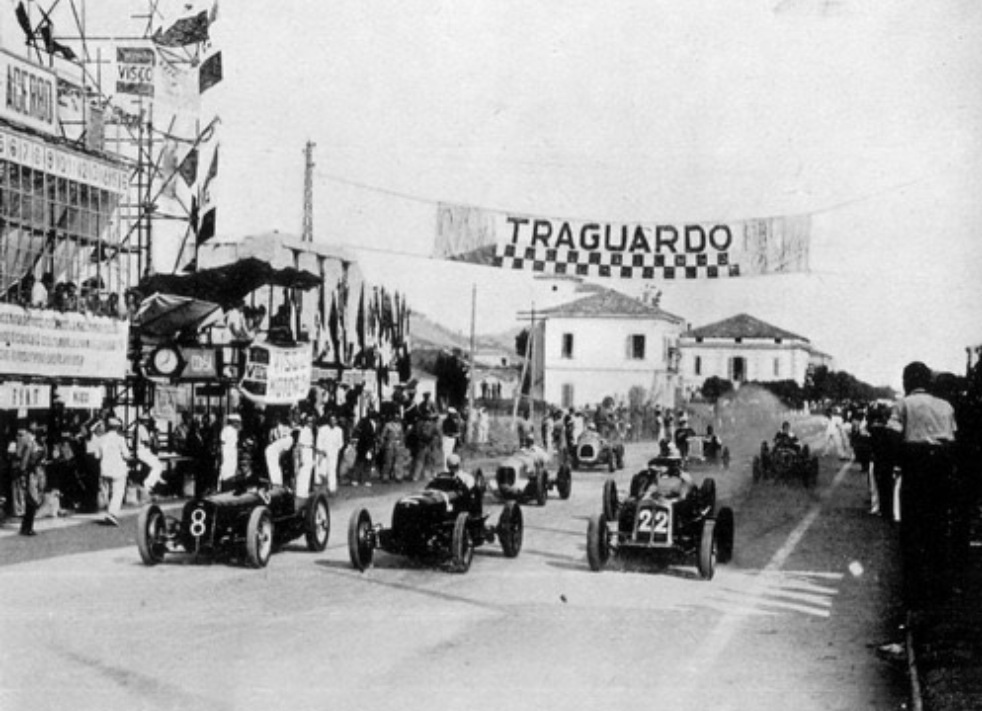
Coppa Acerbo. #8 Dick Seaman Delage 15S8, #2 Carlo Trossi Maser 6CM and #22 Bira ERA Type B (unattributed)

On the daunting Pescara road circuit on the Adriatic Coast in mid-August he was a strong fourth in the Coppa Acerbo having started fifth on the grid with Seaman again taking a Delage win.

In a busy month, in late August, the Berne GP was conducted on the Bremgarten road course in Switzerland. Freddy was seventh from grid ten in a chassis MotorSport said  ‘…was the most dangerous Maserati, an independently sprung Maserati which should have done well’.

Freddy, far from the most experienced driver on these grids was clearly no dilettante behind the wheel however many attractions and distractions there were sitting seductively on his pit counter. It does make you wonder what McEvoy could have achieved had he focused on his racing, but such was his zest for living life to the full that this was never the case. Wine, women and song sounds pretty good to me all the same...

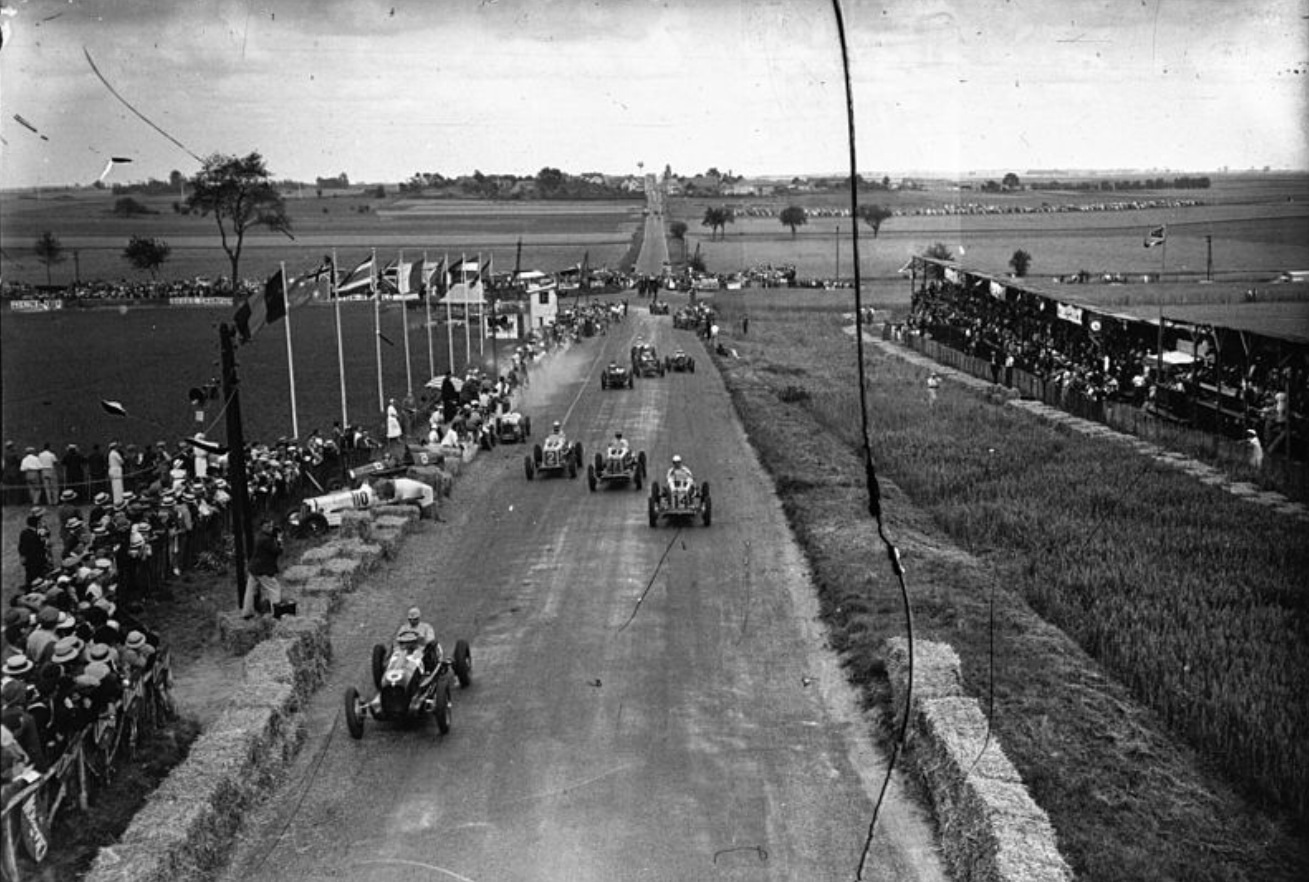
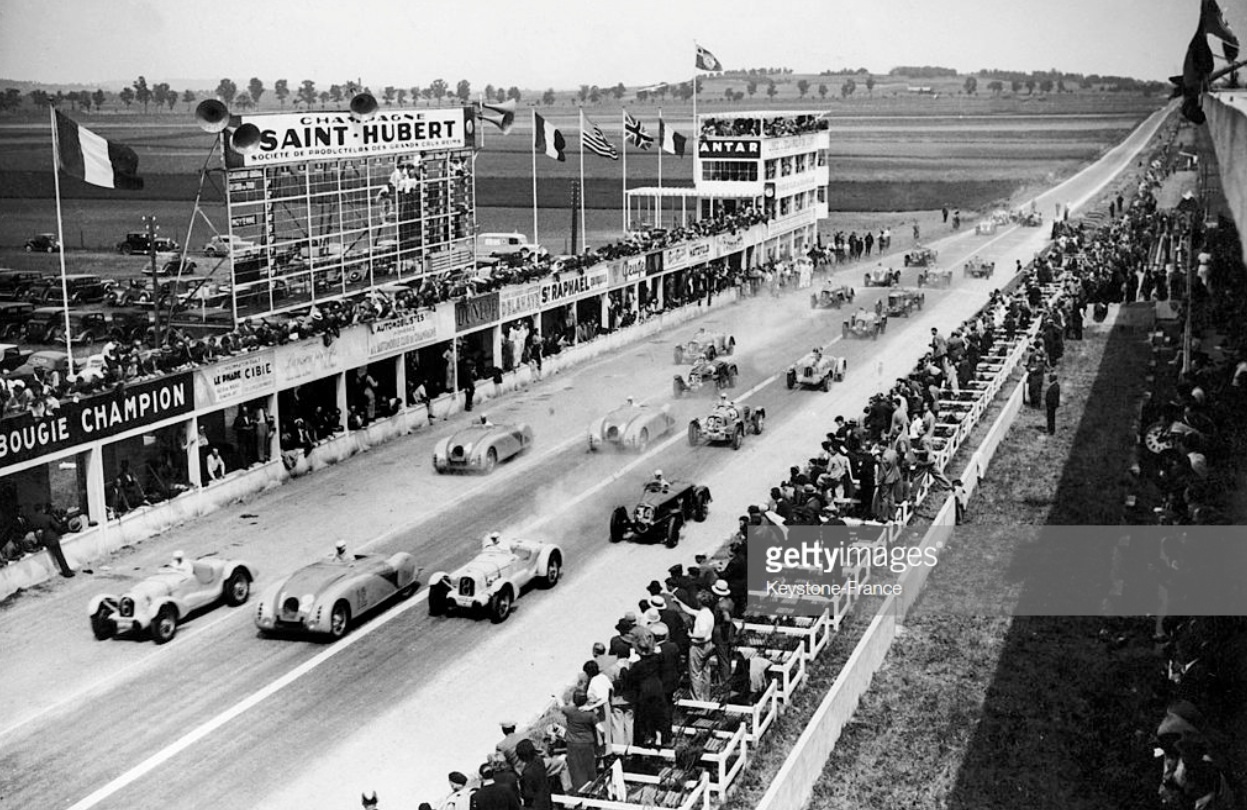
Marne GP 1936, the growth of French sportscar racing as a response to the success of the Nazi funded German teams is an interesting story in itself. #6 Rene Dreyfus and #8 Andre Marcel Talbot T150C split #12 Jean-Pierre Wimille Bugatti T57G- the similar Bugs of Robert Benoist and Pierre Veyron on the row behind. #34 and #26 the Michel Paris and Laury Schell Delahaye 135CS. The Paris car is the 135CS shortly thereafter imported to Australia and raced by John Snow- and to an AGP win at Leyburn, Queensland in John Crouch’s hands in 1949. McEvoy’s Jag 100SS way back in the pack (Keystone)

In the middle of the year, on July 5 Freddy also contested the sportscar Marne GP at Reims in a 2.5-litre Jaguar SS100. He brought the ponderous beast home fifteenth overall and first in the 2-3 litre class, the patriotic MotorSport proclaiming an ‘S.S Wins A Continental Race’- they credit the race to Frank McEvoy, an error rather than another nickname.

John Medley ‘…Fast Freddy McEvoy, almost lived up to his other nickname ‘Suicide Freddy’ as he grappled with its nose-heavy understeer which flicked to alarming oversteer on exit to every corner on the very fast Reims-Gueux Circuit. Playing what MotorSport called ‘a waiting game’ (when actually he was travelling as fast as he dared) a long way behind the winning Bugattis which were chased by Talbots and Delahayes, brave Freddy brought the car home for a class win…’

It would be intriguing to know exactly when McEvoy first raced, his cv included the blue-riband sportscar Mille Miglia in 1935, it was certainly the first major race he contested. In that classic test of driver and car he shared a Vittorio Jano designed Alfa Romeo 6C1750 with Ghersi, the pair failing to finish the race won by another memorable Alfa, the 8C 2900B raced by the Pintacuda/Della Stufa crew.

In October 1936 Freddy was well enough funded by his various enterprises and acquaintances to contest the Vanderbilt Cup Races on New York’s Long Island, representing Australia in the 6CM.

This was an amazing event held on a very expensive facility by the standards of the day built by the Vanderbilt family and several associates including Indy winner Eddie Rickenbacker. It seems the designers of the track, who lived on opposite sides of the country, failed to communicate, so the track ‘comprised a single 3775 foot straightaway and sixteen completely unbanked corners, ten of which are best described as hairpins.’

A huge purse attracted some of Europe’s best teams, the race was a real endurance affair, 75 laps of a tight four mile road course circuit, 300 miles in total. Tazio Nuvolari won aboard an Alfa Romeo 12C-36 in 4 hours 32.44 from Jean-Pierre Wimille’s Bugatti T59 and Antonio Brivio’s Alfa 12C-36. In sixth place was Freddy proving his endurance on the hot day driving the 6CM, his time 4:57.24. Mind you, Carlo Felice-Trossi co-drove the 6CM, how many laps each of the intrepid pilots raced is undisclosed.

Freddy McEvoy with the Australian flag on the side of his Maser 6CM, Vanderbilt Cup 1936 (VDC)
Vanderbilt Cup start 1936, ID of cars welcome (VDC)
McEvoy Maser on one of the more open corners on a course dominated by tight corners (VDC)

McEvoy’s activities after 1936 are really beyond the scope of this article but he continued to compete at the highest levels of bobsleigh racing, this is covered at the end of the piece.

In 1937 he won $10,000 for setting a record time between Paris and Nice of 9 hours 45 minutes in a Talbot-Lago T150C SS coupe. He was the first person to do the trip from the capital to the Riviera in less than ten hours aboard the 4-litre, six-cylinder OHV, 170 bhp machine.

McEvoy’s personal note of thanks for the use of the Talbot makes clear the spelling of the short form of his name (unattributed)

As war broke out, the Australian was reluctant to apply his undoubted bravery to the war effort and left Britain to continue his playboy lifestyle on the French Riviera, and later New York and Hollywood. His fisticuffs it seems were limited to the odd scrap with husbands of ladies who were miffed by his attention to women who succumbed to his considerable charm.

Freddy shared a house with the by then notorious Errol Flynn in Hollywood, they enjoyed many adventures, including diving expeditions to Mexico. McEvoy was a key witness for Flynn in his infamous statutory rape case in 1942-43. This involved allegations of under-age sex by seventeen year Betty Hansen. Said events purportedly took place in McEvoy’s Bel Air home, his ‘no-nookie here matey’ protestations helped the actor get off the charges. Flynn credited McEvoy in assisting him recover from a growing dependency on opium by burning the actors stash of the drug, their friendship survived the fight which ensued when Flynn realised his drug syringes were ablaze in an adjoining room.

The actor, quoted in Mike Seth-Smith’s book on the Cresta Run, says: ‘I found that he complemented me. He was an athlete, a roisterer like myself, and he could be canny too, very. He had his eye for the main chance and bluntly told me he intended to marry wealth. With his physique and appearance and his charm and culture I didn’t doubt he could do this.’

Flynn and McEvoy at Monte Carlo in 1950 just prior to Flynn’s marriage to Patrice Wymore. Freddy was best man and Claude Stephanie Filatre, McEvoys third wife, the other witness (unattributed)

Suspected as spies in the 1930s, the US authorities monitored the activities of both Flynn and McEvoy with the FBI eventually concluding Freddy was ‘an international pimp who is interested in his own well being and probably not engaged in activities detrimental to the interests of the country’. In the same period, 1944, it is said the hustler smuggled guns, jewellery and alcohol from Mexico City to California on his boat, as his second marriage did not yield much cash.

McEvoy scandalised high society and fascinated the readership of gossip columns in equal measure. ‘A debonair socialite, he courted infamy as one of Hollywood’s self-styled ‘Hellfire Club’ or ‘Three Musketeers’ along with Errol Flynn and Bruce Cabot of  ‘King Kong fame’ and was usually characterised by newspapers as a ‘handsome gigolo’ or ‘popular playboy’, the big ‘dame hunter’ married three times.

At one society party in Cannes, the already married McEvoy made a play for Woolworth heiress, Barbara Hutton, just divorced from Cary Grant. They never wed but lived together for a time at a ski resort Hutton bought in Franconia, New Hampshire. In a sidebar to this liasion, our intrepid racer was beaten up by some thugs who set up the initial meeting between McEvoy and Hutton after Freddie failed to pay the ‘facilitation fee’! I guess ‘Tinder’ always existed in one form or another whatever the technologies of the day.

Although he failed there, Freddy succeeded in wooing the heiress to an oil fortune, Beatrice Cartwright of the Pratt Family/Standard Oil in 1940. At 63, she was 30 years older than McEvoy and promised him a yacht and a million dollars. McEvoy got the yacht, the 65-tonne Black Swan, but the money never found its way into his bank account. He later married a second heiress, Irene Wrightsman, at 18 years old less than half his age but they drifted apart after Irene’s father removed her access to the family loot.

McEvoy’s third and final wife was Claude Stephanie Filatre, a French fashion model. They married in 1949 and made their home aboard a 104-foot ketch/schooner called Kangaroo or Black Joke depending upon the account you choose to reference; there are plenty of conflicting accounts about many aspects of this mans life as I hope I have made clear.

The boat struck a reef off the Moroccan coast 60 miles from Casablanca during a storm off North Africa in 1951. There is some speculation that McEvoy was running arms or grog between his home port of Cannes and Tangiers. He made it to the shore and sought help unsuccessfully from a small settlement at Safi. Freddy returned to the floundering boat to rescue Filatre, but this time his luck ran out. McEvoy’s body, naked and scalped was in a lagoon/washed up on the beach on November 9, 1951 and his wife’s body the next day.

It transpires that one of the ships crew was wanted for murder of a prostitute in Berlin in 1945, that man, Manfred Lentner was later convicted of the murder in a Salzburg court in May 1954. Further, at the time of the ‘shipwreck’ British Intelligence had been tracking McEvoy as a suspected arms-dealer and smuggler of contraband between Tangiers and France, so to the very end of the racers story there was plenty of mystery and intrigue including £15,000 worth of diamonds and whisky onboard the ship. A French court convened in Morocco found  a verdict of murder by persons unknown of McEvoy, Filatre, her maid and three sailors, no-one was ever charged.

Fast Freddy, at best an elite level sportsman and likeable scallywag but perhaps more accurately described as an outstanding sportsman and amoral crook and scumbag certainly did not die guessing about the possibilities of life, without doubt he lived it to the full.

Put more delicately, ‘Sport was but one aspect, albeit perhaps the only honourable one, of his forty-four years on earth. His reputation was variously as an unprincipled playboy, suspected spy, alleged smuggler, dubious adventurer and unhealthy close associate of one of Hollywood’s most iconic but least reputable stars. He was one of the few Australians about whom the standard phrase in obituaries, ‘he led life to the full’ is an understatement’ wrote Max Everest-Phillips.

 Maserati 6CM…

‘Voiturettes’, cars of smaller capacity than machines of the contemporary Grand Prix formula went back to the dawn of motor racing, but the class grew in importance with the introduction of the 750 kg Formula.

There had been no official capacity limit since 1926, although the Voiturette class was usually for cars of 1100cc. During the 1930s the category was increasingly held for machines of 1500cc, it was attractive to smaller teams and privateers given the growing expense of GP racing. To that end Maserati introduced the 4CM-1500cc four-cylinder in 1932, with the 6CM a response to the Riley based ERA’s pace, these first raced from 1934.

The 6CM chassis was the usual channel section of the day but heavily boxed as Maserati were beginning to realise the importance of chassis rigidity. Front suspension was similar to the very unsuccessful V8RI GP car with independent suspension by unequal length wishbones and friction dampers up the front. At the rear, a rigid axle was deployed suspended on semi-elliptic springs. The body of the car was similar to the V8RI with a cowled radiator and neat streamlining.

The Fiat parts bin provided quite a few bits including the steering box and gearbox. The ‘tranny was a 4-speeder designed for use in the Fiat Tipo 522 taxi and was considerably overstressed given the cab had a paltry 34bhp. There were plenty of gearbox dramas until Maserati started to make their own ‘boxes. The rear axle was made by Isotta Fraschini.

The heart of the matter was a six-cylinder engine of 1493cc which had the cylinders cast in pairs, and twin overhead camshafts driven from the nose of the crank in established Maser practice. A single Weber carb, Roots type blower, Scintilla magneto and dry sump lubrication completed the key mechanical specifications. The neat little motor was claimed to produce 155bhp @ 6200 rpm early on which rose to circa 175bhp over time.

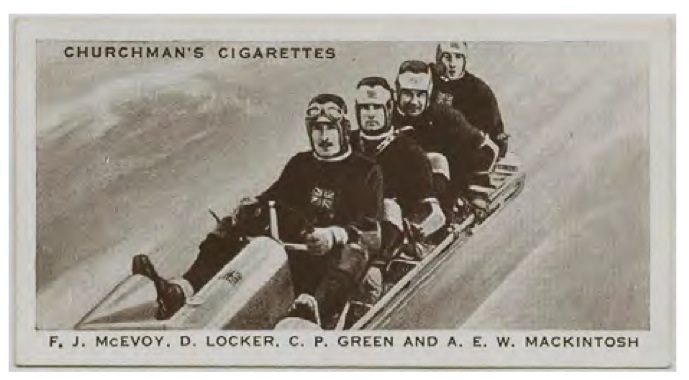
Cigarette card honouring the 1938 4-man bob world championship winning British team with Freddy up front

Freddy’s Alpine Career in Perspective…

Freddy was one of the great sportsmen of his era and in bobsleigh racing one of that discipline’s all-time greats.

He was a pioneer of a sport which was then very dangerous, the medal he won at Garmisch in the 1936 Olympics made him the first Australian to win a Winter Olympics medal albeit representing the mother-country, England.

Over the next three years captaining the British team and piloting the bobsleigh he won two world championships on the trot in 1937 and 1938, that later year beating ‘the master race’ in front of their home crowd in Nazi Germany. He took silver the year after that.

In total he won three Gold and two silver World Championship medals in two different forms of the sport – the four and two man ‘bobs – and was the first ever competitor, (along with his partner in the two-man bob) to win gold in both events in the same year. He set one last course record in 1939, covering the 1554 metres of the Italian World Championships run at Cortina d’Ampezzo in a time of 1 minute 20.75 seconds. It was also in Cortina where he won his first World Championship gold in the two-man bob in 1937.

 It was only the outbreak of war which put an end to his short career. He was the only sportsman from Australia to receive a medal in any of the five founding sports of the Winter Olympics.

Max Everist-Phillip’s, Director of the United Nations Development Programme’s Global Centre in Singapore in a 2015 ‘Numismatic Association of Australia’ article entitled ‘Bobsleigh in a Warm Climate: Pre-war Australian Identity on The Slide’ goes as far as to say that ‘…McEvoy’s 1938 bobsleigh triumph (World Championship Gold) in Nazi Germany represents not just an Australian achievement in an unusual sport from a different era. In the run up to World War 2, the success of the Australian-British team carried political significance. It marked a triumph for the democratic ideal over the Third Reich’s totalitarian ideology and the ‘master race’. Its win offered a psychological boost to the British Empire in the lead up to World War 2. Nazi propaganda sought to claim the German people trained in the body in the service of the state and so international sporting success supposedly demonstrated the might of the ‘new Germany’, thereby apparently justifying its claim for ‘Lebensraum’ and racial supremacy. The victory gripped the popular imagination increasingly interested in the sport’.

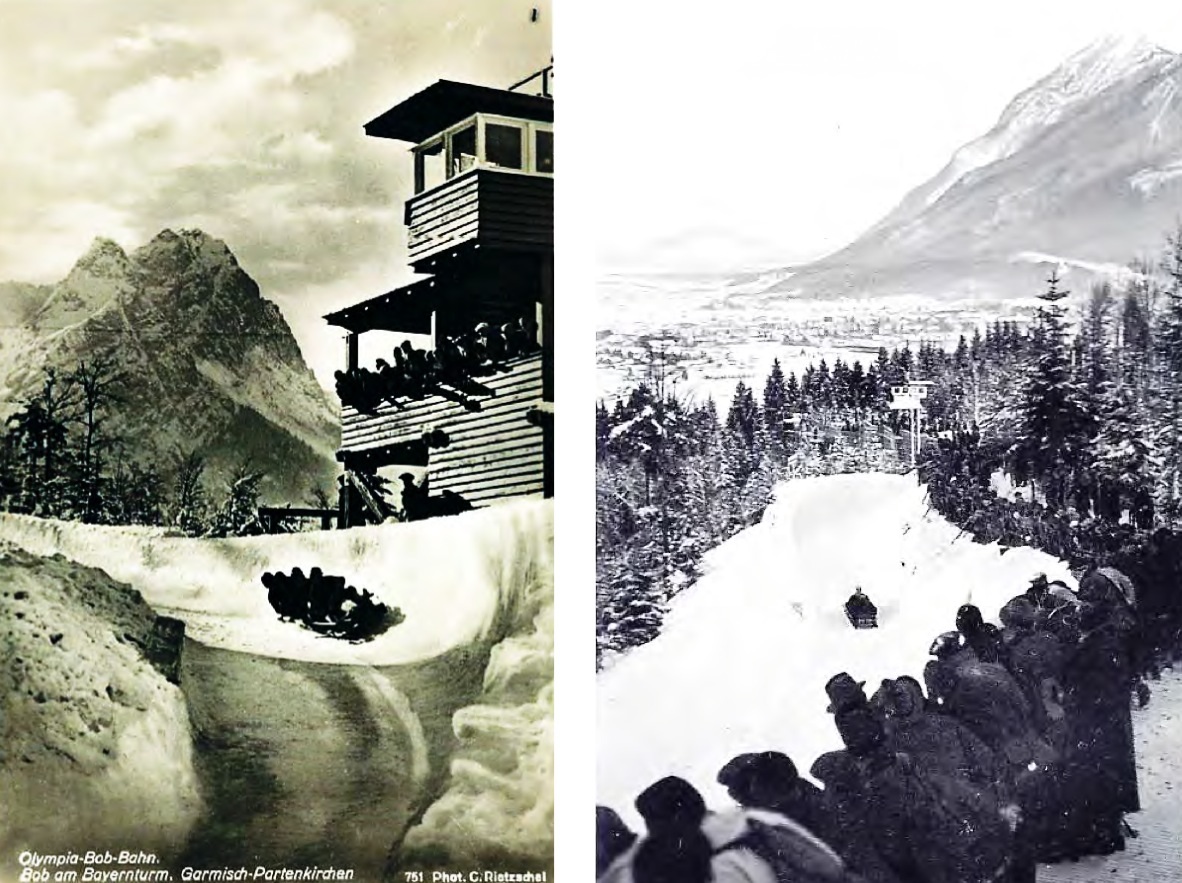
Spectators on a bend and the finishing section of the bobsleigh run, Garmisch, 1936 Olympics

Bibliography…

’Maserati: A Racing History’ Anthony Pritchard, ‘John Snow: Classic Motor Racer’ John Medley, kolumbus.f1, MotorSport magazine, Journal of The Numismatic Society of Australia article ‘Bobsleigh in a Warm Climate: Pre-War Australian Identity on The Slide’ by Max Everest-Phillips, barchetta.cc

 Photo Credits…

 Getty Images, vanderbiltcupraces.com

Tailpiece: Thank Your Lucky Stars…

(unattributed)

Errol Flynn in the scene from ‘Thank Your Lucky Stars’ in which McEvoy, although unattributed in the credits, appears at right

Finito


image

Frank Matich, Brabham BT7A Climax tries to outbrake Bib Stillwell #6, Brabham BT4 Climax, December 1963…

Photographer John Ellacott upon posting this shot online described it as ‘the two great rivals on Hume Straight’…Matich braking down the outside on the run into the slow second gear ‘Creek Corner’. Frank’s car was brand new, just unpacked, it had only turned a wheel for the first time several days before the 1 December ‘Hordern Trophy’, the final round of that years Gold Star, the Australian Drivers Championship.

Frank’s car was fitted with 2.5-litre ‘Climax FPF, Bib’s older chassis had an ‘Indy’ 2.7- a fair duel, one guy with the edge in chassis perhaps and one with a bit more power?

Stillwell led from the start of the 34 lap race and then FM began to reel him in, finally catching the Victorian on lap 20, the pair tangling in The Esses. The collision was enough to put Matich out of the race but Stillwell finished fourth, the race was won by John Youl in his Cooper T55 Climax 2.5 from David McKay’s ex-Brabham BT4.

frank and bib wf discussion
Frank left and Bib – looking very natty is his BRDC blazer – developing his listening and empathy skills by the look of it after the Hordern Trophy. Great rivals with a lot of respect for one another’s abilities (Sports Car World)

In the 1964 Tasman Series which followed the month after this race Youl was the most successful of the locals. Stillwell only contested three Australian races gaining a strong second in the AGP at Sandown whilst Matich was prodigiously fast but had woeful reliability, we shall pick up the Tasman shortly.

I described the rivalry between Frank and Bib in a post about the Stillwell Cooper Monaco;

It’s fair to say Stillwell, born 31 July 1927 took a while to mature as a driver. He started racing MGs in the late 1940s and as his motor dealerships became more successful throughout the 1950s he acquired and raced some expensive, fast cars, D-Type Jag and Maser 250F included. By the time he commenced racing Coopers he had well over 15 years of experience and was ready to take on anybody, winning his first Gold Star in 1962 and the last in 1965, four on the trot.

Matich, born 25 January 1935 was a more precocious talent who first competed in an MG TC at Foley’s Hillclimb circa 1954 and raced seriously from later in the decade after selling his Austin Healey and purchasing the ex-Frank Gardner Jaguar XKC. He soon drove cars for Leaton Motors who employed him as Sales Manager. Bib was more the silver-spoon-special born on the right side of the tracks and funded into his first dealership with family money. Mind you, whatever Bib started with he multiplied many times over, he was an extremely successful businessman in Australia and then became an executive of global calibre inclusive of being President of the Gates Learjet Corporation in the US.

Frank, the young pro, was cut from totally different cloth. He was educated at De La Salle College, Marrickville in Sydney’s inner west and was apprenticed as a 15 year old Diesel Engineer at Sydney’s Kurnell Oil Refinery before progressing through Butlers Air Transport and in 1954 to Selected Sportscars where he first came into contact with the Englishman who owned the MG TC Frank prepared, and both men raced.

FM’s ability and gift of the gab attracted patrons and commercial support from very early on in his career, Matich too was shortly to do well out of the business of motor racing with Australian franchises for Firestone, and later Goodyear racing tyres, and Bell helmets, apart from the sale of some of the Matich sports and F5000 cars he built.

Matich and Stillwell were intensely competitive, driven, successful men, they had far more in common I suspect than not, especially in terms of mindset and will to win. The battles between the pair were absorbing, Matich very quickly got on the pace of the big 2.5 Climax Formula Libre cars (the 2.5 Tasman Formula started in 1964, Australia’s national F1 ANF1 was F Libre till then), having come out of powerful sportscars- Jags C and D Types, Lotus 15, 19, 19B and small bore single seaters, works-Elfin FJ Ford and Elfin Catalina Ford 1.5.

At the time, these 2.5/2.7 litre F Libre/Tasman cars were the fastest road racing cars in the world, F1 having changed from a 2.5 to 1.5 litre formula from 1 January 1961. Given his experience it was not a surprise when Frank was on the pace straight away as he jumped out of his Lotus 19B sporty and into the new Brabham acquired with the French Oil Company, Total’s, support.

Well before the Tasman Series commenced in 1964, we had a strong International Series of races in Australasia in January/February, with enough of the best in the world to test the locals in equal cars Matich was more than a match for any of them. So was Bib on his day.

matich wf private practice brabham
Matich mounted up and ready for his first test of the naked BT7A, devoid of all signwriting and in civvies at Warwick Farm the week before the Hordern Trophy above. Brian Darby, at the rear, picked the car up from the Port Melbourne wharves the week before, Bruce Richardson is the other mechanic in shot. Note reinforced wide based top front wishbone and rubber mounted ball joint, inverted wishbone at the top and single lower link in the rear suspension. The later BT11A had the opposite rear set up, single top link and inverted lower wishbone (John Ellacott)

Matich was very quick in the Brabham throughout that ’64 Tasman Series and the short period in which he raced the BT7A, its interesting to look back at his time in the car. The late 1963 pre-international events in New Zealand are covered in this article here;

The first 1964 international was at Levin, which Frank missed, at Pukekohe, the NZ GP on 11 January, he ran strongly behind Brabham, McLaren, Tim Mayer and Hulme. He passed Mayer for third only to pop his engine on lap 26, McLaren won the race in a Cooper T70. After Puke he shipped the car home to Australia and re-joined the circus at Sandown on February 9. There he ran ahead of the locals before suffering crown wheel and pinion failure on lap 4.

At the Farm, Matich’s home turf, he started from pole, followed Jack away, then passed him but muffed his braking at Creek and ran off the road. Off to Queensland, at Lakeside, he was driving away from everybody before the engine let go, a Weber ingested a stone and the expensive motor went ka-boom on lap 8. After the long tow to Tasmania he finished third in the race won by Graham Hill’s BT4 and was first of the locals despite a misfire, and a revolution amongst his mechanics who pushed the car onto the grid but left his employ after the race.

Ray Bell wrote that ‘He had a mixed bag of results in shorter races during the middle part of the year, taking a number of outright lap records, then came the Gold Star closing events. Lakeside…pole and the lead before an oil line came adrift; Mallala he didn’t turn up (Stillwell basically could not be beaten for the Gold Star by this stage) and he led the Hordern Trophy till half distance before yet another engine failure’.

The 1965 Tasman Series was won by Jim Clark’s Lotus 32B Climax. Despite not contesting the four Kiwi rounds Matich was right on the pace at Warwick Farm, the first Australian round, starting from pole and leading to Creek corner, he then raced with Brabham behind Hill and Clark up front. ‘Both Hill and Matich had troubles in this race with cement dust getting into the steering, Hill spinning on the last lap because of it and failing to finish. Matich was third behind Clark and Brabham’s BT11A, Stillwell (BT11A) was thirty seconds behind him’ wrote Bell.

matich bt7a lakeside 1964
Matich in his semi-nude BT7A in the hot 1964 Lakeside summer sun, puddle notwithstanding! He is trying to stay cool in the searing Queensland heat, lower side panels removed. Shot shows the proximity of the aluminium side fuel tanks containing lots of Avgas, no rubber bag tanks prior to circa 1970 (Peter Mellor)

Down south at Sandown he ran just behind the internationals ahead of Stillwell only to retire with ignition failure, a rotor button on lap 10. During the AGP at Longford he pitted with suspension problems on lap 5 whilst best of the locals having run in sixth place. At Lakeside he contested the non-championship Lakeside 99 and made it a real race dicing with Clark on this high speed, demanding circuit for most of the race. ‘They traded places many times, but Matich did have a pitstop and lost some laps before rejoining the battle’. It was a race FM rated as one of his best.

Into the domestic season Stillwell won the Victorian Road Racing Championship Gold Star round in April after a couple of Matich spins, albeit FM was second despite a failing engine, and started from pole a half-second clear of Bib.

That was all the racing he did in that car. At Lakeside’s Gold Star round in late July, he crashed his Lotus 19B Climax, he took the sportscar to the meeting to test it in advance of the Australian Tourist Trophy which was held at the circuit later in the year, was burned and hospitalised and in the aftermath Total took the decision to cease their racing program and sold the cars and parts.

The story of the next phase of Frank Matich’s career in sportscars, initially with the Elfin 400 aka ‘Traco Olds’ is told in links within this article.

Frank Matich was one of Australia’s many F1 mighta-beens, to me the most likely to succeed of all, but with a young family and business ties in Oz it never happened despite offers being made to him on more than one occasion to go to Europe. As noted, Matich didn’t race single seaters for long at this stage of his career, from 1963 to 1965, racing sports cars very successfully until 1969 when he came back to open wheelers with the advent of F5000 – where he was a star as both a driver and constructor. Click here for an article on this phase of his career;

It’s a shame he didn’t drive Tasman 2.5 cars throughout this golden-era of single-seater racing in Australasia, his battles against the internationals as well as the local hotshots in both Tasman races and domestic Gold Star competition would have been sensational. Matich mixing it with Bartlett, Martin, Geoghegan, Harvey and the rest would have added depth to Gold Star fields which were increasingly  skinny as the decade wore on.

Stillwell retired at the end of 1965, he was certainly as quick as anybody on his day and arguably had not quite peaked when he did retire. No less an observer of the local scene than journalist/racer/Scuderia Veloce owner David Mckay believed that by 1965 Stillwell had reached F1 standard, not least for his ability to drive fast without mistakes or destroy the equipment.

brabhams longford 1965
Intercontinental Brabhams at Longford, AGP 1965. Stillwell’s dark blue #6 BT11A (6th), Matich BT7A (DNF) and Frank Gardner in Alec Mildrens yellow BT11A (eighth), the race won by Bruce McLarens’ Cooper T79 from Brabhams’ BT11A (Kevin Drage)

The Intercontinental Brabhams…

brabham caversham bt4
The first of the Intercontinental Brabhams. Jack in BT4 ‘IC-1-62’ on its debut at the Australian Grand Prix, Caversham, WA on 18 November 1962. He retired after colliding with another car whilst lapping him, Bruce McLaren won in a Cooper T62 Climax (Milton McCutcheon)

When Jack started his climb to the top in Europe he returned and raced in Australia each summer, bringing a Cooper with him and racing it successfully, then selling the car to one of the locals before returning to Europe. It was a nice little earner and helped fund his way in Europe as he fought to gain a toehold in international competition.

Cooper sold a lot of cars in Australia, Jacks business brain was as sharp as his cockpit skills so it was natural that some of the earliest Brabham production racing cars were for Australasian Formula Libre and from 1964, the 2.5 Tasman Formula- which in effect meant cars built for Coventry Climax FPF ex-F1 engines- 2.5 litres but increasingly 2.7’s after Jacks successful Indy 500 run in 1961 in the Cooper T54 with its 2751cc FPF engine. The Tasman Formula mandated 2.5’s of course.

Soon Repco were making Climax parts and eventually building the engines in totality under licence in Australia. The bits were plentiful which was just as well as the level of competition was such that the long stroke donks were being pushed well beyond their limits with spectacular blow-ups fairly common.

stillwell lakeside 1963
Bib Stillwell in his BT4 Climax ‘Lakeside International’ 1963, 2.7 FPF powered. 3rd in the race won by John Surtees Lola Mk4A Climax 2.7 (Bruce Wells/The Roaring Season)

The first Intercontinental Brabham, i use that descriptor as that was the chassis prefix for each car (‘IC’), the design intended for the shortlived Intercontinental Formula created in response to the new 1.5 litre F1- was the BT4 based on the first Brabham GP machine, the 1.5 litre Coventry Climax FWMV V8 powered BT3.

The first Brabham, retrospectively referred to as ‘Brabham BT1’, was the MRD, an FJ machine first raced by Gavin Youl with the BT2 an evolution of the MRD/BT1. The Intercontinental cars which followed the BT4 were the BT7A in 1963 and BT11A in 1964, both F1 cars adapted for Climax FPF engines.

Some incredibly talented guys raced the ‘IC’ Brabhams- Internationals such as Brabham, Hulme, Gardner, Hill and Stewart as well as Australian champions including David McKay, Lex Davison, Stillwell, Matich, Spencer Martin, Kevin Bartlett, John Harvey, John McCormack and other drivers in New Zealand and South Africa.

Jack Brabham won Australian Grands’ Prix in a BT4 and BT7A in 1963 and 1964 respectively. The cars won the Australian Drivers Championship, the Gold Star for Stillwell in 1963 and 1964 aboard his BT4, in 1965 with a BT11A and for Spencer Martin, again BT11A mounted in 1966 and 1967.

hill and stillwell longford brabhams
Graham Hill ahead of Bib Stillwell, BT4 Climaxes, first and fourth. South Pacific Trophy, Longford March 1964 (Rod MacKenzie)
bib stillwell wf 1965 bt11
Bib Stillwell in his final and successful Gold Star year 1965. BT11A at Warwick Farm. His final year of racing, he had a top year in the car at WF, finishing fourth in the Tasman race albeit behind Matichs’ BT7A in third and first in the Hordern Trophy at the end of the year (John Partridge Collection)

The ‘Brabham IC Australian party’ ended in 1968 when Kevin Bartlett won the Gold Star in BT23D/1, a one off car built for Alec Mildren’s Team around Alfa Romeo Tipo 33 2.5 V8s he secured to add a bit of Italian flavour to the local scene, Mildren was an Alfa Romeo dealer.

The Intercontinental cars were typically fast Tauranac designs of the period. They had rugged spaceframe chassis, suspension by upper and lower wishbones at the front with Armstrong shocks and coil springs. At the rear there was a single upper link, inverted lower wishbone, twin radius rods and coil spring damper units with adjustable sway bars fitted front and rear. With Jack doing all of the initial chassis setup work the cars were quick and chuckable ‘straight out of the box’.

Hewland HD5 gearboxes were used in the main (Colotti in the BT4) and rack and pinion steering completed the package with the cars clad in a slippery fibreglass body.

brabham bt 4 from rear
Bib Stillwell’s Brabham BT4 Lakeside February 1963. 2.7 litre Indy 2751cc Coventry Climax FPF engine, 58mm Webers, Colotti T32 five-speed ‘box. Rear of the spaceframe chassis apparent. Suspension- inverted upper wishbone, single lower link and twin radius rods for location, coil spring damper units, no rear roll bar here. Stillwell’s cars famously immaculate in preparation and presentation (Peter Mellor/The Roaring Season)

After Repco’s 2.5 litre Tasman V8 engine made its debut in BT19, Jacks victorious 1966 F1 winning chassis, in 1966 the Tasman Brabhams were variants of the BT23 frame (BT23A and BT23E) with the exception of the very last BT31 for the 1969 series. See Rodway Wolfe’s article about BT31 which he owned for many years; https://primotipo.com/?s=brabham+bt31

Once the 1.5 litre F1 ended in 1965 BRM quickly realised a stretched variant of their P56 V8 in a P261 chassis would be a Tasman winner and ‘their endeth the locals’ in Climax engined cars taking on the Internationals similarly mounted on more or less equal terms.

The Repco Tasman V8’s provided a supply of competitive customer engines for locals so the Tasman Formula continued into 1970 with engines capable of matching the internationals when the ever expanding F1 season and more restrictive driver contracts made eight weeks in January/February in Australasia no longer a proposition for the best in the world. With it went a wonderful decade or so of intense but sporting summer global competition in our backyard.

Those Intercontinental Brabhams were gems though and gave both the international aces and local hot-shots very effective tools with which to strut their stuff, not least Messrs Stillwell and Matich…

matich longford grid 1964
The Matich BT7A being pushed onto the Tasman grid, Longford 1964. Steering is Graham Matich, looking down at the rear is Geoff Smedley. Matich finished third, just in front of Stillwell, Graham Hill won the race in a BT4 (oldracephotos.com)

Tailpiece: Wanna buy a car matey, or a plane?…

bib and jack and bedford
Stillwell and Brabham, rivals and friends in the Longford paddock 1965. They are sitting on Bibs’ Bedford truck, BT11A up above…I doubt Jack sold anyone more cars over the years than he did Bib?! Bib put them to very good use mind you (Kevin Drage)

Frank Matich on dealing with ‘Wily’ Jack Brabham…

http://www.motorsportmagazine.com/halloffame/jack-brabham/frank-matich-on-jack-brabham/

(P Stephenson)

As nice a posed portrait of Jack and his BT11A ‘IC-5-64’ as you will ever see. The combination are in the old Sandown pitlane in February 1965 before he went out and won the Sandown Cup from Jim Clark, Lotus 32B and Phil Hill, Cooper T70, all Coventry Climax 2.5 FPF powered of course.

Etcetera…

matich hordern trophy 1964
Matich in his BT7A contesting the ‘Hordern Trophy’ at Warwick Farm in 1964. DNF in the race won by Leo Geoghegan in a Lotus 32 Ford 1.5, a great win for Leo, he and his brother Sydney Lotus dealers, Leo graduated to the ex-Clark Lotus 39 Climax at the end of the 1966 Tasman series (John Ellacott)
matich bt7 longford 1965
The Matich BT7A sitting in the Longford paddock in 1965. DNF with suspension failure in the race won by McLarens’ Cooper T79 Climax. Rear suspension by this stage to BT11A spec (Kevin Drage)
matich magazine
Front page spread in ‘Australian Motor Sports’, no advertising allowed on racing cars in Australia in those days but the colors on the nose of Franks’ Brabham (Leo Geoghegan’s Lotus alongside) are those of ‘Total’ the French oil company who were prominent in Australia at the time, the spread no doubt a ‘cross promotion’ as the modern marketers would call it!
stillwell rcn
Racing Car News and Stillwell’s Gold Star win in 1964. Brabham BT4 Climax.

Photo and Other Credits…

John Ellacott, Milton McCutcheon, The Roaring Season/Peter Mellor/Bruce Wells, Kevin Drage, Rod MacKenzie, The Nostalgia Forum, Australian Motor Sports, Racing Car News, Peter Stephenson

theroaringseason.com, oldracephotos.com, Ray Bell on The Nostalgia Forum

Tailpiece: Matich, Brabham BT7A, and Graham Hill, red BT11A and Clark, Lotus 32B, Warwick Farm 100 1965…

(J Ellacott)

Finito…
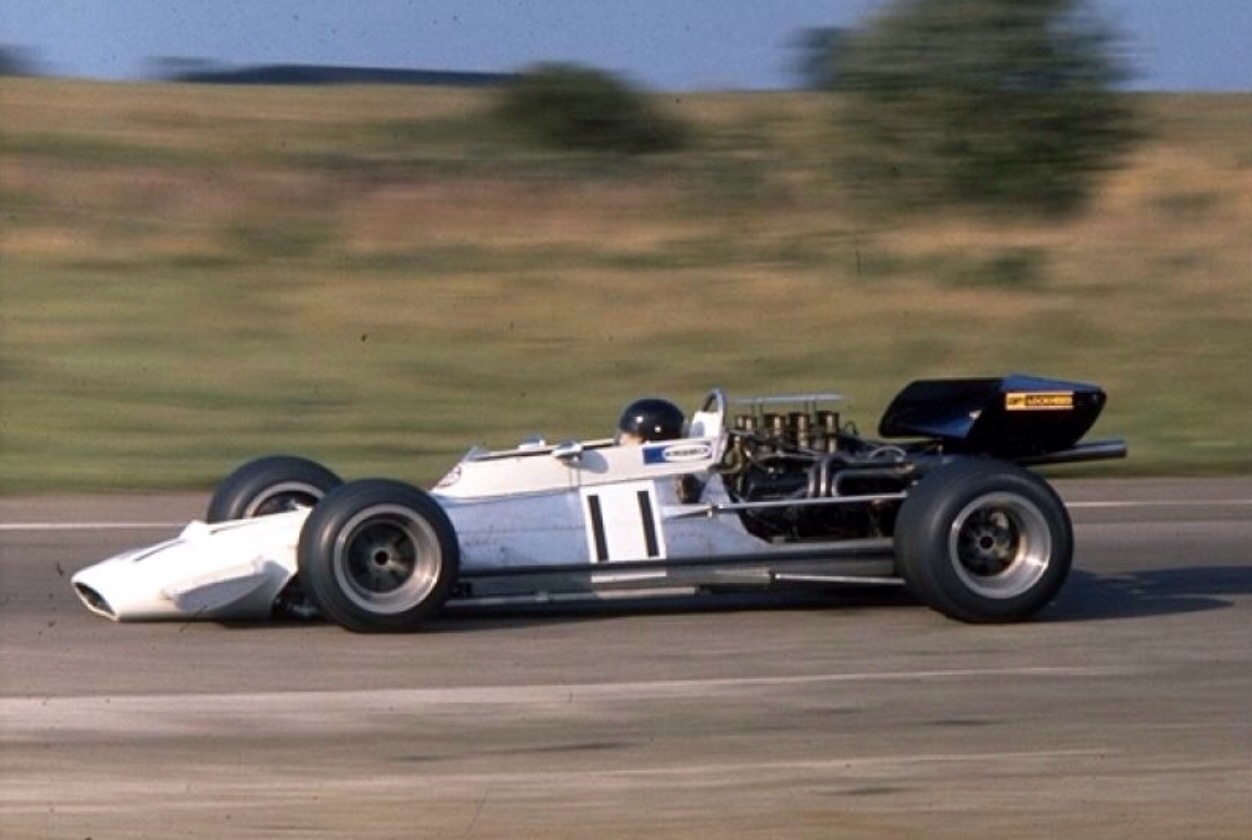
Bruce McLaren awaits his crew making changes to the setup of his new McLaren M7A Ford, chassis M7A-1, Silverstone 25 April 1968…

Its a day or so before the BRDC International Trophy, one of three non-championship F1 races run in Europe that season. Bruce is to have another good weekend, off the back of his Brands Hatch ‘Race Of Champions’ win in March, his teammate and Kiwi buddy Denny Hulme won the prestigious Silverstone race in an emphatic demonstration of the quality of Bruce McLaren and Robin Herd’s F1 design and construction capabilities.

McLaren in the M7A, from pole, Brands Race of Champions in 1968- he won. Alongside is Mike Spence BRM P126, Jackie Stewart Matra MS10 Ford and on row 2 Chris Amon Ferrari 312 and Denny in his M7A. That’s Jo Bonnier in last years McLaren M5A BRM V12 with his hand up on the second last row. Bruce won from Pedro Rodriguez BRM P133 and Denny LAT)

That season Bruce McLaren famously became one of the very few to win a championship GP in a car of his own name and construction when he won the Belgian GP. Denny Hulme took another three GP victories and challenged for the 1968 World Championship ultimately won by Graham Hill’s Lotus 49B Ford, the car for which the Ford Cosworth DFV was designed.

At the end of 1967 Ford’s Walter Hayes implored Colin Chapman to allow him to offer the DFV to other teams ‘for the good of Grand Prix racing’ such was his fear of Team Lotus dominance. Chapman, to his credit, waived his contractual entitlement to exclusivity- Lotus, Matra and McLaren raced the Ford engine in GP events in 1968.

McLaren M7A Ford cutaway (Dick Ellis)

The duo concepted a car which typified the ‘Cosworth Kit Car’ era. A short monocoque chassis ended aft of the driver’s seat and consisted of three steel bulkheads- one at the back, one at the front, and one open bulkhead at the dashboard which was then skinned with aluminium panels to form a full monocoque over the driver’s legs. It was an immensely torsionally rigid and strong structure compared with the very best spaceframes of only a few years before.

The M7A used glued and riveted skins of L72 aluminium alloy, a British standard for the aviation industry in a thickness of 22 gauge and in a few places 20 guage magnesium sheet. 40 gallons of fuel were distributed between four rubber bag-tanks- one either side of the driver in the tub, another behind his seat and the fourth in the scuttle. The Cosworth DFV engine was bolted directly to the rear bulkhead and at that stage of its development produced circa 420 bhp @ 9500 rpm.

Early test of the M7A at Silverstone on 5 April 1968. Denny up, Bruce by front wheel. Notice the McLaren wheels, ‘nostril’ ducted radiator outlets and top and bottom front suspension radius rods which mount to the bulkhead in the dash area of the tub (R Dumont)

The suspension, of conventional outboard design was derived from the very successful 1967 Can-Am Championship winning M6A Chev. It comprised outboard coil spring/damper units at both ends and single lateral links and trailing arms at the front- and single lateral top links, reversed lower wishbones and twin radius rods at the rear. Uprights were cast magnesium with of course adjustable roll bars front and rear. Steering was McLaren rack and pinion, brakes Lockheed discs all round and the transmission the ubiquitous Hewland DG 300 transaxle five-speed.

The radiator was conventionally mounted at the front, with a sleek fibreglass body topping the whole visually arresting package- hot air vented McLaren style out of ‘nostrils’ in the nose with an oil radiator at the rear above the ‘box and clear in the opening shot.

‘Pop’ McLaren and Alastair Caldwell supervise the McLaren pit in the French GP paddock, Rouen 1968. Note general car layout as per text, suspension, rad duct in lower shot- quality of design, execution and presentation a treat. #8 Denny 5th, #10 Bruce 8th. Shocker of a wet race with Jo Schlesser dead on lap 2 in the experimental Honda RA302 (unattributed)

Allen Brown reports in oldracingcars.com of the M7A’s 1968 season; ‘The first two cars were finished in March 1968, and both debuted at the 1968 Race of Champions, where Bruce McLaren dominated the race, winning from pole position, with his new teammate Denny Hulme finishing third. At the next race, the Silverstone International Trophy, Hulme took pole position and won, with Bruce content to take second place. It was not quite so easy at the first GP, the Spanish, but the M7As were third and fourth on the grid and Hulme finished second.’

‘After a poor weekend in Monaco, Bruce McLaren took his team’s first GP victory in the Belgian GP at Spa in June after Jackie Stewart’s Matra MS10 retired on the last lap. Results were mixed over the next few races, but Hulme won in Italy and in Canada to equal Graham Hill’s score at the top of the World Championship standings. A crash at Watkins Glen and retirement in Mexico ended his challenge, but had been a wonderful season for McLaren’s F1 team’.

McLaren M7A from Pedro Rodriguez, BRM P133- 1st and 2nd, Spa 1968 (unattributed)

McLaren and M7A at Watkins Glen 1968. Note the mount and location of the rear wing in the context of the text below (A Upitis)

In terms of the ebbs and flows of the season, in ‘The Year of Wings’, Matra and Ferrari- on Firestone and Dunlop tyres respectively won races later in the season and Lotus set the aerodynamic standard with high-wings after their initial appearance on the Ferrari 312 and Brabham BT26 Repco at Spa. McLaren lost some of their edge- the cars wings were less effective than Lotuses, when they remained attached to their cars, mounted in the middle of the M7A on the cars sprung mass, rather than Lotus 49 style at the rear on the unsprung suspension uprights, and Goodyear too lost their edge. Remember when there was competition between the tyre manufacturers?!

Goodyear’s new G9 boots gave Denny the kicker he needed to win at Monza and then at St Jovite, Canada but Graham Hill and Lotus deserved the title in a year during which Hill held the team together and picked everybody up after Jim Clark’s tragic death at Hockenheim in April.

Looking at the M7 design from a commercial perspective, whilst McLaren by this stage were well funded by the standards of the day- the M7 design worked hard in contributing to the companies success by providing the basis of the M14 F1 car and the phenomenally successful M10A and M10B F5000 designs which were the ‘class standard’ from 1969-1971- constructed as they were under licence by Trojan Cars in Croydon.

Bruce, M7A Silverstone (V Blackman)

Lets get back to the photo which inspired this piece though, here is none other than DC Nye’s race report of the BRDC International Trophy, in full, from the June 1968 issue of MotorSport, the photographs are all my editorial selections…

‘For the 20th B.R.D.C. International Daily Express Trophy race at Silverstone, the Club amassed a small but fairly representative field of Formula One cars. Heading the entry were Hulme and McLaren in the two impeccably-prepared McLaren M7A-Cosworth V8s, which finished first and third in the Race of Champions, and Ferrari sent over two cars, one a new, slightly sleeker-chassised V12 with the engine lower-mounted than hitherto, and the other the car which Amon normally races. Drivers were the young Belgian, Ickx, and Amon, and though the New Zealander tried both cars he decided he preferred his own, and Ickx raced the new one.

Amon’s Ferrari 312’s, Ickx car in the foreground, Silverstone 1968. Amon Q5 and Ickx Q7 with Chris proving the pace of the Ferrari, despite the Cosworth onslaught with a fastest lap and 3rd place, Jacky 4th (unattributed)

Graham Hill had a solitary Lotus 49-Cosworth V8 which was entered by Gold Leaf Team Lotus, and B.R.M. were well represented with Rodriguez in the Bourne-built, Terry-designed P133 V12 and Spence in the similar, T.A.C.-built P126. Also in a P126 was Courage, having his first F1 race this season for Parnell, and Hobbs had Bernard White’s relatively unsorted Tasman 2-litre B.R.M. P261 chassis, specially lengthened by the works to accommodate the new V12 engine. Also B.R.M.-powered was the lone works Cooper T86B, with Gardner driving, as Scarfiotti was away practicing for the Targa Florio and Redman was reputedly testing F2 Dino Ferraris in Modena. Rob Walker had acquired a new Tasman Lotus 49 chassis to replace the one lost recently in a fire at his Dorking headquarters, Siffert driving as usual; Bonnier was in his 1967 McLaren M5A-B.R.M. V12, and the Swiss Moser had the ex-Hulme, ex-Ligier Brabham BT20-Repco V8. Lanfranchi completed the field in a 2.7-litre Climax 4-cylinder powered Brabham BT23.

Withdrawn entries included a second Parnell B.R.M. for Attwood and Sheppard’s Mallite McLaren fitted with a 3-litre version of the original Climax Godiva V8 for Taylor. Two works Brabhams were listed, but were not complete.

Last year’s G.P. practice record of 1 min. 25.3 sec. by Clark in the Lotus 49 looked a little sick compared with this year’s speeds, Hulme taking pole position with 1 min. 24.3 sec. to Spence’s 1 min. 24.9 sec., McLaren’s 1 min. 25.1 sec. and Rodriguez’s 1 min. 25.3 sec. Behind these four on the front row came Amon at 1 min. 25.5 sec., Hill 1 min. 25.6 sec., Ickx 1 min. 26.4 sec., and Siffert 1 min. 27.6 sec.

One minutes silence in memory of Jim Clark before the off. Hulme at far left on pole, then Spence BRM P126, McLaren M7A and the other BRM P133 of Pedro Rodriguez. Amon, Hill and Ickx on row 2 (Getty)

After a poignant silence in memory of the late Jim Clark, the field were given a maximum of three warming-up laps, and from the start McLaren took an immediate lead ahead of Spence, Hulme, Rodriguez, Ickx, Hill, Amon, Courage, Bonnier and Gardner. Lap 2 and the leading bunch were all scratching hard to draw out some sort of advantage; Courage was briefly ahead of Amon at Copse and Siffert and Gardner were both by Bonnier, who was being harried by Hobbs.

The leading McLarens, B.R.M.s, the lone Lotus and the two Ferraris soon towed each other away from the rest of the field, with Hulme slotting by Spence into second place on lap 4, then being repassed by the B.R.M. Lanfranchi had already stopped for a plug change on his 4-cylinder, and at the start of lap 6 Spence led McLaren into Copse, and was re-passed on the way out to Maggotts to remain the meat in an orange McLaren sandwich for a short distance before chopping by again and leading the bunch on lap 7 from Hulme, McLaren, Rodriguez and Hill, all nose-to-tail. Amon and Ickx had become slightly detached in the works Ferraris, but as they sped down Hangar Straight on that lap a stone was thrown up from Spence’s B.R.M., smashing Hulme’s goggles and giving him a nasty moment which dropped him back to seventh.

Hill and Amon in 3rd and 4th- Ferrari 312 and Lotus 49 Ford (LAT)

Almost immediately Rodriguez’s B.R.M. V12 began to misfire, an ignition lead dropping off, and he stopped before Maggotts, replaced the wire and drove on to the pits, where a more lasting repair was made. By lap 9, with Spence leading narrowly from McLaren, Hill was third in the lone Lotus, Amon was a close fourth and Hulme, whose eyes had stopped watering, was already on his tail and looking for a way by. Positions remained unchanged until lap 14, when the Lotus’ V8 engine died, and, seeing a lot of fluid resting in the vee, Hill thought the engine had suffered a serious breakage and had thrown water. In fact, a fuel pipe had split, and the fluid was petrol, but he was out anyway, and walked back to the pits. Hulme had nipped by Amon on this lap, and was going out after Spence, who had been re-passed by McLaren. lckx was falling back in fifth place with the very new and understeering Ferrari, with Siffert some distance behind, followed by Courage, Gardner, Hobbs, Moser, Lanfranchi and then an unhappy Rodriguez in the misfiring B.R.M., last.

Next lap Hulme was up into second place, and on lap 20 he passed McLaren after getting round in 1 min. 25.3 sec. to take the lead narrowly from his “number one”, Spence and Amon, and these four were still driving in very close company. But Lanfranchi had retired with bad oil surge, and Siffert’s sixth place evaporated on lap 26 when the clutch broke in the Tasman-chassised Lotus, and two laps previously Gardner had gone out in a trail of smoke and steam when the B.R.M. engine broke a liner.

Lap 28, and Spence slotted his slim B.R.M. past McLaren into second place, and as they lapped the tail-enders the leading group began to space out. But Amon closed on McLaren noticeably on lap 36 and was looking for a way by, but then lost time lapping Moser at Copse and dropped back, letting McLaren get away and latch on to Spence’s tail in second place. These two then drove very hard, entering corners side-by-side occasionally until lap 41 when the B.R.M.’s engine stopped suddenly at Club with a timing chain breakage, letting McLaren up into second place, but delaying him sufficiently to let Amon catch up in the Ferrari. Rodriguez had finally retired his sick B.R.M., Ickx was running a lonely fourth, with Courage fifth and about to be lapped, while the only other cars still running were Hobbs’ B.R.M. and Moser’s Brabham-Repco.

Hulme on his way to the first of four M7A wins in 1968, Silverstone, April 1968 (LAT)

Amon was trying hard to wrest second place from McLaren, setting a new outright circuit record on lap 44 of 1 min. 25.1 sec., 123.82 m.p.h., but Bruce was trying equally hard to stay ahead, doing 1 min. 25.2 sec. on the same lap, and, although the two of them were very close together on lap 45, Amon’s luck was running out and his goggles strap broke. Shielding his eyes from the airstream with one hand he drove for two laps before managing to haul his stand-by pair into position on his face, and this dropped him well back from McLaren, and although closing the gap slightly before the finish he came home in third place. Hulme was battered but triumphant, Bruce McLaren had a lot to smile about with his cars’ first one-two victory, and B.R.M. were well pleased with their turn of speed and not too worried about the frailty their cars had shown since they are still at an early stage in their development. The Ferraris had been rather outpaced from the start, but on a clear track and with McLaren as his target Amon had proved that he is one of the quickest drivers around.’—D. C. N.

Denny on his way to a win at St Jovite, Canadian GP 1968 (unattributed)

Etcetera: M7A Chassis by Chassis courtesy Allen Brown at oldracingcars.com…

‘The first two cars were finished in March 1968, and both debuted at the 1968 Race of Champions, where Bruce McLaren dominated the race, winning from pole position, with his new teammate Denny Hulme finishing third. At the next race, the Silverstone International Trophy, Hulme took pole position and won, with Bruce content to take second place. It was not quite so easy at the first GP, the Spanish, but the M7As were third and fourth on the grid and Hulme finished second. After a poor weekend in Monaco, Bruce McLaren took his team’s first GP victory in the Belgian GP at Spa in June after Jackie Stewart’s Matra MS10 retired on the last lap. Results were mixed over the next few races, but Hulme won in Italy and in Canada to equal Graham Hill’s score at the top of the World Championship standings. A crash at Watkins Glen and retirement in Mexico ended his challenge, but had been a wonderful season for McLaren’s F1 team

Bruce 8th, with Tyler Alexander and Alastair Caldwell and M7A at Rouen, Chris Amon 10th Ferrari 312 just heading out (unattributed)

Denny and Bruce at Jarama prior to the 1968 Spanish GP, M7A’s fitted with pannier side tanks. Denny 2nd and Bruce retired in the race won by Hill’s Lotus 49 Ford (unattributed)

Bruce on the way to that historic win aboard his M7A at Spa in 1968 (unattributed)

Hulme’s M7As was retained for 1969 for the Kiwi to drive, and the latest car, M7A/3, was modified to M7B specification with pannier tanks.  When that did not work, both the M7B and the prototype M7A were sold to privateers; both were crashed later in 1969 and both cars scrapped. Bruce drove a new McLaren M7C for the rest of 1969, and a huge amount of effort was wasted on the four-wheel-drive McLaren M9A. It didn’t help that Goodyear, McLaren’s tyre supplier, were well behind Firestone and Dunlop until the end of the season, when the latest rubber helped Hulme win the Mexican GP in his well-used sole surviving M7A. That last M7A was bought by Tony Dean for Formula 5000, and was then sold to a French Museum where it remains, the museum owners having turned down all McLaren International’s offers for the car.’

McLaren, Brands, M7A British GP 1968 (M Hayward)

More on the M7A’s…

Check out Allen Brown’s article which I have referenced and filched from extensively in this article

http://www.oldracingcars.com/mclaren/m7a/

Credits…

Getty Images, Victor Blackman, Ronald Dumont, Alvis Upitis, MotorSport June 1968 article by Doug Nye, Dick Ellis, LAT, Mike Hayward, Allen Brown-oldracingcars.com

Tailpiece…

Finito…
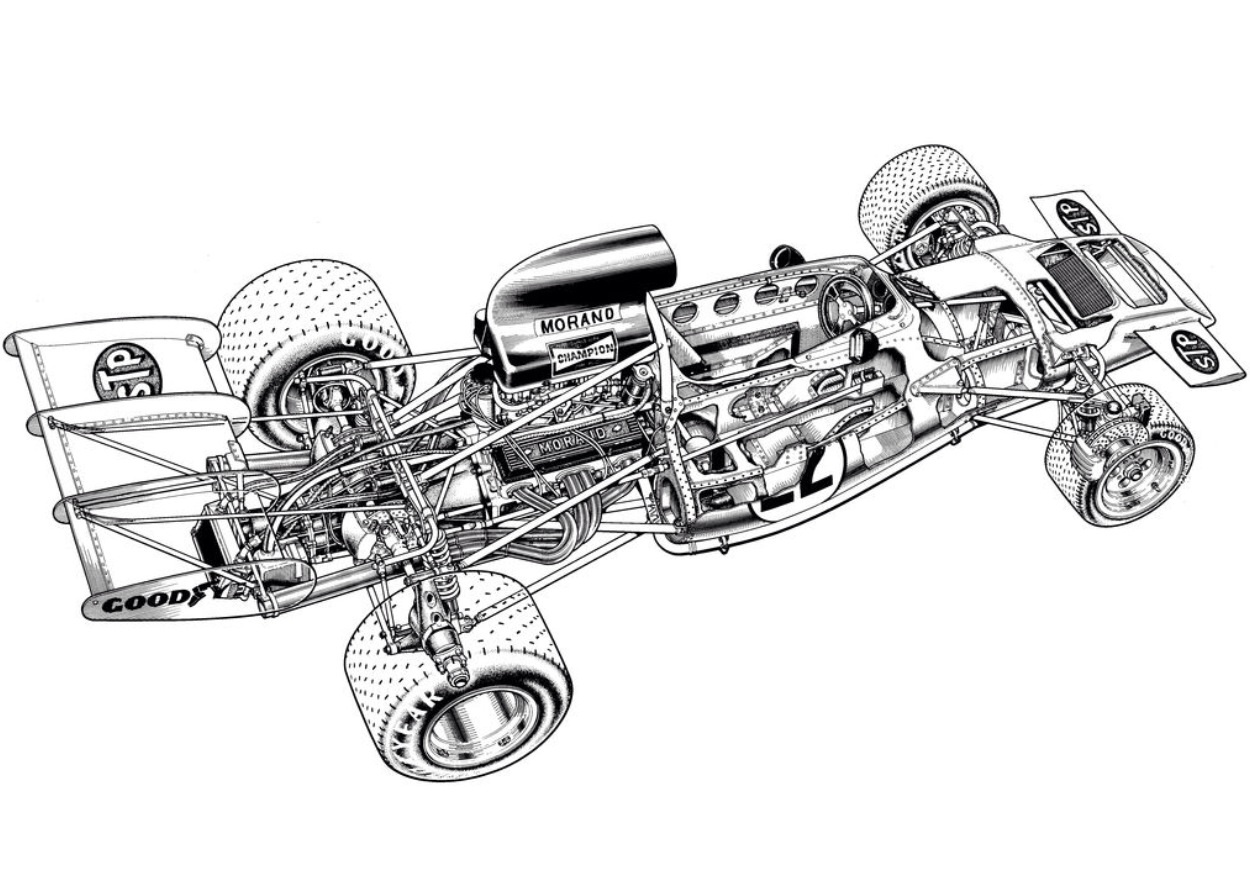
(J Saward)

Longford’s Pit Straight- Illawarra Road from a Percival EP-9 at low altitude during the 1959 meeting…

We are indebted to Tasmanian enthusiast Rob Saward who left his, and his father, Jim’s photographic archive in the care of Lindsay Ross (oldracephotos.com.au) who periodically uploads tidbits of visual pleasure from his coterie of talented ‘snappers such as the aerial shots Jim took here.The perspective provided as a result, is gold.

My Longford obsession I’ve admitted a number of times. I suspect I have written more articles which involve this circuit than on any other single topic. The idea for this piece arose out of a swag of photos I’ve accumulated but not yet uploaded of the circuit, and the notion of a ‘photographic lap of Longford’ with the emphasis on more panoramic images taken from a distance to give us a feel for the flow of the place rather than close up shots of the cars and drivers themselves. Most of the photographs in this article I’ve not used in the many Longford pieces on this site thus far.

What also brings the article to life are the accounts of Longford from those who were there in period, these I have filched from The Nostalgia Forum ‘Longford: Reims of The South Pacific’ thread particularly the scribblings of Ray Bell, The Late Barry Lake, Stephen Dalton, ‘Longfordboy’, Lindsay Ross, Ellis French and others. I have quoted these fellas throughout.

Treat the article as Work In Progress though as the drivers perspective is largely missing. I am very keen to hear your views/recollections, many ex-Longford racers are readers, so it would be great to hear from you folk about the particular challenges this remarkable piece of Tasmanian real estate presented to racers of the time.

I’ve inserted a Longford circuit map to assist in understanding ‘where we are’, the reality is that the map is indicative rather than definitive, there are plenty of more nuanced twists and turns revealed by the photos which follow not reflected on a circuit map of this small scale.

Other essential homework before you read the article is to look several times at the in-car footage taken from Lex Davison’s Cooper T62 during the 1964 meeting. Many of you will have seen ‘Long Weekend At Longford’ already. After listending to and watching Davo’s great commentary (it starts at about the 2 minute 52 second mark) a couple of times turn the sound off and just focus on the circuit’s twists and turns, topography and changes in elevation.Then read the article having in part at least got into Longford’s rythmn…

The opening shot by Jim Saward is above Mountford Corner where the red sportscar is about to turn in.

The escape road from ‘The Flying Mile’ straight from whence our sportscar came is dead ahead of him- being the road to Perth (Tasmania not Western Australia- mind you, the direction is the same for both!) The racing pits are to the right of the white painted line on the tarmac and were moved there from the outside of the circuit on The Flying Mile in 1959- this change was made after consultation with leading drivers and officials after safety concerns. To the top left of Saward’s photo is the Water Tower which marks the turn in to the fast right-hand downhill pluge to The Viaduct,in the distance is Longford village.

Ray Bell ‘The road narrowed about 100 yards or so after the start, then there was clear paddock each side of the straight till some trees came up on the right as you go over the crest…’

Kerry Grant’s Brabham BT4 Climax off to the side of the road, he pulled up after Rocky Tresise’ fatal Cooper T62 accident and could not restart (oldracephotos/DKeep)

The shot above is the drivers eye view of the Water Tower approach.

Its Bruce McLaren’s white Cooper T79 Climax dicing with Jack Brabham’s Brabham BT11A Climax for the lead of the 1965 Australian Grand Prix with Jack looking for an inside run into McKinnons Hill on the run down into The Viaduct. Bruce won on that particular day, in very fine form from Jack about three seconds in arrears.

Bell ‘The poplars can clearly be seen down the hill, (below) the railway embankment was just clear… and here’s a point… the grass wasn’t usually green! It was late summer, mostly hot, bushfire season and all that when Longford was held. The trees had a gap on the right where there was a gate into the paddock just at the turn in point for The Viaduct, and there was a sort of run-off track straight ahead at this point. In 1965 this was just dirt, maybe grassed later.’

The Viaduct section of the circuit Bell refers to above is the bit Chris Amon is negotiating below.

Waaah-raaap-waaaahhh, you can just about hear that Ferrari V12 as he shifts down through the gears from fourth or fifth to second for the Viaduct left, then right Ess to head back up the hill into the trees then down towards the Kings Bridge and Longford village itself. But lets not get ahead of ourselves.

Stephen Dalton notes in his caption of this photo ‘The keen enthusiast set up their vantage point from the edge of the trainline, as Chris Amon goes past Longford Motor Racing Association President Ron McKinnon’s ‘Mountford’ property while attempting to make up the 2 laps he lost when the P4 was discovered to have a flat battery on the grid for the 12 lap Event 2 Sports Car Scratch Race’ (S Dalton)

Chris mainly cleaned up in David McKay’s P4/Can-Am 350 in the sportscar races the car famously doing 178 mph on ‘The Flying Mile’ that day in the wet! And 182 mph in the dry on the Saturday. Here the track is patchy wet, very tricky in this powerful car, its the Monday raceday ‘Longford Cup’ day, the famously wet race won by Piers Courage’ F2 McLaren M4 Ford FVA car from the 2.5 litre cars which were somewhat hampered in the wet conditions by an inability to put their power down.

‘It was an extraordinarily quick circuit’ recalled Chris in MotorSport. ‘It was basically a rectangle, and by the time you were halfway down the straight you were absolutely flat out. It was a wonderful circuit in the dry, but in the wet it had the potential to be bloody dangerous’ he said in somewhat masterful understatement! In the dry Saturday sportscar scratch Chris set what became the all-time lap record at 2:12.6 seconds, an average of 122.19 mph.

‘As far as steepness of the area of the track is concerned – “McKinnons Hill” as we used to call it is much steeper at the initial descent to just before the gateway (just up the hill a bit on the left from where Chris is shown) where it becomes a more gentle drop…In real life it was narrow, steep and the kink past McKinnon’s Gate was a nice sweeper if there was no traffic around (i.e. a racing line used in your road car) but the fast cars would be balancing braking and set up for The Viaduct. (the point referred to is exactly where Amon just apexed above) I don’t think this kink had a name other than McKinnon’s Gate…We could ride our bikes from The Viaduct up to just past the gateway but then had to get off and push. My drivers licence test with a local policeman was 1 lap of the circuit on my 17th birthday- Sunday 6 March 1966 with hay bales and braking markers in place!’ wrote ‘Longfordboy’.

Gaggle of cars heading into The Viaduct in 1961- Austin Miller Cooper T51 Climax chasing Lex Davison Aston DBR4/250 at the rear of the group- note the run-off area between the haybales and marshalls- limited mind you, a bit of dirt then bush and a steel drop into a culvert (S Dalton)

‘I think the fast cars were just about airborn as they started the descent as it dropped suddenly at first – i think Greg Cusack in an open wheeler had a big crash there (in the Scuderia Veloce Brabham BT23A Repco in 1968 ) when he did not land straight and spun off going down the hill before the gateway’…’In the lead up to the long weekend we would ride our bikes to The Viaduct at night to watch some local competitors practicing – with sentries to advise if anyone was coming so they could use all the road!’ Longfordboy added.

‘McKinnons Hill’ is the area of the main entrance of Ron McKinnon’s (Longford Motor Racing Association’s President & Chairman) ‘Mountford’ property. That ran all the way back to Mountford Corner and had the pit building on his property…The Viaduct and the land that runs down to the South Esk river is also on Mountford property…’wrote Stephen Dalton.

(oldracephotos/DKeep)

 The photo above during one of the 1966 Touring Car races is of the outside of The Viaduct and shows the Rob Boote Holden EH from Robin Pare’s Ford Mustang turning into the corner. Note the spectators to the side of the railway line as mentioned in the Amon shot above and stationary blue flag from the ‘flaggie’.

(oldracephotos/DKeep)

Whilst the colour shot above shows the run-off area into The Viaduct there was not too much space to play with as Spencer Martin demonstrates in his Scuderia Veloce Brabham BT11A Climax in 1966. The SV team got the car sorted though, Spencer was fifth in the Monday ‘South Pacific Trophy’ event- and won the first of his Gold Star national titles with this chassis that year.

(oldracephotos/DKeep)

Above is gaggle of cars the first of which is Frank Gardner’s Brabham BT23D Alfa heading under the bridge- then Leo Geoghegan Lotus 39 Repco, Richard Attwood BRM P126, Kevin Bartlett’s Brabham BT11A Climax, Pedro Rodriguez BRM P126 and the rest- the Saturday dry preliminary in 1968.

Whilst the view from the outside or exit of the corner below shows Bib Stillwell’s Cooper T51 Climax ahead of John Youl, Cooper T55 Climax during the 1963 South Pacific Championship race won by Bruce McLaren’s Cooper T62 Climax. It is a beautiful photograph, and not a bad vantage point for those who could cadge a pass into that area!

(oldracephotos)

After the cars have cleared the final right of the Viaduct combination the cars disappear up a slight rise into the Australian bush, you can smell the eucalypt’s in these next coupe of shots.

Bib Stillwell is literally lining his Cooper up for the left-right combination the cars below are traversing- clear in the shot is Austin Miller’s distinctive Cooper T51 in his trademark vivid, glorious yellow hue. Notice the drain culvert and quite dense nature of the bush- we call it bush in this part of the world rather than forest folks!

(oldracephotos)

So. Back to the map – we have cleared the railway line and are on the section of track between the Viaduct and Kings Bridge. Photos of this part of the track are as rare as rocking horse poop.

The photo below  shows the track to be quite narrow and rough at its edges, not a part of the track to pop a wheel into the dirt. ‘Trees were thick from The Viaduct to Kings Bridge, then stayed thick the other side on the left’ says Bell whose magic photo it is which shows Jim Clark’s Lotus 39 Climax leading Jack Brabham’s Brabham BT19 Repco through the bush in 1966 – it’s the same stretch of track in both photos taken from atop The Viaduct, the two photographers using lens of different focal length.

(R Bell)

Onto the photo below of Kings Bridge we are looking from the bridge back to the bushy section of the track the cars in the two photos above are heading towards, note the open approach to the bridge below is preceded by a left-hander the last car below is just completing.

After the drivers turn right above they go down the hill and across Kings Bridge – one of two crossings of the South Esk River – the shorter of the two bridges, it’s Jack Brabham here, Brabham BT4 mounted in 1963 ahead of Bruce McLaren’s Cooper T62 Climax.

Longfordboy ‘The pump house (brick building to the left of the photo) is the new pump house for the town that pumped water up to the reservoir (water tower). The old pump house was on the opposite side of the road and the old pump in a bit of a shed remained with a large wire cage around it…We used to water ski under the Kings Bridge – provided the water was low enough.’

‘Many farmers had their own small pump houses for their own irrigation systems. My father was a mechanic so i was brought up grinding in valves by hand with suction caps on wooden handles. Of interest in 1958 or ’59 Arnold Glass brought a Maserati 250F to race and it was housed in our large single car garage/workshop beside our house. The mechanics finished working on it around midnight – to start it dad towed it around the block (in Longford) it fired up half way round and sounded “magnificent”. Neighbours never complained – it was accepted that weekend.’ quipped Longfordboy.

Spencer Martin in the SV Ferrari 250LM chasing Brian (father of John) Bowe Lotus 11 Replica HEA Simca s/c Spl on, or more particularly off Kings Bridge, morning practice Saturday in 1965 (R Bell)
(oldracephotos)

John Surtees beside the Pumphouse just off Kings Bridge on the way to South Pacific Trophy victory in his Cooper T53 Climax FPF 2.7 in 1962- I guess for the great Brit Longford was ‘safe’ by the standards of some of the ‘bike racing circuits from whence he came!

Exiting Kings Bridge was fast, a top gear right hand open curve. Then there is a deceptively (in terms of the map) long straight stretch into the village of Longford itself – the approach to it is very fast and dangerous due to the presence of mature, solid Plane trees and ‘The Hump’ in the braking area.

The location and Longford Corner is much photographed with the Country Club Hotel (which happily is still there, do pay a visit and check out the racing memorabilia inside) a familiar backdrop. There was a Mobilgas Service Station opposite the pub which is shown in one of the following photos.

(oldracephotos)

The image above shows Graham Hill, Brabham BT11A Climax and Phil Hill’s Cooper T70 trying to set a lap record to stop Jack Brabham, behind him in a Brabham BT11A Climax catching his teammate- and eventual winner, Bruce McLaren during the 1965 AGP. They are in the braking area for Longford Corner- whilst the Union Street plane trees have been trimmed, their solidity is readily apparent.

With unguarded trees on both sides of the track and ‘The Hump’ in the braking area the take-off and landing of ones machine was critical- getting the car settled and straight before caressing the brake pedal firmly and progressively was important. This, and a wheel in the dirt caught out young American driver Tim Mayer who lost his life in a Bruce McLaren Motor Racing Cooper T70 Climax much like Bruce’s T79 above, against a tree in 1964. The hump was removed after this incident.

(E French)

In fact, in the words of Murray Walker, if I am not very much mistaken Jack Brabham’s Cooper T51 Climax above is just landing after ‘The Hump’ in 1960 above- checkout the shadow under his machine. Brabham won that day from the Mildren and Stillwell’s T51’s.

(G Smedley)

Shot above is a favourite, Geoff Smedley’s, of Clark, his obscured teammate Hill and Amon- Lotus 49 times two and Ferrari Dino 246T then Frank Gardner’s Brabham BT23D Alfa, and then, i think Kevin Bartlett, Brabham BT11A sandwiched between the two BRM’s of Richard Attwood and Pedro Rodriguez- Clark the winner in this Saturday 1968 preliminary. By the look of the nose of JC’s Lotus he has just started to brake into Longford- the hump is now gone and the tarmac appears smooth albeit the verges are to be kept clear of as are the ever present plane trees.

All of the photos in this article make clear the impossibility of keeping the flavour and character of the place and provide greater elements of safety for both drivers and spectators of the day. There simply was never the sort of budget in Tasmania which allowed the Nurburgring to be transformed in 1971 in a way which trod the straddle between the vistas and challenges of the past and present day safety requirements pretty well.

(oldracephotos/JSaward)

Saward’s photo of Austin Miller’s Cooper T51 above chasing a gaggle of similar Coopers and Lex Davison’s (second car in this group of five) Aston DBR4/250 is interesting as we can see both the immediate environs and also have a peek around Longford Corner and along the start of Tannery Straight. At the top of the rise in the road the first three cars are travelling towards is the railway crossing ‘jump’ which  is the subject of the next series of photographs coming shortly.

Len Lukey Cooper T45 Climax from Doug Whiteford Maser 300S during the 1959 AGP weekend (oldracephotos)

The photograph above is a classic ‘Pub Corner’ shot- the corner of Union Street and Wellington Streets in Longford village with the 1959 Australian Grand Prix combatants Len Lukey and Doug Whiteford  apexing the corner for the run along the start of Tannery Straight (along Wellington Street) and just up the road the jump over the railway line.

Stan Jones won that 1959 AGP, a long overdue win for the perennial frontrunner in his then ageing Maserati 250F.

(oldracephotos)

The photo above shows opposite locking Bob Jane’s Lotus Cortina chasing Sir Gawaine Baillie’s 7 litre Ford Galaxie, repaired after its near death experience against the Sandown Park, Peters Corner fence whilst driven by Lex Davison the previous November, on the exit of Longford Corner.

The Mobil Servo referred to earlier is clear as are more plane trees and an enthusiastic crowd ‘protected’ by lots of haybales and their own fast reactions! That Ford would have been mighty impressive bellowing and thundering along Longford’s long straights. The twiddly bits would not have been quite so impressive!

After exiting Longford/Pub Corner the cars accelerate through the gears including a ‘yump’ over the railway crossing along Tannery Straight.

Actually, for the most part after leaving Longford- that’s Doug Whiteford’s ex-works Maserati 300S coming in for a landing below, note the handily parked Austin!- its a long gentle curve, for a mile and a bit and then brake hard for Tannery Corner, a right hander.

Doug Whiteford Maser 300S, over the Tannery Straight (Wellington Street) railway crossing in 1959 (E French)

There was some technique required in addition to enjoying the ride! Kevin Bartlett recalls having to release the throttle for a fraction of a second so that the rear halfshaft donuts didn’t overstress on his Brabham BT11A, with Ellis French adding that ‘Humpy’ Holden crankshafts didn’t like the spot either. Geoff Smedley quipped ‘That crossing is the only place in the world where a race had to be paused to allow trains to pass through!’

Jaguar Mk1’s 1960- David McKay from Ron Hodgson (oldracephotos)
(E French)

Marvellous shot above of Ellis’ on the same day as his Whiteford one prior- its beauty is both literal and symbolic.

Literal in terms of the scene itself- the crossing, handily placed spectator’s Austin, watching, relaxed ‘coppers and of course the Maserati 250F and Cooper T45 Climax of Arnold Glass and Bill Patterson. Its practice for the 1959 AGP, Arnold was third and Bill failed to start, as mentioned earlier, the race was won by Stan Jones Maserati 250F.

Its the 250F that is the symbolic bit- the little mid-engined Coventry Climax FPF powered Cooper chasing down the thoroughbred Italian car. The first such locally domiciled car was Reg Hunts 250F engined A6GCM which arrived in early 1955. In the period which followed the 250F’s did well albeit Lex Davison’s older 3 litre Ferrari 500 pretty much always had their measure- what it may sometimes have lacked in outright pace to Hunt, Jones & Co being compensated for by strong reliability, especially on the big occasions. Whilst Stan Jones won the 1958 Gold Star Series and the 1959 AGP in his 250F the period of the big red cars was coming to an end, a smidge later in Australia than in Europe. In the ’59 Gold Star, twelve races were contested- mid-engined Cooper’s won nine of them with three going to the front-engines, and all of these wins were early in the year prior to 31 March. Jones and Kiwi Ross Jensen won in 250F’s at Longford and Bathurst with Stan rolling out the Ern Seeliger modified Maybach 4 Chev at Port Wakefield for a victory in South Australia. The days of mid-engined omnipotence had arrived.

Ray Bell’s shot below after the end of race proceedings in 1965 shows the gently curving nature of Tannery Straight- heading in the direction of Tannery Road from Longford. Its flat-knacker in top gear but clearly is not straight as is shown in pretty much all of the circuit maps available. Mind you, none of the modern maps will be from ‘source references’ but rather digital renditions of earlier work. Plenty of trees, bush and typical highway of the day with rough verges.

(R Bell)

‘The left of Tannery was like a huge hedge, the right was random trees growing thickly, with the odd track into the bush where lovers used to go and that sort of thing…

By the time they were looking for the brakes (the drivers not the lovers) they were well into clear paddock scenery, with a kind of flat and uninteresting (Windsor, Sydney after a flood kind of thing…) appearance for Tannery, where the road was built up and going off would mean dropping onto a lower level. The paddock straight ahead had a gate and driveway for convenient escape for late brakers’ Ray Bell recalled.

The image below of the Triumph TR3 and Lotus 11 is Tannery Corner, the T-intersection of Tannery Road and Bishopsbourne Road, the drivers have negotiated the corner and are heading towards Long Bridge and then Newry Corner, to the intersection with Pateena Road. Love that ‘Longford Motor Racing Circuit’ sign.

Owen Mortimer Triumph TR3 leads Allan Caelli Lotus 11 Climax out of Tannery in 1965 (oldracephotos/DKeep)

This photo below I have used before. Of all the thousands of photos i’ve seen and selected in the four years I have been writing primotipo this is one of my favourite ten- its Stan Jones’s Maser 250F negotiating Tannery Corner, the photo, from the outside of the corner is from the Dunstan Family Collection. Again, check out the terrain, flatness at this point, and don’t miss the dude standing at middle-right. Stan is heading for our next stop, the fast left-hander onto Long Bridge.

(Dunstan Family)
(R Bell)

Then follows another wild section of track including the flat out fast left-hand entry onto Long Bridge, again over the South Esk.

This part of the track is again much photographed with scuba divers strategically positioned in the event of a major mishap.

Ray Bell’s shot of Jim Clark’s Lotus 39 Climax leading Graham Hill, BRM P261 in 1966 is in large part included as his composition shows the prodigiously fast ‘flat’ entry onto the the bridge which must have been a big test of ‘wedding tackle’ size, not an issue with these blokes one can only surmise. The exit left was also very quick.

The image below in 1968 (Saturday) shows the order reversed, Hill from Clark’s Lotus 49 Ford DFW’s from Amon Ferrari Dino 246T, Gardner Brabham BT23D Alfa, Geoghegan Lotus 39 Repco, Attwood BRM P126, Bartlett Brabham BT11A Climax and Rodriguez BRM P126.

(R MacKenzie)

Barry Lake recalls being at this part of Longford with Jack Brabham in the early 1990s, doing a piece for a TV report. ‘There was no fence of any sort beside the road, although there was one down a very steep embankment. If you went off the road, you would have had to be almost at a standstill to drop sharply enough to hit the fence. With any speed at all, a car would easily have cleared the fence into the cow paddock. I seem to remember some mid-sized trees in there and could picture a car landing right in the top of one if it went off.’

I asked Jack, “Did it ever worry you at all, to know you would be coming through here virtually flat, with nothing to stop you flying out there?” He said, “I’ve never seen it before. I didn’t know what was out there. I only looked at the road… I didn’t ever intend to go off there anyway, so why would I need to know.”

(D Cox)

The shots above and below of Kerry Cox in the Paramount Jaguar having a huge, high speed moment on the bridge are as good a panorama as we will see inclusive of the fast, open approach to the left hander. David Cox wrote of his Dad’s incident in 1966 ‘…he did a 270 degree spin without touching either side! He told me he was in second place, had lifted slightly there the lap before , so this lap he was trying to hold it flat through the corner before the bridge and touched the barrier on the inside which put him into the spin down the bridge. He had to reverse up the bridge and turn around, and still came third in the race. When he got back to the pits there was a massive bit of wood stuck between the rim and the tyre, we have a pic of that somewhere too!’ The other car appears to be a Lotus 7, note the little dinghy riverside.

(D Cox)

Below is another of the Long Bridge panorama albeit its in 1958, the Gold Star round that year was won by the Ted Gray driven Tornado Chev- here Austin Miller’s Cooper T43 Climax is being pursued by Bill Patterson’s Cooper T39 Bobtail Climax. There is far more undergrowth a decade earlier than the shots above but the bridge looks the same. Note the haybales on exit and huge penalties for anyone getting their turn-in off the bridge wrong!

(oldracephotos)

In fact that 1958 Gold Star round was the race meeting that put Longford on the map from a car perspective. The motor cycle racing guys first used the circuit in 1953 with cars almost an afterthought. Sedans and sportscars raced on the ‘bike meeting cards but that all changed with the award of a round of the national drivers championship on the March Labour Day long weekend in ’58- which was always ‘Longford Weekend’.

Bruce Walton was multiple times Australian Hillclimb Champion when all the aces of the circuits chased this prize eagerly. He occasionally raced on the circuits and is here at the wheel of Australian Porsche importer Norman Hamilton’s Porsche 550 Spyder during that 1958 meeting- he was third in the Sportscar Trophy event. By all means suss the car but the shot is included to show the topography after the cars exited Long Bridge. Even today this is a typical Oz country road scene.

(oldracephotos)

Bob Jane howling towards Longford below in his Elfin 400 Repco ‘620’ 4.4 V8 in 1967, one of his earliest races in his new car. He is not long off Long Bridge with the South Esk River in the background- its hue a nice contrast to the parched paddocks and the fencing less visually pleasing than above but just as lethal as a decade before.

(oldracephotos/King)
(S Dalton)

The next corner after the section off the left-hand exit off Long Bridge is the Newry right hander into Pateena Road.

The climb out of there is quite sharp and a bit narrow between the edges of the embankments each side…ie not much shoulder for 50 yards or so, then evening out with crowd on the fence on the right.’ notes Bell. Above is the Elfin Mallala Climax FPF of Bryan Thomson during the 1964 meeting.

Rob Saward rated Newry Corner and Long Bridge as the best spectator viewing on the circuit adding that the steep exit was named by the locals ‘Newry Hill’ which then led on to The Flying Mile a straight about 1.5 miles in length- it was straight for the first quarter of a mile and then kinked to the left for the balance of the run into the Mountford Corner right hander- at the intersection of Pateena and Illawarra Roads.

(oldracephotos.com/JEllis)

This amazing and unusual shot by Jack Ellis shows the incline of ‘Newry Hill’ on a very blowy Saturday during the 1968 meeting- Jim Clark and Graham Hill in Lotus 49 Fords are being pursued by Frank Gardner in Alec Mildren’s Brabham BT23D Alfa Romeo V8. The trio are a smidge further up the road than the Elfin Mallala above.

(oldracephotos/DKeep)

I love this shot of evergreen, talented Tassie racer Barry Cassidy giving his ‘brand-spankers’ 1967 XR Ford Falcon GT plenty of FoMoCo 289 cid V8 wellie out of Newry during the 1968 meeting.

This was the very first of an immensely successful run of Ford Australia V8 engined ‘Pony Cars’ and apart from showing Cassidy’s deft touch with the throttle also clearly shows the rise out of Newry on exit before the road flattens for the fast blast along The Flying Mile- the car was stock but would have been good for just shy of 130 mph or thereabouts.

(R MacKenzie)

Queenslander Rod MacKenzie took some sensational Longford shots on his 1968 trip down south- this moody, foreboding one of Clark’s Lotus 49 exiting Newry is one of my favourite photographs and illustrates the elevation of the circuit at this point, and again, the rise upon exit until the circuit flattens a little further along The Flying Mile.

(S Dalton)

You can just about feel and hear the shrill scream of Spencer Martin’s 3.3 litre V12 @ 7500 rpm as the exotic, much loved Italian racer blasts along ‘The Flying Mile’ at around 165 mph frightening the life out of kangaroos and Tasmanians equally as much (above and below). I wonder what the speed limit on Pateena Road was at the time?! The sounds of the racing cars echoed off the surrounding hills across the brown paddocks of summer in rural northern Tasmania. The majesty of the place is one of the things that always takes my breath away- something which can only be achieved on long, open circuits in spectacular scenery on public roads.

(oldracephotos)
(R MacKenzie)

It wasn’t always sunny mind you. The Tasmanian weather could be capricious as it was during the 1968 meeting.

Jim Clark was belting down The Flying Mile in his Lotus 49 DFW on sunny Saturday for a win in the 12 lap preliminary- and a lap record he held for a few hours until Amon’s P4/CanAm 350 took it later in the day and then toiling hard to fifth place in the ‘pissin rain on South Pacific Trophy day- Monday. He finished behind Courage, Rodriguez, Gardner and Attwood that day but wrapped up the ’68 Tasman with four wins to Chris Amon’s two.

(E French)

After the flat out blast of ‘The Flying Mile’ we are back whence we started, the Mountford right-hander, the corner of Pateena and Illawarra Roads onto Pit Straight- Illawarra Road.

Stan Jones Maser 250F is chasing Len Lukey’s Cooper T45 Climax during their great 1959 AGP dice, the gents in the foreground providing almosphere enhanced by the huge, imposing and shady Mountford pine tree.

Pit Straight wasn’t always Pit Straight mind you, when the roads were first used as a race-track the Pits were located on The Flying Mile on Pateena Road, as noted early in the article, but safety concerns led to their relocation down the road and around the corner on the Illawarra Road section of track between Mountford and the Water Tower, from 1959.

Jim Saward’s photos below show the layout as it then was, these shots were taken from a Percival EP-9 aircraft which Rob Saward relates had a hatch in its bottom which was used to take quite a unique set of photographs. The landing strip for ‘planes was in the paddock behind The Flying Mile.

In the photo below you can see Pit Straight without the control tower and pit buildings which were built later and are shown in the various shots below. Note the ex-Launceston Tram Number 4, which, redundant in its initial role as public transport was relocated to provide officials with a building from which to operate- I wonder what became of it after Longford closed?

(oldracephotos/JSaward)

The photo below shows Pit Straight, Illawarra Road, checkout that tram at centre shot- at its end is Mountford Corner- left towards Newry Corner and the village of Pateena along Pateena Road and to the right is the road to Perth, several miles to Longfords east. The ‘capital’ of Tasmania’s north is Launceston, 25 Km away and Devonport where the then ‘Princess of Tasmania’ ferry disgorged its cargo of cars and racers from Port Melbourne is 95 Km from Longford.

(oldracephotos/JimSaward)

The two photographs below from Stephen Dalton’s Collection are undated, the cars will be a clue for some of you, look back towards Mountford on the inside of the circuit behind the tall poplar tree and you can see the Control Tower. ‘Over your right shoulder’ behind you on the upper shot is an incline and the Water Tower.

(S Dalton
(S Dalton)

Ellis French’s grid level shot of Doug Whiteford and Arnold Glass’ Maserati 300S and 250F is taken in 1959- its not the AGP but rather a heat, further back is the white Bill Patterson Cooper T45 Climax and his former Cooper Bobtail T39 Climax then owned by Alan Jack.  There is still no low-level grandstand on the outside of the circuit at that point.

(E French)

The facilities were still fairly basic below in 1960, I love the beach umbrella erected atop the control stand to afford the starter some shade to better fulfil his duties.

From the left of the grid it’s Brabham, Miller and Stillwell in Cooper T51’s with the Glass Maser 250F at far right. Jack won from Alec Mildren and Stillwell all in T51’s albeit Alec’s was Maserati 250S powered rather than by the Coventry Climax FPF’s in the rear of the other two chap’s machines.

(oldracephotos)

By 1963 it was ‘carnivale’ as this South Pacific Championship grid shot below shows the Control Tower and Pits building- together with all the advertising hoardings and bunting it looks fantastic.

The great big Mountford pine tree is there in the distance standing guard over the corner. On the front row its Bruce McLaren on pole in his Cooper T62 Climax, then Bib Stillwell’s Brabham BT4 Climax and Lex Davison, Cooper T53 Climax on the outside. The race was won by Bruce’ Cooper from Stillwell and John Youl’s T55.

(G Smedley)

The photo below is the same 1963 grid as above- just look at the atmosphere!

From the rear is the #87 Frank Matich Lotus 19B Climax and alongside the Bob Holden Lynx Peugeot 1.5, on the next row is Frank Gardner’s Brabham BT2 Ford FJ which is sandwiched by Tony Shelley’s Lotus 18/21 Climax against the pits and Peter Boyd-Squires Cooper T45 Climax. The white #9 Cooper T51 is Bill Patterson and alongside him is the #3 Cooper T53 of Jim Palmer. Then Chris Amon is in the red Cooper T51 #14 with John Youl alongside, Cooper T55 Climax and an obscured Brabham in his BT4. On the second row is David McKay’s Brabham BT4 Climax and an obscured Tony Maggs Lola Mk4 Climax with Davison, Stillwell and obscured McLaren up front.

(S Dalton)

This view is across the bonnet of Lex Davison’s Len Lukey owned Ford Galaxie in 1964, opposite the pits, with plenty of spectator viewing and easy access for them back to Mountford. Jag is Bob Jane’s very successful Mk2- Galaxie gave Lex quite a wild ride in Tasmania, the brakes in particular were wanting.

Lex Davison in Len Lukey’s Ford Galaxie in front of Bob Jane’s Jag Mk2 in 1964 (oldracephotos)

The Australian Tourist Trophy for sportscars below was the main, hotly contested support event run during the 1964 meeting.

The spectators on the outside of Pit Straight enjoy the start with Frank Gardner’s Alec Mildren owned Lotus 23 Ford leading from Bib Stillwell’s Cooper Monaco, Frank Matich in the Total owned Lotus 19B Climax and Bob Jane’s superb Jag E Lwt- Matich took the win after Bib was disqualified for a push-start at the races outset.

(olracephotos)

The 1966 panorama just after the start below emphasises the flat nature of the terrain at this point and the great brown land in which we live, distinctive also is the footbridge absent in the earlier images.

That’s Clark J’s Lotus 39 Climax from Frank Gardner’s Mildren Brabham BT11A Climax and Jackie Stewart’s BRM P261 out front. Jackie took the honours that year from his teammate Graham Hill and Jack Brabham aboard BT19 Repco- the chassis with which he won the 1966 F1 Drivers and Constructors Championships. It was the third race for the Repco Brabham ‘RB620’ V8.

Ever laconic Frank Gardner said of Longford in MotorSport ‘It was over railway lines, onto a bridge with a curve in it, with well-spaced wooden railings which you could force a car through. You were coming onto a strip of oily board over a river. That was the safety procedure! It made the Nurburgring look quite safe…’

(S Dalton)

The photo below shows ‘all the fun of the Longford fair’ with the Pit Straight facility at its zenith of development with control tower, footbridge and pit building complete with prized spectator viewing facilities. Looking away from Mountford in the direction of the Water Tower and beyond. Intrigued to know the year of this shot, circa 1966.

(oldracephotos)

Despite the uniquely challenging nature of the place with its bumpy bridges, slow Viaduct Esses with tight rise beyond, its level crossing jump and pre-1965 hump it was a FAST circuit. Chris Amon set the all-time lap record at 2:12.6 seconds, 122.19 mph in his Scuderia Veloce Ferrari P4/CanAm 350 during the 1968 dry, Saturday sportscar scratch race. Average speed folks. Imagine what it felt like on the narrowish Flying Mile in that car at 178 mph in the wet!

A confluence of events conspired to bring about the circuits closure.

Ticket sales were poor in wet 1968, the circuit was only used once per year thereby limiting the return on capital investment, local environmentalists were against permanent advertsing hoardings but most critically the Grand Prix cars of the day were becoming exponentially quicker due to the 3 litre formula introduced from 1966 (fast even when raced at Tasman 2.5 litres), tyre ‘alchemy’ or polymer chemistry was giving much greater levels of grip let alone the performance impact of wings which exploded after Longford’s final 1968 meeting. In essence the cars had outgrown the track and there was not the funding to make the necessary investment to keep the track intact but safe enough for changing times.

It was such a shame, it is not too much to think that the South Pacific Trophy could have been to Tasmania what the TT still is to the Isle of Man.

The Siffert/Redman John Wyer Porsche 917K lines up for The Viaduct during the 1970 Longford South Pacific Trophy 1000 Km. I wish!…

(woochoo)

Bibliography…

The Nostalgia Forum ‘Longford: Reims of The South Pacific’ thread-particularly the contributions of Ray Bell, The Late Barry Lake, Rob Saward, Lindsay Ross, Stephen Dalton, Ellis French, Wirra, oldracingcars.com

Photo Credits…

Lindsay Ross and his oldracephotos.com.au which provided the vast bulk of the images used in this article. I salute the work of David Keep in particular; http://oldracephotos.com/content/home/

Jim Saward, Stephen Dalton Collection, Ray Bell, Ellis French, Geoff Smedley, Rod MacKenzie, Dunstan Family Collection, Paul Geard Collection, Cox Family Collection

Etcetera…

(SCW)
Perhaps the culvert just out of The Viaduct. Mick Watt in the Prefect Ford Spl now owned by Ian Tate, mid-fifties (P Geard)

Tailpiece: Quintessential Longford 1960- Pub and Holden FJ…

(oldracephotos)

Longford was all about international racing cars and stars but equally it was motor racing mecca for Tasmanian and Australian racers with modest budgets and self prepared cars.

Endpiece: We started, and let’s finish with a Jim Saward shot at Mountford!…

(oldracephotos)

Lyn Archer’s Cooper T39 Bobtail Climax during the 1959 meeting. The shot’s composition is marvellous from the crowd involvement, the car- in the sun, just- clear of the Mountford pine’s shade and the view up the hill to the Water Tower which marks the fast right hand plunge down to The Viaduct.

Magic.

Finito…

(Walkem)

Bruce Walton aboard Norman Hamilton’s Porsche 550 Spyder at Longford in March 1958…

The 1958 ‘Longford Trophy’ was the first Gold Star round held at what became the legendary Tasmanian road circuit that March long-weekend. Ted Gray was victorious in Lou Abrahams Tornado 2 Chev. Bruce Walton shared the beautiful Porsche 550 Spyder with its owner, Norman Hamilton. Here he is parked beside ‘The Flying Mile’ near the old startline towards the end of the ‘mile. In 1959 the start/finish line and pits were moved to a safer spot around the corner between Mountford and the Water Tower.

Porsche Spyder 550 chassis ‘550-0056’ was ordered on 2 June 1955 and arrived on the MV Sumbawa in October 1955. One of 91 cars built, it was the only 550 imported to Australia by Norman Hamilton, famously one of the first people awarded commercial rights to the then nascent marque way back in 1951.

The story of Norman’s ‘Porsche introduction’ is a well known in Australia, its an amusing one. The Melbourne pump manufacturer was rumbling up the Glossglockner Pass on the way from Austria to Switzerland to check out the latest in pump technology in an American beast- an Oldsmobile 88 when he was ’rounded up’ by a low slung, snarling silver bullet.

In a village further up the valley he came upon German racer and Porsche tester Richard von Frankenberg partaking of a refreshing beverage in an Inn. He interrupted his break from the arduous task of refining the cars chassis and showed Norman the weird little car. In a burst of entrepreneurial zeal Hamilton followed the German and the car back to the Porsche factory and on a handshake secured the Australian commercial rights- in so doing he became the second agent outside Europe after Max Hoffman in the US.

Looks nothing like my Aston old boy?! South Melbourne Town Hall 1 November 1951 (PCA)

Months later, on 1 November 1951 Hamilton held a cocktail party for Melbourne’s ‘great and good’ at South Melbourne Town Hall, not far from Albert Park, to launch the marque in Oz.

On show were a maroon coupe and a silver cabriolet- forty months after the first 356 Porsche received its road permit in Austria, the cars looked like ‘flying saucers’ compared with the British and American cars with which we were so familiar.

Shortly thereafter selected local motorsport people were invited to test the cars- around Albert Park Lake of course! Very soon after that the Porsche Australian motorsport debut took place with Hamilton family friend and experienced racer/constructor Ken Wylie running the coupe up the dusty Hurstbridge Hillclimb, northeast of Melbourne on 28 January 1952.

Ken Harper and Norman Hamilton with Porsche 356 before the 1953 Redex Round Oz (PCA)

Porsche had fallen into the very best of motorsport friendly hands in Australia. In the following decades Norman, and particularly his son Alan Hamilton, raced exotic Porsches in Australia and aided and abetted the careers of drivers such as Colin Bond, Alan Jones and especially Alfredo Costanzo in Porkers and F5000 and Formula Pacific single-seaters. That story is well covered here; https://primotipo.com/2015/08/20/alan-hamilton-his-porsche-9048-and-two-906s/

(Clarence La Tourette)

The 550-1500 RS Spyder was first exhibited at the 1953 Paris Salon, the sexy body hid Dr Ernst Fuhrmann’s ‘Type 547’ DOHC, 2 valve, air-cooled, 1498 cc (85X66 mm bore/stroke) horizontally opposed, twin-Solex fed four cylinder circa 110 bhp @ 6200 rpm engine. This motor provided the basis, as it was progressively modified, for the motive power of successive Porsche racers until 1961. Built from 1954-1955 the 550 design had ‘an integral body-frame with floor frame…the flat frame consisted of welded tubing’. The transaxle was 4 speed with a ‘slippery’ diff, drum brakes were fitted front and rear. With the machine weighing a feather-light 590 Kg, a top-speed of about 137 mph was achieved with levels of endurance and reliability which became key brand values.

When the 550 first arrived at Port Melbourne it was delivered the short distance to the Southern Cross Service Station on St Kilda Road, Melbourne where it was uncrated and checked over by engineer/mechanic/racer Otto Stone. Pronounced fit, veteran AGP winner Les Murphy gave the car it’s competition debut at Rob Roy on Melbourne Cup Day in November 1955.

Delivered to New Zealand for Stirling Moss to drive in the 1956 New Zealand Grand Prix meeting at Ardmore, the great Brit won the ‘Ardmore Handicap’ in the 550 and then jumped into his works Maserati 250F to win the NZ GP. The Spyder also participated in that Formula Libre GP- to ninth place driven by New South Wales ace Frank Kleinig.

One of the great shames of Australian Motor Racing is that Kleinig didn’t win an AGP in his wonderful (and still extant) Kleinig Hudson straight-8 Spl. It was apt that Hamilton gave Frank this ‘works’ drive. I’ve mused more than once about how many ‘big races’ Kleinig could have won had he raced a car equal to that of Bill Thompson, Alf Barrett and Lex Davison to name some drivers of equal calibre who spanned ‘the Kleinig decades’ but had much better rides.

Frank Kleinig and the 550 outside his Parrmatta Rd, Burwood, Sydney workshop in early 1956 (C Gibson)

The car was shipped back from New Zealand to Sydney in time for the South Pacific Championship meeting at Gnoo Blas, Orange on 30 January. Kleinig was to drive the Porsche but was barred from competing by CAMS, then a new organisation- the controlling body of motorsport in Australia. Frank had taken part in the ‘unofficial’, as in not sanctioned by CAMS, Mobilgas Economy Run and was punished for his crime by not being allowed to race.

Jack Brabham, who that weekend raced the Cooper T40 Bristol he drove to victory in the 1955 AGP at Port Wakefied to second in the Sou Pac feature race behind Reg Hunt’s Maser 250F- then drove the heavily handicapped Porsche to sixth in the last event of the day, a five lap racing car handicap.

Ron Phillips AH 100S approaches the looped Otto Stone in the 550 Spyder at Jaguar Corner during the Moomba TT, Albert Park in March 1956 (unattributed)

Otto Stone had a few steers of the 550 including meetings at Fishermans Bend and the 1956 Moomba TT in March (4th) and the November Australian TT both at Albert Park- the latter race famously won by Stirling Moss’ works Maserati 300S from Jean Behra’s similar car, both of which stayed in Australia and were then raced successfully by Doug Whiteford and Bob Jane. Otto failed to finish the race.

Into 1957 Stone contested a 15 lap club trophy race at Fishermans Bend (below) running with the quick guys including Paul England’s Ausca Holden Hi-Power and Doug Whiteford’s Maser 300S- following Stone is Ron Phillip’s Austin Healey 100S.

(unattributed)


Norman Hamilton, Fishermans Bend, June 1957 (autopics)

Walton won the Australian Hillclimb Championship from 1958 to 1963 at a diversity of venues across the country aboard his Walton Cooper in an era when the title ‘really mattered’ and attracted both large crowds and the best of the circuit racers, some of whom like Stan Jones and Lex Davison had cars in their equipes acquired and developed to suit the particular rigours of the ‘hill discipline.

Bruce Walton fettles his modified Cooper Mk8 in John Hartnett’s Melbourne workshop, date folks? (L Sims)


Bruce Walton does his thing at Rob Roy in Melbourne’s Christmas Hills, 1953. Walton Jap Spl (unattributed)

Whilst Bruce also circuit raced, he did not contest as many events as many enthusiasts would have liked- had he done so he was the calibre of racer who could have won a Gold Star or at least won a Gold Star round- he was that good.

Not much has been written about the great Bruce Walton who died not so long ago in 2017, this article in ‘Loose Fillings’ is a nice comprehensive piece about his hillclimb exploits. Click here to read Terry Wright’s work; https://loosefillings.com/2017/06/10/climbed-your-last-hill/

Walton, 550 mounted at Fishermans Bend in Feb 1958 (autopics)


Bruce Walton passes the Newry Pumphouse, Flying Mile, Longford, Porsche 550, Longford 1958

Walton raced the Porsche at Fishermans Bend in February 1958 which was a good means of getting the feel of the car before attacking the formidable Longford road circuit over the Labour Day long-weekend in March 1958.

In the 5 lapper on Saturday Norman Hamilton drove to second behind Bill Patterson and ahead of John Youl’s Porsche 356. In the feature sportscar race, the Tasmanian Tourist Trophy, Bruce drove to third behind Whiteford’s Maserati 300S and Royce Fullard.

The Marsh owned 550 Spyder at Templestowe Hillclimb in Melbourne’s east circa 1962 (unattributed)

In November 1959 the car was sold to Reg Smith, and sold again after the unfortunate motor dealer lost his life at Bathurst driving a 356 Coupe. Acquired by Victorian Lionel Marsh, it was raced extensively with great class success in Australian and Victorian Hillclimb Championships, Marsh raced it up until 1964 inclusive of hitting an earth bank at Lakeland Hillclimb to Melbourne’s outer east.

After changing hands on several occasions over the following twenty years, including into and out of Alan Hamilton’s hands once or twice, prominent Melbourne businessman Lindsay Fox acquired ‘0056’ in 1992. He tasked Brian Tanti to restore it, a job which took three years to complete.

The RS550 Spyder now resides in considerable comfort at the Fox Collection in Melbourne’s Docklands and is exercised every now and again attracting all the attention it deserves for a car with a roll call of prominent to great drivers including Stirling Moss, Jack Brabham, Les Murphy, Otto Stone, Frank Kleinig, Bruce Walton, Allan Williams, Ted Gray, Austin Miller, Ern Tadgell, Lionel Marsh and of course Norman Hamilton…

Albert Park paddock, 1958 Victorian Tourist Trophy, Ern Tadgell up that weekend (unattributed)

Credits…

porsche.com, oldracephotos.com.au, Walkem Family Collection, autopics.com.au, Clive Gibson, Porsche Cars Australia, Paul Geard Collection, Clarence La Tourette, ‘Historic Racing Cars in Australia’ John Blanden

Etcetera…

£1500, oh dear! Give Lionel a call, not far from my mums place actually!

 Tailpiece: Walton using all the road exiting Mountford Corner for the run up Pit Straight, Longford 1958…

(P Geard)

Finito…
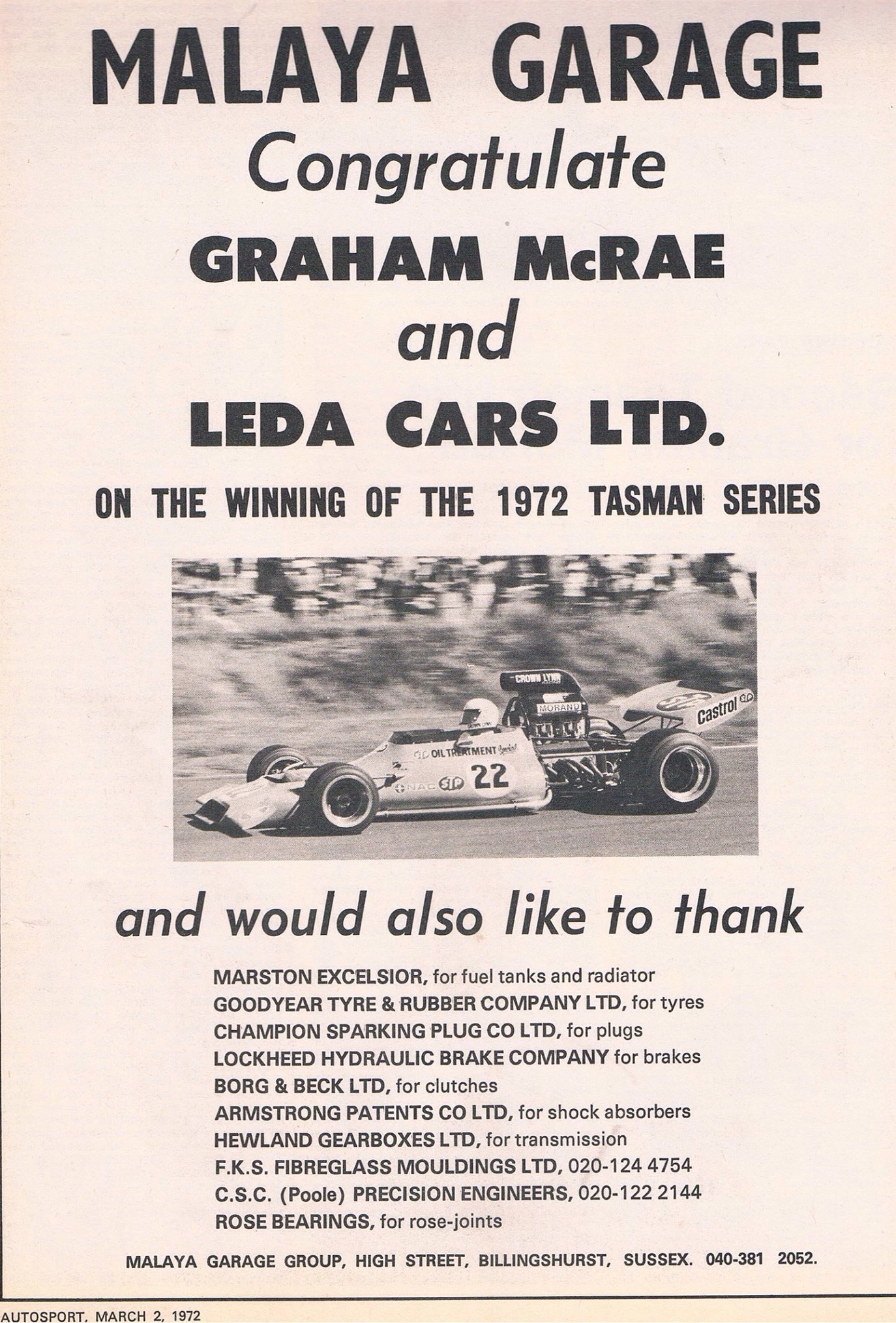
(AMR)

Bruce McLaren points his Ford F3L/P68 into Druids Hill Bend during the 1968 Brands Hatch 6 Hour on April 7…

I guess we all have our favourite racing eras, my own are the seventies and eighties but visually the ‘last front engined decade’, the fifties and the ‘first mid-engined decade’, the sixties have to be right up there.

In sportscar terms the latter is stunning- the bill of fare without limit from the Ferrari 250P early in the decade to the 512S at its end (1969 design and 1970 raced), Lola Mk6 to T70 Mk3B, Chaparral 2 to 2H, Porsche 904 to 908, Elfin Mallala to ME5 and Ford GT40 to F3L.

The F3L has to be a candidate for the hottest of hotties with its extravagant length, voluptuous but subtle compound curvature- it’s possibly the spunk-muffin of them all but sadly, as is so often the case with stunning chicks, the beauty was only skin deep.

On the face of it Fords 3 litre Group 6 challenger- the designation is an acronym for Prototype 1968 Ford 3 Litre had all it needed to succeed; the backing and funding of Ford UK, Castrol and Goodyear the most punchy, torquey and reliable F1 engine of the day- the Ford Cosworth DFV, it was designed by the very well credentialled Len Bailey- then on the payroll of Harley Copp, Ford Director of Engineering and built by Alan Mann Racing in Byfleet, Surrey. On top of that the roll call of drivers included the best GP and sportscar racers of the day. How could they fail? But tank they did, by early 1969 the project was dead. What went so terribly wrong?

No less than father of the Ford DFV program, Ford’s European Director of Public Affairs, Walter Hayes launched the F3L at a large function of motor racing’s great and good at the Hilton Hotel in early 1968.

The car blew the brains away of all present in terms of its looks, aerodynamics and advanced specification- it was indeed an amazingly compact, fully-enveloped two-seater Grand Prix car in its conception and execution.

(AMR)

Len Bailey was apprenticed at Austin and moved to the US in 1955 where he worked for American Motors and Ford in Dearborn. He was part of a team which worked on Fords racing efforts and then returned to the UK, still employed by Ford as Chief Draftsman on the Ford Advanced Vehicles GT40 project designed by Eric Broadley. The body shape of the GT40 in its successful form was designed by Bailey in the workshops of Specialised Mouldings with assistance from stylists from Ford UK and US. Bailey designed the Mirage adaptation of the GT40 raced by John Wyer in 1967 and the engineering of many of the Alan Mann Racing touring cars.

In Australia Bailey is best known for his late 1968 Alan Mann Racing built, monocoque Mildren ‘Yellow Submarine’ single-seater, which used some Brabham BT23 componentry (uprights, wheels, steering rack) and was raced very successfully by Frank Gardner, Kevin Bartlett, Bob Muir and Ray Winter way into 1974 powered by Alfa Tipo 33 2.5 V8 and Waggott 2 litre TC-4V engines in ANF1 and finally the Ford Hart 416B twin-cam ANF2 motor.

Frank Gardner in Len Bailey’s AMR built Mildren Alfa Romeo Tipo 33 2.5V8 Tasman Formula car in the Warwick Farm Esses during the sodden ‘WF 100’ won by Jochen Rindt’s Lotus 49 Ford DFW in a blinder of a wet weather drive, FG was third in this excellent car. It was a front three car, the absence of wings before the Australian leg meant the car didn’t realise its ultimate pace that summer- god knows why it was delivered from the UK sans wings, its not as tho Bailey or FG didn’t know they were needed?! Superb car which won races throughout Australasia and Asia thru till 1974. Still extant in the hands of the Ayers Family in Waggott engine form (B McInerney)


Superb Ford Cosworth DFV V8 cutaway by Vic Berris (Autocar)

Bailey was inspired to build the F3L by the Ford Cosworth DFV given its small size and light weight. Len decided it would make an ideal sprint engine but Keith Duckworth questioned the engines durability, it was designed for 200 mile Grands Prix events after all- so in the first year, 1968, it was not intended to contest Le Mans.

Despite the DFV being concepted by Colin Chapman and designed by Duckworth to be a stressed member of a car the aluminium monocoque Bailey laid down provided for the engine to be carried by traditional aluminium side booms, a choice which was both unnecessarily heavy and problematic in terms of utility. It took too long to remove and replace th engine and it was said heat problems were caused.

The choice of the chassis design is intriguing- whether it was Bailey’s choice or one imposed on him ‘due to political problems within Ford’ is unclear. The latter seems odd- by the end of 1967 Chapman had agreed to Hayes request to make the engine more widely available in 1968 to other teams ‘so as not to destroy Grand Prix racing’, as Hayes was fearful the Lotus 49 Ford cars would do. So Chapman agreed to that, despite his contract providing Lotus with engine exclusivity for a period of time. The point in this chassis design context is that McLaren and Matra, in designing their 1968 M7A and MS10 GP cars located their engines exactly as Chapman did on the 49- they were bolted the the rear chassis bulkhead, that is used as stressed chassis members rather than supported as Bailey/Mann chose to do, or were forced to do, with their F3L sportscar.

Inperial College wind tunnel in 1967 (unattributed)

To finish this long treatise on the F3L chassis Autosport’s John Bolster in an article he penned about the car in March 1968 reported it ‘was a full monocoque with riveted and bonded aluminium panels; in fact the only unstressed panels are in the small removable nose section and the tail. The skin is of 0.03 inch malleable aircraft alloy throughout, and the shape of the body is intended to produce the lowest possible drag while keeping the small, light car on the ground. At 200 mph it is calculated that a downward force of 600 pounds will be generated’.

The compact size of the F3L is stunning in any picture of it, this is in part due to the cars wheelbase which was a short 7 feet 3 inches with a track of 4 ft 7 ins. The wheelbase was ‘considerably shorter than that of the grand prix single-seaters employing the same power unit’ Bolster wrote. He continued, ‘No doubt this short wheelbase can be used because of the stability conferred by the body shape, and in particular by the Ford-patented vortex generating tail. The overall length is 13 ft 10 ins, the width 5 ft 10 ins, the height 2 ft 11.5 ins and the frontal area 14 sq ft’. Whilst the car undoubtedly had the hands of stylists involved, the fundamental shape was developed with the aid of extensive testing in the Imperial College Wind Tunnel during 1967.

Suspension was GP car standard of the day- upper and lower wishbones with coil spring/damper units at the front and single top links, inverted lower wishbones, two radius rods and again coil spring/dampers at the rear. Roll bars were of course adjustable at both ends. Girling brakes of 11.5 inches diameter were carried inboard of the uprights in the interest of cooling with drive from the hubs provided by short live axles. Light alloy wheels used three-eared knock-on hubs, with peg drive and were 15 inches in diameter with rim widths of 8/9 inches at the front and 14/15 inches aft. Goodyear tyres were used which, given the tyre contracts of the day meant that only Goodyear contracted drivers could be used- not that in any way that limited the talent pool available! Uprights were cast magnesium, steering rack and pinion and the gearbox was a Hewland DG300, relatively understressed in this application.

The 3 litre Ford DFV developed around 420 bhp @ 9000 rpm at this stage of its development, the radiator was mounted at the front of the car with electrics and fuel injection the same as those used in the single-seaters mentioned above. The fuel filler was concealed in the scuttle, the fuel tank capacity was 26.5 gallons, the mandated spare wheel was carried flat behind the engine with compulsory luggage capacity also in the tail. The minimum weight for Group 6 cars was 1435 pounds, the F3L in its early form weighed in at a comparatively svelte 1480 pounds.

Breathtaking artistry of Theo Page- F3L P68

Bolster reported that ‘It is intended that 1968 be a development season for the car, and Alan Mann will enter it in five or six races. Most of the test driving will be performed by Denny Hulme and Frank Gardner, but Jim Clark/Graham Hill and Bruce McLaren/Denny Hulme are scheduled to drive the cars at the BOAC 500 at Brands Hatch on April 7, which will be the first public appearance’.

If only Jim Clark had raced the F3L that fateful weekend the course of motor racing history would have been quite different, instead the Lotus/Firestone contracted driver raced an F2 Lotus Ford FVA F2 car to his death at Hockenheim.

Bolster concluded his article with the observation that ‘This brilliant design will allow the Ford Cosworth V8, hitherto a Formula 1 unit, to appear in a new sphere. Though the enclosed two-seater is heavier than the single-seaters, its vastly better aerodynamic shape will enable it to reach higher speeds and over 200 mph will certainly be within its compass. This is yet another proof that when Fords go motor racing, they employ all the latest advances in technology and there are no half measures.’

All of Bolster’s observations held true with the exception of half-measures- it was only half-measures in terms of commitment to the cars development which precluded the success that was well within its performance reach…

Gardner’s Nurburgring crutch. The tall, lanky pilot had an extra one and a half inches added to the wheelbase of ‘the second chassis’ built to give him a bit more ‘wriggle room’ (Getty)

The legendary bearded scribbler, Denis Jenkinson, of course attended the cars launch and spoke extensively to Frank Gardner about the car during the function- he was keen for a ride in the new machine with Gardner happy to oblige, a Goodwood test date was soon sorted.

Jenkinson takes up the story in MotorSport ‘I spent a whole day at Goodwood watching Gardner drive the car and he didn’t like the way it steered, though he was unable to explain clearly why. The front end gave no hint of confidence on fast bends and seemed to want to step out sideways, but he could offer no technical suggestions and Bailey and Mann seemed out of their depth with a car they had conceived but were unable to suckle. Jack Brabham was there testing one of his F2 cars (BT23C Ford Cosworth) so Alan Mann asked him to try the Ford. On three laps Brabham approached the chicane and at the last moment thought the better of it and took the escape road. After about 5 laps he drew into the pits, opened the door, and before anyone could speak, he said, in that dead-pan voice that is so typical of Brabham, “How brave do you want me to get?” Without more ado he got on with his Formula Two car and left Gardner, Bailey and Mann scratching their heads, not knowing where to look for the root cause. The late Mike Spence tried the car and was more explicit, describing the movement of the car as being as if the steering rack was moving, making the car step sideways at the front when the torque was applied to the steering wheel. Some primitive, strong arm stuff with long levers indicated that the front structure was rigid enough, and Spence did wonder if the car was aerodynamically unstable, but this was out of the question, for the Ford publicity boys had written pages on the new secrets of the aerodynamics of the tail section which gave the car very special stability. Before the abortive day finished I suggested to Gardner that I’d still like a run around in the passenger seat, if only to be able to see at close quarters what they were complaining about. He was adamant; he said he was reluctantly prepared to risk his own life, but he was not prepared to risk somebody elses. It must have been bad, so I went away and got on with something else’ Jenkinson concluded.

Nonetheless the testing of the car continued, Gardner, Richard Attwood, Mike Spence and John Surtees all drove it and assisted in its development and by the time of the intial Brands outing the car was quick- if unreliable. This is of course not unexpected- the 917 was a pig in 1969, Gardner famously thought he and David Piper should have been awarded an Iron Cross for wrestling it around the Nurburgring 1000 km when none of Porsche’s contracted drivers would- won Le Mans in 1970.

Lets have a look at how the F3L fared at each of its competition appearances.

Alan Mann and Walter Hayes in suit, and the lads, Brands 1968. McLaren/Spence car (AMR)

1968 Season…

Brands Hatch 6 Hour (April 7)

The two-car Alan Mann transporter rumbled into the Brands paddock late for the first day of practice, the second P68 having been just completed. The cars were to be driven by Rindt/Spence and McLaren/Hulme (substitutinq for Clark/Hill, Clark having to take late Lotus 48 FVA F2 commitments at Hockenheim).

McLaren was second fastest in practice with the works Siffert/Hermann Porsche 907 on pole. The other F3L broke its engine and was withdrawn due to the lack of a spare. As a consequence the driver pairings were shuffled with McLaren/Spence teamed to race. McLaren drove a great race, the engine hesitated off the line with Bruce dropping to sixth, but he recovered to lead after 30 minutes. A great dice with Jo Siffert and Vic Elford in works Porsche 907’s saw some place-changing, but McLaren still led at the first pit stop. Spence resumed in third place, but within 20 mins coasted to retirement opposite the pits with a broken driveshaft coupling. The Ickx/Redman John Wyer Ford GT40 won from Q5 with the Porsche 907’s of Mitter/Scarfiotti and Elford/Neerpasch second and third.

Denis Jenkinson saw the race and observed ‘The lone race entry completed only 65 laps, but it held the lead at times, which was most impressive, and when it retired with a broken driveshaft joint everyone was genuinely sorry and we all thought “that car is a certain winner when they get it sorted out”. Oddly enough the strange handling experienced at Goodwood was an aerodynamic instability, and tail spoilers were claimed to have cured all the troubles, as simply as that. For a first attempt in an experimental year the BOAC outing was fair enough, for the car was clearly a winner.’

Gardner, Karrussell, Nurburgring 1968 (unattributed)

Nürburgring 1000 km (May 19)

In a shocker of a meeting for the F3Ls- two cars were entered for Pedro Rodriguez/Chris Irwin and Attwood/Gardner, Irwin crashed at Flugplatz during practice, receiving severe head injuries. The car landed badly on its tail, flipped end to end, the ferocity of the prang caused injuries which hospitalised him for some time.

Interestingly Irwin had done an 8:40.4 lap- quicker than Gardner’s 8:42.5 and good enough for fourth on the grid had be been able to start. On the ultimate test of handling the F3L’s were fast- off the pace of the fastest 907’s but they were very much on home turf and crewed by drivers who knew the place like the back of their hands.

Attwood started the race, but on lap 1 the retaining clip on the right front brake caliper disappeared and the brake pads fell out, Attwood limped back to the pits. On lap 2 the driver’s door came open and twisted itself out of shape, to compound a shocker of a weekend the right rear tyre punctured. On lap 3 Attwood got going again a lap and a half behind the leaders. After a few more laps the engine died due to a broken ignition transistor, the sleek coupe was retired out on the long circuit.

The Siffert/Elford 908 won from the Hermann/Stommelen 907 and then the Ickx/Hawkins Wyer GT40- just under four minutes covered the top 3 cars after 1000 Km of racing.

Chris Irwin about to saddle up for his last, fateful, motor racing laps, Nurburgring 1968, F3L P68 (unattributed)

In a June 2008 MotorSport interview Chris Irwin spoke of that fateful weekend which ended his incredibly promising motor racing career.

‘How the accident happened and why it happened don’t know. I have no memory of it whatsoever. All I can remember of the weekend is that the car I was driving went incredibly quickly and every time I came in I asked them to put a higher top gear in it. We were doing something like 240 mph on the straight. It really was the most lovely piece of equipment before I finished with it.’

Irwin’s completely wrecked F3L P68 ‘1002 or ’02’ after its Flugplatz landing. I wonder who the Ford fellow with the helmet is? (M Forster)

Irwin spent ten days on life support following the accident. ‘When I woke up they asked me how I felt and I said my right ankle hurt. I’d got a broken ankle and they didn’t know about it. I had to go back to hospital quite a few times for further surgery. I had some very good treatment; the finest that money could buy. I was left with epilepsy as a legacy of the accident, which is controlled by pills, and i’m still allowed to drive’ Irwin concluded.

It is ironic that the death of another F3L driver, Mike Spence at Indianapolis could have opened up a seat for Irwin, with ten GP starts behind him, at BRM for the balance of 1968. The ifs, buts, and maybe’s of motor racing fortunes…

Chris Irwin, BRM P261, Longford, The Viaduct, during the 1967 Tasman Series. Irwin raced this chassis when Richard Attwood returned to Europe- he contested the Warwick Farm, Sandown and Longford rounds for a DNF, 4th and 3rd (DKeep/oldracephotos)


Spa 1000 km (May 26)

The single surviving F3L was driven by Gardner and German racer Hubert Hahne.

High speed stability and predictability are all for driver confidence on the Ardennes Forest daunting road circuit as is the aerodynamic efficiency of the car.

The early handling developmental problems of the F3L seemed to be cured with Gardner taking pole at 145.8mph, with a huge 4 second margin from Jacky Ickx’s John Wyer Ford GT40-and this on a circuit Ickx knew like the back of his hand. The F3L achieved 211 mph on the Masta Straight.

The good work in practice was ruined in the race however. Ickx led Gardner through Eau Rouge, but the F3L slipped to 10th and pitted after the first lap. This was the car’s first run in the rain and cool air ducting funnelled water all over the electrics. Given there was no easy fix the team withdrew the car- again a developmental issue which should have been foreseen but was not difficult to put right with appropriate changes to the machine.

The race was won by the Ickx/Redman Wyer GT40 from the Porsche 907 of Mitter/Schlesser and Hermann/Stommelen 908.

These two front and rear shots are of the Gardner/Hahne F3L at Spa 1968- the car an absolute (unattributed)


RAC TT, Oulton Park (June 3)

A single car was entered for Attwood who took pole at 1:36.0. The F3L led for 10 laps but retired with a Hewland differential failure.

Lacking confidence in the ability of the car to finish the race, Attwood had also been nominated as co-driver in David Piper’s Ferrari 412P- they drove superbly to second place just 9.4 secs behind Hulme’s winning Lola T70 Chev after three hours’ of racing. Paul Hawkins was third in his GT40.

Martini Trophy, Silverstone (July 27)

Another good performance was spoiled by fragility.

Frank Gardner qualified second behind Hulme’s Lola T70 Mk3 Chev, but led from the off staying there for 41 of the 65 laps, causing Denny to spin in his spirited pursuit of the red Alan Mann car. With 16 seconds in hand the DFV engine lost oil pressure, FG retired the car after 41 laps rather than pop the expensive motor. During the race Gardner proved the cars speed setting a new lap record of 1:28.6.

The race was won by Hulme’s Lola from the GT40’s of Paul Hawkins and Ed Nelson.

Later in the year the car was entered in the (sportscar) Austrian Grand Prix at Zeltweg in late August but was withdrawn, Jenkinson said because of ‘political strife at Ford’.

The 1968 Manufacturers Championship was won by Ford with 45 points from Porsche on 42 and Alfa Romeo on 15.5.

Gardner testing the new P69 at Goodwood. Poor quality shot shows front wing between the two guards and fully enveloping nature of the body  (D Phipps)


Due to changes in the Group 6 regulations made by the CSI in relation to windscreen heights amongst other changes Bailey designed a new car for 1969, it was essentially an open version of the P68 but much more revolutionary in its aerodynamic specifications.

When announced to the press on 7 April the P69 was described by Ford as ‘a research vehicle…designed as an integral airfoil study…the P69 continues the (F1) study to the sports prototype field. The P69 integral airfoil utilizes a system of interconnected adjustable airfoil wings mounted at front and rear. Action of the two wings is controlled both mechanically and hydraulically with the pitch angle being governed directly by air pressure bearing on the wing surfaces when the car is in motion’.

‘The front airfoil is mounted low down between the extended front fenders. The rear airfoil is attached by its leading edge to the upper surface of the car. The prototype has a maximum speed in excess of 200 mph and is 15 inches shorter, 5 inches lower, and 2.5 incjes wider than the P68 prototype- a closed car- which first raced last year’.

Len Bailey is quoted as saying ‘We have set out to promote positive downward lift forces with a minimum of drag. Later it is envisaged the rear flap will serve as an air brake which will be directly controlled by the driver’. The engine was of course the Ford Cosworth DFV as used the year before ‘with the water radiator in a special duct at the rear of the car while ducts are cut into the side and underside of the car for the engine and transmission oil cooler as well as the rear brakes and engine trumpets’.

The chassis, suspension and brakes are similar to the P68. At the time of the public announcement wind tunnel tests had been completed at at the MIRA facility at Nuneaton and Gardner had completed a ‘comprehensive test at Goodwood. Drivers announced for the 1969 Brands Hatch BOAC 500 on 13 April were the Australian duo of Gardner and Brabham.

Gardner on the move at Goodwood, shots of car rare, especially in its original form, rear wing/spoiler clear (D Phipps)

Talk about Mann and Bailey doubling their bets!?

You might think the safe move, the winning one would have been to make reliable what was clearly the fastest sportscar of 1968 and win in 1969. But instead the AMR crew added more complexity. One can’t help but wonder if the car wasn’t some type of publicity stunt- the press release said the car had moveable aerodynamic devices which were illegal under the rules then and now. Predictably, the FIA acted swiftly, before the P69 had even raced!

With its moving aerofoil flap between the front headlights and enclosed ‘single-seat’ cockpit there was no way the car could be made compliant without spending a great deal of money. The cars rear mounted radiator was said to be 30% more efficient than the one in the front of the F3L coupe, but if the cars central body section was altered the performance advantages would be lost.

In order to race the car at Brands the car was fitted with a pair of conventional free-standing wings mounted to the front and rear uprights…

Gardner in Ford jacket, Alan Mann a couple of blokes away to his left. Wings added clear, Brands Hatch (unattributed)


Ditto above (unattributed)

1969 Season…

Brands Hatch 6 Hour (April 13)

The new open-bodied P69 ran its bearings in practice, yet again this problem had ruined a race weekend.

Various reports have Brabham not wanting to have anything to do with the car at all having initially driven it but even in the limited practice laps at Brands completed the car recorded a 1:33.0 lap- way off Siffert/Redman Porsche pole of 1:28.8 but again, limited laps were completed and it was the cars first race run.

Hulme?Gardner F3L on the 1969 Brands 6 Hour grid (unattributed)

In any event, that now left the P68 coupé- with a suspension-mounted rear wing, in the hands of Hulme/Gardner to start the race without its younger sibling . The car qualified 3 seconds adrift of pole with tired engines a continuing problem, the car, driven by Denny Hulme retired with low oil pressure on lap 14, he held 5th position at the time.

Porsche 908/2’s took the placings- the Siffert/Redman crew won from Elford/Attwood and Mitter/Schutz.

P69 at Druids Hill, Brands 1969, probably Frank Gardner at the wheel (unattributed)

The ongoing engine failures were odd, the motors were not racing beyond GP distances but were failing consistently with atypical bottom end problems.

Richard Thwaites, who acquired the 1968 BOAC chassis #1000 in the nineties identified the cause of the engine problems.

‘When I bought the car ‘chassis No 1000′ was dynotaped to the dashboard, I belive this was original as it was exactly the same faded dynotape as the labelling for all the switches. I had the car restored by Hall & Fowler 1994-96…with regard to the engine problems in 1968 which were mainly bearings, when we restored the car we found a major design fault with the oil tank. Whilst the oil was collected from the bottom of the tank, the outlet pipe came out of the top of the tank and over the monocoque before going down to the oil pump. The oil had to be sucked up about 18 inches and I believe that with the thick oils that were used at the time, it caused cavitation in the oil pump which led to bearing failure. We changed the oil tank so the pipe came out of the bottom of the tank and did not have any problems’ Thwaites wrote.

By this stage faith in the project was well and truly disappearing.

Alan Mann had wanted to gain experience from racing the cars whilst Ford had not wanted to race them until they were race-worthy so there was a certain amount of deadlock. From Ford’s perspectine the good old reliable GT40 had won at Le Mans in 1968 and of course the same John Wyer run chassis ‘1075’ took victory again in 1969- they hardly needed Alan Mann’s cars, as it turned out

Gardner’s F3L P68 in the Silverstone paddock, Martini Trophy meeting 1969 (unattributed)

Martini Trophy, Silverstone (May 17)

Frank Gardner repeated the  previous year’s pace, by taking pole with 1:28.0. There was very heavy rain on race day, so the team removed the rear wing because speeds would be lower. The engine badly misfired with wet electrics on the warm-up lap, Bailey recalled ‘…suitable rain shields were available , but they were not fitted when the car set off on its warming up laps. The engine popped and banged over the deep Silverstone puddles and there was nothing Gardner could do when seven or eight cylinders all chimed in together at an unexpected moment and put the car off the track.’

Chris Craft won the race from Brian Redman, David Piper and Paul Hawkins, all four raced Lola T70 Mk3B Chevs.

The F3L’s were put to one side in a corner of Mann’s workshop, the final ignominy was for them to be raided as a suspension parts source for AMR’s second Can Am car- the ‘Ford Open Sports’- has there ever been a more sexless name for a spectacular racing car?

But let’s come back to that tangent in a moment, a Ford Cosworth DFV engined car did win an endurance event in 1969- the Imola 500 Km in September.

Ickx at the wheel of the Mirage M3/200 Ford Coupe, Nurburgring 1000 Km 1969 (unattributed)

Mirage M2-300 and M3-300 Fords…

When legendary team boss/manager John Wyer considered his JWA Automotive options for the new sportscar rules of 1968 he was keen to get hold of the DFV too- he planned to build a ‘sprint’ car like Alan Mann to supplement his GT40’s which he suspected may struggle with ultimate speed. That option wasn’t available to him as the supply of the motors was limited and AMR got the sports-racer gig.

Undeterred, Wyer briefed Len Terry to design a 3 litre Coupe powered by the BRM ‘sports car’ V12 which Bruce McLaren first used in his McLaren M5 in late 1967 GP events. Whilst quick, the BRM engined cars were not fast enough with Wyer finally getting his hands on the DFV in 1969.

The team quickly modified their existing chassis to accept the smaller, punchier DFV with the M2-300 Coupe having its first race start in the hands of Jackie Ickx/Jackie Oliver in the 1 June Nurburgring 1000 km, why not start with one of the toughest of all events, after all the chassis was well sorted?! The coupe qualified fifth and retired with rear suspension failure.

Bonnier/Muller Lola T70 Mk3B Chev alongside the Ickx/Oliver Mirage M3/300 Ford, further back is the Matra MS650 of Servoz-Gavin/Rodriguez (unattributed)


Jackie Oliver in the Mirage M3/300 Ford, Osterreichring 1969 (LAT)

At Watkins Glen the same pair raced an M3-300 Spyder- JWA made some minor changes to the racers spec and hacked off most of the heavy body. Q5 and DNF with camshaft failure on lap 112 was the result. Off to the Osterreichring in August Ickx popped it on pole but steering failure stopped the pair short on lap 199- at this stage the Mirage appears to have a ‘touch of the P3L’s- lotsa speed but no endurance!

But Ickx and the little racer redeemed themselves at Imola on 14 September winning the 500 km race in a classy field which included works Alfa Romeo T33/3’s driven by Ignazio Giunti, Nanni Galli and Andrea De Adamich as well as works Porsche Salzburg 908/02’s piloted by Kurt Ahrens, Rudy Lins, Vic Elford and Hans Herrmann.

Giunti’s 2nd placed Alfa T33/3 alongside Ickx in the Mirage M3/300 Ford 1st and Art Merzario’s Fiat-Abarth 3000 behind DNF. Imola 500 Km start 1969 (unattributed)

To rub salt into his F3L wounds Frank Gardner co-drove Mike De Udy’s Lola T70 Mk3B in the race and had a front row seat to view the Mirage’s pace as it lapped his troubled Lola several times…

Ickx won from the Giunti T33/3 and Van Lennep/Ortner Fiat Abarth 2000. What Alan Mann and Len Bailey made of this win when they read about it in that weeks Autosport is unrecorded, but if it had been me I would have said- ‘There ya go, you should have stuck with us Walter, we would have got there eventually!’ Perhaps Walters polite response would have been ‘Well Alan, waiting till hell freezes over was longer than acceptable’.

Ickx, Giunti and Merzario from the off, Imola majesty (unattributed)

Where were we?

The F3L’s had been cast to one side in AMR’s workshop as Len Bailey embarked on the design and construction of their last car, the ‘Ford Open Sports’ Can Am racer.

This aluminium monocoque machine was built during early 1969 and tested by Frank Gardner and Can Am ace Denny Hulme before delivery to the ‘States where it was raced in the final two rounds of the 1969 Championship- at Riverside, DNF halfshaft failure by Frank Gardner and at Texas International where Jack Brabham raced it.

Jack qualified the experimental Holman Moody prepped alloy 494cid injected Boss V8 engined car seventh and worked his way up to second late in the race before being slowed by an oil leak which dropped him to third behind Bruce McLaren’s dominant McLaren M8B Chev and George Eaton’s McLaren M12 Chev.

Had the swoopy, curvaceous car been built and tested earlier in the season who knows what the 740 bhp, Hewland LG600 5 speed equipped racer could have achieved?

‘Certainly the potential was there. And yet the Open Sports Ford vanished as quickly as it appeared. Perhaps a victim of Ford Motor Companies lack of commitment to the Can Am, or its drastic budget slash for 1970, or Alan Mann Racing closing its doors at the end of the 1969 season, but the Open Sports Ford never raced again’ wrote Steve Holmes. Click here for more about this interesting car, rather than me getting lost in this tangent- the car still exists too, on Steve’s ‘The Roaring Season’ website; http://www.theroaringseason.com/showthread.php?53-The-Open-Sports-Ford

Gardner testing the Ford Open Sports at Goodwood in mid-1969 (AMR)

FOS- 494 cid ally Holman Moody prepped Ford V8, circa 740 bhp (TRS)

Jack Brabham, Ford Open Sports with Chuck Parson’s Lola T163 Chev at Texas International (unattributed)

After the closure of Alan Mann Racing the two remaining Fords ‘languish under dust covers in a hangar on an aerodrome in Surrey… neither of the surviving cars has suspension, gearbox or engine installed. The suspension was robbed to be put on the Ford Open Sports…In view of the poor results obtained the top brass at Ford were probably happy to see the project at an end. But they had provided one of the most exciting looking sports cars ever seen. Furthermore it was an All-Ford effort which is praiseworthy, and a contrast to other Ford-financed racing ventures’ MotorSport wrote.

One of these Ford financed racing ventures MotorSport referred to was the Ford Cosworth DFV mind you! They go on ‘Bailey is obviously sorry that his baby should have been spurned by its godparents, and indeed thinks it could still be competitive (in April 1970). Weight could come down by replacing the metal nose and tail sections with glass-fibre parts and he still thinks the car would give a Porsche 917 a good run down the Mulsanne Straight’.

Doug Nye picks up the story of the F3L’s in the late 1970’s ‘…I was telephoned by Harry Carlton who was head of Ford’s press department at Warley, Essex’.

‘Knowing of my connection with Tom Wheatcroft and the Donington Collection he told me that Ford’s management had just concluded that the progressively deteriorating pair of Ford P68’s they owned were simply a waste of space. “Unless we can find a home for them, they’re going to be cut up- d’you think Tom might be prepared to house them?”.

‘I told Harry I was sure he would, to guard the P68’s with his life and I’d get straight back to him. I called Wheatie “Ooh aye lad, bootiful, bootiful, get ’em to send ’em oop ‘ere all right”. I called Harry back and put him in direct contact with Wheatie. I think the cars were removed to Donington’s store the next day. One was quite sad and sorry, the other a little less damaged. One of them had a door come open while being trailed back from a motor show…and the airstream on the motorway had then ripped the door clean off…Like so many Len Bailey designs it looked terrific but was somewhat deficient in many areas, not least its nervous SWB handling and-I was told-its structural strength was inadequate to contain the DFV’s devastating vibration’.

‘Tom subsequently, as I recall, part-exchanged one of the cars with Gavin Bain in New Zealand in return for the remains of the Alfa-Aitken Bimotore. The other went to David Piper, and he subsequently built a replica with a slightly longer (more congenial) wheelbase…or something like that.’

‘Richard Attwood recalls one of his greatest disappointments as being in the P68 in the Oulton Park TT. It was so immensely superior to anything else in the field around Oulton, that he was absolutely confident of success- only to be sidelined by some pettifogging fault…I’m quite proud that in small part I contributed to the car’s survival’ Nye concluded on The Nostalgia Forum.

F3L, Brands 1968, McLaren/Spence (AMR)

So, what do we make of the F3L program and why it failed? What would it have taken to succeed? Why did Ford get the jitters?…

 Whatever the design shortcomings of the car, the F3L P68 was an incredibly fast car on medium/quick Brands Hatch, the blinding speed of Spa and the tremendous, unique test of chassis the Nurburgring represents. The speed of the thing is not in doubt.

 The ability of AMR to respond to the necessary developmental changes and preparation is though.

In 1968 AMR built and prepared the Lotus Cortina and Ford Escort twin-cam in which Frank Gardner retained his British Touring Car Championship crown won the year before in an AMR Ford Falcon Sprint. So, its not as though the team ‘lost their touch’, and to be fair the only problems with the P3L which were repeat ones rather than one-offs or learnings were engine ones- which they really should have solved.

Maybe the perfect combination in 1968 was Alan Mann built cars raced by JW Engineering who did know a thing or two about sports-prototype preparation and development!

FG and Peter Arundell play follow my AMR twin-cam leader during the Silverstone BTCC round on 27 July 1968 (unattributed)

The P69, unless there were political reasons for doing it was bonkers. The ‘68/9 winter would have been far better spent sorting what they already had- a very fast but unreliable P68. Had Alan Mann Racing done that and raced the cars perhaps Ford would have won the 1969 manufacturers championship with points gained by its 3 litre P3L and the 5 litre GT40- a win at Brands in early 1969 possibly would have breathed life into a program which was from that moment ‘dead in the water’.

 Its said money was tight and that Ford equivocated in their support. What certainly changed or continued in 1968 was that the GT40 was still a reliable car and a race winner- the venerable Mk1 may have had its sad moments early on in its racing life but it paid back bigtime in 1968/9! Wins at Monza, Spa, Watkins Glen and Le Mans in 1968 and Sebring and Le Mans in 1969 apart from secondary level events fell to the 5 litre beastie. From Ford’s point of view, as 1968 unfolded, they didn’t need the P3L as they thought they did when the car was mooted in mid-1967.

Denny Hulme, McLaren M7A Ford- 2nd behind Graham Hill’s Lotus 49 Ford, 1968 Mexican GP Jarama (unattributed)

Whilst the Ford DFV delivered bigtime in F1 from its debut win at Zandvoort in 1967 it was a sprint not an endurance design, the 3.9 litre endurance DFL Le Mans winner came much later. As the roster of GP teams and privateers formed a queue at Duckworth’s Northhampton door he was up to his armpits in conrods keeping up with the manufacture of engines, rebuilds and ongoing development of the 90 degree V8 to keep ahead of the Matra, BRM and Ferrari twelves. He didn’t have time to mess about with the changes necessary to evolve the DFV into an endurance motor and may well have expressed to Hayes his reservations about the engines being used in an unintended application, with resultant failures- and the risk to Ford’s reputation in relation thereto!

 In addition ‘Going Ford Is The Going Thing’; Ford were winning Grands Prix and World Titles, the Escort was winning rallies, the Ford Indy engine won its share in the US, the Boss 302 Mustang was a winner on three continents- ‘who needs a sportscar program when we have winning global programs and local ones?’ such as that in Australia where Ford GTHO’s were dominant/competitive in touring car racing- may well have been the views of FoMoCo’s top brass.

 On 12 March 1969 a Porsche 917 was unveiled at the Geneva Motor Show- the ante was being upped by the 4.5 litre Porsche, and soon too Ferrari with their 5 litre V12 512S, the P3L was destined to be a bit player in this company even if they were reliable.

‘And so there was no further P3L publicity from the prolific Ford writers, no explanations, no excuses as to why they hadn’t swept the 1969 board: in fact nothing more than a deathly hush’ wrote Jenkinson…whilst the remains of the P68’s left over from the Ford Open Sports build were moved, interred really, to a hangar at Fair Oaks aerodrome, near Chobham, Surrey not too far from Byfleet where they were born little more than eighteen months before.

 Sad really for such stunning, fast, under-developed and prepared cars- the P3L’s were on the cusp of delivering all their looks promised but for the application of some race and developmental basics for a professional team like Ford/AMR…

Designers original intent- Ford press shot (Ford)

Chassis Numbers et al…

Treat this as being indicative rather than definitive, none of my usual online sources have neato, fully debated and therefore resolved  summaries of which P68 is which. I have relied mainly on the opinion of Richard Thwaites who owned ‘1001’ for years- but provided the information on the P68’s after he had sold his car and therefore he had no vested interest in the outcome of his particular version of events.

Owners claims always need to be treated with a degree of circumspection during the period in which they own cars in my experience. In most cases the connection between bullshit and the upward trajectory of the fiscal sale implications of the bucket of bolts in question seems way too often to be a temptation even the most devout Catholic of owners fall prey to.

McLaren F3L P68 with one of the works Porsche 907’s behind, Brands 6 Hour 1968 (AMR)

F3L P68 #’1000′ or ’01’

The #34 McLaren/Spence Brands 1968 car Richard Thwaites believes is the car he acquired from Australian Ian Cummins who in turn bought it from Kiwi Gavin Bain who had part-exchanged it in a deal with Tom Wheatcroft.

‘..I am sure it is the one that raced in the BOAC 500 in 1968 as the bodywork is identical to race pictures and the car came with solid discs. I believe David Piper’s original car is the one that was built after Irwin’s crash and subsequently raced in the 1969 BOAC 500. My car did not have the holes in the alloy bodywork for the wing supports, nor were there any signs of welded patches. When I bought the car chassis ‘No 1000′ was dynotaped on the dashboard…the car was later sold by Gregor Fisken’

Rare shot of Jochen Rindt in an F3L P68 before the engine popped, Brands 6 Hour practice 1968 (LAT)

F3L P68 #’1001′ or ’02’

Rindt/Spence car at Brands 1968-unraced. Destroyed in Irwin’s 1968 Nurburgring crash.

One version of events is that the car was progressively stripped of useful parts and the remains scrapped- this is the theory to which I subscribe.

The other (David Pipers) is that the remains were retained by Len Bailey after AMR closed and were rebuilt by ex-AMR chief mechanic Brian Lewis in modern times. Raced by Piper and others and later bought by Alan Mann.

Richard Thwaites ‘The Piper continuation car has nothing to do with F3L history. No part of the car is original and it only looks like an F3L because it has a fibreglass replica body with about 10 inches added on the engine cover to cover the extended wheelbase’.

Car has a modern AMR chassis plate ‘P67-F3L-002’ (P67 is not a typo

1969 Brands 6 Hour vista behind Amon’s Ferrari 312P. 55 Elford/Attwood and 54 Mitter/Schutz Porsche 908/02’s, 58 Denny Hulme aborad the F3L P68 he shared with Frank Gardner, 908/02 alongside is Herrmann/Stommelen, blue T70 Mk3B Lola is Taylor/Dibley, red Lola T70 3B is Hawkins/Williams and the white one Sid Taylor’s car driven by Revson/Axelsson…and the rest! (unattributed)

F3L P68 #’1002′ or ’03’

New car built up after the Irwin crash. Raced in the 1969 BOAC 500 by Hulme/Gardner. Eventually to Tom Wheatcroft and then to David Piper

Gardner, F3L P69, Brands 1969- pretty as a picture without the wings! (unattributed)

F3L P69

The car was cut up by AMR after the BOAC 500 debacle in 1969- tested and practiced but did not race.

No doubt the chassis number mystery is ‘resolved’ in the Ed Heuvink book ‘Alan Mann Racing F3L/P68’- if anybody has a copy fill us all in. The jist of the above is right even if the precise minutae is not- noting the veracity and precision of the minutae is critical in these matters of historic accuracy.

Talented craftsmen at AMR Byfleet during the first F3L build. Alan Mann in suit (AMR)

Arcane Irrelevance…

After his first lap in the early, unwieldy, recalcitrant Porsche 917 during the ’69 Nurburgring 1000 km, I’m sure Frank Gardner wished he was in his nifty, nimble, small, responsive, fast…if somewhat unreliable P3L- he qualified the P3L fifth in 1968 and tenth in the Panzer-Wagen in 1969. Mind you, the pace of change, particularly in tyre technology back then is such that his time in the 917 was 4.7 seconds quicker than in the F3L the year before. Gardner and David Piper were 8th in the race won by the Jo Siffert/Brian Redman Porsche 908/2.

(unattributed)

Bibliography…

Autosport 22 March 1968 article by John Bolster, ‘The Nostalgia Forum Ford P68’ thread in particular the contributions of Doug Nye and Richard Thwaites, ‘Classic and Sportscar’ February 1996, MotorSport April 1970 article by Denis Jenkinson and June 2008 article by Paul Lawrence, Darren Galpin’s International Race Report

Photo Credits…

Alan Mann Racing, Getty Images, Vic Berris, Brendan McInerney, David Keep/oldracephotos.com.au, Manfred Forster, David Phipps, LAT, The Roaring Season

Tailpiece: Ain’t she sweet…

(AMR)

Finito…
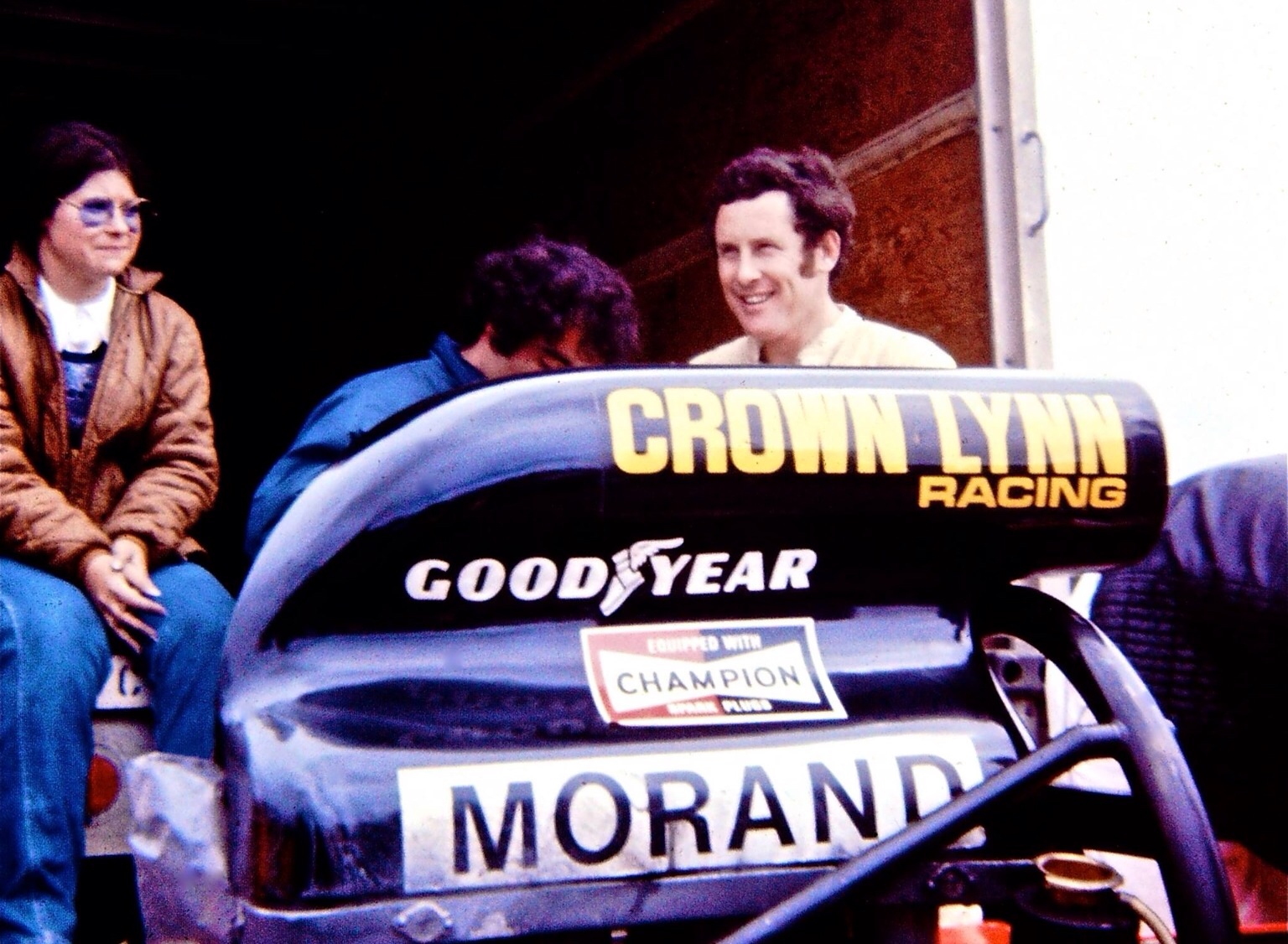
(J Ellacott)

Alec Mildren Racing at Warwick Farm in May 1961, that’s Alec with his back to us and mechanic/engineer Glenn Abbey leaning on the team’s Cooper T51 Maserati back wheel…

The ‘Rice’ Trailer behind proclaims Mildren and the Cooper as winners of the 1960 Australian Gold Star Championship drivers award and Australian Grand Prix. In racing terms Mildren, than 46 years old ‘had been around the block’, racing forever.

This article is about Mildren and the happy confluence of factors that enabled him to achieve Mark Donohue’s ‘Unfair Advantage’, win the titles above and reasonably soon thereafter retire from racing himself to ongoing success as a significant importer, motor-dealer and as a team owner/patron of others.

The factors of confluence were experience, his teams engineering capability, his Maserati connections and economic means. Mildren had raced Coopers for years, first a front engined T20 Bristol and then mid-engined F2 T41, T43 and T45, so his choice of chassis was easy! He was a regular enough customer of the boys from Surbiton that they stocked his hue of ‘Mildren Green’ paint. Cooper despatched a brand new Grand Prix T51, chassis ‘F2-22-59’ to Sydney in October 1959.

The engine was trickier though. 2.5 litre Coventry Climax FPF’s were as rare as hens teeth at that time in the hands of privateers as the works F1 teams had a mortgage on supply. The only dude in Australia who had one was Frank Matich, it was fitted to a Lotus 15 he acquired in the UK- the car was a formidable weapon in Australia’s National F Libre category but not a race winner in Gold Star competition in other than exceptional circumstances. Alec’s single-seater competitors- Bib Stillwell, Bill Patterson and Austin Miller would all be making do with 2 or 2.2 litre FPF’s for a while at least.

The successful Maserati 250S engine, front mounted of course in its original environment, was more of a chellenge to fit, but it could be done, Glen Abbey and Alec had the skills and critically the engine was available, sorted, powerful, and could be acquired by a privateer.

And so it was the Canberra racer cleverly adapted the engine to chassis and gearbox, tested it and then went out, beat the best in Australia and then retired to become the patron, mentor and entrant of Ralph Sach, Frank Gardner, Kevin Bartlett, Max Stewart and others.

Mildren got his timing precisely right- by the start of 1961 he was approaching 46, 2.5 FPF’s were arriving in Australia and Stillwell (born 1927) and Patterson (born 1923) who had also been racing for a long time, but were younger than Alec were starting to peak- win and call it quits, who can argue with that as a good strategy for a professional sportsman?

Mildren was a thoroughly decent man, racer and businessman, the General Motors, Alfa Romeo, SAAB etc dealer was one of those fellas who put far more into motor racing than he ever took out of it.

Mildren with Max Stewart on the Warwick Farm grid in 1970, Mildren Waggott 2 litre’ looks like the tail of Leo Geoghegan’s Lotus 59 Waggott next door (BP)

Going back a step or two Mildren’s parents emigrated to Sydney from Surrey in the UK in 1912…

By the time Alec was born in 1915 at Burwood in Sydney’s inner southwest his father had already established a good business as a master-builder to service the needs of the rapidly growing populations need for housing.

Mildrens interest in cars was whetted at an early age by Vauxhalls his father owned- a 14/40 Speedster and 30/98.

Alec’s drive and determination was no doubt in part due to the difficult circumstances in which he was raised.

On the way back from a holiday over the 1930 Christmas period the family were returning home to Sydney when a tyre of the car his father was driving blew causing the car to roll. Both his parents were killed in the accident, with Alec in the back seat the only survivor. One can only imagine the trauma the 15 year old boy/youth felt. He moved in with his 10 years older brother, wife and family but did not last long, moving out to live on his own aged 16. The brother continued the family home constrction business.

Inner city Darlinghurst was a tough place for a youngster to be but Alec moved into a small bed-sit, and despite the economic savagery of the depression found work pumping fuel and as a milkmans mate. On long walks on the weekend he would surf at Bondi and take a shower.

Before too long he walked into the naval depot in nearby Rushcutters Bay, saw a recruitment ad and joined up. His timing was perfect, having run down the military with budget cuts for years the Australian Government were putting money back into defence as global uncertainty increased- Fascism was on the rise most notably in Germany and Italy.

He was posted to the Communications Centre as a consequence of his education, he had completed his Intermediate Certificate whilst living with his brother. He was later posted to the Flinders base in Victoria and served in the Mediterranean. On a trip to the UK in the late thirties he visited Brooklands and saw the German cars at Donington. He returned from this trip with some goodies for his Austin 7 Ulster- a Laystall crank and rods, Scintilla magneto and a close ratio four-speed gearbox.

By this stage he had met future wife and life partner Marjorie- they were married in August 1939 but soon he was off to War together with most of the other young innocents on the planet. He saw active service in intelligence operations aboard HMAS Hobart in Europe but was invalided out of the Navy as medically unfit after a bad fall aboard ship.

After return to Australia and release from Randwick Hospital he sat his accountancy exams- having studied in his spare time whilst in the Navy and soon commenced working for what is now Price Waterhouse Coopers as an auditor in Sydney. In 1942 son Jeffrey arrived.

He soon moved to The Department of Supply and ‘backyarded’ some used cars- how many racers have motor-trading in their CV?! In a further example of his entrepreneurial flair he bought a cab in 1944 and did very nicely ferrying cashed up ‘Yanks’ around Sydney on shore-leave from ships fighting in the South Pacific, in the same year second son Raymond was born.

At the end of the War Alec sold his ‘taxi-plate’- his licence for a tidy sum and again dealt in cars. Soon he was also employed in the game by ‘University Motor Auctions’. At about the same time he started his long racing career with the purchase of a Singer Le Mans, this was soon replaced by the ex-Ben Tarr Ford Spl.

Mildren in the self built AGM Ford V8 Spl at the Nowra naval base, NSW in 1947 (Mildren)

As Mildren’s business flourished so too did the quality and competitiveness of the cars he raced. In Melbourne his fellow contemporary racers Stan Jones and Bib Stillwell were on similar racing and car dealing journeys- Jones with only his own resources like Mildren and Stillwell with adequate family backing to ease his way into the game.

The Mildren family decision to set up shop in Canberra was made after a number of trips ferrying cars from Sydney to Canberra to a friend who was operating from the national capital. He and Marjorie acquired some land in Lonsdale Street, Braddon and built a small dealership premises and an adjoining flat in which they lived. All of the profits of the business were ploughed back in to finance stock- soon they applied for, and were granted General Motors franchises for Vauxhall and Bedford.

Mildren in the Dixon Riley at Sydney’s Parramatta Park track in 1951 (Mildren)
Alec in this posed shot at Gnoo Blas, Orange NSW 1954. Self developed MG Spl (Mildren)

Whilst the family lived modestly behind the dealership Mildren continued to race contesting the 1948 Australian Grand Prix at Point Cook in Melbourne’s west aboard a self-built AGM Ford V8 Spl he built in 1947.

This was replaced by an MG TB he ran from circa 1949 to 1951 prior to acquisition of the ex-John Snow Dixon Riley which was completely rebuilt upon purchase in 1951, but still gave plenty of grief in terms of the cars speed and reliability!

In 1953 he bought a very famous MG, Alan Tomlinson’s MG TA Spl which won the 1939 AGP on Australia’s most daunting road circuit, Lobethal in South Australia’s Barossa Valley. He replaced the old war-horses heavy body with a Clive Adams built central-seat aluminium one which slipped through the air nicely. The mechanically very capable Alec replaced the TA engine with a supercharged TC unit and close ratio gearbox. The car was very quick- Alec accepted an offer from Curley Brydon to buy it after the Gnoo Blas meeting in 1953.

Mildren Cooper T20 Bristol, Mount Druitt (Des Lawrence)

His passion for Rileys undiminished, he next bought the Rizzo Riley before buying his first ‘outright in the right circumstances’ contender, the ex Rodney Nuckey Cooper T20 Bristol which made its debut at Mount Druitt in 1955.

Jack Brabham’s T23 would have been a better purchase when ‘Blackie’ went off to seek fame and fortune in The Land of The Pom but Stan Jones ‘nicked’ that machine from other locals in his ever expanding garage(s).

Acquired in the UK, Alec’s new car was a serious bit of kit which had won the 1953/4 Helsinki GP’s. He remembers the car mainly in a positive way, he liked the cars handling, braking and steering- ‘I won a few short races with it, but no long ones of any consequence. I can’t say that I went out to buy Bristol engines- the one I had was very temperamental’. In long Australian careers all five of the T20/23 Cooper Bristols which came to Australia had their engines replaced by either Holden ‘Grey’ six cylinder engines, sometimes fitted with a Phil Irving designed Repco ‘Hi-Power’ head or Chev Corvette V8’s.

A mistake in the cars preparation when a fuel line leaked onto the exhaust during the Argus Trophy at Albert Park hospitalised the gritty motor-trader overnight and took a while to recover from but his increasing flair was on display at his first post-prang meeting at Southport, Queensland when he finished 3rd behind Lex Davison’s Ferrari 500/625 and Stan Jones Maybach in November 1955.

The organisers of the New Zealand Grand Prix invited him to contest their 1956 event at Ardmore but the Cooper had the look of a start-line special when the Bristol engines head gasket blew having covered only 20 yards after the start. In late 1956 he also commenced racing an Aston DB2/4- profits were on the up! After the 1957 AGP at Caversham, Western Australia, with Alec fifth in a race famous for its vicious heat, he sold the car to local gun, Syd Negus.

Mildren, Cooper T41 Climax, Lowood 1957 (Mildren)
Cooper T41, twin SU fed Coventry Climax 1.5 litre SOHC FWB engine (Mildren)

Mildren went mid-engined for the first time with purchase of Jack Brabham’s 1956 Oulton Park Gold Cup winning F2 Cooper T41 Climax FWB.

‘When I first drove it down my practice strip near home I couldn’t believe how good it was…how the brakes and steering worked and the car drove better than anything I had had. I entered a Bathurst Easter meeting and I couldn’t believe it when I passed the Ferrari’s and Maserati’s (250F) because its such a little car, so handleable!’

By now the self-fulfilling prophecy of better cars giving better results was clear to Mildren- if that was ever in doubt! His next acquisition was his first ‘brand spankers’ racing car- the latest F2 Cooper T43 Climax FPF 1.5 twin-cam.

Mildren wasn’t convinced it was much better a car than its predecessor until taken out to 2 litres with a liner kit, pistons and sleeves he sourced from Coventry Climax via Jack Brabham. In that form he contested the ’58 AGP at Bathurst finishing 7th in the race having been hit during practice and pitting twice.

He won the ’58 Queensland Road racing Championship and Lowood Trophy- beating Stan Jones and Reg Hunts Maser 250F’s, the first time in Oz a Cooper had beaten the Big Red Cars.

This car was sold to Glynn Scott who raced it successfully with Mildren buying a new Cooper T45- delivered to Melbourne prior to the 1958 Melbourne Grand Prix, Alec and Glenn Abbey, then a youth who would become a longtime Mildren mechanic/engineer fitted the 2 litre FPF from the T43.

Alec was in with a shot for the ’58 Gold Star along with Stan Jones and Len Lukey but Stanley won the final round at Phillip Island aboard his Maser 250F and took the title he so richly deserved. Like Alec he was a perennial racer who had been competing nationally for almost as long as Mildren.

Mildren aboard his Cooper T45 Climax 2 litre FPF at Port Wakefield, South Australia in 1959. Those trademark prescription race goggles were made by Merowytch in London- in 1960 he switched to glasses and a visor (K Drage)
Bill Patterson’s T51 tail, Keith Rilstone’s Zephyr Spl with Alec, Cooper T45, Port Wakefield 1959 (K Drage)

In many ways Len Lukey’s successful 1959 Gold Star campaign was a prototype of Alec’s in 1960- buy the very best Cooper available, contest all the rounds with adequate back-up, drive fast and well but play the percentages, and the title will surely be yours.

Lukey won at Caversham and Phillip Island and whilst Alec was victorious at Fishermans Bend and Lowood twice, Lukey took the title by only 2 points from Alex with greater consistency.

Magnificent shot of Alec holding off Stan Jones during the Bathurst 100, Cooper T45 and Maser 250F, Easter 1959 (Mildren)

The title could easily have been Alec’s were it not for some misfortune during the Bathurst 100 round. He led until the 5th lap and then pitted to secure the loose bonnet cover having been black-flagged. He re-entered the race and with red mist in his eyes was up to 2nd behind Ross Jensen’s Maser 250F when a conrod bolt broke- he shut the engine down, but it cost him 6 valuable points to Lukey. When they tore the engine down there was damage only to the conrod- the precious crank was ok.

Cooper T51 Maser 250S, Longford 1960 (J Ellacott)
Cooper T51 Maserati 250S, a pair of big Weber DCO3 carbs, Warwick Farm (Bob Britton)

As 1960 approached the Cooper Maserati was made race-ready…

The Maserati engine was no fluke, the approach to the factory was a function of Mildren ‘selling a few at the time’, he was an accredited dealer of the marque. The Cooper Masers in the UK suffered chronically from overheating so Mildren specified his to be built to suit methanol fuel, with the motor having a higher compression ratio than usual. These engines were fitted to the (1957) Maser 250S sportscar- four of which were built so fitted. Other 250S engines were fitted to update earlier Maser sporties with some sold to customers and fitted into other chassis’.

Initially the Mildren car used a Cooper Jack Knight splash-fed gearbox, later Alec acquired a pressure-fed ‘box from Jack Brabham after the Longford 1960 meeting. ‘This helped but by no means solved one of the cars problems, the fragility of its earlier model Cooper gearbox. The punch of the Maserati engine could still create little indentations on its bronze bushes, and easily peel the teeth off first gear, even with careful treatment Mildren described it as a “one practice, one race” gearbox before it needed overhauls’ Graham Howard wrote.

T51 first gearbox, Cooper Knight box, ERSA built original ex-Citroen (B Britton)

Despite the bulk of the 250S engine in relation to the mass of the 2.5 CC FPF for which the T51 chassis was built, Mildren and Abbey were able to mount the engine lower in Owen Maddocks frame than the taller FPF. One top chassis tube was modified to clear the twin 48 DCO Webers, the Cooper chassis ‘slightly strengthened’ with water and oil radiators enlarged due to engines requirements, a learning from experience with the motors use in the UK. The team also managed to fabricate driveshafts of equal length, unlike the Cooper Masers in the UK.

An adaptor plate or bellhousing was cast and machined locally to mate engine to gearbox and exhaust pipes were fabricated to clear the frame and ancillaries to dimensions specified by Maserati. The motor gave circa 270 bhp @ 7800 rpm- more than enough to do the goods amongst the 1960 Oz competitor set. Let’s not forget that the car was the first full Grand Prix specification machine Alec had driven, he was stepping up a class from what had gone before.

Alec’s 2 litre Cooper T45 Climax being pushed thru the Gnoo Blas paddock in January 1960- a successful weekend for the team- Glenn Abbey in blue, who is the other chap I wonder (Kelsey)

The season started well with a win in the Cooper T45 Climax at Gnoo Blas, Orange in late January. Alec won the South Pacific Road racing Championship during the Australian Touring Car Championship meeting averaging 103 mph and taking a second off Brabham’s lap record. He sold the car at the end of the weekend to future CAMS President John Roxburgh.

The 1960 Gold Star season started with the International meetings, the frst of which was at Longford in early March, there Alec was 2nd behind Brabham’s Cooper T51 2.5. Whilst in Tassie he accepted an invitation to compete at the opening Symmons Plains meeting- he and Arnold Glass’s 250F entertained the crowds with lots of passing but the Cooper Maser took the honours and its first win.

Longford paddock 1960, Austin Miller topless beside his yellow Cooper T51 Climax, then Arnold Glass’ Maser 250F and Alex fettling his car beside his ‘Rice’ Trailer (R Lambert)
Mildren at Longford in 1960, lines of Coopers of this era so distinctive (E French/Walkem Family)
Start of the Longford Trophy in 1960, what a marvellous panorama. Cooper T51’s to the fore L>R Brabham, Millers yellow car and Bib Stilwell, the Glass red 250F further right (Ellis/oldracephotos.com)

At Easter for the Bathurst 100 Mildren took a dominant win with the car timed at 160.71 mph over the flying mile. Glass was 2nd and Bill Patterson 3rd in Maser 250F and Cooper T51 FPF 2 litre. ‘The victory was immensely popular with 25,000 spectators, the crowd giving him one of the loudest ovations then heard at the popular track…to slash more than five minutes from Ross Jensen’s record time’.

The next race was the big one, that year the Australian Grand Prix was held on the Lowood, Queensland airfield circuit.

Alec’s track record there was impeccable- he was without doubt the fastest combination in Australia but a wildcard was thrown into the mix with ‘Dame Nellie Melba’- Lex Davison returning from retirement again to race an Aston Martin DBR4 GP machine powered by a methanol fed DBR1 3 litre sportscar engine.

The cars were hopelessly outclassed in GP racing- the front engined machines were too heavy, underdeveloped and arrived two years too late just like Lance Reventlows Scarabs. Some writers describe them as the ultimate expression of the front engine GP car but that does a grave disservice to the Lotus 16 Climax and the 1960 Ferrari Dino 246. Nonetheless, in Australian F Libre with wily, fast Davo behind the wheel the car was very much a contender, as events proved in spades.

Davison in his 3 litre Aston DBR4/250 during the Lowood ’60 AGP (Davison Collection)

Wide and open Lowood suited the Astons long legs, were the race at Bathurst or Fishermans Bend it would have been a different matter, perhaps.

Davison described the Coopers as ‘anti-Climaxes’, he was said to be emotionally attached to the front-engine machines like his Ferrari 500/625 but he was well aware of the Coopers potency given his hillclimb and short-circuit successes in his own air-cooled Coopers- and of course he was to race the machines in the coming years inclusive of a 1961 Mallala Cooper T51 AGP win. Still, Davo’s choice was an interesting one as he had the wealth to pick and choose from all the options. Davison had practiced the car at Goodwood and Phillip Island where he was 2 seconds from Brabham’s lap record.

The following excerpts are drawn from racer/team owner/journalist David McKay’s Sunday Telegraph and racer/historian Graham Howard’s ‘History of the AGP’ race report/chapter.

McKay wrote ‘Davison came to Lowood supported by his experienced crew…he drew first blood by winning the champions scratch race. Mildren had a lucky break here- 300 yards from the start he broke a halfshaft’. A half hour delay in the program caused by a fire after Ern Tadgell’s aero-engine Lotus 12 crashed and caused a small grass fire allowed Mildren’s repairs to be completed, he took the grid alongside Bib Stillwell, Cooper T51 Climax 2.5 and Davison.

‘The interesting aspect here was that, although the Mildren team carried every necessary spare part, the bushes of the top and bottom wishbones for the car had not been pre-reamed and required a lot of hand work in a very short time if the car was to be ready. Mildren himself had to take over- he had, after all, been building his own AGP cars since 1947- to get the work done…’ wrote Howard.

Alec sets to repairing the T51’s halfshafts in time for the race start. Note the rear disc, curvy Cooper chassis frame, transverse leaf spring, Maser 250S engine (Mildren)
The flag has dropped: Stilwell in the middle gets the initial jump with Alec on this side- hoping his car will be ok after the last minute repairs, and Lex on the outside (P Reynell)

‘From the flag until the end of the race, Mildren and Davison duelled at speeds between 40 and 160 mph and for most of the time separated by a second or less. The small green Cooper Maserati sounded harsher and accelerated harder than the big green Aston which looked noticeably steadier through the corners. Mildren lost the lead in a spot of heavy traffic and then “butterfingered” his car and the resulting excursion into the outfield dented the Cooper’s snout’.

Green ‘While Mildren did indeed grab the lead from Stillwell and Davison on the opening lap after making an understandably gentler start in second gear…a photo…showed Mildren’s unscathed car trailing the Aston Martin. Howard’s account explained that Davison grabbed the front running on lap 16 at Castrol Corner and that Mildren spun a lap later at Bardahl- perhaps caught out by traffic’.

Both Davison and Mildren led the race twice, here the Aston is in front of the little Cooper just before Alec spun (HAGP)

Davison had a 10 second lead, Mildren recalled ‘I did a silly thing- I had so much confidence that I eased off the throttle and dropped the pace by a second or two. When I tried to regain the time, I had to work very hard and told myself I had been a stupid fool. So I drove as hard as I could and eased back the time lost. It was not just a question of catching, but of course passing him’.

McKay ‘ Mildren retaliated and gave chase in true Moss-like fashion. He closed the gap relentlessly and went ahead again when Davison overdid a corner. Averaging 95 mph, these two held the 25,000 paying customers spellbound. Many excellent performances tended to be overshadowed. Stillwell, his rivals drawing away at over 2 sec a lap, motored cleanly and rapidly in third spot- never challenging or being challenged. Behind him was a race long fight between Hall, Leighton and Glass…The leaders rushed past others as though possessed of immense speed and skill to match, everyone except Stillwell suffered the indignity of being “doubled”, some several times’.

Green, ‘No mention is made of Davison regaining the lead within a lap at Mobilgas, or of Mildren retaking it at Castrol two corners later- but such was the case’.

David McKay on the closing stages one of The Great AGP’s ‘Mildren’s engine , due to the damaged nose, was badly overheating and when Davison closed and went to the front just before the end it appeared as though the veteran driver would never realise his ambition, but in a finish to beat all finishes Mildren ducked inside Davison on the very last corner and in the long straight run to the chequered flag we could hear the Aston’s engine being squeezed as never before in a last effort to overhaul the Anglo-Italian car. Davison got the most out of the Aston alongside Mildren’s cockpit as the flag fell. “Mildren of Lowood” had won by 1/20th of a second’.

Metres from the finish, the big Aston ran out of space to run the little Cooper down- a magnificent finish to a fantastic race- difference in the size of the cars mega isn’t it (J Benson)

‘If he never drives again’, McKay wrote ‘Mildren earned himself a place in Australian motoring history by his magnificent drive that day. It was a victory of the highest order- won from a champion and sportsman who made him fight every inch, every second of the way. Mildren now has a stranglehold on the Gold Star award- that and the AGP are the fruits of many years and thousands of pounds spent in the most exacting sport of all’.

Sportsmanship personified: Lex playfully interviews Alec for the crowd, to right is Qld Governor Sir Henry Abel-Smith with Glynn Scott, first Queenslander home in Alec’s old Cooper at far right (Courier Mail)
Winners are Grinners, Alec, Jack Cotterill and Glenn Abbey with the AGP Cup (Mildren)

The Gold Star circus returned to Lowood again on the weekend of 4 September with Mildren again victorious, from Stillwell and Davison, albeit this time Bib was in front of Lex. It was another great race in which the lead changed about a dozen times in the opening 5 laps before Alec took the lead and held it.

Brabham returned for the October Craven A International at Bathurst in October as 1960 World Champion. No way was he going to lose that race, he won from Patterson and Stillwell. All three drove T51’s powered by 2.5, 2.4 and 2.2 litre CC FPF’s. Alec failed to finish with a  gearbox failure on lap 16.

Jones in blue, Mildren, Brabham up front, then John Leighton Cooper T45 FPF and Bib Stillwell in red, front engined car on row 3 is Arnold Glass Maser 250F, Noel Hall and Austin Miller in yellow. Then John Youl beside Bill Patterson’s white car- the other yellow machine is Doug Kelley’s ex-Miller Cooper T41 Climax FWB. The cars are all T51’s except where specified otherwise (NMRM)
Bathurst front row- Jack in the car, Alec #2 Cooper Maser and Stan Jones T51 with Alec back to us talking to Stillwell in the silver helmet? (Aussie Homestead)

A spate of unreliability seemed to have set in with a duff engine at Port Wakefield during the Advertiser Trophy meeting the following October weekend. Lex started from pole and retired on lap 20- the race was won by Stillwell from John Youl, T51 2.2 and Keith Rilstone’s amazing Eldred Norman built, front-engined supercharged 6-cylinder Zephyr Spl. Very much an Australian Special story for another time.

There was plenty of time to take the Cooper back to Canberra and have it well prepared in time for the Caversham, ‘Western Australia Trophy’ meeting on the 5 December weekend.

There Alec’s long desired Gold Star title dreams were realised with victory from Stillwell, his car now fitted with a 2.5 litre FPF and Derek Jolly’s Lotus 15 Climax sportscar. Bib needed 12 points to stay in the title hunt and took the lead from the start but Mildren was soon all over him, pressuring the Victorian into a rare error, Bib spun off at The Esses. By the time Bib got his Cooper gathered up and returned to the fray Alec was a half-lap ahead, a lead he was not to relinquish.

The team celebrated long into the night, the win a very popular one amongst his fellow competitors and race fans across the country- one of the sports perennial competitors had reaped the rewards he deserved.

Mildren did not start the final two major meetings of the year with Bill Patterson winning the Lukey Trophy at Phillip Island and Stillwell taking the Warwick Farm Trophy the week before Christmas 1960.

The final Gold Star pointscore was Mildren on 55 points from Stillwell and Patterson on 41 and 20 respectively.

The successful businessman/racer considered his options for 1961 knowing that Stillwell, Patterson, Youl, Miller and Davison who had retired again- and come back again would be formidable competitors, some with 2.5 litre FPF’s fitted into the back of their Coopers.

Clearly Mildren was at least considering a new car as the Cooper Maser was advertised for 5500 pounds in the November issue of ‘Australian Motor Sports’ but it did not sell so a new Maserati ‘Birdcage’ Tipo 61 2.9 litre engine and 5 speed Colotti Type 21 gearbox was fitted but not in time for the early season internationals.

Alec retired in the Warwick Farm 100 with falling oil pressure, the race was won by Rob Walker’s Moss driven Lotus 18 Climax. Arnold Glass had his first race of his Tommy Atkins built Cooper T51 Maserati 250S, a car he grew to dislike as much as he savoured and did so well in the Maser 250F which went before!

The car was trailered to Ballarat for the Victorian Trophy meeting at Ballarat Airfield on 12 February. There Dan Gurney took the only international win for a BRM P48, Alec was 6th, a lap down on Dan, the similarly mounted Graham Hill, Ron Flockhart’s Cooper T53 with Stan Jones the best of the locals in his T51 2.5 FPF, 4th. Glass was 7th in his Cooper Maser.

At Longford in early March Mildren was 6th, still with the 250S engine fitted with Cooper T51 FPF’s dominating- Salvadori won from Patterson, Youl and local boy Austin Miller.

During the lead up to the Easter Bathurst meeting the Birdcage engine was fitted. Bill Patterson won the ‘Craven A’ Gold Star race convincingly in a run which would win him the 1961 Gold Star aboard his very quick T51. Alec was 5th behind Patto, Stan Jones, Stillwell and Glass. Alec felt the car was quicker than before but not very much so.

Warwick Farm May 1961 and here fitted with the 2.9 litre Maser Birdcage Tipo 61 engine number ‘2475’ and Colotti T21 5 speed gearbox (J Ellacott)

In its new Birdcage/Colotti form he was 2nd in a low-key non-championship scratch race behind Bib Stillwell at Warwick Farm in May- in front of the Noel Hall and David McKay T51’s.

Lowood had been a Mildren happy hunting ground more often than not in the preceding years, and so it was he was 2nd in the Queensland Centenary Road racing Championships Gold Star round in June behind Patterson but ahead of Jones.

And in low key style, that was it for Alec’s racing career, he quietly retired to focus on his business and establishment of Alec Mildren Racing Pty. Ltd as a team owner- his and David McKay’s Scuderia Veloce concern created the first professional racing teams in Australia.

Mildren’s exploits and those of his drivers will be a nice Part 2 of the Alec Mildren story.

Alec Mildren Racing at Longford in 1965. Gardner warms up the Brabham BT11A Climax in the foreground whilst alongside the Mildren Maserati is fettled next door (oldracephotos/H Ellis)

In September 1961 the Cooper, fitted with the 250S engine was sold to Ross Dalton on a time payment deal. In his first meeting with the car at the shortlived Toowoomba Middle Ridge road circuit he lost it in practice- locking the front wheels, broadsided some corner posts and somersaulted over the haybales, the car was ‘not too badly damaged’. Whilst advertised again with the 250S engine and Colotti box in AMS in February 1962 Green’s book says the car reverted back to Alec after the accident.

Entered in the 1963 AGP at Warwick Farm for Frank Gardner the now ‘old nail’ T51 Maser was outgunned by much more modern Coopers, Brabhams, Lolas and Lotuses but gave FG valuable big-car experience before he returned to Europe where he was ‘on the climb’. He DNF for unstated reasons. Gardner’s pattern of driving for Alex every Australasian summer at the end of his European season extended all the way through to 1969- and to the end of FG’s single-seater career post his time with Alec’s team through until 1972.

At that stage it was not uncommon globally for uncompetitive Cooper T51’s to be re-birthed as sportscars, perhaps Roger Penske’s Zerex Special (see my article by keying the name into the primo search engine on this sites front page) is the most famous of these exercises.

Abbey and Mildren’s variation on the theme was for the core components of the car- T61 2.9 litre engine, Colotti box, suspension and brake componentry to be built into a car constructed by Rennmax’ Bob Britton who ended up having an enduring, very successful relationship with the team until its end at the duration of the 1970 season.In essence Britton’s car was a Lotus 19 chassis clone with a 23 style of body.

The car was immediately quick in the hands of Ralph Sach, Frank Gardner and Kevin Bartlett who won the 1965 Victorian Sportscar Championship in it. Its life with the Mildren team ended during the 1965 Australian Tourist Trophy, when, with Gardner at the wheel the engine let go in the biggest possible way spreading expensive alloy shrapnel on Lakesides main straight.

Ralph Sach in the Longford paddock 1965, Mildren Maserati (oldracephotos)
Business end of the Mildren Maserati at Lowood (K Bartlett)
Ralph Sach, Mildren Maser during the 1965 Tasman meeting at Warwick Farm (B Wells)

At that point the car was advertised and sold to Ross Ambrose (he of Van Diemen and Marcus Ambrose fame) who renamed it, with Mildren’s agreement, as a Rennmax. Fitted initially with a 2.2 litre Coventry Climax FPF it later had installed the ex-Scarab/Stillwell Buick 3.9 litre V8 by Geoff Smedley, the car raced on and still exists.

What about the chassis of the Cooper you ask?

Badly corroded, twisted from a few accidents and by then living in Abbey’s coastal Narrabeen home garage, it was dumped at the Avalon tip circa June 1965- the cars simply were not worth then what they have been since the mid-seventies!

Bits not used in the sportscar build went to other Cooper owners, especially in Tasmania where a few of the Oz T51’s ended up. The 250S engine sold to Terry Clift in 1966 and played an important role in the cars resurrection when he sold it, in badly damaged form, to Sydney’s Paul Moxham who had started the long process of reconstruction of this famous, clever Australian Cooper.

Mildren before a rin in Paul Moxham’s recreation/reconstruction of his old T51 Maser during the 1985 Adelaide AGP carnival (Mildren)

The chassis commercial airline pilot Moxham found for the project was believed to be one of two created ‘in period’ by Len Lukey who fabricated a T51 jig whilst the 1959 Gold Star winner was racing a T51- not the only such jig in the country either!

Moxham created a fibreglass body from a mould taken off the Noel Hall T51 in 1959 by Bob Britton and Chris Conroy- Sam Johnson of JWF Fibreglass made the body. The car was assembled gradually in consultation with Mildren, Abbey and Tim Wall with new wishbones, bushes, front axles, discs, hubs with the engine and gearbox fully rebuilt by 1985.

Alec drove the car during the (first) 1985 Adelaide F1 AGP carnival and looked as pleased as punch with the car and experience. Moxham used the car in historic events from then until 1989 when prominent American racer/collector Peter Giddings acquired it. It still exists…

Longford Trophy 1960: Stillwell has jumped away from winner Brabham in #4 Cooper T51. Arnold Glass 250F clear, #60 Miller’s T51, #24 Mildren, #9 Patterson T51 and #20 John Youl also T51 with the distinctive rear suspension of Ern Tadgell’s Lotus 12 Climax (Sabakat) at right rear. All of the hot shots of the 1960 Gold Star sans Davison are in this shot (K Thompson)

Etcetera: Cooper Maser T51 Technical Specifications…

Chassis

Number ‘F2-22-59’: Mk4 T51 multi-tubular spaceframe

Suspension- Front- unequal length upper and lower fabricated wishbones and coil spring/shocks Rear- adjustable top links, lower wishbones, single transverse leaf spring and shocks. Steering: Cooper rack and pinion. Brakes: Girling discs outboard on all wheels

Dimensions- Front/rear track 1182/1219 mm. Wheelbase 2311 mm. Wheels Cooper cast magnesium 121x381mm front and 159x381mm rear with 5.25/5.5×15 inch front and 6.5×15 inch rear tyres. Weight circa 472 kg dry

Maserati Engines:

250S

All alloy, DOHC, roller follower, 2 valve, dry sumped four cylinder fed by two 48mm Weber carburettors, alcohol fuel.

Bore/stroke 96X86mm- 2489cc, compression ratio 12.5:1. Power circa 270 bhp @ 7800 rpm on alcohol fuel

T61

General description as above

Bore/stroke 100X92mm- 2890cc. Power quoted as 260 bhp @ 7000 rpm with 100 octane. On alcohol a bit more

Gearboxes

Initially Cooper Knight 5 speed, with Maser T61 engine Colotti T21 5 speed when car fitted with Birdcage T61 motor

Bibliography…

‘History of the Australian GP’ Graham Howard and Ors, ‘Historic Racing Cars in Australia’ John Blanden, ‘Driven To Succeed: The Alec Mildren Story’ Barry Green, oldracingcars.com, ‘Maserati: A Racing History’ Anthony Pritchard

Photo Credits…

John Ellacott, Peter Reynell, Bob Britton, Bruce Wells, Kelsey Collection, oldracephotos.com, Australian Motor Racing Museum, Aussie Homestead Racing, Keverall Thompson, John Benson, Mildren- photos from Barry Green book as above, Kevin Bartlett

Tailpiece…

(P Reynell)

Mildren awaits the start of the 1960 AGP at the front of a very crowded Lowood AGP grid. The period immediately before the race had its pressures too. Stillwell and Davison alongside. #87 is the Frank Matich Lotus 15 Climax.

Finito…


Ron Flockhart and Mustang P51, Moorabbin Airport, Melbourne 1961…

I wrote an article three years ago about Ron Flockhart’s win together with Ivor Bueb aboard an Ecurie Ecosse Jag XKD at Le Mans in 1957 (he won in a D Type with Ninian Sanderson in ’56 too) and tangentially about his death in a Mustang P51 fighter in Melbourne’s Dandenong Ranges during preparations for his second attempt on the Australia-United Kingdon air record in April 1962. Click here to read it; https://primotipo.com/2015/01/17/le-mans-1957-d-type-jaguar-rout-ron-flockhart-racer-and-aviator/

Recently I came upon some photos of him in during the Summer of 1961 Australian internationals. This led to another Flockhart-Google-cruise and discovery of the substance of this piece, an article first published in Pilot magazine written by Neil Follett and Nick Stroud. That article is written from an aviation rather than a motor racing perspective. I found it fascinating, I know many of you crossover into ‘planes as well as cars so here ‘tis, the racing bits which are mine, will be clear I think.

Ron Flockhart in red and Ivor Bueb with Jag XKD606 after the 1957 Ecurie Ecosse Le Mans win (unattributed)

‘One of the first racing drivers to fly himself to meetings in his own aircraft, Ron Flockhart raced at the top level in sports cars and Formula One before a growing interest in long distance record flights led to high adventure and stark tragedy.

William Ronald Flockhart was born in Edinburgh on 16 June 1923. He began his motor racing career in 1951, going on to win the 24 Heures du Mans race in 1956 and 1957 while driving a D-Type Jaguar with the Scottish Ecurie Ecosse team. Flockhart also participated in Formula One races, entering his first−the British Grand Prix−in 1954 and continuing throughout 1956–60. The Scotsman competed in fourteen F1 races with five different teams, his best result being a third in the 1956 Italian Grand Prix at Monza.

Flockhart also displayed an early interest in flying, owning Auster 5 G-ANHO during 1954–57, and becoming one of the first Formula One drivers to fly their own aircraft to race meetings. In the early 1960s he became interested in record flights between England and Australia, noting that the record was held by Arthur Clouston and Victor Ricketts in the DH88 Comet G-ACSS Grosvenor House.

The Comet won the 1934 MacRobertson Air Race and was the aircraft in which Ricketts and Clouston flew from London to Sydney (and then on to New Zealand) in 80hr 56min in March 1938. Flockhart considered that this record could be bettered. He was also interested in bettering the standing solo Australia−UK record, held by H F ‘Jim’ Broadbent, who had left Darwin in Percival Vega Gull G-AFEH on 18 April 1938, and landed in England on the 22nd having covered 9,612 miles in five days 4hr 21min, the last pre-war record flight between the two countries.

In October 1960, British holding company United Dominions Trust (UDT), through its subsidiary Laystall Engineering, formed an agreement with the British Racing Partnership to form a motor-racing organisation known as UDT Laystall Racing. As an extension of its racing activities, UDT became involved in the purchase of (Commonwealth Aircraft Corporation, Fishermens Bend, Melbourne built) Commonwealth CA-17 Mustang Mk 20 VH-BVM for Flockhart’s record attempt.

This aircraft had originally been purchased from the RAAF by former RAF and RAAF pilot James L ‘Wac’ Whiteman, who intended to enter the aircraft in the 1953 London to Christchurch (New Zealand) Air Race. Wac withdrew from the race when he realised it would not be competitive with the jets entered and in 1954 its ownership passed to Arnold J Glass, a fellow racing driver against whom Flockhart would compete in the 1961 and 1962 New Zealand Grand Prix races. Used latterly for target-towing experiments, it was sold to UDT for around £2,000 with around 100 flying hours on the clock. Flockhart was also able to obtain 63 gallon combat droptanks for about £7 each’.

Flockhart with the unloaded left front of his Cooper T51 Climax just kissing the Warwick Farm Causeway tarmac in 1961 (J Arkwright)

Racing in New Zealand/Australia, Summer 1961…

Ron organised an ex-works Cooper for his limited campaign of races in the Antipodes in the hot summer of 1961. T51 Climax F2-7-59 was ‘ex-Works Car No 3 according to the Cooper Register…believed to be Masten Gregory’s regular car during 1959…Bruce McLaren’s race-winning car at both Sebring December 1959 and at Buenos Aires in February 1960…and may be either the works teams spare car during 1960…or the car sold to Fred Tuck for 1960’ according to oldracingcars.com. Whatever the case, while the T51 was a good jigger, it was no longer in the full flush of youth with the quicker cars that season the T53 ‘Lowline’ Coopers of Brabham and McLaren, the works P48 BRM’s of Graham Hill and Dan Gurney and Rob Walker’s Lotus 18 Climax driven by Stirling Moss.

Flockhart and Denny Hulme fighting for fourth place during the 1961 NZ GP at Ardmore both in Cooper T51 Climax 2.5 FPF, Ron fourth, Denny fifth (sergent.com)

Moss disappeared into the distance in the 7 January NZ GP at Ardmore but was outed with a badly slipping clutch mid-race giving the win to Brabham from McLaren, Hill and Flockhart in a plucky fourth.

With much preparation to do in Australia for his pending flight, he missed the balance of the NZ events and re-acquainted himself with the Cooper T51 at the first international meeting held at the new, technically challenging Warwick Farm circuit laid out amidst a horse-racing facility on the western suburban outskirts of Sydney on 29 January.

Getty Images caption dated 2 February 1961 notes ‘The Flying Scotsman’ is travelling from Australia to England on a dual mission – first to marry BOAC hostess Gillian Tatlow and second to attempt to break the Australia-Britain record for single-engine planes’ (Getty)

He was fifth in the Warwick Farm 100 held in scorching hot weather and won by the Moss Lotus 18 with its side-panels removed to help cope with the extreme conditions. A fortnight later he contested the last race of his ’61 tour, the Victoria Trophy that year held on a circuit laid out on Ballarat Airfield, Ballarat is in Victoria’s Goldfields region 120km from Melbourne.

Flockhart at Ballarat Aerodrome, 1961. This Cooper T53 Climax  (autopics.coma.u)

Ron raced a Border Reivers Cooper T53 Climax to third to the works BRM P48s of Gurney and Hill with Dan scoring the only international win for that chassis that weekend. With that, and a fortnight until his scheduled Mustang departure for the UK he re-focused on a high-performance machine of an altogether different type.

Flockhart with G-ARKD, place? (Pilot)

Preparations begin…

‘With the end of the Antipodean motor racing season in early 1961, preparations began for the flight to the UK. Rolls-Royce ran checks on the Packard Merlin 38 engine, which had only run 110 hours since new, and which had never been ‘through the gate’. The magnetos were overhauled in Scotland and Smiths Australia set to work on overhauling the cockpit instruments.

Preparatory work on the airframe was undertaken at the Illawarra Flying School, which modified the fuel system by introducing a manual device by which the system could be de-pressurised. Two static vents were incorporated into the airframe under the cockpit sill, each containing a valve. This would enable Flockhart to run the drop-tanks dry without the risk of sucking air into the system. The system would then be re-pressurised from the exhaust side of the vacuum pump to assist initial transfer. This worked well, although a stiff bootful of rudder was required to counter the rolling moment caused by the change in lateral balance as a tank emptied.

In the limited space available in the Mustang’s cockpit two German Becker VHF radio sets were installed, which provided 36 communication channels, and Lear T12 automatic direction finding (ADF) equipment was fitted in the position usually occupied by the gunsight. No VOR, ILS, HF radio or marker-beacon receiver equipment was fitted−Flockhart held no instrument rating. Normalair supplied the oxygen equipment, Dunlop provided new tyres, and Lodge delivered new plugs. Rolls-Royce suggested that the Merlin be opened up to maximum continuous power every half-hour during the flight and again briefly during descent and approach.’

Bankstown Airport Sydney 1961 (G Goodall)

G-ARKD lookin’ a million bucks outside Fawcett’s hangar at Bankstown after final prep for the 1961 flight (G Goodall)

‘Final preparations and modifications were undertaken by Fawcett Aviation at Bankstown Aerodrome in Sydney, and the Mustang was officially added to the British register on 24 February 1961 as G-ARKD, in the name of Ronald Flockhart. In the days leading up to his departure for the UK Flockhart had logged a mere twelve flying hours in the Mustang.

In March 1961, Flockhart told British magazine Flight that piloting a Mustang for the first time was like ‘driving an ERA after a sports car; things happen very quickly’. He also admitted that it had taken some time to get used to the Mustang’s long nose and the technique of a curving approach, and had accordingly suffered ‘one or two bumpy landings’, but had quickly come to like the aeroplane very much. Flockhart noted that although the Mustang was big and powerful, ‘it was amply stable for the long hours of steady, level cruise’.

The planned route for the flight was Sydney—Alice Springs—Darwin—Sourabaya—Singapore —Rangoon—Calcutta—Karachi—Bahrain—Beirut—Brindisi—Nice and on to London, with overnight stops at Singapore, Karachi and Brindisi. Flockhart’s plan was to fly only during daylight hours and in segments of a maximum of five hours. All fuelling arrangments along the route were to be made by Esso, which Flockhart found to be ‘unfailingly helpful and efficient’

(Pilot)

Setting off…

‘On Tuesday, February 28, 1961, Flockhart and G-ARKD, painted in an overall bright red colour scheme with white detailing, departed Sydney for the first stop at Alice Springs. Enroute from the latter to Darwin, Flockhart experienced a magnetically charged dust storm, which affected his ADF equipment. He settled in at 12,000ft and followed the faint line of a solitary railway across the endless red terrain to Darwin.

The next day Flockhart departed Darwin for Surabaya on Java. Well out over the Timor Sea he saw an ominous line in the distance, marking an inter-tropical front piling clouds up to 50,000ft and higher. From 12,000ft he dived to low altitude to find a hole in the milky mist. After ten minutes the Mustang popped through the other side of the front with most of the paint on its leading edges stripped off. The diversion had cost a substantial amount of fuel and Flockhart elected to divert to Baucau on East Timor for replenishment.’

G-ARKD, Darwin 1961 (L Brighton)

‘After a quick refill from fuel kept in 45 gallon churns in a thatched hut, Flockhart took off for what he later recalled as ‘the loveliest part of the trip’ east-north-east over the Balinese islands and coral atolls to Singapore. The maximum endurance of the Mustang was seven hours, for six of which Flockhart could be on oxygen. Typical cruising speed was 225 knots at 12,000ft, although the speed would increase to 280 with the periodic opening of the throttle, as per Rolls-Royce’s suggestion.

The diversion to Baucau meant a late arrival at Singapore, where Flockhart was further delayed by an accident which had closed the runway at his next stop, Rangoon. Having received the all-clear to depart, Flockhart headed into the darkness, his first experience of flying the Mustang at night. Finding that the ADF equipment functioned better at night, he followed airways all the way to Rangoon, where the scarlet Mustang received a great deal of attention, not least from the Czechoslovakian crew of a SA Tupolev Tu-104.’

G-ARKD- 63 gallon drop tanks being filled, place unknown but looks like Australia (I Leslie)

Across India…

‘The following morning there was still plenty of interest in the aircraft, and on departure for Calcutta Flockhart held the Mustang down on takeoff until he could pull up 4,000ft almost vertically into cloud.

Navigating largely by means of contact flying−using established landmarks−Flockhart experienced difficulties on the leg to Calcutta, becoming embroiled in a cloud layer at 2,000ft which caused him to miss the let-down beacon into Calcutta and overshoot, forcing him to put down at Barrackpore, some fifteen miles north of Calcutta.

After a swift refuelling, Flockhart was off again for the longest leg of the journey, across India and Pakistan to Karachi, which he completed in 5hr 50min using 43gal/hr of fuel. Flockhart later related that he ate only a few Horlicks tablets on this leg, and refreshed himself on landing at Karachi with ginger beer kept cold in the ammunition bays.

At Karachi the Mustang was turned around in less than an hour, Flockhart taking off in the moonlight to follow the Iranian coast to Bahrain. As he later told Flight: ‘Navigation at night was wonderful. There is a great tranquility about it. The isolation and the beauty contrasts sharply with the actions of those on the ground, who try to tie you down with streamers of paper. Flying at night in the moonlight, the only shadows are on the surface’.

It was still night when Flockhart landed at Bahrain, where he discovered that air had been leaking from the port main wheel oleo. This caused little concern however, and after a safe landing the undercarriage was quickly repaired by the RAF. Flockhart was soon off again, to follow an oil pipeline to the mountains of Lebanon and Beirut. He was cleared−and then recalled−by Damascus air traffic control shortly after passing over the city, but, short of fuel, he elected to continue to Beirut and face the consequences there.

It was indeed at Beirut where the trouble started.

Despite the diversions and delays owing to minor repairs, Flockhart was still well ahead of his own schedule when he taxied out at Beirut for the next leg to Brindisi on 3 March.

Confusion on the ground, however, led to the Mustang’s coolant boiling while Flockhart was held while other aircraft landed. The Mustang finally departed for Brindisi but poor weather forced Flockhart to divert to his nominated alternate, Athens.’

G-AKRD on the deck at Athens Airport. Aircraft later damaged by a cockpit fire, left exposed for years in Athens and eventually scrapped, now seemingly resurrected from the dead (I Leslie)

‘Anxious not to lose any more time, Flockhart refuelled quickly and requested clearance from the Tower, which was refused as no flight plan had been filed. Requesting to file an airborne flight plan, Flockhart was refused again, the Tower demanding that he pay landing fees, despite the fact that these had already been seen to by Esso. As Flight elegantly put it: ‘temperatures rose−in the Tower, in the cockpit and in the cylinder heads’.

Realising that resistance was futile, Flockhart retired for a rest, before trying again in a few hours. With the paperwork sorted, he returned to the Mustang in the early morning, but found on starting that steam was issuing from the cowling. Refilling the coolant system, he found that the coolant was running out between Nos 3 and 4 cylinders on the starboard bank. By this time he was twelve hours behind his schedule, but two days ahead of the solo record.

Exhausted and frustrated, Flockhart left G-ARKD at Athens and continued to London by commercial airliner to be married as planned a few days later on 11 March 1961. The Scotsman subsequently told Flight that it was ‘not the flying, nor navigation, nor preparation which was responsible for the failure. It was an air traffic system out of touch with the individual needs of a type of flying that has not yet, by any means, disappeared from the global scene’.

In September 1961 the Mustang was severely damaged by a cockpit fire while being taxied at Athens airport, putting paid to its use in any further record attempt.’

Arnold Glass’ BRM P48 inside Ron Flockhart’s Lotus 18 Climax, DNF for both – Lycoming Special of Forrest Cardon to the right 16th- Maser 250F to the left of Cardon is Chris Amon in 11th to the Lycoming’s left, Ardmore 1962 (sergent.com)

Racing in Australasia 1962…

There was plenty of the depth in the international fields local drivers confronted in 1962. Vsitors included Moss back with a choice of Rob Walker cars – Lotus 21 and Cooper T53, McLaren and John Surtees also ran T53s with Jack in a T55. We had our first look at Jim Clark aboard a Team Lotus Lotus 21 Climax but like Flockhart, Clark was hamstrung a bit by having only a 2.5 FPF, in the hands of the top-liners de-rigeur in ’62 was a 2.7 FPF Indy engine. Ron raced a Border Reivers Lotus 18.

In a bit of Mini Cooper racing trivia, the first such cars were taken to New Zealand and on to Australia by Bruce McLaren and Ron, a third car intended for Roy Salvadori missed the trip. They raced the ‘bricks’ at several of the meetings in which they contested the feature races with their GP cars. The potential of the machines, despite their size, wasn’t lost of any of the racers or spectators who watched cars which of course became icons which define an age.

Dennis Marwood’s Humber leads Jim Steans Mini and the Coopers of McLaren and Flockhart at Wigram in 1962 (J Steans)

It was a mediocre tour really, Ron’s two NZ races were the NZ GP at Ardmore and Lady Wigram Trophy with DNF’s due to engine problems and a failed universal joint respectively. Moss won both races, the NZ GP was famously a very soggy one, in the Lotus 18 2.5 FPF.

Fifth at Warwick Farm was much better for Ron and a high point, Moss took that win too, this time aboard the T53 2.7 having tried both cars in practice. Moss preferred the more-chuckable Cooper to the Lotus around the ‘Farm. Flockhart had an early day in the Lakeside International after a collision on lap 20, the race was won by Brabham’s T55.

Flockhart in the Border Reivers Lotus 18 Climax in the Sandown paddock 1962 (autopics.com.au)

Flockhart missed the Longford round won by Surtees and rejoined for the first Sandown International, like Warwick Farm it was laid out within a horse-racing facility and on Melbourne’s then south-eastern outskirts 40km from the city. Brabham won again with Flockhart suffering bearing failure in what turned out to be his very last motor-race.

Sandown Park is only 10km from Moorabbin Airport and 30km from Kallista in the Dandenongs, both sadly to loom large for all the wrong reasons shortly thereafter.

Flockhart and mount, outside the Brookes Aviation hangar, Moorabbin Airport, fateful morning of 12 April 1962 (G Goodall)

Take two…

Not to be deterred, within months of the 1961 Athens airport fire Flockhart began looking for another Australian Mustang for a second attempt on the record that had eluded him. The aircraft chosen was former RAAF Mustang VH-UWB, acquired on Ron’s behalf by AREF Ltd of Ascot, Berkshire and registered G-ARUK. Flockhart had announced his intention to try and beat the record again, with plans to follow the route Melbourne—Sydney—Darwin—Singapore—Madras—Bahrain—Brindisi—London, starting on 16 April 1962.

‘Jock Garden, chief flying instructor and manager of the Civil Flying School, the flying training arm of the Mustang’s operator in Australia, Brookes Aviation, recalled in his memoirs: ‘Ron arranged to buy VH-UWB from John Brookes, and Brookes Aviation undertook a complete overhaul on the aircraft. Rolls-Royce, as a co-sponsor [of his next record attempt], sent out two engineers from England to service the engine; the aircraft was repainted in red and re-registered in the UK as G-ARUK.

I flew Ron over to Essendon Airport in the [Beech] Debonair early in 1962 and during the flight I asked if he had any recent instrument flying experience. When he told me he had none in the last eighteen months, I suggested it would be wise for him to gain recent instrument flying practice in view of the intended long flight, but he did not follow up on that advice.

‘I had the pleasure of doing the flight-testing of the Mustang on 19 March 1962, after its extensive servicing and it was in perfect condition with the Merlin the smoothest running engine I had ever encountered.’

‘A couple of days before he intended setting out on his record attempt Ron was to fly to Sydney to have maintenance done on his ADF unit. The weather conditions on 12 April were bad, with low cloud and rain, but Ron was determined to go. This proved to be a fatal decision as, within only a few minutes after departure, he lost control in cloud over the Dandenong Range and entered a spiral dive from which he could not possibly recover. He was killed instantly.’

The official report of the accident by the Australian Department of Civil Aviation gives the following conclusion: ‘While there is insufficient evidence to establish conclusively the cause of the accident, the possibility that the pilot temporarily lost control of the aircraft while circling in cloud, and that it subsequently stalled during the recovery and turn to avoid high terrain, cannot be excluded’.

Flockhart was flying the Mustang from Moorabbin to Bankstown to conduct fuel consumption tests and have the ADF equipment serviced. After encountering low cloud, he reported that he was returning to Moorabbin. The Mustang then changed course some 140° before entering a narrow gap between cloud-obscured hilltops in the Dandenongs.

The report stated that ‘the pilot circled in the vicinity of Kallista several times at low altitude and for the most part in cloud. The aircraft then emerged below cloud at a height of approximately 1,300ft, carried out a left turn probably to avoid higher terrain and, in the course of this turn, the nose dropped sharply and the aircraft struck trees and the ground at a steep angle, while rolling and turning to the right’.

At the time of the accident Flockhart held a British PPL endorsed for single-engined landplanes under 12,500lb (5,670kg) maximum permissible all-up weight. His total flying time was 961hr of which 69 were on Mustangs. During the six months immediately before the accident he had flown only five hours. He was not rated for instrument or night flying. In late 1960 he had undergone about 21 hours of ground-based Link trainer instruction on ADF, ILS and VDF procedures, but his logbook showed no record of any instrument flying or Link trainer instruction since that time.

Flockhart’s flying achievements were substantial and deserve a great deal of credit; his Mustang flight from Australia to Athens had been made with limited professional backing by a club-trained private pilot. Sadly, he never got the chance to finish the job — with his death on 12 April 1962, his final race had been run.’

Etcetera…

Flockhart hooting across the braking area for Warwick Farm’s Causeway during the WF 100 in 1961, Cooper T51 Climax ( J Arkwright)

Flockhart’s Cooper T51 Climax in the Warwick Farm paddock in 1961. Car raced to a Longford win by Roy Salvadori the week later and then sale to David McKay at the end of the summer post the Hume Weir meeting also contested by Roy (J Arkwright)

‘Historic Dandenongs’ tribute to Ron Flockhart

Mustang A68-152, 135 and 175. All aircraft issued to 23 Squadron Brisbane so guessing RAAF Amberley circa late 1952/3. CAC Wirraway’s alongside (L Potts)

Etcetera: The Commonwealth Aircraft Corporation Mustang P51’s…

Source: airforce.gov.au- Point Cook Museum, Victoria

‘One of the finest American fighter aircraft of World War II, the North American Mustang owed its origin to a Royal Air Force (RAF) specification for a single-seat fighter to replace the Curtiss P-40. The first flight of the prototype NA-73 occurred in October 1940. Production models reached the RAF in November 1941 and these aircraft became known as Mustang Mk I (P-51) and Mk II (P-51A). The original 1,150hp Allison engine lacked performance at high altitude, and the RAF employed the early Mustangs on low-level armed tactical reconnaissance sorties. Meantime, the US Army Air Force (USAAF) ordered a limited number of P-51s and P-51As as the Apache, to operate in the dive-bomber role.

However, once the basic P-51 design was mated with the proven Rolls-Royce Merlin engine, the aircraft became an enormous success. Through P-51B, C and D models, the Mustang became one of the finest Allied fighters of World War II, and was just as capable at long-range escort as short ground-attack sorties. Fitted with a bubble canopy in place of the earlier ‘Razorback’ fuselage, the P-51D was the most widely produced version of the Mustang, with 8,956 built.

Interesting developments of the Mustang included the XP-51F and XP-51G lightweight versions and, the fastest Mustang of all, the P-51H, with a top speed of 487 mph at 25,000 ft. The ultimate development of the aircraft occurred post-war, when two Mustang fuselages were joined, resulting in the USAAF’s F-82 Twin Mustang.

In November 1944, RAF Mustangs were first flown by the RAAF’s No 3 Sqn in Italy.

Mustang P51D cutaway drawing (Haynes)

In 1943, the Australian government arranged for the Commonwealth Aircraft Corporation (CAC) to manufacture the Mustang Mk IV (P-51D) under licence from North American Aviation. The RAAF urgently needed a new fighter, and so the first CAC Mustangs were built mainly from imported semi-finished parts. A prototype Mustang, A68-1001, was used for development trials and the first Australian production Mustang, A68-1, flew on 29 April 1945. This aircraft was handed over to the RAAF on 4 June 1945 and was used for trials by No 1 Aircraft Performance Unit until October 1946. It was placed in storage until 1953 when it was delivered to the Department of Supply at Woomera.

The first 80 Mustang 20s (A68-1/80) were delivered with Packard Merlin V-1650-3 engines, under the CA-17 designation. A second contract called for 170 improved Mustangs, but only 120 were completed. Known as CA-18, the first 40 were built as Mustang 21s (A68-81/120) with Packard Merlin V-1650-7 engines. The remaining CA-18s comprised 14 Mustang 22s (A68-187/200) with Packard Merlin V-1650-7 engines. A CA-21 contract for a further 250 Mustangs was cancelled and, in lieu of the remaining CA-18s and CA-21s, 298 lend-lease P-51Ds and Ks were taken on strength (A68-500/583 and A68-600/813). In addition, the RAAF also accepted Mustangs for the Netherlands East Indies Air Force (N3-600/640).

Produced too late for World War II, RAAF Mustangs were assigned to Japan for occupation duties and, early in 1946, Nos 76, 77 and 82 Squadrons flew into Iwakuni. In 1949 Nos 76 and 82 Squadrons withdrew to Australian and the Mustangs of No 77 Squadron remained to take part in the Korean War from June 1950 until April 1951, when they were replaced by Gloster Meteors.

In Australia, Mustangs remained in service with Citizen’s Air Force Squadrons until they were withdrawn from service in 1959.’

(MOV)

Technical Specifications CAC CA-18 Mustang Mk21…

Type/Airframe- Single seat long range fighter. All metal stressed skin construction

Engine- Single Packard Merlin V1650-7. SOHC, 2 valve, carburettor fed, two-stage supercharged V12. Bore/stroke 5.4×6 inches, 1650 cid, circa 1490 bhp @ 3000 rpm. Weight 1640 pounds

Dimensions- Span 11.28 m (37 ft): length 9,83 m (32 ft 3 in); height 3.71 m (12 ft 2 in).

Weight- Empty 3567 kg (7863 lb); loaded 4763 kg (10 500 lb).

Performance- Max speed 636 km/h (380 kt); Climb, 13 mins to 30,000 ft (9144 m); Maximum rate of climb 1059 m (3475 ft)/min; Service ceiling 41,900 ft (12 771 m); Range 1529 km (825 nm) on internal fuel tanks.

Armaments- Six 0.50 in calibre machine guns; two 454 kg (1000 lb) bombs or up to 10 rockets

Rolls Royce Merlin cutaway drawing (Aeroplane)

CA-17 A68-34 a pretty picture. Issued to 25 Squadron in 1951/2 so probably in the air over RAAF Pearce, Perth (SLSA)

Plane dudes have as much interest in chassis numbers et al as us car chaps of course, here they are..

A68-5 RAAF Serial no / Type CA-17 Mk20 Mustang / Construction no 1330 NA110-34370 (Flockhart’s 1961 plane)

Early build- 5th of a batch of 80 shipped to Oz as kits of parts, delivered to 1 Aircraft Depot ex-CAC 6 July 1945. To 78 Sqdn, then stored 14/11/45 till sold 30/1/53 to ex-Flt Lt JL Whiteman with only 35 hours up, Sydney- reg VH-BVM. To Arnold Glass, purportedly acquired with winnings from a racehorse ‘Johnny Zero’ which the aircraft was then called, Sydney May 1954. Target towing experiments with Fawcett Aviation in 1959, also flown by A Oates. To Ron Flockhart August 1960 with around 100 hours on the clock- reg UK G-ARKD Feb 1961. ‘Abandoned’ in Greece 4/3/61, cockpit fire whilst being taxied in Athens 7/9/61. Rego cancelled by UK CAA as ‘aircraft destroyed’ 26/11/61. Abandoned and left in the open in Athens 1961-1970. Reportedly broken up for scrap in Athens circa 1970.

6 June 2012 re-registered as G-ARKD to ‘Classic Flying Machine Collection Ltd’, Foulsham, Dereham, Norfolk, UK-‘remains/parts storage for restoration’

A68-113 RAAF Serial no / Type CA-18 Mk21 Mustang / Construction no 1438 (Flockhart’s 1962 plane)

Delivered to 1 Aircraft Depot ex-CAC on 1 April 1948. Issued to 78 Wing November 1949, to 1 AD July 1950, 10 Sqdn Townsville May 1953 for target towing duties. Sold August 1957, then again February 1958- Reg VH-UWB. Sold to Flockhart April 1962- reg UK G-ARUK. Flockhart’s fatal crash at Kallista 12 April 1962. Rego cancelled by UK CAA as ‘aircraft destroyed’ on 23/5/62.

CAC production line, Fishermens Bend circa 1945 (T Lyons)

Photo Credits…

Pilot magazine, Geoff Goodall Collection, W Cdr L Brighton, Ian Leslie, Jim Steans Collection, John Arkwright, autopics.com.au, Lionel Potts, Museum of Victoria, State Library of South Australia, Tony Lyons, Haynes, Aeroplane magazine

Bibliography…

Pilot magazine article by Neil Follett and Nick Stroud via aeroexpo.co.uk, sergent.com, oldracingcars.com, adf-serials.com.au, airforce.gov.au

Tailpiece: Cool dude- Flockhart, Warwick Farm 1961…

(J Arkwright)

Finito…