Jack Brabham’s screaming Matra MS650 3-litre V12 and the rumbling Henry Greder/Jean-Pierre Rouget Chev Corvette 7-litre V8 (eighth) blast past the Le Mans pits during the 1970 Le Mans 24-Hour on June 13-14.
By all accounts, the triple world champ enjoyed his races with Matra on an all care and no responsibility basis rather than his chief cook and bottle washer responsibilities at Motor Racing Developments and the Brabham Racing Organisation, with all due deference to Ron Tauranac
He shared Le Mans mount with young French thruster, Francois Cevert, who, in addition to his endurance responsibilities, took his GP debut aboard a Tyrrell March 701 Ford that year. They failed to finish at La Sarthe, as did the other MS650s raced by Jean Pierre Jabouille/Francois Cevert and Henri Pescarolo/Jean-Pierre Beltoise; a real who’s-who of French GP winning drivers of the mid-late 1970s.
Up the front, Hans Hermann and Richard Attwood took Porsche’s first outright win aboard a 4.5-litre Porsche Salzburg 917K; the best of the 3-litre cars was the Martini 908/02 raced by Rudy Lins and Helmut Marko.
Brabham and topless Cevert watch as Bruno Morin hand on wing, Philippe Chasselut engine man, in checked shirt standing, Georges Martin crouching, with Guy Prat behind him in the Elf jacket, Gerard Ducarouge also crouching at right, behind him is Dominique Codreanu, with the head leaning in front of the gendarmes Michel Polard (J-P Fabre Collection)Brabham ahead of Derek Bell’s works Ferrari 512S during the long Le Mans night (LAT)
That year, Brabham and Dan Gurney were the two GP winners on the Equipe Matra-Elf endurance program payroll. It would be fascinating to know what those two senior citizens and noted driver/engineers thought of the Matras overall and especially its two key constituent parts: the chassis and engine. Do any of you Frenchies have anything documented in relation to this? Dan only did Sebring but Jack did the season, enough to have provided input into the development direction of the cars.
Jack on the Daytona banking, just imagine the sound of that fabulous raucous V12 echoing around its vast confines! (unattributed)That’s the rather talented Gerard Ducarouge and Jack at Daytona, Jack and Francois were tenth in the race won by the Pedro Rodriguez/Leo Kinnunen Gulf-Wyer Porsche 917K
The best results for Matra’s sports car squad that year were wins for the MS630/650 in the 1000 km of Buenos Aires-Beltoise/Pescarolo, for the MS650 in the Tour de France-Beltoise/Depailler/Jean Todt and for the MS660 at the 1000 km Paris at Montlhery-Brabham/Cevert.
Brabham had been under pressure from his wife, Betty, to retire for several years. He would have too, had Jochen Rindt returned to Brabham for the 1970 season, but Chapman offered him the earth, moon and stars to stay at Lotus, so Jack tore up the Austrian’s contract and convinced Betty he had to do one last season. Further proof of Jack’s intent was that he had sold his stakes in BRO and MRD before the end of 1969.
Doug Nye advises that when Jack’s father tapped him on the shoulder and called time, that was decisive…So Jack fitted as much as he could into that final pro-season: F1 with BRO, some F2 – John Coombs Brabham BT30 – and endurance racing with Matra.
Brabham, MS650 during the Brands 1000 km, noting the wing in search of more front bite, and the car’s rear below (M Charles)(A Damfreville)
Jack opened his Matra racing account at Daytona on February 1, where he and Cevert were 10th at the start of a season of utter domination by Porsche.
Where the 12-cylinder 917Ks didn’t win, the flat-eight 908/03 did, except Sebring, where the Ferrari 512S driven by Ignazio Giunti, Nino Vaccarella and Mario Andretti prevailed. Porsche won the International Championship of Makes, 63 points to Ferrari’s 37, Alfa Romeo’s 10 (T33/3 3-litre V8) and Matra-Simca’s four.
Brabham was pretty chipper at Brands Hatch on April 12 as he had won the South African Grand Prix in early March, showing the new breed – the array of 1970 F1 newbees included Emerson Fittipaldi, Francois Cevert, Ronnie Peterson and Clay Regazzoni – there was life in the old dog yet!
He was paired with JPB in an MS650 in the Brands 1000 km, the pair finishing 12th, 34 laps adrift of Pedro Rodriguez, who blew the minds of onlookers with his handling of the JW Automotive Porsche 917K in the most atrocious weather conditions.
Brabham in the MS650 he shared with JPB at the April 25 Monza 1000 km in 1970. Aerospace company knew a thing or two about aerodynamics. This angle allows a good look at what they thought worked, the only tacked-on ‘appendage’ is the front wing, that seems to be unique to this particular chassisMS650 at Monza in 1970. The Matra 3-litre V12 in MS12 endurance spec gave about 410 bhp @ 10400 rpm
The same duo were fifth in the Monza 1000 km, then came Le Mans, and that season-ending Paris 1000 Kilometres win for Jack and Cevert at Montlhery on October 18. The Aussie-Franco duo won this non-International Championship of Makes round aboard a new MS660 monocoque by three laps from the Jose Juncadera/Jean-Pierre Jabouille Ferrari 512S and the Larrouse/Chasseuil/Ballot-Lena Porsche 908/02. More about their Montlhery victory here:https://primotipo.com/2016/09/09/jack-and-francois-matra-ms660/
It was Jack’s final pro-race win, as against mucking around in touring cars in Australia in the mid-late 1970s, he ‘retired’ after the Mexican Grand Prix on October 25, so that Montlhery win would always have been memorable as he very soon felt, strolling around his Wagga Wagga paddocks and Bankstown Ford dealership, that he had retired too early…
I’m not so sure about that. He is one of the few who retired at the top of his game; had fortune favoured him, he would have won the Monaco and British Grands Prix, if not one or two others that season. His timing was immaculate…and he was alive.
Beltoise/Pescarolo Matra M630 Ford, Montlhery, Paris 1000 km, October 1967 DNF gearbox (Matra)
Matra M630-MS650…
Matra entered racing with the F3 monocoque MS1 in 1965, the MS3 Djet was their first sports car launched the same year, whereas their first sports-racer, the MS4/620, was built in 1966. More about the MS620 here:https://primotipo.com/2015/11/15/matra-m620-brm-le-mans-1966/
The MS630 spaceframe coupe succeeded it in 1967, and was powered by a 2-litre P60 BRM V8 as a prototype (all three ’66 Le Mans entries DNF) and with a Ford 289/4.7-litre V8 as a sports car. In 1968, it raced as a 3-litre prototype fitted with Matra’s new V12 engine. While both cars again failed to finish the all-important race at Le Mans, Q4 and Q5 were indicative of race pace.
For 1969, chief engineer Bernard Boyer designed and built the MS640 coupe and MS650 spyder around the same key components inclusive of the MS630 spaceframe chassis but fitted with a comprehensive evolution of the V12 engine.
The MS12 had relocated intake ports which had been placed between the camshafts on the 1968 MS9. The MS12 ports were within the 60-degree Vee, a more conventional ‘crossflow’ position. Twin camshafts actuated four valves per cylinder and Lucas fuel injection was retained. The endurance spec engines were slightly detuned in comparison to Matra’s F1 units and produced about 410 bhp at 10,400 rpm. A robust ZF five-speed transaxle was also specified.
The Guichet/Vaccarella M630 Coupe ahead of the Courage/Beltoise MS650 at Tertre Rouge during Le Mans 1969 (unattributed)MS9 Matra V12 in the Guichet/Vaccarella MS8/M630 at Le Mans in 1969 (A Damfreville)
The MS640 Coupe was ready for the Le Mans test on March 30. The striking car featured a very curvaceous, slippery body, inclusive of a pair of tail-mounted vertical fins and partially enclosed rear wheels.
While Choulet’s body was slippery, it produced bulk lift over 300 km/h, the Matra got away from Henri Pescarolo before he had done many laps. He escaped from a massive accident with ‘only’ serious burns, but that chassis was destroyed, and the other MS640 was probably rebuilt as an MS650 spyder.
Matra MS20/640, early test with Henri Pescarolo in 1969, venue folks? (F Hurel)Piers Courage looks pretty happy with fourth place at Le Mans in 1969, MS650. Didn’t he have a sensational F1 year with Frank Williams’ Brabham BT26 Ford (Matra)
At Le Mans, Matra entered and raced a 1968 spec M630 Coupe, a pair of M630/650 hybrids and a new MS650. The updated 1968 cars and MS650 were fitted with spyder/roadster bodies that were low, wide, long-tailed and incorporated a small rear spoiler; learnings from Pesca’s accident.
Piers Courage and Jean-Pierre Beltoise raced the MS650 from grid 12, while one of the M630/650s was a bit quicker and started eleventh. The JPB/Courage MS650 was fourth, the Jean Guichet/Nino Vaccarella MS630 fifth, and the surviving Nanni Galli/Robin Widdows M630/650 was seventh.
Following Le Mans, the MS650 and an M630/650 were raced in select rounds of the World Championship, with the first real success at the Paris 1000 km at Montlhéry, where Jean-Pierre Beltoise and Henri Pescarolo drove the MS650 to victory, followed home by the MS630/650 crewed by Pedro Rodriguez and Brian Redman.
Beltoise/Pescarolo MS630/650 winners in the Paris 1000 km Montlhery 1969 (P Vauvert)Two more Daytona shots help us with the MS650’s (M Lebold)Brabham chopped and changed his helmets in 1970 between ye-olde-faithful Bell Magnum, as here, a Bell Star, and US military-derived Gentex SPH-4 (L Galanos)
Two further MS650s were produced and campaigned at Sebring, Daytona, Brands Hatch, Monza, and Le Mans during 1970.
Given the pace of other 3-litre prototypes: Porsche 908, Alfa Romeo T33 and Ferrari 312P Matra’s the MS650 raced at Le Mans alongside its replacement MS660 (Beltoise/Pescarolo DNF gearbox). While outwardly similar, it featured an all-new aluminium monocoque chassis. It was a step forward, but it took the 5-litre to 3-litre engine regulation change for the new for 1972 Matra MS670 to deliver the goods at Le Mans from 1972-74.
Henri Pescarolo on the way to 1972 Le Mans victory aboard a Matra MS670 shared with Graham Hill. A great day for France (LAT)
Etcetera…
(A Damfreville)
Matra MS620 (MS620-01) BRM 2-litre V8 during the April 3, 1966 Le Mans test weekend.
Matra Sports Type List and Designations
MS630 and a couple of MS7 Ford FVA F2 cars. Perhaps, thanks to reader, ‘Pete, ‘it looks like the location might be Marigny airport (in the Champagne-Ardenne region of France) where they did testing ahead of Le Mans.’
(Matra)
1970 Le Mans pit panorama.
#32 is the Brabham/Cevert MS650, #31 the Beltoise/Pescarolo MS660 DNF transmission in the seventh hour. The other obscured MS650 was raced by Patrick Depailler/Jean-Pierre Jabouille/Tim Schenken, it too was out in the seventh hour with an engine problem. If my memory of a conversation with Tim serves, he did very few practice laps and didn’t get a steer in the race.
Let’s not forget that Matra – Matra MS80 Ford – were the reigning World F1 Champions in 1970, both Constructors and Drivers.
This Elf PR session at Montlhery in October 1969 shows Jackie Stewart in his 1969 World Championship winning MS80 Ford DFV from Henri Pescarolo’s MS7 Ford FVA F2 car, then Jean-Pierre Beltoise aboard an MS650, then, perhaps Johnny Servoz-Gavin, MS630/650 and finally an MS630…
Eric della Faille, Jean-Pierre Fabre Collection, Francois Hurel, Michel Charles, Marc Lebold, Revs Institute, Antoine Damfreville, Louis Galanos, Patrick Vauvert, Matra Sports Facebook group, F2Index-Fastlane, racingsportscars.com
This shot of John Surtees out front of his business in Fircroft Way, Edenbridge, Kent took my fancy.
I’ve been writing‘Australian Racing Random’ posts for a few years now, they seem to have hit the spot, so I thought I’d do the same thing with some international photographs.
John Surtees, Surtees TS7 Ford, Hockenheim 1970 (unattributed)
The photo of John Surtees was posted on Gabriel Brizuela’s Team Surtees Facebook site. Peter Connew, co-designer of the Surtees TS7 Ford communicated with Brizuela about his time at Surtees and about his own Connew GP car.
‘Hi Gabriel, I am so pleased with your interest of the history of the F1 car that I built and raced with Francois Migault.’
Peter Connew at the launch of his new F1 car at the Evening News Racing Car Show aboard the Townsend Thorensen ferry Enterprise 2, December 31, 1971 (J Wilds-Getty)
I have followed your stories and pictures of the Surtees Team history and are very impressed with your knowledge and enthusiasm about the Surtees Team history.
John Surtees seated in the new Surtees TS7 Ford with Peter Connew, Roger Flynn, Rex Stone, Bill Granger, Arthur Fowler and co-designer Shabab Ahmed. Edenbridge, July 15, 1970
They were fortunate times for me when John Surtees decided to build his own F1 car in 1970 … the TS7 … and I was lucky to be there at that time.
I have many fond memories of that time and are happy to share them. John Surtees was a very special person, and his engineering expertise and kindness is an example to us all.’
Pat Hoare on the way to victory in the Waimate 50, New Zealand, in November 1961 and below, George Begg shot it in its ‘Fugly GTO’ phase in a race paddock, date and place unknown.
Pat’s best results in the car are as follows: 1960- NZ GP Ardmore eighth, Dunedin Road race and Waimate 50 second 1961- NZ GP Ardmore seventh, Dunedin Road Race second, Teretongaa International fourth, Waimate 50 first 1962- Dunedin Road Race first, Waimate 50 second.
(G Begg)(B Cahier)
It can only be Targa, even at a glimpse…
The Chaparral 2F Chev raced by Phil Hill and Hap Sharp during the 1967 event, DNF after eight of the 10 laps. The classic was won by the more nimble works-Porsche 910/8 crewed by Paul Hawkins and Rolf Stommelen below. It was a 910 one-two-three with Cella/Biscaldi second and Elford/Neerpasch third.
(unattributed)(Getty)
If only the 2F had an ‘automatic’-transaxle with the durability and reliability to match the quality of the rest of the car. A mighta-been indeed, see here for a lengthy feature on the car: https://primotipo.com/2014/06/26/67-spa-1000km-chaparral-2f/
(unattributed)(Getty Images)
Later Chaparral pilot and rather successful entrepreneur, Roger Penske aboard Teddy Mayer’s Cooper T59 Ford FJ during the 1962 Daytona Continental 3-Hour meeting on February 11.
Penske was filling in for Tim Mayer, who had been drafted into the US Army at the end of 1961. That weekend’s Formula Junior ‘Count Lurani Cup’ was won by Pete Lovely’s Lotus 22 Ford; Penske wasn’t entered, it appears to have been a test session. Penske raced a Cooper T57 Climax in the 3-Hour but withdrew when his oil pressure plummeted.
Mind you, Tim had time enough to win the ‘62 USA-SCCA Interdivisional Championship. He prevailed in many Formula Junior races aboard big-brother Teddy Mayer’s RevEm racing Cooper T59 Ford including those at Marlboro Raceway, Maryland where Mark Donohue’s Elva was second, and Cumberland Airport, in front of teammate Peter Revson in Maryland, Bridghampton, Road America, Meadowdale Raceway, Illinois, and Thompson Raceway, Connecticut.
Tim Mayer chases Peter Revson during the 1962 Puerto Rico Grand Prix, RevEm Cooper T59 Ford FJs (Tom Burnside Collection)President’s Cup, Virginia Raceway, Danville, Virginia April 28/29 1962 (B Reynolds)
Penske raced the car once at Virginia Raceway, Danville where he was second behind Walt Hangsgen’s similar car over the April 28/29 weekend.
He’s being looked after by Teddy Mayer on the grid at Virginia above. Car #1 is the Charlie Kolb Merlyn Mk3 Ford, while the front-engined red/white Stanguellini Fiat has Pierre Mion at the tiller.
(J Culp)
Jim Culp reports from practice over the 1970 Belgian Grand Prix weekend. ‘On Saturday I arrived in the spectator parking area to discover a Team Lotus van with a brand new Lotus 72. Alex Soler-Roig arrived in slacks and polo shirt, climbed in, and after a brief orientation, pulled on his helmet and drove out for a slow lap of the circuit.’
(A Sievers)
Soler-Roig was entered by Team Lotus at home (above), Spain, Jarama (Lotus 49C Ford), where he was a DNQ, at Spa (72C Ford) DNS, and in France, DNQ (49C Ford).
He started four races in a March 711 Ford in 1971, two in a BRM P160B in 1972 and failed to finish in all of them.
Dieter Glemser/Alex Soler-Roig, Ford Capri RS2600, Le Mans 1972. Second in class, 11th outright (unattributed)
After the futility of the five or so car 1972 BRM team became clear to him he ended his career in fine fashion racing works and quasi-works Ford Capri RS2600s in the European Touring Car Championship.
A Zandvoort Trophy win with Dieter Glemser and Jochen Mass, third at Spa with Dieter Glemser, third at Paul Ricard with Mass and Gerard Larrousse and a rousing win at home – Jarama – with the same crew were great results. See here: https://www.f1forgottendrivers.com/drivers/alex-soler-roig/
Doesnt the Maserati 250F look great from every angle?
De Filippis at the September 1, 1949 Aosta–Gran San Bernardo hillclimb where she was fifth in the under 750cc class in a Meccanica Taraschi built Urania BMW 750 Sport.
Below she is pictured during the August 4 Stella Alpina together with Giuseppe Ruggiero in a Squadro Taraschi machine operating from Berardo Taraschi’s base in Teramo. They were sixth with a time of 4 min 52.41, the winning Stanguellini S1100 did a 4:43. More about the company here:https://www.cortilepittsburgh.org/taraschi.html
(unattributed)
And below nearly a decade later in a Maserati 250F during practice for the 1958 Monaco Grand Prix where she was one of 15 drivers who didn’t qualify; Maurice Trintignant won in a works-Cooper T45 Climax.
I get Derek Bell being at Le Mans for shooting The Film with Steve and all of the boys, but I don’t get the presence of his Brabham BT30 Ford FVA at La Sarthe on July 18, 1970.
Any clues folks? Show and tell perhaps? Did Steve do a few laps in the Brabham?
Derek was second in the 1970 European F2 Championship in the Wheatcroft Racing Brabham with Clay Regazzoni the victor in works-Tecno 69 and 70 Ford FVA machines.
It may well be that the car was kept in France during this period, as there were two French Euro F2 rounds back to back: on June 28 at Rouen-les-Essarts (seventh) and Paul Ricard on July 26 (DNF accident).
Aston Martin DP155 at New Zealand during the Kiwi Internationals in the summer of ’56.
Reg Parnell drove the experimental DB3S-based Grand Prix monoposto well but was blown off by the ex-works Ferrari 500/625 3-litre machines raced by Peter Whitehead and Tony Gaze. Note the rego-plate, it would have been quite an Aston-Roadie!
Start of the 1970 JAF Japanese Grand Prix at Fuji International on May 3, 1970. The three cars at the front, sorta, are Leo Geoghegan’s Lotus 59B Waggott TC-4V 2-litre, Tetsu Ikuzawa’s Mitsubishi Colt F2-D R39 1.6-litre and Jackie Stewart at the far right, Brabham BT30 BDA, capacity uncertain.
70,000 spectators watched the reigning World Champion, Stewart, win the 50 lap, 300 km race in the John Coombs Brabham BT30 Ford raced by Jackie and Jack Brabham in Euro F2 races that year.
Max Stewart’s Mildren Waggott TC-4V 2-litre was second, 50 seconds adrift of his much shorter namesake, and Kuniomi Nagamatsu was third in a Mitsubishi Colt F2-D 1.6.
Other notables who started the race included 1969 fourth placegetter Graeme Lawrence aboard the howling Ferrari Dino 246T in which Graeme and Chris Amon won back-to-back Tasman Cups in 1970-69, Leo Geoghegan’s fifth placed Lotus 59B Waggott TC-4V, and sixth placed Alastair Walker’s Brabham BT23C Ford FVA.
BRM mechanic, Willie Southcott, fettling a BRM 1-litre P80 four-cylinder twin-cam, fuel-injected Formula 2 engine circa 1965.
Power was quoted at 128 bhp @ 9750 rpm with bore/stroke of 71.555/61.595 mm in 1965, and increased to a claimed 136bhp @ 10,500 rpm when the bore-stroke changed to 74.63/56.95 mm in 1966.
The interesting bit for OCDers like me is that the inlets and exhausts of this engine are on the opposite side to most photographs of the unit; and yes, the shot isn’t being shown arse-about.
The eagle-eyed may have picked up ‘A&M’ on the head casting ‘facing us’. A&M was/is Automotive & Marine Foundry Ltd, based in Grantham, Lincolnshire, England. This company was a key supplier of precision sand castings for BRM during the 1950s and 1960s.
The P80-engined Matra MS5 of Hubert Hahne during the 1966 German GP meeting in August 1966. He was ninth outright and first in the F2 class ahead of Hans Hermann, Brabham BT18 Ford and Jo Schlesser’s works-Matra MS5 Ford.
Credits…
Peter Connew, George Begg, Bernard Cahier, Eric Stevens, Jim Culp, Bill Reynolds, GP Library, Alex Sievers, Dariel-Paris, Repco, Russ Cunningham
Tailpiece…
(Darien-Paris)
Did he catch it?…
This shot popped up in my BRM P80 research adventures. It’s Graham Hill doing his best to cut the Rouen-Les-Essarts grass during the 1965 meeting aboard John Coombs’ Brabham BT16 BRM P80 1-litre; Graham was a works-BRM pilot then.
Understandably so, as Hill is trying to catch Jim Clark’s victorious Lotus 35 Cosworth SCA, unsuccessfully as it transpired. Graham was second and Jack Brabham third in a BT19 Cosworth SCA; Brabham knocked the Honda S800 F2 engine into shape that season, then went and pulverised F2 with it the following year. Jack used the SCA for a while mid-season after dispatching the Japanese to go home and try again…they did a mighty fine job! See here:https://primotipo.com/2015/07/30/xxxii-grand-prix-de-reims-f2-july-1966-1-litre-brabham-hondas/
(R Cunningham)
There is an Australian aspect to this story. At the end of the ’66 season Frank Gardner bought the car on behalf of Alec Mildren in Sydney. The chassis was fitted with a Coventry Climax 2.5 FPF four and raced by Gardner successfully in the 1967 Tasman Cup, here at the Levin International on January. The car is still here, see this piece: https://primotipo.com/2020/03/13/brabham-bt16-climax/
AJ Foyt beats fellow American Mel Kenyon to the chequered flag of the 1975 Australian Speedcar Grand Prix at Liverpool City Raceway, Sydney on January 12, 1975.
The Canberra Times reported the weekend this way, ‘A. J. Foyt, the 39-year-old Texan car racing great, exploded one myth and cemented a reputation during his brief 22-hour Australian visit at the weekend.
Foyt, in Sydney for a one-night speedcar show at Liverpool Raceway last night, fully lived up to his awesome reputation created on the race tracks in America.
After a predictably slow start – it was only his sixth outing in a midget speedway car in 18 years – Foyt demonstrated just why he is said to be the best driver in the history of motor sport.
He qualified fourth fastest in the time trials behind Australian stars Ron MacKay and Jack Porritt, and countryman Mel Kenyon, of Indiana.
However, in the four-lap trophy dash. Foyt drove to a strong win over MacKay and Kenyon. Kenyon reversed this decision in the international scratch race over 10 laps. taking the lead just after the start. Foyt was second.
Foyt then teamed with Californian professional Gary Patterson to defeat Porritt and another Sydney driver Kevin Gormley in a US versus Australia match-race series.
Foyt ‘in the Gilmore sponsored Kenyon built car’ during the ’75 speedcar GP at Liverpool (Full Throttle)Liverpool course commentator Steve Raymond is welcoming Foyt to a packed Liverpool and a media scrum (Full Throttle)
Foyt scored three brilliant wins and a close second to Porritt to score top points in the series. His rare appearances in the midget division did not seem to be any real handicap because he won the Australian Grand Prix race for the class by a considerable margin. He went on to win the Grand Prix itself, over 40 laps.
Foyt, Kenyon and the 1973 USAC champion Barry Rice started at the rear of the 20-car field, and with 15 laps remaining, the nose of Foyt’s car sat only inches away from Kenyon’s tailpipe. A tiny lapse by Kenyon allowed Foyt to pass underneath and into the lead.
Foyt said before the meeting that it was the first time since 1956 that he had raced on a quarter-mile paved oval.’
The Americans dominated the GP; the first four placings were Foyt, Kenyon, Larry Rice and Garry Patterson.
The photographs in this article are from Tony Loxley’s Full Throttle Publishing. Full Throttle are the most prolific Australian Speedway racing, Rugby League, and occasionally, road racing, book publisher! Loxley’s ‘Tasman Cup 1964-1975’ and ‘F5000 Thunder’ are brilliant books that live upstairs close to hand rather than in my library down below, constant references as they are. See here: https://www.fullthrottlepublishing.com.au/?srsltid=AfmBOop0cODJjQ-6LK6sYTWn_oWngNnoT90dwsh6OWZQuZfaSpXiuDAo
Howard Revell’s ex-Cuneen Offy leads Foyt and Kenyon during the ’75 GP (B Meyer)
Loxley observed of Foyt’s trip, ‘AJ Foyt ventured to our shores in 1975 and 1976, a Mike Raymond and Frank Oliveri coup if ever there was one.’
Foyt’s Gilmore VW was built and maintained by Mel Kenyon and his mechanic, Billy Gene Thomas during the meeting. Foyt’s entourage comprised his wife and his Indy sponsor/friends, Jim and Di Gilmore.
AJ raced at Western Springs in New Zealand before his 22-hour Australian whistle-stop. Customs came to the party with priority clearance for the Americans’ cars organised via Liverpool Manager/Commentator Mike Raymond and track owner Frank Oliveri.
Foyt returned for more 12 months later to defend and retain his GP title.
Foyt, Liverpool 1976 GP weekend (D Cumming)
Further context about Speedcard in the 1970s and this event is provided by speedway historian Bill Lawler.
‘The Sydney Showground was continually under fire from local residents and the new Liverpool City Raceway by this time was up and running and after negotiations with Frank Oliveri in the mid 70’s made Liverpool their home.
Between 1970 and 1980, track surfaces went from the traditional dolomite dirt mixture to ashphalt and finally, to a clay compound. Racing on the ashphalt was super fast, the Volkswagen engine was dominating over the long established Holdens and Offenhausers, and racing brought out the best in four drivers, Barry Pinchbeck, Ronald Mackay, Howard Revell, and George Tatnell.
Johnny Rutherford ready for the push at Tralee Speedway, then a paved quarter-mile, in the Australian Capital Territory in 1977. Car owner and teammate Howard Revell watches from #98 (JAnderson)
The influx of US midget stars continued (from prior decades) headed by Indianapolis drivers A. J. Foyt, Johnny Rutherford, and Mel Kenyon. They were followed by Pancho Carter, Larry Rice, Sleepy Tripp, and the great Rich Vogler.
There was some incredible racing on the asphalt at Liverpool, but the most outstanding race of that decade had to be the 21st running of the Australian Speedcar Grand Prix. In a masterly display of skillful driving, A. J. Foyt tore through the field, lapping every local car on the way to winning the 1975 Grand Prix from fellow countrymen Mel Kenyon, Larry Rice, and Garry Patterson.
The race went flag to flag and Foyt smashed the existing 40 lap record by 20.24 seconds, averaging 14.371 seconds per lap through traffic.’
Etcetera…
(Full Throttle)
The eagle has landed, Foyt and his Gilmore VW at Sydney’s Mascot Airport on January 11, 1975. The detailed specifications of this circa-2.3-litre VW-powered machine would be gratefully received.
(M King)
Tony Loxley wrote, ‘The shot above shows the Higgins #30 returning to the pits after engine starts at Liverpool with Mel Kenyon and AJ Foyt looking on.
Foyt, Mel Kenyon, Gary Patterson and Larry Rice were on hand to represent the best of the USA against a host of talented Aussies, all of whom were still – at this period of time – getting used to high-speed pavement racing (Liverpool had only been paved six months earlier) and the intricate nature of that form of racing.
In the end, Foyt won in front of a capacity audience from Kenyon, Rice and Patterson – a USA washout – but the Aussies, none of whom had the latest, updated VW-powered machinery at the time, were learning fast.
Foyt would follow up his AGP win the following year, but it was a lot tougher second time around after the locals had begun to up-date their cars to the latest specs available. Great days in speedcar (midget) racing in Australia.’
(A Loxley)
‘Practice for the 1975 event with Gary Patterson and Gene Welch – US-based short-track racers in sprints, midgets and sedans – chatting to themselves with Indy royalty close by.’
And below, Foyt during practice.
(B Meyer)(D Cumming)
AJ Foyt waits for a push-car at Liverpool above prior to defending his 1975 Australian Speedcar GP win in 1976.
Tony Loxley, ‘Foyt won this time-honoured race again, but this time (1976) the Aussies, now suited up in VWs, made a better race of it. AJ loved Liverpool and stated to anyone who wanted to listen that he thought it was the nicest 1/4-mile track he had ever raced on.’
(G Hogarth)
Foyt at the Brisbane Exhibition, ‘the Ekka’ during a practice run before his big show, he won.
Brian Farley, ‘That was very special during that TV and promotional session, particularly special was watching the professionalism of AJ and his crew. They had that VW Midget “sorted” handling and gear set-wise in about three separate runs. Jaws dropped when they got in the last couple of runs. He was the best I’ve ever seen bar none.’
(G Hogarth)(G Hogarth)
History of Midgets in Australia – 75 Years and Counting…
This piece was contributed to the Speedway Gazette by the late Bill Lawler in 2010 to celebrate the 75th anniversary of Midgets in Australia, the first race having been run at Olympic Park, Melbourne on December 15,1934.
I tripped over this fantastic article on Facebook – the quality of information on social media is amazing sometimes – while researching the Foyt piece. It’s great document of record stuff, I’ve adopted it in full other than the anniversary elements.
‘The sport of dirt track and asphalt automobile and motorcycle racing in Australia on small, enclosed, circular tracks can be traced, in embryonic form at least, to the 1900’s however it was during the 1920’s that it really became popular with world famous tracks opening such as the Sydney Showground and West Maitland in NSW, Wayville Showground in SA, Claremont Showground in WA, Kardinia Park and Melbourne Exhibition in Vic and the Brisbane Exhibition in Qld.
(internationalspeedway.co.uk)
The first official Speedcar or ‘Midget car’ event held in Australia was staged at Melbourne’s Olympic Park on December 15, 1934 under rules and regulations of the Midget Car Drivers Association whose name was later changed to the Victorian Speedcar Drivers’ Association.
The Victorian Speedcar Championship was inaugurated in April 1935 and still stands as the second oldest Speedcar race in the world behind the American Thanksgiving Grand Prix held in November 1934.
The Victorian club also organised the first Australian championship, however, as Speedcar racing spread interstate the official national title is difficult to trace as each rival track and sanctioning body held their own title in each state, this continued even after a national body was formed.
When the sport took off in America like a California fire storm, Bill Allen, a resident Australian visiting the United States, decided that here was a golden opportunity to bring this new form of dirt track racing to Australia, and with an American built midget he headed off back to the land ‘Down Under’. He arrived in early 1934, and the sport may well have had its roots here in Sydney had the entrepreneurs the same faith as many of the road racers to which Allen had spoken, but they declined to take the risk. So Allen headed off to Melbourne where he met with Raymond Lean, a promoter with Sporting Carnivals, and after months of negotiations, put together a program of events incorporating midgets to be held on the newly laid dirt surface at Olympic Park.
In the meantime, cars were being constructed for the event in both Melbourne and Sydney. On that very first night in December, ten drivers from Victoria along with seven from NSW including Bill Allen with his American midget car took to the track for the history making event. For the next four months, midget car racing dragged thousands of new fans through the Olympic Park turnstiles and before that first year was out, this new form of motor racing on dirt became an instant hit with the Victorian public.
Ten months later it was Sydney’s turn, and with the help of W. B. Thompson (thrice winner of the Australian Grand Prix), managing director of National Speedways Ltd. Midget car racing began for the first time on the Wentworth Park cinders track in Glebe. At least a dozen drivers and cars took part in Sydney’s historic event and after practice at the track earlier in the week, one Sydney newspaper wrote; ‘Les Burrows, well-known competition driver, drove from Bowral direct to the track in his midget and drove it home after the practice.’ Then on Saturday night October 5 when Arch Tuckett led home Bruce Leckie and Bill Thompson in that very first 5 lap midget race on the program, little could they know that 75 years on NSW would celebrate that occasion.
Arthur Wylie – he of Australian Motor Sports fame – Arch Tuckett and Sam Aggett at Wentworth Park, Glebe in 1935-36 (B Darby)Bill Balgarnie, Lane Special Indian Altoona at Wentworth Park, the ‘V-Twin engine on loan from Bob Chamberlain’ from whence it was originally fitted to the Chamberlain Special (Edgerton Collection)
Many of these drivers became household names during the late 30’s. Names like Ted Poole (who would end his racing career after a bad midget crash in England before finally moving to and living out the rest of his life in America), Bill Balgarnie, Bill Thompson, Bruce Leckie, and Sam Aggett. I interviewed Aggett some twenty years ago and he told me of the time he lost control of his midget, crashed clean through the wooden picket fence at Wentworth Park, climbed three rows into the grandstand, and ran down spectator Carlisle Rochester, a local who lived in Burwood. The luckless Rochester was stretchered to an ambulance, taken to hospital for observation, and when Sam visited Rochester in hospital, all he could talk about was where he could purchase one of these midgets so he too could race! Amazingly, Rochester did race midgets and went on to a reasonable career himself at the Sydney Sports Ground up until 1941 when war broke out.
Sam Aggett also told a story of the Newcastle speedway on Union St. “We flat towed our midgets down to the wharf in Sydney, loaded them on board the boat on Friday night, and sailed out from Sydney up to Newcastle. We had breakfast on board the boat on Saturday morning before unloading all the midgets and flat towed them through town over to the track. We raced them Saturday night before re-loading them back on the boat for the trip back to Sydney to be unloaded on Sunday morning.”
Frank Arthur, managing director of Empire Speedways at the Showground where he conducted solo racing, could also see the potential of this new form of dirt track racing and hoped that they would be as spectacularly popular as they were in the United States and down in Victoria, and while scouting around in Great Britain for potential solo riders for his showground season, he also looked into the midget scene in the U.K. Returning home on the liner R.M.S Orsova, he had with him three English solo riders, Cliff Parkinson, Herbert ‘Dusty’ Haigh, and Les Gregory. Also accompanying Arthur were three U.K. midget drivers and their ‘gnat’ midgets to compete at his opening season at the Showground Speedway. They were Bud Stanley, Ralph Secretan, and Jean Reville. A shrewd businessman, Arthur wasted no time in presenting his new speedway stars to the public. The English midget team and officials were escorted through Sydney in a fleet of cars to radio station 2UW where they were interviewed on air across Sydney before being dined at the Royal Automobile Club. Although the Englishmen were somewhat plagued with engine problems, the tour was a success for Arthur and midget racing. Secretan and Stanley returned to England after their tour, but Jean Reville stayed on in Australia, living out the rest of his life in Queensland.
Being a past international solo rider himself, Arthur stayed committed to the bikes and only ran eight meetings with midgets during the years prior to WW11, opting to leave midget racing in the hands of the promoters next door at the Sports Ground, but obviously keeping a keen eye on the development of the new and fast-growing section. Arthur ran seven meetings with the midgets in the 1935/36 season and, like Wentworth Park, the racing was confined to heat races and triangular match races of three cars. On the last meeting with the midgets pre-war on February 8, 1936, Arthur tried something different. He tried a six lap all-in race that would eventually be known as the feature race. That night, Sydney driver Tom Quinn, led home Englishman Jean Reville and Charlie Spurgeon, winning the very first feature race run in Australia.
South Australia was the next state to run midget/speedcars when a group of drivers assembled with their cars at the Camden Motordrome on December 28, 1935 with further meetings held through to April 4, 1936. They were thin in numbers, and during that time, drivers came from Victoria, NSW, and the visiting Englishmen. Some of the drivers who competed that first season were Aub Ramsay, Bert Woodman, Ted Poole from NSW, and Ralph Secretan and Bud Stanley from England. One of the pioneering South Australian drivers that season was the late and great Alex Rowe. Two years later, a new sanctioning body, South Australian Speedways Limited was formed to control racing and continued at the Camden track until the outbreak of World War 11, the gates were closed to speedway in 1940 and when the war ended, speedway never returned to the Camden track.
Bob Wente takes the chequered flag from a young Glen Dix at Rowley Park, Adelaide in the 1960s (N O’Connor Collection)
Midget car racing commenced again at the old Rowley Park speedway for its very first season in December 1949 where Harry Neale won the 8 lap feature race and who would go on to win a further 51 A-mains at the track affectionately known as ‘The Brick Pit’. Neale became the winningest driver on the Park from Joe Braendler and Bill Wigzell. Many great stars rose out of the brickpits of Rowley. Champions like Neale, Rick Harvey, Arne Sunstrom, Roy Sands, Kym Bonython, Bill Wigzell, Bruce Rickard, Dean Hogarth, Joe Braendler and Phil Herreen to name a few. Racing continued at Rowley Park for another 28 years before finally closing its doors to speedway when George Tatnell took out the very last feature race, a 15 lapper, and fittingly, it was for the Harry Neale Memorial race who tragically lost his life racing at Claremont speedway on February 6, 1959.
Barely two months later it was Queensland’s turn when another group of New South Wales drivers and two of the English imports, Bud Stanley and Jean Reville arrived at the Brisbane Exhibition grounds, and on Saturday night, February 26, 1936, Queenslanders witnessed midget car racing for the first time. Only four meetings for midgets were run that first season, in fact they were the only meetings run before the outbreak of the war, possibly it may have been the unavailability of Queensland midget cars and local drivers at that time. Some of the NSW drivers who appeared in those four meetings were Bruce Leckie Bill Jeffers, Ralph King, Charlie Spurgeon, Tom Quinn, Norm French, Marco Cox, and two Newcastle residents Lance Wilson and Bill Sticpewitch.
Brisbane Exhibition Speedway (unattributed)
At the end of the war years, the Brisbane Exhibition grounds were re-opened for speedway and on the second meeting of the 1945/46 season the very first feature race was performed for the first time in Queensland over a ten lap distance. The field consisted of Ray Revell, George Bonser, Johnny Read, Bob Playfair, Jim Cross, Fred Barker, Belfred Jones, and Ken Wylie. The race was won by Ray Revell, and one of the first Queenslanders to take up the sport that year was Alan Belcher. That first year saw a test team of midget drivers and cars from New Zealand compete in five test matches. The New Zealand team consisted of Max Hughes, Jack Malcolm, Ken Wylie, and Lew Murphy. The last two were really from Victoria and NSW. Australia won the first test 17 to 9, NZ won the second 24 to 20, and Aust. won the final two 32 to 16 and 31 to 21. The fifth test was abandoned. That first season on the Ekka saw Ray Revell win the first Queensland title, Jack Malcolm win the ¼ mile Australian Championship, and Max Hughes the ‘World Title’. Near the end of that season, Arthur Chick made the long haul over from Western Australia to compete and he took out the 10 lap feature race to become the first West Aussie to do so. Amazingly, only one other WA driver has accomplished a win on the Exhibition, Johnny Fenton. The list of Queensland greats is incredible. Howman, Sendy, Belcher, Jefferson, Goode, Watt, Shepherd, Kelly McClure, Wanless, Morgan, Valentinna, Davidson, Sacre, Mitchell. Queensland was endowed with great stars.
Meanwhile after two seasons at Wentworth Park, midget racing moved to the Sports Ground in 1937 and for the next four years ran as many as 70 or 80 meetings a year, running Wednesday, Friday or Saturday nights and on occasions Sunday afternoons to raise money for Boys Town situated out in the Sutherland shire. On May 22, 1938 Jack Wilson won the 10 lap feature race at the Sports Ground from Bob Preston and Arthur Hyde, but on that same night Les Dillon crashed and rolled his midget. He was thrown out of his car and suffered fatal head injuries. Sadly, the 27 year old Dillon was to become the very first recorded death in midget racing in Australia. Eleven months later, 26 year old Victorian driver Claude Miller, while competing in time trials at the Sports Ground, lost control and rolled over, pinning him underneath his car. He was rushed to hospital, but died from severe head injuries the next day. The promoters and officials tried desperately to keep the news from the papers for fear of public outcries over two deaths in less than a year. Luckily, only one reporter ran a small article about the crash in the Sydney Morning Herald. Fortunately, there were no repercussions towards midget racing over the two deaths.
Work boots for racing shoes, coveralls neatly tucked into socks, no seat belts fitted to most of the cars, and in some instances, not even a helmet for protection. Such were the safety needs of those pioneering gladiators in a life-threatening sport. Sitting upright, knees inches from the front engine plate, his back probably the same distance from a crudely constructed fuel tank holding anything up to 20 gallons of petrol, they man-handled their machines around the tiny ¼ mile Sports Ground and the 1/3rd mile Showground Speedways every week throughout our long hot summers.
American Paul Swedberg and his Offy powered Midget in Melbourne’s backstreets in 1939. His was the first Offy Speedcar in Oz, Swedberg a driver of great skill. I must write about him ( S Magro)He may have been a fish out of water but Paul Swedberg was very fast in his Offy at Mount Panorama over the Easter 1940 weekend in the 150 Mile Road Race. The car had handbrake levers either side connected to a common linkage fence for the rear brakes (B Darby)
During the 1938 season, and after the success of Arthur’s English imports, the promoters imported two American drivers and their cars who were contracted to race in New Zealand, and after their commitments in New Zealand, they arrived in Sydney for a one-off flying visit for the World Championship at the Sports Ground. Both drivers came with their own American imported midgets. Beale Simmons brought with him the ex-Lou Fageol Hercules #27, and Paul Swedberg had the former Frankie Lyons Elto outboard marine #18. (A midget racer himself, Lyons was a stand-in driver while filming the movie ’10 Laps to Go’ at Gilmore Stadium when he hit an open pit gate. The impact into the gate broke his neck and he died instantly. Not long after, Lyons widow sold the midget to Swedberg.) There were 8 heats for the World Championship, and only the winners of each heat went into the final. Both Americans won their heats easily, and lined up at the rear of the 8 car 10 lap feature race. Swedberg shot to the lead and was never headed, his travelling partner Simmonds finished 4th behind Cec Garland and Bob Hoare.
The duo returned the following year, this time, Swedberg brought with him the ex-Don Lee Offenhauser midget which he had purchased from Lee, the first ever Offy to be imported into the country. They stayed for four months campaigning on the Sports Ground. The Sydney drivers and their home-built cars were no match for the Americans in their purpose-built creations, and they tore the opposition to pieces. They competed in a total of thirteen feature races, setting new times for the 10, 12, and 20 lap records. Between them, they won 9 feature races, Swedberg with four, and Simmons with five including the 20 lap Australian Championship won by Simmons in record breaking time. Swedberg made one more visit in 1940 winning a further four feature races including the 30 lap World Derby. He (Swedberg) was invited to race his Offy at the Bathurst races and to the horror of the motor racing fraternity, the Offy was more than capable of mixing it with the established road racers, and only for oil fouling up plugs, Swedberg may quite easily have inflicted more embarrassment on the cloth cap and cravat set.
The Americans were an instant hit with the public and it was the beginning of a trend over the next 75 years that has seen an influx of Americans flying halfway around the world to compete in Australia. Sadly, Beale Simmons died during the war on active duty in the Pacific while Swedberg was fatally injured racing at Hughes Stadium, Sacramento, California on May 27, 1946. Before leaving for home, Swedberg sold his Offy to Sydney businessman Wally Reed for Sydney driver Jimmy McMahon to drive, but difficulties maintaining and running the Offy with readily obtainable parts, forced Reed to sell the Offy to Victorian midget driver George Beavis, and he returned with the car to the United States where, after some racing himself, he became a well respected car owner.
Ron Edgerton Collection, date and place unknownSydney Sports Ground possible 1949, Jack Brabham leads Alec Hunter #16 on the outside, and Sel Payne. Brabham was the Australian Speedcar Champion in 1948-49 (F Le Breton)Jack Hedley’s car during the April 26, 1948, ‘midget car race and meet’ at Brenock Park, Ferntree Gully, in the Dandenong Ranges foothills, to Melbourne’s outer east (B Watkins-SLV)
Finally, midget car racing reached the West coast of Australia when, on New Year’s Eve, December 31st 1946, a team of east coast pioneers brought their cars to the Claremont Showground’s and stayed for the remainder of the 1946/47 season. The team consisted of Jim Cross, Ken Wylie, Lew Murphy, Fred Allen, Johnny Maxwell, and Doug Muir. Jim Cross won that inaugural feature race that night and later that season, Ken Wylie would win the very first West Australian title from Lew Murphy and Fred Allen over 10 laps. Major race car building took place in the off-season, and the 1946/47 saw many new names shine in WA midget ranks, Jack Howe, Rod Denney, Bill Smallwood, Harry Lewis, Bill Stitt, Andy Hall, and Ray Arthurell. They would be the forerunners of many great stars to come out of the west. Names like Laurie Stevens, Ron Hall, Ray Clarke, Bill Jost, Geoff Stanton, Noel McDonald, Charlie West, Keith Mann, Johnny Fenton, (who would become the winningest driver at Claremont) Geoff Pilgrim, Graham Jones, Neville Lance, Tommy Watson, and the great Michael Figliomeni.
It would be 28 years before a West Australian driver would win the Australian championship, and a further five years before the west would play host to the coveted title, and in February 1979, Ron Wanless from Queensland would be honoured with Australia 1, leading home Howard Revell and Bill Sutherland. Claremont speedway continued through until its forced closure in 2000, and a new era commenced at the new Kwinana Motorplex
It was to become a tragic year for midget racing in New South Wales during 1947 when the then top Sydney midget drivers Dinny Patterson and Jimmy McMahon both left Australia to compete in America. But before a year had passed, both were killed on American circuits. Both Patterson and McMahon had won the Australian Championship with McMahon the reigning champion winning the title at the Sports Ground before leaving for the United States.
Midget racing continued at the Sports Ground until its closure to speedway racing in 1955, pressured by the promotional impact and expertise of Frank Arthur, John Sherwood and Bert Prior next door at the Showground, a track they dubbed ‘The Speedway Royale’. The Sydney Showground then became the headquarters of speedcar racing in Sydney every Saturday night under the control of the NSW Speedcar Association, while the Sports Ground promotion concentrated their drawing power with local and International overseas solo riders.
Laurie Mason at the Brisbane Exhibition during 1947 (SLQ)American, Cal Niday won the 1947-48 Australian Speedcar Championship in this Edelbrock Ford V8-60 Midget at Sydney Showgrounds. Here he is practising at the Brisbane Exhibition in 1947 (SLQ)Niday some years later in his Offy, not sure where this shot was taken (Ron Edgerton Collection)
But they weren’t all good years. Members of the controlling speedcar association were feuding over prize money paid by the promoters of the Showground, and it was obvious that the majority of the members were not prepared to continue with negotiations, and by the beginning of the 1951/52 racing season, many of its members walked away from Empire Speedways at the Showground and raced in opposition at Cumberland Oval at Parramatta under the control of the Speedcar Association of New South Wales. Meanwhile, what was left of the city drivers, barely a hand-full, formed the National Speedcar Club, and remained loyal to Sherwood and Arthur.
Over the next four years, bitter rivalry existed between the two clubs, disputes that eventually found their way into the equity court rooms. The National club could barely manage ten cars for a feature race, and on one occasion in 1954, only four cars fronted for the 9 lap feature race, Ray Revell, Lew Murphy, Bill Reynolds, and Johnny Peers, while out at Cumberland Oval, fields of 20 cars were running, consisting of Len Brock, Bill Shevill Eric Morton, Norm Jackson, Bob Playfair, the Olling brothers Jim and Lindsay, Jack Ferguson and more. With depleted fields week after week, midget racing at the showground was slowly dying.
Ray Revell, Australian Speedcar Champion in 1945-46, 1949-50, 1950-51, 1952-53 and 1956-57, at Sydney’s Westmead Speedway, early 1960s. ‘Revell also raced with distinction in the USA, where he purchased this stunning Offy,’ Tony Loxley
A meeting was finally convened by both warring parties on neutral ground in Victoria. Delegates from both parties met with Sel Payne and Bob Playfair representing the NSW Speedcar Association while the National club was represented by Ray Revell and Bill Reynolds. Also attending the meeting were delegates from South Australia, (Arn Sunstrom and Jack Self) and Victoria (Alf Beasley and Ken Young). Finally, after many hours of discussions, most of the Association drivers finally agreed to race back at the Sydney Showground under the control of the National Speedcar Club. The amalgamation of the warring parties would be midget racing’s salvation that would turn out to be the beginning of a bright new era for the Sydney speedcars.
By the end of the 1950’s, air-cooled motorcycle engines were being replaced by the 6 cyl. Holden. Metal panels were being replaced by fibreglass, and a whole new breed of young drivers was emerging onto the Showground stage. Peter Johnson, Johnny Harvey, Rob Greentree, Jeff Freeman, and a young western suburbs lad called Johnny Stewart. These drivers would leave an indelible mark on the sport through a potent mixture of natural talent and raw determination.
Mike McGreevy USA #1 from Bob Tattersall at the Brisbane Exhibition in the 1960s (G Hogarth)
And as they began to write themselves into the speedway history books, along came a tough as teak American WW11 war hero by the name of Robert George Tattersall from Streator, Illinois. He brought with him a fully imported state of the art Offenhauser midget for his Sydney campaign in the summer of 1960. Over the next few years, Tattersall and these young champions would change the art of midget racing forever. Some of the best racing seen anywhere in the world was about to take place on the narrow confines of the speedway Royale and continue throughout the sixties and pack those old Sydney Showground grandstands to the rafters every Saturday night from September to May. Tattersall returned every year for thirteen straight years and earned the respect of all who raced against him and he brought that “I’m here to win” meanness gained while shovelling clods of dirt on the carnival arenas right across the back blocks of the United States.
His main Sydney rivals during the sixties were close friend Jeff Freeman and Johnny Stewart. Johnny was brave beyond belief. He wrung the necks of everything he drove. He had some of the most monumental crashes ever seen in the 75 year history of the sport and walked away time after time only to come back hungry as ever for victory. God he was good on dirt. His fence-scraping rides, millimeters from the safety fence was heart in the mouth stuff. Freeman had a special brand of aggression in his driving. Not one to sit back and wait, he made his own openings and showed Sydney fans the art of wheel-banging, sometimes earning respect from fellow competitors, anger from others. But he had natural raw ability always keeping on top of his rivals and never gave them an even break. Tattersall admired that in a driver and probably why they became good friends. Sadly, Jeff’s career was snuffed out all too short at Westmead on Mother’s Day 1965 when he crashed cockpit first into the safety fence. It was a terrible blow to Sydney speedway. Freeman was by far, the country’s greatest driver at that time. And spare a thought for Don Mackay who owned the two American Offenhausers driven by Freeman and Nick Collier, losing both his drivers in fatal crashes in just three months. 1965 brought more internal unrest in the National Speedcar Club that saw the top Sydney A grade drivers resigning en masse. Unable to hold power within, they re-formed under the banner of the Eastern States Racing Association (ESRA) with Len Steele at the helm as their president.
The 1960s could never have been more scripted. It had everything. The infamous 9-car pile-up on the pit bend. Bob Holt and Peter Cunneen both cheating the Grim Reaper as they rode out separate horrifying crashes that saw both their cars flip high into the track lights level with the front row spectators seated above the pits. Bryan Cunneen’s firey crash on the Bull Pen’s corner the car and driver enveloped in flames. The Barry Butterworth riot during the running of the 1966 Internationale feature race where hundreds of fans swept across the infield in protest at his disqualification, Howard Revell, the only car still running in the 1967 100 lapper as all other drivers were out at the ¾ mark, and the very first and only all-speedcar meeting mid-week in 1968. The yearly imports of top shelf American midget drivers combined with our local stars produced some of the best midget racing seen anywhere in the world attracting excellent coverage in Sydney newspapers week after week and television exposure across all TV stations throughout New South Wales. Sadly, it was also a period fraught with danger every Saturday night in every lap in every feature race. The injury and death toll was alarmingly high during that decade. So concerned by the deaths and injuries in the sport, the controlling Sydney club was forced to make roll-cages mandatory on all speedcars by the end of the 1971 season. Unfortunately it came all too late for Peter Johnson and Jack Bissaker (1961) Barry Robinson (1963) Nick Collier, Jeff Freeman and Tony Burke (1965) and Ted Fluett in 1968. But it was an incredible decade of talent, an absolute plethora of great drivers like Marshall, Middlemass, Bowland, Oram, Park, McClenahan, Myers, Noble, McKittrick, Manion, Clark, Hunt, Collier, Archibald, Morton, Holt, Peers, the Cunneen brothers and more. Any one of these drivers could snare a feature win, and most did. And a Tempe Service Station proprietor was beginning to make his mark. George Tatnell.
By the end of the decade, the stars of the fifties and sixties were making way for the new. Names like Ronald Mackay, Barry Graham, Stan Lawrence, and a stocky, slightly short wheel-twisting dynamo named Pinchbeck. It was the dawning of yet another era full of many changes. The Sydney Showground was continually under fire from local residents and the new Liverpool City Raceway by this time was up and running and after negotiations with Frank Oliveri in the mid 1970’s made Liverpool their home. Between 1970 and 1980, track surfaces went from the traditional dolomite dirt mixture to ashphalt and finally, to a clay compound. Racing on the ashphalt was super fast, the Volkswagen engine was dominating over the long established Holdens and Offenhausers, and racing brought out the best in four drivers, Barry Pinchbeck, Ronald Mackay, Howard Revell, and George Tatnell. Between these four, they had accumulated over 120 feature race victories on their home track at Liverpool. In the 1975/76 season, they accounted for 24 of the 39 feature races. The influx of US midget stars continued with some of the most famous names in American motor racing history headed by Indianapolis drivers A. J. Foyt, Johnny Rutherford, and Mel Kenyon. They were followed by Pancho Carter, Larry Rice, Sleepy Tripp, and the great Rich Vogler. There was some incredible racing on the ashphalt at Liverpool, but the most outstanding race of that decade had to be the 21st. running of the Australian Speedcar Grand Prix. In a masterly display of skillful driving, A.J. Foyt tore through the field, lapping every local car on the way to winning the 1975 Grand Prix from fellow countrymen Mel Kenyon, Larry Rice, and Garry Patterson. The race went flag to flag and Foyt smashed the existing 40 lap record by 20.24 seconds, averaging 14.371 seconds per lap through traffic. But the 1970’s belonged to the diminutive Barry Pinchbeck with over 40 career feature races at Liverpool including five state championships, one World Cup, one World Derby, the Ray Revell Memorial, the Australian Grand Prix, and the Australian Speedcar Championship along with two track records.
George Tatnell #25 going under Geoff Spence #62, Ron Mackay #76 and Barry Graham. Liverpool undated (D Cumming)
As the curtain came down on the ’70’s ex-sprintcar driver Sid Hopping had constructed a new speedway inside the Granville trotting track specifically for sprintcars running Friday night meetings while Liverpool continued to run on the Saturday nights. Liverpool ran big fields of early model sedans with a new section called Grand National sedans, along with Compact Speedcars (originally junior speedcars) and these sections began to rise in big numbers and strong fields. Between that and sprintcars at Parramatta, the midgets were finding it difficult to get meetings, and it was only when the two tracks found time in their season schedules that the midgets were allocated meetings. Times were certainly tough on the midget scene. In fact, speedcar racing dropped so low in NSW that for five years (1983 to 1988) no one seemed bothered to run the prestigious state title! And if all that wasn’t enough, the final bombshell that fell on the midget ranks Australia wide was the introduction of wings that divided state clubs across the country and all but destroyed the old and historic South Australian club. Fortunately, common sense and safety prevailed, but not before deep scars were left behind throughout the sport. Scars so deep that even to-day, South Australia is still attempting to rebuild their numbers. But still, the 1980’s brought new faces to the NSW speedcar ranks. Names like Ian Saville, Ron Mankey, Gavin Leer, Michael Meyer, Aaron Benny, brothers Edward and John Dark, Norm Jackson Jr, and Glenn Cox, and some of the old guard of Howard Revell, Barry Pinchbeck, Garry Rush and Kevin Gormly. These four drivers were into their third decade of racing and were still showing the new breed the way to the chequered flag. The Volkswagen engine was still the motor of preference while some were experimenting with factory engines like Nissan, Mitsubishi, Subaru, and the Mazda Rotary with some success. The 1980’s saw the visit by Americans Ron Shuman, Mark Passerelli, P. J. Jones, Kevin Olson, and Johnny Pearson. When Olson arrived, he had with him an engine that would soon change racing in Sydney and would dominate feature race win results for the next 20 years. He brought with him the all-conquering Fontana. Today, the Fontana holds the record for the most feature race victories at Parramatta City Raceway, and the Fontana engine is still winning races in 2010. Ian Saville and Steven Gall dominated racing at Parramatta during the 1980’s with 14 victories between them.
The era of the 1990’s dawned with an amazing group of young talented drivers to join the established stars. Names like Jason Gates, Peter Burke, the Jenkins brothers Troy and Darren, Steven Graham, Adam Clarke and Mark Brown a young Victorian driver who would re-plant his roots in Sydney. The 90’s saw more horsepower with Pontiac, V4-Scat, Cosworth, the ever reliable Chevy 11, and as stated, American engine builder Joe Fontana’s new creation. These motors were gradually taking over from the Volkswagen engine.
Speeds were becoming faster with 14 track records broken in the first three years of the 90’s. Suddenly after a hiatus of nearly 24 years when Ted Fluett passed away in a racing accident at Westmead Speedway in the winter of 1968, the Grim Reaper cast its shadow over Parramatta Speedway during the 1992/93 season when young Rodney Day lost his battle for life after a serious crash on the main straight. Within less than a year, the Sydney speedway fraternity was rocked by the death of two more Parramatta midget drivers in Joe Farrugia and Steven Thode. Once more, it was a wake-up call and a stark reminder that auto racing is a dangerous and hazardous profession. Sadly, injuries and fatalities are a part of the vocation that sometimes brings superstition and strange habits that only those within the Inner Sanctum of speedway can explain. Many more safety regulations were implemented in the years following those deaths with more advanced roll cages constructed, mandatory new high-back and wrap-around seats and the Hans device keeping head and neck movement to a minimum in a rollover. These were just some of the measures put in place for safety.
Up and coming star, and soon to be Australian Speedcar Champion in 2004-05, Steven Graham poses in one of four engines of a Qantas Boeing 747 in for maintenance at Kingsford Smith Airport, Mascot, Sydney circa-1994. Graham was a Qantas aircraft mechanic at the time (T Loxley)
We have now travelled back in time, passing back through and into a new millennium and are now coming to the end of yet another exciting decade. This last ten years have seen new young-guns take to the stage in NSW. Nathan Smee, Tim Evans, Matt Young, Rod Bright, Matthew Smith, Richard and Trevor Malouf, Anthony Brien, a third generation racer Matthew Jackson to take on the resident hot-shoe, Mr Excitement, Mark Brown in his 27th year of racing. Over the last ten years, speedway fans have witnessed some of the best midget racing ever seen over the past 75 years thanks to the continual injection of new and exciting talent. In 2008, fans witnessed one of the most exciting 50 lap feature races ever at the Tyrepower Sydney Speedway. Steven Graham emerged as the highest ever feature race winner at Parramatta before a crash put paid to his racing career. Mark Brown, after moving from Victoria to settle in Sydney in 1991, matured to the point that he now holds claim as the fourth highest New South Wales feature race winner in the 75 year history with 56 victories behind Ray Revell (115), Ronald Mackay (73), and Barry Pinchbeck (59).
With the calibre of drivers we have today, midget racing in New South Wales could quite easily continue to go forward and only time will tell what the future will bring. Queensland has risen as the dominating state as far as car numbers are concerned, while Victoria, South Australia and Western Australia are attempting to build their numbers back. In the greater scheme of things 75 years is but a tiny blip on the radar screen of history, but those 75 years have brought us a mosaic of memories indelibly printed into our minds, some good, some tragic. We shed tears of joy for great victories, and cried tears of sorrow and mourn those lost to us far too soon from our sport.
Credits…
Full Throttle Publishing, The Canberra Times January 14, 1975, John Anderson, Martin King, David Cumming, Bill Meyer, Gordon Hogarth, Noel O’Connor Collection, Brian Darby Archive, Steve Magro Archive, Frank Le Breton, State Library of Queensland, Gordon Hogarth, Betty Watkins-State Library of Victoria, Ron Edgerton Collection
Mike Hailwood had a fantastic season with Matchbox Team Surtees in 1972, winning the European F2 Championship in a pair of Surtees TS10 Ford BDAs.
The lovely lady above is shown with an almost visually identical – but quite different under the skin – 1973 TS15 during the International Racing Car Show held at London Olympia on January 1, 1973.
Hailwood commenced the year in Australasia in the Tasman Series, then returned to Europe for F1 and F2 campaigns in early March.
In the European F2 Championship he bagged maximum points in five of the 14 rounds – Rouen-les-Essarts, the Österreichring, Mantorp Park, the Salzburgring and the Hockenheim finale – to win the title with 55 points from Jean-Pierre Jaussaud, Brabham BT38 Ford 37, and Patrick Depailler, March 722 Ford on 27. The impact of Graded Drivers on the results will be shown below.
(Y Hirano)
Mike Hailwood arrived in New Zealand for the Tasman in sparkling form. He did two late-season ’71 Grands Prix for Surtees at Monza and Watkins Glen, and then a full South African series of sportscar races before arriving in Auckland to race the Surtees TS8/9 Chev #TS8-002 that John Surtees raced in the November 21, 1971 Australian Grand Prix at Warwick Farm, DNF.
He started the Tasman with a bang: second behind Frank Gardner’s works-Lola T300 Chev in the NZ GP at Pukekohe, second again in the Lady Wigram Trophy, then third at Levin. Then the momentum he had was lost when the car was badly damaged at Teretonga, the final NZ round.
A TS11 monocoque #TS11-03 was shipped to Australia. The team had the car ready for the fifth round at Surfers Paradise, but the win that had seemed likely didn’t happen; his best in the four Australian rounds was second in the final round at Adelaide International.
Hailwood in the Sandown dummy grid over the AGP weekend. TS11-03 is fitted with the TS8/9 nose of the damaged car rather than the sportscar type usual TS11 nose Warwick Farm 100, February 13, 1972. Hailwood, Surtees TS11 Chev from David Hobbs’ McLaren M22 Chev, Teddy Pilette’s McLaren M10B Chev, Tony Stewart, Mildren Waggott 2-litre TC-4V and Warwick Brown, McLaren M10B Chev (R MacKenzie)
I attended my first car race at Sandown for the Australian Grand Prix, Hailwood was on my list of four to watch all weekend: Hailwood, Gardner, Matich and Bartlett. Mike had an aura to 15 year old me for sure and seemed a good bloke. You know, the way you can tell when you watch the way someone interacts with those around them, the familiar and the fans?
So I followed his fortunes in F1 and F2 that year, rejoicing in his successes in both categories that cemented his place in Grand Prix racing.
When Mike flew out of Adelaide on February 27, it was to South Africa where the Grand Prix at Kyalami was held the following weekend. His year of F1 intent started with Q4 and challenging Jackie Stewart’s Tyrrell 003 Ford for the lead before a rear suspension breakage on the TS9B Ford after 28 laps.
Hailwood, Surtees TS9B Ford, Italian Grand Prix, Monza 1972. A great second behind Emerson Fittipaldi’s Lotus 72D Ford (unattributed)
Surtees TS10 Design and Construction…
John Surtees seized a commercial opportunity in 1972, that season F2 changed from 1.6 to 2-litres, potentially throwing the paradigm up into the air. Surtees had reasonable success with both his F1 works designs and F5000 cars.
In addition to those programs, the team designed and built a neat, conventional aluminium monocoque racer with a Tyrrell/sportscar type nose section powered by Brian Hart prepared, fuel-injected Ford Cosworth BDA engines quoted as 1850/1860cc. An F1 spec Hewland FG400 five-speed gearbox was used, stronger but heavier than the FT200 used by many.
Surtees poses for the cameras in his Edenbridge factory in early 1972, Surtees TS10 (Popperfoto)Carlos Ruesch’s TS10-05 in the Hochenheim paddock over the October 1 weekend. Brian Hart built 1790cc BDA, DNF engine which gave circa 265bhp. Simple slab sided aluminium monocoque chassis, the engine was mounted to the rear bulkhead and supported by an A-frame which is visible. Suspension single top link, inverted lower wishbones, two radius rods, mag-alloy uprights and Koni/coil springs. Inboard brakes, Hewland FG400 5-speed transaxle (unattributed)Upper and lower wishbones, coils/Konis, mag-alloy uprights, adjustable roll bar and outboard brakes. Hailwood’s car behind Ruesch’s (unattributed)
The engine de jour in ’72 was the BDA in various capacities, generally those who ran engines of 1860cc did better than those of over 1.9-litres as the good-old cast iron Ford 711M block simply couldn’t be bored out that far within the pistons coming awfully close to one another and water passages.
Cosworth’s BDE was 1790cc and gave a quoted 245bhp @ 9000rpm with a bore of 85.6mm. Their 1972 1927cc BDF used an 88.9mm bore that was achieved by brazing liners into the standard block, which gave 270bhp @ 9250rpm.
Hart’s alloy 1975cc 275bhp @ 9250rpm BDG solved all those problems when it was homologated later in the year, then in 1973, March Engineering did their exclusive deal with BMW Motorsport for the supply of the BMW M12/7 2-litre F2 engine and the poor old BDG then never got the works-team attention it really deserved.
Surtees and Hailwood aboard TS10-01 at Mallory Park over the March 12, 1972 weekend; first round of the Euro F2 Championship, fifth (unattributed)Variety is the spice in chassis at least!…Carlos Reutemann, Brabham BT38, Ronnie Peterson, March 722, Jody Scheckter, McLaren M21 – then race winner David Morgan, Brabham BT35, and ? Mallory Park, Euro F2 Champ round 1 March 12, 1972 (P Amoudru)
1972 European F2 Championship…
The array of talent that contested the series in whole or part that year was typically deep. Graded Drivers – drivers who participated but were not be awarded championship points, see definition at the end of this piece – included Jean-Pierre Beltoise, Francois Cevert, Emerson Fittipaldi, Graham Hill, Ronnie Peterson, Tim Schenken, John Surtees and Reine Wisell.
Future World Champions in the ’72 mix comprised James Hunt, Niki Lauda, Jody Scheckter, while the GP winner roll call included Vittorio Brambilla, Peter Gethin, Patrick Depailler, Jean-Pierre Jabouille, Jochen Mass, Carlos Pace, Carlos Reutemann and John Watson, not to forget Le Mans victors Derek Bell, Jean-Pierre Jaussaud, Henri Pescarolo, Vern Schuppan and Bob Wollek.
It’s an interesting pub fact – perhaps – that no winner of the old European F2 Championship 1967-84, or modern FIA Formula 2 Championship 2017-present, has ever won the F1 World Championship. Oscar Piastri, the 2021 victor, has a chance, therefore, of making history this year, depending on how things go over the next couple of months!
By the time Hailwood got his bum into TS10-01 Surtees had the car nicely sorted, with Mike taking fifth place overall from the two heats of the opening round of the European F2 Championship at Mallory Park on March 12.
Privateer, Dave Morgan sensationally won the round in a year-old spacframe Brabham BT35 BDA 1860cc from Niki Lauda’s works-March 722 BDA 1825cc, Carlos Reutemann, Brabham BT38 BDF 1927cc, Jody Scheckter’s one-off McLaren M21 BDF 1927cc, then Hailwood using a BDA prepared by RES (Race Engine Services) of 1825cc.
That variety of cars set the pattern of lots of different car-driver winning combinations for the season. The subtext, for F2 anoraks, were the BDA battles between the various engine builders/preparers.
Ronnie Peterson’s works-March 722 BDF-1927cc won at Thruxton, then Jean-Pierre Jaussaud’s Brabham BT38 BDA-1850cc at Hockenheim in mid-April, before Hailwood collected fifth place points in the Pau GP on May 5-6 using one of Brian Hart’s 1850cc BDAs; Peter Gethin’s Chevron B20 BDA took the champers that weekend.
John Surtees raced TS10-02 at Oulton Park and Thruxton then took that chassis to Japan to contest the Japan Auto Federation Grand Prix of Japan at daunting Fuji Speedway on May 3. He splendidly won the race using new a Hart-prepped 1930cc alloy block BDG. Japanese drivers Hiromu Tanaka and Hiroshi Fushida were second and third aboard a March 722 and Brabham BT38, both powered by 2-litre Mitsubishi Colt R39B engines.
John Surtees on the way to winning the 1972 JAF Japanese GP at Fuji in TS10-02 from Hiromu Tanaka, March 722 Mitsubishi R39B 2-litre (Y Komura)Hailwood from Jody Scheckter, McLaren M21 Ford BDF, Crystal Palace 1972
Back home in London, Hailwood and Scheckter thrilled the crowds at Crystal Palace on May 29. Reutemann’s Rondel Racing – Ron Dennis and Neil Trundle – Brabham BT38 won the first heat, Hailwood the second and then Scheckter, works-McLaren M21 Ford BDF 1927cc the final in a thriller-diller dice with Carlos third. Mike’s best lap of 48.4 seconds set in the second heat of the Greater London International Trophy is the all-time lap record of a venue then in its final season.
By mid-season, there was no lack of Surtees TS15s in circulation, but they were all works-run cars; no customers stumped up to buy one. Argentinian Carlos Ruesch raced TS10-03, Andrea De Adamich, TS10-04 and later in the season Carlos Pace, TS10-07.
Andrea De Adamich, Surtees TS10-04 Ford BDE-Novamotor 1790cc Imola 1972, fourth (Autosprint)Emerson Fittipaldi, works-Lotus 69 Ford BDF, Hockenheim October 1972. DNF engine – BDF – after eight laps (P Amoudru)
Emerson Fittipaldi, in amongst winning his first F1 World Championship for Lotus (72? Ford DFV) made a number of successful F2 raids in a modified Lotus 69 fitted with 1927cc Cosworth BDFs. He won at Hochenheim on June 11 and Rouen Les Essarts on June 25. Hailwood got the points for the latter win as Emerson was a Graded Driver.
The same pair did the one-two at the Osterreichring on July 9, this time Mike was 36 seconds adrift of Emmo on the road, but again got the nine championship points. Carlos Ruesch was seventh in a good weekend for Matchbox Team Surtees.
Vic Elford, works-Chevron B20 BDA and Richard Scott, Brabham BT38 BDE on the inside at Crystal Palace 0n May 29; fourth and DNF valves. David Purley in the March 722 behind? (unattributed) A shit shot, but it’s the only one I can find of John Surtees TS10-07, taking his last in-period race win, the Imola Euro F2 round on July 23, 1972 (unattributed)
At Imola the boss showed his fellow motor-cycling ace how to do it! Surtees was fourth in the first 28 lap heat, was third in the second and won on aggregate with Bob Wollek, Brabham BT38 BDA and Niki Lauda, March 722 Ford BDA third. Wollek won a heat, and Peter Gethin, Chevron B20 the other…there was no shortage of race winners that year as I wrote earlier! Mike was second in the first heat but failed to finish the second after his fuel pump failed.
Hailwood bounced back at Mantorp Park, Sweden, a fortnight later, he was second in the first heat behind Gethin, won the second from Jean Pierre-Jabouille (March 722 Ford BDA) and the round overall. It was a timely win at the business end of the season, capped by Ruesch’s sixth place.
Hailwood had his tail up at Enna on August 20, winning the first heat from Henri Pescarolo but bombing out of the second with transmission failure. Patrick Depailler won that one, Alpine A367 Ford BDA, but veteran-Pesca was again second and won the round on aggregate. Carlos Ruesch got his best result for the year in TS10-05, third place, having placed third in both heats.
Mike Hailwood and Peter Gethin in the Brands Hatch Race of Champions paddock on March 19, 1972. Hailwood was second in his Surtees TS9B Ford DFV, and Gethin fourth in a BRM P160B. The race was won by Emerson Fittipaldi’s Lotus 72D Ford. Straight from Carnaby Street by the look of itCarlos Pace, GP del Mediterraneo Enna-Pergusa 1972, TS10-07 NC (A De Brito)
On the fast Salzburgring, Hailwood again showed his class, winning on aggregate after beating Carlos Pace in the second heat and placing second behind David Morgan’s Brabham BT38 BDA in the first. Pace was second overall aboard TS10-07, and Ruesch TS10-05 tenth, giving Matchbox Team Surtees its best result for the year, and perhaps securing Pace’s place in Team Surtees F1 for 1973.
Jean-Pierre Jaussaud won the penultimate round, the Albi Grand Prix in his Brabham BT38 BDA from Depailler’s March 722 and Bob Wollek’s BT38 in a French one-three. Reusch was sixth and Hailwood 14th; disappointing as Mike won the second heat but isn’t listed in my results of the first. What was the problem, folks?
Tim Schenken won the final round of the European F2 Championship at Hockenheim on October 1 from his Surtees F1 teammate Hailwood: Rondel Brabham BT38 BDF and Surtees TS10 BDA. Ronnie Peterson, March 722 BDA, was third.
Ronnie Peterson in his works-March 722 Ford BDF at Thruxton in April 1972. Winner of the Jochen Rindt Memorial Trophy (LAT)Hailwood TS10-01, or TS10-07, third in the final October round of the Euro F2 Championship at Hockenheim (R Schlegelmilch)
Mike won the championship with 55 points from Jean-Pierre Jaussaud – the Le Mans winner, sometimes a forgotten Frenchie? – Brabham BT38 on 37 points, and Patrick Depailler March 722 third on 27 points.
With adequate funding, John Surtees ran a strong program: chassis, engines and driver, Matchbox Team Surtees delivered the goods.
As to the best-chassis of 1972? The Brabham BT38 won four European F2 Championship rounds – Jean-Pierre Jaussaud won at Hochenheim-Jim Clark Memorial Trophy and Albi, Tim Schenken Hochenheim-Preis von Baden-Wurttemberg, Henri Pescarolo, Enna – not to forget David Morgan’s BT35 victory at Mallory. The Surtees TS10 won three rounds – Hailwood at Mantorp Park and Salzburgring, and Surtees at Imola. Emerson Fittipaldi took three in his works-Lotus 69 at Hochenheim-Rhein-Pokalrennen, Rouen and the Osterreichring with single round wins to the March 722, Peterson at Thruxton, the Chevron B20, Gethin at Pau and finally Jody Scheckter won at Crystal Palace in his McLaren M21.
Jody Scheckter on the way to winning the London Trophy at Crystal Palace in May 1972, McLaren M21 Ford BDF 1927cc (T Legate)Carlos Reutemann, Brabham BT38 Ford BDF, Mallory Park, March 1972, third (D Btiot)
So, drum-roll, the Champion F2 Constructor for 1972 – was there such a title – would have been Brabham, who, after years of ‘F2 Dominance’, got their come-uppance the year before with March. I’ve always thought the ultimate test of a customer racing car is the number of different drivers to have been victorious behind its steering wheel.
While Ron Tauranac was rightly famous for his spaceframe Brabhams, there was nothing wrong with the BT38, Brabham’s first production monocoque design, the work of Geoff Ferris. New owner Ecclestone would soon get rid of all this production racing car rubbish, of course…
Etcetera…
(T Legate)
Mike Hailwood enroute to setting the all-time lap record at Crystal Palace on May 29, 1972, aboard TS10-01, such an attractive car, doesn’t it look the goods!
(LAT)
John Surtees aboard TS10-07 at Oulton Park over the September 16, 1972 weekend, DNF with electrical problems without completing a lap of the final round of the British F2 Championship. The race was won by Ronnie Peterson from Niki Lauda and James Hunt; works March 722 by two, and Hesketh Racing March 712M BDA.
The British championship was won by Lauda – a flicker of light in a pretty grim March year for him – from Peterson and David Morgan.
The Matchbox Team Surtees transporter in the Oulton Park paddock on that same weekend below.
(R Kalatayud)
Imola 1972 is a kaleidoscope of Formula 2 colour and variety that would over-stimulate the poor punters of today who are swamped in dull, shit-boring one make drossful classes.
Foreground car folks? Mike is facing us, shielding his eyes from the sun, with Surtees #3 behind. #14 Hiroshi Kazato March 722, #11 is Carlos Reuttemann, Brabham BT38, #27 Adrian Wilkins March 722, #25, Jose Dolhem March 722, #6 Peter Getin, Chevron B20. All BDAs of one sort or another…
Mike Hailwood, John Surtees and Helmut Marko in the Monza paddock during the 1972 Italian Grand Prix weekend on September 5.
(H Fohr)
Carlos Ruesch, Surtees TS10 BDA, NC, and Claudio Francisci, Brabham BT38 Cosworth BDE, ninth, at Hockenheim during the Jim Clark Memorial meeting in April.
(Getty)
Niki Lauda, March 722 BDA-RES 1927cc, Rouen, June 25, 1972, DNF with a popped engine. Fittipaldi’s Lotus 69 won and Mike bagged the nine points, placing second behind the Graded Driver.
Niki was fifth in the Euro F2 points standings.
(J Regami)
Hailwood’s TS10 in the paddock during the Pau Grand Prix weekend. You can see the top wishbone, front suspension was conventional upper and lower wishbones, coil spring/Koni dampers, adjustable roll bar and mag-alloy uprights. Perhaps Mike wiped a nosecone off in practice?
(F Kraling)
Graham Hill’s Brabham BT38 Ford BDA-RES 1927cc has aero modifications neatly exercised by KayDon Racing. David Kaylor and John Donnelly, being ex-MRD employees who ran the car for owner Graham Hill with Jäegermeister sponsorship. This shot is at Hockenheim on October 1, fifth.
Hill won the non-championship Gran Premio della Lotteria at Monza with BT38-1 in June.
(J Regami)
At Pau Emerson Fittipaldi’s Lotus 69 Ford BDF – apart from its Moonraker Yachts livery – didn’t look much different to the 69s of 1970-71 but the adoption of a sportscar type nose brought the old, very fast jigger up to snuff aerodynamically. Lotus 69 bias declared herein!
World Champion drivers of the previous five years.
Drivers who, in one and the same year, have been classified at least twice among the first six in a race of the World Championship for Drivers, while taking into account the Championship of the two previous years.
The winner of the Indianapolis 500 Miles of the previous year.
The winner of the Can-Am Series of the previous year.
The winner of the European Championship for Formula 2 drivers of the previous year on condition, however, that he has won at least three first places in the Class B drivers’ classification (ie non-graded) of an event qualifying for the said Championship.
Drivers who, in the same year, won at the same time one classification among the first six in an event counting for the World Championship of Drivers, and one classification among the first three in the general results of an event counting for the Makes’ Championship. Only the Championships of the two previous years shall be taken into consideration.
2. Long Distance Graded drivers
Drivers who, in one and the same year, havew been classified at least twice among the first three in an event of the Makes’ World Championship, while taking into account the two previous years. However, only those teams of not more than two drivers, and that for the whole duration of the event, will be retained for inclusion on the list of graded drivers.
The text for 1975 is identical, except that it omits the winner of the Can-Am title.
Credits…
Team Surtees and Formula 2 Facebook pages, Yoshiaki Hirano, Popperfoto, Michael Lee, Yoshinori Komura, Alejandro De Brito, Patrick Amoudru, Walter Harbers, Rafael Kalatayud, Denis Btiot, LAT, Rainer Schlegelmilch, Joe Regami, Caz Caswell, Hans Fohr, Trevor Legate, F2 Index-Fastlane, oldracingcars.com, Joe Regami, Ferdi Kraling
George Bonser’s Terraplane Special during the 1938 Australian Grand Prix at Bathurst.
He was tenth in the 3.5-litre straight-six powered machine in the race won convincingly by Peter Whitehead’s ERA B-Type on April 18.
This car was raced pre-War at venues such as Wirlinga, where the duo placed second in the 1938 Interstate GP behind Jack Phillip’s Ford V8 Special, and at Penrith, where Bonser won the All Powers Car Championship of Australia on Anzac Day that same year.
Bonser’s Terraplane finishes the Interstate Grand Prix at Wirlinga in 1938, second behind the Jack Phillips/Ted Parsons Ford V8 Special (J Dallinger)Bonser aboard a Midget pre-war (B Darby Collection)
Bonser commenced racing midgets in 1940, served in the RAAF during WW2 then announced his return to Midget racing in 1945 and soon became one of the sports’ stars.
By May 1946 he was regarded as the fastest speedcar driver in Brisbane after winning two races in the third Test between New Zealand and Australian drivers at the Exhibition track. He also raced his Alta Ford on the circuits, at Strathpine in August 1946 for example.
He retired in 1950 then returned in ‘52 and was still competitive in 1953 in an Edelbrock V8 powered car having won the NSW Speedcar Championship at the Speedway Royale Sydney in February. In May the following year, he looked to have won the Australian title in Brisbane until piston failure in his Ford V8 ’60’ intervened.
During the lead-up to the ’54 AGP at Southport, Bonser and Clive Gibson worked with Frank Kleinig on the final, slim, monoposto variant of the Kleinig Hudson Special (DNS electrical short) but what became of George Bonser after this folks?
George Bonser (right), winner of the All Powers Championship of Australia on Anzac Day, Penrith in 1938 in his Terraplane Spl. It’s Frank Kleinig aboard his Kleinig Hudson Spl alongside (The Western Weekender)Australian GP, Bathurst October 6, 1947. #13 Bill McLachlan, MG TA Spl, #5 Lex Davison’s Mercedes Benz SSK and #4 Ron Ewing’s Buick Spl (D Flett)
Bonser’s Terraplane beast survived into the post-war era but gave up its life – its chassis and wheels at least – to form the basis of the (Ron M) Ewing Buick Special, which was famously built by Ewing, an ambulance worker, in the backyard of the Summer Hill, Sydney ambulance station!
Other ingredients of the car included an ‘aircraft-type cooling system’, Lancia gearbox, ‘some parts collected in Malaya where Mr Ewing was a war prisoner, including dashboard instruments from a crashed Japanese plane’, while Bugatti bits comprised the steering wheel, box, and column.
An MG and the Ewing Buick Special at Marsden Park, date unknown
With its Buick 40 straight-eight engine, the ‘League of Nations Special’, as one wag christened it, was considered a strong contender for line honours in the October 1946 New South Wales GP at Mount Panorama, but the car blew its clutch.
He set FTD at the Mona Vale hillclimb in April 1947 and returned to Bathurst for the AGP that October but again failed to finish. By March 1948, Ewing entered the New South Wales Hundred at Bathurst in the Spike Special, where he was again unsuccessful, completing only 13 of the 25 laps won by John Barraclough’s MG NE Magnette.
Ewing sold the car in late 1949 or early 1950 and planned to build another ‘over 200 horsepower’ Buick-powered special with a tubular chassis and independent front suspension. Did he realise that aspiration folks?
Ewing Buick Spl, NSW GP, Bathurst, October 1946 (ACP-SLNSW)
Etcetera…
Midget car drivers and owners have done their bit for the fighting forces and when afternoon racing is commenced shortly, there will be a number of familiar faces missing from the ranks of the sport. Johnnny Barraclough, Fred Scully, Snowy Rogers and George Bonser are all in the R.A.A.F, as is the case with Jimmy Painton and Bob Preston. Tommy Trudgeon, veteran driver, and Jack Ferguson are members of the A.I.F. On the other hand, Clem Scott, Bill Reynolds. Ned Kelly and Wally Reid are all engaged in vital war productions.
This article by Les Vowles in The Telegraph, Brisbane, was published on October 11, 1947.
To young and old speedway enthusiasts, George Bonser is a bonser driver. No one took his racing more seriously than Bonser: last season, he had more than his share of misfortune, but this season he has taken up quarters in his garage, so that, in the pursuit of still more power and speed, he will always be on the spot to carry out any improvement to his car that may come to mind.
Its not unusual for a driver-mechanic to stay up all night working on his car in preparation for Saturday night’s racing, and then it’s a decided advantage to have one’s sleeping quarters adjacent to one’s work
No other driver admired the American cars more than Bonser when Niday and Grimm were here earlier this year. Their cars were parked with Bonser’s, and he made a careful study of them. Since then, Bonser has incorporated many parts he obtained from the visitors and also altered the design of parts of his car.
One of these necessitated the abandonment of a starting clutch, which is considered obsolete in America but which is a necessity if a driver is to get away smartly in our clutch start handicaps. However Bonser’s car now is so fast that he partly makes up for the necessity to use a push start.
George Bonser #2 alongside British comedian Tommy Trinder after a handicap match race at Brisbane Exhibition Speedway in 1947 (SLQ)
Bonser came into the car racing game via motorcycles. He and another motorcyclist figured in a remarkable pair of accidents that put one out of the racing game but Bonser kept going and is today ranked in the first flight of Australian drivers.
It was at a motorcycle road racing circuit that Bonser and a rider named James were having a duel for supremacy. Lap after lap they tore around and as the finish approached, the crowd encroached on the course. Dashing down to the line, Bonser’s bike got into a wobble and became uncontrollable. It crashed into the crowd with fatal results for one spectator.
After that race, Bonser decided to take to car racing. It was at Penrith, a wide dirt track, that the remarkable sequel to the original accident occurred.
The motorcyclist with whom Bonser had been racing when the earlier fatal accident occurred, also had graduated to motorcar racing and was a competitor at Penrith in the same race as Bonser.
Many parties picnicked at the all-day meetings at Penrith (Monday June 13, 1938) before the war. At the top of the track was a shallow drain to prevent seepage onto the track, and then came the safety fence. Spectators had strict instructions to remain outside the fence, but on this occasion, a family party, unobserved by the officials, settled at the edge of the drain while a race was on.
Frank Kleinig, (Kleinig Hudson Spl, one of the outstanding pre-war and immediate post-War Australian drivers on any surface), who raced at Strathpine last year, was having a tussle with (Wally) James (MacKellar Ford Spl aka the ex-Bill Thompson Bugatti T37A Ford V8 Spl s/c chassis 37358) and Bonser when James’ car spun, skidded off the track into ‘no man’s land’ and crashed into the family party with fatal results for three persons.
James went out of the racing game but Bonser went on with it, though these days he has been racing the small speedcars.
Brisbane Exhibition Speedway in 1946. From left, Max Hughes and Jack Malcolm NZ, Ken Wylie Vic, Doug McDonald Qld, Fred Barker, Belf Jones, Jimmy Read, Jimmy Cross, Bob Playfair NSW, George Bonser, Ray Revell NSW (B Darby Collection)
George now has a plan to race a big car (a road racing car) again, and when I stepped through a collection of vegetables and fruit which George was packing fpr the weekend I saw a partly finished ‘three-quarter’ car. This car had a full-size V8 engine. The chassis was a modified Bugatti. The whole car looked resplendent with chrome plating. This car is to be used at Strathpine, Penrith and Bathurst.
One of Bonser’s narrowest of escapes occurred in an Alpine reliability trial from Sydney to Kosciusko, returning via Canberra. One of his team bet Bonser four bottles of beer that he could not get to Kosciusko first – he started near the end of a field of 22.
In the mountains the windscreen iced up and the road became extrememy slippery with the result that the car left the road at a bend, rolled over several times and came to rest upside down with Bonser and his party trapped in the car.
Petrol, oil and acid leaked on them before they were able to attract help by flashing the lights on and off. No one was injured, and the car sustained only a bent gear lever. And he did not even win his beer, complained George.
Bitzers Keep The Crowd on Tiptoe, by Neville Davidson in The Courier Mail, Brisbane on May 23, 1947.
I found this piece on the state of the Australian speedcar art in 1947 interesting in its economics and summary of car specifications.
Spare bits and pieces of old cars, a lot of ingenuity, top-line mechanical skill, and nerves of steel have put speedcar racing in Brisbane in the top bracket of sporting popularity.
In the last year more than a million people paid £63,000 to see speedcar racing ot the Brisbane Exhibition track.
But the little streamlined cars which provide all the thrills and noise are not mass-produced factory models, but home-made, hand-built jobs with most of the parts rescued from scrap-heaps.
And the men who made them and drive them have shot into the news. Ray Revell, now an Australian champion, got his present car from New Zealand, where its original owner had largely copied the design from an American who had been driving there.
Ray Strong’s Midget probably at Brookfield Showground circa-1947, as is the shot of Australian Champion, Ray Revell, Ford-A Midget Speedcar below (SLQ)(SLQ)
Most engines available in Australia are obsolete and have to be rebuilt. Local driver Ron Strong bought his engine in a junk yard for £5 but has spent nearly £200 on it since. George Bonser blew his original motor last year. He eventually got another of the same type and converted it into a racing engine. He found it on a dairy farm where it was being used to generate electricity.
Not any engine can be used in a speedcar. The weight of the engine and transmission must not be more than 350 lb (really!?). That has to be fitted into a frame of 45 inches maximum width. From tip to tip, the car must not be longer than 110 inches. The wheelbase maximum length is 78in. The maximum wheel diameter is 12in, including the tyre.
Other specifications for budding Henry Fords are: a wall of fireproof material between the cockpit and engine. No fuel lines through the cockpit. No car to race without a bonnet, which must be strapped down with leather. A safety belt is compulsory. Four-wheel or front drive is banned; the front wheels would climb like a tractor if they hit another car.
But to the man with the right car there is good money to be picked up. There was £5500 taken at the gates for the World Championship meeting here last month. Of that £2500 went to the drivers and speedway riders. Ray Revell, when he was driving from 160 yards, and winning the handicap and scratch double, frequently made up to ?£ (sorry folks can’t fuggin read the number) on an average night.
One legged American Ace, Cal Niday in his Edelbrock Ford V8 60 powered Speedcar during practice at the Brisbane Exhibition Speedway in 1947 (SLQ) American Perry Grimm aboard the state of the art Kurtis Kraft Edelbrock-Ford V8 60 at the ‘Brisbane Ekka’ in 1947 (SLQ)
But £2 or £3 a night is all the front markers get when they cannot finish near the front of the field. And Frank Arthur, the manager here, says that Brisbane has just had the greatest motor racing track season ever in Australia both in attendance and money takings.
Apart from cricket and football (rugby) tests, Brisbane had never tasted anything of world championship flavour till the car derby. Many people still shrug and do not believe that the race was a world championship. They say the field was two Americans and the rest Australians.
But Perry Grimm and Cal Niday, the Americans, were officially sent by the United Racing Association of America. Grimm was the leading stakewinner in the States last year with $US25,000. There is scarcely any speedcar racing in England. European road racing is done by big cars and comes under a different heading.
Who is who in Australian speedway in 1946, Brisbane Speedway. Back L-R Ray Revell, unknown, Fred Allen, Bob Playfair, Max Hughes NZ. Front, George Bonser, Lew Murphy, Jack Malcolm NZ, Ken Wylie, unknown (SLQ)
Penrith Speedway Tragedy, Monday June 13, 1938…
This report was published in The Referee, Sydney on June 16, 1938
‘The final of the 10-mile All Powers Car Championship had a line-up of five of Australia’s fastest cars and finest drivers. Frank Kleinig (Kleinig Hudson Spl), Fred Foss (Ford V8 Spl), Hope Bartlett (Bugatti Brescia), Wally James (MacKellar Ford V8 Spl s/c, and George Bonser (Terraplane Spl). They got away to a perfect start, and for practically a lap kept together.
Almost simultaneously, Kleinig and James roared out of the straight doing the fastest time of the day. Practically neck and neck, they hurtled up the track, when, suddenly, to the horror of the thousands packed around the track, James’ car got out of control. It swerved off the track straight at a group of onlookers sitting outside the protection of the safety fence. They had no chance of escaping. The car cannoned into the safety fence and bounced back.
AMBULANCE MEN’S WORK
Those on the other side of the safety fence, moved instinctively back, and then came forward when the car, after hitting the wire strands, stopped four feet from the fence. The fence had done its job, and those behind it were safe. Ambulance men did heroic work.
In the re-run, Frank Kleinig won the event from George Bonser and Hope Barllett. Kleinig gave a polished display to win with an average speed of over 70 miles an hour.
Penrith Speedway panorama (Penrith Library)George Bonser and Terraplane Spl at Penrith in 1938 (Penrith Library)
Bruce Rehn (Victoria) was outstanding in the five miles Sidecar Championship of New South Wales, winning from Roy Barker by over yards at 71 m.p.h. It was a remarkable effort on the part of the Victorian, who led from go to whoa. The Australian under 1500 c.c. event went to R. Curlewis (M.G.), who negotiated the distance at an average speed of over 65 m.p.h. The farther the race went the further he went ahead, and won from J. Crouch and Hope Bartlett by over 300 yards.
On Wednesday, police made special observations of the track and the protection afforded to the public at the speedway. Their report will be tendered as evidence at the inquest. Police observed that the public usually congregates on the eastern side, which is elevated and is near the judges’ stand. The track is protected from the public enclosure by a post and wire fence, with a cable strand as the top and main supporting wire. It is easy for anybody who cares to take the risk to climb through the wires, but officials state that at every race meeting, a warning is issued through amplifiers on the ground of the dangers of doing so. Mr. A. N. Pryor, chairman of directors ot Empire Speedways Pty. Lid., said that he and the managing director Mr Frank Arthur were deeply shocked by the tragedy. It had always been through the company’s policy to safeguard riders, drivers, and the public to every possible degree, and any suggestion that had been submitted had always received careful consideration.’
(The Referee June 16, 1938)
Photo and Reference Credits…
Bill Forsyth Collection, Australian Consolidated Press-State Library of New South Wales, John Dallinger, various newspapers via Trove, State Library of Queensland, Rick Marks Collection, Brian Darby Collection, Penrith City Library
It’s the first shot of this car I ever saw. It was in Bryan Hanrahan’s ‘Motor Racing The Australian Way’, an Xmas preso to me from good ole’ Santa in 1971 or so. Now, 50 years later, I know who took it, Peter Bakalor, the wonders of Facebook!
If my memory isn’t playing tricks, I’m sure Ray Bell told me Peter covered the Tasman for Autosport, Ray got in touch the day I posted this piece.
(R Bell)
Here is Australian author/historian Ray Bell (right) with Peter Bakalor in a Seattle coffee shop in September 2024. Ray first caught up with him stateside in 2014, having not seen him circa 1967. ‘He was for a few years Autosport’s Australian reporter, I got to meet him frequently in those days, we discussed the fact that many we knew back then neither of us sees any more. Mostly for the usual reason…’
‘Peter was most recently Head of Global Technology Service Delivery and Security for a major media company, with earlier roles in product strategy, systems architecture and product marketing in technology and information companies. He was in New York for a long time but has been in Seattle for over 15 years.’
(Museums Victoria)
Rovers of different kinds!
The Duke and Duchess of York circumnavigate City Oval, Ballarat, on April 29, 1927. He was later King George VI, what model Rover is it folks? While below, Jim Smith blasts around Calder in the vice-regal Rover 3500 Sports Sedan in 1971, at this stage in pretty much ex-works UK specs.
(B Williamson Collection)(R Taylor)
Leo Geoghegan in his 1970 Australian Gold Star Championship winning Lotus 59B Waggott 2-litre TC-4V at Warwick Farm in 1971, and below getting to grips with the handling peculiarities of Bernie Haehnle’s Rennmax Mk1 Formula Vee at Catalina Park in 1968 below. More about the Lotus 59 here:https://primotipo.com/2018/09/17/leos-lotus-59b-waggott/
(L Ruting)
Peter Finlay wrote that Pete Geoghegan raced Peter Clarke’s Rennmax in this ‘stars in Vees race’ at Catalina, so too did Kevin Bartlett, in Frank Kleinig’s Mako.
John Cox wrote, ‘My father and Ted Gray were partners in a garage in Wangaratta after the end of World War 2 when Ted came out of the army. They were involved in midget cars before the war with Harry Shaw.’
Ted’s Alfa Romeo 6C1750 Ford V8 – the ex-JAS Jones machine – is shown below, after a rollover near Yarrawonga – it was in a state of repair. The photo was taken in Murphy St., Wangaratta, about 1947.’
Battle of the Lola T300 Chevs during the 1972 Warwick Farm 100 Tasman Cup round; Frank Gardner in the red works-entry, and Bob Muir’s brand new concours machine prepared by Reg Papps.
FG is at the very end of his single-seater racing career with Muir at the start of his 5-litre adventure. Gardner was third on the grid, Muir fourth, with Frank second behind Frank Matich’s victorious Matich A50 Repco-Holden; Bob was out thanks to battery failure.
The lanky chap behind Bob’s left-rear is Max Stewart, the yellow wing belongs to Max’s Elfin MR5 Repco-Holden, #60 is later Australian Touring Car Championship winner, Kiwi, Robbie Francevic’s McLaren M10A Chev.
(Stupix)(A Patterson)
Hope Bartlett was one of the stars of Australian motor racing in the Maroubra and Phillip Island Australian Grand Prix era.
His prodigious thirst for expensive and exotic racing cars and boats was funded by his bus line, two of which are shown here. I’ll take your advice as to make.
‘Bartlett is shown below at Ballarat. Leaning over the ex-Allan Tomlinson MG TA Spl s/c 1939 AGP winning car is Frank Gardner’s brother, and that’s Frank standing behind. It’s 1949. I got all that from Frank when I did a bio story,’ wrote Les Hughes. A bit more about Hope here:https://primotipo.com/2020/11/27/australian-racing-random-5/
(R Townley Collection)(D Oliver)
It’s not often you see Frank Matich engineering a car for another driver but here he is attending to Bob Muir’s needs in FM’s brand new Matich A53 Repco-Holden at Oran Park in the Summer of ‘74.
The same car – A53-007 – with John Goss at the wheel during his first race weekend with it during the August 1974 Gold Star weekend, again at Oran Park.
(oldracephotos.com)(G Ruckert)
Sticking with the Muir Theme a bit longer…Here Bob Muir is chasing Bob Beasley’s Lotus 47 at Surfers Paradise in 1969 aboard his Lotus 23B Ford, both of Graham Ruckert’s shots were taken at Repco Hill. More about Bob M here:https://primotipo.com/2019/12/09/bob-muir/
Great colourised shot of Ern Seeliger during the Victoria Trophy weekend at Ballarat Airfield in January 1947.
Ern raced Lex Denniston’s Itala Ford V8 Spl at that meeting, the car and driver are shown below at Lobethal in January 1948 during the South Australian 100 weekend during which the local geography smote the car, but not Ern, a fatal blow. See here:https://primotipo.com/2021/03/24/itala-v8-special/
The 1946 Grand Prix Ampol banner refers to the New South Wales Grand Prix won by Alf Najar’s MG TB Spl, there was no ’46 AGP.
(SAMotor)(Fairfax)
Engineer/driver Seeliger and Stan Jones after Jones victory in the 1953 Victoria Trophy at Fisherman’s Bend aboard Maybach 1, with Stan aboard that car below at Parramatta Park in 1952 ahead of David McKay‘s MG TC Spl. More on Maybach 1 here:https://primotipo.com/2024/01/15/maybach-1-technical-specifications/
(D Eagar)
Darryl Pearsall racing the one-off Cheetah Mk4E Lotus-Ford 1.6 ANF2 (chassis 42-1) at Hume Weir on December 28, 1974.
This machine lives on in wonderfully restored and prepared form in the hands of current custodian, John Ellery. More about the Cheetah Mk4 here: https://primotipo.com/2021/11/16/cheetah-mk4/
(Police Victoria Historical Society)
Studebaker V8s seem to have been popular both with Australian wallopers and racers in the 1960s
Above is First Constable Mal Waterhouse of the Ballarat Mobile Traffic Section with a 1962 Lark, and below, the Warren Weldon/Bill Slattery Lark contests the Sandown International 6 Hour Touring Car Race won by Frank Gardner/Kevin Bartlett’s Alec Mildren Racing Alfa Romeo Ti Super.
The Lark was 15th with 207 laps; the winners did 231. Were the trick alloy wheels kosher, or did CAMS do the Sergeant Schultz thing!? They were popular outright ‘Series Production’ cars with Weldon/Bert Needham winning their class at Bathurst in 1964
(I Adams)
A feel the vibe shot rather than whinge about the quality one OCDers…
Great post on Bob Williamson’s Old Motor Racing – Australia Facebook page by former Lola T330 F5000 racer, Ian Adams in 2019.
‘The late Stan Brown’s Cremorne Junction workshop in the early 1960s. In the foreground is a Sterling racer (Lotus 23 copy), Stan, wheeling a panel, and me, an apprentice working on a Daimler SP250.
Terry Hook (later too a Lola F5000 exponent), also an apprentice, is at the rear. Terry was a great mate. I got him off the beach and into the workshop. He joined my pit crew for the Lotus Super 7. I’m proud to have planned his racing career with him, starting in touring cars, then sports cars and finally F5000.
Both of us raced together in Formula 5000’s. Terry passed away, I still miss him.’
Ian Adams’ Lotus 23B Ford at Hume Weir in 1970 (T Webber)(P Mahon)
The Repco Record Holden on tour in South Australia, at Port Wakefield racetrack in the late 1950s.
The Record has been back in Repco’s ownership for quite a few years now. It was one of the star exhibits at their centenary at Jeff’s Shed in Melbourne a few years back. Since then, the Repco Hi-Power headed engine has been rebuilt and is awaiting installation. Tim Fergus is its guardian angel and fettler. See here:https://primotipo.com/2015/06/26/repco-record-car-and-repco-hi-power-head/
Jim Richards in front of Bob Wollek on the Saturday of the 1991 Monaco GP weekend, Jaguar XJR-15s (unattributed)
I had a great time a couple of months back writing a long Auto Action feature on Jim Richards’ Murray Bunn built Ford Falcon Hardtop XC 351 sports sedan. He is wonderful to work with, no doubt someone has a list of all of the cars he raced in his 60-year, or thereabouts, career.
Perhaps one of the lesser-known is his two races in a Jaguar XJR-15 6-litre V12 in the 1991 Jaguar Intercontinental Challenge.
Pitted against some of the GP stars of the day, Jim was Q3! and eighth at Monaco, then Q14 and tenth at Spa three months later; both races were F1 GP support events. Armin Hahne won at Spa and the title, while Derek Warwick was victorious at Monaco and Juan Manuel Fangio 2 at Silverstone, the other round.
Richards from Jeff Allam at Spa, Belgian GP weekend 1991 (unattributed)
Credits…
Peter Bakalor, Ray Bell, Museums Victoria, Richard Taylor, Lance Ruting, Bill Forsyth, Adrian Patterson, Richard Townley Collection, Dean Oliver, oldracephotos.com, Graham Ruckert, SA Motor, Fairfax Publications, Doug Eagar, Police Victoria Historical Society, Stephen Dalton Archive, Ian Adams, Phil Mahon, Teddy Webber, Peter Finlay-Colin Piper
Tailpiece…
‘Boys Just Want To Have Fun’ to grab and twist a Cyndi Lauper line!
Peter Finlay wrote, ‘Colin Piper, who worked with Peter Windsor at the Australian Automobile Racing Club office and at the (Warwick Farm) circuit, looked after the two club Nota Vees which were housed in the garage at the homestead at Warwick Farm.
Mary Packard asked me to supervise the lively pair for a private run in the cars on the Creek Corner section of the track. This is probably my photo with Colin’s camera, of the pair that day. Piper at left, Windsor right and Cortina Mk2 GT in the middle. Photo via Colin Piper.’
First lap of the 1975 Lady Wigram Trophy held on the RNZAF circuit of the same name, on January 19.
It’s Graham McRae, McRae GM2 Chev from Warwick Brown, Lola T332 Chev with the partially obscured Talon MR1 Chev of Chris Amon tucked in behind WB, John Walker, Lola T332 Repco-Holden, then David Oxton aboard Max Stewart’s T330 Chev with John McCormack’s Elfin MR6 Repco-Holden at the rear of the gaggle.
I’ve always had a soft spot for this place, despite not ever having been there! It’s ‘snapper heaven of course, with so many interesting backdrops to work; Terry Marshall was the top of the local photographer pops in this era.
(T Marshall)
GP McRae won the race in his year-old McRae GM2, albeit with no shortage of aero-adornments which made this lovely car both quicker and uglier than the svelte beauty that won the 1973 Australian Grand Prix at Sandown that November, its second race.
McRae’s GM2 Chev in its original, erotic form alongside 1974 Tasman Cup winner Peter Gethin’s Chevron B24 Chev at the start of the NZ GP at Pukekohe. Then John McCormack, Elfin MR5 Repco-Holden and David Oxton, Begg FM5 Chev #18, with Graeme Lawrence – chequered helmet design – Lola T332 Chev, behind, and the rest (T Marshall)Warwick Brown in Pat Burke’s Lola T332 Chev, chassis HU27 was the very first T332 built, at Wigram in 1975 (T Marshall)
John McCormack’s Elfin MR6 Repco-Holden was second – Mac and his team having given the Repco-Leyland V8 the lemonade and sars after a dismal, slow, unreliable ’74 Gold Star – with John Walker third in his unique Repco-Holden powered Lola T332, then Max Stewart’s new and uncooperative Lola T400 Chev and Graeme Lawrence’s T332 Chev.
McCormack, McRae and Walker (unattributed)(T Marshall)
John Walker blasts past the Wigram hangar in his Lola T330 during the 1974 Trophy ‘with Repco Holden F5000 V8 thunder echoing off the hangar walls’ as Marshall beautifully put it! Love the arty-farty surreal quality of this shot.
Tangentially, Kevin Bartlett on the differences between the rear suspension on a Lola T330 and T332 in a Facebook commented about Ken Smith’s Lola T330-332 HU8 ex-Chaparral-Haas.
‘Just about nil change to geometry as such. Twin link lower links at the rear (T332) replaced the A-arm (T330). Made for easier toe change without affecting bump steer. Aero was different with horizontal radiators, oil coolers lowered and mounted behind the front suspension, instead of the rear and side of the tub. The rear roll-bar was mounted differently on most. The tub was extended and foam-filled at the cockpit area. Visually, the bodywork was quite a bit different, as you would see if both were together. Ken Smith’s car was as much a T332 as my second car of that era. Its difference was the A-arm rear suspension and roll-bar I kept for various reasons.’
Speaking of KB, here he is giving his new, Lola T400 Chev the ‘one-handed Scandinavian-flick’, and commenting, again on good-ole Facebook, ‘Yep always did it that way as I had better feel with one control hand. After all, the steer is by throttle, lock used to point it where you want to go. Ask any drift merchant for confirmation. HeHe!’
(T Marshall)
John McCormack had a good 1975 Tasman series in his MR6 – fourth – then went home and won the Gold Star in it with 27 points from Walker’s T330/332 and Max Stewart’s T400 Chev.
Butt shot of McRae’s GM2, Terry Marshall comments, ‘Wigram showing those big fat rear tyres in action. Here G.P.McRae exits the loop over the water grates and out on towards Bomb Bay. Can’t ya just feel it.’
Indeed…
Etcetera…
(S Dent)
Graham McRae debuted his new McRae GM2 Chev at Brands Hatch on October 21, 1973 (above) before shipping it to Australia where the combo won the ‘73 AGP at Sandown, the Ampol livery readily apparent in the shot below…
At Brands McRae was a DNF with a shock absorber problem having missed practice, while at Sandown he won from Q4 with McCormack and Walker second and third; Fifth Former me was there and remembers the race well!
McRae sussing McCormack’s Elfin while J-Mac in the browny-orange driving suit has his back to us (Stupix)
Allan Moffat does his best to avoid soiling his undergarments as Fred Gibson lines up his works-Ford Falcon 500 XC on Moff’s right-hip-apex of the swerve. Colin Bond is behind, with John Goss, Murray Carter and Ron Dickson the other unsighted members of the troupe.
The angle on the camera dangle heightens the excitement but there is still no way known I’d want to do it.
By 1973 Australian tariffs on manufactured goods were significantly reduced, this exposed the local products of Ford, Holden and Valiant (Chrysler) for the junk they were.
Holden responded, inter alia, with their RTS – Radial Tuned Suspension – HZ Holdens under the leadership of Peter Hanenberger aka ‘Handlingberger’. Hanenberger was a GM Opel-trained engineer who rose all the way through the GM Empire of Suits to be, in his second Australian stint, MD and Chairman of General Motors Holden.
Hanenberger, spunk-muffin and early Commodore (GMH)
RTS was all piece of piss stuff: changes to geometry, springs, bars, shocks, bushes, mounts etc. The exact specs are neither here nor there; the point is that Hanenberger instructed his staff to do what they should have done when the HQ was originally designed and developed way back circa-1971.
Hanenberger was a breath of fresh air at Holdens after a succession of crew-cut Americans on the corporate climb who ran the show without much savoir-faire.
Artificial Intelligence
Then I thought, hang on a minute, my currrent Trump inspired high level Anti-American stance is maybe clouding my judgement. So I put my favourite AI tool to work (CoPilot) to produce a list of GMH Managing Directors and then teased out of it, their contributions.
I use AI – when I do at all – very carefully and only where I have strong subject matter knowledge in order to exclude the bullshit. I don’t have the interest or subject matter knowledge of this stuff much at all; it’s all reproduced verbatim, including all the floral adjectives and American spelling, so I am in your hands, Holden experts…
Managing Directors of GM-Holdens
Managing Director
Tenure
Nationality
Notable Contributions or Context
A.N. Lawrence
1931
Australian
First MD after GM-Holden’s formation
H.W. Page
1930s–1940s
American
Oversaw wartime production and early expansion
Laurence Hartnett
1936–1946
British-Australian
Instrumental in developing the first Holden car (48-215)
Harold Bettle
1950s
American
Managed post-war growth and Holden’s market dominance
David H. Hayward
1960s
American
Expanded Holden’s export programs
John Bagshaw
1970s
Australian
Oversaw HQ Holden development and local engineering initiatives
Chuck Chapman
1980s
American
Promoted Commodore and Group A racing involvement
Bill Hamel
Late 1980s–1990s
American
Focused on global integration and platform sharing
Led VE Commodore development and global platform alignment
Mark Reuss
2008–2009
American
Later became GM President; emphasized global product strategy
Alan Batey
2010–2013
British
Managed Holden during restructuring and brand repositioning
Mike Devereux
2013–2015
Canadian
Announced Holden’s manufacturing exit
Mark Bernhard
2015–2018
Australian
Last Australian MD; led Holden through transition to import-only
Kristian Aquilina
2019–2020
Maltese-Australian
Final MD before Holden’s closure in 2020
The Shifting Helm of Holden : A Narrative of Leadership and Legacy
From its 1931 inception as General Motors-Holden’s Ltd, the company’s leadership mirrored its hybrid DNA: Australian in spirit, American in ownership. Each Managing Director brought a distinct lens—some engineering-driven, others commercially focused—shaping Holden’s trajectory through war, prosperity, global integration, and eventual closure.
Foundations and National Pride (1930s-1940s)
A.N. Lawrence (Australian) was the first to steer GM-Holden’s after its formation, laying the groundwork for a uniquely Australian automotive identity.
Then came Laurence Hartnett (British-Australian), whose visionary leadership birthed the first Holden car—the 48-215. Hartnett’s push for local design and manufacturing made him a national figure, often dubbed the “father of the Holden”.
Post-War Expansion and Engineering Dominance (1950s-1970s)
Harold Bettle and David H. Hayward (both American) managed Holden’s post-war boom, with the FX and FJ Holdens becoming cultural icons.
John Bagshaw (Australian) took the reins during the HQ Holden era, championing local engineering and design. His tenure reflected a shift toward Australian autonomy within GM’s framework, with Holden’s technical teams gaining global respect.
Commodore Era and Global Integration (1980s-1990s)
Chuck Chapman (American) embraced motorsport, aligning Holden with Group A racing and the rise of the Commodore.
Bill Hamel (American) began integrating Holden into GM’s global platform strategy, a move that would later define the VE Commodore’s architecture.
Engineering Renaissance and Strategic Realignment (1999-2013)
Peter Hanenberger (German), a former Opel executive, reignited Holden’s engineering culture. Under his leadership, the Monaro was reborn, and the VE Commodore became a world-class platform.
Denny Mooney and Mark Reuss (both American) continued this global alignment, balancing local innovation with GM’s broader product strategy.
Alan Batey (British) managed Holden during a time of brand repositioning and market uncertainty.
Decline and Closure (2013-2020)
Mike Devereux (Canadian) announced the end of local manufacturing—a seismic moment in Australian industry.
Mark Bernhard (Australian) became the last local MD, tasked with guiding Holden through its transition to an import-only brand.
Kristian Aquilina (Maltese-Australian) closed the final chapter, overseeing Holden’s wind-down in 2020 with a focus on dignity and legacy.
Each Managing Director’s nationality wasn’t just a footnote—it often shaped Holden’s priorities. Australian leaders like Hartnett, Bagshaw, and Bernhard emphasized local engineering and cultural relevance. American and European MDs brought global integration, technical rigor, and strategic realignment. Together, they formed a mosaic of leadership that reflected Holden’s complex identity: proudly Australian, yet forever tethered to Detroit.
Holden’s Leadership and the Pulse of Performance : Motorsport and Engineering in Motion
Holden’s Managing Directors didn’t just steer corporate strategy—they shaped the soul of the brand. Their decisions echoed across racetracks, engineering labs, and suburban driveways, where the roar of a Holden V8 became a symbol of national pride.
Engineering Identity : From FX to HQ
Under John Bagshaw, Holden’s engineering teams flourished. The HQ Holden wasn’t just a car—it was a declaration of independence. Designed and engineered in Australia, it featured a perimeter frame chassis, a bold departure from GM’s global norms. Bagshaw’s support for local innovation gave engineers like George Roberts and Leo Pruneau the freedom to craft a car that could handle Australia’s rugged terrain and reflect its cultural swagger.
The HQ’s success wasn’t just commercial—it laid the groundwork for Holden’s motorsport dominance. Its robust chassis became the backbone for touring car variants, and its V8 engines roared across Bathurst.
Motorsport as Brand DNA : The Monaro and Commodore Era
Chuck Chapman saw motorsport as a marketing weapon. Under his watch, Holden embraced Group C and later Group A racing, with the Commodore becoming a fixture on the grid. The Monaro’s rebirth in the early 2000s—thanks to Peter Hanenberger—was more than nostalgia. It was a technical triumph, blending heritage with modern performance. Hanenberger’s engineering-first ethos revived Holden’s credibility among enthusiasts and racers alike.
The VE Commodore, launched during Hanenberger’s tenure and refined under Denny Mooney, was Holden’s magnum opus. It was the first car developed on GM’s global Zeta platform, but it was engineered entirely in Australia. Its success in V8 Supercars and export markets (like the Pontiac G8 in the U.S.) proved that Holden could punch above its weight.
Strategic Shifts and Motorsport Legacy
As Holden’s global integration deepened under Mark Reuss and Alan Batey, motorsport remained a cultural anchor. Even as manufacturing wound down, Holden’s presence in Supercars endured—until Kristian Aquilina oversaw its final race at Bathurst in 2020, where Shane van Gisbergen gave Holden a fitting farewell victory.
Mark Bernhard, the last Australian MD, understood the emotional gravity of Holden’s motorsport legacy. His leadership ensured that Holden’s final years weren’t just about winding down—they were about honoring a legacy built on grit, speed, and national pride.
Holden’s story isn’t just about cars—it’s about the people who led it, the engineers who built it, and the racers who drove it into legend. From Bagshaw’s HQ to Hanenberger’s Monaro and Bernhard’s final Bathurst, each chapter reflects a tension between global strategy and local soul.’
These super shots of Bob Jane Racing cars contributed (mainly) by Russell Martin and James Semple to Bob Williamson’s Australian Motor Racing Photographs Facebook page are too good not to share more widely.
The machine above is the Can-Am McLaren M6B Repco 740 5-litre V8 in which John Harvey won the 1971-72 Australian Sports Car Championships. See here: https://primotipo.com/2018/09/09/sandown-sunrise/
(R Martin)
Many of Russell Martin’s shots were taken at what appears to have been a press day at Calder, perhaps in late 1970, given the cars present and their livery.
Jane’s Chevrolet Camaro ZL-1 is a Top 25 all-time Australian Touring Car, winner of the 1971-72 Australian Touring Car Championships, powered by an aluminium Can-Am 427 big block in ’71 and a tiddly 350 cast iron small block in ’72. CAMS did a parity pirouette at the end of ’71 and banned the 7-litre engine despite it being homologated, not that it made any difference to the ATCC results. What a car…
A list of all of the cars Bob owned and raced would be a mighty impressive one! There were a couple of Series Production cars in this era, the Holden LC Torana GTR XU-1 shown above and a Monaro GTS 350. Southern Motors was Bob’s Holden dealership. I wonder what the Bob Jane Racing headcount was in that 1970-72 period? More here, including my attempt at a list of Bob’s racing cars: https://primotipo.com/2020/01/03/jano/
(J Semple)
John Harvey on the way to winning the RAC Tourist Trophy at Wawrick Farm on April 30, 1972, the third round of the Australian Sports Car Championship
Harves was the primary driver of this car but Bob had the occasional gallop as well. At the end of 1972 the car was parked, Castrol – if I remember the story rightly – wanted the focus to be on the team’s taxis not its single-seaters and sports car so the Brabham BT36 Waggott, Bowin P8 Repco-Holden and the McLaren were set aside in the workshop. The BT36 was sold to Ian Cook and Denis Lupton, the Bowin P8 chassis went to John Leffler and its Repco-Holden F5000 V8 engine was lent to Ron Harrop to use in his Holden EH sports sedan.
Two Australian sports car star-cars were parked for commercial reasons in this era while still in their prime: Frank Matich’s Matich SR4 Repco 860 5-litre in 1970 and the Bob Jane McLaren, both could have won the ASCC for years had they raced on…
The M6B’s life from then on was as a display machine at Bob Jane T-Marts throughout the land, the family still own it.
(R Martin)
The following excerpt from Tony McGirr’s book, ‘Gentleman John Harvey : Memories of How it Was’ related Harvey’s recollections of the McLaren M6B Repco.
‘I would rate the McLaren and my 76 Offy (speedcar) as the best cars I have ever driven in terms of driver satisfaction. I enjoyed driving them. More, I loved driving them. I was always relaxed and felt part of each car. Obviously, I won a lot of races in each, they were just sensational.
With a car such as the McLaren, it was a purpose built racing car. The engine was in the correct position. The weight distribution was perfect. Now, I’m talking about the late 1960s and early 1970s, and this was simply a fabulous motor car.
Not only that, but being a sports car, with a full enveloping body, it had style. It was a stunning looking car. When we rolled it out of the back of the transporter, people would come for miles to look at it. They would just stand there with their mouths open. They had never seen anything like it.
So, that was an added element to its appeal. By that stage too, Repco had the 5-litre V8 engines working properly. In the early days of the Repco V8 2.5-litre engines, they had lots of problems. By the time of the McLaren, they had the engines working properly. The engine we had was very reliable and very powerful.
Another thing in favour of the McLaren was the fact that it had a full monocoque chassis. Most of the sports cars I was racing against at the time, including the Elfins and Frank Matich’s early cars, were all of tube-frame construction and subject to a bit of frame-flex and twist. In the later period of Frank’s development of his cars, the SR4 was the quickest car by far. It had a 5-litre twin-cam engine. The engine we were using was a 5-litre single cam version.
Now, I’m not making excuses here, I am simply outlining the relevant technical differences. Frank’s car had another hundred horsepower, and was much faster in a straight line. However, when we came to braking, and going through the twisty bits, the McLaren would catch up every metre he had gained on the straight. In a couple of cases, he could do the fastest lap of the race, and I could match it a little later, when my fuel load went down, and we had a bit better power-to-weight ratio.
But, the final word on the McLaren – fantastic. Plus, Bob Jane had a very deep affection for Bruce. They had known one another for some years. Bob also knew Pat, Bruce’s wife. As a tragic irony, Bob and I were with Bruce the night before he died. In fact, we were in London on business, mainly to see how the McLaren was being finished off.
Now, Bruce had made that car as ‘a special’ for Bob, and the Repco engine. Because, at the time Bruce was using the 7-litre Chevy engine as a stressed member of the car’s structure, and was hanging the rear suspension off the transmission. Because the Repco engine was not robust enough (more correctly, the engines weren’t designed to be used as stress-bearing members) to be used this way, Bruce built a couple of chassis members, or pontoons, off the back of the bulkhead, to accommodate the Repco engine. He got Ron Tauranac to bring around a spare engine block so he could use that as a dummy to set up the engine in the redesigned chassis.
So, in that way, Bob’s McLaren was a specially built one-off car. Anyway, we were with Bruce on his last night. We were heading off, and back to Australia. At that time, Bruce was the recipient of the Grovewood Award, and had to go to the function that evening to receive the award. This was a very prestigious award in those days. Anyway, Bruce had forgotten to bring his best suit, and it was too far to go home to get it. Bruce and Bob were about the same size. Both were short, stocky types, with solid shoulders.
Bruce was inclined to brush the whole thing off and said, ‘Ah well, it’s only a suit’. Bob insisted that he be able to lend Bruce his own new suit that he had in his bags. So, off went Bruce to collect the award in Bob’s new suit. He thought that was terrific.’
Repco-Brabham – Repco from 1969 – the RB740 all aluminium, SOHC, two-valve, Lucas injected 5-litre V8 is quoted by Repco as having 460bhp @ 7500 rpm and weighed 360 pounds (R Martin)
‘With the international time difference, and the time it took our flight to get back to Sydney airport, there on the front page of the Sydney Morning Herald were the words, ‘Bruce McLaren killed’. We couldn’t believe it. We had been with him just the night before.
So, that was a really sad end to our trip. After that, the McLaren became an extra special car for Bob. Particularly so because he was the one who owned it. It became special for me for the period in which I drove it. I think Bob drove it a couple of times, but basically, that was my car for the whole period of its racing career.
We retired the car at the end of the ’72 championship, and the car has never been raced since. They have restored it twice. When I say ‘twice’, I mean the first restoration was pretty good, but the second was exceptional. The only person who has driven it since, was when Denny Hulme drove it at the ’85 Grand Prix in a parade lap (below). Bob wanted me to drive it last year, or the year before, at the Grand Prix at Albert Park. I was really looking forward to that, except that the engine had traces of water in the oil, and the whole thing was cancelled.’
(Bob Jane Racing Heritage)M6B sales chick. Bob Jane T-Mart, Parramatta Road, Granville in June 1976, with the nose of Jane’s Maserati 300S, which had been restored by Jim Shepherd (spelling? not John Sheppard) not long before (Cummins Archive)
‘Bob is probably the only person in the whole world who was an original owner of a McLaren race car, and who still owns it. It has never changed hands, and while ever Bob lives, it will never change hands.
Was the McLaren finicky’ to set up? I ask this in reference to modern Formula One cars, which they fool around with all the time. There are so may adjustments on modern cars, it seems to take them forever to set them up properly.
We didn’t have the same range of adjustments on the McLaren. Today, on almost everything, they have electronics. They have sensors all over the cars. The driver now has nowhere near the input we had in those days.
Mechanically, things are still somewhat similar. They still have suspensions with wishbones, springs, shock absorbers, roll-bars, and brake adjustments. The major difference is that we didn’t have any aerodynamic features to worry about, and we were on treaded tyres.
My first response when I sat in the McLaren was to say that the arches on the front mudguards were too high. Bruce had been using a much taller tyre. Technology was changing, and the result was we were using a smaller diameter tyre. We had the tyre sitting low down, and the crown of the mudguard up high. This made it pretty difficult to see your proper racing line.
We finally lopped the top off the big, tall radius of the front mudguards. We had a stylist do it, and I still think it was all for the better for the aesthetics of the car. It looked more balanced. It looked much nicer. Certainly, the newer rubber worked to enhance the performance of the car.
But, apart from that cosmetic change, we changed very little. Things like springs, we never had to change. Bruce had the springs made from this fantastic spring steel, and that meant that the springs never sagged. On other cars that I had raced with locally made springs, you had to be checking them all the time. You had to check them for installed height, static height, and compressed height. You had to take dimensions of these things all the time, because the springs would sag. This could lower your ride height, and all sorts of adverse things could happen as a result.
The springs in the McLaren – and the Brabham – we never had to touch. From that point of view, it was just shock absorber adjustments and wheel alignment. This was very important for the geometry of the front end. Adjustment of the rear ride height was also critical. Other than that, it was pretty much trouble-free. And as I said, by that time the engines were pretty reliable, so we had a good finish rate. It was a lovely car to drive. I just enjoyed driving it so much.’
Allan Moffat organised the purchase of a Shelby Mustang (car #3 above) for John Sawyer and Bob Jane in late 1968. Jane’s car was one car raced by Horst to victory at Riverside. VIN#8RO1J118XXX was the very last of the 1968 K-K/Shelby cars built and had only raced three times in the hands of Dan Gurney, Peter Revson and Horst.
Happily for both Jane and Moffat, it was soon on its way to Australia with Moffat expecting to race the hand-me-down Mustang GT390 in 1969 whilst his team-owner raced the near-new car, on the face of it the pair were a strong combination for the ensuing year…This story is told in the piece linked above.
Bob Jane, Ford Mustang 390, Phillip Island paddock circa- 1968 (R Martin)(R Martin)
The Jane V8 Repco was one of the few short-lived Bob Jane Racing cars.
The Bob Britton/Rennmax Engineering-built machine was campaigned by Harvey in the 1970 Australian Gold Star Championship, the last ‘Tasman 2.5 Era’ Gold Star.
When Harvey was first recruited by Bob after Spencer Martin’s retirement at the end of 1967, Harves inherited the Brabham BT23E Repco-Brabham 2.5 V8 Jane acquired from Jack Brabham at the end of the ’68 Tasman Cup.
John was nearly killed in it at Bathurst during that year’s first Gold Star round over the Easter long weekend. Harvey then raced it throughout 1969 and into early 1970 as related in this article:
John Harvey being looked after on the Oran Park 1970 grid by John Sawyer, Jane Repco V8. That’s Max Stewart alongside in Alec Mildren’s Mildren Waggott TC-4V
The Jane Repco V8 used the same pair of ex-Jack Brabham 295bhp @ 9000 rpm Repco 2.5-litre 830 V8s fitted to the BT23E, but the chassis – built on Britton’s BT23 jig – had revised suspension geometry to suit the latest generation of ever-evolving and widening tyres and other changes including the bodywork. As the story below relates, John could, woulda, shoulda won that Gold Star…The car has lived on, in ANF2 form, for many years in a WA museum I think.
Jane in the Jaguar E-Type Lwt at Calder, and the Elfin 400 Repco-Brabham 620 4.4-litre V8, perhaps on the same day below circa-1967, again with Bob at the wheel. See here for a piece on Bob’s E-Types: https://primotipo.com/2018/04/15/perk-and-pert/
(R Simmonds)
Elfin 400 Repco 620 620 4.4-litre V8 in Bob Jane’s hands at Calder circa 1967, above as I say, and in the Phillip Island paddock below, a little later 1968’ish; note the more substantial roll bar and rear spoiler in the shot below.
Bob Jane – yep, I know it’s Harves number – in one of his favourite cars, the John Sheppard built Holden Torana GTR XU-1 Repco-Brabham 620 4.4-litre V8 at Warwick Farm in 1972.
The Total and Castrol Bob Jane Racing thing seems to be a 1972-73 commercial relationship. I’m not sure how the two oil companies co-existed on the cars, but doubtless one of you taxi-fans will know the answer.
The Torana was born as a consequence of the growth in interest in. sports sedans and the availability of the Repco-Brabham 620 4.4 V8 in Janes workshop. After Bevan Gibson’s fatal Easter Bathurst 1969 crash in Bob’s Elfin 400 Repco 4.4, the remains, sans engine, were sold to Victorian Ken Hastings. Less than a year later the engine was put back into work…
Jane on the bonnet of the XU1-Repco (J Semple)(J Semple)
Harvey’s Torana sports sedan (above and below) leads Allan Moffat’s Mustang Trans-Am 302 and Bob Janes Holden Monaro HQ GTS 350 – both improved tourers – at Warwick Farm in 1972. The Monaro was another Sheppo build of course.
Ray Bell tells me that it’s the ‘November 5, ’72 meeting, Moffat won. Harvey retired after two laps in the early race, but not before he had pointedly moved over off the grid to block Moffat. In the second race Pete had diff troubles after forcing his way to second and dropped back so it was Moffat, then Harvey and Jane at the finish. This was when Moffat did a 1:37.5.’
(J Semple)(J Semple)
Beauty and The Beast Torana sports sedans.
The aluminium SOHC, Lucas injected 4.4-litre 400 bhp @ 7000 rpm, 360 pounds, Repco RB620 V8 powered, John Harvey driven, Bob Jane Racing Holden Torana GTR XU-1 chased by the cast iron, pushrod, Lucas injected 5-litre 475 bhp @ 7000 rpm, 485 pounds, Repco-Holden F5000 powered, Colin Bond driven, Holden Dealer Team Holden Torana GTR XU-1 at Oran Park. Ray advises that Harvey won both these encounters during the May 1973 meeting.
John Sheppard was prolific when he joined Bob Jane Racing, there were some seriously fast racing cars run by Bob in the Sheppo era including the Chev Camaro ZL-1, Holden Monaro HQ GTS 350, Holden Torana GTR XU-1 Repco, McLaren M6B Repco, Brabham BT36 Waggott TC-4V and Bowin P8 Repco-Holden. Sheppo scratch builds are the Monaro and Torana.
(J Semple)
Jane in the Monaro from Pete Geoghegan’s Ford GTHO Super Falcon 351 in its definitive, post-John Joyce-Bowin Designs rebuilt form at Warwick Farm in 1972. Probably the same race as three pics back, touring cars were sooooo fuckin’ good back then! Totally unlike the bullshit parity-sameness dog’s bollocks of today. Bob on the WF grid below on the same day.
(J Semple)(I Smith)
Calder March 1979, it looks like Janey is wearing the same Bell Magnum open-face helmet he was using a decade before – same Monaro but wilder sports-sedan specs – it was an improved tourer when first built way back in 1972.
(I Smith)
Bob Jane’s Pat Purcell built Chev Monza 350 at Dandenong Road, Sandown in December 1980. Amazing car, time to do an Auto Action under the skin piece on it with the unpublished shots we have…
Credits…
James Semple, Russell Martin, Ian Smith, Murray Thomas, Australian Muscle Car, Cummins Archive, ‘Gentleman John Harvey : Memories of How It Was’ Tony McGirr, Ray Bell
Every now and again I dip into Australia’s intercity record breaking era of crazy speeds over vast distances on incredibly poor unmade ‘roads’ and could never find a summary of these adventures until now!
I tripped over H.O. Balfe’s article about 25 years of Melbourne-Sydney record-breaking, published in the Sydney newspaper The Referee on April 26, 1933, while doing research on Harry Beith. It was somewhat laborious to digitise, but it’s great ‘document of record’ stuff.
‘Melbourne to Sydney by motorcar in in 25 hours! Just a little over one day 572 miles ! What a speed!
Yes, they said that a quarter of a century ago when Harry James and Charlie Kellow first set figures for a speed run between Melbourne and Sydney by motor car.
That was in January 1907. Both James and Kellow are still on deck, and there in nothing more interesting than to get Harry James talking about that pioneer journey in their 26 h.p. Talbot. The roads were just bush tracks, mainly, and on the New South Wales side the heat was so terrific that at Yass the petrol containers they carried were distorted into egg shape.
“It’s plain hell further on,” said the country folk. That was an accurate description. For miles, James and Kellow and the gallant Talbot fought their way through bushfires in blinding, choking smoke, striving desperately not to think of what would happen were it to spark to lodge on a splash of petrol.
But James and Kellow won through, compared with that nightmare drive, present-day assaults on the record are mere joy rides.
Sydney was reached after 23 hours and 40 minutes. James and Kellow held that record for nearly two years, and lost it in December 1909, when C.G. Day and S Custance, likewise aboard a Talbot 25, in December got through in 21 hours 19 minutes.
And now the desire to capture that record was a fever in the veins of motorists. Only a few months elapsed, and then Syd Day and Will Whithourn, driving a 20 h.p. Vinot, a make that is never heard of now, sped across the 565 miles in 20 hours 10 minutes.
That was not bad going, in three years, 5 1/2 hours had been lopped off the original record, and still the roads were so bad as to give the daredevils of those days a thorough gruelling. It was not an uncommon thing to lose hours through having to stop to open gates and railway level crossings.
Before the pioneers did their Job and faded out of the picture, the record was to be smashed once again. That was in April 1910 – a month after the Day-Whitbourn effort – when White and Custance in their 25 h.p Talbot reduced the time to 19 hours 47 minutes. That was only 23 minutes better than Day and Whitbourn’s time, but it set a new record on the books, for it was the first time that the one driver had ever held the honours on two occasions.’
AV Turner takes a gulp of beer during Sydney-Melbourne trials in 1914 (C Blundell Collection)
‘Then appeared one of the finest racing motorists who ever held a steering wheel – the late Arthur F Turner (actually Albert Valentine Turner) victim of a hill climb crash in N.S.W. some years ago.
In his first attack on the record, in May 1913, Turner had the most powerful car that had ever been tried out on the Sydney-Melbourne road – a 50 h.p. American Underslung. In spite of road surface difficulties and a good deal of tyre trouble, Turner reached Melbourne in 19 hours 2 minutes. But he was very disappointed, he expected to reduce the previous best time by at least two hours.
The outbreak of War put an end to record-breaking feats until March 1919, when Boyd Edkins, another whose name and fame as a racing driver will not readily be forgotten, drove a Vauxhall (1914 Vauxhall A-Type Prince Henry chassis A210 aka ’50 Bob’; in our pre-decimal currency days 50 bob was two-pounds, 10 shillings – the chassis number) between the two capitals in what was then the remarkable time of 16 hours 55 minutes. Edkins was content with his one smack at the record. He never did it again.’
Boyd Edkins aboard Vauxhall ’50-Bob’ in March 1916; the Prince Henry four cylinder 16-20 h.p. Vauxhall Type-A lives on. Not only did Edkins beat AV Turner’s time on this run, but also the Melbourne-Sydney Express Train time by 15 minutes (T Shellshear Archive)
Five years elapsed before Edkin’s record was broken, and it was the redoubtable A.V. Turner who did the breaking. Incidentally, Turner ushered in one of the most hectic periods in the history of the inter-capital dash. In his sports model Delage he flung the 565 miles behind him in 16 hours 47 minutes.
Two weeks later, Norman Smith appeared on the scene for the first time, and with Earle Croyadill, a clever mechanic beside him, cut the figures to 15.38, driving an Essex with a much higher compression ratio than was usual in those days.
The roads, particularly on the Victorian side, were better now than ever they had been, and the attacks on the record lost their one-time aspect of reliability trials and became furious races against time.
In a 30 h.p. Vauxhall, S.C. Ottaway, a Sydney owner-driver, was responsible for a remarkable piece of driving which brought the record down to 14.43. That was in January 1923. But the new time stood for only a fortnight before it crumbled to 14.28 under the onslaught of Smith and Earle Croyadill. The Essex came through without trouble or incident of any kind, but hardly had time to cool off before A.V. Turner, in a Delage owned by R Kirton, of Sydney, reduced the time to 13.47.
AV Turner reduced the record to 13.47 in February 1923 aboard this 25 h.p. Delage (C Blundell)
Smith, in the meantime, had taken the Essex to Tasmania, where, with Bert Henthorn as passenger, he drove from Launceston to Hobart and return (242 miles) in 4 hours 18 minutes. With Tasmanian dust still in his overalls, so to speak, Smith and L Emmerson, on Monday, December 24, 1923, burned up the Sydney-Melbourne road once again, and now the record was down to 12 hours 59 minutes.
Turner waited three months and then renewed the duel that had been of absorbing interest to motorists all over Australia. In March 1924, after completing the Dunlop 1,000 miles reliability trial, with a 20 h.p. Itala, determined to have another shot at the record in this car. He was successful, 25 minutes being chopped off Smith and Emmerson’s time. Arthur O’Connor was Turner’s mechanic on this occasion.
Turner and Arthur O’Connor after his March 1924 run (SLV)
Neither Smith nor Turner ever attacked the Sydney-Melbourne record again. As a matter of fact, times were being cut down to such an extent, and speeds were creeping up so high, that the Victorian Police and municipal authorities commenced to frown severely on record-breaking attempts, and even the Royal Automobile Club of Victoria issued a statement that no good purpose was being served by them.
Despite the text, this photograph suggests Wizard Smith set another record in December 1926. Car make folks, ditto the shot below? (SLV)First prize goes to the person who can cite the date, make, time and mechanics name…(SLV)
There was a lull, therefore, until March 1927, when E.J. Buckley and Harry J. Beith began another duel. Accompanied by C.E. Cooper, and driving a stock model Hudson, Buckley dashed over the route in 11.51. A great drive, but it was eclipsed a month later by Harry Beith’s 11.14 in a Chrysler 70.
Right on the heels of this came Buckley again, with a 10.51, also in January 1928, and two months later Buckley and Cooper reached an average of 53 m.p.h. in registering 10 hours 51 minutes. Beith did not wait longer than a week before dashing off again, and this time, in February 1928, he regained the record with 10.42.
The Buckley/Cooper Hudson Super Six in March March 1927 perhaps, slight discrepancy in times between this caption and the text (SLV)
Not to outdone, Buckley and Cooper pushed off again on April 10, 1929. They still had their stock model Hudson, but in the interim, it had been further “hotted up”, and an average of 55 miles an hour carved out the journey in 10.24.
In October 1929, the Chrysler 70 was brought out again. Beith set out from the Melbourne G.P.O. and, until after the Victorian border was reached, looked as though he was going to be the first to break 10 hours. He was well inside his schedule until Gundagai was reached, and there a broken fan belt held him up for an hour – a precious hour. His route on this occasion was 575 miles, and it is obvious that but for this mishap, he would have been the first to set single figures for the hour tally.
Harry Beith’s Chrysler 70, by the end of its record breaking career the car had done well over 40,000 miles! (SLV)
Beith and Buckley retired, and in March 1930, there appeared a new Richmond in the field – one Don Robertson of Vaucluse, N.S.W. Robertson, a Graham-Paige owner, was in Melbourne for a holiday, and found his car going so nicely that he determined to attack the inter-capital record. Going back to Sydney, he stripped her and fitted a three-ply chassis.
All went well on the dash from Sydney until after Robertson, past Mittagong. Then he ran into a fog bank that encompassed him for 70 miles. However, he was inside his schedule at Albury, where Harry Beith waited to pilot him through, but at Tallarook, on the Victorian side, a puncture delayed him for some minutes.
Splendid Average
In spite of all of this, Robertson reached Melbourne after 10 hours and 5 minutes – truly a wonderful feat for an amateur driver at his first attempt. He had the splendid average of 57 m.p.h.
Robertson was so fresh on reaching Melbourne that his friends had their work cut out to dissuade him from turning around and racing back to Sydney.
While the records for all-powers cars were steadily being whittled down, the light car drivers had not been inactive. The first to create a light car record was A Vaughan, who, in company with G McKennzie, in December 1923, drove a four-cylinder Citroen from Melbourne to Sydney in 15 hours 20 minutes, averaging 38 m.p.h. Some stretches of the road were very bad, and a 28-mile detour near Gundagai made the full distance 593 miles.
Several years elapsed before H. Drake-Richmond in a 30S Fiat, sped over the route in 14.20, and the next holder of the record was C.R. Dickason, who, with H.D. Burkill as passenger in a stock model Austin 12, drove all the way in top gear, registering 13.20, averaging 43 m.p.h. and reaching 70. The previous Sydney-Melbourne record for a car in top gear all the way was 21 hours.
Happy chaps, Cyril Dickason and Harry Burkill, Austin 12 in Sydney. Mechanic/driver Cec was a period typical elite level professional who could prepare, race, ‘climb and trial all of his employers’ – SA Cheneys – range of products (C Dickason Archive via Tony Johns)(C Dickason Archive via Tony Johns)
W.G. Buckle, in a Sports Triumph ‘super seven’, cut Dickason’s time to 14.16 in March 1930, and two months later J.E. Bray, of Sydney, in a standard sports Morris Minor, recorded 13.9 after experiencing heavy rain and bad road conditions on the N.S.W. side.
Bray held the record for only eight days, when it was wrested from him by previous holders in Dickason and Burkill in their ‘Baby’ Austin, their time being 12.30, after running into heavy gales and rain in places on the N.S.W. side, striking patches on the roads that were litte better than quagmires, and where they had to travel in low gear for many miles, and damaging a back wheel through a puncture at Seymour.
Then came Tragedy. On June 8, 1930, Reg Brearley and Albert Elliott, two of Victoria’s best-known drivers, set out from Sydney in a Bugatti (Bugatti T37.37146 was second in the 1929 AGP driven by Brearley and is now owned by Tom Roberts) to make a secret attempt on the record. While rounding a sharp bend on the approach to Howell’s Creek, nine miles from Gunning (N.S.W.), the car left the road, leapt an embankment and somersaulted. Brearley was killed instantly, and Elliott died in Yass Hospital the same day.
And now the light car record, made a couple of weeks ago by Arthur Beasley in his Singer 9 stands at 11 hours 59 minutes. That the “little fellows” will reach 10 hours is certain.’
Etcetera…
Racing Drivers
Most of the drivers mentioned in this article were professional drivers involved in the burgeoning motor industry as dealers and repairers or as employees of importers, dealers and repairers.
They were also competitors by nature or necessity, where the motorsport events of the day – say circa-1925 – comprised trials, hillclimbs, sprints, more serious stuff on the bankings of Maroubra or Aspendale, at Penrith or perhaps the dusty circuit at Lake Perkolilli. Not to forget intercity or cross-continental record breaking. The first Australian GP wasn’t held until 1927 with circuit racing as we now know it ‘common’ from the mid-1930s.
The roll call here of blokes in these categories includes – in rough order of Melbourne-Sydney appearances – AV Turner, Boyd Edkins, Wizard Smith, EJ ‘Joe’ Buckley, Harry Beith, Harold Drake-Richmond, Cyril Dickason and Reg Brearley.
Chrysler’s and Harry Beith’s Crowning Achievements
On February 4, 1928 The Armidale Chronicle reported that for the second time in one month Beith, lowered the Sydney-Melbourne road record in a Chrysler 70, on the last occasion down to 10 hours 42 minutes, an average speed of 58.88 miles per hour.
At that time, Chrysler, in addition to holding the Australasian 1000 mile speed record, also the 24-hour record, held every Australasian record between adjacent State capitals, an achievement never before attained by any other make of car. ‘Designed to Perform-Built to Endure’ indeed!
Needless to say, the Coroner reporting on the death of Messrs Brearley and Elliott (Mr J.W. Yoe in Yass) found the obvious, that they were killed (fatally injured in the wordy manner of legal folk) while attempting the light car motor record between Sydney and Melbourne, then added the following rider:
‘Immediate representations should be made to the authorities on the extreme urgency of action to bring in regulations to fix a reasonable speed limit and to prohibit absolutely motor car and motor cycle record breaking. Speed records are business propaganda and are of no public use , while they are a great source of danger to those making the attempts and to the travelling public.’
Speed Records and Their Significance : The Newcastle Sun March 31, 1927
The leader writer of The Newcastle Sun had an interesting philosophical and prophetic slant on speed.
‘The breaking of the motor speed record with a pace of 203 miles an hour (Sir Henry Segrave, Sunbeam) , though it may be received glumly by pedestrians, has certain Implications which are worth considering.
Of course until shire and suburban councils build roads equal to those which nature has built on the Florida beach, where the record was made, such speeds will be impracticable in any wheeled vebicles.
Vehicles not supported by wheels but by air, however, have no limit to their possible speed except that imposed by the ratios of structural strength to weight and weight to engine power.
This record car speed has again and again been exceeded by airmen. Speeds of between 250 and 300 miles an hour are not uncommon. A practicable speed of 250 miles an hour would girdle the earth in 100 hours, about four days. Within the space of time it now takes to reach New Zealand from Sydney by sea, a man might start at Singapore and flying east over the Phillippines, Panama, the Gold Coast, and India, return along the world’s greatest circumference to Singapore.
Puck’s forty-minute Journey (Puck’s line from A Midsummer Night’s Dream is I’ll put a girdle round the earth in forty minutes”), of course, has not been reached, and never will be reached. Such a speed would exceed the planetary speed, which melts the meteor in the upper atmosphere. But a four-day trip around the globe is as certain in the future as any human certainty can be.
Even now Jules Verne’s hustling traveller who made the circuit an 80 days one seems a leisurely fellow compared to Captain Cobham, who flew to Australia and back recently in six weeks out and a month back, with frequent long stoppages. In a few years this journey will be done without the long stoppages, and Australians will leave Sydney or Melbourne on Friday night and reach London on Tuesday morning.
Despite then the condemnation of the psychologist and the contempt of the philosopher, speed records insofar as they mark higher and higher peaks in mechanical efficiency and control, have a very definite practical meaning in the narrowing of what 25 years ago seemed a very large world indeed.
Whether we will be any happler or better when we can take a three or four day jaunt to London is a matter which may be left to philosophy. Probably we will not. The conveniences of life do not necessarily bring happiness. That, however, does not prevent them from being used.
Speed for the sake of speed seems rather a futile business, but speed harnessed to utility is the whole keystone of modern civilised progress. Old slow processes are continually being replaced by faster ones. The car in ousting the horse and the motor ‘bus the street railway, because of its higher speed of transit. The steam and oil driven vessel has driven the “wind-jammer,” its beauty and its leisurely acceptance of calm and storm, off the seas. Within a very few years, as we count the life of man, the air vessel of the future will make the passenger liner as obsolete as the wool clipper is today.
The Court of Public Opinion
SPEED RECORDS R.A.C.V. ATTITUDE The Age Melbourne June 21, 1930
Strong condemmation is expressed by the Royal Automobile Club of Victoria at attempts to make speed records such as led to the untimely death of Messrs. Reginald Brearly and Albert Elliott when endeavoring to lower the light motor car record between Sydney and Melbourne on 9th inst.
“The R.A.C.V. has always sets its face against such practices,” said a prominent office-bearer of the club yesterday, “and it has taken special pains to warn drivers against them.”
While adopting this attitude, members of the club point to the change of thought that has taken place respecting the enforcement of a general speed limit. This remarkable change of attitude in recent years regarding limitation of motor car speed is strikingly illustrated in a draft bill to regulate road traffic prepared last year for presentation to the British Parliament. The first schedule to the bill, dealing with motor cars and motor cycles used for passengers only, stipulates that if all the wheels are fitted with pneumatic tyres and the vehicle is not drawing a trailer and is constructed to carry not more than eight persons in addition to the driver, “there shall be no speed limit.” Or, “if all the wheels are fitted with pneumatic tyres and the vehicle is not drawing a trailer, and is constructed to carry more than eight persons in addition to the driver,” the speed limit shall be thirty miles an hour. In any other case – of such vehicles – the speed limit in restricted to twenty miles an hour.
On this question of speed limitation the Royal Commission for Transport in Great Britain, in its first report to Parliament in July, 1929, says:-“We have been at great pains to obtain all the relevant evidence possible on the question, and have received statements showing the practice in various countries abroad.”
Every one of the motor organisations (meaning thereby such bodies as the Automobile Association, the Royal Automobile Club, the Royal Scottish Automobile Club and the Society of Motor Manufacturers and Traders) strongly advocates the abolition of a general speed limit for motor cars and motor cycles, and also of special speed limits in towns or villnges, holding that for the purpose of checking dangerous driving it is far better to rely on the powers given or to be given in the clauses of the Road Traffic Bill dealing with dangerous driving than on the rigid enforcement of speed limits.
“This,” the report says, “might have been expected, but the same view was put forward by, among others, the Country Councils’ Association, the Urban District Councils’ Association and the Association of Municipal Corporations.
“The police were divided on the question. The Commissioner of Police of the metropolis advocated a general speed limit of thirty-five miles an hour, as did also a majority of city and borough chief con• stables, while on the other hand thirty-seven out of fifty-five county chief constables were opposed to all speed limits other than those mentioned in the first schedule of the Road Traffic Bill.
The report proceeds to say that opponents of speed limits for motor cars and motor cycles put forward the view that the enforcement of speed limits diverts the attention of the police from watching dangerous corners and congested portions of roads and streets by compelling them to set traps on open stretches of road where little or no danger exists; that the psychological effect on motorist: speed limits is bad, in that it causes them to think that If they do not esceed the speed limit prescribed they are driving with safety, whereas forty miles an hour may be quite safe under certain conditions and five miles an hour may be dangerous in other cases; that speed in itself is not dangerous provided the car is under proper control; aud that the proper remedy is to subject the really reckless driver convicted of dangerous driving to very severe penalties which could not be inflicted on a man who had been found guilty of a technical offence only.
Epitomising the results of very careful consideration of all the evidence the commission’s report says:-“We have come to the conclusion that provided all wheels are fitted with pneumatic tyres there should be no general speed limit for motor cars or motor cycles.”
MOTOR SPEED RECORDS The Age, Melbourne June 12, 1930
‘Difficulties of the Police
The difficulties experienced by the police in preventing motor speed records between capitals being attempted over the public roads were seferred to yesterday by the Chief Secretary in commenting on the death of two men who were killed in trying to lower the Sydney-Melbourne record. One of the difficulties, he said, was to prove that the men who participated in the tests drove their car in a manner daugerous to the public, and the fact that two men had been killed during the week end seemed to indicate that the danger was with them.
Of course, high speeds might be dangerous to persons using the roads, but he could not recall a case of any person having been injured by record breakers. Unally the tests were quietly arranged, and the police did not know when they were being held. Even it they did it might be necessary to have policemen stationed all along the route to secure the necessary evidence that the record breakers were driving at a speed dangerous to the public. Instructions had been issued to the police to try to enforce the laws relating to speeding, and he was satisfied that the department was doing all it could to enforce them, but the difficulties were great.’
‘Attitude of the Light Car Club.
The honorary secretary of the Victorian Light Car Club (Mr. O. F. Tough) stated yesterdny that the policy of the Victorian Light Car Club was antagonistic to attempts to break motor car records on public roads, and that the club had always refused to assist, start or check in any of the competitors.
Mr. Tough anid the committee felt it was necessary to make this statement, as some persons thought the club was assiting these attempts owing to the fact that the late Mr. R. Brearley, who was killed while attempting a record, was a member of the club.’
MOTOR RECORDS. VICTORIAN BAN. PROSECUTIONS INSTITUTED. Sydney Morning Herald January 8, 1929
‘Commenting on an announcement that two Englishmen, Messrs. J. E. P. Howey and R.C. Gallop, had arrived in Sydney, and intended to attempt to break the motor car speed record between Sydney and Melbourne, the chief of the Traffic Control Branch, Sub-Inspector Salts, sald today that the proposal was against the law in Victoria, The names of the motorists would be taken. and prosecutions would follow.
Section 18 of the Highways and Vehicles Act expressly forbade the use of motor vehicles on public highways for purposes of racing or trial of speed, and made offenders liable to penalty not exceeding £50.
Sub-Inspector Salts added that the police had taken action against motorists attempting to break records on previous occasions.
Action would shortly be taken against two motorists who had left Melbourne in an attempt to break the record between Melbourne and Perth recently. The names of the motorists had been taken before they left Victoria.’
So, it seems clear from this piece that in Victoria at least, intercity record-setting was illegal.
Taking The Piss
LIGHT CAR RECORD Sydney to Melbourne The Argus Melbourne June 19, 1933
‘Driving a Bugatti car, Mr. J. Clements, of Sydney, accompanied by W. Warneford (mechanic), broke the record for a light car from Sydney to Melbourne on Saturday (June 17) by 20 minutes. The time for the journey was 10 hours 53 minutes (The Referee gave the time as 10 hours 50 minutes), giving an average speed of more than 50 miles an hour.
The previous record was established a few weeks ago by Mr. C. Warren.
Messrs. Clements and Warneford left the General Post-Office, Sydney, at half-past 6 o’clock on Saturday morning, and at 23 minutes past 5 o’clock in the afternoon they arrived at the Elizabeth Street, Melbourne post office where they were checked in by officials of the Victorian Junior Light Car Club.
If it had not been for a mishap between Gundagai and Albury, which caused a delay of an hour, the record would have been broken by a much wider margin. The car was ftted with eight P214 Pyrox sparking plugs, which were sealed before the attempt on the record was begun.’
In due course, Jack Clements was hauled before the courts. The Argus report of August 3, 1933, is almost impossible to read, but the gist of it is that he admitted the facts as presented by the wallopers and was fined £5.
The Bugatti Jack Clements used to take the light car Sydney-Melbourne record was Australia’s most famous Bugatti, the ex-AV Turner/Geoff Meredith 1927 Australian Grand Prix winning 2-litre straight-eight Bugatti Type 30 Special, chassis 4087, the very significant core components of which are owned by Melbourne Automobilists the Murdoch family.
Photo and Reference Credits…
The Referee April 26, 1933 article by H.O. Balfe, Col Blundell Collection, The Newcastle Sun, The Age, The Argus, and other multiple newspapers via Trove, Cyril Dickason Archive via Tony Johns, Tim Shellshear Archive, the State Library of Victoria, Robert Robinson
Tailpiece…
Joe Lyons, Devonport 1931 (R Robinson)
WILL PROBABLY BE BROKEN. SYDNEY-CANBERRA SPEED RECORD. Mr Lyon’s New Car. The Evening News, Rockhampton April 14, 1934
‘Records between Sydney and Canberra which are now held by the Prime Minister’s chauffeur, ‘Tracey’, will probably be broken by that driver when a new high speed British car, which has just been purchased for (Prime Minister) Mr. Lyons at a cost of £1000, is delivered.’
How cool is that, the Prime Minister of Oz and his chauffeur held an Australian intercity record!
‘This car has a speed range up to 80 miles an hour and will enable the Prime Minister to cover the distance between Canberra and Sydney in about four hours. A fast car is necessary for Mr. Lyons, who makes frequent official visits to Sydney. The car, which he is now using, enables him to return to Canberra in good time after a day’s work.
The Sydney car used by Federal Ministers in Melbourne is to be replaced by the car now used by Mr. Lyons.’
The question then is, of course, what the make and model of the cars was. The best I could find is the shot of Lyons above with one of his cars in Devonport during 1931, the year before he became PM (January 6 1932-April 7 1939, his date of death).


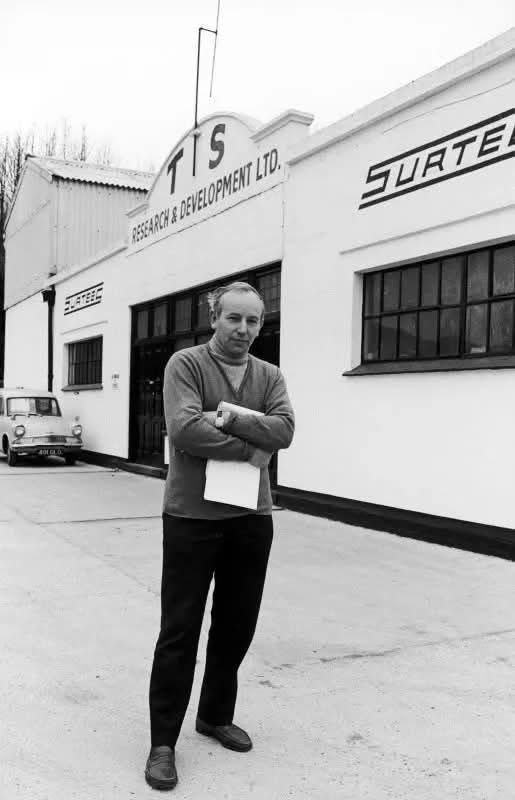
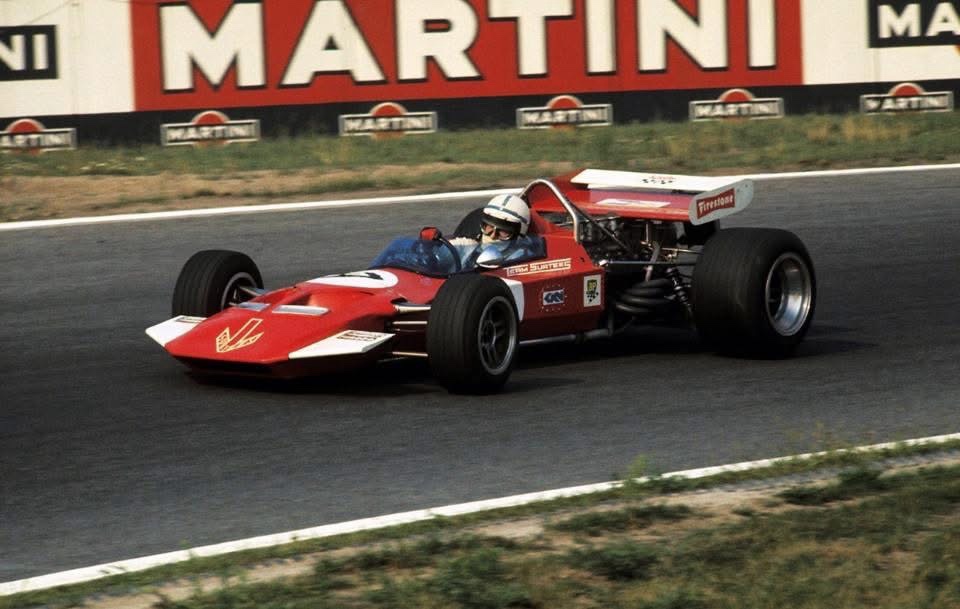
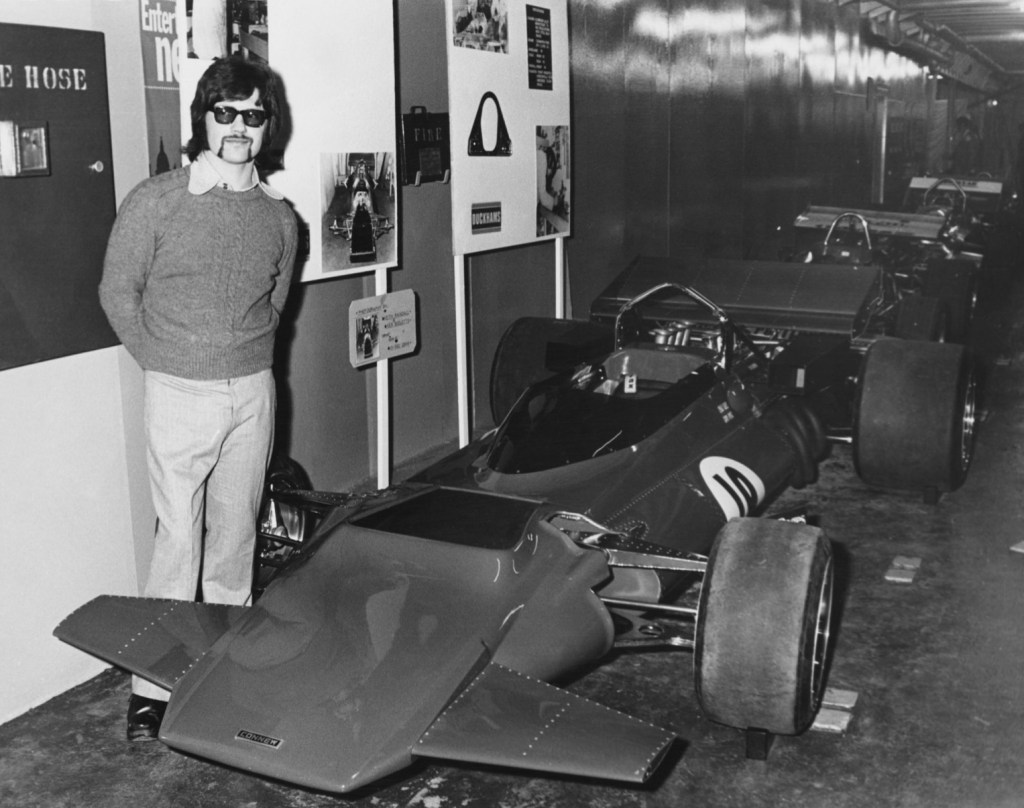
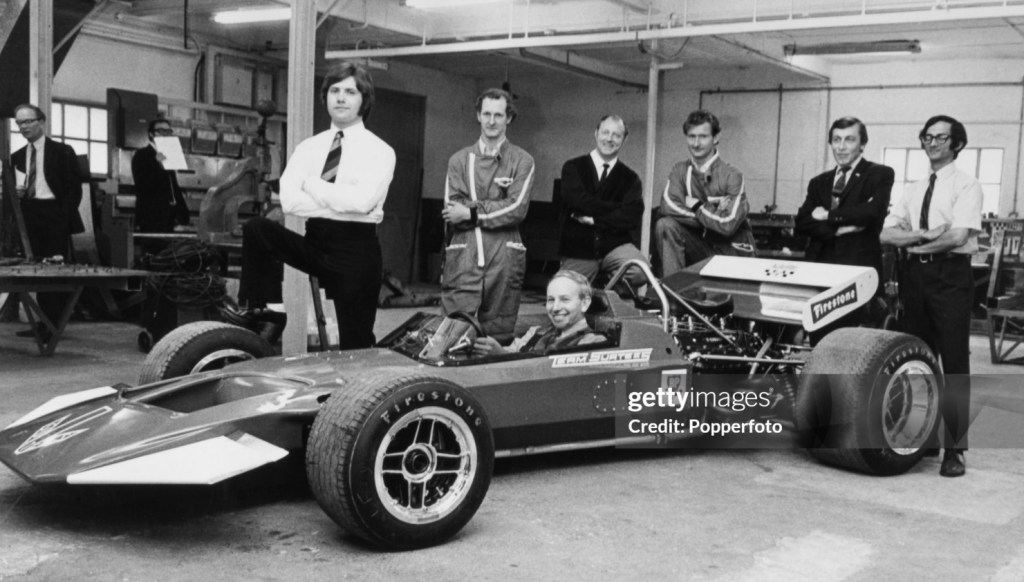
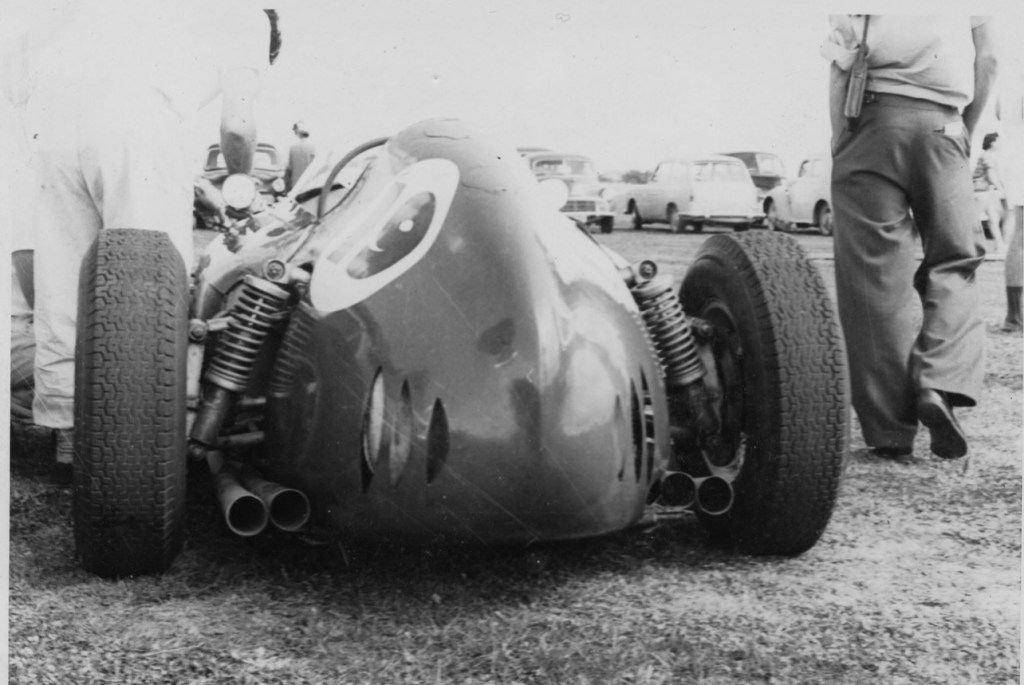
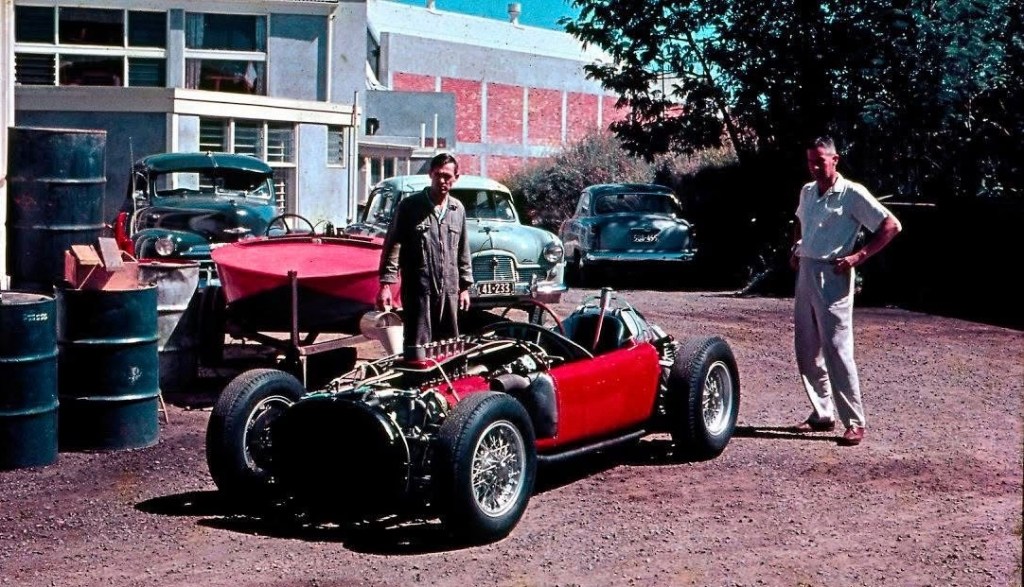
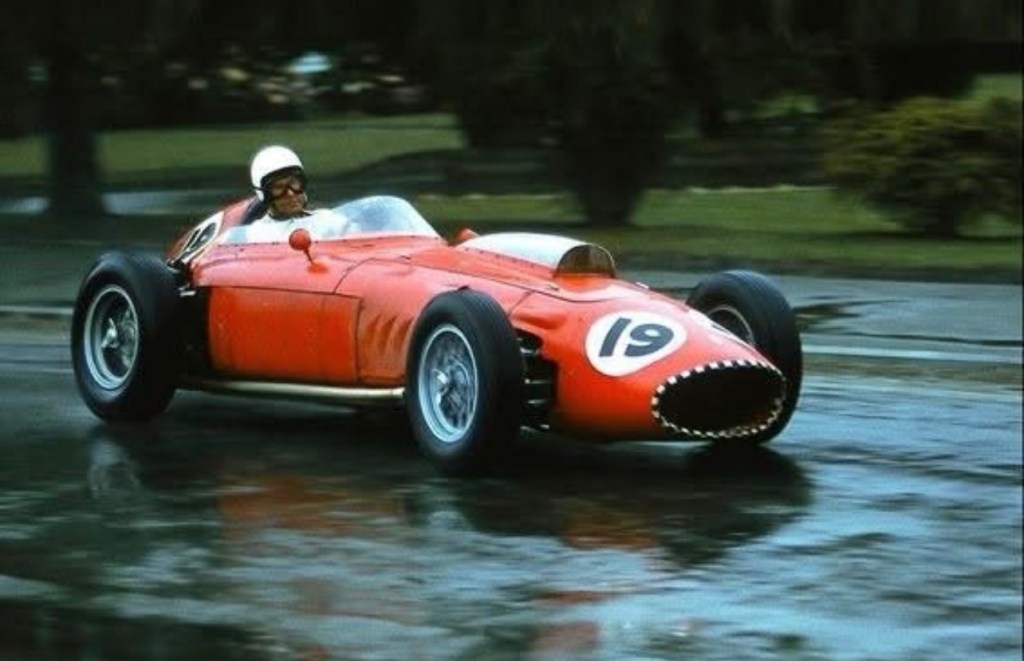
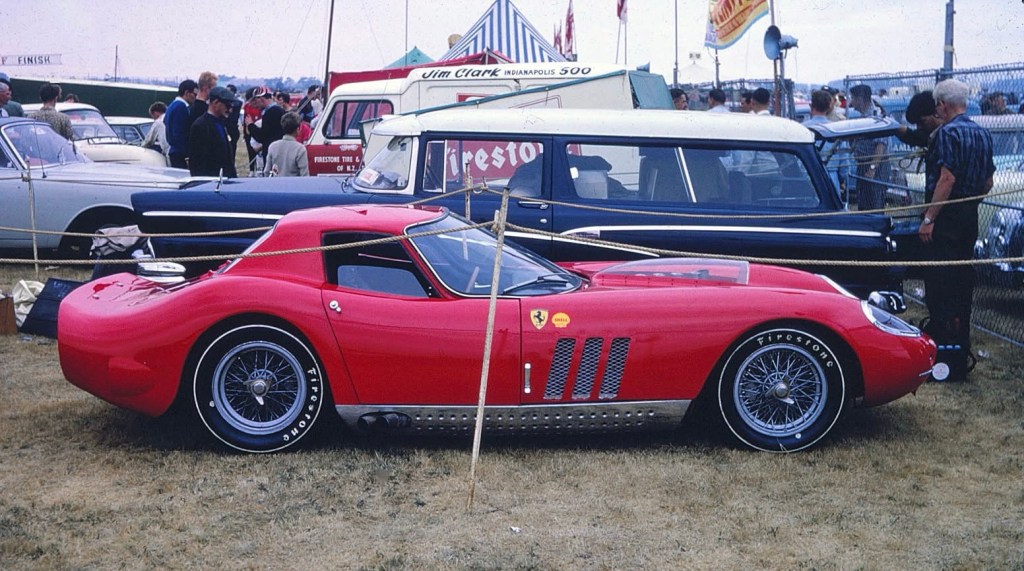
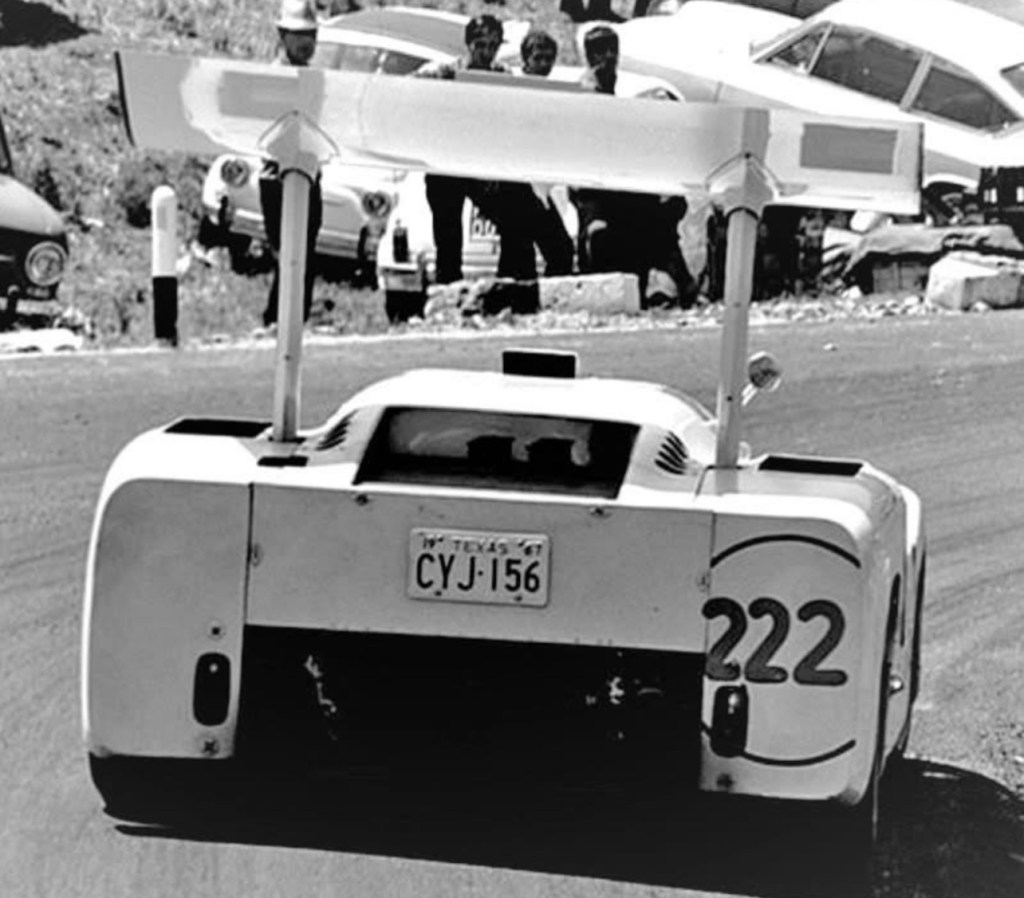
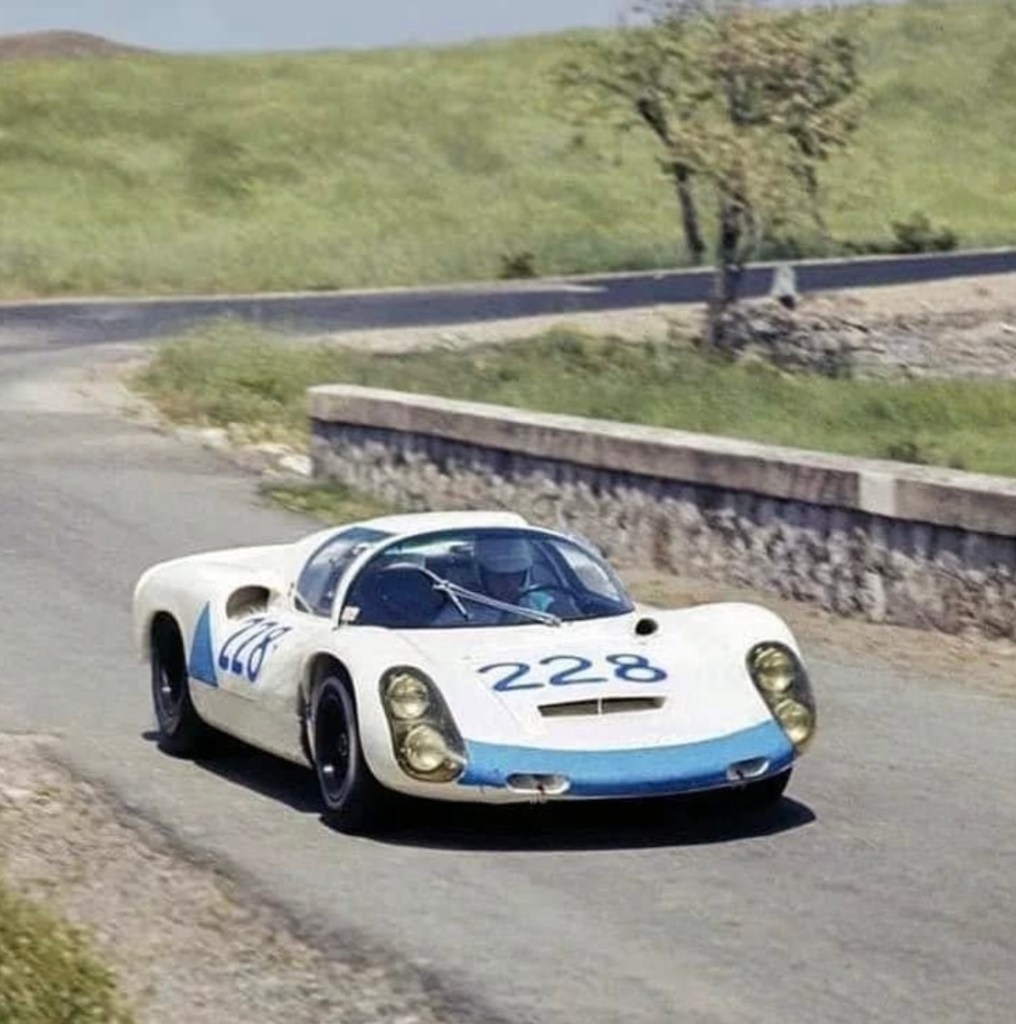
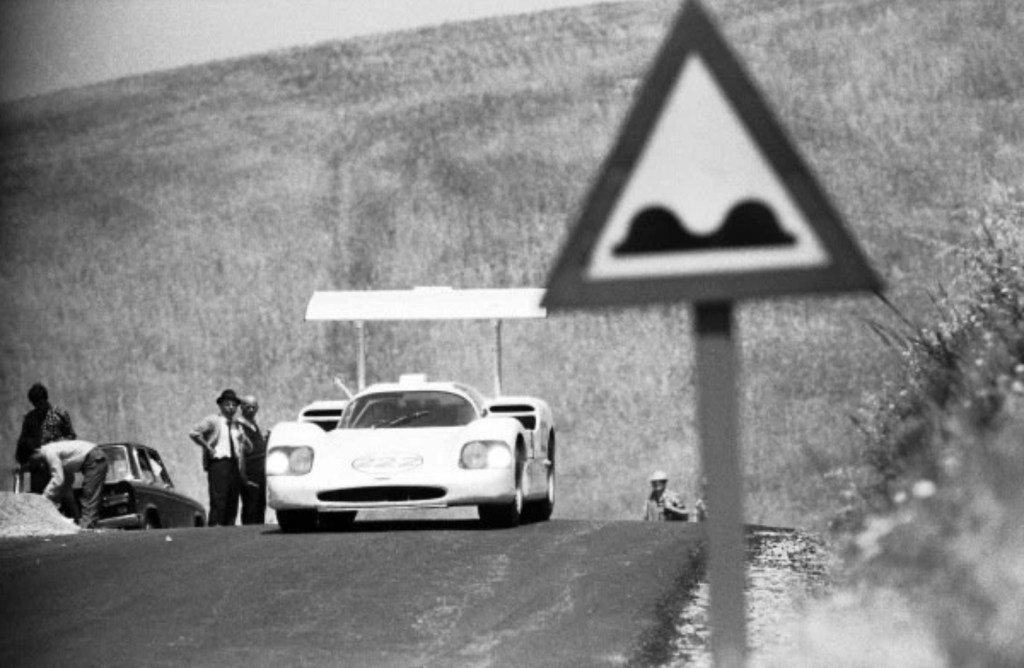
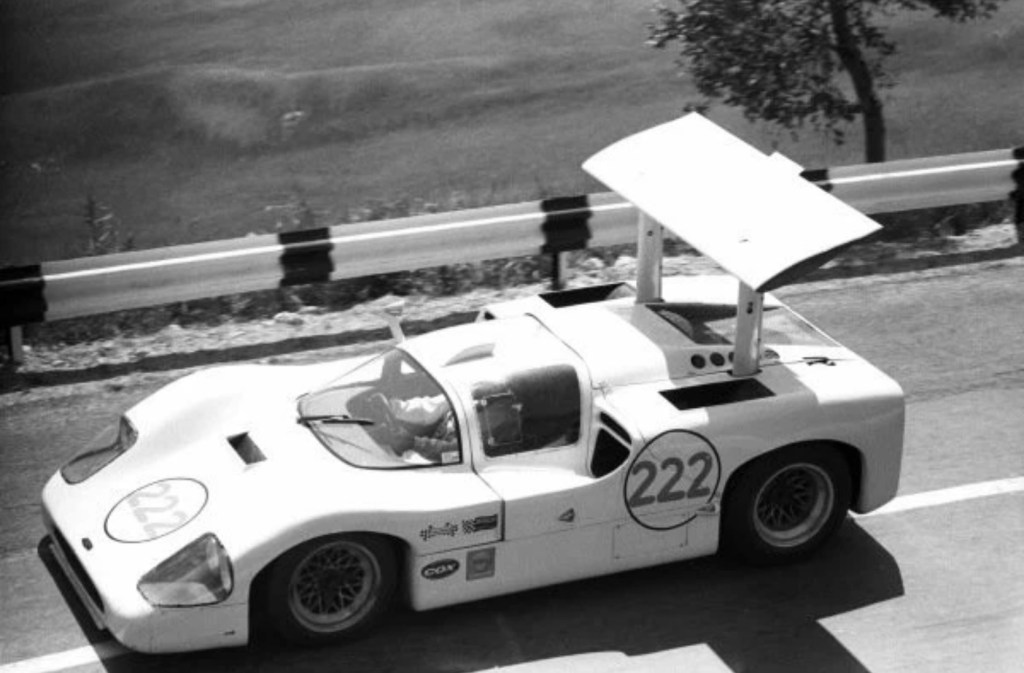
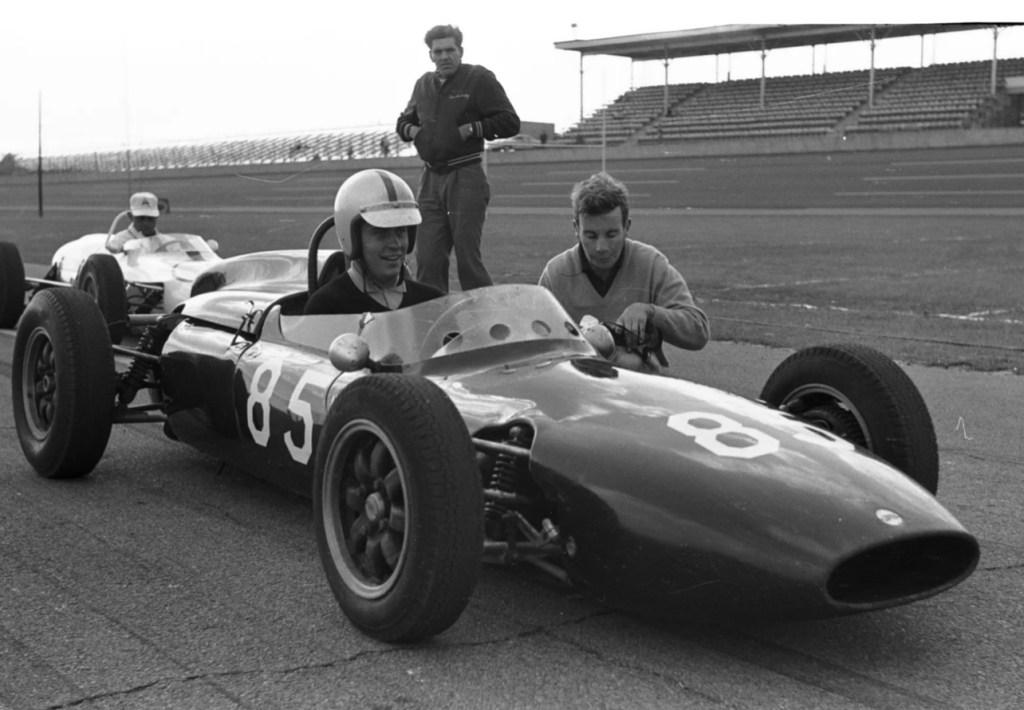
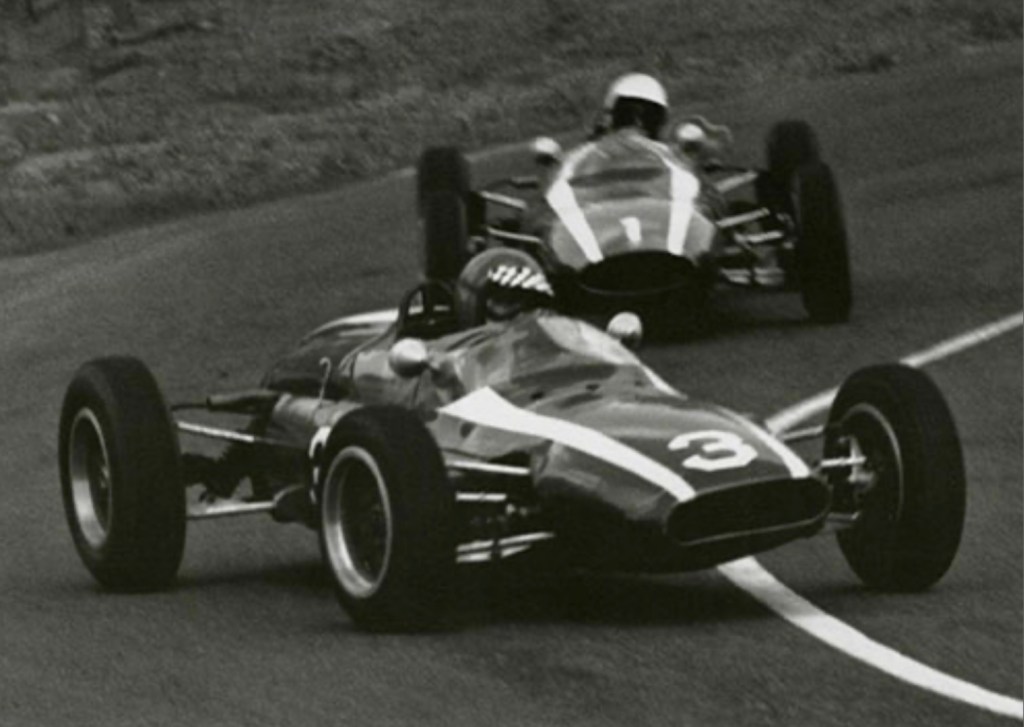
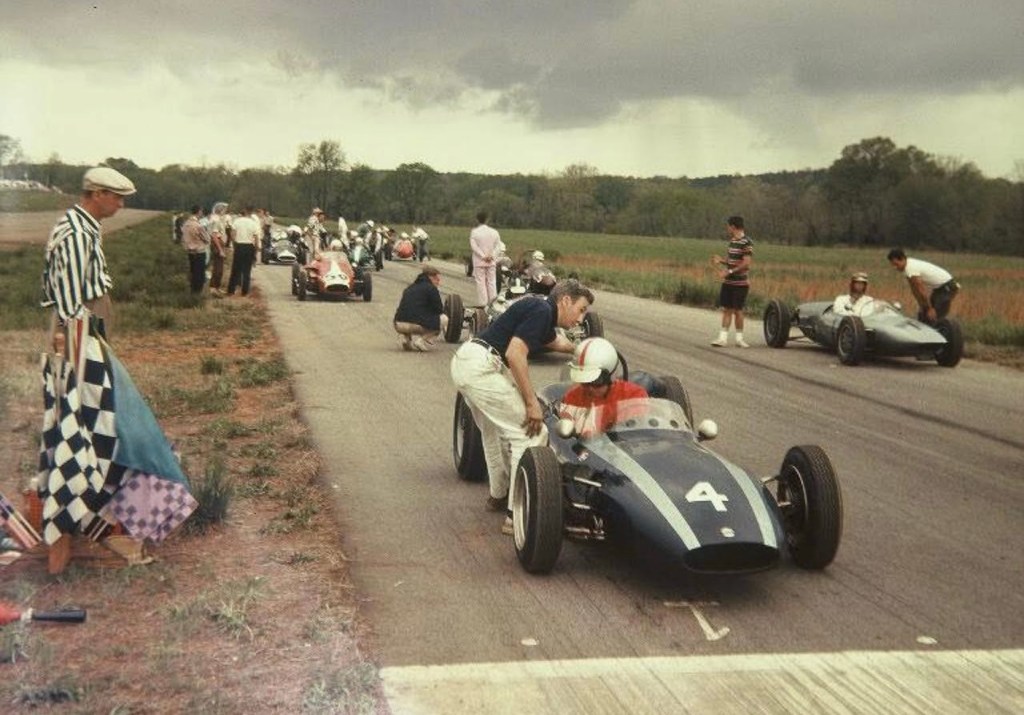
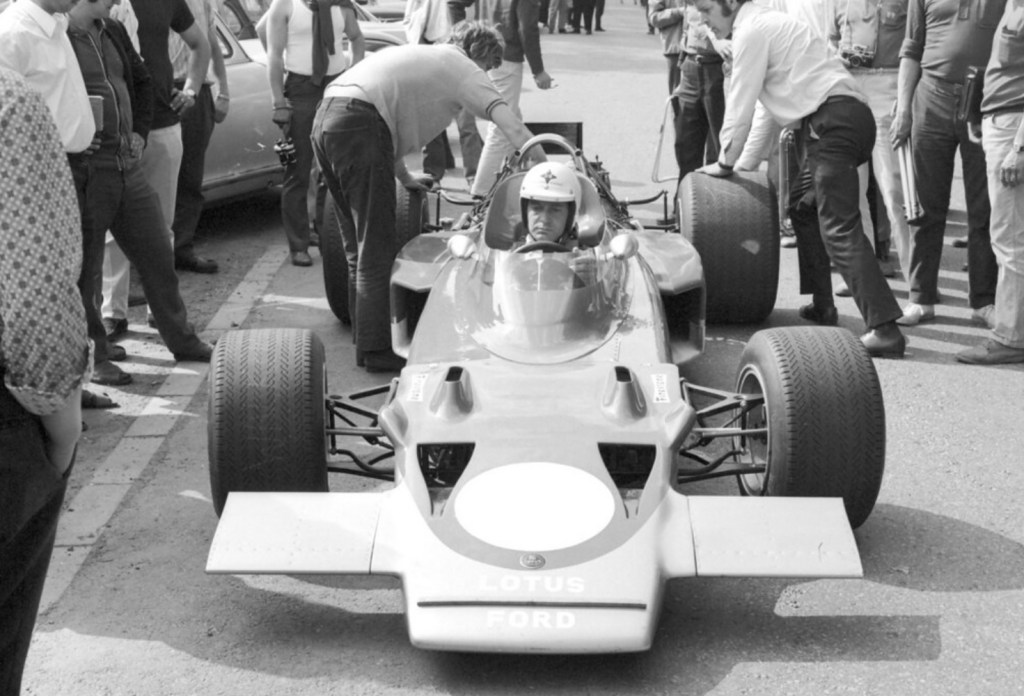
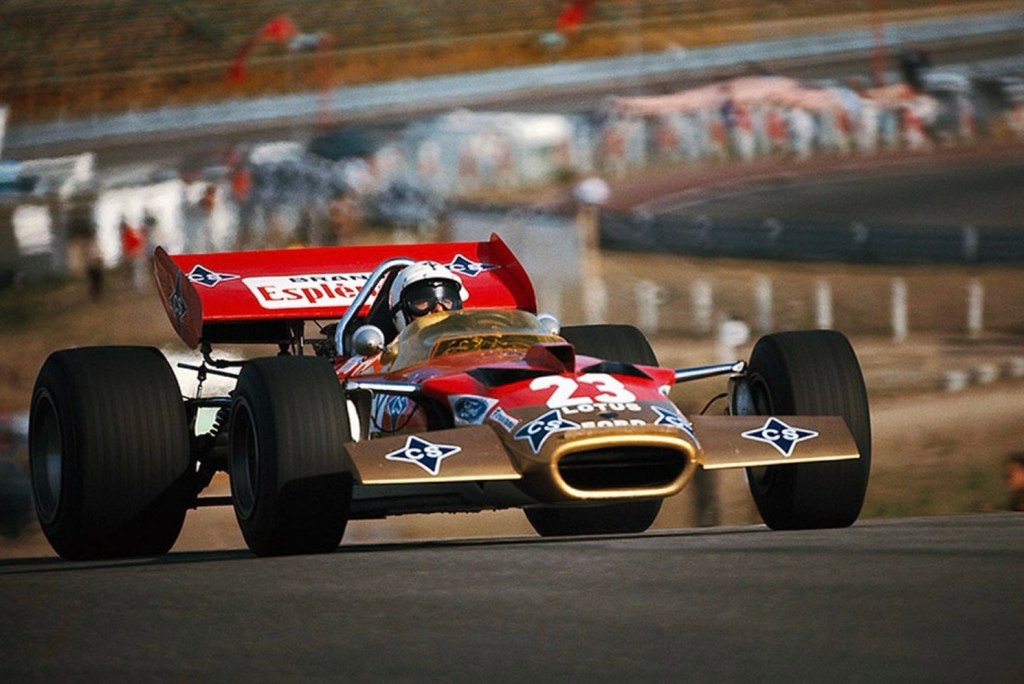
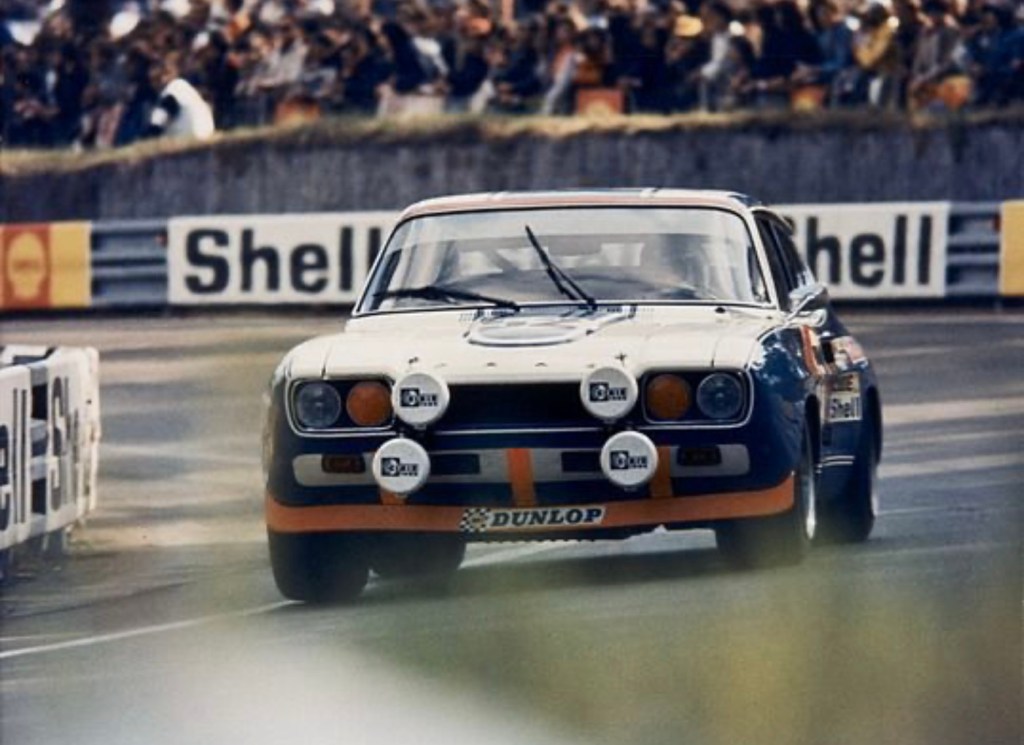
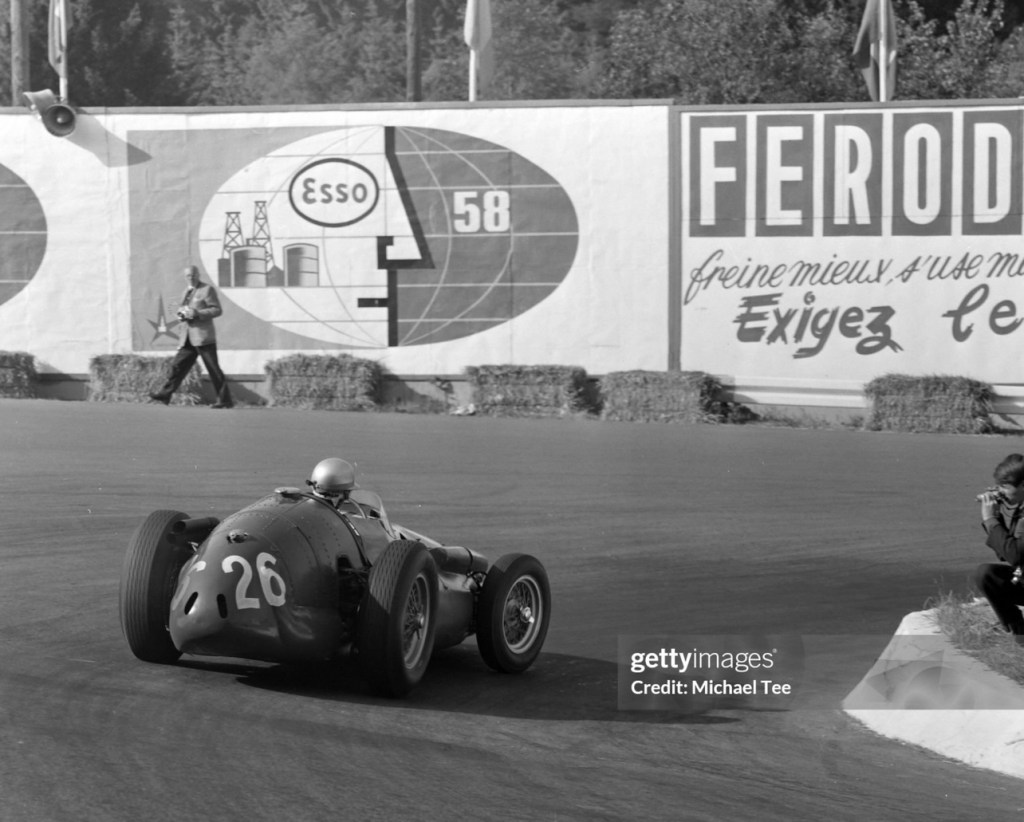
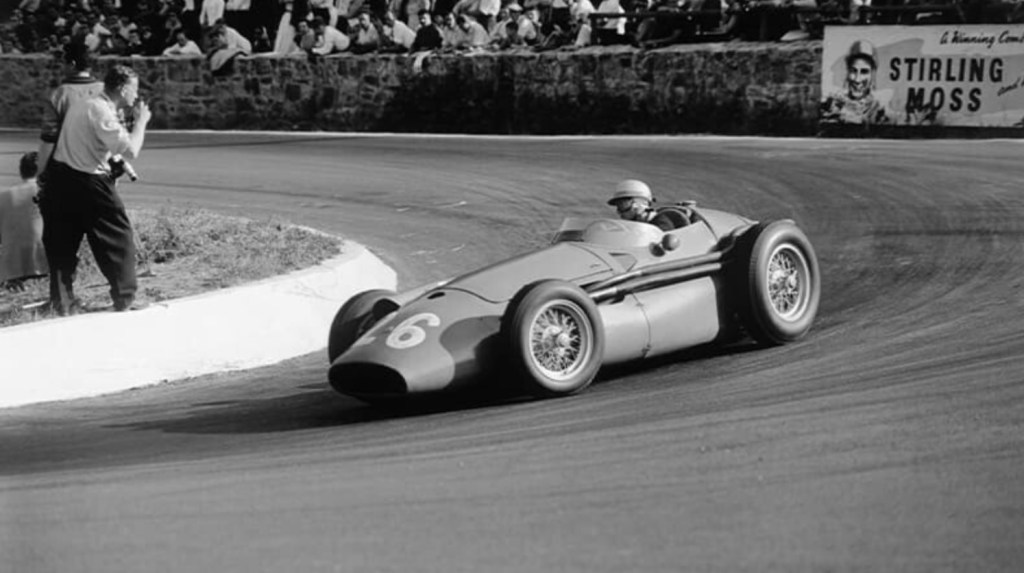
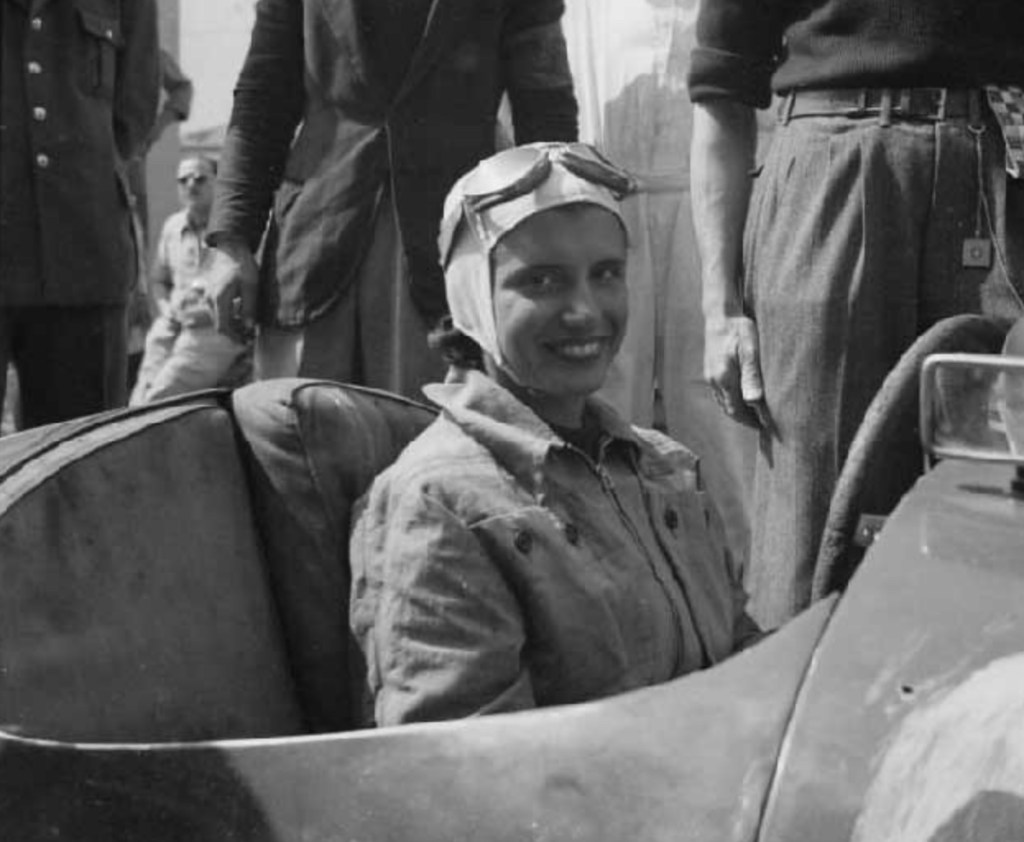
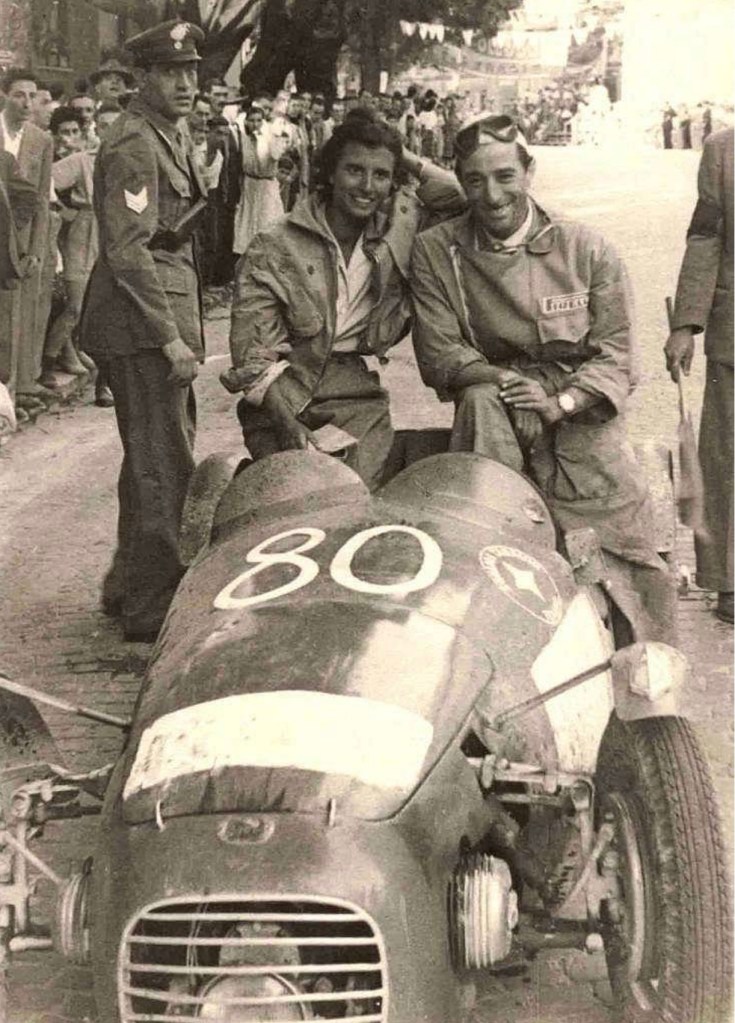
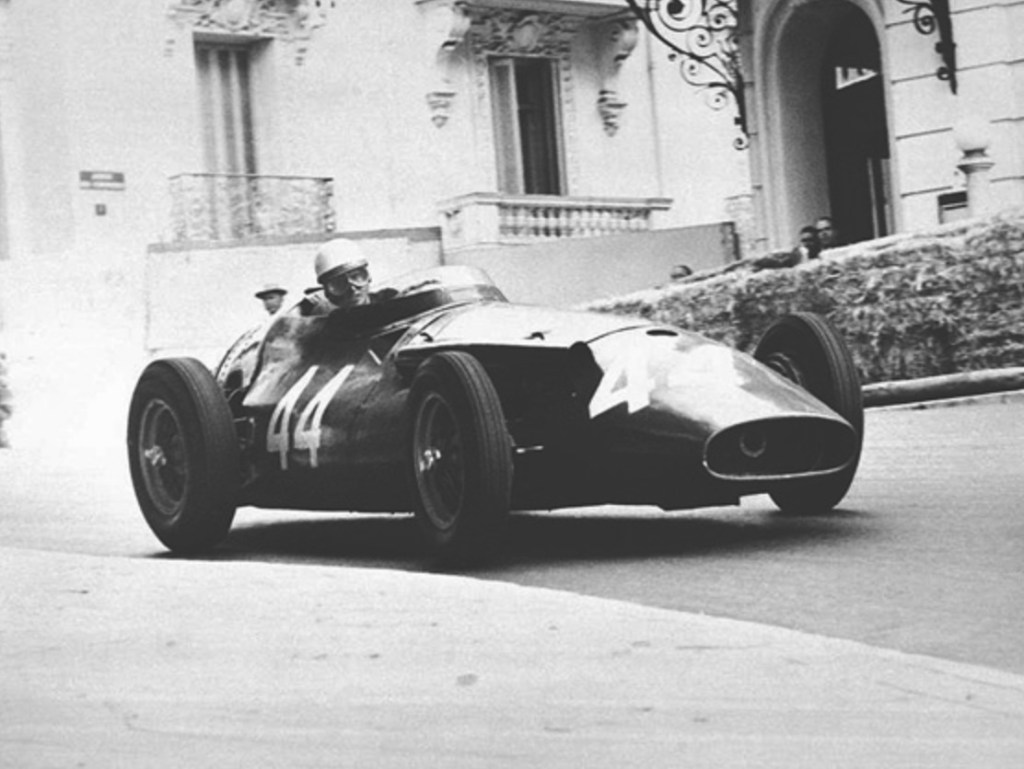
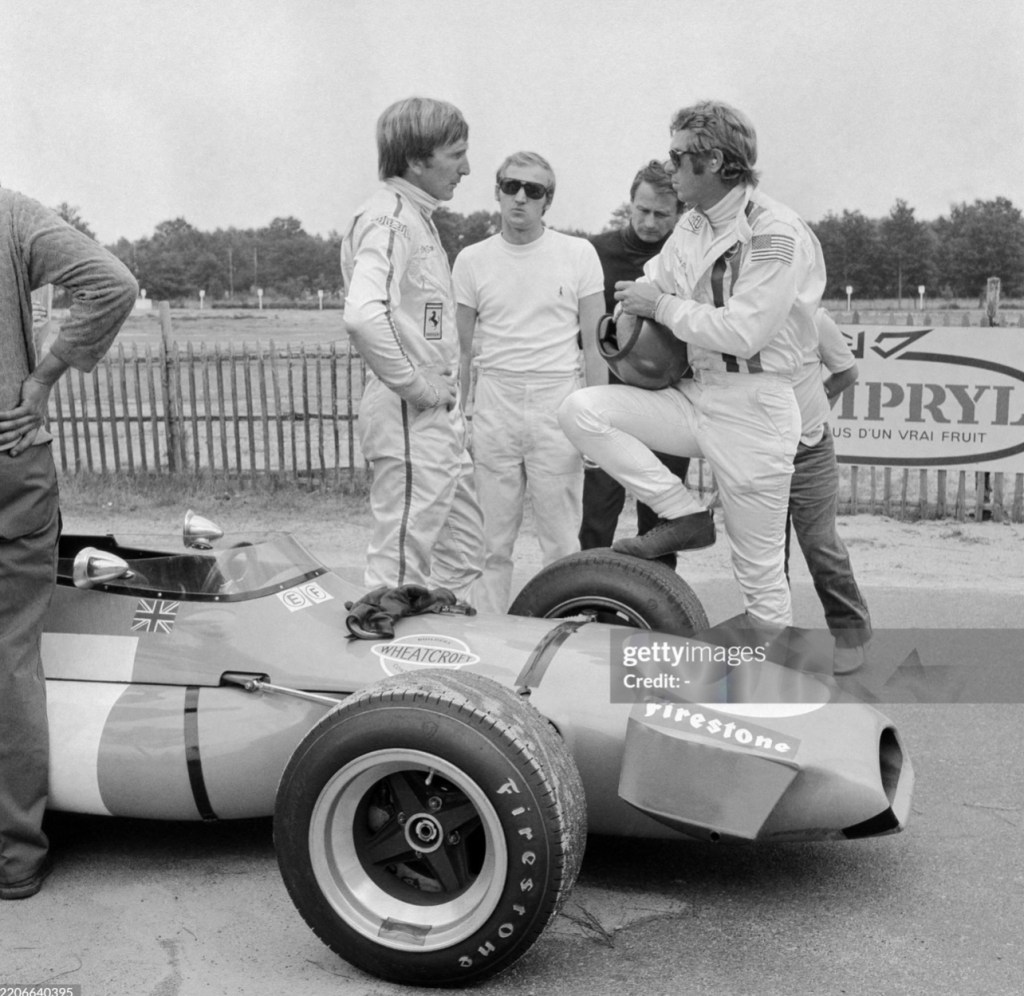
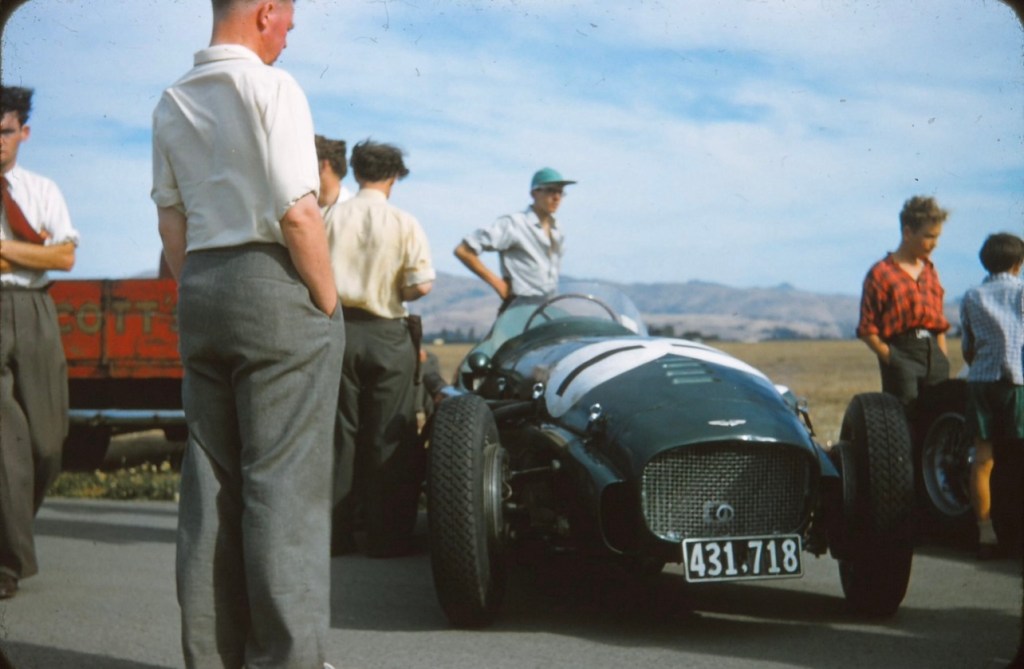
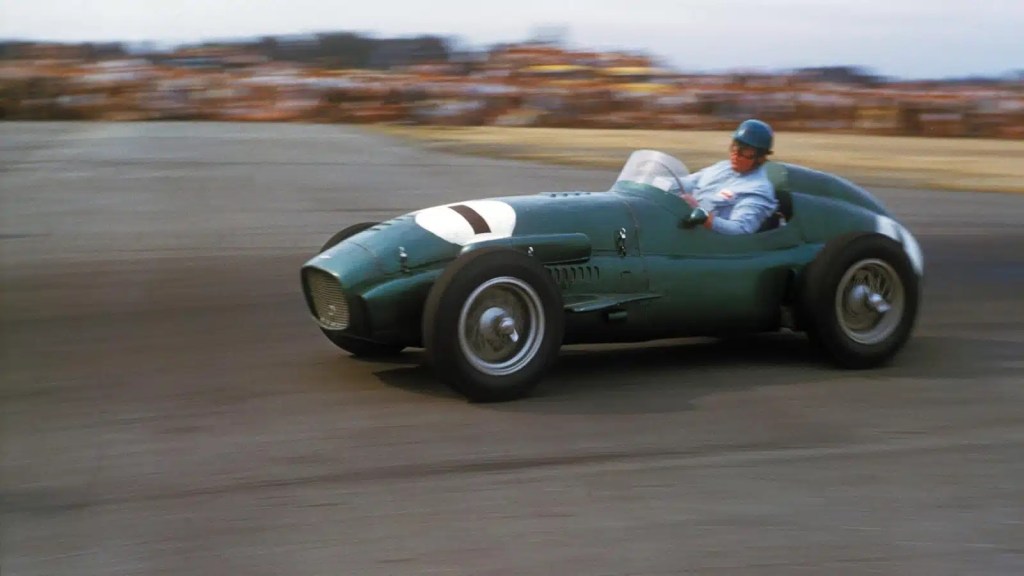
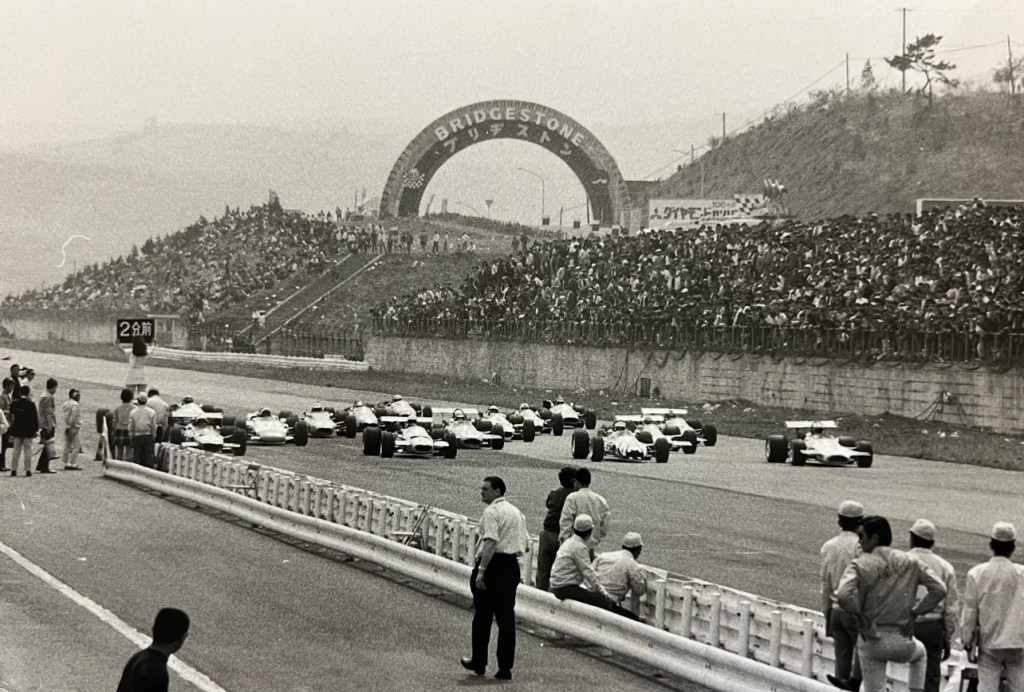
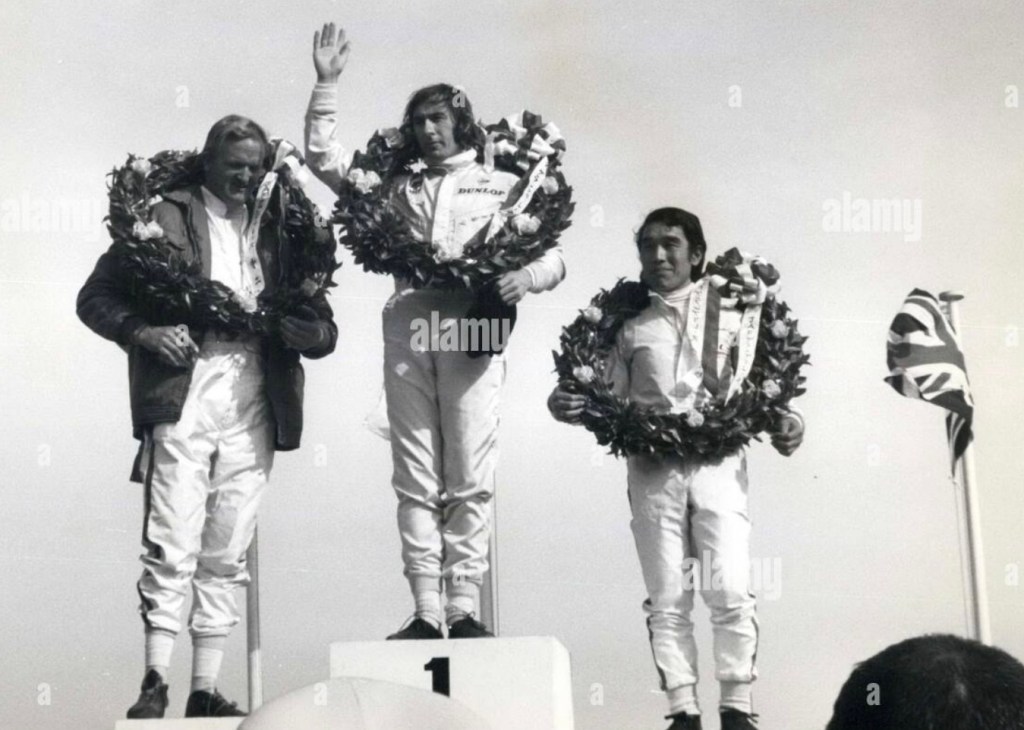
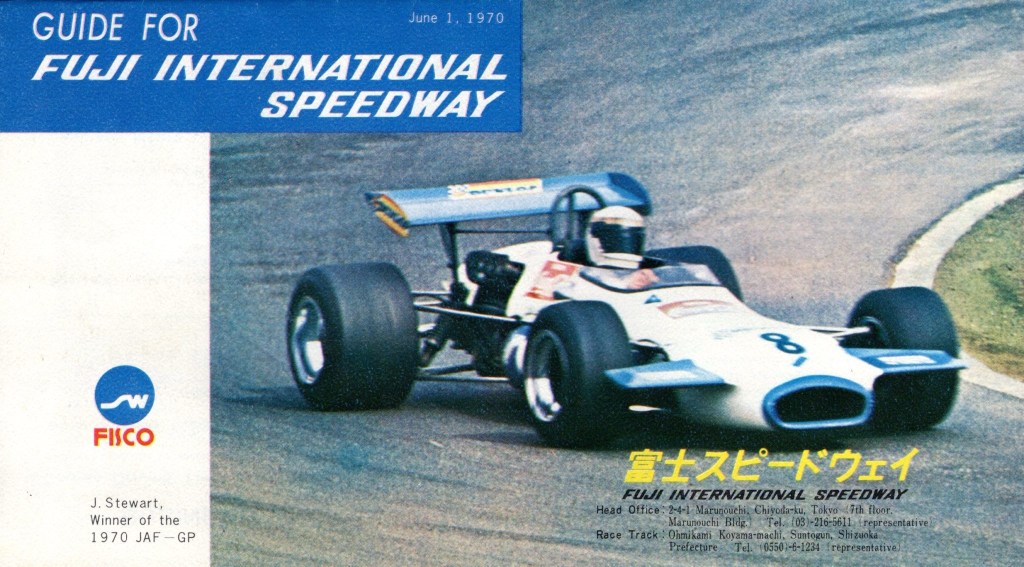
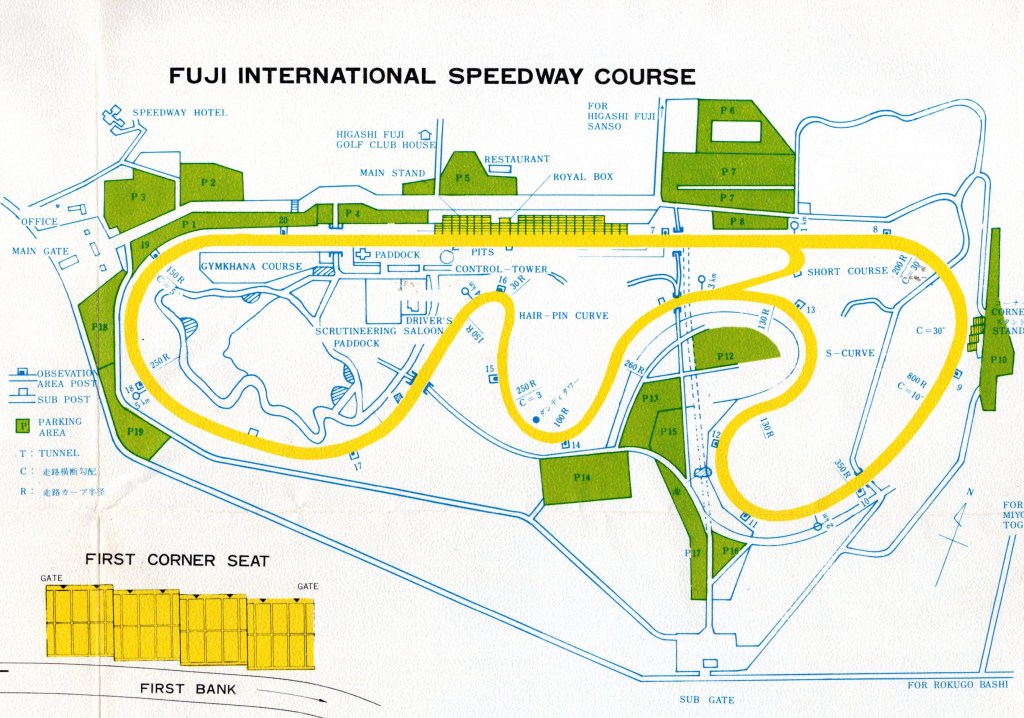
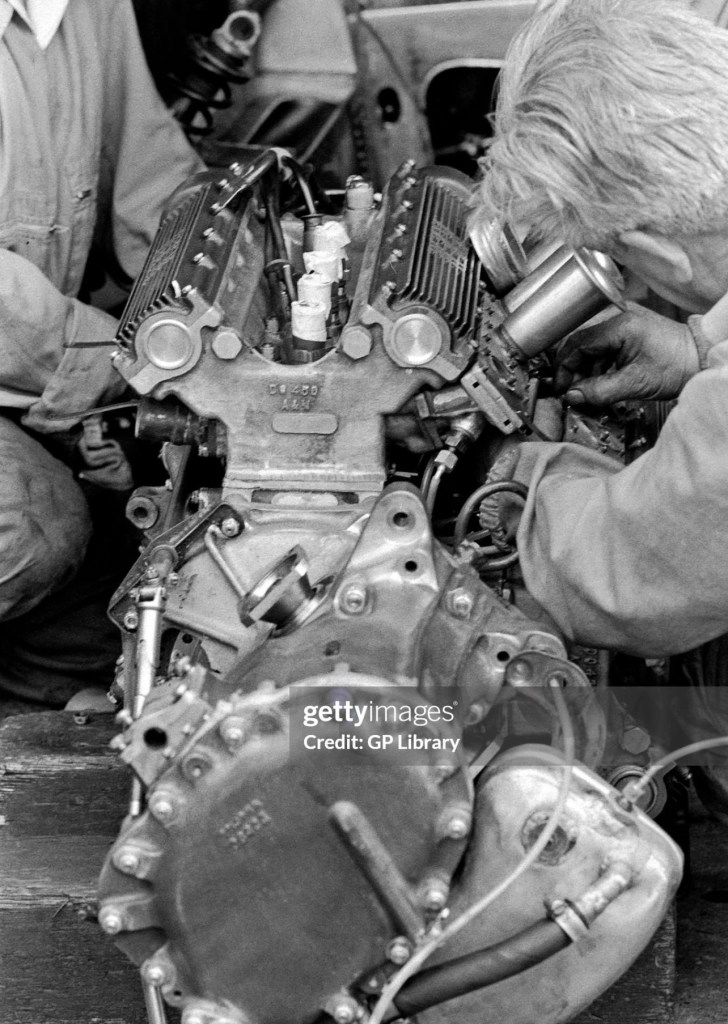
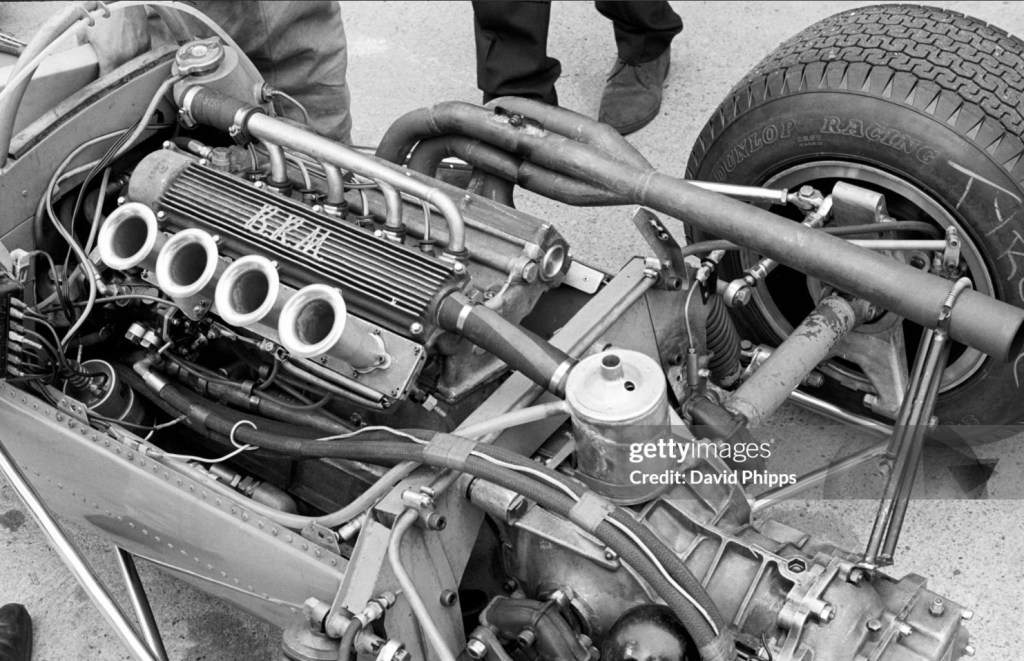
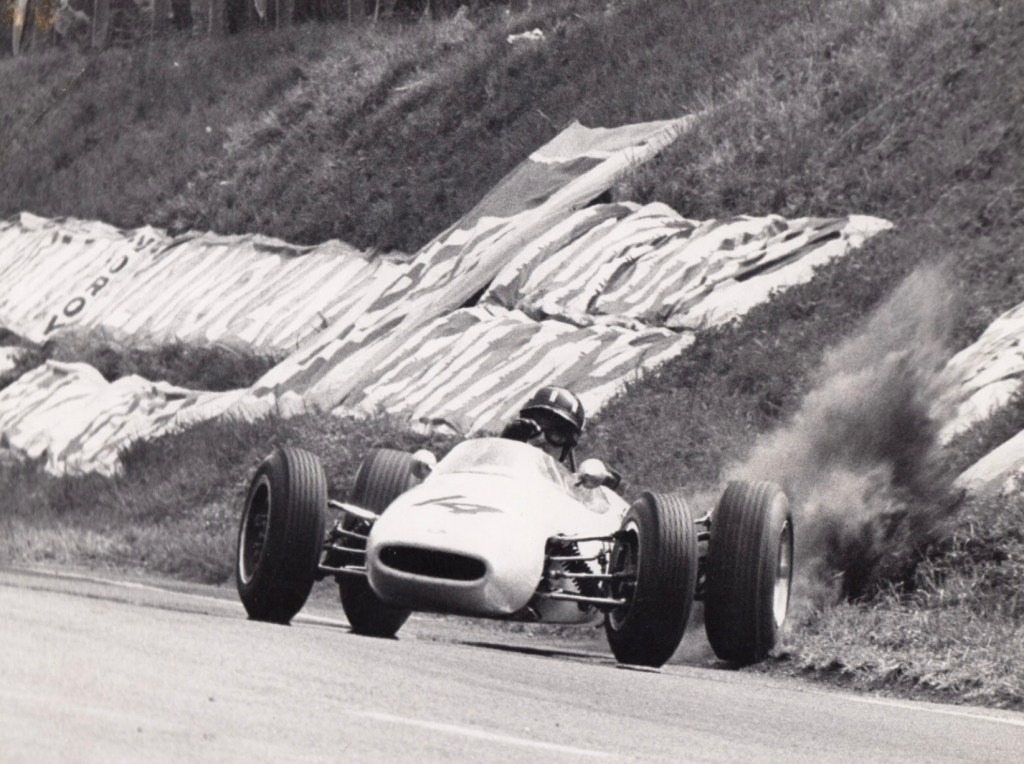
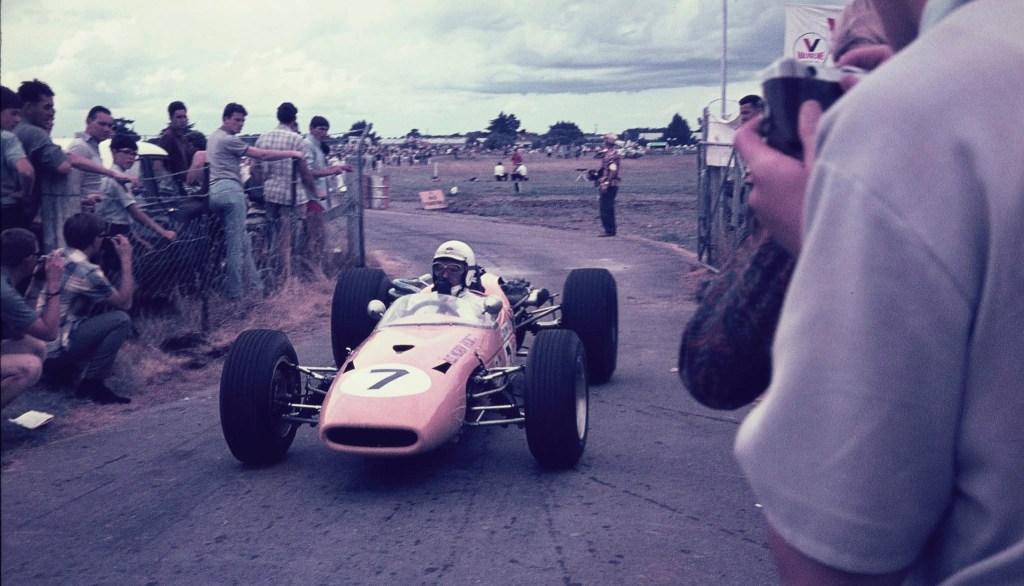
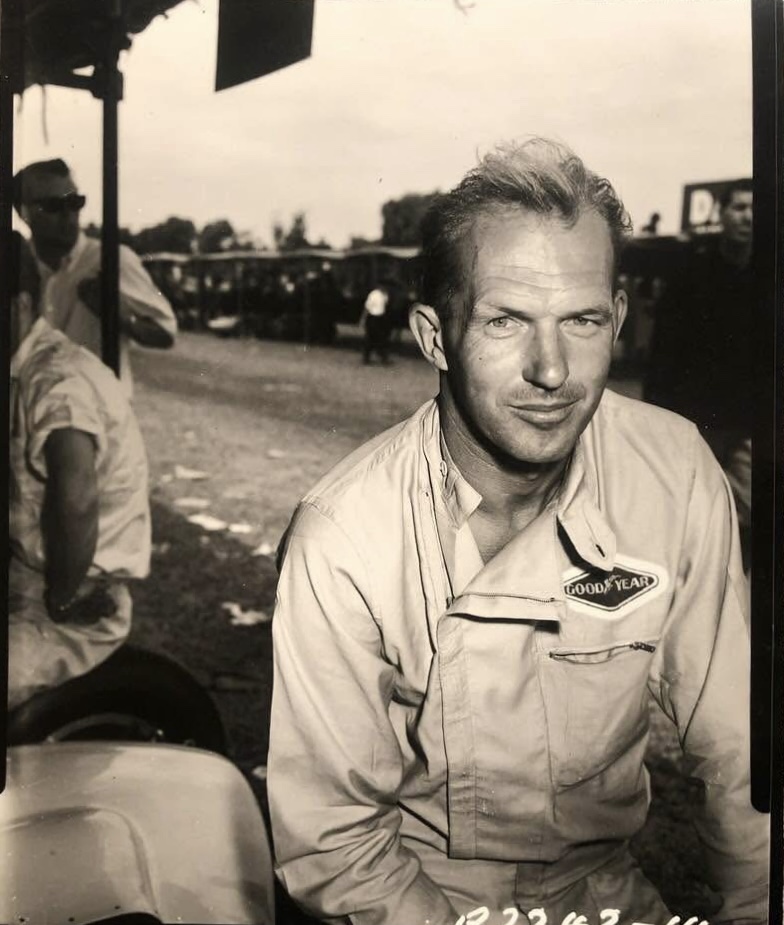
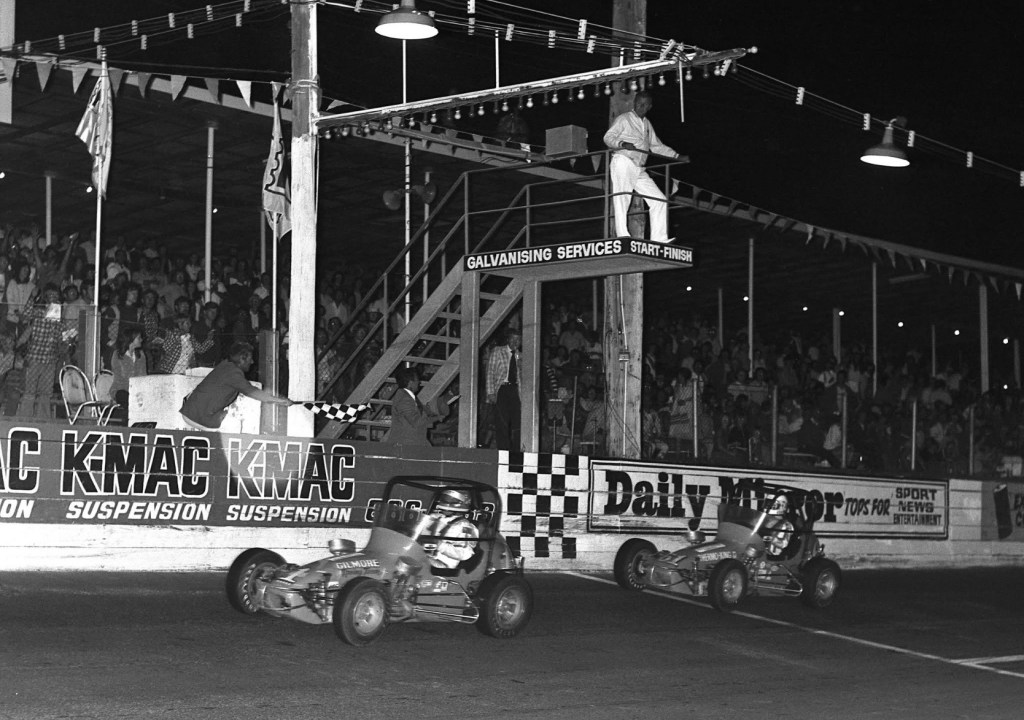
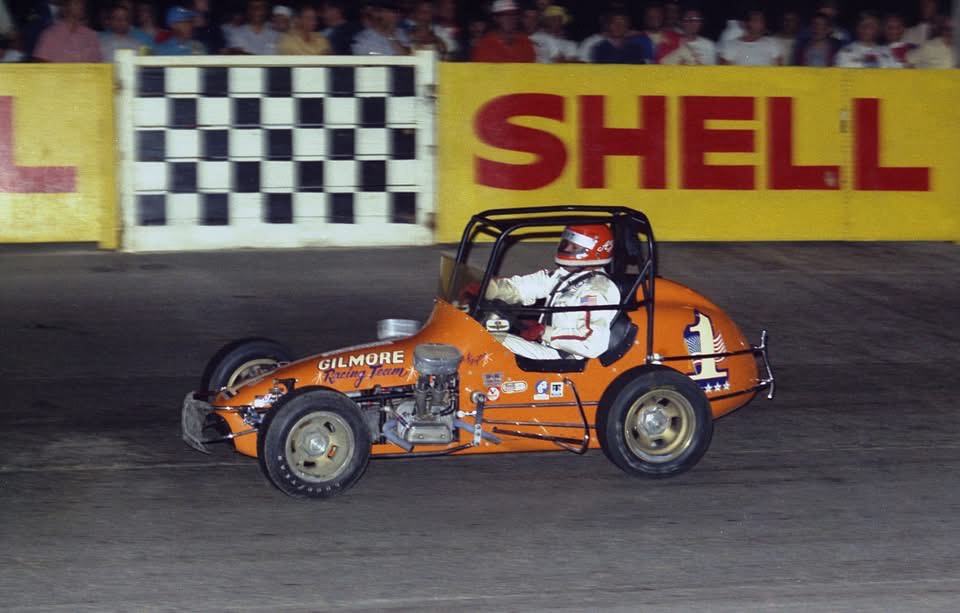
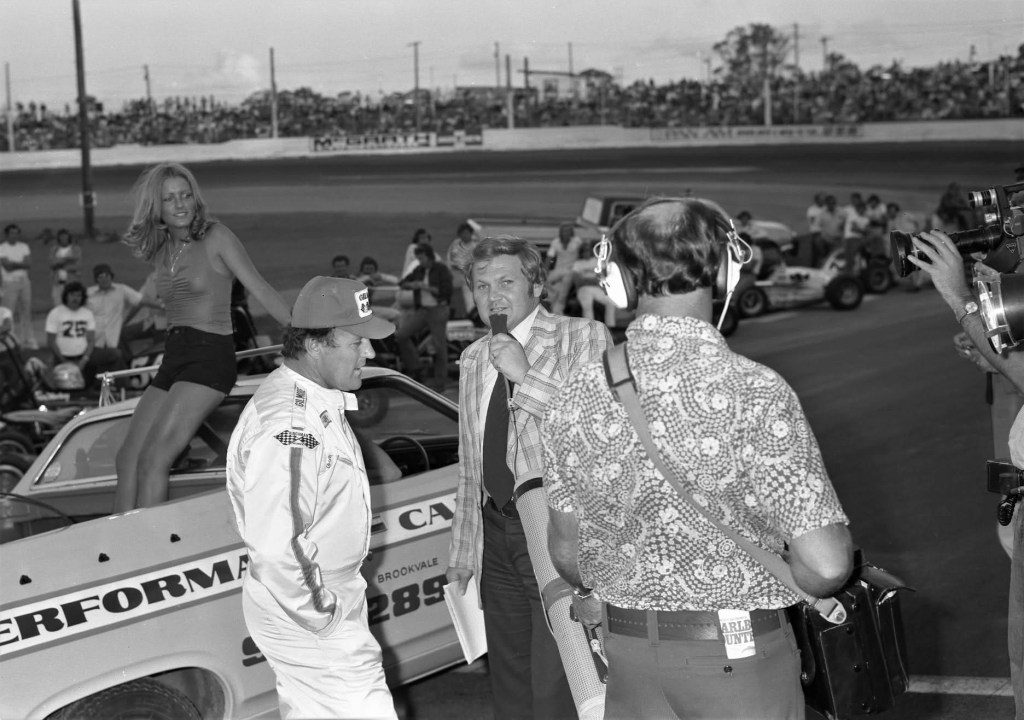
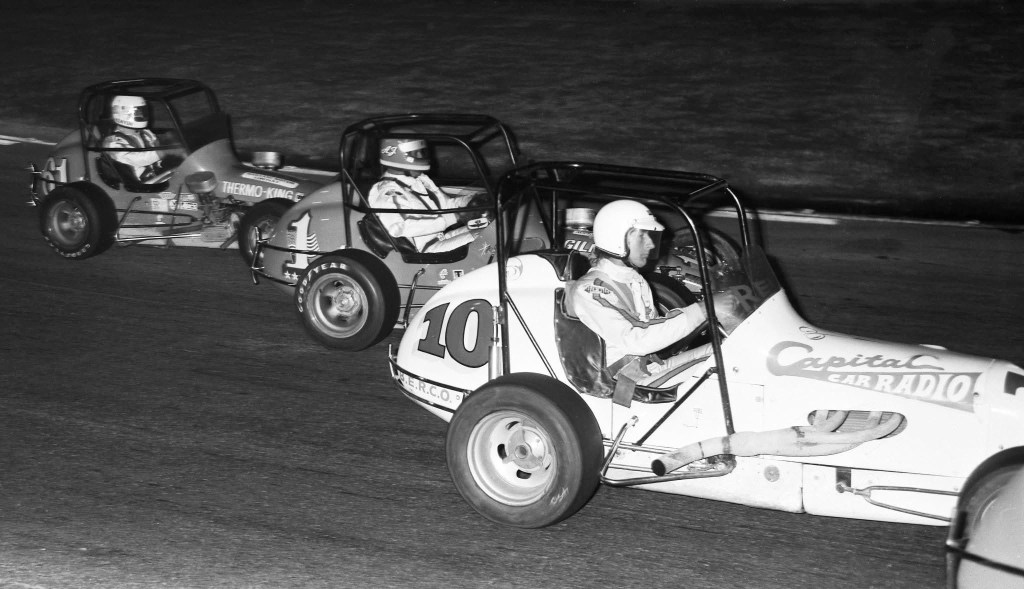
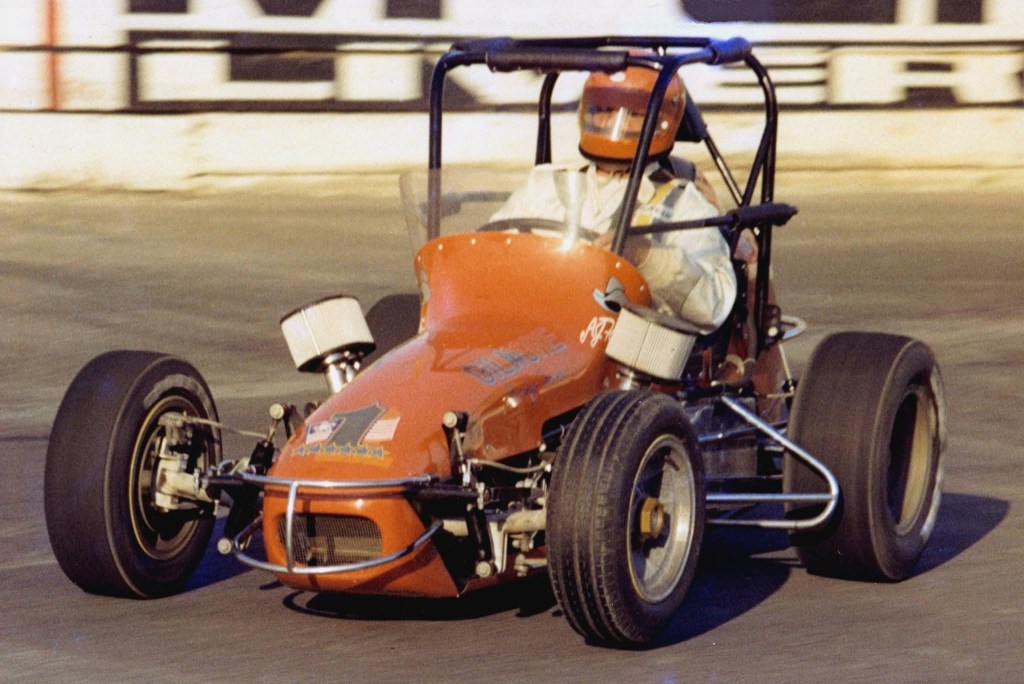
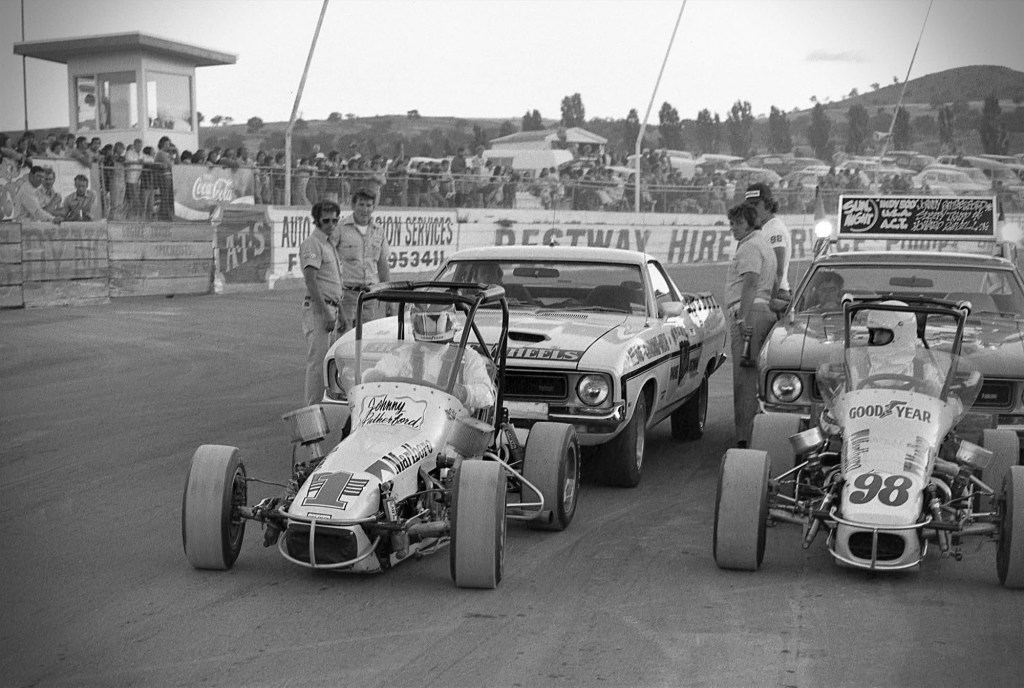
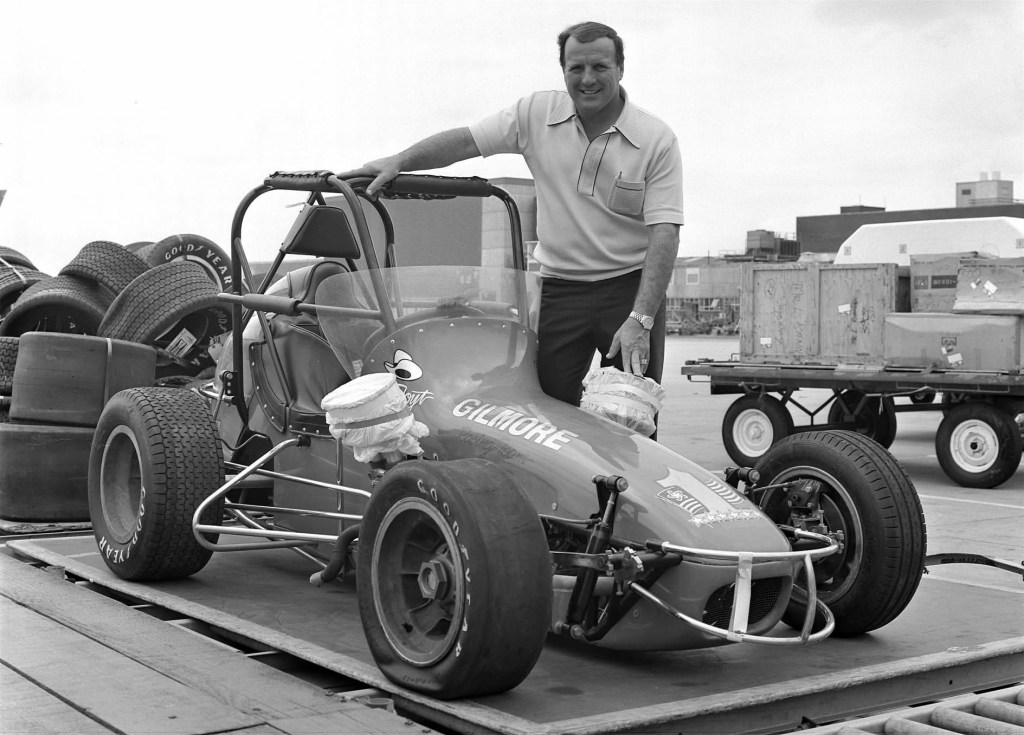
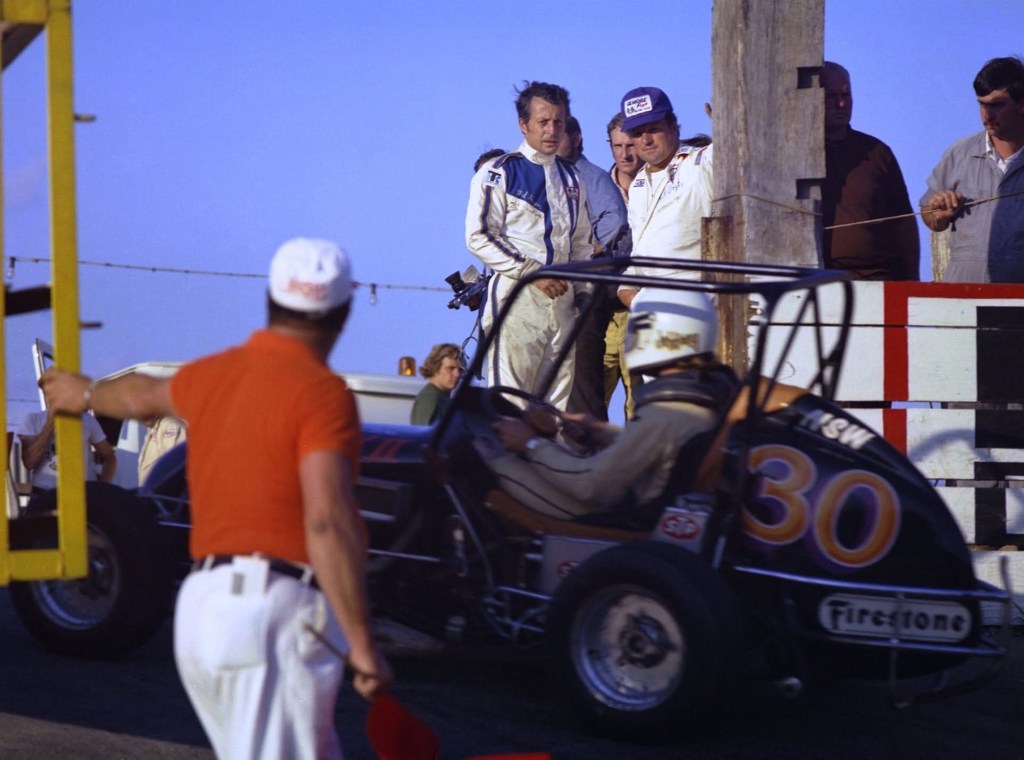
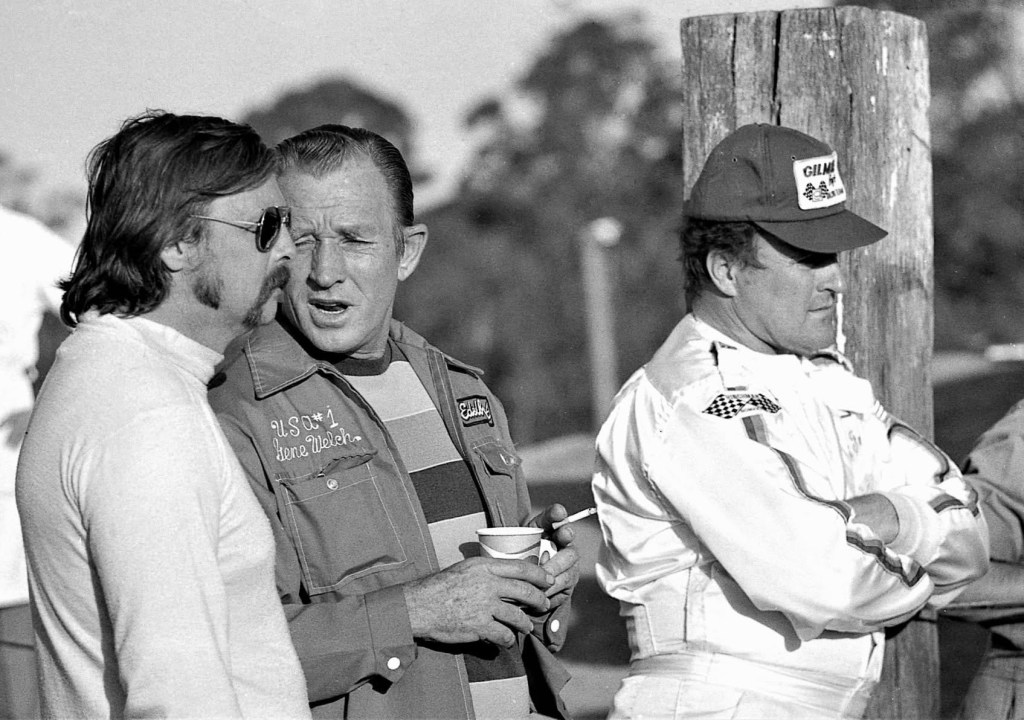
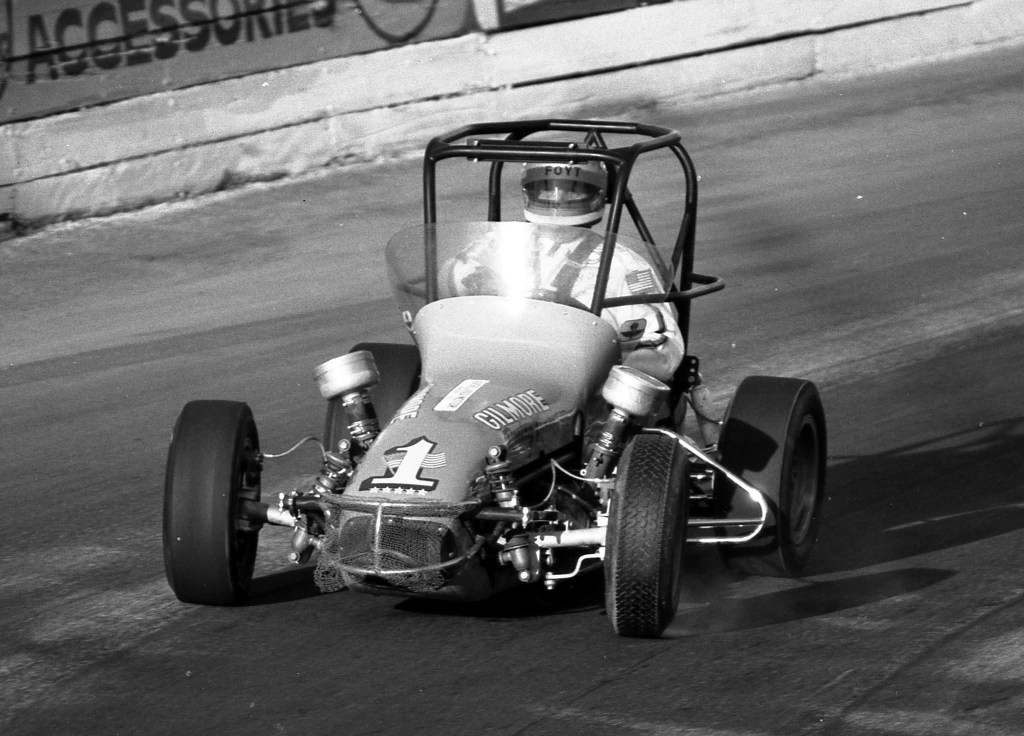
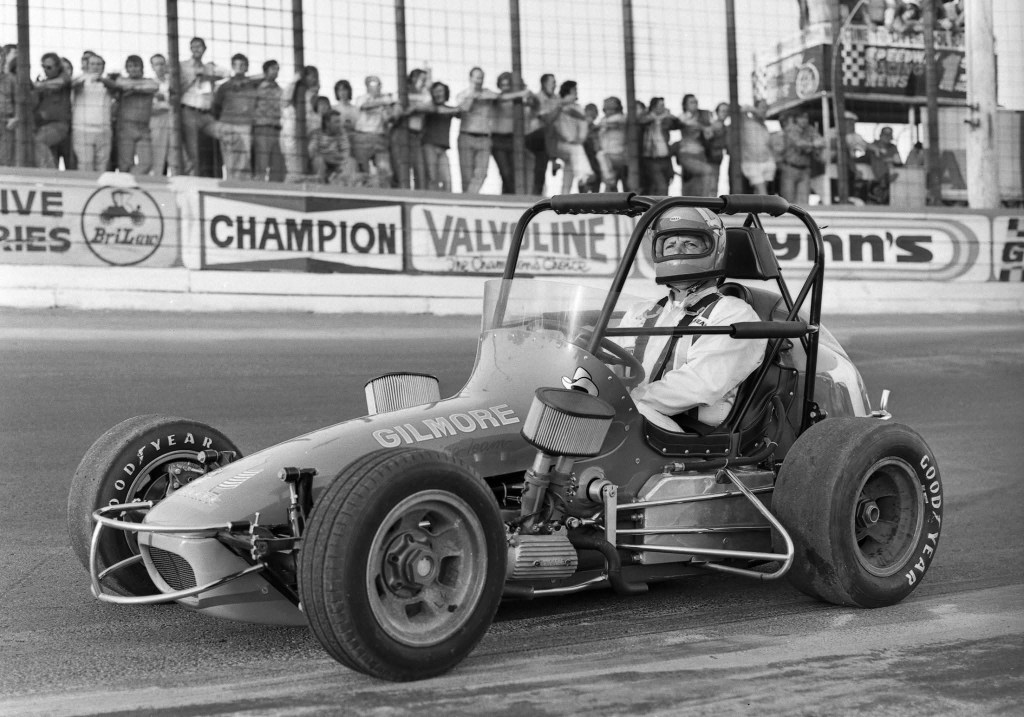
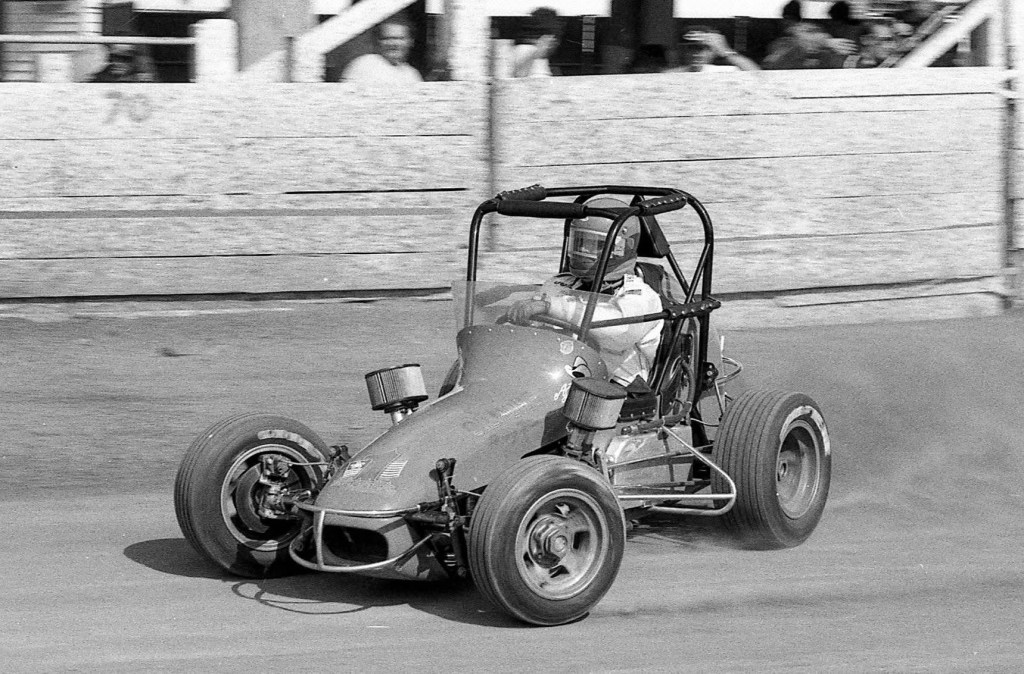
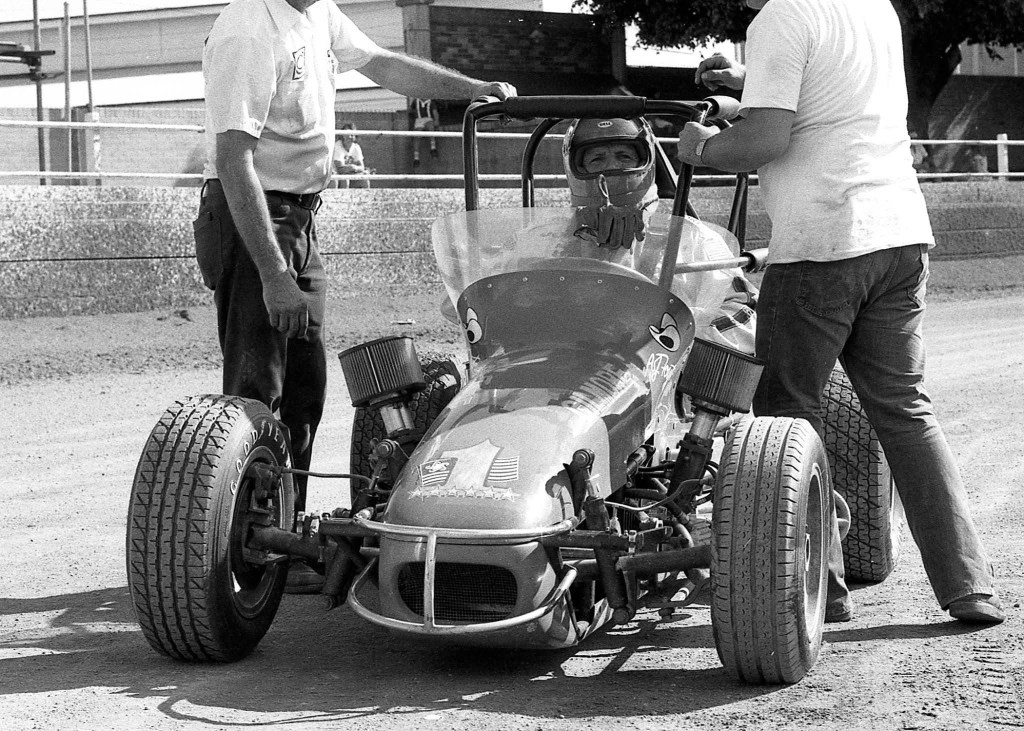
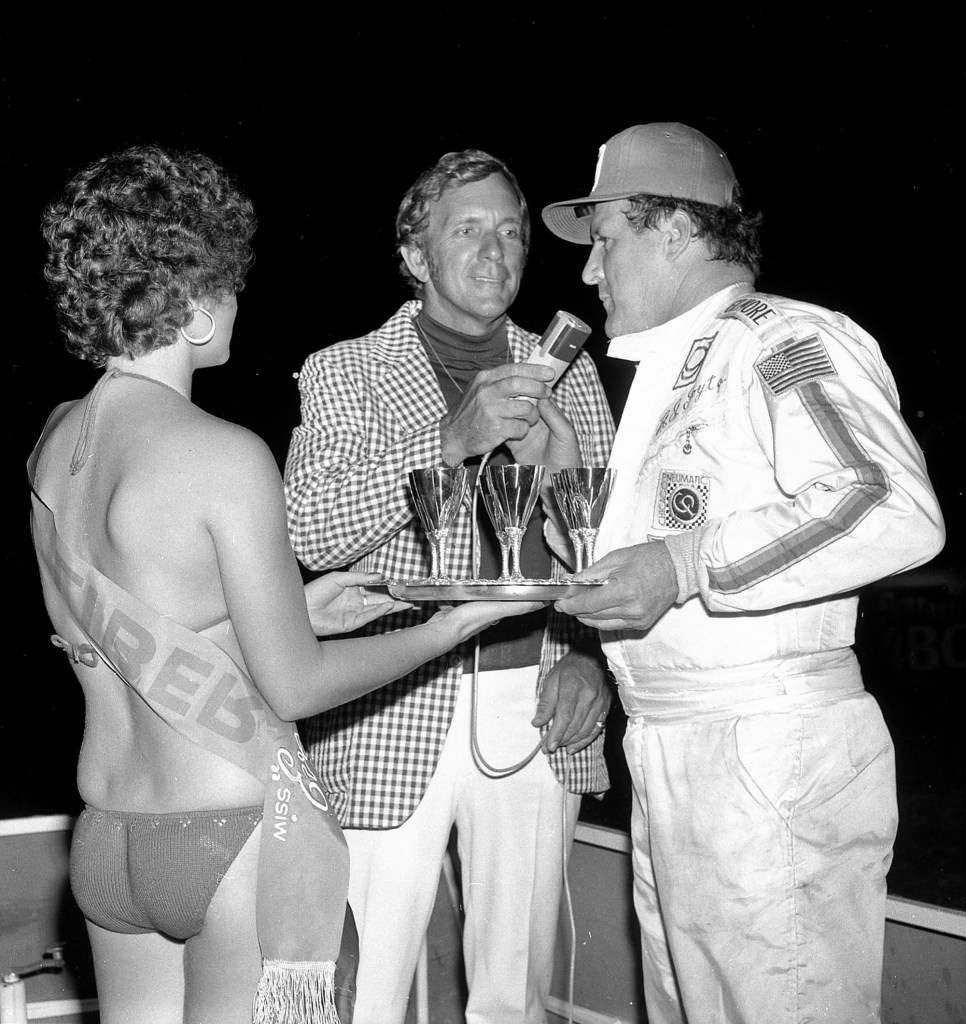
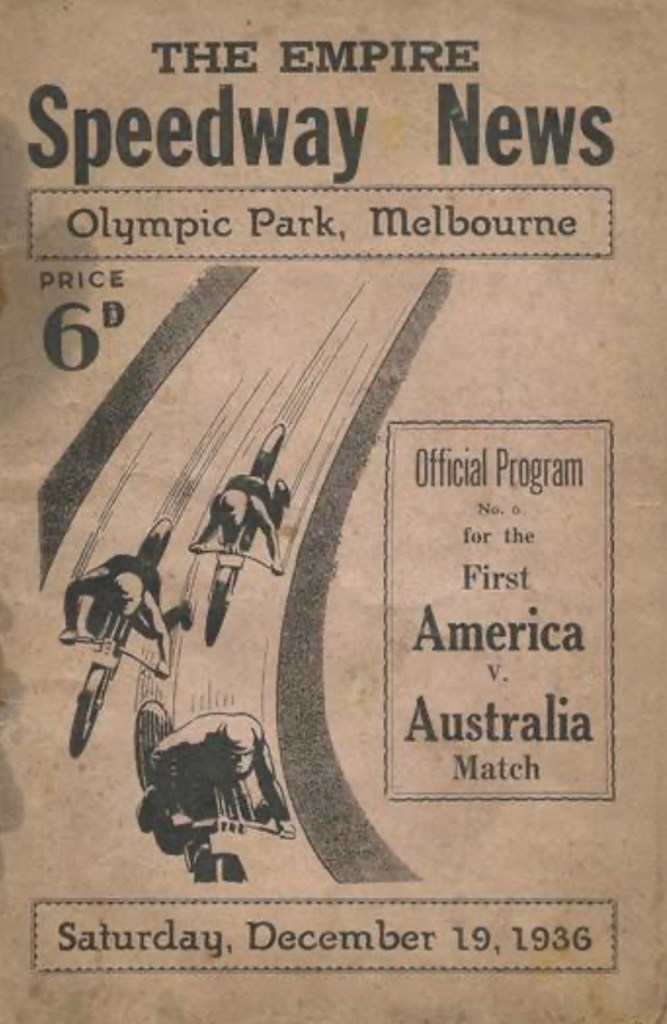
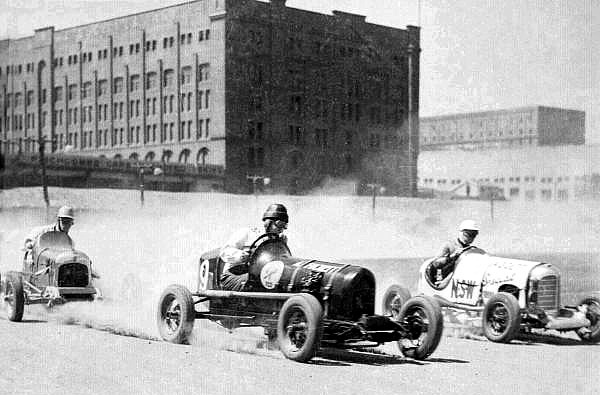
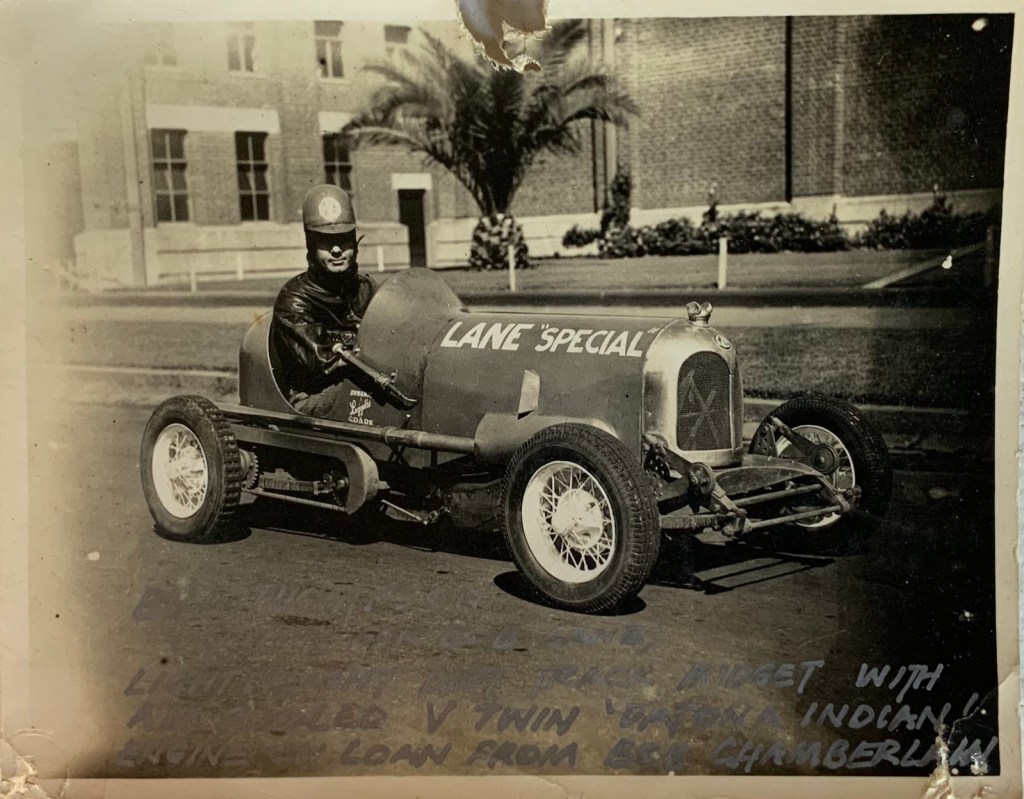
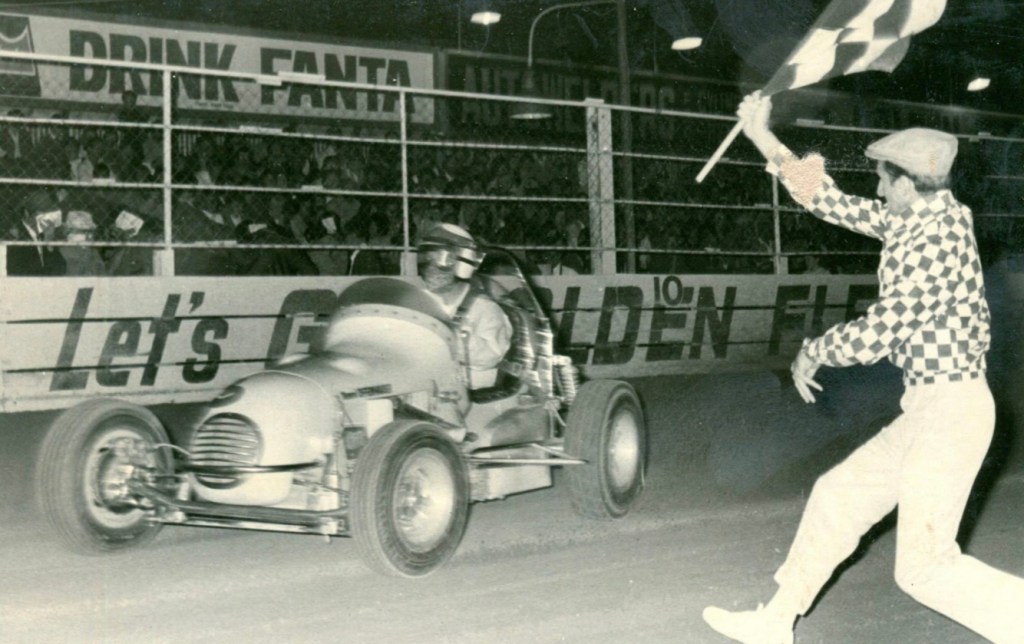
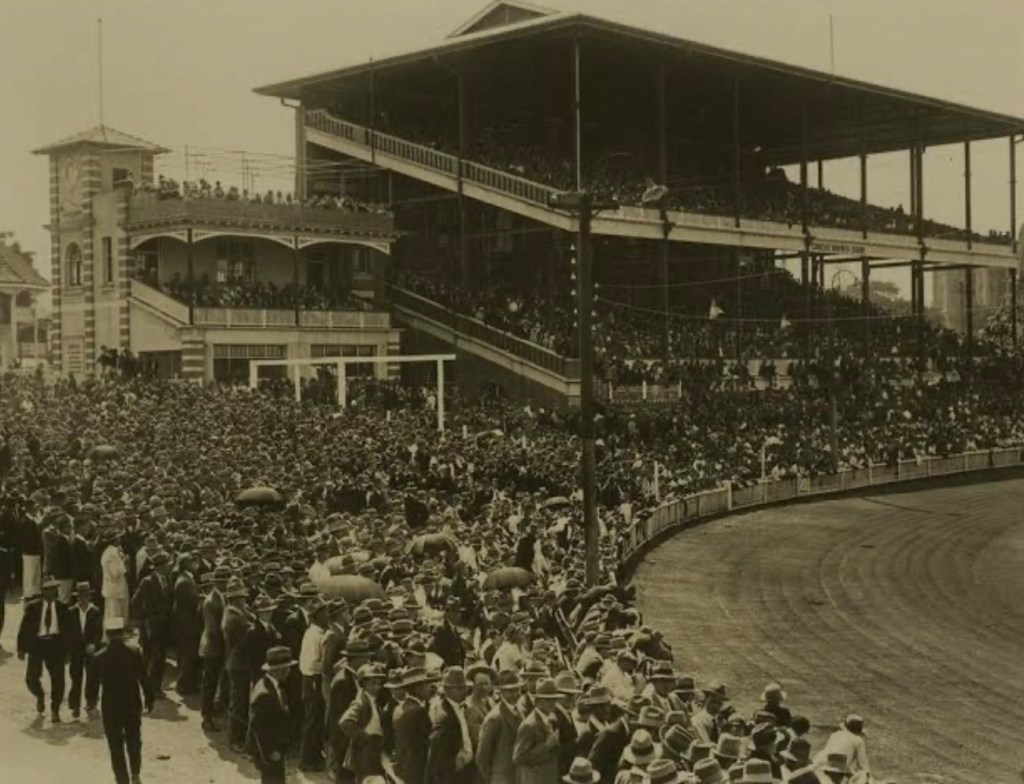
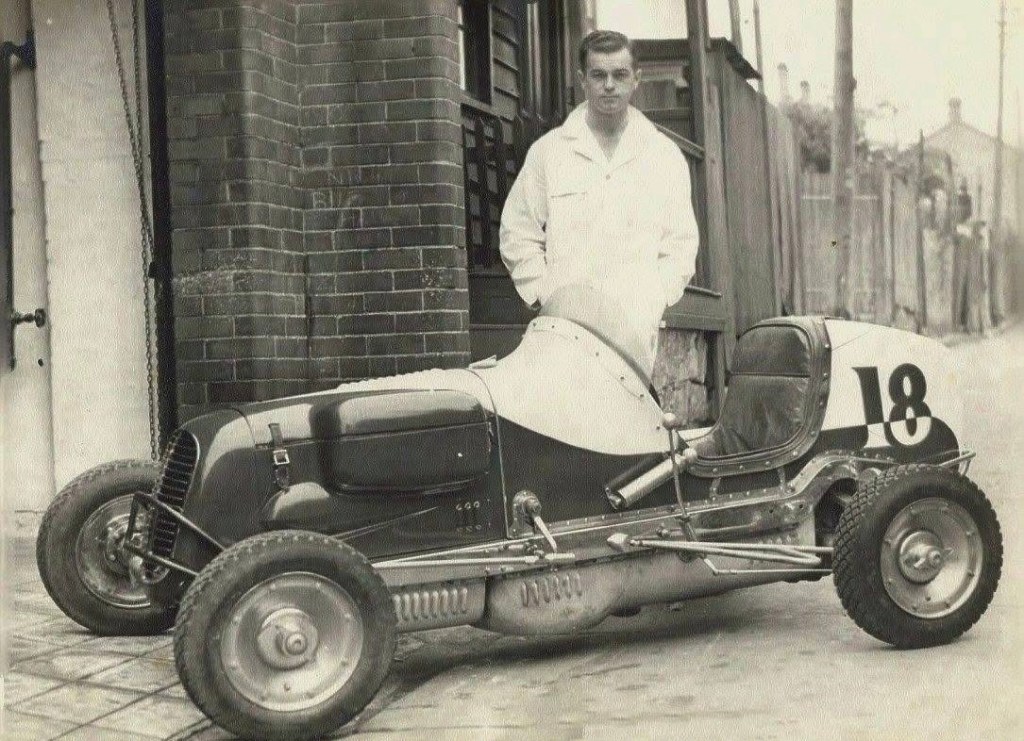
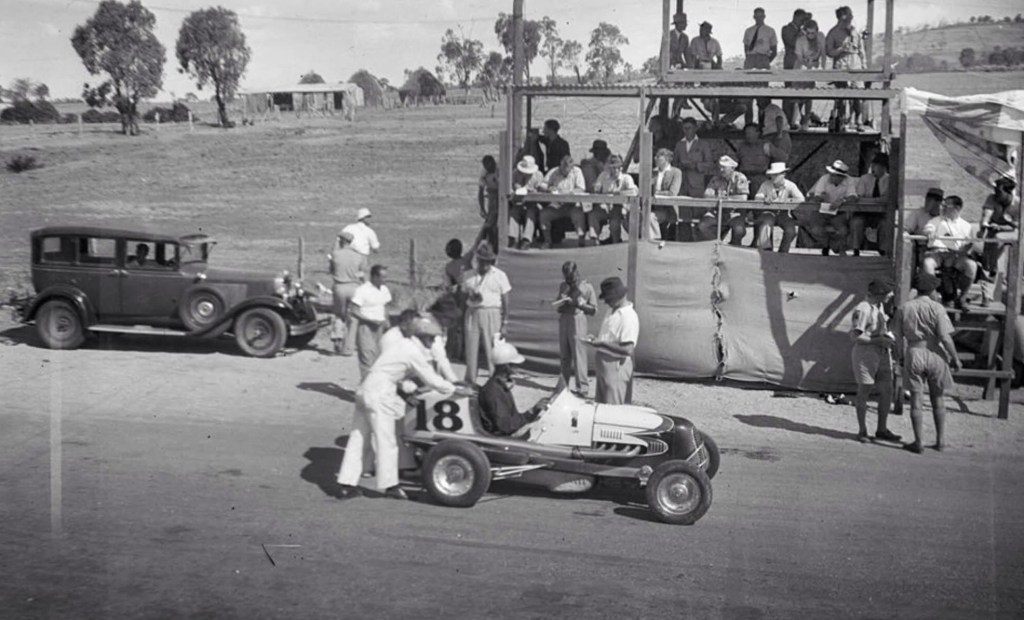
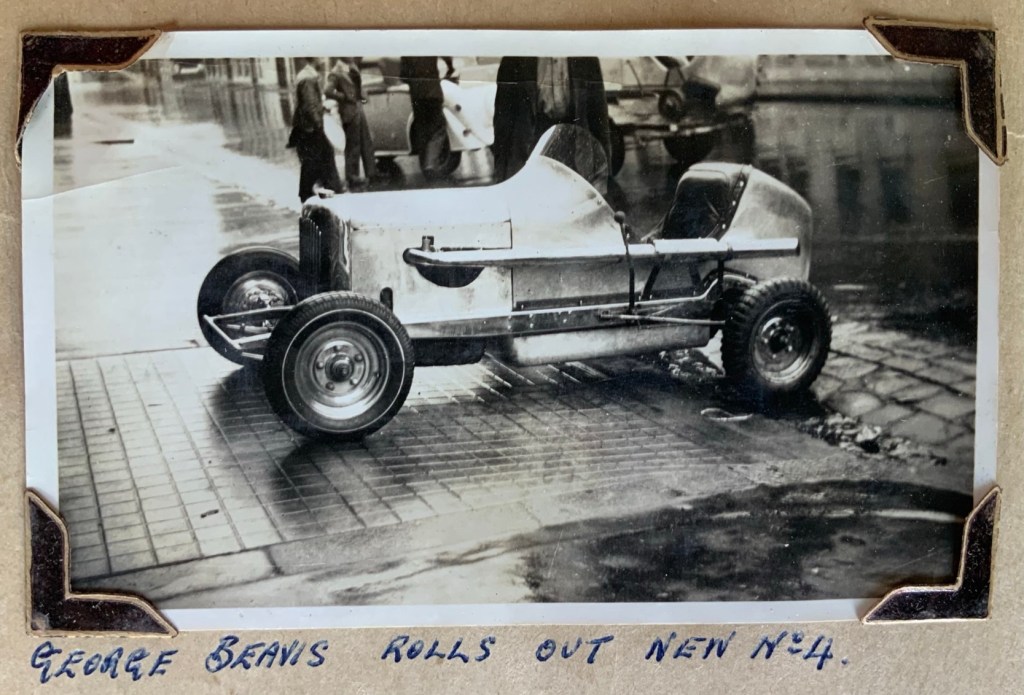
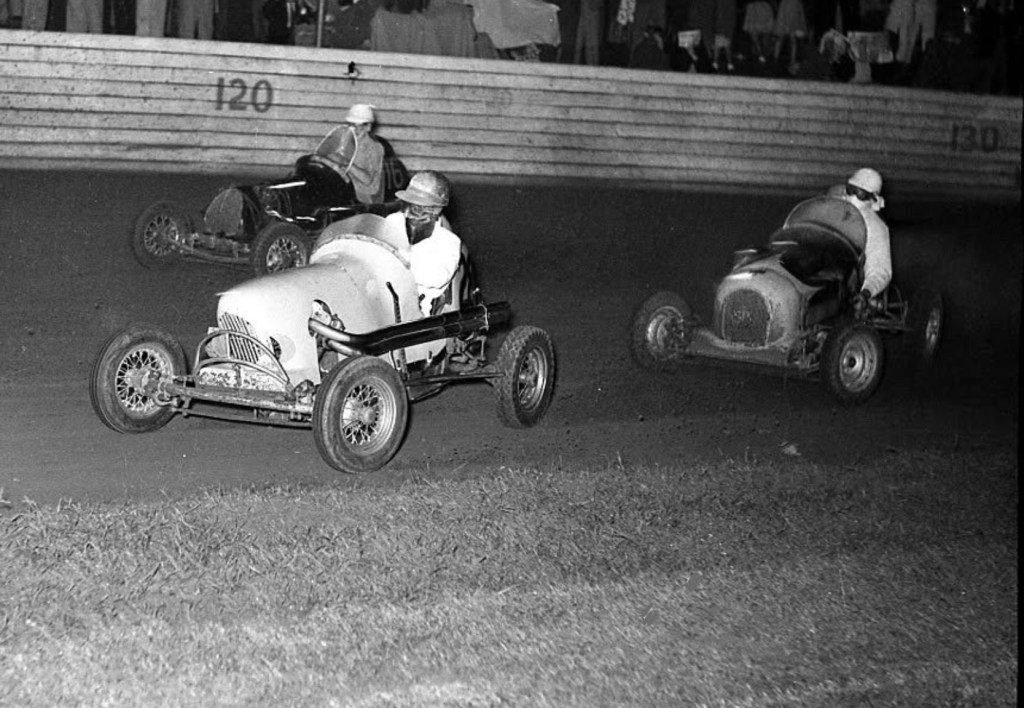
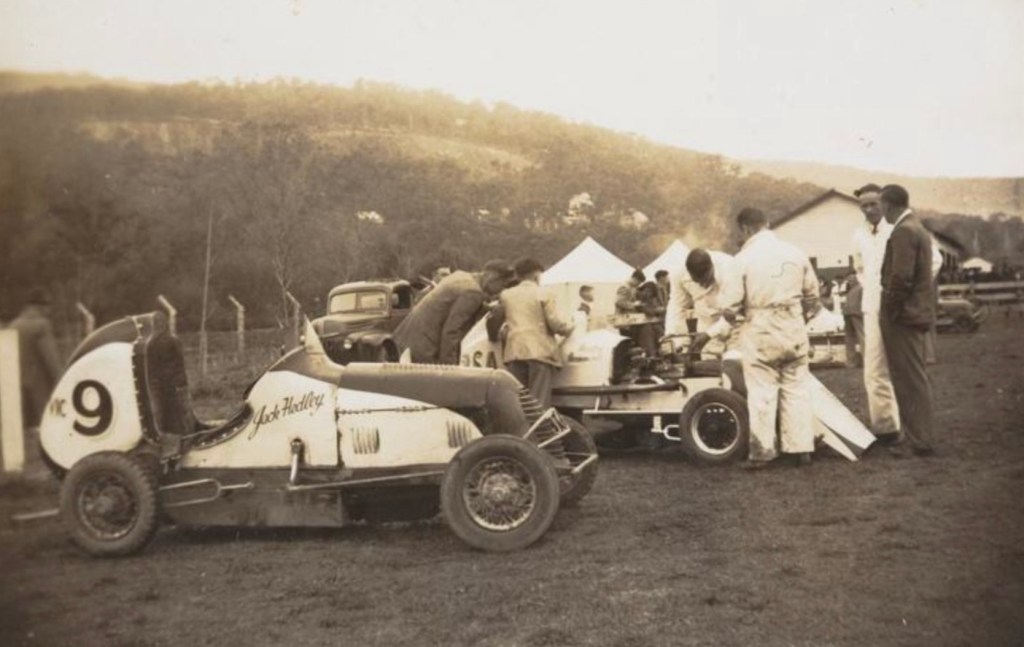
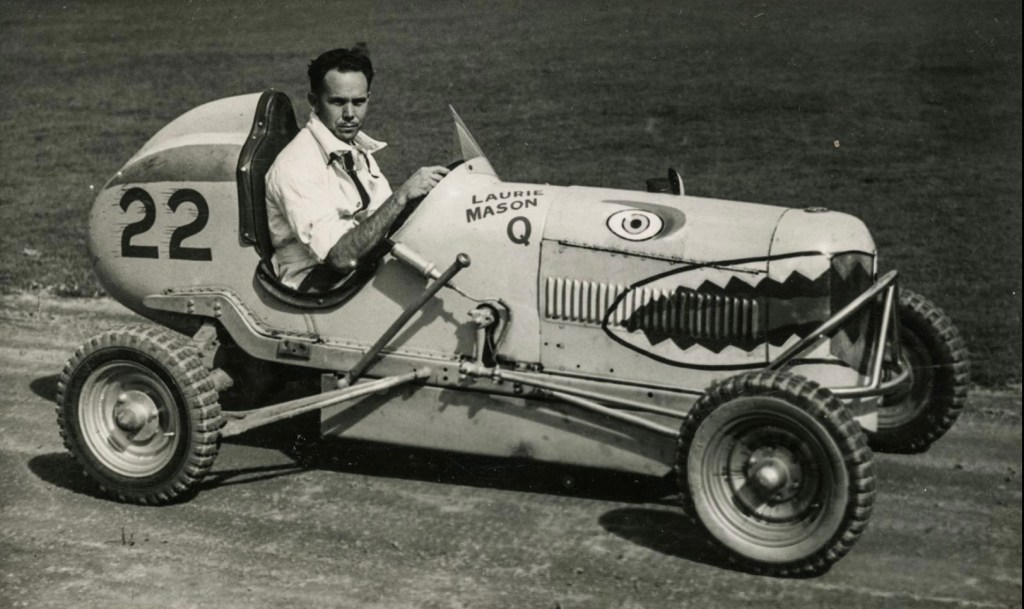
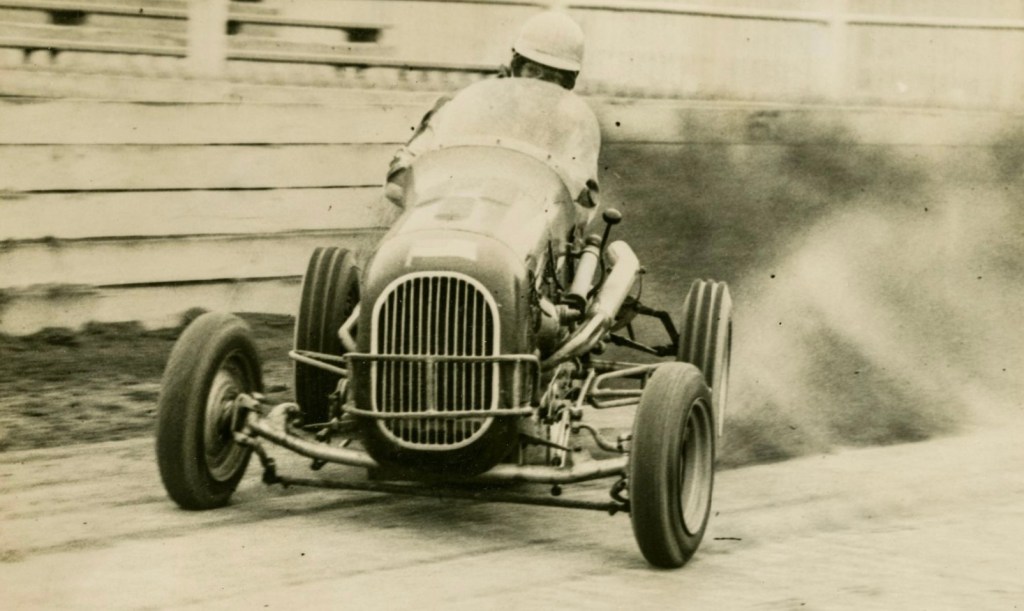
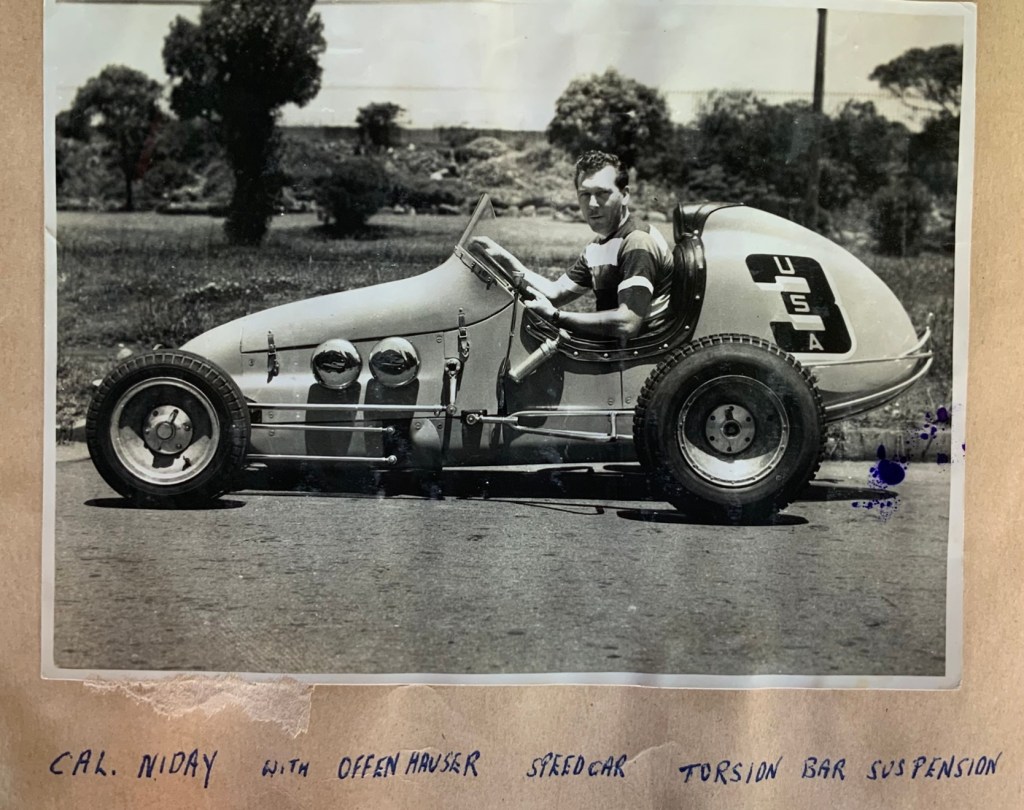
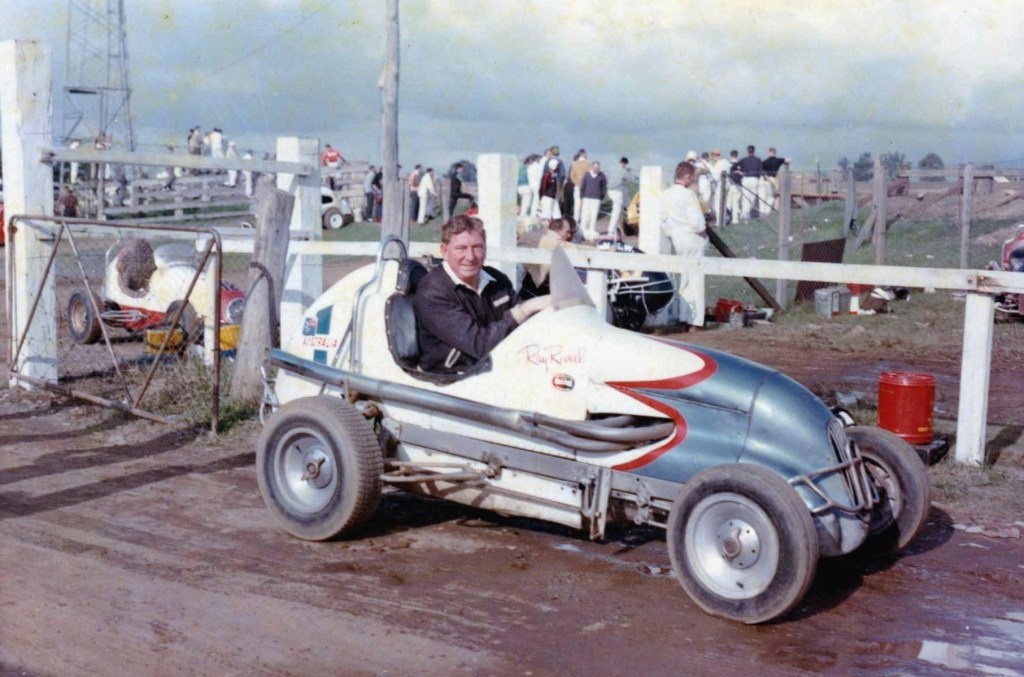
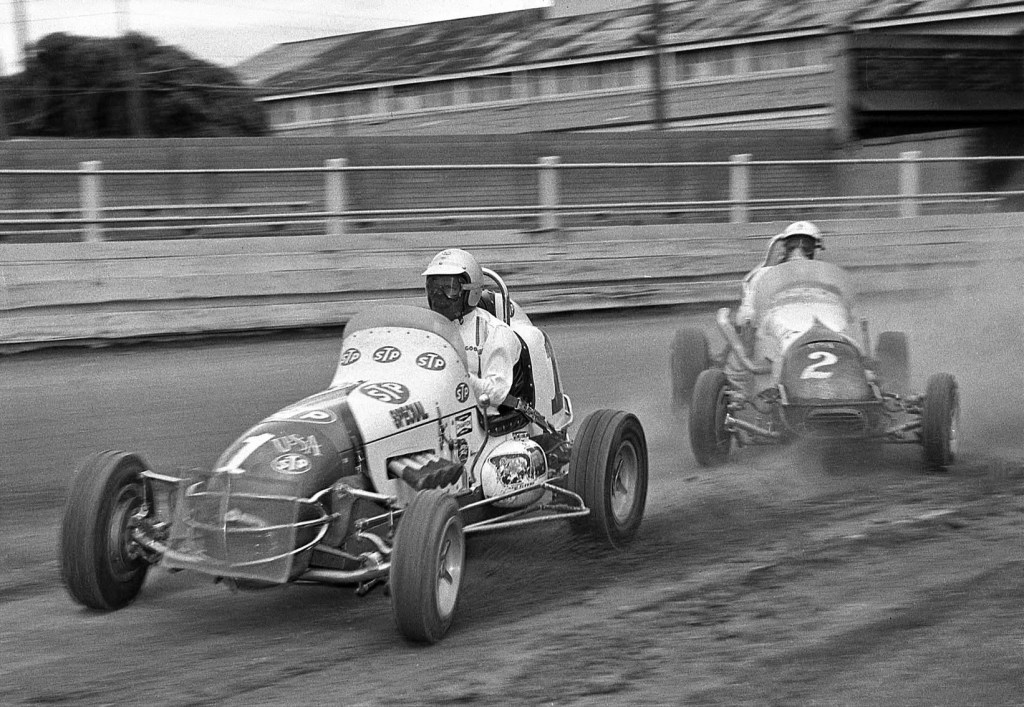

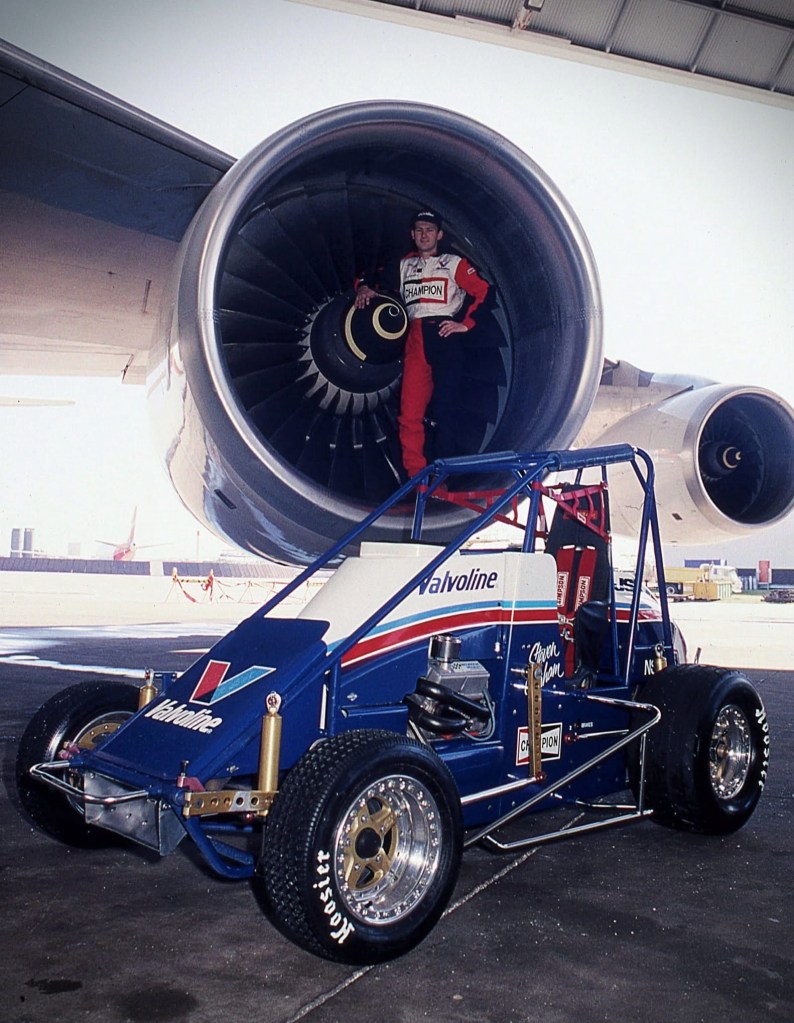


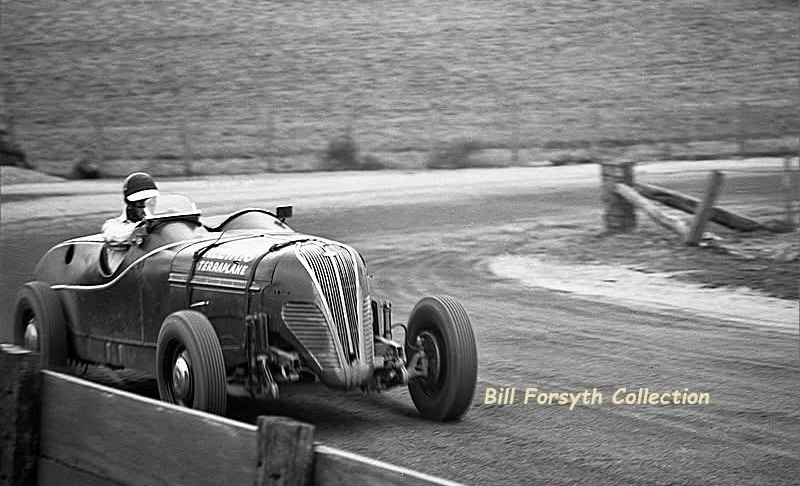
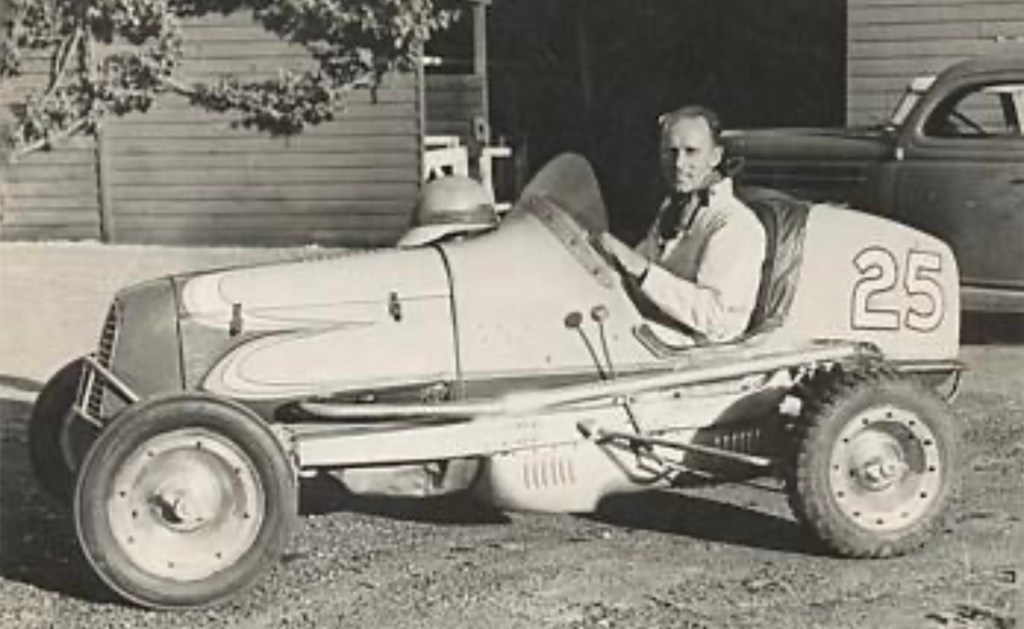

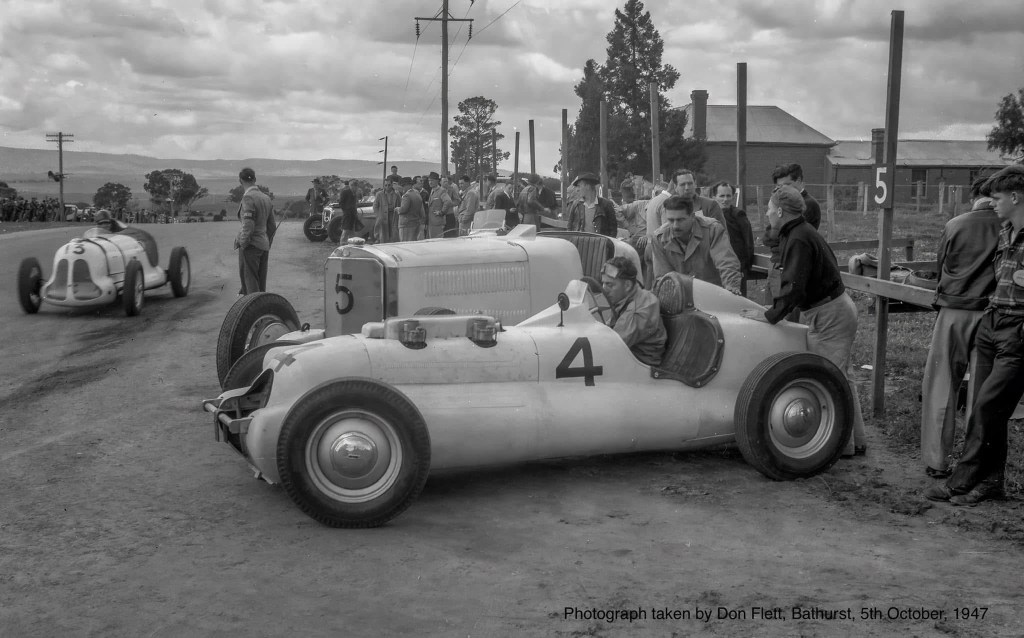

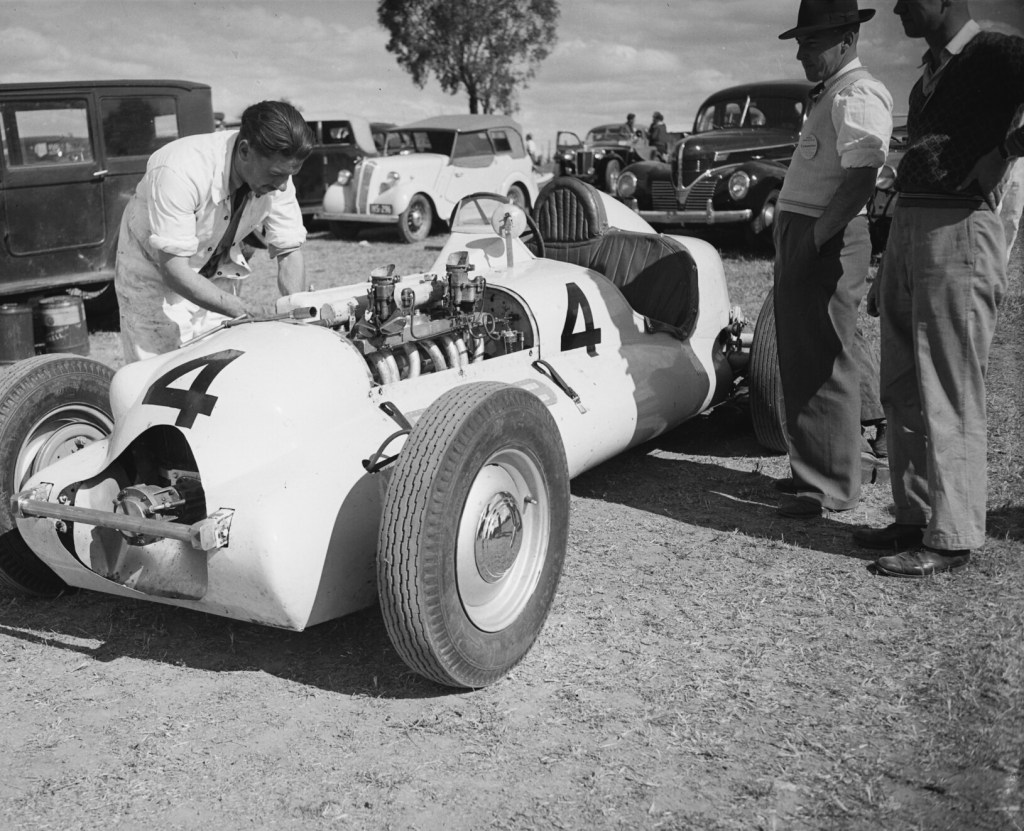
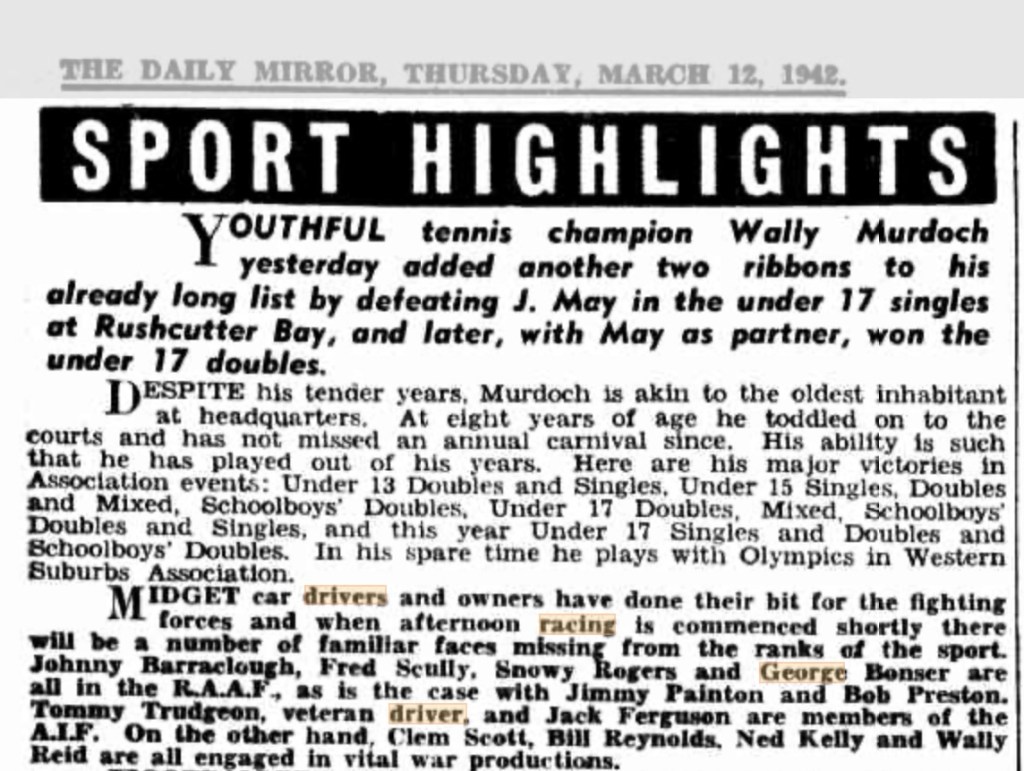


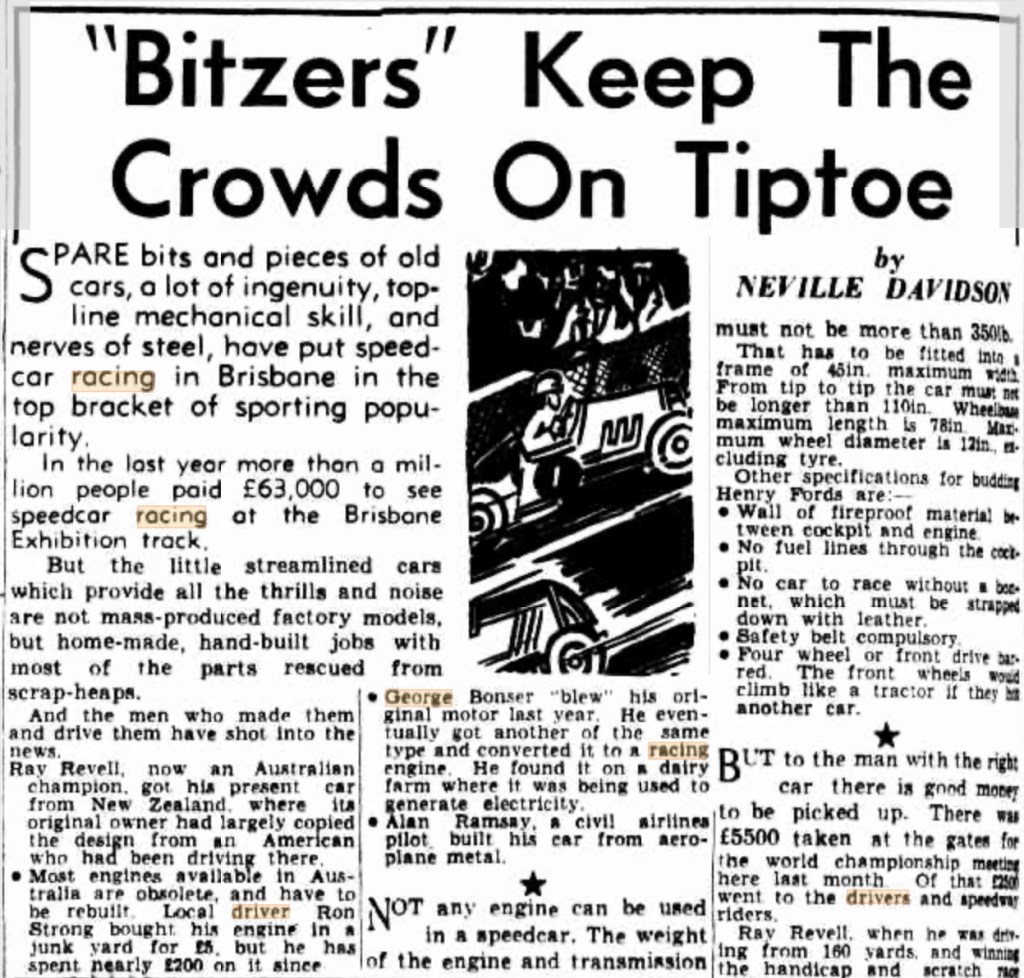
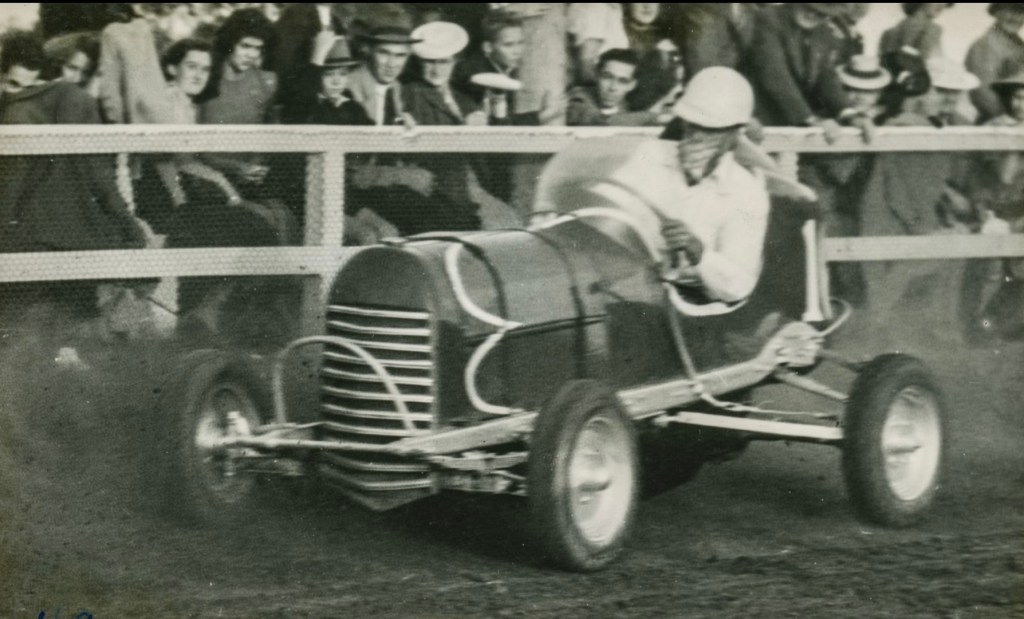
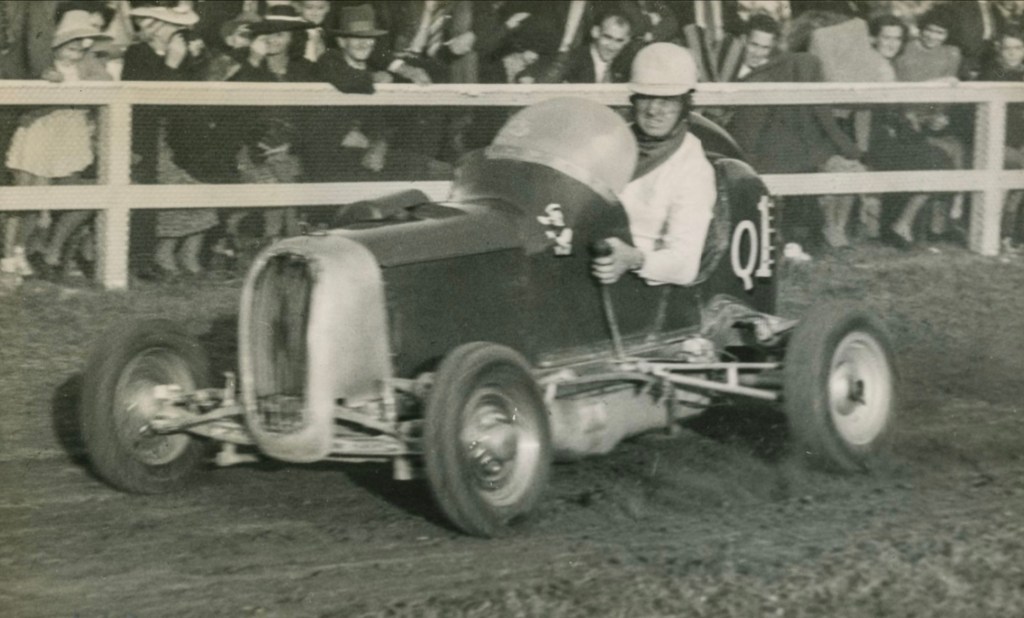
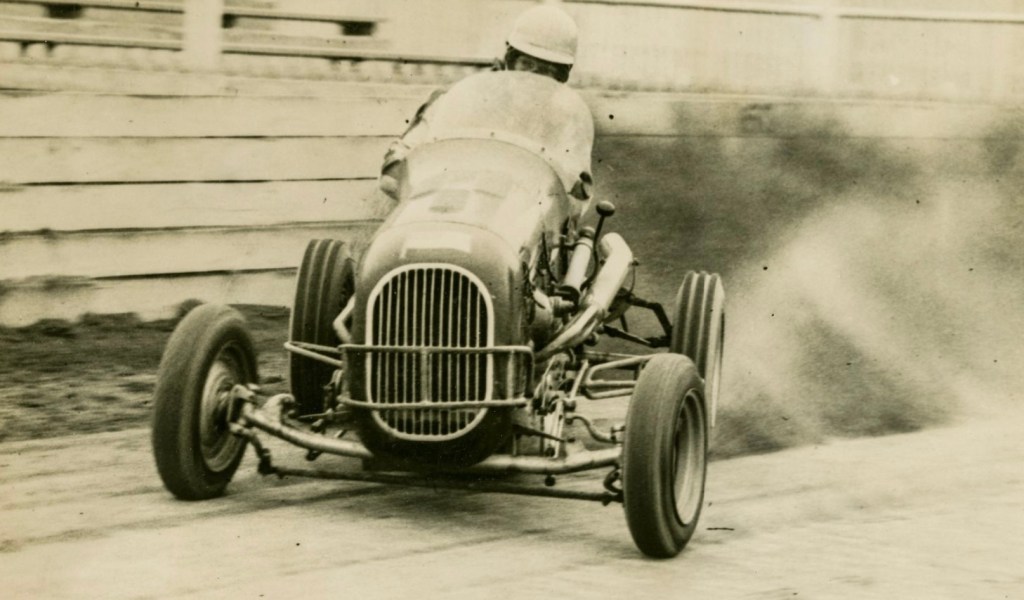
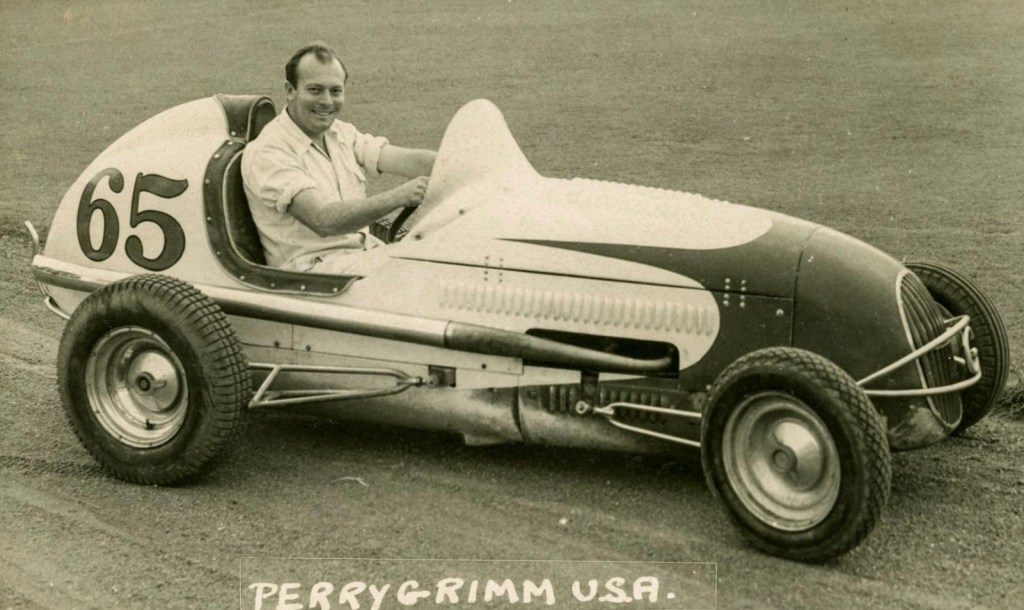
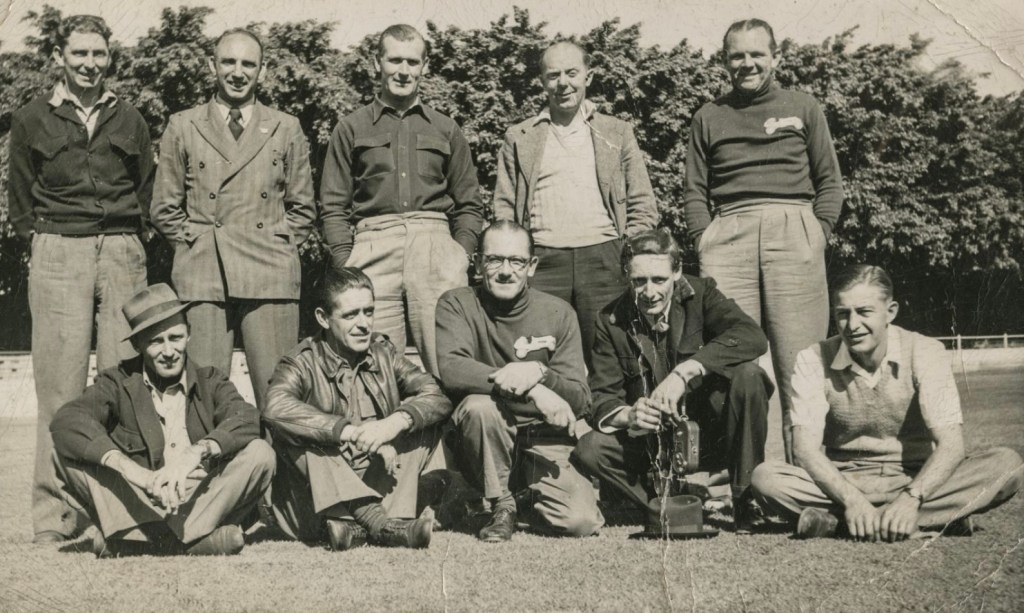
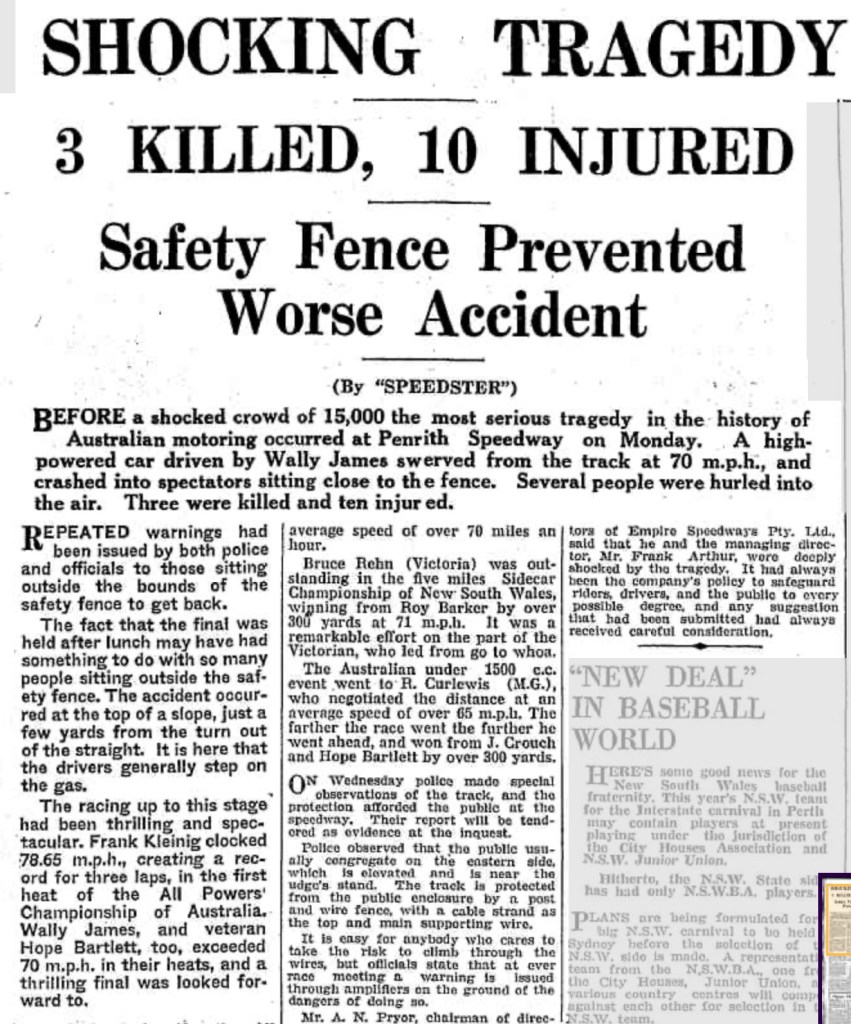

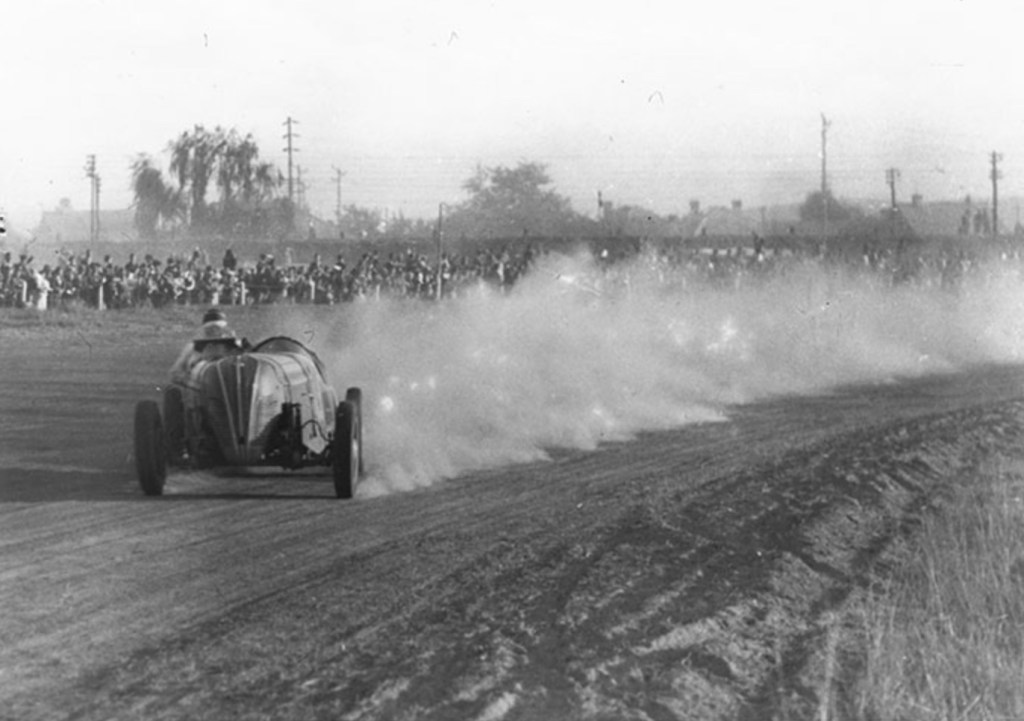
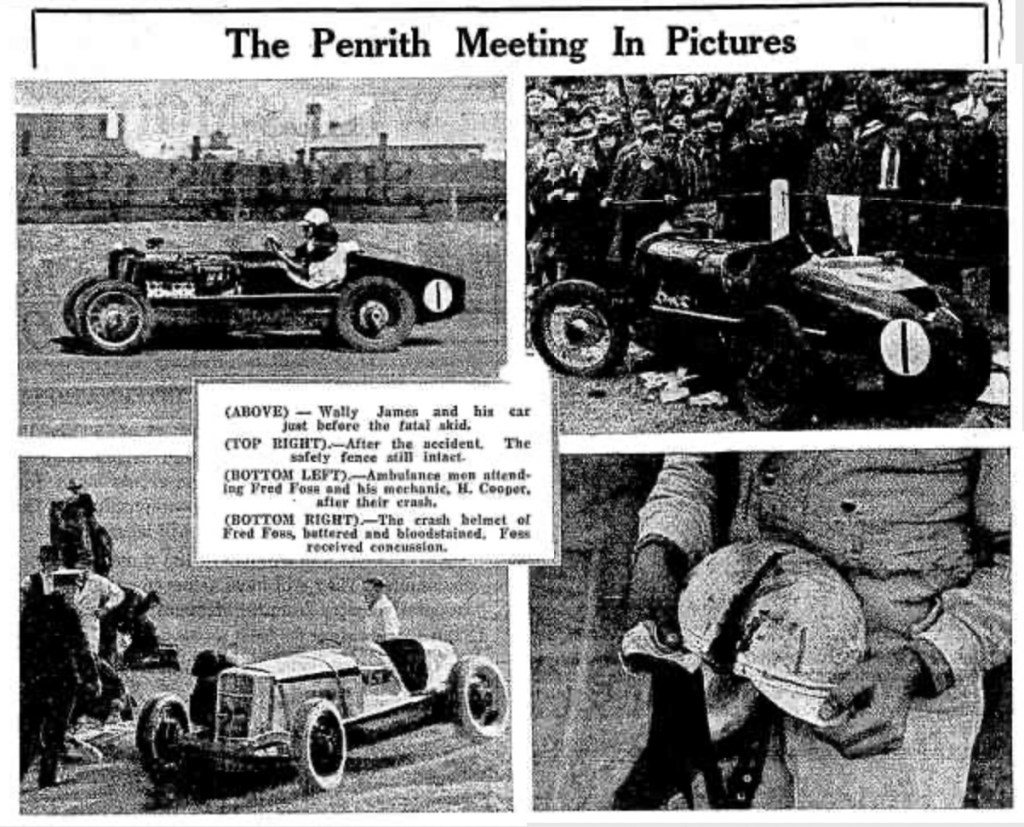
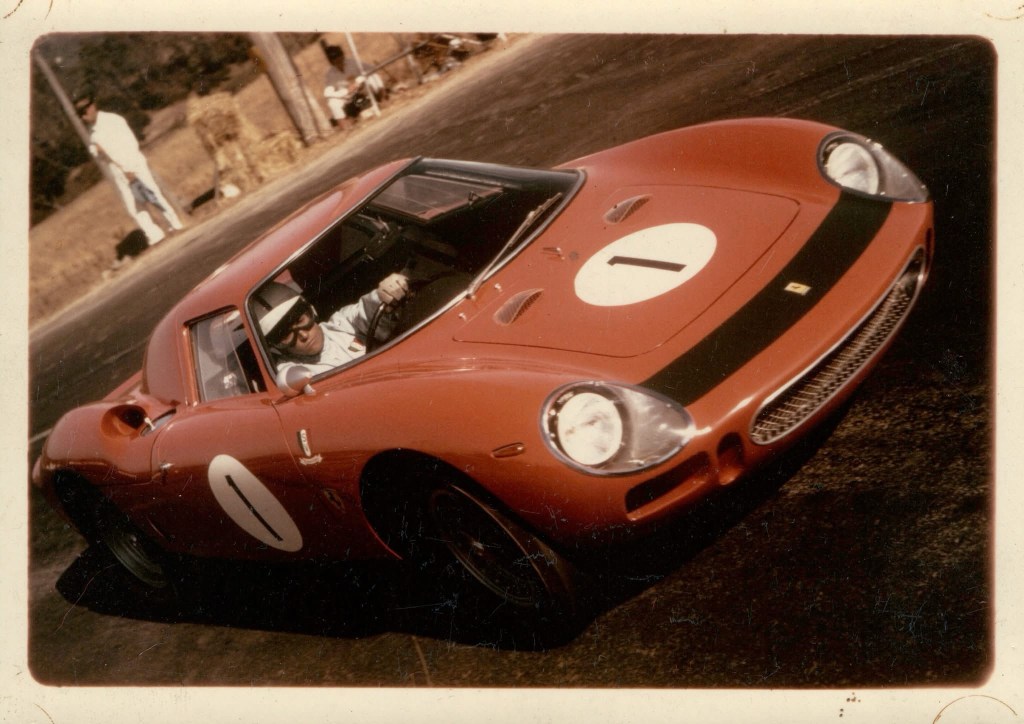
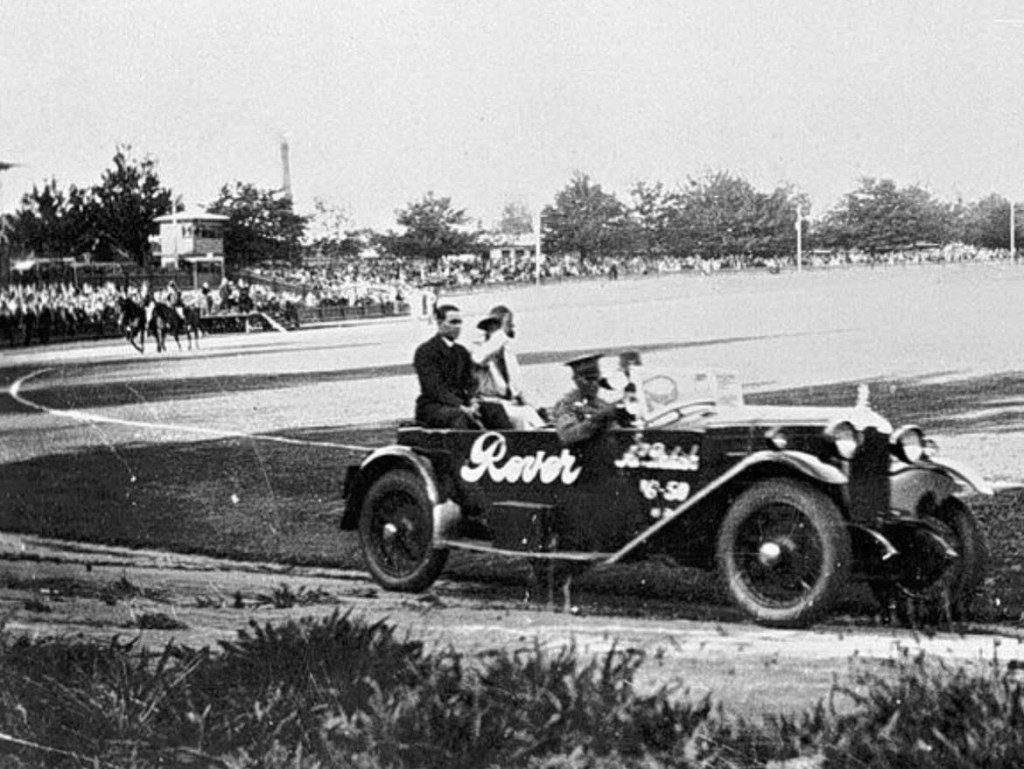
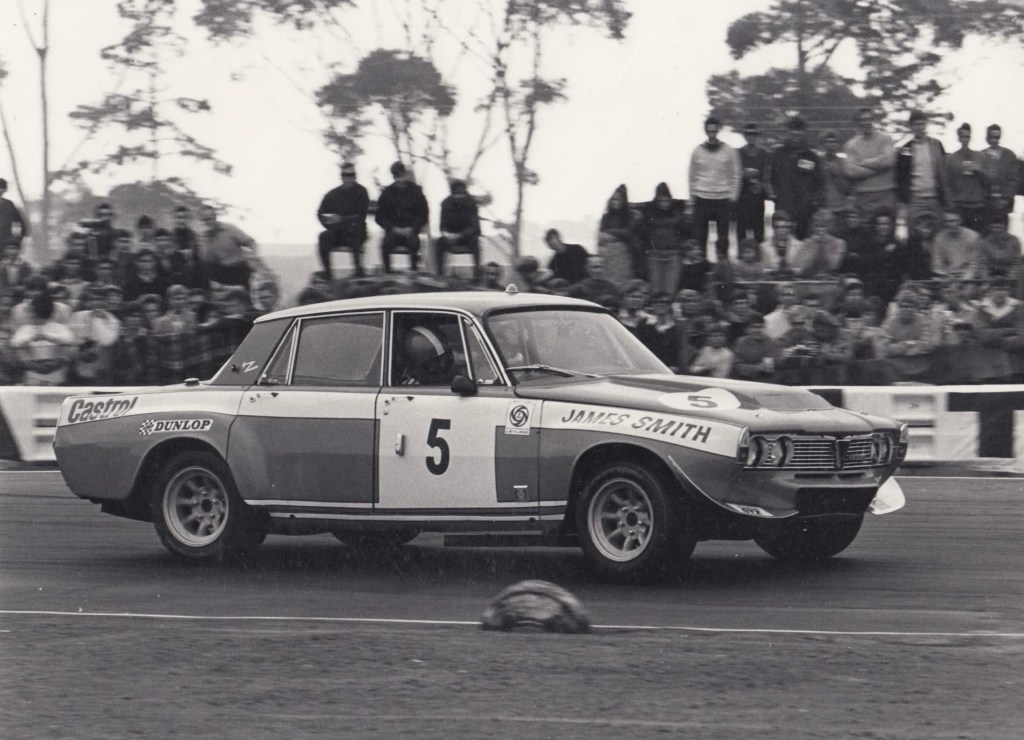
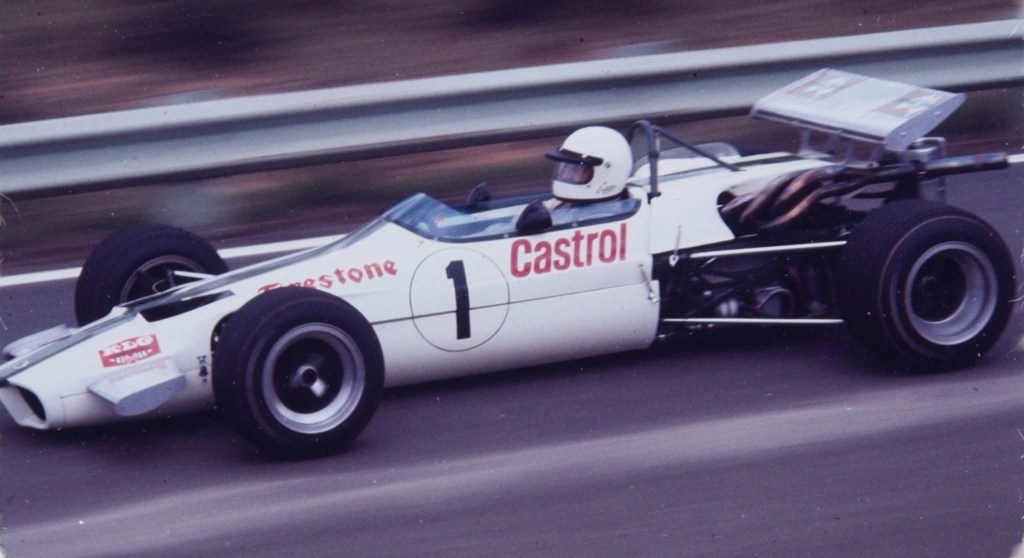

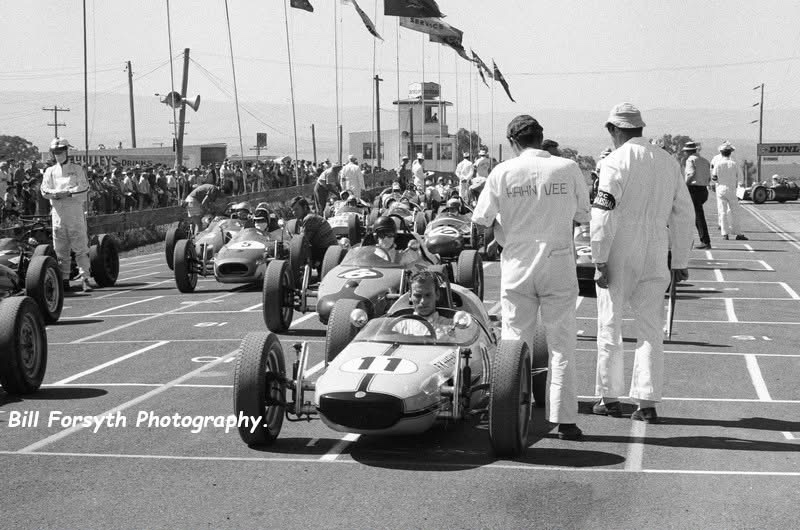
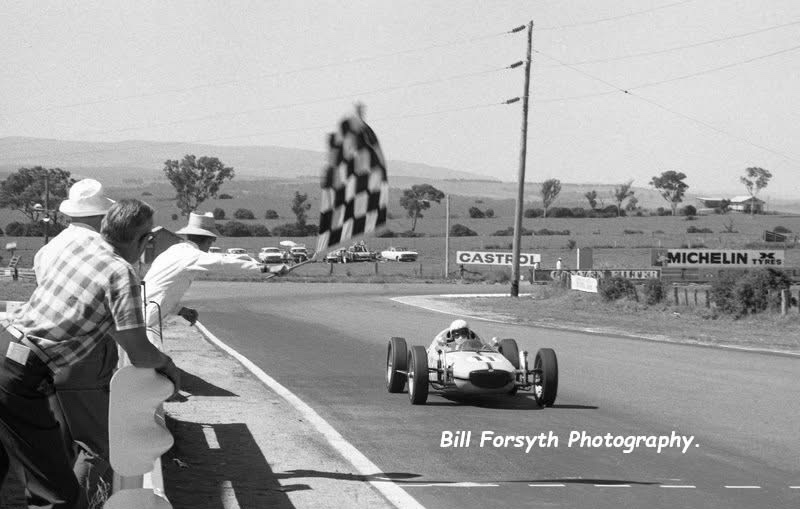
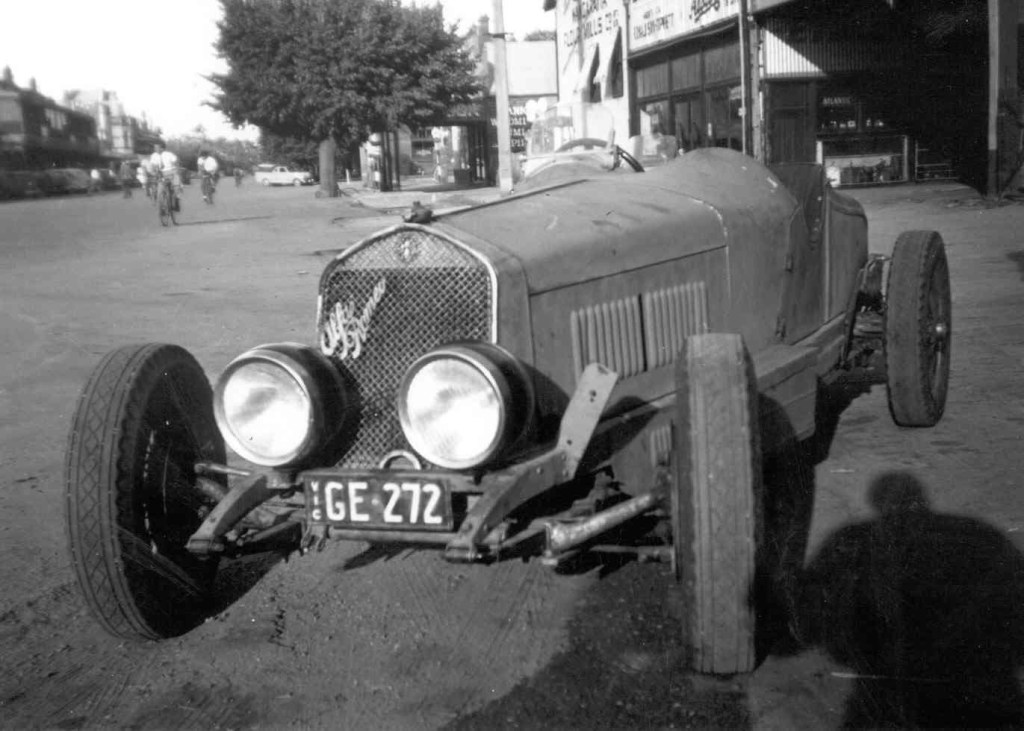
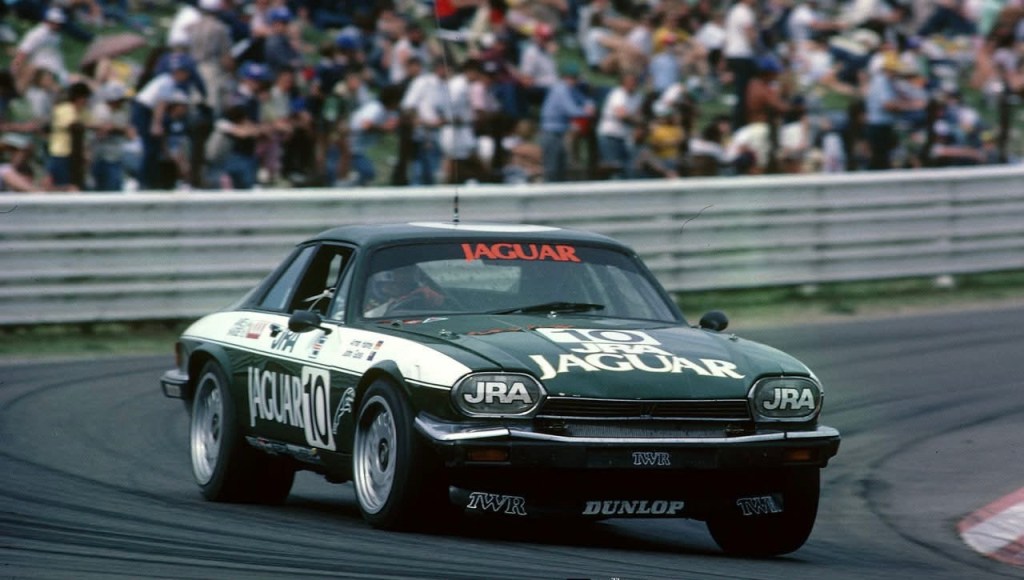
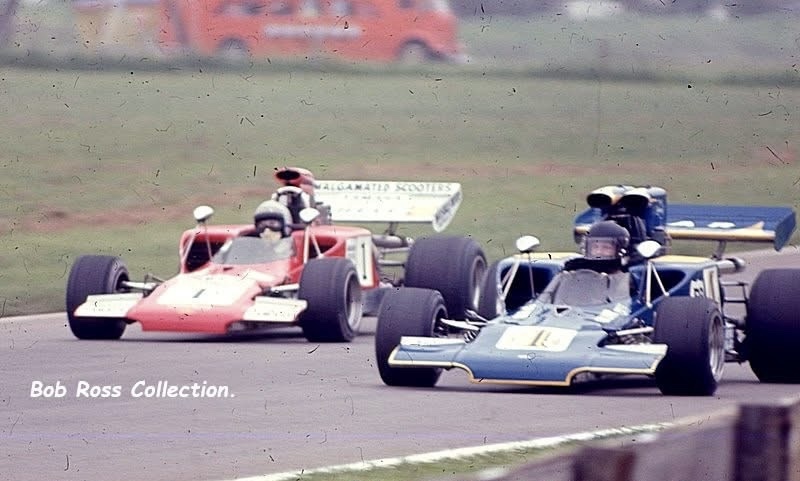
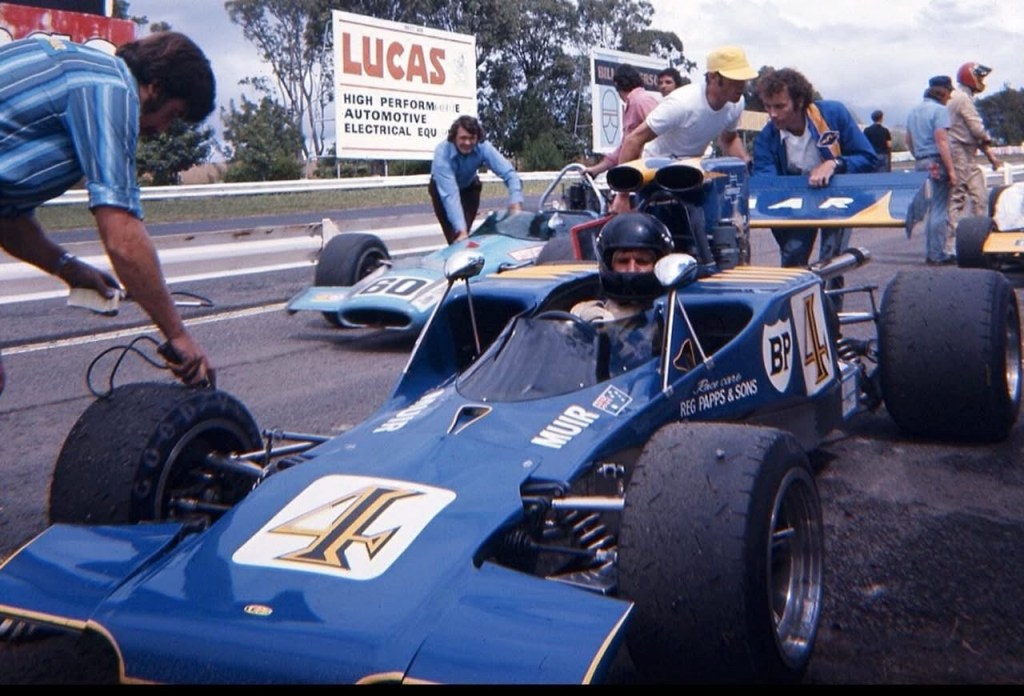
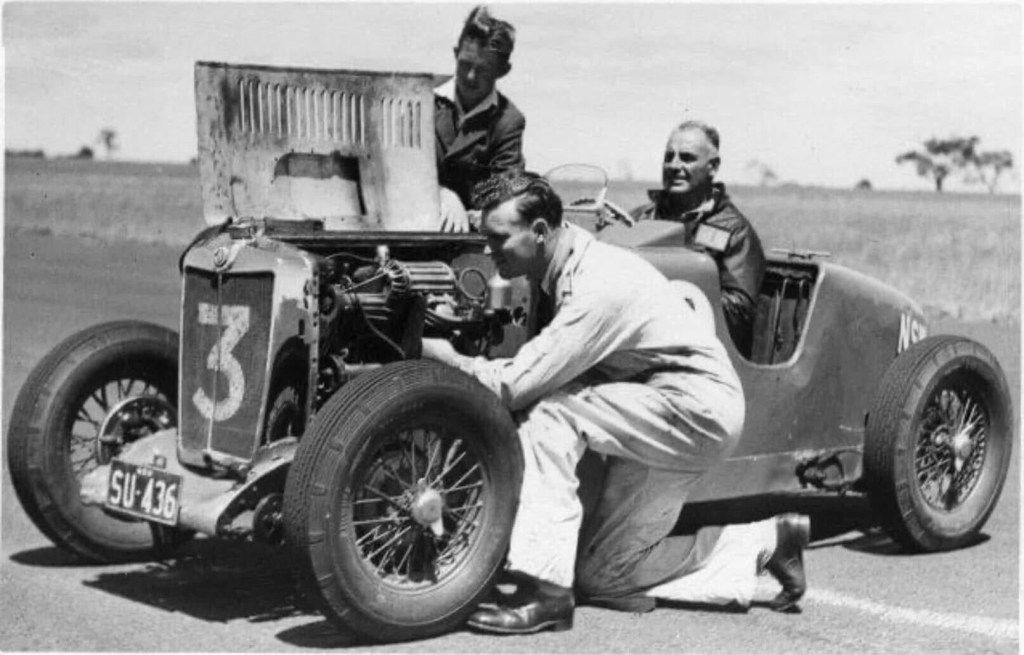
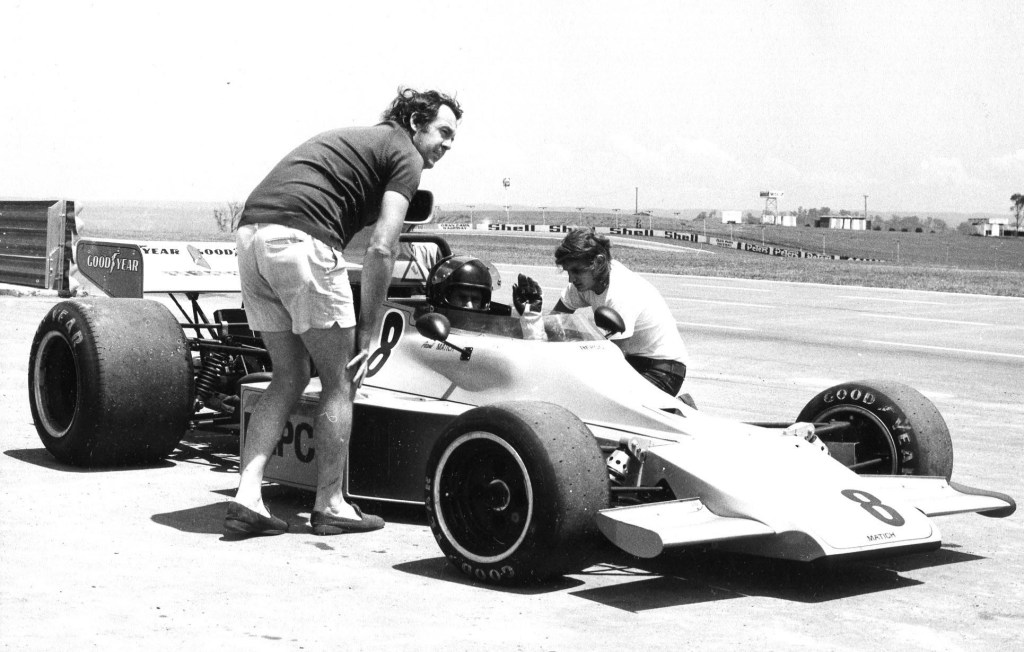
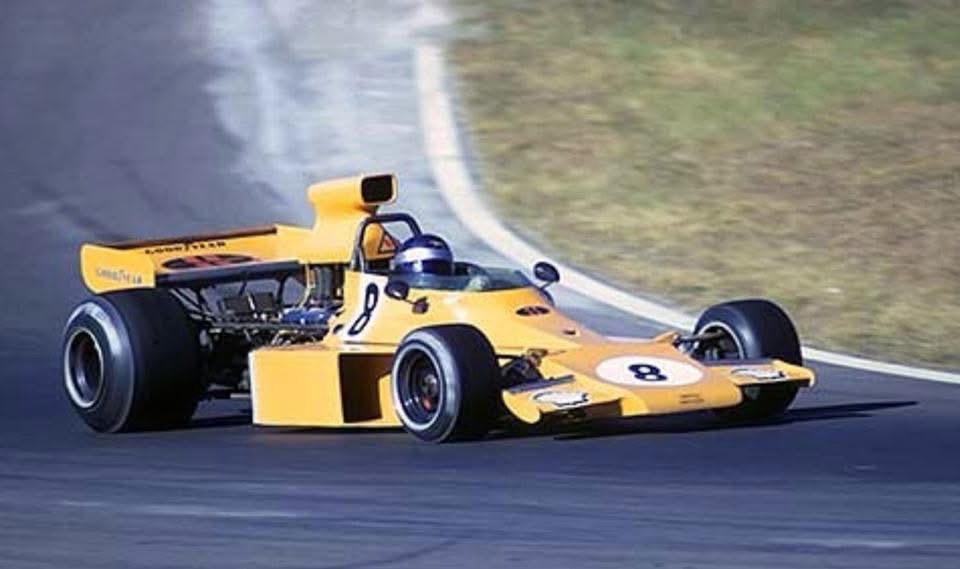

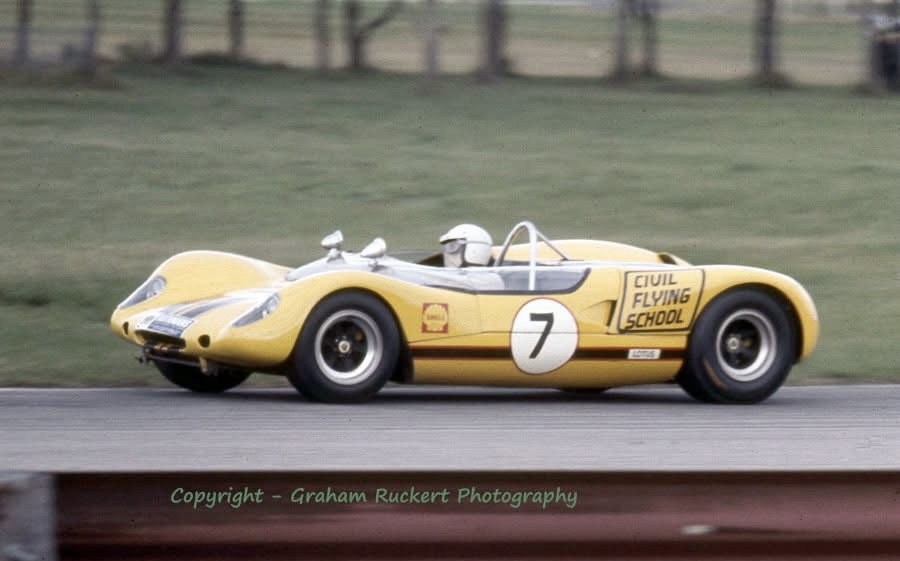
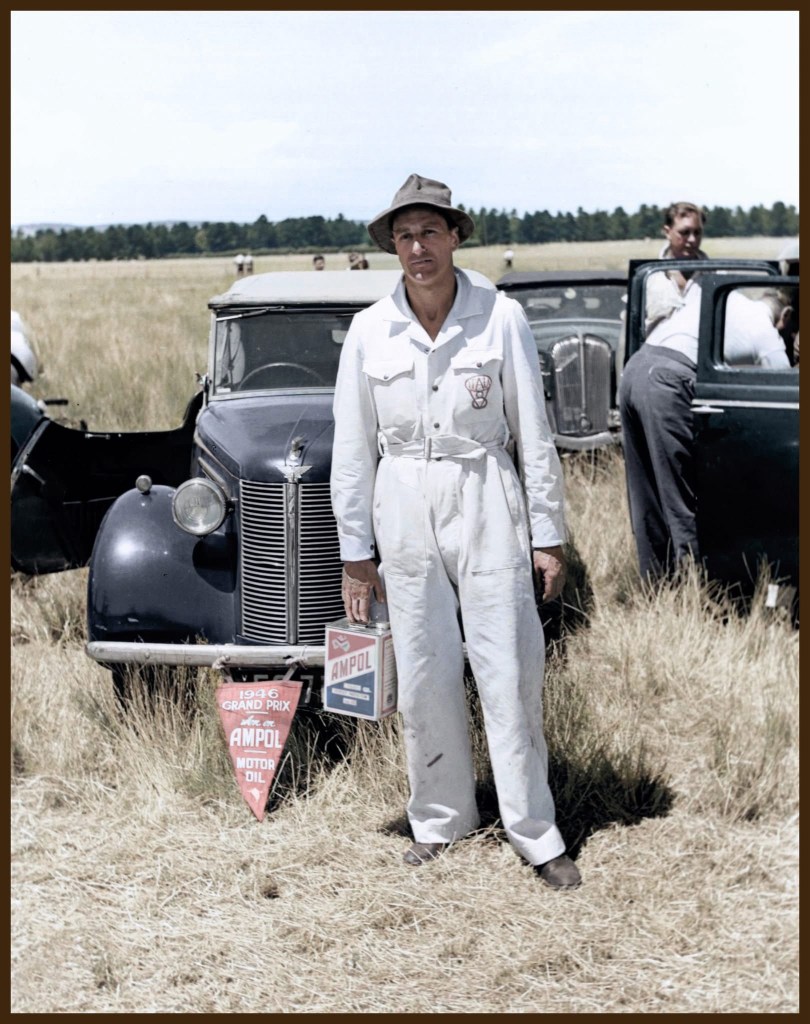

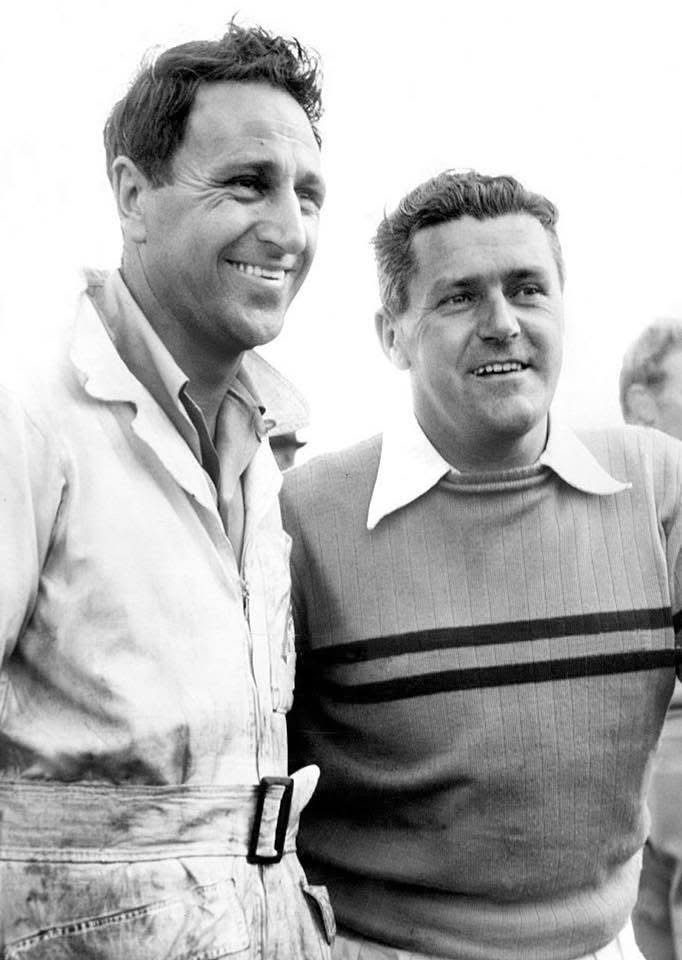

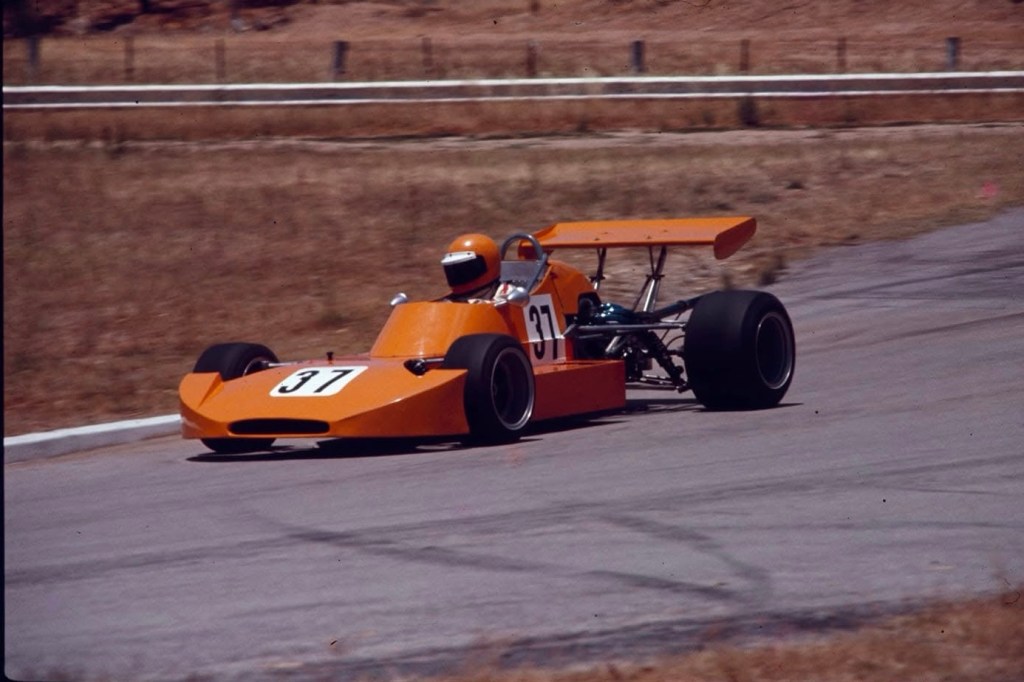
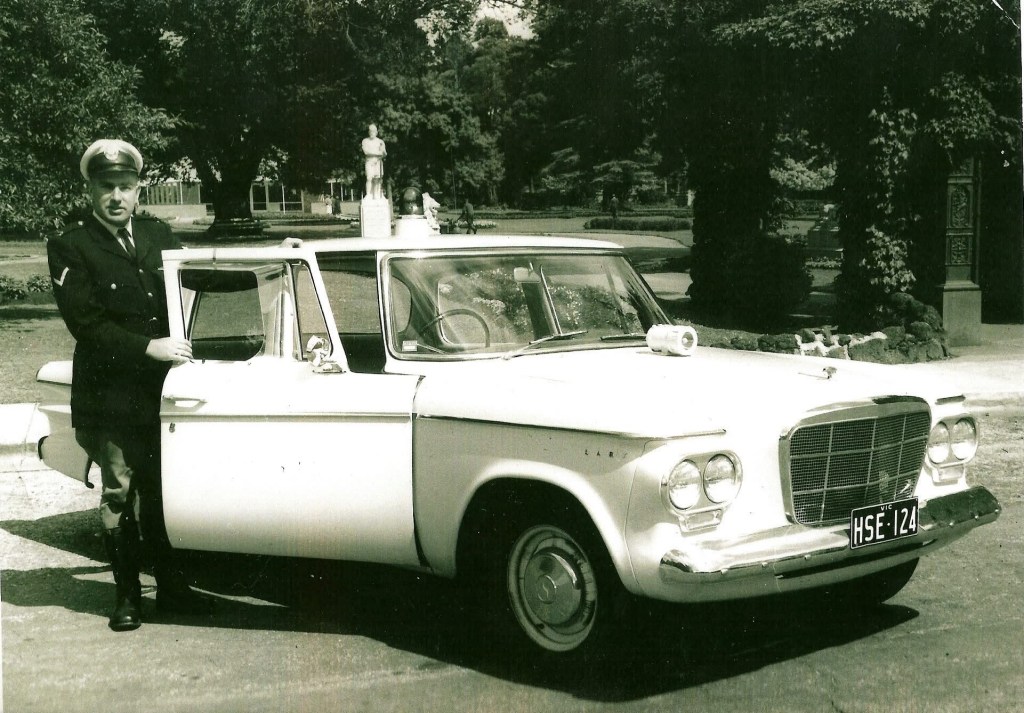
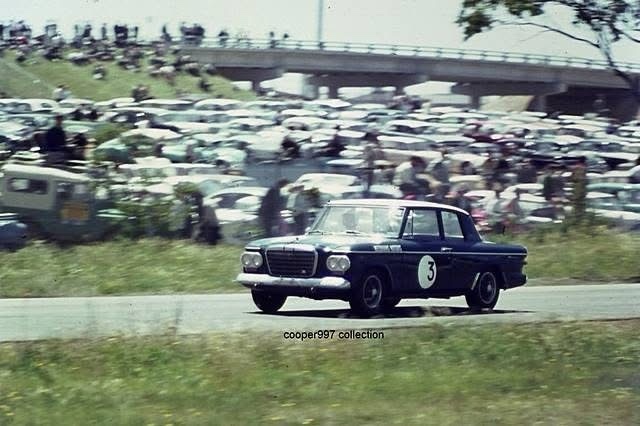
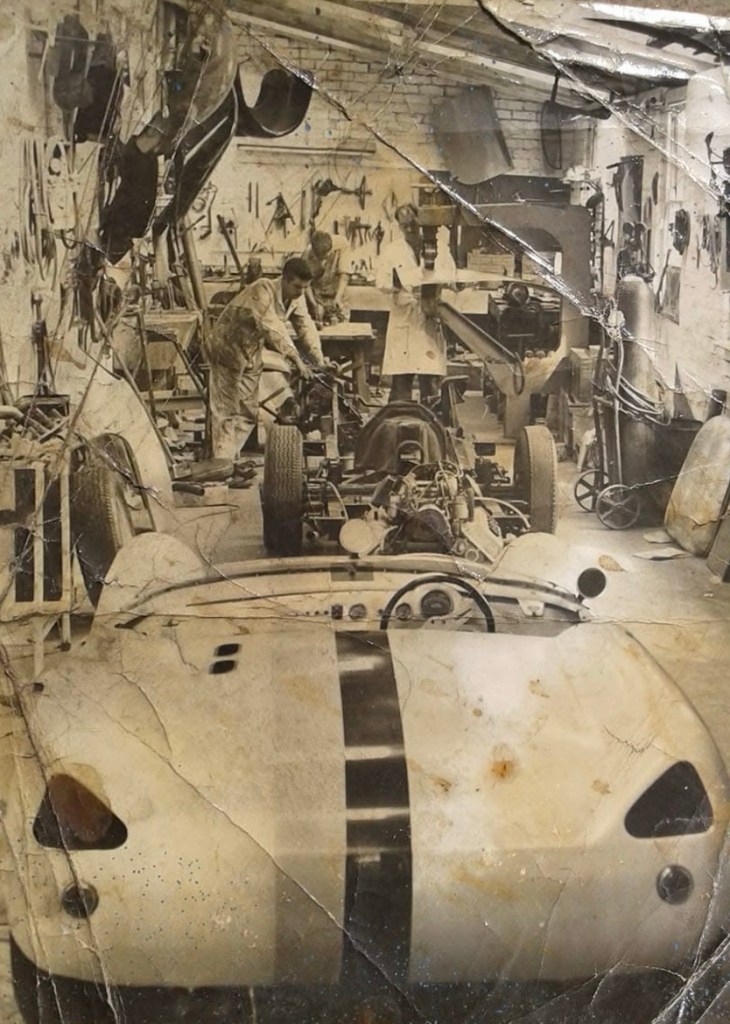
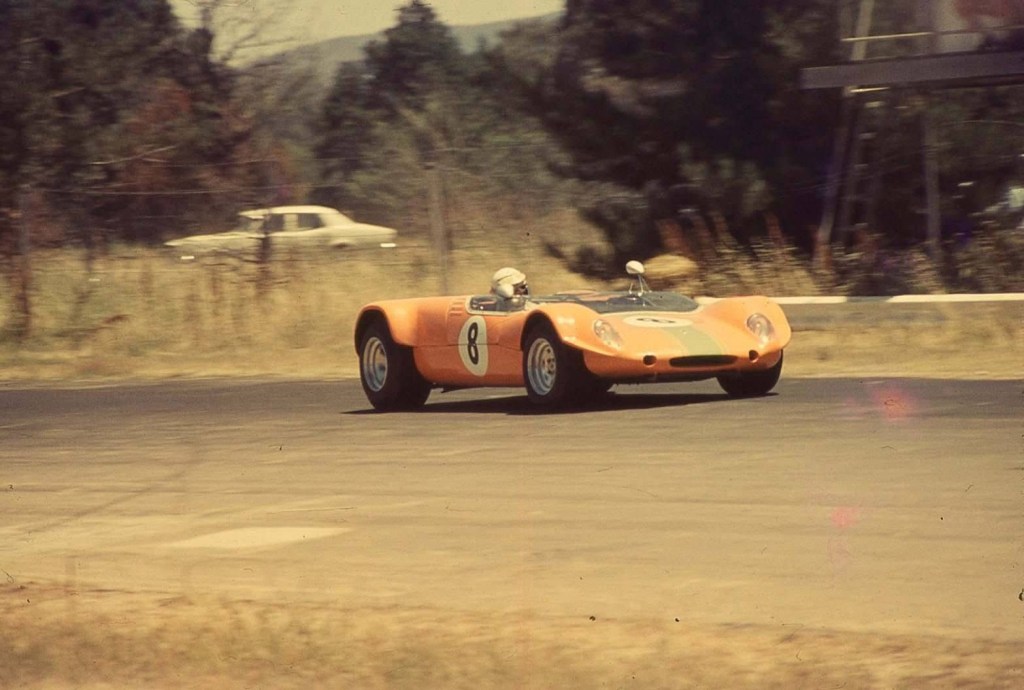
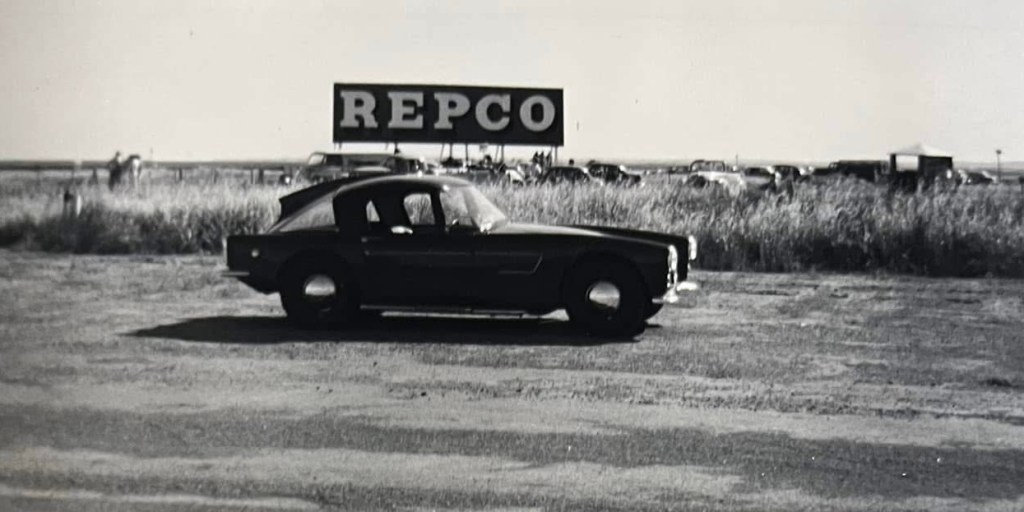
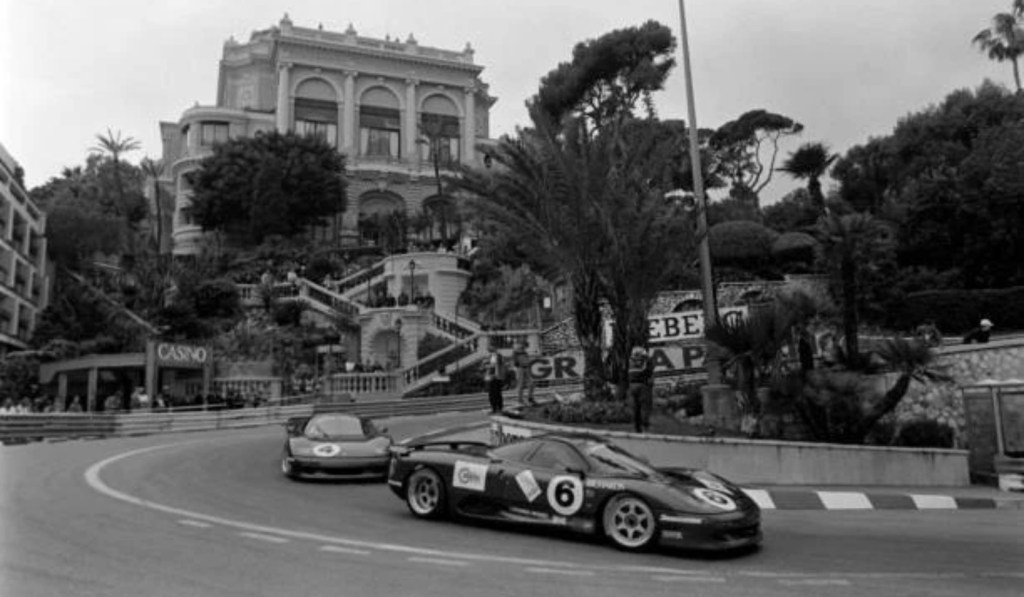


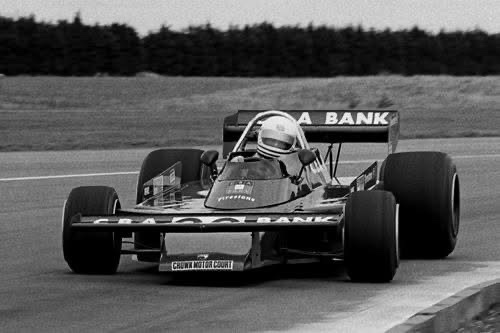
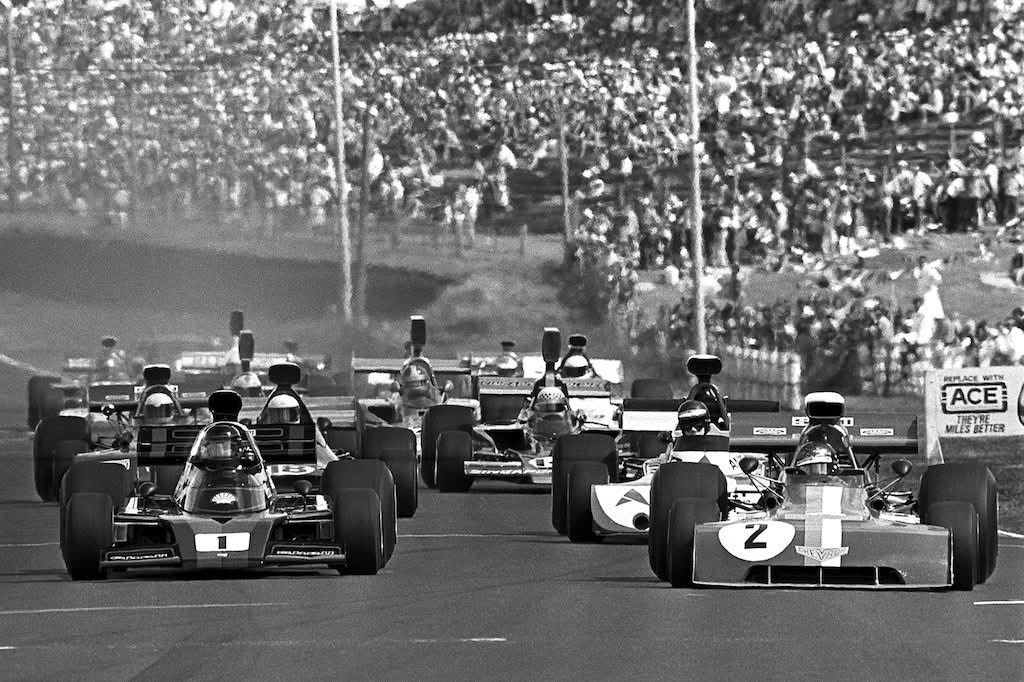
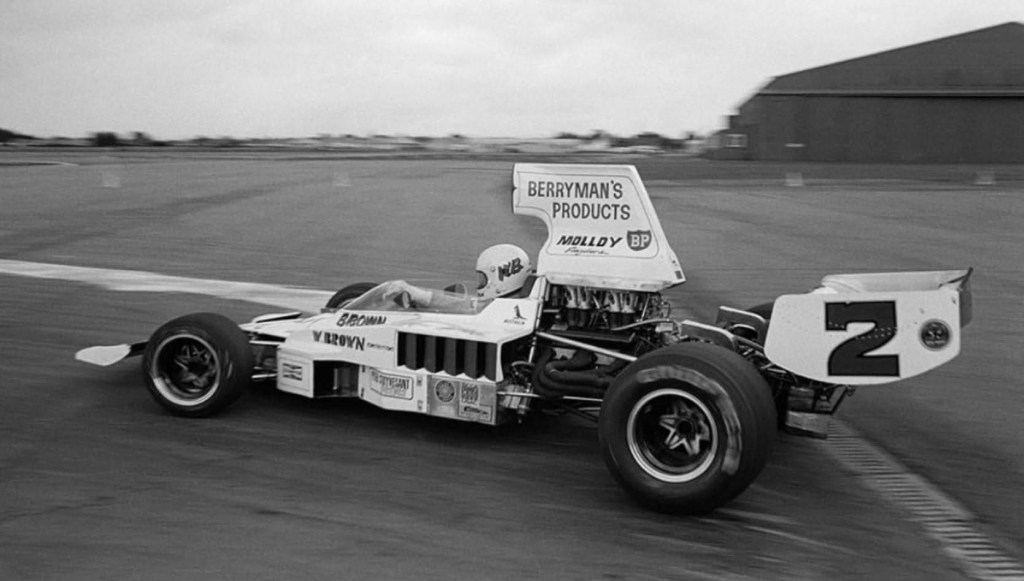

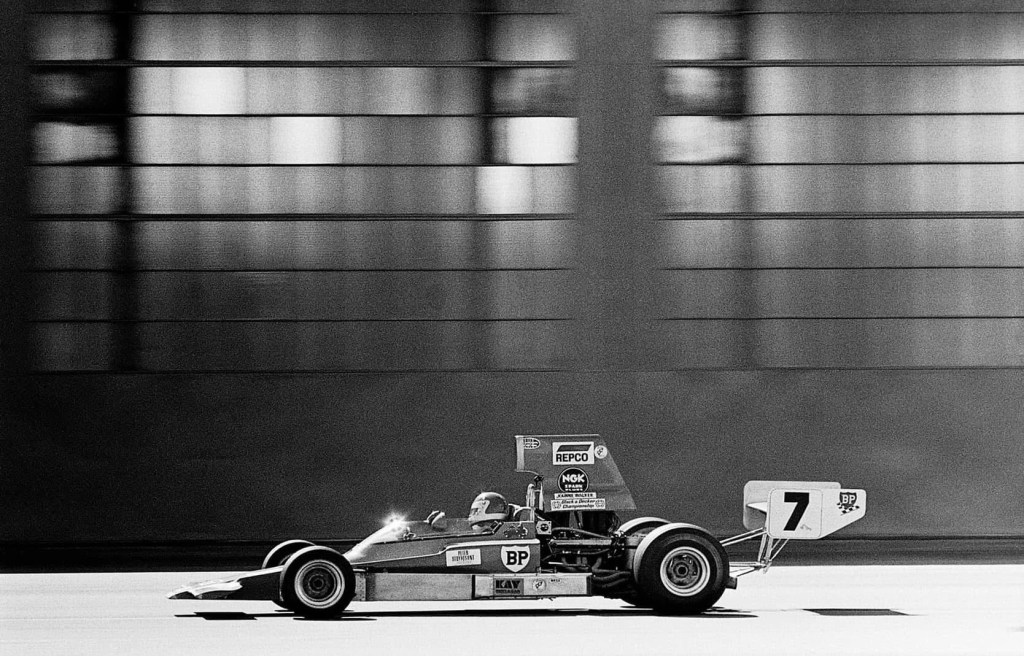
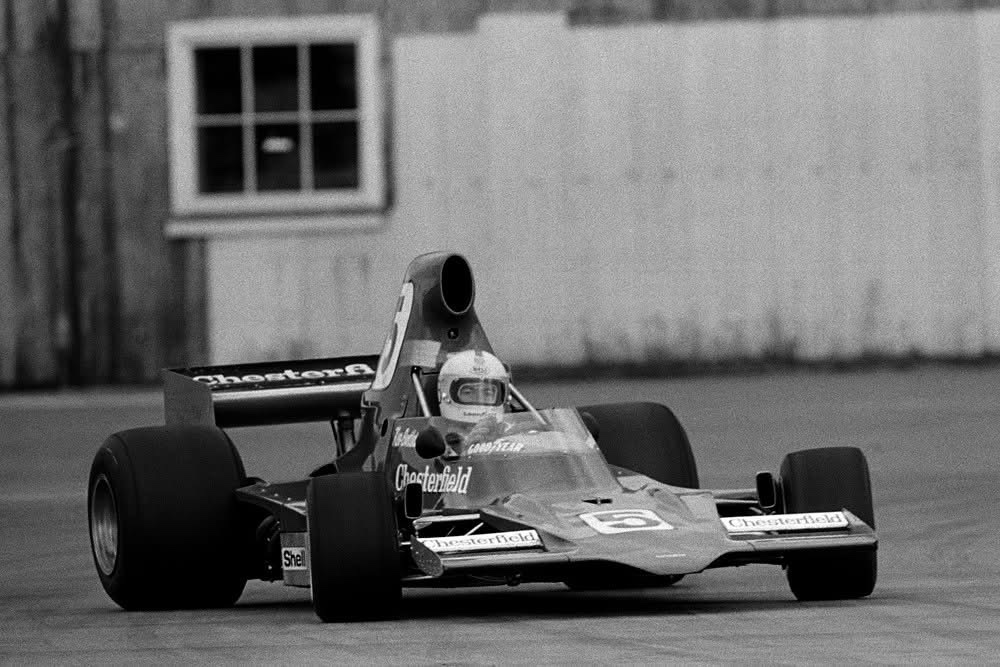

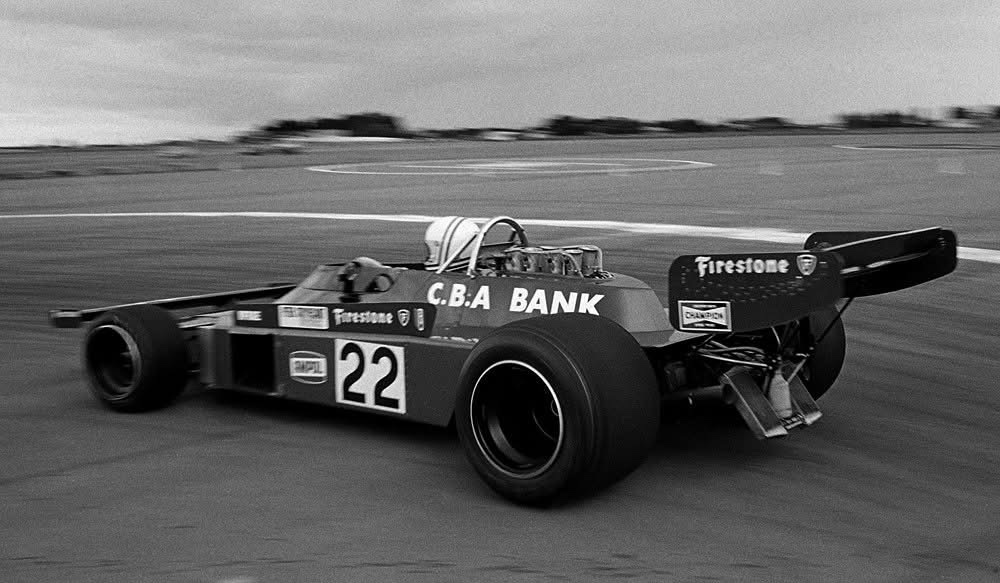
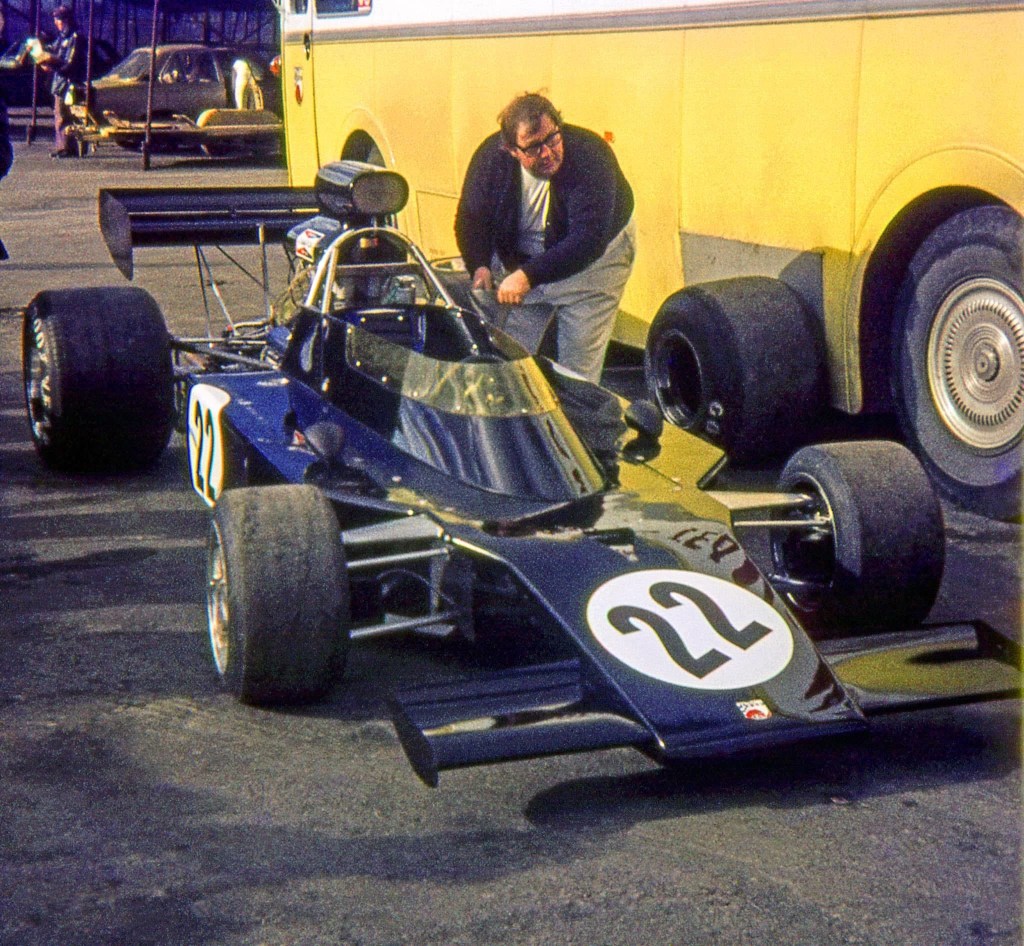
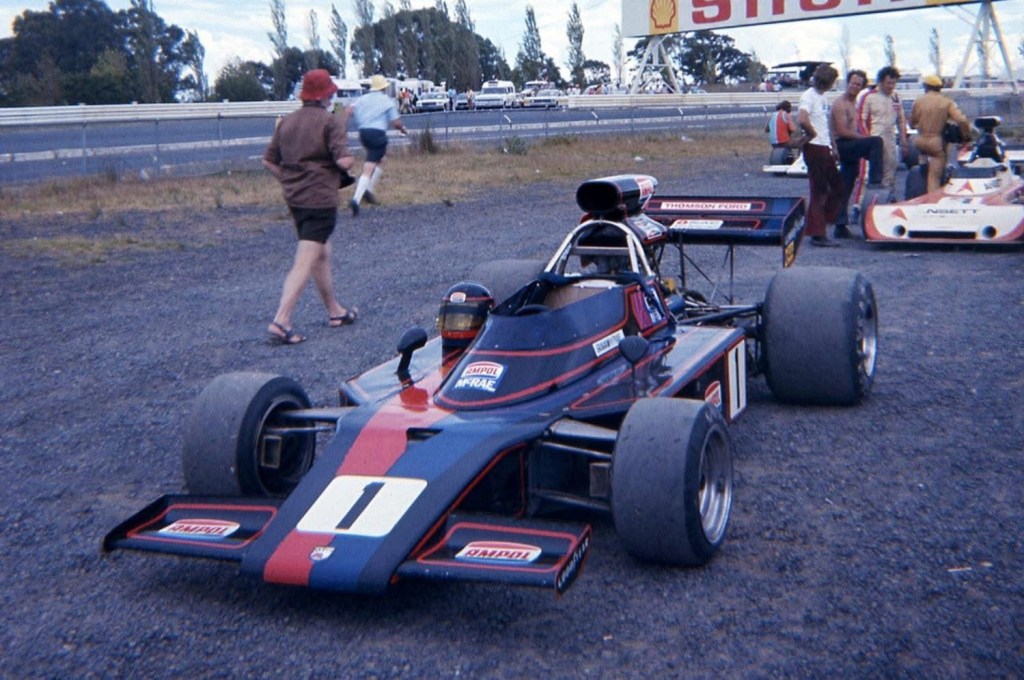
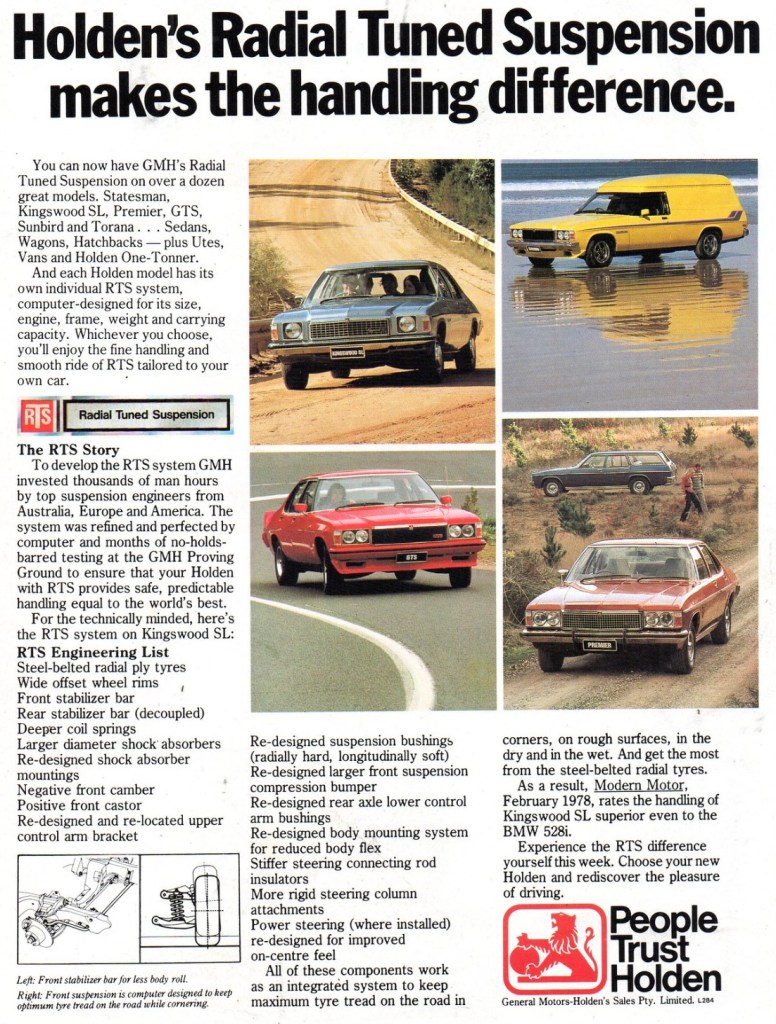


 primotipo...