Archive for the ‘News/Events’ Category

My ignorance of what is right under my nose never ceases to amaze me.

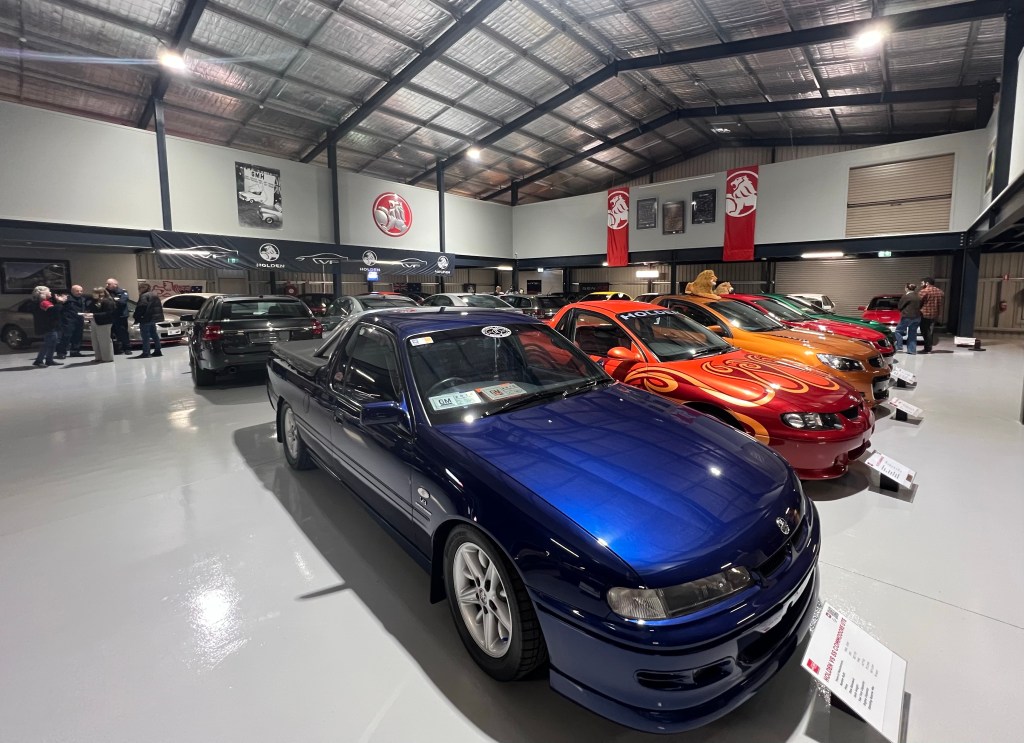
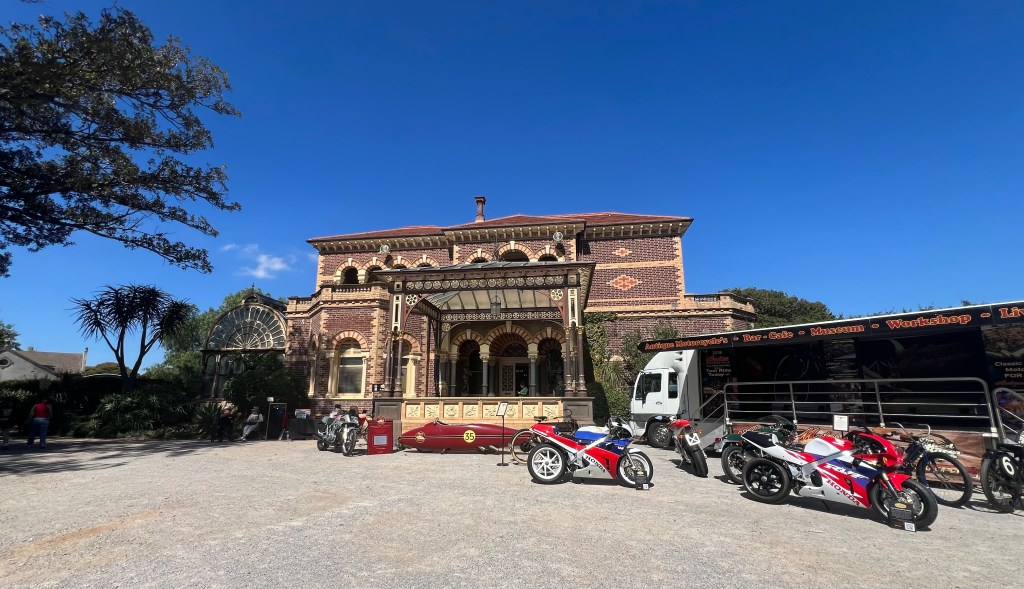
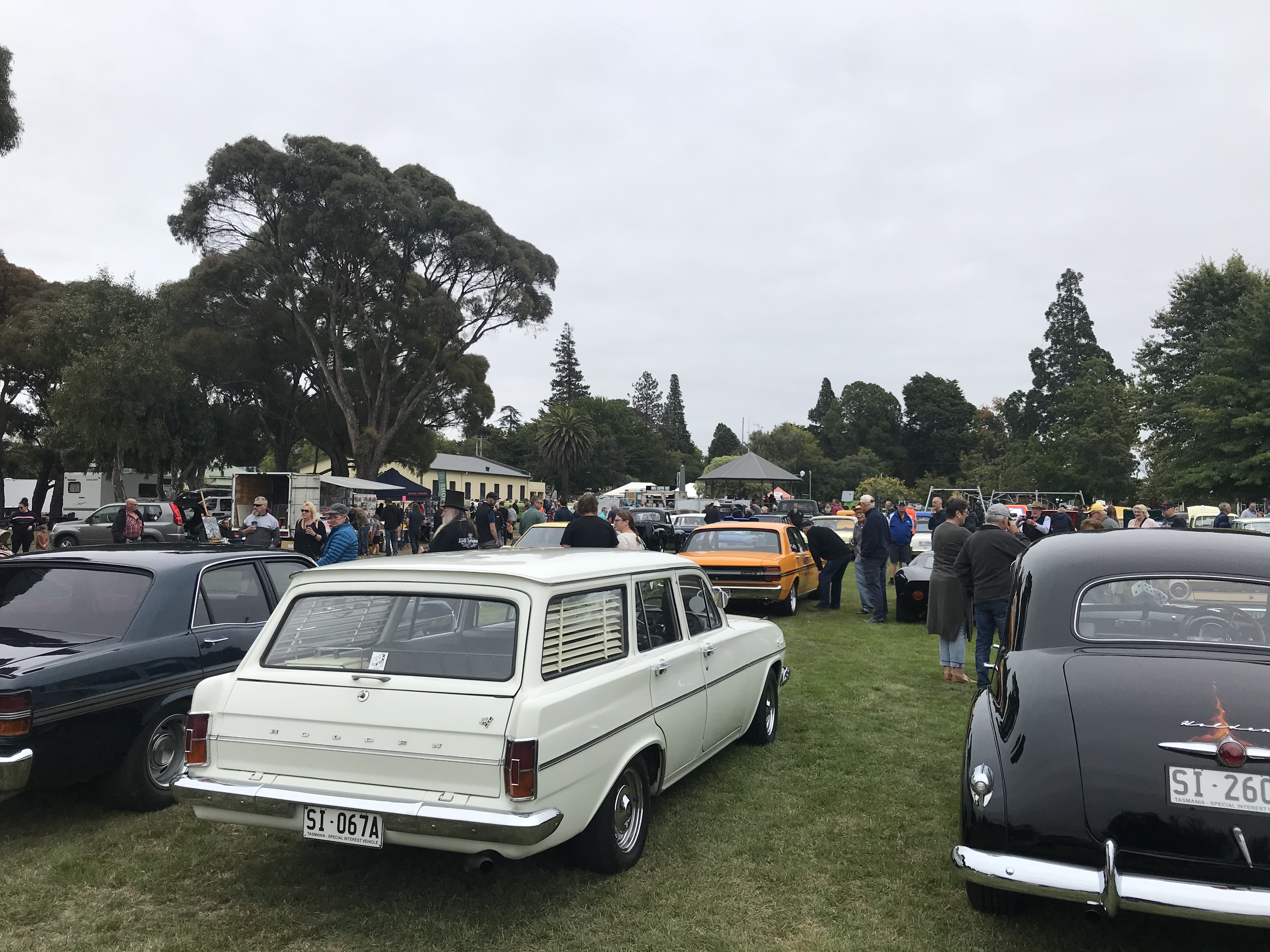
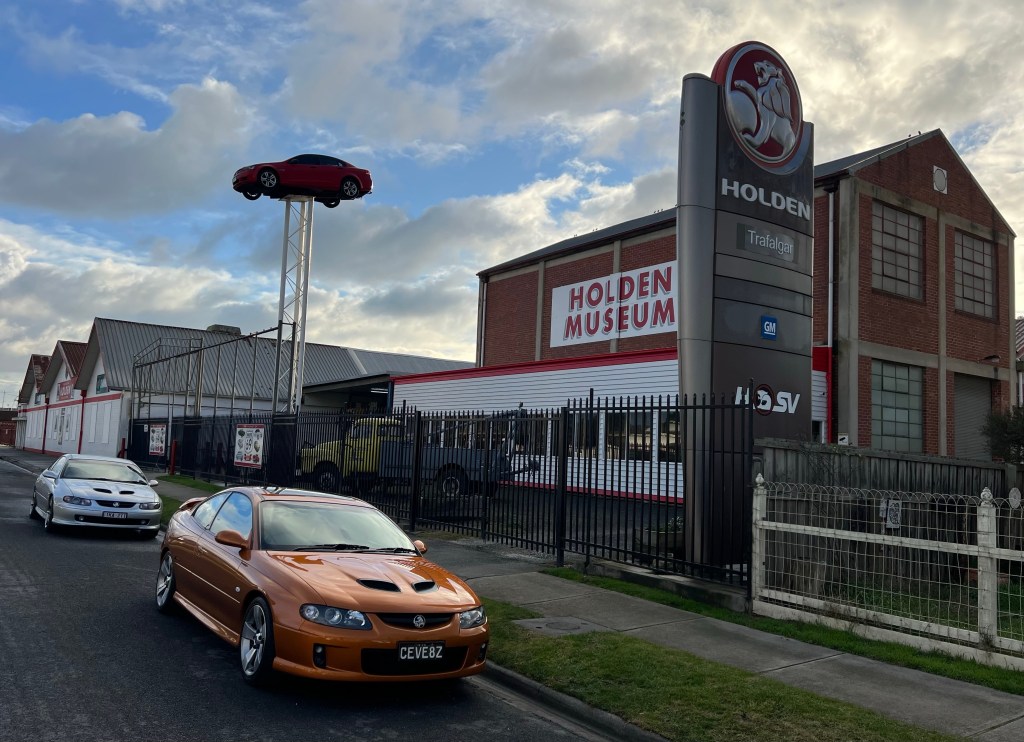
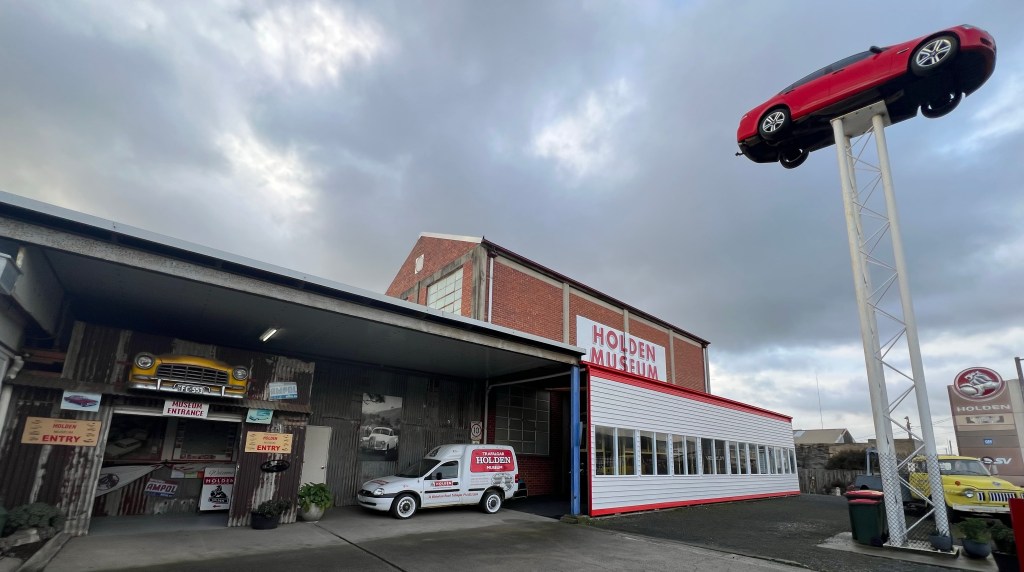
Despite the Trafalgar Holden Museum celebrating its tenth birthday in 2024, I was unaware of its existence until invited along to the official opening of the Neil Joiner Heritage Centre Building on the site of the old Trafalgar Butter factory, 74 Waterloo Road, 125 km north of Melbourne on the Princes Highway.

My invite was as Big Bad Brucie Williams’ bitch, publisher of Auto Action.

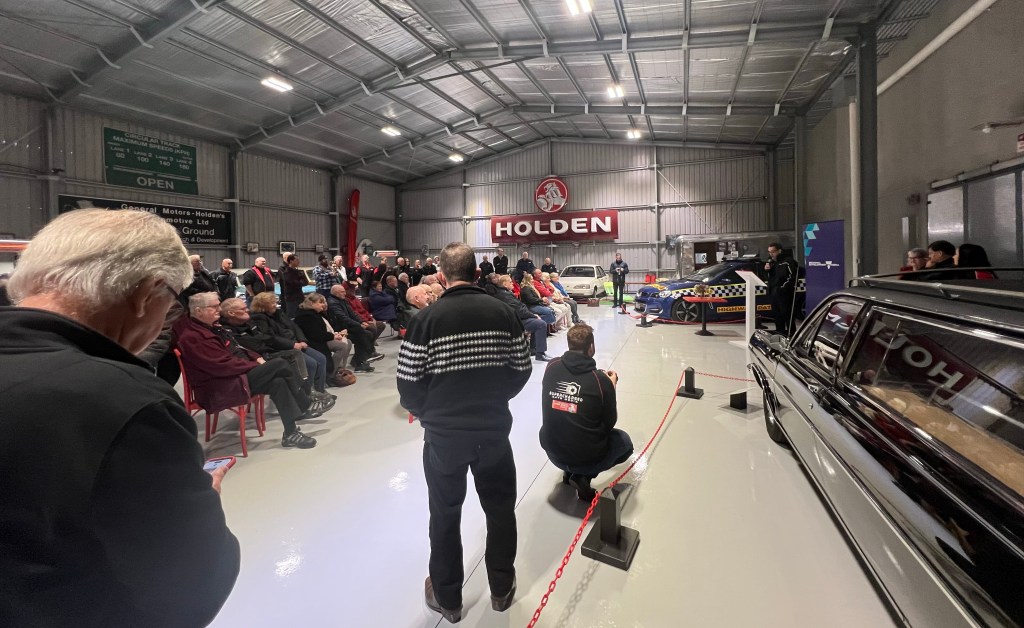
250 of the Holden party-faithful attended in a mix of old and new buildings, which house a collection of 150-200 Holdens and memorabilia. The ceremony was performed by the Victorian Minister for Tourism, Sport and Major Events, Steve Dimopoulos.

Dimopolous recognised and applauded the passion of Neil Joiner and his family, he told Auto Action that ‘It’s a magnificent facility, a really important part of Victoria’s industrial and automotive history. We were proud to provide $470,000 to assist in building a museum that will be good for the local economy.’ 
Local businessman Joiner, who died in 2024, was a dedicated Holden enthusiast who focused on transforming the old butter factory into a Holden museum after his retirement in 2007.

I was aware of Holden’s past as an Adelaide coach builder of horse-drawn buggies long before its automotive growth, but not its far-distant past as a saddlery. This aspect is cleverly explored in an older building recently made over for that purpose.
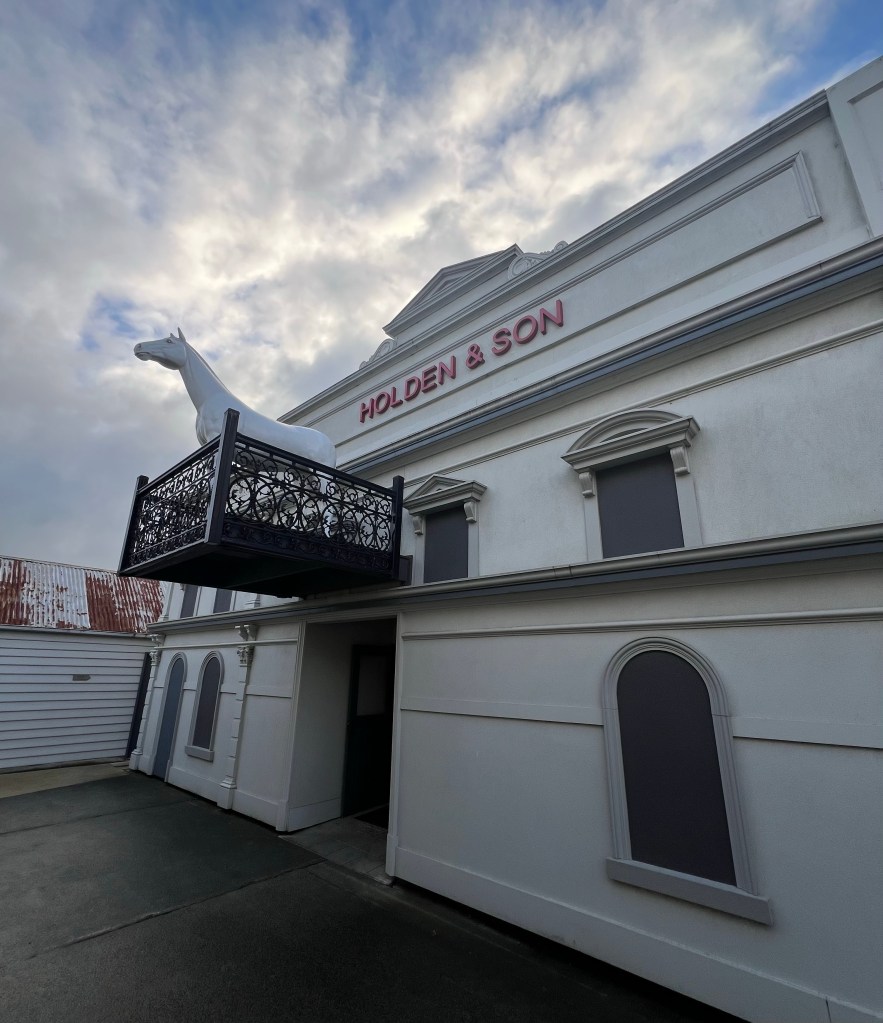
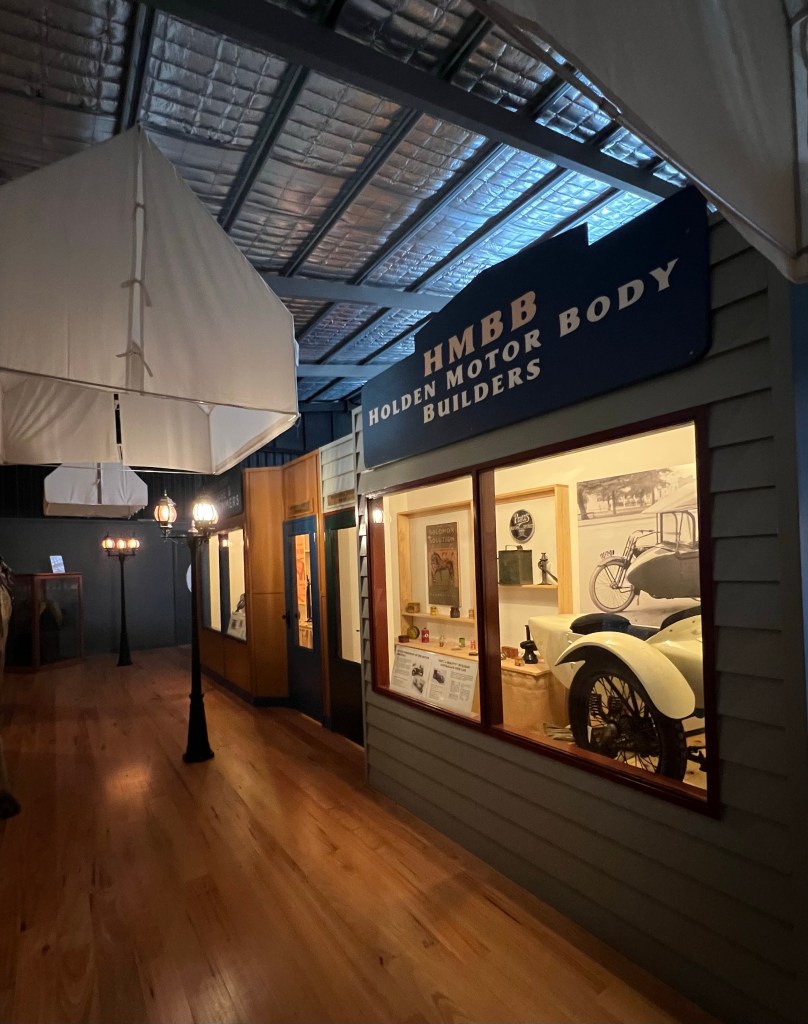
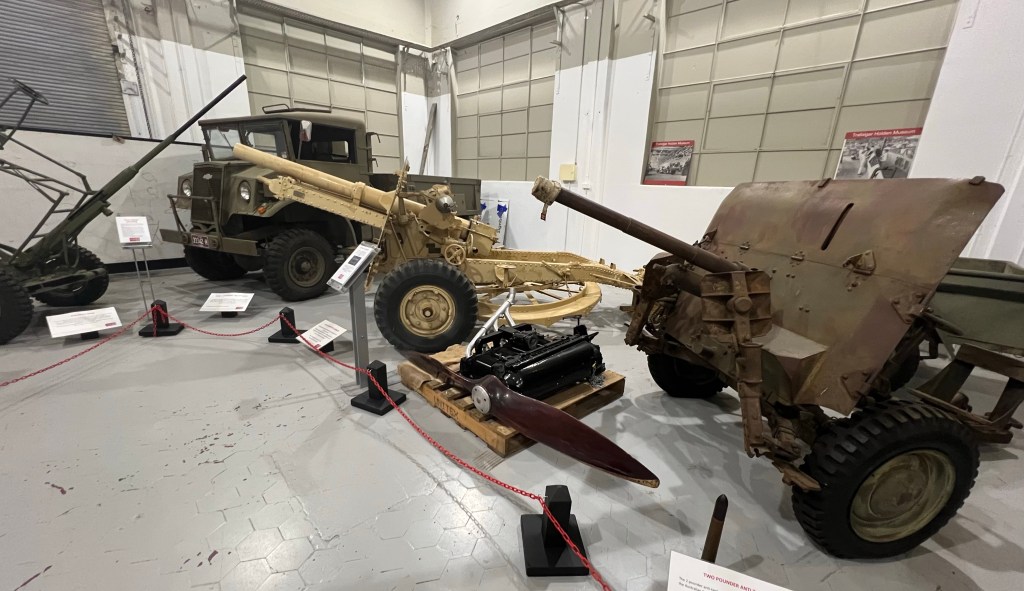
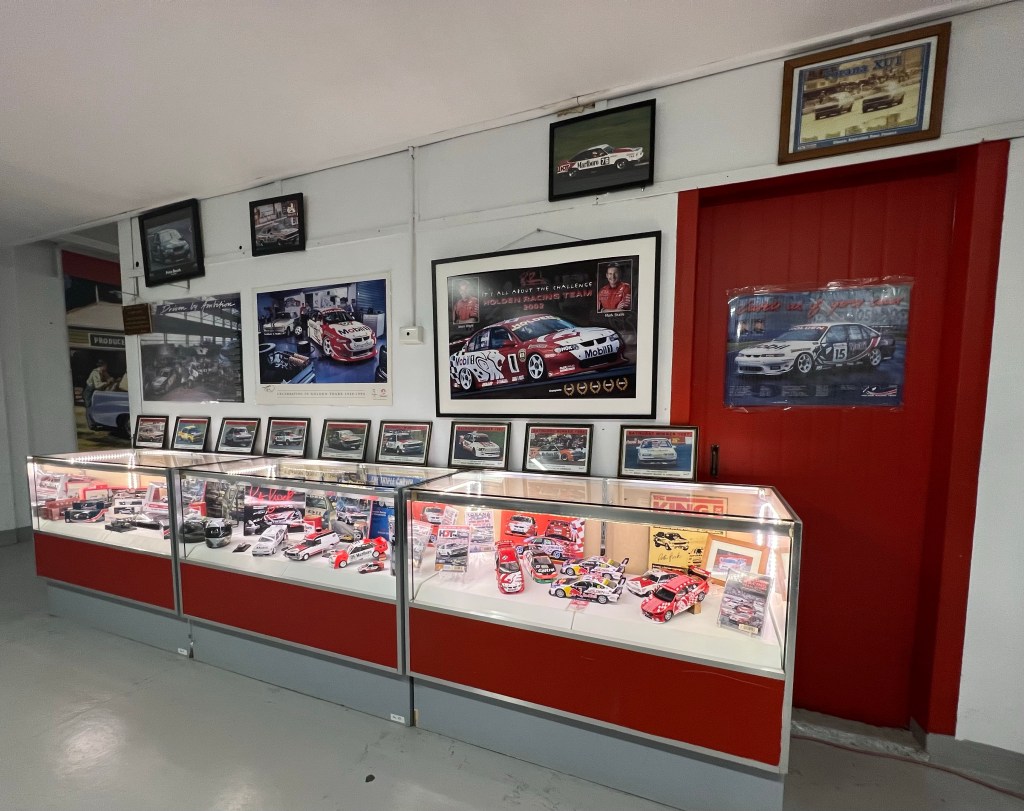
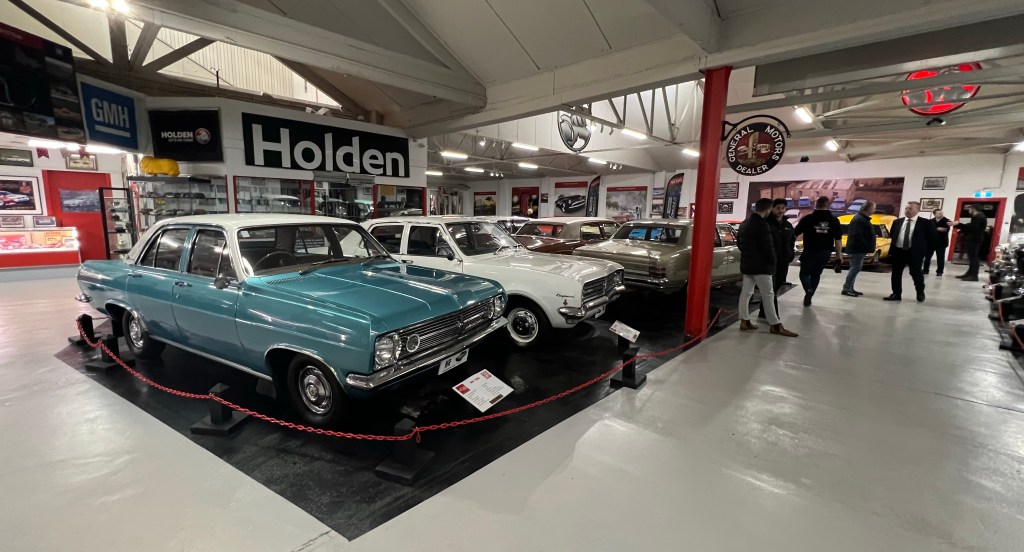
Joiner’s vision wasn’t just about the cars. It was telling the whole story from the early saddlery and buggy era, armaments made during World War 2, the Frigidaire range of home products and the cars from Holden-bodied Buicks to the last ZB Commodores. 

Joiner tipped in his entire collection of cars and memorabilia and Holden came to the party too, with 27 of about 80 cars they have spread throughout Australia.
There was a strong presence of Holden identities including Chris Payne, Paul Beranger, Richard Ferlazzo, author/historian Norm Darwin, Erebus’ Chris Payne, Jason Bargwanna, Garry and Barry Rogers, plus an army of enthusiasts.

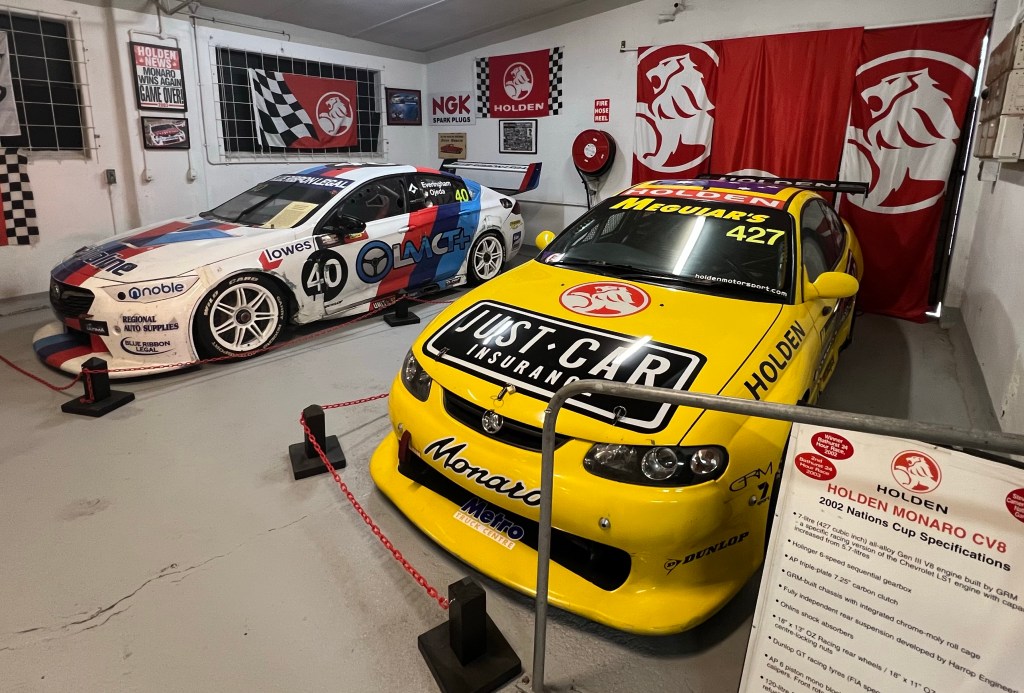
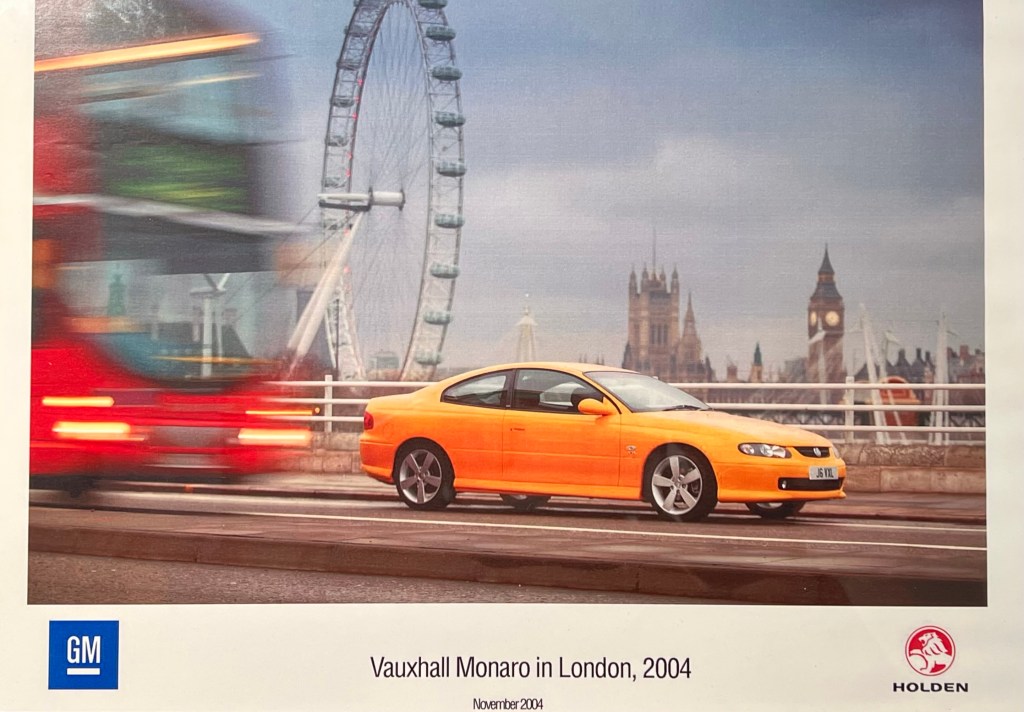
Rogers owns a farm closeby and has supported the museum with two cars on display, a 2002 Nations Cup Monaro CV8 427 (foreground) and the ZB Commodore Supercar (at rear) raced by Tyler Everingham and Jayden Ojeda to 19th place in the 2019 Bathurst 1000. The car looks magic in as-finished-Bathurst condition.

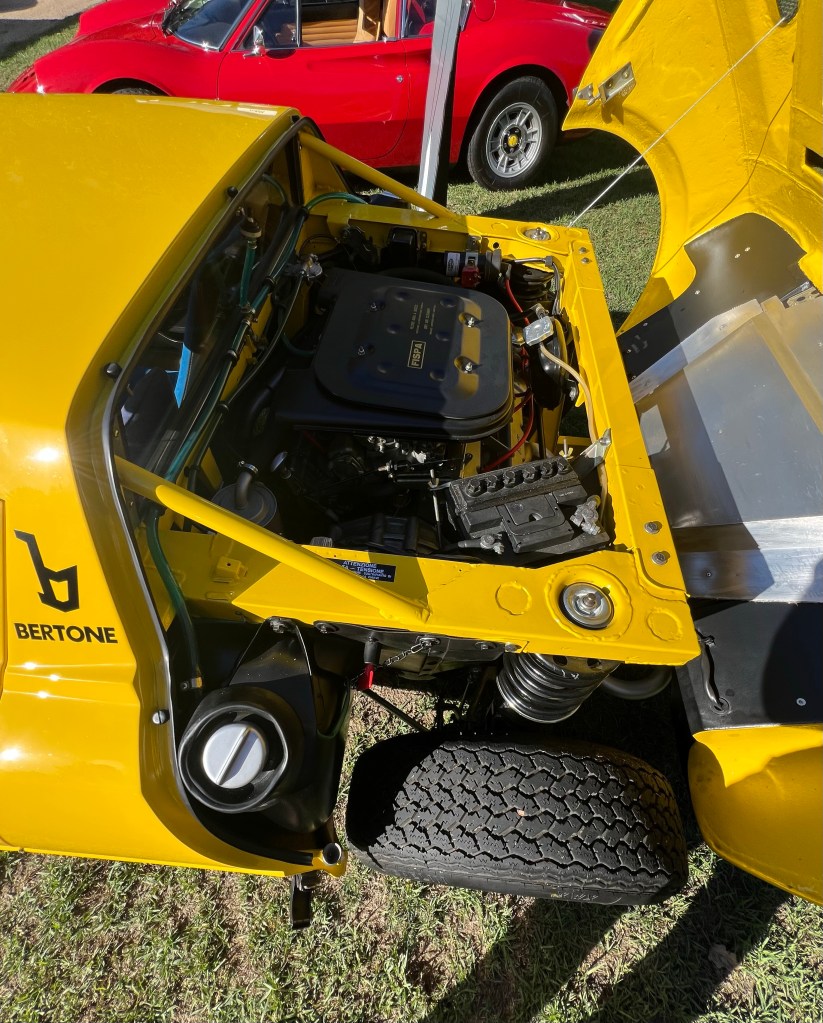
Holden Monaro CV8 2002 Nations Cup Specifications (yellow car)

GRM-built chassis with integrated chrome-moly roll cage

7-litre (427 cubic inch) all-alloy Gen III V8 engine built by GRM a specific racing version of the Chevrolet LS engine with capacity increased from 5.7-litres. Holinger 6-speed sequential gearbox, AP triple-plate 7.25″ carbon clutch

Fully independent rear suspension developed by Harrop Engineering, Ohlins shock absorbers. AP 6 piston mono block front calipers / 4 piston mono block rear calipers. Front rotor – 375 x 35mm, rear – 343 x 35mm

18″ x 13″ OZ Racing rear wheels / 18″ x 11″ OZ Racing front wheels-centre-locking nuts, Dunlop GT racing tyres (FIA specs)

120-litre FIA-approved racing fuel cell with Siamese dry-break refuelling system. GRM-designed and developed carbon-fibre / Kevlar composite aero package. Motel onboard engine and dash management system. 4 onboard air jacks
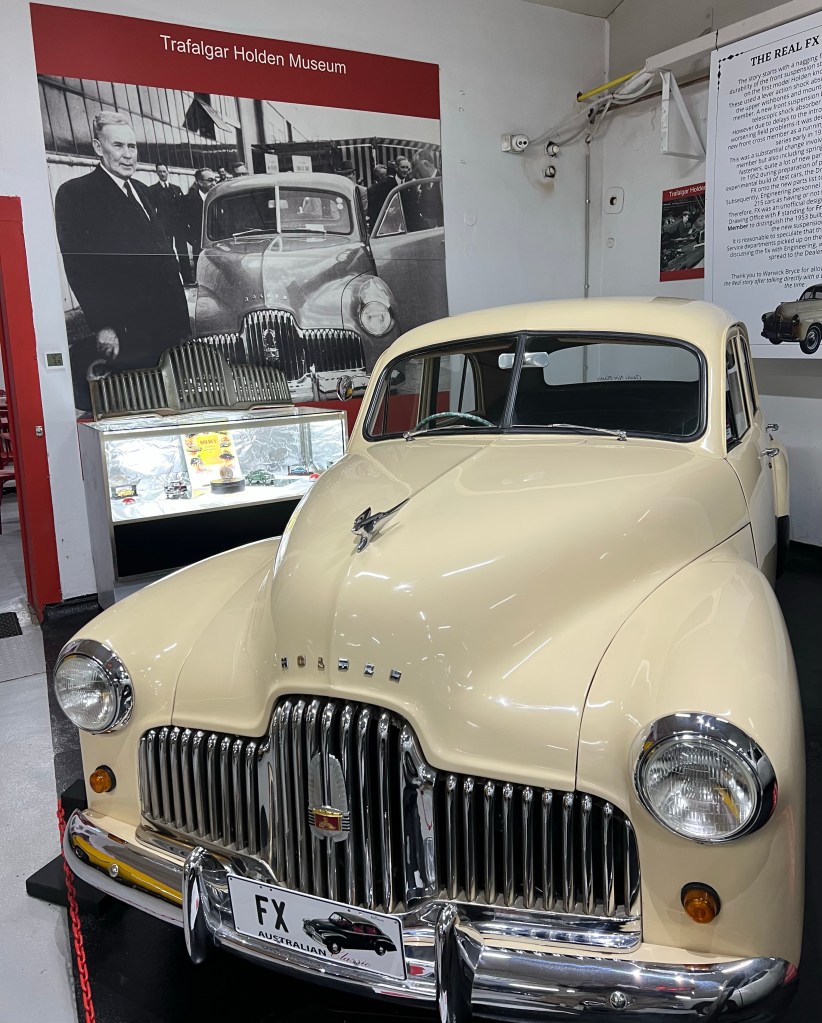
The museum is a must-visit for all car nuts, not just the rusted-on Holden diehards. I’m a Ford man, I’ve never owned a Holden, but Dad had plenty of them as company cars – remember that pre-FBT perk?! – So I’ve plenty of experience driving them as well as having plenty of firsts inside Holdens! Like most of us over 15, I suspect.

What did he have now I think of it? EH Wagon three-on-the-tree and then autos: HD, HR and HK wagons, then HG and HQ Premier sedans before switching to the dark side with an XB Fairmont and Fords thereafter.

What follows is a random potpourri of shots of cars and exhibits that caught my eye. The verbiage is the Museum’s not mine. Do go up and have a look, its really great.
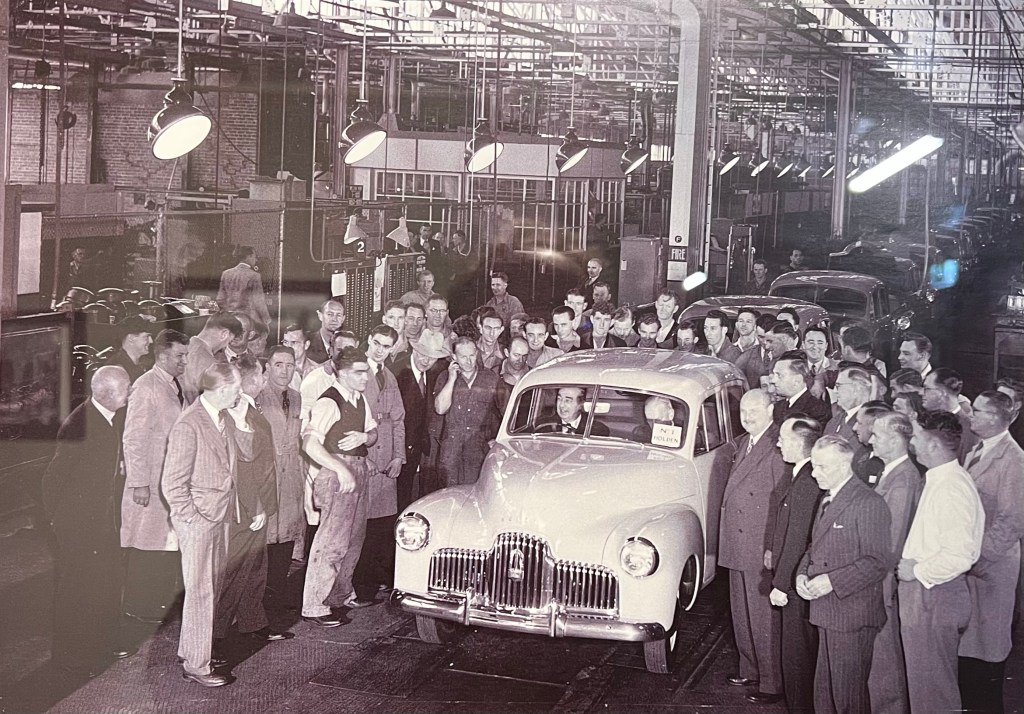
The first Holden 48-215 to roll off the Woodville production line on November 1, 1948, was driven by Holden’s MD, Harold Battle, with engineer Russ Begg alongside. See here: https://primotipo.com/2018/12/06/general-motors-holden-formative/
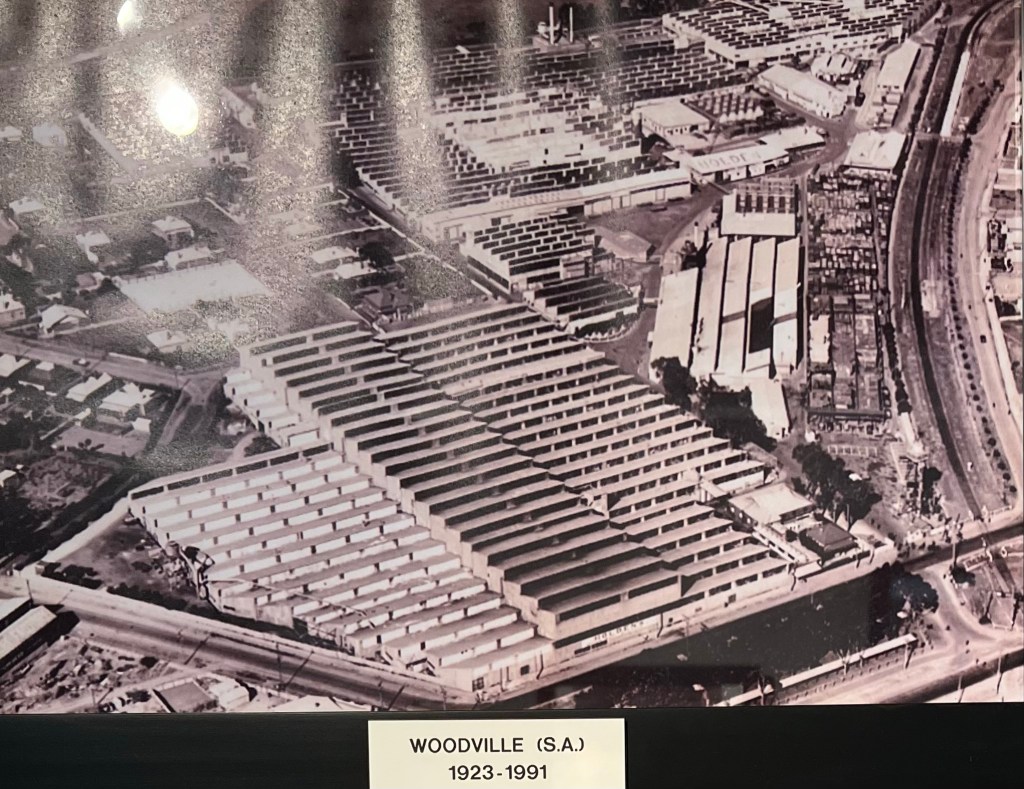
Woodville Plant, South Australia…

‘Throughout Holden’s 158-year history, SA has been the source of horse drawn coach and automotive body manufacturing engineering development and production for the company.

First automotive bodies were designed and manufactured in 1917, meaning Holden was in the automotive manufacturing business for 100 years by the 2017 closedown of manufacturing.

Established in 1919, known as Holden’s Motor Body Builders Ltd. (HMBB) manufactured bodies at its King William St Adelaide factory and at Woodville from 1925 where it employed 5,500 people.

HMBB made bodies for 40 different brands of cars. Over half a million bodies were made before the Holden 48-215 was launched. Exporting of bodies commenced in 1939.

Within the first few years of operation Woodville became one of the biggest body manufacturers in the world as well as being the sole supplier of car bodies for General Motors in Australia. GMH was formed by the merging of HMBB with the assembly plants previously operated by GM Australia.

Forced by Australia’s isolation during WW2, the need for innovation, improvisation and invention was paramount in all Holden plants. Woodville became the largest producer of war related equipment and supplies within GMH.

After the war, major advances in body manufacturing engineering, sheet-metal press tooling, body assembly jigs and fixture design together with press and body assembly production systems centred around Woodville.’
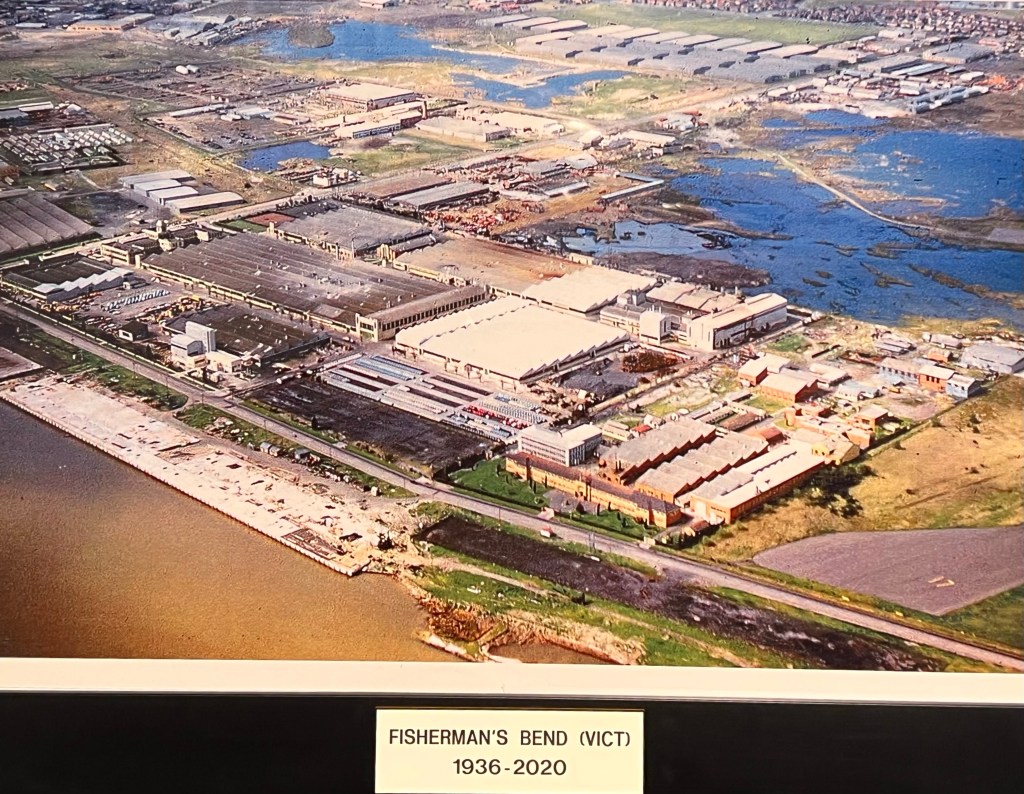
Fishermans Bend, Melbourne…

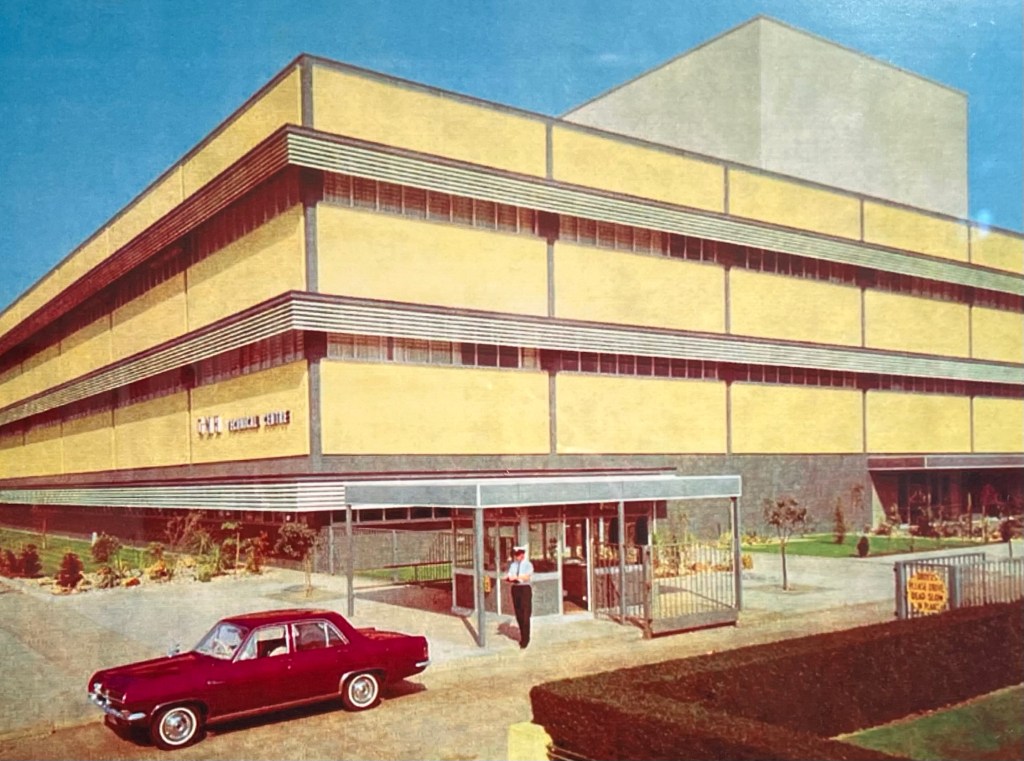
‘Head office was transferred from SA to Fishermen’s Bend, Melbourne. Opened in 1936, Fishermans Bend (correct spelling) became Holden’s headquarters, as well as its product design and product engineering centre.

During WW2 it produced a vast array of war equipment, including the development and production of many types of trucks. Critical to Holden’s future was the introduction of a world class foundry duringWW2 to produce engine blocks and heads.’
‘The plant assembled the first Holden car, the 48-215, based on fully trimmed bodies being supplied from Woodville, South Australia, and most mechanical components being made in Fishermans Bend plants. It produced the vast majority of the mechanical components in the car including the engine, transmission rear axle and suspension components. This was at a time when the Australian automotive supplier industry in Australia was not well developed, so Holden manufactured a lot more of the car internally.’

‘In 1956 vehicle assembly in Victoria was relocated to a new Dandenong plant. The Fishermans Bend plant was reconfigured to concentrate mostly on engine manufacture for domestic and for 4-cylinder export territories. It became Australia’s largest exporter of elaborately transformed goods. The famous 6 cylinder in line and V8 Holden engines were produced here.’

‘Fishermans Bend went on to produce a peak of 960 engines per day up until November 29, 2016, when it was closed after 76 years of engine manufacturing.’
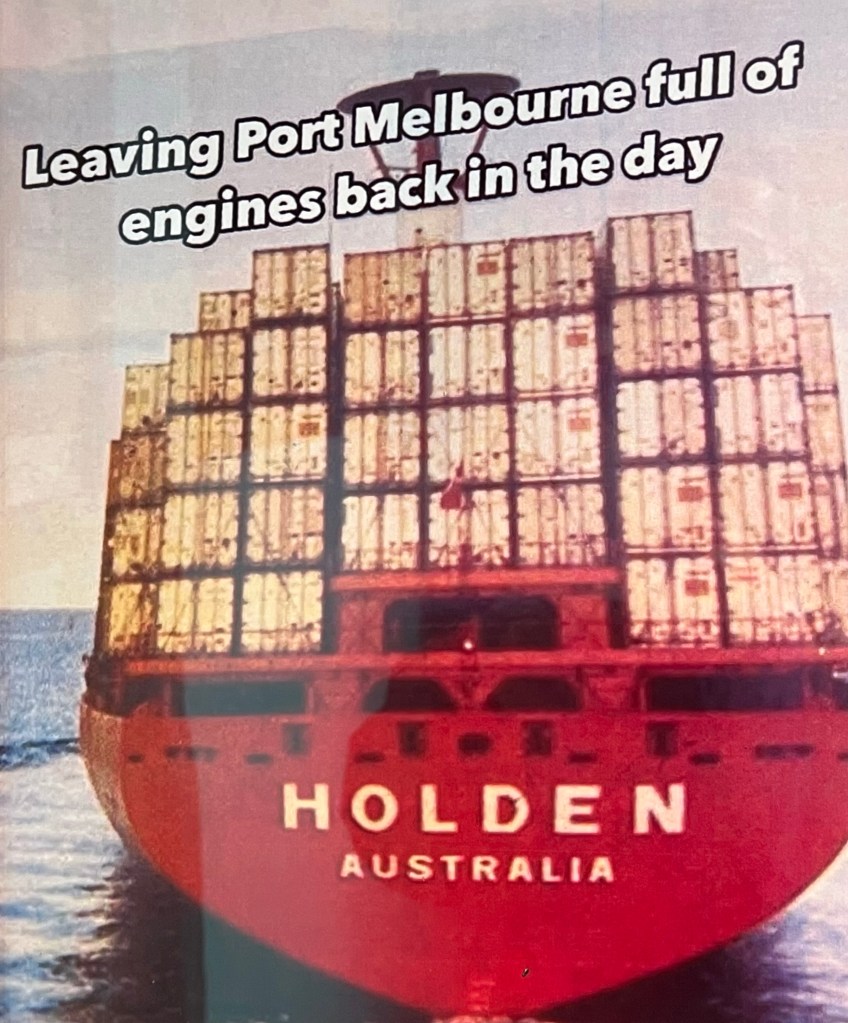
Export

‘Holden had a significant program running for many decades beginning with the FJ exports to New Zealand in 1954.

In later years exports were most significant in the Middle East and America with both the commodore and Statesman nameplates being altered to both Chevrolet and Pontiac, but the vehicles were Holden.

Over the years Holden exported completely built-up cars (CBU’s) cars in parts and assemblies to be assembled at their destination (CKD packs) and of course engines and other componentry. These programs added billions of dollars of income to the Australian economy and validated Holden as a producer of world class vehicles, automotive engines and componentry.

As well, Holden exported its incredible expertise and knowledge in the design and development of cars for its parent company in the USA, General Motors.’
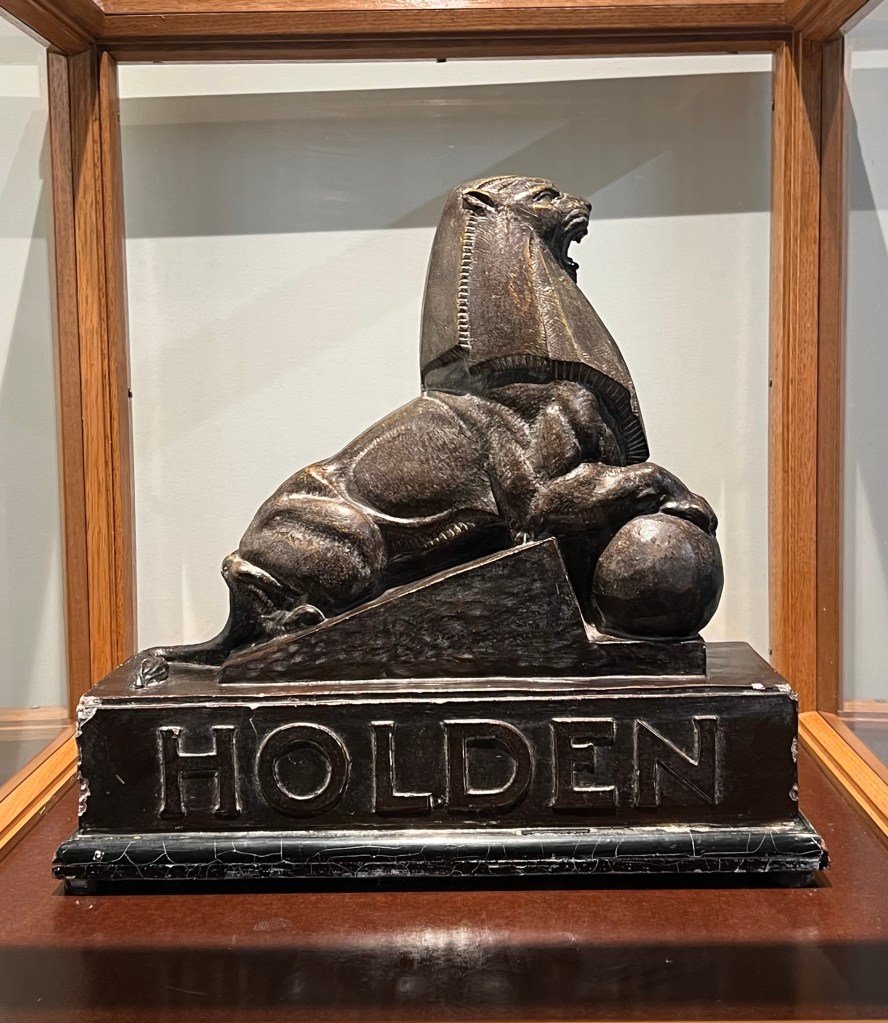
The Holden Emblem : The Lion…

‘As an emblem, the Holden Lion relates to the time when coach builders engraved their company name or trademark on the door sill, or on a plate fixed to the instrument panel.

In the early 1920s Holden Motor Body Builders used a large brass plate embossed with a winged figure representing industry against a background of factory buildings. In 1926 the company decided to downsize the brass plate and emulate the practice of Fisher Body in the USA, which attached a neat replica of its coach trademark to the lower part of the cowl. Because the existing emblem was too detailed to be embossed on a small plate, a new design was commissioned to be based on the Egyptian-style ‘Wembley Lion’, symbol of London’s 1924-25 British Empire Exhibition. Fashion themes of the time from clothing to furniture, films and songs all were influenced by Egyptian antiquity.

According to fable, the principle of the wheel was suggested to primitive man when observing a lion rolling a stone. Thus inspired the pre-eminent Australian sculptor of the day George Rayner Hoff, to create the ‘lion and stone’ sculpture. This was replicated in a pressed metal plate that was fixed to all bodies built by Holden’s Motor Body Builders from 1928.

More than 75 years later the evolution of the lion and stone symbol can be traced through series of badges proudly worn by a cavalcade of cars, some recognised by early GM model enthusiasts but most dear to the hearts of generations of Australians since 1948 advent of the 48-215 or FX Holden.

The chrome-winged surround on the FX/FJ grille badge was Cadillac inspired.

The classic Egyptian lion design gave way in 1972 to a more modern interpretation of the symbol, which in turn was replaced in 1994 by the powerful Holden brand we are familiar with today.’
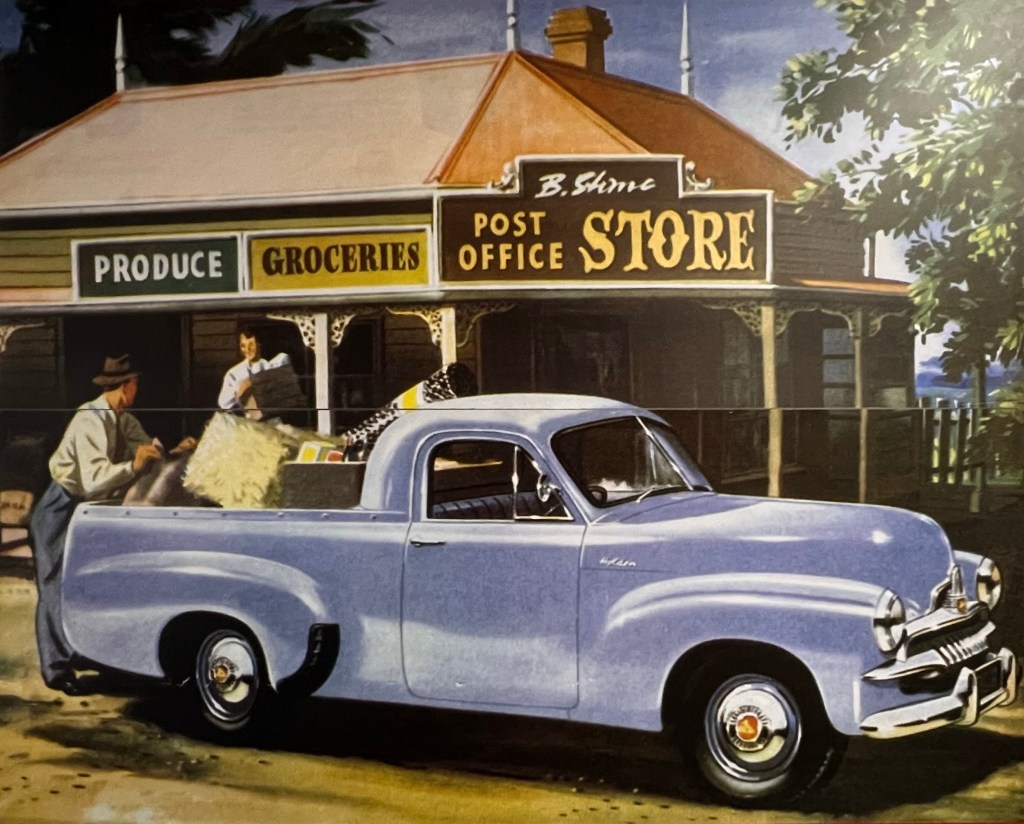
Holden 132 CID Grey motor…

Powered cars such as the FJ Ute above.

‘The introduction of the first Holden car in 1948, the 48/215, saw the first mass produced car engine in Australia.

Designed in 1938 by GM for Project 195-Y15, it was only used in the Holden car and all production Holden’s were fitted with engines made in a purpose built facility at Fisherman’s Bend, Melbourne.

Though small in capacity, the use of six cylinders ensured a smooth, efficient engine with good torque, giving the lightweight 48/215 more than adequate performance.

Dubbed the Grey motor on account of their paint, about 650,000 of these 132 motors were made from 1948 to 1960 and many were sold for use as stationary engines to drive generators, pumps and the like.

Type 6 cylinder, 7 port head. Capacity 132.5 cid, 2171cc. Inlet valve size 1.28, 32.5 mm. Power 60bhp, 44.5kw @ 3800rpm.’
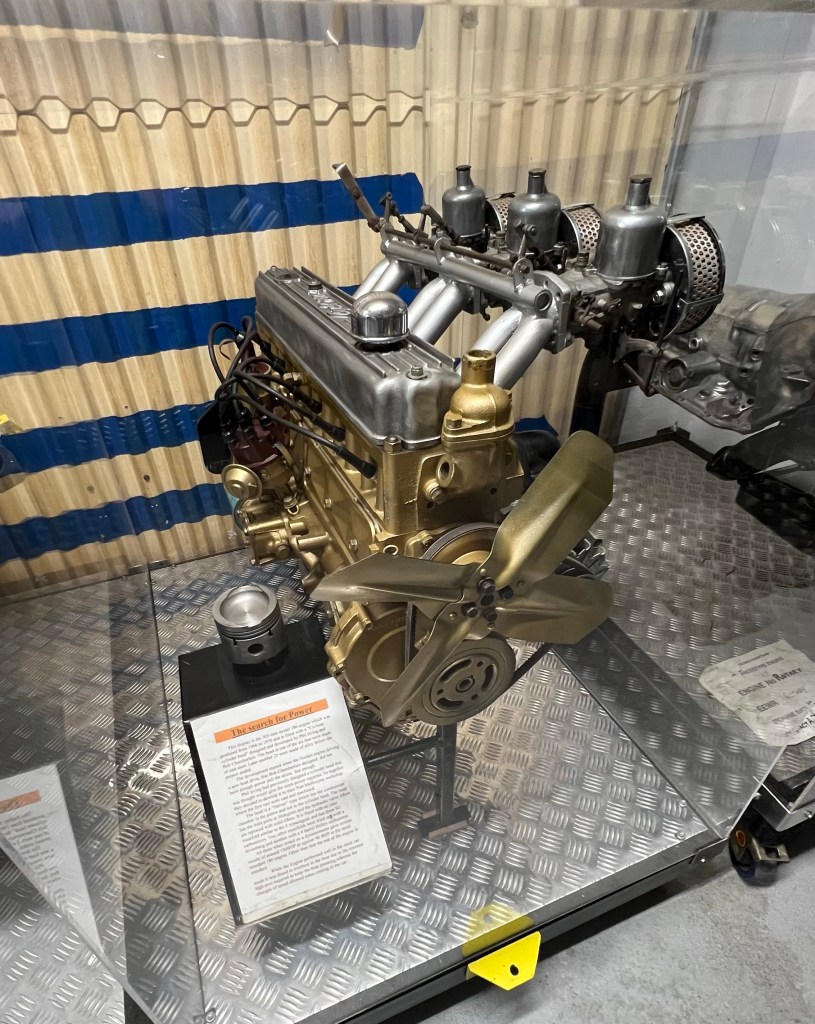
The search for Power

‘This display is the 3-litre model 186 engine which was produced from 1966 to 1970 and is fitted with a ‘Cyclone cylinder head’ designed and developed by Phil Irving and Bob Chamberlain.

The head is one of the six that were made of cast steel. Later another 25 were made of alloy before the project ended. Development started when the Holden engine driving a new boat drive, that Bob Chamberlain designed, did not have enough power pull the skiers fast enough.

Phil Irving had previously designed a cylinder head that was thought would give the extra power required. So together they decided to develop it in their Port Melbourne workshop where the first two were cast and machined.

The head is a ‘Heron type’ which has the combustion chamber in the piston and not in the cylinder head. The head has the Inlet ports at 30degrees and the hydraulic valve lifters are replaced with solid lifters. It is fitted with an inlet manifold similar to the E-Type Jaguar and has three SU carburettors. Two other manifolds were tried out with a Stromberg and another with a 4-barrel Holley carburettor.

All three when tested on a dynamometer gave similar results of around 150bhp as against 90 bhp in the stock standard 186 engine. Other than that the rest of the engine is standard.

While the engine performed well in the stock car mode it was found to overheat in the boat due to the constant high revs required to keep the boat planing, whereas the changes of speed allowed some cooling in the car.’
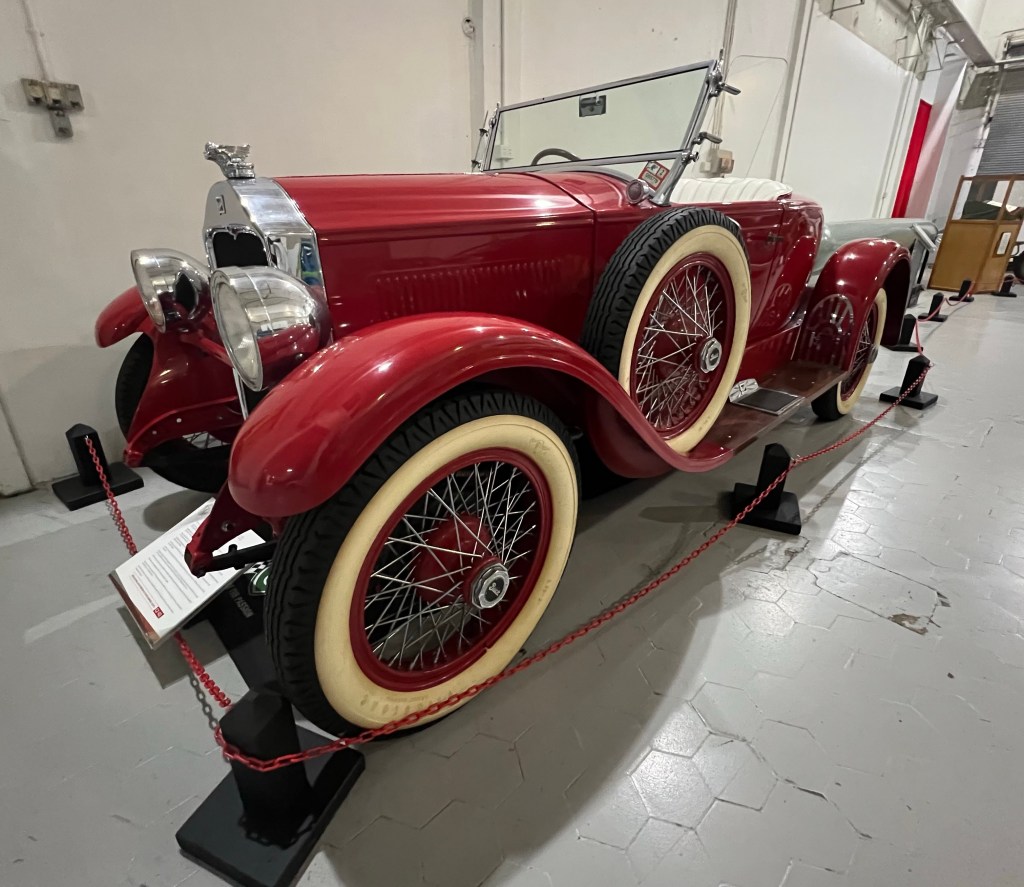
Holden Bodyworks…

‘If cars could talk, few would have as many stories to tell as this stunning 1928 Buick Speedster.

Built by Holden Bodyworks in 1928, the car was shipped to England for performance improvements and to compete in the Brookland Time Trials. Calculations confirm the car would have been capable of 140mph at just over 5000rpm. This is far in excess of top speeds that were being achieved at that time for any production type car.

The car was noticed in the Brooklands track car park by two Vickers test pilots and they were encouraged to take the car for a spin around the track for a bit of fun. The recorded oncaged to attain an unofficial top speed of 138mph without crashing. This is 20mph faster than anything But things turned sour for the record-setter, with police closing down the track after several high-speed crashes had resulted in death.

Unable to continue racing, the Buick returned to Australia and was sold to a private buyer in Mildura who saw porentia in its speed.

Painted matte black, with its headlights removed and holes cut into its body to accommodate barreis, the car was used to run moonshine (illegal alcohol) across the Victoria-NSW border between Mildura and Echuca. Travelling only at night using moonlight for navigation, the Buick became known to locals as the mocnight speedse The dutlaw car evaded police until its eventual capture in 1964.

Seizure under the new proceeds of crime laws saw its demise, with the car crushed and puched into a creek, a mere lay forgotten for 20 years forgotten.’

Is this for real?? Sounds like a touch of the Donald Trumps to me?
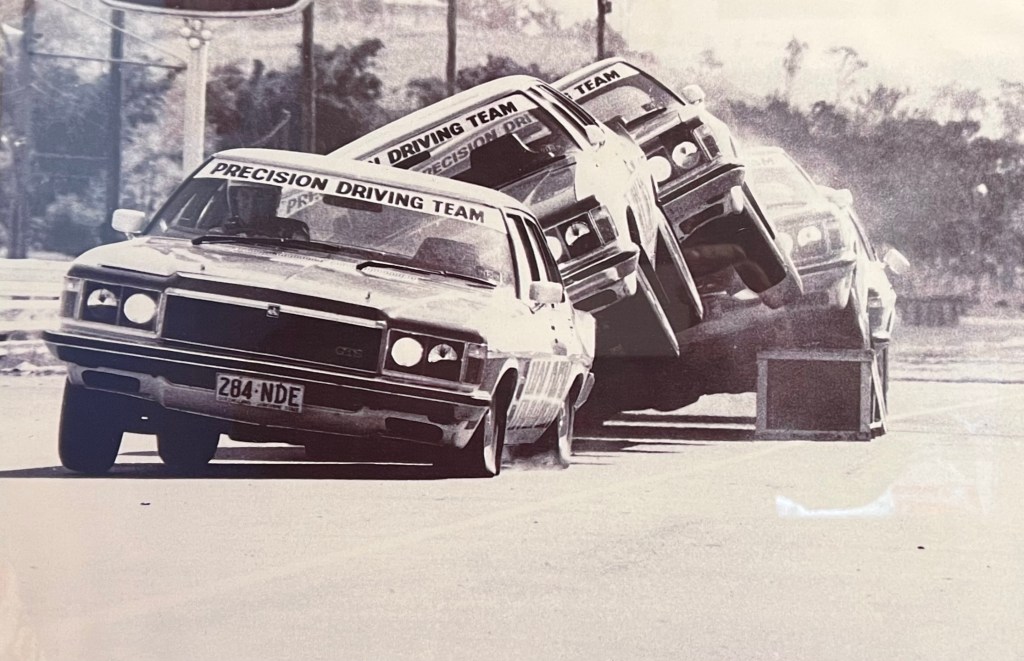
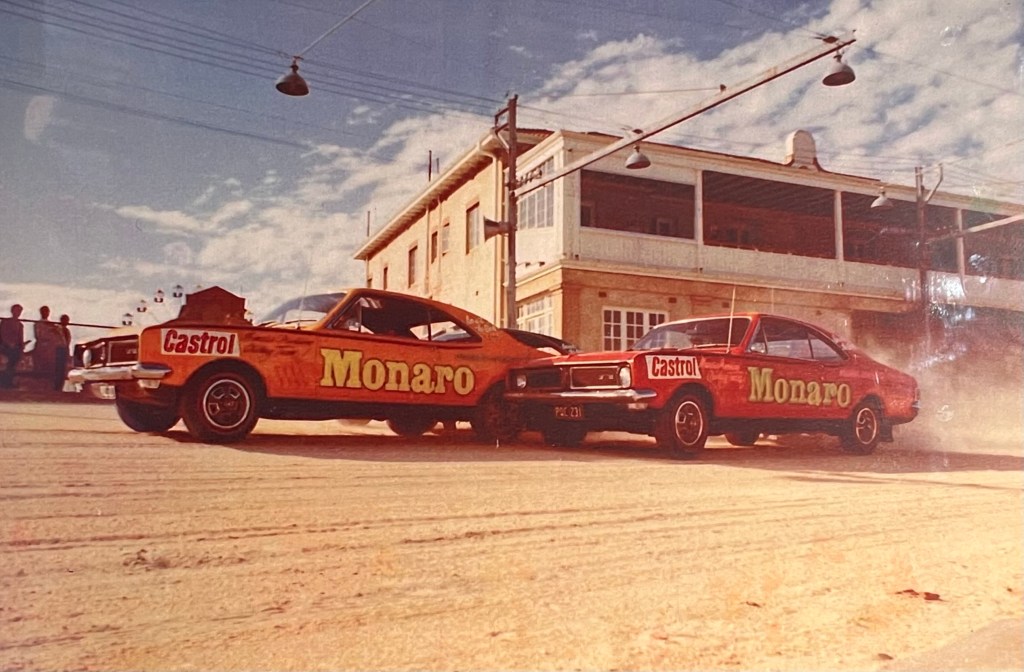
Five years before I finally made it to a race meeting in 1972 the Holden Precision Driving Team blew my tiny mind at the Royal Melbourne Show.

‘We all saw them’ perform around Australia wherever we lived. Monaro GTS sedans above, and coupes below, venues folks?
This one gave me a chuckle too.

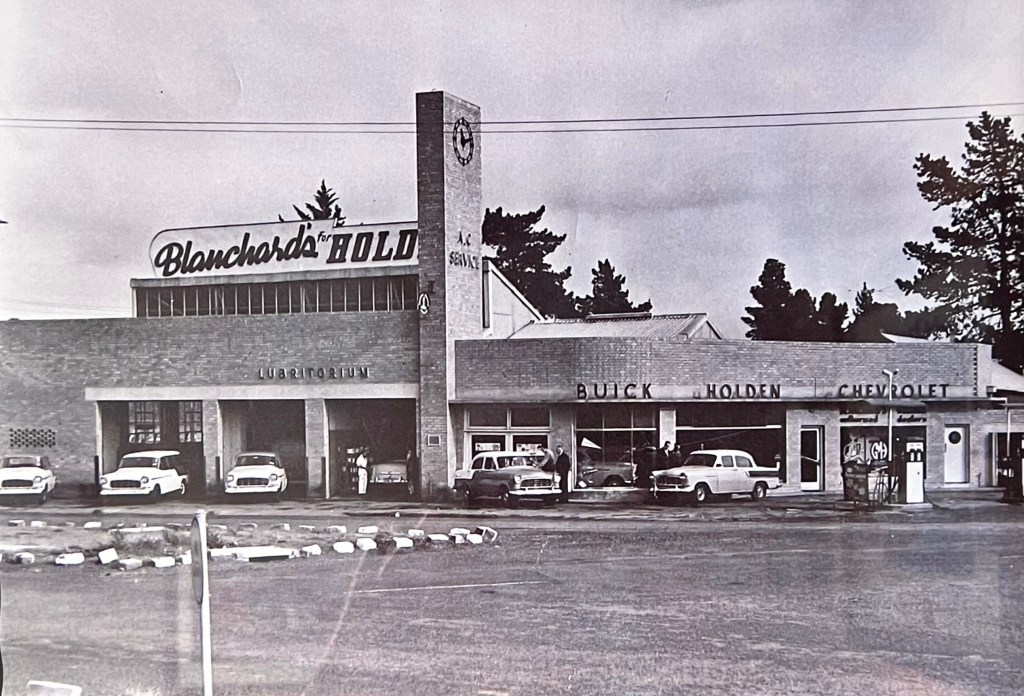
Blanchards Holden were on one of Melbourne’s busiest intersections, the corner of Springvale and Dandenong Roads, Springvale, only a drop-kick from Sandown.

It’s a mega corner of about six bits of road these days, but that roundabout in the late-1950s – the line-up of FCs makes it 1958-60’ish – looks pretty lame…
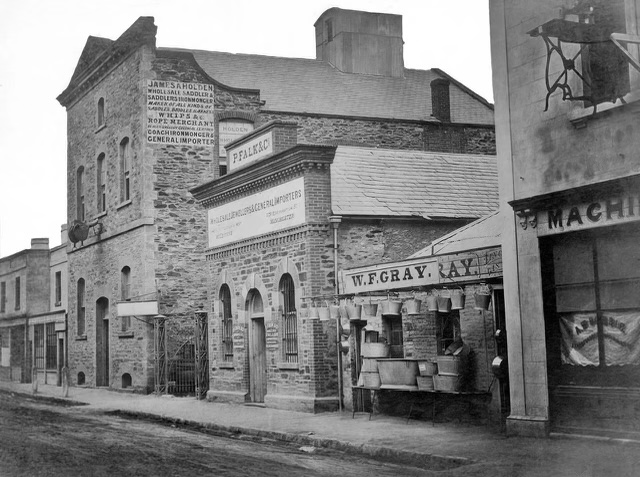
James A Holden’ saddlery, King William St, Adelaide (D Zeunert Archive)

Etcetera…

Don’t miss the latest, June Auto Action, on-sale for only the next few days, see below for the contents. The July 132-page monthly, issue #1908, will be in store this Thursday/Friday.

I’m not sure of the full content of that one yet, but my historic bits are a short piece on the museum, a ten-pager on the Tasman Cup from 1964-69. This is the first of two parts and has many ‘unseen’ photos taken by John Ellacott and Paul Cross. There is also an eight-page under-the-skin piece on Jim Richard’s Murray Bunn built Ford Falcon Hardtop Guney-Eagle 351 sports sedan. This one has Auto Action photos taken in the day that have never been published. It’s amazing what lurks in our files! Finally, Lord Alexander’s Hesketh outfit won its one and only championship F1 race, the Dutch Grand Prix in June 1975 . We have a two-page look at the unlikely but totally professional Peer, Bubbles Horsley, James Hunt and Harvey Postlethwaite.
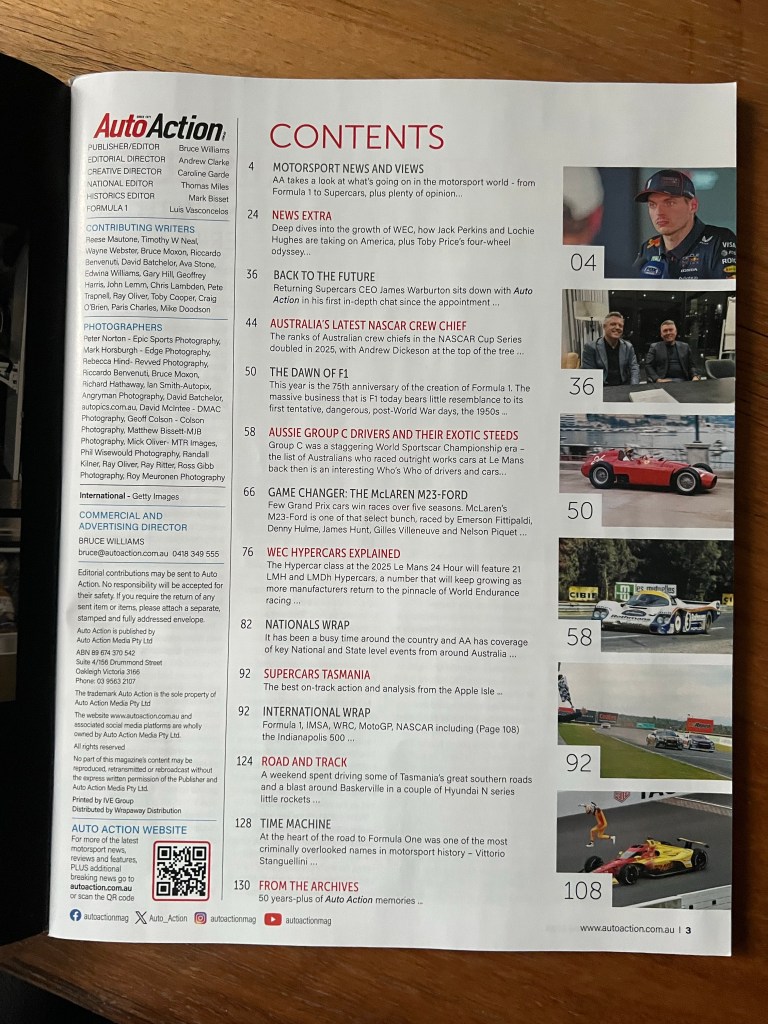
Photo Credits…

M Bisset, Holden, David Zeunert Archive

Tailpieces…
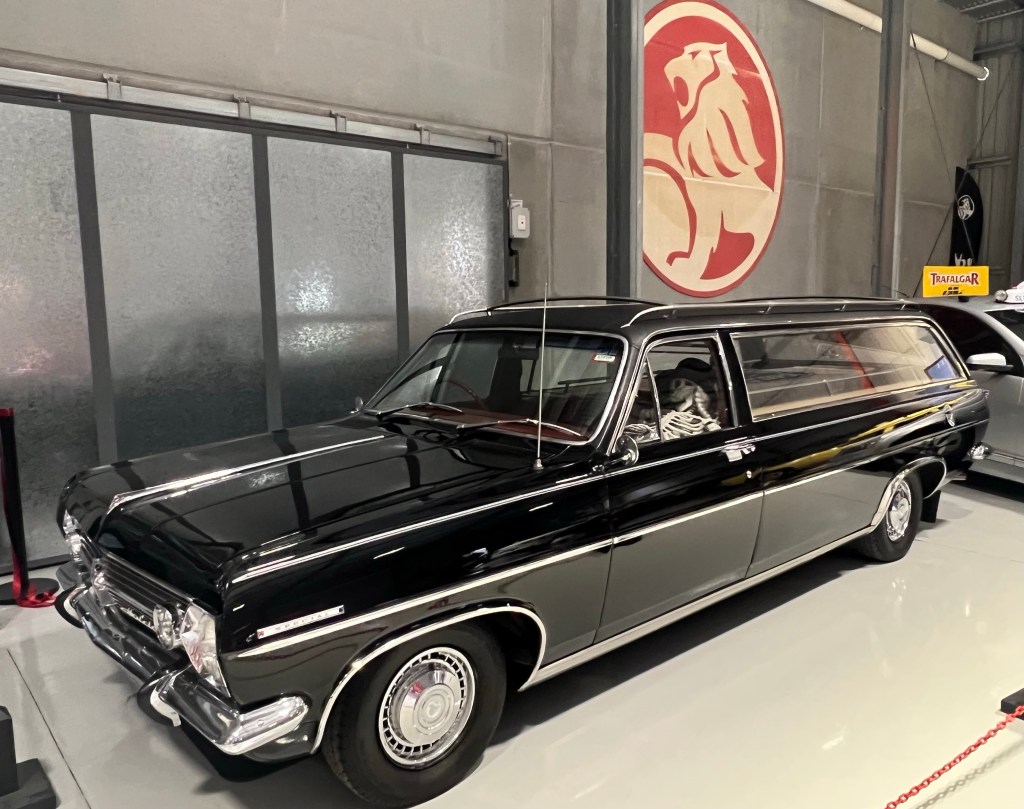
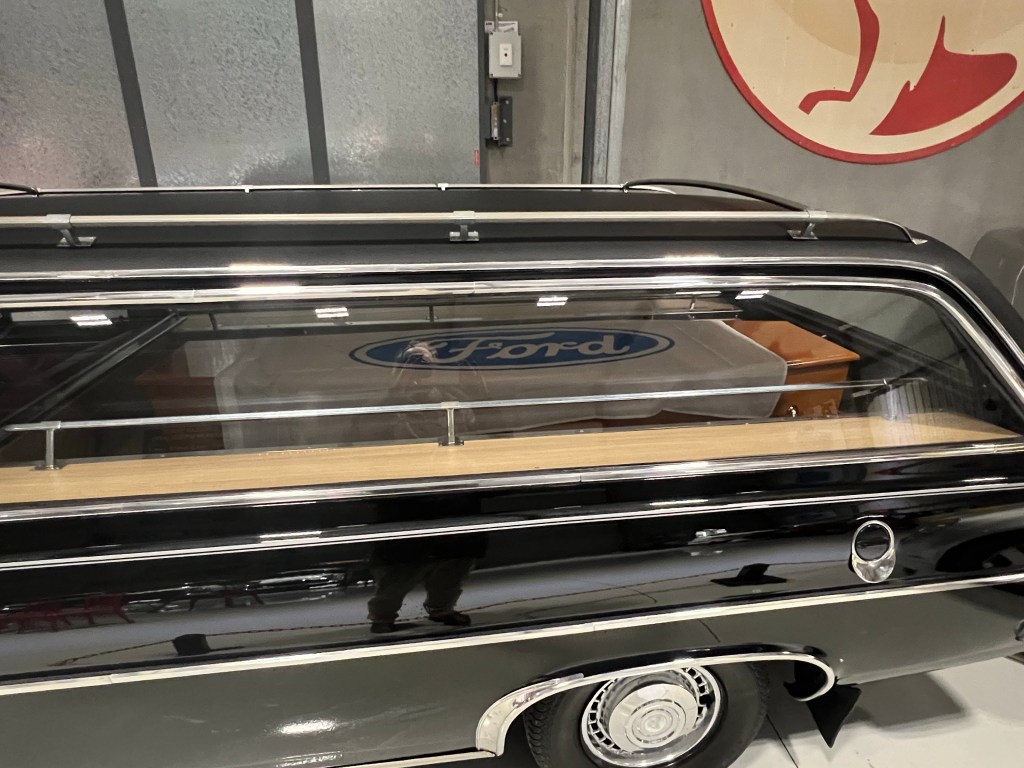
This coach-built, immaculate HR Hearse caught the eye.

The skeleton in the front seat was predictable enough, but the Ford banner atop the coffin in the rear was amusing to the Blue Oval Brigade present!
Finito…
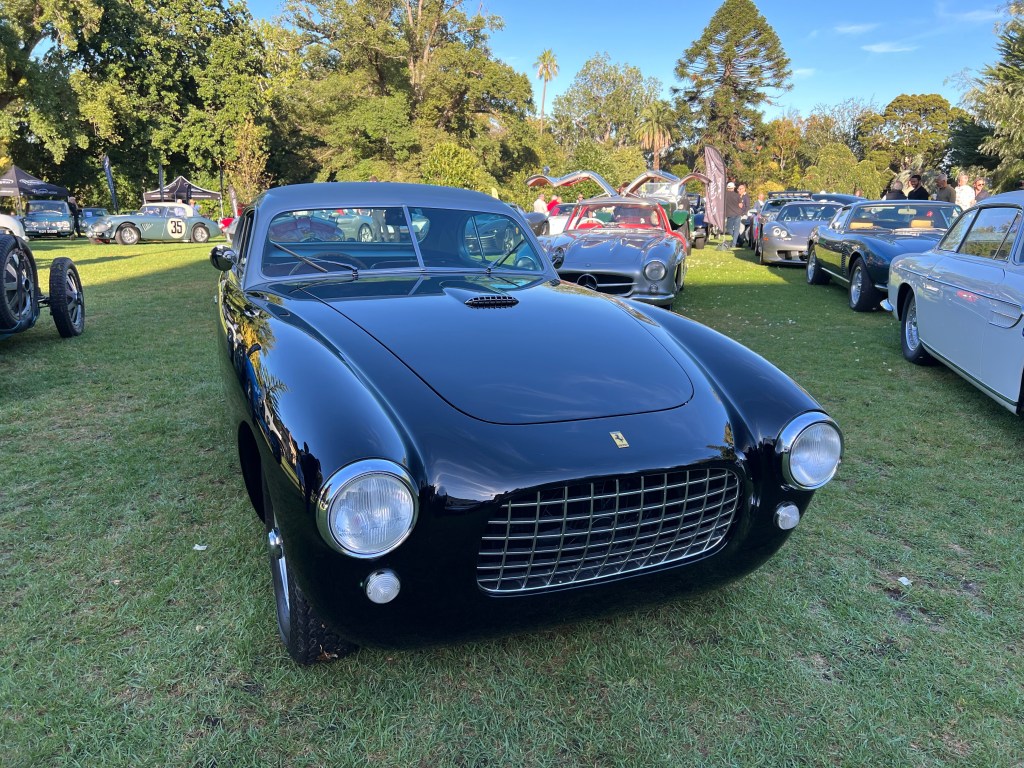
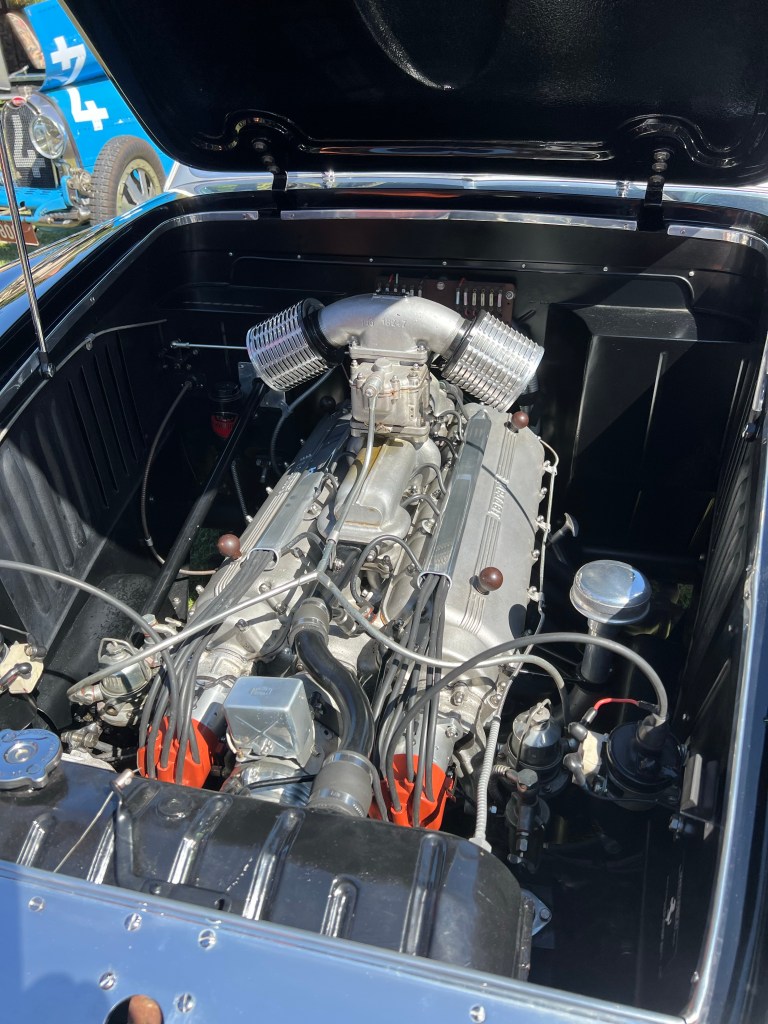
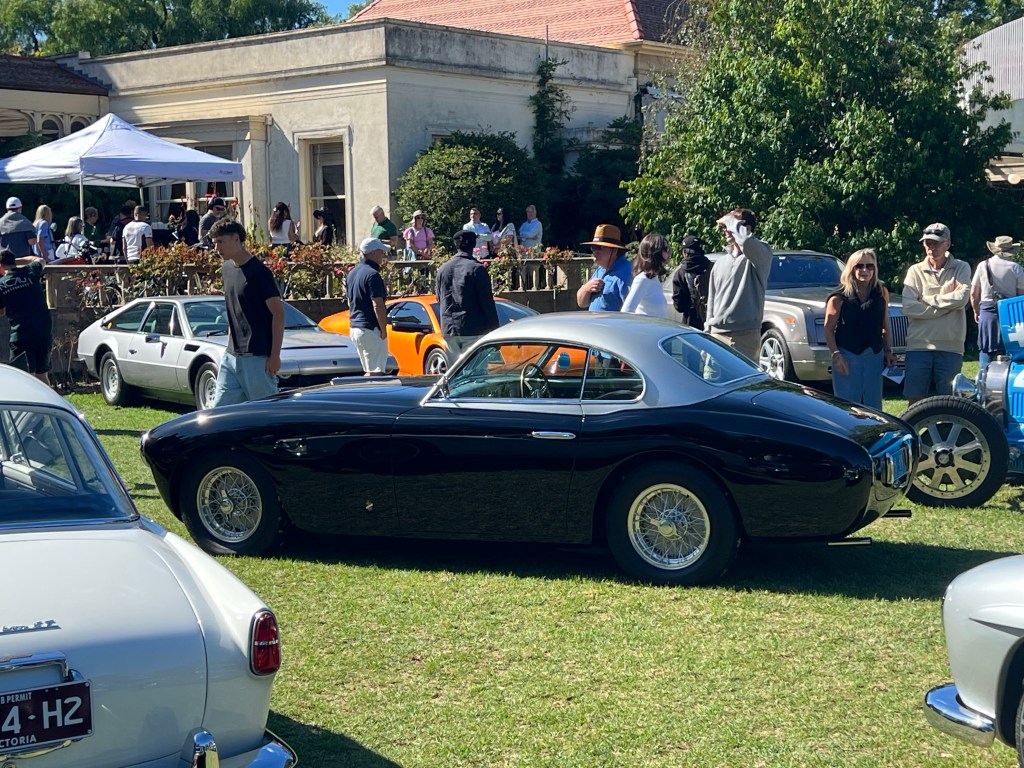
Ferrari 195S

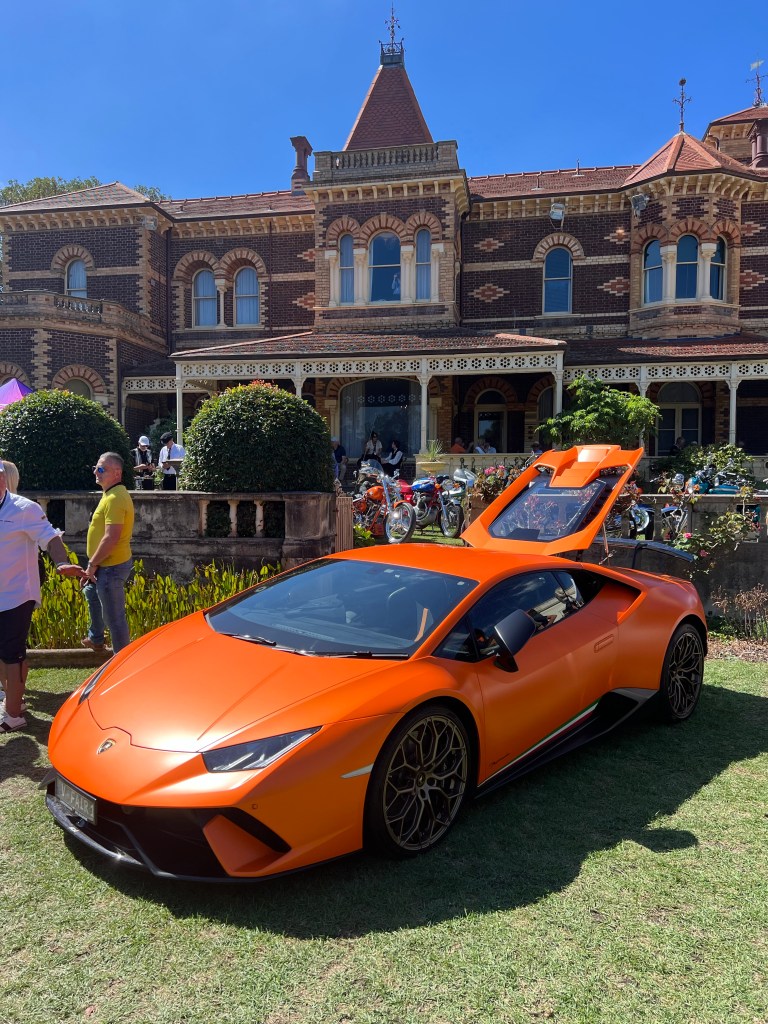
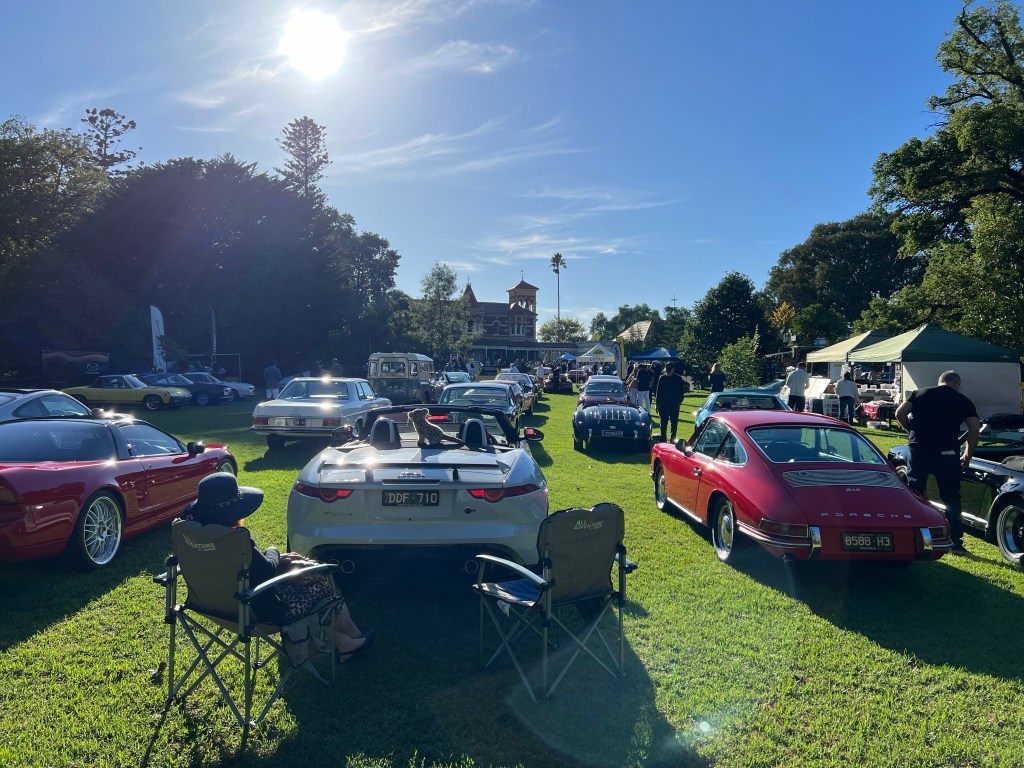
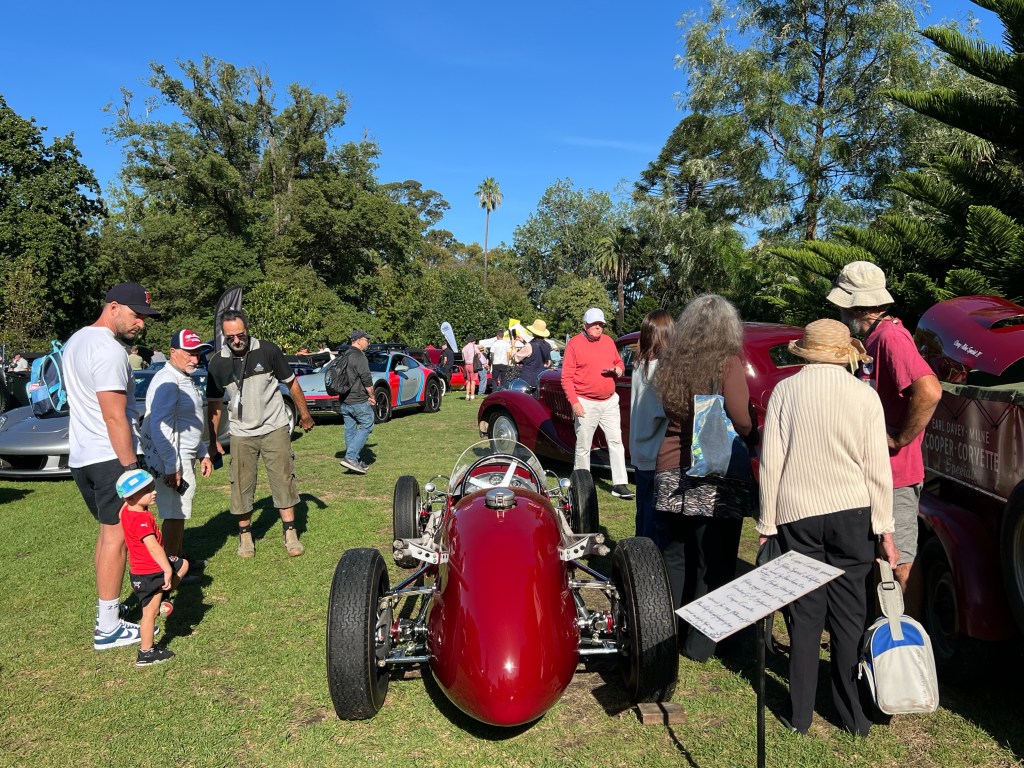
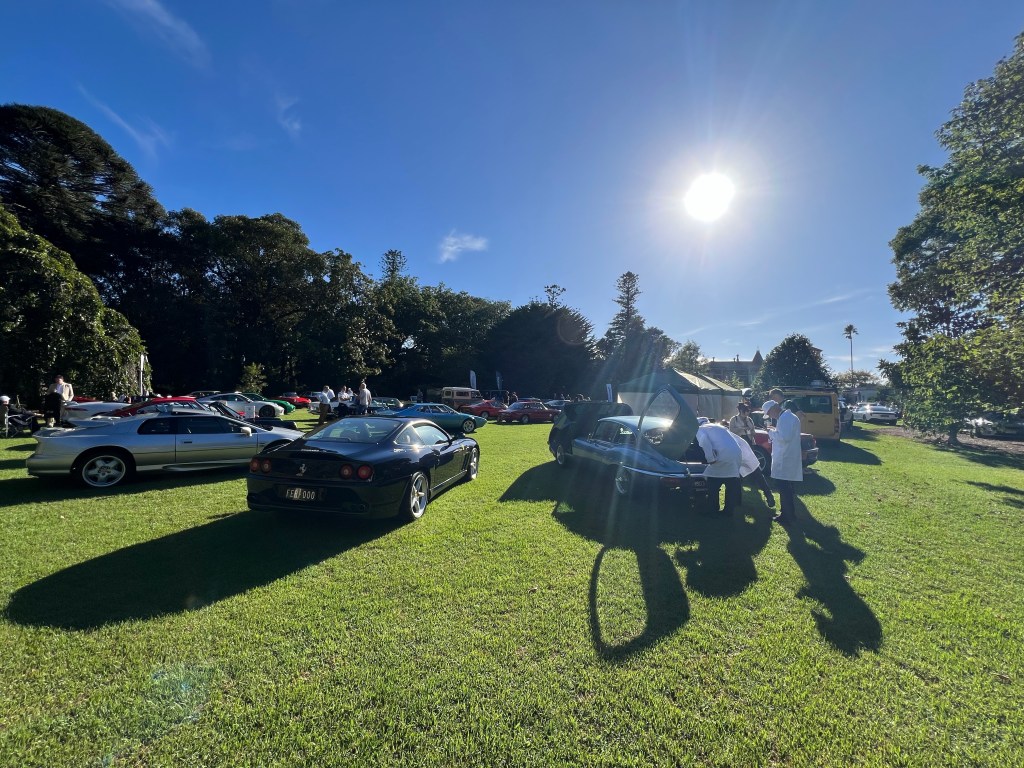
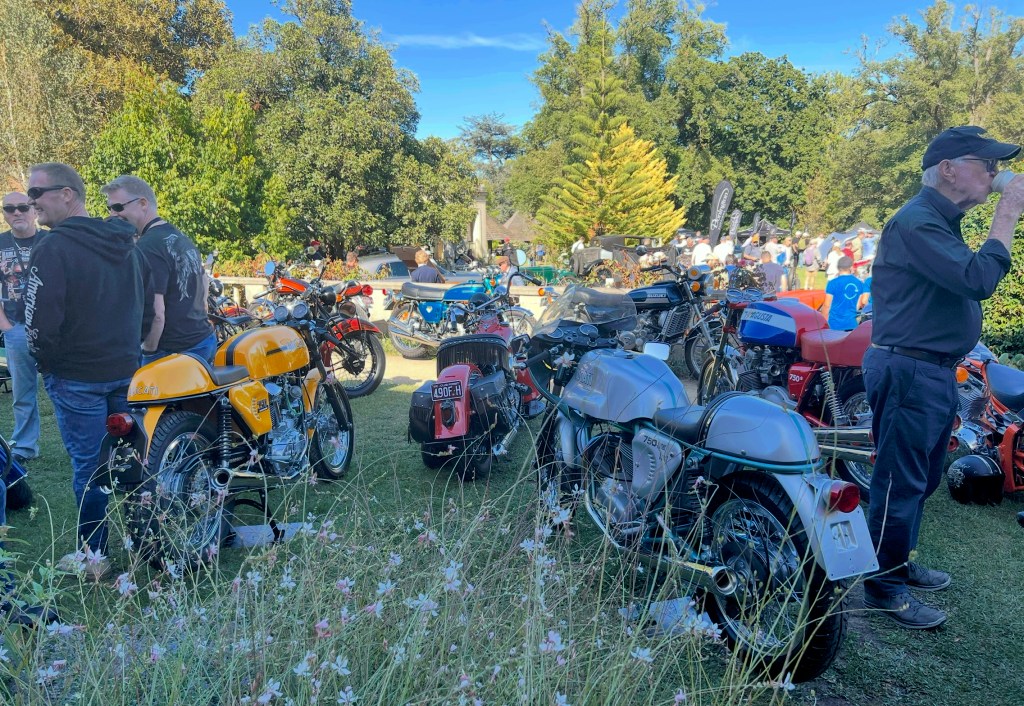
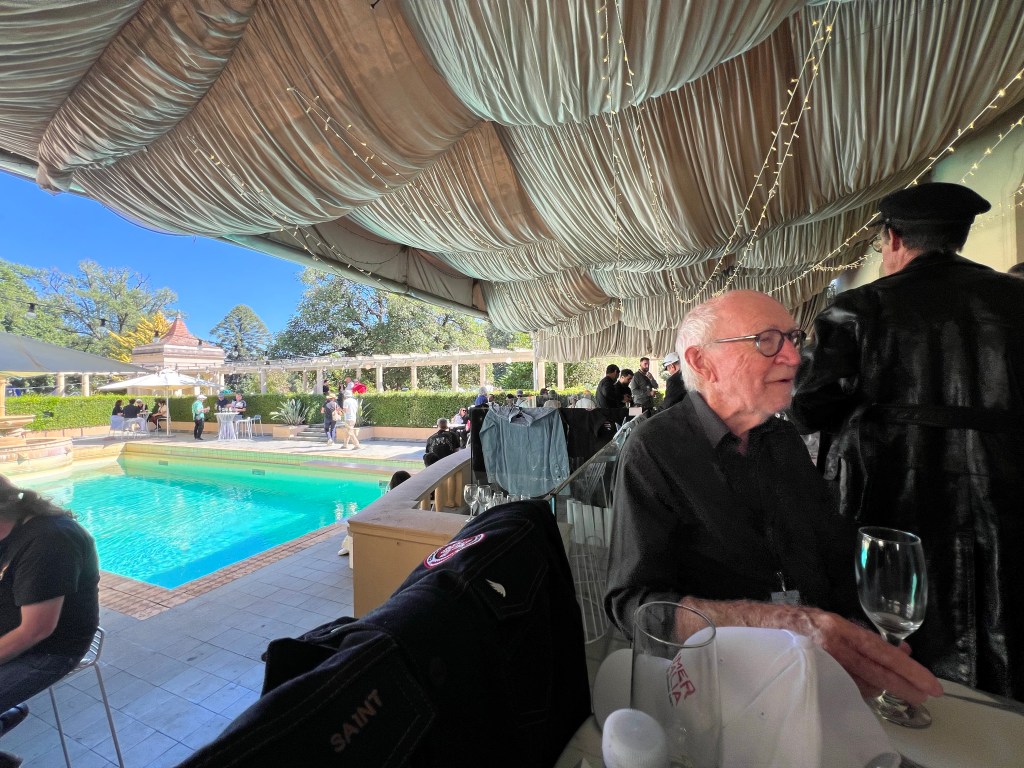
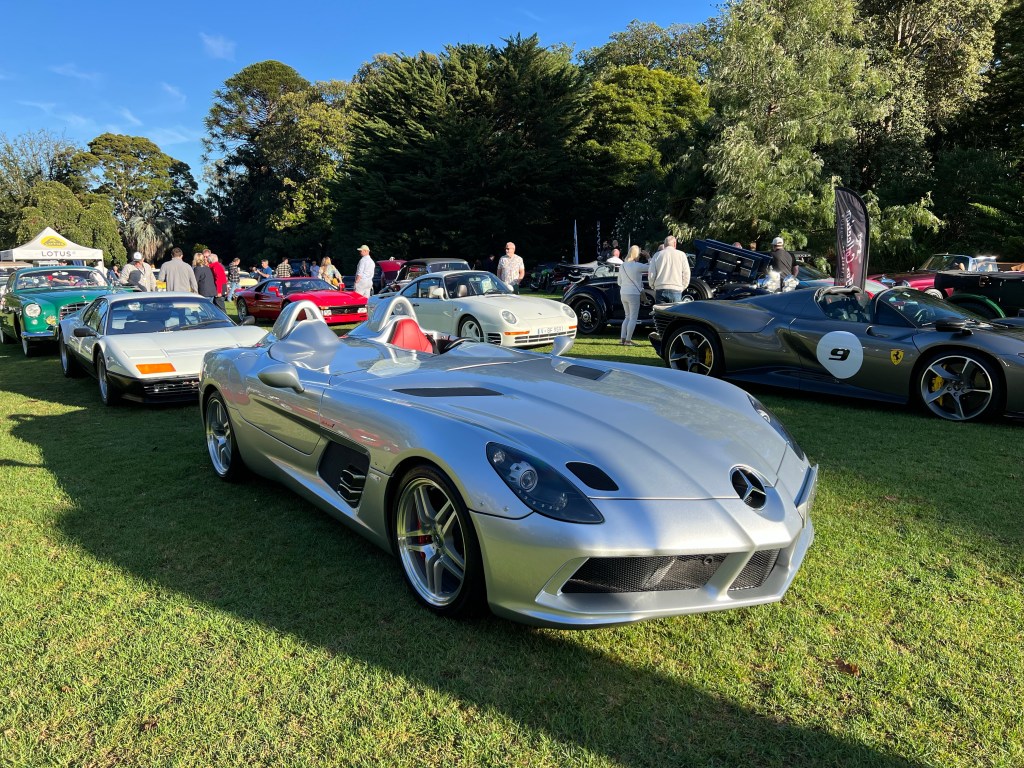
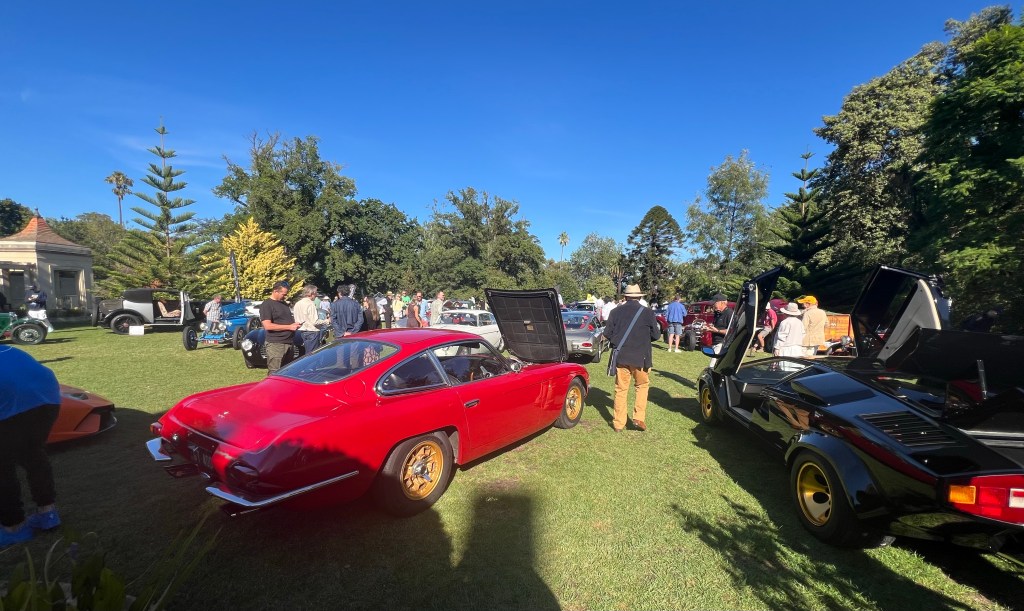
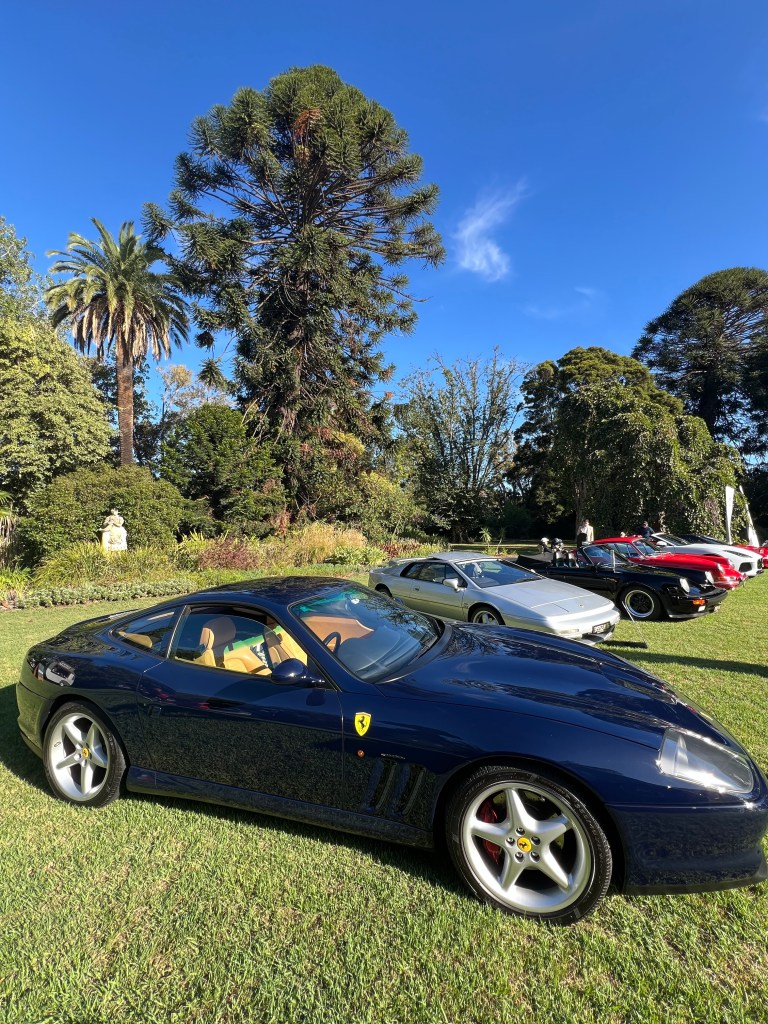
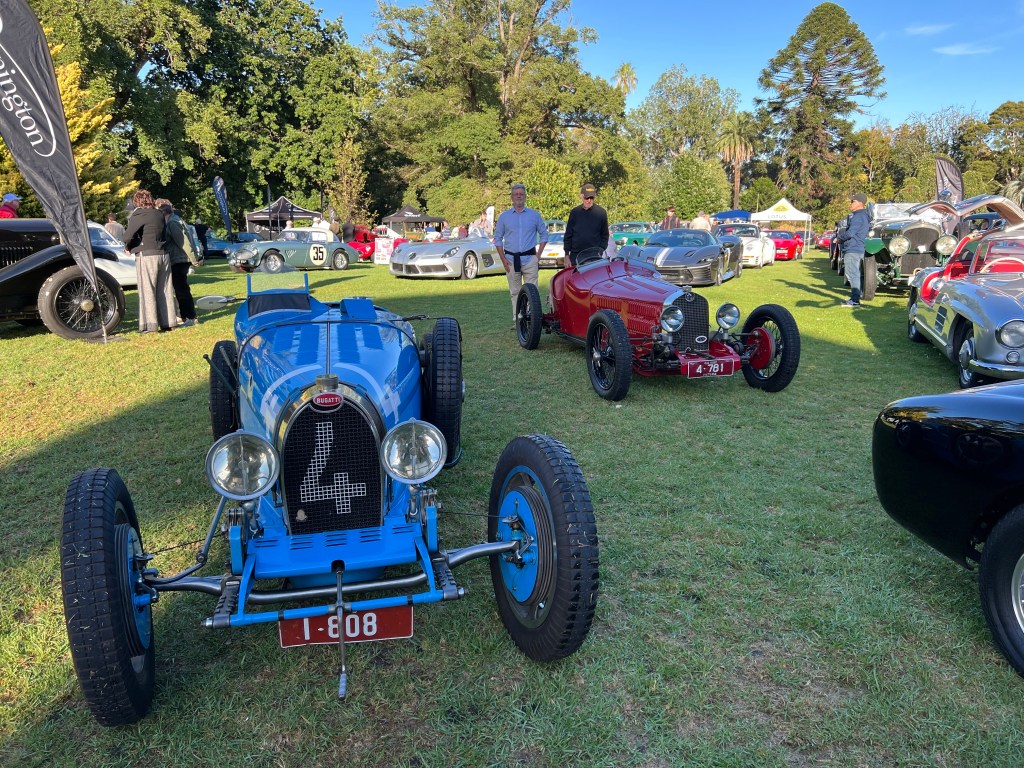
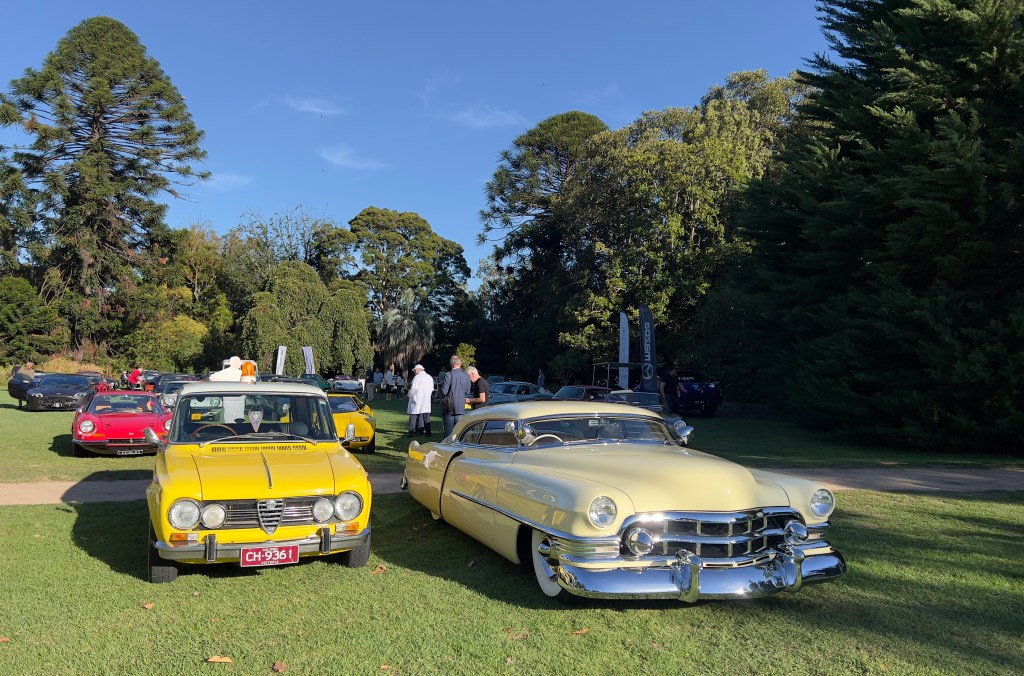
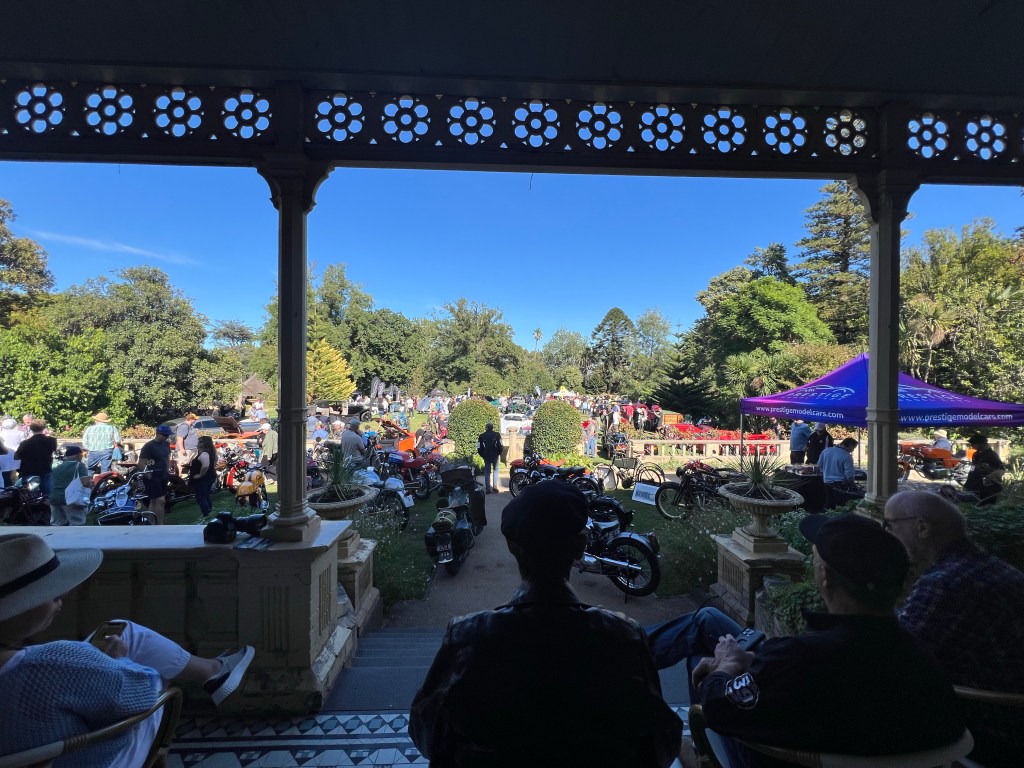
Jack Quinn, Michelle Mantsio and team ran a stunning concours event at the Rippon Lea Estate National Trust home, Melbourne, on Sunday March 23, 2025.

The 100 cars covered everything from veterans to morbidly obese mid-engined Ferrari Supercars and much else in between. Background on Rippon Lea here: https://www.ripponleaestate.com.au/history/

The notoriously capricious Melbourne weather played by the rules for a change and a $30 entry price got the punters out in the Autumn sunshine in droves.

Jack and Michelle have run this event at Wombat Hill, Daylesford for the last two years and brilliant as they were, there is no substitute for making the cars more easily accessible to a bigger potential audience, hence the move to central Melbourne. Wombat Hill concours here: https://primotipo.com/2023/02/25/wombat-park-classic/

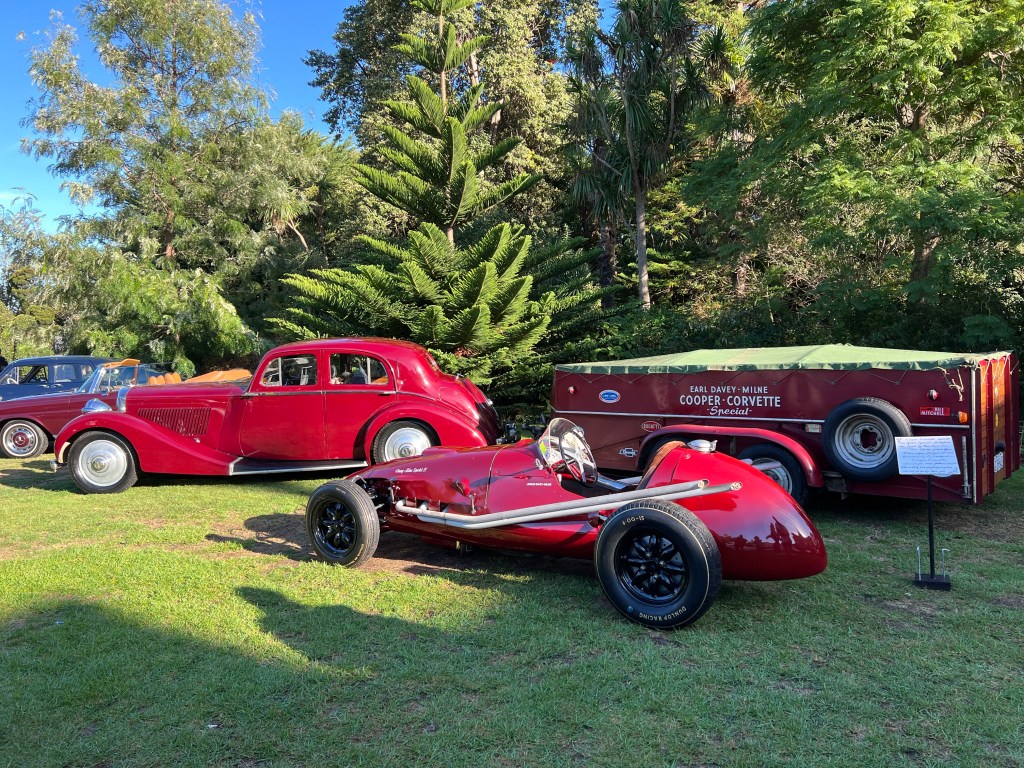
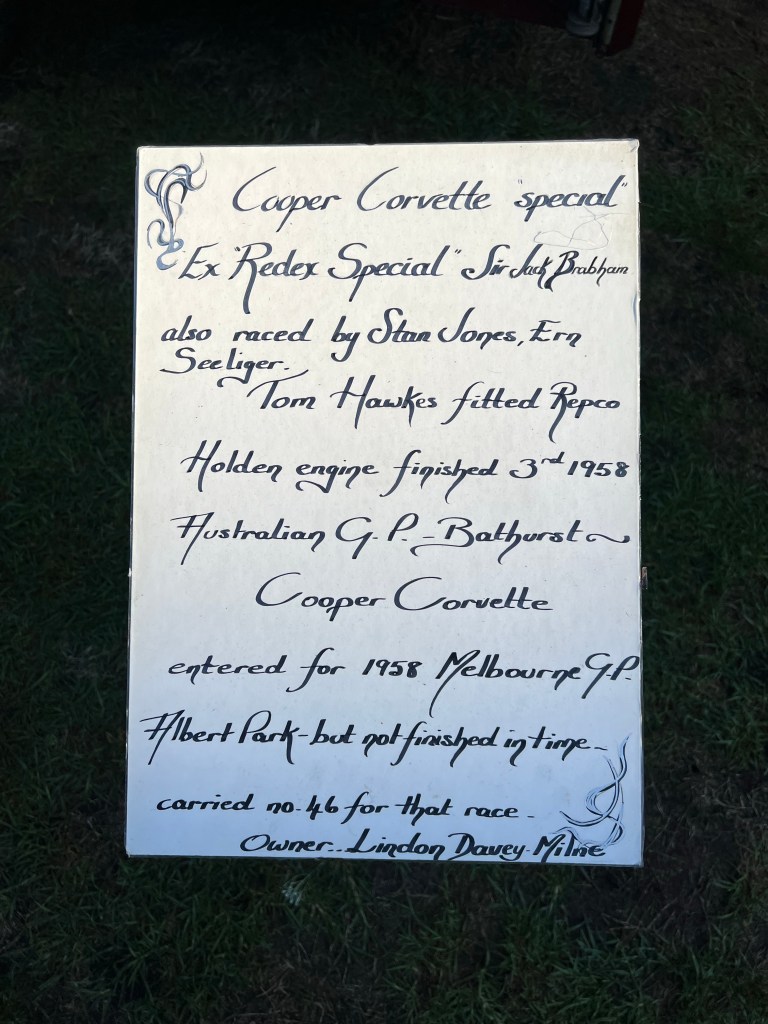
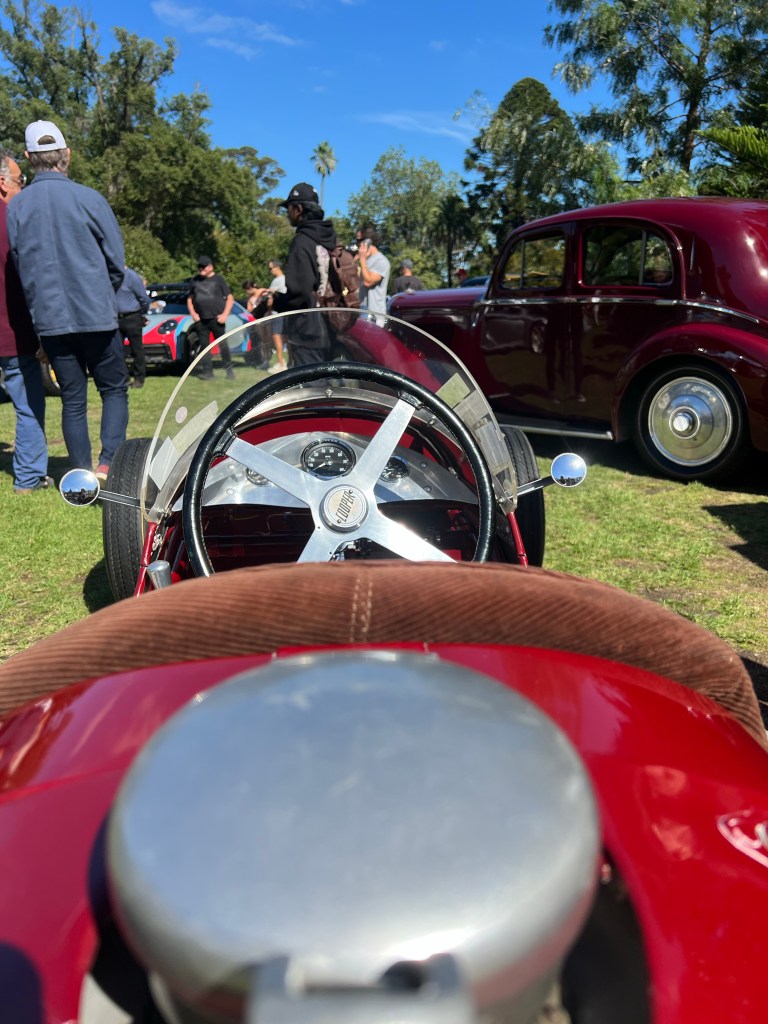
Equipe Davey Milne drew plenty of attention with Lindon’s ex-Jack Brabham Cooper T23 Chev, Bristol engined in its RedeX Special days of course.

The boys have the Bugatti Chev running, it broke cover in Daylesford last year.

Australian enthusiasts will be pleased to know that the target date for ‘completion’ of the resto of their ex-Barrett/Steele/Edgerton Alfa Romeo 8C2300 Monza are the 2027-2028 Australian Centenary Grand Prix celebrations at Albert Park and elsewhere. Time is ticking mind you.

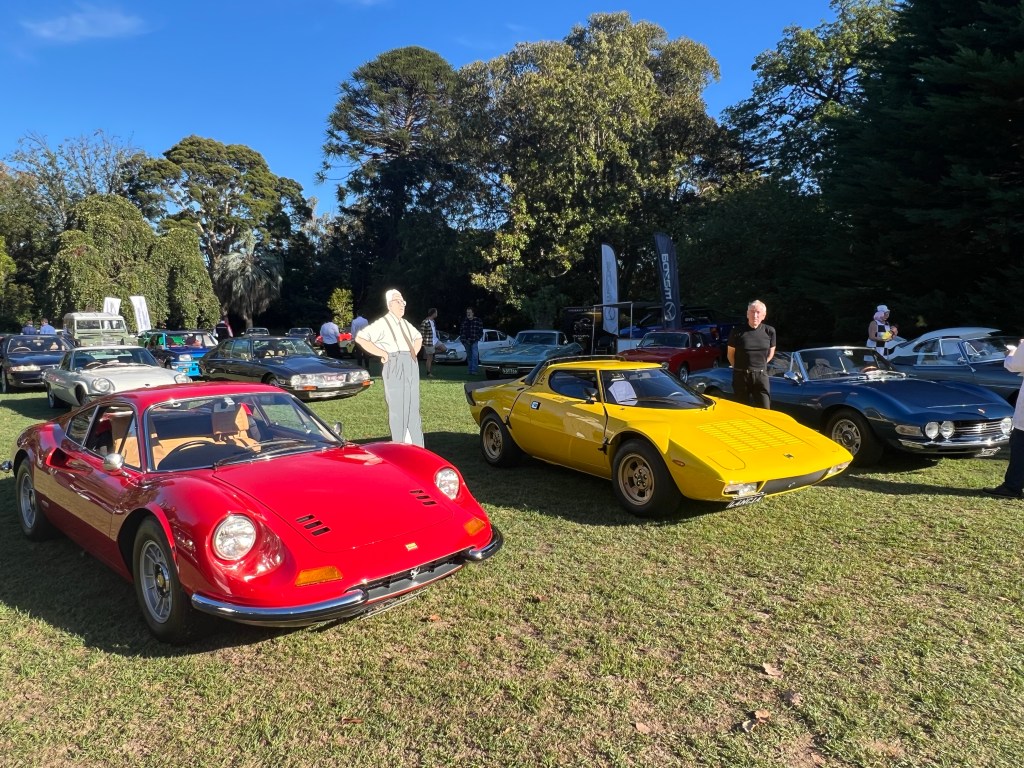
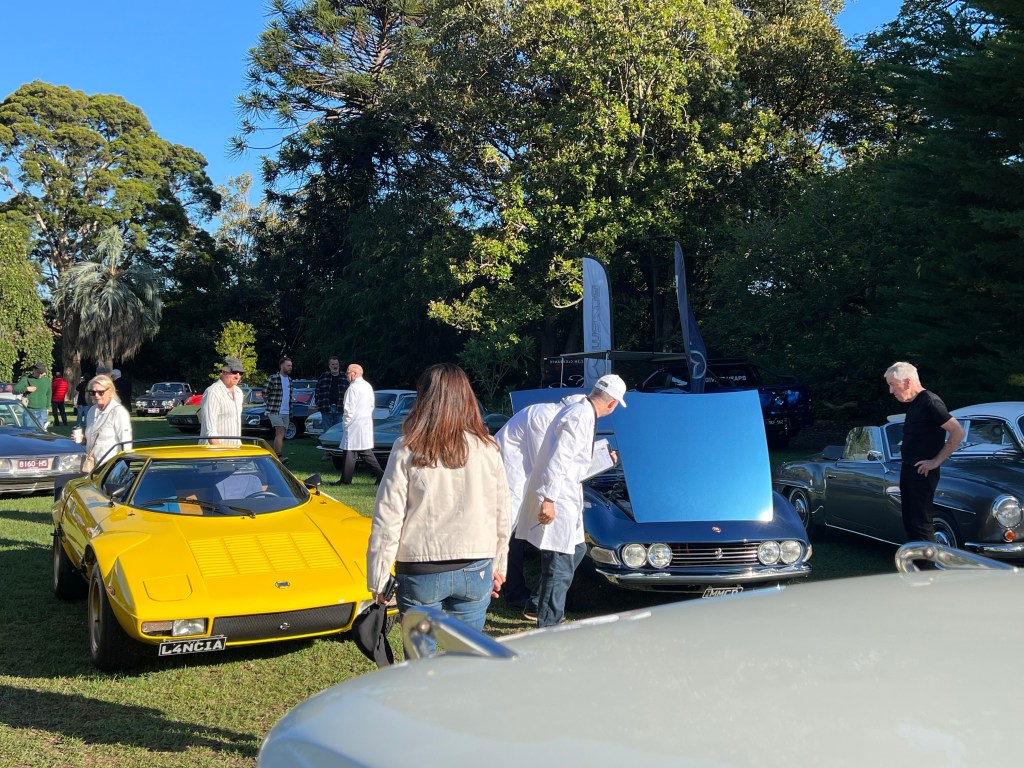
Phil Allen says his ‘Three Amigos lead a celibate life‘ – Ferrari V6 engined Dino 246, Lancia Stratos and Fiat Dino – but they are all driven often and double-up rather nicely as beauty queens. I’ll have the Lancia please. Enzo looks on with approval.

Phil off to the side is ready to provide advice to The Judges upon their request of same…

These neat, white, carefully pressed overalls and caps replete with sponsors logos were a refreshing change to the Global Concours Judge Uniform of brown trousers, blue shirt, blue blazer and Boater hats. They always look like escapees from a Liberal Party Meeting to me, why wouldn’t you be an escapee from such meetings of course?

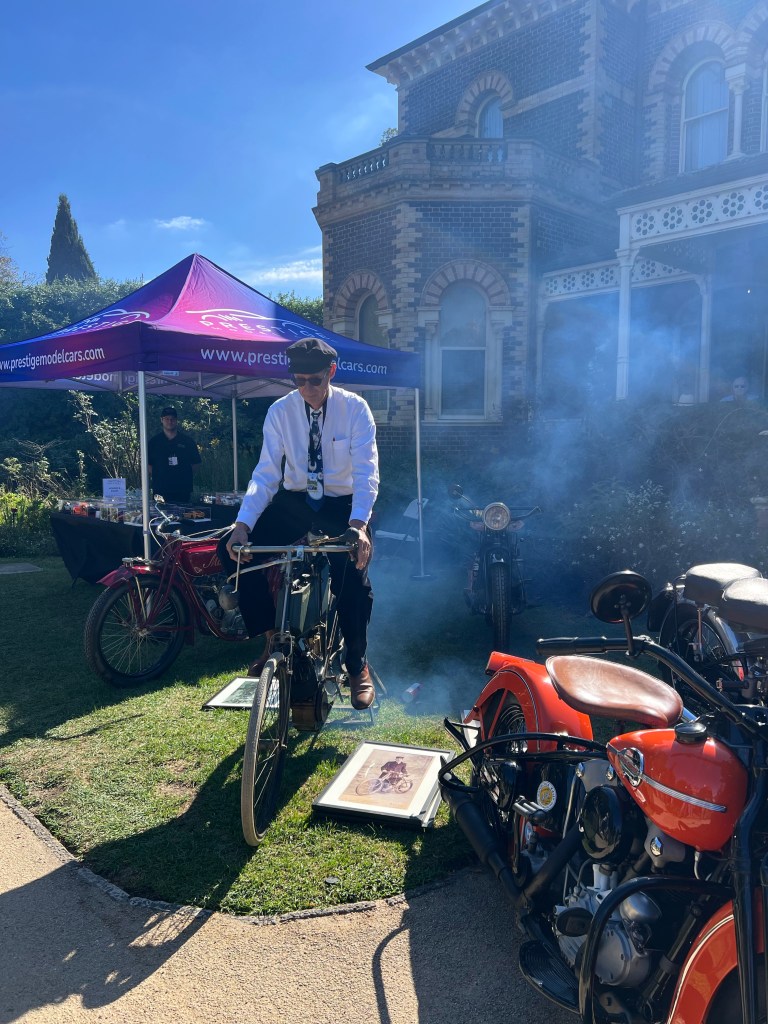
A two-stroke perhaps!

Jack is amazingly well-connected and has the ability to pull-cars-out-of-his-arse, the number of machines ‘most of us’ haven’t seen before is notable each year.

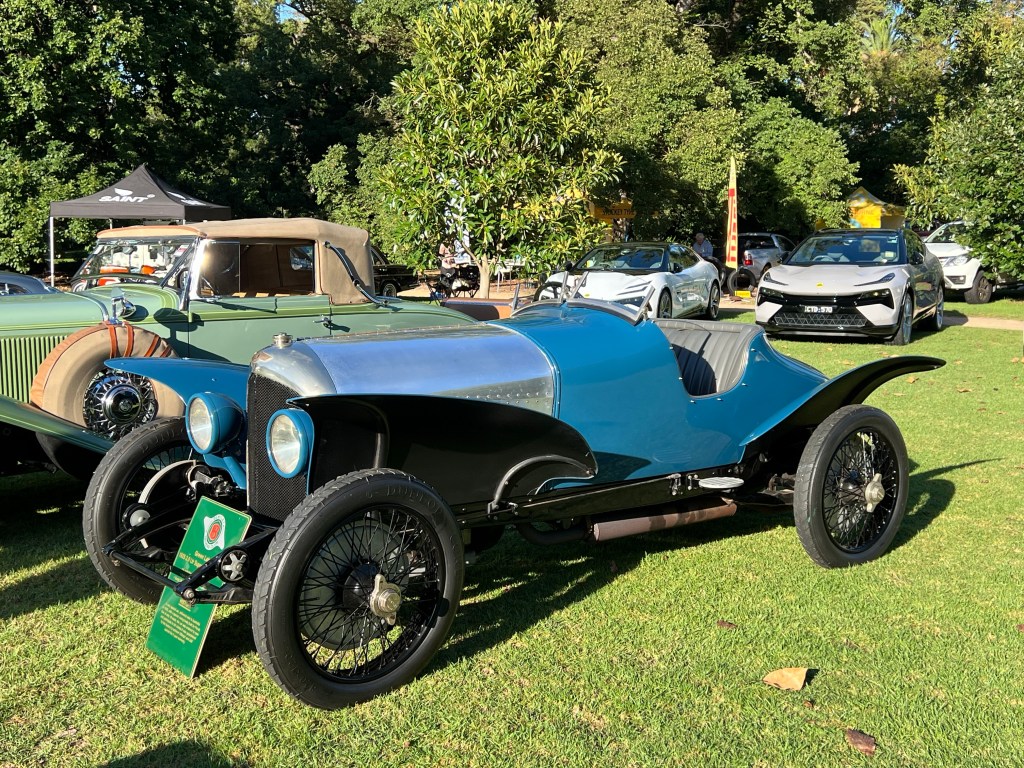
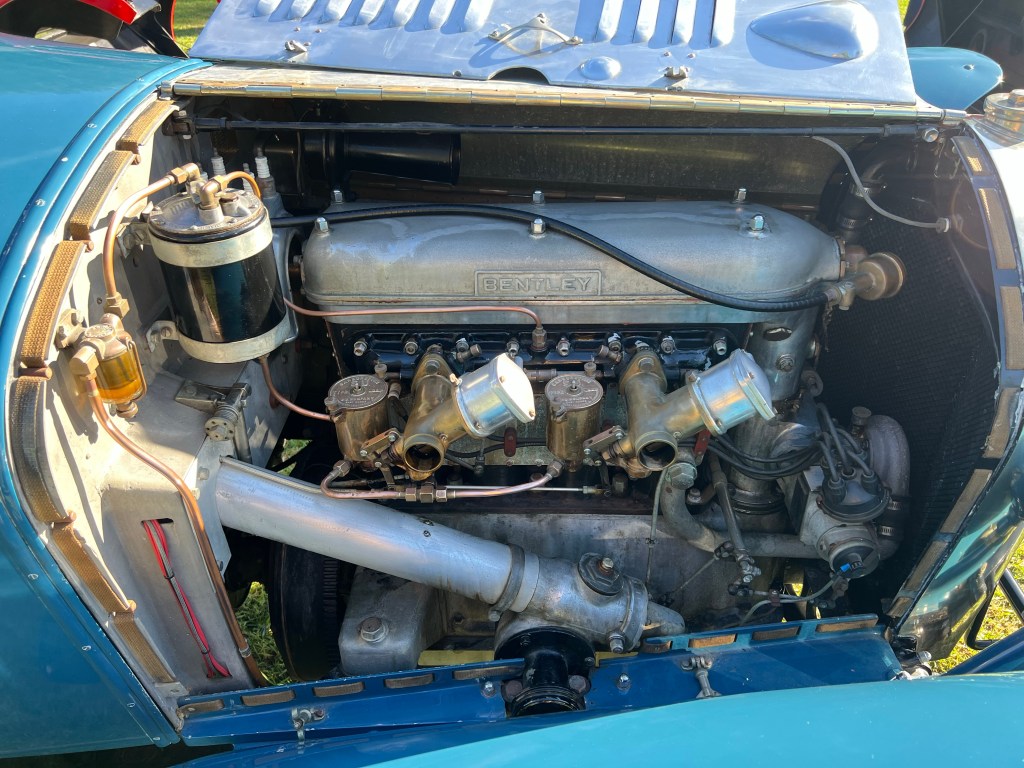
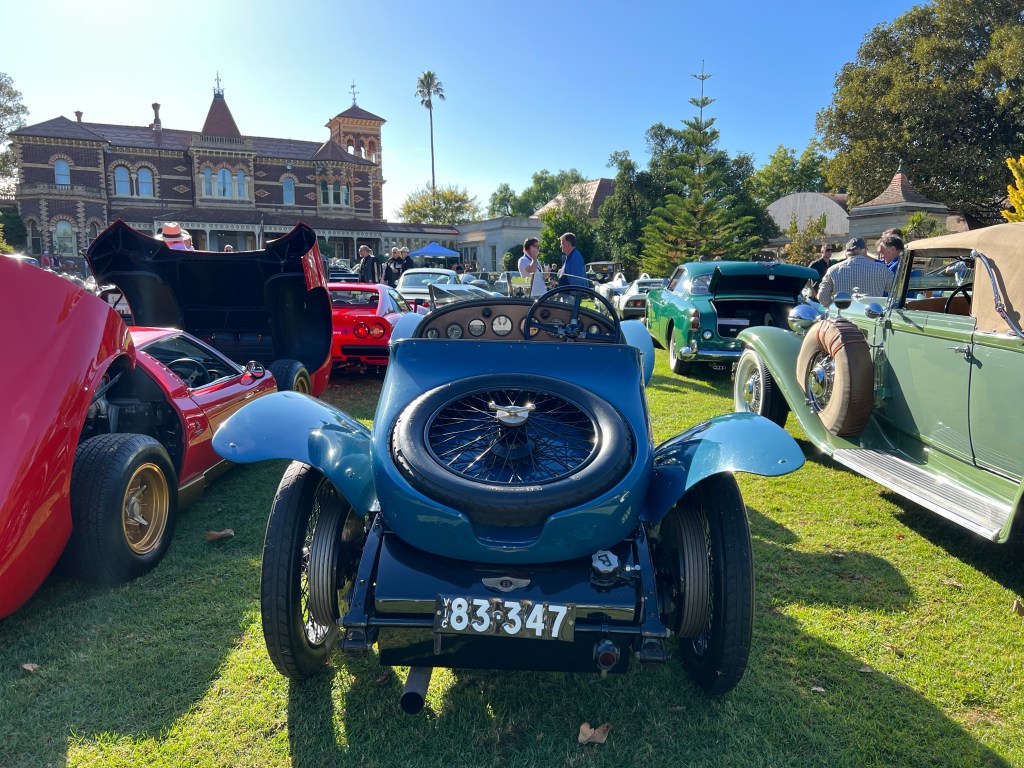
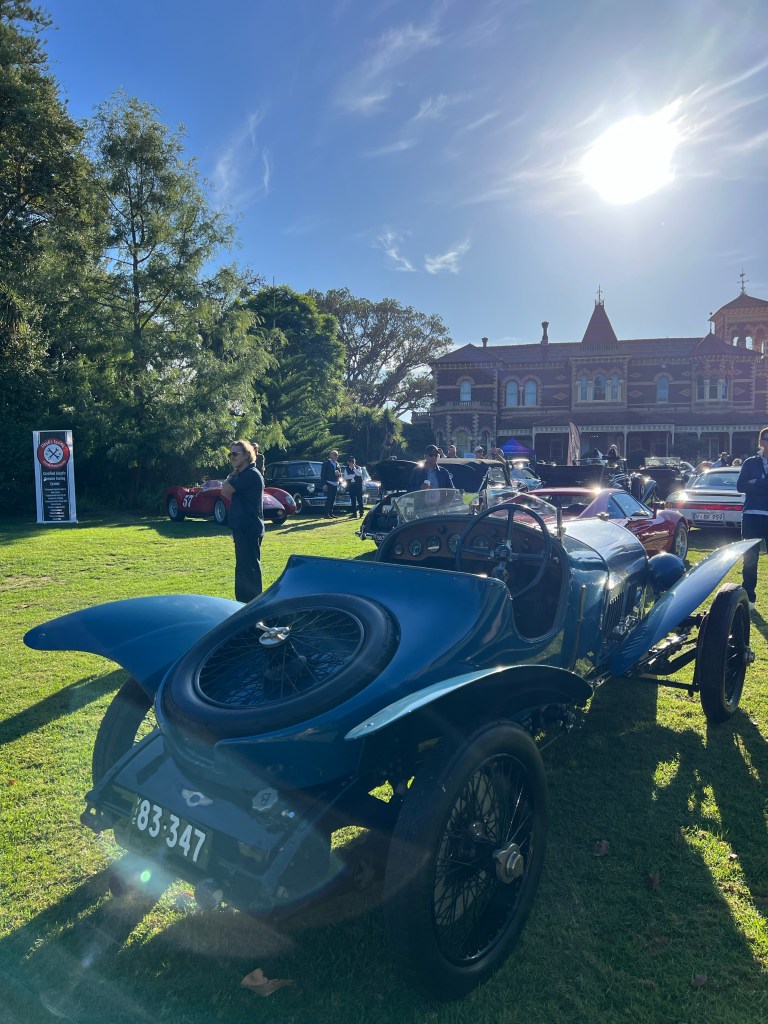
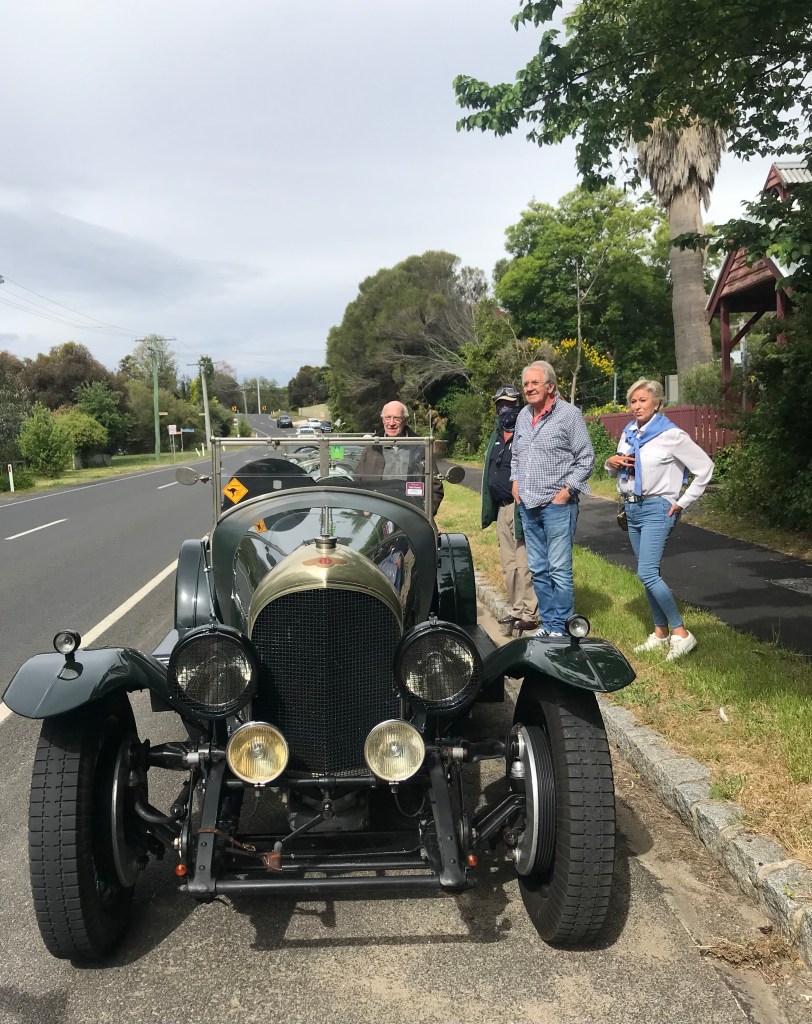
One that fits into this category is the Bentley 3-litre Super Sports 100 MPH which one of the authors of ‘Bentleys in Australia’ has not seen, so its appearance was very special. Body by Floods, Melbourne.

This car was delivered new in Melbourne in 1925, has an in-period competition history and by some type of miracle – great work by Australian Bentley Club members down the decades duly noted – still resides here.

Bob King getting stuck into the sauce. A $5000 fine if any of the punters ended up in the pool Jack told me; to him not the punter.

Lindsay Fox doesn’t tend to let his cars loose too often but Quinn has deceptive powers of pursuation, five cars from Australia’s most prominent ‘truckie’ this time was fantastic. I thank the Fox Collection for their support of these events on behalf of all of us…more, more, more!

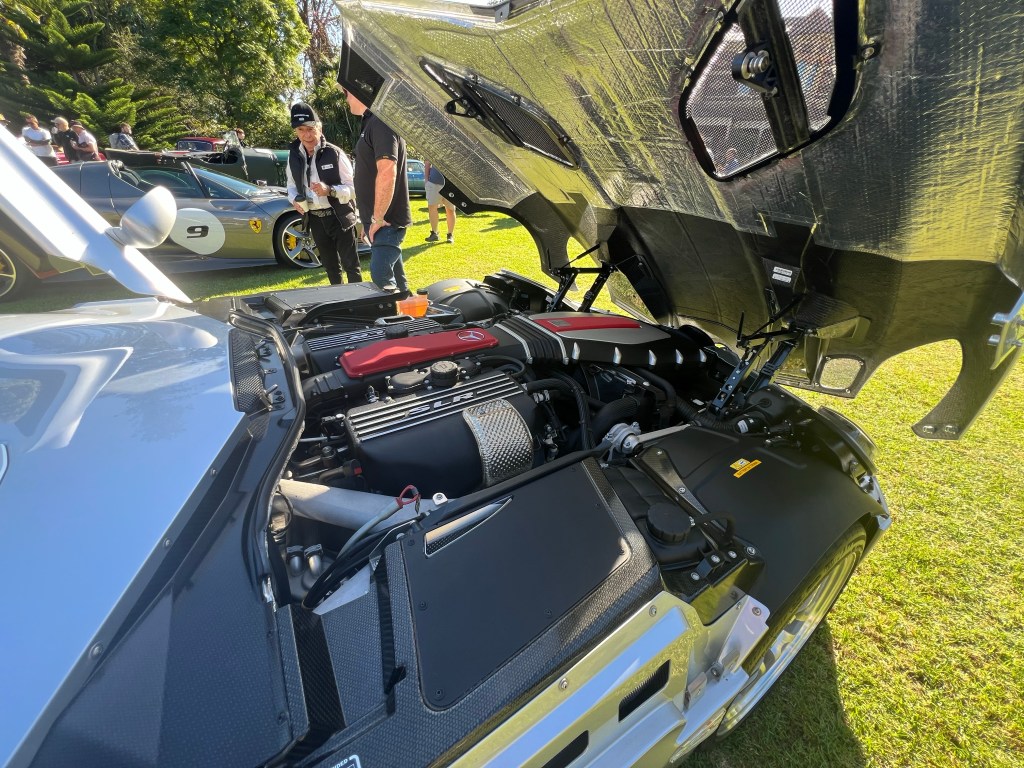
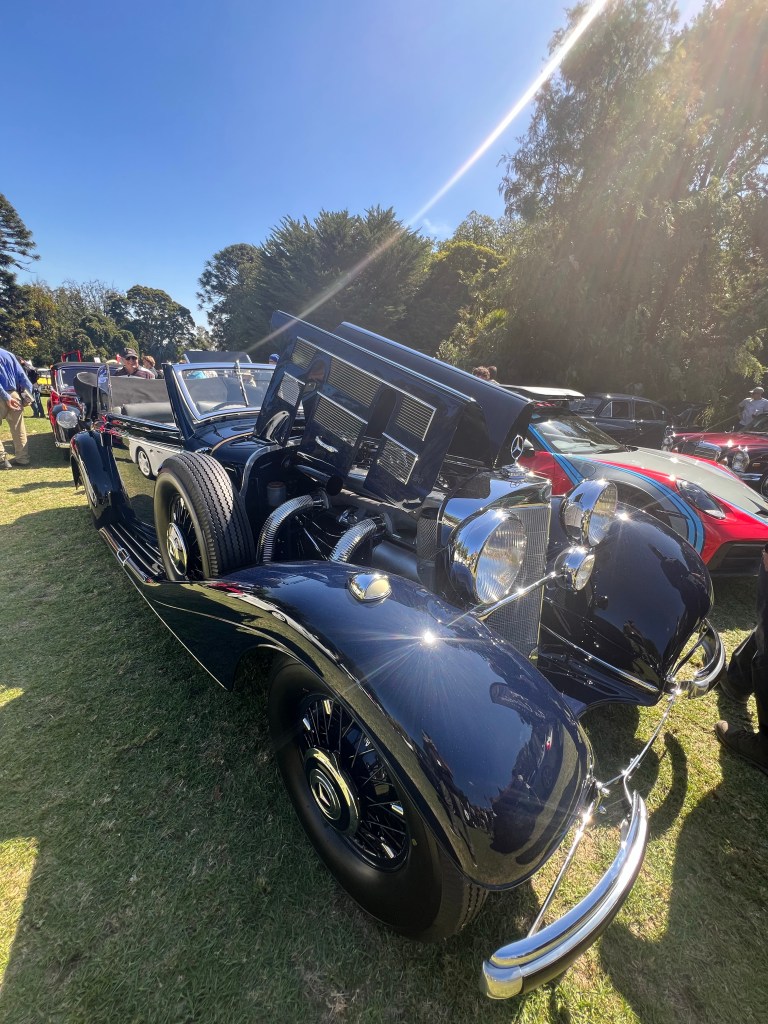
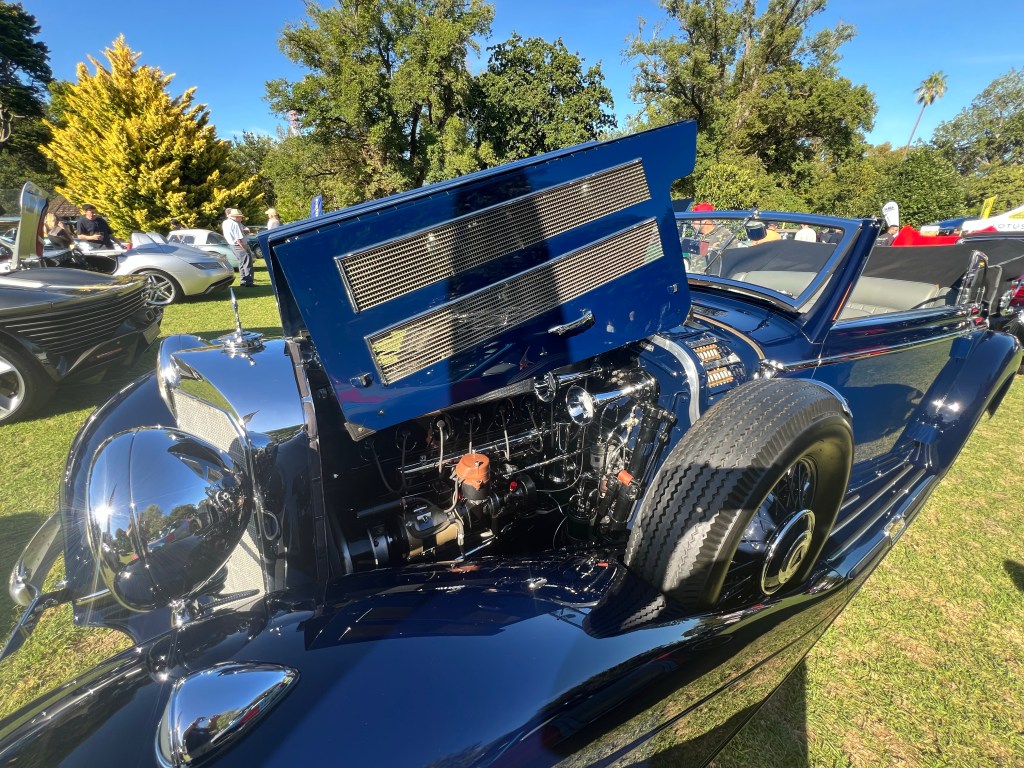
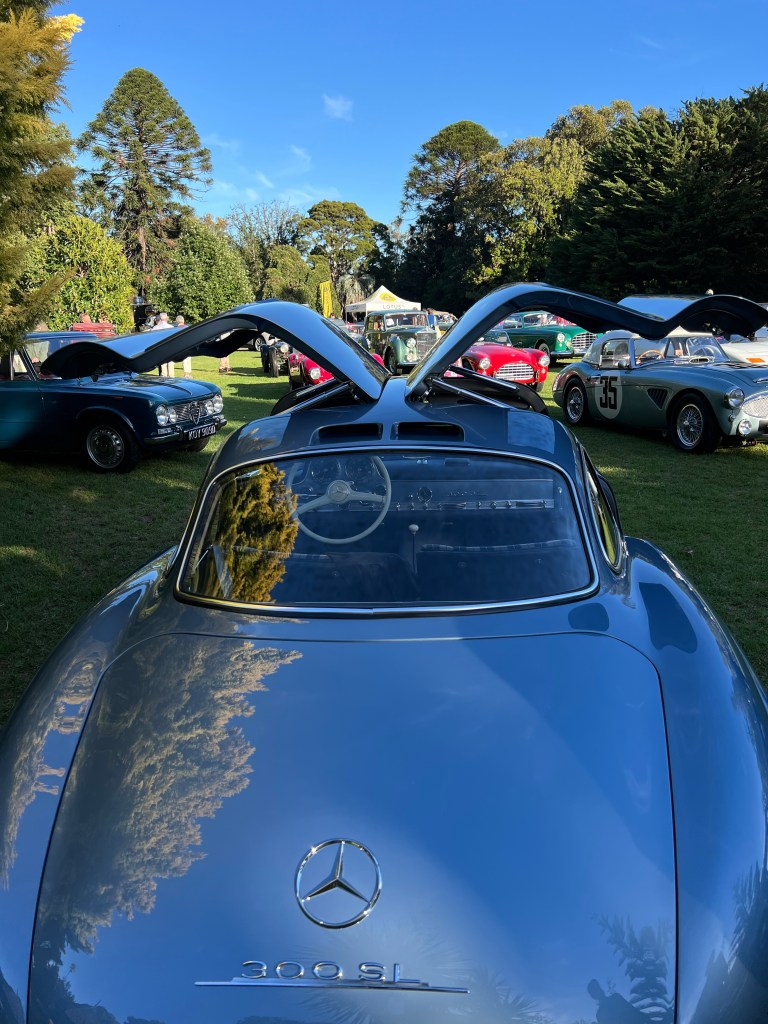
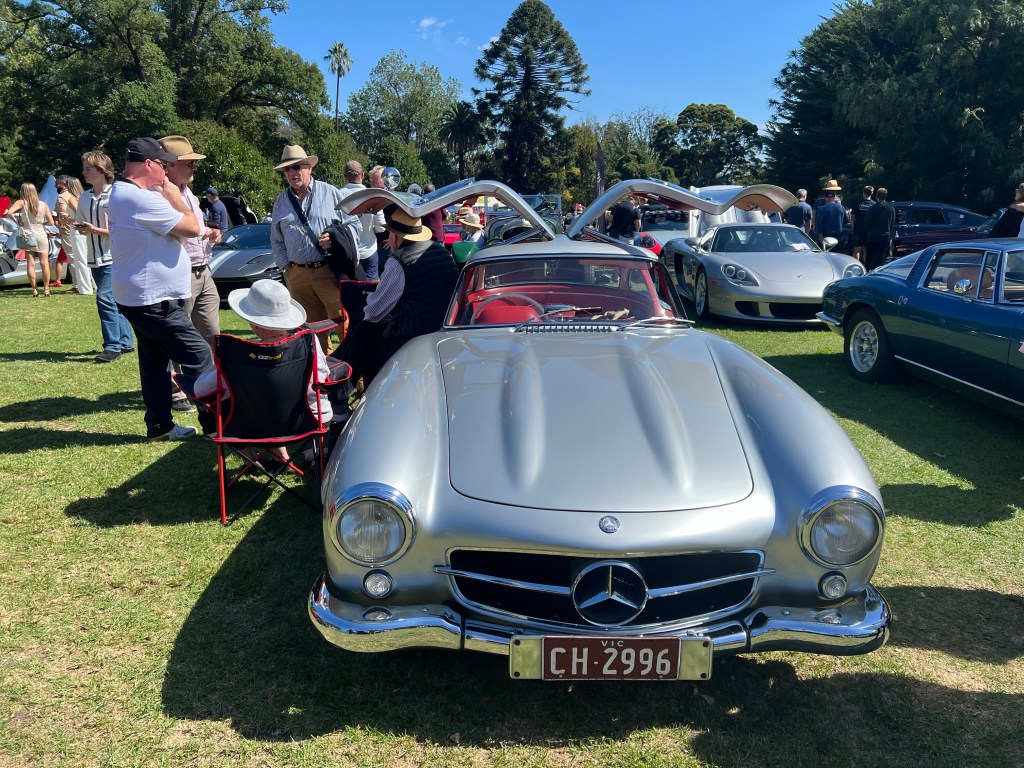
The Mercedes-Benz SLR McLaren and 540K are both big bits of real estate devoid of appeal to me but Jo Publik clearly loved-em!

Its a looong way from the driving seat of the Merc-Mc to the nose, it would be quite a wrestle from Moggs Creek to Apollo Bay I suspect. Still, the market was a mix of collector cars doing SFA and across Europe autobahn-storming for a few.

Too many episodes of Hogans Heroes always has me thinking of goose-stepping German perverts whenever I see one of these Mercs unfortunately; engineering quality undeniable of course.

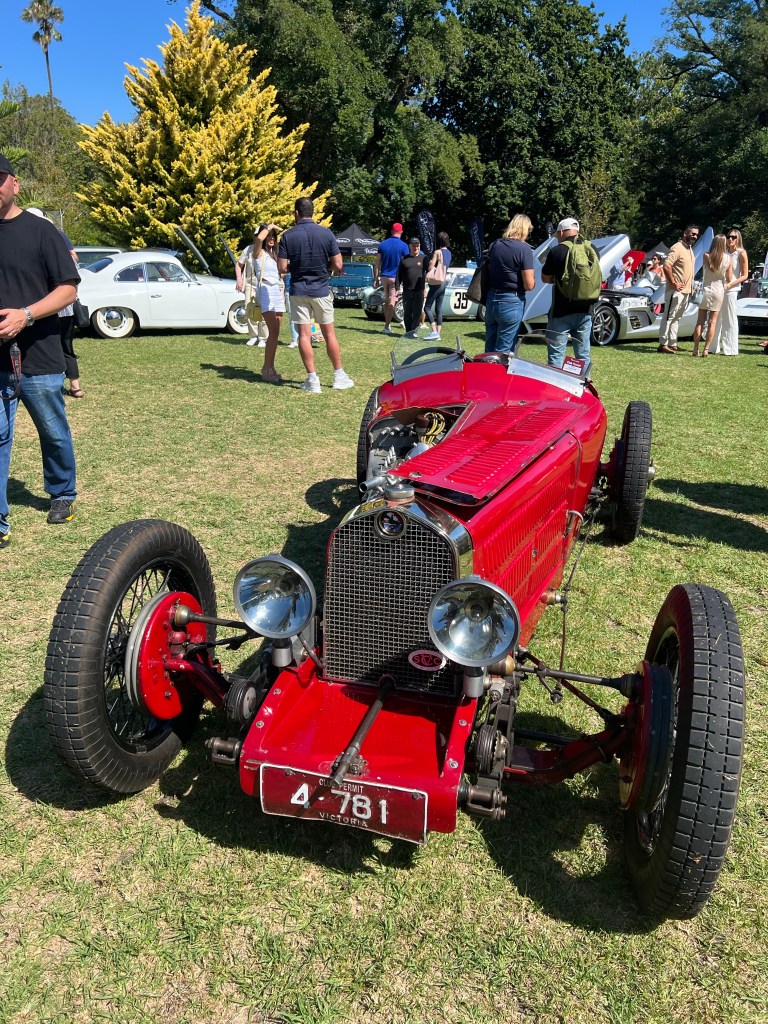
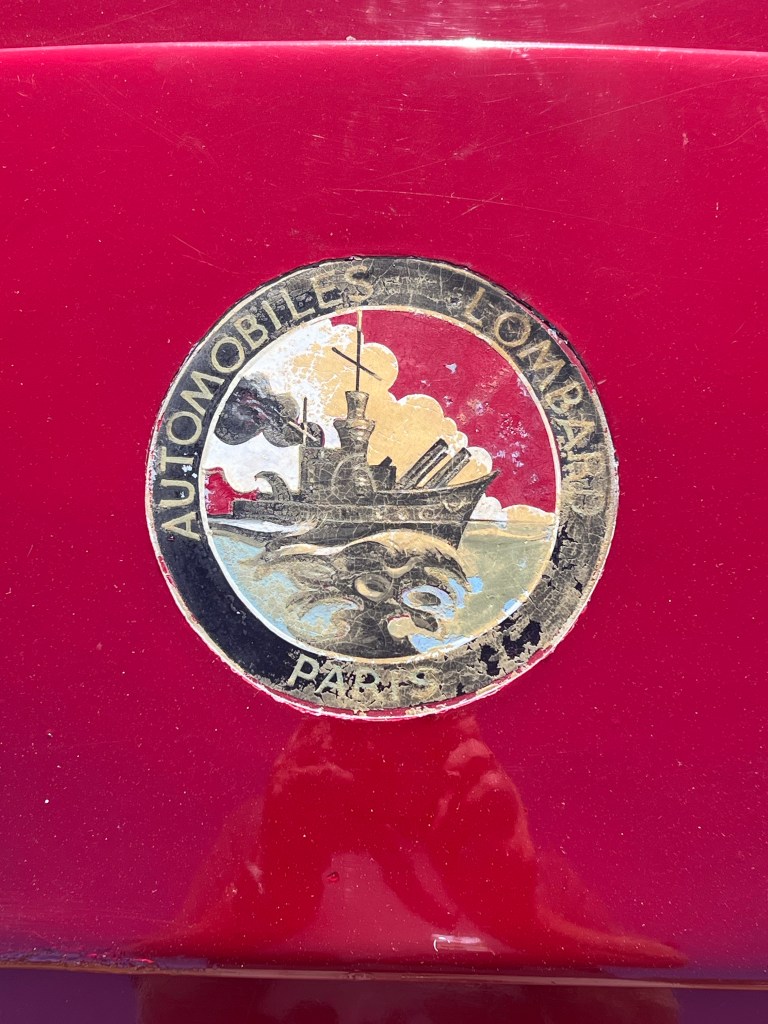
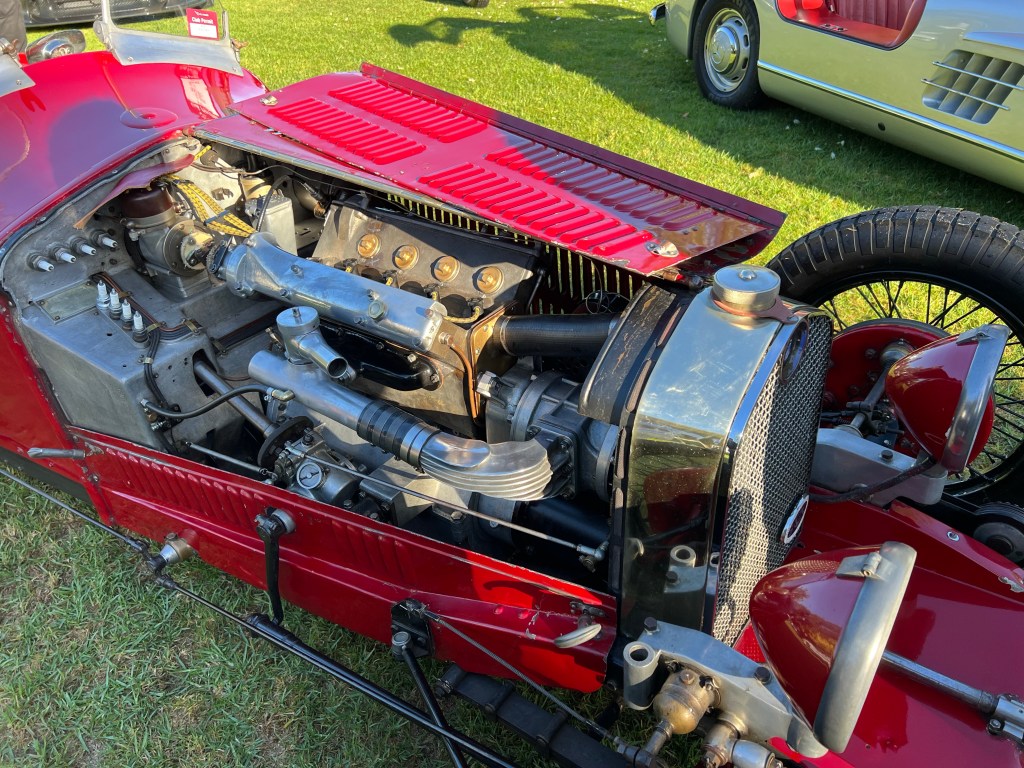
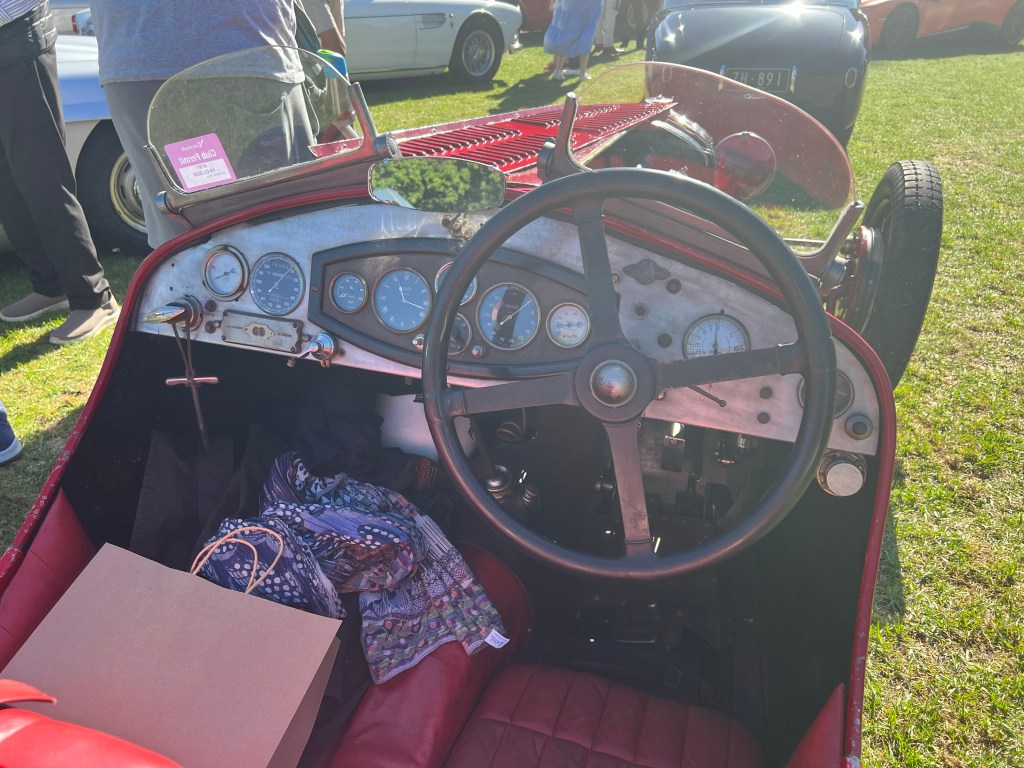
The Murdoch’s ex-Bill Lowe Lombard AL3 s/c is much more up my alley.

With an Oz racing history going back to the earliest of Phillip Island days this amazing time capsule has been continually race prepared and rebuilt over its 100 or so years of life rather than restored, thank goodness.

The only Oily Rag racing cars in Australia of that era left ‘untouched’ are the Lombard and Sydney domiciled ex-Bill Thompson Bugatti Type 37A. I’ve written that assertively but I’m not sure its right, name others folks, racing cars not roadies, I’m well aware of Alistair McArthur’s Ballot 2LS.

Geoff Murdoch just reccied a car club rally route up Tumbarumba way in the Lombard recently so the petite bolide doesn’t mind a few kays.

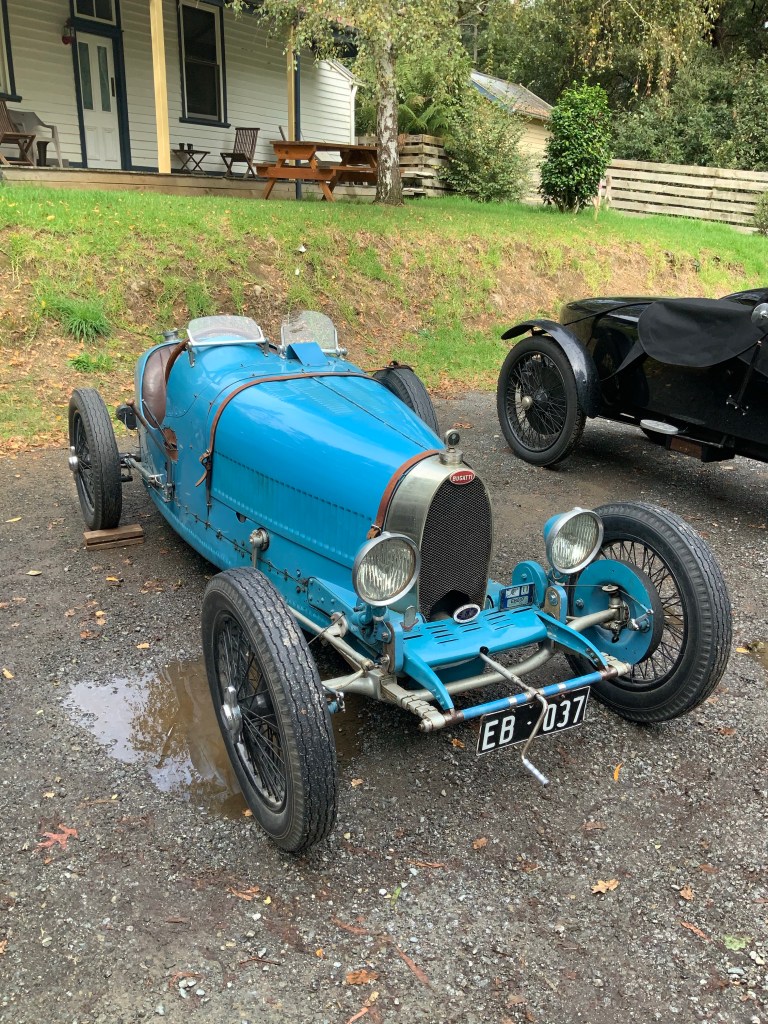
Adam Berryman’s Bugatti T37A also does plenty of miles (below) and will always have a special place in my heart as the first Bugatti I drove. Geoff Murdoch and Bob King are behind the Lombard.

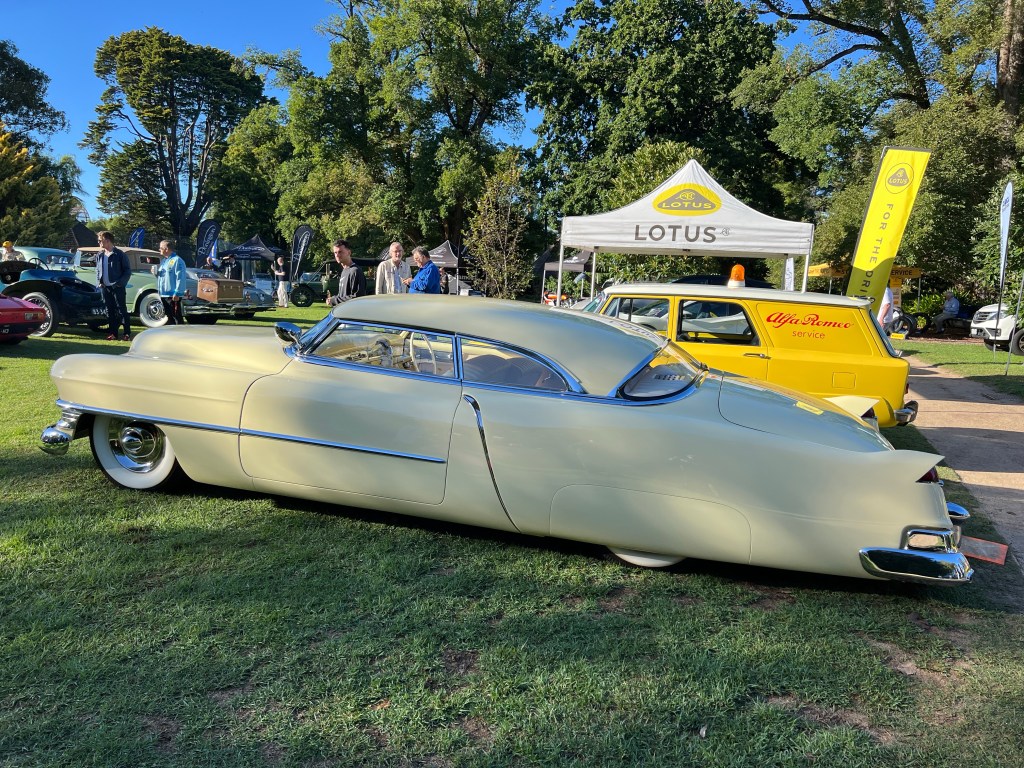
The subtlety of this chopped and channelled – is that what they call it ? – American thingy took ya breath away. Variety is the spice of this show…no-one else in Portsea has one of those. Giulia Super service car alongside.

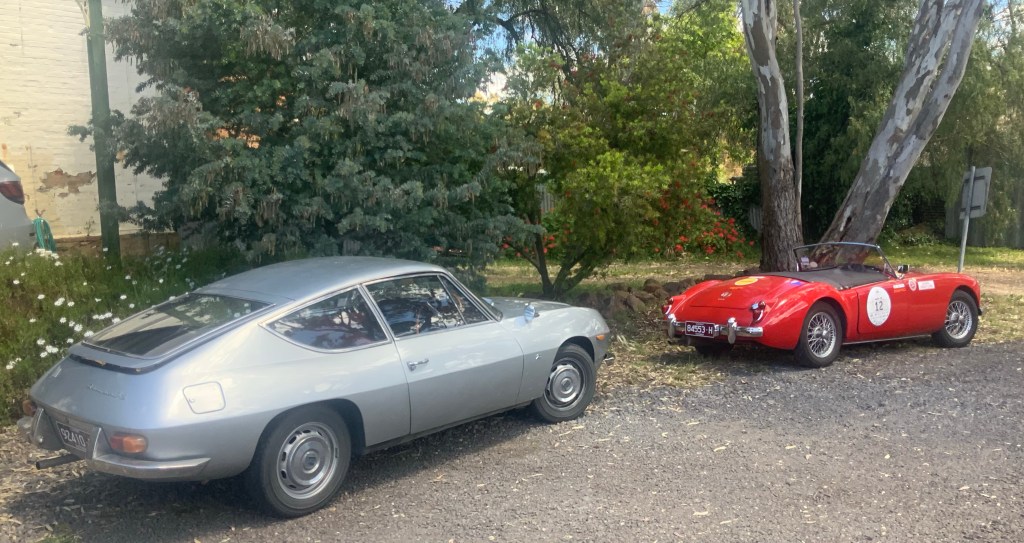
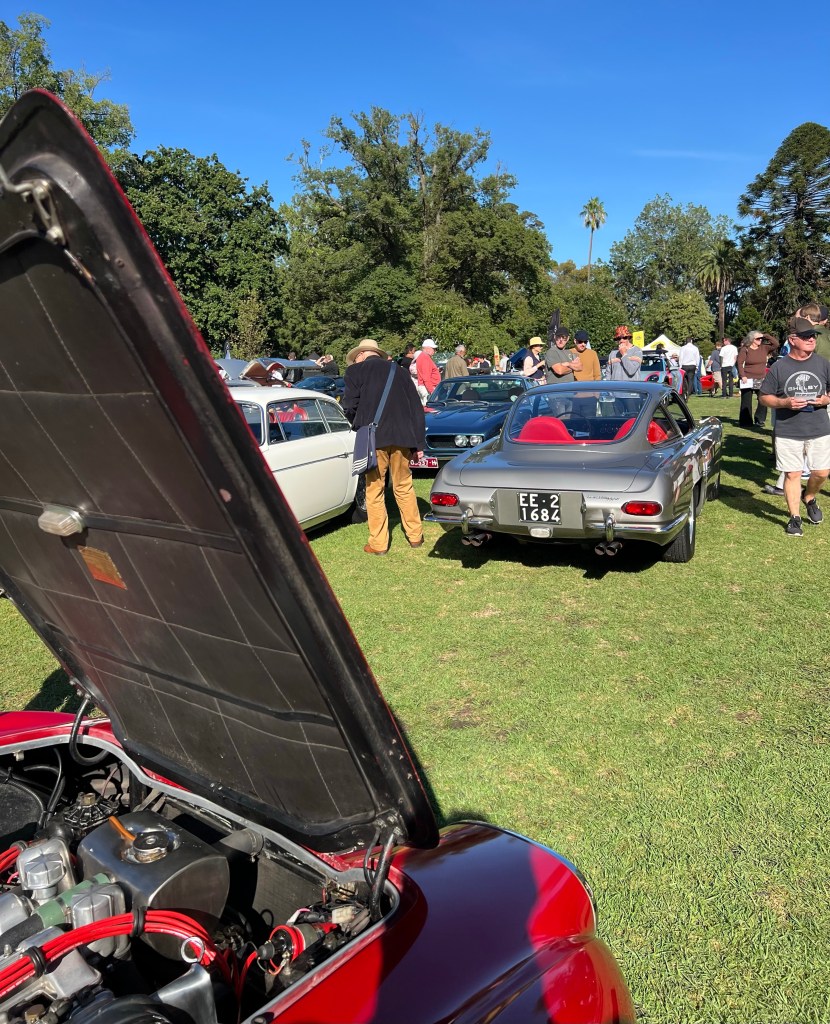
It was very interesting having Warwick Anderson explain the differences between his (red) Lamborghini 400 and Joe Calleja’s just arrived from the US, (silver) Lamborghini 350.

Amusing are his stories about his father, Colin Anderson, corresponding with Ferruccio Lamborghini about his ownership journey of that red 400, the first Lambo imported to Australia. The company owner even adopted Colin’s targa-type pop-off roof as a factory option!

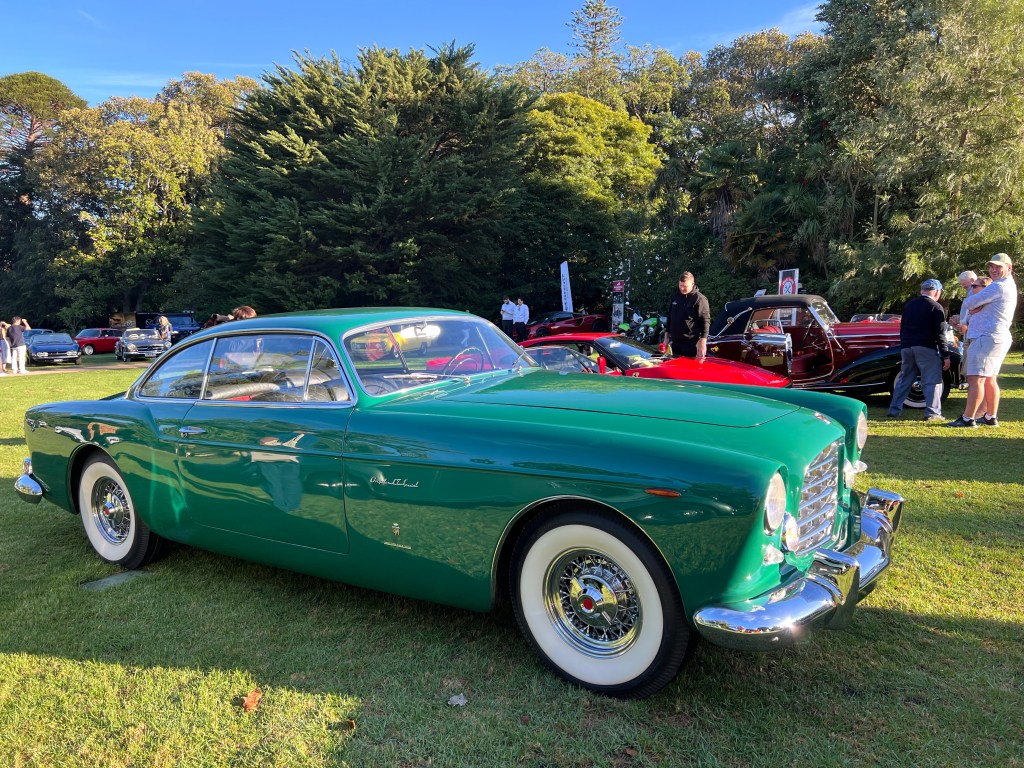
Another ‘never seen before’ for me at least, Chrysler Ghia ST of 1954-55.

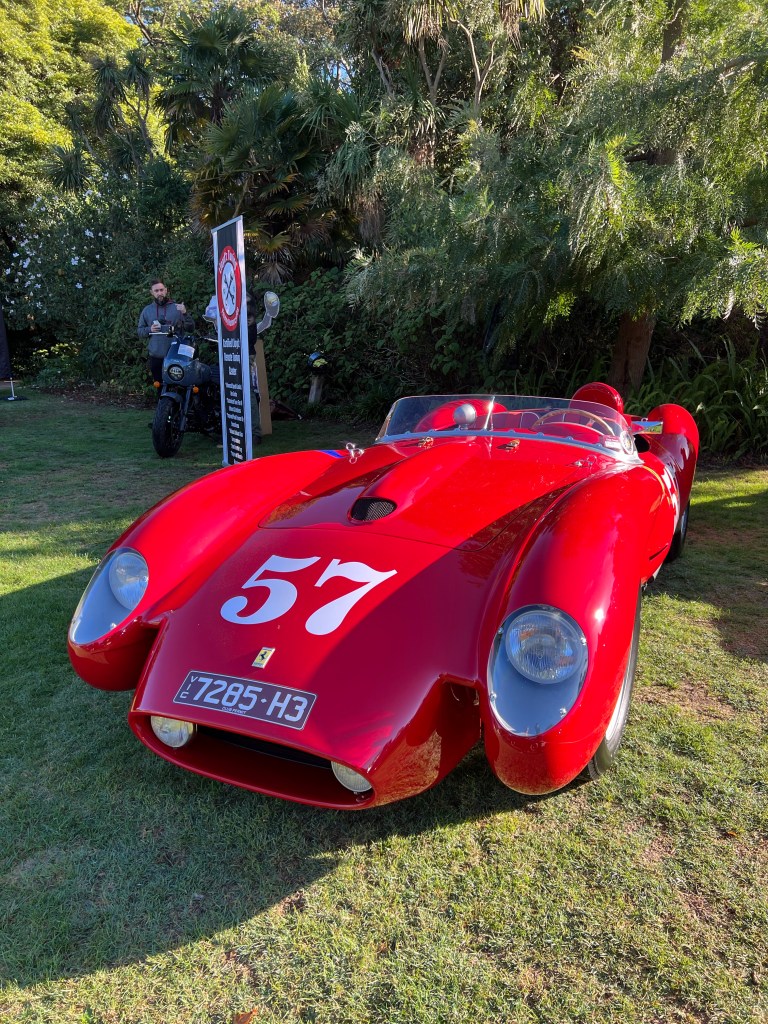
Why not finish with Nigel Hunt’s achingly erotic Ferrari 250 Testa Rossa replica?

We are lucky to have one of these in Australia, it looks so kosher it’s not funny, all it needs are a few miles to provide the patination it lacks. Needless to say the crowds made a beeline for it, its pontoons are so iconic. And yes, THAT is the Great Ocean Road drive of drives…

It’s a bunga-bunga pine botanist Bob King tells me.

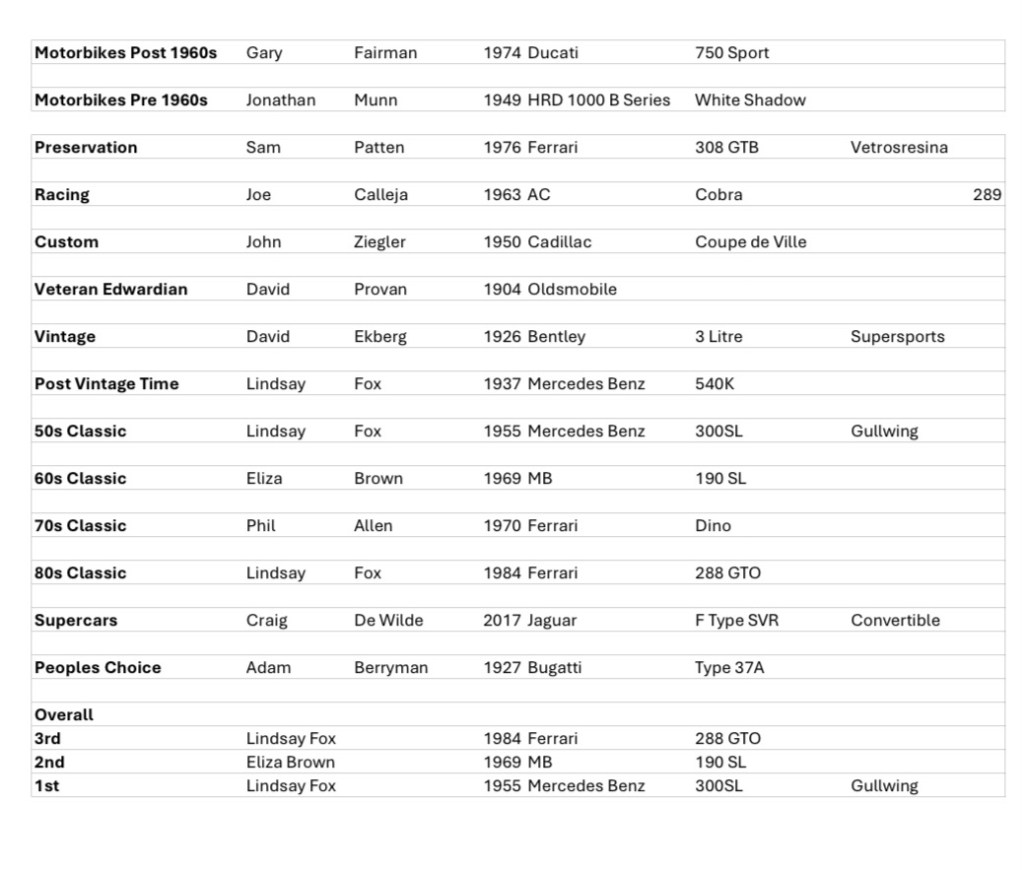
The results are below, my favourite was that Bentley 100 MPH.

An awesome, stunning event in every respect, surely the best Concours in Australia, and only three years in the making?

Credits…

Photos all Mark Bisset

Finito…
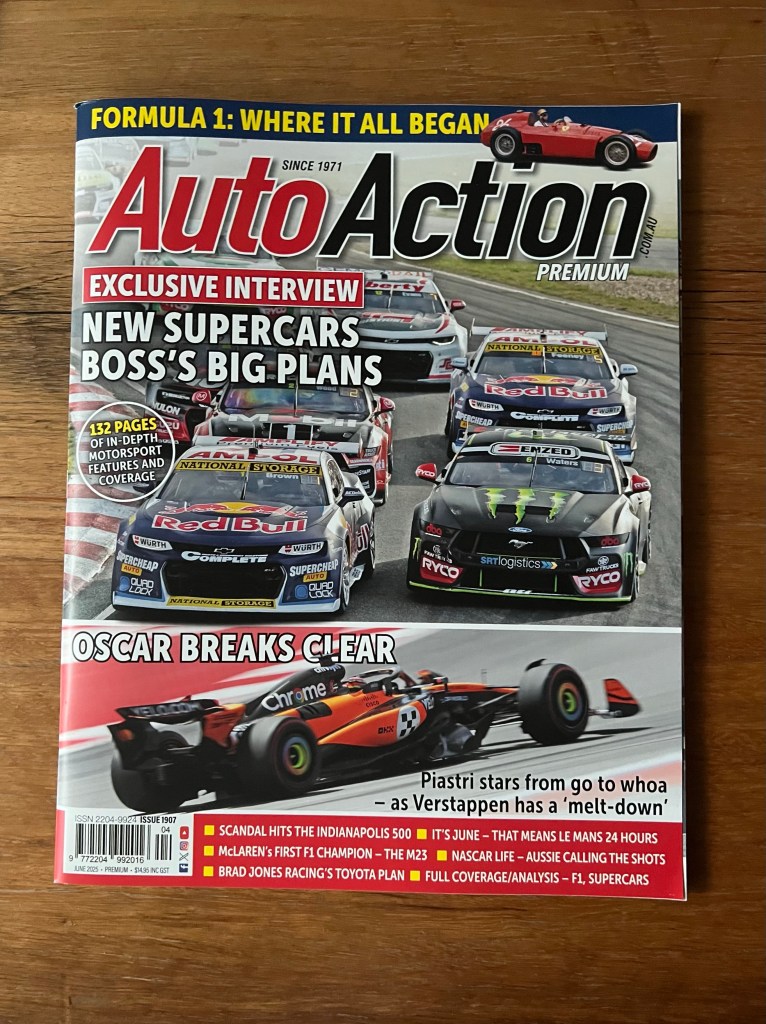
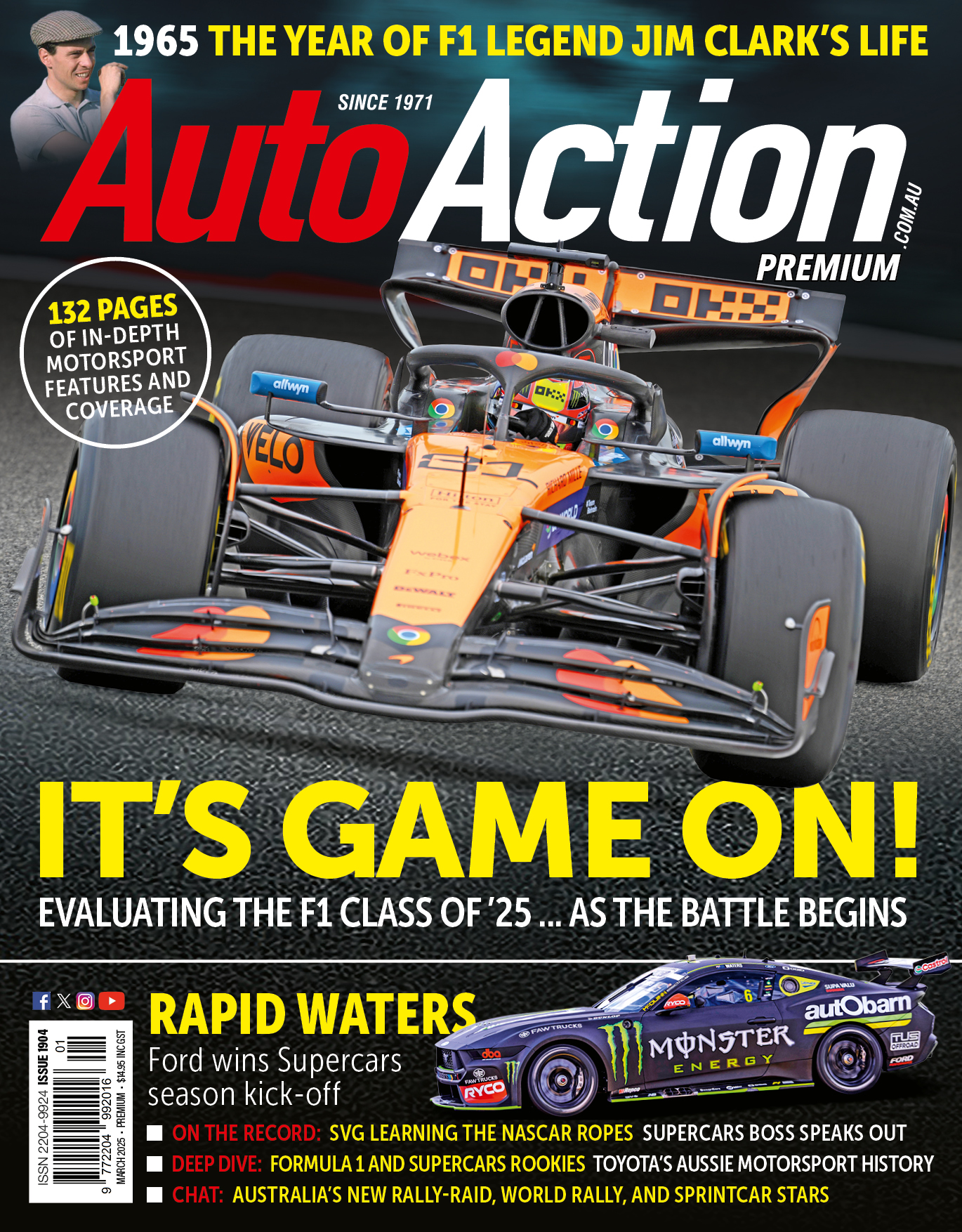
Auto Action Premium is on sale in NSW today, Victoria, South Australia, Western Australia and Tasmania on Friday, and Queensland probably Saturday, in your favourite news outlet.

This issue of ‘Premiumis the first of an exciting features-based monthly. It’s the latest part of Auto Action’s multi-media coverage of motorsport in Australia and globally and takes the 54 year old title to another level.

Print is alive and well because it engages readers in a way websites cannot. It’s is not about clickbait or a 15-second read but rather deep immersion and perpetuity. The first issue is a 132-page example of what readers and the motorsport industry can expect from the new ‘Premium’ Auto Action monthly.

Note that Auto Action’s traditional news oriented fortnightly continues as a free online magazine only. See here: https://autoaction.com.au/issues/auto-action-aa-d004

This issue of Premium includes

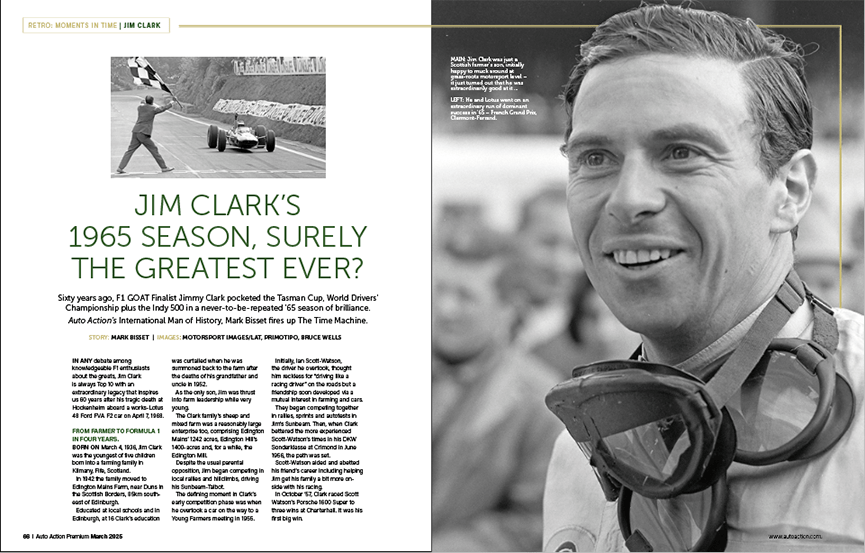
An expansive 12-page feature by me on Jim Clark’s 1965 season. Clark’s performance across many different categories that year in Formula 1, at Indianapolis, in sports cars, F2 and saloon car racing is regarded as the best individual season in history from a driver many rate as the best. 

Our in-house F1 expert Reese Mautone looks at all the 2025 F1 Rookies including Jack Doohan as they prepare to take on their full time F1 drives.

Auto Action’s International F1 man Luis Vasconcelos takes a look at the season ahead and crystal balls Oscar Piastri’s potential to beome our third World Drivers’ Champion.

Supercars’ boss Tim Edwards talks about a year on the ‘Other Side of the Fence’ and how the changes to the series played out at the recent Sydney Motorsport Park round.

AA talks with the two new full time Supercar racers, Rookies Kai Allen and Cooper Murray as they fight for Supercars glory.

Shane van Gisbergen opens up about his NASCAR evolution in the world’s biggest tin-top series in an interview with Andrew Clarke. Andrew got to drive the new Corvette too, read his road-test of an icon.

Still on NASCAR, we were on the ground for the 2025 Daytona 500 and The Clash at Bowman Gray Stadium, a stunning quarter-mile oval. 

Sprintcar driver James McFadden talks about his dominant sprintcar season including winning a third Grand Annual Sprintcar Classic and an Australian title in one season-a feat rarely done before.

Aussie Daniel Sanders talks with AA’s T W Neal and relives his stunning Dakar win. 

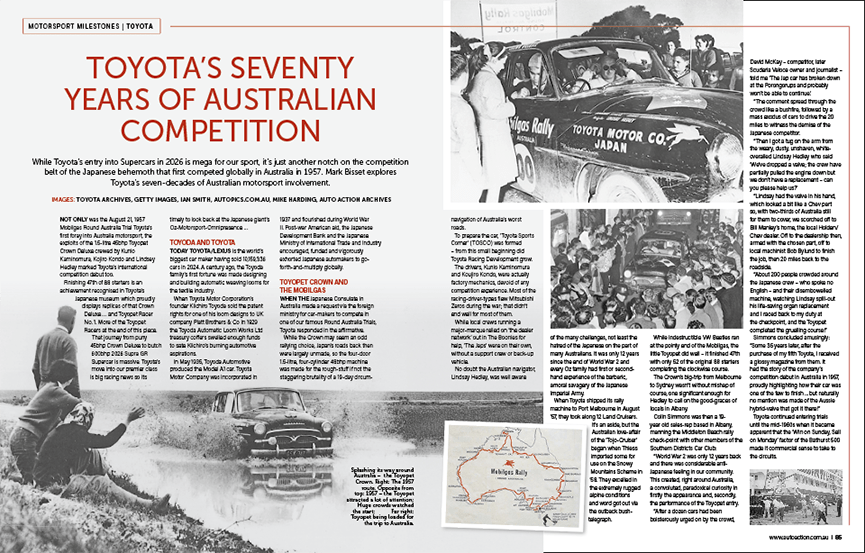
With its soon to be realised commitment to Supercars, I investigate Toyota’s Australian racing past and reveal how its first forays into motorsport were here in Australia in 1957.

Aussie Rally driver Taylor Gill and co-driver Dan Brkic are in their second season in the ultra-competitive Junior WRC. They won the opening round of the season in the snow lands of Finland piloting a Ford Fiesta Rally3. They spoke to AA’s T W Neal about the program.

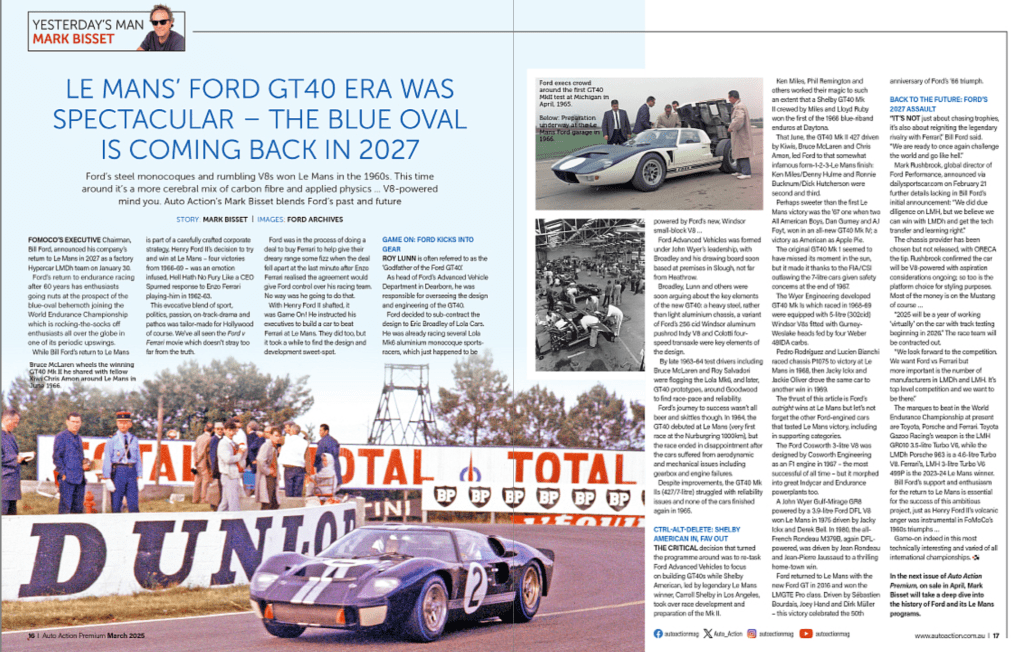
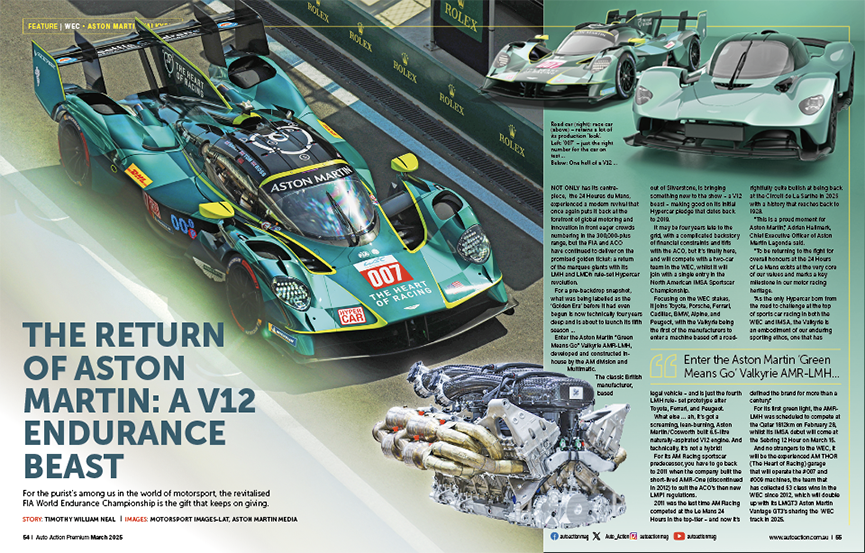
And then there’s a look at the new Aston Martin Valkyrie, a howling V12 hypercar targeting Le Mans glory… as is Ford with its return to Le Sarthe announced in the past month. 

Plus, there is plenty of race coverage and ‘News Extra’ inside. Something for everyone!

Give the new mag a go, it’s traditional magazine size, so look up on the shelves not down amongst the newspapers where Auto Action inevitably got dumped!

In fact, buy two, one for yourself and one for a mate who hasn’t read us for a while. We need this thing to fire, if it doesn’t, nobody else will follow Bruce Williams’, Andrew Clarke’s and Betty Klimenko’s passionate belief in the look, feel and smell of traditional magazines…

Buy it folks and then give us some feedback on what you do and don’t like so we can evolve the mag to suit the tastes of the majority.

Finito…
(MotorSport)

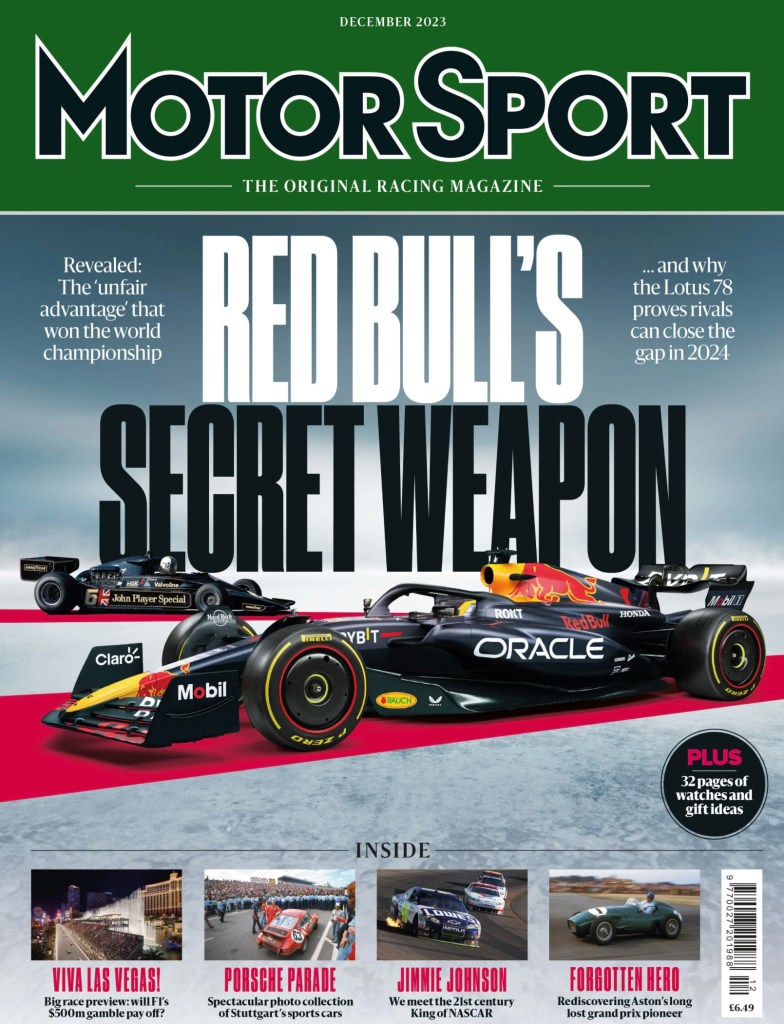
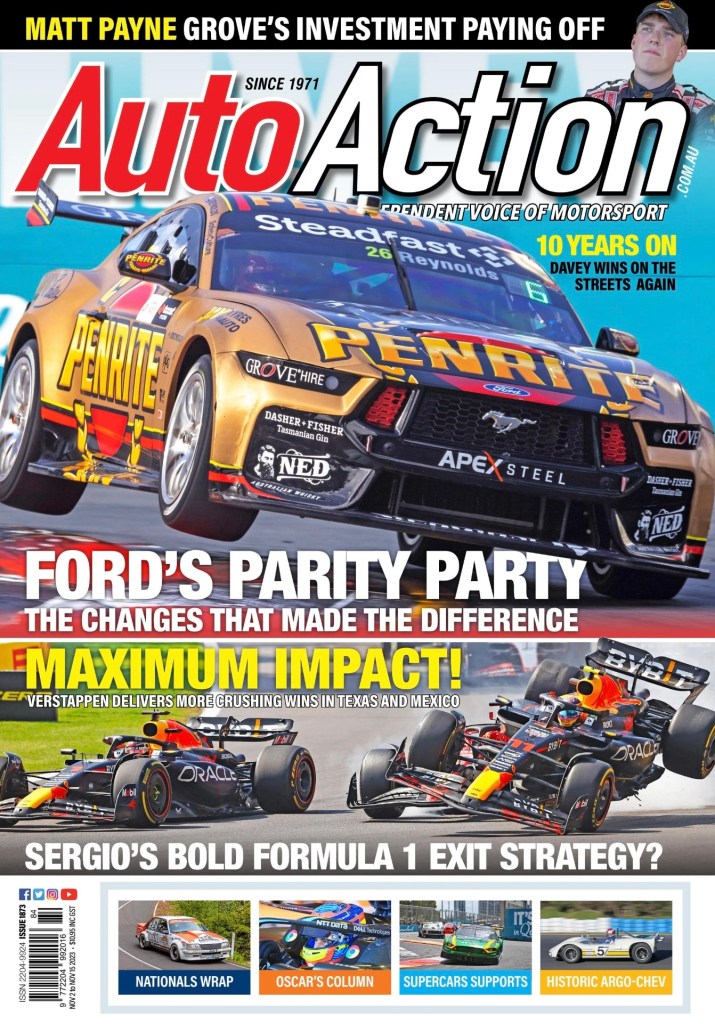
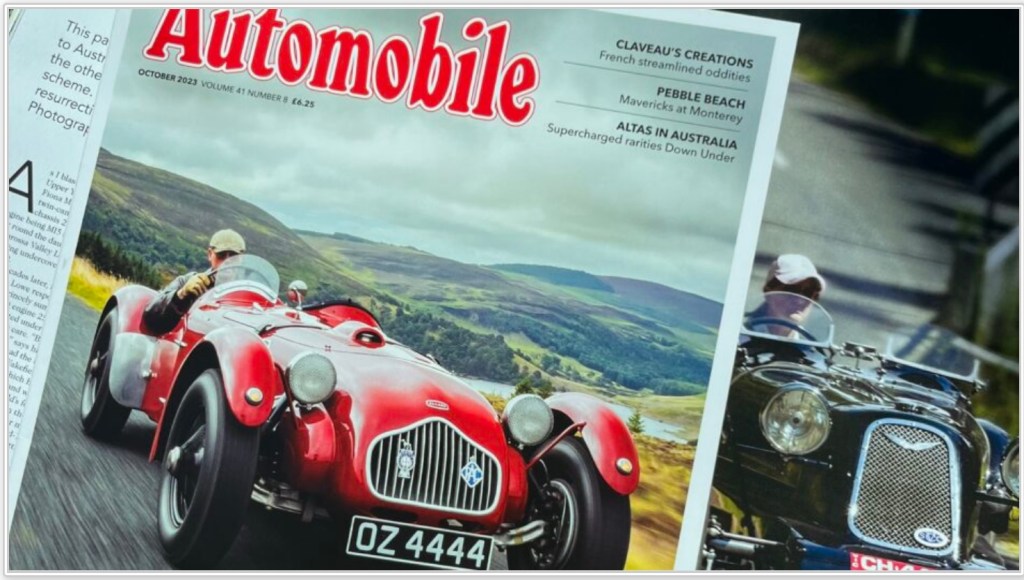
A few articles of potential interest to you I’ve written in the December issue of MotorSport, October’s The Automobile and issue #1873 November 2-15 of Auto Action.

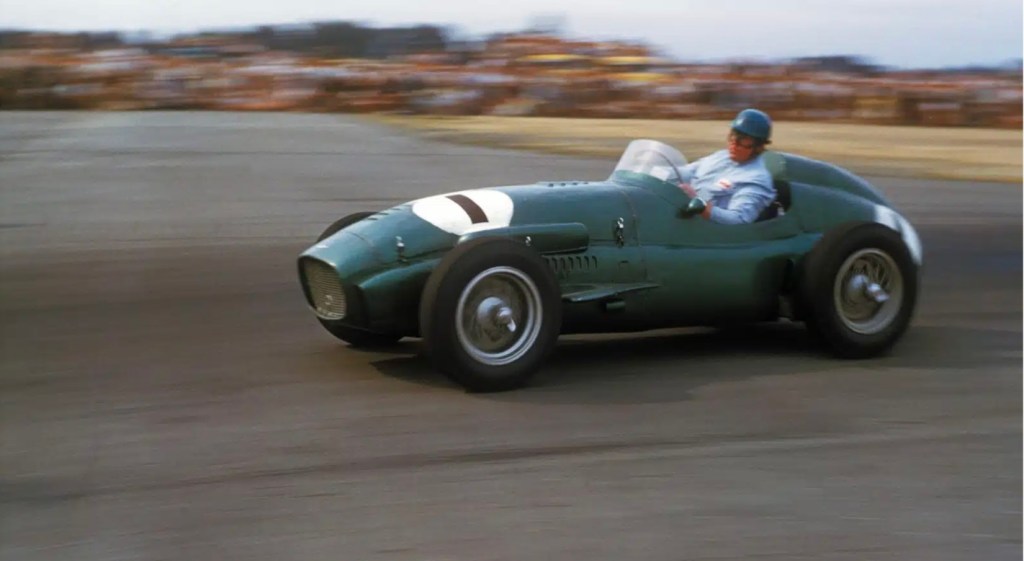
The MotorSport piece is about the long-forgotten Aston Martin DP155 Grand Prix car which really only drew blood during the 1956 New Zealand Internationals driven by Reg Parnell, as above at Wigram. It was potentially a ‘series winner’ too – there was no Tasman Cup at that stage – powered by Feltham’s supercharged DB3S six, but events conspired to thwart that. It’s in the shops in the UK now, in Australia in two months, or see here; https://www.motorsportmagazine.com/archive/issues/december-2023/

Ian Cook with a touch of the opposites, Argo Chev, Calder 1967 (oldracephotos.com via Osborne Collection)

Melbourne racers Tony Osborne and Ray Gibbs did-a-Penske and turned their outdated ex-Jack Brabham Cooper T53 Climax GP car into the muscular Argo Chev V8 sportscar, now owned by Melbourne’s Peter Brennan. But what should have taken three months or so took three years, so by 1967 it was a tad off the pace. Still, Ian Cook and Peter Macrow showed their prowess and that of the car throughout 1967-68. The transmogrification of Cooper to Argo, and decades later, to Argo…and Cooper is an interesting story. In the shops in Australia at present, or click here; https://autoaction.com.au/issues/auto-action-1873

Altas 21S and 55S at rest in March, Launching Place, Victoria (M Bisset)

Regular readers will know that ‘Tiger Ted’ Gray and his Alta Ford V8 and Tornado Ford/Chev V8 1940-50s exploits are close to my heart. The story is about this Alta – the 1100cc, supercharged 21S – and its sibling 2-litre supercharged 55S, which were both raced, then restored by Melbourne artisan/racer Graeme Lowe and are now owned by Melbourne’s Murdoch family. Driving impressions too. It’s just left the shops in the UK and in-store in Australia soon, or click here; https://www.theautomobile.co.uk/october-2023-issue/

Please support the magazines that support me folks: MotorSport, The Automobile, Auto Action, Benzina: https://benzinamagazine.com/product/digital-edition/# and Australian Musclecar https://www.musclecarmag.com.au/. primotipo is free, the mags are commercial enterprises, if we don’t buy ’em they won’t exist…

Credits…

Osborne Family Collection-oldracingcars.com, Benzina Magazine and David Hewison, Norman Howard

Tailpieces…

(David Hewison)

Storming through the countryside near Gladysdale, Victoria in Alta 21S pretending to be MI5 Spook Alan Sinclair at Lobethal, in the Adelaide Hills, January 1938 (below)…just love that car and its history, lucky Fiona Murdoch!

(N Howard)

Finito…
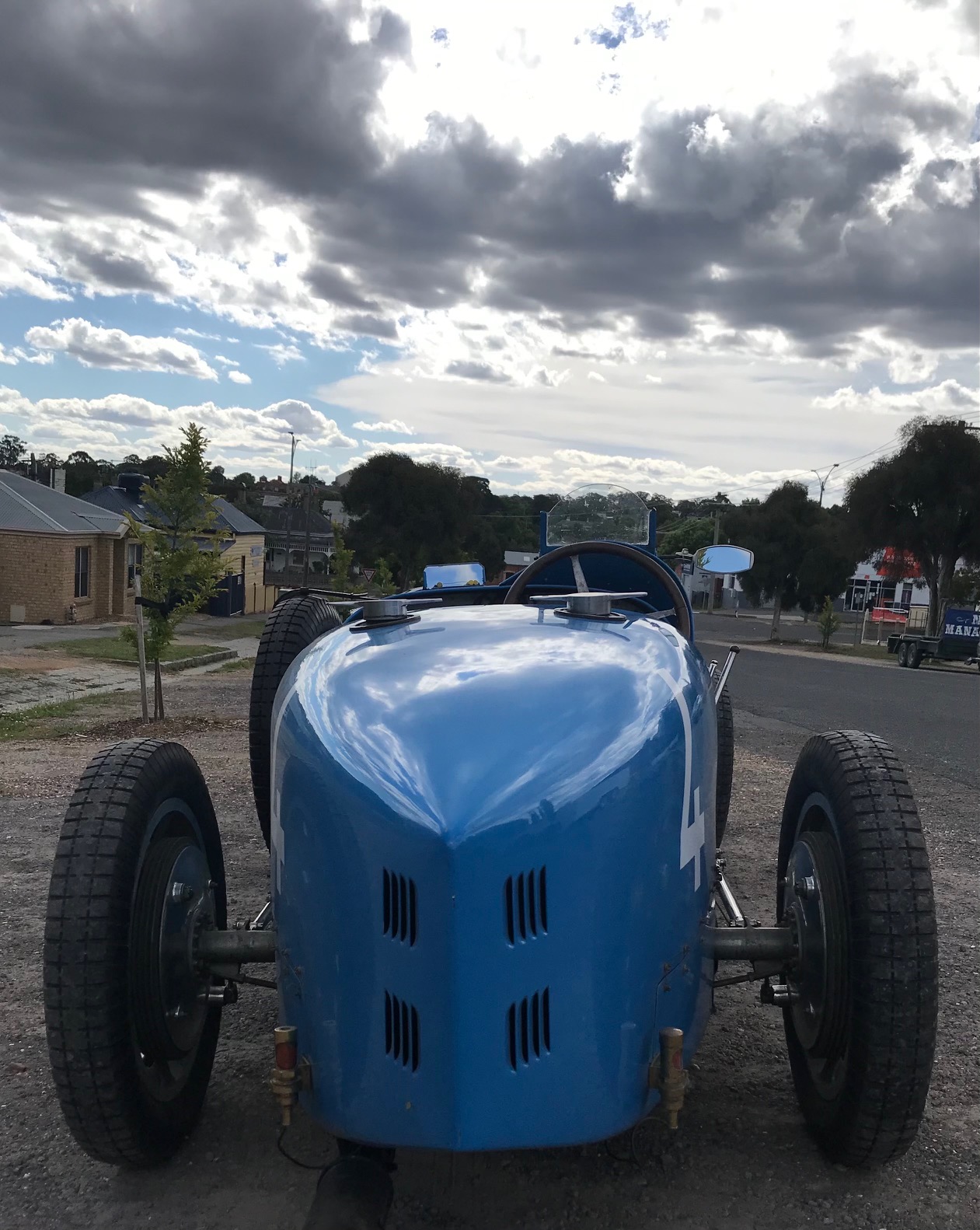
From the front, Types 30, 37A, 23 and 44 by two (G Murdoch)

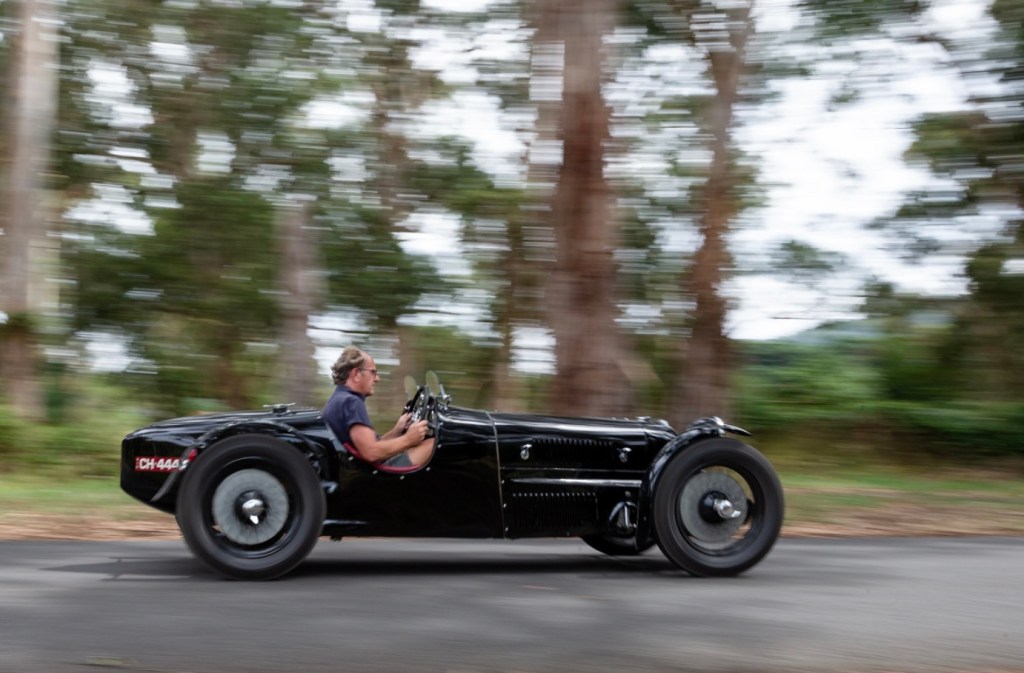
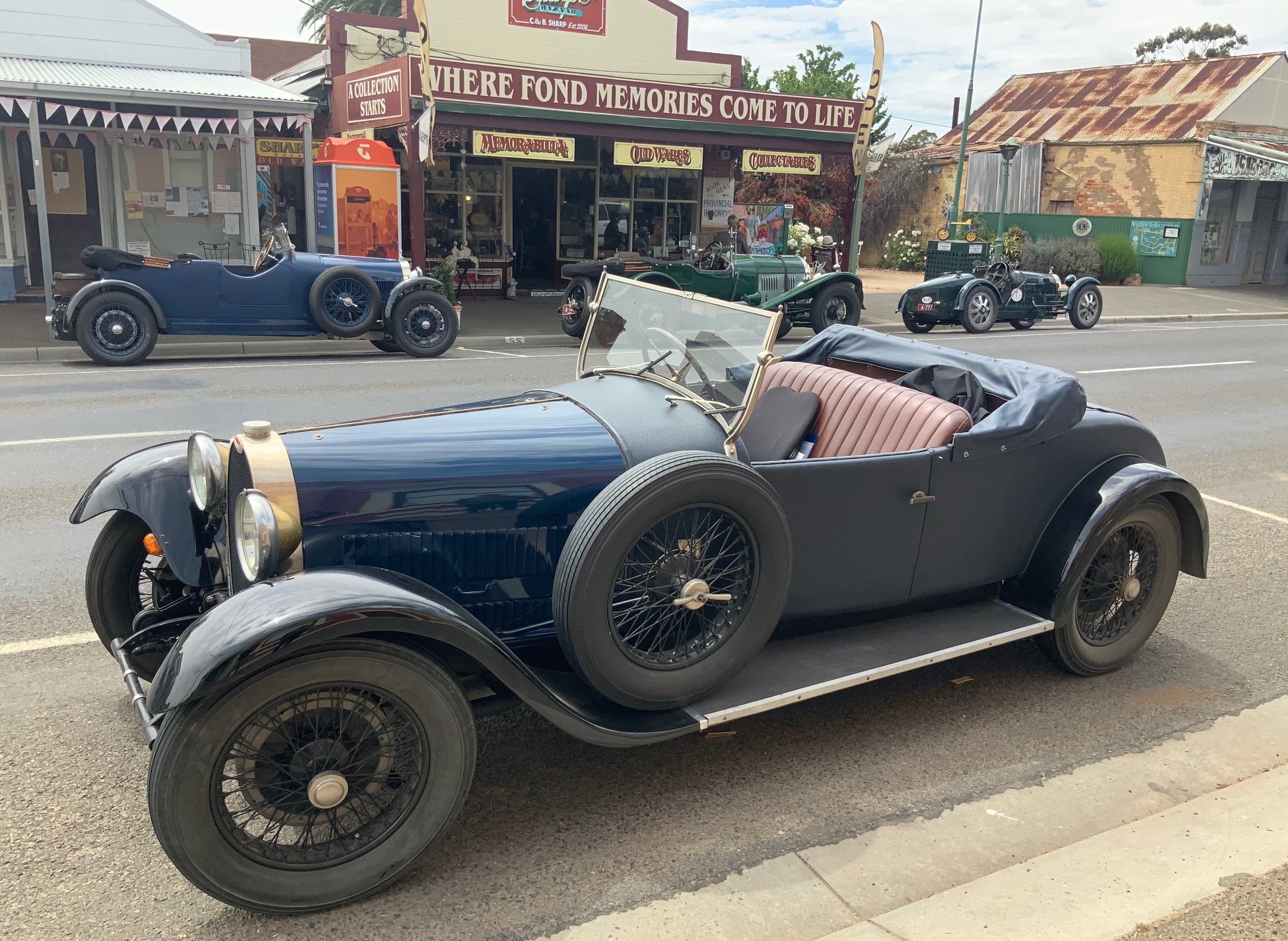
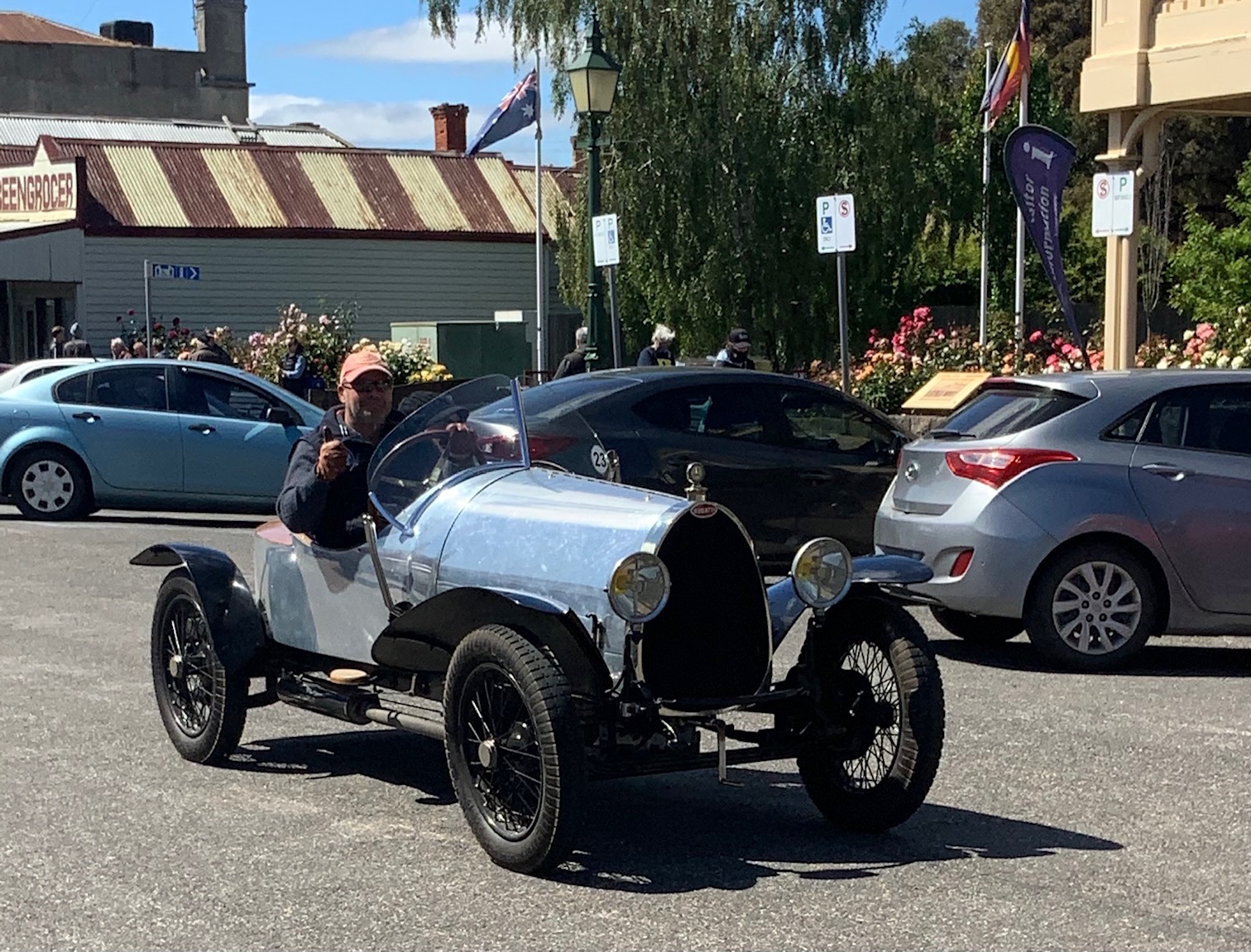
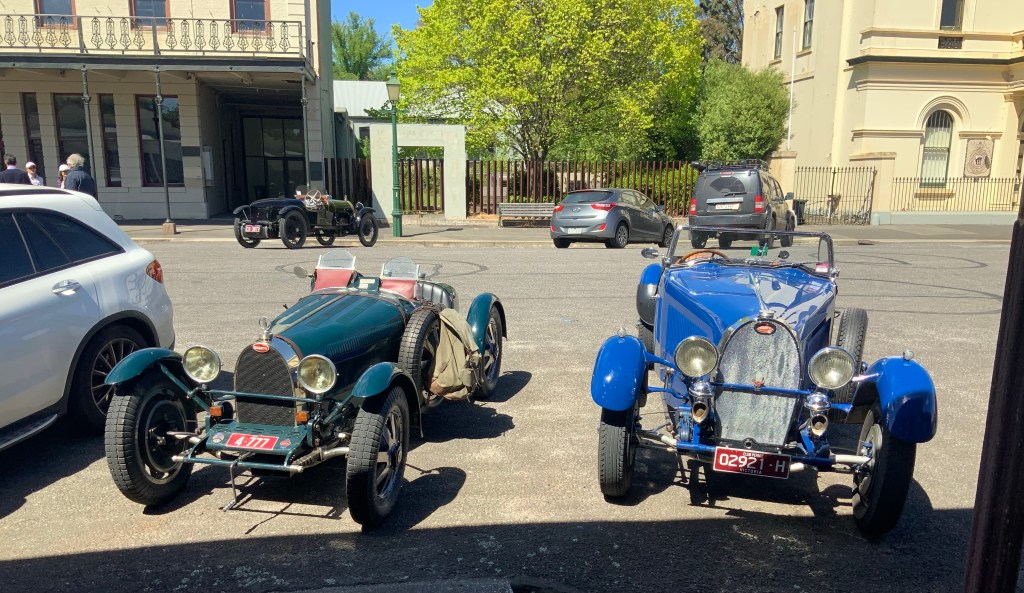
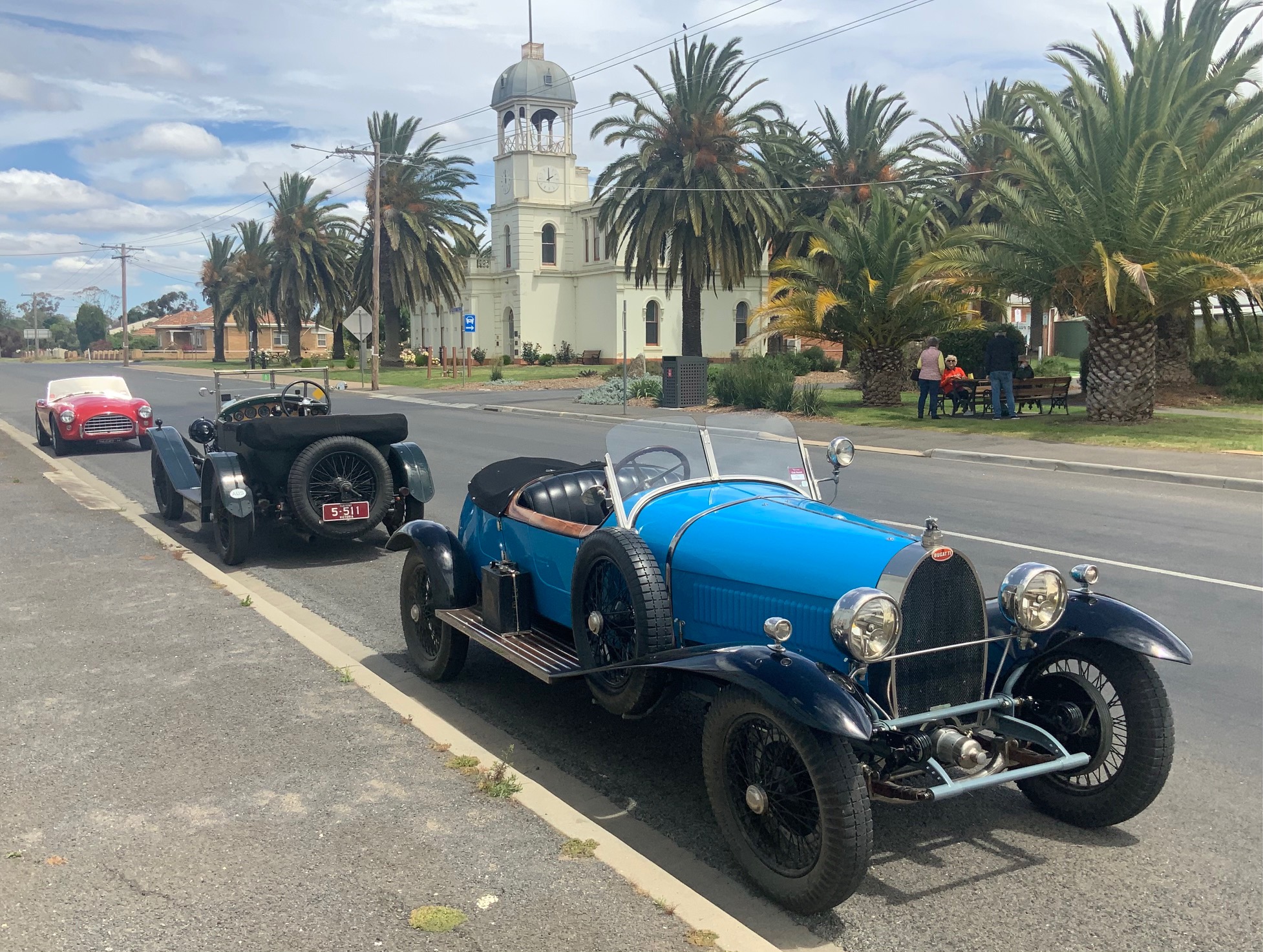
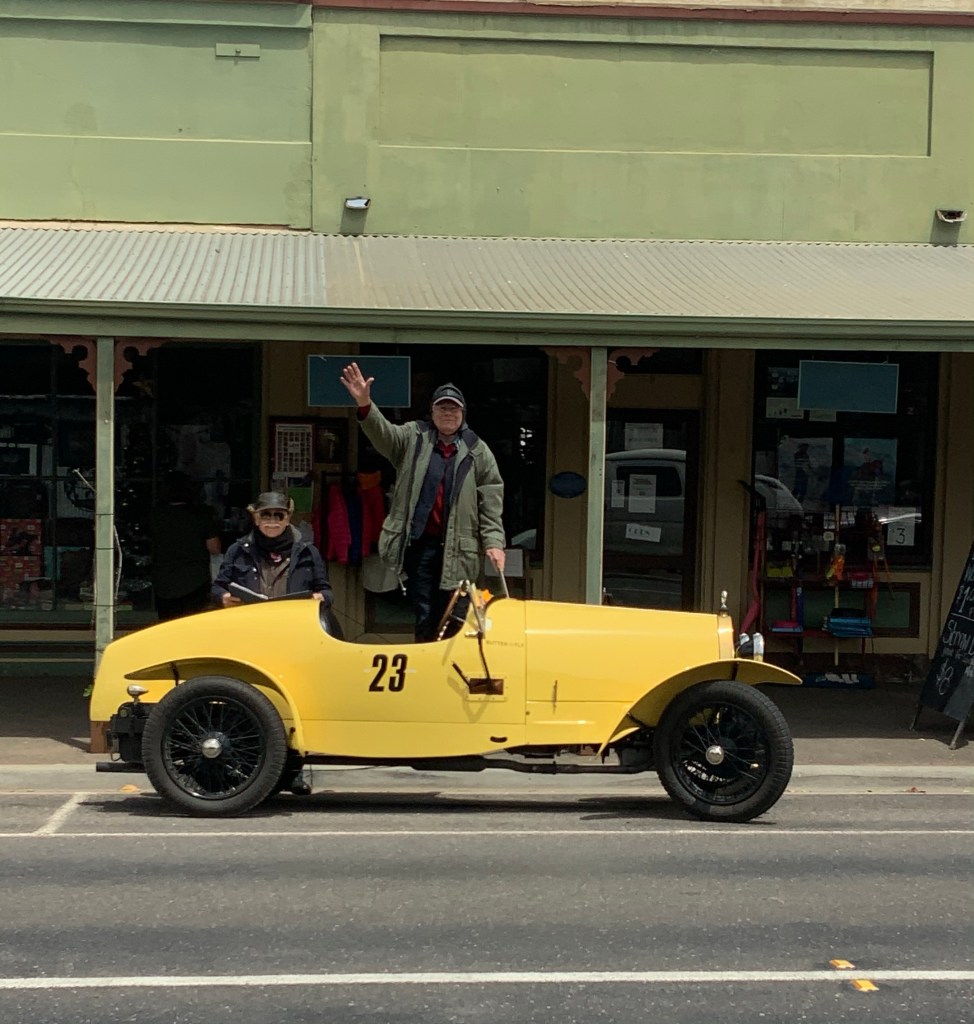
Castlemaine, a Victorian Gold Rush town 120km to Melbourne’s north-west was home to the Victorian members of the Bugatti Owners Club of Australia, Spring Rally.

Event El Supremo Roger Cameron made a great choice of event base, there are some superb roads in the area. The town itself has some wonderful, majestic buildings as befits its status one of the boom-towns within the Golden Triangle, the area bounded by Avoca-Castlemaine-Wedderburn. 1,898,391kg of gold was mined in Victoria between 1851-1896, a few bucks-worth in today’s values.

More than a few examples of early Australian automotive exotica was acquired with gold-wealth, not least Bugattis.

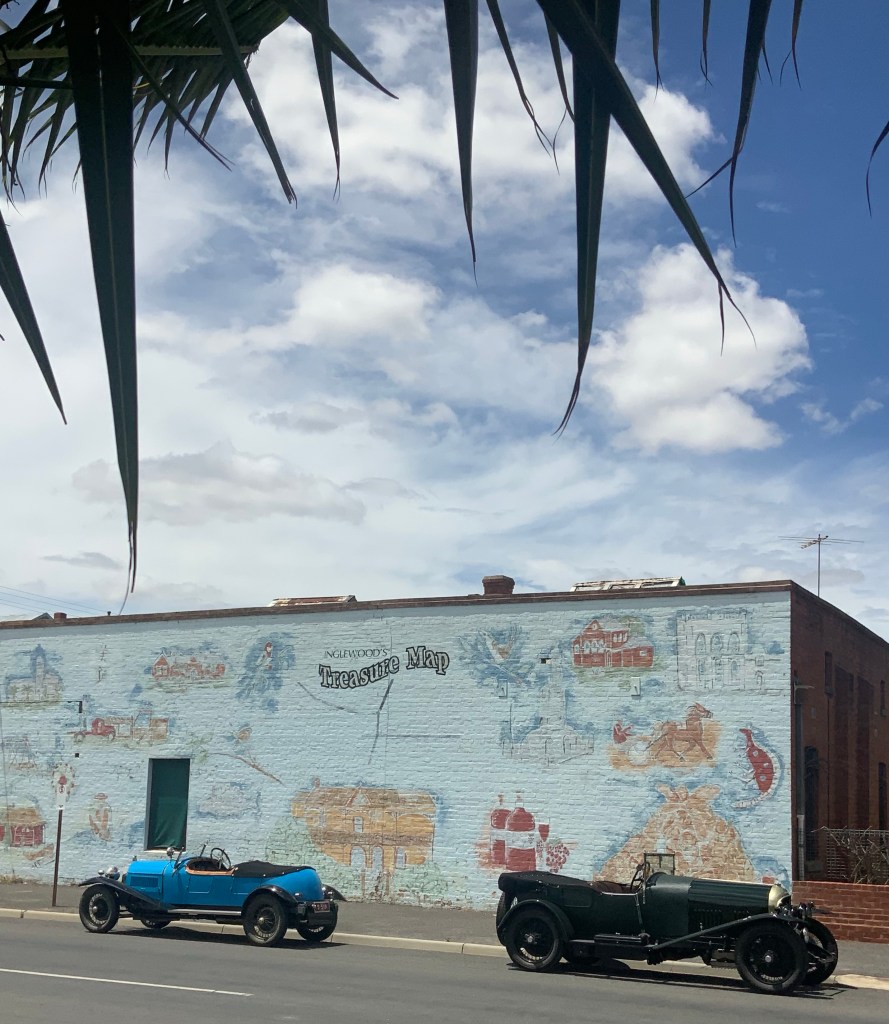
Inglewood. Jim Thompson’s ex-Molina Brescia in the foreground, over the road, Type 44, 3/5-litre Bentley and T35B Pursang at right (M Bisset)
Likely Lads: Messrs, Stanley, Thompson, Berryman at rear, and Montgomery, at Inglewood (M Bisset)
Roger Cameron aboard his Type 44 on Saturday morning, by mid-afternoon the look of delight had changed to one of concern with maladies which transpired to be a broken brake-shoe spring (M Bisset)

Given the People’s Republic of Victoria’s title as the most Covid 19 locked-up-joint-on-the-planet, it was no surprise to see plenty of Victorian clubbies celebrate freedoms recently returned to us by the talented ruling duumvirate of Scotty-Bro and The Allstars, and Dan The Dastardly. Victoria’s weather can be capricious, but sunny, blue skies prevailed for most of the three days. In short, the planets were aligned for a wonderful weekend of motoring on great roads, albeit many of them are sadly in need of decent maintenance.

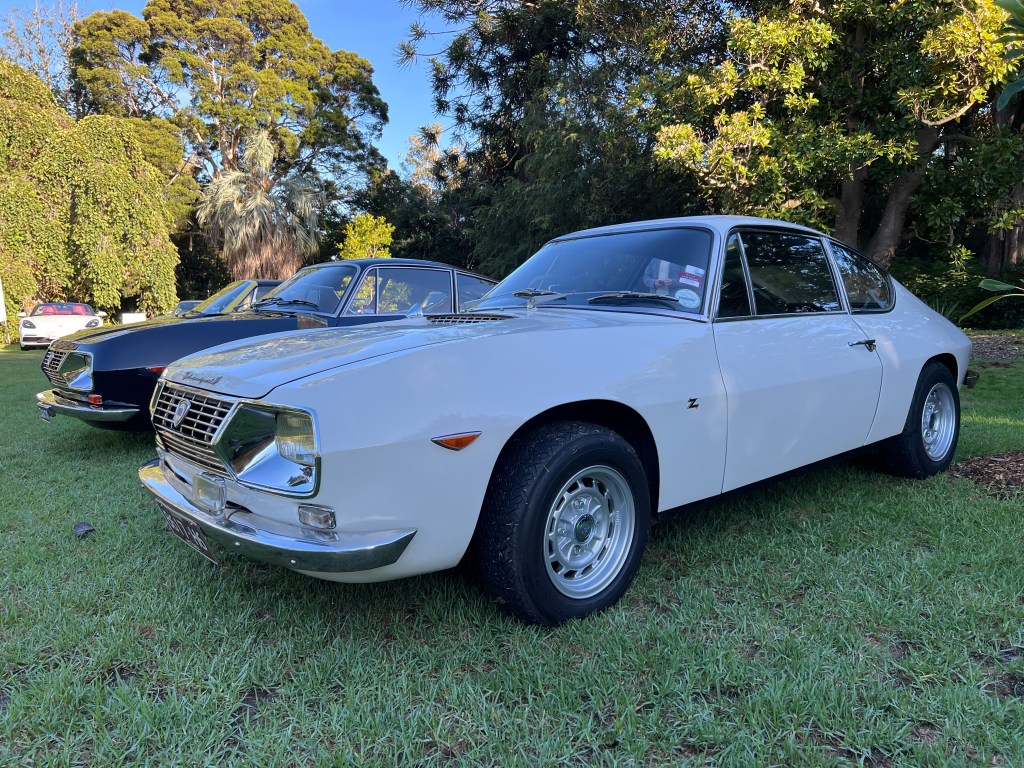
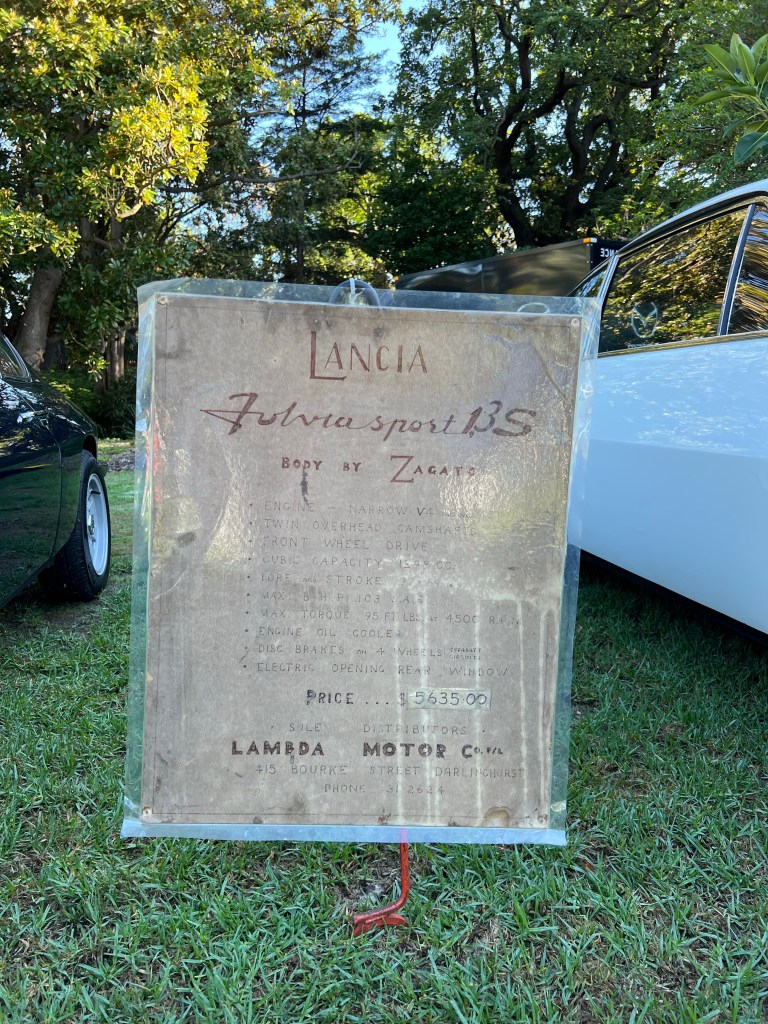
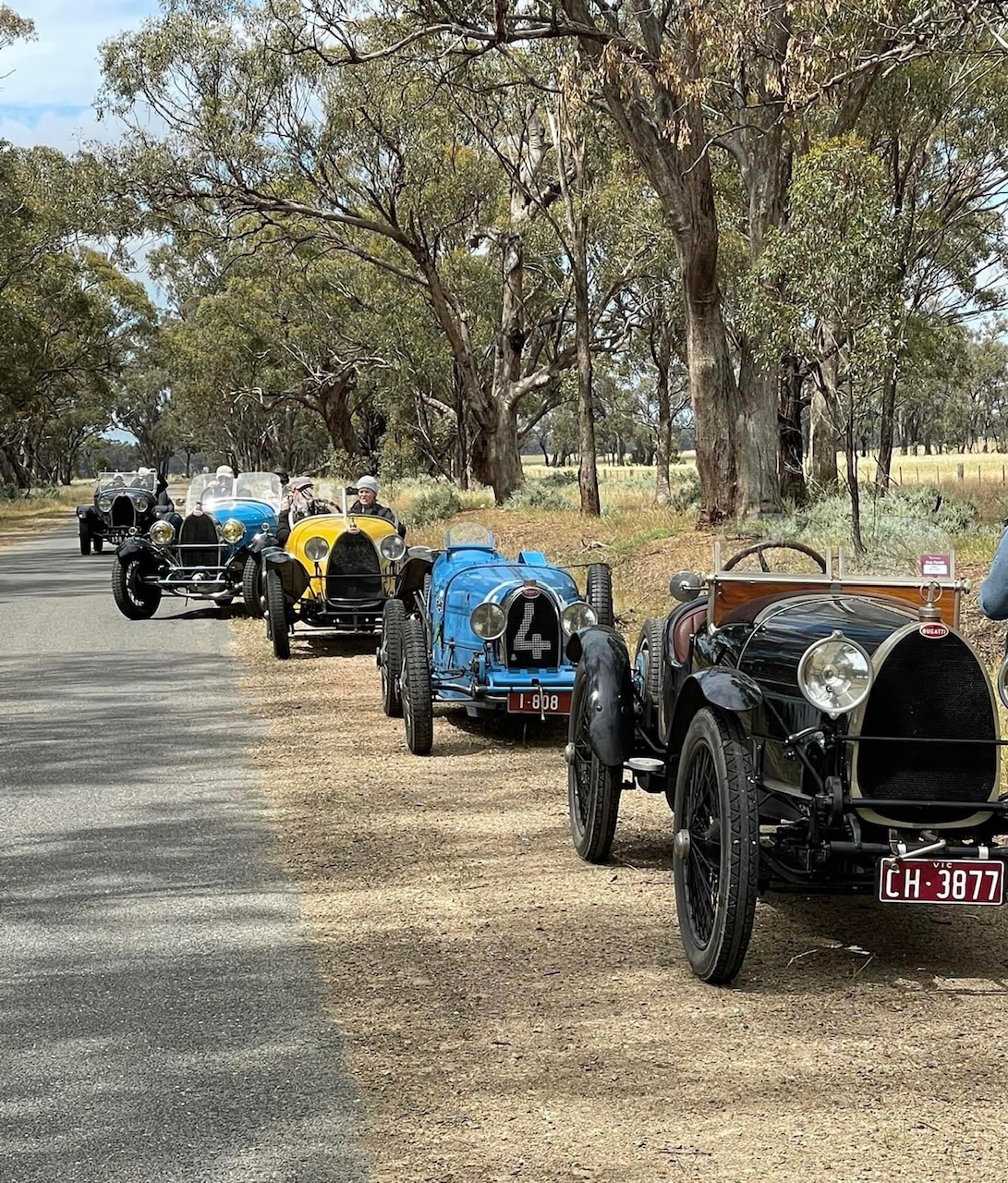
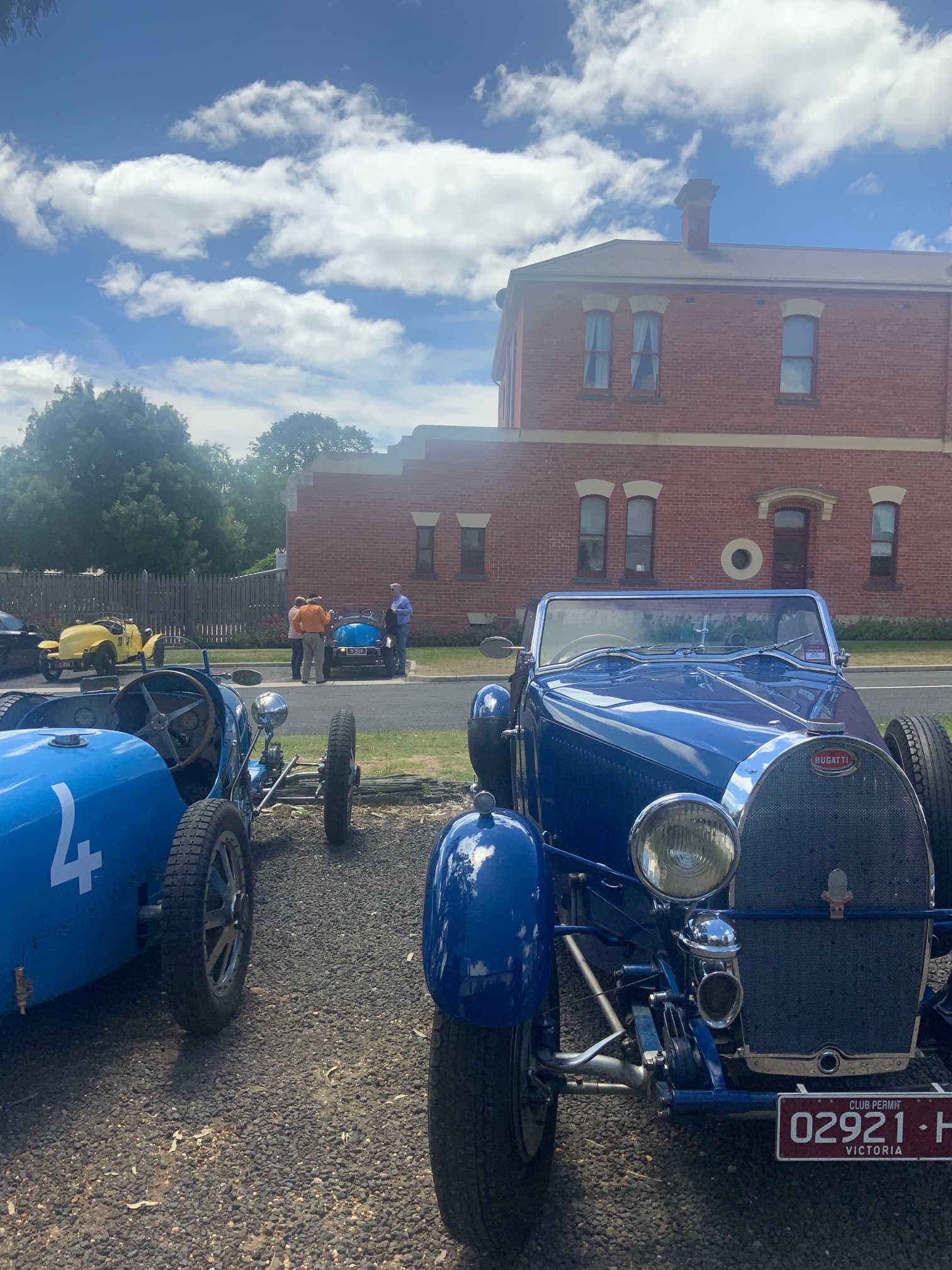
The line-up included three Brescia Type 23s, two Grand Prix cars – Types 37A and 35B Pursang – and an interesting mix of two and three-litre eight-cylinder un-supercharged tourers; Types 30 and 44. John Shellard’s Type 57 two-seater Corsica replica body machine is impressive – straight-eight 3-litre DOHC non-supercharged – a car I don’t recall seeing before. Co-stars comprised an interesting mix including two 5-litre’ised 3-litre Bentleys, a Lancia Fulvia 1.3S Zagato, MGA, Porsche 992/911 and my buddy, Bob King’s AC Ace-Bristol.

Avoca Hotel vista with the Shellard T57, and Murdoch and Thompson Brescias up front (M Bisset)
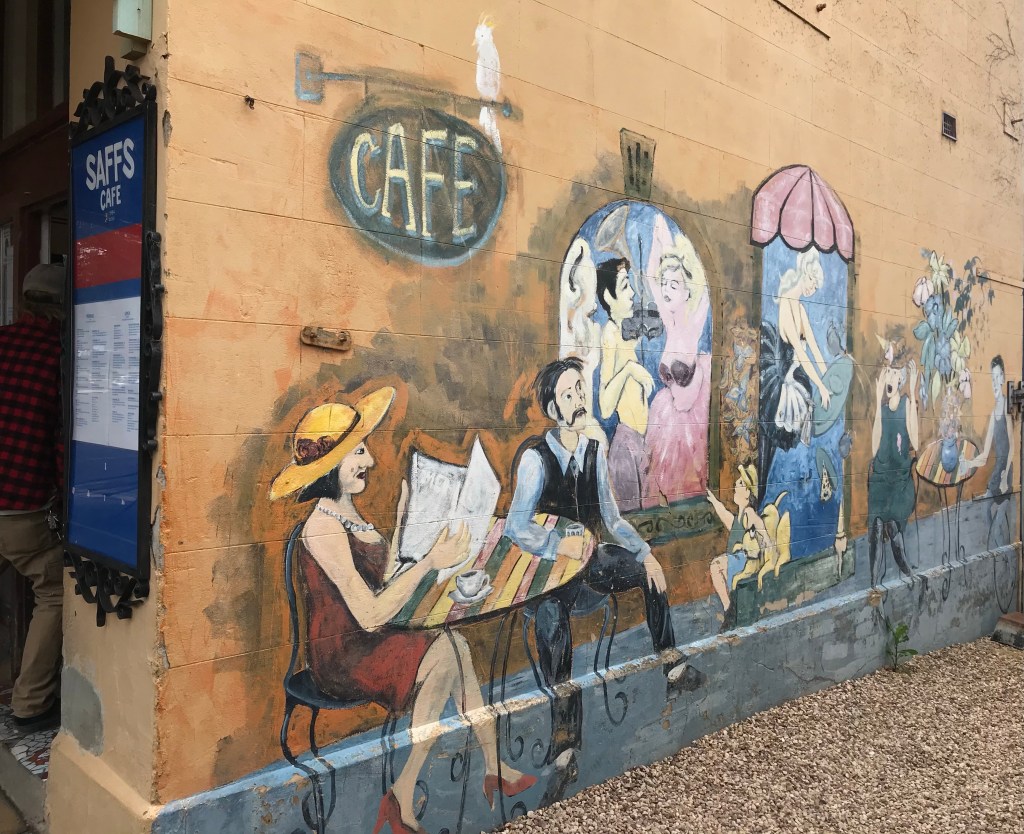
Saffs in Castlemaine, very good too (M Bisset)
Inglewood. Anderson T44, Montgomery Bentley and Schudmak T35B (M Bisset)

Starting point was the Woodlands Historic Park at Oaklands Junction (adjoining Melbourne Airport at Tullamarine) and then to Lancefield via Romsey.

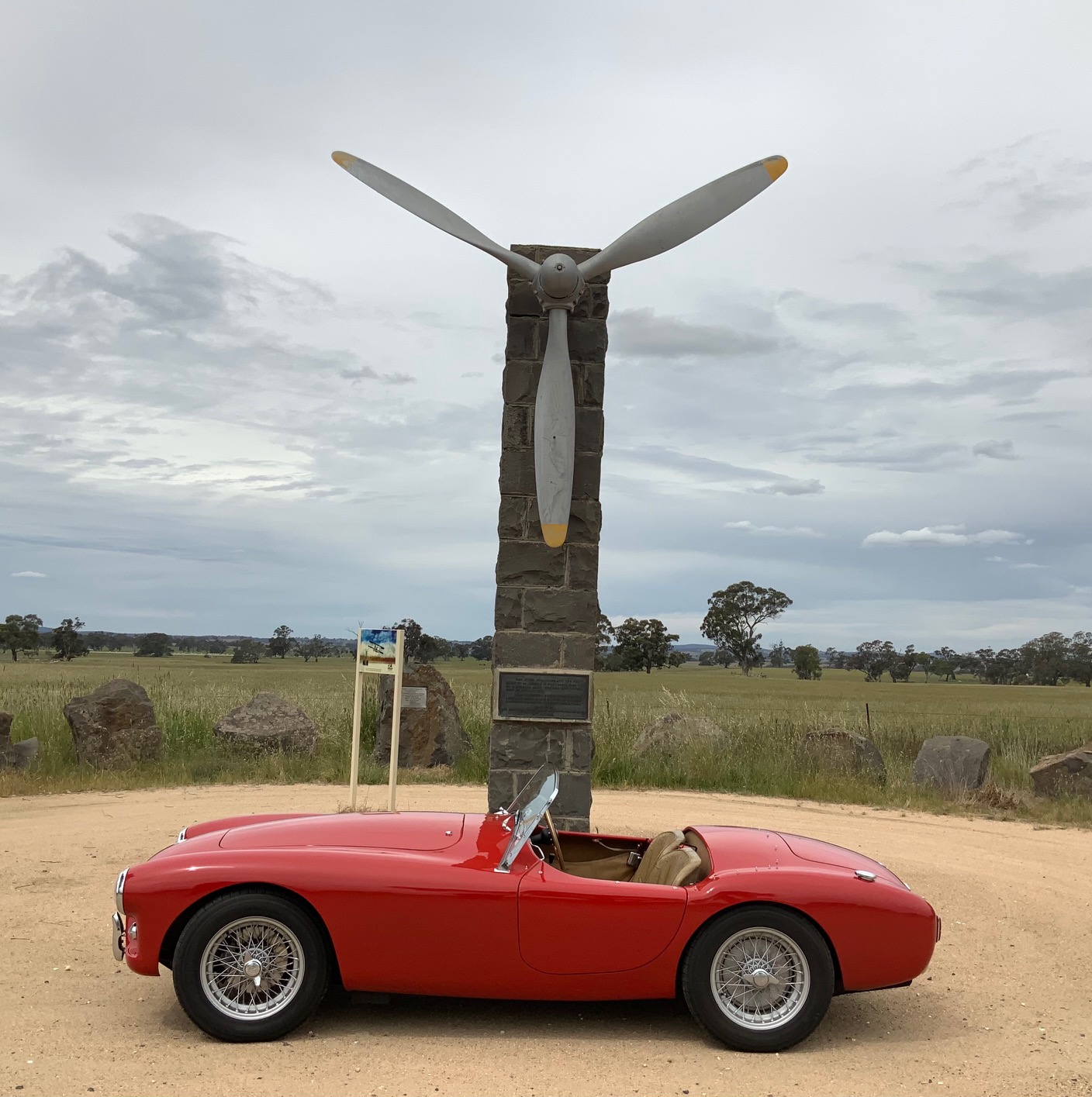
The post-lunch session was some magnificent roads from Lancefield to Castlemaine. Immediately after clearing Lancefield we headed north west on the Burke and Wills Track, which is great but gets rutted and shitful towards Mia Mia. Then a respectful stop at Spring Plains, the site of the first flight – seven metres – by John Duigan aboard an Australian designed and built aeroplane on July 16,1910. Click here for more; John and Reginald Duigan, Australian aviation pioneers (monash.edu.au)

Electrical and motor engineer, John Duigan mid-flight on the family farm, Spring Plains, Mia Mia circa 1910. Self constructed – of wood, metal and Dunlop rubber coated cotton fabric – pusher type single-seat biplane with a moving foreplane elevator and light undercarriage. Power by a JE Tilley (Melbourne) 25hp vertical four stroke, four cylinder OHV engine, with drive to the four-blade 2.6-metre prop by chain. 9.27-metres long, wingspan 7.47-metres, weight including pilot 280kg, maximum speed 40mph in sustained flights at heights of 30-metres (Museums Victoria)
Cameron T44 detail. Nice (M Bisset)
The only one owner early Bugatti in the world? The late Dr Noel Murdoch famously did his 1920s rounds at his country, Yarra Junction practice in a Fiat 501 and this T44 – which is still a treasured family member nearly a century later. That’s the Anderson T44 opposite (M Bisset)

Then on to Redesdale, Sutton Grange, Faraday and into Castlemaine via Chewton on its eastern outskirts.

French mistresses are notoriously fickle, high maintenance critters so it was no surprise that one or two of the breed required the care of tender, loving, expert hands before dinner.

Grant Cowie’s Up The Creek (ya gotta hand it to a Kiwi with a sense of humour) enterprise – one of Australia’s acknowledged fettlers of fine pre-war marques, Bugatti included – is in Castlemaine and was called upon once or twice to assist in keeping Ettore’s finest behaving to the manor born.

A quirk of automotive history is that the hot-rod capital of Victoria (Australia?) is Castlemaine and its surrounds. As restoration of fine cars grew exponentially in the 1970s, many specialist body and engine builders, woodworkers and others located in the area to draw upon the technical skills, foundries and jobbing shops which had progressively grown earlier.

While being a treacle-beak at Grant Cowie’s, Bob King spotted David Reidie, formerly proprietor of the Harley City, and a recently minted Bugatti owner (King’s 35B Rep). He showed us through his amazing museum of 125 or so historic, mainly competition Harley Davidsons. Reidie is still working out how often to open to the punters, but it’s complete, ready to rock-and-roll, and will be a must-see even for those not particularly interested in ‘bikes.

Min Innes-Irons T23 Brescia in Clunes (M Bisset)
Schudmak T35B and Shellard T57, Clunes (M Bisset)

Proceedings started at 10am Saturday morning, with plenty of rumbling straight-eights being gently warmed up in the cool but sunny Spring breeze, and Adam Berryman getting good oil-pressure sans spark-plugs, by nine. The run was to Avoca, to the south-west, the Avoca Pub to be precise.

There were some dirt sections thrown into the mix early in the day, reminding me again that these folks like to use their cars, they aren’t Pebble Beach poseurs. What was it the late, great Lou Molina useter say? “We are goers, not showers”.

The route went through Muckleford South, the fringe of Maldon, Lockwood, Woodstock, Newbridge and into Inglewood for the first coffee pitstop for the day. Needless to say, the cars are a hit with local folks, it’s not every day of the week automotive splendour of a bygone era comes to town.

Cameron T44, Dillon Bentley, and King AC in Inglewood (M Bisset)
King AC Ace at Mia Mia (M Bisset)

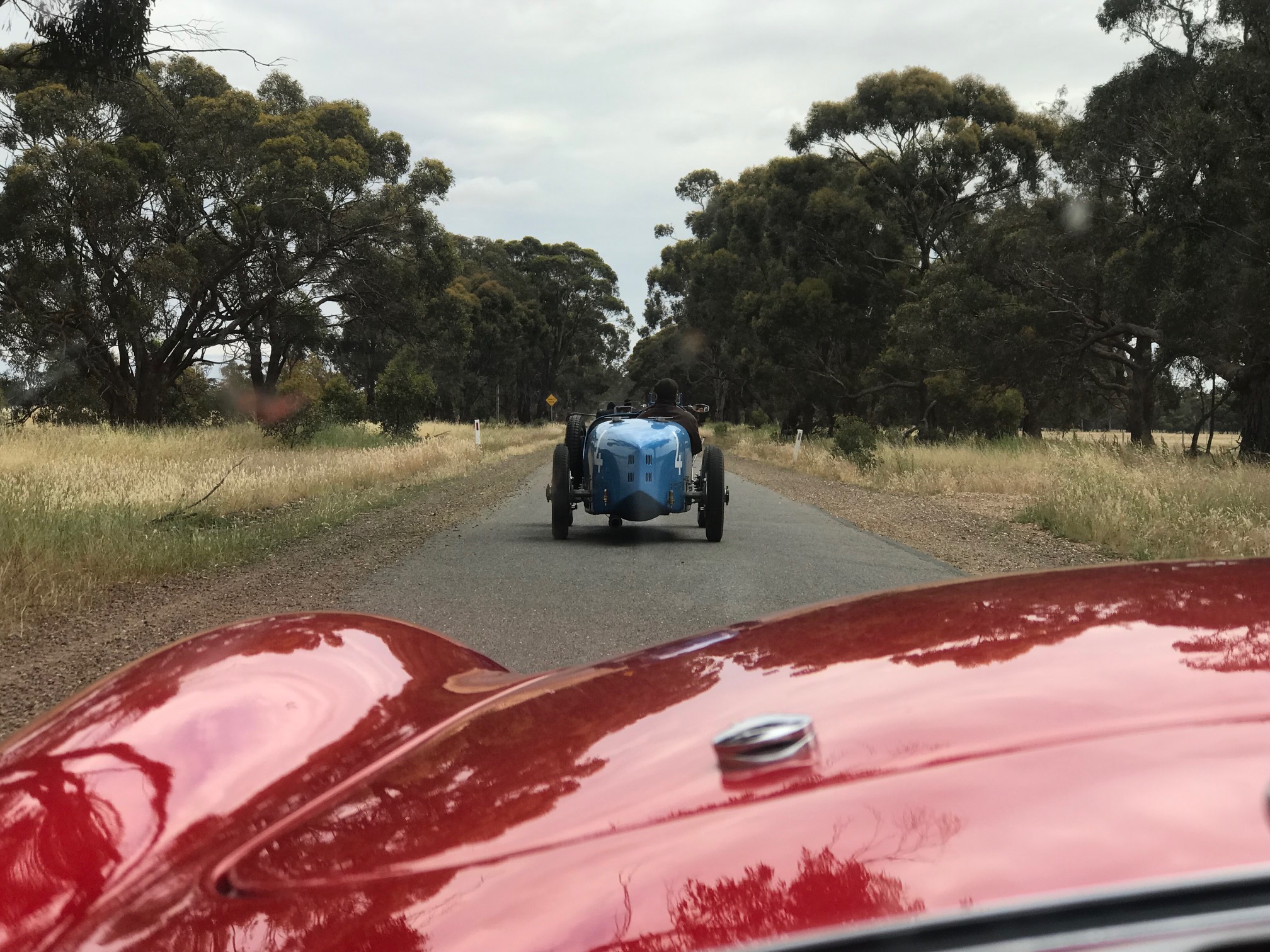
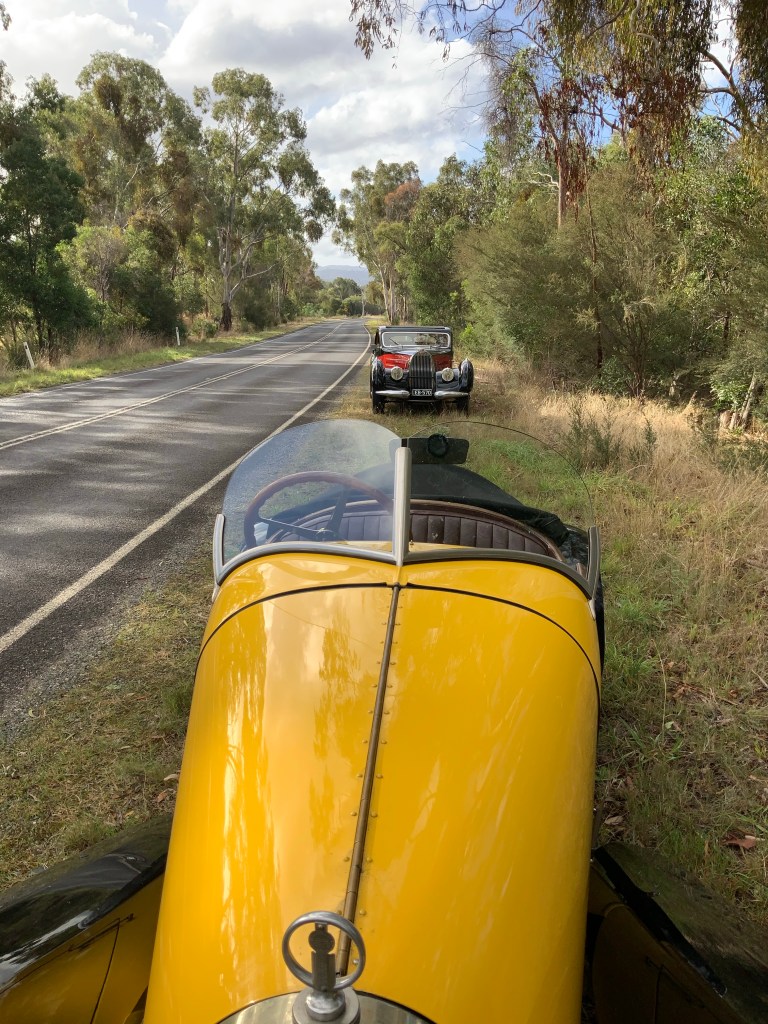
The roads are a great test of chassis, my mount was Bob King’s 1960 AC Ace Bristol, what a great car it proved to be.

The 2-litre Bristol straight-six (thanks muchly BMW) is at its lusty best from 3000-4000 rpm, the thing has a gear for every occasion too, with Laycock de Normanville overdrive fitted. Suspension is independent front and rear – with leaf springs nicely controlled by Koni reds – soaks up all the bumps Victoria’s roads throw at it, brakes (disc/drum) are good, the driving position is great as are the seats – which are fantastic. My only grumble is the heavy steering at low speeds, but maybe I’m just turning into a soft-old-codger.

After an hour we set sail south for Avoca via Rheola, Bealiba, Riversdale, and thence the Avoca Hotel, it’s an easy relaxed pace, there was no competitive component to the proceedings and the route instructions are good, clear.

Berryman T37A at left, Shellard T57 in shot, Avoca (M Bisset)

Amazing what you can get at Mitre 10 these days. Berryman’s T37A #37327 in Inglewood (M Bisset)

The lunch at the Avoca Hotel was great, but I was preoccupied. Adam Berryman suggested it was time to drive his Type 37A on the return leg to Castlemaine, about 100km.

I’m very familiar with right-hand-shift Hewland ‘dog-boxes but it was still with some trepidation I jumped alongside Adam for the return voyage. The buffeting in the passenger seat sans small-aero screen on the short trip to clear town was incredible, but there was no such problem in the right-hand seat.

You drop your bum into a tight seat, wedged between the gearbox and passenger on your left, and chassis frame to the right. Don’t even think about a drive without your race-boots on and even then, there is no dead-pedal to the left. Your right foot (conventional pedal set-up in this car thankfully) looks after the throttle and brakes, with the left either dabbing the (easy) clutch or sitting as lightly as you can manage above it.

“First is towards you and back, second is straight forward, third is back-across-and away from you and back. Fourth is directly forward again,” Adam shouts. “Yep, goddit.” Without even a feel of the ‘box away we go.

The supercharged three-valve, SOHC, 1.5-litre 110bhp four is hard edged. It’s rappy and revvy with a very light flywheel and is not too many hours back from a Tula Engineering (UK) rebuild. Its magnificent, your whole-body fizzes for hours afterwards, the solidly mounted engine buzzes you good-vibrations. Adam uses ear-plugs, ya need ‘em too.

The whole experience is heightened by being on public roads, nuts of course. Glorious nuts. The thing is deceptively fast, Adam shouts that we are doing 85mph, well over the Victorian maximum, the roads are so poor the chassis is easily affected by the road corrugations, it’s sprung race stiff of course.

I wouldn’t say I covered myself in complete glory with the gearbox, second was my boogie gear on the way down early on, but if you are used to a right-hand shift it’s not too dramatic a change.

Berryman’s rump framed via an Ace bonnet in the wilds of Arnold. Only the muffler underneath ruins the visage – but is appreciated while at the wheel! (M Bisset)
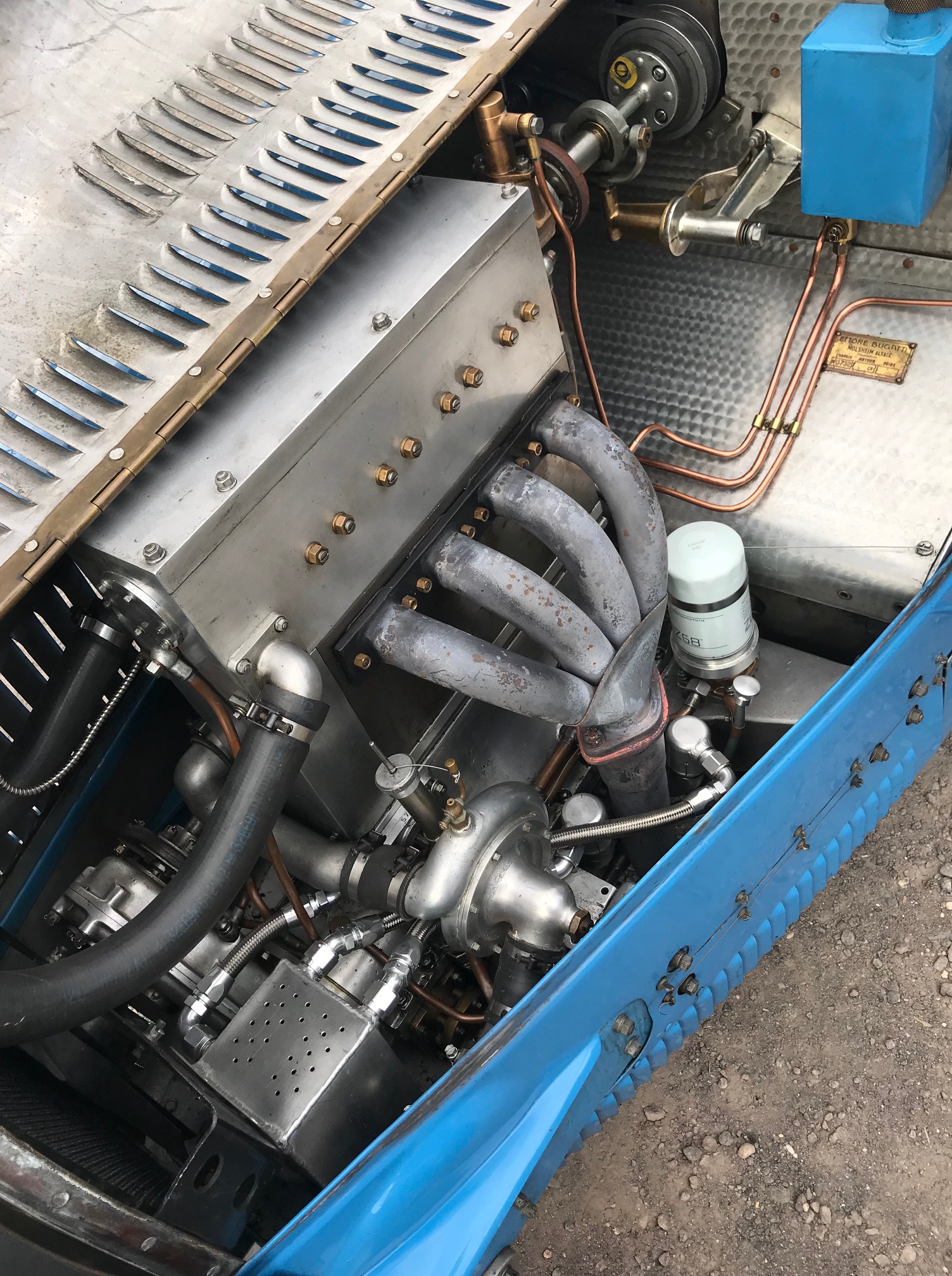
Business end of T37A #37327. 1496cc (69x100mm) SOHC, 3-valve, Roots supercharged four cylinder engine giving circa 110bhp @ 5000rpm (M Bisset)

The engine never copped the big rev, rather the trip was about savouring the experience, the view down the road through the aero screen and tall, narrow tyres wobbling away, big wooden rim wheel oh-so-close to your chest, moving constantly – don’t keep correcting it, just let it move gently in your hands – almost sits in your crutch. Its counter intuitive if your long-armed, 10-inch Momo orientation is a Van Diemen Formula Ford or Ralt RT4 phenomena, but the size of the thing makes sense as you negotiate tight corners where the big wheel provides the required leverage!

Sounds assault you, not the exhaust so much, gasses and associated music exits via a long pipe under the car and a minimalist hot-dog muffler at the very rear of that seductive derriere to the lucky schmo following you. Gears assail you in a very raucous mechanical orchestral kinda-way. The gearbox is beside you, the diff immediately behind, while the camshaft and engine ancillaries are mainly gear driven, not to forget the supercharger meshing and doing its thing.

The reaction of the good citizens of Maryborough was so funny. The French racing blue rocket (chassis 37327), looks exactly as it did when raced by ‘Sabipa’ (Louis Marie Paul Charavel) in the ’27 Targa, and later by Frenchmen Jean-Claude D’Ahetze, Vincent Tersen and Andre Vagniez throughout Europe and North Africa from 1928 to 1931.

The look on little kids faces on the footpath, or their front-yards is the five-year-old equivalent of WTF?!, it’s just so out of place. Not behind the wheel mind you, albeit my left leg is tiring of trying to stay clear of the clutch pedal at about the 80km mark, the oil and water temps are good (thermatic fan fitted), the clutch is easily modulated and light and gearbox now more familiar. I could have gone for hours…

All too soon we are in the Castlemaine ‘burbs, one final blat away from the lights, then a U-Turn into the BP servo in Barker Street, and it’s all over.

Some days are forever etched in ‘yer brain as experiences to treasure, a drive of a GP Bugatti is one of them. Sick little unit that I am, I’ve been buzzing with afterglow for days, hopefully my state of arousal will subside soon, it’s quite uncomfortable really. Grazia Adam, bigtime.

Orf-piste @ Targa. Louis Charavel in, perhaps, #37327 during the 1927 Targa Florio. The Dieppe born, sometimes works-Bugatti driver – winner of the 1926 Italian GP aboard a T39 – ‘left the road on the first lap near Polizzi when his Bugatti fell 15 meters down a ravine tumbling over (doesn’t look like it to me) Luckily he suffered no injuries,’ according to kolumbus.fi (unattributed)
Murdoch T30, and distant T44 roadside at Arnold West. Fuel delivery dramas being sorted by Geoff Murdoch (M Bisset)

The Murdoch family Bugatti Type 30 (above) always draws me.

Its allure is its beauty and history, powered as it is by the very same 2-litre, three-valve, twin-carb straight eight #89 (below) fitted to Geoff Meredith’s Type 30 chassis #4087 when he won the very first Australian Grand Prix at Goulburn in 1927.

This T30, (chassis #4480 pictured), has an in-period Australian competition record of its own. There is a good chance the remaining parts of Meredith’s ex-AV Turner, and later Jack Clements “possibly most famous of Australian Bugattis” #4087 will be reunited by the Murdochs one day.

Bugatti 2-litre straight-eight #89 fitted to T30 #4480 (M Bisset)
Murdoch family T30, and T23 Brescia behind, in Clunes (M Bisset)

The evening functions at the Castlemaine Railway Hotel and Wild Food and Wine, within the space of Castlemaine’s old fire station were great, add them to your list.

Doyens, and founding members of the club, and the Bugatti world globally, are Stuart Murdoch, Stuart Anderson and Bob King. Anderson’s 90th birthday was recognised with Murdoch’s only a short time away, Bob is a veritable youth in this company.

They are interested, and interesting, having been into Bugattis when they were old-bangers, and restored many of them. Anderson’s cv includes restoration and racing a GP Talbot Darracq 700 and a couple of Maseratis, Murdoch’s a couple of Delages and lordy knows what else, Bob’s restoration and race tastes are mainly, but not exclusively French.

These events have a rhythm a bit like a race meeting, albeit without the pressure. Soon we were up-and-attem on Sunday morning, warming the cars up, but this time, after a pitstop in Clunes, then lunch in Trentham – all god’s own rolling hills country – it was time to go home.

Etcetera…

(M Bisset)

A couple of scallywags in Inglewood. Bodybuilder (car) extraordinaire Richard Stanley, and Jim Thompson about to jump into his much cherished ex-Molina Brescia.

(M Bisset)

Des Dillon’s Bentley bullies Bob King’s AC Ace in Inglewood, ‘the world’s fastest lorries’ really do have on-road presence and menace the likes of few!

(M Bisset)

Ecurie Schudmak – Phil and Susan – in Avoca, about to hit the road. These guys and their trusty Pursang T35B have done Bugatti rallies on most continents of the globe in this much loved and used car.

(M Bisset)

The Latreille Lancia Fulvia 1.3S Zagato, very tasty too, and Quinn MGA.

(M Bisset)

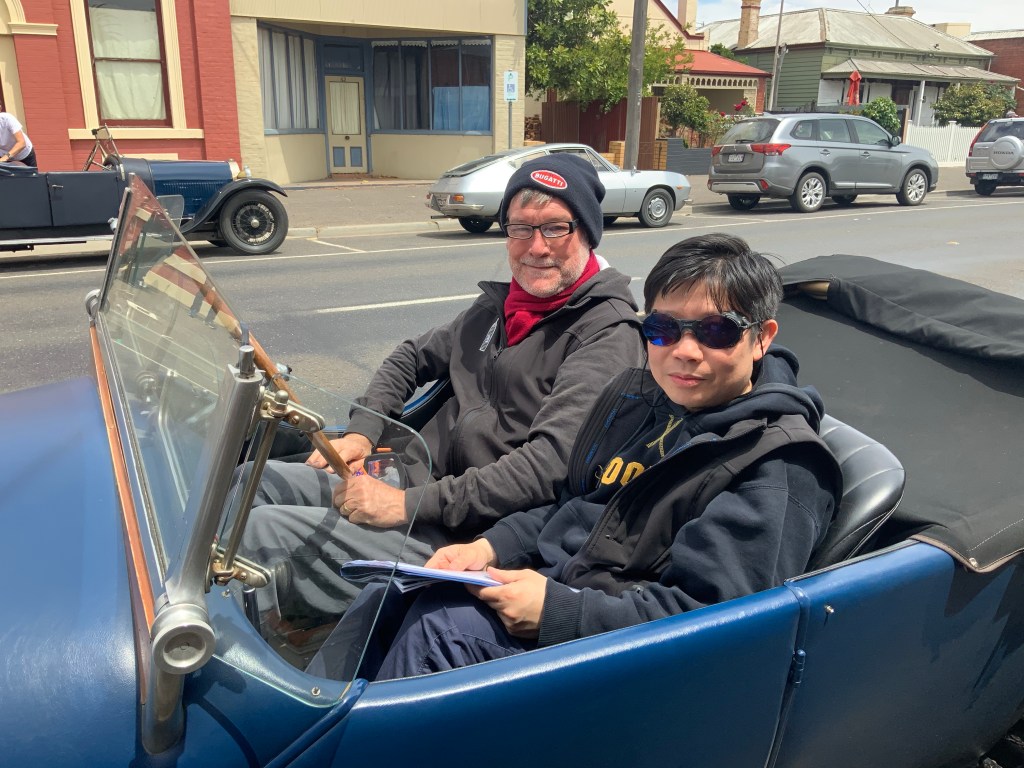
Michael Anderson and Bui Khoi before the off in Inglewood, Anderson family Type 44, another cherished car which has been in family hands for decades.

Shellard T57, great in profile, in Lancefield.

(M Bisset)

Clan Murdoch, or part thereof, in Inglewood.

(M Bisset)

Chewton crew. Bob King, then the masked avenger, Trevor Montgomery, Des Dillon and his lady – and Bentley 3-litre.

(M Bisset)

Credits…

Mark Bisset, Geoff Meredith

Tailpiece…

Berryman T37A, Castlemaine (M Bisset)

Le derriere incredible…

Finito…
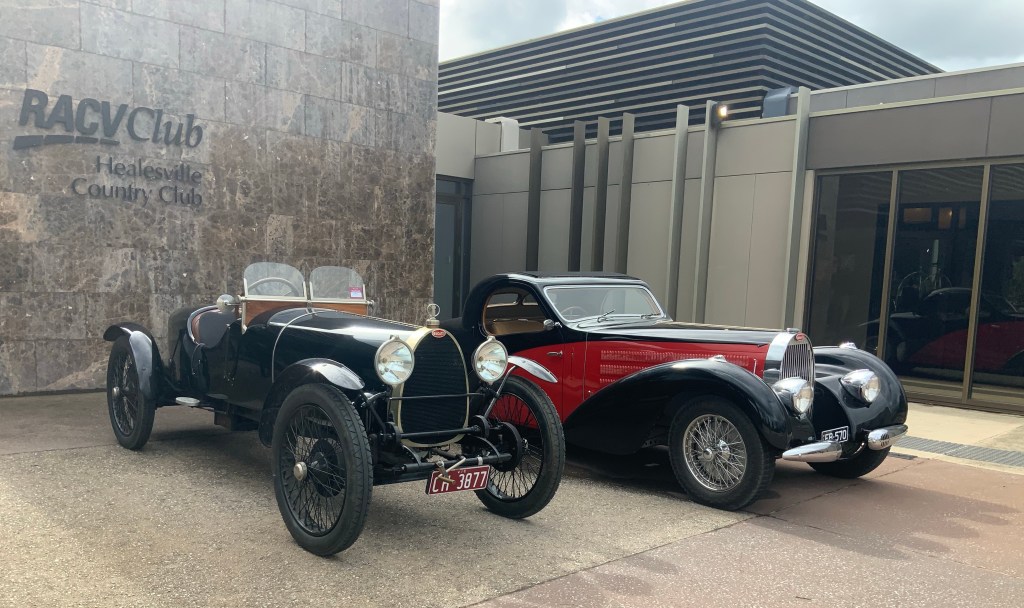
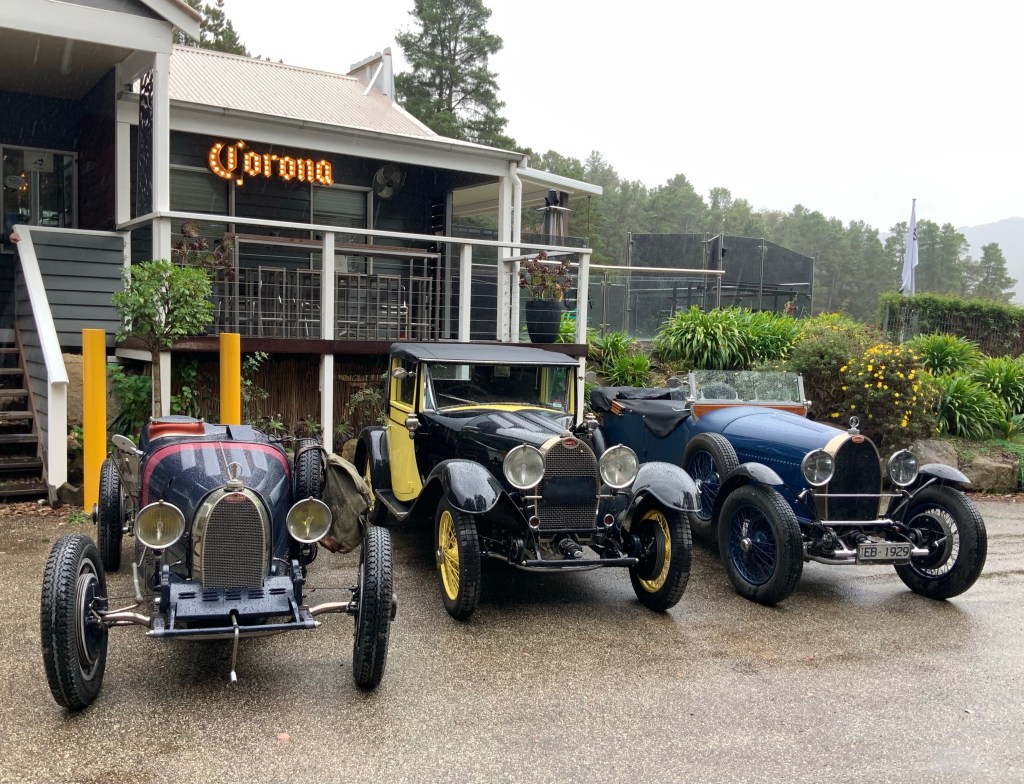
The Bugatti Owners Club of Australia, Victorian Division held their 2021 rally in and around Healesville, in the Great Dividing Ranges, 70km from Melbourne from 9-11 April.

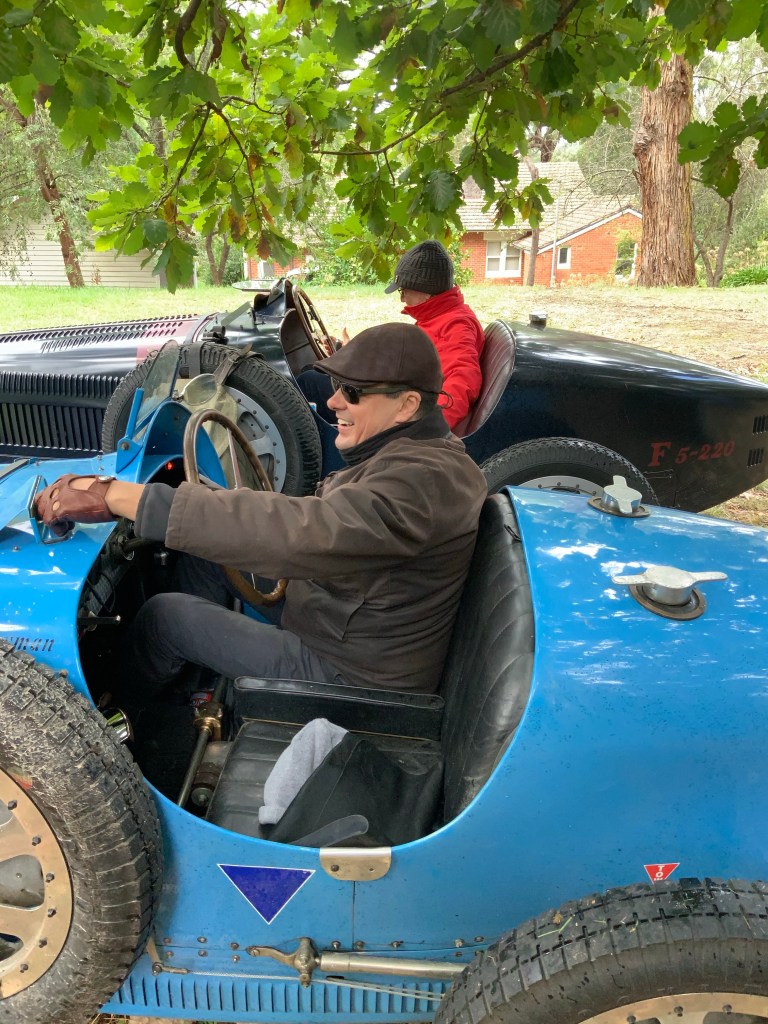
These gigs are not my stock-in-trade, but Bob King’s wife opted out of a seat in his Type 35B Replica #BC134, an opportunity I was happy to accept.

Over the last four years I’ve got to know one of the marque’s noted authors and historians, he has well and truly infected me with Bugatti-lore, my marque knowledge is probably now a low pass.

King T35B #BC134

Trevor Montgomery’s Alfa 6C1500 Spl s/c, McWhirter Brescia T23 #2467 and blue Stuart Anderson owned, Michael Anderson driven T44

Murdoch T30 and T57C Atalante

We did three long loops out of Healesville in different directions; on Friday afternoon, all day Saturday with a pit-stop at Eildon for lunch, and then a hardy-souls-only Sunday morning one when it really was ‘pissin down!

Cripes these dudes use their cars!

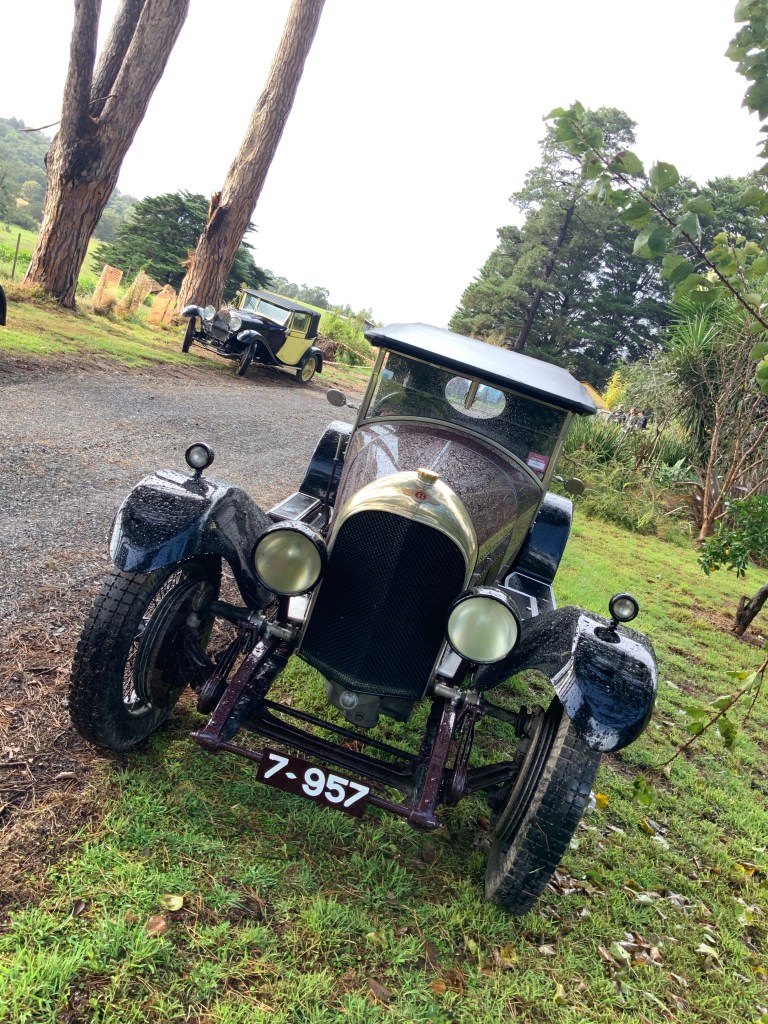
The Ettore Works Driver awards went to the Adam Berryman/Louise Murdoch T37A, Rod/Rita Quinn T35B and Brendan Dillon Hispano Suiza combinations on Saturday afternoon. They braved the very wet, muddy, dirt, steep, dark Acheron Way to return to Healesville after some wally in a modern 4WD left the road on the Black Spur, causing the Gendarmes to close that road.

All five were buzzing with excitement back at the hotel, but both gals – sans the aero-screens afforded the drivers – were soaked to the skin and had faces so muddy they could have been on the Black and White Minstrel Show (if one was allowed to write that).

Well over 500km was covered over the three days on a variety of roads including some ordinary dirt, with a good percentage of it in wet weather. A good test of drivers, resolve, and steeds.

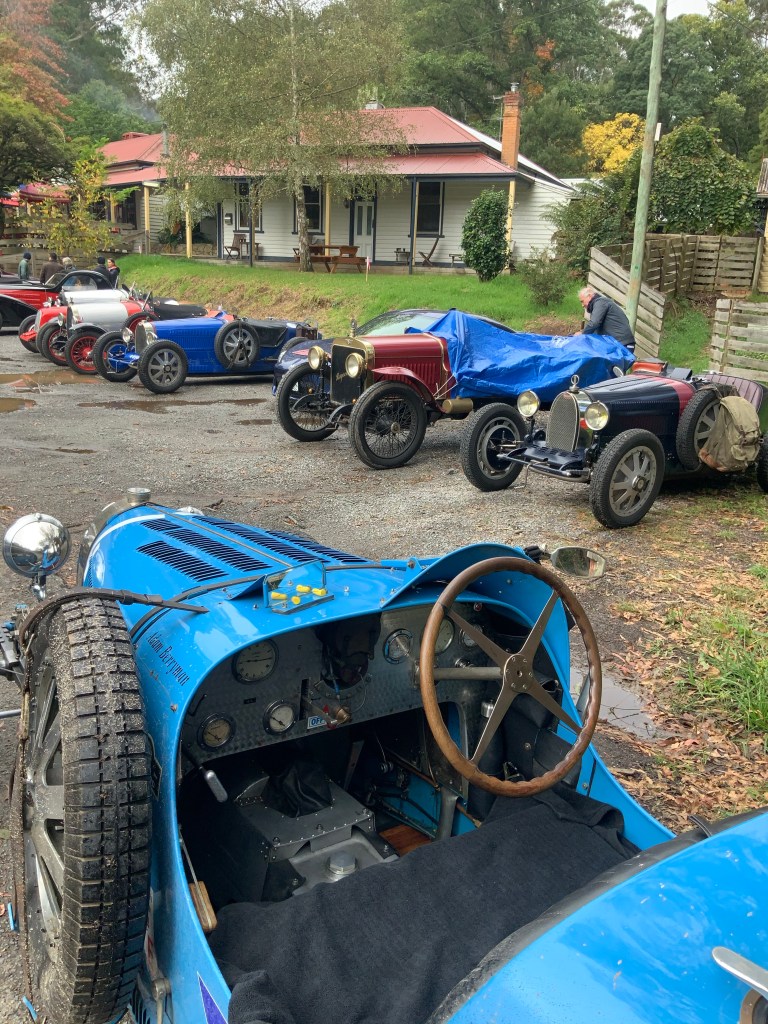
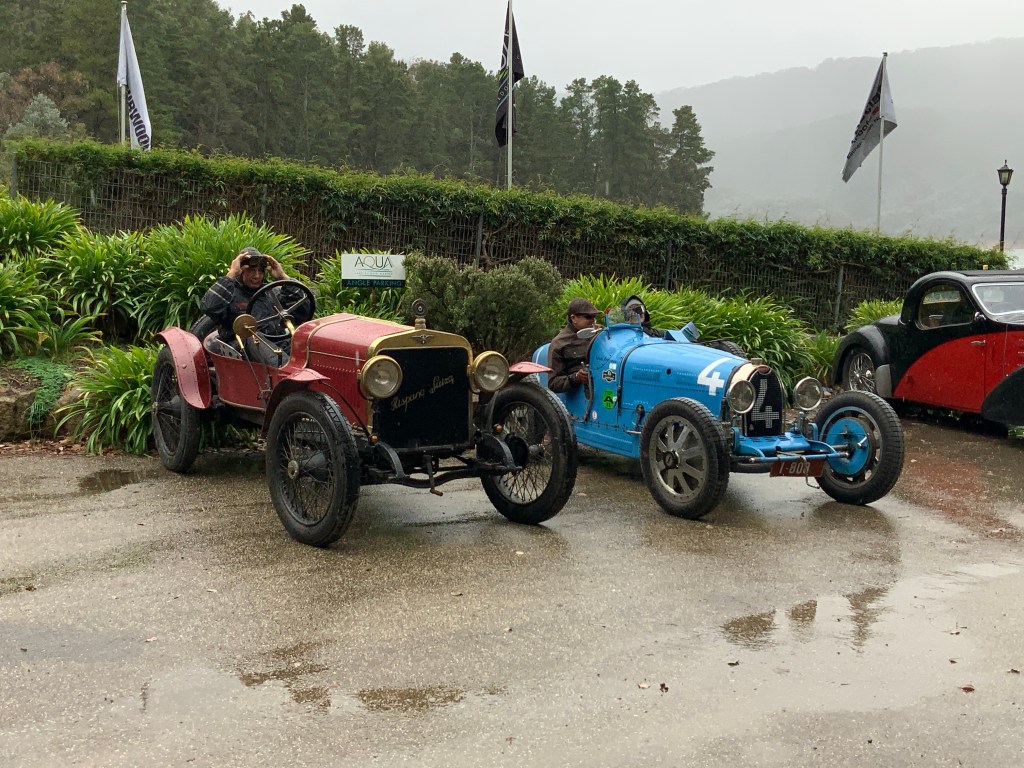
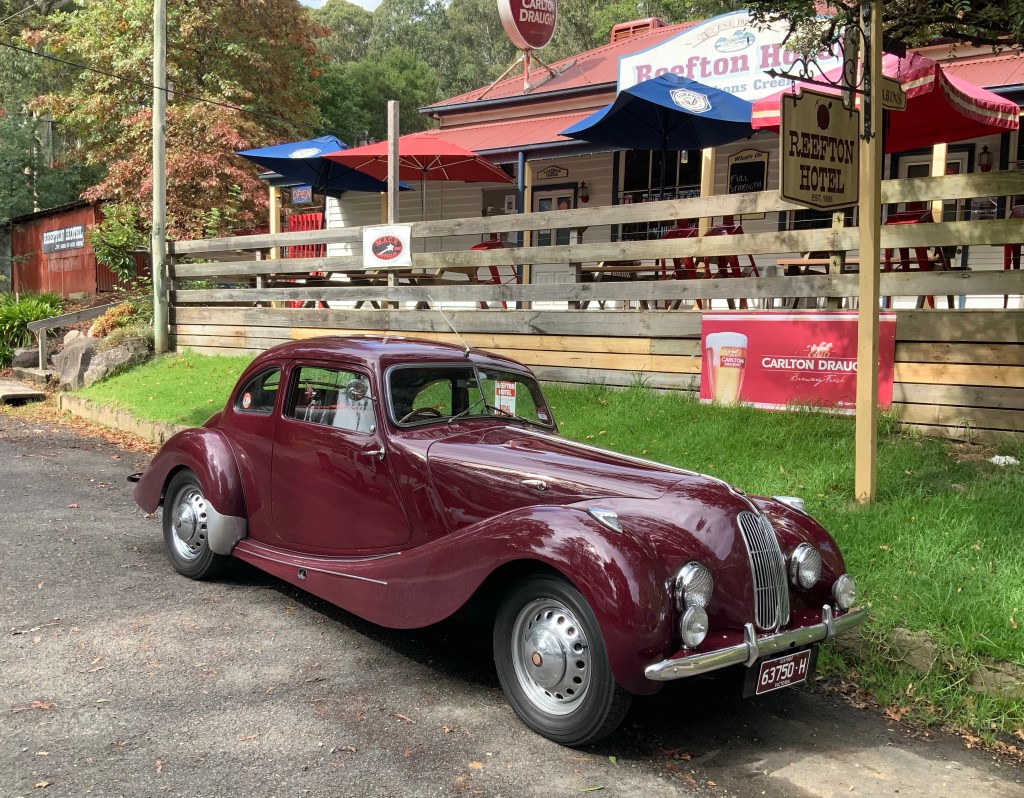
Reefton Hotel vista across the cockpit of the Berryman 37A, then King 35B, Dillon Hispano, Dillon 35B Rep #BC135 and McWhirter Brescia

Messrs Berryman and King looking suitably soggy and happy at Yarra Junction

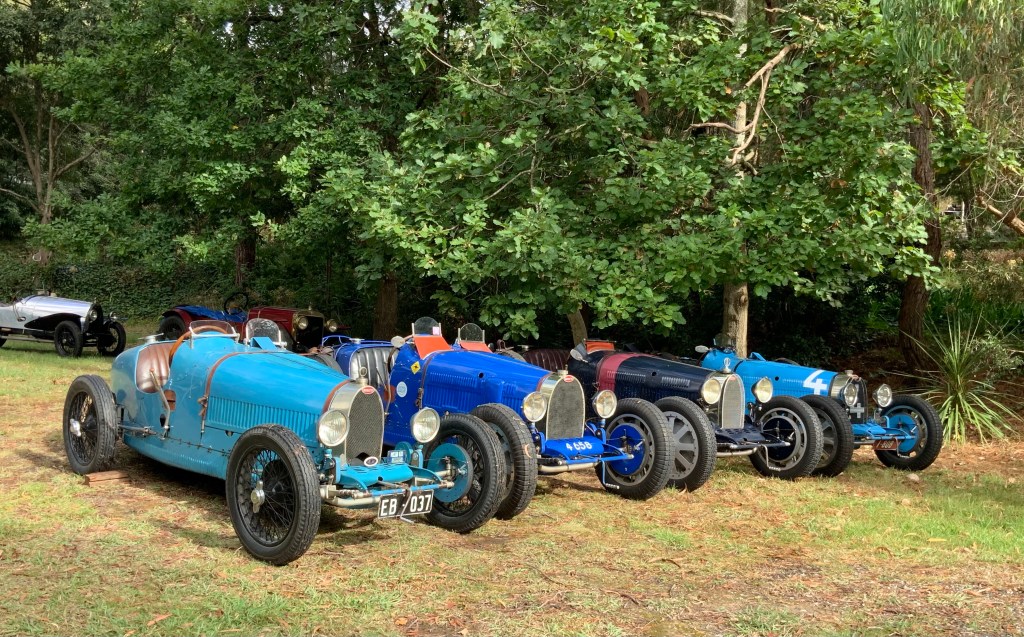
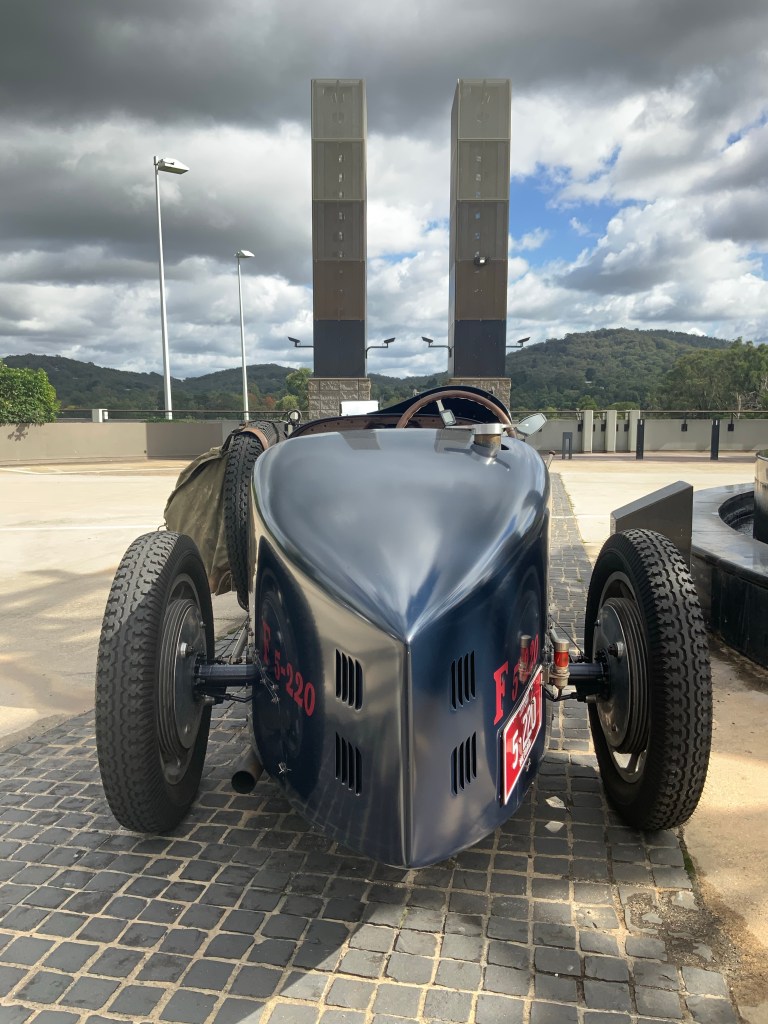
GP Bugatti parade at Yarra Junction. The Roberts T37 and Berryman T37A book-end the T35Bs of Dillon and King

Living is blatting along at 3,000 rpm in a straight-eight Bug, rain, wind and dirt in your face with the raucous, basso-profundo bark of a supercharged engine assaulting your left-earhole and rattling the spaceframe supporting your brain.

The engine competes with incredible gear whine in the indirects, top-slot provides some relative cruising peace.

I don’t know about all that tearing calico-crap as a descriptor of the exhaust note?

The engine, with its oddball firing order, has a music all of its own, the timbre of which is infinitely variable with a smidge more, or less, of throttle. Lugging-slightly in fourth at low speed, then accelerating, makes the thing breathe really-deep, and demonstrates the flexibility of Ettore’s 2.3-litre, three-valve, under-square design.

The thing is unbelievably stiff, but by the same token the spring/shock rates are well resolved; the chassis itself is also a spring of course, which absorbs the imperfections of Victoria’s B-roads.

Great speed on dirt would threaten your false-teeth, with kidney-belts a necessity. Bill Thompson and his ken were legends to race at the speeds they did in their T37/37As to win Australian Grands Prix on rugged Phillip Island dirt and dust in the twenties – 200 miles flat chat would have been a hard days work, to say the least.

Eildon Hotel, the Corona was nice and cold, as was the day. King T35B, McGann T40 1.5 s/c with Lydia Bugatti style body, and Michael Anderson’s T44 3-litre eight

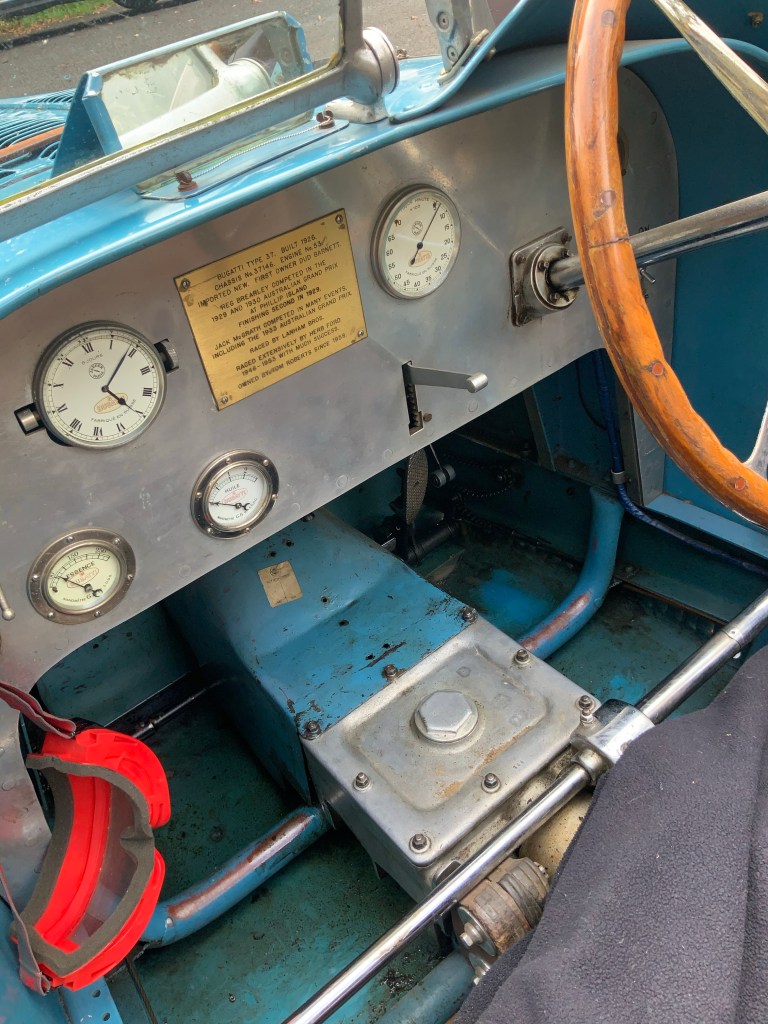
Roberts’ T37 #37146 cockpit. Gauges are tach, clock, fuel and oil pressure. The lever is ignition advance/retard, set here fully retarded. Blue chassis cross-piece under the gearbox. Silver tube is part of gear shift mechanism, shift on right outside the cockpit. First is left bottom, second straight forward, third across to the right away from you and back, top is straight forward

Eildon. Murdoch T57C and T23 Brescia, McWhirter Brescia T23. Nice to see a car worth a small piss-ant country driven on normal roads

The Royal Automobile Club of Victoria’s Healesville Country Club was a perfect choice for the gig.

It’s close to Melbourne with plentiful underground car parking for about 12 Bugatti’s and interlopers. These included Trevor Montgomery’s ex-Lex Davison ‘Little Alfa’ 6C1500 s/c, David Hands’ ‘fat’ 3-litre Bentley with Phil Schudmak as sidekick, Brendan Dillon in brother Des’ incredibly quick 1914 4-litre Hispano Suiza Alfonso, Rod and Rita Quinn’s Bristol 400 and a couple of others.

Car parks established for electric Tesla’s became pit-bays for the GP cars which needed a check-over and charge of the batteries before resuming battle the morning after. The irony of these beautiful, charismatic, dirty old gas-guzzlers using facilities established for modern tributes to boredom will not be lost on you.

There was no mechanical carnage, albeit one Brescia, fresh from an engine rebuild, displayed some petulance, but nothing the talented new owner/driver, Phil McWhirter and his patient wife Laurette couldn’t overcome.

The poverty-end of Bugatti ownership these days is about $A400,000-plus for a Brescia, not cheap. What was impressive was the amazing depth of mechanical and racing history knowledge amongst owners, and the high proportion who wield their Stahlwilles with deft skill.

Belle of the ball was the Murdoch family, Type 57C Atalante #57788, which is simply, jaw-droppingly stunning.

Like a beautiful woman, your eyes take in every perfectly proportioned curve, each one of which blends into the next and teases you a little more as you take the thing in, from top to bottom, and back to front. Then do the same thing over and over.

Ooh-la-la indeed.

Yes, the Acheron and Taggerty locals did need chiropractic treatment after passing this lot on the Maroondah Highway roadside
King T35B
Michael Anderson’s T44 3-litre normally aspirated eight at Reefton, wonderful tourer

The T57C has an Australian history since the Dale brothers imported it in the late-fifties. Young Doctor King must have been quite an Ormond man-about-town in it in the early sixties cruising the streets of Melbourne. He sold it just as his sixth-sense suggested the engine may be in need of very expensive TLC soonish.

It then passed to Eric Pengilley, where many an Australian Bugatti became a resident of his Black-Hole-of-Cammeray Bugatti burial-ground on Sydney’s lower north-shore .

Stuart Murdoch made many trips from Melbourne to Sydney before prising it from Pengilley, then starting the long, expensive process of restoration. The Murdoch patriarch is as sharp as at a tack and was much in demand, so I never did get the full T57C story.

He did burst the bubble of one old, oft repeated myth though.

It’s said that his father, Doctor Noel Murdoch made his Yarra Junction 1920s house-calls in an eight-cylinder Type 44, which the family retain. Stuart said that would only have been for the most special of patients, his normal chariot of choice was one of Australia’s first Fiat 501s.

Both these blokes drove with plenty of brio. Brendan Dillon in brother Des’ Alfonso Hispano and Adam Berryman with another brave, lucky ‘victim’
King 35B butt-shot @ Healesville RACV. Makes the knees tremble really
The Rod and Rita Quinn Bristol 400. I did 150km in the car and thoroughly enjoyed the drive, it only falls short amongst the moderns on long, steepish hills where 2-litres ain’t enough

The most stunning part of the long-weekend took place inside an enormous, designer Bat-Cave, sitting low in a small valley surrounded by sweet smelling, damp eucalypts.

There, the good Doctor King was put very much on the spot, with about 40 of us looking on. His task was to identify a factory T37A chassis. He went to work with a small-torch, and all of the experience which comes from restoration of his share of the cars, and having seen more of them than you and I have had hot dinners.

That was just the sweets course of this automotive archaeology segue, mind you.

The main dish was having laid out, before our eyes, some of the core components of the Geoff Meredith driven, 1927 Goulburn, Australian Grand Prix winning, ex-Turner/Meredith/Clements 2-litre eight-cylinder Bugatti T30!

Neil Murdoch showed the cut down chassis, front cross-member, cast-aluminium firewall and engine. It’s far from a complete car of course, but is heaps of bits in a world where a reconstruction often starts with no more than a vinyl Lola nose-badge.

The ex-Meredith 2-litre, three main-bearing eight cylinder engine currently powers a perfect, black Type 30 driven by Fiona Murdoch. No doubt her two brothers, Neil and Geoff are trying to get little ‘sis engine for this important part of Australian racing history. Stuart Murdoch quipped, “I’ve done my restoration bit, that one is for the next generation.”

So it is too. It’s more of a five year or decade long project, but over time, doubtless the Murdochs will acccumulate the bits they need, including another two-litre eight to pop under the curvaceous long bonnet of the immaculate black Type 30! Watch this space.

Interlopers included David Hands’ Bentley 3-litre which had arrived home from the UK at Port Melbourne a few days before. Drove it to Sydney over two days following the rally
Practical things these long-legged eight-cylinder touring Bugattis. Michael Anderson’s T44 at Yarra Junction

Robert’s T37 at Reefton Hotel

It was great to see Tom and David Roberts in Tom’s beautifully patinated T37 37146, and old-mate, Adam Berryman’s T37A, 37327.

Tom has owned the ex-Brearley/McGrath AGP contestant since 1958, the car has not been spotted for a while so Roberts father and son were welcomed like long, lost cousins.

“That car was the first Bugatti I saw. I was standing outside the Melbourne University Union building when Ian Ferguson and his brother pulled up and parked it, jumped out, pulled their trousers out of their socks – done to avoid the inevitable pool of oil in the footwell – and rushed off to lectures. How cool was that, I thought!” recalls Bob King of the late fifties Melbourne Uni car-park which contained its share of old-banger Bugattis.

I reckon todays 85 year olds probably had the best of motoring as we currently know it. They saw the end of the front-engined GP era, the best, pre-wing, mid-engined era, and had available to them a truckload of exotic road and racing cars which were cheap old rockets before their era as global investment grade assets.

T35B Rep, Brescia, Alfa 6C1500 Spl, Brescia, T57C and T30 at Reefton
Brescia T23, T35B Rep, Bristol 400 and light blue Triumph of Mr Terdich, Eildon
Berryman’s ex-Chiron Targa T37A is about as good as it gets. Sex on wheels. Reefton

Berryman’s T37A, a car his father bought in the seventies, was imported by Melbourne racers/businessmen/Light Car Club stalwarts, the Leech brothers in the fifties.

I sat alongside Adam from Reefton to Yarra Junction. The experience was in some ways similar as the 35B, given the chassis of types 35 and 37 are the same, but the engines are quite different of course- the T37A is a SOHC, three-valve, 1.5-litre supercharged four (T37, same engine un-supercharged).

The 37A feels, and is lighter, the engine is notably more responsive to the throttle with a lighter flywheel and higher state of tune than Bob’s 35B. The 35B is ultimately quicker on a like-for-like basis.

A quick refresher course on Australian Bugatti Grand Prix wins. These were achieved with the modified-tourer T30 2-litre eight raced by Meredith in 1927, T37A 1.5-litre supercharged voiturettes raced by Arthur Terdich in 1929 (Tom Roberts’ T37 was second driven by Reg Brearley), Bill Thompson in 1930 and 1932 and the T39 1.5-litre supercharged eight raced by Carl Junker in 1931.

What a weekend.

Many congratulations and thanks to organisers Michael Anderson, Bui Khoi and Geoff Murdoch for their creativity, warm hospitality, attention to detail and deft-touch. Fantastic stuff!

Credits and Commerce…

Bob King quoted the chassis numbers out of his head, not bad at 84. I’m that confident he is right I’ve not checked any of them!

The photographs are all mine, with one exception.

For those with an interest in all the Antipodean Bugattis, see ‘Bugattis in Australia and New Zealand 1920-2012’ by King and Peter McGann. $110 plus postage, email McGann on; pmc24757@bigpond.net.au

Tailpieces…

Let’s finish as we started with the Murdoch T57C Atalante. Man I cannot get this thing outta my sick little mind…

(B King)

Finito…
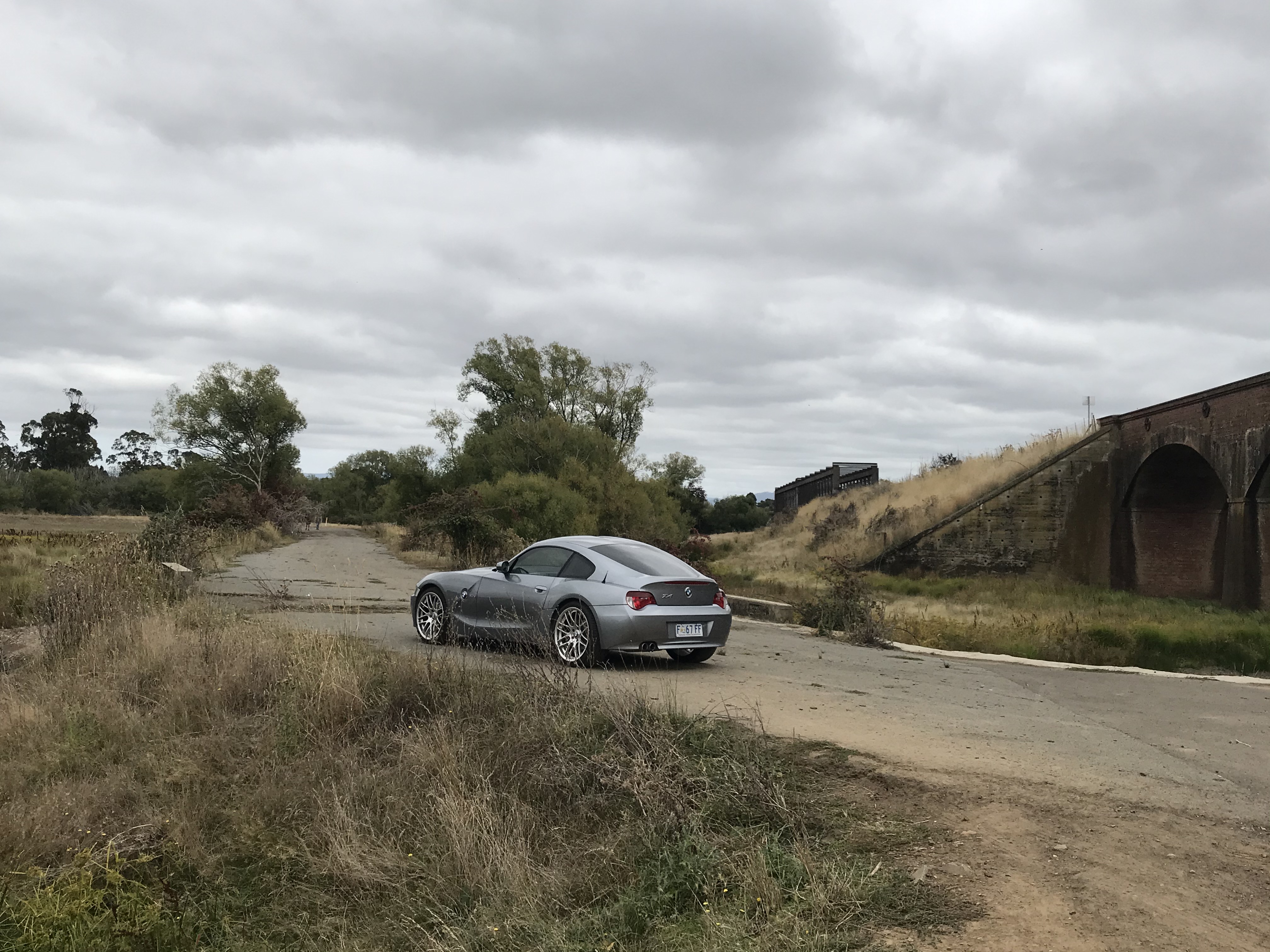
Brian Higgins’ BMW Z4 on the exit of the Viaduct

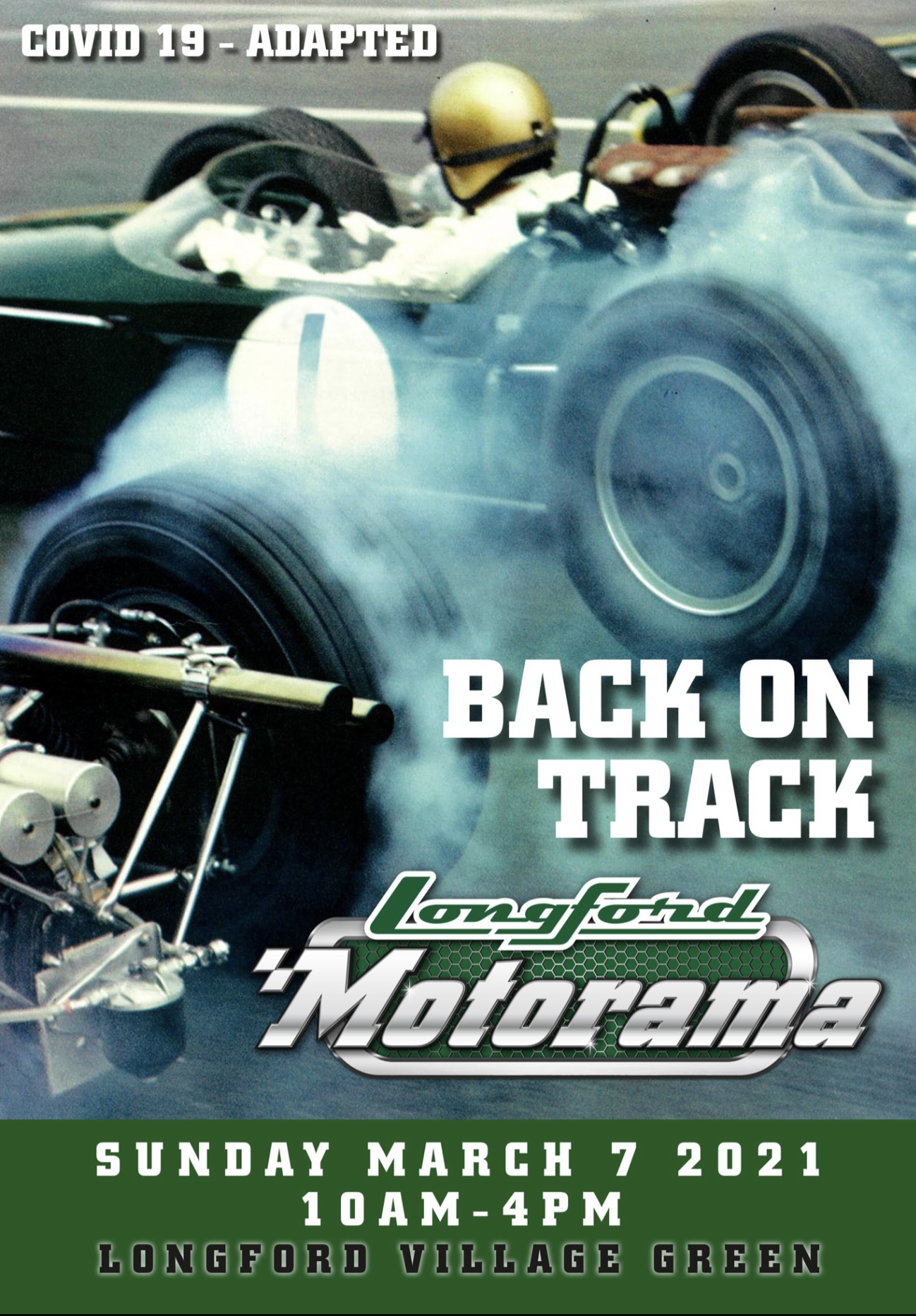
The Longford Motorama, in recent times an annual Labour Day long-weekend event, is an important date in the Tasmanian motorsport calendar to keep the 1953-1968 Longford road-racing memory alive.

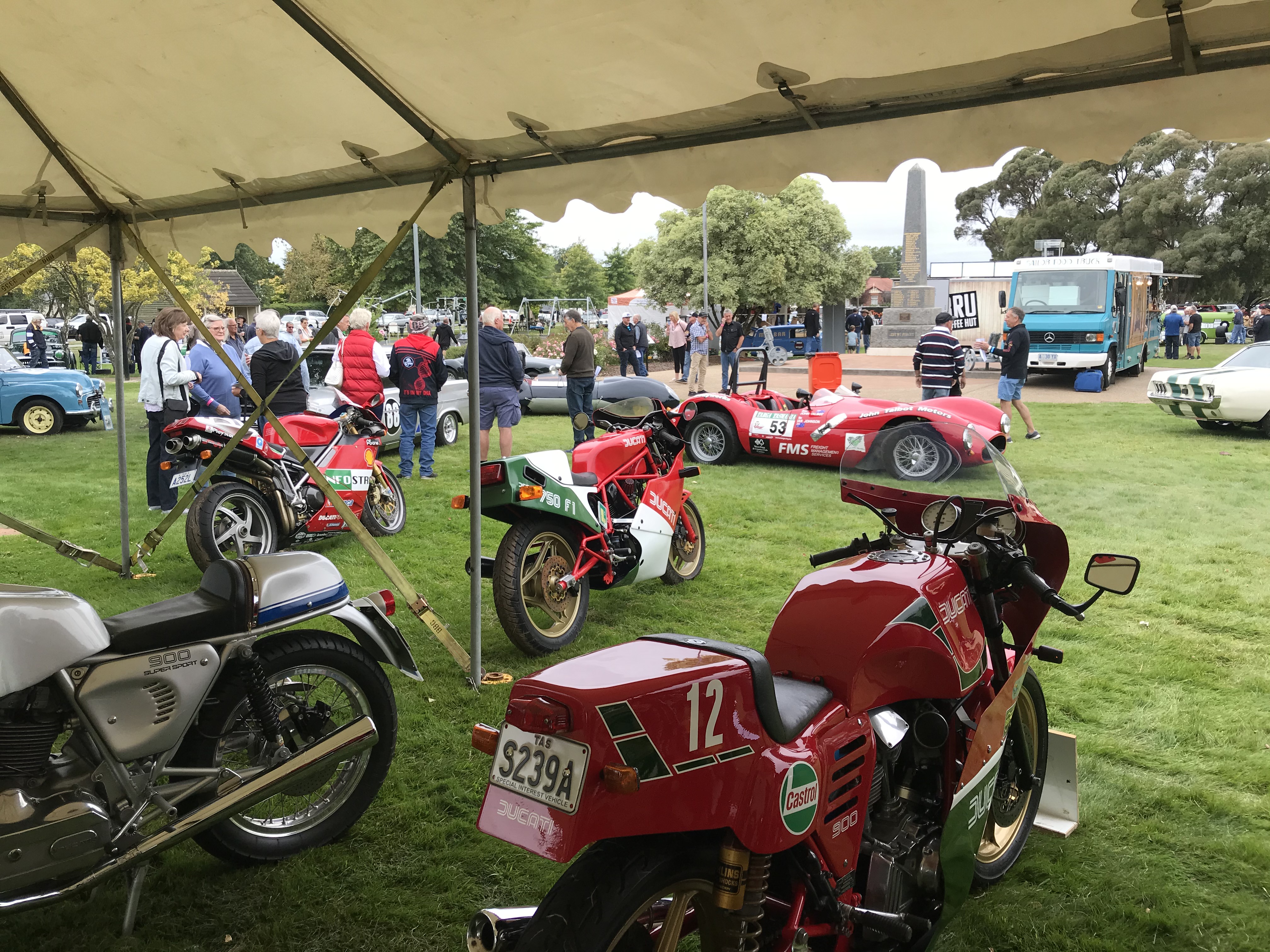
I ducked back to the South Island for a few days. Rob Knott, Justin Brown and their merry band of helpers organised a display of racing cars and bikes and special interest cars at the Village Green, 500-metres from the Country Club Hotel aka Pub Corner on Sunday 7, 2021.

There were plenty of stalls selling all kinds of goodies, a Tongan Band did a great job on entertainment and two ‘around the block demos’ by the competition cars and bikes halfway through the day, and towards its end kept the punters happy.

John Talbot’s Harry Firth built #53 Triumph Ausca Special has been the visual in the window feature of the Country Club Hotel for a couple of decades but has been repatriated from its imprisonment in the last few weeks (M Bisset)


(M Bisset)

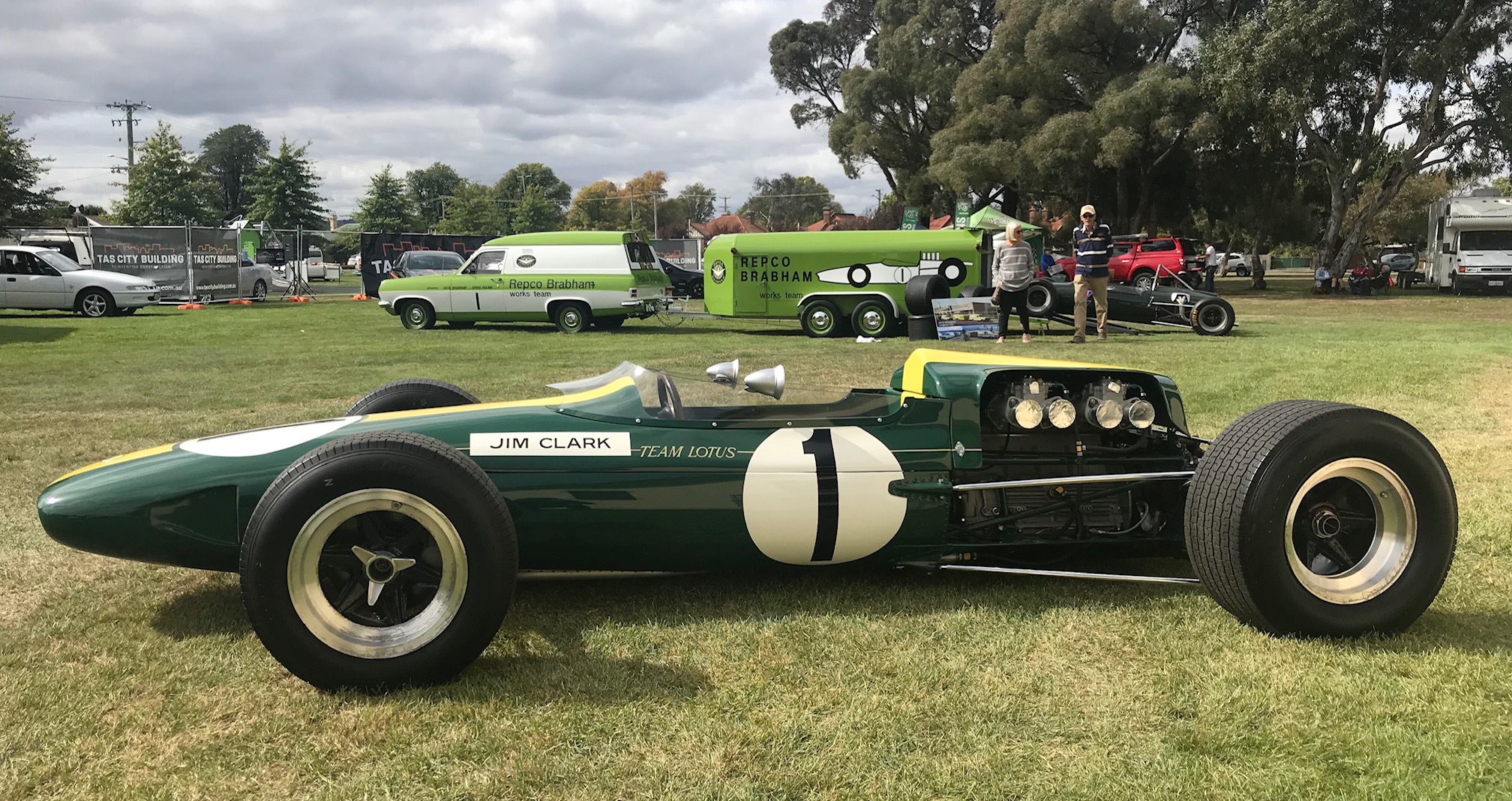
Belles of the Ball were Rob Knott’s just completed restoration of one of the two Repco-Brabham Rice Trailers used to cart the cars raced by Jack Brabham and Denny Hulme during the 1967 Tasman Series in both New Zealand and Australia- and a Holden tow-car. The ‘HR’ Panel-Van wasn’t one of the cars used back then but a car which took Rob three years to find and rebuild.

At some point Jack Brabham’s BT23A, his ‘67 Tasman Mount (and winner at Longford that year) now owned by the National Motor Museum, and this rig will meet- what a special day that will be.

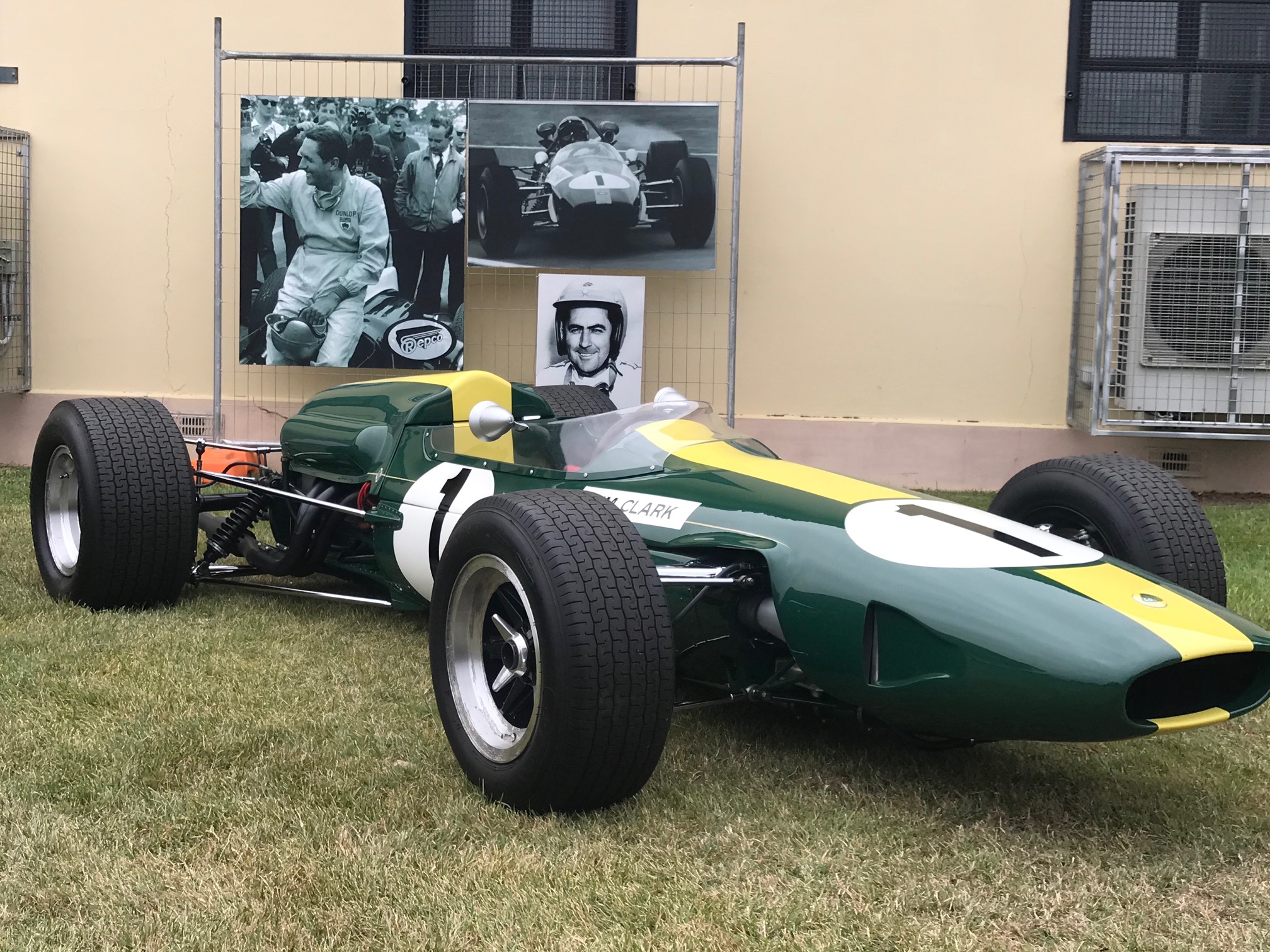
The other belle was Chas Kelly’s ex-Clark/Geoghegan ‘66 Tasman Lotus 39 Climax which always gives me goose-bumps. It was a static but stunning display car on Sunday.

Repco-Brabham works 1967 entourage- one of two rigs used in NZ and Oz during that seasons full-on assault on the Tasman. It was the only year, during Jack’s Repco-Brabham Engines phase, from 1966 to 1969 when Jack (and Denny that year) did all of the Tasman series rounds in an attempt to win it- Jim Clark won in a Lotus 33 Climax FWMV 2-litre V8. Car is a Brabham BT21 (M Bisset)


1966 Lotus 39 Climax FPF 2.5. Famous car raced with great skill by Jim Clark and Leo Geoghegan from 1966 to 1970. Arguably its greatest win was in Leo’s hands- the 1969 JAF Japanese GP in Repco 830 V8 engined spec (M Bisset)

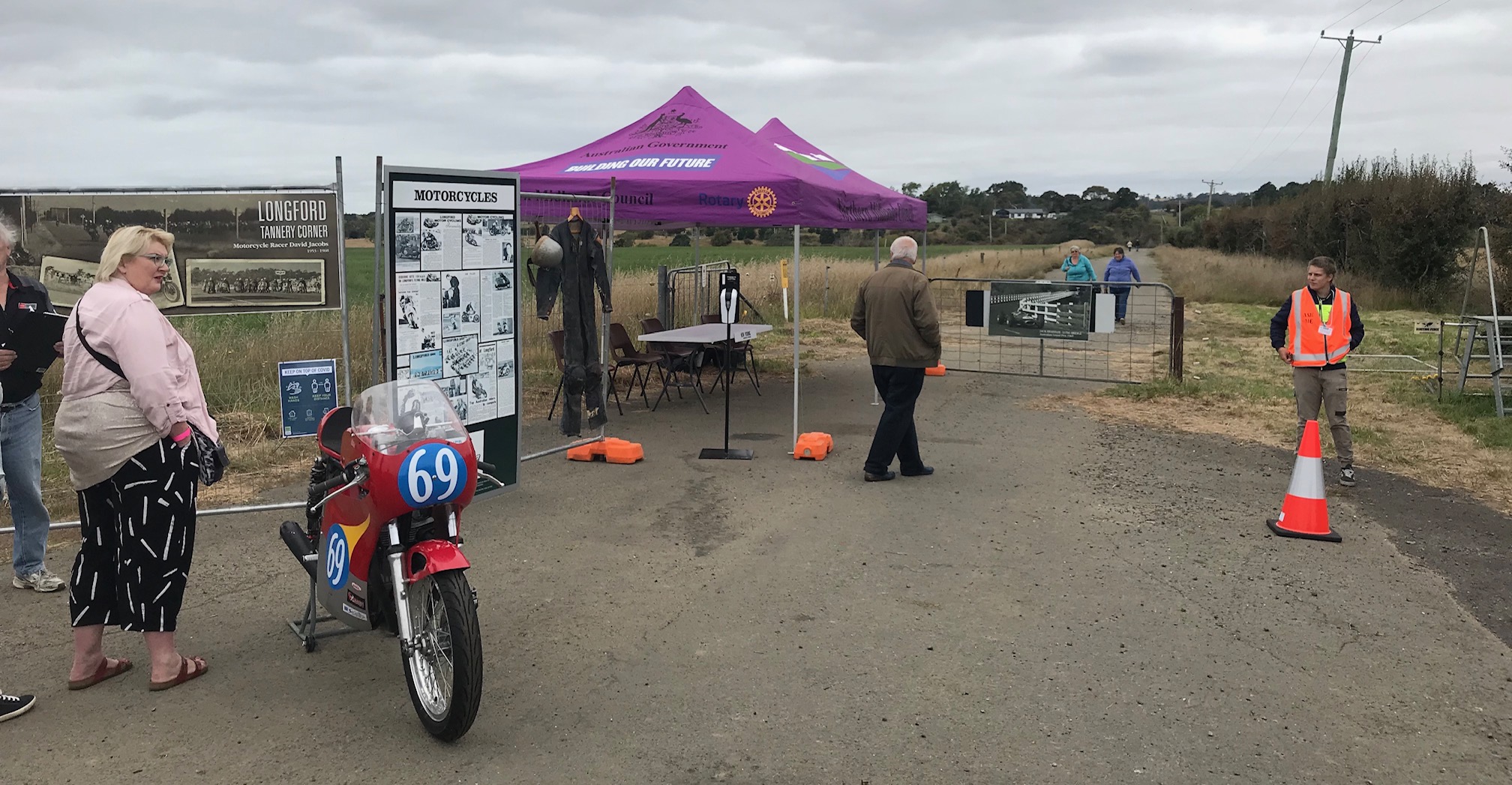
The highlight of the day were trips to three of the corners- Tannery, Mountford and The Viaduct via a fleet of four or five large mini-buses.

It was a get-on, get-off to have a walk and look around and then get-on again to go to the next destination arrangement which worked terrifically well.

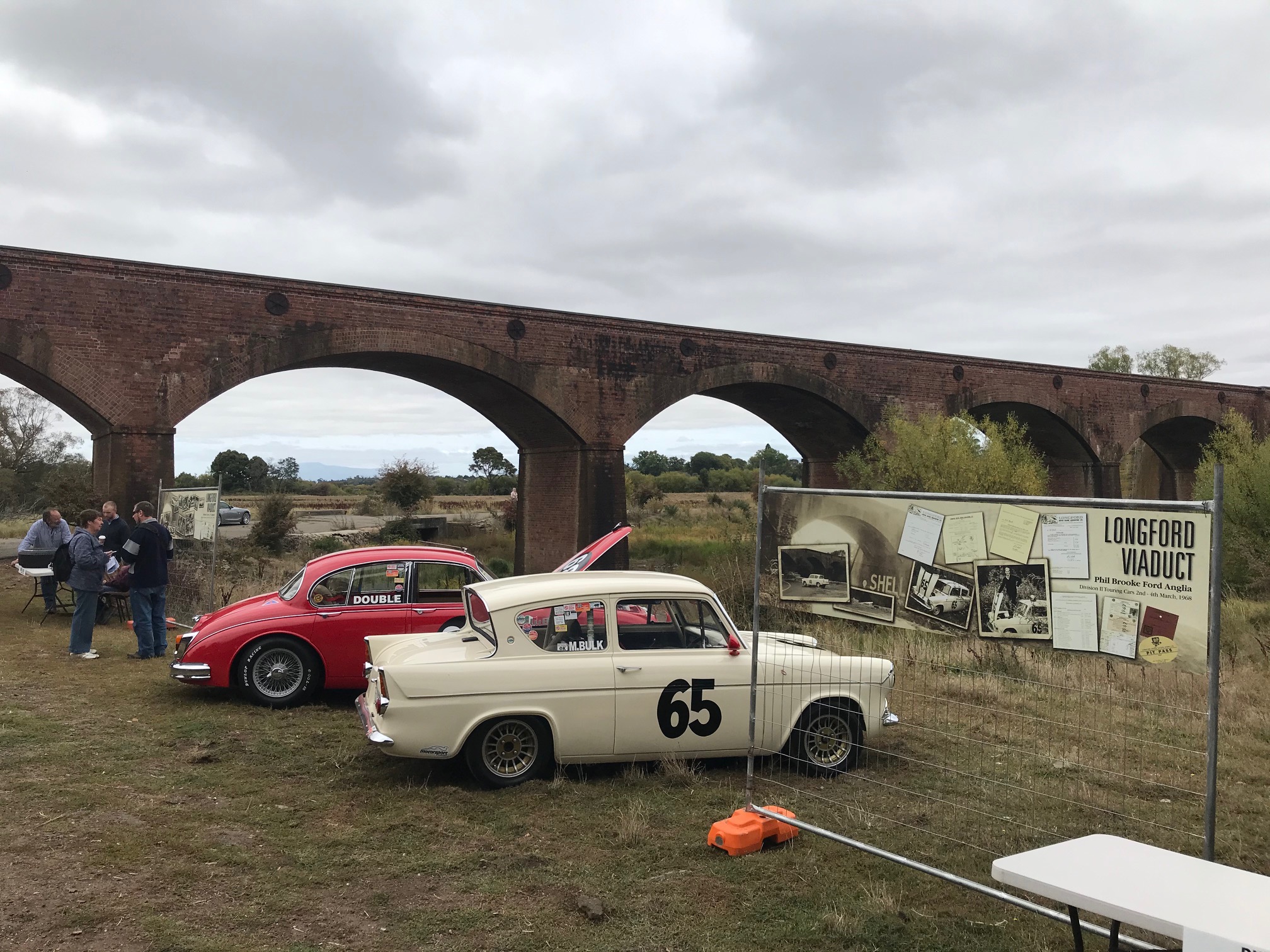
Knott has stunning attention to detail. At each locale there were information boards, a car/bike or two and one or two drivers/riders from the day to explain all ‘yer wanted to know. In addition, at The Viaduct there were Longford videos and a refreshment van. Brilliant.

Tannery corner display, motorcycle historian/author Ken Young manned this spot. Where the tent is would be about the exit point from this second-gear in a Tasman car right-hander. The folks are walking on the straight towards the fast left hander before Long Bridge (M Bisset)


Part of the Viaduct display- Wayne Double’s ex-Jane/Bruno Carosi tribute Jag Mk2 looked grand as did an Anglia similar to the one Phil Brooke raced- and beached nearby in the day. Both drivers (Carosi and Brooke) were on hand to talk to we punters (M Bisset)

It was great to meet Chas Kelly, Ellis French and John Talbot and have long chats with Randall Langdon and a couple of his mates (all the gen on Pat Stride’s Gremlins), Brian Higgins, Phil Brooke, Neil Kearney and Justin Brown.

Kearney, prominent Longford born national sports-broadcaster is making great progress with his Longford book. He and Geoff Harris were busy gathering additional information and anecdotes- pre Xmas this year is realistic timing for the sale of what will be a ripper book by two pro-journos and Longford dudes who attended the event many times in the day.

In the past week the ABC ‘Backroads’ team have been gathering material for a TV show on Longford (generally, not just the racing) so keep an eye out for that on the tello next year. It will be episode one in early 2022. We had dinner with Heather Ewart, the journo who presents the show, and the team of three who are on the road thirty weeks of the year to create an always interesting show from all over Oz.

David Sternberg on the hop during 1964, Cooper T51 Climax (M Bisset)

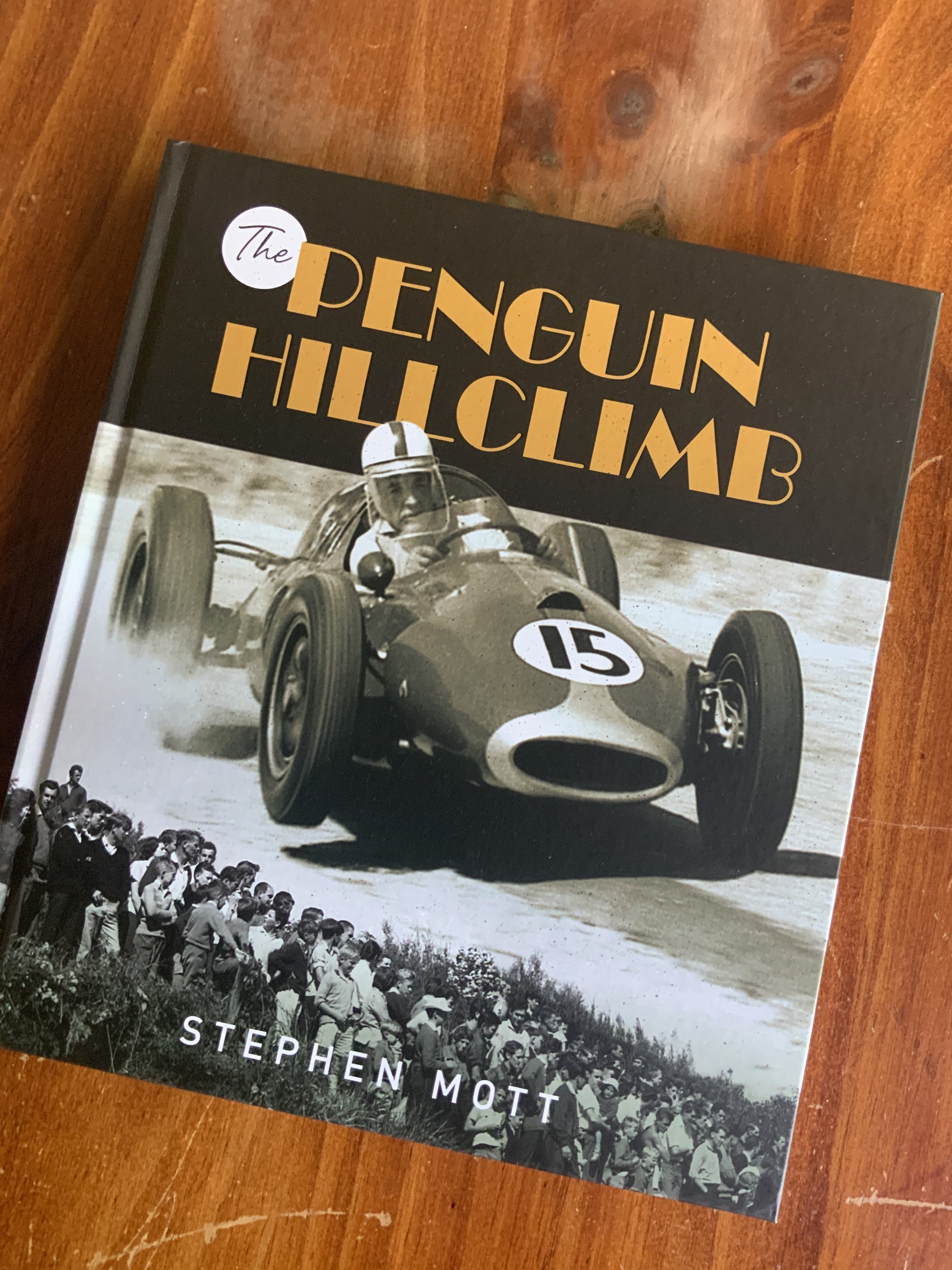
My final plug is for Stephen Mott’s ‘The Penguin Hillclimb’ book.

I bought a copy from Stephen and his wife who were selling the book from the boot of their car at the gig. Penguin is a small village on Tassie’s north-west coast which had a seven-tenths of a mile hillclimb operational from 1955 to 1971.

It’s very much a buy folks- 196 pages, hard-cover with high production and design standards. 200-plus hi-res photographs, 97.5% I’ve never seen before. The format is meeting date chronological with break-outs throughout on notable cars and drivers. $50 plus postage, email Stephen on penguinhillclimb@gmail.com.

Great news for enthusiasts is that the Longford Motor Racing Museum which has been pushed hard but quietly over the last couple of years by Rob Knott and Justin Brown is getting closer to fruition. ‘Tis said Scomo is after spade-ready projects with council support- watch this space over the next few months.

One of the more amusing parts of the day and the spirit of the times was Frank Manley’s account of racing his FE Holden, which he retains, at the ’62 meeting. He rocked up with his wife and kids aboard, unloaded them, practiced and raced, camping inside the circuit at the Mill Dam reserve and then drove the team home again to Hobart at the end of an enjoyable weekend.

At this point Chas Kelly interjected to point out that Frank is one of Tasmania’s most famous motorists, and owner of the states equally famous HQ Holden Monaro GTS.

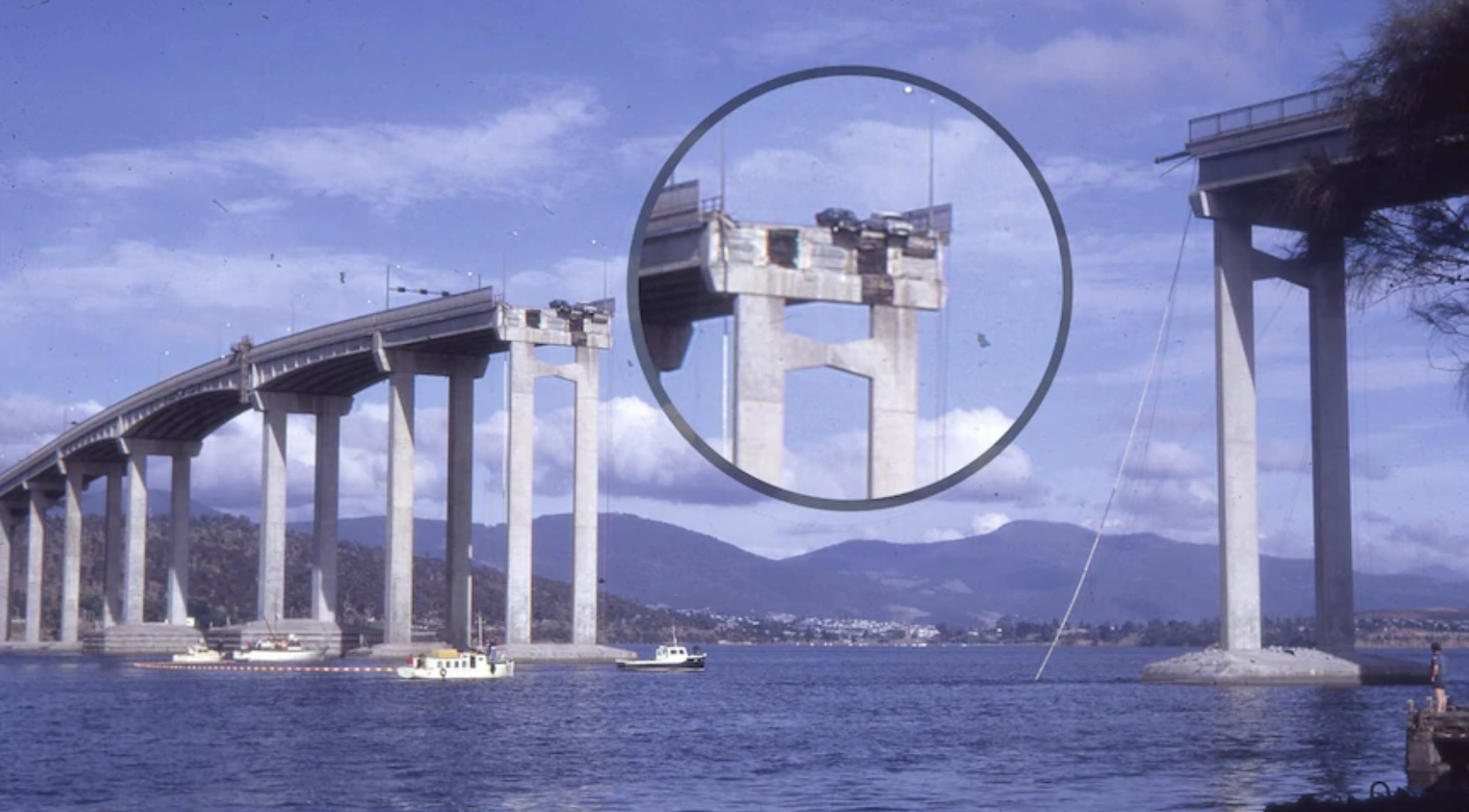
When the pissed-captain of the Lake Illawarra bulk-ore carrier ship took out the middle sections of Hobart’s Tasman Bridge in January 1975, Frank was one of two motorists to stop, front-wheels over the precipice, with the Derwent River 45-metres below.

Sadly, his attempts to flag down five other motorists as they came over the bridge were to no avail, all plunged to tragic deaths. Oh yes, he still owns the Munro too.

(B Short)

Etcetera…


(M Bisset)

Sex on wheels, or thereabouts.

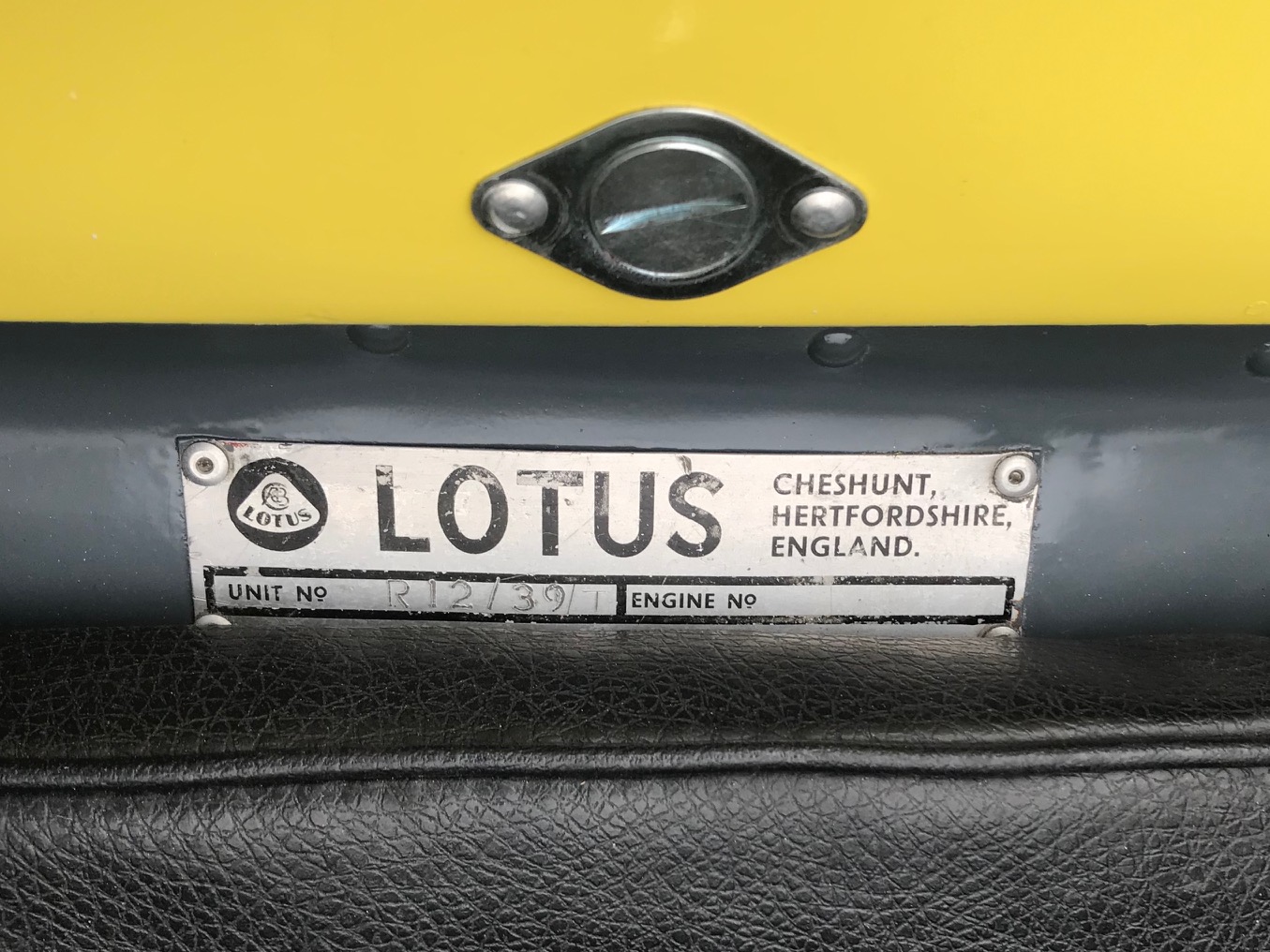
The late John Dawson-Damer did the real hard work restoring the Lotus 39 back to the specifications in which it was raced by Clark and Geoghegan in 1966, thirty years ago. Kelly gave it another birthday 15 years or so ago when he acquired it. See here for a feature on the car; https://primotipo.com/2016/02/12/jim-clark-and-leo-geoghegans-lotus-39/

Lotus 25/33 chassis R12, type 39 chassis 1, if that makes sense (M Bisset)


(M Bisset)

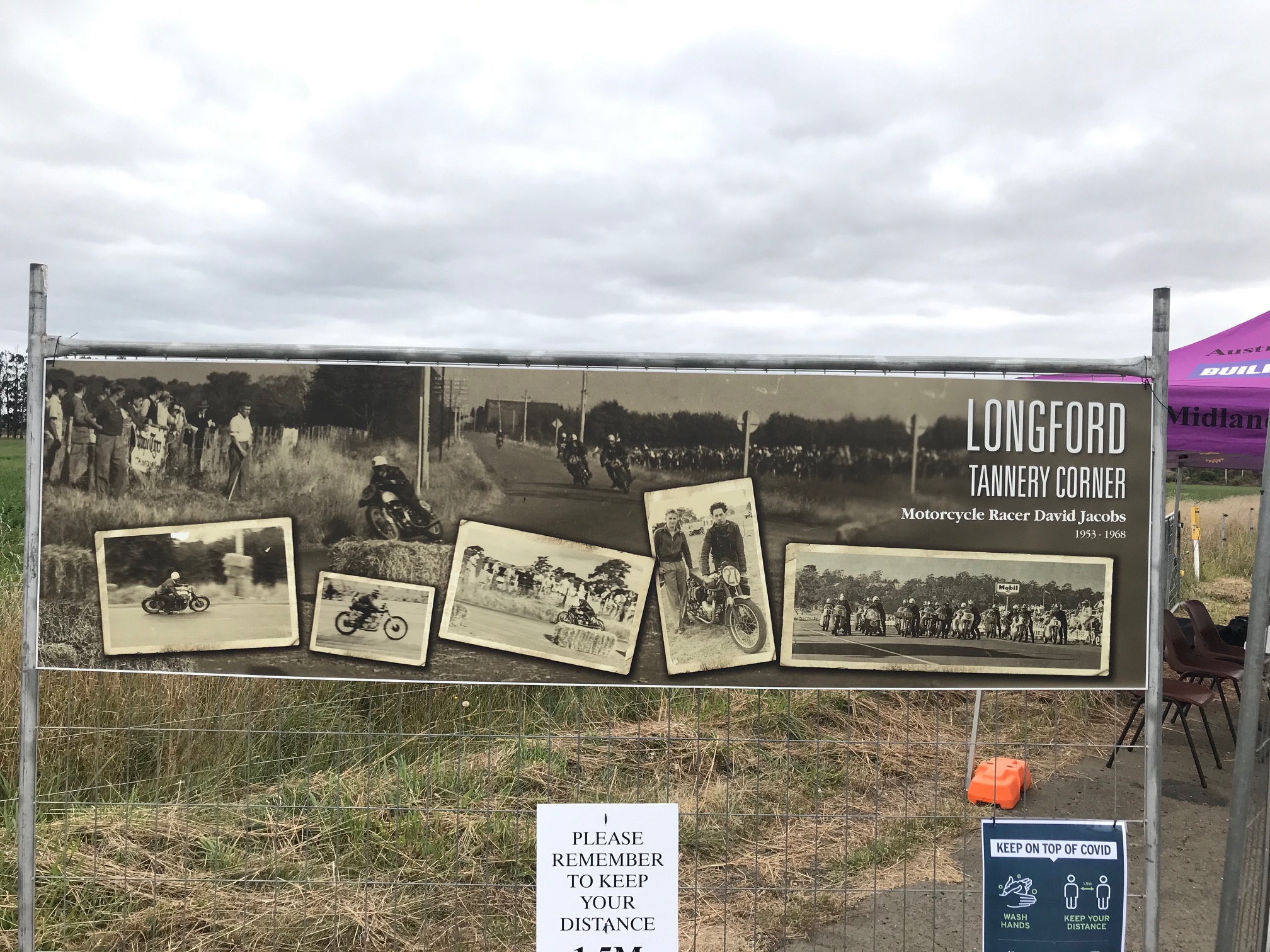
Tannery Corner info board. The main photo if you can see it, shows an unusual view of Tannery with the bikes coming towards us along Tannery Straight.

On the right, in the distance, is the Tannery building which still exists as a posh home or B&B. None of the circuit maps show it, but there is a harry-flatters-in-top kink to the right out front of that building.

(M Bisset)

Holden Haitch-Rrrrr and Haitch-D Panel Vans. Knott’s attention to detail in this exercise fantastic.

Takes me back to the Monash Uni students car park in the mid-seventies when these mobile shaggin’-wagons were very popular and cheap.

(M Bisset)

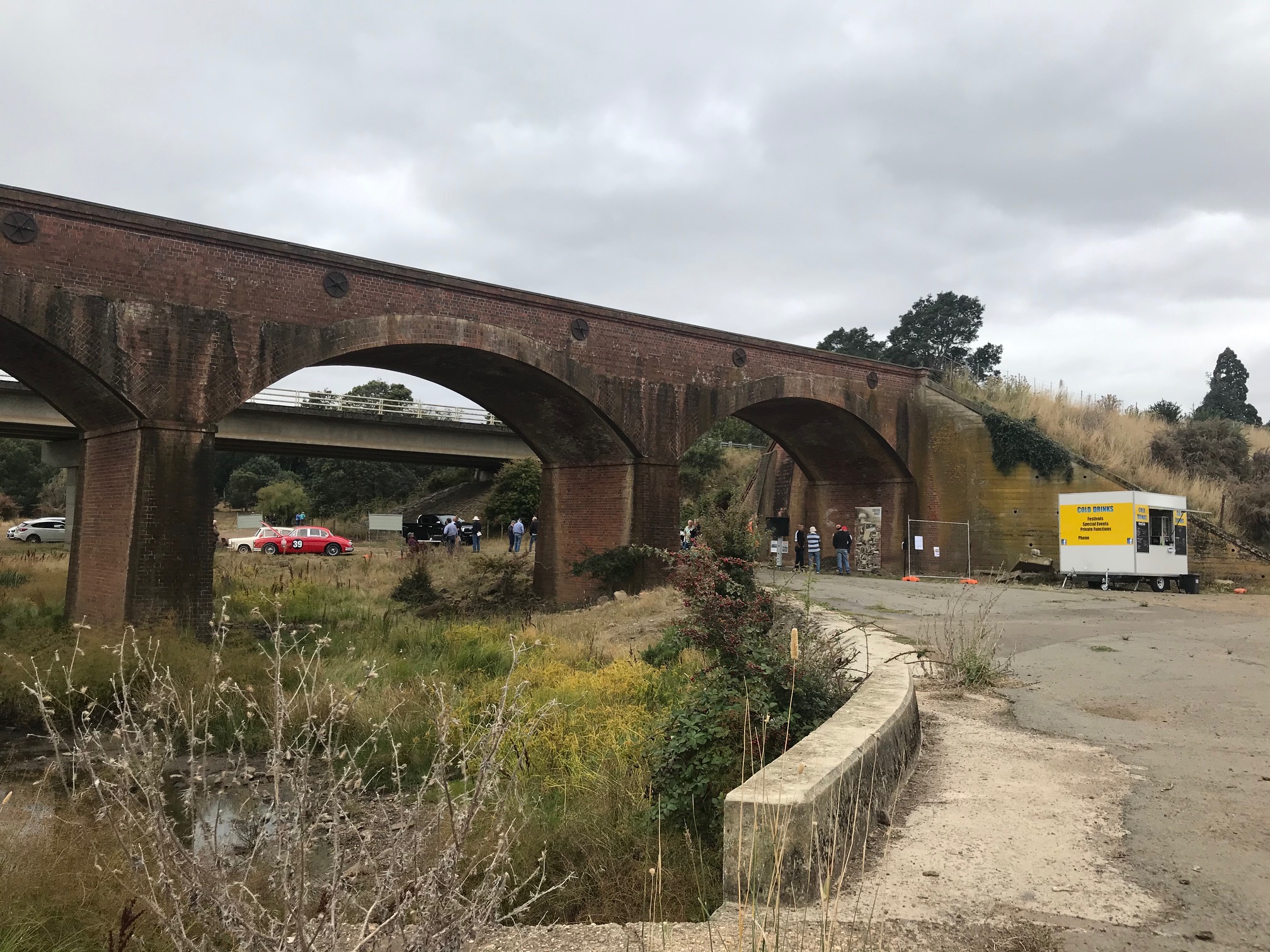
Viaduct vista.

The cars came down the hill and turned left under the first arch where the info-board is being inspected. The dual-lane carriageway, which was part of massive road-works and water levee banks throughout flood-prone Longford, can be seen beyond the second arch.

(M Bisset)

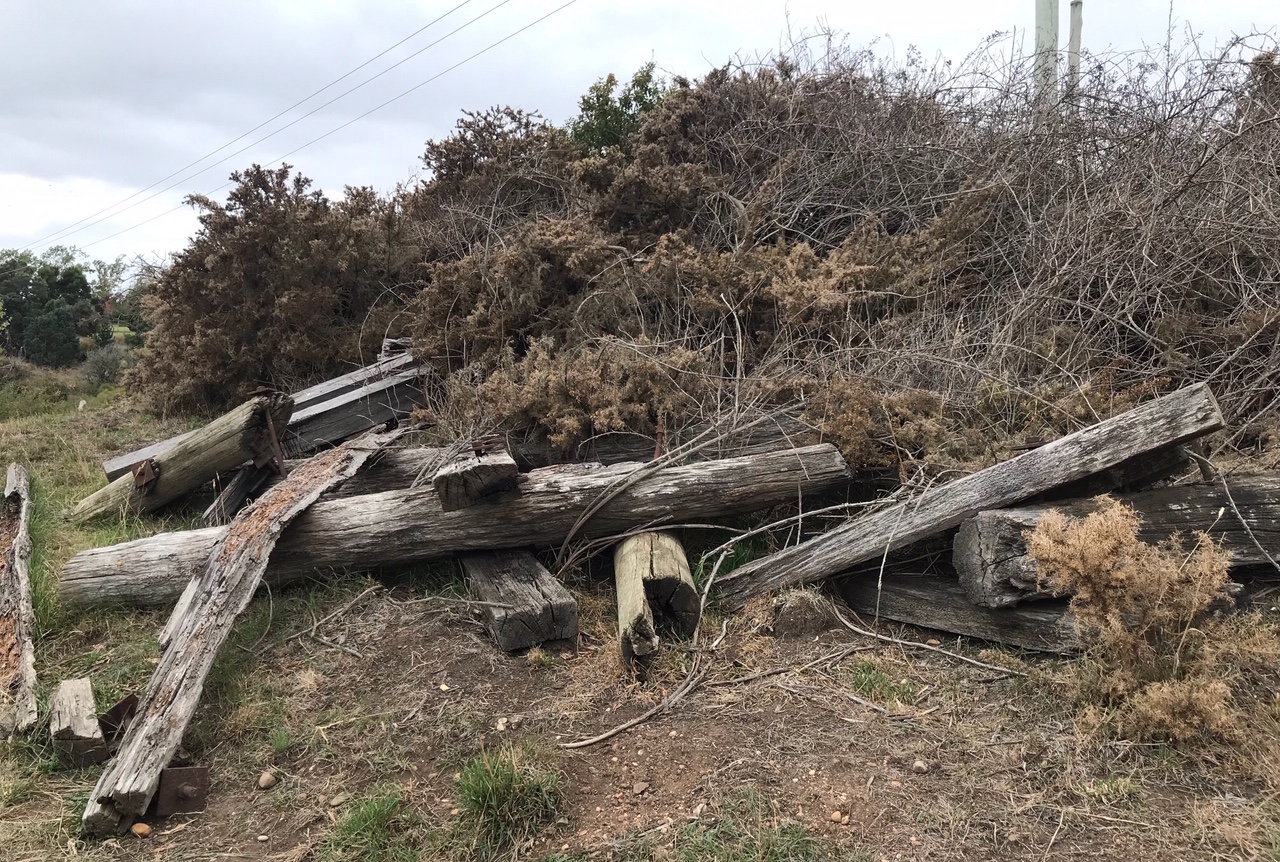
About all that is left of Long Bridge sadly.

Good news on the bridge front is that there is a proposal before the Northern Midlands Council for construction of a pedestrian and bike bridge in the location of the old Kings Bridge.

From our perspective this would allow easy access from Longford village along Union Street, then over the bridge towards the Viaduct on your walking tour of the circuit. It won’t be possible to walk all the way to the marvellous railway edifice though- it is on private land, the MacKinnon’s ‘Mountford’ property.

Trains use the Viaduct and bridge over the South Esk River daily on trips to and from Hobart and Launceston. The Viaduct is not in danger of being knocked over while trains operate, only freight trains these days mind you.

Finito…
 

I’ve written a feature In the current Auto Action #1803 on Dan Gurney’s win in the 1961 Victorian Trophy aboard his works BRM P48 at Ballarat Airfield.

He and Graham Hill raced at Ardmore, NZ, Warwick Farm and Ballarat that summer. Dan’s win was an interesting one in his last BRM drive- it was his first international victory and the only one for the P48 on the last occasion the machine was raced in works hands.

It’s a nice piece, but then I would say that.

For us historic nutters there is also the first in a two-part series on Tim Schenken written by Mark Fogarty. This issue covers his formative years to F1, the next one his Ferrari sportscar drives, Tiga period with Howden Ganley and beyond.

Other standout reads in the sixty page issue are five pages on F1, four on the year ahead for F1, Indycar, F2/3, Moto GP and Taxis, two pages on Oz international Scott Andrews with whom I was unfamiliar and coverage of the Monte, Dakar and the Symmons meeting I was lucky enough to attend a week ago. Plenty of maxi-taxis too of course.

If you haven’t read fifty-years-young Auto Action for a while give us a whirl.

Hopefully the Tasmanian Back to Back Double-Banger season openers at Symmons and Baskerville become a fixture- lets hope so. It makes so much sense on all levels, get you bums down there next year if you can.

The racing was great, imbibing Longford for a cuppla days was magic not to forget some great Tassie touring, sun on the sand and a shandy or three. It was heaven on a stick really.

(unattributed but very keen to know the ‘snapper)

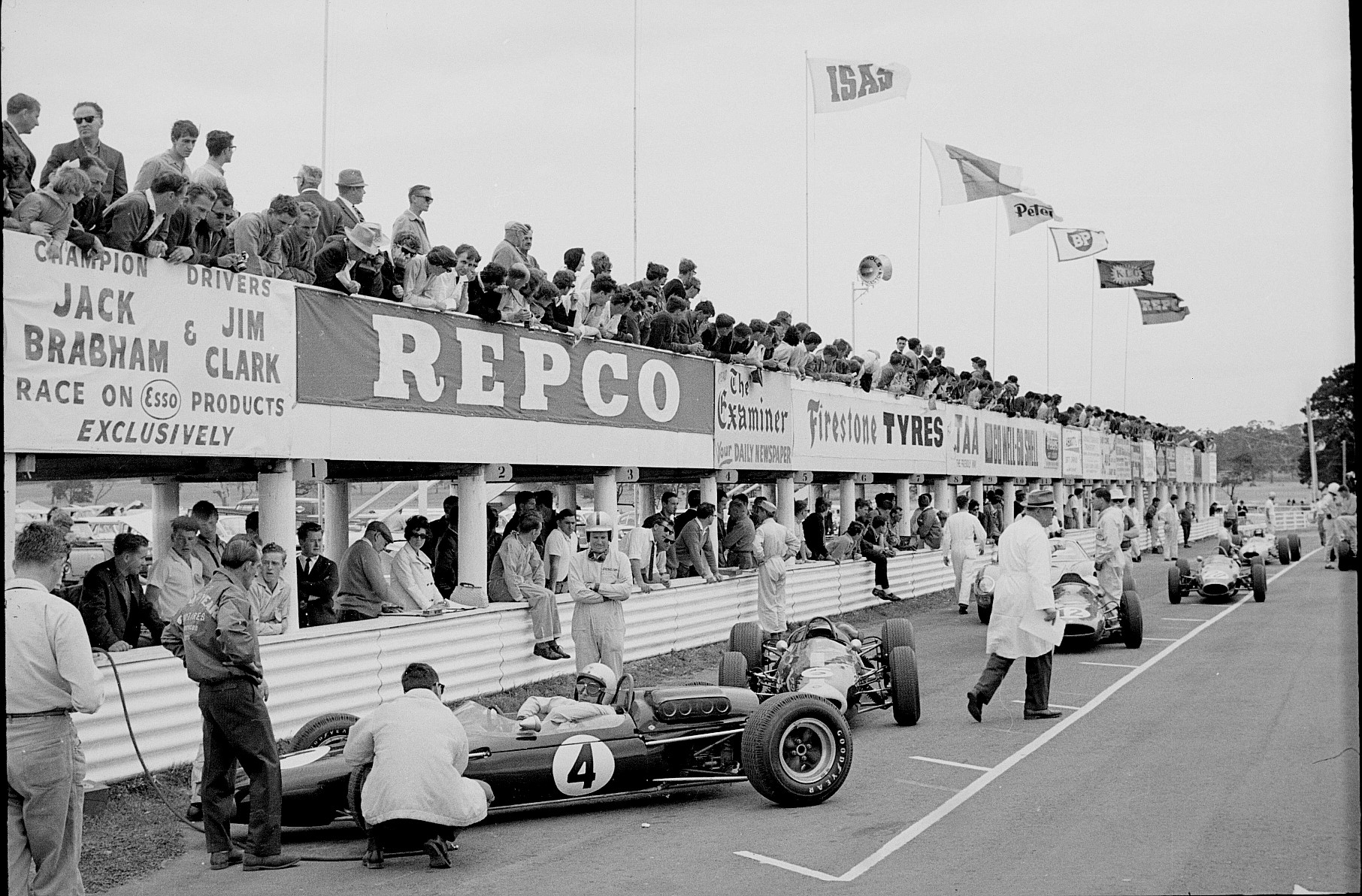
The more you look the more you see. All the fun of the fair. Longford AGP weekend March 1965.

Jack Brabham waits for the pressures in his Goodyears to be adjusted, Brabham BT11A Climax. That’s Roy Billington with hands on hips to the left and Bib Stillwell hovering- his new Brabham BT11A Climax is to the right. Next in line is the ill-fated #12 Ecurie Australie Cooper T62 Climax of Rocky Tresise.

Further along, obscured near the pit counter, is the Scuderia Veloce Ferrari 250LM with Lynn Archer’s #20 Elfin Catalina Ford 1.5 on the painted line. The light coloured car at the end of the queue is Frank Matich’ Brabham BT7A Climax.

Bruce McLaren’s Cooper T79 Climax  won this tragic March 1 race, see here; https://primotipo.com/2019/09/27/longford-1965/ and here; https://primotipo.com/2016/05/20/bruce-lex-and-rockys-cooper-t62-climax/

Credits…

Auto Action

Finito…
Just when i thought my pre-war Oz racing history may get a pass mark, Smailes comes along and bursts that bubble.

The last bloke to do that was John Medley, his list of early Australian international racers in ‘John Snow: Classic Motor Racer’ had me running a long list of fellas to Google.

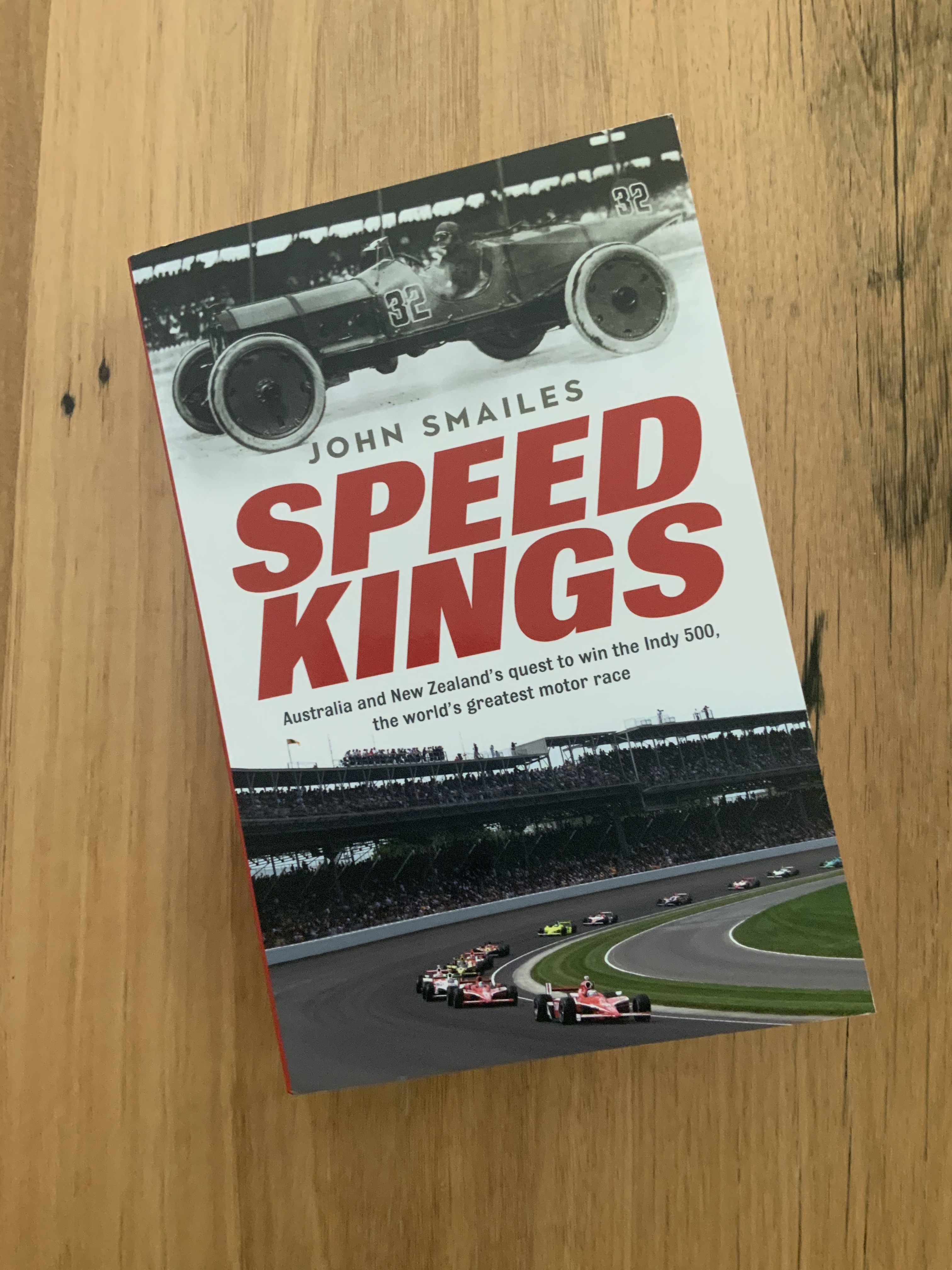
John Smailes new book is a wonderful, skilfully crafted yarn about ‘Australia and New Zealand’s quest to win the Indy 500’. Some garnish is added to the drivers by inclusion of the likes of Barry Green and Steve Horne who joined teams as mechanics and ended up running the show.

I knew about Jack, Chris and Denny but not really the rest. Indy has not had huge appeal to me. One could argue that Indycars is the toughest of all the elite open-wheeler classes given its unique challenges of road-racing and super-speedways not least Indy.

John has become prolific in recent times with works including the history of CAMS (which is a mighty fine summary of Oz racing since day dot), the ’68 London-Sydney, Allan Moffat, Mount Panorama and now Indy with ‘Speed Kings’.

The book is an eminently readable yarn chockers with heaps of factual material including wonderful contextual stuff about the US auto industries need for, and then embracement of The Brickyard. John interviewed over 50 of his subjects or related parties in 2020. He didn’t lock down his final copy until a couple of days after this years 500 so it is right up to date.

Jack Brabham, Bruce McLaren, Denny Hulme, Chris Amon, Kevin Bartlett, Graham McRae, Vern Schuppan, Geoff Brabham, Will Power, Ryan Briscoe, Scott Dixon, Matt Brabham and James Davison are all here together with tales of their commercial and race (or non-race) challenges interwoven with Indycar politics and evolution. There are others too but i don’t want to spoil those surprises.

Make sure the chief or the kids pop it in your Xmas stocking. It’s a ripper book.

I’ve popped it straight into my Oz Key Reference Collection which lives in my kitchen. There is little point in cook-books if boiling water is a culinary achievement, you are beyond Margie Fulton’s help right? If you can get the ankle-biters under control on the 27th, Boxing Day is a tad optimistic, you should be able to knock it over in a long but enjoyable day. Have the odd frothy after midday to assist.

Rupert Jeffkins is the dude who caused the fail on my Pre-War Oz Racing History exam paper BTW.

Rupert Jeffkins and Ralph de Palma push their wounded Mercedes towards the finish line at Indy in 1912


Whaddya do starved of media buzz when the lights go off simultaneously around the globe? Think of a great cost effective promotional idea like this.

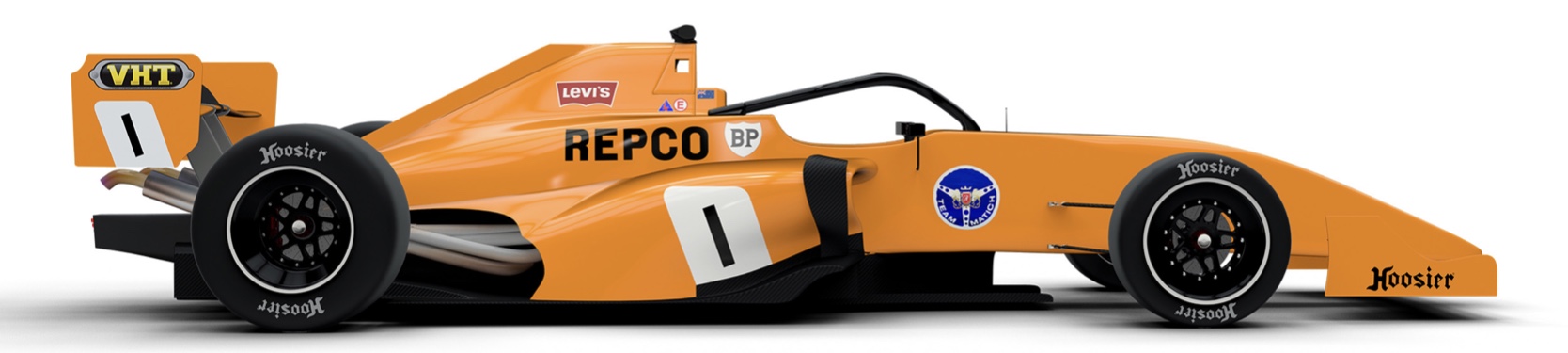
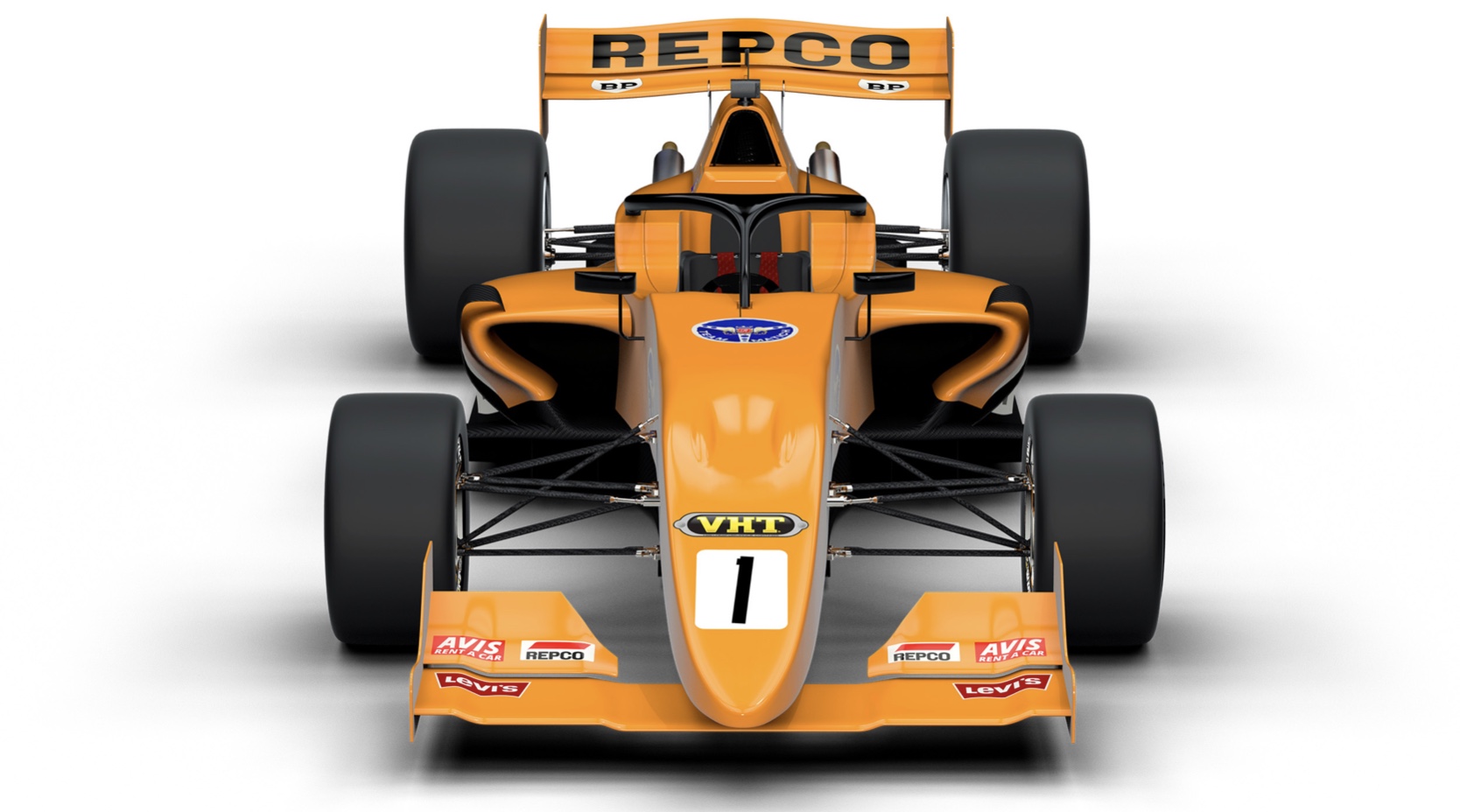
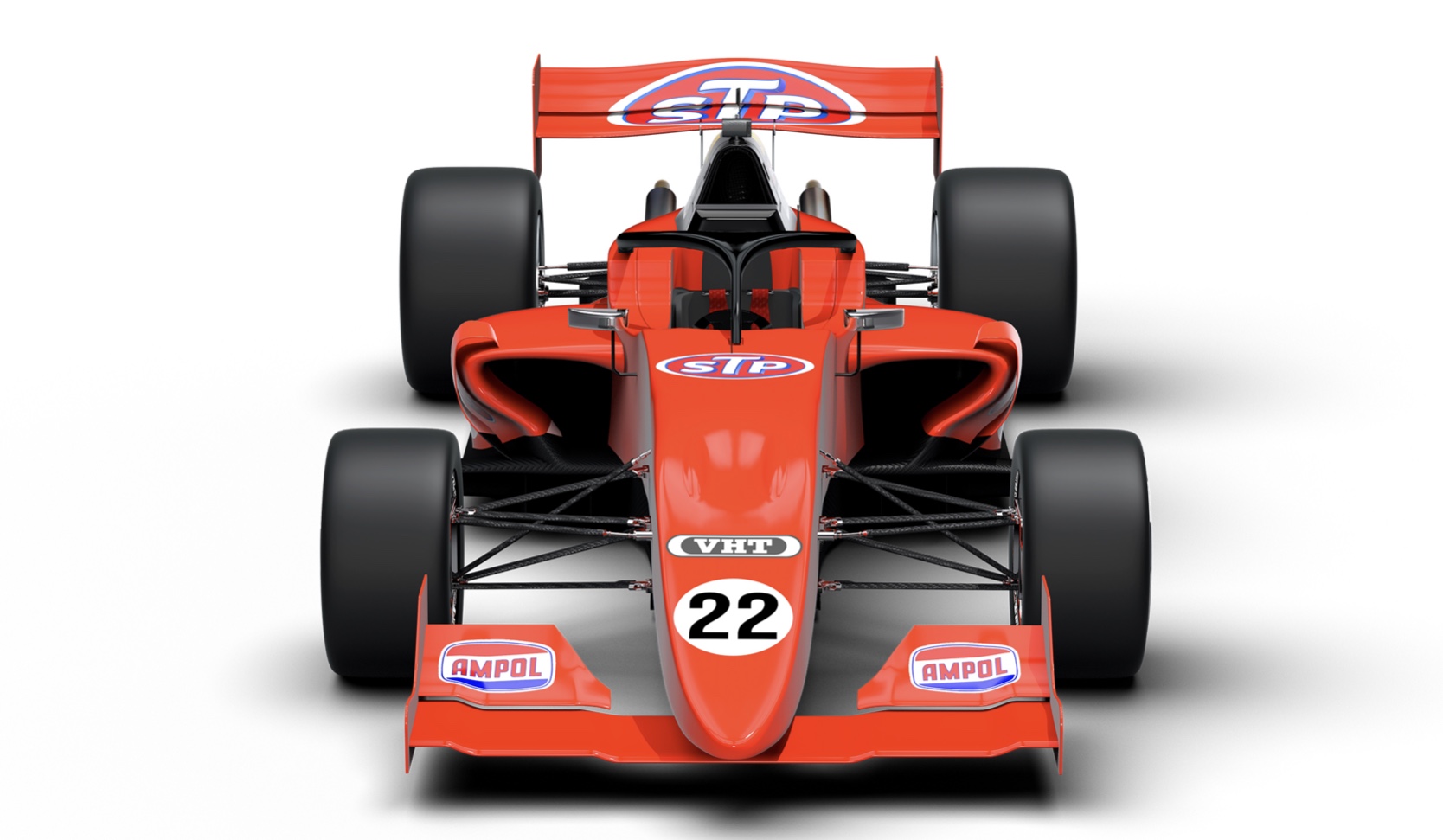
The Australian S5000 guys, SS Media have come up with the notion of applying retro liveries to the silhouette of their new 5 litre Ligier JS F3-S5000 Ford V8 rockets- and doesn’t this late 1971 early 1972 Matich A50 Repco scheme look sensational- remove the halo and its perfect! My S5000 piece is here; https://primotipo.com/2019/10/26/progress/

The photograph is Frank Matich on the way to winning the November 1971 Australian Grand Prix at Warwick Farm in his just finished, very first race Matich A50 Repco F5000- but for the VHT and Hoosier branding the livery is period kosher. Matich’s F5000 career in terms of cars and competition results is here at length; https://primotipo.com/2015/09/11/frank-matich-matich-f5000-cars-etcetera/

Not to forget Ansett Team Elfin circa 1977, Alec Mildren Racing circa 1970 or Equipe Graham McRae circa 1972.

Luvvit.

Credits…
SS Media, autopics.com.au

Tailpiece…
Finito…