This fantastic shot of Lex Davisons’ Alfa Romeo P3 ahead of Doug Whitefords’ Ford V8 Spl ‘Black Bess’, Nuriootpa, in South Australia’s’ Barossa Valley on 23 April 1949…
Look at the hay bales, stone houses characteristic of South Australia, the ‘Stobie’ light poles are still a feature of SA streets and the relaxed crowd. Captures the flavour of the day doesn’t it?
It’s funny where you find stuff. I was researching my article on Alf Barretts’ career and Alfa Monza a while back and tripped over this shot of Davo on the ‘South Australia History Hub’, but no details were provided. I knew who it was but not exactly when or where, Stephen Dalton fellow enthusiast/historian identified the place, date as well as the event.
‘The Vintage (as in wine vintage, the Barossa is a world renowned wine region) Festival Championship’ was a 25 mile event, 8 laps of the Nuri road circuit, it was reported in Graham Howard’s biography of Lex Davison, from which this article draws heavily.
As you will see from the cars described, the bulk of our elite fields were Australian Specials in the main, we are still several years away from a reasonable number of European GP cars on our grids and 5 years away from the ‘Red Car Period’ of the mid to late fifties, the factory cars then dominant.
The last AGP win for an Australian Special was the 1951 Narrogin event in WA…
It was won by Warwick Pratley’s Ford ‘Flathead’ V8 powered George Reed Special.
The last AGP win for an Australian built car was John Goss’ victory at Sandown in 1976 in a Matich A53 Repco F5000 car- Australian built but not a ‘Special’ in the sense meant above!
‘The Vintage Festival Championship…’
‘Non-starters included Jack Days Talbot Darracq, Barracloughs Delage and Alfa Mercury. Cars were marshalled with the fastest at the back, Whiteford made the cleanest start. On his hammer was Jim Gullan Ballot Olds with Davison, Neale Ford V8 Spl, Wilcox Dodge Spl and Robinson Sunbeam Mercury, his car the 1922 GP Sunbeam fitted with a Ford V8 and with a body reminiscent of the Segrave 200mph car.’
‘In the next lap Davison passed Gullan and was right behind Whiteford, whose Ford V8 Spl was going very well, this car winning the 1950 AGP at this circuit, I covered this car a while back. Wilcox was close to Neale and behind Robinson.
Davo passed Whiteford by lap 4, the order remained unchanged from then. ‘Doug Whiteford did everything but tie knots in the Ford keeping up with the Davison Alfa and it was the first time he has been seeing really trying. The two leaders outstripped the rest by over a minute and a half and lapped the last man home…’
A great race and a portent of things to come from the two Melburnians…
Davison the wealthy industrialist from Clendon Road, Toorak in the aristocratic GP Alfa and Whiteford the garage proprietor from Carlisle Street, St Kilda in the self built/developed but incredibly clever, quick Ford V8 Spl…several suburbs and poles apart but very much racing enthusiasts and champion drivers both.
4 AGP wins for Davison and 3 for Whiteford, some splendid racing was to follow in the ensuing decade from these two great competitors…
Credits…
SA History Hub, Graham Howard ‘ Lex Davison:Larger Than Life’, Stephen Dalton research
The Ray Brookes/Rob Wells-West Austin Healey Sprite zips through the Alps on is competition debut. Sprites finished first, second and third in their class…
The iconic Bugeye was released to the press on 20 May 1958 just prior to the Monaco Grand Prix. The cars competition debut was shortly thereafter, in the July Coupe des Alpes, John Sprinzel and Willy Cave leading home a 1-2-3 in class and finishing 15th overall. Tommy Wisdom drove the second placed Sprite and Ray Brookes the third. The event was won by the Consten/de La Geneste Alfa Romeo Giulietta.
The first of many Sprite International and Club competition successes cars which continue to give pleasure to their owners 60 years after release. See this Shell film of the 1958 event;
Ray Brookes and Rob Wells-West at Monaco during the 1958 Coupe des Alpes (unattributed)
Sprites were all about fun, modification and competition.
They begged for it and were responsive to it. I flirted with one for 18 months or so when i first got my licence, my younger brother couldn’t afford a car so i part funded/owned his Bugeye which had been fitted with a Skoda! engine and gearbox in its past.
It sounds naff but the all alloy engine fed by a 45DCOE Weber and breathing through bigger valves and extractors made good power, the engine also considerably lighter than the good ole A-Series, so handling was enhanced as the road testers would say.
I was busy fiddling with open wheelers at the time, so it was never used competitively but it was a quick, nimble, pointy, fun road car…as they were and are.
(Theo Page)
The chassis is of unitary construction, 948cc BMC A-Series OHV four cylinder 43bhp engine fed by twin 1 1/8 inch SU carbs, four speed gearbox. Front suspension coils and wishbones with the lever arm shock as the top links. Rear solid axle sprung by quarter-elliptic springs again with lever arm shocks. Drum brakes front and rear.
(C Youde Collection)
Etcetera…
In March 2022, Caroline Youde, Rob Wells-West’s niece got in touch, below are her recollections of her uncle. Many thanks Caroline!
“Hi Mark,
Happy to share memories! Circa 1996 I took my boyfriend (now husband) to meet my uncle and aunt. Rob was a pilot in the war captured over enemy territory when the glider he was travelling in was downed (they had taken to the air for a bit of fun!) – my husband was ex-RAF.
They got chatting about cars, another shared passion and he talked of his family owning a successful garage. This allowed him to get into racing and it was only during their meeting did I finally get to hear his stories (he was a true gentleman, the war was never normally discussed and never liked to brag about his achievements).
His illness had taken hold so his recollections were a little muddled, but when my aunt produced an old suitcase full of his racing photos etc, he talked of the rally and the excitement of the race. Many of his photos from other races he could not recall when or where they were taken. But he spoke of Stirling Moss’s sister Pat Moss, and others, racing in full skirts!
I’ve enclosed a picture of memorabilia from the rally (above) that I had framed for my husband; it hangs with pride in the dining room and is often the topic of conversation with visitors.
They didn’t have any children so I asked if I could have his racing collection when he died. It’s still kept in the same suitcase, with the exception of the cup and framed pieces. Mary (my aunt) and I are in touch regularly, she’s naturally very proud. They met before the rally and his racing was a large part of their courtship, before eventually marrying.
Rob settled into a civil servant role, but his sense of adventure led them to travel the world by train, plane and automobile their whole married life (and often by iconic means, e.g. Concorde).
He inspired my husband to buy and fully restore our own Frog Eye, which we had sprayed British Racing Green in tribute to him. Thankfully he lived to see it finished.
Kind Regards
Caroline”
Credits…
Yves Debraine, Theo Page cutaway
Many thanks to Caroline Youde, Martin Ingall, John Sprinzel, Steve Nash and David Scothorn for assistance in identifying the driver/co-driver of 487CKP. For those with an interest in competition Sprites check out this wonderful site; http://www.sebringsprite.com/
Roger Penske aboard his devilishly clever Zerex Special sportscar in 1963…
By 1962 Penske was a well established competitor. While later his friend and driver Mark Donohue coined The Unfair Advantage phrase in racing, Roger himself contrived a clever plan to develop a very quick sportscar for the lucrative US series.
After careful study of the SCCA Rulebook Penske concluded that while the sports car regulations required said cars to have two seats, the rules didn’t define their dimensions.
Roger’s cunning stunt involved resurrection and fitment of a very small passenger seat and sportscar bodywork to a Cooper T53 Climax F1 car (chassis #T53 F1-16-1) crashed by Walt Hansgen during the 1961 US Grand Prix at Watkins Glen.
Walt was launched over Olivier Gendebien’s Lotus, Olivier having spun and re-entered the circuit right in Walt’s path. Briggs Cunningham, the Cooper’s owner, sold the damaged car to Penske in the ‘Glen paddock less engine.
Walt Hansgen Cooper T53 Climax T53 F1-16-1, the Zerex donor car, behind is Penske in his Cooper T53 Climax. US GP Watkins Glen 1961. Both cars 1.5-litre Coventry Climax FPF powered (Ron Nelson)
Zerex Climax looking absolutely superb on pole as Penske settles himself into the cockpit for the 200 mile Puerto Rico GP in 1962. He won from Tim Mayer’s Cooper T57 Monaco and Dan Gurney, Porsche 718 WRS (Getty Images)
The car was then repaired, rebuilt and transformed by Roy Gane and Penske himself by fitting a wider alloy body with round and square tubing and added brackets to support the new body and mini-seat. Its first race, still 2.7-litre Climax FPF powered, was the LA Times Grand Prix at Riverside in October ’62.
It was an International event that attracted the world’s best including Jack Brabham, Graham Hill, Dan Gurney, Innes Ireland and Masten Gregory as well as world class Americans Penske, Jim Hall, Hansgen, Ken Miles, Lloyd Ruby and others.
The Zerex, to all intents and purposes a current GP car with an all-enveloping body, promised to be competitive!
At a distance, even up close, the car appeared to be a single seater in contravention of the rules, as soon as it was unloaded in the paddock the SCCA was deluged with protests.
Watched by a large crowd of media, mechanics, spectators and drivers Penske calmly undid the Dzus fasteners attaching the left side panel to reveal a small, cramped, passenger seat, whereupon the lanky Philadelphian attempted to insert himself into said seat…The car was kosher, legal to the letter of the rules, Penske was canny enough to have the SCCA Chief Technical Inspector see the car when it was being concepted and approve it as being compliant.
Nearly in…Penske sees the funny side even if the competition doesn’t before the car takes to the track, LA Times GP 1962 (Dave Friedman)
The car won three events in late 1962; at Riverside during its first race meeting from Jim Halls Chaparral 1 Chev, at Laguna Seca and the Puerto Rico GP.
The Riverside and Laguna races were USAC sanctioned. The car was protested but USAC allowed it to run, but storm clouds were brewing from some very pissed off, wealthy, influential car owners.
LA Times Riverside 1962. Penske leads # 63, the Hansgen Cooper Buick, #5 McLaren Cooper Monaco Climax, #8 Jerry Grant Lotus 19 Buick, #66 Jim Hall Chaparral 1 Chev, #3 Masten Gregory and #26 Lloyd Ruby both Lotus 19 into turn 1 lap 1. Penske won (Dave Friedman)
Penske on the grid at Puerto Rico. The car looks simply fantastic, workmanship a treat (Dave Friedman)
In the winter of 1962, the entire chassis centre section was cut, shut and widened by Penske’s team to provide a seat either side of the Zerex centre-line to meet the quickly-tightened 1963 rules…
The car (lets call it Evolution 3 in this form) was sold to John Mecom, the body modified to conform, a new windshield and roll bar was added and the machine repainted in Mecom’s blue and white colours.
Zerex in the paddock, circuit unknown in 1963 with full roll bar and space for second seat, offset driving position-Zerex Evolution 3. Climax FPF and CS5 ‘box on display, as are simple brackets to retain the body and truly ‘orrible but seemingly effective curvy frame (unattributed)
The Zerex raced throughout 1963 in this form winning two SCCA national events at Marlboro Motor Raceway and Cumberland. Across the Atlantic it was first in the Guards Trophy at Brands Hatch in August, Roy Salvadori placed second in a Cooper Monaco Climax that day.
LA Times GP, Riverside 1963. Owned by Mecom, still driven by Penske it was second to Dave McDonald’s Cooper Ford ‘King Cobra’ (Dave Friedman)
LA Times GP ’63. A fantastic 200 mile race initially led by Halls Chaparral, DNF. Here is the later dice between Penske and McDonalds’ Shelby Cooper Ford for the lead, McD prevailed in the 289cid small block Windsor engined Cooper (Dave Friedman)
See this YouTube footage of both the 1963 LA Times GP and 1964 Sebring 12 Hour…
The Zerex is historically significant in that it was sold to Bruce McLaren after Nassau in 1963. It was effectively the first in the long line of very successful McLaren sportscars which became the dominant force in Can-Am/Group 7 racing from 1967…
In 1962 Bruce, a factory Cooper driver, and Penske shared a Cooper Monaco Maserati at Sebring. Bruce later wrote, “After that race I came back to England and asked Charlie Cooper if I could run the sports car side of the Cooper Car Company because I felt sure there was a tremendous market for this type of car to use an American engine for American racing. I was convinced at that stage that sportscar racing was going to really boom providing there were cars available, and that it would be a great market for an English manufacturer. Charlie turned me down flat.”
Penske moved on from the Zerex as it became less competitive. He drove a Chev engined Cooper for Mecom and later a Chaparral before retiring from driving in late 1964, having signed to race for Jim Hall again in 1965.
The Zerex Climax was still sitting in John Mecom’s workshop together with an aluminium Traco modified Oldsmobile F85 engine which had never been fitted to the car. Bruce bought it and shipped it back to the UK, fitted with a 2.7 FPF. The Olds F85 (the block was used in much modified form, as the basis of the 1966 F1 Championship winning Repco Brabham RB620 3-litre V8) was on a pallet.
Bruce raced it with the 2.7 Climax and slightly modified bodywork (Evolution 4 if you like) in the Aintree 200 where he defeated Jim Clark’s Lotus 30 Ford, and in the Silverstone International where he won again, this time from Salvadori’s Cooper Monaco Maserati 5-litre.
Start of the 1964 Aintree 200. L-R: #87 John Coundley Lotus 19 Climax, #95 Tony Lanfranchi Elva Mk7 BMW, Jack Sears AC Cobra, Bruce is on the right in the Zerex Climax. McLaren won from Jim Clark, Lotus 30 Ford and Sears’ Cobra (unattributed)
The day after Silverstone Zerex was stripped at Bruce’s new, modest, dirt-floor workshop in New Malden, South London where the chassis rebuilt from just behind the front suspension to just ahead of the rear suspension with a new McLaren designed centre-section welded in. The work was done by Wally Willmott and Tyler Alexander.
In its Penske modified form the car lacked the torsional rigidity to cope with the additional power and torque of the Olds V8. The (Evolution 5) chassis was far stiffer that the Zerex modified frame. The main chassis longerons performed dual purposes as structural members and as conduits for oil and water from the respective radiators to the engine. A Colotti gearbox from one of Bruce’s Tasman Cooper T70s was mated to the Olds engine.
With no time to fabricate a new exhaust system, the car was flown to Mosport with eight stub exhausts poking up through the tail, there he won first time out.
McLaren victorious upon debut of the (then named) Cooper Oldsmobile with its new chassis centre section and Olds engine. Players 200, Mosport, Canada 1964 (unattributed)
Given the sensitivities about Jack Brabham’s departure from Cooper and construction of his own cars with Ron Tauranac, calling the car a McLaren was not going to wash with Charlie and John Cooper so the hybrid was entered as a Cooper Oldsmobile at Mosport.
Back in the UK he won the Guards Trophy at Brands Hatch in August, then starred at Goodwood’s Tourist when he started from pole, led and set fastest lap before retiring.
With all of his research complete – with the aim of building a McLaren sportscar – Bruce sold the car, via John Mecom and Teddy Mayer to Dave Morgan. The Texan raced it throughout 1965 and 1966 in the US and Nassau. From Morgan the car was sold to Leo Barboza in Venezuela and then on to two other South American owners.
The prototype McLaren M1A Oldsmobile appeared later in 1964, dominance was not too far away!
Continually modified, the hybrid Cooper T53/ Zerex/McLaren Olds maintained its Unfair Advantage for three years…
Cooper T53 aka Zerex aka Cooper Olds in Venezuela shortly after its arrival in 1967 (unattributed)
In late June 2022 the Zerex/Cooper Olds was shipped to the UK and is to be offered for sale by Bonhams during the September 2022 Goodwood Revival Meeting.
Paddock shot in 1963, circuit unknown. Cooper T53 standard front suspension comprises upper and lower wishbones and coil spring/damper units. Evolution 3 widened chassis and offset driving position, and second full size seat to comply with end of ’62 tightened rules is clear (unattributed)
Mosport ’64 colour shot of Bruce’s ‘new’ Cooper Olds – ain’t she sweet? (Bruce McLaren Trust)
Bibliography and Credits…
The Nostalgia Forum generally and Doug Nye’s posts on topic specifically, Bruce McLaren Trust, MiniWerks Forum. Photos credits David Friedman, Ron Nelson and the Bruce McLaren Trust
Tailpiece…
The ad which inspired this article I spotted in a pile of Road and Track magazines I bought. I was well aware of the Zerex Special, if not the infinite detail. The thing I didn’t know or care about was the derivation of the Cooper’s name. Penske secured sponsorship from Dupont to promote their Zerex antifreeze, not a product ever available in Australia, so now I know!
We all have our favourite local motoring and motor racing publications...
When I was a youngster here in Australia it was ‘Sports Car World’ for fast road cars, the monthly letter from noted NZ born but global motoring journo, Eoin Young on the European and American racing scene was not to be missed nor the column of Romsey Quints, a crusty curmudgeon who wrote about ye olde days.
And for racing it was ‘Racing Car News’ supplemented by the global giant ‘Autosport’ which required a tram trip into the big smoke as it wasn’t carried by my local newsagent.
RCN was the bible tho.
It was national, maybe a bit Sydney centric, edited and owned by Max Stahl, an ex-racer who knew everybody from clubbies to visiting World Champions in Australia annually for the Tasman Series. It was chock full of local to global news and events with ‘Stringers’ all over the place making its coverage remarkable at the time.
Delivery of information digitally takes the sense of excitement out of the visits to the newsagent eagerly anticipating these monthly publications arrival instore…having said that the ‘democratisation of the media’ means even ‘Schleppers’ like me can ‘have a go’.
There was not a page of RCN to be missed from Stahls’ editorial upfront to the classifieds up ze back, the paintings by David Atkinson, Colin Anderson and others reason alone to buy the thing.
This cover by David Atkinson captures the action of the 11 February 1968 Tasman Series Round at Surfers Paradise. It depicts Graham Hills’ Lotus 49 DFW leading Leo Geoghegans’ ex Clark Lotus 39 Repco from the Piers Courage McLaren M4A FVA around the ‘Repco Hill’ section of the circuit.
Clark won the race from teammate Hill, Courage in second, a great performance on this power circuit in the little 1.6 litre Ford FVA engined M4A and Leo G, first local home in third place.
RCN survived into the ’80’s but was never the same after Stahl sold it, somehow the thing lost its soul…these days there are print and digital Australian ‘publications’ but none are as good as Racing Car News…
Stunning Roderick MacKenzie shot of Clarks’ Lotus 49 leading Chris Amons Ferrari 246T, Surfers Tasman 1968. Clark won, Amon DNF with an engine failure. Tweed Ranges in the background. Clark won the series and Amon returned in 1969 winning the it in a Dino. (Roderick MacKenzie)
Leo Geoghegans Lotus 39 Repco ‘740’ Series 2.5 V8 being given a big push, John Sheppard at the wheel and Geoff Smedley at left. ‘Castrol’ colors, Repco installation replacing the Climax FPF 4 cylinder engine lead by Sheppard creating just about the best looking 60’s single seater ever, this is not the cars best angle however! (wolseley680)
Surfers dummy grid. Hill #5 loaded up, the Lotus behind awaits Clark. You can just see the #11 nose of Rodriguez BRM P126 (10th) a Ferrari nose amongst the crowd and the nose, far right of the Courage McLaren. (wolseley680)
Tasman 1968 Highlights…
Etcetera…
(K Rogers)
Tasman race grid with Chris Amon at left, Ferrari 246T, the Lotus 49 Ford DFW’s of Clark and Hill. On row two Geoghegan’s Lotus 39 Repco and Denny Hulme, Brabham BT23 Ford FVA with the distinctive yellow Brabham BT23D Alfa Romeo of Frank Gardner further back.
‘Once yer heard these Ford engines a couple of times they aren’t that special’- a couple of disinterested marshalls as Clark’s Lotus goes by on Surfers main straight.
Alberto Ascari looking dapper in shirt and tie but a little uncomfortable at the wheel of the new-fangled mid-engined Cooper…
Its rare to see the 1952/3 World Champion in anything other than an Italian car. The Cooper must have seemed tiny in comparison with his Grand Prix Lancia D50 but the opportunity to have a steer of Gilomens’ car during a Racing Driver School in Switzerland in 1954 was too good to miss…his critique of the car unrecorded.
See the article i wrote about these fabulous 500cc/F3 cars a while back.
The Mini photographed in the year of its launch, 1959, at Paddington Station by Henry Manney of ‘Road & Track’ fame…
The Mini was launched to the press in April 1959, this photo taken by Henry Manney at Paddington Station. Maybe one of our British readers can tell us if this is the site of the cars launch?
Leonard Lord, the head of British Motor Corporation, laid down the design parameters for a small fuel efficient car during the Suez Crisis, which spiked the price of oil and caused its rationing in the UK. Alec Issigonis and his small team at Morris created a design icon which was voted the second most influential car of the last century after Henry Fords Model T.
The Cheltenham Spa Express or ‘Cheltenham Flyer’ is a train service from Paddington to Cheltenham Spa in Gloucestershire. Rivalry between railway companies in the 1920’s increased speeds, the ‘Cheltenham Flyer’ so named as trains on this route were the fastest in the world at various times…Train Driver Harry Rudduck, the Tazio Nuvolari of steam ! pushed his ‘Castle Class 5006 Treganna’ train to a record of an 81.6 mph average for the 77 mile trip in 1932.
Steam hasn’t survived nor has the ‘A Series’ powered Mini but it’s comforting that both forms of transport are as contemporary now as they were in 1959…
Alf Barrett leads Frank Kleinig, Alfa 8C2300 Monza and Kleinig Hudson Spl, Australian Grand Prix, Mount Panorama, Bathurst 1947…
This was the race within the race, these quite different cars were outright contenders but the AGP was a handicap Formula Libre event in those days, the race was won by Bill Murray in an MG TC, neither Barrett nor Kleinig finished.
Alf Barrett and the Monza were the fastest combination in the immediate pre and post-war periods in Australia, he was and is regarded as one of the country’s greatest drivers.
Noted motoring writer and journalist Mike Kable wrote in 1998 upon Barretts’ death, ‘Alf Barrett was known as the maestro. It was an appropriate nickname because of his achievements between and after World War 2 in a supercharged straight 8 Alfa Romeo 2300 Monza at his favourite circuit – Mount Panorama at Bathurst, New South Wales.’
‘The dapper Barrett drove the thoroughbred Italian car with world class finesse and flair with exceptional physical and mental coordination and intense concentration that enabled him to control sliding the car at its absolute limits with a calm smooth flick-of-the-wrist precision. Seeing the black-helmeted Barrett in action, sitting high in the cockpit, wearing his trademark dark blue short sleeved shirt was a never-to-be forgotten treat.’
‘In an era of self funded amateurs who drove for token prize money, the challenging 6.2 mile Mount Panorama circuit was the standard setter by which the best drivers were judged. Barrett became the master in 1940 with an against-the-odds victory in the New South Wales Grand Prix. The classic race was a handicap with Barrett starting from scratch position, many of his rivals had already covered several laps before he started. He went on with a stunning performance where he set a new outright lap record that made the ‘King of the Mountain’. He had started last and finished first’.
This quite stunning, evocative shot was taken by racer/specials builder George Reed at Bathurst during the 1947 AGP weekend. Barrett is in the car, Alan Ashton being passed ‘plugs by Gib Barrett during a pitstop. Its a wonderful juxtaposition of the ‘high technology’ of the day with the rural NSW backdrop (George Reed/Dacre Stubbs Collection)
Barrett was born in 1908 to a well to do family in the affluent Melbourne suburb of Armadale. He and his brother Julian or ‘Gib’ inherited their father’s passion for cars. Before too long the boys were experimenting with all kinds of petrol powered devices in the large grounds of their home.
Not too far away a young mechanic, Alan Ashton, was serving his time as an apprentice at AF Hollins Motors, the three of them met and were messing around with cars and bikes which they tested at Aspendale Speedway. Alf and Alan built their first racing car, a Morris Bullnose Special in 1933, initially entering hillclimbs, it was competitive too, winning the Junior 50 and Winter 100 at Phillip Island in 1934.
Ad for AF Hollins, Australian Motor Sports 1947
Barrett then bought the ex-Jack Day Lombard AL3 in late 1935, and raced the car in his first Australian Grand Prix at Victor Harbor (correct spelling), in South Australia’s Fleurieu Peninsula on December 26, 1936.
It was the first AGP held outside Victoria and has been known over time as the 1937 AGP despite being held on Saturday 26 December 1936…and named when held as the South Australian Centenary Grand Prix. It seems this ‘corruption of history’ as historian John Medley called it, commenced in the 1950s, whence it originated nobody seems to know.
The Sporting Car Club of South Australia was formed in 1934 and played an active part in the celebration of 100 years of European settlement of South Australia, the piece de resistance of the organising South Australian Centenary Committee was SA’s first real road race held 50 miles from Adelaide on the Fleurieu Peninsula, only a few miles from the mouth of the mighty Murray River on public roads between Port Elliott and Victor Harbor, then as now a summer playground. The event was run over 32 laps, 240 miles.
The race attracted the best cars and drivers from all around Australia, the limit men of the handicap race drove MG K3s and Bugatti Types 37 and 43 and over 50,000 paying customers came to an event then a long way from Adelaide.
Barrett entered the Morris for Colin Anderson, his MG P type for Tim Joshua, driving the Lombard himself. He had a handicap of 21 minutes but lost a supercharger pop-off valve and failed to finish, Anderson’s Morris was delayed by overheating problems and was flagged off. Tim Joshua drove an exceptional race in the P-Type and was leading the event for some laps before a seven minute stop in the pits for unidentified maladies, he finished the race second behind the winning MG P-Type of Les Murphy.
The Victor Harbour road circuit used for ‘the 1937 AGP’ used public roads as the map shows close to the Southern Ocean, joining Port Elliott and Victor Harbour (The Advertiser)Barrett racing his Morris Cowley Spl in the 1938 Kings Birthday Grand Prix, Wirlinga road circuit on the outskirts of Albury, NSW (unattributed)
In the 1938 AGP Barrett again raced the 1927 Lombard but the Cozette supercharged car, running off 22 minutes, retired from the race held at Mount Panorama. Visiting Englishman Peter Whitehead won in his ERA Type-B off a very favourable handicap winning from Les Burrows’ Terraplane Spl.
As part of the Albury 150th anniversary celebrations a new 4.2-mile circuit was laid out on public roads at Wirlinga, an Albury suburb. Albury is a town on the Murray River on the New South Wales/Victoria border.
Barrett contested the Kings Birthday Grand Prix or Interstate Grand Prix – the event seems to have been attributed a variety of names – in the Cowley on 19 March 1938, it was won by local Wangaratta boy Jack Phillips in his self built Phillips Ford V8 Spl.
Barrett competing in the Morris Bullnose Spl, Lobethal 50 Mile Handicap in 1938. Kayannie Corner. The practice would be put to good use the following year (Norman Howard)This is the fabulous cover of John Blanden’s seminal book ‘Historic Racing Cars in Australia’. The fact that Barrett and the Monza, of the hundreds of cars and drivers written about in the publication made the cover says everything about the noted late historian’s opinion of Barrett and his place in the pantheon of Australian drivers…the scene depicted is at Bathurst 1938. Alan Ashton and Alf changing a wheel on the Monza.‘The Maestro, Alf Barrett, with the Alfa Romeo Monza at Rob Roy on 30 January 1939. The Black Friday fires preceded this photo by just sixteen days’ wrote Bob. Barrett right on the limit, glorious shot (Bob King)
In late 1938 Barrett acquired and imported the Monza from the UK, it had been raced successfully there by AP ‘Ginger’ Hamilton.
Chassis #2211134 was built in 1932 and sold to Raymond Somner. He won the Marseilles Grand Prix at Miramas in September 1932 and several other events selling the car back to the factory, having acquired a Maserati for 1933. Hamilton bought it in late 1933 and raced the car extensively in the ensuing five years, there is a comprehensive record of the car’s competition record in Europe in at the end of this article.
When the Monza arrived in Australia it was prepared by Alan Ashton, he acquired a reputation as one of the most talented engineers in the country, fettling cars for Barrett until the end of his career and later Tony Gaze and then Lex Davison throughout his reign in the 1950s and 1960s as well as various international drivers who sought his talents.
The Alfa arrived in time for the last pre-war AGP held on the fast, daunting road course at Lobethal in South Australia’s Barossa Valley.
Barrett Lobethal 1939 AGP, superb Norman Howard shot. Sandbags, barb wire fences, eucalypts, crowd on the hill, wonderful. Dangerous but wonderful…Bucolic Lobethal in the late 1930s. The race progressed into, through and out of the main road shown in this aerial shot (State Library of SA)Barrett during practice with a passenger, a fearsomely quick ride on this roller-coaster, technically difficult circuit of the brave, skilled and committed. Kayannie Corner, Lobethal AGP 1939. Railway line to Adelaide behind, bucolic delights of Lobethal clear to see (Norman Howard)Barrett sorts himself and his new Monza out at the start of the 1939 AGP at Lobethal SA. He stalled the car and was well behind the field by the time he cleared fouled plugs (Norman Howard)
South Australian, Patrick Atherton in his website ‘Lagler Racing’ paints a vivid picture of the circuit, these are still public roads upon which you can drive thus…
‘From the old start-finish and grandstand area north of Charleston you could be forgiven for thinking it’s nothing special. No really challenging corners just sweeping curves. But put it into context; these cars had spindly wires and tyres, cart springs and beam axles and near useless drum brakes. These ‘curves’ are all blind. There are crests preceding all of them, particularly the bridges, which funnel into chutes. Think of these machines dropping on to their suspension in mid-air whilst turning at 100mph.
Through the little town of Charleston, with it’s pub (still there) the crowds were thick. Stories abound of drivers stopping, mid practice sessions for a pint or two.Out past here are frightening kinks, all blind, all crests and dips. Then a blind right hand kink sucks you into Kayannie corner, the tight right hander leaving Woodside Road and heading towards the township of Lobethal. Here the spectators got off the train from Adelaide straight into spectator areas at the side of the track, driver’s left.
The climb up the hill is significant, mostly straight for almost two km, but at the top, this track steals straight from the soul of Nurburgring. Lined by trees, the blind crest plummets away left, bottoms out right, drops away again, into a rollercoaster left. Then it flattens, raises slightly, then another drop into the braking area for the hard right hander (Mill corner) into Lobethal’s main street. Even the main street isn’t straight. Past the pub on the right there’s now a little ribbon of paving (Indianapolis-style) across the road and a plaque to commemorate the racing era.
Up the hill it funnels between shops and houses and then there is the blind, off-camber Gumeracha Corner, which claimed lives. The stretch from here to the start-finish hairpin has to be experienced. 5 km of crests, blind curves, feature changes and major undulation. Here is where the truly great drivers would have made up time on nothing more than sheer bravery. Indeed they did, and one in particular, winner Alan Tomlinson.’
Wonderful high speed pan of the 8C2300 Monza, and its dark blue shirted driver, Lobethal 1939 (Norman Howard)AGP Meeting crowd scene, Lobethal 1939…captures the atmosphere and undulatig nature of the roads. (State Library of SA)
Jack Saywell had the car with the most potential, an Alfa P3 fitted with a 2.9-litre supercharged straight-eight, Barrett’s Monza, also designed by Vittorio Jano, had a less sophisticated 2.3-litre supercharged straight-eight. A big incident in practice involved Barrett’s avoidance of a slow moving MG, the Monza ran off the road at high speed, a rear wheel hitting a gutter and throwing the car high into the air before landing 20 metres down the road. Alf brought the car back under control, but the incident caused a bent back axle and buckled wheel, both of which were fixed by Ashton overnight. However, the wheelbase was two inches shorter on one side of the car than the other.
60,000 people attended the event, Barrett stalled at the start, losing five minutes in the process. He finished eighth, the handicap event was won in legendary fashion by Alan Tomlinson in a supercharged MG TA Spl.
Despite his handicap Tomlinson ‘punched way above his weight’, his preparation for the race was meticulous. He walked the circuit in the weeks prior to the event and drove around it in another TC practicing each section patrticularly the 5Km stretch from Gumeracha Corner to the Start-Finish hairpin, he knew that section would be key for a driver in a notionally slower car, if you were brave enough…Tomlinson was to say after the race that Saywell’s Alfa held him up on that stretch! Tomlinson returned to Lobethal in 1940 for the SA Trophy and almost lost his life in an horrific accident after colliding with another car, careering off the road through a wire fence, lucky not to be decapitated, and hit a tree. The young WA driver did not race again but lived into his 90s.
Check out this fabulous documentary on the short but sweet history of Lobethal road circuit…https://vimeo.com/83756140
The Monza quickly established lap records at Lobethal, Bathurst, Albury Wirlinga, Nowra, Ballarat and Point Cook. It’s last pre-war start was at Wirlinga in 1939, winning a short handicap and setting a lap record of over 90mph on the gravel course.
During WW2 Alf and Gib served in the RAAF, returning to racing after hostilities ceased, in late 1946 the Monza was again race prepared.
Barrett showing the deftness of touch and relaxed driving style for which he was famous. Monza, Bathurst AGP 1947 (John Blanden Collection)
The first race meeting organised by the LCCA in Victoria was at Ballarat Airfield in February 1947, the RAAF made the facility available for creation of a road circuit.
Over 30,000 people attended the meeting which featured all of the stars of the day. Barrett thrilled the crowds with his driving and the sight and sound of the fabulous supercharged straight-eight engine. Alf didn’t beat the handicappers though, off scratch, he gave away 22 minutes to the limitman, Hollinshead’s MG J2, victory in the feature race, the Victorian Trophy went to Doug Whiteford in ‘Black Bess’, the Ford V8 Spl later to win the 1950 AGP.
This fantastic bit of footage shows both the Ballarat 1947 event and 1961 international meeting contested by Dan Gurney, Graham Hill and many others. Don’t be put off by the commentary, Barrett is driving his Monza not an Alfa P3. https://www.youtube.com/watch?v=J2uwd7m6UGo
At Nowra, a new airstrip venue in June, Barrett won both the over 1500cc event and 110 mile NSW Championship in the Monza achieving both the fastest lap at 93mph and time, despite a pitstop.
Whilst motor racing recommenced post-war in Paris on September 9, 1945 the first post-war Australian event seems to be a hillclimb at Foleys Hill out of Sydney, whilst the AGP was not held until 1947 at Bathurst.
Despite problems with the police in getting the requisite permit and dissension in the ranks of the drivers, there were 29 acceptances and 22 race starters.
The caption of this photo is of ‘Alf Barrett receives the chequered flag October 1947’, he DNF’d the AGP so perhaps this is the finish of a preliminary race. Wonderful shot all the same (unattributed)
Barrett’s Monza was off scratch due to the absence of Saywell’s faster P3, it’s engine was dispatched by sea prewar to Italy for a rebuild, never to survive the voyage. Lex Davison entered a Mercedes SSK 38/250, the first of many successful AGPs for the Victorian, other fast cars included the Kleinig Hudson Spl of Frank Kleinig, Hope Bartlett’s Dixon Riley and Ewing’s Buick Spl.
Lex Davison leads Alf Barrett AGP 1947. Mercedes 38/250 and Alfa Monza respectively…it would not be long till Lex imported a Jano designed Alfa of his own – a P3 in 1948 – Davison set the fastest overall race time in the fearsome 7.6-litre SSK but was classified third under the handicap system (Byron Gunther)
Practice was on the preceding Thursday and Sunday, Barrett enlivened proceedings by taking all and sundry for rides around Mount Panorama in the Monza, as did Lex Davison in his Merc complete with linen helmet, goggles, coat and tie!
Barrett gave away 37 minutes to the first car away, Alf lapping at 3:08 and 124mph down the ‘narrow, bumpy and spooky Conrod Straight between the trees’ but retired on lap 27 with valve insert trouble – he really didn’t ever have a surplus of AGP luck!, the race was won by Bill Murray’s MG TC.
‘Alf in his 8C2300 was the fastest driver in Australia in 1947’ according to John Medley but for 1948 the level of competition increased with Tony Gaze and Lex Davison importing a 2-litre supercharged Alta and Alfa Romeo P3/Tipo B respectively.
Barrett with a passenger sans helmet…before the 1947 AGP at Mount Panorama. What a wild ride it must have been (Byron Gunther)
The 1948 AGP was held at Point Cook, it’s easy to forget the context of the post war times in a low key year for motor racing in Australia, John Medley in Cars and Drivers #3 wrote ‘The post war age of austerity with its restrictions and ration books still prevailed with a shortage of fuel, oil, paper, steel, food and power.’
’In fact fuel rations were tightened during the year which placed a limit on the number of events…The mainstay of Australian motor racing still remained the homebuilt sprecial, a few of them single-seaters but most two seaters used on the road with number plates and lights, and for racing.’
With ‘B24 Liberator’ and one Bristol Beaufighter aircraft as a backdrop Barrett leads Bill Ford’s Hudson Spl (seventh) and Dennis Curran’s Willys Ford V8 Spl (fifth) during his brief race in conditions which were amongst the hottest of any AGP. Fantastic evocative shot (George Thomas)
Point Cook is in Melbourne’s inner western suburbs, it was the first time the AGP was held at an airforce base and the first AGP not held on a course using public roads.
26 cars entered the event held on Australia Day, 26 January. It was over 42 laps of a 3.85 km circuit comprising airfield runways, taxiways and service roads, a total distance of 100 miles. Only 10 cars completed the race which was held in excruciating hot conditions, no shade was to be had on the desolate airfield. The handicap event, AGPs were not held as scratch events until 1951, was won by Frank Pratt a Geelong, Victoria motorcycle racer/dealer in a BMW 328.
Barrett started the race poorly having some issues which slowed him down then was the fastest car in the race for a while before withdrawing from the event with heat exhaustion on lap 22. He was far from alone, only 10 cars finished as stated above.
Alf contested the Easter Bathurst meeting which comprised some short handicap races, he didn’t win but set fastest lap in his Alfa, Gaze blew the Alta’s 2-litre engine and Davison retired early after troubles arising from a spectacular practice crash. The feature, handicap race, the NSW 100 was won by John Barraclough’s MG NE with a fine battle between the Barrett and Davison Alfas. Barrett in the older car broke the lap record at 3m 01 seconds with Davo recording 144mph down Conrod in the P3, a new straight line speed record at Mount Panorama.
Melbourne Cup Weekend in November seems to have been Alf’s final race with the Monza, winning his class at Rob Roy Hillclimb at the Australian Hillclimb Championship.
With a growing family and a business to run Barrett sold the Monza and retired from racing, not entirely though! He retired at the top, John Medley commenting about 1948 as follows…’Cars new to the scene included Lex Davison’s Alfa P3 and Tony Gaze’s two Altas with Alf Barrett’s Monza Alfa Romeo still the car to beat in major races’
The Monza passed into the hands of Rupert Steele in late 1949.
A Victorian, he was very quickly on the pace, his previous experience in a Bentley, practising the Alfa on the back roads between Beaconsfield and Dandenong to help get the feel of the fabulous machine.
He raced at Fishermans Bend, was sixth in the SA Championship at Nuriootpa in 1949 and put that practice to good effect in the 1950 AGP, which was also held on that quick road course in the Barossa Valley.
The race was still a handicap event, Steele finished second to Doug Whiteford’s Ford V8 Spl ‘Black Bess’ and shared the fastest lap with Whiteford who was a formidable driver with vastly more experience than Steele, albeit driving a much less sophisticated car. Black Bess was famously based on an ex-Victorian Forestry Commission Ute!
Steele didn’t own the Monza for long, later in life he became a notable Victorian in business and horse racing, the car was advertised again for sale.
Rupert Steele in the Monza contesting the 1950 AGP at Nuriootpa in the SA Barossa Valley. He finished second and shared fastest lap with Doug Whiteford, the winner (John Blanden Collection)(Tony Johns Collection)
The next owner was Victorian ‘Racing Ron’, a very experienced driver who was very competitive in the Monza racing it around the country, an initial win at Ballarat Airfield in the 1950 Victorian Trophy against strong opposition was impressive.
The car raced at the Bathurst October meeting in 1951, finishing fourth in the ‘100’ and third in the 50 Mile Redex Championship, Edgerton’s year was capped with a fourth in class at the Australian Hillclimb Championship at Rob Roy, in Melbourne’s Christmas Hills.
Ron Edgerton in the Monza #2211134 ahead of Frank Kleinig’s Kleinig Hudson Spl, Hell Corner, Bathurst in the 50 Mile Redex Championship in October 1951 (WJ Farncourt)With the inside front wheel pawing the air, Edgerton drives the Monza hard up Rob Roy, January 29, 1951 (unattributed)Alf Barrett hadn’t entirely retired, here he is at Bathurst in 1950 driving Tony Gaze’ 2-litre Alta Monoposto #56S, whilst the latter was overseas (John Blanden)
The Winter 2012 issue of Loose Fillings the wonderful Australian Newsletter about air-cooled racing cars had an article by the late lamented Australian Historian/Enthusiast/Racer Graham Howard.
‘He (Barrett) was at Bathurst in October 1951 as a spectator when offered a drive in Misha Ravdell’s Firth-prepared Mk4 Cooper Vincent… after Ravdell himself had been injured in a local road accident. Not having driven a racing car of any kind for more than a year and with no experience whatever of a Cooper-style car, he won a six-lap under 1500cc handicap and was well placed in the main event when he ran over a displaced sandbag and broke a driveshaft universal joint. He vividly remembered the Cooper’s vibration. ‘It was like driving a lawnmower– dreadful. You’d get out of it as if you’d been driving a lawn-mower.’ But everything else compared to his beloved Alfa was a revelation.
‘The Cooper made my hair stand on end. It ran so straight and it stopped straight. The brakes were like running into cotton wool. With the Alfa you always felt you were a foot off the ground and it would get such dreadful brake tramp. ‘The thing I noticed with the Cooper, it held on until all four wheels went together. You could go too far with the Alfa and cars like that, and they’d still hang on, the Cooper would just go snap. ‘But that little Cooper – it just went straight, it stopped straight. So when I say the Alfa was good, it was good-until the Cooper’.
Barrett in the borrowed Cooper Mk4 Vincent, Bathurst October 1951, he finished first in a race despite not having sat in the car before! He is in his civvies – collar and tie…and with a noticeable smile on his face! (John Medley)
Its fascinating to get the insights of the day from a top driver of the comparison between ‘the old and new paradigms’ of front and mid engined cars…Cooper won their first Grand Prix in Argentina 1958, in Stirling Moss’ hands, himself a former Cooper 500 exponent.
The Monza was offered for sale by Edgerton in Australian Motor Sports in April 1951 and was bought by Toorak, Melbourne enthusiast Earl Davey Milne, it is still owned by the family and whilst in good hands and complete it remains disassembled and unrestored.
Alf racing and sharing brother Gibs BWA, in the early laps of the 1953 Australian Grand Prix at Albert Park. The car was a fusion of MG TC Chassis, Lancia front end and steering box, Lancia wheels, brakes and 1935 Chev truck driveshafts powered by a 1.5 litre supercharged Meadows four cylinder engine from a Frazer Nash! (unattributed)
Alf made a comeback of sorts in the 1953 Australian Grand Prix, the first held at Albert Park.
Gib built a two-seater sports car called BWA, colloquially the ‘Bloody Work of Art’ pre-War but actually named after the car’s builders, Messrs Barrett/Ashton/White. The BWA was converted into a single-seater post war, the 1953 AGP regs allowed two drivers so Alf started the race and handed over to Gib.
It wasn’t their best of events, the pair lost 15 minutes at the start with fouled ‘plugs and then managed to set fire to it after a fuel spill at a pitstop. Still, they finished twelth, Doug Whiteford won the race in his first Talbot Lago T26C, it was his third and final AGP win. The Lago was as aristocratic as Black Bess, his 1950 AGP winner, was proletariat, having won the AGP at Bathurst in 1952 in the Lago as well.
The BWA ablaze at the Albert Park pits. This was the end of the conflagration, the BBQ was immense at the point of ignition…the Barretts got the car going and finished the event (Youtube)
Barrett remained a motor racing enthusiast and in a neat bookend to his career commencement also finished it in a Morris.
He contested the 1969 Bathurst 500 in a Morris 1500 shared with Kyneton, Victoria motor dealer/racer Mel Mollison, they finished 37th. Barrett drove the car with the same verve and flair for which he was famous if not wearing the blue T-Shirt for which he was also renowned, he died in 1998.
Etcetera…
Alf Barrett racing brother Gib’s BWA in early unbodied form. The car was a fusion of MG TC chassis, mainly Lancia componentry and supercharged 1.5 litre Meadows engine. 16th Rob Roy Hillclimb (State Library of Victoria)A close up of Alf Barrett and his Morris ‘Bullnose’ Cowley Spl, Wirlinga, Albury 1938. Car built together with brother ‘Gib’ and Alan Ashton. Historian John Medley noted that this car was destroyed in a bushfire, only the engine survived (unattributed)Alf giving his new Monza plenty at Rob Roy on 30 January 1939 (B King)Barrett AGP Lobethal 1939 (Norman Howard)Yet another stunning Norman Howard AGP Lobethal 1939 Barrett shot.Monza in the Lobethal paddock 1940. To the left is the Jack Phillip’s Ford V8 Spl which won the main event at that meeting, the South Australian 100 and at far left a Bentley Ute used as a tender vehicle. Barrett DNF with rear axle failure but set fastest lap at 5m 48sec, 92mph average (Ean McDowell)Barrett and the Monza at Ballarat Airfield in February 1947 (John Blanden Collection)Barrett, Monza, Bathurst AGP 1947…the fastest car driver combination again that year (Byron Gunther)Doug Whiteford’s Talbot Lago in front of the Monza, then owned by Ron Edgerton at Bathurst in 1951… a happy hunting ground for both cars (unattributed)
Monza # 2211134 History…
The following article was published in Motor Sport by Denis Jenkinson in 1976 with input from Earl Davey-Milne, a Melburnian who still owns the car.
Bibliography and Credits…
John Medley in Graham Howard’s ‘History of The Australian Grand Prix’, John Blanden ‘Historic Racing Cars in Australia’, ‘Loose Fillings’ Winter 2012, Motor Sport, MotorMarque, Patrick Atherton Lagler Racing, ‘Cars and Drivers’, John Medley
John Blanden, George Reed, Dacre Stubbs Collection, John Blanden Collection, Ean McDowell, John Medley, autopics, State Library of Victoria, W J Farncourt, George Thomas, Byron Gunther, Norman Howard, Allan Griffin Collection, Bob King Collection, Tony Johns Collection
Tailpiece…
Barrett and Monza, descending the mountain thru The Dipper, Bathurst 1939 (unattributed)
Jackie Stewart sets up his Brabham BT11A for ‘Castrol Corner’ the right hander leading onto Surfers main straight…Holdens in the background and his Climax engine puffing oil before his retirement due to oil loss (John Stanley)
Jackie Stewart in the ‘Scuderia Veloce’ Brabham BT11A Climax ‘Tasman Formula’ car during the Surfers Paradise ‘Gold Star’ Australian Drivers Championship Round on 14 August 1966…
Jackie squeezed in a visit to Australia to drive in both this event and the ‘Surfers 12 Hour’ a week later in between the German and Italian Grands Prix on 7th August and 4 September respectively.
The visit was a welcome respite from the World Championship that year, Jack Brabham dominating in his Repco engined Brabham BT19, with BRM for whom Stewart drove, struggling with their new uncompetitive, complex and heavy P83 ‘H16’.
Jackie won the Monaco Grand Prix in a ‘Tasman Spec’ BRM P261, his 1.5 litre F1 car squeezed to about 2.1 litres, well short of the 3 Litre capacity limit which applied in Grand Prix racing from that year, the nimble car producing the goods on this tight circuit.
Stewart wins the 1966 Monaco Grand Prix in the BRM P261 1.5 litre F1 car bored to circa 2.1 litres. This was the first Championship race of the new 3 litre F1, the first 4 cars all ‘big bore’ 1.5’s…no 3 litres finishing the race (Unattributed)
In the Belgian Grand Prix three weeks later he experienced an horrific accident on the first lap Spa race, conditions having changed from wet to torrential on this long track, leaving the circuit at high speed on the Masta Kink.
He was trapped upside down in the car, the monocoque twisted around him covering him with fuel with a broken shoulder, cracked rib and internal bruising whilst Graham Hill and Bob Bondurant, who had also crashed, freed him with tools borrowed from spectators. From that moment Stewart started his crusade for driver, car and circuit safety which are amongst his many racing legacies.
No doubt Jackie was looking forward to some racing and the recuperative powers of the Gold Coast sun and surf.
The rooted monocoque of Stewarts’ BRM P261 after the Masta Kink shunt. The shot clearly shows how the chassis twisted around his body trapping him…he was extremely lucky not to have been killed outright or ‘barbecued’ in a fire, he was liberally doused with petrol, the cars fuel tanks within the monocoque ruptured…no ‘bag tanks’ in those days. 8 drivers crashed without completing a lap…4 at Burnenville and 4 on the Masta Kink (Unattributed)
Keith Williams…
Keith Williams at ‘Surfers Paradise Gardens’ Carrara in the mid-1960’s
Jackie enjoyed his successful championship winning 1966 Tasman Season in our summer, campaigning a BRM P261, his 1.5 litre F1 car V8 engine bored to around 2.1 litres, as outlined above, so he was happy to return to Australia to race Jack Brabham and the locals in the ‘Gold Star’ round and Sports Car enduro which comprised Keith Williams ‘Speed Week’.
Williams was a remarkable entrepreneur, he left school at 13 to help supplement the family income pumping fuel at a local ‘Servo’, formed his first business making leather products three years later and soon employed fifty people manufacturing Disney licensed products.
He was an Australian Water Skiing Champion in the late 1950’s, via that sport both making industry products and forming ‘Surfers Paradise Water Ski Shows’ together with Jack Joel.
He built Surfers Paradise and Adelaide Raceways in 1966 and 1970 respectively. Williams was a leader in the tourism industry building ‘Sea World’ on the Gold Coast in 1971 and started the development of Hamilton Island as a global tourist destination in 1978. His remarkable life ended in 2011 after a series of strokes aged 82.
The Surfers circuit was finished in early 1966, the first meeting held on 22 May. The Grand Opening though was ‘Speed Week’ in August, the great promoter holding a number of events over ten days including two weekends of circuit racing described in this article, drag racing, Concours D’ Elegance, motor cycle and speedboat racing- the latter event held on the nearby Gold Coast Broadwater.
Surfers immediately became a drivers and crowd favourite, its fast flowing nature a challenge for drivers and their machines, the circuit facilities and viewing mounds providing a world class amenity at the time to we ‘punters’.
My only visit was as a spectator on a family holiday, i convinced my dad to deposit me at the circuit for the day of the ‘Glynn Scott Memorial Trophy’ in September 1973, the feature event a round of the ‘Gold Star’, the Australian Drivers Championship, contested by F5000 cars.
The sight and sound of these fabulous cars bellowing through the fast right hander under the Dunlop Bridge, a true test of ‘gonad dimensions’, ‘flat knacker’ at 7500RPM in fifth, unmuffled Chev and Repco V8’s roaring away into the distance, was truly a sight and sound to behold and feel!
Frank Matich was running away with the race in his brand new Matich A52, until the ‘flat plane crank’ experimental Repco V8 ‘shook the shitter’ out of the Varley battery, no spark, no go. John McCormack won the race in his Elfin MR5 and the Gold Star that year, the inherently dangerous nature of the track clear to anyone seeing Warwick Brown hobbling around on crutches that day. Brown joining the ‘Lola Limpers Club’ having comprehensively destroyed his T300 and his legs in the Surfers Tasman meeting earlier in the year.
But wow! What a circuit it was!
Williams sold it in 1984, the circuit closed in 1987 and is now part of the ‘Emerald Lakes’ canal estate, like so many of our circuits given over to advancing urban encroachment, but that was a long way away in 1966.
(A Favenchi)
Wonderful aerial shot of the raceway and airstrip looking back to Surfers Paradise in 1977 (A Favenchi)
Gold Star Meeting…
Jackie had some idea about the local talent from his very successful Tasman Tour early in the year, he won the series in his P261 BRM taking four wins, but probably got more than he bargained for.
Kevin Bartlett had stepped up since the Tasman Series from the Mildren Teams Brabham Ford 1.5 Brabham BT11A 2.5 Spencer Martin also racing a Brabham BT11A Coventry Climax for Bob Jane.
Jack Brabham was there, in BT19, the chassis which carried him to victory in that years World Championship, fresh from his German GP win a week before, the car still fitted with its 3 litre ‘620 Series’ Repco V8.
Leo Geoghegan and Greg Cusack were entered in ex-Clark Lotus 39 and Lotus 32B respectively- both cars also Coventry Climax FPF 2.5 engined.
In the middle of his successful 1966 F1 campaign, Jack brought BT19 to Oz for the opening of Surfers Paradise…Repco wanted the car there but all the same i expect Wlliams paid handsomely for Brabhams’ presence! Here surrounded by admirers in the Surfers paddock (Unattributed)
Jack here fettling his Brabham’s Repco ‘620’, rotor button the cause of his DNF (Unattributed)
(P Cadell)
Ray Bell, ‘Racing Car News’ magazine reporter at the time recalled the meeting on ‘The Nostalgia Forum’…
‘Jack had pole, from KB, JYS and Spencer Martin. KB led the way, this to be the drive that made everybody sit up and take notice, he’d not been long in 2.5’s and was leading a Grand Prix Winner and pretender to the World Championship throne.’
‘Brabham managed a lap and a half before the rotor button went and he dropped out…Stewart hounded KB for five laps before outbraking him at Lukey…Bartlett finishing two-tenths behind the Scot.’ (in an identical car)
‘With KB on pole for the main event, Stewart had something fail in the clutch mechanism and dragged away badly…Martin got the jump, leading KB for seven laps before Bartlett went past into Lukey, Stewart looming in a comeback drive all the while.’
‘On lap fourteen they set a new lap record of 1:13:0, a few laps later JYS passing KB under the bridge…KB coming back at the clutchless Brabham…there was more passing and re-passing until the magneto in Bartlett’s car failed. Stewart blew his engine giving Martin the win having shaken off Leo Geoghegan to do so.’
If there was any doubt, Kevin Bartlett ‘arrived’ as a Top-Liner that day…serving it up to a Grand Prix winner in absolutely equal cars.
Kevin Bartlett recalled recently…’The dices that weekend live in my mind forever. I knew him well before that meeting, his SV Brabham was the equal of mine. We both knew the cars capabilities, the dice was not out of the ordinary as far as we were concerned, the cars were very close but we gave one another room but if you got the line you would slipstream past. We respected each others abilities, we both DNF’d the feature race but laughed about it later. He had no ego.’
Kevin Bartlett shown in the Mildren Brabham BT11A in the ‘Lakeside 99’ Tasman round, February 1967. He placed fifth in a race won by Clarks Lotus 33 Climax. (autopics)
The entry also included a Ford GT40 for Frank Matich and Peter Sutcliffe, another LM for Jackie Epstein and Aussie International Paul Hawkins, David Piper and future Le Mans winner Richard Attwood raced Pipers’ ex-works Ferrari P2.
Peter Sutcliffes’ Ford GT40 ahead of the Jackie Epstein/ Paul Hawkins Ferrari 250LM (autopics.com)
Given the paucity of top-line sports cars in Australia of this type, the grid was bolstered by sprint sports cars such as Lotus 23’s, production sports cars and touring cars…including a Mini Moke entered by later Touring Car Ace ‘Bo’ Seton and Charlie Smith. The closing speed of Stewarts LM and the like would have been well over 80MPH!, the Moke having little power and the aerodynamic efficiency of a ‘dunny-door’.
Jackie Stewarts Ferrari 250 LM blasts past the Charlie Smith/ Bo Seton Mini Moke, the Fazz did 493 laps to win, the Moke 311…lapped just a few times. Speed differentials an issue not just at Le Mans! (autopics.com)
The chequered flag was shown to the Matich GT40, but Scuderia Veloce boss David McKay successfully protested the result giving the win to the Stewart/Buchanan LM.
It was not the first time a major event in Australia was clouded by lap-scoring disputes these things not uncommon in those far off, pre-digital days!
The winning Scuderia Veloce Ferrari 250LM ‘6321’driven by Jackie Stewart and Andy Buchanan, the car winning the race in 1966/67/68 (autopics.com)
Kevin Bartlett and Doug Chivas finished third in the Alec Mildren racing Alfa Romeo TZ2, Kevin Bartlett again recalls…
‘The 12 Hour was tough going for a little 1600, but Doug was on top of his game, a helluva driver who was kind to the car and did the times. It was a tactical race for us, Alec had worked out a plan and the times we needed to do, which we did consistently.’
’I drove a TZ1 years later at an AGP support event but the TZ2 was areodynamically better, it was quicker in a straight line and had a better track and wheelbase which got it out of corners better. The TZ1 handling was not as good, the tyre and wheel package wasn’t as good.’
Andy Buchanan, Jackie Stewart, dignitary, Frank Matich, Peter Sutcliffe, Kevin Bartlett, Doug Chivas. Matich and Sutcliffe happy at this stage but tears were not far away! KB and Chivas piloted the third place Mildren Team Alfa TZ2 (Kevin Bartlett)
Etcetera…
The front gate (D Strong)
(G Paine)
Bartlett/Chivas Alfa TZ2, ahead of the John Harvey/ Frank Demuth Lotus 23 and the Cooper T49 Monaco Olds of Tony Osborne/Murray Carter/Ray Gibbs (autopics)
(G Paine)
David Piper/Richard Attwood Ferrari P2 (autopics.com.au)
(G Paine)
Peter Sutcliffes’ Ford GT40 was a customer car owned by Sutcliffe, co-driven by Frank Matich, at the time the outstanding sports car driver in Australia, make that one of the the most outstanding drivers in Australia, his competitiveness in open-wheelers proven in the Tasman Series until he (sadly!) went down the sports car path, finally again seeing the light in the days of F5000…(autopics)
(G Paine)
Early pitstop for the Piper/Attwood Ferrari P2, only 45 laps completed (autopics)
Don Gorringe/Dick Crawford Lola Mk1 Climax (G Paine)
Alan Hamilton and Brian or ‘Brique’ Reed (G Paine)
Touring Car race circa 1966 (J Dwyer)
(G Paine)
Photo and Other Credits…
autopics.com.au, John Stanley Collection, Alexis Favenchi, Darren Strong, Peta Cadell, Glenn Paine
Many thanks to Kevin Bartlett for sharing his recollections of both events
Stirling Moss being briefed by Jack Myers about his Cooper/WM Holden before lapping Cumberland Park Speedway, Parramatta, Sydney, November 1956…
The WM Holden is the prototype ex-John Cooper/Mike Hawthorn/ Bernie Ecclestone/Stan Coffey Cooper T20 Bristol # CB/1/52 acquired damaged by Myers, rebuilt and fitted with a Holden six-cylinder ‘Grey Motor’. The standard OHV iron head was replaced by an alloy DOHC head developed by the incredibly talented Sydney engineer Merv Waggott, and then renamed WM (Waggott Myers) Holden.
Moss was in Australia to race factory Maseratis in the Australian Grand Prix carnival at Albert Park in Melbourne, a two week event during which Moss won the AGP in a 250F and the Australian Tourist Trophy in a 300S.
Quite how he came to drive Myers’ car at Cumberland Park in Sydney is a bit of a mystery but was perhaps part of a fuel company promotion, I am keen to hear from anyone who knows the story. Moss didn’t race the Cooper but did a number of demonstration laps around the quarter mile speedway on the outside of Cumberland Park, which was also used for cricket and rugby. Jack Myers also contested the Australian Grand Prix at Albert Park, the WM finished 12th and lapped several times by the Moss 250F.
A tad too much understeer or neutral steer on the oval!? Moss Cumberland Park
WM is Waggott/Myers…
The cylinder head was initially fed by six Amal carbs but these were later replaced by 6 1 3/4inch SU’s. The engine developed around 197bhp at its peak making the car an outright contender in its day.
‘Grey Motor’ was the colloquial name of these engines which, painted grey, were first fitted to the 48-215 Holden, General Motors first Holden sedan built in Australia. Later iterations of the Holden OHV straight-six were Red Motors and Black Motors as the blocks were, you guessed it, painted red and black. The standard Grey displacement was 132.5 cubic inches or 2170cc, the 6 cylinder OHV, four main bearing, single Stromberg carb engine produced 60bhp in standard form.
The Waggott engine’s block, crankshaft and conrods were made by GMH (General Motors Holden) but the head, pistons, dry sump lubrication system and other components were made by Merv Waggotts’ business. Capacity was increased to 2440cc with the camshafts driven by chain from the crank.
Six or seven heads were built, the engine won the Australian GT Championship for Queenslander and later Bathurst winner John French in his Centaur in 1962. The market for the heads essentially dried up when the new touring car/sedan racing regulations of the day, Appendix J did not allow changes to cylinder heads other than modifications to standard heads. Waggott built modified Holden heads to these rules as well.
The WM/Cooper used an MG TC gearbox with specially cut gears, the differential was initially a Holden 48-215 unit but this was later replaced by a Ford V8 component. Suspension was standard Cooper, most of the damage to the car was to the body hoops and the body itself which was repaired by the talented Myers.
WM Holden engine bay, Mt Druitt May 1958, plug change. The neat alloy DOHC, chain driven head on display. Holden Grey Motor, a cast iron block, capacity 2440cc, circa 200bhp at its peak. Myers did a 15.01 second standing quarter that day (John Ellacott)Doug Whiteford’s Talbot Lago passing Myers in the WM Holden during the 1956 AGP at Albert Park. They finished eighth and 12th respectively in the race won by Moss’ Maser 250F. This is the second of Dougs’ Lagos, the 12-plug-head-car which is still in Australia and owned by Ron Townley (Unattributed)
Jack Myers raced the car very successfully…
It reapppeared after repair and installation of the Holden engine at Bathurst in October 1956. In November he attacked the Australian Land Speed record setting a new mark for Class D at 25.46 seconds for the standing kilometre. Moss ran the car at Parramatta shortly thereafter and the week after that Myers finished 12th in the AGP. Moss and the car were reunited many years later.
Jack at Caversham during the 1957 AGP (K Devine)
The car overheated in the scorching hot 1957 AGP at Caversham WA, the chassis was replaced after an accident at Bathurst in 1957 when Jack bounced the car from bank to bank going into Forrest’s Elbow.
This time the car was rebuilt from scratch, the team constructed a new tubular frame to replace the original box-section chassis. John Blanden records that Myers had completed the rebuilds of the McMillan Ferrari Super Squalo and Jack Davey D-Type Jaguar chassis and incorporated some ideas from those experiences including lowering the engine by three inches. The suspension was re-designed but still used many Cooper parts, a quick change diff was built by Myers, and D-Type clutch incorporated.
The WM was immediately successful, going even faster still when fitted with disc brakes, it finally met its maker at Bathurst in October 1960 when Jack ended up in a ditch on the way into The Cutting escaping injuries, but the car’s chassis and suspension were badly damaged. The WM was split up and its core components sold.
1959 Bathurst 100 qualifying heat front row. Myers on the left in the distinctive yellow and black T-Shirt he always wore beside the WM, Stan Jones #1 Maser 250F and Kiwi Ross Jensen similarly mounted. Myers completed 24 of the 26 laps the race won by Jensen (Myer family)Jack Myers returns to the Bathurst paddock, AGP Meeting 1958. WM Holden (Kevin Drage)
Myers was sadly killed in a race at Catalina Park, Katoomba, in the Blue Moutains outside Sydney not long afterwards.
In 1962 Syd Fisher bought the remains of the car and fitted a Chev Corvette 283cid V8, Alvis gearbox, Halibrand type quick change rear axle to which a ZF limited slip diff was fitted, achieving seventh in the 1963 Victorian Road Racing Championship.
The car passed through others into the caring hands of John Emery, and then to Gavin Sandford-Morgan in 1972. There it was rebuilt by a dedicated team of volunteers at the Birdwood Mill Museum outside Adelaide to its Jack Myers spcification including the Waggott engine, the car making its debut at the 2000 Australian Grand Prix where it was driven by Stirling Moss, exactly as it was at Parramatta in 1956.
Merv Waggott fettling one of his jewel like aluminium 2-litre four-valve engines, here mounted in Kevin Bartlett’s Mildren Racing Mildren ‘Yellow Submarine’ Waggott. Engine produced circa 260bhp with a useable rev band of 6800-8750rpm and weighed circa 230lb. Wigram, NZ Tasman 1970 (The Roaring Season)
Merv Waggott developed his own 4 cylinder, DOHC four valve, fuel injected engine in the late 1960’s in capacities of 1.6, 1.85 and 2 litres, the smaller engines used Ford Cortina blocks, the 2-litre an aluminium bespoke crankcase and cast iron block developed by Waggotts.
These engines won many races and championships including the 1969, 1970 and 1971 Australian Drivers Championships – the Gold Star – for Kevin Bartlett, Leo Geoghegan and Max Stewart in the Mildren ‘Yellow Submarine’, Lotus 59B and Mildren Waggott chassis respectively. I will write about this engine in detail at some point.
Waggott Engineering still exists however Merv Waggott died in an ultralight plane accident in 1992.
Cooper T20 Bristol Chassis # CB/1/52…
Cooper T20 Bristol drawing. 1971cc Bristol/BMW six cylinder engine circa 130bhp and Bristol four speed ‘box. Steel box section chassis with tubular reinforcements, aluminium body. Lockheed hydraulic drum brakes. Suspension front and rear lower wishbones and upper transverse leaf springs with Armstrong shocks (Unattributed)
Doug Nye’s research for the book Cooper Cars found this car to be the prototype T20 which was shown to the press in January 1952. John Cooper drove it on its debut at Goodwood on 14 April 1952. It was also driven by Reg Parnell, Mike Hawthorn – whilst he awaited delivery of his own T20 – and Bernie Ecclestone before being sold to Fred Tuck, a Brit who raced the car in the New Zealand Grand Prix in 1954.
During that trip the car was sold to Sydney’s Stan Coffey who raced it as the ‘Dowidat Special’, in deference to his sponsors, a manufacturer of hand tools. Amongst Coffey’s competitors was Jack Brabham in the ‘Redex Special’, a Cooper T23 Bristol.
The Coffey ‘Dowidat Spl’ at Gnoo Blas Orange circa 1955 (K Devine)
Coffeys results were not startling but he finished eighth in the 1954 AGP at Southport, Queensland. He raced the car little in 1955 but contested the AGP at Port Wakefield, South Australia. Brabham won the race in the Cooper T40 Bristol Bobtail he had built in time for the 1955 British GP. Coffey rolled the car halfway through the race, the car left the track and tripped on the grass verge. Stan broke his nose but was otherwise uninjured, selling the car to Myers in as-is condition. The car was taken to Myers’, Maroubra, Sydney workshop where its rapid transformation to Waggott Holden power was completed.
The Cooper Bristols were built as 2-litre European F2 cars, the engine was the BMW 328 6 cylinder design which fell into Bristols’ hands as part of WW2 reparation compensation and was further developed post-war by BMW designer Fritz Fiedler. The 1971cc engine developed circa 127bhp @ 5800rpm.
Jack Myers working his magic on the WM in his Maroubra, Sydney Southern Beaches workshop. The Holden Grey block is at left, the long studs to retain the deep head. The cast aluminium engine/gearbox adaptor is still attached to the block. Diff was initially Holden but later Ford, uncertain of which here. MG-TC ‘box is in front of the bench. Standard T20 suspension, chassis box section can be seen in th shot as well as the body hoops.
Etcetera…
Cooper T20 Bristol-Stan Coffey
Stan Coffey in the Cooper T20 Bristol ‘Dowidat Spanners Special’ at Mount Druitt, date unknown. The wind on Coffey’s large body must have been incredible and top speed limiting! (Ivy & Jack Carter)
WM Holden-Jack Myers
Both these shots were taken in 1957 at Caversham during the AGP weekend. The Holden engine installation was very neatly and professionally executed by Myers, whilst the machine was called the WM Holden, Cooper Holden was perhaps more indicative until the chassis was substantially changed by Jack and his team. Carbs on the engine are Amals at this point, six 1 3/4 inch SU’s later fitted.
(MrFire)(MrFire)Another shot of the engine bay and Waggott DOHC head, this time with six SU’s. Car here, above, at the Birdwood Mill Museum in SA, restored. (Unattributed)
WM Holden-Stirling Moss
Scratchy unattributed shot of Moss circulating in the WM at Cumberland Park, fashions of the day to the fore!
Credits…
Myer Family Collection, John Ellacott, MrFire, Ivy & Jack Carter, The Roaring Season, Kevin Drage, Ken Devine Collection, John Ballantyne
John Blanden ‘Historic Racing Cars in Australia’, Doug Nye ‘Cooper Cars’, ‘Memories of Jack Myers’ aussieroadracing.homestead.com
Tailpiece: WM Holden by John Ballantyne, beautiful work…
Lex Davison’s ‘Little Alfa’ leads Lyndon Duckett’s Bugatti Type 35 Anzani, the brand new body of the Alfa gleaming in the winter sun, Balcombe Army Camp, Victoria, Australia 12 June 1950…
The ‘race meeting’ at Balcombe was a small but historically significant part of Australian Motor Racing history, this wonderful shot is from the Dacre Stubbs Collection.
Balcombe paddock with Lyndon Duckett’s Bugatti T35 Anzani and the Davison Little Alfa in foreground (G McKaige)
It goes something like this, as reported in Barry Greens fine book ‘Glory Days’ which records the history of Albert Park in the 1950’s.
The army were keen to raise money for their canteen fund and asked the Light Car Club of Australia (LCCA) to run a race meeting using the grounds of their camp. The race meeting was a financial success, but key to the creation of a circuit was closure and use of a section of the Nepean Highway, the main road between Melbourne and the Mornington Peninsula- permission was not forthcoming from the relevant authority
So the Balcombe meeting occurred as more of a sprint event given track limitations with two cars on the track at a time, and a series of eliminations on the day to determine the winners of the various classes.
Charlie Dean in Maybach 1- handsome and fast beast that it was, sold to Stan Jones a year or so later but maintained and developed by Charlie and his boys at Repco Research in Brunswick in the years which followed. Winner of the 1954 New Zealand GP in Jones’ hands. Recreated by John Sheppard in the eighties (G McKaige)
‘The Royal Australian Signals Corp Sprint’ for under 1500cc, ‘The Survey Corps Sports Sprint’ for over 1500cc and ‘Balcombe Apprentice School Trophy’ for outright cars were catchy names indeed!
Doug Whiteford won the outright final in his 1950 Australian Grand Prix Winning Ford V8 Spl, ‘Black Bess’, from Bill Patterson’s supercharged MG TC and Stan Jones HRG. All three were subsequently Australian champions and AGP winners.
Reg Hunt’s Hunt JAP ‘Flying Bedstead’ Spl, it’s engine installation pictured below. By 1955 he had raced 500’s for a year in the UK and was one of the fastest combinations back in Australia aboard a Maserati A6GCM- stiff not to win the AGP that year at Port Wakefield (G McKaige)
(G McKaige)
The historically significant bit is that when Bill Leech, lifelong competitor, car collector and LCCA President at the time discussed the meeting and its shortcomings as a circuit sans Nepean Highway with the Commander of Army Southern Command, he was asked ‘what can we use as an alternative’? Whereupon Leech replied ‘what about here?’. Here being Albert Park where Southern Command were based, and the rest as they say is history and covered a while ago in another post.
In an amusing end to the weekend the Hobart ‘Mercury’ reported that the Melbourne Traffic Police Chief described many motorists returning from Balcombe as ‘reckless road-hogs’- harsh language indeed.
‘Many of them drove like whirlwinds’ in attempts to emulate the skilled drivers with several booked for speeding at 75 miles an hour. The racers themselves were spared the blame- perhaps the ‘need for speed’ stretch was the straight road from Mornington along past Sunnyside to Mount Eliza? I guess Pt Nepean Road is what we now know as the Nepean Highway.
‘Little Alfa’ engine bay at AROCA Spettacolo, 2014. (M Bisset)
Balcombe will be well known to Melburnians of a certain age…
It was towards the top of the hill on the Nepean Highway as you leave Mornington and enter Mount Martha and these days is the site of a school, Balcombe Grammar and housing. The last army training units left the area in 1983.
For international readers Mount Martha, of which Balcombe is a part are on the shore of Port Phillip Bay, the vast expanse of water one can see in the distance on the AGP telecasts from Albert Park. The Mornington Peninsula, both it’s beaches and wineries are worthy additions to your tourist agenda when you visit!
The US Marines also played a part in construction of the circuit being credited with building both Uralla Road through the camp and Range Road locally to access a rifle range.
As World War 2 approached countries globally prepared for the inevitable, the 4th Division of the Australian Army were located at a camp in Balcombe on 209 acres of land compulsorily acquired from local landowners to defend Port Phillip and the Morninton Peninsula.
Tony Gaze, Alta Sports (G McKaige)
Derek Jolly, Austin 7 Spl over from Adelaide- road registered, I wonder if he drove his racer across? (G McKaige)
The army presence had a huge local impact, at the time their were 104 houses in Mt Martha- by mid 1940 over 3000 militia soldiers of the 4th division- trainees were located at four temporary campsites between the Nepean Highway and the coast just south of Bay Road.
Press reports at the time the camp was built said it was the most pleasant site for an army camp in the country, a point not lost on the ‘Army Brass’ one suspects, the Peninsula then as now is a popular summer playground.
The 1st US Marine Division, relieved from the strategically critical Coral Sea campaign at Guadalcanal, arrived in 1942 and used Balcombe Camp as a rehabilitation centre.
It became headquarters for the 1st Division of the USMC in 1942, the corp trained in the area including carrying out beach landing exercises using the ship ‘HMAS Manoora’.
Post war the Army Apprentices School was located there until 1983, and once, just once, it was used as a race track!
Davison ‘Little Alfa’…
Lyndon Duckett and Lex Davison, right, with their collections of cars at Rob Roy Hillclimb, Christmas Hills, Melbourne 1946. L>R. Ducketts’ 1908 Isotta Fraschini, Bug T35 powered by an R1 Anzani DOHC engine and Davisons’ ‘Little Alfa’ in 2 seater form as first modified by Barney Dentry, Mercedes SSK (Culture Victoria)
Lex Davison was one of Australia’s greatest drivers, the winner of four Australian Grands’ Prix and father and grandfather of two generations of racing drivers- grandsons Will and Alex are V8 Supercar Drivers and James an Indycar racer competing currently in Australia and the US respectively.
In 1950 Lex was still four years away from his first AGP win, he competed in everything everywhere and had just acquired an Alfa P3 in a progression which would take him to be a consistent front runner in the decade to come.
‘Little Alfa’ started life as a Tipo 6C 1500 ‘Normale’- chassis #0111522 was imported by Lex’ father in 1928 in chassis form as a road car. The original fabric body by Martin and King was replaced with a steel body built by Terdichs’ in 1945, both Melbourne firms.
Lex took over the car after the death of his father, Barney Dentry, a top driver of the day himself, stripped it and Kellow Falkiner built a two-seater body.
Always an exciting driver, Davo contests the 11th Rob Roy 1946. This wonderful shot by George Thomas shows the lines of the car to good effect after its first evolution from Tourer to Racer (George Thomas)
Lex slightly! sideways at the second hairpin, Cape Schanck Hillclimb on Victoria’s Mornington Peninsula in 1946. ‘Little Alfa’ here in ‘evolution 2’ not its final spec (Cars and Drivers #1)
Little Alfa, Balcombe 1950 (G McKaige)
John Blanden records that the car became well known over the following years and was set aside when Davison acquired a Mercedes SSK. Dentry again ministered to the car and before it was completed the P3 arrived from the UK…as a consequence the 6C1500 became henceforth the ‘Little Alfa’.
Dentry shortened the chassis, lightened the brakes, replaced the rear axle with one from a 1750 SS Alfa, fitted a Rootes cabin mounted blower and moved the engine back 6 inches.
The chassis was then taken to renowned race body-builder Bob Baker who constructed a derivative but distinctive aluminium single-seater body with a pointed tail.
The cars first outing was at Balcombe as recorded above, coming second in its semi-final. The Alfa didn’t race much, the P3 was the front line car until the AGP winning HWM Jag was acquired/built later.
The Little Alfa was retained by the Davison family and moved from property to property before finally being restored by Nick Langford’s restoration business in Castlemaine. It made its debut in December 1979.
Lex’ son Chris driving in the car, with daughter Claire, post restoration, Amaroo Park Historics 1986. (Gordon Graham)
‘Little Alfa’ was run in historic events by Diana Davison, Lex’ widow and quite a driver in her own right, son Chris and WW2 Spitfire Ace and post war racer Tony Gaze, who married Diana in 1977. Chris, a very quick Formula Ford racer in period and historic competitor now, recalls with great fondness the car…
‘It was a massive honour for me to drive ‘Little Alfa’. The car was purchased by my grandfather in 1928 and used as the family car until his death in 1942. It was only then that Lex got hold of it and started racing it. Of course this is the same car that Lex and Di drove to Bathurst for their honeymoon and also became one of his first racing cars. But he only did a handful of races in it. I am not sure that it was going to be competitive and he got the opportunity to purchase the P3, or ‘Big Alfa’ as it was known in our house. This is why the cars were known as the ‘Little Alfa’ and the ‘Big Alfa’.
‘In terms of actually driving it, i am taller and broader than average so it was a real squeeze to fit in. We took out the seat and I sat on the floor on an old sheep skin. The first thing you notice is that it has an accelerator pedal in between the brake and the clutch, and this does take some time to get used to. With no actual fuel pump, you must ‘pump up’ the air pressure in the fuel tank with a dash mounted pump and if you get busy around the circuit its easy to forget to do this and next thing the engine starts to die from lack of fuel. The alcohol fuel used to cause problems with the supercharger freezing up, so it was very important to get the fuel mixture right’.
‘Being a tight fit in the car, I used to feel the chassis rails flex whenever I went around a corner or hit a bump.With no seat belts or roll bar, driving the car flat out up the back straight at Sandown was one of the most dangerous things I have done in motorsport, especially as I was virtually held in the car by a low piece of bodywork and hanging onto the steering wheel for grim life’.
‘The term ‘brakes’ could be described as an overstatement, ‘restrainers’ more accurate. The car weighed 1500kgs and with a blown 1500cc engine on alcohol, you picked up quite a bit of pace down the long straights. I did give the fence a whack at Sandown once when I arrived at the end of the old pit straight and had ZERO brakes. The mechanic had forgotten to adjust the length of the brake cable and the shoes were barely even touching the brake drums’.
‘The best the car ever drove was at the 1986 Amaroo Historic Meeting, i could actually get some attitude and drift going. Frank Gardner spoke to me after one of the races, he had been standing right on the start of the pit apron, where you would aim the car at the turn in point for the corner onto the straight. He commented that seeing the car in a full drift coming straight toward where he was standing sure got his attention!’
‘The biggest problem I had at that meeting was once I really got the car going well, the speed up the straight and through the kink was such that both front wheels vibrated very badly, which was a real concern when you were so close to the old quarry wall. In the wet the car was a nightmare with levels of understeer that could only be described MASSIVE. With very old tyres and little adjustment on the car, I used to use the handbrake on turn in to try and get the rear end to generate some changes of direction. But I walked a fine line and really had to get the timing right, requiring a flick into the corner, quick pull on the handbrake to get the rear to slide and power on to keep up some attitude. If you got it slightly wrong it was back to uncontrollable understeer and all I could see from the cockpit was a VERY long red bonnet and two front tyres wasting their time with massive levels of lock’.
‘It was fabulous to see Mum and Tony on the circuit in the ‘Little Alfa’ but Mum did find it difficult to drive. So we ‘retired’ the car after the 1986 Amaroo meeting satisfied that we had actually seen the car fire a shot in anger’.
Chris and Claire Davison in the ‘Little Alfa’ at the 1986 Amaroo Park meeting Chris speaks about in the text. These days Claire is a mum, she, husband Johnny and Chris race a team of 3 Reynard FF’s in Australian Historic Racing. Lex’ ‘Ecurie Australie’ races on…(Chris Davison)
‘Little Alfa’ remained in the Davison family until sold some years ago but thankfully remains in Australia in the hands of a caring Alfista, the car has an entirely Australian history since it’s departure from Italy in 1928.
Chris Davison…’I know that all of our family are delighted to see Trevor Montgomery now driving the car at most of the historic race meetings in the south. I feel that he understands and respects our family’s connection to this unique car and unique piece of Australian motorsport history’.
Paddock scene from gentler more relaxed times, Tony Gaze, Diana Davison and Lex, Rob Roy Hillclimb 1950. (Dacre Stubbs Collection)
‘Little Alfa’ current custodian Trevor Montgomery and Chris Davison at Sandown Historics November 2009…looking as pristine as it did in 1950. (Chris Davison)
Etcetera- Balcombe…
(G McKaige)
Derek Jolly’s Austin 7 Spl, he later won the 1960 Australian Tourist Trophy- a decade hence aboard an ex-works Lotus 15 Climax. I wrote about he and his cars a while back.
(G McKaige)
(G McKaige)
Love these these two shots above of Lyndon Duckett and George McKaige preparing the Anzani Bugatti before the event on a frosty Melbourne day in ‘Duckett’s Lane’- Towers Lane behind Duckett’s Towers Road, Toorak home. Road car is a Rover P3.
(G McKaige)
(G McKaige)
MG K3 and Engine above- here unsupercharged.
(T Johns)
Race Program courtesy of the Tony Johns Collection…
(T Johns)
(T Johns)
(T Johns)
(T Johns)
(T Johns)
(T Johns)
(T Johns)
(T Johns)
(T Johns)
(T Johns)
(T Johns)
Credits…
Chris Davison, many thanks for the recollections of driving the car and photos from the family collection
John Blanden ‘Historic Racing Cars in Australia’, Barry Green ‘Glory Days’, ‘Cars and Drivers’ magazine, Dacre Stubbs Collection, Culture Victoria, George Thomas, Gordon Graham, Hobart Mercury 14 June 1950, George McKaige via his son Chester, Tony Johns Collection
(G McKaige)
Tailpiece: The New and the Old…
The Keith Martin (John Medley thinks) Cooper Mk IV JAP 1000- which must have looked ‘other worldly’ to the good citizens of the Peninsula in 1950.
The modern as tomorrow Cooper is nicely juxtaposed with Doug Whiteford’s self-built #4 pre-war ‘Black Bess’ Ford V8 Special which won that years AGP at Lobethal six months before- and on the day at Balcombe. There were no Coopers at Lobethal but two made the long trip to Narrogin, down south of Perth for the 1951 AGP, Martin’s car and a later MkV driven by John Crouch.
#1 is Tony Gaze’s Alta and to its right Maybach with the bonnet covered- there was plenty of life in the front-engined cars at that stage of course, but the mid-engined era was underway from that little factory in Surbiton.


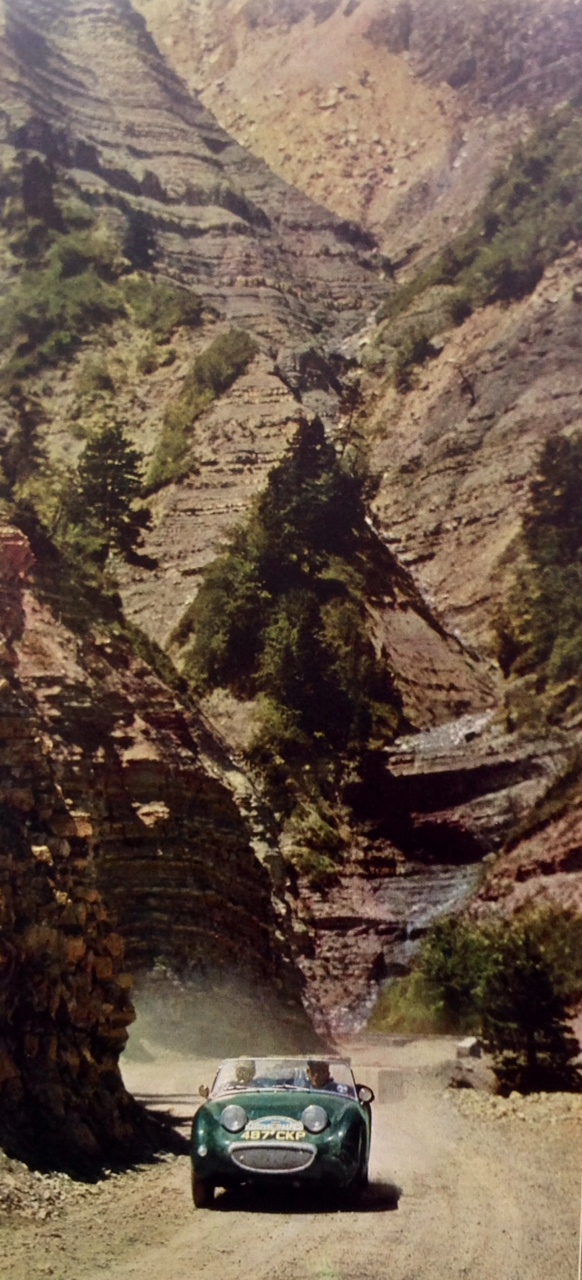
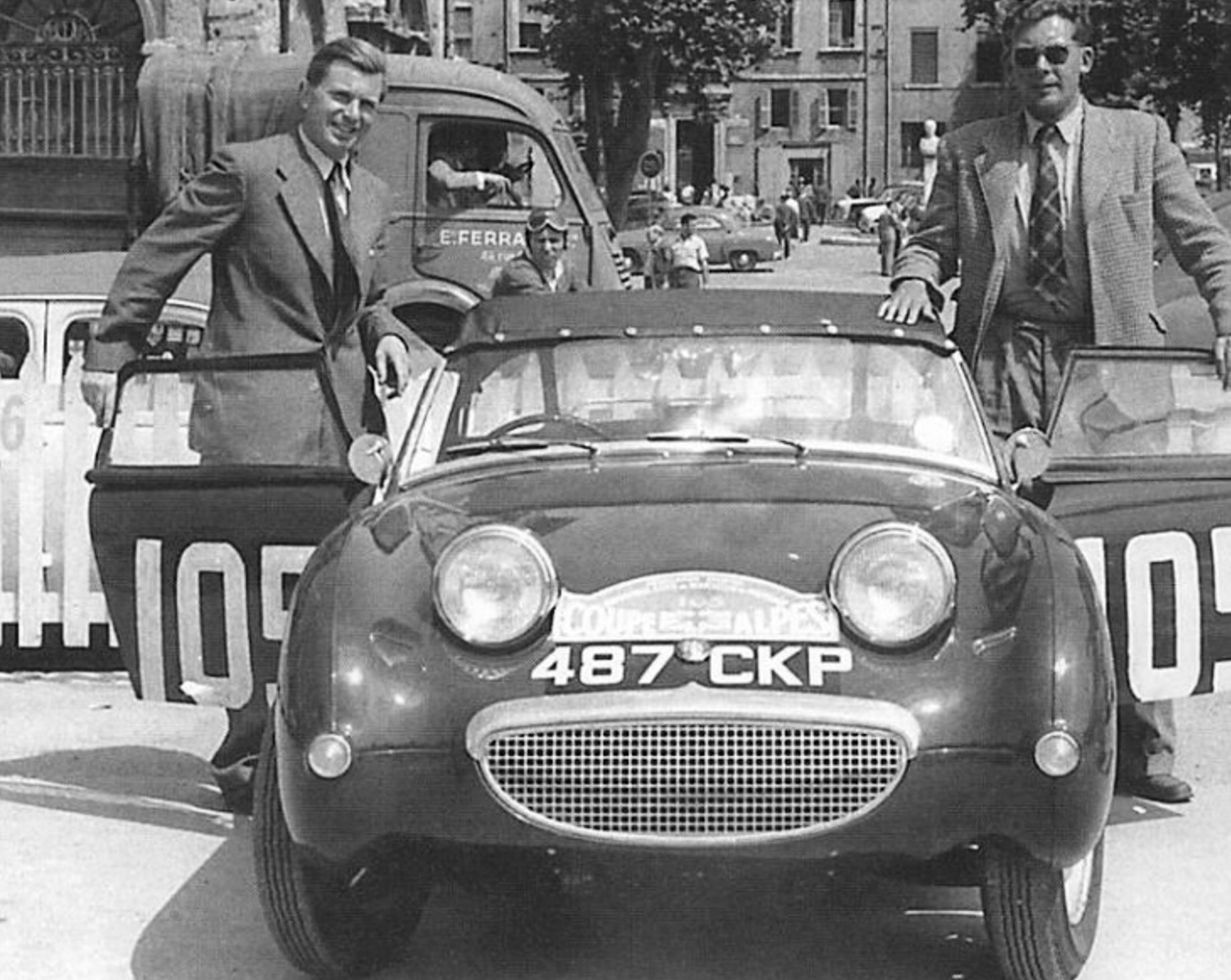
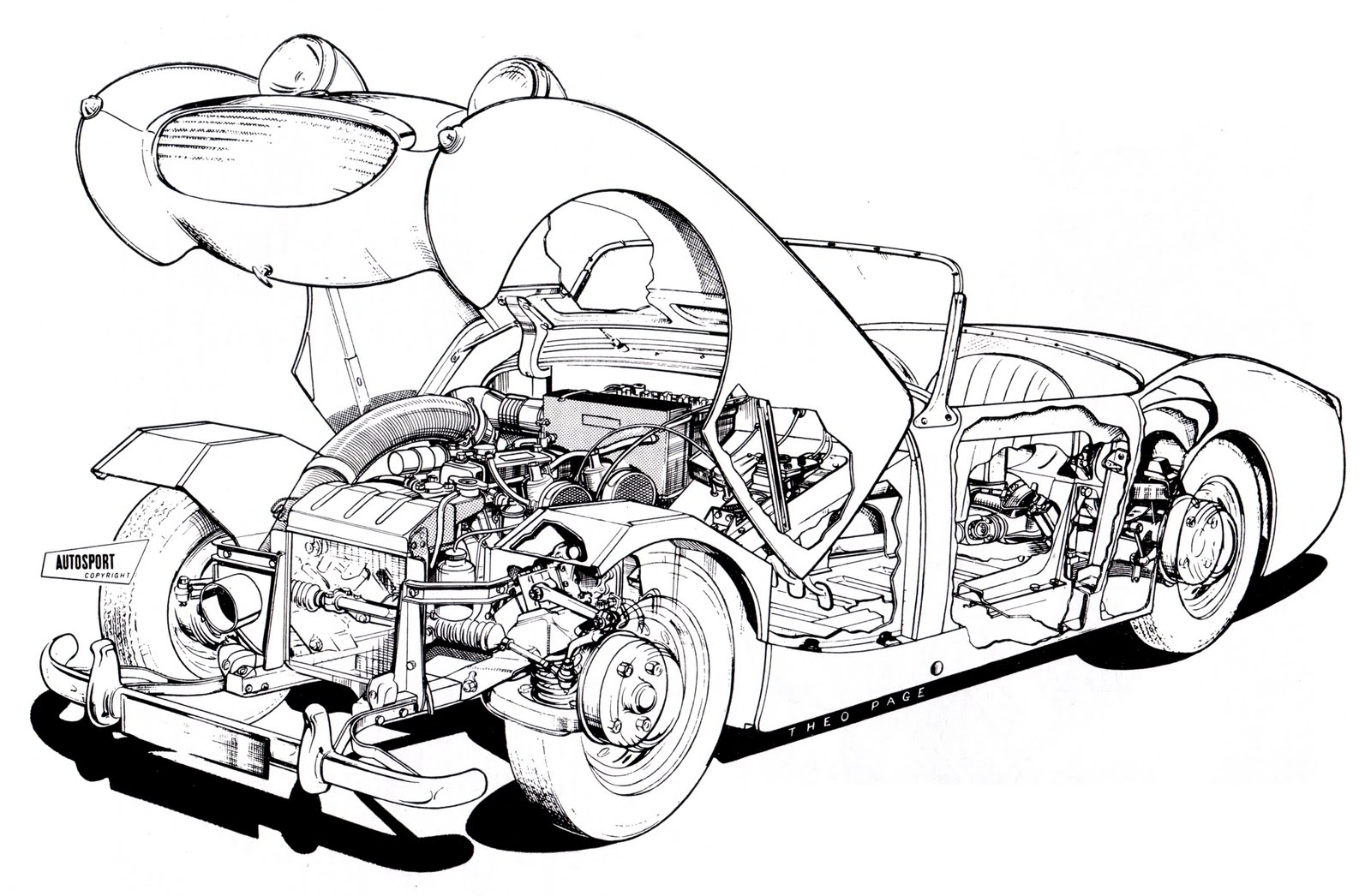
![1958-Austin-Healey-Sprite-Hambro-All-Part-Of-The-Fun-ad[1]](https://primotipo.com/wp-content/uploads/2015/03/1958-austin-healey-sprite-hambro-all-part-of-the-fun-ad1.jpg)
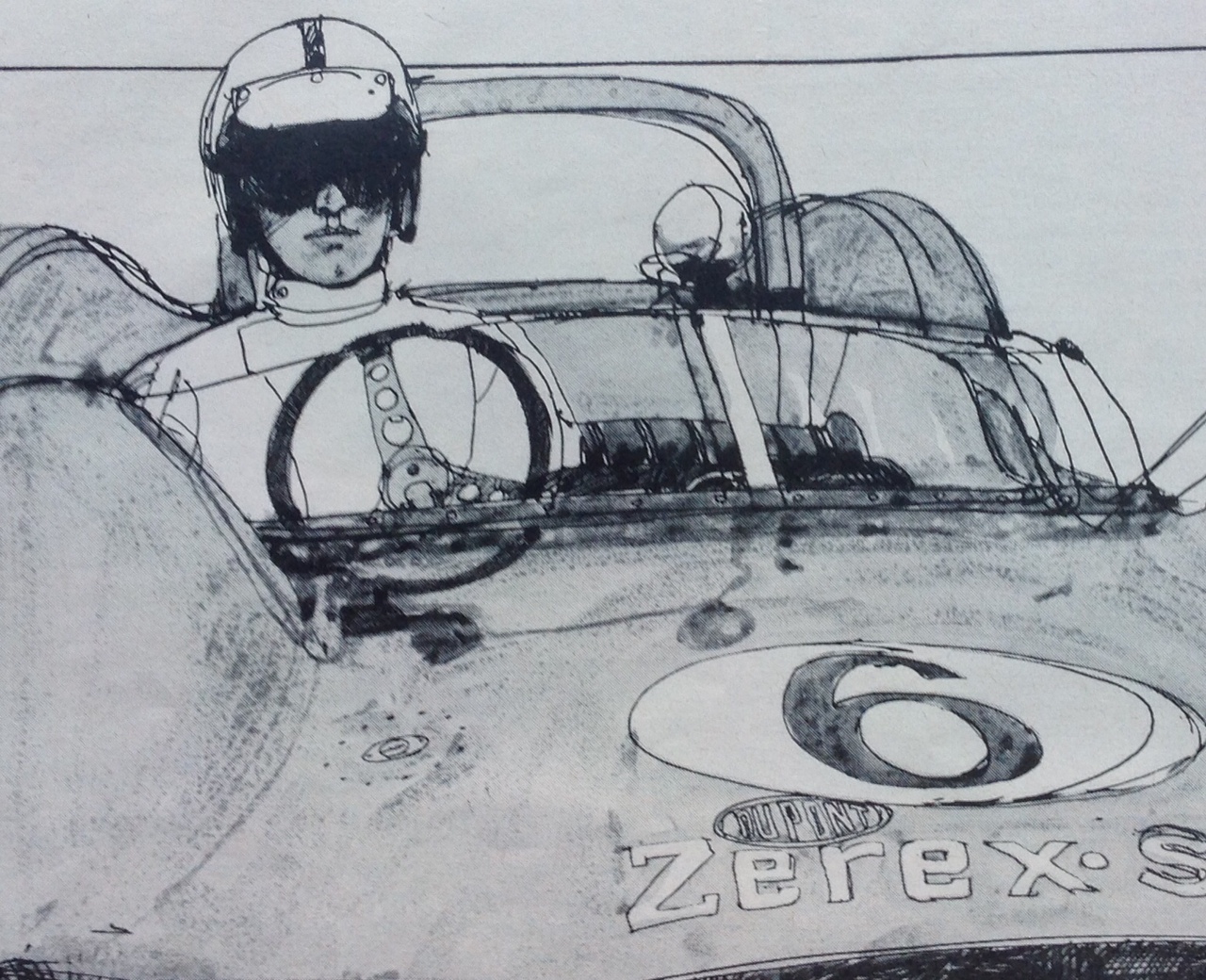

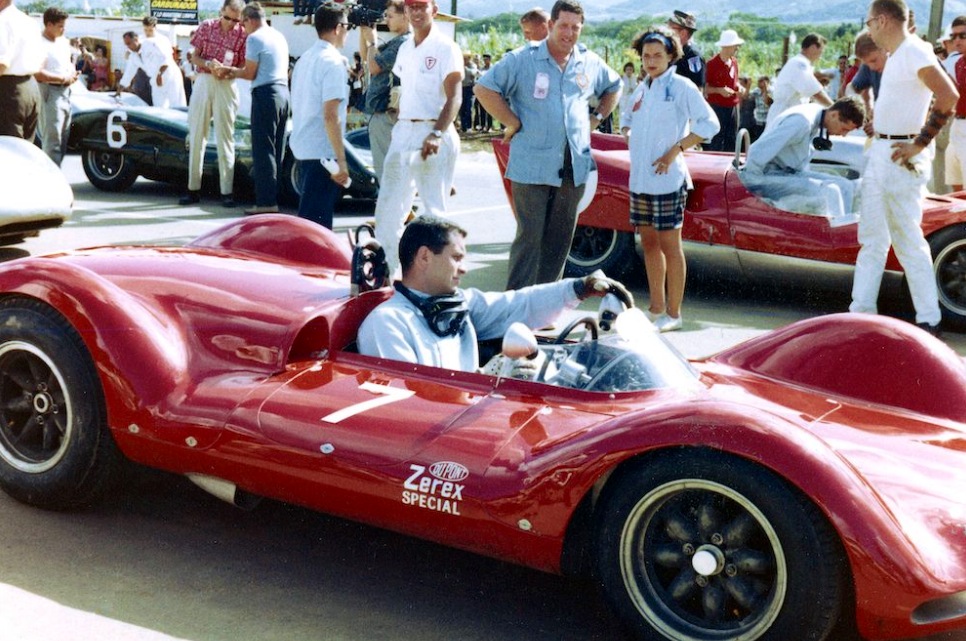
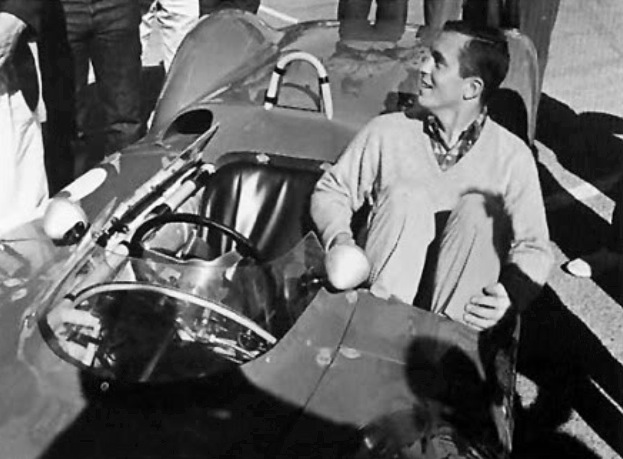
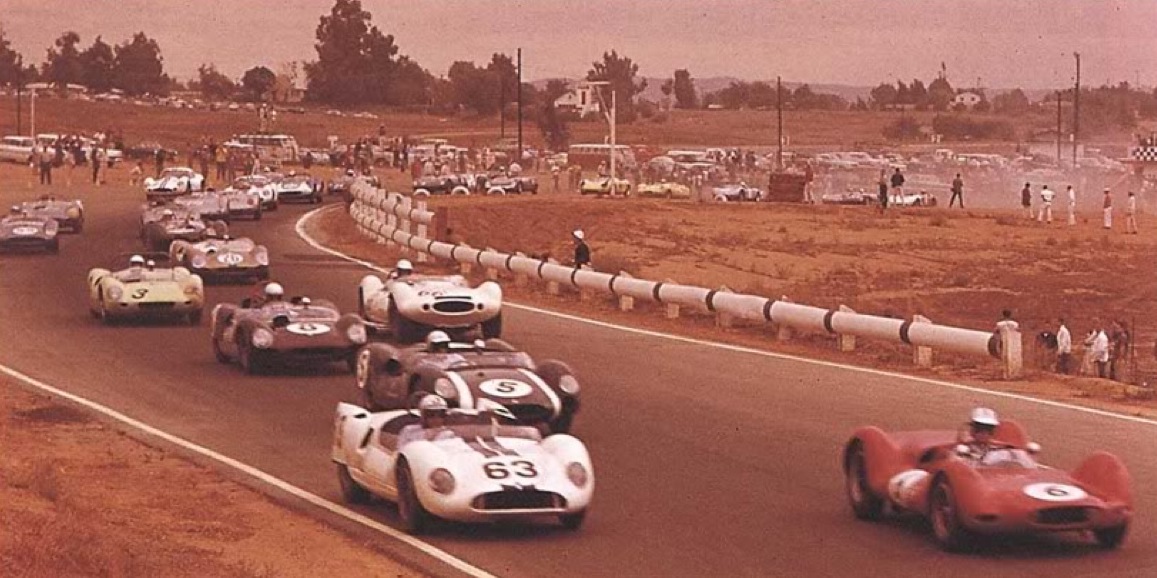
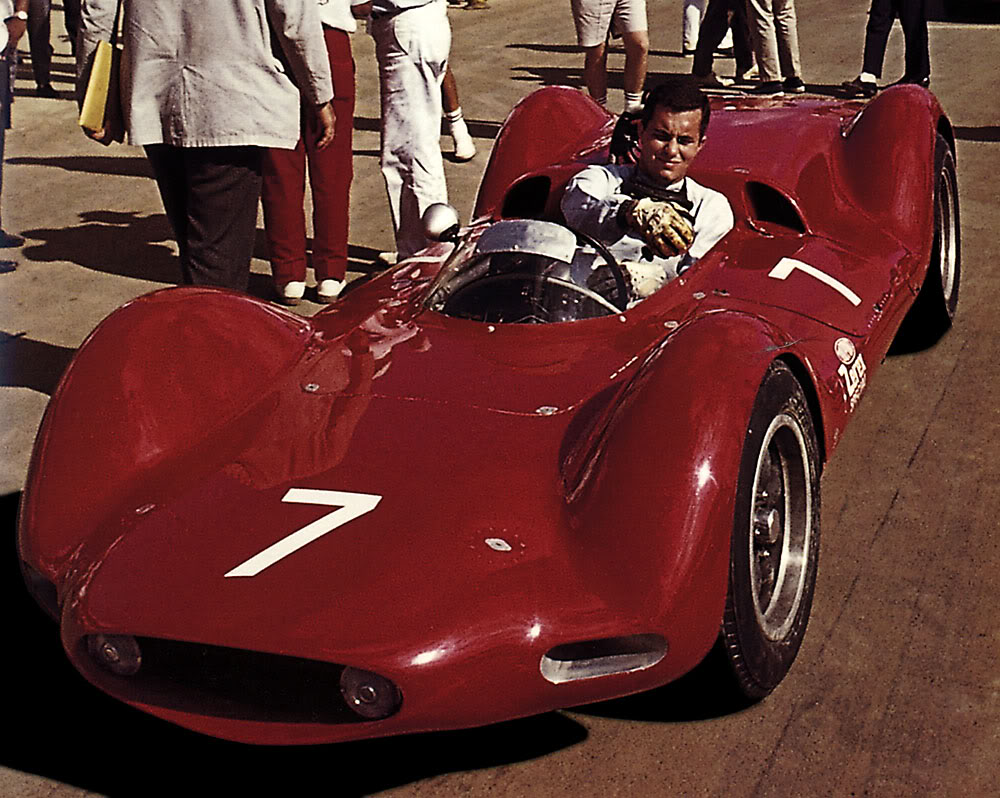
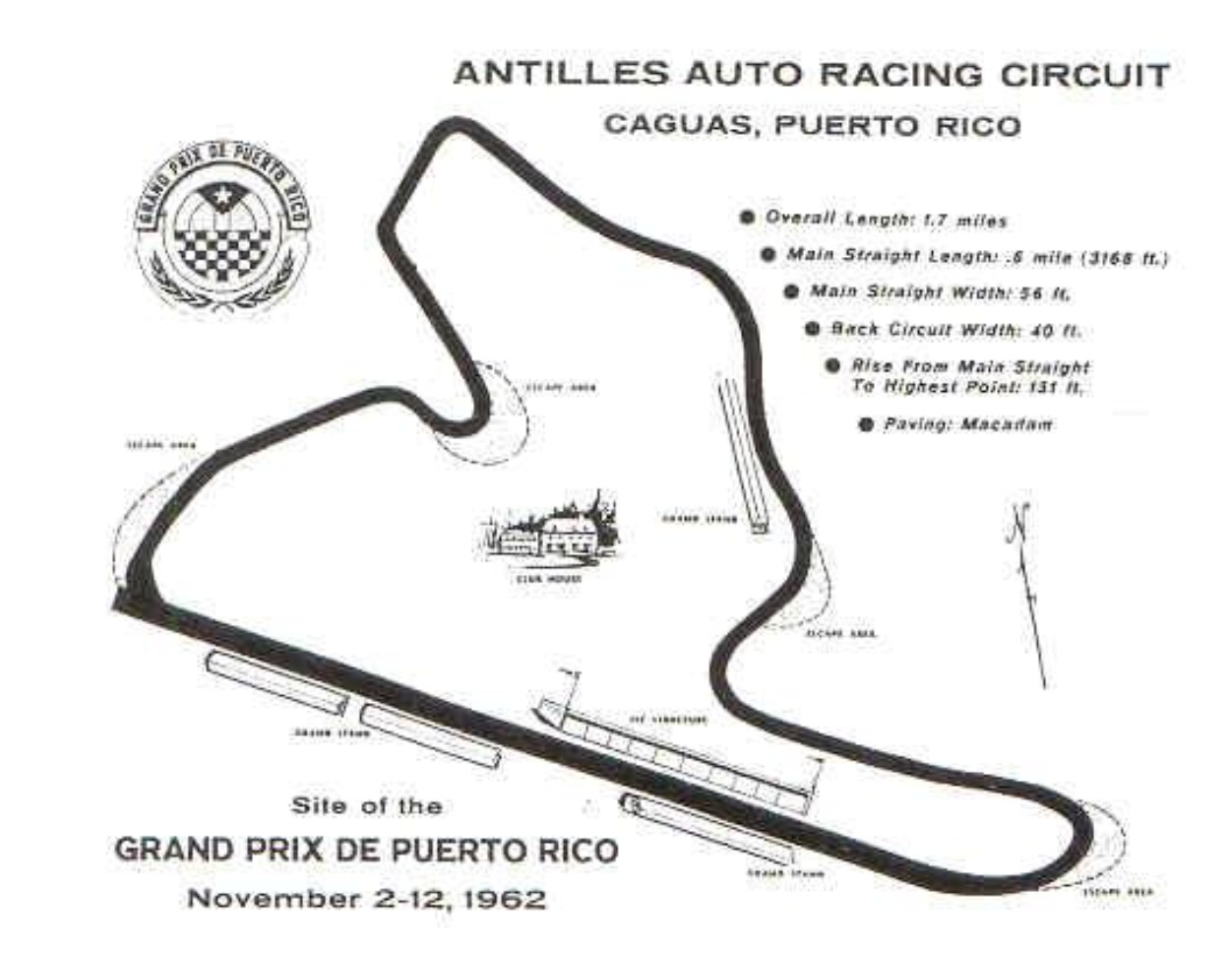

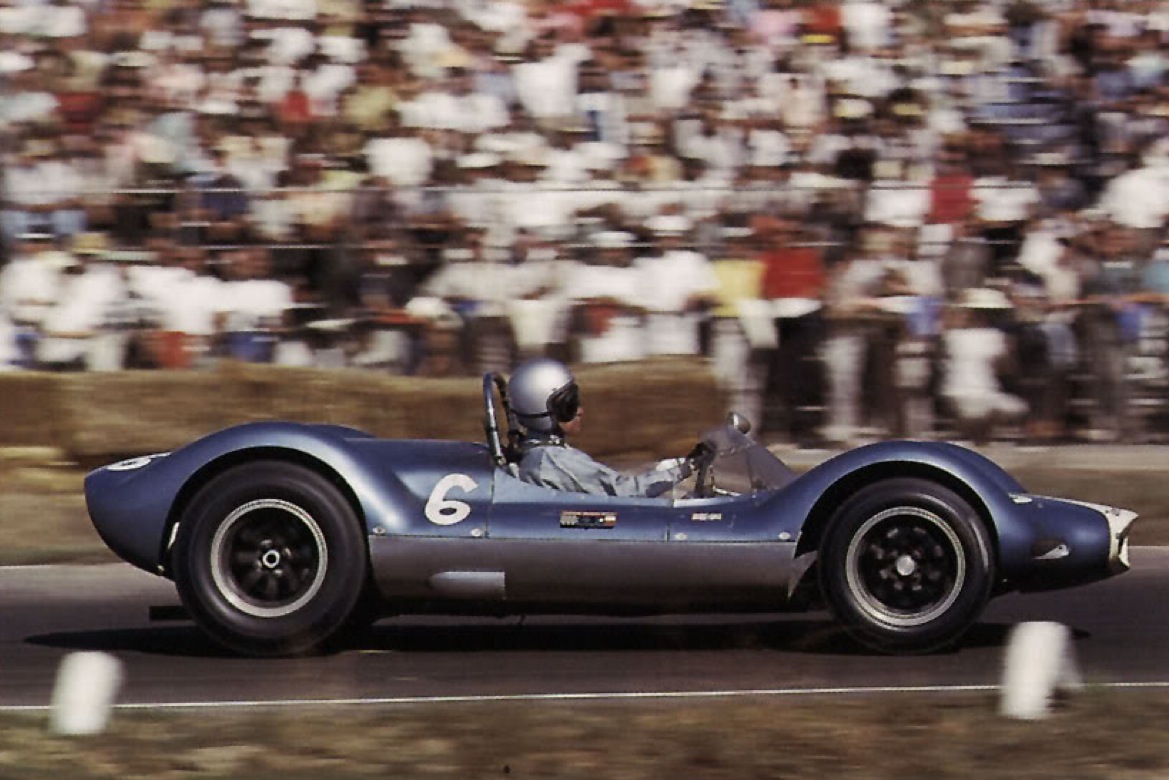


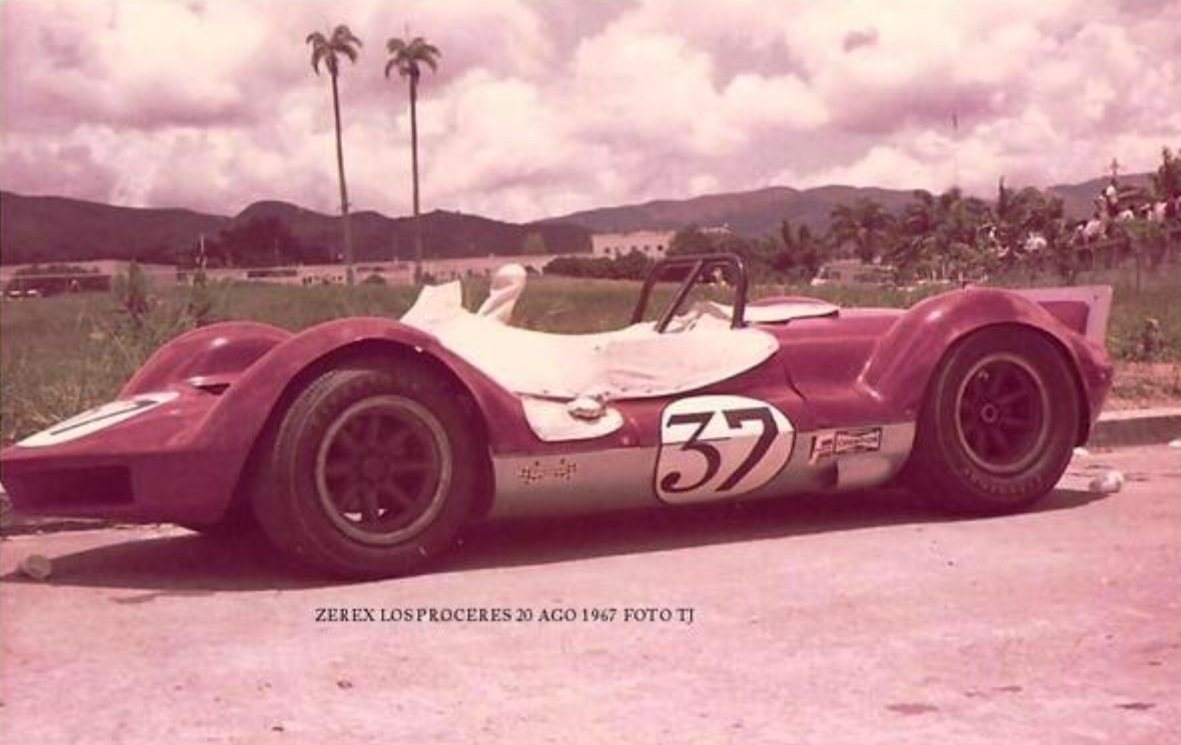

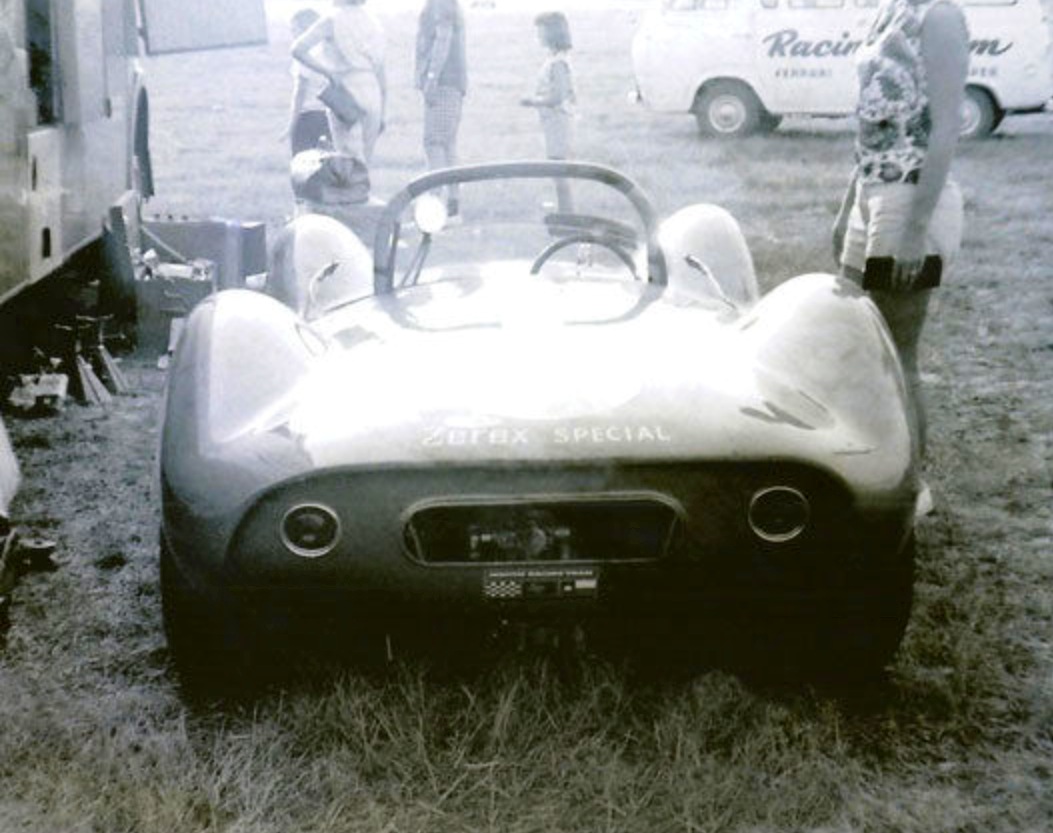
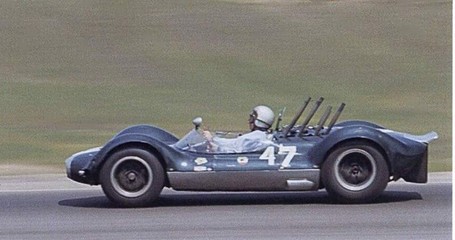
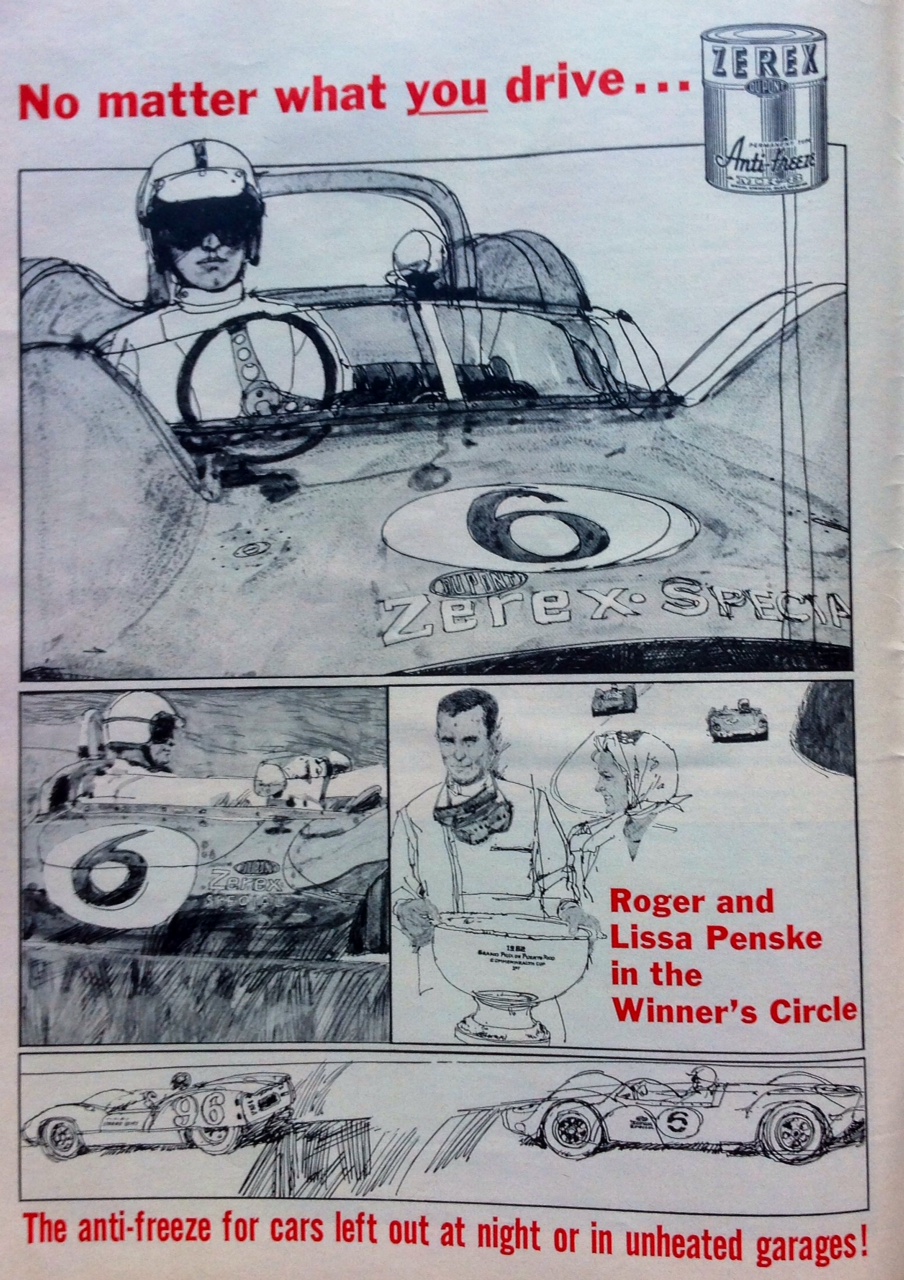
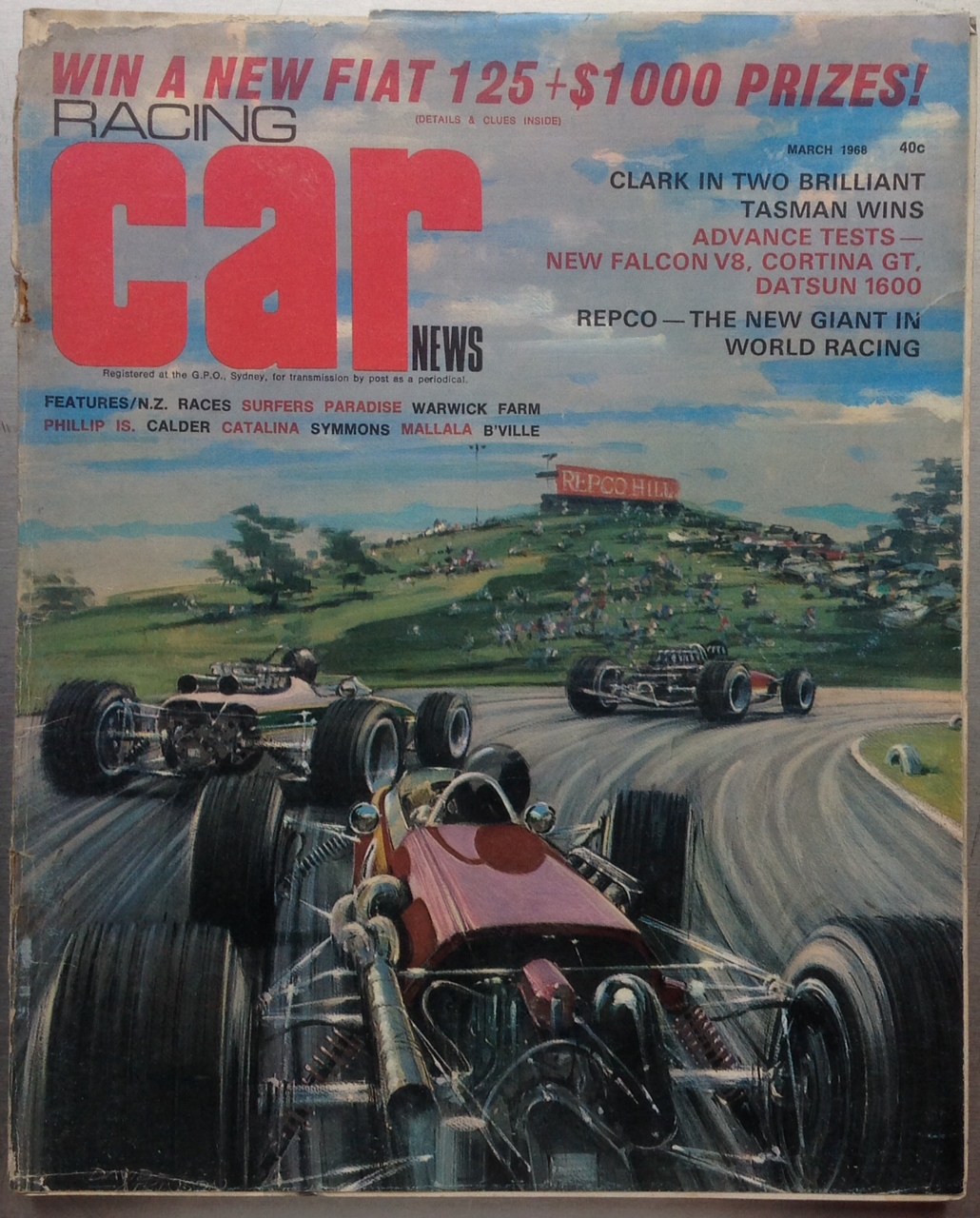

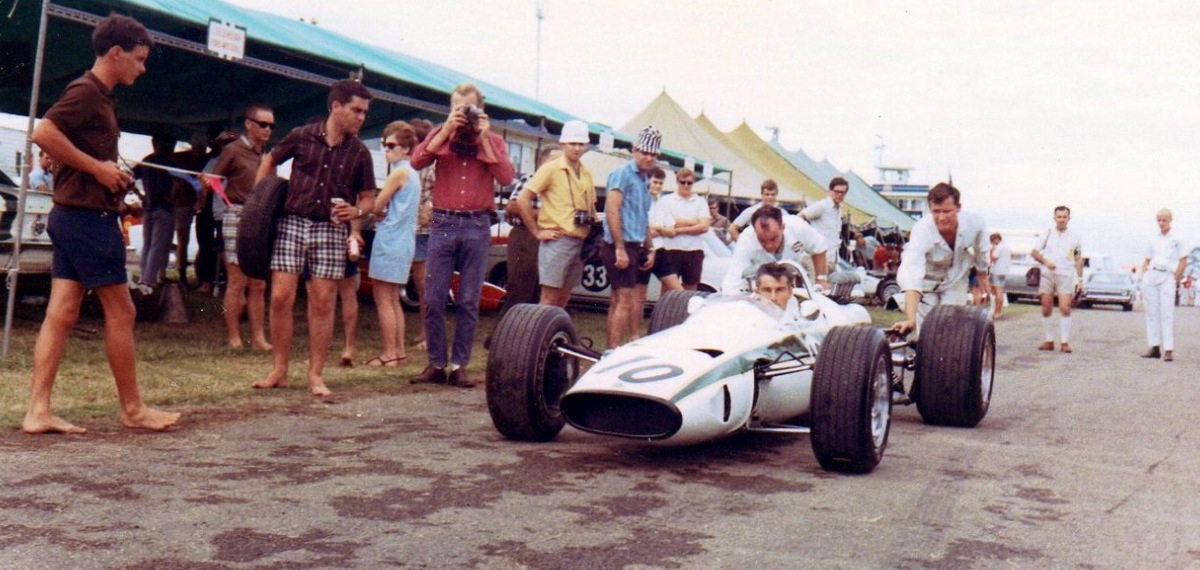


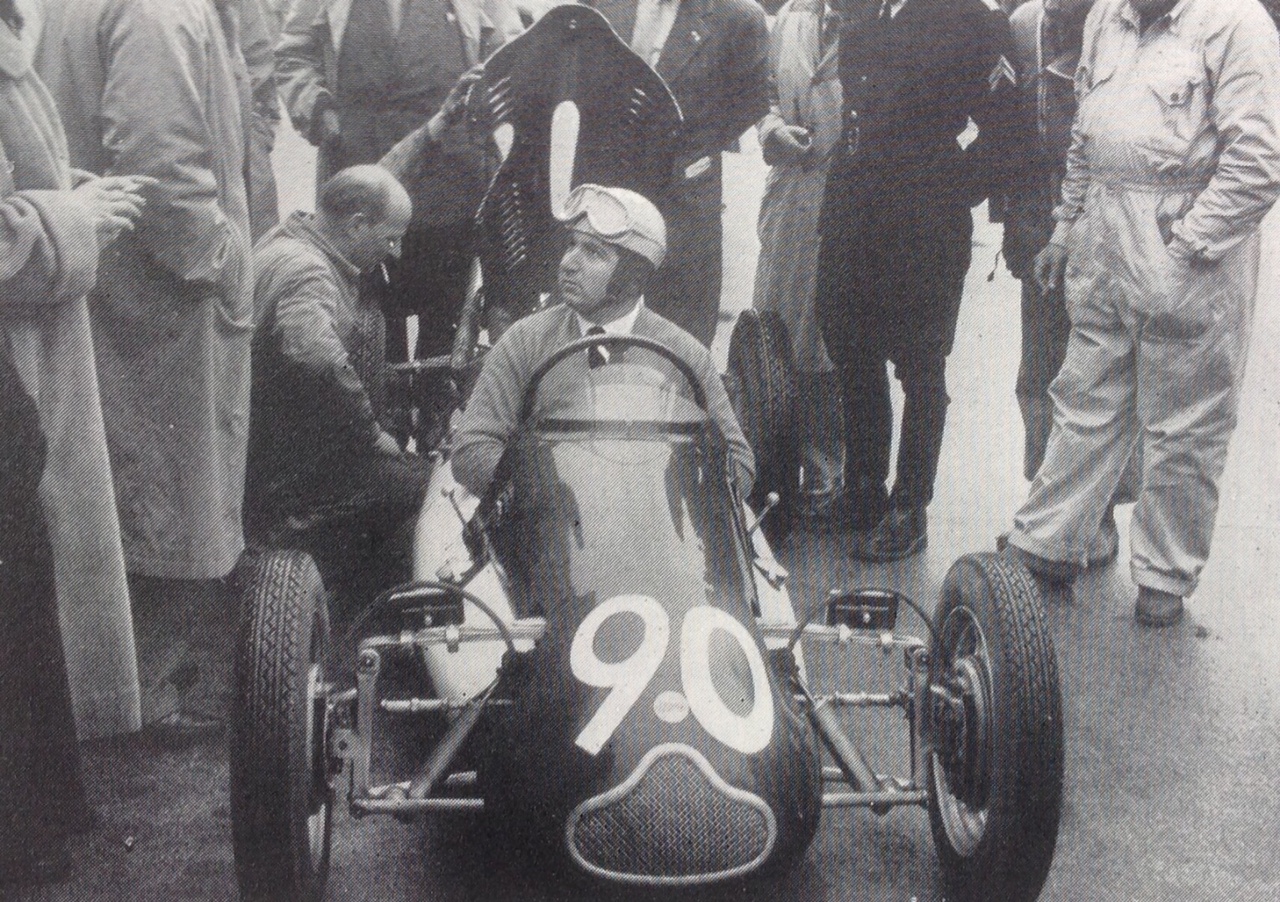


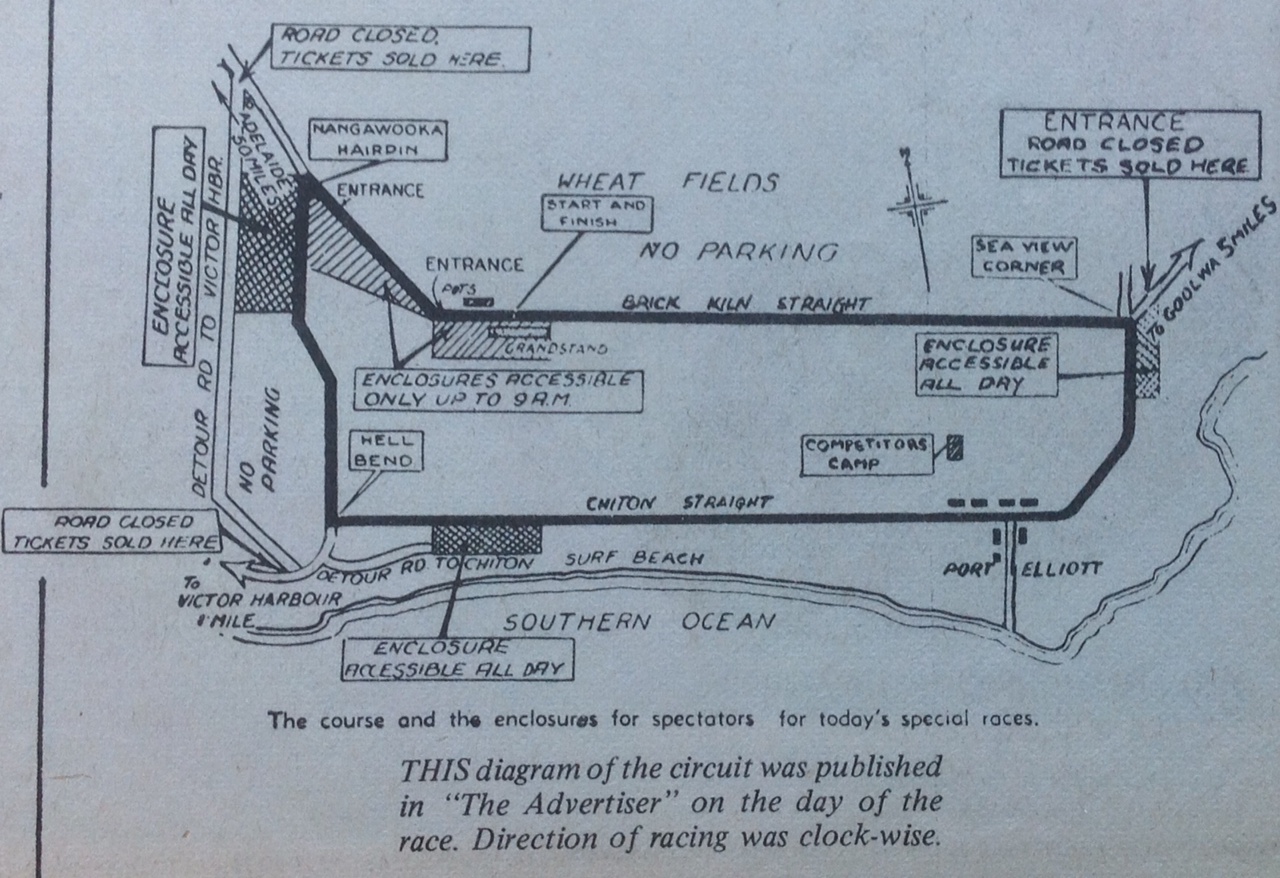
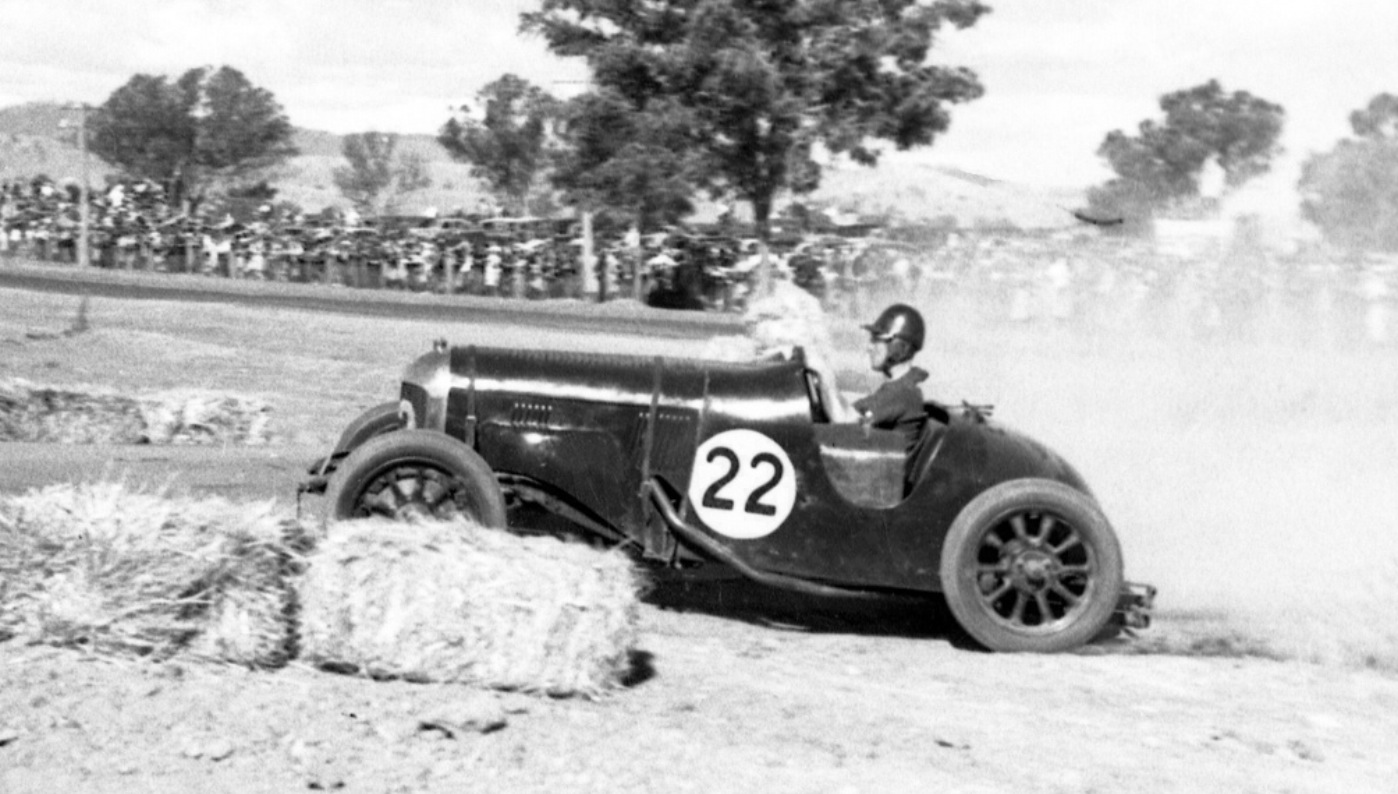
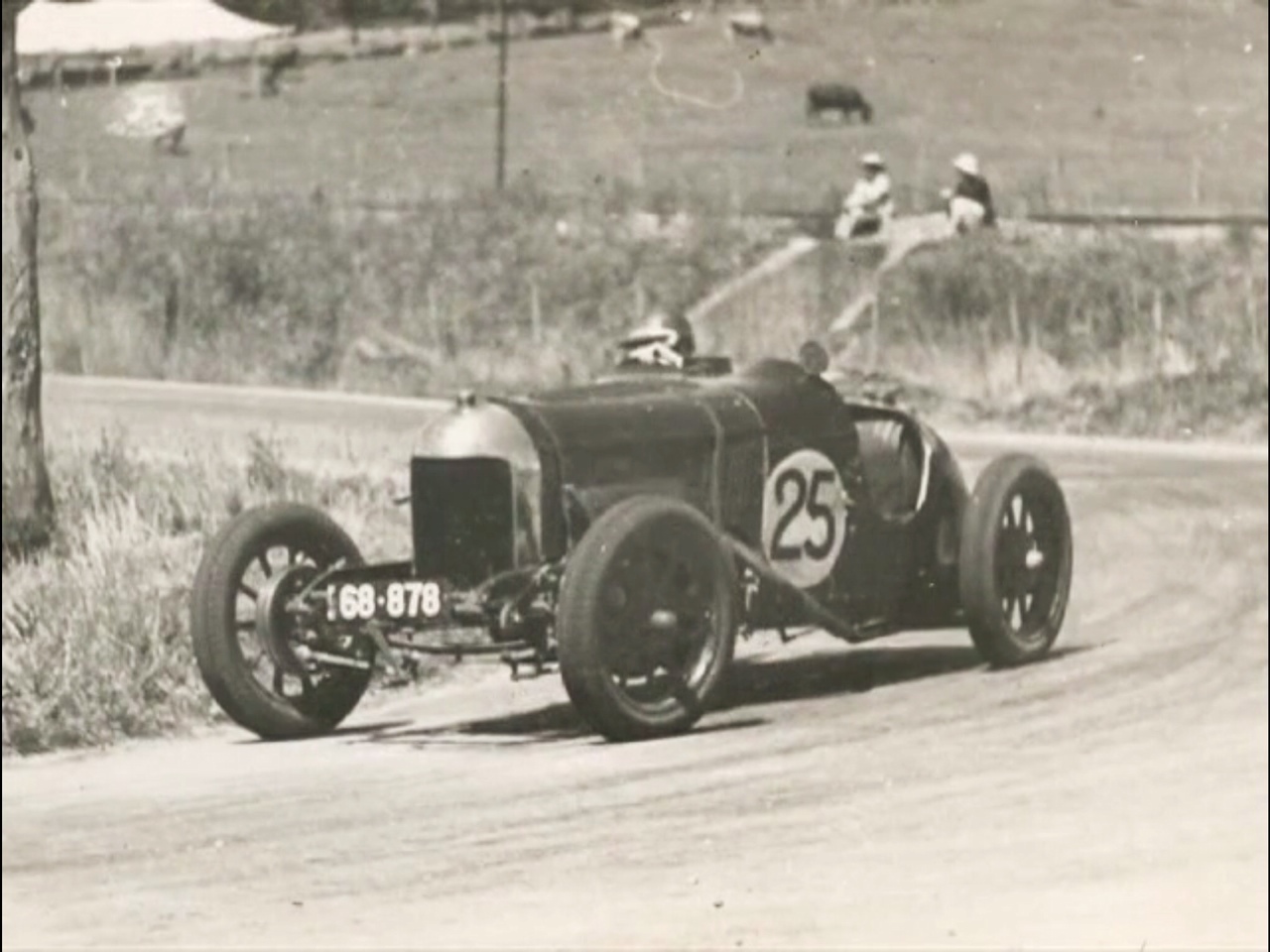

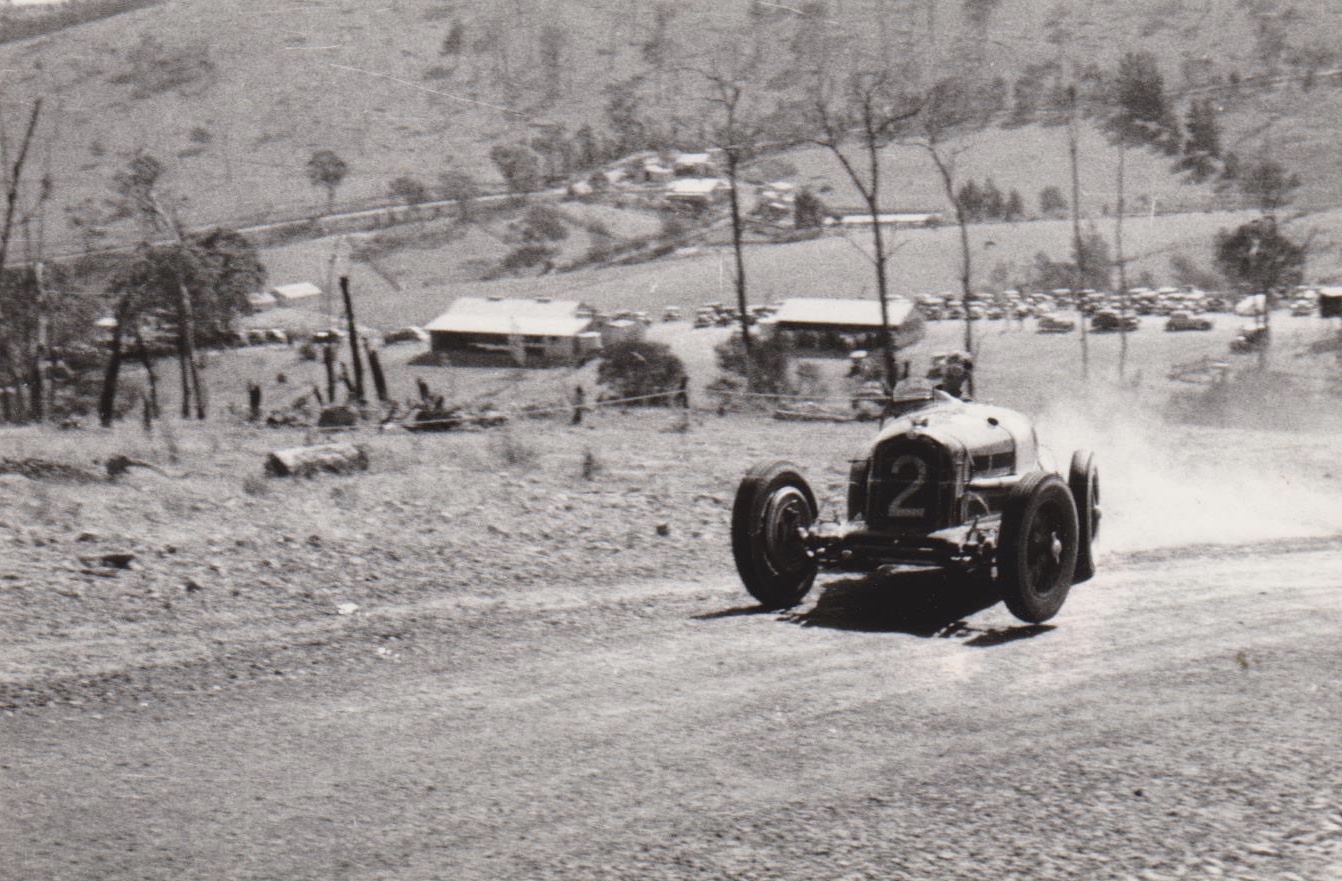


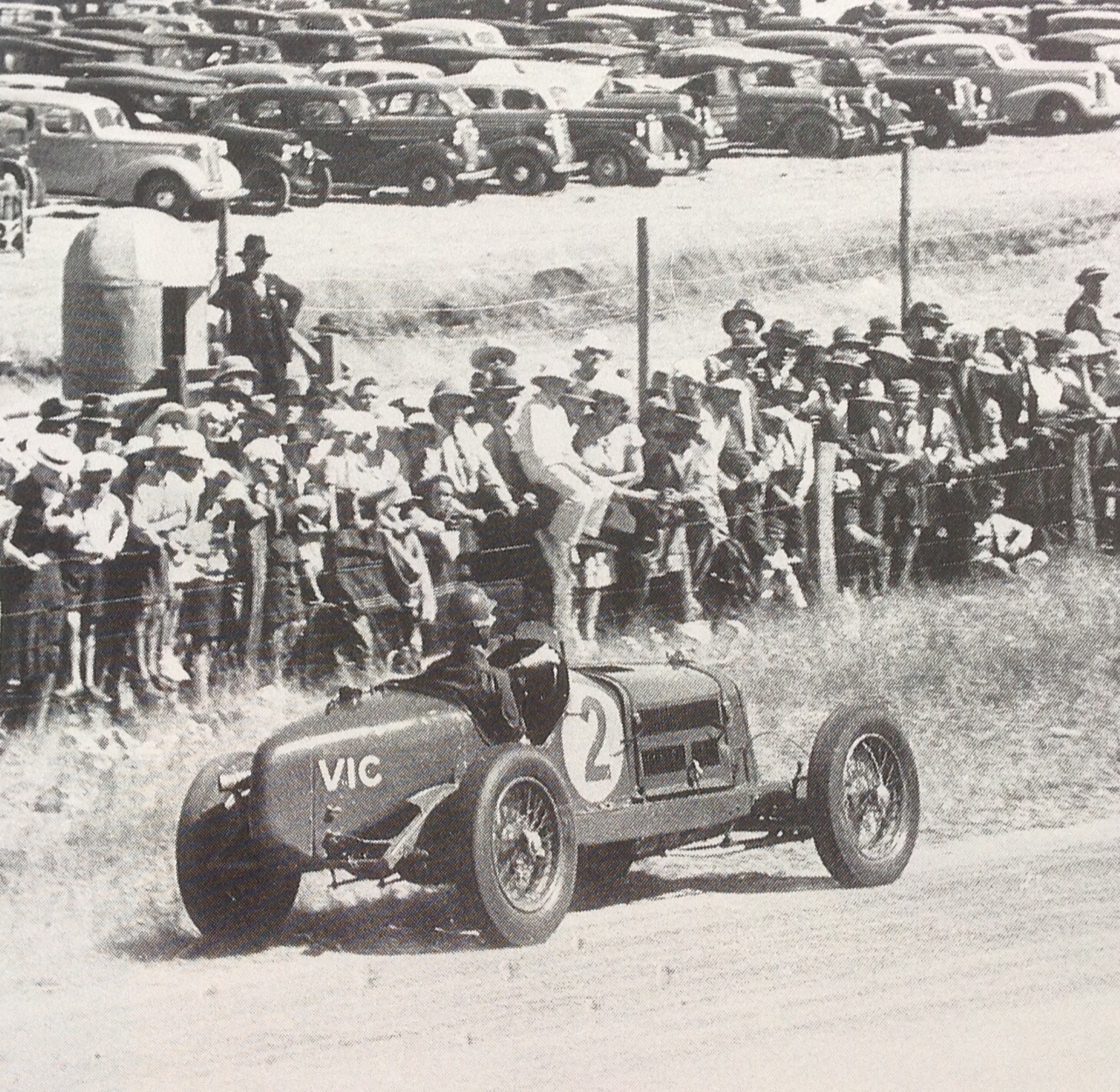


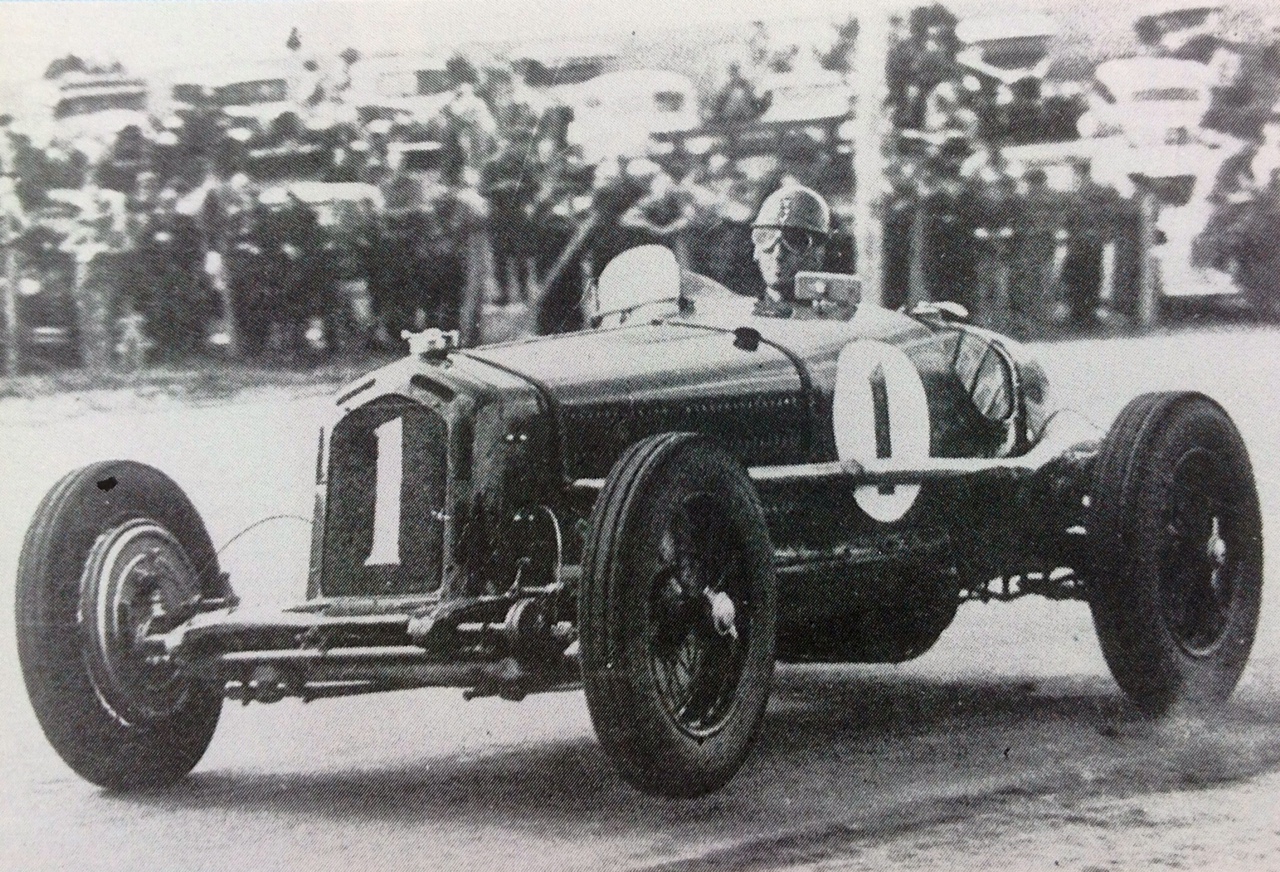

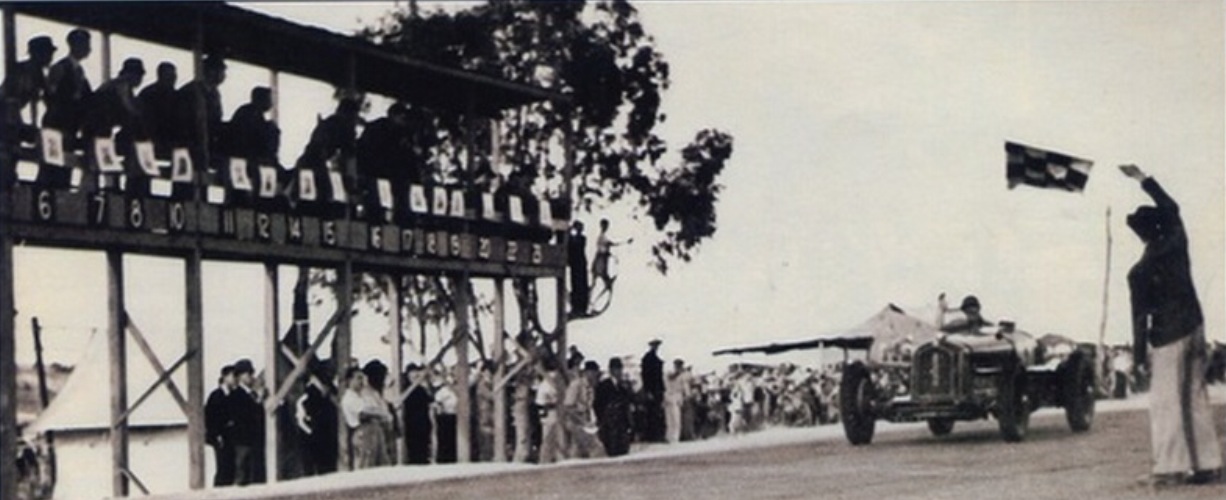
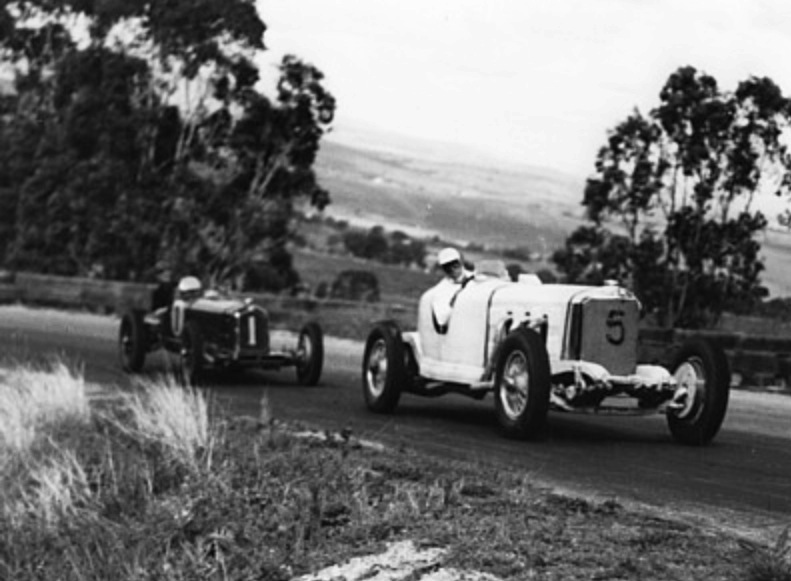
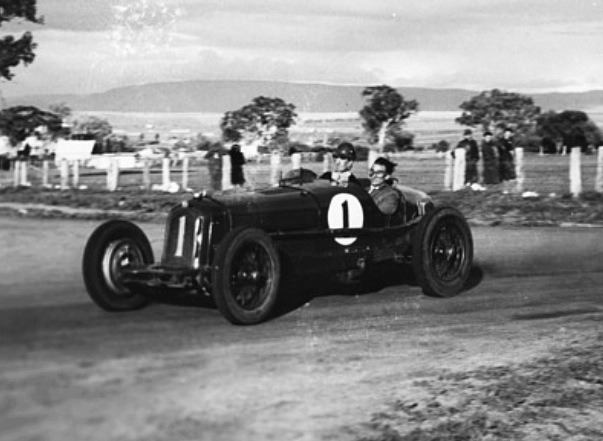


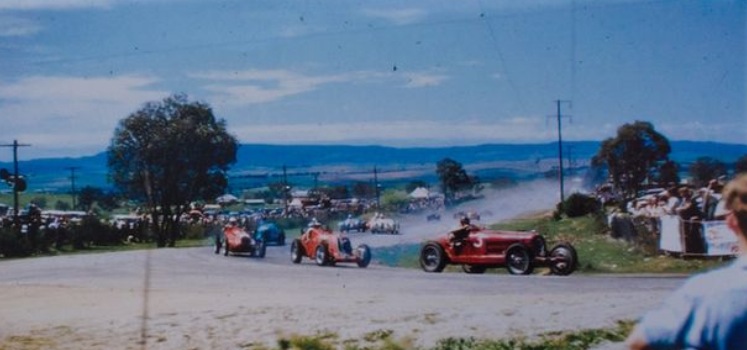
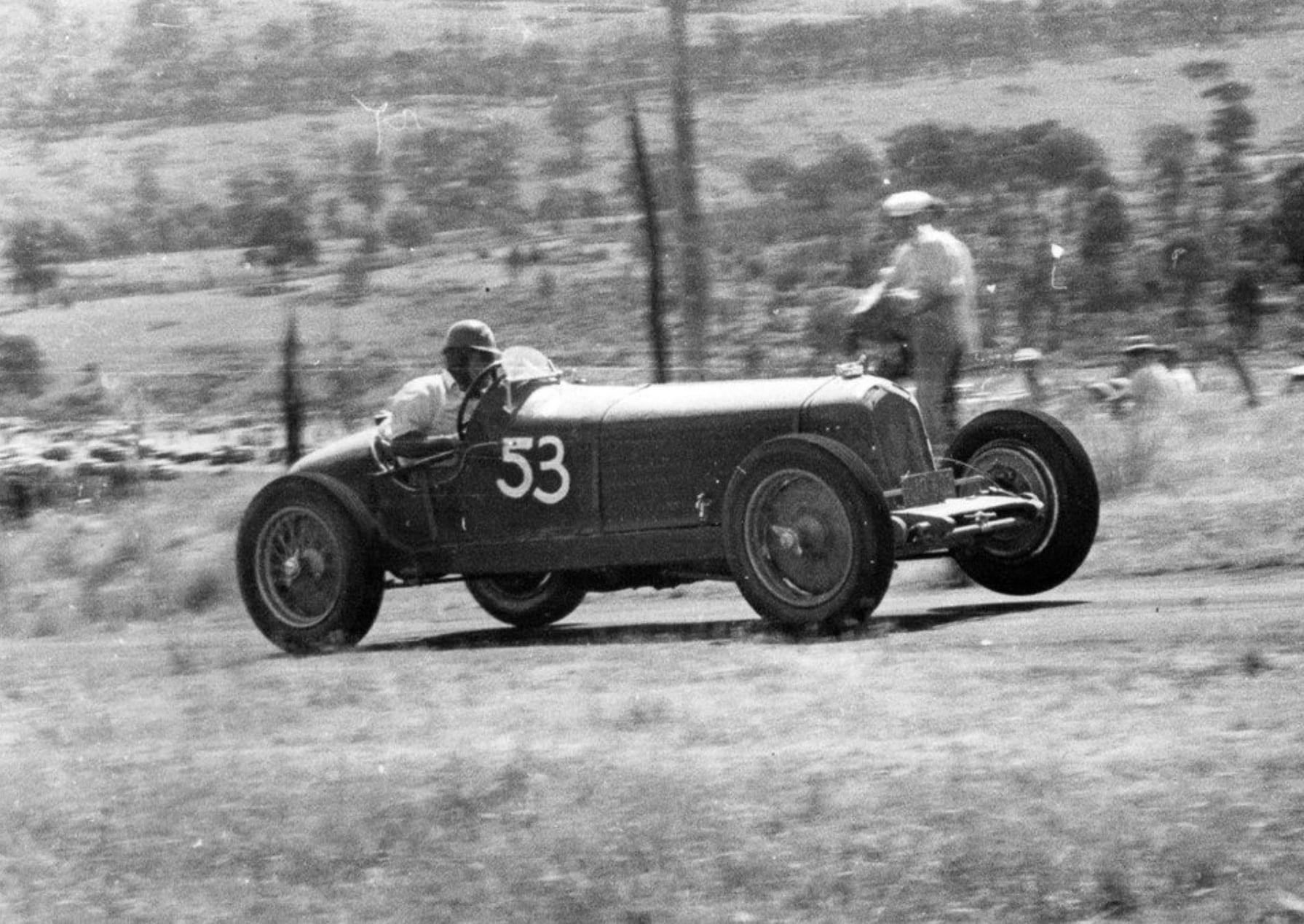
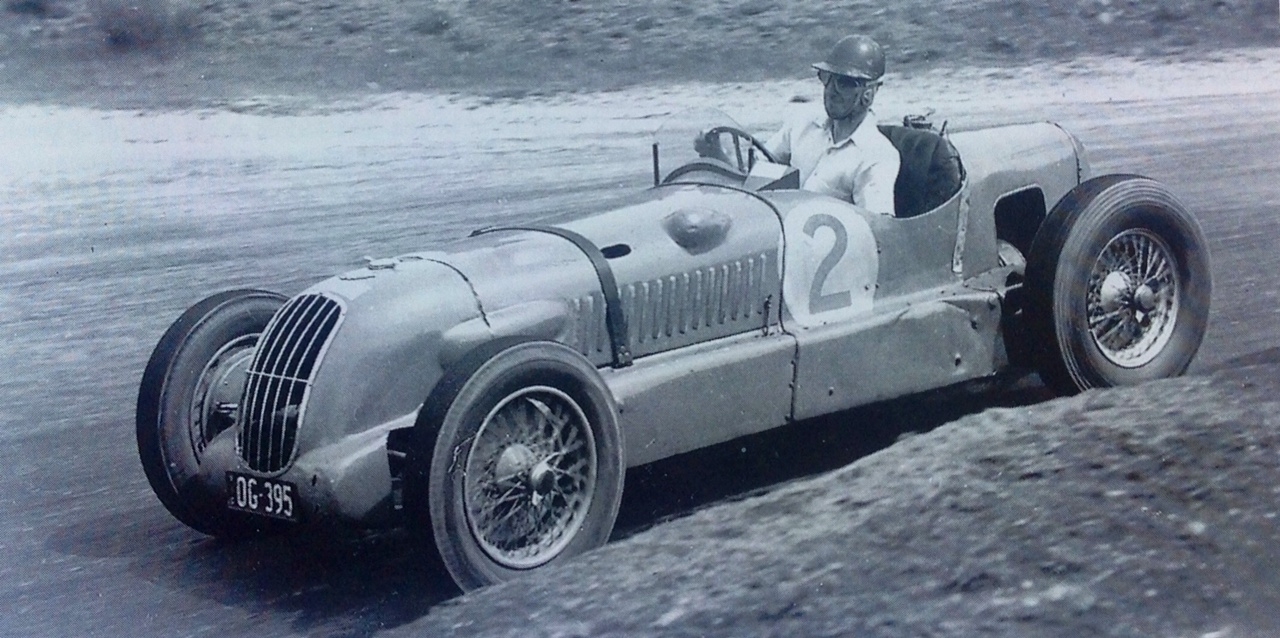
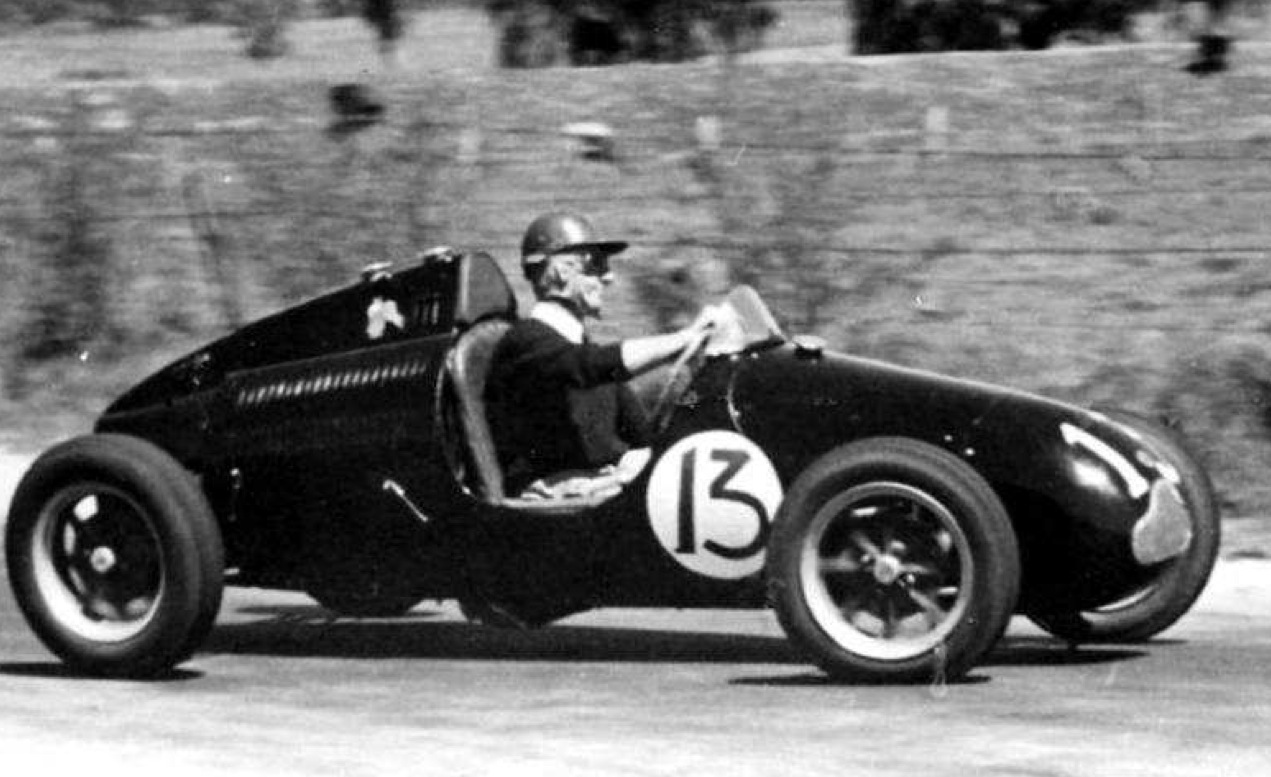
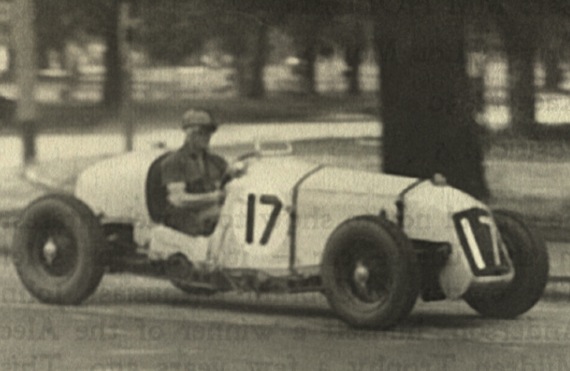
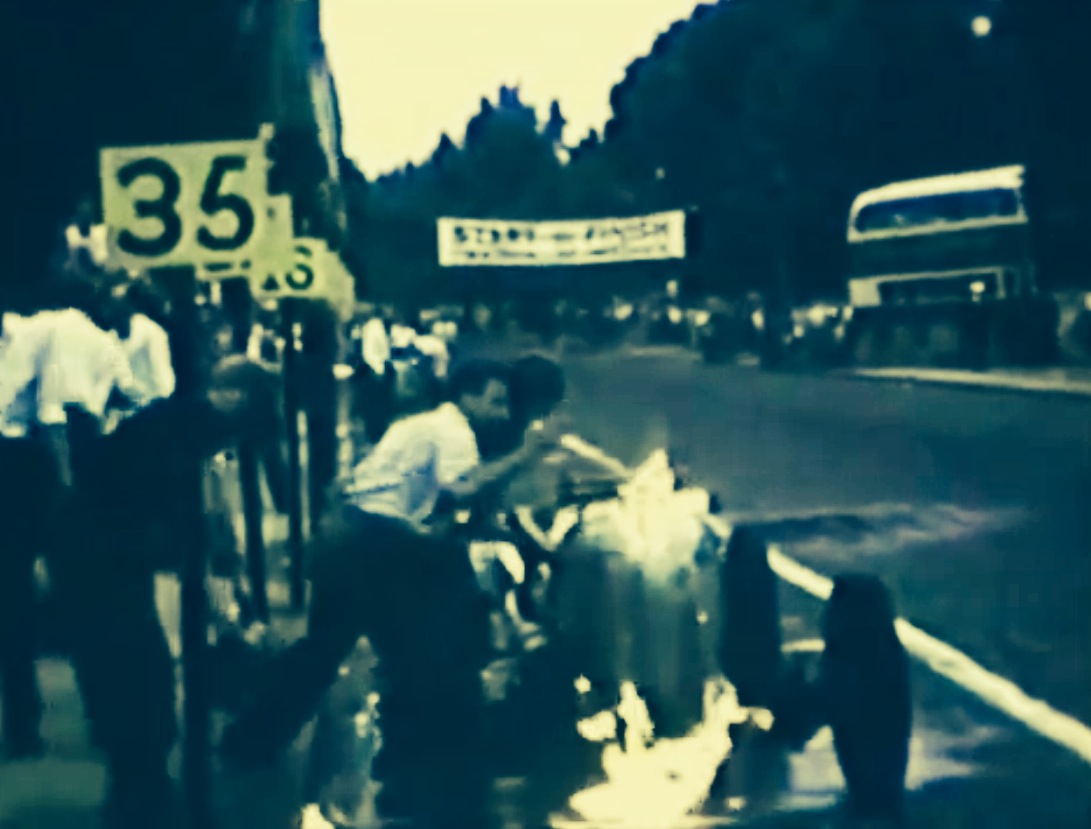


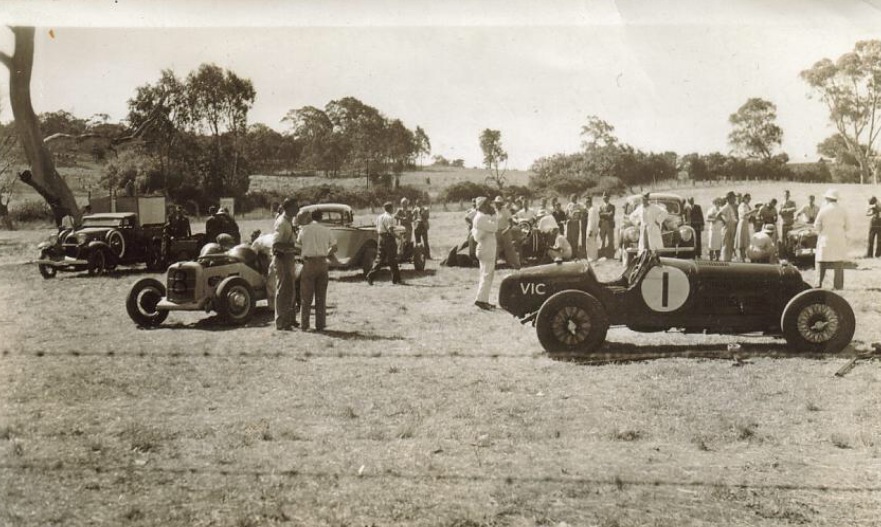
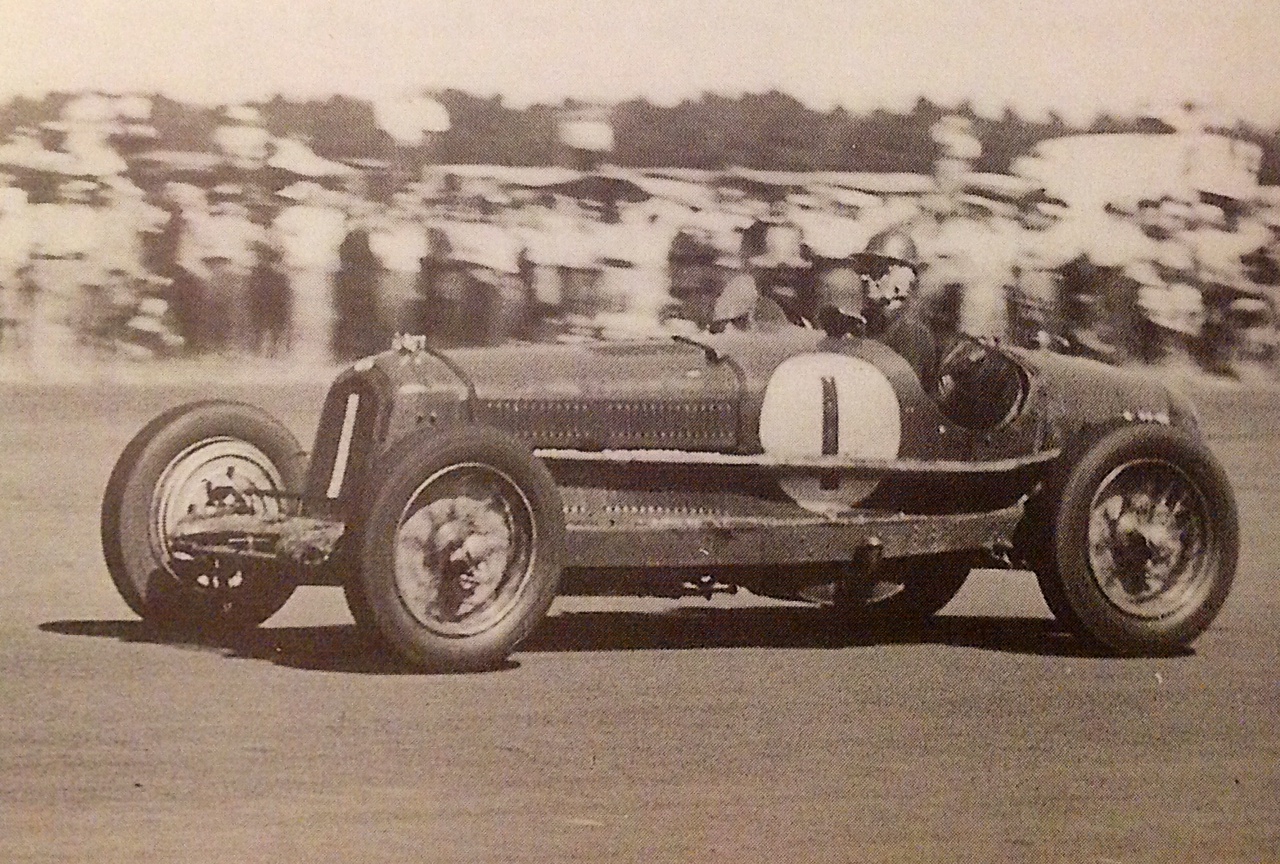

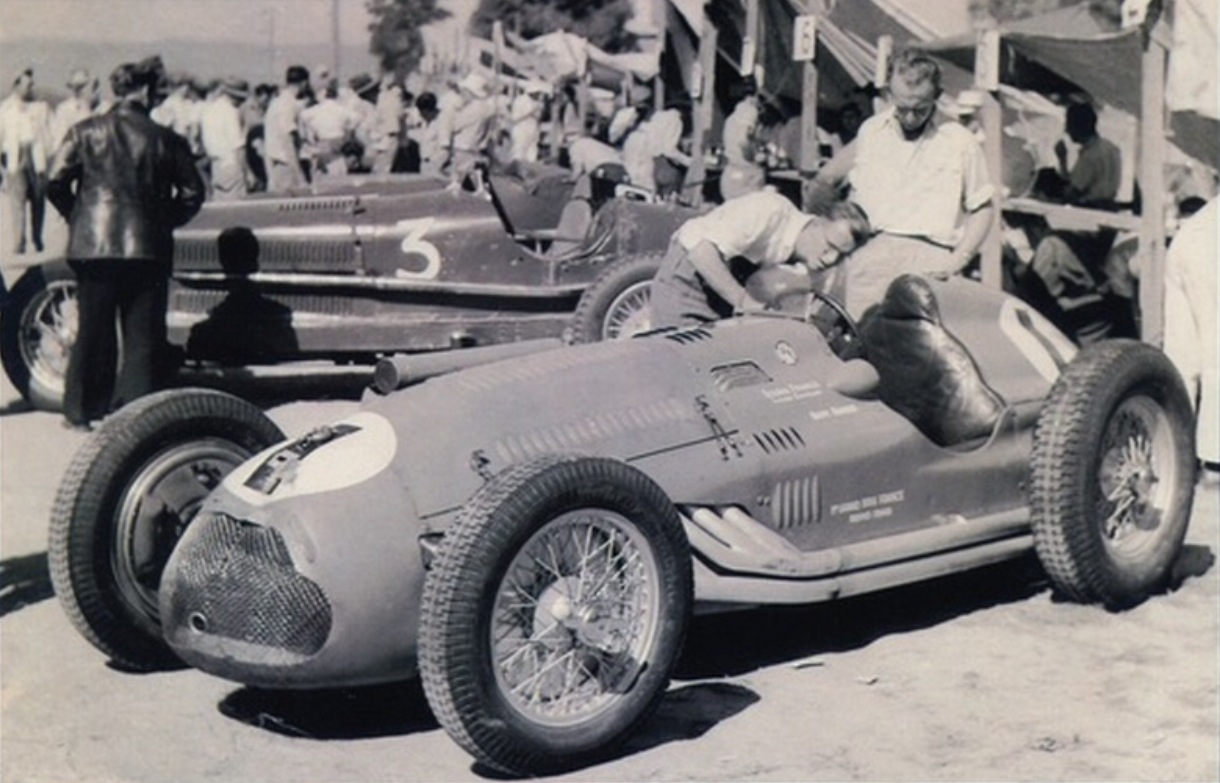
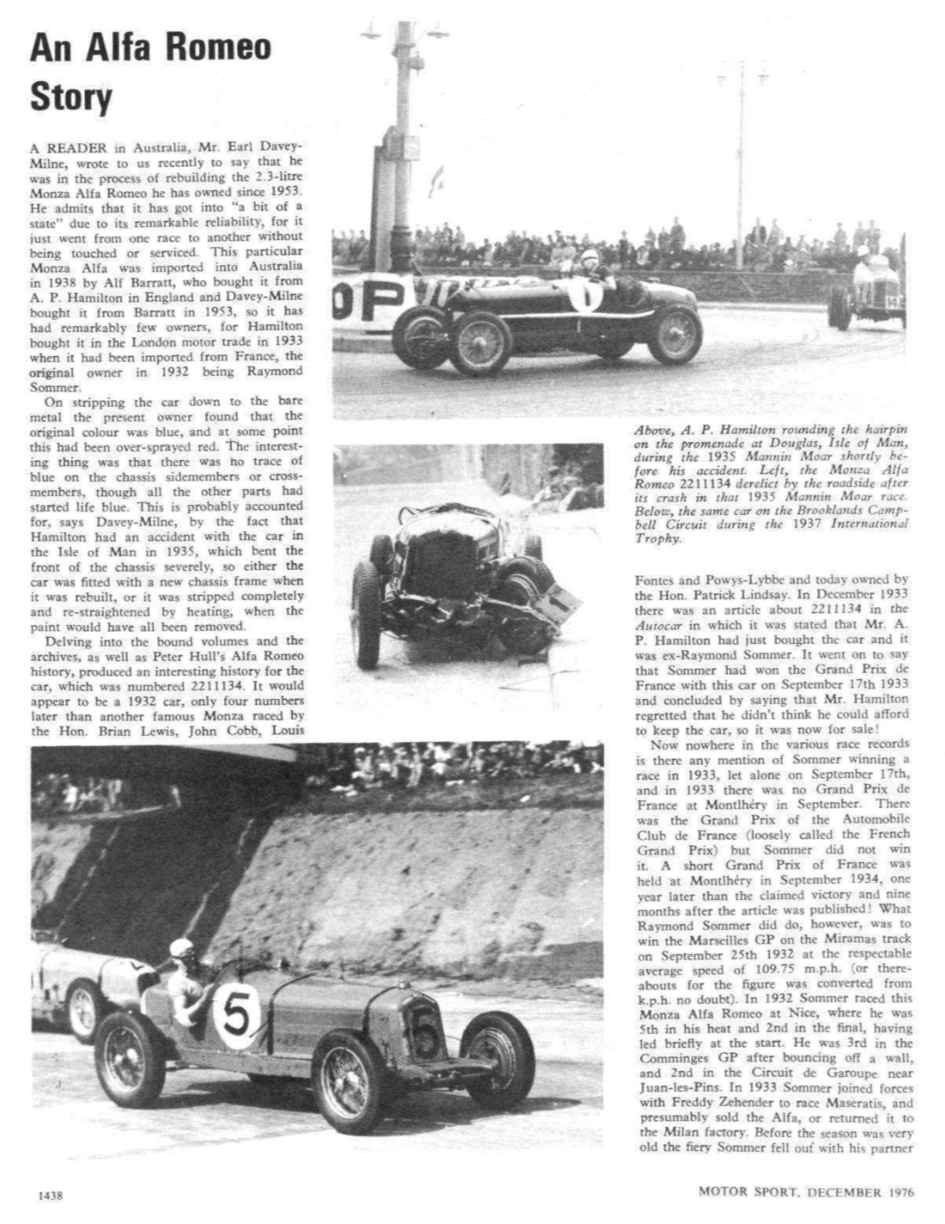


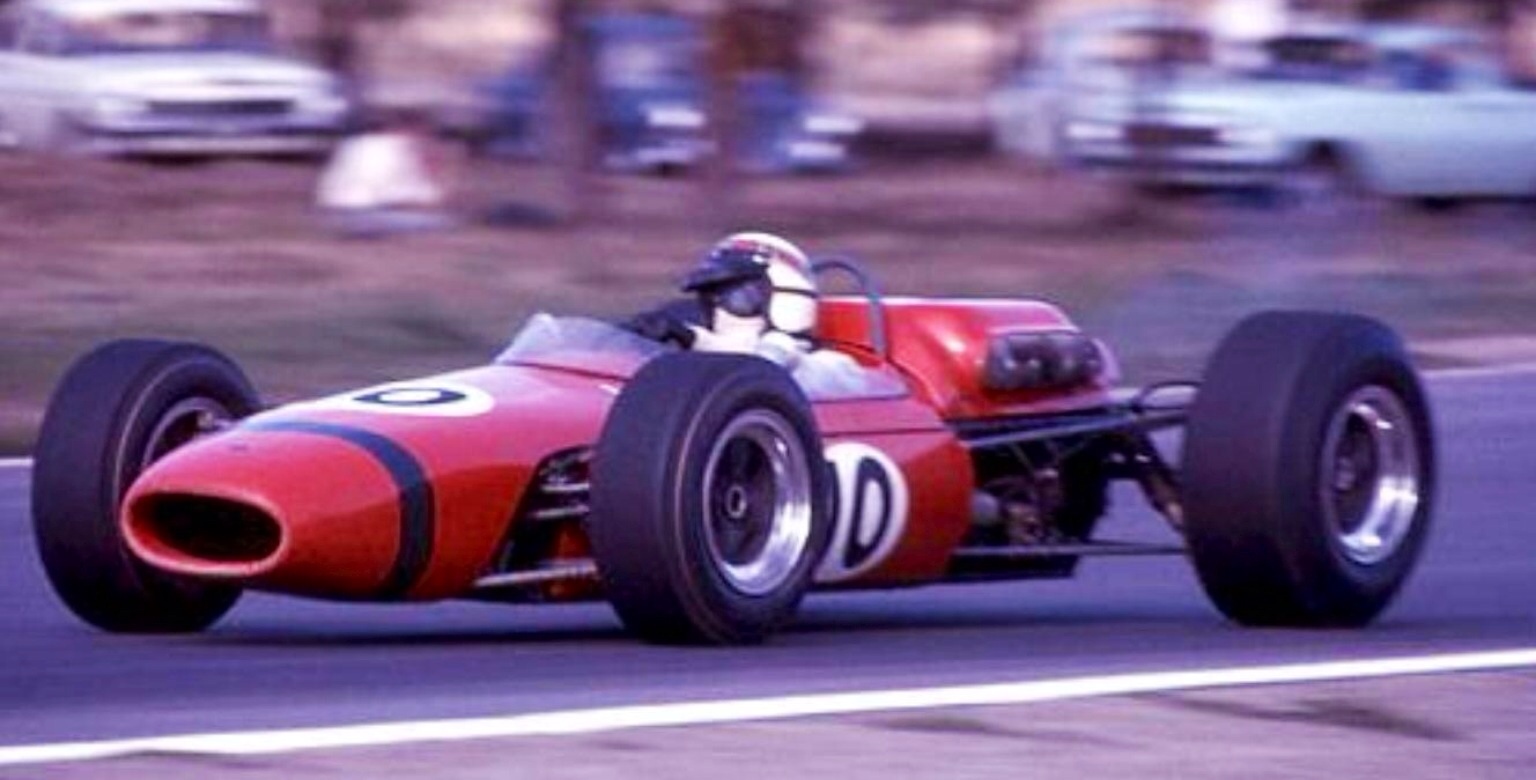


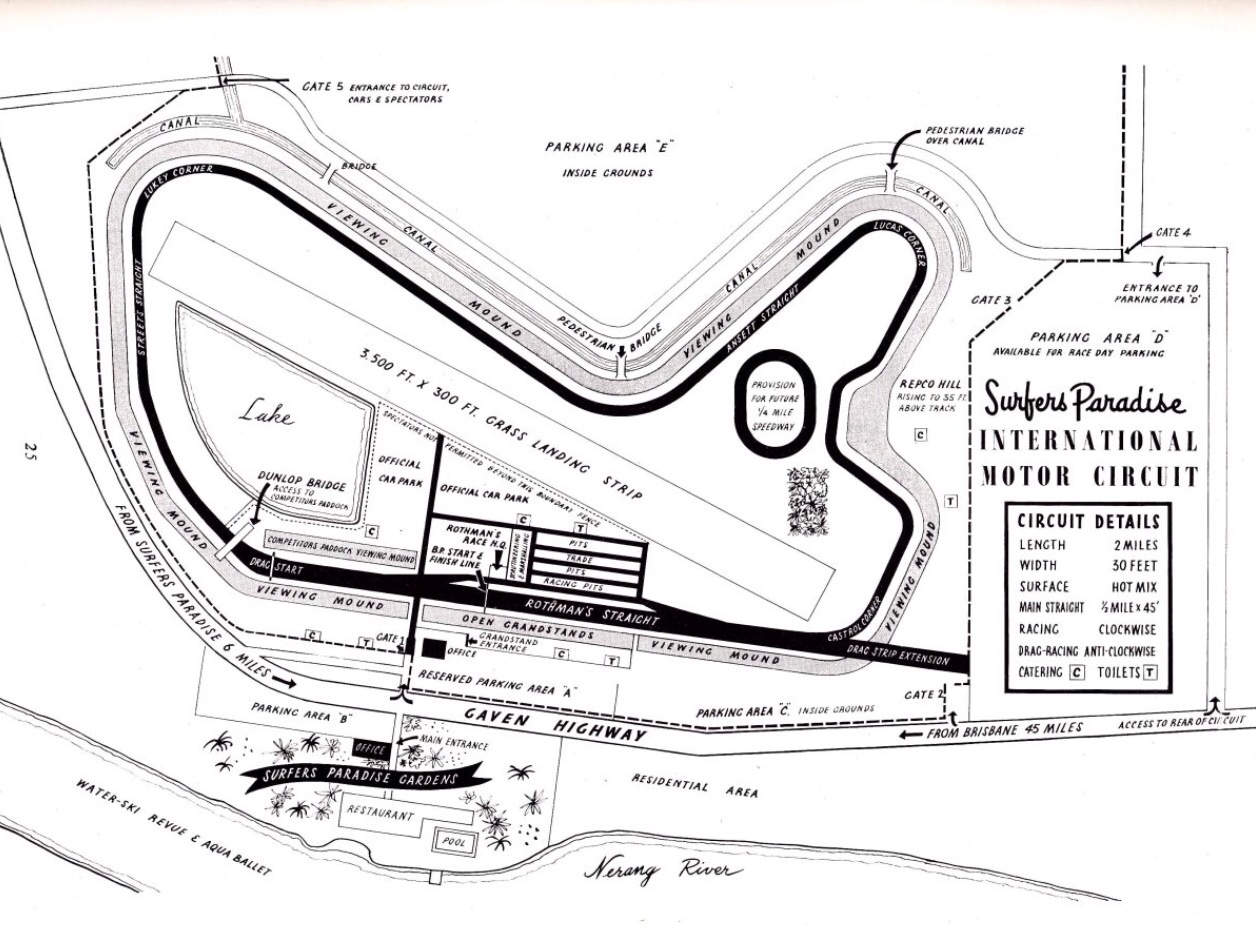


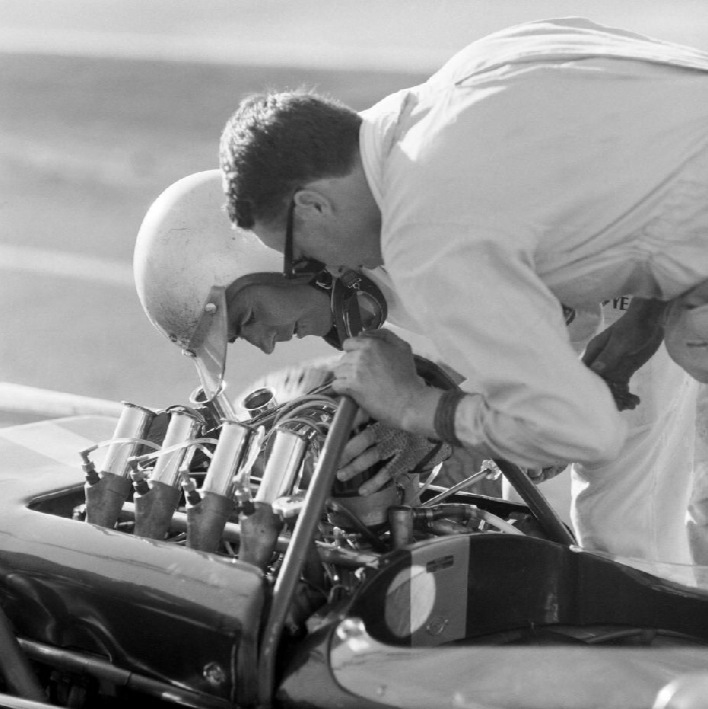

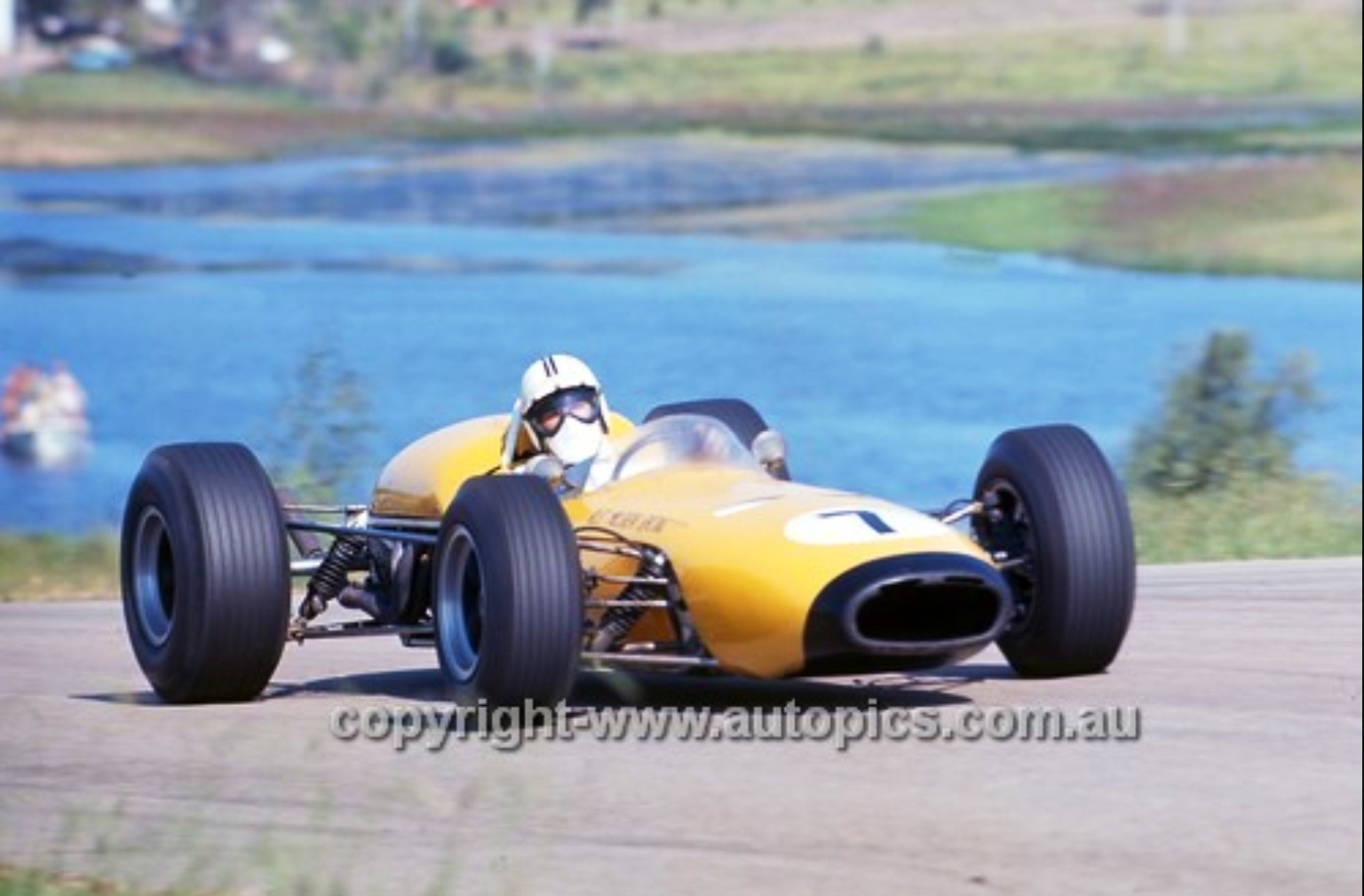


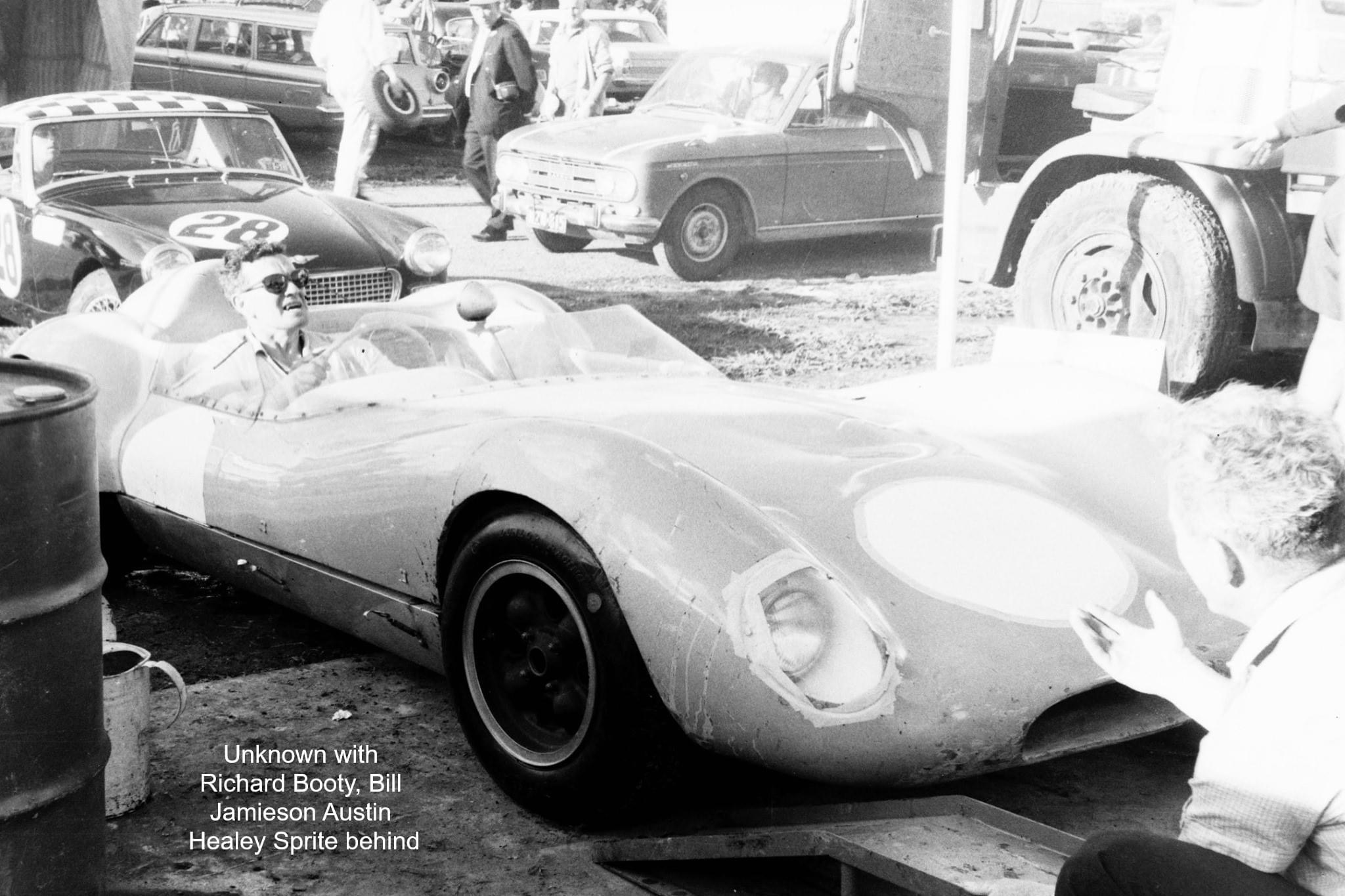
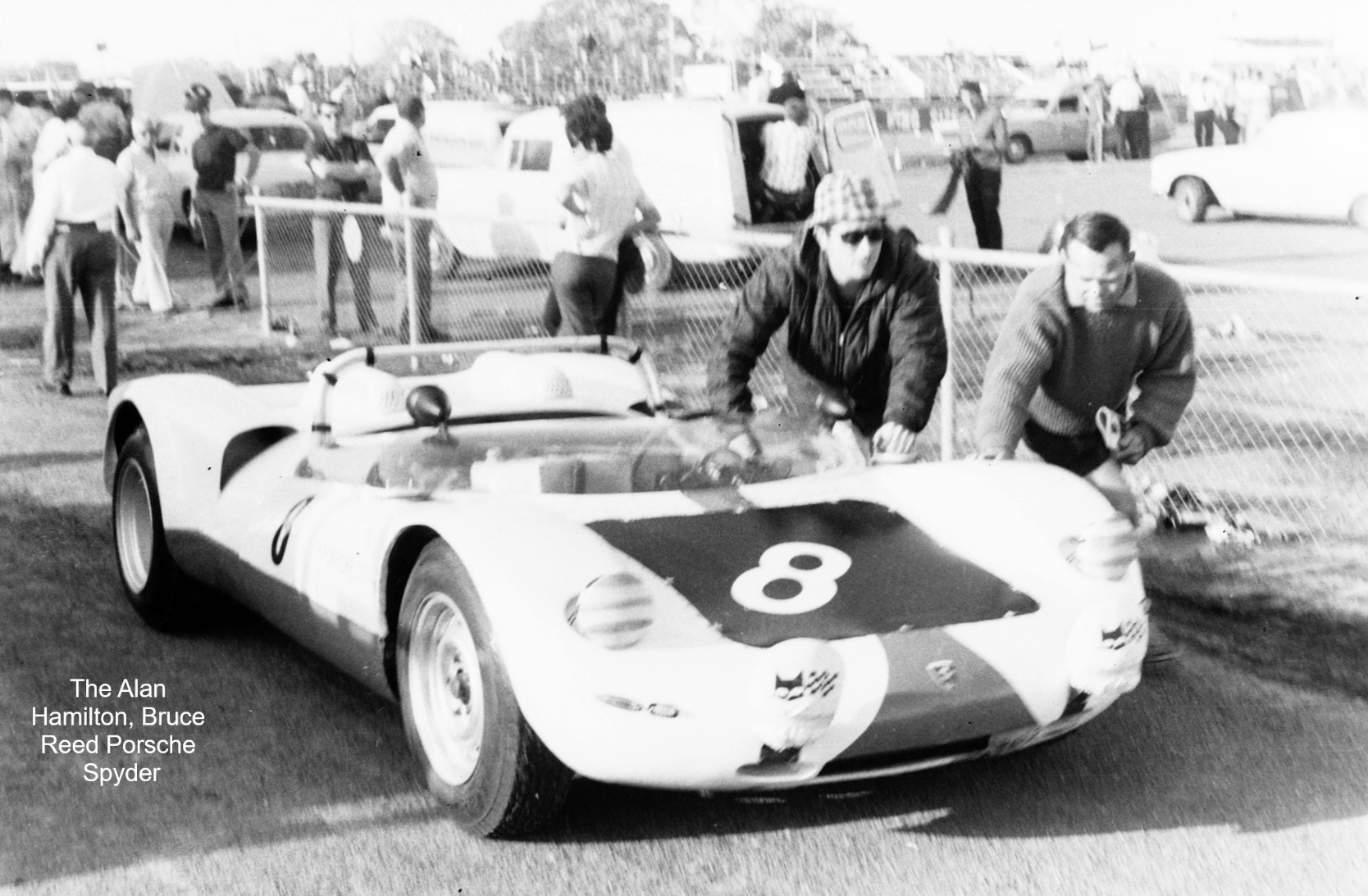


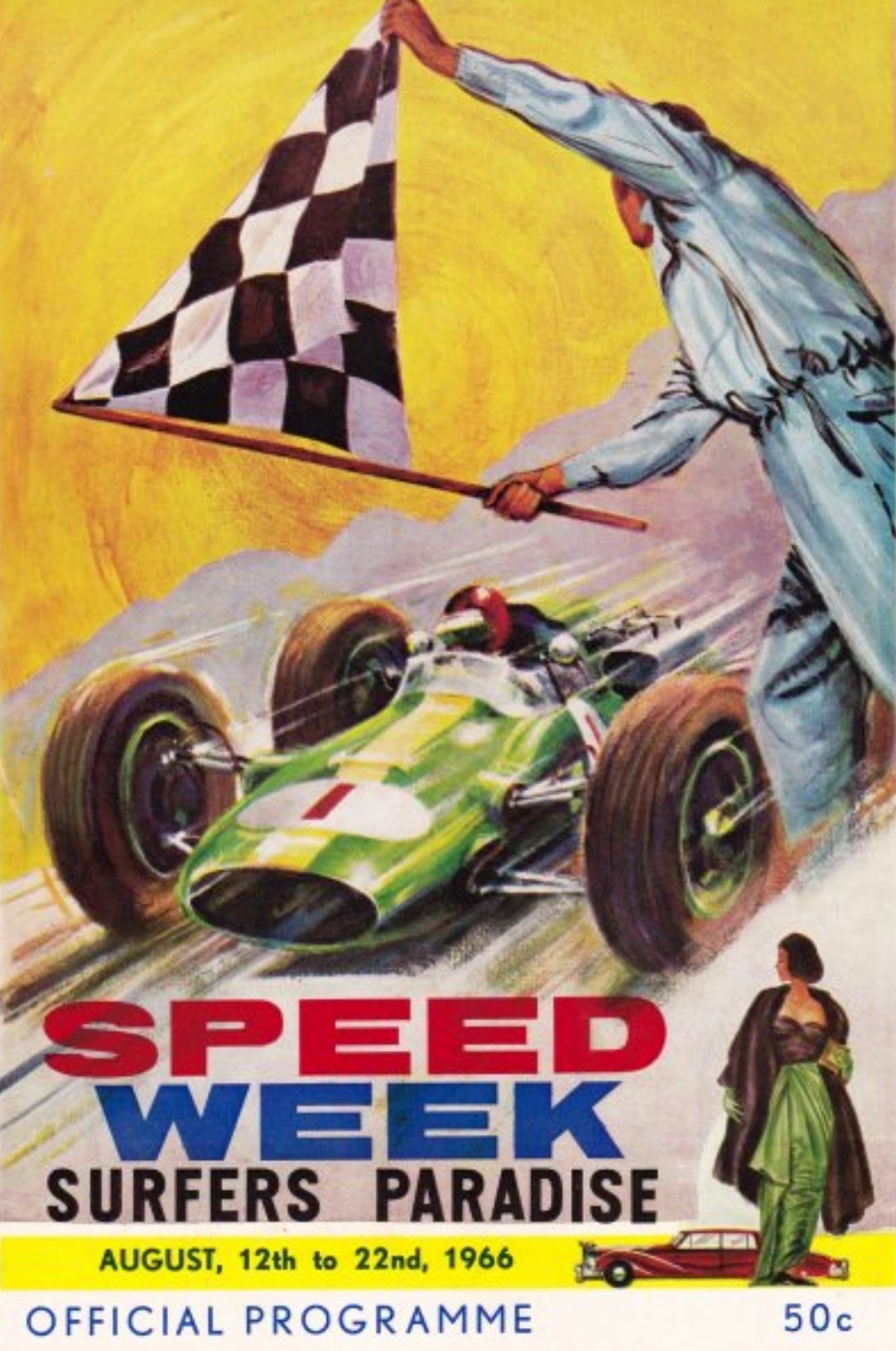


 primotipo...