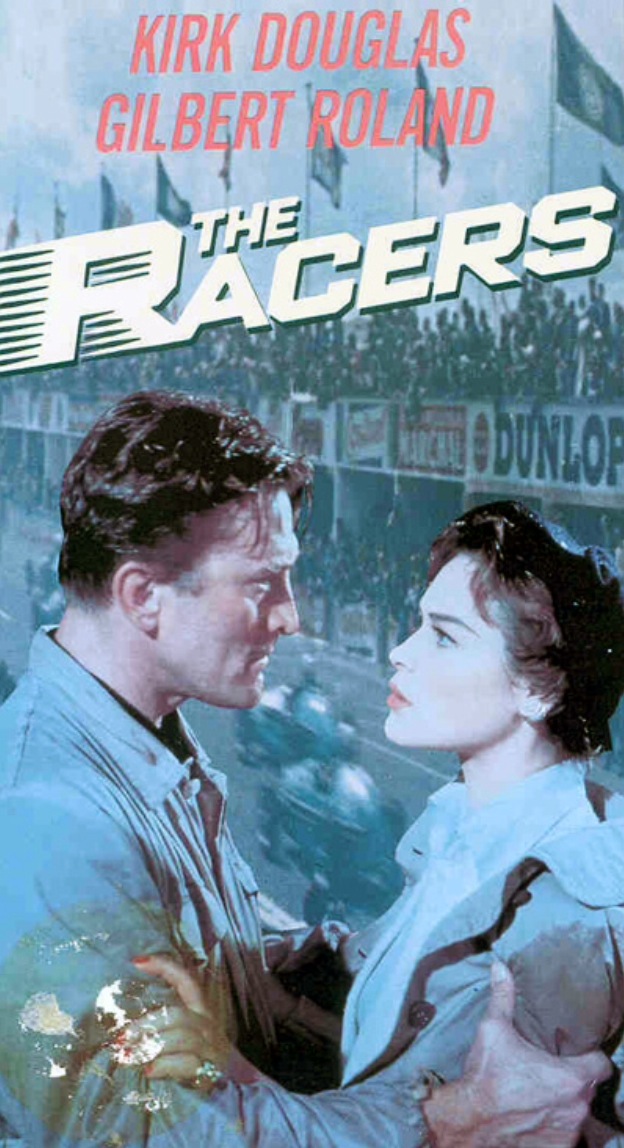
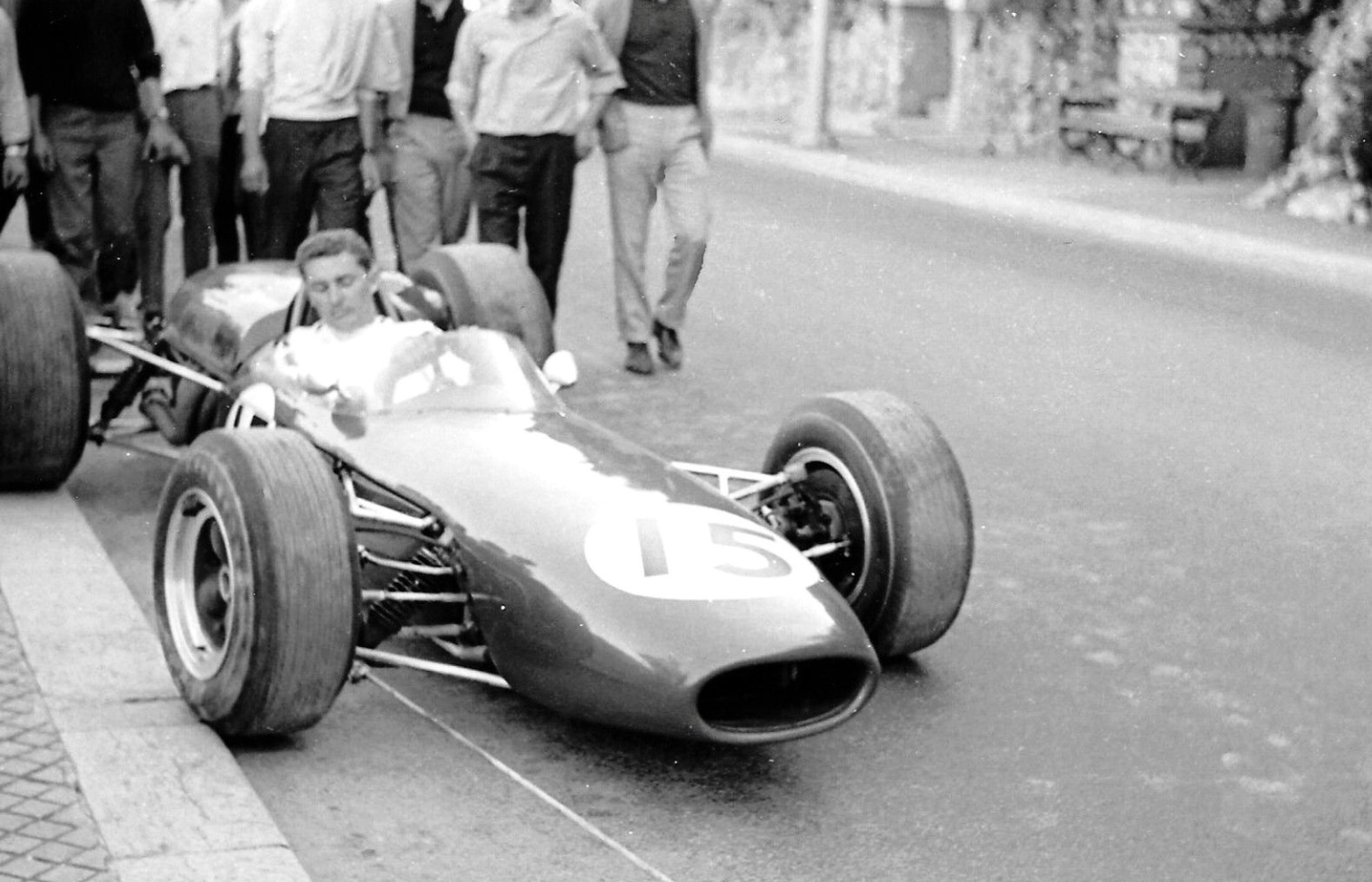
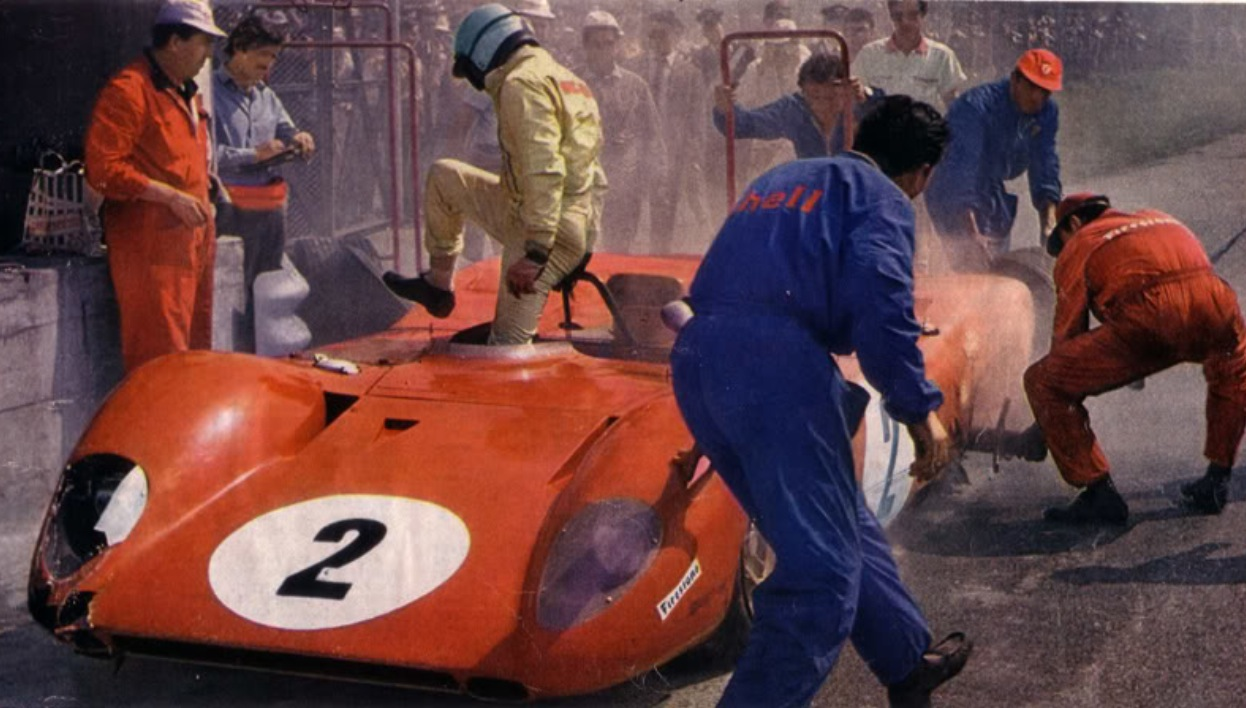
John Fitch crashes his HWM into the straw bales during the filming of ‘The Racers’ in 1954…
Cameraman Frank Phillips catches the action as ‘Gino Bergesa’ played by Kirk Douglas crashes his privateer HWM. ‘The Racers’ was a Hollywood film based on the book ‘The Racer’ written by Hans Ruesch a successful pre-war Grand Prix driver.
This photograph by Erde is in ‘Automobile Year’, neither book nor film are familiar to me but both appear to be worth a look. John Fitch was a successful driver who drove the action sequences for Douglas, this one was filmed at Monaco.
This website and article about the film are interesting;
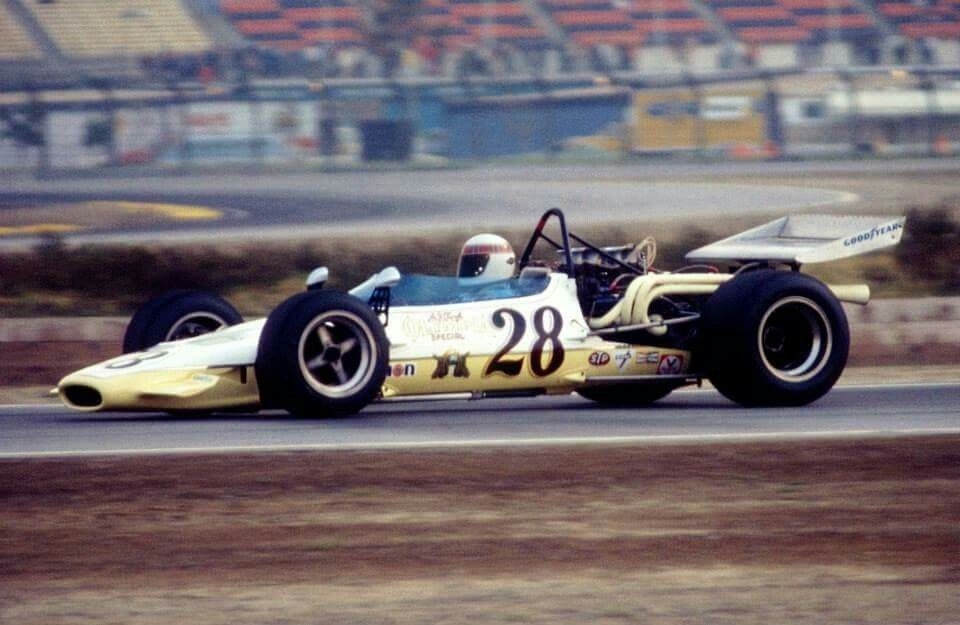
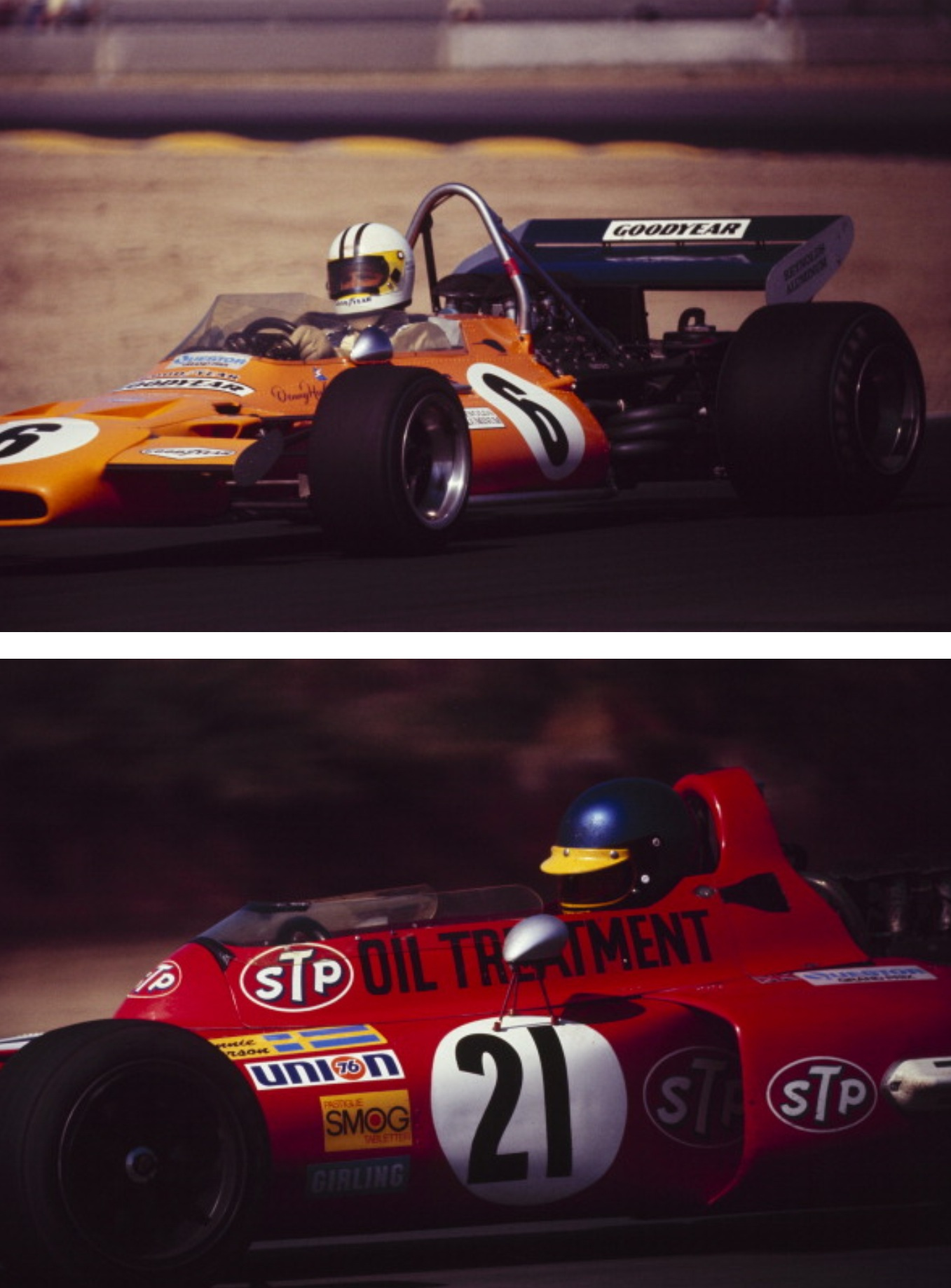
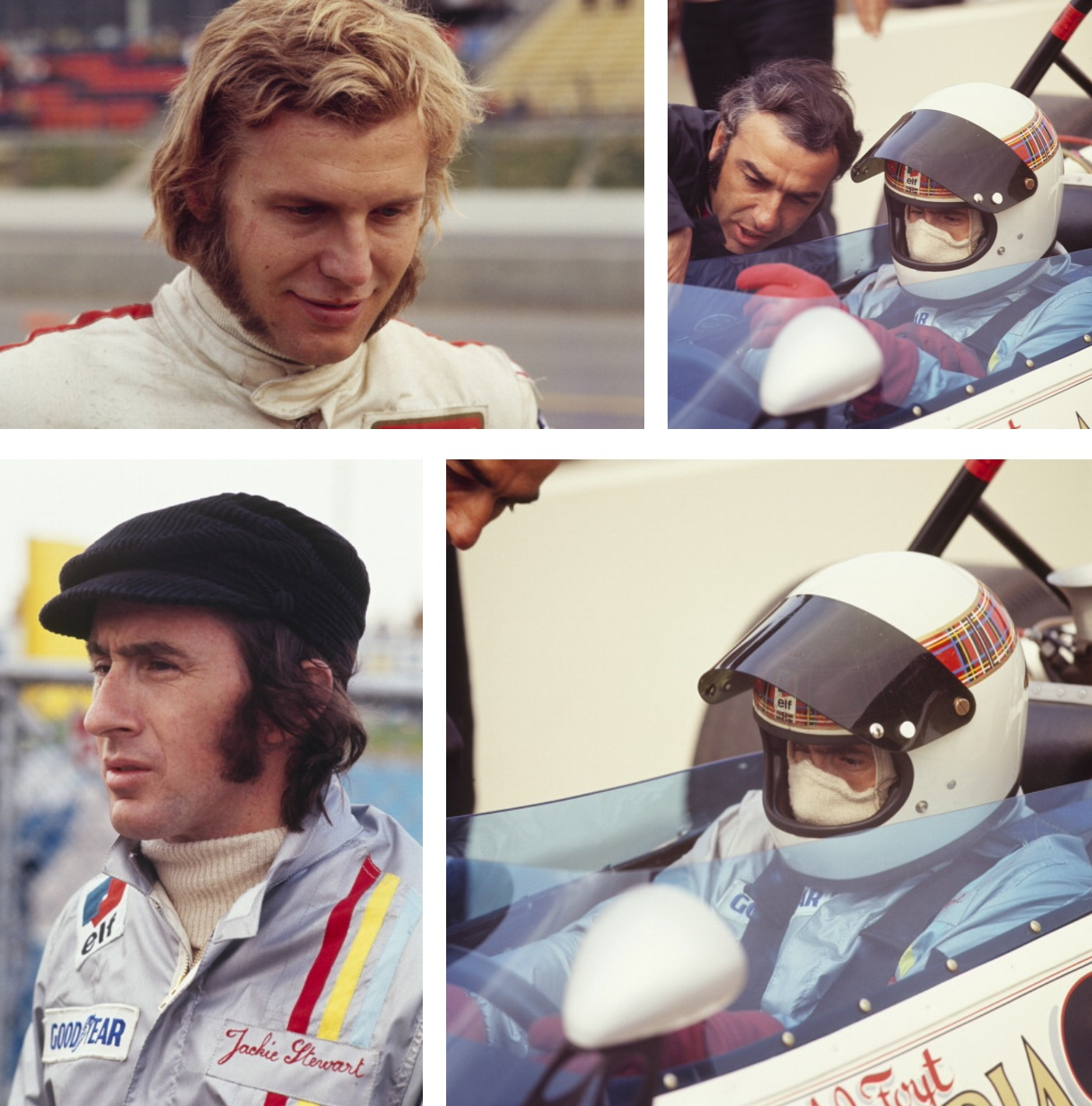
Jackie Stewart tests AJ Foyt’s Mclaren M10B Chev F5000 during Questor GP qualifying, perhaps the only time the Scot drove an F5000 car?…
The Questor Grand Prix was an intensely interesting experiment, a shame the Ontario circuit didn’t repeat it in subsequent years.
The event took place in March 1971 at the newly completed Ontario Motor Speedway. Promoted as the ‘Battle of Two-Worlds’, the USA and its Formula A/5000 cars against the best of European F1.
In 1971 there were only 11 championship F1 events so it was relatively easy for the teams to fit the event in, it gave them an extra race test without championship points at stake early in the season, and the prize money was $US278K or in 2015 $ terms, $M1.6, so it was well worth the effort!
For the Ontario Speedway promoters it was an ideal way to promote their new venue, the owners had aspirations of having a second US GP there, running of an event successfully provided the essential credentials to advance that goal. The event was well promoted with over 65000 punters rocking up on raceday.
The course itself comprised the start/finish straight, the first banked corner of the oval layout and a twisty infield section.
The Grid…
The American entry included Peter Revson’s Surtees TS8 Chev, Mark Donohue Lola T192 Chev, George Follmer Lotus 70B Ford, AJ Foyt in a McLaren M10B Chev, Bob Bondurant’s Lola T192 Chev and Al and Bobby Unser, both in Lola T190/2 Chevs, Swede Savage was Eagle Mk5 Plymouth mounted and Tony Adamowicz raced a Lola T192 Chev.
Mark Donohue’s Lola T192 Chev 14th, Derek Bell March 701 Ford 15th.
Tony Adamowicz’ Lola T192 Chev 17th, Graham Hill.
3 litre GP entrants included Ferrari with 2 1970 spec 312B’s (Mario Andretti and Jackie Ickx), Lotus (Emerson Fittipaldi and Reine Wisell in 72 Ford’s), BRM (Jo Siffert and Pedro Rodriquez P160, Howden Ganley P153 V12), Brabham (Graham Hill BT34 Ford ‘Lobster Claw’ and Tim Schenken BT33), Matra (Chris Amon MS120B V12), March (711 for Ronnie Peterson), Tyrrell (Jackie Stewart in 001), McLaren (M19A’s for Denny Hulme and Peter Gethin), and two privateer March 701’s entered by Frank Williams (Henri Pescarolo and Derek Bell).
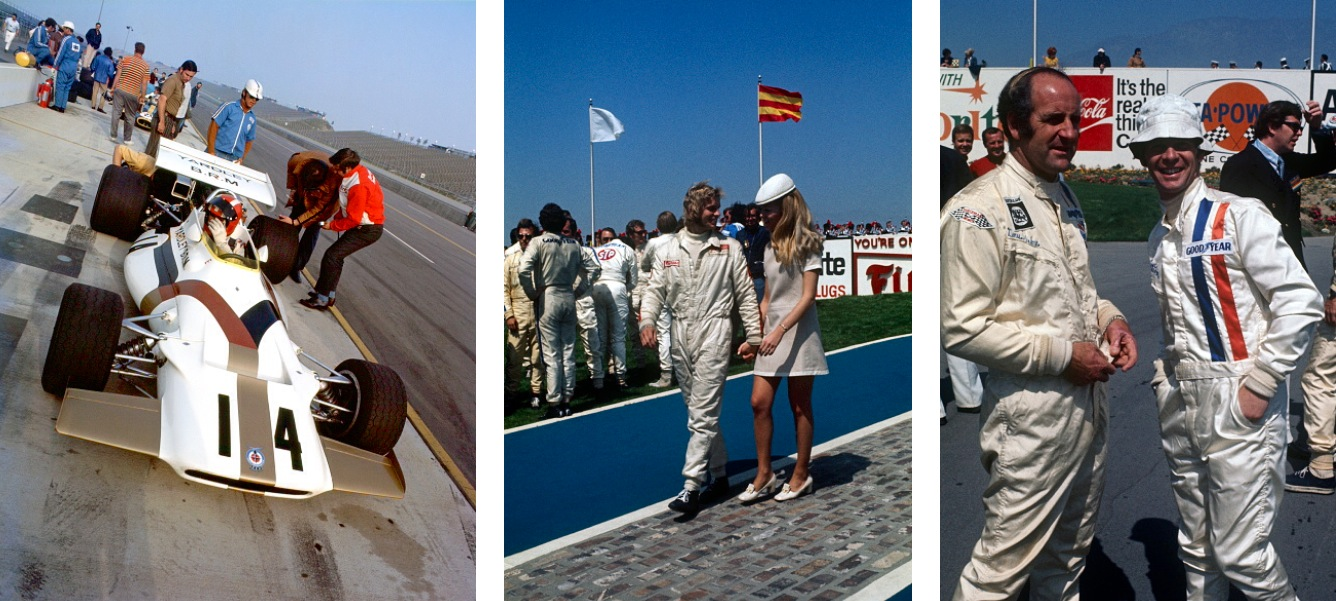
Siffert in his ‘brand spankers’ BRM P160, Reine Wisell and friend, McLaren’s Hulme & Gethin.
Attractive young maiden and Hulme poring over the innards of his McLaren M19A.
We may never see such a star studded battle ever again. All the heavy hitters from each side of the Atlantic were there. A race fans dream which some saw as a repeat of Monza’s ‘Race of Two Worlds’ held in 1957 and 1958.
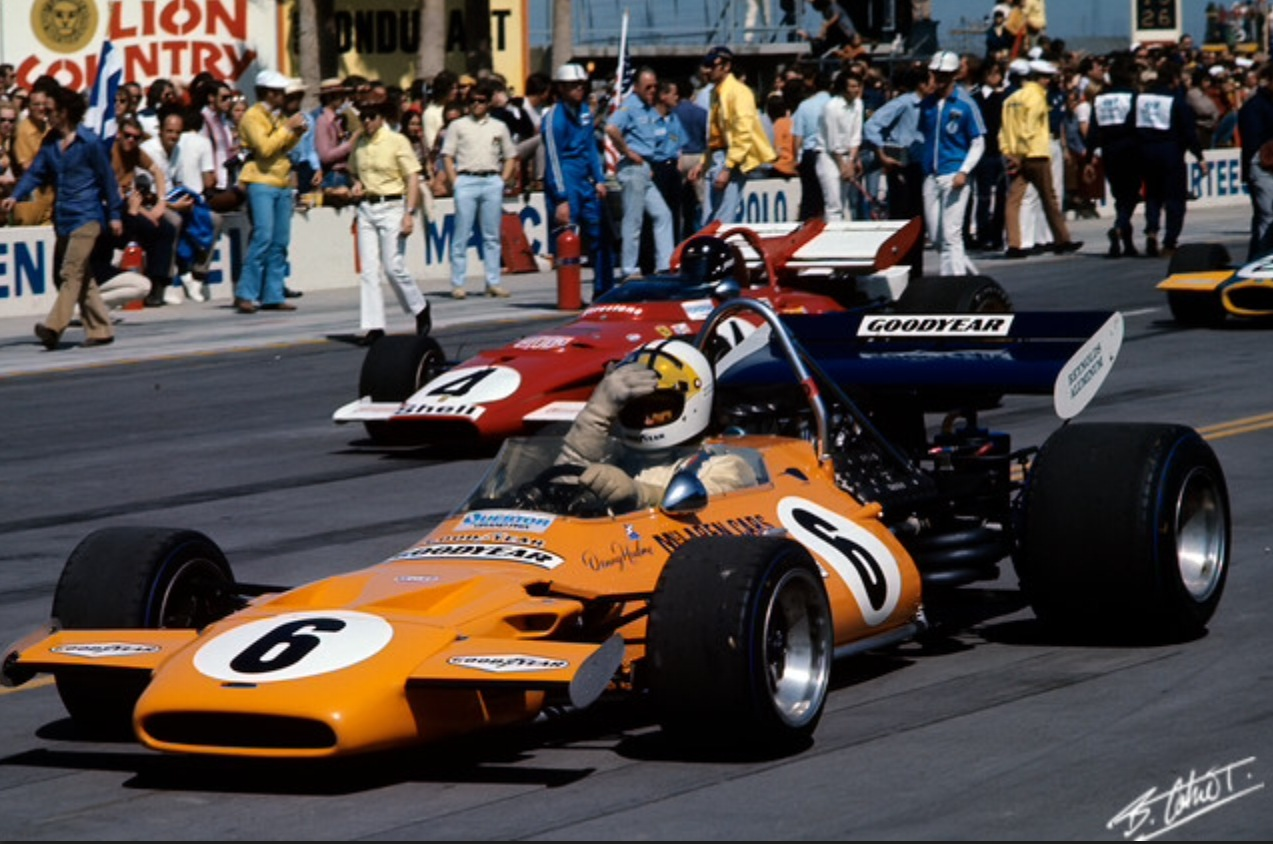
Denny Hulme, McLaren M19A Ford 3rd and Ronnie Peterson, March 711 Ford 13th.
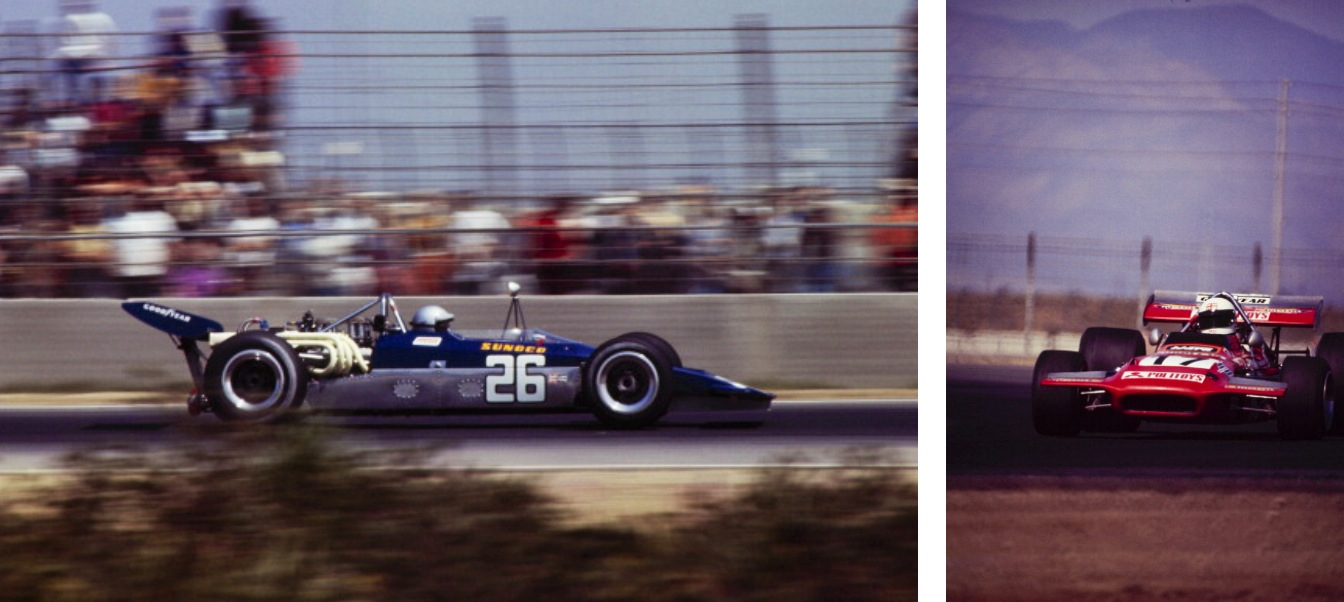
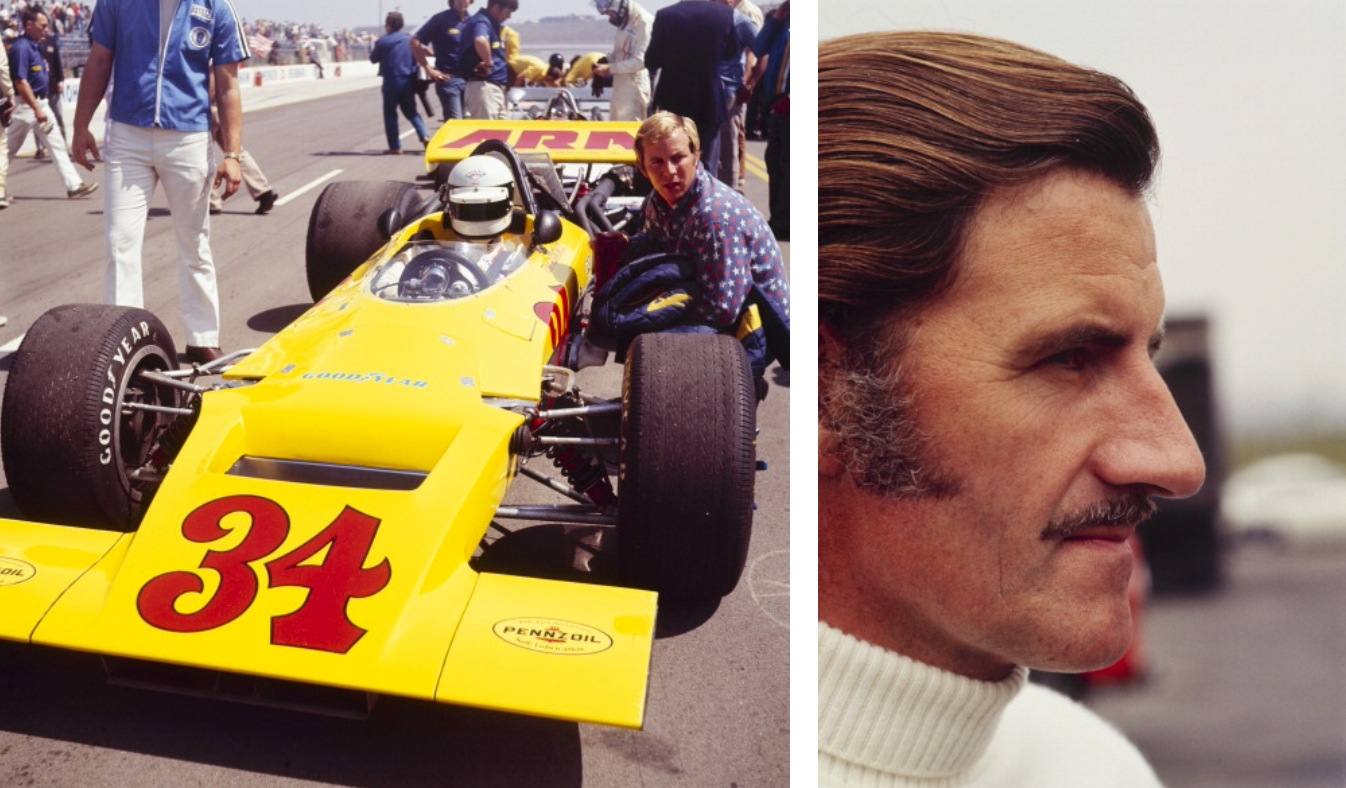
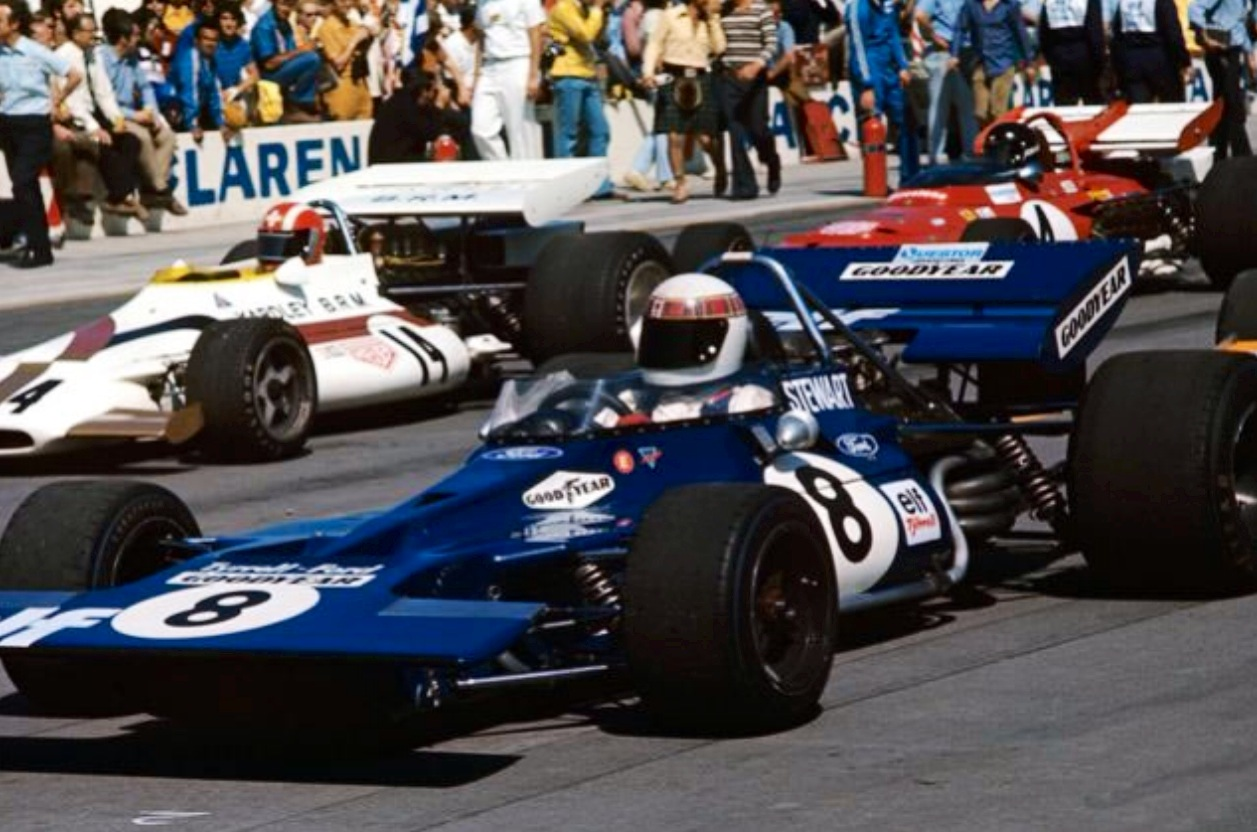
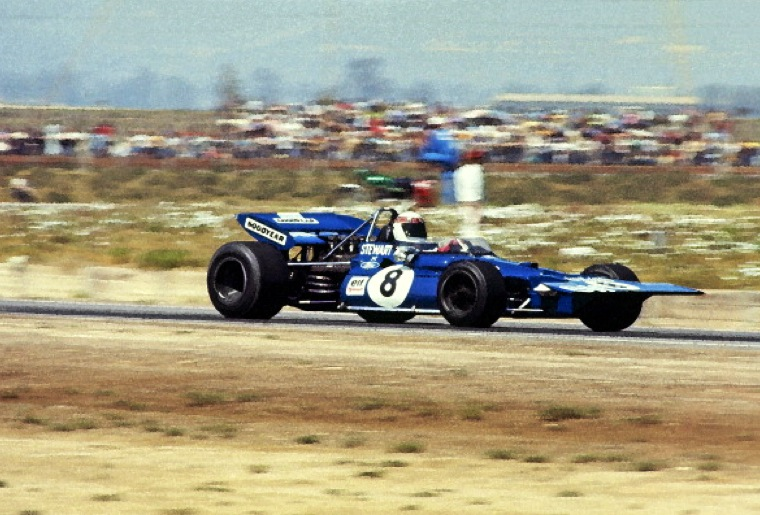
L>R top to bottom. Hill in his Brabham, #29 Ron Grable Lola T190/2 Chev #8 Denny Hulme McLaren M19A Ford, #28 Stewart McLaren M10 B Chev, Peterson March 711 Ford, Howden Ganley BRM P153.
Racing…
Stewart, Tyrrell 001 Ford, Siffert BRM P160 and Ickx Ferrari 312B on the grid. (unattributed)
The race was run in two 100-mile heats because the F5000’s didn’t have the fuel capacity for a 200 mile race, a GP’s normal duration.
Mario Andretti, having just taken his first GP win in the season opener at Kyalami, South Africa, had an accident in qualifying on Friday and missed most of the session. He also had an Indy race on Saturday at the Phoenix Oval. He started in 12th place, standing on his Friday time.
With AJ Foyt racing at Phoenix Jackie Stewart did some laps in his McLaren M10B doing a time good enough for 11th on the grid. Foyt was uncomfortable with the Scots setup and reverted to his own.
Jackie Stewart was on pole in his Tyrrell from Amon, Ickx, Hulme, Rodriguez and Hill with Donohue’s Lola the best of the F5000’s, then Siffert, Fittipaldi and Follmer’s Lotus 70.
Hill, Brabham BT34 Ford 26th, Siffert.
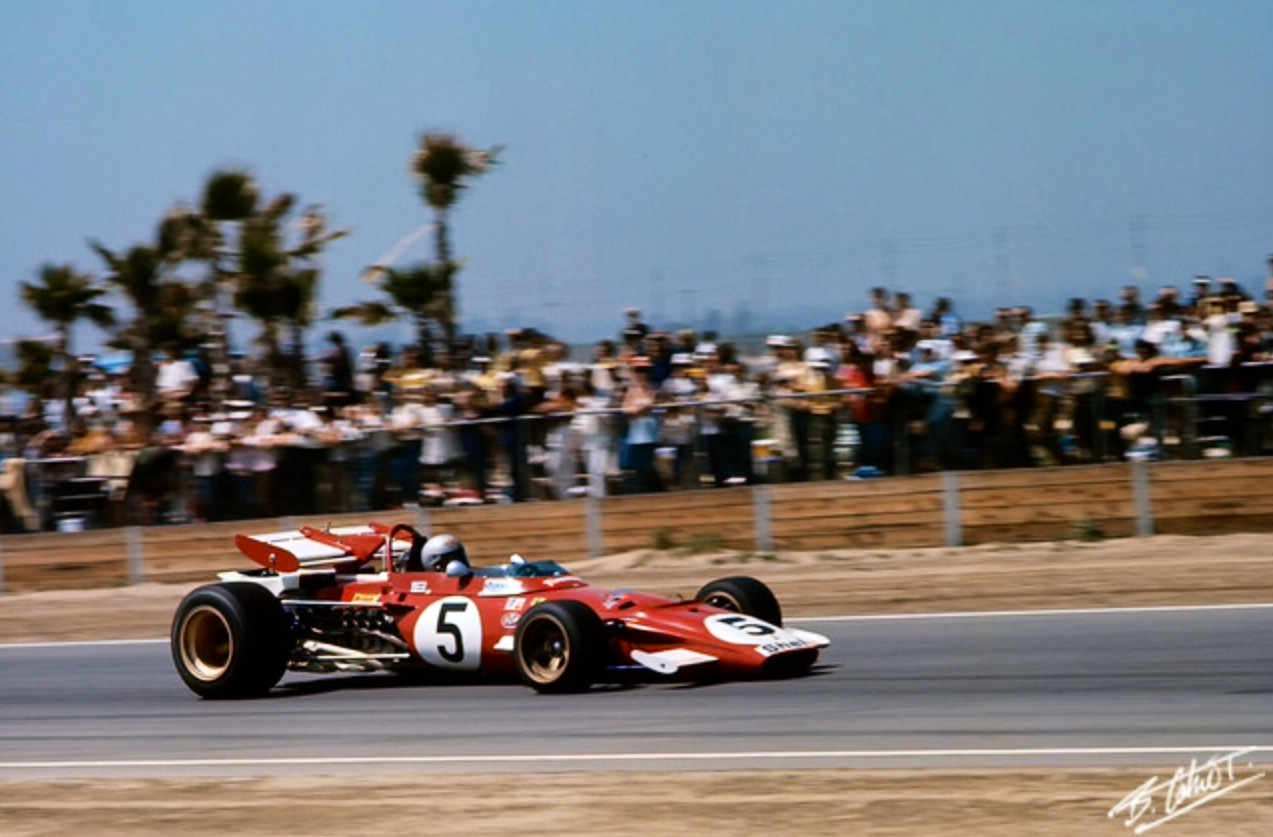
Hill and Ickx, Ferrari 312B 11th.
L>R top to bottom. Fittipaldi, Andretti, Amon Matra MS120B 4th from Ickx Ferrari and Hulme’s McLaren M19A..
In the first heatAndretti worked his way to the front, caught and passed Jackie Stewart under braking for the first turn and won pulling away, much to the delight of the American crowd.
Initially Ickx used his Ferrari’s power to take the lead from Stewart, Amon, Hulme, Hill and Siffert . Spins for Siffert and Hulme dropped them back, while Stewart battled to get past Ickx, outbraking him and moving ahead. There was a high attrition rate, Foyt retired early with handling issues and Follmer with an oil fire in his Lotus, Hill was the first F1 car to drop out as he felt his Cosworth engine tighten, Savage crashed his Eagle heavily into a concrete wall off the infield section of the course suffering severe leg and head injuries. Their were other Chevrolet failures amongst the Formula A contenders, both the F1 and 5 litre cars engines were suffering as a consequence of the long straight and therefore long period at maximum revs.
Hulme on row 2 McLaren M19A, Ickx Ferrari 312B behind, nose in shot is the Brabham BT33 of Tim Schenken. (The Cahier Archive)
Reine Wisell, Lotus 72 Ford, ret’d.
Andretti was moving up, Donohue, defended strongly in his Lotus before Andretti passed him for third, which became second when Amon pitted with a puncture.
Together with three laps remaining, Andretti moved ahead to the delight of the crowd, taking the win from Stewart, Donohue was forced to pit from third with fuel injection dramas allowed Siffert into 3rd with his BRM.
Retirements included both Marchs; Pescarolo with a cracked chassis member and Peterson going off after a shock absorber failure, both Lotus 72s retired, Fittipaldi with an injection issue.
Mark Donohue’s FA Lola T192 Chev 14th ahead of Andetti’s Ferrari 312B 1st. (unattributed)
In the 2nd heat outside front row starter Jackie Stewart got the jump on Andretti and led. Andretti stalked Stewart for a handful of laps then repeated his first turn, first heat overtaking manouevre on Stewart to take the lead and the win.
Twenty-two cars gridded for heat two 45-minutes after the first. Foyt was persuaded to venture out in his McLaren Chevy and Peterson rejoinined after repairs but only once a large part of the race had been run.
Andretti was on pole but lost out to Stewart on the opening lap. Behind, Siffert led Ickx, Hulme, Amon and Donohue, that order changed when Ickx tried to dive past Siffert at the end of one of the short straights, Ickx spun and took Siffert with him. Whilst Seppi continued Ickx pitted with a puncture.
Stewart, Tyrrell 001 Ford 2nd.
Luckless Donohue pitted from third with injection dramas after a fine run, easily the quickest of the Formula A’s in his Penske Lola T192, Amon took over third in his Matra.
At the front, Andretti was closing in again on Stewart, the Tyrrell suffering a broken rear anti-roll bar which was causing issues on the banking, Stewart elected to yield as Andretti made his move.
The tough nature of the circuit again took its toll. Even Andretti was impacted, his Ferrari not revving cleanly and puffing smoke. He held on to win though with Stewart second from Amon. Rodriguez benefited from Siffert slowing after losing a suspension bolt to take fourth ahead of Hulme, Schenken and Ron Grable the first FA car home in seventh.
John Cannon in an STP sponsored March 701 Ford 12th. (unattributed)
Andretti’s victorious Ferrari 312B in essentially 1970 spec. (The Cahier Archive)
In terms of overall results the complex points structure meant that a car with a high finish in one race could outscore a car that had finished both, gave Andretti the win he deserved, Stewart was second from Hulme, Amon and Grable heading the US-runners in seventh.
The race was popular with the crowd, the American racers felt their cars had been uncompetitive and the European’s, other than those who had extensive sportscar experience of Daytona, were not fond of the banking!
The Questor Group, builder/owners of the circuit encountered financial problems shortly after the event so it was not repeated, leaving it a ‘great might have been’.
Certainly as F5000’s became more sophisticated into the 1970’s, the Lola T330/2 famously as quick as many F1 cars at Mosport and Watkins Glen, circuits upon which they both raced, would have made such an event much closer, perhaps, than the Questor GP was in 1971?
L>R top to bottom. Hill/Schenken/Peterson and friend, happy winner Andretti, Jo Siffert
Etcetera…
Ickx doing a few laps in Andretti’s chassis during practice, Ferrari 312B. (unattributed)
L>R top to bottom. #7 Gethin McLaren M19A Ford 8th, #14 Siffert BRM P160 6th, #2 Fittipaldi Lotus 72 Ford 21st, John Cannon March 701 Ford 12th.
Tim Schenken Brabham BT33 Ford, 5th.
YouTube Footage…
Etecetera…
Dan Gurney’s protege Swede Savage deserved a more competitive car than the ’69 Eagle Mk5 Plymouth, the oldest car in the race. He crashed heavily and didn’t return to racing for 6 months after severe leg injuries and a ‘bruise to his brain stem’. (unattributed)
Al Unser in his ‘Kastner Brophy Racing’ Lola T192 Chev, #38 behind in the colour shot is brother Bobby’s similar ‘Charlie Hayes Racing’ T192. (unattributed)
Ontario lap 1 Questor GP vista (unattributed)
Andretti’s Ferrari 312B, lines of that 1970/71 series of Ferrari’s about as good as it gets?, #18 Henri Pescarolo’s Frank Williams March 711 Ford (unattributed)
1971 Questor GP entry (unattributed)
Reine Wisell top left and Jackie Stewart, Foyt F5000 McLaren M10B mounted, engineeer familiarising JYS with the dash and rev limits ‘7500 not 10500 pleeease Jackie…’
Bibliography…
The Nostalgia Forum, oldracingcars.com, HistoricRacingNews.com
Photo Credits…
Getty Images-all images by Getty unless otherwise stated, The Cahier Archive
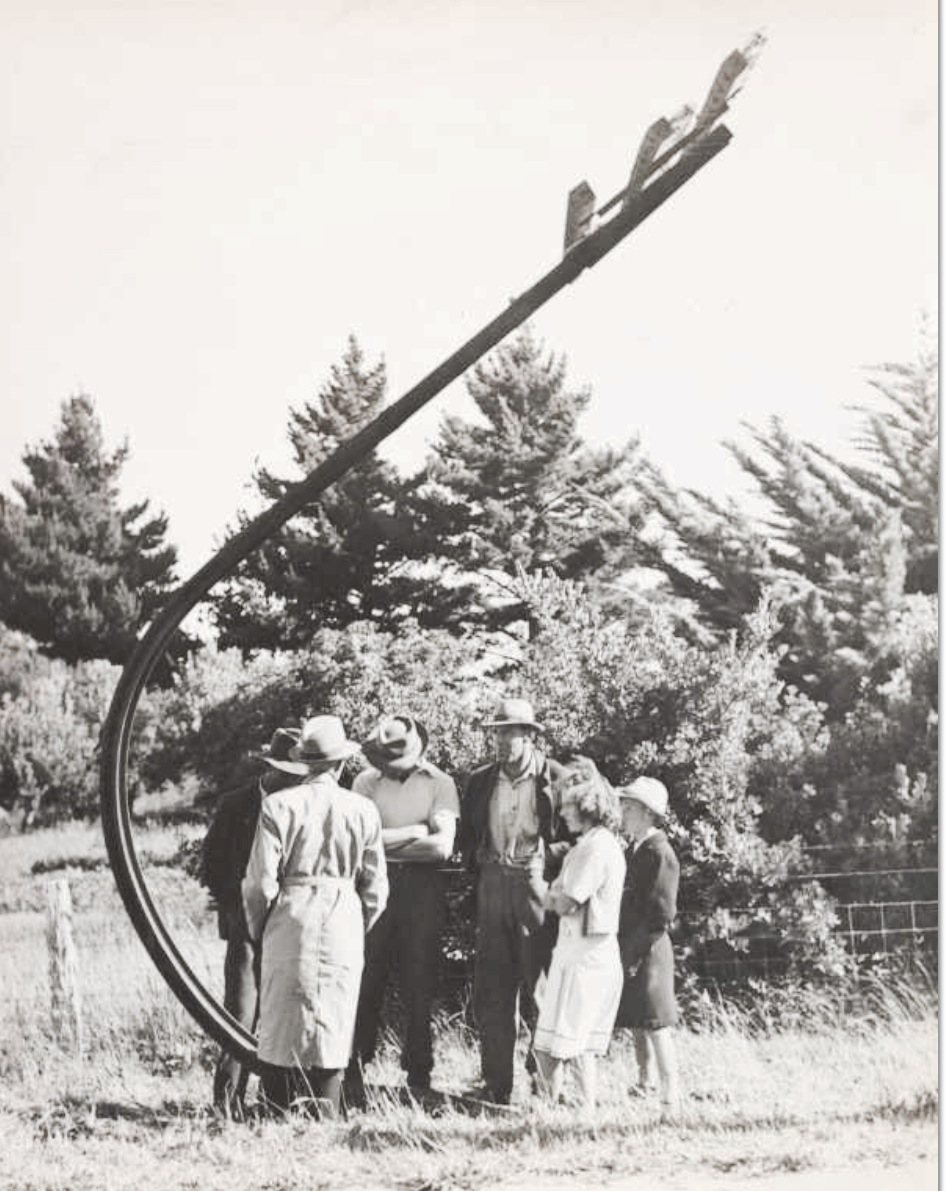
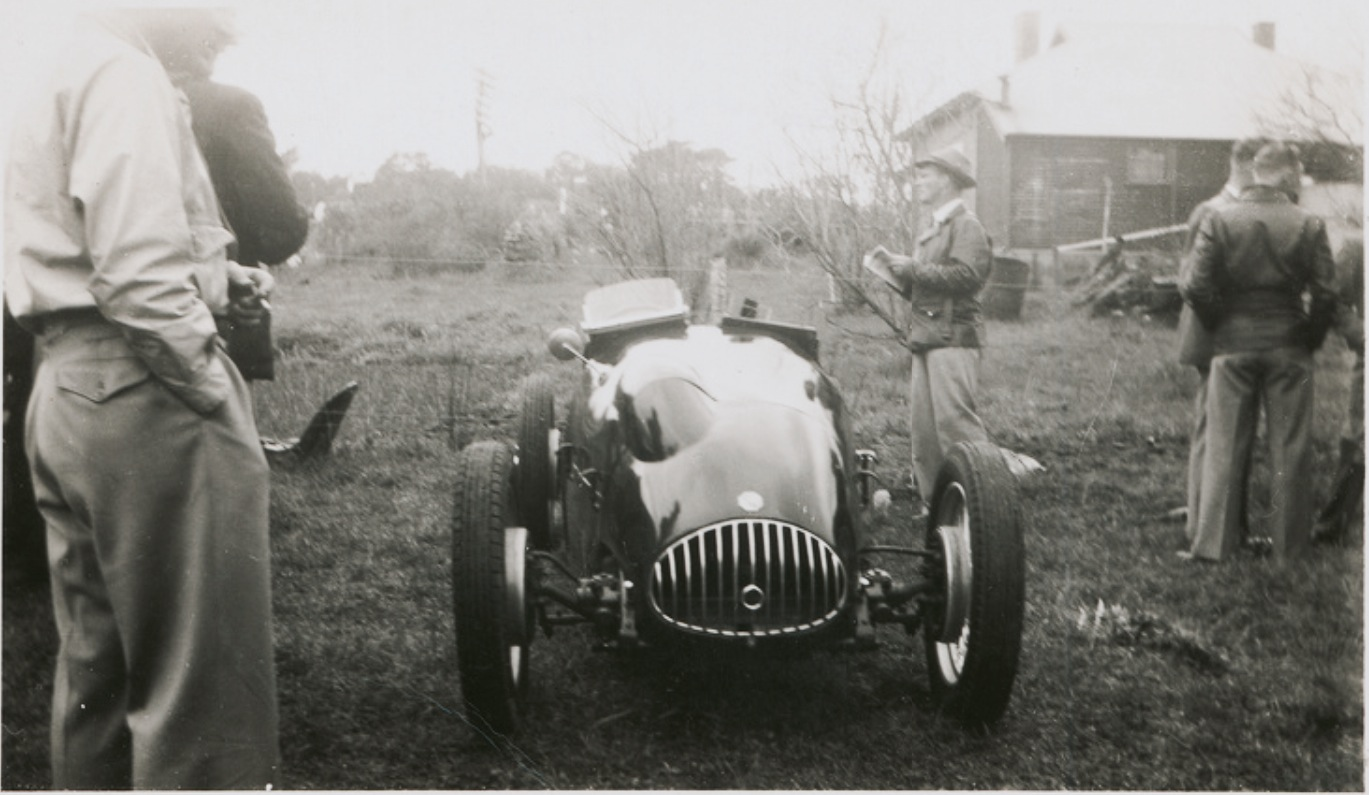
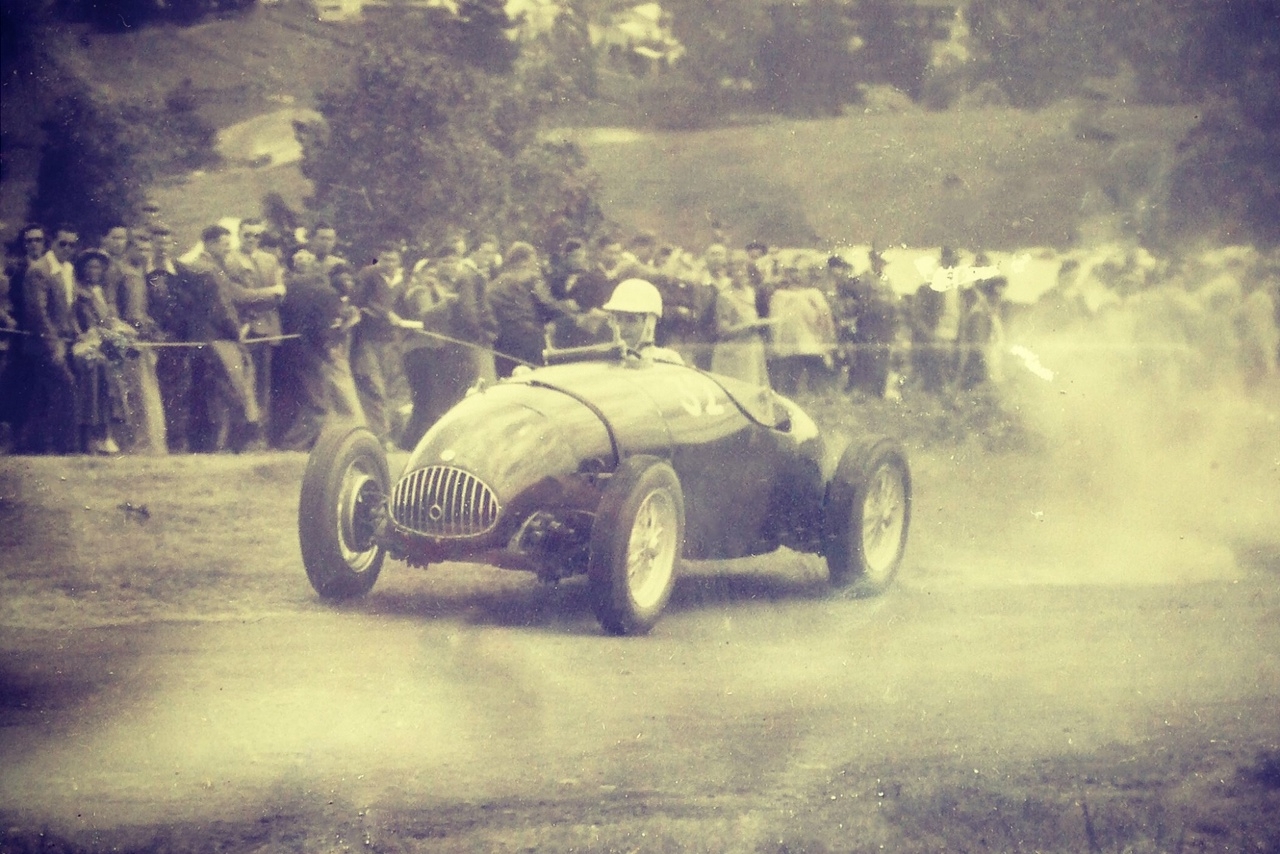
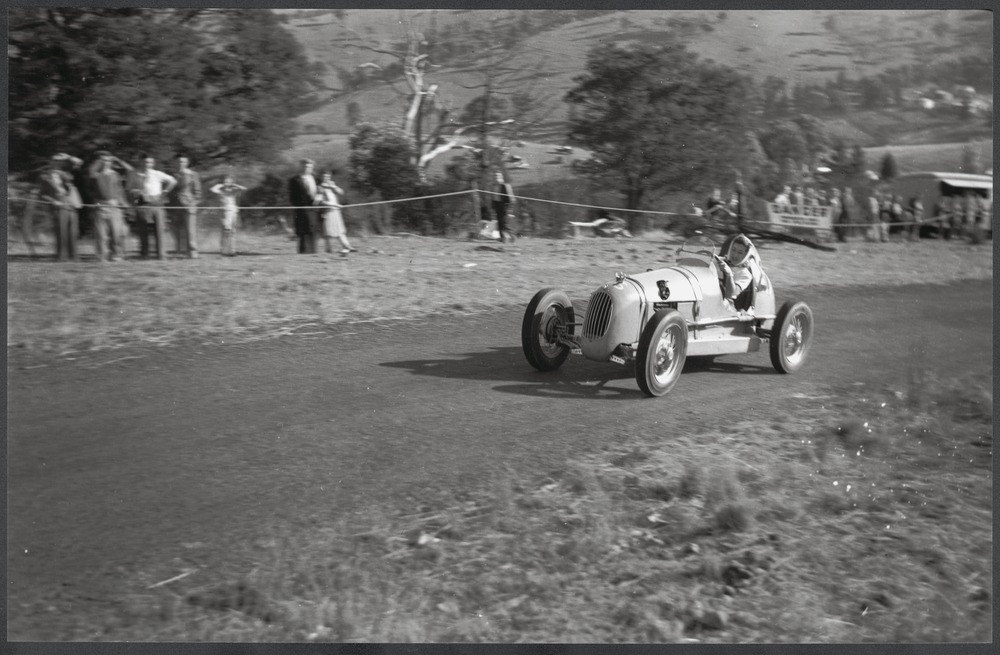
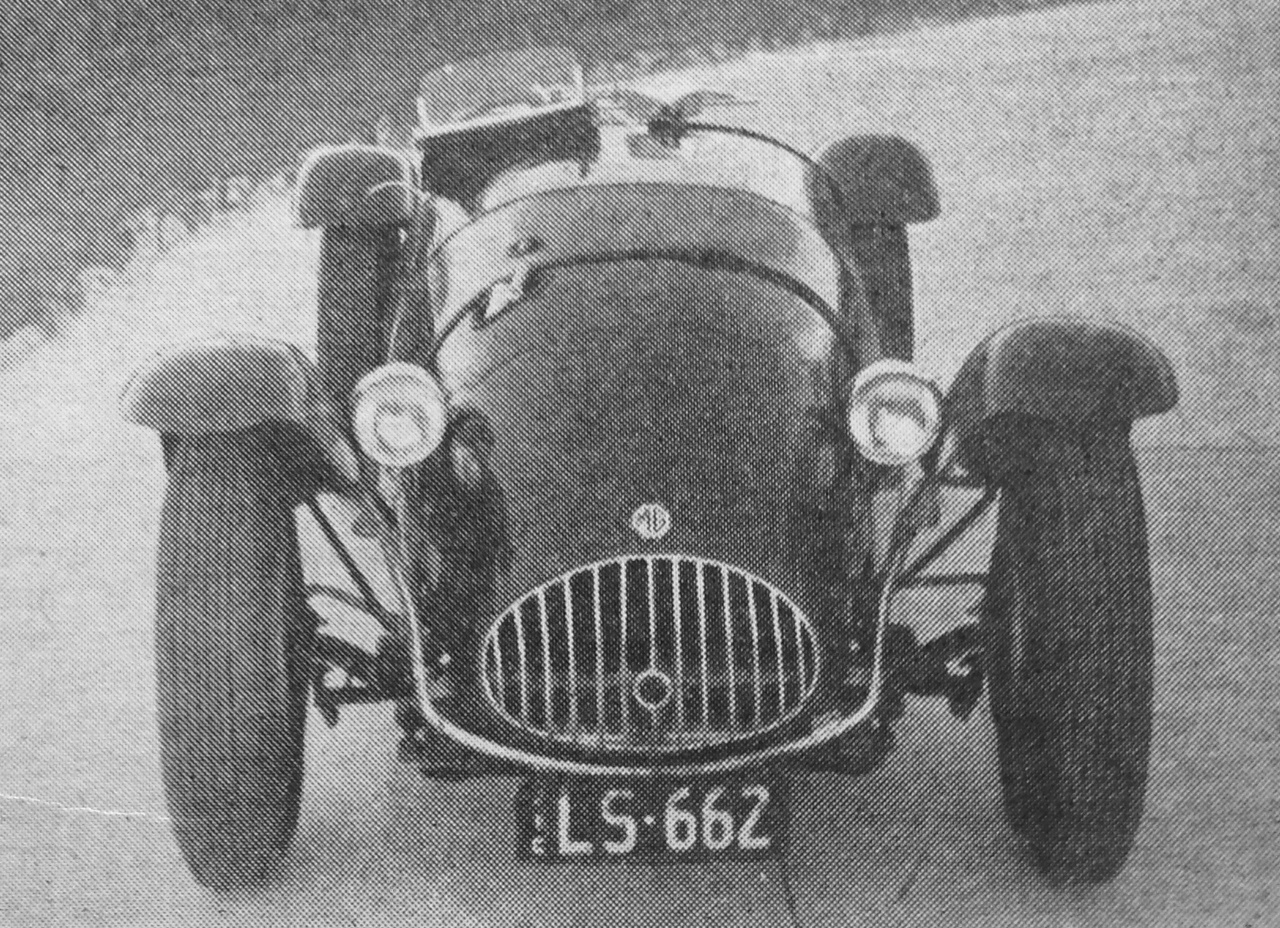
At the daunting Barossa Valley Lobethal road circuit in January, 1948, Lex Davison, having borrowed the ‘Missus new MG TC had his first major crash. He went for the ‘wrong side’ to pass Gavin Sandford-Morgan’s MG and ran off the road, destroying this innocent ‘Stobie Pole’, the TC but fortunately not himself…
This is the story of Davisons MG TC Spl chassis #TC.0825 and more briefly the importance of MG as a marque to motor racing in Australia until the dawn of the sixties.
Woodside 1949.Here the car is in its early supercharged form, suspension standard but for ‘Telecontrol’ shocks, finned brake drums and air scoops. (State Library of South Australia)
Diana Davison/Gaze recounts the story in Graham Howard’s biography of Lex…‘While he waited for the Alfa (Alfa Romeo P3/Tipo B Monoposto) to arrive, Lex entered the TC for the New Year’s meeting on the formidable 8.65 mile Lobethal public road circuit. He drove it over from Melbourne accompanied by Peter Ward and Lyndon Duckett in an old 6cylinder Vauxhall.
During practice they went off the road, slewed down the sloping grass verge, somersaulted, then hit a Stobie pole so hard the steel pole was bent into the shape of a question mark. The violence of the accident bent the MG’s chassis and tore off the driver’s door, the bonnet and the outer scuttle panelling. The alloy seat was bent, the rim of the steering wheel was broken away from the spokes, a front wheel smashed and its tyre gone. Lex had a chipped bone on one knee.
Naturally, I was dreadfully upset at losing the MG, as I had never owned a car before, but it had gradually disappeared from my hands. We had both driven it at Rob Roy, where Lex had coached me from the passenger’s seat, then Lex raced it at Nar Nar Goon grass track and I had competed at the final Killara Park Sprints – dashing back to the house between runs to check on baby Anthony, who usually travelled in the car in a wooden cradle fitted behind the seats.
I was just grateful that Lex wasn’t too badly injured’.
Chris Davison, Diana’s son recently recalled ‘ The story goes that mum was getting tired of being left out, so Lex bought her the MG to ensure she was part of the team. Motor racing then bacame a real family affair. Smart move Lex!! When my daughter Claire drove at RobRoy for the first time she took this photo to remind her of the family history at Rob Roy’.
Diana Davison in the MG Spl at Rob Roy, year unknown. (Davison Family Collection)
The TC reappeared as a bare chassis for Rob Roy and Nar Nar Goon at the end of 1948, with Lex and Reg Nutt driving. DD; ‘By the following March the Head Brothers had created a narrow 2-seat shell with shapely cycle guards. It had nice upholstery and was painted red, and I think they christened it ‘Mum’s Racer,’ and they fitted it out with a small leather pocket for my compact and lipstick’.
‘Several times the car lowered the ladies’ record at Rob Roy, including once with the supercharger fitted, and that record stood for some time. Lex raced it widely and Bib Stillwell contested events at Woodside in 1949. Our last entry for the car was with Ian Mountain driving at the Grand Prix at Albert Park in 1953.’
Here Diana Davison at Rob Roy in 1946, in what appears to be an Austin 7 Spl. Happy to take advice on the car. DD an immensely talented, popular and respected member of the Australian racing community for all of her life. ‘Australia’s First Lady of Motor Racing’. (George Thomas)
MG and Motor Racing in Australia…
I have written about Lex Davison’s cars on primotipo before, he was a winner of the Australian Grand Prix four times, winner of the inaugural Australian Drivers Championship, the ‘Gold Star’ in 1957 and was the father and grandfather of two generations of champion racers. His premature death in 1965 meant he never saw the achievements of his scions.
MG is surely the most significant marque in Australian Motor Racing before 1960?
The cars won the Australian Grand Prix four times; Les Murphy’s P Type at Phillip Island in 1935 and the famous 1937 race at Victor Harbour actually held in December 1936. Alan Tomlinson’s legendary, clever and brave drive at Lobethal 1939 in his supercharged TA Spl and Bill Murray, TC Spl at Bathurst in 1947. MG were always contenders in the AGP as the race was run to Formula Libre rules and handicapped until the early fifties, so whilst not usually the quickest entries, the handicaps gave everyone a chance.
Mind you, in the right circumstances the cars were outright contenders, Frank Kleinig’s ‘Kleinig Hudson’ which used an MG Magna chassis started from scratch in the 1949 AGP at Leyburn, Queensland. In that race he was advantaged by the withdrawal of a swag of Victorian topliners who didn’t enter in a political protest, but the Kleinig Hudson was always an outright contender, albeit an unreliable one driven as it was by a mechanically talented if not entirely sympathetic driver.
In fact the last MG placing in an AGP, well into the mid-engined era appears to be Noel Barnes 10th place in his TC Spl in the 1960 event at Lowood, Queensland, the race won by Alec Mildren’s Cooper T51 Maserati. Three TC’s started the race, all from the back of the grid.
AGP wins is not the real contribution MG made though, that was more around ‘mass’ participation. The cars were affordable, accessible and ‘tunable’, a way to view them is the Formula Vee or Formula Ford of the period. The cars gave so many drivers a start, whether it was local hillclimbs and sprints, circuit racing or the elite levels of the sport, such as they were in Australia between the wars and through to 1960.
Lex Davison in the MG TC Spl Fishermans Bend 1949. (VHRR P Read)
Rebuild and Specifications of ‘TC.0825’…
Back to Lex’ Spl. Davison gave the car to Reg Nut in Melbourne to rebuild the chassis which was largely standard but fitted with brake torque cables from the frame to the tops of the king pins, aluminium cooling fins on the brake drums and air scoops to the backing plates.
The 3 main bearing, cast iron, 4 cylinder, pushrod OHV, ubiquitous ‘XPAG’ engine was fitted with domed pistons giving a compression ratio of 12:1. The ports were opened, ports and combustion chambers polished. Valves were from a Jaguar, bigger than the biggest in the MG ‘catalogues’, cam followers and valve gear modified, lightened and polished as were the crank and rods.
Capacity was standard, wider bearings used by widening the crankshaft journals, a bigger 2 1/4 gallon sump was fitted and an aluminium oil cooler fitted underneath the radiator.
Bigger 1 1/2 inch SU carbs fed the thirsty little engine, spark was provided by a Lucas NV4 magneto, albeit the wiring for a coil and distributor setup was retained to allow changeover if required.
Head Brothers in Murrumbeena, a Southern Melbourne suburb, built an attractive sports car body with road equipment, the front and rear guards easily removed depending on the nature of the competition event.
Heads used a strong but light framework from square section seamless tubing, then covered it with pre-formed panels of light aluminium sheet, attached by wrapping their edges over the tube frame. The grille was hand made by light tubing, the one piece bonnet retained by leather straps.
The fuel tank Lex ‘knocked off’ from his newly acquired Cooper, the 10 gallon aluminium tank lives inside the MG’s low tail, it’s quick-action cap exposed outside the body.
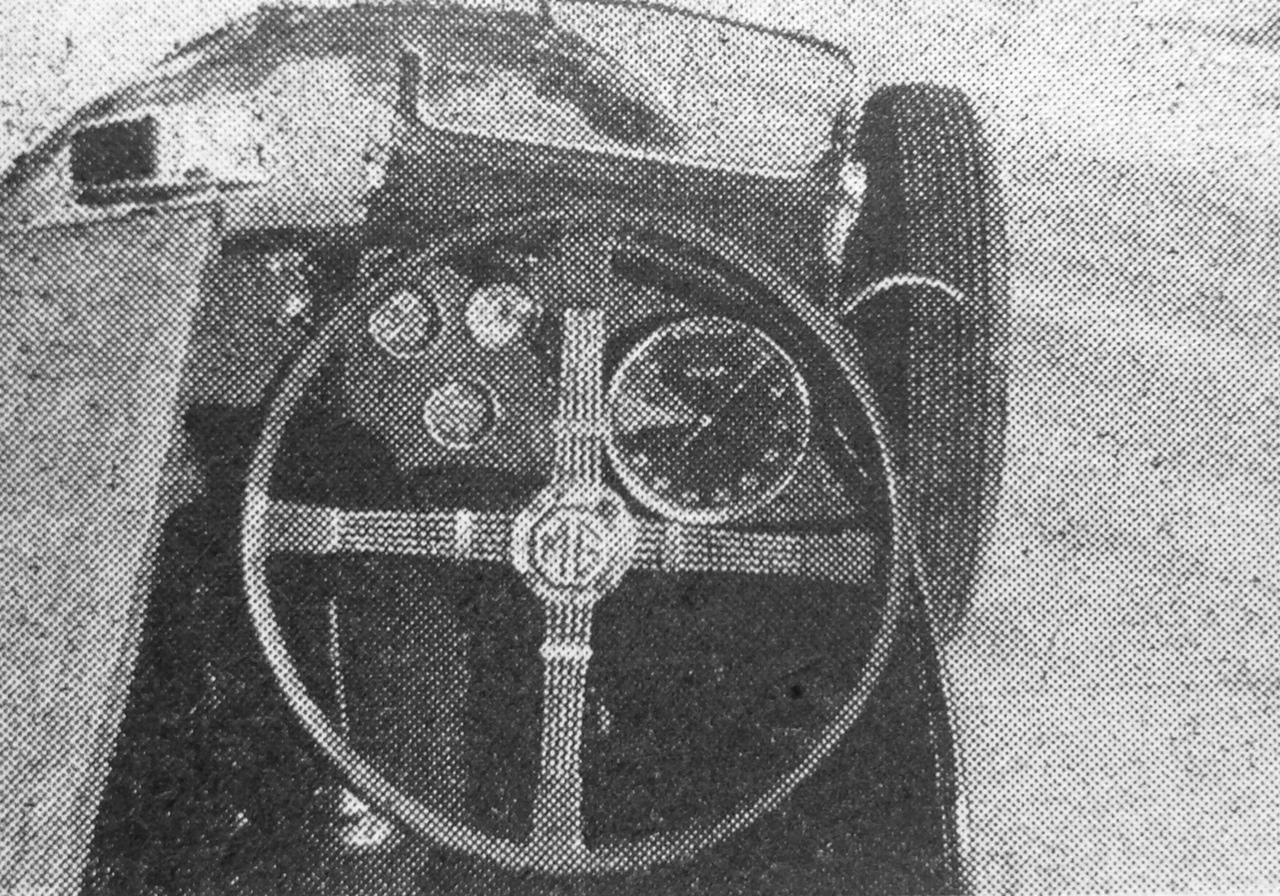
The car was beautifully finished and trimmed. Instruments comprised Smiths tach, oil pressure and oil and water temperature gauges.
16 inch wheels were used, 5 inches wide at the front and 5.5 or 6 inches wide at the rear, shocks were ‘Telecontrols’. Gear ratios and ‘box were standard but a lower 4.875 rear axle ratio was used as the ‘best compromise’ for events contested.
Picture of the very neat, fast for its time, road/track sports racer. Here in unsupercharged form. Head Bros of Melbourne built the body, lights and guards easily removable front and rear. (AMS)
Davison TC Spl Competition Record…
The car contested it’s first Rob Roy Hillclimb in 1948, driven by Reg Nut, Lex then ran it at Nar-Nar-Goon in both events the car was successful.
It next raced, after the Heads’ body was fitted and a supercharger at Fishermans Bend in 1949. It raced at Woodside, SA later in the year before the supercharger was removed ‘as it’s bonnet hump was thought unsightly’. (Makes no sense to me as a reason to remove it but ’tis what the contemporary reports say).
The car then raced successfully throughout 1950 in unblown form and in 1951 the MG returned to South Australia, racing at both the Gawler Airstrip and Woodside road circuit. Diana Davison also raced the car very competitively in hillclimbs, retaining her Ladies Record at Rob Roy.
Lex’ racing focus was primarily his Alfa Romeo P3/Tipo B Monoposto, the 2.9 litre car arrived in Australia in early 1948, the MG wasn’t being used much, it’s last race when owned by the Davisons’ the 1953 Australian Grand Prix meeting when it was raced for them by Ian Mountain.
The car rapidly passed through the hands of several owners, it was rolled without causing much damage in 1960 at Phillip Island. Historic Events started in the sixties, the car used then by John Fitzpatrick and others. It was bought by Reg Bowran in 1970, but has appeared only occasionally since.
Simple cockpit layout, array of Smiths instruments. (AMS)
The Davison TC had a major accident early in its life which resulted in it’s rebirth as a competition car but by the standards of Australian MG Specials this car, touted by the Davisons’ in the early Fifties as ‘the fastest unblown TC in Australia’ (David McKay would have contested this claim, his ex-Brydon ‘TC.3306’ the other contender for that title at the time, but the cars never decided the contest) has had a remarkably easy and little raced life!
More importantly it typifies the type of MG Spl which provided the backbone of Australian Motor Racing for decades…
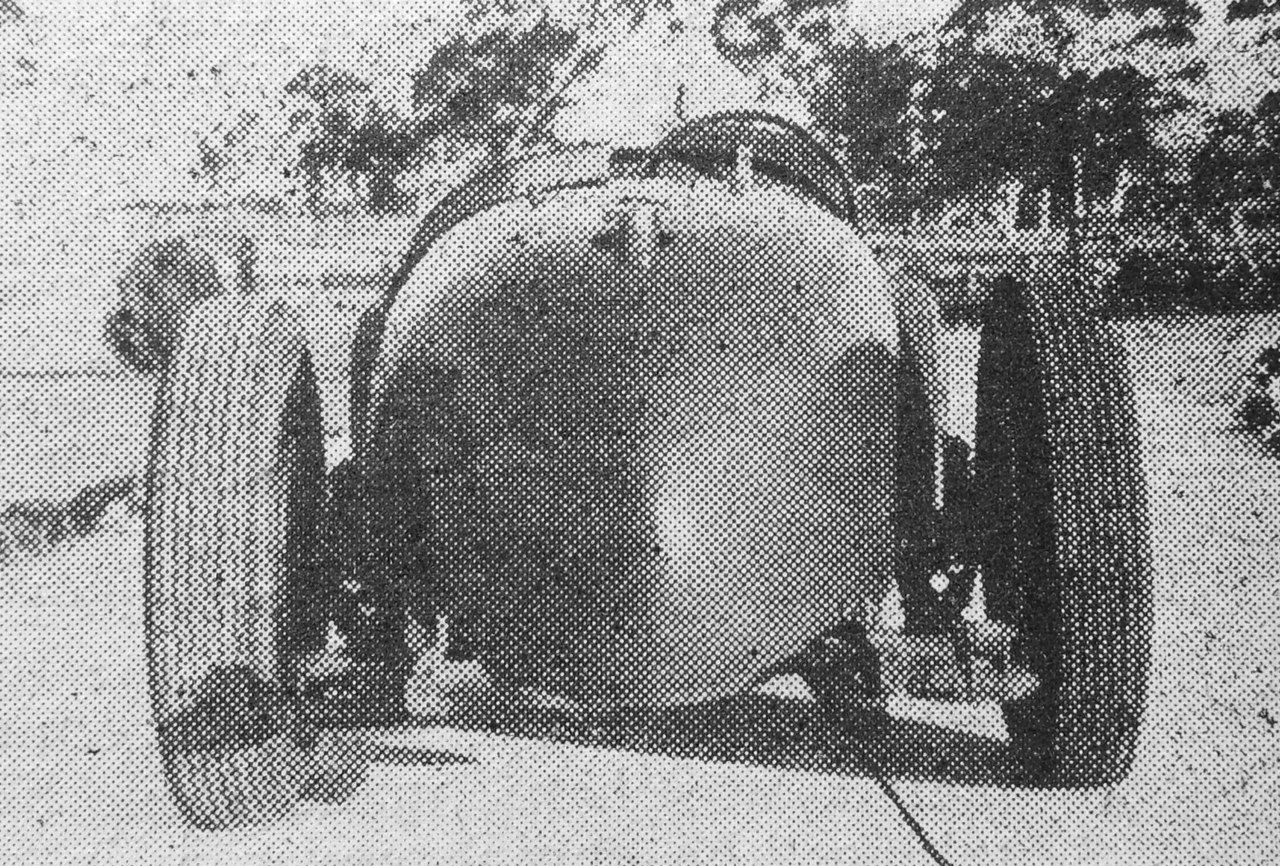
Butt shot, scan of an old magazine so a bit scratchy. (AMS)
Etcetera…
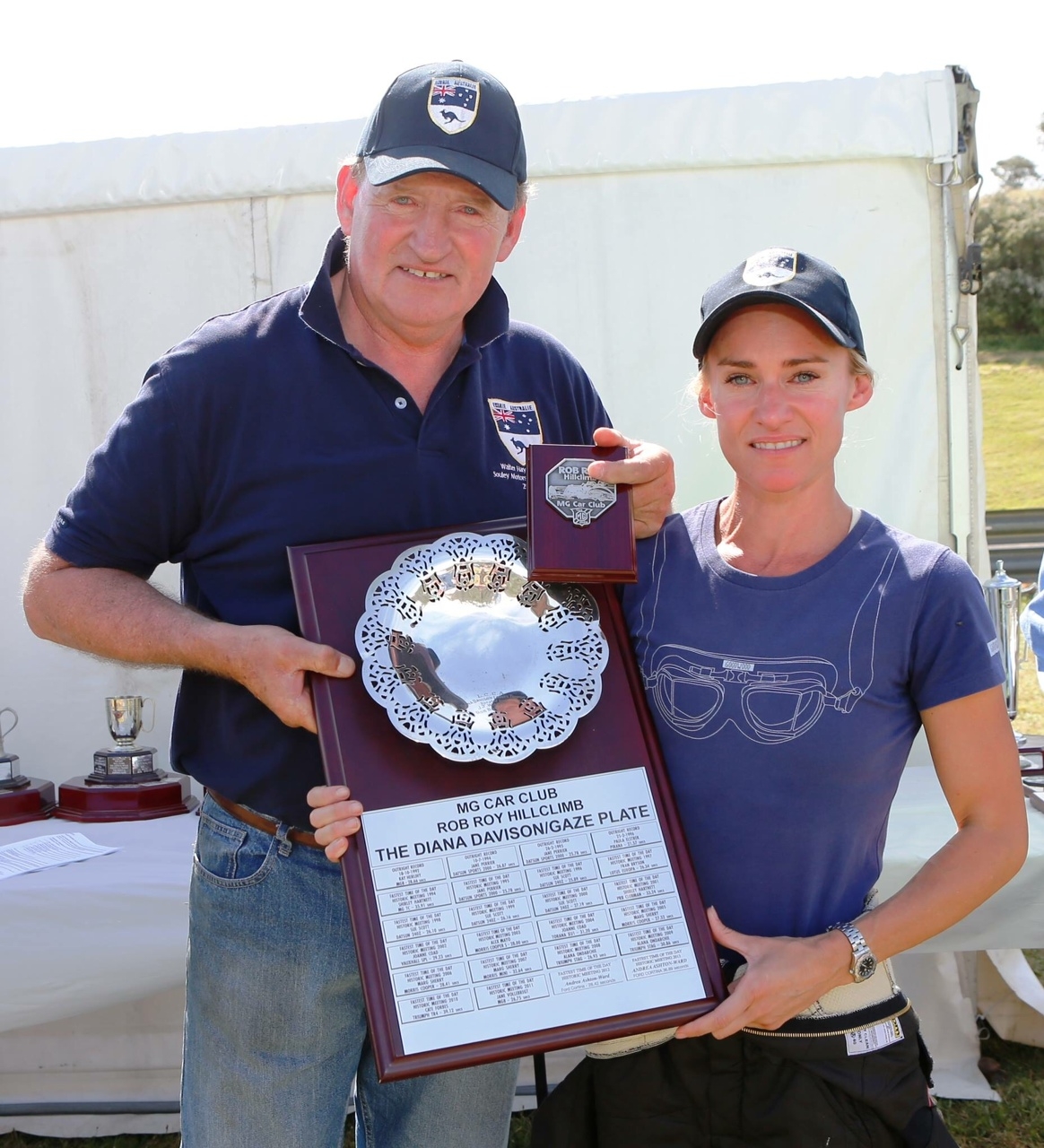
In a nice bit of Davison Family and Rob Roy symmetry Diana Davison’s granddaughter Claire, here pictured with father Chris Davison, won the ‘Diana Davison Gaze Trophy’ for Ladies FTD at Rob Roy in 2014. Car a Reynard Formula Ford. (Davison Family Collection)
Bibliography…
Australian Motor Sports Magazine April 1952 (AMS), ‘Historic Racing Cars in Australia’ John Blanden, ‘Lex Davison Larger Than Life’ Graham Howard, Chris Davison
Photo Credits…
State Library of South Australia, Davison Family Collection
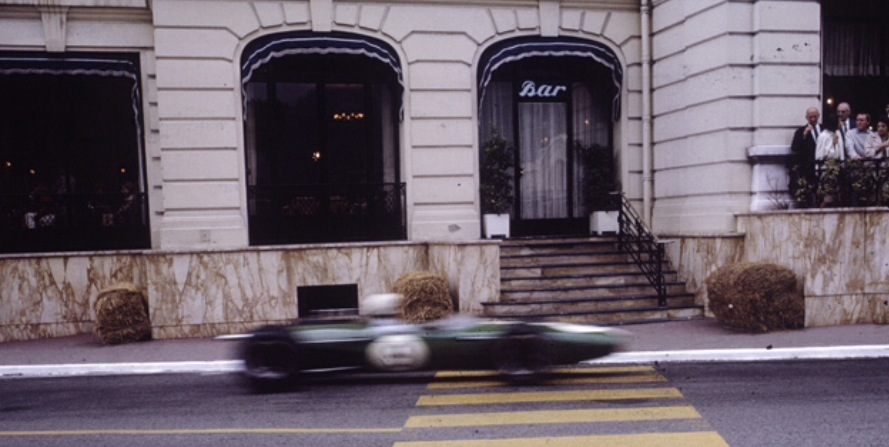
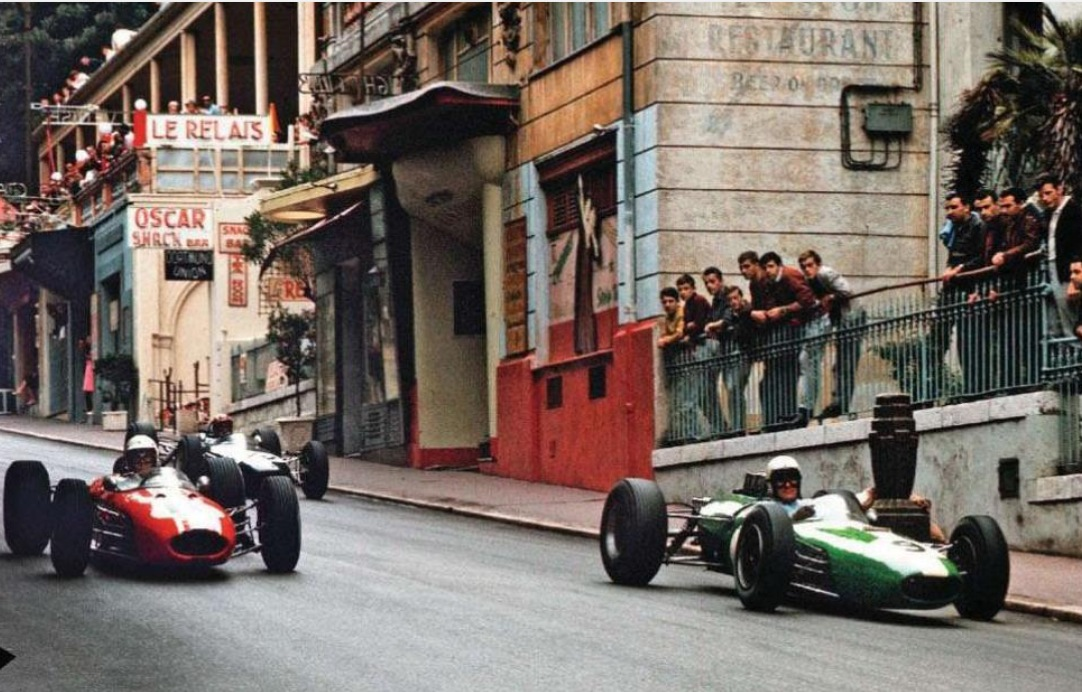
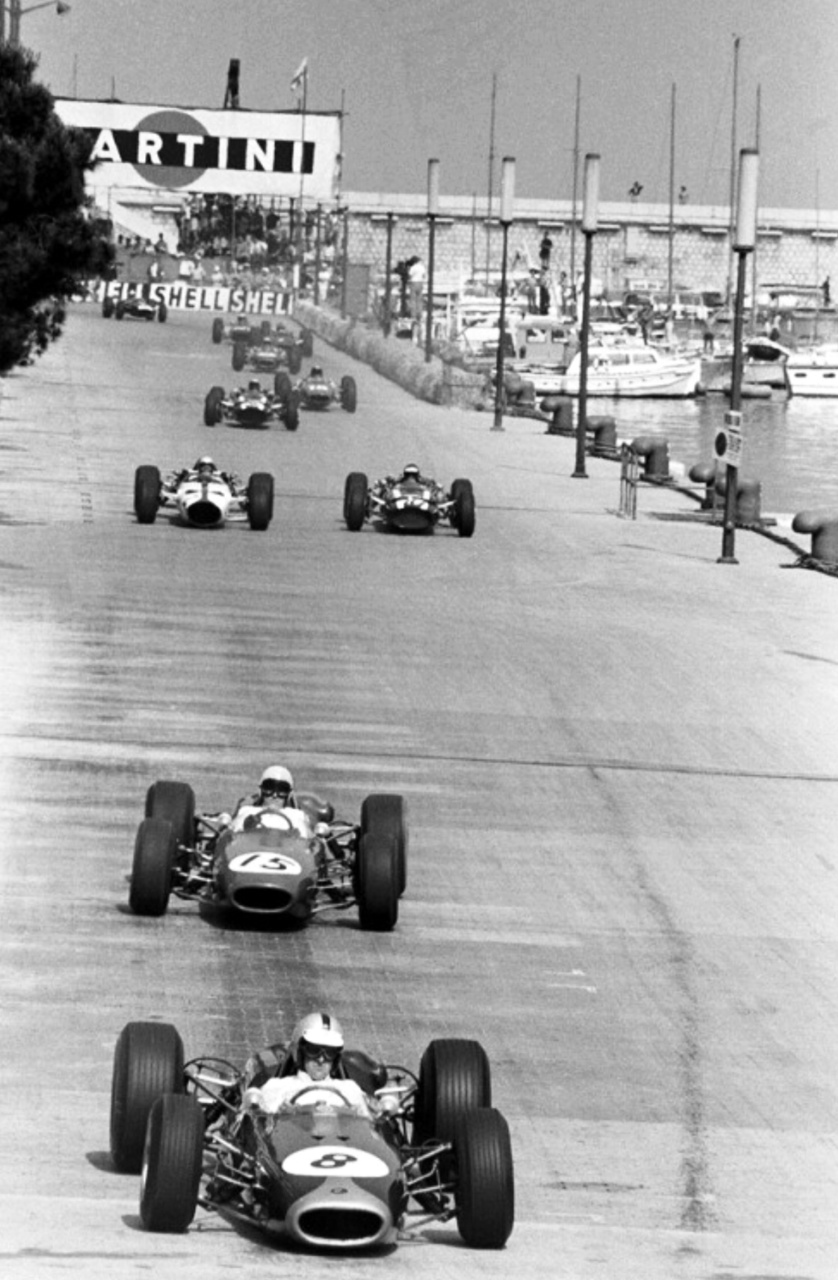
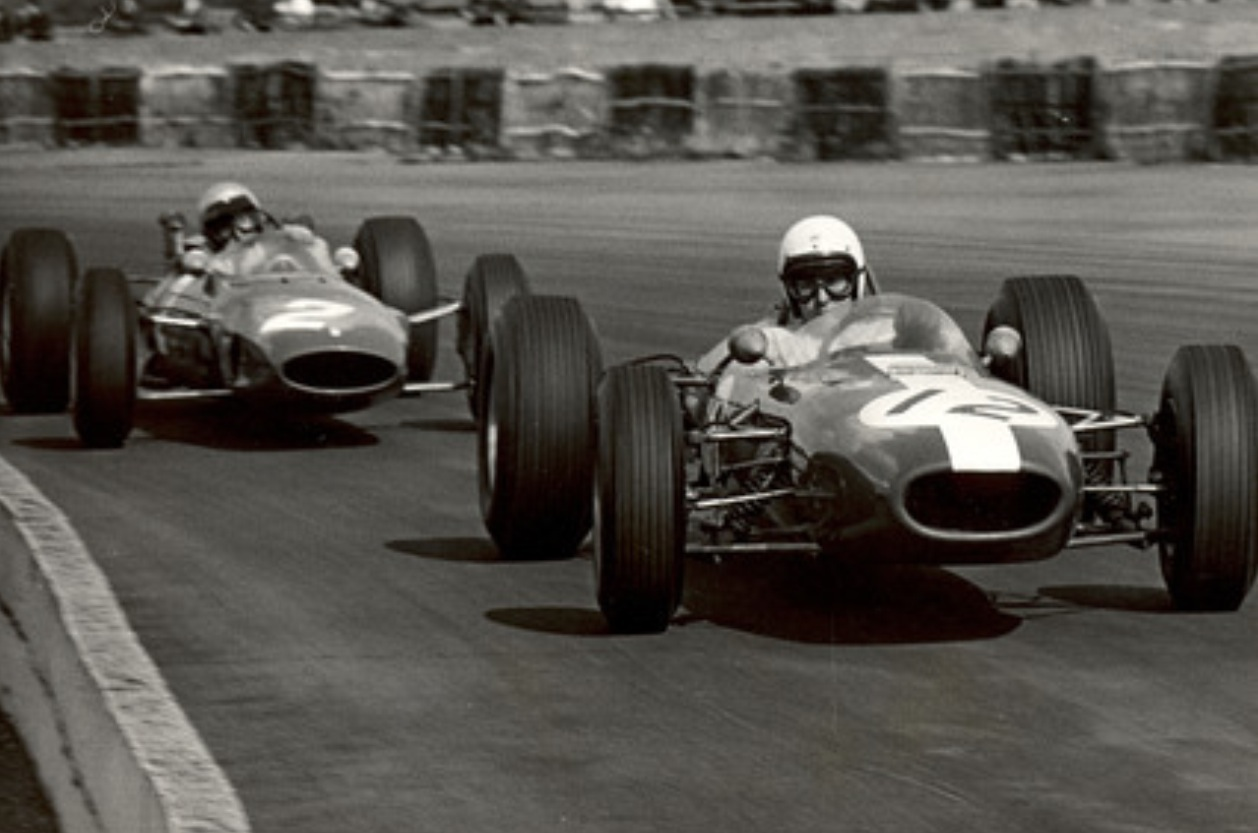
Bob Anderson blats his Brabham BT11 past the watching crowd, its little 1.5 litre Coventry Climax V8 echoing off the Monaco buildings on his way to a very good 9th place in his self-run car…
Anderson was born in Hendon, North London to a well-to-do family on 19 May 1931.
Bob Anderson circa 1966. (MotorSport)
He made his name in the 1950s as a motorcycle racer, by 1959 he was a front running competitor in the 350cc World Championship against the stars of the day including John Surtees, Mike Hailwood and Geoff Duke. He nearly won the 1958 Swedish GP, finishing inches behind Duke but he never came so close to GP victory again.
Bob Anderson aboard his Manx Norton, Mallory Park, April 1957. May be 350/500cc (Bruce Anderson)
He switched to car racing aged 30 in 1961. Anderson raced a Jim Russell Lola Mk2 Ford in some early season UK Formula Junior races before doing some events in Europe in a Lotus 20 Ford entered by Henry Taylor. His results weren’t sensational but he moved to Lotus’ factory FJ team in 1962.
In the Team Lotus FJ Lotus 22 Ford during practice for the Eifelrennen, Nurburgring 28 April 1962. DNS in the race won by later Team Lotus Team Manager, Peter Warr Lotus 20 Ford (Bruce Anderson)
His best result that year was a second place in the 1962 Coupe de Salon at Monthlery behind teammate Peter Arundell, both in Lotus 22 Fords. He was also third in the 1962 Monaco FJ event also Lotus 22 Ford mounted, the race again won by Arundell. It was a first class result, on the grid that year were Mike Spence, Jo Schlesser, Alan Rees, Richard Attwood, Frank Gardner and John Love amongst dozens of other hopefuls!
Arundell pretty much won everything in FJ that year, rocketing into a Team Lotus, ’25’ GP car in 1963.
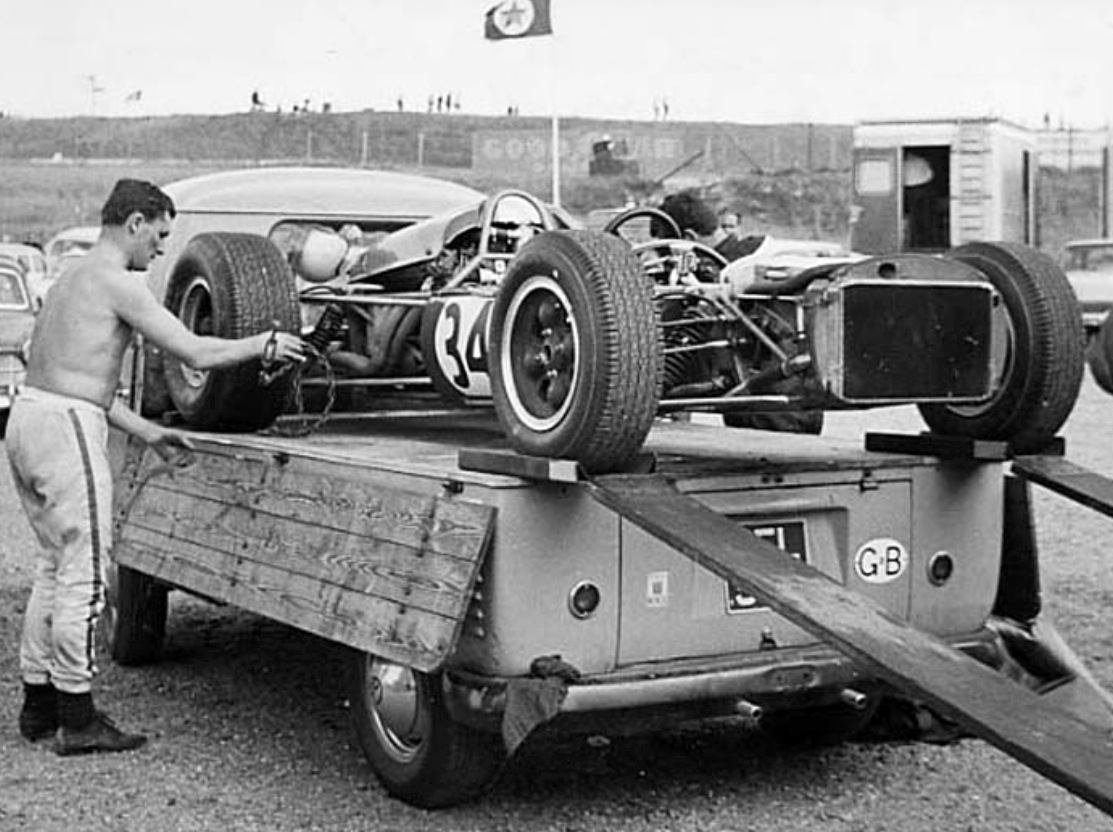
‘DW Racing Enterprises’ was very DIY! Here Bob Anderson loads his Brabham BT11 Climax onto his Kombi for the long drive back to the UK. Dutch GP Zandvoort 1966. He qualified well given his equipment but DNF with suspension dramas. (unattributed)
Anderson felt it was time to progess, at the start of 1963 Bob he acquired an ex-Bowmaker Team F1 Lola Mk4 Climax. He began racing as a Formula 1 privateer ‘DW Racing Enterprises’, based at Haynes, Bedfordshire comprised Bob and his French wife Marie-Edmee! Close friends David Stanbridge and Alan Brodie were important to his success and most critically George Copeland, his fulltime mechanic.
In those far away days a living could be made, sort of, with some trade support, from start and prize money as part of the European F1 Circus participating in a mix of Championship and Non-Championship (NC) Grands Prix.
Bob’s aims in his first year were to ‘cut his GP teeth’ by mainly competing in NC events taking in some Championship GP’s later in the season.
In 1963 there were 14 NC meetings, 13 of them in UK/Europe. These events were well supported by factory teams so he had his chance to ‘strut his stuff’ in fields made up of folks like him as well as seasoned professionals.
Anderson contesting the IX Kanonloppet at Karlskoga, 1 August 1963. The Lola was 8th on aggregate off grid 6. Jim Clark won in a Lotus 25 Climax (Bruce Anderson)
He did well in the Italian events in ’63; victory at the GP of Rome at Vallelunga, admittedly in not the strongest grid of the season, 3rd in the Imola GP, 4th at Syracuse and was 6th in the ‘II GP del Mediterraneo’ at Enna-Pergusa. He was also 8th at the Solitude GP in Stuttgart.
In addition the ex-factory Lola Mk4 ‘#BRGP43’ contested UK NC meetings at Snetterton and Oulton Park. He also travelled to France to race in the Pau GP on the northern edge of the Pyrenees and to Sweden to take the grid in in the ‘9th Kanonloppet’ at Karlskoga. His transporter did plenty of miles that year!
Checkout this short YouTube footage of the ’63 Rome GP Won by Anderson;
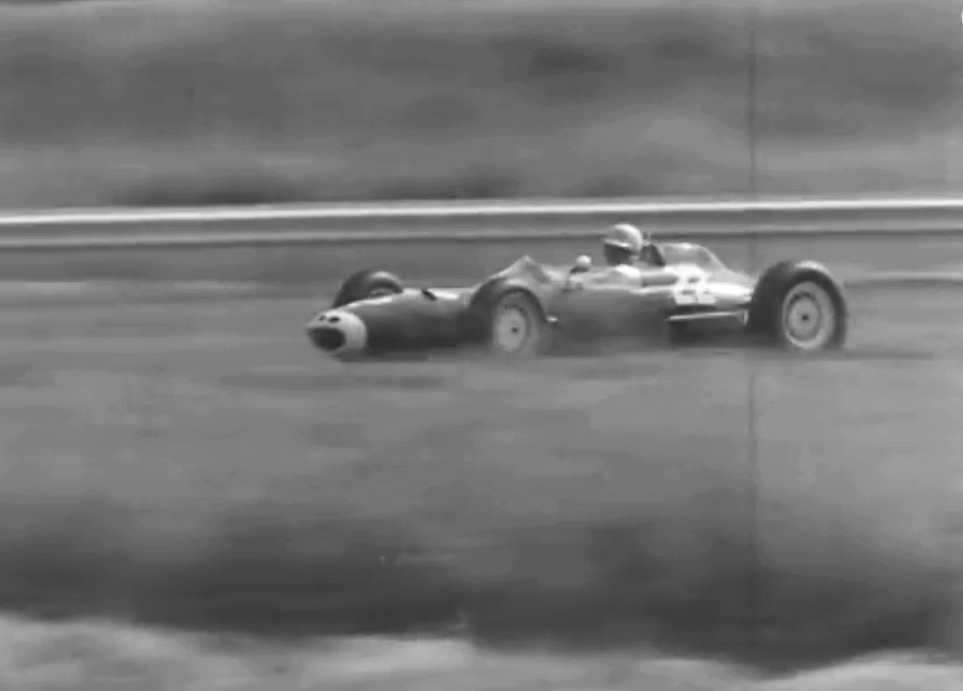
Bob Anderson during his victorious Rome GP drive at Vallelunga in 1963. Lola Mk4 Climax. (British Pathe)
His Championship events were at home at Brands Hatch where he was 12th having qualified 16th of 23 and at Monza where he was again 12th having qualified 18th of 28 entries.
By any objective assessment it was a strong start to GP racing. The Lola was a good choice, maybe not the fastest ‘tool in the shed’ even in 1962, but John Surtees placed second twice in it in 1962.
For 1964 he was looking for a more competitive mount.
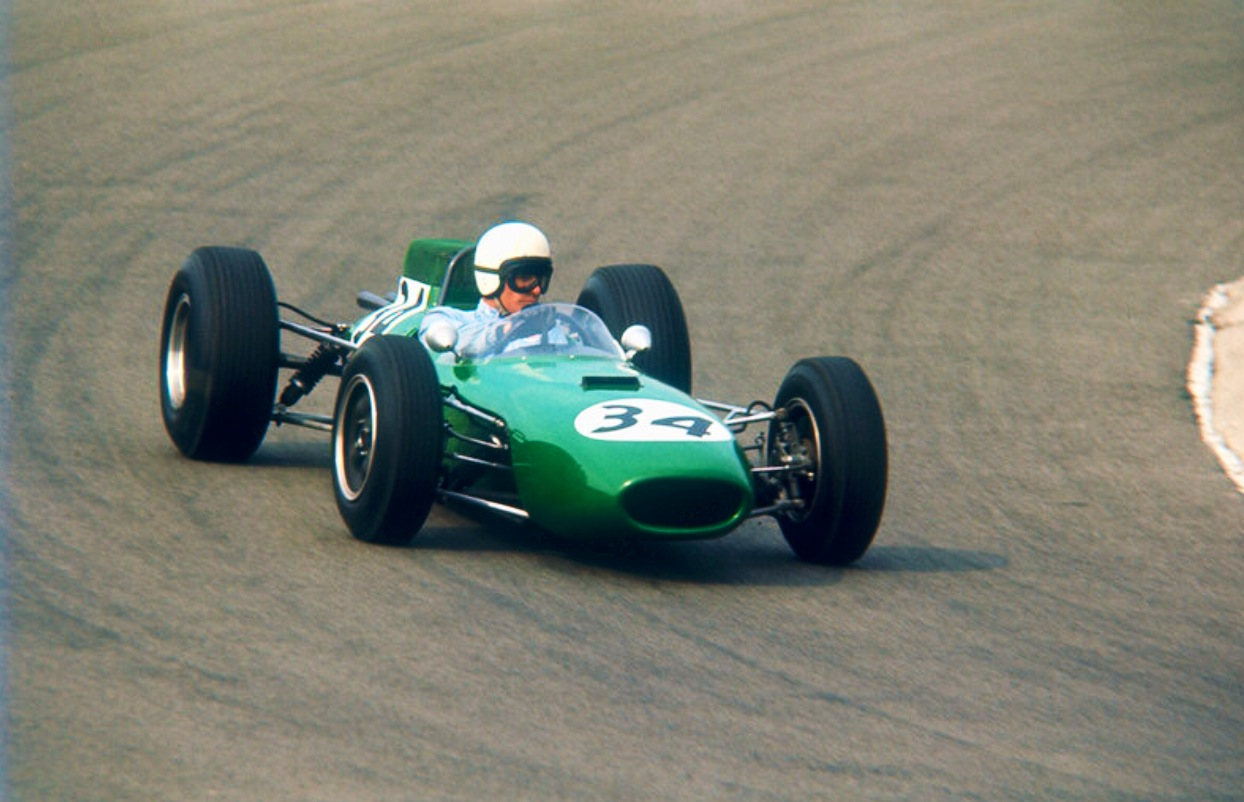
Anderson 6th in the Dutch GP at Zandvoort, 1964. Brabham BT11 Climax. (unattributed)
He switched to a Brabham BT11, again powered by the Coventry Climax FWMV 1.5 litre V8 for 1964, the years highlight third place behind Lorenzo Bandini and Richie Ginther at the Austrian Grand Prix at the Zeltweg airfield. Most of the fancied runners went out with mechanical trouble caused by the incredible bumps on the runways of the circuit, but it was a very strong performance all the same.
Best championship result was his 3rd in the 1964 Austrian GP at the Zeltweg, ‘rough as guts’ airfield circuit. Brabham BT11 Climax.(unattributed)
Other strong 1964 races were 6th at the Dutch GP, 7th at both Monaco and British GP’s and 11th at Monza.
His best NC results were 3rd in the Rand GP in South Africa and 6th at Syracuse.
Bike racers dicing at Zandvoort 1964, Dutch GP. Anderson Brabham BT11 Climax ahead of Mike Hailwood’s Lotus 25 BRM, 6th and DNF in the race won by Clark’s Lotus 25 Climax. (unattributed)
‘DW Racing’ in South Africa, 1964/early ’65. VW ‘Ute’ and Brabham, how many miles must that Kombi have done!? They would have been slow trips too, at Uni i had a mate with one, it really didn’t have enough power to ‘pull ‘ole Granny off a piss-pot’!, let along with 450Kg of F1 car aboard (Bruce Anderson)
1965 Monaco GP and the the Brabham BT11 Climax…
Battle of the privateer Brabham BT11’s Monaco 1965. Anderson (#9) 9th, Gardner DNF in his (red) BRM engined car and Siffert 6th also BRM engined. (unattributed)
The Ron Tauranac designed and built Brabham spaceframe customer cars of all formulae were popular with customers in the 1960’s. Perhaps, statistically the most successful customer single seaters of that decade.
It was therefore an easy choice for Anderson to make when he needed a more competitive mount to buy one of the five BT11’s built. Three were sold to customers and 2 retained for use by the factory ‘Brabham Racing Organisation’ team. The BT11 was an evolution of the BT7 with which Dan Gurney won 2 GP’s in 1963.
So Bob had a very competitive tool for the final year’s of the 1.5 litre formula. The Lotus 25/33 was the dominant car of 1964/5, Jim Clark took his second world title in it in 1965, but the BT11 was a good, fast, reliable, robust, easy to maintain customer car.
Gurney used his BT7 during 1965 with three 3rds and two seconds to finish the title in third place. Jack changed from his BT7 to a BT11 in Germany, it was not his best season, third at Watkins Glen his best result, better was to come for him in 1966!
Anderson BT11, Monaco pits 1965. (Dave Friedman)
Magnificent shot of a typical 1.5 litre F1 car of the 1961/5 period. Andersons BT11 ‘F1-5-64’. In this case a spaceframe chassis, Lotus ‘pioneered’ the monocoque with its type 25 in 1962. Mid-engined of course, the Coventry Climax FWMV V8 the most successful engine of the period in terms of race wins. Hewland HD5 gearbox and all independent, infinitely ‘tunable’ suspension.
Anderson BT11 Monaco pits 1965. (Dave Friedman)
In this front end shot you can see the oil reservoir in front of the pedal box and Lucas fuel injection pump mounted vertically in front of the radiator. The spaceframe chassis tubes are clear, as is the pendant pedal box, aluminium fuel tank and front suspension comprising upper and lower wishbones. Small rotors and Girling brake calipers, they were light cars after all!
Anderson BT11 Monaco pits 1965. (Dave Friedman)
Heart of the matter is the ubiquitous Coventry Climax FWMV 1496cc 90 degree V8 engine. In Mk4 spec the 2 valve, DOHC, Lucas fuel injected, all alloy motor produced circa 200bhp@9750rpm. Trick 32 valve engines available to some of the factory teams in 1965 developed more but the engine was an excellent customer choice.
The gearbox was Mike Hewlands HD5, 5 speed transaxle. The cars rear suspension, typical of the period comprised a single upper link, inverted lower wishbone, coil spring/damper unit and two radius rods providing fore and aft location. Adjustable roll bars were fitted front and rear.
BRDC Int Trophy, Silverstone, 15 May 1965. Brabham BT11 Climax, Anderson 14th and many laps down with mechanical maladies. (Getty Images)
In 1965 Anderson’s Championship results had too many DNF’s. Highlights were qualifying 12th for the South African GP, finishing and qualifying 9th at Monaco and finishing 9th in the French GP at Clermont Ferrand.
In ’65 NC events he was 6th at Syracuse with again too many DNF’s; at Silverstone, Goodwood and Brands Hatch.
Denny Hulme Brabham BT22 Climax from Anderson’s Brabham BT11 Climax, Bruce McLaren’s white McLaren M2B Ford beside Jochen Rindt’s Cooper T81 Maserati, all DNF in the race won by Jackie Stewart’s BRM P261. (unattributed)
For 1966 Grand Prix racing had a new formula based around engines of no greater than 3 litres capacity, this presented a big problem for most entrants as Coventry Climax, suppliers of engines to the British teams since the late 1950’s withdrew from F1.
My detailed account of the 1966 season and related engine issues can be read by clicking on this link, rather than repeating it all again here;
Anderson’s solution was to use the old Coventry Climax 4 cylinder FPF engine, dominant in the last years of the 2.5 GP formula in 1959 and 1960. This engine had ongoing use and development in Australasia where it was essentially the engine of choice in the Tasman Championship, an annual series of 8 races, 4 each in New Zealand and Australia in January and February.
Bob was in good company, Dan Gurney also used the 2.7 litre ‘Indy’ Climax FPF in his new for ’66, Eagle T1G until his Weslake built V12 engine was raceworthy, that engines first GP at Monza in September. In fact Anderson outqualified Dan at Reims in the ‘battle of the FPF’s, Gurney in front elsewhere the drivers met.
The conversion of his BT11 from Coventry Climax V8 to 4 cylinder FPF specification was relatively easy as Ron Tauranac built a variant of the BT11, you guessed it, the BT11A for Tasman use, selling 5 such cars in the Antipodes, competitive tools until late in the decade.
Given all of the foregoing, remember his car was already 2 years old at the start of the season, his results in this year of transition were impressive. He qualified 8th at Monaco for DNF, 10th at Brands for the British GP DNF, finished 6th at Monza having qualified 15th and qualified 14th on the Nurburgring, half way down the big grid in his little old car, again DNF.
Bob Anderson getting stuck into the Yamaha RD05 during Dutch GP practice, Assen 1966. (classicyams.com)
Bob never fully left motor-cycle racing, he contested the Dutch 250 GP at Assen in June 1966, an interesting interlude in mid-season!
He was hired as a ‘safe pair of hands ‘ to provide feedback as an experienced rider to Yamaha who were developing their new 4 cylinder engined bike, the Yamaha RD05.
Anderson’s assistance was around the bikes handling, he rode to 5th, only Hailwood, Phil Read, Jim Redman and Derek Wood were head of him. Not bad for a current F1 driver and someone who had been away from bikes for a bit!
Bob Anderson aboard his Yamaha RD05 at Assen 1966. (classicyams.com)
Yamaha factory riders at Assen 1966. L>R Phil Read, Bob Anderson and Phil Ivy, lost in thought. (classicyams.com)
I wonder if he is the only driver/rider to race in F1 and motor-cycle GP’s in the same year? Not sure if John Surtees raced his MV and for Lotus in the same season?
Dutch GP, 24 July 1966. Anderson’s 2.7 litre Coventry Climax FPF engined Brabham BT11 with old FJ Lotus Teammate Peter Arundell on his outside in the factory Lotus 33 BRM 2 litre. Anderson qualified 14th, 1 slot ahead of Arundell, both struggling with engines well short of 3 litres. Both DNF in the race won by Jack Brabham’s Brabham BT19 Repco.
Anderson contested the French GP at Reims straight after Assen qualifing his old car 12th and finishing a fine 7th in the first race won by Jack Brabhams 3 litre Repco Brabham V8, on his way to the title that year.
In 1966 non-championship events he was 7th in the International Trophy at Silverstone and won the Rhodesian GP at Kumalo on December4.
Looked at objectively, his results deserved a factory drive, if not in F1 then certainly in sportscars. Perhaps one of you can explain why he seems to have been overlooked?
Oopsie in the Dutch Dunes. Anderson spinning his BT11 during the ’67 Zandvoort event. He was 9th, Clark the winner on the Lotus 49 Ford debut. (Brian Watson)
He started 1967 well having left his Brabham in South Africa that summer. He was 2nd in the Cape South Easter GP on 1 January, John Love took the win in the Cooper T79 Climax he acquired from Bruce McLaren, that car having won the Australian GP at Longford in early 1965.
Even better was 5th place in the South African GP, that year a championship round. In April he was 8th at Silverstone’s International Trophy.
Richie Ginther appears to be yelling at himself to go faster. Here in his Eagle T1G Weslake ahead of Anderson’s Brabham at Monaco 1967. Both DNQ. (unattributed)
At Monaco he didn’t qualify which is not so much an indication of his speed but rather his aging car and the relative number of full 3 litre F1 cars now competing.
Bob giving his all to qualify at Monaco 1967, the old car not up to it. Brabham BT11Climax FPF. (unattributed)
In Holland he was 9th, 8th at Spa. He retired at Le Mans with ignition failure, the race held at the legendary track, or a shortened version thereof in ’67.
Jim Clark Lotus 49 Ford, Bob Anderson Brabham Bt11 Climax, British GP, Silverstone 1967. (Bernard Cahier)
The shot above shows Bob Anderson’s old Brabham BT11 Climax beside F1’s state of the art; the new at Zandvoort, Lotus 49 powered by the 3 litre Ford Cosworth V8, Bobs Climax FPF was giving away around 150bhp to the 400bhp Cossie.
Sadly, Silverstone was the Brits last race, he qualified 17th and retired on lap 67 with engine failure, Clark won the GP in a dominant performance.
Anderson, Copse Corner, Silverstone, British GP 1967. BT11 Climax (Mike Hayward Collection)
Anderson missed the following German GP but was testing in the Brabham in the wet at Silverstone on 14 August prior to the Canadian Grand Prix. The car slid off the circuit and collided with a marshal’s post. He suffered serious chest and neck injuries and died later in Northampton General Hospital.
It was a sad end to a fine rider and driver with strong engineering/mechanical skills, somebody i was aware of but did not know much about. A driver who deserved a ride in a factory car methinks!?
Etcetera…
Anderson ahead of Lorenzo Bandini’s Ferrari 1512, Silverstone, BRDC Int Trophy 1965. DNF and 7th. (unattributed)
Contesting the 4 December 1965 Rand GP at Kyalami, DNF with oil pressure problems on lap 28, Jack Brabham won in another BT11 Climax (Michele Lupini)
Anderson fettling the Brabham, Monaco 1966. (unattributed)
Dave Friedman, Bernard Cahier, Brian Watson, classicyams.com, Getty Images, Bruce Anderson, f2index, silhouet.com, Michele Lupini
Tailpiece: Bob and Dan Reims 1966…
Bob Anderson 7th left and Dan Gurney 5th attack the fast swoops of the Reims countryside on 3 July 1966. Brabham BT11 Climax and Eagle T1G Climax, Brabham won the French GP, the first driver to win a GP in a car of his own make/name. (The Cahier Archive)
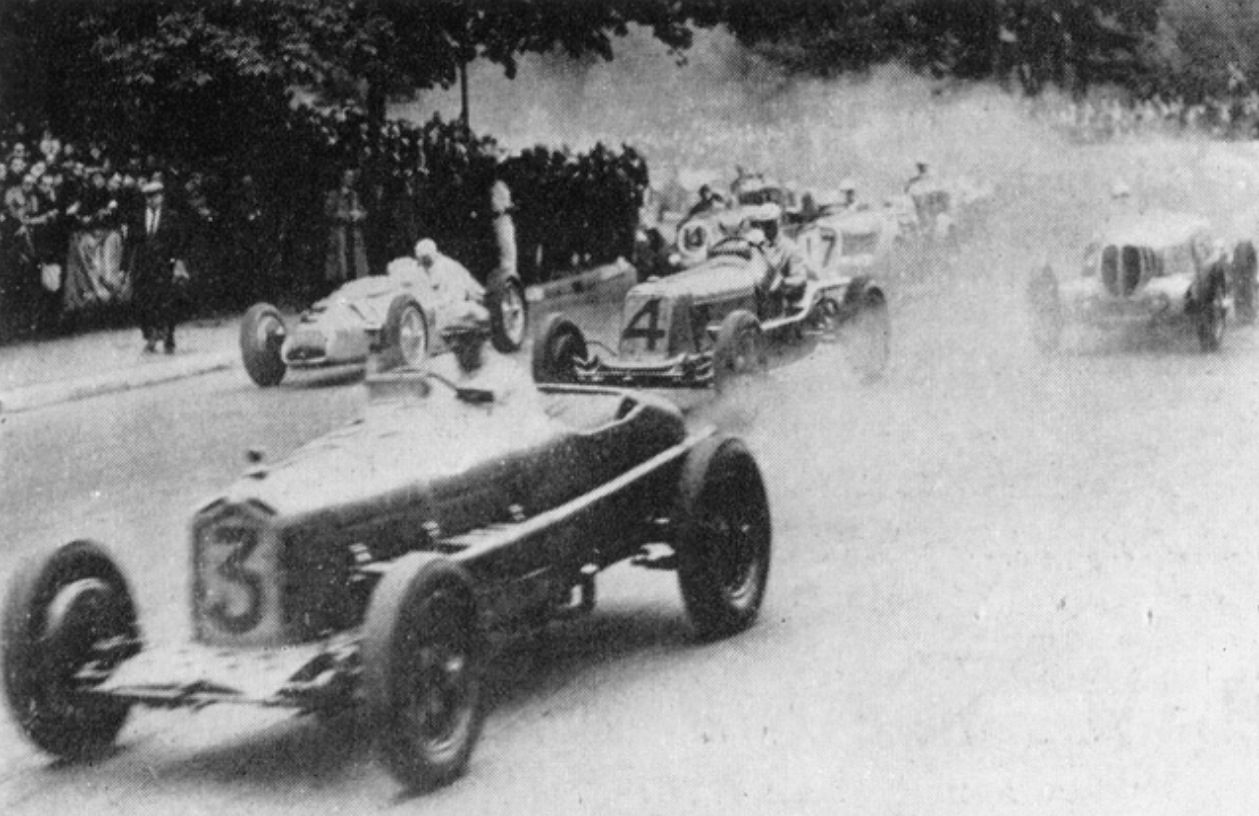
Start of Coupe de Robert Benoist. #2 Amedee Gordini, Gordini, #17 Creuchet Bugatti, in between them the Ferry Riley, #5 Brunot Riley, #3 Cayeux Simca Gordini, #14 Boucard Salmson and #9 Pozzoli Lombard at the rear. (unattributed)
The horror of World War 2 ended, the first post-war race meeting in Europe was in Paris 70 years ago on a circuit which passed in front of the Porte Dauphine, went off into the Bois de Boulogne and around the Lake…
The guns fell silent in Europe on 8 May 1945 but not until 2 September in the Pacific, the efforts of the ‘AGACI’ an independent club for racing drivers and it’s president Maurice Mestivier in running the event on September 9 in the context of the times is amazing.
It was a time of immense devastation and mourning, industry was having trouble restarting and ‘coupons’ were required to get basic foodstuffs let alone fuel, metals and tyres.
With the agreement of the acting government of France, the American authorities provided fuel, and Major Rogers, the area commander a group of MP’s to assist local gendarmes with crowd control.
There were two and four wheeler races, the car events comprised the ‘Coupe Robert Benoist’ in memory of the Pre-War GP driver and Le Mans winner who had joined The Resistance and been executed by the Nazis, the ‘Coupe de la Liberation’ and ‘Coupe des Prisonniers’.
Competing cars were a mixture of ‘Specials’ and Bugatti, Maserati, Alfa Romeo, Delage, Delahaye and Talbot cars.
The big event was the ‘Coupe des Prisonniers’ for over 3 litre racing cars, the race a short one of 75 miles given materials shortages with Jean-Pierre Wimille victorious in his Bugatti T59/50B 4.7 litre supercharged car ahead of Raymond Sommer in the Talbot T26 ‘Monoplace’.
Racing on an international scale did not really begin until the spring of 1946 but the Bois de Boulogne was deeply symbolic of change and renewal…
‘Coupe des Prisoniers’ start with the #3 Philipe Etancelin Alfa Monza 8C2300, #4 Louis Gerard Maserati 8CM to the left Raymond Somners’ Talbot Lago T26 ‘Monoplace’ and #17 Roger Wormser Delahaye 135S in shot. (Unattributed)
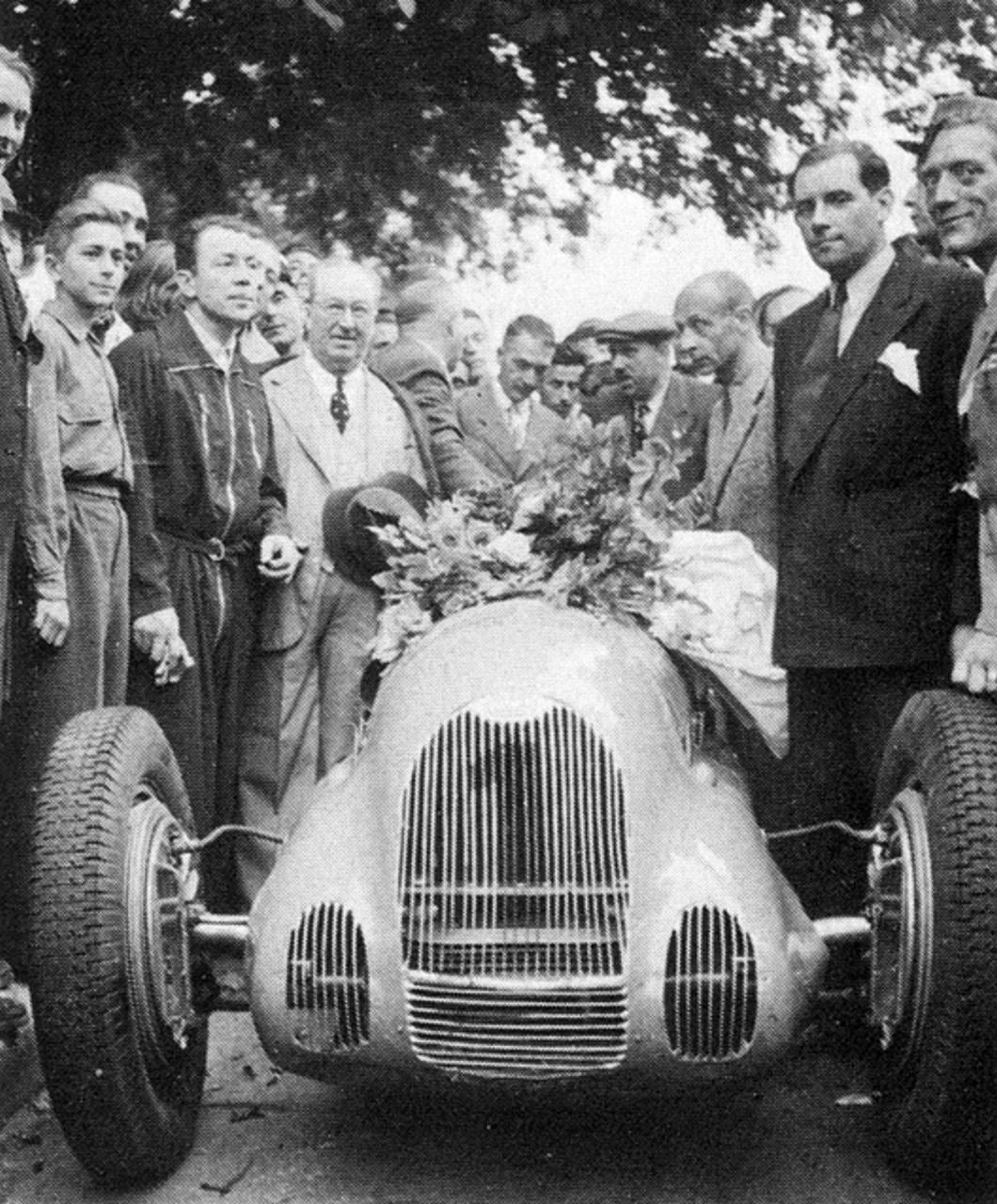
Jean Pierre Wimille, at left in the dark driving suit and Ettore Bugatti in light colored suit holding hat, beside his victorious Bugatti T59/50B, Coupe des Prissoniers 1945. (Unattributed)
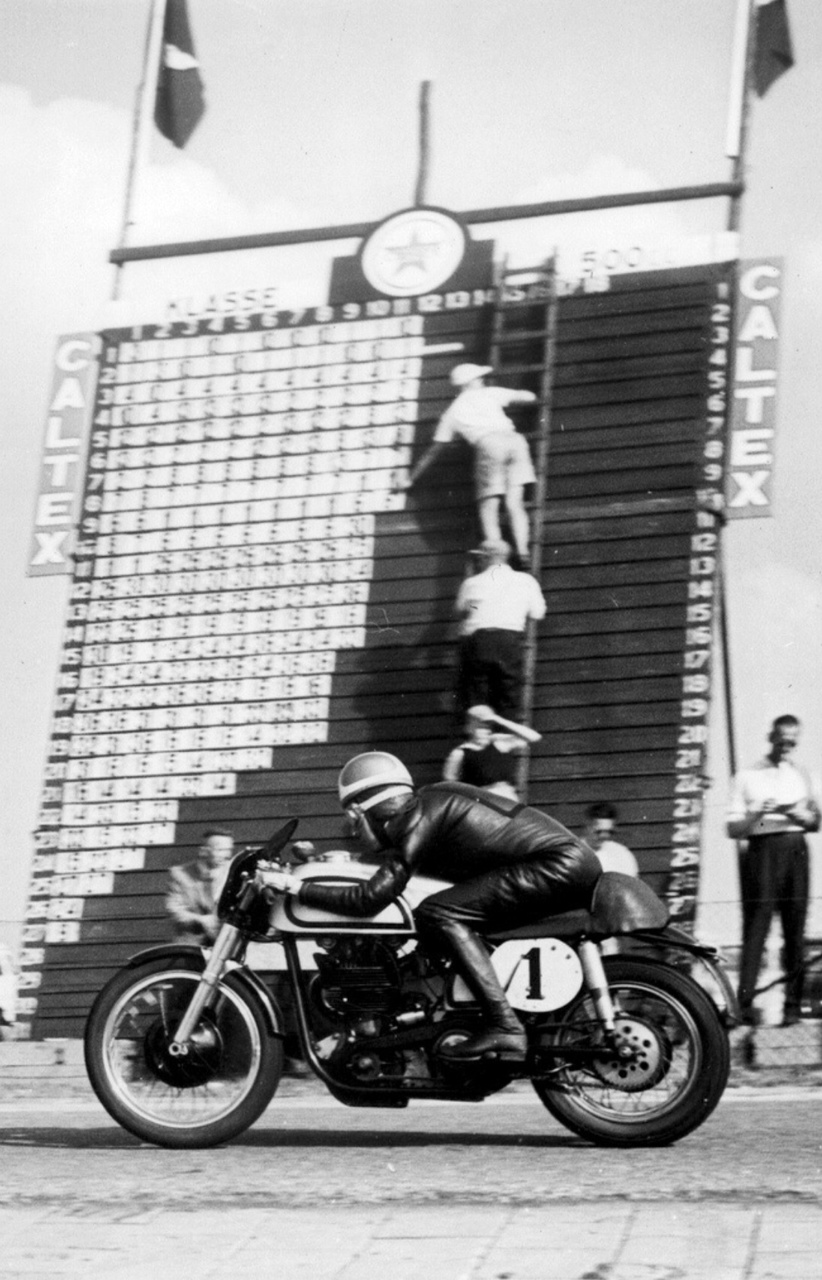
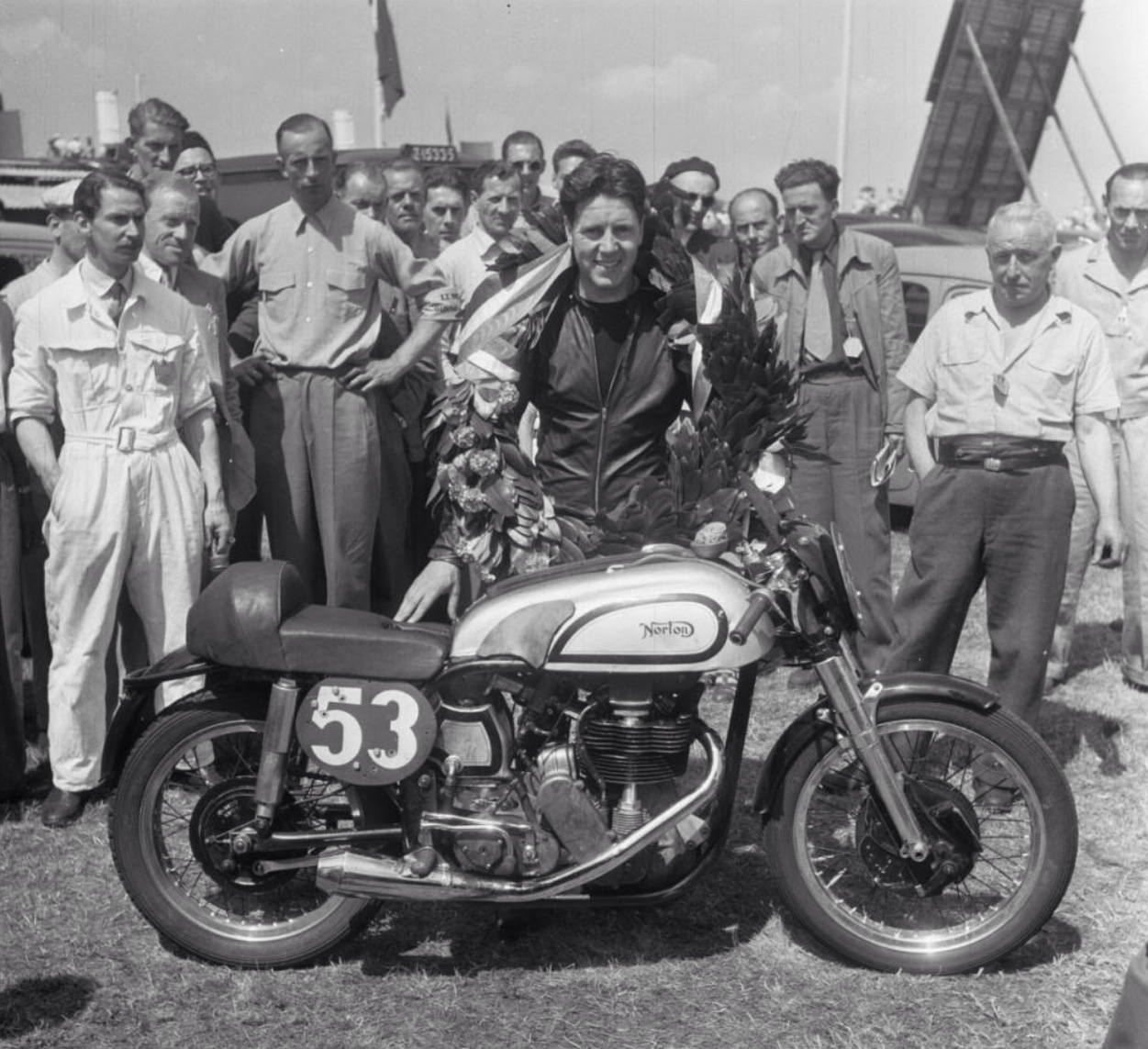
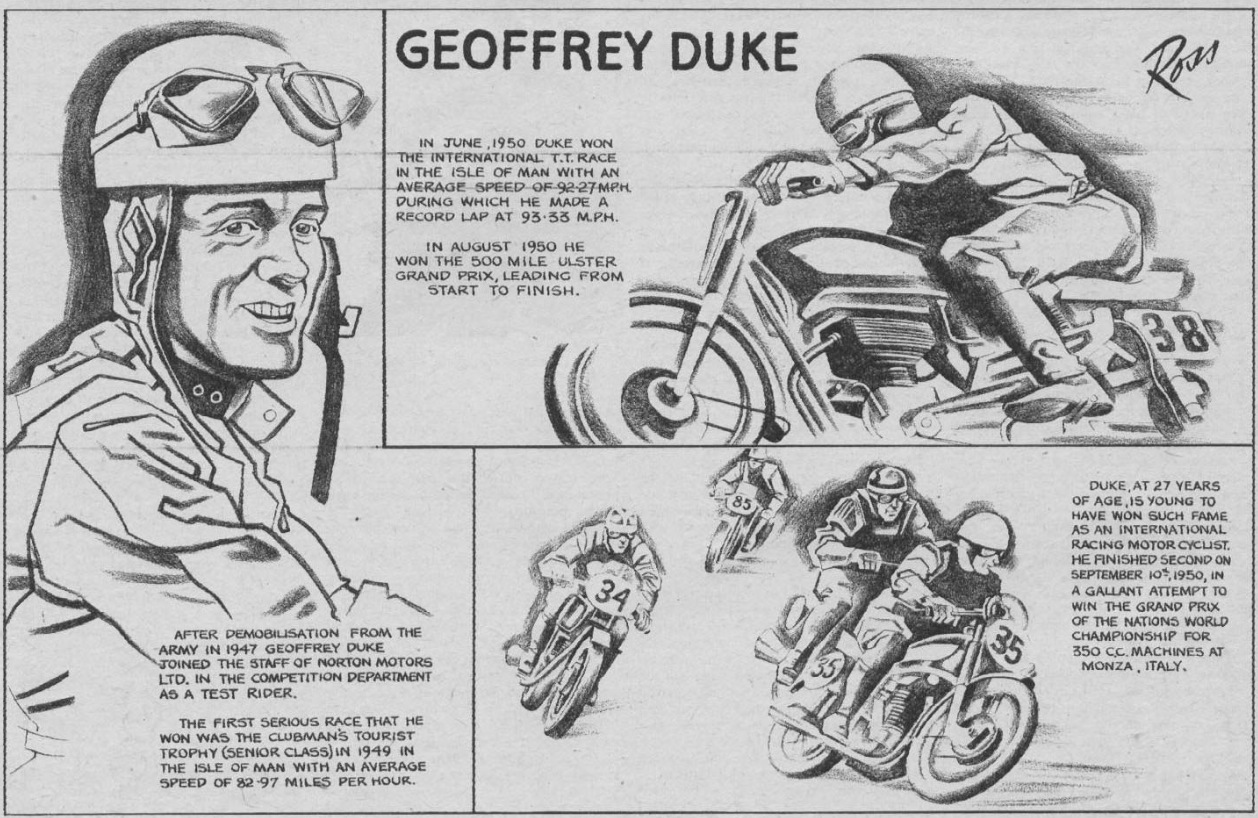
British multiple world champion Geoff Duke on his way to second place aboard his Manx Norton 500 at Assen in 1952, winner Umberto Masetti, Gilera 500/4…
Duke was world champion six times with 33 GP wins and dominated 1950’s racing. He won three of his titles on Nortons (1950/51/52). His pace was critical to Norton who were fighting to maintain competitiveness as their ‘singles’ struggled against the more advanced, powerful multi-cylinder engines of the Italians and AJS at home.
Norton’s ‘Featherbed’ racing frame was at the cutting edge though. Isle of Man TT racer Harold Daniell was quoted as saying that it was like ‘riding on a featherbed’ compared to conventional racing frames- the frame featured a lower centre of gravity and shorter wheelbase, combined with careful engine placement to maximise handling.
Duke more successful in 1952 350cc GP at Assen, victorious on a Norton (unattributed)
In 1953, being underpaid by Norton he moved to Gilera, the pay deal was sweetened by inclusion of a new Lancia B20 as part of his package. He repaid Gilera’s faith in him winning three 500 championships ‘on the trot’, from 1953-5.
Duke also dabbled in cars, securing a podium finish in the 1952 Goodwood Easter handicap in a works Aston Martin DB3 behind 2 Jaguar XK120’s. Aston Martin Team Manager John Wyer, wrote of Duke’s immediate pace in his autobiography; ‘Duke really was sensational right from the start. The car was one of the lightweight DB2’s and he asked me not to time him during the first session as he was just going to go out and get the feel of the car. In fact i did time him, just for my own interest and in that first spell he was only a second slower than the best time any of our drivers had done on that track. In the very next session he lapped faster than any of our team drivers had ever done-i promptly signed him up!’
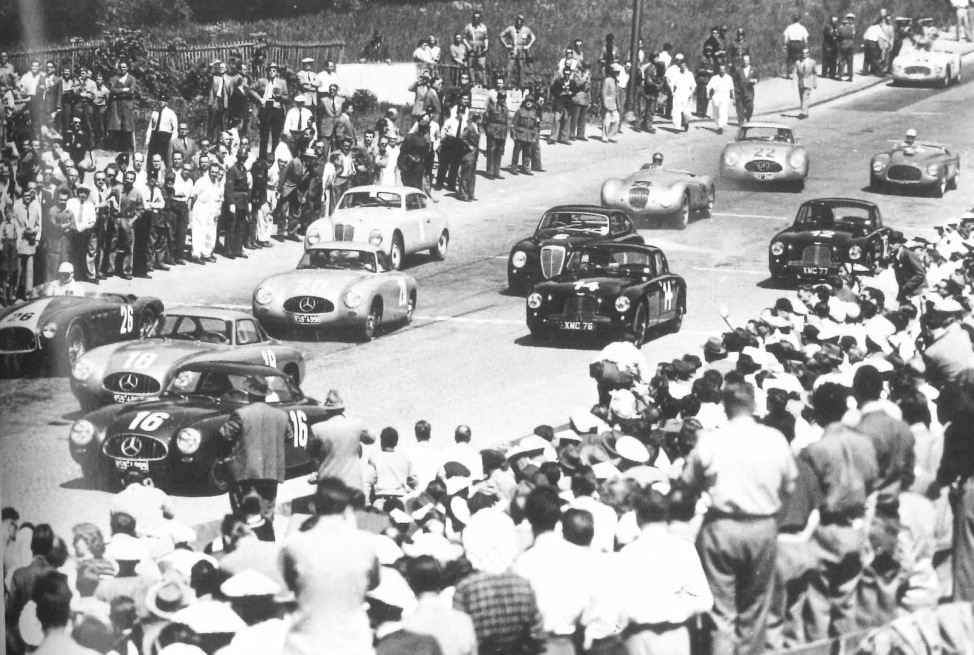
Reg Parnell in DB2 #14 with Duke immediately behind him at the start of sports car race at the 1952 Berne GP meeting. Benz SL300’s, Lancia B20, Ferrari et al (Vantage)
In May 1952 he and Reg Parnell contested a sports car race at Berne during the Swiss GP meeting, Duke was fourth in an Aston DB2 behind three factory Mercedes Benz 300SL’s, after qualifying fifth but starting at the rear of the grid, having used his teammate Reg Parnell’s car in qualifying. Duke’s machine was the only car not lapped by the Mercs’ until his car lapsed onto five cylinders for the last 2 laps of the race. Alfred Neubauer was so impressed he offered Geoff a Mercedes test drive on the spot, two years before the same offer was made to Stirling Moss. In a demonstration of his virtuosity Duke also won the 350cc Berne GP for bikes aboard his Manx Norton on the same weekend.
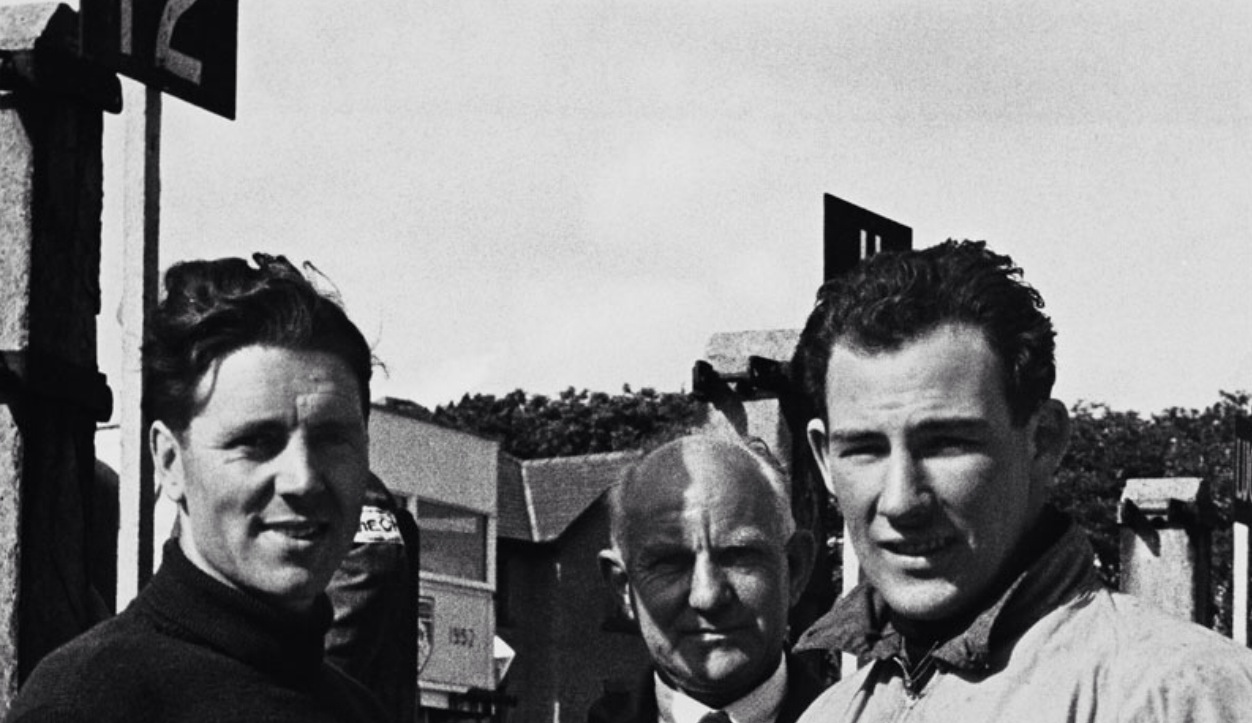
A youthful Geoff Duke and hirsute Stirling Moss at the ‘British Empire Trophy’ meeting IOM 1952. Moss drove Frazer Nash Le Mnas Rep DNF. Handicap race won by Pat Griffith in a Lester MG (unattributed)
Duke was to win the Isle of Man TT six times, his circuit knowledge was put to good effect by Astons’ who entered him in a DB3 in the British Empire Trophy race in late May 1952. His car, DB3/1 was the 2.6 litre engined prototype which had already done considerable miles at Montlhery. Duke led for most of the race and set the fastest lap but retired with a broken crankshaft- ‘Motorsport’ magazine observed that ‘His run was a fine introduction to long distance motor racing’.
He also led the 1953 Sebring 12 Hour in another DB3 until crashing the car he shared with Peter Collins, the two young Brits retired on lap 52. Duke recalled that ‘Peter was a very fine driver, he drove the first stint and built up a commanding lead, which i then managed to maintain. Unfortunately i went for a gap on the inside of an MG on a slower corner when i really should have waited and powered by on the next straight…anyway i drifted into a collision with the MG and then spun into a concrete filled oil drum which broke the suspension.’
Geoff Duke, Aston Martin DB3, ‘British Empire Trophy’, Isle of Man 1952 (unattributed)
When the next race at Silverstone ended in disappointment and frustration after clutch problems, the atmosphere in the team was also tense as the ‘mere motorbike rider’ was the subject of some resentment from the established drivers and ‘starlet’ Peter Collins. Duke decided to quit cars and focus on a lucrative ‘bikes only’ deal with Gilera, as related above, Geoff then won three 500cc titles for the Italians on the trot. The Gilera deal meant he never did take up the Mercedes test drive offer…
Duke at the wheel with Peter Collins testing or demonstrating a DB3 Aston. Despite the frivolity their was tension in the team between ‘newbee’ motorcyclist Duke and some of the drivers, including, according to Duke, Collins who was also recruited in 1952 (Vantage)
His 1955 world title with Gilera was his last, he led a riders strike over the levels of privateers pay from circuit promoters and was then banned from racing for 6 months. Injuries and Gilera’s withdrawal from racing interfered with the following seasons, he finally retired from ‘bikes in 1959 returning to cars one last time contesting several 1960 Formula Junior events in a Chequered Flag entered, front engined Gemini Mk2 Ford.
His best result was seventh in the International Trophy meeting at Silverstone in May, Jim Clark won in his Lotus 18. It was a good run, future GP drivers, Jim Clark, John Surtees, Peter Arundell and Mike Spence were in front of him in mid-engined cars. Duke also contested the Monaco GP FJ curtain raiser in May but spun on the first lap. He qualified tenth, those in front of him included Henry Taylor, Trevor Taylor, Jim Clark, Peter Arundell and Colin Davis.
Monaco GP, FJ pits. #102 Graham Warner 15th # 98 Geoff Duke DNF spin Gemini Mk 2 Fords. Thats Duke in the driving suit to the right of his car. #60 Kurt Lincoln Cooper T52BMC 5th (Brad Ward)
Duke also raced a Reg Parnell Racing Lotus 18 Climax in several later 1960 F2 events at Aintree, Snetterton and Brands Hatch in August for DNF’s in all events. His final race was also Duke’s only F1 race. He was entered in the Fred Tuck owned, outdated Cooper T45 Climax in the 1961 non-championship ‘Kanonloppet’ at Karlskoga, Sweden on 20 August. The cars gearbox locked on lap 10 causing a huge crash which damaged his ribs, broke a collar bone, cracked his pelvis as well as causing a collapsed lung and trauma to the heart muscle.
It was a sad end to a great racing career by any measure.
The schoolboy idol at the start of an Ulster GP year uncertain. Manx Norton. Duke was ‘British Sportsman of The Year’ in 1951, a ‘Superstar’ before the term was invented. (Vantage)
From a car racing viewpoint- hindsight being a wonderful thing, Duke was 37 when he returned to four wheels. He should have focused on sports cars or if hell bent on single-seaters, on them given the promise he showed in the outmoded front-engined Gemini in 1960. Then do done another year in a Lotus 20 FJ and used any success as a launchpad into a decent GP car, racing an ‘old nail’ Cooper in F1 was not a smart thing to do- hindsight of course as i say…
The last word on Duke’s potential in a car is from Astons’/JW Automotive’s John Wyer; ‘The generally accepted judgement is that Duke was a very great motorcyclist who failed to make the transition to cars. But i maintain that i had more opportunity to evaluate him than anyone else and i am convinced he had great potential. I will always regard his early retirement from the Aston Martin team as a real loss to motor racing’.
Duke aboard one of his beloved Gilera fours at The IOM. (unattributed)
Duke ran his own motor cycle racing team in 1963, ‘Scuderia Duke’ ran John Hartle and Derek Minter on old Gilera’s. He ran one of his old bikes in a demonstration at Oulton Park and was immediately quick on modern tyres. Hartle took a 500cc win at Assen but only after Mike Hailwood retired his dominant MV. It was a brave season and was largely funded by Duke when promised backers withdrew.
Geoff then focused successfully on a number of business interests mainly centred on The Isle of Man, where he lived, including hotels, shipping and the Duke Video company which was run by his son.
He died on 1 May 2015, born 29 March 1923.
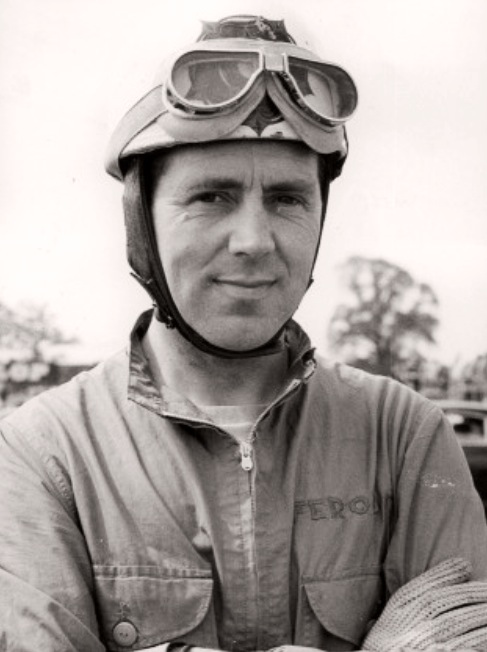
Duke in Aston Martin racing ‘clobber’ 1952. (unattributed)
Click on this link to a tribute to Geoff Duke…
Etcetera…
(unattributed)
Duke and his Gilera company car, a Lancia B20 (unattributed)
Credits…
Russell Burrows, selvedgeyard.com, Brad Ward, ‘Vantage’ magazine, Patrick Ryan Collection, John Wyer ‘The Certain Sound’
Jonathon Williams blasts through the French countryside on the way to 9th place in Steve McQueen’s Porsche 908 camera car during Le Mans 1970…
Porsche 908/02 ‘022’ was completed on 10 January 1969, making its race debut as a factory car at Daytona in 1969. It was rebuilt as a Spyder before acquisition by Solar Productions for use as a camera car in the iconic, endurance classic movie.
McQueen raced the car during 1970; at Riverside and at Phoenix winning the race and then famously finishing second at the Sebring 12 Hour, McQueen co-drove for Peter Revson in a plaster-cast with a recovering broken ankle, injured in a motorbike accident.
A short account of the Sebring race is contained in this article about McQueen i wrote a while back;
The 908 was to be driven by McQueen at Le Mans but the risk was too great; the films management, backers and insurers vetoed his participation.
The important drive was offered to ex-works Ferrari driver, Jonathon Williams and Herbert Linge, a factory Porsche driver. Despite constant, long pitstops to change cameras and an accident, the ever reliable 908 finished in 9th place on laps completed, albeit technically unclassified.
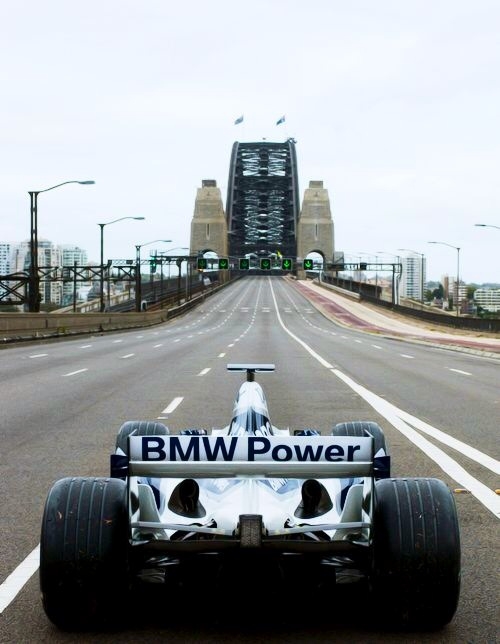
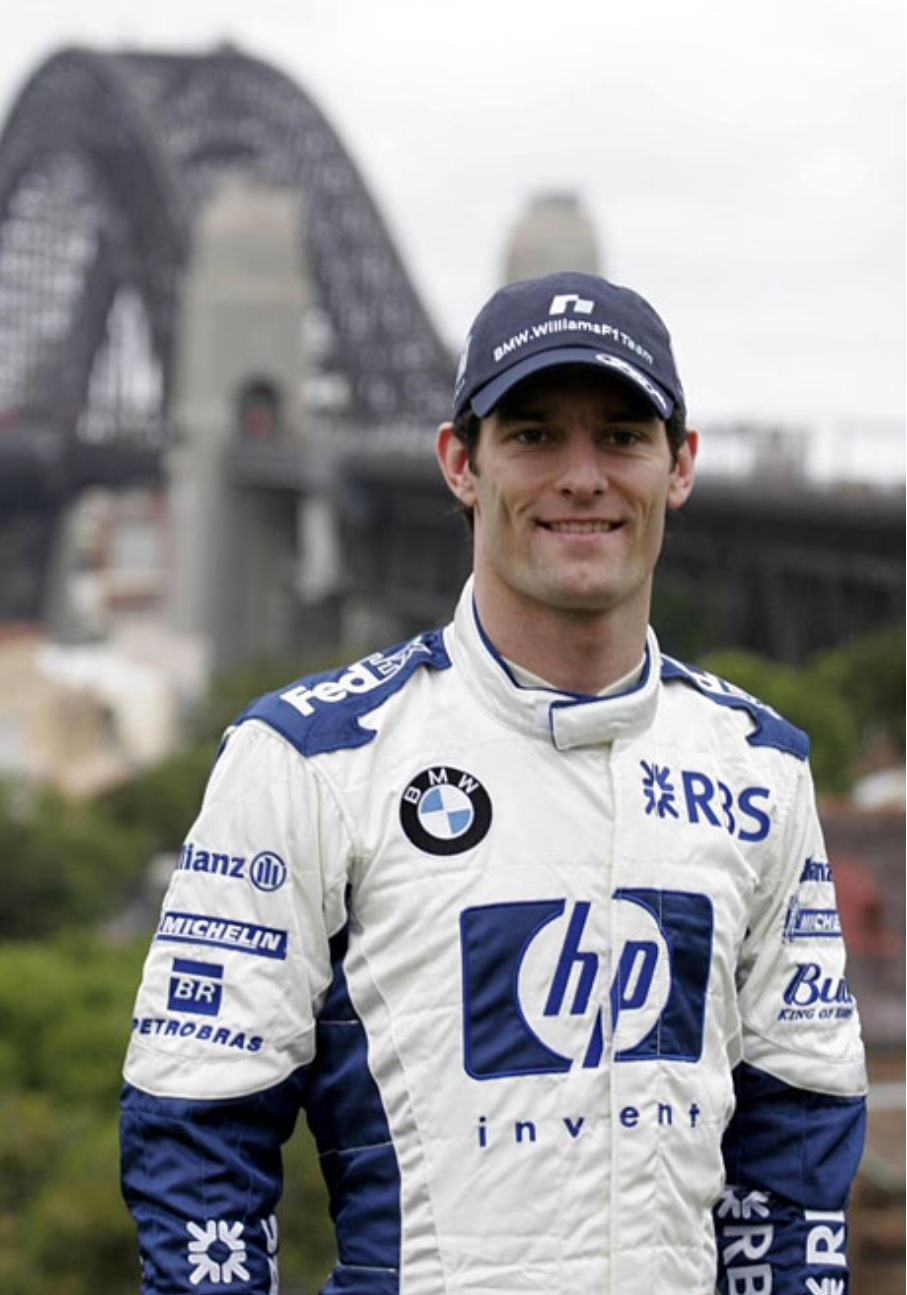
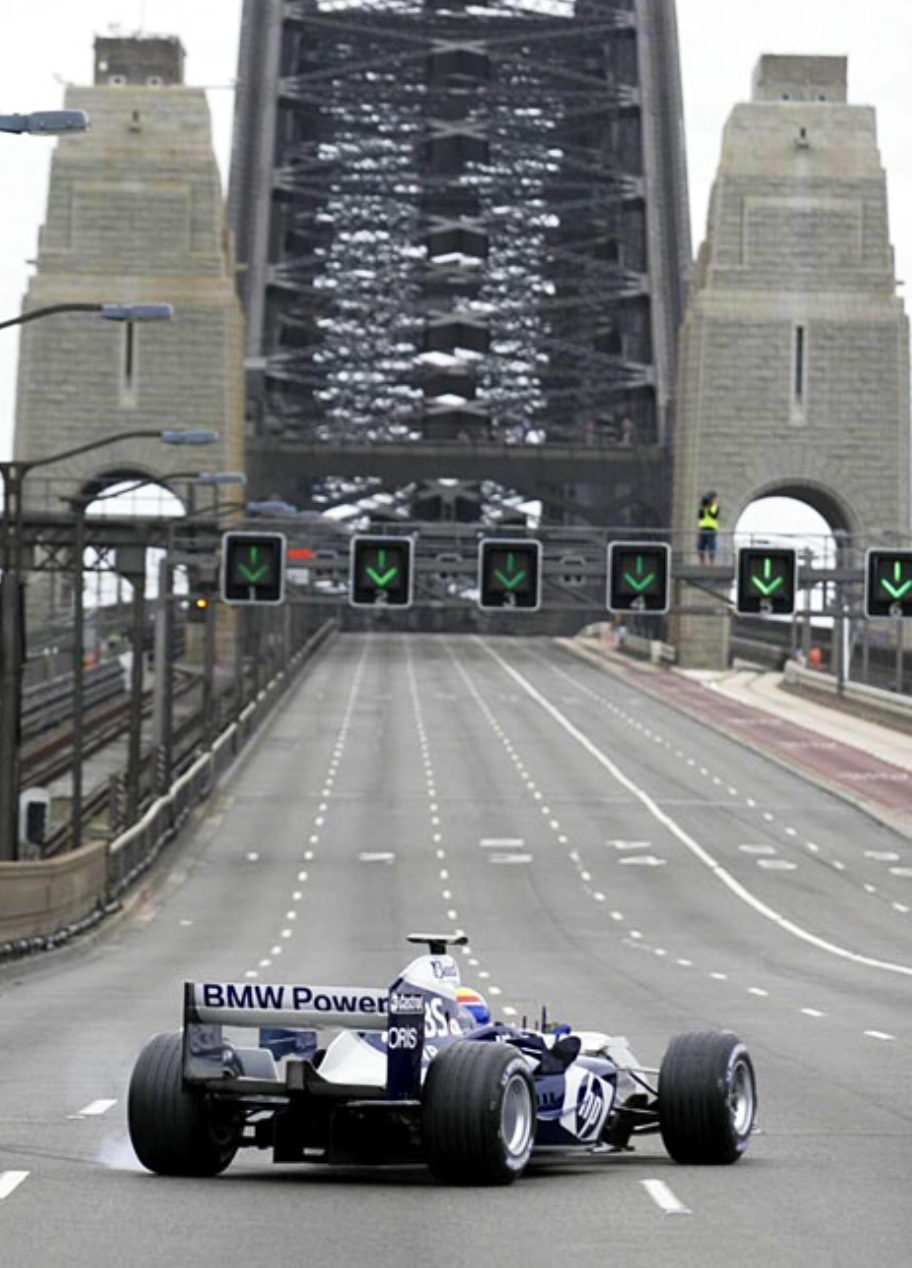
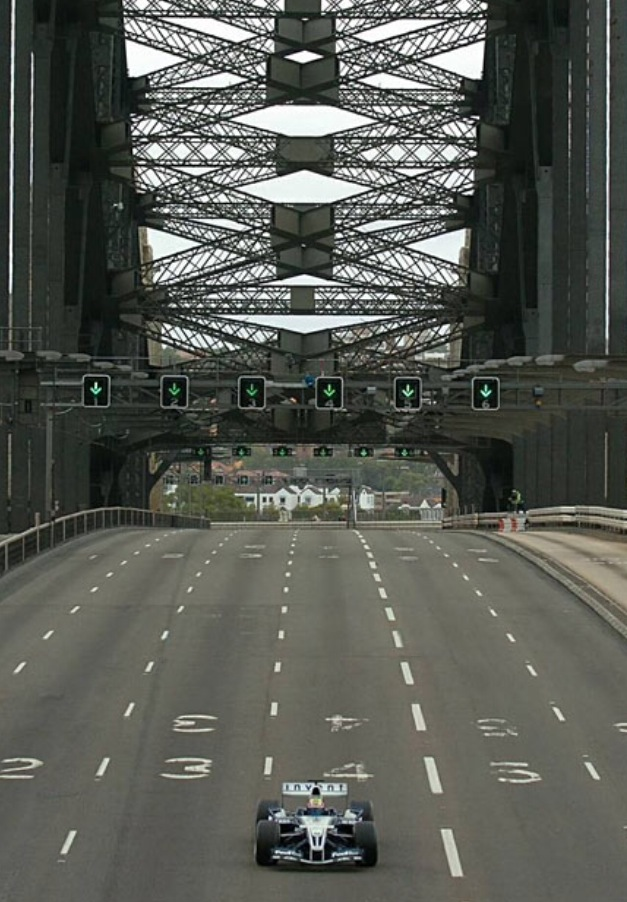
On 27 February 2005 Mark Webber did ’10 laps’ of Sydney Harbour Bridge in his Williams FW26B BMW F1 car…
Webber had just joined Williams from Jaguar and much was expected of his shift to a top team. The Harbour Bridge run promotion was part of the build up to that years AGP held at Albert Park on 6 March.
The Bridge, a critical part of Sydney’s traffic flow was closed for 5 hours for the sortie which itself took only 10 minutes, he was flagged away by New South Wales Premier, Bob Carr.
The 2004 spec, V10 engined car was based at the City end of the Bridge and went backwards and forwards between the CBD and Kirribilli, Mark flicking the car to make the ‘tight u turns’ required. The FW26, a race winning car in Juan Pablo-Montoya’s hands in 2004, was fitted with wets in deference to Sydney’s ‘moody weather’ on the day.
Webber’s two seasons with Williams were not especially successful ones although 2005, 10th in the Drivers Championship, 3rd place at Monaco his best was better than 2006 when he was 14th in the standings. The move to the nascent Red Bull team the following year was the critical move to get into an ultimately race-winning team/car. And some celebrated duels with ‘enfant-terrible’ teammate Sebastian Vettel!
Giancarlo Fisichella won the 2005 AGP, confirming the renaissance of Renault as a team, teammate Fernando Alonso won the first of his World Championships in 2005 in the 3 litre V10 Renault R25. Mark Webber qualified 3rd and finished 5th at Albert Park in a good start to the season.
YouTube Footage…
Happy chappy prior to the start of the 2005 season. I always thought Williams and Webber could have and should have achieved more, the problem was the team not MW, Williams having a fall-off in competitiveness at the time. A pity. Sydneysiders may know this spot, photo taken from the Rotunda at Observatory Hill Park looking North. Webbo would have had to elbow aside a couple of wedding groups which are booked solidly back to back for ‘happy snaps’ in the warmer months. Its my old neighbourhood, i lived there for 9 years,.The Rocks, Millers Point, Barangaroo, Observatory Hill and Sydney Observatory itself all worth a good look on foot.
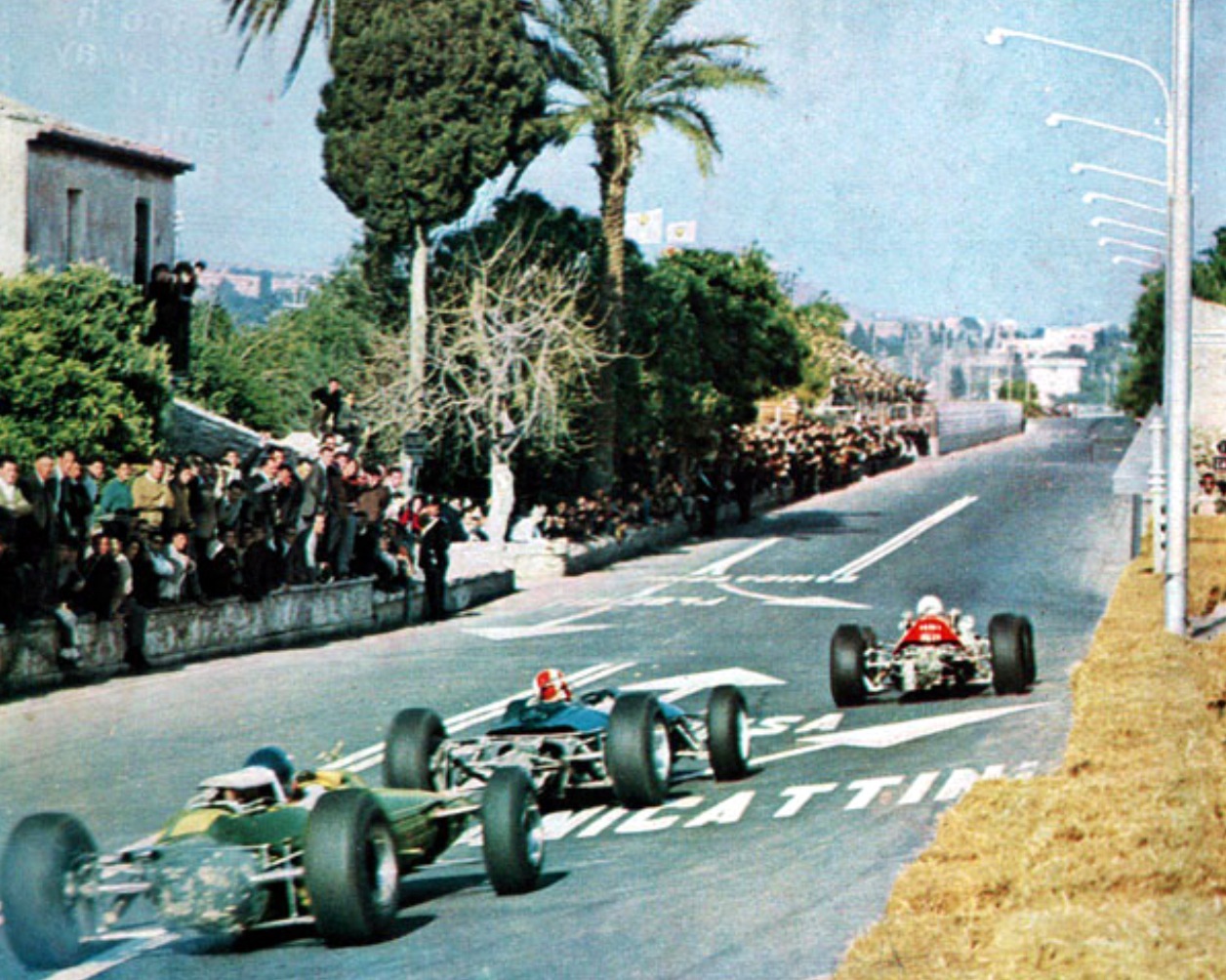
John Surtees Ferrari 158 leads Jo Siffert and Jim Clark, Brabham BT11 BRM and Lotus 33 Climax at the start of the 1965 Syracuse GP, Sicily April 4 1965…
Clark won the race from Surtees and Lorenzo Bandini in another Ferrari 158. A solid entry contested this non-championship GP including Mike Spence Lotus 33 Climax, Masten Gregory BRM P57 and Mike Hailwood and Innes Ireland in Lotus 25 BRM’s. What a fabulous track this must have been.
Clark was well into his very successful 1965 season, he finished a successful Australasian summer in March winning the Tasman Series in a Lotus 32B Climax, took the ‘Indy 500 in the Lotus 38 Ford in May and won the world title, his second in the Lotus 33…apart from whatever F2, touring car and sports car victories he took that year!
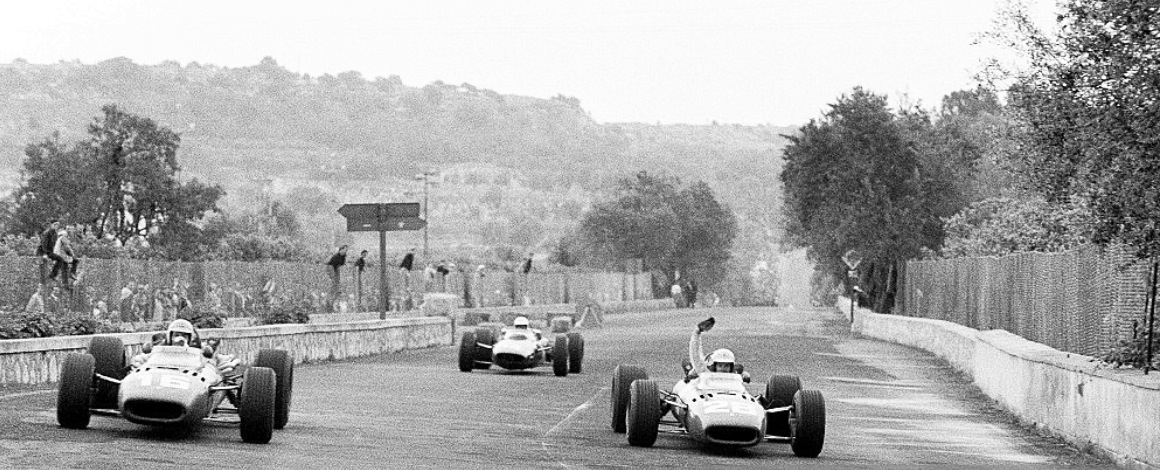
The event was held on a road course in Syracuse, right in the corner of the southeast of Sicily. The GP was first and last held in 1951 and 1967, the events won by Ferraris’; Luigi Villoresi’s Ferrari 375 in 1951 and Mike Parkes AND Ludovico Scarfiotti’s Ferrari 312’s dead-heating in honor of their recently killed teammate Lorenzo Bandini, who died at Monaco in 1967.
Those 400bhp cars must have been awfully quick around that track in 1967…
Mike Parkes #28 and Ludovico Scarfiotti #16, Ferrari 312’s stage their dead-heat in the 16th and last Syracuse GP on 21 May 1967 in honour of their just killed teammate, Lorenzo Bandini at the ’67 Monaco GP. A wonderful gesture of respect. (Getty Images)
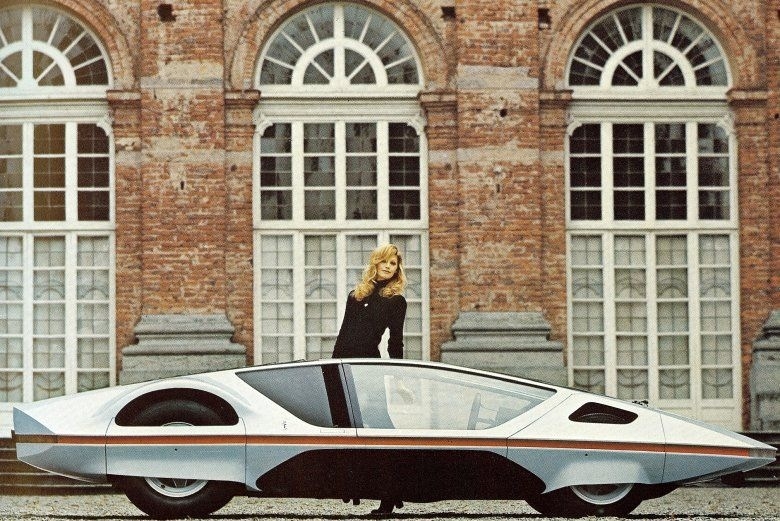
Pininfarina designed, 1969 Ferrari 512S Berlinetta Speciale. And admirer. (Rainer Schlegelmilch)
‘A rather permissive rear end reveals part of the five speed transmission on the Pininfarina Ferrari 512S. There is the almost customary louvered backward look but its Wellsian. The chassis was a tubular structure with riveted light alloy panels contributing to the rigidity.
The naughty nakedness around the car’s nether regions and the upswept slotted effect adjacent to the rear wheels assists with the expulsion of hot air that can be generated by such a projectile-from brakes, tyres, transmission exhaust system etc. Forward visibility from the two seats was remarkably good-useful with such performance’.
So said Automobile Year 17’s summary of the rear of the Pininfarina designed Ferrari 512S Berlinetta Speciale in 1969. Amazing how appropriate a caption it is for this shot taken 45 years later!
512S Berlinetta Speciale. (Rainer Schlegelmilch)
The original appeal in writing this article was the juxtaposition of ‘les derrieres incroyables!’ of car and model, but upon closer inspection the fusion of a racer, which had a ‘big hit’ at Monza in 1969 and then contributed its chassis as the basis for Pininfarina’s Ferrari ‘512S’ Speciale show car is an interesting one in itself.
This article is a story about the two Ferrari ‘512S’ based Pininfarina designed Show Cars; the ‘Berlinetta Speciale’ of 1969, actually based on the chassis of a 312P, and ‘Modulo’ of 1970, actually based on a 512S chassis which raced as a 612P. Simple really!
The chassis of the ‘512S Speciale’ was the first of the 1969 312P endurance racers completed. It was the car launched to the press at the Hotel Fini, Modena on December 14 1968. In early 1969 it was damaged testing at Vallelunga and therefore didn’t make the season opening championship round at Daytona, but was rebuilt in tine for the Sebring 12 Hour in March.
Chris Amon and Mario Andretti drove the car, the curvaceous 3 litre V12 winning its class and finishing 2nd overall to the venerable 5 litre Ford GT40 of the ‘Jacks’ Ickx and Oliver.
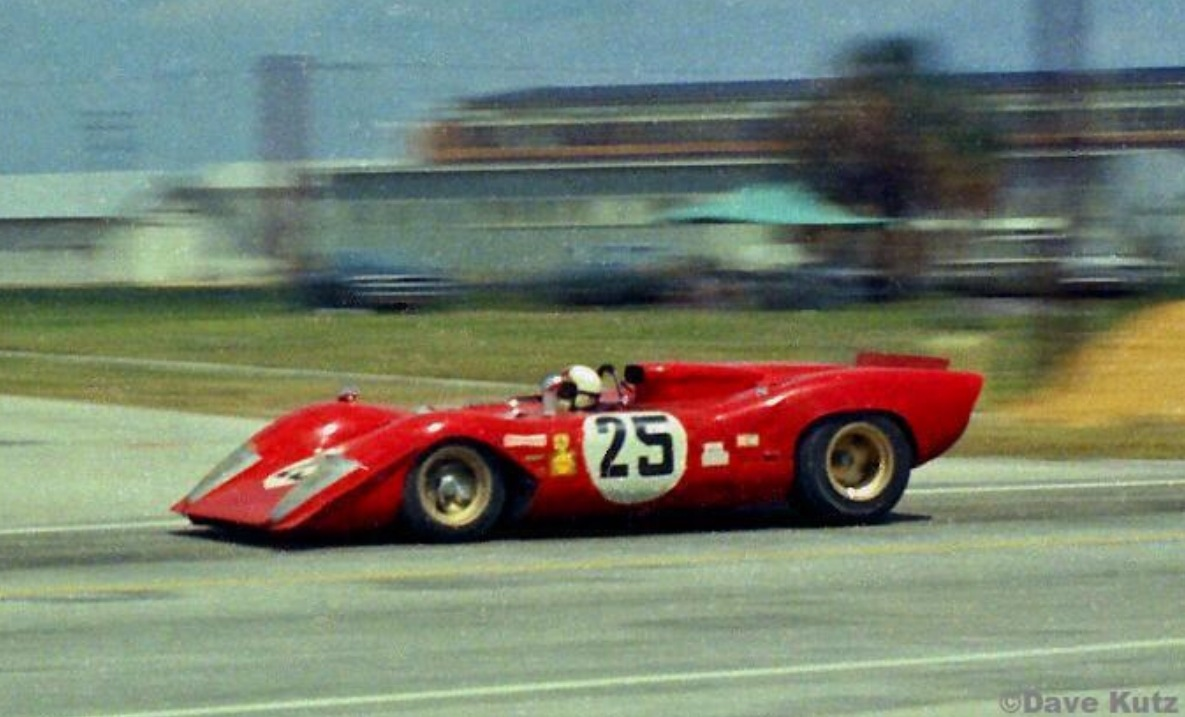
Chris Amon in Ferrari 312P ‘0868’ he shared with Mario Andretti at Sebring in 1970. (Dave Kutz)
Pedro on his way to 4th place in 312P ‘0868’ or ‘0870’…Brands 500 Km 1969. (unattributed)
Amon was paired with Pedro Rodriguez at Brands Hatch, the pair finished 4th in the 500Km race won by Jo Siffert and Brian Redman in a Porsche 908/2. Note that some sources say the Chris/Pedro car was ‘0870’ not ‘0868’ which they say did not arrive. Whatever.
Rodriguez in 312P ‘0868’ boxing in winner Jo Siffert’s Porsche 908 behind the Hanrioud/Martin Ford GT40.(15th) Monza 1000Km 1969. (unattributed)
A fortnight later, on 25 April the car was entered at Monza for the 1000Km home event, Pedro back behind the wheel this time paired with Peter Schetty, later a successful Ferrari Team Manager.
During the race a left rear Firestone blew, damaging the rear bodywork, Pedro nursed the car back to the pits on lap 66. The crew quickly got him going but had not properly affixed the rear bodywork which blew off the car at high speed causing a huge accident of the type which took Bruce McLaren’s life 12 months later at Goodwood, fortunately without injury to Pedro but comprehensively ‘rooting’ the car.
It was taken back to the factory and put to one side whilst the other two 312P chassis were used for the racing at hand.
Pedro Rodriguez alights the Ferrari 312P ‘0868’ he shared with Peter Schetty at Monza in 1969. This was after the first ‘light hit’ when a tyre blew. When he got back into the car, on its first ‘out lap’ the separation of rear bodywork from the car caused the accident which all but destroyed it, Pedro shaken but ok. (unattributed)
Later in 1969 the chassis and an engine block (as against a complete engine) from 612P CanAm car #0866 was given to Pininfarina as the basis for their ‘Berlinetta Speciale’ styling exercise, the chassis at that point stamped ‘002’ noting the chassis was a 312P not a 512S despite the name…
Chris Amon in Ferrari 512S ‘1012’ shared with Arturo Merzario in the very wet Brands Hatch 1000Km in 1970. They were 5th in the race famously won by Rodriguez’ stunning wet weather drive in a Porsche 917K. (unattributed)
So, why call the Berlinetta Speciale a 512S if twasn’t?
Whilst Enzo’s coffers were full of Fiat lire given the Italian corporates 1969 Ferrari investment, the Scuderia had the not insignificant problem of flogging the 25 512S’ required to be built for homologation into the FIA’s Group 5 to race in 1970.
And no amount of Ferrari homologation ‘jiggery-pokery’ with promises of cars to be built would satisfy the CSI given the hoops Porsche had to jump to achieve certification of production numbers of their 4.5 litre 917 ‘Panzer-Wagen’ which created the need for all those 512S to be built in the first place… Given the working capital involved in designing, building and carrying the holding costs of unsold cars on his Balance Sheet be in no doubt about just what a priority Le Mans was to Ferrari for all those years.
He would not readily hand victory to the Germans without a fight. So, i suspect the 512S nomenclature was a marketing exercise to do everything possible to promote the car he needed to sell rather than one he was about to drop as works entry at seasons end. (putting the 312PB of 1971 and beyond to one side, that car is still a regulation change away, in 1969 the main game was 5 litres not 3)
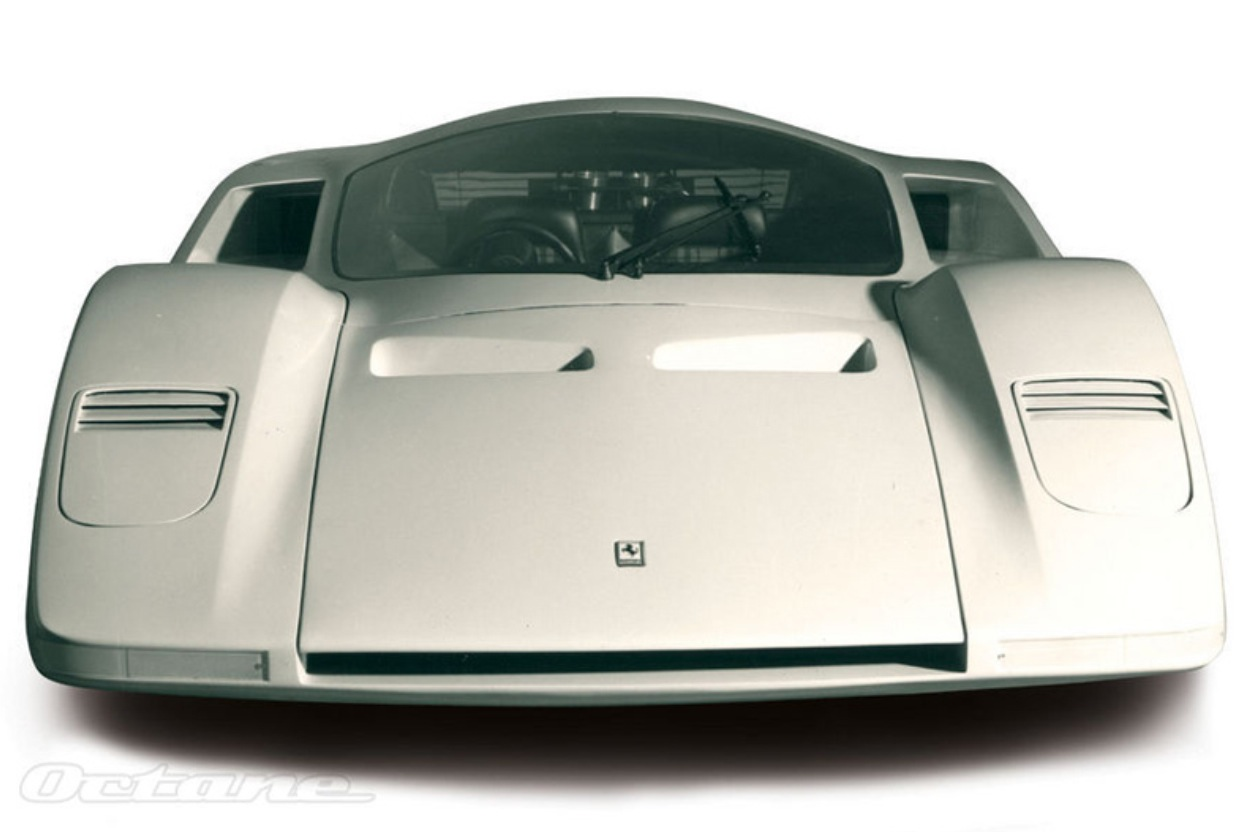
‘In period’ studio shot of the 512S Berlinetta Speciale. (Pininfarina)
Ferrari’s Design Evolution…
Filippo Sapino longest creative stint was 30 years as design director at Ghia but his most stunning project was the ‘Ferrari 512S Berlinetta Speciale’, completed whilst at Pininfarina for a short while in the late 1960s. Launched at the 1969 Turin Motor Show, the car caused enormous interest as it was the first Ferrari with ‘wedge styling’, a design trend of the late sixties.
Regardless, ‘Sapino had made the most of the floor-hugging physique of the chassis, adding some unorthodox surface treatments to visually transform static into supersonic. Flourishes such as the flip-up canopy completed the Speciale’s theatre’.
Automobile Year 17 said this about the car in its annual review of 1969 ‘Quite the most exciting looking closed car to emanate from the Pininfarina establishment for some time, the Ferrari 512S Berlinetta Speciale pursued the wedge line and with the 5 litre four ohc V12 engine behind the seats it should be one of the worlds fastest cars. The shape was determined after research in collaboration with the Turin Polytechnic, and was the work of 29 year old Filippo Sapino before he left to join the new Ford styling centre in Turin.’
Pininfarina’s Ferrari Modulo, displayed in 1970, based on a 512S chassis was the definitive Ferrari wedge…
The truly stunning Pininfarina Ferrari Modulo. As stunning now as when first launched at Geneva in 1970. This shot was in Automobile Year 18.
Even though the Modulo was originally designed by Paolo Martin in 1968 the Berlinetta Speciale was the first built and therefore could or should be said to be the more influential in showing the path and creating the inspiration for Ferrari angular/wedge road cars such as the 365GTC/4 (also designed by Sapino), 365 Berlinetta Boxer and 308-328 series of Dino’s
Ferrari publicity shot of Niki Lauda and Clay Regazzoni checking out the ‘wedgey’ Pininfarina designed, Dino 308 at Fiorano in 1976. They are during a lull testing the 312T2 F1 car which is clear to see. (unattributed)
In fact the choice of Sapino’s design as Pininfarinas 1969 Show Star rather than Paolo Martin’sis an interesting bit of Pininfarina politics, which worked out rather well for PF, Ferrari and i suspect both designers.
In 1968 at Pininfarina he was wrestling with the design of a dashboard of the Rolls Royce Camargue when he conceived the design of a car which became known as the Modulo, which he described as ‘The craziest dreamcar in the world, the most unique, violent, inimitable and conceptually different’.
Sketches were drawn, Martin had an ally in PF Director Franco Martinengo but Sergio Farina was not convinced even by Martin’s full scale polystyrene model of the car which he completed by August 1968. ‘Why would you draw a car like this?’ he asked Martin. “Its important that they will speak of it’ he replied. Farina’s rejoinder ‘Yes, but they will speak ill of it’.
And so, as its showcar in 1969 Pininfarina went with Sapino’s more conservative, i hesitate to use the word, the car is stunning but in relative terms the car is conservative beside the Modulo, as was everything else was when the car appeared at Geneva in 1970.
Emboldened by the success of the Berlinetta Speciale in 1969 Pininfarina was ready to endorse Martin’s Modulo which made its show debut in 1970, it truly was and is a remarkable milestone in automotive design, still fascinating audiences when it makes occasional show appearances now.
The Modulo is an interesting story for another time, it was based on a 512S chassis but the account is far from clear. The consensus seems to be that 512S chassis ‘1027’ was built up as Ferrari 612P ‘0864’, the car one of 2 (‘0866’ the other) raced by Chris Amon in the 1969 Can Am series. At the end of the cars unsuccessful campaign, the McLarens M8B Chevs dominant that year, its remains including the original chassis less chassis plate was given to Pininfarina to be used as a base of the Modulo.
Ferrari 612P CanAm car, Ferrari factory shot. The car grew wings and other aero appendages but fundamentally lacked grunt whatever its chassis shortcomings relative to the Mclaren M8B Chevs dominant that year. One 612P was built using 512S chassis ‘1027’, and then at the end of the season the car was dismantled and the chassis used as the basis for the Modulo. (Sefac Ferrari)
The photo shoot atop a mountain top at Como, Italy which inspired this article was shot by noted racing photographer Rainer Schlegelmilch, Who knows what its all about, and who cares…both car and babe shown to great effect!
Etcetera…
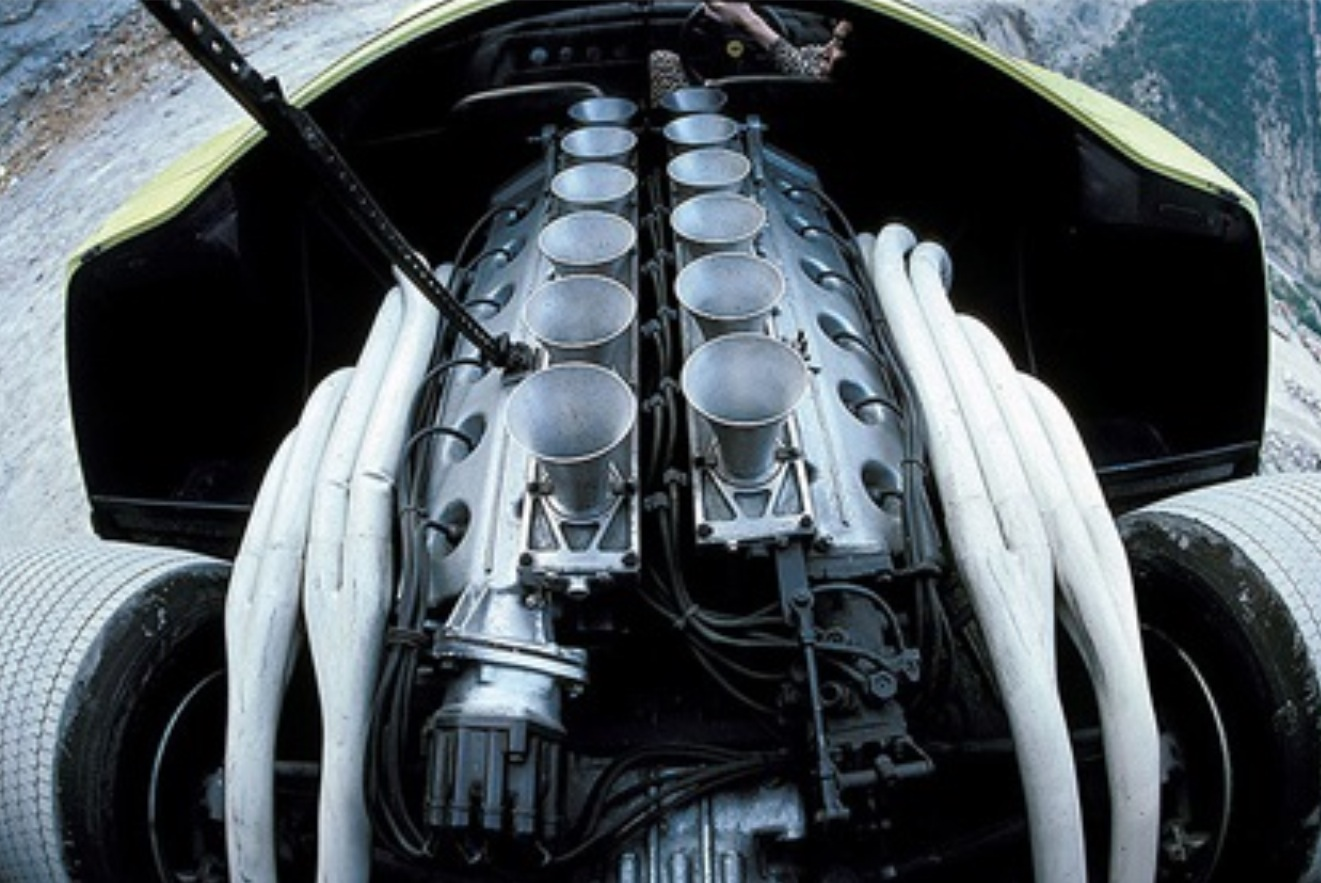
512S Speciale engine compartment filled with the 6 litre V12 ex 612P ‘0866’. Its a dummy engine, original block but no internals, the car is not and has never been ‘ a runner’. Looks the goods all the same. (Rainer Schlegelmilch) Berlinetta Speciale, great from any angle. (Pininfarina)
Bibliography and Credits…
barchetta.cc, ferrarichat.com, Automobile Year 17, Classic Driver