I’ve been to the ‘States but never done a ‘motor racing tour’, when I do so Road America, Elkhart Lake will be one of the ‘musts’…
I first saw the place in books on the CanAm Series as a teenager and was taken by its undulating terrain, challenging layout and wooded setting in Wisconsin’s Kettle Moraine.
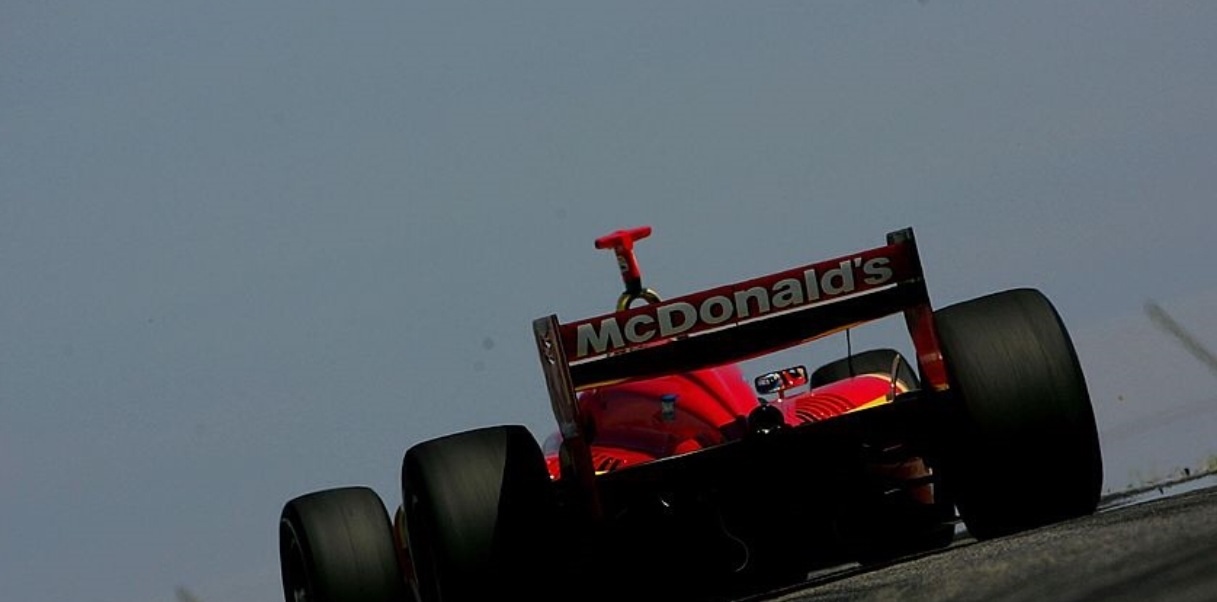
These photos of Sebastien Bourdais in the 2007 Champcar round there seemed worth sharing.
Bourdais reflection in the pits, Road America 2003 (Ingham)
The Le Mans born second generation racer burst from French karting and junior formulae and vaulted from European Formula 3000 success in 2002 to Indycars in 2003. He became the series dominant driver taking the title from 2004-2007 before jumping to F1 with Toro Rosso in 2008 and into 2009.
Bourdais won the Road America ‘Generac Grand Prix’ from pole extracting all the mandated Panoz DP01 2.65 litre single-turbo Cosworth V8 had to offer. His Newman Haas entered car won from Dan Clarke and Graham Rahal.
Bourdais remains a competitive racer in Sportscars and Indycars having won a ‘Chevrolet Dual in Detroit’ race at Belle Isle Park in this years (2016) series.
Many thanks to Stephen Dalton for identifying the car and driver who are famous in the pantheon of Australian motor racing indeed. Frank Pratt drove this 328 to victory in the Australian Grand Prix at Point Cook, not too far away from Rob Roy in January 1948. The event featured is the 11th Rob Roy on 24 November 1946, one of Pratt’s first drives in the car.
This much raced 328, chassis #85136, was imported to Oz by Sydney driver/businessman John Snowon one of his trips to Europe. He bought it from a German General in 1937, Snow acquired it on behalf of George Martin, president of the Light Car Club, Melbourne.
Martin raced it in the ’38 AGP at Bathurst won by Peter Whitehead’s ERA R10B, then unfortunately lost his life in the car on the return trip to Melbourne in an accident near Wagga Wagga.
George Martin in the 328 at left 15th, and John Crouch MG TA 5th, 1938 AGP at Bathurst, some of the challenges of the gravel track obvious in this shot (Dave Sullivan)
Repaired, by 1946 the car passed into the hands of Geelong motor cycle racer/dealer Frank Pratt who famously won his first circuit race in it; the 1948 Australian Grand Prix, at Point Cook airforce base west of Melbourne.
As a very successful motor cycle racer he was not new to competition and racecraft. He also had a favourable handicap, the AGP was run to F Libre and handicapped for many years. Pratt scored a lucky win with high speed consistency, the car prepared by racer/engineer Harry Firth.
Dalton adds; ‘..Les Murphy (was) mentioned as a possible driver of the car, because Pratt was injured at a Ballarat Motorcycle meeting. But not car preparation, Harry Firth said he did the brakes, chassis and gearbox on the BMW. Mick Scott did the engine. Harry also mentions preparing the Gaze HRG 1500, but wasn’t allowed to do the Alta’ which Gaze retired after 5 laps.
In a race run in horrid, stifling hot summer conditions which took their toll on both cars and their pilots especially the highly strung single-seaters and racing cars, Frank triumphed.
Pratt on his way to victory on a horrible Melbourne summers day, AGP, Point Cook, January 26 1948, BMW 328 (George Thomas)
Click here for an interesting article about Frank Pratt, little has been written about him. ‘Pratt and Osborne’ still exists as a motor-cycle dealership in Geelong, a port city 75 Km from Melbourne on Port Phillip Bay. http://www.smcc.com.au/docs/Leonard%20Frank%20Pratt.pdf
The BMW was later raced by Peter McKenna all over Australia; at Fishermans Bend, Ballarat Airfield and Albert Park in Victoria and as far afield as Southport’s 1954 Australian Grand Prix. The car passed through various custodians hands in Oz before leaving the country in the 1990’s.
The BMW in the Nuriootpa paddock, Australian GP meeting 1950, Peter McKenna (SLSA)
Credits…
‘Historic Racing Cars in Australia’ John Blanden’, George Thomas, Stephen Dalton, Dave Sullivan, State Library of South Australia
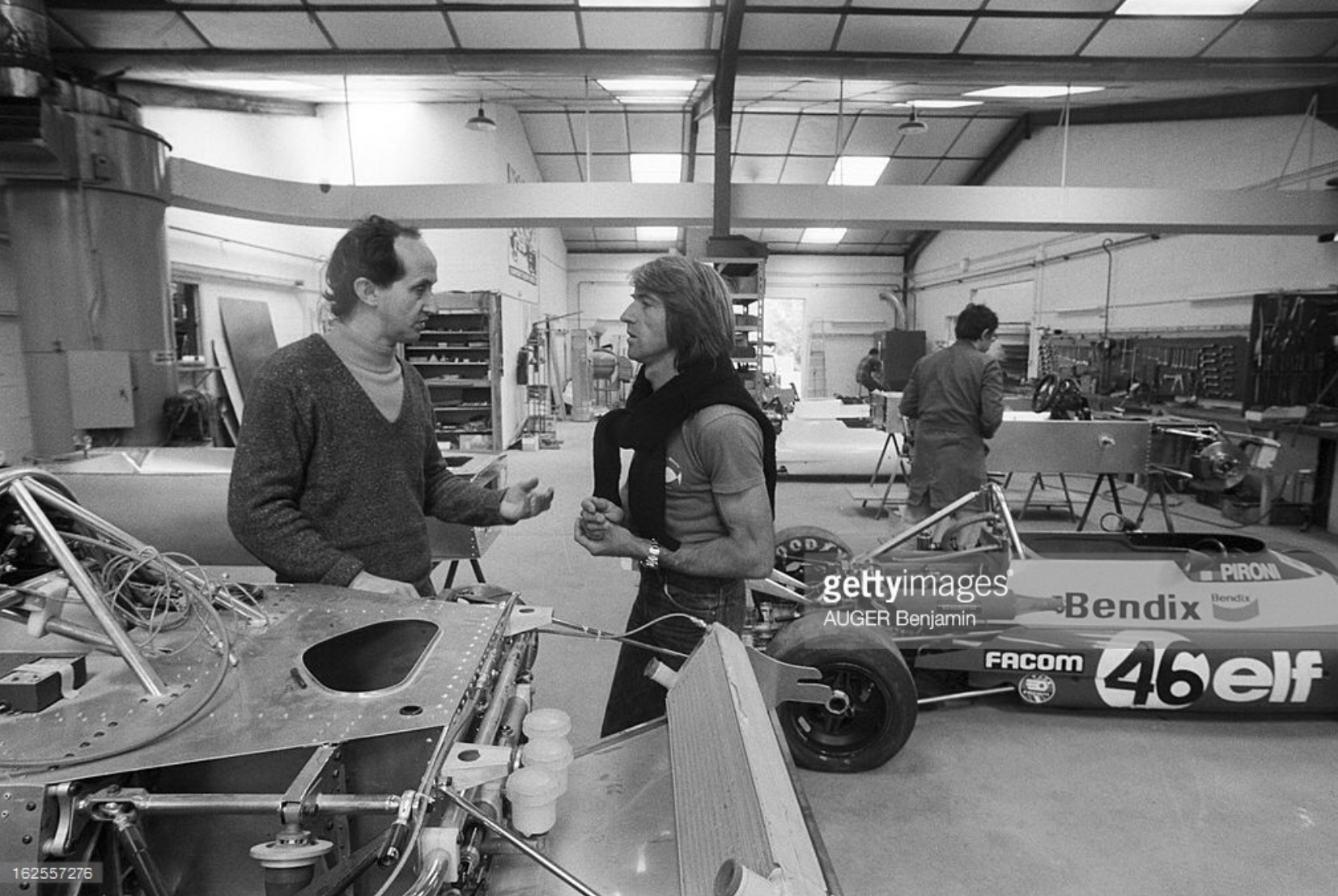
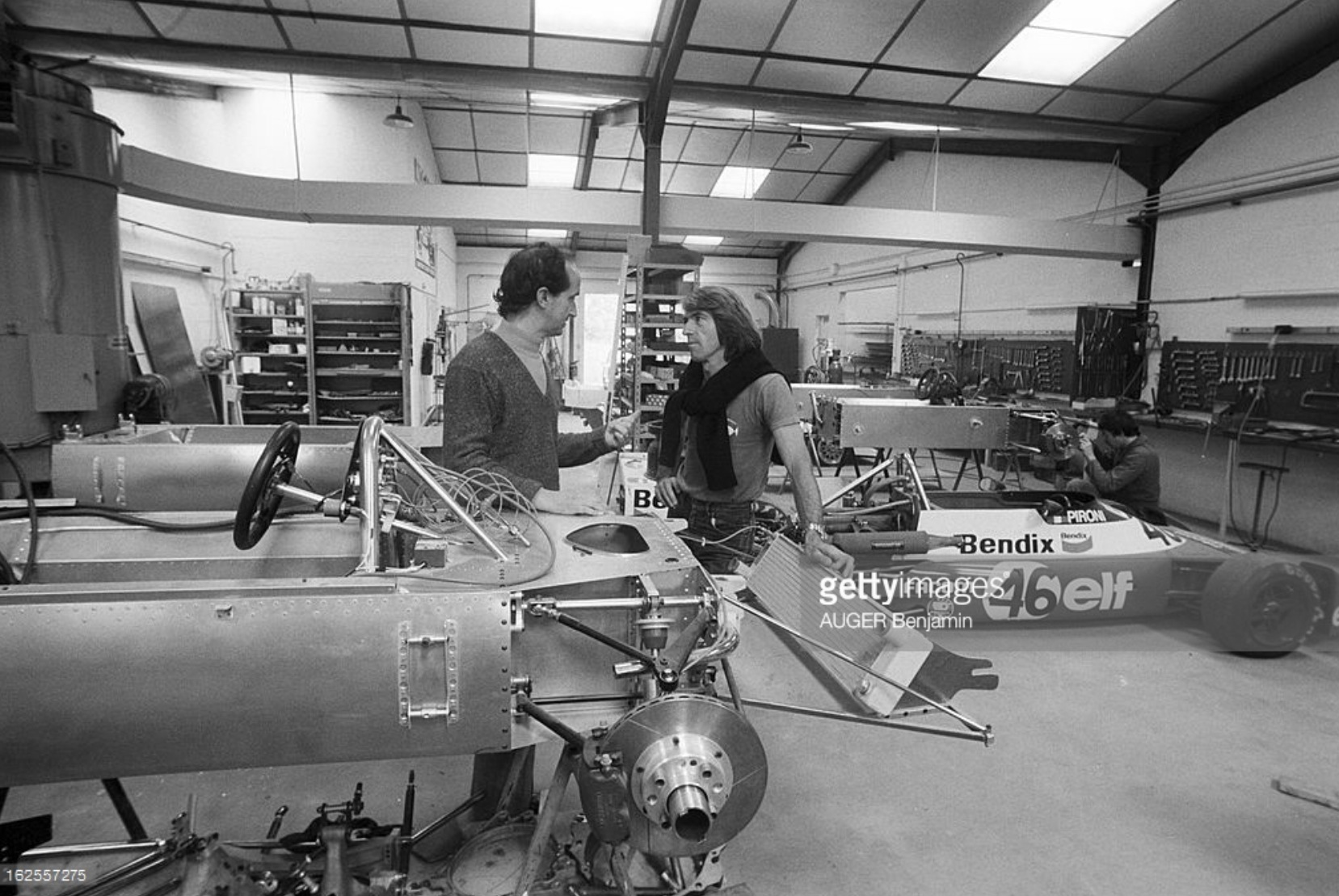
Jacques Laffitte and Tico Martini swapping notes as the old mates catch up in 1977…
This shot is dated 1 June 1977, note the presence of Didier Pironi’s ’77 Monaco F3 GP winning Mk 21. There are a few cars being assembled in the Magny Cours ‘shop, by the looks of the brakes on the monocoque in the foreground it’s probably a Mk22 F2 chassis.
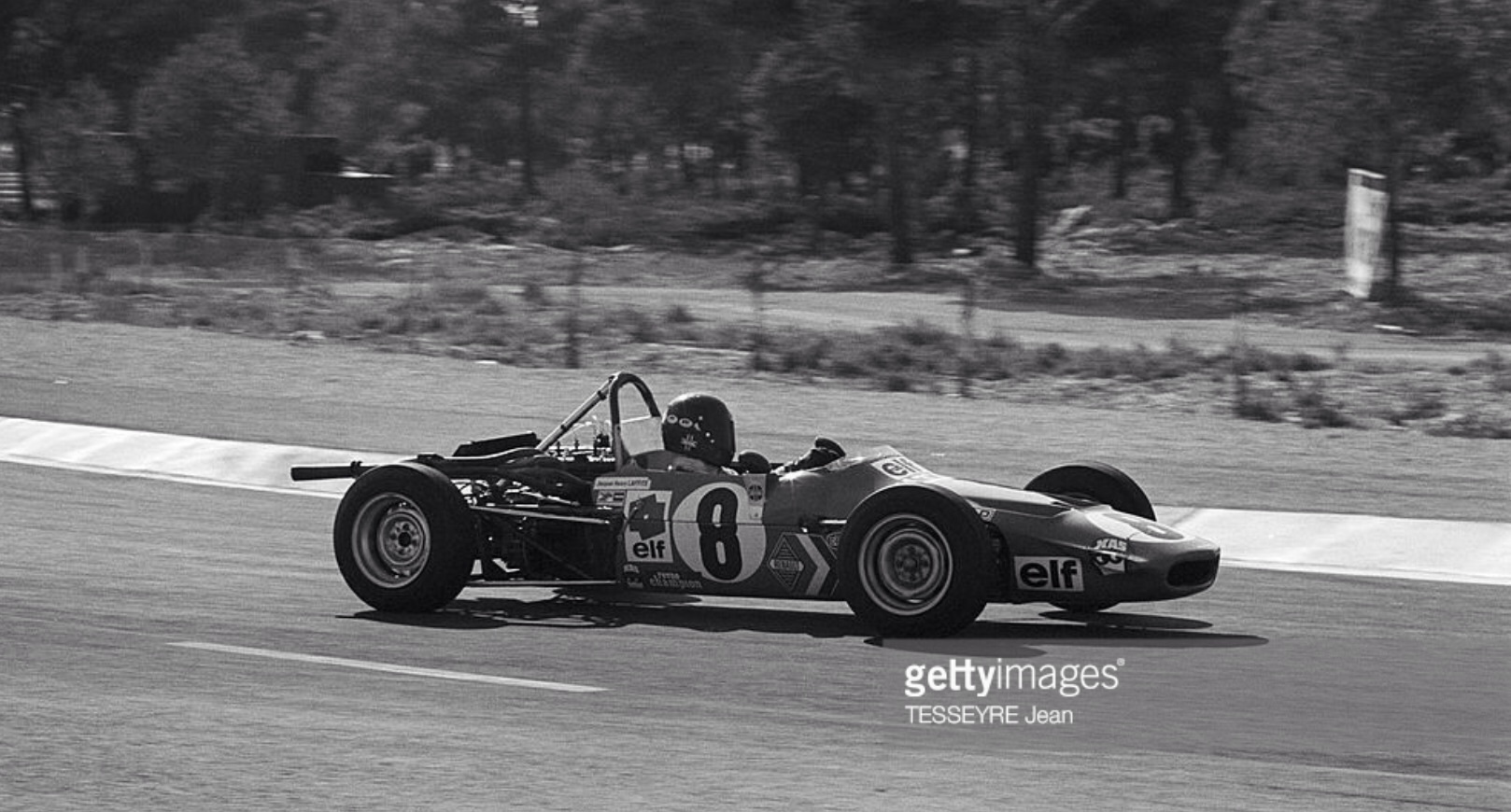
Jacques at Paul Ricard in 1971, Alpine Formula Renault
Jacques first sprung to prominence with a win in the ’72 French Formula Renault championship aboard a Martini Mk8 and proved his inherent speed with Monaco F3 GP and French F3 championship wins in a Martini Mk12 Ford in 1973. He was also 4th in the British Championship in the same car. His Martini pedigree went back further though, to 1969 when he started to put together some good results in the F3 MW4, he was not an overnight success mind you, doing plenty of time in the junior formulae before his ultimate progression.
Tico Martini built his first racing car, a hillclimber in Jersey in 1962.At the Boulay Bay hillclimb he met Bill Knight, who was running the Jim Russell Racing School at Magny Cours. The following year Martini moved to Magny Cours to look after the school cars and prepare a fleet of its F3 cars which he also raced.
In 1965 the Knights acquired the school and renamed it ‘Winfield’. In 1968 Martini built the MW3 F3 car (MW-Martini Winfield) F3 car. And so a firm which went all the way to F1 with Rene Arnoux in the Mk23 Ford DFV in 1978 was born, the full history of the marque a feature for another time.
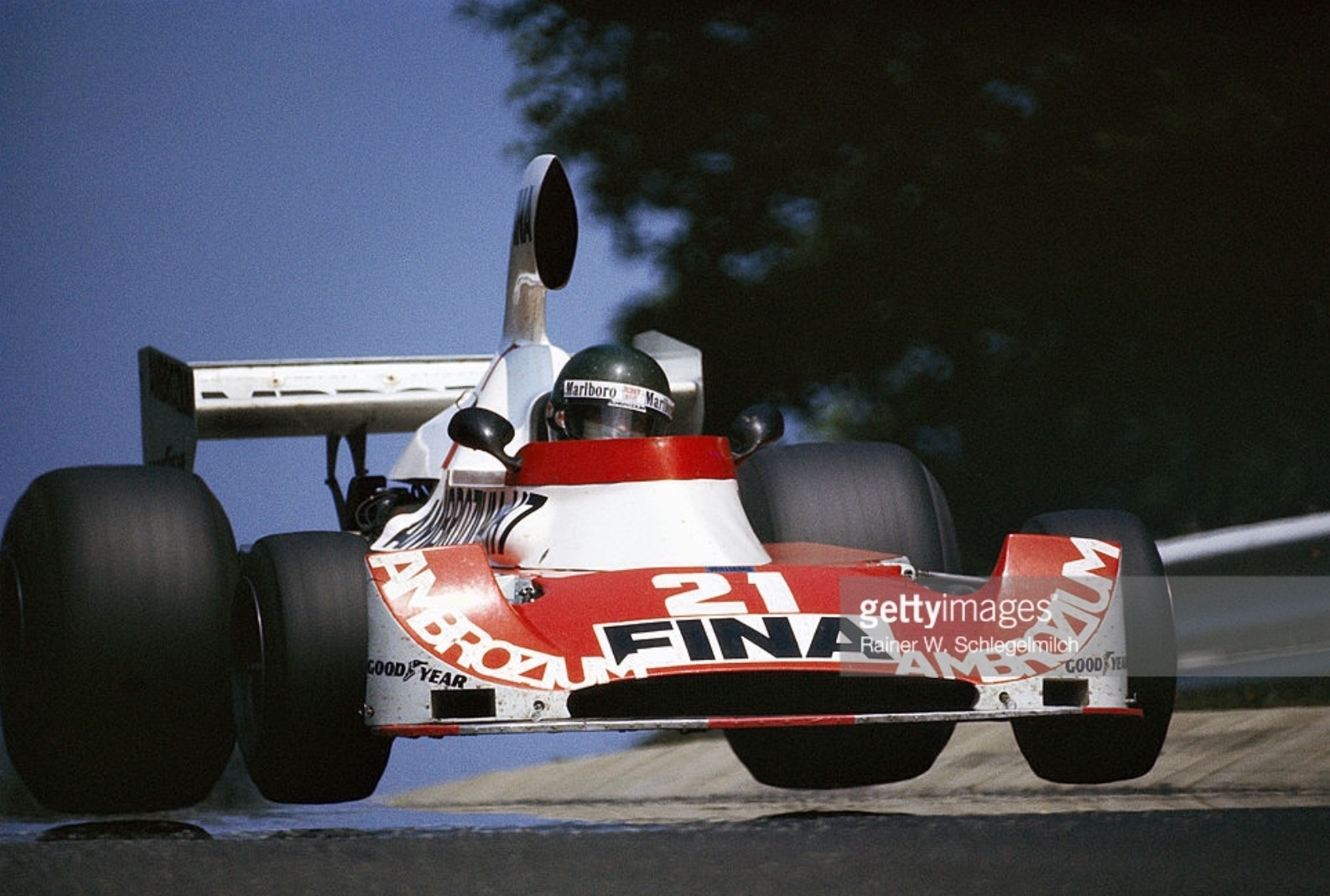
Laffitte, Williams FW04 Ford on his way to 2nd place to Reutemann’s Brabham BT44B Ford at the Nurburgring in 1975. German GP (Schlegelmilch)
Jacques jumped up to F2 in 1974 initially with a March BMW; he switched to Tico’s Mk16 BMW in 1975, undoubtedly winning the title with six round wins: Estoril, Thruxton, Nurburgring, the Pau GP, Hockenheim and Enna. Michele Leclere and Patrick Tambay completed a French sweep of the placegetters in March 752 BMWs.
Pau 1975, Jacques first in the fifth round of the Euro F2 Championship in ’75. Martini Mk16 BMW. March had the works BMW engines and their distribution rights, Jacque’s engines Schnitzer BMW M12, DOHC 4 valve, injected 2-litre circa 300bhp units (unattributed)
Mind you, by ’75, Jacques had made his F1 debut the year before, in one of Frank Williams Iso Fords.
Martini’s 1977 F2 car was the Mk22 Renault, which convincingly won the European F2 title in Rene Arnoux’s hands from Eddie Cheever’s Ralt RT1 BMW and Didi Pironi in the other works Martini.
Pau GP 1977, Brian Henton, Boxer PR276 Hart, Didi Pironi on the inside in his Martini Mk22 Renault DNF and Michele Leclere in the Kauhsen nee Jabouille 2J Renault DNF. Rene Arnoux won in a Martini Mk22 (unattributed)
Tico took the journey with Arnoux to F1 in 1978,a tough year to do so with Lotus 79’s ground effects dominance. The Ford DFV-powered MK23, with backing from Elf, RMO and Silver Match, was uncompetitive. The team failed to qualify at Kyalami and Monaco, but Rene made the field and finished 9th in the Belgian, Austrian and US GP’s and 14th in France. He retired in Holland and Canada, lack of sponsorship caused the team’s withdrawal from F1 at season’s end.
French GP, Paul Ricard, July 1978. Rene Arnoux Martini Mk23 Ford 14th leads a mid field gaggle including Clay Regazzoni Shadow DN9 Ford, Vittorio Brambilla Surtees TS20 Ford, Hans Stuck Shadow DN9 Ford, Bruno Giacomelli McLaren M26 Ford and Rupert Keegan Surtees TS20 Ford (Schlegelmilch)Rene Arnoux, Martini Mk23 Ford during Monaco 1978 pre-qualifying, he was 27th of 30 and didn’t make the cut, the race won by Patrick Depailler’s Tyrrell 008 Ford (Schlegelmilch)
Martini bounced back with Alain Prost’s success in the 1979 European F3 Championship; he won seven of the 11 races in a Martini MK27 Renault.
The company continued to win in F3 right through the 1980s and returned to F2 in 1983-84. Tico continued to build Formula Renault chassis with much success until 2004 when he sold the company to Guy Ligier and a new assault began on Formula 3.
The car beside Tico and Jacques, Pironi’s Monaco winner, is a Toyota-powered Mk21 chassis;behind him at Monaco was Elio De Angelis’ Chevron B38 and Anders Oloffsson’s Ralt RT1, the ‘Class of 1977′.
The Martini chassis were period typical aluminium monocoque with upper and lower wishbone front suspension and a single top link, twin parallel lower links and twin radius rods for fore and aft location with outboard coil spring/shocks and roll bars at the rear. We are a couple of years before the ground effect era and its knock-on impacts on chassis design and aerodynamics.
Didi Pironi Martini Mk21 Toyota 1st from Elio de Angelis Chevron B38 Toyota 2nd Monaco F3 GP 21 May 1977 (Schlegelmilch)
The gearboxes were Mike Hewland’s ubiquitous, reliable five-speed transaxles; the Mk9 and FT200 for F3 and F2 use, respectively. Both classes specified 2-litre engines, the F3 rules inlet restrictions limiting the four valve, fuel-injected four cylinder Toyota unit to circa 190bhp. Francois Castaing’s gorgeous ‘CH’ Renault Gordini 90 degree, four valve, fuel-injected 1997cc V6 gave around 300bhp @ 10500rpm. It won the Euro 2-litre sportscar and F2 titles and spawned Renault’s successful turbo-charged Le Mans and GP winners, stories for other times.
There is a great book about Tico and his cars, inevitably its only published in French, which is a bumma for me at least!
Credits…
Benjamin Auger, Gerard Rouxel, Rainer Schlegelmilch
Tailpiece…
Jacques in his ‘Winfield Racing’ F3 Martini MW4 Ford, ‘Coupe de Salon’ Montlhery October 4 1969. He didn’t finish the race, won by Emerson Fittipaldi’s Lotus 59 Ford from Francois Mazet and Jean-Pierre Jaussaud, both in Tecno 69 Fords. The field included Depailler, Brambilla, Jarier, Jabouille, Wisell, Schenken and Peterson in a sea of talent!
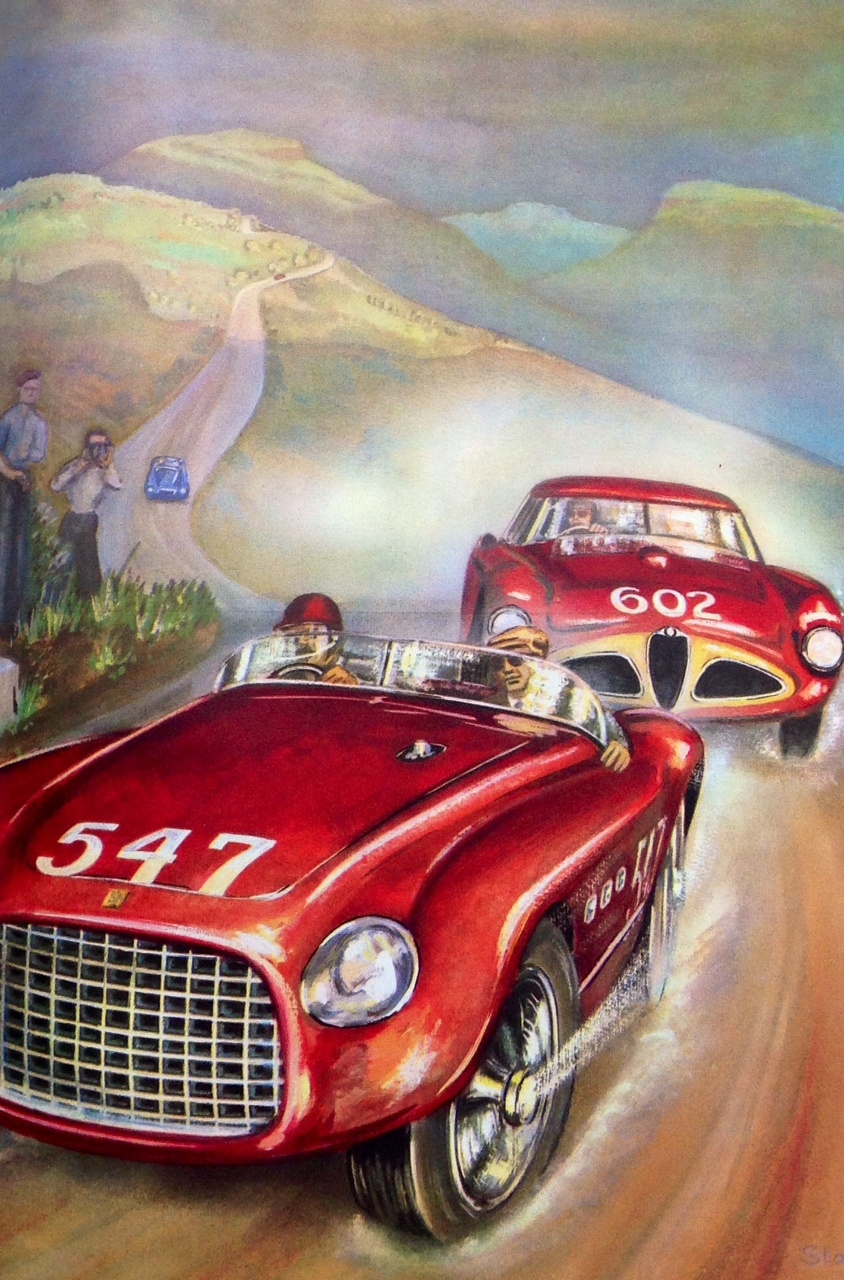
Count Giannino Marzotto and Nearco Crosaro spur their Ferrari 340MM on ahead of Fangio’s Alfa Romeo 6C3000CM during the 1953 Mille Miglia…
The Italian duo won the race, held from 25-26 April by nearly 12 minutes over Fangio’s car navigated by Giulio Sala and Felice Bonetto/U Peruzzi Lancia D20.
The new Alfa’s, powered by a 3 litre DOHC 6 cylinder engine led 4/5ths of the race but Marzotto’s victory was emphatic, he broke the average speed record set in 1938, leaving it at 142kmh.
The ’23 French GP was held on the ‘Circuit de Touraine’ Tours on 2 July was won by Henry Segrave in a Sunbeam…
The Le Petit Journal illustration depicts the 3rd placed Bugatti T32 ‘Tank’ of Ernest Friderich ahead of Segrave’s winning 2 litre, 4 cylinder Sunbeam. The course was 22.8Km, the total distance of 799Km took Segrave 6:35.19, Albert Divo 2nd in another Sunbeam is portrayed in the distance.
Tazio Nuvolari in his Scuderia Ferrari Alfa Romeo P3/Tipo B after winning the ’35 Pau Grand Prix…
Nuvolari and Rene Dreyfus dominated the 25 February 80 lap, 137 mile race in their Scuderia Ferrari P3’s finishing 1st and 2nd, Rene 26 seconds adrift of his team leader. Tazio was so happy, he did not one but two victory laps, the shot above is the end of the celebration!
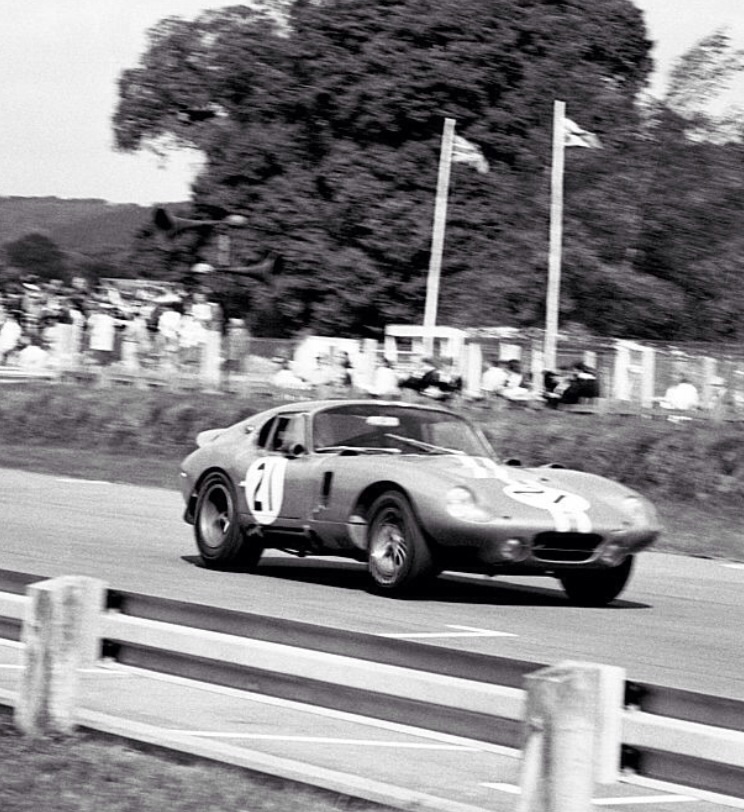
Jack Sears chases Graham Hill, #21 Dan Gurney, Denny Hulme and Mike Salmon in line astern; AC Shelby Cobra, Ferrari 330P, Shelby Cobra Daytona Coupe, Brabham BT8 Climax and Aston Martin DP214, 29 August 1964…
This group of cars is indicative of the quality of the field, Hill won the race of changing fortunes from David Piper’s Ferrari 250LM and Dan Gurney’s Shelby Cobra Daytona Coupe.
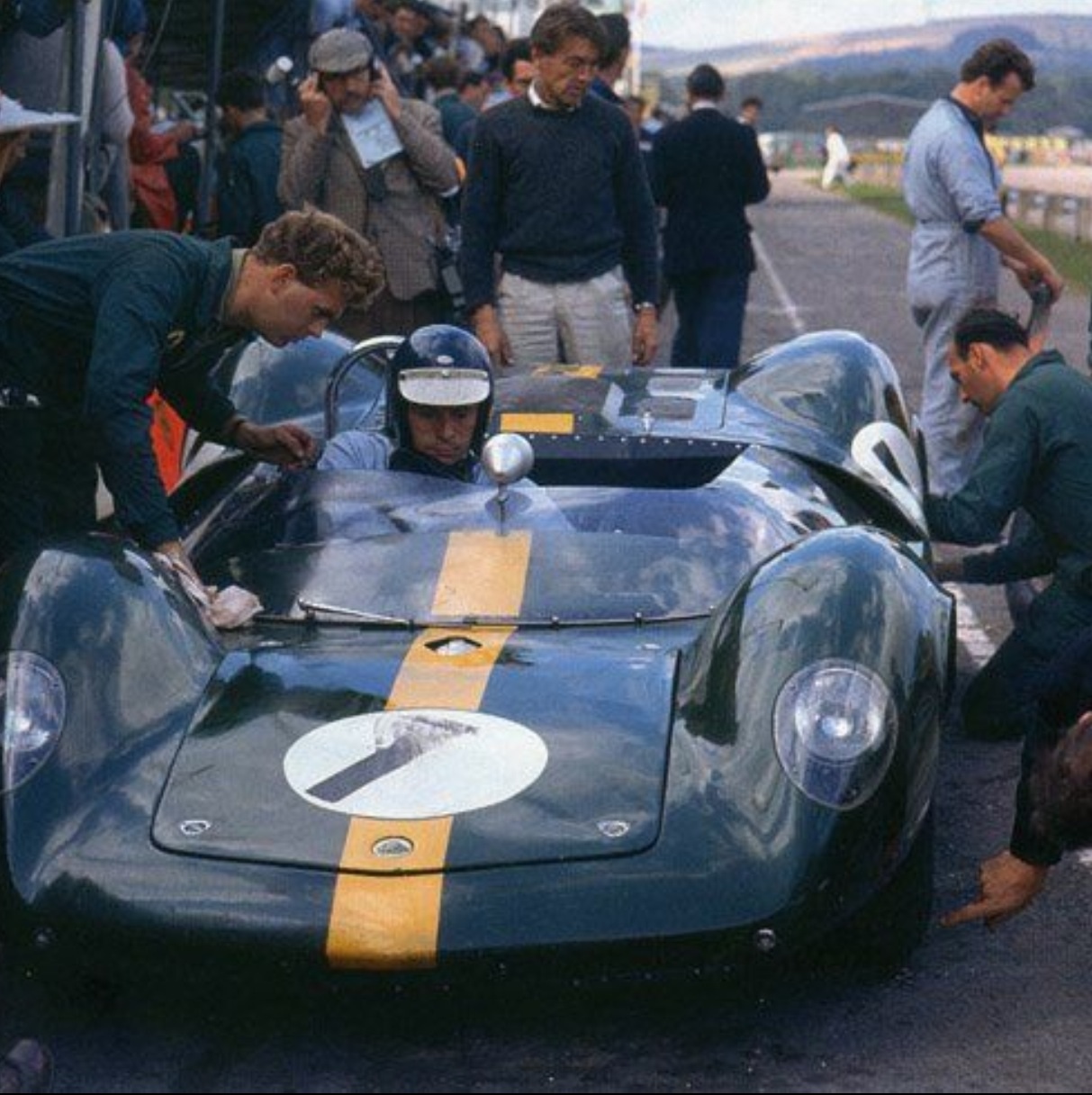
Clark and Lotus 30 Ford during practice. Thats Team Lotus’ Jim Endruweit behind the car and deer-stalker topped John Bolster with the headset on. Pitstops during the race not so serene! (unattributed)
Entry…
The Tourist Trophy is a much coveted sportscar victory, the 29th running of the classic at Goodwood on 29 August 1964 was no exception to the strong field of entrants…
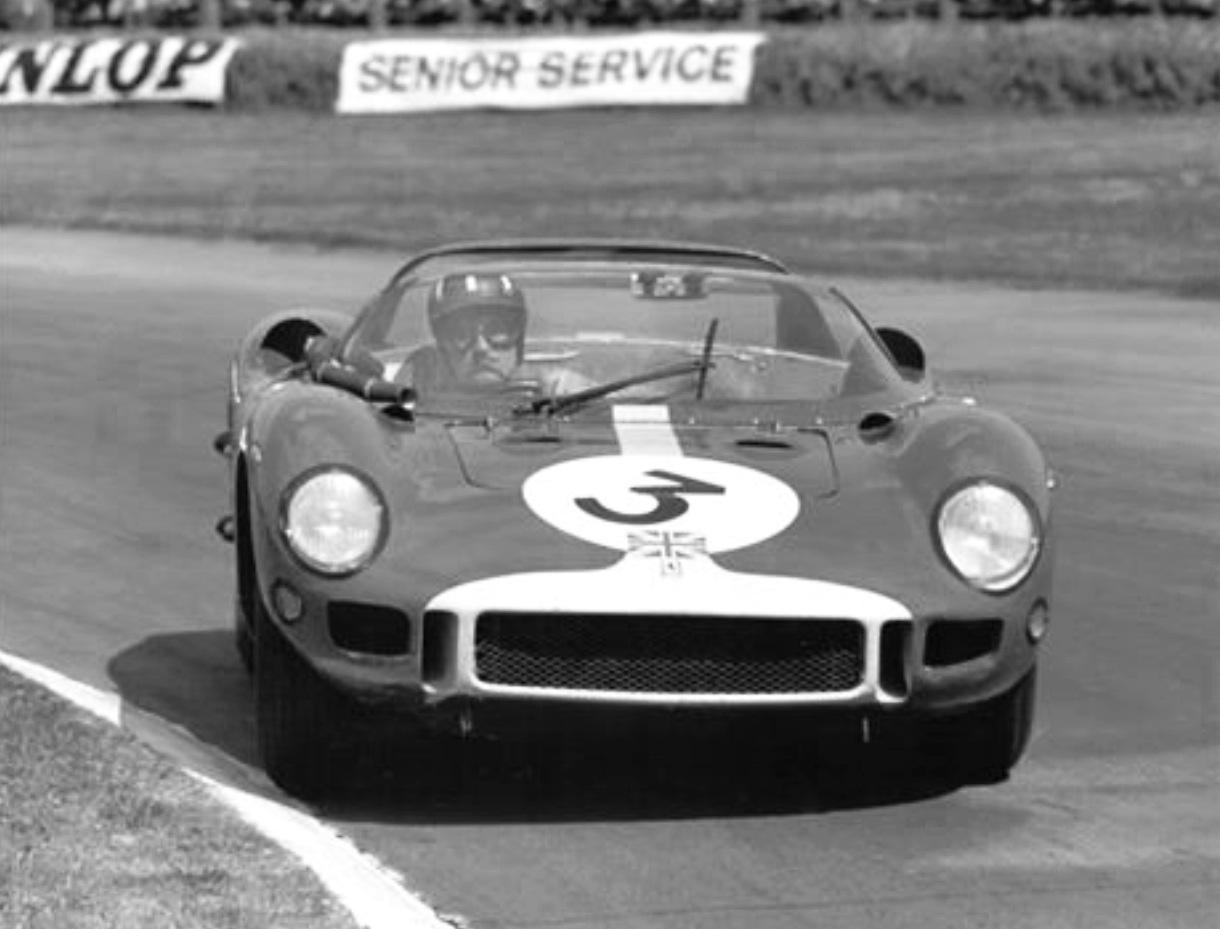
The drawcards were GeePee drivers Bruce McLaren, Jim Clark and Graham Hill in outright contenders: ex-Penske ‘Zerex Spl’ Cooper Olds, works Lotus 30 Ford and Maranello Concessionaires Ferrari 330P respectively. Other potential frontrunners were David Piper’s Ferrari 250LM and five AC Shelby Cobras driven by Dan Gurney, Phil Hill, Jack Sears, Bob Olthoff and Roy Salvadori.
Denny Hulme and Hugh Dibley raced Brabham BT8 Climaxes. John Surtees, Richie Ginther, Innes Ireland and Tony Maggs Ferrari GTOs. Most of the drivers elected to race the 132 miles solo, it was a typically spectacular international grid of sporties of the day.
Goodwood paddock; #23 Jack Sears Shelby Cobra, #22 Phil Hill and alongside him, Dan Gurney in Shelby Cobra Daytona Coupes (unattributed)
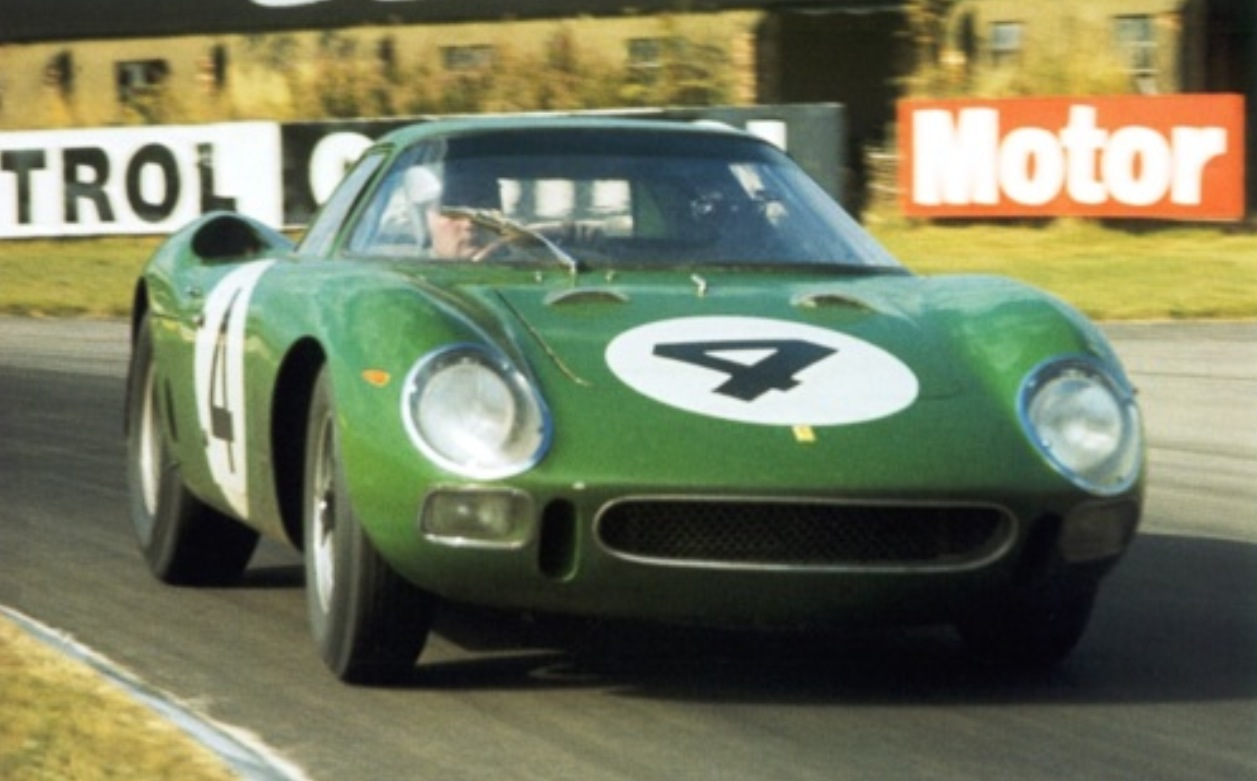
Graham Hill ponders the speed of his Maranello Concessionaires entered 4-litre Ferrari 330P chassis #0818 during practice. It may not have been the quickest car in the race but it had the endurance the Group 7 sprinters lacked.
The start, front row L>R; McLaren, Clark and Hill, Hugh Dibley in the white Brabham BT8 Climax, #4 Piper Ferrari 250LM (unattributed)
The Race…
Bruce popped the Zerex on pole from Clark, Hill and Dibley. Dan was the quickest of the GTs in his big, booming Cobra.
From the start McLaren led from a ‘very busy’ Clark, the Lotus much more of a handful than Bruce’s mongrel-Cooper T51 based special! Denny was third in his nimble Brabham with Trevor Taylor’s Elva BMW in fourth. Bruce’ clutch failed to transmit the power of his ally-Olds V8 and retired. The order was then Clark, Hulme, Taylor and Hill G. After 25 laps Piper and Salvadori were a lap back such was the pace of the frontrunners.
Dan Gurney was third in the best placed Shelby American entered Daytona Cobra Coupe (Getty)
(LAT)
Graham Hill spun the Ferrari at Woodcote on lap 17, Tony Maggs whips past in David Piper’s Ferrari GTO, the South African finished tenth.
Graham started to push, coming up to third, then second. Clark pitted for fuel on lap 64 giving Hill the lead, more drama for Clark as the Lotus had been under-filled, another 15 gallons were added, and oil, then the hot motor wouldn’t fire; by this stage Hill was nearly a minute up the road.
Clark then treated the crowd to a superb demonstration of on the limit driving ‘… in a hurry, needing all the road. He would come out of Woodcote, dust rising as the tail of the Lotus 30 touched the verge, accelerate in a burst of power that lifted the nose, slip through the chicane and like as not use the kerb out of it to bounce the car straight. Stop watches were out, Clark might close on Hill a couple of laps from the end…’
But it was not to be, Clark made a third pitstop when the car felt odd, the diagnosis was a bottom wishbone locking ring had slackened off and was contacting a front wheel, so Graham Hill’s 330P Ferrari won from Piper’s 250LM, then came the AC Cobras of Gurney, Sears and Olthoff in coupe, sports and hardtop respectively! Hills average speed was 97.13mph and Bruce McLaren set a new sportscr car lap record of 1:23.8 in the Zerex Cooper Olds before his retirement early in the race.
Etcetera…
David Piper’s Ferrari 250LM (unattributed)Hill, Fazz 330P (unattributed)
Credits…
MotorSport October 1964, Sutton Images, LAT
Tailpiece…
(Sutton)
The TT would have been a nice win for the Lotus 30 Ford, not Chapman’s greatest bit of work. Clark at speed…
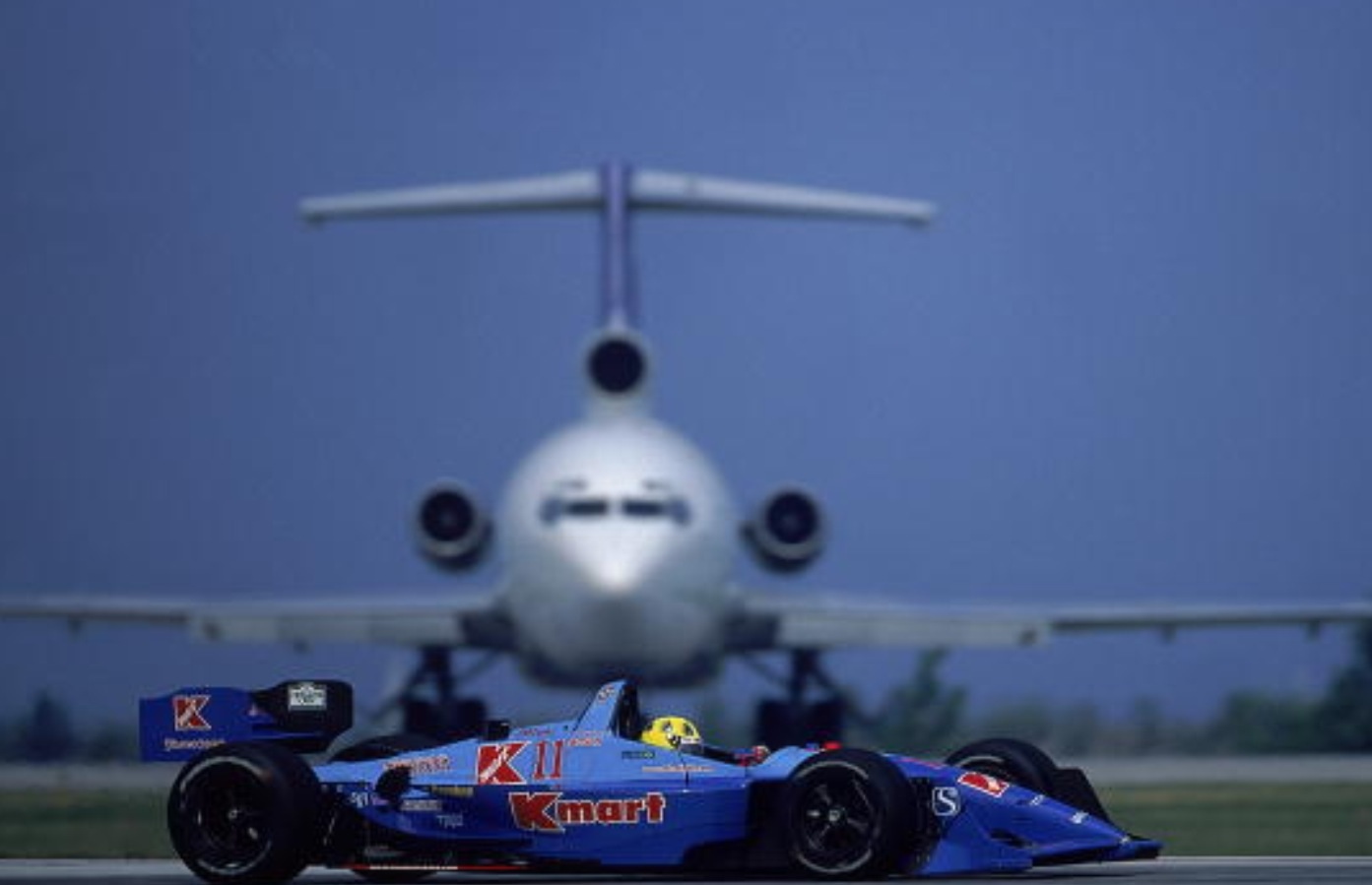
Christian Fittipaldi’s Newman-Haas Lola Toyota during the Marconi Cleveland Grand Prix at Burke Lakefront Airport on 30 June 2001…
This popular race was held 26 times in Cleveland, Ohio from 1982 to 2007, the operational airport was closed for racing one week a year and converted to a course which was tough for drivers and superb for spectators. Its wide, flat expanses meant punters could see most of the track from the grandstands, the races noted for lots of wheel to wheel dicing and many passing zones.
Dario Franchitti passes a ship on Lake Erie, Cleveland 2001 (David Maxwell)
The 2001 race was won by Dario Franchitti from Memo Gidley and Bryan Herta the variety in this wonderful class demonstrated by the cars used; Reynard 01i Honda, Lola B1/00 Toyota and Reynard 01i Ford respectively! I loathe the plethora of controlled formulae globally today. Christian Fittipaldi qualified his Lola B1/00 Toyota 15th and finished 11th. Gil de Ferran won the CART title that year in a Team Penske run Reynard 01i Honda.
James Hunt dives for the inside line in his March 713S Ford, AJ and his Brabham BT28 Ford has left a gap way bigger than he ever did when they slugged it out in GP racing…
It’s 1971, the BRSCC MCD Shell Super Oil British F3 Championship at Brands Hatch on 1 March 1971 and both drivers are trying hard to jump up to the next level, the road for Hunt would be easier than Jones, James a coming star with the Hesketh March 731 in 1973 and Jones an F1 ‘occasional’ from 1974.
The ‘facts’ are from the photo caption, the cars and drivers are correct but the date/Brands event don’t accord with the ‘F2 Register’ record of that event, my F3 race resource. It appears AJ didn’t race with #69, a number with obvious appeal to him at all during ’71.
Sebastien Loeb takes his Peugeot 208 T16 over the Pikes Peak finishing line on 30 June 2013. He set the current climb record at Pikes Peak in his 208 T16 that weekend…
His time of 8:13.878 was 50 seconds quicker than second placegetter Rhys Millen’s time which was 44 seconds quicker than his previous best! It was an all-out ‘big budget’ attack on the event which was repaid in spades by the 9 times World Rally Champion.
Loeb spoke of the particular challenges of preparing for the event on the Red Bull website;
‘It was quite short on time for Peugeot to build a car and for me to test it. I had the first test near Paris, just for an hour. Then I wanted to go on a track because I needed some space to understand how the car behaves, it’s so impressive, with so much acceleration, braking and downforce, that I needed to drive on a big track. So we went to Circuit Paul Ricard and then to Mont Ventoux in France. It’s a place that looks a little bit like Pikes Peak, so it was good to practice there.’
‘You need to be 100 percent sure of every corner of the track. Before I went to America, I started to watch some videos to start to learn it. Then I went there with my rally co-driver, Daniel Elena and I took some notes like I take in a rally, describing all the road, all the corners, all the angles, everything. Then I started to learn these notes by heart and before every corner I knew, OK, that’s the 130 right, that’s the 140 left and so I could remember all the track like that.’
‘This car is closer to a racing car than a rally car because you have big slicks, you have a lot of downforce, a big engine. You also have 4WD and that’s a bit closer to rally, but it’s so powerful compared to a rally car that you cannot really compare. The driving is very different, you have to drive more like on a track with a racing car, using the downforce, keeping the speed in the high speed corners and braking very late because of the downforce. It’s a car you cannot slide. When you start to slide it starts to bump, so it’s not made for that! You drive it like an F1 car, just using the right line and not sliding.
‘When I was on the start line I was really ready and 100 percent confident with the car. I was sure of my preparation and feeling good. There was no point where I really had a moment. I was pushing, but I was feeling safe, so no big moments and I was able to put all my best sectors together for race day’.
Technical Specifications…
Peugeot described the car as ‘practically an out-and-out endurance racing prototype’. Half of the downforce generated by the 208 comes from the specially designed undertray which sits beneath the car.
The 3.2-litre, twin-turbo V6 engine develops 875bhp, a 6 speed sequential gearbox, 4 wheel drive, carbon brakes and double wishbone suspension all round with pushrods actuating torsion bars all part of a highly sophisticated package.
The 208 chassis was of ‘old school’ multi-tubular spaceframe construction the car weighing 875Kg.
Peugeot Sport engineer Jean-Christophe Pallier said: ‘Your imagination is the only limit when you set out to design a car for Pikes Peak. We’ve shaved the car down to 875 kilogrammes and as a result we’ve achieved the magic and symbolic power to weight ratio of 1:1, one bhp for every one kg of weight.’
The six-speed transmission, carbon brakes, air intake and aero-including the two-metre wide rear wing, are all from the 908 Le Mans car. The mid-engined 208, as geared, did 0-62mph in 1.8 seconds and zero to its top speed of 150mph in 7 seconds.
Results…
Click on this link for a good article on the 2013 event