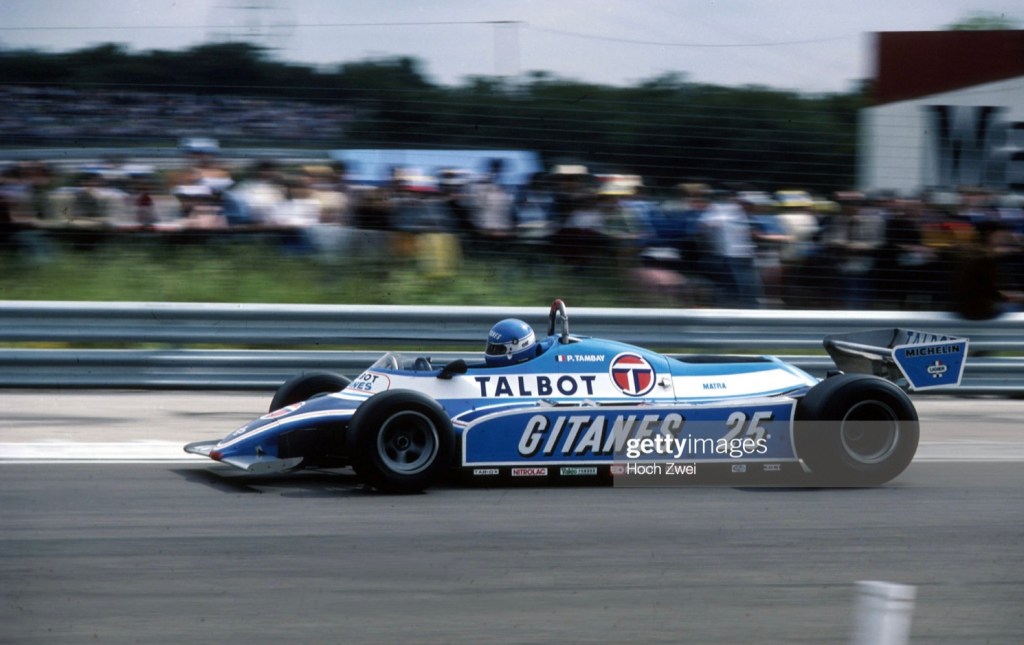
PT aboard the Ligier JS17 Matra at Dijon in 1981. Q16 and DNF wheel bearing in his first race for the team. Alain Prost won in a Renault RE30
Patrick Tambay, grand prix winner and Can-Am champion died on December 4, 2022 after a long battle with Parkinson’s Disease, aged 73.
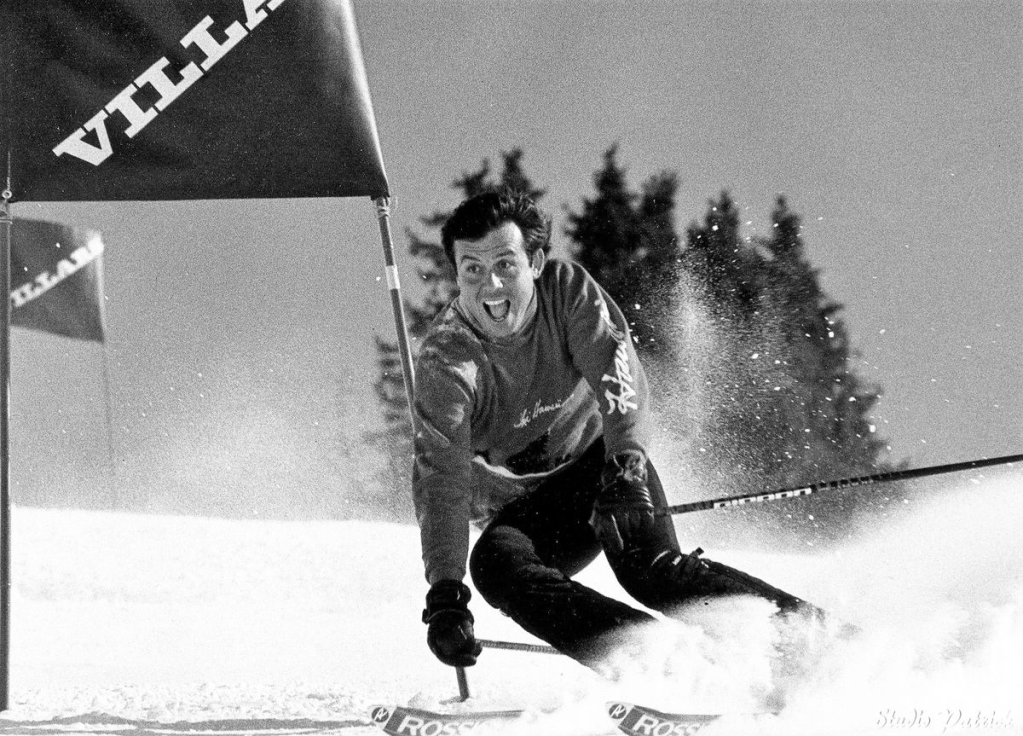
Every girl’s idea of a racing driver, the dashing Frenchman developed his need-for-speed in the European Alps where he was a schoolboy ski champion, but cars then grabbed his attention.
Total, Motul and Elf invested vast petro-francs to develop French drivers from the 1960s. The first wave who made it to F1 included Johnny Servoz-Gavin, Henri Pescarolo, Jean-Pierre Beltoise and Francois Cevert. Tambay was one of the mid 1970s talent-wave along with Jacques Laffitte, Jean-Pierre Jabouille, Rene Arnoux, Didier Pironi and Jean-Pierre Jarier.
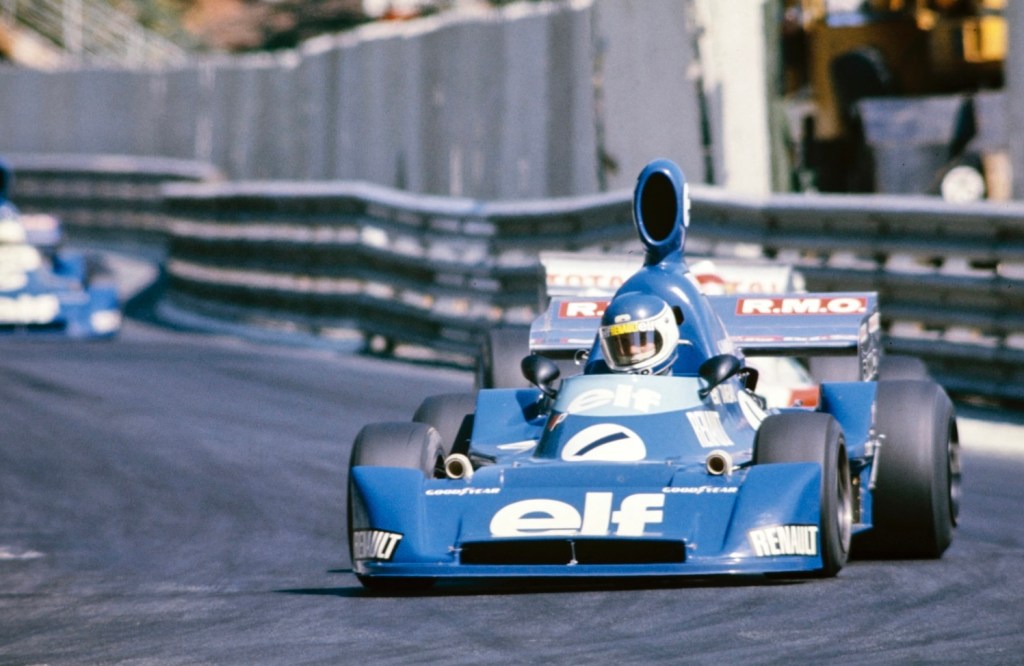
PT at Villars, Rossignol ski type and year unknown! (unattributed)Aboard an Alpine A366 Formula Renault at Paul Ricard during1972 (Winfield School)Pau GP 1976, Martini Mk19 Renault V6. DNF accident, Rene Arnoux won in the sister car. Jabouille won the title in a Jabouille 2J Renault (MotorSport)
Tambay won the Winfield Racing School’s Volant Elf competition in 1971. After two years in Formula Renault he graduated to F2, finishing second in the European Championship to Jacques Laffitte’s Martini Mk14 BMW aboard a works March 752 BMW in 1975. He was third in 1976 aboard a Martini Mk19 Renault, behind fellow Equipe Elf pilots, Jabouille and Arnoux.
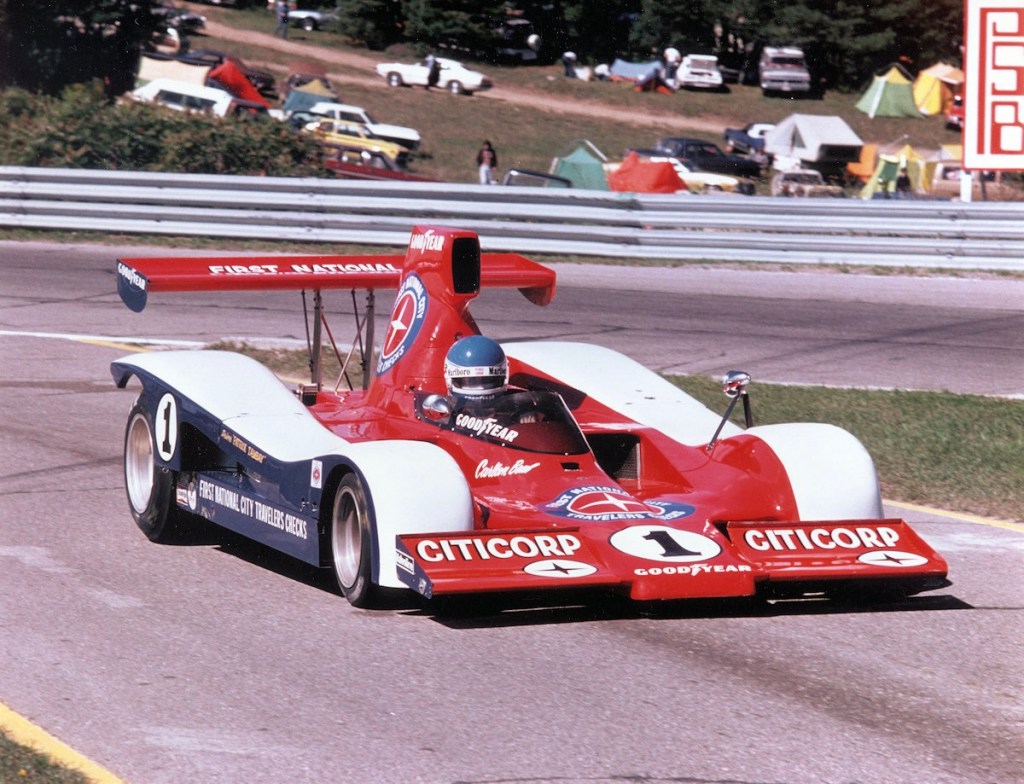
Patrick was picked up by Carl Haas to replace the injured Brian Redman in his works central-seat Lola T333 CS Chev Can-Am team in 1977. Tambay shone in the 525bhp Chev V8 missiles, taking the championship with six wins, and befriending Gilles Villeneuve who raced an unwieldy Wolf WD1 Chev for much of that season.
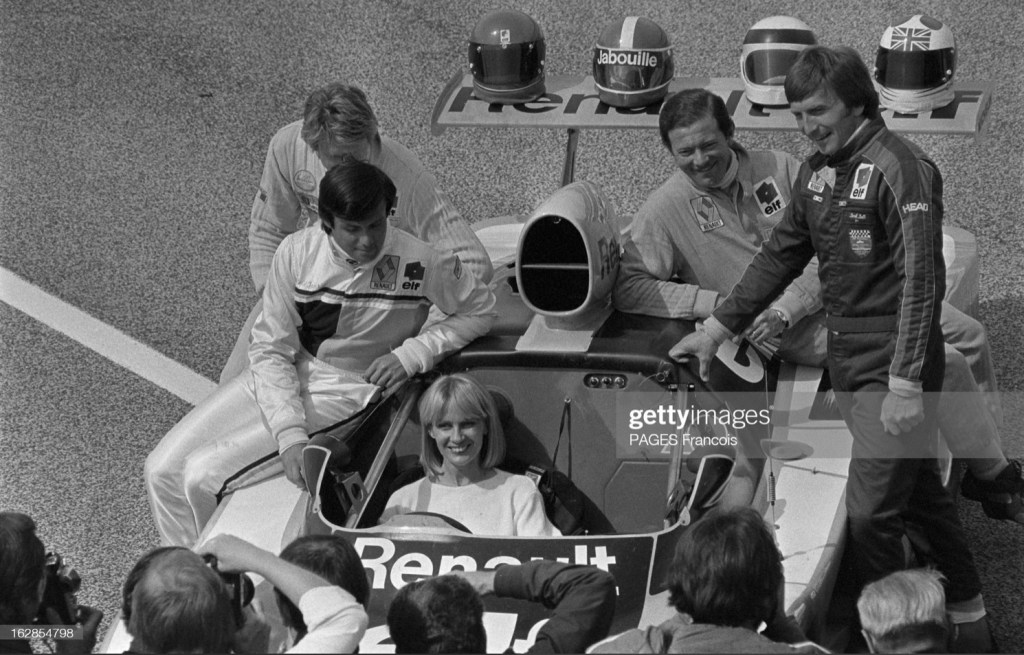
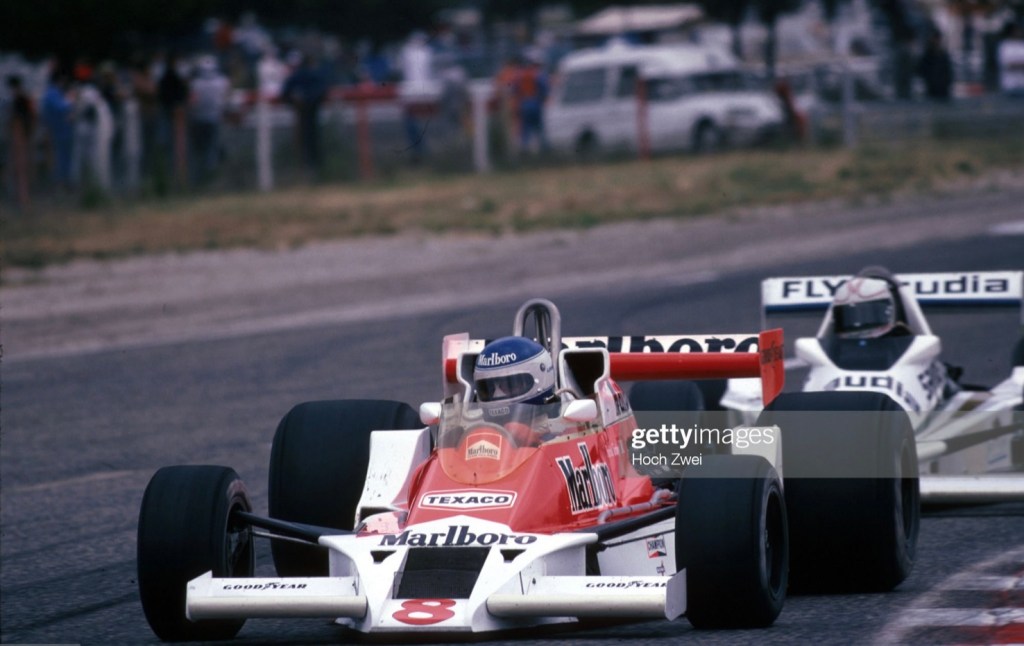
Press call for the Alpine A442 Renault at Paul Ricard in April 1977. Obscured J-P Jabouille, PT, Marie-Claude Beaumont, Jean-Pierre Jaussaud and Derek Bell. None of the cars finished Le Mans that year, with much more to come!Feel the earth move. Haas Lola T333CS Chev at Mosport in August ’77. PT won the Can-Am race from George Follmer and Peter Gethin, Lola T332C and T333CS respectively (unattributed)Ahead of Alan Jones during the 1978 French GP at Paul Ricard. McLaren M26 Ford and Williams FW06 Ford. Ninth and fifth in the race won by Mario Andretti’s Lotus 79 Ford
Both impressed during the ’77 British GP weekend at Silverstone, Patrick aboard a Theodore Racing Ensign N177 Ford, and Gilles a works McLaren M23 Ford. That silly-season McLaren signed Tambay and Ferrari got Villeneuve, Patrick topped the Scuderia’s list but Teddy Mayer beat them to the punch.
Tambay then endured two shocking years with McLaren, who were on one of their downers, then bounced back into F1 in 1981 with Theodore Racing, after winning another Can-Am title for Haas, racing a Lola T530 Chev in 1980.
In mid-1981 fortune again favoured Tambay when he replaced the injured Jabouille at Ligier, but he had shocking reliability, mechanical failures in every race. His GP career seemed on the rocks until Villeneuve’s fatal 1982 Zolder accident, he replaced his friend at Ferrari.
Tambay relished the competitive car, taking a tough win at Hockenheim the day after Pironi’s career-ending Ferrari crash. Third at Brands Hatch and second at Monza helped the team win the Constructors Championship with the Ferrari 126C2.
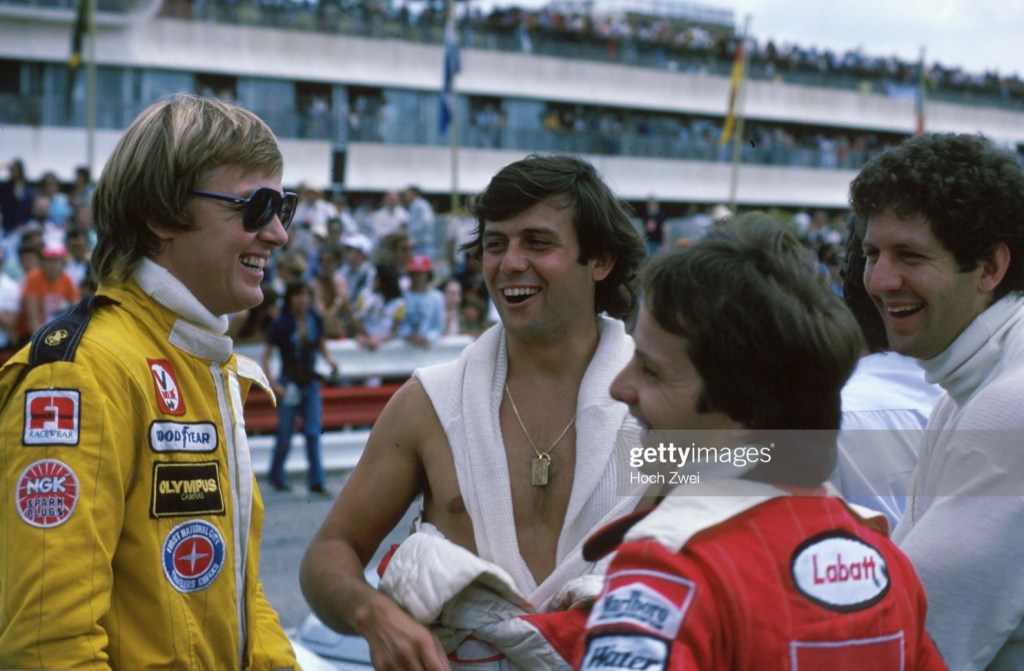
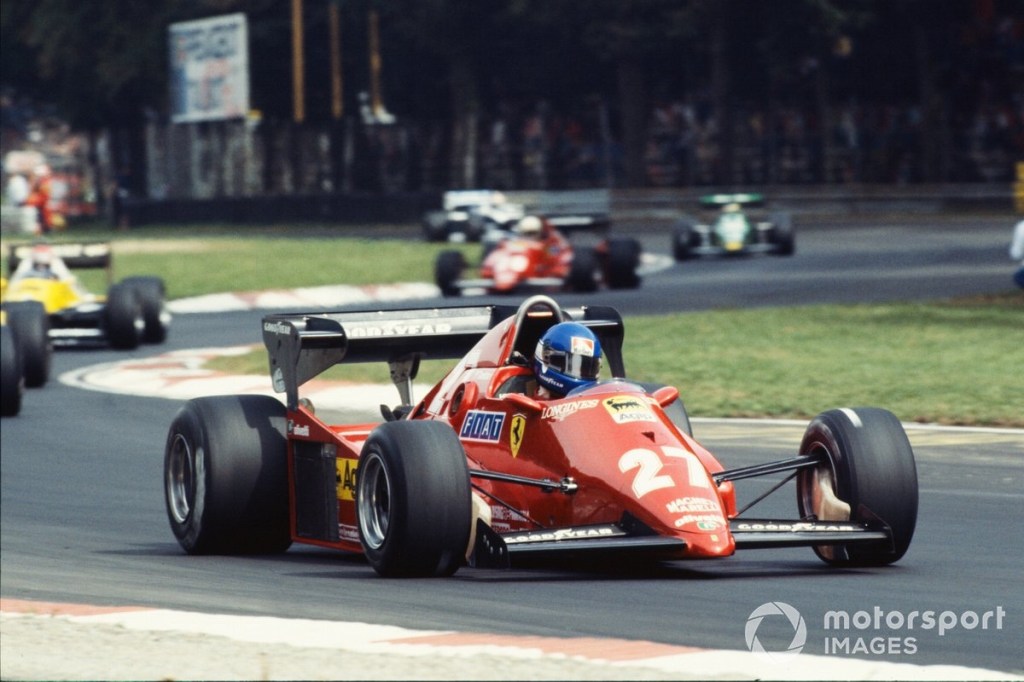
In the best of company. Ronnie Peterson, PT, Gilles Villeneuve and Jody Scheckter, Paul Ricard 1978PT, Ferrari 126C3, Italian GP 1983. Fourth, race won by Nelson Piquet’s Brabham BT52B BMW, Arnoux was second in the other Ferrari It looked the goods at least. PT aboard the Lola THL2 Ford at Spa during the 1986 Belgian GP weekend. DNF after first lap prang, Jones was 11th and out of fuel. Mansell’s Williams FW11 Honda won
Patrick won again at San Marino in 1983, finishing a career best of fourth in the driver’s title. Ferrari won the ‘constructors again, but teammate Rene Arnoux’ three wins eclipsed him.
Two years with Renault followed in 1984-85, he was well placed occasionally, but a second and a couple of third placings was his best. Tambay was reunited with Teddy Mayer and Carl Haas at Beatrice Racing in 1986, his final F1 season. Good as the Lola chassis was, its Hart, and later Ford Cosworth GBA V6 lacked grunt and reliability, Patrick and Alan Jones had a grim season.
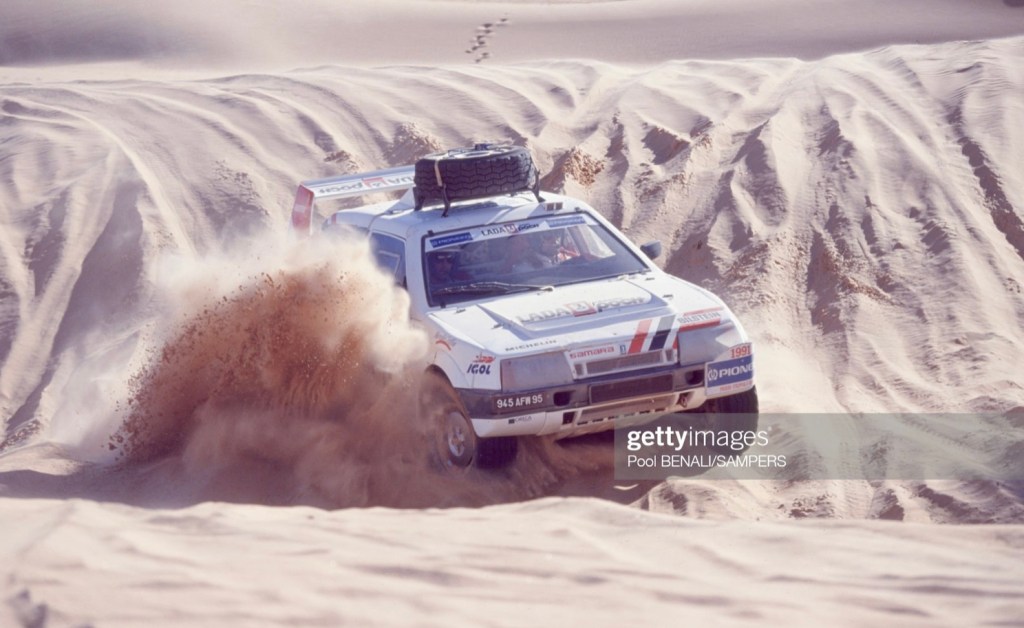
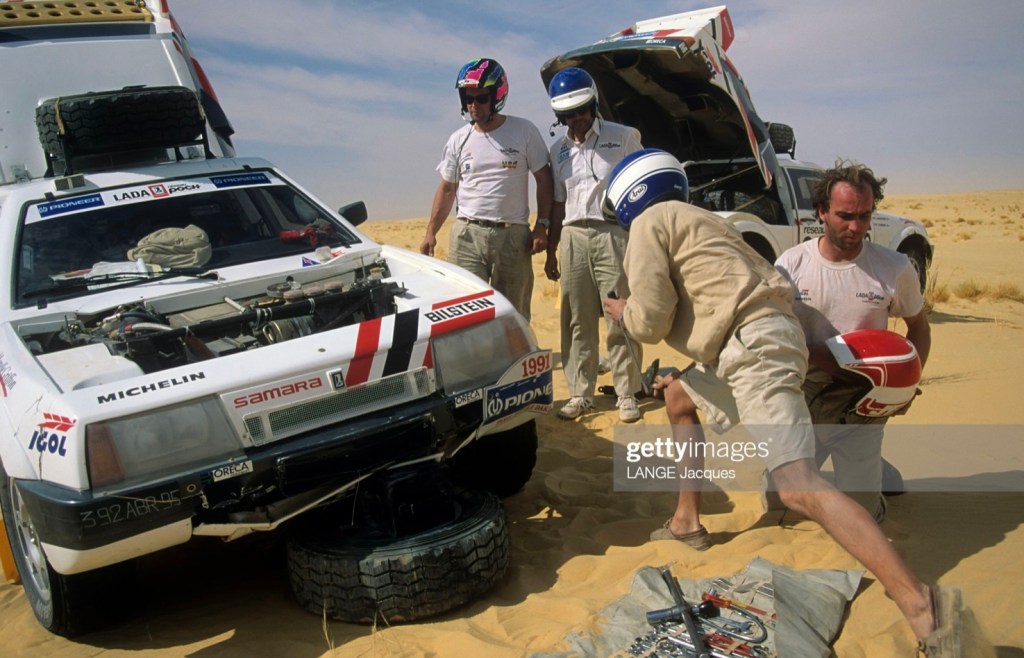
After a year aboard a Jaguar XJR-9 V12 in 1989 and two thirds in the Paris-Dakar, an event he loved, Patrick returned to F1 as a TV commentator and involvement in Cannes politics.
Two GP wins isn’t reflective of Patrick Tambay’s place in the pantheon of drivers, but his grit, valour and composure in the face of Parkinson’s reminded pit pundits just what an outstanding man he was.
PT’s Lada ‘Poch’ Samara T3 Porsche 3.6 during the 1991 Paris-Dakar, sharing the car with Lemoyne. The pair were seventh, the event won by the Ari Vatanen/Berglund Citroen ZX
Credits…
MotorSport Images, Getty Images, Roger Hermsen, Winfield School Facebook page
Tailpiece…
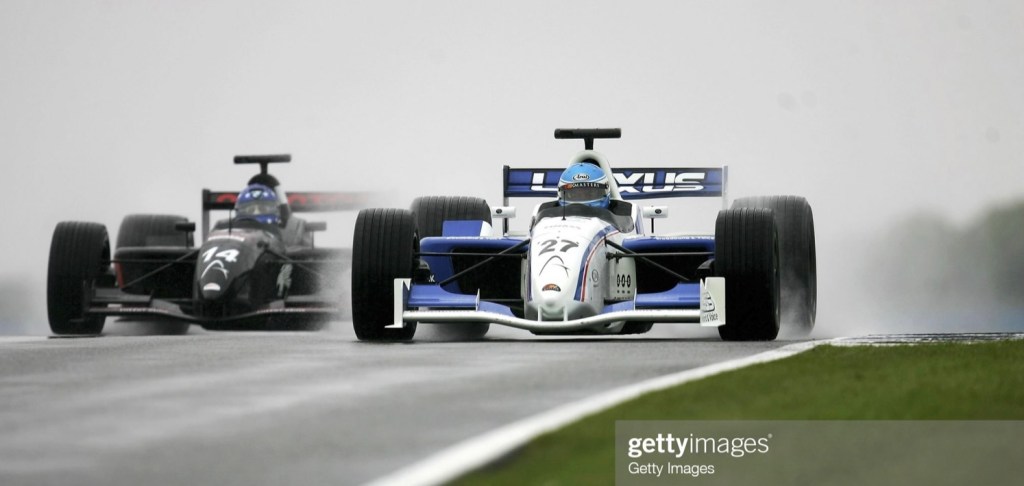
Hans Stuck and Patrick during the GP Masters round at Silverstone in August 2006. Stuck was fourth and PT 11th in the race won by Eddie Cheever.
The cars, based on Reynard’s 2000 model 2KI Indycar, were built by Delta MotorSport. The engines were Ford XB derived 3.5-litre Nicholson-McLaren 80-degree, fuel injected V8s producing about 650bhp @ 10400rpm.
Jack Brabham put the cat amongst the Indy pigeons in 1961 together with John Cooper. Their Cooper T54 Climax FPF 2.7 blew the minds of the establishment. They were stunned by the speed of the itty-bitty, mid-engined roller-skate despite giving away 1.5-litres to the bulky Offy engined roadsters – which hung onto The Milk until 1965 of course.
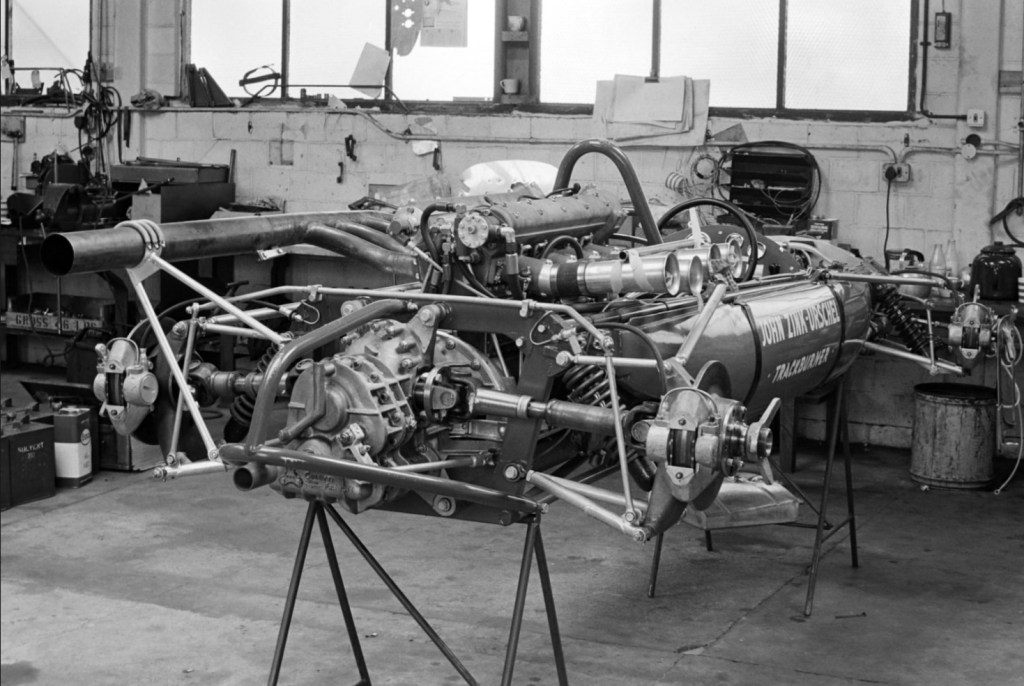
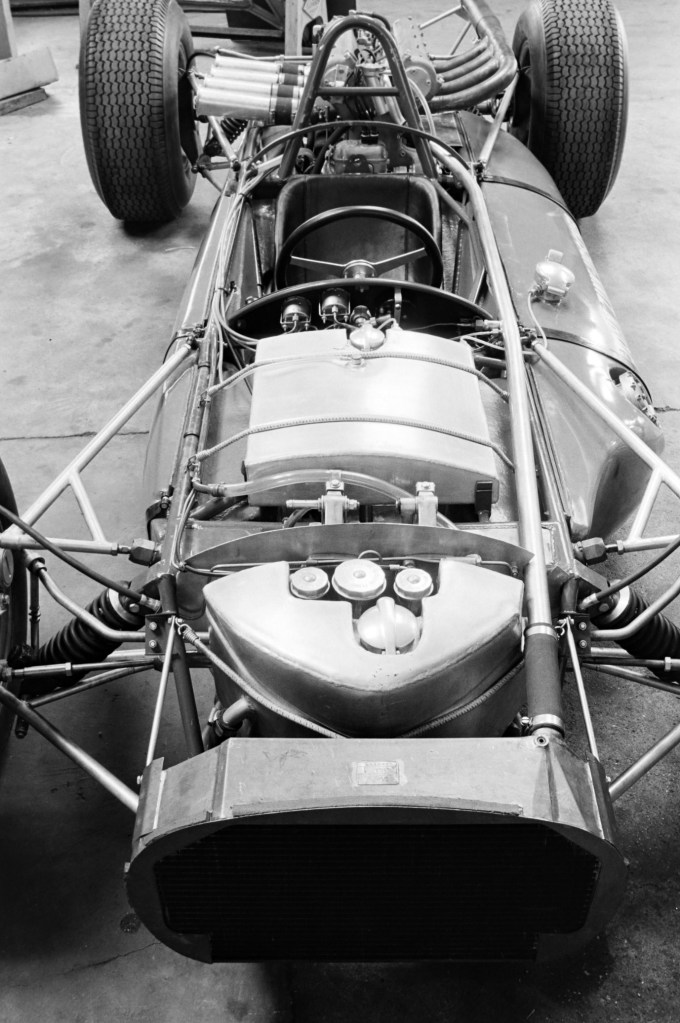
Brabham returned in 1964 with Ron Tauranac’s BT11 derived, spaceframe BT12 powered this time by an injected 4.2-litre Offenhauser twin-cam, two-valve four. The pacey package also featured a robust Colotti Francis T37 transaxle.
BT12-1 in build at Motor Racing Developments, Weybridge, Surrey circa April 1964. Long-stroke, 4128cc, 420bhp @ 6600rpm Offy sits tall in the frame, Colotti-Francis GSD transaxle and inverted lower wishbone, single top link, two radius rods and coil spring/shocks, rear discs, knock on hubs and beefy driveshafts all clear (MotorSport)Spaceframe chassis, upper and lower wishbone/coil spring-shock and roll bar suspension. Note the bungee’d in place oil tank and top-of-chassis little fuel tank. Note too the main tanks offset to keep the bulk to the inside. About 59 gallons of fuel when full (MotorSport)Indy 1964 (MotorSport)
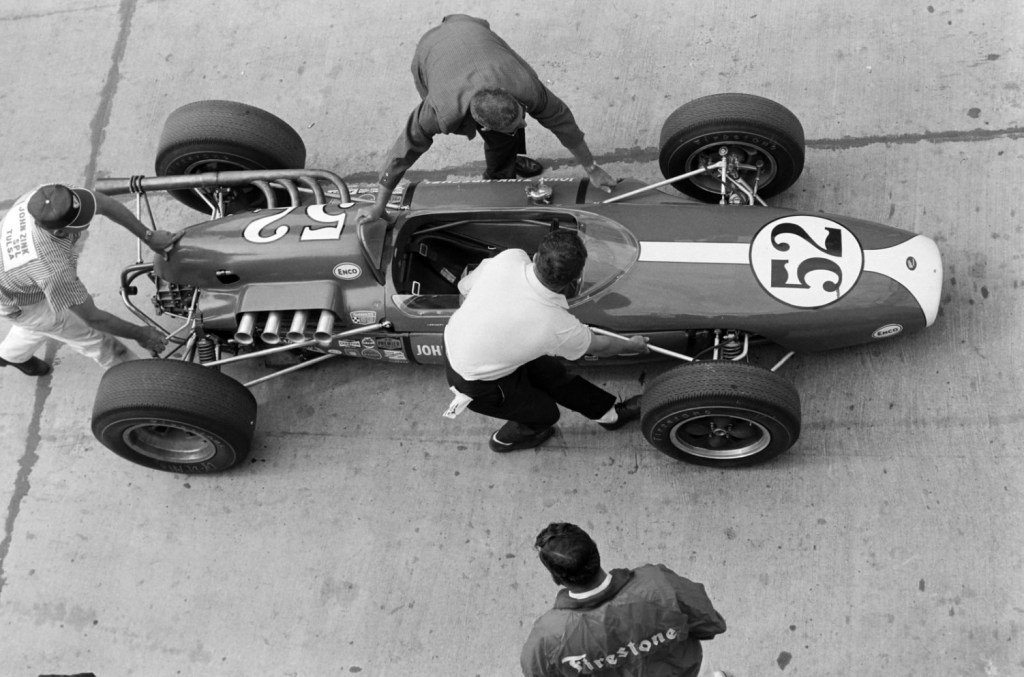
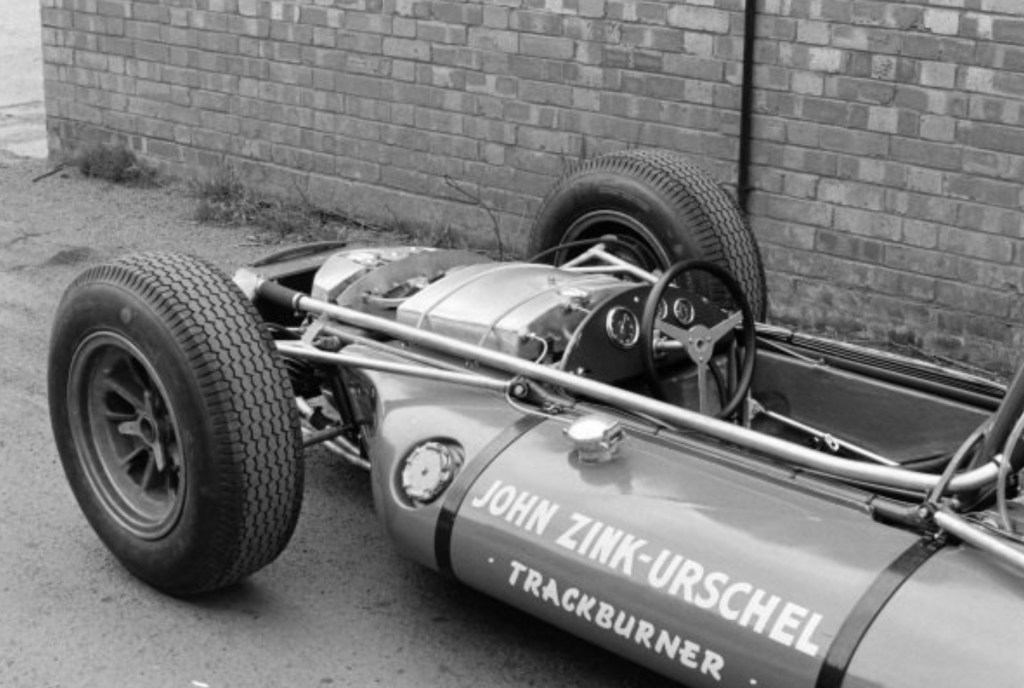
Jack didn’t qualify well with a multitude of problems, not least spring/shocks which were way too soft (as specified by car owner John Zinc), and time, pulled as he was by his GP commitments to straddle both sides of the Atlantic.
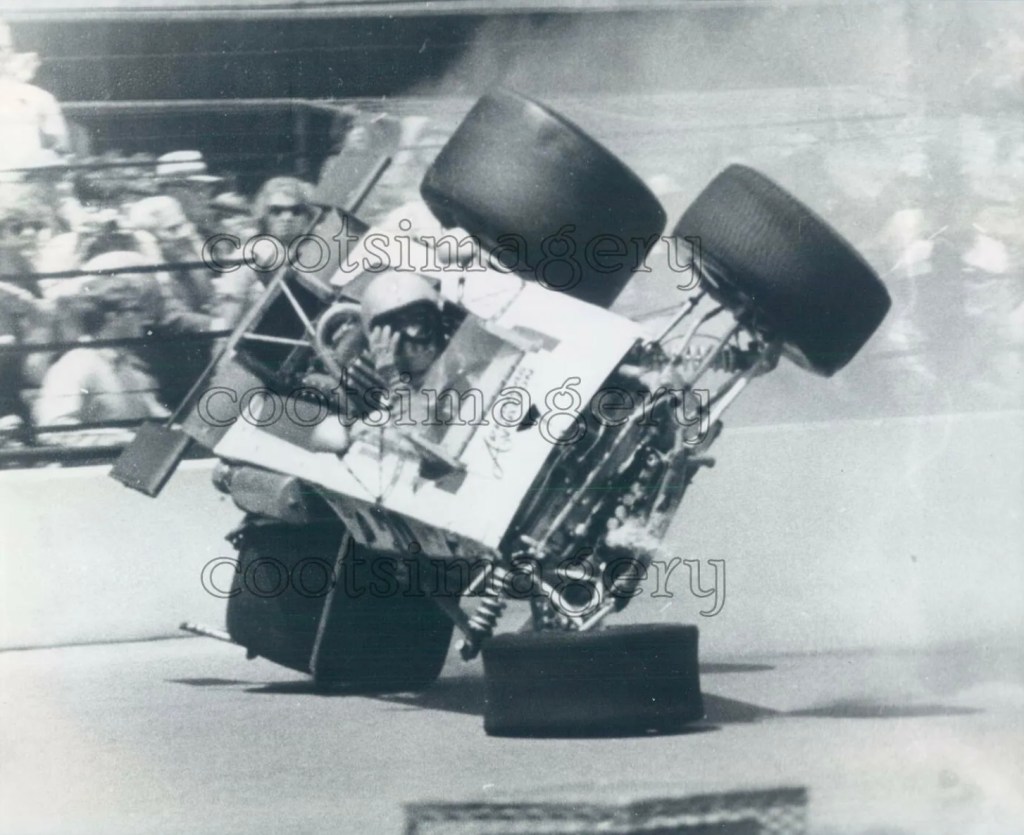
Famously wary at the start of that race – having been warned about how dangerous the Mickey Thompson built Thompson Ford was by Masten Gregory, who didn’t qualify his – Brabham picked up a small fracture in one of those ginormous aluminium fuel tanks in the horrific lap two accident caused by Dave MacDonald losing control of his Thompson Ford in the middle of the field. MacDonald, very much a man of the future, and the much-loved Eddie Sachs, Halibrand Ford, perished in the horrific conflagration. Brabham was out after 77 laps, the race was won by AJ Foyt’s Watson Offy from the similar front-engined roadsters of Rodger Ward and Lloyd Ruby.
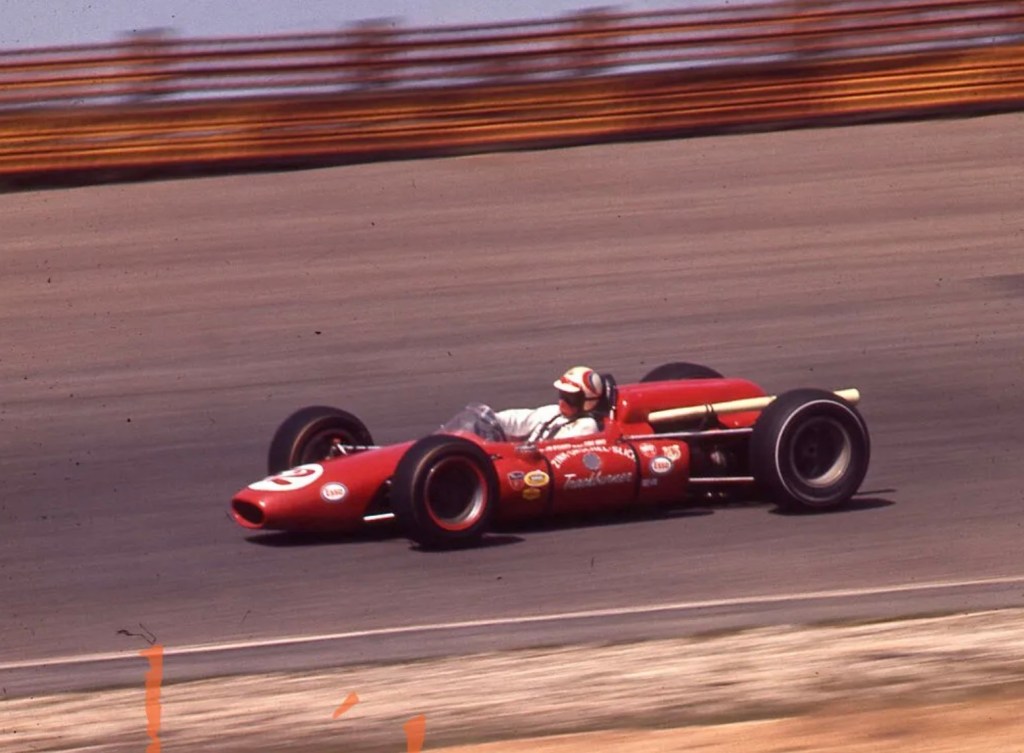
Jim McElreath on the way to victory in the Trenton 500 during 1965, Brabham BT12 Offy. Note in the other Trenton shot below the symmetrical fuel tank setup compared with Jack’s at Indy the year before (DJ Teece)
When Jack returned to Europe, the John Zinc owned car was raced with plenty of speed by Jim McElreath, and a few decent hits too. The final shunt at Indy was a biggie, it wasn’t worth repairing the mild steel tube frame, in part because it would not have been legal under USAC’s 1965 rules.
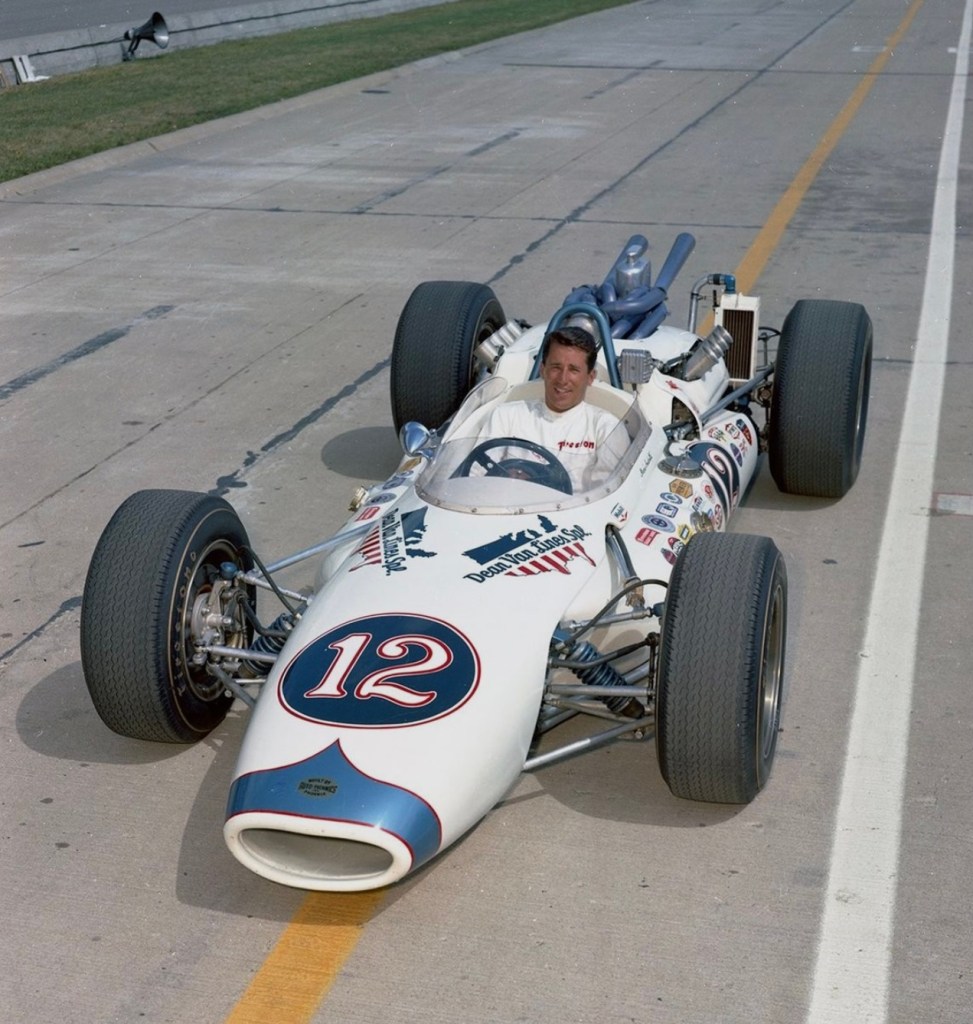
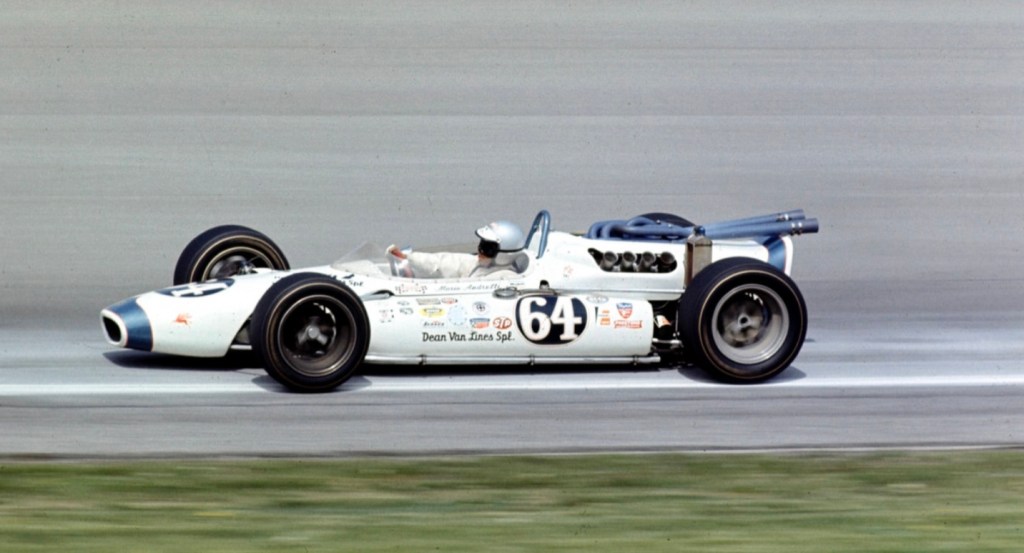
Clint Brawner therefore built two chrome-moly steel tube copies of the BT12 late in 1964, one for Zinc/McElreath, and one for his – Al Dean sponsored – outfit to be driven by a talented young rookie named Mario Andretti.
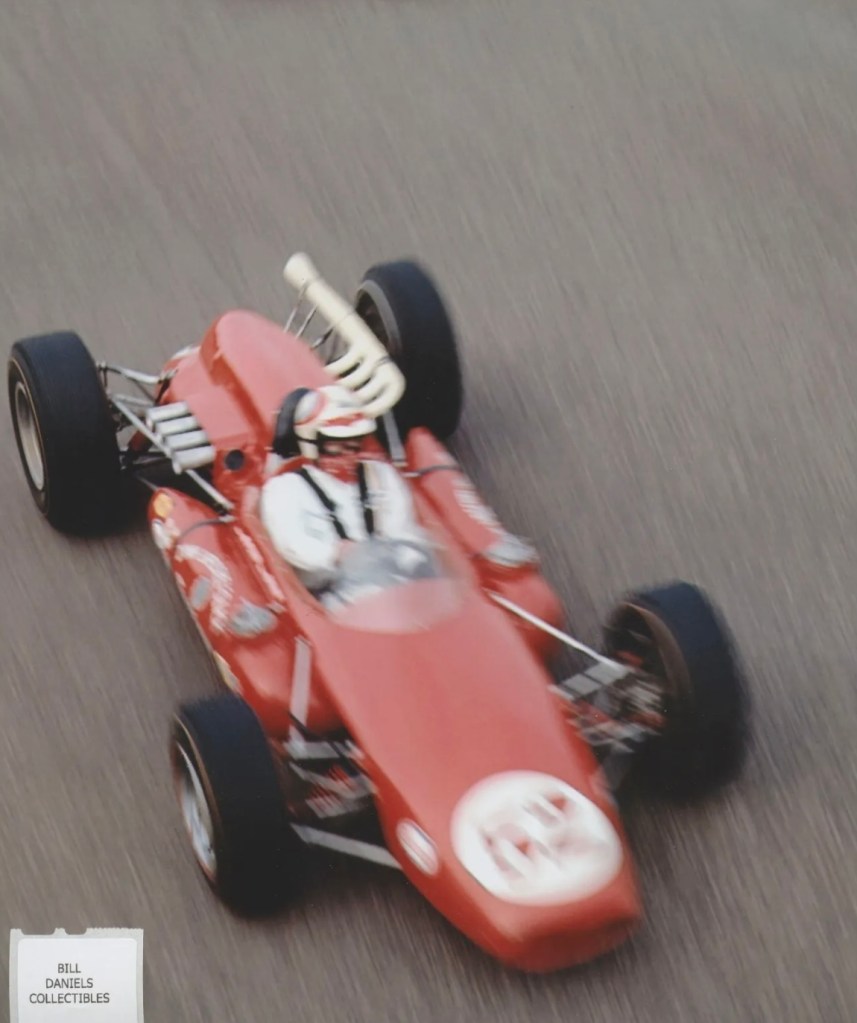
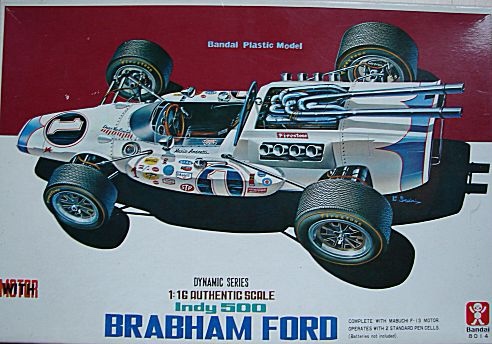
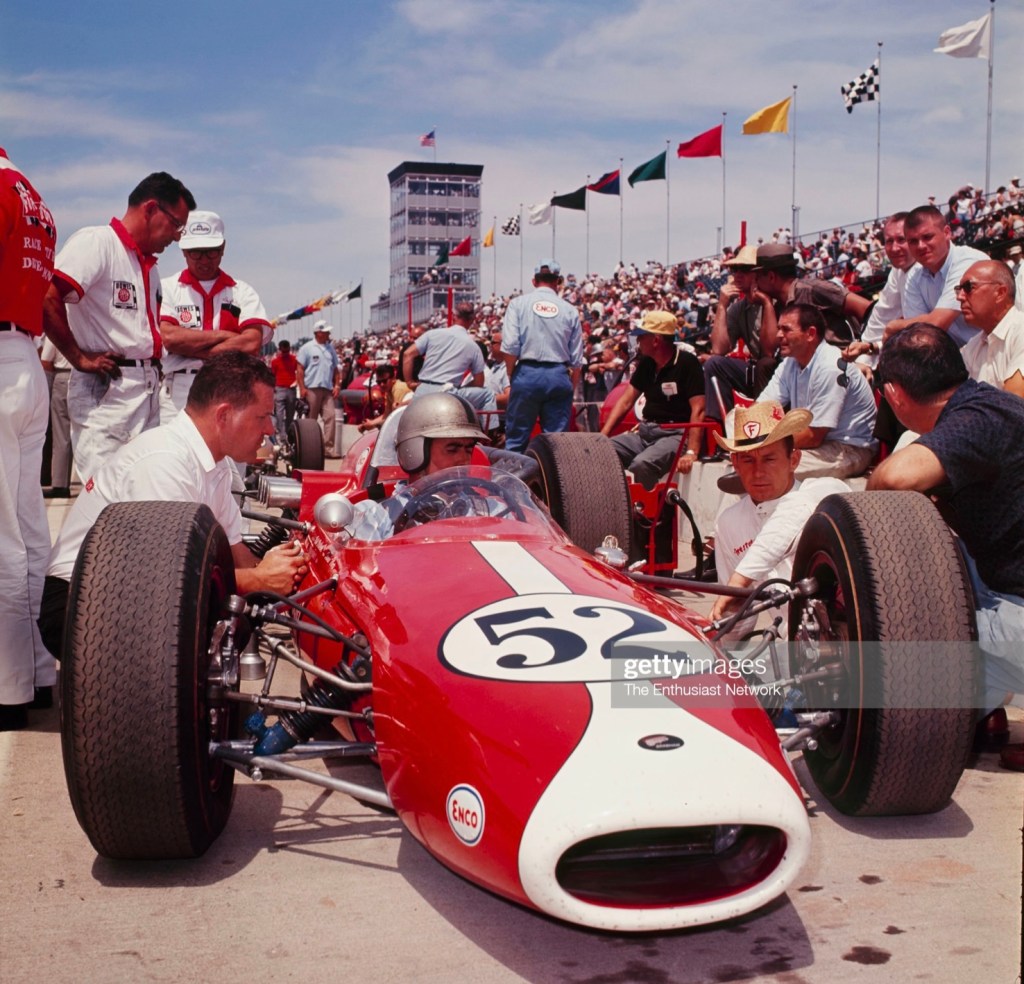
A very young and happy Mario Andretti at Indianapolis in 1965 aboard the Brabham BT12 Ford aka Hawk 1 65 Ford. Apart from the Ford V8 installation note the changes to the bodywork which were thought later to provide some ground effect. This car was a rocket in 1965-66 despite the presence of plenty of Lotus 34 and 38 machines (unattributed)The Dean Van Lines/Brawner outfit called their Brabham BT12 Ford a Brabham for a while, as proved above. They then named it a Hawk, and later a Brawner Hawk, not unreasonable given the evolution of the body and modifications to fit the Ford Indy V8Andretti during practice at Indy in 1966. Still aboard his favourite BT12/ Hawk 1 65 Ford. He raced with #1, popped the car on pole, choosing to race it rather than the Lotus 38 he also had at his disposal (Dave Friedman/MotorSport)
Andretti loved the ‘Hawk Ford’ (chassis Hawk 1 65), winning the USAC Championship in it in 1965-66. In ‘65, McElreath was one of his closest competitors in the Zinc Brabham Offy, finishing third. The following year he went one better and placed second to the future 1978 F1 World Champ, this time Ford Indy V8 powered.
Another two BT12 copies were built for Jim Hayhoe’s outfit, with drawings provided, perhaps, via Jack Brabham in 1968.
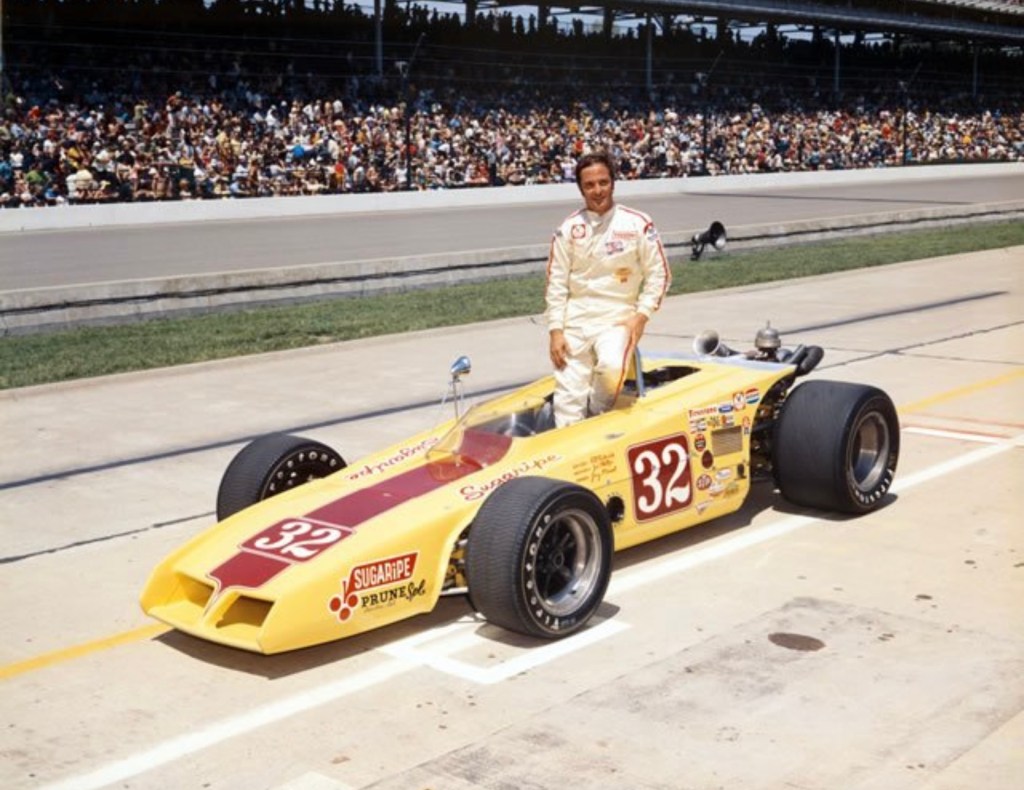
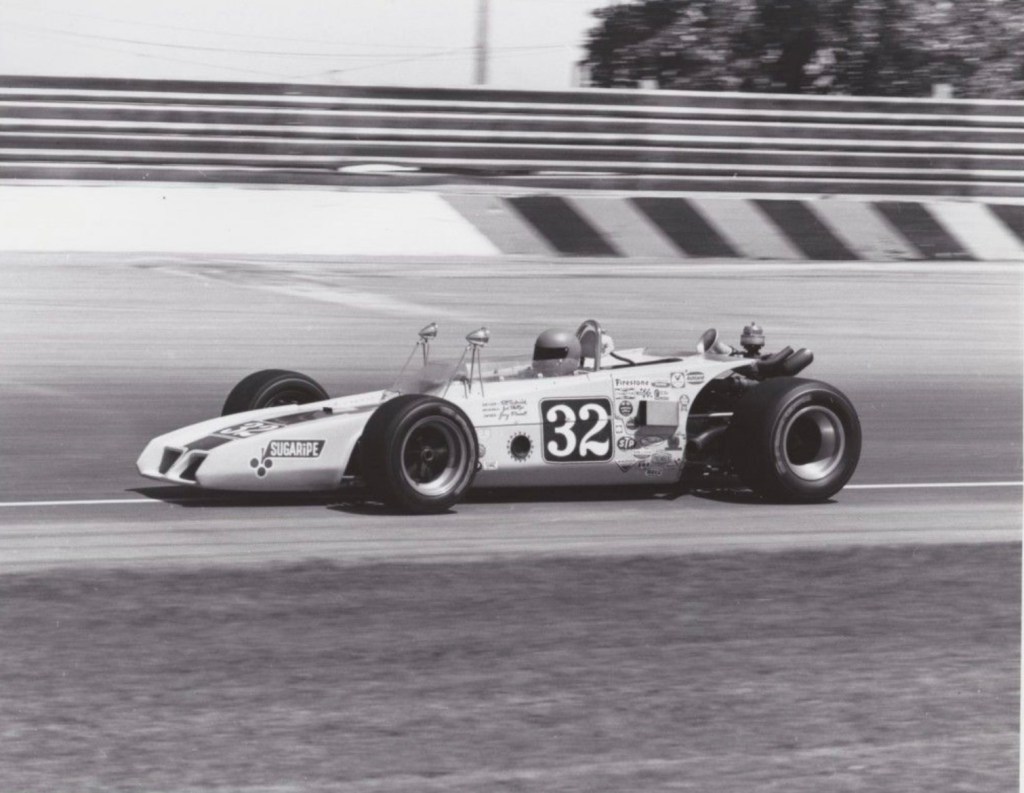
One of these Offy powered BT12s, with suitably updated body by Jud Phillips, finished fifth in the 1971 Indy 500 as the catchily named Sugaripe Prune Spl with Billy Vukovich at the wheel. In a strong year for the seven year old design, and three year old chassis, Vukovich was third in the USAC points table. His haul included two third placings at Milwaukee and Phoenix, and a staggering second to Mark Donohue’s state-of-the-art Penske McLaren M16A Offy at Michigan.
Bill Vukovich, Brabham BT12 Offy t/c at Indy in 1971, looking slightly different! to Jack’s BT12 Offy seven years before. I dare say the suspension geometry copped a tickle to accommodate the advance of tyre technology over that period (IMS)(unattributed)Rick Muther in the ex-Andretti BT12/Hawk 1 65 chassis, now fitted with an Offy turbo at Indy in 1970. Q15 and eighth, race won by Al Unser, Colt 70 FordShit shot of a Fugly Cup contender. Rick Muther in the ex-Andretti Hawk 1 65 Offy t/c before the 1971 Indy 500 (unattributed)Muther, hanging onto his helmet while travelling sideways along Indy’s front chute at well over 120mph – no he didn’t go over. Chassis a tad second hand after this lot, Indy 1971
Equally amazing was that Andretti’s old nail – the Hawk 1 65 – that he raced so successfully in 1965-66, by then owned by Jack Adams, also started the 1970 and that ’71 500 with Rick Muther the driver.
The Offy powered, Arkansas Aviation entered car was involved in a spectacular accident with David Hobbs’ Penske Lola after completing 85 laps of the race won by Al Unser’s Colt 71 Ford. Hobbs engine blew, then Muther, immediately behind him swerved in avoidance, pegged the inside wall, then veered right into Hobbs’ path and the outside wall, taking both of them out in a lucky escape.
Who said that spaceframes were old hat by the end of 1962!?
Spaceframe BT12 out front of MRD. Note the Halibrand wheels (MotorSport)
Credits…
The MotorSport Images shots at MRD were taken by David Phipps, DJ Teece, Indy Motor Speedway, Bill Daniels Collectibles
As always, thanks to Allen Brown’s mind-blowing OldRacingCars.com – racing car history results and database website. I simply cannot get the level of historic accuracy – facts – into some of these articles without his one-of-a-kind website. Click on this link to Allen’s main Indy page Indy 500 and USAC racing 1971-1978 « OldRacingCars.com then you can scroll for yourself through far more details about the BT12 cars; Brabham, Hawk and Hayhoe
Tailpiece…
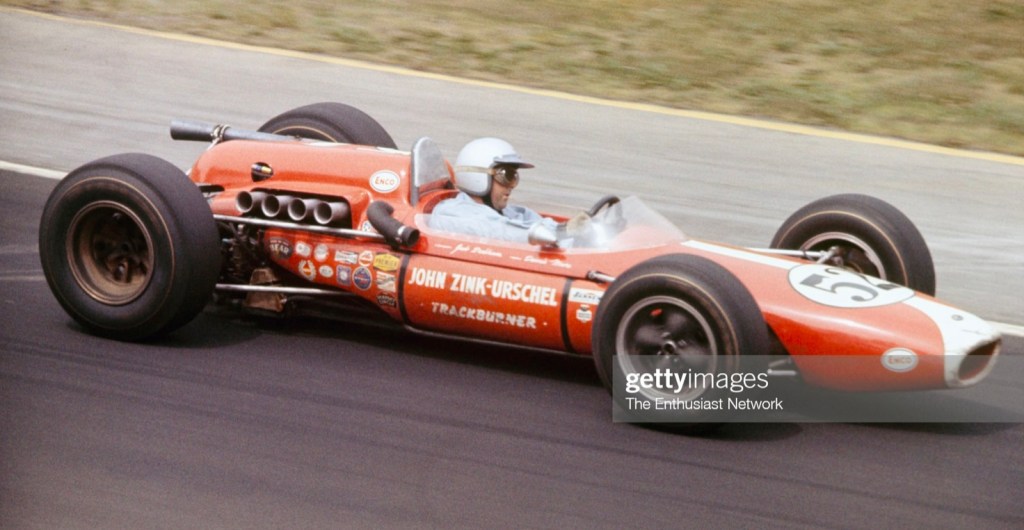
Brabham ready to boogie aboard the Zinc Trackburner Special on raceday at Indianapolis in 1964.
Such an influential car the BT12, an unsung, or at least an under-recognised Brabham in some ways.
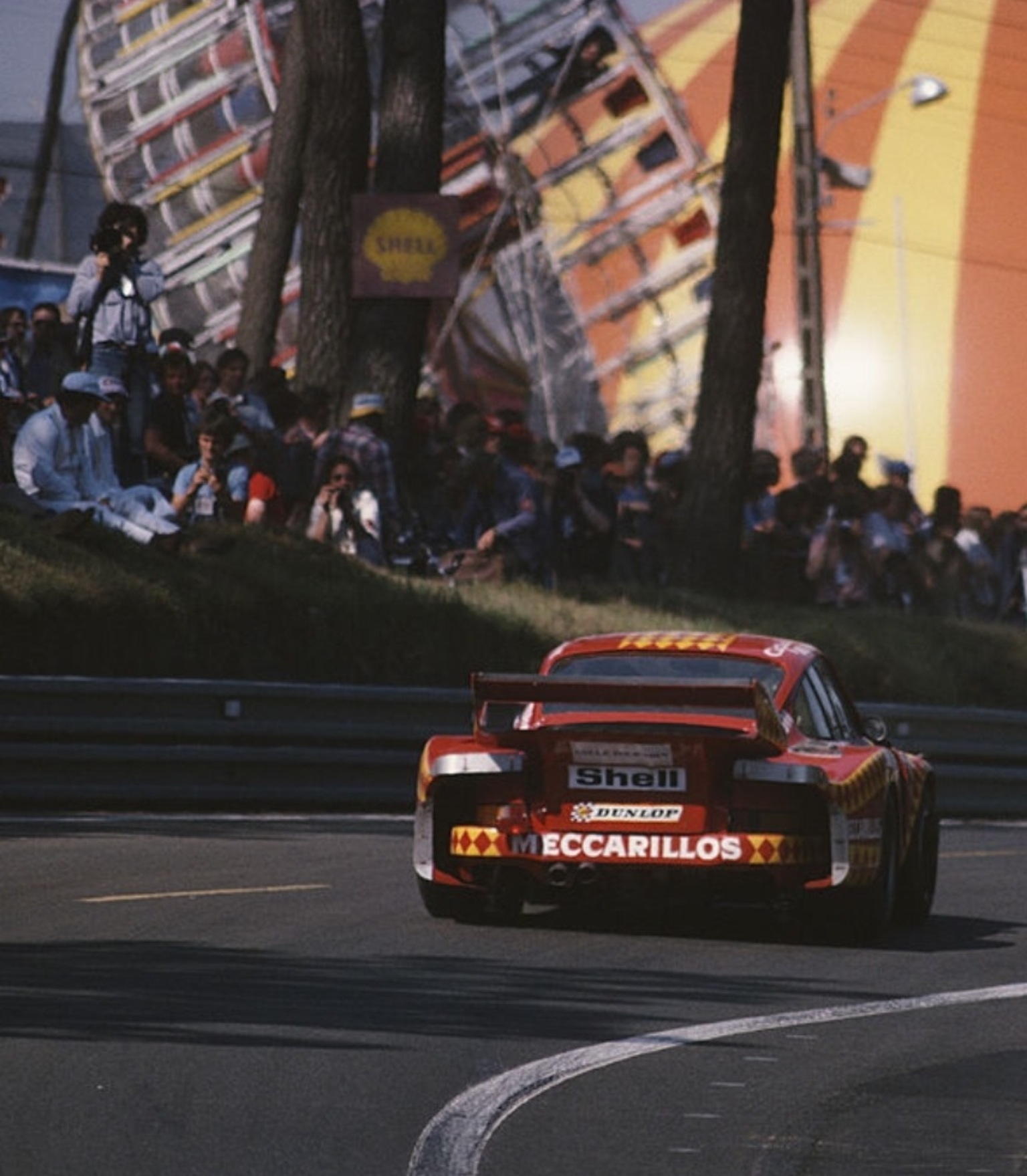
The Herbie Muller/Claude Haldi/Nick McGranger Porsche 935 during practice at Le Mans in June 1978…
It’s such a wonderful image evocative of a fun weekend in rural France. They failed to finish with a broken gearbox casing after 140 laps, during the 14th hour.
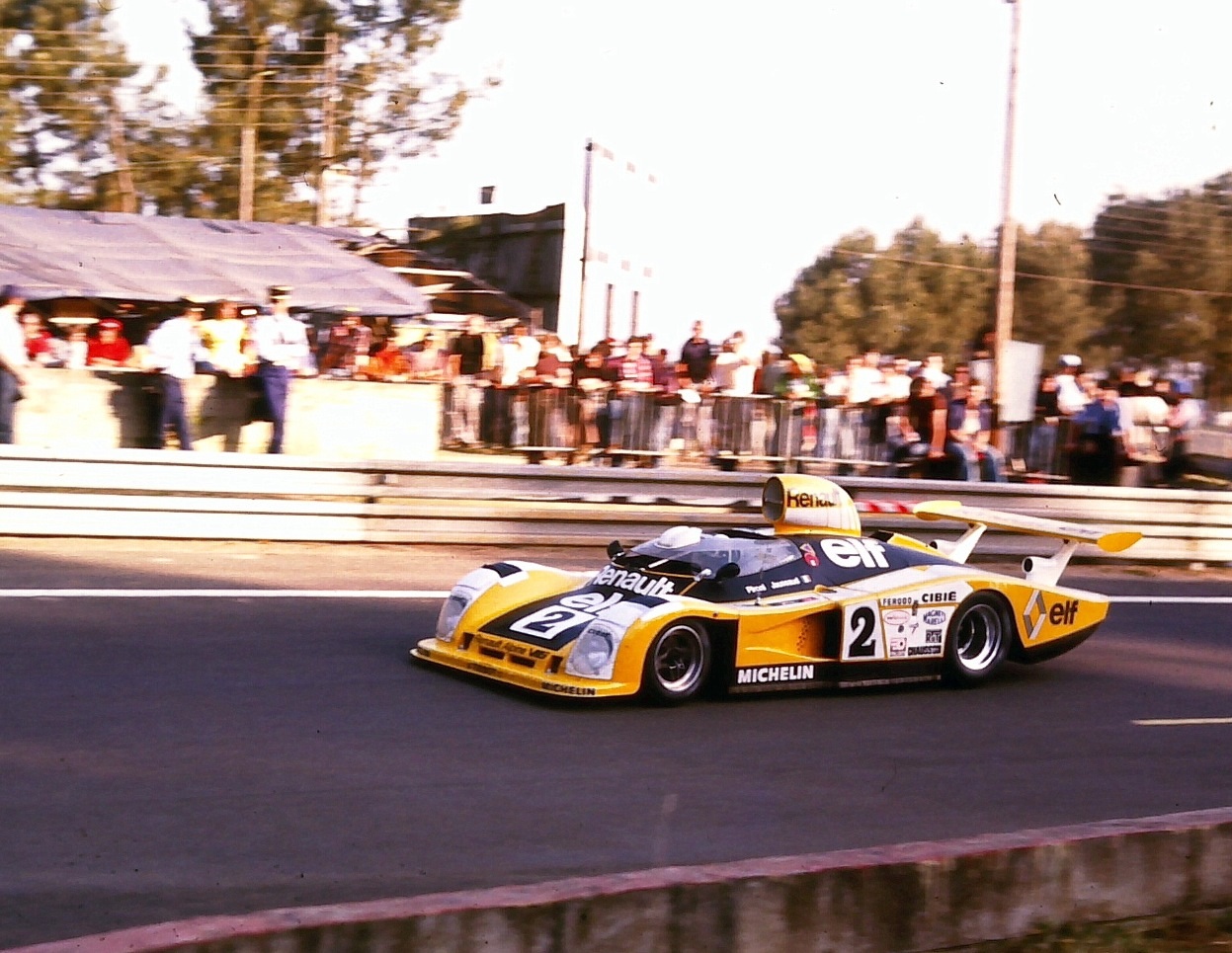
The Group 5 class was won by the Kremer Porsche 935 crewed by Jim Busby/Chris Cord/Rick Knoop, while the outright winner was the Alpine Renault A442B of Didier Pironi and Jean-Pierre Jaussaud. The 2-litre turbo-charged V6 prototype prevailed over the 2.1-litre flat-six turbo-charged Porsche 936/78 of Bob Wollek, Jurgen Barth and Jacky Ickx by five laps in an historic win for the French team.
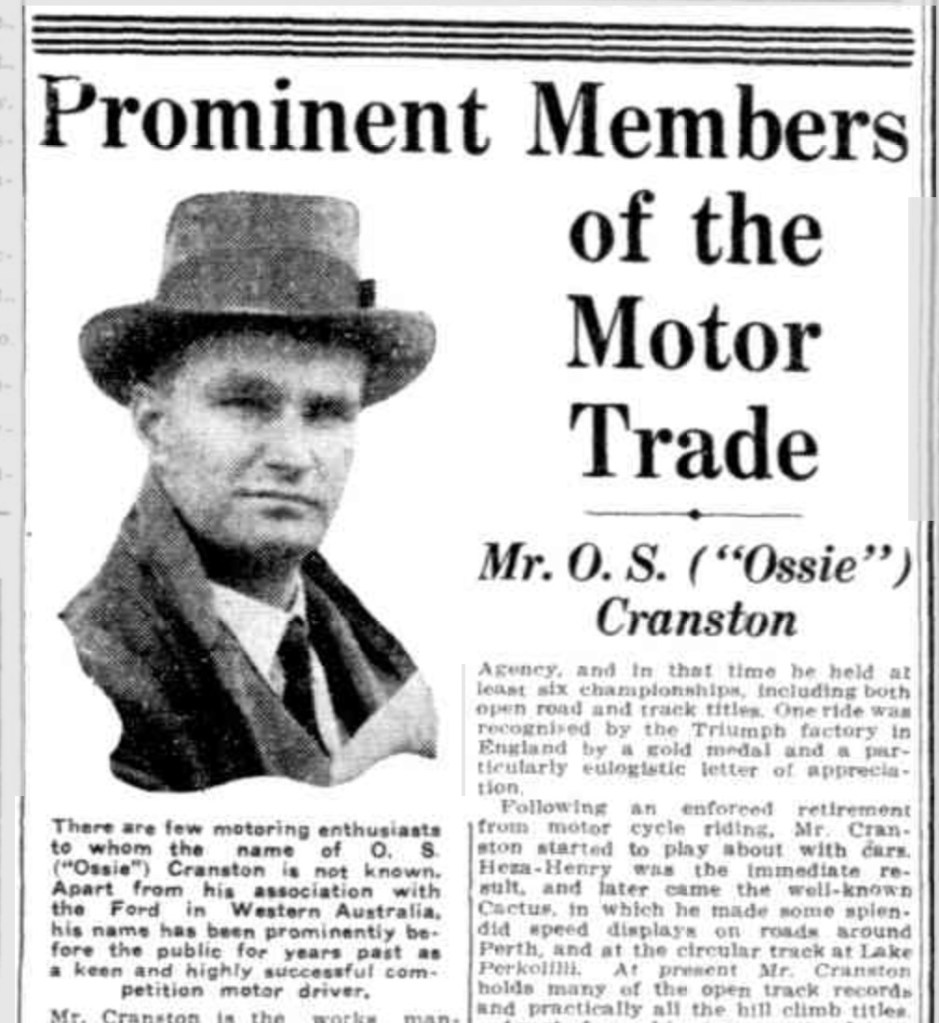
Osborne Scott ‘Ossie’ Cranston (1899 or 1903 – July 1, 1982) was one of Western Australia’s aces at a time Perth was a long way from the eastern seaboard (sic).
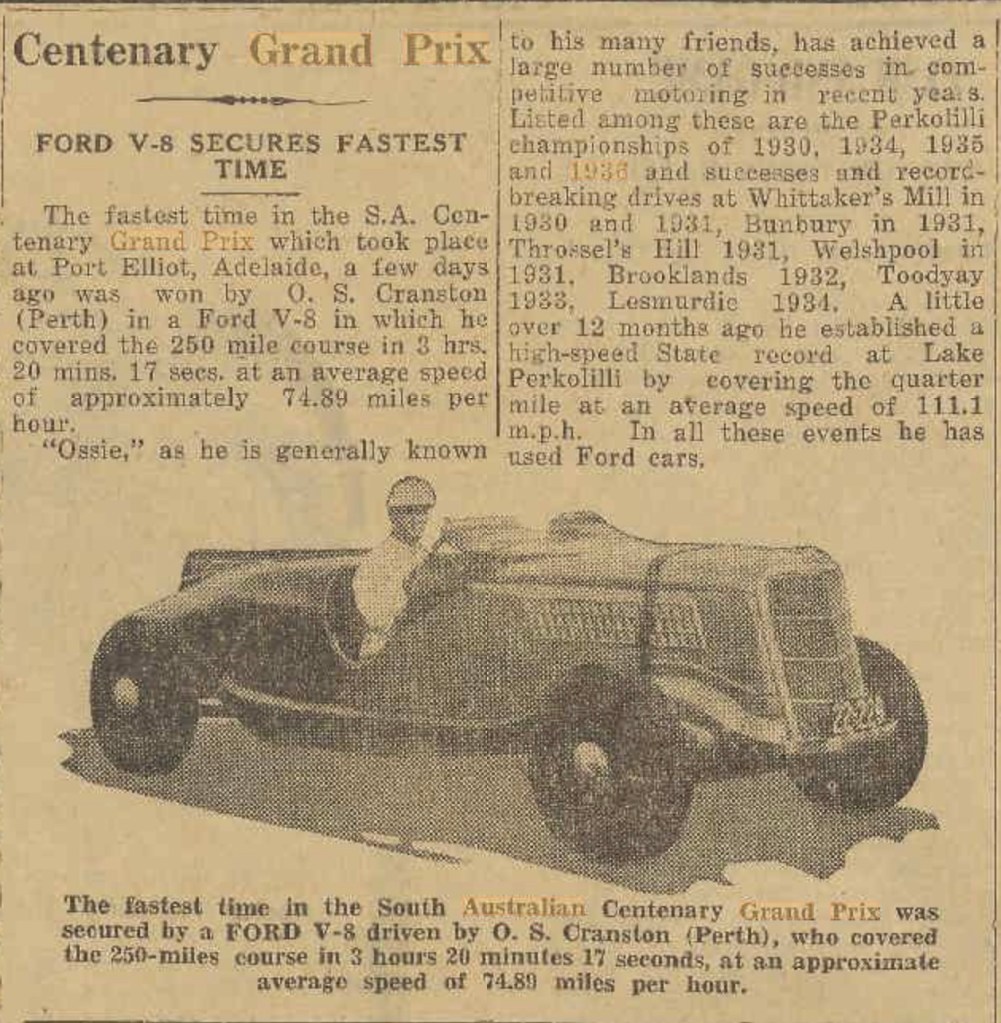
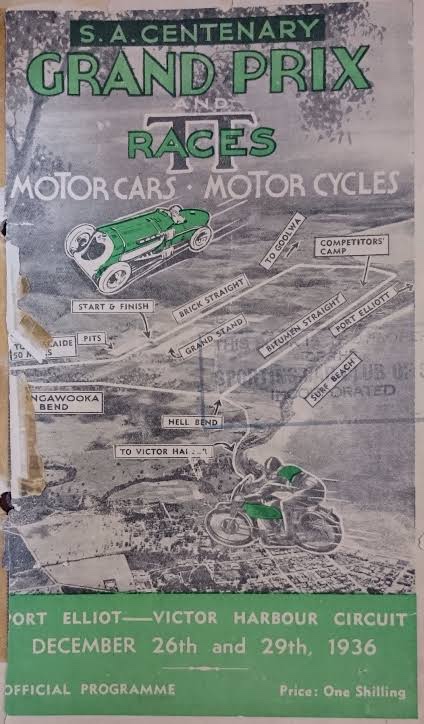
To race his Ford V8 Special in the December 26, 1936 South Australian Centenary Grand Prix (the 1936 Australian Grand Prix) at Victor Harbor required shipping his car on the interstate passenger liner, the Manoora, on the Tuesday before the race, from Fremantle to Port Adelaide. A trip to Melbourne is a lot further and Sydney even more. So race-fans in the more populous states of the nascent country of Australia didn’t see many of the faster West Australian cars, despite their thriving motoring scene.
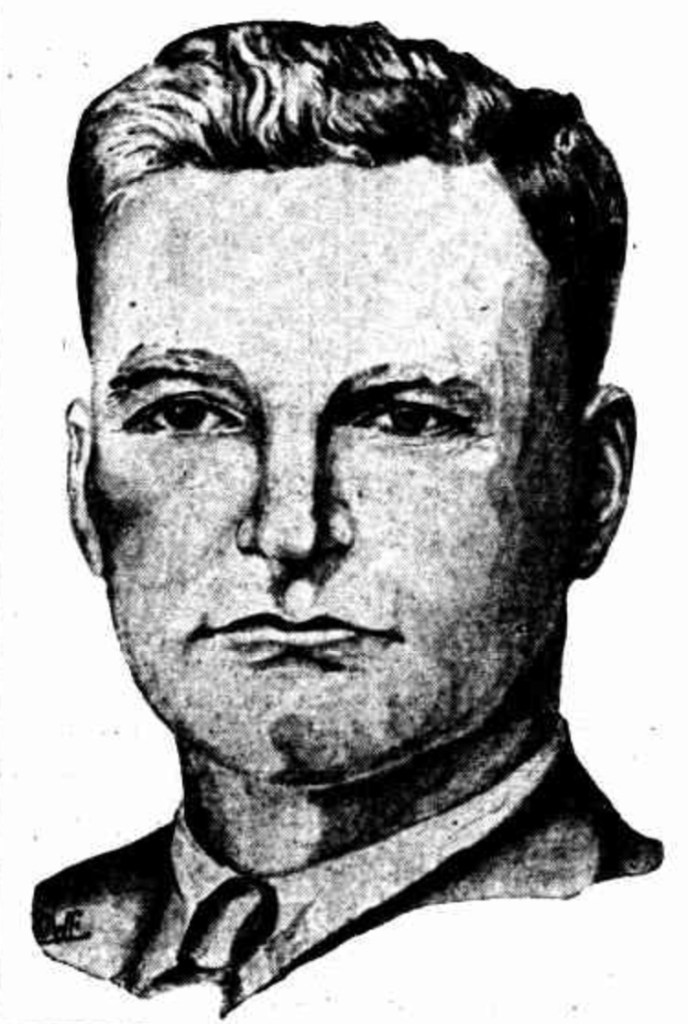
Cranston and passenger en-route to victory, Ford V8 in the 10 Mile race at Lake Perkolilli in 1936. Standard wheelbase, chassis and hubcaps! clear. Wearing his dealer hat, Cranston’s modifications trod a sensible path between performance and familial connection to Ford’s standard offerings on his dealership forecourt. It’s attractive, the fin and stylised V8 logo are neat touches which take the eye off that long wheelbase. Fast car indeed (Kalgoorlie Miner)Osborne Scott Cranston in his mid-thirties, as the Sunday Times artist saw him in 1937
In that sense, Cranston’s Victor Harbor (correct spelling) achievement was a great one over the more fancied Bugatti T37As, MG K3s, Frank Kleinig’s Kirby Deering Special and Hudson Special (he raced the latter) and Jack Phillips’ Ford V8 Special. Not that Cranston won the race.
Australian Grands Prix, until the dawn of the 1950s, were handicap events given the shortage of racing cars spread across a huge space – Australia is a big joint, have a look at a map one day – and the vast disparity in performance between those cars. Cranston did the fastest elapsed time but finished sixth on handicap. Les Murphy won the 250 mile race in an MG P-Type. See here for a long epic on this race around a rectangular 7 4/5 mile, sandy-gravel course, between Victor Harbor and Port Elliot. ‘South Australian Centenary Grand Prix’ 26 December 1936 aka 1937 Australian Grand Prix…… | primotipo…
Cranston, Ford V8 Spl, Lake Perkolilli date unknown (unattributed via Graeme Cocks)Arthur Colliver, Chrysler 70 ‘Silverwings’, Bugatti T37 driven by the Perth importer, Cyril Poole (or AN Other), Cranston in Ford T Heza-Henry and Jack Smith, Buick Spl, Lake Perkolilli 1927 (SLWA))
Cranston’s car started life as a 1935 model (1933 in some references) Ford V8 utility. It was then modified with a light racing body – the long tapered body with fin atop was fitted in 1935 – magneto ignition, competition exhaust manifold, flattened road springs and two Winfield carburettors in place of the single standard item. “Otherwise”, the ‘papers of the day reported, “the car is identical with the Ford V8s sold by Lynas Motors Ltd”, the Hay Street, Perth, Ford dealership of which Cranston was a partner/shareholder with V Lynas and J Victor Pascoe. Later fitted the with a ’36-model radiator, it was then erroneously and continuously called a ‘1936 car’.
I won’t repeat the successes of the car at Lake Perkolilli and other Western Australia venues already outlined in the opening image.
Cranston grew up in the comfortable surroundings of Swanbourne Beach. He began his working career as an apprentice mechanic with Grave and Dyer, working on Standard and Imperial cars. The business was Perth’s first Ford Dealer, over 15 years he rose through the ranks to become Works Manager. From there, Cranston was recruited by Ford as Works Superintendent of their assembly plant at North Fremantle. Later, he and his partners, former colleagues from Grave and Dyer, formed Lynas Motors Ltd.
Cranston with 3.5hp Triumph circa 1920 (Sunday Times)
In 1917 (or 1919) Ossie took up motorcycle racing, he won his first competitive race, the three-mile Charity Handicap at the WACA, riding a Triumph “in a brilliant performance for a novice.” He raced mainly on the grass tracks at Claremont Showground, Loton Park and on the road riding Indians and Triumphs for the Armstrong Cycle and Motor Agency. Six track/road championships followed, one “was recognised by Triumph in England with a gold medal and a particularly eulogistic letter of appreciation,” the Sunday Times wrote.
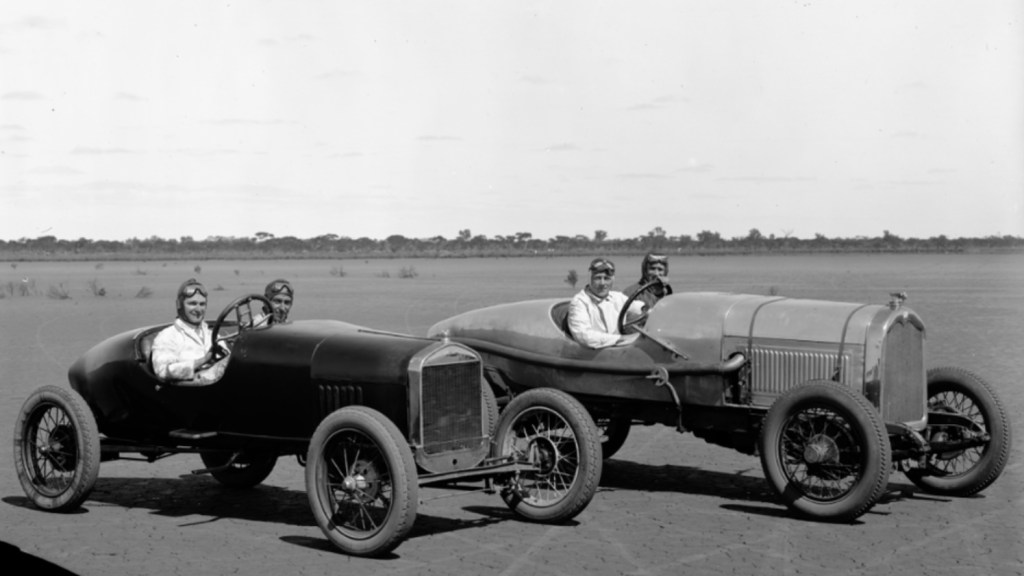
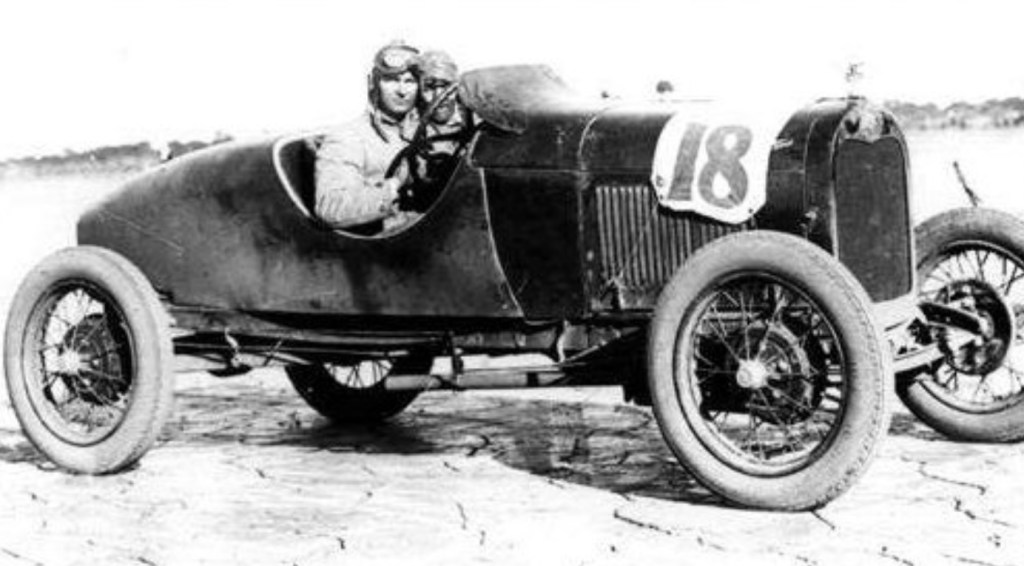
A large crash at Claremont in 1922 encouraged a shift to four-wheels. While still at Grave and Dwyer, he initially drove a Ford Model-T in hillclimbs, setting many fastest times in a car affectionately nicknamed ‘Heza Henry’. Hez had a hand-formed, torpedo-shaped rear which incorporated ‘guards for the road which were removed for competition work. It did 68mpg on the Perkolilli claypan in 1927.
With the introduction of the Model-A, Ossie built up ‘Cactus’. It had a less refined vinyl boat-tail body than Heza, from the dashboard back, two bucket seats and a fairing in front of the driver. Various engines were fitted along the way but the body was a constant.
Cranston in the Ford T-Spl Heza-Henry and JC Smith, Buick Spl, Lake Perkolilli 1927 (SLWA)Ford A-Spl Cactus at Perkolilli, year unknown. Intrigued to know which of the Perth artisans built the various Cranston bodies (G Cocks Collection)
Well suited to hillclimbing but not so much Perkolilli’s long curves, he still finished third behind the Armstrong driven Auburn and Colliver Chrysler in the RACWA State 20 Mile Championship in 1929. He won the 10 Mile handicap that day too, claiming that the car was capable of 100mph. Cranston went one better in 1930 taking 10 Mile Lake Perkolilli State Championship.
The 3.3-litre, four cylinder, side-valve – for a while supercharged – engine had a range of modifications to the cylinder head, carburetors, intake and exhaust systems and a taller top (third) gear fitted to Ford’s coupe.
Further success ensued throughout 1931-32 at Whittakers Hill, North Dandalup, Lake Pinjar, Bunbury Beach, and Whittakers and Greenmount Hills. By late 1931 Cactus maxxed out at 89 mph to win the flying quarter-mile event at Wattle Grove.
In 1932 the Brooklands Speedway opened (on the West Subiaco aerodrome site), where Perry Lakes and the Uni WA sportsgrounds are today. Brooklyn had only a short commercial life, but Cranston – belted pretty hard by the handicappers – set a four-lap record for the one-mile, limestone track in 4 mins 38 secs in 1932, not too long before Cactus was retired.
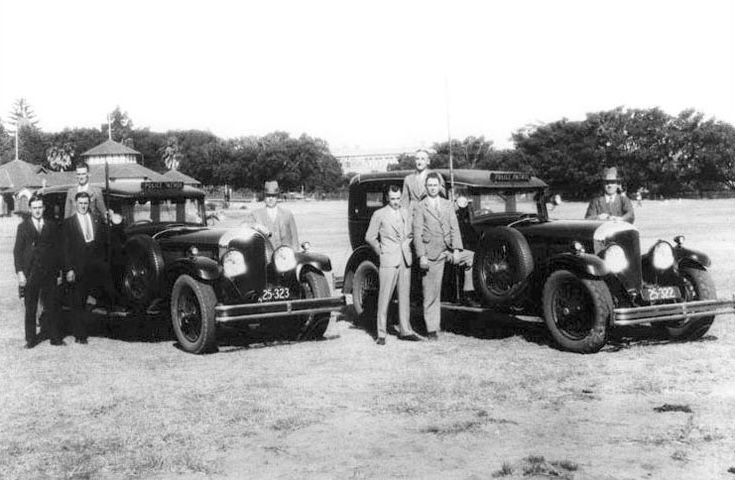
Perth’s finest with their Bentley Speed Six’ (chassis LR2783 and LR2785) during their long period, 1930-1947, of service. Coachwork by Bryan’s Motor Body Works, 522A Hay Street, Perth, close to Lynas Motors. Cars extant, ‘Bentley Patrol’ is a whole story in itself! (WA Govt)(The Daily News, September 21, 1933)
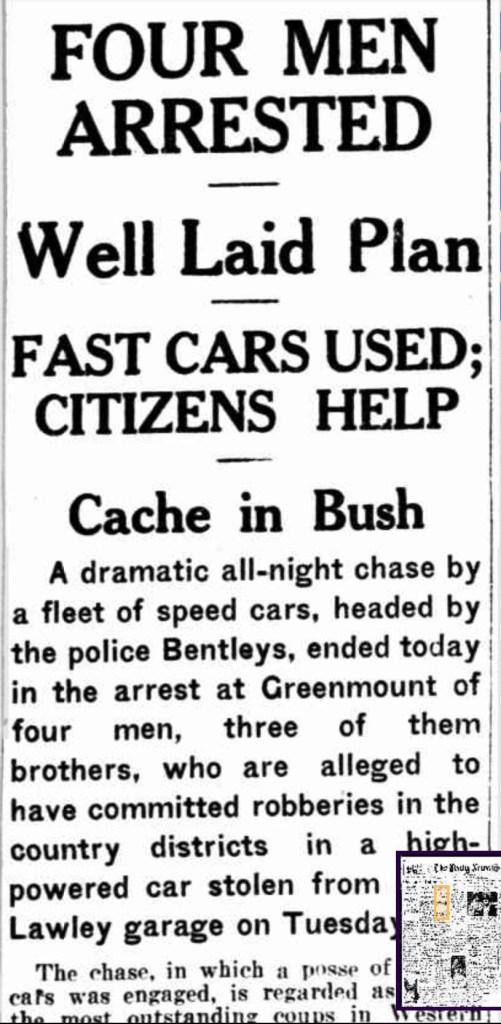
One of the more bizarre days of Cranston’s long life was a police invitation for he and Cactus to join a posse of cars to help catch some baddies in September 1933. Said crooks were committing smash and grab robberies in the country, then escaping in a stolen, fast, ‘high powered car’.
The police generals figured they needed more pursuit cars capable of in excess of 80mph, than their two 6.5-litre Bentley Speed Sixes. Yes folks, the WA police were the only wallopers on the planet to have these expensive blue-bloods as patrol cars. The plan was to create a cordon around Perth to chase down and catch the dirty-rats. So, some racers were recruited as Deputy Sherriffs including OS Cranston.
While Cactus wasn’t involved in a high speed chase, the four-perps (police talk I believe) ran off the road alongside where Cactus was parked, near the gate of the national park at Greenmount (23km east of Perth). They were arrested with a cache of stolen goods found close by.
In another bizarre, only-in-Australia moment, the handcuffed crooks were kept warm beside a fire lit by the coppers while Cranston high-tailed it back to Perth in Cactus. The Bentleys had radios, no other WA police cars did, Ossie’s mission was to give the good news to senior police and organise a patrol car to take the shaken, but warm robbers back to the city lock-up…
Sunday Times, June 30, 1935
By 1934 Cranston was quite the man about town too. In addition to his Lynas responsibilities he was a director of Rural Motors Ltd, Bunbury Motor Estates Ltd and General Investment Co Ltd, which provided consumer finance for Fords. He was also the director of several companies outside the motor trade.
Wearing his Lynas Motors hat Ossie travelled to ‘The Orient’ (is that term a no-no these days, one never hears it used?) in mid-1934. “Wherever you go you’ll see a Ford,” he quipped to the Perth Mirror on his return.
Cranston was amazed by the number of baby Fords in Singapore and amused that the first news he received in Ceylon was about the success of a small Ford in a local hillclimb. In Java he observed that cars were ancient, “the post Depression prices of sugar and rubber are low.”
Things were better in Singapore, Shanghai and Hong Kong. Siam made the railways pay, “with no roads between the principal centres people are forced to use the trains!”
Asked about the new Datson (sic, the machine would have been the Datsun – Nissan – Type 13) car, “a new light job similar to the 7hp units with which we are all familiar, being built in Japan.” Cranston said “I didn’t see one on the trip. Agents have been appointed in various centres of the orient, but it’s unlikely any are expected in Australia.” Not for three decades or so, in any event!
The Daily News, November 19, 1935The Car October 1935
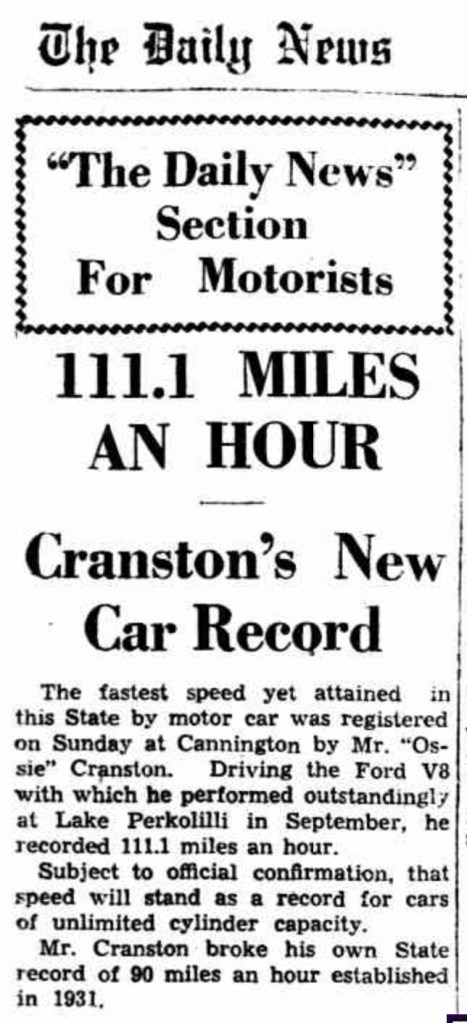
In 1934 Cranston returned to racing with the Ford V8, setting a new Australian record at Perkolilli over 10 miles (16 kilometres) at an average speed of 97.61mph (157 km/h), and later a new State record of 111.1mph (178.8km/h) over a flying quarter-mile on Nicholson Road, Cannington, beating the record set in the Model-A.
After success in the South Australian Centenary Grand Prix, held at Victor Cranston told the Motorist and Wheelman that he was retiring from racing because he was “too old”.
Ford recognised his contribution to the sport and polishing the marque’s brand via his racing exploits over a long period with the presentation of a ‘gold wristlet’ at a function of dealers in Perth in April 1937.
His final motor racing event – just before the lights-went-out in WW2 – was the Patriotic Grand Prix, held on the Applecross streets of Perth in November 1940.
Following Cranston’s decision to retire, he sold the Ford V8 racer to Bathurst Ford dealer and 1920-30s intercity record breaker Norman Aubin. John Medley wrote that Aubin prepared the cream and green car for 27-year-old local driver, George Reed to race in the 1938 AGP held at Bathurst.
Reed’s race was brief as the big car spat its fan through the radiator early on. It would be interesting to know what the young driver thought of Cranston’s car. He was to build some very fine Ford V8 Specials of his own, including the George Reed Special Warwick Pratley raced to AGP victory around-the-houses at Narrogin, Western Australia in 1951.
The ’38 AGP was won by British international Peter Whitehead’s ERA B-Type. After that Easter meeting, Aubin sold it to a Sydney buyer, who repainted it red, but it never raced again.
Another report has it that the car was sold to an eastern states competitor who was killed in it at Bathurst. The engine was fitted to a speedboat and the chassis stored for a bit before being destroyed. Does anybody know the facts?
In 1983 Clem Dwyer started the build of a replica which remains a welcome competitor in historic events.
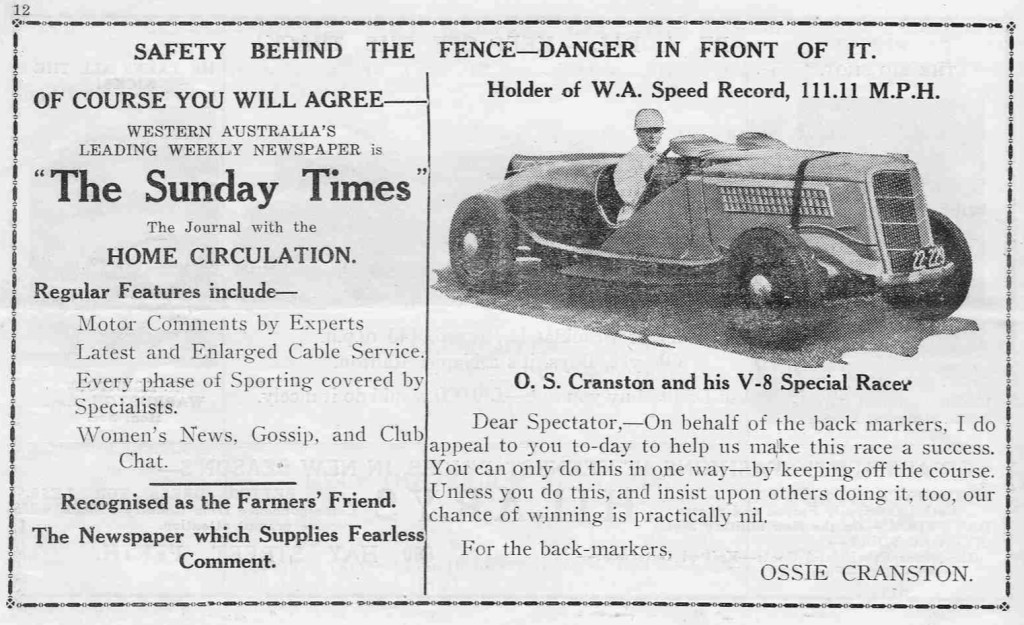
Cranston and passenger (who?) in the Ford V8 ahead of a Lagonda at Albany in 1936. This downhill stretch would have been a serious test of the brakes of the day (K Devine)Ossie’s Ode to the Backmarkers. Perhaps Max Verstappen could try that approach in next March’ Albert Park programme (Albany GP programme)
Cranston hadn’t lost his passion for motorsport though. He had built ‘Miss Frances’, a Ford V8 powered speedboat which generally “spreadeagled rivals in much the same fashion as he had been doing for years on the terrain.”
“When not tied up with one or other of the multitudinous business matters which occupy his attention, Mt Cranston golfs, his one vice.” There was another though, with the encouragement of his wife he commenced horse riding at about 40. So keen and proficient was the Mosman Park resident, that he became Master of The Hounds for the West Australian Hunt Club.
Ossie remained involved and close to motorsport. An Ossie Cranston Trophy was contested in West Australian Sporting Car Club events for years, Cranston was a stalwart of the club, formed on November 17, 1929. Together with Eric Armstrong, CS Dyer and Claude McKinley he kept the very successful organisation together in some of its more difficult years.
Cranston was ‘the official driver’ at Caversham (first used on March 13, 1948) and into the 1970s at Wanneroo Park. He died on July 1, 1982 – born in either 1899 or 1903 – his remains are at the Karrakatta Cemetery in Perth.
PS; Most of this piece was written via extractions from period newspapers. Of their nature they are light-on with the specifications of the cars. If any of you can assist in that regard, or in fleshing out Ossie’s story, do get in touch.
Oopsie, a bit of PE from the front of the Gas Producers Stock Car grid before the start of the 4-lap 10-miler. Patriotic GP meeting, Applecross, on a hot November 11, 1940. Car ID’s folks? (K Devine)
Etcetera…
It’s a Gas
Pretty much the final motor race of any size in Australia before motorsport was set aside for the duration of World War 2 was the Patriotic GP, attended by a “huge crowd” at Applecross on November 11, 1940.
In his return to racing, Cranston ran a ’38 Ford in the novel, Producer Gas Race for stock, or standard cars. Ossie finished second in this handicap behind WJ Stitt’s De Soto straight-eight.
Interesting, perhaps – in the context of fuels of quite dissimilar quality, and the use of gas to power cars during the conflict – is the difference in performance between Ron Possetts’s petrol fuelled ’39 Ford V8, which won the stock (standard) car race and Ossie’s machine. Possett’s (rated a very good driver) best lap was 3 min 12 sec, and Cranston’s 3.44.
“The hilly course was a good test, the contest admirably fullfilled its purpose, which was to demonstrate that the sacrifice of performance made by the use of producer gas, is small,” wrote the South Western Advertiser.
The ‘Tisers’s journo continued, “A most interesting feature of Cranston’s car was that the ‘gas-works’ were all enclosed; producer, cleaners, pipes etc were all hidden, in the luggage trunk, beneath the bonnet or under the floorboards, and, except for cooling-louvres in the lid of the rear compartment, the big modern sedan had the appearance of a standard petrol model.”
All we need now is a happy-snap of the car, can anyone oblige?
Jack Phillips and Ted Parsons aboard their Ford V8 Spl during the 150-mile 1939 Australian Grand Prix at Lobethal, South Australia. They were third behind Allan Tomlinson’s MG TA Spl s/c and Bob Lea-Wright’s Terraplane Spl (N Howard)
Top Gun?
Looking at the performance of Ossie’s car, it has to be a contender for fastest-best Australian Ford V8 racer in that pre-war period?
Jack K Phillips’ similar machine (above) has to be in the mix too. He too was a Ford dealer, in Wangaratta, Victoria. Yep, I’ve heard of Black Bess, while built pre-war, Whiteford didn’t get her performing well until after the conflict.
The Cranston and Phillips cars were Special Ford V8s rather than Ford V8 Specials. That is they were modified Fords, rather than a concoction of parts of various makes powered by modified Ford V8s.
I’m interested to hear from those of you who know about such things, which car was the quickest-best Ford V8, and quickest-best Ford V8 Spl pre-war?
Cranston and passenger on the hop – he did fastest race time remember – during the South Australian Centenary aka AGP at Victor Harbor in December 1936, Ford V8 Spl. #25 is the H Abbott, Austin 7 Spl s/c (SLWA)
1936 Australian Grand Prix
I’ve got my great mate, Tony Johns, to thank for the wonderful loss of a couple of days researching this piece.
During his weekly State Library of Victoria research visitations, Tony came upon a snippet about the Light Car Club’s endeavours to run the 1936 AGP on a road course at Mornington, then a quiet, seaside village, 70km from Melbourne.
The Phillip Island road course which hosted the AGP from 1928-1935 was on-the-nose given its dangerous nature for cars of less than 2-litres, let alone the unlimited cars which should also have been included in the fun.
I’ll get to Mornington in due course.
There was no AGP called, promoted and run as such during 1936. The December 26, 1936 South Australian Centenary Grand Prix was later appropriated as an AGP – I’ve no issue with that – but the nincompoop(s) who did so, determined that a race held in 1936 was the 1937 Australian Grand Prix. WTF etc.
I’m on a one-man crusade to right this wrong, that is, the 1936 AGP event was the one at Victor. There was no AGP called, promoted and run as such in 1937 either. If we want to anoint one significant race held in 1937 as a part of the pantheon of AGP’s I’ve an open mind, send me your ideas and justifications…See here; 1936 Australian Grand Prix, Victor Harbour… | primotipo…
Anyway, in Troving (Trove is a digital record of Oz newspapers) with search-words like ‘Mornington 1936 Australian Grand Prix’, up popped the article which starts this piece. I’ve very much enjoyed writing it, knowing little about Mr Cranston and his achievements two days ago…
(R Bartholomaeus)
Port Victor
The poor old South Australians can’t make their minds up about Victor Harbor.
We Australians adopted the Pom’s version of English on the basis that as they invented it they should have half-a-clue about how stuff should be spelt.
Despite that, the township of Victor Harbor, rather than Victor Harbour, was proclaimed in 1914, for reasons almost as obscure as those related to the year in which the 1936 AGP was held.
Clearly the author of the South Australian Centenary meeting programme was confused too. Despite the race being held in Victor Harbor, the event was contested, seemingly, on the Port Elliott-Victor Harbour Circuit.
Credits…
The Blackwood Times, Friday January 15, 1937, Sunday Times Perth June 30, 1935, Mirror Perth July 7, 1934, Kalgoorlie Miner, various many other newspapers via Trove, ‘Cactus-Work in Progress’ Graeme Cocks, State Library of WA, ‘Bathurst: Cradle of Australian Motor Racing’ John Medley, Ken Devine Collection, vintagebentleys.org, Norman Howard, Rob Bartholomaeus Collection, Bob King
(Recorder, Port Pirie, February 21, 1938)
Tailpiece…
When you’ve spent a good chunk of your annual capex-budget on a couple of Bentleys, the Perth Polizia PR department worked the local papers hard to ensure the Bentley Patrol bagged as much of the crime-solution-limelight as possible, however tenuous the connection between the misdemeanor and WO’s finest.
Doubtless the lissom Subiaco lass slept easy knowing the Bentleys were prowling the streets with as much stealth as Merv the Perve…
Alfa Romeo’s pre-war design in its various evolutions was the dominant Grand Prix car in the immediate post war period from 1947-1951.
The supercharged 1.5-litre straight-eight powered Voiturette – Alfa’s design team was led by Gioacchino Colombo – initially developed about 200bhp @ 7000rpm in its original 1938-1940 specifications. Postwar, in a relentless ongoing process of chassis and engine development, the engine was tickled up to circa 246bhp in 1946, then 300bhp in the 158/47 spec raced in 1948.
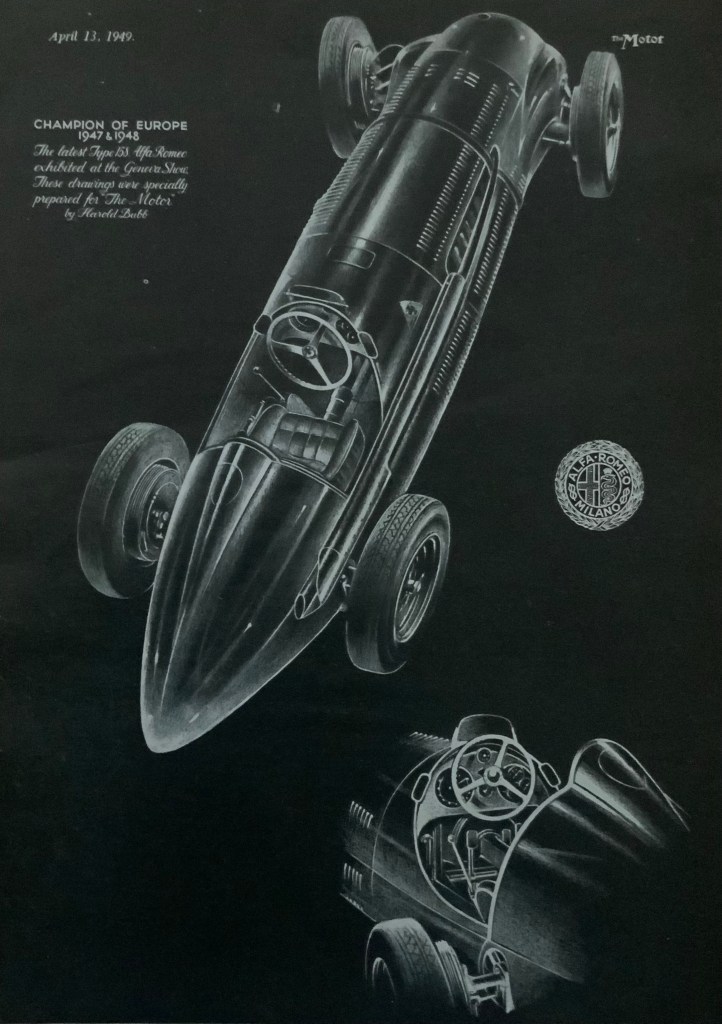
The Motor recognised the achievements of the cars in 1947-48 with this lovely drawing by Harold Bubb published in its April 13, 1949 issue.
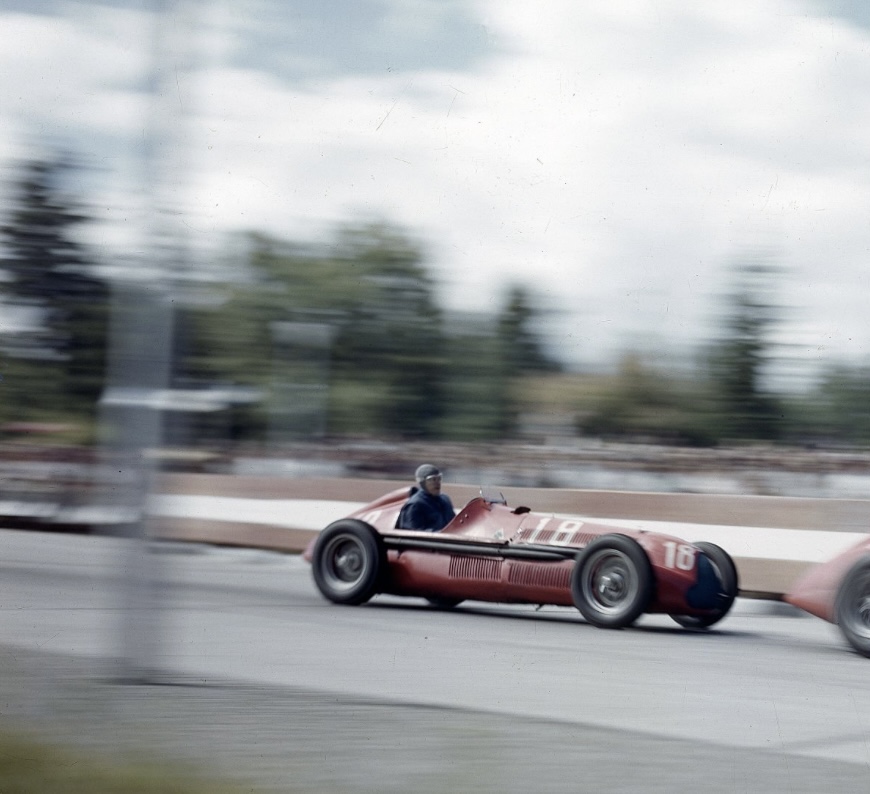
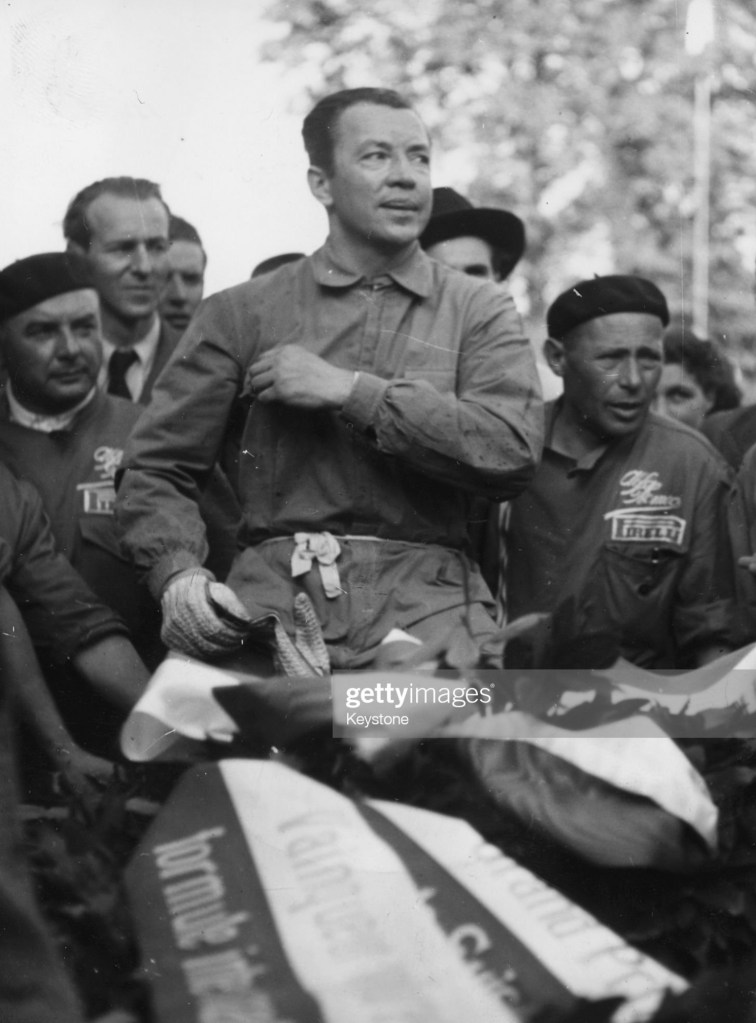
Jean-Pierre Wimille during the GP des Nations, Geneva over the July 21, 1946 weekend. He won his heat, so too did Giuseppe Farina his, and the final. Carlo Trossi was second and Wimille third, all aboard 158s (Getty-Klemantaski)Wimille and the Alfa Corse crew after winning the 1947 Swiss GP at Bremgarten
Jean-Pierre Wimille won the Unofficial World Championship in 1947 with victories at Bremgarten and Spa, and second placings at Nice and Lausanne. Achille Varzi won at Bari, and Carlo Trossi at Monza in a major rout for the Portello grand-marque where they placed first-fourth; Trossi, Varzi, Consalvo Sanesi and Alessandro Gaboardi.
It was more of the same in 1948 when Wimille won the French and Italian Grands Prix, while Trossi won in Switzerland. In all three races Wimille started from pole and bagged fastest lap. Maserati interloper, Giuseppe Farina won at Monaco, the other Grand Epreuve, aboard a 4CLT. Wimille also won the minor Monza GP in October, again Alfa bagged the first four placings, with Trossi, Sanesi and Piero Taruffi this time the minor placegetters.
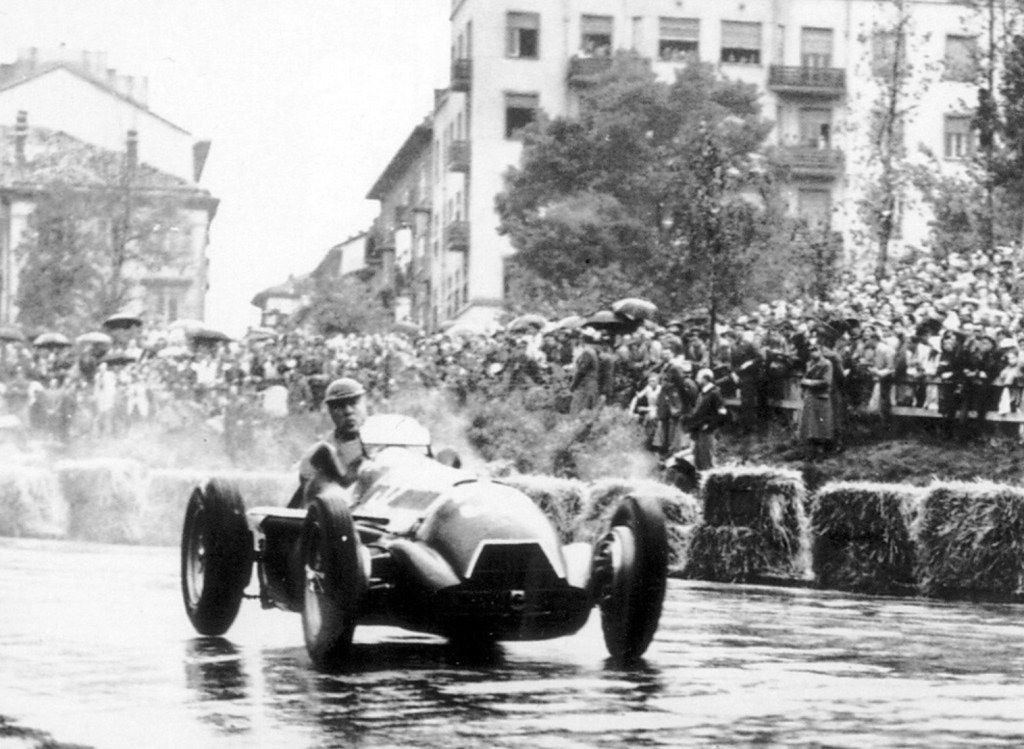
Wimille on the way to a very soggy win at Valentino Park, Turin in September 1948. He won the Italian Grand Prix from Gigi Villoresi, Maserati 4CLT/48 and Raymond Sommer’s Ferrari 125.
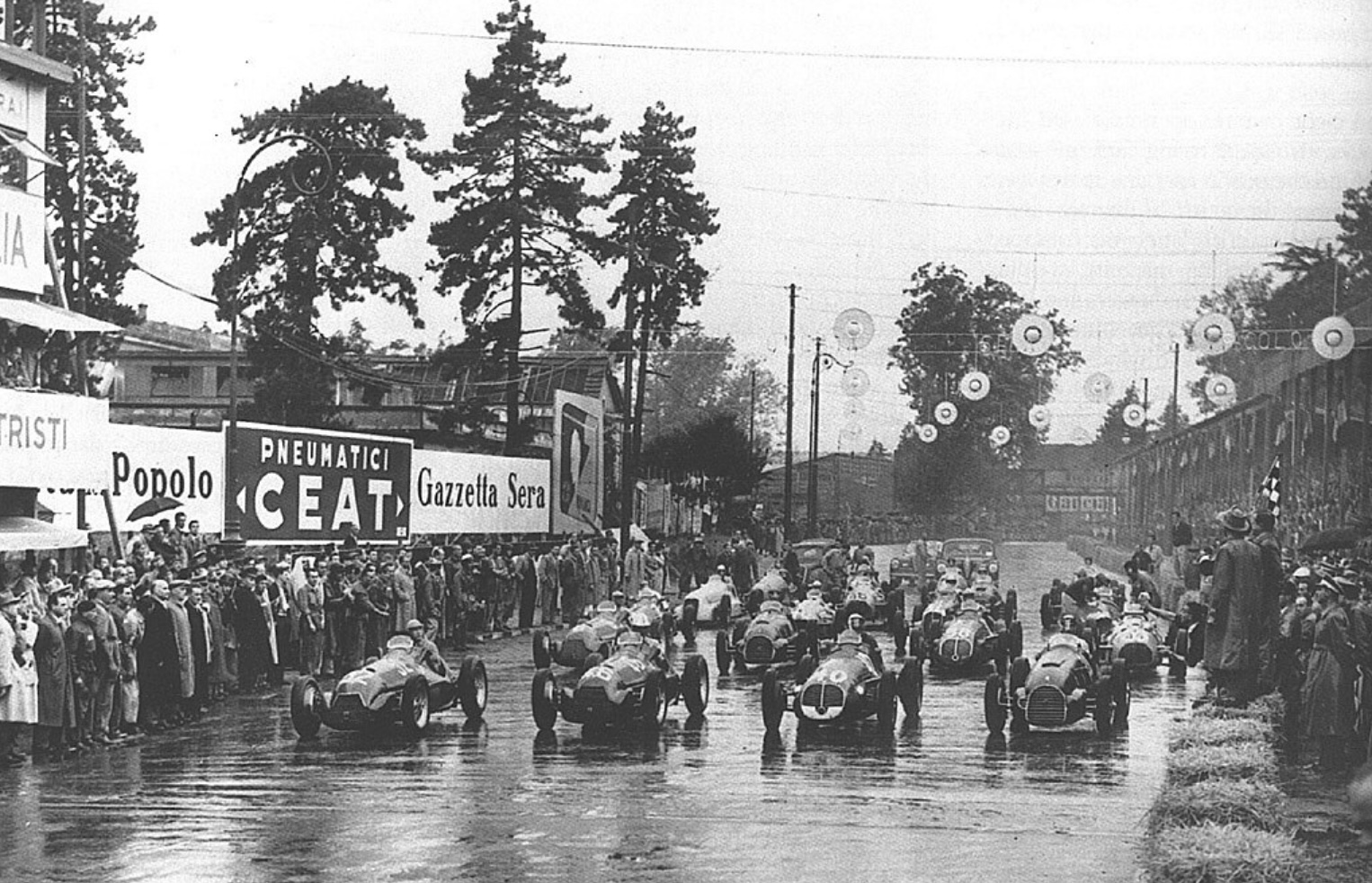
The off at Turin, the front row is L>R J-PW and Carlo Trossi’s Alfa 158, Villoresi’s Maserati and Sommer’s Ferrari.
(C Draijer)
Credits…
Getty Images, Cor Draijer Collection
Tailpiece…
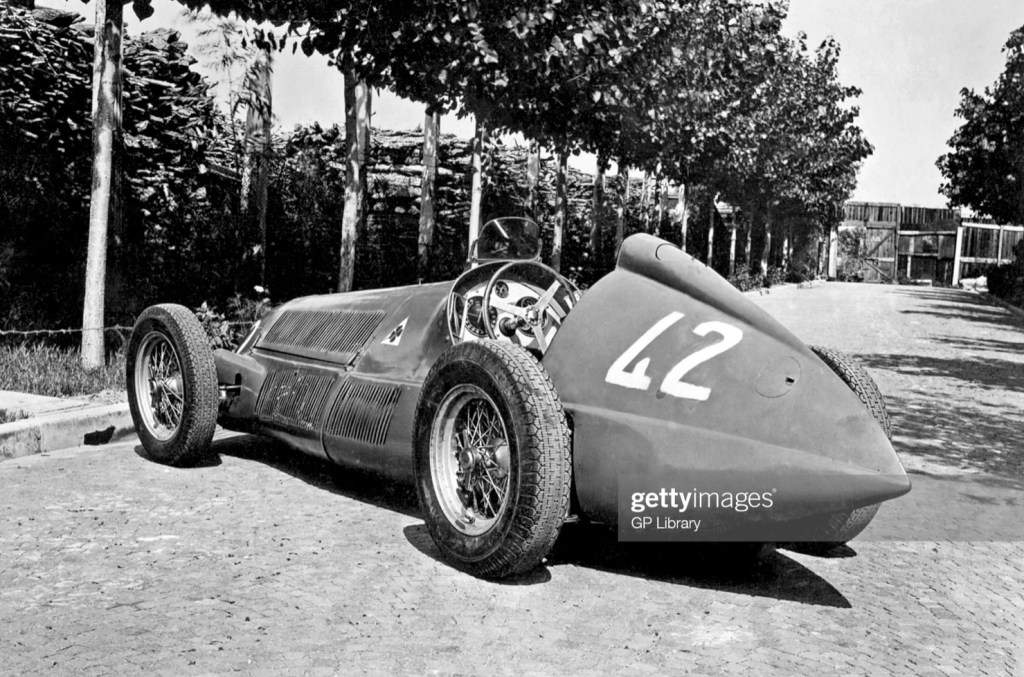
Giuseppe Farina’s Alfa 158 in Geneva during the GP des Nations weekend, July 1946.
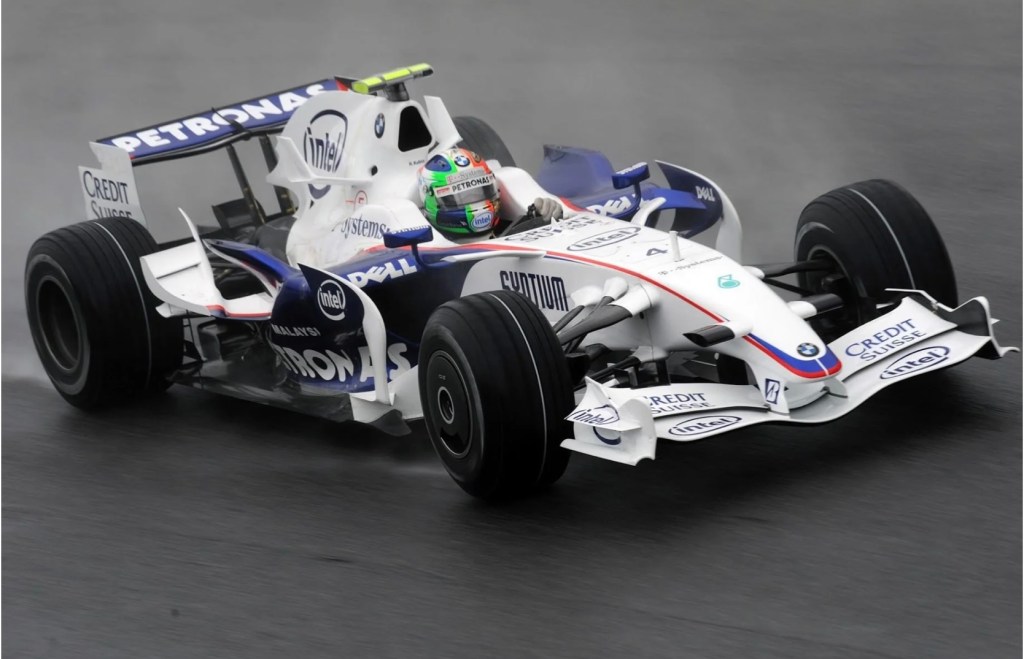
Nick Heidfeld battles the elements in his Sauber F1.08 BMW, the complexities of the cars aero treatment are the ‘outstanding’ feature of the car, Monaco GP 2008.
He was 14th, last in the race won by Lewis Hamilton’s McLaren MP4/23 Mercedes. Teammate Robert Kubica was second in a great drive, Felipe Massa, Ferrari F2008 third and Mark Webber, Red Bull RB27 Renault fourth.
Technical Director, Willy Rampf explains the aero rationale “Monaco demands maximum downforce. This means parts where aerodynamic efficiency is not good but which generate downforce. It’s the circuit with the slowest average speed and downforce therefore maximum priority.”
“We used the front wing with maximum downforce. The modified synchroniser retainer plates with top deflectors combine with the flap to exert significant influence on the air flow around the front tyres. There was a small T-wing for more downforce on the so-called Batman in front of the rear wheels. The rear wing was our steepest producing maximum tread pressure, this was mounted over central supports on the gearbox. We used rim covers in a modified version for the first time, which also generated additional downforce.”
Willy Rampf headed the BMW Sauber AG design team, with Australian Willem Toet the Head of Aerodynamics. He has been back home for a while now, I really should chase him down, does anyone have contact details?
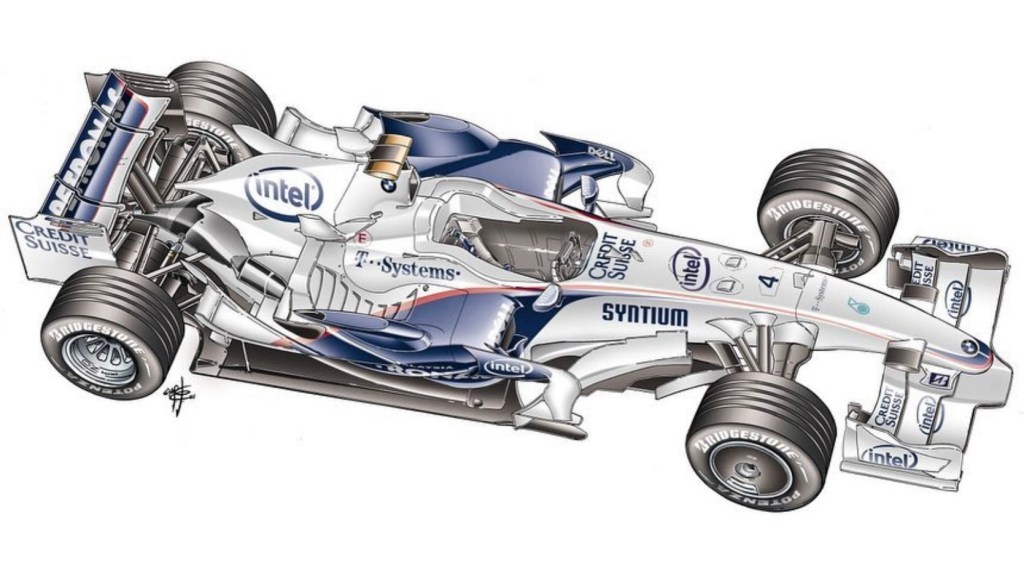
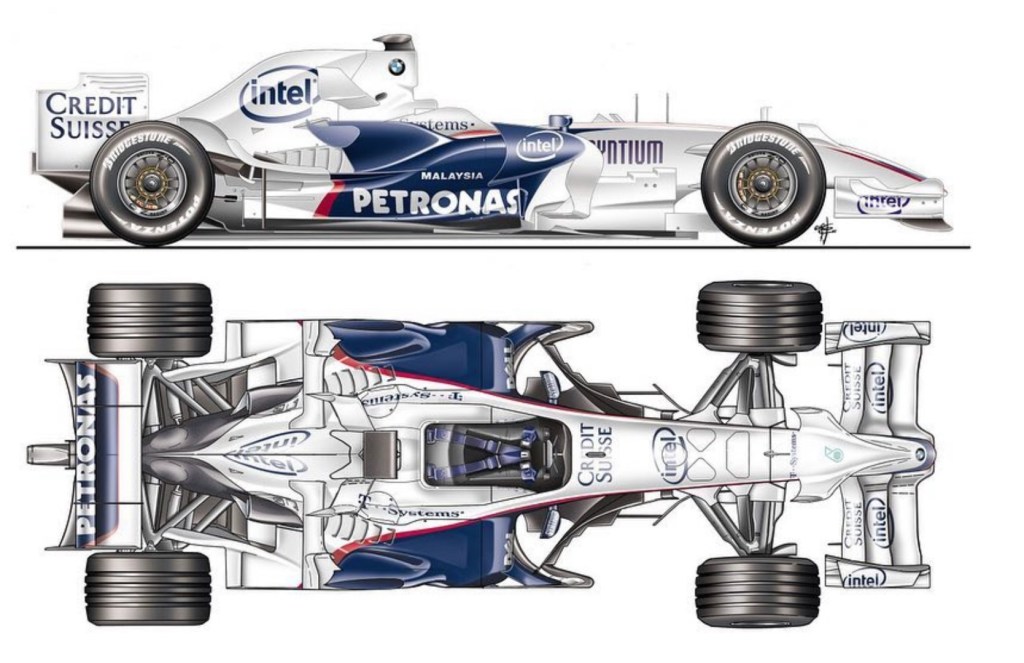
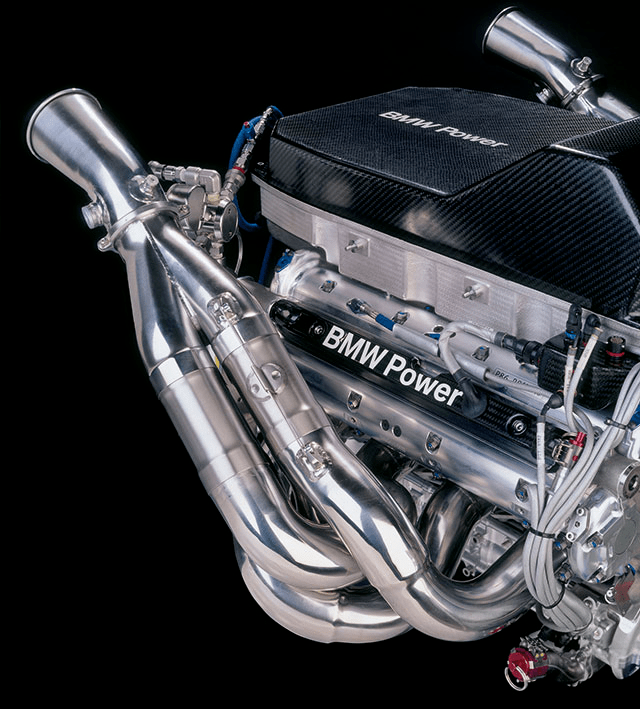
The carbon fibre chassis, upper and lower wishbones, push-rod suspended, BMW P86/8 2.4-litre V8 powered car was raced by Robert Kubica and Nick Heidfeld in 2008.
It was quick too. Nick was second in Melbourne, Robert second in Malaysia while Kubica took pole in Bahrain with the pair finishing 3-4 behind the leading Ferraris of Kimi Raikkonen and Felipe Massa. Kubica won in Canada from the front row, but the F1.08 fell away in speed relative to Ferrari and McLaren as Sauber started to prepare for 2009. This pissed Kubica off as he was leading the championship at the time! Worse was that the 2009 F1.09 proved to be a shit-heap.
Lewis Hamilton won the first of his World Championships aboard the McLaren MP4/23 Mercedes with Ferrari victorious in the World Constructors Championship using the Ferrari F2008.
Robert Kubica, Sauber F1.08 BMW, Italian GP 2008 (Reddit)
Compare and contrast Monaco and Monza (above) aero setups, “the only genuine high-speed circuit left on the calendar’,” quipped Rampf.
“We used a low downforce aero package, the main focus of which was drag reduction. We accepted a 30% loss of downforce compared with Monaco and used a different front wing with only two elements. While the Tomcat wings were omitted, there were two additional wings on the monocoque, known internally as Manta Rays, which conducted air flow optimally over the engine cover and hence improved the effect of the rear wing. The side wings on the engine covers were omitted for drag reasons. The rear wing was very different from the others used. It had a small main element and a much bigger flap with a serrated Gurney. The synchroniser plates with a clearly defined cutout were striking, they ensured a stable airflow when cornering.”
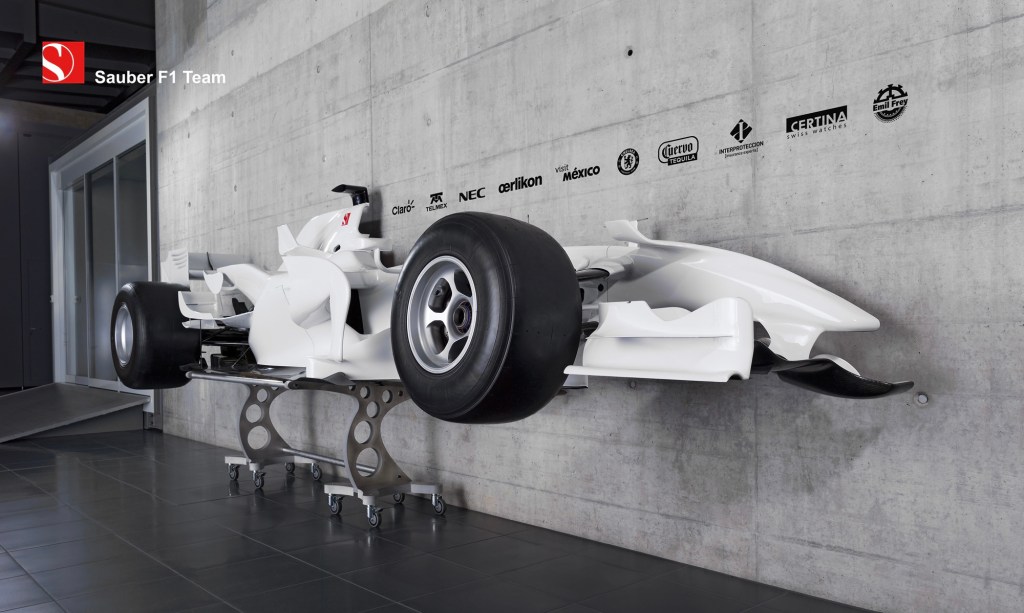
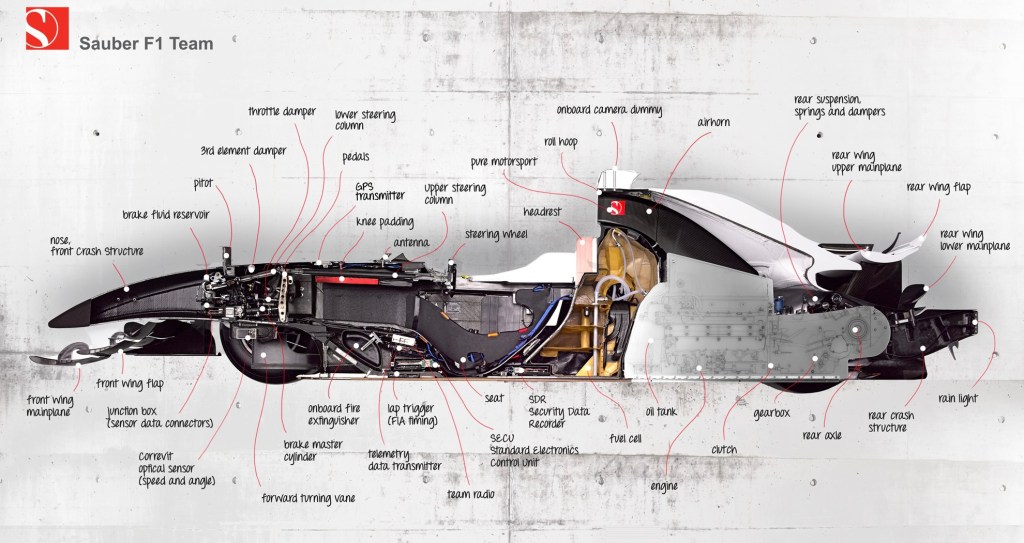
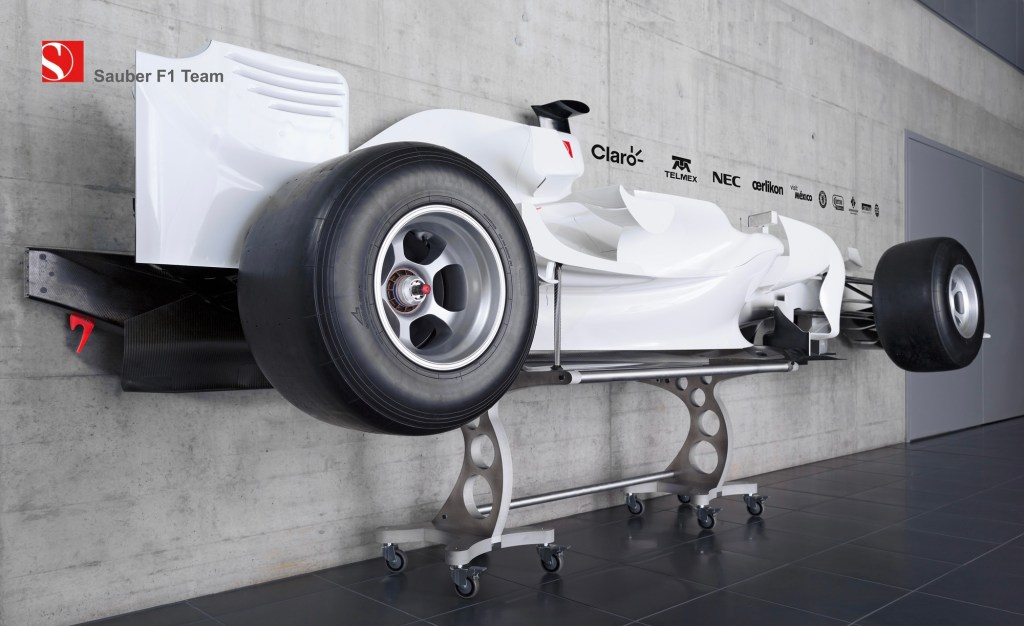
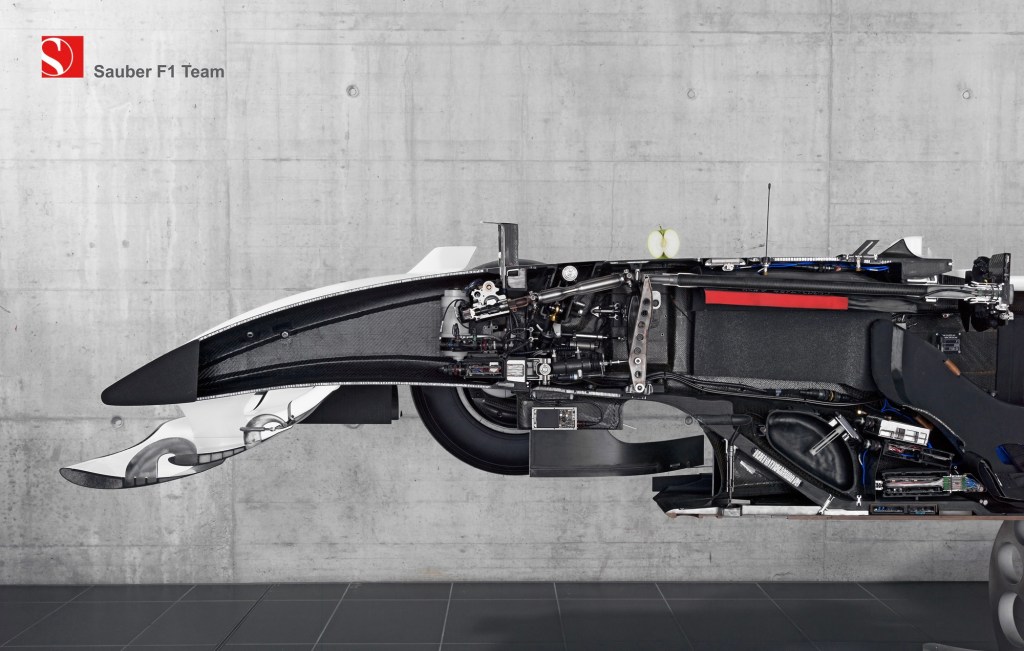
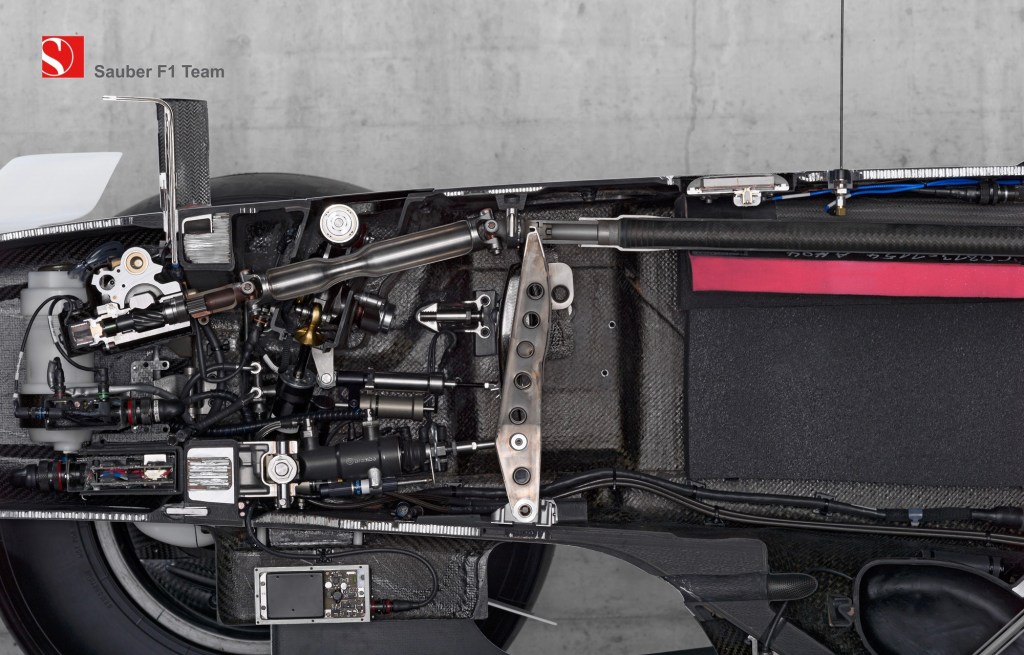
The idea to slice and dice a Sauber F1.08 – chassis F1.08-2 – was ex-Sauber man Sergio Bonagura’s idea in 2009. It’s a powerful way of getting a handle on the packaging and technology of modern’ish F1 cars. It took team mechanics two years to prepare the exhibit, by spring 2012 the project was complete.
More on the design of the car.
Traction control was banned in 2008 so a well balanced machine was critical. Fortunately the F1.07 zero-keel carbon fibre chassis design was a good car, aspects of it were carried forward. The zero-keel feature removes obstructions from under the nose and allowed undisturbed air to strike the splitter below the driver, directing airflow around the car.
F1.08 had a narrower nose, and the wing more of a box-design under the nose, giving the car a more pronounced gull-wing look. The tri-deck remained on the front wing, with the addition of wings atop the nose, a trend that year across the grid. Early in the season Sauber incorporated an integrated sidepod ear and bargeboard to rout air from behind the front wing all the way to, and around the sidepods. A byproduct was enhanced radiator efficiency.
The sidepods were pulled in tighter towards the rear with taller chimneys incorporated to enhance cooling. There was a fin down the spine of the engine cover to help control airflow at the rear especially under braking. A mid-span wing attached to the T-wing from the engine cover. This small wing located centrally on the car helped load-transfers, aiding stability under brakes and acceleration.
(G Piola)(G Piola)
The rear wing was located on endplates (as on the F1.07), it allowed undisturbed airflow under the rear wing and out the back of the car. The wing itself was simple compared to most of the competition, having two fences, and, in common with most other teams, gill-like cutouts to allow turbulent air to spill out the sides, reducing drag induced turbulence. Sauber also adopted Ferrari like ‘shields’ over the wheels which aided braking and aerodynamics.
The front and rear suspension, wishbones and pushrod actuated inboard spring/Sachs shocks were carried over with minor refinements from F1.07. The brakes were Brembo six-pot calipers and Carbone Industrie rotors, wheels OZ, and tyres Bridgestone. Weight including driver was 605kg.
The transaxle was the BMW-Sauber seven speed. It and the BMW P86/8 19000rpm rev-limited 2398cc 90 degree – “over 720bhp V8” was quoted by BMW so far more than that – was also carried over.
(Sauber BMW)
Credits…
BMW Sauber AG, F1network.net, Wikipedia, conceptcarz.com, G Piola
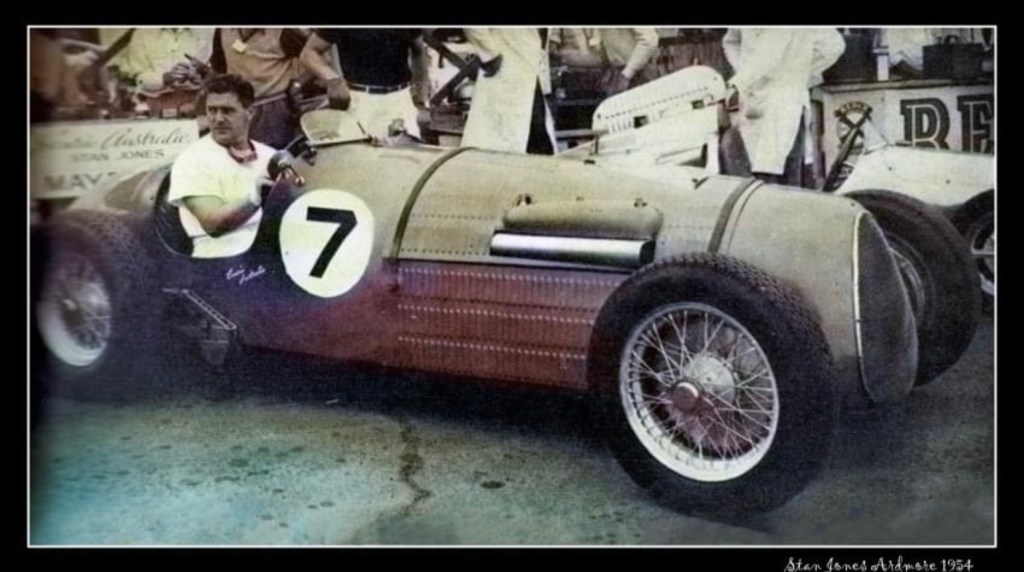
Jones at Ardmore during the 1954 NZ GP weekend (unattributed)
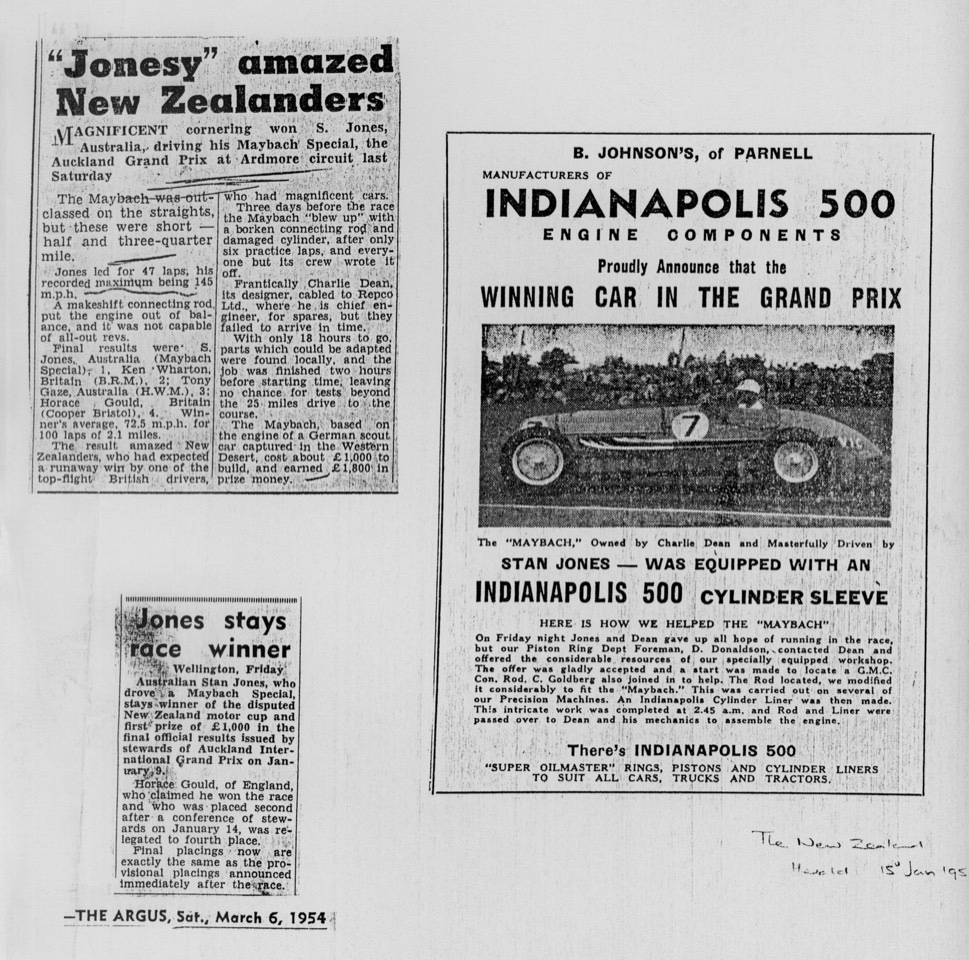
The Charlie Dean/Repco Research constructed Maybach series of three ‘1950s’ racing cars – Ern Seeliger’s Chev engined Maybach 4 evolution of Maybach 3 duly noted and venerated – are favourites.
Links at the end of this piece provide more for those with the Maybach fetish.
Repco had no plan-grande in the 1950s to take on and beat the world in Grand Prix racing, as they did in 1966-67. But in hindsight, the Maybach race program was an important plank in a series of identifiable steps by Repco which commenced in the 1930s and ended in global racing triumph.
The catalyst for this piece is some material Tony Johns sent me this week, in addition to some other shots I’ve had for a while from two other mates, Bob King and David Zeunert. It seemed timely to have another crack at Maybach 1, Jones’ 1954 New Zealand Grand Prix winning machine, still extant in Bob Harborow’s hands.
(T Johns Collection)(T Johns Collection)
We are diving into the minutiae here, but I’ve never heard of the Fesca Gear Co, clearly a key relationship in developing Maybach 1, and the other cars?
Chris De Fraga, the fella to whom the letter is addressed, was the longtime motoring editor of The Age, Melbourne, a daily aimed at those who could read and think. The competitor Sun and Herald were aimed at those without those capabilities, IG Mason, my English master useter tell us endlessly at Camberwell Grammar School. “Just read the front, back, and editorial pages of The Age if you’ve not got the time to read anything else.” I digress.
(KE Niven & Co)
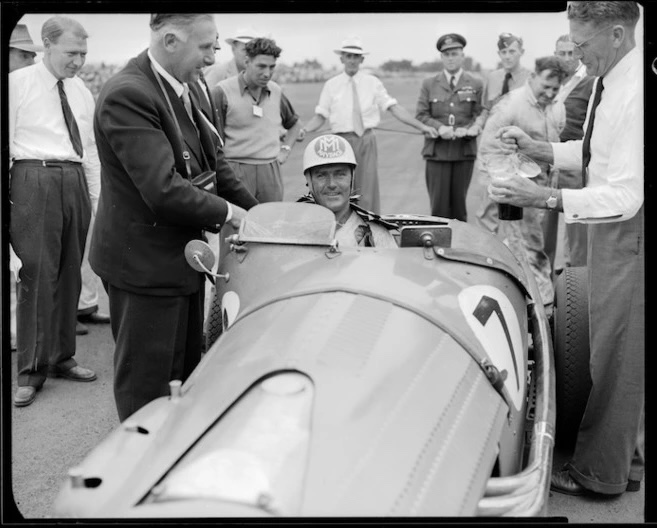
Jones looking pretty happy with himself after the Ardmore victory. It had been a tough few days for all of the team dealing with major mechanical recalcitrance of the big Maybach six, note the company logo on Stan’s helmet.
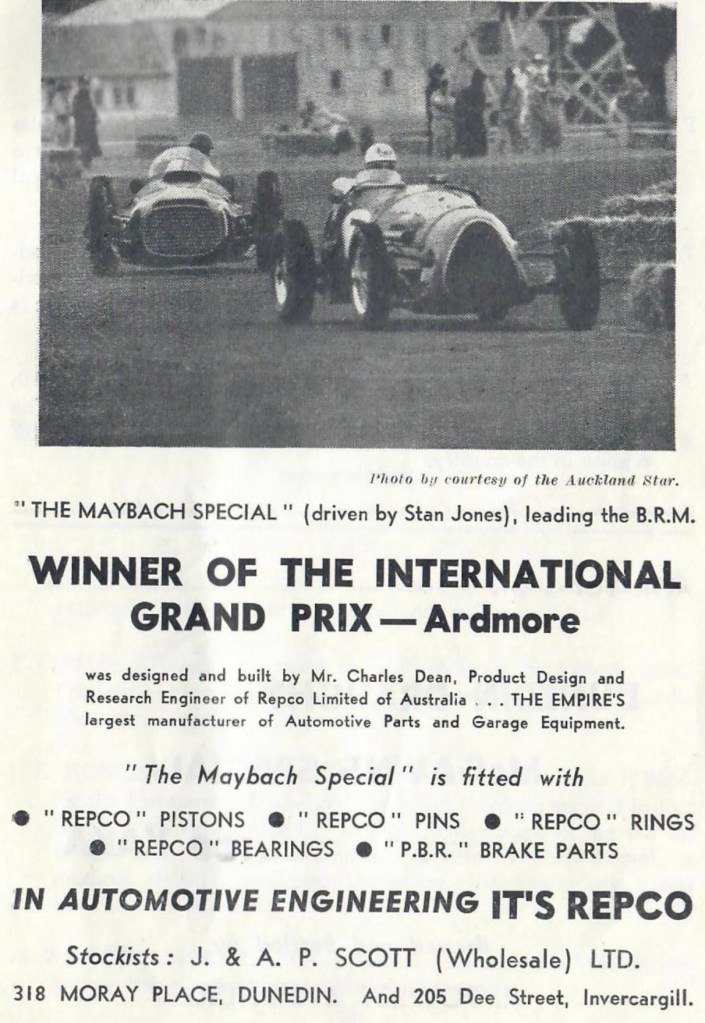
And below leading Ken Wharton’s basso-profundo-shrieking, absolutely sensational V16 BRM P15, DNF brakes.
Credits…
Tony Johns, David Zeunert and Bob King Collections
Tailpiece…
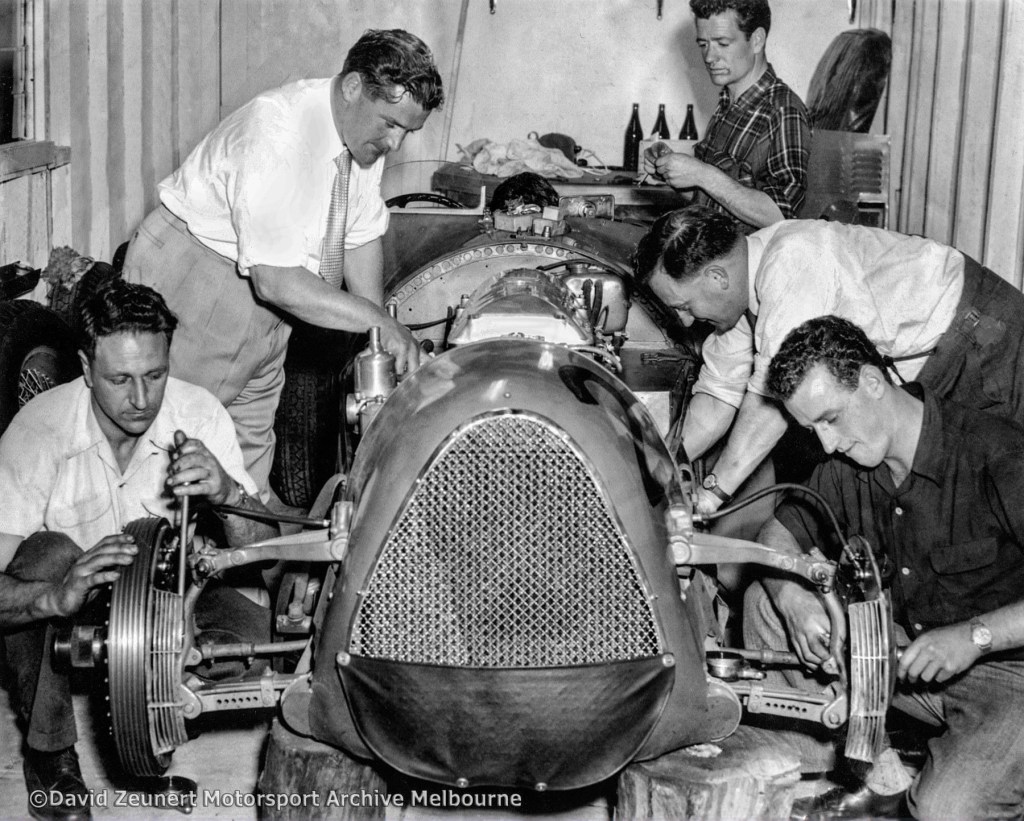
‘Speed Man After 500 Pounds Racing Car Trophy’ said the heading of this The Age promo shot of Maybach in Stan’s backyard garage at Yongala Road, Balwyn, Melbourne in the days prior to the 1953 Australian Grand Prix at Albert Park.
The technicians hard at it are Ern Seeliger, racer/engineer/Jones’ friend, Stocky Stan, Alan Jones’ head you can just see behind the wheel, Reg Robbins, longtime Jones’ employee, Charlie Dean and Lloyd Holyoak, Jones’ used car manager.
Dean lived in Kew, the adjoining suburb to Stan so it was an easy shot to set up when both men headed for home. Note the three bottles of Fosters Lager – we call these Long Necks or Depth Charges – to ease the pain of car preparation on the bench behind the car.
In essence Maybach 1 was built by Dean in 1946, continually modified and raced by him, including the 1948 AGP, then sold to Jones in 1951. Part of the deal was that Maybach was further developed and prepared by Repco Research, which Dean ran. In so doing a generation of the best mechanics and technicians from the rapidly growing Repco conglomerate were imbued with the racing ethos, another key plank in the long road to Brabham’s first championship win aboard a Repco Brabham Engines V8 powered BT19 chassis at Reims on July 3, 1966…
(B King Collection)
Jones sneaks a look at his pursuers a few days later during the race. Maybach DNF with various maladies, fastest lap was some consolation. Another local lad, Doug Whiteford prevailed in a Talbot Lago T26C, his third AGP win.
The Ecurie Australie (name under the number) was – and still is – the name under which the Davison family sometimes race. Lex Davison and Stan were competitors on-track, but owned a Holden dealership for a while and competed in the Monte Carlo Rally aboard a Holden 48-215, also crewed by Tony Gaze, in 1953.
The name on the side of the car should have been Repco, or Repco Research, but such vulgar commercialisation wasn’t kosher then. It would come of course…
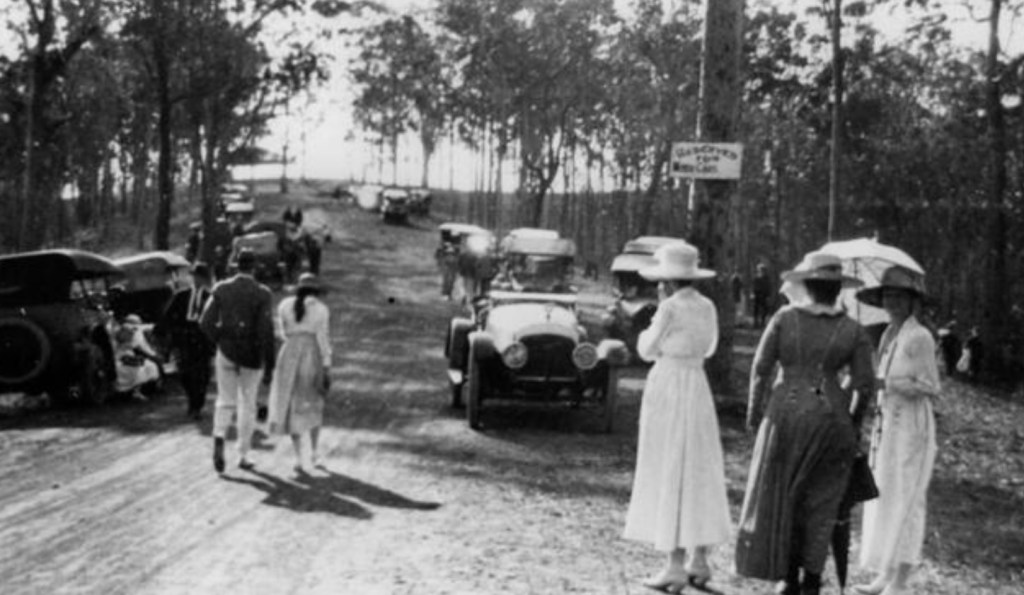
Competitor (who and what?) in the 1918 Coot-tha Classic (Brisbane Times)
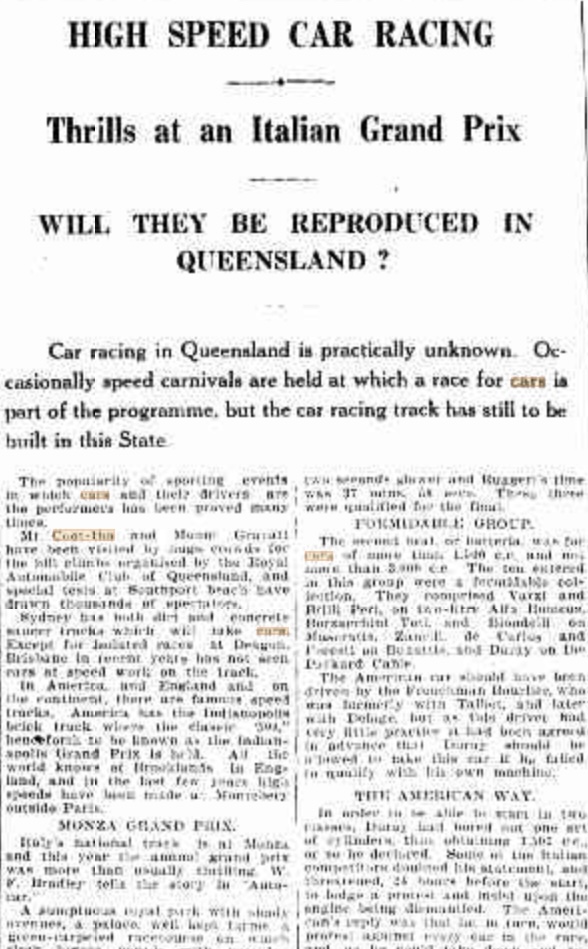
“Car racing in Queensland is practically unknown. Occasionally speed carnivals are held at which a race for cars is part of the programme, but the car racing track has still to be built in this state,” said the motoring reporter of Brisbane’s The Telegraph on November 5, 1929.
“The popularity of sporting events at which cars and their drivers are the performers has been proved many times.”
“Mount Coot-tha and Mount Gravatt (8 km and 10 km from Brisbane’s CBD) have been visited by huge crowds for the hillclimbs organised by the Royal Automobile Club of Queensland, and special tests on Southport Beach (on the Gold Coast) have drawn thousands of spectators.”
Henry Horstman and Maldwyn Davies – Queensland Bugatti importer – on the way to FTD in the RACQ hillclimb at Mount Coot-tha on April 1, 1928, Bugatti T37. His time of 1 min 20 sec was eight seconds clear of the rest of the field (speedwayandroadracehistory.com)Folks take in the Mount Coot-the sun, circa 1920 (alamy)
“Sydney has dirt and concrete saucer tracks which will take cars. Except for isolated races (for cars) at Deagon (Speedway 20km north of) Brisbane in recent years has not seen cars at speed work on the track.”
“In America, and England, and on the continent, there are famous speed tracks. America has the Indianapolis brick track where the classic ‘500’, henceforth to be known as the Indianapolis Grand Prix is held. All the world knows of Brooklands. In England, and in the past few years high speeds have been made at Montlhery, outside Paris.”
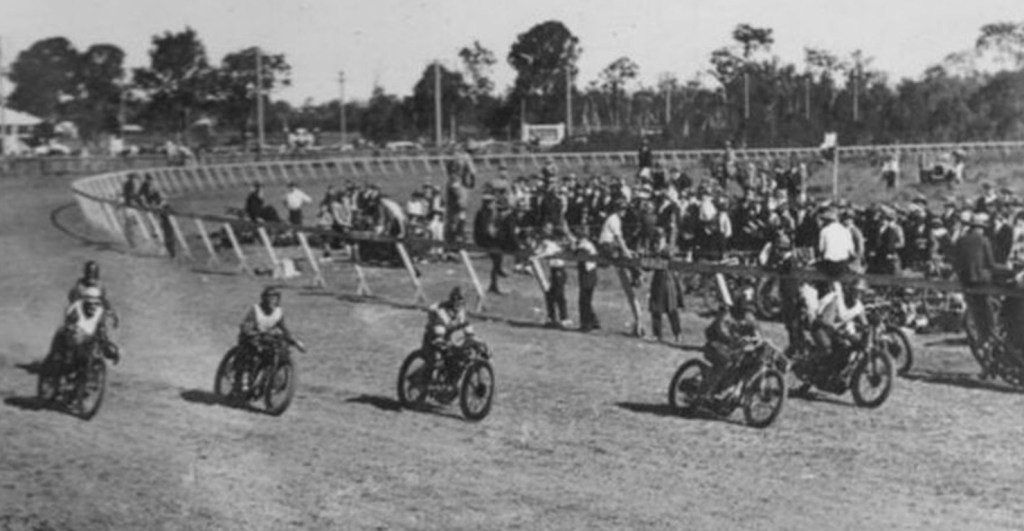
(The Telegraph, Brisbane, November 5, 1929)Motorcycle racing at Deagon in 1926 (T Webb Collection)
Some context of motor racing progress elsewhere in Australia is that the Aspendale Park Speedway opened in outer Melbourne in 1906, the Olympia Motor Speedway at Maroubra, Sydney in 1925. The first Australian Grand Prix was held at the Goulburn Racecourse (Neddies), 200 km south of Sydney in 1927, and the first AGP on a road-course at Phillip Island in 1928. Viz; 1928 100 Miles Road Race, Phillip Island… | primotipo…
Geoff Meredith aboard the Bugatti T30 in which he won the speedway style 1927 AGP at the Goulburn Racecourse (Goulburn Post)
Given the relative population of Queensland to Victoria and New South Wales, the banana-benders (Queenslanders) weren’t lagging behind too much. What is interesting is the popular press ‘pushing’ for creation of a local venue. It wasn’t until 1949 that an AGP was held in the Sunshine State, at Leyburn, a former Royal Australian Air Force base. See Aspendale here; Werrangourt Archive 11: DFP ‘The Greyhound of France’ by Bob King… | primotipo… and Leyburn here; 1949 Australian Grand Prix, Leyburn… | primotipo…
(ABC via M Hubbard)
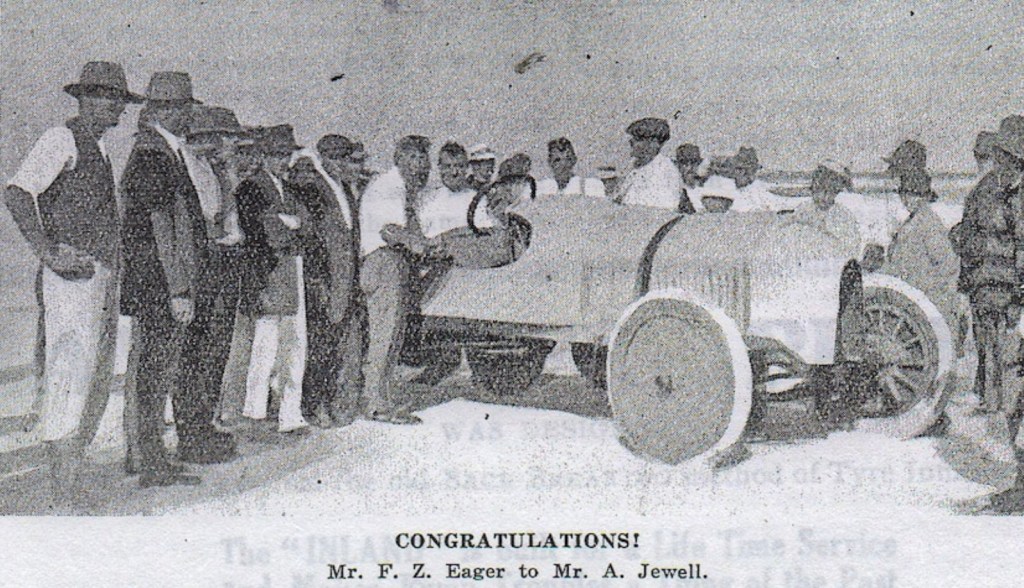
Alec Jewell aboard the Willys Overland which won “Australia’s first land speed record” in a competition with a Studebaker Six driven by Fred Eager on the Surfers Paradise sand, Christmas Day, December 25, 1916.
The cars had a number of runs, Jewell’s best was a time of 21.4 seconds between the measured marks, 84.5mph as adjudged by Automobile Club of Queensland officialdom.
Etcetera…
Deagon was established as a horse-racing venue in the early 1880s. It was first used for motorised events with ‘The Great Motor Cycle Carnival’ in November 1921. The card that day included 3 and 20 mile races for solos and a 5-miler for sidecars. 24 meetings were held from 1921-1931 including 14 state, and six Australian/Australasian Championships. Cars were never the mainstay of racing at Deagon, but were occasional guests on the bike’s-card.
Credits…
Brisbane Times, The Telegraph, Brisbane, November 5, 1929, Old Bike July 2015, Alamy, Goulburn Post, speedwayand roadracehistory.com, Tony Webb Collection, ABC via Murray Hubbard, Bob King
Tailpiece…
(T Webb Collection)
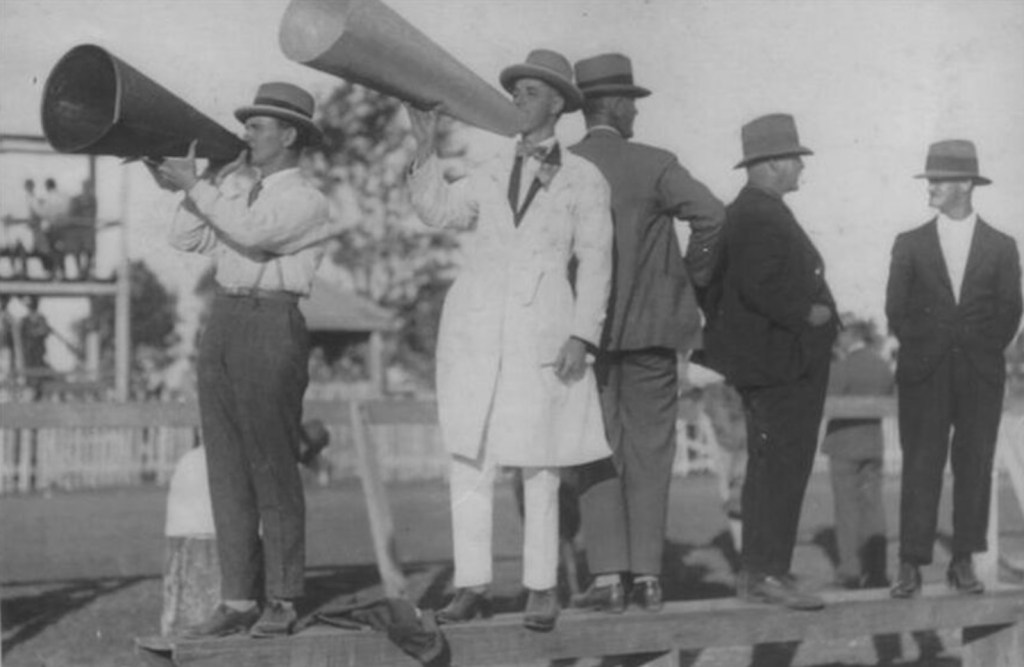
Deagon Speedway commentators doing it the hard way in the mid-1920s. I wonder if hats will ever make a comeback?
1947 was the first full-year of the post-war Grand Prix racing. 32 Grands Prix – to the pre-war 1.5-litre supercharged/4.5-litres unsupercharged formula – were held throughout Europe and South America, but there was no championship as such.
The more prestigious Swiss, Belgian, Italian and French GPs were recognised as Grandes Epreuves with Jean-Pierre Wimille winning two of these, the Swiss and Italian GP aboard his works Alfa Romeo 158. The winningest-driver was Gigi Villoresi who took 13 of the 32 events aboard Maserati 4CL’s.
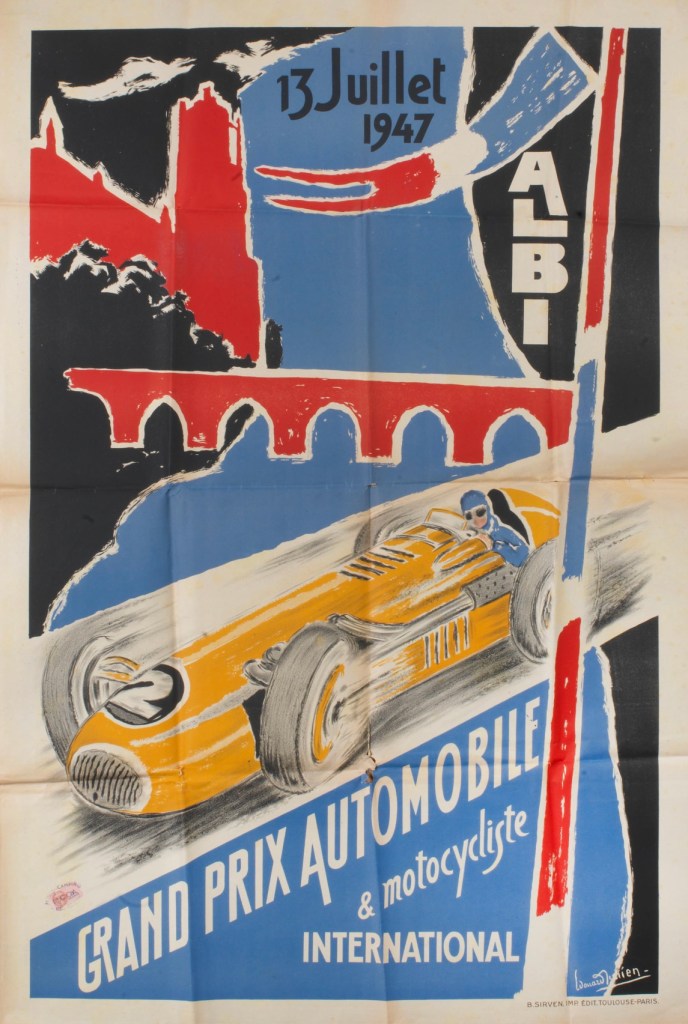
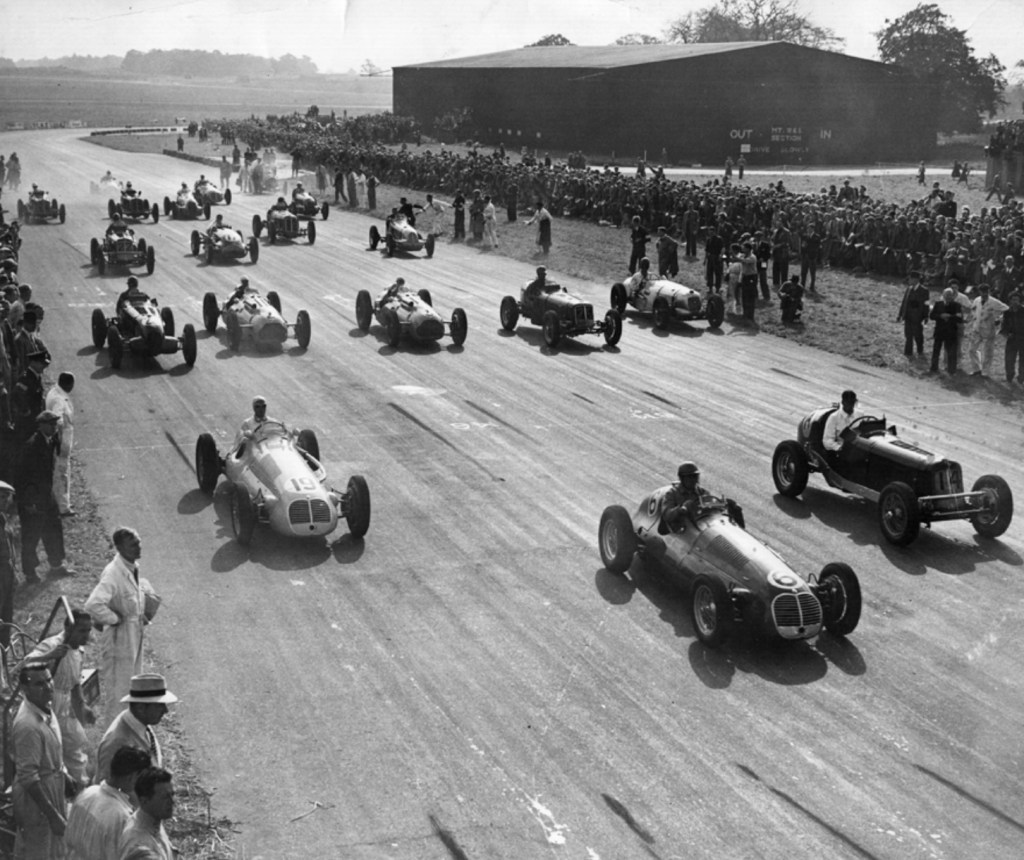
The 355km IX Grand Prix de l’Albigeois comprised 40 laps of the 8.9km les Planques road circuit and was won by Louis Rosier from Raymond Sommer and Charles Pozzi. They raced Talbot Lago T150SS, Simca Gordini T11 and Delahaye 135S respectively.
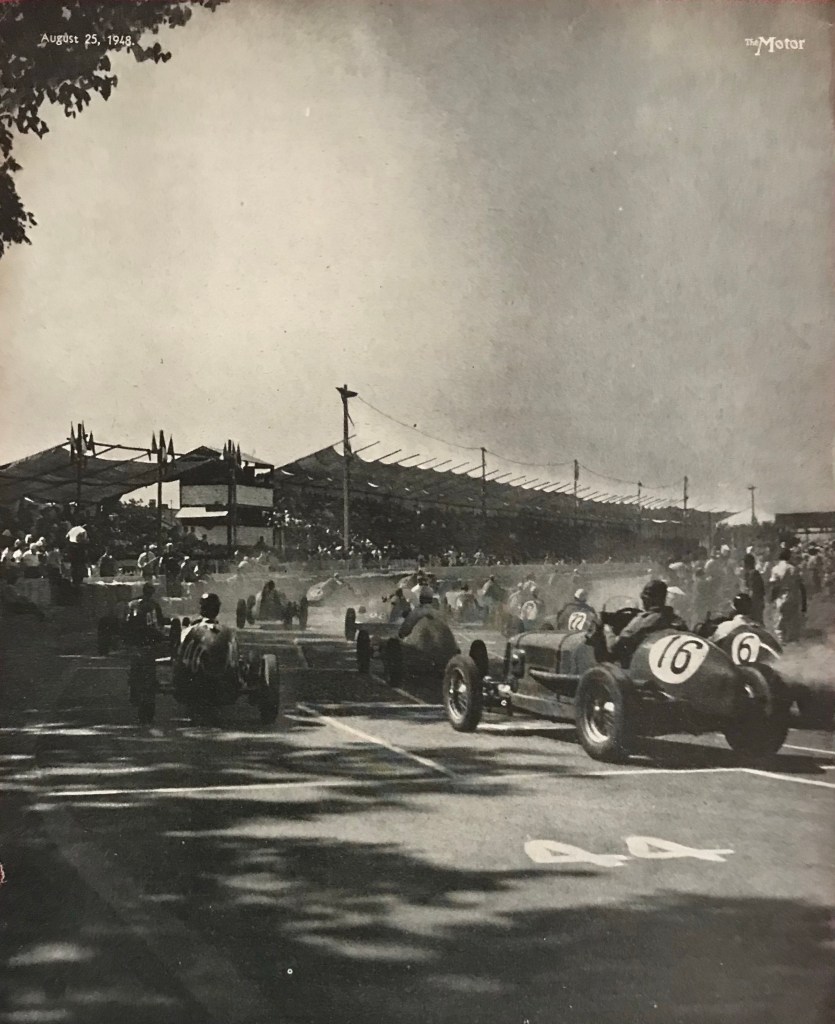
The cars shown at the-off are – from the left – the #44 Roger Loyer, third place Cisitalia D46 Fiat, #40 Eugenio Minetti, Cisitalia D46 Fiat #22 Reg Parnell, Maserati 4CL, #16 Fred Ashmore, ERA A-Type and #6 Ian Connell, Maserati 6CM.
This evocative photograph was published in The Motor, August 25, 1948 issue. It’s a beauty from Bob King’s vast scrap book/archive, and was described in the magazine, under the heading, “The Sport of Motor Racing”, “The skirl (a shrill, wailing sound apparently!) of exhausts rises…the flag wavers, drops…and as one, the cars dart forward off the starting grid, drivers seeking an opening among those ahead, acceleration nose to tail, wheel to wheel, like a crazy traffic jam until they begin to string out on the open circuit beyond…and the spectators sink back into their seats with a sigh, for they have witnessed one of the most thrilling spectacles in all modern sport.”
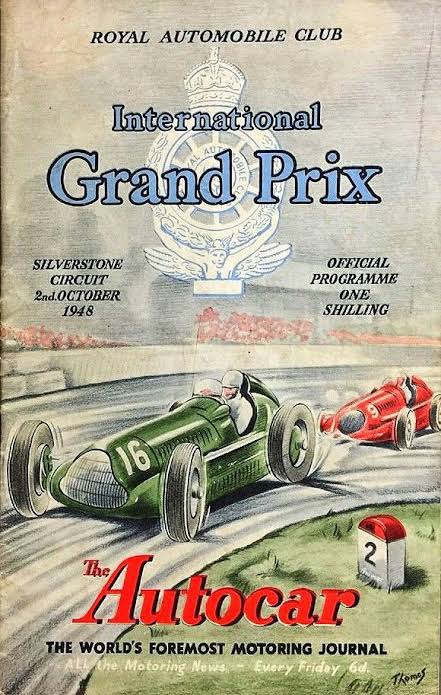
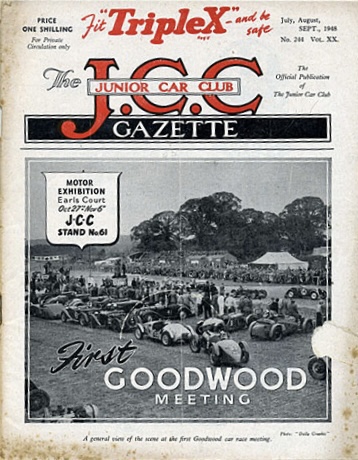
The final paragraph of The Motor’s page provides context, “With the Junior Car Club’s (very first) Goodwood meeting on September 18 (1948) and the Royal Automobile Club’s full Grand Prix at Silverstone on October 2, motor racing at its best at last returns to this country and once again we shall see the drivers battling together at full throttle down the straight, swirling with screaming wheels round the curves.”
(via Bonhams)(unattributed via ESPN)
Etcetera…
Having mentioned the Silverstone and Goodwood events we had better add a shot of each.
The British GP was won by Villoresi from Alberto Ascari and Bob Gerard, two Maserati 4CLT/48s and a more elderly but quick ERA B-Type.
At the jump, local boy Reg Parnell is fast away in his 4CLT/48 from grid 7, Peter Walker’s ERA B-Type at right and Bira’s Maserati 4CL on the left.
I’ll take your advice on identification of the cars on the second row other than the two Talbot Lago T26C’s of Louis Rosier and Louis Chiron. There is an ERA but the other two car’s silhouettes are unfamiliar.
(Klemantaski Collection)
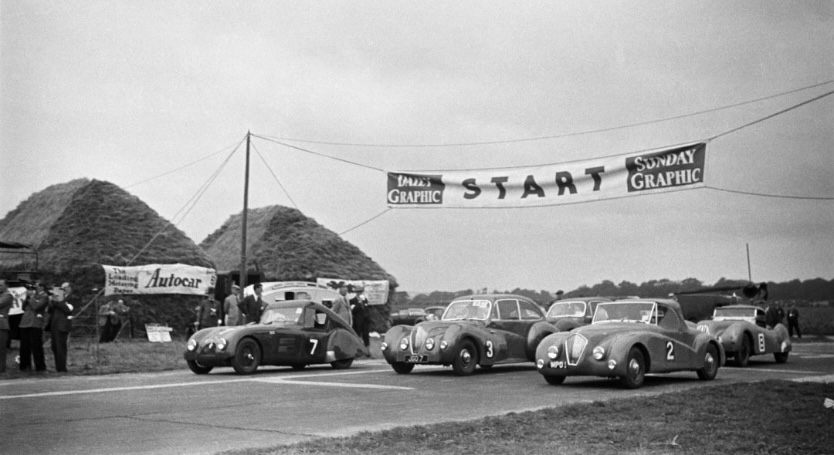
And above the start of the very first race, at the very first Goodwood meeting, on September 18, 1948.
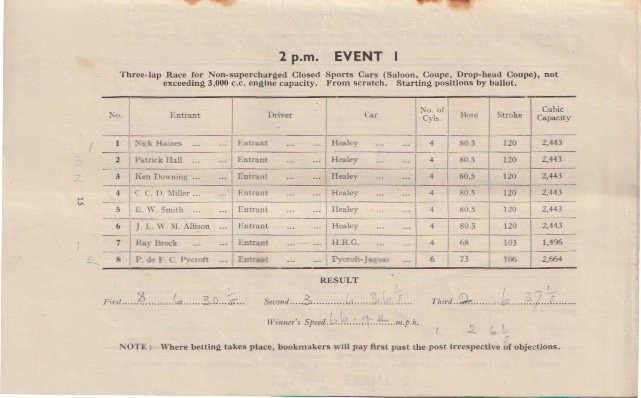
The field comprised six Healeys, an HRG and a Mycroft Jaguar. Again, if you gave a program, please do get in touch. The most impressive haystacks were moved elsewhere on the estate when proper paddock facilities were established.
Etcetera…
(R Clark Collection)
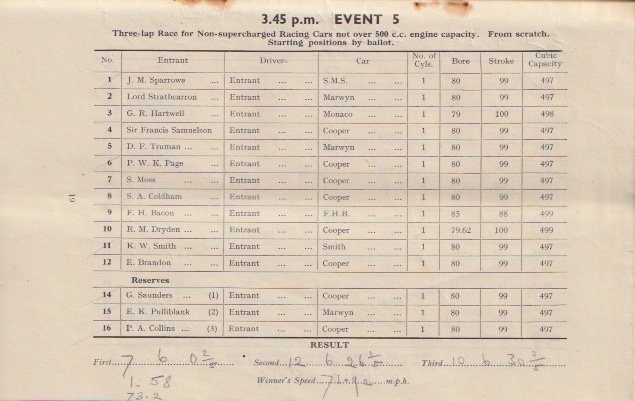
After posting the article as above, Roger Clark, a UK historian friend provided these scans from his collection, many thanks Roger, for the material and comments.
(R Clark Collection)
“The programme said that all races were limited to 12 starter, the entry above is for the first race.”
(R Clark Collection)
“The entry for the 500cc race. This was Moss’s second circuit race. He won (below) by over 30 seconds, not bad for a 10 lap, 12.2 miles race! I think that PA Collins is Peter’s father but he didn’t start the race.”
(R Clark Collection)
“The first of many…”
(R Clark Collection)
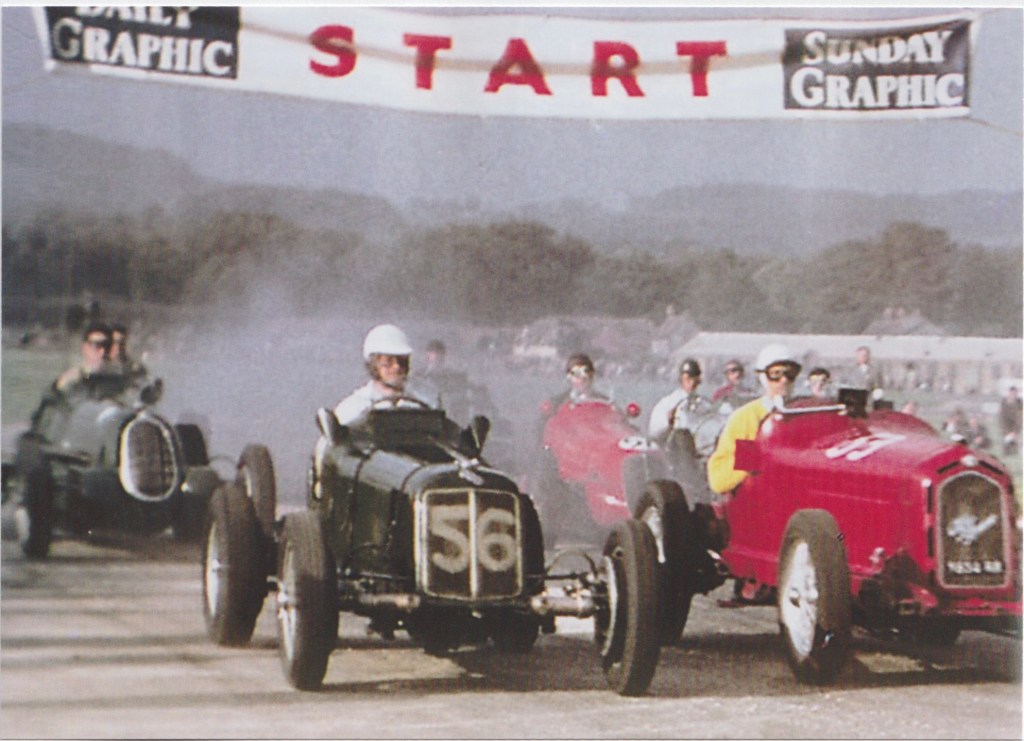
“The start of the event for racing cars over 1450cc. I can’t think why they chose that capacity. There was also a race for Formula 1 cars. The most easily identifiable cars are George Nixon #56 (ERA R2A), David Lewis (Alfa Monza), Dennis Moore, (Alfa 8C/35 rear left) and David Murray (Maserati 4CL) behind the Monza.”
Credits…
The Motor, Bob King Collection, Klemantaski Collection, Roger Clark Collection
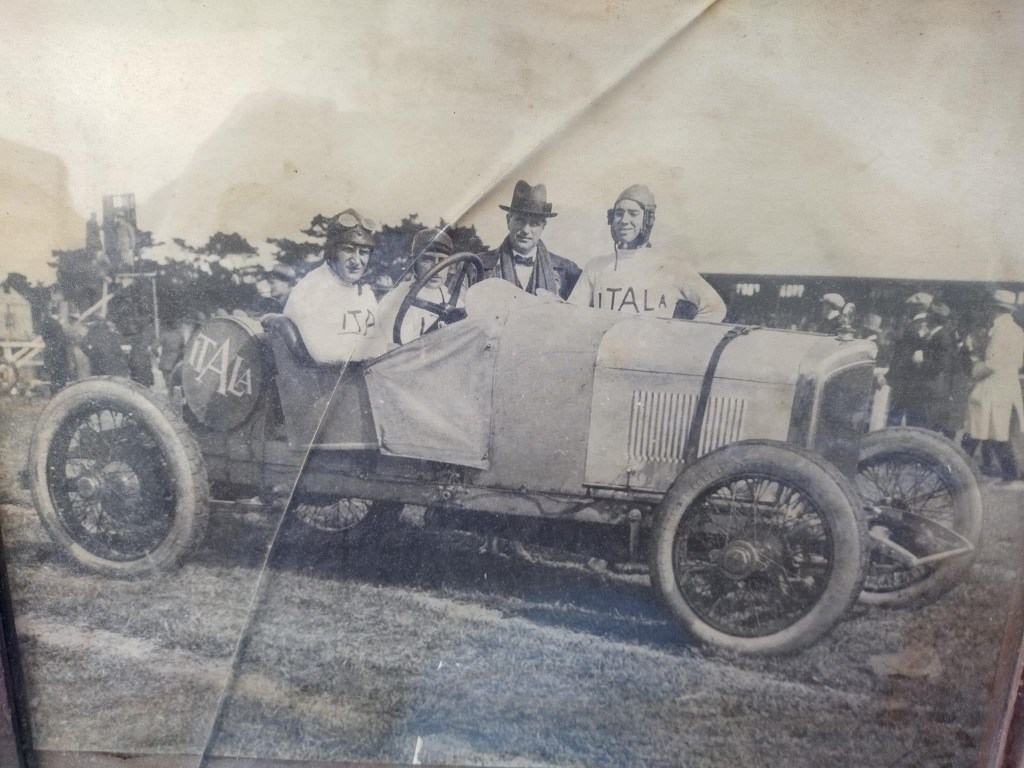
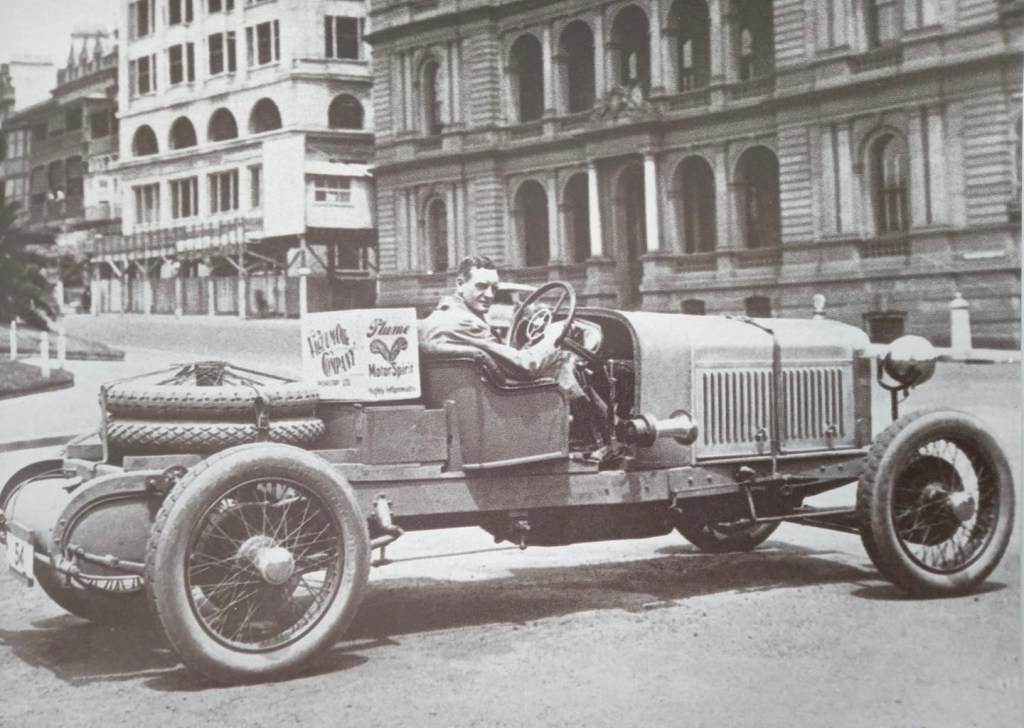
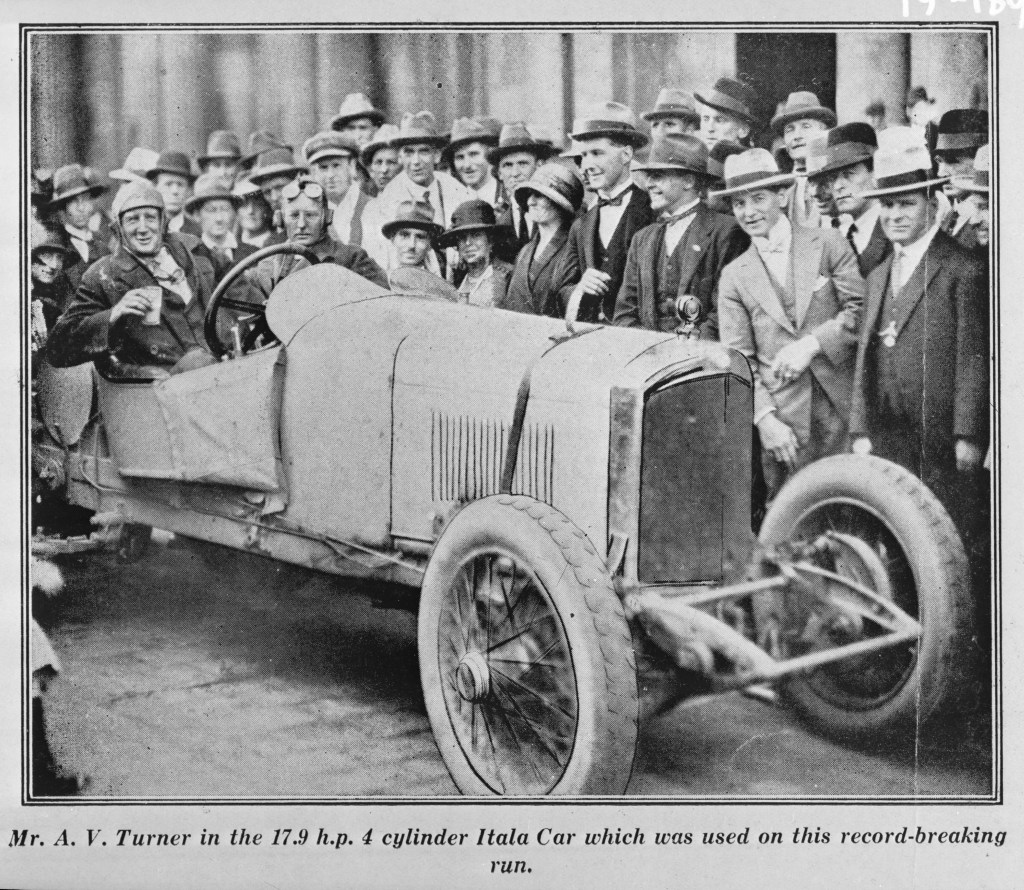
Albert Valentine ‘Archie’ or ‘Bert’ Turner and A ‘Ossie’ O’Connor, Itala, before the start of their record breaking circa-560 miles Sydney-Melbourne run on Sunday February 24, 1924. Corner of Macquarie and Bridge Streets.
Regarded in-the-day as one of Australia’s best drivers, Turner and O’Connor left the Sydney GPO at 5.15am and arrived at the Melbourne equivalent at 5.49pm. The 12 hours 34 minutes journey equated to an average of 47mph, and knocked 25 minutes off the existing record held by Norman ‘Wizard’ Smith’s Essex.
It was the third occasion within 15-months Turner had taken the record, in tit-for-tat fashion with his competitors, on the two previous runs in 1923 he drove a Delage C02.
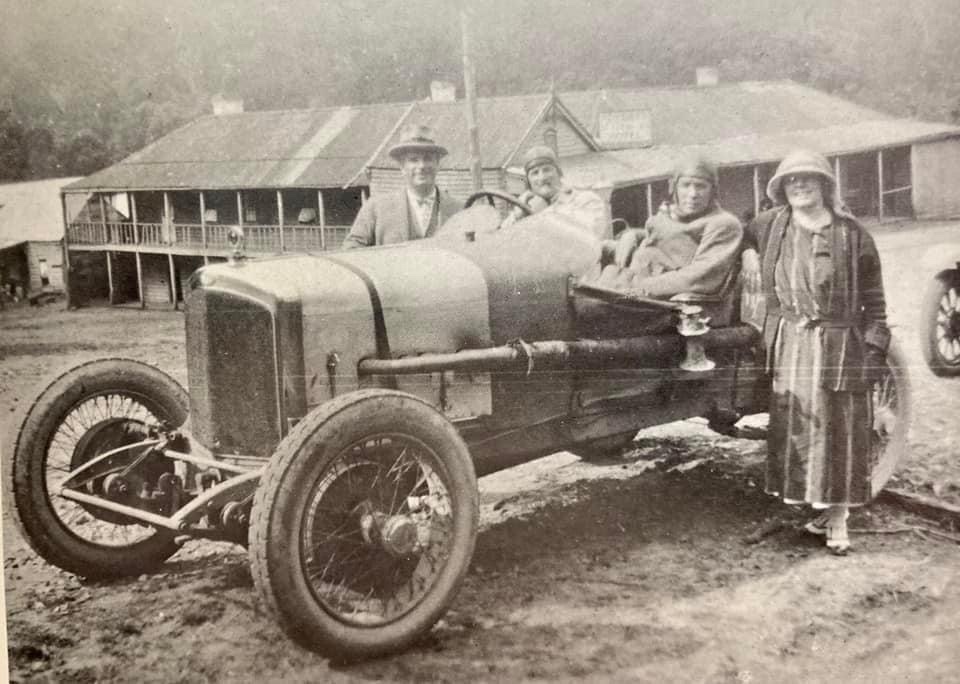
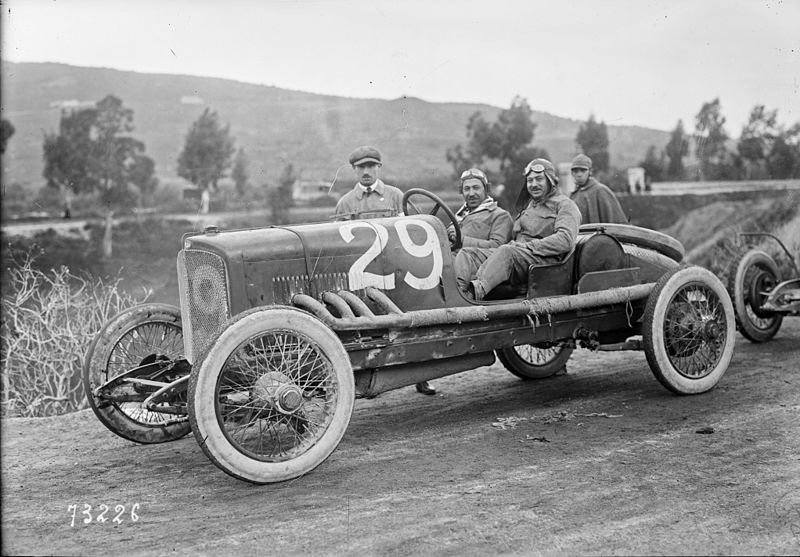
Turner aboard a Delage CO2 4.5-litre OHV six cylinder, before breaking the Sydney-Melbourne record in February 1923 – 16 hours 47 min. Chassis number folks, does it currently exist? Was he flogging Delages at the time or were the drives paid ones? The sponsor is Plume Motor Spirit! (C Blundell Collection)James Flood and his wife alongside AV Turner’s “record setting Itala”, here (where??) with Albert Vernon at the wheel in 1921. I note the car – if it is the same Itala – is now fitted with four-wheel brakes, rather than the two in the opening shot. Not so sure about the year quoted (James Flood via C Nicholes)The Luigi Lopez works Itala Tipo 51S before the start of the 1922 Targa Florio. Five of these 2.8-litre four cylinder racers were entered, the best placed was Antonio Moriondo’s 12th placed machine, albeit he was second in the 2-3 litre class. Lopez was 25th and last, the winner was Giulio Masetti’s 1914 Mercedes 4.5-litre 18/100 GP car. I’m not suggesting Turner’s car was an ex-works machine, but rather including it for the sake of completeness and begging the question as to what, exactly, AVT’s car was… (Bibliotheque nationale de France)
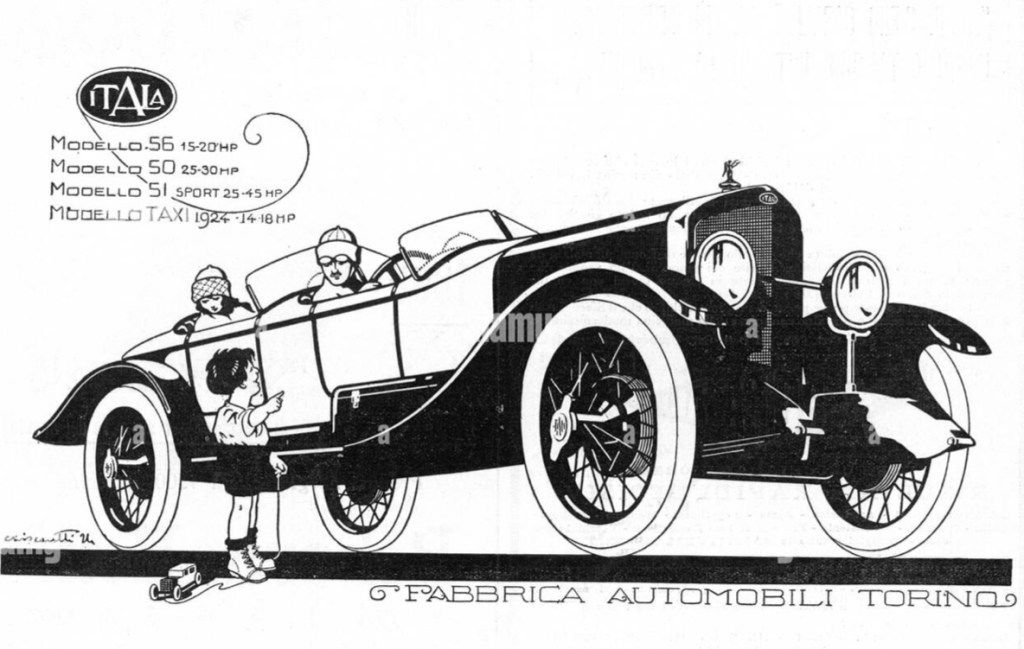
The Turner Itala is variously described in contemporary newspaper reports as a 17.9hp or 15hp Floria (sic), it’s perhaps a 2.8-litre, four cylinder 55bhp @ 3200rpm engined Type 51 Sport with a Targa Florio style body, built by James Flood in Melbourne. Details of the car from a marque expert appreciated, inclusive of present whereabouts.
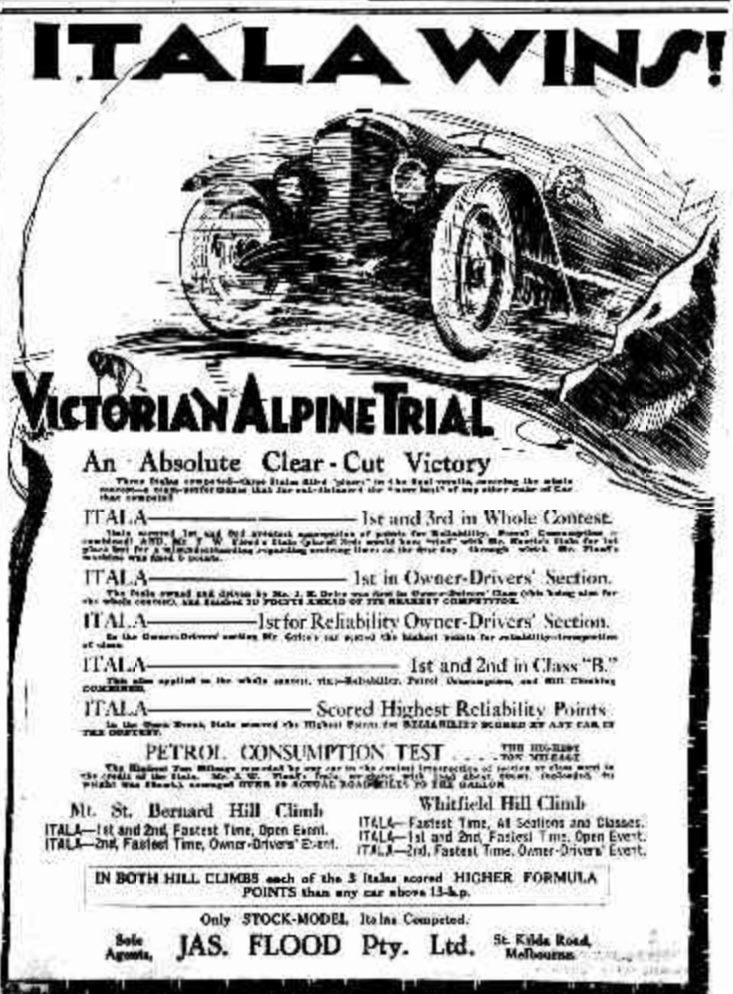
Turner was then the New South Wales agent for Itala and Bugatti operating from large premises in Castlereagh Street. He promoted both marques via competition, a medium at which he rather shone.
The Sydney Sunday Times reported that “The average speed of 47mph, fast as it sounds (the main road, between Sydney and Melbourne then was little more than an unmade goat-track), included all stops for supplies and refreshments, the running time average was about 50mph.”
“During the journey the exhaust pipe broke, blowing stupefying exhaust gases into the faces of driver and passenger. Mr O’Connor was rendered well-nigh unconscious by the fumes and arrived in Melbourne much the worse for the experience.”
“Mr Turner’s throat was so sore from the same cause, that he could hardly speak audibly. At one stage of the trip he was compelled to drive for several hundred miles on the hand throttle alone.”
“Speeds in excess of his latest accomplishment are unlikely, in view of the present state of the roads, which he states precludes the reasonable possibility of a higher average being maintained. Mr Turner has many successes to his name, but his latest ranks among the highest,” the Sunday Times concluded in the wonderful narrative style of the day.
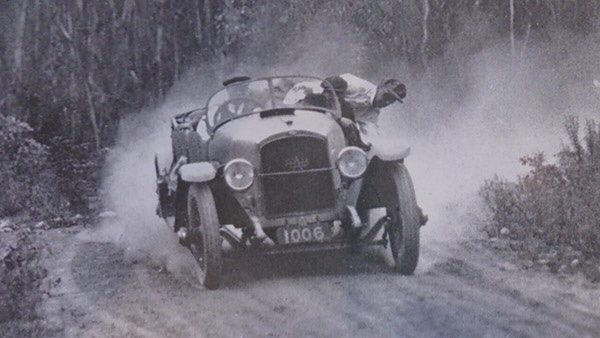
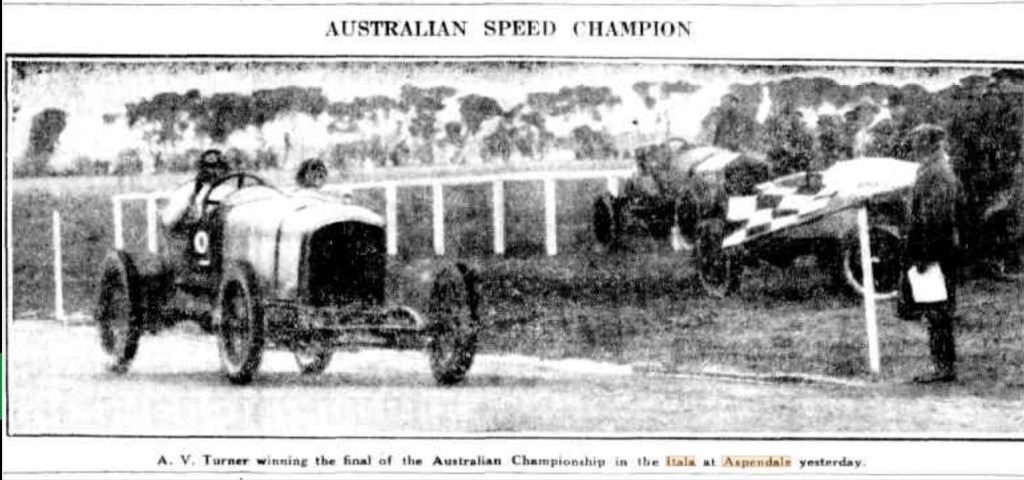
AV Turner at Aspendale, Melbourne, a banked dirt track, on the way to winning the “blue riband 25-miles Australian Championship” from Carlo Massola’s Diatto on April 21, over the Easter 1924 long weekend (hyperracer.com)(SLV)Turner and somewhat energetic crew – perhaps that fella has had enough? – during their victorious 1921 Alpine Trial run. Itala Tipo 51 tourer powered by a 2.8-litre, two side-valve 50bhp @ 3000rpm four cylinder engine. Four speed ‘box (melbournecircle.net)
Turner had plenty of success on Italas in all kinds of events, including a win in the first RACV 1000 Miles Alpine Trial/Victorian Reliability Contest – aka The Alpine Rally – in 1921. This caused much consternation among the Victorian blue-blazer-clad RACV mob as he was the only New South Wales driver in the tough event contested over the difficult Alpine terrain of north-eastern Victoria. He was second in 1922 aboard the same Itala Co Australia owned car (entered by a Mr A Hoette), his arch-rival Wizard Smith triumphed that year on an Essex.
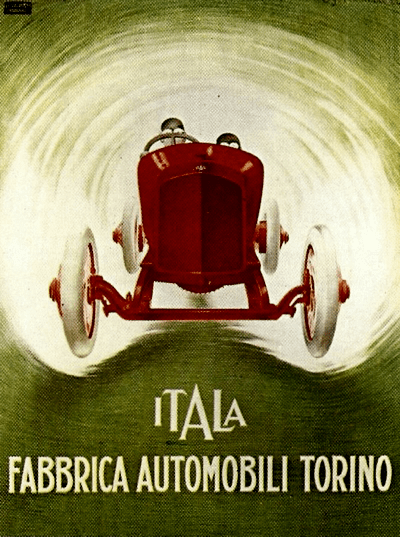
By 1924, Itala (Itala Fabbrica Automobili), founded by Matteo Ceirano and five partners at Via Guastalla, Turin in 1903, was in receivership. Ex-Fiat general manager Giulio Cappa was appointed by the Italian Government’s Istituto per la Ricostruzione Industriale. This entity took control of insolvent Italian businesses deemed too-large-to-fail from 1933 to 2000, Alfa Romeo is a case in point. After his rein, an interesting story in itself, the company was bought by truck maker Officine Metallurgiche di Tortona (OM) in 1929, and the remains sold to Fiat in 1935.
Poor Turner died from injuries sustained contesting an inconsequential hill-climb in North Curl Curl, quite close to his Darley Road, Manly, home. He interrupted a tennis game to run his (later 1927 Australian Grand Prix winning) Bugatti Type 30 #4087 on May 15, 1926 and died in Manly Cottage Hospital later that day. I’ve a feature article 95% complete on that car and its in period-piloti, Messrs Turner, Geoff Meredith and Jack Clements, I really must finish it.
Turner was quite a driver…
(The Argus, Melbourne, December 1921)Turner winning the ‘Australian Championship’ at Aspendale, Easter 1924 (The Herald, Melbourne)
Credits…
Angela Wootton Family Collection, Colin Blundell Collection, Bibliotheque nationale de France, melbournecircle.net, Sydney Sunday Times March 2 1924, James Flood Book of Early Motoring via the Chris Nicholes Collection, various newspapers via Trove, John Medley, Ray Bell, manlylocalstudies.blogspot.com, Pedr Davis Collection via the Murdoch Family Collection-Neill Murdoch, Colin Wade, State Library of Victoria
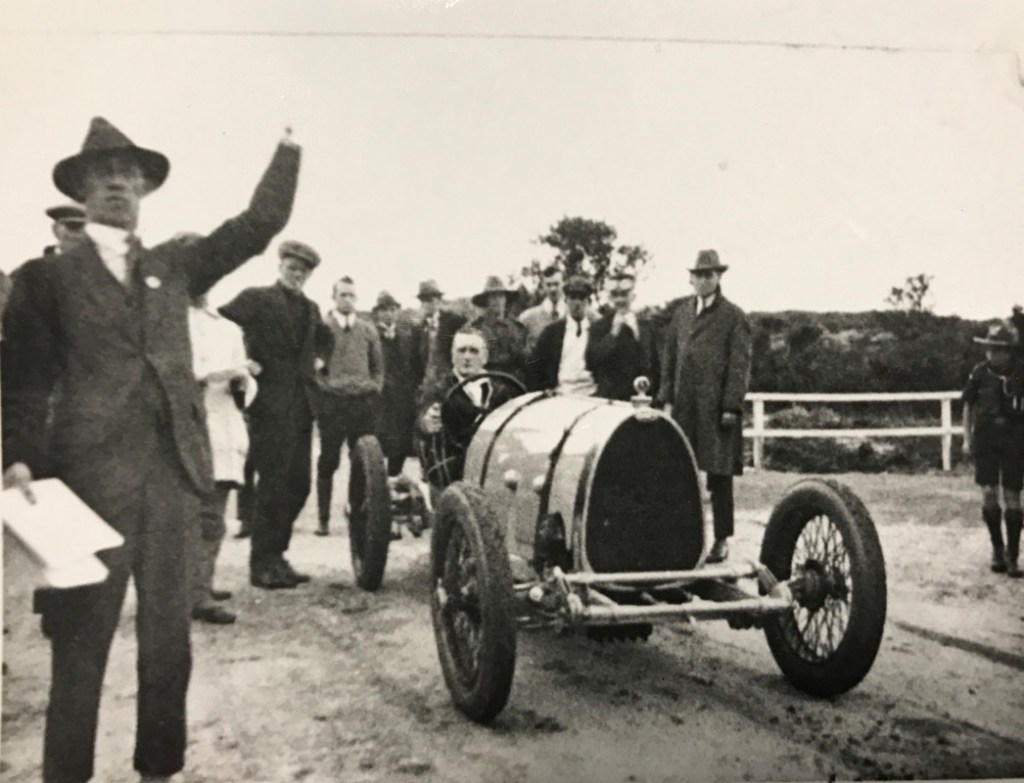
AVT ready for the off, Bugatti T30 #4087, North Curl Curl, May 15, 1926 (P Davis Collection via N Murdoch)
Etcetera…
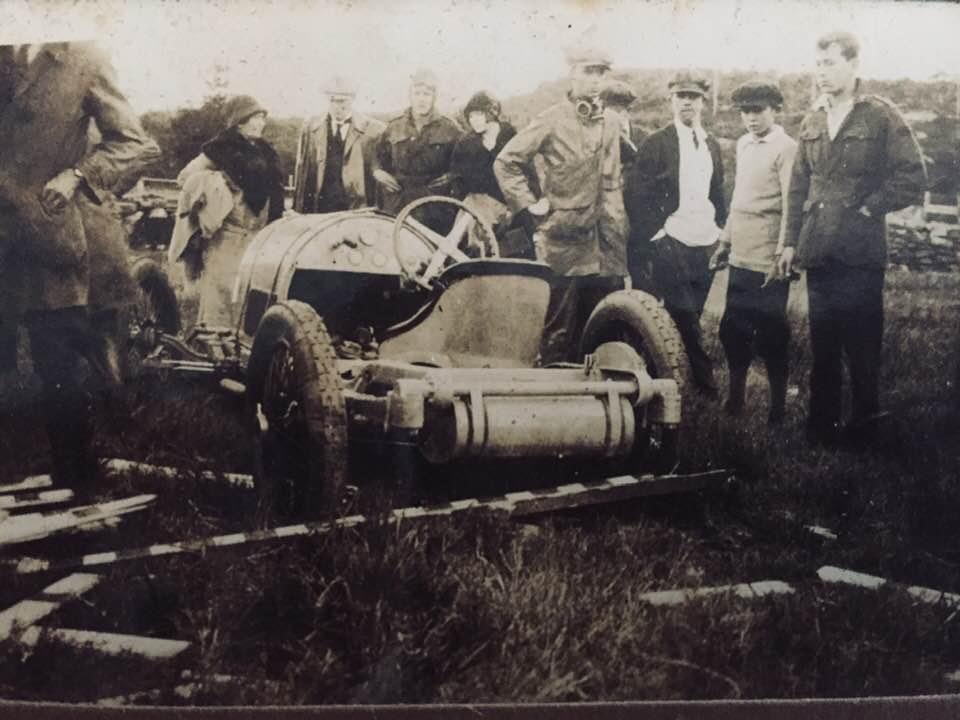
The hillclimb in which Turner died – above, immediately prior to the fatal run – was a circa 700 yard straight run up (now) Harbord Road from about the corner of Abbott Road, North Curl Curl. The finish line was on or about the corner of Harbord Road and Brighton Street, North Manly, with Turner’s crash site on that corner or “the vicinity of ” 151 Harbord Road, Freshwater. It was on this corner, or this property, on, or just after the finish line, where AVT came to grief as below.
(C Wade Collection)
Tailpiece…
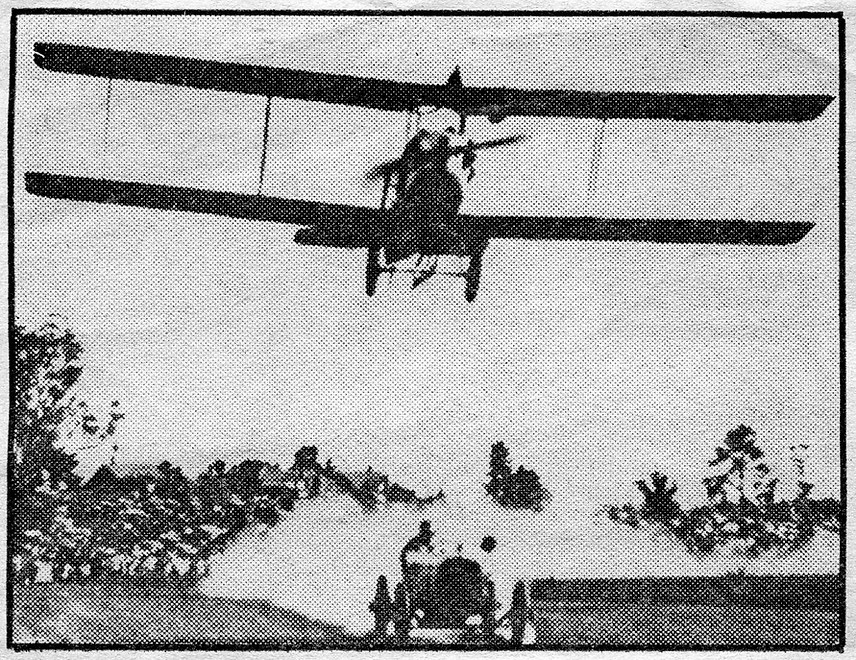
Turner’s Itala racing a Farman bi-plane, probably piloted by Major Harry Shaw – a prominent racer himself – at Aspendale circa 1921, it was a dead-heat apparently. Exact date appreciated.
















 primotipo...