Bob Atkin and the SV Ferrari 250LM in 1968, love those works Ferrari overalls (B Atkin)
Australian enthusiasts of a certain age will recall Bob Atkin as David McKay’s partner in Scuderia Veloce, the Sydney based race team and prestige car dealership established by McKay as he evolved from racing driver to entrant/entrepreneur/motor trader, in addition to racing/automotive journalism off to the side.
SVs soon became the team to watch, and Atkin had a front row seat. He took his camera with him to race meetings recording the activities of the team, and other competitors in living colour.
In recent times, his son, Greg Atkin has been uploading his dad’s photographs onto Bob Williamson’s Old Australian Motor Racing Photographs Facebook page. I’ll periodically upload ‘Bob Atkin Collection’ pieces rather than lose these amazing colour time capsules in the bowels of FB, many thanks to Greg for sharing them.
(B Atkin)
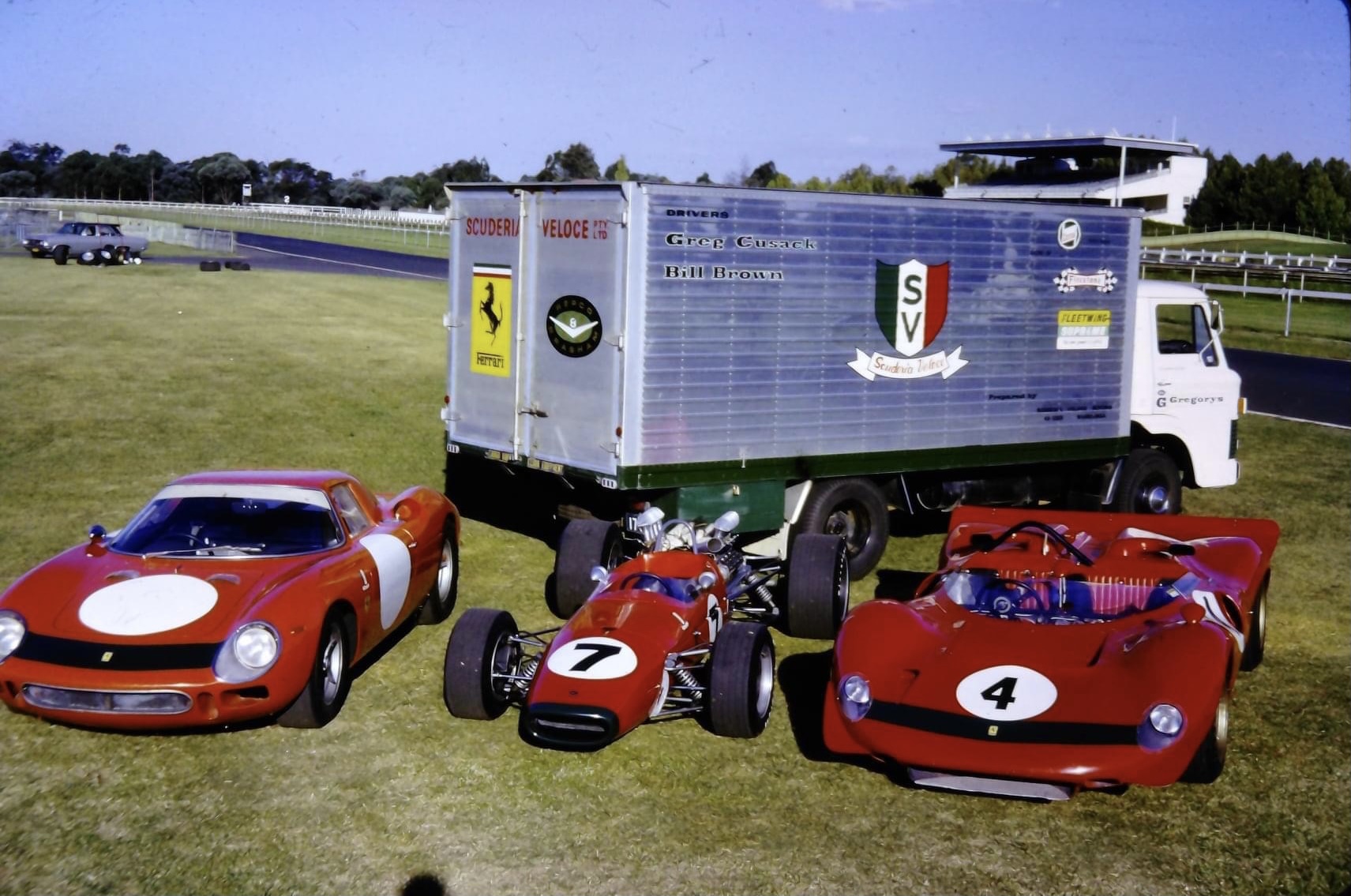
This 1968 photograph at Warwick Farm says everything about the fizz SVs created amongst Australian enthusiasts.
The line up is the Ferrari 250LM bought new by McKay first raced for him by Spencer Martin during some of the 1965 Australian Tasman Cup rounds, the ex-Jack Brabham ’67 Tasman mount – Brabham BT23A Repco, and ex-works Ferrari 350 Can Am machine raced throughout 1967 as a P4 enduro coupe before being converted – along with another of its siblings – for Can-Am use in the latter months of 1967 driven by Chris Amon and Jonathon Williams.
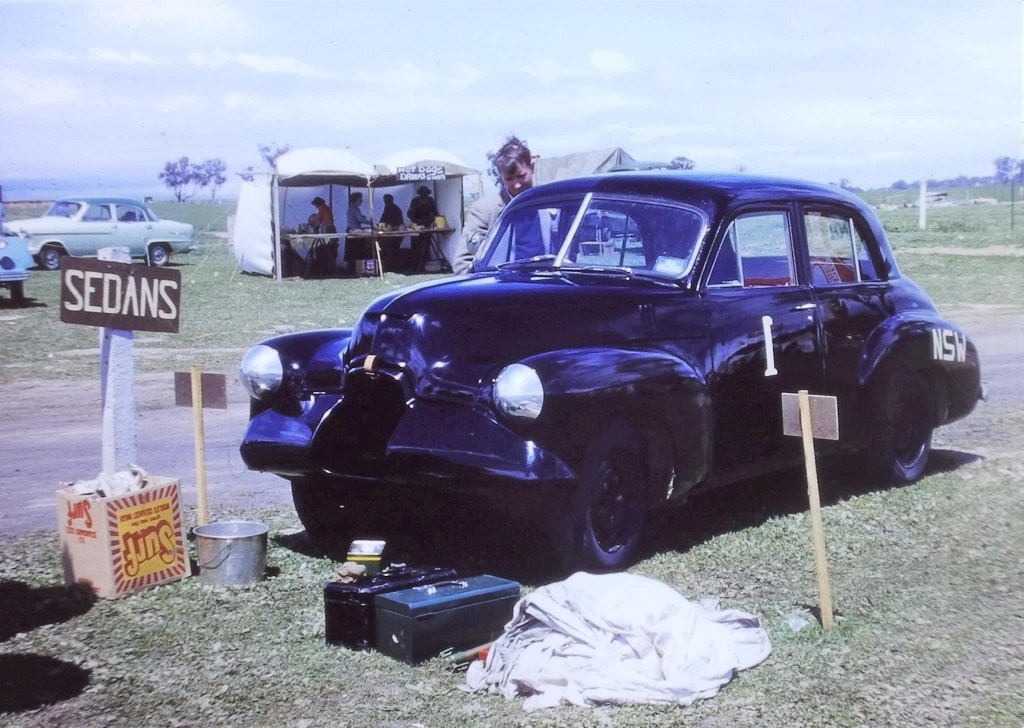
Bob was obviously a Leo Geoghegan fan, the earliest of his shots is of Leo doing a lap of honour in an official’s Austin Healey at Mount Druitt, Sydney, perhaps on the day be beat Frank Gardner’s Jaguar C-Type in a handicap race aboard his very quick Holden 48-215, the car is shown below in the Mount Panorama paddock in 1958.
(R Reid)(B Atkin)
Greg Cusack (at far left above) a successful car dealer himself was one of SV’s longest supported drivers.
These two fabulous shots were taken at Mallala circa 1964. It is the delivery session of Greg’s brand new Elfin Mallala Ford twin-cam by Garrie Cooper (in the natty red sox) and the Elfin boys into the care of the Cusacks. That Rice Trailer will shortly be off on the trip home to Canberra.
By the time I raced at Mallala that pit-counter was long gone, so too the aircraft hangar to the right in the shot below.
(B Atkin)
Credits…
Greg Atkin for sharing the Bob Atkin’s photographs, Ron Reid Collection, Alan Edward Giltrap
Tailpiece…
(A Giltrap)
Bob Atkin and David McKay at Warwick Farm, probably not long after the Ferrari 350 Can Am arrived in late 1967. To comply with Australian rules, the car was fitted with headlights – such P4 fitments not required under Group 7/Can-Am rules – and a spare wheel, which SV fitted to the rear of the car aft of the transaxle. It ain’t there when this shot was taken.
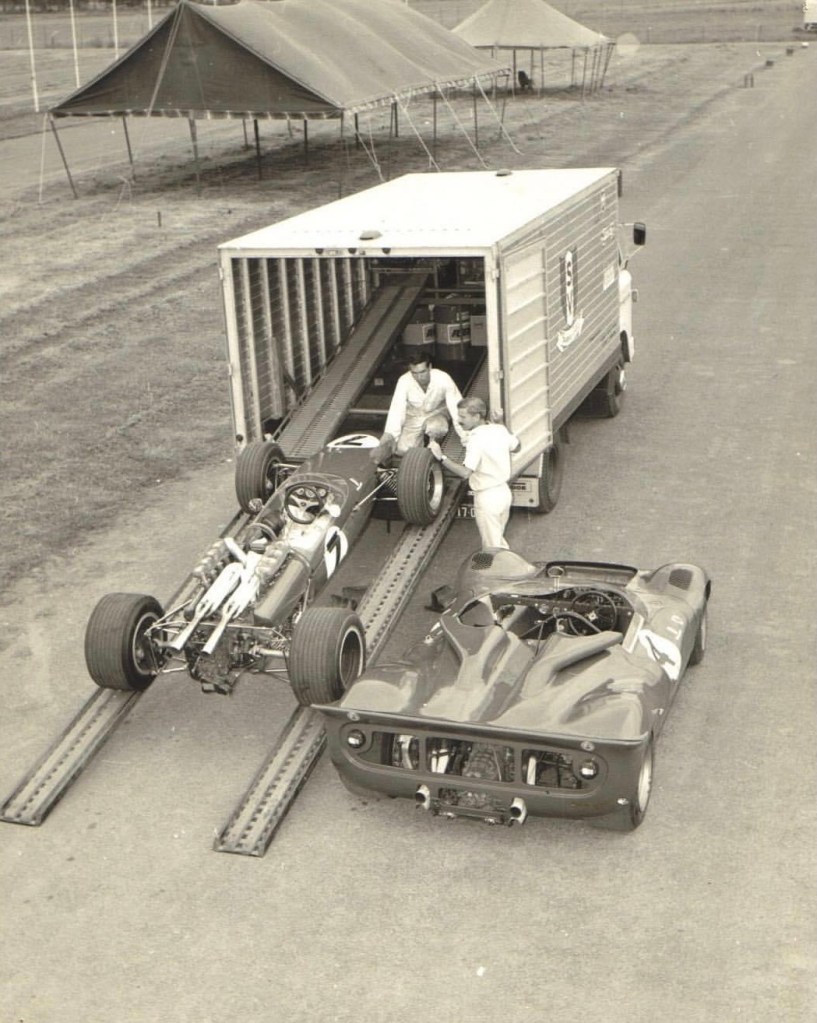
“That D-Series Ford truck could take two cars, the Brabham on top and P4 (350 Can Am) underneath, the truck came from Greg Cusack’s Ford dealership in Canberra,” wrote Dominic David.
I first became aware of Peter Monteverdi and his cars while reading Automobile Year 19. His self-styled and designed, Fissore built, mid-engined Monteverdi Hai 450SS was undoubtedly one of the horn-cars – powered as it was by a Chrysler 6.9-litre/426cid Hemi competition race engine – of 1971, capable of 175mph in great comfort.
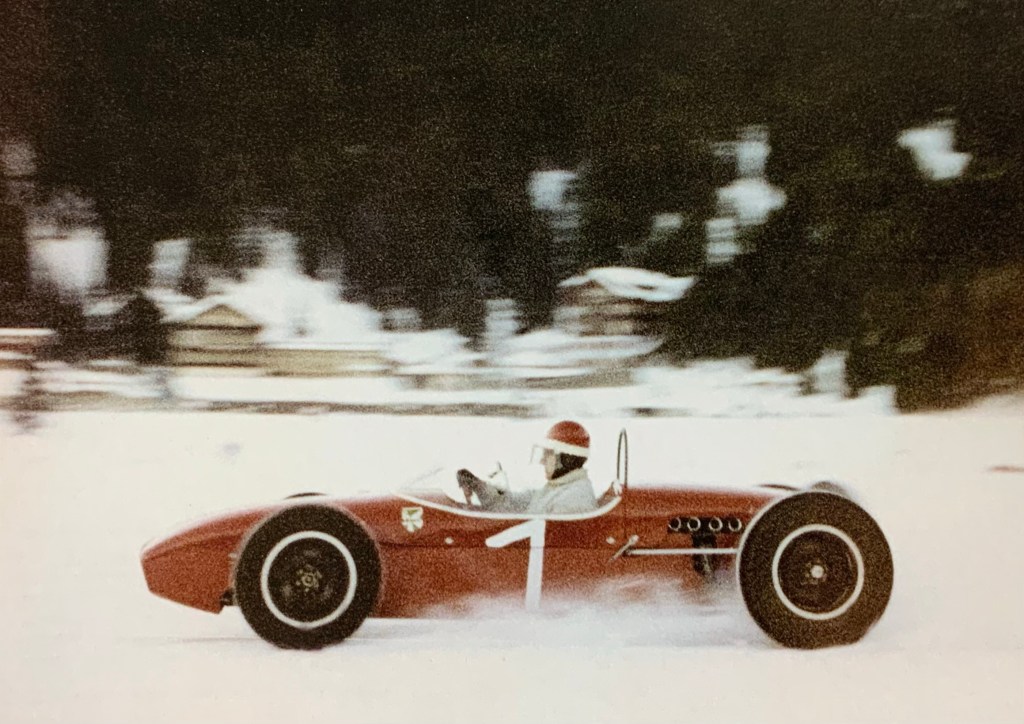
The shot above is of Peter racing a Lotus 18 Ford FJ in the National Iceslalom, at Arosa alongside the Obersee, Switzerland in December 1961; third, DNF transmission (go figure).
Of Italian parentage (June 7, 1934-July 4, 1998), Monteverdi was born at Binningen in the Swiss canton of Basel-Landschaft. He joined his father’s small garage and truck business as a teenager, building his first Monteverdi Special, a cycle-winged sports-roadster based on a crashed 1939 Fiat 1100 in 1951 at 17.
Monteverdi Hai 450SS. Heavy box section tubular frame, wishbone front and De Dion rear suspension, Koni shocks, ZF steering, 4-wheel ATE discs. Chrysler engine as per text, ZF 5-speed transaxle, weight 2838lbs unladen. Did not get into series production sadly, several were built (Automobile Year 19)Peter Monteverdi, date unknown (curbsideclassic.com)
Peter took over the garage in 1954 upon the death of his father. He worked hard to build a reputation as a tuning establishment and along the way acquired concessions for Ferrari, Lancia, Rolls Royce and Jensen. Much later, he relinquished these to focus on BMW.
Piero Monteverdi’s capabilities as a driver helped build the reputation of Monteverdi Binningen Motors – MBM.
Seeing the fun and commercial opportunities in nascent Formula Junior, Monteverdi built DKW and Ford engined MBMs from larger premises alongside the original garage in Binningen-Basel.
Monteverdi in the Solitude paddock, raid of the Porsche parts-bin clear. Pretty car albeit the packaging challenges of the Type 547 four-cylinder 1498cc boxer four and cooling fan apparent (MotorSport)Monteverdi’s MBM Porsche leads the similarly powered Carel de Beaufort Porsche 718, both DNF, Solitude July 23, 1961 (MotorSport)
Realising that it wouldn’t be too difficult to build a Grand Prix car based on his FJ design, he built a bigger, stronger spaceframe chassis fitted with a 1.5-litre Porsche RSK four-cylinder engine and gearbox.
The attractive looking car qualified last on the grid of the 1961 Solitude Grand Prix held on the dauntingly fast, swoops and dives of the 11.4km Schloss Solitude road circuit outside Stuttgart.
Unfortunately, he had engine trouble in the race, so only lasted two laps, the race was won by Innes Ireland’s works Lotus 21 Climax. The car was written off at Hockenheim shortly afterwards, Monteverdi was badly hurt in the accident and retired from racing. To avoid temptation, he buried the remains of the MBM Porsche in the foundations of a new showroom on his original garage site!
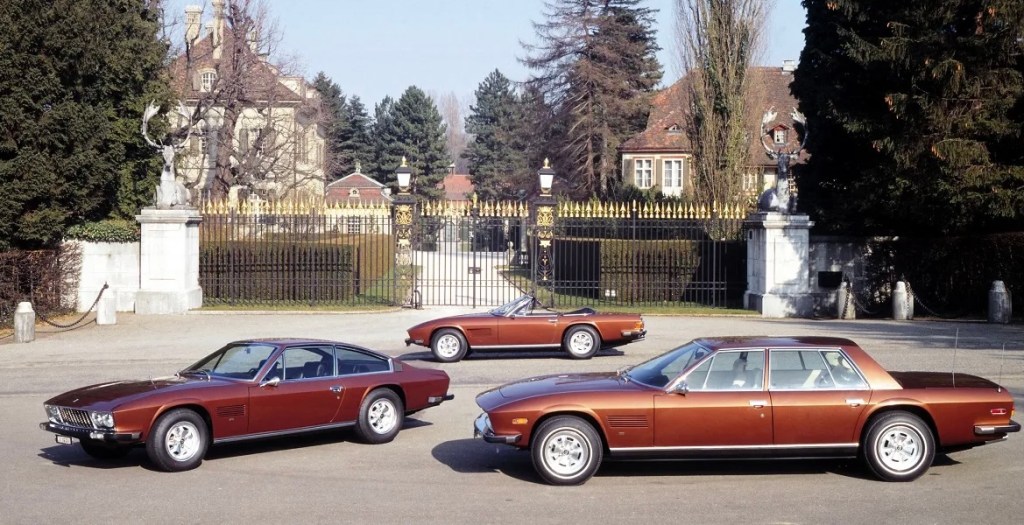
1974-75 Monteverdi range (curbsideclassic.com)
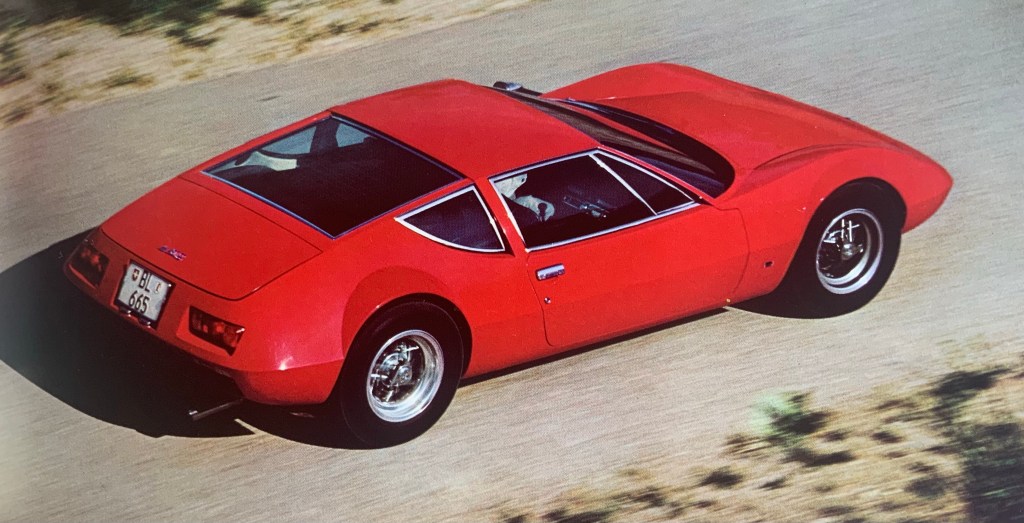
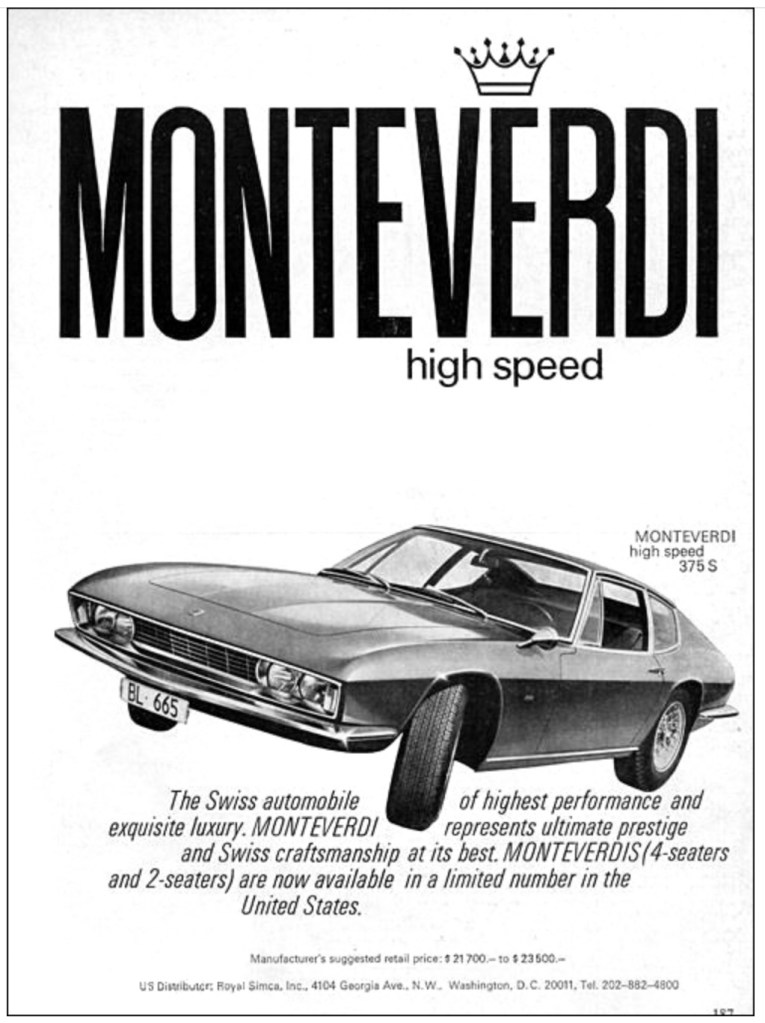
He wasn’t done with fast cars however, building one offs including an Osca powered roadster and the Ford Kent powered MBM Tourismo. The far more serious Chrysler V8 engined, Frua styled machines commenced with the 375S shown at the 1967 Frankfurt Show.
Monteverdi did good business for a couple of decades producing modified, luxurious versions of sedans and 4WDs, and later still had an abortive return to F1 in 1990 with the acquisition, and rapid demise of Onyx F1.
The ever restless racer, designer, engineer and businessman died of cancer in his apartment above his Binningen workshop, aged 64 in 1998.
Etcetera…
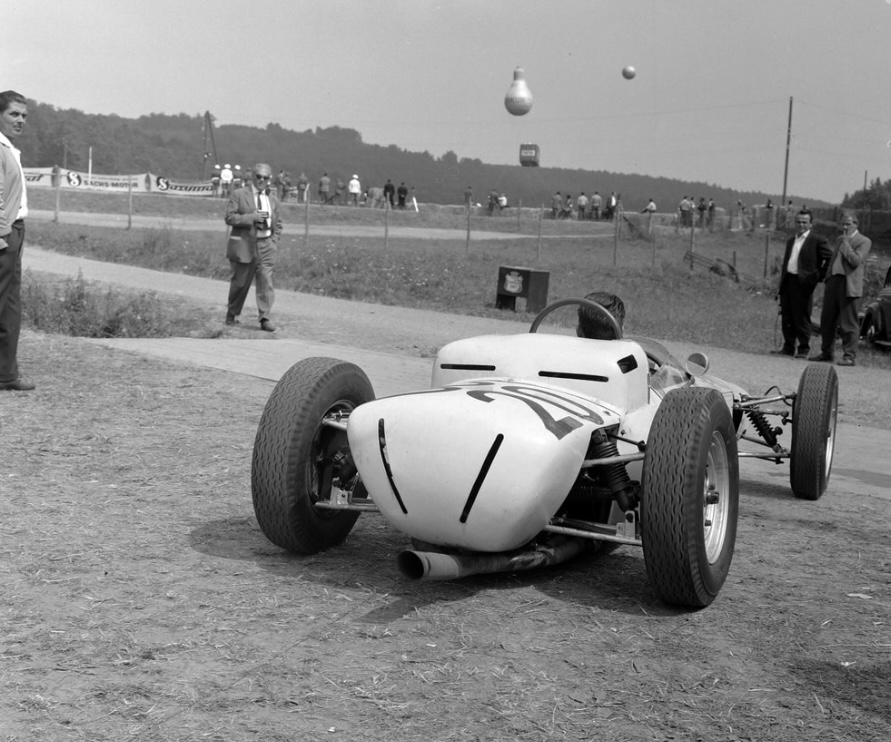
Rolf Schild’s sweet looking MBM Type D Formula Junior, 18 of which were built, on the Mitholz-Kandersteg hillclimb, Switzerland in May 1962.
Credits…
Philip Hasenbohler, Automobile Year 19, MotorSport, curbsideclassic.com, Getty Images,
Tailpieces…
(MotorSport)
Oopsie. Peter reassuring himself that he isn’t going to hit any of the ever present Solitude trees. What a track this place would have been to compete upon! See here for a piece on Solitude in 1960. and the perils of it; Surtees in Solitude… | primotipo…
(MotorSport)
Hmm, perhaps the most polite way to express it is that the MBM’s best angle is three-quarter front.
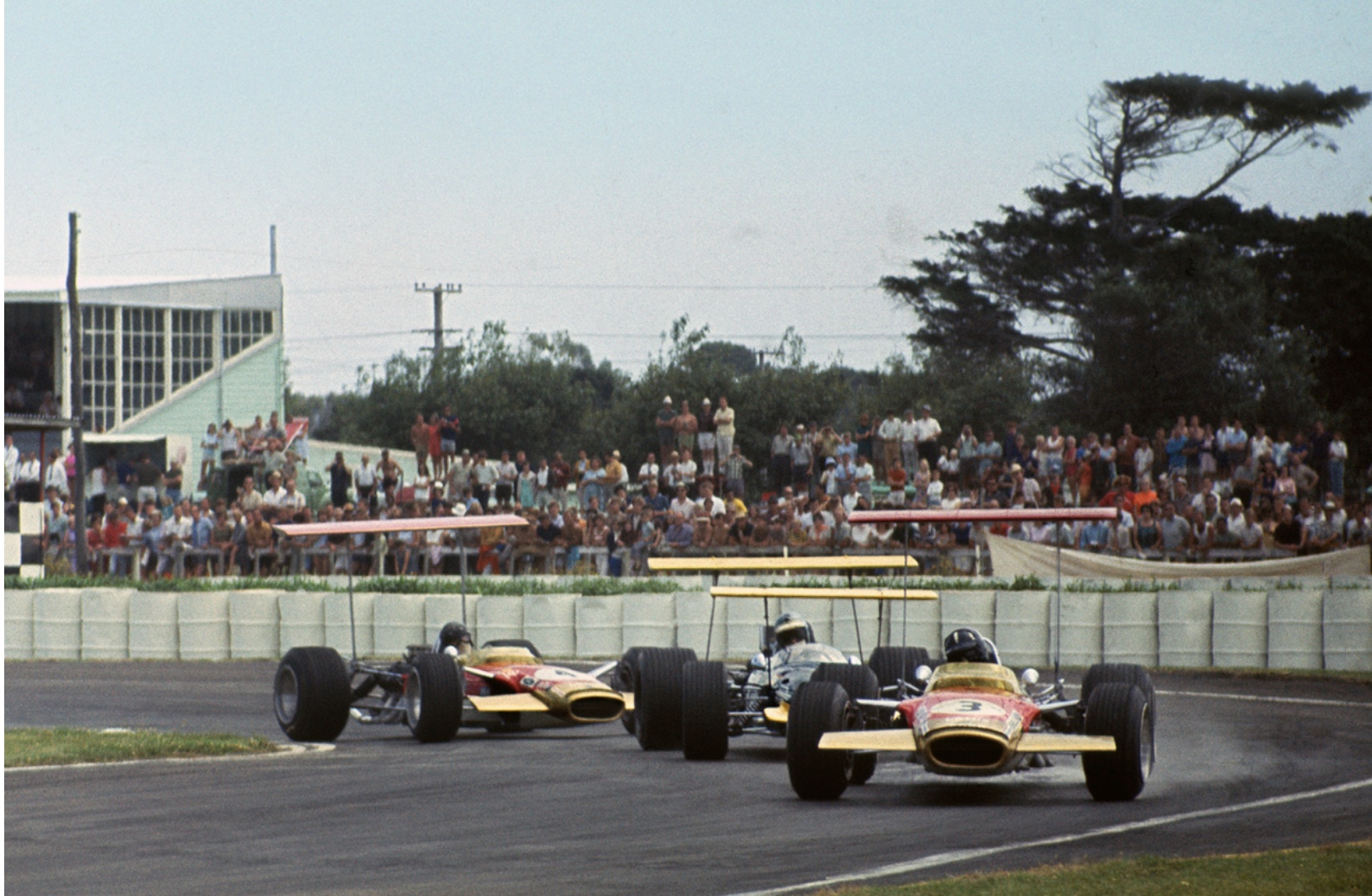
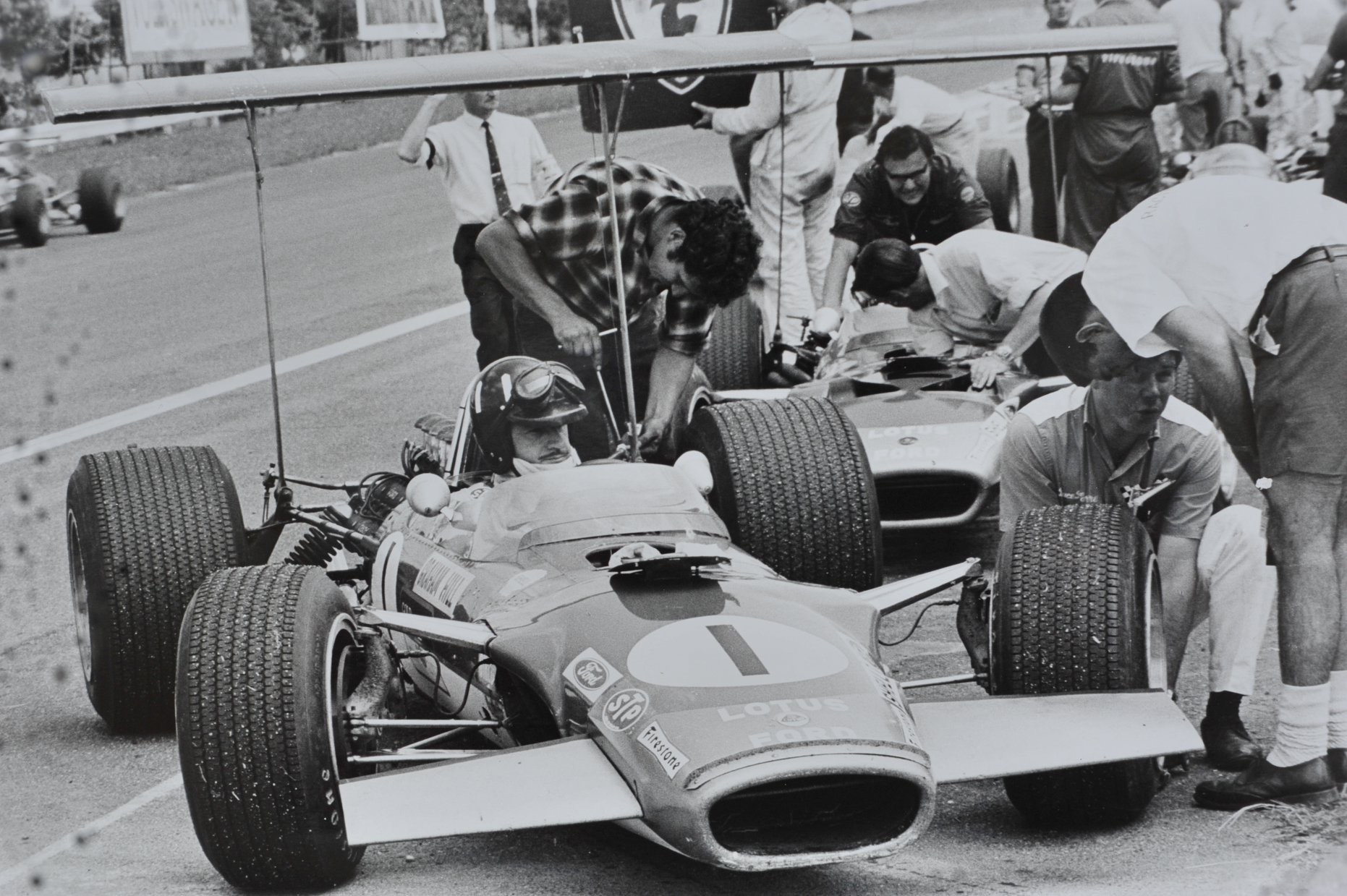
Graham Hill talks to the lads about his brand-spankers Lotus 49B, chassis R8 in the Pukekohe pitlane during the 1969 NZ GP weekend…
Maybe he is talking about his car, or perhaps the blistering pace of Jochen Rindt, his new teammate.
While it’s a brand new chassis, the car is fitted with a ZF gearbox rather than the Hewland DG300 which he had been using in his definitive spec F1 49B in late 1968. Both Hill’s R8 and Rindt’s R9 were concoctions of the original 49 and of the subsequent 49B. Type 49 features included the front-mounted oil tank, use of a combined oil/water radiator, original front rocker arms mounted at 90 degrees to the tub rather than swept forward, the ZF gearbox and old style rear suspension mounted to ‘fir-tree’ brackets bolted to the DFV.
The main 49B feature adopted was the use of cutouts in the lower rear part of the tub to locate the lower rear radius arms. The cars used high-wings mounted atop the uprights in the same style first used on Jackie Oliver’s R2, and used the wing-feathering mechanism pioneered in Mexico at the end of 1968.
There was enormous excitement in Australasia prior to the 1968 Tasman when the quickest cars of the 1967 F1 season, Lotus 49s powered by the 2.5-litre short stroke DFW variant of the F1 3-litre Ford Cosworth DFV were raced by Jim Clark and Graham Hill; chassis’ R2 and R1 respectively.
Jim Clark won the Tasman Cup, his last championship, and the Australian Grand Prix at Sandown, his last GP win before his untimely death at Hockenheim on April 7, 1968.
While there was huge enthusiasm for Graham Hill and Jochen Rindt, the absence of Clark tugged at the hearts of enthusiasts, Jim was such a popular visitor to our part of the world, his first tour was in 1962.
Rindt finally had a car with the speed and occasional reliability – he was hard on it mind you – to post the results he deserved. His first GP win came at Watkins Glen late in 1969, but he perished less than twelve months later at the wheel of a Lotus 72 during practice for the Italian Grand Prix.
Graham Hill did a sensational job in picking up Team Lotus lock-stock-and-barrel after Clark’s death. He filled the leadership void until Colin Chapman clicked back into gear after mourning Clark’s loss. Graham would have a tough season in 1969, Rindt’s pace was apparent from his first laps at Pukekohe and at Watkins Glen Hill he had the bad accident which hospitalised him for months.
Team Lotus built two new cars for the ’69 Tasman assault; 49Bs R8 – a new chassis – for Hill, and R9 – the prototype R1 rebuilt – for Rindt which were identical in specifications.
NZ GP Pukekohe 1969, the off. From left Amon with Bell right behind then Leo Geoghegan’s white Lotus 39 Repco, Hill’s Lotus a row back, then Jochen up front alongside Chris and Piers at right in the Williams Brabham BT24 Ford Gardner, Mildren ‘Yellow Submarine’ Alfa, Hill, Rindt in the Wigram dummy grid in 1969 (CAN)
Chris Amon mounted a very successful 1969 Tasman campaign using the learnings of the prior year. He had Bruce Wilson as lead mechanic again, and an additional car to be raced by Derek Bell with a strict rev limit given the small float of engines available between two cars. Logistics were taken care of by David McKay’s (Sydney) Scuderia Veloce outfit.
Chris opened his account with intent, he won the first two races at Pukekohe on January 4 and at Levin the week later. Jochen was second in the NZ GP whereas Graham had two DNFs, a front suspension ball-joint failed after completing 13 laps in the first race, and driveshaft failure at Levin, this time on lap 12 when running in third place from grid five.
Jochen came to grief at Levin, he spun on lap four whilst leading, and then repeated the mistake two laps later but in more costly fashion, rolling the car atop a safety embankment. Jochen was ok but R9 was rooted, too badly damaged to be repaired away from home base. 49B R10 was despatched to the colonies, much to Hill’s chagrin. It was the first of many Lotus accidents and component failures for the Austrian during the next twenty months, not that the cause of this shunt was the fault of the car.
The ferry trip to the South Island brought better fortune. Hill and R8 finished second in the Lady Wigram Trophy race on the Royal New Zealand Airforce Base outside Christchurch on January 18, but Jochen made good use of his new car from pole setting fastest lap and race time. Jochen was 34 seconds in front of Graham, with Chris Amon another four seconds behind Graham, then Piers Courage another six seconds back in Frank Williams’ Brabham BT24 Ford DFW.
The following weekend Graham was second again at Teretonga near Invercargill, the world’s most southerly racetrack, the winner this time was Courage. This time it was Jochen’s turn for driveshaft failure, interesting given the DFW gave circa 50bhp less than the DFV, with Chris Amon third and looking good for the title as the circus crossed the Tasman Sea for three Australian rounds.
Graham blasting through the Teretonga scrub country. Note the long exhausts of the 2.5 DFW, look how flimsy the wing supports look, and were- Chapman at his worst. Note – look hard – the Lotus aero-screen (LAT) Early laps at Levin. Piers Courage in a Lotus sandwich, Hill in front with Jochen aboard the ill-fated R9 in third (LAT) The off at Wigram. Courage, Brabham BT24 Ford and then Graham with Jochen on pole in Lotus 49Bs. Amon behind Jochen, the light coloured car behind Chris is Gardner’s Mildren Alfa V8 (T Marshall)
First stop was on February 2, 1969, at Lakeside, Brisbane, for the Australian Grand Prix.
Graham finished fourth in R8, while Jochen’s R10 had engine failure. Both cars had wing mount failures- Chapman’s In-God-We-Trust engineering of these things was cavalier for so long it is a joke. Only Jochen’s celebrated Come-To-Jesus (whilst I am on religious metaphors) letter after the collisions inflicted upon Rindt and Hill at Montjuic Parc in early 1969 gave Our Col pause to consider his desire to attend another driver funeral.
GLTL then headed south to Sydney for the Warwick Farm 100, basing themselves at the Brothers Geoghegan emporium of fine sportscars in Haberfield, a stones-throw from the Farm at Liverpool.
While practice was dry, Rindt massacred the lap record, then drove away from the field during the race in a mesmeric display of wet weather feel, bravado, pace and dominance winning at a reduced canter by 45 seconds from Derek Bell’s Dino and Frank Gardner’s Alec Mildren Mildren Alfa Romeo 2.5 V8.
Poor Graham’s R8 snap-crackle-‘n-popped its way around the technically demanding course with his ignition very much rain affected. Chris and Piers tangled early in the race which gave the Kiwi sufficient points to win the Tasman Cup.
Hill aboard R8 with Rindt in R10 in the Sandown pitlane, February 1969. Note the open bonnets, spoiler atop the nose of Graham’s (I Smith)
The final round of the Championship took place at Melbourne’s Sandown Park on February 16.
There Chris drove a wonderful race to win by seven seconds from Jochen with Jack Brabham third in the Brabham BT31 Repco 830 2.5 V8, in Jack’s one off 1969 Tasman race, with Gardner fourth, Bell fifth and then Graham sixth, three laps adrift of Amon.
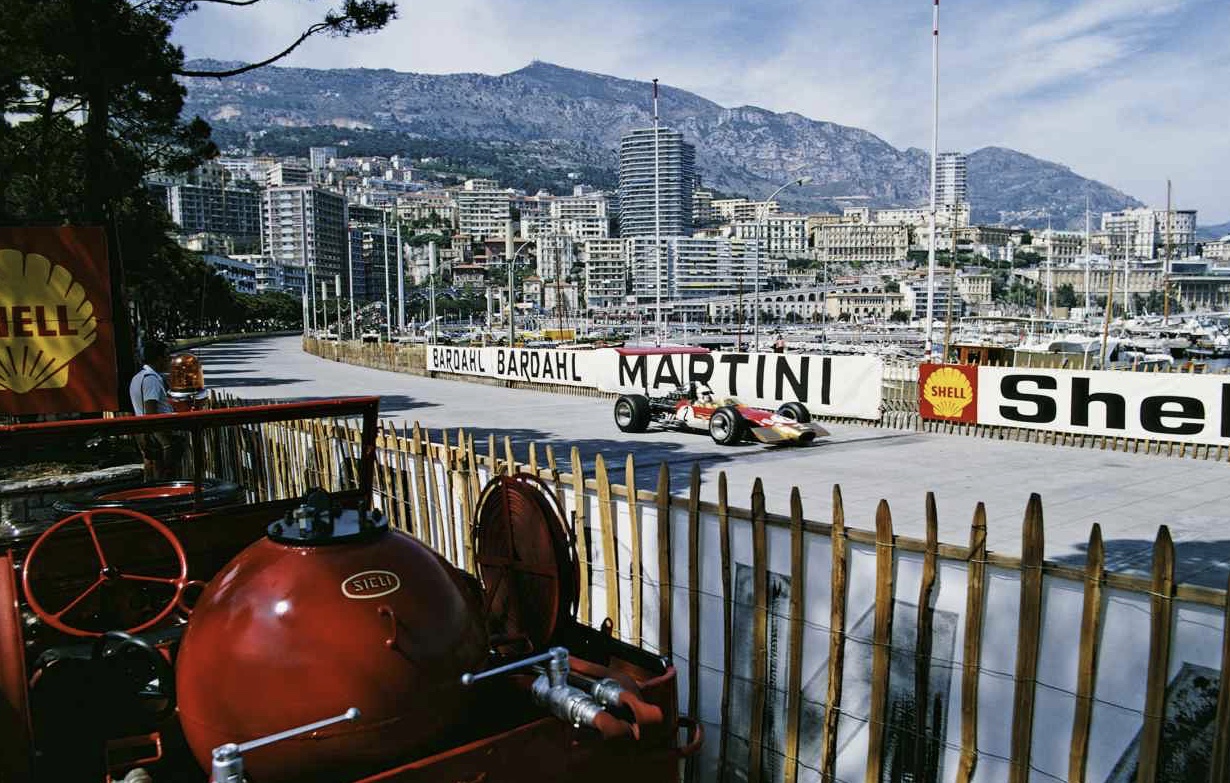
Jochen’s R10 was airfreighted home to the UK, it was required in F1, whereas R8 returned by ship. In the Spanish Grand Prix both high-winged Lotus 49Bs of Rindt and Hill were very badly damaged in separate accidents triggered by rear wing strut failure over the same high-speed brow on Barcelona’s Montjuic Park circuit- as mentioned earlier. See article here; ‘Wings Clipped’: Lotus 49: Monaco Grand Prix 1969… | primotipo…
While Graham wasn’t hurt, Jochen was severely concussed and was unable to drive at on May 18. Team Lotus lacked a car to replace Rindt’s R9, the chassis of which was consigned to a rubbish skip at Hethel. As a consequence, R8 was rushed off the ship from Australia, fitted with a 3-litre DFV, 1969 roll-over hoop, and fire extinguisher system before being taken to Monte Carlo for substitute driver, Richard Attwood to race.
He had shone in a BRM P126 the year before, setting fastest lap and finishing a strong second behind Graham Hill’s winning Lotus 49B R5.
At Monaco driving R8 with minimal preparation after seven hard races in the Tasman Cup, Attwood finished a fine fourth and set fastest lap in the race again won by Hill aboard 49B R10. With Jo Siffert third in Rob Walker’s Lotus 49B (R7) three of these wonderful cars were in the top four, the only interloper was Piers Courage splendid second place aboard Frank Williams’ Brabham BT26 Ford.
Richard Attwood in h-winged R8 during Friday practice at Monaco in 1969- after the wing ban the car raced denuded of same (R Schlegelmilch) Attwood, Monaco, race day, fourth place- wonderful result having not parked his arse in the car before practice (unattributed)
Back at Hethel R8 was altered to latest 49B specifications and raced by Hill, nursing a sick neck to seventh in the 1969 British Grand Prix, at Silverstone on July 19.
Meanwhile, Colin Chapman’s four wheel drive Type 63, the proposed Type 49 replacement, struggled to find pace and the support of its drivers, as did the other 4WDs fielded by Matra, McLaren and Cosworth.
Given the choice, World Champion Hill, and Fastest Guy On The Planet Rindt, preferred the conventional rear-drive 49B. To prevent them having the choice Chapman decided to sell Team’s 49s, R8 went to Swedish journeyman owner/driver Joakim Bonnier.
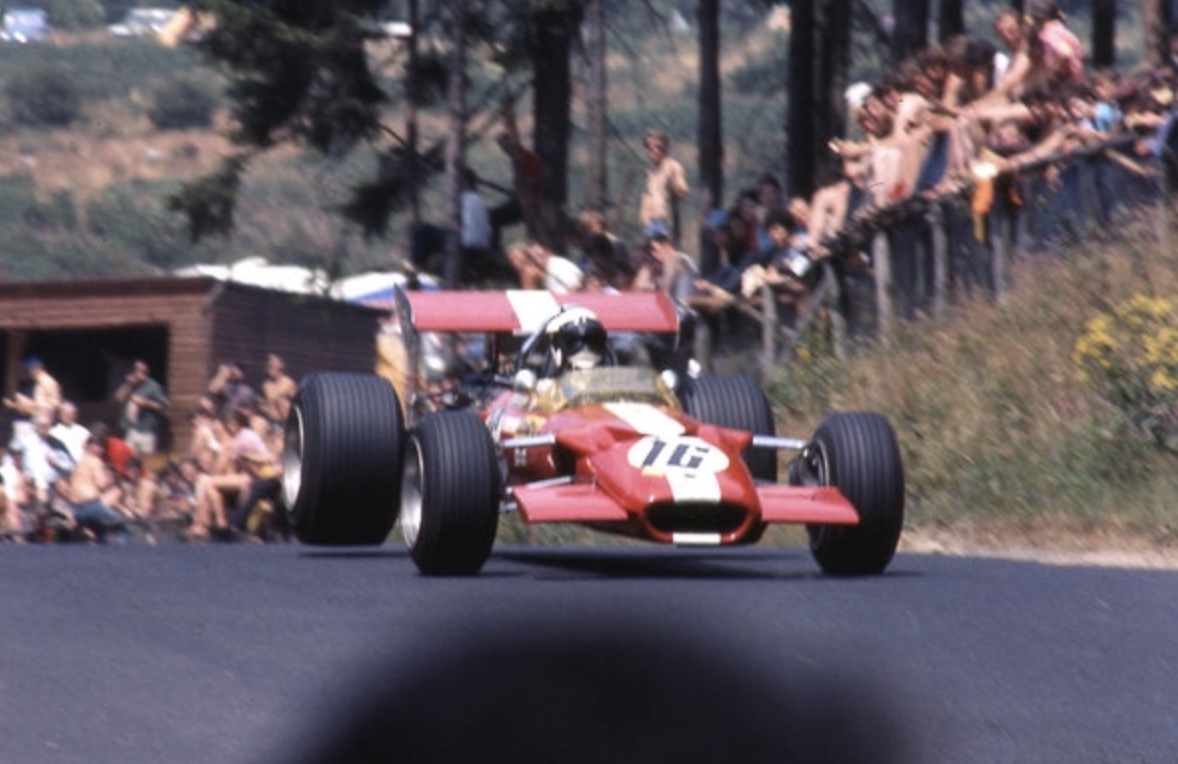
He raced it in the German Grand Prix in August, DNF fuel leak. Jo crashed it after front suspension failure during practice for the non-championship Oulton Park Gold Cup on August 16. Out of love with the car, the damage was repaired at Hethel prior to sale to Dave Charlton for South African national F1 racing in 1970.
Jo Bonnier returning to terra firma, R8, Nurburgring 1969 German GP. (unattributed) Dave Charlton with R8, now in 49C specifications, during the 1971 Highfeld 100 (N Kelderman)
Charlton used R8 to win the first two of his six consecutive South African national Formula 1 Championship titles between 1970-75.
The car won nine rounds in 1970; the Highveld 100 at Kyalami, the Coronation 100 at Roy Hesketh, followed by the Natal Winter Trophy there, the Coupe Gouvernador Generale at Lourenco Marques, Rand Winter Trophy at Kyalami, False Bay 100 at Killarney, Rhodesian GP at Bulawayo, Rand Spring Trophy at Kyalami and the Goldfields 100 at Welkom.
In 1971 the Charlton/R8 combination won four events of six he contested before switching to a Lotus 72; the Highveld 100 at Kyalami, Coronation 100 at Hesketh, Bulawayo 100, and the South African Republic Festival race back at Kyalami.
R8 was then campaigned to the end of 1972 by South African drivers Piet de Klerk and Mayer Botha. Botha damaged the left side of the tub badly at Killarney in August. Sydney’s The Hon. John Dawson-Damer bought the damaged, dismantled car in late 1975, painstakingly restoring it with the assistance of Alan Standfield.
It was completed in 1982 and was a regular in Australian historic racing, driven by John, Colin Bond and John Smith, until DD’s sad death aboard his Lotus 63 Ford during the Goodwood Festival of Speed in 2000. Adrian Newey now owns it.
Dave Charlton in his Scuderia Scribante Lotus 49C Ford during the 1970 South African GP at Kyalami. DNF 73 laps, classified 12th (unattributed)
Credits…
Terry Marshall, LAT, MotorSport, Rainer Schlegelmilch, Nico Kelderman, Ian Smith, oldracingcars.com, ‘Lotus 49: The Story of a Legend’ Michael Oliver
Tailpiece…
(unattributed)
Graham Hill’s R8 butt at Warwick Farm on February 18.
The Brit contemplates a soggy, humid day in the office to be made worse by a misfiring engine and Rindt’s masterful brio behind the wheel of the other Lotus.
The car has the same pissant wing supports as it had at Pukekohe seven weeks before, but note the Hewland DG300 transaxle rather than the ZF unit used at the Tasman’s outset, a fitment which contradicts the history books…
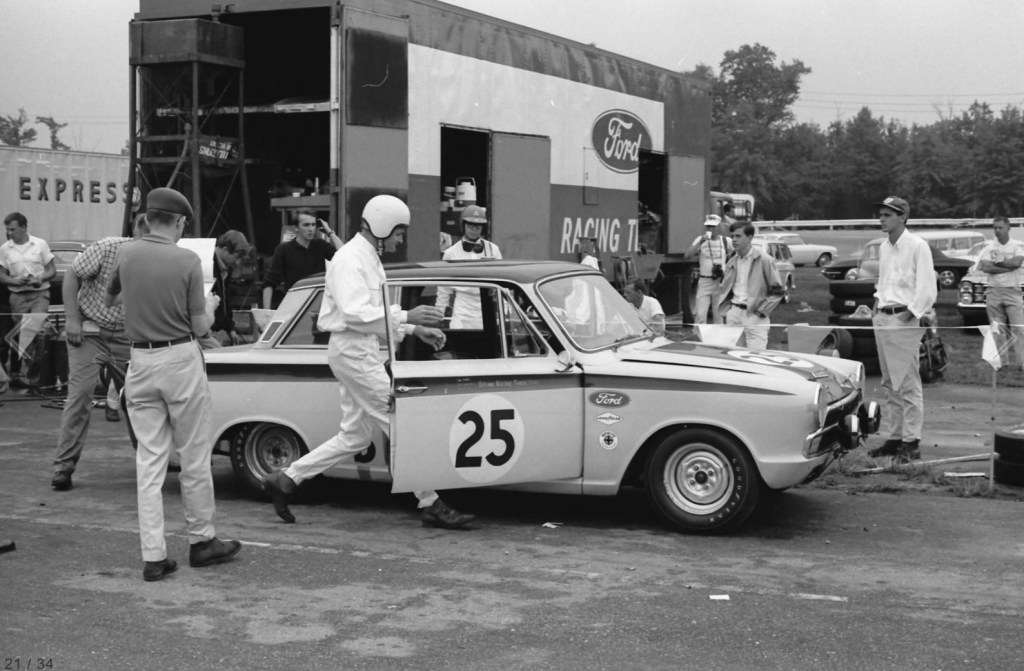
Ray Parsons keeps popping up in recent Lotus and Allan Moffat research.
He is just about to climb aboard a Lotus Cortina in the Marlboro paddock, Maryland in August 1966. Parsons shared this car with Moffat – with helmet on behind the car – to 13th place in the 12-Hour enduro.
The little-known Australian mechanic and driver seems to have shone brightly for a short period of time then disappeared from the scene.
Let’s treat this piece as incomplete research. I’m interested to hear from any of you who can flesh this story out into something more comprehensive.
Ray Parsons with Peter Arundell’s shoes, Arundell and Team Lotus Lotus 20 Ford FJ at Goodwood, Easter 1961Parsons and Jim Clark at right, discuss their prospects at Sebring in 1964 (unattributed)
Parsons first popped up as Peter Arundell’s mechanic. He had left the Australian Army after nine years not long before, then jumped on a ship for the Old Dart to visit his sister. He was soon bored playing Tommy Tourist and responded to an ad for a race mechanic at Arundell’s garage in 1961.
When Peter was picked up by Lotus, Parsons tagged along. Apart from Arundell’s race program, Ray was kept busy working as Project Engineer on the Lotus 23. The prototype was unused so he did a deal with Colin Chapman, buying it for £20. He did well in club racing with the Ford 1150cc pushrod powered car, including a win at Goodwood in the Peter Collins Trophy.
Later, he was tasked with preparation of the Team Lotus’ Lotus 28, the Lotus Cortina. This segued into management of ‘Team Lotus Racing with English Ford Line’ (Ford Britain’s racing of Lotus Cortinas in the US) and involved lots of travel between the UK and the US, sometimes two trips across the Atlantic in Boeing 707s a week, preparing cars for many different guest drivers from 1964.
Ray doubled up as relief driver in the longer US races co-driving first with Jim Clark in the ’64 Sebring 12-Hour, steering for two of the twelve hours they were 21st overall and second in class.
Clark/Parsons Lotus Cortina at Sebring in 1964 (Sports Car Digest)
Parsons was of course ‘the visionary’ who aided and abetted Allan Moffat’s entreaties to assist the team at Watkins Glen that year. Moffat’s persistence and efforts as an unpaid gofer was rewarded with paid work, and ultimately works-Ford drives in the US, and tandem racing of Moffat’s ex-works Lotus Cortina in Australia commencing with the first Sandown 6-Hour in late 1964. See here for a piece on Moffat’s US years; Moffat’s Lotus Cortina, Shelby, K-K and Trans-Am phases… | primotipo…
In 1965 Parsons had a very busy year commencing with the Tasman Cup, looking after Jim Clark’s Lotus 32B Climax 2.5 FPF. In a great tour, Clark won four of the seven rounds and the non-championship Lakeside 99, he was nine points clear of Bruce McLaren’s Cooper T79 with Jack Brabham third, Brabham BT11A Climax.
In April he raced a Team Lotus, Lotus Elan 26R at Goodwood, again as a project engineer to drive and develop the Elan as a racer. He was seventh and first in the under 1.6-litre class. He raced again at Crystal Place in June, and in the Guards International at Brands Hatch in August where he was second overall and first in class.
Lotus announced an on-the-spot spares service van at British circuits, “to be manned by factory personnel, Ray Parsons (when his racing commitments permit) Works Driver and Liasion Engineer, and Rod Sawyer, Sales Executive of Lotus Components Ltd.” MotorSport reported.
Late in the year Parsons had several drives of John Willment’s Lotus 35 Ford F3 car. He crashed at Silverstone in July, was fifth at Oulton Park in August, Piers Courage was up front in a Brabham BT10 Ford that day. Parsons won a week later at Snetterton. He was third in the season ending Lombank Trophy at Brands Hatch on Boxing Day in a Team Lotus, Lotus 41 Ford – Lotus’ 1966 spaceframe F3 car – behind Piers Courage and Chris Irwin. Clearly the bloke had talent.
Parsons and Jim Clark confer in the Longford pitlane, Tasman Series, March 1966. Lotus 39 Climax 2.5 FPF (oldracephotos.com/David Keep)Parsons, Clark and Lotus 39 Climax in the Warwick Farm pitlane in February 1966 – only Tasman Cup round victory that summer (ABC)
Parsons again accompanied Clark to the Australasia for the Tasman series, but 1966 was the year of the V8s. The BRM and Repco-Brabham V8s were a good deal more powerful than the 2.5-litre Coventry Climax fours powering the likes of Clark’s Lotus 39.
Jackie Stewart’s BRM P261 1.9-litre V8 took the Tasman Cup with four wins, the Parson’s tended 39 won only at Warwick Farm. Sold to Leo Geoghegan, this Lotus 39 – fitted with Repco Brabham 2.5-litre V8s from early 1967 – became a much loved, and successful car in Australia all the way into the early months of 1970.
The Lotus Cortina program continued in the US, Ray drove solo in one of the cars at Kent, where he was eighth. He teamed with Moffat in the Marlboro 12-Hour at Maryland, Washington in August, to 13th place.
A month later, Ray shared a car with Melbourne’s Jon Leighton in the Green Valley 6-Hour in Dallas, Texas. The pair were seventh, two places in front of the Moffat/Harry Firth Lotus Cortina. A week later Moffat/Firth were seventh in the Riverside 4-Hour with Parsons 13th driving alone.
Toowoomba born engineer, John Joyce left Australia for the UK having rebuilt a Cooper and built the Koala Ford FJ. With these credentials he joined Lotus Components in 1963, rising to become Chief Development Engineer.
Joyce and Parsons worked together on the Elan and other projects, the death of Joyce’s brother, Frankie, and the illness of his mother were catalysts for him to return to Australia.
Ray was keen to come home too, a decision made easy as Joyce was concepting the first Bowin; the P3 was to be a monocoque European F2 car powered by a Ford FVA 1.6-litre engine.
Glyn Scott’s Bowin P3 Ford FVA at Symmons Plains in 1969 (I Peters Collection)
In September and October 1967 Joyce had patterns for the wheels, rear uprights, and steering rack made in the UK. Parsons joined Joyce in Sydney, where the P3 was completed by the two talented artisans in a Brookvale factory before being delivered to Queenslander, Glyn Scott. It was first tested at Warwick Farm in July 1968.
And there, it seems, the trail goes cold. Ray didn’t continue with Bowin, until 1975 a significant manufacturer of racing cars. What became of this talented mechanic, development driver, racer, and team manager until he broke cover in Far North Queensland circa 2014.
Credits…
Auslot.com, ‘Theme Lotus’ Doug Nye, Bill Dobbins, Sports Car Digest, oldracephotos.com, Ian Peters Collection
Tailpiece…
(B Dobbins)
Ray Parsons hustles the car he and Allan Moffat shared at Marlboro Park Speedway in 1966. The track first opened in 1952 as a dirt oval, as used in 1966 it was 2.734 miles long. Located in Upper Marlboro, Maryland, it was used until 1969 when a better facility at Summit Point, West Virginia sealed its fate. Its mortal remains exist, very run down.
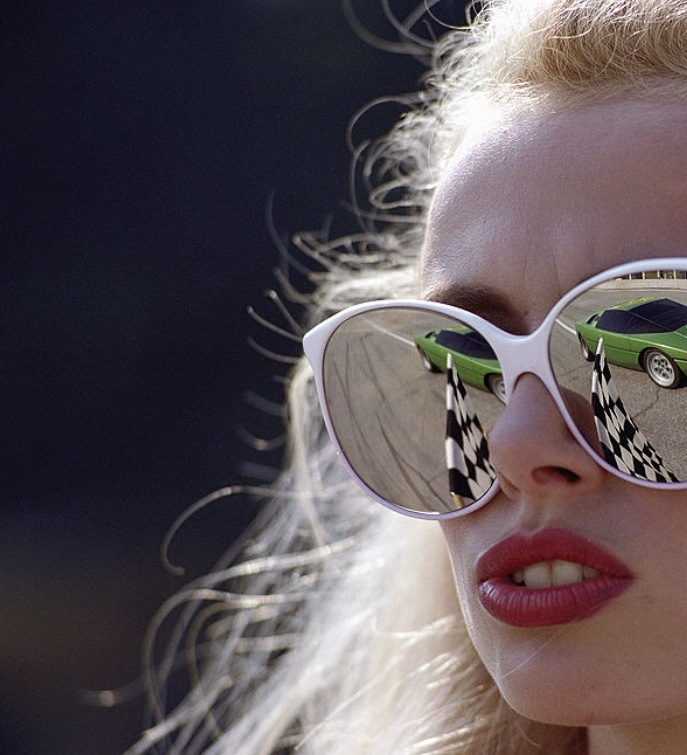
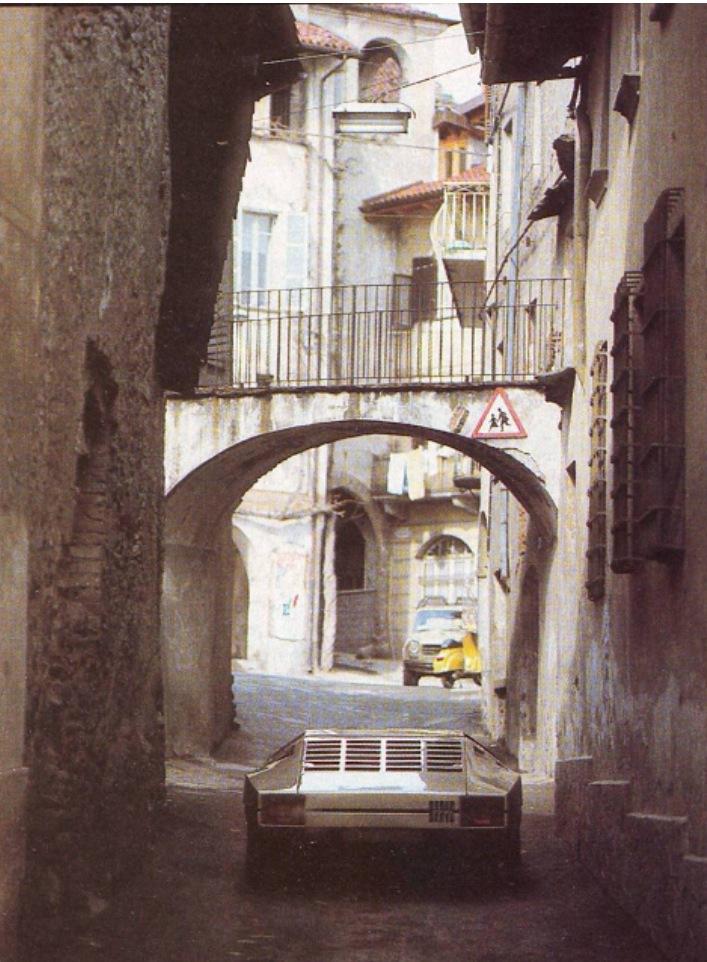
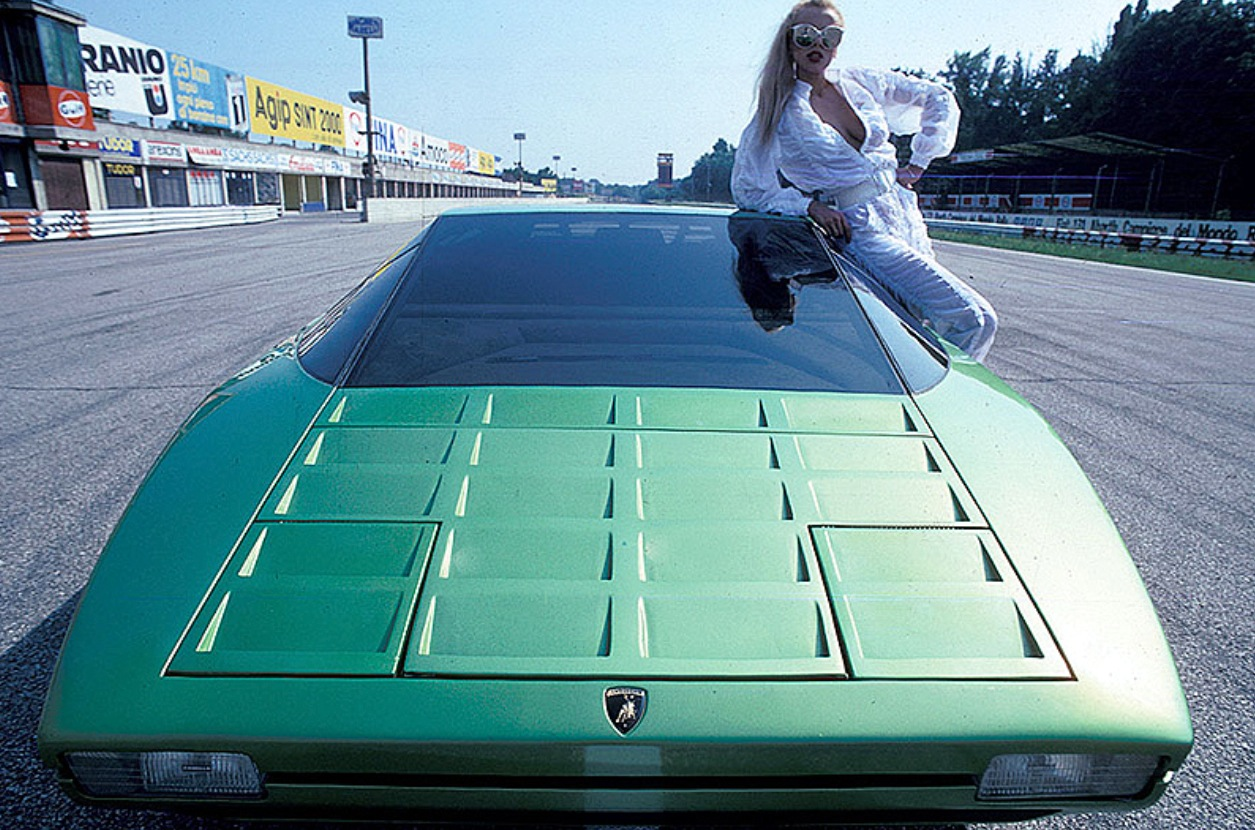
Babe and the Lamborghini Bravo concept car at Monza in 1974…
In much the same way that Pininfarina and Ferrari developed a symbiotic relationship, so too over the decade after its formation did Lamborghini with Bertone; the Espada, Jarama, and outrageous Countach the result by 1973.
I can still remember as a schoolboy, my jaw-dropping awe at seeing the Countach, with test driver Bob Wallace at the wheel at Monaco in an Australian Sports Car World feature and being completely blown away by its looks and specifications.
The Ferraris of the day (246 Dino, 365 Boxer, 365GTB4, 365GT4) were so safe in their styling in comparison if totally seductive most cases. Lamborghini were avant garde in their styling and engineering, it’s only in more recent times Ferrari have the edginess in their styling. Whether one likes that evolution or not is another matter entirely.
Together with its V12s, Lamborghini launched a little-brother V8, the Urraco in 1970. Initially fitted with a 2.5-litre engine which grew to 3-litres. Bertone based its third Lambo dream car – after the ‘67 Marzal and ‘71 Countach – on the Urraco chassis.
(unattributed)
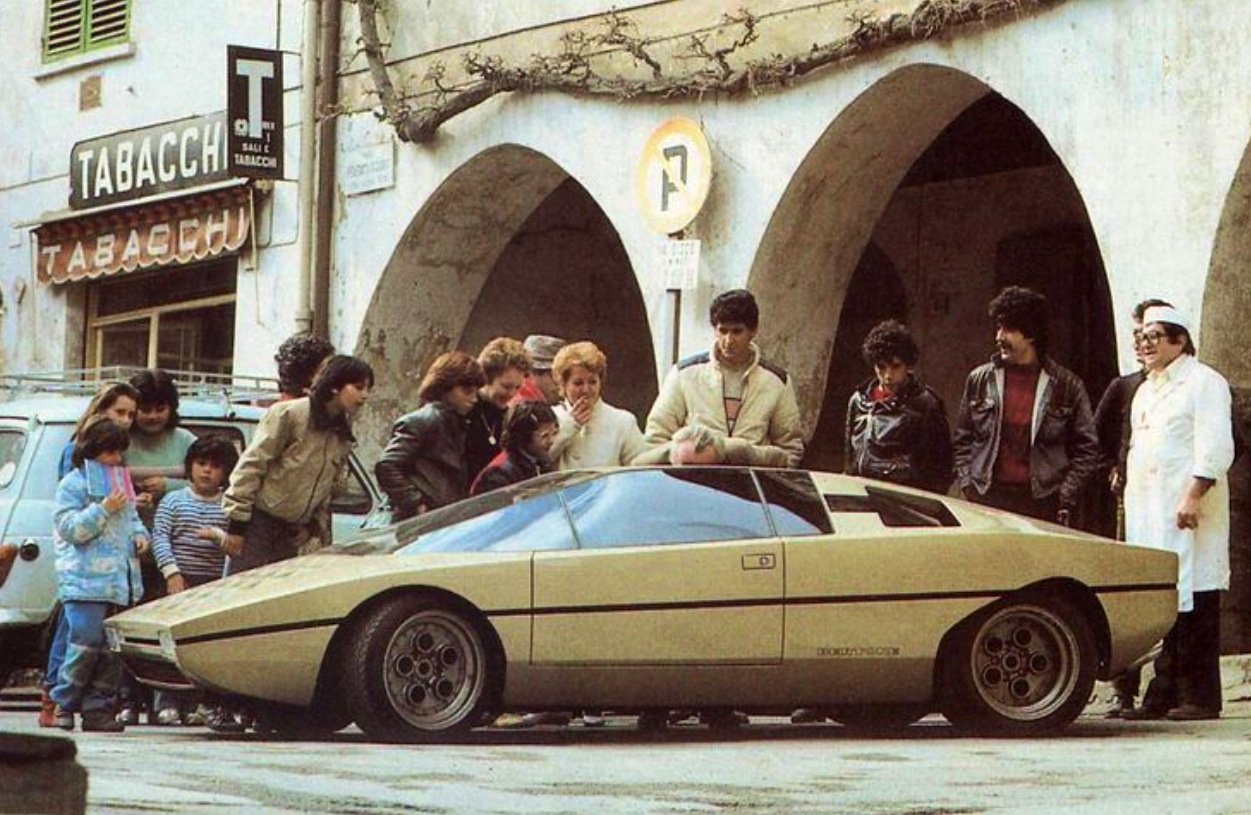
Bertone hoped the Studio-114 coded Bravo would be adopted as a two-seater to sit alongside the 2+2 Urraco in Lamborghini’s range.
Bravo was 20 inches shorter than Urraco, its wheelbase reduced by nearly by 8 inches to 88.6inches. The engine was the 3-litre, circa 300bhp 2996cc DOHC, two valve V8 of the P300 Urraco. The lightweight, all alloy V8 was fed by four twin-choke Webers, had a five speed ‘box of course, and disc brakes all round. In a 1970s road test, Road & Track praised the car for its power delivery, precision steering and its handling, writing that “it is everything the Urraco could and should have been.”
Building Bravo was a brave commercial move by Bertone management in the context of the times. The economic shocks of the oil crisis and stagflation, a blend of inflation, slow growth and persistent unemployment were problems governments globally were ineffectively dealing with.
Those factors gutted the market for prestige performance cars, in the event, Bravo didn’t reach production. As late as April 1978 the car made the cover of British magazine Motor, with Lambo’s Sales Director, Ubaldo Sgarzi quoted as saying a production version was still three-four years away. Off the back of the oil crisis it simply didn’t happen.
(unattributed)
“The Bravo’s styling was certainly striking, in the vein of Marcello Gandini’s previous styling exercises for Bertone. The sharp wedge shape was cut off by flat, near-vertical surfaces front and rear. The base of the windscreen was set ahead of the front axle, and its very steep angle of rake almost matched that of the short front bonnet. Likewise, the surfaces at the top of both front and rear wings gently twisted to match the inclination of the side windows, a treatment Gandini had honed through the Stratos Zero and Countach.”
“The talented designer complemented this basic shape with some strong graphic features, such as the very geometric slats that pierced both front and rear bonnets or the slanted rear wheel-arch cut-outs that were becoming his trademark. The wheels themselves introduced the theme of the five round holes that remained a Lamborghini staple right up to the Murciélago.”
“Pop-up headlights were neatly concealed in the louvered front panel. While all other glass panels were meticulously mounted flush, the way the rear three-quarter window gently folded into the bodywork to create air intakes for the engine bay was another highlight of Gandini’s magic touch,” Sotheby wrote when selling the car Bertone’s behalf some years ago.
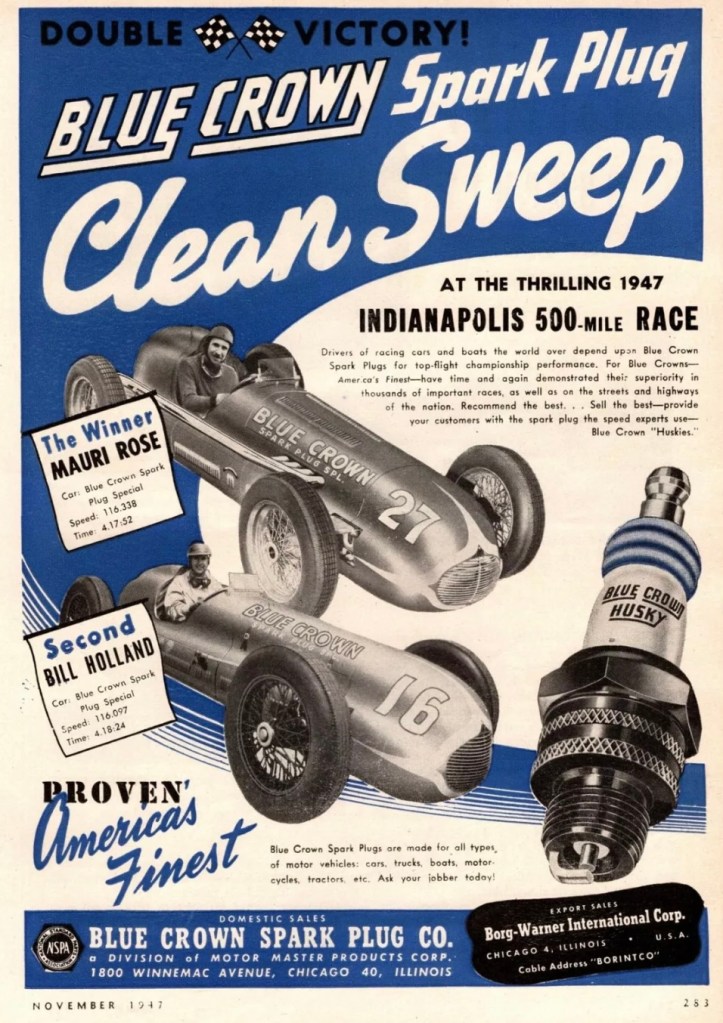
Lou Moore’s two Deidt FD Offy ‘Blue Crown Spark Plug Specials’ driven by Mauri Rose and Bill Holland being prepared for the 1947 Indianapolis 500.
The colourisation of this Getty Images shot was done by Sanna Dullaway for a Time magazine feature; ‘A Century’s Evolution of Indy 500 Racing’. The rare under-the-skin photograph shows clearly the key elements of these successful cars; front mounted engine and transaxle, girder chassis and big rear mounted fuel tank.
Rose won the race from Holland and Ted Horn’s Maserati 8CTF in a controversial result.
Holland took the lead at about the 100 mile mark, but lost it “when he skidded in front of Shorty Cantlon, Cantlon’s Snowberger FD Offy hit the outside wall and was killed.”
Mauri Rose (IMS)
At about 200 miles Holland regained the lead, late in the race he was given an ‘Ezy’ pit signal by Lou Moore – a former Indy polesitter and three times on the podium – which he took as a direction to do the final laps at a reduced pace. Rose ignored the signal and sped up, Holland wasn’t troubled as he thought he had a lap in hand.
The two drivers exchanged waves during the pass, Holland took this to be a congratulatory gesture, but it was a pass for he lead, Rose led the final 8 laps and won the race by 32 seconds. “Holland called it a lousy deal,” Indy Star reported.
(IMS)
Bill Holland, an unlucky second in 1947, Deidt FD Offy above.
He won the race for Moore in 1949, on this occasion, Rose’s late race surge while lying second – against Moore’s pit board instructions – resulted in a broken magneto and a DNF. Moore fired Rose as soon as he arrived back at the pits!
1947 Indy ticket
Credits…
Getty Images, Time, Indy Star, IMS-Indy Motor Speedway archive
Colin Chapman sitting on the left front, any takers on the other dudes? (MotorSport)
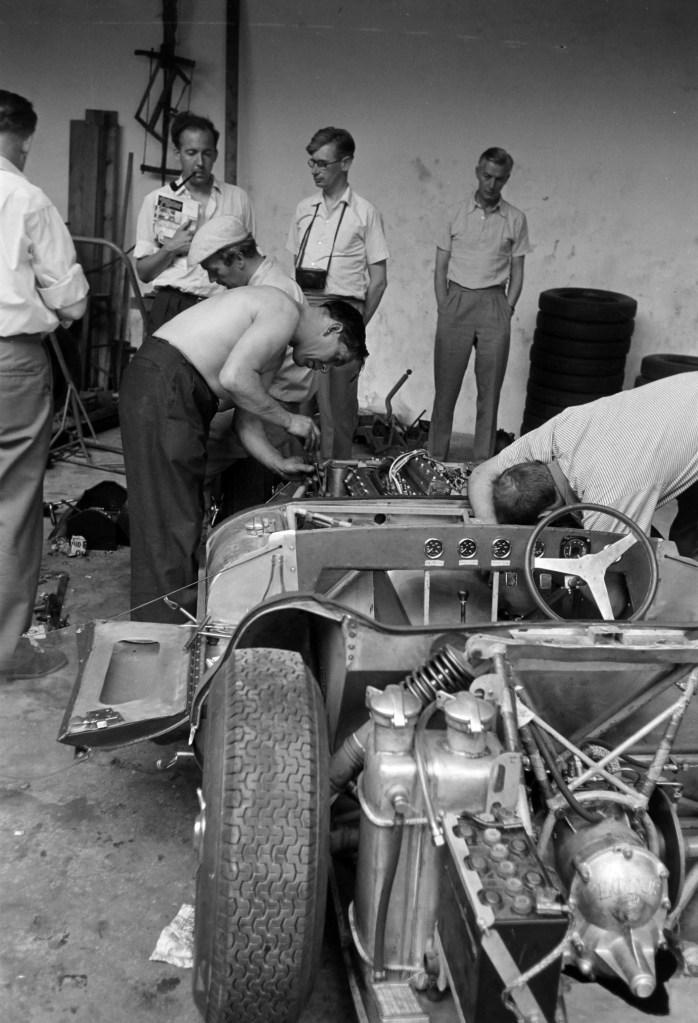
The Team Lotus crew prepare the Graham Hill/Derek Jolly Lotus 15 Coventry Climax 2-litre FPF at Le Mans during the 1959 24-Hour classic.
Chassis 608/626 ran as high as seventh in Hill’s hands before the Lotus Queerbox jumped out of gear while driven by Jolly. The resulting over-rev broke a rod, their race was over after 119 laps in the tenth hour.
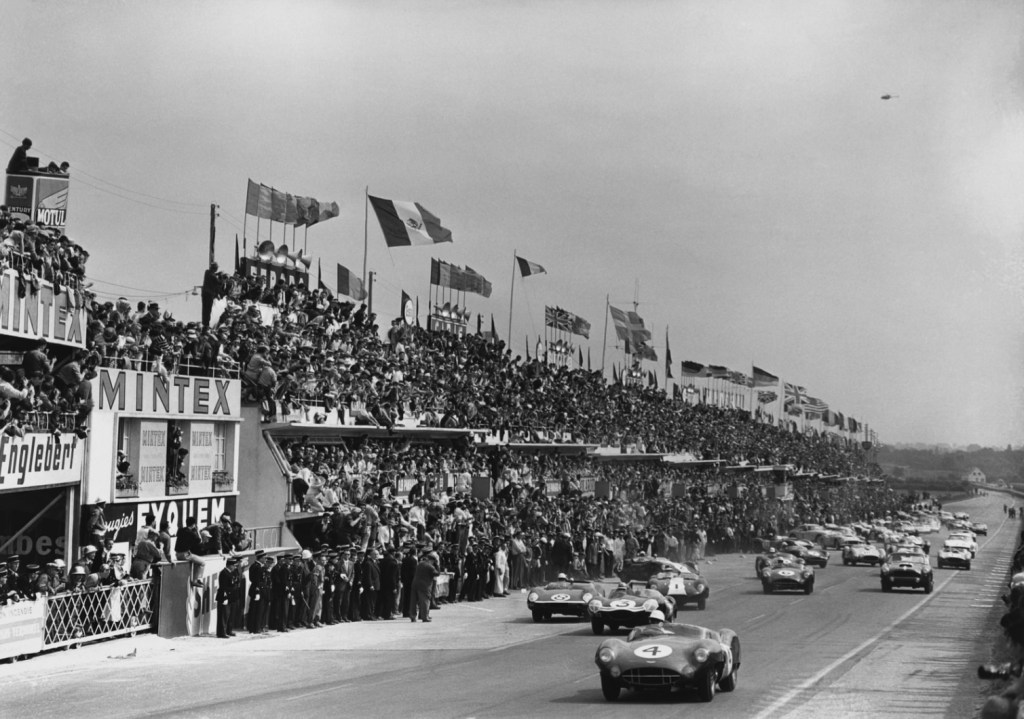
Stirling Moss is Aston Martin’s hare, he jumps away in the lead in his DBR1/300 from Innes Ireland’s Ecosse D-Type, then Ecosse #8 Tojeiro Jag, Ivor Bueb, #1 Lister LM Jag, car #6 is Maurice Trintignant’s Aston DBR1/300. The Roy Salvadori/Carroll Shelby Aston Martin DBR1 were victorious (MotorSport)Hill out, where is our Derek? (MotorSport)Derek Jolly at Le Mans in 1959 (ABC)
The Australian driver’s works-ride came about as a result of a quid pro quo settlement of a workmanship claim Jolly made on Chapman. Derek’s earlier 15 (#608) was destroyed in an accident at Albert Park in late 1958 when a rear radius rod mounting failed, Derek clobbered a tree hard as a consequence, chassis #608 was mortally wounded.
MotorSport, Australian Broadcasting Commission, F2 Index
Tailpiece…
(MotorSport)
Our Lotus 15 in the foreground, #53 is the Team Lotus Alan Stacey/Keith Greene driven Mk 17 Climax FWC. The 742cc machine was out with head gasket failure after 156 laps in the 16th hour.
#54 is another FWC engined 17 crewed by Mike Taylor/Jonathan Sieff, it didn’t finish either, this time ignition troubles sidelined it after only 23 laps.
Denny Hulme, Gordon Coppuck and McLaren M8F Chev (A Bowler)
Adrian Bowler was a young medico back in 1971. He posted these marvellous words and photographs of his experiences as Team McLaren’s doctor during Goodwood test sessions that year. They are gold, too good to disappear into the bowels of FB without trace. So here they are for those who missed them.
Many thanks to Adrian and the Glory Days of Racing FB page, which is well worth sussing every few days for an incredible diversity of global racing photographs.
Tony Dowe, Barry Sullivan, Alastair Caldwell, Jim Stone and Tony Attard pushing Denny, M8F Chev (A Bowler)McLaren M19 Ford Cosworth DFV, 1971-2 F1 car (A Bowler)
“1971, at the Goodwood motor racing circuit where Bruce McLaren had been tragically killed testing the Can-Am car (M8D Chev) the previous June.
Goodwood was a very primitive setup then, disused as a racing circuit for several years but utilised by several racing teams to test cars. Bruce lost control of his car apparently when the rear wing section separated from the body of the vehicle and it collided with a concrete marshall’s post on the Lavant Straight.
Following Bruce’s death, Teddy Mayer continued the Goodwood test sessions on the proviso that a physician be on standby at the track. As a young casualty doctor at St Richards in Chichester I was recruited by McLaren to fill the trackside Doctor role. It didn’t take much pursuasion, they paid 10 pounds which was about my weekly salary!
Denny winding it up in second gear (A Bowler)Reynolds ally Chev 494cid, Lucas injected pushrod, two-valve V8. Circa 740bhp @ 6400rpm in 1971 (A Bowler)
I spent several days over the next six months sitting on the side of the track watching the proceedings and chatting with Denny Hulme, Teddy Mayer, Gordon Coppuck and several of the mechanics. I brought my camera with me on one occasion and these are some of the pictures.
I got to see the burn scars on Denny Hulme’s hands from a metanol fire practicing for the Indy 500 (McLaren M15 Offy in 1970). I learned lots about F1 and Can-Am cars which was mind-boggling for a lowly-ER doc!
On one occasion Pater Gethin was annoying the mechanics working on an F1 gearbox and they suggested he take me for a ride around the track in his Porsche 911, which he did! After the first lap he asked me if i wanted to go again…I declined. They let me drive my Ford Capri 2000GT around the circuit…very slowly.
(A Bowler)Uncertain, Gordon Coppuck, Teddy Mayer in the grey hair at left listening to Denny, Alastair Caldwell leaning on the wing at right. (A Bowler)
On the day Denis Hulme was testing the M8F, as usual, the engine noise would gradually fade as he got to the back part of the track and then reappear with a vengeance as he accelerated down Lavant Straight. All was going well for several laps until on this particular lap the engine noise didn’t reappear. After maybe about 10 seconds the panic button was hit and everybody drove hell for leather around the track. There, at the top of the circuit, Denny had spun off and the windscreen was covered in blood. He was out of the car, standing by the side and when we arrived all he could say was ‘That fucking crow got in my way!’
It was 50 years ago, but was one of the most memorable times in my career.”
Alastair Caldwell comment; “Can-Am being warmed up, Denny, as normal, doing a visual check of the whole car, he would come up with some very acute observations at times. Ralph Bellamy behind (left), Designer of the M19 (1971 F1 car) rising rate suspension and later the F2 car (M21). Barry Sullivan leaning forward in front of Bellamy, Gordon Coppuck as well at right.” (A Bowler)Massive bit of real estate, superb M8F, Chev engine and Hewland LG600 Mk2 transaxle (A Bowler)
Credits…
Adrian Bowler for the words and pictures, ‘Cars in Profile No 8 : McLaren M8’ David Hodges
Caption comments Alastair Caldwell, Hughie Absalom, Barry Sullivan, Steve Roby
Tailpiece…
Mayer sitting on the M19’s left-rear, Caldwell right-rear, while Barry Sullivan attacks the gearbox. Team Surtees truck and F1 TS9 behind the McLaren. Rob Walker is the well dressed gent, John Surtees in race overalls at far right (A Bowler)(A Bowler)
Just another day in the office, Denny, M8F 1971.
I know it’s Denny but when I first glanced at Adrian’s shot I thought of Bruce 12 months before. RIP Bruce Leslie McLaren, 30/8/1937-2/6/1970.
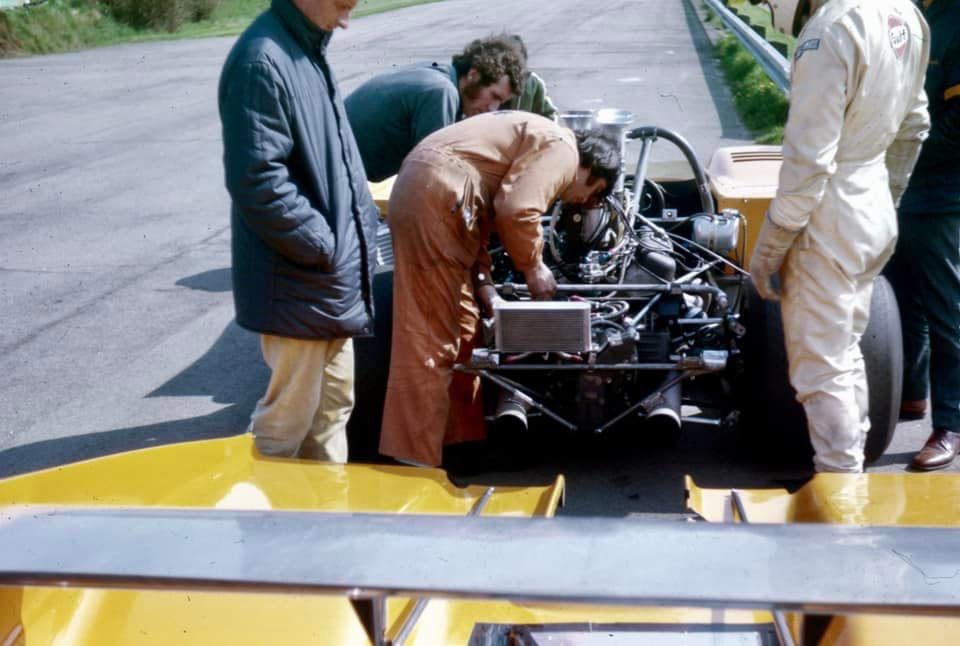
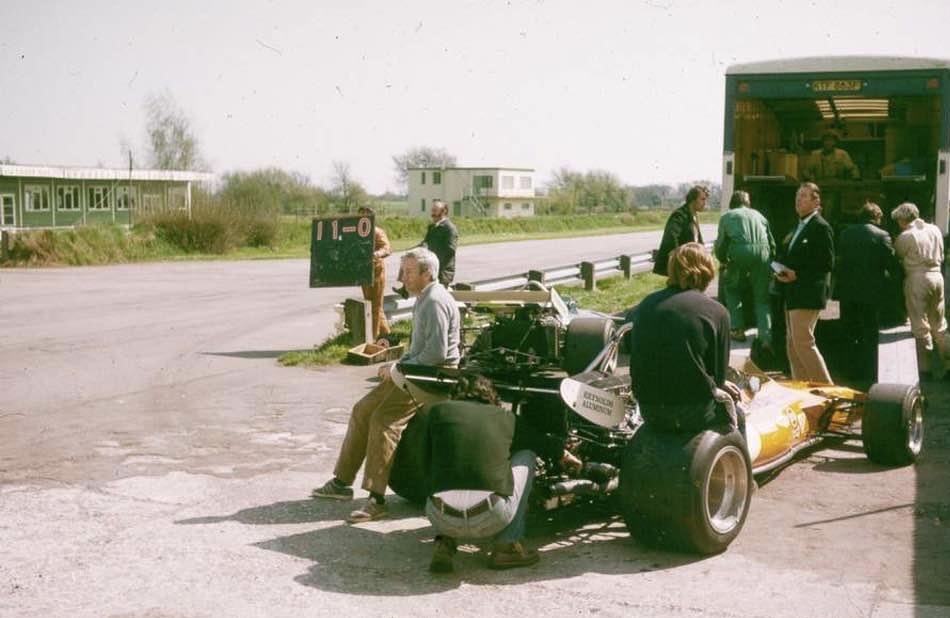
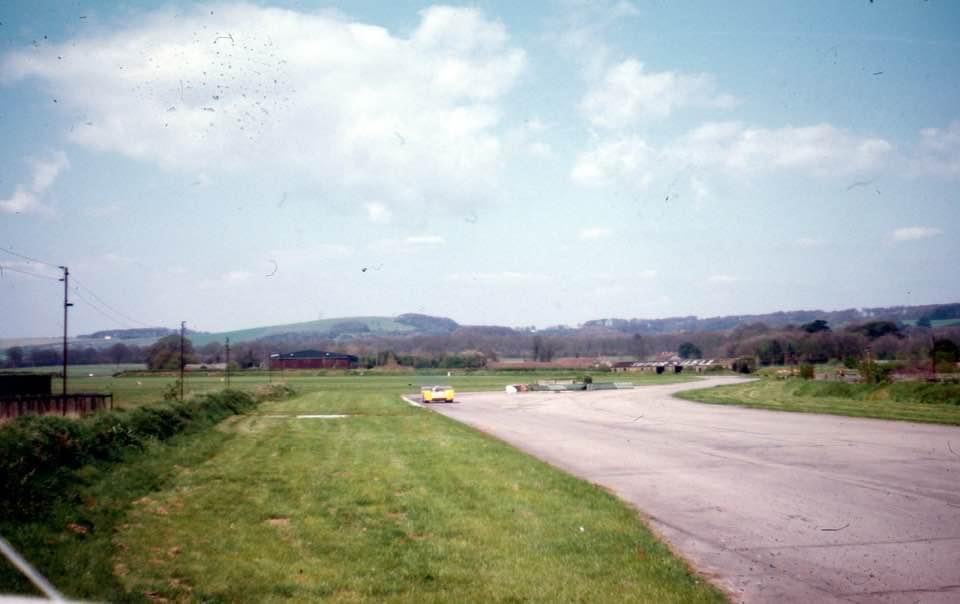
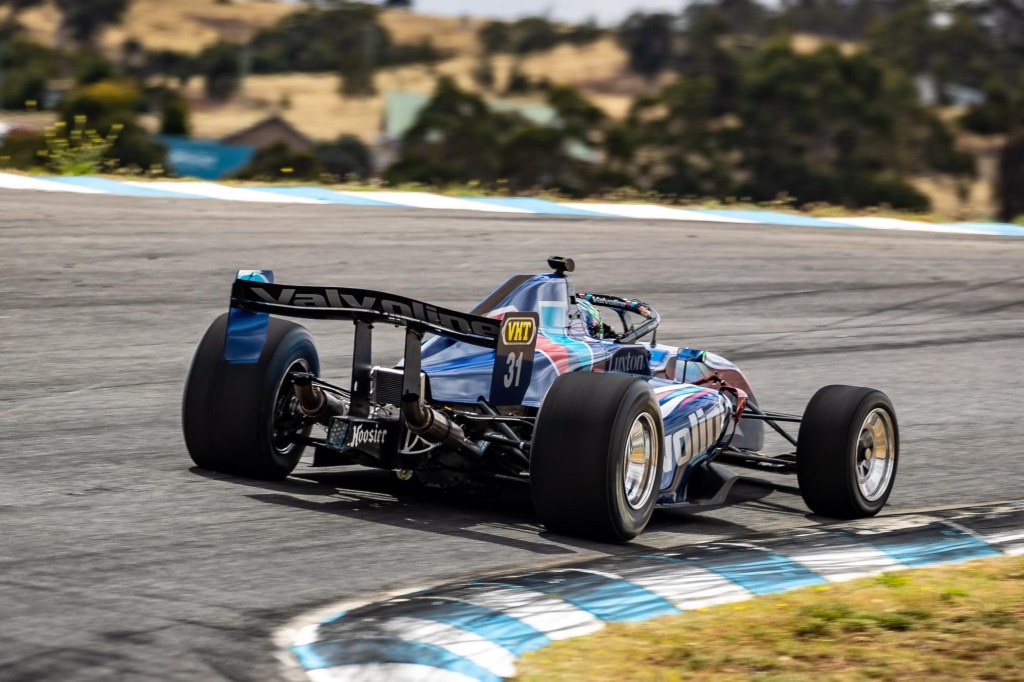
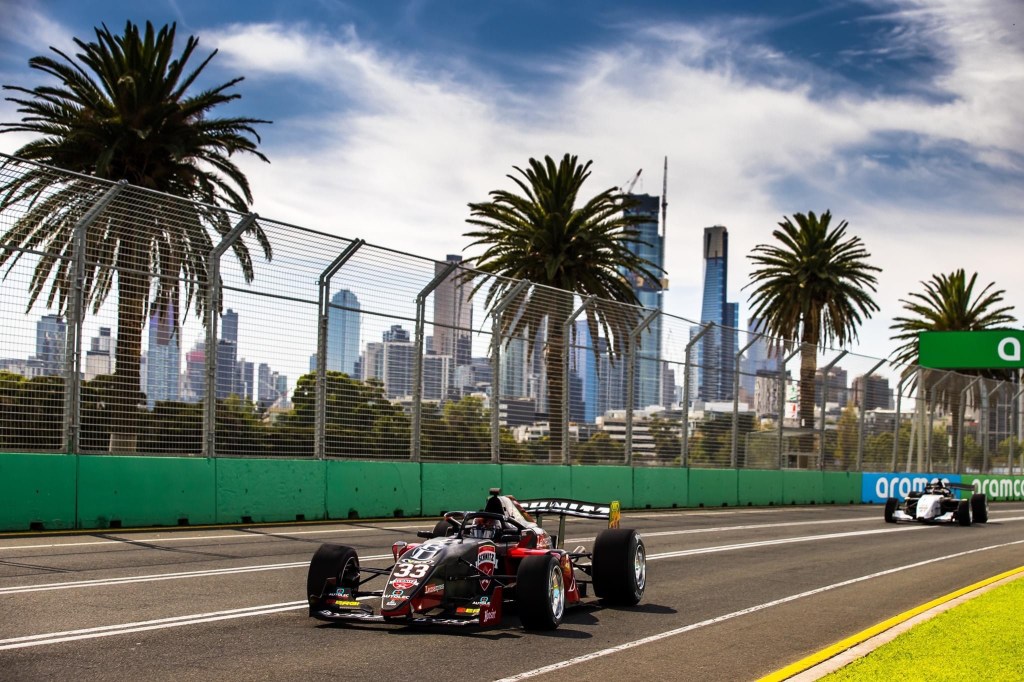
Covid 19 destroyed the 2020 season, but the category owners, Australian Racing Group ran a well supported four round (Symmons Plains, Phillip Island, Sandown and Sydney Motorsport Park), 12 race Gold Star (the Australian Drivers championship) between January and May 2021.
Rubens Barrichello testing at Phillip Island in advance of his participation in the first race at Sandown Park, in early September 2019. His opinion of the cars, free of the usual PR-crap, would be interesting (D Kalisz)James Golding in his GRM S5000 at Baskerville in January 2021. This chassis raced, or rather demo’d sans mufflers on the Saturday – the music was awesome! (D Kalisz)
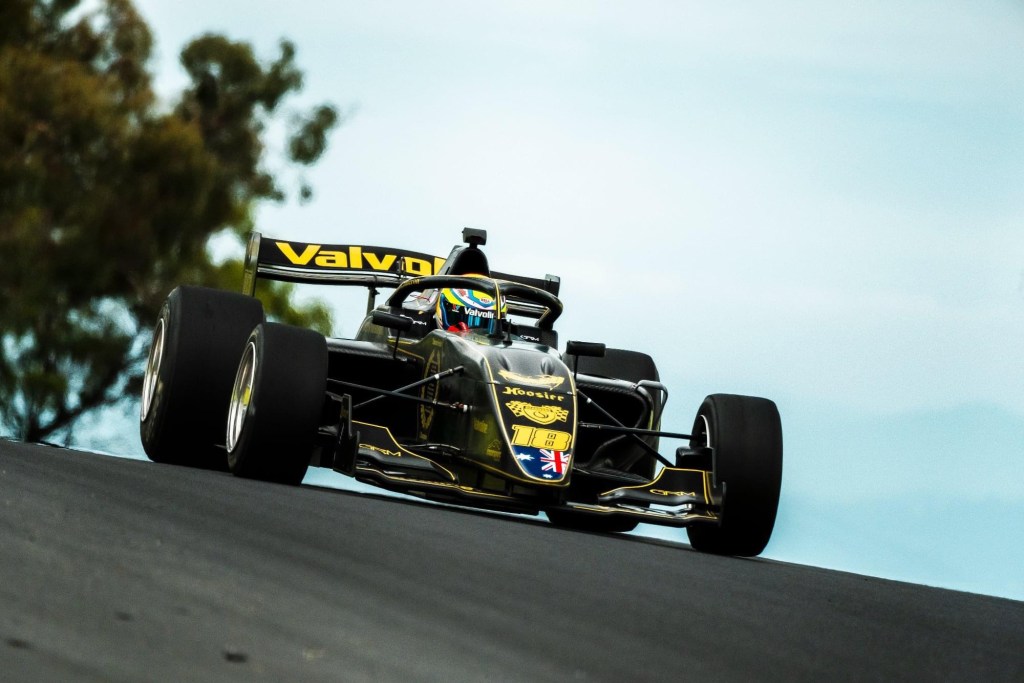
The very talented Joey Mawson was a worthy and popular winner with three race victories in a Garry Rogers Motorsport entry from dual Gold Star winner, Tim Macrow’s self-engineered and prepared car. Tom Randle and James Golding were third and fourth in other GRM cars.
Plans were announced later in the year for a three round Tasman Cup, reviving a revered competition won by some of the sport’s great names, for 2.5-litre and F5000 cars, from 1964-1975.
After the Covid induced cancellation of the Gold Coast 500 on the Surfers Paradise road course, the championship was contested over two rounds, at Sydney Motorsport Park and Mount Panorama.
There were three race winners at SMP, Tim Macrow, Roberto Merhi and Aaron Cameron.
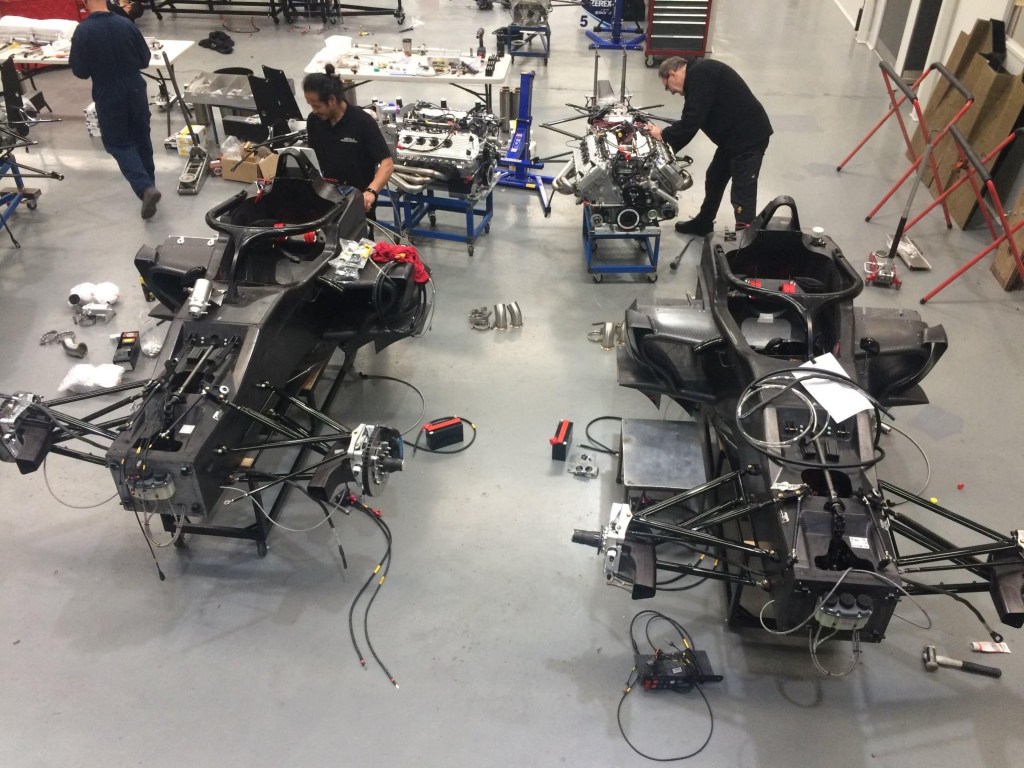
Two French-American Onroak-Ligier built Ligier JS F3-S5000 chassis about to be mated to Ford Coyote V8s at Garry Rogers Motorsport in late 2019. In recent times, three years after creation of the class, ARG decided the completed assemblage of bits shall be referred to officially as the Rogers AF01/V8 Ford. Catchy ‘innit (S5000)The versatile and very fast Aaron Cameron dives down The Mountain during his Tattslotto/Dodgem-car Bathurst weekend (D Kalisz)
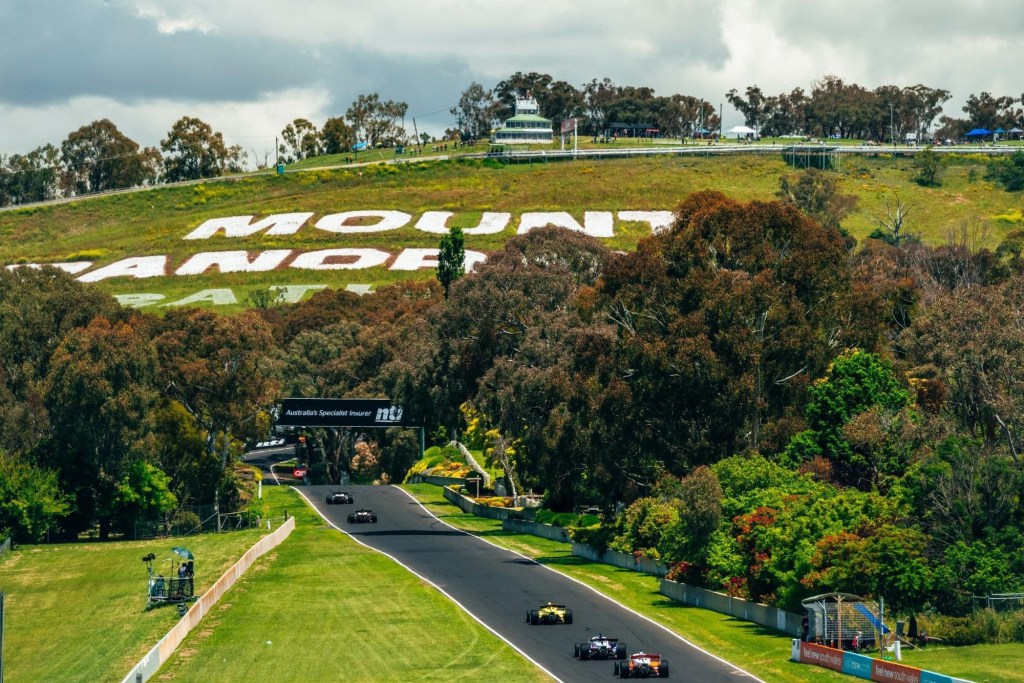
A fortnight later the teams arrived at Mount Panorama for four races from November 30 to December 4. The last time a 5-litre V8 single seater raced at Bathurst was when Niel Allen’s McLaren M10B Chev F5000 set a longstanding lap record during the Easter 1970 weekend.
Open wheeler enthusiasts relished the prospect of Australia’s fastest racing cars – with their power reduced for the weekend by 85bhp to an FIA mandated 470bhp to meet the requirements of the circuit licence – doing battle on the ultimate road racing track.
Unfortunately, the large number of driver induced high speed accidents did little but prove the sound engineering of their racing/dodgem cars. At the end of the three-race-clusterfuck – the fourth and final race was abandoned – Aaron Cameron was presented with the Tasman Cup in a Lotto-type result devoid of karma.
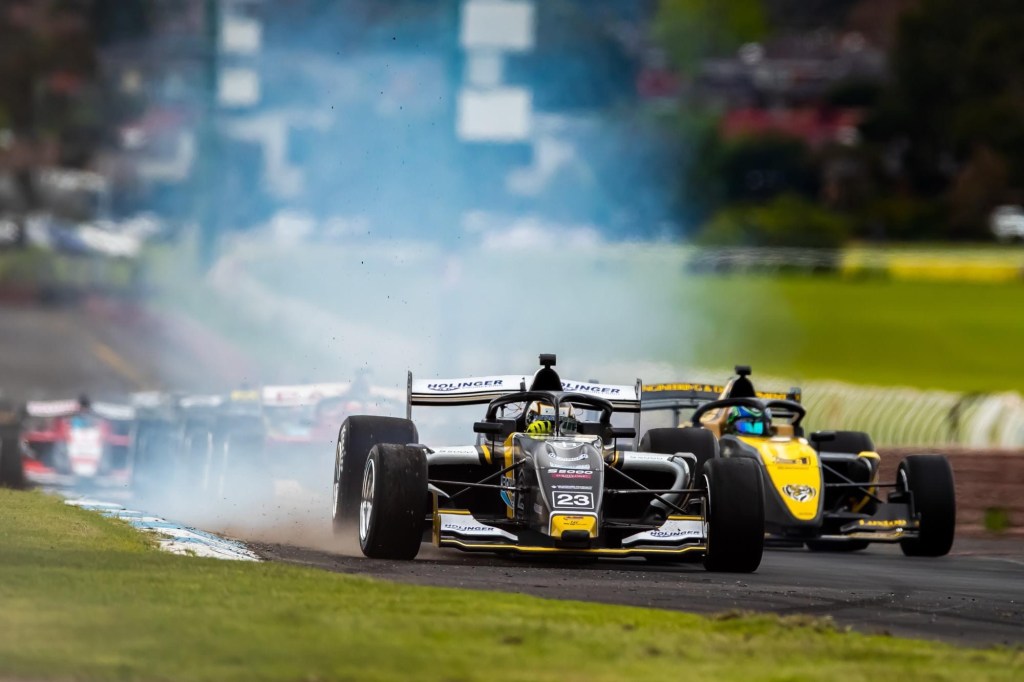
Tim Macrow is a fabulous blend of speed and finesse to watch in these demanding cars. Here in his self-run, Chris Lambden owned Ligier at Phillip Island in March 2021. He won a round, together with Joey Mawson and Tom Randle that weekend (D Kalisz)Mountain Straight freight train at Bathurst 2021 (D Kalisz)
Other names etched into that cup are Bruce McLaren, Jim Clark (three wins), Jackie Stewart, Chris Amon, Graeme Lawrence, Graham McRae (three wins), Peter Gethin and Warwick Brown.
The 2022 Gold Star is being held over six rounds between February and September, the Tasman Series comprises three rounds in October-November. In 2023 a Tasman round is planned for New Zealand, this is great to justify requisition of a revered name for a race series which was contested on both sides of The-Ditch (Tasman Sea).
I was lucky enough to see these fantastic cars race at Symmons Plains and perform demonstrations at Baskerville the week later, twelve months ago. In a perfect world there would be a set of rules and a mix of chassis and engine manufacturers, but as the Covid Alchemists continually prove, the world isn’t perfect. So, a mix of 15 or so identical 5.2-litre DOHC, four-valve, fuel injected Ford V8 powered, Ligier JS F3 chassis shakes the ground quite nicely for me.
Australian international, James Davison, Albert Park 2020 before the Covid plug was pulled (D Kalisz)Tim Macrow about to exit stage left at Sandown’s first turn, September 2019. Tim won a heat, John Martin the other, Macrow won the meeting overall. Yellow nose is James Golding’s GRM machine (D Kalisz)
ARG are to be congratulated for the media coverage, Supercar Maxi-Taxis suck the life out of all other race categories in Oz, but S5000 got a fair crack of the whip.
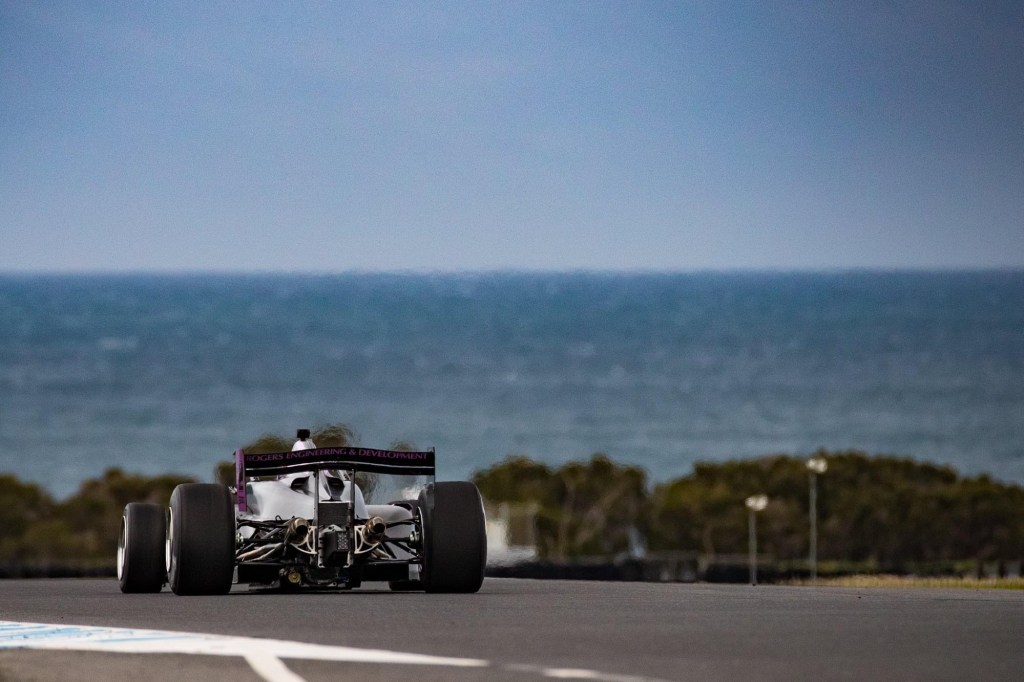
The media includes photography by Daniel Kalisz, a mighty-talented young ‘snapper whose work is posted onto the S5000 Facebook page. This article is a tribute to his creativity, remember that name. Buy his work. I chose shots with panoramic backdrops devoid of grubby advertisers hoardings, Kalisz proves it can still be done, at some circuits anyway!
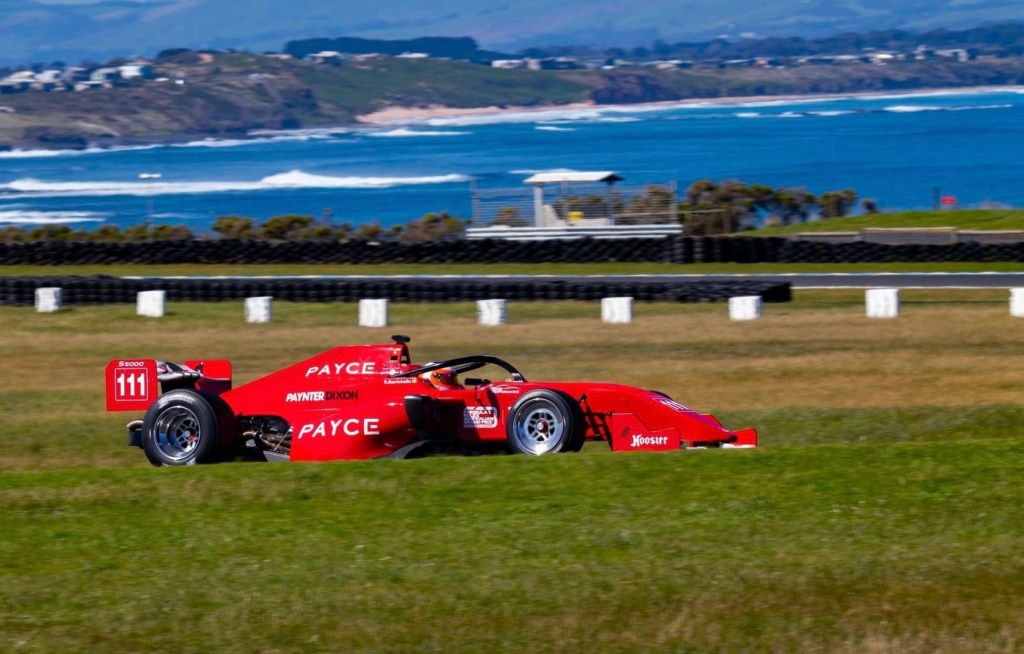
Southern Loop at Phillip Island must be a sphincter-puckering experience in these missiles. Bass Straight is the backdrop, next stop Tasmania, or perhaps King Island (D Kalisz)
Credits…
S5000 Group Facebook page
Tailpiece…
(D Kalisz)
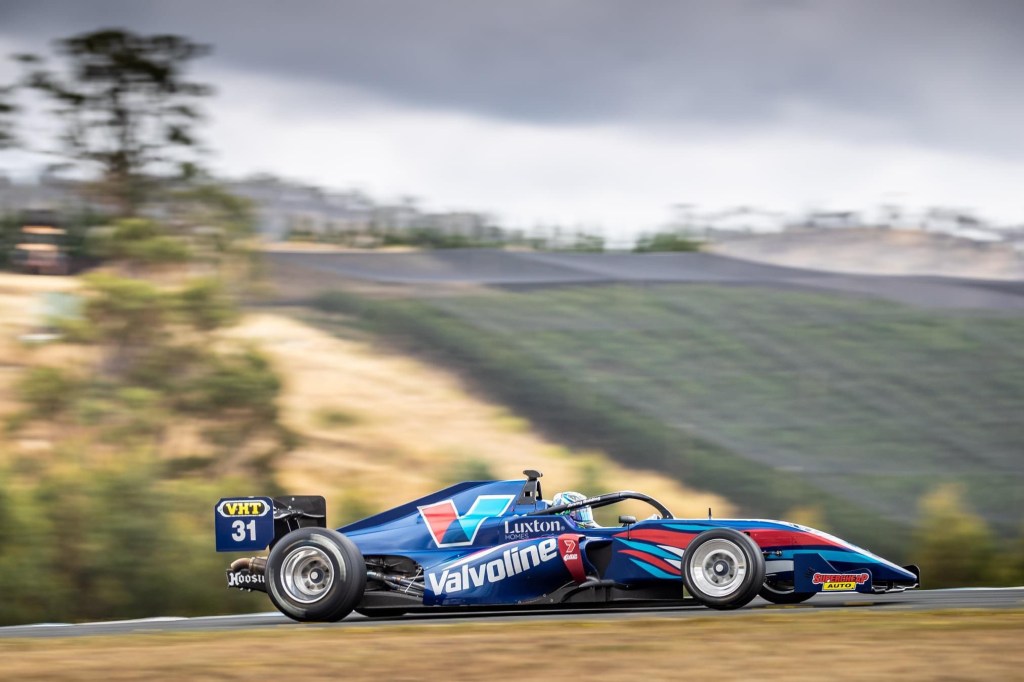
On man, this shot by Kalisz! The wow factor when I saw and published it early in 2021 was mega. It is a beautifully composed and executed shot of Tom Randle at Baskerville, a stunning natural amphitheater just north of Hobart, Tasmania. My Oz shot of the year…
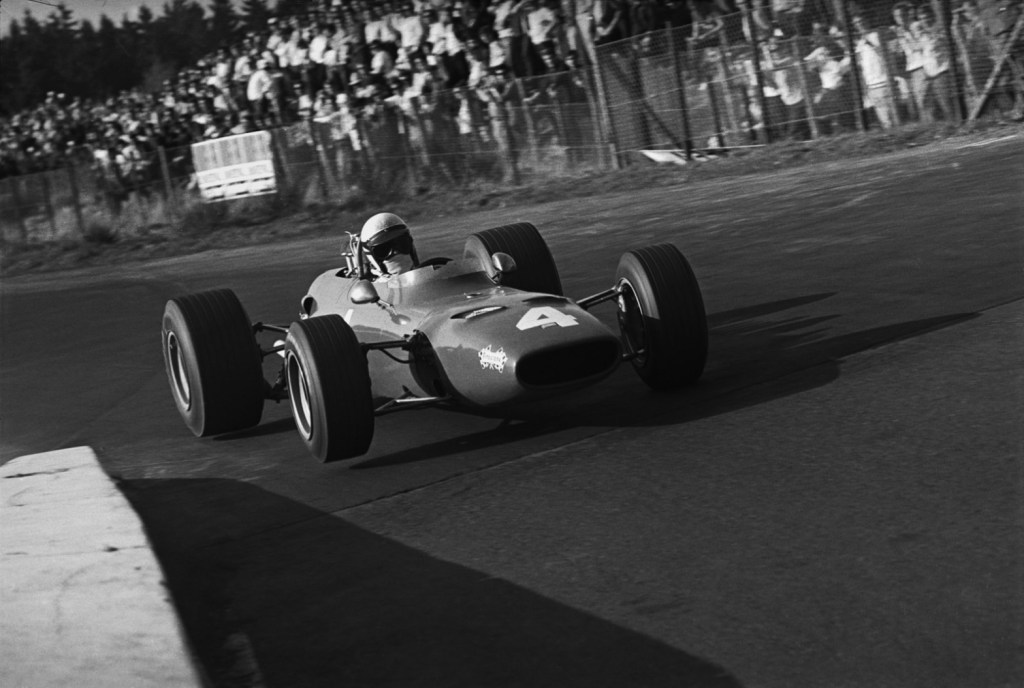
Yes, yes, yes, I know I’ve done these Dinos before many times. But I rather like the two photographs of the great Lancastrian, Brian Redman, racing Dino 166 #0008 in the XXXI ADAC Eifelrennen Euro F2 round at the Nurburgring in 1968.
That 21 April day was his Ferrari debut, Motoring News reported the sight of the great-Brit three-wheeling the car around the South Circuit’s turns as quite startling.
Redman finished a fine fourth despite a stop after his goggles were smashed, cutting one eye. Chief Engineer Mauro Forghieri was so impressed he telephoned Enzo Ferrari and recommended Ferrari contract him, an offer he turned down then. Later, Redman was a valued member of the Scuderia’s sportscar squad.
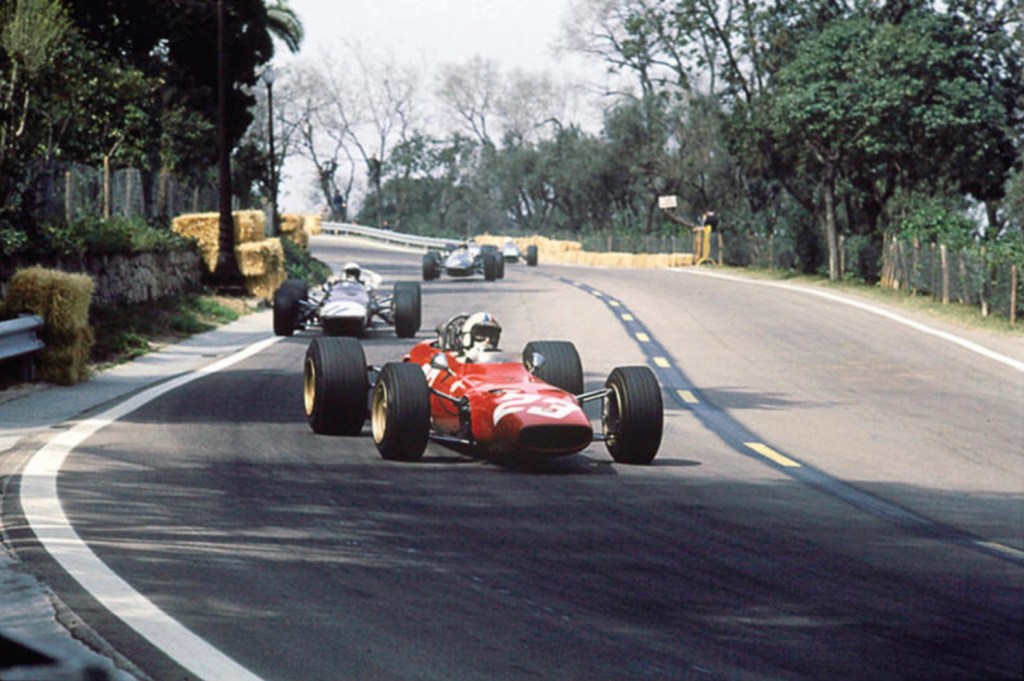
0008 was a new car for 1968. Chris Amon raced it at Montjuïc Parc, Barcelona on its March 31 debut, finishing third behind the Ford FVA engined Matra MS7s of Jackie Stewart and Henri Pescarolo.
Amon amid the trees and high speed swoops of marvellous Montjuïc Parc, behind is the #11 Lola T100 Ford of…Brian Redman, DNF engine (unattributed)
Amon raced it at Hockenheim in mid-June (eighth) before it was damaged in a multiple-car accident in the Monza Lotteria GP in June driven by Tino Brambilla.
Chris raced the repaired car at the Tulln-Langenlebarn airfield circuit in mid-July (classified twelfth) before Brambilla was third in a heat at Zandvoort, and bagged fastest lap. At Sicily in late August he was again third in the Mediterranean GP at Enna, this time behind F2 King Jochen Rindt’s Winkelmann Brabham BT23C Ford and Piers Courage’ similar Frank Williams entry.
Brian Redman three-wheeling on the Nurburgring in 1968 (MotorSport)
The little F2 1.6-litre Ferrari V6, even in four-valve spec, never had the legs of a decent Ford FVA four. Funnily enough, the 2.4-litre Tasman spec V6 gave very little away to the Ford Cosworth DFW, the 2.5-litre variant of Cosworth’s 3-litre DFV V8, GP racing’s most successful engine.
0008 was then prepared for the 1969 Tasman Cup, as part of a successful two car assault on the championship together with Derek Bell in #0010. As I’ve written before, Chris won the championship in fine style with 2.4-litre engines fitted – four wins of the eight rounds including the NZ GP – before selling the car to Graeme Lawrence who repeated the dose in 1970.
Graeme Lawrence on the hop during the 1970 Lady Wigram Trophy, DNF overheating #0008. (G Lawrence Collection)
Credits…
MotorSport, F2 Index, Graeme Lawrence Collection, oldracingcars.com
Tailpiece…
(MotorSport)
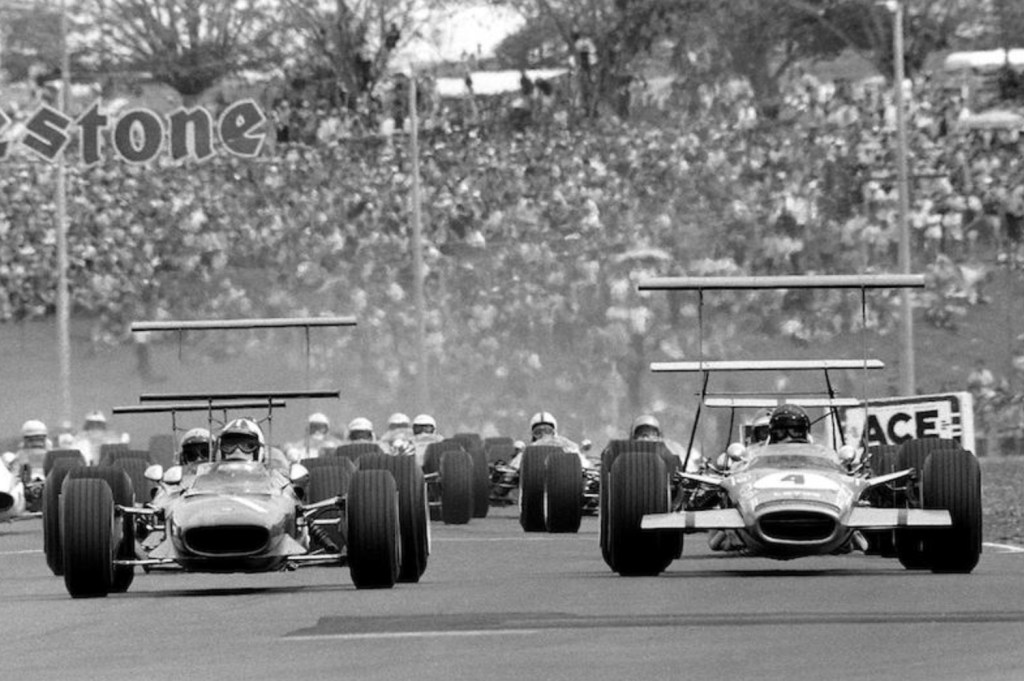
Chris Amon and Jochen Rindt, Ferrari 246T and Lotus 49 Ford, on the front row at Pukekohe, start of the New Zealand Grand Prix, first round of the 1969 Tasman Cup on January 4.
Amon won from Rindt and Piers Courage in Frank William’s Cosworth DFW powered Brabham BT24. All three were stars of the series, Chris won four races, Jochen two and Piers one.
































 primotipo...