I guess Bugatti were one of the first, if not the first to sell customer racing cars in large numbers to those lucky enough to afford them.
So you would expect their communication with clients to have been pretty good.
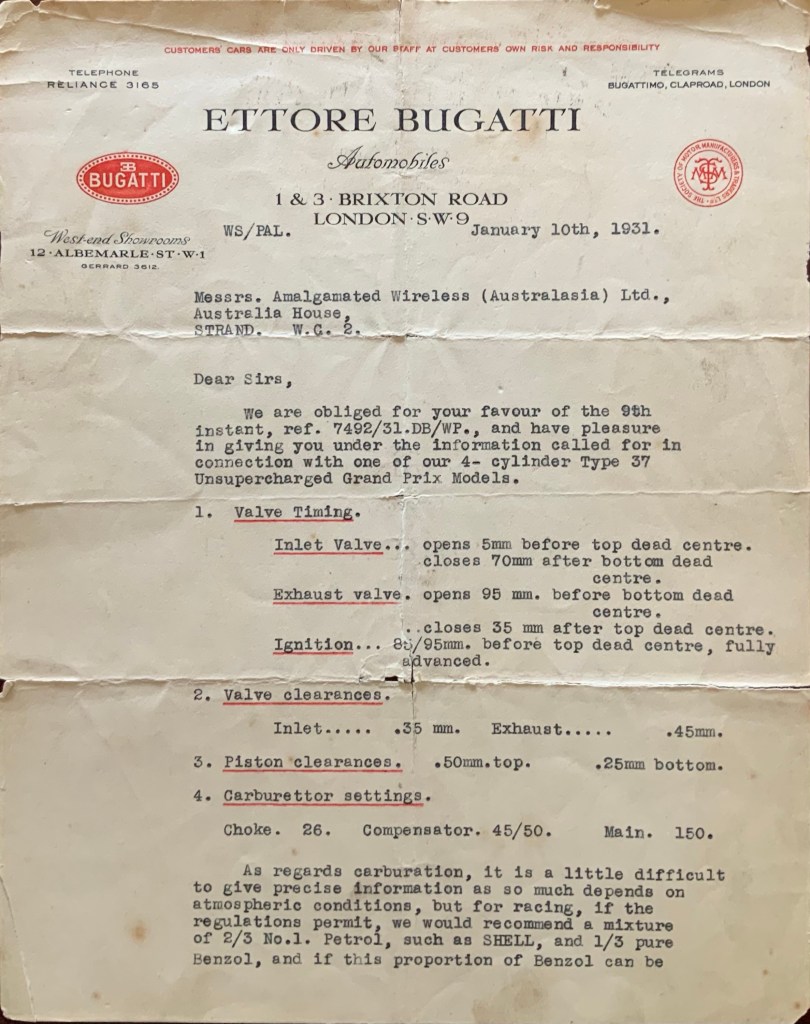
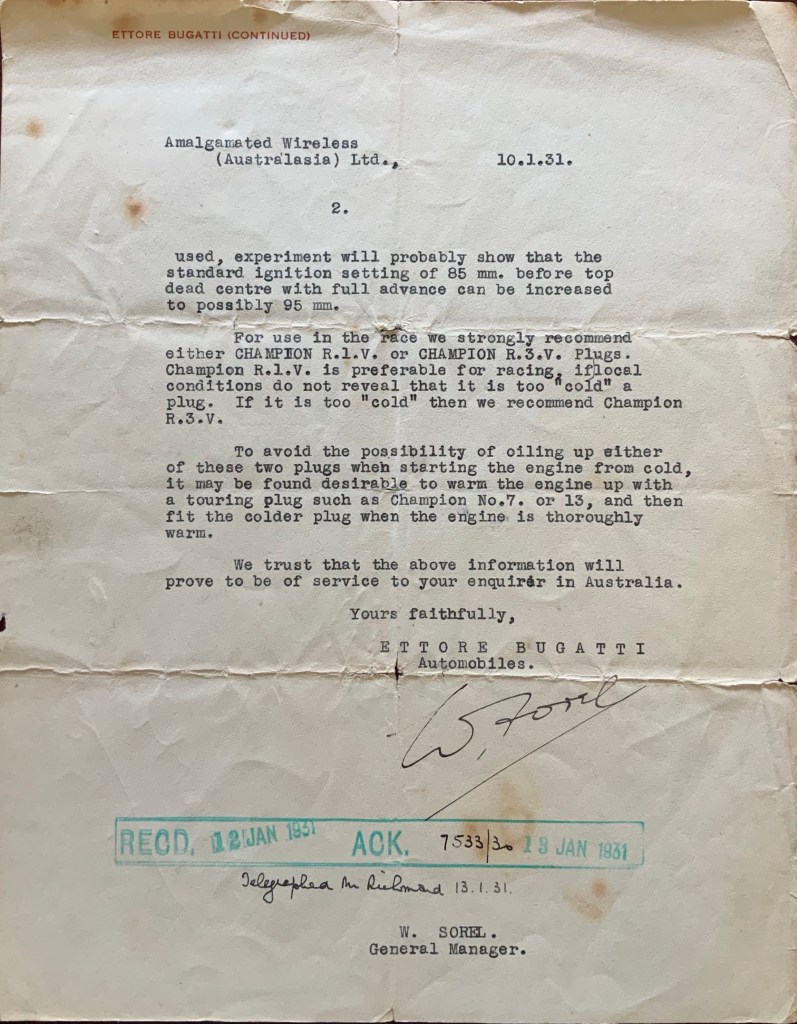
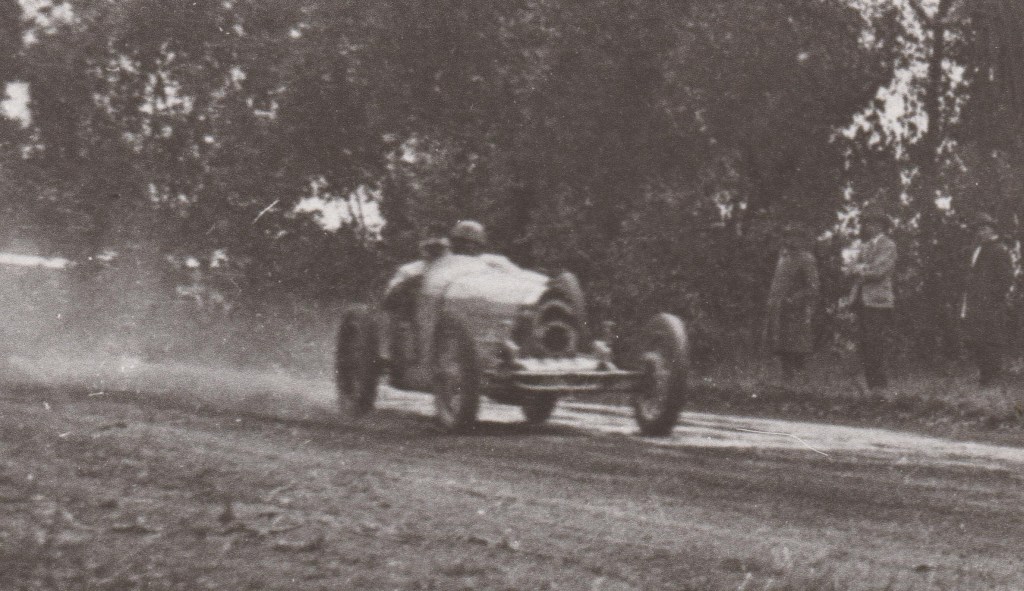
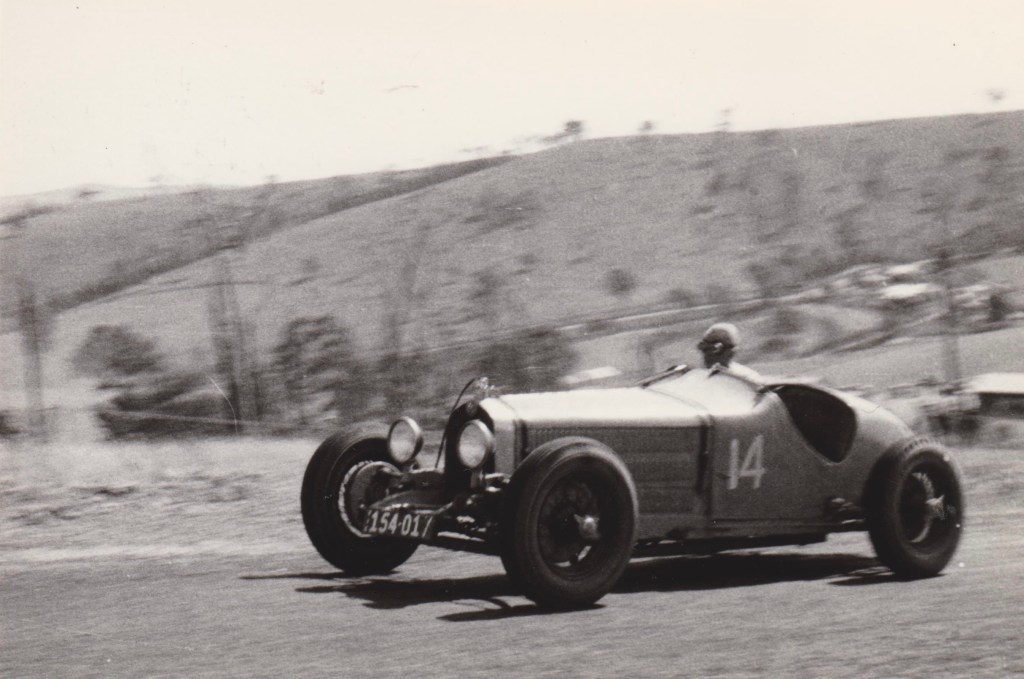
This January 13, 1931 letter, on the key operational specifications of a Grand Prix Bugatti Type 37, is from Bugatti’s UK agent, Sorel, to Australian customer, Harold Drake Richmond, a regular in the Phillip Island AGP years. His best placing was second in the subject car, in 1930 and 1933, and third in 1931- chassis 37164.
“I’ve seen a lot of these types of letters from Bugatti to their customers,” Bugatti racer/historian Bob King commented.
I love this type of period communication; both the content itself and the formality of the language of the day.
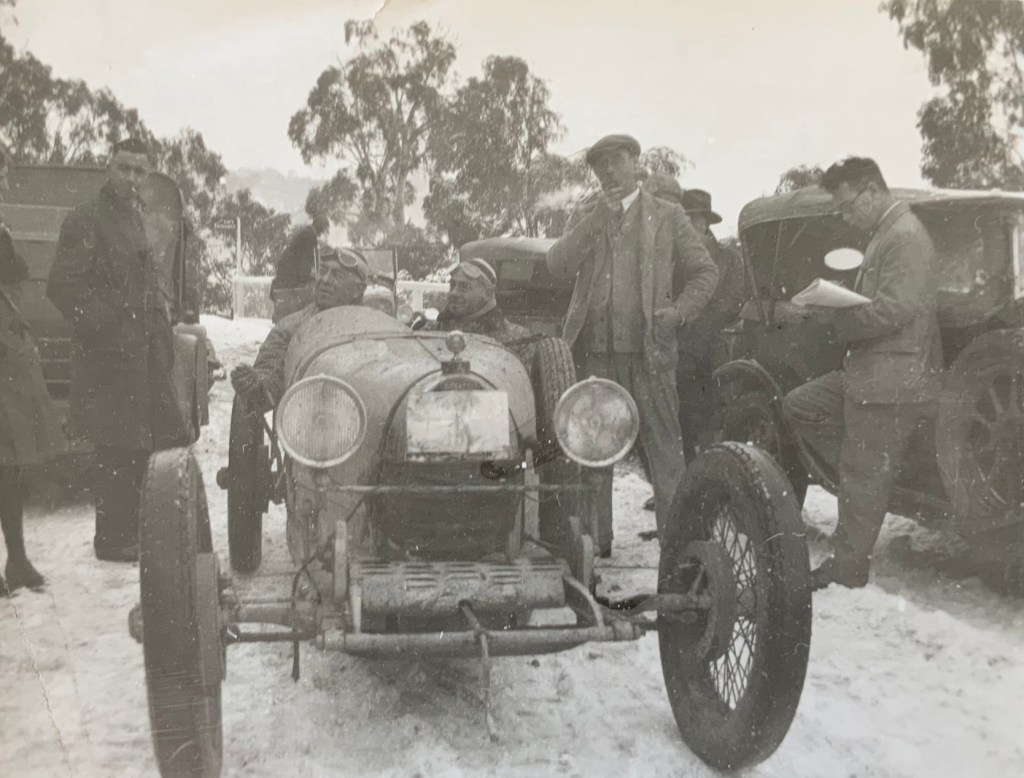
Harold Drake Richmond in his Bugatti Type 37 during a snowy Alpine Trial in the Victorian high country, perhaps November 1930 (VSCC Vic Collection)
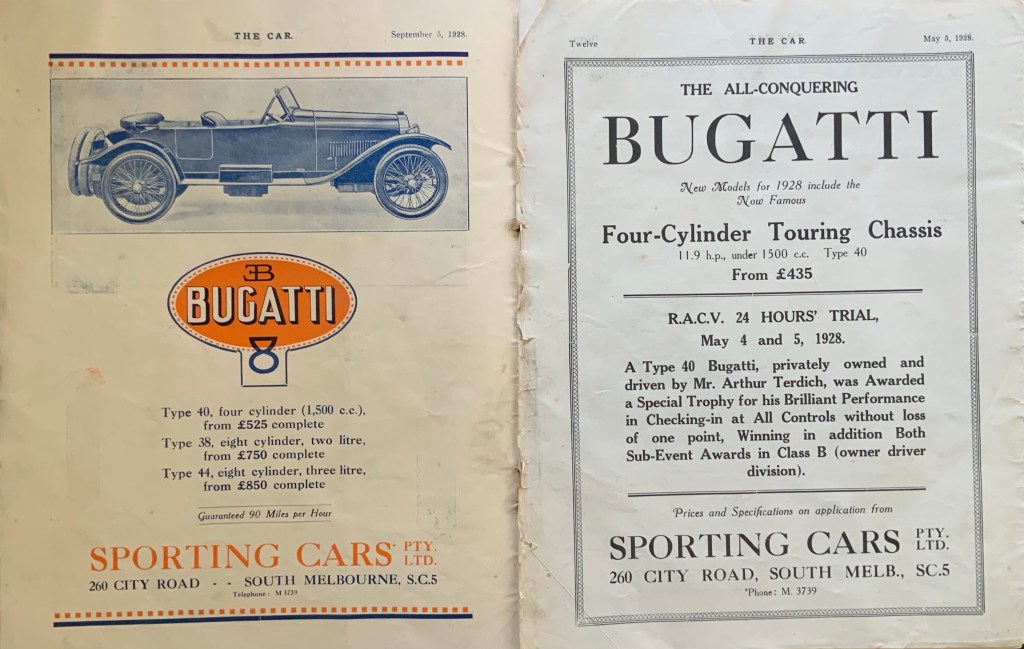
This material comes from the Arthur Terdich Collection, part of the Vintage Sports Car Club of Victoria Collection. Terdich was the winner of the 1929 Australian Grand Prix at Phillip Island, prominent local businessman and early Melbourne motoring leader.
Many thanks to me’ mates Bob King and Tony Johns for creating the opportunity to access material seen by few, and to Ashley Tracey, the VSCC librarian, for being so kind with his time to allow Bob and I to pick the eyes out of the content. Over time we will share the material.
All new Bugatti’s delivered to Australia passed through the hands of Sorel, Bugatti’s UK agents. Not necessarily physically – that is delivered to the UK before on-shipment to the colonies – but legally. Why this was so is still a mystery to King, but doubtless was a technique to avoid the worst ravages of the fiscal-fiend (tax office) in France and/or Australia.
Etcetera…
(VSCC Vic Collection)
Credits…
Bob King, Tony Johns, Ash Tracey and the VSCC Victoria
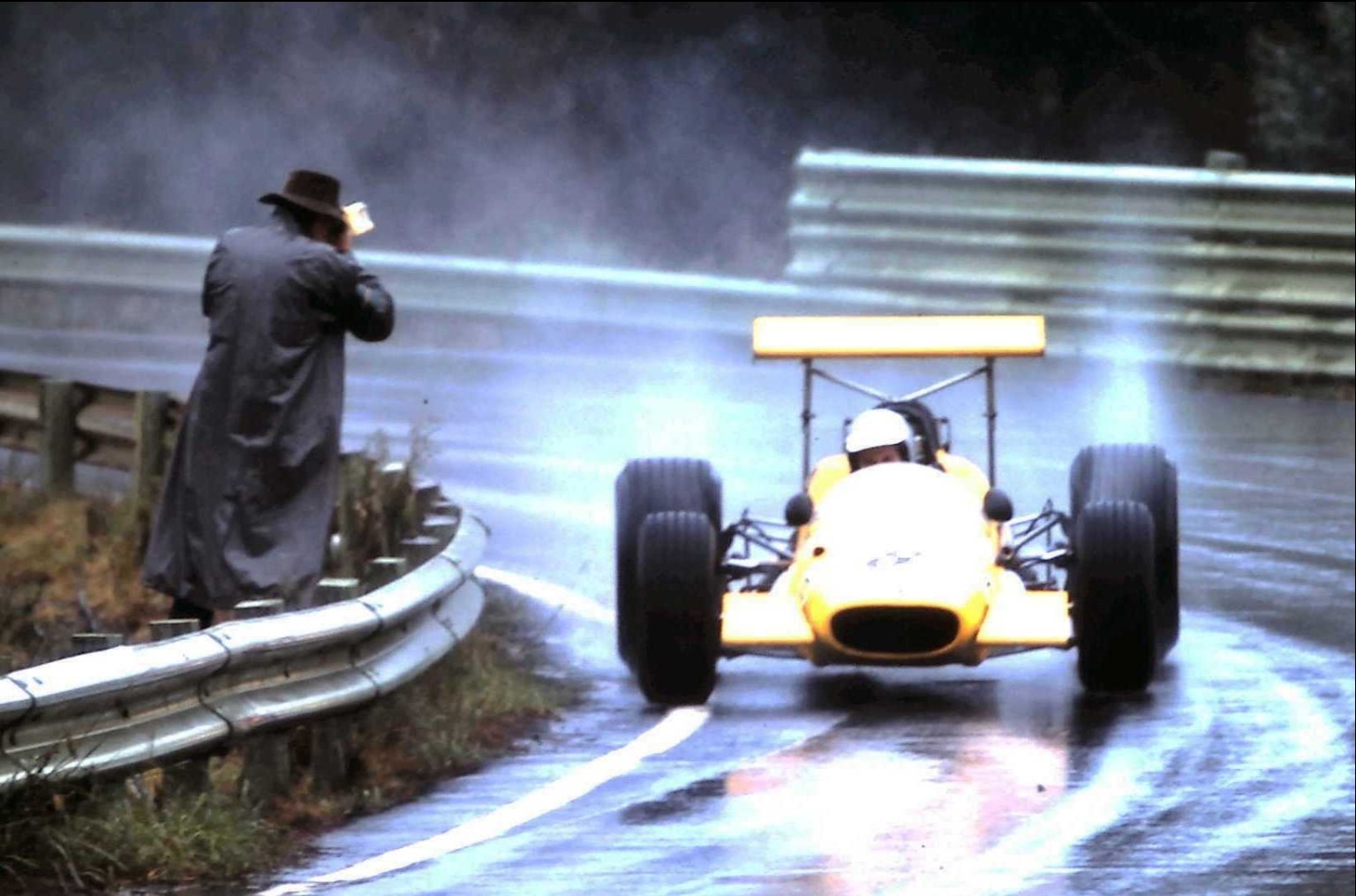
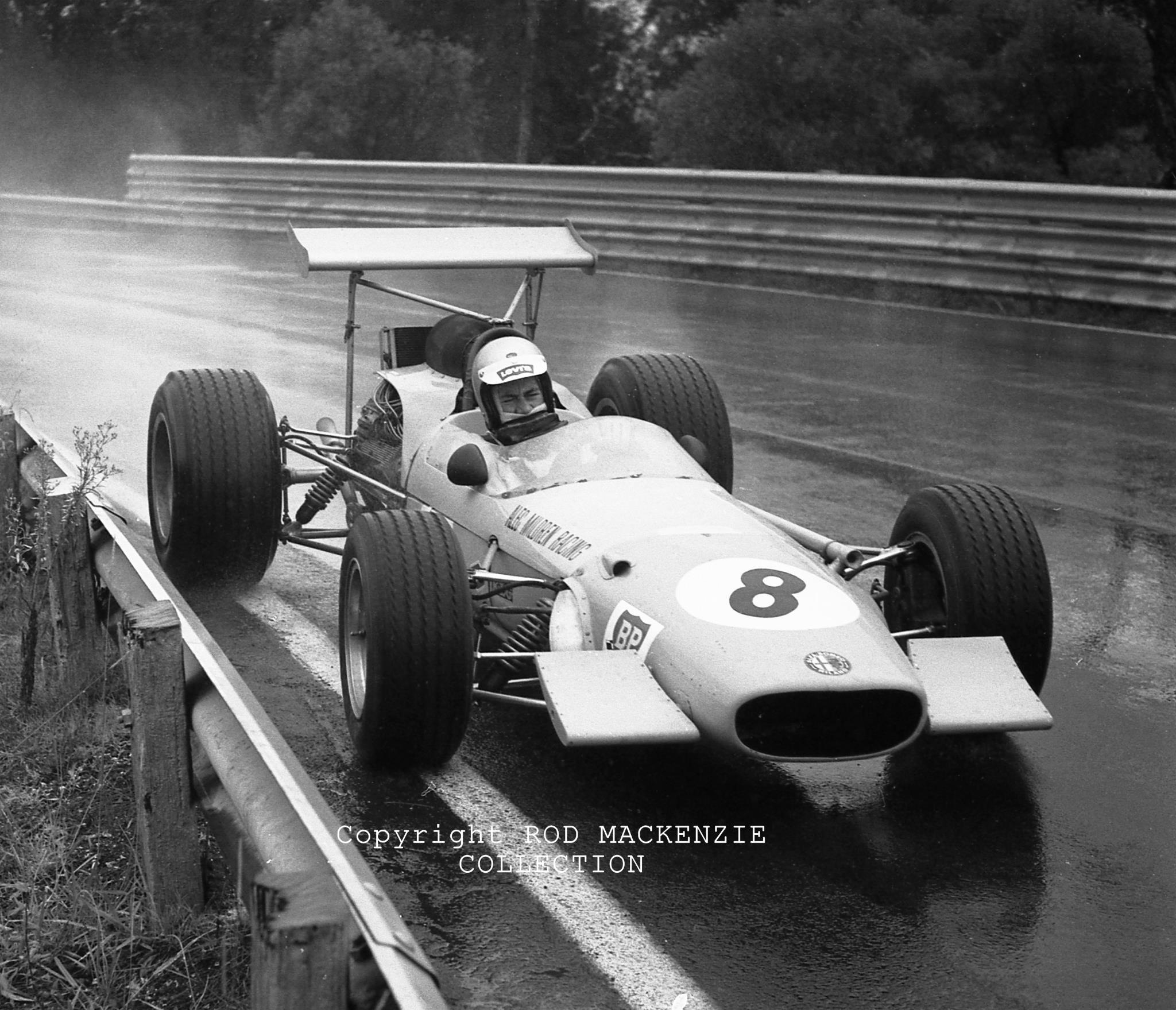
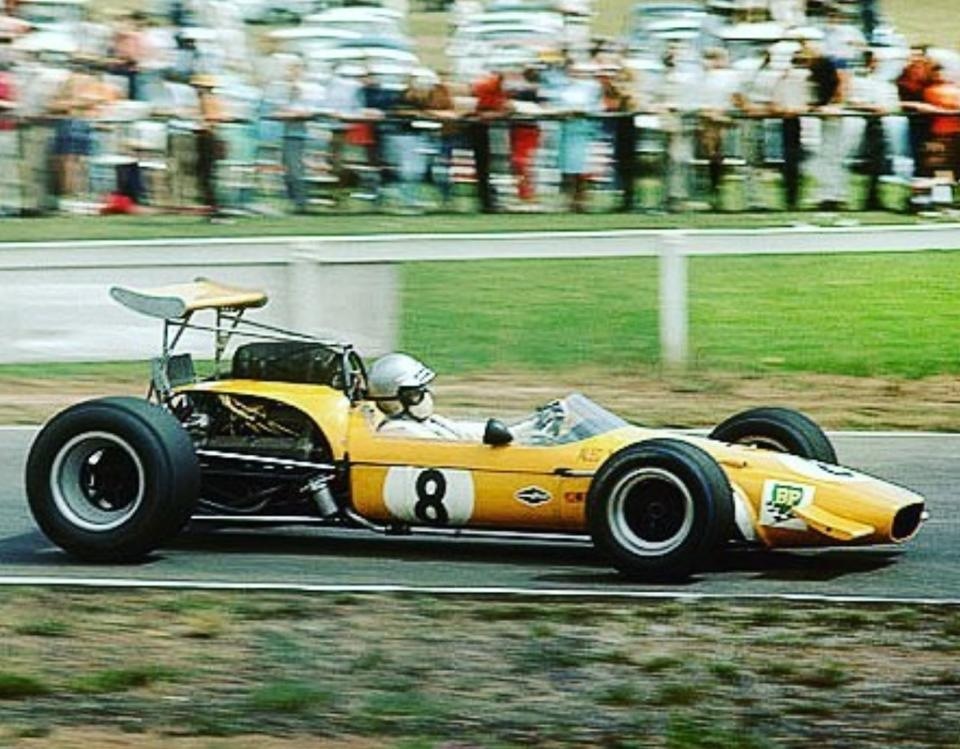
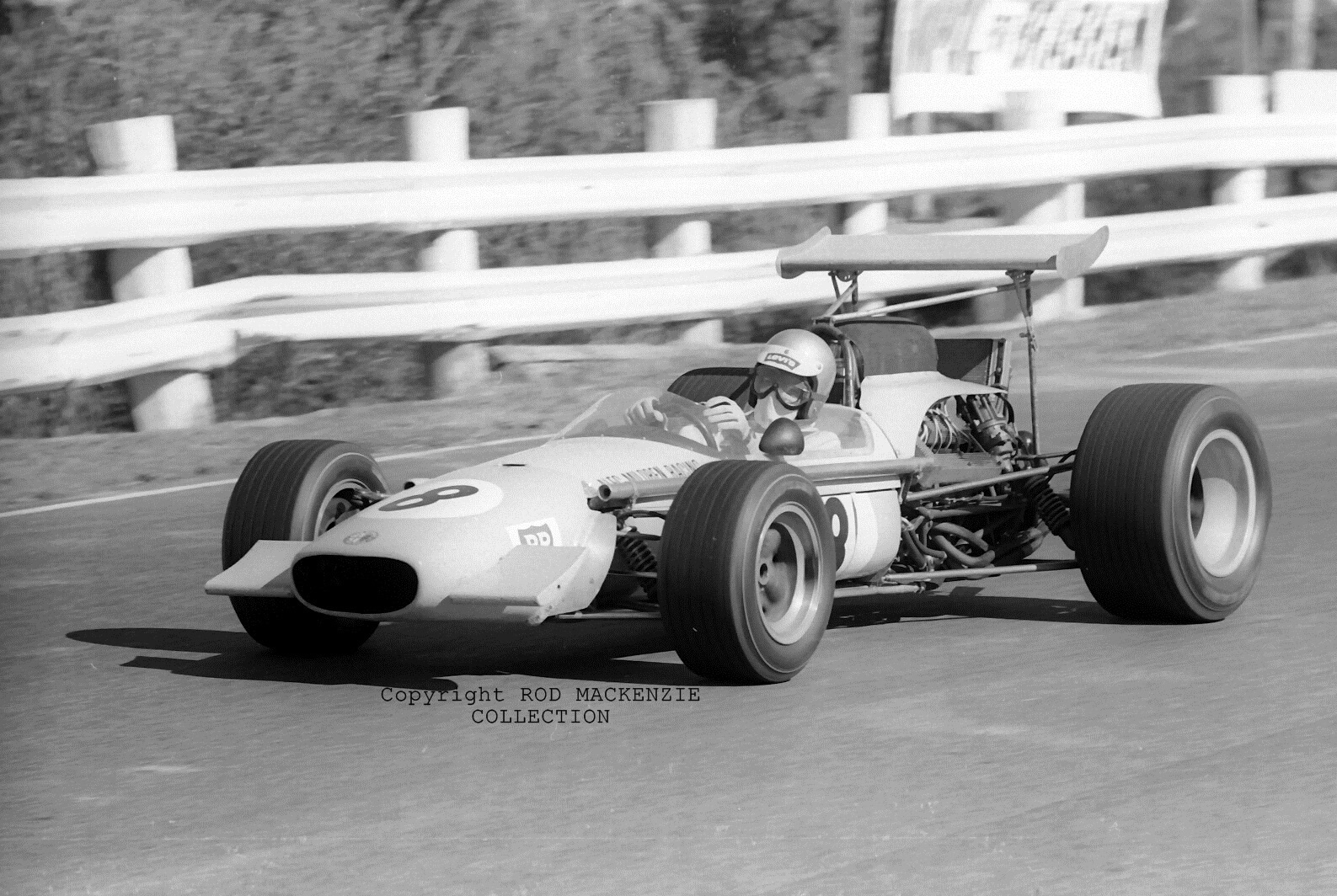
There is no such thing as too much Alec Mildren Racing; the man himself, the cars and their colour, drivers – the lot…
So, here we go again! I got a chuckle out of the first three photos which were uploaded onto social media within a couple of days of each other a while ago.
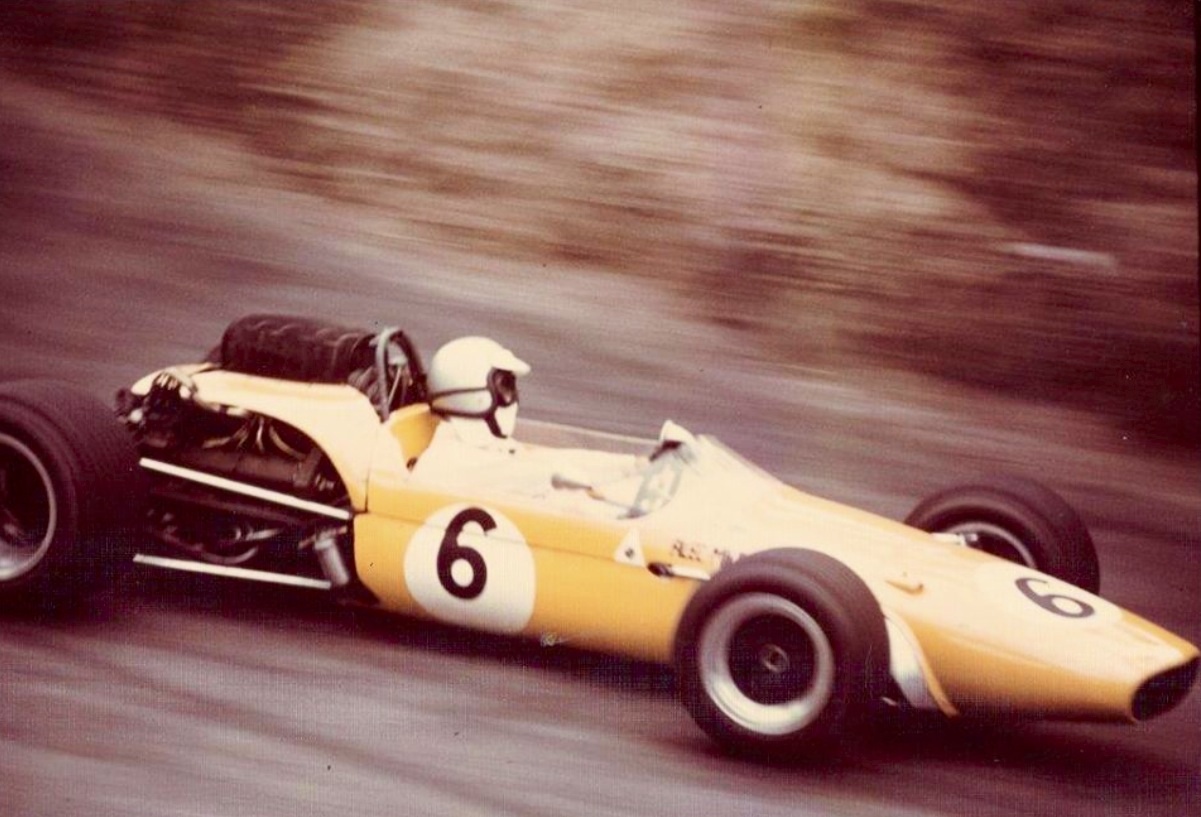
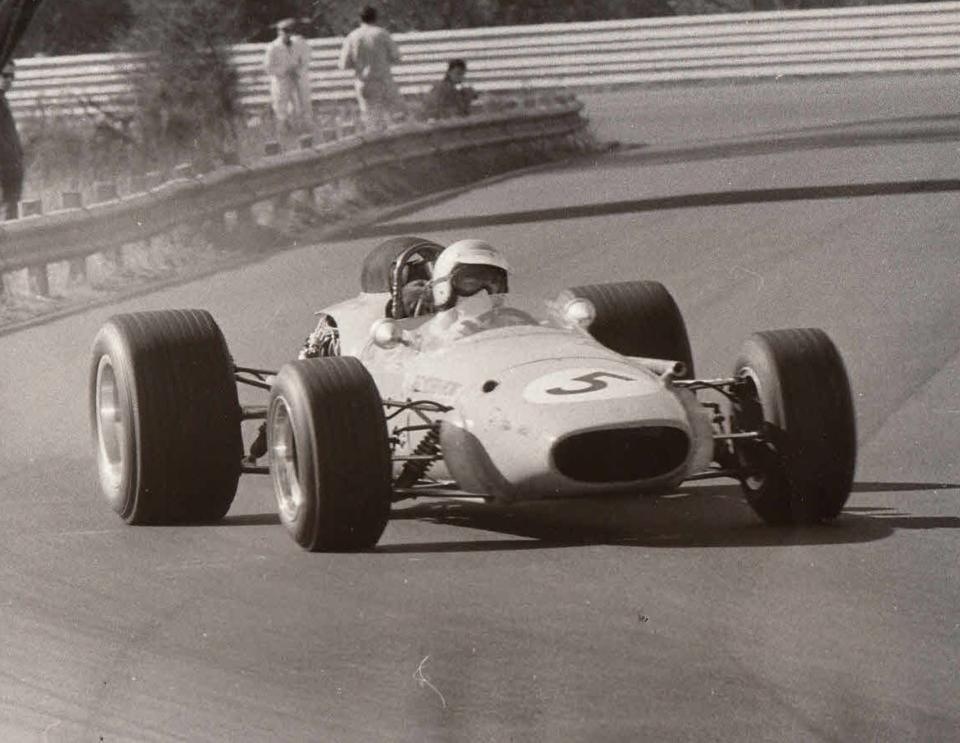
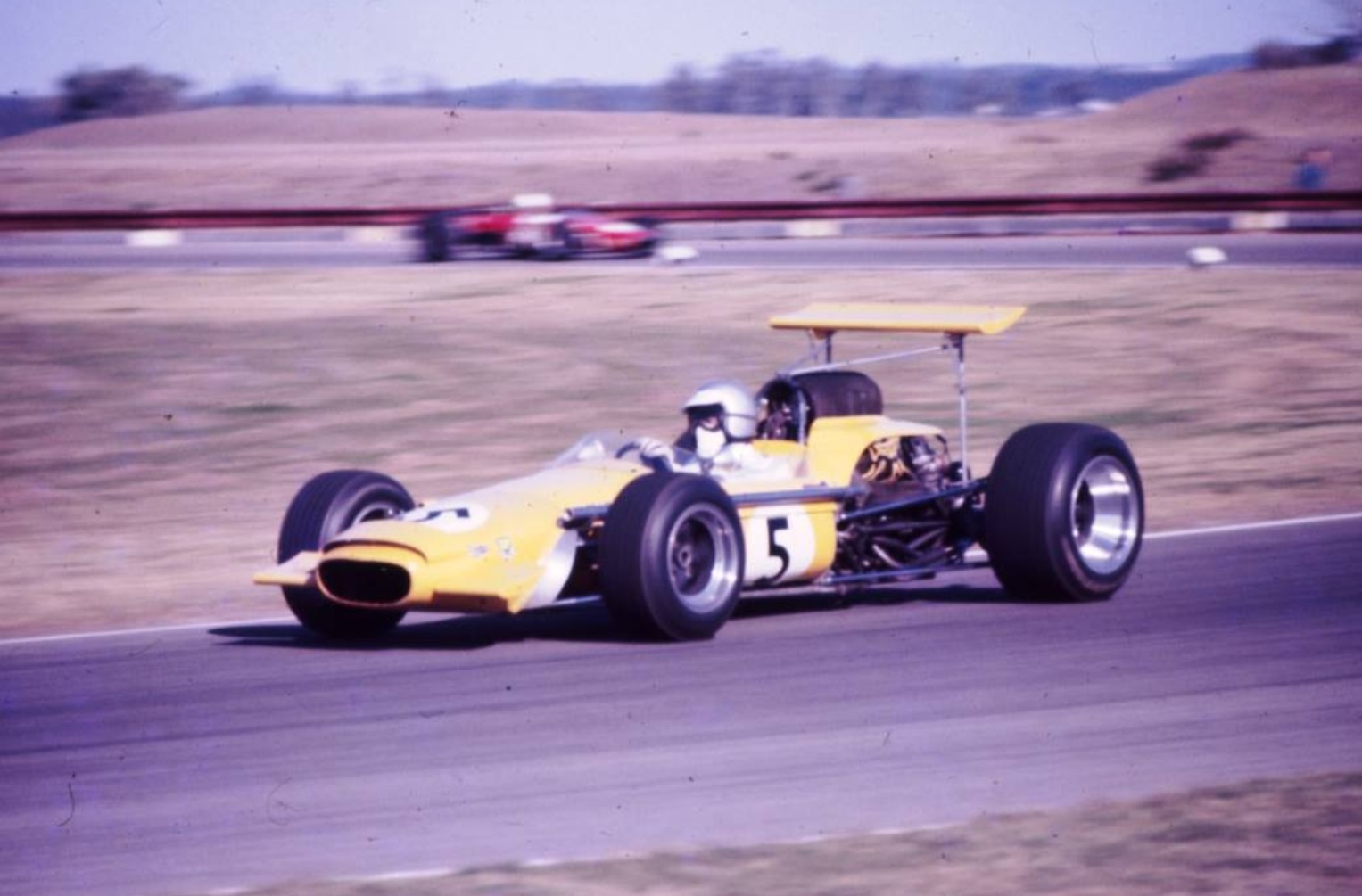
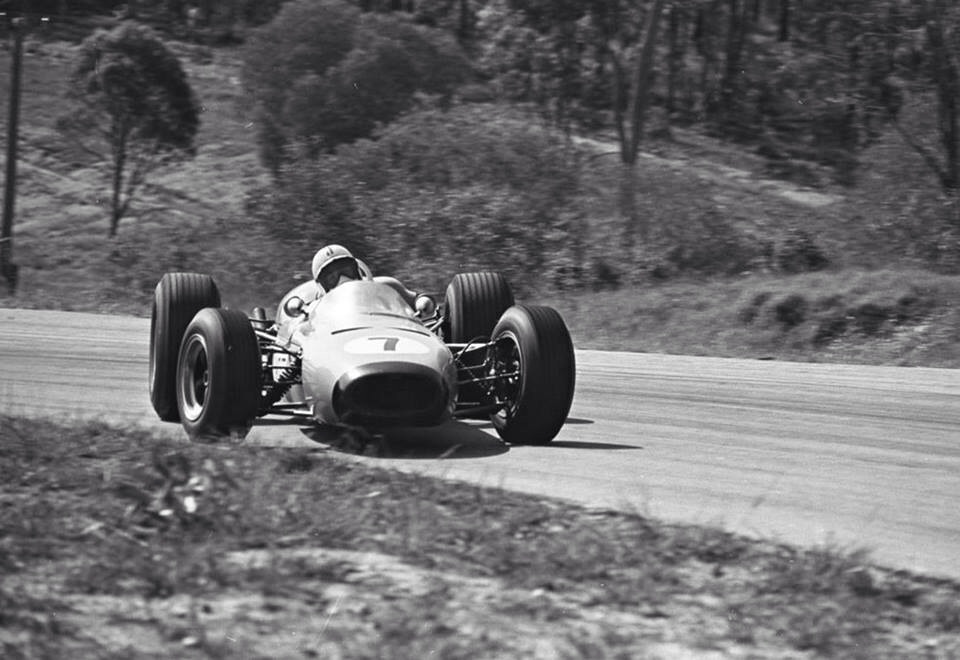
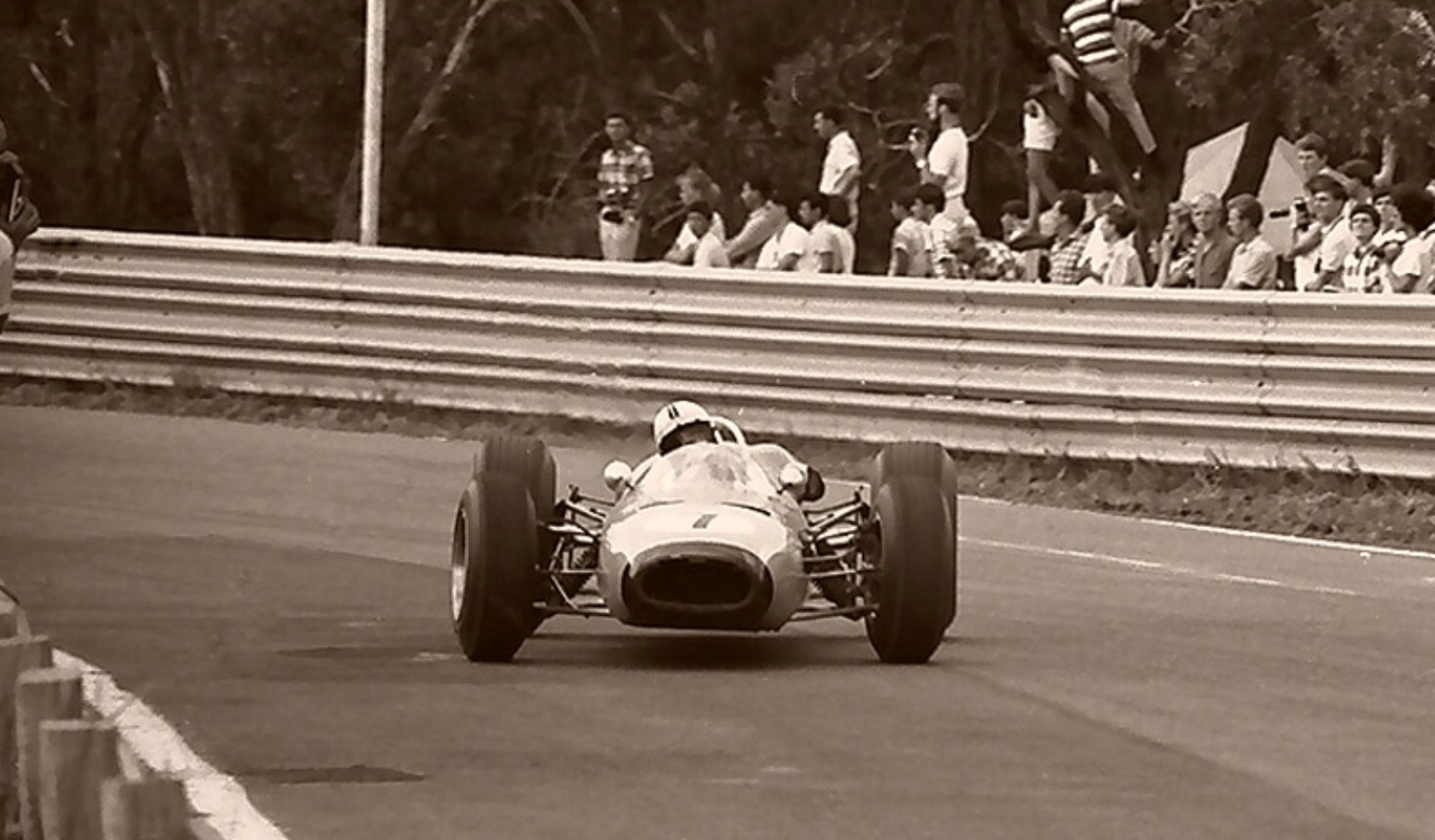
The wry amusement was about the car, Mildren’s Frank Gardner and Kevin Bartlett driven Brabham BT23D-1 Alfa Romeo Tipo 33 2.5 V8 – particularly its evolution from wingless beauty to appendaged warrior over the period of several months – between Easter and July 1968 to be precise.
The car arrived in Australia in late 1967, seven months before wings first appeared in F1. Ferrari and Brabham were arguably the first over the July 7, 1968 French GP weekend at Rouen. The performance dividend of wings cascaded across the single-seater world. Lets not forget Jim Hall ‘started it’ with his gorgeous Chaparral sports-racers, to give credit where it is due.
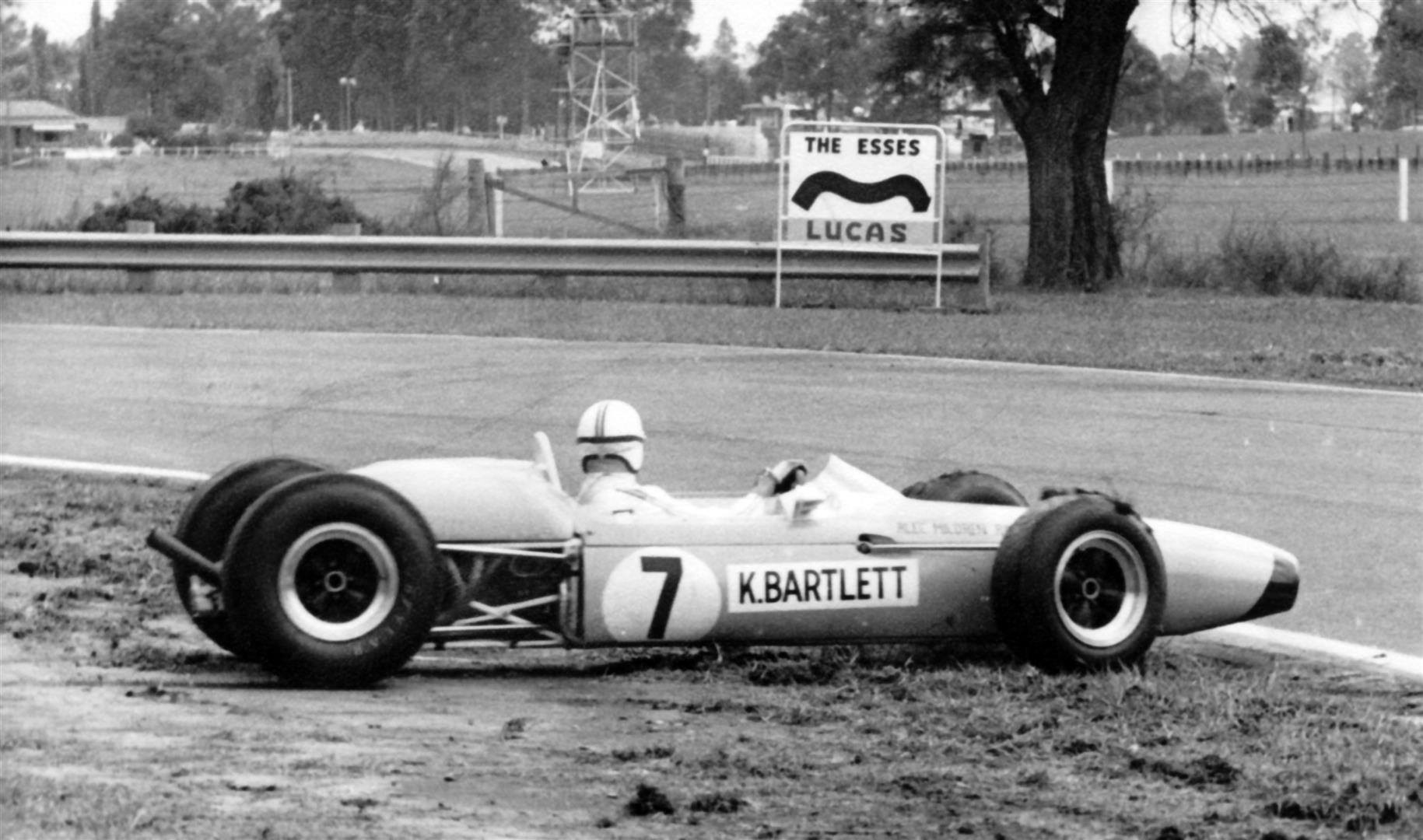
Dick Simpson’s ripper shot (above) is Kevin Bartlett traversing Hell Corner at Bathurst during the Easter ’68 Gold Star weekend, as is the one below at Forrests Elbow. The stationary shot is the car in its final 2.5-litre Tasman form during the Warwick Farm Tasman round in 1969 with KB at the wheel in the form-up area/dummy grid.
(P Maslen) (K Bartlett)
Treat this piece as a pictorial of BT23D-1’s short life as a front line tool. It was sold after the ’69 Tasman sans engine to Melbourne publisher/motor show promoter Jim Abbott to become his display F5000/hill-climb car. In this form it was fitted with an ex-Frank Matich Oldsmobile V8 and ZF five speed transaxle. Abbott was part of the push to adopt F5000 as the replacement for the Tasman 2.5 ANF1, the modified Brabham was a tool to advance that cause.
Hordern Trophy, Warwick Farm, December 1967…
Frank Gardner took a great win upon the cars debut at the December 3 Hordern Trophy Gold Star final round at Warwick Farm, from John Harvey’s Brabham BT11A Climax.
The car didn’t have the ultimate pace during the Tasman Cup of the works Lotus 49s or Chris Amon’s Ferrari 246T.
(AutoSportsman)
Warwick Farm 1968…
When Gardner headed back to Europe, Bartlett stepped into the car having raced Mildren’s Brabham BT11A Climax throughout 1966 and 1967.
In close hand-to-hand-combat with Spencer Martin’s Bob Jane Racing BT11A, KB ran Spencer close, but Martin took the Gold Star honours in those two years.
The shot above is at the Farm after The Esses exit during the July 14, 1968 weekend, BT23D’s last wingless meeting.
“Frank (Gardner) sent us a drawing of a rear-wing from Europe. Alan Stanfield fabricated it for us together with Glenn Abbey. We took the car out to Oran Park to test, it was so such more stabile and quick” Kevin Bartlett recalls.
“That was just before the Gold Star round at Lakeside in July. We raced the car there with the wing fitted and became the first local team to win a race with a rear wing fitted.” KB shared pole with Leo Geoghegan’s Lotus 39 Repco, and comfortably won from Phil West’s Brabham BT23A Repco and Peter Macrow’s McLaren M4A Ford FVA.
The shape of the wing – via Frank Gardner as noted above – was based on contemporary European practice. The vertical mounts locate on the chassis inner spring mounts. The triangular horizontal stays are simple bits of engineering Lotus chief, Colin Chapman should have had a gander at. Note the pivot atop the roll bar, and simple means of altering the wings angle of attack, or incidence.
Surfers Paradise, Gold Star, August 1968…
(P Maslen)
A month after Lakeside, the circus returned to (or stayed in) Queensland.
Bartlett won the race by over 20 seconds from Leo Geoghegan’s Lotus 39 Repco- it too was the was subject of much aero experimentation by John Sheppard and Geoghegan – and Glyn Scott’s Bowin P3 Ford FVA.
(Rod MacKenzie) (Rod MacKenzie)
Mallala, October 1968…
(Alexis Scott)
Leo has wings too – but not Phil West in the SV Brabham BT23A Repco – behind Geoghegan’s evergreen Lotus 39 Repco.
Leo out-qualified KB by a second and won from the Brabham and Glyn Scott’s Bowin P3 Ford FVA. The car alongside West (fifth) is John Walker, a Gold Star and AGP winner a decade and a bit later, in an Elfin Mono Ford, DNF. Glyn Scott is behind Bartlett at the off, he finished third.
Hordern Trophy, Warwick Farm, December 1968…
(Rod MacKenzie)
Bartlett won the Hordern Trophy and the Gold Star by 20 seconds from West and Fred Gibson in Niel Allen’s F2 McLaren M4A Ford FVA.
(D Harvey)
Warwick Farm Tasman February 1969…
(R Thorncraft)
Look closely and you can see that KB can’t- see that is. He has put aside, or more precisely pulled down his goggles away from his eyes in an endeavour too see where he is going.
Jochen Rindt won the race in famous fashion- it’s a drive remembered by all who attended that race weekend.
Sandown Park Cup, Tasman Series, February 1969…
(oldracephotos.com.au)
Bartlett’s last race in BT23D-1 was in the final round of the 1969 Tasman, with exhaust problems he was out after five laps in the race won by Chris Amon’s Ferrari Dino 246T.
Frank Gardner was fourth in the Mildren Alfa Romeo ‘Yellow Submarine’, a car KB would take over after Gardner returned to Europe. The aerodynamic experimentation continued in a car which KB raced to his second Gold Star, and the Macau Grand Prix, a story for another time.
Two hands are for beginners on the exit of Peters Corner, Sandown.
Credits…
Dick Simpson, Kevin Bartlett, Peter Maslen, Alexis Scott, Russell Thorncraft
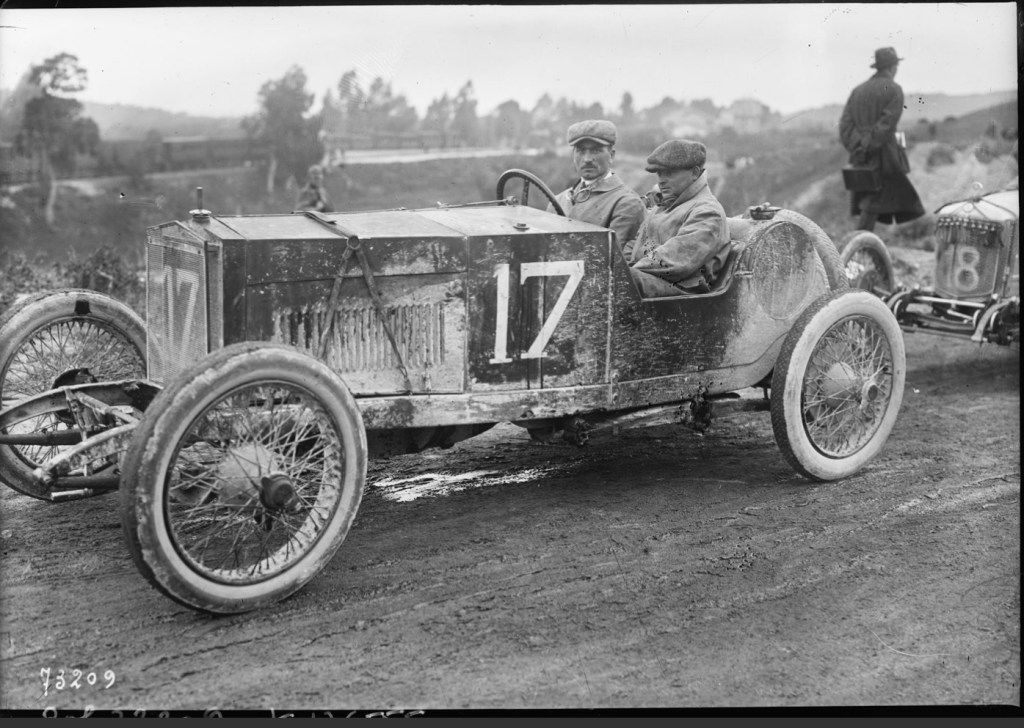
Carlo Massola and riding mechanic aboard his works Diatto Type 20 during the April 1922 Targa Florio weekend. DNF after one of four 67 mile laps. #18 is the nose of Giulio Foresti’s Ballot 2LS – a Maroubra visitor in 1925 (BNF)
Formed by 30-year old Guglielmo Diatto in Turin in 1835 as a coach-builder, Fratelli Diatto later morphed to railway engineering in 1864 before (Vittorio and Pietro Diatto, grandsons of Guglielmo) focusing on new-fangled motor automobiles in collaboration with Adolphe Clément in 1905. Its first cars were licensed Clément-Bayard designs, known as Diatto-Cléments.
After Clement’s 1909 departure, Diatto (Societa Anonima Autoscostruzioni Diatto), a major concern of over 500 employees, made its own cars, the 12/15hp Tipo Unico was its most popular pre-War.
After the conflict Diatto built the Giuseppe Coda designed Tipo 20. Powered by a 2-litre SOHC four, it produced 40bhp and was exported globally. With assistance from the Maserati brothers – Alfieri Maserati split his time between his Bologna factory and Diatto in Turin – Diatto produced the short-wheelbase 2-litre, DOHC, 75bhp Tipo 20S Grand Prix car for the 2-litre formula which commenced that year.
Carlo Massola was a FIAT mechanic and test driver before joining Diatto to fill a similar role. He contested the 1922 Targa Florio in a Tipo 20 (or 20S, accounts vary) but failed to finish, as did Domenico Gamboni in the other works car which started; Giulio Masetti won in a 1918 Mercedes GP 18/100.
At the end of the year Massola emigrated to Australia to join the Ongarello brothers’ Diatto Australian agency, based in Melbourne.
He successfully raced his Targa Diatto, and other marques, at Aspendale amongst other venues from 1923, later still he took Australian citizenship. His son Silvo was a noted racer/engineer post-war; HRG, Bugatti and the M.M. Holden are amongst his race/construction credits.
The Ongarellos sold Diatto Tipo 20A’s in rolling chassis form, the most infamous of which was owned by Melbourne’s Roaring Twenties gangster, Joseph ‘Squizzy’ Taylor who was gunned down in a 1927 Carlton shootout (in a Barkly Street terrace, not the Diatto!).
After a succession of financial reconstructions, Diatto ceased car production in 1927 to manufacture other products. In 2007 the Carrozzeria Zagato revived the brand for a concept car displayed at the 2007 Geneva Motor, the Diatto Ottovù Zagato.
I am in the process of researching an article about Carlo inspired by Bob King with the assistance of the Massola family. Carlo’s race record in Australia is pretty clear, his career in Europe is not. I am keen to hear from any readers, particularly Italians who may have access to race-records in the decade before 1923, to fill in the gaps. Gimme a yell at mark@bisset.com.au if you can assist, many thanks!
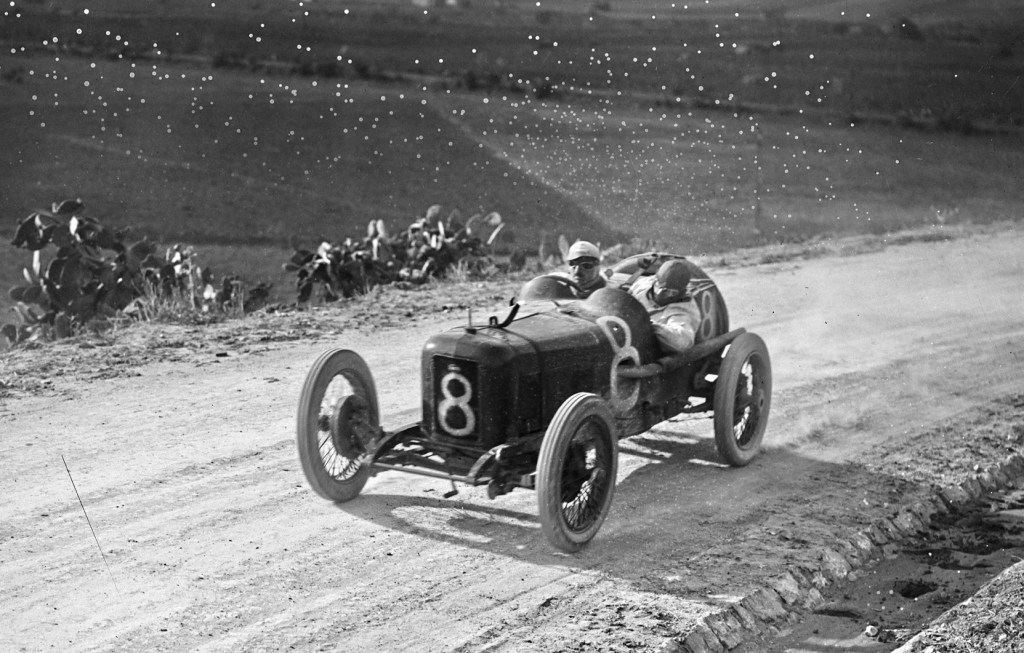
Alfieri Maserati and mechanic, Diatto GP305/20S 3-litre four, DNF oil-tank, during the November 1922 268 mile Coppa Florio. Boillot won on Peugeot 174S. Wonderful action, whites of the eyes shot (Wiki-unattributed)
Credits…
Bibliotheque Nationale de France, ‘Diatto’ Sergio Massaro via Bob King Collection, Wikipedia
Tailpiece…
(S Massaro)
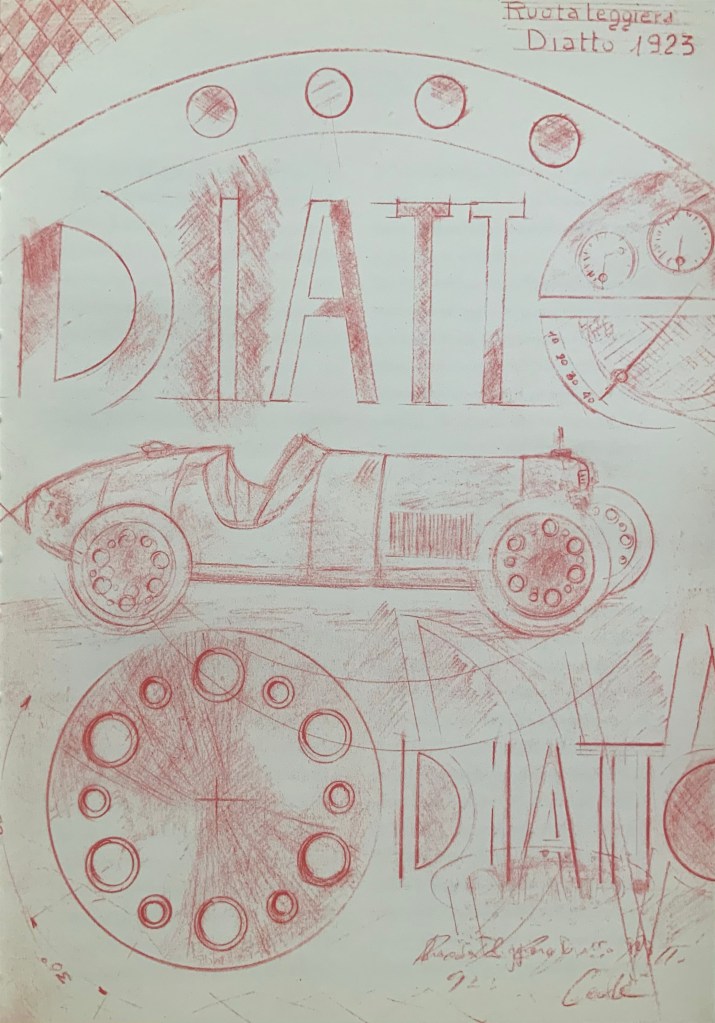
Beautiful drawing from the Massaro book showing a race Diatto 20S long-tail. The light-alloy, holey wheels date from 1923.
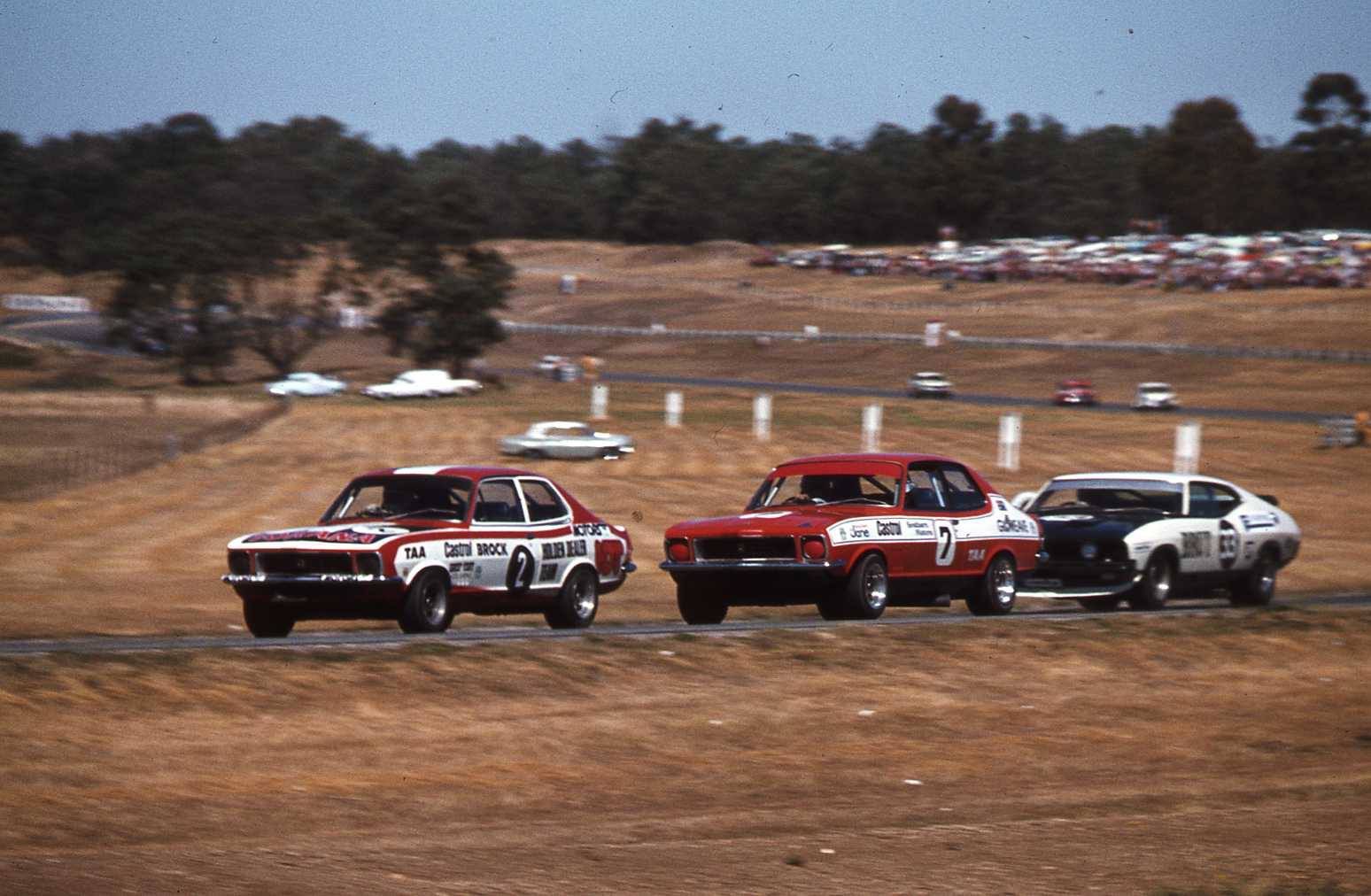
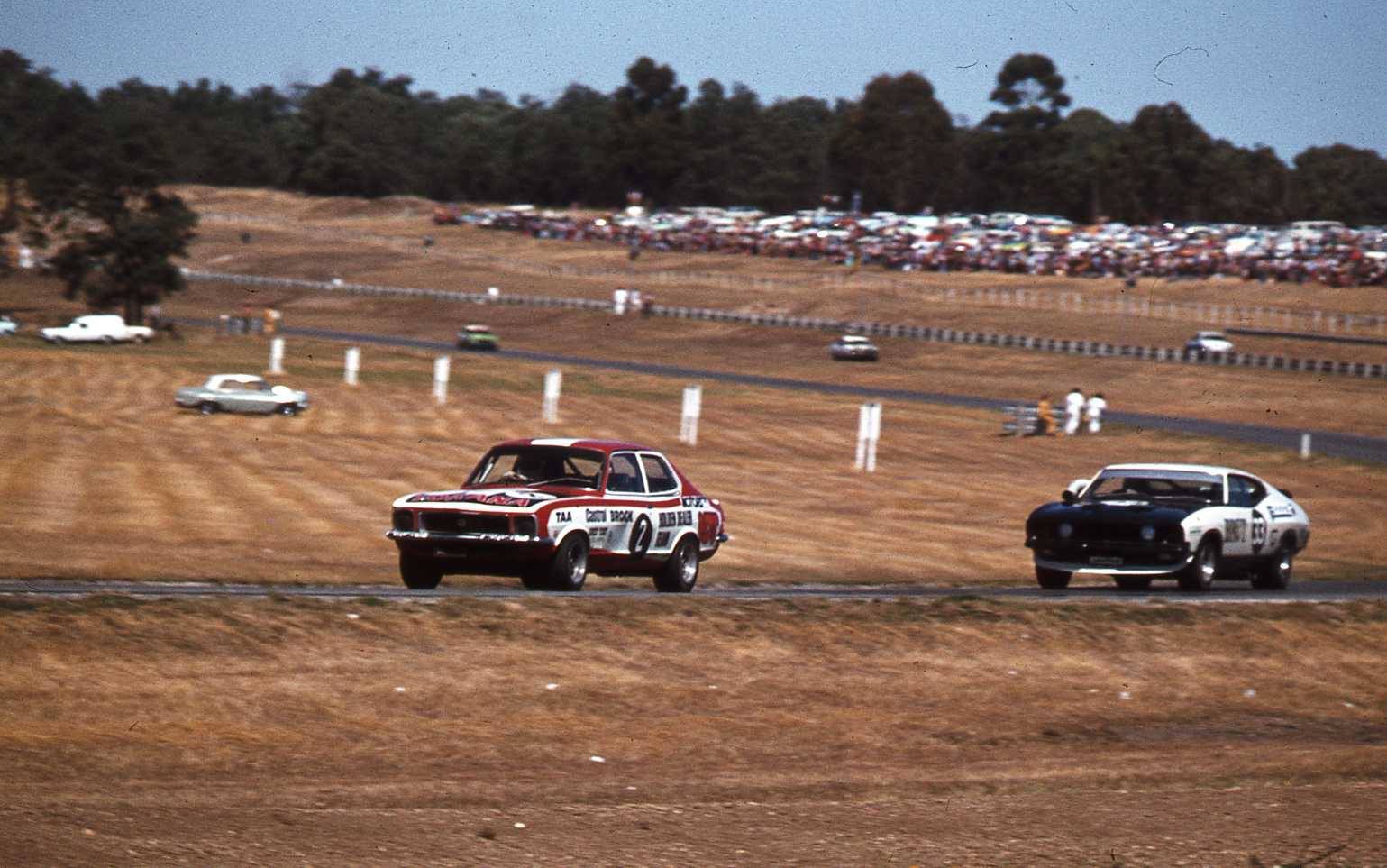
Peter Brock’s Holden Torana GTR-XU1 from Bob Jane’s similar car and Allan Moffat’s Ford Falcon GT351 Hardtop at Symmons Plains during the first 1974 Australian Touring Car Championship round on March 4.
Brock won from Moffat with Tim Smith third in another XU1- Bob was fifth.
Credits…
Dennis Cooper
Tailpiece…
(D Cooper)
Brock won five of the eight ATCC rounds and the title that year with Bob Morris second in an XU1 and Moffat third. It appears Brocks’ door has been given the short back ‘n sides by somebody.
Kevin Bartlett delicately slides his way around Lakeside’s Eastern Loop during the 13 February 1967 ‘Lakeside 99’ Tasman round, Brabham BT11A Climax 2.5 FPF…
KB posted it on his Facebook page and unsurprisingly cites it as one of his favourite photos of the Alec Mildren owned car which was particularly kind to him. You might say it was the chassis in which he made his name at the top level, if not the car which won him titles.
That weekend he was fifth, second of the Climax engined cars home, and first Australian resident behind his teammate Frank Gardner who raced an F2 based Brabham BT16 FPF to third. Jim Clark won from Jack Brabham in Lotus 33 Climax FWMV V8 2 litre and Brabham BT23A Repco V8 ‘640’ 2.5, with Denny Hulme fourth in another Repco engined Brabham, a BT22.
Clark and Stewart tussled early but both P261 BRM’s driven by the Scot, and Piers Courage were outted by transmission failures, the bete-noire of the BRMs that Tasman squeezed to 2.1-litres as the little V8’s were.
In part the beauty of the shot is the bucolic background, devoid as it is of signage and spectators or their cars- it’s practice no doubt.
Brier Thomas perhaps, none of us are sure. Bruce Wells, Warwick Farm Facebook page
Tailpiece…
(B Wells)
In similar fashion to the shot above but a week later at Warwick Farm’s Esses during the AGP weekend. Sixth in that race was a great result for the Sydneysider with a broken front roll bar and a gear-lever sans knob. Stewart’s BRM P261 won from Clark and Gardner.
Postscript: The Maestro didn’t always geddit right…
(WFFB)
Warwick Farm 1967 Tasman round practice- magic car and driver.
I’ve done this car to death of course, but each time it’s offered for sale the vendor unveils a few more shots, Bonhams are the source of this lot. Shared here coz they are too interesting to waste.
Geordie Anderson checks that her Dunlops are attached securely before the off, XKD526 circa 1956.
The on-circuit shots are at Lowood, and appear to be Ms Anderson too, happy to take your advice as to the meeting date. From memory it will be early after the cars arrival, once Bill Pitt got his hands on it, he kept it to himself. I would have done the same.
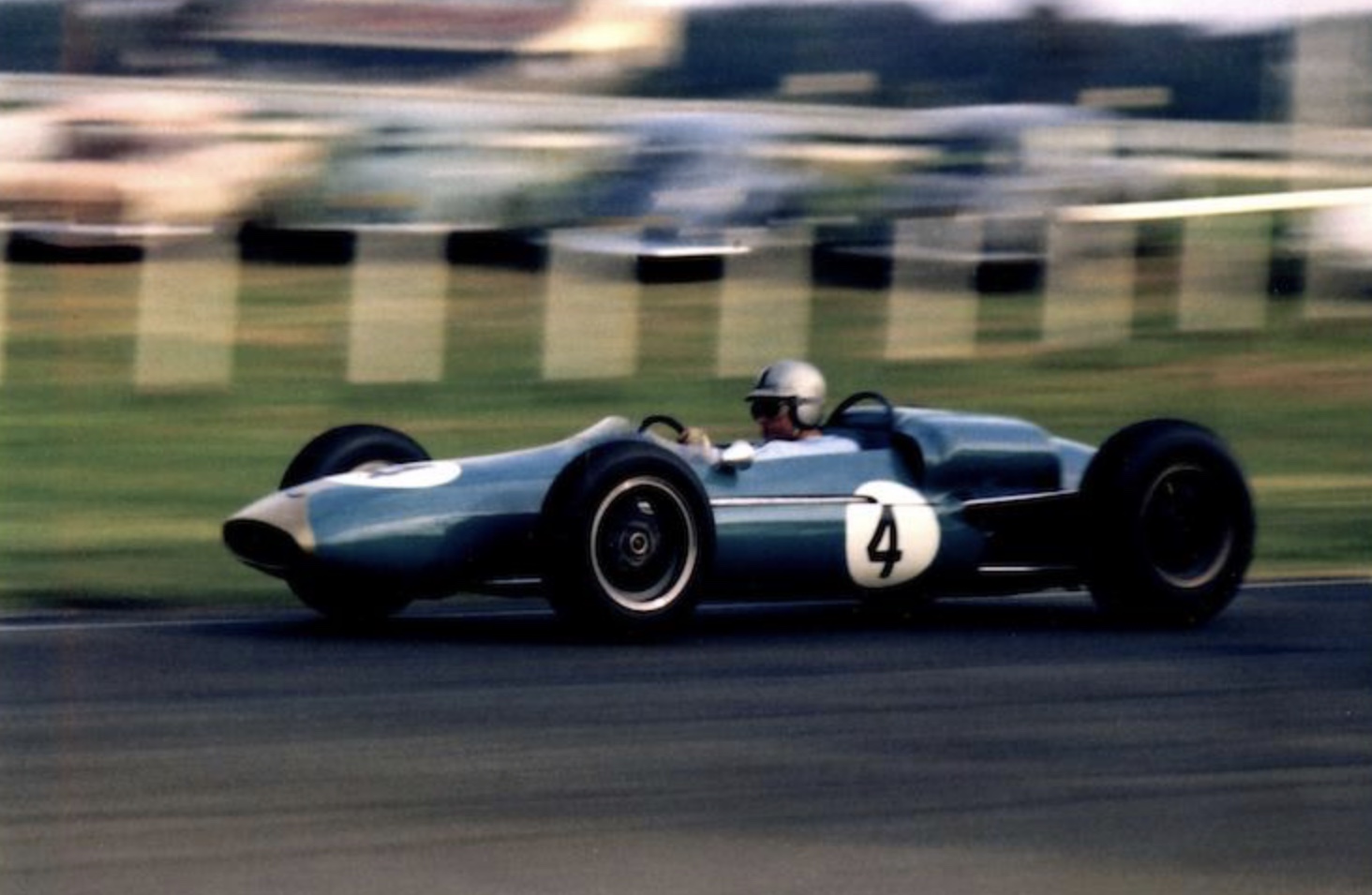
Jack Brabham, Brabham BT4 Climax, Warwick Farm 1963 (J Ellacott)
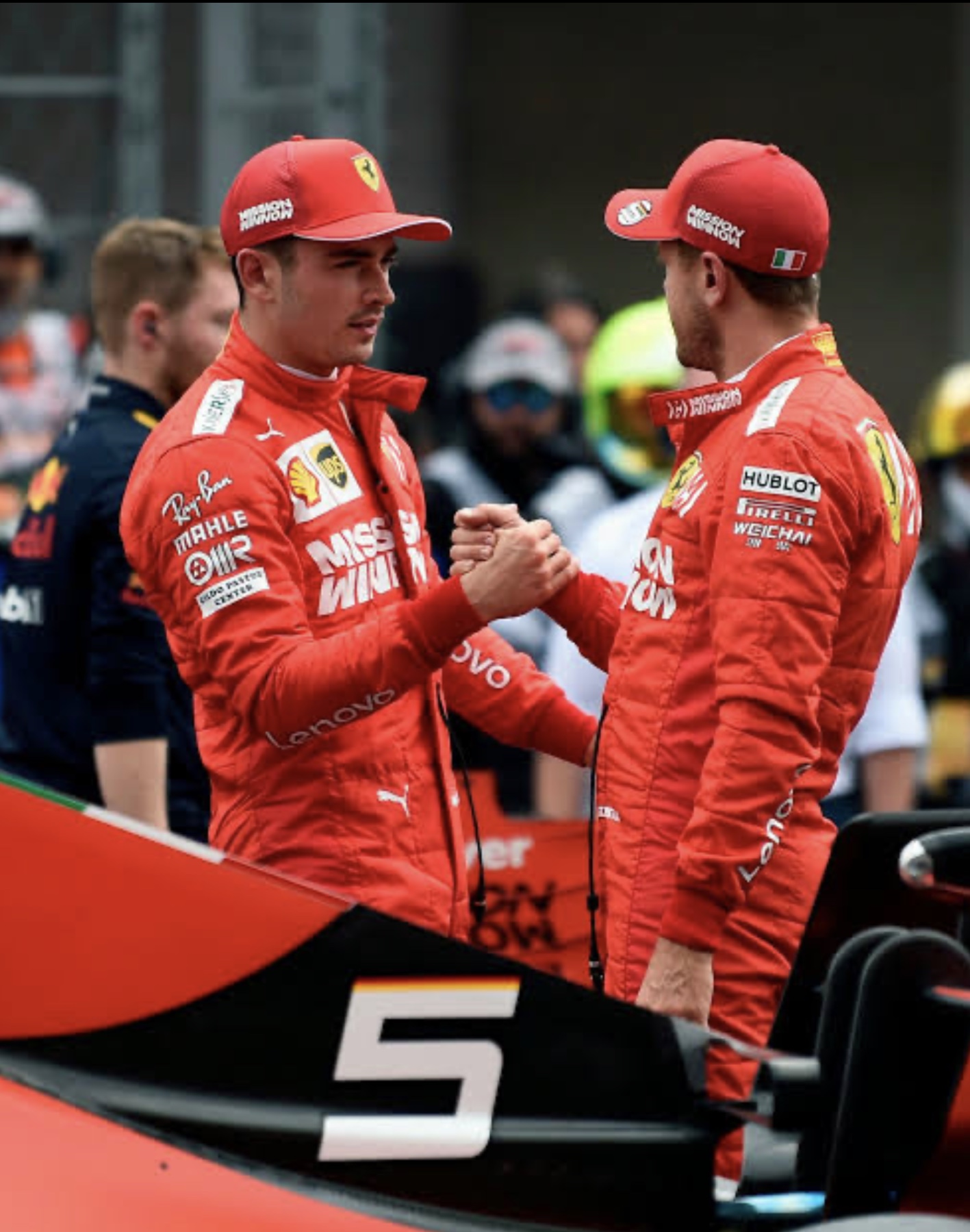
The airwaves were abuzz last year with the news of Sebastian Vettel’s departure from Ferrari.
It seems only yesterday he was the ‘enfant terrible’ giving Mark Webber plenty of stick, a decade or so later, the worm turned for him in the form of Monsieur de Clerc.
Still Seb has been on a motza for a decade or so, resort islands are cheap in the post Covid 19 world, back in ‘the good ole’ days’ the commerce of motor racing was a tad tougher.
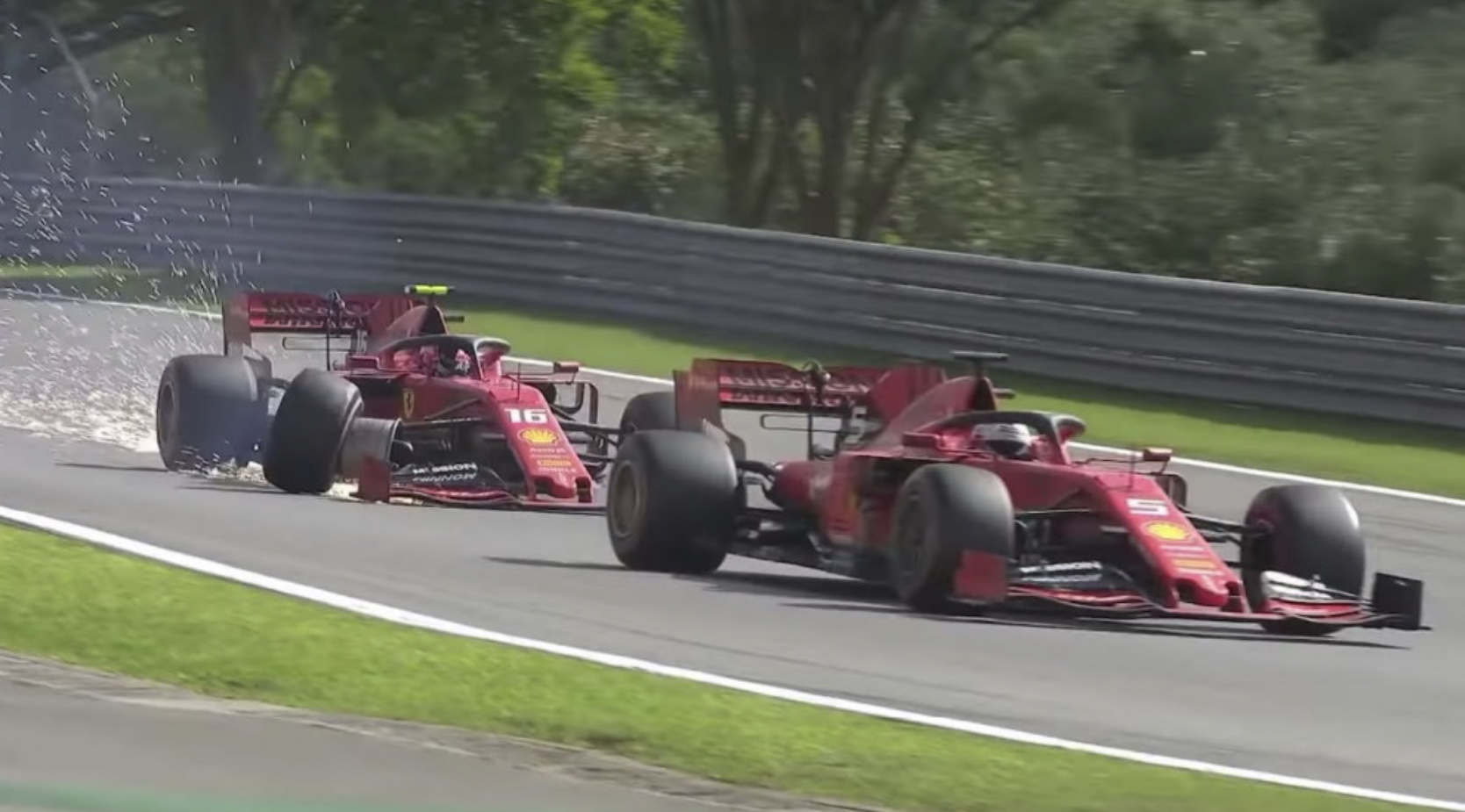
(New York Times) Vettel and Leclerc after a territorial dispute in Brazil 2019
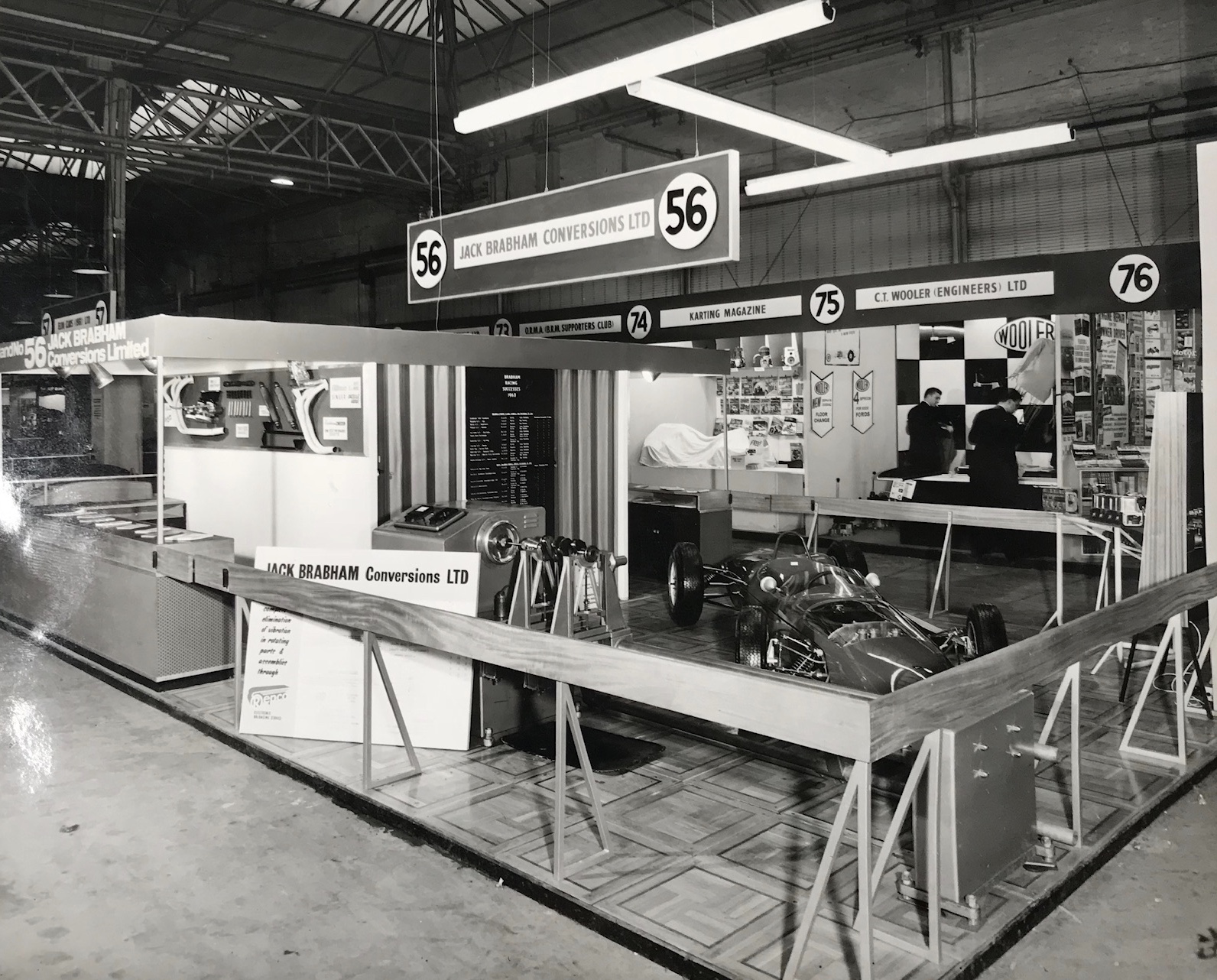
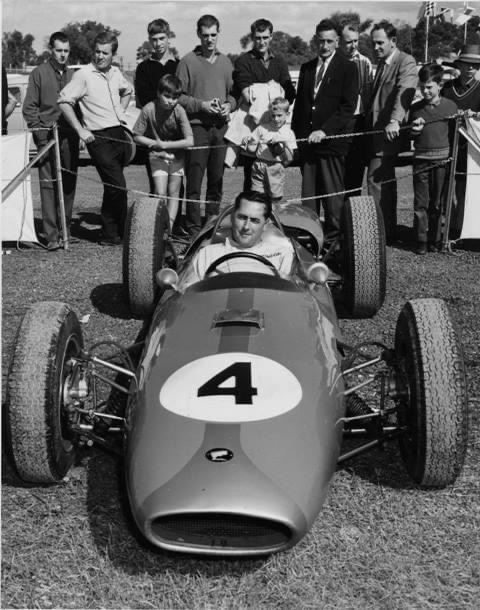
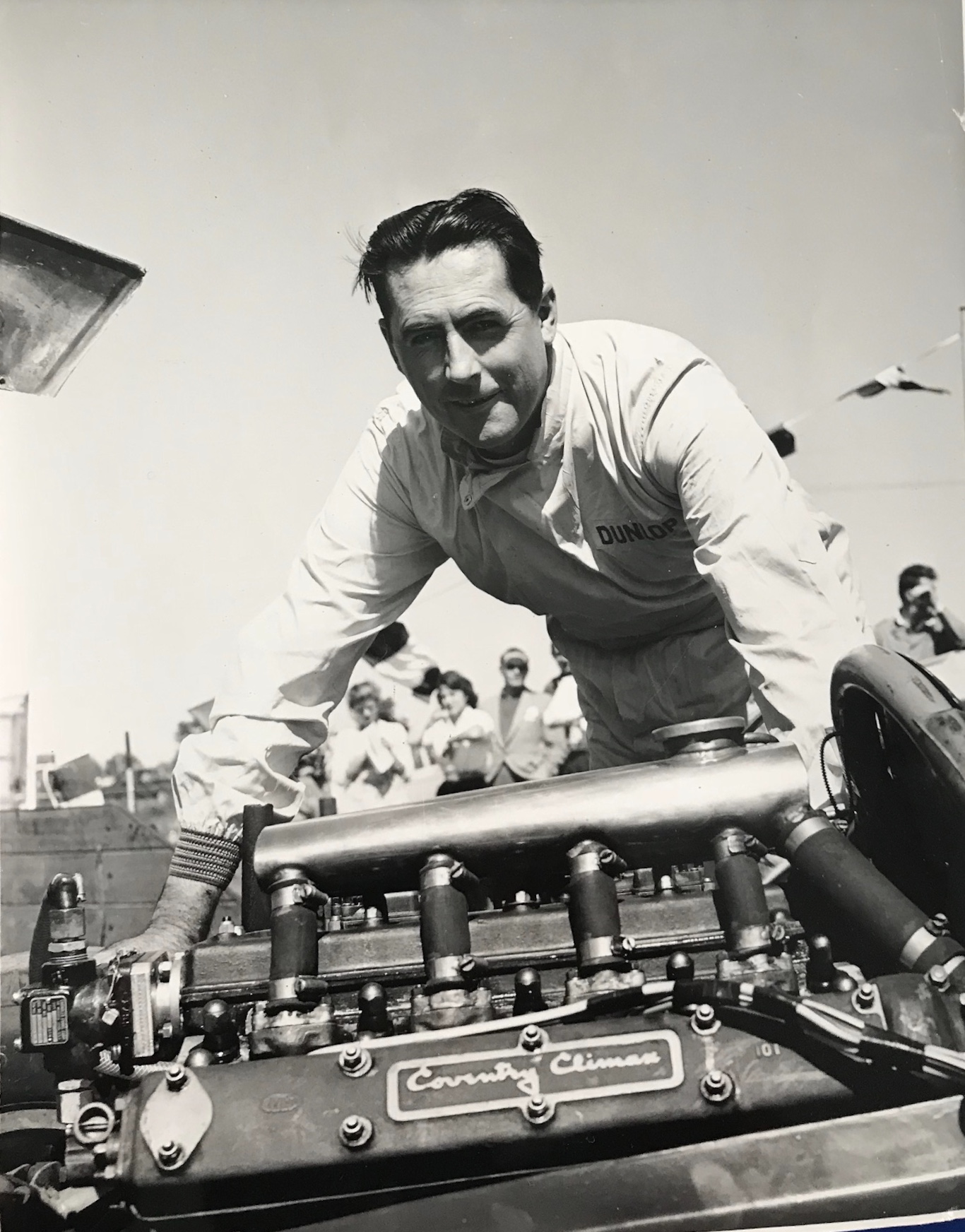
Jack Brabham worked all the angles; he built racing cars with Ron Tauranac, raced cars in F1 via his business Brabham Racing Organisation and raced Coopers for the works and via ‘Ecurie Vitesse’.
Not to forget modified cars via Jack Brabham conversions, columns in magazines which were ghosted for him and the sale of this years car to Australian racers at the end of each summer; the Cooper T40 Bristol in 1955, Cooper T39 Bobtail in 1956, Cooper T41 Climax FWB in 1957 and lordy knows how many T45/51/53s from 1958 onwards.
By the Australian summer of 1962/3, he and Tauranac had built and raced their first F1 Brabham, the BT3 Coventry Climax FWMV V8 from the middle ’62 season. They constructed a Coventry Climax FPF engined variant of that spaceframe design for ‘Intercontinental’ use designated the BT4.
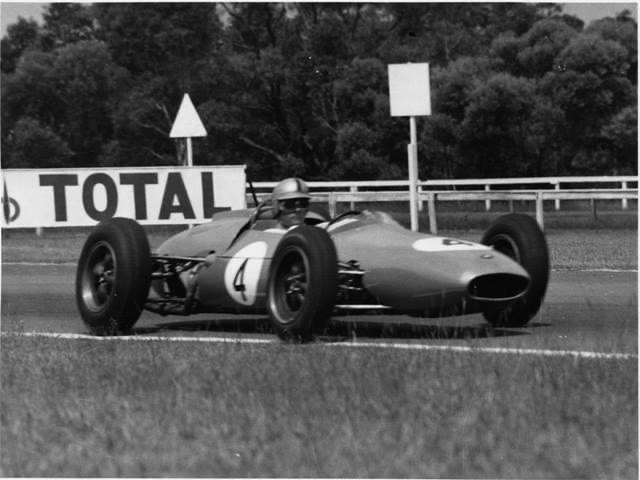
Jack took the first of these machines to Australia for the 1962 AGP at Caversham, outside Perth. He was looking good for a win after a furious dice with Bruce McLaren’s Cooper T62 when he tangled with Arnold Glass’ BRM P25 Buick V8, Bruce bagged a nice win.
Not to worry, the car made a good impression on the local hotshots, many of whom had bought Coopers from him, or via him. There were the NZ Internationals to contest and several races in Australia in those immediate pre-Tasman Cup years.
Jack started from the front row of the NZ GP at Pukekohe but cooked a head gasket after only 12 laps- John Surtees’ Lola T4A Climax won. He won at Levin from Tony Maggs and Innes Ireland who were Lola T4 Climax and Ferguson P99 Climax mounted. On the Wigram FNZAF Airfield Bruce McLaren won in the Cooper T62, at Teretonga Bruce won again, with Jack fourth albeit he took the lap record- Maggs and Ireland were again second and third.
While the racing was going on so too was the commerce. David McKay purchased Jack’s BT4 after Teretonga, Bib Stillwell ordered one too which was entered at Warwick Farm. A replacement car was air-freighted to Jack for the Australian races, which in time honoured Brabham fashion he would sell to Lex Davison at the end of the summer.
The Australian Grand Prix was held at Warwick Farm that year on February 10. Brabham BT4s dominated the results sheet; Jack won in his new ‘IC-2-62’, David McKay was fourth in Jack’s ‘old’ ‘IC-1-61’ and Bib Stillwell was fifth in his new ‘IC-3-’62’. Interlopers were Surtees and McLaren – second and third in Lola Mk4A and Cooper T62 respectively.
It wasn’t an easy win for Jack mind you, the ship carrying the new car arrived late so it had to be flown from Melbourne to Sydney, finally arriving late on the Friday night.
As Jack recalled in Doug Nye’s book, instead of Tim Wall having days to prepare the car, he had ten hours. The car was at the Farm early, but lost the first of the early sessions with an electrical short. During second practice, Jack scrubbed in tyres and got the engine running properly, by the end of the day he was happy with the car despite starting from the rear of the grid.
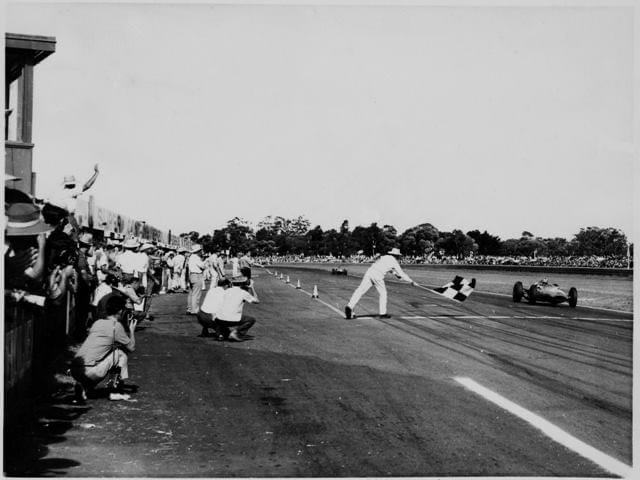
In the race Brabham ‘sliced clean through the field’, then Surtees spun out of the lead on lap 31 of 45, allowing Jack to close right in and slipstream past on Hume Straight into Creek Corner. The resident bugler did his thing and crowd went nuts! (two shots below)
From Sydney, the circus headed north to Brisbane’s Lakeside where Surtees won from Hill, Stillwell and Chris Amon in David McKay’s old Cooper T53. It was one of a series of great performances that summer which saw him scooped up by the Parnell team and taken to Europe.
The teams then had a two week break to prepare the cars and transport them to Melbourne and across Bass Straight for the South Pacific Championship held over the Labour Day long weekend in early March.
Bruce McLaren won from pole, equally impressive was Bib’s second place only a second adrift of the Kiwi international and then local boy John Youl third in his Cooper T55- both the guys in front of him ran 2.7 FPFs, Youl’s was a 2.5.
Then it was back across Bass Straight for the opening Sandown meeting (above). There Bruce was again on pole from Jack, and won from Maggs and McKay with Jack a DNF engine a lap before the finish.
While Jack did a roaring trade in Brabham BT4s there is little doubt that had there been a Tasman Cup in 1963 Bruce would have won it, a feat he managed in ‘the first McLaren’ – a Cooper T70 – Climax the following year.
Credits…
oldracingcars.com, autopics.com, Ken Devine Collection
Tailpiece…
(K Devine)
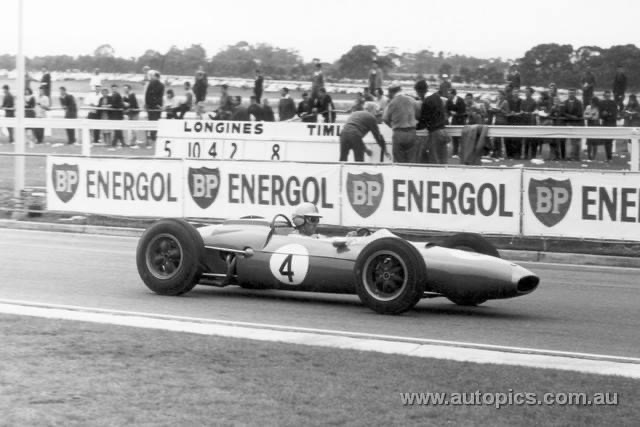
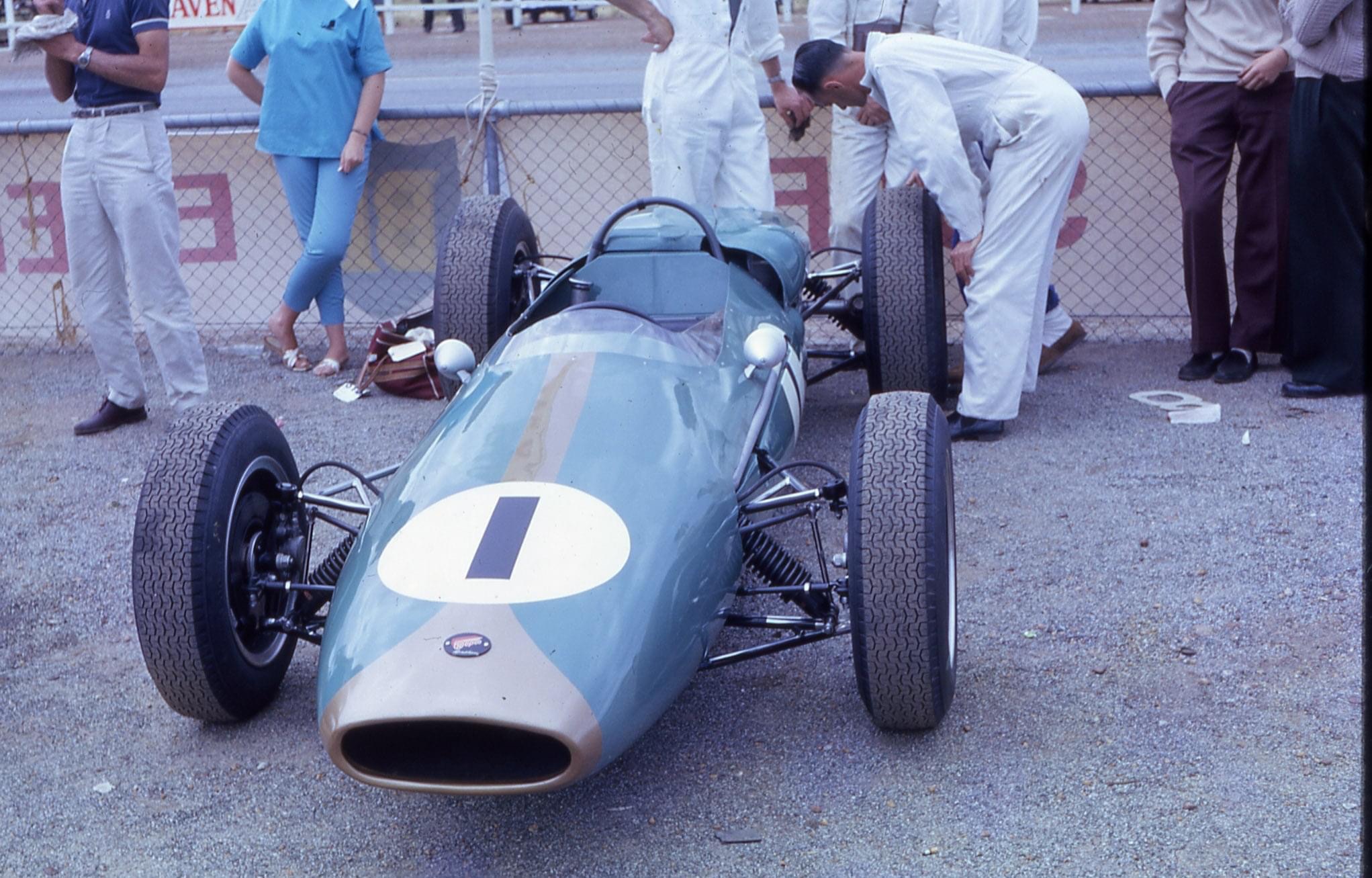
Brabham’s brand new BT4 Climax during the 1962 AGP weekend at Caversham, ain’t she sweet.
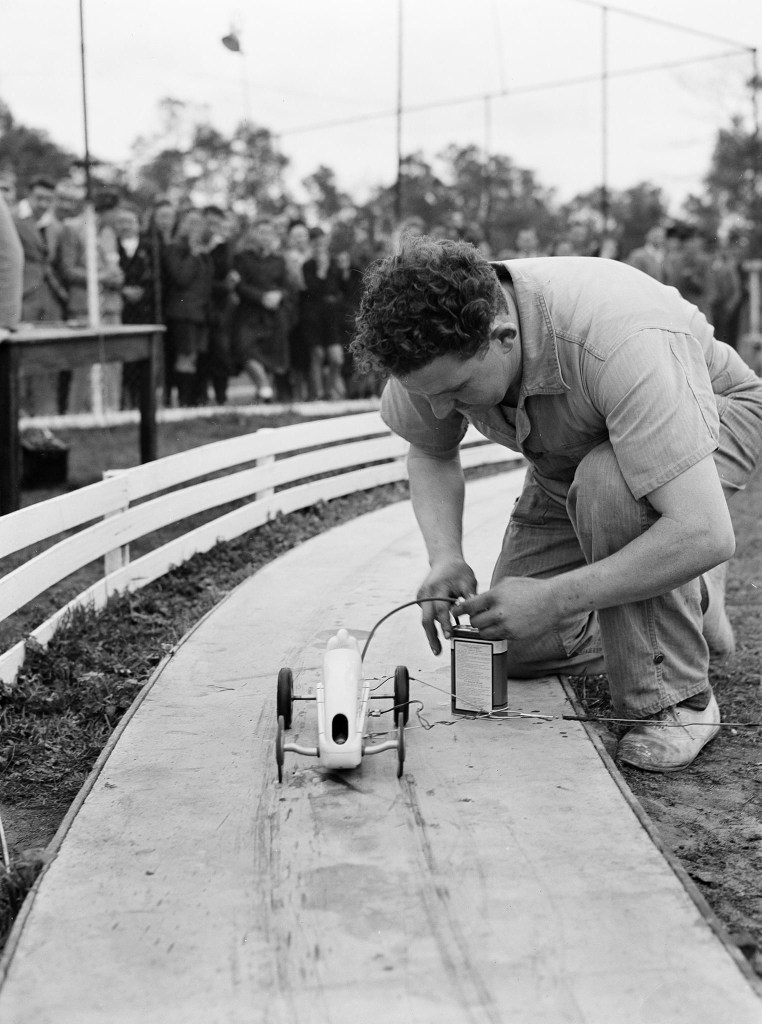
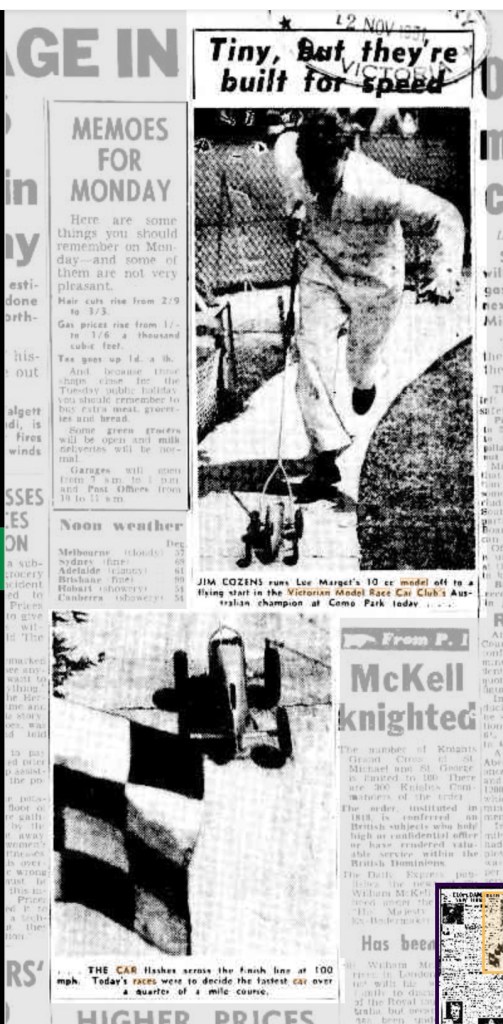
A burly Aussie bloke prepares his model car for a race at the Victorian Model Race Car Club (VMRCC) meeting, Como Park, South Yarra, 1945.
I can find no record of the 1945 meeting, but in 1951 Lee Marget’s 10cc model did better than 100mph over a quarter-mile. Not so sure how my near neighbours in South Yarra would feel about motor racing in their twee-suburb now, olde bean…
The VMRCC had classes for cars, the length of which varied from 10 to 18 inches. Proto were the biggest and fastest, then Proto-Spur, Spur and Might. Proto’s did better than 100mph, the tiny-Might about 70mph.
All were powered by 10cc two-stroke engines fed by a methanol/castor oil brew. Fitted with torch-batteries “The batteries are charged on high-speed rollers, and the cars are then attached to a cable, which revolves around a pole in the centre of the track, and are started by pushing them with a pole for a quarter lap or so.”
“The cars quickly gather speed…when maximum speed is attained…the operator signals the timekeeper to start timing…A midget is timed over 6-laps, 440 yards, and is then stopped by the operator tripping a lever,”
In November 1950 the lap record was held by ‘Juan-Manuel’ Bailem of Maribynong at 116mph.
Clubs then were operating in South Yarra, Maribynong, Geelong and Cowra NSW, as well as clubs in South Australia and Queensland. Some club members imported their racers but most were home-built.
I’ll bet it was fun until CAMS got involved…
Credits…
National Archives of Australia-Sketching naval life: the war art of Rex Julius, Trove,
Tailpiece…
(NAA-R Julius)
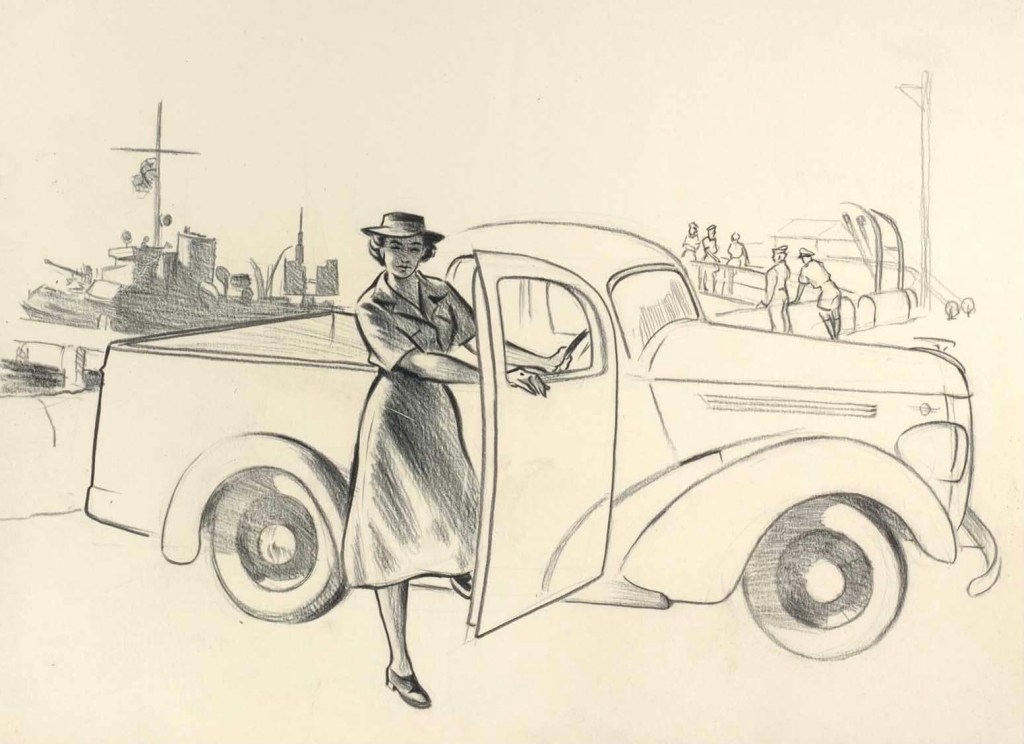
W.R.A.N (Womens Royal Austraian Navy) driver standing by her ute (brand folks?) at HMAS Rushcutter, April 2, 1944. Why this? Just coz…
Able Seaman Rex Julius enlisted in 1940, he trained in submarine detection, but when the higher-ups became aware of his pre-war career as a commercial artist, he was appointed an official war artist for the Royal Australian Navy in 1944.
He died of a throat abscess and gangrene in New Guinea the same year – great shame, he was a talented man.
The sketch above is one he made of activity around the naval base, HMAS Rushcutter, Sydney Harbour.
(NAA-R Julius)
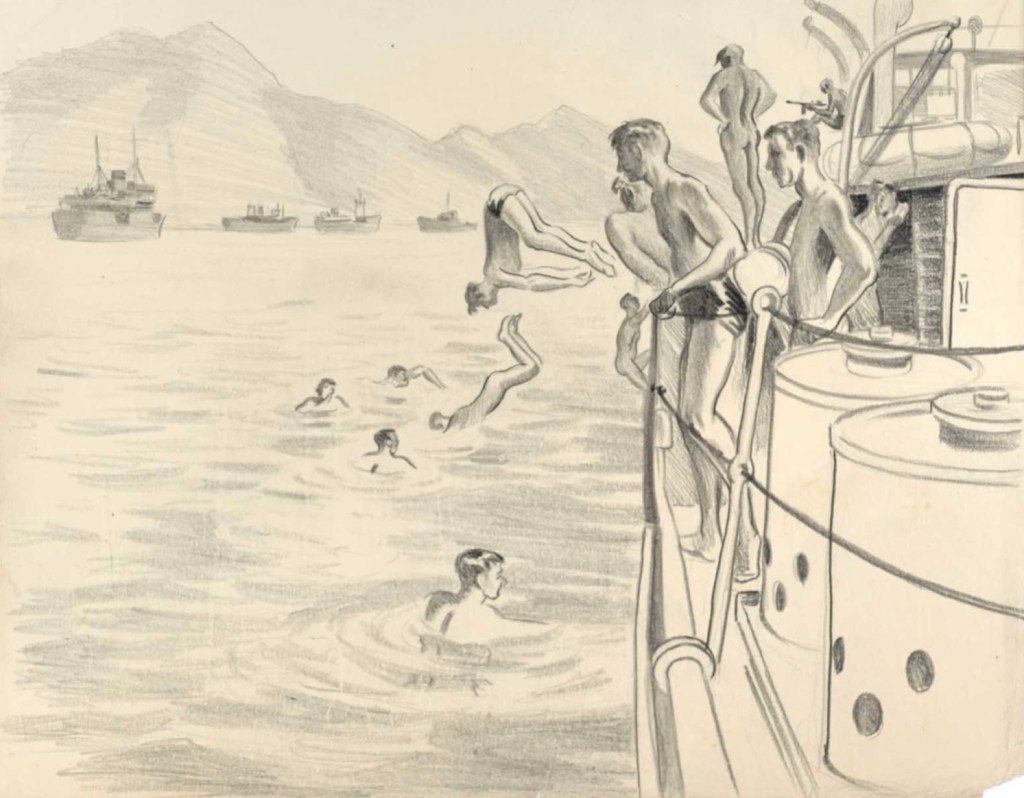
This one has a particular resonance. While the blokes have a swim off the side of HMAS Lithgow, on the way to Milne Bay, New Guinea in 1944, “One rating sits under the motor boat with a Tommie Gun in case of sharks.” Only ‘in’ Australia!
Former Austin 7 racer and Bentley historian Tony Johns is a regular visitor to the Victorian State Library, there, he browses newspapers and magazines for Austin 7 and Bentley history. If he comes upon things of interest in the writer’s realm, which is mostly to do with Bugattis, he kindly forwards them.
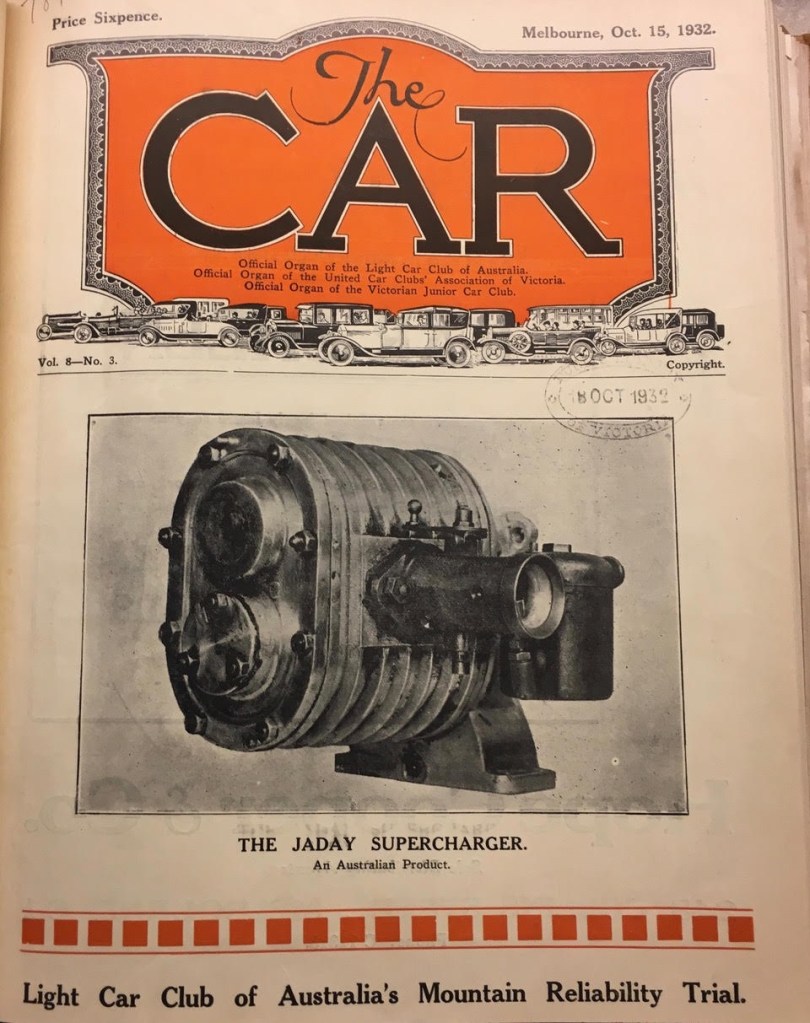
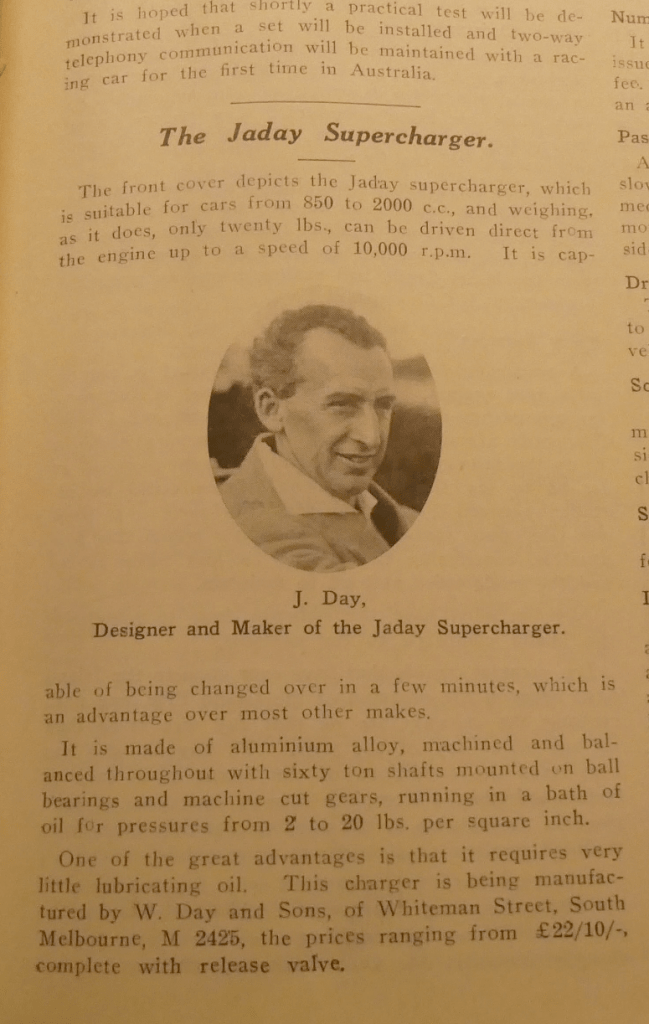
We are aware that pioneering Bugatti motorist and racer Jack Day made superchargers, but have not previously seen an image of one, let alone the object itself. This despite having owned two of the cars that were one-time fitted with JADAY blowers. We knew that they were of a Roots pattern, but little more, other than that Jack made them in his Ajax Pump factory in South Melbourne.
The cover of The Car magazine for October, 1932 above shows the JADAY supercharger in all its glory, as well as its side-draft Solex carburettor, bolted directly to the blower.
Just call M 2425 and ask for Jack and you can have one for 22 pounds, 10 shillings (Tony Johns-SLV)
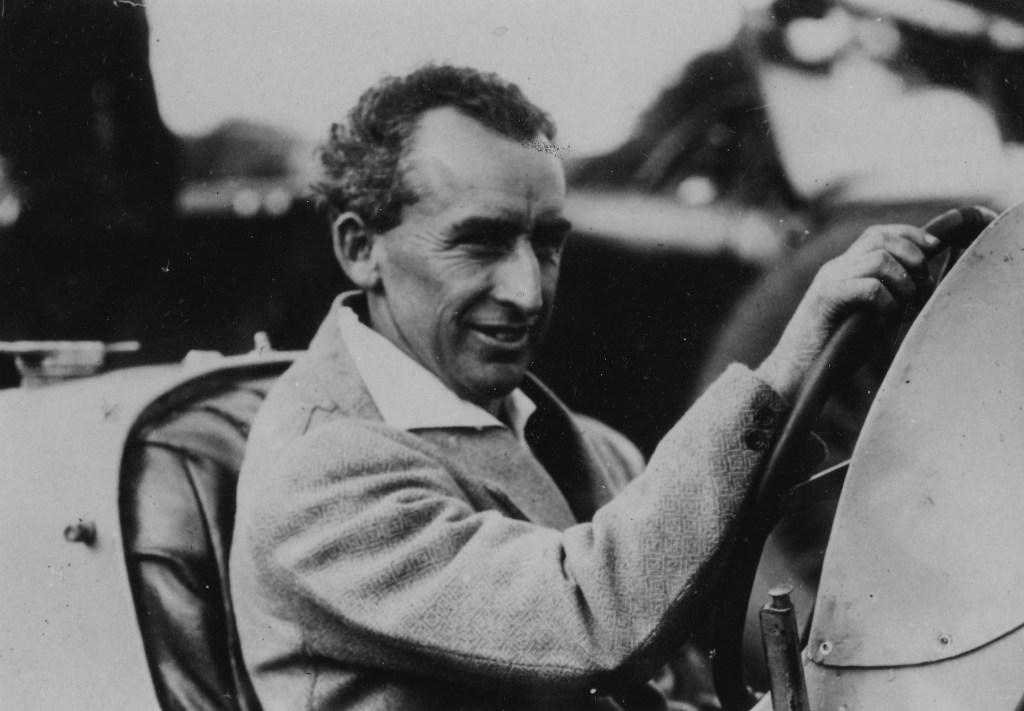
John Albert Day of Melbourne was a well-known racing car driver in the twenties, thirties and forties.
Like so many others of the period, he had success on push bikes before taking to four wheels. His first job had been delivering hats on a bicycle when he was 10 years old – suggesting an early entrepreneurial bent. It is not known whether he was related to Syd Day, a pioneering motorist who competed in the Sydney to Melbourne Dunlop Reliability trial of 1905.
Our first record of him in a motoring event is in 1923 when he drove a 2.3-litre SCAT in a Hill Driving Contest at Greensborough. In 1924 he drove a 1100cc Salmson at Malpas Hill, 17 miles North of Melbourne. This event famously crossed the Hume Highway; traffic being stopped for each run.
At a later Malpas hill climb he drove an Alvis which was also driven in the ladies contest by L. Day. Mrs Day took part in the 1927 Alpine trial in a Riley ‘9’.
Jack Day at the wheel of his Type 37, 37145 (Bob King Collection)
His first appearance in a Bugatti was in May 1927 when he ran at rural, and nor urban Melbourne, Wheelers Hill.
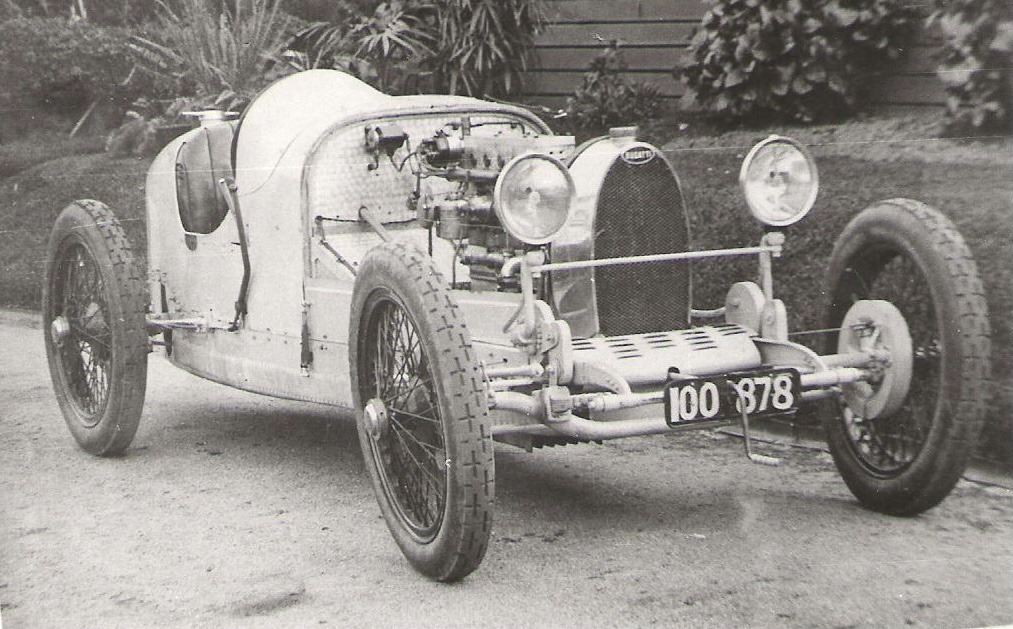
His 11/2 litre unsupercharged Type 37, chassis number 37145, had been delivered new to Melbourne less than a year before, having been sold via the Bugatti agent Sporting Cars to one of its directors T.E. Barnett for his son Dudley. Later that year the car was owned by Lyster Jackson who, plagued by misfiring, was all too ready to on-sell it. According to Jack in a recorded interview, he bought it when Lyster and he were contesting a hill climb at Lorne as part of the Victorian Light Car Club’s Dependability Trial in October, 1926.
Jack: “Lyster revved and revved and revved, on only about 11/2 cylinders, and I said to him: ‘That will never get up the hill’ and he said, ‘I’ll beat you up.’ So, I had a big-port Alvis, and of course I took the hillclimb away from him”. Lyster said he would sell it and Jack “bought it on the spot.” Jack cured the misfiring by making “special KLG’s” in which he removed the negative electrode, substituting it with platinum “only the thickness of a pin.”
37145 when owned by Dudley Barnett as a new car (Bob King Collection)
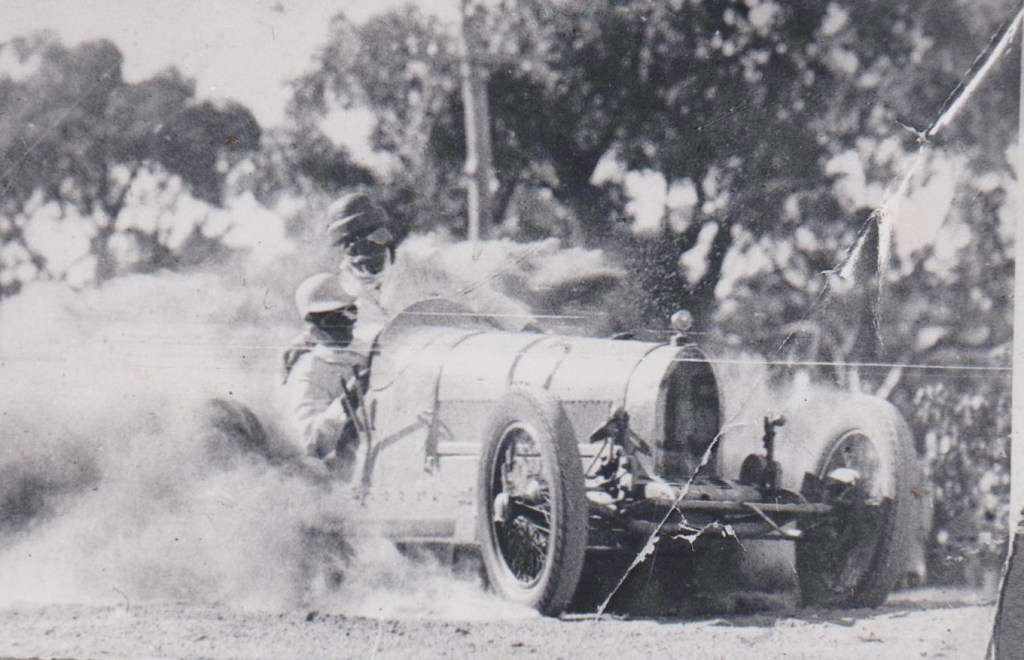
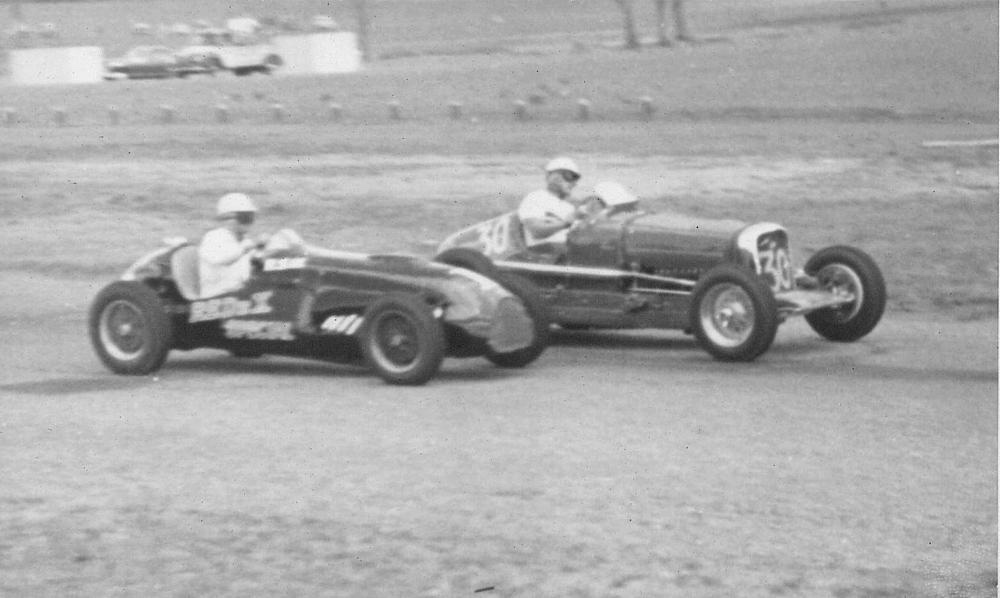
Jack entered his now reliable Bugatti in the 1928 100 mile AGP at Phillip Island. He was one of the favourites for the race having won a half mile speed trial in lieu of the rain-postponed race at 84mph.
Unfortunately, early in the race he lost his way in the dust, shooting through a fence and taking considerable time to regain the track. Although noted to be travelling at great speed, he would have been disappointed to finish in sixth place, some 10 minutes behind the winning Austin ‘7’ of Arthur Waite.
A clear demonstration of the dust encountered during the 1928 AGP at Phillip Island – was this the moment Jack ‘lost his way’ (Bob King Collection)
Seeking improved performance, in late 1931, Jack supercharged it with a JADAY supercharger driven from the nose of the crankshaft by a shaft that protruded through the lower part of the radiator.
We have not seen a photograph of this installation, but the blower must have been supported between the dumb irons; the radiator having a piece cut out of the bottom of the core through which the drive-shaft passed.
This radiator with a patch over the blower drive-shaft hole, subsequently found its way on to its sister Type 37,37146, subsequently leading to misidentification of these consecutively numbered cars.
Post-war sister car 37146 was campaigned vigorously by Herb Ford. In this shot taken at Rob Roy, the blower drive cut-out in the radiator can be seen – the radiator had been swapped from 37145 (Bob King Collection)
Jack’s second foray into Bugatti supercharging was with the 1931 Australian Grand Prix winning Type 39, 4607 which he bought in 1933.
The Type 39 was a 1 1/2 litre, normally aspirated straight-eight. He again drove the supercharger from the nose of the crankshaft by means of a long, tapered extension. This shaft remains in the care of the writer – it is his favourite large punch. Jack was not known for his finesse, and this is corroborated by the finish of said shaft, the forward end of which is crudely hack-sawed most of the way through, the last part being snapped-off, leaving a ragged end.
We are unaware of what modifications may have been made to the radiator as this item disappeared after many years fitted to a Brescia Bugatti in lieu of its normal pear-shaped radiator. As the JADAY blown Type 37 and 39 seemed to see very little service, it might be concluded that the modifications were not entirely satisfactory. Could Jack have miscalculated the volume of the necessarily long inlet tract, leading to an unsatisfactory performance?
Day at Phillip Island for the Jubilee Handicap, May 6, 1935 in the Type 39 (Bob King Collection)
As to other JADAY supercharger installations, we have little knowledge. It is possible that one of Jack’s superchargers was fitted to his AL3 Lombard, and it is rumoured that he was involved with the Cozette supercharging of another Lombard AL3 then owned by W.H. Lowe who was the importer of these delightful, petite, 1100cc twin-cam cars.
The patterns for the beautiful finned inlet manifold of this car were certainly of local manufacture – they survived until relatively recent times. Lowe later made his name as the first licenced Ferrari agent outside Italy.
Bill Lowe in his Lombard at Rob Roy just one week after the Black Friday Bushfires, January 30, 1939 (Spencer Wills)
One last twist in the tail of JADAY superchargers brings us to the early post-war WWII years. Jack Day and Norman Hamilton, also a racing driver and a subsequent Porsche importer, investigated the possibility of adapting their turbine technology for one of the worlds great engineering projects, the nascent Snowy Mountain scheme.
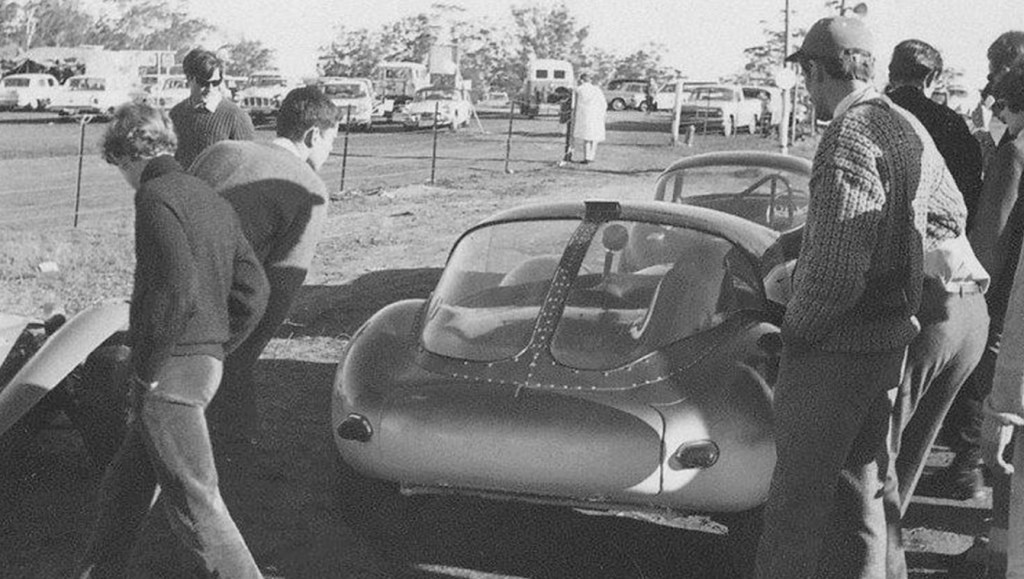
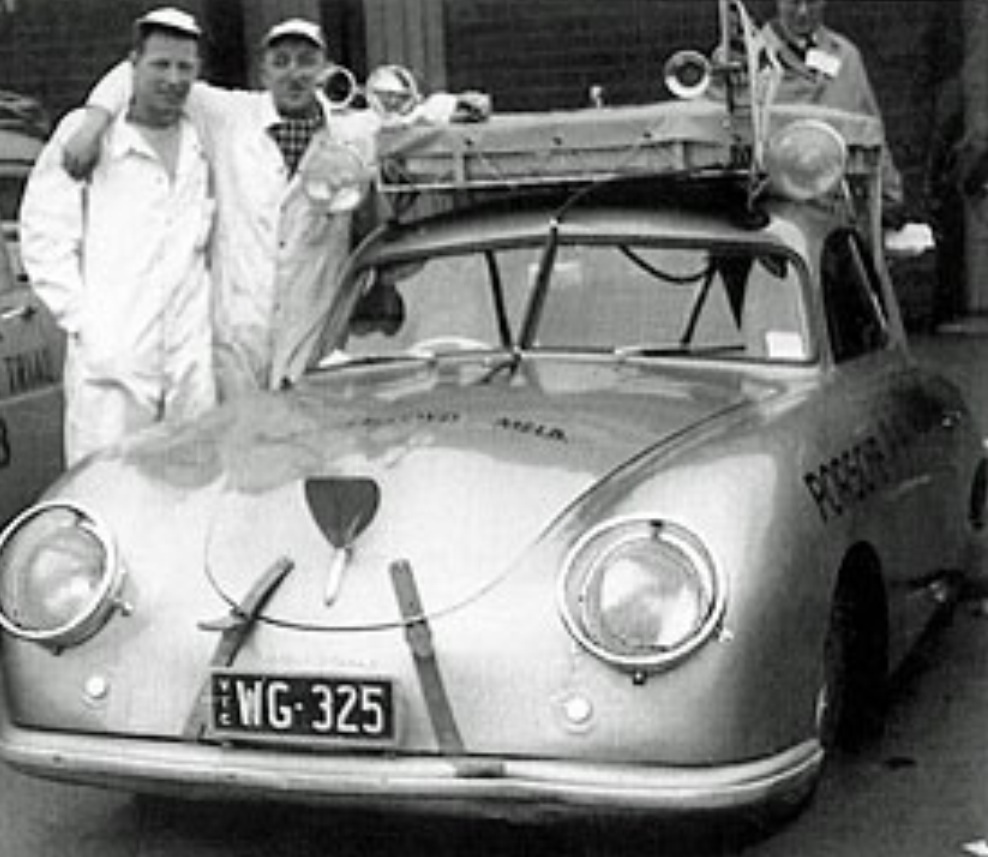
With this in mind, Norman and Jack visited Switzerland to study hydro-electric schemes in 1951. During the course of this visit, Norman’s rented Oldsmobile was rounded up by a low slung, silver missile on the Grossglockner Pass. They came upon car and driver; racing driver and motoring journalist Richard von Frankenberg and his car, a prototype Porsche further up the road at an Inn.
After discussion and inspection of the car, the entrepreneurial Hamilton followed Von Frankenberg back through the Alps to the factory. After a tour of the facilities and a meeting with Ferry Porsche, Hamilton walked away with a hand-shake deal for the Porsche commercial rights in Australia and New Zealand. This led to Hamilton’s being only the second foreign Porsche agents outside Germany (Max Hoffman in the US was the first), somewhat in synchrony with the history of Lowe’s Ferrari dealership.
Ken Harper and Norman Hamilton, Porsche 356 Coupe, prior to the 1953 Redex Trial (PCA)
This was not, however, the end of the Jack Day story. His next modification to the Type 39 Bugatti was much more radical – he removed the fragile Bugatti engine, substituting it with a Ford V8, the first of many Australian specials thus powered.
The success of this car pioneered the ‘quick-fix’ for tired European racing cars – take out the sophisticated aluminium and steel machinery and substitute American black iron.
Jack and his collaborator Reg Nutt had many successes with the car in this form, including ftd at Mitcham and Rob Roy hill climbs (Day). Post-war the car went on many more successes in the hands of the legendary Jack ‘Gelignite’ Murray.
Meanwhile Day reverted to his passion for complicated European machines, importing one of the 1927 Grand Prix Talbot Darracq (a 1500cc straight eight supercharged jewel) in which he shared driving duties with Reg Nutt.
(Bob King Collection)
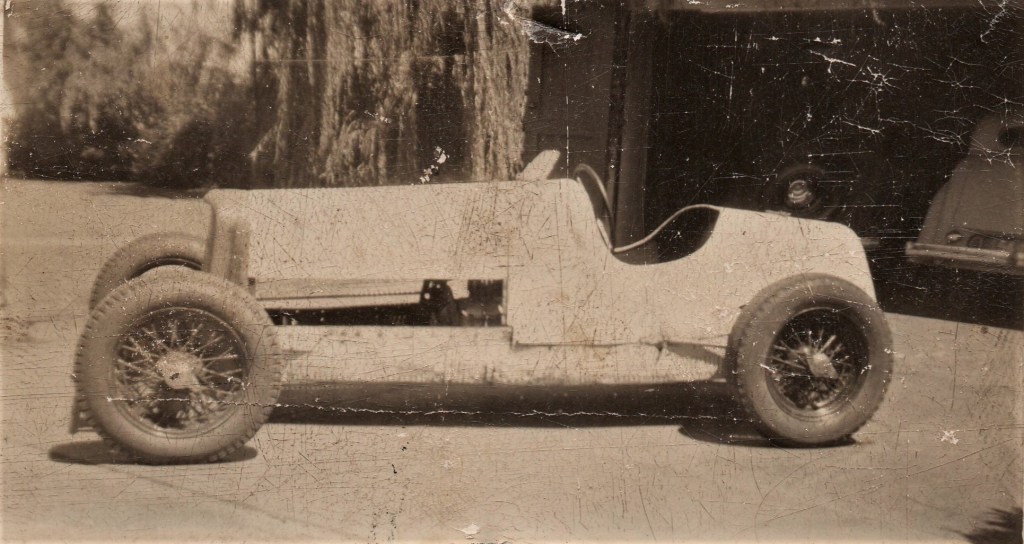
The Day Special mocked up during the construction phase.
(Bob King Collection)
The ‘Day’ was often driven by Reg Nutt. Here he is seen in action at Lobethal during 1938 South Australian Grand Prix.
(unattributed )
Jack Murray is seen here, on the inside, battling it out with Jack Brabham’s Cooper T23 Bristol in the Day Special at Mount Druitt.
(Bob King Collection)
Reg Nutt aboard the Talbot Darracq TD700 at Fishermans Bend.
(unattributed)
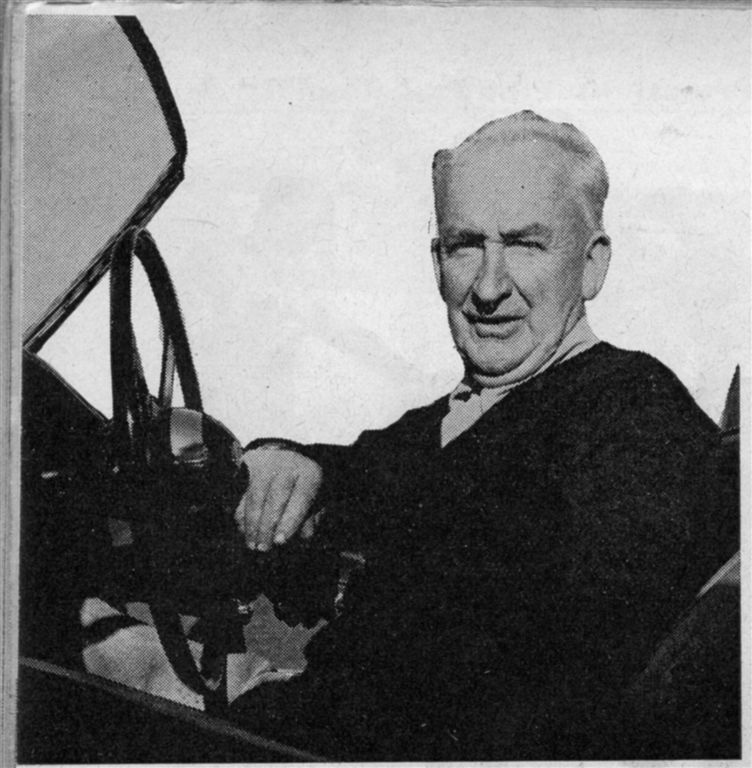
Jack , in his later years in his Jaguar XK120. He was a founding member of the Victorian Light Car Club (later LCCA), and a life member of the RACV. He died in 1975, aged 86.
Credits…
Bob King and his archive, Tony Johns and his archive, Spencer Wills, Porsche Cars Australia
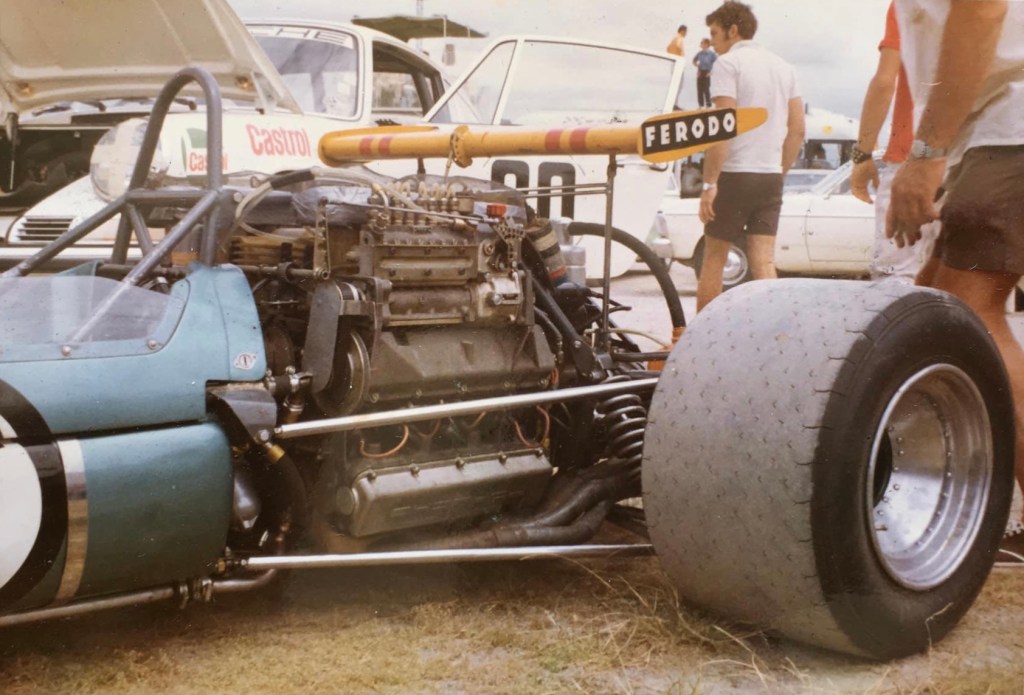
Bryan Falloon’s Rorstan Mk1a Porsche at rest in the Pukekohe paddock during the 1972 New Zealand Grand Prix weekend.
I’ve written about this rare car, built by Bob Britton at Rennmax Engineering in Sydney on his Brabham BT23 jig in early 1968. The story of the car is here, including poor Bryan’s demise on this Pukekohe weekend; https://primotipo.com/2020/08/17/rorstan-mk1a-porsche/
The rare colour photograph was too good to simply add to the existing piece.
By 1972 this 1967 spaceframe design – a modified F2 car was an old-clunker among the latest F5000s which made up the bulk of the field. But the impecunious Ian Rorstan / Bryan Falloon combination were having-a-crack.
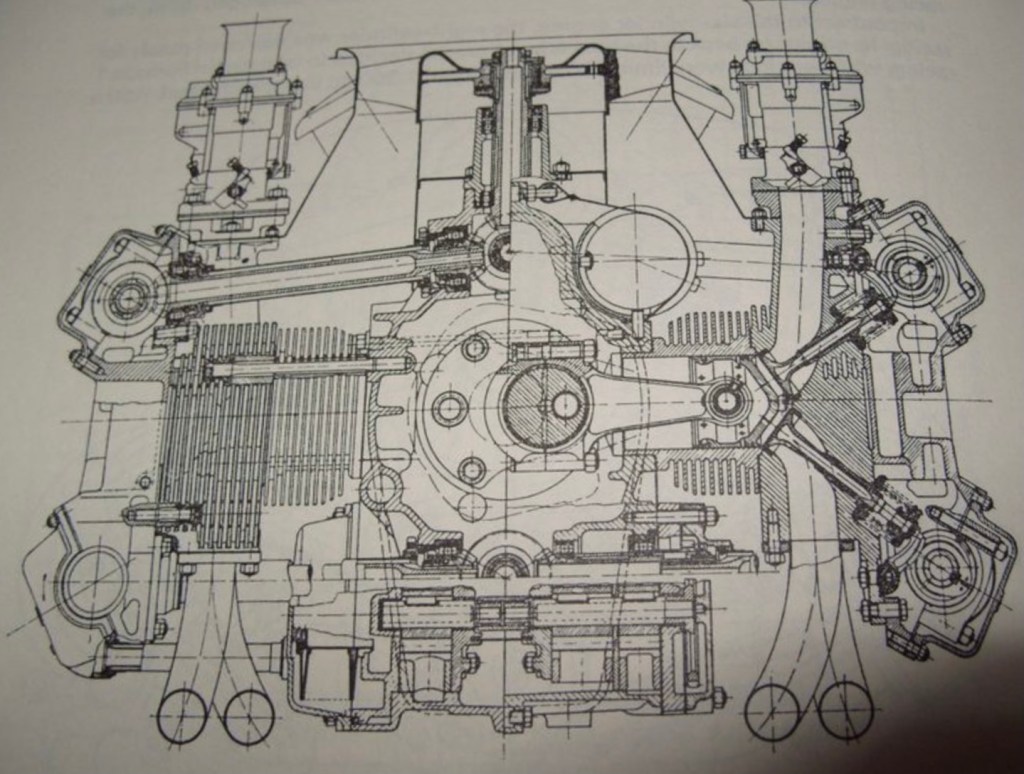
The car was powered by a Porsche Type 771 twin-cam, two-valve, flat-eight. The design started as a 1962 1.5-litre F1 engine fitted to the Type 804. Engines grew to 2-litres – and here 2.2-litres, as measured by Alan Hamilton – for Porsche 907 sports-prototype use later in the sixties.
Incredibly complex in terms of bevel-drive operation of the camshafts and auxiliaries – Hamilton advises that the factory allowed 240 hours for the assembly of each engine – Rorstan bought the engine off Porsche Cars Australia when looking for a replacement for the geriatric Coventry Climax 2.5 FPF which powered the machine before.
The engine looks bulky and heavy, it is not – of magnesium and aluminium construction, it’s light. The disposition of horizontally opposed cylinders pops the weight nice and low too. The vertically mounted Bosch high-pressure fuel injection pump – driven off the inlet cam – and fuel metering unit add to the impression of size. Inboard of that, hidden, are eight-inlet trumpets.
Note the throttle linkage and small wing – given its shallow shape and chord, you wonder how much downforce was generated.
I’m intrigued to know exactly how Britton mated the engine and chassis, critical of course. Clearly, from the way he has strengthened the roll bar area, by bracing it down into the cockpit, the top horizontal mount heading aft is important.
More questions than answers of course, my curiosity about this car is at least partially stated!
Porsche 771 cutaway, yes it’s wonky, best I could find. Note, inter alia, the bevel-drive to the cams









 primotipo...