image

Seeing this book by Bill Tuckey amongst the display collection Michael Gasking brought to the Repco Brabham Engines ex-employees get together brought a smile to my face…

I didn’t ever own it but it was one of a very small number of racing books in Camberwell Grammar School’s library when I started there, aged 12.  Having only recently become interested in racing I was like a sponge for information. What was significant about this tome is that it was written by a talented journalist, Bill Tuckey, who edited both ‘Wheels’ and ‘Sports Car World’ magazines, the latter became one of my monthly bibles along with ‘Racing Car News’. The book covered a very broad canvas comprising all the Australian Grands Prix, portraits of the champion drivers at the time (the early sixties) as well as our circuits and the round Australia epic trials of the fifties.

It was a great read and provided important historical context for my contemporary obsessions at the time which were F5000 in Oz and F1 ‘over there’. I must suss it on Ebay.

Anyway, I thought I would share the cover art, the circuit depicted is Sandown, the Cooper T70 like car is just hooking into Shell Corner or Turn One, its vanilla name these days.

Bill Tuckey died not so long ago, this obituary in ‘Wheels’ is a great tribute to a talented man;

https://www.wheelsmag.com.au/news/1605/obituary-bill-tuckey/

Credits…

Michael Gasking Collection/Bill Tuckey, cover art by Phil Belbin

primo

This blog or ‘online magazine’ as some have described it is growing which is nice, it doesn’t really matter mind you as it’s primary purpose is to ‘keep me off the streets at night’. Its secondary purpose is to teach an ‘old dog’ a few new tricks about the digital world in which we all live. I’ve learned a lot frigging round with the thing which i have applied in my day job!

Funny thing is I thought the readers would be Australian given the ‘core content’ but most of you, 92% to be precise are from countries yonder. Great! It’s global this internet thingy.

Regulars will have worked out the content is eclectic, which is partially a reflection of my automotive tastes and also down to ‘a photo spotted’ driving topic choice. No great logic, just the way it is!

It’s not an interactive forum mind you, Facebook is.

I’m on FB, in fact my journey to the blog was via FB which is good but has it’s limitations in terms of exploring things in depth. With the blog I am not hindered by word limits, some of the articles are ‘epic’ in size if not quality.

So check me out on FB. Key primotipo.com into the FB search engine, ‘like me’ and you will get the stuff I upload, which is every day or so, many of you already do.

Suss the motorsport groups on FB for the interactivity they offer; key into the FB search engine your car or form of racing of choice, i guarantee you will find a global group of like minded enthusiasts.

In fact the whole thing for me started with one of my first subjects, ex-Australian International Racer Buzz Buzaglofriending me’ into a couple of FB groups he was in. The ‘Tasman Racing Cars’, ‘F5000 Australia’ and ‘F5000 Racing Cars’ groups for example have many ex-mechanics, engineers and drivers loitering with intent to correct the ‘i reckons’ of fellow enthusiasts which is great, its content rich.

I’m on Instagram too, but if you follow primo on FB you’ve got it covered, Instagram would be a double up really. Hard to keep up with it all ‘innit- Facebook, Instagram, Twitter, Tumblr, plus the online forums each of us like, not to forget good ole text messages via Snapchat, WhatsApp, and Skype has it’s place too. And emails. Bizarre really.

See you there?!…

Mark Bisset

stratos


duce

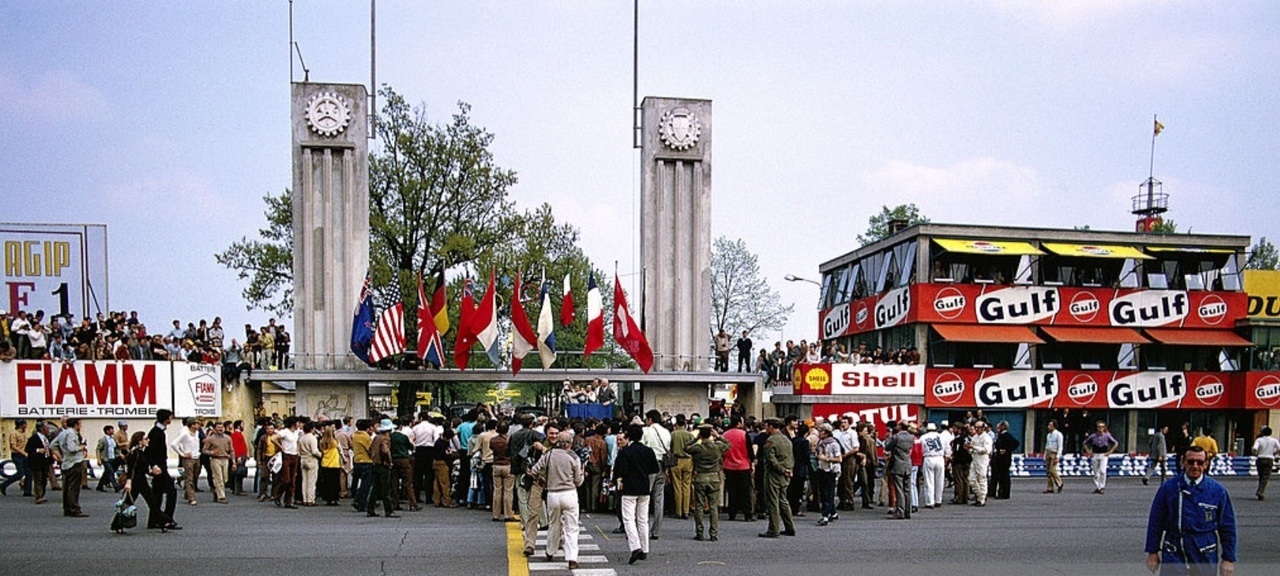
The numbers of the cars pictured in the Pescara pits do not correspond to the unlimited capacity Coppa Florio race entries. Perhaps cars from the support, 1100cc race (Imagno)

‘Il Duce’, Benito Mussolini attends the 1933 Coppa Acerbo, he is the little stout chap in the nifty Ermenegildo Zegna military suit…

By 1933 Mussolini had been in power in Italy for 11 years, he was elected Prime Minister in 1922, he established a dictatorship in 1925. It’s said he was a motor racing enthusiast, no doubt the public relations benefits of attending high profile events such as the Coppa Acerbo did not escape him.

The 15 August 1933 Coppa Acerbo was an important race that year given changes to the driver line up amongst the Italian teams, some very shortly before the event which gave added interest to the meeting.

Alfa Romeo withdrew from Grand Prix racing at the end of 1932, electing to leave its superb monoposto, the first single-seaters in Grand Prix racing, Tipo B’s behind the closed doors of its Portello works leaving the new Scuderia Ferrari to race older Alfa Romeo Monzas. No amount of remonstrating with Alfa Romeo management by Ferrari was successful in releasing the quicker, newer design. Not early in the season anyway!

As a consequence Ferrari was unable to keep his team together as his drivers sought more competitive mounts. Rudi Caracciola and Louis Chiron formed Scuderia CC, although Louis returned to the Maranello fold later in the year. Taruffi left too, having been forced to cede his car to Nuvolari whilst leading the French GP. Then, after an argument with Ferrari post the controversial Tripoli GP Nuvolari departed, taking his friend Borzacchini with him. Giulio Ramponi went to join Whitney Straight’s private team to add to the rout.

Ferrari fought back of course, hiring Fagioli who was not keen on seeing Nuvolari take the #1 seat at Maserati with Campari also joining him at Scuderia Ferrari. Eventually Ferrari succeeded in having the Tipo B’s released to him in time for the Coppa Acerbo and then the Maserati runners were at a disadvantage!

Fagioli aboard a 2.6 litre Scuderia Ferrari Alfa Tipo B monoposto suggests to Piero Taruffi he is ‘coming thru’, 3 litre Maser 8CM, 1st and 3rd respectively. Vittorio Jano’s Alfa Tipo B/P3 the dominant car of 1932 to early 1934 (Imagno)

So…the Coppa Acerbo loomed. Fagioli had defected from Maserati as did Campari, back to Scuderia Ferrari following a disappointing race at Reims 9 days before. Nuvolari and Barzacchini raced 3 litre straight-8 Maserati 8CM’s as independents. Taruffi too raced a Maserati 8CM in Pescara for the first time.

Scuderia Ferrari entered eight cars; 2 1932 2.6 litre straight-8 monoposto Alfa Romeo Tipo B/P3 which, as noted above, the Alfa factory had just released to Ferrari for Campari and team leader Fagioli. 2.6 litre Monzas were prepared for Trossi, Carraroli and Tadini and 2.3 litre Monzas for Brivio and Comotti. Five Bugattis were entered, not the new 2.8 litre Type 59 which did not appear until the last GP of the year in Spain, but 2.3 litre factory T51’s for Dreyfus and Varzi’s privately entered car. Also Bugatti mounted was Earl Howe and Brunet in Type 51’s with Mille ‘Helle Nice’ in a 2 litre Type 35C. All were straight-8 engines of course.

Enzo Ferrari and riding mechanic during the 1924 Coppa Ciano meeting, Alfa Romeo RL Super Sport (unattributed)

Famous agriculture minister Giacomo Acerbo named the race in honour of his brother Captain Tito Acerbo, a decorated war hero killed towards the end of the war in 1919. The first event was held in 1924 and won by Enzo Ferrari in an Alfa RL Super Sport after a tyre failure befell Campari who was well in the lead in a similar six-cylinder works Alfa to Ferrari’s.

The 25.5Km road course was a daunting one set in the Abruzzi Mountains. The track was loosely triangular in shape like Reims, starting in Pescara on the shores of the Adriatic. After a 1 Km stretch the road turned inland for about 11 Km along a winding road into the Abruzzis.

It plunged through the forests and hill villages of Villa Raspa, Montani, Spoltore, Pornace and Villa St Maria rising 200 metres from the coast. The racers then descended to Capelle sul Tavo and then after a hairpin into the 11Km long Montesilvano downhill straight to the coast at very high speed. The straight was followed by a fast right turn at Montesilvano railway station which led onto the Lungo Mare Straight along the coast back to the start/finish line in Pescara. Nuvolari’s fastest lap in the 2.6 litre Alfa Tipo B monoposto in 1932 was 147Kmh. The event comprised 12 laps, a total of 306Km.

The fast boys in practice were Nuvolari’s Maserati 8CM, Campari’s Tipo B and Varzi in another Tipo B. Varzi was given the car to test by Ferrari but elected to race his Bugatti, Molsheim being not keen on the notion of Achille racing the Alfa. The grid was determined by ballot of course, over 50000 spectators lined the course in anticipation of an epic battle amongst mainly Italian drivers.

Two races were run during the carnival, one of 4 laps for 1100cc cars which was won by Whitney Straight’s MG K3 Magnette. It was an exciting race, Straight’s margin at the events completion only 1/5 second from Barbierri’s Maserati.

The field is away, #24 Campari’s Tipo B, the distinctive shape of big, beefy Giuseppe behind the wheel, #28 Earl Howe Bug T51, #34 Varzi’s similar car and beside him on the left Dreyfus’ light colored works T51. #38 Taruffi Maser 8CM, #46 G Zehender Maser 8CM, #52 Nuvolari 8CM, #26 Silvio Rondina’s 2.2 litre straight-6 supercharged O.M. 665S, #42 R Brunet’s Bug T51 then at far left, straddling the white line the distinctive shape of Fagioli’s winning Alfa Tipo B (Imagno)

Duke d’Aosta, first cousin of the King of Italy, gave the starting signal for the main race for cars of unlimited capacity at 10am accompanied by His Excellency Acerbo. Only 16 cars took the start with many of the entries failing to materialise.

Campari’s red monoposto Alfa was in front followed by Varzi’s Bugatti, Howes green Bugatti T51 and Dreyfus in the factory T51. Soon the faster cars ballotted towards the rear started to come through the field. As they crossed the line at the end of lap 1 Campari’s Alfa was right behind Nuvolari’s Maser, this relentless scrap was to be the pattern of the challenging race. The first lap took Tazio 11m03sec, then came Campari, Taruffi 2s later, then Fagioli and Varzi. Zehender Maser 8CM, and Dreyfus were 6th and 7th already 43 seconds behind the two leaders. Whitney Straight and Ghersi, Alfa Monza 8th and 9th, a second apart were 56s behind the leaders.

Borzacchini was stranded only 12Km from the start with a seized driveshaft universal joint on his Maserati 8C3000 gearbox. He borrowed a bike and pedalled slowly back to the pits to the amusement of the vast crowd. The spectators were more thrilled though, by the dice between old rivals Nuvolari and Campari. They swapped the lead but were always able to see each other. Behind them were Taruffi 3rd, Fagioli, Varzi and Dreyfus.

Nuvolari and Campari raced wheel to wheel on laps 4 and 5, on lap 5 Nuvolari passed Campari and this time began to pull away. When the Mantuan finished lap 6 Campari was 8s back from Fagioli, Taruffi, Varzi, Dreyfus, Zehender and Howe. After 8 laps Nuvolari had extended his lead to 16 seconds and was on course to win the race.

Sensation happened on lap 9 when Campari, still chasing Nuvolari, left the road near Spoltore and was thrown from his Alfa, he was fortunate to be only lightly injured. Earl Howe was quoted in ‘The Motor’ October 1933 ‘Campari took a corner too fast, his car ran up a bank and was overturned, fortunately he was not badly hurt. I nearly hit his car, the presence of which i had no warning’.

Fagioli then inherited 2nd but he was 1m11s behind Nuvolari who completed the 9th lap from Fagioli, Taruffi, Varzi, Dreyfus, Zehender, Howe whilst Pelligrini, Alfa Monza, Grosch and ‘Helle Nice’ were already lapped. Straight had retired his Maserati 26M on course with mechanical failure.

Nuvolari sensibly eased his pace on lap 10, allowing Fagioli to draw within a minute of him, but there was further sensation at the end of lap 11 when Luigi crossed the line in Pescara ahead of Nuvolari! He too, like Borzacchini, had a gearbox driveshaft universal joint seize and was slowly making his way to the pits to rectify it. Career Maserati mechanic/engineer/test driver Guerino Bertocchi poured a bucket of water over the hot, smoking driveshaft to cool it down and Nuvolari resumed the race in a great cloud of steam and smoke but his countryman was well gone.

Tazio drove like only he could and saved 2nd place from Taruffi in the other Maser 8CM monoposto. The spectators gave Nuvolari real shouts of acclamation and appreciation of his wonderful drive as the moral victor of the contest.

Automobil-Revue reported that Fagioli shouted, as the Italian National Anthem was played- ‘But the true victor is Nuvolari’, the great man set a new lap record on lap 7 of 10m31.8s. Varzi was 4th some 4m25s back, Bugatti T51, then Howe 14m18.4s behind Fagioli, also aboard a T51. Pellegrini, Alfa Monza had been lapped once and and was flagged off as were Grolsch, Alfa Monza and Helle Nice, Bugatti T35C lapped twice and thrice respectively.

Nuvolari races to victory or so he hoped! Coppa Acerbo 1933. Maser 8CM, conventional car for its time, a monoposto version of the existing 1932 car with 3 litre supercharged, DOHC straight 8 giving circa 250bhp@5500rpm. Car initially performed poorly as the very narrow chassis was insufficiently stiff- this change made from the Belgian GP in July, the power of the engine could then be more fully exploited. Noteworthy was the introduction of hydraulic brakes on all 4 wheels- revived by Masers 12 years after Duesenberg demonstrated their effectiveness in the 1921 French Grand Prix (unattributed)

Maserati 8CM…

Tazio Nuvolari made the Maserati 8CM sing when he first got his hands on it, it was not the first time the great man achieved results with a car lesser mortals struggled to match.

The engine and gearbox was great from the start, it seems probable the M26 car first raced with the 3 litre straight-8 at the 1932 German GP, but this cannot be confirmed. The 8CM was a more powerful car than Scuderia Ferrari’s bored out Monzas, and more than the equal of Alfa’s Tipo B in terms of power if not the handling and ability of the car to put its power to the ground courtesy of brilliant designer Vittorio Jano’s ‘bifurcated’ twin driveshaft rear end. The Tipo B/P3 was ‘the car’ of the 1932 to early 1934, ‘pre Silver Arrows’ phase!

Maserati designed a beautifully narrow monoposto which presented nicely to the airstream but the period typical 8CM girder chassis lacked structural rigidity. This was addressed by Nuvolari on the eve of the Belgian Grand Prix, his first GP in the car. Nuvolari, after driving the car in practice and being disturbed by its behaviour at speed, diagnosed the chassis shortcomings and took the car to the Imperia car factory at Nessonvaux where additional bracing was added to the chassis and the problem was solved- he won the Spa race.

From that point on the 2991cc, cast iron, DOHC, two valve, Weber (or Memini) fed, Roots supercharged straight-8, giving circa 250/280bhp@5800 racer became a very effective tool, and not just in Nuvolari’s hands.

In 1933 Campari won the French GP in an 8C3000 before decamping to Scuderia Ferrari. Nuvolari took wins in the Belgian GP after his last minute chassis mods and in the Coppa Ciano and Nice GP. It is sad that Alfieri Maserati died during kidney surgery (on 3 March 1932) but he bequeathed his firm two wonderful engine designs in both 1.5 litre 4 cylinder and 3 litre 8 cylinder, DOHC, supercharged layouts before his passing. Winning designs for both the Voiturette and Grand Prix classes.

The 8CM was also a very commercially successful car for Maserati, 19 were built in total, the car became a tool of choice off the back of its 1933 performances for privateers who sought its blend of performance and reliability. Alfa chose not to sell the Tipo B to privateers, having initially announced they were building 25 cars for sale, that decision very much to Masers benefit when drivers sought mounts for 1934.

To comply with the 1934 ‘750 Kg Formula’ regulations the chassis was widened from 620mm to 850mm to facilitate fitment of bodywork to comply with the new cross sectional regulation requirements, with the package otherwise remaining the same. The 8CM was initially a ‘pork chop’, tipping the scales at more than 750 Kg but some judicious weight saving made the car comply.

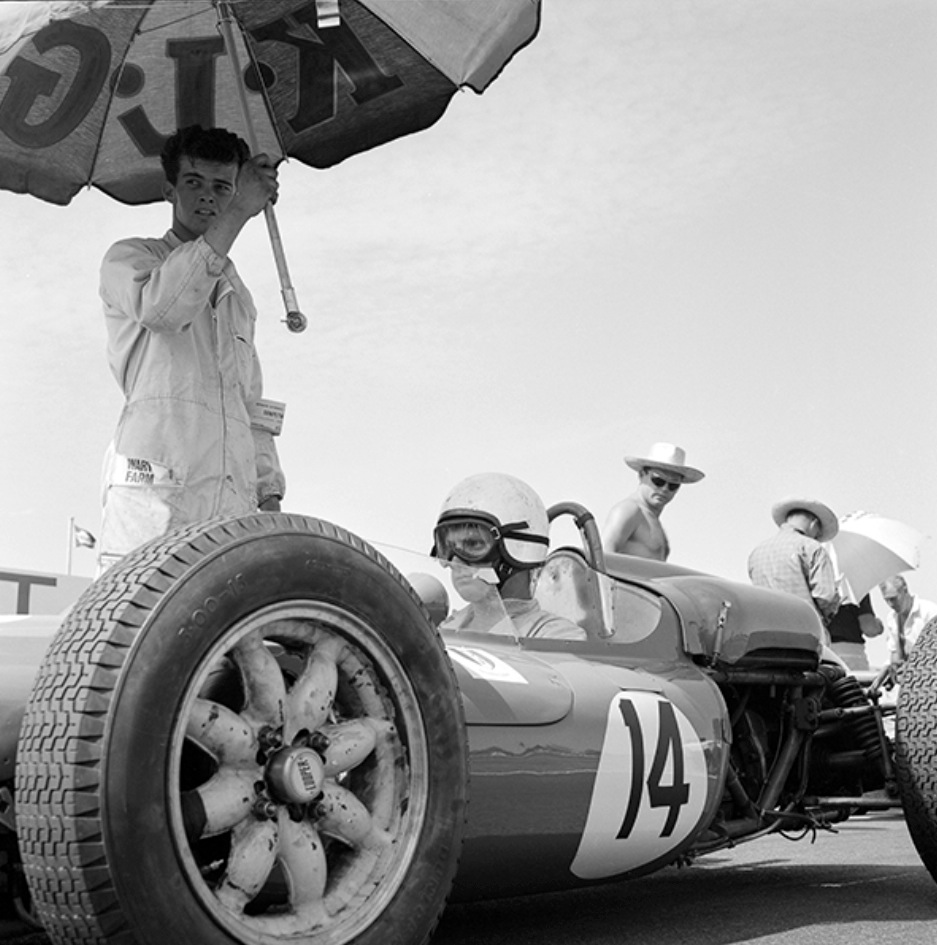
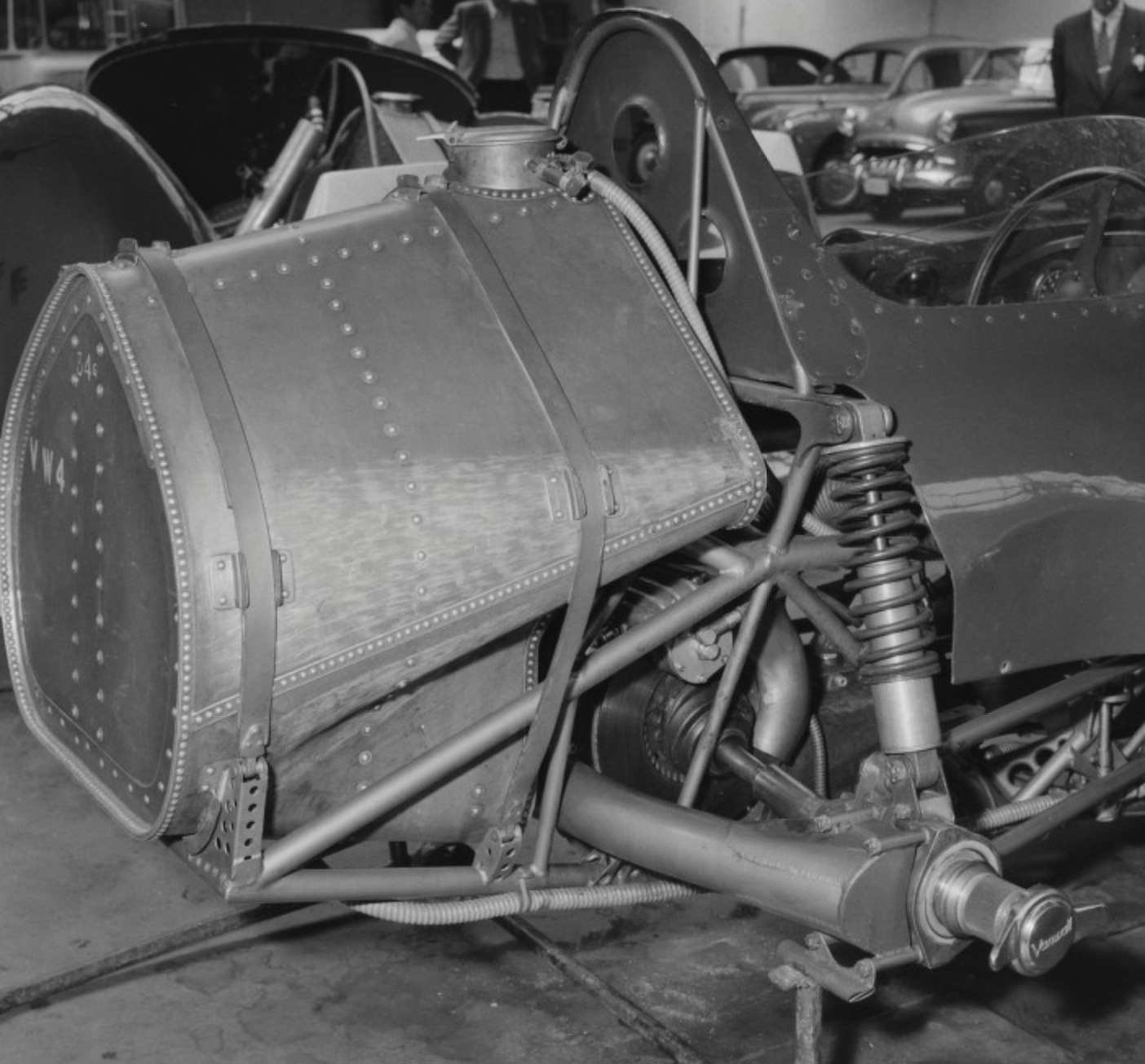
Beautiful shot of the Maser 8CM showing its narrow chassis, lissom lines, solid beam axle suspension and hydraulically operated, finned drum brakes, splines and knock-on hubs. The where and when is more of a mystery, such are the vagaries of Getty Images captions. Its a weighbridge, the narrow chassis/body suggests 1933, #14 matches the GP de Marseille entry of Goffredo Zehender’s works car at Miramas on 27 August 1933, he was 5th- but its just an educated guess, i’m intrigued to know the facts if any of you have the answer (GP Library)

The Italian and French cars were largely ‘make weights’ as the German onslaught gathered pace throughout 1934, the first appearance of the silver cars was at the Eifelrennen on 3 June. The Bugatti T51 and T59, Alfa Tipo B and Monza’s, and Maser 8CM were fighting for the scraps but were good tools for the ‘non-championship’ Grands Epreuves so prevalent at the time. These races were in the main not contested by the German teams. The most impressive performance in 1934 was Nuvolari’s 2nd place, with the Auto Unions and Mercedes present, at the 1934 Coppa Acerbo. It was a power circuit but there was still the opportunity for circuit knowledge and ‘tiger’ to come to the fore. Luigi Fagioli won the race in a Mercedes W25

In terms of 1934 8CM wins, Benoit Falchetto won both the GP Picardie and GP de L’ V.M.F. at Montlhery and Phillippe Etancelin the GP Dieppe. Whitney Straight had much success with his modified cars at home, winning the Donington Park Trophy and the Mountain Championship at Brooklands and right at the end of the year, the South African GP. Straight also took a heat win in the GP Vichy.

Later in the year Maserati’s factory team focus switched to the new 3.7 litre 6 cylinder engined 6C34, the new engine fitted into the 8CM chassis. Tazio won the Circuit of Naples and Circuit of Modena in these cars that October, but the model was not an outright contender. The net result was that Nuvolari made the decision to join Scuderia Ferrari for 1935. Maserati’s 1935 challenger, the 4.8 litre V8 Maserati RI made its GP debut at Marne that July but was never fully developed when Maserati lost interest in GP racing, it was an unequal struggle after all, the Silver Arrows were well into their stride by then, Tazio Nuvolari’s stunning German GP win aboard an Alfa Tipo B duly noted!.

Technical Specifications…

Engine: As per the text above, in addition- Bore/stroke 69X100mm, compression ratio 6.4:1. Gearbox: 4 speed utilising many Fiat Tipo 522 components, Maserati were to use Fiat gearbox components for many years

Chassis: Sheet steel girder type with aluminium body attached to light weight supports

Suspension: Front- Solid axle with semi-elliptic leaf springs & friction dampers Rear- Live axle with semi-elliptic leaf springs & friction dampers

Steering: Fiat worm and sector. Brakes: Large 4 wheel finned electron drums with hydraulic actuation. Weight: 750Kg in 1934

Bibliography…

kolumbus.f1, ‘MotorSport’ October 1933, ‘The Racing Car Development and Design’ by Clutton, Posthumus and Jenkinson, ‘Maserati: A History’ by Anthony Pritchard

Photo Credits…

Imagno, GP Library, Getty Images


image

Mike Barney prepares Jack Brabham and Bruce McLaren’s Cooper T53 Climax’, French GP Reims, 3 July 1960…

That racing drivers shouldn’t have too much imagination is shown by this shot!

#16 is Brabham’s winning chassis, #18 McLaren’s third placed car. Olivier Gendebien was second and Henry Taylor fourth in T51’s making it a Cooper 1-4!

Yer ‘fancy-schmancy’ high tech relatively, I say it again, relatively safe 2017 carbon fibre GP machine is another world away, 55 years or so to be precise. Mind you, one would hope we would progress.

Owen Maddock’s curvy spaceframe chassis is typical of the day, the spaceframe anyway if not the imperfect in an engineering sense bent tubes! At the front the water radiator and oil tank are the ‘deformable structures’ ahead of the drivers ankles and lower legs. The fuel tanks are neatly and very practically ‘bungee’ strapped to the chassis and prone to leakage as the ‘ally tanks chafe on the steel chassis tubes. The ‘deformable side structures’ are the tanks, no bag bladders in those days so the risk of fire was great, prevalent and occasionally fatal.

The 2.5 litre Coventry Climax FPF powered T53 ‘Lowline’ was the 1960 successor to the race-winning and built in vast numbers 1958/9 T51. That car in both F2 and F1 spec has to be one of the greatest customer racing cars ever? T53 was the design work of Jack, John Cooper and Maddock.  The Lotus 18, Chapmans first mid-engined car was the quickest bolide of 1960. Moss took wins in Rob Walker’s car at Monaco and in the season ending US GP at Riverside but it was not the most reliable, something Jack was happy to capitalise upon.

McLaren won the Argentinian GP at the seasons outset, then Jack had an amazing mid-season run winning the Dutch GP on 6 June and the Portuguese GP on 14 August. In between Zandvoort and Oporto he won the Belgian, French and British GP’s thereby setting up his and Cooper’s second world titles on the trot.

Its good to look at these cars in the ‘nuddy’ every now and again to remind oneself of just how close to the elements and how brave the drivers of yore were. Yep, the piloti are no more exposed than they had been in the past but the cornering speeds of a 1960 2.5 litre Cooper or Lotus were a good deal quicker than a 1954 2.5 litre Maser 250F, the road circuits in particular just as hazardous…

Cooper T53 Climax cutaway by Brian Hatton

Credits…

GP Library, Brian Hatton


Compound curvature comprises curves made up of two or more circular arcs of successively shorter or longer radii, joined tangentially without reversal of curvature. The foregoing is illustrated with definitive precision by Helmut Newton’s portrait of perfection above.

The Pirelli calendar is a wonderful institution albeit now somewhat diluted by the dull, shit-boring political correctness which pervades our times! It’s nowhere near as risqué as it once was, always tastefully so in my view.

The image is from the 1985 season, originally published in the ’86 calendar and features a young lady whose specifications more than match the 750bhp, twin-turbo, 1.5 litre Renault EF4B V6 powered Ligier JS25. I’m not sure of the driver but the helmet of Andrea De Cesaris is closer to a color match than those of teammates Jacques Laffitte and Philippe Streiff.

In any event the photo is hardly about the car or driver, what compound curvature, arcs of changing radii and perfect purity of line…

Credits…

Pirelli, Helmut Newton, Merriam Webster Dictionary

image

Inboard front suspension, top rocker, lower wishbone and inboard mounted coil spring/Koni shocks (Schlegelmilch)

Mario Andretti psyches himself up before a practice session in his Ferrari 312B2 prior to the 1972 Italian Grand Prix…

Andretti qualified the Ferrari 7th and finished 7th, teammates Jacky Ickx and Clay Regazzoni proved the cars pace by popping the car on pole and 4th.

image

Andretti, Ferrari 312B2, Monza 1972 (Schlegelmilch)

Jacky lead the race after Clay Regazzoni’s car clipped the back of Carlos Pace’ March when the latter spun at the Vialone chicane. Ickx snuck back into the lead only to lose it when the Flat-12 failed; Fittipaldo took the win and title in his Lotus 72D Ford.

image

The Ickx’ and Andretti Ferrari 312B2, the #10 2nd placed Surtees TS9B Ford of Mike Hailwood and #9 de Adamich TS9B DNF. Note Ferrari rear suspension detail as per the text (unattributed)

Background…

The Ferrari 312B2 made its debut in Monaco GP 1972, it was a new car rather than a development of the original car for which the Ferrari 3 litre flat-12 was designed, the 1970 312B.

Said engine had a shorter stroke, aimed to increase revs and thereby increase power. The nose cone was low and squarish, the flanks more straight than the rounded shape of the earlier cars, and the rear wing attached to an appendage of the roll-bar.

The rear suspension was redesigned with twin struts and spring/damper groups mounted above the gearbox and connected to the hub with tubular arms. The aim was to reduce unsprung weight. The coil spring-shocks were shifted towards the centre of the car above the gearbox. The car remained a handful as drivers struggled with the handling in combination with the Firestone tyres, a continuation of some of the problems of 1971.

andretti

Andretti’s 312B2 on the way to 4th place in the 1971 German GP, Stewart won in Tyrrell 003 Ford (unattributed)


(Tony Matthews)

Ferrari were struggling with direction at the time after several difficult years, the situation climaxed halfway through 1973 when Luca Di Montezemolo was brought in from Fiat to sort things and provide clear leadership.

312B2 wasn’t a great Ferrari, Jacky Ickx able to scored just a single win with the B2 in 197, the Dutch GP at Zandvoort in rainy conditions whilst teammate Clay Regazzoni placed 3rd twice.

In 1972 Ickx only won the German GP, despite 4 poles. Despite the disappointing results, It raced on into 1973came in action in 1973, Merzario scored 4th at Kyalami before the B3 appeared, a lousy car. with Ickx decamping prior to the German GP…The teams resurgence began with the 1974 B3 variant and the powerful Lauda, Montezemolo, Forghieri cocktail.

Design and Specifications…

image

Chassis Type 621/A monocoque of ‘Aero type’ with aluminium panels riveted onto  tubular steel spaceframe structure with a partially stressed engine.

Suspension; Front Double wishbones: upper rocker arm, lower wishbone, inboard spring/damper units and anti-roll bar. Rear; Single upper radius arm, horizontal spring/damper units mounted atop the transaxle and anti-roll bar.

Engine; Type 001/1, Flat-12 derived from the 001, light alloy cylinder block and head, DOHC, 4 valves, Lucas fuel injection, Marelli electrnonic ignition. Aluminium wet cylinder liners, bore/stroke, 80 x 49.6 mm, 2,991cc, compression ratio 11.5:1. 480bhp@12500rpm

Gearbox; 5 speed Ferrai transaxle with slippery diff. Brakes; Lockheed discs and calipers, inboard at rear. Rack and pinion steering.

Tyres/Wheels; F/R 8.6-20-13″, 13.5-24.0-15″ Firestones. Wheels: cast light alloy; front 10×13″, rear 15×15″

image

Andretti, 312B2, Monza 1972 (unattributed)

Etcetera…

imageAnother couple of Schlegelmilch shots on Andretti at Monza…

image


image


Credits…

Rainer Schlegelmilch, f1technical.com, Tony Matthews

Tailpiece: 1971 Monza pre-race engine changes, 312B2…

image


bugatti atlantque

The wonderful, outrageous, avant-garde, art deco Atlantic is both a monument to Jean Bugatti’s design talent and also to pre-war Europe. It is one of the last visual wonders of its age before the focus of engineers was forced upon munitions, the resultant devastation the antithesis of the Bugatti’s beauty.

When Molsheim’s Aérolithe concept debuted at the 1935 Paris Salon, the public just didn’t get it. It was radical to behold, the body was made out of light, flammable ‘Elektron’ magnesium which was riveted externally giving the car its distinctive central seam. Under the haute couture clothes was a new ultra low, modified T57 chassis, also fitted to the ‘normal’ T57S and SC. The rear axle passed through the rear chassis frame rather than riding under it. Those elements and the T59 GP car derived DOHC 3257cc straight-8 engine, dry-sumped in this application to fit under the low bonnet, made the Aérolithe the most advanced car of its time.

T57 Atlantic cutaway (unattributed)

But Ettore Bugatti was disappointed in the work of art, the solo Aérolithe soon disappeared. To this day its fate is a mystery, explanations include it being a casualty of war or perhaps broken down for its parts. Not so long ago Aérolithe was recreated using original parts and materials with only 15 photographs as a resource and reference base. Quite a job!

After the Aérolithe show car, Bugatti produced four supercharged Atlantic coupes in 1936/7 using aluminum instead of magnesium for the bodies whilst keeping the rivets. Powered by supercharged straight-8’s, these circa 200bhp coupes exceeded 120mph- in 1936! In fact two unsupercharged Type 57S and two supercharged Type 57SC Coupes were built but both T57S’ were later supercharged by the factory, therefore becoming SC-‘surbaisse’- lowered and C-‘compresseur’-compressor in specification. All four cars still exist.

I thought this painting by Dietz the quintessential Parisian Atlantique scene…

Credit…

Dietz

image

Engine 4 cylinder monobloc, 1 inlet and 2 exhaust valves, SOHC, 4493cc-100X143mm bore/stroke, 4 speed box, 4 disc clutch, brakes on transmission, front and rear wheels, 1025Kg

Antonio Fagnano blasts his Fiat through a village during the 14 July 1914 event, Lyon…

Fagnano was a Fiat all-rounder and institution, he was a mechanic, foreman, member of the test department and graduated from riding mechanic to race driver of the works team!

For 1914 the GP ‘Formula’ provided for an 1100Kg maxiumum weight and engines of no more than 4.5 litres in capacity. The race was a contest between Peugeot and Mercedes in the context of imminent war; Archduke Franz Ferdinand was assassinated less than a week before the GP at Lyon which drew a crowd of over 300,000 filling hotels within a 50Km radius of the course.

Christian Lautenschlager and riding mechanic on the way to winning the 1914 French GP, Mercedes GP 35HP. Engine 4 separate cylinders, 4 valves per cylinder, SOHC, 3 plugs per cylinder, 4456cc-93X164mm bore/stroke, claimed power 115bhp@2800rpm. 4 speed box, leather cone clutch, brakes on transmission and rear wheels, 1080Kg, top speed circa 110mph (unattributed)

Christian Lautenschlager won from teammates Louis Wagner and Otto Salzer in 7 hours 8 minutes 18.4 seconds at an average speed of 65.665mph.

Sailer led by 18 seconds at the end of the first lap, by lap five he had built a lead of almost 3 minutes and then retired with a blown engine on lap 6.  Boillot’s Peugeot took over the lead for 12 laps, at one point he led by over 4 minutes.

The Mercedes drivers made one stop during the race for new Continentals. This contrasted with the poor wear of the Dunlops of Peugeot, Boillot made eight stops for tyres, the Frenchman’s many tyre changes allowed Lautenschlager to pass on lap 18. By the end of that lap, Christian had opened up a lead of over 30 seconds.

Fagnano’s Fiat was the best placed of the Italian cars, the talented driver died of an illness, aged 35, on 8 July 1918.

France, 1914 and the Art Historians…

If you have a hankering for this era of racing here is a very interesting article with a completely different angle.

http://www.king-of-the-boards.com/articles/france1914.pdf

Credit…

Roger Viollet, Alinari Archive, T Mathieson ‘Grand Prix Racing 1906-1914’, Patrick Ryan Collection

image

Tailpiece: Dealership ‘in period’, the first Fiat dealership in Geneva with two 501’s out front, circa 1921…

balilla

(Alinari Archive)


image

‘yer don’t tend to think of Rodriguez as a Can-Am driver but he contested many races over the years without ever doing a full season’s program. A pity, as his fearless, blinding speed aboard big hairy V8’s would have been worth travelling a mile or three to see…

Here Pedro is with the 7.4 litre BRM P154 Chev during the Monterey Grand Prix weekend at Laguna Seca on 18 October 1970.

BRM built the P154 Chev to contest the 1970 Can-Am with George Eaton as its driver, the car was one of two brand new cars by Bourne’s just joined designer, Tony Southgate.

image

The immensely talented BRM Chief Engineer, team manager and designer Tony Rudd fettling his nemesis, the complicated, heavy and recalcitrant! BRM P83 ‘H16’, Monza, Italian GP practice in 1966 (GP Library)

BRM had two terrible years by their lofty standards in 1968 and into 1969. The BRM H16 engine was finally made reliable-ish in 1967 but it’s corpulence, it was well over 300 pounds in excess of it’s designed weight made the cars power to weight ratio poor whatever the chassis designers did to take weight out of the rest of the bolide.

The replacement P101 2 valve 3 litre V12, first raced by Bruce McLaren in his McLaren M5B at the Canadian GP  in late 1967 was concepted as a sports car engine. Whilst light it wasn’t a match for the Ford Cosworth DFV’s power, torque, fuel efficiency or reliability, the same problems being confronted by Ferrari and Matra with their own V12’s.  Into 1968 the DFV was being raced in numbers; by Lotus, McLaren, and Ken Tyrrell’s Matra International team.

As the Bourne engineers focussed on engines they lost their way with chassis direction, a strength prior to this. As a consequence Tony Rudd, who had masterminded BRM’s rise and consistency for over a decade left in mid-1969 to join Colin Chapman at Lotus.

image

British GP practice, Silverstone 1969 with Surtees telling the boss just how shite things really are! Sir Alfred Owen, the immensely successful industrialist listens carefully and acts, with ‘generational change’ at Bourne. Allan Challis is the BRM mech in orange (Rainer Schlegelmilch)

’69 BRM driver, John Surtees was having a shocker of a season on both sides of the Atlantic, Jim Hall’s conceptually brilliant but flawed Chaparral 2H CanAm car was an even bigger ‘sheissen-box’ than his BRM F1 P139 BRM. Time was ticking in terms of his own driving career, he was 35 and had managed to land in the wrong team at the wrong time, twice in the same year when time was very much a precious commodity!

image

Surtees in the BRM P138 in Monaco 1969 practice. The cars all raced raced sans wings due to a CSI  overnight safety decree severely limiting them. Surtees Q6 and DNF after Jack Brabham ran up his clacker when his gearbox failed, no injury to either driver (Rainer Schlegelmilch)

With BRM owner Sir Alfred Owen’s consent Surtees approached Tony Southgate, with whom he had worked at Lola on the T70 Can Am and T100 F2 cars and more recently designed competitive cars for Dan Gurneys ‘All American Racers’ in Santa Anna, California.

Southgate’s Eagle 210 Offy won the 500 in Bobby Unsers hands in 1968, he also designed a successful Formula A car and a stillborn ’68 F1 car design, elements of which were picked up in the Indy and ‘A Car’.

eaton monaco

George Eaton at Monaco in 1970 in Tony Southgate’s brand new, BRG BRM P153 V12. Compare the ‘old and new’ P138 Monaco ’69 with P153 Monaco ’70  (The GP Library)

Southgate’s brief when he joined BRM was twofold; ‘do what you can now to get the P139 competitive and design a new car for 1970’…

The Brit quickly decided their was little he could do with the P139 so pressed on with the design of the P153, it and the evolved for ’71 P160 were front running, GP winning (4 wins) cars.

Whilst in the middle of the P153 design the chaotic BRM ‘decision making process’ determined that a Can Am challenger for 1970 was a good idea. It was a good earn after all. In a way it was a good decision as Southgate had Can Am experience at Lola and AAR but at the time focus on the ‘main F1 game’ would have been the more prudent course, but racers to the core the BRM outfit were!

image

Tony Southgate’s quarter-scale layout drawing of the BRM P154 (Tony Southgate)

Given the designation P154, the car was very much a wedge-shaped device, developed at quarter scale in the Imperial College wind tunnel, then in MIRA’s full-size tunnel when it was completed.

Southgate recalled testing the car at MIRA (Motor Industry Research Association test facility); ‘MIRA has a large test track, with high banked corners to enable high average speeds to be maintained…the one and only Jaguar XJ13 was there for a filming run…an hour or two later whilst in the wind tunnel we heard a load bang. The XJ13 crashed violently at 125mph when a rear wheel collapsed, it rolled four times, I’m glad to say Norman Dewis, Jag’s legendary test driver was only bruised’.

‘By comparison with the 1965 prototype Le Mans car, certainly pretty but what then seemed like old technology, basically it looked like an E Type with an engine in the middle, very round in section with low drag the clear priority. By comparison the P154 was very aggressive looking, wedge-shaped with square sections and downforce was written all over it.’

image

‘The P154 model in the Imperial College wind tunnel. There was no moving floor in those days so the wheels were fixed with a small 1mm gap between them and the floor. The model was covered in chalk and paraffin so that when it dried the chalk left a surface air flow pattern for studying.’ (Tony Southgate)

The P154 had a neat lightweight monocoque chassis, the front suspension was similar to the P153 with a single upper link, lower wishbones, coil spring/Koni shocks and an adjustable roll bar. But the rear suspension was quite different as Southgate sought to run the exhaust low down, locating the exhaust primaries below the rear suspension lower wishbones, the aim was to lower the CG. ‘The end result looked good’. The suspension itself was conventional, single upper link, lower wishbones, twin radius rods for forward and lateral location and coil spring/Koni shocks and adjustable roll bar.

image

‘The prototype BRM P154/01 being assembled at Bourne. I am showing (TS left) the Castrol USA representative (sponsor) around whilst Tim Parnell (team manager at right) looks on. The monocoque was quite neat and full-length, finishing at the gearbox. The engine is a Chevy developed by BRM, the gearbox a Hewland LG500.’ (Tony Southgate)

Designed for super wide 19inch wide Firestones which never appeared, the car always looked ‘over bodied’ with the 17’s the car raced with. This contributed to the handling dramas attributed to the beast.

The engine was built in-house at BRM and seemed competitive; Chev ZL1 aluminium blocked 7.4 litre, Lucas injected, magneto ignited, dry sump V8 developing circa 650 BHP. The gearbox was one of Mike Hewland’s LG500’s.

The car had little testing, ‘it was thrown together and sent to America for the mechanics to sort out on the hoof” Southgate quipped in a MotorSport interview. The poor unfortunates sent to the US with the car were Roger Bailey and Mike Underwood!

The car sorely needed testing as BRM’s first Can Am machine and the cars driver, Canadian George Eaton didn’t have the experience of big sports cars of both other 1970 BRM F1 drivers, Pedro Rodriguez and Jackie Oliver. ‘It was a low budget operation and the results reflected that. For me, it was a distraction at the time from the real thing-Formula One’ said Southgate.

image

‘The completed P154 outside the Bourne workshop in 1970. Note the paintwork was not complete when this photo was taken. In this shot you can see the undersized tyres front and rear, which proved a problem on the circuit (Tony Southgate)

Racing the P154: George Eaton 1970…

eaton brm

George Eaton with the BRM P154 Chev, 11 June 1970 (Dick Darrell)

Eaton was far from devoid of ‘Big Car’ experience, however.

He raced a McLaren M10A Chev Formula A, 5 litre chassis successfully in North America in 1969 and had raced customer McLarens in the Can Am since 1967.

He was a very strong performer in his beautifully prepared McLaren M12 Chev in the 1969 Can Am consistently qualifying in the top 6 in a field with great depth of talent. His best results were in Texas 2nd, Edmonton 3rd, Watkins Glen 4th and Mid Ohio 6th. He was a bright young spark in these, big, demanding cars.

image

‘An early race for the P154, George Eaton, Eatons distant 3rd at St Jovite Canada being a rare highlight’ (Tony Southgate)

So George knew what a good, sorted McLaren was all about and how to drive it figuring a bespoke BRM works car would be a very good thing. Which it was not! The lack of development miles told in the early part of the season.

He qualified 7th at Mosport and 3rd at St Jovite for a DNF with oil and transmission problems and a strong 3rd place. At Watkins Glen he had brake failure, Edmonton a wheel bearing failure and at Mid Ohio fuel pressure problems having qualified 13th, 6th and 25th. At Road Atlanta an engine blew having qualified 5th.

Pedro Rodriguez joined the series from Donnybrooke in September where he was 9th, ‘it didn’t go well in Eaton’s hands so we put Pedro in a car’ was Southgate’s quip, it rather implied the problem was George, which it was not.  The Mexican finished 5th at Laguna and 3rd at Riverside but was out qualified at each round by George. Frustrating for Eaton was Pedro’s results given the hard yards he had put in. He had rocker failure at Donnybrooke and crashes at both Laguna and Riverside, in the latter event a practice shunt which prevented him taking the start.

No way did Eaton have Pedro’s speed in a GP BRM but he was certainly mighty quick in a Can Am car. Southgate ‘Pedro wasn’t a technical driver , he’d just get in and drive his heart out’, clearly Eaton was quick, Pedro was Top 5 in the world at the time, Top 7 anyway! One rather suspects the P154 needed testing miles with a development driver to both stress componentry, the role Eaton played in races early in the season and to re-engineer or tweak the package to make it behave. Southgate says the suspension geometry, designed for 19inch wide tyres didn’t work well with 17’s.

Best results for the P154 in a season dominated again by the papaya McLarens, the M8D in 1970, were George’s qualifying performances at Road Atlanta and Donnybrooke, his 3rd place at St Jovite, Pedro’s 3rd at Riverside and 5th at Laguna.

In essence Eaton did a very good job with an under-developed, evil handling car, one of the best in the world also struggled with it…

image

Eaton P154/01 Chev, Laguna Seca (The Enthusiast Network)

Development of the P154: Pedro raced the car later in the season and afterwards ‘came to see me in my office in Bourne to talk about the experience and told me in its present form the car was horrible to drive’ said Southgate.

‘I had great admiration for Pedro, so I knew it must be really bad. I was very embarrassed and immediately set about re-engineering it and fixing all the problems. The revised car, the P167 went on to be very good in 1971 but it was still a low budget operation’.

image

This is an interesting drawing of mine because it shows the wind tunnel development shapes that were produced to arrive at the distinctive ‘shovel’ nose on both the P154 and P167. The heavy line indicates the final shape.’ (Tony Southgate)

Modifications to make the car competitive comprised a large rear wing, widening the front and rear tracks to get the outsides of the wheels out to the most extreme width which the proposed for 1970 19 inch wheels were supposed to achieve. The front to rear balance was achieved with a shovel-type concave nose section. ‘It was the same design theory I arrived at in the wind-tunnel for the nose of the P160 ’71 F1 car.’

image

The 1971 BRM P167 was a P154 extensively modified.’…A new shovel nose section was added, new rear bodywork created and a rear wing fitted. The tracks, front and rear were widened.’ (Tony Southgate)

In fact when Howden Ganley, the talented Kiwi mechanic, engineer, racer and test driver drove the 1971 evolved car, the ‘P167’ at Goodwood the nose ‘grounded’ under brakes as so much downforce was being created. The fix was making the nose mounts more rigid.

Said Tony, ‘This was my first experience of very large aerodynamic loads deflecting the structure. The phenomenon was the visual interpretation to my understanding the sheer power of aerodynamics which could be produced on a modern car’.

image

‘The BRM developed Chevy V8 performed well and was quite reliable, the trouble was we had no spare available. The car ran without bodywork between the wheels as shown here.’ 1971 P167 (Tony Southgate)

image

‘The rear view of the P167 shows the exhaust system, which was unusual for a US V8 engined car. I liked it because of the lower CofG’ Note the rear suspension; single upper links, lower wishbones, coil spring/Koni alloy body dampers and roll bar. Inboard discs, LG500 Hewland ‘box with oil cooler above and magneto above it again. Note ‘stays’ to locate ‘mudguards’ above lower wishbones and monster wing compared with wingless P154 (Tony Southgate)

In a very limited Group 7 program by BRM in 1971 Pedro first raced the P167 in the European Interserie at Zolder in June, for Q7 and a DNF with a cylinder liner problem. He missed the next couple of rounds and then came the fateful Norisring round at which he lost his life, more of that below.

In September Brian Redman drove the P167 to a win at Imola and then in early October at Hockenheim against good fields, not Can Am quality mind you. The car was entered by Sid Taylor Racing, that year also running Brian in European F5000 events in a McLaren M18 Chev.

Buoyed by those results the Bourne hierarchy shipped the car to North America to contest the last two Can Am rounds in California. The car was raced again by Sid Taylor with his team providing the support. Jerry Entin and engine man George Bolthoff were with the team at both US races.

At Laguna Seca, Brian was Q6 and a strong 4th, and Howden Ganley raced the car at Riverside, Redman stayed in Europe to attend Jo Siffert’s funeral. The poor Swiss perished at the wheel of a BRM P160 at the end of season, 24 October, Brands Hatch ‘Victory Race’ after a tyre failure, the tyre moved on the rim and suddenly deflated, causing him to veer off the track and roll in the dip before Hawthorn Bend. He was almost uninjured but perished in a horrible fire. The plucky Swiss started the race from ‘equal pole’ with Peter Gethin, it demonstrated his competitiveness right to the very end of his career.

The talented Kiwi, Ganley a BRM F1 driver that season qualified 9th and finished 3rd behind the dominant McLaren M8F’s in the P167.

image

Howden Ganley at The Times Grand Prix, Riverside, P167/01 in 1971 definitive form, 4th (The Enthusiast Network)

‘Alcan Team BRM’ ran the car as a works entry in the 1972 Interserie with Ganley scoring wins at the Nurburgring and Zeltweg amongst a swag of DNF’s for the P167. Mike Pilbeam engineered the car with Reg Richardson, principally an engine man, the cars mechanic. Once the Porsche 917/10 appeared in Europe the going got much tougher for the V8 brigade, Leo Kinnunen took the title, Porsche mounted in ’72.

In an unfortunate and bizarre sequence of events the P167 led to Pedro’s death, Southgate again; ‘During 1971 when the P167 was showing promise, Pedro decided he wanted to race it in Europe. So the car was entered for the big Interserie race on the Norisring street circuit in Nuremberg’

‘Part of the preparation was to re-run the engine on the Bourne dyno, hoping to find a few more horsepower. Tragically, as it transpired, the engine was damaged and we had no spare so we cancelled our entry’.

Pedro ‘phoned me that evening to see how the cars preparation was going, only to be told as far as we were concerned the race was off. I told him I was sorry for letting him down. ‘Never mind he said, I have been offered a drive in a Ferrari (512M) for good money-£1500′. I wished him luck in the race. Little did I know this would be the last time that I ever spoke to Pedro. He was killed driving that Ferrari’.

image

Pedro and P167/01 in still evolving aero form, first race, Zolder, June 1971 (unattributed)

Tony Southgate has very fond memories of the great Mexican; ‘Pedro was extremely popular with everyone and I admired him both as a person and driver. He was a charismatic character with a particular aura about him, always appearing immaculate to the outside world, sleeking back his hair and wiping his brow after driving before he would talk to anyone. Actually he was a very private and quiet man…He never was a balls out qualifier; he preferred to save his efforts for the race. When his grid position was not as near the front as we would have liked, he would tell us that he would simply overtake a few cars on the first lap, which he often did. He was easy to work with, not a technical driver, but naturally talented and brave. Very brave…’

Bibliography…

‘Tony Southgate: From Drawing Board to Chequered Flag’ Tony Southgate, MotorSport interview by Simon Taylor, Jerry Entin on ‘The Nostalgia Forum’, classiccars.com

Credits…

The Enthusiast Network, Southgate biography as above, Getty Images

image

Pedro, P154/02 1970, Can Am circuit unknown (unattributed)

Build Numbers…

British racer and former twice national hillclimb champion David Hepworth bought all of the chassis’, patterns, drawings and moulds when BRM dropped the Can Am program, his best Interserie result was 5th at Silverstone in 1972.

It appears there were 5 chassis built: the two P154’s raced by Eaton and Rodriguez in 1970- P154/01 and P154/02. P154/02 was reduced, it’s parts donated to the P167 program, in recent years the car has been rebuilt/reassembled.

There was one P154/167 and two P167’s. The P154/167 ‘bastard car’ combined the P154 short wheelbase with P167 suspension geometry- this car does not appear to have been raced upon perusal of published records.

Rodriguez, Redman and Ganley raced the definitive P167/01 in 1971 in both the Interserie and Can Am.

Ganley raced P167/01 in the 1972 Interserie, Vern Schuppan practiced the same chassis but did not race it at the Nurburgring after engine failure in practice. Hepworth raced P154/01 in 1972 and in the 1973 Interserie, P167/01.

P167/02 was assembled later from spares acquired in the ‘job lot’ acquisition of cars and parts from BRM in 1972- it appears, entered for Hepworth, at the Nurburgring Interserie in 1974.

For many years the Hepworth family owned four of the five cars. I’m not sure of the present status of said racers but wouldn’t P167/01 be a nice thing to have?- ex-Rodriguez, Redman, Ganley, Schuppan and Hepworth…

Tailpiece: Racers Racer…

image

Pedro, Laguna Seca and P154/02 1970 (The Enthusiast Network)


image


Eric Brandon and Alan Brown, ‘Ecurie Richmond’ drivers with capped patron Jimmy Richmond, a haulage contractor from Nottinghamshire and mechanic Ginger Devlin at Silverstone 14 July 1951…

It’s the British Grand Prix meeting, the cars the latest Norton engined Cooper MkV 500cc F3. The motors were tuned by the highly rated Steve Lancefield and Francis Beart. The very competitive drivers were first (Brandon) and second in that years Autosport F3 Championship from the JBS’ of Peter Collins and Don Parker. They didn’t win at Silverstone though, Stirling Moss won in the new Kieft CK51 from Ken Wharton and Jack Moor.

The Ecurie Richmond pair netted 16 major victories and 41 heat wins in a marvellous 1951 season. The Brands Hatch Junior Championship in ’51 was taken by Cooper mounted BC Ecclestone.

Ecurie Richmond progressed to F2 in 1952 with Brown’s Cooper T20 Bristol achieving the great marques first championship GP points with his 5th place at Bremgarten in the Swiss Grand Prix, F2 adopted as F1 in 1952-3 of course. Heady days indeed…

Credit…

GP Library, 500 Owners Association