Posts Tagged ‘Andrea De Adamich’

Mike Hailwood had a fantastic season with Matchbox Team Surtees in 1972, winning the European F2 Championship in a pair of Surtees TS10 Ford BDAs.

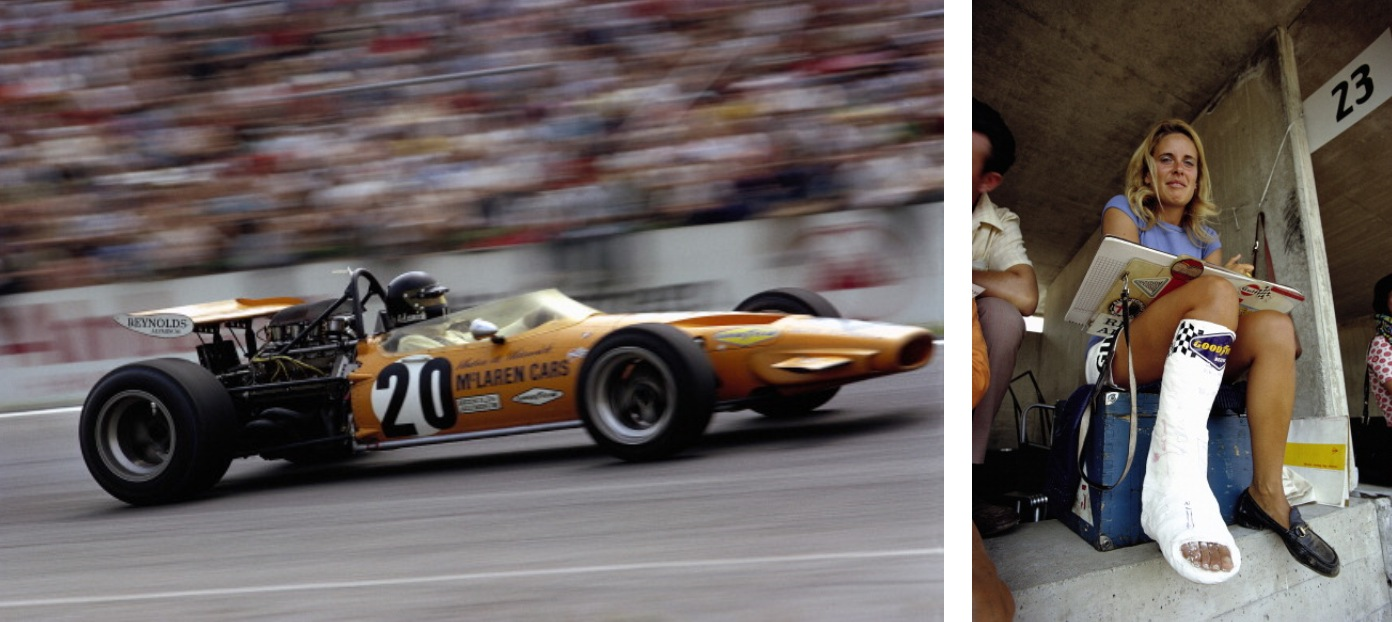
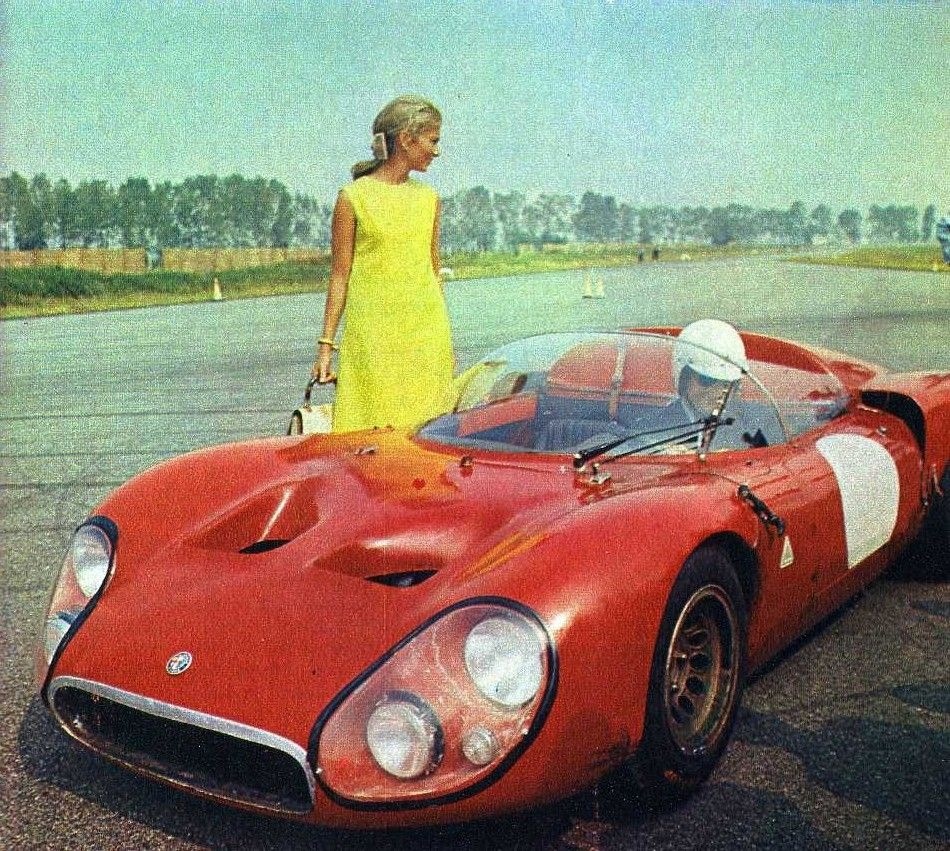
The lovely lady above is shown with an almost visually identical – but quite different under the skin – 1973 TS15 during the International Racing Car Show held at London Olympia on January 1, 1973.

Hailwood commenced the year in Australasia in the Tasman Series, then returned to Europe for F1 and F2 campaigns in early March.

In the European F2 Championship he bagged maximum points in five of the 14 rounds – Rouen-les-Essarts, the Österreichring, Mantorp Park, the Salzburgring and the Hockenheim finale – to win the title with 55 points from Jean-Pierre Jaussaud, Brabham BT38 Ford 37, and Patrick Depailler, March 722 Ford on 27. The impact of Graded Drivers on the results will be shown below.

(Y Hirano)

Mike Hailwood arrived in New Zealand for the Tasman in sparkling form. He did two late-season ’71 Grands Prix for Surtees at Monza and Watkins Glen, and then a full South African series of sportscar races before arriving in Auckland to race the Surtees TS8/9 Chev #TS8-002 that John Surtees raced in the November 21, 1971 Australian Grand Prix at Warwick Farm, DNF.

He started the Tasman with a bang: second behind Frank Gardner’s works-Lola T300 Chev in the NZ GP at Pukekohe, second again in the Lady Wigram Trophy, then third at Levin. Then the momentum he had was lost when the car was badly damaged at Teretonga, the final NZ round.

A TS11 monocoque #TS11-03 was shipped to Australia. The team had the car ready for the fifth round at Surfers Paradise, but the win that had seemed likely didn’t happen; his best in the four Australian rounds was second in the final round at Adelaide International.

Hailwood in the Sandown dummy grid over the AGP weekend. TS11-03 is fitted with the TS8/9 nose of the damaged car rather than the sportscar type usual TS11 nose
Warwick Farm 100, February 13, 1972. Hailwood, Surtees TS11 Chev from David Hobbs’ McLaren M22 Chev, Teddy Pilette’s McLaren M10B Chev, Tony Stewart, Mildren Waggott 2-litre TC-4V and Warwick Brown, McLaren M10B Chev (R MacKenzie)

I attended my first car race at Sandown for the Australian Grand Prix, Hailwood was on my list of four to watch all weekend: Hailwood, Gardner, Matich and Bartlett. Mike had an aura to 15 year old me for sure and seemed a good bloke. You know, the way you can tell when you watch the way someone interacts with those around them, the familiar and the fans?

So I followed his fortunes in F1 and F2 that year, rejoicing in his successes in both categories that cemented his place in Grand Prix racing.

When Mike flew out of Adelaide on February 27, it was to South Africa where the Grand Prix at Kyalami was held the following weekend. His year of F1 intent started with Q4 and challenging Jackie Stewart’s Tyrrell 003 Ford for the lead before a rear suspension breakage on the TS9B Ford after 28 laps.

Hailwood, Surtees TS9B Ford, Italian Grand Prix, Monza 1972. A great second behind Emerson Fittipaldi’s Lotus 72D Ford (unattributed)

Surtees TS10 Design and Construction…

John Surtees seized a commercial opportunity in 1972, that season F2 changed from 1.6 to 2-litres, potentially throwing the paradigm up into the air. Surtees had reasonable success with both his F1 works designs and F5000 cars.

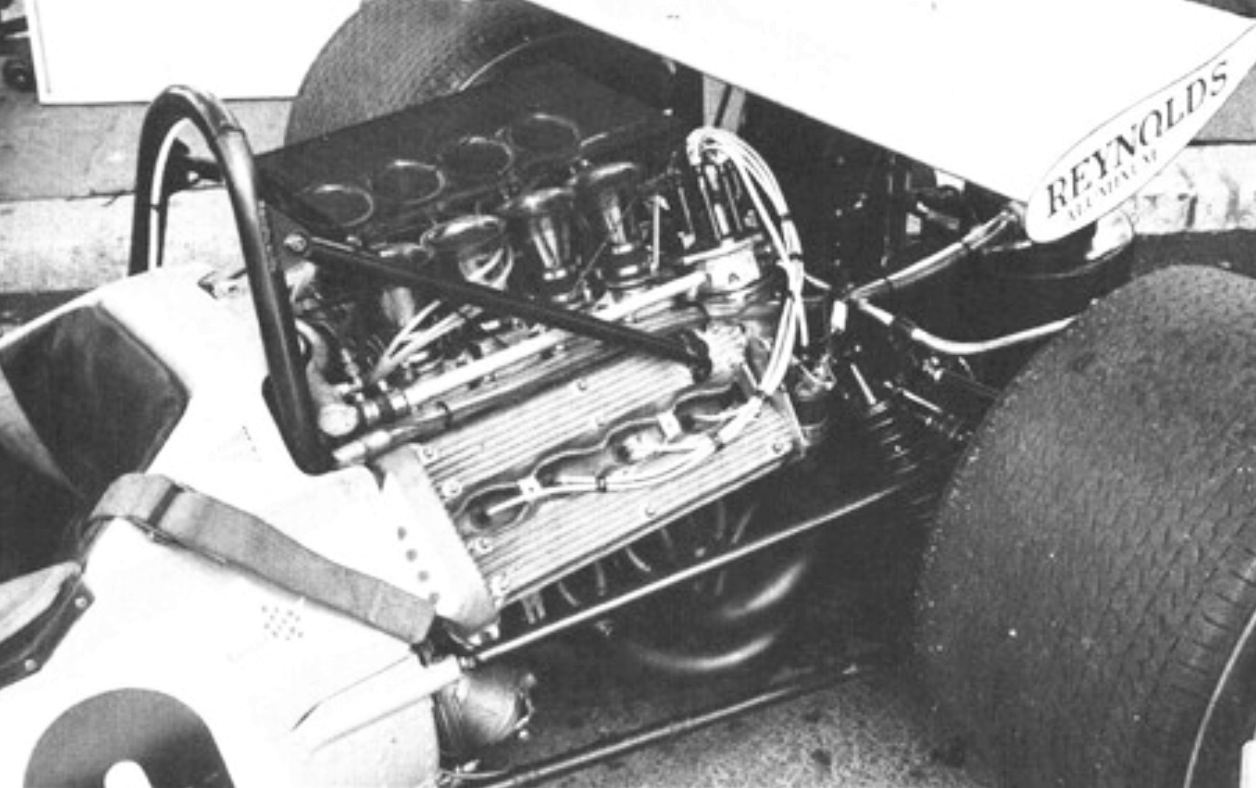
In addition to those programs, the team designed and built a neat, conventional aluminium monocoque racer with a Tyrrell/sportscar type nose section powered by Brian Hart prepared, fuel-injected Ford Cosworth BDA engines quoted as 1850/1860cc. An F1 spec Hewland FG400 five-speed gearbox was used, stronger but heavier than the FT200 used by many.

Surtees poses for the cameras in his Edenbridge factory in early 1972, Surtees TS10 (Popperfoto)
Carlos Ruesch’s TS10-05 in the Hochenheim paddock over the October 1 weekend. Brian Hart built 1790cc BDA, DNF engine which gave circa 265bhp.
Simple slab sided aluminium monocoque chassis, the engine was mounted to the rear bulkhead and supported by an A-frame which is visible. Suspension single top link, inverted lower wishbones, two radius rods, mag-alloy uprights and Koni/coil springs. Inboard brakes, Hewland FG400 5-speed transaxle (unattributed)
Upper and lower wishbones, coils/Konis, mag-alloy uprights, adjustable roll bar and outboard brakes. Hailwood’s car behind Ruesch’s (unattributed)

The engine de jour in ’72 was the BDA in various capacities, generally those who ran engines of 1860cc did better than those of over 1.9-litres as the good-old cast iron Ford 711M block simply couldn’t be bored out that far within the pistons coming awfully close to one another and water passages.

Cosworth’s BDE was 1790cc and gave a quoted 245bhp @ 9000rpm with a bore of 85.6mm. Their 1972 1927cc BDF used an 88.9mm bore that was achieved by brazing liners into the standard block, which gave 270bhp @ 9250rpm.

Hart’s alloy 1975cc 275bhp @ 9250rpm BDG solved all those problems when it was homologated later in the year, then in 1973, March Engineering did their exclusive deal with BMW Motorsport for the supply of the BMW M12/7 2-litre F2 engine and the poor old BDG then never got the works-team attention it really deserved.

Surtees and Hailwood aboard TS10-01 at Mallory Park over the March 12, 1972 weekend; first round of the Euro F2 Championship, fifth (unattributed)
Variety is the spice in chassis at least!…Carlos Reutemann, Brabham BT38, Ronnie Peterson, March 722, Jody Scheckter, McLaren M21 – then race winner David Morgan, Brabham BT35, and ? Mallory Park, Euro F2 Champ round 1 March 12, 1972 (P Amoudru)

1972 European F2 Championship…

The array of talent that contested the series in whole or part that year was typically deep. Graded Drivers – drivers who participated but were not be awarded championship points, see definition at the end of this piece – included Jean-Pierre Beltoise, Francois Cevert, Emerson Fittipaldi, Graham Hill, Ronnie Peterson, Tim Schenken, John Surtees and Reine Wisell.

Future World Champions in the ’72 mix comprised James Hunt, Niki Lauda, Jody Scheckter, while the GP winner roll call included Vittorio Brambilla, Peter Gethin, Patrick Depailler, Jean-Pierre Jabouille, Jochen Mass, Carlos Pace, Carlos Reutemann and John Watson, not to forget Le Mans victors Derek Bell, Jean-Pierre Jaussaud, Henri Pescarolo, Vern Schuppan and Bob Wollek.

It’s an interesting pub fact – perhaps – that no winner of the old European F2 Championship 1967-84, or modern FIA Formula 2 Championship 2017-present, has ever won the F1 World Championship. Oscar Piastri, the 2021 victor, has a chance, therefore, of making history this year, depending on how things go over the next couple of months!

By the time Hailwood got his bum into TS10-01 Surtees had the car nicely sorted, with Mike taking fifth place overall from the two heats of the opening round of the European F2 Championship at Mallory Park on March 12.

Privateer, Dave Morgan sensationally won the round in a year-old spacframe Brabham BT35 BDA 1860cc from Niki Lauda’s works-March 722 BDA 1825cc, Carlos Reutemann, Brabham BT38 BDF 1927cc, Jody Scheckter’s one-off McLaren M21 BDF 1927cc, then Hailwood using a BDA prepared by RES (Race Engine Services) of 1825cc.

That variety of cars set the pattern of lots of different car-driver winning combinations for the season. The subtext, for F2 anoraks, were the BDA battles between the various engine builders/preparers.

Ronnie Peterson’s works-March 722 BDF-1927cc won at Thruxton, then Jean-Pierre Jaussaud’s Brabham BT38 BDA-1850cc at Hockenheim in mid-April, before Hailwood collected fifth place points in the Pau GP on May 5-6 using one of Brian Hart’s 1850cc BDAs; Peter Gethin’s Chevron B20 BDA took the champers that weekend.

John Surtees raced TS10-02 at Oulton Park and Thruxton then took that chassis to Japan to contest the Japan Auto Federation Grand Prix of Japan at daunting Fuji Speedway on May 3. He splendidly won the race using new a Hart-prepped 1930cc alloy block BDG. Japanese drivers Hiromu Tanaka and Hiroshi Fushida were second and third aboard a March 722 and Brabham BT38, both powered by 2-litre Mitsubishi Colt R39B engines.

John Surtees on the way to winning the 1972 JAF Japanese GP at Fuji in TS10-02 from Hiromu Tanaka, March 722 Mitsubishi R39B 2-litre (Y Komura)
Hailwood from Jody Scheckter, McLaren M21 Ford BDF, Crystal Palace 1972

Back home in London, Hailwood and Scheckter thrilled the crowds at Crystal Palace on May 29. Reutemann’s Rondel Racing – Ron Dennis and Neil Trundle – Brabham BT38 won the first heat, Hailwood the second and then Scheckter, works-McLaren M21 Ford BDF 1927cc the final in a thriller-diller dice with Carlos third. Mike’s best lap of 48.4 seconds set in the second heat of the Greater London International Trophy is the all-time lap record of a venue then in its final season.

By mid-season, there was no lack of Surtees TS15s in circulation, but they were all works-run cars; no customers stumped up to buy one. Argentinian Carlos Ruesch raced TS10-03, Andrea De Adamich, TS10-04 and later in the season Carlos Pace, TS10-07.

See here for Allen Brown’s TS10 fantastic chassis-by-chassis analysis: https://www.oldracingcars.com/surtees/ts10/. My other chassis/race results reference is the F2 Index-Fastlane: https://www.the-fastlane.co.uk/formula2/F272_Index.htm People like me cannot do what we do without these stunning online repositories of accurate information and data…

Andrea De Adamich, Surtees TS10-04 Ford BDE-Novamotor 1790cc Imola 1972, fourth (Autosprint)
Emerson Fittipaldi, works-Lotus 69 Ford BDF, Hockenheim October 1972. DNF engine – BDF – after eight laps (P Amoudru)

Emerson Fittipaldi, in amongst winning his first F1 World Championship for Lotus (72? Ford DFV) made a number of successful F2 raids in a modified Lotus 69 fitted with 1927cc Cosworth BDFs. He won at Hochenheim on June 11 and Rouen Les Essarts on June 25. Hailwood got the points for the latter win as Emerson was a Graded Driver.

The same pair did the one-two at the Osterreichring on July 9, this time Mike was 36 seconds adrift of Emmo on the road, but again got the nine championship points. Carlos Ruesch was seventh in a good weekend for Matchbox Team Surtees.

Vic Elford, works-Chevron B20 BDA and Richard Scott, Brabham BT38 BDE on the inside at Crystal Palace 0n May 29; fourth and DNF valves. David Purley in the March 722 behind? (unattributed)
A shit shot, but it’s the only one I can find of John Surtees TS10-07, taking his last in-period race win, the Imola Euro F2 round on July 23, 1972 (unattributed)

At Imola the boss showed his fellow motor-cycling ace how to do it! Surtees was fourth in the first 28 lap heat, was third in the second and won on aggregate with Bob Wollek, Brabham BT38 BDA and Niki Lauda, March 722 Ford BDA third. Wollek won a heat, and Peter Gethin, Chevron B20 the other…there was no shortage of race winners that year as I wrote earlier! Mike was second in the first heat but failed to finish the second after his fuel pump failed.

Hailwood bounced back at Mantorp Park, Sweden, a fortnight later, he was second in the first heat behind Gethin, won the second from Jean Pierre-Jabouille (March 722 Ford BDA) and the round overall. It was a timely win at the business end of the season, capped by Ruesch’s sixth place.

Hailwood had his tail up at Enna on August 20, winning the first heat from Henri Pescarolo but bombing out of the second with transmission failure. Patrick Depailler won that one, Alpine A367 Ford BDA, but veteran-Pesca was again second and won the round on aggregate. Carlos Ruesch got his best result for the year in TS10-05, third place, having placed third in both heats.

Mike Hailwood and Peter Gethin in the Brands Hatch Race of Champions paddock on March 19, 1972. Hailwood was second in his Surtees TS9B Ford DFV, and Gethin fourth in a BRM P160B. The race was won by Emerson Fittipaldi’s Lotus 72D Ford. Straight from Carnaby Street by the look of it
Carlos Pace, GP del Mediterraneo Enna-Pergusa 1972, TS10-07 NC (A De Brito)

On the fast Salzburgring, Hailwood again showed his class, winning on aggregate after beating Carlos Pace in the second heat and placing second behind David Morgan’s Brabham BT38 BDA in the first. Pace was second overall aboard TS10-07, and Ruesch TS10-05 tenth, giving Matchbox Team Surtees its best result for the year, and perhaps securing Pace’s place in Team Surtees F1 for 1973.

Jean-Pierre Jaussaud won the penultimate round, the Albi Grand Prix in his Brabham BT38 BDA from Depailler’s March 722 and Bob Wollek’s BT38 in a French one-three. Reusch was sixth and Hailwood 14th; disappointing as Mike won the second heat but isn’t listed in my results of the first. What was the problem, folks?

Tim Schenken won the final round of the European F2 Championship at Hockenheim on October 1 from his Surtees F1 teammate Hailwood: Rondel Brabham BT38 BDF and Surtees TS10 BDA. Ronnie Peterson, March 722 BDA, was third.

Ronnie Peterson in his works-March 722 Ford BDF at Thruxton in April 1972. Winner of the Jochen Rindt Memorial Trophy (LAT)
Hailwood TS10-01, or TS10-07, third in the final October round of the Euro F2 Championship at Hockenheim (R Schlegelmilch)

Mike won the championship with 55 points from Jean-Pierre Jaussaud – the Le Mans winner, sometimes a forgotten Frenchie? – Brabham BT38 on 37 points, and Patrick Depailler March 722 third on 27 points.

With adequate funding, John Surtees ran a strong program: chassis, engines and driver, Matchbox Team Surtees delivered the goods.

As to the best-chassis of 1972? The Brabham BT38 won four European F2 Championship rounds – Jean-Pierre Jaussaud won at Hochenheim-Jim Clark Memorial Trophy and Albi, Tim Schenken Hochenheim-Preis von Baden-Wurttemberg, Henri Pescarolo, Enna – not to forget David Morgan’s BT35 victory at Mallory. The Surtees TS10 won three rounds – Hailwood at Mantorp Park and Salzburgring, and Surtees at Imola. Emerson Fittipaldi took three in his works-Lotus 69 at Hochenheim-Rhein-Pokalrennen, Rouen and the Osterreichring with single round wins to the March 722, Peterson at Thruxton, the Chevron B20, Gethin at Pau and finally Jody Scheckter won at Crystal Palace in his McLaren M21.

Jody Scheckter on the way to winning the London Trophy at Crystal Palace in May 1972, McLaren M21 Ford BDF 1927cc (T Legate)
Carlos Reutemann, Brabham BT38 Ford BDF, Mallory Park, March 1972, third (D Btiot)

So, drum-roll, the Champion F2 Constructor for 1972 – was there such a title – would have been Brabham, who, after years of ‘F2 Dominance’, got their come-uppance the year before with March. I’ve always thought the ultimate test of a customer racing car is the number of different drivers to have been victorious behind its steering wheel.

While Ron Tauranac was rightly famous for his spaceframe Brabhams, there was nothing wrong with the BT38, Brabham’s first production monocoque design, the work of Geoff Ferris. New owner Ecclestone would soon get rid of all this production racing car rubbish, of course…

Etcetera…

(T Legate)

Mike Hailwood enroute to setting the all-time lap record at Crystal Palace on May 29, 1972, aboard TS10-01, such an attractive car, doesn’t it look the goods!

(LAT)

John Surtees aboard TS10-07 at Oulton Park over the September 16, 1972 weekend, DNF with electrical problems without completing a lap of the final round of the British F2 Championship. The race was won by Ronnie Peterson from Niki Lauda and James Hunt; works March 722 by two, and Hesketh Racing March 712M BDA.

The British championship was won by Lauda – a flicker of light in a pretty grim March year for him – from Peterson and David Morgan.

The Matchbox Team Surtees transporter in the Oulton Park paddock on that same weekend below.

(R Kalatayud)

Imola 1972 is a kaleidoscope of Formula 2 colour and variety that would over-stimulate the poor punters of today who are swamped in dull, shit-boring one make drossful classes.

Foreground car folks? Mike is facing us, shielding his eyes from the sun, with Surtees #3 behind. #14 Hiroshi Kazato March 722, #11 is Carlos Reuttemann, Brabham BT38, #27 Adrian Wilkins March 722, #25, Jose Dolhem March 722, #6 Peter Getin, Chevron B20. All BDAs of one sort or another…

Mike Hailwood, John Surtees and Helmut Marko in the Monza paddock during the 1972 Italian Grand Prix weekend on September 5.

(H Fohr)

Carlos Ruesch, Surtees TS10 BDA, NC, and Claudio Francisci, Brabham BT38 Cosworth BDE, ninth, at Hockenheim during the Jim Clark Memorial meeting in April.

(Getty)

Niki Lauda, March 722 BDA-RES 1927cc, Rouen, June 25, 1972, DNF with a popped engine. Fittipaldi’s Lotus 69 won and Mike bagged the nine points, placing second behind the Graded Driver.

Niki was fifth in the Euro F2 points standings.

(J Regami)

Hailwood’s TS10 in the paddock during the Pau Grand Prix weekend. You can see the top wishbone, front suspension was conventional upper and lower wishbones, coil spring/Koni dampers, adjustable roll bar and mag-alloy uprights. Perhaps Mike wiped a nosecone off in practice?

(F Kraling)

Graham Hill’s Brabham BT38 Ford BDA-RES 1927cc has aero modifications neatly exercised by KayDon Racing. David Kaylor and John Donnelly, being ex-MRD employees who ran the car for owner Graham Hill with Jäegermeister sponsorship. This shot is at Hockenheim on October 1, fifth.

Hill won the non-championship Gran Premio della Lotteria at Monza with BT38-1 in June.

(J Regami)

At Pau Emerson Fittipaldi’s Lotus 69 Ford BDF – apart from its Moonraker Yachts livery – didn’t look much different to the 69s of 1970-71 but the adoption of a sportscar type nose brought the old, very fast jigger up to snuff aerodynamically. Lotus 69 bias declared herein!

The shot below is at Hockenheim during the October Preis von Baden-Wurttemberg meeting, DNF engine. Lotus 69 Ford BDF Cosworth and sports nose. There is a useful snippet about Chapman and Moonraker in this forum: https://forums.ybw.com/threads/jcl-boats-and-moonraker-the-history.532631/

(W Harbers)

Graded Drivers…

By courtesy of Vitesse 2 on The Nostalgia Forum.

From 1/1/72:

1. Grand Prix Graded Drivers

World Champion drivers of the previous five years.

Drivers who, in one and the same year, have been classified at least twice among the first six in a race of the World Championship for Drivers, while taking into account the Championship of the two previous years.

The winner of the Indianapolis 500 Miles of the previous year.

The winner of the Can-Am Series of the previous year.

The winner of the European Championship for Formula 2 drivers of the previous year on condition, however, that he has won at least three first places in the Class B drivers’ classification (ie non-graded) of an event qualifying for the said Championship.

Drivers who, in the same year, won at the same time one classification among the first six in an event counting for the World Championship of Drivers, and one classification among the first three in the general results of an event counting for the Makes’ Championship. Only the Championships of the two previous years shall be taken into consideration.

2. Long Distance Graded drivers

Drivers who, in one and the same year, havew been classified at least twice among the first three in an event of the Makes’ World Championship, while taking into account the two previous years. However, only those teams of not more than two drivers, and that for the whole duration of the event, will be retained for inclusion on the list of graded drivers.

The text for 1975 is identical, except that it omits the winner of the Can-Am title.

Credits…

Team Surtees and Formula 2 Facebook pages, Yoshiaki Hirano, Popperfoto, Michael Lee, Yoshinori Komura, Alejandro De Brito, Patrick Amoudru, Walter Harbers, Rafael Kalatayud, Denis Btiot, LAT, Rainer Schlegelmilch, Joe Regami, Caz Caswell, Hans Fohr, Trevor Legate, F2 Index-Fastlane, oldracingcars.com, Joe Regami, Ferdi Kraling

Tailpiece…

Hailwood on the hop at Crystal Palace in May…

Finito…

de ad dutch flowers
(Rainer Schlegelmilch)

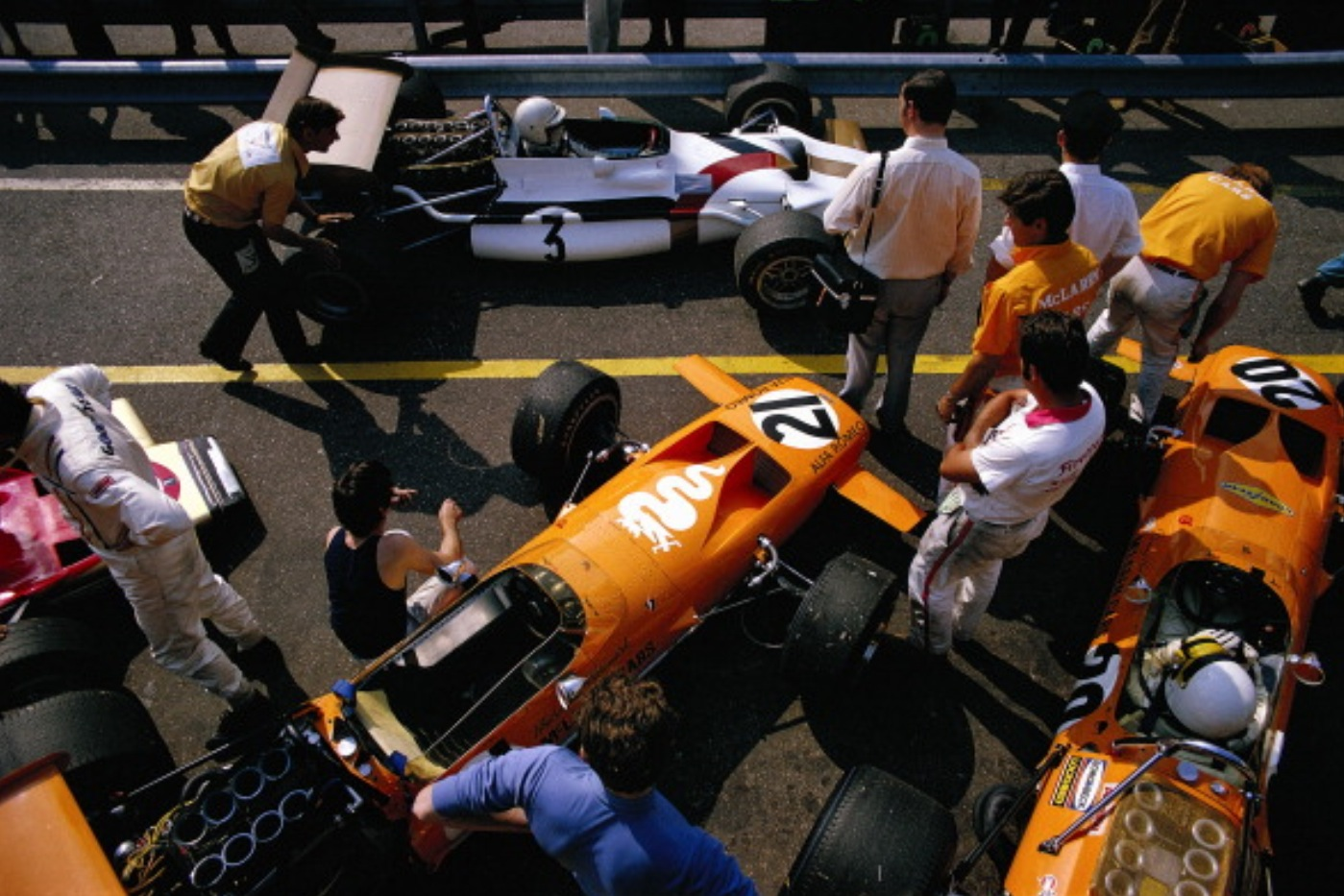
Andrea de Adamich hustles his McLaren M14D Alfa through the Zandvoort sand dunes and flowers, Dutch GP practice June 1970…

This is yet another of my nutso articles in terms of flow.

It started as a quickie around some of Rainer’s (Schlegelmilch is a favourite of mine as you may have guessed) shots of the McLaren Alfa. Then I got interested in Andrea’s career, so off I went that way.

Then I thought ‘the F1 program really started in Tasman Formula single-seaters here in Australia’ – that is Alec Mildren’s Brabham BT23D and Mildren ‘Yellow Submarine’ with the engines Autodelta-Alfa Romeo T33 2.5 V8’s – but I didn’t want to go too far with that as I want to do the topics justice, with Kevin Bartlett’s intimate knowledge of both the program and cars. So that aspect of this article is no more than a teaser. Anyway, here ’tis, a bit weird, and with the ‘full job’ on the Alfa engined Mildren Brabham and Sub still to come…

The McLaren/Alfa Romeo partnership started reasonably well at Montjuic Parc in Barcelona but the grid had ten places reserved for seeded drivers and only six for the other twelve competitive cars, Andrea’s thirteenth quickest was just 0.05 seconds too slow to make the cut. Same problem at 1970 Monaco with the same system, again he was thirteenth fastest overall but this time he fell short by 0.1 seconds.

de ad dutch
Andrea, Dutch GP practice June 1970. M14D Alfa DNQ (Rainer Schlegelmilch)

The team missed the Belgian Grand Prix on June 7, McLaren took the time to adapt the Alfa Romeo V8 to its latest M14 chassis, which they designated ‘M14D’, unfortunately again failing to qualify for the Dutch GP at Zandvoort by 0.01 seconds where most of these shots were taken.

Peter Gethin was the quickest of the Cosworth engined McLarens with Denny Hulme missing the meeting due to hands burned at Indianapolis. Gethin’s car qualified eleventh but retired on lap 18 after an accident, writing off Denny’s M14 in the process so the M14D was quickly converted back to Cosworth spec to give Denny a competitive car when his hands recovered.

Back in the older chassis, de Adamich qualified his M7D at Clermont-Ferrand sixteenth, a good effort but only completing 29 laps retiring after a water pipe came adrift and he lost 9 laps in the pits. He qualified eighteenth at Brands Hatch, again in the M7D but was a non-starter with a leaking bag fuel tank.

de ad dutch exiting car
The bespectacled Italian lowers his lanky frame into the McLaren M14 monocoque, Dutch GP 1970 (Rainer Schlegelmilch)
de ad mcl group of cars
George Eaton’s BRM P153 passes the #21 de Adamich McLaren M14D Alfa and #20 Hulme McLaren M14A Ford, Zandvoort pitlane, Dutch GP practice June 1970 (Rainer Schlegelmilch)

The 1970 German GP was held at the fast Hockenheim circuit which places an emphasis on power/top speed, the Alfa engine lacked sufficient punch, Andrea again failing to qualify, he had complained about handling and the engine not pulling properly. The speed of the chassis was thereabouts though, Hulme finished third in a Cosworth DFV powered M14.

de ad donna
#20 de Adamich McLaren Alfa Hockenheim, German GP practice 2 August 1970 and Donatella de Adamich in the Zeltweg pits 18 August 1970 (Rainer Schlegelmilch)

Zeltweg’s 6Km layout places a similar premium on power and high speed handling too, the car qualified well in fifteenth for the Austrian GP, finishing twelfth, the decision to change the engine before the race went awry when the replacement pulled 1000rpm short of the engine used in practice giving Andrea a long race labouring down the back.

Allen Brown wrote that a lot of work was done by Autodelta in the lead up to the team’s home race at Monza with emphasis on the sumps- which had been identified as the main problem. Andrea qualified twelfth and finished eighth having run well for the first few laps in the race won by Regazzoni’s Ferrari 312B albeit seven laps in arrears. It was Regga’s first GP win. Nanni Galli, another Autodelta racer had a go in the M7D but did not qualify having experienced camshaft trouble.

In Canada Andrea again qualified twelfth of twenty, starting really well and ran as high as ninth, but he hadn’t started with full tanks knowing he had to stop for fuel but diddn’t get to that point, pitting with low oil pressure from eighth position after completing 69 laps. At Watkins Glen he failed to qualify after big dramas gave him limited circuit time, first a fuel leak and then a behind dash fire, perhaps as a consequence the team didn’t take the Alfa powered chassis to the season ending race in Mexico City on 25 October.

McLaren had no incentive to continue with development of the Alfa engined car given the competitiveness of its Ford Cosworth DFV engined machines, a purpose built F1 engine. Alfa’s engine started life as a more robust, long distance unit, and was never, without the commitment of sufficient money and engineering resources, going to approach or eclipse the dominant DFV.

andrea portrait
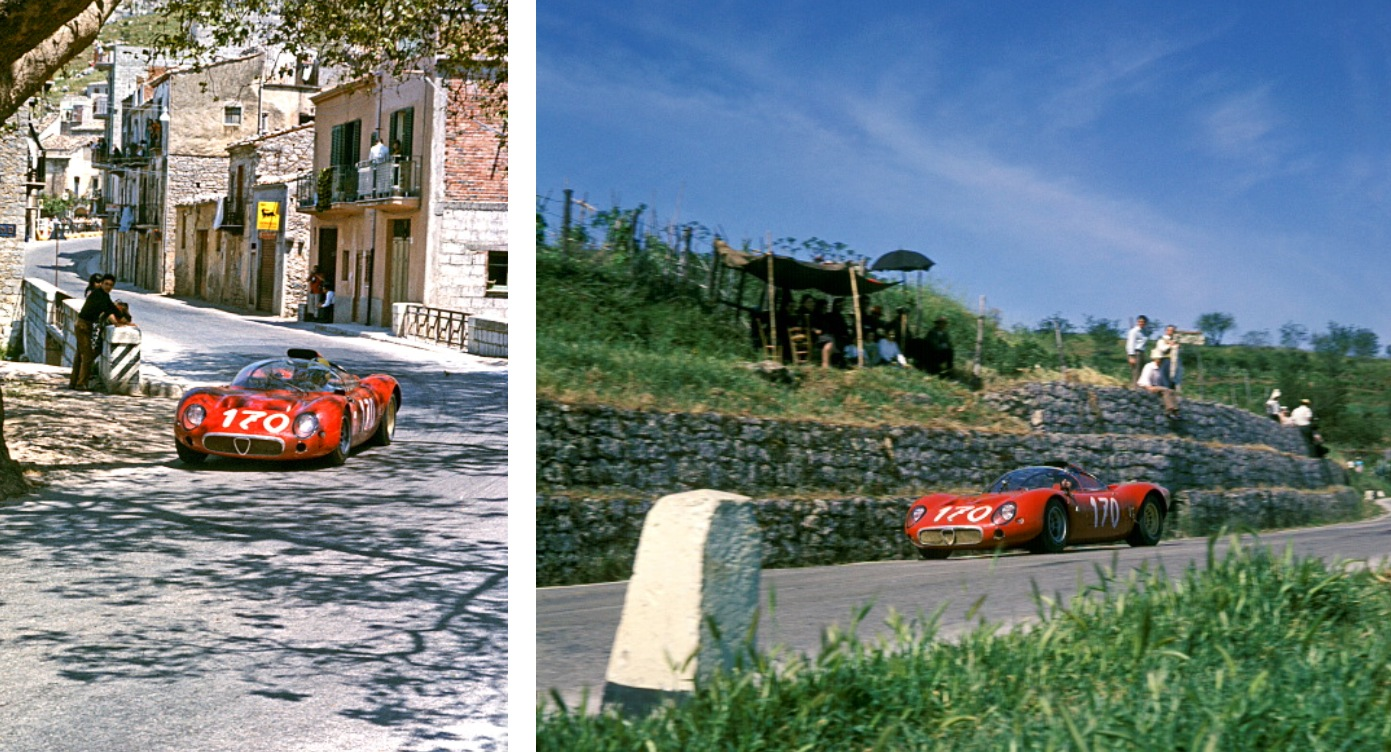
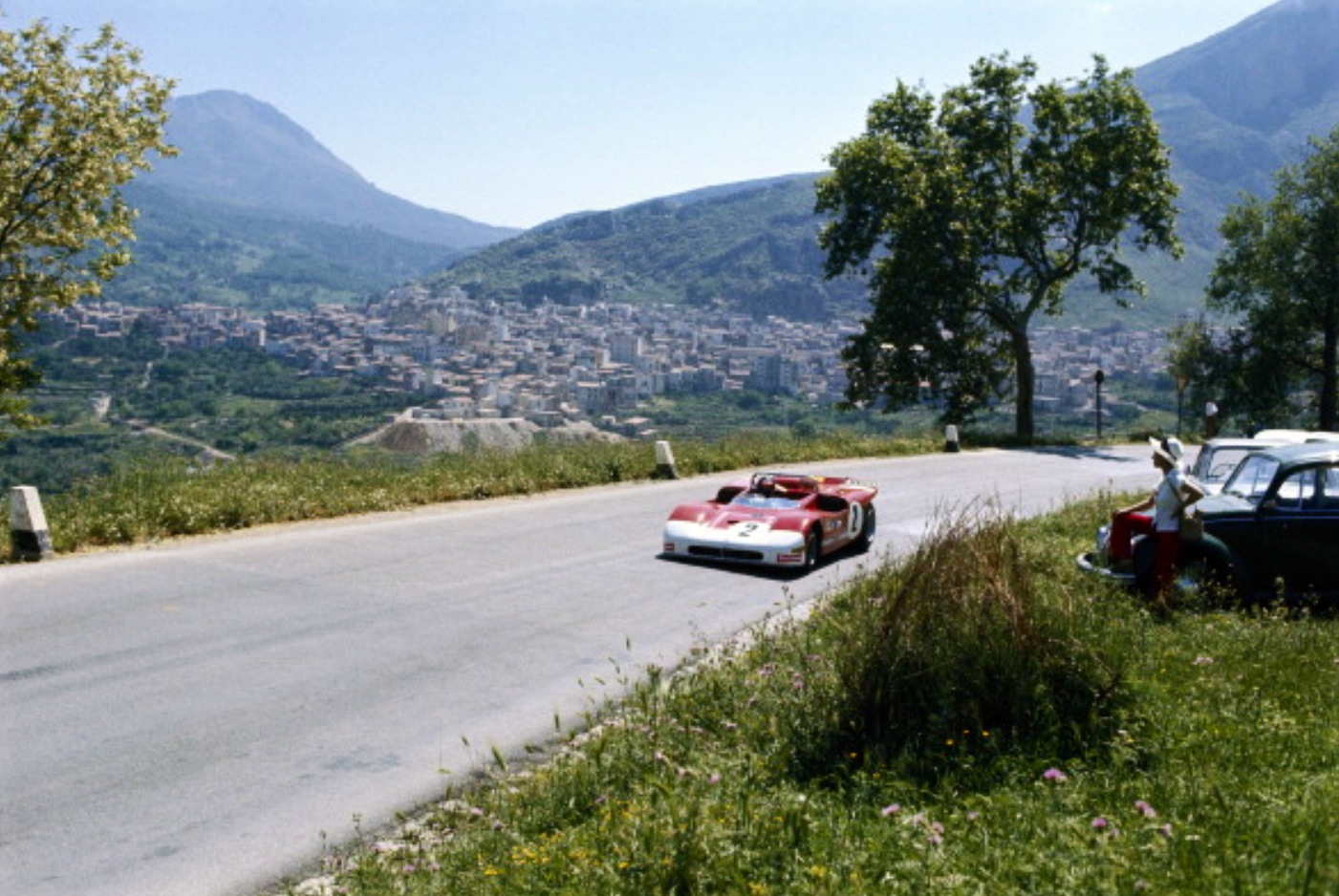
de Adamich at the wheel of his Alfa 33TT3, Targa 1972. He was third in the car shared with Toine Hezemans (velocetoday.com)

Andrea de Adamich…

Tall, scholastic and patrician, the bespectacled Italian began racing whilst still a law student, making his name driving a works Autodelta Alfa Romeo in the European Touring Car Championship, which he won in 1966 at the wheel of a GTA.

andrea ti super
Andrea de Adamich corners the Alfa Ti Super he shared with Carlo Scarambone in the Tour de France 20 September 1964 . Nouveau Monde Hairpin, Rouen (Rainer Schlegelmilch)

He attracted Ferrari’s attention with some promising runs in Alfa T33 sports cars (which he continued to race whilst pursuing a single-seater career) and was recruited to the Scuderia for the non-championship 1967 Spanish GP, at Jarama north of Madrid.

de ad targe
Traga 1967 in the 2 litre Alfa T33. DNF suspension failure in the car shared with Jean Rolland. Race won by the Hawkins/Maglioli Porsche 910 (Getty)

In 1968 Andrea was scheduled to drive full-time for Ferrari alongside Chris Amon and Jacky Ickx, but he crashed during practice for the Brands Hatch Race of Champions and suffered neck injuries which took a long time to heal fully.

He returned to racing, winning the Argentine Temporada series the following winter with the powerful F2 works Ferrari Dino 166. De Adamich’s Ferrari 166 F2 Season is covered in this article; https://primotipo.com/2014/07/09/temporada-f2-series-argentina-san-juan-1968/

andrea dino
de Adamich’s Ferrari 166 winning in front of F2 king Jochen Rindt’s Brabham BT23 Ford FVA, San Juan Argentina, Temporada Series 1968 (Andrew Marriott)

‘In 1970 McLaren was offered the opportunity of experimenting with an Alfa V8, a possibly tempting alternative to the then-ubiquitous Cosworth DFV, and one of the Italian engines was installed first in an M7D chassis and latterly an M14D for de Adamich to drive’, wrote McLaren.

‘To say this technical combo achieved modest results would be a dramatic understatement. The McLaren Alfa generally failed to qualify and when it did, could only muster twelfth in the Austrian GP followed by a distant eighth place in front of the Alfa top brass at Monza. McLaren, still reeling from Bruce’s death that summer, reckoned that the Anglo-Italian alliance was all a bit of a waste of effort and called time on the partnership at the end of the season’.

de ad targa
de Adamich at the wheel of the T33/3 he shared with Gijs van Lennep in the 1971 Targa, second to teammates Vaccarella/Hezemans (Rainer Schlegelmilch)

De Adamich took his Alfa engines off to March in 1971, with no significant improvement in their performance. Andrea was thirteenth at Kyalami and eleventh at Watkins Glen whilst Nanni Galli was fifth in the non-championship Jochen Rindt Trophy at Hockenheim in July gaining the best ever F1 result for these engines.

Nanni was eleventh, twelfth and twelfth at Silverstone, the Nürburgring and the Osterreichring in a good run of finishes at least in July/August, but then had three downers to end his season at Monza, Mosport and the Glen. The engine was again unreliable with DNF’s for Andrea at Montjuic, Paul Ricard, the Nurburgring and Monza. He was unclassified at Silverstone.

image
De Adamich, March 711 Alfa, German GP Nurburgring Q20 DNF  fuel injection lap 2. Stewart won in a Tyrrell 003 Ford (unattributed)
The business end of the De Adamich March 711 Alfa in the 1971 Nürburgring paddock

March team leader, and one of the fastest guys on the planet at the time, Ronnie Peterson used the Alfa engines in chassis 711-6 at Hockenheim, Zandvoort and at Paul Ricard, where he raced that chassis from grid 12. He only lasted 19 laps before engine failure, Andrea started from grid 20 which provides some measure of how much more improved the performance of the car/engine could have been with an ace behind the wheel, whilst putting reliability to one side

The Italian driver switched to Team Surtees in 1972 which got him back behind the wheel of a Cosworth-engined car, a step in the right direction.

de ad surtess
French GP, Clermont Ferrand July 1972. de Adamich Surtees TS9B Ford Q12 P14, ahead of Derek Bell who was a race non-starter in his Tecno PA123 V12. Jackie Stewart won the race in Tyrrell 003 Ford.  (Rainer Schlegelmilch)

For 1973 de Adamich switched to the Bernie Ecclestone owned Brabham team after driving for Surtees in the season opener at Kyalami. His Brabham BT42 fell victim to Jody Scheckter’s first lap McLaren M23 Ford multiple car shunt at the end of the opening lap of the British GP at Silverstone, Andrea suffered serious injuries which brought an end to his career.

In more recent times he has built an impressive business career. In 1990 he bought the circuit at Varano and created a highly specialised  driving school for the owners of Ferrari, Maserati, Alfa Romeo and Abarth cars. He also puts on special days for Philip Morris, a legacy of his longstanding relationship dating back to the days when he and Giacomo Agostini were the first Italian contracted Marlboro drivers/riders.

Kevin Bartlett setting off to test the Mildren Brabham BT23D Alfa Romeo just vacated by Frank Gardner after the 1968 Tasman Series at Oran Park before the Gold Star series- she grew wings as the year progressed. Bob Grange at right (P Garrad)

The 1960s Alfa Romeo Engined Single Seater V8’s…

Alfa’s Tipo 33 V8 was first used in elite single seater racing by Australia’s Alec Mildren Racing Team.

Mildren, a Sydney Alfa Romeo dealer, former Australian Gold Star Champion and AGP winner ran one of the most professional teams in Australia. He had impeccable Alfa Romeo/Autodelta connections having acquired and raced two GTA’s and a TZ2 in the early to mid-sixties and in the process ‘polished’ Alfa’s Australian brand, one of the greatest of the Grand Marques but then relatively new to the ‘Oz market.

Click on this link for an article about the Mildren Autodelta Alfa’s;

The Master of Opposite Lock: Kevin Bartlett: Alfa Romeo GTA…

and on Alec Mildren; https://primotipo.com/2018/06/08/mildrens-unfair-advantage/

Mildren’s 2.5 litre Coventry Climax FPF engined Tasman Brabhams were being given a very hard time by the Repco Brabham and BRM V8’s amongst others circa 1966, so he sought an appropriate response, a sprint variant of the Tipo 33 engine was the obvious choice given his Alfa connections.

Mildren ordered three 2.5 Tipo 33 V8s which were initially fitted to a bespoke Brabham BT23D chassis, a variant of Ron Tauranac’s new for 1967 Ford FVA powered BT23 F2 car.  The machine was first raced in the 1967 Hordern Trophy Gold Star round at Warwick Farm, Frank Gardner won, which was a portent of the cars 1968 Tasman Series speed- he was fourth in the championship against stiff opposition including two works Lotus 49 Ford DFW’s in the hands of Messrs Clark and Hill, Chris Amons Ferrari Dino 246T, works BRM’s and the rest.

The engines were then fitted to the Mildren ‘Yellow Submarine’, a monocoque car built for the team by Alan Mann Racing, designed by Len Bailey, for the 1969 Tasman Series where again Frank was ‘best of the rest’ behind the Lotuses, Ferraris and Piers Courage in a Frank Williams Brabham BT24 Ford.

After both cars were raced by Frank Gardner in the Tasman they were ‘handed over’ to Kevin Bartlett for the Gold Star Championship when Gardner returned to the UK at the end of each Australasian summer. Bartlett won the Gold Star in 1968 and 1969 with each chassis respectively, for the sake of completness, in 1969 the ‘Sub’ was also powered by Merv Waggotts’s TC-4V 2-litre, DOHC four-valve 275bhp engine for part of the season, and into 1970 and beyond.

image
(Ian Peak/The Roaring Season)

The 2.5-litre, two-valve, four-cam, Lucas fuel injected, twin-plug Alfa Tipo 33 V8 installed in Alec Mildren’s Gardner driven Brabham BT23D at Teretonga (above) during the 1968 Tasman. Gardner was equal fourth with Graham Hill in the series behind Clark, Amon and Courage in Lotus 49 Ford DFW, Ferrari Dino 246T and F2 McLaren M4A Ford FVA respectively.

image
(Dick Simpson)

What a beautifully integrated bit of kit the Mildren Brabham BT23D Alfa was?

Here just before it progressively grew wings. Kevin Bartlett drove the wheels off the thing, here at Hell Corner Bathurst during the 1968 Easter Gold Star round. KB was on pole by 9! seconds but DNF with a broken rear upright, Phil West took the win in David McKay’s ex-JB Brabham BT23A Repco. Bartlett won the 1968 Gold Star in this car and was equal ninth in the 1969 Tasman in winged form.

image
(Wirra)

Frank Gardner in the Mildren Alfa ‘Yellow Submarine’ in the Warwich Farm pitlane during the ’69 Tasman round on 9 February. The Aussie international was third behind Rindt’s Lotus 49 DFW and Derek Bell’s Ferrari Dino 246T. Gardner was sixth in the 1969 Tasman behind Amon, Rindt, Courage, Bell and Hill in Ferrari Dino 246, Lotus 49B DFW, Brabham BT24 DFW, Ferrari Dino 246 and Lotus 49B DFW respectively.

Kevin Bartlett had this to say about the Alfa Romeo 2.5 litre Tasman V8 and Waggott DOHC 4 valve engines. ‘My memory tells me the Alfa had around 350lbs (of torque) and the Waggott about 230lbs. Usable power range was quite different with the Alfa workable between 4500-8800 rpm and Waggott 6800-8750rpm. Not perfectly accurate as i work from  memory but around that kind of difference’.

‘The driving difference was the main change, as the power to weight felt little different behind the wheel, mainly due i suppose to the fact full throttle was used much sooner with the 4-cyl 2000cc Waggott. The turn in changed to a marked degree with the lighter power plant (Waggott) having less moment of inertia allowing the car to be literally flung into a turn. As it happens i am the only driver to experience both configurations.’ (Gardner having raced only the Alfa variant).

‘Len Bailey was the (Mildren’s) designer of the tub, which flexed a little at the rear with the Alfa’s torque, less so when the Waggott went in, with suspension being a (Brabham designer) Ron Tauranac adaption’.

Alfa Romeo claimed 315bhp at 8800 rpm for the 2.5 litre variant of the V8 engine. Click here for a short piece on the Sub; https://www.oldracingcars.com/mclaren/m14d/

Bartlett doing his thing aboard the Mildren ‘Sub’ Alfa at Oran Park. Its an interesting photo in that this car was winged by the end of the 1969 Tasman – and KB is driving it after that – perhaps a day of back to back testing? The car, like all such machines globally, lost its big wings after the 1969 Monaco GP weekend where such aero was banned. Superb machine superbly driven by KB, Oz Gold Star and Macau GP winner in 1969 (D Simpson)
mac engine
Alfa Romeo 3-litre four-valve F1 engine in a McLaren chassis in 1970 (unattributed)

A similar 3-litre four-valve per cylinder, 32 valve engine – the Mildren V8s were all chain driven two-valvers – was developed for Cooper in F1 but wasn’t used before the team’s demise.

Lucien Bianchi tested an Alfa Romeo engined T86C (T86C-F1-3-68) once but was unimpressed given its lack of power. Two further, more powerful motors were built but didn’t survive the bench tests, Alfa then withdrew their engines from that proposed program.

The 1970 variant of the engine was all aluminium with a bore/stroke of 86mm x 64.4mm for a total of 2998cc. Five main and camshaft bearings were used. The four-valves were inclined at 30 degrees, the inlets were 32mm and exhausts 27mm in size, Alfa claimed an output of 400bhp @ 9000rpm in sportscar form.

With gear driven cams for F1 use Autodelta claimed 430bhp @ 10500 rpm at a time the Ford Cosworth DFV gave circa 440, the Matra V12 445-450 and Flat-12 Ferrari 460bhp @ 12000 rpm. It wasn’t enough really but Alfa had put their toes back into F1 water and would return soon with works Brabhams, as they had started with a Mildren Brabham a decade before…

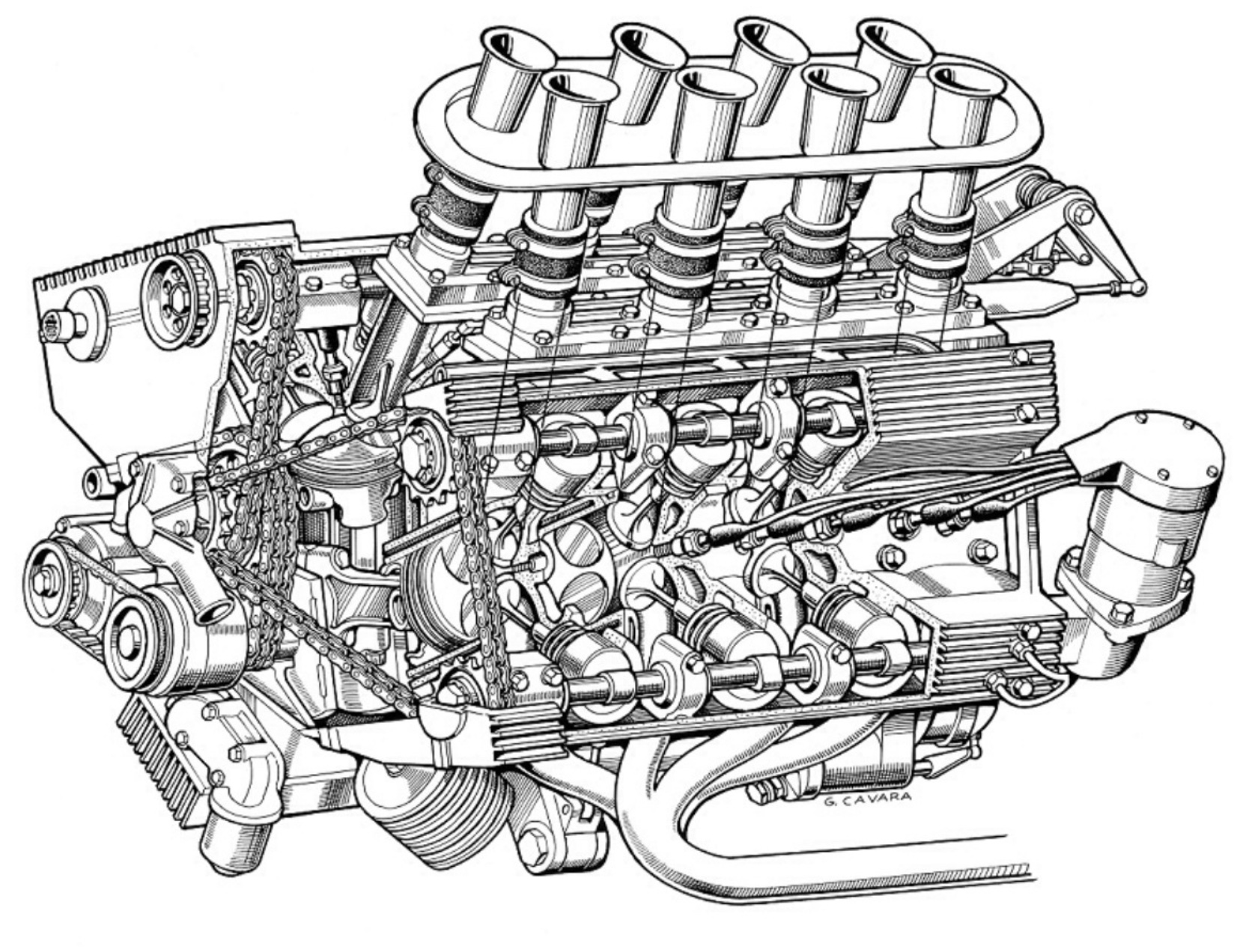
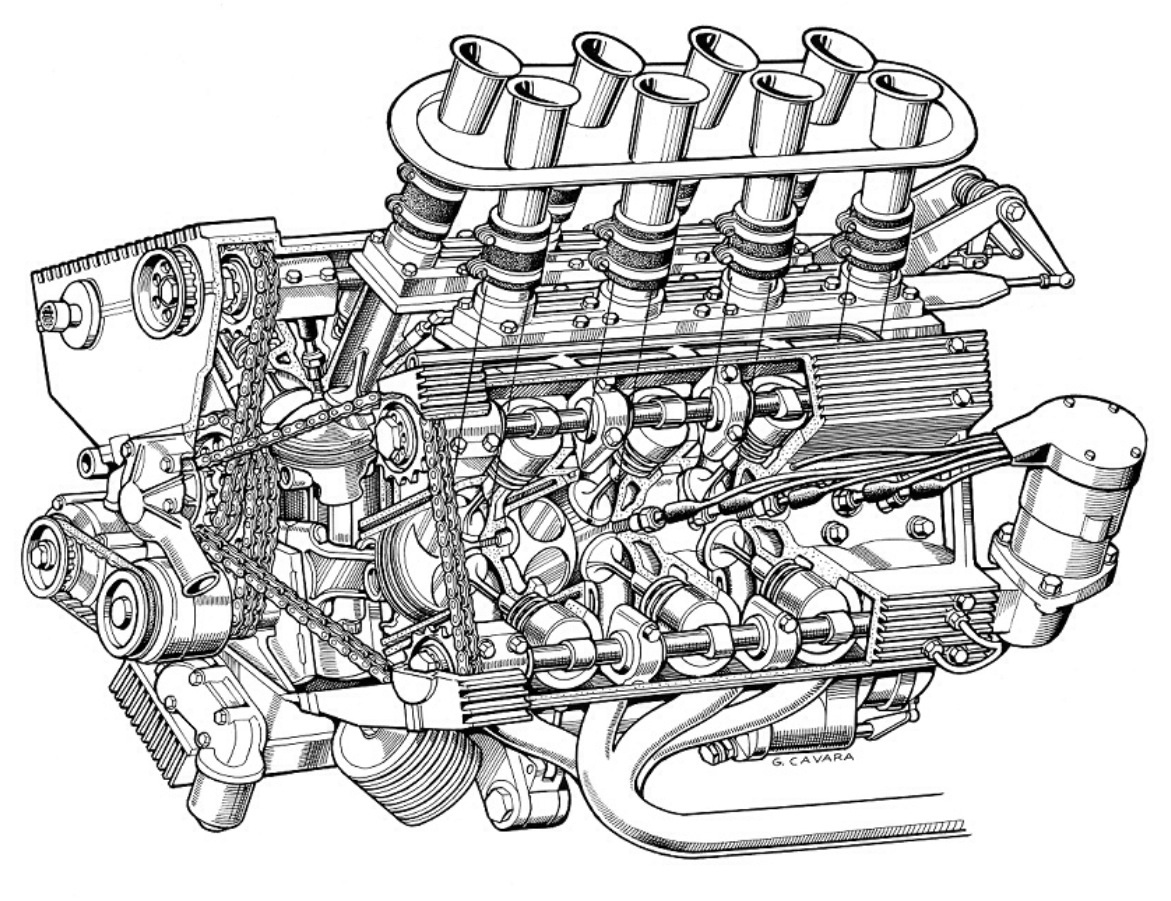
Cutaway of the first 2-litre variant of the Tipo 33 V8 with detailed specifications as per text but chain driven DOHC, two valve, twin plug and Lucas fuel injected with engine a non-load bearing member of the car.

Etcetera…

The seven or eight race Tasman Cup was conducted over eight or nine weeks with a ‘hop across the ditch’- the Tasman Sea between New Zealand and Australia, put great pressure on team logistics and repaid a mixture of speed and, critically, reliability and consistency. Major chassis damage and engine unreliability were severely punished and it was the latter which meant that Mildren/Gardner’s campaigns in the Brabham BT23D and Mildren did not fare better, FG only finished half the races in each year.

Both cars were mighty fine machines but the Lotus 49 was the F1 car of the era and the F2 based Ferrari Dino 246 was far from shabby. In addition, Frank, whilst the equal of most on his best days, was not of the same level as Clark, Rindt, Hill, Amon, Brabham, McLaren or Rodriguez, to rattle off some of the Tasman competition in 1968 and 1969.

Was the Mildren Yellow Submarine a race winner in 1969? – yes, if the planets were aligned – and it was ‘winged’ from the start of the series. Quite how FG, having had a front row seat racing in Europe in ‘the year of the wing’ in 1968, arrived in Australia without said appendages on the Sub is an interesting question.

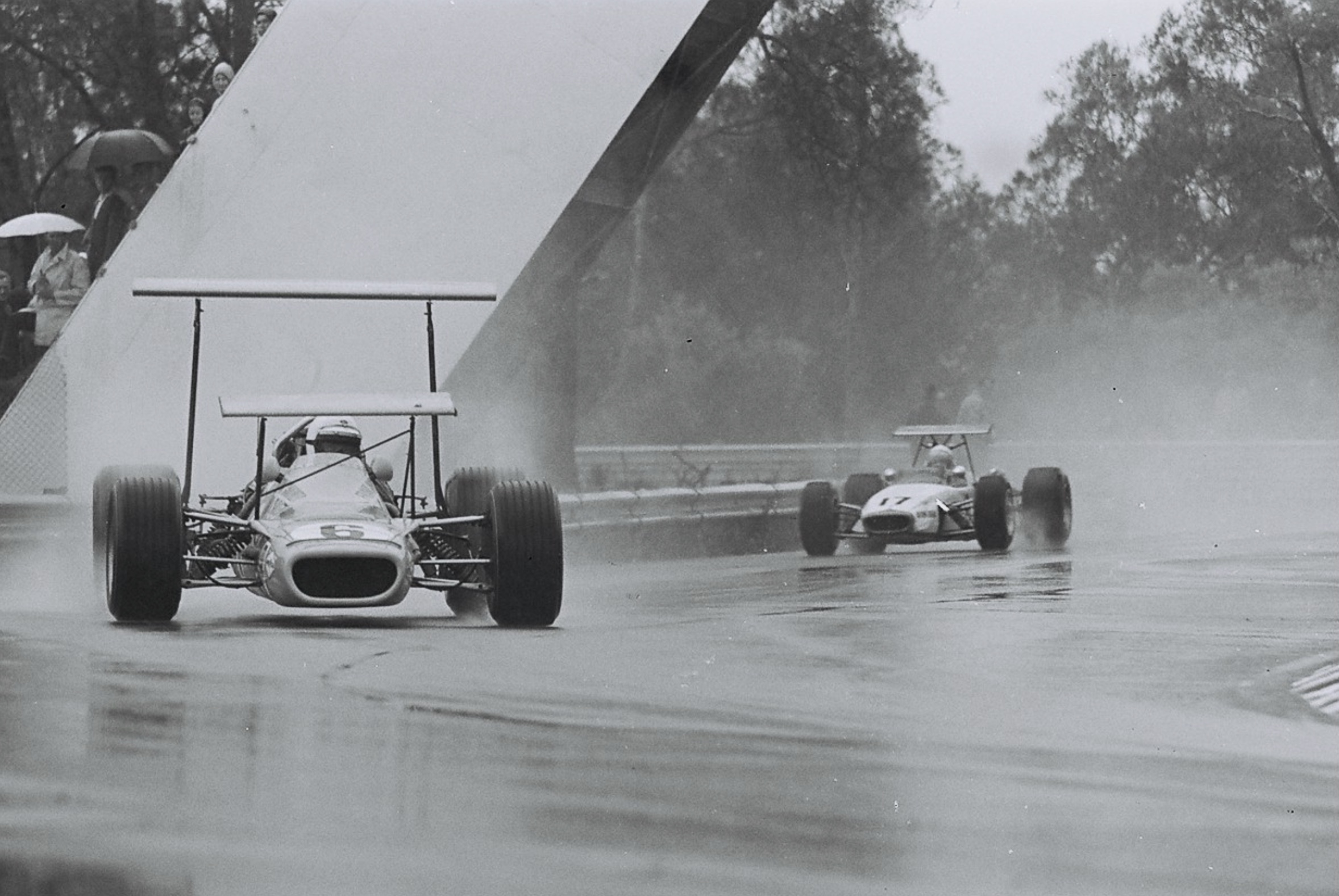
By Lakeside – at the halfway mark of the series the car was winged – they grew again at Warwick Farm as below where FG is leading Graeme Lawrence’s McLaren M4A Ford FVA, but it was all a bit late. They were third and eighth in the sodden race won by the dominant Jochen Rindt’s Lotus 49B Ford DFW. Derek Bell’s Dino 246 was second.

And in any event the reliability wasn’t there…Would, say, Rindt have made the Sub sing? Absolutely, but he didn’t have Frank’s mechanical sympathy so he would rarely have finished I suspect. So, perhaps the Alfa Romeo engined cars under-delivered in the Tasman Cup but Bartlett’s 1968 and 1969 Australian Gold Star wins were glorious and enhanced the Alfa Romeo brand for a generation of impressionable youth, me included…

(B McInerney)

Photo and other credits…

Rainer Schlegelmilch, velocetoday.com, mclaren.com, Doug Nye ‘History of The GP Car’, Dick Simpson, Wirra, Kevin Bartlett, Peter Garrad, LAT, Brian McInerney

oldracingcars.com. See Allen Brown’s M7D and M14D detailed chassis records;

https://www.oldracingcars.com/mclaren/m7d/  and https://www.oldracingcars.com/mclaren/m14d/

Tailpiece…

andrea targa
de Adamich/Vaccarella  Targa 4 May 1969. DNF lap six with engine failure. Alfa T33 2.5 V8 Spider (Schlegelmilch)

Finito…

(Schlegelmilch)


Jo Siffert and JW Automotive’s John Horsman with Jo’s Porsche 917K during the Brands Hatch 1000 km meeting on the 4 April 1971 weekend…

This is a bit of a signature Rainer Schlegelmilch shot- framed through the engine cover of another team car in the Brands pitlane- that of Pedro Rodriguez and Jackie Oliver to be precise.

It was always going to be tricky winning in the 917 at Brands- and so it was that more nimble 3 litre prototypes finished in front of the Siffert/Derek Bell machine.

Stommelen Alfa T33/3, Ickx #51 Ferrari 312PB, Pedro in the #7 JW 917 and the rest, gotta be the warm up lap (unattributed)


Future sportscar ace Henri Pescarolo in the winning Alfa T33/3- his first Le Mans win was in 1972 aboard a Matra with Hill G (unattributed)

Andrea De Adamich and Henri Pescarolo won the race in an Alfa T33/3 V8 from the flat-12 engined Ferrari 312PB of Jacky Ickx and Clay Regazzoni.

The Alfas were pretty pacey that weekend, Rolf Stommelen popped the T33/3 he shared with Toine Hezemans on grid 2 in addition to the efforts of the winning car.

Ickx was on pole in the 312PB which had a limited campaign in 1971 as a dress rehearsal for the great pace the evolved 312PB had in 1972 when the cars won pretty much everything except Le Mans. They entered but did not appear such was the lack of confidence in the F1 derived engines ability to last 24 hours.

Regga aboard the 312PB whilst Ickx looks on from the rear.

I always thought it a huge shame that Scuderia Ferrari didn’t race the 512M as a factory entry in 1971- it would have been great to see the 5 litre cars with both ‘factory teams’ going at it for the final year of the championship under those Group 5 rules.

Ferrari certainly spent 1971 wisely developing their 312PB for 1972 however, dominant as they were in the first year of the 3 litre prototype formula.

Rodriguez, Stommelen and Siffert (unattributed)

Carlo Chiti and his merry band at Autodelta built a really nice bit of kit in the 1971 iteration of their long running series of Tipo 33 sportscars.

With an aluminium monocoque chassis, double wishbone/coil spring dampers at the front and single upper link, inverted lower wishbone/coil spring damper and twin radius rods at the rear the chunky looking design was an expression of sportscar orthodoxy of the time.

The 90 degree all aluminium 2998cc, quad cam, 4 valve, Lucas injected V8 gave around 420 bhp @ 9400- and with a decent roster of drivers the car won Targa (Vaccarella/Hezemans), Brands and the season ending Watkins Glen 6 Hour (De Adamich/Pescarolo) in a very good year in which the 5 litre monsters again took the bulk of the wins, and Porsche the manufacturers championship for the second year on the trot.

De Adamich, Alfa T33/3, Brands 1971 (unattributed)

Credits…

Rainer Schlegelmilch

Tailpiece: Derek Bell, Porsche 917K from the winning car in Henri Pescarolo’s hands- Alfa T33/3…

Finito…
image

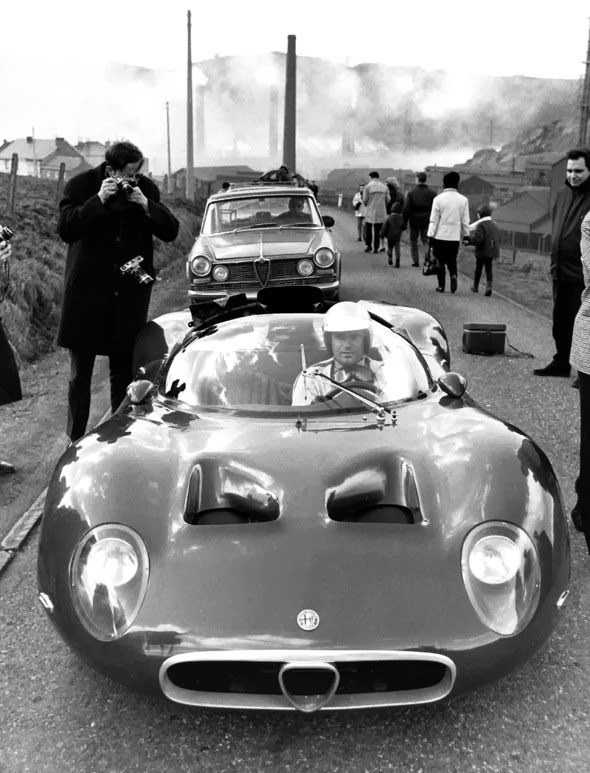
Alfa Romeo publicity shot of Prince Albert and Princess Paola, Belgian Royals at Balocco, Alfa’s test circuit…

The Prince is about to test the ultimately very successful Tipo 33, here in Mugello Spyder 2-litre 1967 form. Thanks to Claudy Schmitz for identifying the Royal Couple and Balocco as the correct venue, the power of Facebook! Whilst the Princess was born of Italian Royal blood it would be interesting to know the circumstances of this test drive, the car was definitely too small for their family of five!

Alfa’s first mid-engined racer made its competition debut at the Fleron Hillclimb in Belgium on 12 March 1967, factory test pilot Teodoro Zeccoli took a win from some stiff competition.

image
Zeccoli at the Belgian Fleron Hillclimb upon the T33 ‘Periscopica’ debut meeting. Alfa 2600 Berlina behind. Fleron is in the Province of Liege, location appears very industrial, power station in the background (unattributed)

The 33 made its race debut at Sebring that summer of ’67, the weekend of 1 April...

Andrea De Adamich led the 12 Hour event’s first lap but both cars entered retired with suspension and overheating dramas.

Here are some shots of the cars in the Sebring paddock; #65 is DeAdamich/Zeccoli, #66 Roberto Businello/Nanni Galli. The race was won by the factory Ford Mk4 of Bruce McLaren and Mario Andretti. I covered the 1967 Endurance Season in some detail in an article i wrote a while back about Ferrari P4/CanAm350 ‘0858’ which may be of interest to some of you;

Ferrari P4/Can Am 350 #0858…

33 1
(Paolo Devodier)
33 2
(Paolo Devodier)

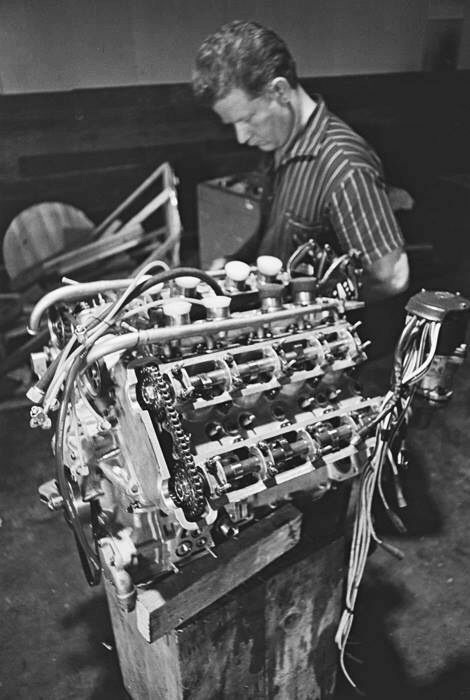
The more you look the more you see, Sebring, the DeAdamich/Zeccoli T33. Engine, two coils, behind the engine the circular vertical ducts which take cool air to the inboard discs when the body is lowered into position are clear. See the rear chassis diaphragm and coil spring/dampers, inboard Girling discs, oil tank to the left of the six-speed Alfa ‘box, battery to its right. Build quality clear.

33 3
(Paolo Devodier)

Those beautiful Alfa mag alloy wheels, filler for centrally located fuel tanks, a spare had to be carried under the regs of the time.The front of the cast magnesium chassis extension houses the radiator, you can just see the nearside suspension ‘top hat’ and adjustable roll bar going forward and mounting at its outer end.

33 4
Engine change in the Sebring ’67 garage. ‘Periscopica’ 2-litre T33 all alloy, Lucas injected, DOHC chain-driven two-valve V8 engine developed a claimed 260-270bhp @ 9500rpm (Paolo Devodier)

Four cars were entered in the ’67 Targa Florio

All failed to finish due to suspension problems (De Adamich/Jean Rolland/Bonnier/Baghetti) and a minor accident involving the Geki Russo/Nino Todaro. The race was won by the Porsche 910 of Paul Hawkins and Rolf Stommelen.

image
Targa Florio 1967. The Bonnier/Baghetti T33 ahead of the other factory cars…Periscopica clear to see. Love the ‘period’ hand-painted numbers. (Unattributed)
bonnier baghetti alsfa
Jo Bonnier in the T33 he shared with Giancarlo Baghetti during Targa 1967 (unattributed)
33 5
T33 cockpit shot at ’67 Targa. LHD unusual in racing sportscars, Alfa would later change to the norm. Momo steering wheel, Veglia instruments, change for six-speed box all clear, lots of instruments for the driver to monitor. Not sure which chassis this is, or the T33 in front, you can just see the tail of the Scuderia Filipinetti Ferrari P3/412P ahead (Rainer Schlegelmilch)

Nani Galli and Andrea De Adamich finally broke through for the team at the Nurburgring, they finished fifth in the 1000Km behind four Porsche 910s...

The winning Porsche 910 was driven by the combination of Joe Buzzetta and Udo Schutz. The De Adamich/Galli T33 had another suspension failure on lap 18, but they shared the other car driven by Businello/Zeccoli, the four drivers getting the joy of the cars’ first race finish.

33 6
Autodelta SpA lineup in the Nurburgring pitlane, 28 May 1967. #20 DeAdamich/Galli (DNF suspension) #21 Russo/Baghetti (DNF ‘box) and #22 fifth place car of Businello/Zeccoli/DeAdamich/Galli (Accursio Cassarino)
33 8
Andrea De Adamich in the T33 he shared with Nanni Galli, the Italian duo DNF with suspension failure, then hopped into the #22 surviving car for fifth place (unattributed)
nurb
The ‘pre-owned’ T33 of de Adamich/Galli during Nurburgring practice 28 May 1967 (Rainer Schlegelmilch)
33 9
Ignazio Giunti with tyre problems at Mugello (unattributed)

The Periscopica’s final start for 1967 was the Circuit of Mugello in July, eight laps of a tough 66km road circuit…

Udo Schutz and Gerhard Mitter won the race tailor made for the fast, light but tough Porsche 910. A privately entered GTA was the best place Alfa in seventh, the three Autodelta T33s of DeAdamich/Galli, Lucien Bianchi/Giunti and Colin Davis/Spartaco Dini all failed to finish.

33 10
(Accursio Cassarino)

It had been a patchy start but the Tipo 33 continually evolved over the following decade ultimately winning many races, sometimes not against the strongest of opposition, but ultimately winning the World Championship of Makes in 1975 and 1977.

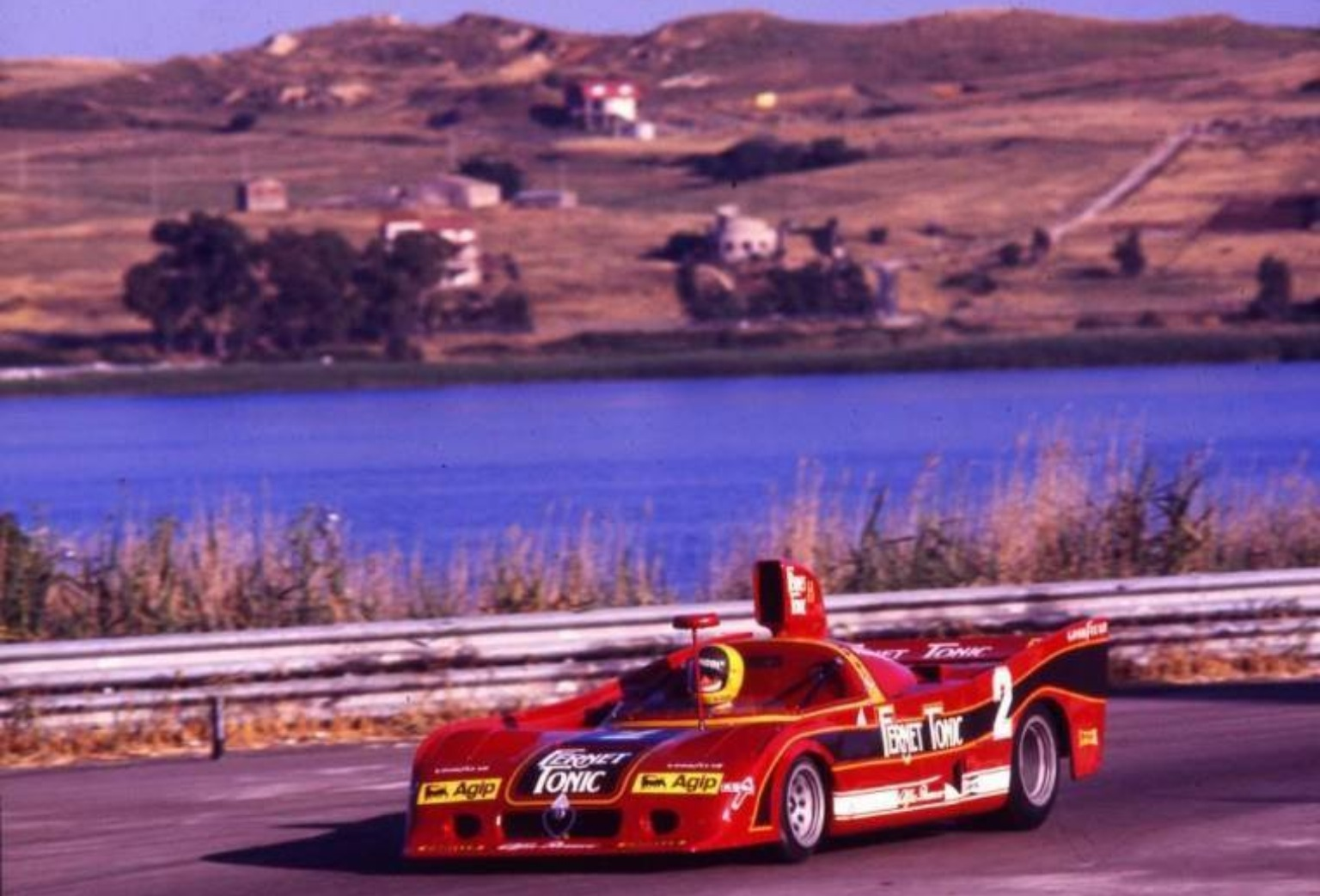
Shown above is the 1977 Alfa 33 SC12 driven by Spartaco Dini at Enna-Pergusa in June. The car used a spaceframe chassis (Alfa used both spaceframes and monocoques during the model’s long life and evolution) and a 2.1-litre fuel injected, twin turbo, four-valve V12 producing circa 640bhp. Dini practiced the car but did not start, this car was driven by Francia/Merzario but was disqualified for a startline infringement, Arturo Merzario won in another SC12.

image
(Vic Berris)

The T33 in its original guise had an unusual chassis design...

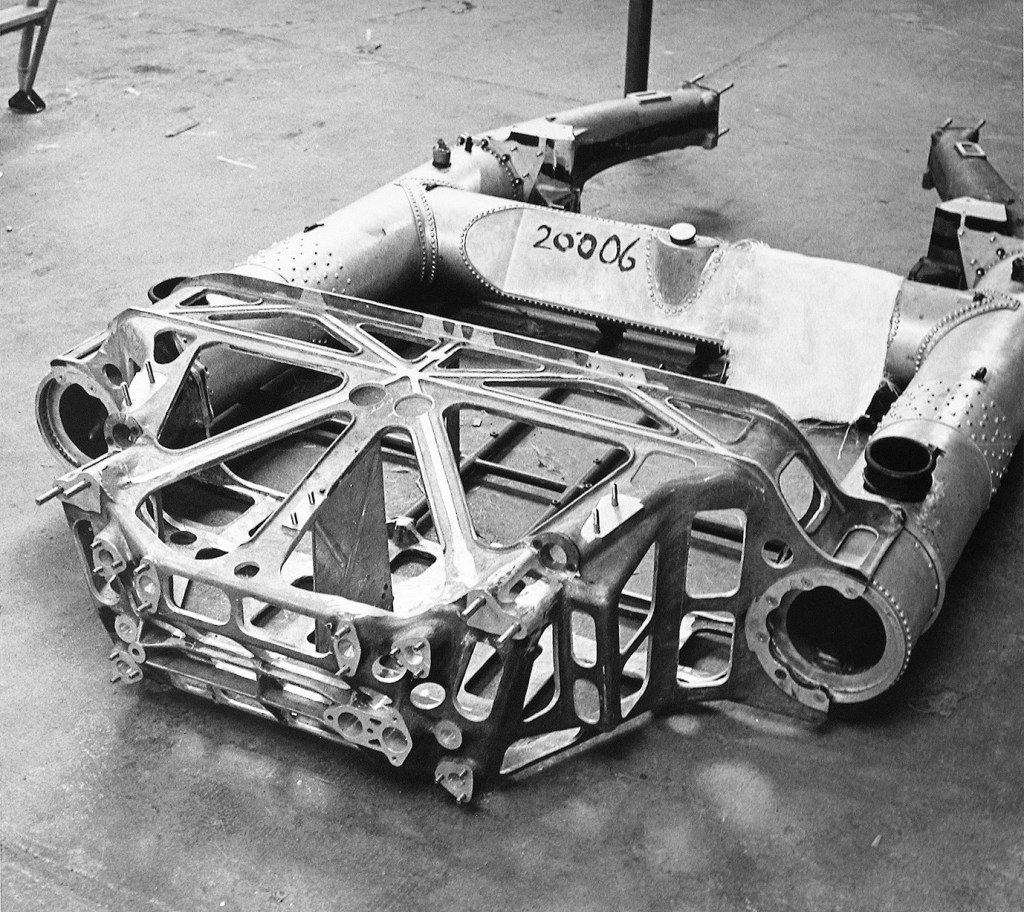
The main structure comprised two longitudinal aluminium spars to which was mounted a complex magnesium casting at the front, the front suspension mounted to it. At the rear the spars had a fabricated sheet metal saddle to which the suspension was attached.

The suspension itself was conventional for the period; upper and lower wishbones and coil spring/ damper units and single top link, inverted lower wishbone and twin radius rods, coil spring/ dampers at the rear. Adjustable sway bars fitted of course. Uprights were cast magnesium, steering rack and pinion with Girling disc brakes front and rear. Weight 580Kg.

(LAT)

Periscopica chassis. The incredible, complex cast magnesium front bulkhead referred to in the text is clear, the spars are bolted to it, and in turn, the two rear section pieces to the large spars.

image

The tall ram air intake gave the car it’s nickname, Periscopica…

The heart of the early T33s was of course it’s superb little all alloy DOHC V8. Initially 2-litres (1995cc) and two-valves per cylinder, the cams were chain driven, the Lucas fuel injected engines power output was a claimed as 260bhp @ 9500rpm, the gearbox Alfa’s own six-speed transaxle.

Etcetera…

Also see this article on the Alfa T33/3 4-litre coupe: https://primotipo.com/2014/05/15/when-im-in-a-car-i/

Credits…

Cutaway drawing of car Vic Berris, engine cutaway G Cavara, Claudy Schmitz, Paolo Devodier, Accursio Cassarino, Rainer Schlegelmilch, Facebook ‘Alfa Romeo 33 Sport Car’ Group, LAT, Tony Pashley Collection

Tailpiece…

de ad nurb
(Rainer Schlegelmilch)

Andrea De Adamich jumping the T33 he shared with Nanni Galli at the Nurburgring 1000Km in 1967, DNF.

Finito…

san juan

The spectacular backdrop of the Andes lost on Regazoni, Rees, Pescarolo, and Courage…San Juan Circuit Argentina (Andrew Marriott)

Argentinian Temporada F2 Series : San Juan 1968…
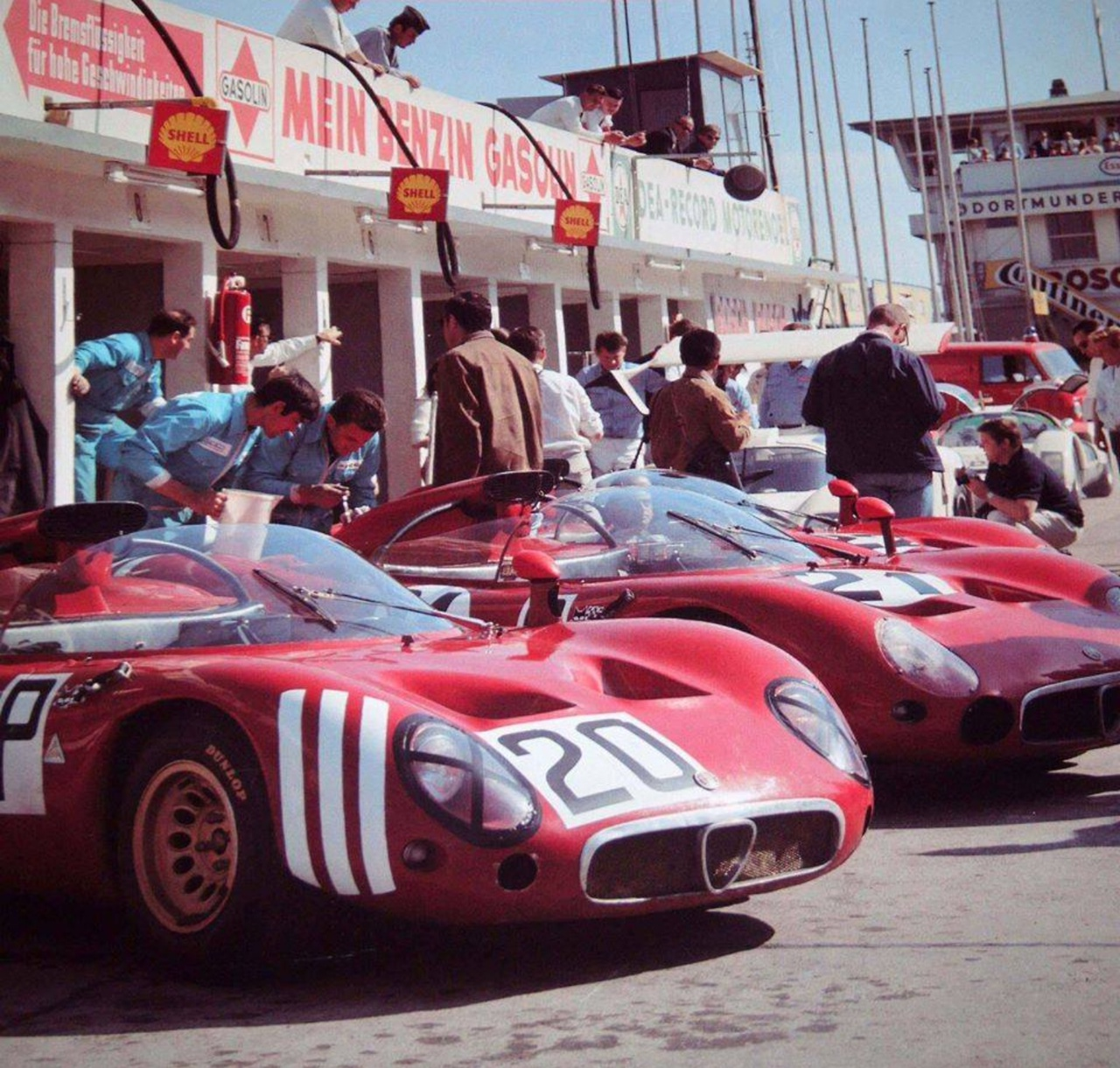
Sensational panorama of the San Juan circuit with the Andes as a backdrop.

This race was won by the De Adamich Ferrari Dino 166. The cars in shot, all Ford Cosworth powered are Clay Regazzoni Tecno 68, Allan Rees Brabham BT23C, Henry Pescarolo Matra MS7 and Piers Courage Brabham BT23C.

de adamich

The Ferrari Dino 166 F2 struggled in Europe against the Ford FVA powered hordes but the 1.6 litre V6 engined cars driven by DeAdamich and fellow Italian Tino Brambilla were competitive in Argentina, Andrea winning in front of ‘F2 King’ Jochen Rindt’s Brabham (Andrew Marriott)

F2 was a 1.6 litre formula at the time using production blocks, the Ford FVA 4 cylinder engine, the dominant engine, producing around 225 BHP at 9000 rpm. It was based on the Ford Cortina ‘116E’ block, Cosworth’s Keith Duckworth famously applying the design concepts intended for the Ford Cosworth DFV engine, Grand Prix racing’s most succssful engine. The FVA and DFV were part of the same Ford contract the FVA being built first…

The Ferrari engine was based on a block Fiat used in its Fiat Dino Coupe, and of course later in the Ferrari Dino 246, one of my favourite road cars. The engines evolved from 3 to 4 valve heads between 1967 and ’68 finally finding form in the ’68 European season ending round at Vallelunga, Brambilla winning the day from DeAdamich. A 2.4 litre 285BHP variant of the engine was developed for the Tasman series in Australasia, that car designated the 246T. Amon won the title in 1969 and Graeme Lawrence in 1970…but that is another story to tell in detail.

The Temporada series was held late in the year attracting the best of Europes cars and talent, the Championship in ’68 won by De Adamich, victorious in 2 rounds,  from Jochen Rindt and Piers Courage.

tino

DeAdamich # 14 and Tino Brambilla on the Buenos Aires grid 1968. The Ferrari’s are powered by a 1596cc, 4 valve per cylinder, fuel injected, V6 producing 210BHP @ 10500 rpm…they clearly enjoyed the altitudes of the Andes better than the Cosworths and took their end of European Season form to South America winning 3 of the 4 rounds (Pinterest)


166

Ferrari Dino 166 F2 Drawing

circuit

Photo Credits…

Andrew Marriott, Pinterest unattributed

Finito…