Jack Brabham being pestered by Frank Matich before the start of the Tasman Series Sandown Park Cup on February 16, 1969. Frank is after some tips on how to extract the best sponsorship deal from Repco Ltd management.
It’s intrigued me that Jack clearly forgot to bring his nice modern Bell Magnum helmet home with him when he jumped on his Qantas 707 at Heathrow for Sydney in December 1969.
When his Brabham BT31 Repco was finally offloaded at Port Melbourne and had its nice new RBE 830 V8 fitted at Repco Brabham Engines in Maidstone, he cast around for a skid-lid and – seemingly – this circa 1960 helmet and pair of goggles were the only ones available to head off to Calder to test the car two days before the Sandown race. See here for a BT31 epic: https://primotipo.com/2015/02/26/rodways-repco-recollections-brabham-bt31-repco-jacks-69-tasman-car-episode-4/
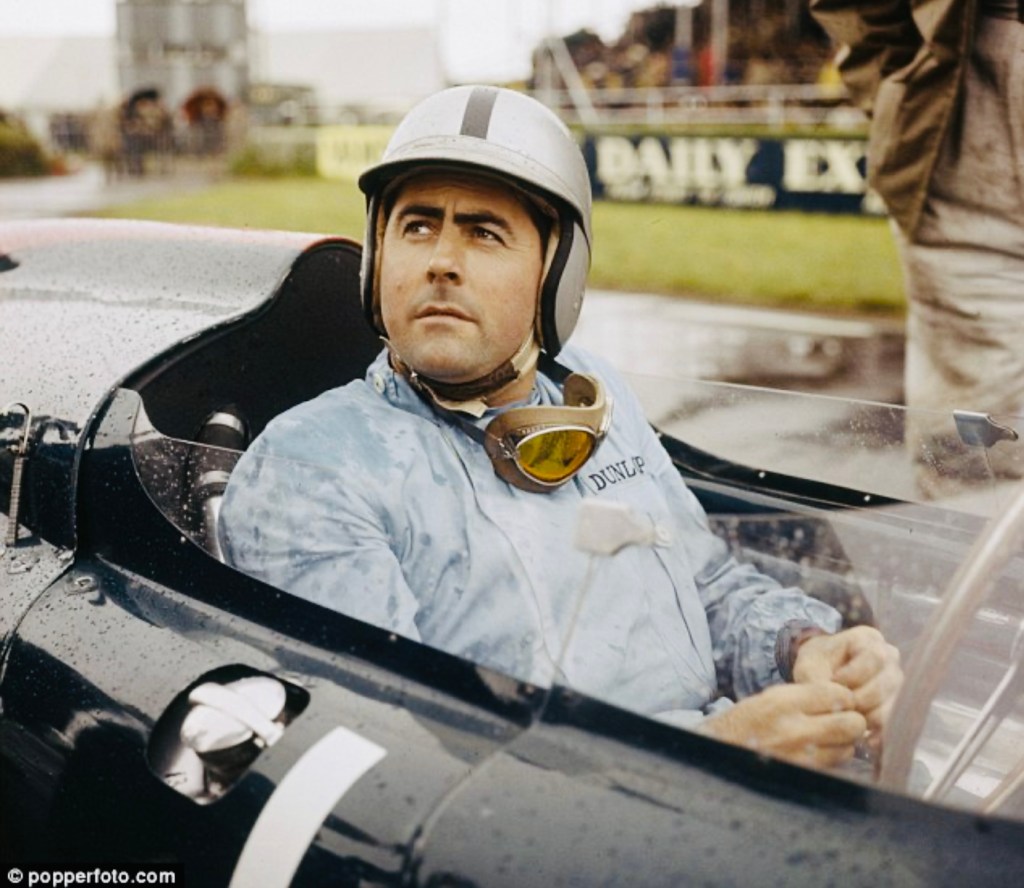
The lovely shot above seems to be the helmet in question sitting atop Jack’s noggin on the grid of the BRDC International Trophy at Silverstone nine years before, May 14, 1960: second in his works-Cooper T53 Climax behind Innes Ireland’s Lotus 18 Climax.
(unattributed)
Our very own Jack during the ‘69 Sandown Cup. He is on the run out of Peters above, and on the way into Dandy Road below, wearing the same 1960 helmet or one very much like it.
Small things as I say…mind you, I don’t like ‘yer chances of racing with a nine year old helmet in today’s homogenised, pasteurised over regulated times.
Brabham finished third in the race, proving brand-new BT31 was quick right out of the box, which was won – so too the Tasman Series – by Chris Amon’s Ferrari 246T. Jochen Rindt was second in his Lotus 49B Ford DFW.
(R MacKenzie)
Jack returned that Easter to fulfil his final Australian Repco commitments, winning the Gold Star round at Bathurst in BT31. This time (below) Jack remembered to pack the Bell Magnum but not his modern goggles…
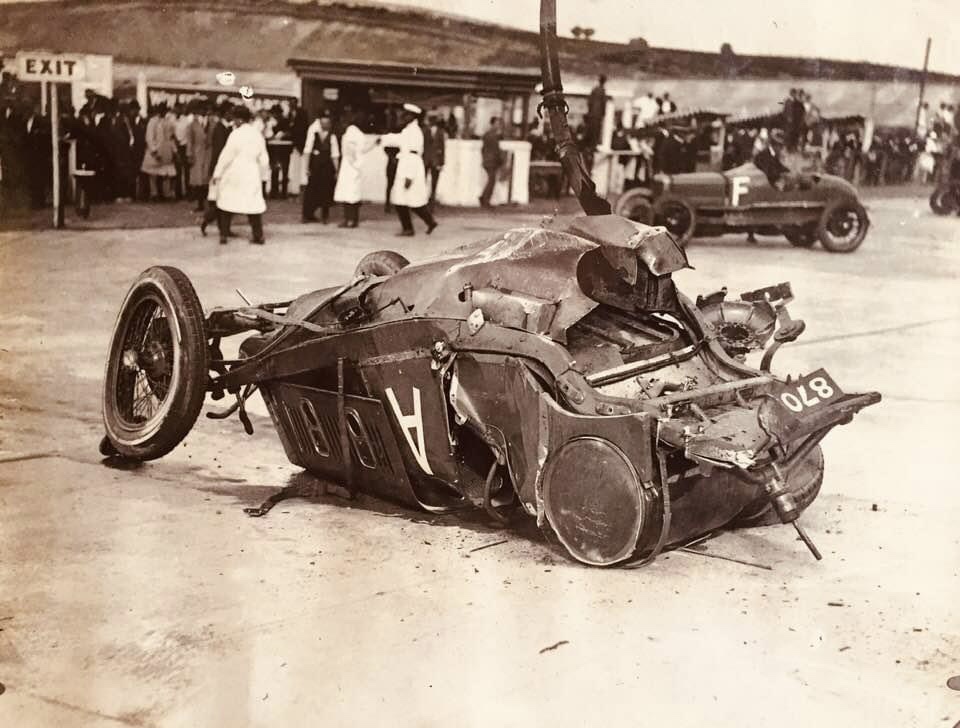
Ouch. Wow, that’s daffy-ducked isn’t it!? Alan Cooper’s very dead 4.8-litre, straight-eight, 1919 Ballot 5/8LC lies on the front-straight of Olympia Speedway, Maroubra, Sydney on January 2, 1926.
Behind is his brother, Harold ‘Hal’ Cooper’s 2-litre Ballot 2LS #15. In the feature that night, relative novice Alan tried an outside pass on his vastly more experienced younger brother on the last lap, snagged a hub on the fence and cartwheeled along the track at over 100mph and into the sandy area between the track edge and the spectator compound. Alan walked away – shaken and stirred – but the poor riding mechanic wasn’t so lucky, the worst of his injuries was a pair of broken thighs.
Alan Cooper aboard #1004 earlier on the fateful day (Sherwood Collection)
Alan never raced again, but chassis 1004 was repaired by racer/mechanic/engineer John Harkness using an Australian Six chassis, and appeared again at Maroubra with Harkness at the wheel that August. Whatever thoughts I had about the original chassis being repaired have been well set aside…
The Cooper boys were from a family of 11 children. They were brought up in Melbourne’s Botanical Gardens where their father was Chief Gardner. Via a familial connection, Alan Cooper met the 30-years-older Stephen Brown not long after he returned from the Great War. The Brothers Brown owned a large vertically integrated Newcastle coal mining and distribution business named J & A Brown (now part of Yancoal Australia). Stephen treated Cooper as his son and lavished stupefying levels of wealth on him including the most exotic racing cars of the time; the Ernest Henry designed Ballot’s were the best there was, the 1919 ‘Indy’ Ballot undoubtedly one of the fastest cars on the planet.
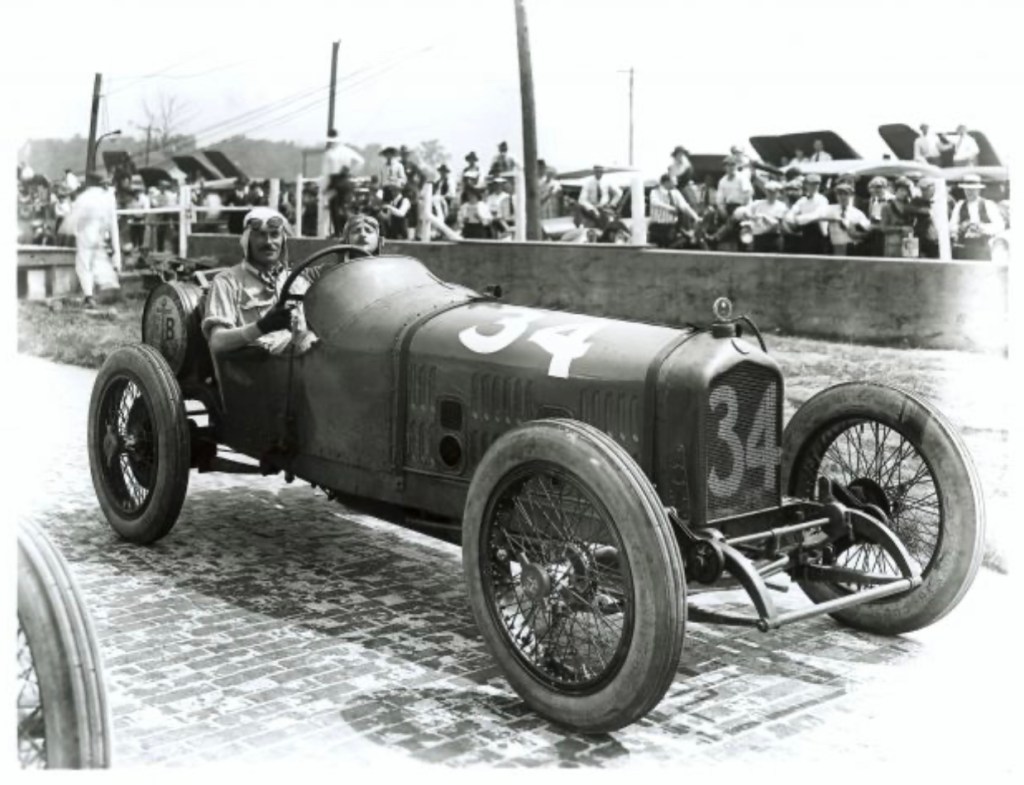
Indy 500 1919. #4 Ralph DePalma, Packard, #32 and 31 are the Albert Guyot and Rene Thomas Ballot 5/8LCs, #3 is Howdy Wilcox – the winner – Peugeot, and #33 Paul Bablot’s 5/8LC. The pace car is a Packard Twin Six V12 (IMS)Louis Wagner, Ballot 5/8LC #1004 before the off (IMS)
Louis Wagner raced 1004 at Indianapolis 1919 as part of a four-car factory assault on the race. The Ballots where the quickest cars too, but the hastily built machines were geared too-tall. The quick fix, in the absence of an alternative diff-ratio, was the use of smaller diameter locally made wheels and tyres – Goodrich instead of Michelins. These failed, Wagner was out with a broken wheel after only completing 44 of the 200 laps while running third, then Paul Ballot crashed when a wheel failed after 63 laps, so the other two 5/8LCs of Albert Guyot and Rene Thomas cruised home in fourth and 11th places.
While it was a bad day for Ballot all wasn’t lost for Ernest Henry, the winner was Indiana boy Howdy Wilcox in one of Henry’s old Peugeot GP cars. Indy was/is tough and dangerous. Of the traditional 33 cars that started, 18 didn’t finish, four of whom crashed, two fatally: Louis Le Cocq and Arthur Thurman both lost control aboard Duesenbergs. Robert Bandini, Thurman’s mechanic died as well.
As a result of the rise in pole-time speed to nearly 105mph in 1919, and one suspects, perhaps the three deaths, the Indy Formula engine size was reduced from 300cid in 1919 to 183cid for 1920. Ernest Ballot immediately had four very expensive racing cars surplus to requirements, just the thing for a bright-young-colonial with somebody else’s dosh jangling loose in his pockets.
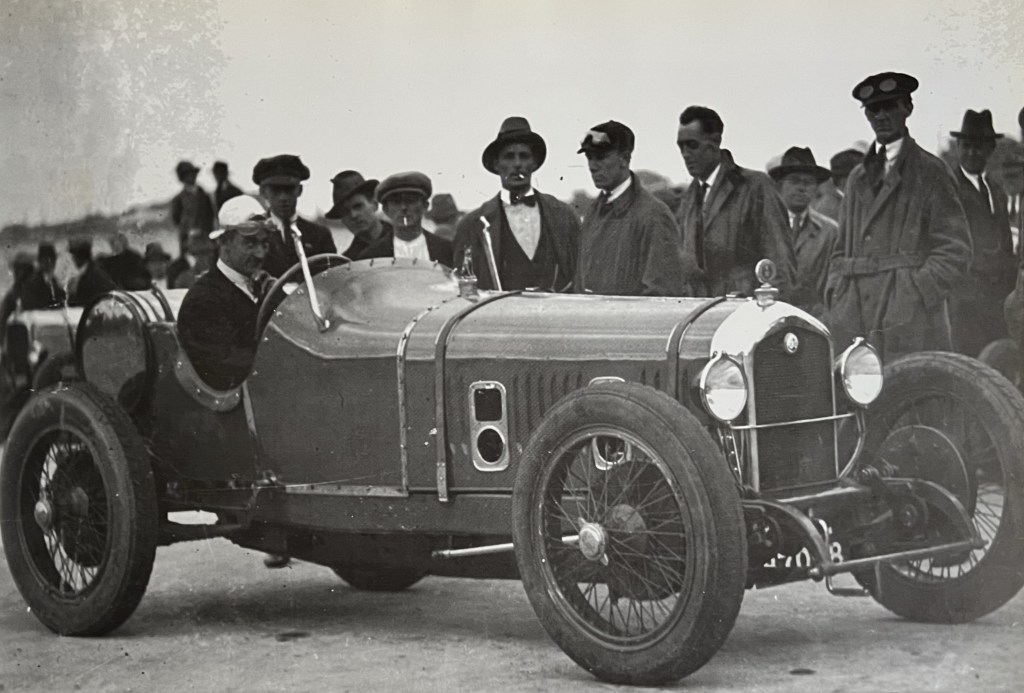
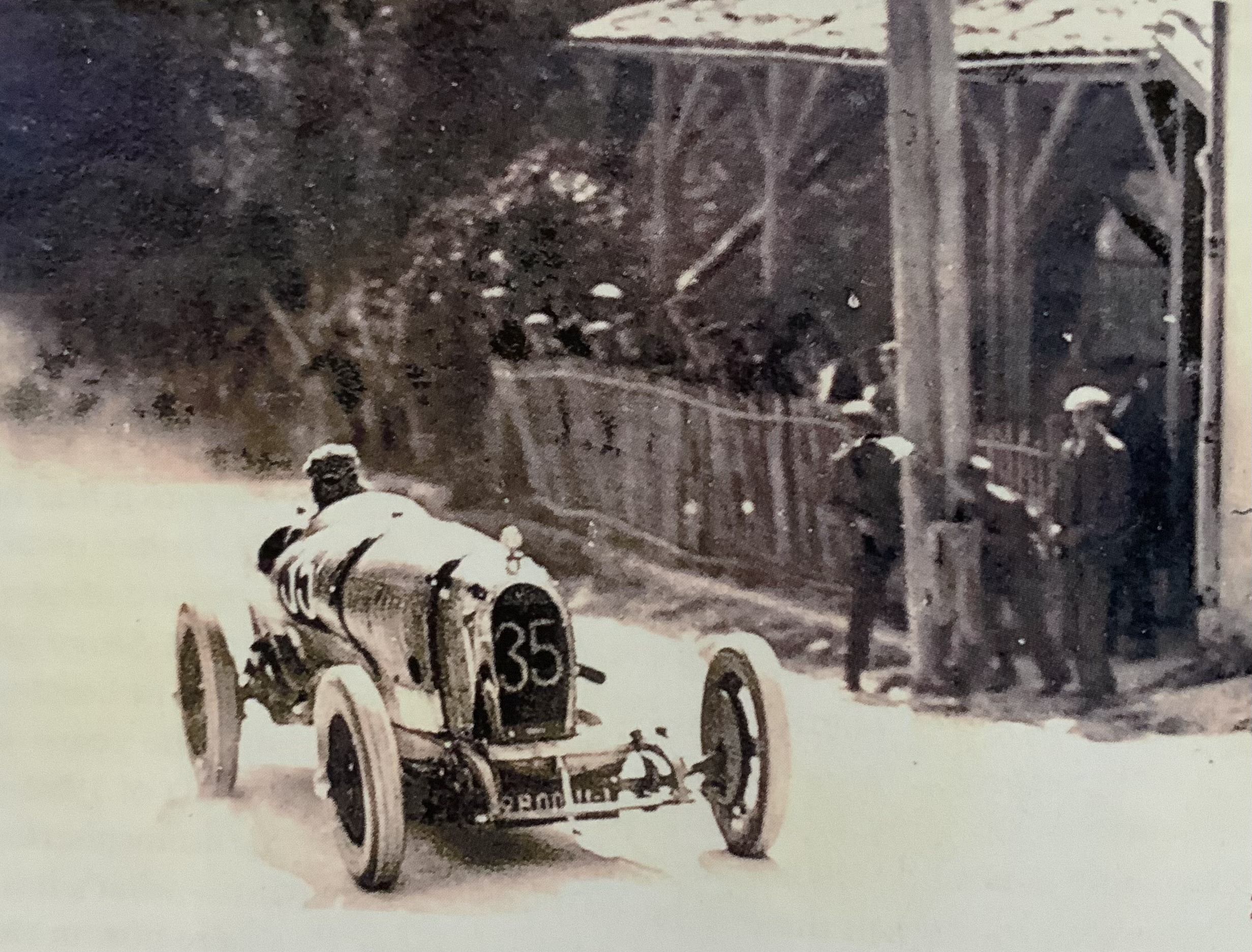
By the time Brown and Cooper swung past Paris’ Boulevard Brune to acquire 2LS #15 – the ex-Jules Goux second-place 1922 Targa machine – Monsieur Ballot was using #1004 as a swish, speedy roadie. Fitted with Perrot brakes, mudguards and a windscreen, he cut quite a dash on the Boulevard St Germain.
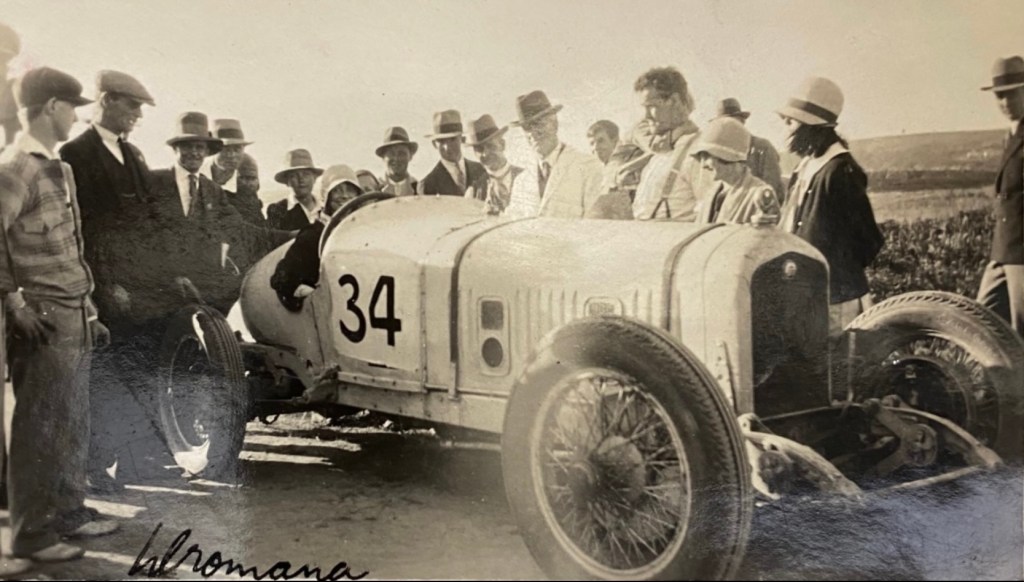
Thelma – quite tidy too – at the wheel of #1004 at what became known as Safety Beach, Dromana on Victoria’s Mornington Peninsula in December 1928 (B King Collection)
That’s why the car before Alan Cooper crashed (pic 2 above) it looks road-equipped, it was. When shipped to Australia it supposedly arrived with three bodies, the one shown and destroyed in the prang, a slipper body which Harkness fitted (or built) when he rebuilt it, and another, a shot of which I’d love to see…
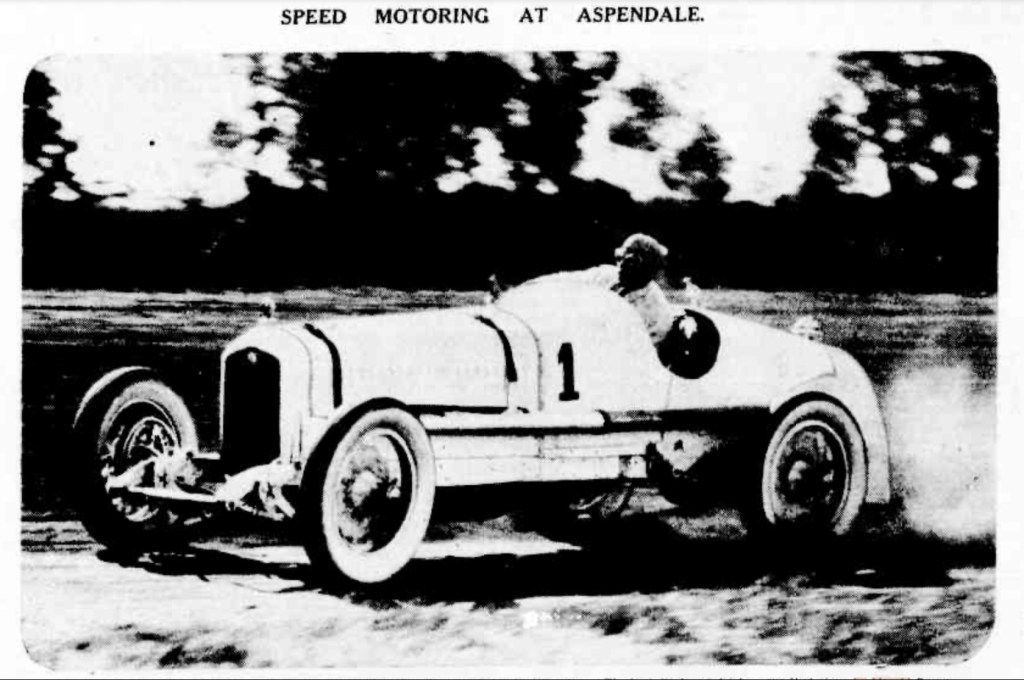
Harold Cooper raced 5/8LC 1004 for a while south of the Murray at Aspendale, the Melbourne Motordrome and other venues. He was described as “Victoria’s best known racing driver” by the Melbourne Herald before racing on the 2-mile 163 yards rectangular gravel course at Safety Beach, Dromana in December 1928, and duly set the fastest time.
Unfortunately Harold didn’t contest the 1927 Australian Grand Prix at Goulburn, nor did he ever give the 2LS a gallop in any of the early (2-litre supercharged and under) Phillip Island Road Races/Australian Grands Prix. Had he done so he would have been a red-hot favourite, he is the most underrated and forgotten Oz driver of the period…
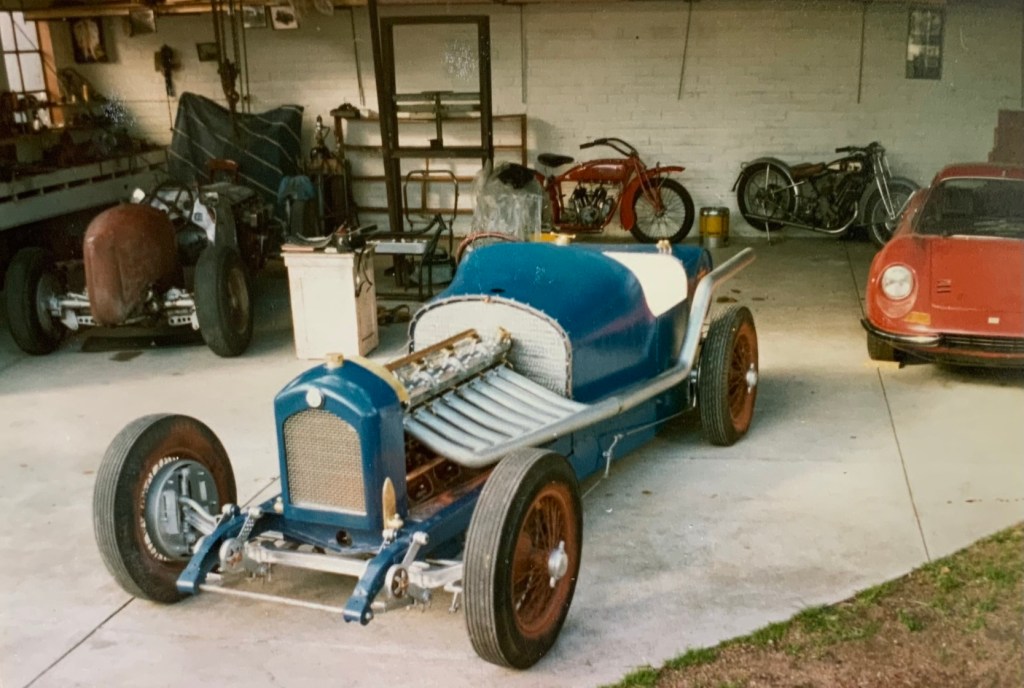
Melbourne racer Jim Gullan and mechanic during practice for the January 2, 1939 Australian Grand Prix at Lobethal, South Australia. The exotic eight let go at warp speed, a rod carved the block in half with expensive shrapnel being spread across the Adelaide Hills countryside. It would be 40 years before the chassis was reunited with another Ballot engine (N Howard)1004 in the Edgerton suburban garage, date unknown. Other than the Dino I’ve no idea of the identity of any of the other machines (R Edgerton Collection)
Both Ballots raced on. The 2LS’ svelte twin-cam 16-valve four was replaced by a succession of V8s and raced in Western Australia for decades, its mortal Ballot remains survived and are well cared for in Australia. The 5/8LC was restored after being tracked down to a northern Victoria farm by ‘Racing Ron’ Edgerton in the 1970s. The ‘Edgerton’ branded crankcase side covers were a tad vulgar for most but he got the car running and competed in it, a state to which it has never returned in the hands of the UK owner for the last three decades or so.
Check out the May 2021 issue of The Automobile. I wrote a never-published-before long yarn about the Coopers, Ballots, the elusive Stephen Brown and the staggering lifestyle he afforded them, and their later second lives as Captains of The Turf. See here to purchase; https://www.theautomobile.co.uk/may-2021-issue/
(R Edgerton Collection)
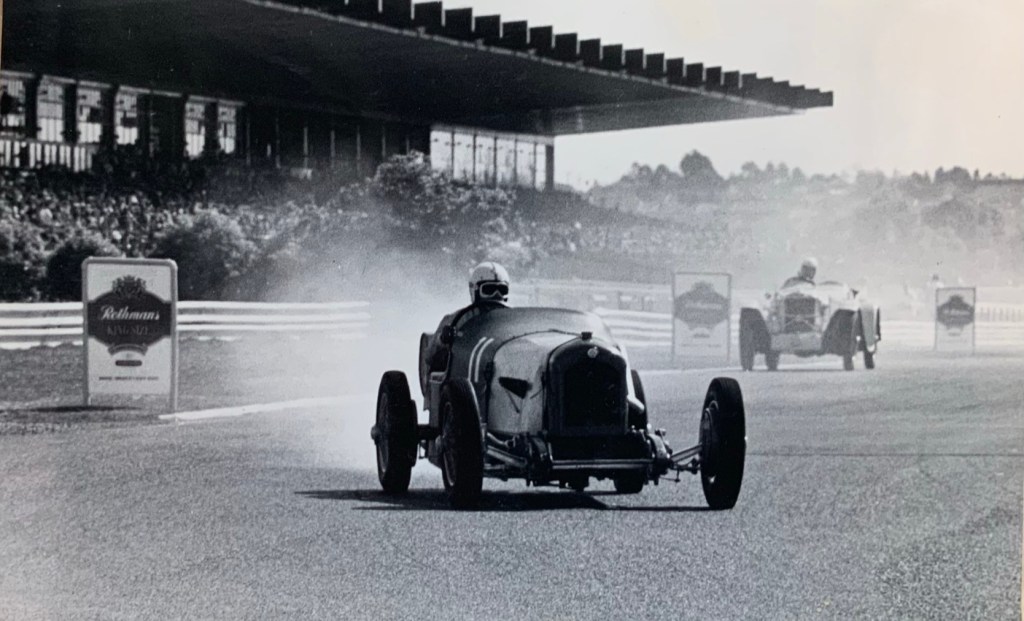
Ballots up. Frying tyres, rings or bearings? Ron Edgerton attacks Shell corner (Turn 1 in today’s vulgar parlance) at Sandown on one of 1004s relatively few outings – partially restored by the look of it – before the car was sold overseas. The following Ballot is Wes Southgate’s 2LS, now restored to original bodywork and owned by publisher/hotelier/renaissance-man Douglas Blain, who keeps the car in fine fettle in Victoria. Those Rothmans brake markers are circa 1978-79’ish, so a meeting about then?
Etcetera…
(AD Cook Collection)
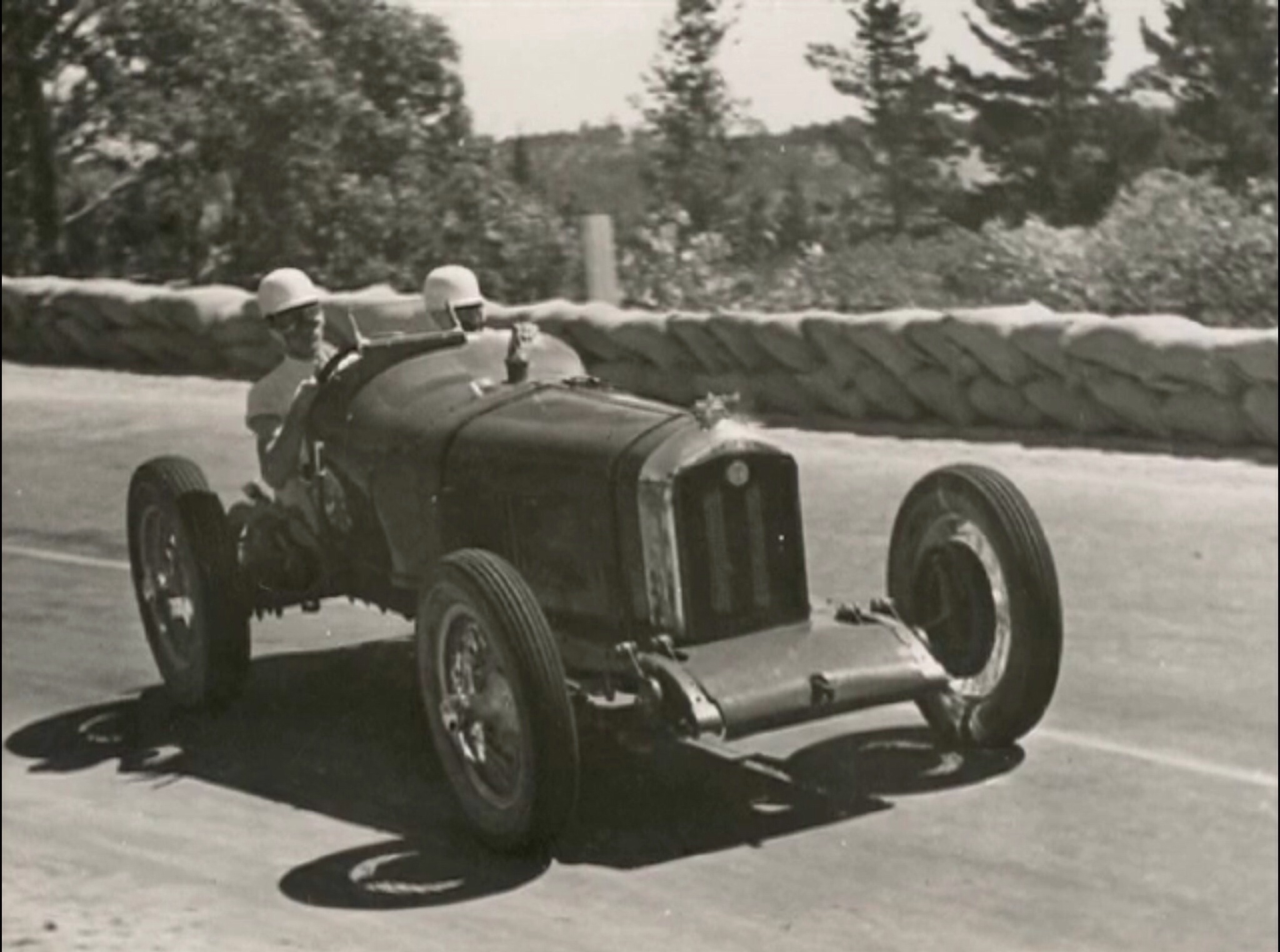
Harold Cooper aboard #1004 at La Turbie Hillclimb in 1925. Hal did four ‘climbs: three venues near Nice including this one, and another in Monaco, before the car was shipped from Le Havre to Melbourne. Quite why this slipper-body was removed back at Ballot HQ at Boulevard Brune for the ‘Indy’ body before shipment to Australia is anybody’s guess. The body above is different to the form in which the car emerged Harkness’ workshop after Alan Cooper’s Maroubra accident.
While Alan Cooper makes much of his racing career in the Smiths Weekly serialisation of his life story – a grand, rollicking, bullshitty yarn it is too – in fact he did relatively few competition miles. Harold, on the other hand, competed a lot from 1922 when the 2LS arrived and was a man of great skill. He was far more competent than Alan, had competed in the 5/8LC in France already, so had a level of familiarity with it.
The car was ministered to in Sydney by Giulio Foresti, Ballot factory racer/dealer/mr-fixit who tested it at Maroubra and schooled the brothers in its use and mechanicals. We know from contemporary reports that a planned early Maroubra test by Alan was thwarted by steering problems. Harold should have raced the 5/8LC and Alan the 2LS that fateful night; letting Alan loose in it at Maroubra was akin to a modestly credentialed Formula Ford driver have a lash in Oscar’s F1 McLaren. Alan Cooper was kissed-on-the-dick-by-tinkerbell – to use vulgar Oz slang – many times during his long life, not least on that fateful 1926 evening.
The Argus December 10, 1928
“Thrilling motor-racing was witnessed at the Aspendale Speedway (Melbourne) on Saturday afternoon. The best display of driving was that given by Harold Cooper, who is shown here negotiating a corner at speed in his eight-cylinder Ballot car. He defeated Albert Edwards who drove a front-wheel-drive supercharged Alvis.”
Credits…
Peter White Scrapbook via Colin Wade, Indianapolis Motor Speedway Museum, The Argus, AD Cook Collection, Ron Edgerton Collection, Norman Howard, Bob King Collection, John Sherwood Collection from the wonderful ‘A Half Century of Speed’ by Barry Lake
Tailpiece…
(R Edgerton Collection)
The essential element of Edgerton’s rebuild of #1004 was locating one of the very exotic, Ballot 4.8-litre DOHC, four-valve, straight eight engines or the bones thereof.
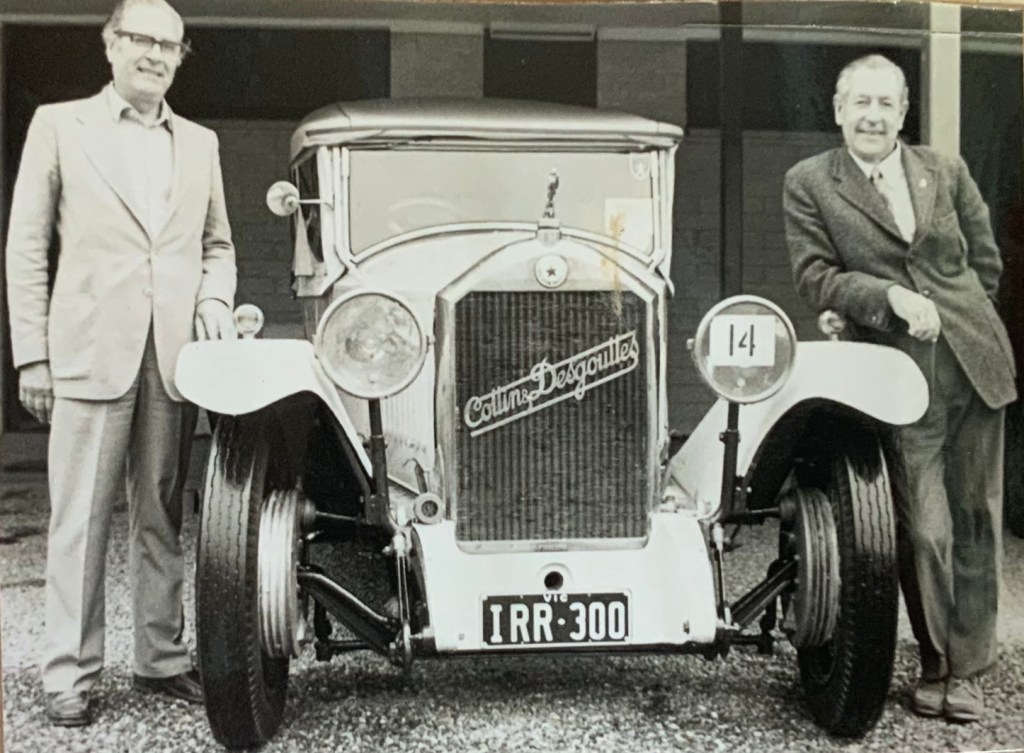
As luck would have it, Briggs Cunningham had one, and wanted a Cottin & Desgouttes, Edgerton was happy to oblige. Here is Ron’s (at right) pride and joy (with Silvio Massola) – didn’t he have a lot of those in his automotive lifetime – on a 1977 rally in Tasmania, Australia’s South Island.
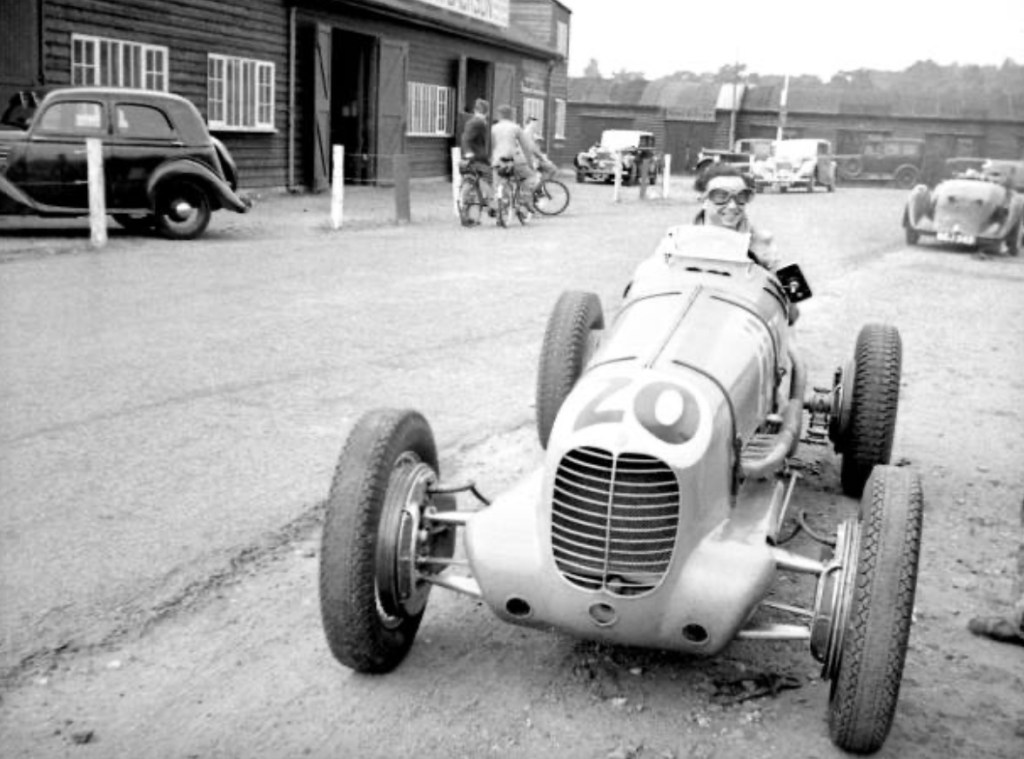
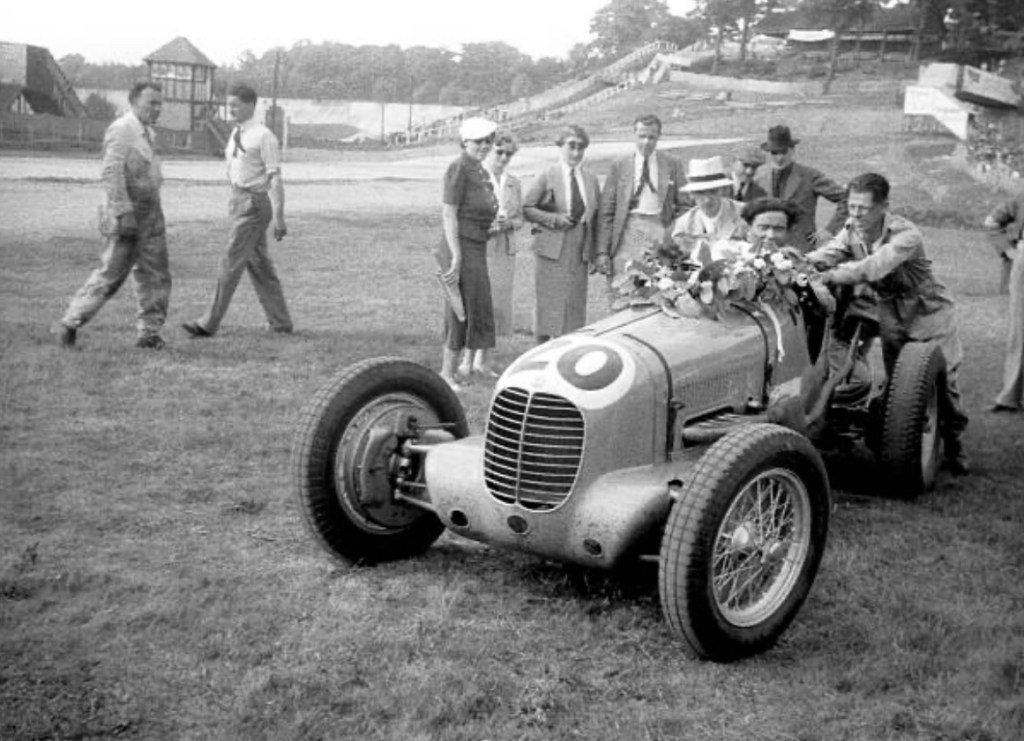
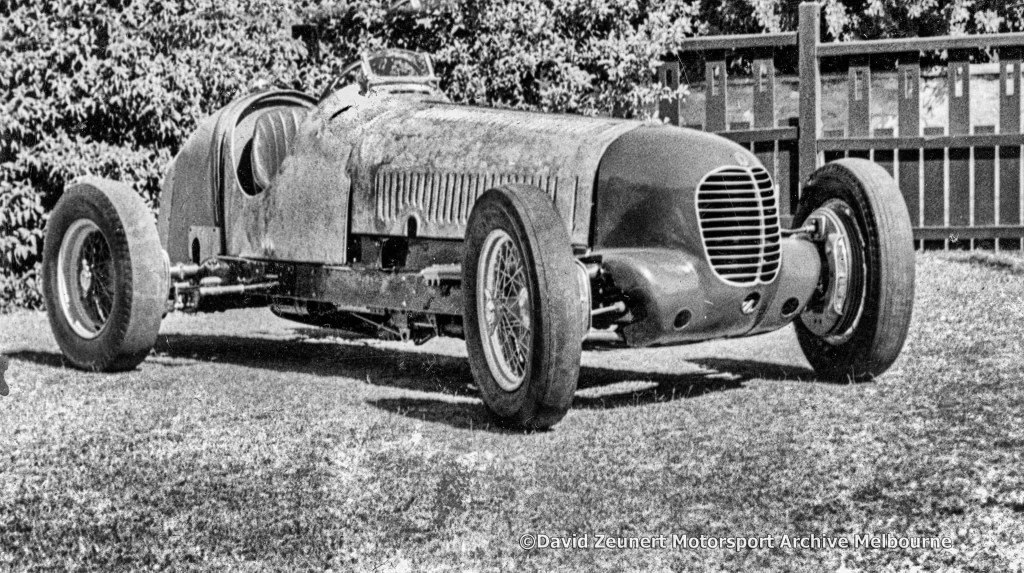
The ex-Johnnie Wakefield 1.5-litre, supercharged Maserati 6CM Voiturette, chassis #1546 is the lowest mileage Maserati racer on the planet, it’s been nowhere near a circuit since April 1938.
The Society of Automotive Historians in Britain caption for the beautiful drawing above reads, “Here is the front suspension of the Maserati 6CM produced in 1937 and 1938. Its torsion bar suspension gave much improved roadholding and cornering speed. The torsion bars were 24-inches long, the left-hand bar can be seen extending back from the pivot of the top wishbone. The friction shock-absorber is linked to the front end. The hydraulic drum brake is wide and well-ventilated.”
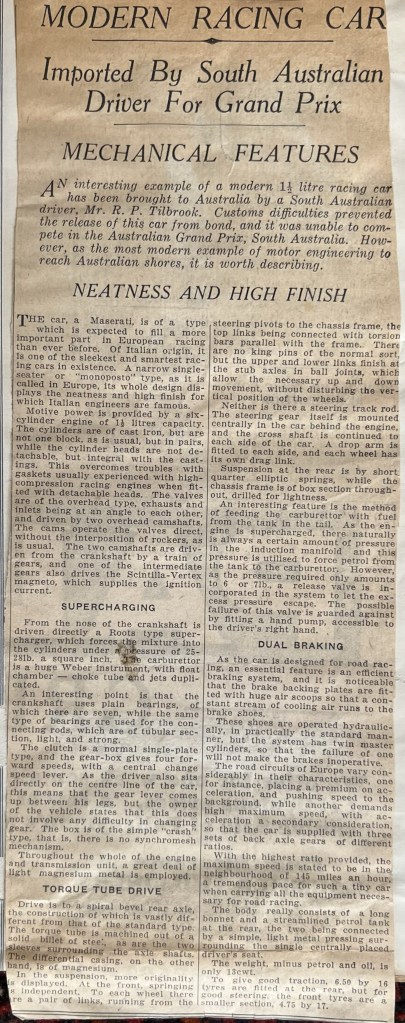
The confluence of ‘finding’ the drawing above, a period newspaper article about the ex-Wakefield Maserati in Australia, and several photographs of the same chassis, naked in Adelaide are the stimuli for this article.
John Peter Wakefield meeting folks? (D Zeunert Collection)
John Peter Wakefield was born into incredible wealth in Marylebone, London on April 5, 1915. In a tragic childhood, his mother died when he was four, and his father – who ran the family gunpowder business – when he was seven. Brought up by his family in Kendal, in the Lake District, he was a natural athlete who commenced racing bikes: Ariels and Velocettes in 1933.
Wakefield focused on learning to fly 1934-35. Having achieved his wings, he bought a second-hand Gypsy Puss, and shortly thereafter, a new British Aircraft Eagle Gypsy.
Into the deep end, he switched from motorcycles to cars and bought Alta 56S, a monoposto 1.5-litre supercharged machine – which Tony Gaze brought to Australia post-war and was ultimately restored by Graeme Lowe – that he raced regularly throughout 1935-37 with good results.
In 1937 he bought the Maserati 6CM in which he contested 18 meetings into 1938 with his best results two 2nds, four 3rds, two 4ths and a fifth place. Then in April 1938 he crashed it during the Cork GP, hospitalising himself with cuts, abrasions and broken ribs in what was his only serious racing accident.
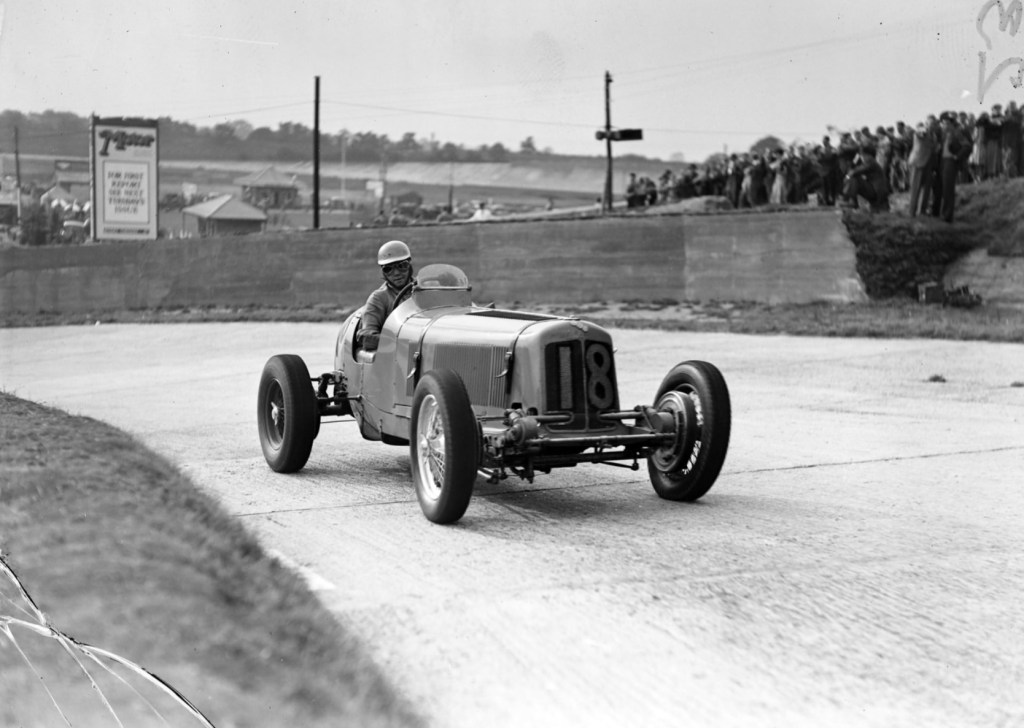
Wakefield in the Brooklands paddock, Maserati 6CM, chassis 1546. JCC International Trophy 1937, second place. Ray Mays won in ERA R4C (Bill Brunell/Getty Images)(Bill Brunell/Getty Images)
Undaunted, our intrepid adventurer placed an order for an ERA B-Type. Wakefield raced Ian Connell’s B-Type before he took delivery of R14B; in around 20 meetings with the two cars he did exceedingly well, taking three wins, two 2nds and six 3rd placings until May 1939. Johnnie then raced a new Maserati 4CL, chassis #1569 for the balance of that season, again excelling, with wins in the UK, France and Italy. He was a rising star, a man to watch.
As Hitler and his merry band of perverts took on the world, Wakefield signed up with the Royal Navy Volunteer Reserves as a sub-lieutenant in September 1939. From then until 1942 he flew 25 different aircraft in eight squadrons. By March ’42 he had resigned his commission to undertake pilot flying test duties with Vickers Aircraft on Spitfire PR MkIVs.
Johnnie was attached to RAF Aldermaston, one of five hangars where Spitfires were assembled. Wargrave Aerodrome (sometimes called Henley Aerodrome) had no formal control tower and Vickers shared the place with a busy RAF pilot training school. On 24 April, as Wakefield took off in his Spitfire (MkIV BR413) for a production test flight he was confronted by a Miles Magister on a collision course, while he swerved in avoidance as he took off, he crashed. The plane burst into flames and he was killed instantly.
Wakefield was on course as a potential great, the BRDC Gold Star, awarded to the most successful driver of the season, was awarded to him posthumously post-war, his wife Kay received it. The Johnnie Wakefield Trophy, is awarded in his honour to the driver who achieves the fastest race lap of Silverstone each year, to this day.
Back to #1546. The doyen of Australian racing historians, John Medley wrote that “Wakefield’s 6CM Maserati was donated engineless (it was sent back to Maserati for a rebuild) to his mechanic, Rex Tilbrook, a South Australian who imported it to South Australia but refused to pay the customs duty…so it became the ‘box of stones’ in the customs store, rescued but unused by one of the Brooks brothers, and eventually bought by Frank Kleinig for the final version of his Kleinig Hudson Special.”
The Mercury Hobart, March 4, 1939 (C McLaren Rumblings)
Rex Patterson Tilbrook was a man of immense ambition, an intuitive engineer who left an amazing heritage in motorcycles. An aspiring South Australian racing driver and engine designer, he headed for the UK in 1933 and soon landed a job with Vickers at Brooklands. Before long his capabilities as a mechanic and fabricator were such that he opened his own workshop there. His clientele included some top riders and up-and-comers of the day including Fergus Anderson and Dennis Minett…and some racing drivers such as JP Wakefield.
Disaster struck Tilbrook in 1938 when a failed acetylene gauge caused a fire which gutted his workshop. With the drums-of-war getting louder, Rex opted to return to Australia. He had dreams of motorcycle manufacturing at home and brought six ‘bikes and and an engineless racing car – Wakefield gifted 6CM 1546 to Tilbrook – to sell to raise the working capital for his planned venture. Then the Fiscal Fiend intervened, Australian Customs seized the Maserati to pay for the import duty payable on six motorcycles. See this fabulous article on Rex Tilbrook; https://www.oldbikemag.com.au/remarkable-rex-tilbrook/
The newspaper article above was a catalyst for this piece, it is such a good detailed technical period article on the 6CM. I rather suspect that the journo obtained much of the nitty-gritty from Tilbrook rather than a glossy brochure. The race alluded to was the 1939 Australian Grand Prix held at Lobethal, South Australia on January 2, it was won by Allan Tomlinson’s MG TA Special s/c. Obviously Tilbrook was never going to contest the race ‘coz his nice, one owner, only-driven-on-Sundays Maserati didn’t have a donk under its svelte bonnet.
Maserati built 27 6CMs. The six-cylinder 1493cc engine (65x75mm bore/stroke) had cylinders cast in pairs and twin overhead camshafts driven from the nose of the crank. A single Weber was used and Roots type blower, ignition was by Scintilla magneto and the engine was dry-sumped. Power output was quoted initially as 155bhp @ 6200rpm, and later 175bhp @ 6600rpm.
Anthony Pritchard wrote that “The 6CMs were beautifully engineered, almost like a jewelled motion in comparison with the rather crude ERAs, and gave the impression of being Grand Prix cars in miniature. There were times, however, when Maserati cut corners in the standards of assembly and in the main the British owners became unhappy with the performance of their cars.”
There was a big difference in performance, and as Pritchard wrote, sometimes build quality of the works and privateer cars. The compression ratio of works cars was 6.75:1, of British customer cars, 6:1, supercharger size – 140mm blower for works cars, and 130mm for customers. Blower boost of 15-16psi compared with 11-12psi. Whether or not Giacomo the Junior assembled the machine on a Friday afternoon was doubtless a factor too.
The modified four-speed Fiat gearbox was mated to the engine and, being designed for a 34bhp Fiat 532 taxi, was unreliable. This situation wasn’t remedied until Maserati built their own transmissions. The rigid rear axle, made by Isotta Fraschini, was suspended on semi-elliptic springs.
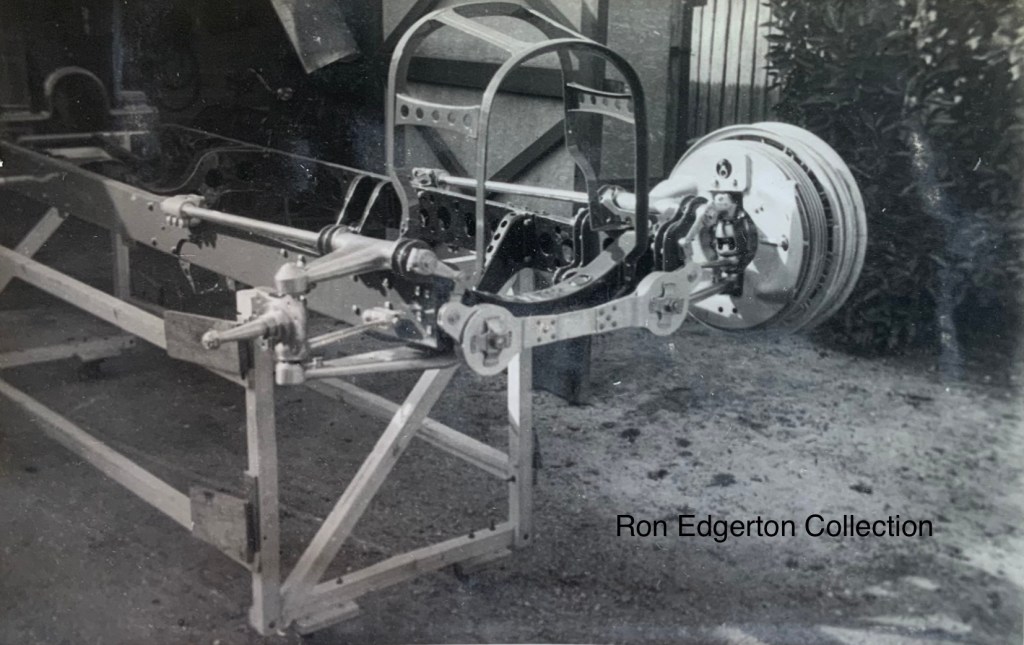
Another bit of intrigue in all of this is that within Racing-Ron Edgerton’s photo collection are some naked shots of a Maserati chassis which looks suspiciously like that of a 6CM…it is 1546 actually.
Ron’s minimal captions include: ‘Maseratti’ (wrong), ‘1 1/2-litre chassis’ (correct) and ‘4CL Maserati (Brooks) Adelaide 1939’. The latter tells us it is the Wakefield car – he got the 4CL bit wrong – albeit the current orthodoxy is that Bill Brooks bought the car from customs in 1943. My suspicion is that Racing Ron made his notes about the photographs decades after the events themselves, the same blue biro he used throughout aids my forensic conclusion. We know from photographs in the Bob Shepherd Maserati Scrapbook – now in historian, David Zeunert’s care – that the car was not taken apart as shown in the chassis shots in 1939. More about Bob Shepherd here; https://primotipo.com/2021/12/03/werrangourt-archive-13-bob-shepherd-artist-extraordinaire/
Edgerton was a businessman who raced on the circuits and speedways throughout Australia; he got around when not many folks did. It’s highly likely he considered purchase of the car and travelled to Adelaide to do so, his high end automotive road and racing car CV is pretty much unmatched in Australia. More about Racing Ron here; https://primotipo.com/2021/03/17/racing-ron-edgerton/
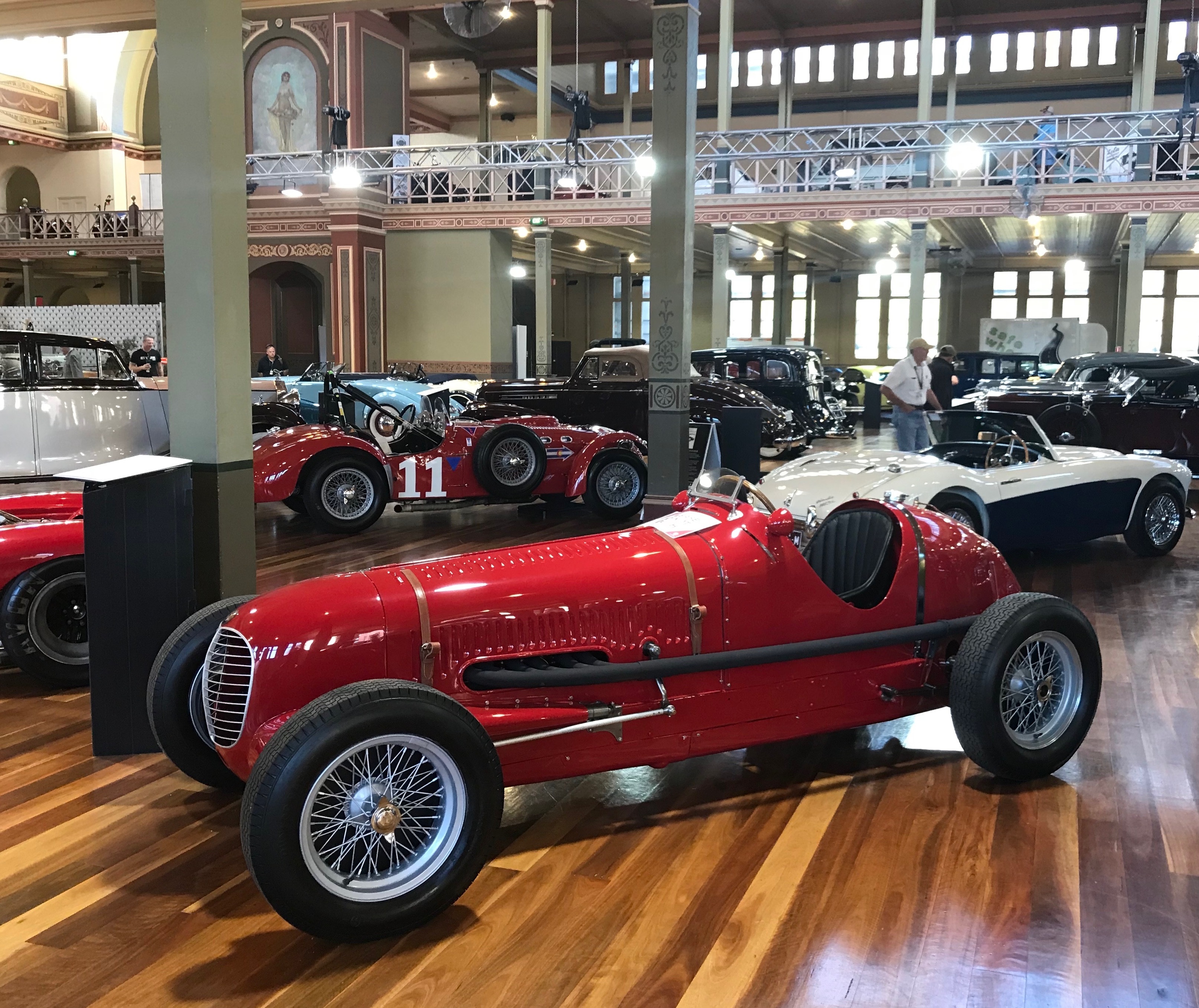
If you read the first link above you will have seen photos of the car in its restored but unused state as below.
#1546, MotorClassica Melbourne 2018 (M Bisset)6CM #1546 probably during the Brooks period of ownership, an Adelaide front yard (Bob Shepherd)
Etcetera…
(BRDC Speed Magazine)
Johnnie Wakefield in his Alta, #56S 1.5-litre s/c at Brooklands. Some lengthy research by Stephen Dalton identifies the meeting as the BARC Brooklands Campbell Circuit Meeting on July 10, 1937. The race is the First Short Handicap and the following car is Kay Petre, Austin s/v.
(MotorSport)
Wakefied at Brooklands during the Junior Car Club 200 Mile Race on August 27, 1938. He had a very successful weekend, winning his first major race in ERA R14B, the last B-Type constructed. Bira was second in his Maserati 8CM 34 seconds adrift, and Earl Howe third in an ERA C-type.
(MotorSport)(unattributed)
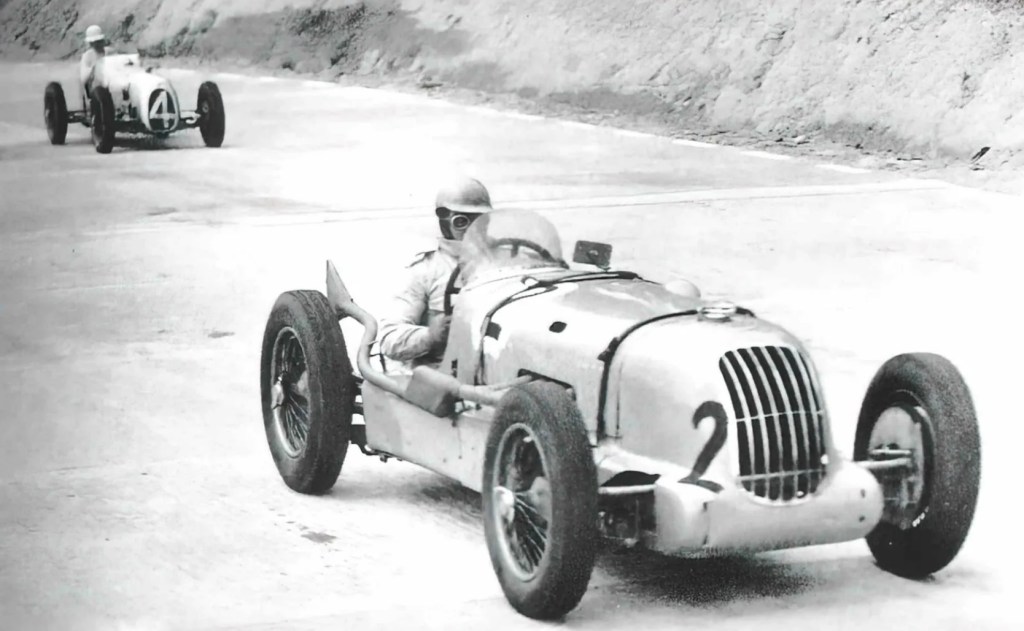
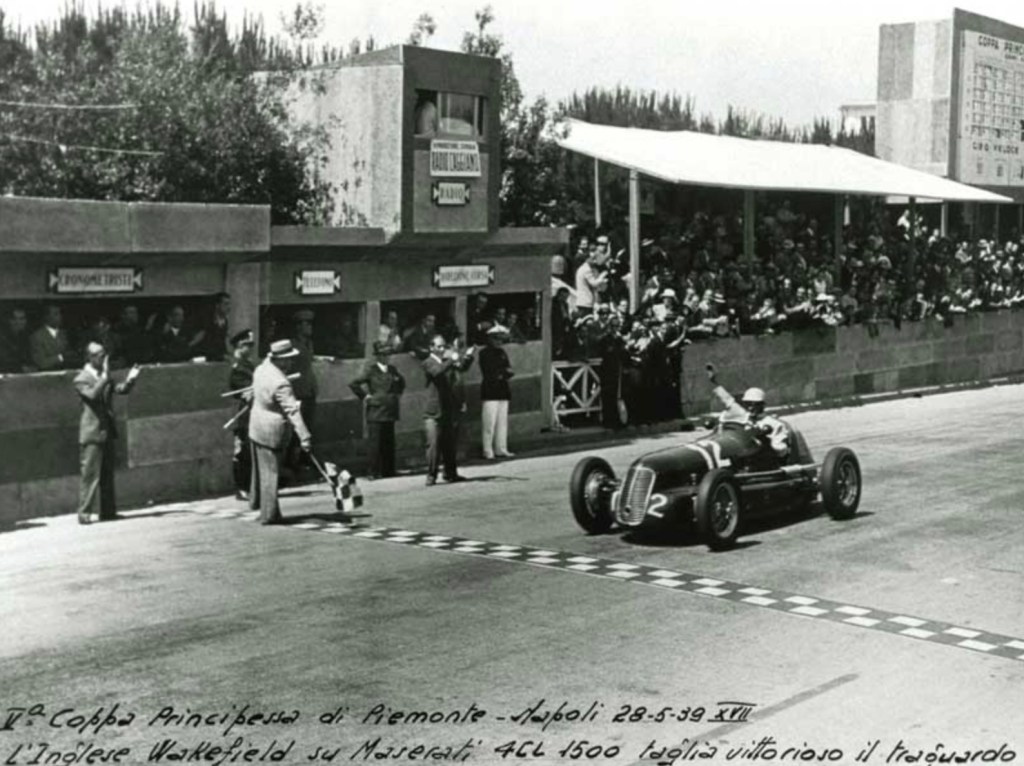
Wakefield surprised the Italians on their home ground by winning the 246km Coppa Principessa di Piemonte at Posillipo, Naples on 28 May, 1939 aboard his Maserati 4CL. In an all Maserati field of 14 cars, Johnnie took a very good win, and fastest lap, from Piero Taruffi aboard a Scuderia Ambrosiana 6CM, and works-4CLs driven by Franco Cortese and Gigi Villoresi.
Wakefield was plenty quick in the final races he contested in 1939. A fortnight after Piemonte he won both races of the GP de Picardie, then led the Sporting Commission Cup, French GP support race at Reims on July 9 until his brakes faded, finishing second behind Armand Hug, Maserati 4CM. Off to Albi on July 16 he was victorious in front of Reggie Tongue, Maserati 4CL and Bira, ERA B-Type – then won again in the second race. At Berne Johnnie was third in the Voiturette heat and third in the Voiturette class of the Swiss Grand Prix with Giuseppe Farina and Clemente Biondetti’s Alfa 158s the class of the 1.5-litre field.
Wakefield really looked the goods as the dark years approached.
MotorSport in their September 1940 issue quote a power output of 200bhp @7000rpm for the “short stroke, square” 16-valve four-cylinder 4CL, the Alfa Romeo 158 straight-eight at 195-210bhp @ 7000rpm, the ERA E-Type 220-250bhp @ 8000rpm, and Mercedes Benz W165 V8 250bhp @ 10000rpm; all engines were supercharged.
(D Zeunert Collection)
More #1546…
Bill Brooks with #1546 as bought from Australian Customs circa 1943. It looks shite, is it as crashed at Cork, less engine? Or was the machine subject to some repair prior to being given to Tilbrook?
(D Zeunert Collection)
This series are as purchased by Tom Roberts prior to the restoration work of David Rapley.
Credits…
Cameron McLaren’s Rumblings, ‘Maserati : A Racing History’ Anthony Pritchard, Society of Automotive Historians in Britain, Bob Shepherd Collection via David Zeunert, David Zeunert Collection, BRDC Speed Magazine August 1937 via the Stephen Dalton Collection
Tailpiece…
I love scrap-books, Cam McLaren’s is far more posh than mine too. He lists his address at the time – wartime I guess – as ‘Sub/Lieut C.S. McLaren, 456 Glen Eira Road, Caulfield’ in Melbourne. More about McLaren here, can anybody tell us more? https://primotipo.com/2019/12/20/tooronga-park-light-car-racing/
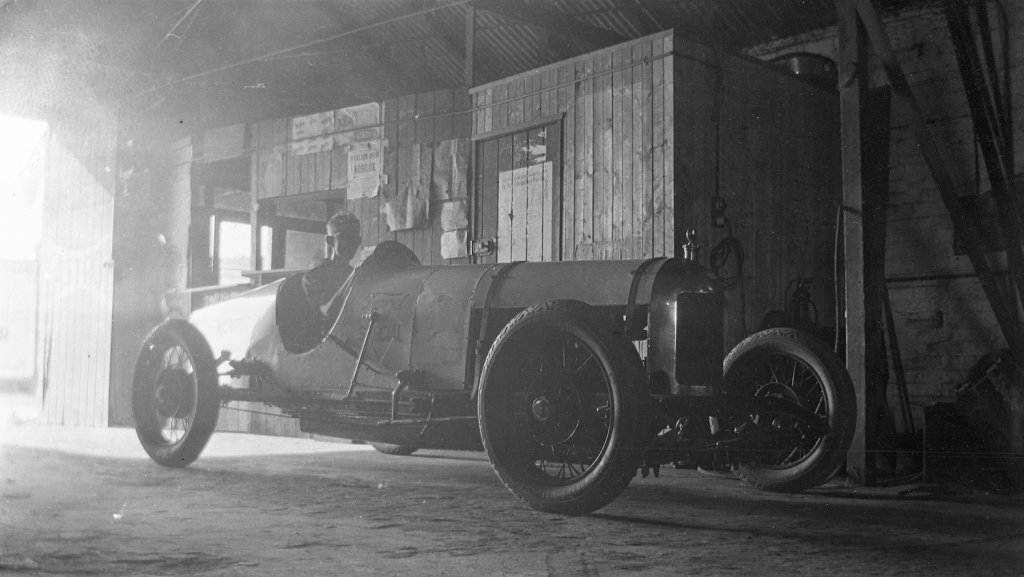
The lighting of this shot of Ted King’s Rajo Ford is poor but it also makes the shot, so very evocative!
Historian Nathan Tasca chased up a fellow who posted another photograph on Facebook and was rewarded with some other shots including these two,. At this point ‘Prof’ John Medley came to the rescue and identified the car, as he does…
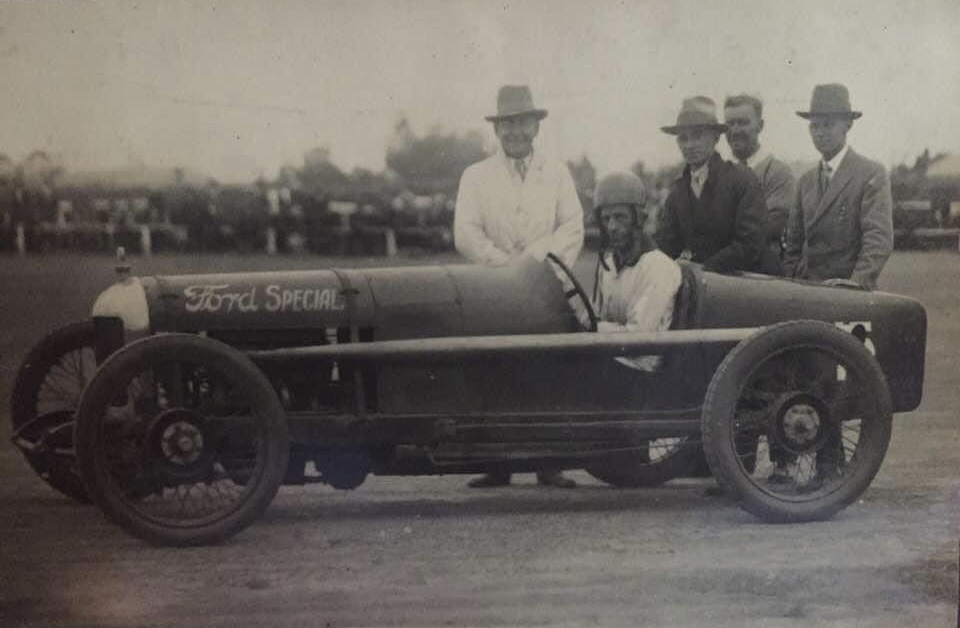
As luck would have it, my loan-copy of a ‘Half Century of Speed’ has the shot below of King “after winning a championship at Penrith in 1927.” What follows is a truncated version of the late-great Barry Lake’s narrative.
Ted King lived in Newcastle (NSW) and raced mainly on dirt tracks in that area. King used to ship his car by steamer to Sydney and back to attend meetings. In the mid-late 1930s groups of speedcar drivers would do the reverse of this trip; travel overnight on Friday, race in Newcastle on Saturday, then return overnight on Saturday to be home in Sydney on Sunday.
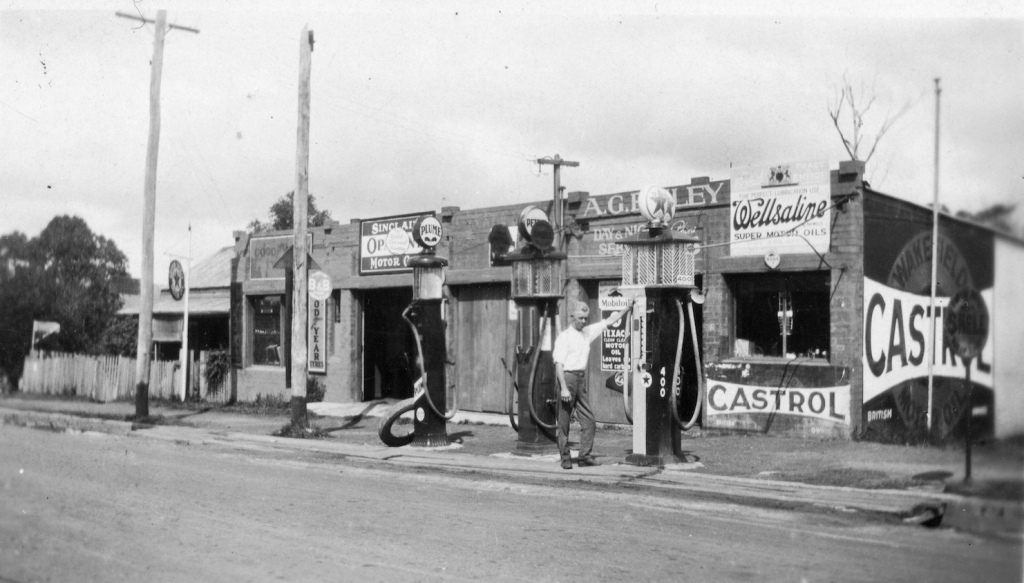
Is this Ted King at his Newcastle area servo? Ring a bell folks (Ro Ander Family)
In the first half of the twentieth century road travel between cities was long and arduous. Roads were narrow, rough, winding and dusty, with many ferry crossings. Coastal steamers were cost effective alternatives right up until the early post-war years; Sydney to Adelaide an example.
Frontenac ‘Fronty’ and Rajo manufactured overhead valve conversions for T-Model Ford engines. They both used crossflow heads, but Frontenac Fords had the inlet ports on the left and exhaust ports on the right hand side of the car. All Rajo-Fords had the inlet on the right and exhaust on the left.
The Morris bull-nose radiator was a common fitment to locally assembled T-based racers which used Fronty or Rajo parts as they looked like the US built cars of the time at less cost.
Many Fronty and Rajo Fords were raced in Australia but few were fully imported complete cars. Heads, engine parts and other hot bits were brought in then built up with locally sourced T-Model parts to build copies of the US built cars. There are still about 35 on register in Australia.
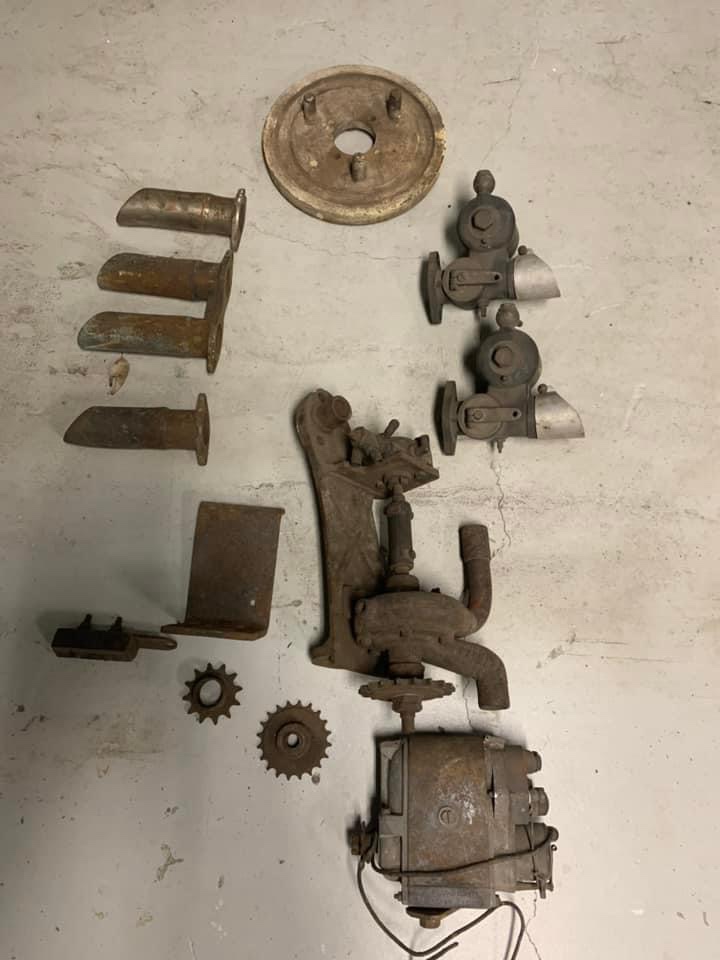
After posting this piece the following material arrived from David Smallacombe, photo of King at Penrith, and from Andrew Webb, who has the remaining bones of the King machine; the front wheels, Rajo head, Solex carburettors, chain drive magneto and water pump, and log book.
Ted King, Rajo Ford, Penrith, date unknown (D Smallacombe)Ted King Rajo BB engine (A Webb)(A Webb)(A Webb)(P White Collection)
Ted King in his Rajo Ford at Maroubra, date unknown.
Credits…
Nathan Tasca, John Medley, Ro Ander Family, ‘Half a Century of Speed’ Barry Lake, Tony and Pedr Davis, David Smallacombe, Andrew Webb, Peter White Collection via Colin Wade
The car is Brabham BT30 chassis # 17 owned by ex-racer/businessman/team owner John ‘Noddy’ Coombs, the machine was shared by Jack and Jackie Stewart that season
Brabham didn’t finish at Pau fuel metering unit problems intervened. Jochen Rindt won in a works/Jochen Rindt Racing Lotus 69 Ford FVA from four BT30s: the machines of Henri Pescarolo, Tim Schenken, Derek Bell and Francois Mazet.
(MotorSport)
“Yeah, its not a bad little jigger, we’ve won a few races with BT30s in the last twelve months I suppose. It’s a lot tighter than I remember when I tested it for Ron last year mind you…”
Jack gets out of BT30/17 over the June 28, XVIII Grand Prix de Rouen-les-Essarts weekend where he was eighth in the race won by Jo Siffert’s BMW 270.
BT30/17’s best results that season was Jackie’s second place at Thruxton and victory at Crystal Palace, while Jack was second at Tulln-Langenlebarn. Coombs shipped the car to Japan in May, where JYS won the Formula Libre Japanese Grand Prix at Fuji with Ford Cosworth FVC power.
Stewart bagged the Quadrella in the London Trophy at Crystal Palace in May. He won his heat, the final from pole, bagging fastest lap along the way (MotorSport)(MotorSport)
The Brothers Brambilla compound during the Hockenheim 11, 1970 weekend. The car in shot is Tino’s #7 Brabham BT30/21 (DNF) during the 1970 Preis von Baden – Wurttemberg und Hessen Euro F2 Championship round. Dieter Quester had a home-win for BMW, he prevailed in an M11 powered BMW 270. The exhaust of Vittorio’s car, BT30/22, is at right.
The essential elements of customer F2 Brabhams of the era are on display; a spaceframe chassis, Ford Cosworth 1.6-litre FVA 210bhp engine and Hewland FT200 five-speed transaxle. It was then up to the driver to make these immensely robust, chuckable, fast, Ron Tauranac designed cars do the rest.
Jack toyed with wings on and off at Rouen, racing without the appendages. Here he is showing the way to customers, Derek Bell (seventh) and Peter Westbury (tenth).
(MotorSport)
Another lovely Pau GP shot, where Tim Schenken was third in the Sports Motors International Brabham BT30.
That year the European F2 Championship was won by Clay Regazzoni’s Tecno 69 and 70 FVAs with 44 points, from Derek Bell’s BT30 (he also bagged one point in a BMW 270) 35 points, and Emerson Fittipaldi’s Lotus 69 FVA on 25.
‘Graded drivers’ – in essence and summary, drivers who had scored points twice in the Top Six of a Grand Prix in the previous two years, and the World, F2, Indy, and Can Am Champs of the previous year – were ineligible for Euro F2 championship points.
In 1970 Rindt won at Thruxton, Stewart at Crystal Palace and Ickx at Tulln-Langenlebarn. Of the non-graded drivers, Regga won at Hockenheim, Enna-Pergusa and Imola – and won his first Grand Prix for Ferrari that September at Monza -, for Derek Bell at Montjuich Park, Barcelona, and Dieter Quester in the final Hockenheim round.
Ryan Briscoe is one of those Australian internationals I tend to forget about as he raced so little in Australia. His formative Karting years were here and then – Oscar Piastri like – most of his secondary education was in Europe from the age of 15 as he and his family successfully chased The Dream.
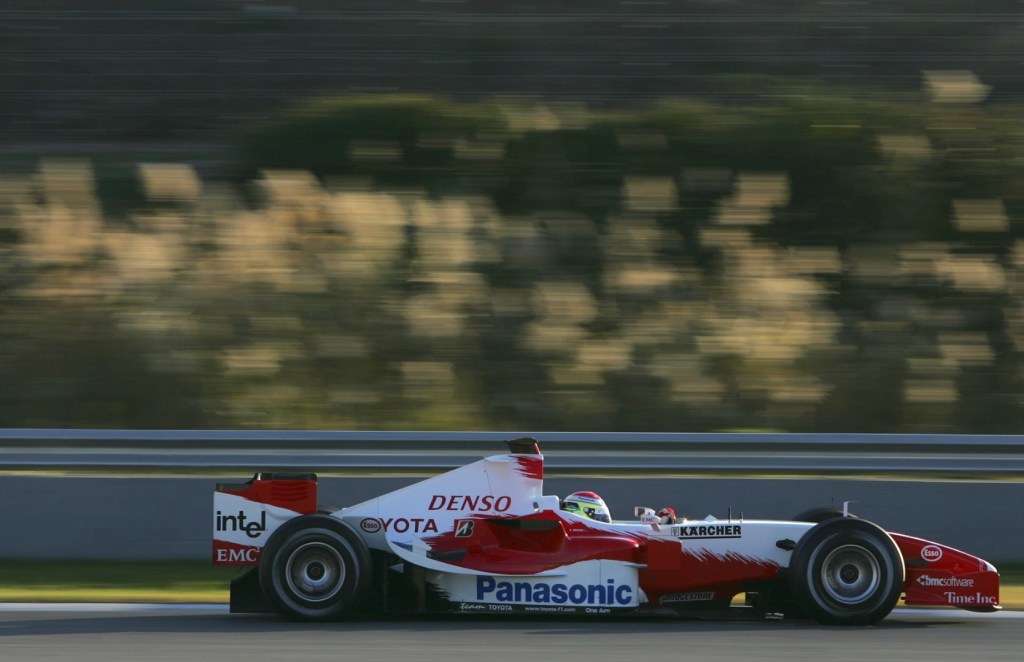
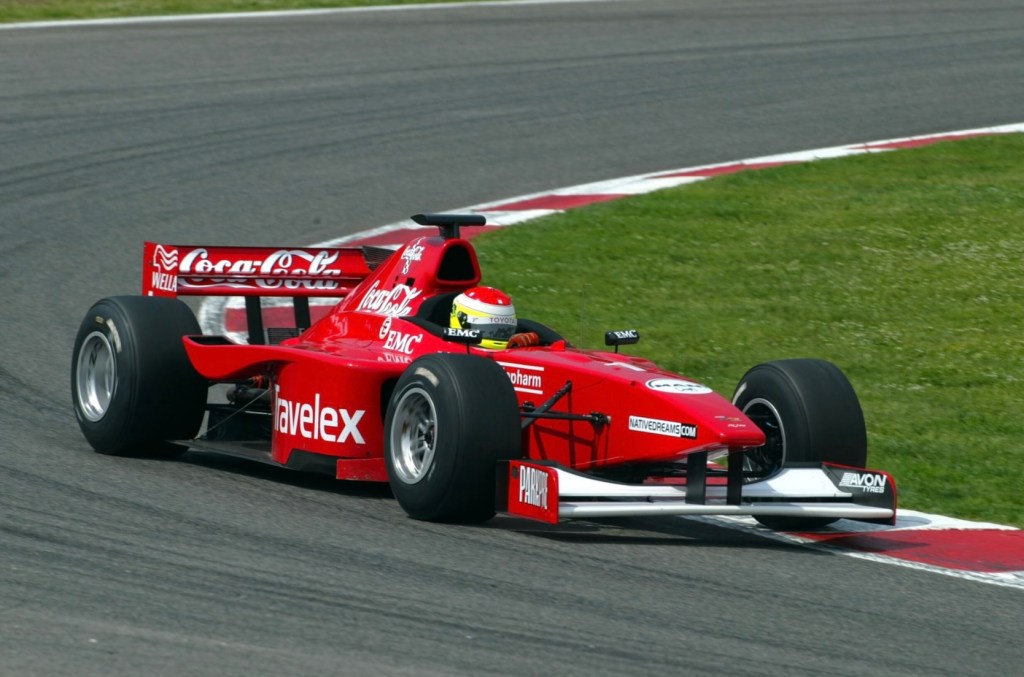
Briscoe, born in Sydney on 24/9/1981, is shown above testing the Toyota TF106 Grand Prix car at Jerez in December 2005. He was in on the ground floor of Toyota’s F1 program – from 2002-2004 – but never quite cracked it for a race seat so he was switched to Indycars in 2005, initially racing a Toyota powered Panoz for Chip Ganassi.
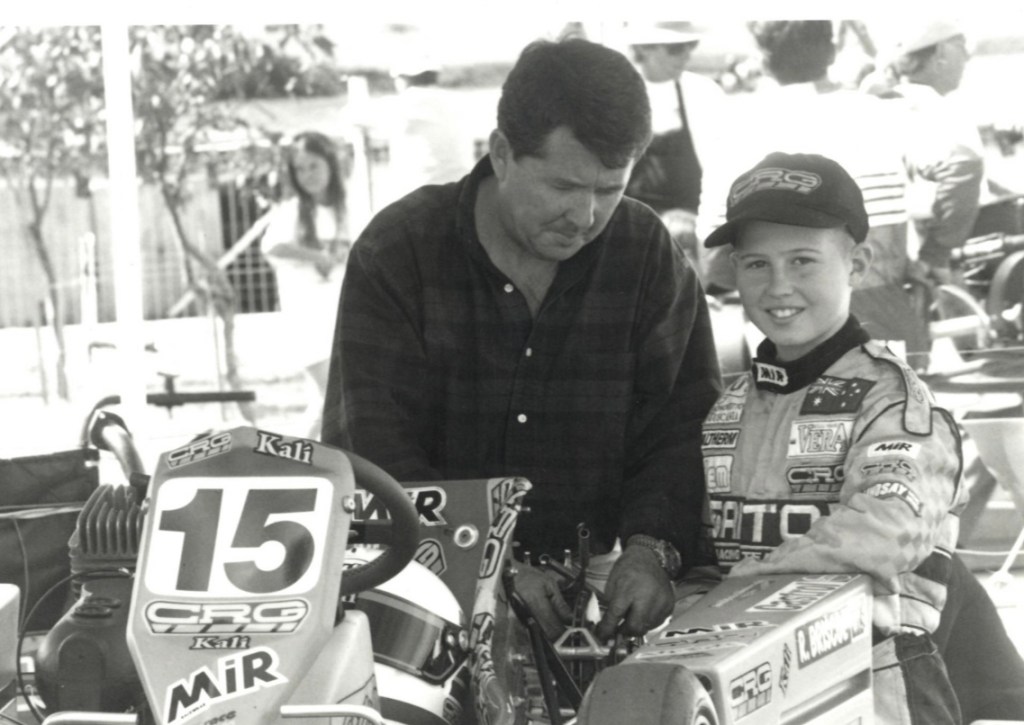
With Dad, Geoff circa 1992 (R Briscoe Collection)Spa 2004 (MotorSport)
During the climb, he won Australian , American and Italian Karting titles in 1994, 1998 and 1999 respectively.He switched to cars, Formula Renault in 2000, winning the Italian F Renault Championship in 2001.
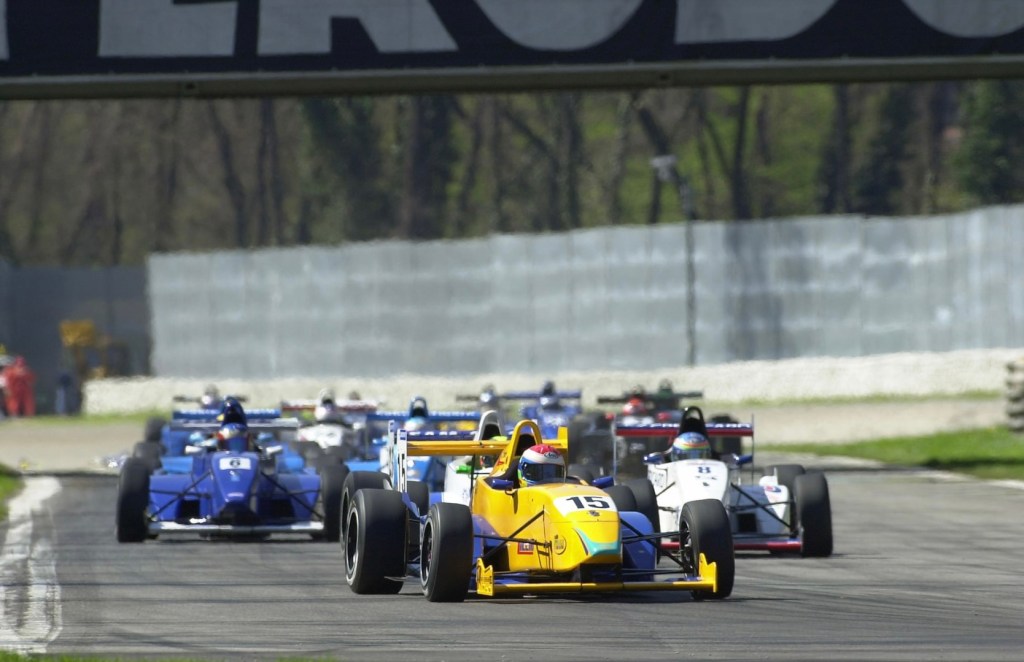
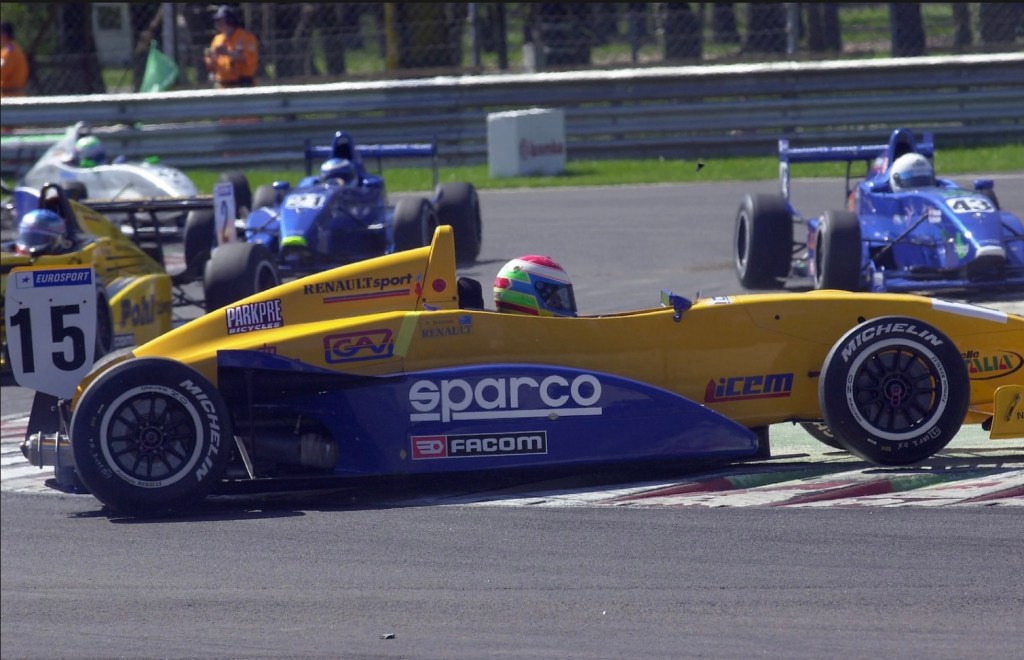
Ahead of the F Renault pack at Monza on April Fools Day 2001 from pole, but DNF as below! Tatuus Renault 2-litre (LAT)(LAT)
During this most meteoric of rises Ryan also did some F3 in 2001, the shot below is at Zandvoort during the Marlboro Masters event on August 5, 2001. Car is Team Prema Dallara F300 Opel, DNF in the race won by Taka Sato, but third overall.
(LAT)(MotorSport)
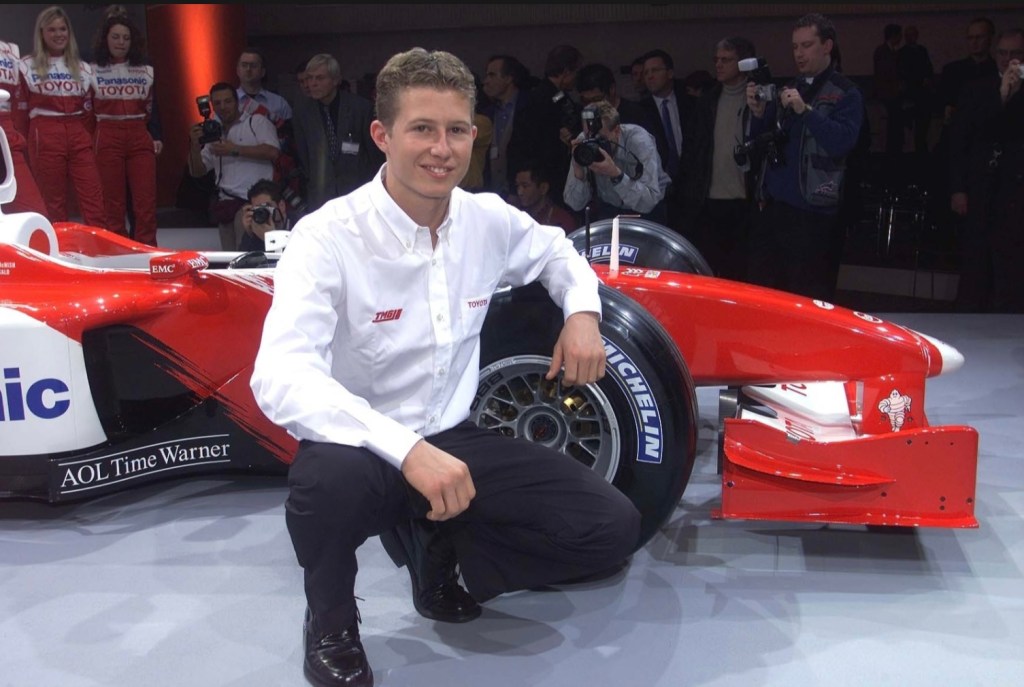
By the end of that year, aged 20, he was front and centre of Toyota’s F1 program as their test driver. Here he is at the launch of the Gustav Brunner designed Panasonic Toyota Racing TF102 V10 in Cologne, where the team was based, on December 17, 2001. The race drivers in 2002 – at the start of a rather grim eight year F1 sojourn for Toyota – were Mika Salo and Allan McNish.
Amongst his testing duties he raced initially in F3000, not going very well in the Nordic run car, and F3 later in 2002, and in 2003, winning the Euroseries that year. He progressed to being Toyota’s third driver, testing on the Friday of each grand prix, in 2004.
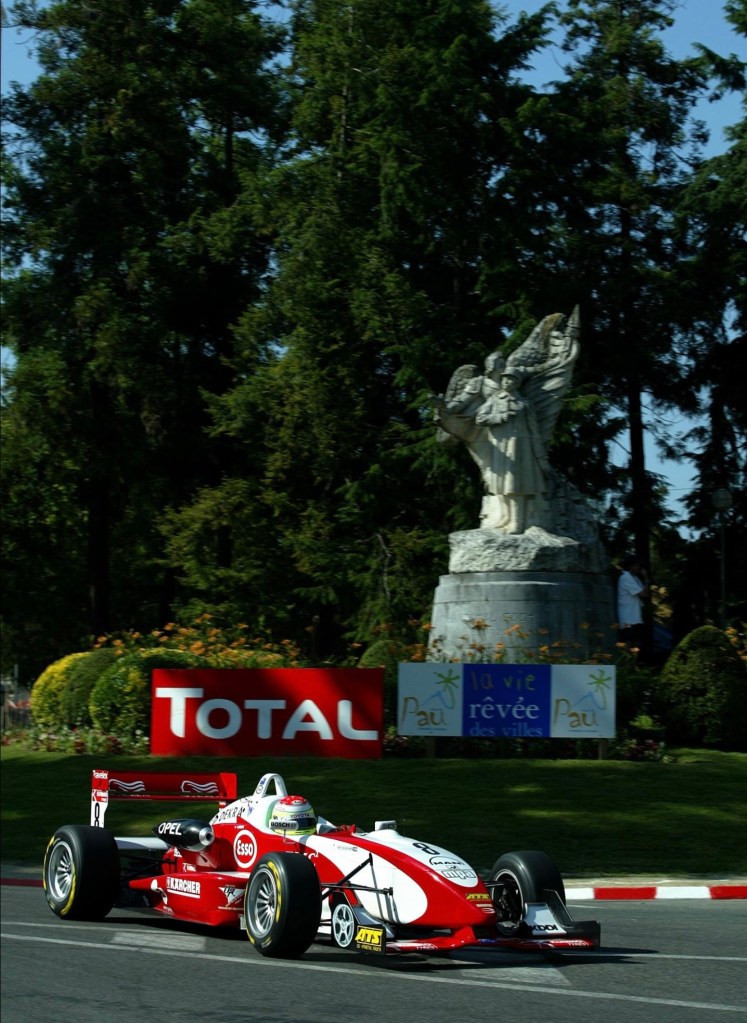
Lola TB02/50 Zytec-Judd KV circa 450bhp V8, Formula 3000 Barcelona April 2002 (MotorSport)During the Pau GP weekend in June 2003, Dallara F303 Opel. Briscoe won a race, and Fabio Carbone the other (Glenn Dunbar/LAT)
Briscoe won eight of the 20 races in the F3 Euroseries in his Prema Powerteam Dallara F303 Opel to take the title from Christian Klien. Other hotshots in the field that year included Niko Rosberg and Robert Kubica.
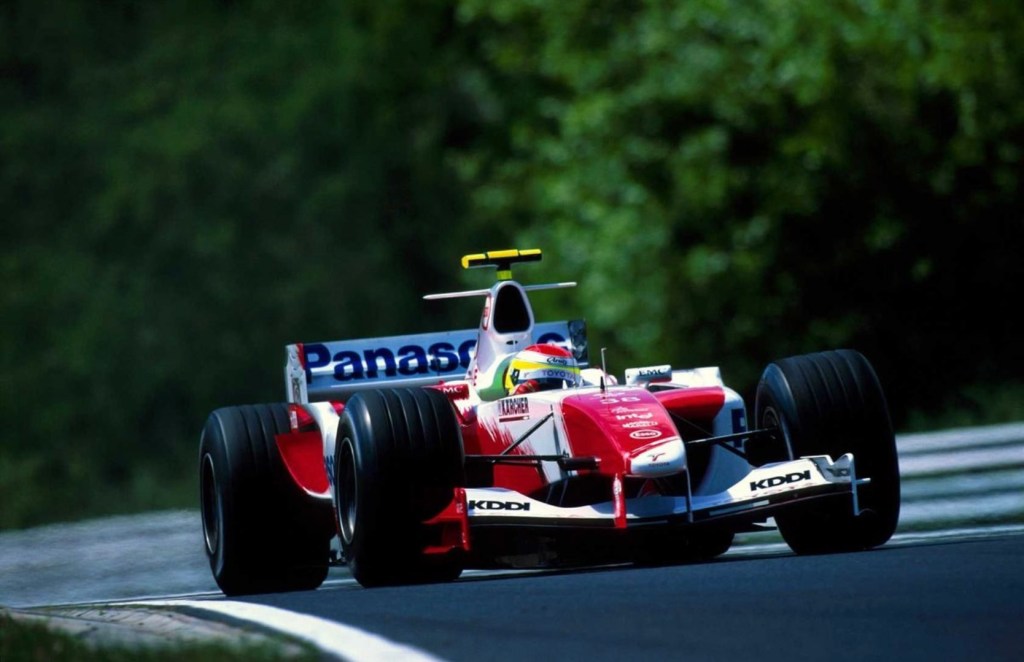
Briscoe, during practice, Toyota TF104 3-litre V10, Hungary 2004 (unattributed)
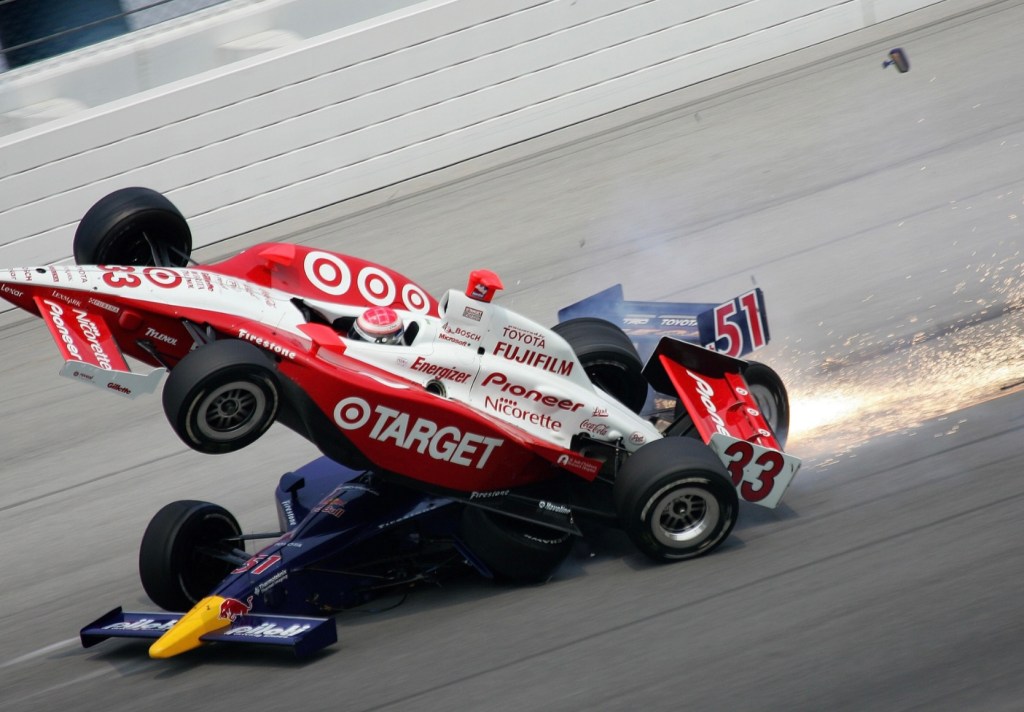
Ryan moved to Indycars (I’m using that word as a generic descriptor of the genre) with Chip Ganassi in 2005, showing extraordinary pace for a rookie; two poles and regular top-half qualifying on unfamiliar ovals. Tenth at Indy on debut was stunning, equally so was seven crashes in his 15 starts, the last of which was a massive accident after his Panoz GF09C Toyota climbed atop Alex Barron’s Dallara at Chicagoland Speedway in September that landed him in hospital and rehabilitation for four months.
Zandvoort A1 GP Cup October 2006 – the first meeting of the 2006-7 season – third in the main race won by Nico Hulkenberg. Lola A1GP Zytec 3.4 V6 circa 520bhp (MotorSport)
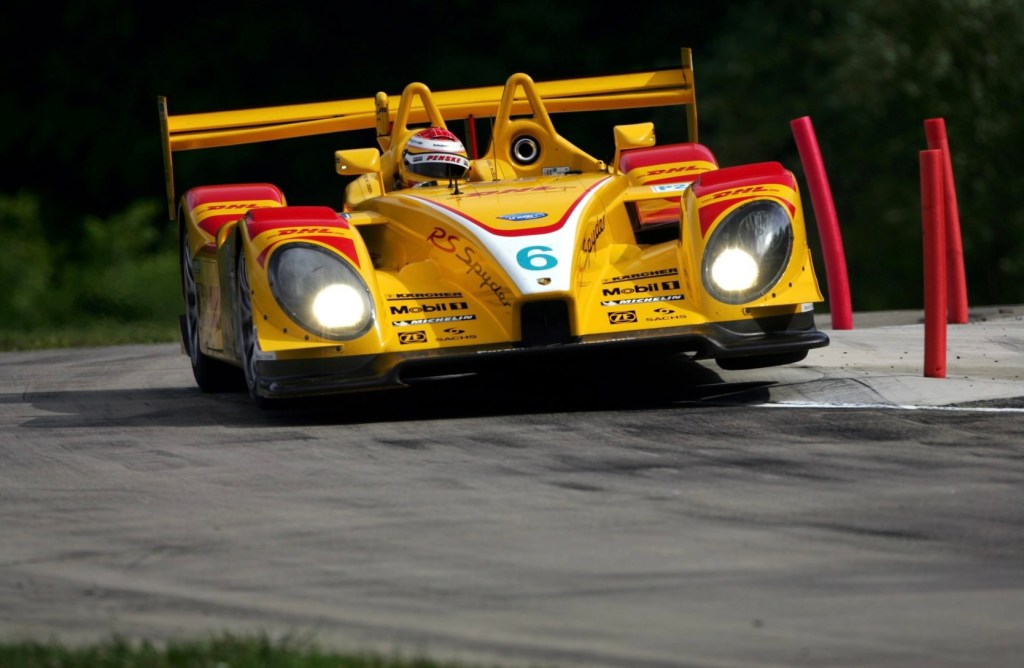
In 2006 he did a mixed programme of Indycar, V8 Supercars and A1 Grand Prix, but it was a full season in the American Le Mans Series for Penske Racing driving a Porsche RS Spyder in 2007 that pushed his career forward with Penske. He won three rounds sharing with Sascha Maassen.
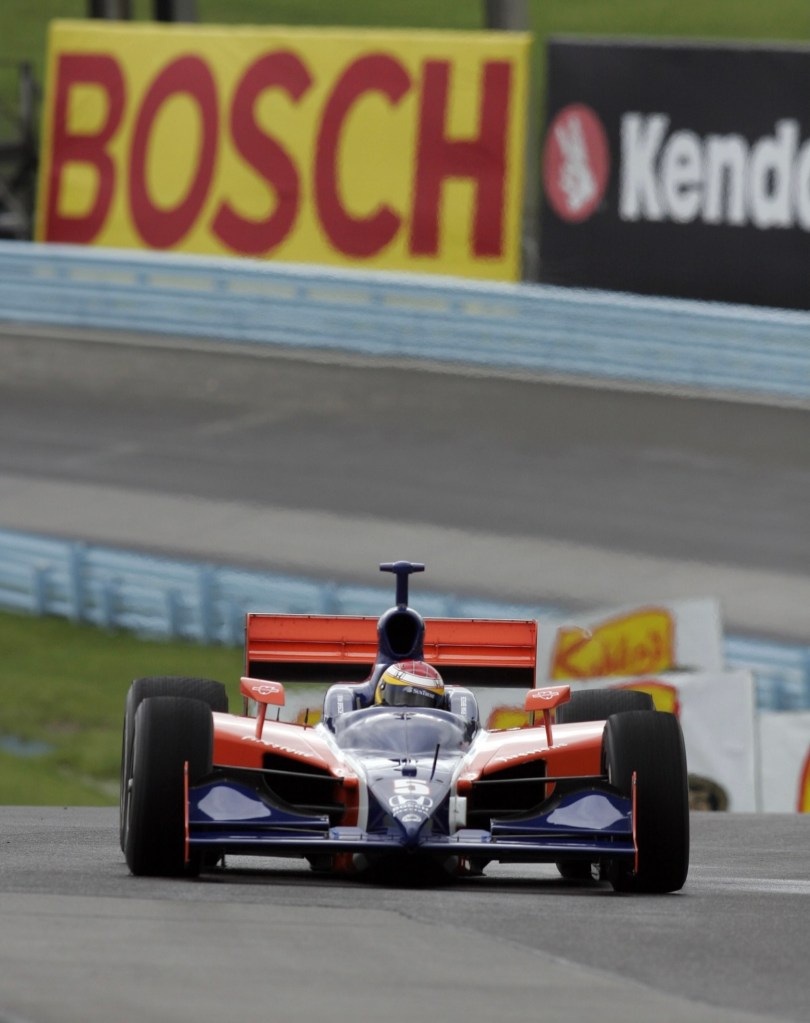
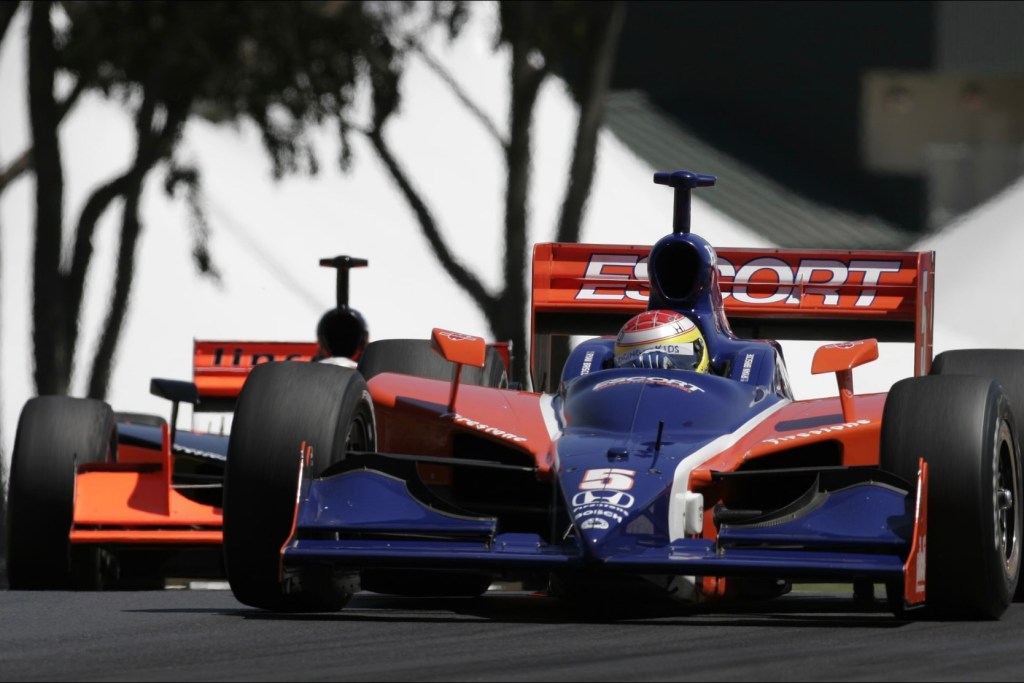
Ryan at Watkins Glen in June 2006. I rather like the shot of the Dallara IR03 Chev aero elements doing their thing (Dan Streck/LAT)Briscoe in front of Vitor Meira at Sonoma Raceway, California in August 2006. Racing for Dreyer & Reinhold Racing in a Dallara IR03 Chev V8. 16th in the Indy GP of Sonoma won by Marco Andretti (Dan Streck/LAT)Briscoe, American Le Mans Series, Northeast Grand Prix, Lime Rock July 2007, Penske Porsche RS Spyder. Ryan won the LMP2 class, and was third outright, sharing the car with Sascha Maasen (Sutton Images)
This sportscar success, together with some strong performance in limited Indycar outings – Q5 and fifth in the Indy 500 for Luczo-Dragon Racing, led to a full-time Indycar drive with Penske from 2008-2012.
In a strong Indycar career he won eight races, had 28 podiums and finished third in the title in 2009 (three wins), and fifth in 2008 and 2010 as his bests. In 2009 he led the championship going into the penultimate round but hit the wall exiting the pitlane at Motegi, then, in a three-way battle for the title finished second behind Dario Franchitti in the final round, who became champion.
(MotorSport)
Aviating at Surfers Paradise on the way to winning the Indy 300 in October 2008, Team Penske Dallara IR-04/05 Honda 3.5 V8. Scott Dixon was second, 5/10ths behind and Ryan Hunter-Reay a further nine seconds adrift.
And below doing the same thing at the same place in a V8 Supercar in October 2011, sharing the Holden Racing Team Holden Commodore VE in the Gold Coast 600 with Garth Tander. The pair were 11th in the first race, 23rd and last in the second. The winner overall was the Triple Eight VE Commodore crewed by Jamie Whincup and Sebastien Bourdais. Ryan’s best V8 Supercar result was at this event in 2013 when he shared a VF Commodore with Russell Ingall to third place.
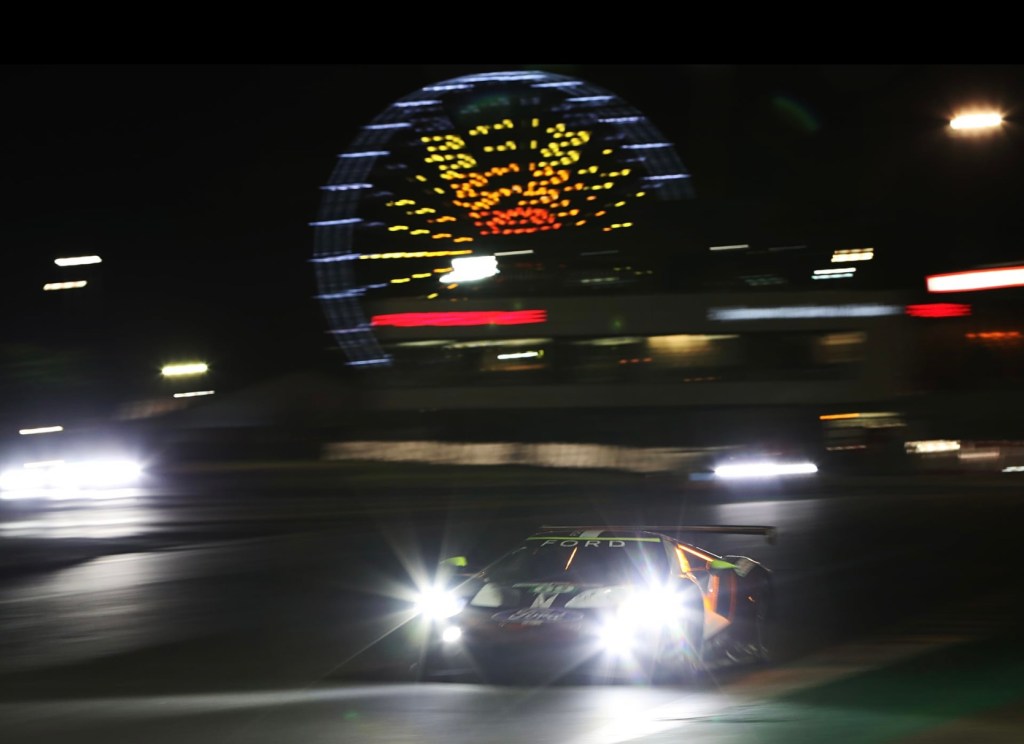
(Mark Horsborough/LAT)The Briscoe, Richard Westbrook, Scott Dixon, Chip Ganassi Ford GT at Le Mans in 2018. Q37 and 39th outright in the 3.5-litre turbo-V6 powered car – and shot below (MotorSport)(MotorSport)
“Ryan has driven more sportscars that I’ve had Sunday roasts,” would perhaps be the observation Australia’s greatest all-rounder, the late Frank Gardner would have made.
Briscoe’s best sportscar results are victory in the Daytona 24 Hours in 2020 (Cadillac Dpi-VR), and Petit Le Mans the same year.
He was runner-up in the 2016 (Ford GT), 2018 (Ford GT) and 2020 (Cadillac DPi-VR) IMSA Sportscar Championship GTLM class. He was third in the 2007 American Le Mans Series, winning the LMP2 class (Porsche RS Spyder),
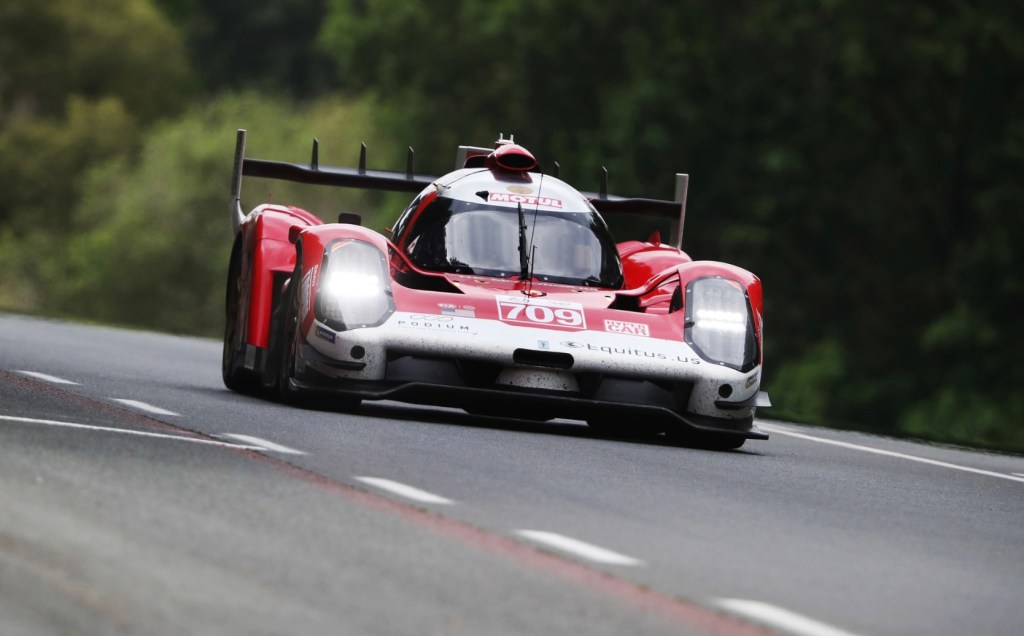
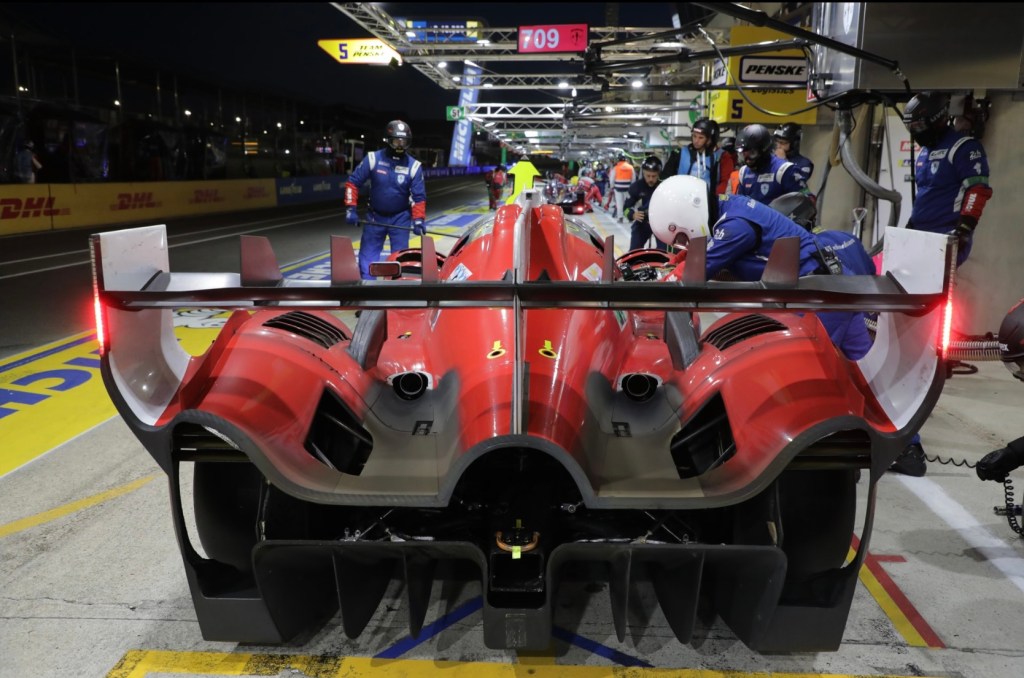
His best results at Le Mans were fifth in 2021 sharing a Glickenhaus 007 LMH with Romain Dumas and Richard Westbrook, and third in 2022 in the same make/model, this time sharing with Westbrook and Franck Mailleux.
At Daytona he won outright in 2020 (as above) and was first in class in 2015 and 2018 racing a Cadillac DPi VR, Chev Corvette C7.R, and Ford GT respectively – with co-drivers of course. At Sebring he won his class in 2013 and 2015 aboard a HPD ARX-O3b and Chev Corvette C7.R.
Briscoe/Richard Westbrook/Franck Mailleux Glickenhaus SCG007 LMH, fifth. Le Mans 2021 (MotorSport)Richard Westbrook, Franck Mailed, Ryan Briscoe and James Glickenhaus, Le Mans 2021 (MotorSport)Power by Pipo Moteurs 3.5-litre twin-turbo 500Kw V8, Xtrac 7-speed sequential manual (MotorSport)
Ryan married Nicole Manske in 2009, they have two children, and in 2018 he became a naturalised American.
Etcetera…
(MotorSport)
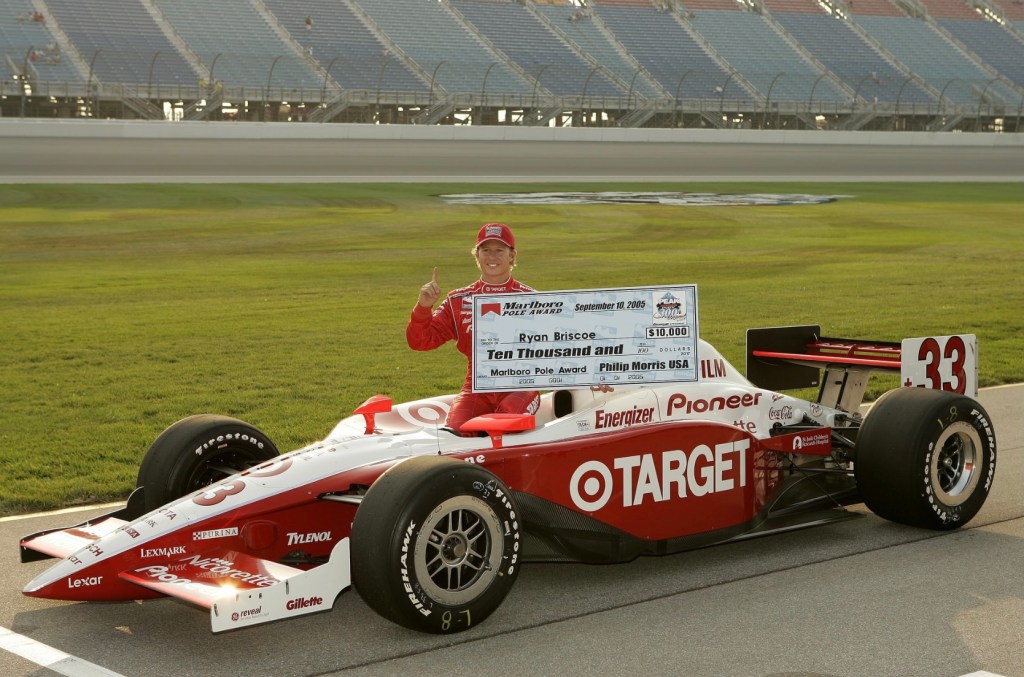
Here to zero at the Chicagoland Speedway, Joliet, Illinois on the Indy 300 September 10-11 weekend in 2005.
Here with the Gregory-Peck for pole, a handy $10k. It was Ryan’s second Indycar pole, he started from pole at Sonoma, the previous round but crashed out on the first lap. The car is a Chip Ganassi run Panoz GF09C Toyota.
Shortly after this happy scene the car failed post-practice scrutineering, so Ryan lined up last on the grid, perhaps sowing the seeds of the crash which followed.
(MotorSport)
‘Roger that, we have lift-off Houston.’
On lap 20 Briscoe’s Panoz GF09C Toyota ran into 15th placed Alex Barron’s Dallara Toyota (Q18) as he sought to go under him on his way up the field towards turn 3 of the 1.5-mile oval – look at the proximity of his right-rear to Barron’s head/roll bar area – and the staggering physics of a collision at 215mph were unleashed.
(MotorSport)
Briscoe hit the fence with the bottom of his Panoz first, it split in two as it ripped through a fence post, leaving a big hole. With a half-tank or so of fuel there was a spectacular explosion as the car split, with the cockpit safety cell spinning down the track narrowly avoiding other cars. Car 2 is Thomas Enge, #55 is Kosuke Matsuura.
(MotorSport)
After several anxious minutes Ryan was removed from the wreck – the monocoque had done its job well – and gave a reassuring wave as he was placed into the ambulance with injuries later diagnosed as two broken collarbones, a bruised lung, fractured right foot and contusions to his arms, legs and back.
Briscoe was hospitalised for nine days then had extensive rehab in the US and Italy before returning to the cockpit in a Riley Mk9 Pontiac 5-litre V8 in the Daytona 24-Hours on the January 28-29, 2006 weekend – four months after his Big One.
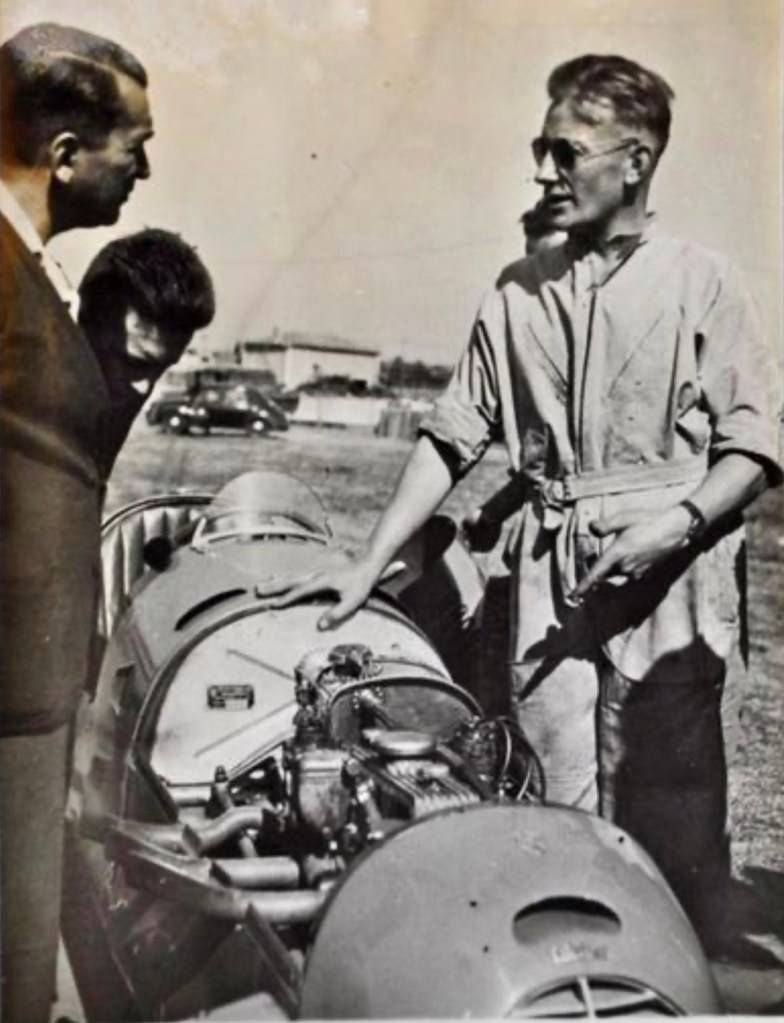
Reg Nutt aboard the Leech Brothers owned Cisitalia D46 Fiat at Rob Roy hillclimb in Melbourne’s glorious Christmas Hills on May 4, 1958. He ran second in his class that day behind multiple Australian Hillclimb Championship winner, Bruce Walton, Walton J.A.P with a time of 28.30 seconds.
Nutt was a riding mechanic in the first decade of Australian Grands Prix at Phillip Island in the 1920s and 1930s and then a racer of note in his own right, including AGPs. “Reg told me that he had raced 27 cars and never owned any of them,” recalled Bob King. What a lucky man.
Nutt in the Rob Roy paddock on November 5, 1947 when the car was owned by Fred Gibbs’ Sabina Motors (Davey-Milne Family Collection)Harry Firth in the D46 at Rob Roy in 1958. Later Oz 1960s and 1970s touring car star driver/engineer/team manager (L Sims Collection)
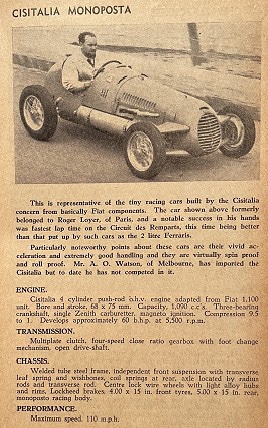
The car – chassis D461.1 according to John Blanden, and #0020 “the 20th of approximately 30 D46s built” according to a dealer in more recent times – was built in 1947 and sold to Frenchman, Roger Loyer (5/8/1907-24/3/1988) of the Ecurie de Paris. See here for a full-profile of Roger; https://gprejects.com/centrale/profiles/drivers/profile-roger-loyer
Loyer was a two time French national motorbike champion who switched from two wheels to four postwar aboard an old Delage D6. He then bought the Cisitalia – two D46s in fact, the other Ecurie de Paris car was driven by ‘the mysteriously self-styled Robert’ – which was prepared in his Ecurie de Paris garage located in the swish 17th Arondissement.
His D46 debut was at the Circuit des Remparts, Angouleme on June 15, 1947 and netted a heat victory, and third in the final sharing the car with Raymond Sommer. In the Coupe des Petites Cylindrees at Reims he was ninth, much better was third in the Coupe de Paris at the Bois de Boulogne in central Paris. Another strong fourth in a field of depth in the 330km GP du Comminges followed at St Gaudens in August, the three cars in front were Talbot Lagos. Late in the month Roger was third in a field of 12 Cisitalia D46s on the Circuit del Montenegro in Italy. A DNF late in the season at Lyon wasn’t representative of qualifying pace, fourth again at the Prix de Leman at Lausanne in October was followed by a season ending DNF with rear axle failure at the GP du Salon, Montlhery.
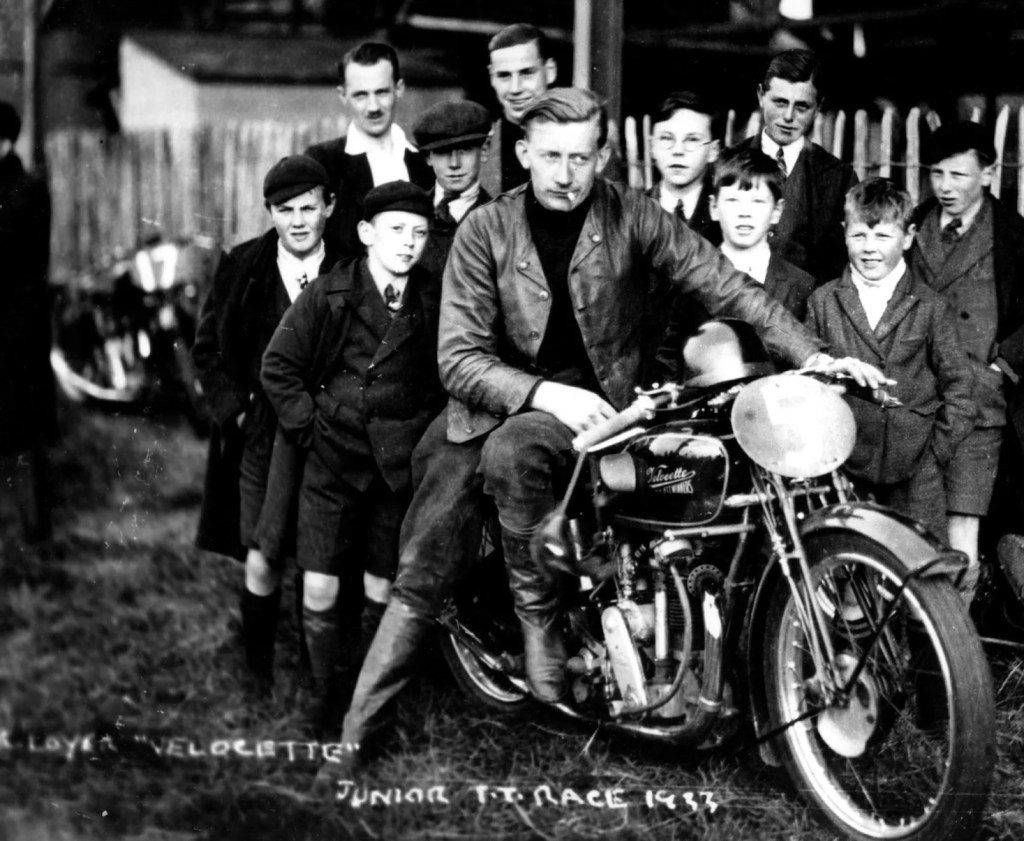
Roger Loyer and Velocette at the Isle of Man in 1933 (unattributed)GP des Remparts, Angouleme in 1949. Maurice Trintignant, Simca Gordini T11 in front won sharing with Jean Thepenier. Bruno Sterzi, Ferrari 166 #26, with Roger Loyer at right D46 Fiat DNF, and Harry Schell, D46 Fiat behind Trintignant (unattributed)Roger Loyer with his Cisitalia D46 Fiat at Lyon in September 1947 (Jannaud)
In a limited 1948 season – when the D46 was still very competitive in F2 events – Loyer raced at Pau in March, then Geneva in May for a DNF, then shared a car to third in the Circuit des Remparts with Robert in July. 1949 was worse in an even more limited campaign. DNQ at the Circuit du Lac in June and a crash at the Circuit des Remparts in July despite finishing second and setting fastest lap in the second heat. Robert and Roger shared a drive to sixth in the Circuit de Lac in a Simca, then contested the Grand Prix of the Nurburgring, where Roger was again a DNF.
Alan Watson was the buyer, but he didn’t use it much, notably giving it a run at Longford in March 1955. The car passed through several owners hands, albeit who were owners and who were drivers is lost a bit in the mists of time; the roll call includes Tony Osborne, John Doherty, Harry Firth, Syd Fisher, Ian Wells, Ray Gibbs and Ian Wells.
Lou Burke sold it to the Leech Brothers in 1964 and they used it for decades in Eastern Seaboard Australian historic events. The car was painted red circa 1980 when the pretty-Italian formed the bloke-magnet for the Lombard Insurance stand at motor shows. The car left Australia for the ‘States in 1987 and has pinged around the auction scene, some of the sales-prose Arthur Daley would be proud of.
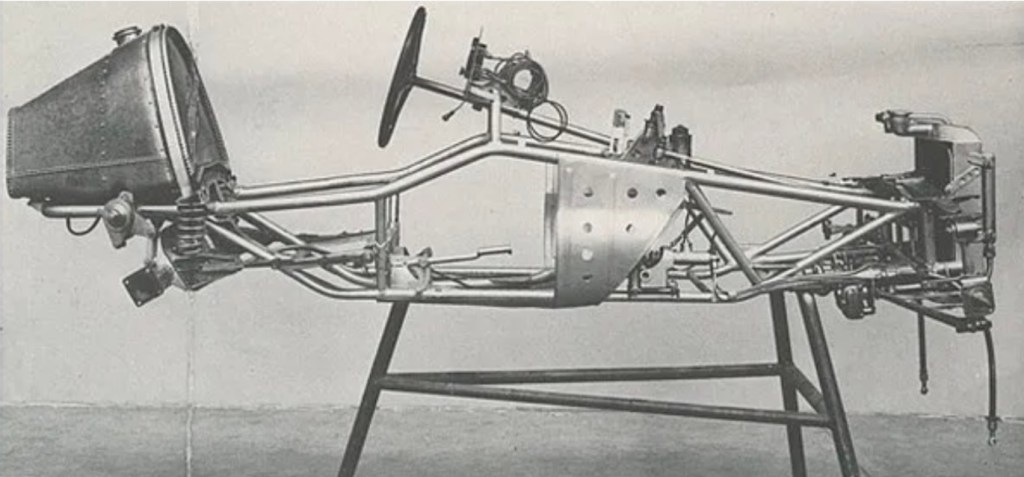
The lack of straight tube-runs would have offended Colin Chapman (but not Owen Maddock), however, the Cisitalia D46 spaceframe – here in definitive production form – was simple, light and stiff for its day. So elegant in its simplicity (unattributed)
Design and Production…
While the Piero Dusio founded (1943) and funded – Compagnia Industriale Sportiva Italia or Cisitalia – Dante Giacosa 1946 spaceframe design is rightly lauded as one of the world’s first, certainly of one built in volume, Australian historians point to the Chamberlain Brothers’ Chamberlain Indian/Eight of 1929 as a stunning much earlier expression of multi-tubular spaceframe brilliance. See here; https://primotipo.com/2015/07/24/chamberlain-8-by-john-medley-and-mark-bisset/
In 1944 Dusio, via an interlocutory contacted and contracted Giacosa (to the end of 1945), a Fiat engineer to design ‘the outline and technical hypothesis of a racing car using Foot 500 and 1100 components.’
Giacosa’s small team comprised draftsman Edoardo Grosso, and from August 1945, Giovanni Savonuzzi, Dante’s replacement. ‘The project number 201 in keeping with those used by Giacosa at Fiat. While the car was later called D46, this remained the basis of the subsequent numbering of Cisitalias: 202, 204, 303, 505, 808 etc.’
‘Giacosa’s project 201 (first version with low sides and straight tube-runs) had a tubular spaceframe, the first time (it wasn’t) this revolutionary construction system was used’ (Cisitalia)(D Giacosa)
Overcoat clad Giacosa susses one of his early D46s. He later remarked, “When I came to build the chassis it was in my mind to make it of tubing. That’ll appeal to Dusio, I thought, since he builds Beltrame bicycles in his workshop.” It’s also thought that the tubular cockpits of the Rosatelli designed aircraft Giacosa worked on during the war was also influential.
Whatever the case, the ‘framework chassis’ adopted was light and stiff and provided a platform to ‘which the mechanical parts could be easily mounted in a low position…using existing equipment and staff already specialised in this kind of procedure. The molybdenum chrome plated steel (remember how scarce high quality material was in this immediate post-war period) used came from leftover Aeritalia stock ‘used by Rosatelli in the construction of CR and BR aeroplanes during and after the war.’
‘An interesting system was chosen for the gear change using three semi-automatic gears. The rear axle with its upside-down differential was another novelty’ (Cisitalia)‘The design envisaged two ways of lowering the drive: using a crown wheel and pinion or turning the differential upside down and using driving gear. The second solution was adopted’ (Cisitalia)
To better exploit the chassis further lateral thinking was applied to other key components. The rear axle and diff was turned upside down, with a small aluminium crankcase developed for the Fiat engine allowing a bevel gear pair to take the drive from front to back passing under the differential towards the driveshaft turned from a steel billet -the gear pair offered a range of ratios to driver choice. This lowered the engine by 12cm.
Front suspension was lifted straight from the Fiat 500. ‘Hydraulic shock absorbers were fitted on the prolongation of the lower triangle’ (wishbone), but turned upside down compared to original Fiat fitment. An upper transverse leaf spring performed compliance and locational duties.
Equally brilliant was the Grosso drafted three-speed, semi-automatic mechanical gearbox ‘intended to save time for the drivers during races’, later in the D46’s life (1948) four-speed conventional Fiat ‘boxes were used.
Short tests of the prototype took place on a short circuit backing onto the railway at the rear of the factory in Corso Peschiera in February 1946: Adolfo Macchieraldo, Carlo Dusio, Giacosa and Savonuzzi all had a steer. More importantly the vastly experienced engineer/racer Piero Taruffi drove the disc-wheeled, sketchy bodied prototype a short while later, and was appointed the official test driver. Evolution of the then car progressed quickly.
Rear axle with short coil springs and lever action friction shocks. Frame member and diff also in shot (Cisitalia)A Giacosa sketch which shows the differences in the original solid rear suspension location medium and quarter elliptic setup adopted – as per text. Also shown is the clever diff/driveshaft arrangement (Cisitalia)
Initial problems included rear end judder rectified by replacing the two rigid lateral suspension arms with two quarter elliptic springs ‘five to the axle, rotating freely on two pinions integral with the chassis, offering only resistance to torsional stress like an anti-roll bar, leaving the real springing to two short coil springs. The axle was connected to the chassis via a hinged triangle mounted to the diff and a spring at the point of chassis attachment which allowed suspension adjustment.’
The chassis cracked in the central area so was strengthened, in part by enlarging the body side and inserting a welded shaped metal panel of greater size. Note the differences clear in side views of the frame of the prototype and production cars, it evolved from Colin Chapman straight tube-runs to Owen Maddock wonky-ones! and worked as well as Owen’s!
‘From the first model with a small tubular lattice-work frame, the D46 moved swiftly to the definitive version with a modified chassis and a sophisticated semi-automatic gearbox’ (Cisitalia)
By September 1946 seven D46 Fiat 508B/1100cc powered 62bhp @ 5500rpm, 370kg Voiturettes had been built. ‘The line of the car was fascinating and aggressive at first sight, offering pleasing solutions such as the double fairing on the front suspension which gave it something of the air of a biplane. The nose was perfect oval which incorporated a small upper air intake which fed the carburettor via a duct, brining a certain amount of overpressure when racing.’
The steering wheel could be tipped to allow easier access for the portly. The six-piece, beautiful, quick-fitting Itallumag body was made by Turin’s Rocco Motto, the riveted 45 litre duralumin fuel tank by De Gregori, another local.
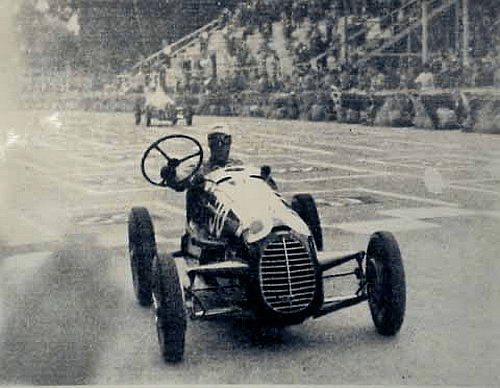
The initial batch of seven cars were raced in the Coppa Brezzi at Valentino Park, Turin on September 3. Piero Dusio won from Franco Cortese and Louis Chiron, poor Tazio Nuvolari had the steering wheel come away in his hands when it broke away from its hinge, below.
(Wikipedia)‘The definitive version of the little 1100cc D46 with fairings on the front wheels and the curious system of the tip-up steering wheel’ (Cisitalia)(Cisitalia)
‘Selection of first gear or reverse was carried out by means of a lever set on the side of the steering column, while to change from first to second or from second to third or back down again the clutch pedal had to fully depressed. To change from second or third to first or neutral, the clutch pedal had to be fully depressed again, but after having moved the hand lever to the desired position. To use the clutch without changing gear, the pedal had to be depressed about halfway, when a hardening was encountered beyond which the gear shift was operated.’ Yeah right, buggered if that makes sense to me despite driving a couple of cars with pre-selector ‘boxes recently…
(Cisitalia)
Towards the end of 1947 Rudolf Hruska and Carlo Abarth joined Cisitalia as Technical General Manager and Racing Manager respectively. The D46 was modified and shown at the October 1947 Milan Motor Show (above).
The nose was still oval but more horizontal, the fairings deleted, sides extended to house two lateral fuel tanks. ‘The overall line of the car was influenced by the design of its big sister, the supercharged 1500cc Grand Prix car taking shape on the firm’s drawing boards.’
In addition, the semi-automatic gearbox was dropped in favour of a standard Fiat 1100 4-speeder, the rear suspension modified by fitment of twin torque arms on each side, and telescopic hydraulic shock absorbers adopted all-round.
Etcetera…
(Sud Ouest)
Cisitalia D46s at the Circuit des Remparts, Angouleme in 1949. #2 is Loyer, #28 is Guy Michelot and future, fast GP driver Harry Schell is on the move in the family Ecurie Bleue #20 machine.
(unattributed)
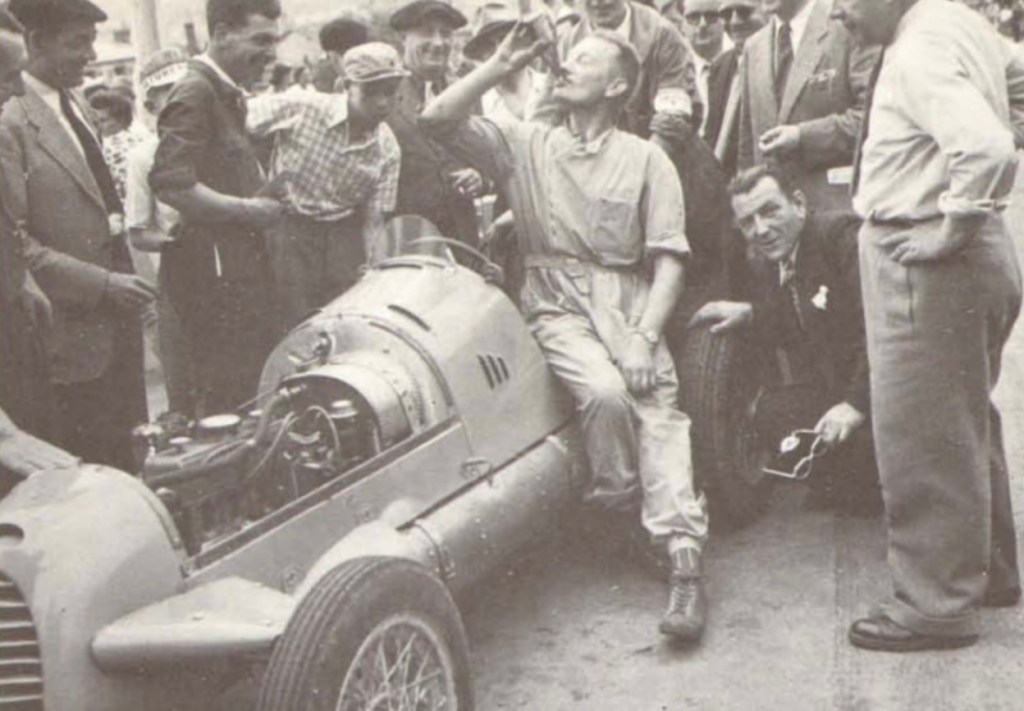
Roger Loyer having a gargle alongside ‘our’ D46, perhaps, Ecurie de Paris raced two, after a strong showing, place unknown. Fosters Lager stubby perhaps…
(M Wells Collection)
Who said tits don’t sell, it’s always worked with me? A couple of delightful lasses resplendent in much less than acceptable attire these days, during Melbourne’s March Moomba festival in the early 1960s.
(R Jackson)
Looking quite the beauty queen at Sandown in the 1970s above, and below in the old pits at the same venue in June 1963; so distinctive from every angle, form and function…
(A Tracey)(G Shepherd)
Not Tazio’s tiller but the altogether more flash one of ‘our’ D46 at Calder when owned by the Leech boys circa 1966.
(M Wells Collection)
Ian Wells with elbows out at Calder in the early 1960s. The car in strife behind is the “Platypus MG”, Greg Smith tells us. “By this time it was fitted with a big Healey-four, later to be reconfigured by Lou Molina as Vulgarilla (famous Oz MG Special raced by Molina, an equally legendary racer/hotelier/raconteur) and still sports the same alloy tail, maybe Murray Nankervis at the wheel.”
(A Tracey)
Jim Leech taking on the challenging Mount Tarrengower hill, in Victoria’s Goldfields region, 1964. The Brothers Leech had a small but very select collection of old cars they used extensively.
(Australian Motor Racing No 2 1952 – S Murray Collection)
WTF…
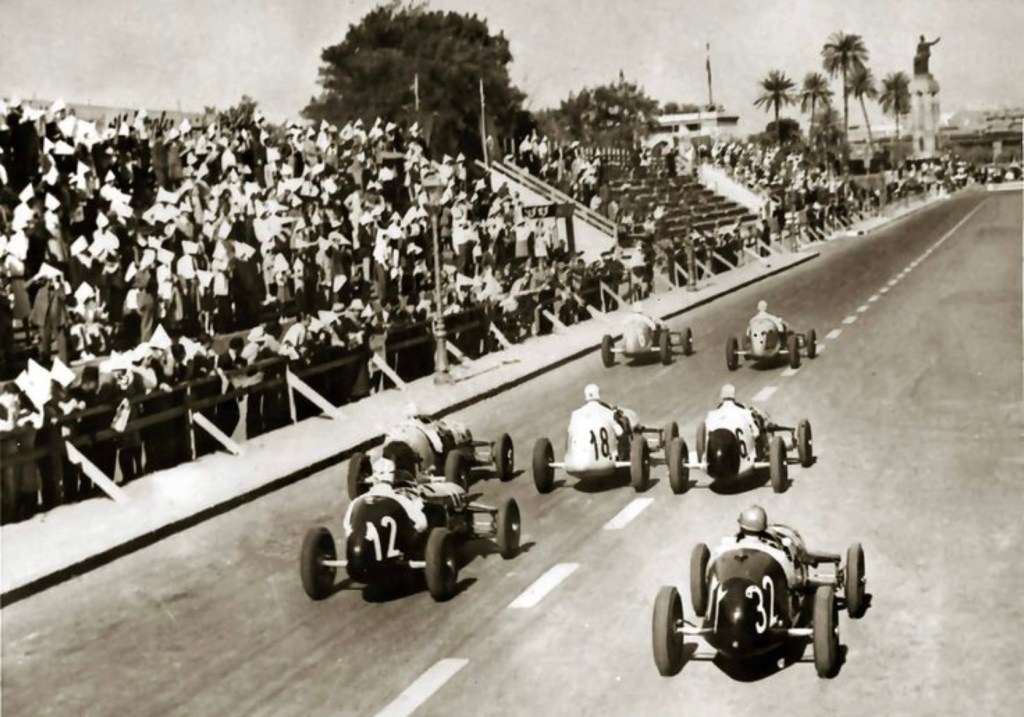
The Sehab Alma Bey Trophy was an invitation race for Cisitalia D46s held on the 1.48km Circuit El Guezireh – The Pyramid Circuit around the Guezireh Park – Cairo on March 9, 1947.
Franco Cortese won the first heat and Piero Taruffi the second, and Cortese the 50 lap final from Alberto Ascari, Taruffi, Piero Dusio and Mario Tadini (below entrant numbers unknown).
(New York Times)
Credits…
Reg Nutt Collection via Leon Sims, Troy Davey Milne, Mark Wells Collection, Graham Shepherd via David Zeunert, Jannaud, Russell Jackson, Ashley Tracey, New York Times, ‘Profile – Roger Loyer’ Jeremy Scott, ‘Historic Racing Cars in Australia’ John Blanden, ‘Cisitalia’ Nino Balestra and Cesare Agostini via Tony Johns, Stuart Murray Collection
Tailpiece…
Rendition by Martin Vins of a famous original photograph of Felice Bonetto – replete with fag – sliding his D46 Fiat at the Circuito di Mantova in 1948.
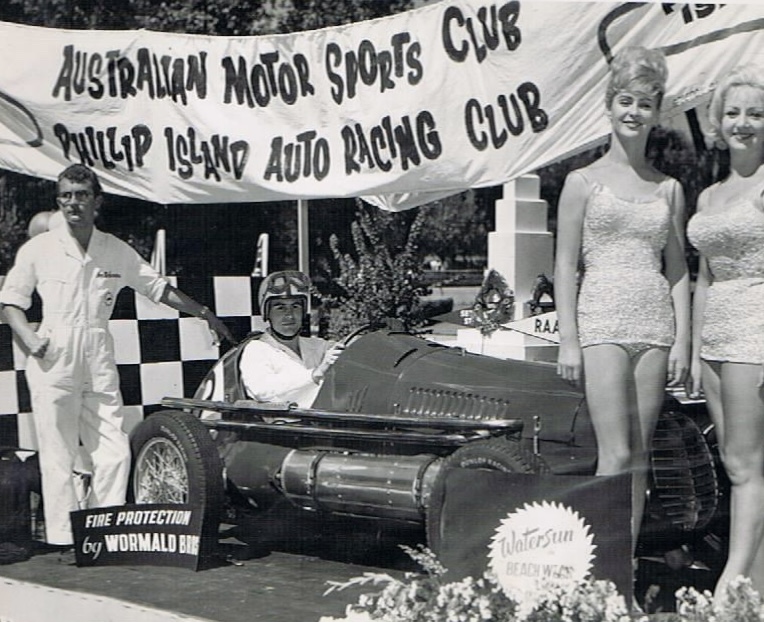
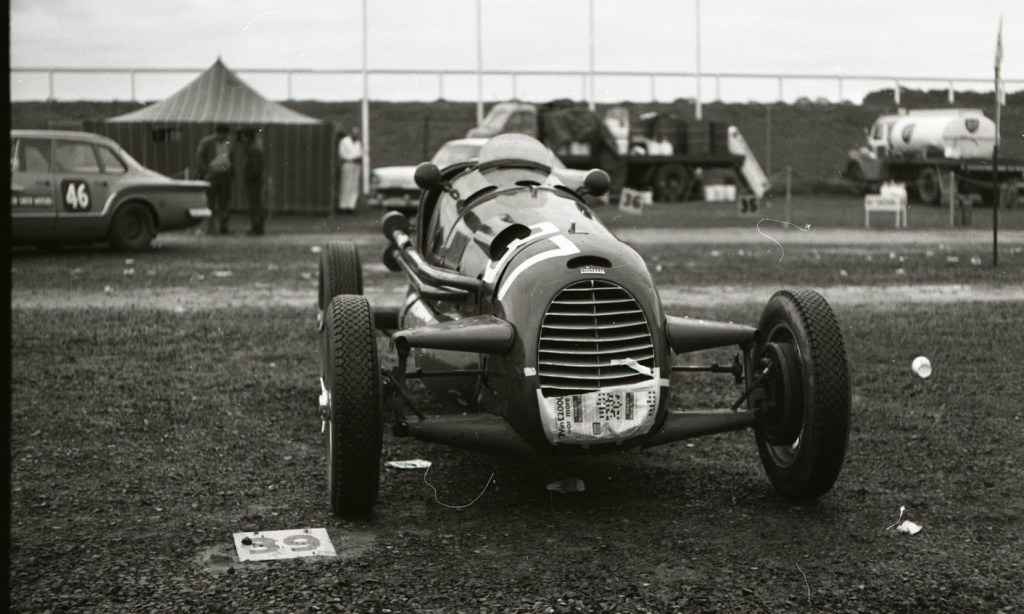
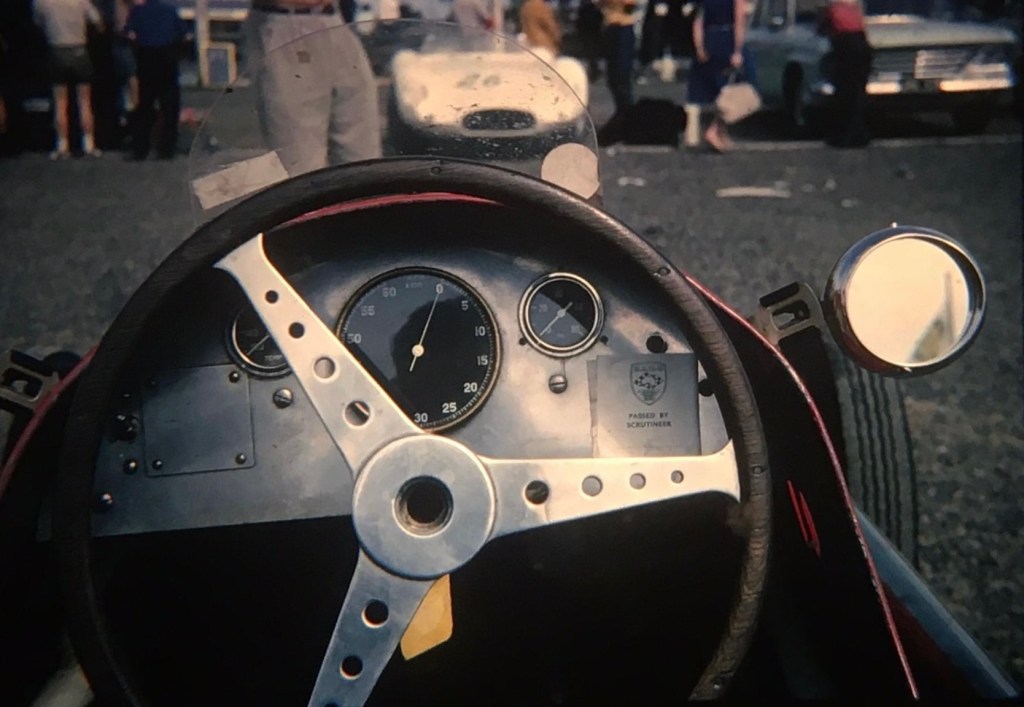
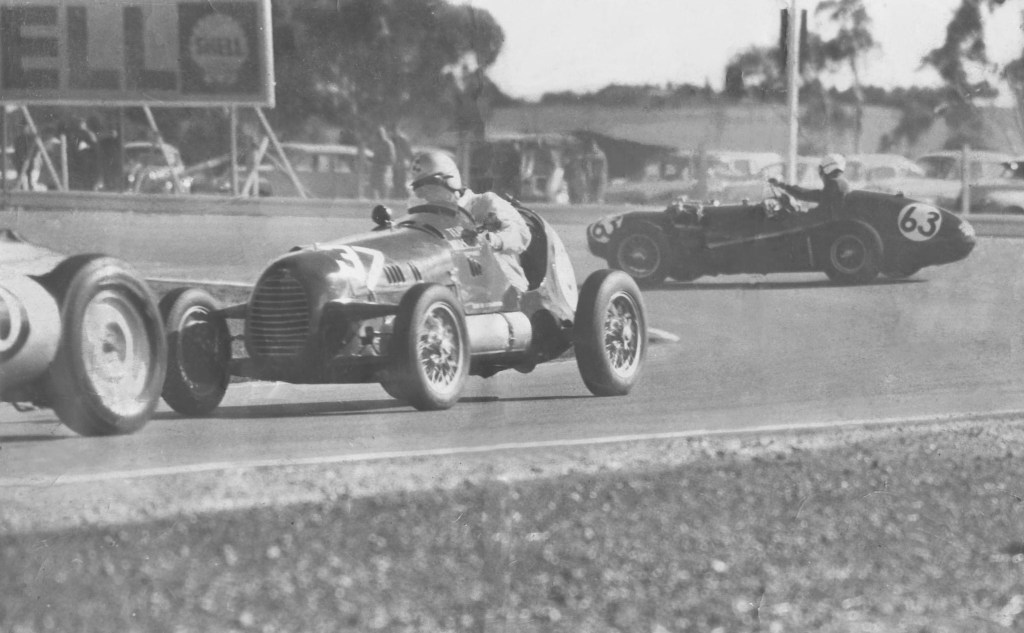
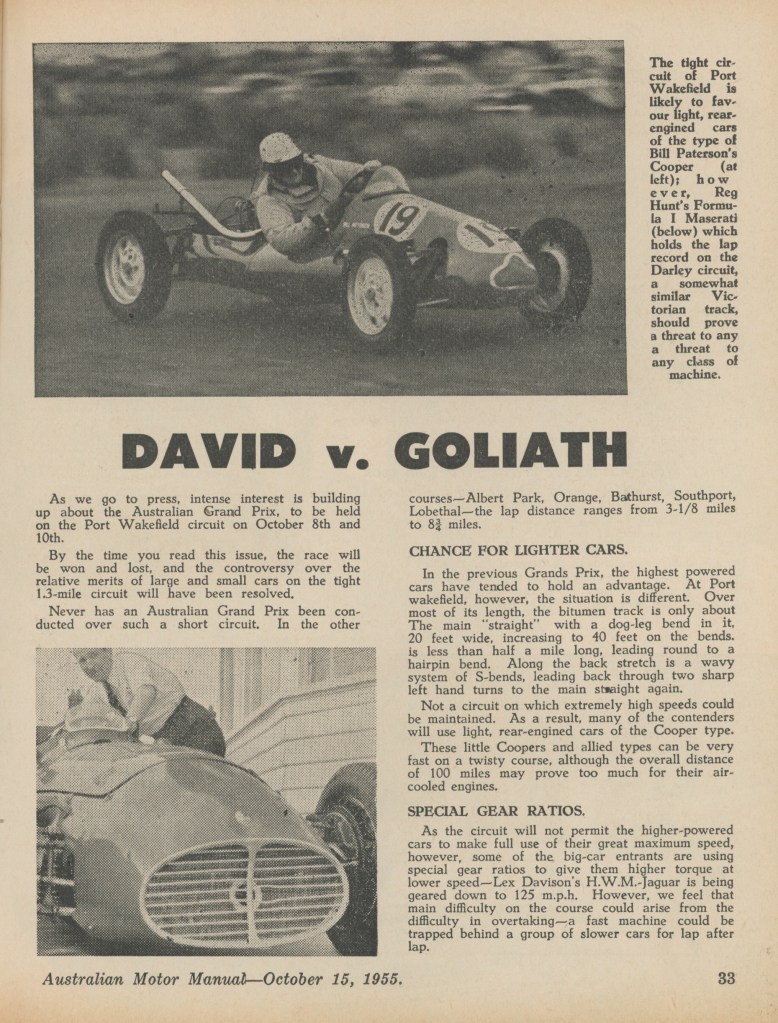
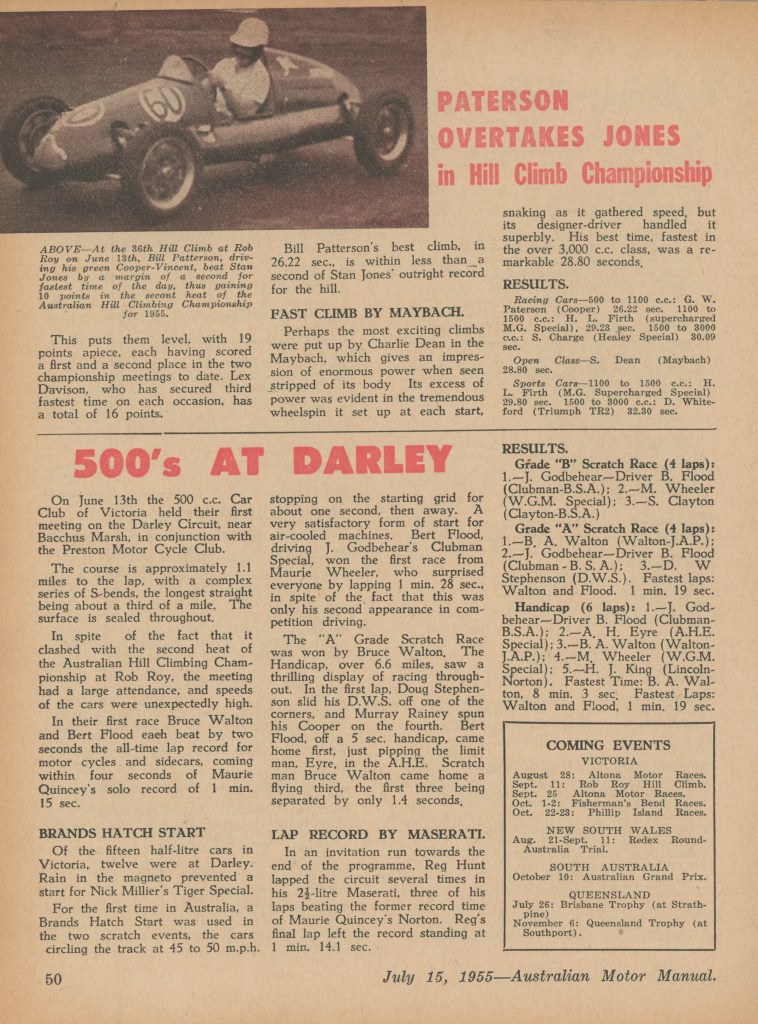
Racing a Grand Prix Maserati around the short, tight Darley circuit outside Melbourne would have been somewhat akin to racing in ‘yer backyard…
Reg Hunt pretty much became-the-pace when he imported this 2.5-litre Maserati A6GCM (chassis ) to Australia, he was stiff not to win the ‘AGP at Port Wakefield, South Australia with it in 1955.
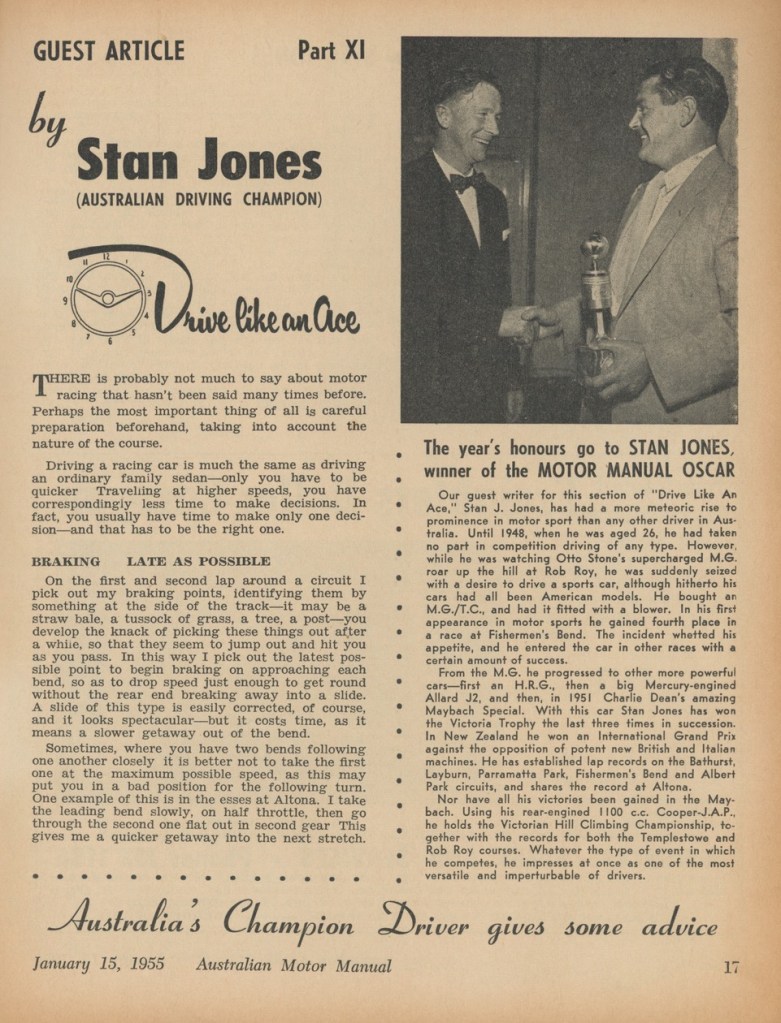
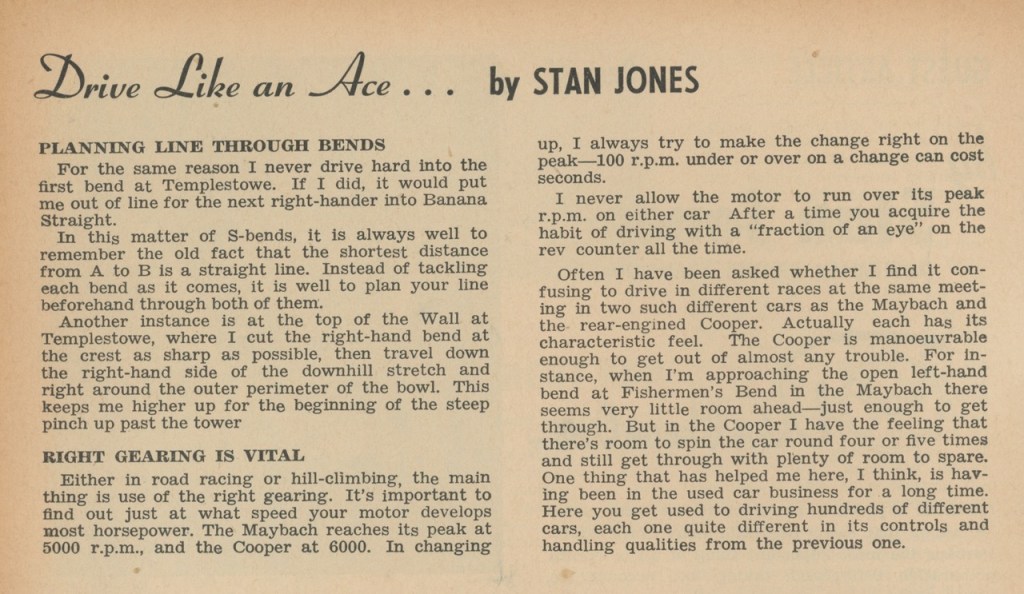
These two Australian Motor Manual excerpts highlight the controversy surrounding the selection of Port Wakefield as the AGP venue that year given its short length – only the Goulburn course used for the first AGP in 1927 was shorter – and put in the electronic public domain Hunt taking the Darley lap record in his lead up preparation to the AGP.
Frank Matich leads a Triumph TR4 and Austin Healey 100 on the short stretch of road between Long Bridge as he aims his Lotus 19B Climax into the progressively more-uphill-on turn-in Newry Corner during the 1964 Australian Tourist Trophy, February 29, 1964.









































 primotipo...