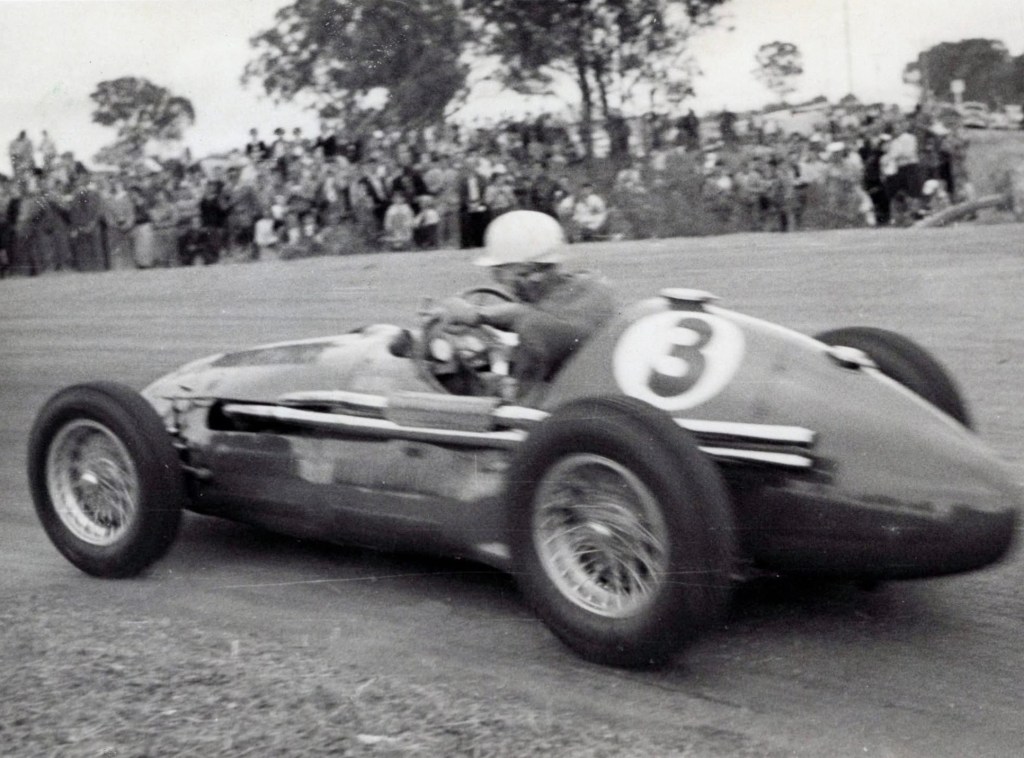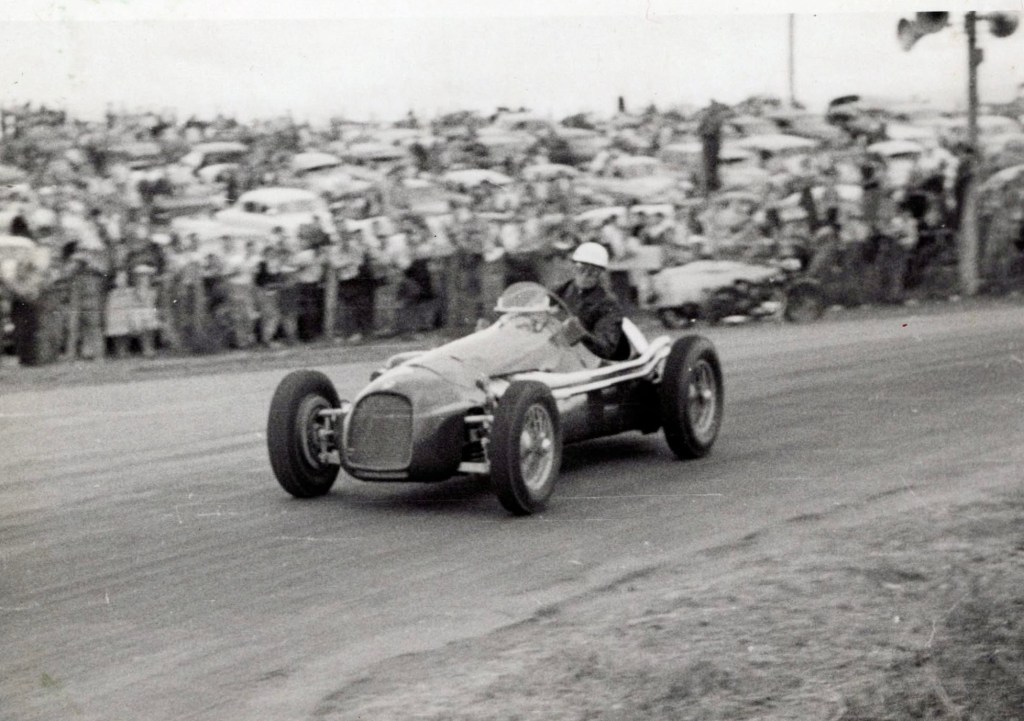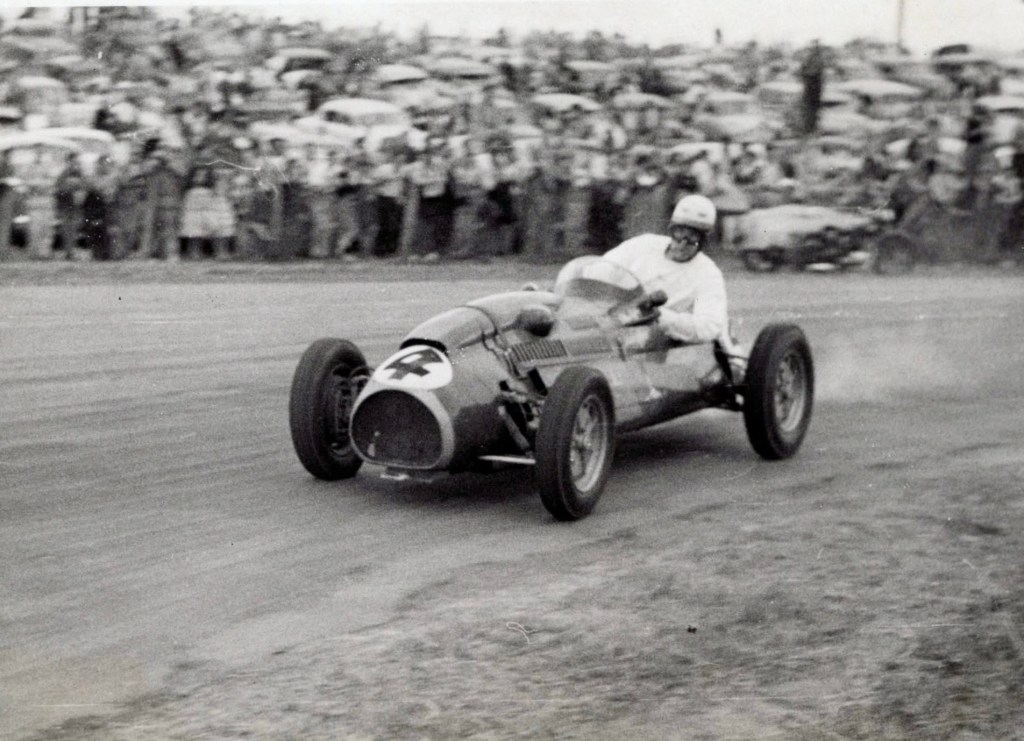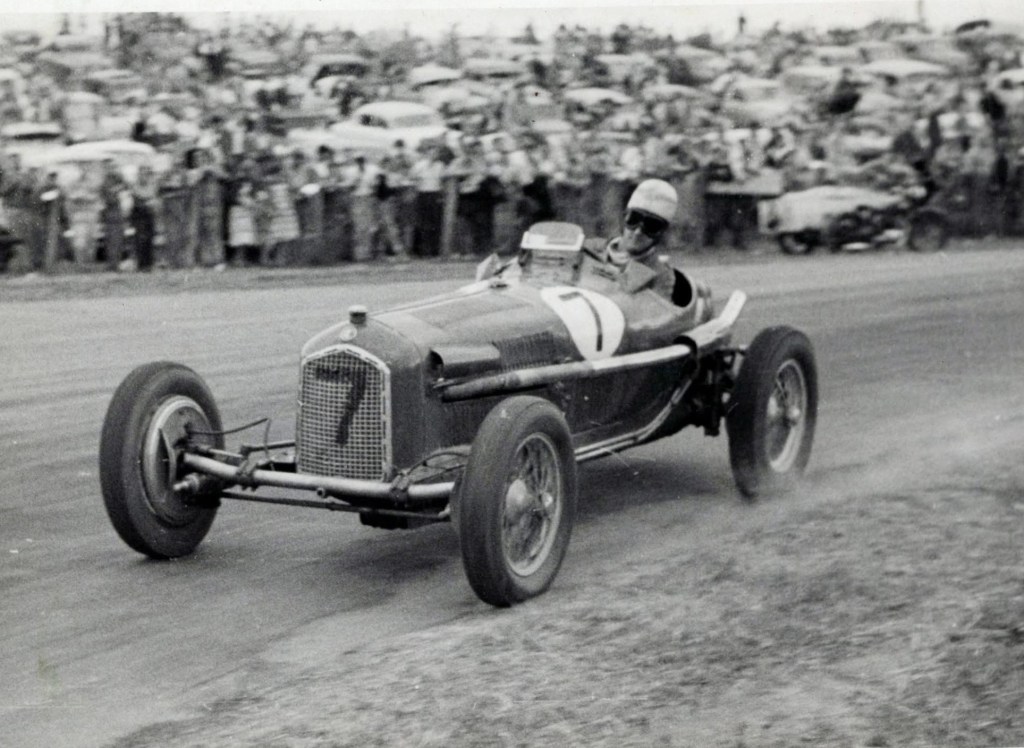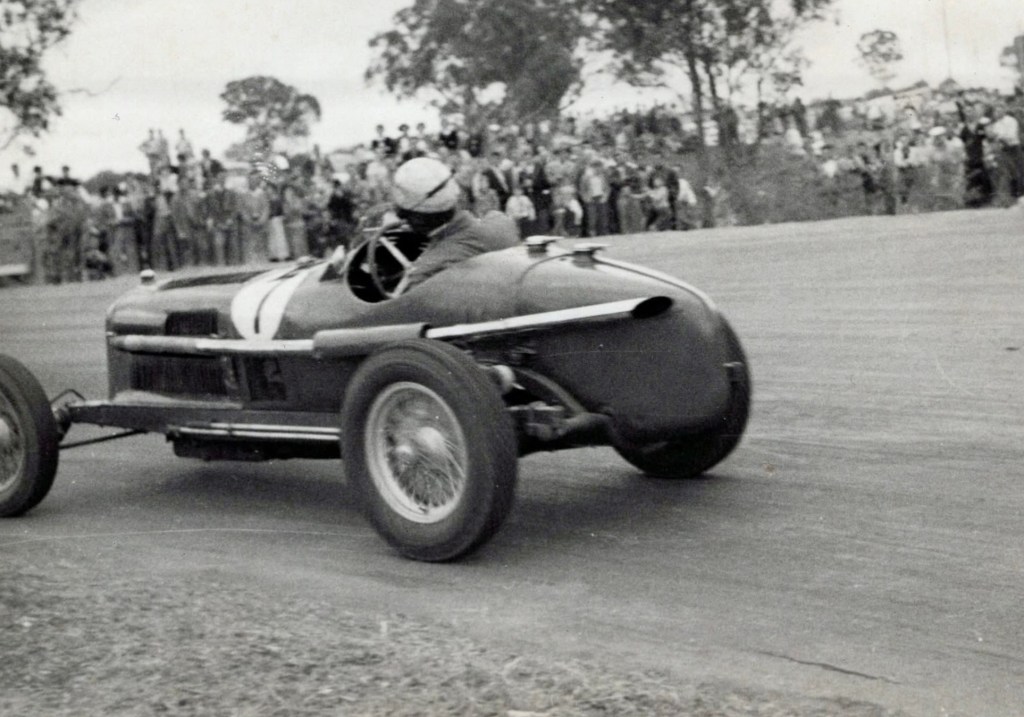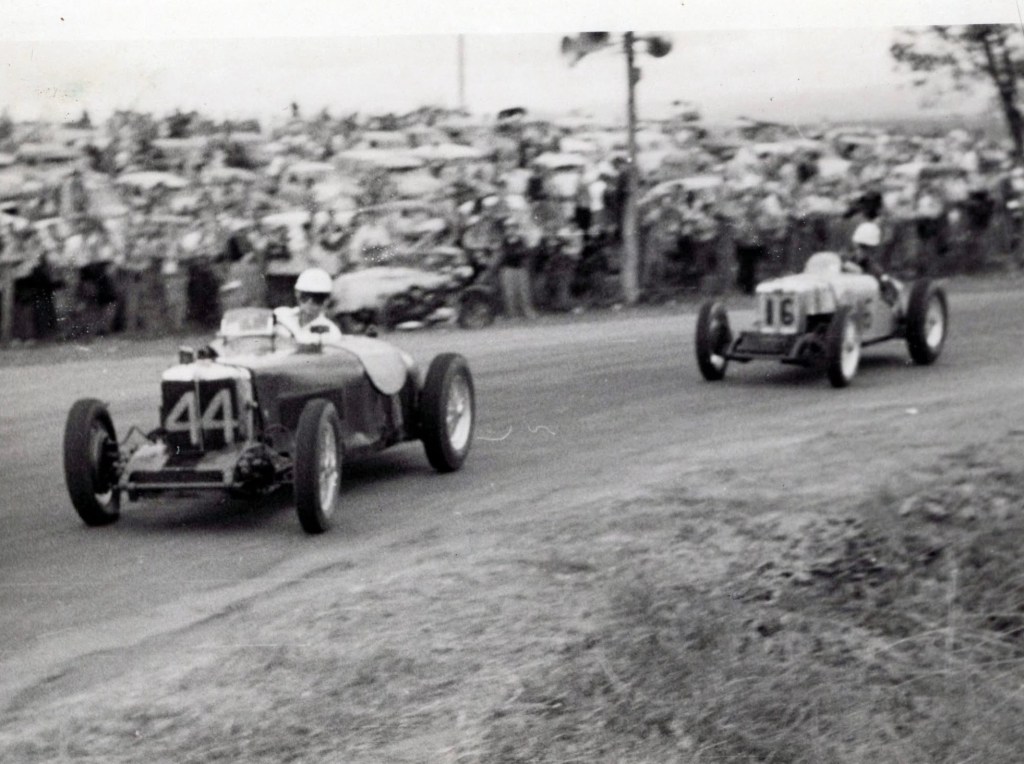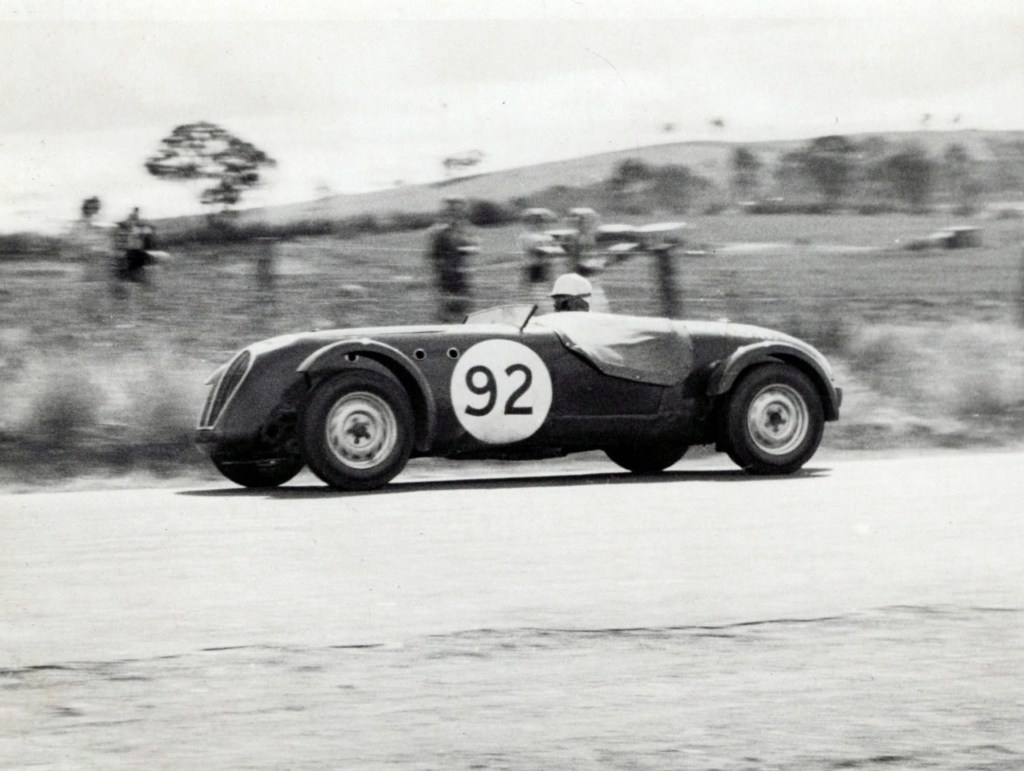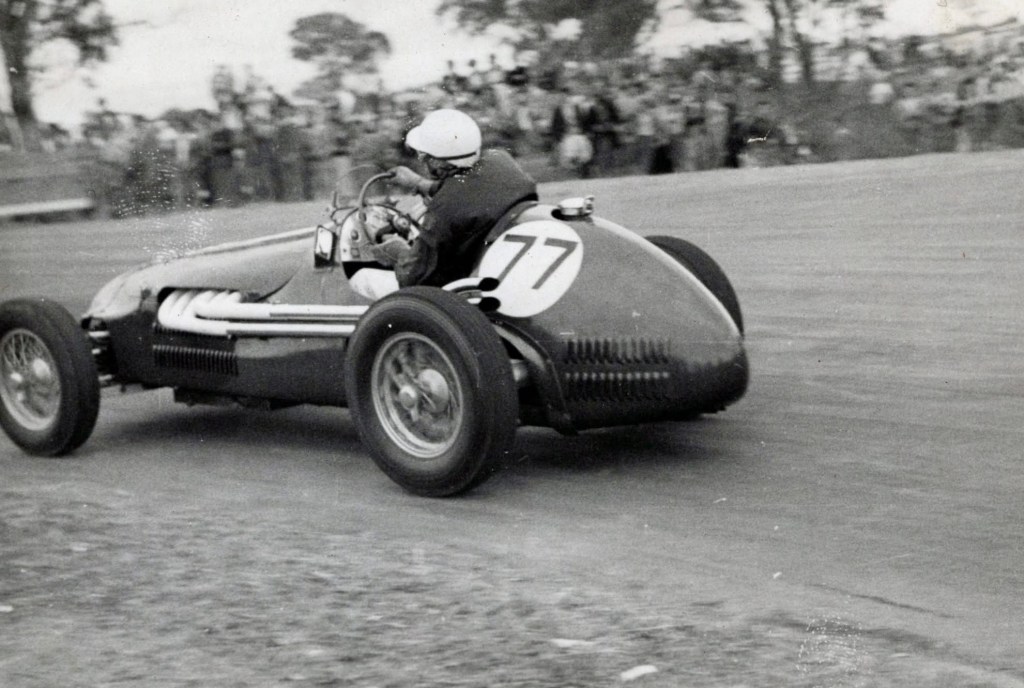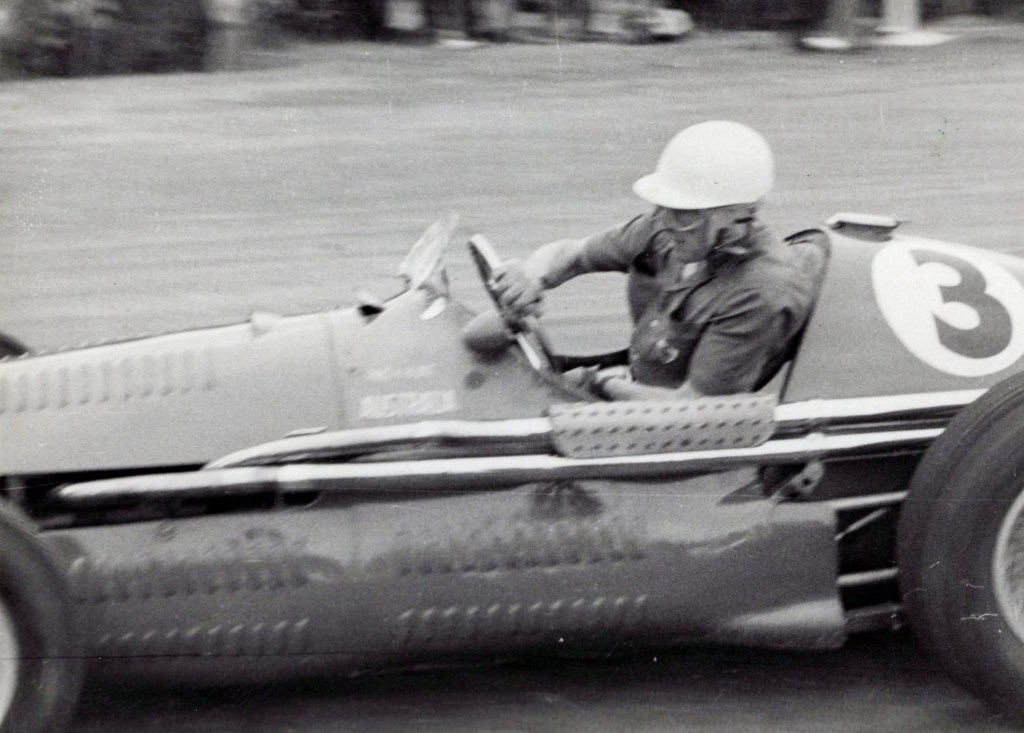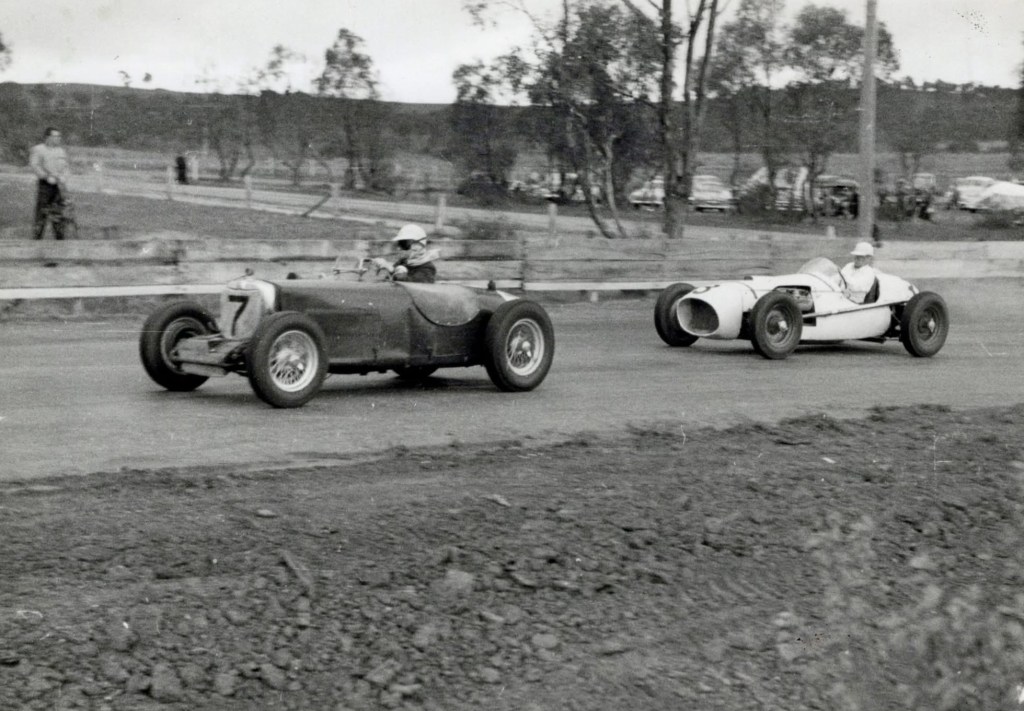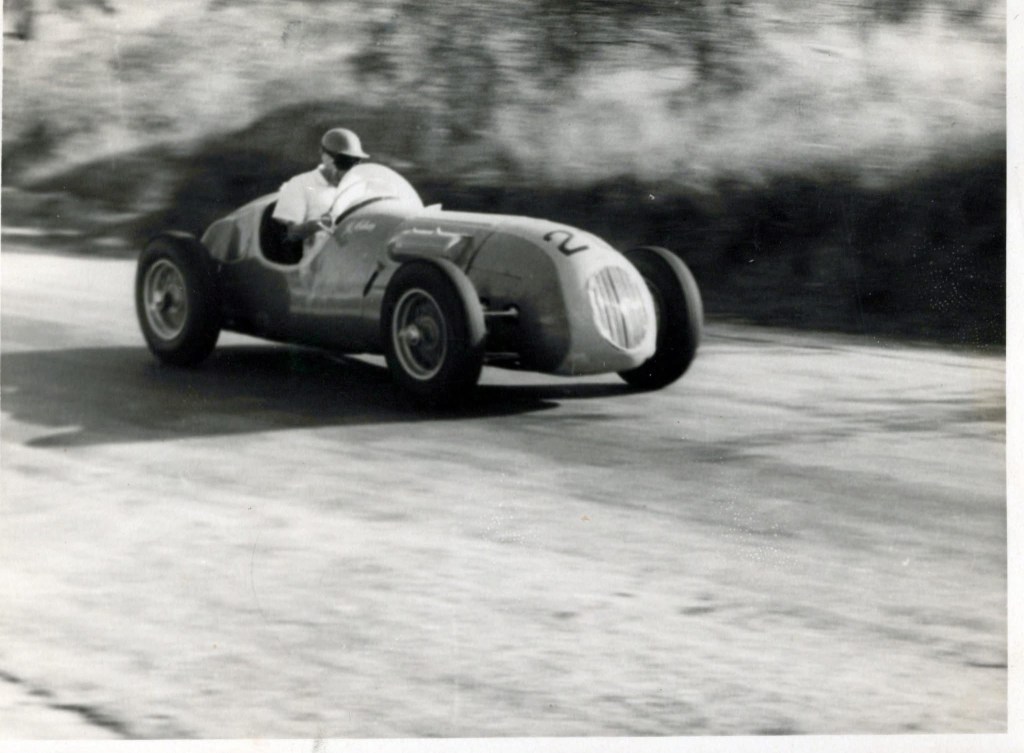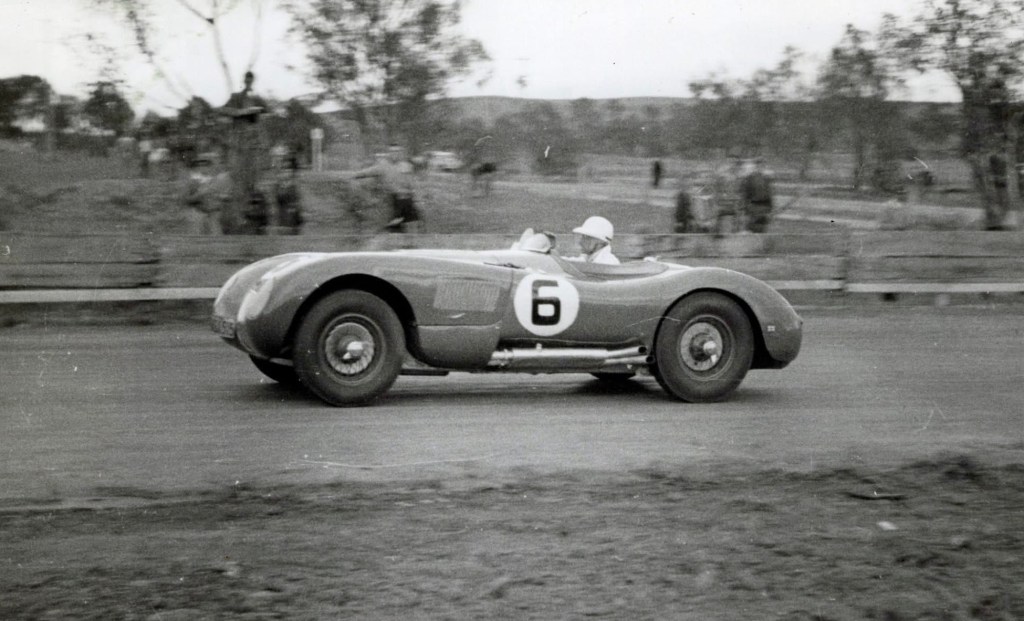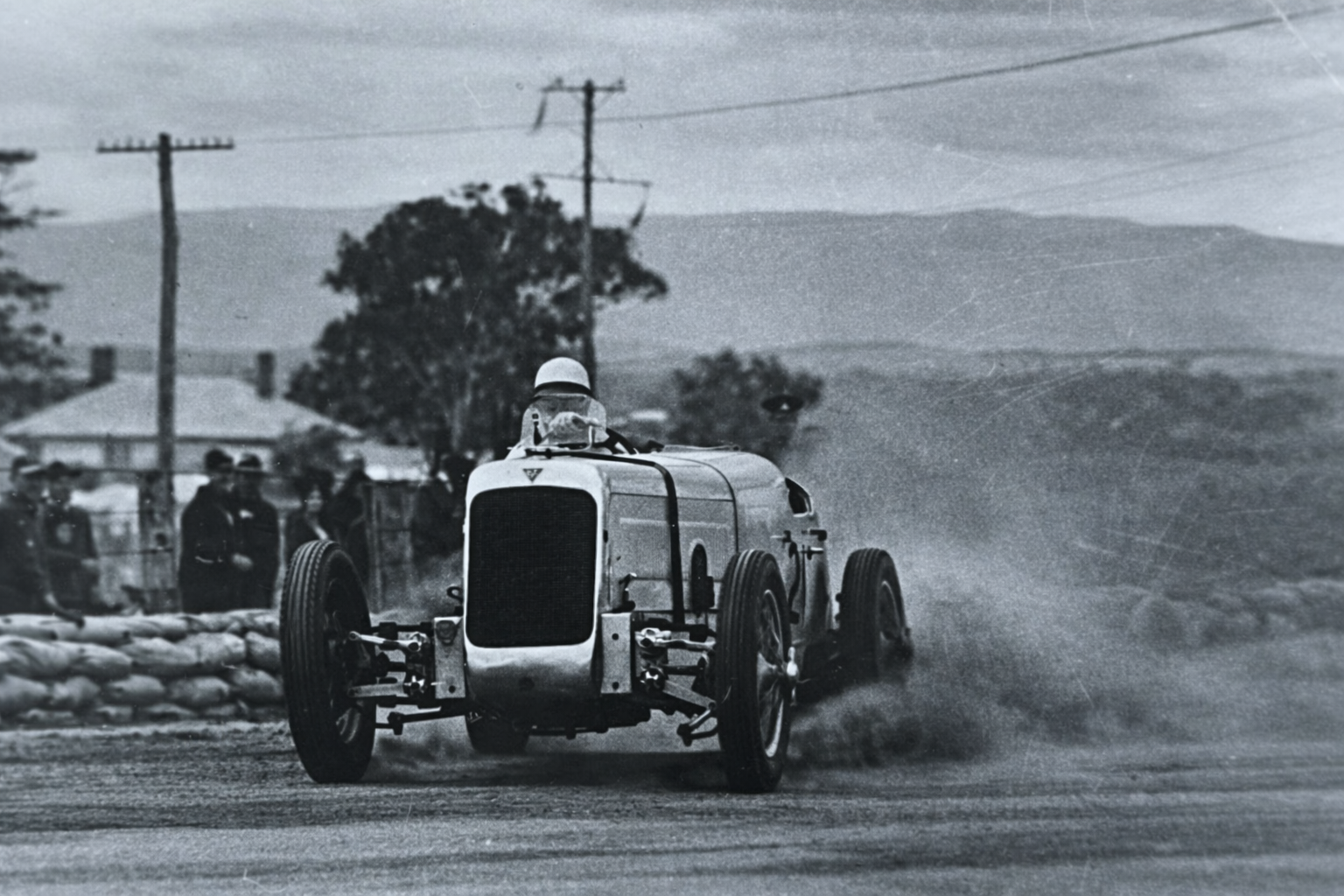
Paul Burton charging hard on the new Mount Panorama road circuit, ahem, Tourist Road, during the April 18, 1938 Australian Grand Prix at Bathurst.
Up front, another English car, Peter Whitehead’s ERA B-Type #R10B, was in the process of winning the race; Burton was a DNF. See here:https://primotipo.com/2015/04/16/peter-whitehead-in-australia-era-r10b-1938/
In 1928, the press of the day described the 1481cc, SOHC, two-valve, Roots-supercharged Alvis FWD chassis # 6992 as the first standard front wheel drive car to reach Australia.
‘This Alvis was shipped from the Coventry works on September 3, 1928, for delivery to Harry Taylor of Advanx Tyres, Sydney, wrote later owner, Rob Gunnell, in notes he prepared about the car for John Blanden, who included the machine in his superb, ‘Historic Racing Cars in Australia’.
‘Harry’s brother, Russell, was also involved with Bugatti cars and sponsored the Advanx Tyre and Rubber Bugatti (T37-37104) driven at Maroubra Speedway by Charlie East.’ By late November, the Sydney press reported that the Alvis was on display in the Hay Street showroom of Biden &Roberts. More about #37104 here:https://primotipo.com/2019/04/25/alexandra-sprints-and-bugatti-t37-37104/
Shortly after Taylor’s car hit the water, another was shipped to Melbourne via Regent Motors for Albert Edwards, who competed in it, including some of the early Road Races/Australian Grands Prix at Phillip Island (1929 DNF magneto rocker arm, ‘while fighting a great duel with the ultimate winner,’ Arthur Terdich, Bugatti T37A, 1930 DNF roll, 1932 DNF).
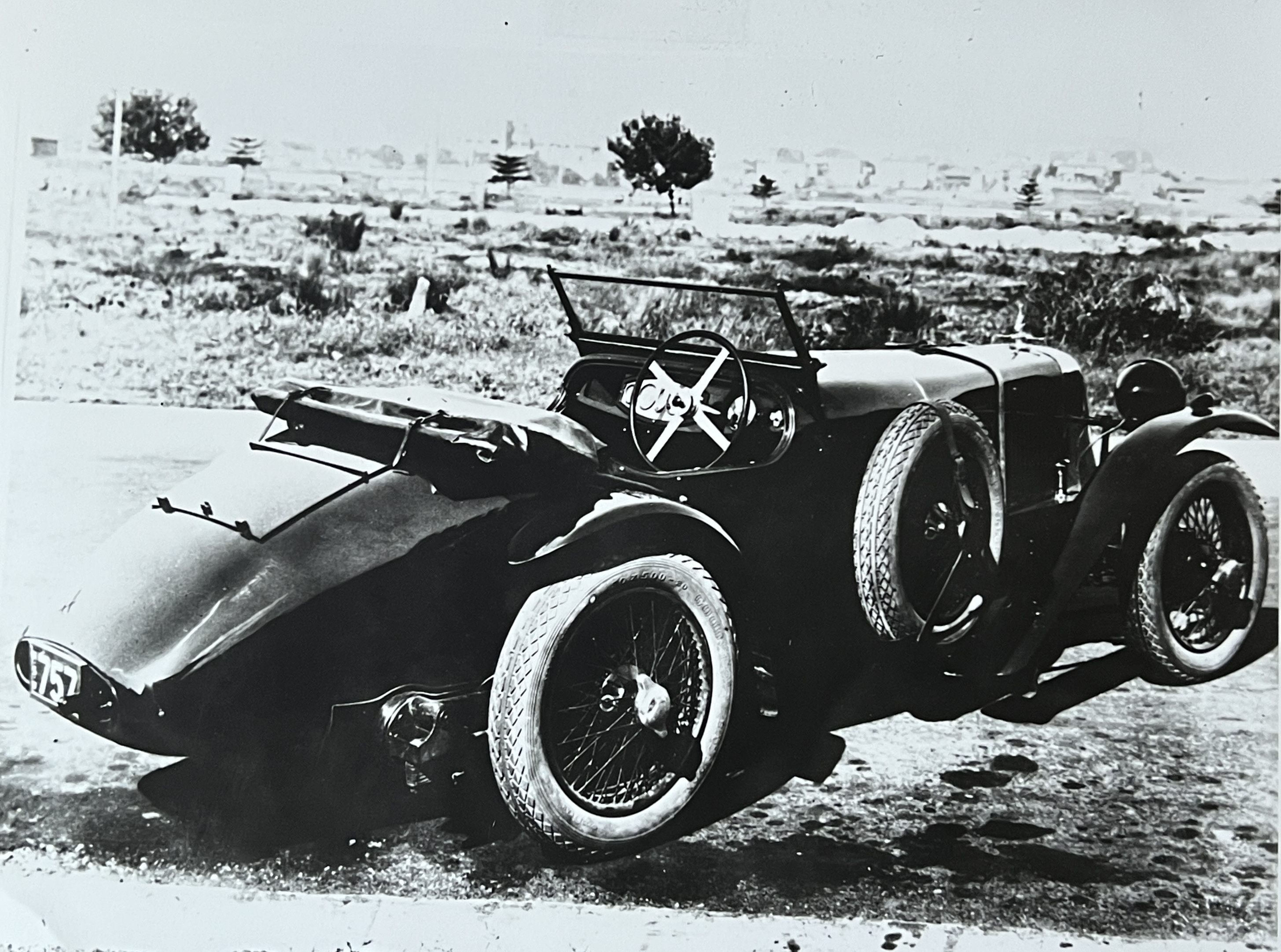
The motoring writer of Melbourne’s The Herald was fairly impressed with Edward’s car; he wrote about it in the October 29, 1928, issue. ‘The first of its type to reach Australia, and also the first front wheel driven British car to be produced as a standard model, the main advantages are ultra-low build and seating, phenomenal acceleration, the elimination of skidding and the super comfort derived from independently sprung wheels.’
‘The Alvis, however, does not appear unorthodox. The surprisingly strong chassis carries the engine well back from the radiator, and reversed so that the clutch and gearbox are close to the radiator. Bolted to the gearbox is the differential with powerful brakes close to the casing, and from this open axles go to the clever universal joints dividing the front wheels. Each of these wheels is independently sprung and is supported by four short quarter elliptic springs placed in pairs and in parallel with novel spring elip-type rebound dampers.’
‘The design of the chassis gives a very long bonnet line. Controls are of standard type and placing, though the gear lever reveals the novelty of a gate placed under its ball joint. Features are:—A four-cylinder engine of 1496 c.c. capacity (14 h.p.), a Roots-type supercharger, and a four-speed gearbox. Individual steering to each front wheel, and lever springing of the rear wheels. The maximum speed is more than 100 m.p.h.’
Back to chassis # 6992, Paul Gunnell wrote, ‘Its enormous technical innovation, excellent performance and striking appearance must have made this Alvis one of the more interesting imports of 1928. These FWD cars had already placed sixth and ninth outright at Le Mans and won the 1.5-litre class.’
‘Taylor ran the car successfully in RAC road/speed events, but as far as can be ascertained, never actually raced it- there was little opportunity in New South Wales, as Maroubra Speedway had closed and there were no road circuits in use in NSW. He used it to promote Advanx where possible and took it to New Zealand in 1930 and to his homeland, Canada, in 1932.’
‘In the mid 1930s, it was sold to Paul Burton, who competed in hillclimbs, at Penrith Speedway, and finally in the 1938 Australian Grand Prix at Bathurst, where it just failed to finish in the allotted time in 15th place (the Wiki results have him as a DNF).’
‘Burton sold the car soon after the AGP, and during the war, it passed through a number of hands, including John Crouch and Jack Jeffrey. In 1947, Clive Adams acquired it from Alec Mildren and entered it in the 1948 NSW GP at Bathurst. Unfortunately, three conrods let go on the first lap of a preliminary race after being timed at 96mph down Conrod.’
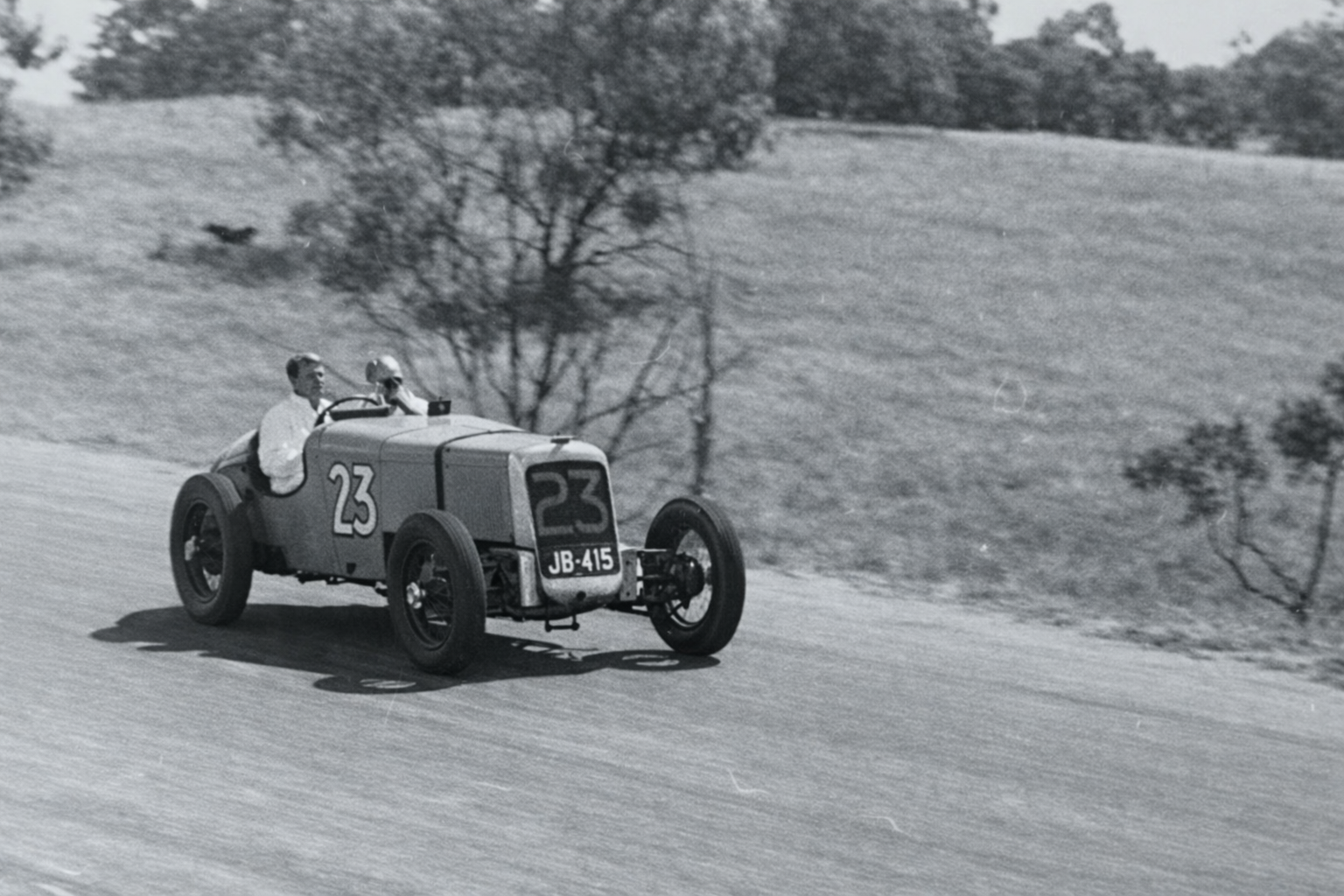
‘The car was stripped with a view to reversing the chassis and fitting a Jeep engine; had the plan been executed, the machine would have been the first Prad Special. Instead, Clive and Jack Prior put a Ford V8-60 engine in a Bugatti chassis to make the first Prad (is this correct?.’
‘Adams sold the Alvis chassis to Bill Clark, of Chatswood, Sydney, where it remained in bits until purchased by Rob Gunnell in 1965.’ Rob wrote in the mid-1980s that he hoped the car would reappear at Bathurst to celebrate the 50th anniversary of the first AGP at Bathurst in 1988.
Nathan Tasca advises that ‘Rob Alcock has owned the car for many years and is dead keen to be a part of the Australian Grand Prix centenary celebrations in 2028’, or 2027 depending upon your religion.
Etcetera…
The story of the Albert Edwards, Alvis FWD chassis #FP583 is told here:https://www.alvis.org.au/alvis/ACCV-Hhistory/Alvic/2007-3.pdf
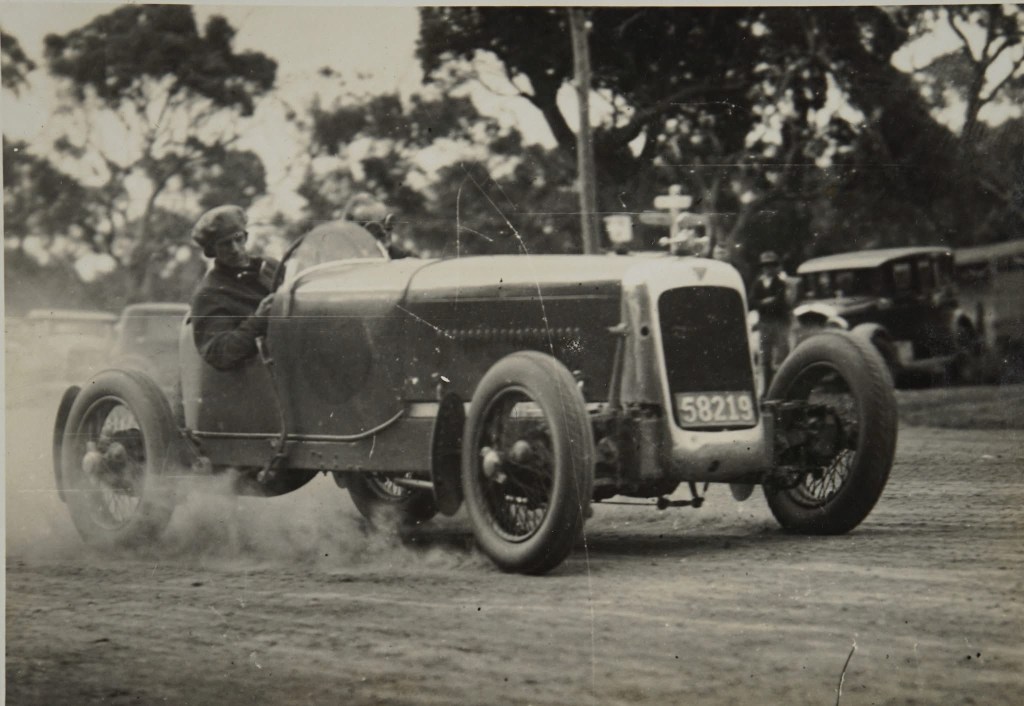
Albert Edwards early in the 1932 Australian Grand Prix at Phillip Island, and below the forlorn rolled car and tragic scene of an injured photographer having his leg stump bandaged after a trackside amputation in a wet, muddy operating theatre…
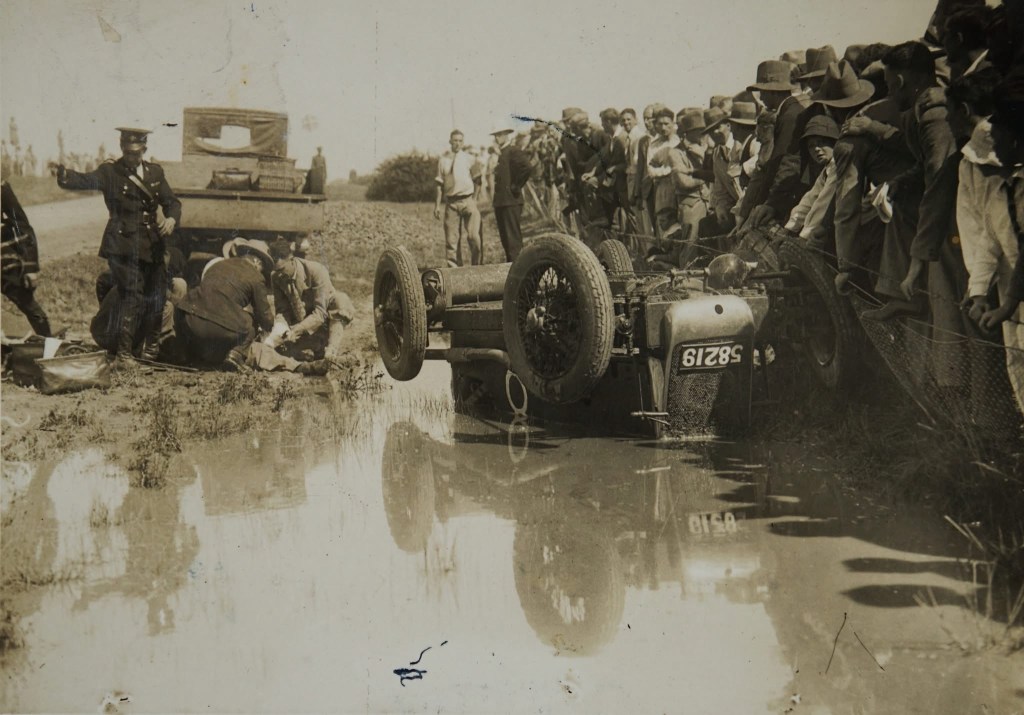
Horrie Morgan, then owner of #FP583, described the accident in the March 2007 issue of the Alvis Club of Victoria’s Newsletter.
‘The car was eventually made ready for the 1932 A.G.P. but again misfortune struck, this time more disastrously than ever.’
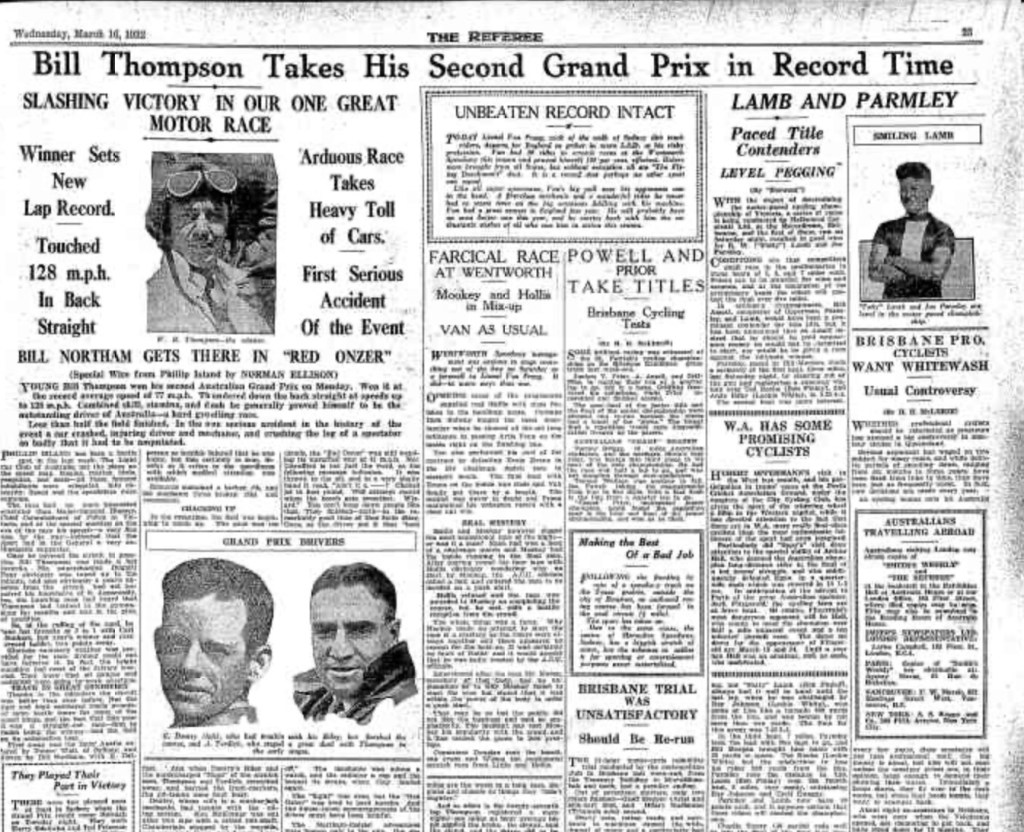
Carl Junkers’ Bugatti T39, off a handicap of four minutes – the AGP was for decades a handicap event – was flagged away. ‘Junker’s start was the first phase of a terrible accident,’ The Referee reported.
‘As he pulled out from the pits, and moved towards Heaven – the corner, not the celestial region – Edwards roared up. In attempting to pass the slowly-moving machine, the Alvis went into a vicious skid, bounced off the road, crashed into a spectator, tearing his leg off – it necessitated a roadside amputation – spun over, and overthrowing driver and mechanic clear, then plunged upside down into a pool of water.’
‘It may seem strange to say of a person so terribly injured that he was lucky, but this certainly is true, insofar as it refers to the speediness with which medical attention was available. Edwards sustained a broken rib, and his mechanic, three broken ribs and a concussion.‘
Bill Thompson won the race in his Bugatti T37A.
Morgan wrote that ‘Edwards, not surprisingly, decided to give up racing, but retained the FWD for general motoring and it was re-registered in 1933 with a fixed-head coupe body.’

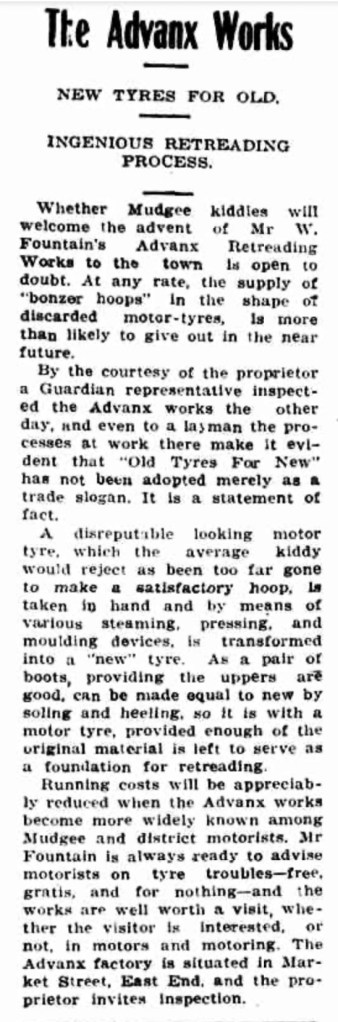
More on the Advanx Tyre and Rubber Co Pty Ltd, established by Canadian tyre salesman/entrepreneur, Russell Taylor, and Australian Olympian, Francis ‘Frank’ Beaurepaire in 1921 here:https://collections.museumsvictoria.com.au/articles/6210
Credits…
John Blanden Collection, Rob Gunnell’s short history of chassis 6992, The Herald October 29, 1928, Powerhouse Museum, The Mudgee Guardian October, 27, 1927, The Referee March 16, 1932, Vintage Sports Car Club of Victoria Archive via Ash Tracey
Finito..