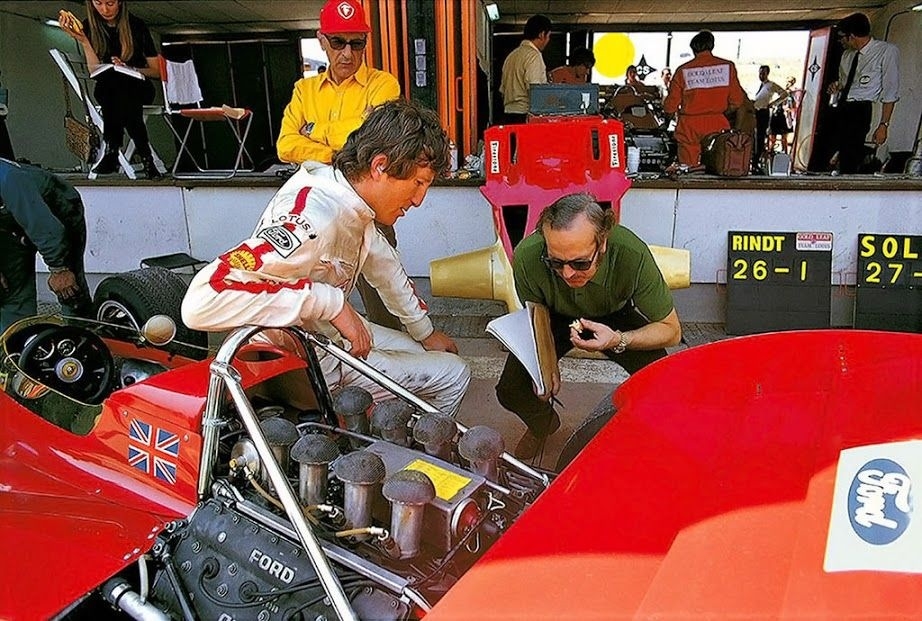
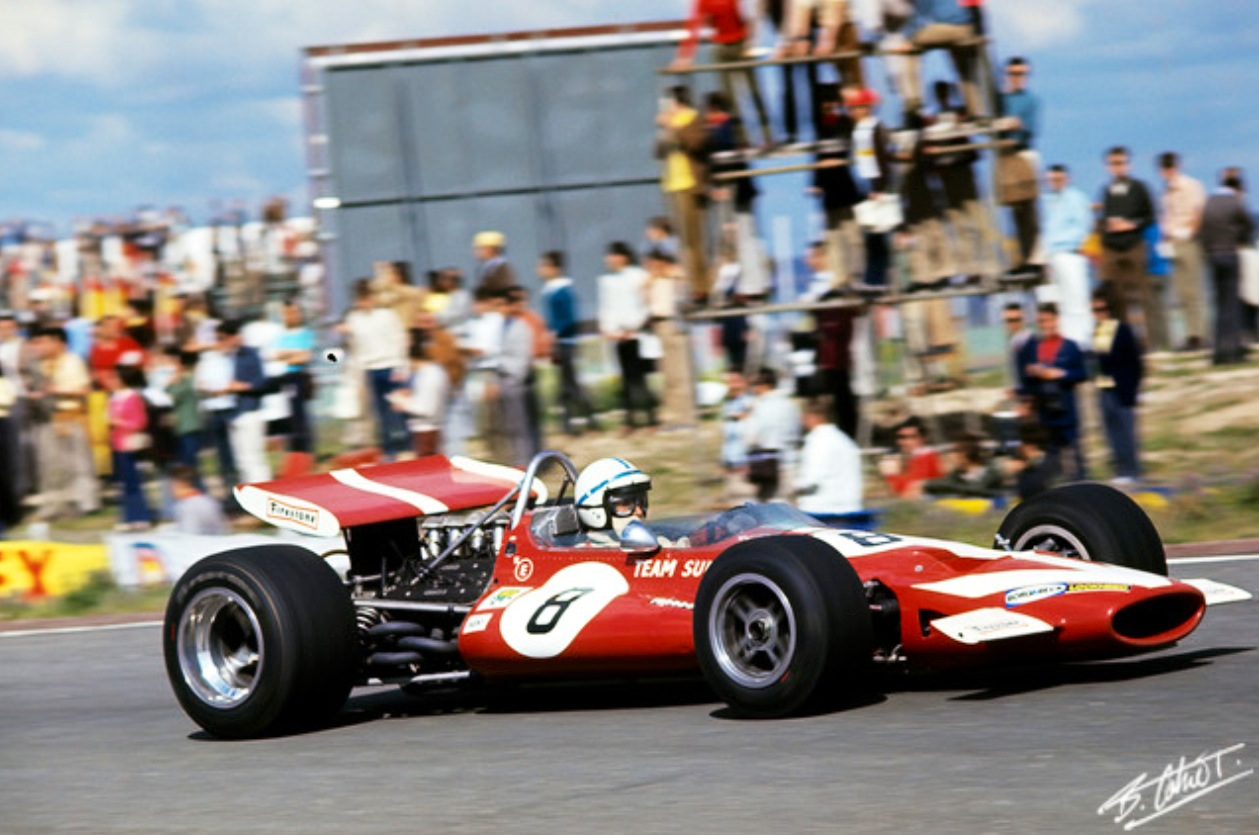
Posts Tagged ‘Jackie Oliver’

(MotorSport Images)

Oh yeah baby!

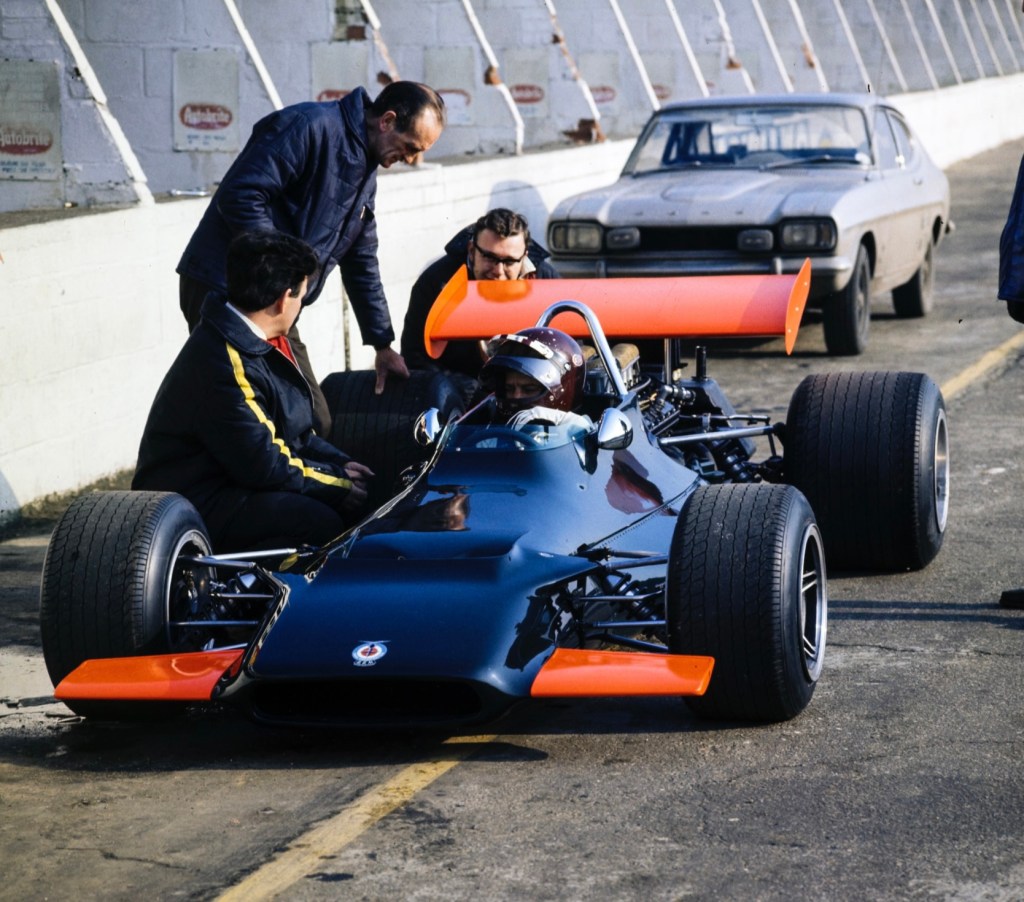
The 1970-71 BRM P153/P160 are two of my favourite Grand Prix cars, designer Tony Southgate at his best. Jackie Oliver is using every inch of Snetterton in this first test (?) of Bourne’s new P153.

It’s chassis P153/01 on January 1, 1970. This car had rather a short life sadly, it was burned to a crisp after Oliver had front stub-axle failure on the first lap of the Spanish Grand Prix on April 19. Ollie ploughed into the innocent Jacky Ickx’ Ferrari 312B – 312B/01 in fact – the ensuing massive conflagration and incompetence of the marshalls ensured both cars were destroyed.

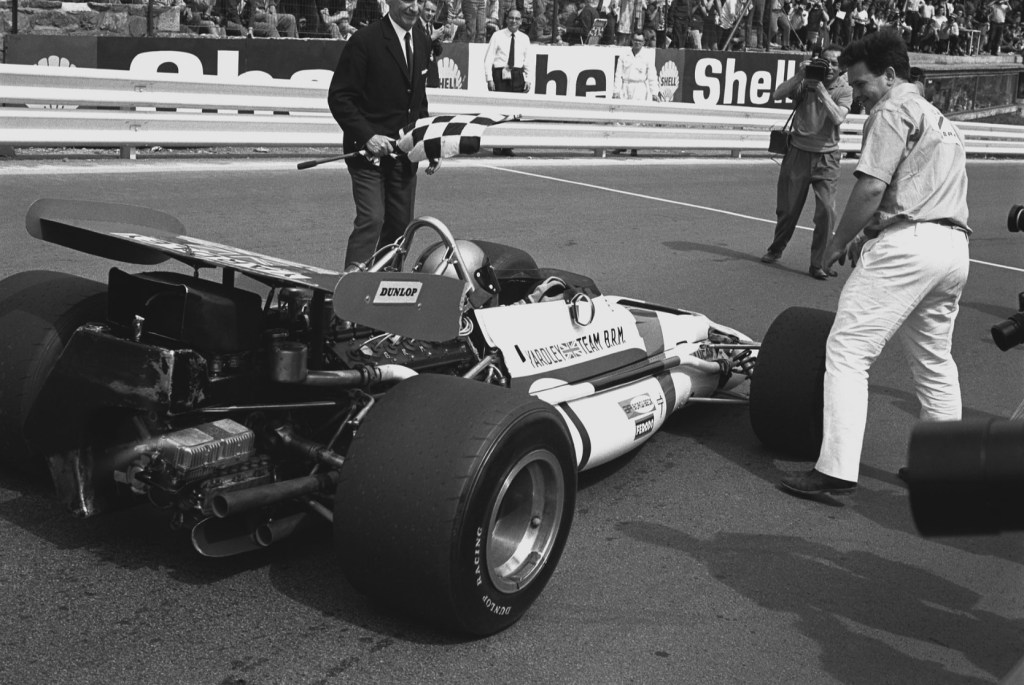
The P153/P160 were race winning cars too. Pedro Rodriguez was victorious in a P153 in the 1970 Belgian Grand Prix after an epic dice with Chris Amon’s March 701 Ford. He also won the Oulton Park Spring Cup in 1971 aboard a P160. P160 championship victories went to Jo Siffert and Peter Gethin at the Osterreichring and Monza in 1971, while Gethin also won the non-championship Brands Hatch Victory Race that October. In 1972 Jean-Pierre Beltoise took his only GP win at Monaco in soggy conditions in a P160B.

The P153 in its early traditional, pre-Yardley, BRM green with orangey-red trim looked superb! We have Southgate to thank for the new colour too. “The F1 BRMs had been painted a dark, dull, metallic green I thought looked terrible. I called it British Racing Mud…I persuaded the team to change to a more lively green and I ended up with a colour used by Vauxhall Motors, which looked great.

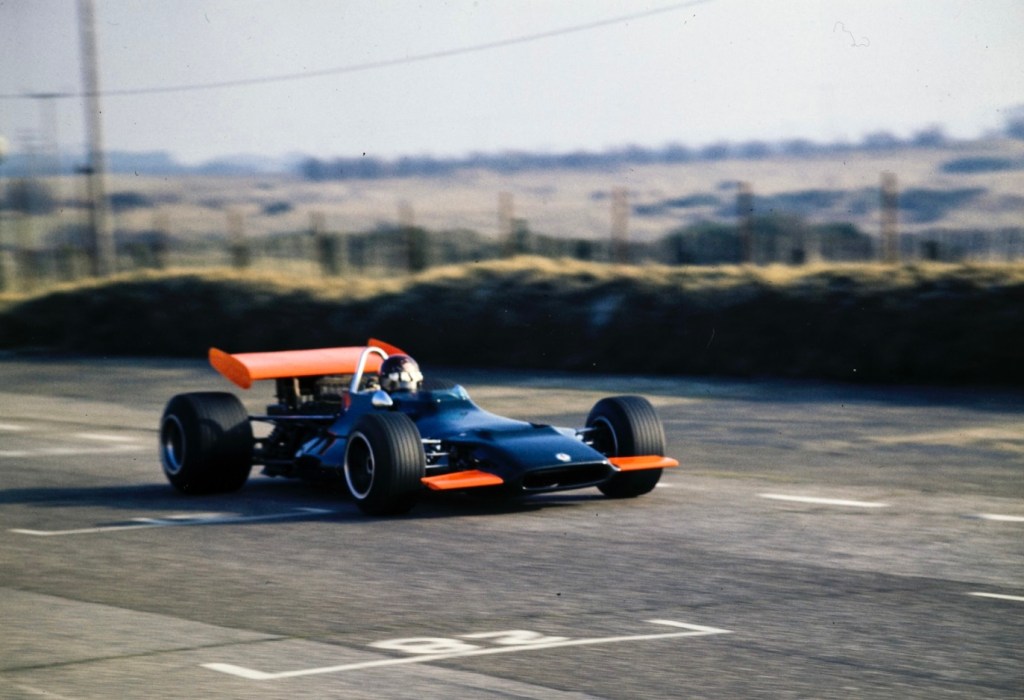
“Cor, this BRM really does look the goods boys!” Snetterton, January 1, 1970 (MotorSport)
(MotorSport)

After the phenomenal speed and results of the simple, light 1.5-litre P261 V8 Grand Prix car from 1963-65, BRM had been in the doldrums since 1966-67 with the phenomenal lack of speed of its complex, heavy P83 H-16.

While the 1968-69 P101 and P142 V12 powered P126/133/138/139 had shown occasional flashes of speed, to an extent Bourne had lost its way in both chassis and engine competitiveness. See here: https://primotipo.com/2018/01/25/richard-attwood-brm-p126-longford-1968/

Much respected, long-time engineering chief Tony Rudd – the architect of BRM’s late 1950s-early 1960s rise and rise – left Bourne for Hethel where he became Group Lotus’ Director of Engineering in mid-1969 and was replaced by Tony Southgate who had been drawing and building winning Eagles for Dan Gurney in California.
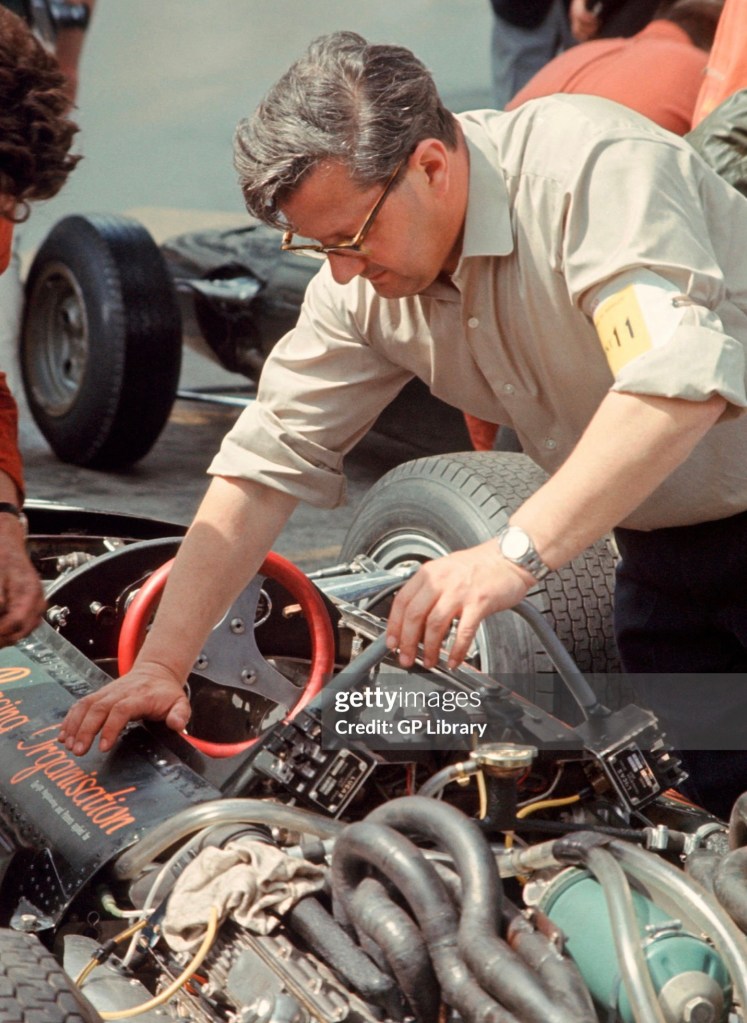
Tony Rudd fettles his nemesis at Monaco in May 1966, the gloriously-nuts P75 H-16 engined BRM P83.
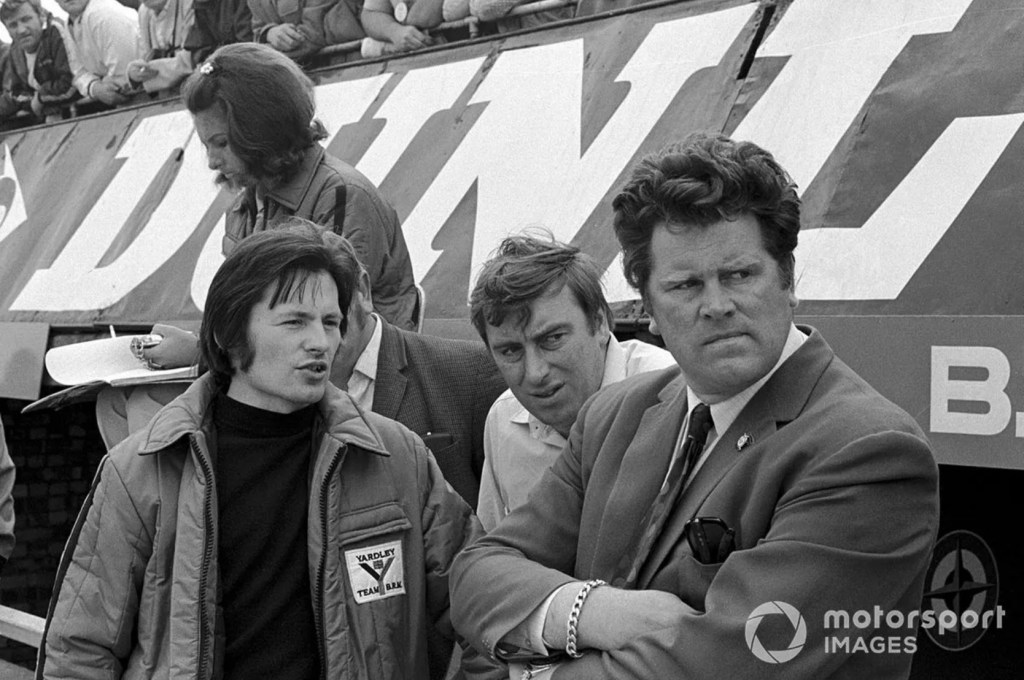
Oliver gives his early impressions of the new car to a Dunlop technician at left, and who else? Snetterton (MotorSport)
BRM Brains Trust during the 1971 British GP weekend: Tony Southgate, technician Gerry van der Weyden and Tim Parnell with the Bastard! look on his face

When 29 year old Tony Southgate arrived at BRM in June 1969 his boss was the self-styled, polarising, ‘Lord’ Louis Stanley. The leadership team comprised Southgate, in charge of chassis design and development, Aubrey Woods of engine development with Alex Stokes as the gearbox specialist.

“My brief was to improve the existing P139 for the remainder of the 1969 season, if possible, and then to deliver an all-new car for 1970,” he wrote in his great ‘Tony Southgate : From Drawing Board to Chequered Flag’.

Southgate decided Alec Osborn’s (who departed BRM along with Peter Wright when Southgate arrived) P139 wasn’t worth spending time on as “Some of the suspension systems and mountings deflected, which produced very spooky handling…Surtees withdrew from the German Grand Prix on the Nurburgring after two of the three practice periods; he was convinced that something was going to break on the car…”

As many of you will recall, John Surtees was having something of an annus horribilis that year, driving shit-heaps on ‘both sides of the Atlantic’: the BRMs and Jim Hall’s Chaparral 2H Chev in North America.
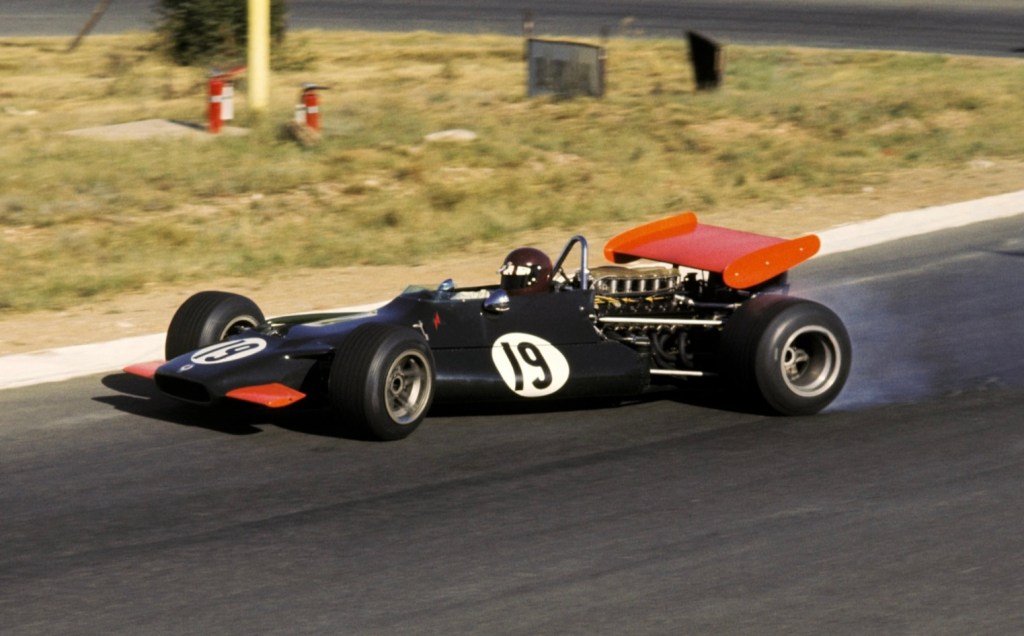
Jack Oliver giving his P153 plenty during the 1970 South African GP weekend (MotorSport)
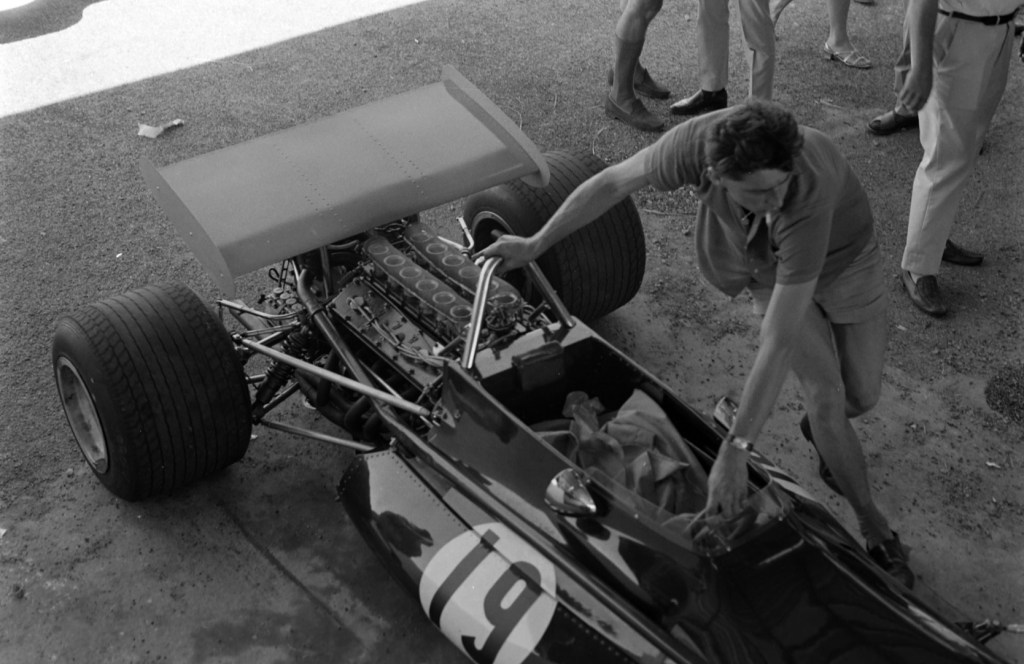
Kyalami pits 1970 (MotorSport)

Design and construction…

Tony Southgate wrote that “The philosophy behind the P153 design was maintaining my obsession with low CG, with the fuel concentrated in the centre of the car to achieve minimal interference with the weight distribution as the fuel level changed. Coupled with this was very good torsional stiffness between the wheel centres, and great rigidity of the suspension and its mountings.”

“Aerodynamic testing in 1969 was still basic by modern standards…The full-size race car ran in the MIRA wind tunnel, and the scale model work was done in the Campbell tunnel at Imperial College, London.”

“One of the cars interesting points of note was that it ran on 13-inch diameter wheels both front and rear, when the opposition were using 15-inch at the rear. The car ran on very fat Dunlop tyres (their last year in F1), giving it a very low, squat appearance.”

“The monocoque was unusual in that it had a very pronounced double-curvature shape, being 4 feet wide at the centre. The panels were hand rolled in-house and have a very ‘pregnant’ look to the car.”
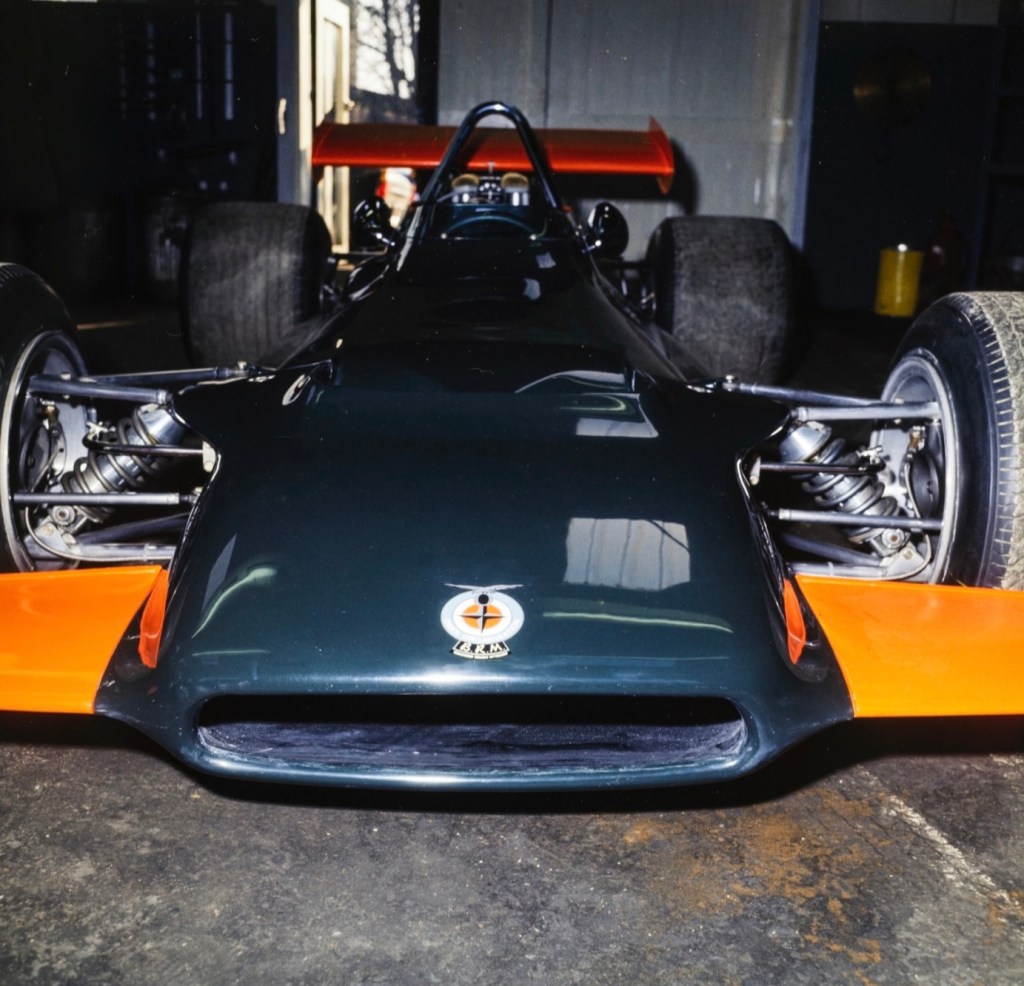
(MotorSport)

Front suspension was period typical: magnesium uprights, upper and lower wishbones with Koni shocks and coil springs and an adjustable roll-bar.
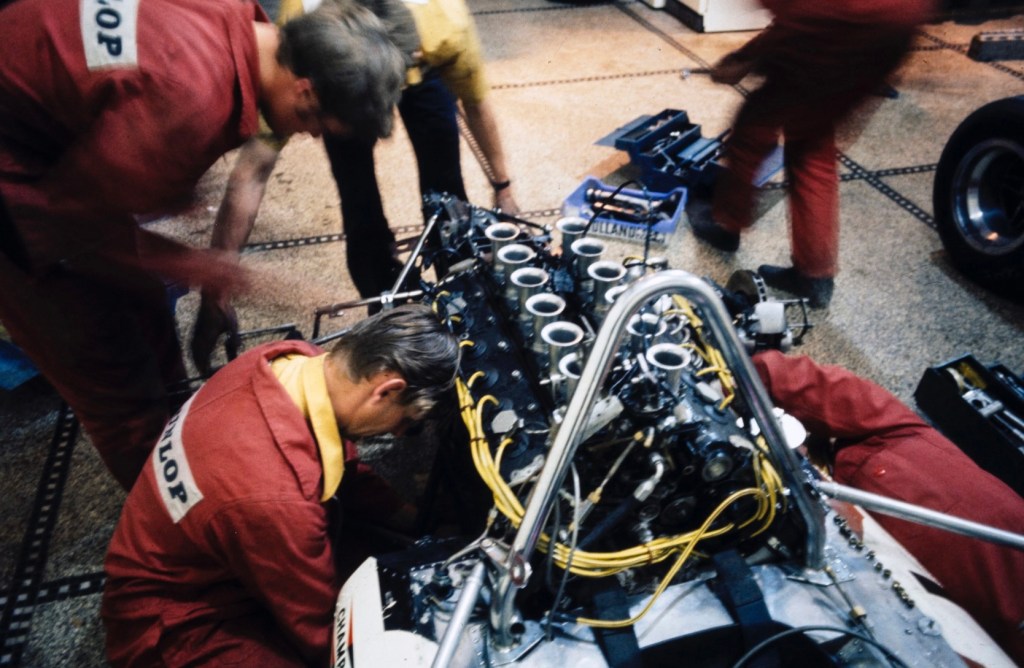
Engine change of Rodriguez’ P153 on Sunday June 7, 1970 during the victorious Belgian Grand Prix weekend (MotorSport)

“The V12 engine, as originally designed by Geoff Johnson, was unstressed, but we modified it to make it semi-stressed. A small, neat triangular framework was added to the rear of the monocoque to take part of the load. The engine was very light for a V12. It weighed the same as a Cosworth DFV and had more or less the same maximum horsepower, approximately 427bhp, but less torque. We used 11,200rpm whereas at that time the DFV was limited to around 9300rpm.”

Doug Nye adds further detail about the 1970 engine developments of the 48-valve BRM P142 engine in his ‘History of the Grand Prix Car 1966-85’.

“In 1970, the P142s powered more adequate Southgate designed chassis and began winning races, but power was not destined to improve dramatically in the years left to BRM and its V12 engines. After Rudd had gone to Lotus, Aubrey Woods took over engine development.”

“Woods considered the chain-driven four-cam centre exhaust P142 overheated both its water and oil too easily, and suffered badly from detonation. Its relatively long stroke was a limiting factor, new pistons were required and they took along time to make. He designed new cylinder heads lowering engine CoG with outside exhausts and in’ve inlets with improved ports and enlarged cooling waterways. The crankcase was now cross-bolted and stiffened to allow use as a semi-stressed chassis member.”

“The BRMs would always retain their camshaft chain-drive as the systems last refuge in Formula 1.”

Southgate, “The (Project 131) gearbox for the P153 was the existing one carried over, but with a new outer casing and rear cover castings carrying the complete rear suspension, the rear wing and oil tank assembly. The P153 had np problem getting down to the minimum weight requirement…”
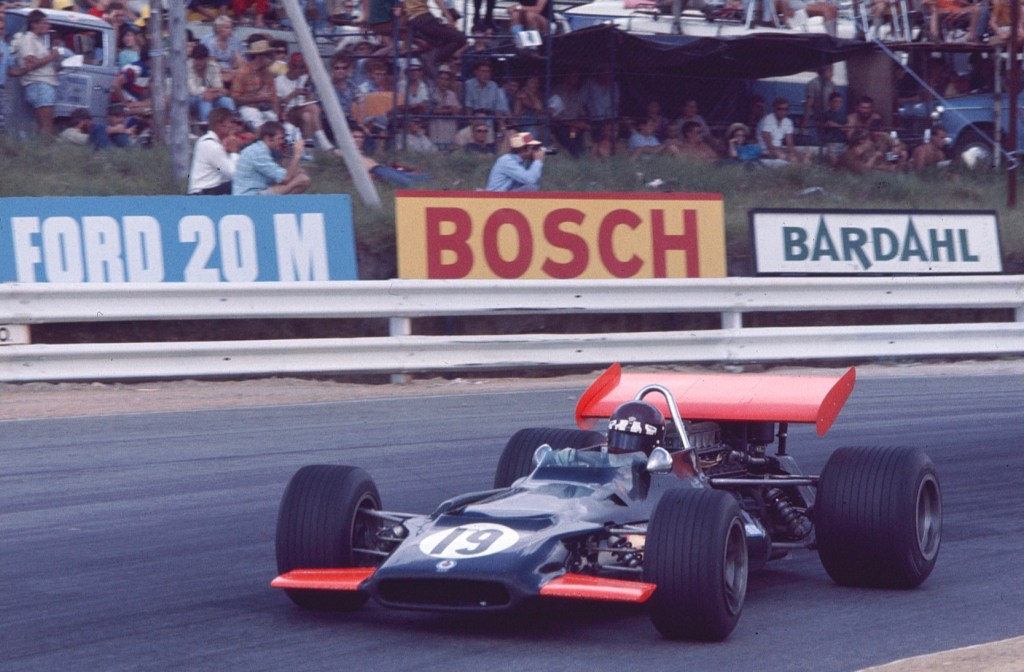
Oliver, Kyalami 1970 (MotorSport)

Racing the P153 in 1970…

“The car was immediately quick, but somewhat fragile. Our new number-one driver, Pedro Rodriguez, did a great job and became an instant star within the team. He was amazingly easy to work with, simply a natural, but not a technical driver like John Surtees.”

Frustrated with the lack of progress, and already building Surtees F5000 cars, Big John left to build and race his own F1 cars and to expand his range of customer cars. Jackie Oliver replaced him.

“I had some problems with the P153 in the beginning. A rear axle broke during Kyalami testing…then a similar problem at the front caused a famous fiery accident…” that destroyed both Oliver’s P153 and Jacky Ickx’ Ferrari 312B at Jarama, Spain.
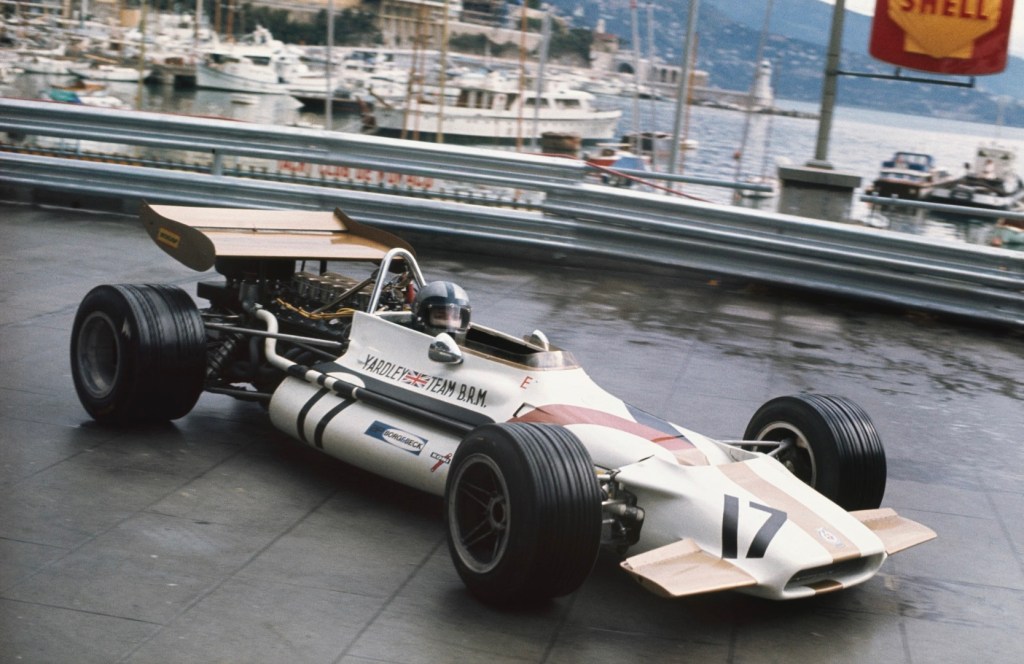
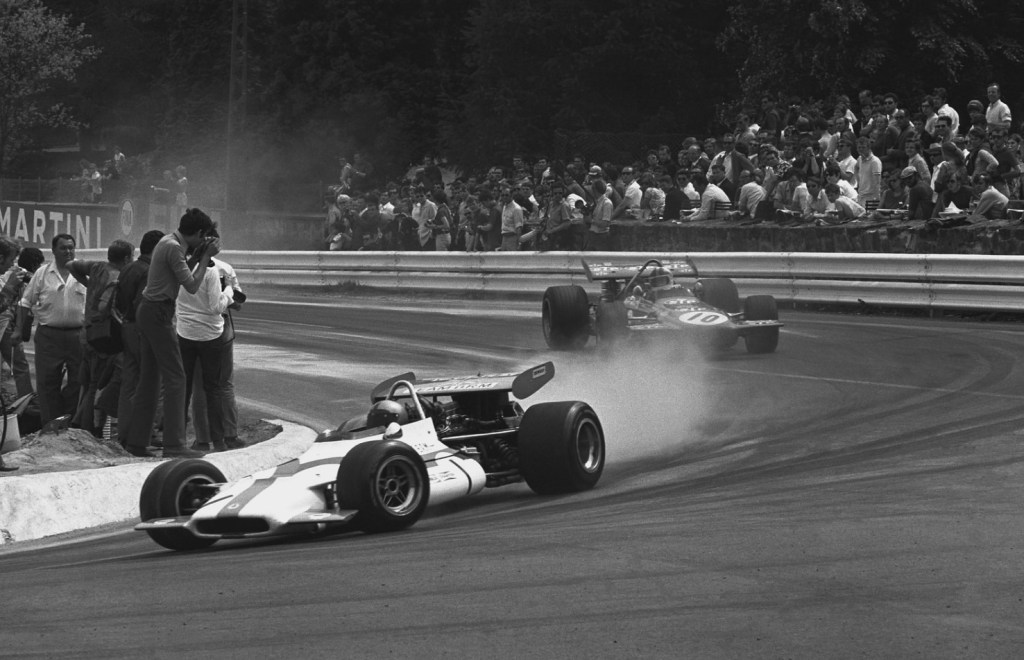
At Monaco the ‘commercial rot had set in’, or less emotionally, commercial reality, the pristine P153 pledged allegiance to Yardley. Not entirely though, George Eaton’s was in each-way bet livery as below: green car and Yardley-gold wings (MotorSport)
Pedro leads Chris at La Source during their titanic dice at Spa in 1970. That day the mighty BRM stayed together, Rodriguez sizeable wedding-tackle did the rest (MotorSport)

“Reliability was the main problem of 1970. The engine oil system was being particularly difficult. I tried ‘trick’ oil tanks, and by the time we got to the Belgian Grand Prix at Spa-Francorchamps, the oil-tank had grown to 4.5 gallons in capacity and was fed by 1.25 inch bore Aeroquip pipes (these were hardly hoses)! Miraculously, this did the job for a while. Pedro won the race after leading most of the way, closely caused by Chris Amon’s March 701 Ford. BRM was back…”

“But engine problems still dogged BRM throughput the year, although Pedro gained a second place in the US GP at Watkins Glen and a couple of fourths in other races, and he also won the non-championship Gold Cup at Oulton Park.”

Pedro was leading at Watkins Glen until a splash-and-dash pitstop for fuel, Doug Nye wrote. Fuel consumption had slipped from about 4.8mpg to 6mpg at St Jovite, the BRMs were forced to make pitstops in both Canada and the US as a consequence.

Southgate, “My thoughts on the engine problem were simple: the main bearings were all too small, too narrow. However, this was one of the main reasons the engine was so short. There was no chance of any major design changes in this area, so we had to do with lots of detail design improvements including even better oil tank systems.”

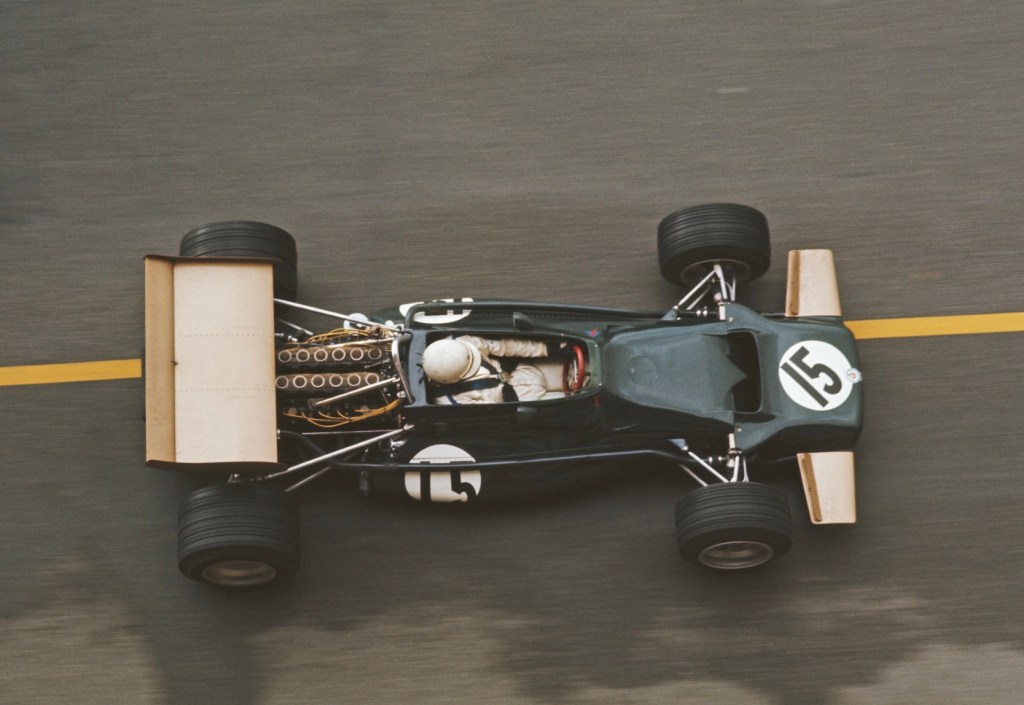
To Southgate’s point, look at the truly massive oil tanks under the BRM’s rear wing in the Mont Tremblant, Canada pitlane below; a few RPM were lost in aero-drag in that lot! Some of the fuel consumption problem is right there…
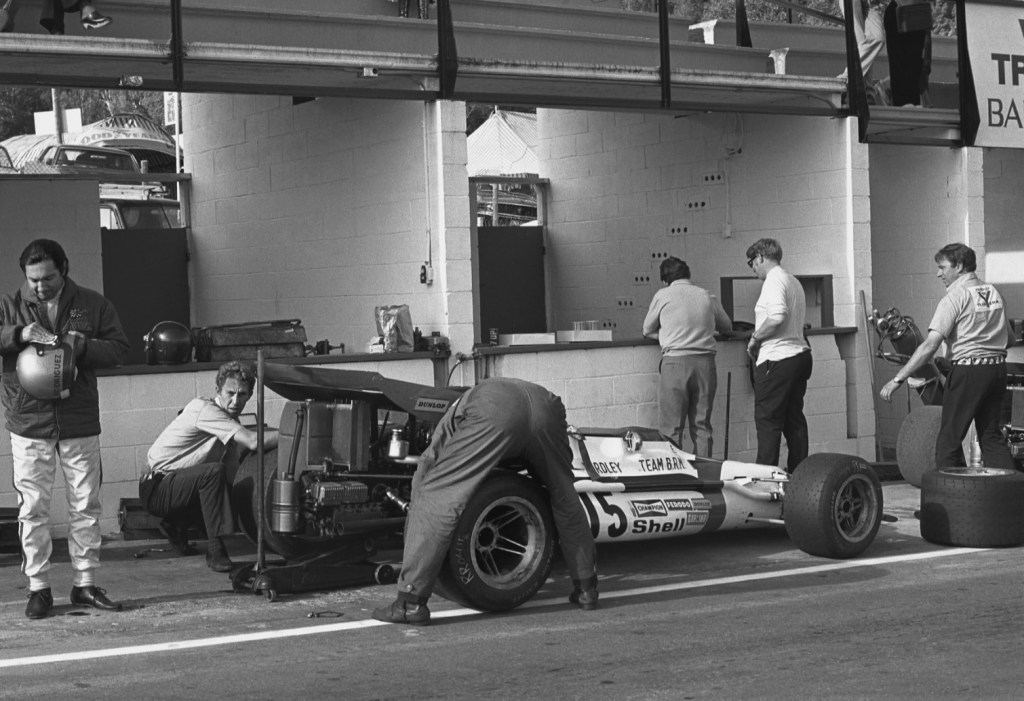
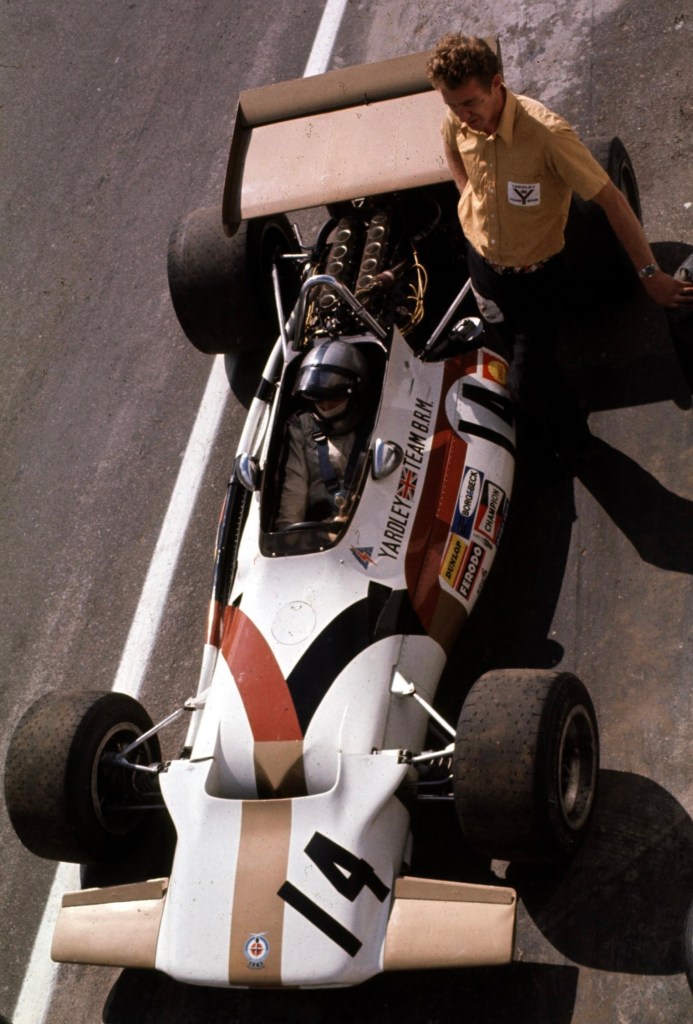
Pedro readies himself in the Mont Tremblant-St Jovite pitlane, fourth that weekend. #15 is Oliver’s P153 (LAT)
Pedro, Mont Tremblant 1970 (MotorSport)

In 1970 BRM finished 16 times from a total of 37 starts and placed sixth in the World Constructors Championship with Rodriguez seventh in the driver’s and Oliver a disappointing twentieth after retirements in 10 of the 13 rounds!

Nye, “Southgate produced the finest 3-litre BRM in 1971: the definitive chisel-nosed P160, a cleaner, lower, lighter development of the P153, though actually incorporating few interchangeable parts.” A story for another time folks…
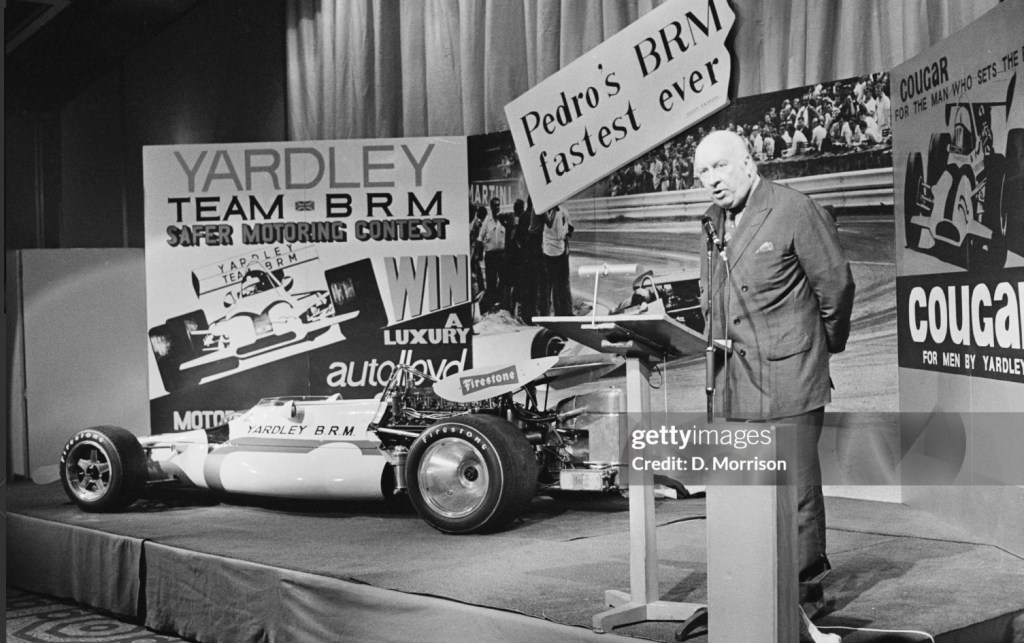
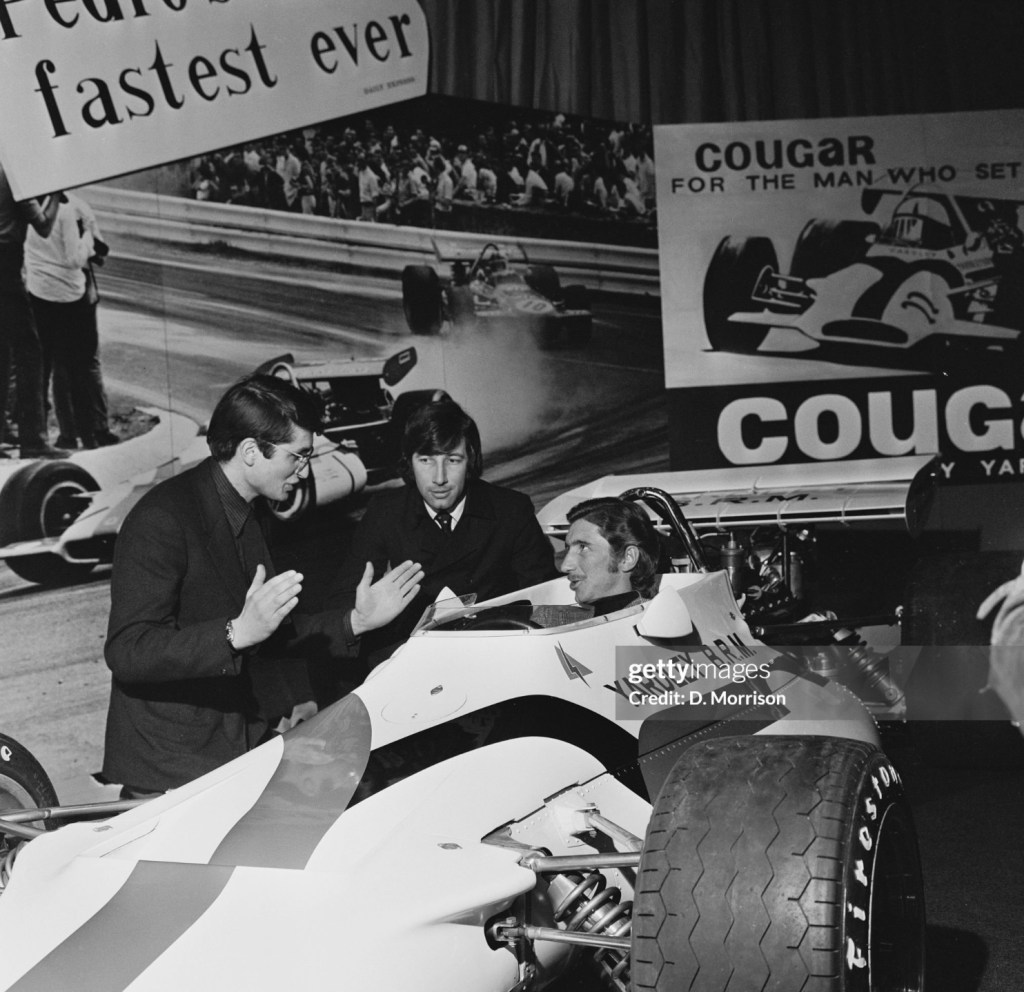
Big Lou extolls the virtues of the new BRM P160 and Cougar aftershave – ‘it’ll drive your mistress wild I tell you’ – place unknown, February 17, 1971

Etcetera…

(MotorSport)

A pair of compare and contrast shots: George Eaton, 1970 BRM P153 at Monaco in May 1970 above, and John Surtees, 1969 BRM P139 during the British GP meeting at Silverstone that July.

The photographer in the Surtees shot looks suspiciously like Rob Walker, he has wandered away from his car, Jo Siffert’s Lotus 49B Ford.
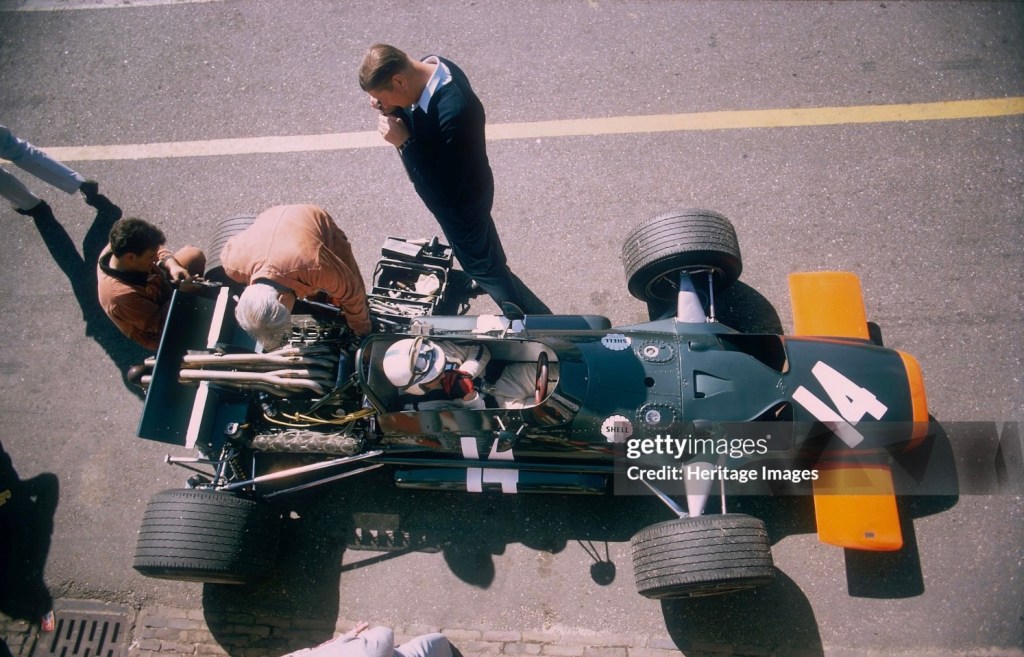
Note the flatter, wider aerodynamic form of the P153, partially informed by the wind tunnel, and earlier P138.

The front suspension of Southgate’s car comprises simpler outboard wishbones, the earlier car uses more complex to make, and more aerodynamic, top rocker and lower wishbone layout. Rear suspension is the same albeit the more advanced two-lower links on the P138 were replaced by Southgate with lower inverted wishbones.

The engine fitted to the P153 is 1970 spec P142 inlet between the vee and side exhaust, that to the P139 is a 1969 spec P142 centre-exhaust V12.
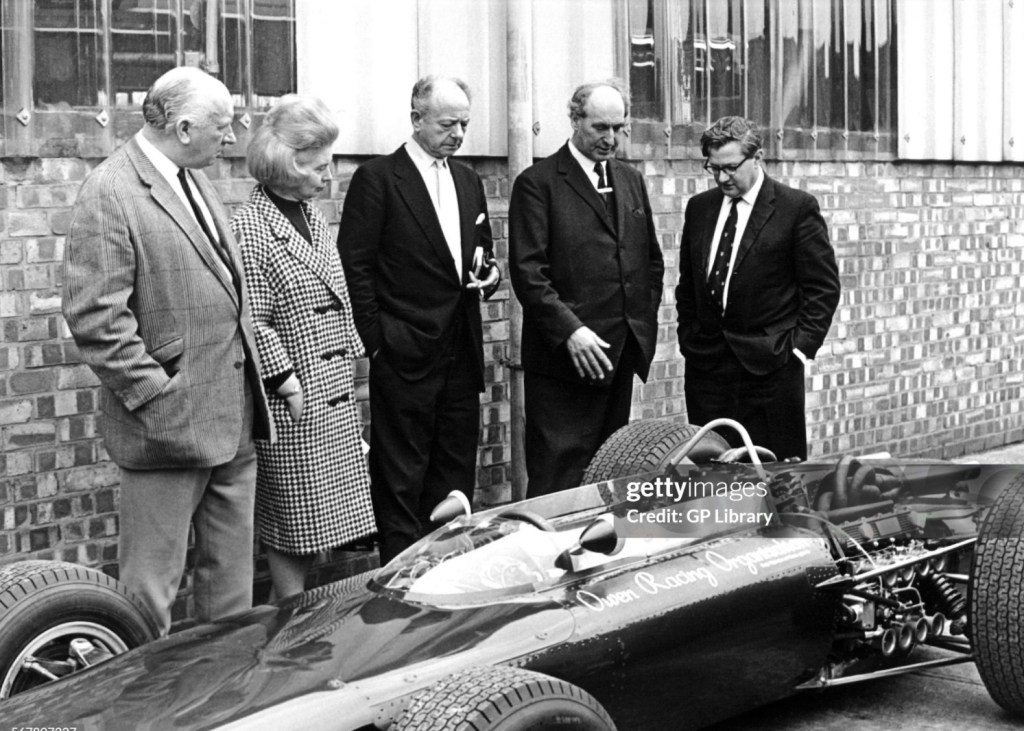
Louis Stanley, Jean Stanley nee-Owen, Raymond Mays, Sir Alfred Owen and Tony Rudd with a BRM P83 at Bourne, allegedly in 1969.

I say allegedly as by 1969 the H16 hadn’t been raced since late 1967, and it makes sense for the PR shot to be with the latest model, not the problem-child. The H-16’s solitary GP win was powering Jim Clark’s Lotus 43 at Watkins Glen in 1966.

In the best tradition of nepotism, Stanley’s power and position arises from his marriage to Jean Stanley, Alfred Owen’s sister.
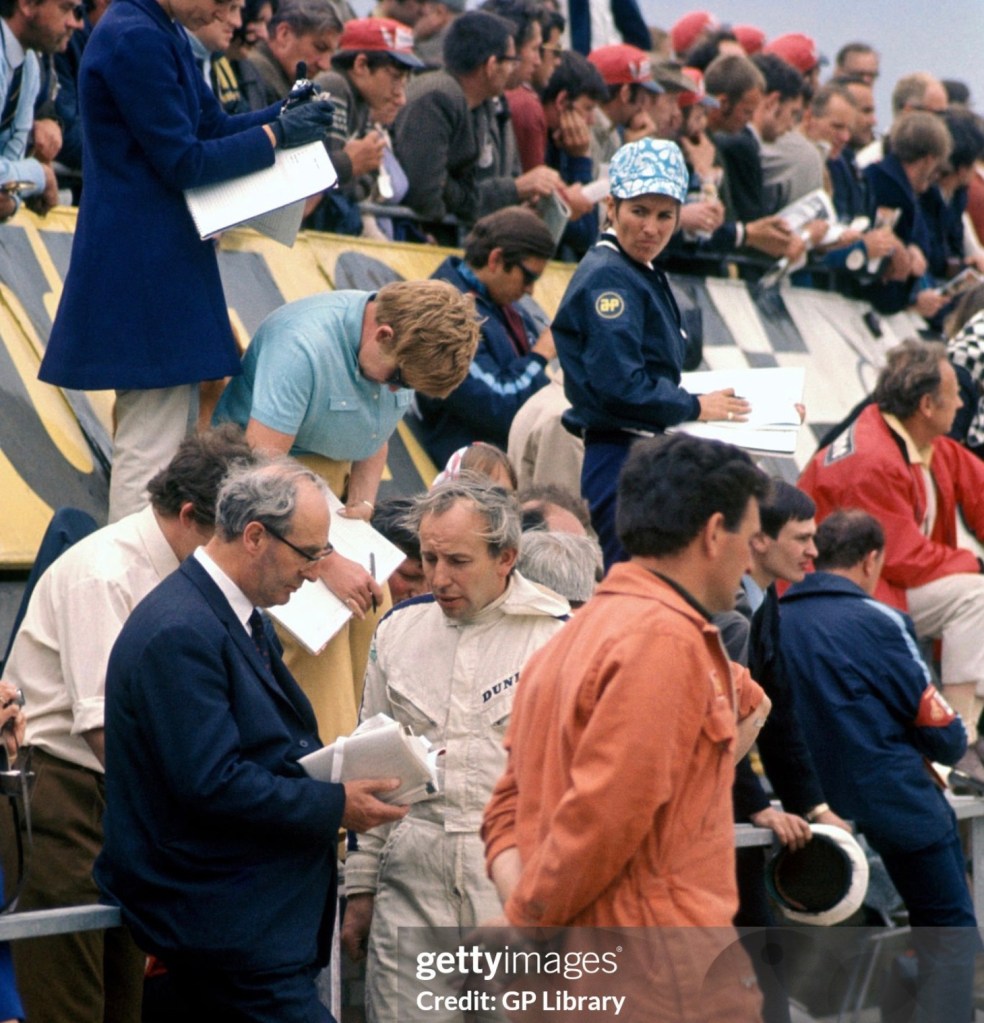
John Surtees tells it like it is to his boss, Sir Alfred Owen at Silverstone during the July 19, 1969 British GP meeting. Owen was a great industrialist and corporate leader, respected by all who came within his orbit. The AP-Lockheed lady is all over what’s going on, the rest are doing their best to look the other way…

Surtees qualified his BRM P139 sixth, and Oliver his P133 13th, Surtees was out with a suspension problem after completing one lap and Oliver on lap 20 when his transmission failed.

By that weekend Southgate was already onboard. He discloses in his autobiography that the approach for him to join BRM was made by Surtees in the US, John being delegated the task given his regular travel between the UK and US.
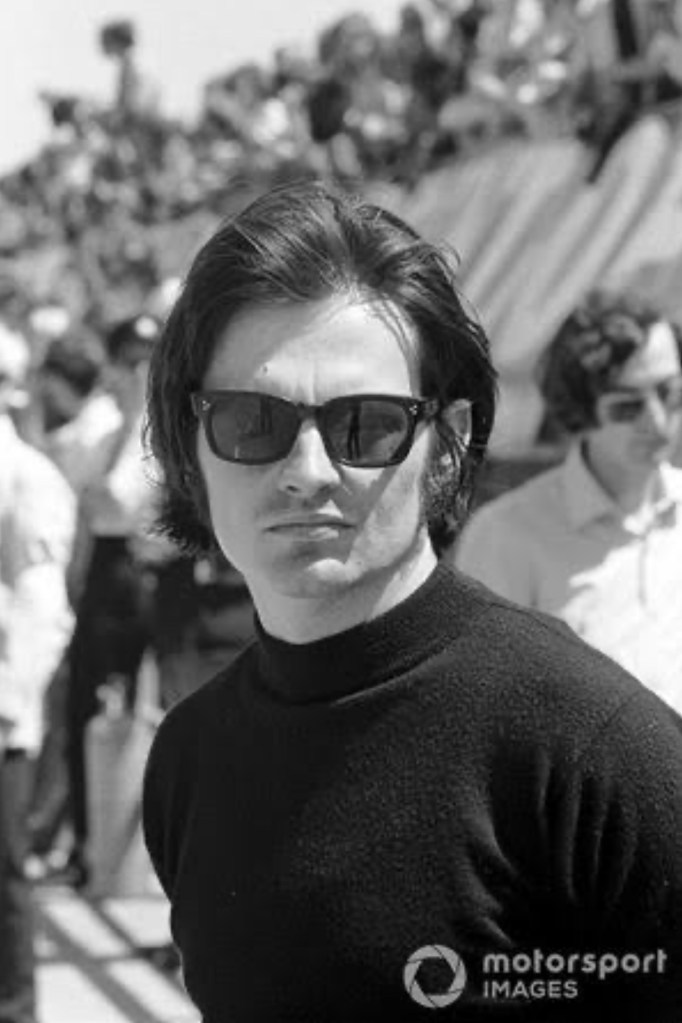
Lovely portrait of Tony Southgate (born May 25, 1940) at Silverstone during the July 1971 British GP weekend.

The funniest part of Southgate’s BRM chapters involves his first month at Bourne and running-the-gauntlet from the ageing (August 1, 1899-January 6, 1980) but still very frisky ‘Gay Ray’ Mays!

By that stage – the English Racing Automobiles and British Racing Motors founder – “RM had no particular job at BRM but he was still very much on the scene as a sort of ambassador.” As a handsome young bloke, Southgate was potential Mays’ fresh-meat despite the fact he was married.

Suffice it to say – and do re-read the chapter, in fact the whole fantastic book – after Tony declined to return RM’s car-keys to him to his bedroom, having borrowed said vehicle to visit the team mechanics across town earlier in the evening. Mays then refocussed his energies back on the hotel bell-boys for which he was somewhat infamous…
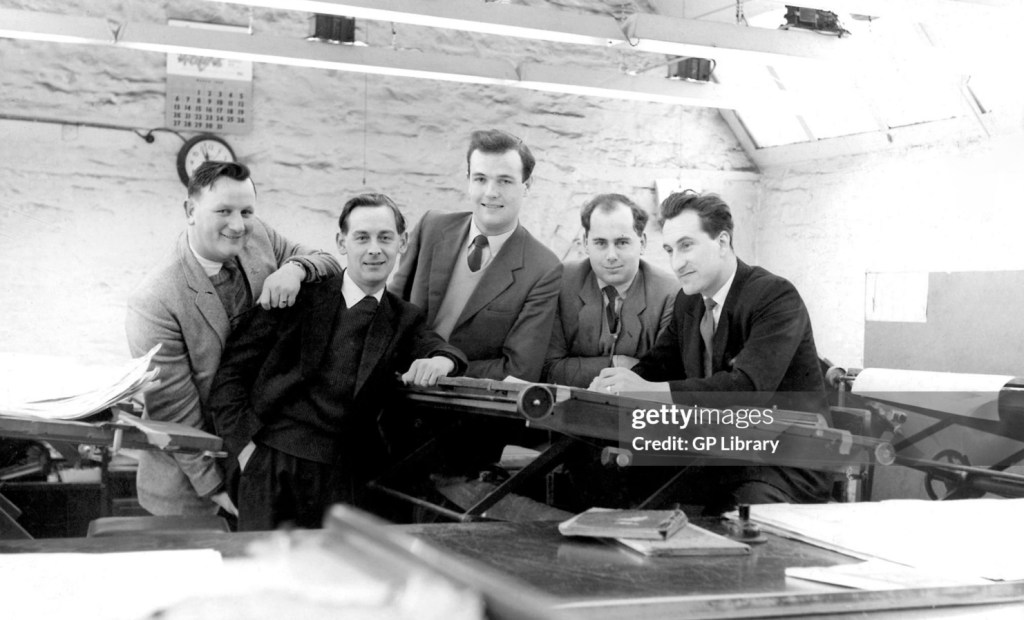
This fantastic shot of the BRM design team is diminished only because the caption cites four names rather than the requisite five!

Alec Stokes, Aubrey Woods, Alec Osborn and Geoff Johnson in 1959, who is missing folks? The drawing office was then located in the old maltings building behind Raymond Mays’ house.
(BRM Association Archive)

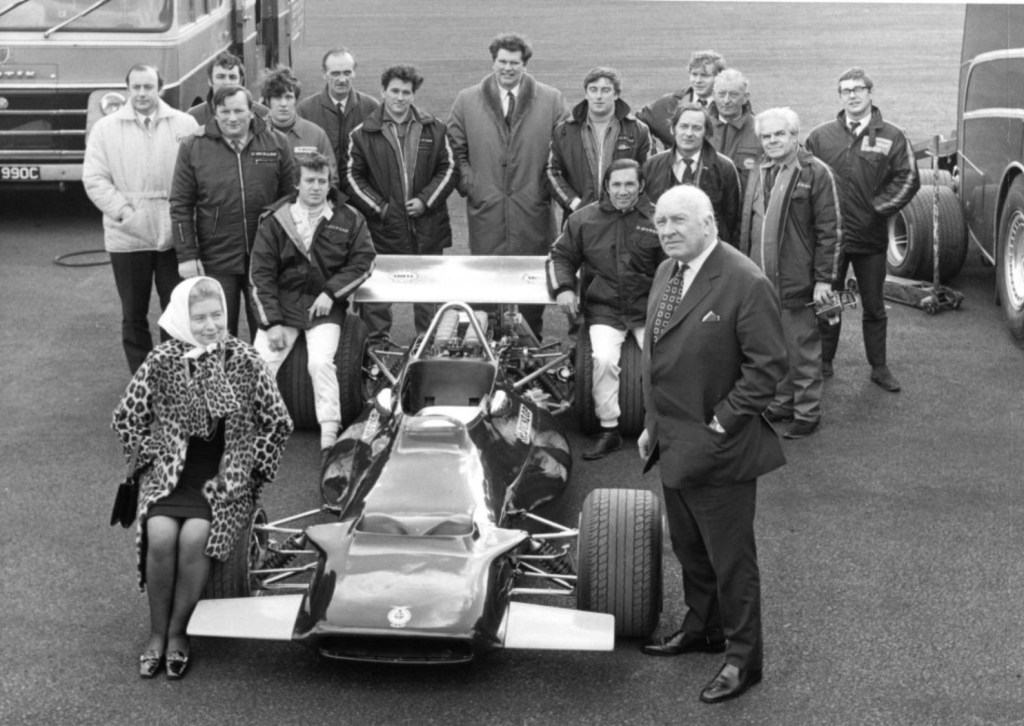
P153 launch at Silverstone, the car has grown a Dunlop decal since Snetterton in early January. Date folks?

From the left, back row – Dunlop employee Ken Spencer, Alec Stokes, Dave Mason, Len Reedman, Alan Challis, Tim Parnell, Gerry Van-Der-Weyden, Aubrey Woods, then two Shell employees, Willie Southcott, Dunlop employee. Centre Jackie Oliver and Pedro Rodriguez. Front, Jean and Louis Stanley.
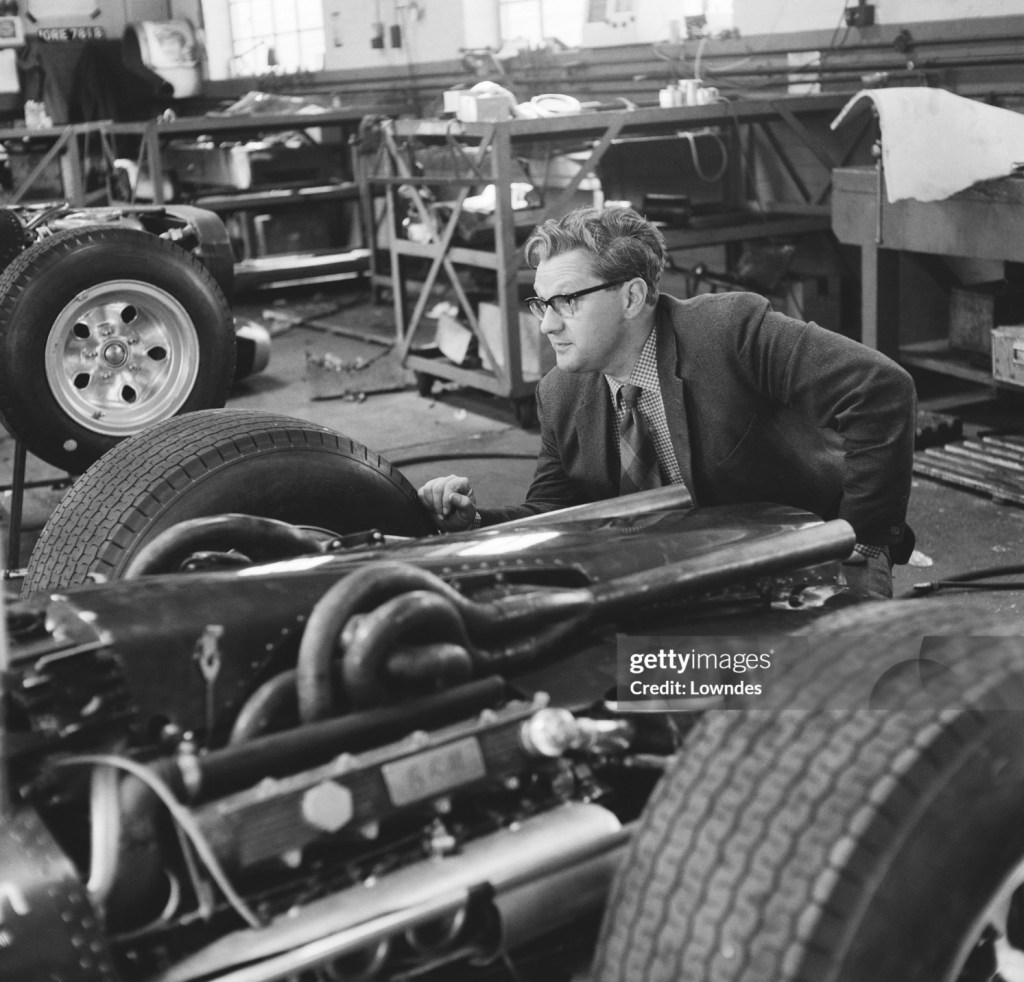
Tony Rudd with BRM P83 at Bourne on May 17, 1966.

I suspect there are a couple of generations of BRM fans like me who feel we almost know Tony Rudd thanks to the all-embracing manner in which he worked with Doug Nye to produce the magnificent ‘Saga of British Racing Motors’ Volumes 1-3, with Vol 4 in-the-pot at present.

There are so many documents and corporate reports contained within written by him that you can form an impression of the way he thought, operated and communicated as part of the team. There nothing to suggest he was anything other than someone to know, like, trust and respect…

He was clearly determined, and stubborn too…Doug Nye wrote that “the ultimate, much modified, magnesium block four-valve-per-cylinder H16 engine (yes 64 valves, 128 valve springs – imagine assembling it all) was completed and tested for 1968 but the policy decision was taken to set it aside and concentrate on the simpler, lighter V12.”

Despite that, “The engine continued in test as late as from 13 December 1968 to 25 January 1969. It was number ‘7541’ and the best of its eight runs peaked at only 378bhp at 10,300rpm; that was nothing like enough to compete with Cosworth’s DFV, which was already beyond 430bhp.”

It seems the catalyst, or straw that broke the camels back in terms of Rudd’s departure from BRM was pursuing the H16 for too long, contravening the policy direction of a year or so before. Southgate wrote that “Tony Rudd…hadn’t done what had been ordered, which was to drop the team’s H16 engine programme and proceed with the V12 only.”
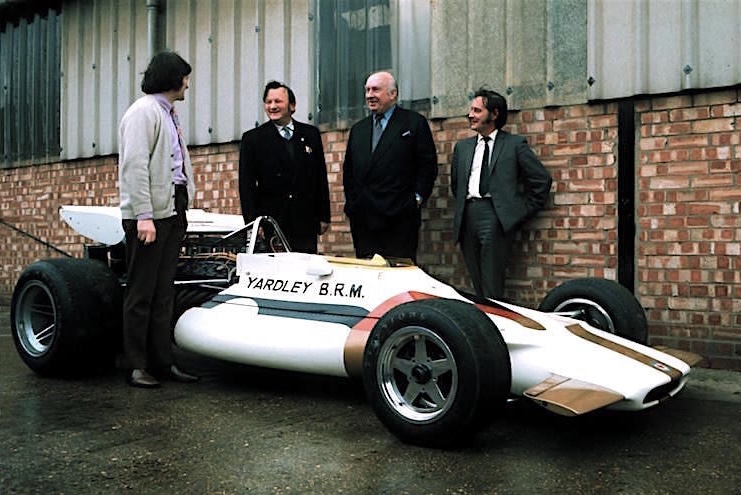
Clearly pink was in! Southgate, Alec Stokes, Stanley and Aubrey Woods perhaps at the time the Yardley deal was done. Bourne.
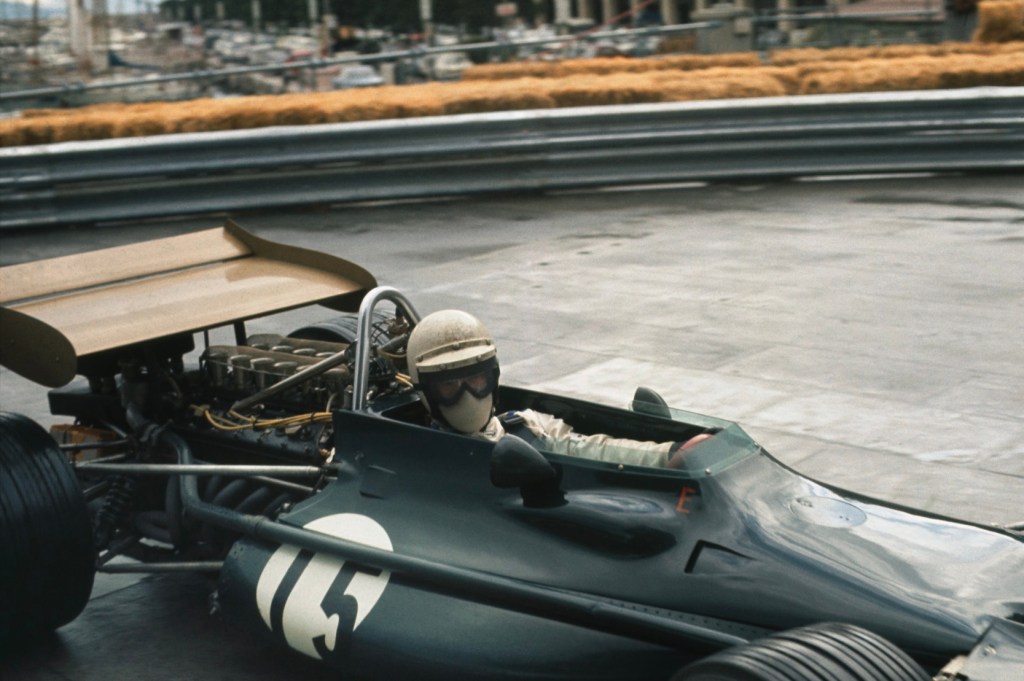
George Eaton, BRM P153, Monaco 1970 (MotorSport)

Every man and his poodle raced a BRM P153…

The long-lived machines, in P153, P153/P160B spec, were raced by a swag of drivers, many of them F1 virgins. The roll-call includes Rodriguez, Siffert, Oliver, George Eaton, Howden Ganley, Reine Wisell, Helmut Marko, Alex Soler-Roig, Vern Schuppan, Peter Westbury (DNQ US GP 1970) John Miles and John Cannon. Quite a list, in part due to Stanley’s crazy Marlboro-multiple-entry 1972 season and renta-ride availability.

Allen Brown’s chassis by chassis record of the seven P153s built from late 1969 to early 1971 is here: https://www.oldracingcars.com/brm/p153/ The shot below shows three BRM P153 pilots at Brands Hatch in early 1971: John Miles, Howden Ganley, and Jo Siffert in the car.
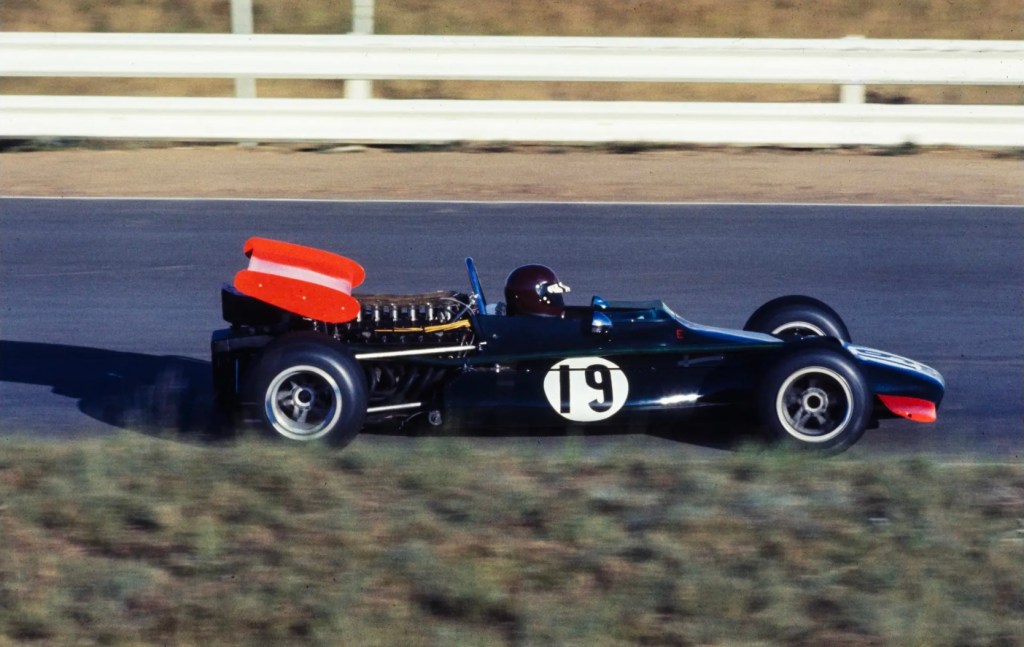
Jack Oliver, South African GP, Kyalami 1970 (MotorSport)

Credits…

‘Tony Southgate : From Drawing Board to Chequered Flag’ Tony Southgate, ‘History of The Grand Prix Car 1966-85’ Doug Nye, MotorSport Images, Rainer Schlegelmilch, Getty Images, GP Library, BRM Association Archive

Tailpiece…
(MotorSport)

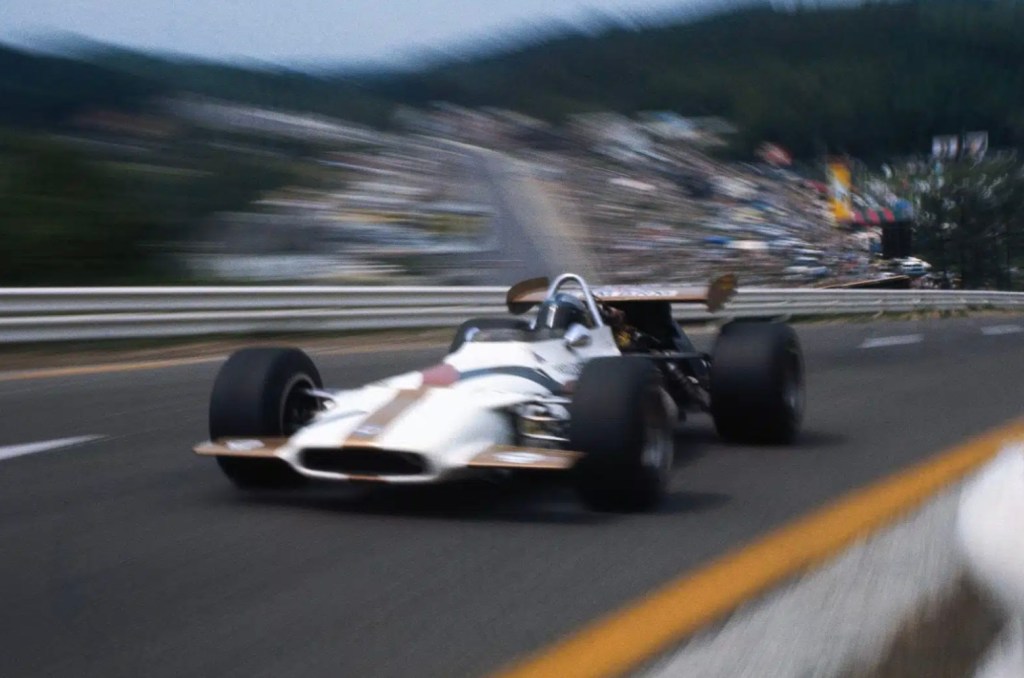
Superb MotorSport Images shot of Pedro Rodriguez blasting through Eau Rouge on his way to that hard-fought Belgian Grand Prix, P153 3-litre V12 win.

Any win at daunting Spa was pretty special, and Pedro had a few there, but that one must have been the sweetest of all given fabulous Chris Amon pushed him very hard all the way. It was the last Grand Prix held on the old circuit too…
(LAT)

Finito…

image

‘If she would just ease her grip a smidge it really would be perfect’…

Seems to be the look on Jackie Oliver’s face. He and the delightful young lady are aboard Jackie’s ’74 Can Am Championship winning Shadow DN4 Chev. It’s the London Olympia ‘Speedshow’ on 2 January 1975.

By 1974 the heyday of the greatest motor racing spectacle on the planet was over, the Porsche roller-coaster effectively did that in 1972/3 as well as some poor decision making by officialdom which drove the likes of Jim Hall from the series. Sans Chaparral the show was never quite the same.

Longtime Don Nichols driver Oliver didn’t have an easy time of it in 1974 though, his teammate and ’72 Can Am champ George Follmer gave him a serious run for his money. Oliver won 4 rounds, George followed him home in 3 of them. Scooter Patrick won the other round in an old McLaren M20 Chev.

image

Road America 1973. Oliver DNS in the championship race after an engine failure in the sprint event. Compare and contrast the 1973 DN2 with the 1974 DN4 below. Donohue won in a Porsche 917/30. #47 is Ed Felter McLaren M8E Chev DNF and #51 is not on the results data-base i have if anyone can assist (unattributed)

New cars for 1974, the DN4 design (below) was fundamentally smaller than the ’73 DN2 (above) and built around fuel cells of only 45 gallons, the legislators reaction to the oil crisis of the time. Track, wheelbase and overall width were less than the DN2. Southgate used some DN3 F1 hardware in the DN4, ‘the last great CanAm car’, but the layout-aluminium monocoque, Hewland LG ‘box and ally-block Chev, which still gave a reputed 800bhp were all CanAm standard issue. Albeit a brilliantly executed one which was driven mighty well by a couple of Group 7 veterans in Ollie and George…

Credits…

J Wilds, nwmaracing

Tailpiece: The ole DN4 one-two. Oliver from Follmer at Mosport on 16 June 1974, they finished in that order with Scooter Patrick 3rd in a McLaren M20 Chev…

ollie-mosport

(nwmaracing)


image

The spare Lotus 48 Ford FVA, chassis 48-2 during the Eifelrennen Euro F2 round in the Nurburgring pitlane on 24 April…

Oliver’s Lotus Components entered Lotus 41B was the most successful of the Lotus works entries, he finished 11th. The Team Lotus duo of Graham Hill were 15th with Clark retiring with fuel metering unit failure. The latter two drove Lotus 48 Ford FVA’s, Oliver’s car was an update of Lotus’ 1966 contender. Jochen Rindt won the race in a Brabham BT23 FVA.

image

Oliver on his way to 4th place and first F2 home during the Oulton Park Spring Trophy. His Lotus 41B was behind the Brabham Repco’s of Jack and Denny Hulme, and the Honda RA273 of John Surtees. 15 April 1967 (Brian Watson)

Oliver raced for the Charles Lucas factory Lotus F3 team in the second half of 1966, driving a Brabham BT18 Ford and Lotus 41 Ford finishing third in the Les Leston British F3 Championship, Harry Stiller won it from Chris Lambert.

For 1967 Oliver contested the British F2 Championship, finishing 5th, as well as many Euro F2 rounds, for 1968 he was a member of the ‘works’ F2 team racing Lotus 48’s together with Jim Clark and Graham Hill.

image

Lotus Team compound during the 25 June 1967 Reims GP weekend. The white car is Ollies Lotus 41B 7th. Jim Clark is talking to Jackie beside his car #8 Lotus 48 DNF, the car under the cover is the spare carrying #8. Hill is talking to the mechanics next to his chassis, 2nd. The race was won by ‘F2 King’, Rindt in a Brabham BT23 FVA (unattributed)

Then, in the worst of circumstances he ascended to the F1 team upon Jim Clark’s death at Hockenheim on 7 April during the second round of the 1968 Euro F2 Championship.

Oliver was 5th in the championship won that year by Henri Pescarolo’s Matra MS5 Ford, Rindt the dominant driver, as ever, in the category but ineligible for the title as a graded driver.

Olivers first Gold Leaf Team Lotus F1 race was the Monaco Grand Prix in which he qualified his Lotus 49B Ford 13th but was out on the first lap after colliding with Bruce McLaren.


image

Oliver Q10 in the Dutch dunes where the Lotus 49B made its victorious debut in Clark’s hands the year before. He was non-classified having done insufficient laps. Jackie Stewart won in a Matra MS10 Ford (unattributed)


In a character building year, he had a monster accident at during French GP practice when the cars rear wing support failed-pinging the fence of a chateau on an amazing 125mph trip thru the Rouen countryside. He was able to walk away but the car was hors ‘d combat, so that was his meeting.


image

Oliver reflecting on life after a wild, wild, wingless ride thru rural France. Whilst his mechanic reflects on the long night ahead (sic) Jackie is sussing out his DG300 box and rear suspension which is 50 metres back up the road from whence he came (unattributed)


image

The chateau gates Oliver hit are to the right past the Lotus 49’s rear end (unattributed)


image

Chapman, Hill and Oliver during the tough 1968 season (unattributed)


His best result from a year in which Graham Hills tour de force of leadership gave him and the team world titles was Q2 in his home race at Brands Hatch, the race won by Jo Sifferts Rob Walker Lotus 49B, and 3rd in the season ending Mexican GP, Hill was the winner of that race.


image

Oliver DNF gearbox after qualifying 2nd, ahead of Jo Siffert 1st both in Lotus 49B’s, Chris Amon 2nd, Ferrari 312, the last car in the group Surtees Honda RA301 5th (Getty)


image

Oliver leads Pedro Rodriguez BRM P133, 3rd and 4th in the 1968 Mexican GP, 3 November. Hill won from Bruce McLaren (unattributed)


For 1969 Jackie was off to BRM, Jochen Rindt took his Lotus seat for 1969 in an ‘all star’ team with Hill. It was a tough year in  1969 as BRM had  ‘lost their way’ in a design sense, the P133/138/139 uncompetitive, better was to come  in 1970 with the Tony Southgate designed P153.


image

Oliver, BRM P133 Monaco GP 1969 , Q13 and DNF with an accident of lap 1. Hill won in a Lotus 49B Ford (Schlegelmilch)


image

Jack Oliver giving his brand new BRM P153 V12 plenty during the season opening South African GP weeeknd at Kyalami in March 1970. Car looks gorgeous without its Yardley branding! Brabham won in a Brabham BT33 Ford, Oliver DNF with gearbox dramas (unattributed)


Chapman waxed and waned between monocoques and space frame chassis for his ‘small bore’, production single-seaters throughout the 1960’s…

Whilst the marketing advantage of a you-beaut monocoque ‘just like Jim Clark’s Lotus 25’ was clear, equally the relative cost of repair of a spaceframe, especially in the field, a long way from the Norfolk was something which wasn’t lost on a lot of customers. Local garagiste ‘Louis the Torch’ may have been able to fix bent RF corner tubes, but he was less likely to be able to assist with curved sheet metal/aluminium complexities…

Statistically the most successful FJ/F3/F2/FB cars of the 1960’s were Ron Tauranac’s spaceframe Brabhams which were built to a consistent design philosophy throughout.

The cars were simple, strong, fast and forgiving straight outta the box. The latter because Jacks ‘finely tuned arse’ in testing contributed the ex-factory suspension settings which could be relied upon as a competitive, starting position by customers. Plenty of championships were won by not straying too far from them.


image

Jim Clark, Pau GP, 25 April 1965, victorious in his Lotus 35 Cosworth Ford SCA from Richard Attwood’s Lola T60 and Jochen Rindt’s Brabham BT16, both also SCA powered (unattributed)


Lotus Components 1965 F2/3 car was the monocoque 35, a modified version of the 1964 32, with Clark winning plenty of races in the car including the  Trophee de France, the Scot won 3 of the 4 rounds.

Aussie John Joyce (later the designer of magnificent Bowin racing cars when he returned to Australia) with assistance from Dave Baldwin were briefed to build a spaceframe F3/F2 frame for 1966 designated the 41. The Lotus brains trust were having second thoughts about monocoque chassis suitability in the junior classes. Issues were cost, weight and utility and expense of repair. The 41 was raced from 1966 to 1968 and whilst a good car didn’t have the factory support needed to further develop it, the exception the Lotus Components 41 raced by Oliver. The chassis was also raced in the US FB class.


image

Pau GP, ’65 JC ponders setup changes on his monocoque Lotus 25 inspired 35 (unattributed)


The works Lotus F2 car for 1967, the first year of the 1.6 litre F2, the Lotus 48 was a monocoque, the car Oliver raced was the customer 41B, a spaceframe.

Both cars were comprehensively blown off by Tauranac’s Brabham BT23 which had some mighty fine pilots; aces like Rindt, but also coming drivers who extracted all the performance the car had to offer. The Matra F2’s, the MS5 and MS7 were also fairly tidy, fast (monocoque) devices…


image

Leo Geoghegan, Australian Gold Star Champion in a Lotus 59 Waggott 2 litre in 1970. Here at Oran Park, Sydney that year (oldracephotos.com)


Chapman’s 1969 F3/F2 car, the Dave Baldwin designed 59 was a spaceframe. Its successor, the final Lotus production racing cars produced in volumes, the 1970 69 was a spaceframe for FF/F3 (spaceframe chassis are mandated in FF) and a monocoque for F2. Go figure!? Mind you, the 59 and 69 were very effective, successful tools whatever the variant.


image

Jochen Rindt doing his thing in his Lotus 69 FVA during the Crystal Palace Euro F2 round, the ‘London Trophy’ on 25 May 1970. Jochen’s car DNF battery lead, Jackie Stewart’s John Coombs Brabham BT30 FVA won the race. The 69, a monocoque, was a mighty fine car in the hands of the works and customers, competitive into 1971 (unattributed)


These Lotus chassis changes are only of arcane interest over the decade I guess. Perhaps the reasons for the choices were simply the opinions and preferences of the individual designer who worked on each cars design or layout, not that I am suggesting Chapman ever lacked clarity about design direction or objectives!

In terms of the general specifications of F2 cars of the early 1.6 litre Formula, those and that of the engine de jour, the Ford Cosworth FVA 1.6 litre unit are well covered in my article on the Lotus 48, click here to read it, there is no point repeating it all;

https://primotipo.com/?s=lotus+48


ollie

Lynn Oliver, Monaco 1968. Husband Jackie and Bruce McLaren collided on the first lap, both DNF. Car is Lotus 49B Ford, Graham Hill’s sister car won (Schlegelmilch)

Credits…

Rainer Schlegelmilch, Brian Watson, oldracephotos.com, Getty Images

Tailpiece: Ollie’s Lotus 48 aerobatics at Klostertal during the ’67 German GP weekend, he was the F2 category winner…

image

(Schlegelmilch)

In a great performance Jackie was 5th in a Lotus 48, the race won by Denny Hulme’s Brabham BT24 Repco

Finito…


racing car show

(David Lawson)

Lotus stand at the ’69 Racing Car Show, sports-racer Type 47 and F3 Type 59 to the fore…

Both models are Loti i always had a hankering for, there were several 47’s which raced for years in Australia in  a variety of classes and a 59 won the Australian Drivers Championship, the ‘Gold Star’ in 1970.

fittipaldi

Emerson Fittipaldi contesting the 1969 Guards Int Trophy at Brands Hatch on 1 Sept 1969. His Jim Russell Lotus 59 Ford was 3rd to Reine Wisell Chevron B15 Ford and Tim Schenken BT28 Ford, all racing in F1 in 1971- Emerson and Reine for GLT Lotus, Tim for Brabham (unattributed)

Back to the UK in 1969, the works ‘Gold Leaf Team Lotus’ 59’s were raced by American Roy Pike and Brit Mo Nunn (later Ensign F1 designer/supremo) with Aussie Dave Walker in a ‘Lotus Components’ entry (the constructor of Lotus customer racing cars).

Emerson Fittipaldi raced a Jim Russell Lotus 59 entry winning the 1969 British championship and making his GP debut at Brands Hatch in 1970.

dave walker monaco

Dave Walker in the GLTL Lotus 59 during the 1970 Monaco F3 GP, 9 May. He is threading his 8th placed car thru typical Monaco carnage. Tony Trimmer won in a Brabham BT28 Ford, Walker dominated F3 in 1971 including a GLTL Lotus 69 Ford Monaco F3 GP win (Simon Lewis)


47 paintinfg

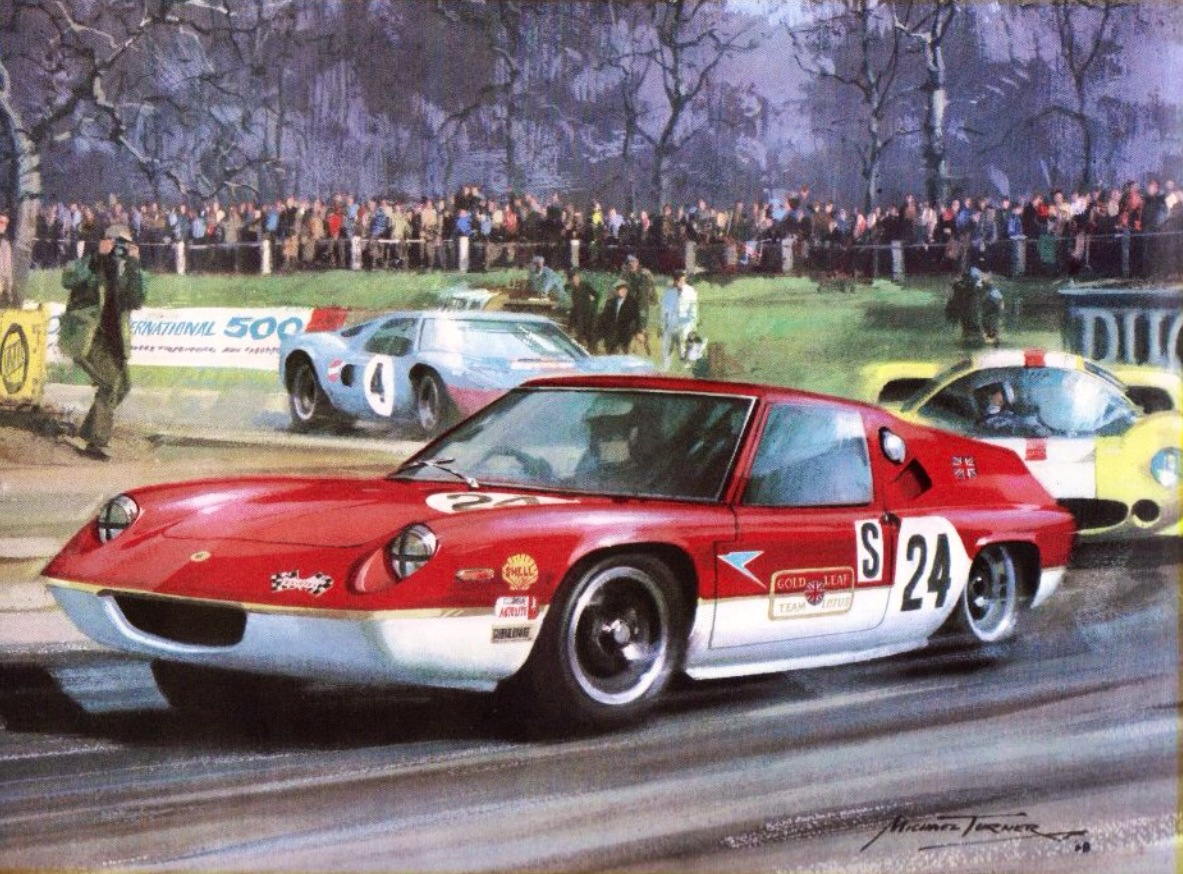
The Oliver/Miles GLTL Lotus 47 is depicted ahead of the Bonnier/Sten Axelsson Lola T70 Mk3 Chev 6th and winning Ickx/Redman Ford GT40, Brands 6 Hour, 7 April 1968, the day of Jim Clark’s death (Michael Turner)

The 47 was raced in the 1968 Brands Hatch 6 Hours in GLTL colors by Jackie Oliver and John Miles finishing in tenth place in the race won by the Ickx/Redman Ford GT40.

In 1969 the works team raced the Lotus 62 with the GM derived Vauxhall/Lotus LV220 DOHC 4 valve engine, the 47 powered by the venerable Ford/Lotus twin-cam, a Hewland FT200 gearbox used in place of the standard Renault unit.

Whilst the 62 looked a bit like the 47 it shared a few body panels only; its spaceframe chassis was bespoke (2 built) and engines as noted above totally different.

47 silvers

John Miles Lotus 47.  ‘Silverstone Players Trophy’ meeting 27 April 1968 (Simon Lewis)


lotus 47 cutaway

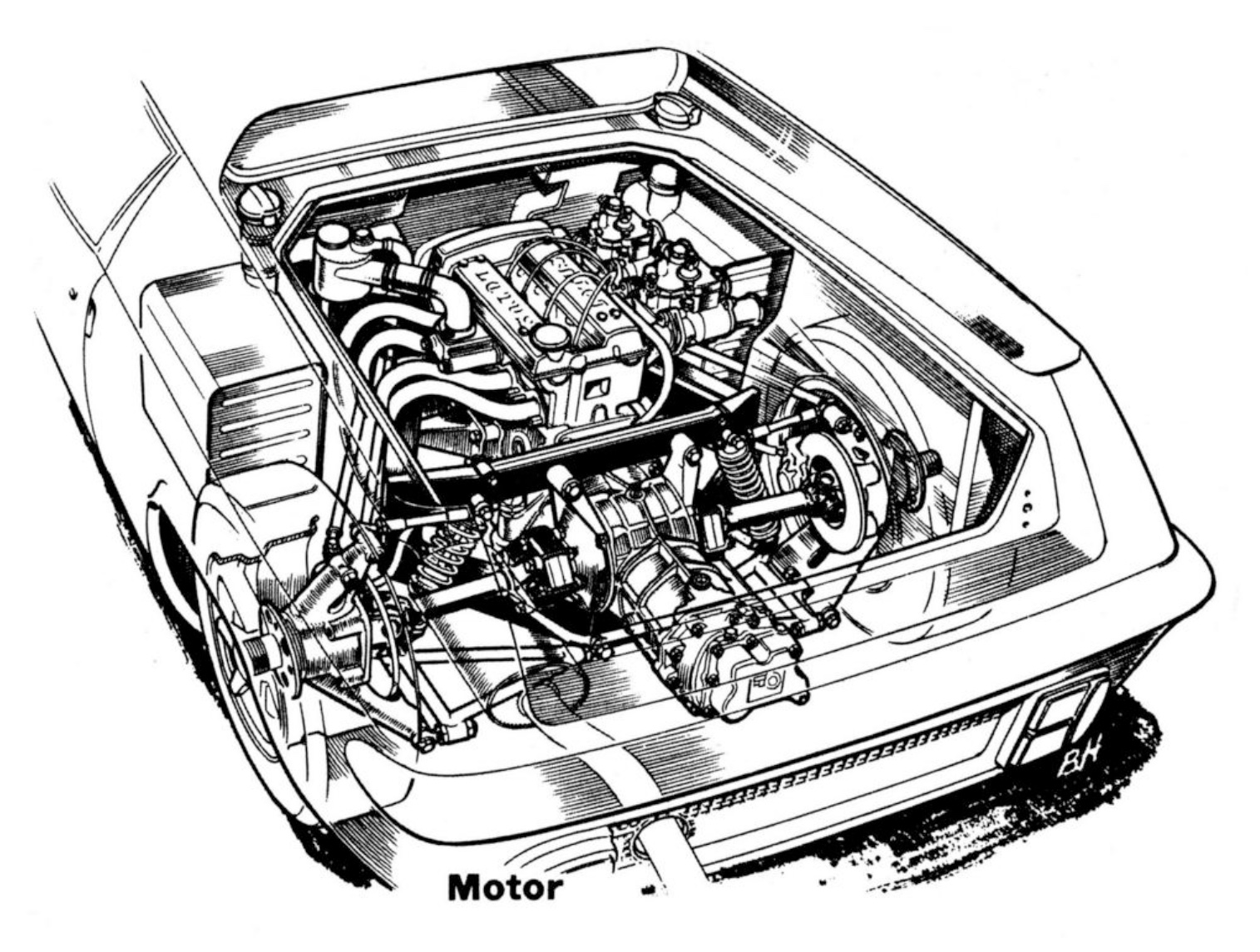
Lotus 47 cutaway; backbone chassis, front suspension upper and lower wishbones and coil spring/damper units. Rear suspension top link, lower wishbone and radius rods. Engine Ford/Lotus twin cam 2 valve, power depending on spec from 160-190bhp. Gearbox Hewland FT200 5 speed , Brakes ventilated disc all round (unattributed)


Lotus 47 engine, gearbox and suspension detail (B Hayton)

Geoghegan’s Sporty Cars 47…

It was inevitable that the Geoghegan brothers would import a Lotus 47 to Australia albeit the cars didn’t fit neatly into our sportscar class structure where the majority of races were short sprints rather than the longer events for which the cars were really designed.

(C Haigh)

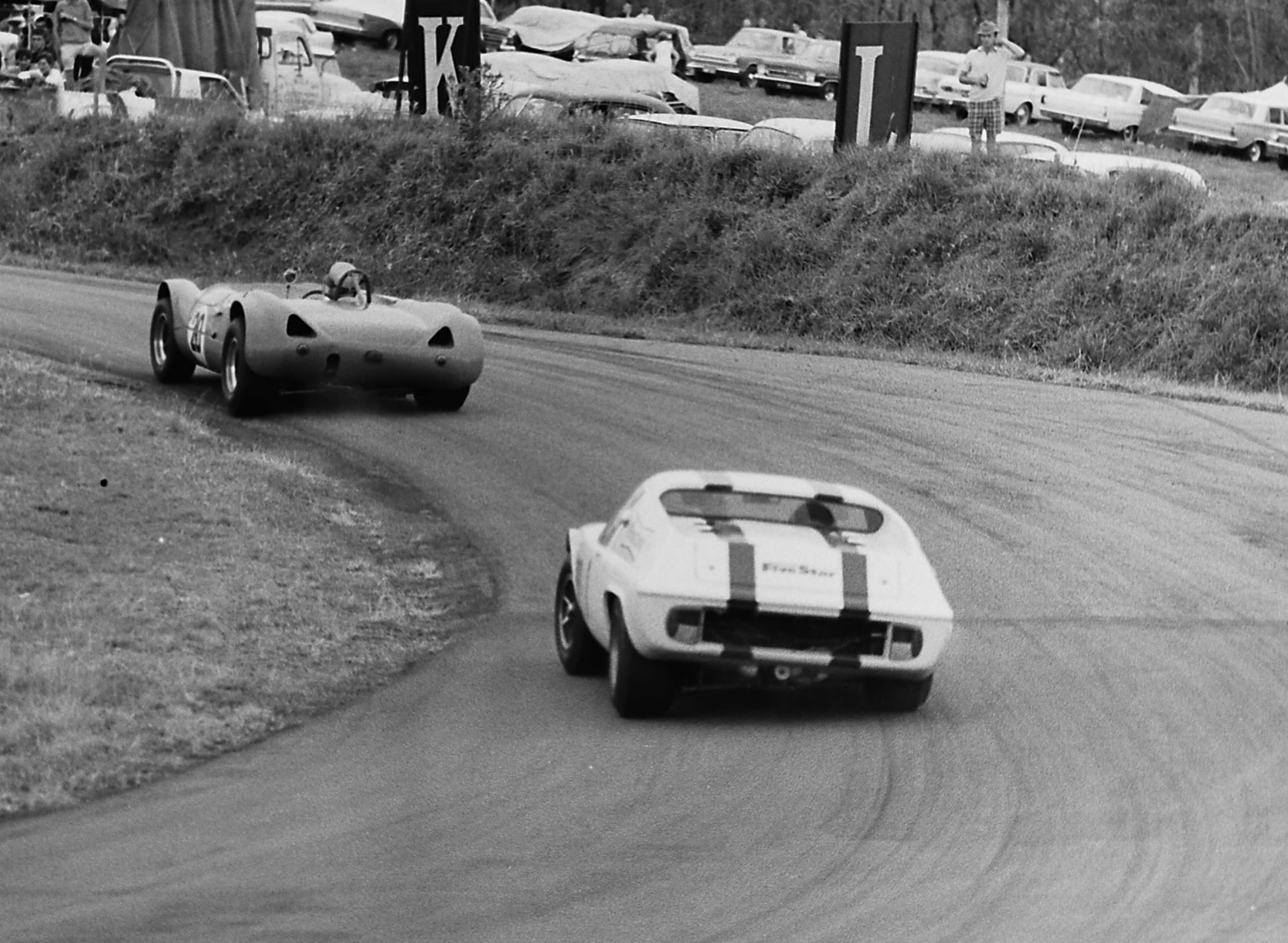
The point is illustrated by Leo’s challenge in keeping up with the Lotus 23B Ford at Lakeside above circa 1968, whilst the gorgeous silhouette of the car is shown in the shot below at Hell Corner, Bathurst where he is trying to hold off his old Elan 26R being driven by Niel Allen.

(C Haigh)


(C Haigh)

The last two shots are at Lakeside, the one above is Leo and the 23B lapping slower machines- get in touch if you can identify the cars/drivers.

(C Haigh)

Photo Credits…

David Lawson, Simon Lewis, Chris Haigh

Finito…


stewart spain

(unattributed)

Jackie Stewart passes the burning molten alloy remains of Jackie Oliver’s BRM P153 and Jacky Ickx’ Ferrari 312B, fortunately both drivers escaped with only minor injuries, burns in Ickx’ case, lucky, it could have been much worse…

On the first of the 90 lap 19 April 1970 event Oliver had a suspension failure at the Ciudalcampo, Jarama, Madrid circuit, ploughing into Ickx and puncturing his fuel tank. The other P153 BRM of Pedro Rodriguez was withdrawn as a precautionary measure, Ollie reported stub axle failure as the accident’s cause.

ickx ablaze

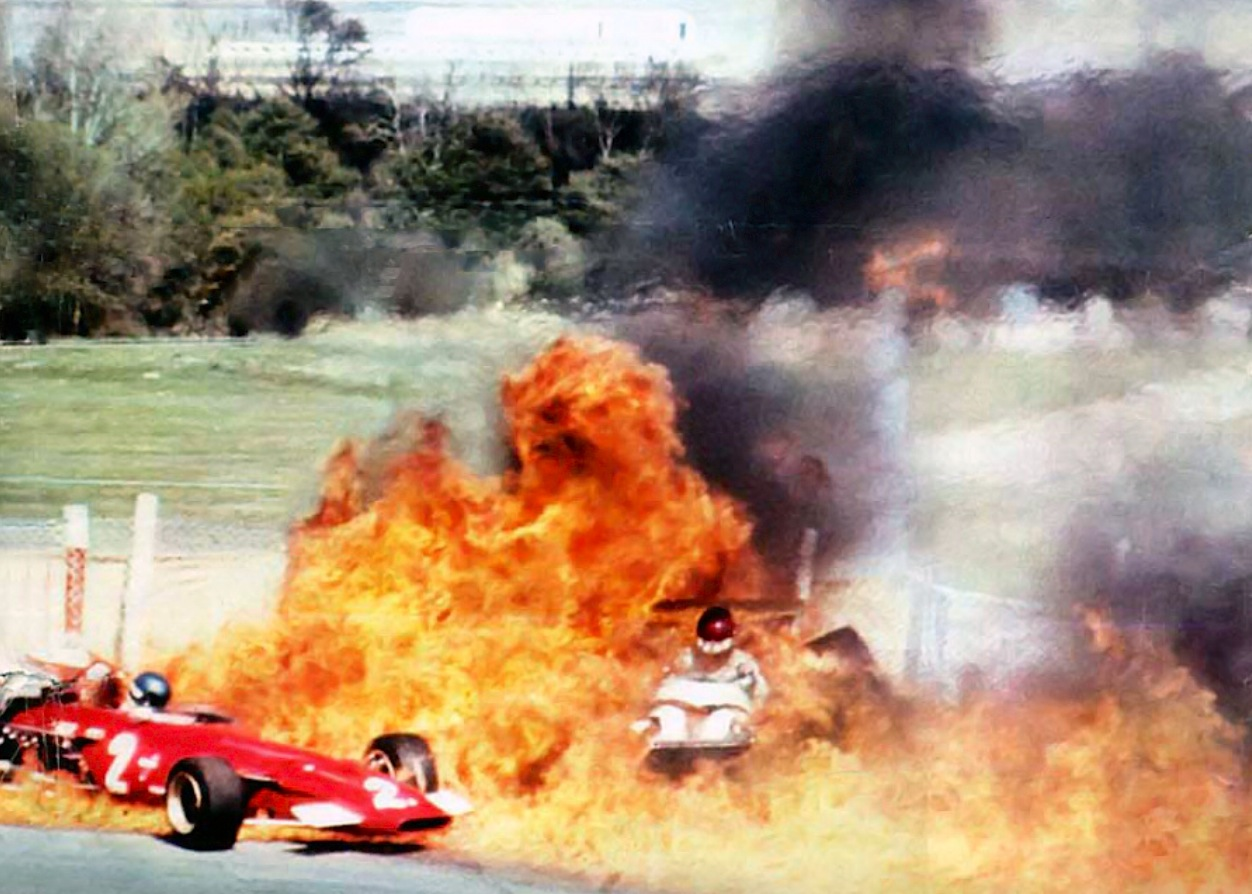
#2 Ickx Ferrari 312B and Oliver’s white BRM P153, inside an inferno. ‘Bag type’ safety bladder fuel tanks mandated from the start of the 1970 season. The FIA at this time, pretty much year by year changed the regulations to improve safety around fuel tanks; safety foam around tanks in ’72, crushable structures around tanks in ’73, self-seal breakaway tank/hose coupling in ’74. (unattributed)


conflagration

The full horror of the situation confronting the two drivers; Oliver has punched the release on his Willans 6 point harness and is jumping out of the BRM, Ickx is in the process of popping his Britax Ferrari belts. Johnny Servoz-Gavin’s Tyrrell March 701 Ford 5th passes. (unattributed)


ickx

Ickx disoriented and on fire in search of a marshall (Automobile Year 18)


ickx running

A soldier beckons in Jacky’s direction. (Automobile Year 18)


ickx on the ground

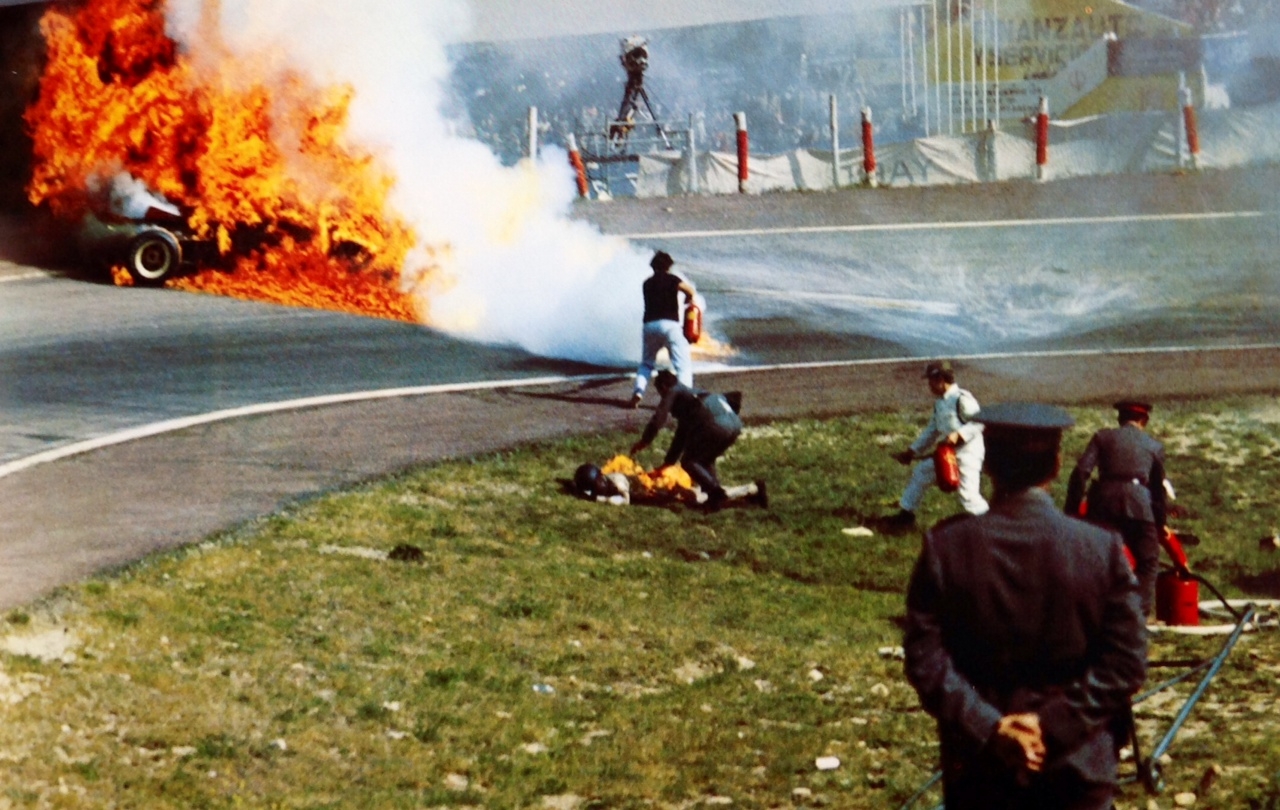
The soldier, not a marshall puts Ickx’ overalls fire out. At this stage foam is being sprayed on the car fire but the foam extinguishers were soon emptied leaving water only, the impact on the molten magnesium componentry was to make the fire worse. (Automobile Year 18)

Jack Brabham’s Brabham BT33 Ford was on pole, reinforcing the speed of Ron Tauranac’s first monocoque GP contender, but Jackie Stewart won the race in one of his least favourite cars, the March 701 Ford.

The accident happened at the ‘Esses Bugatti’, a stub axle failed and Oliver’s BRM rammed Ickx’ Ferrari puncturing its fuel tanks and releasing 45 gallons of avgas, a similar amount aboard the BRM. Oliver got out quickly, Ickx finally emerged with his overalls on fire, the flames were put out by a soldier. Ickx suffered as a result of keeping his fuel soaked overalls on.

‘The accident created race havoc, not only the visibility being dangerously reduced for drivers…but the flaming petrol constituted another hazard. The fire-fighting was abysmal, vast quantities of water being hosed on the flames for a long time-a procedure which caused the magnesium elements to ‘gas’ and flare up time and time again. The BRM was still burning at the end of the race, but miraculously no-one was hurt’ the Automobile Year race report said.

Stewart didn’t have the race to himself; he initially pulled away from Brabham and Hulme, electronic dramas causing the Kiwi’s demise. Despite spinning twice Jack chased Stewart and Pescarolo, taking second when the Frenchman’s Matra V12 seized, he was five seconds behind JYS. Only a few metres separated them when Brabham’s Ford Cosworth failed, allowing Jackie to ease off to take victory.

Bruce McLaren was second, McLaren M14A and Mario Andretti in another privately entered March 701, third.

jack spin spain

The 1970 speed of BT33 was reinforced by Jack’s pole. He won the season opening South African GP. Here spinning on the ‘extinguisher foam rink’. He spun twice but despite that was right on Stewart’s tail when his engine blew. Jarama 1970. (unattributed)

Jarama 1970 was also notable for the race debut of Chapman’s latest design the Lotus 72.

Jochen Rindt qualified his 8th, John Miles in the sister car did not make the cut. Rindt was out of the race on lap 8 with ignition failure.

It would take intensive development by Colin Chapman and his team to make the car competitive, the cars monocoques had to be ‘unpicked’ to make the suspension changes to eliminate a lot of the anti-dive/squat geometry and many other modifications but by June they had a winning car; victorious for Rindt in the sad Dutch Grand Prix, unfortunately the fire on that day had far more serious, fatal consequences for Piers Courage and his De Tomaso 505 Ford.

The sad reality of days like Jarama and Zandvoort in 1970, look how ill equipped in terms of fire protective clothing the marshalls are in the photos above, was the acceptance that safety standards in every respect; circuits, car construction and race support services had to improve to societal levels of acceptability. Thankfully we are on a different level in every respect today…

rindt spain

Rindt, Lotus 72 Ford, Jarama 1970. Look at the suspension travel on that early 72! (unattributed)


jochen

Jochen and Colin making a long joblist during Spanish GP practice. The car which won at the Dutch GP in June was a 72C which shows how much change there was in 2 short months. ‘Sol’ pitboard is Alex Soler-Roig who failed to qualify a Lotus 49C. (unattributed)


surtees

John Surtees ran as high as 3rd in his ex-works McLaren M7C Ford but faded and then retired with gearbox problems. Back at base his team were building John’s first F1 car the ‘TS7’ which made its debut at the British GP in July. (The Cahier Archive)


piers courage

Piers Courage during Jarama practice 1970. His Frank Williams De Tomaso 505 Ford non-started after a practice accident. (The Cahier Archive)

Tailpiece: Stewart’s winning March 701 passes the conflagration…

stewart spain 2

(The Cahier Archive)

Credits…

Automobile Year 18, The Cahier Archive

Finito…


oliver pan

Jackie Oliver’s Shadow DN6 Chev on its way to 2nd place, Road America, 27 July 1975. (Richard Dening Jr)

ollie 2

Exactly 12 months later Oliver goes one better in the Dodge engined DN6B, winning the Road America race on July 25 1976. (Richard Dening Jr)

Jackie Oliver takes an historic win in his Shadow DN6B Dodge at Road America on 25 July 1976…

Chev engines won every championship F5000 race in the US from Riverside on 25 April 1971 when Frank Matich took a Repco Holden win in his McLaren M10B through until Oliver’s long overdue Shadow victory, the Lola T332 Chevs of Al Unser and Vern Schuppan were second and third.

Whilst the Dodge was more powerful than a Chev it was also heavier making the packaging of the car and its big cast iron V8 a challenge for designer Tony Southgate.

The Lola T332 was their 1974 production F5000 but was continually developed, the subsequent Lola T400 and T430 not quicker cars, a good 332 was as quick as an F1 car on the common circuits upon which both categories raced in North America. ‘Twas a remarkably good, very fast racing car the Shadow was competing against driven by the likes of Brian Redman, Mario Andretti, Alan Jones, Al Unser and others…

shadow nude

Shadow DN6 Chev. Car based on Tony Southgate’s very quick DN5 1975 F1 contender. Aluminium monocoque chassis. Front suspension lower wishbone and top rocker actuating inboard mounted coil spring/damper. Rear single top link, lower twin parallel links, two radius rods and coil spring/dampers. Adjustable roll bars front and rear. 5 litre cast iron OHV Chev here, Dodge V8 from the Road Atlanta round in August 1975 , Hewlands TL200 gearbox, developed as an endurance racing tranny used rather than the F5000 standard, the ‘brittle’ DG300. Road America July 1975. (Richard Dening Jr)

dodge engine

5 litre cast iron, mechanical fuel injected, OHV Chev V8 engine developed circa 530bhp@7800rpm. Rocker covers removed here for Road America July 1975 prep, one rocker missing. Magneto, its yellow ignition leads and fuel metering unit all visible. (Richard Dening Jr)

The Shadow DN6 was based on Tony Southgate’s very competitive DN5 F1 design and was first raced in 1975 powered by the ubiquitous Chev V8. Oliver took 4th place in the championship won by Redman’s T332, the car raced well at both Watkins Glen and Road America.

Gordon Kirby in his 1975 season review in Automobile Year said; ‘Almost immediately the Shadow proved to be competitive and in the last part of the season (the last 4 races) it became even more of a threat when after a long development program the team switched to Dodge engines, based on the same powerplant used in NASCAR by Richard Petty’. (in 1975 the Grand National Stockers were compelled by a carburetion ruling to use 355 cubic inch or 5.8 litre engines). The Dodge developed some 30 bhp more than the Chevys’ but was much heavier. The Shadows were not completely tuned and set up and did not win a single race. The whole of the 9 races were taken by the Lola Chevrolets.’

jpj

Jean-Pierre Jarier lines up on the Watkins Glen grid with Brian Redman 13 July 1975. Shadow DN6 Chev and Lola T332 Chev. JPJ DNF with a broken oil line, Brian was 1st, Oliver in the other Shadow also DNF with a blown Chevy. (Gary Gudinkas)

F1 drivers Jean Pierre Jarier, Tom Pryce and Jody Scheckter each raced a second car in three rounds at Watkins Glen, Long Beach and Riverside respectively.

All three qualified in the top 5 but retired with mechanical maladies.

shadow mechanic

Business end of the Shadow DN6 Chev. Engine magneto and fuel metering unit, Hewland TL200 gearbox to which the wing is mounted, neat duct for inboard disc and additional oil cooler all visible. Road America July 1975. (Richard Dening Jr)

1976 Season…

The following Shadow press release written by Rob Buller prior to the Mosport round, the second of the 1976 season, reproduced on the My Formula 5000 website outlines changes to the car and program over the 1975/6Winter.

Development work on the DN6 5000 car has continued over the winter under the direction of Chief Mechanic Ed Stone and Engine builder Lee Muir.

Stone joined the 5000 effort late in 1975 and immediately set about making chassis and suspension changes.’Basically the 1975 season progressed with little development, there wasn’t much time.’ Stone said in a recent telephone interview, ‘I was asked to make some suspension changes and the car was more competitive at the last 1975 race at Riverside with Jody Scheckter driving.

ollie 3

Oliver in the Road America pitlane, July 1976. Shadow DN6B Dodge. (Richard Dening Jr)

‘But the heart of the Shadow development is the new Chrysler power-plant, a joint venture between Shadow and Chrysler’s Plymouth Division. The engine starts life as a 340 cu. in. stock block that is down-stroked to 305 cu. inches. It is fitted with the same injection system that is used on Richard Petty’s NASCAR Dodge.

Chrysler, which is heavily involved in NASCAR and Drag Racing, is new to F5000 racing, a class that has been dominated by the rugged Chevrolet 5 litre engine. As a part of their new kit-car package now under development, Chrysler has contracted with Shadow to do the engine development and sorting.

They supply the engine components to Shadow engine expert Lee Muir, who then hand builds and dyno tests each engine. Chrysler also helps with technical information and advice to Muir, who came to Shadow from McLaren’s engine department.

dodge

Race debut of the Dodge engined Shadow DN6 chassis ‘2A’ at Road Atlanta 31 August 1975. Oliver 4 th, race won by Al Unser’s Lola T332 Chev. Specs; Dodge 340cid V8 taken back to 305cid by reducing the engines stroke. 5 litre cast iron, OHV, mechanical fuel injected V8. Bore/stroke 4.04 inches/2.96 inches, power circa 550bhp@7800rpm. Hewland TL200 ‘box. (unattributed)

‘The first outing in 1976 for the Shadow Dodge DN6 was at Pocono, Pennsylvania for the Series opener. Although they weren’t quite ready for the Pocono race, they were very encouraged with the results. Oliver was lying third in his qualifying heat when a connecting rod developed terminal stretch. As they only had one dyno’d engine a spare practice unit was installed for the feature. However, a fuel pump seal split on the grid and  it took 5 laps to change. By the time he joined the fray Oliver was hopelessly behind but by charging hard he was able to run with the leaders.

With that encouraging performance Stone and Muir returned to Phoenix Racing headquarters in Chicago and started preparation of the Shadow for the Mosport race. Further chassis mods have been made utilizing new springs, roll bars and revised suspension settings. To help weight distribution, the water rads have been moved forward a la McLaren Indy car. Muir will have three completely dyno’d engines ready for Mosport’.

don

‘Sponsorship for the F5000 effort is a problem for Shadow. Since the departure of UOP, Nichols has been unable to get the full 5000 program underwritten. Various sponsors are now supporting the Formula One effort on a per race basis while only Goodyear, Valvoline and, of course, Chrysler are behind the 5000 effort. Thus Shadow must watch their budget closely and this, the team feels, will restrict the amount of development they can attempt. Nonetheless the 5000 effort has Don Nichols full support and he won’t field cars unless he can be competitive. And with the driver, new engine and chassis changes he plans to be competitive’.

Oliver lead at Mosport but was held up by a backmarker, Alan Jones snaffling the win, inevitably in a Lola T332 Chev.

Three weeks later he lead at Watkins Glen but a cracked sump ended his race, the Shadow finally won at Road America, Elkhart lake, Wisconsin. It was a good win as Ollie had to overcome diff and flat tyre problems in his heat which meant he started 14th on the grid of the final.

ollie 1

Oliver on the way to victory, Road America July 1976. Shadow DN6B Dodge. Behind is Al Unser’s 2nd placed Lola T332 Chev. (Richard Dening Jr)

After 16 laps he was 3rd, within 3 laps he was past the Lolas of Al Unser and Brian Redman and took a strong win for the team.

ollie mid ohio

Oliver took 2nd place at Mid Ohio on 8 August 1976, Shadow DN6B Dodge. 1976 champ Brian Redman won in a Lola T332C Chev. (Richard Dening Jr)

Two second places at Mid Ohio and Watkins Glen secured third place in the championship again won by Redman’s Haas/Hall Lola T332.

With the demise of F5000 in the US at the end of 1976 and its evolution into 5 litre central seat Can Am from 1977 the Shadow’s raced on into 1977 and 1978 but without success, Lola’s T332/T333 the dominant cars in the early years of the class.

oliver and helmet

Jack Oliver ready to go Road America 1975. CanAm Champ for Shadow in 1974. (Richard Dening Jr)

road am vista

Road America pitlane on a beautiful July 1975, Wisconsin day. Redmans Lola T332 at front. (Richard Dening Jr)

Etcetera…

comparo

Comparison of the specs of the F1 Shadow DN5/7 and F5000 DN6 from the 1975 Long Beach GP race program. (Fred Bernius)

Tailpiece…

popsie

Jackie Oliver Fan Club President? Road America July 1975. (Richard Dening Jr)

Photo and other Credits…Richard Dening Jr, Gary Gudinkas, Fred Bernius, My Formula 5000 website,   http://www.myf5000.com/index.html, Peter Brennan and Glenn Snyder for research assistance

Other F5000 Articles…

Elfin MR8 Chev & James Hunt.

James Hunt: ‘Rose City 10000’, Winton Raceway, Australia,1978: Elfin MR8 Chev…

Frank Matich and his F5000 cars.

Frank Matich: Matich F5000 Cars etcetera…

Finito…
agp 67 hill and clark

(Graham Howard ‘History of The Australian Grand Prix’)

Jim Clark and Graham Hill swap notes prior to the start of the 1967 Australian Grand Prix, Warwick Farm, Sydney. It would be a good season for them both…

Their new F1 Lotus 49’s await their return to Europe, the Ford Cosworth powered cars established a package of integrated design which became the F1 standard for the duration of the 3 litre formula. Their is plenty of press interest in the two stars, teammates for the first time in 1967 and Hill’s #5 Lotus 48.

Behind them in the ‘Farm pitlane is Kevin Bartlett’s Brabham BT11A Climax, KB just in shot with his foot on his front Goodyear. Sixth in the race for him, an excellent result in the old car.

agp 67 start

Start of the 1967 AGP. #5 Hill Lotus 48 FVA 1.6, #6 Clark Lotus 33 Climax 2.0 V8, #3 Jackie Stewart on pole, BRM P261 2070cc V8. (autopics.com.au)

The 48 was Lotus’ new car for the inaugural 1.6-litre F2 1967 season. Designed by Colin Chapman and Maurice Philippe, it was in essence a ‘mini’ Lotus 49 which made its successful debut in the ’67 Dutch Grand Prix on June 4.

Keen to get in some early season testing of the new car, Colin Chapman sent the first chassis to Australia for the Warwick Farm round of the Tasman Series, the Australian GP that year, held on 19 February for Graham Hill to drive. Hill was popular at the Sydney circuit, the promoters paying plenty of money to get the Brit and his new Lotus to New South Wales for just one race. Of added local interest was that Hill had just returned to Lotus having been a BRM driver since 1960. Mind you, in Australia he raced in our internationals the Ferguson P99, Brabham Climaxes owned by ‘Scuderia Veloce’ as well as various BRM’s.

Jim Clark did all of the Tasman rounds in New Zealand and Australia that summer. He won the title in a Lotus 33 Climax, his 1966 F1 mount ‘R14’ fitted with the 2 litre Coventry Climax FWMV V8 engine with which he started the 1966 F1 season, the first year of the 3 litre F1. He used the car until the BRM engined Lotus 43 was ‘ready’ to race.

The new 48 F2 car had a full monocoque chassis made from aluminium sheet with steel bulkheads front and rear. Bolted to the rear bulkhead was a tubular steel subframe which carried the unstressed FVA engine and ZF gearbox. Front suspension used top rockers operating inboard mounted springs and dampers. The rear suspension was also conventional; single upper link, reversed lower wishbone, twin radius rods and coil spring/ damper units.

The 48 used the Ford Cosworth FVA, one of two engines contracted from Keith Duckworth and Mike Costin by Ford. Significantly the engine proved Duckworth’s design direction for his F1 V8, the Cosworth DFV which made its race debut at Zandvoort in the back of the equally new Lotus 49. The FVA’s design commenced in July 1965, its first bench test was in March 1966 and its first race in July 1966. The engine was well tested prior to its trip to Australia in the summer of ’67.

The remarkably successful unit combined a four-cylinder cast iron Ford Cortina block with an aluminium Cosworth head. FVA was an acronym of the ‘four valve assembly’ or ‘four valve type A’ of the engine’s new head. Twin overhead camshafts were used of course, driven from the crankshaft by gears. Equipped with Lucas fuel injection, the dry sumped engine developed circa 220 hp @ 9000rpm.

Ford-Cosworth-FVA

Ford Cosworth FVA Engine Cutaway drawing by Theo Page.

Graham Hill qualified Lotus 48 chassis ‘R1’ well amongst the Tasman Formula 2.5 litre engined cars, 3rd on the grid with only the V8 engined cars of teammate Jim Clark and Jackie Stewart’s BRM in front of him. He may only have had 1.6 litres but the chassis was clearly good and Hill was always been quick around Warwick Farm, the Sydney circuit a very technical one.

Stewart was very fast throughout the Tasman, he won it in ’66, but the BRM’s gearbox was at its limits with the greater stresses of the P60 BRM V8, now at 2070cc and developing much more power and torque than the same engine in its original 1.5 litre F1 guise ever produced. But the car held together at the ‘Farm, Jackie won from Clark and Frank Gardner in a Brabham BT16 Climax FPF, the old 2.5 litre F1 Climax four cylinder engine well and truly outclassed by ’67.

Hill’s new Lotus 48 expired with gearbox maladies on lap 25 but he gained valuable miles on the brand new chassis in advance of the European F2 season, which both he and Clark contested.

Intended as a customer car, the 48 was exclusively campaigned by Team Lotus during 1967, privateers used uprated 41’s. The new Lotus was quick but encountered the Brabham BT23, one of Ron Tauranac’s most successful designs. The 48 won four F2 races in 1967, three in Clark’s hands, the fourth by Jackie Oliver in the combined F1/F2 German GP at the the Nürburgring.

Whilst the Brabham BT23 was the car of the season many of its victories were taken by ‘graded drivers’, notably the ‘King of F2′ Jochen Rindt, whilst graded drivers did win races they could not score championship points. The 1967 title was won by Jacky Ickx using both Matra MS5 and MS7 chassis’, FVA powered.

Lotus continued with the 48 in 1968, 4 chassis were built in total, but struggled again with the dominant Brabham BT23’s. Jean Pierre Beltoise won the ’68 title in a Matra MS7 FVA. 1969 would be a ‘different kettle of F2 fish’, the Dave Baldwin designed Lotus 59 a much more competitive tool.

gh lotus 48 cockpit

Graham Hill tucked into the comfy cockpit of his beautifully finished Lotus 48. He is on the grid of the ‘Guards 100’, Snetterton in March 1967. Hill was 2nd to Rindt’s Brabham BT23. (Max Le Grand)

III Gran Premio Barcelona, Montjuic, Spain 31 March 1968…

untitled

Jim Clark, Lotus 48 FVA, Montjuic, Barcelona 1968. (Unattributed)

Jim Clark aviating his Lotus 48 during practice for the first European F2 event in 1968.

He started the season strongly with victories in his Lotus 49 in both the South African Grand Prix held at Kyalami on 1 January and the Tasman Series, including the Australian Grand Prix at Sandown Park, Melbourne. Jim won 4 of the 8 Tasman rounds, his Lotus used the 2.5 litre Ford Cosworth V8 variant, the ‘DFW’ so he came to this F2 event ‘razor sharp’.

Despite Clark’s speed, Jackie Stewart won the race in his Matra MS7 FVA, Jim was tagged by Jacky Ickx at the first turn, a ‘bonzai’ move down the inside taking out the innocent Scot, deflating a tyre and rearranging the rear suspension. Ickx was involved in another accident on lap 2 and retired. Karma at play!

The shot below is of #1 Clark, with Hills nose in shot, in the middle is an innocent Jochen Rindt, Brabham BT23 FVA. Ickx shot off down the road in his Ferrari 166. The next F2 round was the ‘II Deutsche Trophae’ at Hockenheim the following weekend.

mont clark

Hill’s Lotus 48 nose, Jochen Rindt caught up in the melee in his Brabham BT23 FVA and Clark, Lotus 48 FVA. (Unattributed)


mont clark 2

End of Clark’s race, flat tyre and shagged rear suspension. Lotus 48 FVA. Barcelona 1968. (Unattributed)

YouTube Footage of the Barcelona Race;

Hockenheim 7 April 1968…

Jim Clark before the off and (below) in the early stages of this fateful, awful race and the probable high speed tyre deflation which caused the accident that claimed the champions life.

clark and sims

Jim Clark, relaxed before the off and Dave Sims. Hockenheim 7 April 1968. Lotus 48 FVA. (Rainer Schlegelmilch)


clark lotus 48 hocken 68

Clark, Lotus 48 FVA, Hockenheim 7 April 1968. (MotorSport)

Lotus 48 Technical Specifications…

Chassis; aluminium monocoque with rear subframe. Front suspension; lower wishbones, top rocker actuating inboard coil spring/dampers, roll bar. Rear suspension; reversed lower wishbones, top links, twin radius arms, coil spring/dampers, roll bar
Steering rack and pinion, Brakes, discs all-round, Gearbox ZF 5DS12 5 speed.
Weight 420 kilo / 926 lbs. Length / Width / Height 3,797 mm (149.5 in) / 1,727 mm (68 in) / 762 mm (30 in)
Wheelbase / Track (fr/r) 2,330 mm (91.7 in) / 1,473 mm (58 in) / 1,473 mm (58 in). Wheels (fr/r) 13 x 8 / 13 x 10

Ford Cosworth FVA

Pretty much the ‘engine de jour’ of the 1.6 litre F2 from 1967 to 1971, the FVA won all of the European titles in that period.
Cast-iron Ford Cortina 1600 ‘116E’ 5 bearing block, aluminium head, 1,598 cc. Bore/Stroke 85.7 mm/69.1 mm, DOHC, 4 gear driven valves per cylinder, Lucas fuel injection and electronic/transistorised ignition. Circa 220 bhp @ 9000rpm.

Those with a strong technical interest in the Cosworth FVA and its role in relation to the subsequent Cosworth DFV V8 Design will find this treatise of interest;

Click to access cosworthstory.pdf

Etcetera…

clark pau 1967

Mini Lotus 49 indeed! Clark in his svelte Lotus 48, Pau GP 1967. 4th behind 3 Brabham BT23’s; Rindt, Hulme and Alan Rees. (Unattributed)


clark jarama 67

Clark in his Lotus 48 from Jackie Stewart’s Ken Tyrrell entered Matra MS7, both Ford Cosworth FVA powered, 1st and 2nd, Chris Irwin’s Lola T100 3rd, Jarama, Spain July 1967. (Unattributed)


oliver german gp

Jackie Oliver jumping his works Lotus 48 into 5th place, and first F2 finisher, German GP August 1967. He drove a great race, Hulme victorious in his Brabham BT24 Repco. (Unattributed)


hill oulton brian watson

Hill on the way to 3rd place in the Oulton Park ‘Gold Cup’ in September 1967 amongst the F1 cars, Jack Brabham won in his BT24 Repco from Jackie Stewart in a Matra MS7 FVA F2 car. (Brian Watson)


hill 48 in 68

Graham Hill in the Tulln Langenlbarn, Austria paddock in July 1968. NC with insufficient laps. Rindt won the race in a Brabham BT23C. ‘Chequered Flag’ truck contained the McLaren M4A driven by Robin Widdows also DNF. (Unattributed)


lotus 59

For the sake of completeness…this is the Dave Baldwin designed, spaceframe chassis F2 Lotus 59 which succeeded the 48. ‘Twas an FF/F3/F2 car, much more successful than the Lotus 48 but again the Brabham BT 28/30 gave it a good run for its money! Here G Hill at the Pau GP in April 1969 with high wings having only weeks to run before being outlawed by the FIA during the Monaco GP weekend. Hill DNF with fuel metering unit failure, Jochen Rindt victorious in the other Winkelmann Racing 59B. (Unattributed)

Credits…

Graham Howard ‘History of The Australian Grand Prix’

Max Le Grand, autopics.com.au, MotorSport, Rainer Schlegelmilch, Theo Page, Brian Watson, Roger Linton

Tailpiece: 1967 AGP Warwick Farm…

(R Linton)

Start of the race from the pit counter.

Hill’s Lotus 48 FVA at right, Clark, Lotus 33 Climax and Jackie Stewart, BRM P261 on the front row. Brabham is behind Stewart and Denny Hulme behind Jack in Repco ‘640’ V8 engined Brabhams

Finito…