Posts Tagged ‘Jackie Stewart’

turner hill indy

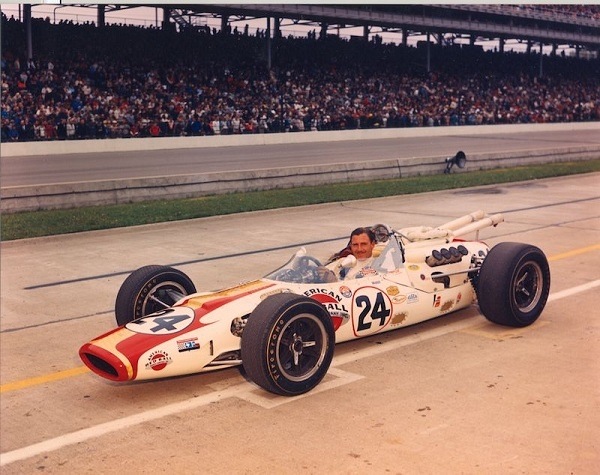
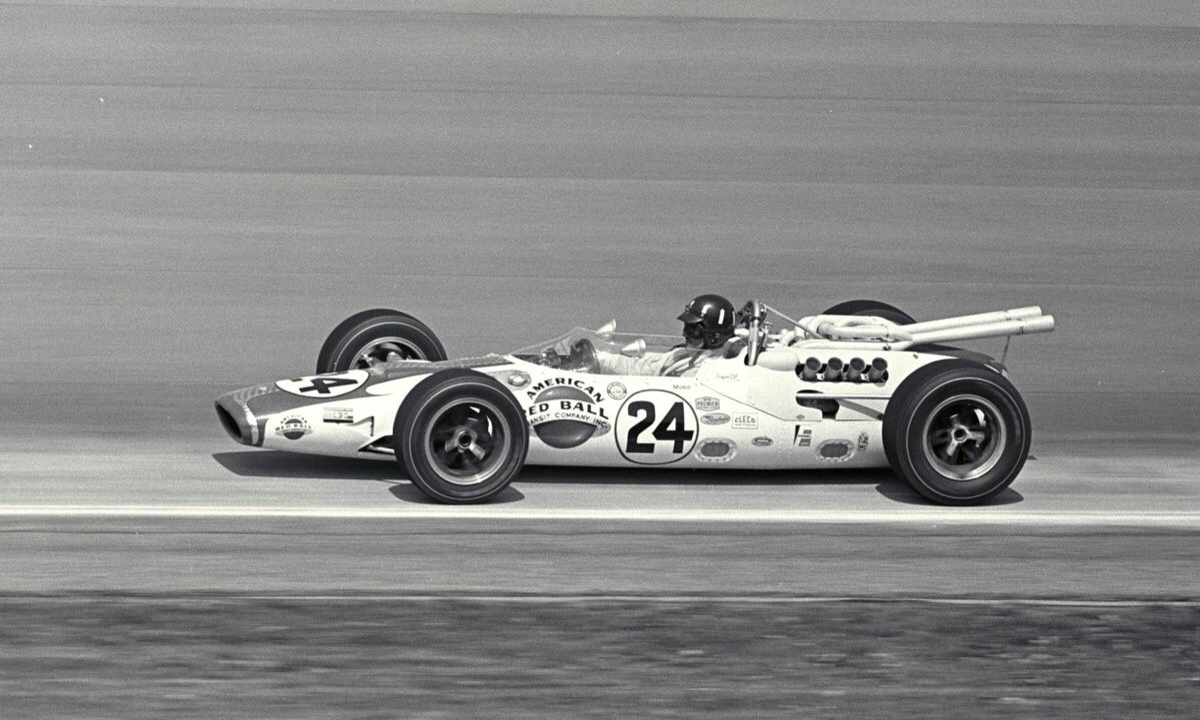
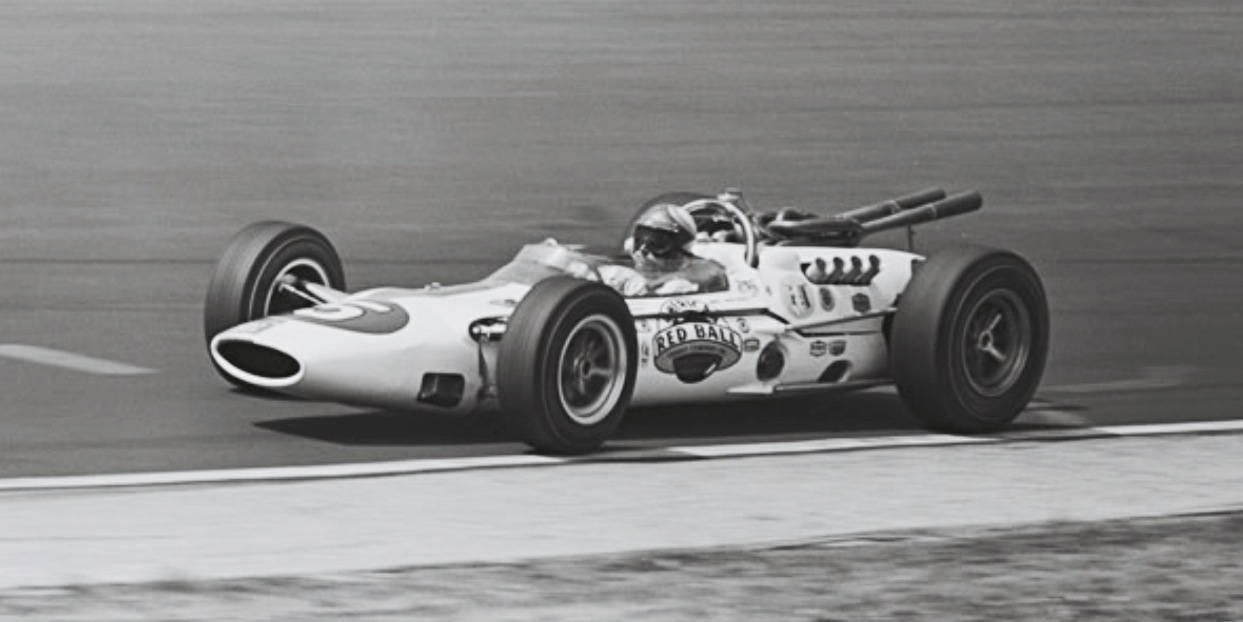
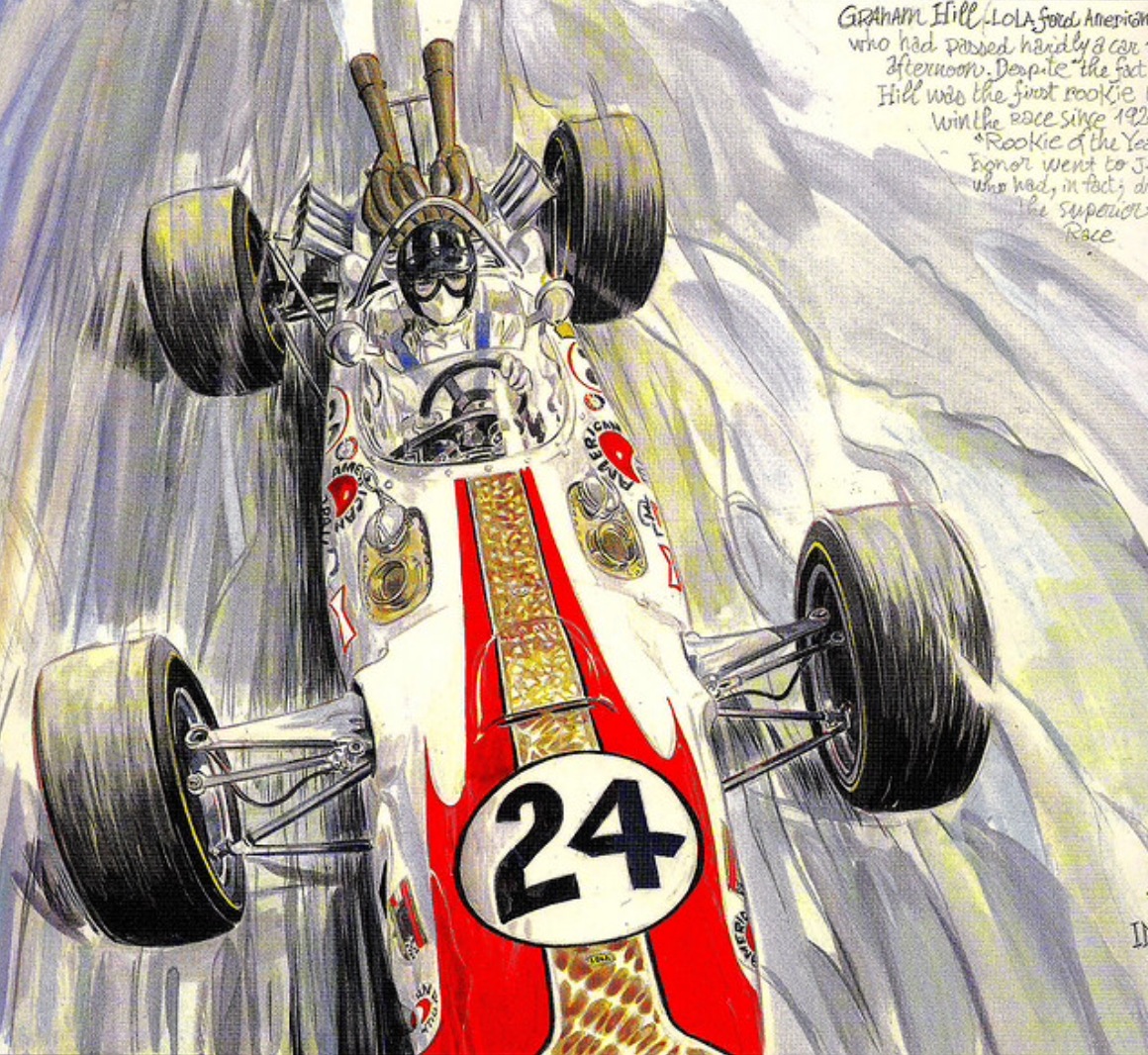
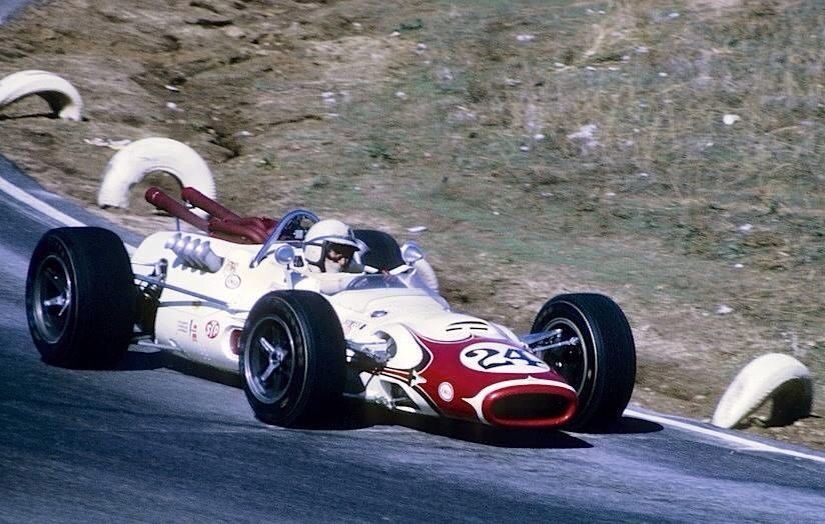
Graham Hill in his ‘American Red Ball Special’ Lola T90 Ford leads the latter stages of the 1966 Indianapolis 500 from Joe Leonard’s Eagle and Jim Clark’s Lotus 38. Fabulous Michael Turner painting…

Hill won the race from Clark and Jim McElreath’s Brabham. Graham lead the most critical part of the race, it’s last 10 laps after teammate Jackie Stewart slowed and retired his Lola T90, the BRM teammates also ‘roomies’ and Indy debutants in John Mecom’s Indy Team.

stewart hill broadley indy 1966

JYS, Hill and Eric Broadley giving GH a few tips about instrument location before the off…Note seatbelts, still 2 years away in F1, a bit earlier for Jackie after his big Spa shunt a fortnight later. (Autoextremist)

The race was not without controversy with more than one lap timer giving victory to Clark, who spun twice during the race without hitting anything on each occasion but causing some lap scoring confusion.

Hill was doubly lucky; he was not entered to race until the unfortunate Walt Hansgen was killed in the LeMans test weekend in a Ford MkII, the Brit taking the unfortunate Hansgen’s place in Mecom’s factory Lola entry, Mecom the American Lola importer at the time.

hill on qually day

One of my earliest motor racing memories is of Hill’s car, the Lola featured big time in one of those ‘Boys Own’ type books we were all given as stocking fillers at Christmas. I have always had a soft spot for these big Lolas’ as a consequence. I still have the book but its in storage, i can’t remember what happened yesterday but the book’s articles on Hill’s Lola, the equally new curvaceous Lola T70 and Tony Lanfranchi’s psychedelic helmet livery i adopted as my own in 1979 stick in my mind. Come to think of it my Lola fetish started then!

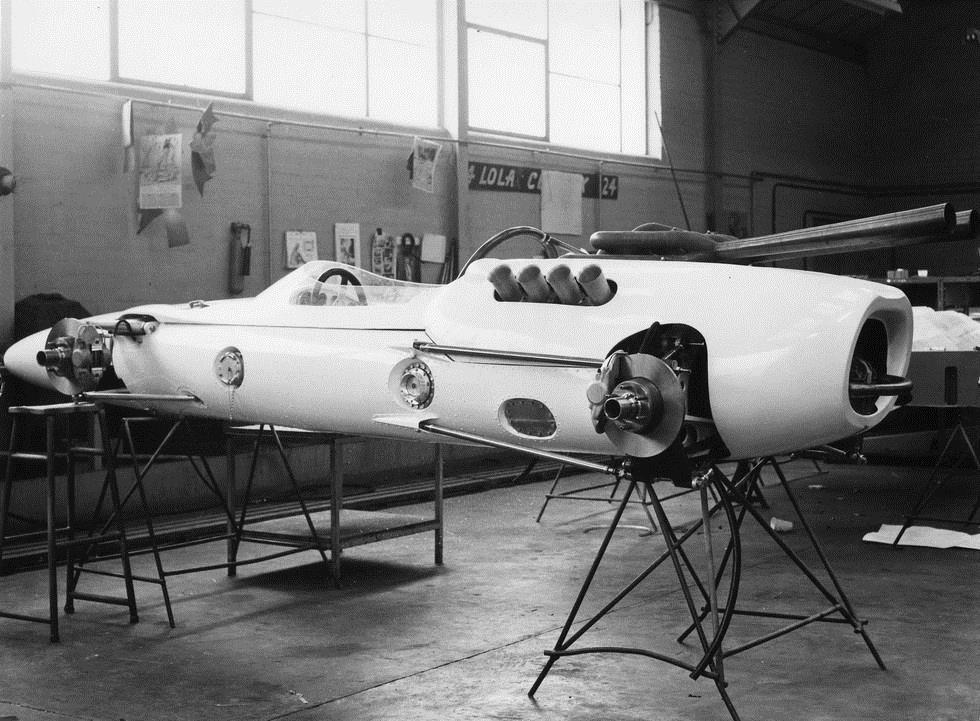
lola t80

Lola T80 being assembled at Slough in 1965. T80 unsuccessful, the T90 was an update of this car with the suspension geometry which held it back in 1965 addressed. (Lola Heritage)

The mid-engined invasion of Indianapolis was started by Cooper, Jack Brabham raced at Indy in 1961, Lotus had their first start with the pushrod-V8 Ford powered 29’s driven by Clark and Dan Gurney in 1963. Ferguson and Lola joined the stampede with mid-engined victory finally achieved by Team Lotus in 1965. Clark victorious in the Ford four-cam 4.2 litre V8 engined Lotus 38.

The US was a big market for Lola’s Eric Broadley, he achieved much success with the Group 7/CanAm T70 from 1965, USAC was another great opportunity. Broadley built the T80 for Indy 1965, but the car was late, wasn’t tested and was let down by suspension geometry shortcomings which gave the cars poor and unpredictable handling.

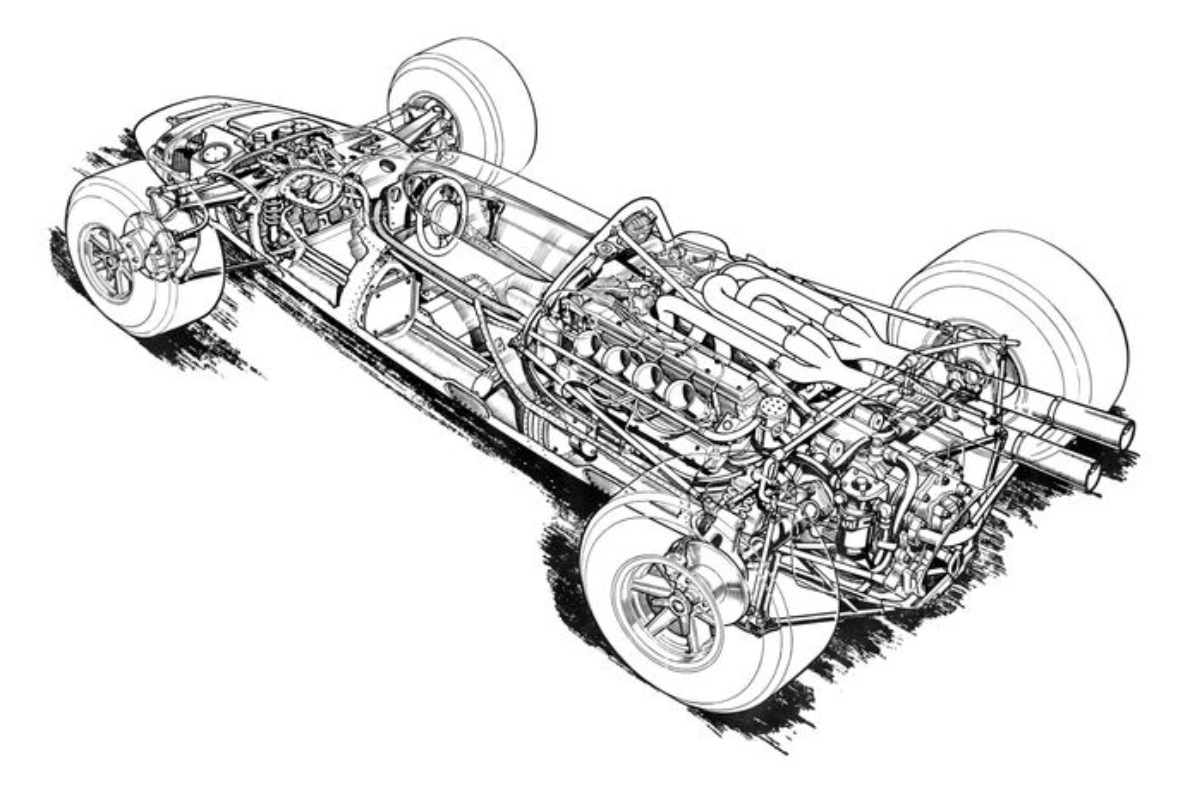
t 90 cutaway

Lola T90 Ford cutaway drawing. Car also designed for Offy 4 cylinder engine. Aluminium ‘full monocoque’ chassis, offset suspension; front top rocker operating inboard mounted spring/damper and lower wishbone. Rear, inverted lower wishbone with additional locating link, single upper link, single radius rod and coil spring/damper units. Adjustable sway bars front and rear, rack and pinion steering, 2 speed Hewland transaxle, Ford DOHC 4 valve, Hilborn fuel injected 4.2 litre V8. Circa 425 bhp @ 8000 rpm in 1965


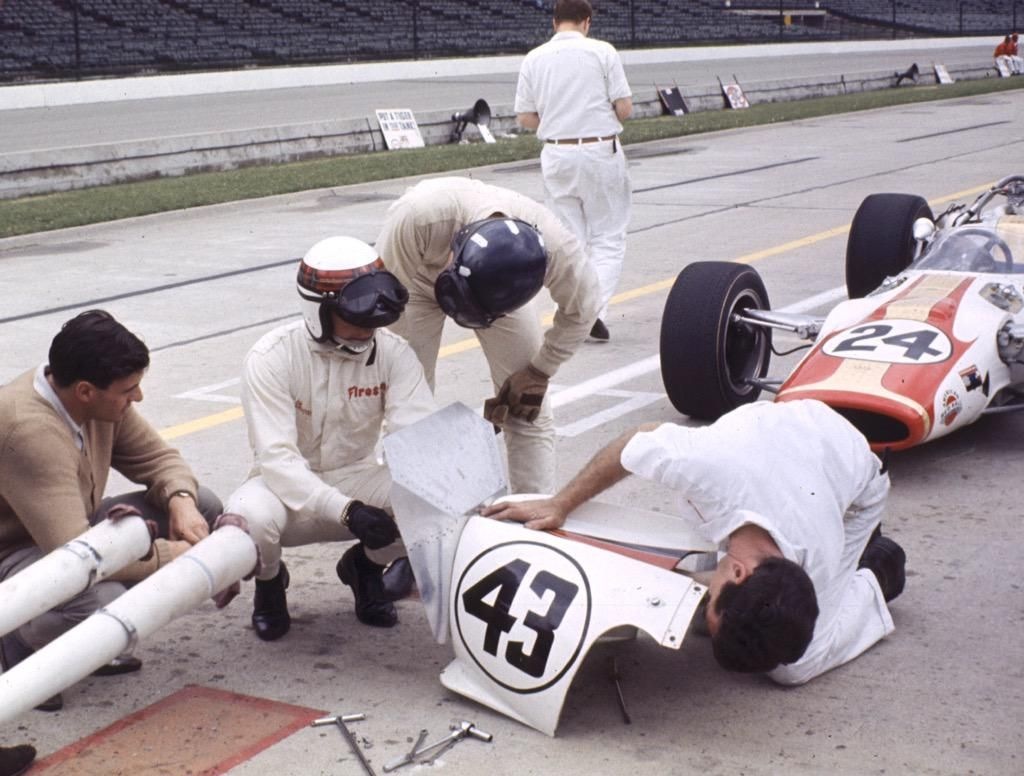
stewart fettling

Jackie Stewart and Graham Hill helping Mecom’s mechanics with the fettling of the rear bodywork of Jackie’s T90 #43, the Scot and the other Scot, Clark, both unlucky not to win the race…Graham’s #24 Lola behind. (LAT)

The Lola T90 which followed for 1966 addressed the T80 shortcomings…

The T90 chassis was an aluminium monocoque constructed from Indy mandated 16-guage aluminium. Sheet steel diaphragms front and rear provided additional internal stiffness, externally a sloping scuttle in front of the instrument panel gave additional rigidity.

Lola Heritage ‘Tubular steel subframes were attached to both the front and rear of the chassis, the front subframe carrying the oil tank, radiator and the forward mountings for the lower wishbone. At the rear there were two subframes above and below the two-speed Hewland gearbox, the upper one carrying the attachment point for the single top link and the top spring/damper mounting. The lower subframe had the mounting points for the lower wishbones’.

‘The T90 was designed to accept either the 2.8-litre, 4-cylinder Offenhauser engine or the 4.2-litre 4-cam Ford V8. The Offy, built by Meyer-Drake in California was fitted with Hilborn fuel injection and a Paxton Roots-type supercharger and gave some 520 bhp, the Ford, whilst slightly less powerful, was a more known quantity having won the 1965 race in Jim Clark’s Lotus 38’

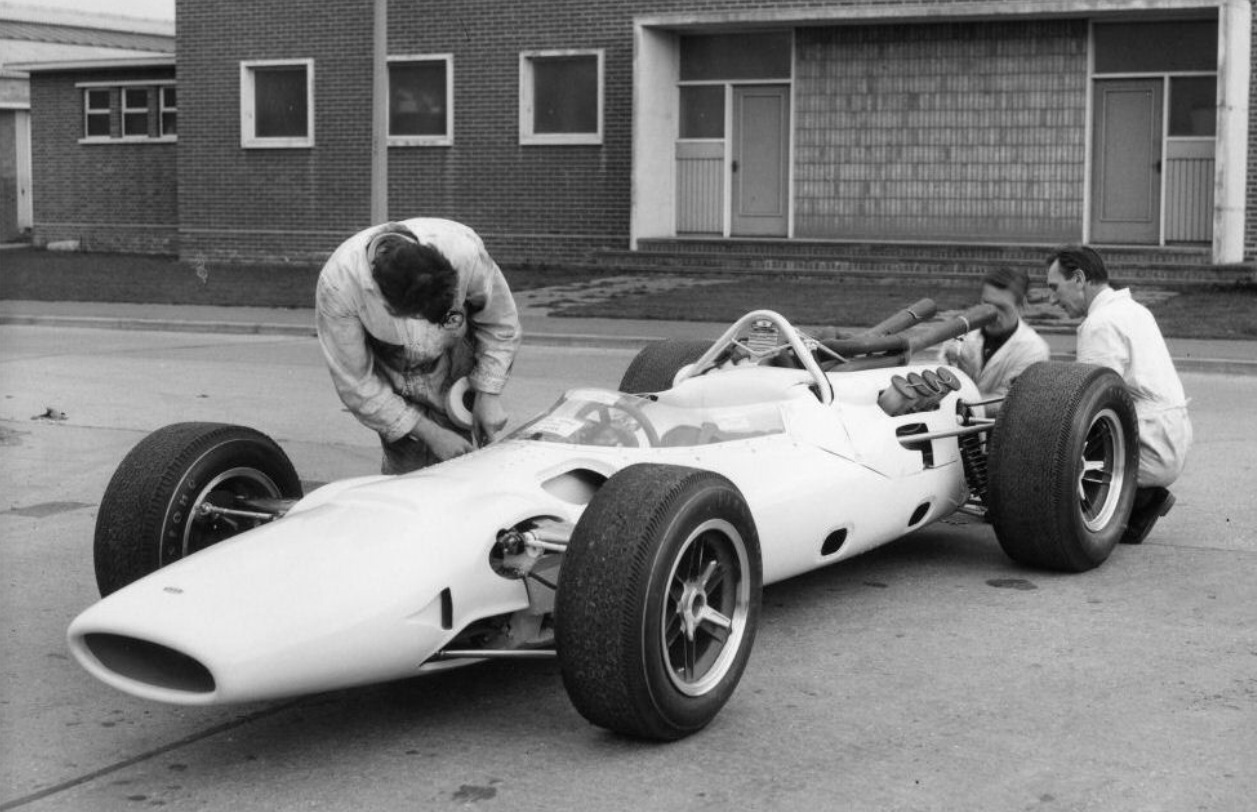
t90 build

Lola T90 build,  Slough 1966. Looking very sexy in its Specialised Mouldings body. Distinctive Lola ‘knock-offs’. Fuel cells still to be inserted into monocoque. (Lola Heritage)

The cars front suspension was inboard with fabricated rocker arms at the top operating coil spring/damper units and wide-based lower wishbones.

‘Rear suspension was fairly conventional with one departure from the norm. At the top of the upright was a single adjustable top link attached to the top chassis subframe whilst at the bottom a wide-based wishbone (reinforced on the left), mounting to the rear of the upright, was mounted to the lower chassis subframe. There was a single adjustable lateral link running from the lower front of the upright to the subframe that allowed for toe-in alterations. The unusual feature to the design was the single top radius rod, a lower rod was not used to to the difficulty of a suitable chassis attachment point due to the fuel tank design. As was the norm at this time front and rear suspension was offset to the left by three inches, the theory being that this helped the car through the left-hand turns at Indianapolis.’

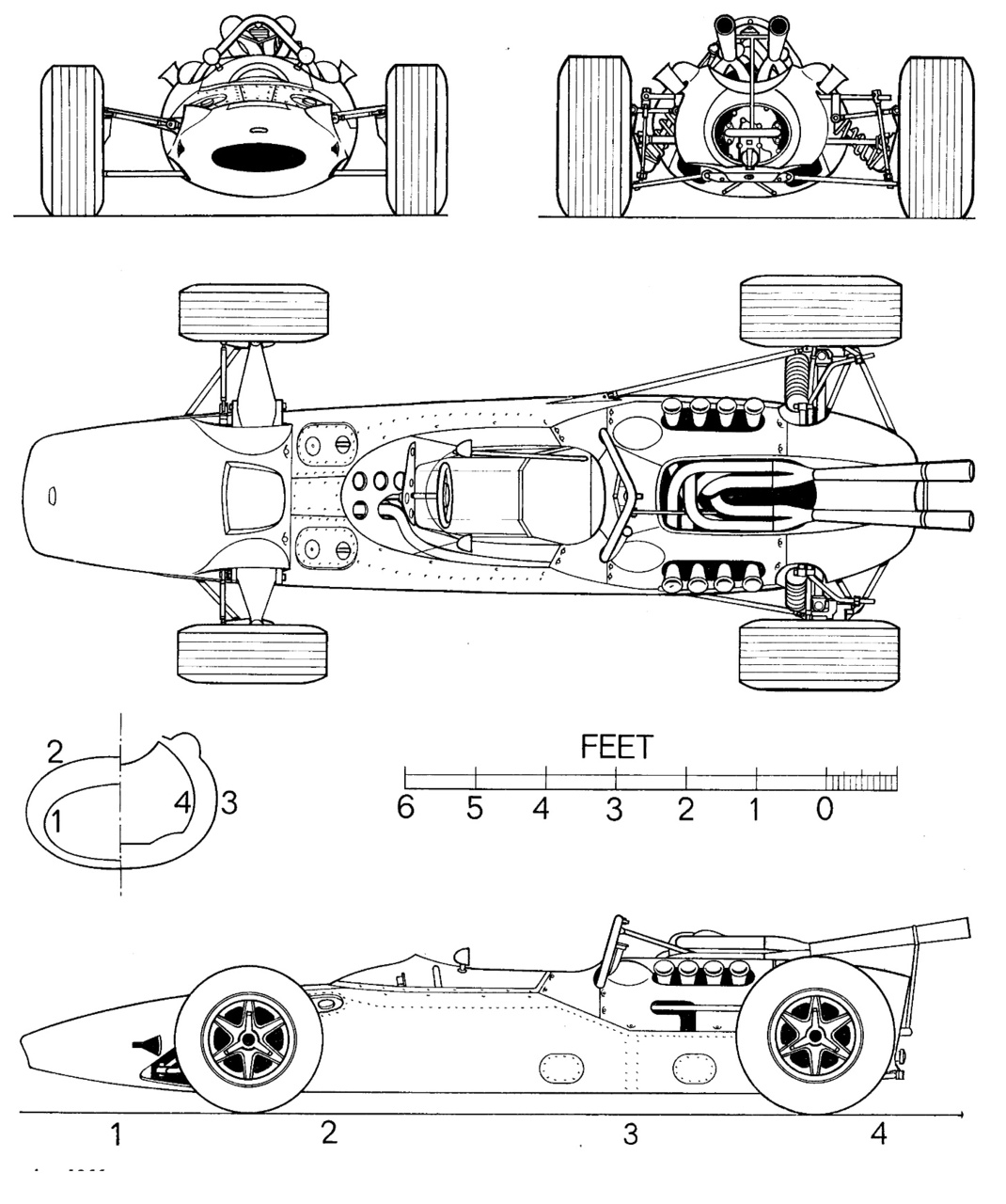
t90 drawing

These drawings as well as showing the T90’s lines also nicely show the suspension, offset to the left, as was the convention of the time on speedways. (unattributed)


ford indy engine

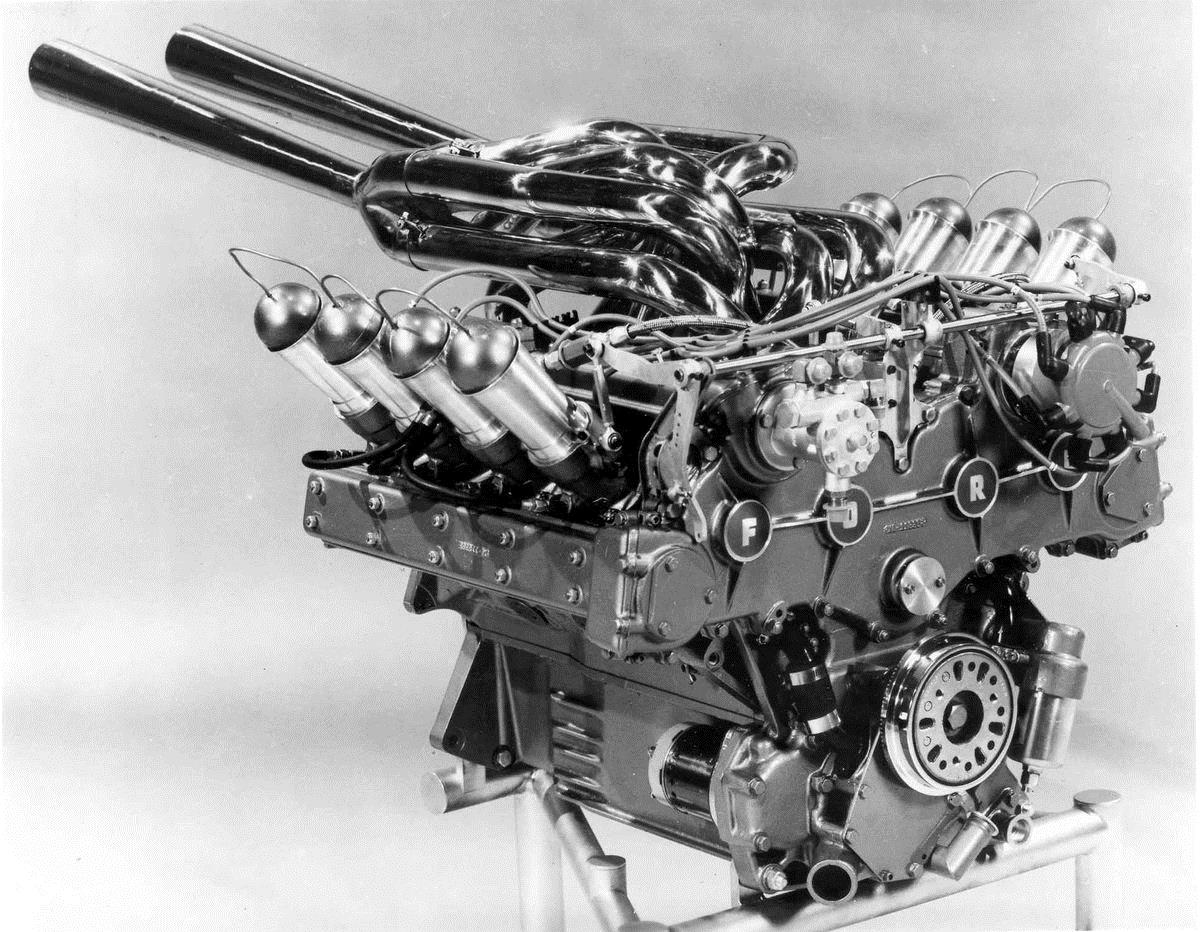
Ford DOHC Four-Cam Indy V8 Engine…

Ford’s 1963 Indy engine fitted to the Clark and Gurney Lotus 29’s was an aluminium variant of its 260cid Falcon/Fairlane small block V8, it developed 350-376 bhp at 7200 rpm on 103 octane fuel fed by 4 Weber 58mm carbs.

Ford, after Lotus’ great showing (they was robbed) in 1963 decided to build an engine capable of developing 50bhp more but with a weight gain of no more than 50 lbs over the aluminium pushrod engines 345lbs.

Ford evolved, using many parts from the earlier engine, a DOHC motor with four valve heads, the combustion chamber ‘pent roofed’. The engine had ‘between the Vee’ exhaust as tests showed power was optimised with this setup. Hilborn fuel injection was used, in 1965 the engines developed 425bhp @ 8000rpm.

The block was cast of aluminum alloy using patterns modified from the production 289cid production ‘small block’. Cast iron cylinder sleeves were a shrink fit in the block and were sealed at the heads with copper laminated steel O-rings. In order to clear the two banks of camshafts in the heads, the 10 attaching studs were moved closer to the cylinder centerline. An additional 8 studs protruded from the heads maintained clamping force needed to seal the combustion chambers. The space occupied by the camshaft in the normal production engine was replaced with an oil tube. This acted as a gutter and collected oil as it drained from above to keep it off the reciprocating assembly.

The bottom end was beefed up considerably. The special forged steel crankshaft was held by 4-bolt bearing caps on numbers 1 through 4. Main and rod bearing journals are the same size as the 289, as is the engine’s stroke – 2.87″. The rod journals are crossdrilled for better oiling at high engine speeds. The rods are from the 289 HiPo, modified for floating pistons pins. The pins are 289 HiPo pieces. The oil pan is cast magnesium and is a structural part of the engine. ‘Ears’ cast integrally with the pan provide the engine/chassis mounts.

As summarised above, the cam-ground forged aluminum pistons have a pent-roof dome to closely fit the combustion chambers. Compression is 12.5:1. The cylinder heads housed 4 valves per cylinder with a central spark plug. The plugs are canted toward the 1.64″ diameter intake valves. Exhaust valves are 1.36″ diameter. The camshafts run in bearing bores in the cylinder heads directly over their valve banks. Valve clearance is adjusted by the selective fitting of the followers. Intake ports are between the cams with exhaust out the top of the heads between the vee. This was done to do away with the nightmare of exhaust tubing normally required. Hilborn injection is used having been selected for its light weight and simple low-pressure design.

The 255 CID engine weighed 406 lbs and produced in excess of 425 BHP at 8000 RPM. Useful power/torque was developed from 6000 with a rev limit of 9000 RPM

Once developed by Ford the engine was sold and serviced via Louis Meyer. In 1966 Ford built 20 engines which retailed at US$23000. The wonderful engines evolved over the decades, in both normally aspirated and turbo-charged form as Indy rules changed.

Checkout this website which gives an in-depth account of both the DOHC engine and the pushrod V8’s which preceded it, click on this link for an interesting read; http://www.quadcamford.com/development.html

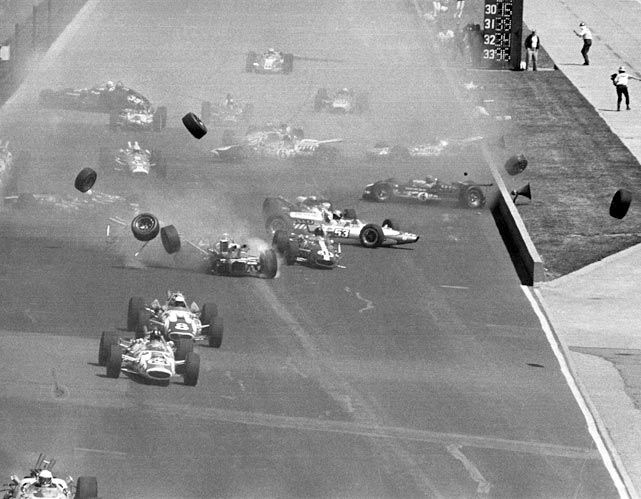
66 indy start

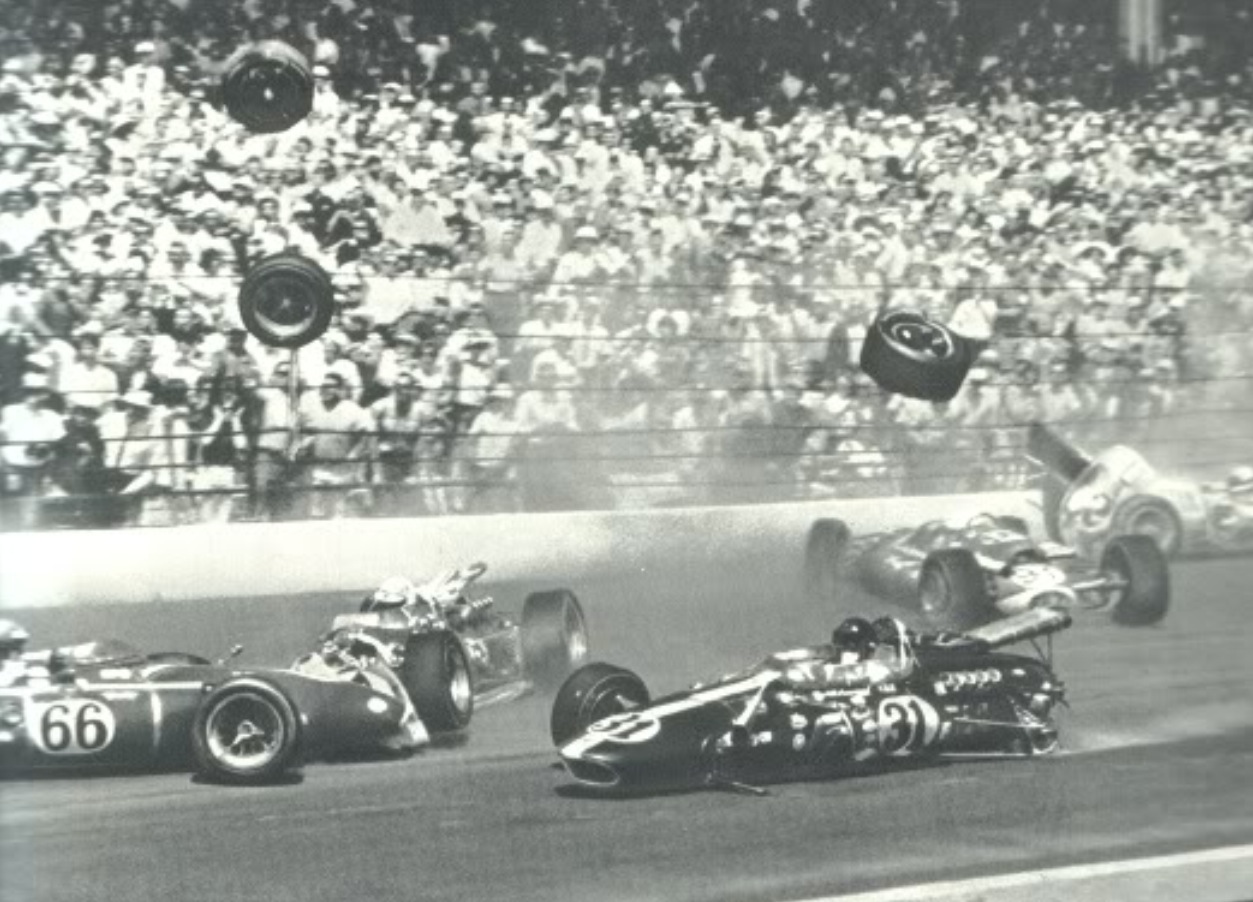
Indy 1966 first lap shunt. Hill #24 Lola, McCluskey #8 Eagle Ford, Joe Leonard #6 Eagle Ford , Al Unser Lotus 38 to the left of his side-on car, Gary Congdon #53 Huffaker Offy, Don Branson in the sideon #4 Gerhardt Ford and the rest…(unattributed)

1966 Indianapolis 500…

Lola Heritage ‘Learning the lesson from 1965 Lola made sure the T90 was ready in plenty of time for the 1966 Indy 500, the John Mecom Racing Team-entered car made it’s debut at the March season opener at Phoenix International Raceway. Success was immediate with Roger Ward finishing second in his Offenhauser-powered T90 and a month later Ward took the winner’s laurels at Trenton’s 1-mile paved oval when he won a rain-shortened race ahead of Gordon Johncock.

Come the month of May and there were three T90s, all entered by John Mecom’s Houston-based team, ready to run at Indy qualifying, Roger Ward in his successful Offenhauser-engined car and Rookies Jackie Stewart and Graham Hill who were both Ford-powered. There was nothing much between the cars at the end of qualifying, Stewart was 11th fastest at a speed of 159.972 mph, Ward 13th at 159.46 mph and Hill 15th at 159.243 mph.’

The Indianapolis Star called the 1966 Indy 500 ‘the most fantastic, confused and incredible 500.’ And it may have been. This was the ‘500’ marked by a 16-car crash at the start when Billy Foster’s car hit the rear of Gordon Johncock’s Gerhardt setting off a violent chain reaction that eliminated 11 cars, including those of A.J. Foyt, Dan Gurney, Don Branson and Cale Yarborough.

Foyt suffered minor injuries, a cut finger and a bruised knee when he climbed out of his car and scaled a fence to get away from the scene.

clark pits

Jim Clark’s ‘STP Oil Treatment’ Lotus 38 Ford in the Indy pits 1966. Andrew Ferguson at left. I put a can of the stuff in Mums Morrie 1100 but it didn’t seem to go any quicker…the sticker on the rear window looked good tho. I thought so, she didn’t! #12 the car behind Clark is the Chuck Hulse driven Watson Ford. Lotus 38’s well raced, Lotus Indy tool ’65-’67. (unattributed)

The race was red-flagged for the second time in three years and was re-started after a one hour and 23 minute delay.

Mario Andretti took the lead at the restart but retired shortly thereafter with engine failure. Clark lead but spun twice with handling maladies without hitting anything, pitting on each occasion to have the car checked.  Stewart and Lloyd Ruby in an Eagle diced for the lead before fuel stops put Clark back in the lead.

broadley and hill

Great shot of Hill and Lola Supremo Eric Broadley discussing the cars setup during Indy qualifying 1966. See the quick change safety fuel cells/filler cap. Ignition cutout wired to steering wheel beside drivers thumb. (unattributed)

Ruby took the lead but his car was then black-flagged for the loss of oil, leaving Stewart in the lead from Clark and Hill. Hill had progressed through the field without making mistakes and benefiting from others errors or misfortunes, by lap 175 he was past Clark for 2nd. Stewart lead, until with 25 miles to go his oil pressure diminished, his engine scavenge pump failure gave Hill the lead he was not to relinquish.

Despite protests by Lotus’ Colin Chapman and sponsor Andy (STP) Granatelli that Hill had been incorrectly scored with an extra lap, the unofficial results stood. Hill won $156,297 for his victory, Jim Clark finished second battling an ill-handling car the entire race, Jim McElreath’s Brabham Ford was third and Stewart was classified 6th.

hill in the race t90

Hill drove a quick, clean race. He stayed out of trouble and was in front for the final laps which mattered, putting lap scoring disputes to one side…What a gorgeous looking, in a brutal kinda way, car! (unattributed)

YouTube Race Footage…

Etcetera…

1965 LolaT80.

t80 tingelstat

Bud Tingelstad in Lindsey Hopkins Lola T80 Ford, Indy 1965. (oldracingcars.com)

1966 Indy Race.

indy start 66

Another start shot; Cale Yarborough #66 Vollstedt Ford and Dan Gurney’s #31 Eagle Ford. Indy 1966. (unattributed)

Jackie Stewart.

steawrt bowes seal fast

Jackie Stewart in the ‘Bowes Seal fast’ John Mecom owned Lola T90 Ford Indy 1966. Eric Broadley front lower left, chief mechanic George Bignotti in the Texan hat, Mecom in the tan short sleeved shirt in front of Bignotti (unattributed)


stewart indy 1966

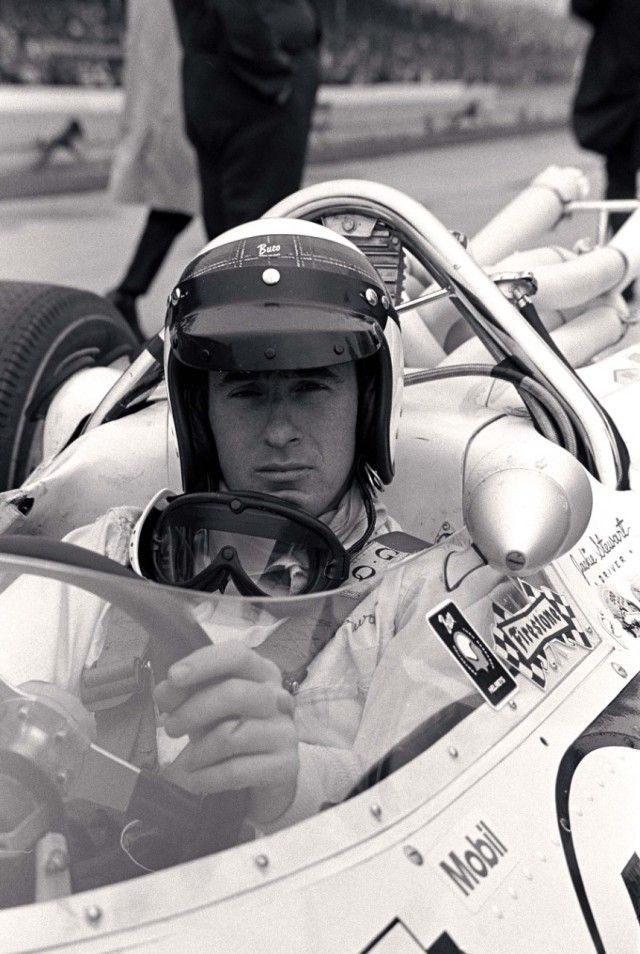
JYS with the face of a man focused on the qualifying task at hand. He qualified 11th, he was classified 6th after an oil scavenge pump failure caused his retirement. Lola T90 Ford, Indy 1966. (Dave Friedman)

Graphics and Imagery Hill/T90.

hill pic

Lovely artwork of Hill and his Lola T90 (D Sire)


red ball colors

1967 Lola T92 Ford.

The successor to the Lola T90 was the mildly updated in bodywork T92 for 1967, here raced by John Surtees in his one and only USAC race, the ‘Rex Mays 300’ held at Riverside in November 1967, a road course John knew well from his CanAm campaigns. His John Mecom entry DNF’d with magneto trouble in the race won by Dan Gurney’s Eagle Ford. The car did not use offset suspension on road circuits…

surtees t 92

John Surtees, Lola T92 Ford. Riverside 1967. (unattributed)

American Red Ball Company.

Even though the name has been in my brain since 1967, i had no idea what they do, clearly not the case in the US as they are an old established well known global removalist and transit organisation. So now i know!  http://www.redball.com/long-distance-moving-company/our-rich-history/

Tailpieces…

hill in car

Hill looking the focused driver he was. Interesting shot shows the conventional rear suspension albeit with 1 rather than the usual 2 radius rods to locate the suspension fore and aft. Seat belts, roll over bar too low in the event of a rollover and cross-over exhausts all clear as is all enveloping bodywork of the T90 to smooth air flow and top speed, F1 cars at the time largely devoid of rear bodywork. (unattributed)


indy 66 color

Nice bit of modern art; Top>Bottom; Stewart, Clark, Hill. Friends and Champions all. (olivesart.com)

Credits…

Michael Turner; http://www.studio88.co.uk/acatalog/Michael_Turner.html, quadcamford.com, GT40 Archives, Dave Friedman, LAT, olivesart.com, Dennis Sire

Lola Heritage;  http://www.lolaheritage.co.uk/ , oldracingcars.com, Autoextremist

Finito…

agp 67 hill and clark

(Graham Howard ‘History of The Australian Grand Prix’)

Jim Clark and Graham Hill swap notes prior to the start of the 1967 Australian Grand Prix, Warwick Farm, Sydney. It would be a good season for them both…

Their new F1 Lotus 49’s await their return to Europe, the Ford Cosworth powered cars established a package of integrated design which became the F1 standard for the duration of the 3 litre formula. Their is plenty of press interest in the two stars, teammates for the first time in 1967 and Hill’s #5 Lotus 48.

Behind them in the ‘Farm pitlane is Kevin Bartlett’s Brabham BT11A Climax, KB just in shot with his foot on his front Goodyear. Sixth in the race for him, an excellent result in the old car.

agp 67 start

Start of the 1967 AGP. #5 Hill Lotus 48 FVA 1.6, #6 Clark Lotus 33 Climax 2.0 V8, #3 Jackie Stewart on pole, BRM P261 2070cc V8. (autopics.com.au)

The 48 was Lotus’ new car for the inaugural 1.6-litre F2 1967 season. Designed by Colin Chapman and Maurice Philippe, it was in essence a ‘mini’ Lotus 49 which made its successful debut in the ’67 Dutch Grand Prix on June 4.

Keen to get in some early season testing of the new car, Colin Chapman sent the first chassis to Australia for the Warwick Farm round of the Tasman Series, the Australian GP that year, held on 19 February for Graham Hill to drive. Hill was popular at the Sydney circuit, the promoters paying plenty of money to get the Brit and his new Lotus to New South Wales for just one race. Of added local interest was that Hill had just returned to Lotus having been a BRM driver since 1960. Mind you, in Australia he raced in our internationals the Ferguson P99, Brabham Climaxes owned by ‘Scuderia Veloce’ as well as various BRM’s.

Jim Clark did all of the Tasman rounds in New Zealand and Australia that summer. He won the title in a Lotus 33 Climax, his 1966 F1 mount ‘R14’ fitted with the 2 litre Coventry Climax FWMV V8 engine with which he started the 1966 F1 season, the first year of the 3 litre F1. He used the car until the BRM engined Lotus 43 was ‘ready’ to race.

The new 48 F2 car had a full monocoque chassis made from aluminium sheet with steel bulkheads front and rear. Bolted to the rear bulkhead was a tubular steel subframe which carried the unstressed FVA engine and ZF gearbox. Front suspension used top rockers operating inboard mounted springs and dampers. The rear suspension was also conventional; single upper link, reversed lower wishbone, twin radius rods and coil spring/ damper units.

The 48 used the Ford Cosworth FVA, one of two engines contracted from Keith Duckworth and Mike Costin by Ford. Significantly the engine proved Duckworth’s design direction for his F1 V8, the Cosworth DFV which made its race debut at Zandvoort in the back of the equally new Lotus 49. The FVA’s design commenced in July 1965, its first bench test was in March 1966 and its first race in July 1966. The engine was well tested prior to its trip to Australia in the summer of ’67.

The remarkably successful unit combined a four-cylinder cast iron Ford Cortina block with an aluminium Cosworth head. FVA was an acronym of the ‘four valve assembly’ or ‘four valve type A’ of the engine’s new head. Twin overhead camshafts were used of course, driven from the crankshaft by gears. Equipped with Lucas fuel injection, the dry sumped engine developed circa 220 hp @ 9000rpm.

Ford-Cosworth-FVA

Ford Cosworth FVA Engine Cutaway drawing by Theo Page.

Graham Hill qualified Lotus 48 chassis ‘R1’ well amongst the Tasman Formula 2.5 litre engined cars, 3rd on the grid with only the V8 engined cars of teammate Jim Clark and Jackie Stewart’s BRM in front of him. He may only have had 1.6 litres but the chassis was clearly good and Hill was always been quick around Warwick Farm, the Sydney circuit a very technical one.

Stewart was very fast throughout the Tasman, he won it in ’66, but the BRM’s gearbox was at its limits with the greater stresses of the P60 BRM V8, now at 2070cc and developing much more power and torque than the same engine in its original 1.5 litre F1 guise ever produced. But the car held together at the ‘Farm, Jackie won from Clark and Frank Gardner in a Brabham BT16 Climax FPF, the old 2.5 litre F1 Climax four cylinder engine well and truly outclassed by ’67.

Hill’s new Lotus 48 expired with gearbox maladies on lap 25 but he gained valuable miles on the brand new chassis in advance of the European F2 season, which both he and Clark contested.

Intended as a customer car, the 48 was exclusively campaigned by Team Lotus during 1967, privateers used uprated 41’s. The new Lotus was quick but encountered the Brabham BT23, one of Ron Tauranac’s most successful designs. The 48 won four F2 races in 1967, three in Clark’s hands, the fourth by Jackie Oliver in the combined F1/F2 German GP at the the Nürburgring.

Whilst the Brabham BT23 was the car of the season many of its victories were taken by ‘graded drivers’, notably the ‘King of F2′ Jochen Rindt, whilst graded drivers did win races they could not score championship points. The 1967 title was won by Jacky Ickx using both Matra MS5 and MS7 chassis’, FVA powered.

Lotus continued with the 48 in 1968, 4 chassis were built in total, but struggled again with the dominant Brabham BT23’s. Jean Pierre Beltoise won the ’68 title in a Matra MS7 FVA. 1969 would be a ‘different kettle of F2 fish’, the Dave Baldwin designed Lotus 59 a much more competitive tool.

gh lotus 48 cockpit

Graham Hill tucked into the comfy cockpit of his beautifully finished Lotus 48. He is on the grid of the ‘Guards 100’, Snetterton in March 1967. Hill was 2nd to Rindt’s Brabham BT23. (Max Le Grand)

III Gran Premio Barcelona, Montjuic, Spain 31 March 1968…

untitled

Jim Clark, Lotus 48 FVA, Montjuic, Barcelona 1968. (Unattributed)

Jim Clark aviating his Lotus 48 during practice for the first European F2 event in 1968.

He started the season strongly with victories in his Lotus 49 in both the South African Grand Prix held at Kyalami on 1 January and the Tasman Series, including the Australian Grand Prix at Sandown Park, Melbourne. Jim won 4 of the 8 Tasman rounds, his Lotus used the 2.5 litre Ford Cosworth V8 variant, the ‘DFW’ so he came to this F2 event ‘razor sharp’.

Despite Clark’s speed, Jackie Stewart won the race in his Matra MS7 FVA, Jim was tagged by Jacky Ickx at the first turn, a ‘bonzai’ move down the inside taking out the innocent Scot, deflating a tyre and rearranging the rear suspension. Ickx was involved in another accident on lap 2 and retired. Karma at play!

The shot below is of #1 Clark, with Hills nose in shot, in the middle is an innocent Jochen Rindt, Brabham BT23 FVA. Ickx shot off down the road in his Ferrari 166. The next F2 round was the ‘II Deutsche Trophae’ at Hockenheim the following weekend.

mont clark

Hill’s Lotus 48 nose, Jochen Rindt caught up in the melee in his Brabham BT23 FVA and Clark, Lotus 48 FVA. (Unattributed)


mont clark 2

End of Clark’s race, flat tyre and shagged rear suspension. Lotus 48 FVA. Barcelona 1968. (Unattributed)

YouTube Footage of the Barcelona Race;

Hockenheim 7 April 1968…

Jim Clark before the off and (below) in the early stages of this fateful, awful race and the probable high speed tyre deflation which caused the accident that claimed the champions life.

clark and sims

Jim Clark, relaxed before the off and Dave Sims. Hockenheim 7 April 1968. Lotus 48 FVA. (Rainer Schlegelmilch)


clark lotus 48 hocken 68

Clark, Lotus 48 FVA, Hockenheim 7 April 1968. (MotorSport)

Lotus 48 Technical Specifications…

Chassis; aluminium monocoque with rear subframe. Front suspension; lower wishbones, top rocker actuating inboard coil spring/dampers, roll bar. Rear suspension; reversed lower wishbones, top links, twin radius arms, coil spring/dampers, roll bar
Steering rack and pinion, Brakes, discs all-round, Gearbox ZF 5DS12 5 speed.
Weight 420 kilo / 926 lbs. Length / Width / Height 3,797 mm (149.5 in) / 1,727 mm (68 in) / 762 mm (30 in)
Wheelbase / Track (fr/r) 2,330 mm (91.7 in) / 1,473 mm (58 in) / 1,473 mm (58 in). Wheels (fr/r) 13 x 8 / 13 x 10

Ford Cosworth FVA

Pretty much the ‘engine de jour’ of the 1.6 litre F2 from 1967 to 1971, the FVA won all of the European titles in that period.
Cast-iron Ford Cortina 1600 ‘116E’ 5 bearing block, aluminium head, 1,598 cc. Bore/Stroke 85.7 mm/69.1 mm, DOHC, 4 gear driven valves per cylinder, Lucas fuel injection and electronic/transistorised ignition. Circa 220 bhp @ 9000rpm.

Those with a strong technical interest in the Cosworth FVA and its role in relation to the subsequent Cosworth DFV V8 Design will find this treatise of interest;

Click to access cosworthstory.pdf

Etcetera…

clark pau 1967

Mini Lotus 49 indeed! Clark in his svelte Lotus 48, Pau GP 1967. 4th behind 3 Brabham BT23’s; Rindt, Hulme and Alan Rees. (Unattributed)


clark jarama 67

Clark in his Lotus 48 from Jackie Stewart’s Ken Tyrrell entered Matra MS7, both Ford Cosworth FVA powered, 1st and 2nd, Chris Irwin’s Lola T100 3rd, Jarama, Spain July 1967. (Unattributed)


oliver german gp

Jackie Oliver jumping his works Lotus 48 into 5th place, and first F2 finisher, German GP August 1967. He drove a great race, Hulme victorious in his Brabham BT24 Repco. (Unattributed)


hill oulton brian watson

Hill on the way to 3rd place in the Oulton Park ‘Gold Cup’ in September 1967 amongst the F1 cars, Jack Brabham won in his BT24 Repco from Jackie Stewart in a Matra MS7 FVA F2 car. (Brian Watson)


hill 48 in 68

Graham Hill in the Tulln Langenlbarn, Austria paddock in July 1968. NC with insufficient laps. Rindt won the race in a Brabham BT23C. ‘Chequered Flag’ truck contained the McLaren M4A driven by Robin Widdows also DNF. (Unattributed)


lotus 59

For the sake of completeness…this is the Dave Baldwin designed, spaceframe chassis F2 Lotus 59 which succeeded the 48. ‘Twas an FF/F3/F2 car, much more successful than the Lotus 48 but again the Brabham BT 28/30 gave it a good run for its money! Here G Hill at the Pau GP in April 1969 with high wings having only weeks to run before being outlawed by the FIA during the Monaco GP weekend. Hill DNF with fuel metering unit failure, Jochen Rindt victorious in the other Winkelmann Racing 59B. (Unattributed)

Credits…

Graham Howard ‘History of The Australian Grand Prix’

Max Le Grand, autopics.com.au, MotorSport, Rainer Schlegelmilch, Theo Page, Brian Watson, Roger Linton

Tailpiece: 1967 AGP Warwick Farm…

(R Linton)

Start of the race from the pit counter.

Hill’s Lotus 48 FVA at right, Clark, Lotus 33 Climax and Jackie Stewart, BRM P261 on the front row. Brabham is behind Stewart and Denny Hulme behind Jack in Repco ‘640’ V8 engined Brabhams

Finito…

image

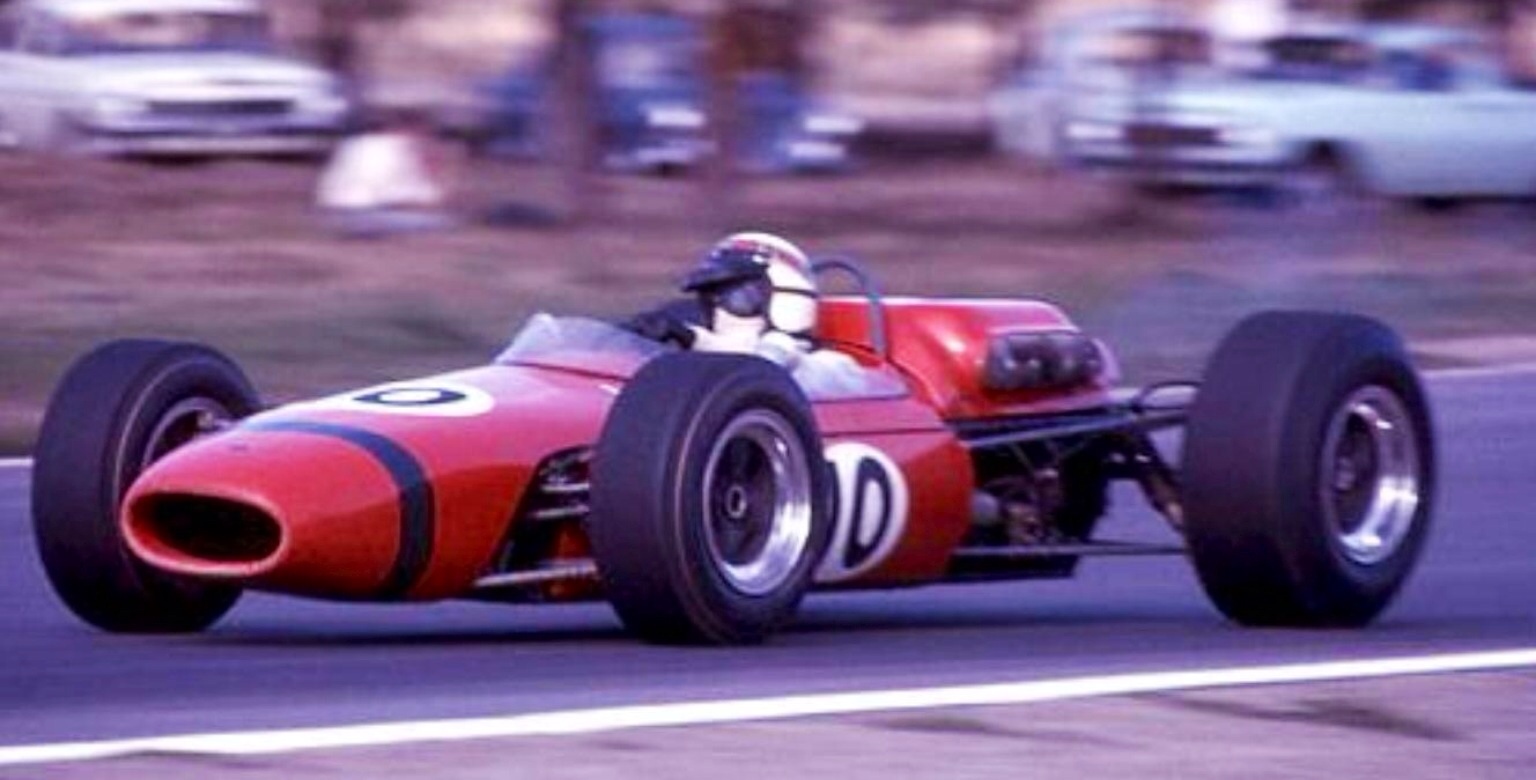
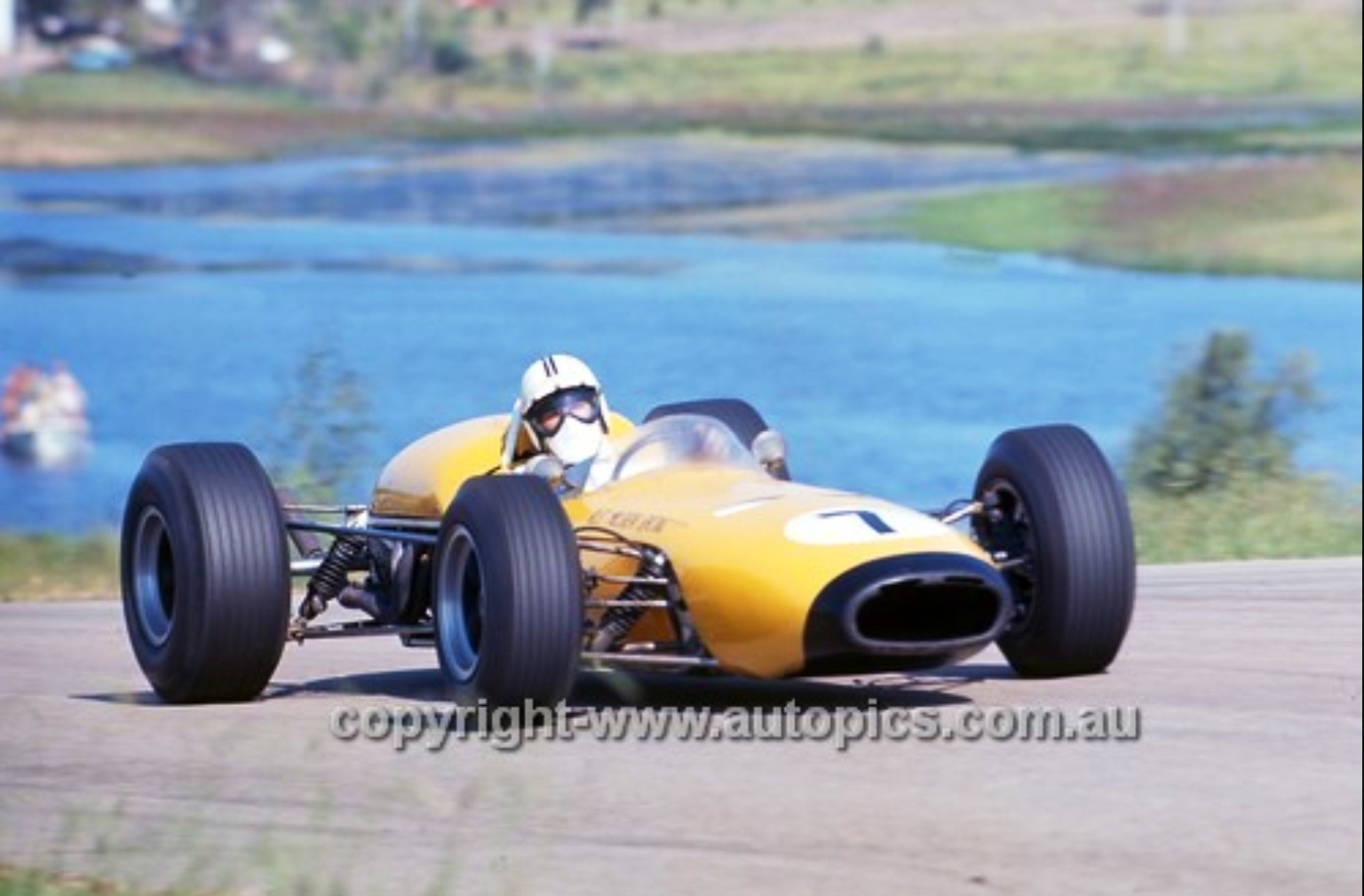
Jackie Stewart sets up his Brabham BT11A for ‘Castrol Corner’ the right hander leading onto Surfers main straight…Holdens in the background and his Climax engine puffing oil before his retirement due to oil loss (John Stanley)

Jackie Stewart in the ‘Scuderia Veloce’ Brabham BT11A Climax ‘Tasman Formula’ car during the Surfers Paradise ‘Gold Star’ Australian Drivers Championship Round on 14 August 1966…

Jackie squeezed in a visit to Australia to drive in both this event and the ‘Surfers 12 Hour’ a week later in between the German and Italian Grands Prix on 7th August and 4 September respectively.

The visit was a welcome respite from the World Championship that year, Jack Brabham dominating in his Repco engined Brabham BT19, with BRM for whom Stewart drove, struggling with their new uncompetitive, complex and heavy P83 ‘H16’.

Jackie won the Monaco Grand Prix in a ‘Tasman Spec’ BRM P261, his 1.5 litre F1 car squeezed to about 2.1 litres, well short of the 3 Litre capacity limit which applied in Grand Prix racing from that year, the nimble car producing the goods on this tight circuit.

monaco

Stewart wins the 1966 Monaco Grand Prix in the BRM P261 1.5 litre F1 car bored to circa 2.1 litres. This was the first Championship race of the new 3 litre F1, the first 4 cars all ‘big bore’ 1.5’s…no 3 litres finishing the race (Unattributed)

In the Belgian Grand Prix three weeks later he experienced an horrific accident on the first lap Spa race, conditions having changed from wet to torrential on this long track, leaving the circuit at high speed on the Masta Kink.

He was trapped upside down in the car, the monocoque twisted around him covering him with fuel with a broken shoulder, cracked rib and internal bruising whilst Graham Hill and Bob Bondurant, who had also crashed, freed him with tools borrowed from spectators. From that moment Stewart started his crusade for driver, car and circuit safety which are amongst his many racing legacies.

No doubt Jackie was looking forward to some racing and the recuperative powers of the Gold Coast sun and surf.

rooted

The rooted monocoque of Stewarts’ BRM P261 after the Masta Kink shunt. The shot clearly shows how the chassis twisted around his body trapping him…he was extremely lucky not to have been killed outright or ‘barbecued’ in a fire, he was liberally doused with petrol, the cars fuel tanks within the monocoque ruptured…no ‘bag tanks’ in those days. 8 drivers crashed without completing a lap…4 at Burnenville and 4 on the Masta Kink (Unattributed)

Keith Williams…

image

Keith Williams at ‘Surfers Paradise Gardens’ Carrara in the mid-1960’s

Jackie enjoyed his successful championship winning 1966 Tasman Season in our summer, campaigning a BRM P261, his 1.5 litre F1 car V8 engine bored to around 2.1 litres, as outlined above, so he was happy to return to Australia to race Jack Brabham and the locals in the ‘Gold Star’ round and Sports Car enduro which comprised Keith Williams ‘Speed Week’.

Williams was a remarkable entrepreneur, he left school at 13 to help supplement the family income pumping fuel at a local ‘Servo’, formed his first business making leather products three years later and soon employed fifty people manufacturing Disney licensed products.

He was an Australian Water Skiing Champion in the late 1950’s, via that sport both making industry products and forming ‘Surfers Paradise Water Ski Shows’ together with Jack Joel.

He built Surfers Paradise and Adelaide Raceways in 1966 and 1970 respectively. Williams was a leader in the tourism industry building ‘Sea World’ on the Gold Coast in 1971 and started the development of Hamilton Island as a global tourist destination in 1978. His remarkable life ended in 2011 after a series of strokes aged 82.

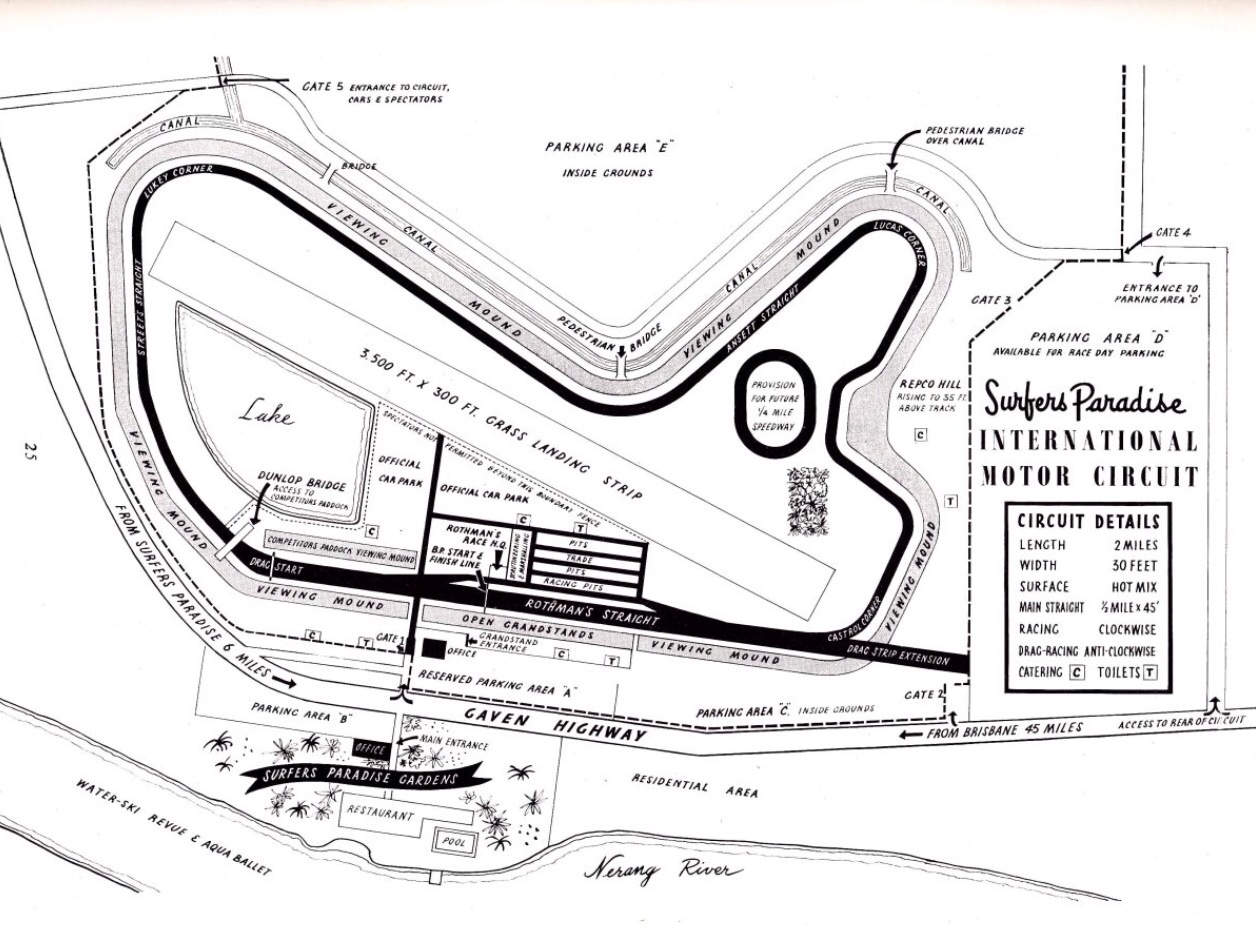
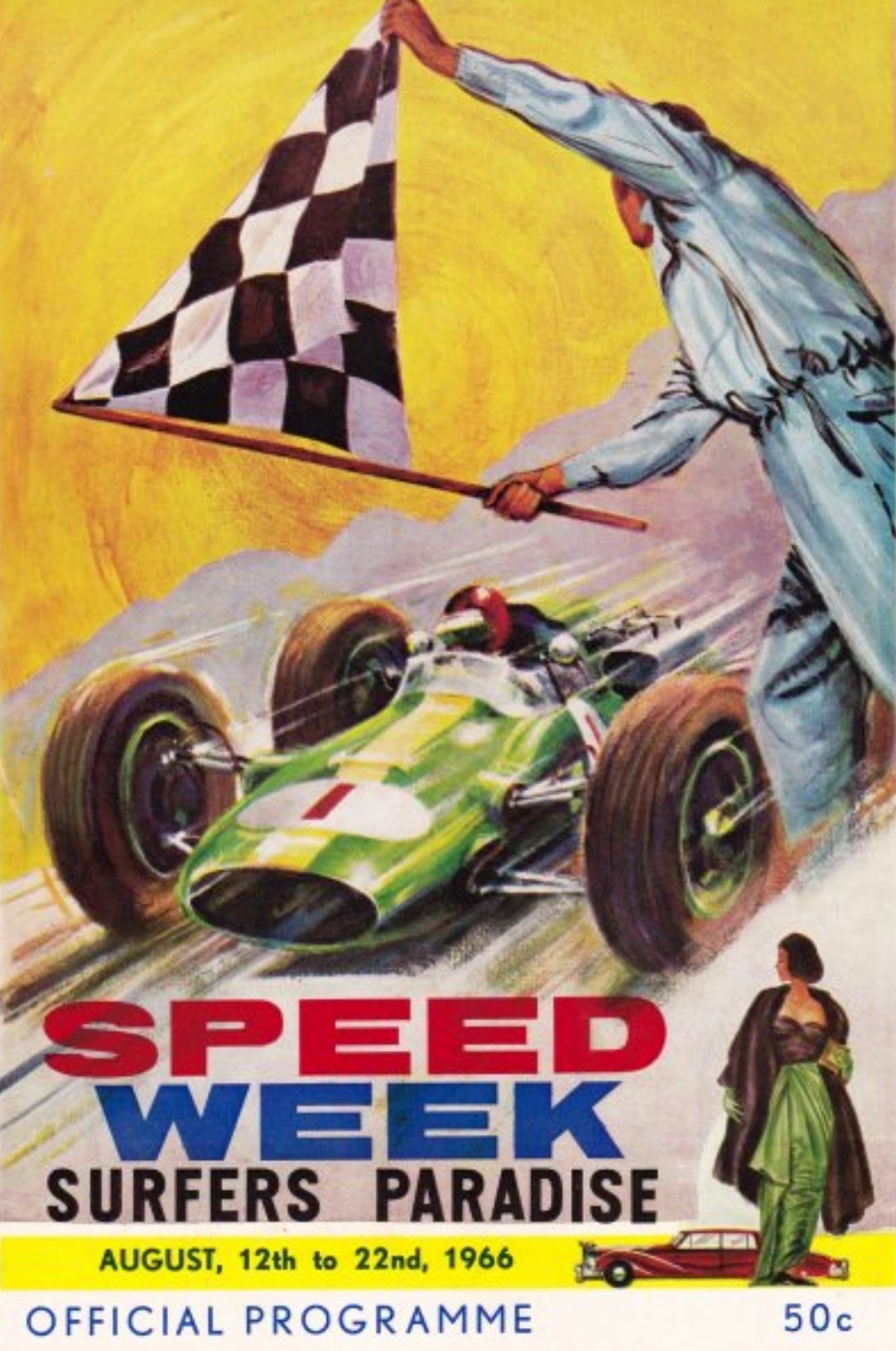
The Surfers circuit was finished in early 1966, the first meeting held on 22 May. The Grand Opening though was ‘Speed Week’ in August, the great promoter holding a number of events over ten days including two weekends of circuit racing described in this article, drag racing, Concours D’ Elegance, motor cycle and speedboat racing- the latter event held on the nearby Gold Coast Broadwater.

Surfers immediately became a drivers and crowd favourite, its fast flowing nature a challenge for drivers and their machines, the circuit facilities and viewing mounds providing a world class amenity at the time to we ‘punters’.

My only visit was as a spectator on a family holiday, i convinced my dad to deposit me at the circuit for the day of the ‘Glynn Scott Memorial Trophy’ in September 1973, the feature event a round of the ‘Gold Star’, the Australian Drivers Championship, contested by F5000 cars.

The sight and sound of these fabulous cars bellowing through the fast right hander under the Dunlop Bridge, a true test of ‘gonad dimensions’, ‘flat knacker’ at 7500RPM in fifth, unmuffled Chev and Repco V8’s roaring away into the distance, was truly a sight and sound to behold and feel!

Frank Matich was running away with the race in his brand new Matich A52, until the ‘flat plane crank’ experimental Repco V8 ‘shook the shitter’ out of the Varley battery, no spark, no go. John McCormack won the race in his Elfin MR5 and the Gold Star that year, the inherently dangerous nature of the track clear to anyone seeing Warwick Brown hobbling around on crutches that day. Brown joining the ‘Lola Limpers Club’ having comprehensively destroyed his T300 and his legs in the Surfers Tasman meeting earlier in the year.

But wow! What a circuit it was!

Williams sold it in 1984, the circuit closed in 1987 and is now part of the ‘Emerald Lakes’ canal estate, like so many of our circuits given over to advancing urban encroachment, but that was a long way away in 1966.

(A Favenchi)

image

Wonderful aerial shot of the raceway and airstrip looking back to Surfers Paradise in 1977 (A Favenchi)

Gold Star Meeting…

Jackie had some idea about the local talent from his very successful Tasman Tour early in the year, he won the series in his P261 BRM taking four wins, but probably got more than he bargained for.

Kevin Bartlett had stepped up since the Tasman Series from the Mildren Teams Brabham Ford 1.5 Brabham BT11A 2.5 Spencer Martin also racing a Brabham BT11A Coventry Climax for Bob Jane.

Jack Brabham was there, in BT19, the chassis which carried him to victory in that years World Championship, fresh from his German GP win a week before, the car still fitted with its 3 litre ‘620 Series’ Repco V8.

Leo Geoghegan and Greg Cusack were entered in ex-Clark Lotus 39 and Lotus 32B respectively- both cars also Coventry Climax FPF 2.5 engined.

Jack Brabham Brabham BT19 Repco, Surfers Paradise 1966

In the middle of his successful 1966 F1 campaign, Jack brought BT19 to Oz for the opening of Surfers Paradise…Repco wanted the car there but all the same i expect Wlliams paid handsomely for Brabhams’ presence! Here surrounded by admirers in the Surfers paddock (Unattributed)


brabham surfers 1966

Jack here fettling his Brabham’s Repco ‘620’, rotor button the cause of his DNF (Unattributed)


(P Cadell)

Ray Bell, ‘Racing Car News’ magazine reporter at the time recalled the meeting on ‘The Nostalgia Forum’…

‘Jack had pole, from KB, JYS and Spencer Martin. KB led the way, this to be the drive that made everybody sit up and take notice, he’d not been long in 2.5’s and was leading a Grand Prix Winner and pretender to the World Championship throne.’

‘Brabham managed a lap and a half before the rotor button went and he dropped out…Stewart hounded KB for five laps before outbraking him at Lukey…Bartlett finishing two-tenths behind the Scot.’ (in an identical car)

‘With KB on pole for the main event, Stewart had something fail in the clutch mechanism and dragged away badly…Martin got the jump, leading KB for seven laps before Bartlett went past into Lukey, Stewart looming in a comeback drive all the while.’

‘On lap fourteen they set a new lap record of 1:13:0, a few laps later JYS passing KB under the bridge…KB coming back at the clutchless Brabham…there was more passing and re-passing until the magneto in Bartlett’s car failed. Stewart blew his engine giving Martin the win having shaken off Leo Geoghegan to do so.’

If there was any doubt, Kevin Bartlett ‘arrived’ as a Top-Liner that day…serving it up to a Grand Prix winner in absolutely equal cars.

Kevin Bartlett recalled recently…’The dices that weekend live in my mind forever. I knew him well before that meeting, his SV Brabham was the equal of mine. We both knew the cars capabilities, the dice was not out of the ordinary as far as we were concerned, the cars were very close but we gave one another room but if you got the line you would slipstream past. We respected each others abilities, we both DNF’d the feature race but laughed about it later. He had no ego.’

image

Kevin Bartlett shown in the Mildren Brabham BT11A in the ‘Lakeside 99’ Tasman round, February 1967. He placed fifth in a race won by Clarks Lotus 33 Climax. (autopics)

Surfers Paradise 12 Hour…

Stewart returned from the beach for the second weekend of Williams ‘double header’ to drive the Scuderia Veloce Ferrari 250LM with Kiwi Andy Buchanan, I wrote about this car a while back….https://primotipo.com/2014/07/03/pete-geoghegan-ferrari-250lm-6321-bathurst-easter-68/

The entry also included a Ford GT40 for Frank Matich and Peter Sutcliffe, another LM for Jackie Epstein and Aussie International Paul Hawkins, David Piper and  future Le Mans winner Richard Attwood raced Pipers’ ex-works Ferrari P2.

image

Peter Sutcliffes’ Ford GT40 ahead of the Jackie Epstein/ Paul Hawkins Ferrari 250LM (autopics.com)

Given the paucity of top-line sports cars in Australia of this type, the grid was bolstered by sprint sports cars such as Lotus 23’s, production sports cars and touring cars…including a Mini Moke entered by later Touring Car Ace ‘Bo’ Seton and Charlie Smith. The closing speed of Stewarts LM and the like would have been well over 80MPH!, the Moke having little power and the aerodynamic efficiency of a ‘dunny-door’.

image

Jackie Stewarts Ferrari 250 LM blasts past the Charlie Smith/ Bo Seton Mini Moke, the Fazz did 493 laps to win, the Moke 311…lapped just a few times. Speed differentials an issue not just at Le Mans! (autopics.com)

The chequered flag was shown to the Matich GT40, but Scuderia Veloce boss David McKay successfully protested the result giving the win to the Stewart/Buchanan LM.

It was not the first time a major event in Australia was clouded by lap-scoring disputes these things not uncommon in those far off, pre-digital days!

image

The winning Scuderia Veloce Ferrari 250LM ‘6321’driven by Jackie Stewart and Andy Buchanan, the car winning the race in 1966/67/68 (autopics.com)

Kevin Bartlett and Doug Chivas finished third in the Alec Mildren racing Alfa Romeo TZ2, Kevin Bartlett again recalls…

‘The 12 Hour was tough going for a little 1600, but Doug was on top of his game, a helluva driver who was kind to the car and did the times. It was a tactical race for us, Alec had worked out a plan and the times we needed to do, which we did consistently.’

’I drove a TZ1 years later at an AGP support event but the TZ2 was areodynamically better, it was quicker in a straight line and had a better track and wheelbase which got it out of corners better. The TZ1 handling was not as good, the tyre and wheel package wasn’t as good.’

image

Andy Buchanan, Jackie Stewart, dignitary, Frank Matich, Peter Sutcliffe, Kevin Bartlett, Doug Chivas. Matich and Sutcliffe happy at this stage but tears were not far away! KB and Chivas piloted the third place Mildren Team Alfa TZ2 (Kevin Bartlett)

Etcetera…

The front gate (D Strong)


(G Paine)


image

Bartlett/Chivas Alfa TZ2, ahead of the John Harvey/ Frank Demuth Lotus 23 and the Cooper T49 Monaco Olds of Tony Osborne/Murray Carter/Ray Gibbs (autopics)


(G Paine)


image

David Piper/Richard Attwood Ferrari P2 (autopics.com.au)


(G Paine)


image

Peter Sutcliffes’ Ford GT40 was a customer car owned by Sutcliffe, co-driven by Frank Matich, at the time the outstanding sports car driver in Australia, make that one of the the most outstanding drivers in Australia, his competitiveness in open-wheelers proven in the Tasman Series until he (sadly!) went down the sports car path, finally again seeing the light in the days of F5000…(autopics)


(G Paine)


image

Early pitstop for the Piper/Attwood Ferrari P2, only 45 laps completed (autopics)


Don Gorringe/Dick Crawford Lola Mk1 Climax (G Paine)


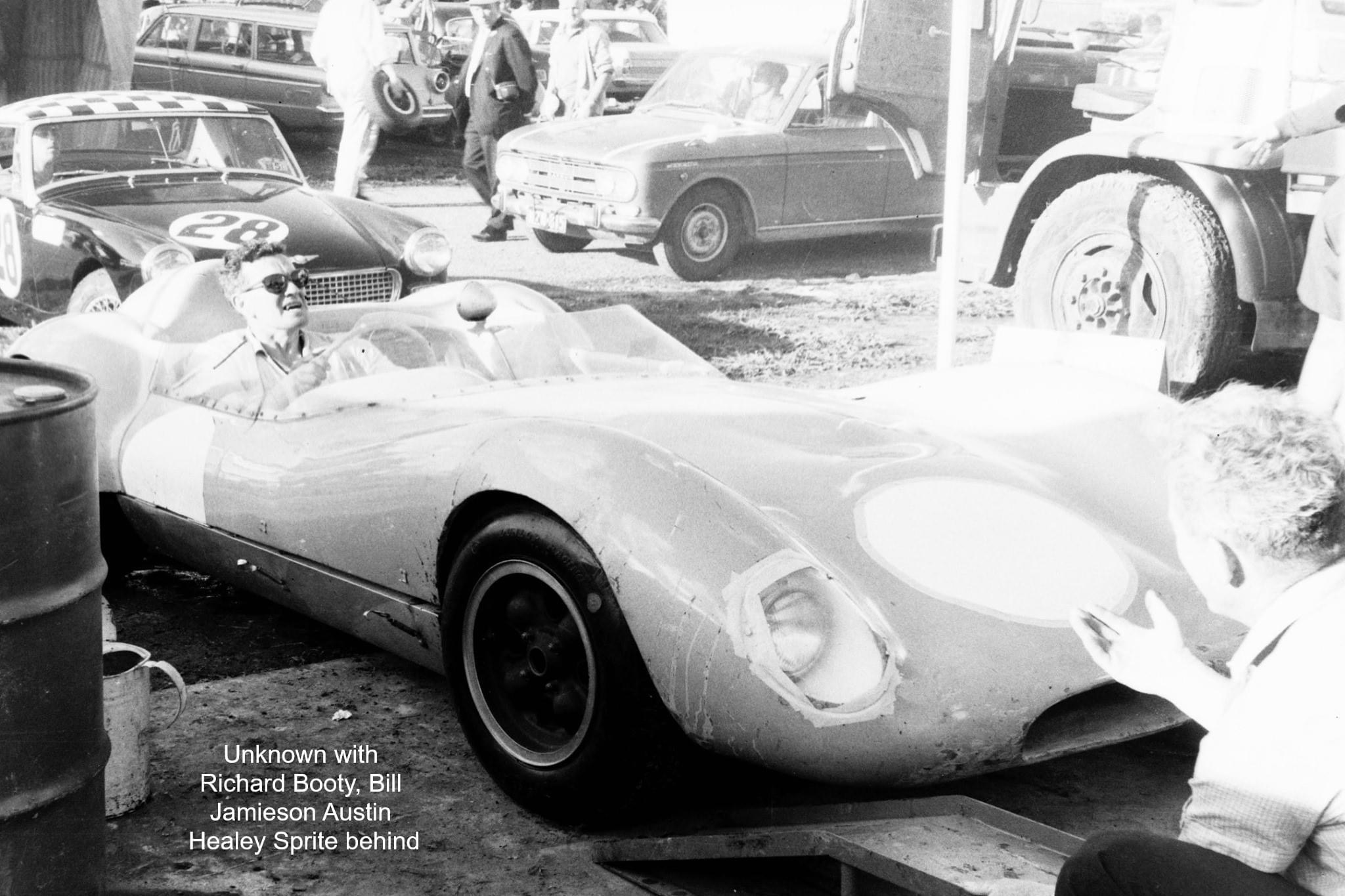
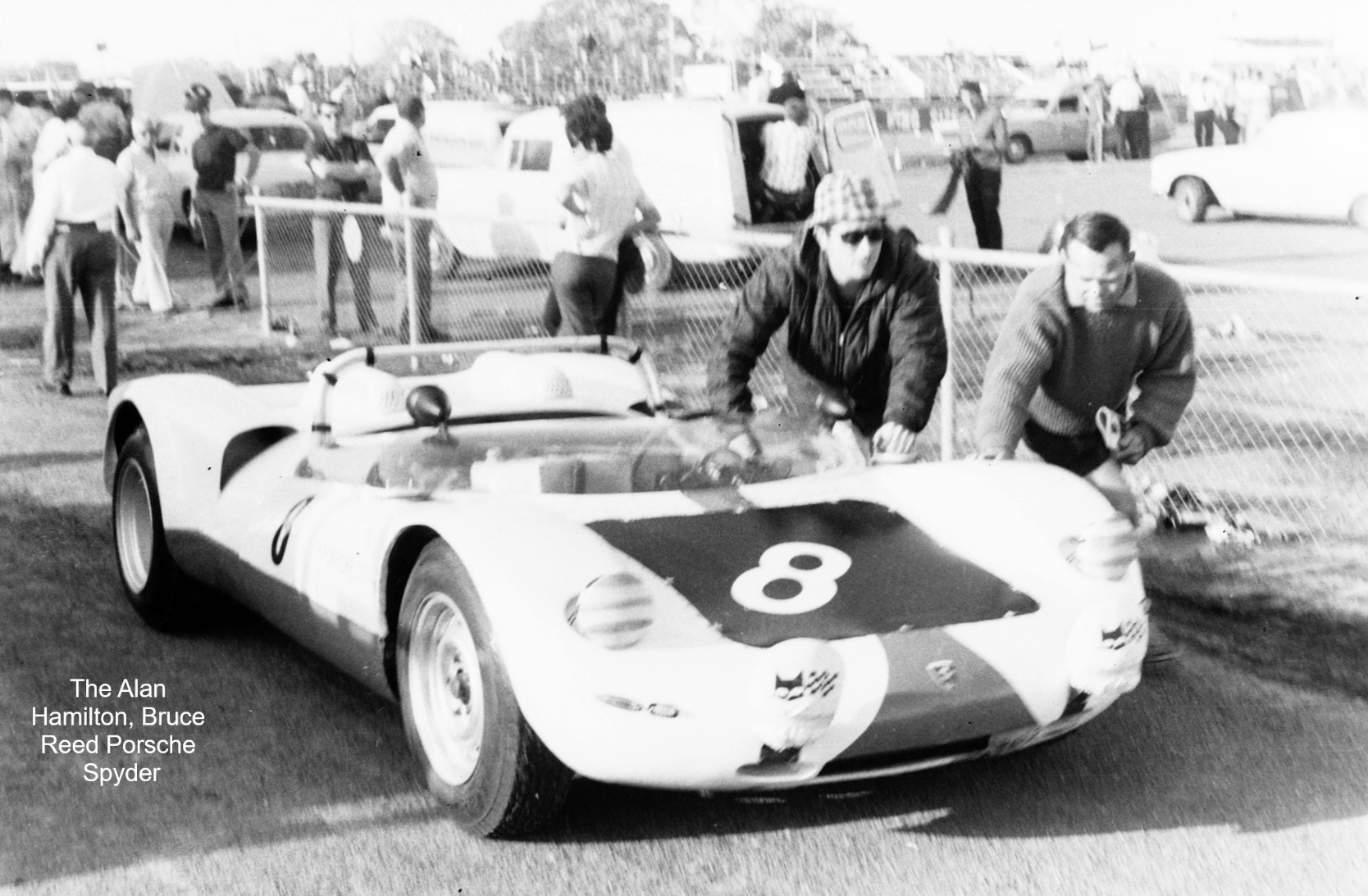
Alan Hamilton and Brian or ‘Brique’ Reed (G Paine)


Touring Car race circa 1966 (J Dwyer)


(G Paine)


image

Photo and Other Credits…

autopics.com.au, John Stanley Collection, Alexis Favenchi, Darren Strong, Peta Cadell, Glenn Paine

Many thanks to Kevin Bartlett for sharing his recollections of both events

Finito…

helen and jackie stewart 1970

Another evocative Jesse Alexander shot capturing Helen Stewart during a moment of reflection, circa 1972. Jackie at rear with Peter Gethin or George Follmer maybe?…

(Jesse Alexander Archive)

Denny Hulme and Jackie Stewart, Levin NZ Tasman 1967 (Digby Paape)

Denny Hulme Brabham BT22 Repco and Jackie Stewart BRM P261, the natty tartan attire of the BRM Equipe a contrast with the more casual Australian approach…Hulmes’ engine is Repco ‘640 Series’ 2.5 litre; original ’66 series Olds ‘600 Series’ block with the ’67 F1 Championship winning ’40 Series’, exhaust within the Vee, heads. Definitive Repco 1967 F1 Championship winning variant is the ‘740 Series’, Repco’s own ‘700 Series’ block and aforementioned ’40 Series’ heads. Early and very important 1967 F1 testing days for Repco, engine making its debut the weekend before at Pukekohe (Digby Paape)

Denny Hulme and Jackie Stewart awaiting adjustments to their cars setup, Levin, New Zealand, Tasman Series 13 January 1967…

Digby Paape took these fantastic, evocative shots of Stewart, Hulme and Jim Clark-‘I was 22 at the time, my father had been president of Motor Sport NZ, and though I was unknown on the North Island I felt I could go anywhere with my Contax, i was masquerading as a journo for the ‘Hutt Valley Motoring Club’. I took all the shots @ F8 @ 250th of a second. Each car only had a couple of mechanics, it was hard to know what was being said. Later on I was the Radio NZ and TVNZ commentator for these and other events, Levin was always hot and the action was close. Close enough for good shots without a telephoto lens’.

Stewart beat Clark in the first Tasman round at Pukekohe the previous week, winning the NZ Grand Prix, the two drivers were the class of the field at Levin as well, despite intense pressure Clark won the 50 mile ‘Levin International’ by less than a second from Stewart’s BRM. Richard Attwood was third in another BRM P261 and Frank Gardner finished fourth in the first of the four cylinder cars, a Brabham BT16 Climax. Denny Hulme retired with ignition problems.

It’s interesting to reflect upon the year to come for each of the drivers…

Denny Hulme, Brabham BT22 Repco, 1967 NZ Tasman, Levin

Denny Hulme, Brabham BT22 Repco, Levin NZ, 1967 (Digby Paape)

It was a tough Tasman for Denny and his team leader Jack Brabham…

They had great unreliability from the new, exhaust between the Vee Repco ‘640 Series’ engines, mainly centred around fuel injection and ignition dramas, but the primary object of the exercise was really to get the engines raceworthy for the 1967 GP season in any event. Jack did have a good win at Longford in his BT23A, the power circuit in Tasmania and last round of the series.

Repco sorted the problems, the new Repco (as against the 1966 Oldsmobile blocked ‘620 Series’) blocked ‘740 Series’ engines were reliable early in the GP season.

Denny broke through for his first GP win at Monaco, 620 engined, but there was no joy in the victory as Lorenzo Bandini perished aboard his Ferrari 312 in a gruesome, fiery accident, which finally helped galvanise action to improve safety standards on the world’s circuits.

In a season when five different drivers won a Grand Prix, his consistency paid off, he won the title with two wins, the Nurburgring the other, from Jack with Jim Clark third in the epochal Lotus 49 Ford Cosworth DFV.

image

Hulme en route to his first Grand Prix victory, Monaco 1967 in his Brabham BT20, still fitted with the ’66 series ‘RB620’ engine. Jacks car was fitted with the new ‘740 Series’ the engine blew early in the race. Hill and Amon second and third in Lotus 33 BRM and Ferrari 312 respectively (unattributed)


1967 CanAm Road America

Can-Am Road America 1967 parade lap: #4 Bruce McLaren, Hulme alongside in the other McLaren M6A Chev, Dan Gurney Lola T70 Ford behind Bruce, Jim Halls’ winged Chaparral 2G Chev easy to pick…and the rest maybe some of you can help me with the caption? Denny won the race from Mark Donohue and John Surtees , both in Lola T70 Mk3B Chevs (unattributed)

In a full season, Hulme was recruited by his compatriot Bruce McLaren as his teammate in the Can-Am series. Robin Herd’s McLaren M6A Chev was a stunning car, concepted by he and Bruce, and started the teams domination of the series which finally ended when Porsche joined the series, and ruined it! with its 917/10 in 1972.

Denny narrowly lost the series to McLaren but the relationship started a commitment to the team by Denny which endured to the end of his career and saw him race the team’s F1, Can-Am and Indy Cars through to the end of 1974, when he finally returned to NZ.

Jim Clark, Lotus 33 Climax, NZ Tasman, Levin 1967

Jim Clark, Lotus 33 Climax, Levin 1967. ‘R14’ was the last of the trendsetting Lotus 25/33 series built, the first ‘modern-monocoque’ which made its debut in Holland 1962. Clarks 2 litre V8 was giving away some power to most of his serious competition, the 2.1 litre BRM’s and 2.5 litre Repco’s but his driving abilities were more than up to closing the deficit (Digby Paape)

Clarks Lotus 33 ‘R14’ was a chassis which had been kind to him…

He first raced it at Brands Hatch in July, and, fitted with the super trick 2 litre version of the Coventry Climax FWMV V8 had served him well in 1966, he drove the car when the heavy BRM ‘H16’ engined Lotus 43 was unsuited to the circuit or circumstances- his best result against the new 3 Litre F1’s was a strong third in Holland.

He won the Tasman series in ‘R14’, assisted greatly by the unreliability of the Brabham Repcos and the BRM P261’s, the latter so dominant the year before. The two 2 litre FWMV V8’s were shipped to the Antipodes, the Mk8 1976cc engine was created by using the big 72.39mm bore of the 1964/5 Mk4-7 engines with the 1961/2 Mk1-2 60mm longest stroke to create a circa 245bhp motor. With the ‘R14’/2 litre FWMV combination Clark won five of the eight Tasman Series 100 mile races, three- at Wigram, Lakeside and Sandown were Tasman Cup championship events, the other two at Levin and Teretonga were non-championship races.

Clark raced a Lotus 43 BRM in South Africa, the first GP of 1967, then ‘R14’ for the last time at Monaco, finally getting his hands on the Lotus 49 at Zandvoort. By that time he was a British tax exile so the first time the Scot saw the car was when he drove it in Holland, he hadn’t even tested the thing, those duties had been faithfully carried out by Graham Hill.

Jim Clark, Lotus 49 Ford, Dutch GP June 1967

Jim Clark on his way to a debut win with the Lotus 49 Ford, Dutch GP, Zandvoort June 4 1967…both engine and chassis changed the face of GP racing in an instant (unattributed)

The car was ‘right’ from the start, he won on its debut and then a further four 1967 races, but Dennys’ consistency got him over the line that year in the equally new Brabham BT24, lets not forget that it, too, was cleansheet in terms of chassis and engine that year. Click here for a piece on the Brabham BT24; https://primotipo.com/2017/12/28/give-us-a-cuddle-sweetie/

The Lotus 49 package was dominant in 1968, but sadly Clark’s 1968 South African GP triumph, off the back of his third Tasman Cup win, was his last, he died tragically in a Lotus 48 Ford FVA  as a consequence of probable tyre failure in the during the ‘Deutschland Trophae’ Hockenheim F2 race on 7 April.

The king of the 1.5 litre formula proved he was also king of the 3 litre formula in 1967, and anything else he drove!

Graham Hill heroically galvanised the Team Lotus after Clark’s death, winning the title in 1968 and provided leadership Chapman initially did not, grieving for Clark as he understandably was.

Jackie Stewart took two Tasman Cup wins…

Mechanical woes, particularly weaknesses in the BRM P261’s transmission crown wheel and pinion cost him victories, but his speed was apparent and close to Clark’s- the two races he won were biggies too- the NZ GP at Pukekohe and AGP at Warwick Farm. Unlike Jim, who had the F1 Lotus 49 to look forward to, BRM persevered with the heavy, complex and slow ‘H16’ engined BRM P83/115 in 1967.

It was to be a long, character building year, a second and third in Belgium and France respectively but retirement in all eight of the other championship rounds awaited the young Scot.

He had won his first Grand Prix in the lithe, nimble P261 in Italy in 1965 but it was then a ‘long time between drinks’ in F1, his undoubted speed was finally reflected in wins when he departed to Team Tyrrell which started running Ford DFV engined Matras in 1968, his first title came in 1969 aboard the glorious MS80. Click here for an article on that Matra; https://primotipo.com/2016/07/01/matra-ms80-ford/

Jackie Stewart, BRM P83, Nurburgring 1967

Jackie Stewwart wrestling his big BRM P115 ‘H16’ BRM, Nurburgring 1967. He was running fourth when the transmission failed, ‘yumping’ hard on the ‘tranny at the ‘Ring! Hulme won the race in his light, nimble Brabham BT24 Repco (unattributed)


image

Team Tyrrell ran Matra F2 cars in 1967, Jacky Ickx taking the Euoropean F2 title, and Jackie Stewart, pictured here in an MS7 FVA at ‘Oulton Park’ took one championship win…and critically the team took the view the cars would be successful in F1 (Eddie Whitham)

What duels there may have been as Stewart matured as a driver and took on his friend and countryman Clark- mind you we saw it in the 1967 Tasman as they were in essentially cars of equal performance, albeit JYS’ BRM often did not run for long enough for the duels to run their course…

As Digby Paape says ‘how lucky we were to see the international drivers in current F1 cars as we did in those wonderful 2.5 Tasman years, the equivalent of seeing Schumacher in that years winning Ferrari’. Indeed it was.

Photo Credits…

Digby Paape, Eddie Whitham, Doug Shaw Collection

Tailpiece: Pukekohe 1967…

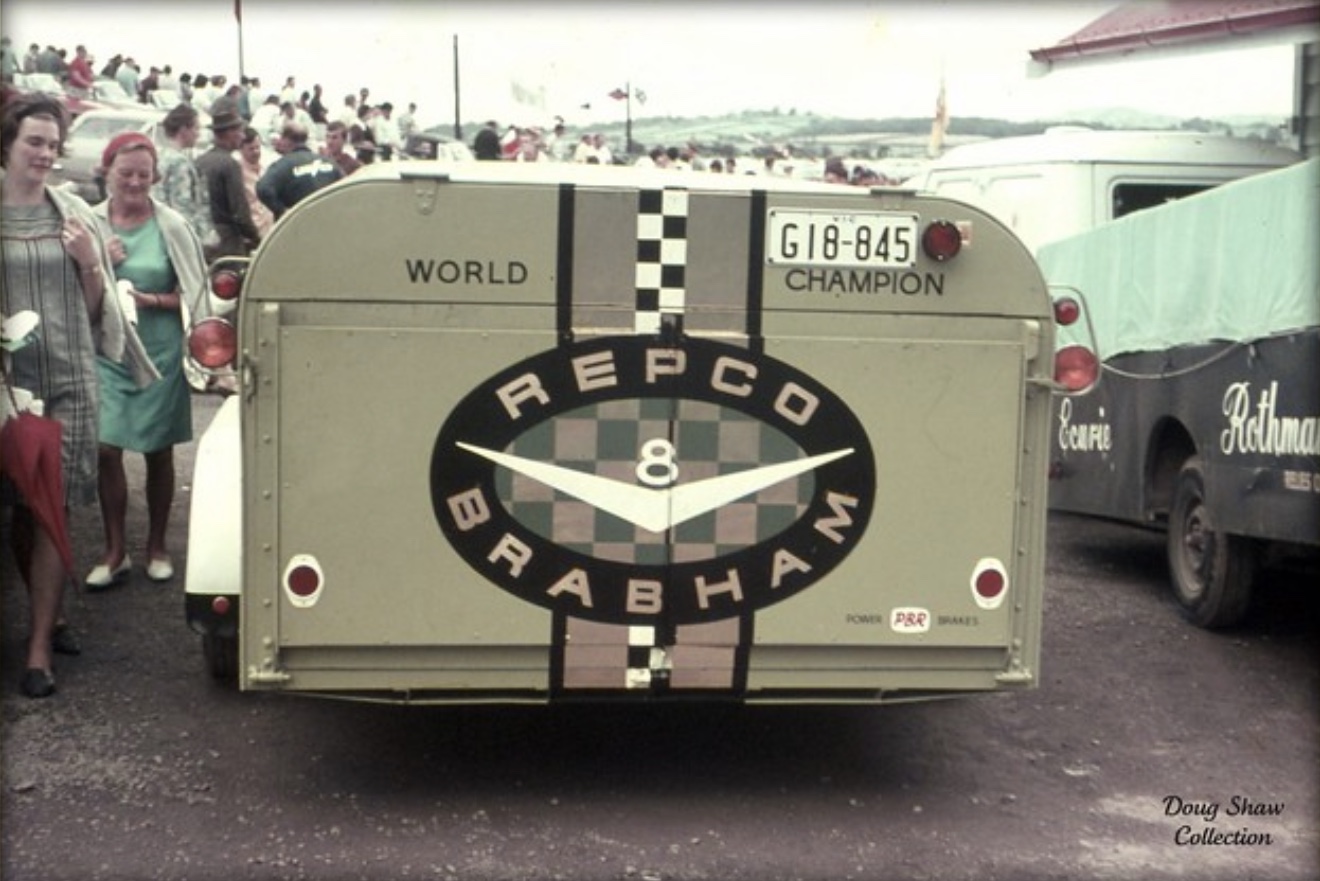
Love the hats on the gals at the motor racing!

Clearly they have a penchant for ‘Rice Trailers’- it seems said equipment made the trip across the Tasman as well as the two cars, not the happiest of Tasmans for the Repco-Brabham crew despite an ‘all out’ effort to take the Tasman Cup.

Finito…

Francois Cevert, Tecno 68 Ford F3 1968

(Automobile Year)

Francois Cevert applies some gentle correction to his Tecno 68 Ford F3 car, Rouen, France 1968…

I was researching another article and tripped over some photos of a very young Francois Cevert in an Alpine in his F3 days…

It reminded me of how many talented young drivers were killed before their prime well into the 1970’s- Francois, Tom Pryce, Gerry Birrell, Roger Williamson, Piers Courage and Tony Brise all spring readily to mind.

The monocoque chassis of the 1970’s were far stronger than the spaceframes of ten years before but as the width and grip of tyres and the aerodynamic downforce the cars produced improved, it meant that accidents, when they occurred at the higher cornering speeds could be particularly horrific. It was a collision with an armco fence, in an accident of this type when his Tyrrell got away from him which killed Francois at Watkins Glen in 1973.

John Barnards’ pioneering use of a carbon fibre chassis in the first McLaren MP4 in 1981 was a driver safety ‘game-changer’.

Francois Cevert 1968

Cevert in his ‘Bell Magnum’ 1968 (unattributed)

As a young teenager just getting interested in racing Cevert ‘had it all’- dazzling film star looks, talent aplenty and racing for a team which was carefully nurturing his talent.

Ken Tyrrell recruited Francois into his Elf sponsored team after the retirement of Johnny Servoz-Gavin due to an eye injury. Jackie Stewart spotted Cevert in 1969 when contesting F2 races and suggested to Tyrrell he keep an eye on him.

Stewart immediately clicked with the young Frenchman, they had a remarkably mature relationship as teammates by the standards of today (Piquet/Mansell, Prost/Senna, Rosberg/Hamilton for example!) with Stewart mentoring the younger man, exactly as Graham Hill had done with the young Scot in 1965. Francois fitted into the ‘family team’ that Tyrrell was. Norah and Ken, Jackie and Helen Stewart, Derek Gardner and the mechanics was a famously friendly place to be- albeit a very competitive one.

Cevert made his Grand Prix debut in the team’s March 701 Ford at the 1970 Dutch GP, by the end of 1971 he won his one and only GP victory at Watkins Glen, ironically the circuit at which he would lose his life.

Stewart freely admitted Ceverts’ equal or superior speed in 1973, the team leading role Cevert was to play in 1974, when JYS retirement was planned was cruelly stolen from him.

Francois Cevert, Alpine A280 Renault, Brands Hatch F3 October 1967

(unattributed)

Francois in the Brands Hatch paddock (above) for the ‘ER Hall Trophy’ Meeting October 29 1967.

Alpine A280 Renault, DNF in a race flagged off after 10 laps due to the conditions, the top 10 finishers included future F1 drivers Henri Pescarolo, John Miles, Peter Gethin, Reine Wisell, and Derek Bell- the field also included future F1 drivers Ian Ashley, Gijs Van Lennep, Jean-Pierre Jaussaud, Dave Walker, Clay Regazzoni, Piers Courage, Howden Ganley…a field of some depth!

This article and photographs celebrate Francois’ time in his formative F3 and F2 years.

Cevert, born in 1944, originally became interested in racing via Jean Pierre Beltoise, his sister was dating the future French champion at the time.

After two years doing National Service he enlisted in a racing school at Magny Cours, winning the ‘Volant Shell’ competition, the prize was an Alpine A280 Renault F3 car.

Francois’ Magny Cours drive was funded by a married woman ‘Nanou’, he met her aged 19 and  she fell for him during a holiday in which she too was completing the race course- the shot below is of his wet, winning drive in a Merlyn Mk 7.

cev vol

(unattributed)


cev dep

Francois and Patrick, Volant Shell 1966 (unattributed)

Patrick Depailler also contested the final, finishing second, here the pair of them are looking very sodden after the race.

The Winfield Racing entered car was underfunded and relatively uncompetitive in 1967 but Francois did enough to be offered a works Alpine drive for 1968 but he turned this down and talked his way into the Tecno team, who had a much more competitive machine.

Francois Cevert , Pau F3 1967, Alpine A280 Renault

Early in the 1967 season, April 2 with the Alpine A280 Renault, at Pau. DNF in the race won by Jean-Pierre Jaussaud’s Matra MS6 Ford (unattributed)

He missed five rounds of the French Championship but won the first he entered at Monthlery on May 12, he was immediately competitive in his Tecno. A strong fourth place followed in the  Monaco F3 GP and  put his name into prominence, Ronnie Peterson placed third, he too would make his F1 debut in a March 701 in 1970.

Francois then took further wins at La Chatre, Nogaro and Albi winning the French F3 championship that year.

Francois Cevert, Albi 1968, Tecno 68 Ford F3

1st place in the 1968 French F3 Championships’ final 1968 round at Albi. Tecno 68 Ford (unattributed)

Francois progressed to a factory F2 Tecno in 1969…

The Ford FVA powered Tecno 69 was a very competitive car also driven by fellow 1970 F1 ‘newbee’ Clay Regazzoni. The class was hotly contested by drivers including Jochen Rindt, Jackie Stewart, Graham Hill and Piers Courage, the class contained both pretenders to the thrones of current champions and the champions themselves.

Johnny Servoz-Gavin won the European F2 Championship that year in a Matra MS7 Ford from Hubert Hahne in a Lola T102 BMW/ BMW 269 from Francois in third, it had been a strong debutant F2 season in a field of great depth.

Francois Cevert, Tecno 68 Ford FVA, Pau 1969

Francois Ceverts Pau 1969 was more successful then his 1967 visit- fourth in the F2 race in the Tecno 68 Ford FVA  won by ‘F2 king’ Jochen Rindt Lotus 59B Ford FVA. High wings banned shortly thereafter by the FIA during the 1969 Monaco GP weekend (unattributed)


Francois Cevert, Tecno 69 FVA, German GP 1969

Francois in the Tecno 69 Ford FVA F2 car during the 1969 German GP. He qualified sixteeth, and second quickest of the F2 cars in a field of 26 cars. DNF after 9 laps with gearbox failure (unattributed)

Into 1970 Francois continued in F2 and was also picked up by Matra for their endurance program, the 3 litre V12 sportscars provided his first taste of real power.

Cevert drove for the team for the rest of his life, Servoz retired and the rest, as they say, is history and one of Grand Prix Racings’ great ‘mighta-beens’…

Other Cevert Reading…

Francois and Jack Brabham at Matra in 1970; https://primotipo.com/2016/09/09/jack-and-francois-matra-ms660/

Tyrrell Aerodynamic Evolution; https://primotipo.com/2016/05/31/tyrrell-002-monza-1972/

Etcetera…

Francois Cevert , Matra MS660, Monthlery 1970

(unattributed)

Jack Brabham and Francois Cevert teammates at Matra in 1970.

Jack was in his last year of F1 and Francois his first- winners of the Paris 1000Km at Monthlery in 1970, Matra MS660

Francois Cevert, March 701 Ford, Dutch GP 1970

(unattributed)

First Grand Prix, the Dutch in 1970, Team Tyrrell March 701 Ford.

Q 15 of 24 cars and DNF with an engine failure on lap 31 of the race won by Jochen Rindt’s Lotus 72 Ford. This was the tragic race in which Piers Courage lost his life in a high speed crash in his De Tomaso 505 Ford.

Francois Cevert, TecnoTF71Ford FVA , Imola 1971

(unattributed)

Cevert continued to do the occasional F2 race after he had broken into GP racing.

Here he is aboard a Tecno TF/71 Ford FVA, in the ‘City of Imola GP’ in July 1971. He was non-classified tenth in the race won by Carlos Pace’ March 712M Ford FVA. ‘Tyrrell nose’ quickly adopted by others after appearing at the French Grand Prix earlier in July, but pioneered by Chevron in F2.

Brigitte and Francois 1971

(unattributed)

Francois and Brigitte Bardot at the Paris Racing Car Show in 1971.

By this time Cevert is a GP star if not an ‘ace’- the car is Graham Hills F1 mount of 1970, the Rob Walker owned Lotus 72 Ford- they make an attractive couple!

image

Cevert F3 victory celebration with parents, Tecno 68 Ford , 1968

(unattributed)

Francois celebrates a 1968 F3 victory with his parents, circuit not disclosed. Tecno 68 Ford F3.

Below, Ceverts #44 Tecno in the Monaco F3 paddock 1968- #39 Francois Mazet also Tecno 68 Ford mounted and #40 Etienne Vigoureux Martini MW3 Ford.

Monaco F3 pit scene 1968

(unattributed)


Francois Cevert, Tyrrell 002 Ford, USGP 1971

(unattributed)

Francois, Monza 1971, Tyrrell 002 Ford.

He was third in that blink of an eye finish between Peter Gethin, Ronnie Peterson, March 711 Ford, Francois and Mike Hailwood, Surtees TS9 Ford- Gethin’s BRM P160 V12 was the victor by a tenth of a second from Peterson and Cevert.

Tecno logo

Credits…

Automobile Year 16, DPPI, The Nostalgia Forum’, F2 Index, oldracingcars.com

Finito…

stewartr

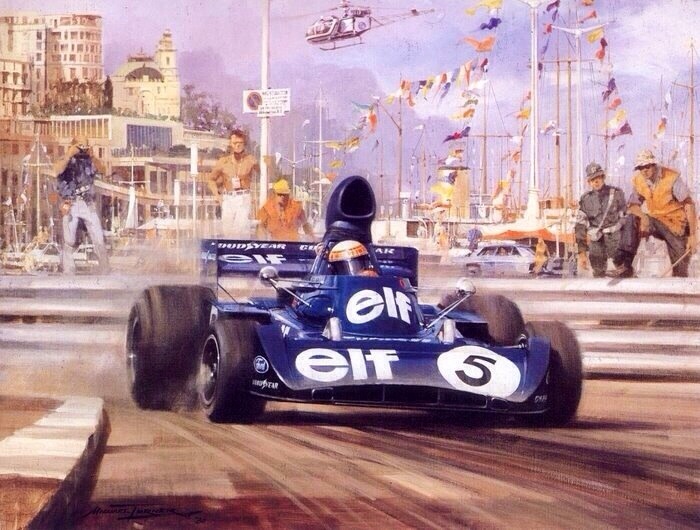
Fantastic shot of JYS on his way to victory throwing around the ‘twitchy’ , low ‘polar moment of inertia’ Tyrrell 006…

 The win was Stewarts 25th, equalling the number of Championship wins achieved by his friend and compatriot Jim Clark.

Stewart started the season in his trusty 005 but raced 006 from the International Trophy at Silverstone , the car carrying him to 5 victories and the world title that year.

Whilst Stewart won the drivers title the manufacturers championship went to Lotus, reigning champion Emerson Fittipaldi and teammate Ronnie Petersen scrapping and taking wins between them , which, in the absence of team orders , stopped Fittipaldi winning a pair of titles ‘on the trot’…team orders, and some times their absence are not new in F1!

Lotus were not the only team with 2 ‘number ones’ that season.

Stewart had Francois Cevert as his Tyrrell teammate again ,they were close friends as well as competitors with the master freely acknowledging Cevert had his speed , and then some , that season. But Francois was a team player and knew his turn , and time would come.

Sadly, it didn’t with his death in an horrific accident in practice at Watkins Glen, the final GP of ’73.

Stewart did a couple of laps in 006/2 in the final session to try and work out what happened to Francois, pitted his car and walked away from F1, as a driver , as he had planned earlier in the season , for good.

Jackie retired with 27 championship wins from 99 races, Cevert perished not knowing he would have been Tyrrells team leader in 1974…

stewart & cevert

Jackie Stewart leads Francois Cevert, Monaco 1973. First and fourth respectively. (Pinterest)


stewart 7 cevert 2

Francois Cevert & Jackie Stewart in 1973 (Pinterest)


tyrrell 006 cutaway

Werner Buhrer cutaway drawing

Checkout Allen Browns great piece on his oldracingcars site on ‘006’ inclusive of chassis by chassis histories here;

https://www.oldracingcars.com/tyrrell/005/006/

stewart

Photo Credits…

Werner Buhrer, Michael Turner

Tailpiece…

image

(Michael Turner)

Finito…


image

Olympia Racing Car Show…

Model Venetia Day tries to get comfy atop the monocoque of Matra’s 1970 F1 challenger, the MS120. This famous shot was taken on the preview day of London’s Racing Car Show at Olympia in January 1971. The compound curvature of the Matra is more than matched by Venetia’s lissom lines, the raincoats of the ‘snappers seem apt, all struggling with the correct focal length of their shot.

matra badge 2
monaco
Matra make their GP debut at Monaco in 1968. Beltoise’ Matra MS11 with MS9, induction between the cams V12. Q8 and DNF after an accident. Short snub-Monaco nose fitted (Cahier Archive)

Matra MS120…

Jackie Stewart won the Drivers and Constructors World Championships for Matra in 1969 with the Tyrrell Team’s Ford Cosworth powered MS80. Matra entered F1 with Ken Tyrrell’s team in 1968, his cars were Ford powered, in addition their own V12 engined MS11 debuted.

In 1969 Matra focussed on developing their V12, the MS80 was designed for the Ford DFV only, the strategy was successful, few new teams have won a World Championship so soon.

ms 80
Jackie Stewart in his ’69 championship winning Matra MS80 Ford. French GP, Clermont Ferrand.(unattributed)
image
Monaco GP 1970. Henri Pescarolo ahead of Pedro Rodriguez’ BRM P153, the Matra V12 powered car finished third , Pedro finished sixth in his car, also V12 powered. Rindt’s Lotus 49 achieved a great victory having pressured Jack Brabham into a last lap error (unattributed)

Commercial Considerations…

For 1970 Matra went it alone running cars powered by the French aerospace company’s own V12. Matra boss, Jean Luc Lagarde, did a deal to sell his Matra 530 sports car through the Simca dealer network. Simca were owned by Chrysler, who were not about to have a Ford engine powering ‘their racing car’.

Tyrrell was offered the  MS120 for 1970. Stewart tested the car at Albi but felt that the DFV was the more competitive engine and after most of 1970 running a customer March 701, Tyrrell’s own Ford DFV powered cars made its debut, with Stewart taking two more titles in 1971 and 1973. Tyrrell and Stewart were correct in their assessment, Tyrrell’s first Derek Gardner designed 001 was similar in many ways to the MS80 which was always one of Stewart’s favourite cars.

image
Equipe Matra, British Grand Prix 1970, Brands Hatch. DNF for both Beltoise and Pescarolo. Rindt’s Lotus 72 won the race after Brabham’s BT33 ran short of fuel. These paddock shots clearly show the different aerodynamic approach adopted by Matra’s Bernard Boyer (unattributed)

MS120 Design…

Chassis Designer Bernard Boyer created a new monocoque with cockpit sides and upper surfaces shaped to use the airflow over the car to develop downforce. New approaches to aerodynamics in 1970 by the March 701, the stunning wedge shaped Lotus 72 and the MS120 were stark contrasts to  the cigar shapes of the 1960s. The other aero approach was the pregnant-coke-bottle adopted by the BRM P153 (see picture of Rodriguez in Monaco) to get the fuel load as low as possible in the car.

Front suspension geometry was developed directly from the MS80 but the wheelbase was 10cm longer due to the difference in length of Matras V12 relative to the DFV.

Matra’s 48-valve, 3-litre V12 was further developed by Gerard Martin’s team with a new block, which, DFV style, allowed the engine to be attached directly to the rear bulkhead of the monocoque to  carry the loads of the rear suspension and Hewland FG400 five-speed transaxle. The engine developed around 435bhp @ 11000rpm, about the same as the DFV, but it was lighter and more fuel efficient.

The DFV was the-engine of the 3-litre formula, Ferrari’s flat 12 its only true competitor over the longer term and even then it was hamstrung by the chassis which sometimes carried it…the DFV had no such problem given so many teams used the ubiquitous engine.

matra engine
Matra MS12 3-litre, 60 degree, 48-valve, Lucas fuel injected V12. It developed circa 435bhp @ 11000 rpm from 2993cc. The engine was used as a stressed member, suspension mounts bolting directly to the engine. Aeroquip brake lines running along top radius rod, Lucas fuel injection and metering unit in shot(unattributed)

Drivers and Results…

The MS120s were driven by Frenchmen Jean-Pierre Beltoise and Henri Pescarolo in 1970, they finished 9th and 12th respectively in the Drivers Championship. Whilst both were fast, neither was an ace, Matra finished seventh in the Manufacturers Championship. Jochen Rindt won the drivers title posthumously and Lotus the constructors for points gained by both its old 49 and revolutionary, new 72.

1970 was a very competitive season with the Brabham BT33, BRM P153, Ferrari 312B, Lotus 49 and 72 and March 701 all winning  Grands’ Prix. The MS120 was a little heavy, was thirsty and lacked the reliability of much of its competition, JPB had five retirements out of 13 rounds and six top-6 finishes whilst Pesca had three retirements and four top-6 finishes.

The team lacked  an ace behind the wheel and someone with real depth of F1 testing and race experience to be able to fully develop the car. French Car, French Engine, French Sponsors and French Drivers all sounds great and made political sense given the Government funds involved, but in reality, in 1970, they needed Ickx, Amon, Rodriguez, Rindt or Stewart. Of course this analysis excludes drivers rusted-on to their own teams.

french gp start
Clermont Ferrand, start of the 1970 French GP. Stewart March 701, Rindt Lotus 72, Pesca MS120, Rodriguez BRM P153 obscured, Jack Brabham Brabham BT33, Denny Hulme McLaren McLaren M14A, Ronnie Petersen March 701, Ignazio Giunti Ferrari 312B, Francois Cevert March 701…talent aplenty in 1970…(unattributed)
image
French Grand Prix 1970, Pescarolo fifth in his MS120 at Clermont Ferrand, Beltiose 13th in the race won by Rindt’s Lotus 72 (Cahier Archive)

Withdrawal from F1…

Matra withdrew from F1 as a chassis constructor at the end of 1972, despite blinding speed shown on occasion by Chris Amon in 1971-72. They eventually won Grands’ Prix as an engine supplier in Ligier chassis in the late 1970s and into the 1980s.

The 3-litre V12 was  fabulous, its screaming note one of racings most evocative, shrill best. It also achieved endurance success, the French company winning Le Mans in 1972-73-74 with its ‘670’ series of cars.

Matra’s were superbly designed, distinctively different and exquisitely built racing cars, the aeronautic background of the company was obvious in the execution of the cars construction. The Grand Prix scene was the poorer for their absence, but from a commercial perspective it was mission accomplished for Matra with an F1 Constructors Championship and three Le Mans victories on the trot.

The other car behind Venetia is a Surtees TS9 by the way, or perhaps you didn’t notice…

Etcetera…

jpb from rear
JPB MS 120 1970…the more you look the more you see! Just a beautifully engineered and built car
boof
Beltiose all ‘cocked up’ at Monaco ’68, this kiss of the kerb causing his retirement. MS11 (unattributed)
image
Matra MS120 family: top to bottom 1970 MS120, 1971 MS120B and 1972 MS120C (Pinterest)
matra cutaway
MS12 cutaway…3-litre, 60-degree, 48-valve V12. Lucas fuel injection. Designed to be used as a stressed member, bolted directly to the monocoque rear bulkhead.

matra badge

image
(Matra)
boys
The 1969 Matra Squad: Matra’s Henri Pescarolo and Jean-Pierre Beltoise, and the Tyrrell duo of Johnny Servoz-Gavin and Jackie Stewart (unattributed)

Short History of Matra Sports…

http://www.grandprix.com/gpe/con-matra.html

Photo Credits…

The Cahier Archive, Getty Images

Finito…

pete

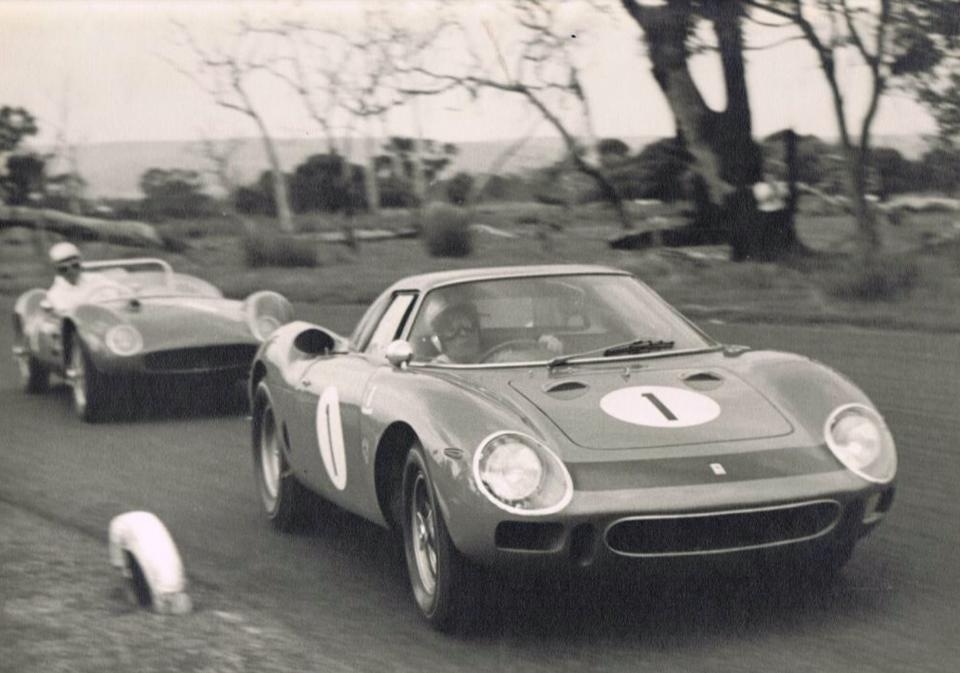
‘Pete’ Geoghegan in the SV Ferrari 250LM, Hell Corner, Easter Bathurst ‘Gold Star’ meeting April 1968, crowd listening to the howl of that V12 on the downchanges. (Dick Simpson)

Pete’ Geoghegan  hard on the brakes of the Scuderia Veloce Ferrari , before he leans it into Hell Corner, the left hander out of Pit Straight and onto Mountain Straight…

David McKay signed the brothers Geoghegan, Leo and Pete to share the car in the Surfers Paradise 12 Hour race later in ’68 , Australian spectators treated to the spectacle of the multiple Australian Touring Car Champion extracting all the ‘Red Lady’ had to offer in a series of sprint events earlier in the year to familiarise himself with the car. Over the years some fine drivers raced it, but McKay rated Geoghegan over most.

Pete

Pete Geoghegan 3 wheeling ‘6321’ into ‘The Dipper’ , Bathurst Easter ’68. Up ahead was teammate Bill Brown in the SV Ferrari P4/350 Can Am (Bob Jane Legends)

McKay’s ‘Scuderia Veloce’ was arguably the first of Australia’s professional racing teams, initially McKay was the driver but later SV’s entered cars for others including Graham Hill, Jackie Stewart and nurtured the careers of local drivers including Spencer Martin, Larry Perkins and John Smith.

McKay was a remarkable man. He was a World War 2 veteran , a world class driver, the most influential motoring journalist of his day and a successful businessman with both SV the racing team, and Scuderia Veloce Motors, retailers of  Volvo, Porsche and Ferrari, for whom he was the NSW concessionaire.

martin

‘Australian Autosportsman’ magazine July 1965. Shell ‘Advertorial’! Spencer Martin on the cover in the SV Fazz 250LM, picture taken at the Easter meeting, i think, ‘Hell Corner’, which leads onto the uphill ‘Mountain Straight’ having gone past the pits. (Stephen Dalton Collection)

In some ways purchase of the 250LM didn’t make a lot of sense as the car was a heavy endurance machine…

Locally it was competing with lightweight sports-racers built for sprint events, it was competitive in 1965 , but into 1966 the appearance of Frank Matich’s Traco Olds/Elfin 400 and other similar cars made the going tough. By then the car had been sold to Kiwi Andy Buchanan but was prepared and entered by SV.

Its forte was long distance events, for which it was designed!, McKay and Spencer Martin, the young star McKay was nurturing, won the Caversham 6 Hour race in Western Australia in 1965. The Swan Valley event did not have great depth of field in the outright class ,’6321′ winning by 12 laps from Ron Thorp’s AC Cobra.

Here is a link to an article about Spencer Martin and David McKay which also includes additional pictures of the 250LM and Martin’s driving impressions of the racer; https://primotipo.com/2015/04/30/spencer-martin-australian-gold-star-champion-19667/

caversham

David McKay & Spencer Martin won the Caversham 6 Hour race in ’65, opening the 250LM’s long distance success ‘account’ (Terry Walker)


martin

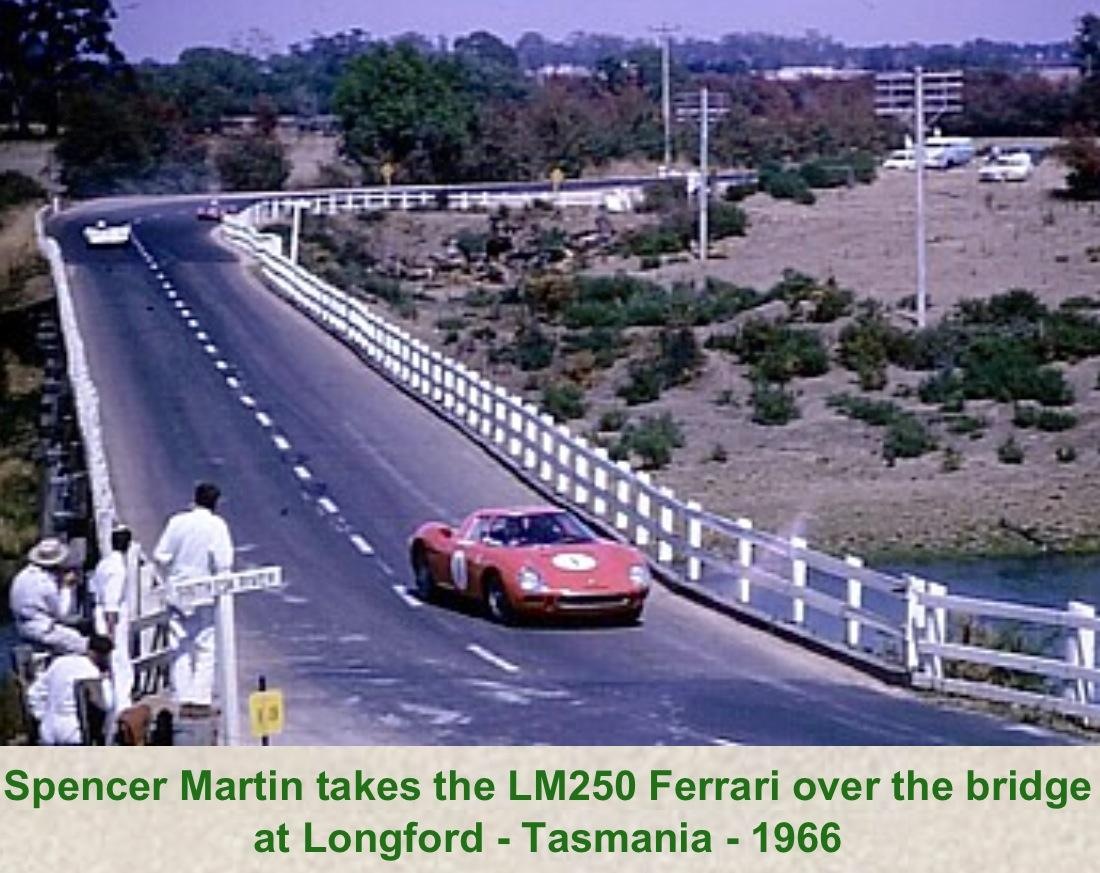
Evocative Longford shot of Spencer Martin, Long Bridge, 1966 (Alan Stewart Collection)

Keith Williams was a great promoter of his new circuit at Nerang outside Surfers Paradise, the LM won his 12 Hour enduro three years on the trot

In 1966 it was driven by Andy Buchanan and Jackie Stewart, 1967 by Australians Greg Cusack and Bill Brown and in 1968 by the Geoghegans, all of the victories were against cars which were faster on paper but not ultimately having the LMs combination of speed and reliability.

In 1968 McKay had pleasure and pain- victory for the LM but defeat of his Ferrari P4/350 Can-Am car, acquired earlier in the year with the express aim of victory in a race he thought was by then beyond the old LM. For those interested in the P4, click on this link to an article on the full history of this car; https://primotipo.com/2015/04/02/ferrari-p4canam-350-0858/

surfers

Scuderia Veloce’s team in the Surfers dummy grid, 12 Hour ’68. The winning Geoghegan Bros 250LM at left, 275GTB of Phil West/George Reynolds centre, and P4/Can Am 350 ‘0858’ of Bill Brown/Jim Palmer on the right, DNF accident (Rod MacKenzie)


lm

The Roxburgh/Whiteford Datsun 1600 being rounded up by the LM, and Hamilton/Glynn Scott Porsche 906 Spyder , Surfers 12 Hour 1967 (Ray Bell)

By 1968 the car was owned by Sydney businessman Ashley Bence but Mckay soon repurchased it and kept it as a much cherished road car.

I missed its racing heyday but saw McKay drive it at the Sandown meeting in late 1978 at which Fangio demonstrated/raced his Mercedes Benz W196. Unfortunately an oil line came adrift causing McKay to spin and hit the fence at The Causeway. Graham Watson, later ‘Ralt Australia’ and a ‘Gold Star’ national champion himself repaired the car.

bridge

McKay in ‘6321’ tootling across the Sydney Harbour Bridge in the late ’70’s. This shot was part of a ‘Sports Car World’ magazine article McKay wrote about the car, the trials and tribulations of delivery amusing…

A share in the car was sold by McKay to Spencer Martin, its original driver in ’65, the car contested some international historic events before ultimately being sold to Ralph Lauren…its life now a good deal easier than being taken to its limits by the likes of Pete Geoghegan.

ad

Racing and Development of the LM In Period: Letter from Ferrari’s Mike Parkes to David McKay dated 1 February 1966 about ongoing development of the cars in Europe…

‘…Passing now to your LM you will no doubt be pleased to learn that the car has been homologated in the 50 car GT category, as has the 4.7 litre Ford GT, although infact neither they nor us have made 50 cars.

We are still making one or two LM`s, David Piper has probably given you all his ‘gen’ on modifications. He has gone up to 7″ front rims, also I think 8″ rears, and has increased the top speed considerably by lengthening the nose and making it similar to the 1962 GTO.

He has had quite a number of gear-box failures, some of which I suspect may have been due to Fax, his mechanic, but it is clear that the crown wheel and pinion should be changed after between 18-24 hours use, depending on the ratio employed, and the same applies to the pinion bearings.

I incidentally cannot recommend in the interest of liability, attempting to fit other than ex factory spares. My research incidentally, reveals that Fiat 500 bearing shells should not fit.

We have introduced a somewhat complicated modification to improve the gearbox life which includes machining out the bearing housings in the casing to take bigger bearings. I can probably send particulars if you decide that it is worth while.

We do not official recommend the use of ‘M’ tyres, and infact suspect that customers gear-box failures were due to their using ‘M’ tyres, but my own view is that the introduction of the ‘M’ tyre coincided with the limit of fatigue life of many peoples gear-boxes. You should use 550 front and 600-660 rear and probably reduce the camber a little at the rear and should find the car faster.

You can obtain variations of the intermediate gearbox ratios by using some of the ratios from the Targa Florio box should you find the standard LM ratios not suitable for your circuits.

For an engine overhaul, as I think I told you, you should definitely change valve springs checking carefully to ensure that you have the correct fitted length. Bearing shells need only be changed where they appear necessary, also rear main oil-seal. Valve seats should not be changed unless absolutely necessary, this being determined by how far they have sunk into the head. I would not think that it was worth changing the big end bolts.

I am at a loss to understand why you have to grind down the rear pad, but can assure you that you have the correct calipers. We have never carried out compression checks ourselves but your system seems very sound, the engine presumably being hot. I can give you no indication of the valves to expect.

I would be most interested in hearing about any sort of racing programme you could offer me in Australia for 1966-67. Yours, Mike Parkes’

image

‘6321’ now part of the Ralph Lauren Collection

250P and 250LM…

Ferrari’s rebuff of the sale of his company to Ford in 1963 resulted in a ferociously competitive response by FoMoCo in sports car racing; Eric Broadley’s GT40 design in the prototype class and Carroll Shelby’s Ford engined AC Cobras /Daytona Coupes the response in the GT category.

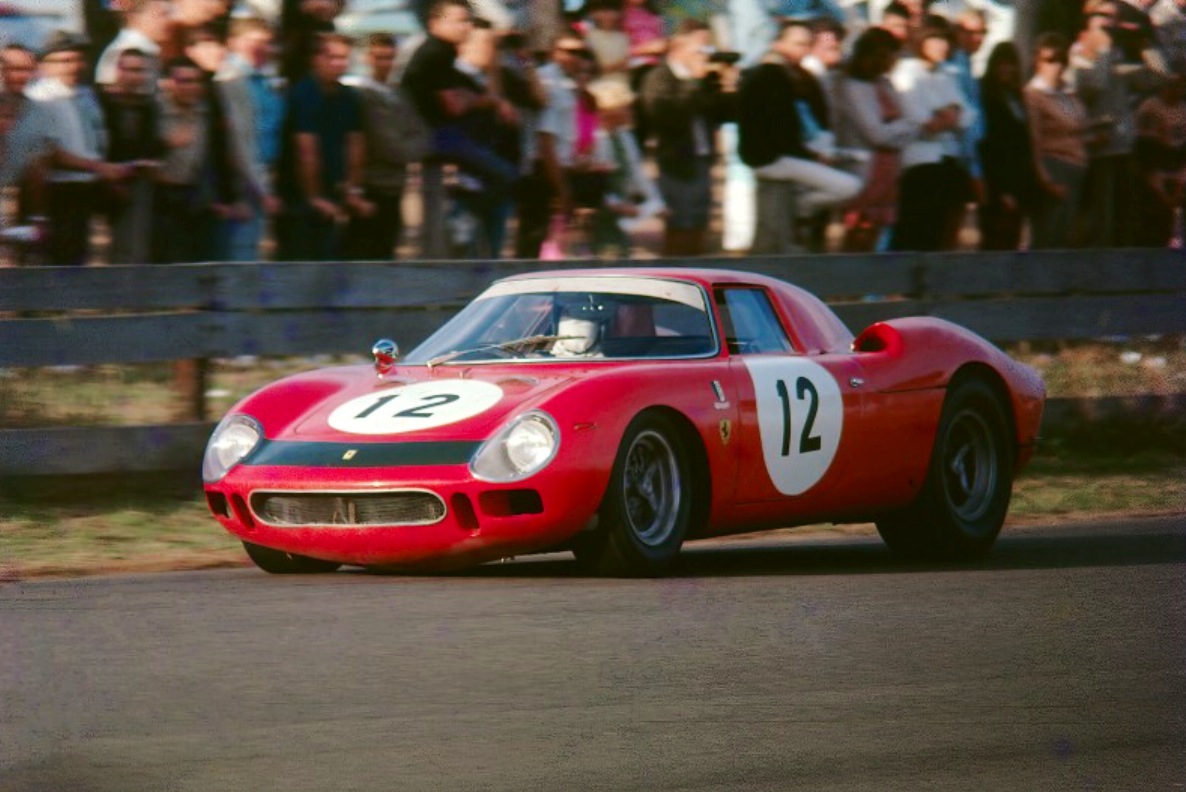
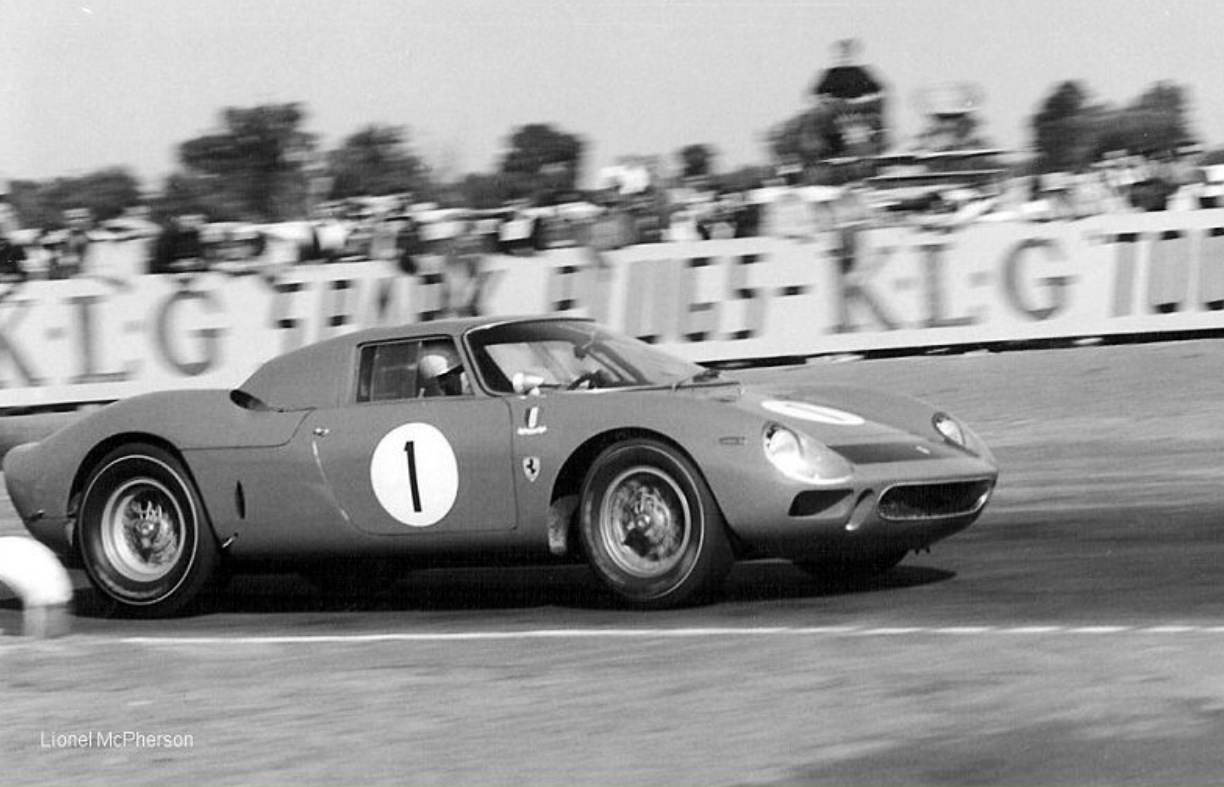
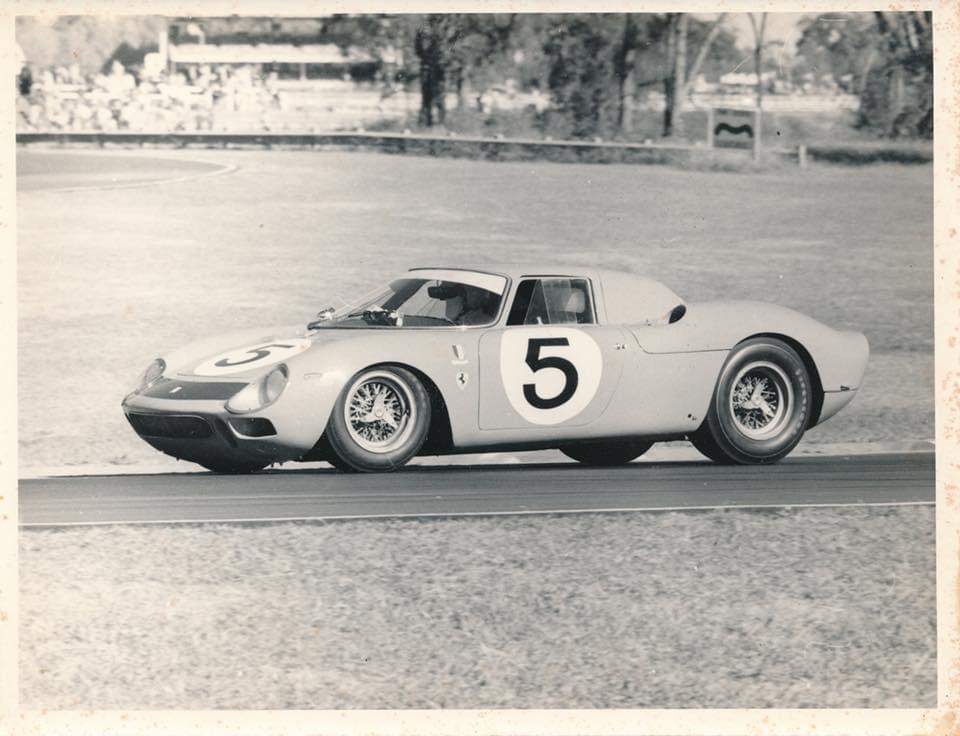
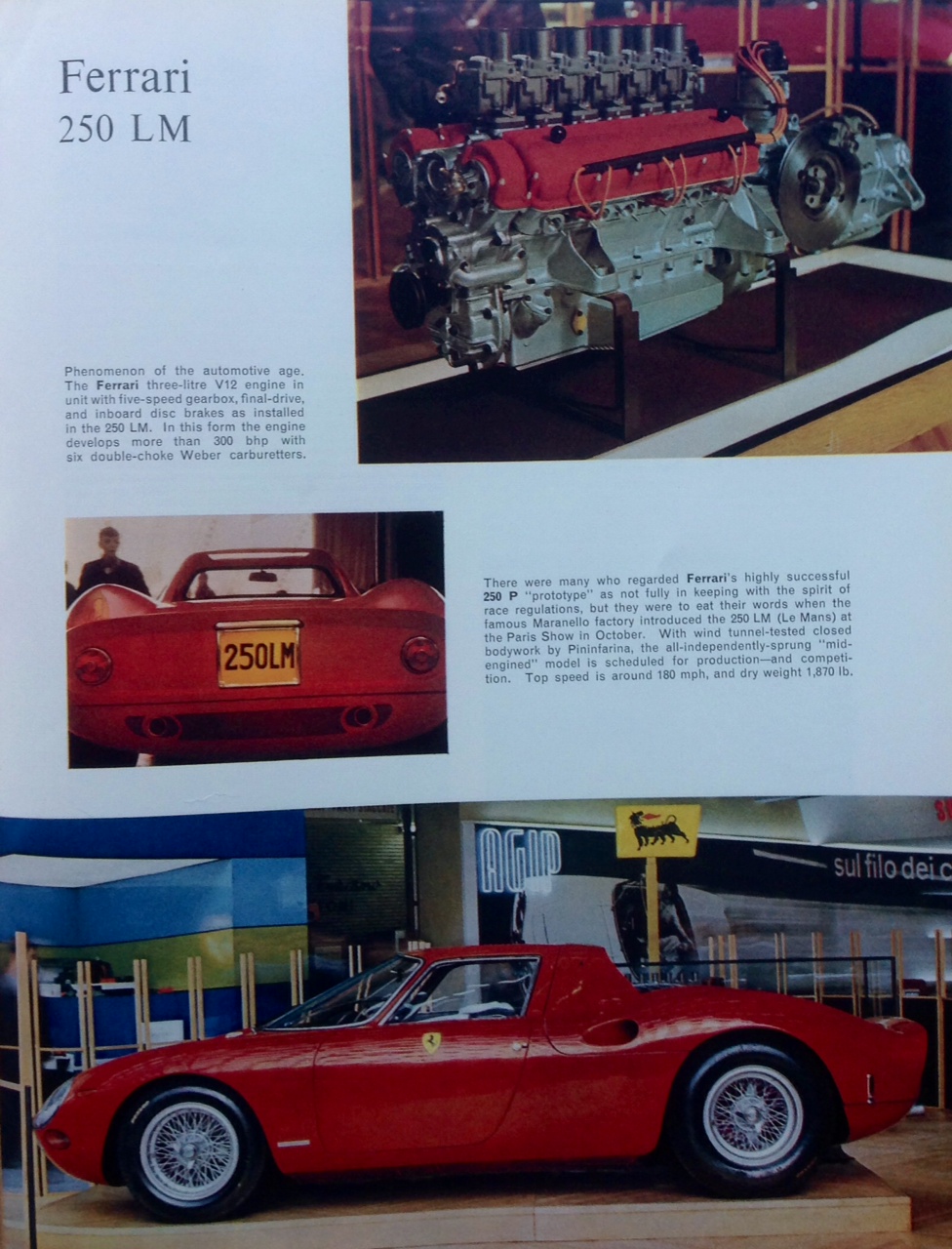
In ‘GT’ the dominance of Ferrari’s ‘250 GTO’ was being challenged by the Cobra’s, Maranello’s  response was essentially to add a roof to its championship winning 1963 Prototype, the 3 litre V12 ‘250P’, call it the ‘250 Le Mans’ and seek to homologate it into the ‘GT’ class. The CSI were onto Ferrari though, only 32 cars were built rather than the 100 mandated by the rules, so the cars raced as Prototypes until the CSI eventually relented and agreed to ‘GT’ homologation.

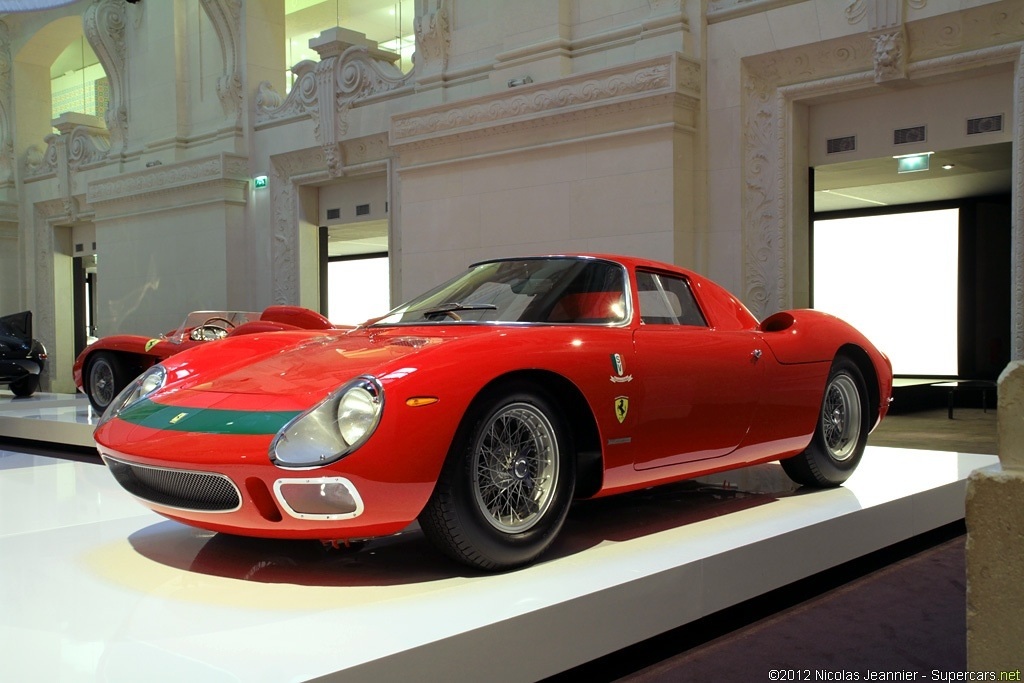
All but the first few cars were built with 3.3 litre V12’s, the first were 3 litres, but the 250LM name stuck, rather than 275LM as Ferrari naming convention dictated. (250 cc x 12 cylinders is 3000cc…275cc x 12 cylinders is 3300cc).

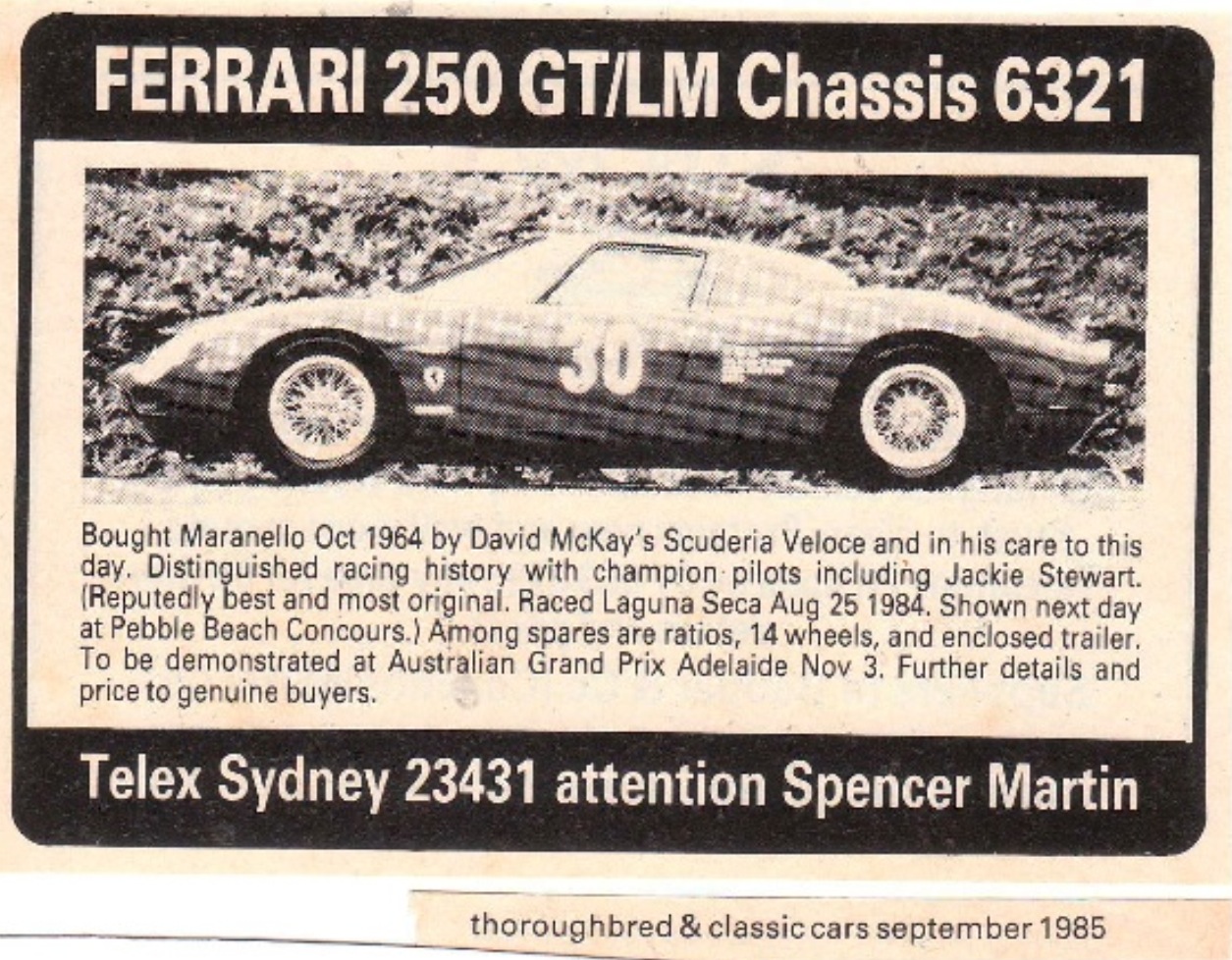
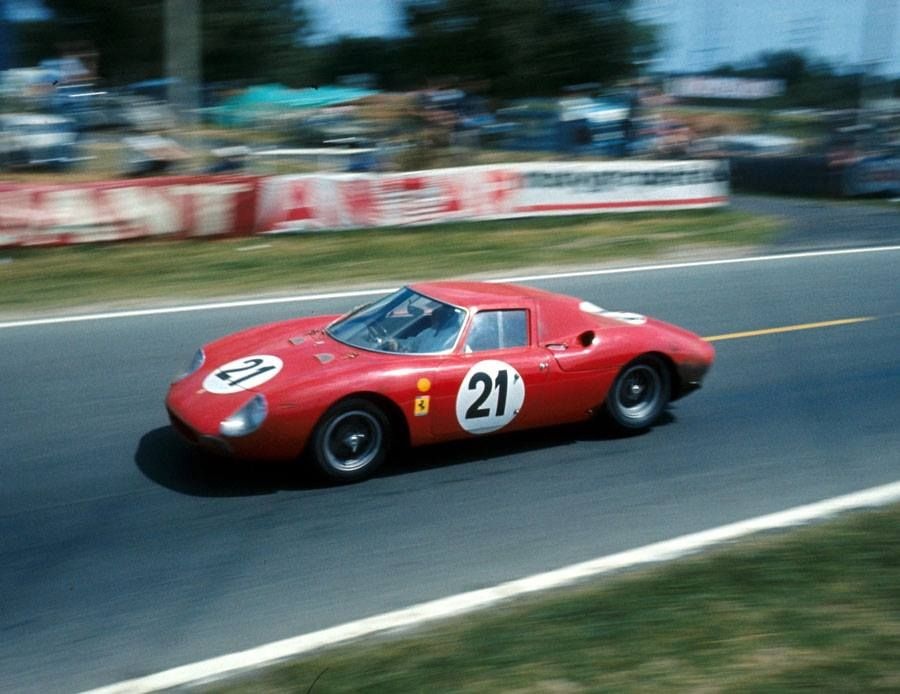
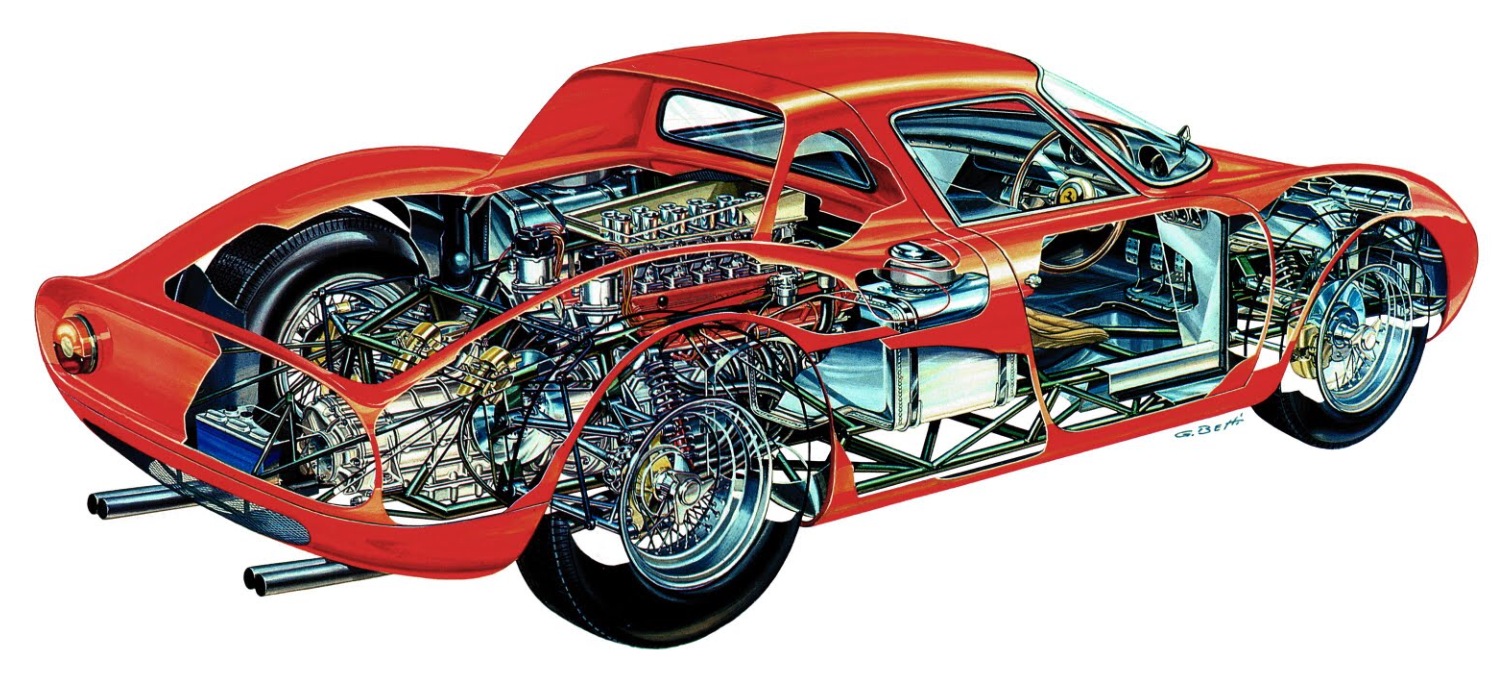
The McKay car, chassis # ‘6321’ was one of the last cars built.

The 250 LM’s were popular customer endurance racing cars but not considered outright contenders for ‘Blue Riband’ events but the race failure of the Ferrari P2 and Ford’s GT40 and Mk11 resulted in a famous victory for ex-F1 driver Masten Gregory and future World Champion Jochen Rindt at Le Mans in 1965. The two drivers flogged the NART LM # ‘5893’  to within an inch of its life, to their surprise winning the event, Rindt famously expecting to be back in Paris early enough for dinner.

That victory was Ferrari ‘s last at Le Mans…

nart

North American Racing Team ‘NART’ victorious 250LM ‘5893’ at Le Mans ’65. Drivers Masten Gregory & Jochen Rindt (unattributed)


lm cutaway

Ferrari 250LM cutaway showing its 3.3 litre V12, 5 speed transaxle, spaceframe chassis and all independent suspension by wishbones and coil spring/dampers ( G Betti )

Etcetera…

spencer at sandown

First race meeting for ‘6321’, Sandown Tasman meeting 21 February 1965. Spencer Martin at the wheel. A win after Frank Matich retired his Lotus 19B Climax. (Ray Bell)


martin

Fabulous shot of Spencer Martin in the LM, Warwick Farm, August 1965. (John Ellacott)


caversham

Spencer Martin ahead of Lionel Beattie in the Byfield Ayres Repco Holden Spl during the ‘Le Mans 6 Hour’ race at Caversham, in WA’s Swan Valley in 1965. Martin drove to victory sharing with car owner David McKay. (Alan Yates)


spencer caversham

Another Caversham 1965 shot, by the look of the helmet perhaps David McKay at the wheel. LM ‘6321’. (Lionel McPherson)


Pete Geoghegan during the RAC Trophy meeting in May 1968, Warwick Farm (G Lanham)


LM Launch

‘Automobile Year’ coverage of the 250LM launch at the Paris Show in October 1963

Race History (inaccurate and incomplete ) of 250 LM ‘6321’…

http://www.barchetta.cc/english/all.ferraris/Detail/6321.250LM.htm

Photo and Other Credits…

Dick Simpson, Roderick Mackenzie, Giulio Betti cutaway drawing, Bob Jane Legends, Terry Walker, Automobile Year, John Ellacott, Alan Yates, Stephen Dalton Collection, Ray Bell, Lionel McPherson, Mike Parkes Letter from ‘The Nostalgia Forum’, Geoff Lanham

Tailpiece…

scud

Finito…