Posts Tagged ‘Pete Geoghegan’

(B Richards)

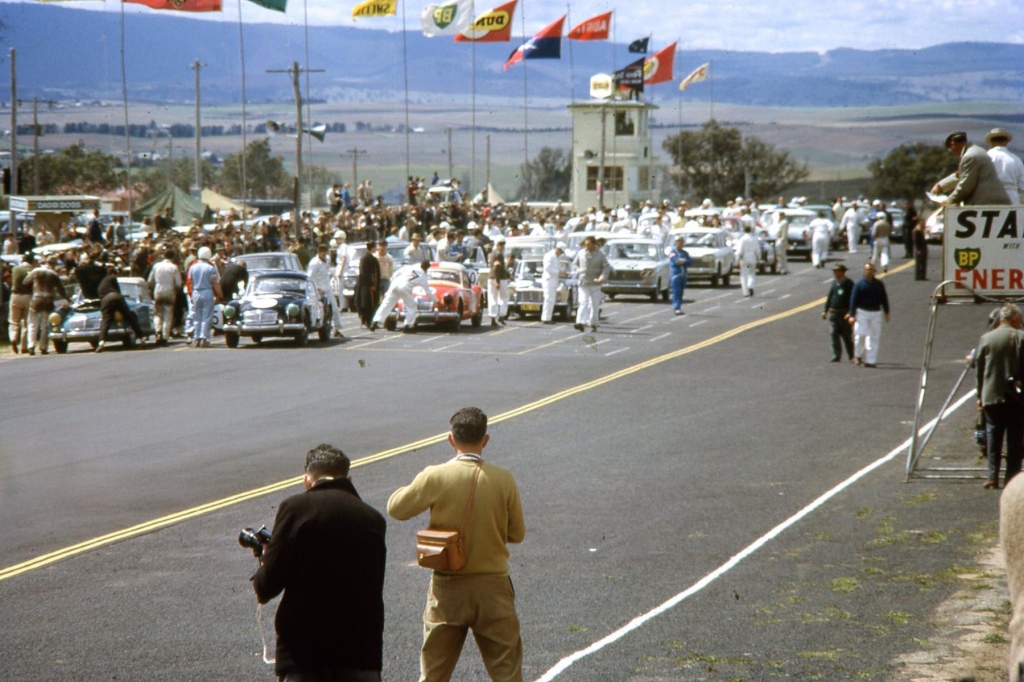
The grid gets way at the start of the September 30, 1962 Bathurst 6-Hour Classic. The entry comprised a mix of production sports and touring cars divided into price based classes. The front row comprises the three MGA Twin-Cams of Matt Daddo/Bill Stanley, N Claydon/Fred Gibson and Clarke/Lazich, with the C Lansdowne/Dianne Walker Triumph TR4 on the inside.

The Bathurst promoters, the Australian Racing Drivers Club, perhaps ran the event off the back of the success of the Phillip Island 500-milers (Armstrong 500) first run in 1960, which would soon after become the ARDC’s after the debacle of the Phillip Island October 1962 event in which the track surface famously, in essence, fell to bits.

(B Richards)

A total of £3,000 in prize money was split evenly among the classes or divisions: A-production touring cars up to £900, B-production touring cars £901-£1050, C-production touring cars £1051-£1250, D-production touring cars £1251-£1700, E-production sportscars up to £1500, F-production sportscars £1501-£2000.

While there was officially no outright winner, the interest of the punters was amongst the top-guns which included the V8s: Studebaker Larks, the brothers Geoghegan’s Daimler SP250 and potentially the best of the little-cars, the Bruce McPhee/Barry Mulholland Morris Cooper.

What strikes me now is that the entry list was a who’s-who of (mainly) New South Wales stars of the day and of the immediate future with a swag of Gold Star, Australian Touring Car and Sportscar Championship, and Bathurst winners in the mix.

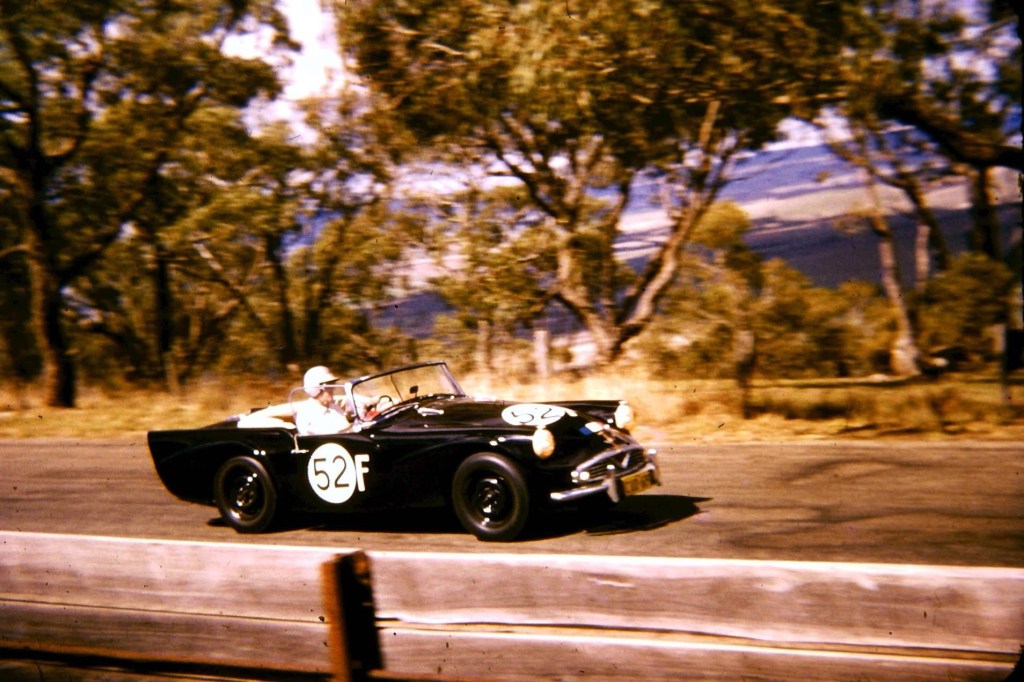
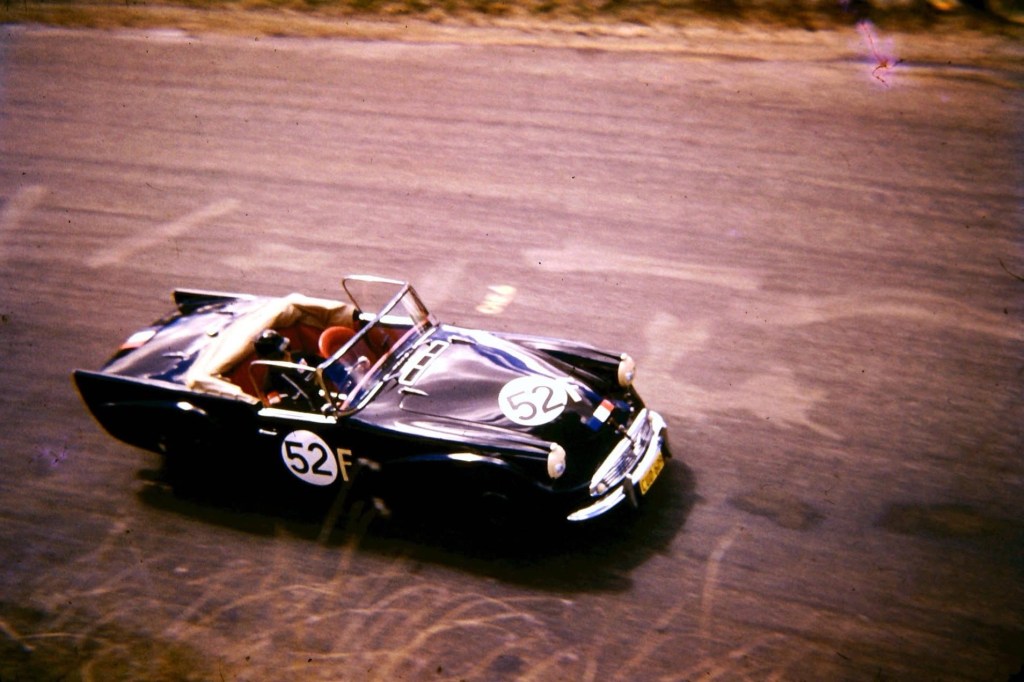
It appears that the sportscars had to start with their tops up, so this is practice or the first stint for Leo and Pete Geoghegan’s winning Geoghegan Sports Cars entered and prepared Daimler SP250 (B Wells)

Morris 850s dominated Division A – 14 cars, of which all but one finished – where the winners were Frank Kleinigs senior and junior. Kleinig Snr was an Australian great pre-and post-war and always polls well in lists of Greatest Australian Drivers Never to Win an AGP. Junior was no slouch either as a racer and constructor of Formula Vees. There was no shortage of notables in this class including Des West, Bill Pitt, Arnold Glass, John French and Paul Bolton, while Tom Sulman would have run Kleinig Snr close in a contest for who started racing first.

Seven cars contested Division B, the victors were John Martin and C Hodges in a Skoda Felicia of all things. This group included cars raced by Ron Hodgson, Digby Cooke, Alan Heasman, Peter Wherrett, Doug Stewart and Alan Stanfield.

Bruce McPhee and Barry Mulholland went on to win the Bathurst 500 outright aboard an HK Holden Monaro GTS327 in 1968, they prevailed in Division C where Bob Jane and Harry Firth were much fancied in a works-Ford Falcon XK.

The Jane/Firth C Division Ford Falcon XK from the ‘E’ MGA 1600 driven by K John/Peter Caldecoat (B Wells)
Lap 39, Firth is ok and out of the Falcon via the back window but she needs a turret! Bob Williamson recalled, “They towed the Falcon up the escape-road on its roof with a tractor. You should have heard the noise, roof on a gravel road.” (B Richards)

Ford planned to race their new Falcon XL in the Armstrong 500 at the Island on 21 October, in addition they decided, wisely, to contest the Bathurst Six Hour Classic to be held only three weeks before. The catch was that Ford didn’t want to race the XL at Mount Panorama so Firth set about preparing an XK Falcon for the race.

Firth takes up the story in his typically self-serving way, “Having not been to Bathurst for some years, I had to rely on hearsay information like, “no, it is not hard on brakes and the circuit has not changed. I did all the usual things such as a valve grind, compression check, set the camshaft properly, gave the pistons plenty of clearance, deck-heighted the head and put the engine on the dyno.”

“I fitted a set of heavy Armstrong shockers and some well-worn springs. I made up some Ferodo brake shoes but ended up leaving them at home, thinking they wouldn’t be needed. I drove the car to Bathurst myself. Practice proved two things: the car was the fastest sedan and the brakes were not good enough.”

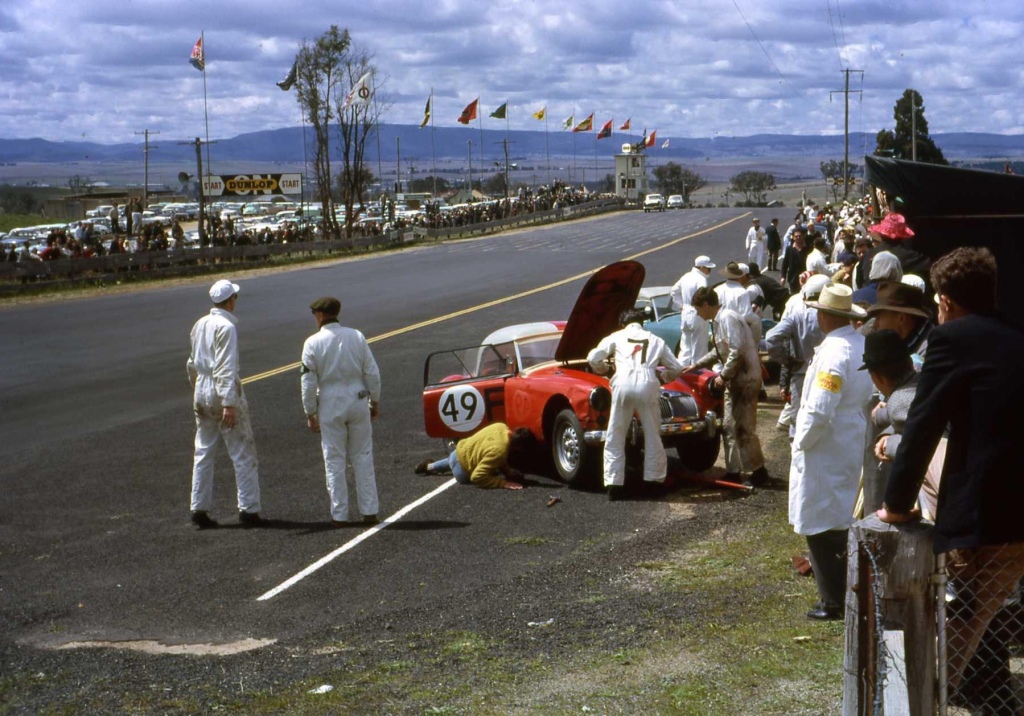
The Jim Clarke/A Lazich MGA Twin-Cam receives some attention, DNF (B Richards)

The two wily Melbourne racers – who went on to win three of these Phillip Island and Bathurst 500s together – led their class early, but the brakes were progressively showing signs of stress as the pedal crept inexorably closer to the floor.

Harry took over from Bob after a scheduled stop and then on lap 39 “As he braked for Hell Corner, the fronts suddenly over-energised and locked on, the nose dug in and the car rolled.” The roof was crushed with Harry extremely lucky he wasn’t badly hurt, the car had no roll bar or cage of course. He exited via the rear window as fuel spilt over the tarmac, but did not ignite.

The Division D winning Studebaker Lark raced by Algie/Hibbard. I’m old enough to remember when these beasts were popular cop-cars in Australia (B Wells)

Division D’s 10 car entry included three Studebaker Larks, with the Don Algie/Kingsley Hubbard entry the winner on 99 laps, then the well credentialed David McKay/Greg Cusack duo in a Fiat 1500 from Peter Williamson and K Whiteley third in another Fiat 1500. Other notables in that class were Bill Buckle, Brian Foley and George Murray.

Only four cars contested Division E, with the Tony Reynolds/Les Howard Morgan Plus 4 ahead of the Bill Reynolds/Kevin Bartlett Austin Healey Sprite Mk1.

The Geoghegans won Division F for the more expensive sportscars from the G Lansdowne/Holt Bonnie Triumph TR4. The Top-Three outright were the Geoghegan Daimler on 104 laps, then the Lansdowne/Binnie TR4 on 100 and the Algie/Hibbard Studebaker with 99 completed laps.

The entries for this race are staggering in their diversity, here the fourth in Division D Scuderia Veloce Citroen ID19 driven by Bill Buckle and Brian Foley (B Wells)

Credits…

Bill Richards, Bruce Wells, Shannons Falcon XK article by Mark Oastler, SS Auto Memorabilia

Tailpiece…

(SS Auto Memorabilia)

Leo Geohegan at the wheel of the winning Daimler SP250. With a 2.5-litre V8 and light fibreglass body it proved a quick car but the duo had some challenges, most notably the drivers door opening on a regular basis as the body flexed, and the loss of first gear on the start-line.

Finito…

(Auto Action)

I was flicking through some images and came upon a few photographs of Leo and Pete Geoghegan the other day, intriguingly, they were all shots taken in 1973. A good reason for a quickie article.

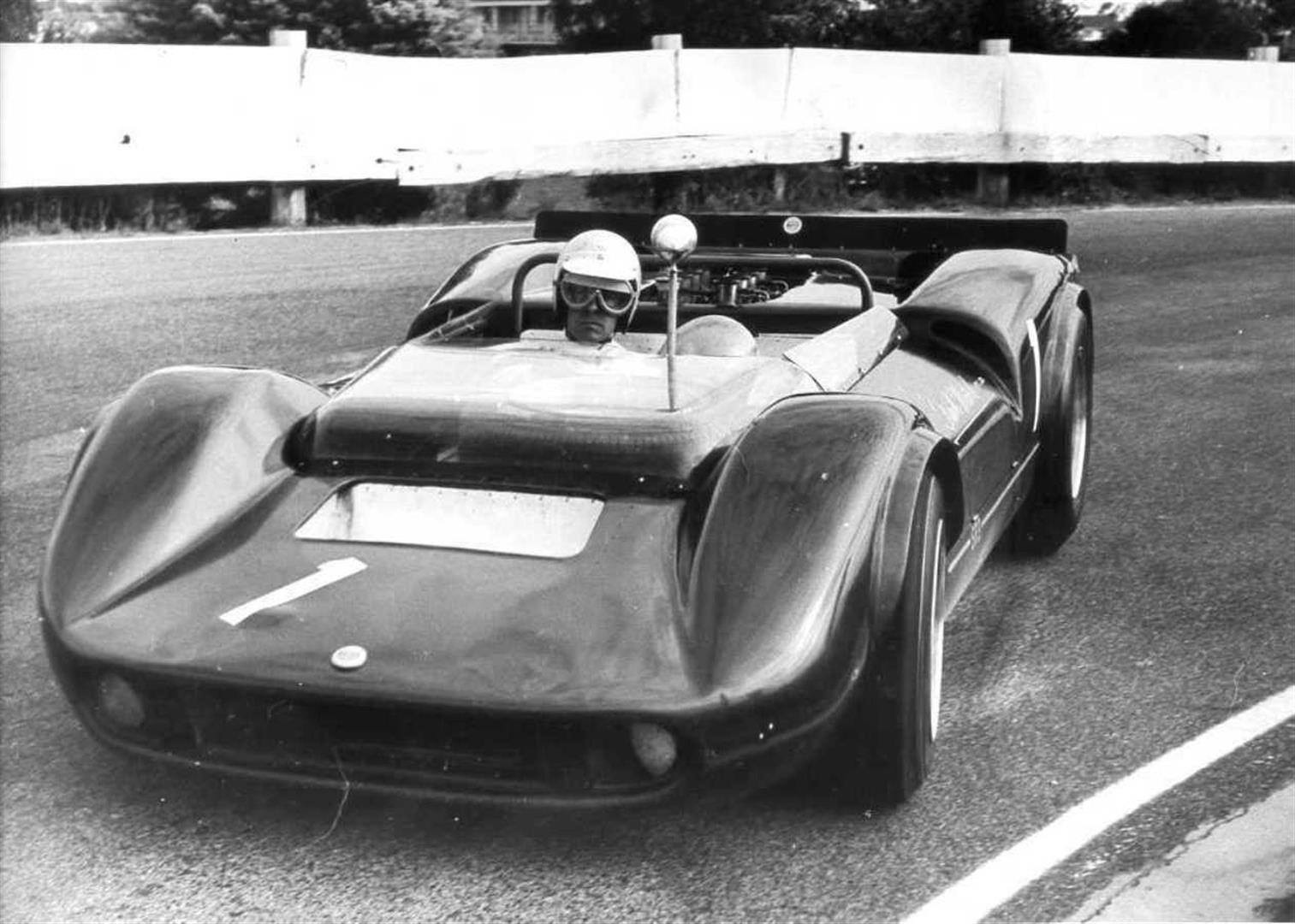
The shot above is on Pit Straight at Sandown just before Leo eases onto the brakes for Torana. Interesting for we Birrana-perves is the little winglet atop the nose. I wonder where else he ran it so equipped, buggered if I know the meeting date either. More Birrana here: https://primotipo.com/2021/10/12/tony-alcock-birrana-cars-design-process/ and here: https://primotipo.com/2020/08/10/testing-times-2/

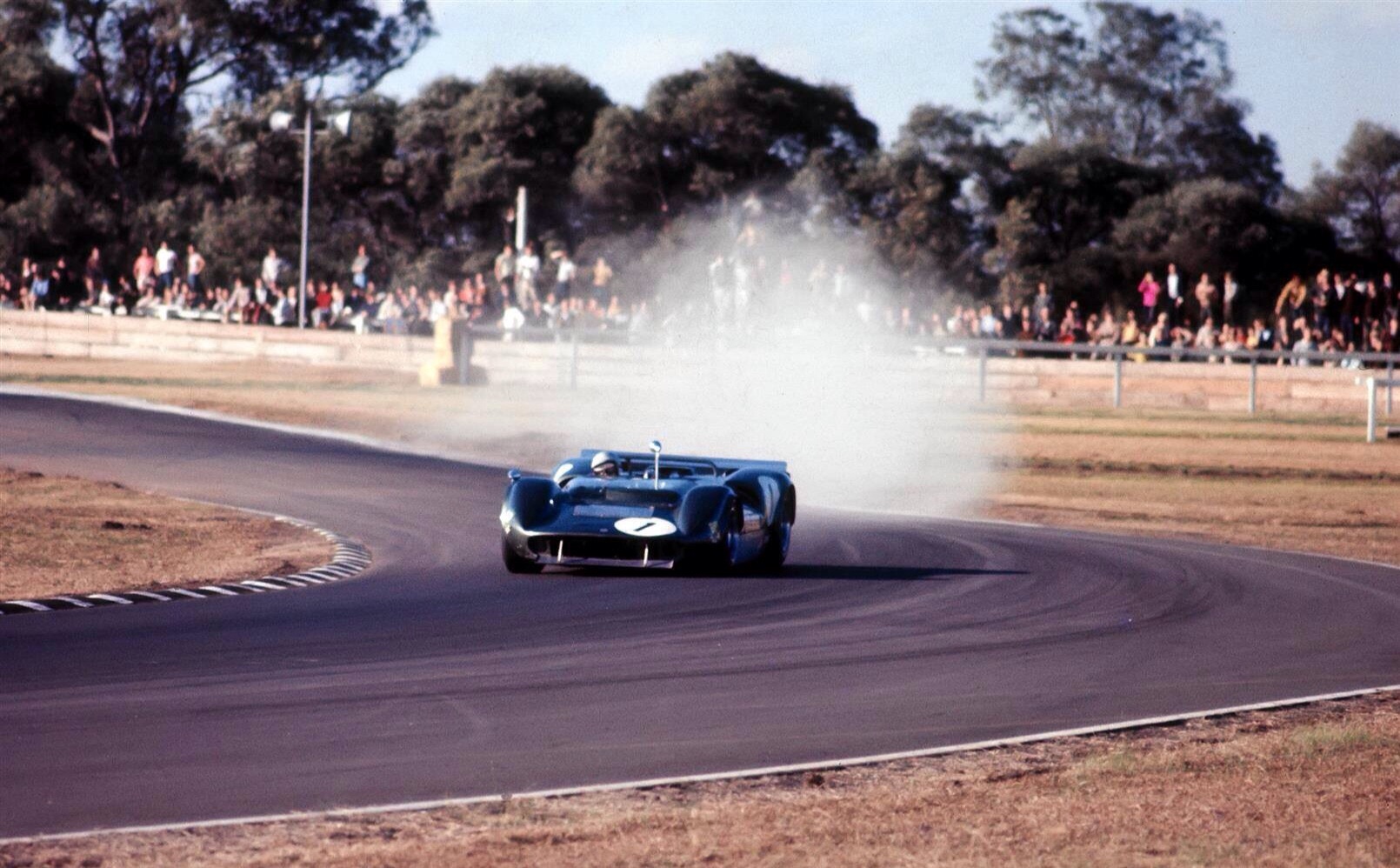
Leo initially raced the first ANF2 Birrana, the 272 Hart-Ford 416B 1.6, in 1972. By 1973 he raced a works-car to the Australian Formula 2 Championship in the 273 shown above. He won six of the seven rounds, then doubled up and won again aboard a 274 in 1974 against much stronger opposition. More about the 272 here: https://primotipo.com/2019/02/01/this-is-hard-work/

Pete Geoghegan ahead of one of the Toranas in the final ATCC round of 1973 at Warwick Farm in July. He was third behind the Peter Brock and Bob Morris XU-1s (Auto Action)

Meanwhile, younger-brother, Pete was doing his thing as one of the country’s greatest exponents of touring cars. He ran a John Sheppard built Group C Chrysler Valiant Charger E49 in the Australian Touring Car Championship, then switched brands to co-drive a works XA Ford Falcon GT351 Coupe in the Bathurst round of the Australian Manufacturers Championship.

Pete was sixth in the ATCC, his bests, a second place at Surfers and a pair of thirds at Calder and Warwick Farm. Allan Moffat won the title in his XY Ford Falcon GTHO Phase 3 from Peter Brock, LJ Holden Torana GTR XU-1, and Graham ‘Tubby’ Ritter, Ford Escort twin-cam.

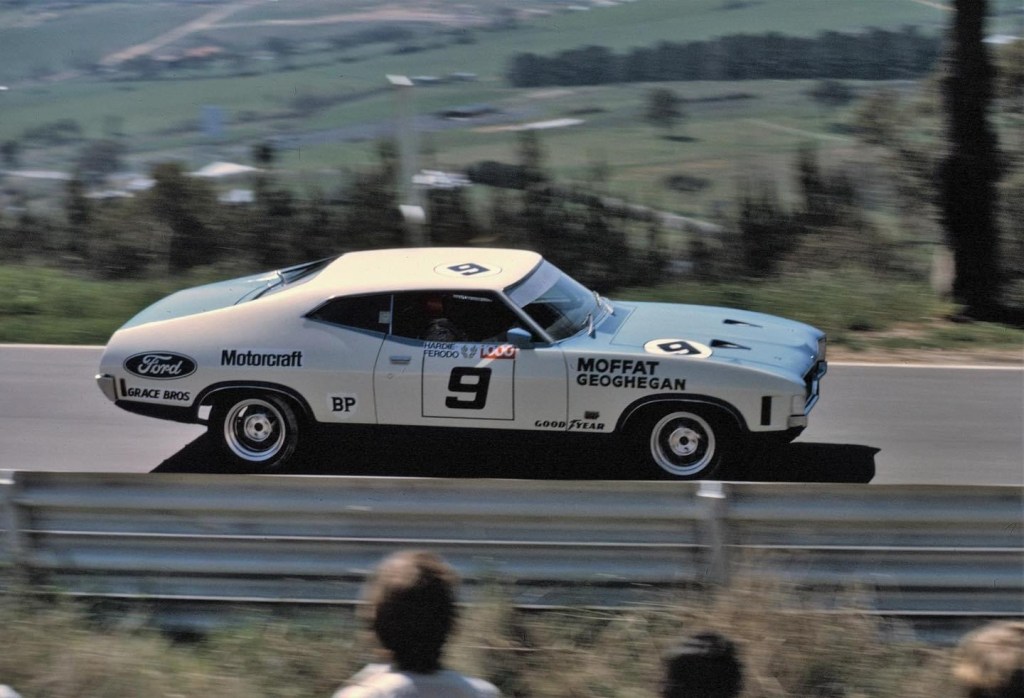
At Bathurst (below) Pete bagged an overdue 500-win for the brothers when he co-drove Moffat’s Coupe to a celebrated FoMoCo victory. Holden (Torana GTR XU-1) won the Manchamps with wins in three of the five rounds, Ford won two and were placed fourth in the title race, with Alfa Romeo (105 Series 2000 GTV) second and Mazda (Capella RX2) third.

(R Steffanoni)

Credits…

Auto Action, Rod Steffanoni

Finito…

(unattributed)

The Frank Matich/Glynn Scott Matich SR3 Repco (DNF) homes in on the Phil West/George Reynolds Scuderia Veloce Ferrari 275 GTB Competizione Clienti during the 1 September 1968 Surfers Paradise 6 Hour…

As usual, the race was won by the SV Ferrari 250LM, that year driven by the brothers Geoghegan, click on this link for an article about that car inclusive of Surfers wins; https://primotipo.com/2014/07/03/pete-geoghegan-ferrari-250lm-6321-bathurst-easter-68/

In a race a bit light on entries- and reduced from twelve to six hours, the Geoghegans won having covered 249 laps from the Bill Gates/Jim Bertram Lotus Elan, 237 and Doug Whiteford/John Roxburgh/Frank Coad Datsun 2000 on 230. Other than David McKay’s ‘Old Red Lady’ 250LM the other fancied sports-racers all retired- the Matich/Scott Matich SR3 Repco, Palmer/Brown Ferrari P4/Can-Am350 and O’Sullivan/Baltzer/Bassett Lola T70 Chev.

The Ferrari 275GTB/C completed 216 laps which made it ninth outright and first in its class- the only car in that class mind you.

Phil West wasn’t impressed with it at all ‘It was a fucking awful motor car. Coming into Lukey Corner, over the back, i was braking at 180 yards while the others were at 80. It had complete and utter rear-end breakaway’ he said to Australian Muscle Car magazine.

He then drew comparisons with the early Holden Monaro during testing at Surfers, ‘The Ferrari was doing 154 mph down the straight, the Monaro about 124. The Ferrari was on 10-inch wide racing Dunlops with inboard disc brakes and the Holden was on Michelin XAS road tyres. But it was six seconds a lap quicker around the circuit than the Ferrari. That was something that really opened my eyes, and since then i’ve not been the least bit interested in the badge on the front’ West concluded.


SV 250LM goes under its stablemate at Surfers (unattributed)


Frank Gardner circa 1966, probably in Australia during the Tasman. Where folks? (Repco Collection)

I hadn’t realised the significance of this Ferrari 275 GTB as one of three RHD ‘Competizione Clienti’ specification 275’s of a total 1965 production run of ten. The addition to the nose of the car appears to be a camera- I would love to see the footage if it exists?

Chassis #07545, the seventh of the ten cars, was ordered by Britain’s Maranello Concessionaires, it was intended as their Le Mans reserve car- their entries that year comprised a P2 raced by Jo Bonnier and David Piper and a 250LM steered by Mauro Bianchi and Mike Salmon, both cars failed to finish.

The GTB wasn’t completed in time for the 24 hour classic but starred as an exhibit at the 42nd International IAA Motor Show in Frankfurt that September. Maranello sold it in October 1965 to Paddy McNally, then a respected journalist later to make a motza as an equity-holder in Allsport Ltd along with Bernie The Unbelievable (Ecclestone).

The GTB featured in an Autosport feature, McNally waxed lyrical about driving the car on the fast uncluttered roads of Europe inclusive of the Col des Mosses in Switzerland. ‘Even at close to 6000 pounds…the Ferrari represents excellent value and it is quite the best car that i have ever driven.’ McNally’s enthusiasm for these machines was genuine, he later acquired #09027 and raced it at Montlhery in the Paris 1000km.

Ford race team boss Alan Mann was the next owner two years hence, along the way he returned it to the factory where the bumpers were removed and big fog-lights installed and then sold it to one of his stars- Frank Gardner.

FG used the car to commute to his race commitments across the UK and Europe- these were many and varied inclusive of Touring Cars, World Manufacturers Championship Prototypes and Sportscars, F2 and the occasional F1 event. It would be intiguing to know just how many km’s the ultra fast GT did in Frank’s short ownership.

The Australian International then brought the car to Australia in the summer of 1967/8 to take up his usual Tasman drive with Alec Mildren, that year he raced the Brabham BT23D Alfa Romeo Tipo 33 2.5 V8. He sold it to Gallaher International, a British cigarette company- sponsor of the 500 mile Bathurst enduro in 1966 and 1967, who used it as a promotional tool.

Scuderia Veloce team driver Bill Brown bought it next, it was during his ownership that Phil West/George Reynolds raced it to eighth outright and first in class (the only car in the class) at Surfers in 1968. It seems this was the machines only race in period.

Melbourne motor racing entrepreneur/hill-climber Jim Abbott was the next owner, I dare say he gave it a run up Lakeland once or twice on the way to its garage at home- after his death it passed to Daryl Rigg and then to Ray Delaney who owned it for seven or so years using the car extensively. So too did Max Lane including contesting Targa Tasmania in 1993- the car left Australia many years ago as the global investment grade commodity it is.

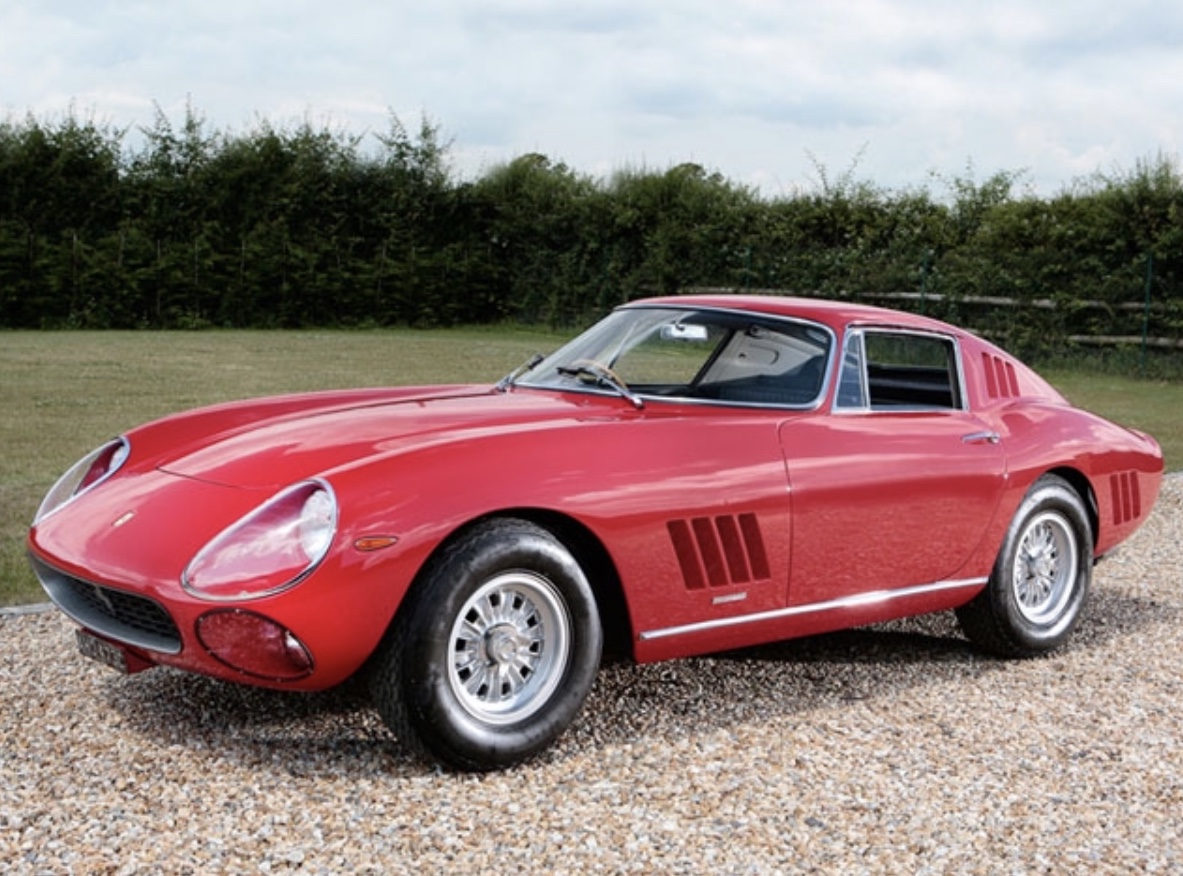
#07545 in recent years (Talacrest)

Competizione 275 GTB’s…

The competition variants of one of Ferrari’s most sought after Grand Turismo’s was born of Enzo’s swifty in attempting to homologate his 1963 250P sports-prototype ‘in drag’- the 250LM as a GT car to replace the revered GTO. The FIA could see  the 3.3 litre LM- a larger capacity 250P with a roof for what it was and refused to homologate it.

Even as a GT the 250LM won Le Mans of course. Masten Gregory and Jochen Rindt flogged their NART entry to death- but not quite and won in 1965 after the more fancied Ferrari P2 and Ford GT40 Mk2 prototypes fell by the wayside with all manner of problems.

As a consequence, needing a GT racer, Ferrari set to modifying the just released in 1964 GTB whose baseline specifications included a sophisticated ‘Tipo 563’ chassis, independent suspension front and rear, aerodynamic bodywork, four-wheel disc brakes, five-speed rear mounted transaxle and the well proven ‘Tipo 213’ Colombo V12- in this car SOHC, two-valve and 3.3 litres (3286cc- 77 x 58.8mm bore and stroke) in capacity.

275GTB prototype and first car built #06003 during the 1966 Monte Carlo Rally crewed by Giorgio Pianta and Roberto Lippi, DNF driveline (unattributed)

Depending upon your source there are either three or four distinct series or phases of build of competition 275’s.

The first are the relatively mild modifications to chassis #06003 and #06021.

#06003 is the prototype, very first 275GTB built in 1964, it was retained by the factory for testing purposes throughout 1965, then modified and entered in the 1966 Monte Carlo Rally. #06021- is ‘the third GTB built and the prototype for the 1965 customer competition cars’ according to Peter Sachs who owned it twice. Its first custodian was a Roman, Antonio Maglione who contested at least four Hillclimb events in it in June/July 1965 having acquired it that April.

The second group of three works cars (plus a fourth built to this spec in 1966) designated ‘Competition Speciale’ were extensively modified by a team led by Mauro Forghieri with lightweight tube frames based on the standard Tipo 563 chassis.

The motors were six-Weber carb, dry-sumped Tipo 213 engines to 250LM spec giving 290-305 bhp and had 330 LM Berlinetta style noses with an air-scoop atop the long bonnets.

Other modifications included holes in interior panels, plexiglass windows and the use of magnesium castings for some engine and transmission parts. These cars, also designated 275 GTB/C Speciale, the bodies of which were of course designed by Pininfarina and built by Scaglietti are said by some to be the most direct successors to the 250GTO.

After a DNF at Targa and third in class at the Nürburgring 1000km #06885 was sold by Scuderia Ferrari to Ecurie Francorchamps who raced it at Le Mans in 1965 achieving first in class and third outright- stunning for a GT. The reputation of these ‘275 GTB/C’s was underway.

Ferrari 275 GTB cutaway, specifications as per text (unattributed)


Scuderia Veloce line up before the 1968 Surfers 6 hour with Pete Geoghegan’s stout frame back to us. The #17 Ferrari Can-Am 350 DNF in the hands of Jim Palmer and Bill Brown. The West/Reynolds GTB is alongside and victorious Leo and Pete Geoghegan 250LM to the left (Rod MacKenzie)

Gardner’s #07545 was one of ten cars designated 275 ‘Competizione Clienti’ or ‘GTB/C Series 1′, which were built as dual purpose customer road/racers between May and August 1965- they were constructed in parallel with the works cars mentioned above and delivered only to privateers.

The specifications of this batch, very close to production cars included short nose bodies and six Weber DCN3 carbs, rather than the standard three, feeding essentially a standard wet sump Tipo 213 engine. The fuel tank was 140 litres rather than the standard 94 litre jobbie, the spare sat vertically aft of the tank. A higher rear shelf is a visual difference with three air vents in each rear guard a signal of menace. No two cars were identical but most had lightweight alloy bodies.

The final run of twelve cars, the ‘9000 series chassis’ were super-trick, schmick jiggers and are variously described as ‘275 GTB Berlinetta Competizione’ or ‘275 GTB/C’.

They have lightweight long-nose bodies built by Scaglietti which were half the thickness of the 250GTO’s and a specially designed steel and aluminium Tipo 590A chassis which was lighter and stiffer than the standard unit. The suspension and hubs were reinforced, clutch upgraded and a different steering box fitted.

The dry sumped Tipo 213 V12- which allowed the engine to be mounted lower in the frame, was tuned to 250LM specifications with some Electron components incorporated- sump, cam cover, timing chain casing and bell-housing- power was circa 275-282bhp @ 7700rpm. The three big Weber 40 DF13 carbs were a design unique to the car and fitted due to a clerical stuff up by Ferrari who had not homologated the six-carb Weber option.

Out and out racers, these were the only cars referred to by the factory as 275 GTB/C and were the last competition GT’s fettled in Maranello- the Daytona GTB/4 racers were modified in Modena.

Le Mans Esses 1967. The second placed Ferrari P4 of Scarfiotti/Parkes ahead of eleventh placed and first in class Filipinetti Ferrari 275GTB/C #09079 driven by Steinemann/Spoerry (LAT)


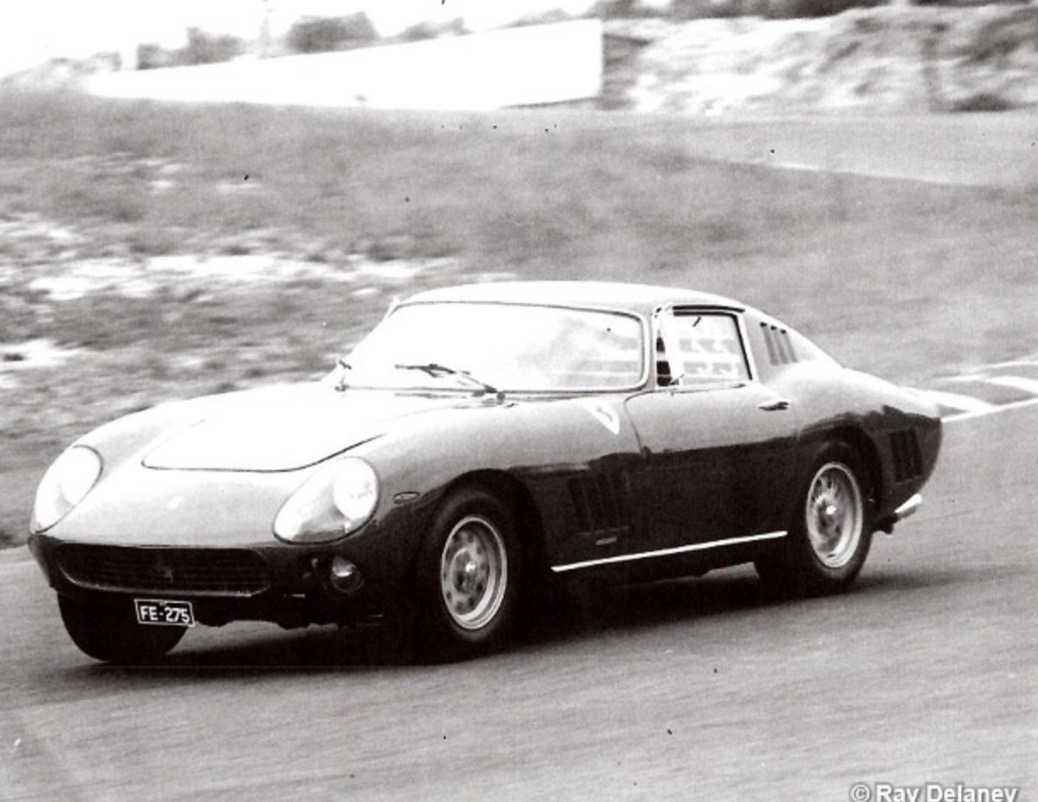
Ray Delaney in GTB #07545 at Amaroo Park, Sydney in 1981

Credits…

Jaguar Magazine, Repco Collection via Nigel Tait, Rod MacKenzie, Ray Delaney, Talacrest, barchetta.cc, LAT, Stephen Dalton, Australian Muscle Car interview with Phil West

Tailpiece: 1968 Surfers 6 Hour…

(unattributed)

Borrani’s at the front and Campagnolo’s up the back, ain’t she sweet…

Finito…

(R Thorncraft)

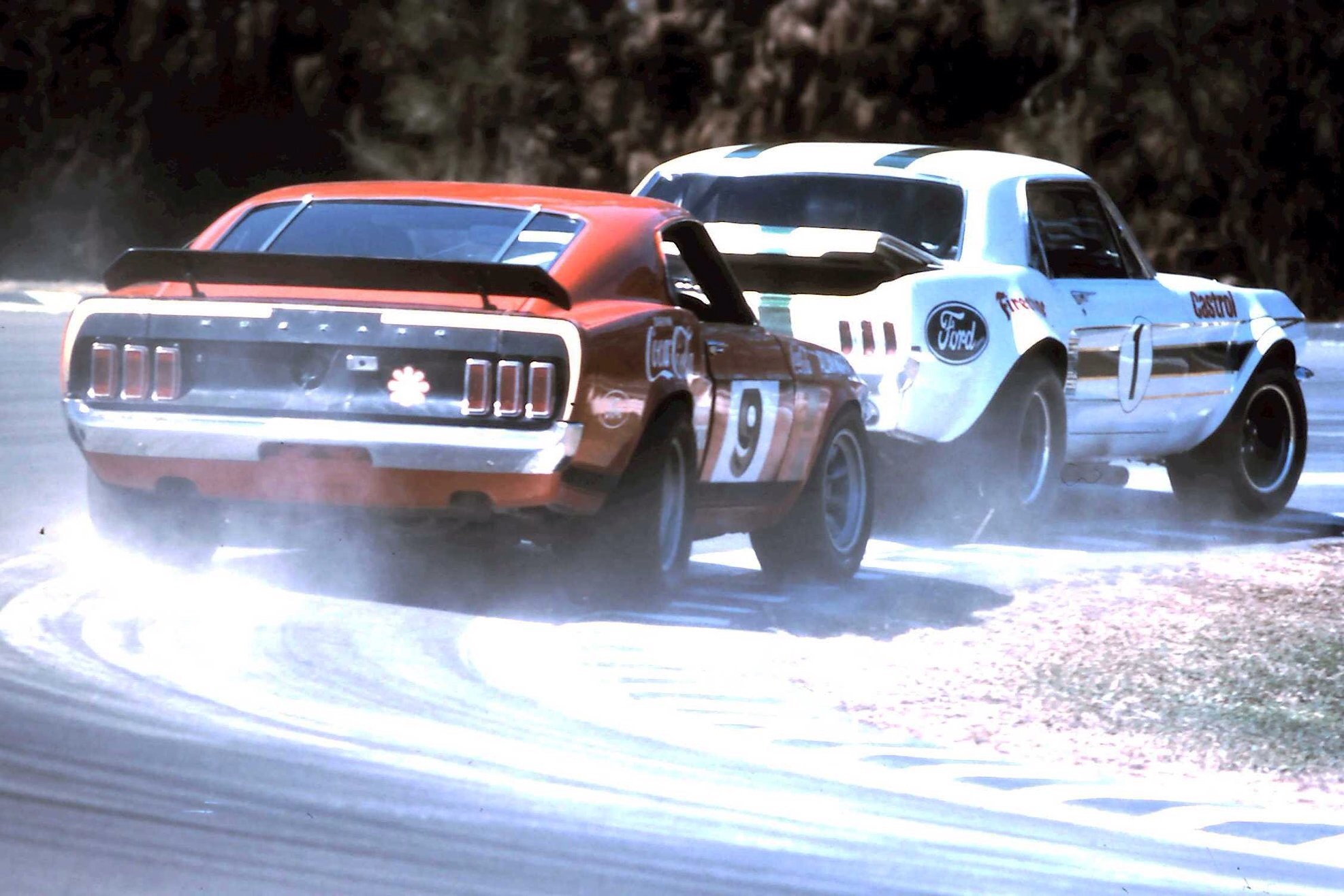
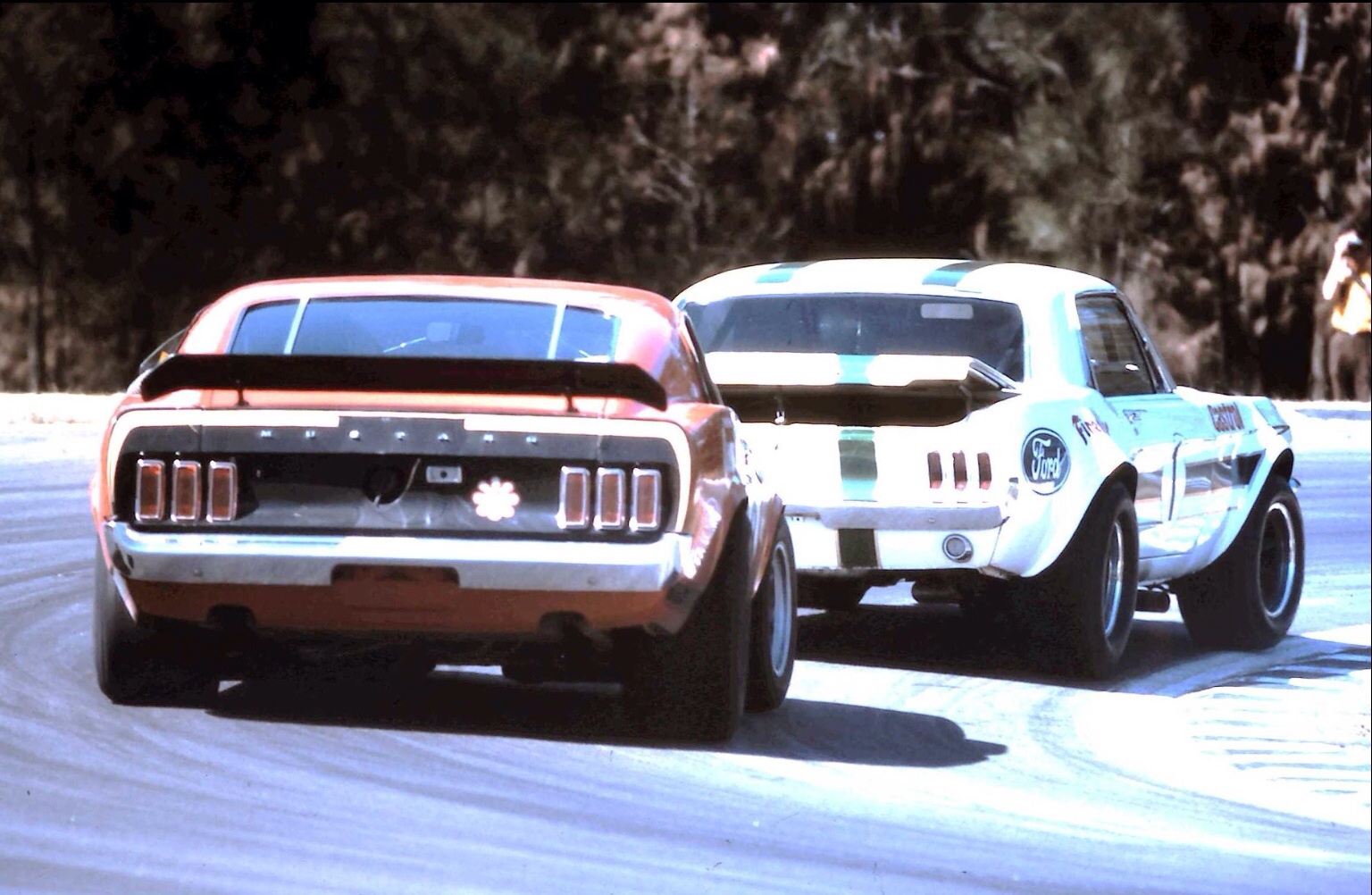
Allan Moffat chases Pete Geoghegan out of Creek Corner at Warwick Farm in September 1970…

Goodness knows how many dices these fellas had over the two short years the race histories of the cars converged- Geoghegan’s car was locally built in Sydney by John Sheppard and was continually developed from the time of its debut in 1967, Al Pal’s was a factory KarKraft machine which arrived in Australia in early 1969.

Russell Thorncraft’s photo has drama too- all the dust and shite being thrown up by the cars using all of the road and then some. The meeting is dated by Pete’s ‘rear spoiler’ too- remember him trying a jacked open boot lid either ‘for real’ as downforce or as a ruse!

Etcetera…

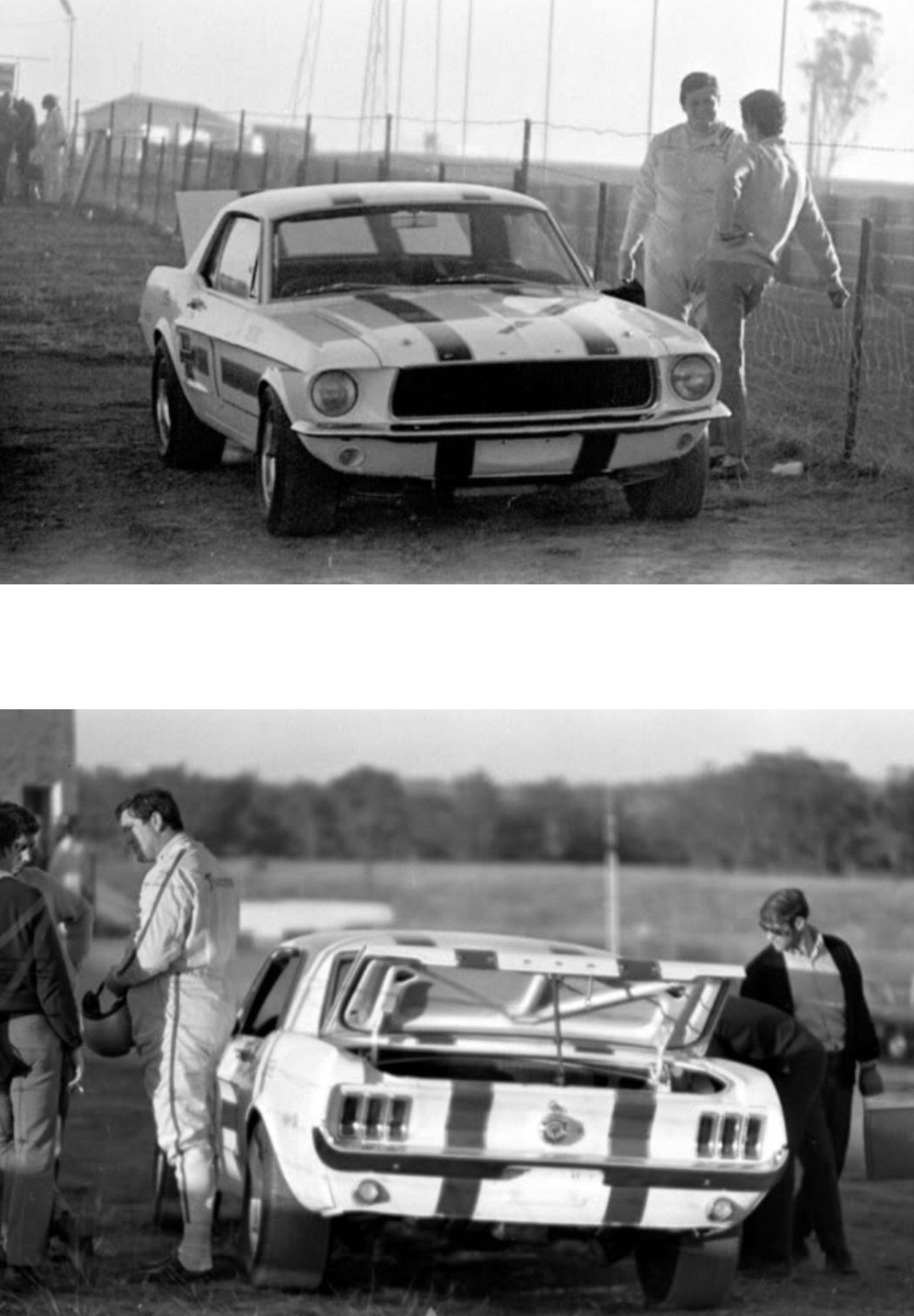
(L Hemer)

Lynton Hemer’s shot of Pete at the end of practice at Oran Park above on 9 August 1969 shows some aero experimentation- note the boot strut support.

Lynton recalls ‘These are a couple of overexposed, grainy photos of Pete…Note the strut under the boot lid. If my memory serves me right, I remember him running the car with the boot up in some type of Colin Chapman like experiment with downforce.’

‘Whether he raced the car that way, I can’t recall, but it only happened this once that I know of’- we can now see he did race this way at the ‘farm in 1970.

‘Whether the scrutineers frowned upon it, or it just didn’t work who knows? The car was unbeatable at Oran Park that year (1969) and most of the next, so why he tried it is a mystery’ Hemer concluded.

The photo below shows him deploying his secret weapon as he hunts down Alan Hamilton’s Porsche 911 R/T at Oran Park in 1969- same OP meeting Lynton refers to as above?

(R Thorncraft)

Credits…

Russell Thorncraft, Lynton Hemer

Tailpiece…

(R Thorncraft)

Finito…

(unattributed)

Frank Matich ahead of the Australian sportscar pack at Warwick Farm in 1968- the car is his Matich SR3 Repco ‘720’ 4.4 V8, 5 May …

The chasing pack comprises the ex-works Scuderia Veloce Ferrari 350 Can-Am driven by Bill Brown- filling Chris Amon’s shoes after he departed back to Europe, Niel Allen’s white Elfin 400 Chev, Bob Jane’s #2 Elfin 400 Repco 4.4 driven by Ian Cook and then the #5 Scuderia Veloce Ferrari 250LM of Pete Geoghegan.

Pete and Leo G shared the car to win the Surfers 6 Hour enduro later that year, both had a drive or three of the ‘Old Red Lady’ as David McKay referred to his favourite car, in preparation for the race.

The #16 car is Tony Osbourne’s Argo Chev driven by Peter Macrow- then the twin-dark striped Lotus 23B Ford of Bob Muir another obscured Lotus 23- that of Glynn Scott, then the distinctive shape of a mid-dark coloured Elfin Mallala Ford driven by Ray Strong in front of Doug MacArthur, Lotus 26R and then, finally, John Leffler’s Cooper S Lightweight at the rear. His ‘Sports-Racing Closed’ Mini is somewhat of a fish outta-water amongst this lot.

Of the ‘big bangers’ racing in Australia at the time, the Lionel Ayers MRC Oldsmobile is absent as is the Noel Hurd driven, Globe Products owned Elfin 400 Ford. Oh, there is no sign of Alan Hamilton’s Porsche 906 or was he in between 906’s at the time perhaps?

There was no Australian Sportscar Championship in 1968- but the order of this race, in its first lap and just after the start is pretty much indicative of the state of competitive play at the time.

For the sake of completeness, the one race Australian Tourist Trophy, a prestigious event, was run at Mallala in January 1968 and won by Matich at a canter from Geoff Vercoe’s Cicada Ford, three laps adrift of FM’s SR3. Of the cars in the opening photograph, only the Jane Elfin 400 made the trip to South Australia.

Perhaps the timing of the ATT was sub-optimal as most of the top guns ran in the Tasman Series sportscar support races- at Surfers, Warwick Farm, Sandown and Longford over four weeks from 11 February to 4 March. The Adelaide race was tempting fate so close to the start of the Tasman and logistically Adelaide and the Gold Coast are a long way apart regardless of a team home base in Melbourne or Sydney.

Happy chappy. FM sits in his brand new Matich SR4 Repco 4.8 ‘760’ during the cars press launch at the ‘Rothmans Theatre’, Sydney Showgrounds on 26 November 1968. Car made its race debut the following weekend at Warwick Farm on 1 December

The ball-game changed into 1969 off course, Matich’s SR4 4.8 litre Repco 760- four cam ‘Sledge Hammer’ first raced at Warwick Farm on 1 December 1968. Then Bob Jane’s McLaren M6B Repco ‘740’ 5 litre and Niel Allen’s Chev F5000 engined Elfin ME5 joined the grids during 1969.

But Matich blew the grid apart with the SR4 all the same, and then, thankfully for all of us, jumped back into single-seaters (F5000) where he belonged.

But Lordy, didn’t he provide some fizz, fire and sparkle to sportscar racing for a decade or so? Just ask Chris Amon how quick FM was in a sporty during that Tasman Summer of Sixty-Eight…

Photo and Other Credits…

Snapper of the opening photograph unknown- i’d like to attribute it as it is a beaut shot if any of you can assist, Getty Images, Dick Simpson, Mike Feisst, Dave Friedman and Brian Caldersmith Collections.

‘Australia’s Top Sports Cars’ article by Graham Howard in Racing Car News May 1967. Thanks to Dale Harvey and Neil Stratton for assisting with car identification and the event date of the opening photograph.

Frank Matich and the SR3 Oldsmobile during the Warwick Farm Tasman meeting in 1967- the car’s race debut. That’s Ted Proctor’s Proctor Climax behind. Traco tuned ally Olsmobile V8, ZF 5 speed box and chassis all but identical to the Elfin 400 which preceded this car with some tubes added (D Simpson)

SR3 Etcetera…

I’ve not quite gotten to the Matich SR3’s yet, in terms of an article but click on the SR4 piece referenced below- there is a bit at the end of it about the SR3 and a complete Matich chassis list which will tell you what is what.

The 1967-1968 period is an interesting one from a technological racing history perspective.

Huge advances were made in tyres thanks to the application of vast wads of polymer chemistry research dollars to create products which were grippier than those which went before with consequent reduction in lap times.

Then of course their was the exponential progress in aerodynamics pioneered by Jim Hall and his boys at Chaparral in Midland, Texas well before their adoption by Ferrari and Brabham in F1 first, in 1968.

Sandown Tasman meeting the week after Warwick Farm, Peters Corner. This series of SR3’s were beautiful racing cars in all and whatever form. Note that the rear spoiler is bigger than that used the week before (B Caldersmith)

Of interest perhaps, is that it seems Matich and his crew have changed the roll-bar section of the chassis between its debut at Warwick Farm, see the colour photo above, and Sandown. Look how high it is in Sydney, and how low in Melbourne the week later whilst FM appears to be sitting in the same spot.

The car ran in as finished and completely unsorted state at the Farm with FM treating the whole weekend inclusive of races as a test and development exercise- Niel Allen won the feature race at that meeting in the ex-Matich Elfin 400 Traco Olds.

(M Feisst)

Peter Mabey prepares to alight the new SR3 he helped build, in the Sandown paddock. The gorgeous dark green machine with its neat gold ‘Frank Matich Pty Ltd’ and ‘SR3’ sign-writing and striping is about to be scrutineered.

The body, to Matich design, was built by Wal Hadley Pty. Ltd. at Smithfield in Sydney’s outer west, no doubt Wal and his crew enjoyed working on a racer rather than the hearses which were and still are their mainstream business!

The chassis was constructed by Bob Britton’s Rennmax Engineering in Croydon Park, also to Sydney’s west but closer in. Various independent sources have it, including Britton, that the spaceframe is pretty much tube-for-tube Elfin 400 with a few additional sections added to assist torsional rigidity.

Graham Howard credits the wheel design as Britton’s, said items of beauty were cast by the Commonwealth Aircraft Corporation at Fishermans Bend, Melbourne- also suppliers to Garrie Cooper.

Peter Mabey did the Can-Am tour with FM in 1967, I wonder where he is these days, his story of the Matich years would be interesting?

FM beside the SR3 Repco 4.4 V8 at Road America on 3 September 1967. Note the front spoiler, car still fitted with ZF tranny. The plan was to return to the US with the SR4 in 1968. If the team had done that, fitted with a reliable 5 litre 560 bhp V8 it is conceivable FM could have taken a Can-Am round whilst noting the 7 litre 1968 McLaren M8A Chev’s were almighty cars. If, if, if… (D Friedman)

So, the delicate looking Matich SR3 Oldsmobile which made its race debut at the Warwick Farm Tasman round in 1967 is ‘effete’ in comparison to the fire-breathing 4.4 litre Repco RB720 V8 engined car- blooded in battle during several Can-Am rounds in 1967, which took on, and slayed Chris Amon’s Scuderia Veloce Ferrari 350 Can-Am in the three 1968 Tasman sportscar races Matich contested that summer.

For whatever reason, I am intrigued to know why, FM did not contest the final round at Longford- the last ever race meeting at the late, lamented road circuit. To have seen Frank and Chris duking it out on that circuit, in those damp conditions, on that day- Amon took the all-time lap record in the Ferrari remember, would really have been something!

(B Caldersmith)

The two shots from Brian Caldersmith’s Collection above and below were taken during the 1968 Warwick Farm Tasman- Chis and Frank had some great dices with the hometown boy coming out on top.

In similar fashion to Matich, Amon didn’t do the whole Can-Am in 1967, he joined the series after two of the P4’s which he and his teammates had raced in the manufacturers championship were ‘sliced and diced’ into Can-Am 350 lightweight Group 7 form. But Chris had seen enough of the SR3 stateside to know his Australian summer would not be a cakewalk.

This SR3 is considerably lower with much wider tyres of a diminished aspect ratio compared with twelve months before- at this stage FM was the Australian Firestone Racing Tyre importer/distributor and doing plenty of test miles.

No high wing was fitted to the car yet- despite FM looking closely at what Chaparral were up to in the US, but that would come of course.

(B Caldersmith)

Further Reading…

Ferrari P4/Can-Am 350; https://primotipo.com/2015/04/02/ferrari-p4canam-350-0858/

Elfin 400/Traco Olds; https://primotipo.com/2015/05/28/elfin-400traco-olds-frank-matich-niel-allen-and-garrie-cooper/

Matich SR4 with some SR3 bits; https://primotipo.com/2016/07/15/matich-sr4-repco-by-nigel-tait-and-mark-bisset/

Longford with plenty of 350 Can-Am; https://primotipo.com/2018/07/05/longford-lap/

Matich, SR3 (RCN-Dickson)

Tailpiece: O’Sullivan, Matich SR3 Repco from Niel Allen, Elfin 400 Chev, Warwick Farm early 1969…

(D Simpson)

Roll on another twelve months to Warwick Farm 1969 and Matich is up front in the distance aboard the all-conquering SR4 Repco 760 4.8 V8 with Perth businessman-racer Don O’Sullivan racing the now winged SR3 Repco 720 4.4 V8.

The car following O’Sullivan through the ‘Farm’s Esses is the Elfin 400 Chev aka ‘Traco Olds’ raced by Matich in 1966- sweeping all before him that year before building the first SR3 and selling the Elfin to Niel Allen. Niel and Peter Molloy modified the car in several ways, most notably replacing the Olds/ZF combination with a 5 litre Chev and Hewland DG300 gearbox- but not really troubling Matich with the modified, faster car.

Lets not forget the role Garrie Cooper played in contributing to the design of the SR3- it is all but a direct copy of the Elfin 400 chassis- that story told in the Elfin 400 article link above.

Superb ‘Racing Car News’ cover by David Atkinson of Matich in the SR3 ahead of Alan Hamilton’s Porsche 906 Spyder.

The 1967 Australian Tourist Trophy was won by Matich from Hamilton and Glynn Scott’s Lotus 23B Ford on 21 May 1967 at Surfers Paradise.

The scene depicted has a bit of creative licence in terms of the earth banks on the right, if indeed it is meant to be Surfers?

Finito…

No less than the South Australian Premier, Sir Thomas Playford opens the Mallala circuit on 19 August 1961…

The marvellous venue is still with us thankfully, most Australian competitors over the years have raced there and experienced the wonderful Mallala hospitality. The track is an easy 55 km from Adelaide in flat, mainly wheat farming countryside between the Adelaide Hills and the sea.

(B Smith)

Bob Jane Jag Mk2 4.1 on pole from the Ern Abbott and Clem Smith Valiant R Types.

This race is the start of the 50 mile 1963 Australian Touring Car Championship held on 15 April and won by Jane from Abbott, Smith and Harry Firth in a factory Ford Cortina.

The South Australian motorsport community had to rustle up a circuit post-haste when CAMS ‘black-balled’ the windswept, scrubby Port Wakefield as unsuitable to hold the 1961 AGP- the South Aussies had been allocated the race that year in the one state at a time rotational system for our premier event which prevailed for decades.

(B Smith)

The photo is the start of the 9 October 1961 Grand Prix- the races ‘bolter’ David McKay is already away and out of shot.

He was pinged for the alleged jumped start which cost him the race won by Lex Davison #4 aboard one of Bib Stillwell’s Cooper T51’s. #9 is Bill Patterson, #19 Doug Whiteford and #6 Bib Stillwell all driving Cooper Climax T51 FPF’s ubiquitous as they were at the time!

Keith Rilstone is in the stunning #8 Zephyr Spl s/c and Murray Trenberth, Alta Holden alongside Keith and behind Patto. The #5 Cooper T51’between the two starters on the stand’ is John Youl, the front engined car a bit further back is, I think, Mel McEwin in the ex-Ted Gray Tornado 2 Chev. Across the road on the track’s outside is John Ampt in the Cooper T39 Jaguar and down the back is Alan Jack’s Cooper T39 Bobtail- still further in the distance are the unmistakable lines of an Elfin Streamliner sporty, entered by Peter Wilkinson.

Lets go back a step and have a look at the background of Mallala.

As with other Australian circuits Lowood and Caversham, the core infrastructure of the facility was created by the Australian Government in the form of a Royal Australian Air Force base, in this case established on land to the north of the town in 1939, and opened in 1941.

The facility operated as the ‘No 6 Service Flying Training School’ providing the next level of training- ‘medium proficiency’, to those who had gained the basics of flying at places like Parafield, to increased their experience before moving on doing more advanced training at a specialist school such as those at Port Pirie or Mount Gambier. (limiting to ourselves to South Australian bases)

Mallala was the biggest base in South Australia, at its peak it had 19 Bellman Hangars with 1900 personnel by 1942 including 285 trainees who learned to fly Ansons, Oxfords, Moth Minors and Tiger Moths. A total of 2257 trainees passed out of the school before the unit ceased to work as No 6 SFTS on 31 December 1945.

From around 1947 RAF Transport Command provided a weekly service from England to Mallala to supply the Woomera Rocket Range using Hastings aircraft- with Bristol Freighters operating a shuttle service between Mallala and Woomera.

In 1951 a Citizens Air Force squadron was formed which trained pilots on Tiger Moths, Wirraways and Mustangs. After 9 years of duty the CMF Air Squadrons were given non-flying roles and simultaneously Mallala was wound down. At about the same time the new RAAF Edinburgh opened at Salisbury in South Australia.

September 1955 Mallala Airshow, Vickers Valiant B1 flyover (Mallala Museum)

Post war migration to Australia was enormous as we took vast numbers of people from the UK and Europe, the culture shock of Australia was enhanced by ‘New Australians’ being located in camps where they were given the basics of English to equip them for work.

A portion of the existing Mallala base was converted for this purpose but ‘There were concerns about the lack of fencing around active runways and landing fields given small children were housed at the camp- the threat of bushfire was also alarming to residents…’. Accordingly the poor souls were relocated.

Mallala was used as an RAAF facility until 1960, it was put up for public auction in 1961 and acquired by a group of racing enthusiasts who recognised the potential of the facility as the new permanent home of motor racing in SA.

The original tracks lap distance of 3.38 km was reduced to 2.601 km in late 1964 when the Bosch Curve was moved closer to the Dunlop Curve Grandstand thus removing the north-eastern leg of the circuit.

The track hosted rounds of the Gold Star from 1961-1971, the Australian Tourist Trophy for sportscars in 1962 and 1968 with the single race Australian Touring Car Championship held there in 1963 and annual rounds from 1969 when the ATCC became a multi-round title.

Keith Williams moved the Mallala tectonic plates when the entrepreneur and Surfers Paradise International Raceway owner built Adelaide International Raceway at Virginia- and sought to maximise its market success by acquiring Mallala and eliminating its use as a racetrack by placing a covenant on the title limiting such future activity. A bumma.

Chrysler Australia, not too far away (70 km) in Tonsley Park and Elfin Sportscars continued to test there with Mallala coming out of the darkness when local businessman/racer Clem Smith bought the track in 1977- the covenant was deemed unenforceable with ‘Mallala Motorsport Park’ reopening in 1982.

In more recent times, May 2017, after Clem Smith’s death, the Peregrine Corporation, owners of Tailem Bend’s new ‘The Bend’ motorsport complex own the facility. Many of the photos in this piece are from Clem’s son Brentons collection circulated on social media in recent months.

In the circuits early days the airfield infrastructure remained and created a wonderful backdrop for photographs such as the one below.

It is a Victorian duel between Norm Beechey and Jim McKeown- Holden 48-215 chasing Jim in the Jewitt Holden around the aptly named Hangar Corner (turn 1). Cars in the background are perhaps Brian Sampson or the Nancarrow brothers Austin Lancer or Wolseley 1500.

(DL Brock)

The hangar was demolished in the late sixties (date would be great folks) with Brenton advising ‘the main part of the hangar was removed leaving only the northern end which was used as a workshop from around 1964. Dad used it to swap an engine between races and then demolished it when he bought the track before it’s re-opening’.

A large concrete skid pad exists where the hangar once was.

(Hawthorn)

Mallala in 1963 would have been about as far as the designers of the oh-so-late to F1 Aston Martin DBR4/250 ever expected their cars to be from the GP tracks of Europe!

Two of these cars came to Australia and were raced by Lex Davison (DBR4/250-4) and Bib Stillwell (DBR4/250-3). This chassis was raced by Lex during during 1960 and 1961 and came oh-so-close, a bees-dick in fact, of winning the 1960 AGP at Lowood in an amazing race long battle with Alec Mildren’s Cooper T51 Maserati.

Pat Hawthorn raced the car from around March 1963, here the car is on the way to fourth place in the ‘Advertiser Trophy’, the 1963 Gold Star round behind John Youl, Bib Stillwell and Wally Mitchell aboard Cooper T55 Climax, Brabham BT4 Climax and MRD Ford respectively.

(B Smith)

Neptune Racing Team in Mallala attendance.

Peter Manton, Morris Cooper S, Jim McKeown, Lotus Cortina and Norm Beechey in his S4 EH Holden circa 1964. The team and drivers individually were huge crowd-pleaders at the time given the professionalism and appearance of the equipe not to forget the speed of the cars.

The SA Touring Car Championship was held over the. Easter break, on 19 April 1965 and won by Norm Beechey’s Mustang here taking an inside line (above) under Jim McKeown, Lotus Cortina with Peter Manton Cooper S and Clem Smith, Valiant in hot pursuit.

Norm Beechey from Clem Smith circa 1965 (B Smith)

Clem Smith is of course the very same man who acquired Mallala in 1977 referred to in the text.

(R Lambert)

Formula Libre race during the 1964 Gold Star, October weekend.

The front row comprises a couple of Melburnians- Lex Davison at left in a Brabham BT4 Coventry Climax and Bib Stillwell’s Cooper Monaco at right. Behind Bib is Garrie Cooper’s red Elfin Mono Ford t/c 1.5.

By this stage Bib’s Cooper was powered by the ex-Scarab/Daigh Traco Buick V8- my money is on Bib for the win- who won though folks?

(B Smith)

Mallala was Elfin country of course! The cars were built in Edwardstown and first tested by Garrie Cooper at Mallala so they tended to be quick in their backyard.

Mel McEwin #16 Elfin Ford 1500 passes Andy Brown #41 Elfin FJ Ford in the photo above during the GT Harrison Trophy, a support race over the 1963 ATCC meeting weekend. The abandoned #14 car is the BBM2 Mercedes of D Dansie.

The Trophy race was won by Keith Rilstone’s amazing Eldred Norman built fifties front-engined Zephyr Spl s/c from Wally Mitchell MRD Ford, McEwin and Garrie Cooper’s Elfin Ford 1500.

(B Smith)

Bob Jane’s E Type leads the field from the grid and provides a great panorama of the track into Hangar Corner. Flat country tends to be the norm for airfield circuits for fairly obvious reasons…

(J Lemm)

The original Officers Mess (in the background above) was re-purposed as the Clubhouse and of course the corner closeby assumed that name. As Brenton Smith observed the clubhouse existed until ‘the white ants ate it’!

Malcolm Ramsay goes through Clubhouse in his sweet Elfin 600C Repco 2.5 V8 during the October 1970 Gold Star round on the way to fourth place- Leo Geoghegan won the day and the Gold Star that year in a Lotus 59B Waggott 2 litre TC4V.

Mustangs…

Commonwealth CA-18 Mustang 23 (P51D) manufactured by the Commonwealth Aircraft Factory in Fishermans Bend, Melbourne. Aircraft are of the No 24 ‘City of Adelaide’ Squadron at Mallala in 1956.

(D Simpson)

Pete Geoghegan during the 1969 Australian Touring Car Championship meeting. He won the race on 16 June- and the championship held over five rounds.

Credits…

Brenton Smith, DL Brock, John Neddy Needs, John Lemm, Hawthorn Family, Frank Finney, Dick Simpson, oldracingcars.com, Rob Bartholomaeus for caption assistance

Tailpiece: Avro 694 Lincoln, Mallala Air Show 1956…

Government Aircraft Factory built Avro 694 Lincoln Mk30A, one of 73 built, A73-34, this plane was delivered in 1948 (F Finney)

Finito…

It’s the end of the swinging-sixties- the Andy Warhol, Roy Lichtenstein and others ‘Pop Art’ phase is in full bloom…

It’s interesting to look at the graphic design and advertising imagery of the period which is wonderfully full of it, the style even extended to some stickers in Australia’s ‘Racing Car News’ magazine.

For the princely sum of 20 cents the six decals would be in your letterbox within the week, don’t you love the immediacy of snail-mail? The cheap giveaway was a time honoured technique in the pre-internet days of building a database of potential customers, oh for simpler times when identity fraud was rare rather than something to be mindful of in our daily online interactions.

The cars and drivers are all well known to Australian enthusiasts and include some of the stars of the day many of whom I have written about in whole or in passing.

The first image is Kevin Bartlett’s Alec Mildren Racing Mildren Waggott ‘Yellow Submarine’, a car first raced by Frank Gardner in the 1969 Tasman Series and then used by KB to win the Gold Star later that season. Click here for more; https://primotipo.com/2017/11/14/missed-it-by-that-much/

Frank Matich’s Matich SR4 Repco was built to contest the 1968 Can-Am series but ran hopelessly late so crucified local opposition in the 1969 Australian Sportscar Championship instead. Click here for a long feature on it;

Matich SR4 Repco…by Nigel Tait and Mark Bisset

Whilst the Niel Allen sticker says McLaren M10B, the car depicted is the M4A he acquired at the end of the 1968 Tasman Series from Piers Courage. This piece on the ’68 South Pacific Trophy at Longford, won by Courage tells a bit about this car; https://primotipo.com/2015/10/20/longford-tasman-south-pacific-trophy-4-march-1968-and-piers-courage/

The final three cars featured are Pete Geoghegan’s Australian built Mustang above (as in built for racing), Norm Beechey’s Holden HK Monaro GTS 327 with Bob Jane’s Shelby constructed Mustang as the ‘Tailpiece’. All of these machines are covered in an article I wrote about the 1969 Australian Touring Car Championship won by Geoghegan. Here ’tis; https://primotipo.com/2018/02/01/1969-australian-touring-car-championship/


Credits…

Bob Williamson Collection

Tailpiece…

Finito…

(M Walton)

Pete Geoghegan’s famous ’67 Mustang GTA leads a packed field at the start of the Australian Touring Car Championship, Easter Bathurst round on 30 March 1970…

This is what rocks the socks off touring car enthusiasts in Australia, this era of ‘taxis’ above all others for the variety of cars across the various classes. The drivers were ‘characters’ as well rather than the anodyne media schooled pro’s of today.

Here Pete enters Hell Corner ahead of 1970 Champion Norm Beechey’s 1970 Holden Monaro HT 350 GTS. Brian Foley slips up the inside of Bob Jane’s Shelby built ’68 Mustang in his 1969 2.2 Porker 911S with Allan Moffat’s 1969 KarKraft factory Mustang TransAm on the outside. Chris Brauer in his ex-Jane Mustang is ahead of a glimpse of ‘Skinny’ Manton’s yellow 1969 Cooper S, the only tiddler in shot.

All of these beasties are still alive with the exception of Brauer’s Mustang which met its maker at Lakeside several months later, on 26 July. Chris was edged off the track in a race incident, he hit the end of an armco barrier side on, destroying the car, hurting himself badly and ending his career. It was a very sad, grisly day in Queensland, popular Glynn Scott lost his life aboard an Elfin 600 Waggott 2 litre ANF1 car in a support event.

It was and still is a superb racing sedan in concept, execution and presentation- Minilites added to the sex appeal. Beechey, Holden HT model Monaro GTS350 V8 (N Watts)

Geoghegan took the Bathurst pole with a time of 2:29.9, 1.4 seconds ahead of Bob Jane with Moffat completing the front row of the grid. On row 2 were Beechey and Foley, and then McKeown’s 911S and Brauer.

Beechey used all 500 plus of his rampaging ‘neddies to lead going up Mountain Straight on the first lap whilst Moffat, 7th off the line made his way back to 3rd behind Beechey and Geoghegan during lap 1-before both Geoghegan and Moffat’s TransAm Mustang passed Beechey’s ‘TransAus’ Monaro going down Conrod Straight.

Geoghegan and Moffat pulled away from the rest of the field over the next 2 laps whilst ‘Stormin Norm’ Beechey suffered a misfire. On lap 4 Moffat slowed with plug problems which eventually caused his retirement, this gave Geoghegan space over Beechey and Jane who were battling over 2nd place.

Nick Petrilli, Holden Monaro HT GTS 350 also retired when a piston let go, then Jane spun at Forrest’s Elbow (photo below) a few laps later, taking the pressure off Beechey.

Jane spins his Shelby built 1968 TransAm Mustang on the exit of Forrests Elbow whilst Norm disappears down Conrod, Bathurst in the distance below. Car now in the US (N Watts)

Pete Geoghegan raced on worn tyres, Firestone did not have new tyres available! As a consequence Beechey was able to easily reduce Geoghegan’s lead in the second half of the contest.

At the same time, Phil Barnes began slowing in his Morris Cooper S, allowing Peter Manton, Bob Holden’s Escort Twin-Cam and Roy Griffith’s Falcon GTHO Ph1 past.

Beechey took the lead going into Murray’s Corner on lap 18 and pulled away for the win. Geoghegan held on for 2nd whilst Jane was 3rd despite his spin. The Porsche 911’s of McKeown and Foley finished 4th and 5th respectively whilst Brauer was the final point-scorer in 6th.

Beechey won three of the seven championship rounds that year and the title- Bathurst, Sandown and Lakeside, all power circuits- not that handling was an attribute unrequired at each track as well. Jim McKeown’s Porsche 911S (won Warwick Farm) was 2nd and the Mustangs of Jane and Geoghegan (won Mallala) 3rd and 4th in a hotly contested series.

Jim McKeown, Porsche 911S, Forrests Elbow, 911’s visually didn’t come better than these competition ‘small bumper’ machines (N Watts)

Click here for a superbly detailed Mark Oastler penned article on the brilliantly concepted, engineered and raced Beechey GTS 350 ‘Munro’…

https://www.shannons.com.au/club/news/ht-monaro-gts-350-is-this-holdens-greatest-muscle-racer/

Photo Credits…

Mark Walton, Nigel Watts on ‘The Roaring Season’, autopics.com.au

Tailpiece: Norm hooks into Hell Corner before the run up Mountain Straight where the Monaro’s 500 plus Chevy ponies were used to rather good effect…

Beechey, Foley and McKeown in their Porsche 911S from the Phil Barnes Cooper S

Finito…

(oldracephotos/Harrisson)

Norm Beechey’s Holden Monaro GTS327 V8 leads the field away for the final, deciding round of the 1969 Australian Touring Car Championship, Symmons Plains, Tasmania 16 November….

Behind him is Alan Hamilton’s partially obscured Porsche 911T/R, local boy Robin Pare’s Ford Mustang, and then a Melbourne trio- Peter Manton’s Morris Cooper S, Jim McKeown’s Lotus Cortina Mk2 and Jim Smith’s Morris Cooper S.

I was casting around my ‘stock of photos’ and realised I had quite a few shots of cars raced in the 1969 Australian Touring Car Championship (ATCC), or during other races that year, many by Dick Simpson so it seemed smart to pop some words to go with them.

This season has been done to death in many publications over the years, so treat this as a pictorial with enough words to provide international readers with the context they need rather than anything particularly insightful. For Australian enthusiasts the cars and drivers are well known, force-fed as we are in this country with all things ‘taxis’.

Moffat, Geoghegan and Jane at Calder in 1970. Mustangs a threesome- KarKraft TransAm, locally developed ’67 GTA and Shelby TransAm (R Davies)

What a sensational period for Touring Car racing it was, the ATCC was then run to Group C Improved Production Touring Car rules, there was so much variety from the big V8’s- the Geoghegan, Jane and Moffat Mustangs, Beechey’s HK Holden Monaro 327, Lotus Cortinas and Minis. The perennial giant killing ‘bricks’ driven by Brian Foley, ‘Skinny’ Manton, Phil Barnes amongst others.

That year was very significant, it was the first of the ‘modern era’, in that the championship was decided over a series of races rather than a one race, winner take all format as had been the case since the first title won by David McKay’s Jaguar Mk1 at Gnoo Glas, Orange, NSW in 1960.

Brian Foley, Cooper S leads Geoghegan into the Warwick Farm Esses in 1969 (Dick Simpson)

Melbourne’s Alan Hamilton, his family were the Australian Porsche importer for decades, nearly pulled off a huge upset in ’69 coming within a point and five metres of beating Geoghegan to the title in his new 2 litre Porsche 911.

In 1967 after winning the Australian Hillclimb Championship and having on-circuit success with his 906, Hamilton decided to have a crack at the ATCC. I wrote an article about him and his cars a while back, click here to read it;

Alan Hamilton, Australian Champion: His Porsche 904/8 and two 906s…

A 911R was out of the question as it didn’t comply with the rules but a steel-bodied 911R did.

The new 911T was homologated for Group 3 Grand Touring, Porsche in time honoured tradition developed a new Rallye Kit to cater for racers, offering a range of go-faster goodies and less weight by removing various luxuries.

As always with Porsche you could order whatever you liked, that included the ‘Carrera 6’ engine and running gear from the 911R! Hamilton knew the capabilities of the engine from his 906 Spyder. Two of them actually. The 1991cc six was good for 157kW/206Nm, complete with a lightweight flywheel, slippery diff, competition clutch and other bits a pieces, it turned the Rallye into a very competitive little weapon.

Hamilton in his 911T/R at Hume Weir in 1969 (oldracephotos,ocm/DSimpson)

The Signal Orange 911T/R arrived Australia in time for the 1968, one race ATCC at Warwick Farm, Sydney on 8 September, a highly technical circuit which placed a premium on handling, brakes and power, Hume Straight was a long one.

Geoghegan’s ’67 Mustang and Norm Beechey’s Chev Camaro 350 were the main threats to Porsche victory with local boy Pete Geoghegan the man most likely.

And so it proved, Pete ran away with the race securing his third title on the trot. Hamilton was as high as second but blew a rear tyre at Creek Corner on the last lap and disappeared into the boonies before recovering to finish third. Darrell King was second and Fred Gibson fourth in Cooper S and Niel Allen’s Mustang respectively.

In 1969 the title was decided over five rounds in five states- Calder on Melbourne’s Western outskirts in Victoria, Mount Panorama, Bathurst in the New South Wales Central Tablelands, Mallala, 60 Km north of Adelaide in South Australia, Surfers Paradise on Queenslands Gold Coast and Symmons Plains, near Launceston, Tasmania. Truly a national title indeed!

New star-cars of ’69- Beechey’s shortlived HK Monaro 327 and Moffat’s long-lived TransAm Mustang, Calder, late 1969 (R Davies)

Hamilton’s Porker was far from the only fresh 1969 ATCC contender…

Allan Moffat’s KarKraft Mustang Trans-Am 302, a sinfully sexy weapon in the hands of the droll, fast Canadian for the following six years was soon on the water and arrived in time for the Mallala round. Click here for the story on this magnificent machine;

‘Marvin The Marvels’ Magic Mustang…

Norm Beechey had thrilled the crowds with a succession of exciting cars- Holden 48-215, Chev Impala, Ford Mustang, Chev Nova, Chev Camaro SS but for 1969 he built, with Holden’s assistance, an HK Monaro GTS powered by a 327 Chev cid V8.

Very early race for the new Beechey HK327 at Warwick Farm in late 1968- already some scars on the door! Car painted Shell blue over the summer- this colour and stripe combo ex-factory standard (R Thomas)

The car was built during ’68 by Norm’s team led by Claude Morton at Beechey’s Brunswick, Melbourne workshop. Whilst it was not completed in time for the ’68 ATCC it did defeat Geoghegan at Calder late that year.

Knocking off Pete in a car which was continually developed by John Sheppard in Sydney was always going to be a big challenge, lack of development time was a barrier, on the other hand the team knew Chev V8’s well, if not the balance of the new cars running gear.

In any event, Norm’s car had towards 500 bhp under the bonnet as the ’69 season approached- and had shown, even at this early stage, the pace to best Pete.

Beechey’s Holden HK Monaro 327 engine bay, circa 500 bhp from the Weber fed V8 (unattributed)


Calder Improved Tourer race later in ’69- this is Moffat giving Beechey a ‘love tap’ on the warm up lap! Geoghegan, Hamilton and McKeown follow (autopics)

The championship opened at Calder Park on March 23…

Geoghegan made the most of the freshly resurfaced track to score pole ahead of Bob Jane’s TransAm Mustang with Hamilton fourth behind Beechey’s Monaro. This car was very significant as the first of the Australian ‘Pony Cars’ to take on the American heavy metal which had dominated in Australia since the end of the ‘Jaguar Era’.

Beechey booting his Monaro around one of Calder’s tight corners during the ATCC round. Track only 1 mile long then (unattributed)

In a difficult start to the season Norm popped an engine in practice, decamping back to home base in Brunswick to rebuild the Chev bent-eight overnight.

Beechey led from the start but was passed by Geoghegan before turn one, Melbourne businessman/racer Jane passed Norm on lap 4 and Geoghegan on lap 5. Beechey popped another engine on lap 7!

Geoghegan tried everything to get up to and past Bob Jane at Calder in ’69- here throwing the car around in the manner for which he was famous (oldracephotos)

Jane had a strong lead but Pete came back at him, a passing move under brakes resulted in him running wide. Bob won the race at a circuit he would soon purchase from the Pascoe family who first built the facility in 1962. Geoghegan was second and then Hamilton third, a  lap down.

Bob Jane’s Shelby built Mustang Trans-Am, Bathurst 1969. Q2 and DNF. Bobs fortunes would change with the purchase of a Chev Camaro LT1 soonish (Bob Jane )

The fabulous, challenging Mount Panorama at Bathurst was the venue for round two on April 7…

Geoghegan had a sensational meeting plonking his ‘Stang on pole by 5 seconds and then proceeded to disappear during the race at the rate of ten seconds a lap. Pete was the master of Bathurst click on these links, about his Ferrari 250LM speed;

Pete Geoghegan: Ferrari 250LM ‘6321’: Bathurst Easter 1968…

and his win in the ’72 Bathurst ATCC round aboard his Super Falcon;

Greatest Ever Australian Touring Car Championship Race? Bathurst, Easter 1972…

Geoghegan, Mustang, Hell Corner, Bathurst 1968 (Dick Simpson)

In a meeting of attrition Jane qualified second but blew an engine on lap 9. Beechey boofed the Monaro in practice and did not start with Hamilton bending his rear suspension against the Forrest Elbow wall, finishing second, miles behind Geoghegan.

Phil Barnes, Cooper S from Mike Savvas Ford Falcon GT XT, Bathurst Esses  ATCC round 1969 (oldracephotos)

Phil Barnes did brilliantly in his Cooper S to finish third on this power circuit with Bob Inglis fourth in a Lotus Cortina.

After two meetings the pattern for the year seemed clear, Geoghegan’s pace, Hamilton in the Porsche finishing races and continually collecting points with the V8’s somewhat more brittle…

Moffat at Mallala in practice ahead of Kevin Farrisey’s Holden FJ (Dick Simpson)

Mallala, ex-RAAF Airfield 16 June…

Alan Moffat’s long-awaited TransAm Mustang was the star attraction, this car surely the most iconic ‘greatest’ touring car ever to race in Oz. Bias hereby declared!

Beechey was again a non-starter with yet another blown engine. The top four grid slots were Jane, Geoghegan, Moffat and Hamilton.

Moffat was the first to go out on lap 2 in what would become a race of attrition, followed by Jane at half distance. Hamilton followed Geoghegan home by a respectable 44 seconds for second with Peter Manton’s Cooper S third.

After a break of a month to prepare their mounts the teams took the long drive north to Queensland’s Gold Coast.

Melbourne’s Jim McKeown, Lotus Cortina Mk2, Mallala 1969. Looks a picture in its Minilites (Dick Simpson)

Surfers Paradise on August 31…

Pete again took pole from Beechey and Hamilton who equalled the Monaro V8’s time- pretty amazing on this power circuit.

With Moffat and Jane non-starters, the race had looked like a foregone conclusion until Geoghegan was forced out with a puncture on lap eight, he had run over a piece of exhaust pipe left by one of his fellow competitors on circuit.

Pete returned two laps down but Beechey held on to take his first win of the season- and the first ever ATCC win for Holden with Hamilton second, collecting a bag more of points and Jim McKeown third.

A designers true intent is always shown with the first iteration of a car isn’t it? The ’68/9 HK Monaro a very cohesive design- and in GTS 327 spec a formidable tool in Series Production racing and here as an Improved Tourer. Here, Beechey’s car in the Surfers Paradise dummy grid/form up area. Car sold at the end of ’69 to WA, raced by Peter Briggs for a while and then, when some debts needed to be paid components ‘spread by the wind’. In the hands of a potential ‘restorer’ these days. Beechey focussed on his ’70 title winning, sensational HG GTS350 (unattributed)

The title now went down to the wire. Pete’s woes meant his championship lead was now only three points over the Porsche driver with Peter Manton moving into third in the title chase.

The competition rules provided each driver drop their worst score, the net effect of which was that Hamilton needed to win at Symmons Plains and Pete score no points for Hamilton to take the title.

These early 911’s are sex on wheels, Hamilton’s 911T/R as exotic as they came at the time. Still in Oz in the Bowden Family Collection. Clubhouse corner, Mallala 1969 (Dick Simpson)

Symmons Plains, 16 November…

Bob Jane had already withdrawn from the final round to attend overseas business commitments with team driver John Harvey driving his Mustang. Moffat was struggling yet again with engine trouble, the front row therefore comprised Geoghegan, Harvey, Moffat and Beechey with Hamilton back in fifth.

With just one minute to go before the flag, Geoghegan’s Mustang refused to start, leaving his crew little option but to bump start it after the race had begun and doom him to certain disqualification. All Hamilton had to do now was win!

Great arse! Moffats ‘stang has no bad angle. Symmons ’69 DNF typical of the unreliability of the car early on. It never did win the ATCC did it? Sadly. Car still in Oz, in the Bowden Collection of touring car racers (oldracephotos/Harrisson)

Harvey led Moffat until lap seven when the Mustang popped another Windsor 302. Beechey and Hamilton followed. Beechey extended his lead but the Holden started to suffer gearbox problems, he was having to avoid gearchanges, which meant he had to slip the clutch to keep the car mobile at lower speeds. By lap 15 Harvey was out with a puncture.

So near but so far! Beechey, his Holden trailing heaps of smoke from a failing gearbox, boots his Monaro away from Hamilton’s 911, last lap, last corner, last Symmons Plains round of the ATCC ’69 (oldracephotos/Harrisson)

Hamilton closed the gap getting to within a cars length of the Holden in the last corner of the race but Norm was able to boot the big V8, using all of its vast amount of torque, to accelerate away from the 2 litre 911 and win the race from Hamilton and McKeown.

Geoghegan had continued to race on, despite inevitable disqualification, breaking the lap record, making it onto the lead lap. With Hamilton failing to win, Pete won the ATCC title, his last, by one point…

Geoghegan flicking his Mustang thru Warwick Farm’s Northern Crossing in 1969. Pete always polls as Top 5 or 10 in any assessment of Australia’s Greatest Touring Car drivers (Dick Simpson)

‘You know, it’s funny’, chuckled Hamilton in a Unique Cars interview. ‘I’ve never really forgiven Norm (Beechey) for that one. Every time he comes around I like to give him a bit of curry about what happened in that race. You see, he was out of the (championship) running entirely at that point, and his car had all but expired.’

’In fact it actually did expire about 20 metres over the line. It finally just dropped dead! Still, I can’t complain. We did well to get where we did. Unlike the V8s, the Porsche proved to be very reliable. We had a colossal season in ’69, doing hillclimbs and medal races as well as the Touring Cars, but aside from routine servicing we didn’t actually have to do anything to keep it going’.

Etcetera: ATCC Cars of 1969…

Beechey, Hume Weir 1969 (unattributed)


One of the earliest appearances of Moffat’s Mustang in Australia, Oran Park, 17 May 1969 (Dick Simpson)


Phil Barnes, Cooper S at Mallala in 1969. He was 7th in the ’69 title with 5th at Calder and 3rd at Bathurst (Dick Simpson)


Jim McKeown, Lotus Cortina, Hume Weir 1969 (oldracephotos)


Bob Jane and Mustang TransAm at Lakeside’s Karussell in July 1969 (G Ruckert)


Alan Hamilton, Porsche 911T/R during 1969 (oldracephotos)


Moffat at Peters Corner, to start the run up Sandown’s back straight. Moffat forever a BP man but displaying Ampol allegiance early in the Mustang’s career – May 4 1969 first race meeting? (autopics)

Bibliography…

‘History of the Australian Touring Car Championship’ Graham Howard and Ors

Photo Credits…

Dick Simpson, oldracephotos.com, Robert Davies, autopics.com.au, Graham Ruckert, Robert Thomas

Tailpiece: Pete Geoghegan, Mallala 1969- five time ATCC winner in 1964/6/7/8/9…

Geoghegan, Clubhouse Corner, Mallala 1969 (Dick Simpson)

Finito…


image

(T Watts Collection)

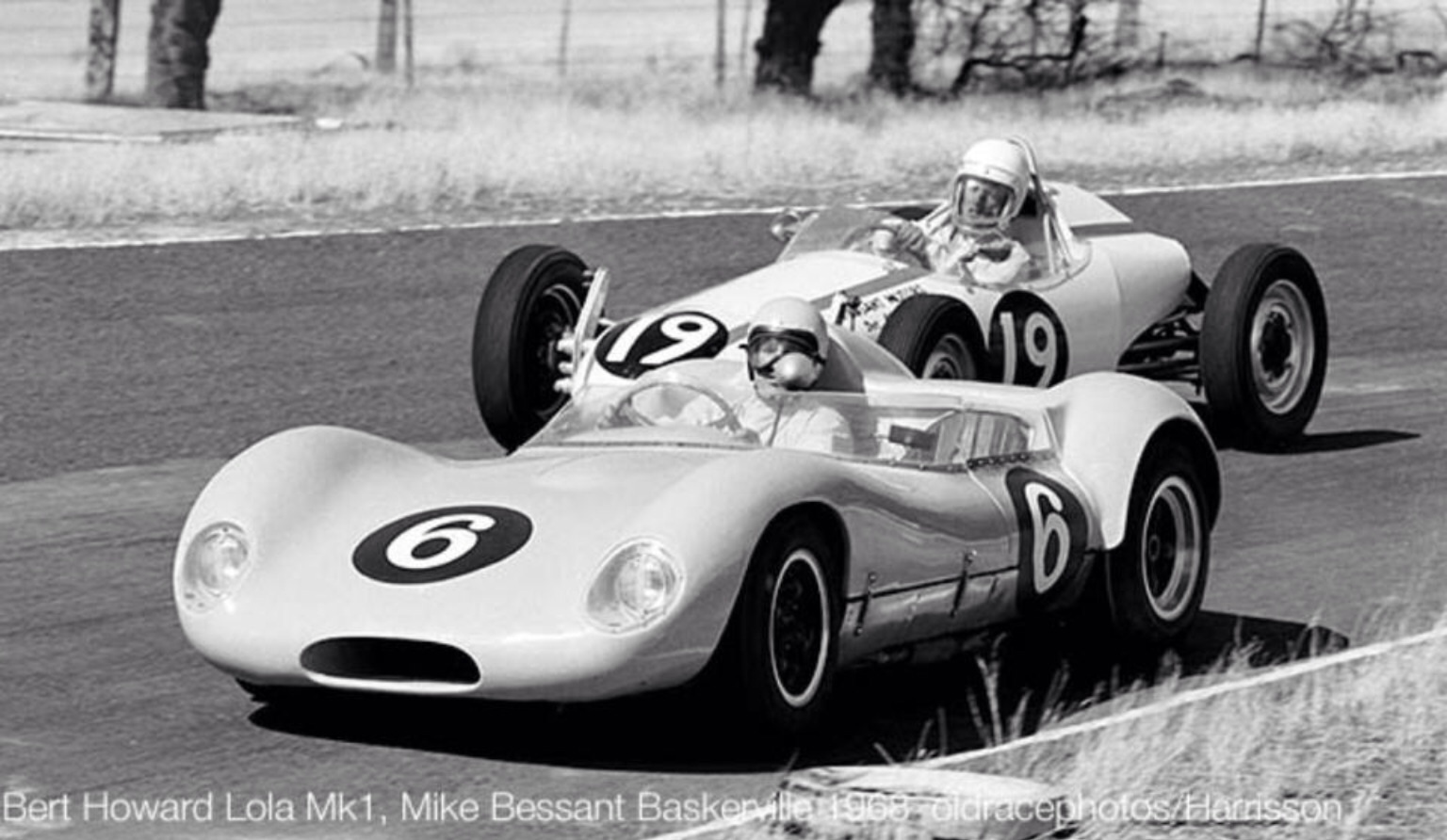
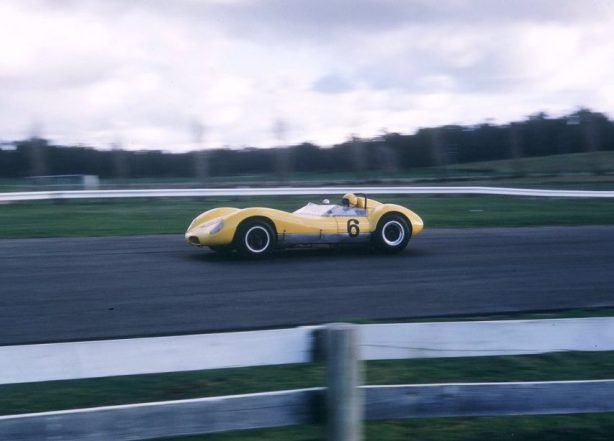
A favourite car, favourite marque, favourite colour. Bert Howard’s Lola Mk1 Climax at Symmons Plains, Tasmania in April 1968…

It’s a simple enough shot I suppose, a well executed pan with classic blurred background, but too good not to share.

The colour is so clear it could be 2017, but the low roll bar, helmet and background devoid of advertising hoardings gives it away a bit, its 1968. The small, lithe little machine looks like a ‘big banger’ doesn’t it?, but the 1098cc Coventry Climax FWA engined car is anything but that.

The Lola Mk1 was seminal in Eric Broadley’s early commercial success. The story of the car itself, it’s development and specifications is so well told on Lola Heritage, just click on the link here to read about these magic cars;

http://www.lolaheritage.co.uk/history/types/mk1/mk1.htm
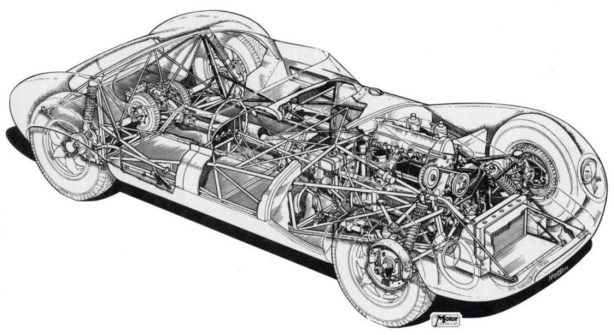
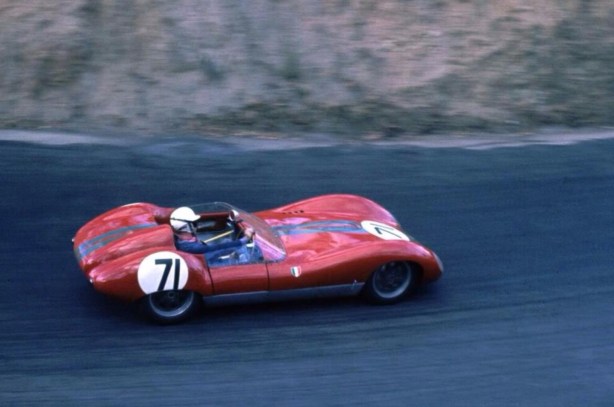
Bert’s car, Lola Mk1 chassis ‘BR15’  first came to Australia to the order of ‘Scuderia Veloce’ supremo, David McKay in late 1960.

By the time David McKay landed the sporty and Formula Junior Lola Ford ‘BRJ18’ the former World War 2 veteran, racer and motoring journalist had already been competing since the late forties. He had second place in the 1955 Hyeres 12 Hours in southern France together with Tony Gaze aboard a ‘customer’ Aston DB3S and the 1958 Australian Tourist Trophy, Bathurst, victory as career highlights to that point, the latter aboard his ex-works Aston Martin DB3S, see here for that car(s); https://primotipo.com/2017/09/28/david-mckays-aston-martin-db3ss/

Most international readers would be by now familiar with McKay from various of my articles. He was a racer at elite level who founded ‘Scuderia Veloce’ to race his own cars circa 1959. The team very shortly thereafter morphed into an enterprise which entered cars for others including internationals, Chris Amon, Graham Hill and Jackie Stewart- and into a retail motor dealership on Sydney’s North Shore which sold Ferrari, later Volvo and from 1969 Porsche cars.

McKay also aided and abetted the careers of many drivers from the early days- most notably Amon, Spencer Martin, Greg Cusack and right through into the 1970’s Larry Perkins and open-wheeler Formula Pacific ace John Smith in the latter period.

Throughout this era of the mid-fifties to the mid-seventies McKay was the most influential Oz motoring journalist as motoring editor of Sydney’s Daily Telegraph and Sunday Telegraph newspapers. See here for more;

Pete Geoghegan: Ferrari 250LM ‘6321’: Bathurst Easter 1968…
image

David McKay, Lola Mk1 Climax, Forrests Elbow, Bathurst, Easter 1961. Won the 3 lap under 1500 scratch and was 4th outright and 1st in class in the 10 lap main sportscar event won by the Matich Lotus 15 Climax (J Ellacott)

A mate of McKay’s, dentist David Lewin based in London had written to the Sydneysider and extolled him of the virtues of both Lolas and McKay soon did a deal with Graham Broadley, Eric’s brother to acquire ‘BR15’, which was a works car raced by Peter Ashdown.

The FJ was a new car built for a category which was exploding globally. The shadows of the War by then had to a large extent diminished, globally the worlds economy was performing well and consumer credit was becoming more widely available- many young men could afford to go motor racing and FJ was very much a class of choice.

In Australia, finally some permanent venues were being built- Warwick Farm, Catalina Park, Lakeside, Sandown Park, Calder and others were all opened in the early years of the sixties. In fact McKay was keen to land both Lolas in time for the first Warwick Farm opening meeting in December 1960. ‘BR15’ was not available until the end of the British racing season however.

Between the purchase of the cars and their arrival in Australia the Australian Federal Government had increased sales tax on imported cars to 40%. Much to McKay’s chagrin the changes applied to both road cars AND racing cars including those ‘on the water’! His landed price having increased hugely, McKay quickly did a deal to relieve the financial pressure so created to sell the FJ to Sydney insurance broker Tom Corcoran who had been racing a Lotus 11. Corcoran raced the car under the SV banner thereby getting some support at race meetings and fuel and oil provided by Castrol who had about then done a deal with McKay. David of course raced the Mk1.
image

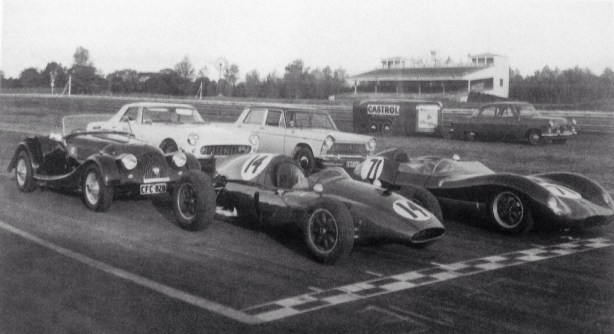
Scuderia Veloce on Warwick Farm’s pit straight in 1962. Morgan Distributors Morgan Plus 4, Tony Loxley’s Ferrari 250 GT, Fiat Importers Fiat 1800, ‘Old Nail’ Cooper T51 Climax, Lola Mk1 Climax (J Fullarton)

Scuderia Veloce at the time included the little Lola, a Nardi modified Fiat 1800 taken out to 2 litres owned by Fiat Australia which David raced in the burgeoning Appendix J touring car class and his Jaguar.

By early 1960 his first Jaguar Mk1 3.4 ‘Grey Pussy’, the dominant touring car in Australia at the time had been sold to Ron Hodgson. David bought a second Jag, a 3.4 litre Mk1, like the first built by the Jaguar Competition Department, which was co-owned with Australian Jaguar importer Bryson Industries. He won the very first Australian Touring Car Championship, a one race event, at Gnoo Blas, Orange in the red Jag in early 1960 beating Bill Pitt’s 3.4 litre Mk1 and Hodgson’s car which by then was 3.8 litres in capacity.

He also occasionally raced Sydney businessman/yachtsman Tony Loxley’s Ferrari 250GT coupe in GT races.

In single-seaters, for a short time in 1959 McKay raced a new (Victa Industries owned) Cooper T51 Climax FPF 1.9 and after the 1961 Australasian International season- the Victa owned car having been sold to Bib Stillwell he acquired a Cooper T51 Climax FPF 2.2 from Jack Brabham. McKay realised, approaching forty that his time at the top was limited and he ‘needed to get on with it’ in single-seaters!
image

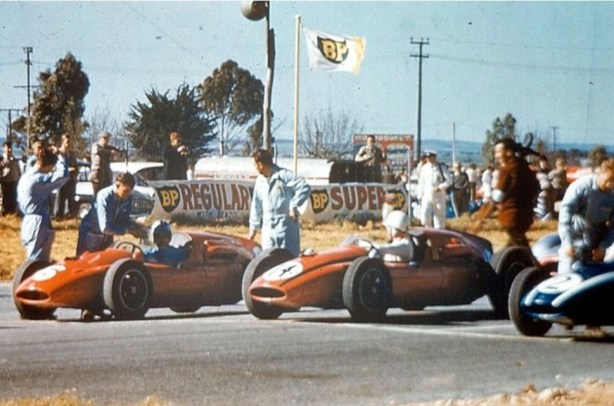
Mallala AGP weekend 1961, this will be a heat as Bill Patterson started from pole after acrimony over qualifying times and Stan Jones DNS the GP itself after mechanical mayhem intruded. #6 Bib Stillwell in his new Cooper T53 Climax, #14 McKay in ‘Old Nail’ Cooper T51 Climax and #2 Stan Jones Cooper T51 Climax. That’s Gerry Brown tending to Bib and Kevin Drage with his hand on the tail of the car (K Drage)

The ‘Old Nail’ Cooper Jack Brabham had for sale was raced by Ron Flockhart and Roy Salvadori that summer as part of ‘Jack’s team (‘Ecurie Vitesse’) was none other than Bruce McLaren’s ex-works machine (chassis number either ‘F2-5-57’ or ‘F2-7-59’), the chassis in which Bruce took his first world championship GP victory at Sebring in late 1959 and another win at Buenos Aires in February 1960.

It wasn’t in the full flush of youth as a ’59 (or was it 1957!?) car with transverse leaf, as against coil sprung rear end but was still a pretty good thing to go head to head with Cooper mounted Stan Jones, Bill Patterson, Lex Davison, (noting Lex’ interludes in Aston Martin DBR4’s) Bib Stillwell, (ditto!) Alec Mildren and the rest of the local heroes in Australia.

Indeed, the difference between an Australian Grand Prix ‘Old Nail’ win for McKay and 3rd place at Mallala in October 1961 was a jumped start and 60 second penalty in the opinion of the race stewards…but not in the opinion of many informed onlookers! A story for another time. Lex Davison won the ’61 AGP, his fourth and last AGP victory aboard a Cooper T51 borrowed from Bib Stillwell (the ex-Victa Industries car raced briefly by McKay) and Bibs later, quicker!, Cooper T53 with McKay’s T51 third. As I say, that meeting is very much a story in itself for another time.
image

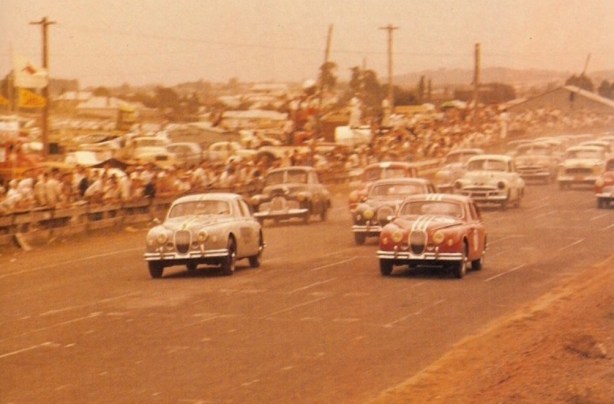
Start of the Australian Touring Car Championship race at Gnoo Blas, Orange, NSW 1 February 1960. Ron Hodgson in Jag Mk1 3.8 ‘Grey Pussy’ at left, McKay in his new Mk1 3.4 right, Bill Pitt behind in another Mk1 3.4 then the Holdens led by Pete Geoghegan’s black 48-215. McKay won from Pitt and Hodgson (unattributed)

So, McKay was a busy boy and Lola was only one of his toys! McKay was well aware of the cars speed which was both demonstrated by the performance of the cars in the UK and Derek Jolly’s Coventry Climax FWA powered Decca’s which raced in Australia from the mid-fifties- and which McKay was well familiar with on-and off circuit.

The dominant sportscars in Australia at the time were Ron Phillips’ Cooper Jaguar, Doug Whiteford’s Maser 300S, Derek Jolly’s 2 litre FPF powered ex-works Lotus 15 and then Frank Matich’s Leaton Motors owned ex-works 2.5 litre FPF powered Lotus 15 from the time it arrived in Australia in 1960. Matich then transferred his raw pace to a Lotus 19 Climax which further accentuated his dominance (which segued to Lotus 19B, Elfin 400 Olds aka ‘Traco Olds’, Matich SR3 Repco and Matich SR4 Repco- a decade of sportscar wins for FM in Australia)

image

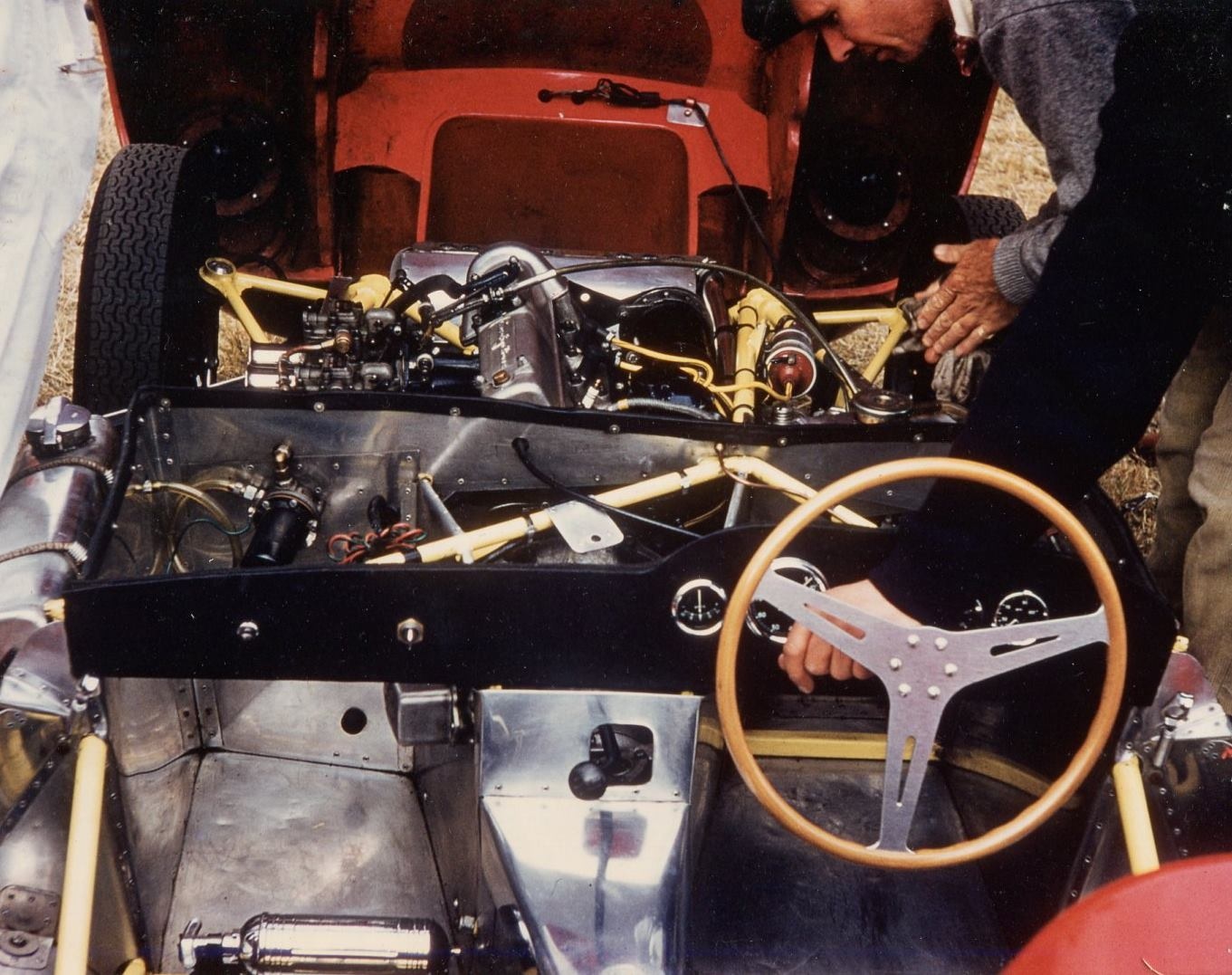
‘BR15’ at Symmons Plains 1968: spaceframe chassis, wishbone upper and lower front suspension with coil spring/shocks, 1098cc originally but by now probably 1220cc Coventry Climax Weber fed FWA engine and rubber bungee attached fuel tank all clear (oldracephotos.com)

The Lola was a famously light, beautiful handling car but it was not an outright contender toting only 1100cc so its place in the local order was to win the 1100 or under 1500 class and punch above its weight in outright competition.

McKay’s cars finally arrived from the UK in October 1960, their first outing a test day at Warwick Farm in October before the inaugural Warwick Farm open meeting on 18 December 1960. Bob Atkin had by then been engaged by McKay to look after the Lolas, Atkin formed a career with SV’s and was still Dealer Principal of Scuderia Veloce Motors when it was sold to Laurie Sutton a decade or so hence.

McKay won his class in the famously very wet meeting whilst finishing 2nd outright behind Matich’ Lotus 15 and ahead of Derek Jolly’s 15, Bob Jane’s Maser 300S, Doug Chivas’ Jag D Type and others. In a great day for McKay, he won the first race held at the Farm, a sportscar race in the Morgan Plus 4 (chassis  #4590 was one of the first two imported into the country owned by by Sydney jeweller Ron Coulsten), was fourth in the Appendix J touring car race in the Fiat and took fastest lap as well as winning the 1500 class in the Lola Mk1. A great day at the office!

Over the next 12 months the car was unbeatable in its class with successes at Ballarat Airfield, Hume Weir, Longford and Bathurst.
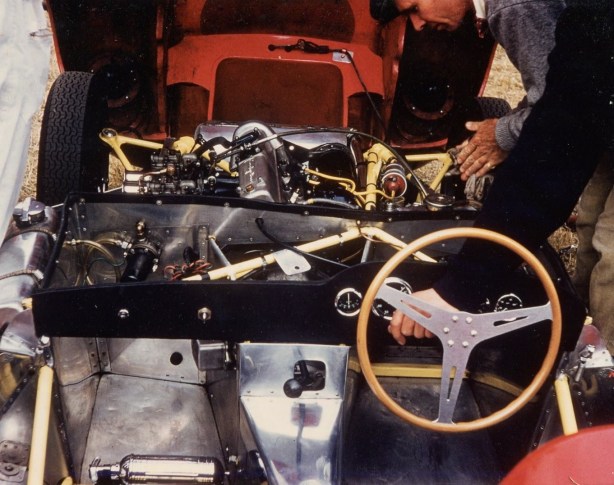
Business end of the Lola, Longford 1960 (G Richardson)
image

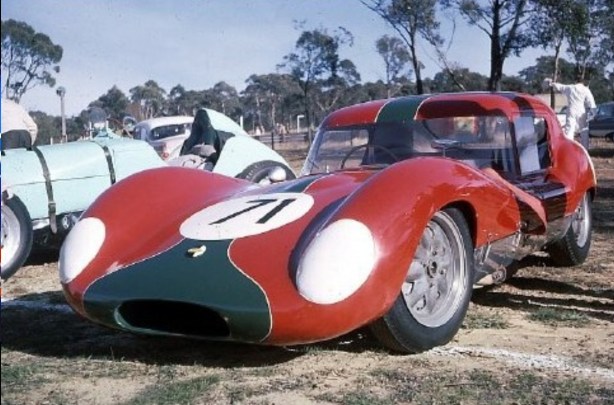
McKay’s Lola ‘BR15’ in very ugly Appendix K GT guise in 1961, circuit unknown. Gives new meaning to ‘slab sided’ ‘dunnit (M Schagen)

The Confederation of Australian Motor Sport adopted Appendix K for GT cars for the 1960 season which made sense in terms of attracting people to buy and race closed coupes such as the Lotus Elite and Porsche Carrera being sold at the time. It left large numbers of sportscars out on a limb in the sense that promoters now chose between running races for the two categories-that is between Appendix C Sportscars and Appendix K GT’s.

CAMS oddly, but sensibly allowed open cars to compete as long as they had ‘a lid’. As a consequence all manner of cars including such exotica as D Type Jags, Maser 300S…and McKay’s Lola Mk1 were ‘converted’ from open sportscars to closed coupes.

The conversions were usually as ugly as sin, Bob Jane’s Maser 300S arguably the exception, with David’s Lola definitely in the ‘fugly’ category as the photo above proves! The work was done by Clive Adams North Sydney panel shop, ‘ there a master of aluminium work, one Stan Brown, had a small corner where he worked his magic’ as McKay so eloquently put it. ‘That it turned out an ugly duckling there is no doubt’. To make matters worse the increase in weight of the car and ‘top heaviness’ ruined the beautiful balance of Broadley’s original design.
image

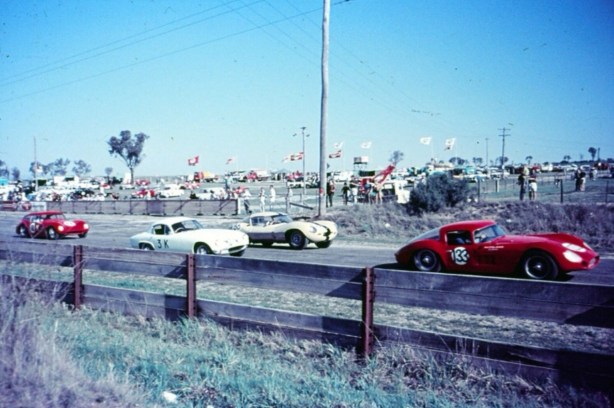
1961 GT Racing shot: Bob Jane, Maser 300S Coupe, Leo Geoghegan Lotus Elite, Frank Matich Jaguar D Type Hardtop and the red car is Keith Malcolm’s Skoden, Bathurst October 1961 (MK1220)

McKay in his autobiography describes the silver lining in the GT conversion work as the introduction to him of Spencer Martin, who worked at Adams shop and had started racing in a self built sportscar. Later they would achieve much together with Spencer driving both the SV Brabham BT11A Climax after Graham Hill had finished with it at the end of the 1964 Tasman Series and McKay’s famous, glorious ‘Red Lady’- his Ferrari 250LM.

The Lola ‘GT’ cannot have been too bad mind you, McKay was 2nd in the 50 mile, one race 1961 Australian GT Championship held at Warwick Farm in July 1961. Frank Matich won in a Jag XKD ‘GT’ from Brian Foley’s Austin Healey Sprite Hardtop and Bob Jane’s Maser 300S Coupe.

As McKay focused on other cars he sold the Lola to Greg Cusack, the young motor-trader and rally-driver from Canberra was a man on-the-rise. Cusack raced the car for the first time, still under the SV banner, at Warwick Farm in December 1961. He achieved the same levels of success with it in the following twelve months as McKay.

Cusack also had an occasional race in the ‘Old Nail’ Cooper T51 Climax during 1962 including a very solid 4th in the ‘Bathurst 100’ Gold Star event on demanding Mount Panorama.

McKay played an important role in Chris Amon’s nascent career, running the young Kiwi in the Australasian International season aboard his Cooper T53 Climax in 1963- it was during that summer that Reg Parnell spotted Chris’ talent and spirited him off to Europe.

Chris had a few drives of McKay’s Coopers (Old Nail T51 and T53) in Australia in the second half of 1962 at Sandown and Mallala during practice and at the Gold Star season ending round at Warwick Farm in mid-October where he raced the T51 to 3rd place in the Hordern Trophy behind Bib Stillwell and John Youl. The talented young Kiwi also raced the Lola Mk1 at Sandown in September to a class win in the Victorian Sportscar Championship.

The Lotus 23’s then beginning to appear gave the Lola a taste of competition for the first time. Cusack could see the writing on the wall so acquired two Elfins, a Catalina single-seater and Mallala mid-engined sportscar with which to take his career forward.

Cusack remained close to McKay, he would several years hence drive the teams Brabham BT23A Repco after Spencer Martin’s departure from Scuderia Veloce.

Lola was offered for sale and sold to to another very quick young driver, John Martin of Katoomba in Sydney’s Blue Mountains who had been competing in a Lotus 15. He first raced the car in January 1963 and achieved much success despite the more competitive grids in which the Lola now competed.
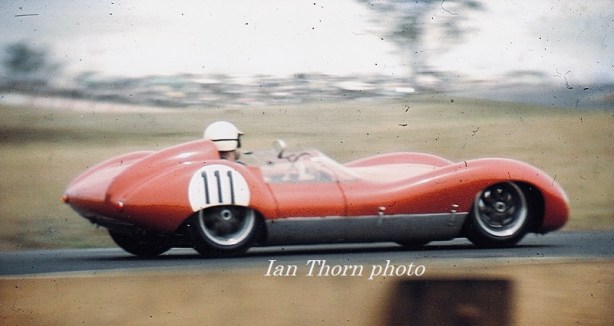
John Martin, Oran Park circa 1963
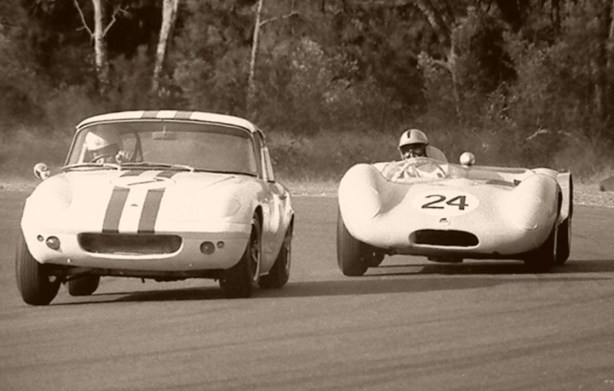
image

Pete Geoghegan in ‘BR15’ giving Niel Allen’s new Elan heaps at the ’66 Warwick Farm Tasman meeting in February. It was a very effective ‘demo’ of the little cars pace despite advancing years and race miles. Geoghegan was doing as many laps in little lithe Lotuses at the time as the Touring Cars for which he was famous- he would have found Lola very much to his liking I suspect (B Wells)

Frank Demuth, a Sydney accountant was the next owner having bought the car in early 1964. He gradually got the hang of it, as a newcomer to racing, but soon traded it in after 12 months on the Lotus 23B Ford raced by Pete Geoghegan, the Geoghegan brothers were Australia’s Lotus importers.

Rather than leave the car sitting on the Parramatta Road used car lot, Pete decided to have a run in it to remind everyone Lola was about and for sale. He had the car painted the wonderful shade of yellow and added 8-inch wheels to get a bit more grip. By now the car’s Climax FWA was said to be 1220cc in capacity.

Geoghegan entered it in the 1966 Warwick Farm Tasman meeting sportscar races and gave Niel Allen’s ex-Leo Geoghegan Lotus Élan 26R and Demuth plenty of curry in the 23 he has just acquired! Still, Pete was a rather handy steerer whatever the theoretical superiority of the 1.6-litre mid-engined, Lotus/Ford twin-cam powered Lotus 23! The feature race, for the record was won by Greg Cusack in a Lotus 23B from Demuth, Geoghegan and Bob Jane’s E Type Lwt.

It was at this point that Bert Howard responded to the Geoghegan’s March 1966 ‘Racing Car News’ advertisement, asking price $A3400- read it and weep! It was a long drive from Hobart to Sydney and back but no doubt Bert had a big smile as his car towed ‘BR15’ onto the ‘Princess of Tasmania’ at Port Melbourne for the final leg of the 1600 Km trip home.
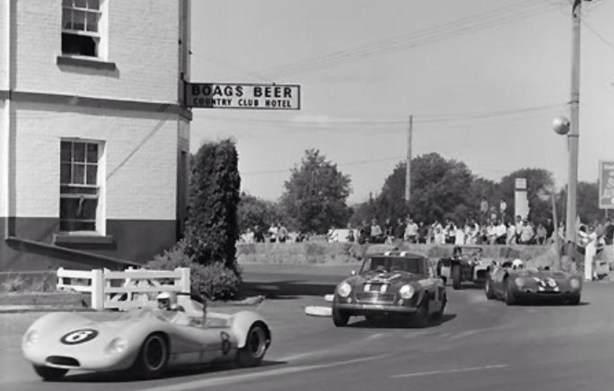
image

Longford 1968: Bert Howard’s Lola in front of Doug Whiteford, works Datsun Fairlady, John Roxburgh Lotus 23C Ford and Ian Maudsley, Lotus Super 7 (oldracephotos)

There the car was beautifully prepared and presented for years at Longford, Symmons Plains and Baskerville, if increasingly outdated as the mid-engined hordes grew exponentially throughout the 1960’s. In the smaller capacity classes these cars included the Lotus 23, various local 23 ‘clones’, the Elfin Mallala, Elfin 300 and others.

Bert sold the car in the early seventies to Kent Patrick who raced it in various historic events before selling it to Kerry Luckins, well known in motorsport as the General Manager of Paul England Engineering in Melbourne, a Light Car Club stalwart and the ‘on-circuit’ Sandown commentator.
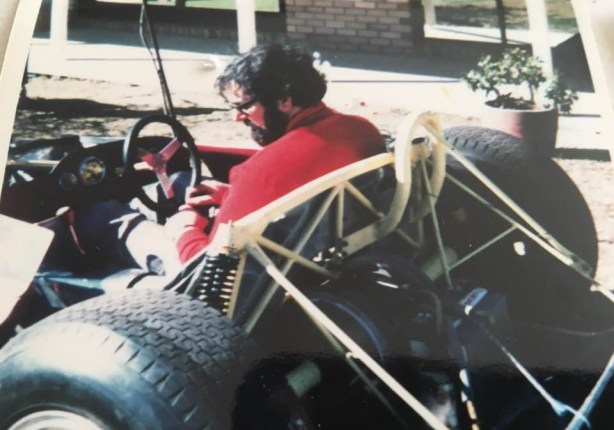
Proud new parent, Kerry Luckins picks up his new Lola from Kent Patrick’s, son Kurt observed ‘It still had the big rear tyres’. (Luckins Family_

Kerry stripped the car and rebuilt it fully with the assistance of  Jim Shepherd. It is in this period in the earlyish days of historic racing that I remember the Melbourne based car and later when raced by Ian and his son Nick McDonald, the car always looked ‘a million bucks’ and was very fast as the McDonald cars always are.

The car left Australia circa 2000 when sold to Tony Moy of Page and Moy, the specialist UK motor racing travel agency. Forty years had elapsed between the cars departure from and return to the UK- a great pity as the lovely little car had been an enduring and ever-present part of the Oz racing scene and a ‘belle of the ball’ wherever it appeared.

It never looked better than in its yellow phase in Bert Howard’s hands mind you…
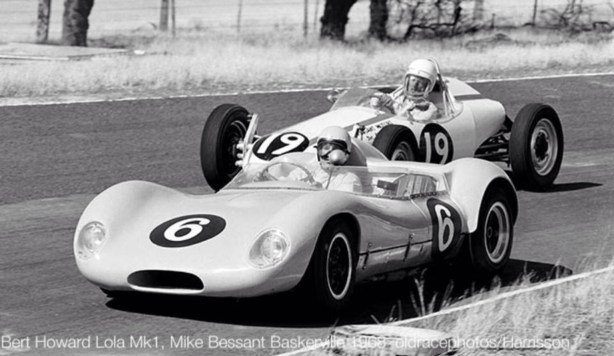
Etcetera: David, Graham and Friends…
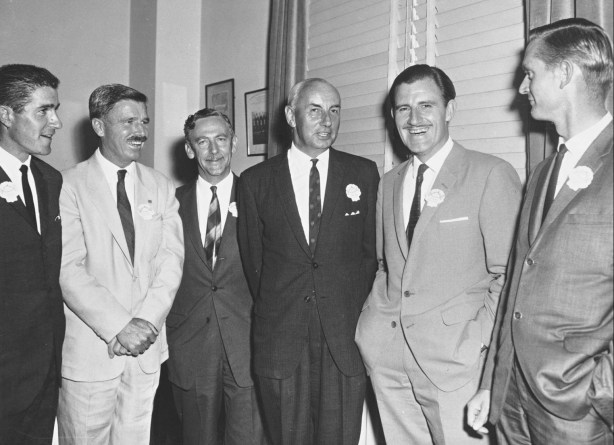
image

(Warwick Farm)

Warwick Farm function during the Tasman Series, perhaps 1964, the year Graham Hill drove McKay’s Brabham BT11A. Left to right- unknown, McKay, unknown, Geoff Sykes Warwick Farm promoter and manager, GH and Mike Kable, motoring journalist.
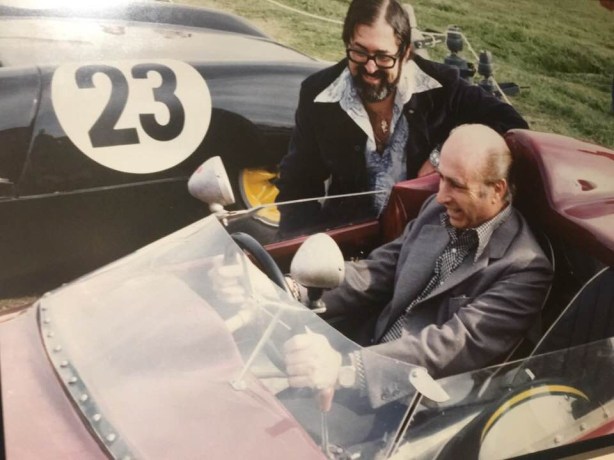
(Luckins Family)

Kerry Luckins gets JM Fangio to try the seat of his Lola at Sandown during the 1978 ‘Tribute To Fangio’ meeting. Kerry was President of the organising club, the Light Car Club of Australia, see here for a piece on THAT Sandown which practically every racing enthusiast in the country attended from the Prime Minister of the day, Malcolm Fraser down;

Juan Manuel Fangio’s Sandown Park…

Kerry was a well known, respected figure in the day, I admired the way he steered the Light Car Club as a member, he came across well on the Telly as part of the Sandown broadcast team, I met him later in his life in retirement at Sorrento. I visited to buy a Smiths chronometric tach which I still have, and look at his Birrana 274 (ex-Allison 274-07) but it was way too far gone for my limited mechanical skills- not sure that car has re-surfaced yet?
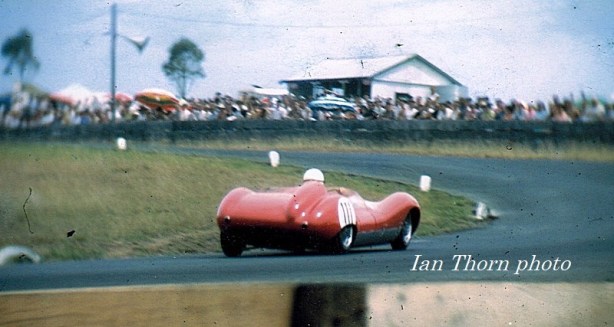
The very talented John Martin shows Lola’s delicate lines and pert little rump to very good effect at Oran Park circa 1963.

Bibliography…

‘David McKay’s Scuderia Veloce’ David McKay, ‘Historic Racing Cars in Australia’ John Blanden, Lola Heritage, oldracingcars.com, Terry Sullivan and Ray Bell on ‘The Roaring Season’, ‘Bathurst: Cradle of Australian Motor Racing’ John Medley

Photo Credits…

T Watts Collection via Historic Racing Car Club of Tasmania, Geoff Harrisson/oldracephotos.com, John Ellacott, Kevin Drage, Marc Schagen via Aussieroadracing, J Fullarton, MK1220, Bruce Wells/The Roaring Season, Greg Richardson, Ian Thorn, Kerry and Jennie Luckins Family Collection

Tailpiece: David McKay at Catalina Park, Blue Mountains, NSW, Lola Mk1 Climax, date unknown, beautiful isn’t it…
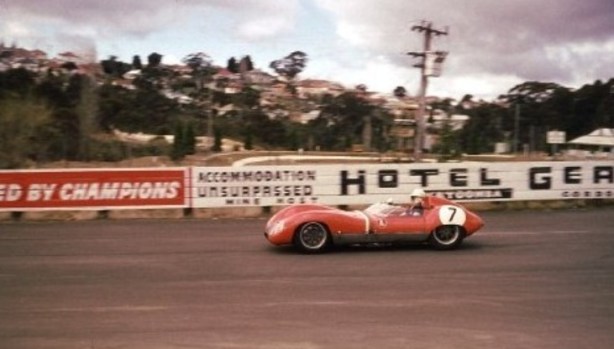
image

(M Schagen)

Finito…