Posts Tagged ‘Spencer Martin’

jane

(Bryan Liersch)

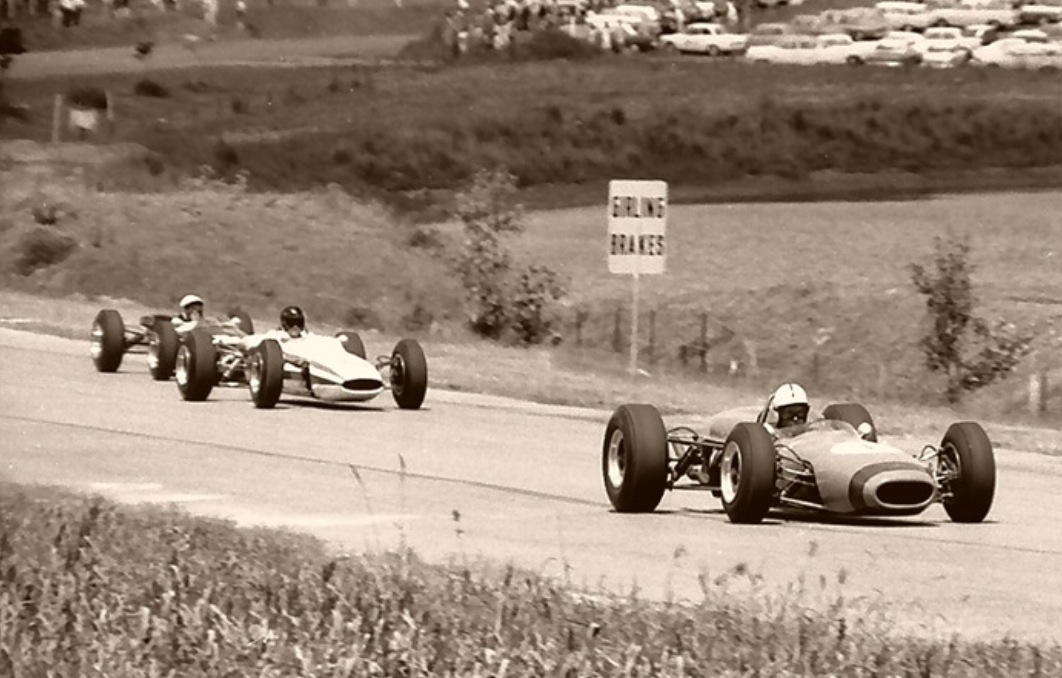
Bob Jane leading his champion driver, Spencer Martin onto the Hume Weir dummy grid for his first race in ‘Bob’s baby’, his Elfin 400 Repco 4.4 V8, June Queens Birthday weekend 1967…

Martin was by then the reigning national Gold Star Champion. In fact he was half way through a year in which he won his second title on the trot, and then having achieved his motor racing aims retired from the sport at elite level’.

#85 in the background is the ex-Bib Stillwell, Tony Osborne owned Cooper Monaco Olds V8 driven by Ian Cook.

Click here for an interesting article on Spencer; https://primotipo.com/?s=spencer+martin

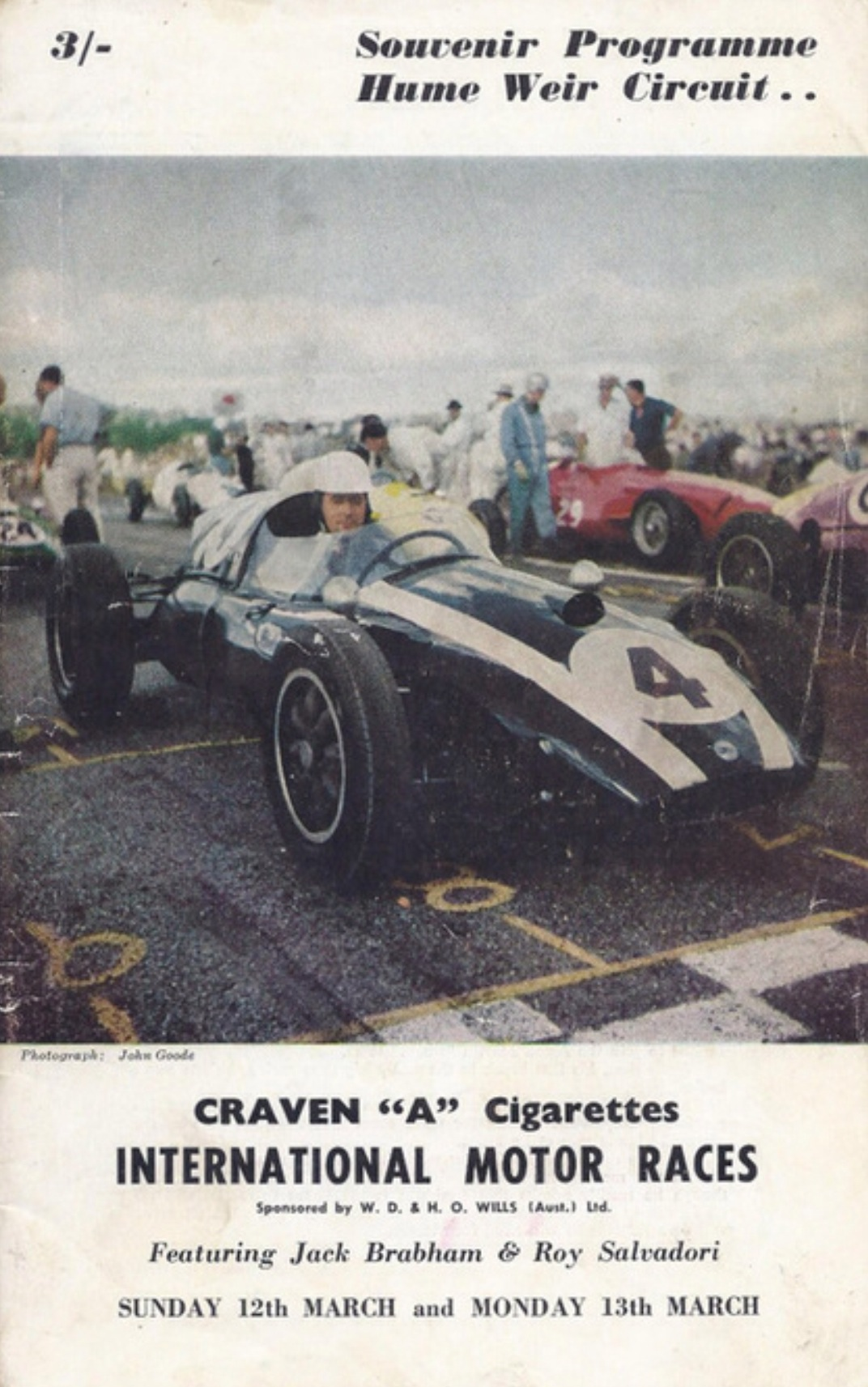
The inspiration for this article are a number of great shots of the Hume Weir circuit near the mighty Murray River and border of New South Wales and Victoria. The circuit, closed in 1977 won’t be on the radar of international enthusiasts although Jack Brabham and Roy Salvadori raced there during the Australian International races in the summer of ’61.

Brabham 1961, Cooper T53 Climax (C McQuellin)
 

hum jb

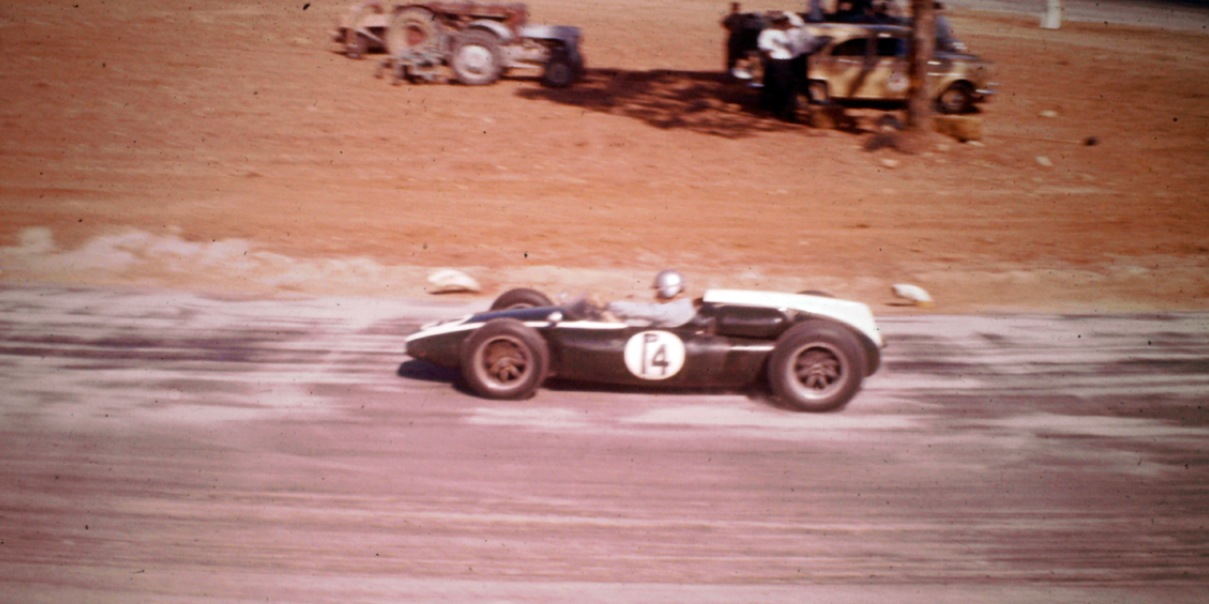
Jack Brabham wins the ‘Craven A International’ in his Cooper T53 Climax in March 1961, love the ‘Fergy’ in the background, Hume Weir  (unattributed)


JB post one of his wins with booty, ours is a parched brown land (C McQuellin)

I knew the circuit, i just missed racing there, it was closed by 1979 when in bought my first Formula Vee, was built in a disused quarry which provided construction stone and gravel material to build the Hume Dam, particularly its retaining wall. Although a Victorian i am a Thredbo skier, a legacy of 9 years working in Sydney and for years summer and winter have driven from Melbourne along the stretch of road from Ebden to Tallangatta with Lake Hume to my left. From Khancoban where the Alpine Way starts is a phenomenal drive to Thredbo Village. This drive, in fact the whole journey from Albury through Corryong, Khancoban, Geehi and Dead Horse Gap to Thredbo is one of Australia’s great drives.

Watch the ‘coppers’ though they police it furiously, the area near Scammells Lookout, a must stop, is an area to stick to the limits in particular!

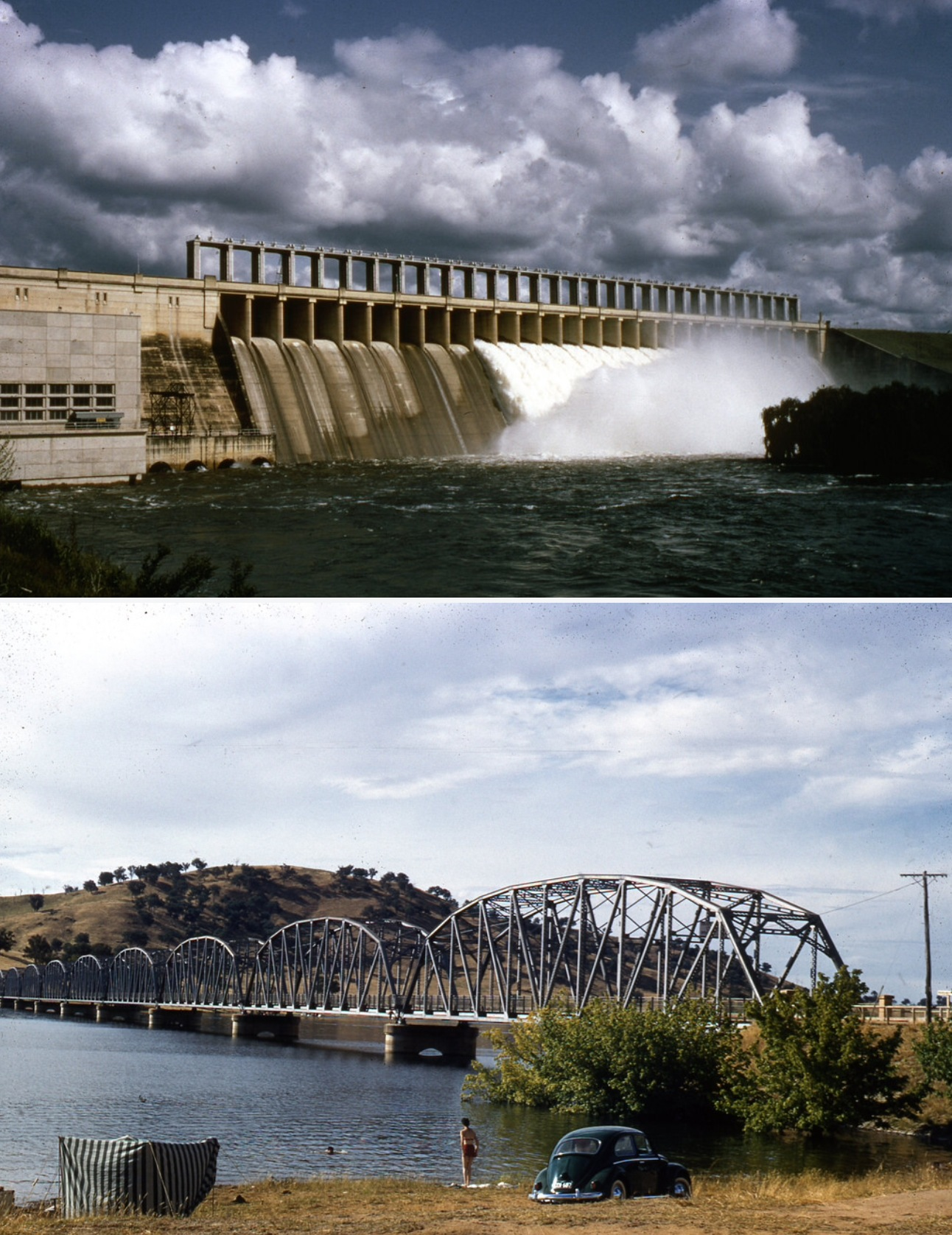
For years i have driven for miles with Hume Dam on my left and wondered about the Hume Weir project and researched it, some old shots i found are too good not to share.

So, this masterpiece comprises a piece about the building of the Hume Dam, the birth of its Hume Weir Circuit ‘love-child’, the history and some shots of the circuit and a bit about Bob Jane’s Elfin 400 the photos of which at Hume Weir inspired the article.

For my international friends, the ‘where the hell is he talking about?’ question is addressed by the map below, ‘Hume Weir Circuit’ is in red, the road to Thredbo is also there.
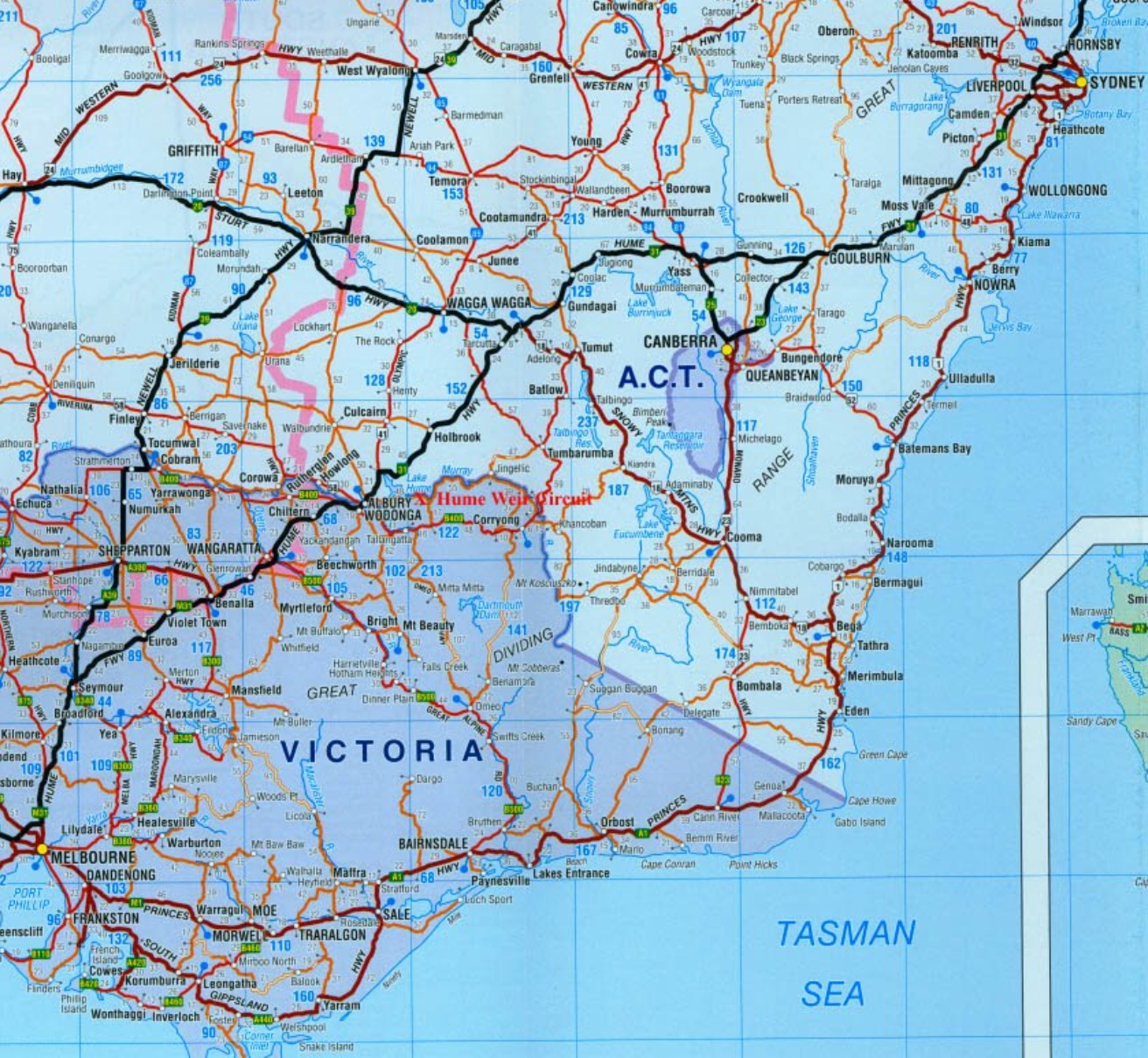
hum map

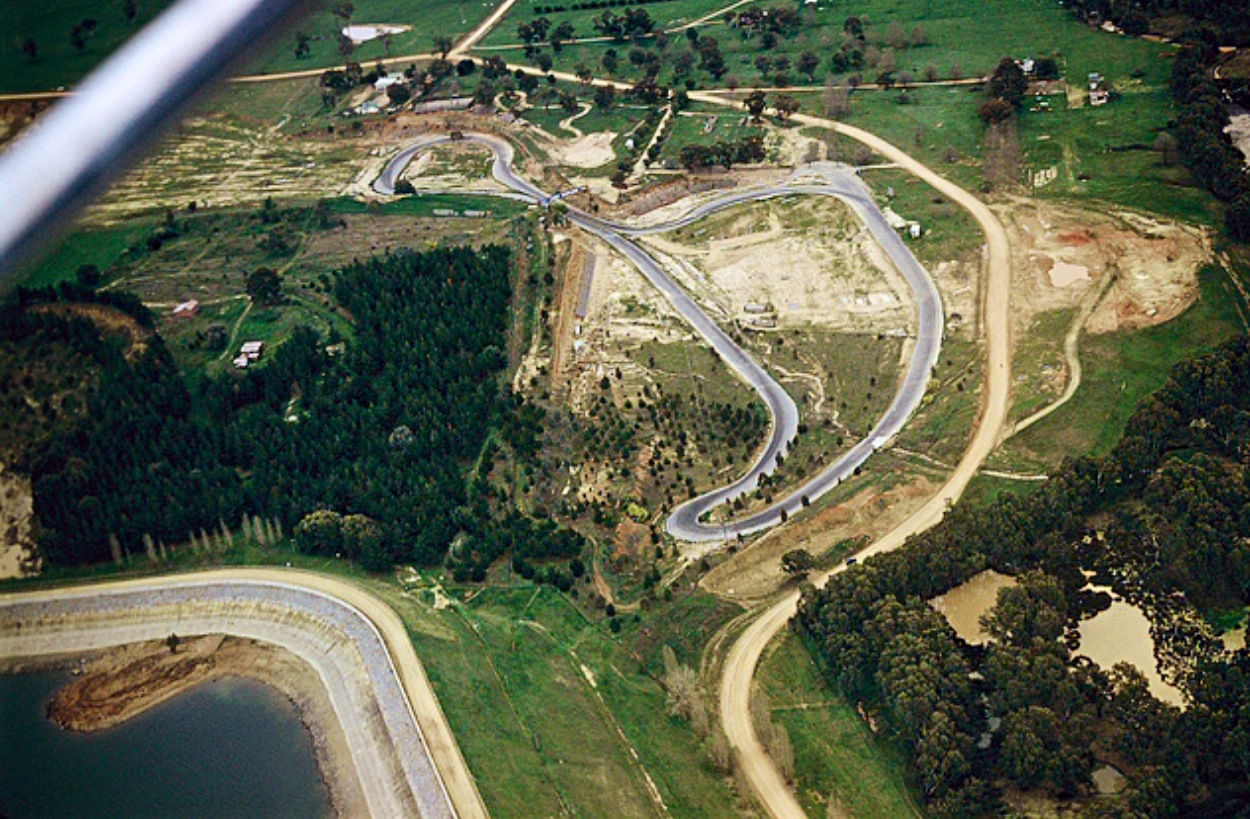
hum circ air

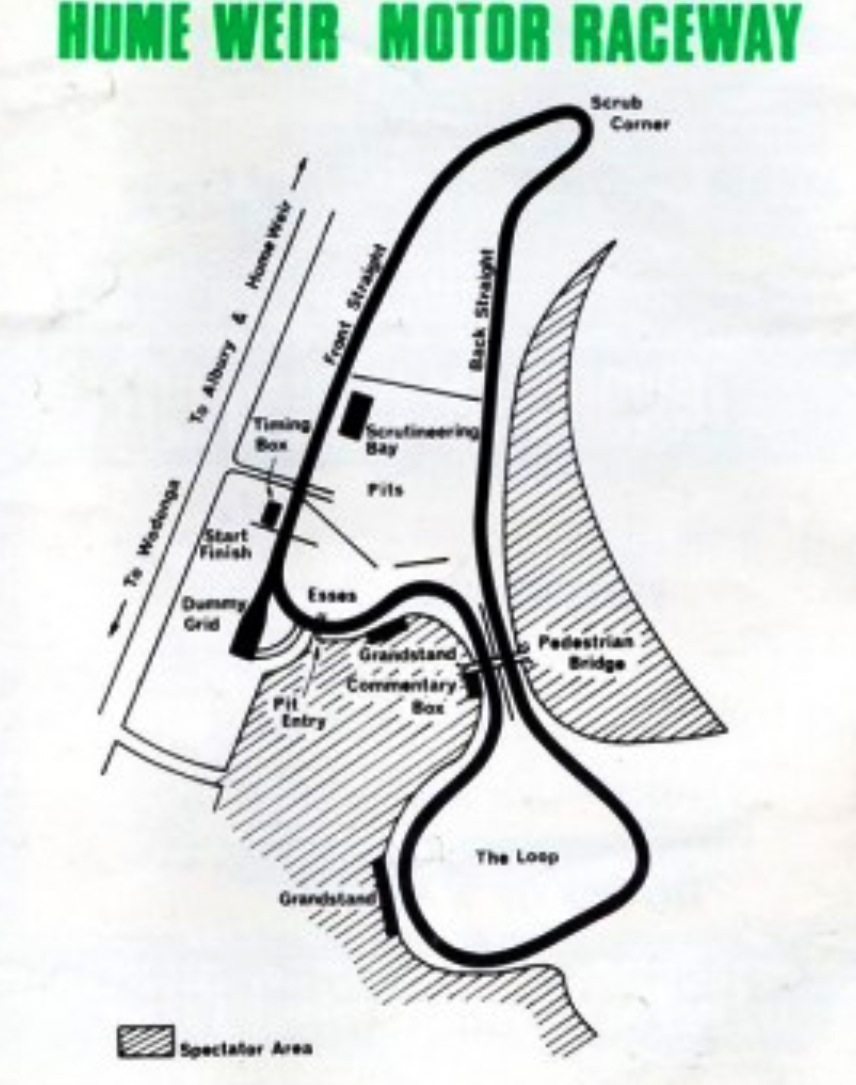
1960’s aerial shot of Hume Weir circuit, dam and dam wall. At the bottom of the shot is ‘Scrub Corner’, the tightest hairpin in the country, then heading ‘up’ is the ‘Back Straight’ into the combination of corners called ‘The Loop’, then left (going down the page again) into ‘The Esses’ past the pit entry and onto the ‘Front Straight’, the start/finish line is at the start of which (Dallinger)


dam dean st

Dean Street, Albury 1920’s (Dallinger)

Australia is the driest continent on the planet, as a consequence there have been some major infrastructure projects since Federation in 1901 to provide water for irrigation of crops and/or power. The Hume Dam is one, on much bigger scales are the Ord River Scheme in WA and most impressively and significantly the post-war Snowy Mountains Scheme in NSW.

Travelling the roads mentioned above gives some insights into the ‘Snowy the scale of this nation building post-war project, its one of the civil engineering wonders of the world, can only be experienced on the ground, its un-Australian not to experience it at some point in your life!

Explorers Hume and Hovell trekked through the area in 1824, Albury was first settled by Europeans in the 1840’s.

As early as 1863, it was clear that water management was needed to ease the boom and bust flows of the rivers. Lochs and weirs were advocated but when representatives of the three colonies impacted, NSW, Victoria and South Australia met in Melbourne, the talks came to nothing. Not much different to today really, when the Premiers meet. Difficulties with border customs, bridge and punt tolls, along with self interest made necessary compromises between the parties impossible.

dam beth

Albury/Bethanga Bridge construction 1920’s (Dallinger)

After Federation (when the colonies joined to form a country) in 1901 a more global view of national priorities was capable of being made and after consideration of 25 sites the present one was chosen.

The factual material which follows is a truncated version of a paper by Joe Wooding for the ‘Albury & District Historical Society’ on construction of Hume Dam.

To build a reservoir, lots of land is needed, in this case, prime river frontage. 15,582 acres in NSW  and 87,268 in Victoria. Not everyone was pleased with the compensation offered, the lawyers were happy though as the courts were ‘chockers’ with disputes for over a decade.
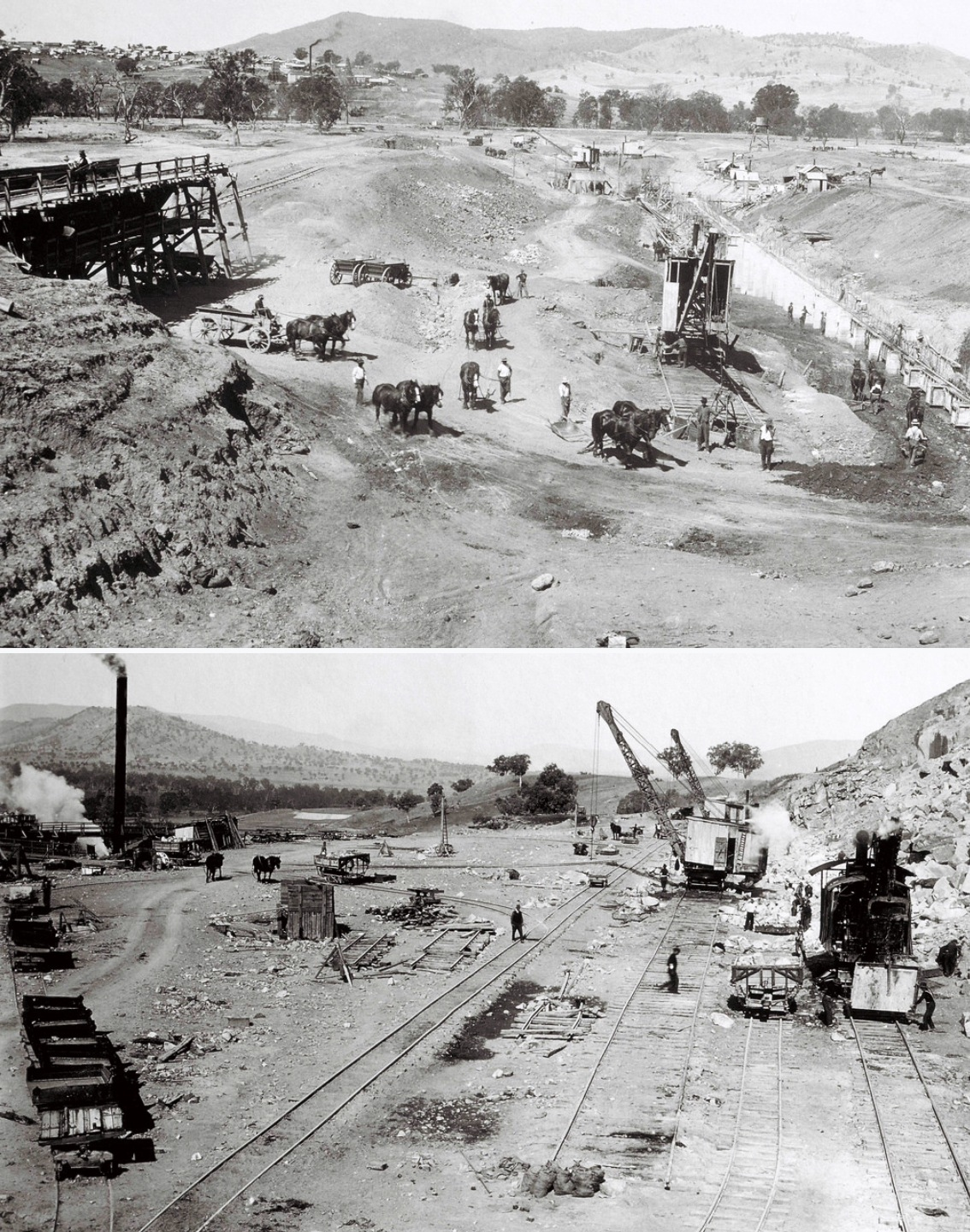
Construction commenced in November 1919, soon tent cities sprang up on both sides of the river. More permanent buildings were soon erected. On the Victorian side, the hamlet of Mitta Junction, became known as Ebden Weir and the site for operations.The higher ground in NSW was called Hume Weir, started from nothing. In 1920, the title Hume Weir was officially bestowed on the whole project in honour of the explorer.
dam early

Relatively early works, 1920’s (Dallinger)
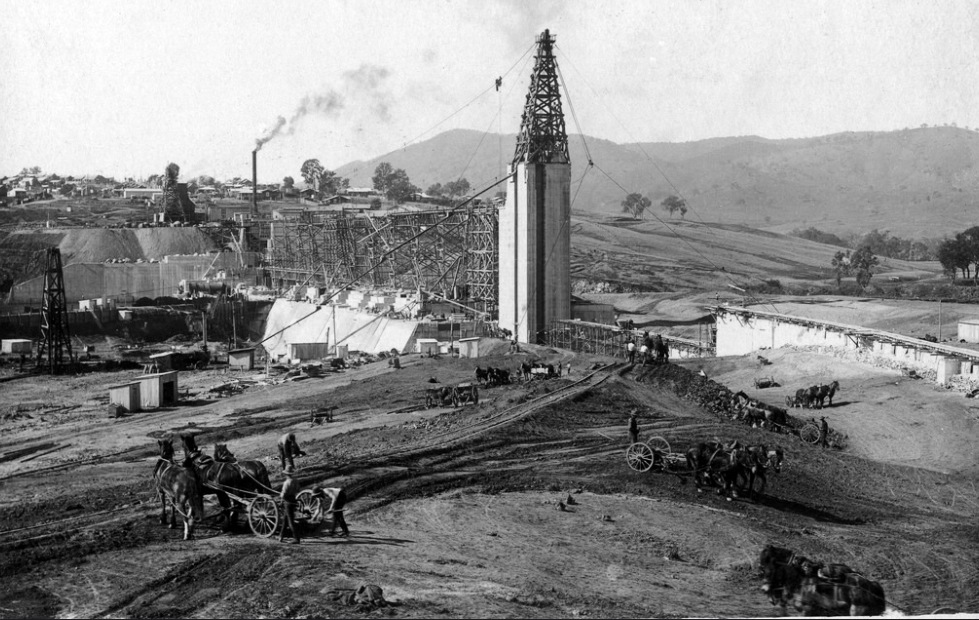
Massive amounts of infrastructure were needed. I must admit to always being amazed at what was built with the equipment available in earlier times. (noting the Pyramids scale of achievement!)
A metalled road from the main road at Wirlinga, now Old Sydney Road was built to the site. A Hume Weir rail siding was established from which vast amounts of stores, equipment and cement were conveyed to the NSW work site by a fleet of 10 solid rubber tyred Thornycroft motor lorries. In Victoria, a branch from the Wodonga to Cudgewa rail line was laid to Mitta Junction. A road bridge to link the two villages spanned the Murray just below the work site.
Two quarries were established. The one in Victoria provided earth fill and clay for the embankment and later the site for the Hume Weir circuit. Originally, 2 steam locos were used to haul trucks along the earthen bank, 8 were added later. The rail tracks were constantly re-laid as the bank grew. Two steam grab cranes were used in early excavation work at the quarry. Two ‘navvies’ were deployed, steam cranes which ran on the rail system. Much of this equipment was brought from Nagambie and Eildon. Over 500 horses were  used to haul monkey-tailed scoops and drays.
dam horse

Horses still had a role despite modern construction techniques of the day (Dallinger)

In NSW the stone quarry is on Hawksview Hill. Four steam locos and numerous trucks were brought from Burrinjuck. The rail system was extensive, rails ran to and from the quarry and the Bethanga Bridge site. Rail was also used inside the coffer dam to service the spillway foundation excavations.
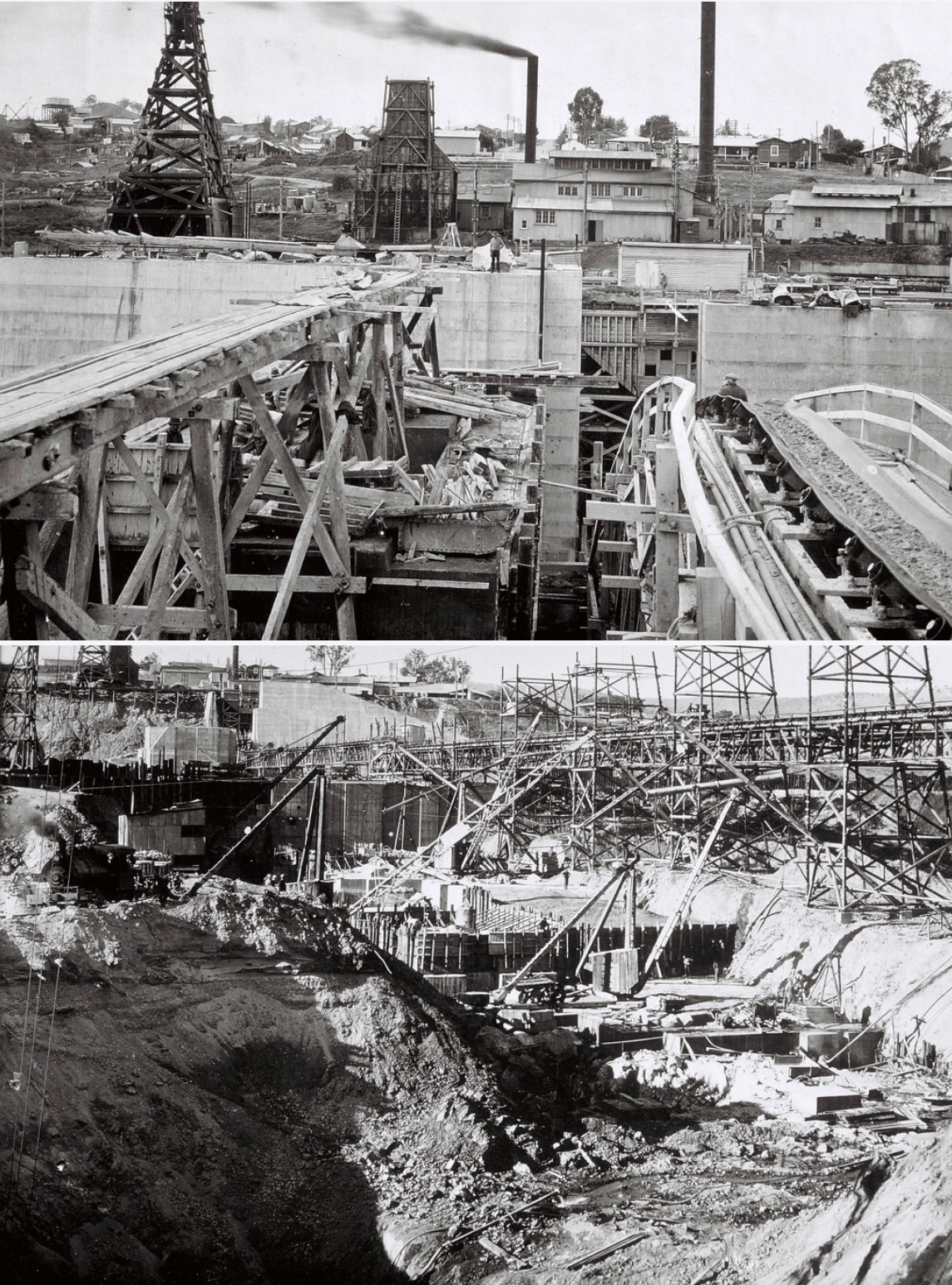
Steam power was widely used, some of the machinery was extraordinary. In NSW two huge cement mixers capable of producing 900 cubic yards per day were operated. The crusher was a 30 ton Hadfield made in Sheffield, England. It was unloaded at the weir rail siding and with great difficulty, transported to the quarry by 2 large steam traction engines.
dam steel

(unattributed)

A flying fox spanned the river from east to west with a large steel cable 400m long. The cables were attached in such a way allowing coverage of almost the entire work site. 300 tons of concrete blocks were used as ballast on the mobile pylon. A trolley was attached to the cable, enabling loads of up to 10 tons to be placed almost anywhere on the work site. The Bucyrus steam shovel was capable of lifting 3½ cubic yards and the only machine on site using caterpillar tracks.
dam train

(Dallinger)

‘The process of using crushed rock rather than smooth river gravel and adding large rock individually, produces ‘cyclopean concrete’. A 750mm wide concave rubberized conveyor belt carried the concrete, which could be retrieved at any point, by concrete shutes, for placement at the work site. Belts were pressure cleaned for their return journey. The huge rocks, some weighing up to 10 tons, called ‘plums,’ were cleaned with a high pressure hose before being individually craned into the wet concrete. Some were completely buried, but many were left half exposed to ‘key in’ the next batch of concrete. Steel reinforcing was only used near the top of the spillway. The structure is about 17% rock. At its base, the wall is 32m thick and double that if you take in the dissipater wall’.
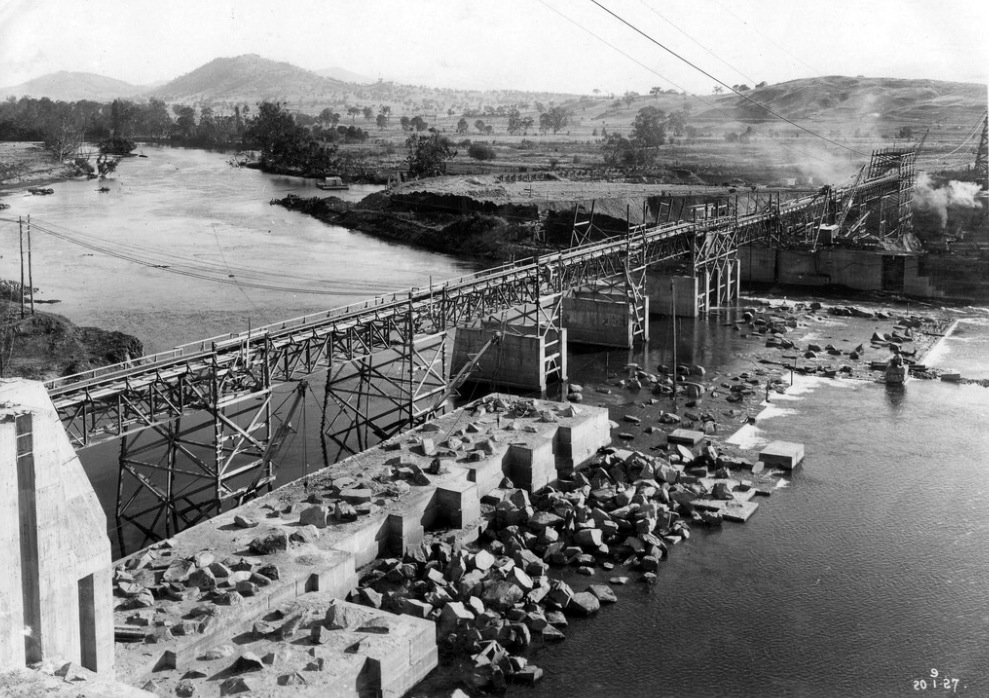
dam wall 1927

Dam wall 1927, looking at the Murray upstream (unattributed)

‘As well as road works in the villages, other amenities were provided. Residences, barracks, stores, recreation halls, a post office and police presence were established. Electricity was installed for lighting only and turned off at 11pm. A Church of England was transported in. A casualty ward, a doctor with a phone and car were provided. Dances and pictures, obviously silent, as ‘talkies’ were not seen in Albury until 1928. The school had 66 pupils in 1921. The baker, milkman, greengrocer and butcher called regularly as did the ice man. Sport attracted many of course’.
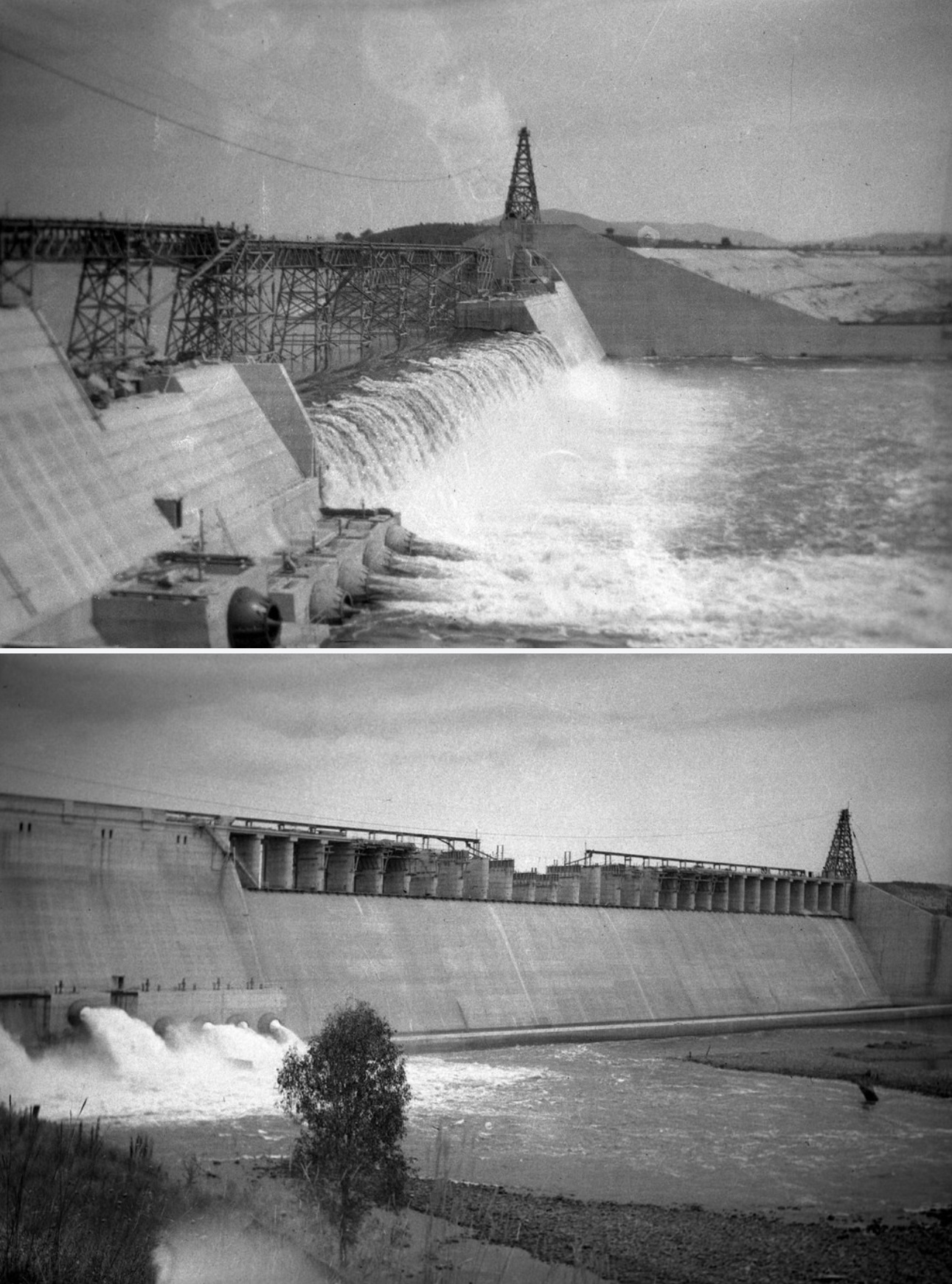
dam end 1

Dam wall work progression (unattributed)
Manual labour was harsh with a 48 hour week, later reduced to 44 hours. Picks, shovels and
bare hands were often the only method of filling drays. Returned soldiers from the Great War
were given preference for employment, followed by married men. Estimated numbers of
workmen employed varies greatly with about 1000 cited. At the peak of construction around 1927, numbers given were Victoria 355, NSW 650, Bethanga Bridge 89. With a large workforce and dangerous working conditions, accidents were a reality, with total fatalities estimated at 6-9 people.
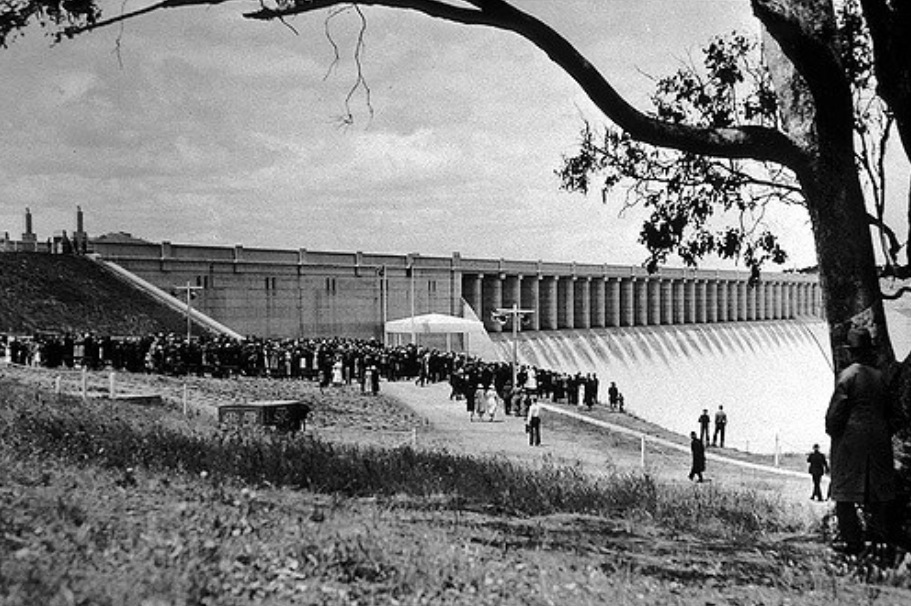
The Weir was officially opened by the Governor-General, Lord Gowrie, on November 21 1936
 ‘by closing an electric valve control circuit which released the water through two giant needle valves…the greatest irrigation work in the Southern Hemisphere and one of the most important in the world. It cost £5,550,000 to construct, and is located nine miles from Albury’ The Albury Banner’ said.
dam ope

Dam opening ceremony in 1936 (Dallinger)

In 1957, the Power Station was completed with 2 turbines now capable of producing 58 Mw which is not large in the electricity industry. As a comparison, Albury’s peak demand for summe of 2013 was 110 Mw.

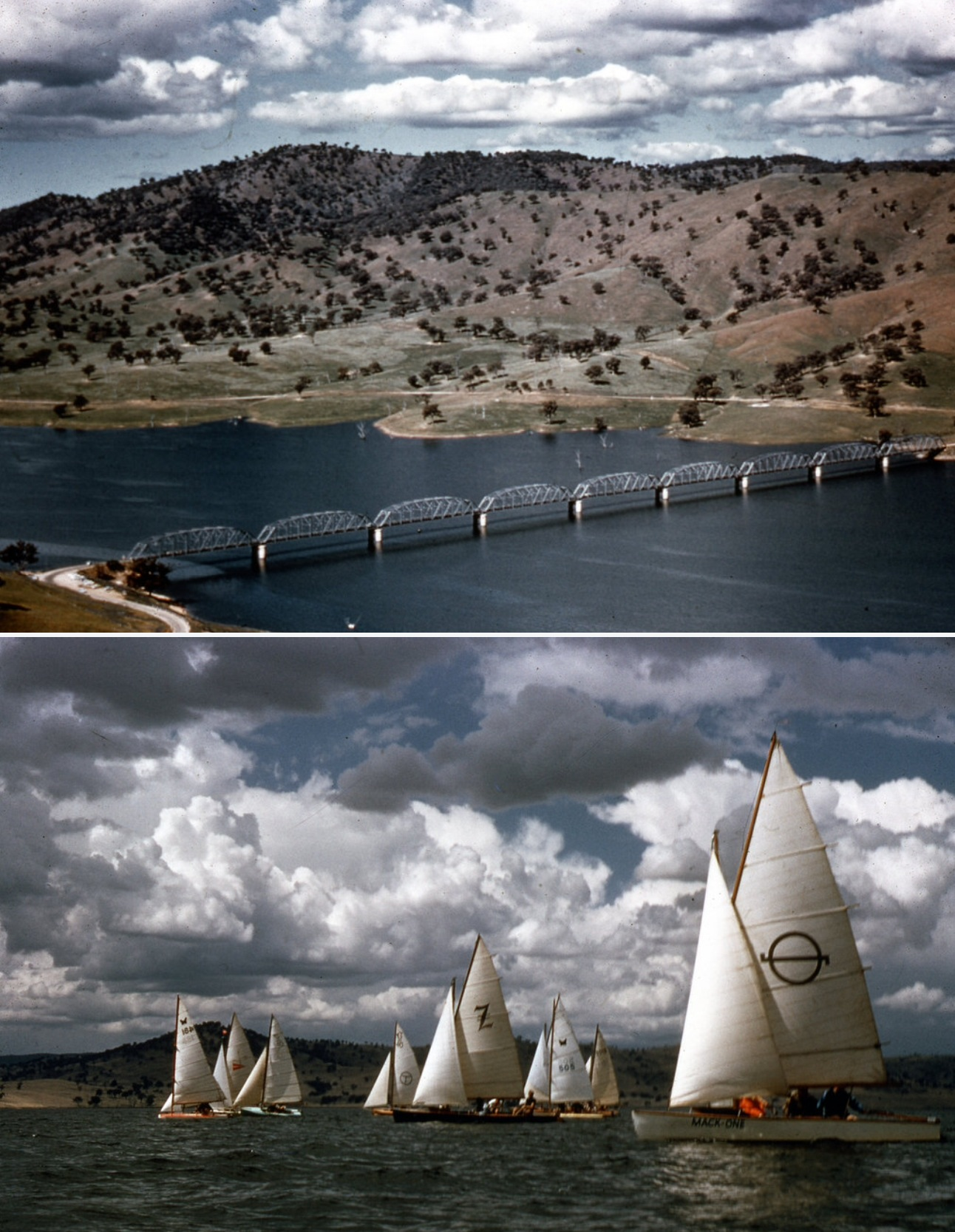
dam end
The 1960s saw a large increase in the weir’s pondage necessitating additional works on the
dam. One aspect was to open the old stone quarry and supply thousands of tons of granite to
stabilize the clay bank of the earthen wall.
dam sail
dam car
Wirlinga…

Hume Weir wasn’t the first circuit in the Albury area, Wirlinga was.

A public roads layout of 6.79K, roughly rectangular shape using Thurgoona, St Johns and Bowna Roads as well as the Riverina Highway was used. 14km  from the centre of Albury, the track was used several times before WW2. Rather than get lost in that tangent now, tempting though it is, we will come back to Wirlinga another time.
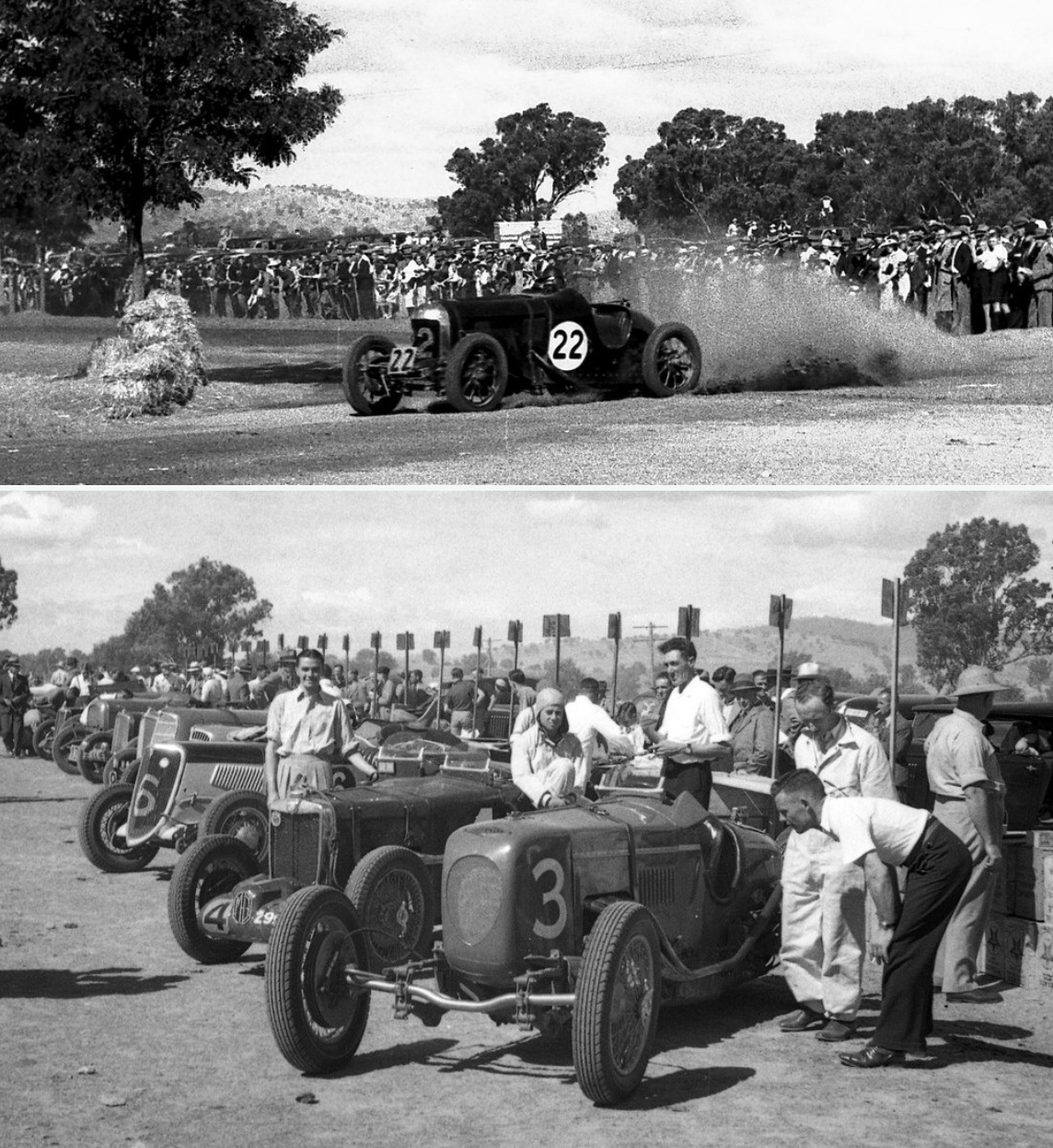
wir 1

Car #22 is Alf Barrett’s Morris Bullnose Spl. #3 Tim Joshua’s Frazer Nash TT Replica, #4 Hope Bartlett’s MG Q Type,  #6 Jack Phillips winning Ford V8 Spl, Wirlinga 1938 (Dallinger)

The 150 mile ‘Interstate Grand Prix’ (called the ‘Albury Grand Prix’ in the Sydney Morning Herald report of the 1939 race) was run on 19 March 1938. The ‘Albury and Interstate Gold Cup’ was run on 12 June 1939. Both handicap races were won by local Wangaratta boy, Jack Phillips Ford V8 Spl. The track wasn’t used post war.

wir 2

The lower pic shows Les Murphy in the O’Dea MG P Type from Colin Dunne’s similar car and George Bonser’s Terraplane Spl, help wanted in relation to the cars in the upper shot  Wirlinga 1938 (Dallinger)


hum wir

‘Sydney Morning Herald’ 13 June 1939


hum summer

Typically parched Australian summer, 1970’s. Hume Weir wall middle right and Great Dividing Range clear  (unattributed)

Hume Weir Circuit…

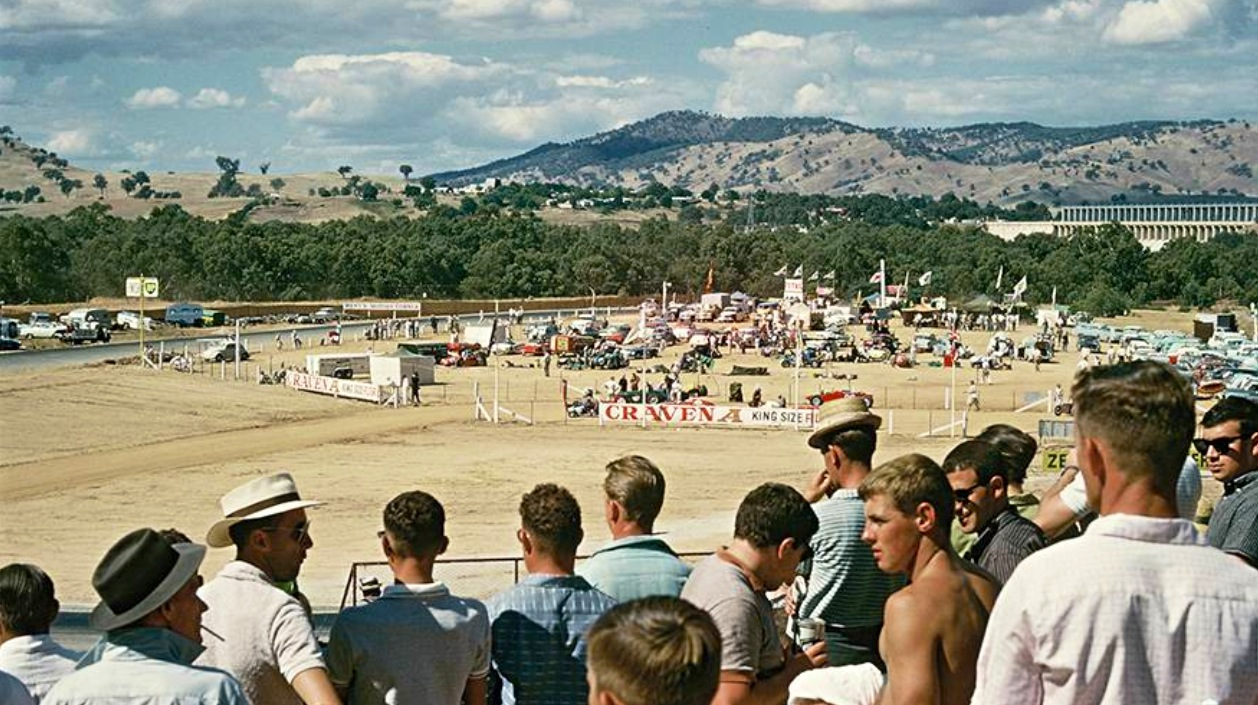
Hume Weir was enormously popular in the immediate area, in fact depending upon the year the locals were served by Tarrawingee, Winton outside Benalla and the ‘Weir.

When the circuit was leased from the Hume Dam authority by the Albury and District Car Club the members initially established an unsurfaced layout which was first raced on 2 November 1959. It was lengthened to 1.1 miles during the year, first used sealed for the Christmas meeting on December 12 1959.

hum dirt

Cars race at one of the earlier meetings on the original dirt layout, Hume Weir 1959 (unattributed)

The financial support of Gold Star champion Len Lukey’s and his ‘Lukey Mufflers’ business allowed the amenities to be improved sufficiently to hold the 1961 international event. The ‘weir only got the gig, historian Stephen Dalton records as negotiations with PIARC to use Phillip Island fell over.

The 1961 program comprised an ambitious 21 events held on the Sunday and Monday 12 and 13 March, they were mainly short races with the feature ‘Craven A International’s 20 lappers on each day.

The meeting was contested by Brabham, Salvadori, Bib Stillwell, Bill Patterson, Austin Miller and Jon Leighton. It wasn’t a big field; Moss had long since left the country, as had the BRM drivers Hill, Gurney and Ron Flockhart and his Cooper.

hum split

This shot shows the two sections of the track separated by a narrow strip of concrete, March 1961 meeting perhaps (unattributed)

Brabham.

The Internationals that summer were raced at Warwick Farm, Ballarat Airfield in Victoria and Longford and won by Moss Lotus 18 Climax, Gurney BRM P48 and Roy Salvadori’s Cooper T51 Climax respectively.

The Longford meeting was on March 5, Brabham and Salvadori travelled back to Melbourne from Tasmania, the Coopers were towed up the Hume Highway, the main Melbourne/Sydney artery to contest the ‘Craven A Internatioanals’ at Hume Weir on 12 and 13 March. No doubt it gave Jack an opportunity to catch up with his family in Sydney.

hum brabs servo

Brabham’s Cooper T53 Climax out front of its Albury digs, Gabriel Motors.  (Border Mail)

It was all fairly casual, Jack’s car was accompanied by his mechanic and a driver for the towcar, an FC Holden Station Wagon which was maintained at a local Esso servo/workshop.
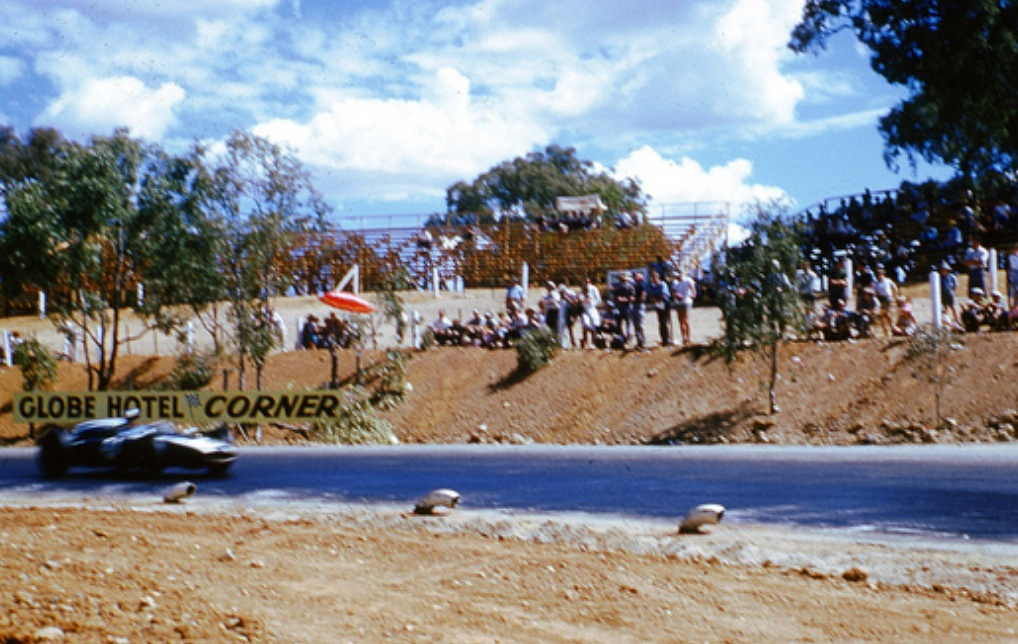
hum brabs color

Brabham’s Cooper T53 during his victorious March 1961 weekend (unattributed)

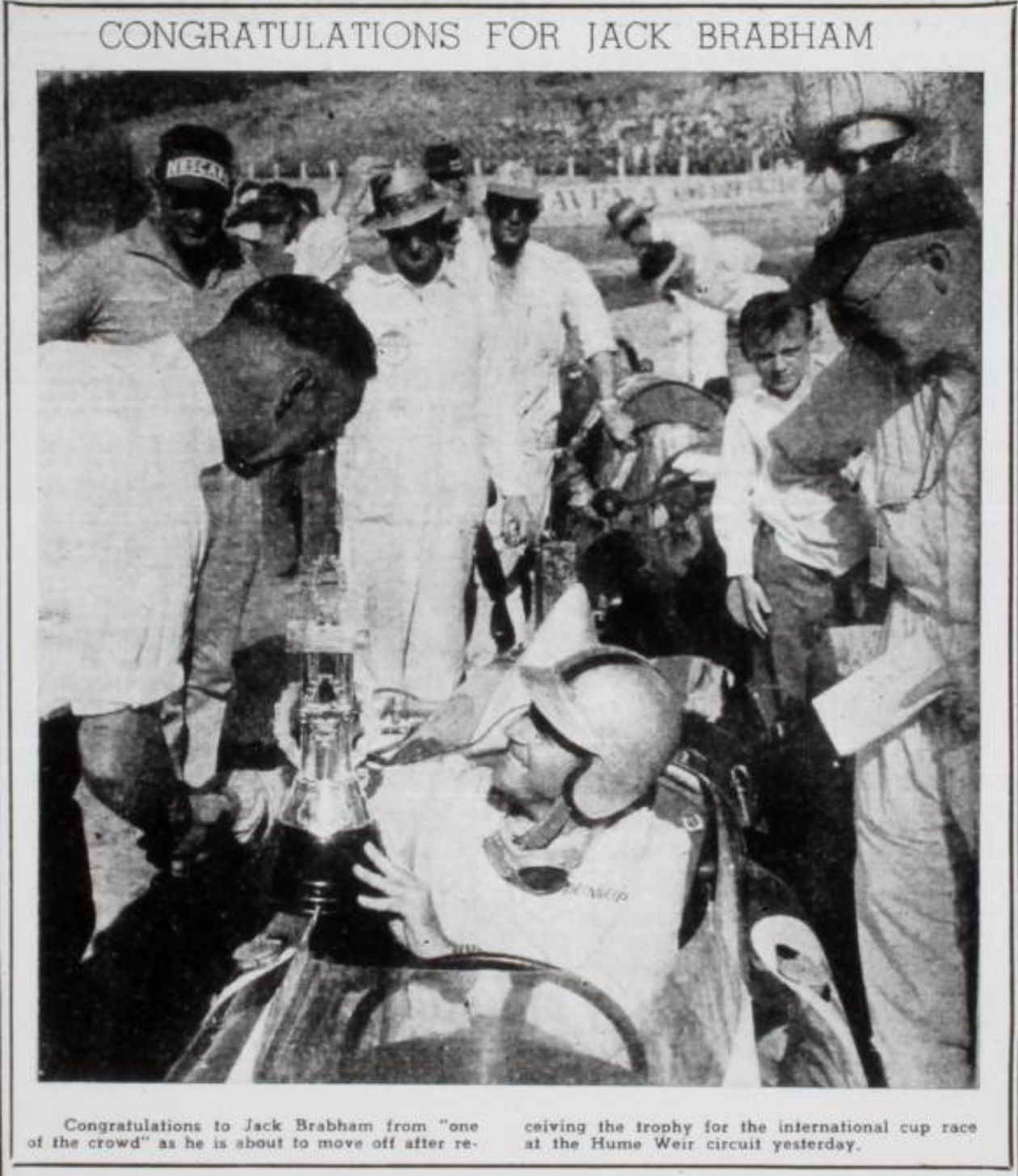
Jack won the race on the Sunday by just 0.9 sec from Patterson, the reigning Gold Star champion and Bib Stillwell’s Cooper T51’s in his T53.’The last 3 laps saw the leaders in the esses together and the crowd was wild with excitement as it was still anybody’s race but Jack Brabham showed championship form and held off the challenge to win’ said the Border Mails report.
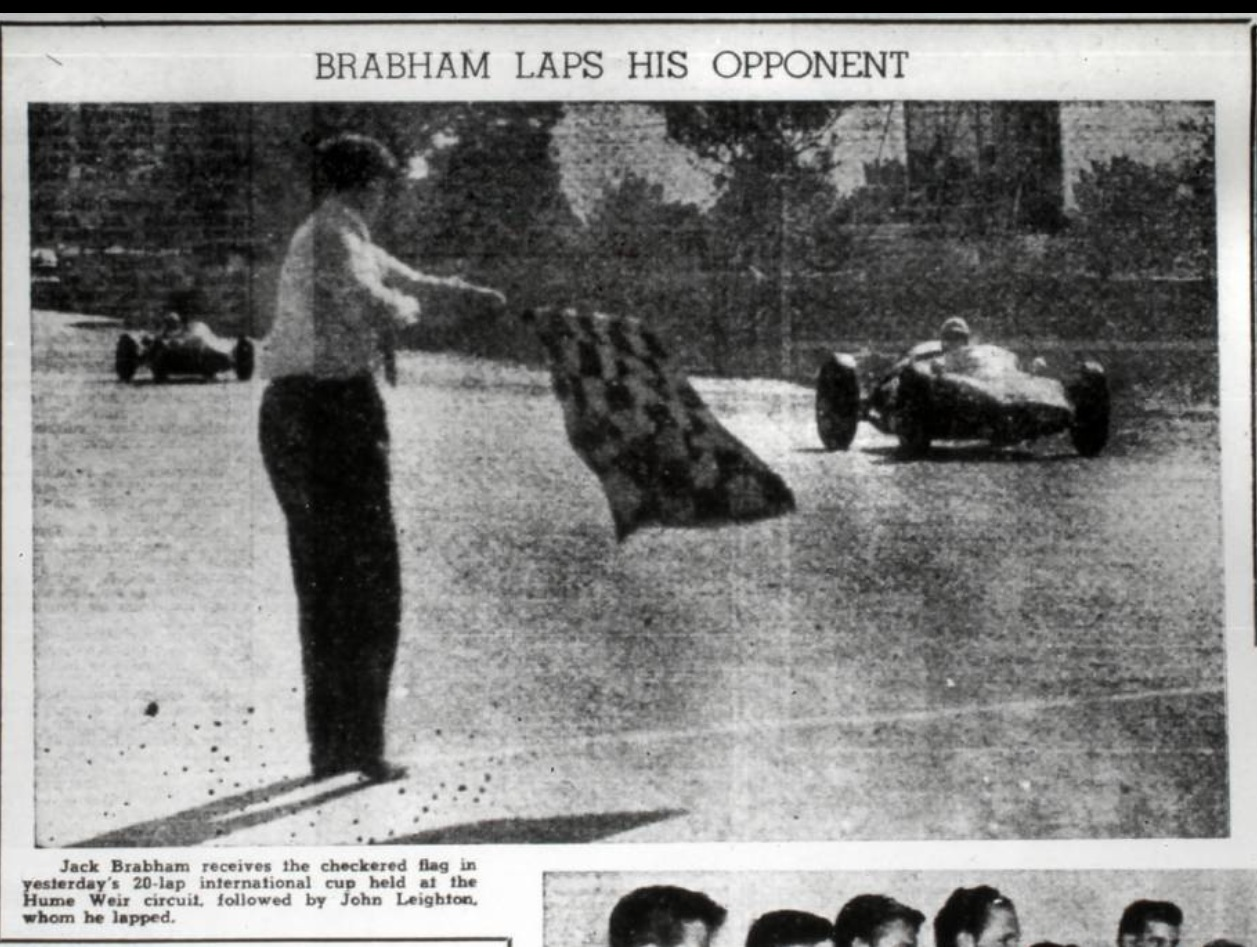
hum brabs cheq

(Border Mail)


hum miller

Austin Miller’s distinctive yellow Cooper T51 Climax perhaps chasing Jon Leighton’s Cooper T45 and Roy Salvadori’s T51 during the Sunday race in which they were 4/5/6th (unattributed)


Roy Salvadori sussing the size of the cheque- ‘Can you make it in pounds sterling matey?’ (C McQuellin)


Brabham, Cooper T53 Climax (unattributed)


Brabham from Salvadori- Cooper T53 from T51 (unattributed)


Salvadori, Cooper T51 (unattributed)

On Monday ‘Brabham streeted the field in the international cup race and set a lap record of 51.2 seconds, a time equated to 147kmh’. ‘Twas again a Cooper 1-3, JB winning from Stillwell and Jon Leighton in Cooper T51 and T45 respectively.

With that both internationals jumped on a plane for the UK, their first event the Lombank Trophy at Snetterton which Jack won in his Cooper T53, Roy was 5th in a similar car.

hum brabs

Brabham T53 just in front of Patterson T51 in Sunday’s race closing stages (unattributed)
 

hum brabs in car

(Border Mail)


hum jack

hum circ map

The short nature of the circuit perhaps mitigated against its use for championship events having said that it hosted a round of the Australian F2 Championship from 1973-76…

Later multiple Gold Star winner Alfredo Costanzo set the all-time lap record in a Birrana 274 Hart 1.6 F2 car on 15 June 1975, in 1976 the circuit also held a round of the Australian Sports Car Championship, fundamentally though it is a circuit which is fondly remembered by club racers of both bikes and cars and spectators of course.

The circuit was essentially ‘killed-off’ by CAMS with ever increasing and more difficult safety requirements which the owner/promoters couldn’t afford. There was a section where the cars passed each other separated by a concrete wall which was of particular concern.

The last race meeting was held on 27 March 1977 although the track was used as part of the Alpine Rally which was run out of Bright, not too far away. Every now and again a ‘comp sec’ of a car club convinced CAMS to issue a permit for a ‘sprint event’ but essentially another circuit was lost, a real shame as the usual causes; noise in a built up area or urban encroachment which simply made the entreaties of property developers irresistible to circuit owners didn’t apply in this rural area.

hum air

(Dallinger)

The photo above nicely juxtaposes the Dam with the circuit which is clear to see above the dam wall in the middle of the picture, plenty of water about in this shot! At present it is as dry as!

Molina Monza Holden Spl.

hum monza

You get a sense of just what a magnificent natural ampitheatre the circuit was, most of but not all of the circuit could be seen from one place. This is the Molina Monza Holden Spl, the shot isn’t dated so not sure who the driver is. The car’s specifications are outlined in this article amongst other Oz cars; https://primotipo.com/2015/05/13/shifting-gear-design-innovation-and-the-australian-car-exhibition-national-gallery-of-victoria-by-stephen-dalton-mark-bisset/

Perkins.
hum perk

(Dick Simpson)

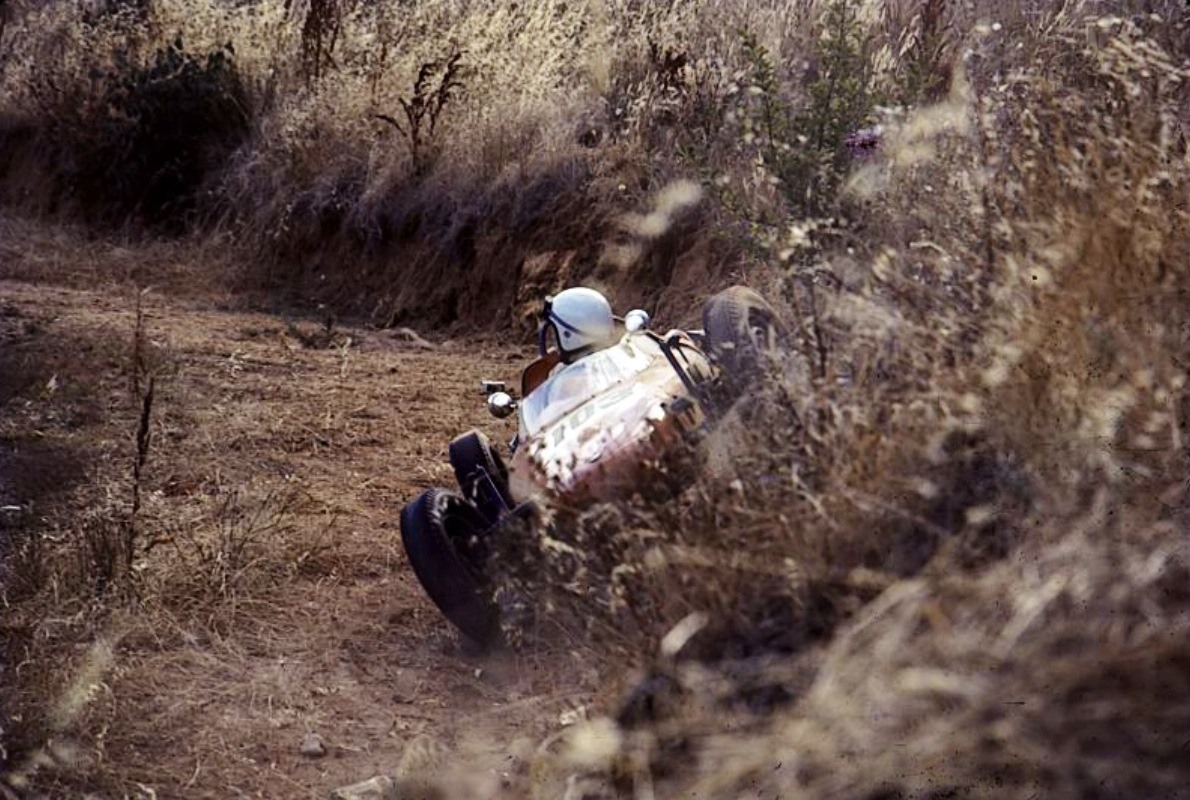
Larry Perkins in the ‘boonies’ at ‘Scrub Corner’ on 28 December 1969 early in his career, car is characteristically a Perkins Vee. He is looking for a marshall to help him back to terra firma.

He was in F1 in a private Ensign nee Boro in 1975. This is early days tho, his early break was to get one of Bib Stillwell’s Elfin 600FF seats in 1971 taking the ‘Driver to Europe’ series. He stayed in Oz for ’72 and raced an Elfin 600B/E Ford to win the national F2 title. He then took Garrie Cooper’s first Elfin 620FF to the Formula Ford Festival at Snetterton at the end of the year, contesting the Festival with a few other Aussies and then stayed in the UK. F3 in 1973 and the rest is history…

Brock.

hum brock

Peter Brock ahead of Lynn Brown’s Cooper S, these are ‘Sports Sedans’, anything goes sedans with Brock and Brown two of the sports finest pracitioners of the art. Brocky is young and made his Holden ‘Red’ 6 cylinder engined A30 sing, his performances in it resulted in Harry Firth, fine judge of talent picking him up as a Holden Dealer Team driver. Brock took his first Bathurst win in 1972.
hum brock bir

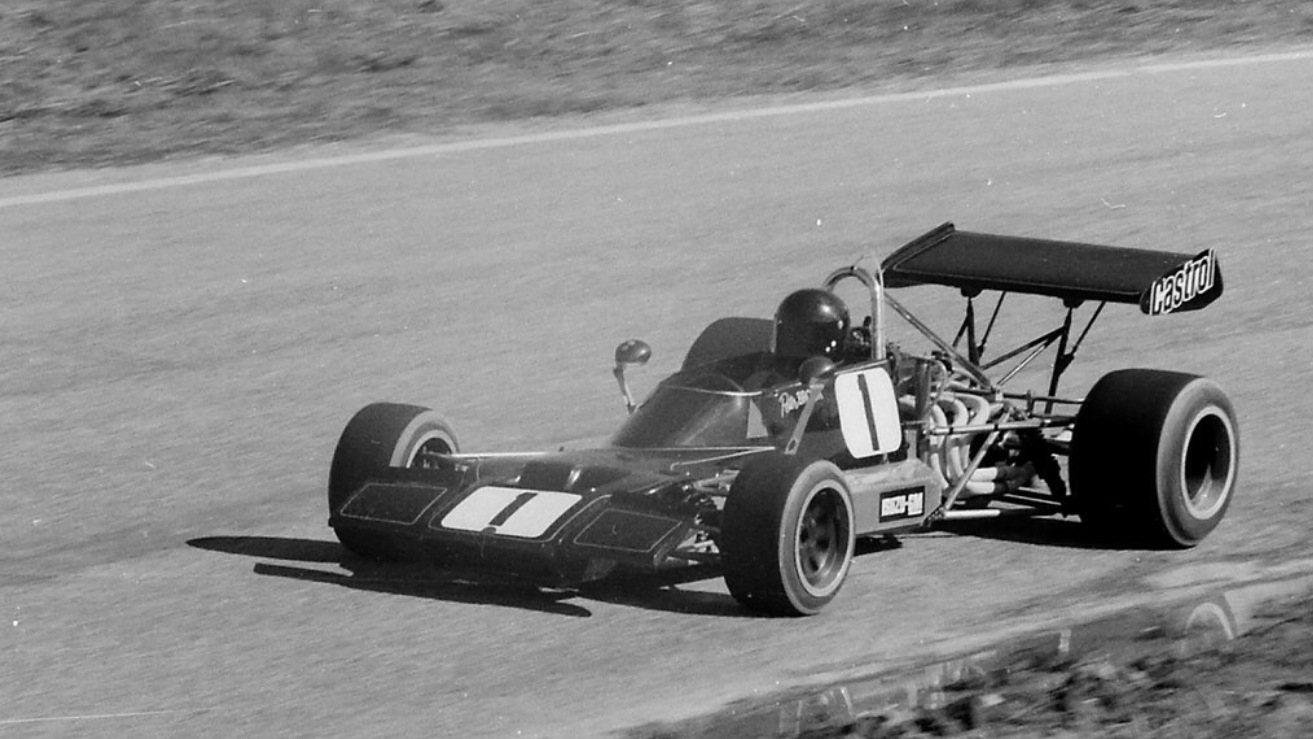
Brock, Birrana 273 Ford, Hume Weir 22 April 1973 (Robert Davies)

‘Peter Perfect’ only did one fullish season in single-seaters in this ex-works Birrana 272 Ford, its the very first of Tony Alcock’s monocoque cars. A good car but it didn’t have a Hart Ford engine, and the competition was hot in 1973-5 in F2, Brocky quickly went back to Holdens. A great pity, a natural driver of great smoothness, finesse and throttle control; oh to have seen Brock in a Repco Holden engined F5000 in the 1970’s!

Hansford.

hum hans

(P Hall)

Greg Hansford blasts onto the main straight 1977. Kawasaki KR750 water-cooled 2 stroke.

Beechey.

hun beech

(Bowdens)

Beechey changed from Holden to Ford running this ex-works Series Production Ford Falcon GTHO Ph3 with some cash from Ford in 1972. Here he is in April, DNF with clutch failure. Ford apparently then changed their minds wanting Norm to return the car and money they paid him, Norm telling them unsurprisingly to ‘jam it’.

Bartlett.
hum bart

(Bruce Wells)

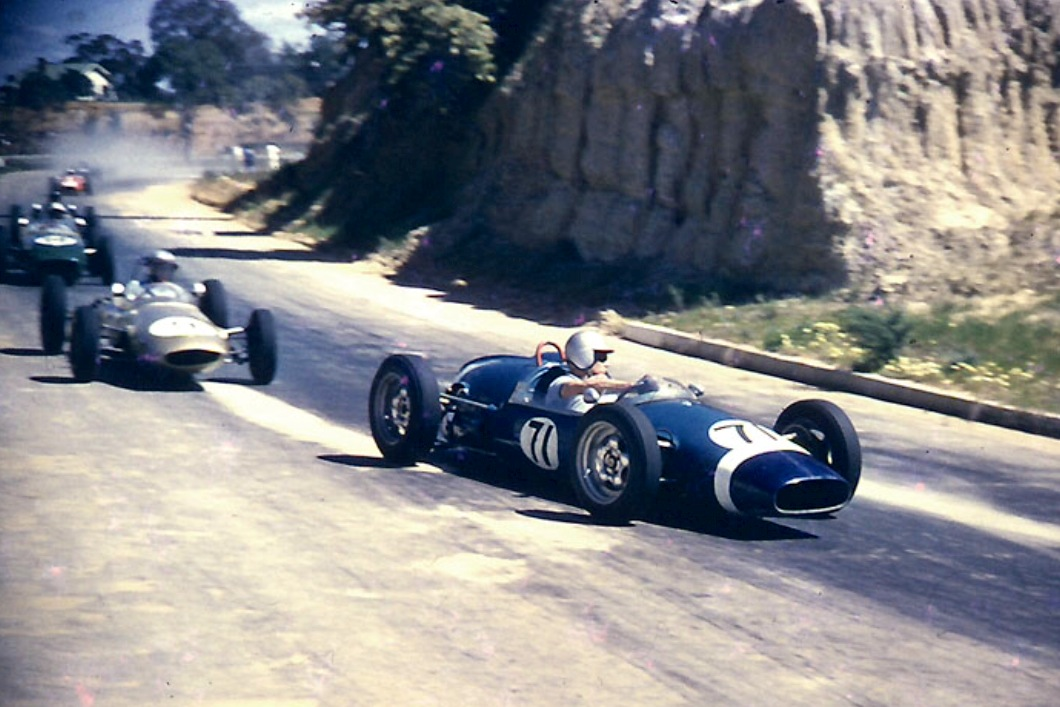
Kevin Bartlett in polo-shirt at the wheel of the works Lynx BMC, the Curl-Curl  kid was on his way! Lotus 20 behind i think. Year anyone?

Bikes.
hun bikes

(John Small)

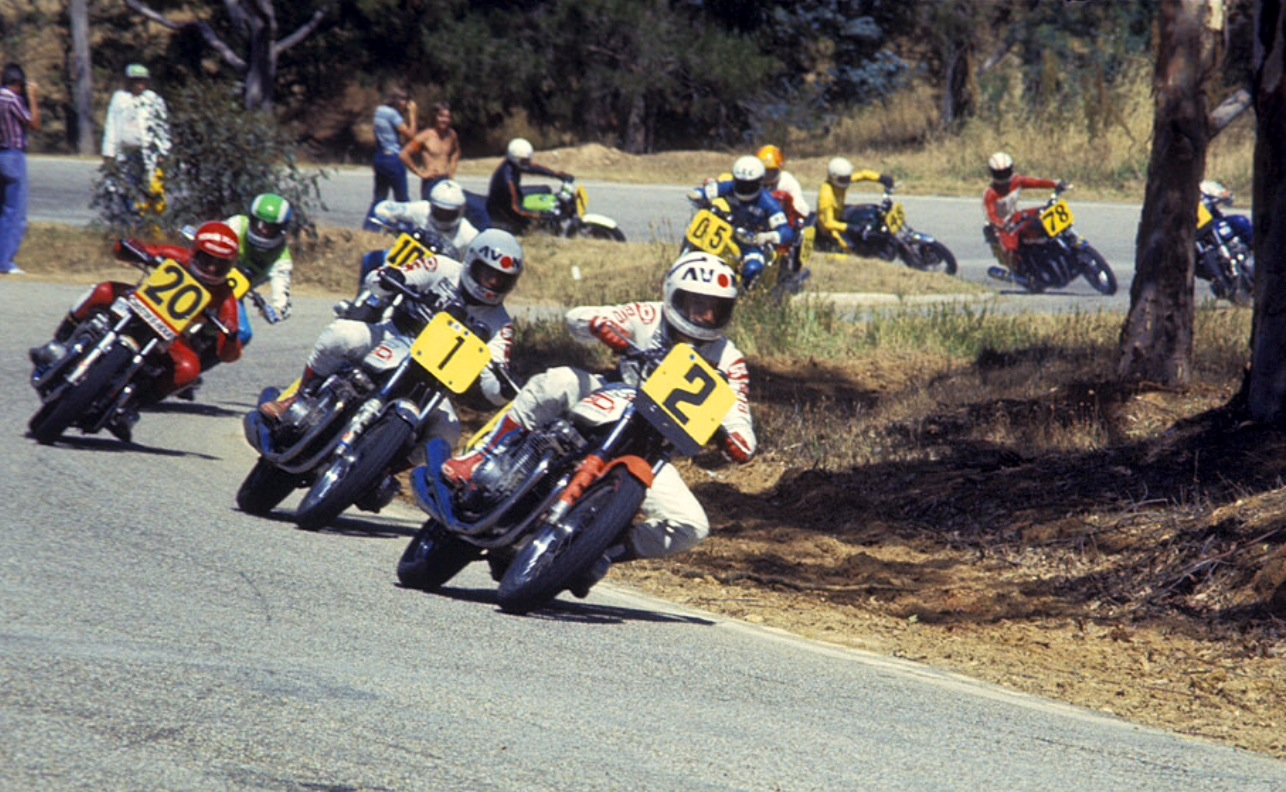
Jim Budd and Roger Hayes Team Avon Kawasaki’s lead the 1 hour production race at the ‘weir in November 1977. Third is Jeff Parkin and then Alan Hales both on Suzuki’s. Hot work in the heat.

Jane.

jane mustand

(oldracephotos.com)

Bob giving his factory Shelby built Mustang Trans-Am plenty during the 1970 Christmas ‘Weir meeting. His new Chevy Camaro 427 cannot be too far away, Norm Beechey took the 1970 ATCC in his Holden Monaro GTS350 but Jano won it in 1971/2 in the same car with a 427 in ’71 and ‘tiddly’ 350 small block in 1972.
jane torana

(Dick Simpson)

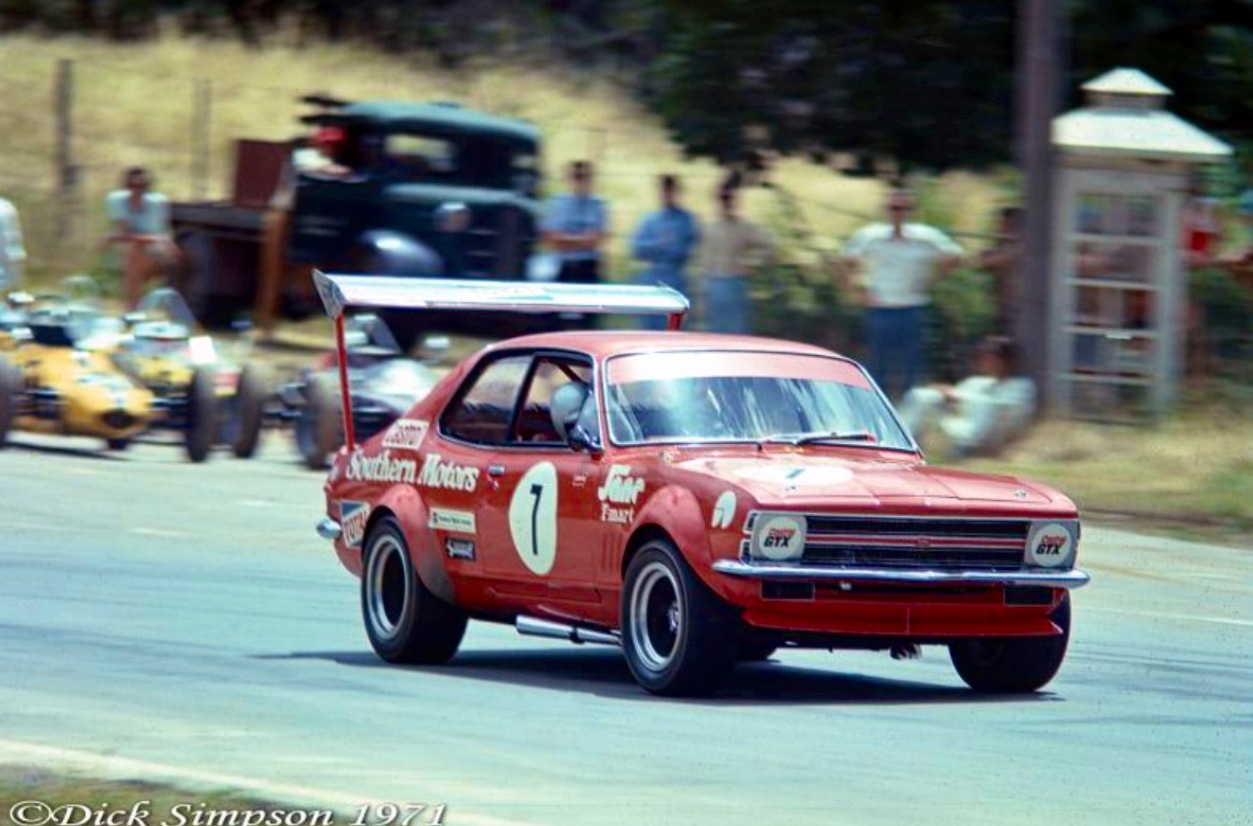
Bob was back with another new toy in 1971, one of his finest, the John Sheppard built Holden Torana into which was slotted one of the 4.4 litre SOHC ‘620 Series’ Repco V8’s once fitted to the Elfin 400 pictured below. CAMS didn’t allow it to compete with the wing for long, check out the Vees in the Weir ‘form up’ or dummy grid area in the background. This car was mainly raced by John Harvey, in ’71 Bob focused on the Camaro and winning the ATCC. The car is still around albeit Chev engined and in need of restoration.

jane elf

(oldracephotos.com)

Bob Jane didn’t race his Elfin 400 too much, it was mainly driven by his drivers; Spencer Martin, Ian Cook and Bevan Gibson.

Here in early 1968 at Hume Weir Jane is ahead of a Lotus 11, Meyers Manx beach buggy! and, is it an Elva Courier. These big Elfins are sensational cars, i wrote a long article about them a while back, click here to read it;

Elfin 400/Traco Olds: Frank Matich, Niel Allen and Garrie Cooper…

400 rear

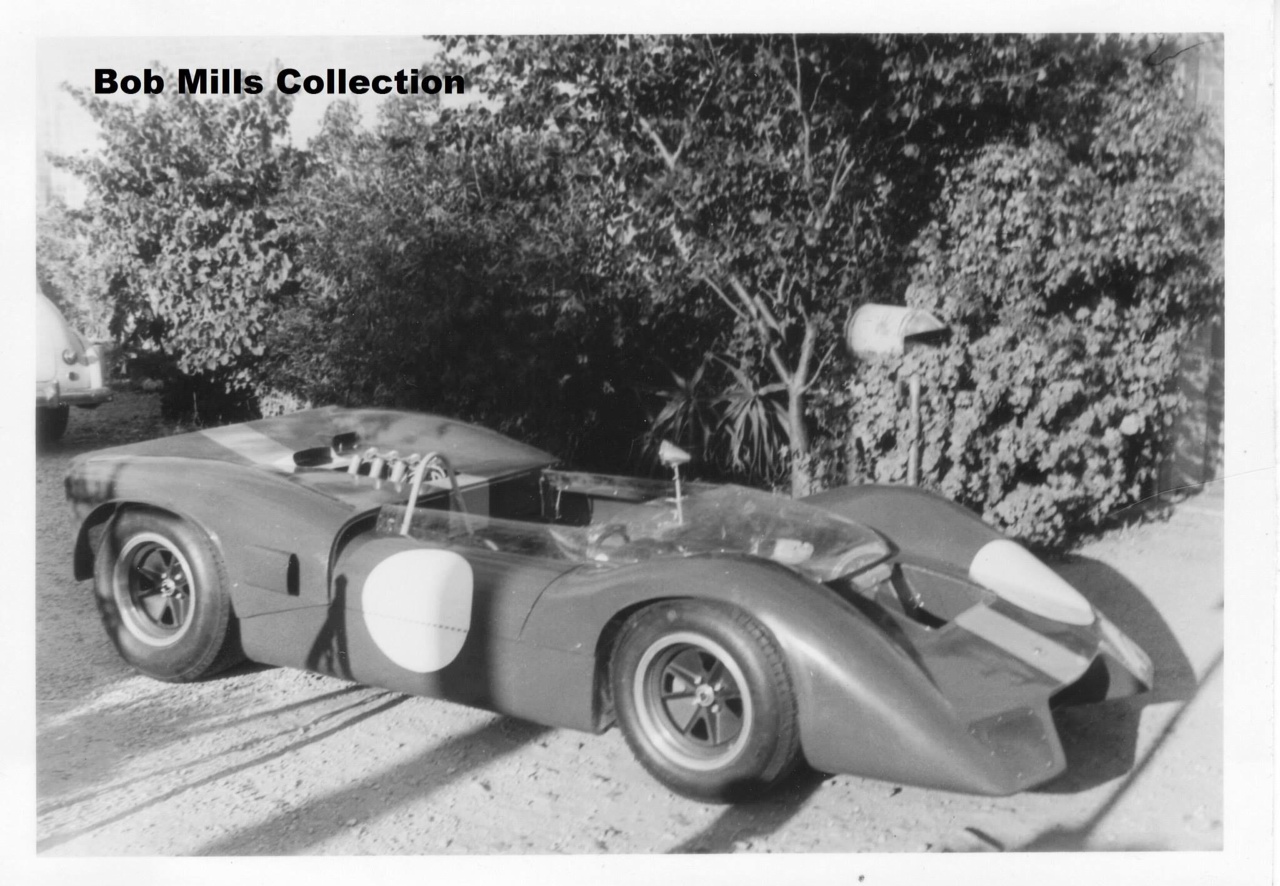
It’s interesting to see racing cars in the context of their day to gauge the impact they had on people, how ‘other worldly’ and fast they looked. Seeing them at historic race meetings is not the way the populace saw them at the time.

This shot does that in spades and the fair citizens of Conmurra Avenue, Edwardstown, an Adelaide suburb had seen plenty of cars leave the Elfin factory in their street. This one clearly captured their attention all the same.

That WOW! factor we all still experience at the sight of something really special, mind you, these days it’s usually the ‘WOW! Ugly as a Hatful of Arseholes’ impact rather than ‘WOW! Beautiful’. Such is the impact of cad-cam and the aerodynamicists ‘art’ on free flowing curvaceous forms.

The Mini 850 and Holden ‘EH’ on the typically Aussie outer suburban street nicely juxtapose the body of Elfins first ‘big-banger’ sports car with contemporary ‘roadies’ of the day.

WOW! indeed.
400 side

Elfin built four Elfin 400’s, all with different engines, the first completed was the Frank Matich Elfin 400/ Traco Olds featured in the article link above.

This car is about to be delivered to Bob Jane Racing in Melbourne in early 1967 in time for the sports car events which were a part of each years Tasman rounds.

It’s the first 4.4litre Repco ‘620 Series’ V8 fitted to a car, the engine developed in parallel with the 1966 Championship winning 3 litre variant of the same engine, victorious in Jack Brabhams hands that year.

In fact it is the first customer Repco engine sold, the first fitted to a sports car and the first fitted to a car built in Australia, Brabhams were built in the UK. So, significant in Repco’s’ history.

400 front

The SOHC 2 valve, Olds block, Lucas injected engine produced around 400bhp@8000rpm, enough in Australia, but not elsewhere in the world at the time, where big Chevs were dominant. In 1965/66 the Lola T70 was the ‘ducks guts’ in Group 7 sports car racing but the McLaren M6A appeared in 1967, from that moment the record books were attacked by the McLaren steamroller until the end of 1971 when Porsche ‘rained on their parade’ with the 917/10 and 917/30 turbo’ cars.

As stated above this car was raced by Jane himself, Ian Cook and Bevan Gibson. Unfortunately it was the car in which Bevan flipped on Conrod Straight, Bathurst at the Easter 1969 meeting, killing the promising young driver instantly.

Frank Matich was dominant in his range of sports cars in Australia into 1967, pickings at championship level were slim when FM was present. Matich’s Elfin 400 Traco Olds delivered its promise and his own SR3’s were almost identical in terms of chassis to the Elfin 400 if not the body.

The ex-Jane 400 is now restored and owned by Elfins’ Bill Hemming.
bevan

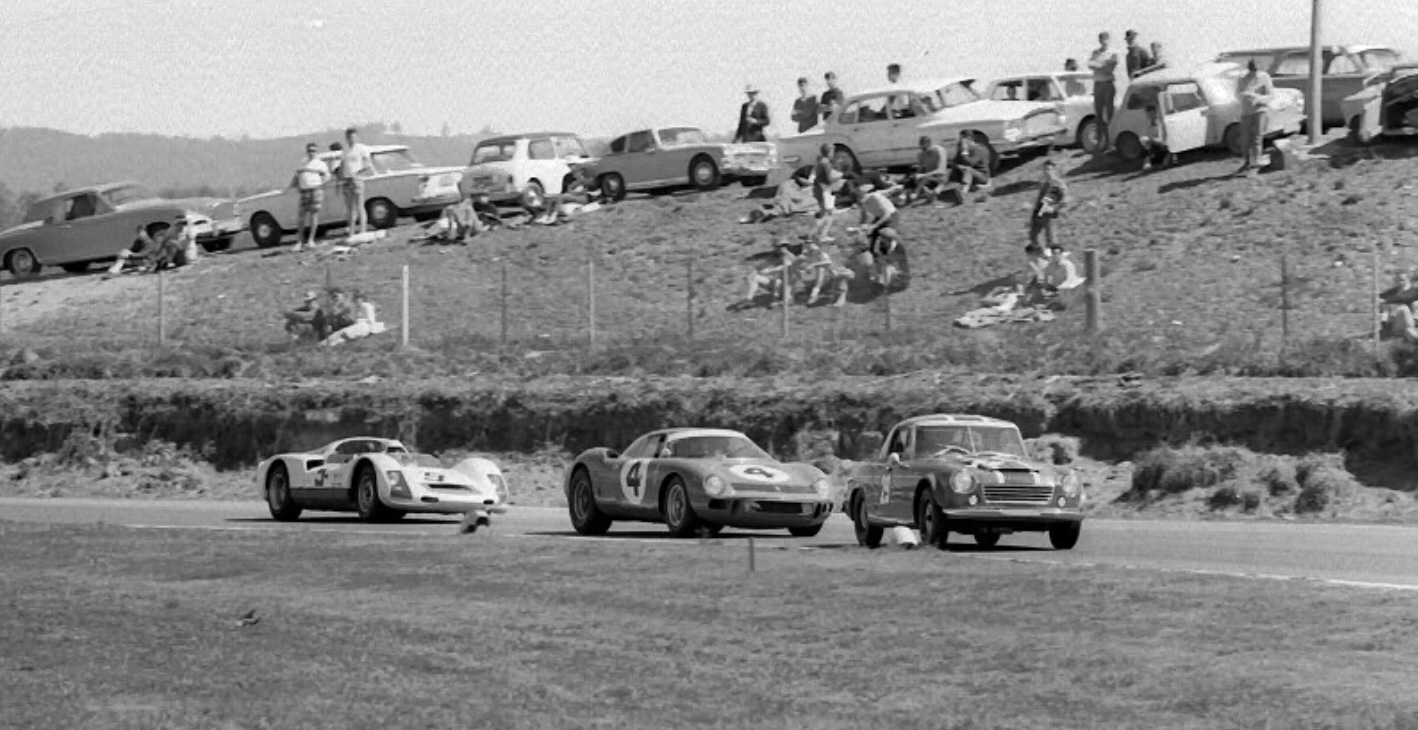
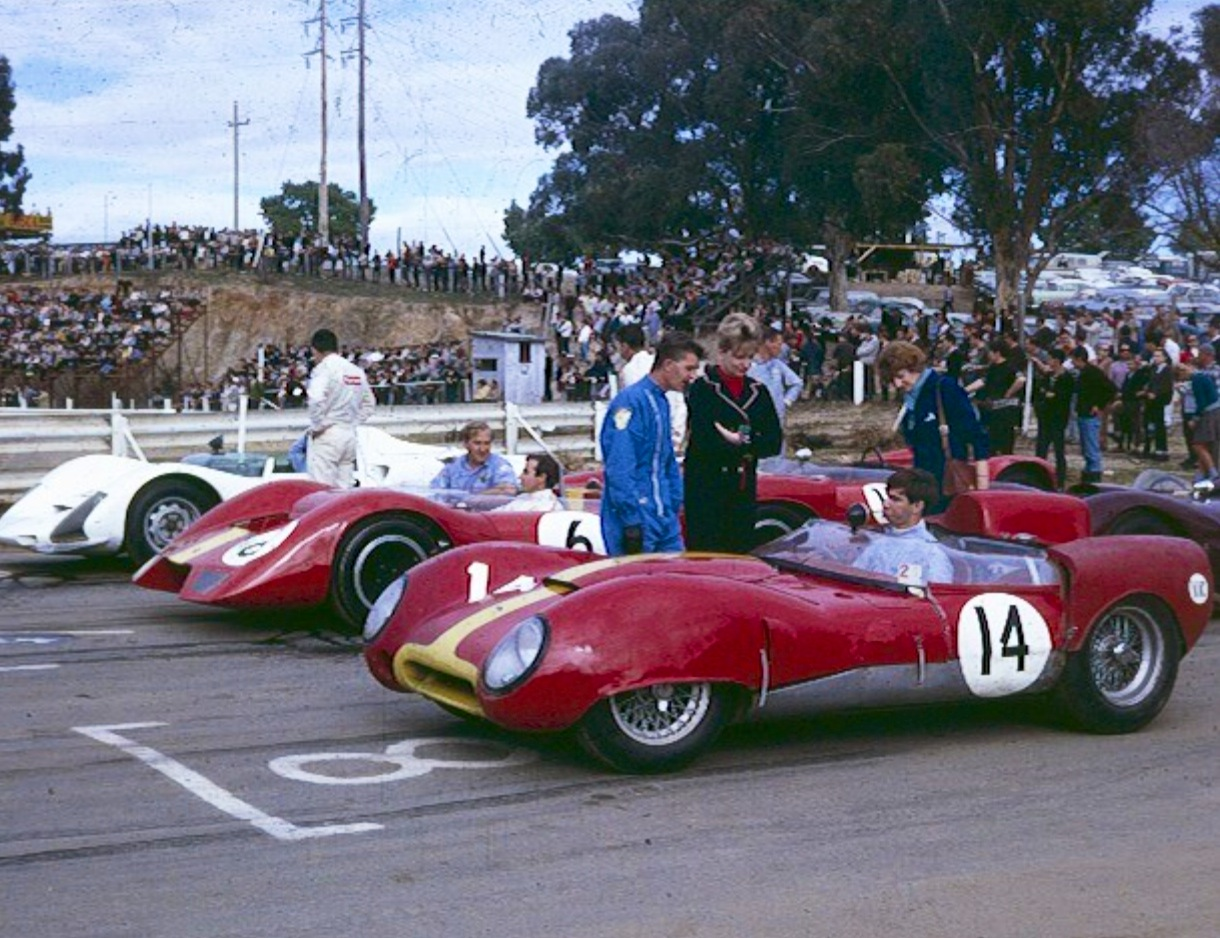
Hamilton Porsche 906 Spyder, Spencer Martin Elfin 400 Repco and Bevan Gibson Lotus 15 Climax, Hume Weir, Queens Birthday weekend 1967. Somewhat poignant shot given Bevan is to die in the car beside him 2 years later. Gibson made the families Lotus 15 Climax absolutely sing, it was his drives in this old car which earned him the Bob Jane drive (Bryan Liersch)

Bibliography…

Joe Wooding ‘Albury & District Historical Society’ paper on construction of Hume Weir

‘Elfin Sports and Racing Cars’ John Blanden and Barry Catford, Elfin Sports Cars Facebook page
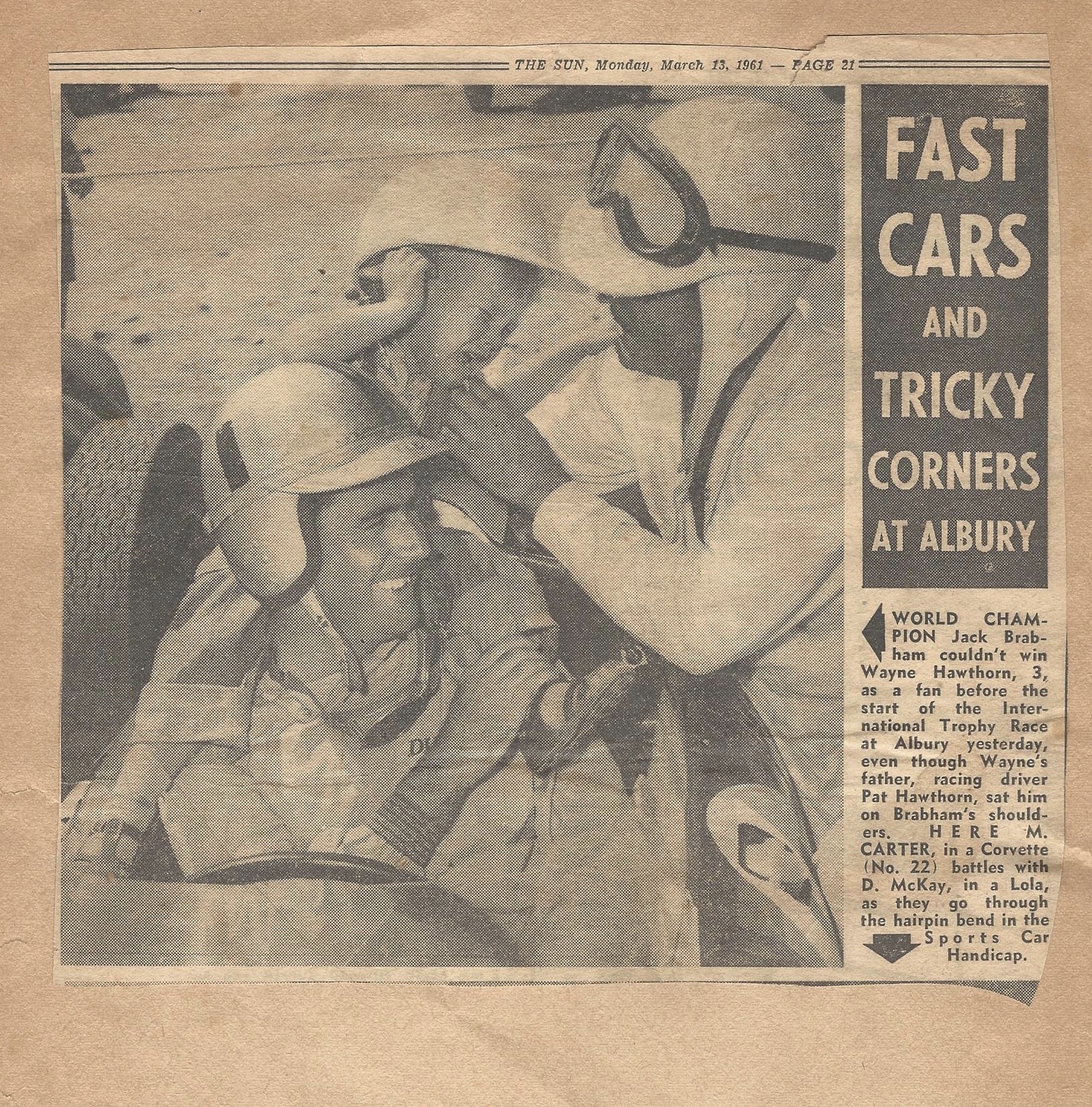
(P Hawthorn)

Photo Credits…

Bryan Liersch, Bob Mills Collection, Dick Simpson, John Small, oldracephotos.com, Bowdens, Bruce Wells Collection, Robert Davies, Bowdens, Christopher McQuellin, Phil Hall, Terry Kelly Collection, Pat Hawthorn Collection

John J Dallinger’s stunning collection of Albury photographs

Tailpieces: Family, fun day out at the Weir…
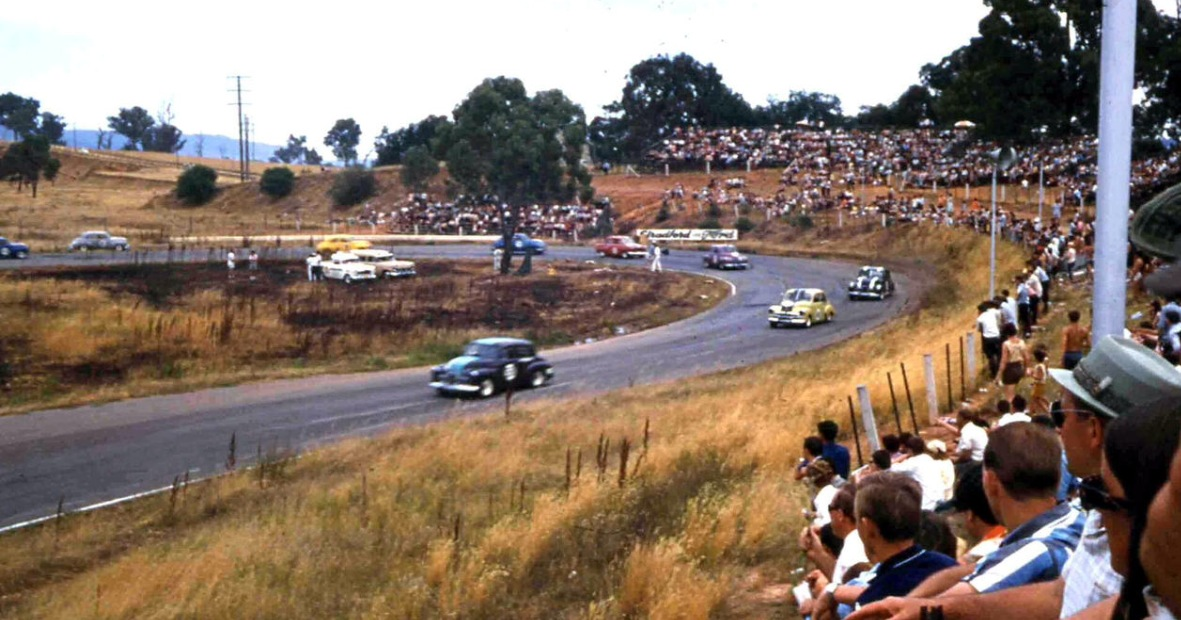
hum humpy

(unattributed)


Terry Kelly, Ryleford, Hume Weir circa 1960 (T Kelly)


hun humpy 2

Hume Weir humpy Holden mayhem (Dick Simpson)

Finito…
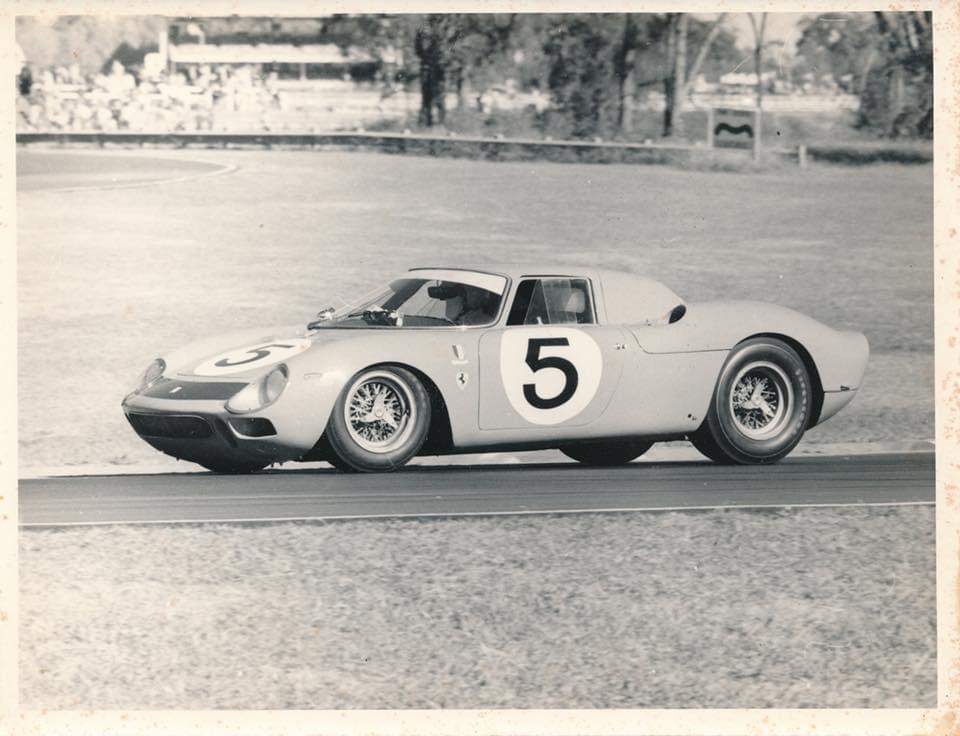
martin 250 lm wf 1965
(John Ellacott)

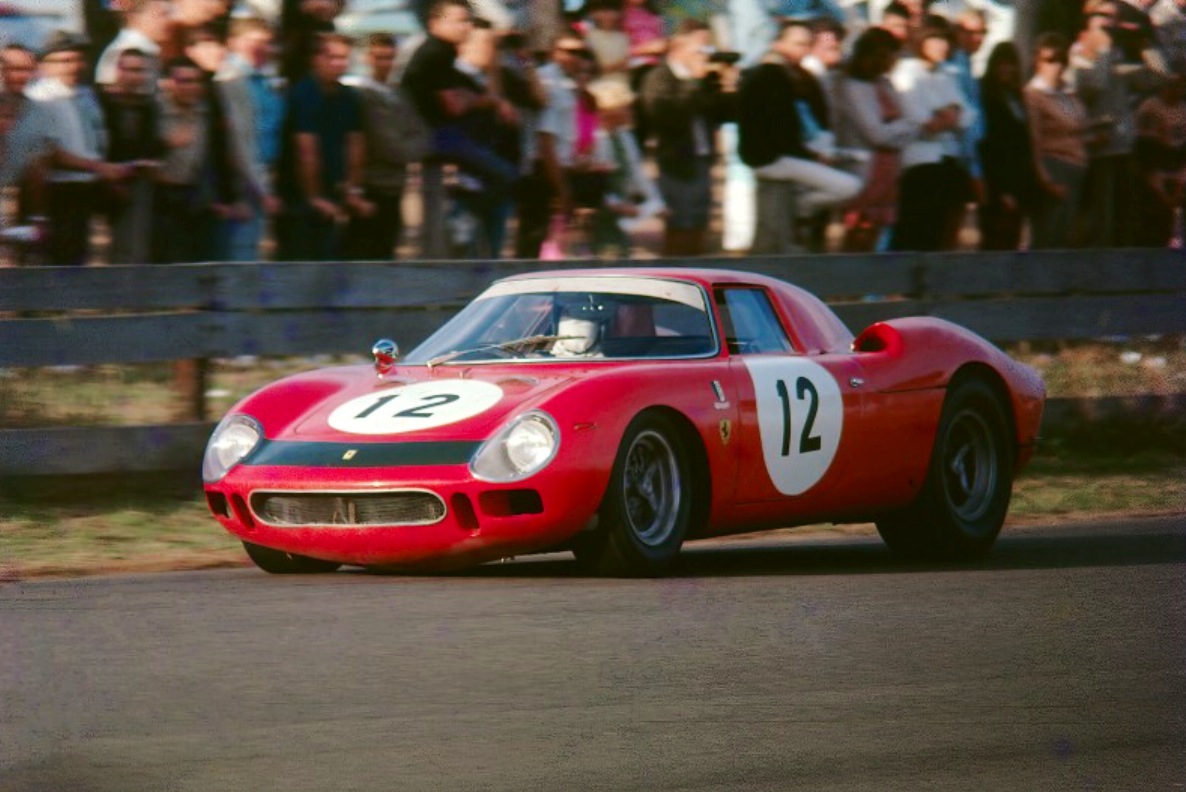
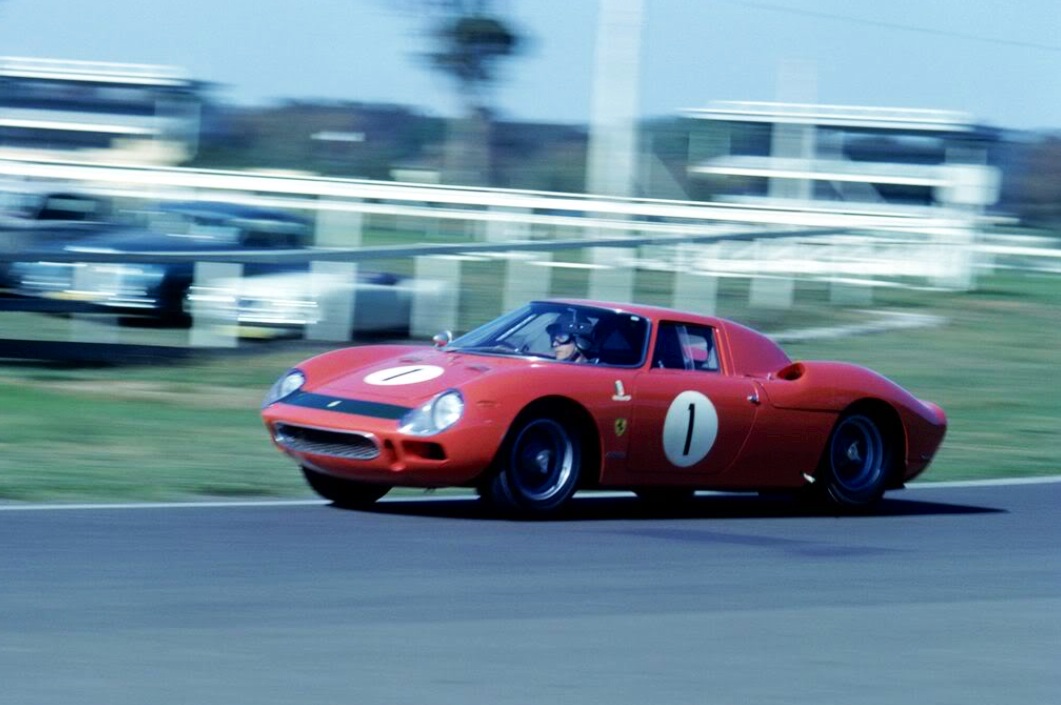
Spencer Martin tips his Ferrari 250LM into the fast Homestead Corner at Warwick Farm before unleashing the cars 3.3-litre V12 on the long Hume Straight, what a sound it must have made! August 1965…

Spencer Martin was one of Australia’s champion drivers of the 1960’s winning the Gold Star, the Australian Drivers Championship in 1966 and 1967 in a Brabham BT11A Climax.

His career could be summarised thus; he saw, he came, he conquered from 1960-1966, retired to marry and have a family, focus on business and then returned many years later…

martin portrait
Spencer Martin in his racing heyday, Lakeside 1965. (Bruce Wells)

I don’t cover Spencer’s career in detail but rather introduce an interesting article i discovered in a rally guide for an event held in memory of David McKay. Martin outlines his experiences as a driver/mechanic with McKay and Scuderia Veloce, if not the first, then certainly one of the first of Australia’s professional racing teams formed in 1959…

A brief background of McKay and SV is contained in these articles i posted a while back. One is predominantly about McKay’s Ferrari 250LM, one of the most evocative cars ever raced in Australia, https://primotipo.com/2014/07/03/pete-geoghegan-ferrari-250lm-6321-bathurst-easter-68/ , the other about his Ferrari P4/Can Am 350, an equally stunning car https://primotipo.com/2015/04/02/ferrari-p4canam-350-0858/  .

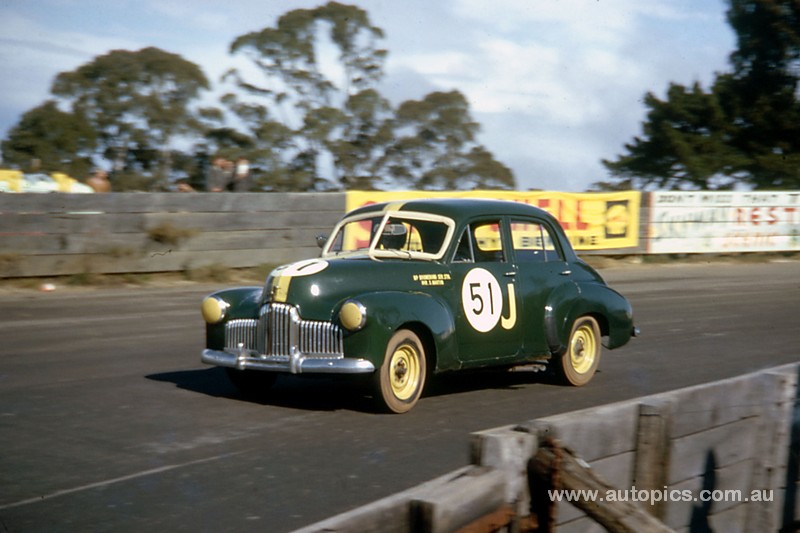
Martin commenced racing at Gnoo Blas, Orange NSW in 1960 in a Nota, he built from a kit himself, then progressed through the Prad Holden, a very successful sportscar and into ‘Appendix J’ sedans. He beat some of the heroes of the day in his ’48-215′ or FX Holden and was  approached by McKay to join SV. Martin picks up the story…

martin 48 215
Spencer in the ‘Boomerang Service Station’ Holden FX, Catalina Park, Katoomba 1963. It was consistent ‘giant killing’ performances against Norm Beechey and the like which attracted McKay to Martin. (Autopics.com.au Collection)

‘Work on the racing cars was carried out in a garage at the rear of his (McKay) house in Wahroonga on Sydney’s upper North Shore. We later moved to new premises beneath the Shell Service Station on the Pacific Highway at Wahroonga.

At this time I was driving the ‘Boomerang Service Station Holden’ for Joel Wakely and was keeping Norm Beechey very busy around Catalina Park, Warwick Farm and Sandown Park. In 1963 David brought Brian Muir back from the UK to drive in the Hardie Ferodo at Bathurst and I was to be Brian’s co-driver. Brian had been driving a Ford Galaxie in the UK and had won the British Touring Car Championship

David was, thankfully very impressed by my driving with Brian and told me he was about to retire and would I like to take over driving his Brabham. (Ex Jack Brabham BT4 Climax) Well you may imagine how I felt getting out of an EH Holden into an F1 Repco Brabham! We took the car to the short circuit at Warwick Farm for a few familiarisation laps where I was shocked by how much power the car had, especially how the far the nose lifted when you put the ‘pedal to the metal’.

It was not long before David entered the car at Bathurst. It was now 2.7 litres and running on methanol. He told me to keep it under 4500rpm down the straight for a few laps and be careful over the hump. I ‘pulled the string’ on the third lap and was doing 172mph over the hump. The car became completely airborne with a very much nose up attitude. I was wearing a Les Leston helmet with a small peaked visor to help keep the sun out of your eyes. Well the wind at this speed would catch under the visor which gave the effect of lifting you out of the car. It didn’t take long for me to remove the peak!’

martin longford tasman
Its 1967 as the painted date on the Longford Viaduct says. Martin eases his Bob Jane Racing Brabham BT11A Climax ‘IC-4-64’ into the right hander to exit the turn, ’67 Tasman ‘South Pacific Trophy’ 5 March 1967. He only lasted a lap of the race, his Climax FPF suffering ring failure. Jack Brabham won the race in his Brabham BT23A Repco. Clark took the series win in his Lotus 33 Climax FWMV 2 litre V8. Love the local ‘topography’, sturdy stone viaduct!, hay bales, painted, slippery white ‘no passing’ lines on the public roads. (oldracephotos.com/David Keep)
martin wf brabham 1967
Spencer Martin exercising all of his Coventry Climax’ lusty 235 horses through Leger Corner, Warwick Farm, December 1966. ‘Hordern Trophy’ Gold Star round won by Frank Gardners’ Brabham BT16 Climax from Kevin Bartletts’ Brabham BT11A and Martins’ similar car in 3rd. (Autopics.com.au Collection)

‘The biggest difference in driving the cars of David’s and my time was the safety aspect.

No seat belts, no fuel cells, no on-board fire extinguishers, no roll cages, no fireproof clothing. I was driving the Tasman Series in New Zealand and was wearing a polo-shirt made of nylon. When Jim Clark saw me in this he explained how dangerous nylon was in the event of a fire. Jim gave me a pair of his Dunlop Racing overalls. Boy, did I think I was smart wearing these and they were fireproof so I could go faster! Actually they gave you about 5 extra seconds in the event of a fire. They were made of cotton and soaked in a fire retardant. Rather different from today’s suits.

Another extremely dangerous factor was the aluminium fuel tanks which were placed either side of the drivers seat. We needed to have over 18 gallons of Avgas for a long race, so we packed dry ice around the tank prior to the race on hot days.’

001MartinAllenGibsonwm
Spencer Martins’ Ferrari 250LM ‘6321’  leads the ‘Country Club GT Race’ at Warwick Farm September 19 1965. The chasing Lotus Elan 26R’s are Niel Allen and Fred Gibson. (Heinz Federbusch)
Graham Hill and a quizzical Spencer with the SV Brabham BT4 Climax Hill raced during the 1964 Tasman- here in the Warwick Farm pitlane (unattributed)

‘Graham Hill was driving our new Brabham (BT11A Climax) at Warwick Farm in 1965. When we fuelled the car, an hour before the race, one tank was leaking through a crack in its top edge. I went into panic mode, Graham, however, asked me to go to the toilet and bring him back a bar of soap. He made this into a putty mixture and plastered it into the crack. As he explained, the leak was on the top of the tank, so after a few laps the fuel would be below the problem area. I used this fix a few times over the years. Can you imagine this sort of thing happening to an F1 Ferrari or McLaren?!

One of the biggest events to materialise at SV was when David talked Archie White, the Shell Racing Manager, into buying the 250LM Ferrari. I was not allowed to go to the wharf to bring it home as I had work to do on the Brabham. However I’ll never forget seeing it for the first time and David saying it was mine to drive!’

‘David was the best motoring journalist at this time. Not only was he able to write about cars, he could also drive them.

David was at the front of the grid for the 1963 Australian Grand Prix at Warwick Farm alongside Surtees and McLaren. He was the first Aussie home and all this on a 40 degrees Celsius day when many of the younger drivers stopped due to heat exhaustion. The temperature inside his car was measured at over 50 degrees.

agp 1963 front row
Front row of the AGP grid, Warwick Farm February 1963. Surtees on pole, Lola Mk4a Climax, McLaren Cooper T62 Climax and McKay Brabham BT4 Climax. Jack won in his BT4 Climax from Surtees, McLaren and McKay.(Autopics.com.au Collection)

David, in his motoring column, was very critical of the cars which Ford, GMH and Chrysler were building at that time. Sir Frank Packer allowed David to continue his reports in the Sydney Telegraph because his column was selling newspapers. When News Ltd took over the Tele, they would not allow him such a full hand as they explained they needed the advertisers money from the motoring industry so David left.’

martin bathurst 20lm 65
Spencer Martin in one of his early drives of the SV Ferrari 250LM at Murrays Corner, Bathurst, Easter 1965. (Autopics.com.au Collection)
martin
‘Australian Autosportsman’ magazine July 1965. Shell ‘Advertorial’! Martin on the cover in the SV Fazz 250LM, picture taken probably on the same day as the one above, but this time, i think, ‘Hell Corner’, which leads onto the uphill ‘Mountain Straight’ having gone past the pits. (Stephen Dalton Collection)

‘The first race for the 250LM was the Sandown Park Tasman round sports car race in February 1965…

Graham Hill was to drive the Brabham in the Tasman race, however he put it on David to allow him to also drive the LM. David kept his word to me and told Graham that ‘the boy’ was going to drive it. Well, Frank Matich was leading (in Elfin 400/ Traco Olds) then suddenly we did a ‘Stephen Bradbury’ as Matich blew up and we went on to win it’s very first race. In reality it was no match for the more powerful Elfins and Lola’s. It did however win every long distance race in which it was entered.

The ‘Old Red Lady’ as David affectionately called the LM, was a fantastic car to race. With the V12 very low slung in the engine bay behind the driver, and with 8000rpm, the noise inside and out was certainly something to remember for driver and spectator alike.

David was a vary hard taskmaster. He expected me to work on customer road cars during the day and maintain the Brabham and Ferrari after hours. I was made an offer by Bob Jane which I decided was better for my future so I moved on. Years later David wrote me a letter saying he was sorry for being so hard on me. This lead to a rekindled friendship where we travelled overseas together to many of the F1 races.

I really miss ‘The Old Man’. He was a true Ferrari-ist, and gave us all the true pleasure of seeing the two best cars ever to race in this country, the 250LM and P4 Ferraris!’

rcn martin lakeside
This ‘RCN’ cover David Atkinson painting depicts Spencer winning the 10 July Gold Star race at Lakeside, Queensland 1966 ahead of Kevin Bartlett #14 Brabham BT11A Climax and John Harvey Brabham BT14 Ford 1.5…1-3rd in the race en route to Martins 1966 Gold Star title. (Racing Car News)

David McKay had this to say about Spencers’ departure and career in his wonderful autobiography, ‘David McKays Scuderia Veloce’…

’I was both surprised and disappointed but in retrospect I had expected too much and had been too hard on the young man. I had treated him as I would a son and no doubt Martin thought ‘the son’ had had a lucky escape. Sadly I had planned to take Martin to Maranello where I was sure Mike Parkes would have got him a drive at Le Mans and he would eventually have graduated to F1.

However, instead of telling me he’d been waiting for this chance and had his bags packed, Martin said he didn’t fancy Le Mans with its dangerous mix of cars and drivers and thank you but no thanks. I still consider to this day Martin would have achieved a successful career with Ferrari and we have often joked about what might have been. Martin argues that he has all his arms and legs in place and that his successive Australian Championships in 1966 and 1967 fulfilled his motor racing ambitions. It was twelve years before we were to speak again and it was the LM which brought us together’.

symmons grid 1966
Front row of the Symmons Plains, Tas 1966 ‘Gold Star’ grid. #7 the winning ex-Clark Lotus 32B Climax of Greg Cusack, #5 Brabham BT11A Climax of Kevin Bartlett and on the near side Spencer in his Brabham BT11A Climax. The nose of John Harveys’ Brabham BT14 Lotus/Ford TC is on row 2. Cusack won from Harvey and John McCormack, Brabham BT4 Climax. (oldracephotos/David Keep)
martin WF
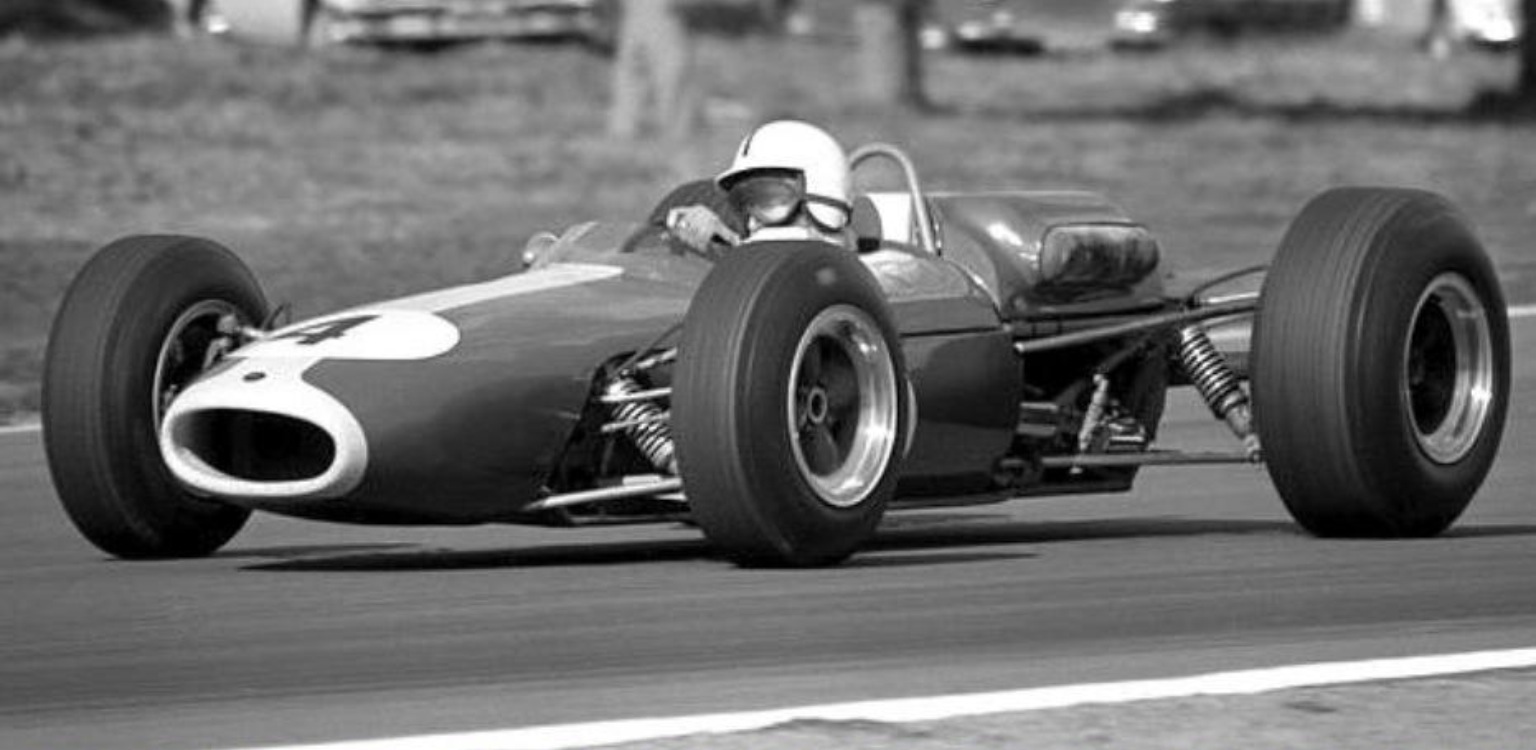
Martin on the way to 6th place in the SV Brabham BT11A ‘Warwick Farm 100′ Tasman race 13 February 1966 won by Clarks’ Lotus 39 Climax. This is not long before Martin left SV for Bob Jane Racing, this same chassis ‘IC-4-64’ won his 1966/7 Gold Star titles. (Autopics.com.au Collection)

As Spencer says he left SV and Sydney to join Bob Jane Racing in Melbourne, both Shell sponsored teams at the time and a controversial move albeit a very successful one for both driver and team…

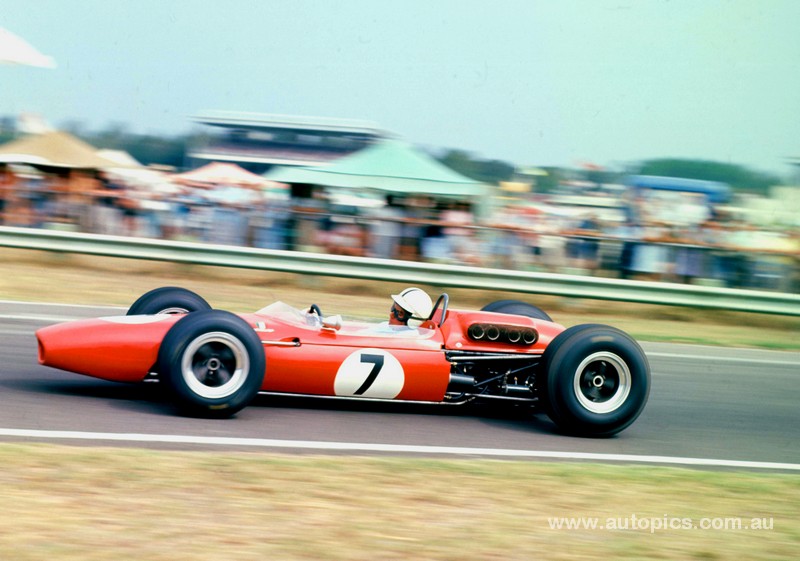
Jane acquired the Brabham BT11A Climax Spencer had been racing for SV, it was this car in which he won the Gold Star in 1966 and 1967. His toughest competitor was Kevin Bartlett in a similar car entered by Alec Mildren, the pair having many close dices with Bartlett famously setting the first over 100mph lap of Bathurst during their Gold Star encounter at Mt Panorama in 1967.

spencer
A touch of understeer for Spencer in his Bob Jane Brabham BT11, ‘Hordern Trophy’, Warwick Farm in December 1966. Race won by Frank Gardner from Kevin Bartlett. This shot is from a ‘period’ Shell magazine ad. (Spencer Lambert Collection)

In 1967 Repco’s 2.5 litre Tasman ‘740 Series’ V8’s powered the cars of Greg Cusack (SV Brabham BT23A), Leo Geoghegan (Lotus 39) and John Harvey (Brabham BT14 ) even though these cars were all competitive they lacked the consistent reliability which prevented Repco ever achieving a Gold Star Series win…Martins’ Climax engined Brabham won 2 rounds, winning his second title by 7 points from Cusack, his replacement at Scuderia Veloce and promptly retired.

Years later he re-established his relationship with McKay as he outlined above, he owned a share in McKays’ LM for a while and raced a range of exotic racing cars in historic racing in both the US and Europe. He still lives in Australia and is in happy retirement with a large extended family to keep him busy…and the occasional competition drive.

martin and mckay
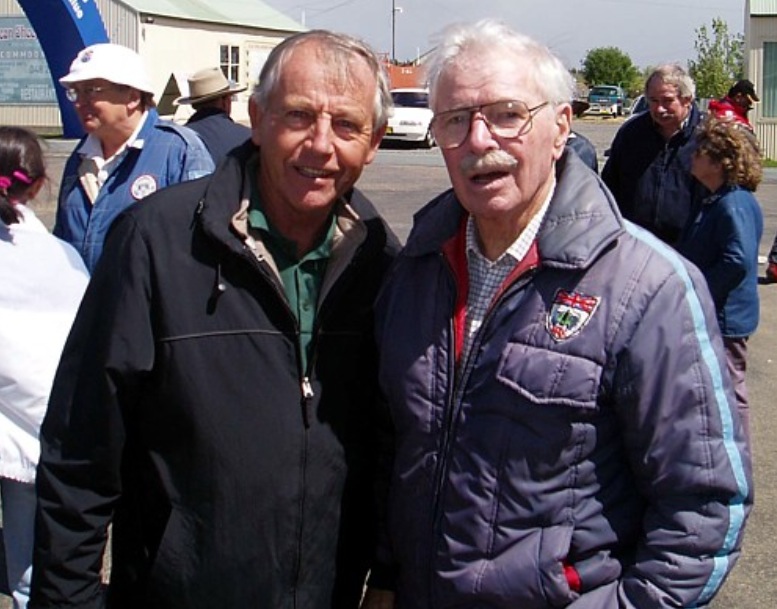
Spencer Martin and David McKay pictured on 27 October 2004. Chris Haigh took this shot having just taken David for a lap of Wakefield Park, Goulburn, NSW in McKay’s original Jaguar Mk1 ‘The Grey Pussy’. David died on December 26 2004 at 83 of cancer. (Chris Haigh)

Etcetera…

longford grid lm
Spencer Martin stands by the front ‘guard of the SV 250LM, his second meeting in the car, Longford Tasman meeting February 1965. Yellow car is the Mildren Maserati, driven by Ralph Sach (built by Rennmax’ Bob Britton on his Lotus 19 jig) the yellow shirted Mildren mechanics are (L) Stewart Randall and (R) Glen Abbey, the latter behind many Mildren/Gardner/Bartlett/Stewart victories. Driver behind the Fazz perhaps Les Howard. (oldracephotos.com/David Keep)
martin brabham surfers
Martin leading and winning the Surfers Paradise Gold Star round in 1966. Shot taken below Repco Hill, Brabham BT11A Climax. (John Stanley)

Jackie Stewart contested the above, Surfers’ Gold Star 1966 race, this article may be of interest to some in his ‘one-off’ Brabham BT11A Climax drive…https://primotipo.com/2015/02/13/jackie-stewart-at-surfers-paradise-speed-week-1966-brabham-bt11a-climax-and-ferrari-250lm/

mc kay lm longford 1965
The ‘Guvnor David McKay steers his 250LM through the Longford paddock in March 1965, the second meeting for the Ferrari driven by Martin. Graham Hill drove the SV Brabham BT11A Climax in the final ’65 Tasman race, the AGP, to 4th place, Bruce McLaren won in a Cooper T79 Climax. (Ellis French)
symmons grid 67 martin brabham
Martin being congratulated before the start of the Gold Star race at Symmons in November 1967. DNF with cam follower failure, race won by Greg Cusack, his replacement at Scuderia Veloce, in a Brabham BT23 A Repco. #2 is Garrie Coopers’ Elfin Mono Ford TC. Its Martins’ final race of ‘his serious career’, he had wrapped up the Gold Star for the 2nd time in succession and retired, the car driven by John Harvey for Bob Jane Racing from then. (oldracephotos.com/David Keep)
martin lakeside barbham 65
Martin in the SV Brabham BT11A ahead of Leo Geoghegans’ Lotus 32 Ford 1.5 TC, Lakeside ‘Gold Star’ race July 1965. Martin won from Leo and John McDonalds’ Cooper T70 Climax. (The Roaring Season/Bruce Wells)
martin tassie brabham
Car owner, the stocky, strong Bob Jane tests the rear spring rates…whilst driver Martin does his best to ignore the chief. Symmons Plains Gold Star round November 1966. Brabham BT11A Climax, ‘box is Hewland HD5. (Ellis French)
Spencer Martin 2006 Tasman Revival
Spencer pictured beside the Brabham BT23D Alfa Romeo raced by Frank Gardner in the ’68 Tasman and then Kevin Bartlett to Gold Star success in 1968. Car restored by Paul Moxham and driven by Spencer here at the Eastern Creek, NSW Tasman Revival Meeting in December 2006. (Stephen Dalton Collection)
Spencer Martin Catalina
Spencer Martin signed program of the Catalina Park cover on which his Holden starred! (Stephen Dalton Collection)

Bibliography…

‘David McKay Memorial Rally 2012: Rally Guide’, ‘ David McKays’ Scuderia Veloce’ David McKay, The Nostalgia Forum

Photo and Other Credits…

John Ellacott, Bruce Wells, autopics/Richard Austin, The Roaring Season, Chris Haigh Collection, Racing Car News, Heinz Federbusch, Ellis French, John Stanley, Racing Car News, Chris Haigh

Lindsay Ross of Oldracephotos http://www.oldracephotos.com/content/home/ for the use of the shots by David Keep

David Blanch of Autopics Collection  http://autopics.com.au/

Stephen Dalton Collection, Spencer Lambert Collection

Tailpiece…

(oldracephotos.com/DKeep)

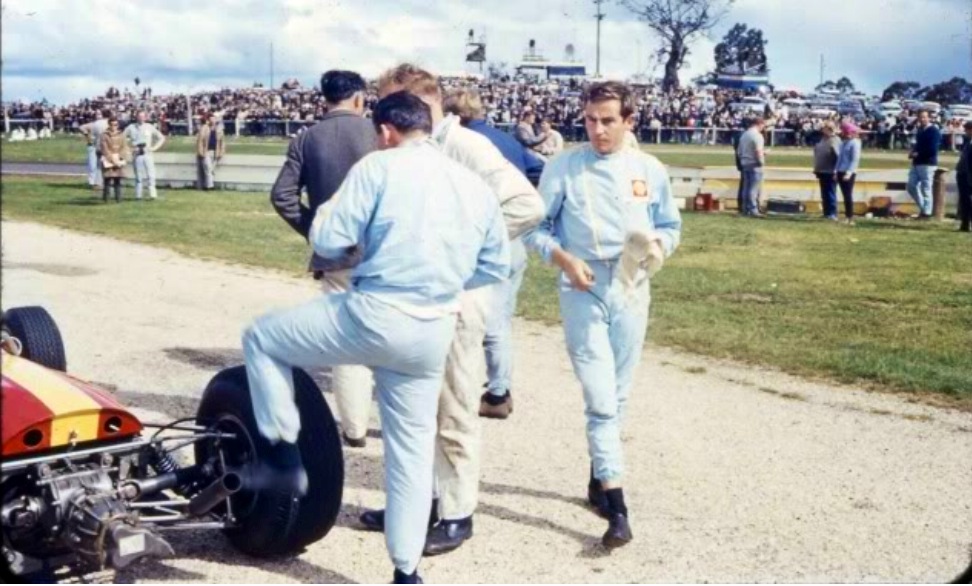
Spencer alights from the Jane Brabham BT11A in the Longford pits 1967.

John Sawyer standing at left with two Firestone guys in attendance. It looks serious but in a relaxed kinda way doesn’t it?

Finito…
pete

‘Pete’ Geoghegan in the SV Ferrari 250LM, Hell Corner, Easter Bathurst ‘Gold Star’ meeting April 1968, crowd listening to the howl of that V12 on the downchanges. (Dick Simpson)

Pete’ Geoghegan  hard on the brakes of the Scuderia Veloce Ferrari , before he leans it into Hell Corner, the left hander out of Pit Straight and onto Mountain Straight…
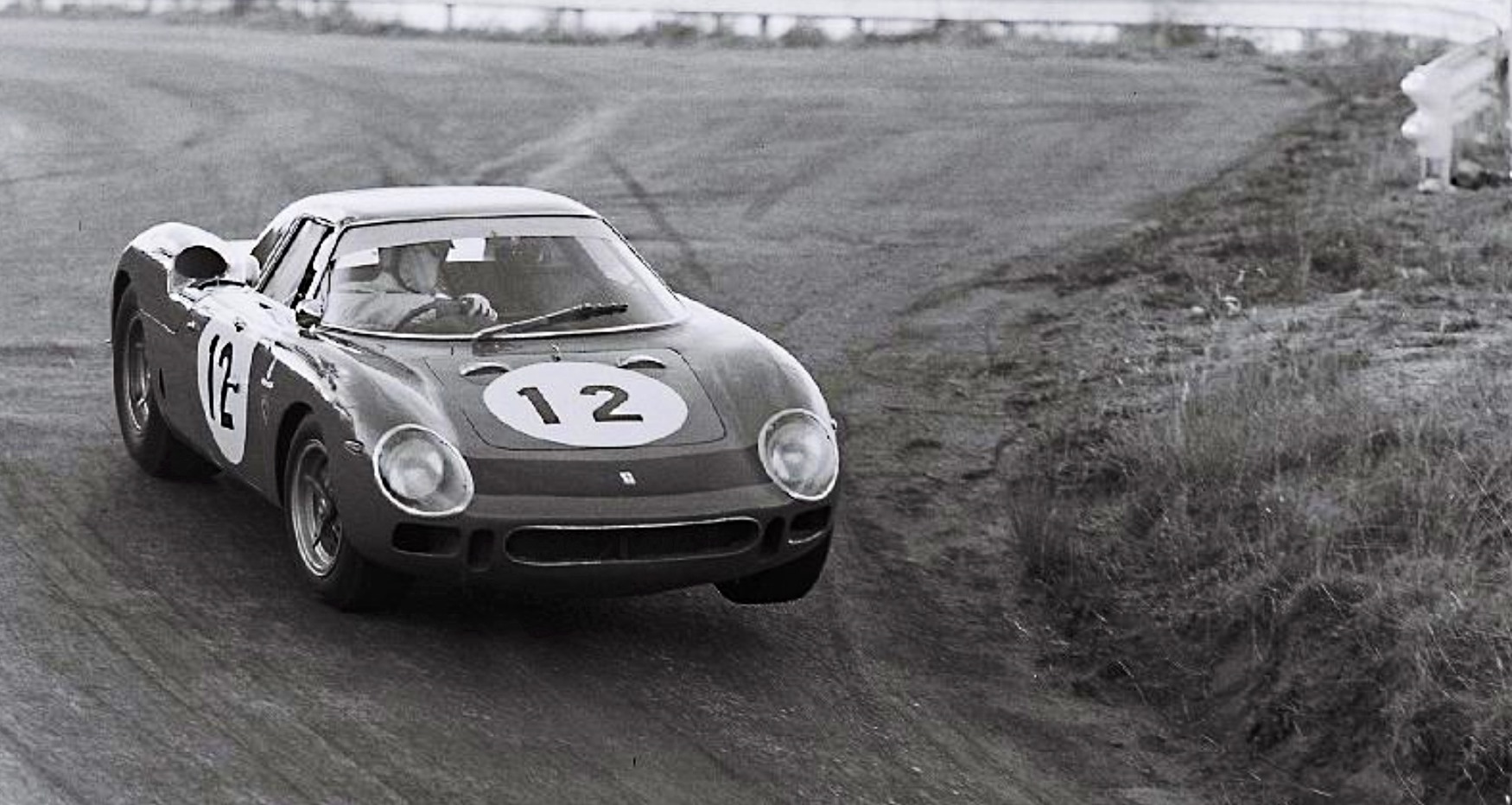
David McKay signed the brothers Geoghegan, Leo and Pete to share the car in the Surfers Paradise 12 Hour race later in ’68 , Australian spectators treated to the spectacle of the multiple Australian Touring Car Champion extracting all the ‘Red Lady’ had to offer in a series of sprint events earlier in the year to familiarise himself with the car. Over the years some fine drivers raced it, but McKay rated Geoghegan over most.

Pete

Pete Geoghegan 3 wheeling ‘6321’ into ‘The Dipper’ , Bathurst Easter ’68. Up ahead was teammate Bill Brown in the SV Ferrari P4/350 Can Am (Bob Jane Legends)

McKay’s ‘Scuderia Veloce’ was arguably the first of Australia’s professional racing teams, initially McKay was the driver but later SV’s entered cars for others including Graham Hill, Jackie Stewart and nurtured the careers of local drivers including Spencer Martin, Larry Perkins and John Smith.

McKay was a remarkable man. He was a World War 2 veteran , a world class driver, the most influential motoring journalist of his day and a successful businessman with both SV the racing team, and Scuderia Veloce Motors, retailers of  Volvo, Porsche and Ferrari, for whom he was the NSW concessionaire.

martin

‘Australian Autosportsman’ magazine July 1965. Shell ‘Advertorial’! Spencer Martin on the cover in the SV Fazz 250LM, picture taken at the Easter meeting, i think, ‘Hell Corner’, which leads onto the uphill ‘Mountain Straight’ having gone past the pits. (Stephen Dalton Collection)

In some ways purchase of the 250LM didn’t make a lot of sense as the car was a heavy endurance machine…

Locally it was competing with lightweight sports-racers built for sprint events, it was competitive in 1965 , but into 1966 the appearance of Frank Matich’s Traco Olds/Elfin 400 and other similar cars made the going tough. By then the car had been sold to Kiwi Andy Buchanan but was prepared and entered by SV.

Its forte was long distance events, for which it was designed!, McKay and Spencer Martin, the young star McKay was nurturing, won the Caversham 6 Hour race in Western Australia in 1965. The Swan Valley event did not have great depth of field in the outright class ,’6321′ winning by 12 laps from Ron Thorp’s AC Cobra.

Here is a link to an article about Spencer Martin and David McKay which also includes additional pictures of the 250LM and Martin’s driving impressions of the racer; https://primotipo.com/2015/04/30/spencer-martin-australian-gold-star-champion-19667/

caversham

David McKay & Spencer Martin won the Caversham 6 Hour race in ’65, opening the 250LM’s long distance success ‘account’ (Terry Walker)


martin

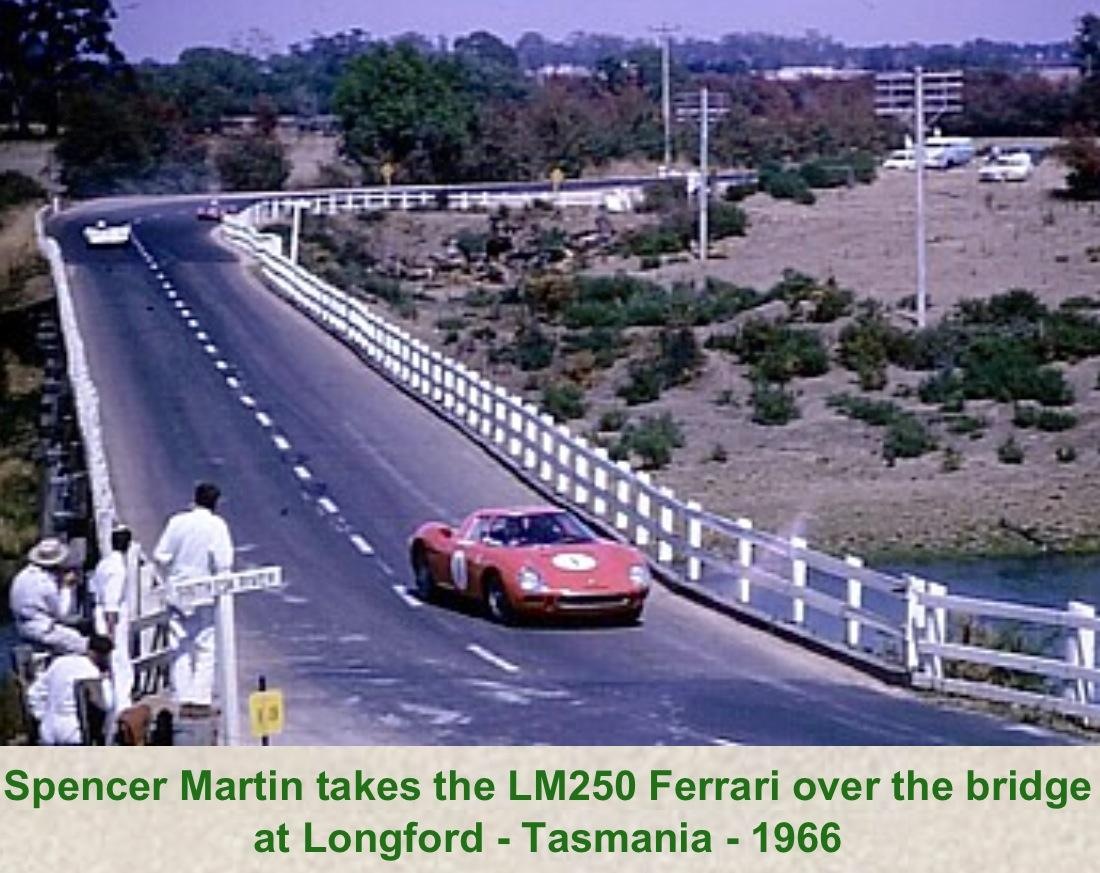
Evocative Longford shot of Spencer Martin, Long Bridge, 1966 (Alan Stewart Collection)

Keith Williams was a great promoter of his new circuit at Nerang outside Surfers Paradise, the LM won his 12 Hour enduro three years on the trot

In 1966 it was driven by Andy Buchanan and Jackie Stewart, 1967 by Australians Greg Cusack and Bill Brown and in 1968 by the Geoghegans, all of the victories were against cars which were faster on paper but not ultimately having the LMs combination of speed and reliability.

In 1968 McKay had pleasure and pain- victory for the LM but defeat of his Ferrari P4/350 Can-Am car, acquired earlier in the year with the express aim of victory in a race he thought was by then beyond the old LM. For those interested in the P4, click on this link to an article on the full history of this car; https://primotipo.com/2015/04/02/ferrari-p4canam-350-0858/

surfers

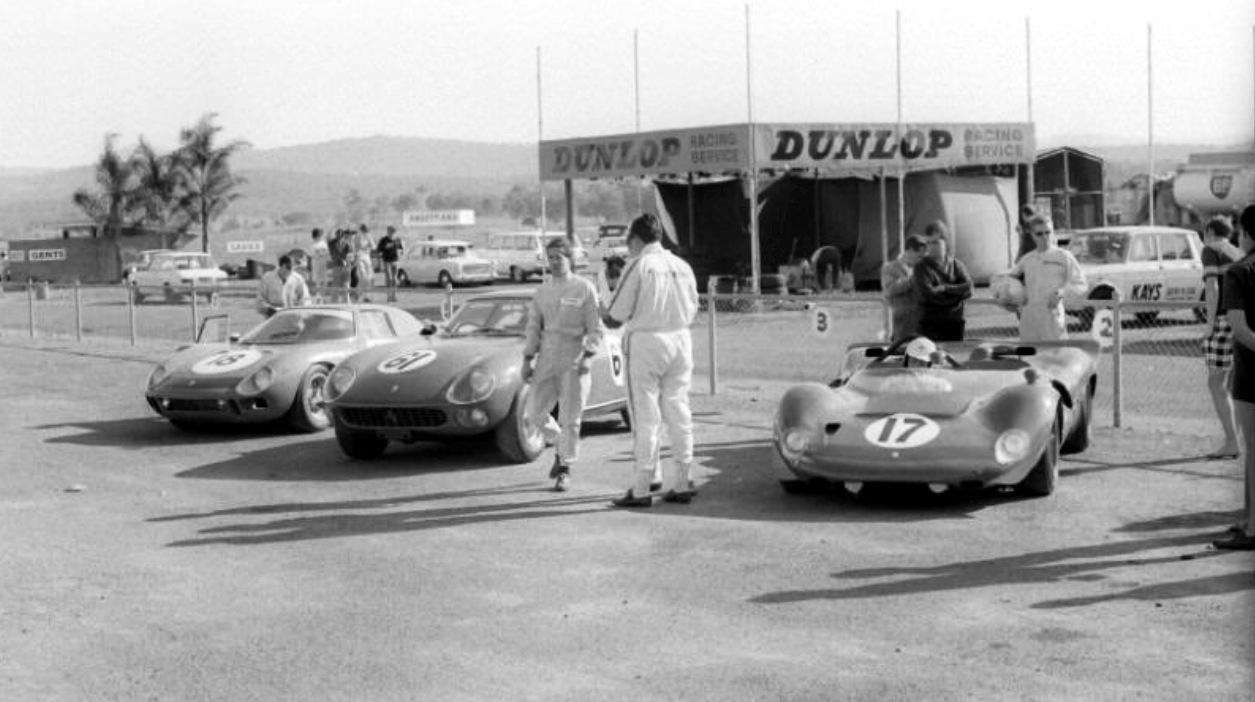
Scuderia Veloce’s team in the Surfers dummy grid, 12 Hour ’68. The winning Geoghegan Bros 250LM at left, 275GTB of Phil West/George Reynolds centre, and P4/Can Am 350 ‘0858’ of Bill Brown/Jim Palmer on the right, DNF accident (Rod MacKenzie)


lm

The Roxburgh/Whiteford Datsun 1600 being rounded up by the LM, and Hamilton/Glynn Scott Porsche 906 Spyder , Surfers 12 Hour 1967 (Ray Bell)

By 1968 the car was owned by Sydney businessman Ashley Bence but Mckay soon repurchased it and kept it as a much cherished road car.

I missed its racing heyday but saw McKay drive it at the Sandown meeting in late 1978 at which Fangio demonstrated/raced his Mercedes Benz W196. Unfortunately an oil line came adrift causing McKay to spin and hit the fence at The Causeway. Graham Watson, later ‘Ralt Australia’ and a ‘Gold Star’ national champion himself repaired the car.

bridge

McKay in ‘6321’ tootling across the Sydney Harbour Bridge in the late ’70’s. This shot was part of a ‘Sports Car World’ magazine article McKay wrote about the car, the trials and tribulations of delivery amusing…

A share in the car was sold by McKay to Spencer Martin, its original driver in ’65, the car contested some international historic events before ultimately being sold to Ralph Lauren…its life now a good deal easier than being taken to its limits by the likes of Pete Geoghegan.

ad

Racing and Development of the LM In Period: Letter from Ferrari’s Mike Parkes to David McKay dated 1 February 1966 about ongoing development of the cars in Europe…

‘…Passing now to your LM you will no doubt be pleased to learn that the car has been homologated in the 50 car GT category, as has the 4.7 litre Ford GT, although infact neither they nor us have made 50 cars.

We are still making one or two LM`s, David Piper has probably given you all his ‘gen’ on modifications. He has gone up to 7″ front rims, also I think 8″ rears, and has increased the top speed considerably by lengthening the nose and making it similar to the 1962 GTO.

He has had quite a number of gear-box failures, some of which I suspect may have been due to Fax, his mechanic, but it is clear that the crown wheel and pinion should be changed after between 18-24 hours use, depending on the ratio employed, and the same applies to the pinion bearings.

I incidentally cannot recommend in the interest of liability, attempting to fit other than ex factory spares. My research incidentally, reveals that Fiat 500 bearing shells should not fit.

We have introduced a somewhat complicated modification to improve the gearbox life which includes machining out the bearing housings in the casing to take bigger bearings. I can probably send particulars if you decide that it is worth while.

We do not official recommend the use of ‘M’ tyres, and infact suspect that customers gear-box failures were due to their using ‘M’ tyres, but my own view is that the introduction of the ‘M’ tyre coincided with the limit of fatigue life of many peoples gear-boxes. You should use 550 front and 600-660 rear and probably reduce the camber a little at the rear and should find the car faster.

You can obtain variations of the intermediate gearbox ratios by using some of the ratios from the Targa Florio box should you find the standard LM ratios not suitable for your circuits.

For an engine overhaul, as I think I told you, you should definitely change valve springs checking carefully to ensure that you have the correct fitted length. Bearing shells need only be changed where they appear necessary, also rear main oil-seal. Valve seats should not be changed unless absolutely necessary, this being determined by how far they have sunk into the head. I would not think that it was worth changing the big end bolts.

I am at a loss to understand why you have to grind down the rear pad, but can assure you that you have the correct calipers. We have never carried out compression checks ourselves but your system seems very sound, the engine presumably being hot. I can give you no indication of the valves to expect.

I would be most interested in hearing about any sort of racing programme you could offer me in Australia for 1966-67. Yours, Mike Parkes’

image

‘6321’ now part of the Ralph Lauren Collection

250P and 250LM…

Ferrari’s rebuff of the sale of his company to Ford in 1963 resulted in a ferociously competitive response by FoMoCo in sports car racing; Eric Broadley’s GT40 design in the prototype class and Carroll Shelby’s Ford engined AC Cobras /Daytona Coupes the response in the GT category.

In ‘GT’ the dominance of Ferrari’s ‘250 GTO’ was being challenged by the Cobra’s, Maranello’s  response was essentially to add a roof to its championship winning 1963 Prototype, the 3 litre V12 ‘250P’, call it the ‘250 Le Mans’ and seek to homologate it into the ‘GT’ class. The CSI were onto Ferrari though, only 32 cars were built rather than the 100 mandated by the rules, so the cars raced as Prototypes until the CSI eventually relented and agreed to ‘GT’ homologation.

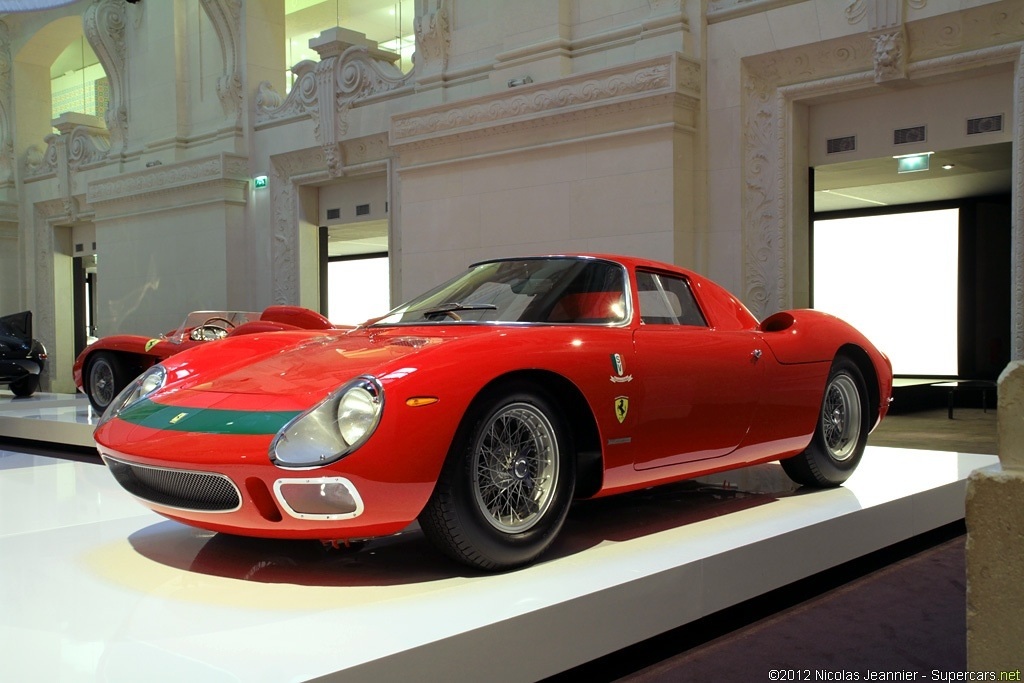
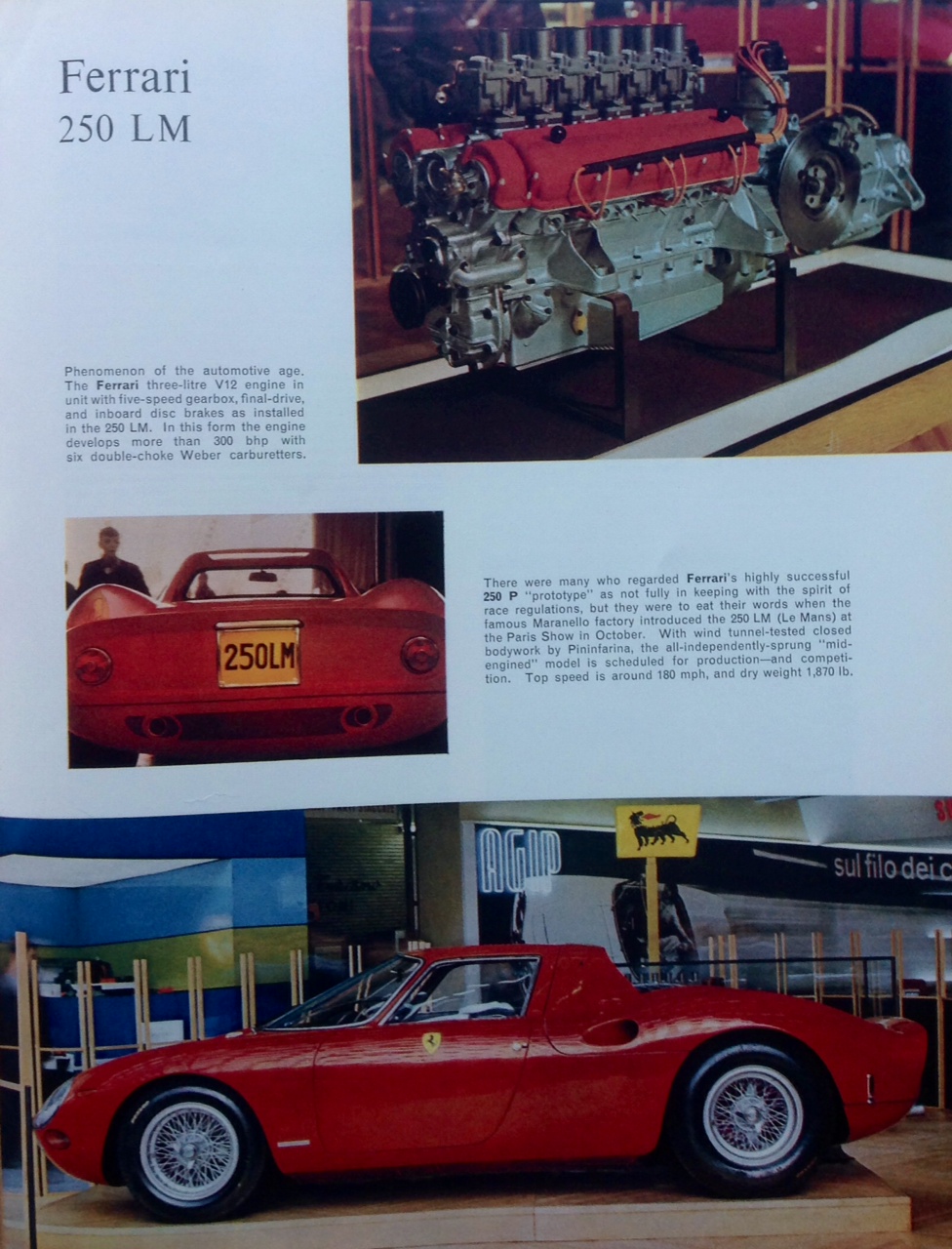
All but the first few cars were built with 3.3 litre V12’s, the first were 3 litres, but the 250LM name stuck, rather than 275LM as Ferrari naming convention dictated. (250 cc x 12 cylinders is 3000cc…275cc x 12 cylinders is 3300cc).

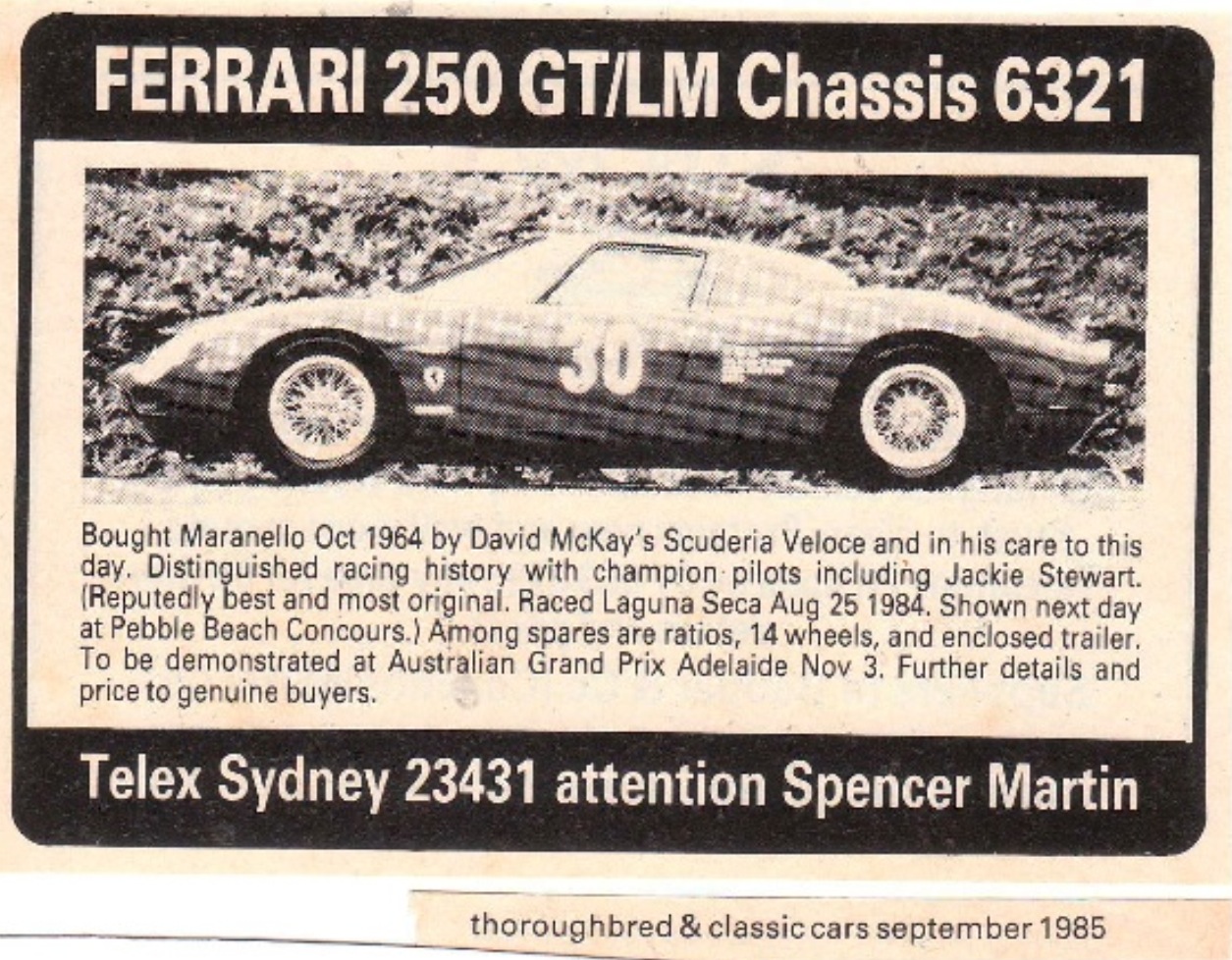
The McKay car, chassis # ‘6321’ was one of the last cars built.

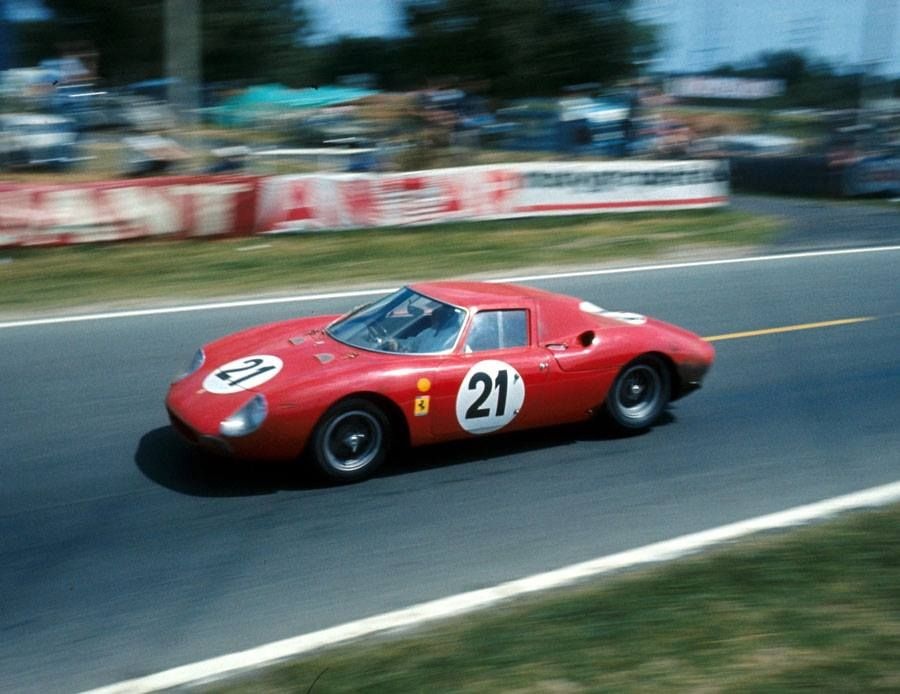
The 250 LM’s were popular customer endurance racing cars but not considered outright contenders for ‘Blue Riband’ events but the race failure of the Ferrari P2 and Ford’s GT40 and Mk11 resulted in a famous victory for ex-F1 driver Masten Gregory and future World Champion Jochen Rindt at Le Mans in 1965. The two drivers flogged the NART LM # ‘5893’  to within an inch of its life, to their surprise winning the event, Rindt famously expecting to be back in Paris early enough for dinner.

That victory was Ferrari ‘s last at Le Mans…

nart

North American Racing Team ‘NART’ victorious 250LM ‘5893’ at Le Mans ’65. Drivers Masten Gregory & Jochen Rindt (unattributed)


lm cutaway

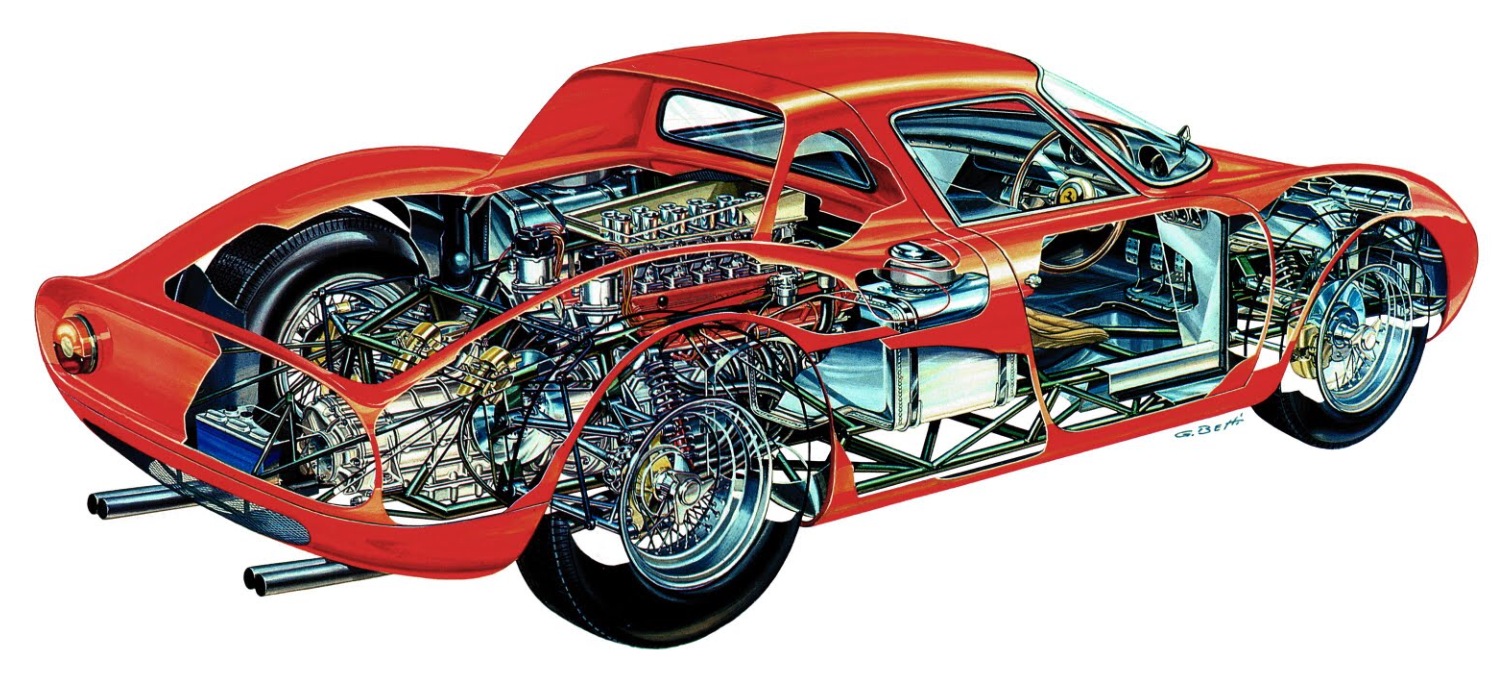
Ferrari 250LM cutaway showing its 3.3 litre V12, 5 speed transaxle, spaceframe chassis and all independent suspension by wishbones and coil spring/dampers ( G Betti )

Etcetera…

spencer at sandown

First race meeting for ‘6321’, Sandown Tasman meeting 21 February 1965. Spencer Martin at the wheel. A win after Frank Matich retired his Lotus 19B Climax. (Ray Bell)


martin

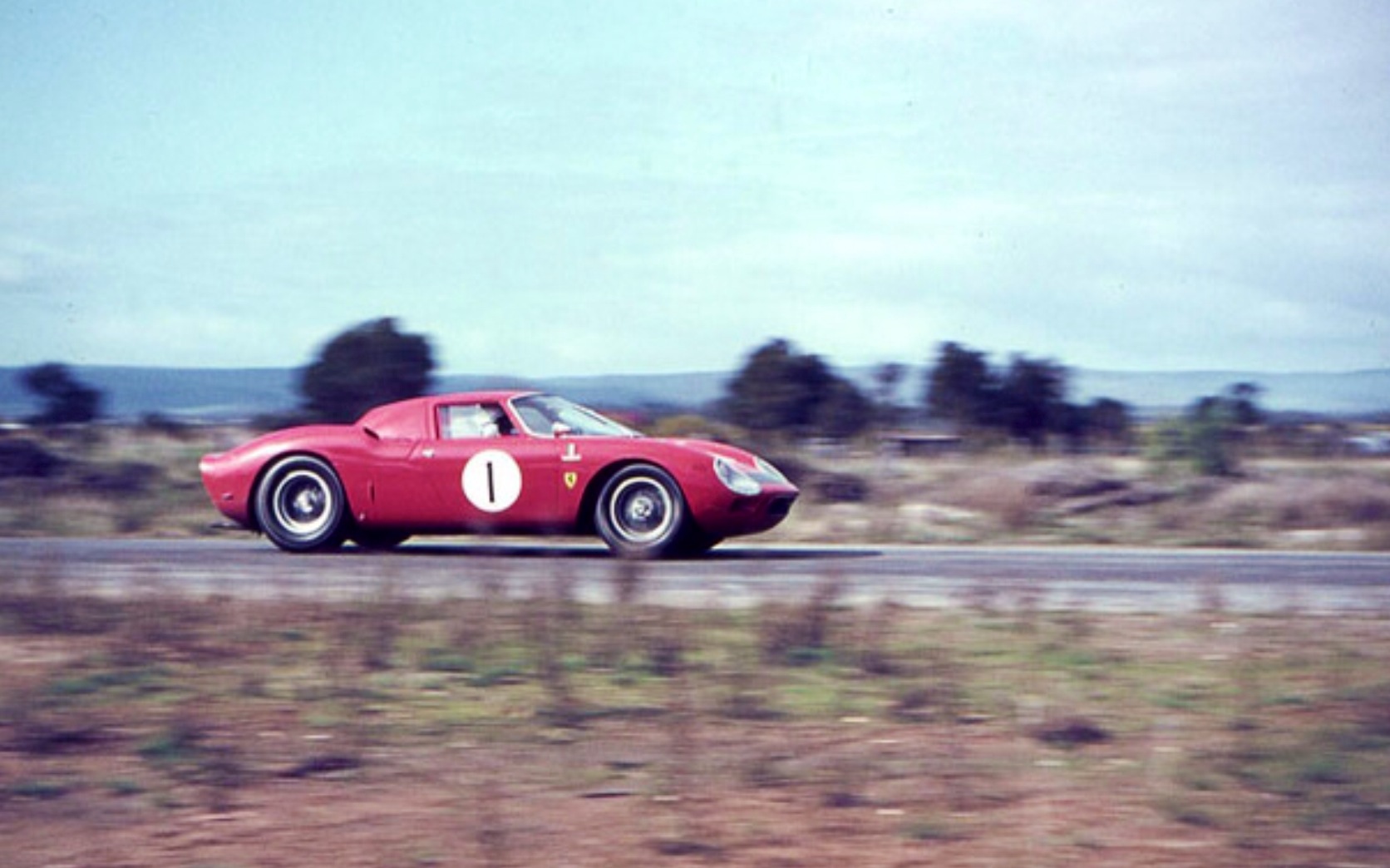
Fabulous shot of Spencer Martin in the LM, Warwick Farm, August 1965. (John Ellacott)


caversham

Spencer Martin ahead of Lionel Beattie in the Byfield Ayres Repco Holden Spl during the ‘Le Mans 6 Hour’ race at Caversham, in WA’s Swan Valley in 1965. Martin drove to victory sharing with car owner David McKay. (Alan Yates)


spencer caversham

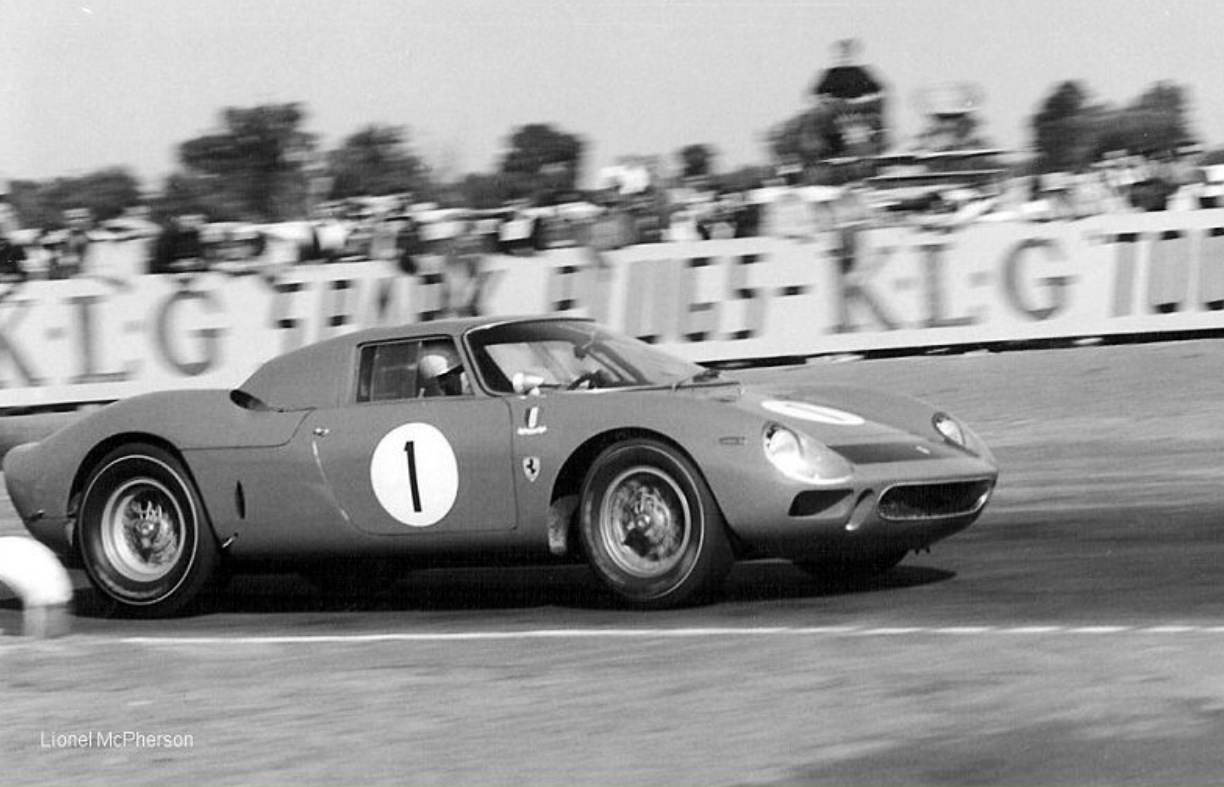
Another Caversham 1965 shot, by the look of the helmet perhaps David McKay at the wheel. LM ‘6321’. (Lionel McPherson)


Pete Geoghegan during the RAC Trophy meeting in May 1968, Warwick Farm (G Lanham)


LM Launch

‘Automobile Year’ coverage of the 250LM launch at the Paris Show in October 1963

Race History (inaccurate and incomplete ) of 250 LM ‘6321’…

http://www.barchetta.cc/english/all.ferraris/Detail/6321.250LM.htm

Photo and Other Credits…

Dick Simpson, Roderick Mackenzie, Giulio Betti cutaway drawing, Bob Jane Legends, Terry Walker, Automobile Year, John Ellacott, Alan Yates, Stephen Dalton Collection, Ray Bell, Lionel McPherson, Mike Parkes Letter from ‘The Nostalgia Forum’, Geoff Lanham

Tailpiece…

scud

Finito…