


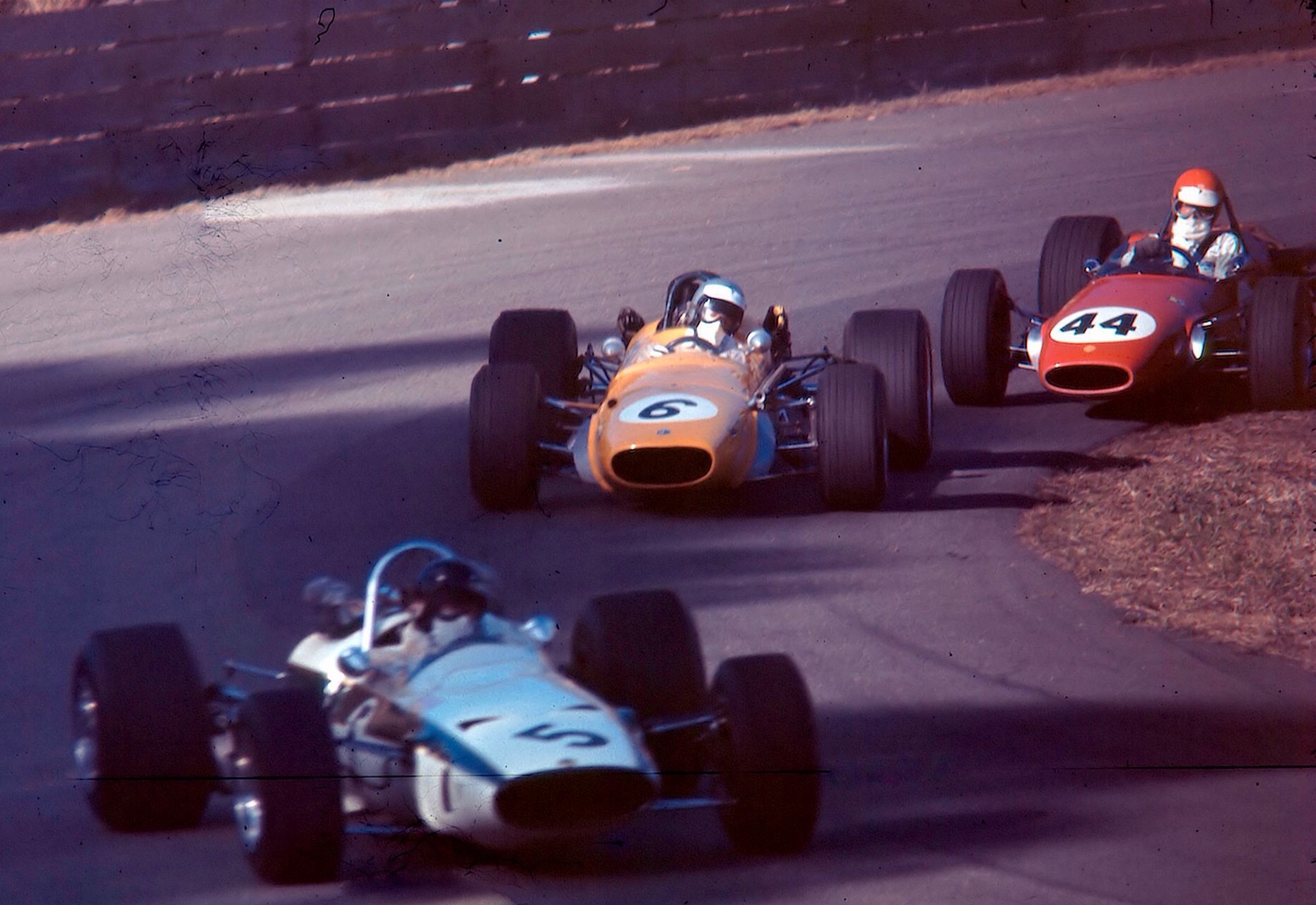
Leo Geoghegan from Kevin Bartlett and Max Stewart, Dunlop Curve, Catalina Park, in the New South Wales Blue Mountains, 9 June 1968…
Geoghegan and Bartlett were both well-established ANF1-2.5 Tasman drivers by this stage, with Max the young-thruster chasing them hard. Here, the lanky Orange motor-trader, characteristically more out of the cockpit than in it, in his Rennmax BN2 Ford is chasing the 2.5-litre V8 Lotus 39 Repco and vivid ‘Mildren Yellow’ Brabham BT23D Alfa Romeo.
In fact, Maxxie was the oldest of these three but was just about to join KB in Alec Mildren’s squad and get the big leg up his career needed and deserved, and he delivered in spades, of course.
I love this shot, Dick Simpson has managed to capture three of my favourite cars and drivers with KB’s Brabham clearly the racer Dick’s camera was focused upon, en route to his first Gold Star that year.
Ray Bell recalls this meeting well, ‘…Leo Geoghegan, Kevin Bartlett and Phil West turned out in the best lineup of Gold Star 2.5 cars at Catalina Park.’
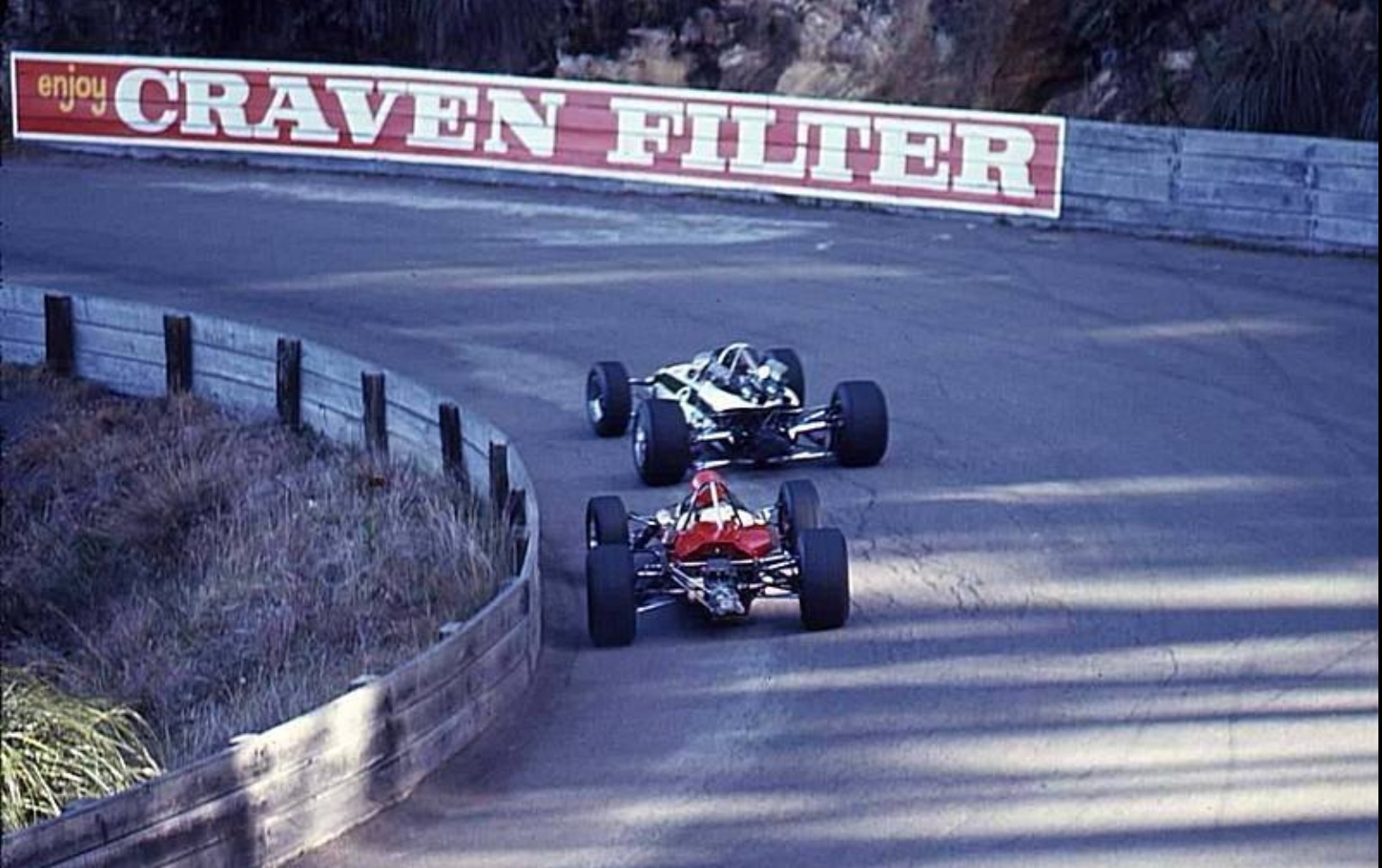
Dry practice saw all three under Leo’s lap record and on race day it was reduced by a full two seconds, (from 55.6 to 53.6 seconds) with Bartlett two-tenths off the pace, West on 54.3 and Max Stewart in a 1500cc Rennmax eclipsing it as well with a 55.2.’
I’ve written about all three of these cars and drivers, so will not rabbit-on again here. Bartlett’s Brabham BT23D here; https://primotipo.com/2018/11/30/motori-porno-alfa-romeo-tipo-33-tasman-2-5-litre-v8/ , Stewart’s Rennmax here; https://primotipo.com/2014/09/12/max-stewart-rennmax-bn2-ford-easter-bathurst-1968/ , and Leo Geoghegan and his wonderful Lotus 39 Repco here; https://primotipo.com/2016/02/12/jim-clark-and-leo-geoghegans-lotus-39/
All three pieces are features so will keep you busy for a while.
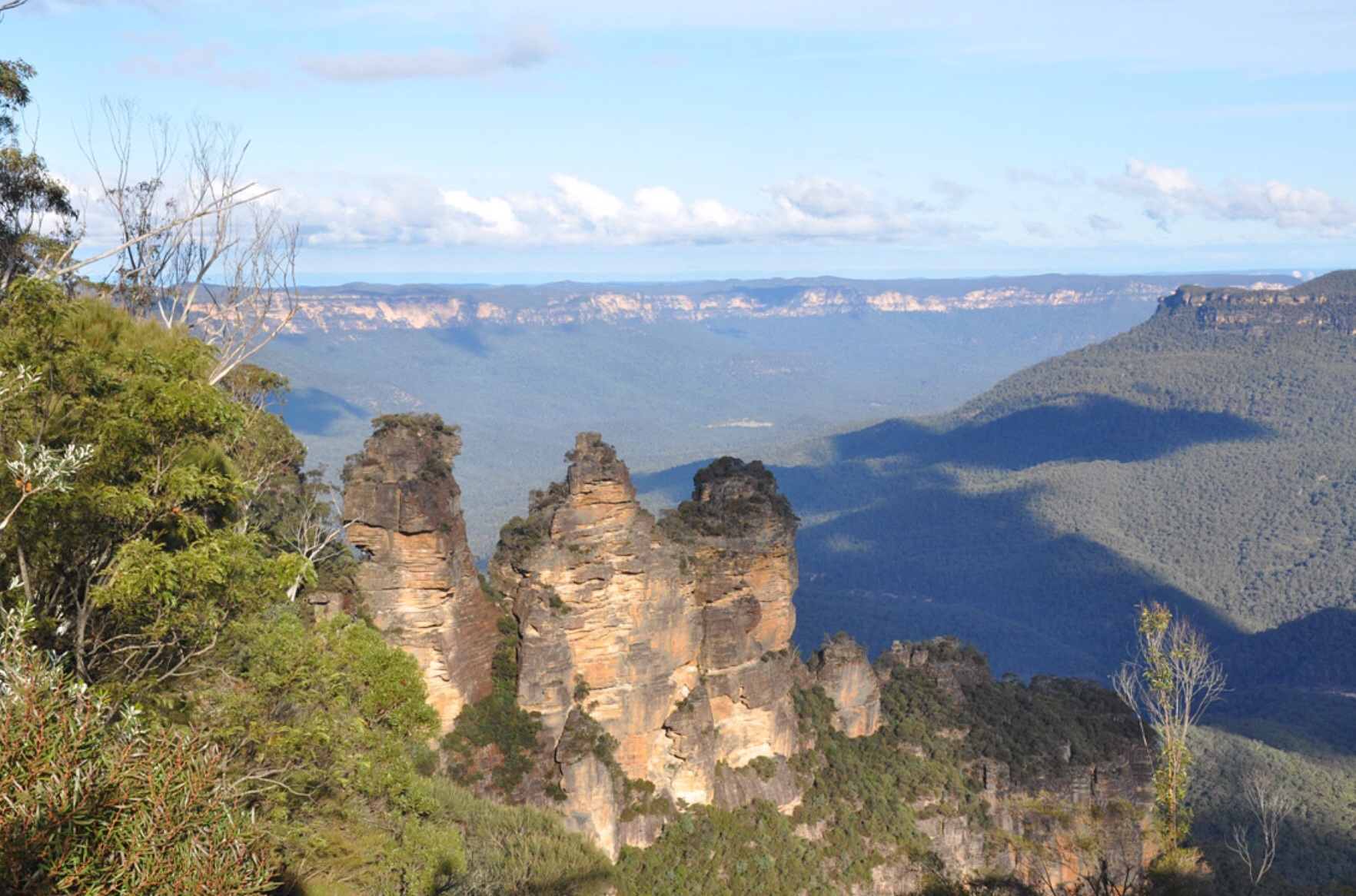
The Blue Mountains and Katoomba in particular are wonderful places and typically ‘Sydney 101’ must visits from either a global or Australian tourists perspective.
The town of about 7,500 people is 100 km from Sydney, an easy day trip, with Echo Point/The Three Sisters, the Skyway and funicular Scenic Railway, the attractions which instantly spring to my mind for little kids and big ones alike.
There are plenty of places to stay, too. Katoomba was one of many places of natural beauty that boomed in Australia in the early twentieth century, situated as they were on railway lines, making them easily accessible in the days of limited car ownership from the capitals, in this case, Sydney.
As we shall see the Carrington Hotel, which occupies the highest point in the town was the epicentre for the racers who frequented Catalina Park for an all too brief decade or so from 1961.
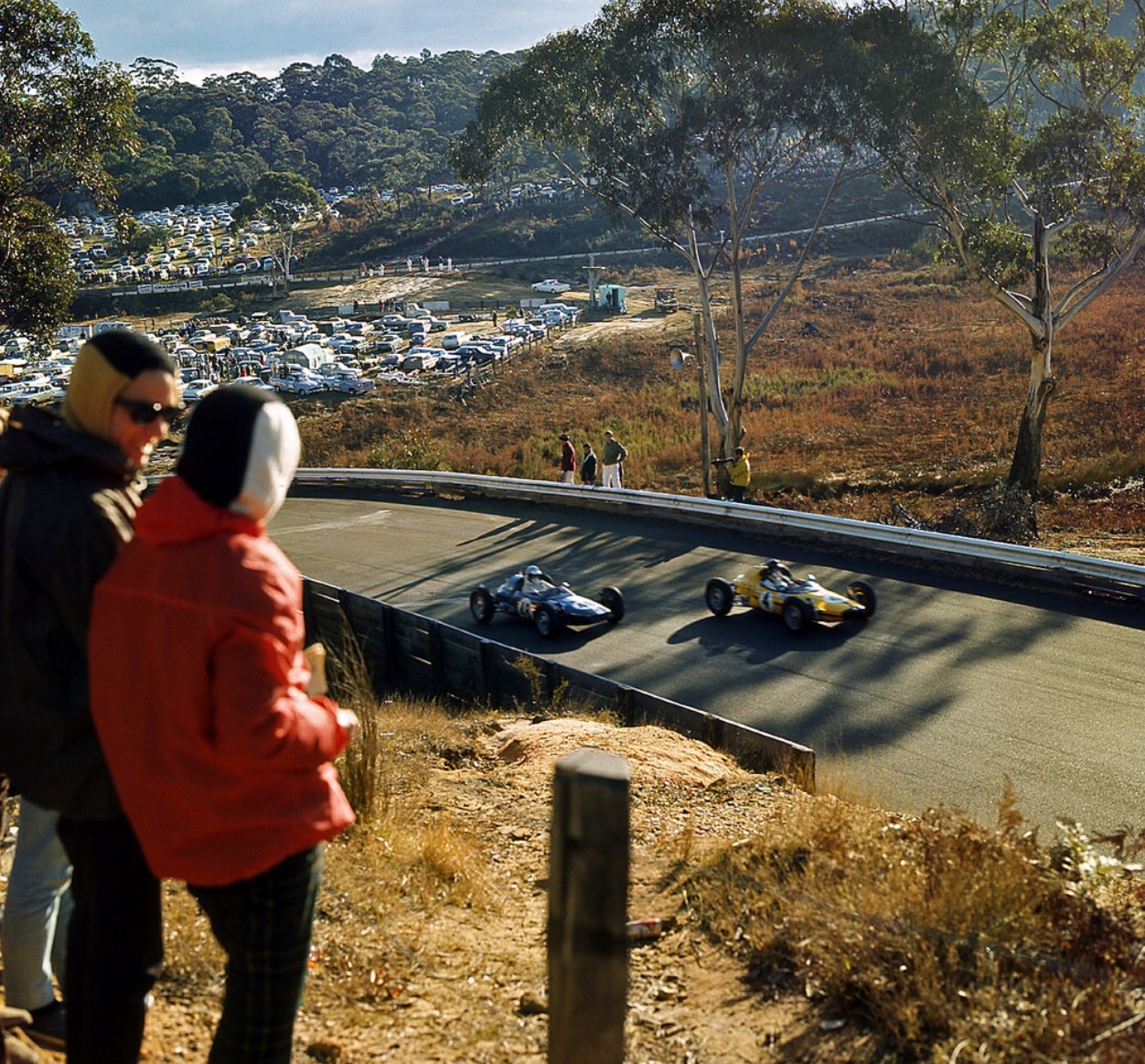
Formula Vee dice at beautiful, bucolic and compact Catalina Park on a crisp winter day, it was not unknown for fog to delay proceedings, circa 1968…
The leading cars are Rennmax Mk1 Vees in the hands of Leo and Pete Geoghegan, practising for a celebrity race sponsored by Gary Campbell during the August 18, 1968, meeting. It’s Leo in Ken Goodwin’s car, and Pete in Terry O’Neill’s GS Motor Bodies blue car. Leo won from Pete with Max Stewart third.
The 2.1 kilometre Catalina circuit was located in the Katoomba Falls Creek Valley and opened on 12 February 1961, its final official event was the Mini Club of New South Wales Spring Meeting in 2000.
A group of 83 local businessmen joined forces, and the entity that owned and built the circuit infrastructure was the Blue Mountains Sporting Drivers Club, supported by the Blue Mountains City Council, which had acquired the land from Horace ‘Horrie’ Gates, owner of the Homesdale Guest House. The Australian Racing Drivers Club (ARDC) ran the place, organised and conducted the race meetings, the arrangement characterised in the magazines of the day as a 20-year lease.
In 1946, Gates felt the need to bring tourists back to the Blue Mountains after war hostilities ceased. Then the area of bush, swamps and springs known locally as ‘The Gully’ was largely undeveloped and was the home to a small settlement of Aboriginal and non-Aboriginal people.
Gates dammed Katoomba Falls Creek to form an ornamental lake around which he built an amusement park offering ‘every facility for fun and food’.
The park was an instant success. In 1948, the shell of an ex-RAAF Consolidated Catalina flying boat was added to the attractions, which included a Ferris wheel, merry-go-round, miniature train and ‘Giggle-House’ which showed Charlie Chaplin films. Many visitors thought the aircraft had been flown there, but it was dismantled and transported to the site by truck and then reassembled and anchored to a concrete block in the middle of the lake.
The plane gave the area its informal name- Catalina Park, albeit its more common name locally was and is The Gully, as I wrote earlier.
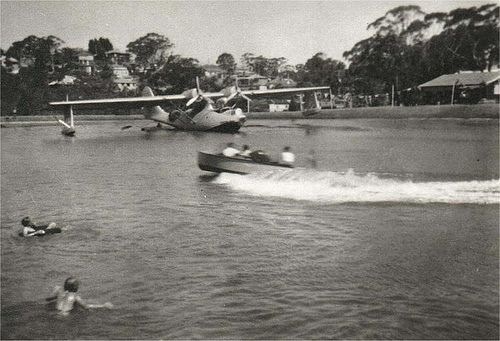
‘Up to thirty passengers paid two shillings to be taken out to the flying boat by punt, where in the dark, stuffy interior, they viewed a film of flight over the Sydney area, heard the story of the Catalina and tried out the controls. While the film was showing, an assistant would stand on the wing rocking the plane to simulate flight while the speedboat would circle the lake, providing waves and engine noise. Fun seekers emerged from this sensory experience dizzy and gasping for air, many too ill for further amusements!’ wrote John Merriman.
By 1952, the park and its attractions were becoming dilapidated, so the Council acquired the property, and with other parcels of land owned by others, had the intention of creating a public park and a treated water swimming pool. By 1954, the old Catalina was showing the ravages of time and neglect, so it was pulled up onto the bank and left to the souvenir hunters until sold in 1958 to Sheffield Welding and Engineering of Auburn, who dismantled the remains for scrap.
The Blue Mountains Council accepted proposals for the race circuit within the 47-hectare Frank Walford Park – Walford was the Mayor – with clearing commencing in 1957. ‘The last traditional owners were forcibly removed by 1959, the trauma caused to the community of people (of the Gundungurra and Darug clans) who were living in and around the Gully was profound and still reverberates.’
Let’s come back to this aspect at the end of the article, as the dispossession of The Gully residents then is the reason why there is little or no prospect for use of the remains of the track now for any modern motorsport events.
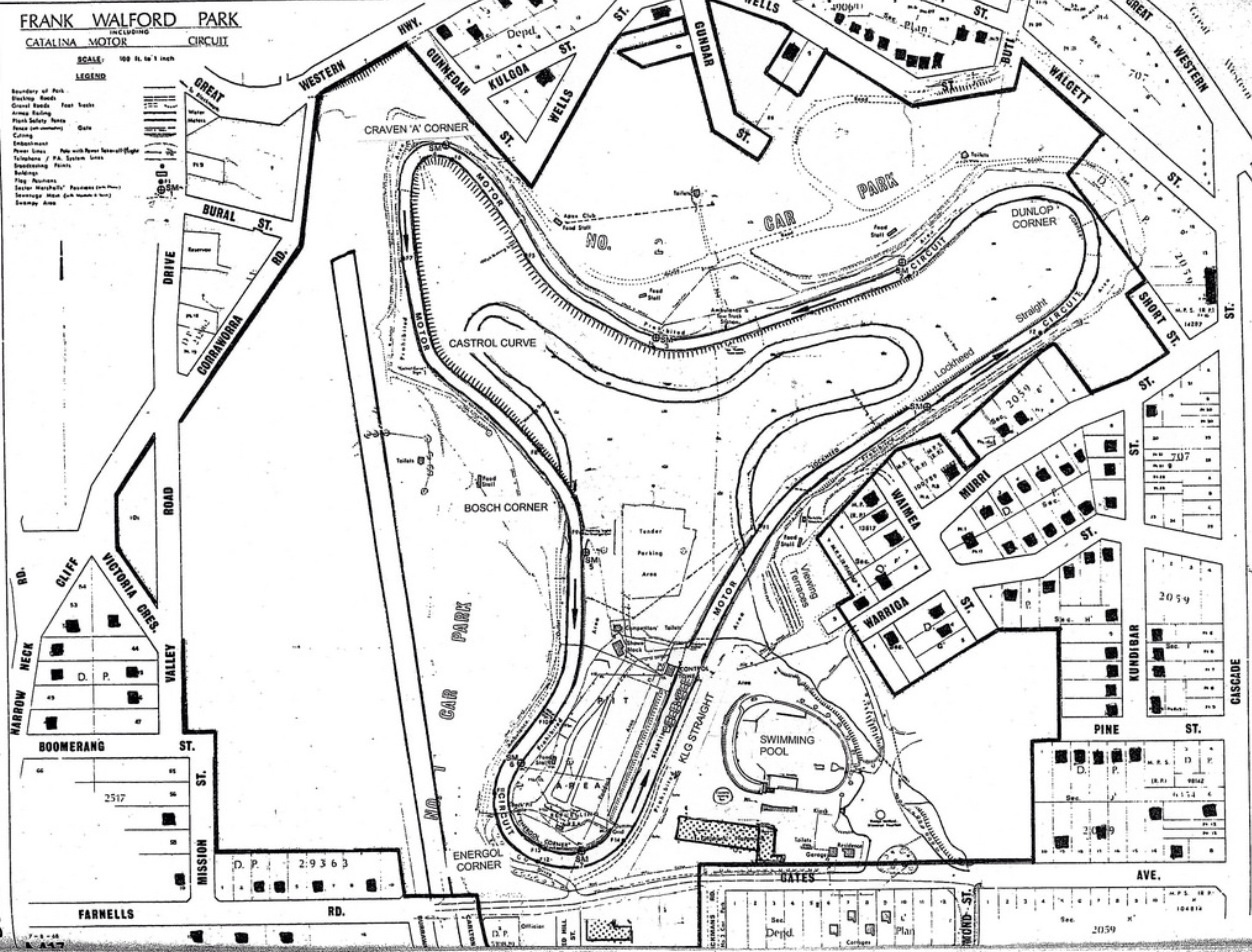
The Blue Mountains Sporting Drivers Club had a connection with Jack Brabham. Betty Brabham, nee Beresford, was a local girl, with then Cooper ace Jack said to have designed the basic layout of the circuit.
The track was relatively slow in the making as it was largely the work of volunteers who used council graders for the purpose. The council employees were BMSDC members, with another grader acquired for the purpose. A local builder provided his bulldozer whilst the club chiefs raised funds to build a control tower, toilets and fencing. Ray Bell wrote that ‘Hec and Jack Muir were leading lights, with a lot of the financial control under the wing of Harry Hammond, owner of the Skyway/Scenic Railway at Katoomba.’
The dangerous nature of the circuit for drivers was paradoxically caused by the 1957 NSW Speedways Act, which required fences to be fitted with vertical posts above the fence line and stipulated minimum requirements for safety fences. A ‘canyon of fences’ was the result,’ as Bell put it.
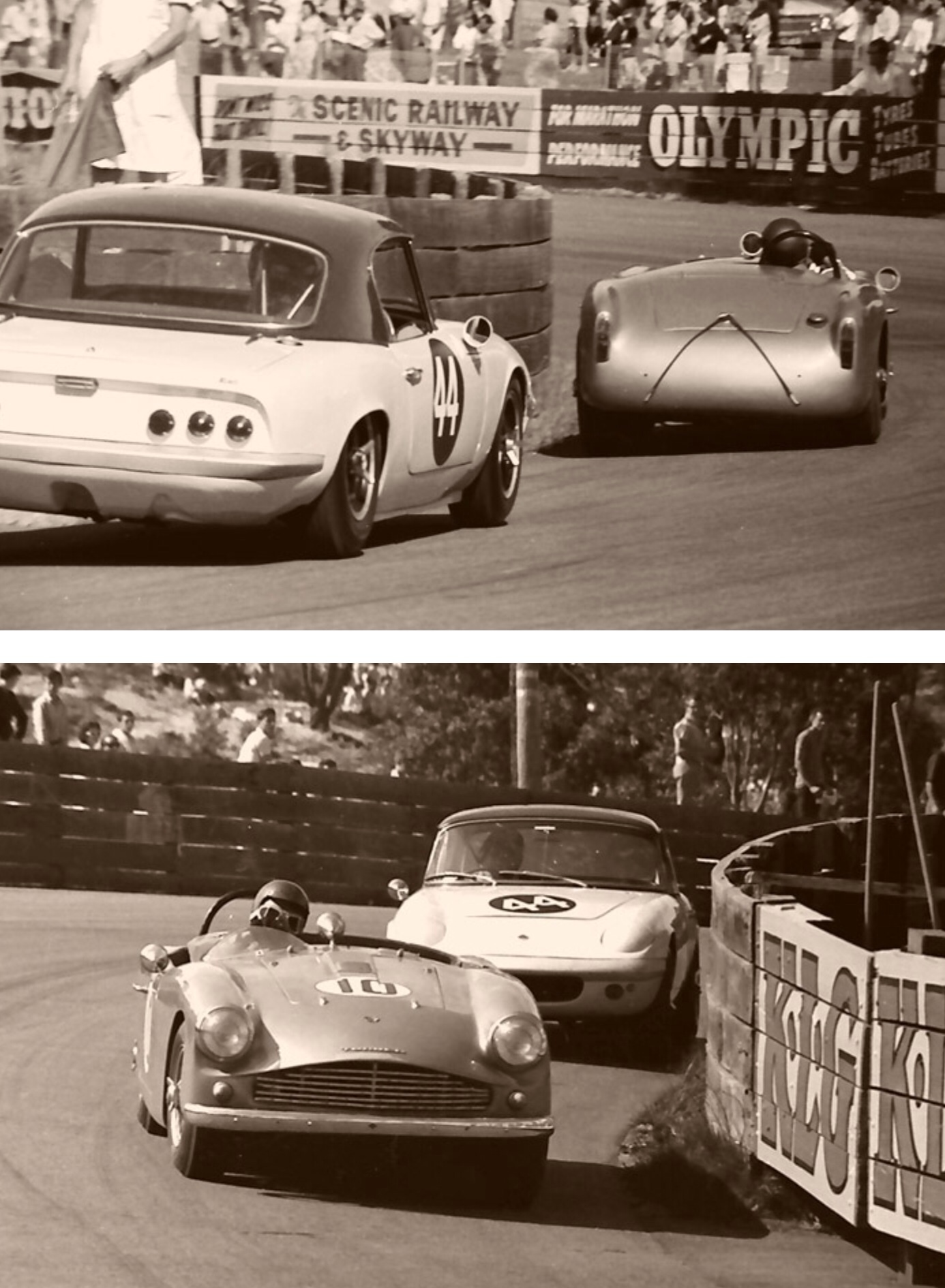
The Canyon of Fences is well demonstrated by this Bruce Wells photograph of Fred Gibson, Lotus Elan, and Wal Donnelly, Turner Ford during a great dice circa 1965. The need for high-speed precision, with little room to gather up a-moment is well clear.
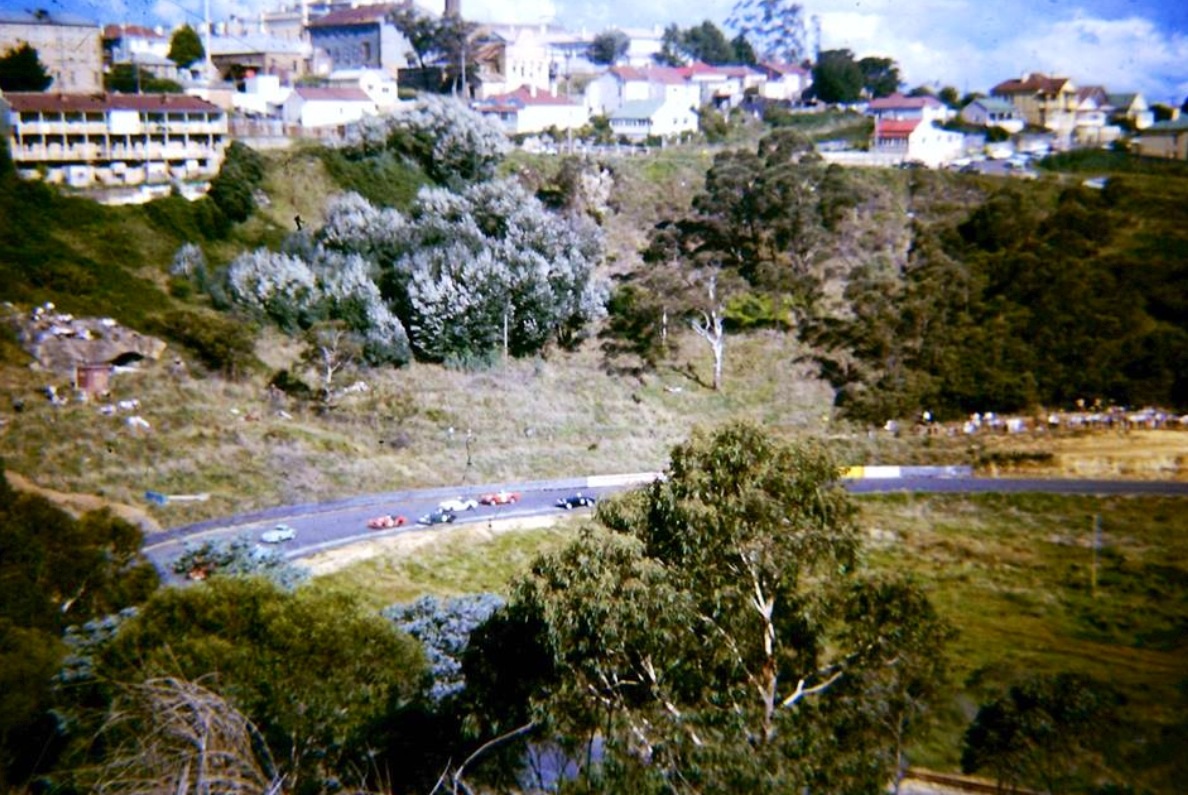
By the end of 1960, the interesting circuit, 1.3 miles or 2.09 kilometres in length, with a rise of 150 feet from its lowest to highest point, located very close to the main street of Katoomba, was nearly ready. The first meeting was scheduled for the weekend of February 12, 1961.
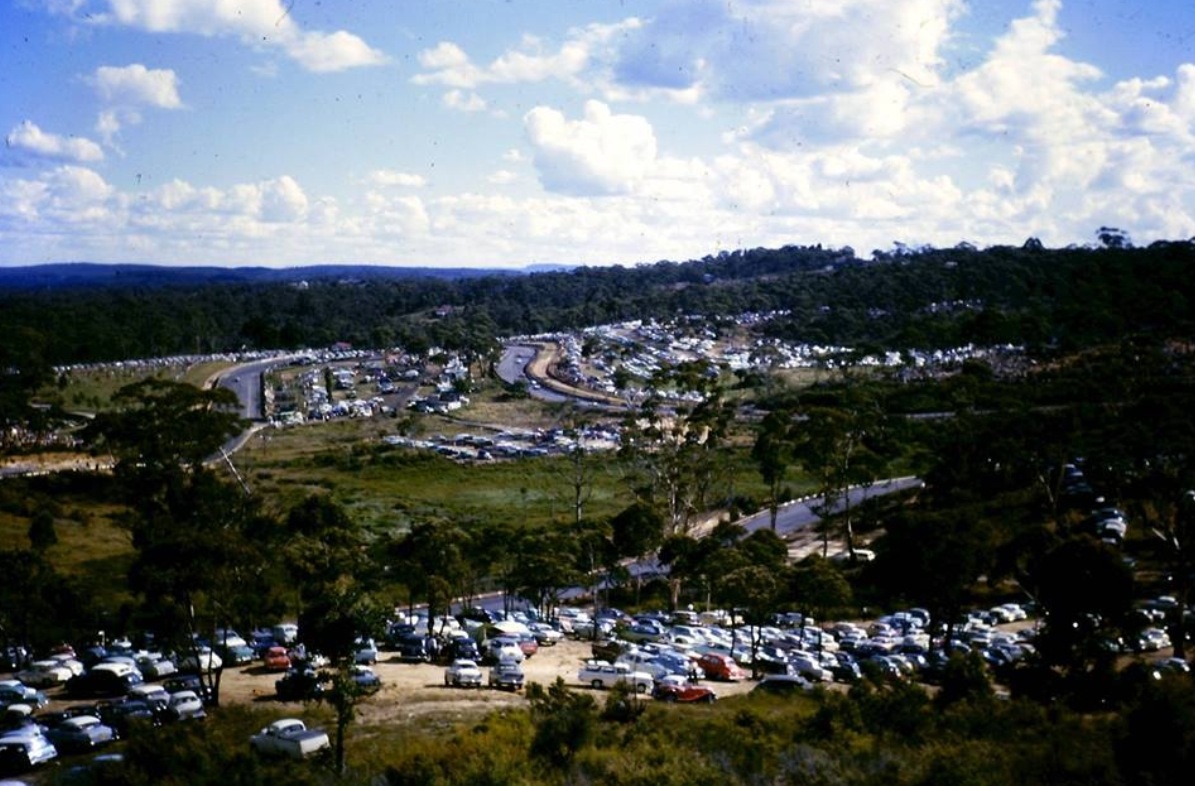
The racing pundits concluded that Catalina would highlight handling and driving ability; both conclusions were correct, but the place was also a power circuit despite its short length. The steep climb out of ‘Craven-A’ and the hairpin at the track’s western end emphasised the need for plenty of mumbo.
The following series of photographs are of that first event all those years ago.
The first race of the day was won by Pete Geoghegan’s Jaguar before a packed house of spectators whose cars were parked a considerable walk from the track.
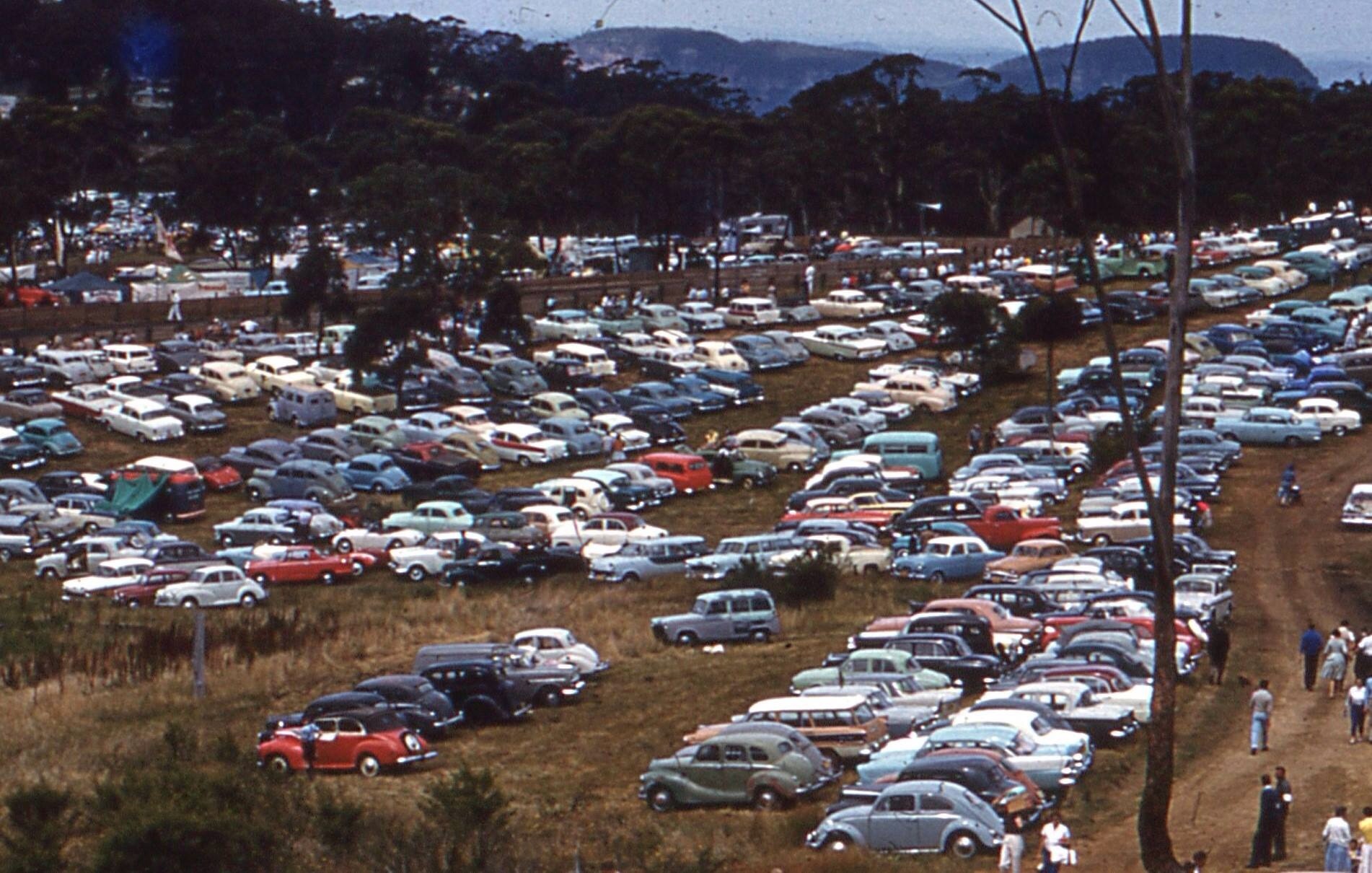
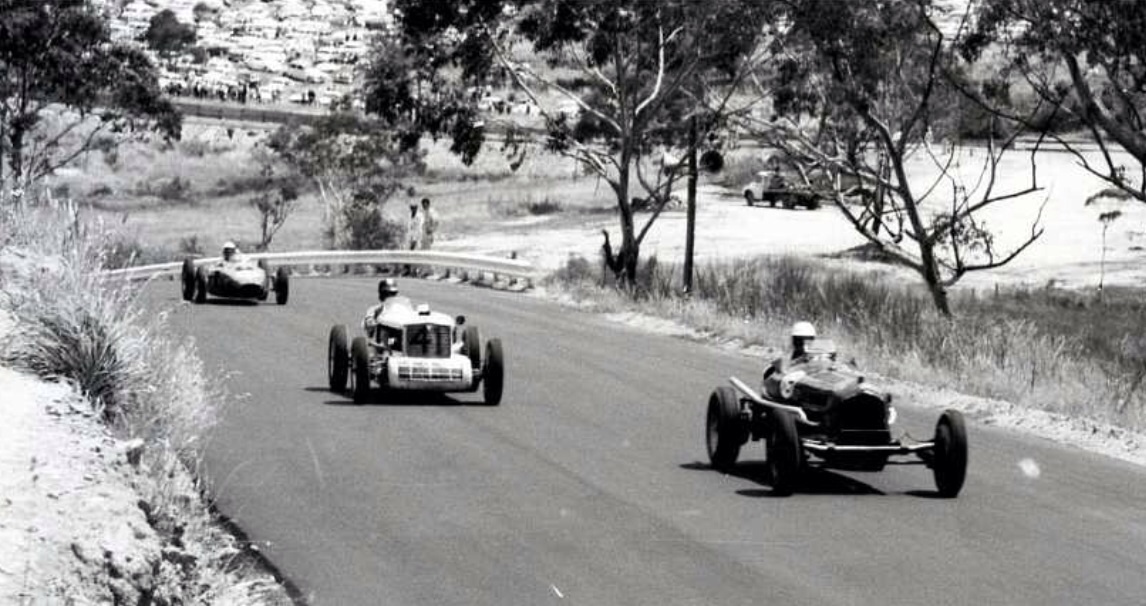
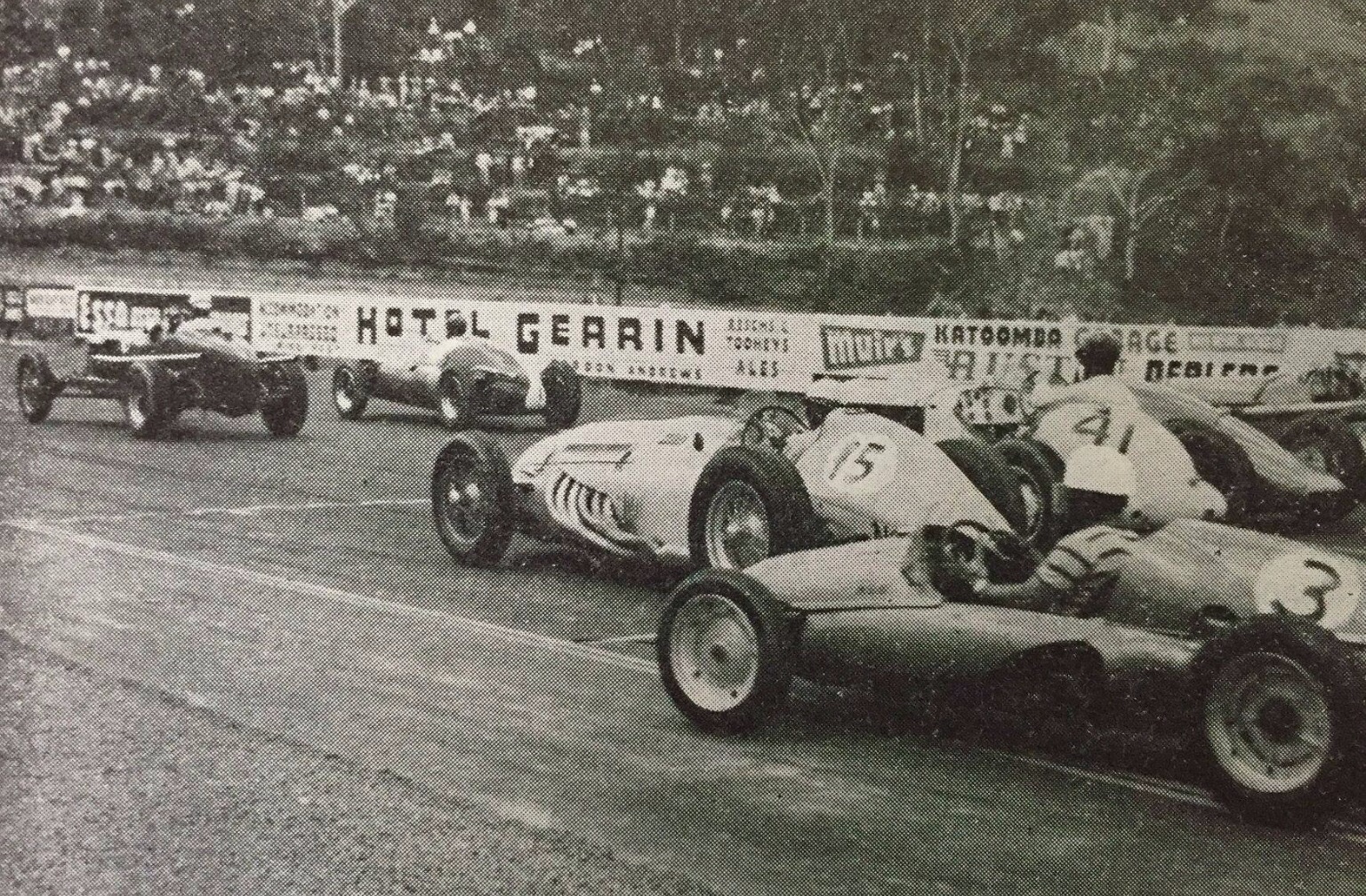
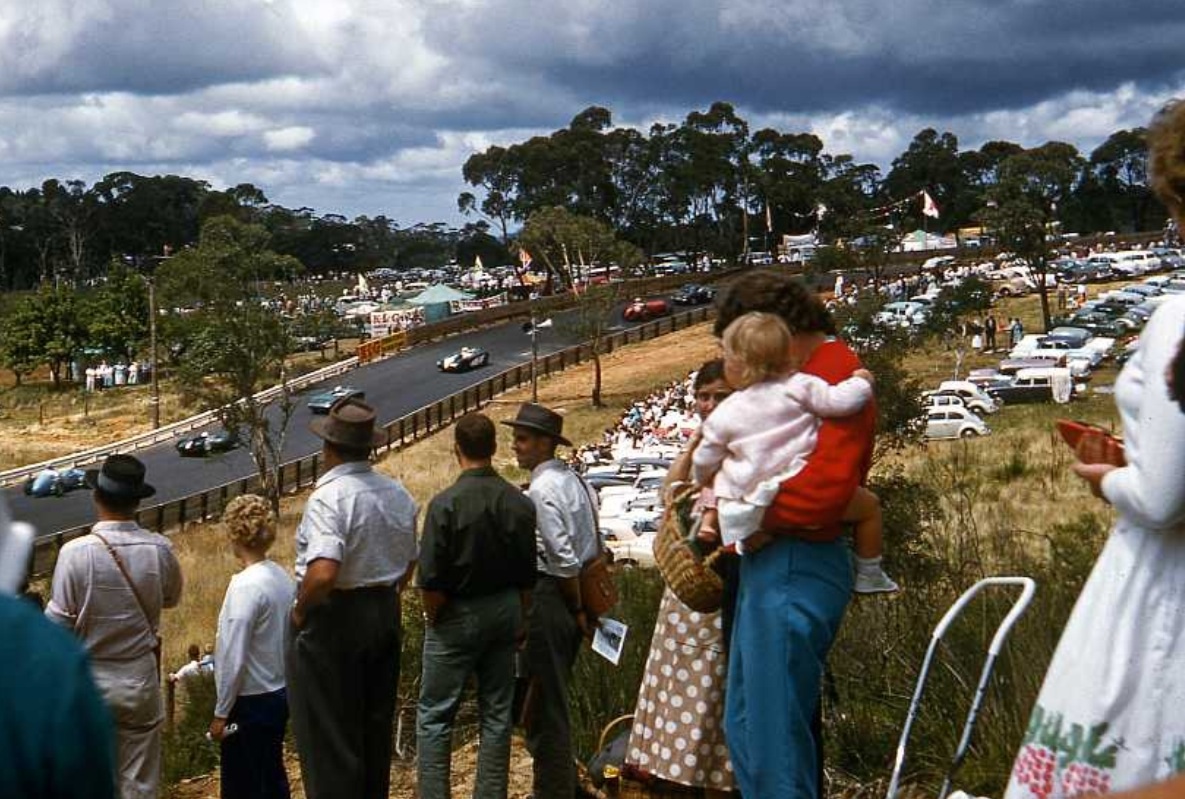
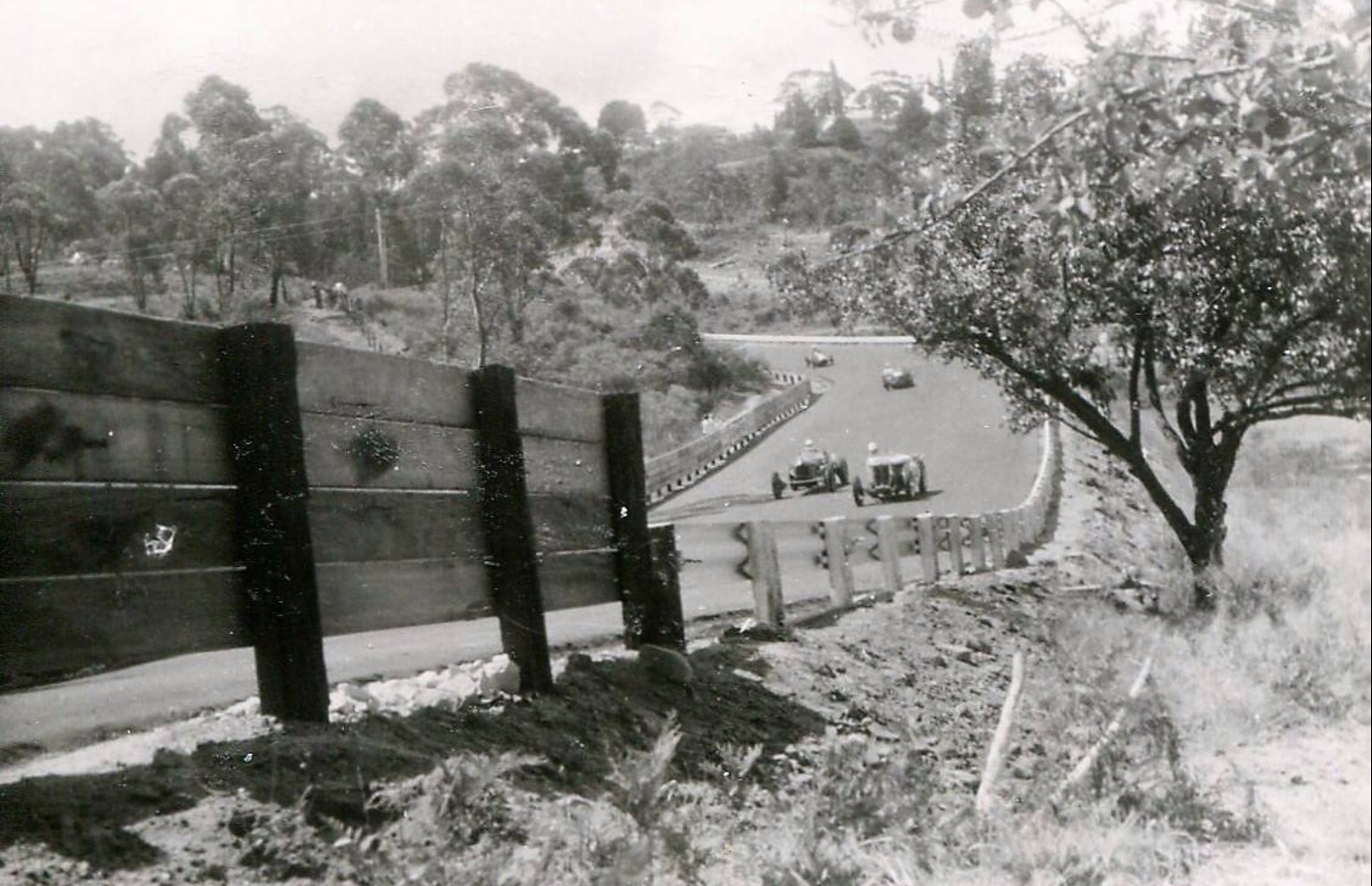
Catalina was not a circuit which hosted much in the way of national championships. Frank Matich won the Australian Formula Junior Championship in an Elfin FJ Ford in October 1962, in what was the only national title contested at the venue fondly remembered by both spectators and racers, one of whom is David Seldon. I love this affectionate piece by the Touring Car/Clubman racer;
‘….Catalina Park…to my mind was far and away the best, most rewarding short track to drive on in Australia. Set in a magnificent natural amphitheatre, the great unwashed would negotiate the winding, always muddy tracks to find their favourite rock to perch on for the day, like herds of feral mountain-goats waiting in the mist in anticipation.’
‘Because of the topography, you could see a good two-thirds of the track from most vantage points and of course to drive on it was a thrill a minute as it climbed and dipped and you raced through the blind tunnels created by the high safety fences made from railway sleepers which were always only centimetres away from certain expensive disaster.’
‘The whole weekend was as much a fun thing as anything. An event in itself. Beginning with the winding 100-mile drive from Sydney (the keen ones of us always took the longer but much more fun route up the Bells Line of Road and through Mount Victoria), it was a good way to “get your eye in” before the racing proper started.’
‘The early birds were able to stay at the Carrington Hotel which was always the centre of festivities for the weekend, whilst some had to try to get into the other motels littered around the town.’
‘A typical phone call was as follows: “ring, ring, ring…Hello, is that the Echo Point Motel?”…”Yes, how can I help you?” “Just wanted to know if you had any accommodation available for the weekend, etc?””Hmmmm, just let me check…pretty booked out…I think we are full. I guess you are coming up for the motor racing are you?” “Motor racing? Oh no, we are playing golf.” “Oh well, in that case, yes certainly, we have space”. “Great, we’ll have three rooms, thanks”.
‘And then we would arrive and park the trailers around the corner and sign-in, secure the rooms and keys before bringing the race cars into the car park…’
Seldo continues ‘They were certainly the good old days. When Bacardi and Coke was the drink of the day, I recall one Saturday or Sunday night they drank the Carrington out of Bacardi- apparently 6 cartons of it…But Catalina itself was the most rewarding track to drive on, I suspect because of the variety of interesting corners, the gradients, the narrowness, the danger, the totally unforgiving nature of it, and I guess just the sheer fear and consequent adrenalin. Amaroo Park was a poor cousin by comparison. Ahh, the cost of progress!’ David concluded.
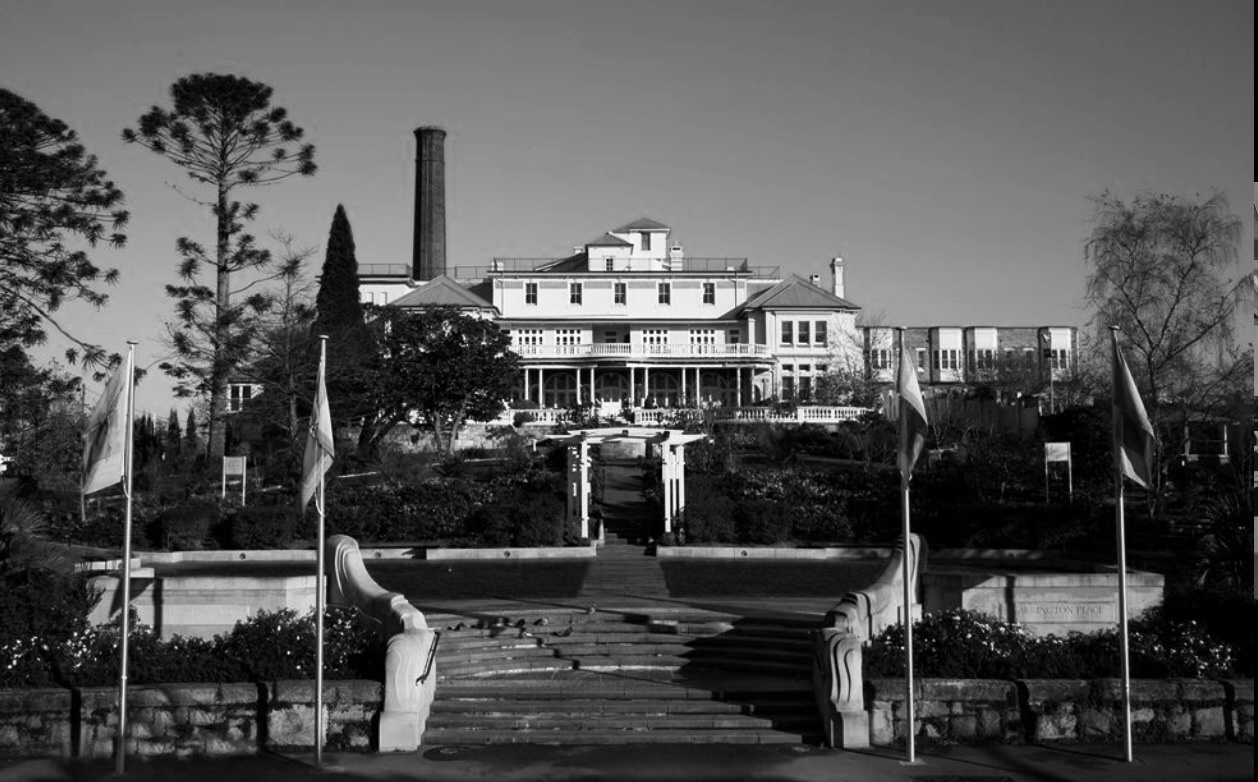
It’s interesting to look at Bell’s view on the market positioning of the circuit amongst its Sydney contemporaries: Warwick Farm and Oran Park, and its gradual demise.
‘State Championship races were a major fare in the early days’, wrote Bell. In fact, State Championships were run at Catalina on four occasions in 1962! FJ in March, ‘NSW Championships’ in May, ‘NSW Sports and Touring Car Championships’ in August and the Australian FJ Championship in October. From 1963 and beyond, the meetings were characterised as ‘Open National Meeting’.
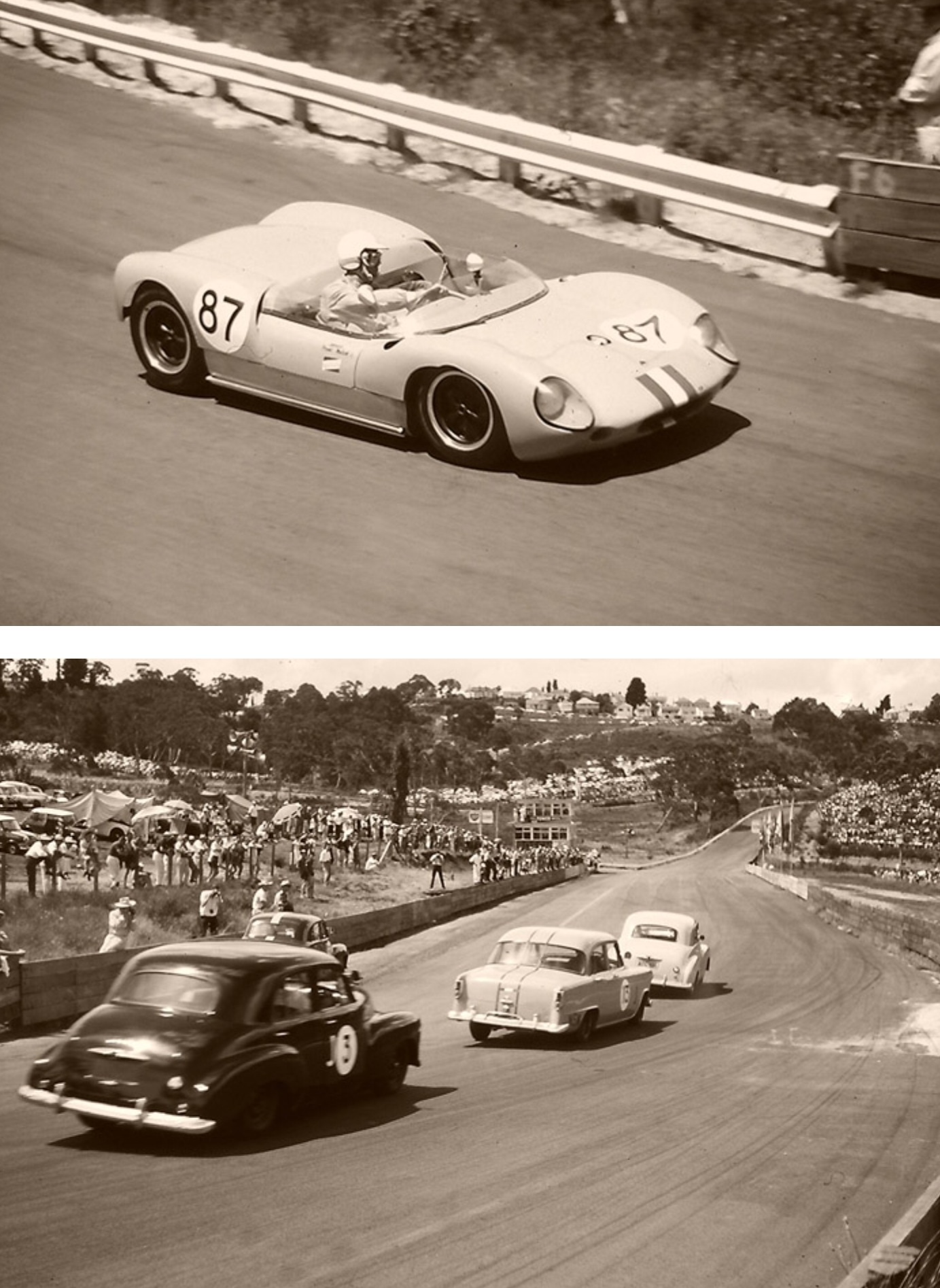
‘The organisers very much directed the leanings of the racing towards Touring Cars’ said Bell, and successfully so, the ‘Neptune Series’ provided close racing and nurtured talent, its first winner in 1963 was Spencer Martin, who became the Australian Gold Star Champion in 1966-67 aboard the Bob Jane Racing Brabham BT11A Coventry Climax.
‘Matich was the (Catalina) master of the era, and he was a member of the ARDC. Together with the Geoghegan brothers (also Sydney boys) he was the man to beat at Catalina. But that was the nature of the racing at Catalina anyway.’
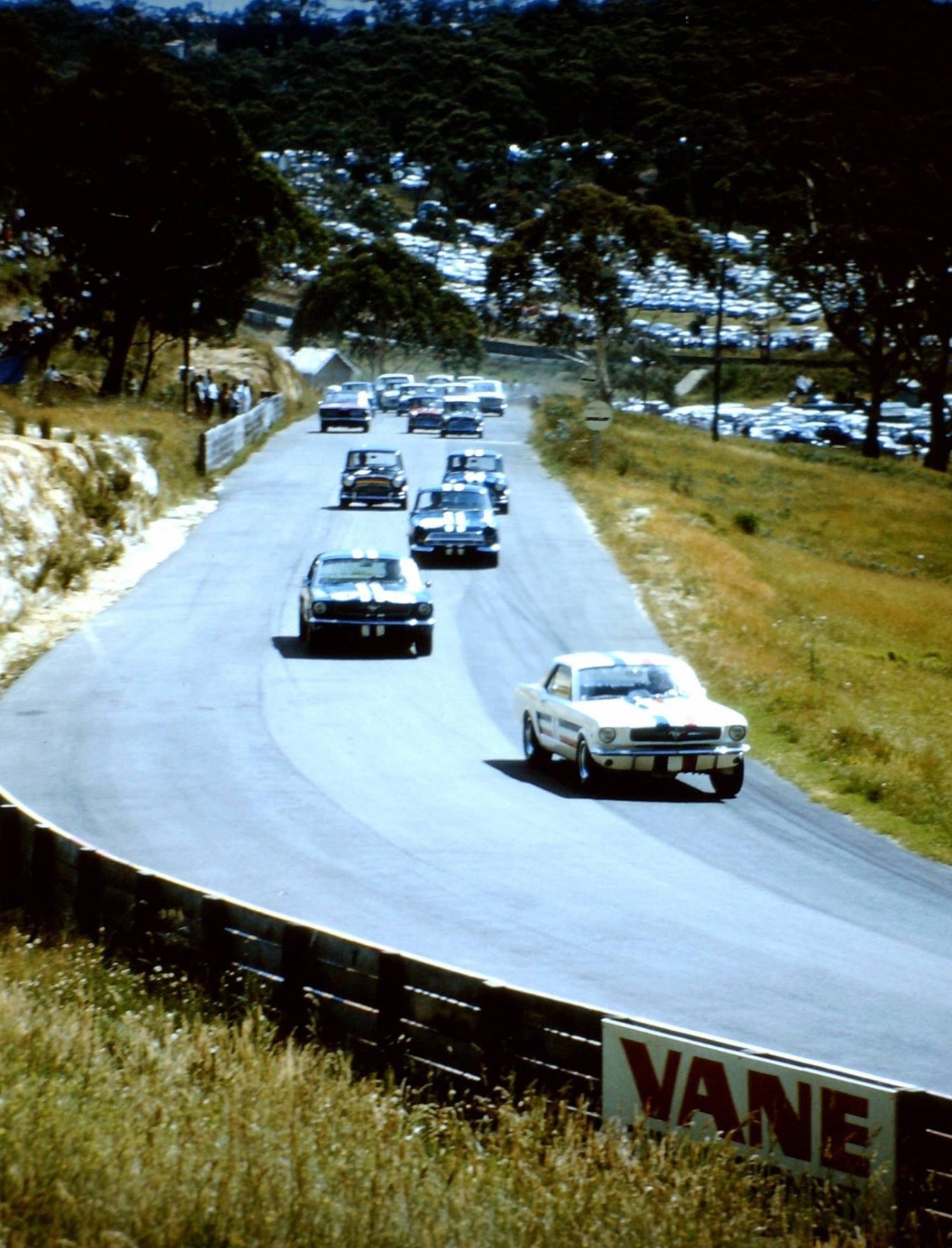
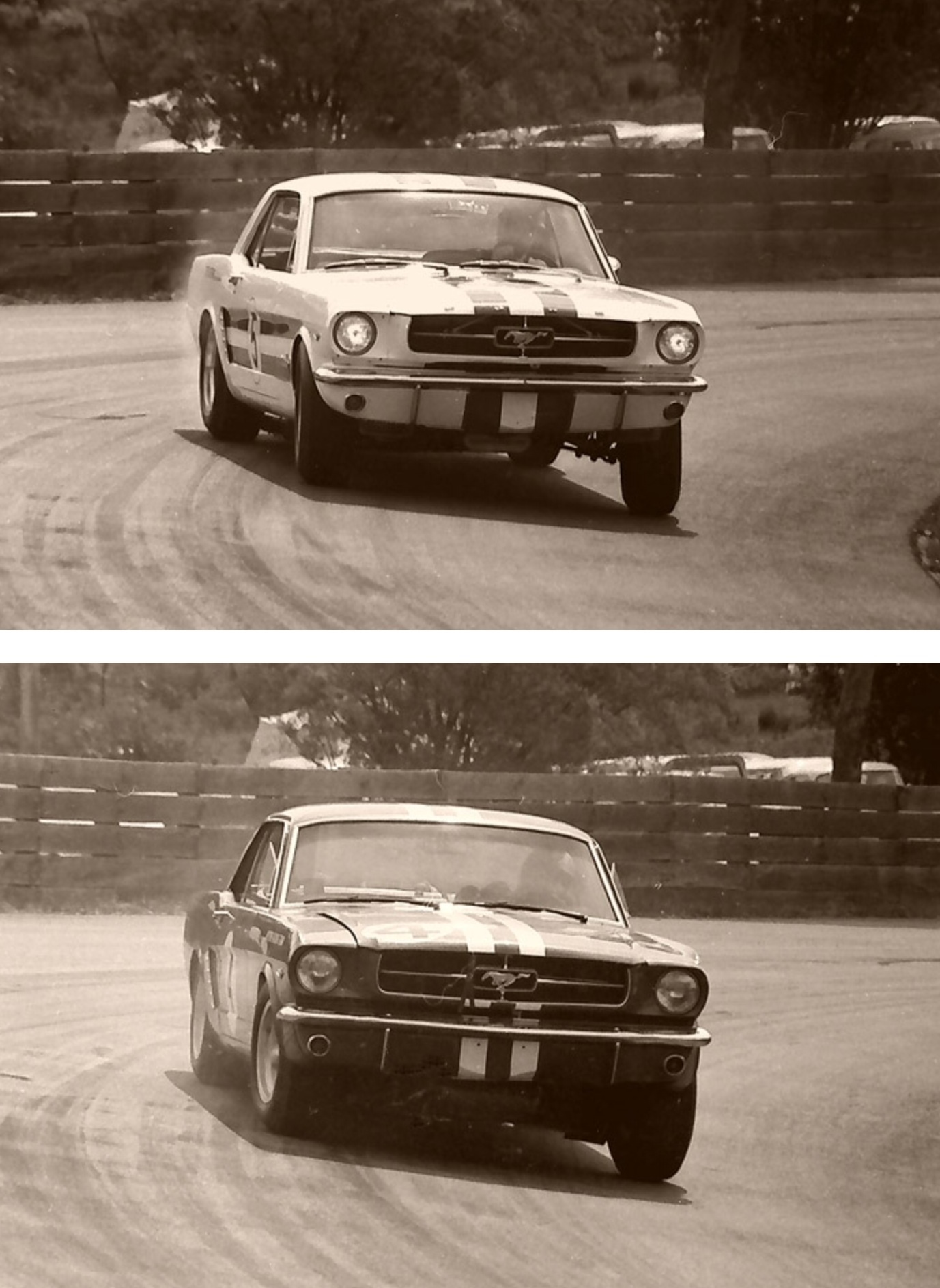
‘It was almost parochial, with the odd challenge for the local boys if there was a (State) title race. It mixed substandard machinery with the latest equipment, unlike the path being pursued by Warwick Farm, and was run by ARDC Chief, Jack Hinxman, with almost callous disregard for the professional era the sport was entering. They were ‘local’ meetings with occasional interstate participation.’
‘It was a form of racing very much beneath the standard of the circuit itself. Ignoring the ever-present fences, it was a challenging circuit and deserving of better. Those were heady days, and crowds were good through to 1966. But the face of the sport was changing, and Catalina wasn’t, so the decline began. By 1968, the old specials were no longer seen at the kind of meetings Catalina was purporting to put on.’
‘Oran Park had long since given Sydney a second circuit, and the ARDC had another outlet for its activities. Oscar Glaser had embarked on the Amaroo Park Project as long ago as 1958…races were being held on a small part of the proposed circuit by 1967. The ARDC was ultimately to abandon the BMSDC and Catalina in favour of this much more convenient venue, Bell wrote.
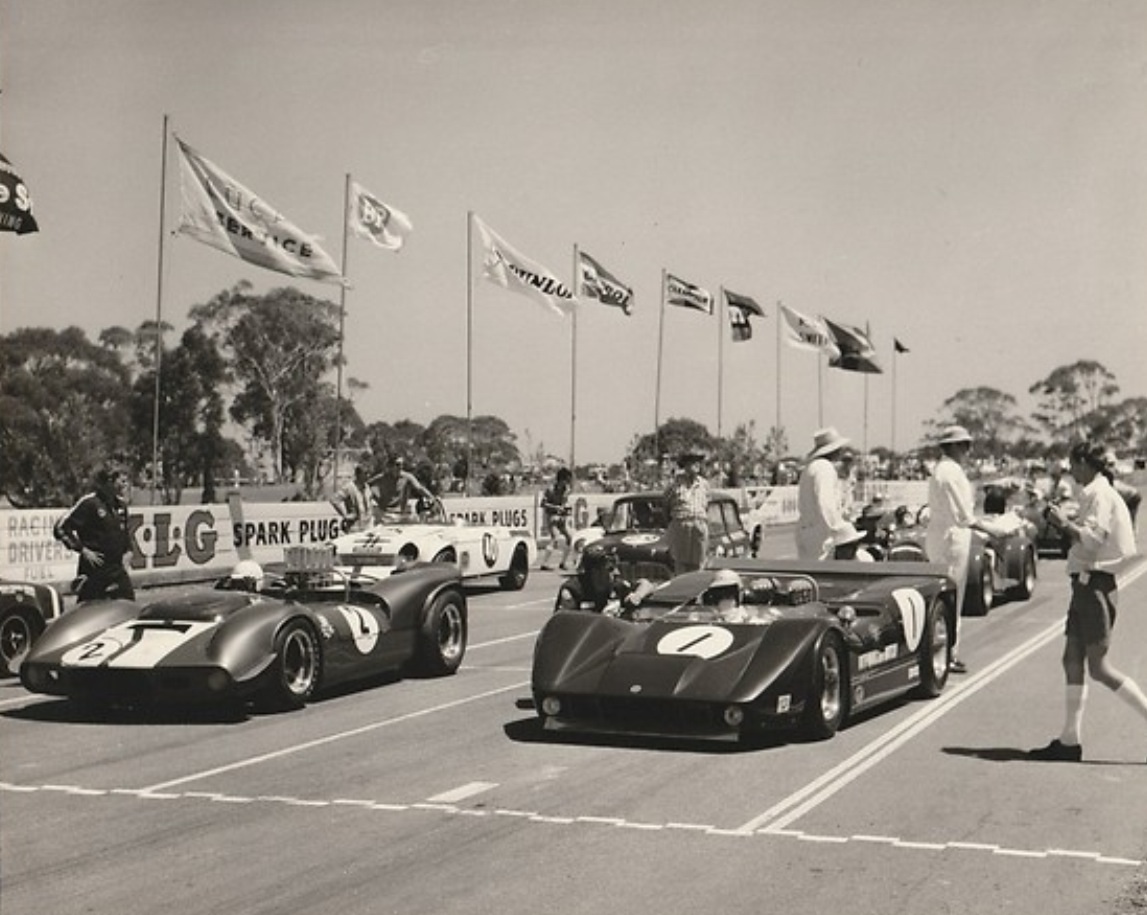
Other factors included the hilly Catalina terrain, which made it uneconomic to adapt the place to ever-evolving modern safety standards. In addition, the Blue Mountains Council’s view of the circuit had hardened, whilst some sources have it that the BMSDC’s debt to the Council was not being repaid on time.
The track’s last open circuit meeting was held on January 25, 1970. Catalina continued as a rallycross venue; the televised sport also took place at Calder, with rallycross surviving well into the 1980s. In addition, the tarmac was used for lap dashes or club sprint meetings well into the 2000s unofficially.
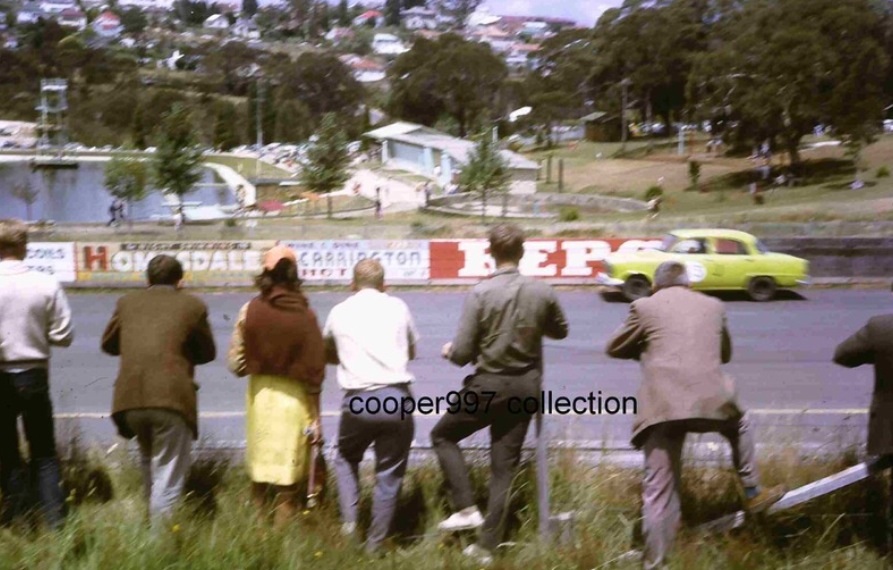
A new Olympic Pool adjacent to the original was opened in 1972. In 2003, the Katoomba Indoor Sports and Aquatic centre catered to the needs of the burgeoning population of the area on the site where once there was murky water and tadpoles. The original pool with wire netting and cement shelter still exists, serving mainly as a duck pond.
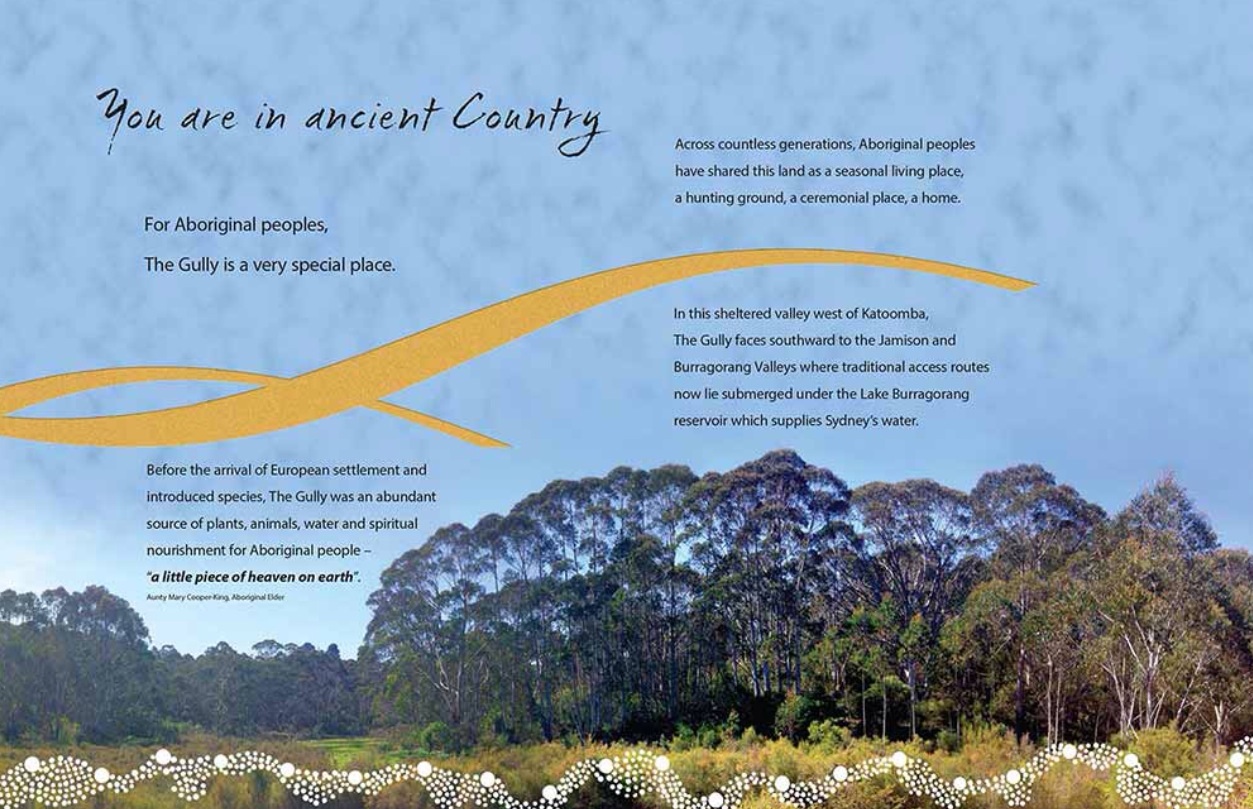
In 2002 The Gully was declared an Aboriginal Place, whilst still owned by the Blue Mountains Council.
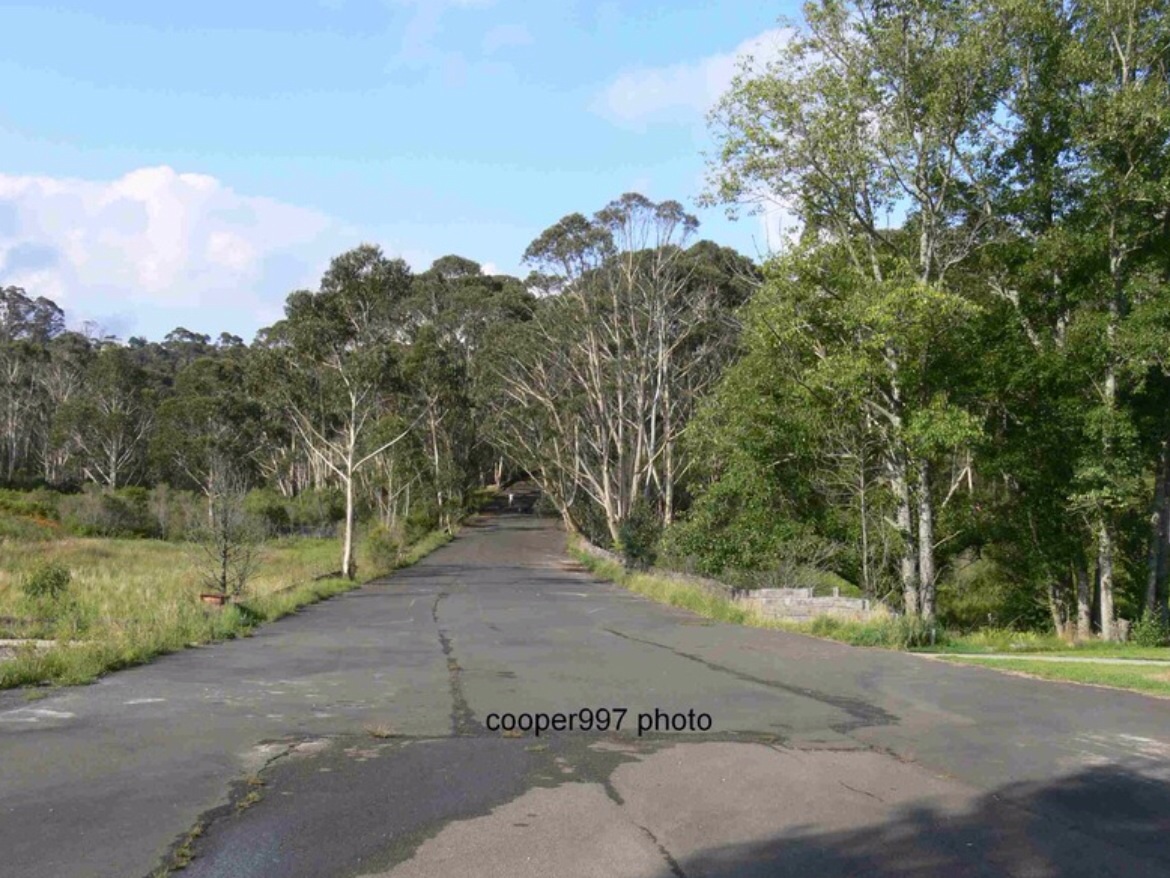
Catalina Now…
I’ve not visited Catalina Park, unfortunately, despite visiting Katoomba quite a few times over the decades. But my friend, motor racing historian Stephen Dalton, visited in February 2015 when the photograph above was taken.
Some excerpts of his The Nostalgia Forum post about his slow lap on foot are as follows.
‘…Hec Muir and his many helpers from the Blue Mountains Sporting Car Club created a miracle to build a circuit in the environs where they lived in the late 1950s. Indeed, in these politically sensitive times in which we live, it was not necessarily done in a politically correct manner. But they set out to build a circuit, and they achieved their goal. Even better, the competitors and crowds came, albeit for just 9 years of racing.’
‘…For a circuit that has been dormant approaching some 25 years (since Car Club sprints), the bitumen remains in surprisingly good nick…there is plenty of ground cover with nature taking it back and overhead canopies will continue to minimise sunlight reaching the circuit blacktop.’ Note that things may well have changed in the decade since Stephen visited!
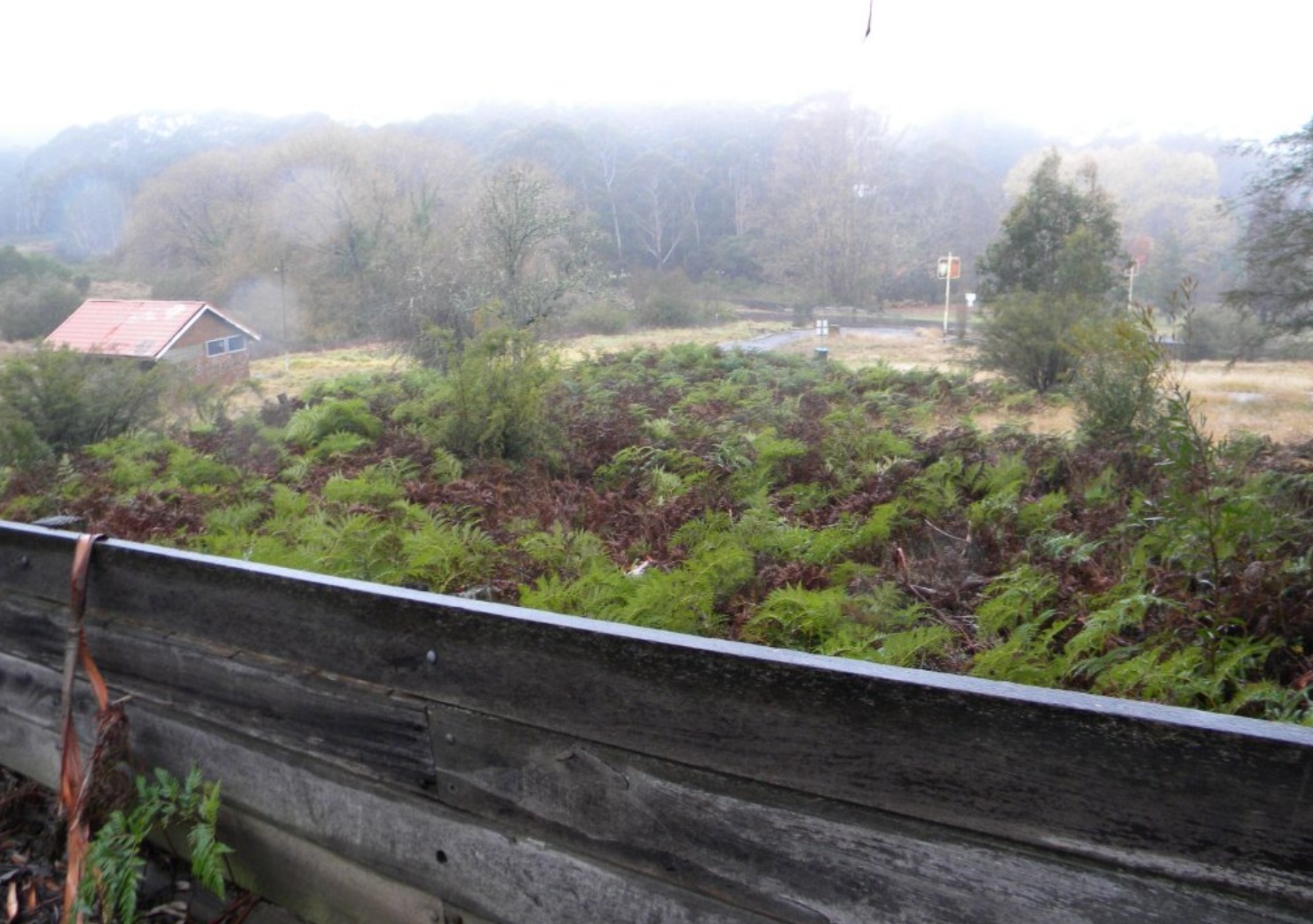
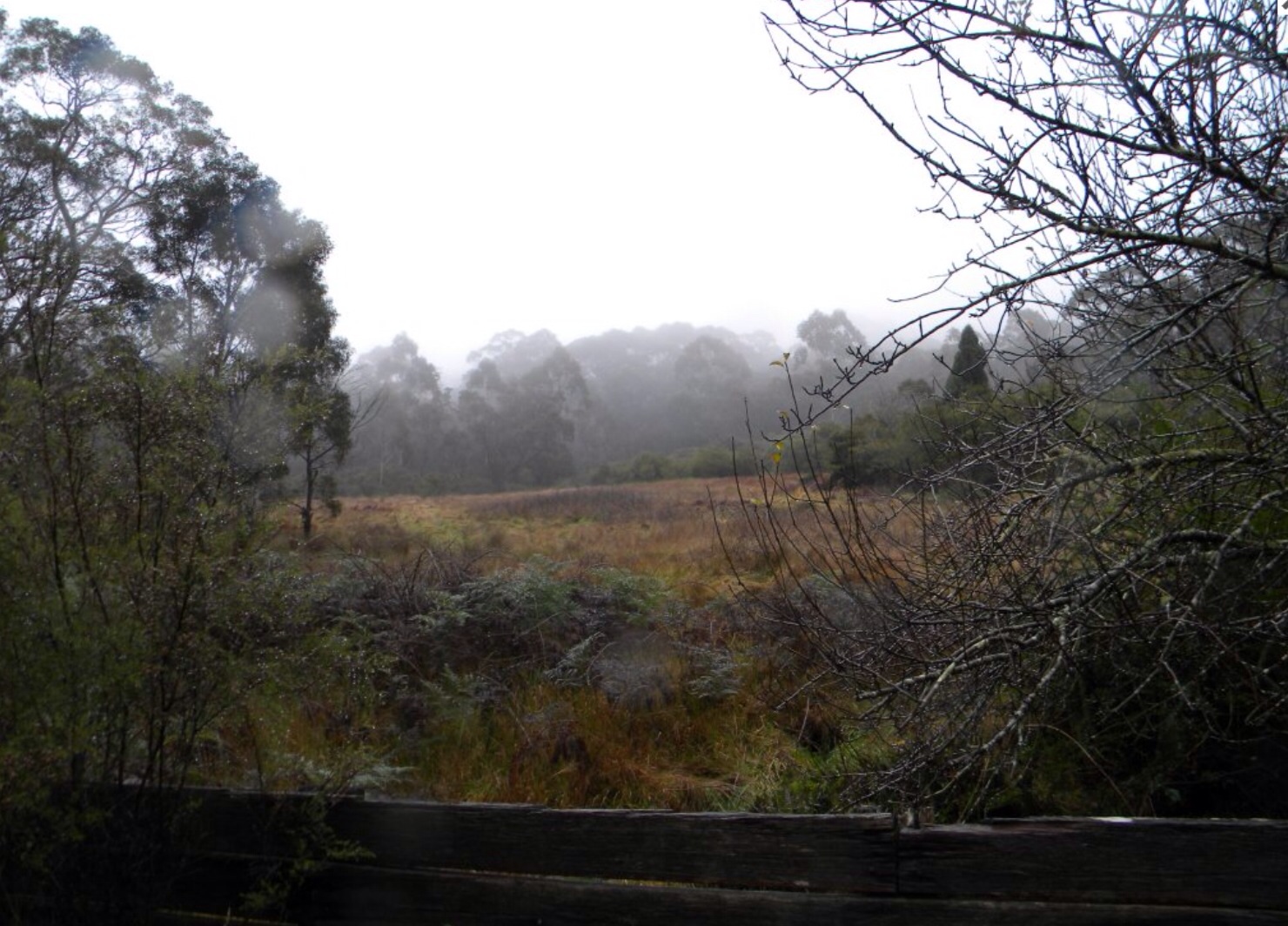
‘Walking around from Craven-A, spring water meanders across the circuit that has also meant there’s a section fenced off where erosion has done its thing. Plus, a few sections have been concreted to stop the erosion from continuing. There’s also a tree or two that has fallen over, and the council workers no doubt received the memo to clear the walkway, but otherwise, pretty much leave it in the manner it fell. Because with The Gully…having been given back to the Aboriginal people, its use as a walkway for people, often with their dogs or cyclists, is what it’s about now. That, from my perspective, is better than it being completely fenced off, whereby no one can enjoy it, or motor racing people like us can visit.’
‘There is a little bit of motor racing infrastructure still there, the rusting metal and rotting wooden guardrails of the inner and outer circuit perimeters. As too are the once BP start/finish line signage poles, although the signs have since been souvenired. The rusting hulk of the starter’s steps remains near the inner guardrail, and a signal box that may have once been for communications or power lay on the ground close to the start/finish straight…’
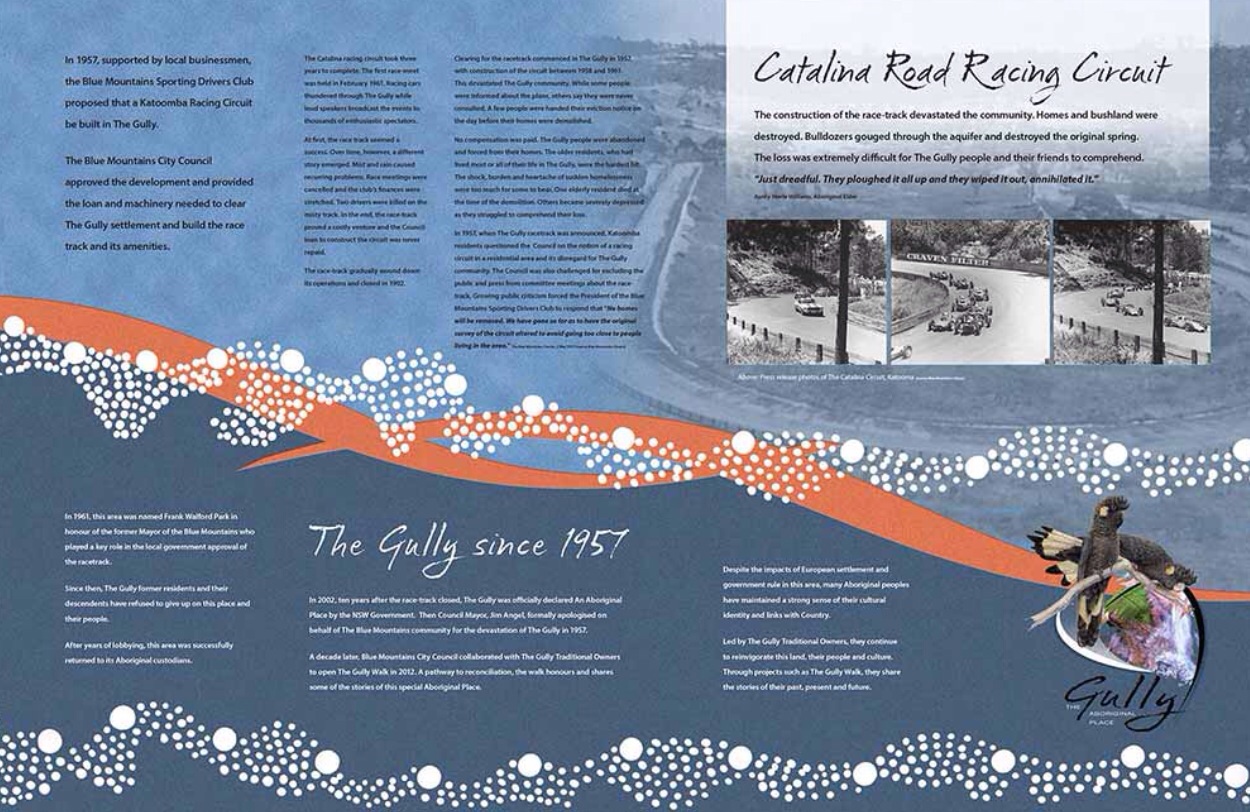
‘It is no doubt a sensitive issue with the Aboriginal heritage of the site, but there is only a small amount of information relating to the motor racing heritage. Maybe we should be grateful there’s some recognition. So, probably a bit pointless forming a working bee to get it up racing again!’ Stephen concluded wistfully.
There has been a fair bit of chatter about the preservation of what is left of the circuit, with a view to running at least some demonstration-type events, but the history of the Aboriginal dispossession in 1957 and subsequent events makes this highly unlikely, to say the least. So let’s take a look at the development of the area up until the mid-1950s, the dispossession of the residents and events in more recent times.
The development of The Gully was undertaken, as was the case globally in the late nineteenth and middle twentieth centuries, without due regard to the ecological values many of us now hold dear. A grazier filling in a wetland in the late 1800s and Gates bulldozing a natural swamp to create the dam for his park in the mid-forties were hardly big deals then.
Far more controversial, and callous, even in 1957, was the forcible removal of the residents of The Gully, noting that ‘A Heritage Study of The Gully Aboriginal Place, Katoomba NSW’ by Allan Lance Consulting in August 2005 records that Aboriginal people have been in the Upper Blue Mountains for thousands of years.
Lance wrote that by the mid 1950’s The Gully had ‘…become a refuge for the poor, both aboriginal and non-Aboriginal, who struggled to eke out an existence on the fringe of mainstream Australian life.’
‘Like the Aboriginal camps on the outskirts of many Australian towns in the early 20th century, those who lived there fought for a role in the economy of the town, working in jobs that were available, and sending their children to the local schools’.
‘They were accepted as individuals, but their status as outsiders remained, and when it became possible for the respectable citizens of the town to remove the camp by building the Catalina Park Racing Circuit in the late 1950s, the opportunity was taken, and this small community was destroyed.’
‘Those families were forcibly evicted from their homes, extracted from The Gully and one woman died of a heart attack during the raid’ The Habitat Advocate reported in 2009.
‘The far-reaching connections with those who once lived in The Gully and the nature of the eviction of Aboriginal Gully residents in the late 1950s, have led to The Gully becoming a rallying point for Aboriginal people in Sydney and the Blue Mountains and throughout Eastern Australia,’ Allan Lance wrote.
‘More than just an Aboriginal Place, this location also has significance for the descendants of the non-Aboriginal families who lived side by side with the Aboriginal people, sharing their struggle, often assisting with food and friendship when times were tough’.
In 1989, local residents, concerned about the poor state of the valley and with a desire to stop car racing, formed The Friends of Katoomba Falls Creek Valley Inc, who lobbied the Blue Mountains Council to have car racing banned and to restore the valley to its natural state.
In 2000, a Darug elder was responsible for achieving proper recognition for The Gully as an official Aboriginal Place; this was formalised on May 18, 2002. The Gully became protected under the relevant sections of the NSW Parks and Wildlife Act, which requires the land to be managed for the benefit of the community by the Blue Mountains Council, who still own it.
So what does all of this mean for any future motor racing use?
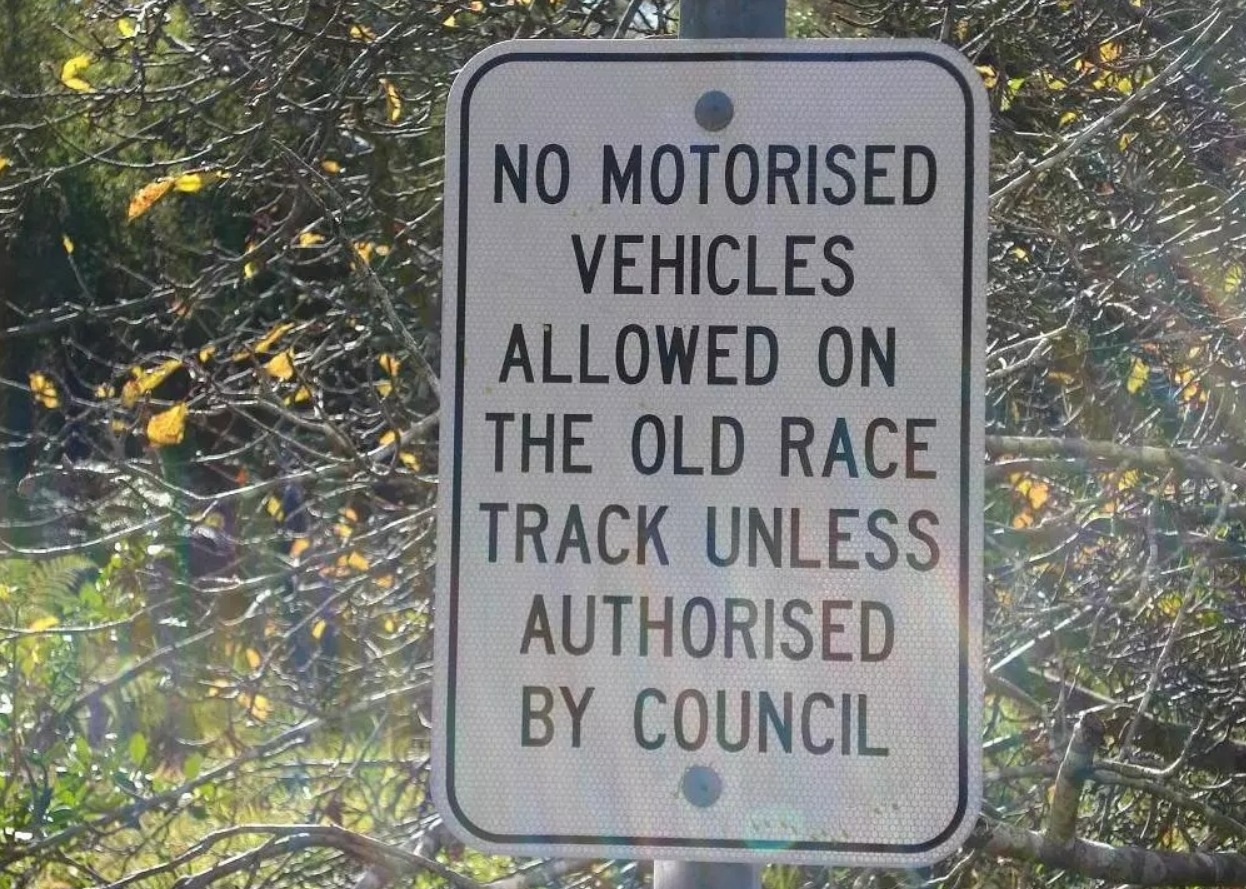
Being an Aboriginal Place means that management direction is given by the National Parks and Wildlife Act. Under this act, the Blue Mountains Council must take every care to protect and enhance Aboriginal values. To do that requires an archaeological study (the Allan Lance study) and ongoing consultation with the Aboriginal community over management of The Gully.
Note that the Local Government Act requires the Blue Mountains Council, as owners of the site, to manage it for the community and keep it safe for local visitors. As usual, the only winners in all of this lot will be voracious lawyers…
There is more though.
The Blue Mountains Council is required to obtain a Section 87 permit (a permit which allows exemptions to activities which otherwise may disturb the ground or old growth trees) before any action that may impact upon the Aboriginal values. For such a permit to be issued – such as a permit to use the land for some type of motor-sport event – it is first necessary for comprehensive consultation with the Aboriginal community to ensure its values are being protected.
Given the history of The Gully, particularly the events of 1957, I rather suspect the chance of a Section 87 permit, or consent in whatever form to be issued to allow a retrospective event, ignoring the fact that council funds are rather unlikely to be disgorged to rebuild the track, as having five-fifths of fuck-all chance of success.
Ironically, the Blue Mountains City Council is undertaking a review of the existing plan of management for The Gully at the time of writing, March 2019, click here to participate ;https://www.bmcc.nsw.gov.au/media-centre/gully-aboriginal-place-have-your-say-on-plan-of-management
It was probably a rather long digression but sometimes the motor racing history of Australia fuses with our social and societal history in a most unfortunate and sad kind of way, this is one of those occasions.
Please note that I am not suggesting racers were involved in ejecting people from their homes, but it is the case that Catalina was the catalyst for a series of events to build the track inclusive of removing a group of people who were in the way.
Younger Australian readers may care to remember, or be told, that we whiteys didn’t even include our Indigenous Brothers and Sisters in our census until a successful referendum in 1967 gave the Feds (Australian Parliament) the Constitutional power to make laws in relation to Aboriginals and Torres Strait Islanders, inclusive of their incorporation in our census.
Unfortunately the referendum did not recognise Aboriginal and Torres Strait Islander people as first peoples – odd given it’s a statement of fact – at this point a left of centre political dissertation by me of this particular constitutional opportunity is probably a step too far from an article which was 200 words about Leo, KB, Maxxie and Catalina Park until one digression led to the next. So here we are at 4800 words!
Note too, that I wrote it in 2019 and forgot to upload it, but I can’t be farnarkled checking what’s happened in the area in the last six years, and yep, I’ve not forgotten the Indigenous Voice referendum on October 14, 2023…
Etcetera…
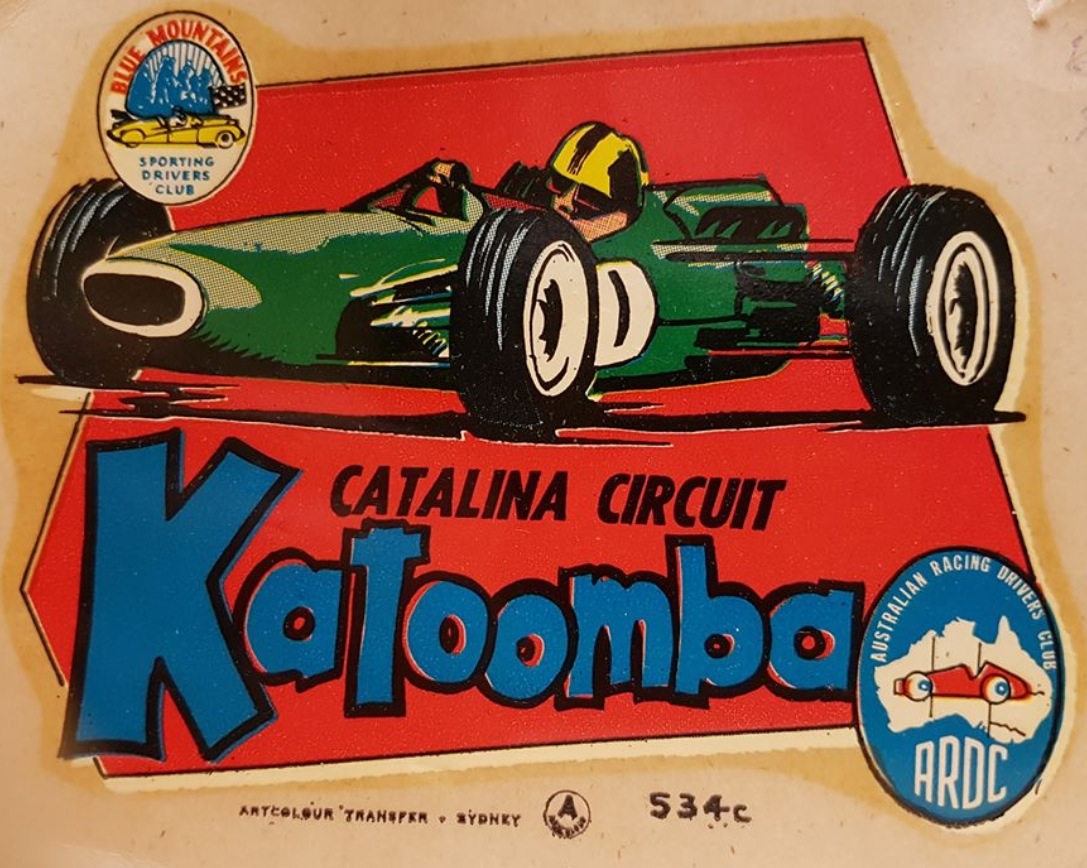
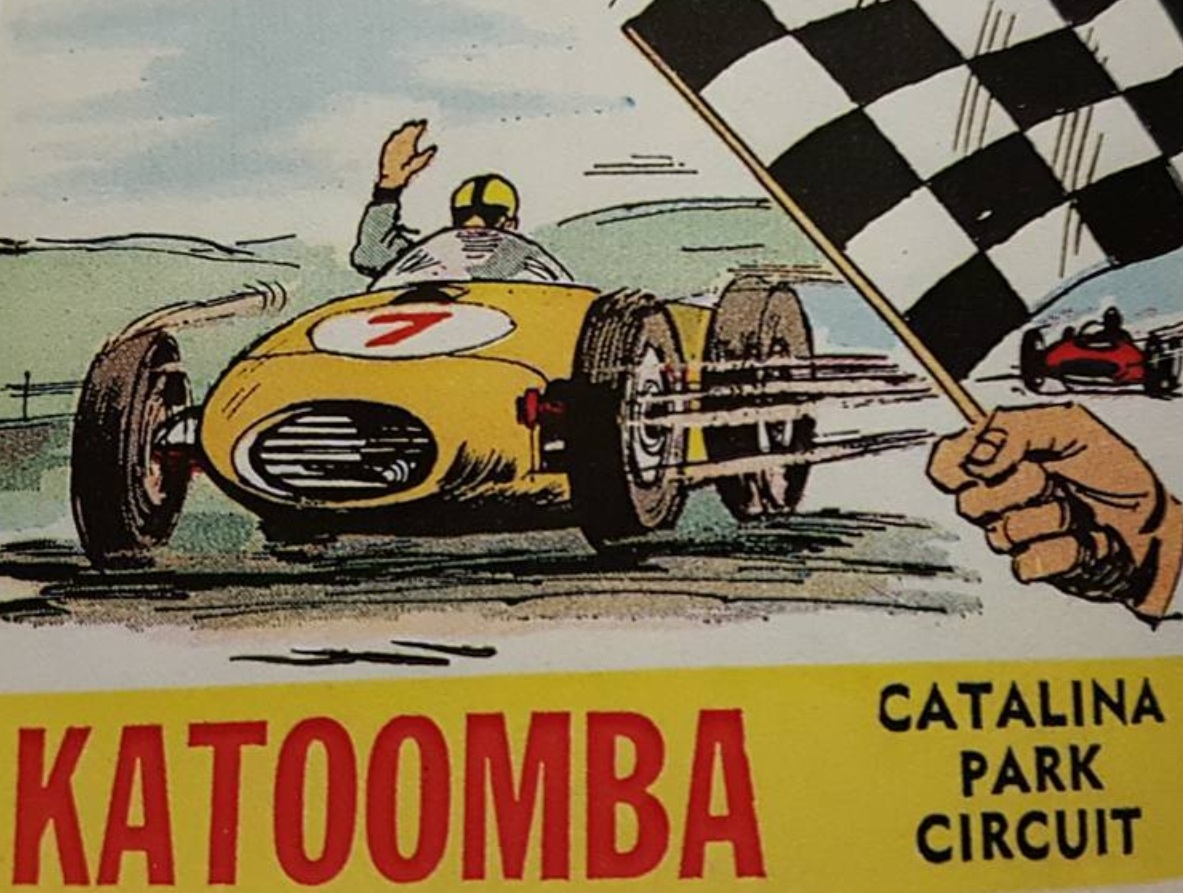
Australian Racing Drivers Club car decal with a stylised Lotus Climax, perhaps.
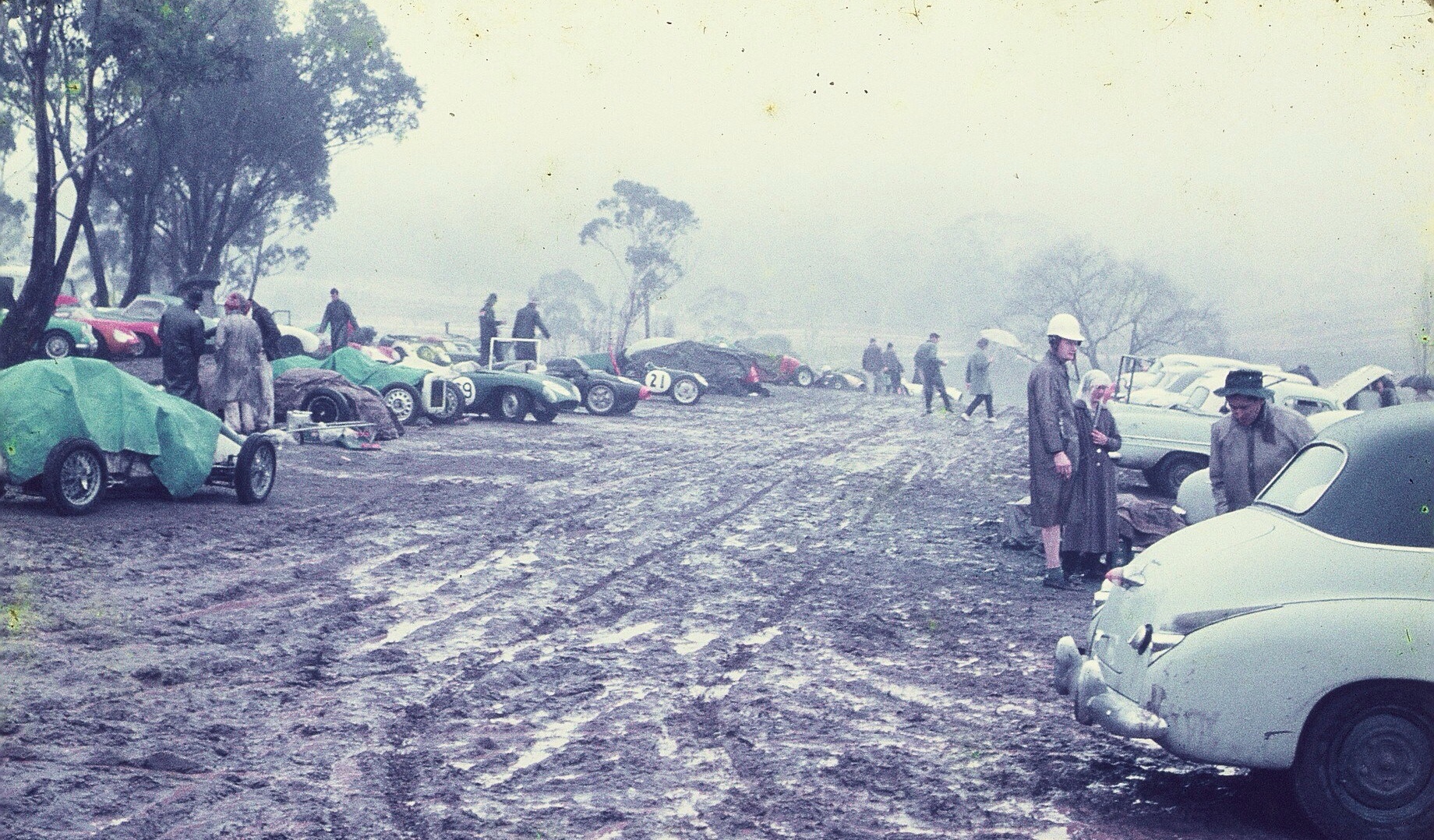
Oh goodness!
What a challenge for drivers and crews, the very nature of a racetrack in the mountainous areas of any country has its challenges, even in a dry continent such as Australia.
Catalina was notorious for its wet, muddy and foggy conditions, with meeting and event start times being adjusted accordingly to the weather’s whims, with plenty of organiser, competitor and spectator angst as a result.
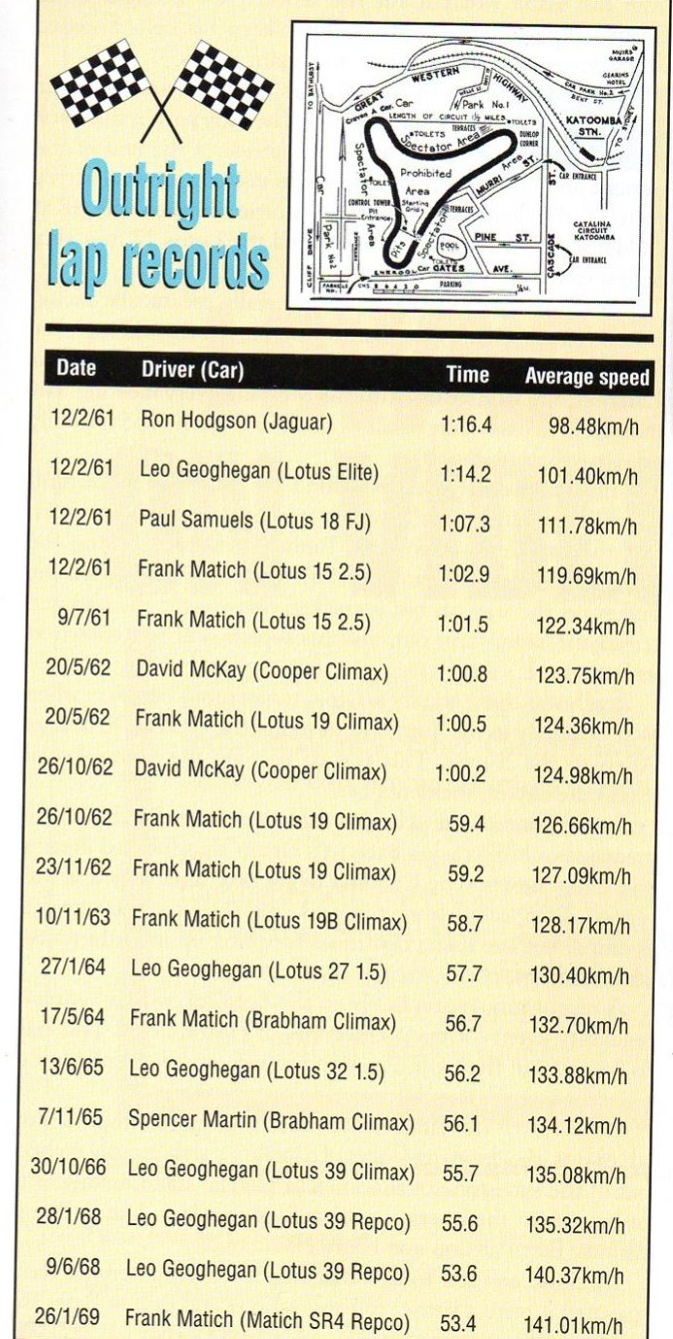
The list of lap-record holders is lifted from Ray Bell’s Motor Racing Australia article, with the Geoghegan and particularly Matich names looming large.
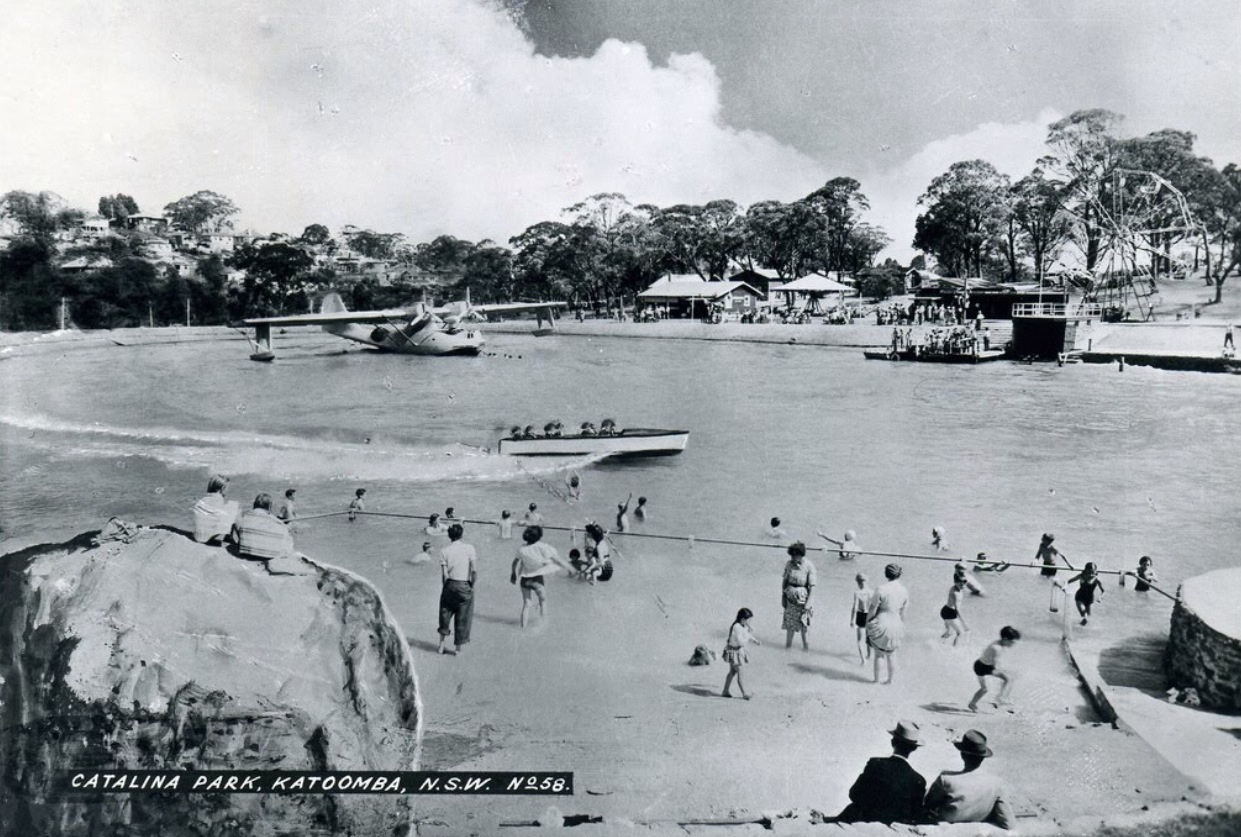
The Katoomba Catalina was a PB2B-1 with Serial Number A24-202.
Many of you are aviation enthusiasts, so let’s pursue this tangent for a bit. A wonderful bit of Sydney history is that Flying Boats operated out of Rose Bay in the harbour from 1938 to 1974.
In fact, Rose Bay was Australia’s first International Airport, with the Short Brothers built, long-range Short Empire Flying Boats, the provider of amazing, luxurious travel to the UK pre-War. The trip took 10 days, flying at 150 mph at 5000 feet for the great, the good and the wealthy.
The Catalinas were the best-loved flying boat of all. During the conflict, they were long-range patrol bombers and undertook night-time flights mining Japanese harbours in the Pacific.
In fact, you can still do joy flights from Rose Bay. A jaunt to Palm Beach and back is wonderful and will not destroy the budget completely. Read this piece on the Sydney Rose Bay Flying Boats; https://sydneylivingmuseums.com.au/stories/flying-boats-sydneys-golden-age-aviation
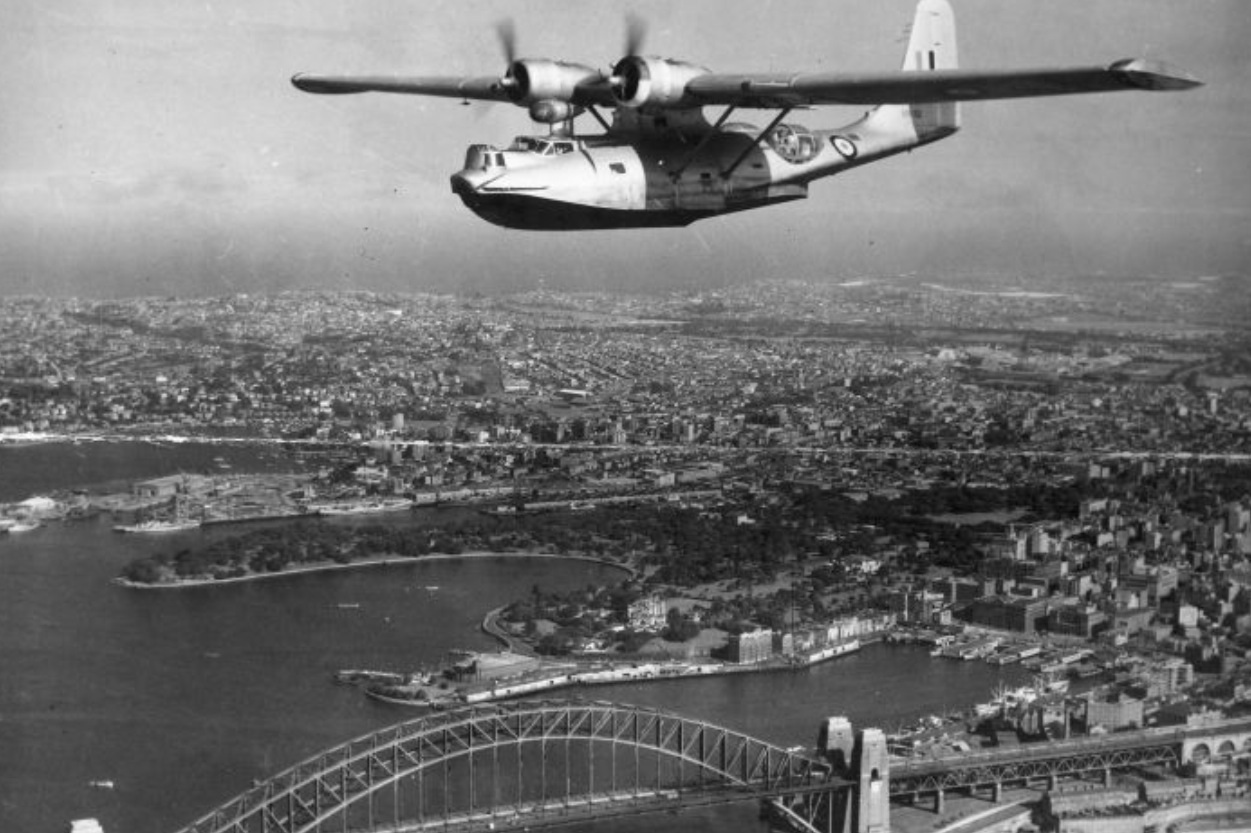
Butler Air Transport acquired three surplus RAAF Catalinas: A24-202, A24-362 and A24-376 on October 21, 1946. Butler’s were only after the engines and reusable parts. The stripped machines were then sold at auction to John Cain, who used them, and another Catalina A24-355, as floating guest accommodation at his Stoney Creek holiday park near Toronto, NSW. A storm flooded the place, which led to its demise circa 1950.
During the calm before the storm (sic, sort of), in 1948, Horace Gates bought good ole A24-202 for his park at Katoomba. In a sad end for A24-202, after the demise of Gate’s park, the Blue Mountains Council purchased the land, removed the Catalina during 1954 and then sold it to Sheffield Welding and Engineering. It was dismantled on site and scrapped.
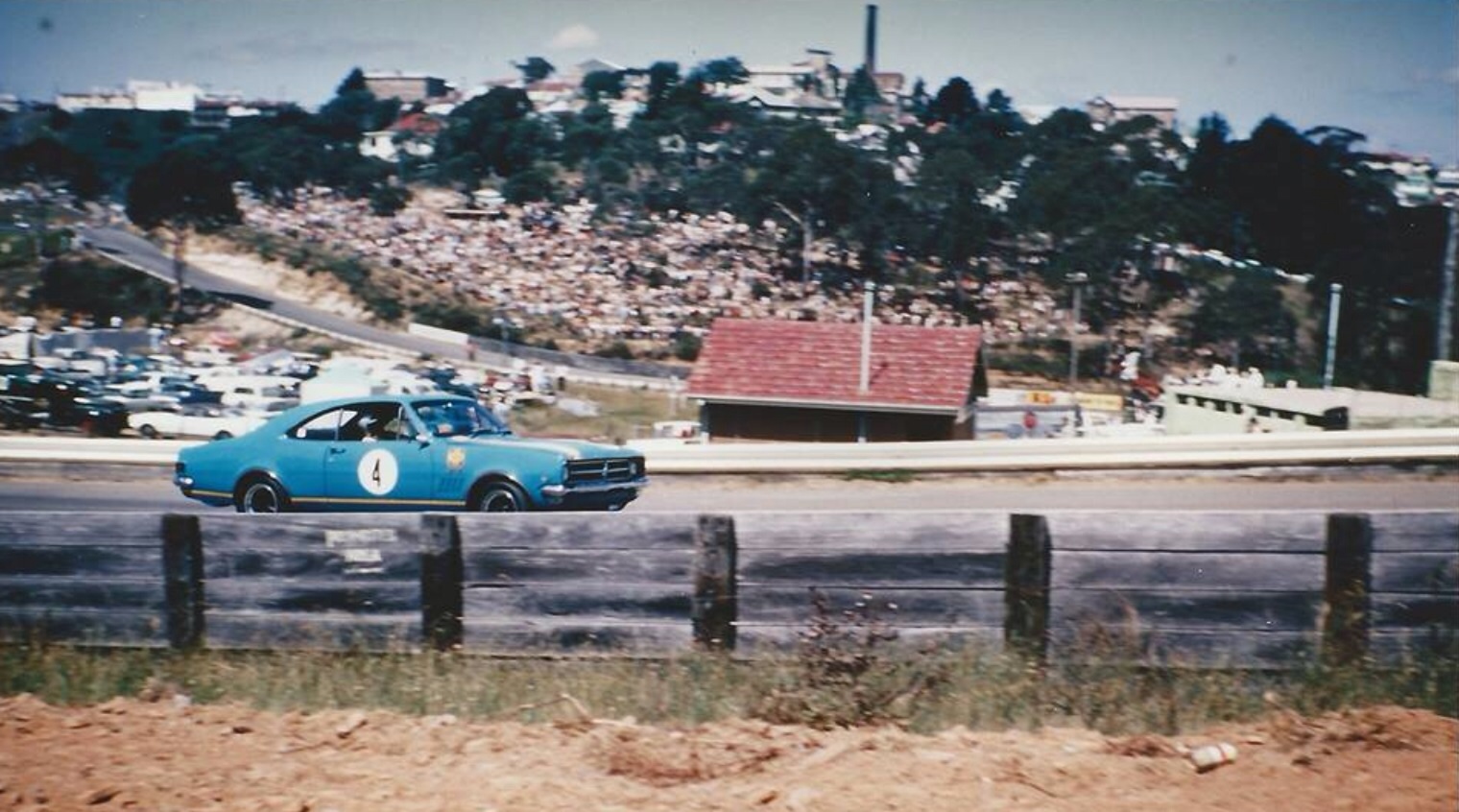
Norm Beechey’s HK Holden Monaro GTS 327 at Catalina in 1969. I don’t like his chances against Geoghegan at home that year. How did he fare against the local ace?
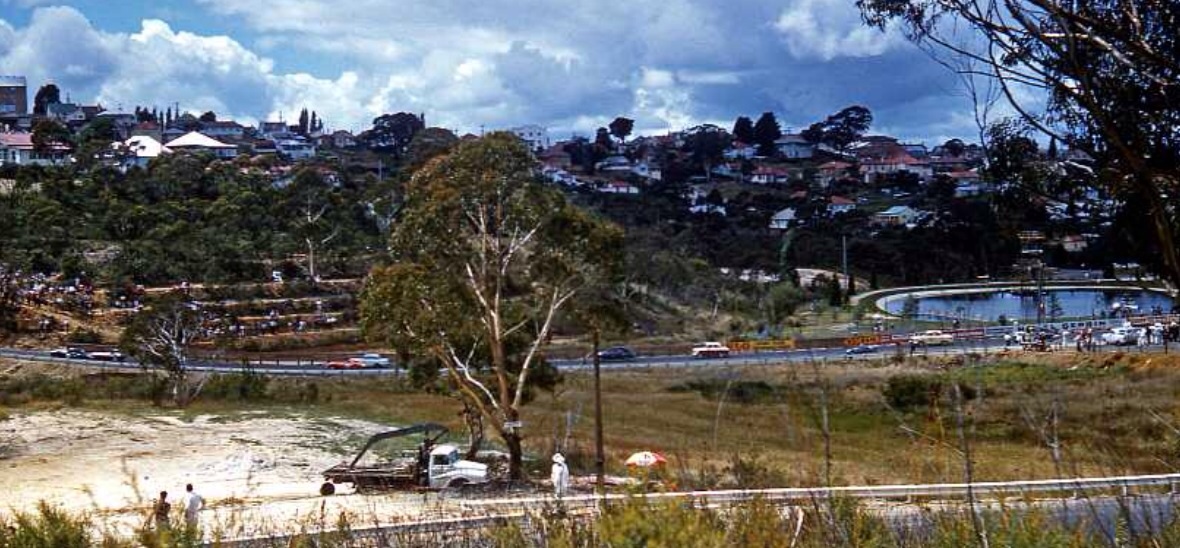
The photo above is another from that first February 1961 meeting- any takers on any of the racers?
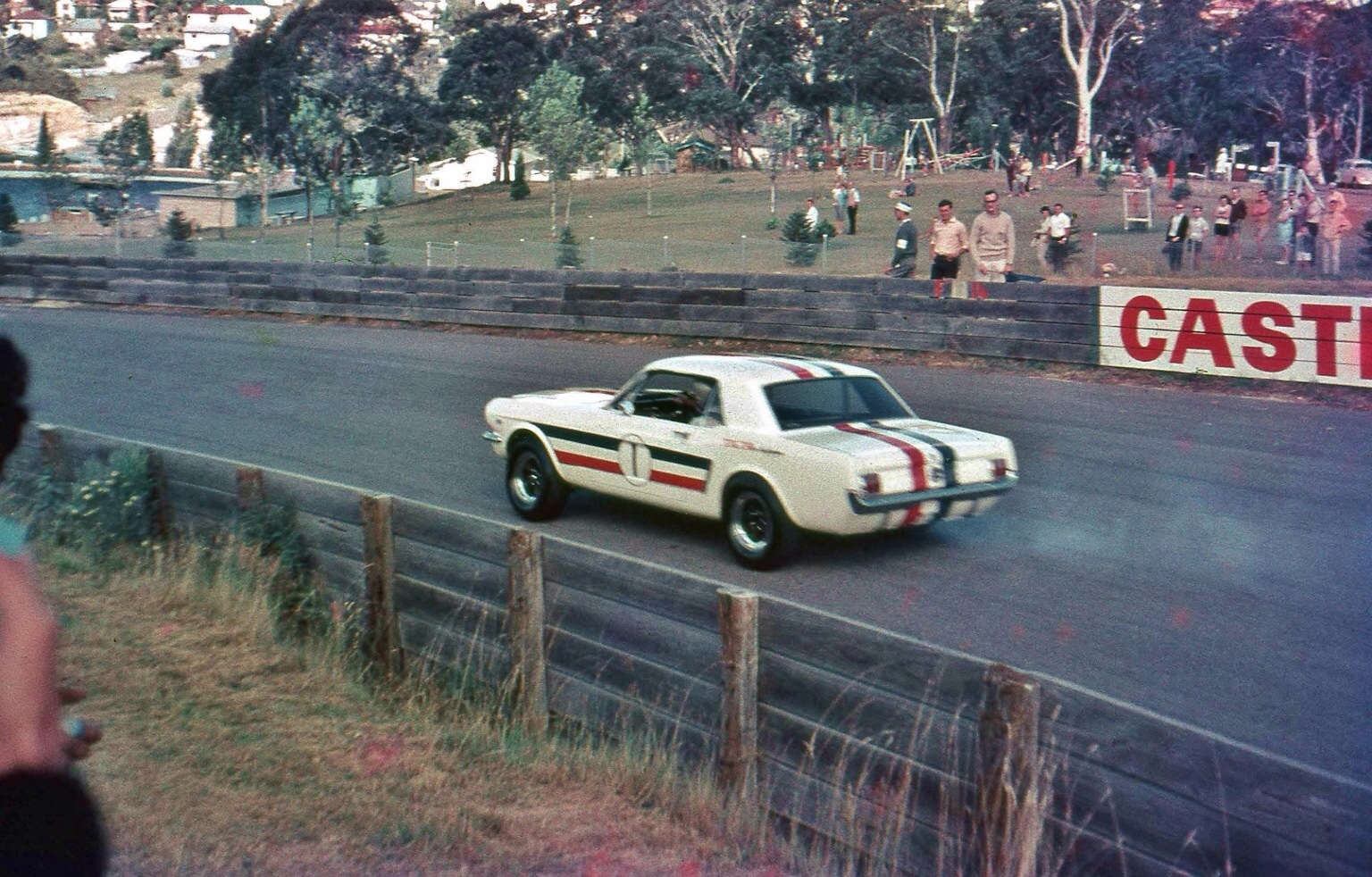
The master, Pete Geoghegan in his first Mustang at Catalina circa 1965.
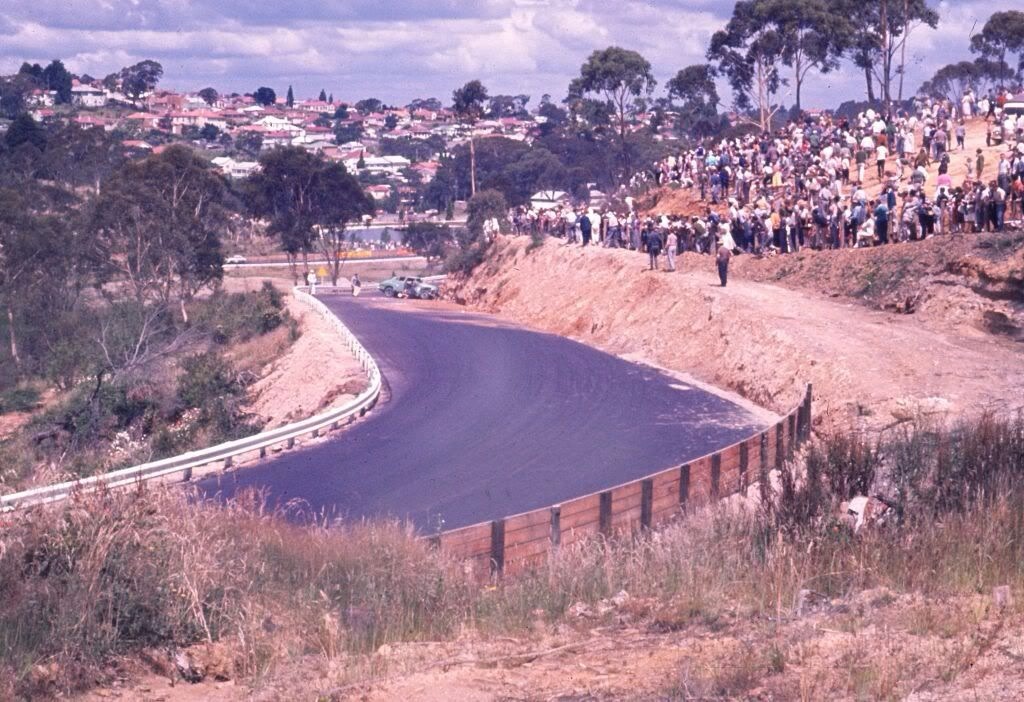
A bit of carnage early in the circuit’s history. Peter Fnlay advises that Stan de Tiliga rolled his FX or FJ at the first meeting. Another shot which highlights the proximity of the track to Katoomba.
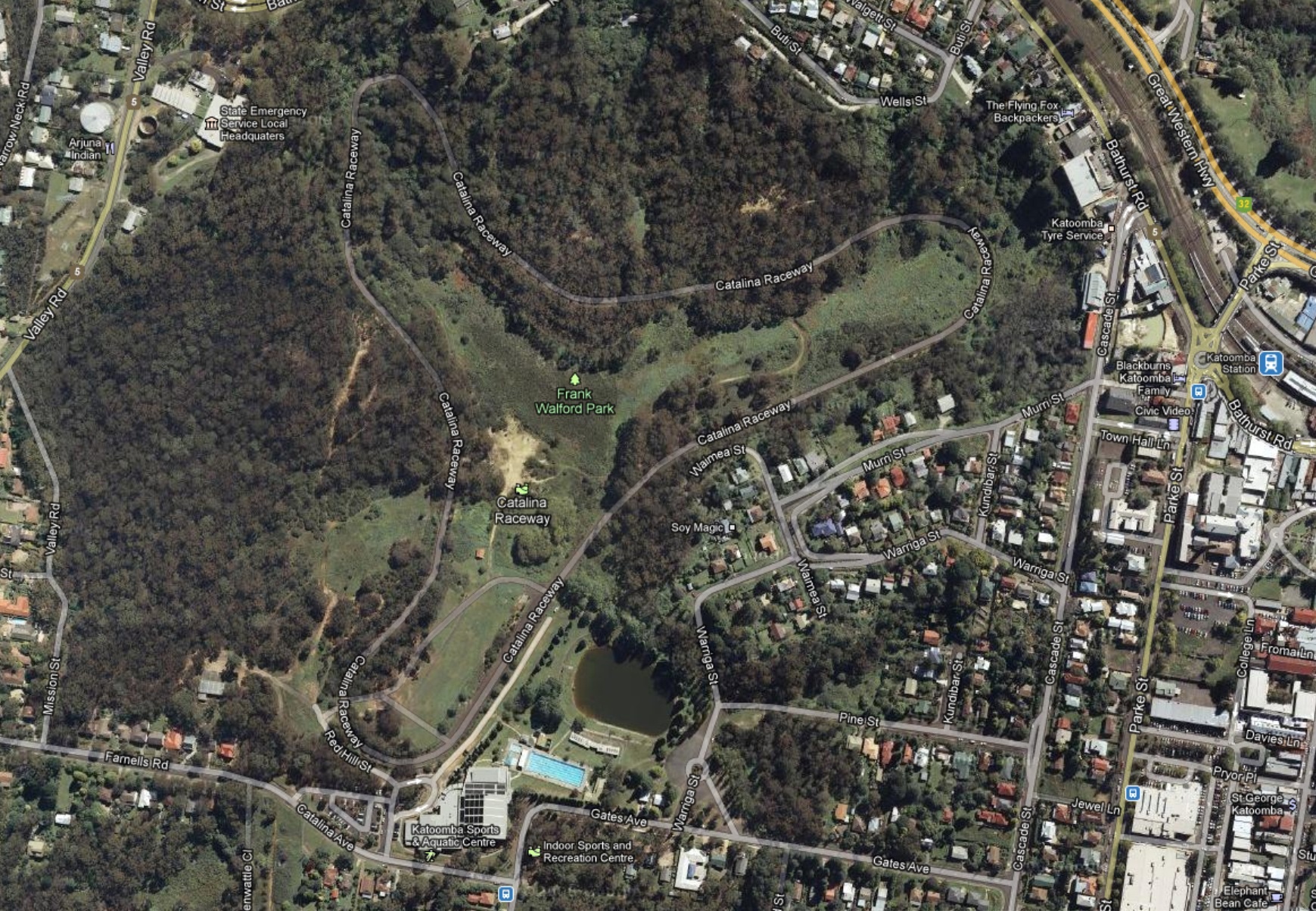
Contemporary overhead photograph of The Gully and surrounds. This shot is from a cycling website which is promoting the old circuit as a slice of bitumen which can be ridden.
Bibliography…
Blue Mountains Local Studies paper by John Merriman 18 June 2010, A Heritage Study of The Gully Aboriginal Place, Katoomba, New South Wales’ by Allan Lance Heritage Consulting August 2005, The Habitat Advocate ‘The Gully (Gungaree) A Brief Background’ 2009
Motor Racing Australia ‘Closed Circuit’ article on Catalina Park by Ray Bell. Comments on The Nostalgia Forum by ‘Catalina Park’, Ray Bell, David Seldon and Stephen Dalton
Catalina aircraft information from David Legg, Geoff Goodall and John Merriman
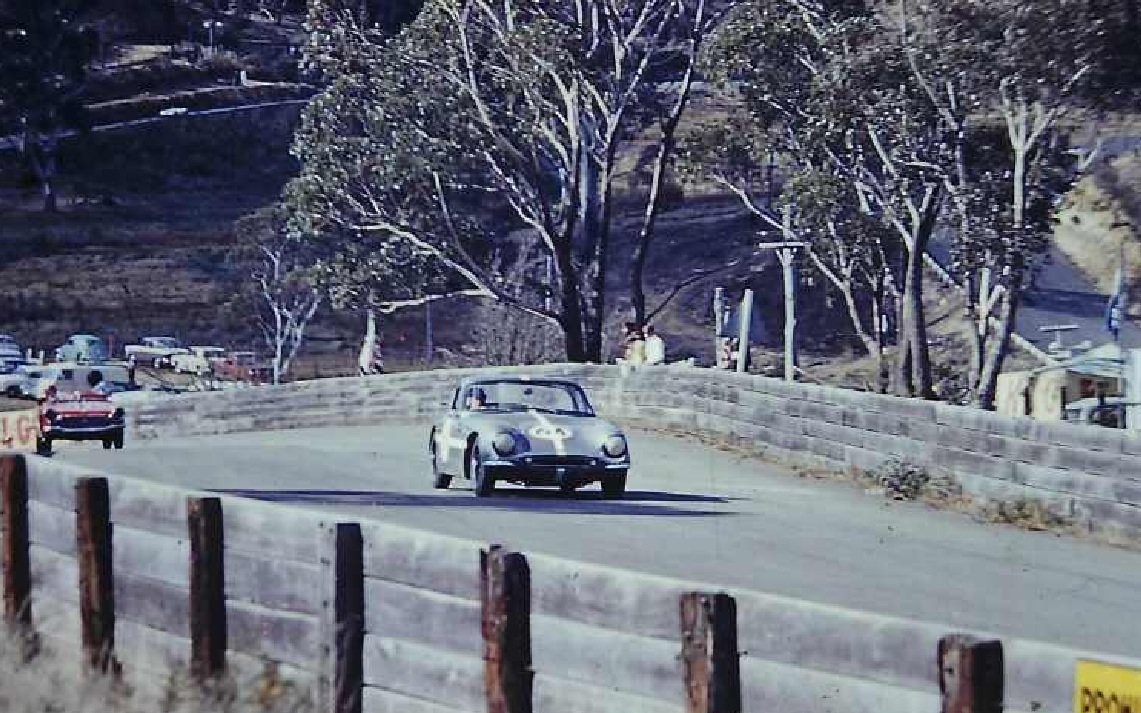
Photo Credits…
Dick Simpson, Blue Mountains Library, Auslot, FOC- Friends of Catalina Park Facebook Group, Alan Howard, Graham Edney, Fred Pearse, Ray Bell, Norm Randall, Stephen Dalton Collection, Elizabeth Barwick, Tim Hislop, Phil Hammon, Joanne King. Many thanks to Ray Bell, Dale Harvey and Peter Finlay for photo caption corrections and additions
Tailpiece…
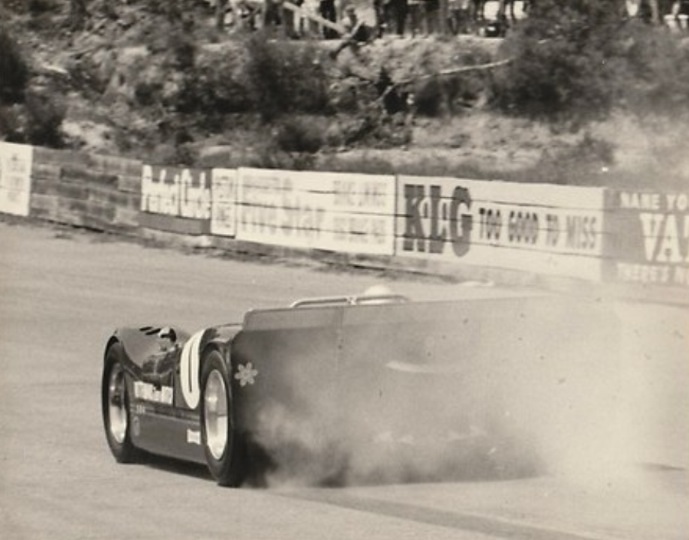
Matich sets off in the race in which he set the all-time lap record for Catalina – 53.4 seconds – Matich SR4 Repco, Australia Day, 26 January 26, 1969. That car must have been quite a handful around that circuit!
Finito…

