Phil Hill, Ferrari Dino 246, Italian GP Monza 1958. His debut GP for Ferrari
Phil Hill looking fairly relaxed on the occasion of his Ferrari Grand Prix debut…
Hill had been part of Ferraris’ sports car squad since 1955 and ‘shamed’ the chief into promoting him by making his Grand Prix debut in the French GP in Jo Bonniers’ Maserati 250F.
He justified Ferrari’s faith in him placing 3rd in his Dino 246. Tony Brooks Vanwall won the race.
Love Hill’s natty race safety attire! Check, short sleeved blue shirt his first line of defence against fire, mind you the prevailing wisdom of the day was to be thrown clear of the car in the event of a ‘big one’.
It’s interesting to reflect on how far safety advanced in the following ten years- in cars advances included monocoque chassis, roll bars, six-point harnesses and fire extinguishers. In terms of driver safety ‘Nomex’ fire retardant ‘suits with Bell introducing the first ‘Star’ full face helmet in 1968 spring to mind.
Mind you the cars were far faster over that decade, the GP field was ‘winged by the end of 1968 with another leap in performance as a consequence. The circuits hadn’t kept pace though, the Jackie Stewart led Grand Prix Drivers Association crusade to improve circuit standards and safety was just underway, he was a pariah in the views of some traditionalists but many drivers lives were saved as a result.
We lost some of the visual splendour of classic circuits and Phils’ striped blue shirts…
Enzo Ferrari & Phil Hill Monza 1958- ‘just do as i say and you will be fine…'(Jesse Alexander)
1958 Italian GP Start…# 28 Tony Brooks & # 30 Stuart Lewis-Evans, both in Vanwall VW57’s & Mike Hawthorns’ Ferrari Dino 246. Brooks the winner of the race from Hawthorn & Hill. Lewis-Evans DNF. (Unattributed)
Phil Hill Ferrari Dino 246 Italian GP Monza 1958- that steering wheel is so ‘period’! (Jesse Alexander)
Etcetera…
Phil looking very youthful, 25 years of age, at Torrey Pines, California in July 1952, car is a Ferrari 212 Export- a win it seems!
This fantastic shot of Lex Davisons’ Alfa Romeo P3 ahead of Doug Whitefords’ Ford V8 Spl ‘Black Bess’, Nuriootpa, in South Australia’s’ Barossa Valley on 23 April 1949…
Look at the hay bales, stone houses characteristic of South Australia, the ‘Stobie’ light poles are still a feature of SA streets and the relaxed crowd. Captures the flavour of the day doesn’t it?
It’s funny where you find stuff. I was researching my article on Alf Barretts’ career and Alfa Monza a while back and tripped over this shot of Davo on the ‘South Australia History Hub’, but no details were provided. I knew who it was but not exactly when or where, Stephen Dalton fellow enthusiast/historian identified the place, date as well as the event.
‘The Vintage (as in wine vintage, the Barossa is a world renowned wine region) Festival Championship’ was a 25 mile event, 8 laps of the Nuri road circuit, it was reported in Graham Howard’s biography of Lex Davison, from which this article draws heavily.
As you will see from the cars described, the bulk of our elite fields were Australian Specials in the main, we are still several years away from a reasonable number of European GP cars on our grids and 5 years away from the ‘Red Car Period’ of the mid to late fifties, the factory cars then dominant.
The last AGP win for an Australian Special was the 1951 Narrogin event in WA…
It was won by Warwick Pratley’s Ford ‘Flathead’ V8 powered George Reed Special.
The last AGP win for an Australian built car was John Goss’ victory at Sandown in 1976 in a Matich A53 Repco F5000 car- Australian built but not a ‘Special’ in the sense meant above!
‘The Vintage Festival Championship…’
‘Non-starters included Jack Days Talbot Darracq, Barracloughs Delage and Alfa Mercury. Cars were marshalled with the fastest at the back, Whiteford made the cleanest start. On his hammer was Jim Gullan Ballot Olds with Davison, Neale Ford V8 Spl, Wilcox Dodge Spl and Robinson Sunbeam Mercury, his car the 1922 GP Sunbeam fitted with a Ford V8 and with a body reminiscent of the Segrave 200mph car.’
‘In the next lap Davison passed Gullan and was right behind Whiteford, whose Ford V8 Spl was going very well, this car winning the 1950 AGP at this circuit, I covered this car a while back. Wilcox was close to Neale and behind Robinson.
Davo passed Whiteford by lap 4, the order remained unchanged from then. ‘Doug Whiteford did everything but tie knots in the Ford keeping up with the Davison Alfa and it was the first time he has been seeing really trying. The two leaders outstripped the rest by over a minute and a half and lapped the last man home…’
A great race and a portent of things to come from the two Melburnians…
Davison the wealthy industrialist from Clendon Road, Toorak in the aristocratic GP Alfa and Whiteford the garage proprietor from Carlisle Street, St Kilda in the self built/developed but incredibly clever, quick Ford V8 Spl…several suburbs and poles apart but very much racing enthusiasts and champion drivers both.
4 AGP wins for Davison and 3 for Whiteford, some splendid racing was to follow in the ensuing decade from these two great competitors…
Credits…
SA History Hub, Graham Howard ‘ Lex Davison:Larger Than Life’, Stephen Dalton research
‘This is the prettiest car I have ever snapped’ said Dick Simpson. Hard to argue…
This is one of four Ferrari P4s built; chassis numbers 0856, 0858, 0860 and 0846, the latter a converted P3.
At the end of the 1967 endurance season two of the cars were lightened and modified to run in the ’67 Can-Am Series in the US, chassis 0860 and 0858. The latter was then acquired by Scuderia Veloce’s David McKay for one fabulous season in Australia. I wrote an article a while back about SV, David McKay and his 250LM #6321, have a read of it rather than repeat the background here.
Simpson’s shot is of Aussie Bill Brown at the wheel on 5 May 1968, the shot taken at the left hander after Warwick Farm’s (Sydney) Shell Bridge, it captures the curvaceous beauty of the thing!
The photographers and their artistry inspired this article, acknowledgement of them all but especially Dick Simpson, John Ellacott, Roderick MacKenzie, Ellis French and Lindsay Ross.
As Mike Spence buckles up his seatbelt in the Chaparral 2F Chev, he is surrounded by FoMoCo vehicles; #1 the victorious Gurney/Foyt, #3 Bianchi/Andretti and Hulme/Ruby Mk4s, and the #5 Gardner/McCluskey and Schlesser/Ligier Mk2s…not a Ferrari in sight! (unattributed)
1967 was a halcyon year of sports car racing, the high point of the ‘Unlimited Formula’…
A 5-litre limit for sports cars and 3-litres for prototypes was imposed by the FIA for 1968 so Ford had one more year to race their 7-litre Mk 2 and 4s.
Chaparral returned to Europe with the fabulous 2F Coupe after an exploratory endurance year with the 2D in 1966. Lola competitors struggled with engine reliability to match the excellence of the chassis, and Ferrari returned with 4-litre engines but with three-valve heads after a year of austerity in 1966. Ferrari mainly entered one P3 at each race while coping with widespread industrial unrest in Italy that year.
The season wasn’t all about just the big three; Alfa raced their T33, Porsche the 907, Matra their M630 V8 BRM engined cars, but in reality the season was about the big outright cars. It was an unforgettable year of sports car racing arguably caused by Enzo’s rebuff of Fords’ desire to purchase the Italian autocrat’s company five years before and the Lola GT/Ford GT40 program which followed.
The Ford Mk4 incorporated all the company learnings, the early failures of the GT40 and Mark 2 in 1964/5 and the triumph at Le Mans in 1966, where Kiwis Bruce McLaren and Chris Amon ‘won’ over the Ken Miles/Denny Hulme Mark 2 in Ford’s farcical Form-Finish.
The Mark 4 was of aluminium honeycomb construction and had much more advanced aerodynamics than the Mk 2, developed as it was from extensive testing of many variations of shapes to get the appropriate mix of top speed and downforce. The mechanical package was largely carried over and incorporated a 7-litre OHV Ford V8 fed by 2-four-barrel Holley carburettors giving circa 530bhp @ 6200rpm. The four speed Kar Kraft gearbox was again used after experiments with a two speed auto. Weight was circa 1100Kg.
All of the major contenders suspension layouts were similar; upper and lower wishbones at the front with coil spring/damper units and adjustable roll bars. And at the rear, single top link, twin radius rods, lower wishbone, coil spring/damper units and adjustable sway bars.
All three big-cars also had rack and pinion steering, and of course cast iron disc brakes front and rear.
The Chaparral 2F Chev was the most exotic of the three carsdespite its pushrod OHV 7-litre Chev V8. Fed by four 58mm Weber down-draught carburettors, the engine developed 575 bhp @ 7500rpm. The chassis was made of fibre-glass, weighed 793Kg dry, the advanced specifications extending to its three speed General Motors automatic transmission and advanced aerodynamics including distinctive high rear wing. The Texans had incorporated all they learned on their European campaign in 1966 with the 2D into the new 2F.
Ferrari’s P4 ‘aero-chassis had slightly wider tracks than its P3 forbear and was the result of evolution over previous seasons. Ferrari’s first mid-engined sportscar was the V6 engined 246P of 1961. Doug Nye records that chassis #0796 was cut up and lengthened slightly to accommodate a two-cam 3-litre Testa Rossa engine. The 1963 Le Mans winning 250P evolved from this prototype. So too did the 1965 winning 250LM, which was essentially a 250P with a roof and 3.3-litre V12, making it a 275LM in the eyes of many…
The 3.3-litre two-cam 275P followed in 1964, 275P2 and 4-litre four-cam 330P2 in 1965. The P2s departed from earlier Ferrari space-frame practice by utilisation of the ‘aero’ tube-frame semi-monocoque structure, whereby the frame was stiffened by rivetted sheet steel panelling. The model range is more complex than this as it also includes different engine/chassis combinations for customers. I will stick to the works cars for the purpose of this article.
The 4-litre P3 followed in 1966 with much improved suspension geometry to address inadequate camber control and to suit the latest generation of ever widening tyres. The 4-litre engine, adapted for Lucas fuel injection developed circa 420bhp @ 8000rpm. As outlined above, Ferrari’s 1966 season was impacted by industrial problems in Italy as well as team leader John Surtees midseason departure. The sports car and quite probably the World F1 Titles which were theirs to take with an ace at the wheel…and some luck with reliability.
The stiffness of the chassis was improved as Nye describes ‘…previous P-series Ferraris had carried their engines on four simple mounts plus plus two for the gearbox, the new P4 engine featured a stiffer crankcase and could be mounted as a semi-stressed structural member, picking up on four carefully triangulated mounts at the front, two each side and four at the rear.’
The engine, the block stressed as above, featured the three-valves per cylinder (two inlet and one exhaust with the inlets between the two camshafts of each bank) layout developed by Franco Rocchi in late 1966, as developed for the F1 cars. There were two plugs per cylinder still fired by good old fashioned coils, four of them. Lucas fuel injection fed the fuel. The engines capacity was 3967cc and developed 450bhp @ 8000 rpm.
Also new was a five speed gearbox made by Ferrari to replace the earlier ZF unit, the ZF5DS25 units as used in the Ford GTs, had been unreliable in 1966. Weight was 965Kg. Firestone replaced Dunlop as the teams tyre supplier.
And so the scene was set…the prototype completed 580 laps at Firestone tyre tests at Daytona in December 1966, Amon was the quickest ahead of Parkes, Bandini and Scarfiotti, the P4 timed at 338kmh along the back straight.
Quick, but as it was to transpire, but not quick enough.
The Parkes/Scarfiotti P4 0858 passes the #18 Casoni/Martini Ferrari Dino 206S, pursued by the Mike Spence/Phil Hill Chaparral 2F Chev, DNF with driveshaft failure. 0858 was second, the win was taken by Bandini/Amon in another P4, 0856 (unattributed)
1967 Endurance Season…
In the first race of the season, at Daytona the new Ferrari was immediately successful leading the race from the fourth hour and taking the first two places, Amon/Bandini ahead of Scarfiotti/Parkes and a modified P3/4 entered by Luigi Chinetti’s North America Racing Team . All of the 7-litre Fords retired or were delayed by maladies.
The Scuderia did not enter Sebring, but Amon and Bandini won again at Monza with Scarfiotti and Parkes second, the factory Fords again did not enter the race. With practice laps only three-tenths of a second apart, Bandini’s Ferrari and Spence’s Chaparral raced wheel to wheel from the off, but Spence retired early leaving Ferrari the rest of the race.
Bandini took the lead with Scarfiotti second in 0858, Rodriguez was third for NART and Vaccarella in the Filipinetti car in fourth. Ferrari’s four-litre prototypes now dominated the first four positions. A failed attempt by Rodriguez at overtaking the second-place works Ferrari resulted in his retirement. Note that RM Auctions in their sale dossier of the car several years ago claim Bandini and Amon won driving 0858, other independent sources say 0858 finished second.
Parkes and Scarfiotti fifth and best of the P4s at Spa in 0858. Ickx won in a Mirage M1 Ford (L’Automobile)
At Spa, ‘Rainmaster’ Ickx prevailed in John Wyers 5.7-litre Mirage Ford, Scarfiotti and Parkes could do no better than fifth in 0858. Vaccarella crashed out of the Targa lead in his P4 at Collesano, his home town…
And then came Le Mans.
As noted above this was the last Le Mans run under the unlimited formula. Ford won the previous year but at Daytona they were well and truly beaten by the P4s. Ferrari missed the Nurburgring 1000Km to be better prepared for La Sarthe. Three P4s were entered by the factory, the fourth an Ecurie Francorchamps entry.
The big V8s had the legs in practice, as proved to be the case in the race, but the Scarfiotti/Parkes P4 0858 was never far behind. A crash eliminated three Fords, the Mairesse/Beurlys P4 moved into third with the works cars chasing the leading Ford Mk4 of Dan Gurney and AJ Foyt. That vastly experienced pair drove a superb race taking Ford’s second Le Mans. Nye noted ‘…the race was decided on the Mulsanne. All the 7-litre Fords topped 320kmh. The 330P4 could not better 310kmh and the poorer breathing of the 24-valve 412Ps left them gasping, slower still’.
The works Ferrari finished four laps behind, the first Ford and second and third placed (Mairesse/Beurlys) Ferraris covered a distance unprecedented at Le Mans. Mike Parkes said to journalist/Le Mans Winner Paul Frere after the race ‘Never in my life have I driven a car so hard for so long’.
0858 on the way to second place at Le Mans in the hands of Ludovico Scarfiotti and Mike Parkes albeit four laps behind the winning 7-litre Ford Mk4 of Dan Gurney and AJ Foyt (unattributed)
The Brands Hatch BOAC International 500 was the final race of the endurance season and was to determine the championship for the year. Jackie Stewart joined Chris Amon in the works team to bolster Ferrari chances, Mike Parkes having badly injured his legs in an F1 crash at Spa.
Both chassis 0858 and 0860 had been converted to Spiders by the factory, removal of the roof and lightening the body saving around 40Kg. (Two independent sources claim 0858 was driven by Jonathon Williams and Paul Hawkins to sixth in this race, and that Amon/Stewart raced 0860 to second)
The race started at noon on Sunday under grey skies. John Surtees took an initial lead before Paul Hawkins replaced him in the third P4. After the first hour, Stewart had Spence’s Chaparral in his sights. Scarfiotti was behind him in another P4, followed by Jo Siffert in a Porsche 908. With regular driver changes and pit stops, the running order was continually evolving over the ensuing four hours. In the final hour, Amon was second.
With ten minutes to go, Stewart took the wheel, held the position and finished the race, securing the Manufacturers Championship for Ferrari, its 12th, defeating Porsche. Mike Spence won the race, the Chaparral 2F Chev finally taking a long promised win.
Factory CanAm 350 3/4 front . (Ferrari)
From P4 to Can Am 350…
With the endurance season over and regulation changes precluding the cars competition in the 1968 championship the factory modified two of the P4s, as mentioned earlier, 0858 and 0860 to better compete in the Can-Am Championship by lightening and modifying the cars, naming them 350 Can Am to contest the prestigious series in their most important market.
The cars were lightened considerably by becoming curvaceous Spiders instead of more curvaceous Coupes! Weight was reduced from 792Kg wet to 700Kg wet. The engine capacity was increased to 4176cc raising the power to 480bhp @ 8500rpm, the cars mechanical specification is as described above otherwise.
Fundamentally it was not enough.
It’s 1 September 1967, Brit Jonathon Williams is about to test an F1 Ferrari 312 for the first time at Modena. In the background is one of the P4/CanAm 350s, still with headlights fitted, also on Williams’ menu for the day – lucky boy. The first Can-Am round was at Road America on 3 Sept, the Can Am 350s first raced at Laguna Seca in Williams/Amon hands on 15 October, there was much work to be done yet! (Pete Coltrin)
Bruce McLaren had been contesting sports car races in the US since his Cooper days in the early 1960s. His first M1 McLarens were quick cars hampered by light but not powerful enough aluminium Oldsmobile engines. For 1967, he and Robin Herd designed and built the monocoque M6 powered by 5.9-litre, circa 525bhp iron Chev V8s and rewrote the record book in terms of dominance of this series.
The Bruce and Denny Show was underway. The Ferraris contested the series entered by Harrahs Casino who were also Ferrari distributors, and were comprehensively blown off along with the rest of the grid.
Factory 350 Can Am butt shot. Absence of lights clear in the weight saving process. Ferrari ‘box in P4 replaced problematic ZF unit of P3, gorgeous if not quite as as much as the P4 parent! (Ferrari)McLarens’ papaya M6A Chev looms in Jim Hall’s Chaparral 2G Chev mirrors. #21 is Parnelli Jones’ Lola T70 Ford and Dan Gurney’s partially obscured Lola T70Mk3b Chev, ALL DNF! The race was won by Surtees’ Lola T70Mk3b Chev (unattributed)
0858 From the US to Australia via Italy…
David McKay had raced his 250LM 6321 in Australia since 1965 but the car was getting older and ‘she was often racing out of class and racing against pure prototypes…During a visit to Maranello I broached the subject with Mike Parkes and the factory’s General Manager Ermano Della Casa. I had seen the P4s at Le Mans in 1967 where Mike and Scarfiotti had finished a gallant second to Fords’ 7-litre steam roller and had fallen in love with the car’.
‘To me it typified all the art, beauty and grace of the old world pitted amongst the brashness and might of the new…In due course I received word that I could buy 0858 for the considerable sum of US$30,000.
Riverside CanAm 1967. #12 Roger McCluskey Lola T70 Chev, #27 Williams Ferrari Can Am 350, #19 Bill Amick McLaren M1C Chev, Jerry Entin McLaren M1C Chev (unattributed)
The car which raced unsuccessfully in the States at Laguna Seca, Riverside and Las Vegas would be fully rebuilt and shipped to Sydney by Christmas 1967. This would be in good time for the Australian Tasman rounds where Amon would conduct it in the sportscar support events and surely set a cat amongst the pigeons…’
Chris Amon raced a Ferrari 246T looked after by Scuderia Veloce during The Australian Tasman that summer and in 1969, the year in which he was Tasman Champion.
McKay ‘The less charitable said the factory wanted the car as far away as possible so that they could forget the ignominy of the Can-Am venture. The car had managed a fifth at Laguna Seca, eighth at Riverside and a DNF at Las Vegas with Amon who had surely wrung everything out of it’.
Note that some sources say Jonathon Williams raced 0858 and Amon 0860 in the Series, another source suggests Amon raced the car twice, at Laguna Seca and Riverside, and by Williams at the final round at Las Vegas. Australian Sports Car World magazine in a feature about the car published in 1985 wrote that who drove which car cannot be accurately determined.
Take your pick…I am inclined to either uncertainty, or, I imagine Amon would have related directly to McKay at the time which car he drove, and by the time McKay wrote his autobiography he had no vested interest in the car his financial investment in it having ended in 1968, vendors or their agents and their claims should be treated with the Caveat Emptor dictum in mind…
The two 350 Can Ams at rest, Riverside paddock 1967. #23 Amon #27 Williams eighth and DNF…0858 and 0860 or…0860 and 0858 take your guess (unattributed)Chris Amon using the big twelves horsepower to good effect at Riverside 1967, eighth. All the drivers who raced the P4 commented on how sweet the chassis was (unattributed)
McKay ‘This should have turned me off but I comforted myself with the thought that there were no 8-litre McLarens in Australia and certainly no Bruce or Denny to worry us. Alas, it only required a local in his own device powered with a local 4.4-litre V8 to unravel our dream. (Frank Matich in his Matich SR3 Repco 4.4 V8).’
In fact the performance of Frank Matich in his self built car should not have been a surprise to either McKay or Amon. Matich had contested most of the 1967 Can-Am, including the three events in which Amon participated and was also flogged by the McLarens. Matich didn’t finish a race in fact…but the Sydney built, space-frame chassis, 400bhp Repco 4.4-litre V8 engined Matich was slightly quicker than the 350 Can Am and was match fit after a tough season in the US.
The Ferrari was not to have it easy in Australia that summer.
Frank Matich, wife Joan, his team and Firestone technicians on the pit apron at Riverside, 1967 Can-Am. Grid 20 DNF accident. Matich SR3 Repco; space-frame chassis car powered by Repco 620 Series 4.4-litre SOHC V8 400bhp @ 7000rpm. Surtees’ Lola T70Mk3B Chev behind (unattributed)
Again David McKay picks up the story ‘As starting money was imperative for such an expensive undertaking I sounded out all the major circuits. All were enthusiastic and all promised to pay a modest enough $350 a start. It goes without saying that when Geoff Sykes (Warwick Farm boss) set the standard, a ‘yes’ on the phone was sufficient to seal the agreement’.
‘There was great excitement at the wharf when the open crate carrying the plastic wrapped P4 was lowered over the liners side. There were a couple more huge wooden crates I hadn’t expected. These turned out to be another engine, gearbox, transaxle, suspensions, disc brakes, all manner of rose joints and sixteen wheels-in reality a second P4 apart from the simple tube-chassis and the brief, skimpy fibre-glass bodywork. That US$30000 was immediately halved in our minds and much of my initial disappointment at seeing the rather unattractive Can Am bodywork evaporated’.
0858 shortly after its arrival in Sydney at SV’s workshop, Wahroonga (WOT)
‘Engineer Bob Atkin and I were keen to get the crate and boxes home to Wahroonga to prod the beast into life. This we did and again I felt disappointment. Where was the distinctive wail I heard in the cold air at Le Mans? It was now deeper, throatier but somehow more common, less exciting.
Unfortunately I never felt any warmth for the P4, certainly not its fault for the car was out of its milieu, away from the understanding hands which cared for it and probably thinking it was back in that coarse country, America, of which it had nothing but bad dreams.
I hoped a reunion with Amon would be beneficial but Chris was more involved with his Tasman Dino and his forthcoming battle with Clark and Hill in their Lotus 49 Ford DFW’s.’
Jim Clark, Chris Amon and their respective mechanics share a joke around Chris’ Ferrari 246T at Longford, March 1968. Clark won the series in his Lotus 49 DFW, Piers Courage the race in a gutsy wet weather drive in his McLaren M4A FVA F2 car. Clark fifth and Amon seventh. Clark was killed that April and Amon returned to take the 1969 Tasman Championship…the P4 was by then sold (oldracephotos)‘Don’t pick your nails Chris!’ Amon and McKay in the cockpit of 0858 at Sandown, Melbourne, February 1968. McKay first assisted Amon in the 1963 International Series, Amon drove the SV Cooper T53 Climax (Rod MacKenzie)Scuderia Veloce Team at Warwick Farm 1968; 250LM 6321, Brabham BT23A-1 Repco and the P4/Can Am 350 0858. This shot was taken at the 18 February Tasman Meeting, 250LM I am guessing was not raced, Greg Cusack in the Brabham was a DNF in the Tasman race won by Clarks’ Lotus 49 DFW, Amon raced the P4 (David McKay’s Scuderia Veloce)Amon gets the drop from Matich in the SR3, Surfers Paradise, February 1968. Ordinary crowd numbers, surfs up at Main Beach maybe? (wolseley680)
Australian race record of ‘0858’…
Ray Bell was a journalist for Racing Car News magazine in the 1960 and 1970s, he wrote evocatively about the car’s race record on The Nostalgia Forum in 2002…
‘The first race for the car in Australia was February 10 at Surfers Paradise.It was the Saturday and it was clear that there were some shocks headed for the lap record after Matich recorded 1:10.2 in practice.
Matich dudded the start, however, but scorched around to be the first to take the lap record over the 100mph mark with a 1:10.6 (101.98mph) to Amon’s 1:10.7, reeling the Ferrari in after four laps and diving under it when a slower car baulked Amon.
Two more 5-lappers were scheduled for Sunday, with Matich and his 4.4-litre tube-framed SR3 leading away and getting a full second advantage on the first lap. The record was equalled as he took another win. In the second, Amon was a non-starter.
Rod MacKenzie’s shot of the Surfers race one start from a different angle. ‘Spare tyre’ on Ferrari was mandated by dopey Australian sports car rules of the day. The Matich carries its spare under the driver’s front screen. Beefy spoiler on the SR3, its 1968 the ‘Year of Wings’ is just getting underwaySuperb John Ellacott shot of Chris Amon looking as relaxed as he can be with Frank Matich ‘up his clacker’! Homestead Corner Warwick Farm, February 1968 (John Ellacott)
A week later at Warwick Farm came the race I speak of so often.
The report says Matich ‘left the Ferrari breathless…’ as he led Amon a merry chase. That they came past us side by side, with a Tojiero between them being lapped and grass clippings flying on one lap in the race shows that it wasn’t all that breathless!
Again, Matich was pressed to a new circuit record (these are outright records, faster than the Lotus 49s and the Amon Dino managed on the day) of 1:28.5 in staving off the Ferrari. Amon retired with reported ignition trouble on lap 7 or 8. (McKay advised the ignition leads were plucked off one bank of cylinders having been taped carefully out of reach of a half-shaft)
Check out the YouTube footage of this race…
WF start. Both Matich #1 Matich SR3 Repco and Niel Allen in the white Elfin 400 Chev get the jump on Amon’s Ferrari at the start. WF is a horse racing facility still, it ceased as an International car race venue after the 1973 Tasman Series (Wirra)Amon leads Matich into Shell Corner, lap 1 , Sandown Tasman Round Sports Car race, 25 February 1968. car with white stripe down the nose at left the Bob Jane Racing Elfin 400 Repco (Rod MacKenzie)
The opening gambit of the Sandown Park report, the next week (February 25), was ‘This was the first time the Sandown crowd has had a chance to see Frank Matich really trying. The reason was, of course, that he had Chris Amon and the P4 Ferrari to worry him.’
Matich bogged down at the start (‘nearly burned a hole in the startline with wheelspin…’) and Chris led away, but after a lap or two ‘braking late for Peters, Frank closed on Chris and went under him as they accelerated out onto Peters (the back straight).’ Matich won by four seconds, took the sports car record down to 1:07.2 (Clark nobbled the outright record in the Australian GP on the same day with a 1:07.1) and Matich bowed out of any further contests. He wasn’t happy to go to Longford.
Matich SR3 Oldsmobile in the Sandown Park paddock in 1966 (Mike Feisst Collection/The Roaring Season)‘Longford March 1968. The wet Monday morning after Amon set off a lap down on the field after battery failure on the grid. The road was wet from the first shower of the day that turned into a deluge later for the Tasman race (won by Piers Courage in his F2 McLaren M4A FVA). The overcast conditions, wet road and river in the background combine to give perfect lighting to highlight the car. Location is coming off Kings Bridge, the shot taken from the old Longford water pump-house station. The 1880s railway bridge is in the background’ So said ‘austmcreg’ on The Nostalgia Forum, photo credit Jim and Pat Smith. Amazing shot and commentary!
There, Longford, of course, Amon had the fastest time ever through the trap on the flying mile and lapped at 2:14.4 in practice to easily take pole.
In the Saturday race Amon set a new outright lap record of 2:12.6, four tenths quicker than Clark had done in the earlier preliminary event for the Tasman cars in the Lotus 49. This was 12.2 seconds better than the previous record, held by Bob Jane.(Elfin 400 Repco 4.4)
At that stage, it was only reasonable to conclude that Amon wouldn’t hold the record over the whole weekend, but the heavens opened and deluged the circuit for Monday, his P4 suffered a battery failure (McKay wrote that mechanic Bob Atkin simply overlooked to charge the dry cell Varley battery) and didn’t even start the soggy sports car race, and the open-wheelers paddled round with Piers Courages’ McLaren M4A FVA 1.6 taking the win.
Longford pit counter scene with the curvaceous Can Am 350 centre stage. Both Amon and Bill Brown drove the car at this meeting. Matich did not enter, having safety concerns about the circuit in the SR3. Little yellow stickers on Fazz rump say Gatto Verde, gifts from Alf Francis to David McKay (Harold Ellis)
In his book, McKay (David McKay’s autobiography ‘Scuderia Veloce’) describes the torment of choosing a driver for the car for the ensuing year. His choice might have been Big ‘Pete’ (Ian) Geoghegan, but there was pressure to give Bill Brown a go. There was also the possibility that Pete’s huge frame might not fit… he was put into the team’s 250LM for the year.
David Mckay again picks up the story ‘After the Tasman Series and Amon’s departure I decided to put Bill Brown behind the wheel despite certain misgivings. I liked Bill, he was a pleasant and helpful fellow who could be faster than some but rather more accident prone than others. He damaged the LM rather too frequently through overdriving…Yet I hoped Bill would mature, the red mists would disappear and he would conduct the P4 in accordance with my instructions. I had no illusions he would run with Matich, Amon hadn’t managed to…I had chosen the easy option rather than taking a chance and putting in perhaps the only local who would have given Matich a run for it-Pete Geoghegan.’
Here is Pete Geoghegan hustling McKay’s 250LM 6321 around Bathurst at Easter 1968 in the manner the SV boss liked so much (Dick Simpson)
‘Pete was already four times AustralianTouring Car Champion and was sweeping all before him in his Mustang. More important, was his driving of the ‘old red lady’ (McKay’s 250LM) in which, despite his big weight disadvantage (Pete was a very big lad, morbidly obese, the medicos would describe it) he was re-writing her lap times. Perhaps had I not been so occupied with other events that year, had not been out of the country so much I would have bitten the bullet, asked Bill to step aside and given Pete the hot seat-but could he have fitten into that little space? We’ll never know now but in the light of subsequent events I was wrong and I am sorry Pete…’
Pete Geoghegan in that car would have been worth travelling a very long way to see, a driver of awesome world class ability as McKay alludes to, if you go back into the early days of Pete’s career he drove the Geoghegan family Lotus single seaters and 23B but in essence most of his career was spent in Touring Cars and other cars with roofs
Another of Dick Simpson’s stunning shots. Bill Brown, Mount Panorama, Hell Corner ,Bathurst , Easter 1968 (Dick Simpson)
Ray Bell…’Bathurst was the first outing on April 14 & 15, which I would have thought daunting enough. With wire fences, rough surface, two serious crashes injuring top drivers in the Gold Star event’s practice sessions and all, one might be a little careful in such a fast car.
But Bill was out to show his stuff. The first race was a 3-lapper mixed in with the open-wheelers. Bartlett won that in the Brabham BT23D Alfa with Bill second about 11 seconds adrift and just 1.6 seconds clear of Niel Allen in the Elfin 400 Chev after Allen had spun on the first lap. Bartlett had fastest lap in 2:19.1, Allen did 2:19.4 and Brown 2:21.6. Maybe he was being careful after all…
As the report points out, ‘The last time anyone went really fast on Mt Panorama was back in 1962, when both David McKay and Bib Stillwell equalled Bill Patterson’s flying eighth time of 169.81mph. It has been said often since that it would probably take a sporty car to better it.’
As mentioned above, Brown took the speed up to 181 mph, a big hike, but he was in pursuit of Allen at the time. The Elfin lapped in 2:18.4 but was parked at the top of the mountain when Brown scored his lucky win, with Geoghegan second in the LM, which improved its personal best time from 2:34.2 to 2:30.8 this first time the big fella got into it. Brown lapped in 2:19.6, just shy of the 100mph mark.
0858 in the Warwick Farm paddock February 1968…the start of wings on the front, added since original factory build (WOT)Bill Brown in the RAC Trophy, Warwick Farm, May 1968. Sand in the throttle slides of the car so DNF (Rod MacKenzie)
Warwick Farm’s annual RAC Trophy race was on May 5.
This was a prize event on the best circuit. Matich lapped in 1:29 for pole, Allen did 1:32.9, Brown 1:33.0 for the outside of the first row. But the Ferrari managed to get ahead of the Elfin off the line and was second into the first corner and stayed there as Matich built up a lead of about ten seconds over the early laps. Sand got into the throttle slides of the V12 engine, however, and the Ferrari retired to give Allen second spot.
This was the race where Matich ‘unwound a blinder on the last lap just to prove the car was still ‘with it’, chopping 1.2 seconds off his Tasman meeting record and leaving the new time at a staggering 1:27.3′
The boss himself having a tilt during practice at Warwick Farm. David McKay in the big car, not so sure he mentioned this in his book (G Lanham)0858 sans rear bodywork, shot at SV workshop in Sydney (WOT)
Lakeside on May 12 brought a pair of Scuderia Veloce 1 – 2s,but the opposition had died in the pre-race buildup. Matich cracked the lap record in practice with a 53.7 in his first appearance at the circuit since his crash there in 1965. Allen did a 55.3, Brown a 57.2.
The minor race came first, with Allen scoring a win and Matich fastest lap (55.2, new record anyway) with the Elfin taking the lead from the start as Matich eased away with a sick engine. Matich pitted, but continued, the Repco suffering a loose valve seat, which prevented him getting top horsepower as he nailed it to get that record in the book. Brown finished 1.5 seconds behind Allen and actually lapped two tenths faster at 56.3, both of them under Allen’s old record.
The main event was a twenty-lapper, and in the minutes before the race Matich declared himself a non-starter and Allen trickled back into the pits with a bolt out of the steering. Brown was able to walk it in (best lap 58.4) as Geoghegan showed all his abilities at the helm of the 250LM to fill second ahead of a Lotus 23B. His best lap was 59.3 and he was less than nine seconds behind at the finish.
0858 cockpit shot taken at Surfers Paradise by Rod MacKenzie. Momo steering wheel, Veglia Borletti instruments all very Ferrari period-fitments. Note venting of wheel arch to release air pressure (Rod MacKenzie)
There was yet another race, an eight-lapper, at the end of the day, with the 2.5 open-wheelers combining with the fastest sports cars. The report doesn’t clearly explain how Allen got to be behind Phil West’s Scuderia Veloce Brabham BT23A Repco, but he was and seemingly couldn’t do anything about it. Brown won as he liked, scoring another SV 1-2 with West second this time.
I would say that West got away best, then the brute force of the bigger engined cars overpowered him, only Allen was stuck behind him as Brown got through to the lead. Anyway, Allen spent the rest of the race back there in a frustrated third, ‘perhaps over-flushed with determination, hounded West in the best showing of brute tactics seen for a long while, the big Elfin almost running over the Brabham into BMC lap after lap as West stopped to look at the view and Brown scampered up over BP. Allen tried to go under into KLG, avoiding disaster by a hair’s breadth, and pushed the Brabham wheel to wheel round the Eastern Loop. This excitement was too much, added to by Geoghegan who forced the 250LM to the front of Scott’s Lotus 27 to fill fourth spot.’
Des White wrote well, didn’t he? He pressed on. ‘The big battle looked worse as the backmarkers were lapped, disaster being forever imminent as very slow cars found themselves caught up in the 140mph battle between Allen and West, the Elfin being stopped and pointed with a dexterity seldom seen these days. Allen failed to get through, perhaps through trying too hard, and it was disappointing to see him slipstream to the flag. Should the big power of the Elfin have carried it from Shell to the flag first? Maybe, and there been breathing space for the initial build up.” Best lap to Brown, 56.6, Allen did 56.7, West 55.9, winning margin less than two seconds (1.6, actually).
SV lined up on the Surfers Paradise dummy grid prior to the 6 Hour in 1968. L.R; Leo and Pete Geoghegan 250LM which won, Des West/Bill Reynolds 275 GTB ninth, and Brown/Palmer 350 Can Am DNF accident (Rod MacKenzie)
Ray Bell, ‘Probably the event dearest to McKay’s heart was the Surfers Paradise 12-hour…
And he had Jim Palmer over from New Zealand to co-drive with Brown. But Palmer wasn’t up to it, lapping over five seconds slower than Brown in practice and wearing himself out in the process. Matich, who was racing quite a lot during this year, even entered the SR3 in this race with Glynn Scott as co-driver (only 2.3 seconds behind Frank’s times), so this car was the pace as the race got going, Brown following it through the field after both started slowly (Le Mans start). Lapping slower cars soon after the start, Brown was pushed off line and ran over some tyre markers on the edge and holed the radiator. The P4 was out…
David McKay saw the race slightly differently ‘…I had asked NZ Champion Jim Palmer to co-drive with Brown. Jim was a fast, safe driver very much in the Spencer Martin mould. I erred by not having Palmer start the race…The field as in the past, was composed of fast and slow open and closed cars and as always the onus is on the overtaking car. A second or two lost by backing off the throttle to make sure the tortoise knew he was about to be swamped was sensible driving…Less than 15 minutes into the race, Brown came up behind a Fiat 125 saloon, on the approach to Firestone, a fairly quick left hander. The Fiat driver, unaware Brown was diving down the inside held his line. The P4 had nowhere to go but over the grass and a white tyre marker demolishing the nose and oil cooler…Brown bought the mortally wounded P4 to a halt in front of our pit’.
Bell, ‘Matich’s Repco engine dropped its bundle very late in the race and Geoghegan and his brother Leo won the race in the Scuderia Veloce 250LM.
‘That was the end of the P4’s racing in Australia. Matich was to debut his SR4 with its 5-litre quad-cam engine in November, cementing his position as top dog in the field and enabling him to go on and take more outright records.’
‘0858’ in cigarette company Team Gunston colours in Bulawayo, South Africa 1969. Note the car now has lights refitted – installed in Australia for the Surfers 6 Hour (unattributed)
Sale of ‘0858’ to Paul Hawkins…
Due to an error in paperwork, the car was invoiced to McKay rather than in Amon’s name, bringing forward the impost of import duty. The Customs Department provided extensions of time with the assistance of the Italian Chamber of Commerce who wanted the car to race in the Surfers 6 Hour and form the centre-piece of a Sydney trade show.
Under pressure to pay the duty, which was close to 100% of the cars purchase price!, or export it, McKay put the word out ‘…dear old Paul Hawkins had heard about the car being for sale from Chris Amon at an Oulton Park meeting. I was in the workshop when ‘Hawkeyes’ call came through ‘Is the car for sale?’ ‘Yes’, ‘How much?’ ‘US$30,000’. ‘If I buy it will you go me halves in a return ticket to Sydney?’. ‘Yes, ok’. ‘I’ll be there the day after tomorrow’. I’ll meet you Paul’
‘Simple and straightforward. Paul was making a name for himself as a successful sports car and GT racer and had been a favourite of Firestone…The car was to be shipped right after Surfers for Paul would drive it in South Africa’s sports car series with tobacco sponsorship and he would win’.
350 Can Am in the East London pits, front lights now faired. The car won this 500km race (royckdboats)
Paul raced the car in South Africa from November 1968 to January 1969 winning the Cape Town 3 Hour, GP of Bulwayo, Pietermaritzburg 3 Hour and the East London 500 Km.
As McKay mentioned above Hawkins was an Australian International plying his trade via his own team and as a ‘hired gun’ by works teams. He was racing a Lola T70 Mk3B Chev during the Tourist Trophy at Oulton Park, his car ending up in the trees, after probable suspension failure, poor Paul dying in the particularly gruesome accident and ensuing fire.
Both Hawkins and Alberto Ascari, the only two drivers to ‘Scuba Dive’ at Monaco both died on May 26, in an arcane bit of trivia. Mike Hailwood raced ‘0858’ at Magny Cours, first and Dijon DNF in May.
Gearbox fettling perhaps, prior to the East London event. 4.2-litre DOHC three valve per cylinder Lucas fuel injected V12. Ferrari 5-speed ‘box with ZF limited slip diff. Battery of coils clear to see (royckdboats)
The car was sold in the realisation of the Hawkins Estate,through David Piper, who raced so many mid sixties sports Ferraris’ of his own, and occasionally as a works-driver, to Alastair Walker who raced the car back in South Africa in November-December 1969 with sometime GP driver Rob Widdows as his co-driver.
The car was uncharacteristacally unreliable, perhaps tired, ‘0858’ failed to finish the Kyalami 9 Hour, Cape Town and Bulawayo 3 Hour events. ‘0858’ was second at the Lourenco Marques, Mozambique.
In 1971 David Piper bought the car from Walker, still with its extensive inventory of spare parts, enough as McKay states to make a second car less chassis…which is what Piper did. Ferrari provided him with all the necessary P4 blueprints in 1974. Piper, Nye says ‘had the chassis made by the original people in Modena. Ferrari gave it the number ‘0900’, a serial number also applied to a Chinetti parts built 312P in the US’. Several run-on cars have been built by Piper since.
David Piper sold 0858 to Florida real estate man/Ferrari collector Walter Medlin in 1971. He retained it until it was offered for sale – having been seized by the US Internal Revenue Service to pay Medlin’s outstanding tax debt – via RM Auctions in 2009. The car was eventually restored by Talacrest in the UK, somewhat controversially in the eyes of some, to its Spyder/Barchetta specification.
At the outset I wrote that four P4s were built, three P4’s and one converted P3 ‘0846’...
In the best traditions of historic racing there are now more P4s than in period…there are three or four ‘run-on’ cars built by Piper’s concern. In addition, ‘0846’, written off by the factory after a crash and fire at Le Mans in 1967 has been reborn, recreated or replicated depending upon your view of it.
I’m not suggesting ‘the experts’ necessarily know it all either.
Etcetera…
Amon at Warwick Farm (G Paine)Chris consulting with his crew in the Sandown pitlane, David McKay in shirt and tie (G Paine)Bill Brown, who drove the car after Amon’s departure back to Europe also had a steer of the Can Am 350 at Longford in both practice and a preliminary race (David Keep)(Rod MacKenzie)
That ‘Australian’ spare tyre which was fitted as a consequence of our local sports car regs at the time. SV solution was a neat one even if the weight is well outside the cars wheelbase, where else to put it!? The yellow ‘Gatto Verde’ stickers were a gift from Alf Francis to McKay. McKay makes mention of it in his autobiography but not actually what the stickers mean/represent. Ideas anyone?
Bibliography…
David McKay ‘David McKays Scuderia Veloce’, Paul Frere ‘Cars in Profile 246SP-330P4 Ferraris’, Doug Nye ‘The Potent P4…A Ferrari Fierce and Fine’ Sports Car World July/Sept 1982
Thanks to Stephen Dalton for the assistance in research material sourcing
Photo Credits…
Dick Simpson, Roderick MacKenzie, John Ellacott, wolseley680, WOT, Jim and Pat Smith, Ellis French, The Roaring Season, David Keep, oldracephotos, royckdboats, Mike Feisst Collection, Pete Coltrin, Harold Ellis, Glenn Paine, Geoff Lanham
Tailpiece…
Lets go out as we came in, with a fabulous shot, this time by Harold Ellis of Bill Brown, the sun gleaming off 0858 before blasting down the Longford public roads, big V12 howling at 180 miles per hour in February 1968…
‘Cmon Dad £1 a week isn’t much…you know i’m saving for a racing car!? Let’s cut a deal and then you can go back to qualifying ok?…’
I doubt he did the deal, Jack was a notoriously tough negotiator and parsimonious, but Geoff did get his first racer, a Bowin P6F Formula Ford in 1974 and did rather well from there, Jack doing his bit along the way!
Geoff’s first racing car drive? Jack clicking the watches at Oran Park, Sydney 16 August 1972. Car is the Jack Brabham Ford owned Bowin P4X normally raced by Bob Beasley, and in a bit of trivia, the car in which Jack won his last single-seater race at Calder in 1971 in the ‘Race of Champions’ which pitted current and past stars against each other in FF’s (Getty Images)Geoff Brabham in his Bowin P6F FF during his 1974 national campaign, F1 driver, Larry’s brother, Terry Perkins won that year in an Elfin 620 (Bob Jane Heritage)
Brabham had done a few races in 1973 in an Elfin 620 FF but mounted a serious camapign for the Australian National Formula Ford title in 1974…
He raced John Leffler’s championship winning car from 1973. These Bowins were very advanced for their day having a wedge shape, hip radiators and rising rate suspension front and rear, this in a car first built in 1972- so advanced were the cars that later Reynard designer, Malcolm Oastler was still winning in a P6F in 1983: http://www.bowincars.org/mediawiki-1.6.12/index.php?title=Bowin_P6
Geoff progressed to Australian F2 in 1975 winning the title in a Birrana 274 Ford, ANF2 then was a 1.6 litre, DOHC two-valve formula, effectively mandating the Lotus Ford twin cam engine, the ‘ducks guts’ variant, the Hart 416B produced circa 205bhp.
This wings and slicks experience was important for Brabham in his UK F3 and US Super Vee racing in various Ralt RT1s over the next three years.
Brabham, Birrana 274 leads the F2 field at Amaroo Park, Sydney in 1975. He won the title. Ray Winter Mildren ‘Yellow Submarine’ in second and Andrew Miedecke Rennmax BN7 third, all Hart Ford powered. Birranas were jewels of cars built by Malcolm Ramsay and Tony Alcock in Adelaide between 1971 and 1974, around 21 were built: FF,F3,F2. Unable to make a $ in Oz they ceased construction, Alcock moved back to the UK joining Graham Hill and was on That Fateful Flight… (Unattributed)GB BP British F3 Championship 1977. Brands Hatch 11 September. Ralt RT1 Toyota DNF in a race won by Derek Daly’s Chevron B38 Toyota. (David Lawson)
Brabham contested the British F3 Championships in 1976 and 1977 racing a Ralt RT1 Toyota, products of father Jack’s former business partner, Ron Tauranac of course.
He then moved to the United States in late 1978 and won the US Super Vee Championship aboard a Ralt RT1 in 1979. Critically, he broke into ‘big cars’ late that year with a single seat Can-Am 5-litre Hogan HR001 Chev.
Who said spaceframes were a thing of the past in the elite categories by 1979? GB in his Hogan HR001 Chev, Riverside GP, fourth. Jacky Ickx heading out to practice behind in his Lola T333CS Chev, Jacky won the CanAm title that year. Al Holbert raced the Hogan for most of the year, but it wasn’t quick or reliable, GB drove it in the last two rounds. (Chris Nally)VDS001 Chev, GB won the Can-Am in this car in 1981. VDS raced the Lola T530 in the previous two years, this Trevor Harris designed car used the centre of a Lola T530 monocoque; the fuel cell, roll bar and engine mountings. Front suspension was T530 derived but the rest of the car, inclusive of Tony Cicale designed body, was built at VDS California workshop. (Unattributed)
Over the following years he mixed Indycars and Can-Am machines…
He won the 1981 Can-Am Championship in Count Rudy Van der Straaten’s VDS Teams self built car, VDS001 having been quicker than teammate and 1980 Champion Patrick Tambay in identical Lola T530 Chevs in the second half of the season.
He raced Indycars from 1981 to 1987, and then periodically in the early 90s, in the last four years just competing at Indianapolis, his best Indy finish was fourth in a VDS entered Penske PC10 Ford in 1983.
VDS Racing Penske PC10 Ford, Q 26th finished fourth at Indy in 1983, his best result. (Unattributed)
In sports cars he was an ace…
Brabham won four IMSA GT Championships with various of Nissans sports cars run by Kas Kastner in the US.
He competed at Le Mans with Nissan in 1989 and 1990 and was a logical choice for Renault as a safe, experienced, fast driver as part of the 1993 Peugeot Team to repeat the success of the year before, the 3.5-litre V10 905 Evo 1 a very quick car, in essence a two seat GP car. He won the race partnered by Eric Helary and Christophe Bouchot, taking a race win that Jack didn’t, JB wasn’t a LeMans regular but did compete with Matra in 1970, his final season in Europe. https://primotipo.com/2014/09/01/easter-bathurst-1969-jack-brabham-1970-et-al/
Jack settled the family in rural Wagga Wagga in New South Wales in 1971, well away from motor racing but it was not long before the pleasures of bucolic life, whatever they may be, were overwhelmed by the Brabham boys ‘need for speed’, all graduating from Australian Formula Ford to F3 in the UK in turn!
Peugeot 905 Evo 1 Le Mans 1993. GB won the race partnered by Eric Helary and Christophe Bouchot. Jean Todt popped him into the car for the final stint. (Unattributed)Mid 90’s in Australia in one of his BMW 2 litre ‘Super Tourers’. (Unattributed)
Geoff Brabham returned to Australia in the early 1990’s racing both 2-litre Super Tourers and V8 Supercars. He was runner up in both the 1995 and 1997 Super Touring Championship and won the 1997 Bathurst 1000 Super Touring race partnered by his brother David.
GB had a remarkably diverse career, as versatile in his time as Jack was in his, and a career of achievement especially if comparisons with his father, such a difficult act to follow, are put to one side!
The Brabham Racing Dynasty continues with Geoff’s son Matthew finishing fourth in the 2014 Indy Lights Championship driving a Dallara Nissan for Andretti Motorsport. http://matthewbrabham.com/ David Brabhams’ son Sam is also competing and hoping to make the Le Mans grid this year…
Etcetera…
GB and supporters with his Ralt RT1 Super Vee at Pocono in 1979, the year he won the US FSV championship (Matt Brabham)Another angle of the wild VDS001 Chev in 1981. GB Used both this car and Lola T530 Chev to win the Can-Am title that year, circuit unknown. (D Hodgdon)GB contested a few of our Formula Pacific Australian Grands Prix at Calder. Here Ralt RT4 mounted in 1983, he finished fourth in the race won by Roberto Moreno, also, inevitably in a Ralt! Alan Jones, Jacques Laffitte also contested the race. (John Brewer Collection)GB at Road America IMSa 1992. Nissan NP91C third behind two Eagle Mk3 Toyotas. (Mark Windecker)1992/3 Peugeot 905 Evo 1. Carbon fibre chassis weighing 750Kg. ‘SA35’ 80 degree 3499cc DOHC four- valve fuel injected V10. 670bhp@12500rpm. 6 speed ‘box.
Tailpiece…
Photo Credits…
Bernard Cahier, Chris Nally, Mark Windecker, RIAM Photo Archive, John Brewer Collection, David Lawson, Bob Jane Collection, Getty Images, Don Hodgdon
The Ray Brookes/Rob Wells-West Austin Healey Sprite zips through the Alps on is competition debut. Sprites finished first, second and third in their class…
The iconic Bugeye was released to the press on 20 May 1958 just prior to the Monaco Grand Prix. The cars competition debut was shortly thereafter, in the July Coupe des Alpes, John Sprinzel and Willy Cave leading home a 1-2-3 in class and finishing 15th overall. Tommy Wisdom drove the second placed Sprite and Ray Brookes the third. The event was won by the Consten/de La Geneste Alfa Romeo Giulietta.
The first of many Sprite International and Club competition successes cars which continue to give pleasure to their owners 60 years after release. See this Shell film of the 1958 event;
Ray Brookes and Rob Wells-West at Monaco during the 1958 Coupe des Alpes (unattributed)
Sprites were all about fun, modification and competition.
They begged for it and were responsive to it. I flirted with one for 18 months or so when i first got my licence, my younger brother couldn’t afford a car so i part funded/owned his Bugeye which had been fitted with a Skoda! engine and gearbox in its past.
It sounds naff but the all alloy engine fed by a 45DCOE Weber and breathing through bigger valves and extractors made good power, the engine also considerably lighter than the good ole A-Series, so handling was enhanced as the road testers would say.
I was busy fiddling with open wheelers at the time, so it was never used competitively but it was a quick, nimble, pointy, fun road car…as they were and are.
(Theo Page)
The chassis is of unitary construction, 948cc BMC A-Series OHV four cylinder 43bhp engine fed by twin 1 1/8 inch SU carbs, four speed gearbox. Front suspension coils and wishbones with the lever arm shock as the top links. Rear solid axle sprung by quarter-elliptic springs again with lever arm shocks. Drum brakes front and rear.
(C Youde Collection)
Etcetera…
In March 2022, Caroline Youde, Rob Wells-West’s niece got in touch, below are her recollections of her uncle. Many thanks Caroline!
“Hi Mark,
Happy to share memories! Circa 1996 I took my boyfriend (now husband) to meet my uncle and aunt. Rob was a pilot in the war captured over enemy territory when the glider he was travelling in was downed (they had taken to the air for a bit of fun!) – my husband was ex-RAF.
They got chatting about cars, another shared passion and he talked of his family owning a successful garage. This allowed him to get into racing and it was only during their meeting did I finally get to hear his stories (he was a true gentleman, the war was never normally discussed and never liked to brag about his achievements).
His illness had taken hold so his recollections were a little muddled, but when my aunt produced an old suitcase full of his racing photos etc, he talked of the rally and the excitement of the race. Many of his photos from other races he could not recall when or where they were taken. But he spoke of Stirling Moss’s sister Pat Moss, and others, racing in full skirts!
I’ve enclosed a picture of memorabilia from the rally (above) that I had framed for my husband; it hangs with pride in the dining room and is often the topic of conversation with visitors.
They didn’t have any children so I asked if I could have his racing collection when he died. It’s still kept in the same suitcase, with the exception of the cup and framed pieces. Mary (my aunt) and I are in touch regularly, she’s naturally very proud. They met before the rally and his racing was a large part of their courtship, before eventually marrying.
Rob settled into a civil servant role, but his sense of adventure led them to travel the world by train, plane and automobile their whole married life (and often by iconic means, e.g. Concorde).
He inspired my husband to buy and fully restore our own Frog Eye, which we had sprayed British Racing Green in tribute to him. Thankfully he lived to see it finished.
Kind Regards
Caroline”
Credits…
Yves Debraine, Theo Page cutaway
Many thanks to Caroline Youde, Martin Ingall, John Sprinzel, Steve Nash and David Scothorn for assistance in identifying the driver/co-driver of 487CKP. For those with an interest in competition Sprites check out this wonderful site; http://www.sebringsprite.com/
Tony Marsh working his 1960 BRM P48 chassis ‘484’, 2.5-litre ex-Bonnier 1960 F1 car very hard, lifting an inside rear wheel into ‘The Courtyard’, Bo’ness Hillclimb, Scotland 1966…
Two of the reasons why the content of this blog is eclectic are that it suits my broad racing interests and that a photo is usually the inspiration for an article, this shot is one of those! I tripped over it on ‘The Nostalgia Forum’, which is a wonderful place for those of you who may not paid it a visit. You can get lost in there for weeks! http://forums.autosport.com/forum/10-the-nostalgia-forum/
The old and new…P25 and mid-engined P48 prototype ‘481’ on test, circuit unknown, August 1959 (Unattributed)
Lots of ex-GP cars have found their way into British Hillclimbing over the years, the Tony Marsh BRM P48 is one of those…
The 1951 BRM P15 supercharged 1.5-litre V16 racer was a disaster, too complex, too late but a fabulous bit of kit and the greatest sound in motor racing, full-stop. Aural orgasm is not going too far to describe its musical, mechanical, sonorous howl!
The design which followed, the Type 25 was the reverse, a simple 2.5-litre, DOHC, Weber carbed, front-engined, spaceframe chassis car which served BRM from 1955 to 1959, finally achieving a breakthrough win for Bourne in the 1959 Dutch Grand Prix, Jo Bonnier the driver.
But by then the game had moved on, Cooper dominated the grids with their Coventry Climax engined, simple mid-engined cars. Jack Brabham and Cooper took the drivers and constructors titles in 1959 and 1960 with Cooper Types 51 and 53, Tony Rudd and his team needed to respond.
BRM were famous for their engineering process and toolroom quality but the P48 was a quick fix, utilising as many of the Type 25 components as possible, in essence the P48 was a mid-engined variant of the Type 25, right down to its controversial, less than reliable cookie-cutter, single, gearbox mounted rear disc brake.
(Vic Berris)The prototype chassis #481 BRM P48 was tested in practice at the 1959 Italian Grand Prix in September by Harry Schell and Jo Bonnier. They stayed on at Monza for further testing, the P48 was then developed over the winter of 1959-60 and made its race debut at Silverstone early in 1960 (John Ross Motor Racing Archive)
1960 was the last year of the 2.5-litre Formula, the P48 Mk II was more competitive than the first iterations used for most of the season and were devoid of the cookie cutter and used the wishbone rear suspension which formed the basis of BRM’s 1961 contender’s design intent.
This 1961 car, the P57, was Coventry Climax 1.5-litre FPF powered until BRM’s fabulous and successful P56 1.5-litre V8 was developed for use from the 1962 season. See this link; https://primotipo.com/2014/10/12/graham-hill-brm-p57-german-gp-1962/ The P48 evolved into the P57 which delivered BRM’s first and only Manufacturers and Drivers Championships for the marque and Graham Hill in 1962.
BRM P48 spaceframe chassis, P27 2.5-litre DOHC four ex-Type 25 front engined car. Strut type rear suspension, cookie cutter single rear disc, not the most elegant of mid-engined cars but a good first up effort given the design wasn’t clean sheet and BRM learn’t fast! (Unattributed)(unattributed)
Graham Hill’s P48 485 (above) took third place in the 1960 Belgian GP at Spa won by Brabham’s Cooper T53 Climax. The weekend was one of racing’s worst, Stirling Moss broke both legs after an axle failure, Mike Taylor’s steering broke so he crashed into trees suffering grievous injuries which made him paralysed, eventually with therapy he walked again, both were driving Lotus 18s, those accidents took place in practice. In the race Chris Bristow crashed his Cooper T51 Climax at Malmedy whilst pushing too hard and crashed to his death while Alan Stacey (Lotus 18 Climax) was hit in the face by a bird near Masta, he crashing and died instantly.
Tony Marsh attacking the Nurburgring in his Cooper T43 Climax, German GP 1957 (unattributed)
Tony Marsh…
Marsh was an iconic hillclimber, first taking the British Hillclimb Championship title in a Cooper Mk8 Jap in 1955. After two more successive wins he turned to circuit racing winning the British F2 Championship in 1957 with a Cooper T43 Climax. He also contested the 1957 German GP, finishing fifteenth in his F2 car and eighth in 1958 aboard a Cooper T45 Climax.
Marsh raced a private Lotus 18 Climax and his own BRM P48/57 1.5 V8 engined car in 1962 in some Non-Championship F1 events – best placings were fourth in the Pau GP and seventh in the International Trophy at Silverstone.
He returned to hillclimbing in the mid-1960s, winning the championship a further three times and was still competing right up until his death at 77 years of age in May 2009.
Tony Marsh ahead of Willy Mairesse in the 1962 Brussels GP, 1 April. His BRM P48/57 was factory entered along with Graham Hill’s P57, both non-classified. The race was won by Wild Willy in his Ferrari 156 (unattributed)Tony Marsh warming up his BRM P57 1.5 V8 prior to practice of the Aintree 200 in April 1962. He qualified 10th and retired on lap six with an oil leak, he had a lot of problems with this car! (Brian Tregilgas)
Bo’ness Hillclimb…
Bo’ness is 17 miles north-west of Edinburgh, the hillclimb was used from 1934 to 1966 and ran through the grounds of Kinneil House. James Watt of steam engine fame lived there, the grounds contain the ruins of his cottage and the boiler of his Newcomen Engine.
Tony Marsh set the record for the climb in June 1963, one which stood for all time, the last meeting at the venue was held in June 1966, revival meetings have taken place in recent years.
Some former motor racing greats held the climbs’ record including Bob Gerard, Ken Wharton, Ron Flockhart and Jim Clark, the latter with a Lister Jaguar in 1959.
Etcetera…
Dan Gurney awaits adjustments to his P48 486 , Silverstone, British GP 1960. That transmission mounted ‘cookie cutter’ single rear disc and caliper clearly shown (unattributed)Jo Bonnier in the Tony Marsh BRM P48 484 at Monaco in 1960, he finished fifth. ‘Up his chuff’ is Stirling Moss, heading for victory in Rob Walker’s Lotus 18 Climax (unattributed)
Credits…
The Nostalgia Forum, John Ross Motor Racing Archive, Brian Tregilgas, Doug Nye, Vic Berris
From Ballarat to Bathurst, BRM P48’s in Australia, Part 2…
Lorenzo Bandini heading for fourth place in his ‘Centro Sud’ Cooper T53 Maserati, ‘Warwick Farm 100’, February 1962…
The race was won by Stirling Moss in Rob Walkers’ Cooper T53 Climax from Bruce McLaren in a similar car.
Lorenzo Bandini 1967. (Unattributed)
Bandini joined Centro Sud in 1961 making his championship debut at Spa having scored 3rd place in the Non-Championship Pau GP earlier in the season.
He raced in the Southern Summer gaining valuable experience in the powerful F Libre cars raced in Australasia at the time against the Worlds best.
Bandini contested the Warwick Farm International, his only race in Australia but competed in New Zealand at the start of the year coming 5th in the NZ GP at Ardmore and retired at Wigrams airfield circuit and at Teretonga with an oil leak and ignition problems respectively.
Born in 1935, he commenced his racing career on motorcycles, progressing into cars with a borrowed Fiat 1100. He came to the attention of ‘Centro Suds’ Mimmo Dei after Formula Junior successes in Stanguellini and Volpini chassis’ in 1960 and 1961.
Have always thought BRM’s and Cooper’s look great in BRG but they look even better in red!? Lorenzo in his ex-works BRM P57 1.5 V8 in the British GP, Silverstone 1963. An excellent 5th in the race won by Jim Clarks’ Lotus 25 Climax. (Unattributed)
Victorious at Le Mans in 1963 in Ferraris’ first V12 mid engined endurance racer the 250P. He shared the car with fellow Italian Ludovico Scarfiotti. (Unattributed)
Bandini drove his first GP for Ferrari in 1962but for 1963 drove in their sports car squad, Centro Sud kept him in GP racing campaigning an ex-works BRM P57…Ferrari did enter him in the last 4 GP’s of the season…he also won Le Mans in’63 partnered by Ludovico Scarfiotti in a Ferrari 250P.
For 1964 he partnered John Surtees in the F1 team winning the Austrian GP at Zeltweg, sadly his only Championship GP win.
First in the Austrian GP at Zeltweg in August 1964 ahead of Richie Ginther in a BRM P261 and Bob Anderson, Brabham BT11 Climax…(Unattributed)
Patiently bleeding the brakes of his Ferrari 158 in practice for the German GP, Nurburgring 1965. 6th in the rcae won by Clarks’ Lotus 33 Climax. (Unattributed)
Disappointment on his face, Bandini pulls to the side of the Reims circuit, 1966 French GP. He was in the lead of the race and pulling away, of all things his throttle cable broke, well before the days of potentionometers! Jack Brabham took the lead in his Brabham BT19 Repco and became the first driver to win a race in a car of his own manufacture and name. (Unattributed)
Always competitive in F1, if not an absolute ‘ace’ Bandini was unlucky not to win the 1966 French and US Grands Prix’ when well in the lead of both races , mechanical problems with his 3 litre V12 Ferrari 312 intervening.
Famous shot first published in Automobile Year. Lorenzo in the Ferrari P2 he shred with local Nino Vaccarella to win the 1965 Targa Florio. (Automobile Year)
Luckier in sports car racing, in addition to the Le Mans victory, he also won the Targa Florio in 1965 and the Daytona 24 Hours and Monza 1000Km in 1967 racing the superb Ferrari P4 partnered with Chris Amon whom he first met at the NZ GP in 1962, Chris campaigning a Maserati 250F before he came to Europe…
Lorenzo died in a gruesome accident at Monaco in 1967, the fire which took his life accelerating improvements to circuit and driver safety, not the least the abolition of hay-bales with which he collided, fuelling the ensuing fire.
He was an immensely popular driver with his colleagues, the media and fans, 100000 of whom were in the streets surrounding the Reggiolo church in which his funeral was held.
Bandini in the gorgeous Ferrari P4 at Monza, 1967 1000Km’s which he won with Chris Amon. The P4 4 litre V12 was outgunned by the 7 litre Fords and Chaparrals that year but still scored some successes. (Unattributed)
Shell ad to celebrate the 1963 Le Mans win. #10 Rodriguez/Penske Ferrari 330LM TRI, #18 P Hill/Bianchi Aston DP215, # 21 victorious Bandini/Scarfiotti Ferrari 250P, # 23 Surtees/Mairesse Ferrari 250P, # 8 McLaren/Ireland Aston Martin DB4 GT
Richard Davison uploaded this YouTube footage of his son Alex’ driving his ex-Holland/Theodore Racing-Alan Jones/Jon Davison Lola T332 Chev ‘HU34’…
Crank up the volume, their is nothing quite like 5 litres of highly tuned fuel-injected Chevy. Very interesting looking at the smoothness of a top-line pro driving one of these beasts at lap record pace. It looks deceptively easy?! Not!
The footage is at the Phillip Island Historic Meeting in March 2015.
Roger Penske aboard his devilishly clever Zerex Special sportscar in 1963…
By 1962 Penske was a well established competitor. While later his friend and driver Mark Donohue coined The Unfair Advantage phrase in racing, Roger himself contrived a clever plan to develop a very quick sportscar for the lucrative US series.
After careful study of the SCCA Rulebook Penske concluded that while the sports car regulations required said cars to have two seats, the rules didn’t define their dimensions.
Roger’s cunning stunt involved resurrection and fitment of a very small passenger seat and sportscar bodywork to a Cooper T53 Climax F1 car (chassis #T53 F1-16-1) crashed by Walt Hansgen during the 1961 US Grand Prix at Watkins Glen.
Walt was launched over Olivier Gendebien’s Lotus, Olivier having spun and re-entered the circuit right in Walt’s path. Briggs Cunningham, the Cooper’s owner, sold the damaged car to Penske in the ‘Glen paddock less engine.
Walt Hansgen Cooper T53 Climax T53 F1-16-1, the Zerex donor car, behind is Penske in his Cooper T53 Climax. US GP Watkins Glen 1961. Both cars 1.5-litre Coventry Climax FPF powered (Ron Nelson)
Zerex Climax looking absolutely superb on pole as Penske settles himself into the cockpit for the 200 mile Puerto Rico GP in 1962. He won from Tim Mayer’s Cooper T57 Monaco and Dan Gurney, Porsche 718 WRS (Getty Images)
The car was then repaired, rebuilt and transformed by Roy Gane and Penske himself by fitting a wider alloy body with round and square tubing and added brackets to support the new body and mini-seat. Its first race, still 2.7-litre Climax FPF powered, was the LA Times Grand Prix at Riverside in October ’62.
It was an International event that attracted the world’s best including Jack Brabham, Graham Hill, Dan Gurney, Innes Ireland and Masten Gregory as well as world class Americans Penske, Jim Hall, Hansgen, Ken Miles, Lloyd Ruby and others.
The Zerex, to all intents and purposes a current GP car with an all-enveloping body, promised to be competitive!
At a distance, even up close, the car appeared to be a single seater in contravention of the rules, as soon as it was unloaded in the paddock the SCCA was deluged with protests.
Watched by a large crowd of media, mechanics, spectators and drivers Penske calmly undid the Dzus fasteners attaching the left side panel to reveal a small, cramped, passenger seat, whereupon the lanky Philadelphian attempted to insert himself into said seat…The car was kosher, legal to the letter of the rules, Penske was canny enough to have the SCCA Chief Technical Inspector see the car when it was being concepted and approve it as being compliant.
Nearly in…Penske sees the funny side even if the competition doesn’t before the car takes to the track, LA Times GP 1962 (Dave Friedman)
The car won three events in late 1962; at Riverside during its first race meeting from Jim Halls Chaparral 1 Chev, at Laguna Seca and the Puerto Rico GP.
The Riverside and Laguna races were USAC sanctioned. The car was protested but USAC allowed it to run, but storm clouds were brewing from some very pissed off, wealthy, influential car owners.
LA Times Riverside 1962. Penske leads # 63, the Hansgen Cooper Buick, #5 McLaren Cooper Monaco Climax, #8 Jerry Grant Lotus 19 Buick, #66 Jim Hall Chaparral 1 Chev, #3 Masten Gregory and #26 Lloyd Ruby both Lotus 19 into turn 1 lap 1. Penske won (Dave Friedman)
Penske on the grid at Puerto Rico. The car looks simply fantastic, workmanship a treat (Dave Friedman)
In the winter of 1962, the entire chassis centre section was cut, shut and widened by Penske’s team to provide a seat either side of the Zerex centre-line to meet the quickly-tightened 1963 rules…
The car (lets call it Evolution 3 in this form) was sold to John Mecom, the body modified to conform, a new windshield and roll bar was added and the machine repainted in Mecom’s blue and white colours.
Zerex in the paddock, circuit unknown in 1963 with full roll bar and space for second seat, offset driving position-Zerex Evolution 3. Climax FPF and CS5 ‘box on display, as are simple brackets to retain the body and truly ‘orrible but seemingly effective curvy frame (unattributed)
The Zerex raced throughout 1963 in this form winning two SCCA national events at Marlboro Motor Raceway and Cumberland. Across the Atlantic it was first in the Guards Trophy at Brands Hatch in August, Roy Salvadori placed second in a Cooper Monaco Climax that day.
LA Times GP, Riverside 1963. Owned by Mecom, still driven by Penske it was second to Dave McDonald’s Cooper Ford ‘King Cobra’ (Dave Friedman)
LA Times GP ’63. A fantastic 200 mile race initially led by Halls Chaparral, DNF. Here is the later dice between Penske and McDonalds’ Shelby Cooper Ford for the lead, McD prevailed in the 289cid small block Windsor engined Cooper (Dave Friedman)
See this YouTube footage of both the 1963 LA Times GP and 1964 Sebring 12 Hour…
The Zerex is historically significant in that it was sold to Bruce McLaren after Nassau in 1963. It was effectively the first in the long line of very successful McLaren sportscars which became the dominant force in Can-Am/Group 7 racing from 1967…
In 1962 Bruce, a factory Cooper driver, and Penske shared a Cooper Monaco Maserati at Sebring. Bruce later wrote, “After that race I came back to England and asked Charlie Cooper if I could run the sports car side of the Cooper Car Company because I felt sure there was a tremendous market for this type of car to use an American engine for American racing. I was convinced at that stage that sportscar racing was going to really boom providing there were cars available, and that it would be a great market for an English manufacturer. Charlie turned me down flat.”
Penske moved on from the Zerex as it became less competitive. He drove a Chev engined Cooper for Mecom and later a Chaparral before retiring from driving in late 1964, having signed to race for Jim Hall again in 1965.
The Zerex Climax was still sitting in John Mecom’s workshop together with an aluminium Traco modified Oldsmobile F85 engine which had never been fitted to the car. Bruce bought it and shipped it back to the UK, fitted with a 2.7 FPF. The Olds F85 (the block was used in much modified form, as the basis of the 1966 F1 Championship winning Repco Brabham RB620 3-litre V8) was on a pallet.
Bruce raced it with the 2.7 Climax and slightly modified bodywork (Evolution 4 if you like) in the Aintree 200 where he defeated Jim Clark’s Lotus 30 Ford, and in the Silverstone International where he won again, this time from Salvadori’s Cooper Monaco Maserati 5-litre.
Start of the 1964 Aintree 200. L-R: #87 John Coundley Lotus 19 Climax, #95 Tony Lanfranchi Elva Mk7 BMW, Jack Sears AC Cobra, Bruce is on the right in the Zerex Climax. McLaren won from Jim Clark, Lotus 30 Ford and Sears’ Cobra (unattributed)
The day after Silverstone Zerex was stripped at Bruce’s new, modest, dirt-floor workshop in New Malden, South London where the chassis rebuilt from just behind the front suspension to just ahead of the rear suspension with a new McLaren designed centre-section welded in. The work was done by Wally Willmott and Tyler Alexander.
In its Penske modified form the car lacked the torsional rigidity to cope with the additional power and torque of the Olds V8. The (Evolution 5) chassis was far stiffer that the Zerex modified frame. The main chassis longerons performed dual purposes as structural members and as conduits for oil and water from the respective radiators to the engine. A Colotti gearbox from one of Bruce’s Tasman Cooper T70s was mated to the Olds engine.
With no time to fabricate a new exhaust system, the car was flown to Mosport with eight stub exhausts poking up through the tail, there he won first time out.
McLaren victorious upon debut of the (then named) Cooper Oldsmobile with its new chassis centre section and Olds engine. Players 200, Mosport, Canada 1964 (unattributed)
Given the sensitivities about Jack Brabham’s departure from Cooper and construction of his own cars with Ron Tauranac, calling the car a McLaren was not going to wash with Charlie and John Cooper so the hybrid was entered as a Cooper Oldsmobile at Mosport.
Back in the UK he won the Guards Trophy at Brands Hatch in August, then starred at Goodwood’s Tourist when he started from pole, led and set fastest lap before retiring.
With all of his research complete – with the aim of building a McLaren sportscar – Bruce sold the car, via John Mecom and Teddy Mayer to Dave Morgan. The Texan raced it throughout 1965 and 1966 in the US and Nassau. From Morgan the car was sold to Leo Barboza in Venezuela and then on to two other South American owners.
The prototype McLaren M1A Oldsmobile appeared later in 1964, dominance was not too far away!
Continually modified, the hybrid Cooper T53/ Zerex/McLaren Olds maintained its Unfair Advantage for three years…
Cooper T53 aka Zerex aka Cooper Olds in Venezuela shortly after its arrival in 1967 (unattributed)
In late June 2022 the Zerex/Cooper Olds was shipped to the UK and is to be offered for sale by Bonhams during the September 2022 Goodwood Revival Meeting.
Paddock shot in 1963, circuit unknown. Cooper T53 standard front suspension comprises upper and lower wishbones and coil spring/damper units. Evolution 3 widened chassis and offset driving position, and second full size seat to comply with end of ’62 tightened rules is clear (unattributed)
Mosport ’64 colour shot of Bruce’s ‘new’ Cooper Olds – ain’t she sweet? (Bruce McLaren Trust)
Bibliography and Credits…
The Nostalgia Forum generally and Doug Nye’s posts on topic specifically, Bruce McLaren Trust, MiniWerks Forum. Photos credits David Friedman, Ron Nelson and the Bruce McLaren Trust
Tailpiece…
The ad which inspired this article I spotted in a pile of Road and Track magazines I bought. I was well aware of the Zerex Special, if not the infinite detail. The thing I didn’t know or care about was the derivation of the Cooper’s name. Penske secured sponsorship from Dupont to promote their Zerex antifreeze, not a product ever available in Australia, so now I know!


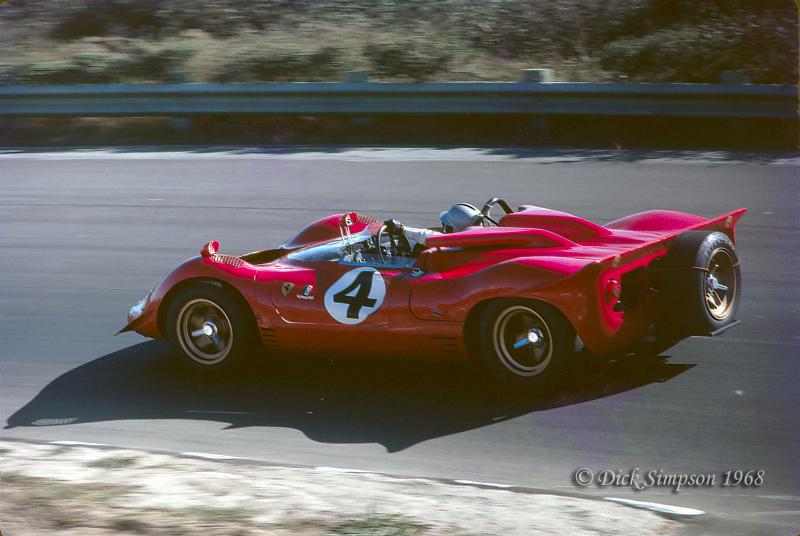
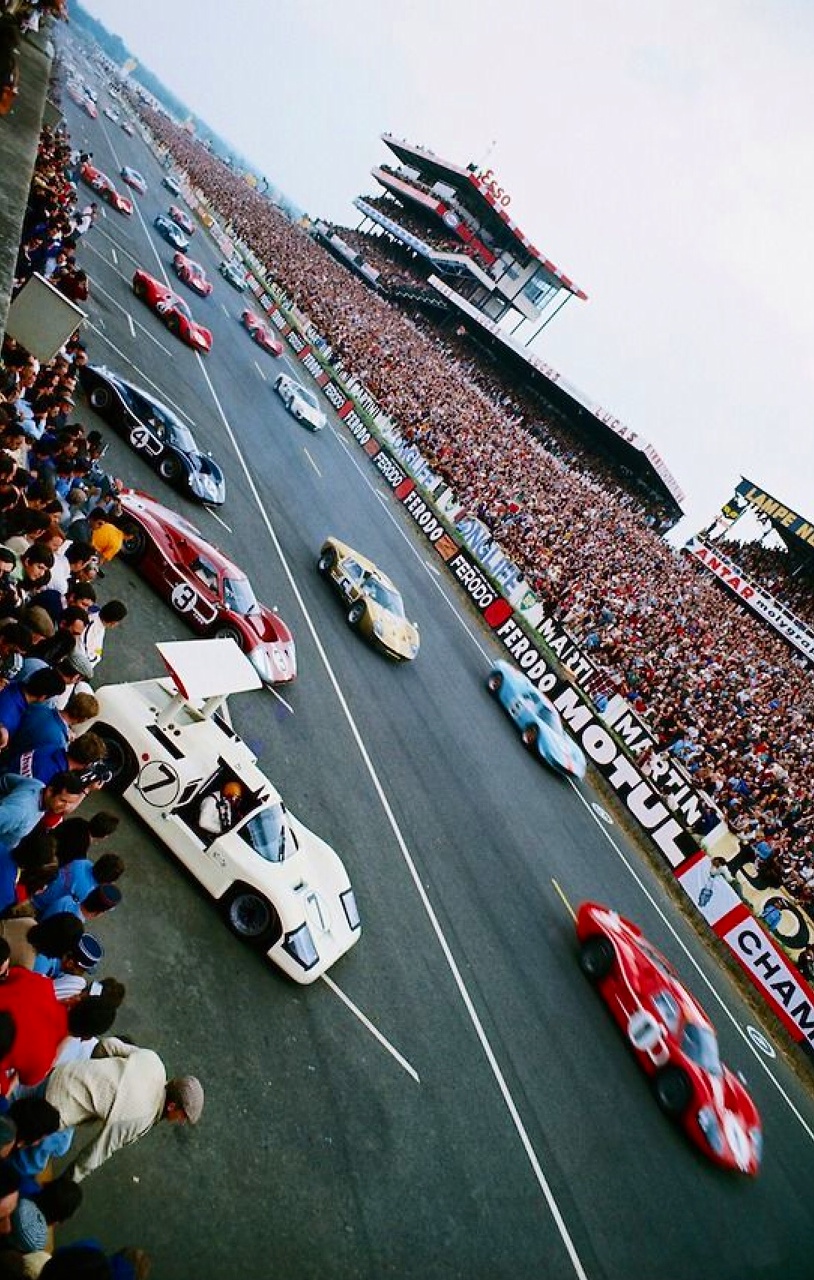
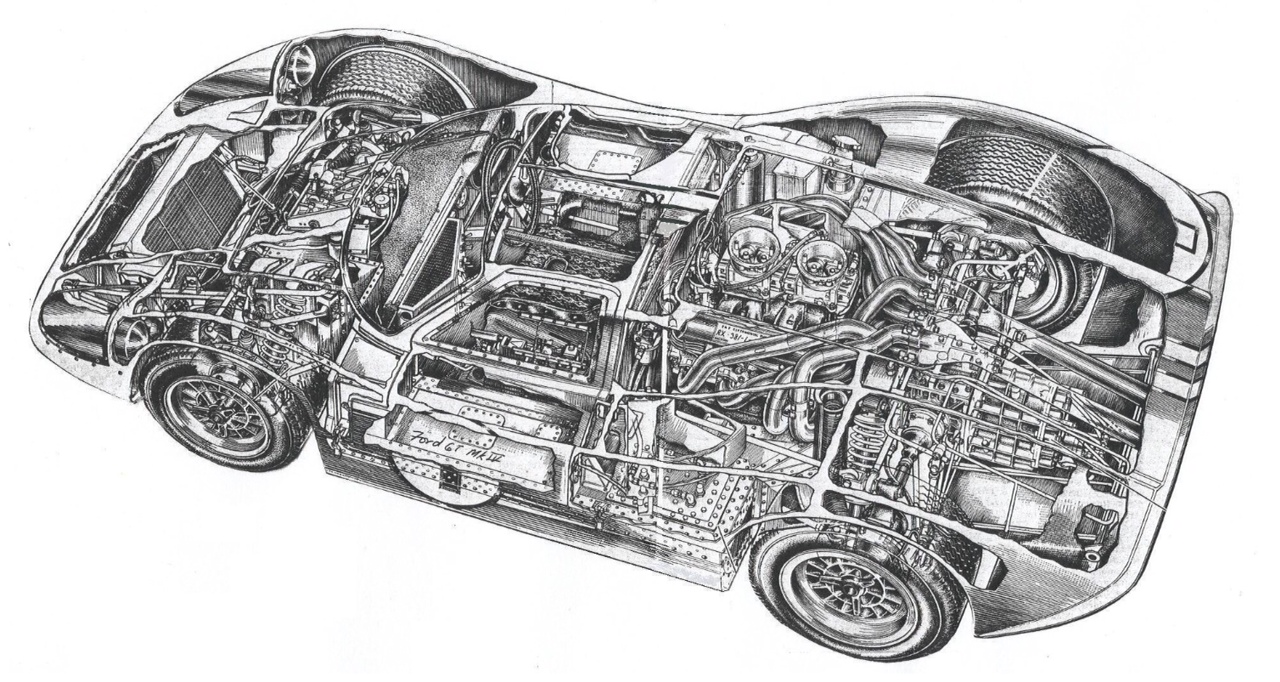
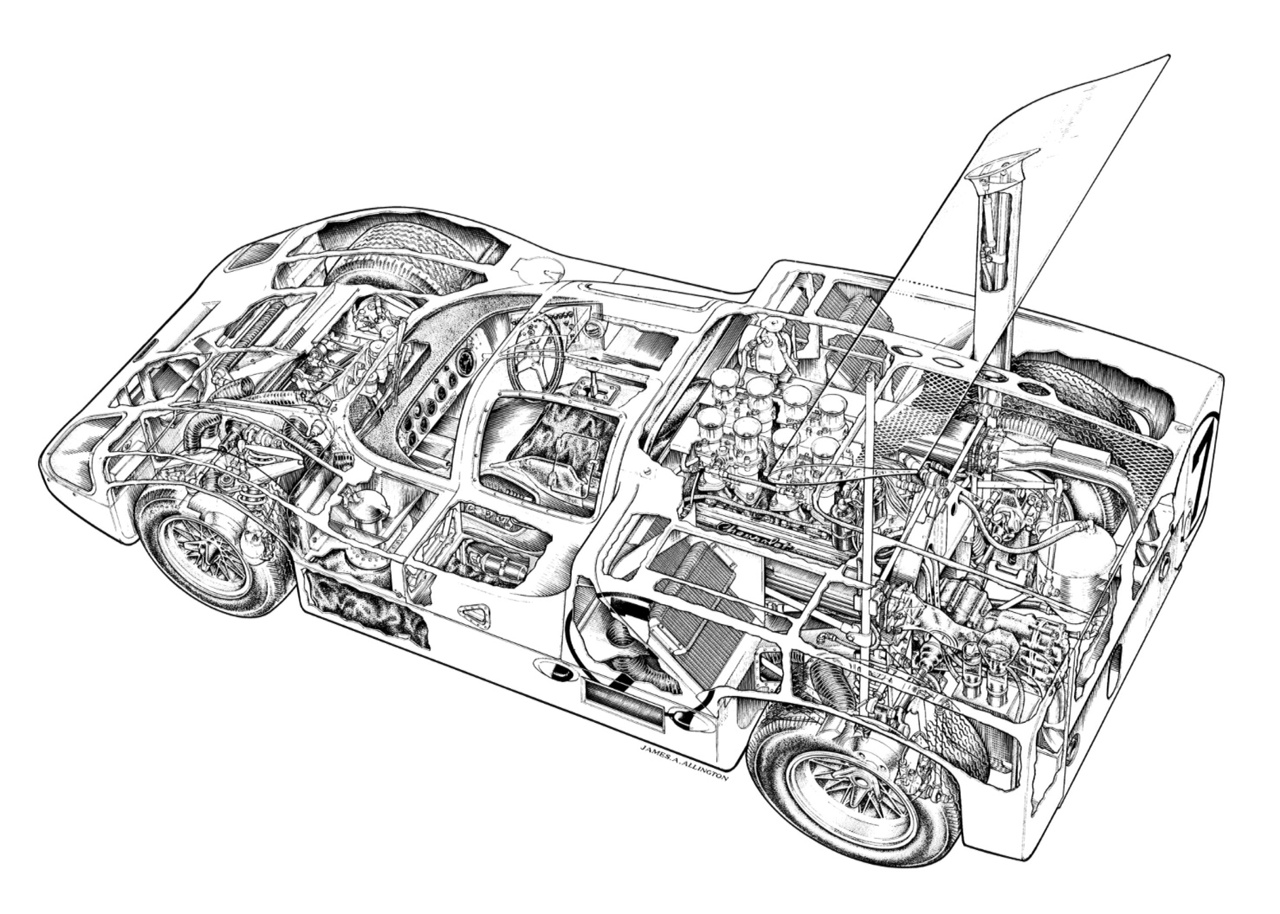
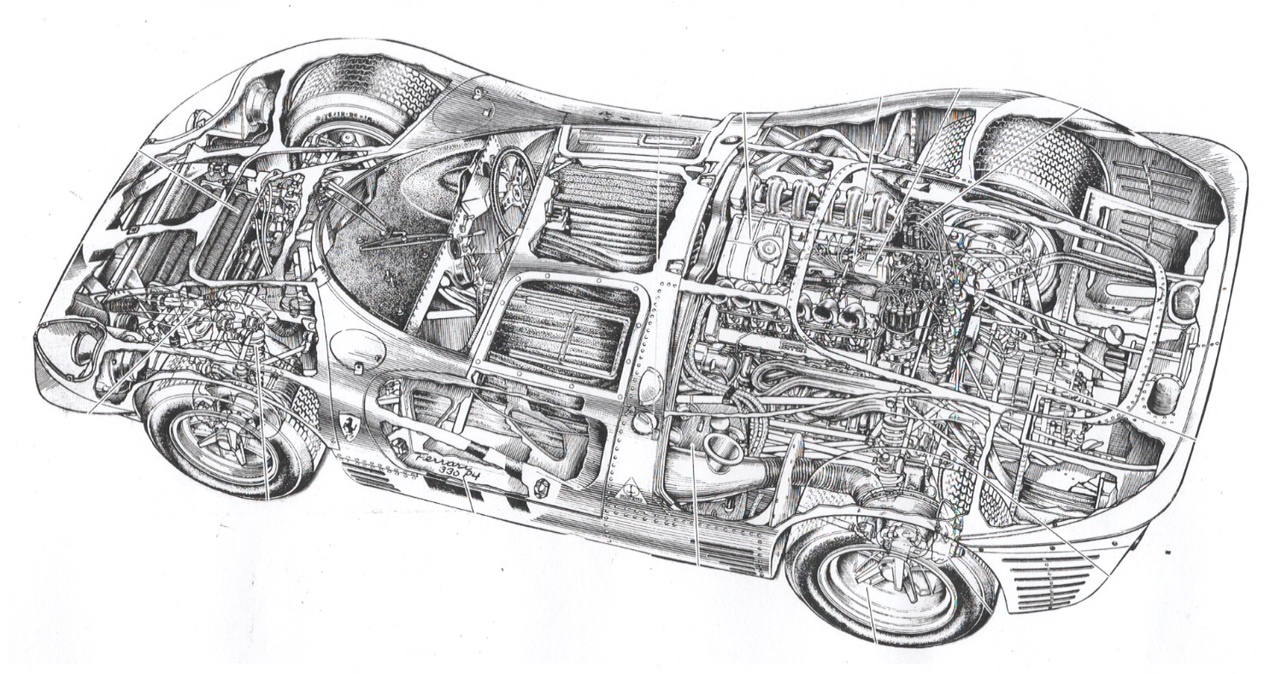
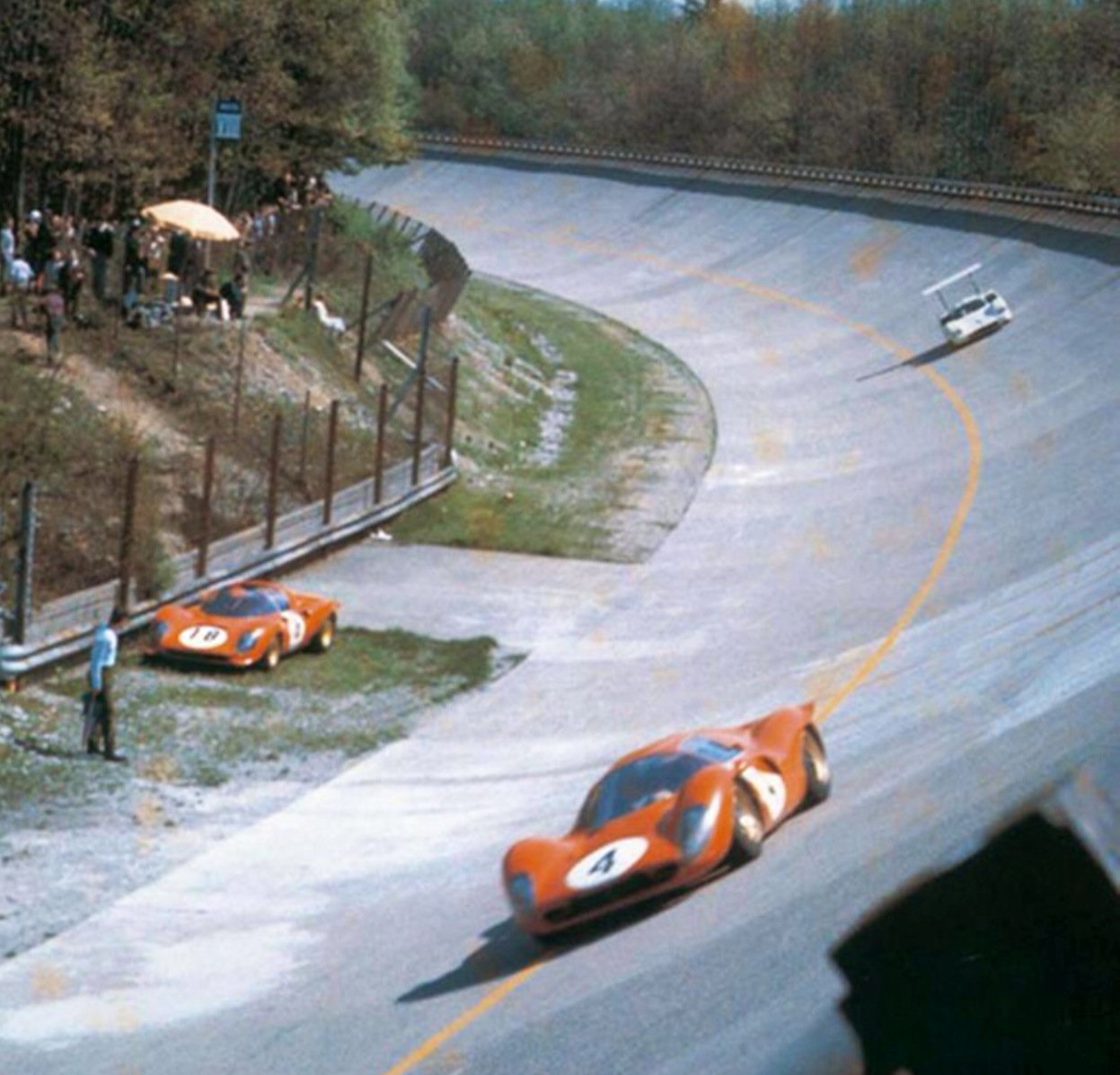
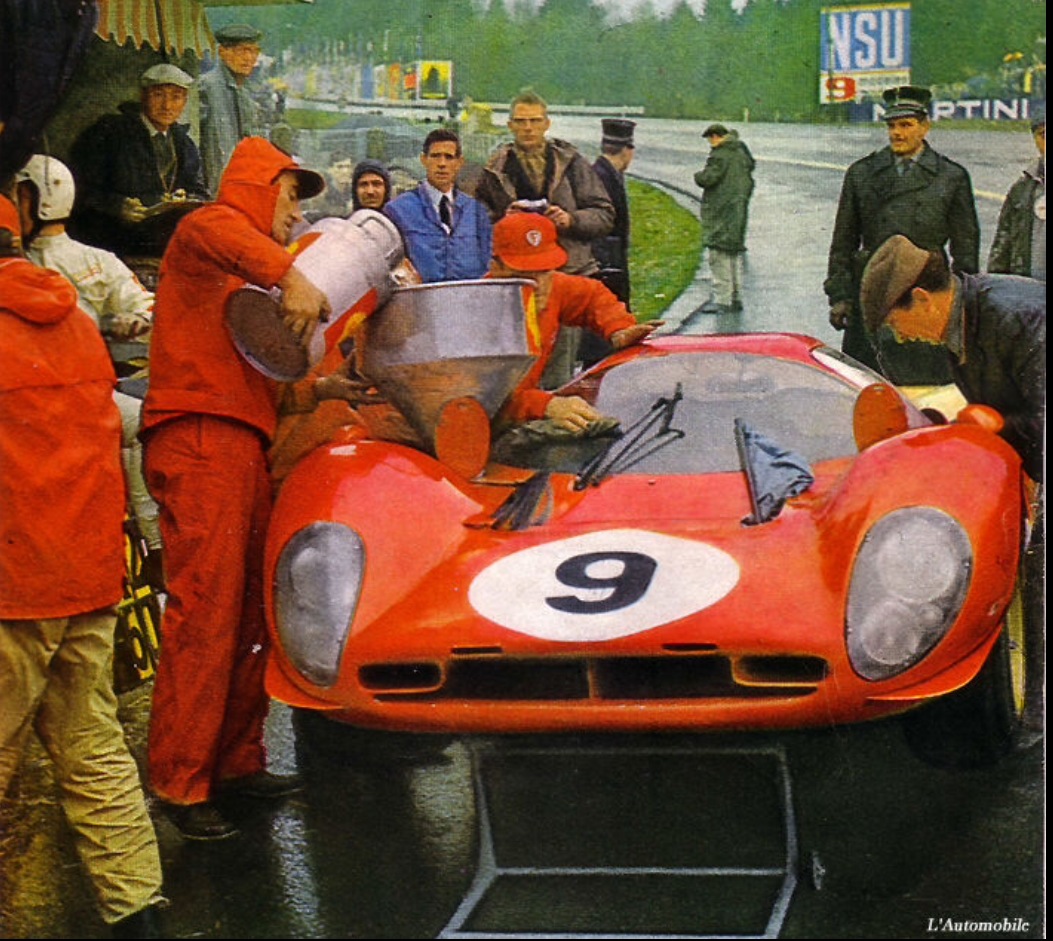
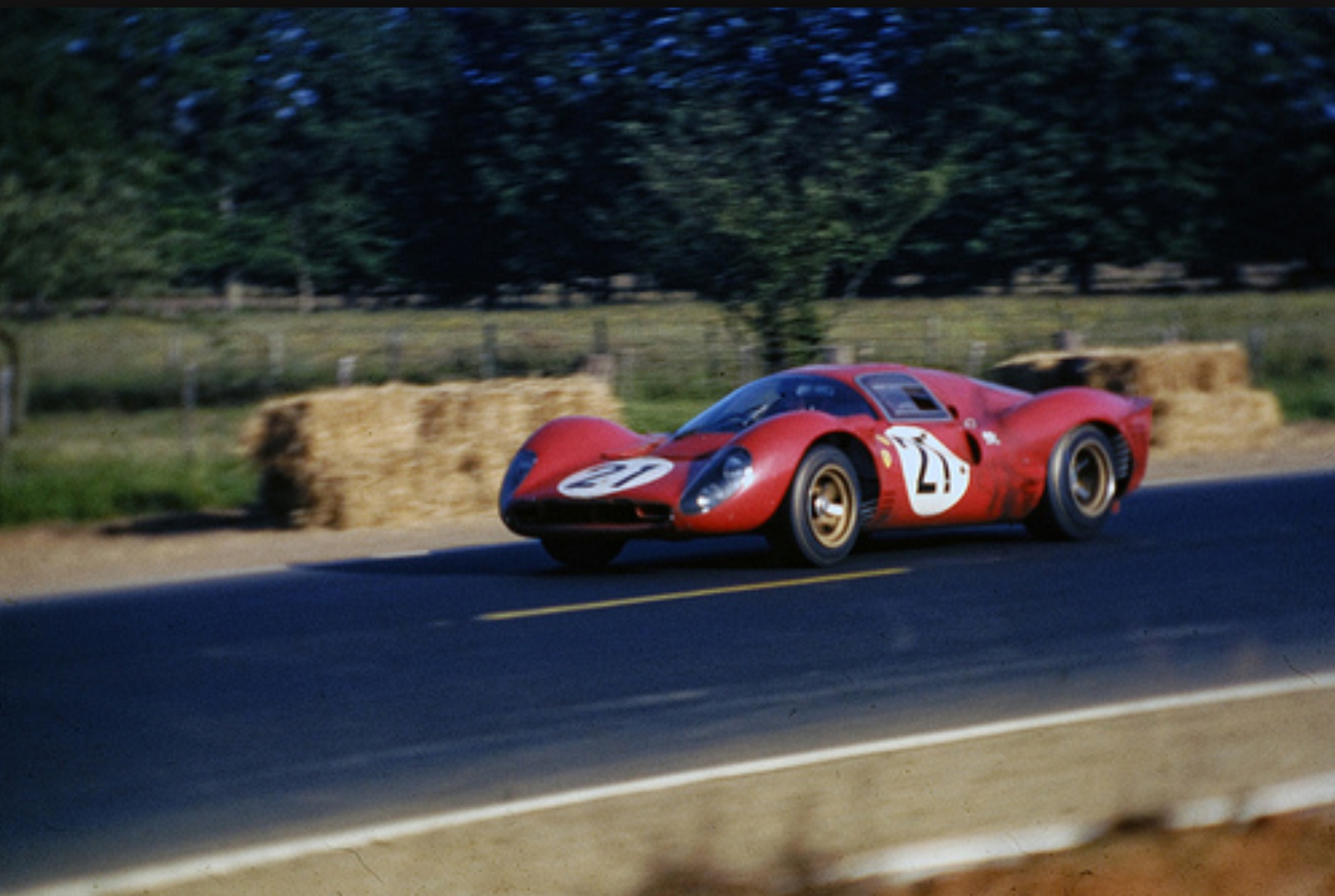
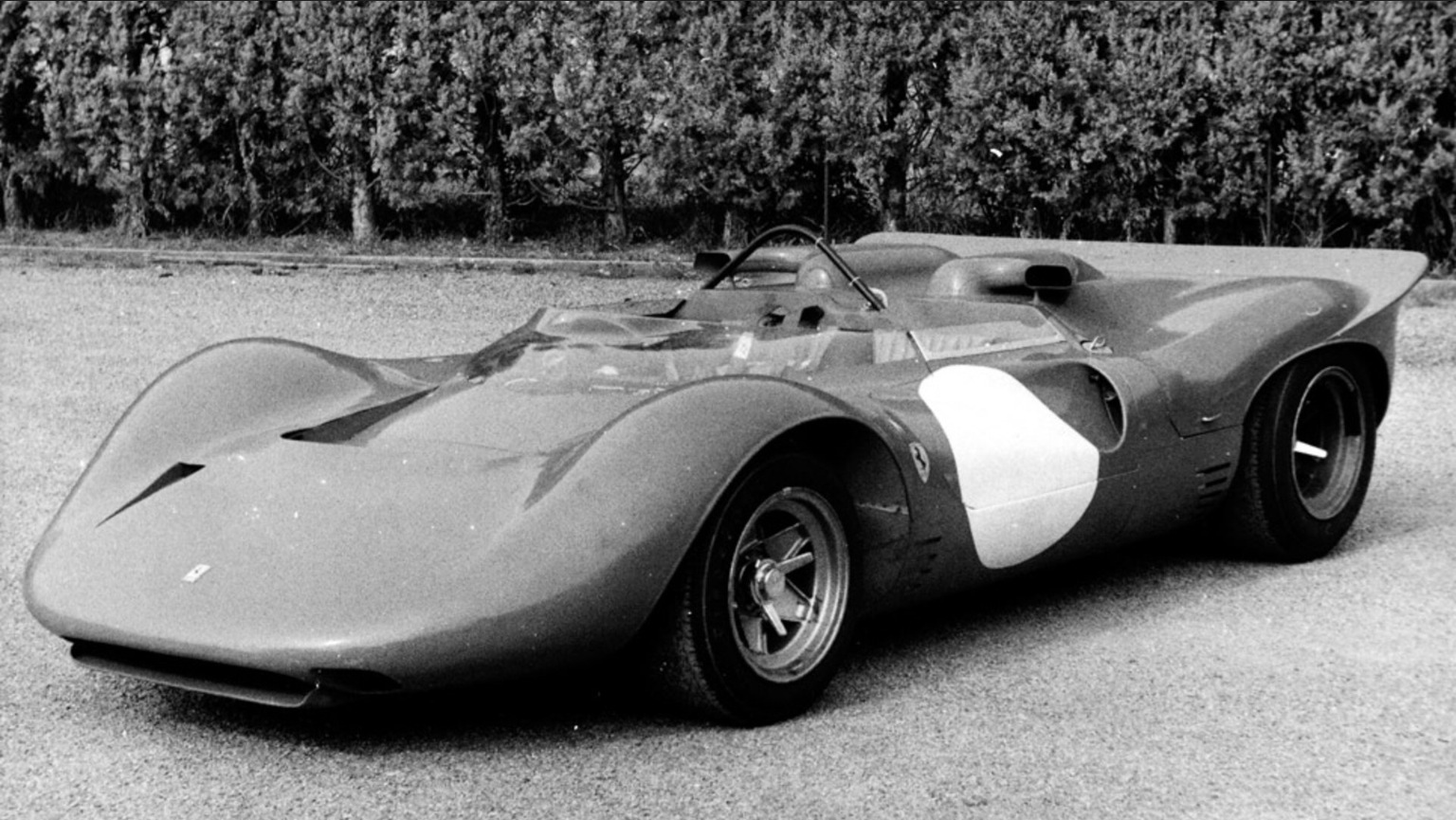
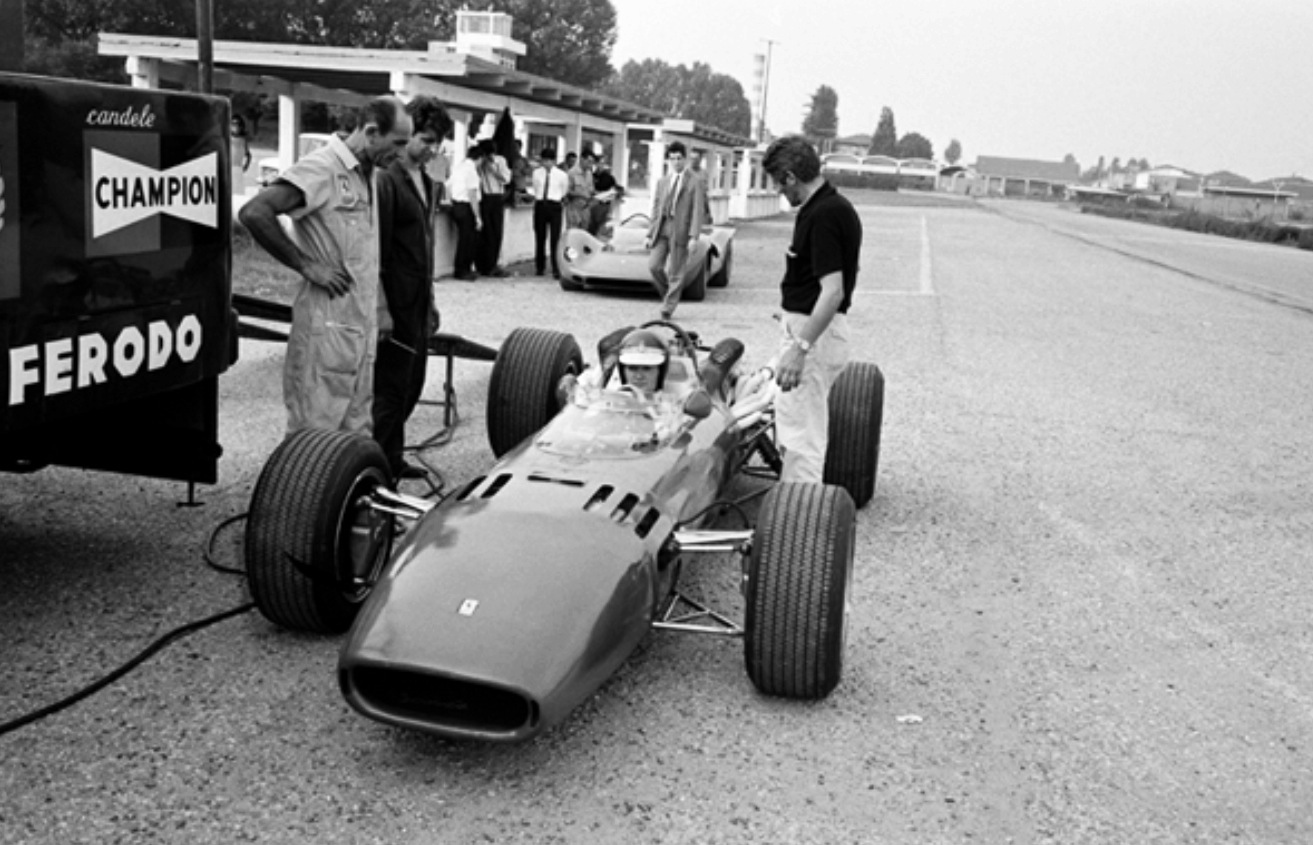
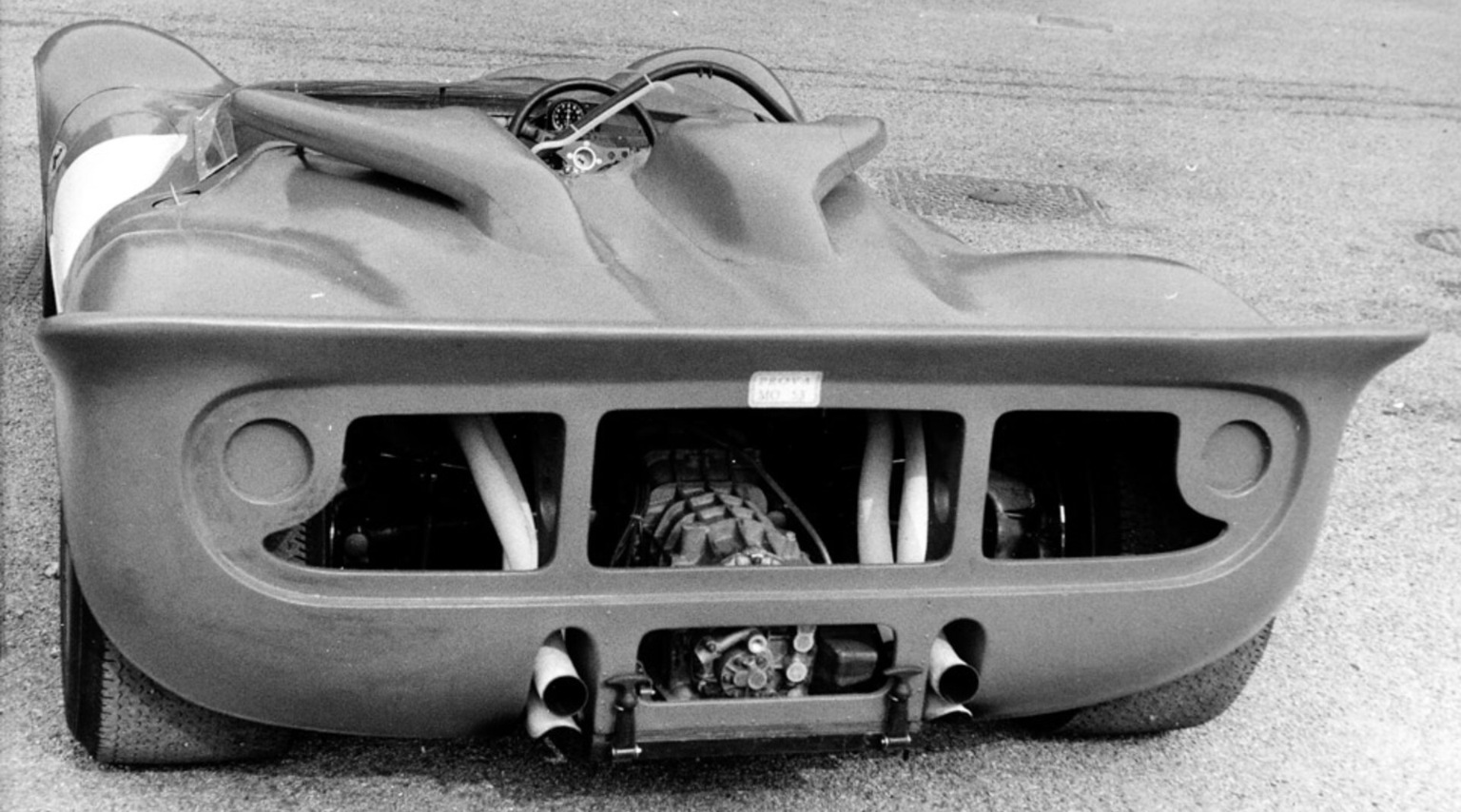
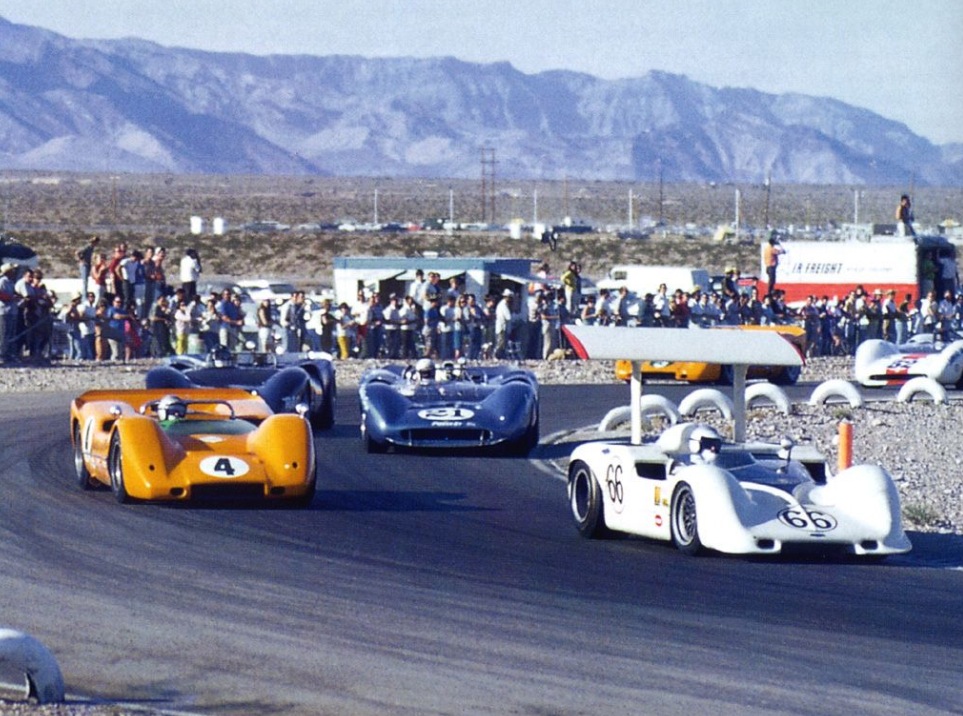
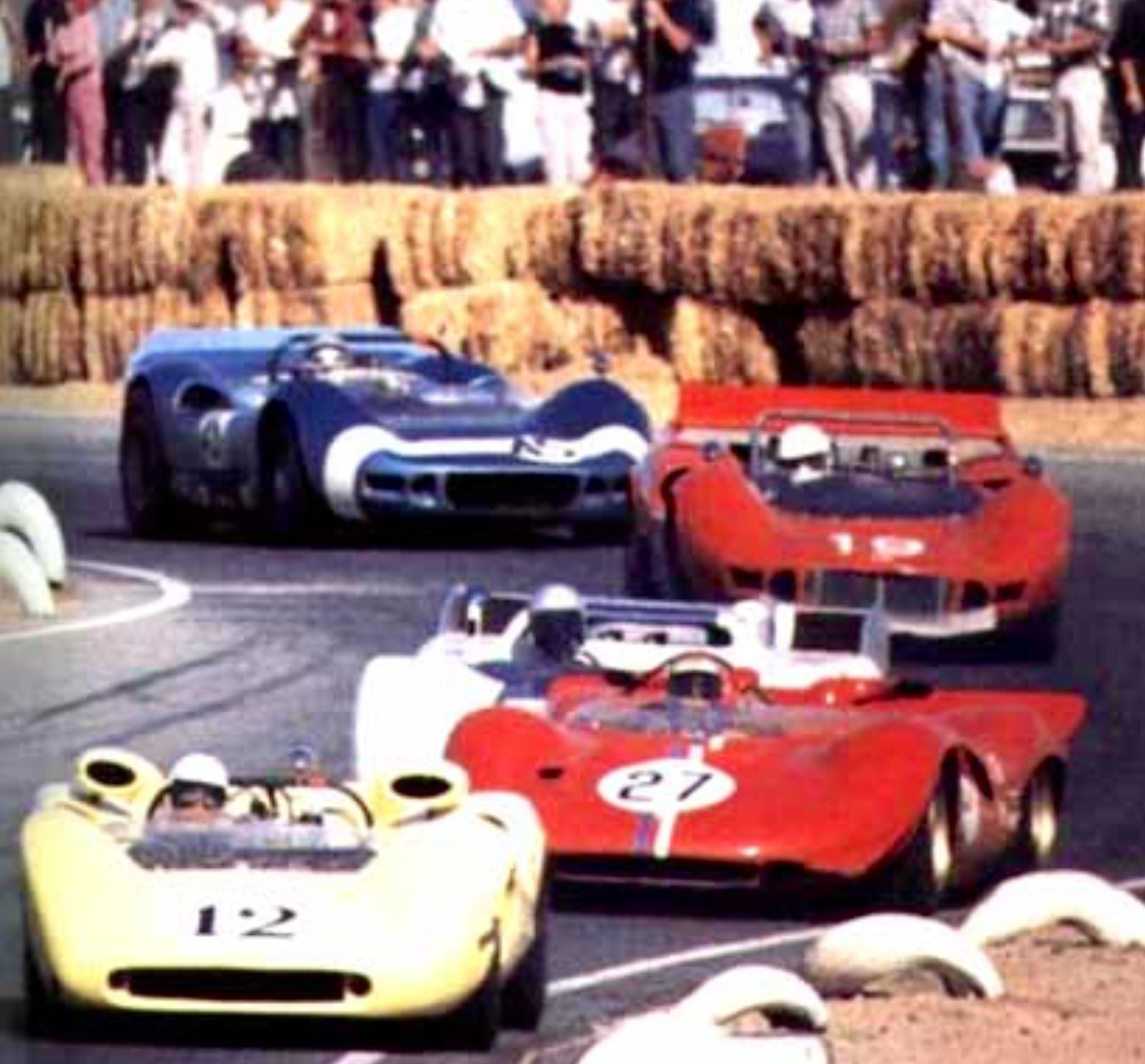
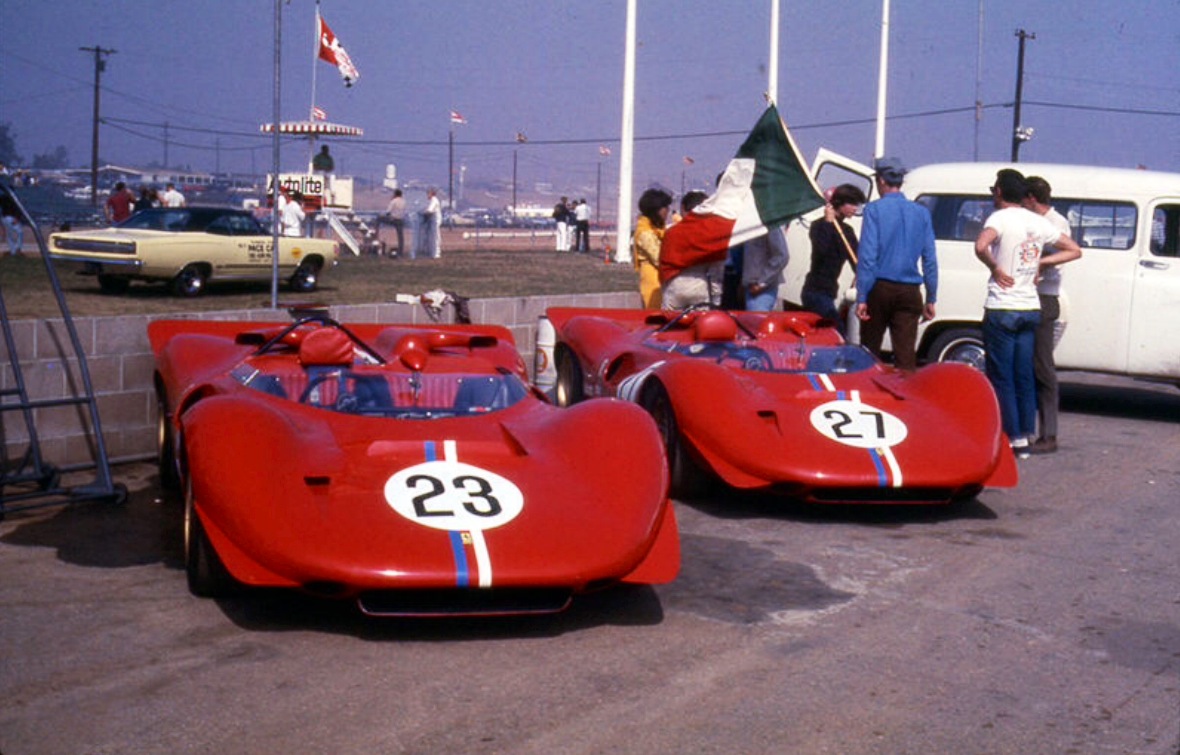
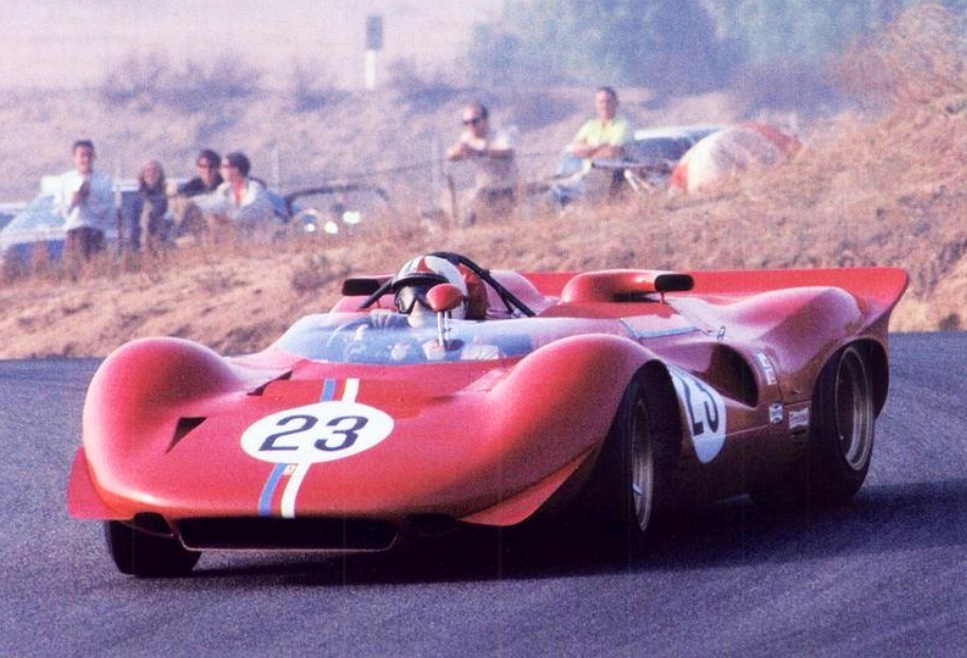
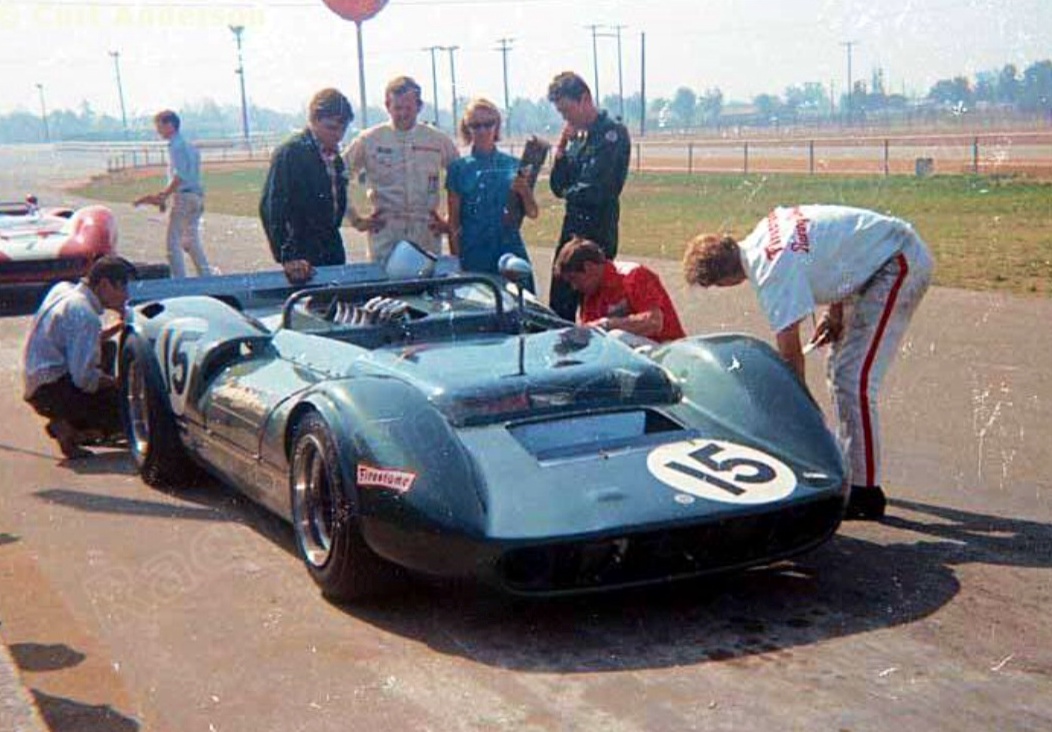
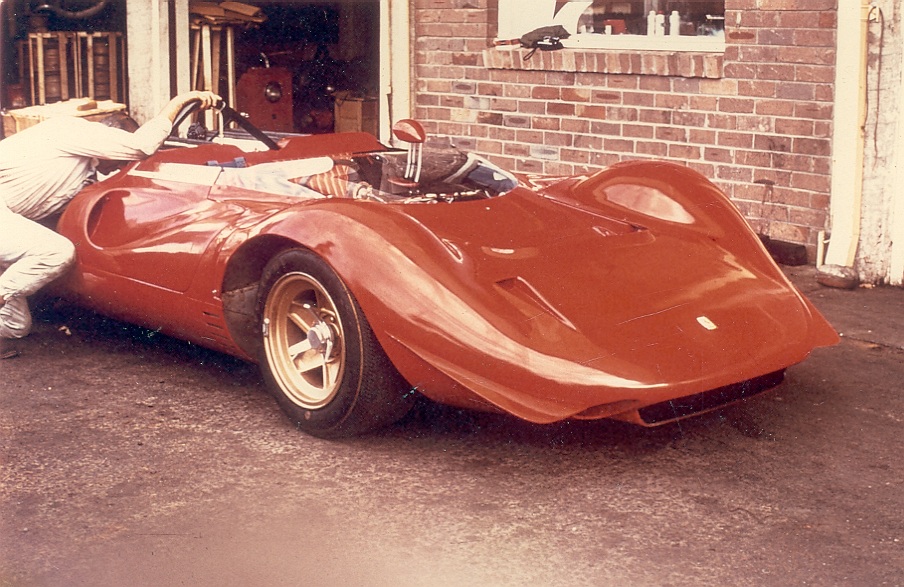
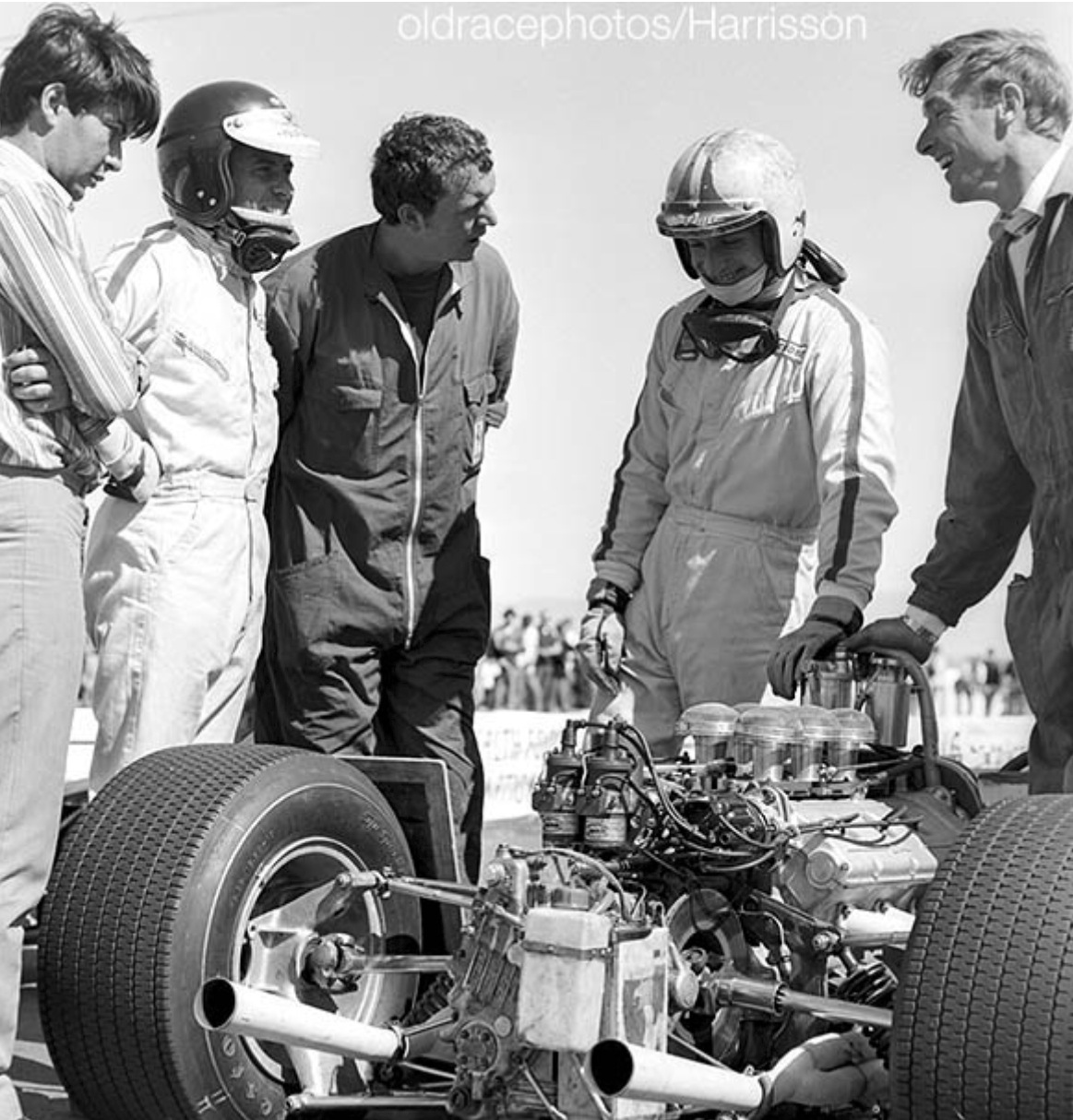
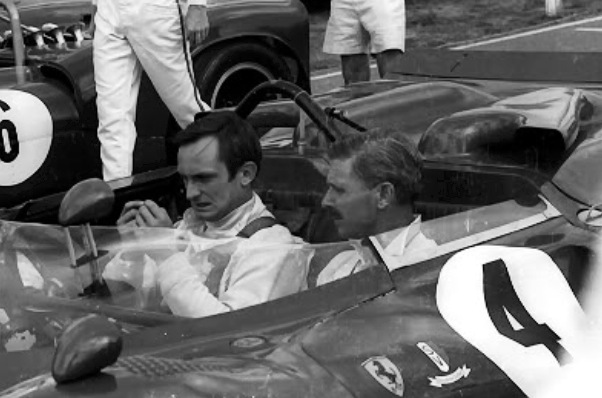
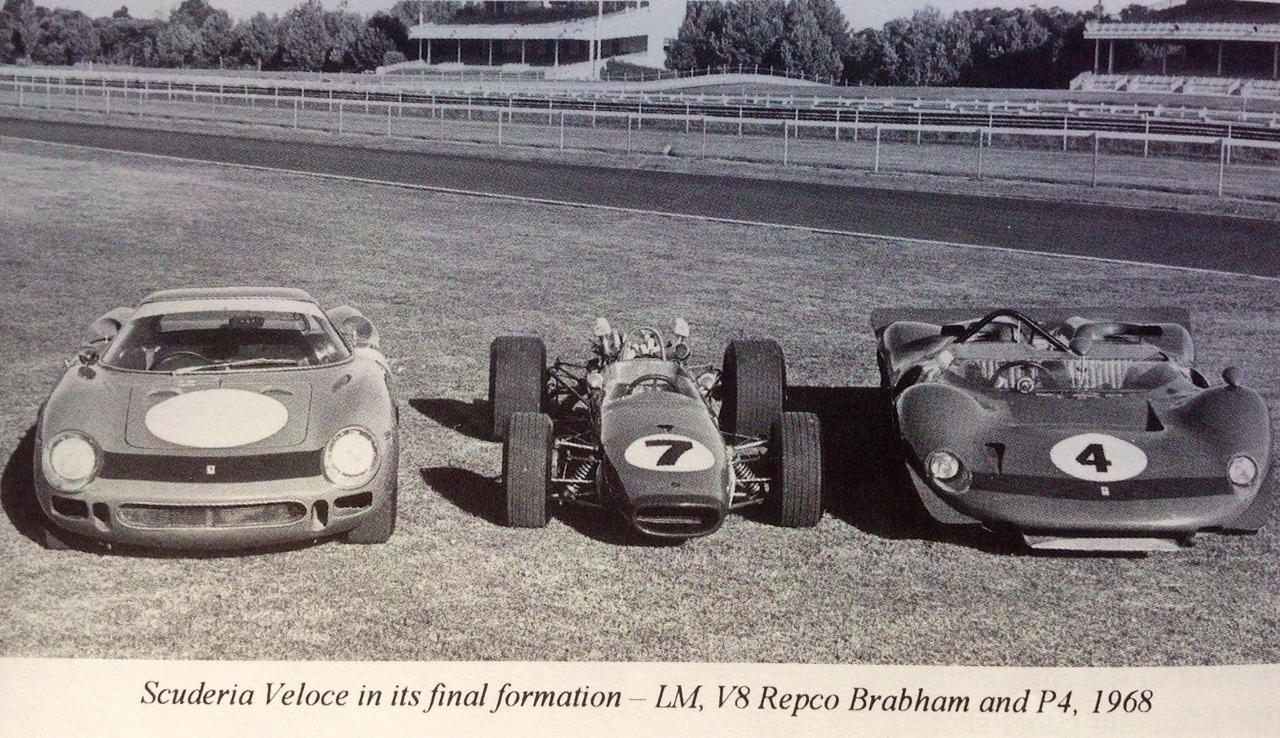
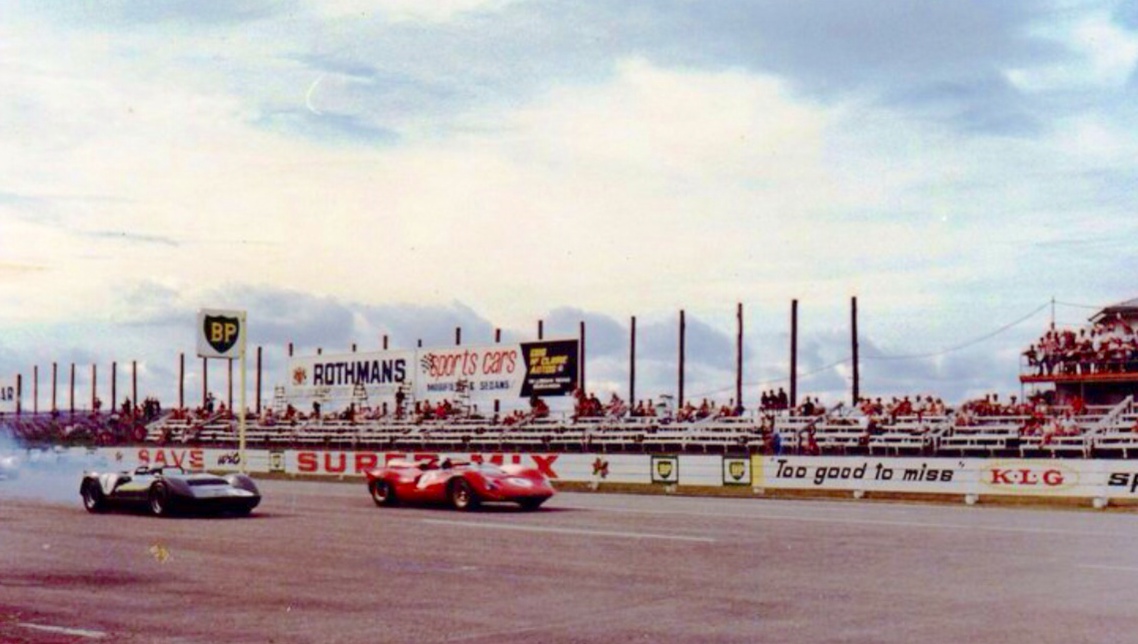
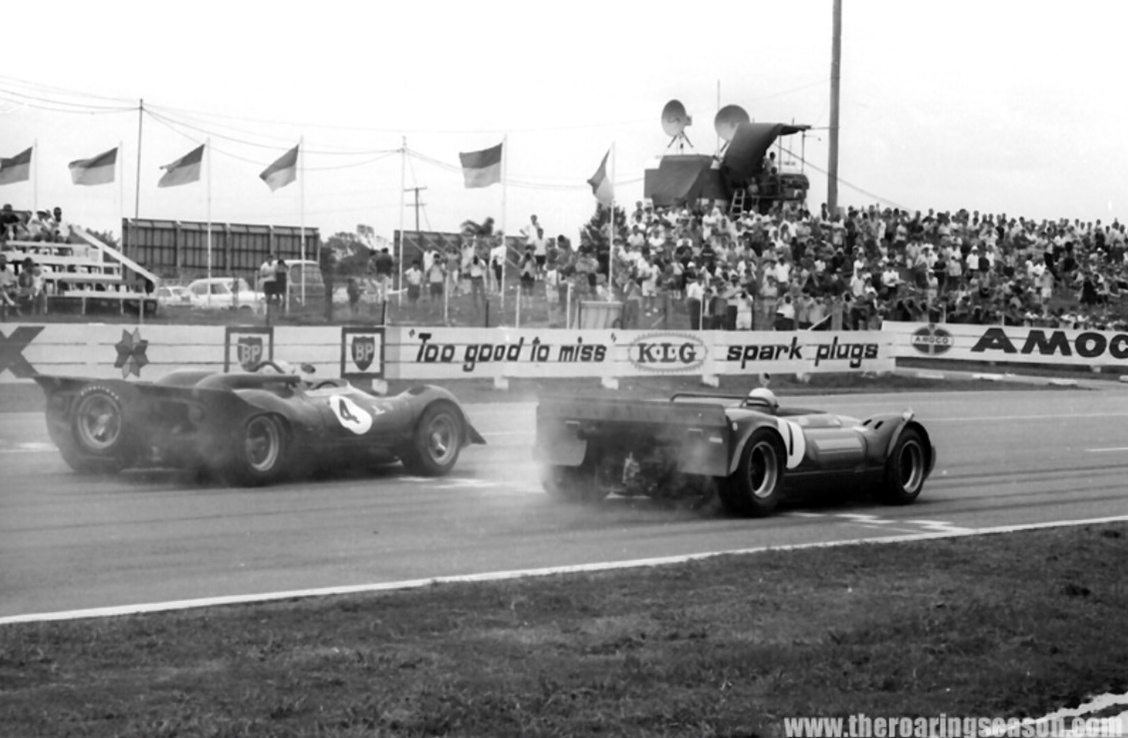
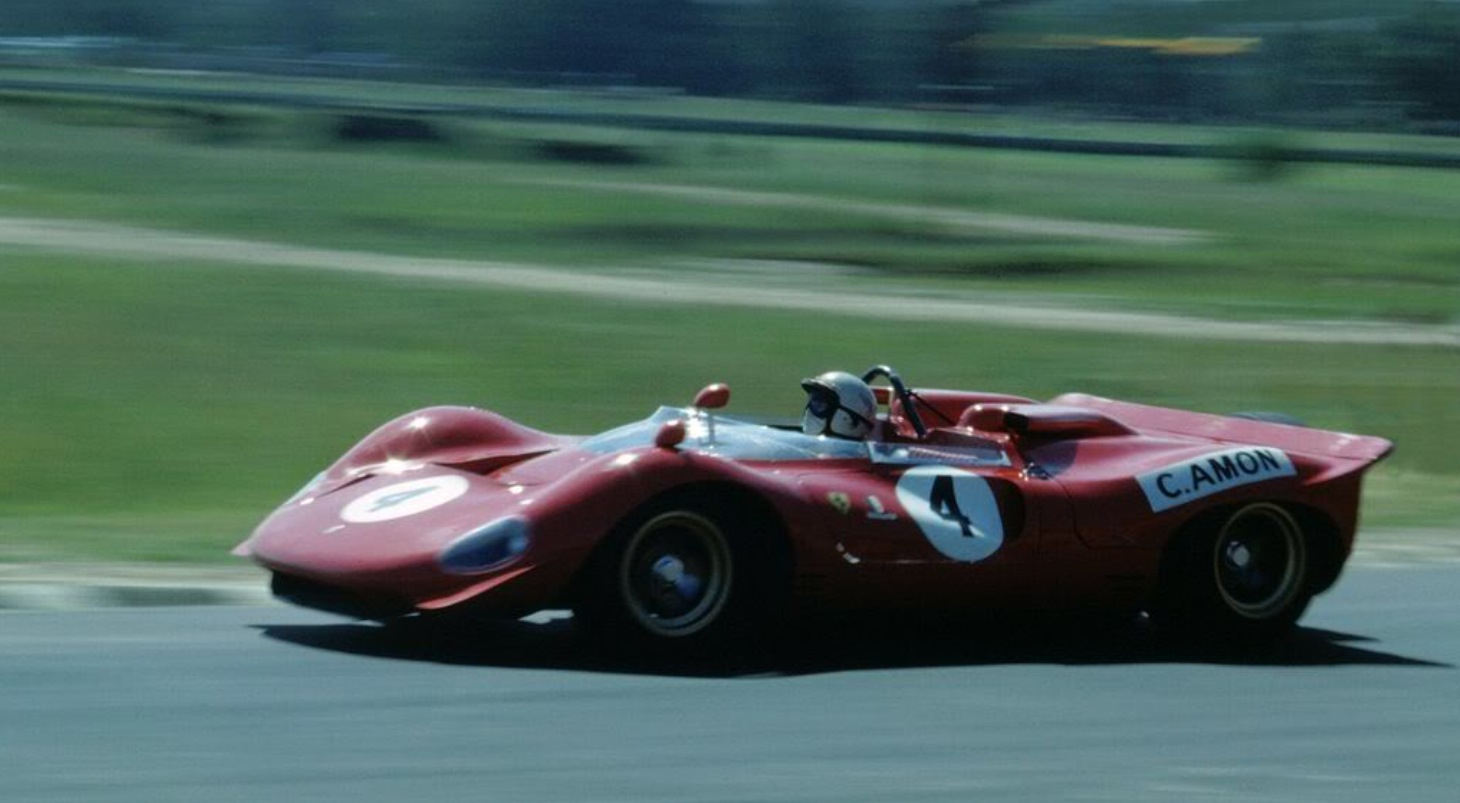
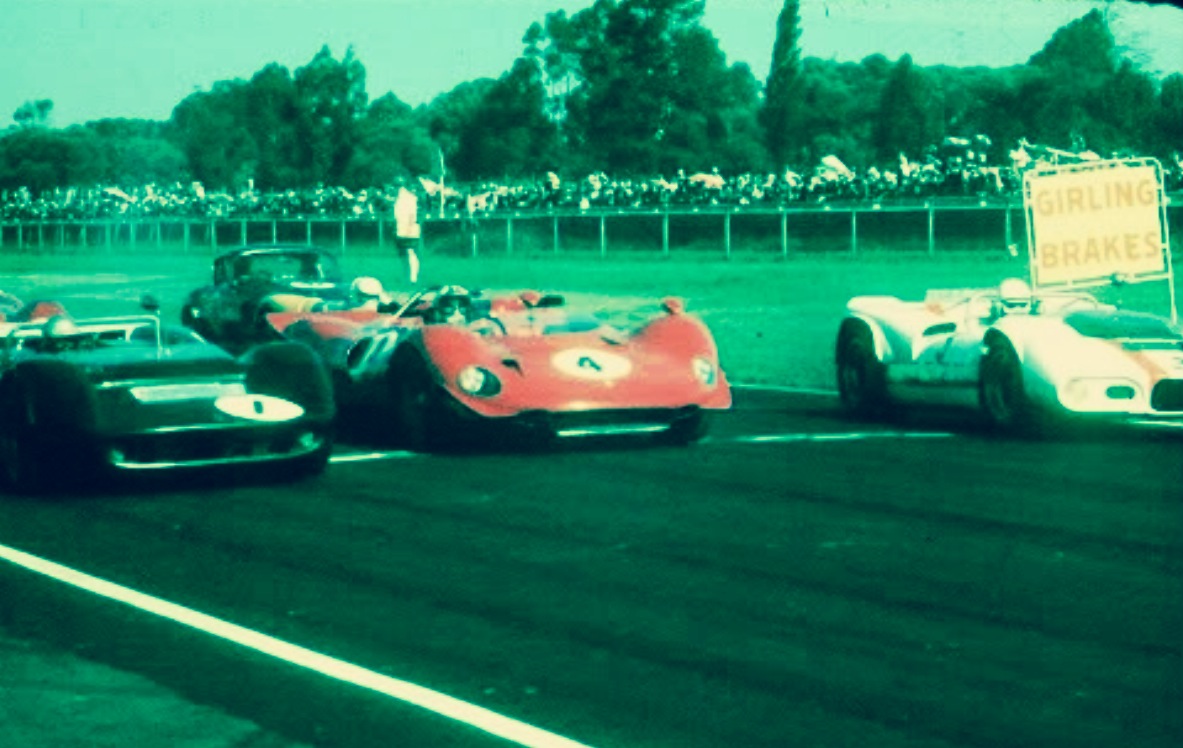
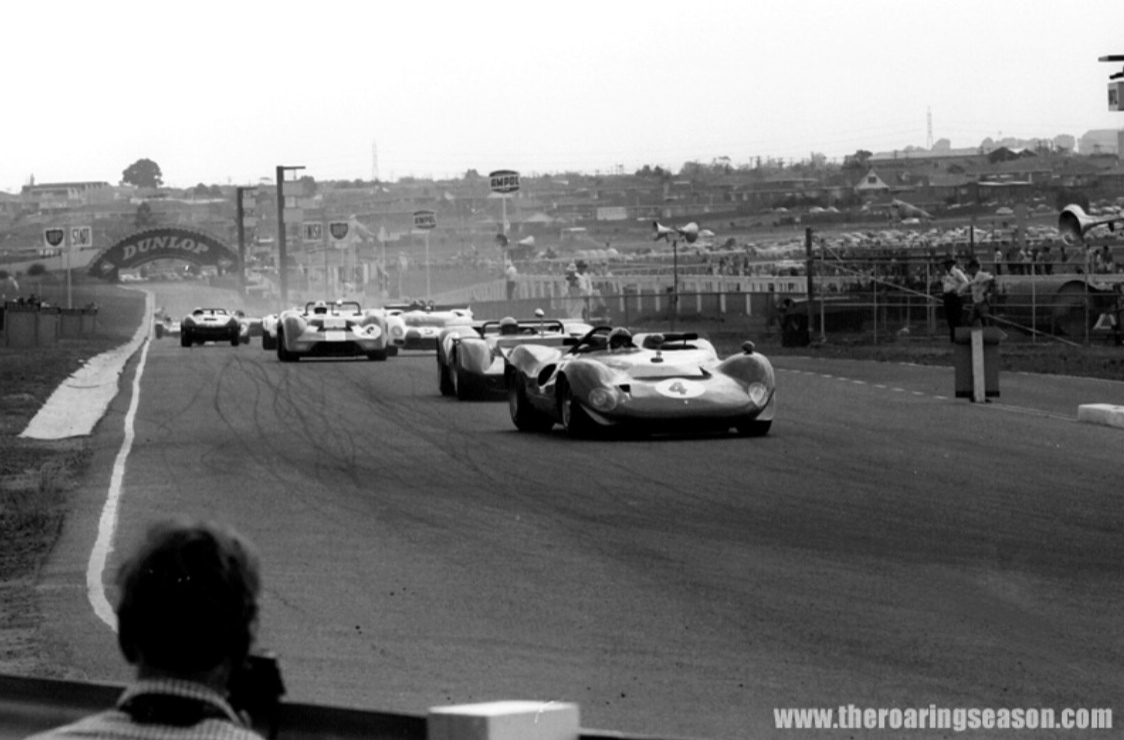
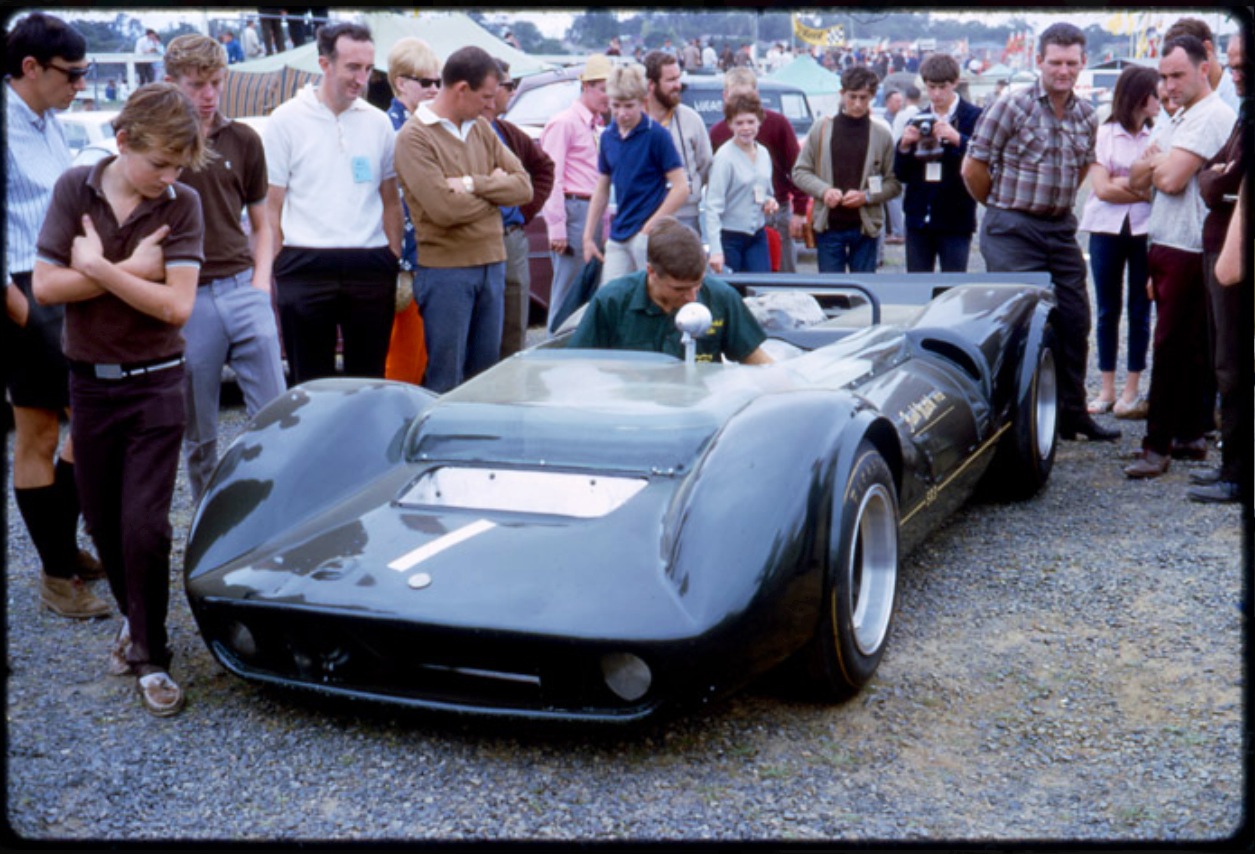
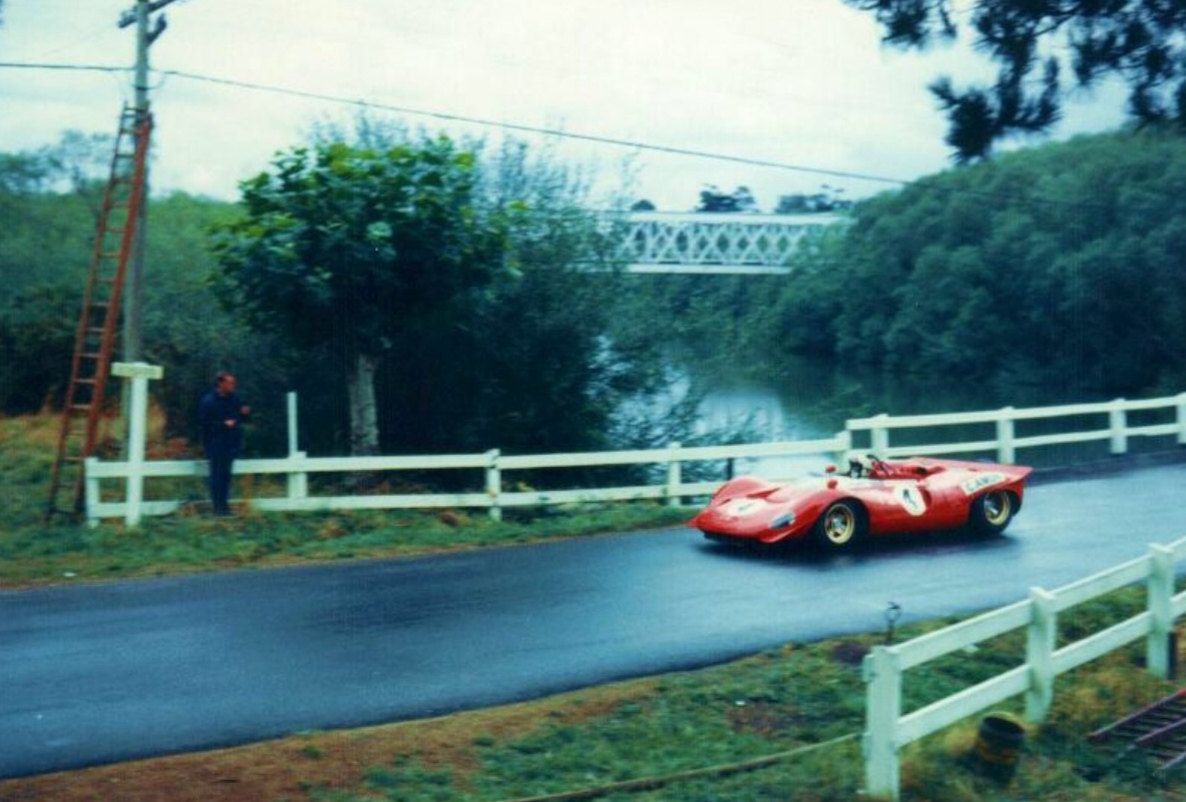
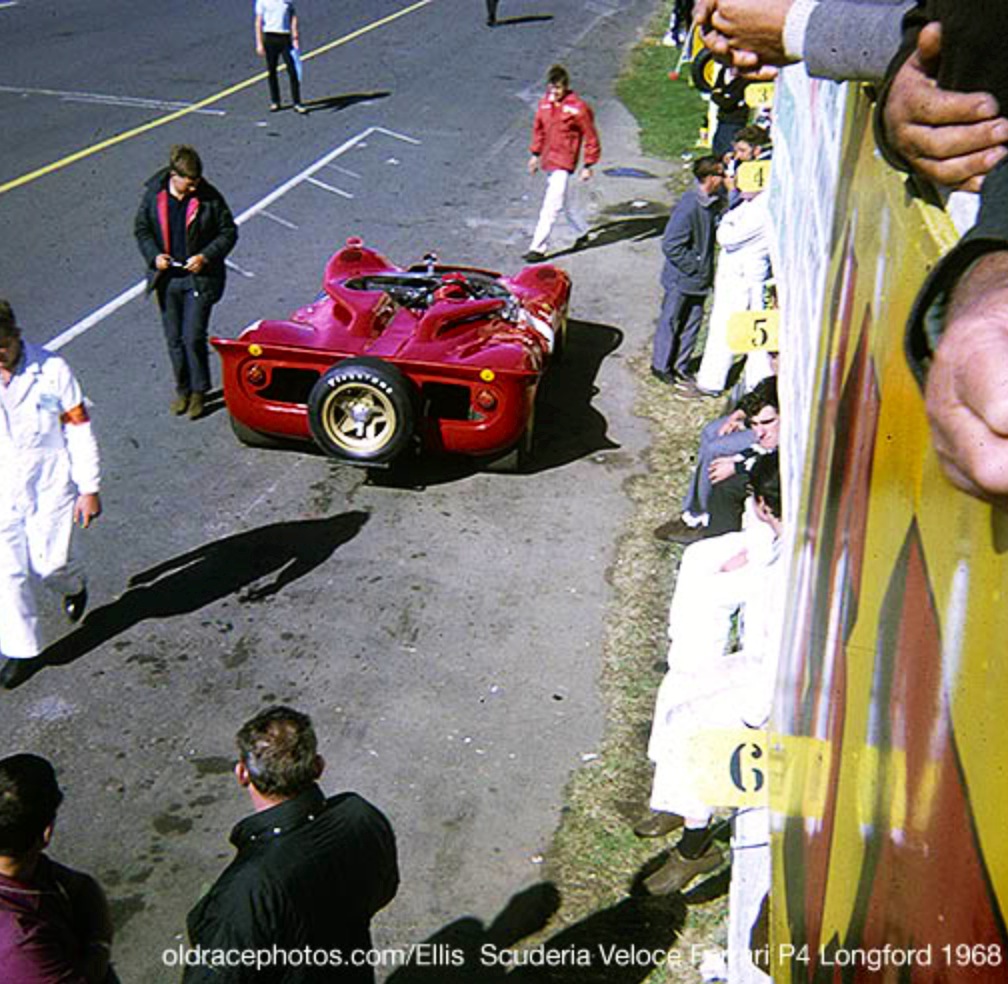
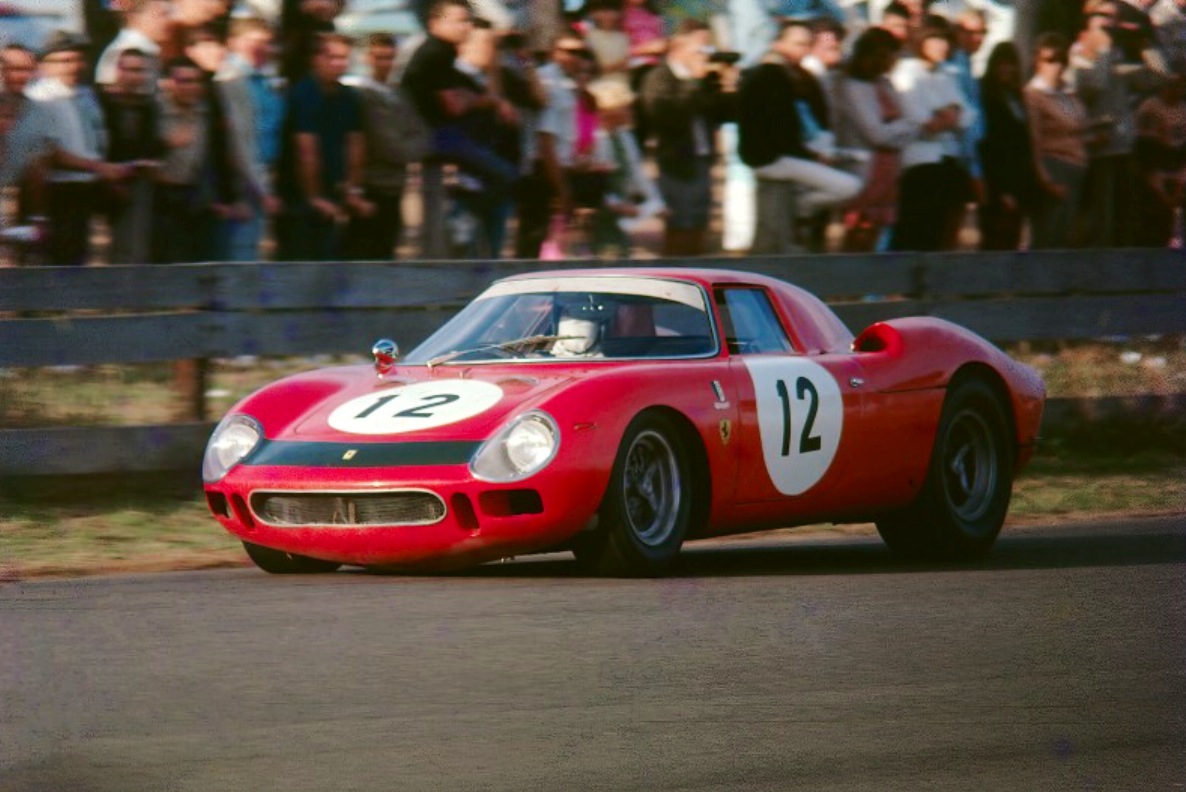
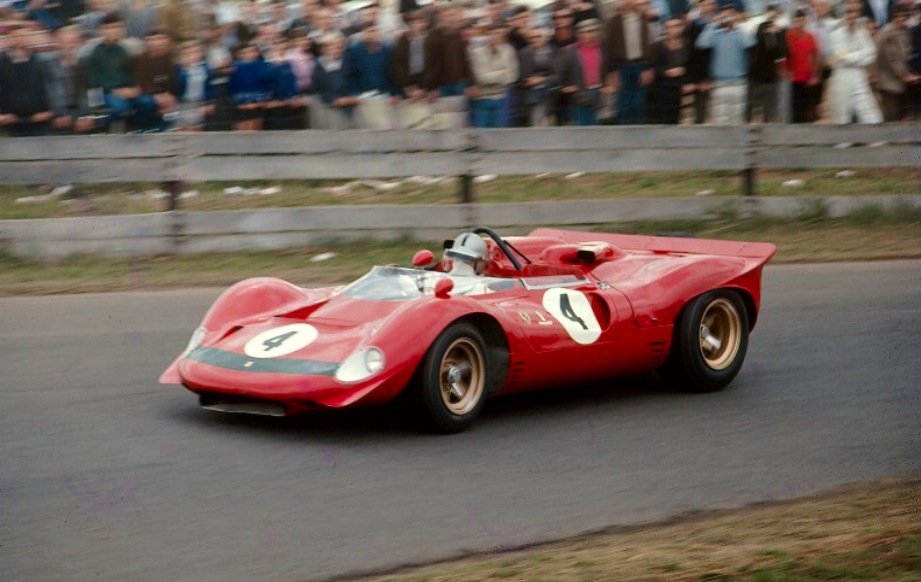
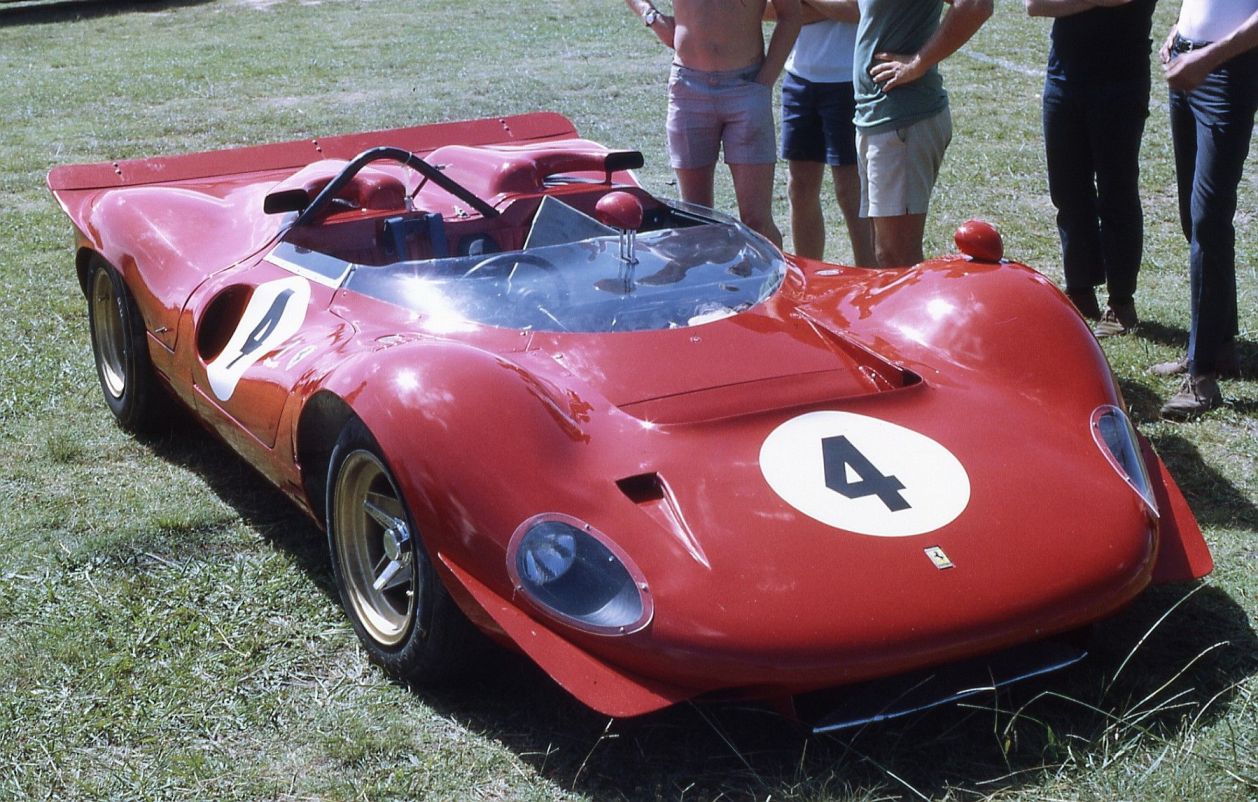
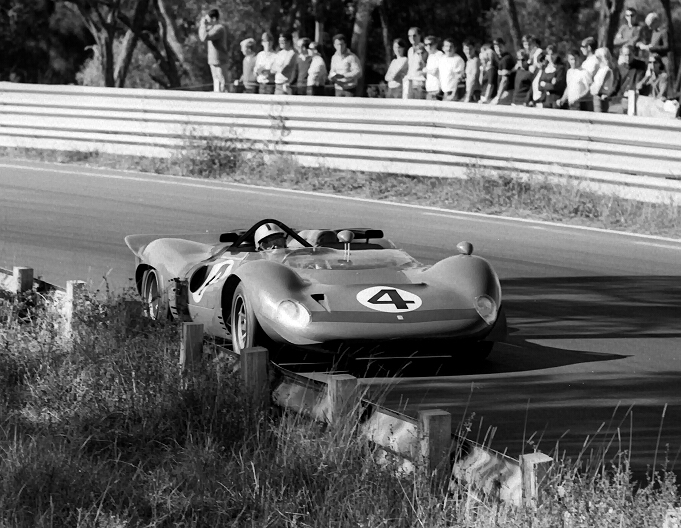
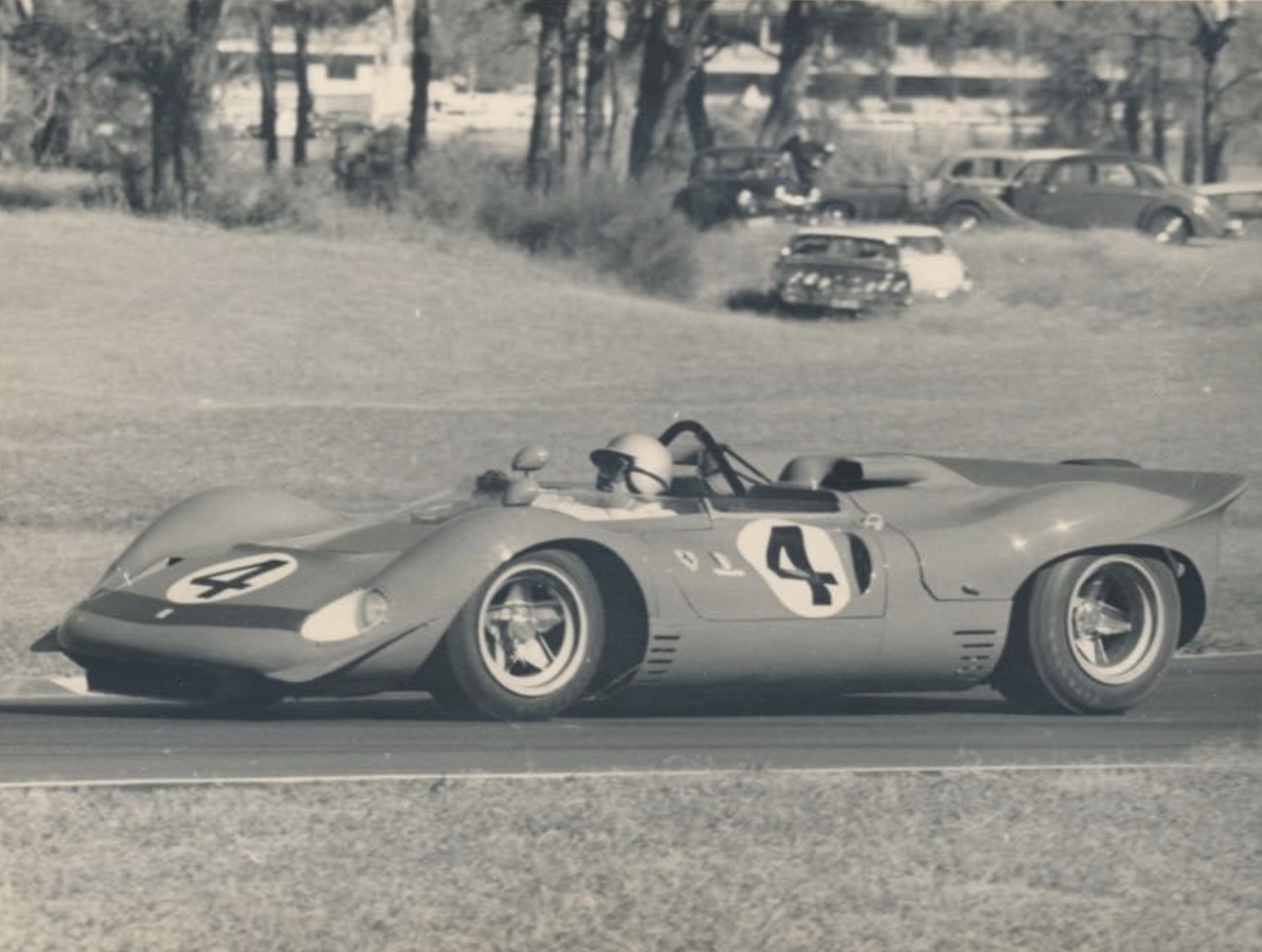
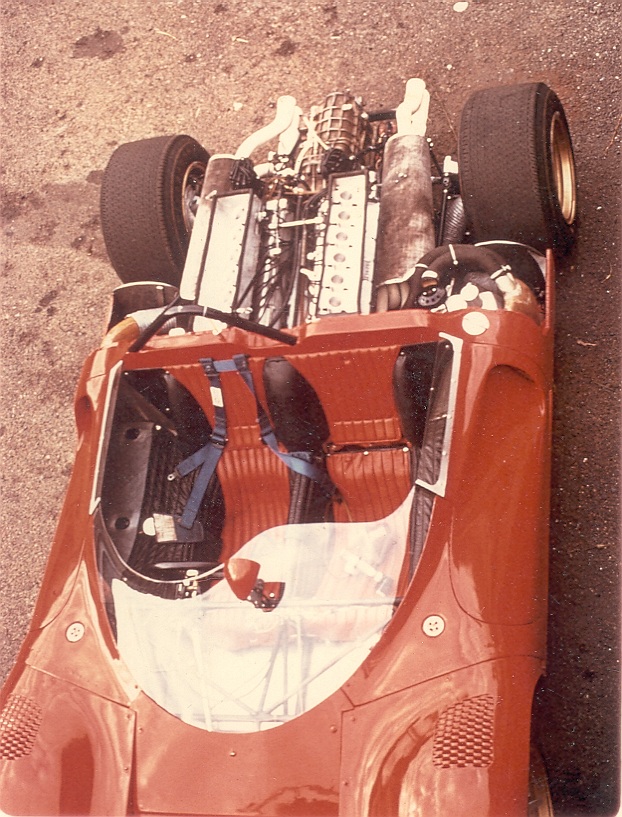
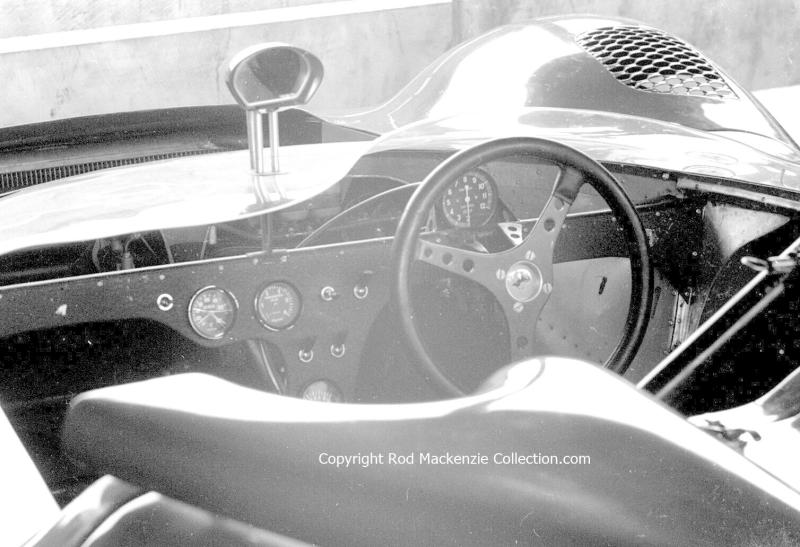
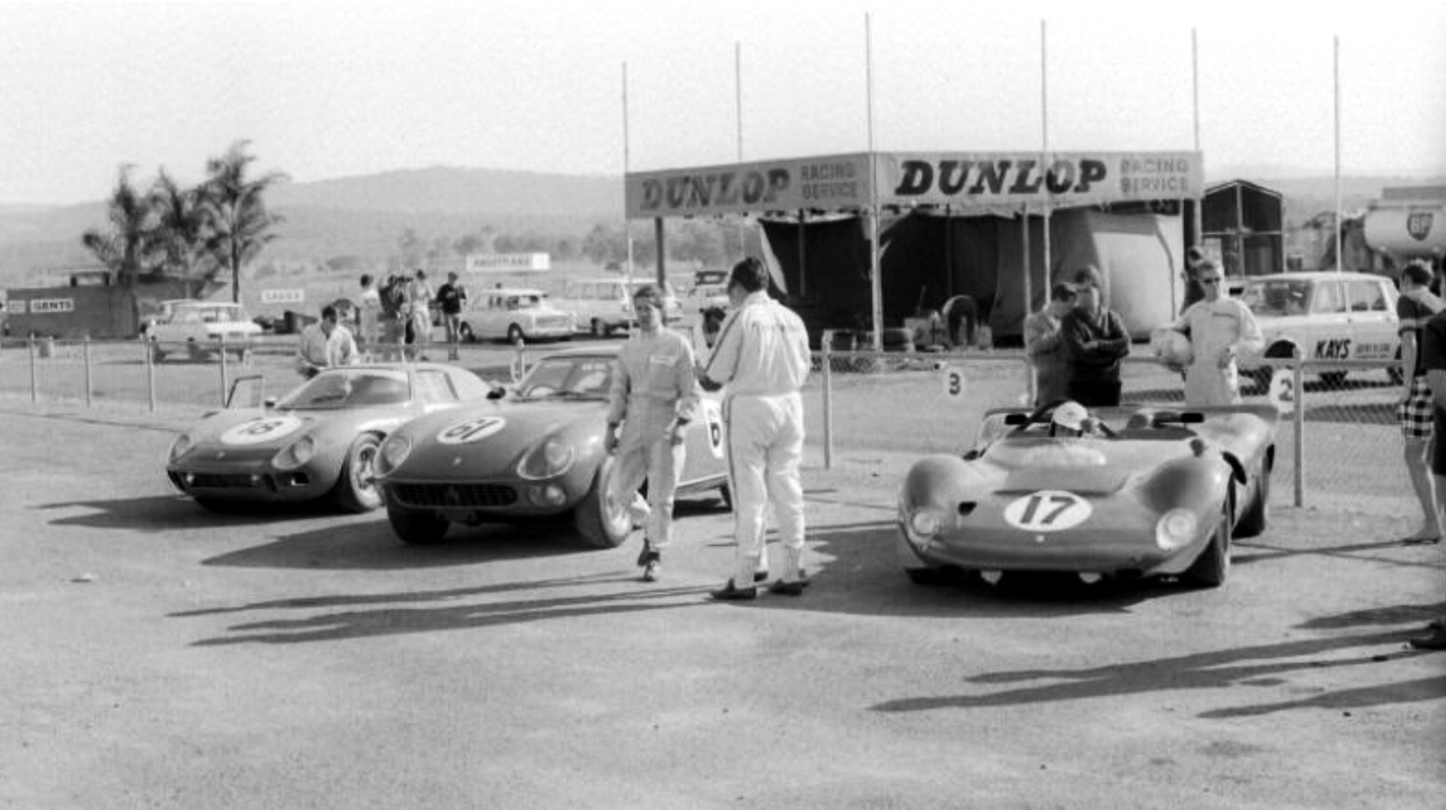
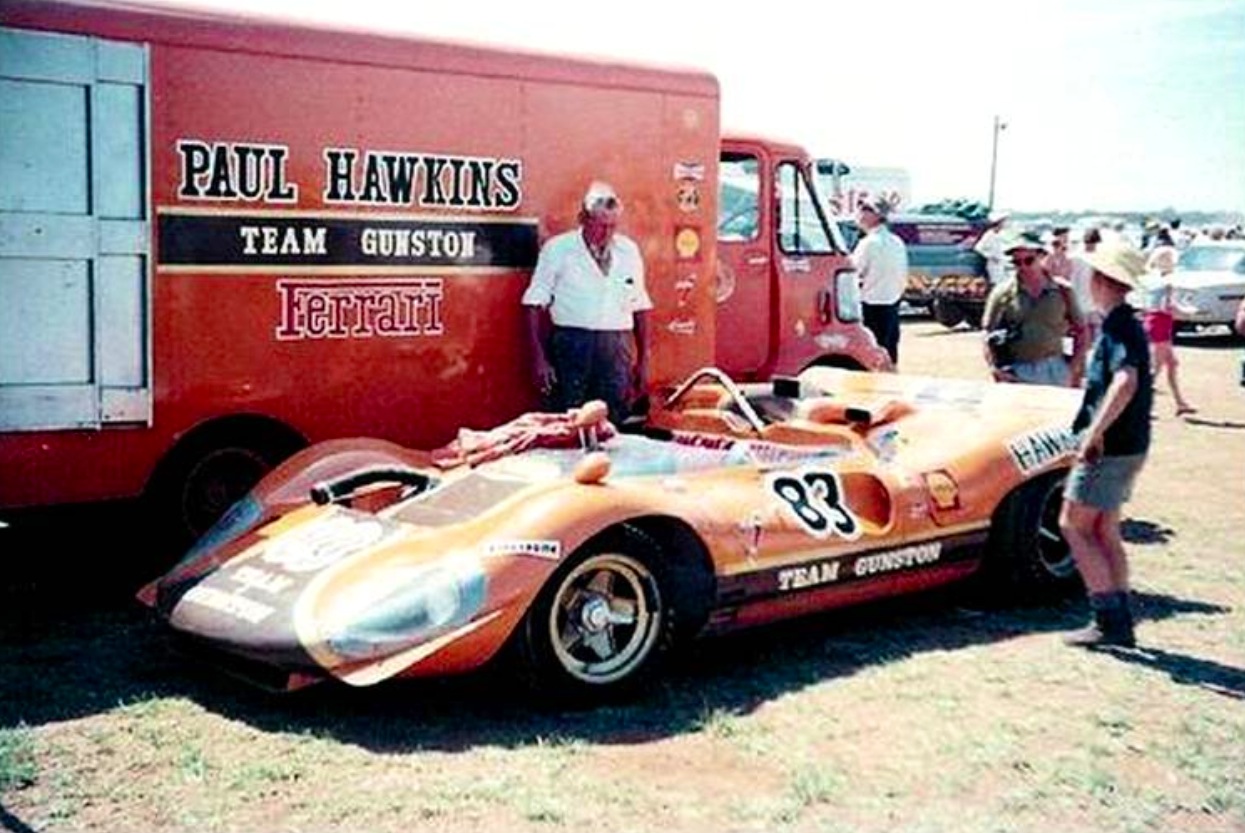
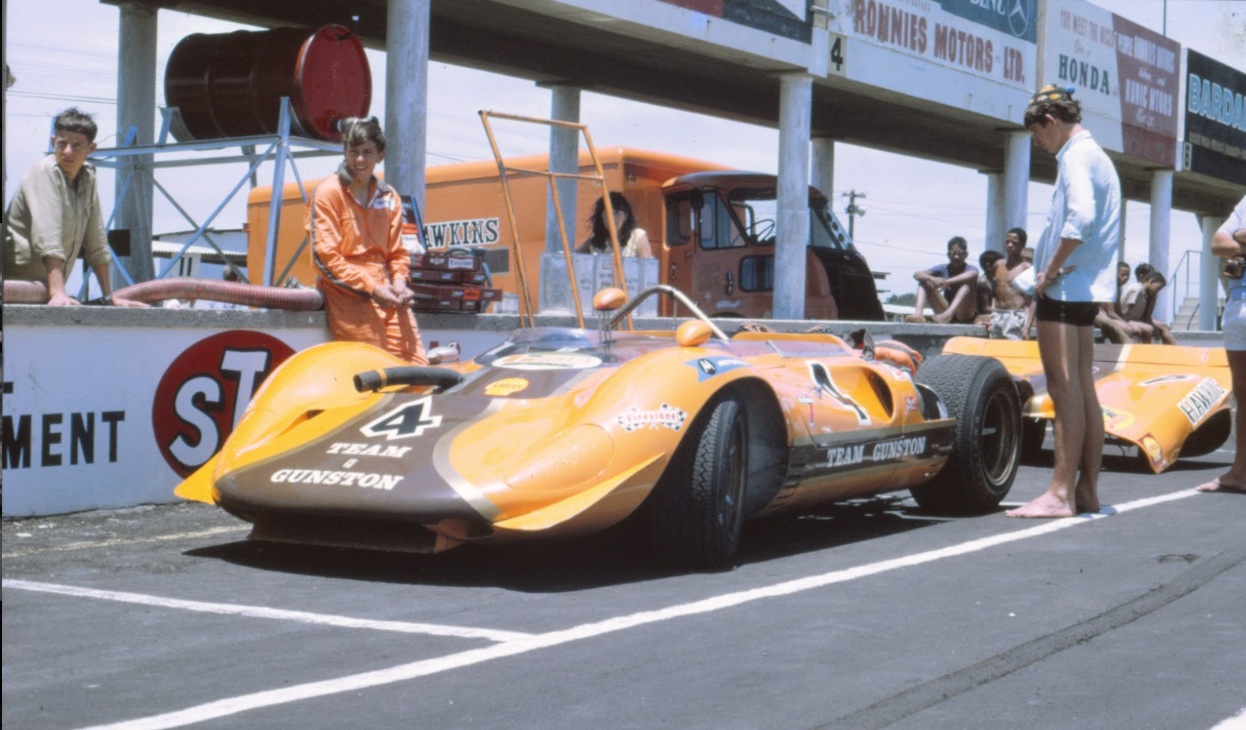
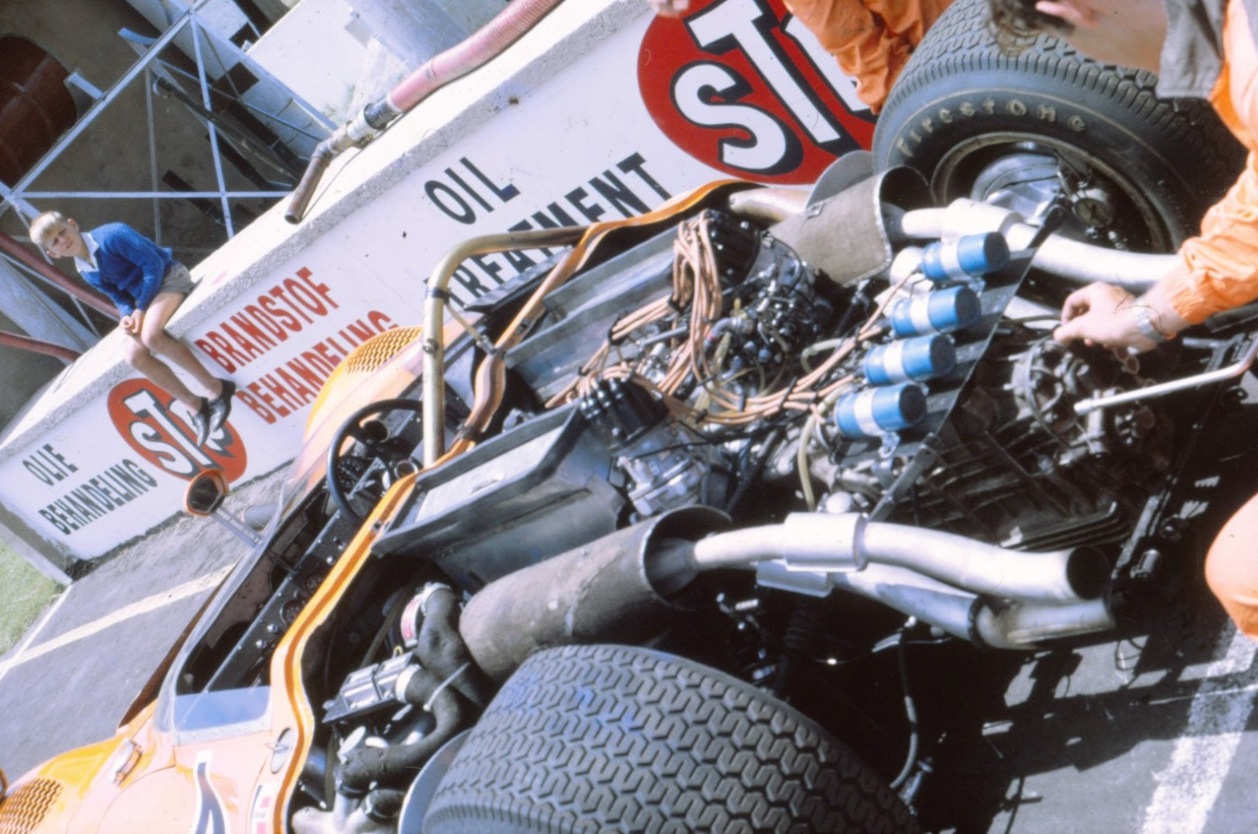
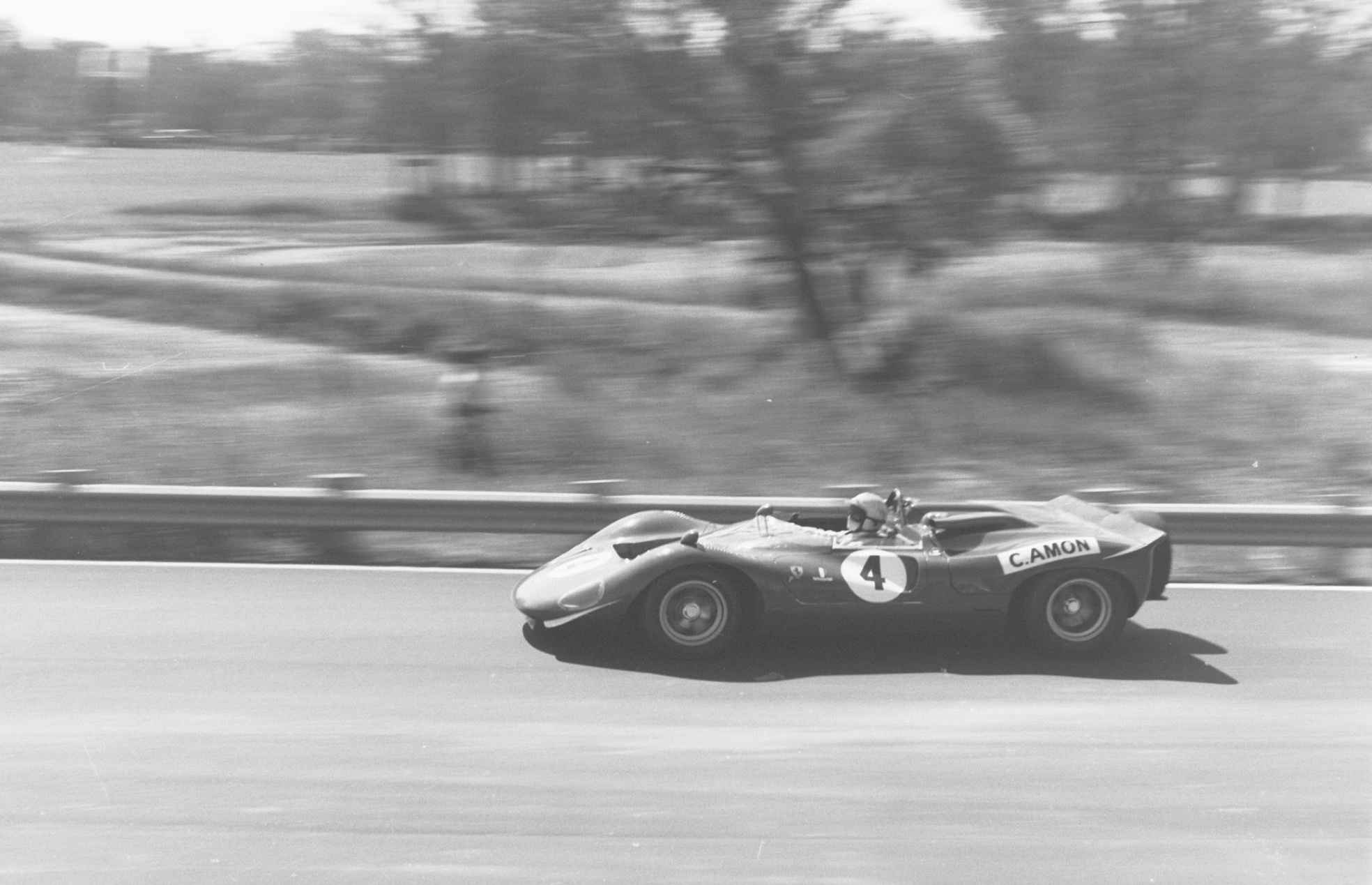
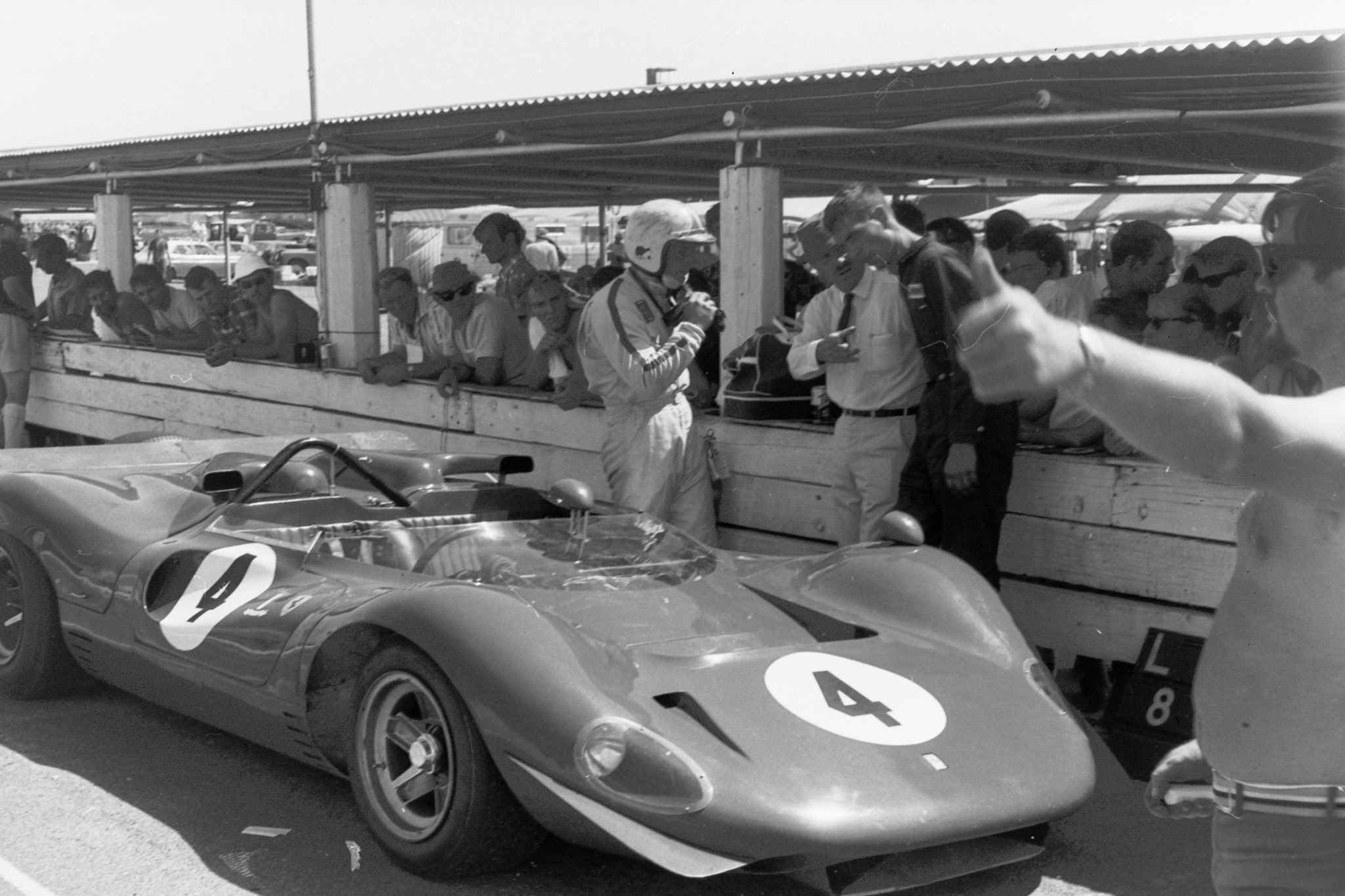
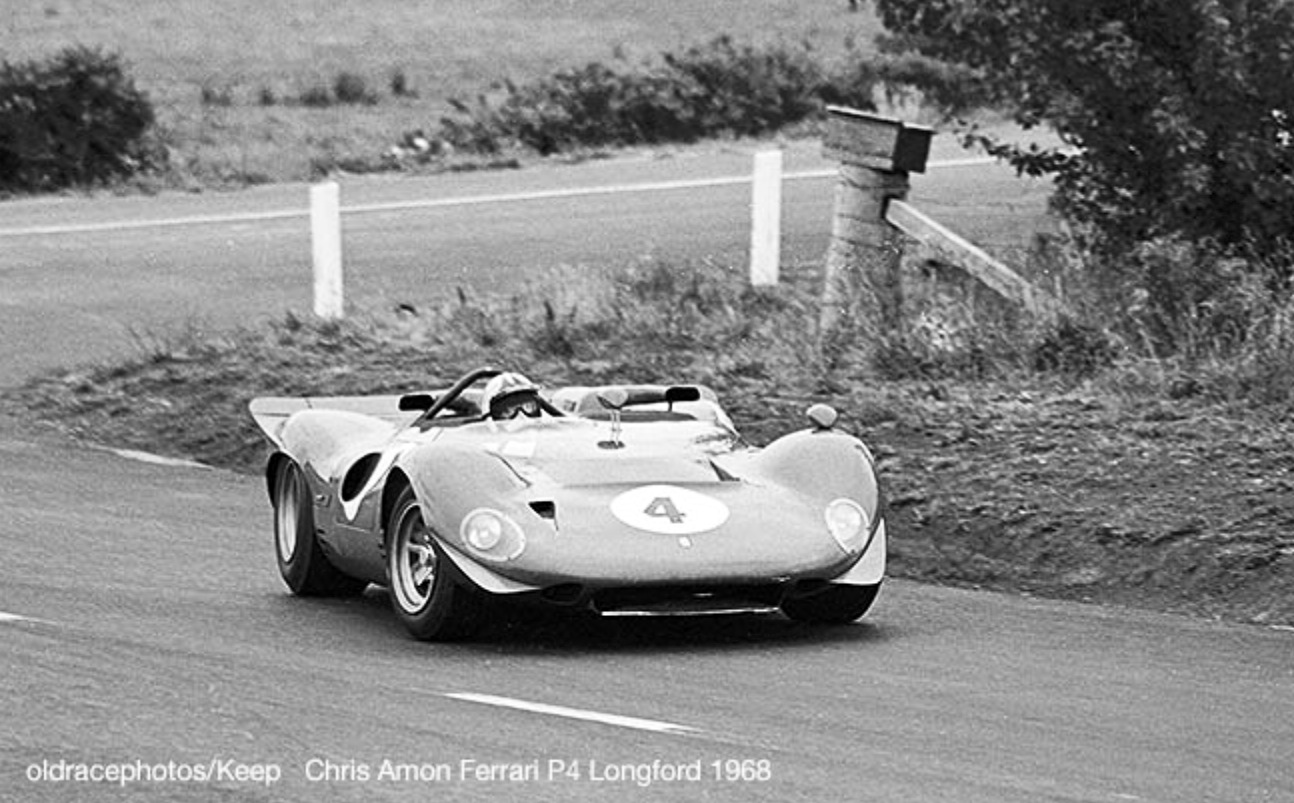
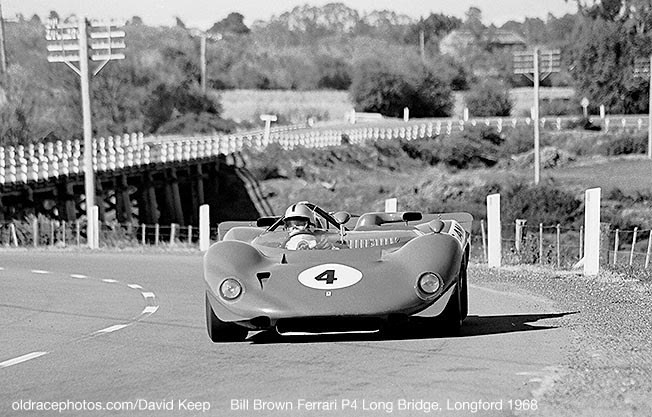
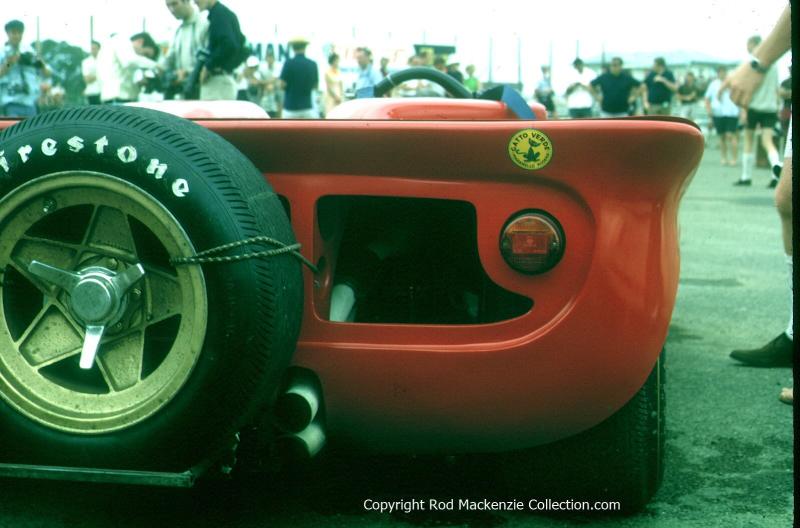
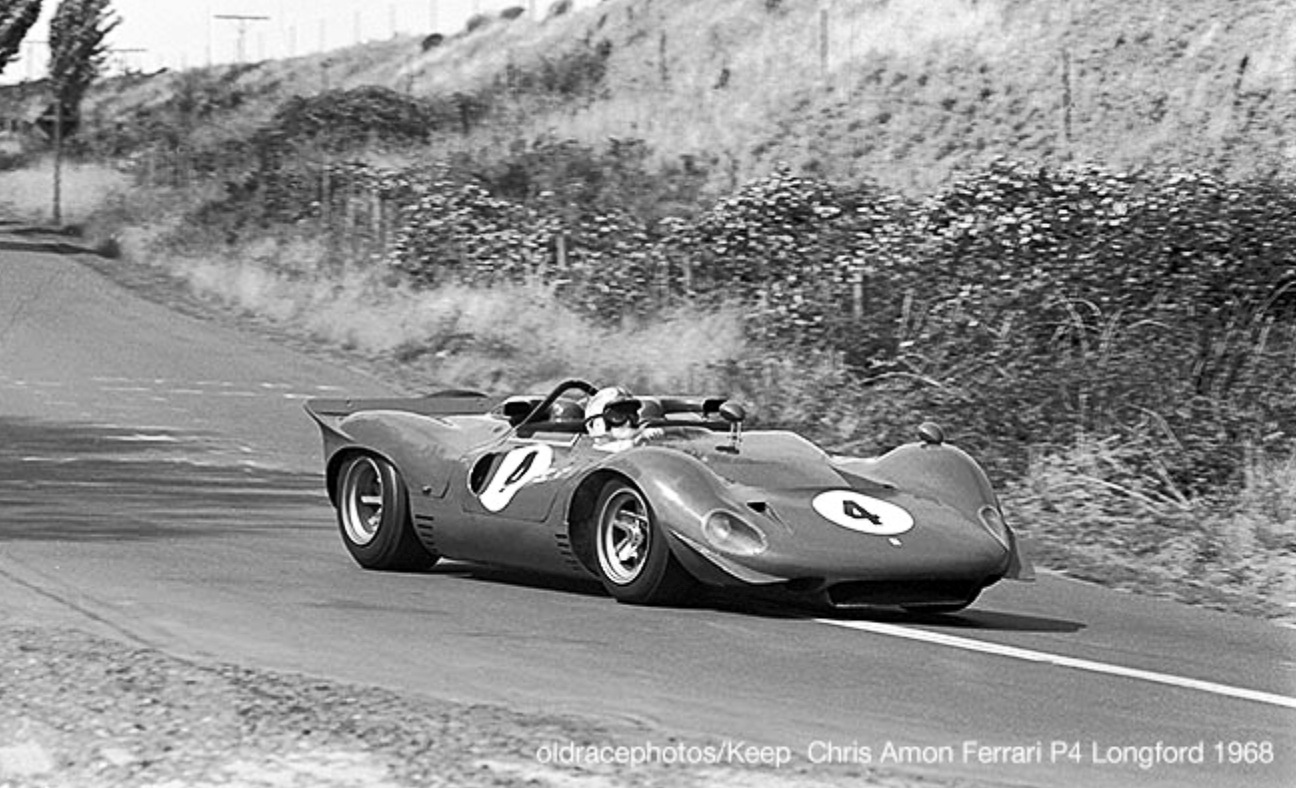
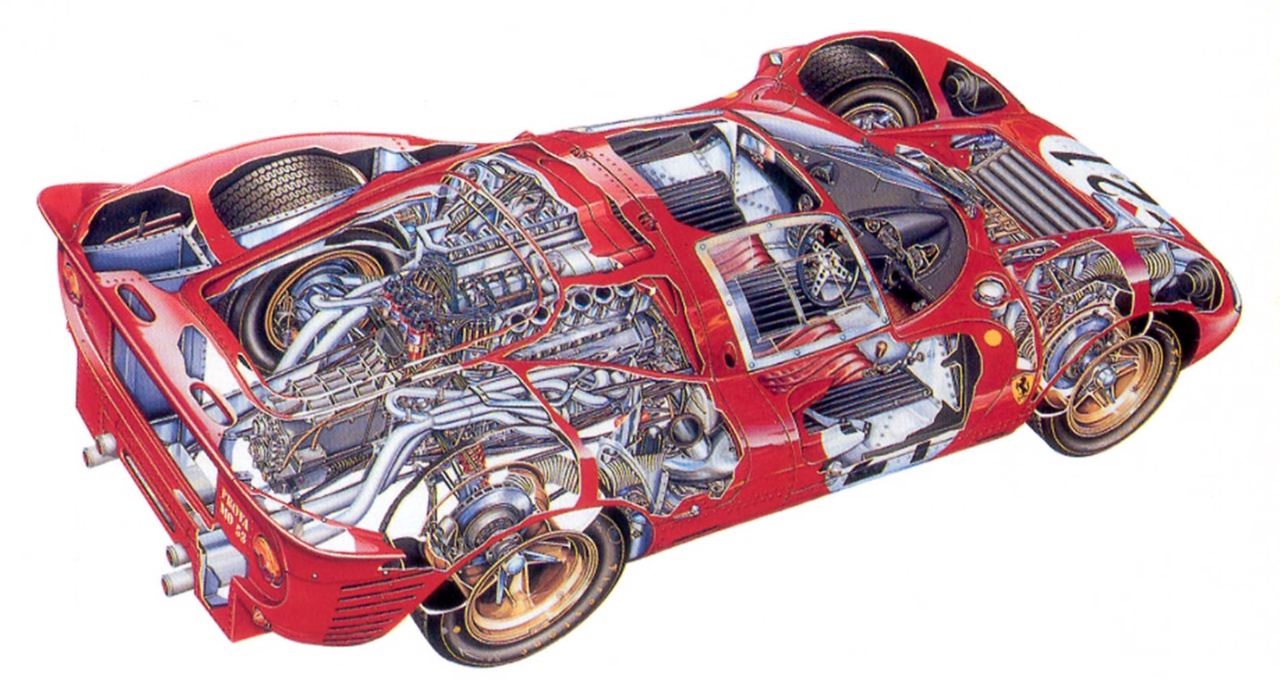
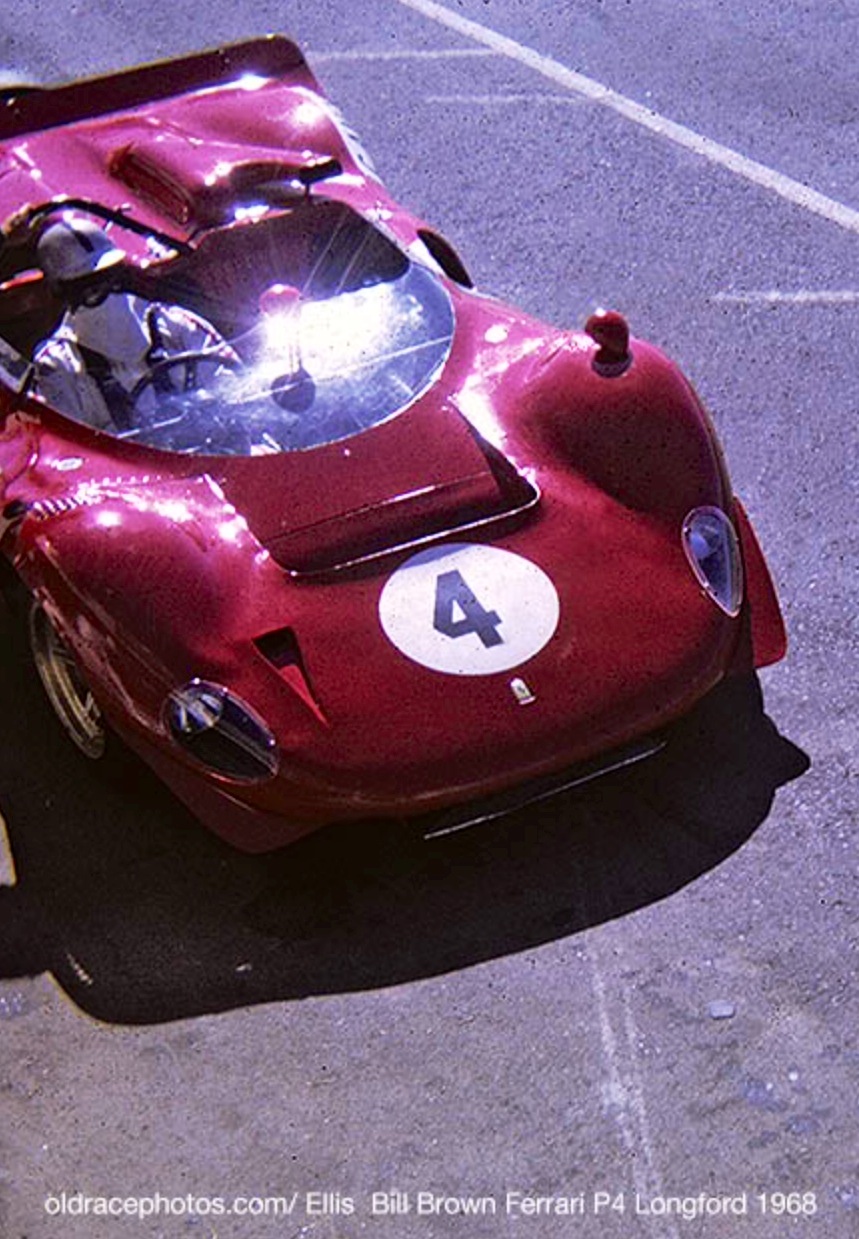

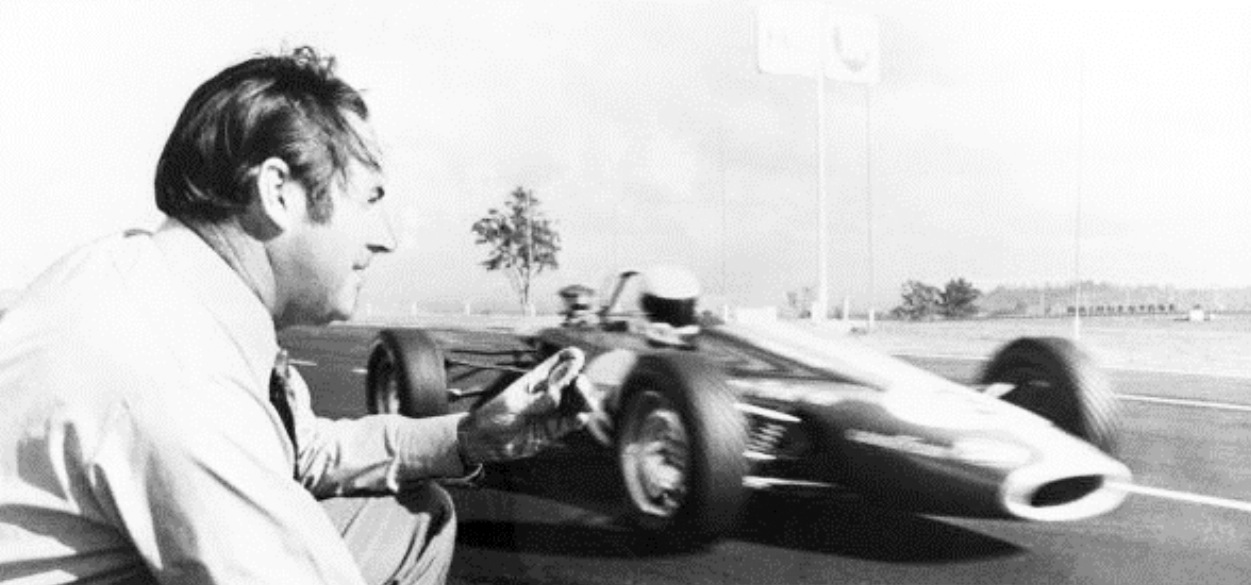


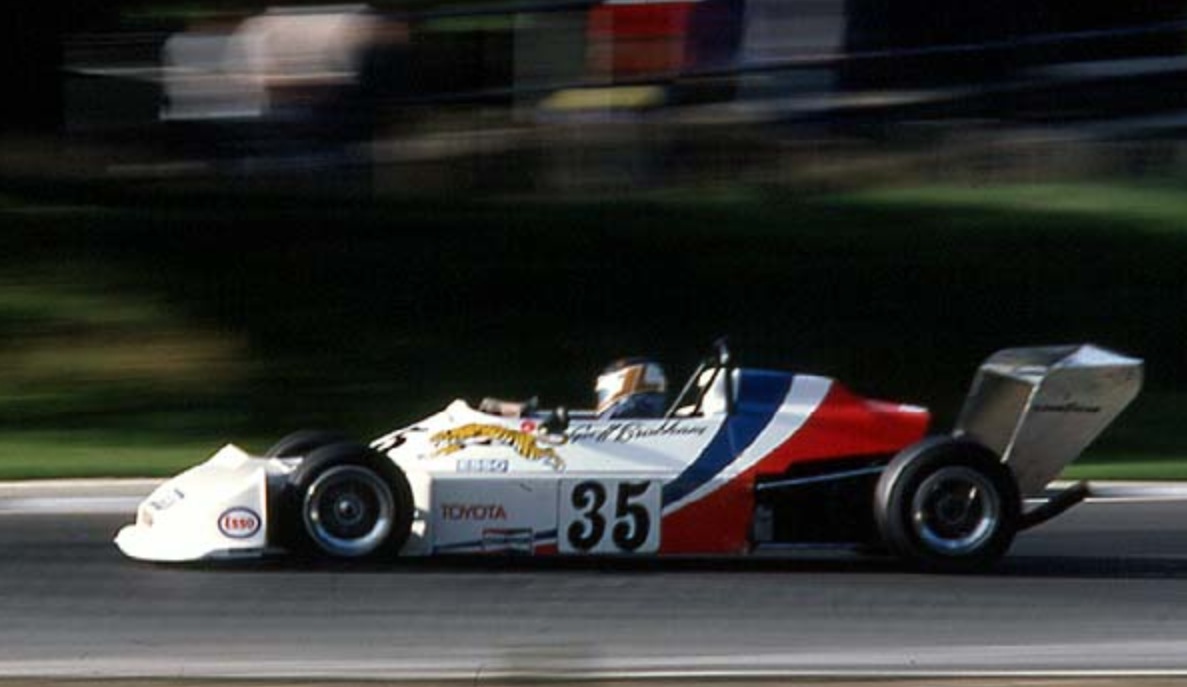
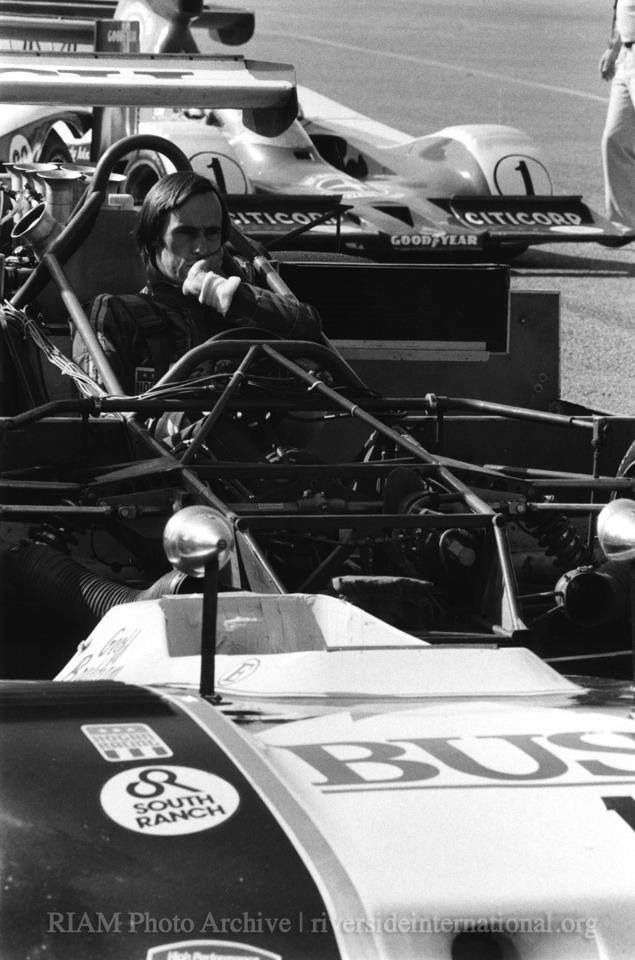
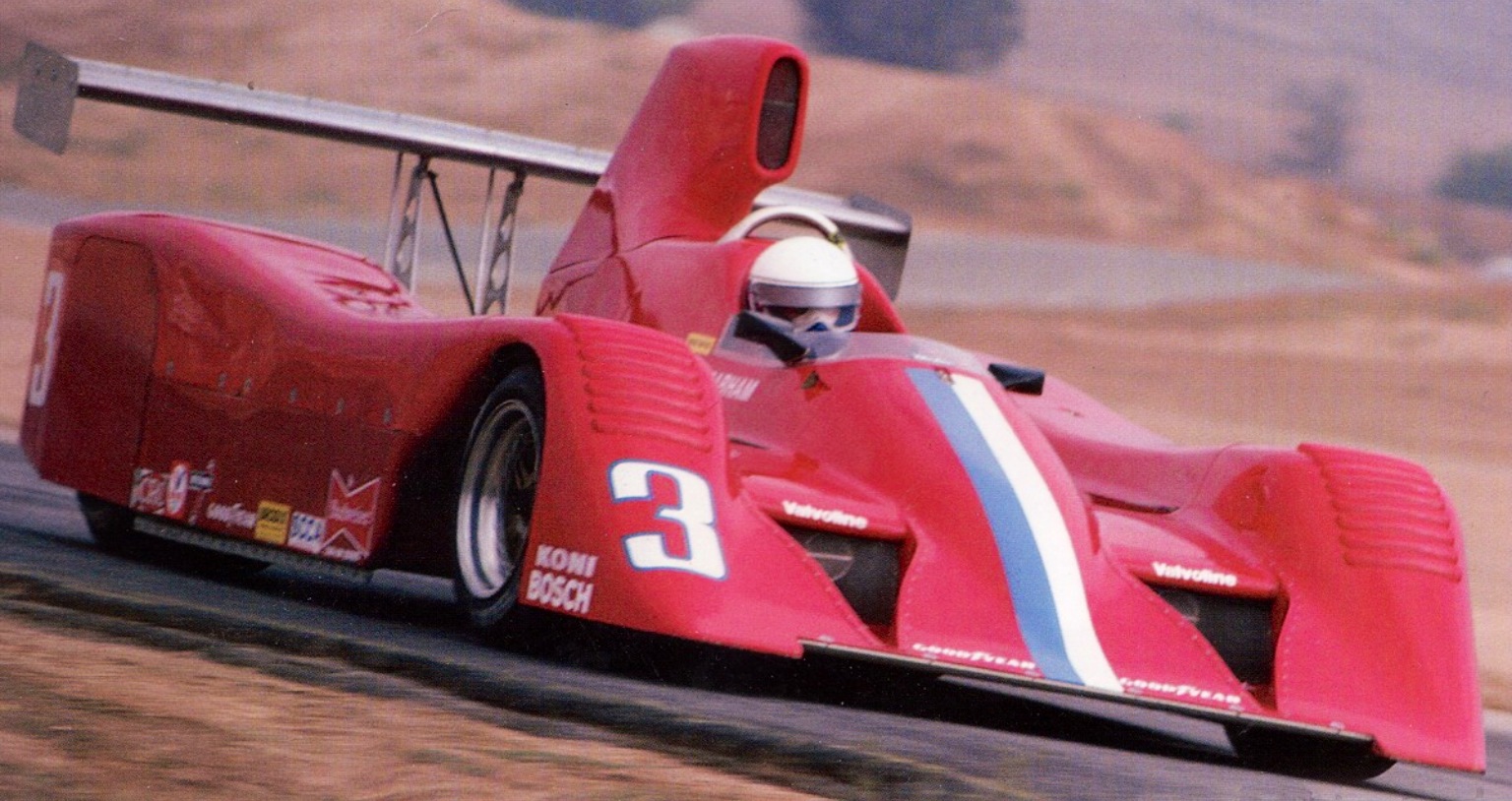
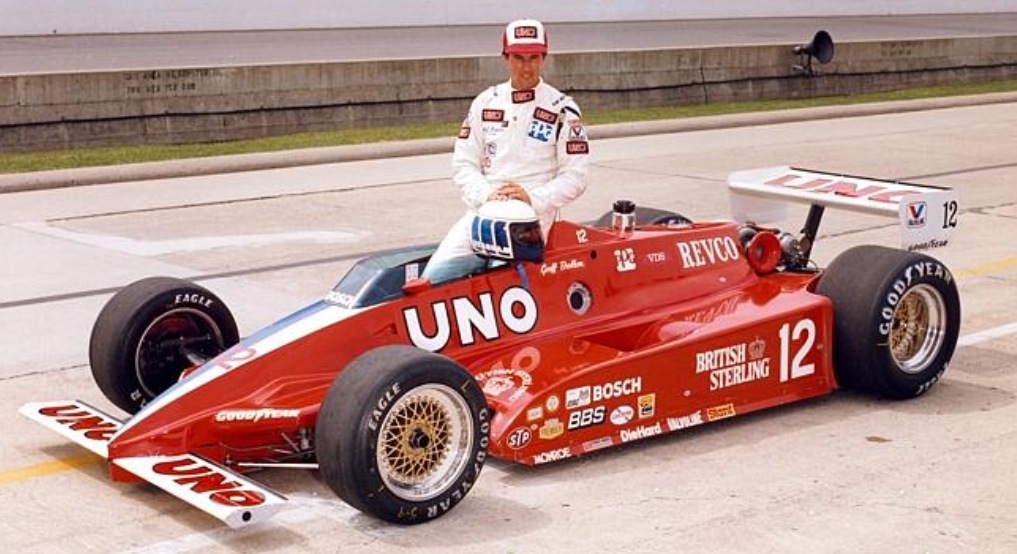

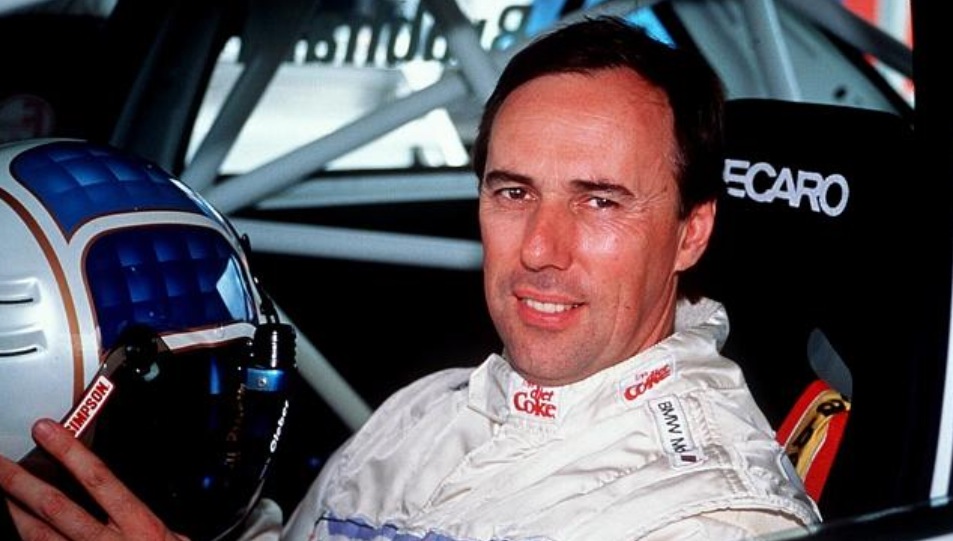


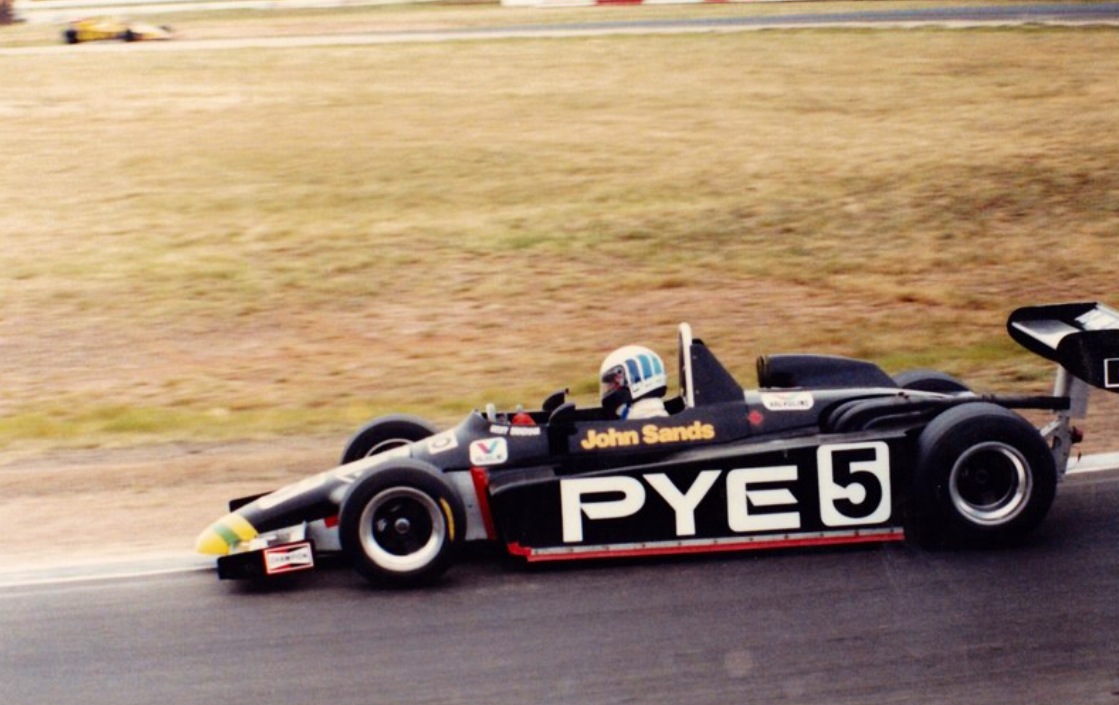


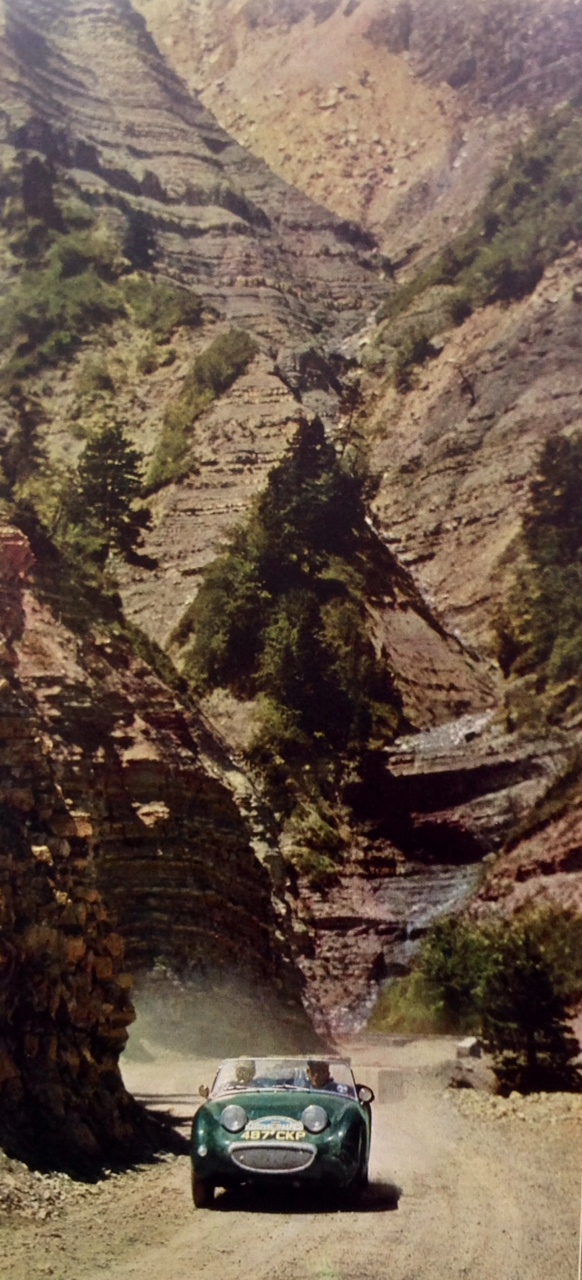
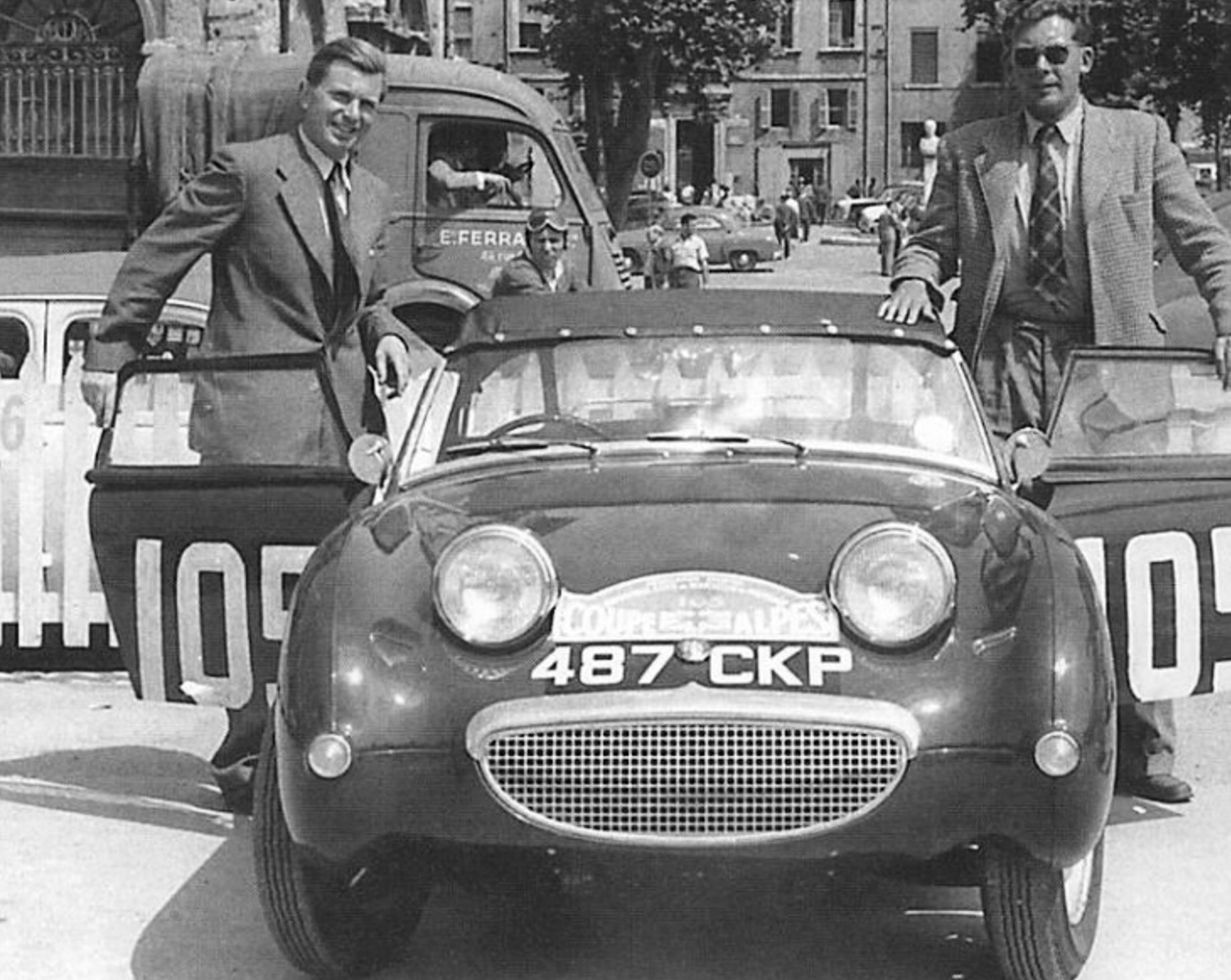
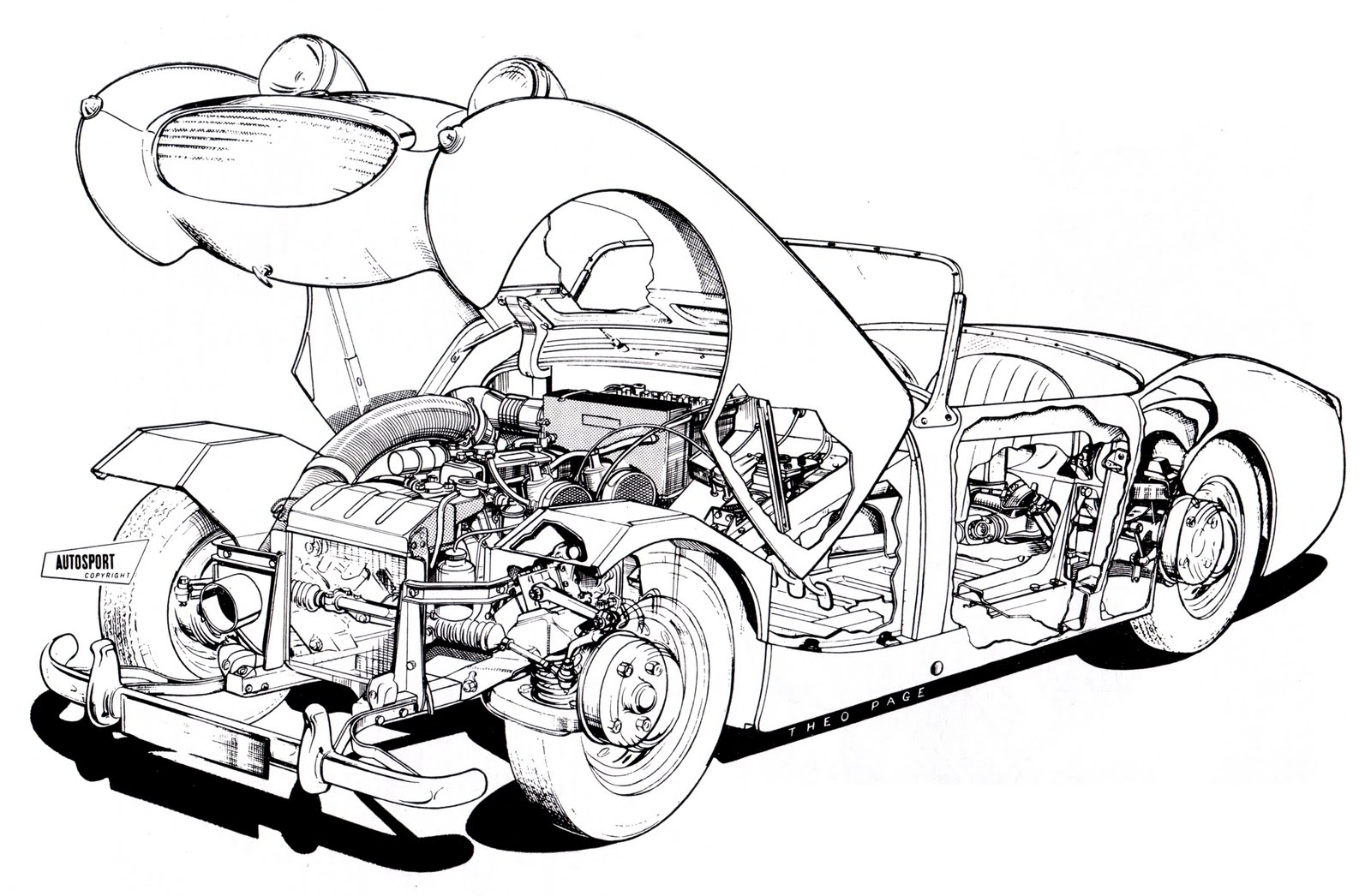
![1958-Austin-Healey-Sprite-Hambro-All-Part-Of-The-Fun-ad[1]](https://primotipo.com/wp-content/uploads/2015/03/1958-austin-healey-sprite-hambro-all-part-of-the-fun-ad1.jpg)


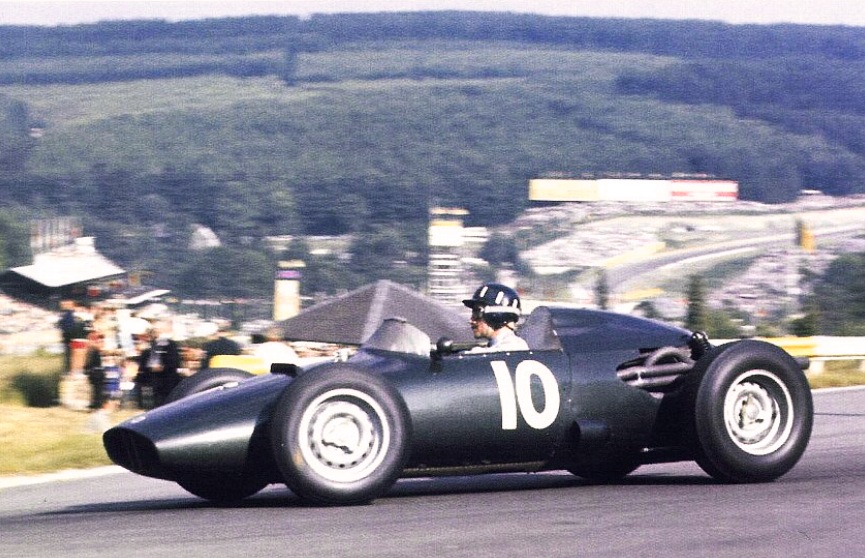
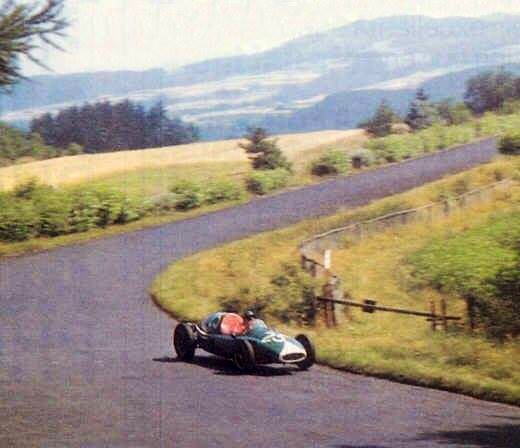
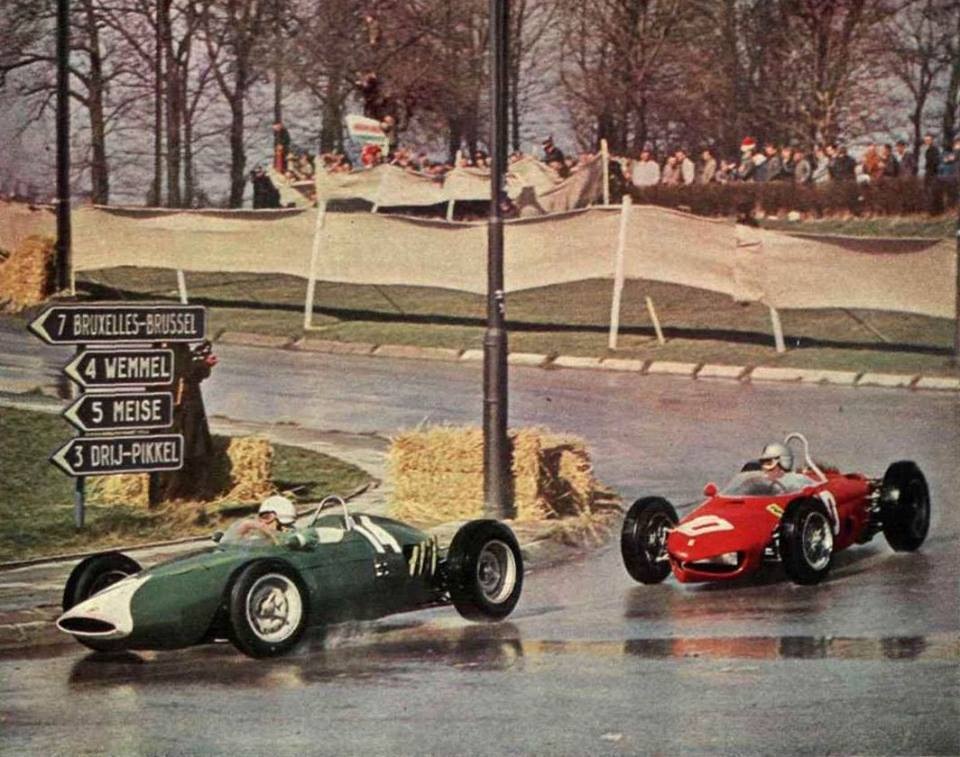
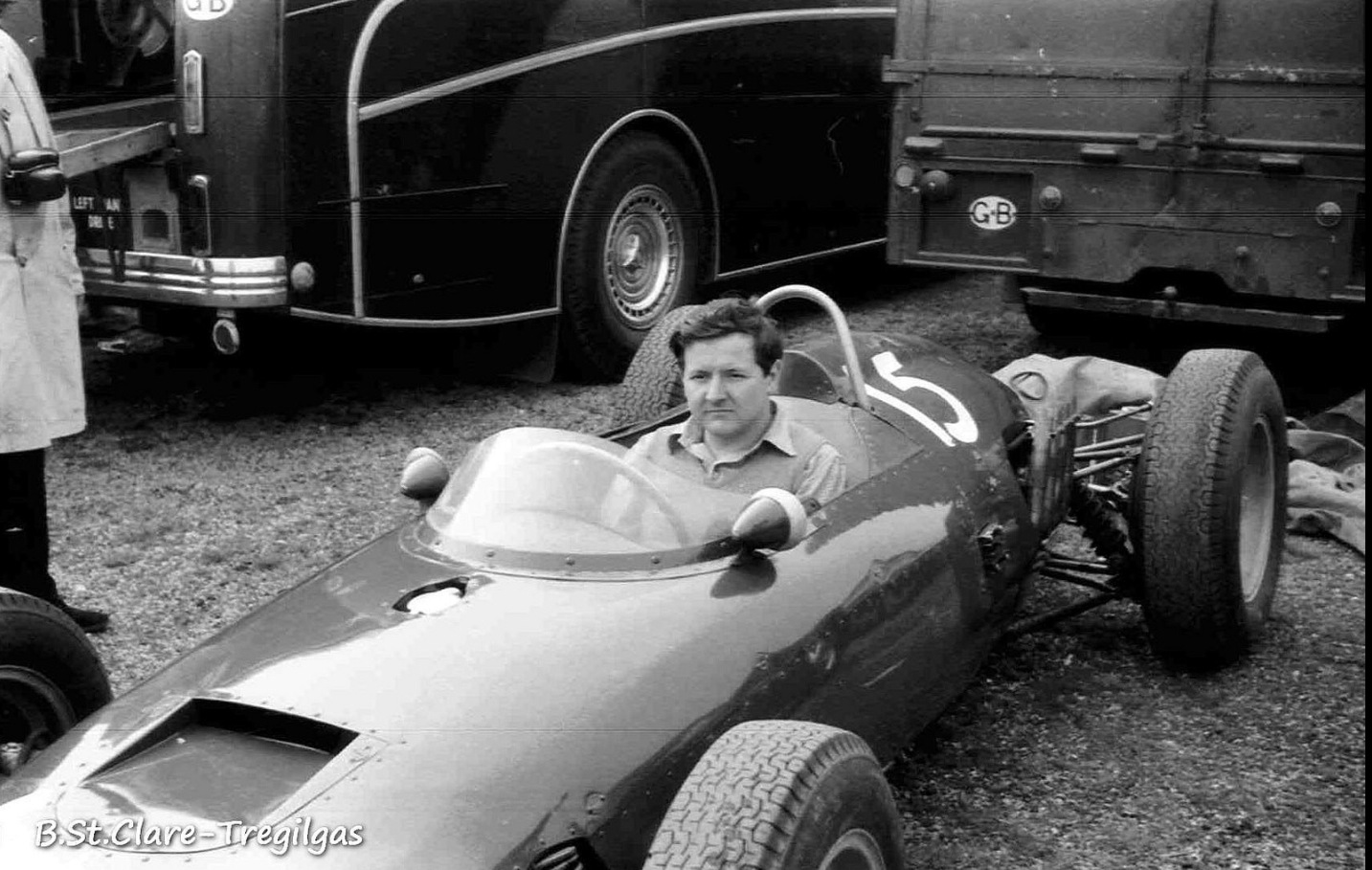


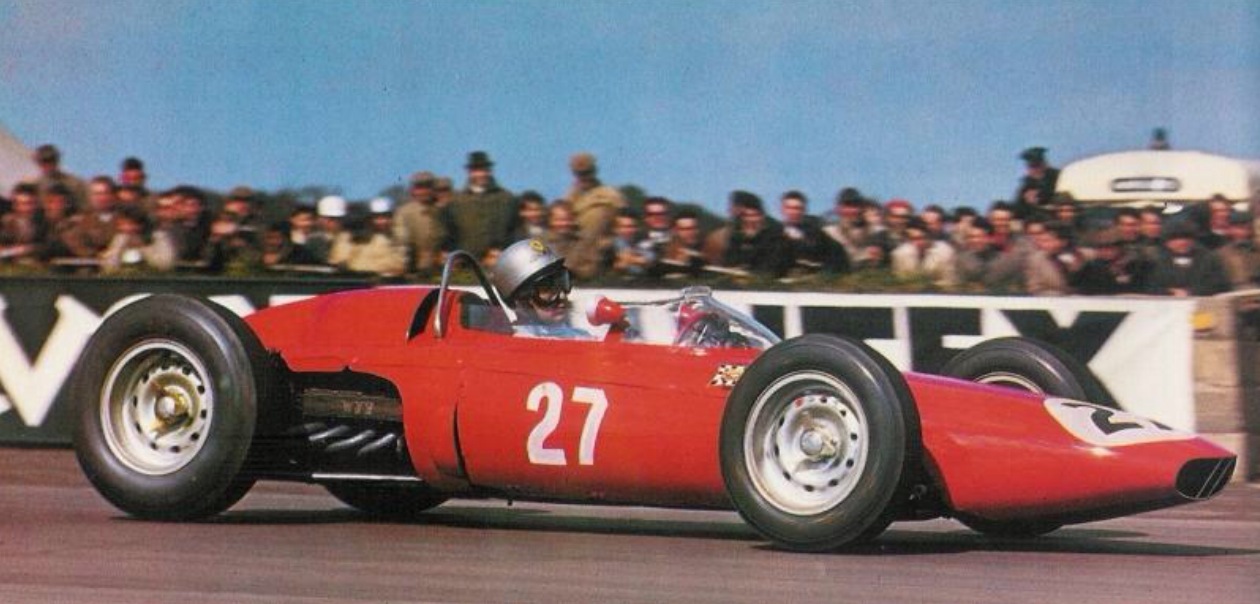

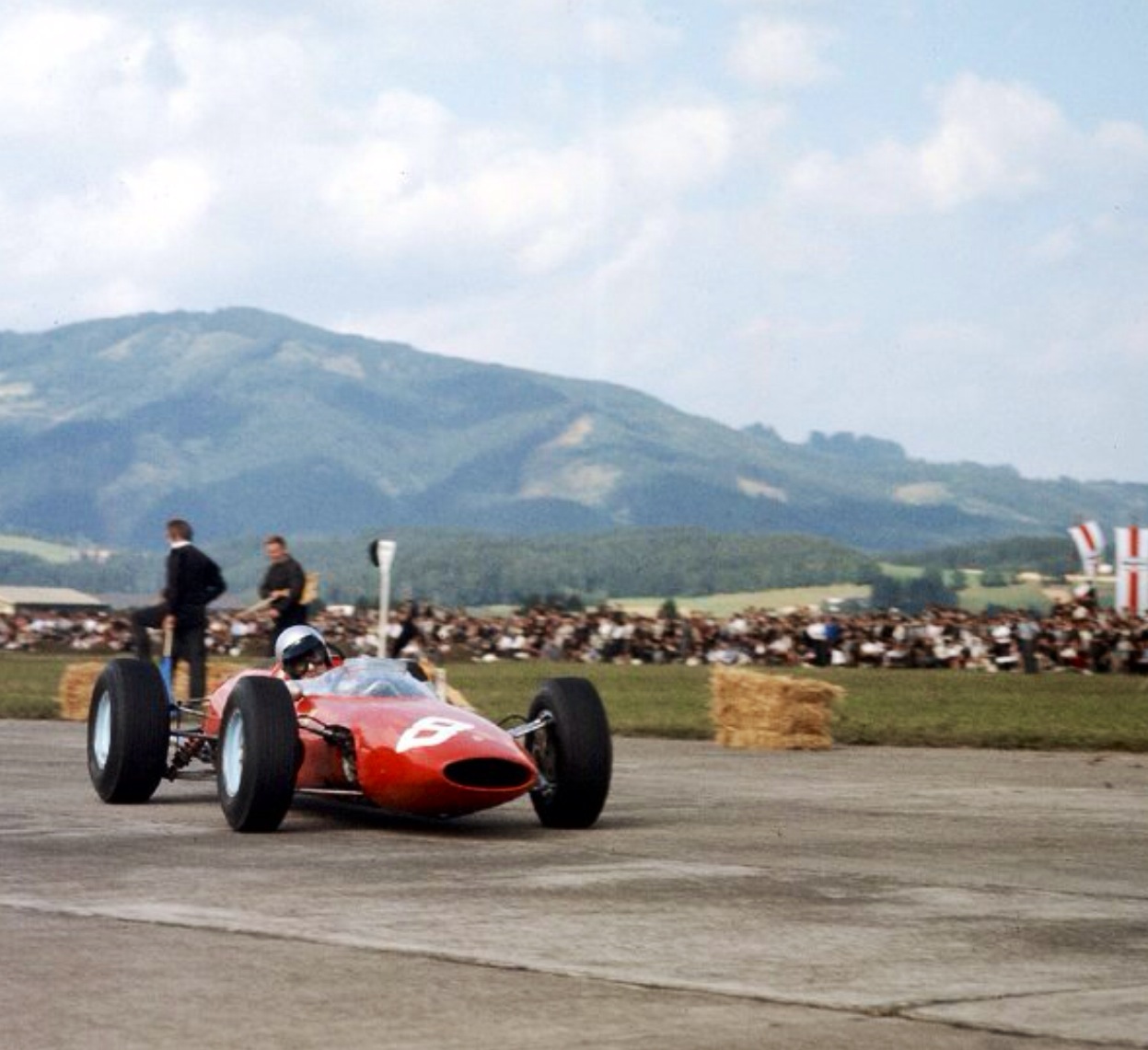


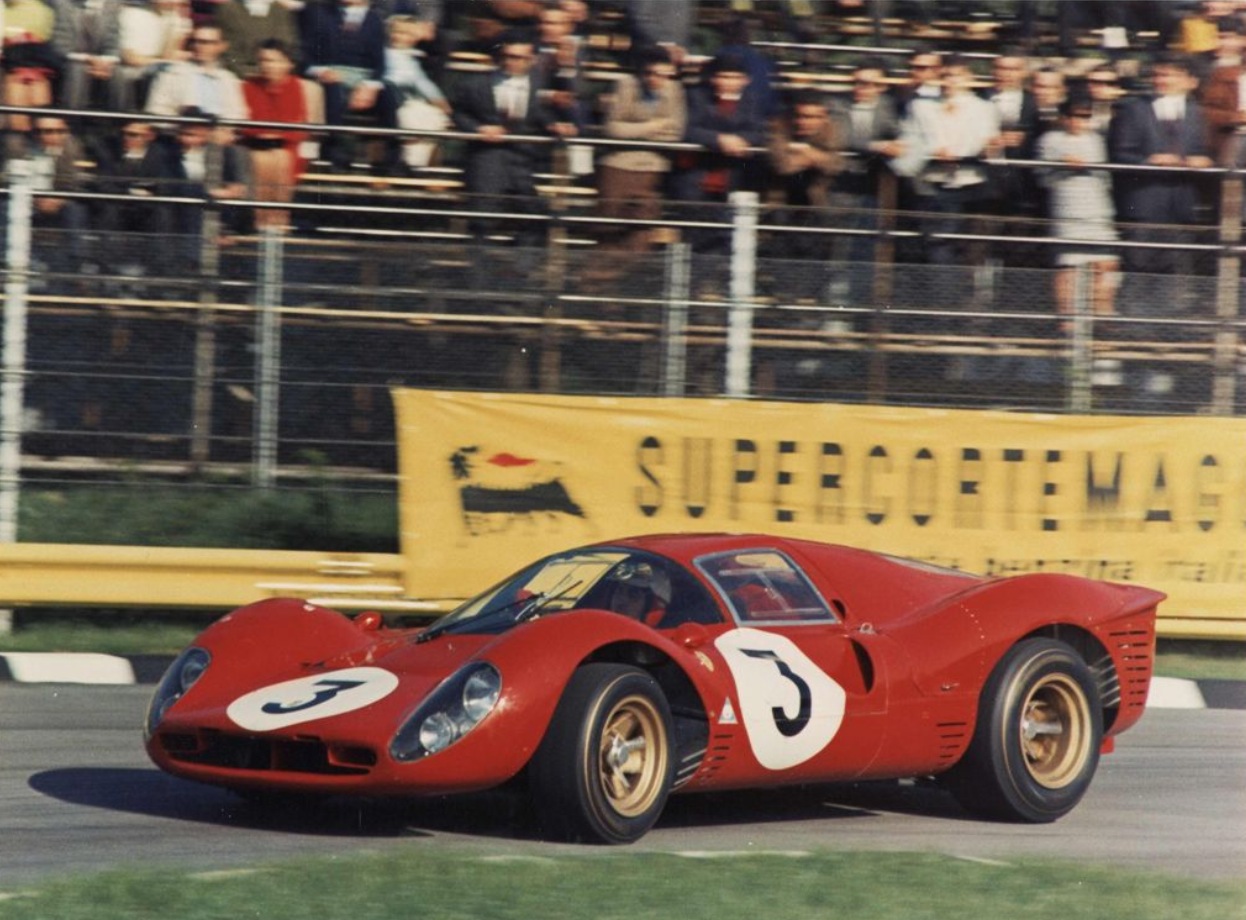

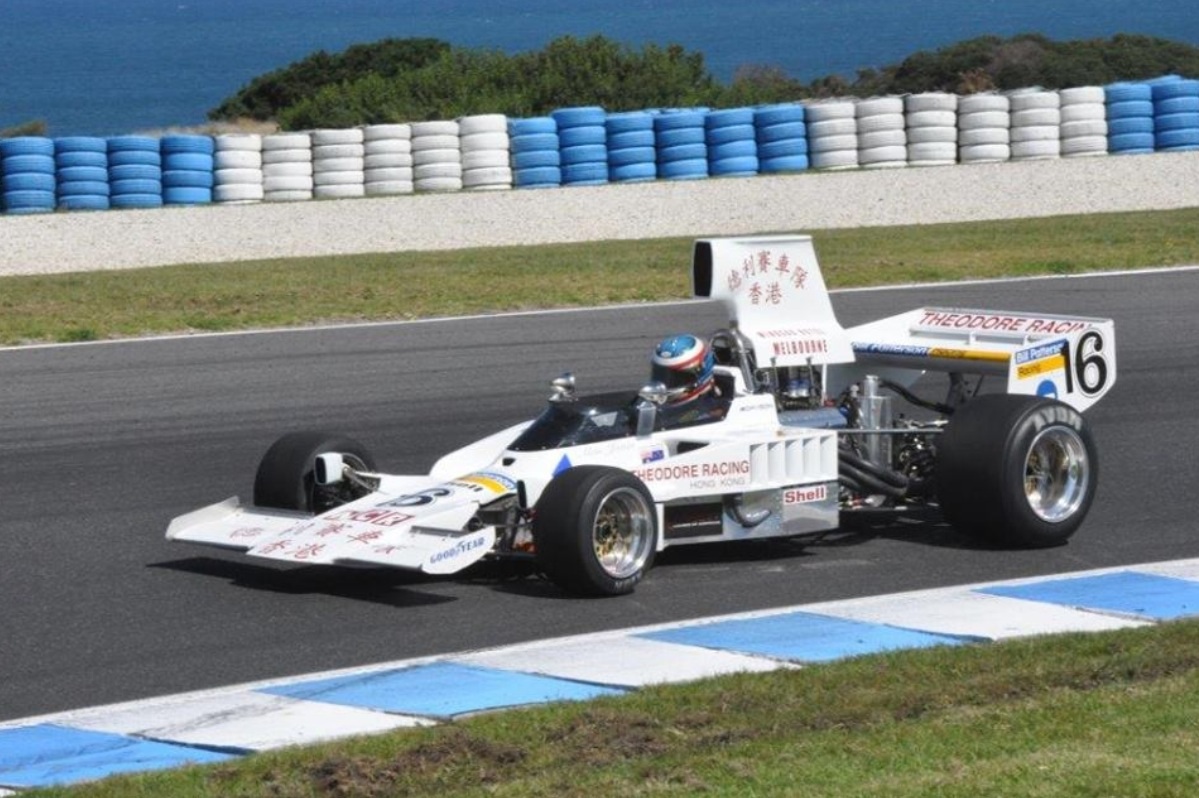

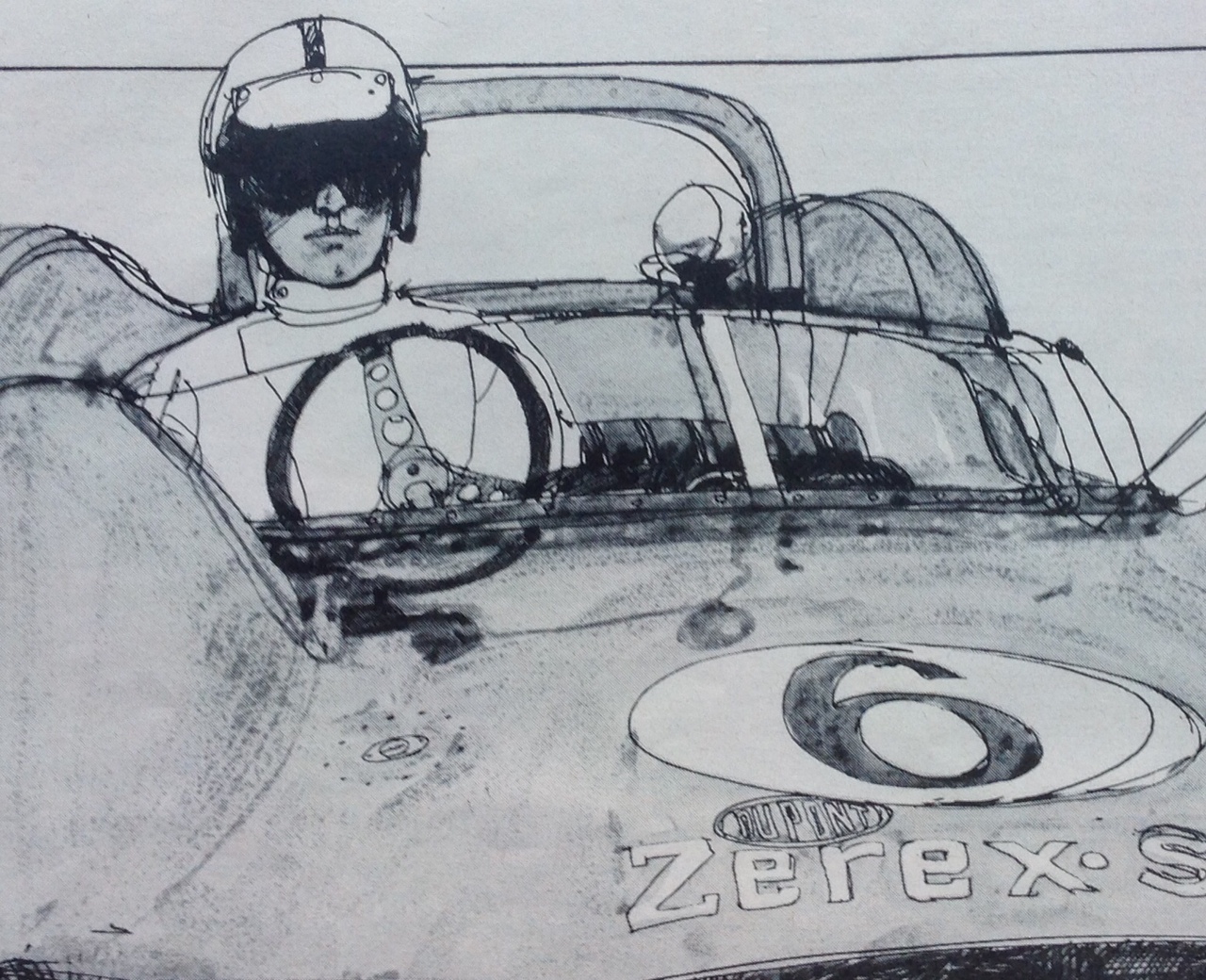

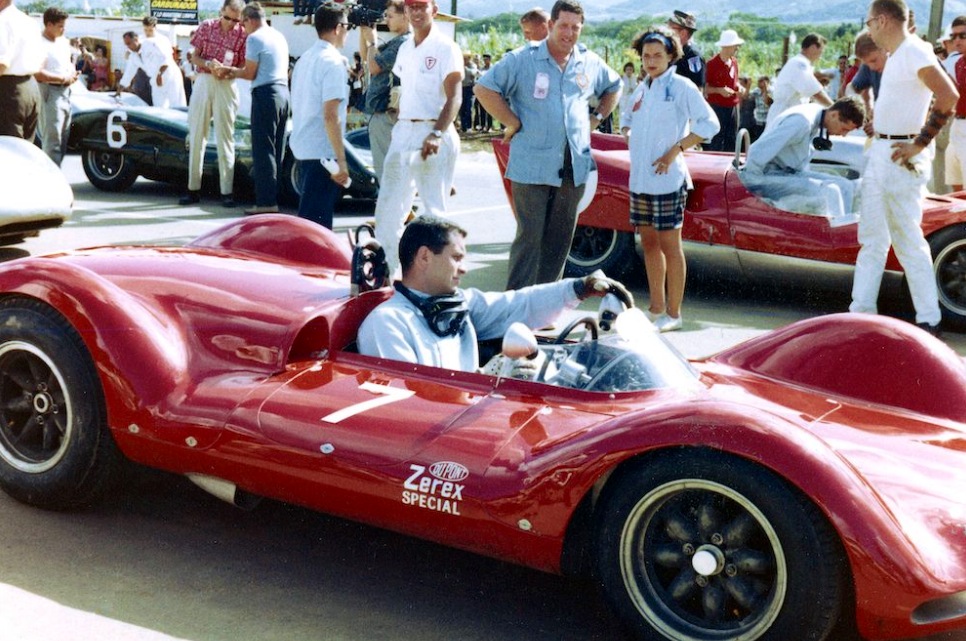
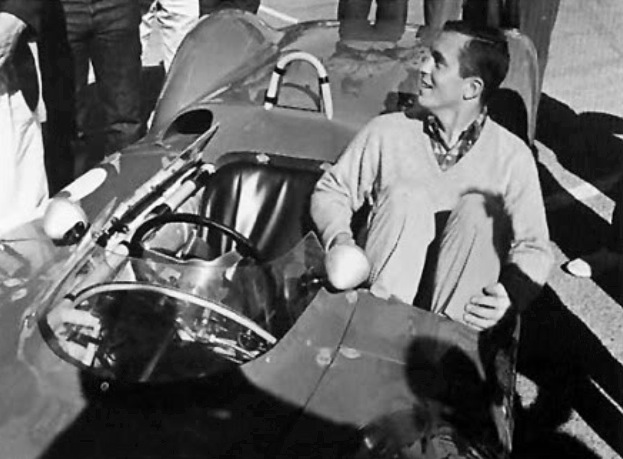
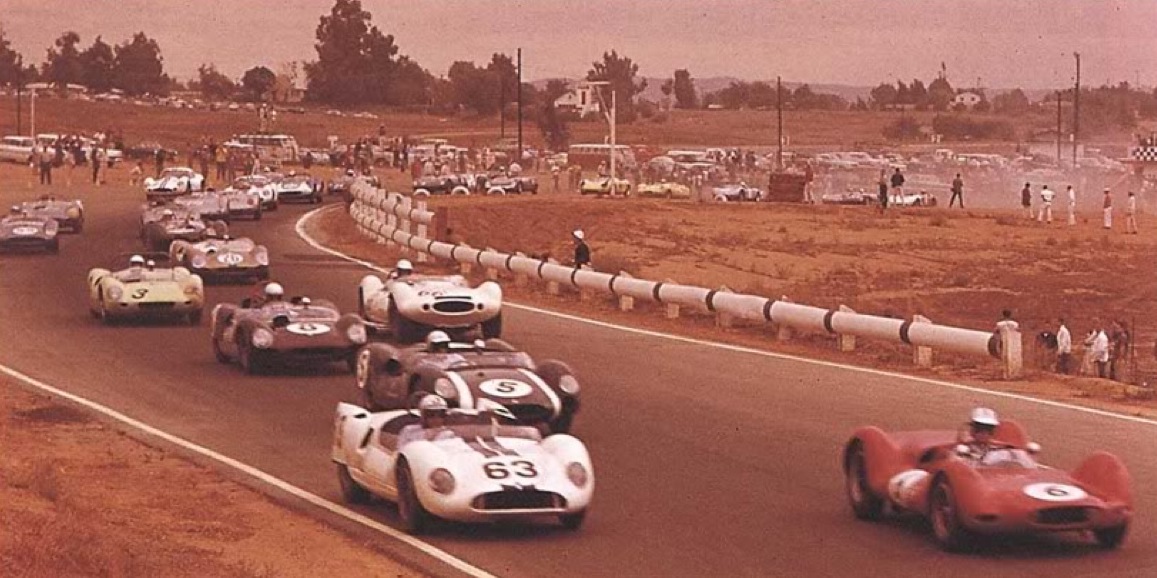
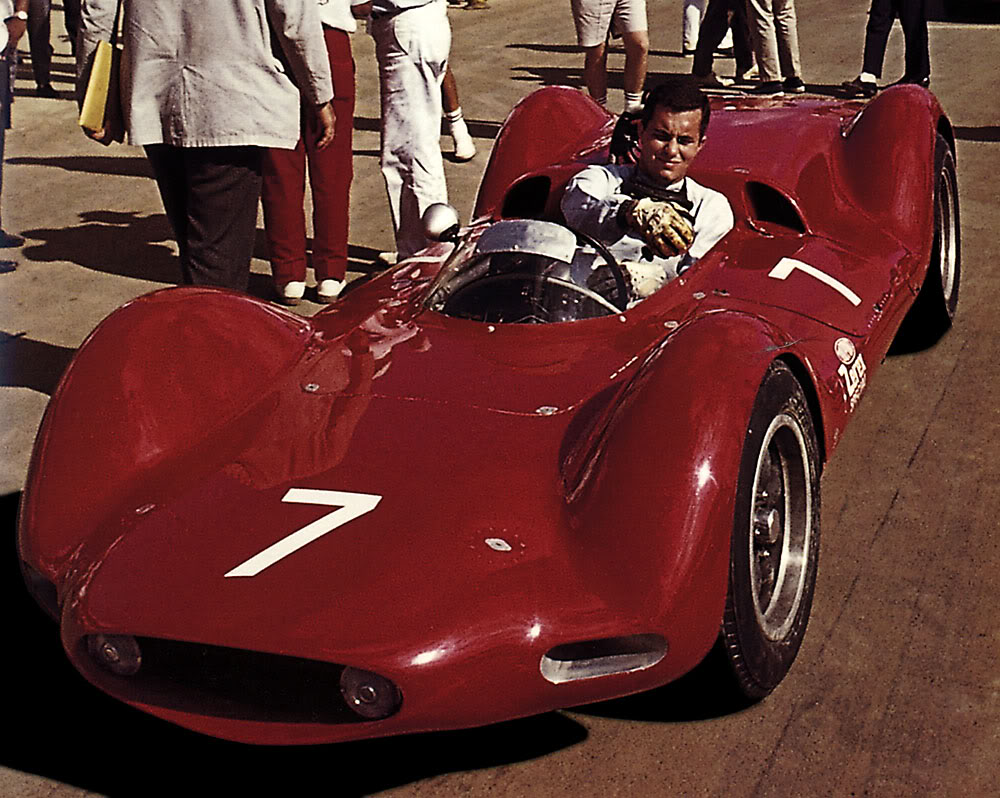
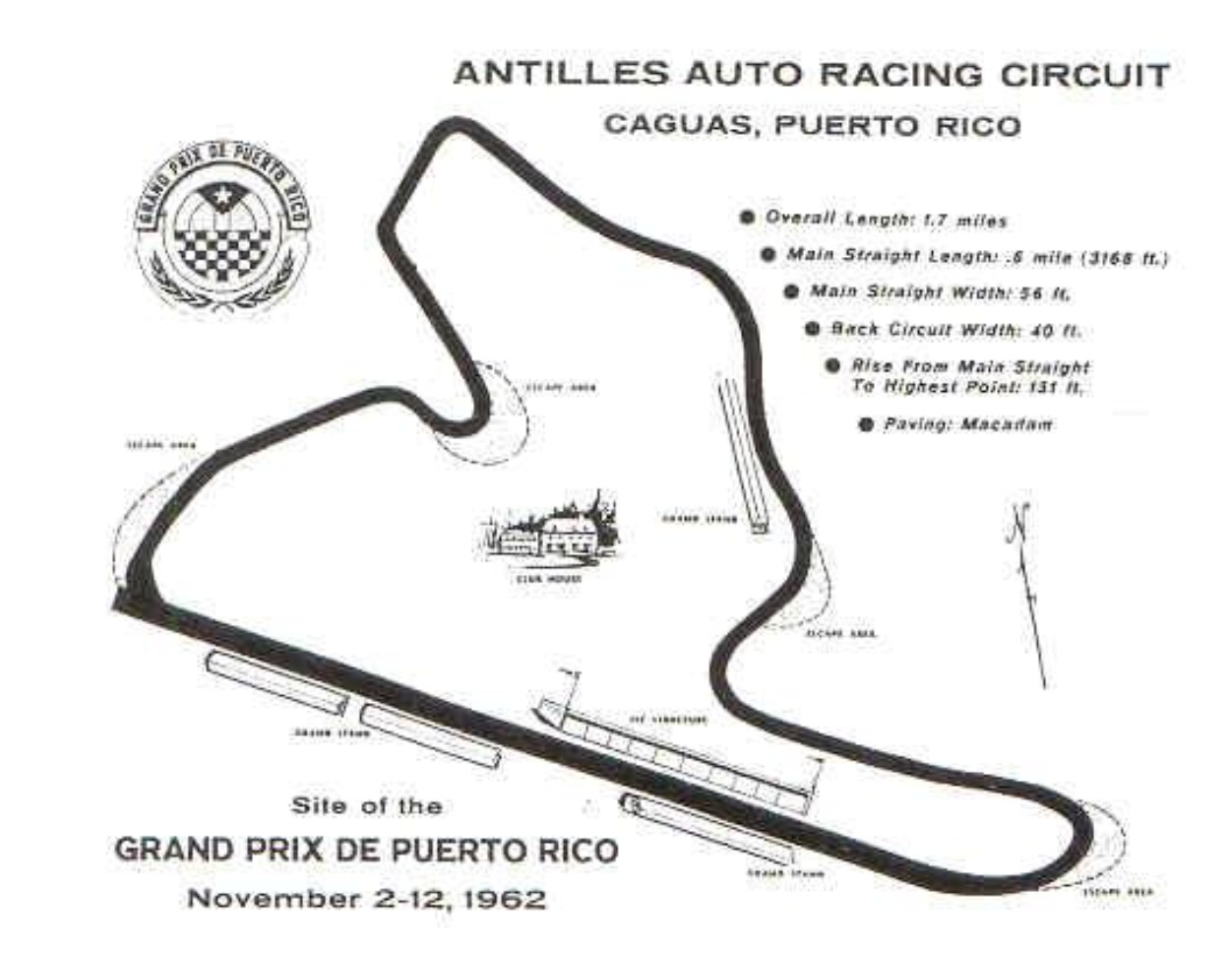

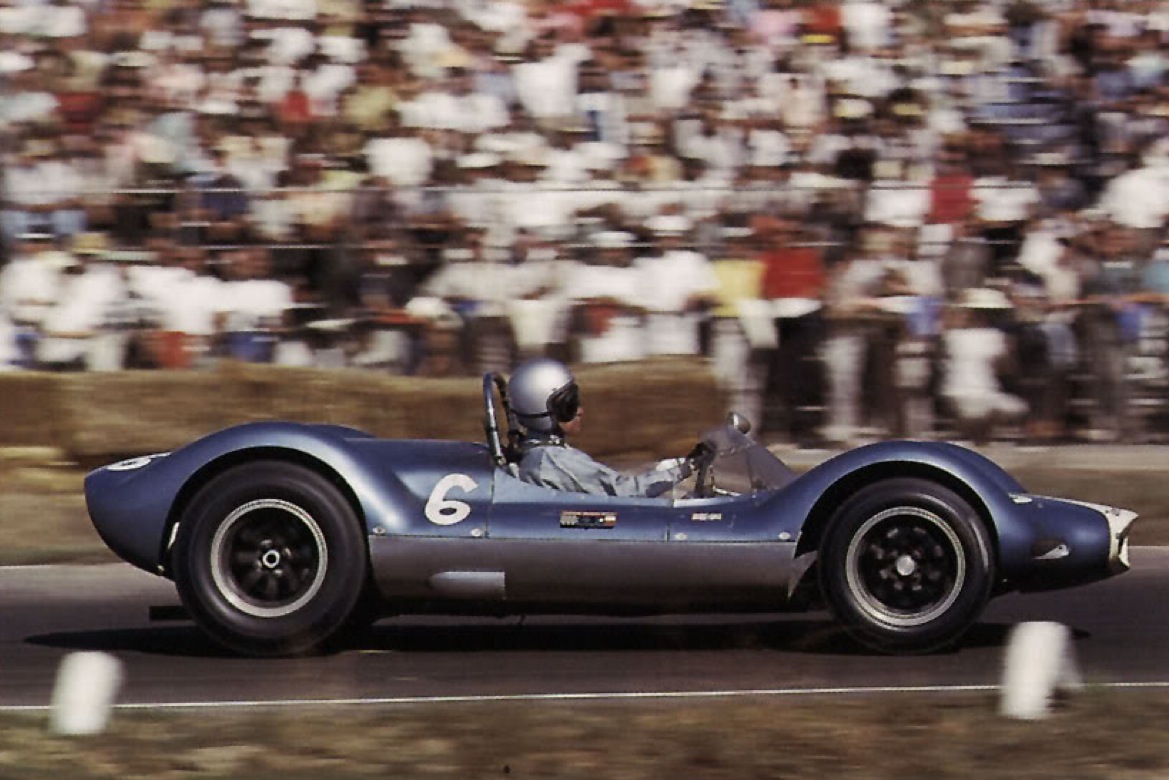


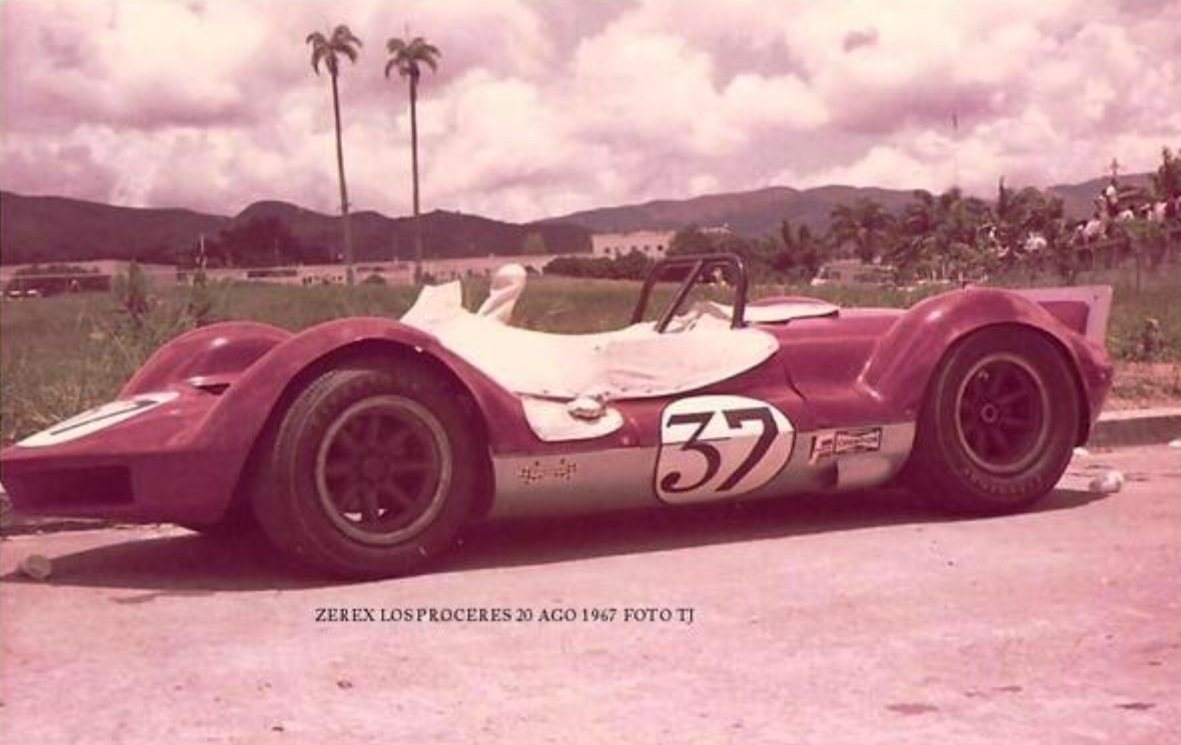

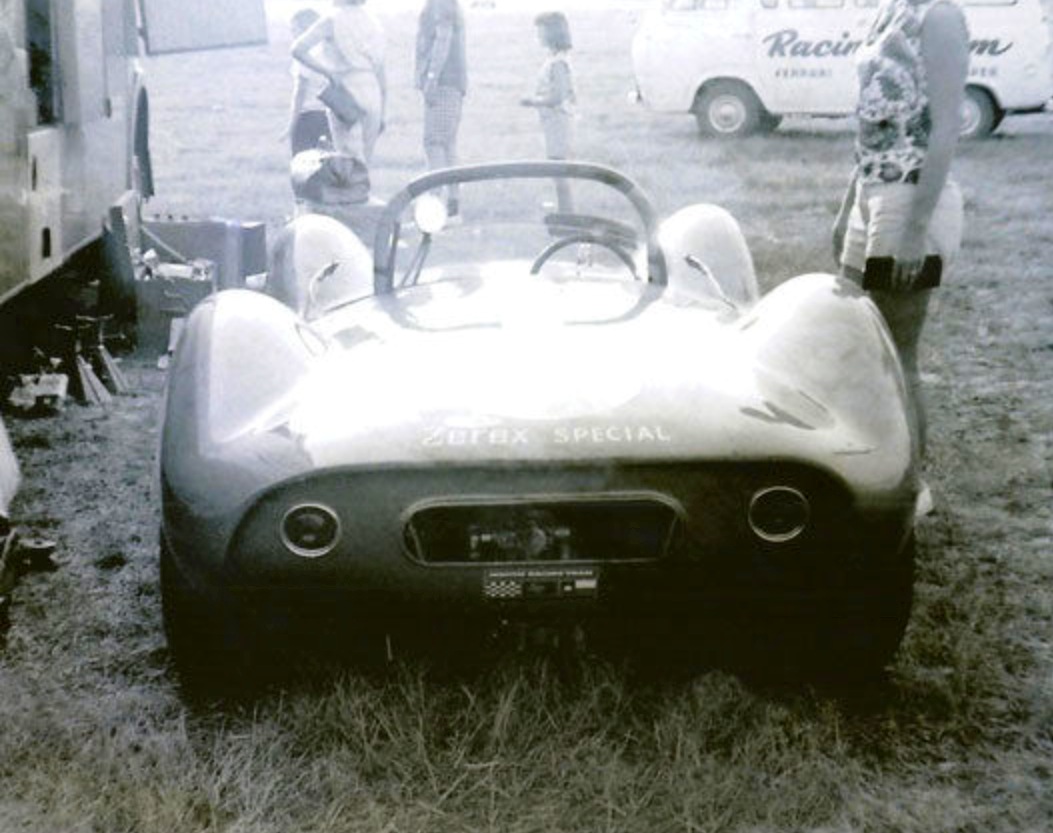
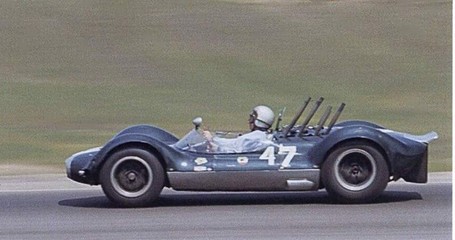
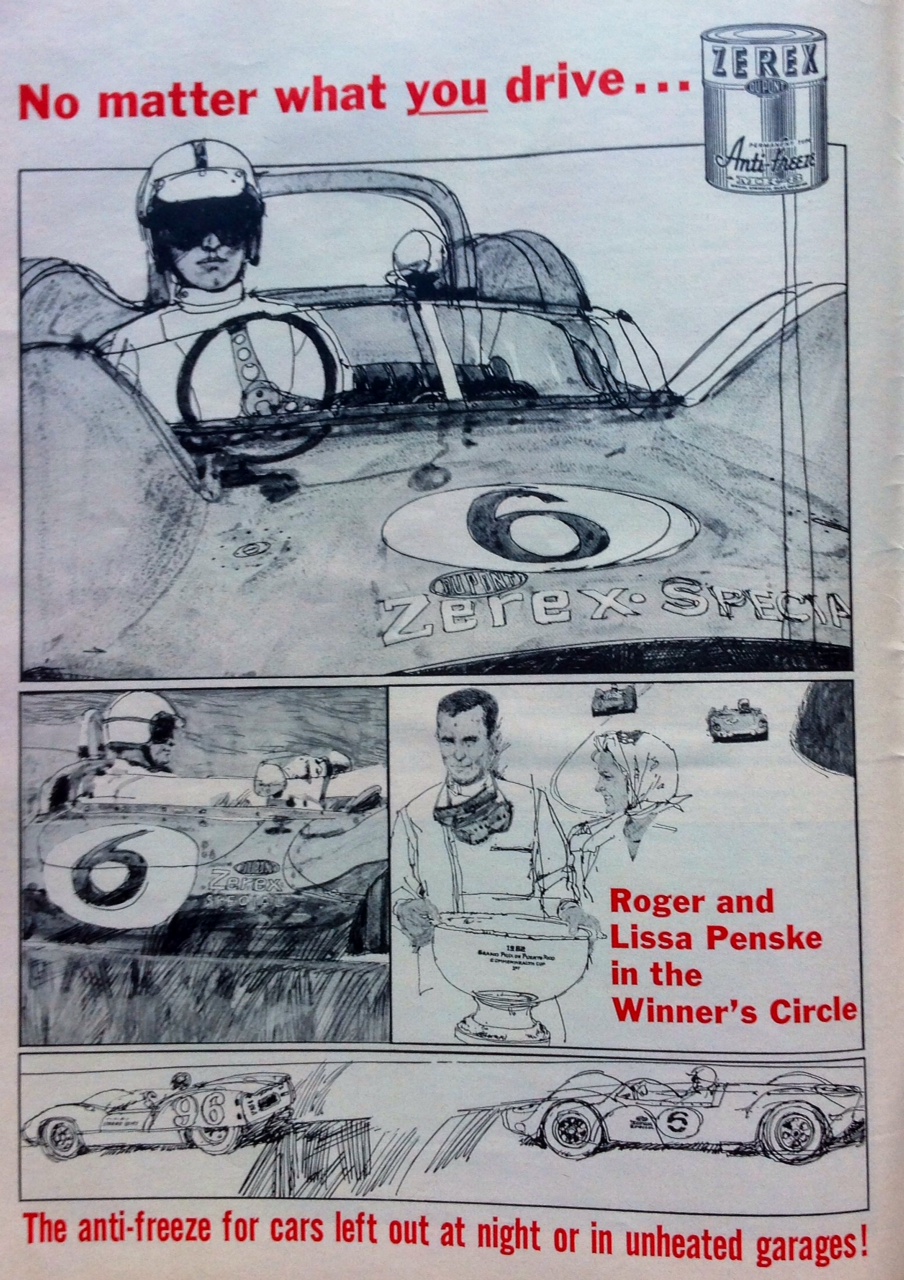
 primotipo...