


Johnny Servoz-Gavin poses with a Talbot-Lago T26, Paris in early 1970…The photo is a PR shot to promote the ‘First Racing Car Fair’.
By the end of 1969 with a European F2 Championship and two strong F1 performances in 1968 under his belt; front row at Monaco and second place at Monza in a Matra MS10, Johnny Servoz-Gavin was in the minds of some ‘The French Driver Most Likely’. But by the end of the 1970 Monaco GP weekend he had failed to qualify and retired from the sport. Few flames have shone so brightly and been extinguished so soon…
Born in Grenoble of parents who owned a local bar, Servoz-Gavin became ‘Johnny’ from his days as a teenage ski instructor on the slopes above his home town. With long blond hair and an easy manner that ‘slayed the babes’, he developed a playboy image which stuck with him throughout his career.

On a canal boat in Paris 1970 with actor Olga Georges-Picot (Getty)
Inspired by the exploits of René Trautmann and Robert Neyret, Servoz-Gavin commenced rallying after driving his Simca Oceane and Dauphine Gordini with great abandon and speed on local Grenoble roads like his heroes.
In 1964 driving his Volvo, he contested various rallies including the Snow and Ice, the Lyon-Charbonnières and other events in Burgundy, the Ardennes and in Bordeaux. During the Bordeaux event former F1 driver André Simon noticed his on-circuit skill. René Cotton, director of the Citroen rally team, hired him as co-driver to Jean-François Piot for the Coupe des Alpes.
In January 1965 he contested the Monte Carlo Rally with co-driver Jean-Claude Ogier in a Citroen DS21, they passed through a terrible snowstorm on the side of Chambery finishing twelfth, the event won by the Cooper S of Rauno Aaltonen and Henry Liddon.
Johnny did a half a year at the Magny-Cours Jim Russell school in 1963 and at Montlhéry in the Lotus Seven of the Automobile Club Dauphiné-Savoie within the Ford-operation youth in 1964, these experiences giving him a greater taste for circuit racing.

Servoz, Henri Grandsire and Roby Weber in 1965. Interested to know where and when and car details from any of you French F3 experts (G Gamand)
With the help of a friend, he enrolled in the Volant Shell organised by the Winfield School (formerly the Jim Russell School) at Zolder, Belgium. His engine misfired in the final, finishing second to Belgian Dominique Lledo. The Volant winner in 1965 was Roby Weber, who won the Alpine F3 prize for 1965. Undeterred but disappointed Johnny bought a Brabham BT15 Ford maintaining it himself with the help of Tico Martini, settling in a caravan at the Magny-Cours circuit near Tico’s workshop!

Servoz looking cool despite the pressure! Volant Shell, Zolder 27 April 1965 (Faille)
The Brabham BT15 first appeared at championship level at Rouen on 11 July when Johnny was 8th. It was variously entered by Johnny, the Jim Russell/Winfield race schools with results as follows; Magny Cours DNQ, Montlhery 5th, Albi 3rd and finally the Coupe du Salon at Montlhery on October 3. The Matra factory F3 pilots in 1965 were Beltoise and Jaussaud, (who finished first and second in the French Championship) a seat Johnny secured for 1966 given his performances during the season and end of season tests, a drive for a great team he sustained until the end of his career.
Jean-Luc Lagardère arranged the works F3 Matra drive, his faith in Servoz justified with a French championship win in an MS5 Ford. He won the title with consistency taking 3 wins, 2 at Montlhery and 1 at the Bugatti Circuit, Le Mans.

JPB/Servoz Matra MS620 BRM 2 litre V8, Le Mans 1966. DNF gearbox on lap 26, the sports 2000 class was won by the Siffert/Davis Porsche 906, race won by the McLaren/Amon Ford GT Mk2 (Getty)

(Friedman)
There was plenty of talent amongst the French F3 grids that year including Peter Revson, Henri Pescarolo, JP Jaussaud, Piers Courage, Chris Irwin, Jonathon Williams, Wilson Fittipaldi, Allan Rollinson, JP Beltoise and many others.

JSG at Montlhery 25 September 1966, victorious in the F3 ‘Coupe de Paris’ Matra MS5 Ford, Pesca in another MS5 2nd and Chris Lambert, Brabham BT15 Ford 3rd (unattributed)
He contested Le Mans for the first time in a Matra and was a member of the company’s sportscar squad until the end of his career. In 1966 the MS630 was 2 litre P56 BRM V8 powered, the car failed to finish with gearbox dramas, JPB shared the drive.

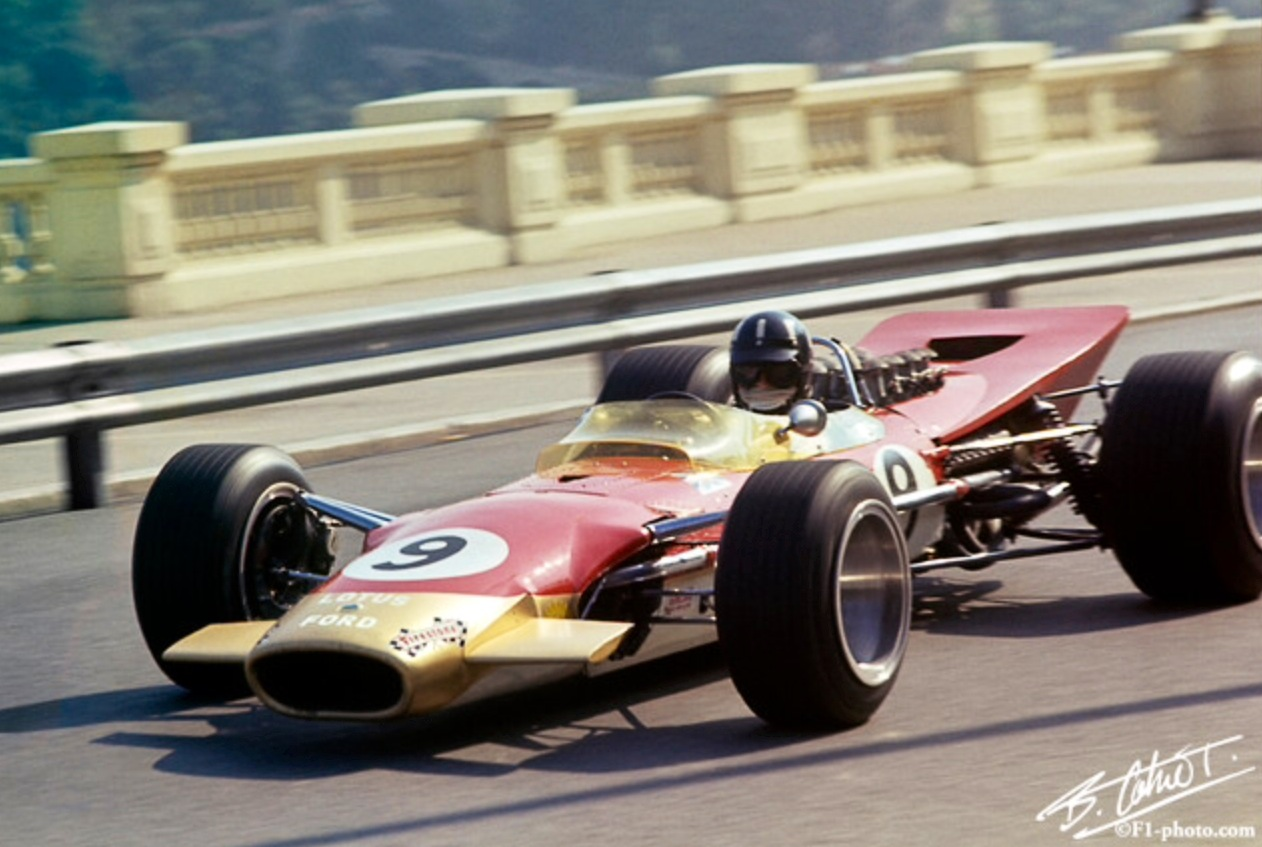
Denny Hulme won the 1967 Monaco GP in his Brabham BT20 Repco, his first win. JSG plopped his F2 Matra MS7 FVA 11th of 19 cars on the grid, 7 slots in front of JPB in a similar car. Servoz DNF with fuel injection dramas, it was valuable circuit practice for 1968…(Getty)
In 1967 he drove a Matra MS7 Ford FVA car in the Monaco GP, qualifying a sensational 11th but failed to finish with fuel injection problems on lap 4.
Still not finished with rallying, he participated again in the Monte Carlo Rally in early 1967 with Francois Janin in a Matra Djet but failed to finish the event won again by a Cooper S, this time crewed by Timo Makinen and Paul Easter.
In sportscars he contested Le Mans and again failed to finish, this time the MS630 BRM had an oil pipe fracture giving Servoz and JPB an early finish to their weekend.

Johnny ahead of the Klass/Sutcliffe factory Ferrari P4 DNF during Le Mans 1967 won by the Ford Mk4 of Gurney/Foyt. The Matra BRM DNF with an oil pipe problem, JPB the co-driver. Prototype 2000 class won by the Siffert/Herrmann Porsche 907 (unattributed)
Johnny’s main program in 1967 was the European F2 Championship. 1967 was the first year of the 1.6 litre F2 formula, the era (1967-71) dominated by the Ford (5 bearing Cortina block) Cosworth FVA 210bhp, 4 valve, Lucas injected engine. The Matra factory pilots were Johnny and JPB in the MS5 and later MS7 monocoque chassis.
Jochen Rindt was the dominant F2 driver of the decade, and whilst a regular race winner, he like the other ‘graded drivers’ was ineligible for championship points. The beauty of the class was ‘young thrusters’ like Jean Pierre and Johnny could test their mettle against the established GP aces of the day who ‘moonlighted’ in the class. In those days the top pro’s needed to race outside F1 to be paid start and prize money to supplement their GP incomes which were decidedly skinny by the standards on the later 70’s and beyond. By the dawn of the 70’s F1 driver contracts were becoming more restrictive to preclude the sorts of activities which cost Servoz his career…
Johnny had a strong first year in the MS5, his results as follows; Rome GP, Vallelunga 3rd, GP Spain, Madrid 4th, 5th’s at the Madrid GP at Jarama and Mediterraneo GP Enna. 6th at the Pau GP early in the season, 8th’s at Crystal Palace, Rouen GP, Tulln-Langenbarn, 10th at Zolder, 11th at the Albi GP and DNF’s at Montjuic, the Eifelrennen, and Reims and Zandvoort GP’s.
Jacky Ickx won the title in Ken Tyrrell entered Matra’s, MS5 and the later MS7 from Frank Gardner’s works Brabham BT23 and Beltoise’ MS5/7. Servoz was 7th with Piers Courage, Alan Rees and Chris Irwin in fourth to six places.

Servoz in the Crystal Palace paddock in June 1968. DNF in his Matra MS7 Ford, Jochen Rindt won the race in a Brabham BT23C Ford (motorsportfriends.ch)
Servoz-Gavin’s dazzling talent was on full display during a couple of drives substituting for Jackie Stewart in Ken Tyrrell’s Ford Cosworth DFV powered Matra MS10…
Jackie Stewart was forced to miss the race with a damaged wrist ligament as a result of a Jarama F2 shunt and was out for a month. JPB stood in and raced the Matra Ford in Spain but Jean Pierre was debuting the new V12 engined Matra MS11 at Monaco so Servoz-Gavin was offered the drive after Ken Tyrrell conferred with his sponsor, Elf.

MS10 ‘T-Car’, early practice, Monaco Station Hairpin, 1968 (Schlegelmilch)
What a baptism of fire, it was Johnny’s first ever drive of a 3 litre 400bhp machine on the most demanding circuit of all in terms of 200 miles of sustained accuracy! The degree of difficulty was high, the power delivery of the early DFV, until Jack Brabham got hold of the fuel cams notoriously abrupt, JSG was to learn the nuances of the Cossie in the most unforgiving of environments.
Denis Jenkinson’s MotorSport race report captures both the atmosphere and Johnny’s spirited, confident approach wonderfully;
‘As practice got under way it was difficult to know which way to look or which way to listen, with the fantastic sound of the V12 Matra engine, the V12 Honda and the V12 Eagle. The slightly less raucous noise of the V12 B.R.M. engines, the efficient sound of the Cosworth V8 engines, and all that was missing was the sound of the 4-cam Repco V8 from its two megaphone exhausts. All this echoing off the rock faces and hotel fronts made the most incredible noise that seemed to lift you off the ground with excitement. Quite soon most drivers were accelerating, sliding, braking and cornering with enormous vigour and the invited ones were out for a high place on the starting grid and the uninvited ones were out to make sure they were not the slowest or next to slowest’.

First time out in a 3 litre F1 Car! Johnny giving the throttle a tickle and displaying the delicacy of his car control, in Casino Square, Matra MS 10 Ford, Monaco 1968 (unattributed)
‘Servoz-Gavin and Beltoise were a joy to watch, their uninhibited handling of new cars with lots of horsepower being refreshing. The 12-cylinder Matra engine seemed to require keeping well up near its 10,000 r.p.m. limit, which kept Beltoise busy, but he looked to be enjoying himself. Servoz-Gavin was obviously happy to have such a responsive and powerful car as the Matra-Cosworth V8 and was really using its potential, not being afraid to give it full-throttle out of corners and travel a long way in an ‘opposite-lock’ power slide. Oliver was also showing up well on his first outing with a real Grand Prix car, but he was less spirited than the two French lads. The McLarens were riding the humps on the concrete of the promenade in a very impressive manner, but Rindt’s Brabham-Repco V8 looked terrible, its front suspension too hard, though the driver seemed oblivious to it’.
‘Servoz-Gavin made the excellent time of 1 min. 31.1 sec. with the newer and lighter Matra-Cosworth V8 on his first outing in a Grand Prix car…’
The start of the race, DSJ again; ‘Hill seemed a bit jumpy and began to creep forward and Chiron warned him to ‘hold it’ so that when the flag dropped he was beaten away by Servoz-Gavin who roared away in a perfect start to lead the pack up the hill from Saint Devote. This was the big moment for the young French driver and he made the most of it, leading the opening lap in a cloud of dust and using all the road and a lot of the edges, and he was followed by Hill keeping a discrete distance away, so that Siffert, Surtees and Rindt were close behind him. Only fourteen cars completed the first lap for in the tunnel McLaren slid outwards, probably on petrol overflow from a car ahead of him (because oil overflows should be in the catchtank!) and his left rear wheel hit the guard rail and bent the suspension…’

Wow! Thats a lead, Servoz pushing hard, too hard in reality, from the Hill Lotus 49 Ford 1st, Surtees Honda RA301 DNF and Siffert Lotus 49 Ford DNF (unattributed)
The courageous and brave Servoz-Gavin stayed out in front for three laps, followed by Hill, Siffert, Surtees and Rindt, and as they went away on their fourth lap Courage stopped at the pits with the fluid gone from the rear brakes of his B.R.M. and Scarfiotti stopped at the Cooper pits as he thought he only had neutrals in the gearbox…Meanwhile the moment of glory for the leading Matra had come to an end for the left-hand drive shaft broke in two, clean through the tubular part, the flailing ends breaking the top suspension link, and he limped into the pits to retire. (Johnny always insisted he never hit anything but onlookers at the chicane were adamant his car kissed the barrier upon exit) Hill now had a clear road ahead and he settled down to lead the race, but Siffert stayed with him’…Jo’s Lotus ZF gearbox failed leaving the lead to Hill in the first of the Loti fitted with a Hewland DG300 gearbox, which he held to the races end.

Onlookers say he boofed the fence, Johnny said he didn’t touch it, the result the same, DNF. Sits up high in the thing, doesn’t he?! (unattributed)
Importantly, JSG had popped down an amazing marker, it was a GP debut only bested by Mario Andretti that season when he popped his Lotus 49B on pole at Watkins Glen albeit Mario was a ‘big car’, if not GP car driver, of considerable experience.
Nigel Roebuck was also at Monaco that 1968 weekend and recalled; ‘Servoz was one, it seemed to me then absolutely right for his time. If the name looked great on the side of the cockpit, so also the man looked the part. After an era in which too many grand prix drivers…were to be seen pushing prams around the paddock, Johnny had the free-wheeling ways of my childhood heroes. He was a throwback to Alfonso de Portago, a reminder that not all racing drivers lived like monks. Servoz emphatically did not live like a monk…a playboy then and something of a hippy too…Very louche in a James Dean kind of way but not contrived. Simply he seemed like a free spirit who had found the perfect job. The abiding problem was that he lacked the commitment to do justice to his talent’.
Jackie Stewart returned to the grid from the following race but JSG was offered the works Cooper drive at Rouen, the French Grand Prix, after Ludovico Scarfiotti’s death. The V12 Matra powered T86B was not as powerful or nimble a conveyance as the Matra but he popped it 15th on the grid, in front of Vic Elford in the other Cooper but retired on lap 15 after an accident on the greasy surface. This was the horrific race in which Jo Schlesser died in the experimental Honda RA302, the race surface awash with rain and all sorts of horrid liquid used by firefighters to quell the inferno.

Servoz, Pescarolo, Beltoise, Matra boss Jean Luc Lagarde, Jackie Stewart 11 January 1968 press launch of the new quad cam, 4 valve, 3 litre injected V12 (Keystone)
The Matra V12 engine, ‘doubled up’ in both Grands Prix and Sportscar competition. JPB debuted the MS11, qualifying the powerful, peaky, screaming car a strong 8th and then retiring it after ‘kerbing’ it amidst the tight confines of the principality notoriously hard on anything less than absolute precision.
On the Monaco GP weekend in nearby Belgium, Henri Pescarolo and Robert Mieusset gave the V12 its endurance debut at the Spa 1000Km but it was a short weekend, the car retired on lap 1 with ignition failure.

Matra MS630 3 litre V12 at Le Mans in 1968, Servoz-Gavin, Pescarolo (André Rousseau)
It was a whole different ballgame at Le Mans in a drive Johnny shared with Henri Pescarolo.
The performance of the new V12 engined MS630 at Le Mans in 1968 was one of those great ‘mighta been’s. The whole Matra team returned from the Canadian GP fitting LeMans, held that year on 28 September, between the Canadian and US GP’s.
The pair qualified 5th, the Siffert/Hermann Porsche 908 was on pole, not that it matters much given the classic events duration. From the start the car was into the pits after one lap to get the windscreen wipers working but after an hour they were 16th and after 8 hours in second behind the JW Automotive Ford GT40 which ultimately won in the hands of Pedro Rodriguez and Lucien Bianchi.
The rain poured down, without wipers and whilst Johnny was pissed off, Pesca kept at it and did 3 stints in a row during the night, keeping the car in second or third. With a little over 4 hours to go he was up to second, the home crowd getting more and more excited…but at 11.49 am the Matra came in for a wheel change but a new tyre burst and the car caught fire. It was put out but the cars rear end was destroyed, a great effort at an end.

Servoz, Le Mans 1968, 11th in terms of laps completed but not running at the finish (Klemantaski)
The Cooper F1 rides were shuffled amongst local drivers in the following GP’s but JSG’s speed was not lost on Ken Tyrrell who entered a second car for the speedy Frenchman in the 1968 Italian GP, at Monza. He qualified the car mid grid, 13th of 24 cars, 4 of which did not qualify.
After Stewart retired his Matra-Ford MS 10 with engine failure, Johnny kept his sister car in the thick of battle to the chequered flag and pipped the Ferrari 312 of Jacky Ickx for second place behind Denny Hulme’s McLaren M7A Ford. Johnny was dicing with Ickx and Rindt during the battle behind the reigning world champ. Exalted, and vastly more experienced company indeed. Ickx pitted for fuel in the final laps but it was a mighty fine performance by Servoz.

2nd in the Italian GP 1968 behind Denny Hulme’s McLaren M7 A Ford, in ‘winged’ Matra MS10 (unattributed)
The circus moved on to Canada on 22 September, the race held at the very picturesque Mont Tremblant, JSG qualified 13th on this track new to him. He raced as high as 5th before spinning and retiring on lap 71, the race won by Denny Hulme’s McLaren again, all of which ensured the 1968 title would ‘go down to the wire’.
Johnny didn’t race at Watkins Glen but did so in the season ending, exciting mano-et-mano Mexican GP battle between Stewart and Hill after Hulme, the other championship contenders car retired with accident damage caused by a spin the result of a broken rear suspension mount. Then JYS had a fuel problem which dropped him back, he finished 7th, and the title was Hill’s.
JSG’ s race was far from certain. He hoped to race the spare Matra but his entry was only allowed by the organisers 2 hours before the race start; JSG practiced Elford’s Cooper when he arrived late for first practice, setting a quicker time than Bianchi in the other car. He did some laps in the spare Matra before JYS took it over having damaged his own car, in the end JSG qualified 16th with limited laps.
He raced exceedingly well, running as high as 4th before retiring on lap with ignition trouble very late in the race, on lap 57.

Servoz contesting the F2 section of the German GP, Nurburgring 1969. He qualified his Matra MS7 Ford 15th but DNF, just behind Francois Cevert’, Tecno Ford. Ickx won in a Brabham BT26A Ford, F2 winner Pescarolo’s MS7 (unattributed)
By any assessment it had been a great start to his GP career, JSG appeared to have the world at his feet, perhaps the most promising of his generation of French drivers at that precise time. His lot for 1969 though was the European F2 championship and some F1 drives in the experimental 4WD Matra MS84, this direction, a blind alley for Lotus, McLaren, Cosworth and Matra, all of whom built all wheel drive cars, a story for another time.
Servoz-Gavin won the European F2 championship for Matra, he took three rounds in his MS7 Ford Cosworth FVA; the Madrid, Meditteranean and Rome GP’s at Jarama, Enna and Vallelunga respectively. Second and third in the championship that year were Hubert Hahne and Francois Cevert in Lola T102 BMW and Tecno 68 FVA.

Winged F2 cut and thrust 1969 style; ‘BARC 200’, Thruxton 7 April 1969. Motor cycle champ Bill Ivy Brabham BT23C Ford DNF leads another car, then Tino Brambilla’s Ferrari Dino 166 6th and Servoz Matra MS7 Ford 5th (unattributed)
The grids were awash with both ‘graded’ drivers ineligible for F2 championship points and coming-men; Jackie Stewart, Piers Courage, JPB, Clay Regazzoni, John Miles, Jo Siffert, Jochen Rindt, Henri Pescarolo, John Watson, Graham McRae and Graham Hill to name a few.
In 1969 the Velizy team elected to have a ‘sabbatical’ from GP racing choosing to extensively redesign and develop their V12 for a renewed two car assault in 1970. JPB drove the Ford engined MS80 alongside Jackie Stewart during the Scots successful assault on the 1969 World Championship.

Matra MS84 Ford at Silverstone, British GP, July 1969, where it was raced by JPB, here in practice its his ‘T-car’. Note beautifully strong, triangulated spaceframe chassis, inboard front brakes and, you can just see it, front driveshaft (unattributed)
In the ‘Year of The 4WD GP Car’, a story for another time, JSG both tested and raced the MS84 Matra 4WD car. Whilst the car looked similar to the MS80 it was totally different, the cars chassis a multi-tubular steel spaceframe of similar quality of design and construction as the companies monocoques. I will write a separate article about MS84, in layout it was similar to the Lotus 63 and McLaren M9 in mounting the Ford Cosworth DFV V8 engine was ‘back-to-front’ with the gearbox directly behind the driver. The Ferguson transmission and other necessary additions made the car circa 10% heavier than the MS80.

Matra MS84 cutaway drawing showing the 4WD cars essential elements; beautifully made heavily triangulated and braced spaceframe chassis, Ford Cosworth 3 litre DFV mounted ‘arse about’, Ferguson transmission, inboard brakes front and rear (unattiributed)
The MS84 appeared first at the Dutch GP in June where it was practiced but unraced by Stewart. It was also tested amongst the Dutch sand dunes a week before the race. The Lotus 63 was also practiced but Rindt would not have a bar of it, plonking his Lotus 49B Ford on pole after returning to racing post his monster Spanish GP shunt the result of rear wing failure. Hills car was also destroyed as a result of the same failure, he was unable to flag Jochen down before the wing failed at the same point on the Barcelona circuit the following lap.

Ken Tyrrell’s Matra International equipe in the Clermont Ferrand paddock, French GP July 1969. In the foreground is the spaceframe, 4WD Matra MS84 Ford, practiced by Jackie Stewart, the other chassis’ are the Stewart/Beltoise MS80’s, Stewart the race winner (Schlegelmilch)
Naturally the MS84 also appeared at Clermont Ferrand for the teams home race but again whilst the car was practised it was not raced. Stewart ran the car on the second day of practice lapping the magnificent, challenging Charade road course in 3:6.3 compared with his best in the MS80 of 3:0.6. Stewart won the race from Ickx in a Brabham BT26 and JPB in a wonderful event for Matra.
The car was finally raced in the British GP at Silverstone when JPB was forced to use the car upon Stewart taking over his MS80, the Scot having spun his car at high speed after a tyre failure entering Woodcote at around 150mph, he later won the race with JPB bringing the MS84 home in 9th.
The MS84 wasn’t run at either the Nurburgring or Monza. JSG contested the German GP, racing his F2 Matra MS7 in the F2 class, DNF amongst the big engined cars.

Johnny on the way to 6th place at Mosport and the first points for a 4WD GP car , Ickx won the race in a Brabham BT26A Ford (unattributed)
At Mosport Johnny was entrusted with the MS84 for the first of three ‘away North American’ races in Canada, the US and Mexico. The bias of the cars drive from front to rear was gradually dialled out of the car (that is progressively less to the front) exactly how much a point of contention, but by Mexico it’s said the car was a RWD car, albeit a rather heavy one!
In Canada Servoz-Gavin put the car on the 6th row on 1:21.4 compared with the 2WD MS80’s of Beltoise and Stewart, both of whom recorded 1:17.9, Ickx and Brabham were 1/2 in BT26 Fords but Johnny persevered with the car and in a steady, careful drive brought it home 6th; achieving the first championship point for a 4WD car, ever.

JSG 7th but non-classified in the 1969 USGP at Watkins Glen, the race won by Rindt’s Lotus 49B Ford (unattributed)
At Watkins Glen on 5 October Jochen Rindt finally broke through and won his first Championship GP aboard his Lotus 49B Ford.
In practice, in rainy, foggy conditions tailor made for 4WD even Jackie Stewart and Mario Andretti in MS84 and Lotus 63 respectively were slower than conventional cars. Ultimately the traction solution sought by engineers was provided by improvements in tyre technology and the understanding of aerodynamics as they applied to F1 cars wings; both cheaper and simpler solutions than the complexity of 4WD in the absence of electronics which was the great 4WD leap forward of a decade or so later.
Johnny qualified the heavy, complex car on the second last row and again brought it home, this time in 7th place.
In Mexico he was 5 seconds adrift of Stewart in the fastest MS80, but again he finished, 3 laps behind winner Denis Hulme’s McLaren M7A Ford in 8th place.

JPB looks on as Servoz is about to head off for some practice laps in the Nanni Galli/Robin Widdows car at Le Mans in 1969, 7th. Servoz shared #34 with Herbie Muller, DNF lap 158 with an electrical short circuit. Race won by the Ickx/Oliver Ford GT40 (Universal)
Servoz was again part of Matra’s sportscar squad and contested Le Mans in an MS630/650 with Herbie Muller, his run of bad luck in the classic event continued, this time retiring with electrical problems. With Jean Guichet he raced the Monza 1000km, DNF fuel feed and the Watkins Glen 6 Hour and Osterreichring 1000Km where he was paired with endurance ace Pedro Rodriguez for 4th and DNF after an accident respectively. That year Matra ‘ramped up’ their sportscar program, the success of which finally came in the years 1972-4.
In a strong 1969 season JSG impressed with his results in F2, endurance racing and in F1 where he played a key team role with the MS84. For 1970 Matra returned to F1 with their own V12 powered MS120 machines, with Ken Tyrrell racing customer March 701 Fords. The circumstances of this change from the Matras with which the Tyrrell team had so much success, to the March is explored at the end of my article on the Matra MS80, rather than repeat it all here; https://primotipo.com/2016/07/01/matra-ms80-ford/

Servoz in the Matra MS650 he shared to 4th with Pedro Rodriguez in the Watkins Glen 6 Hour in July 1969, the Siffert/Redman Porsche 908/2 won the race (unattributed)
The 1970 Matra GP rides went to Beltoise and Pescarolo, it was an easy decision for Ken Tyrrell and sponsor Elf to pick JSG to partner Jackie Stewart in the March 701 Fords with which the great entrant started the 1970 season.
I’ve always thought the chassis somewhat maligned given it won the Spanish GP in JYS hands and Non-Championship ‘International Trophy’ at Silverstone in Chris Amon’s, although it took these two, ‘Top 5’ drivers at the time to extract everything possible out of the car. Suffice it to say that whilst Servoz wasn’t in the quickest car in 1970 he was in far from the slowest, so he looked forward to the season with great optimism.
The damage to his career, the end to it in fact was done during the off-season winter when the plucky Frenchman damaged an eye in a ‘semi-rally’ event for vehicles such as Jeeps and Land Rovers. In a simple, no pressure, amateur, fun event run in a woodland, a small branch caught him in his right eye. He was aware of the possible consequences for his career and initially said nothing about it. He was treated in hospital and then awaited recovery spending most of his time in a darkened room for 5 weeks…

Servoz in the 4th placed Matra MS650 at Sebring in 1970, race won by the Giunti/Vacarella/Andretti Ferrari 512S (Galanos)
In 1970, Servoz raced with teammate Henri Pescarolo in the Matra 650 in the 12 Hours of Sebring, Brands Hatch 1000Km and the 1000 km of Monza finishing fifth, DNF with engine problems and sixth.

Servoz in his brand new March 701, Kyalami 7 March 1970, DNF lap 57 after engine failure, Brabham won his last GP in a BT33 Ford (unattributed)
Despite a lack of pre-season seat time, and with the eye injury Servoz was 2 seconds adrift of Stewart’s identical March 701 the Scot popped on pole at the season opening South African GP at Kyalami. Jack Brabham won the race, his last GP win in his BT33, Johnny DNF with engine failure on lap 58.
Some observed that the old panache and pace had gone in the early races of 1970 but onto Madrid for the Spanish GP Servoz was only a second adrift of Stewart.

Servoz goes thru the Ickx/Oliver conflagration. a deadly mix of a first lap accident caused by a BRM stub axle failure and lots of litres of Avgas. Jarama 1970. No serious injury, thankfully and miraculously in this accident (unattributed)

Johnny at Jarama 1970, the sidepods of Robin Herd’s March 701 clear in this shot (unattributed)
Given his relative lack of testing and a DFV giving less power than Stewart’s, in practice at least he proved he could still be quick. Jackie won the race after the chaos caused by the fiery crash a consequence of the stub axle failure of Jackie Oliver’s BRM P153 and subsequent collision with Jacky Ickx’ Ferrari 312B, both of which went up in smoke full of fuel on lap 1. Johnny was 5th, 2 laps adrift of Stewart his last GP start and finish…

Merde! I’m in trouble here. Servoz-Gavin deep in thought in this Rainer Schlegelmilch portrait during Monaco practice in 1970. March 701 Ford (Schlegelmilch)
Going to Monaco ‘he knew his peripheral vision was fundamentally and permanently impaired. Placing the car accurately for right handers was now impossible, for he had the impression he was putting a wheel off the road, when in fact he was still a few inches from the apex’ wrote Roebuck.
At Monaco in his GP debut in 1968 when he was a sensation with his speed he didn’t qualify and had a big accident in practice at the chicane. ‘I wasn’t enjoying it anyway, he said “and I thought back to Lorenzo Bandini’s accident at the same place three years earlier, he was burned to death”. By the end of the weekend, he had made his mind up to quit…”I told everyone I was retiring because I was scared. There was much more to it than that, of course but saying it that way avoided hours of discussion. I just wanted to break free, get away”.
Servoz departure of course created the opportunity for Francois Cevert, another story and another flame extinguished way too early but in a much more gruesome kind of way. Click here for an article on Francois early years; https://primotipo.com/2014/11/07/francois-cevert-formative-years/

Servoz, Monaco practice 1970, Tyrrell March 701 Ford (Schlegelmilch)
Johnny found sailing as a passion after motor racing, he bought a 37 metre yacht and learned to sail properly by taking it across the Atlantic! “That was when I realised there was something else harder than F1, the sea! When things go wrong you can’t pull off by the trackside or go into the pits. You’re alone with the elements, it made me feel very humble but I loved it”.
In the early 1980’s Servoz was badly hurt when a gas canister exploded on his boat sustaining awful burns so bad that for a while it looked as though he would not survive, but he recovered and continued to sail.
Roebuck; ‘Who knows how good Johnny Servoz-Gavin really was, or what, had his eye sight not been damaged, he might have made of his grand prix career? Probably not too much, because he simply didn’t want it enough, it got in the way of the good life. Just on the evidence of that wet (1968) morning in Casino Square, though it seemed to me he had talent to throw away. Which, of course, is precisely what he did with it’…
Georges-Francis ‘Johnny’ Servoz-Gavin, born January 18 1942, died May 29 2006. Survived by his second wife Annicke and his son from his first marriage.

Servoz circa 1968, Matra MS7 Ford F2 (unattributed)
Bibliography…
The Guardian, F2 Index, Automobile Year #17/18, MotorSport 1968 Monaco GP race report by Denis Jenkinson and September 2000 article by Nigel Roebuck,
Photo Credits…
Patrick Jarnoux, Rainer Schlegelmilch, Getty Images, Louis Galanos, G Gamand, Klemantaski Collection, motorsportfriends.ch, Eric Della Faille, André Rousseau
Etcetera…

Servoz, Talbot T26 friends and Matra MS7 Ford FVA F2 (Patrick Jarnoux)

Servoz MS7 FVA before the ’67 Monaco GP. You can just see Dan Gurney on the far right behind the gendarme, the red car is Bruce McLarens McLaren M4B BRM 4th and to the left is the butt of Dans Eagle T1G Weslake DNF (unattributed)

Johnny in the Matra MS630 BRM, Le Mans 1967 (Friedman)

Servoz bi-winged Matra MS7 Ford en-route to 6th in the April 1969 ‘Eifelrennen’, Nurburgring Euro F2 round. Race won by Jackie Stewart;s similar car (unattributed)

Servoz-Gavin in the MS84 at Mexico City in 1969, th in the race won by Hulme’s McLaren M7A Ford (unattributed)

Three glamorous celebrities of the era; Johnny Servoz-Gavin, Brigitte Bardot and Francois Cevert, racing car show 1970 (unattributed)
Tailpiece: Johnny and Ronnie Peterson swapping notes on March 701 chassis set up at Monaco in 1970: For Johnny its his last GP meeting at 28, for Ronnie his first at 26. 1970’s grids should have had these two slugging it out, fate is such an unforgiving thing all too often…

(Schlegelmilch)
Finito…

























 primotipo...