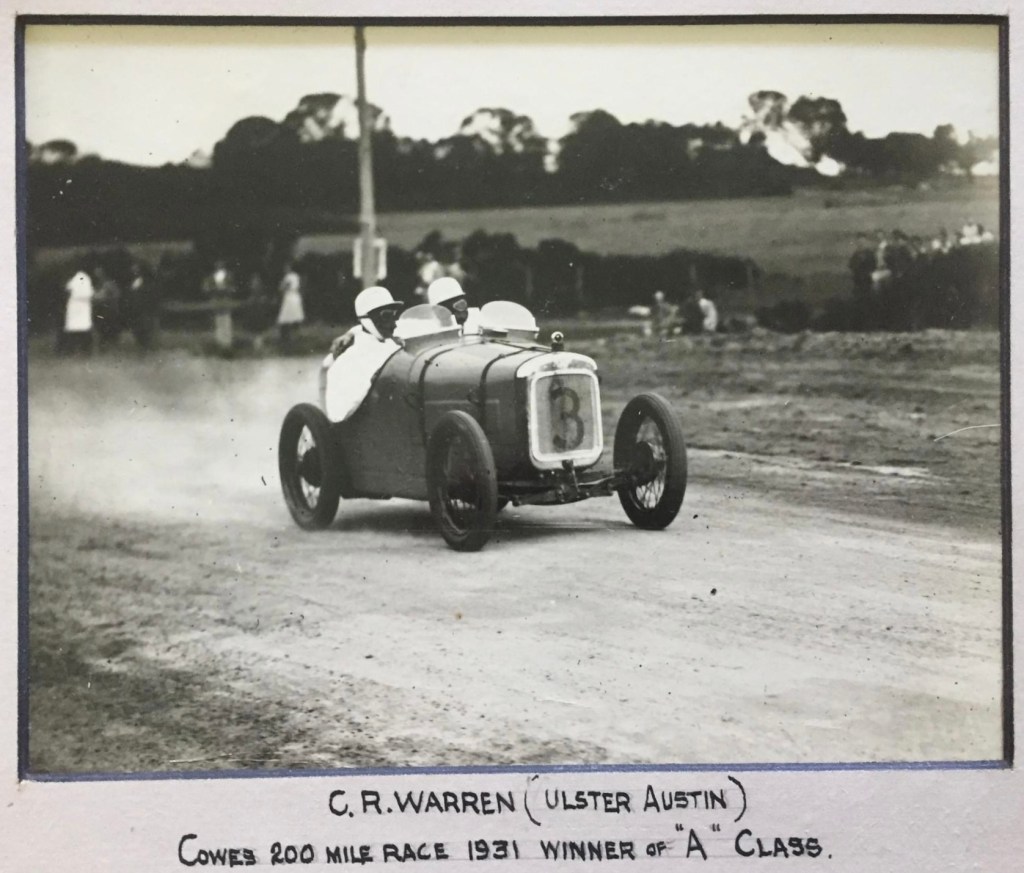
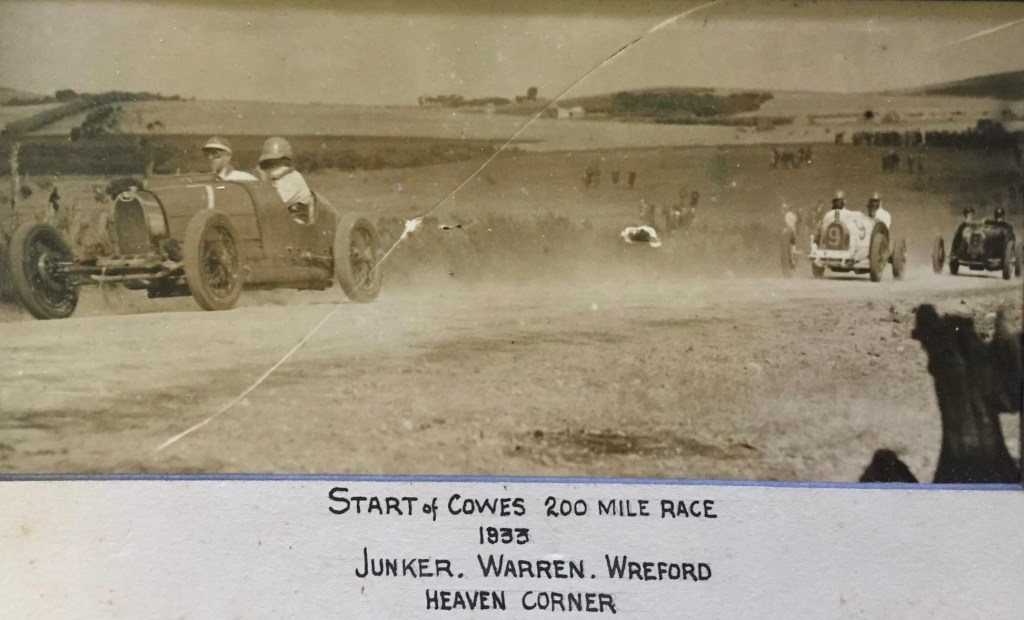
Melbourne racer/raconteur/engineer/mechanic Greg Smith put these three shots up on his ‘Pre-1960 Historic Racing in Australasia’ Facebook page – very highly recommended – a while back. He is the custodian of Cec Warren’s photo archive.
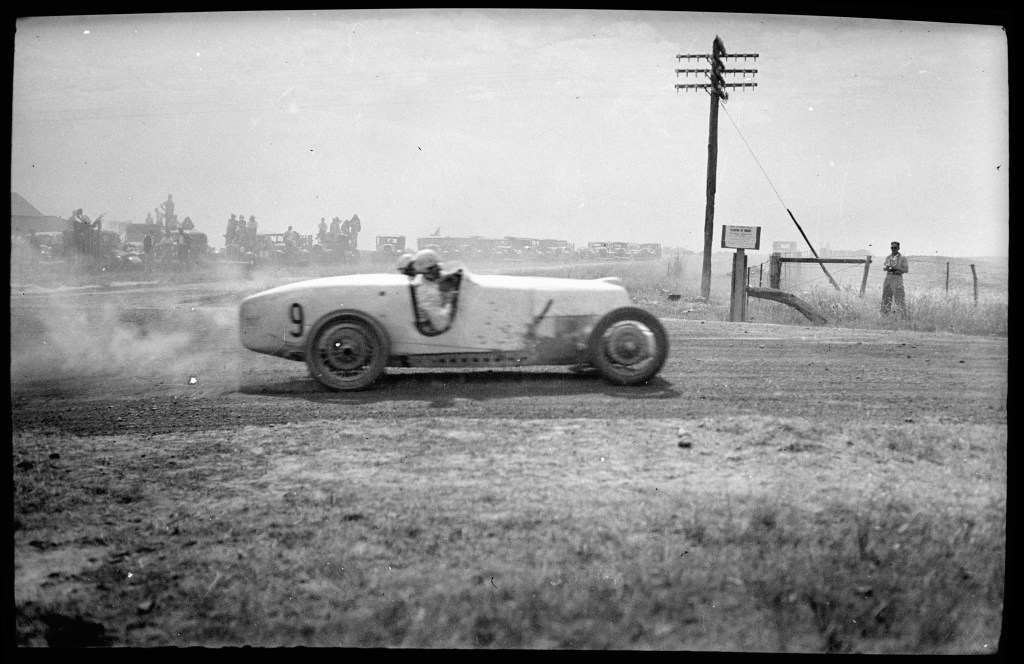
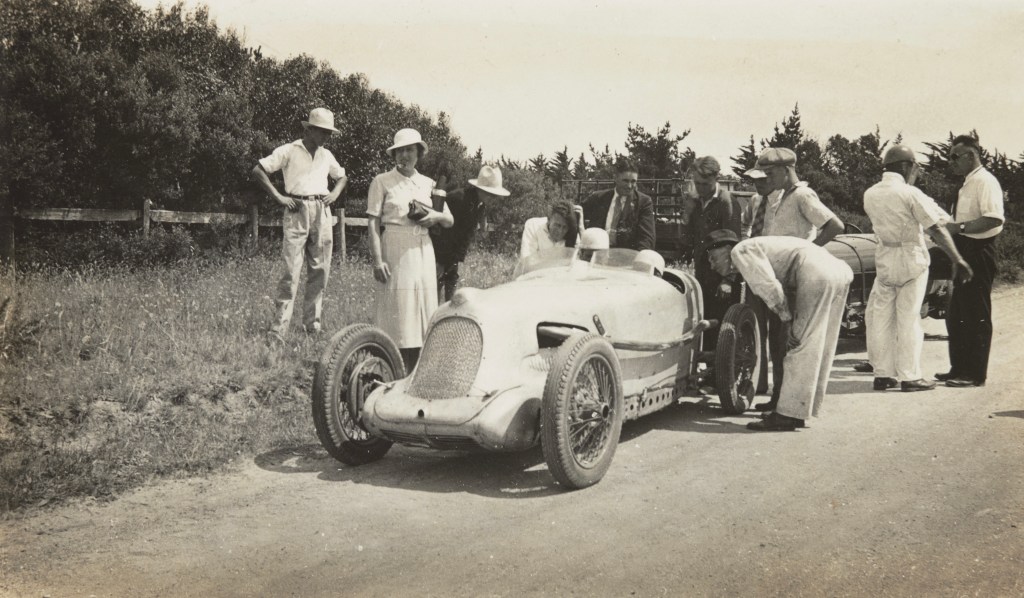
The 1933 200 Mile Race aka the Australian Grand Prix. EG Mackay Bugatti T39, Cec Warren, Bugatti T37 and Mert Wreford, Bugatti T39.
Two 1.5-litre straight-eight unsupercharged, three-valve, SOHC 80-90bhp Type 39s, sandwiching a 1.5-litre four cylinder, unsupercharged, three-valve SOHC 60bhp Type 37. The race was won by Bill Thompson’s Riley Brooklands.
Interestingly, perhaps, The Argus started its coverage of the race on March 24, 1933, with the headline, ‘Australian Grand Prix’, then went on to describe it as the Victorian Light Car Clubs 200-mile race – the Fourth Australian Grand Prix. They really weren’t too sure what to call the thing.
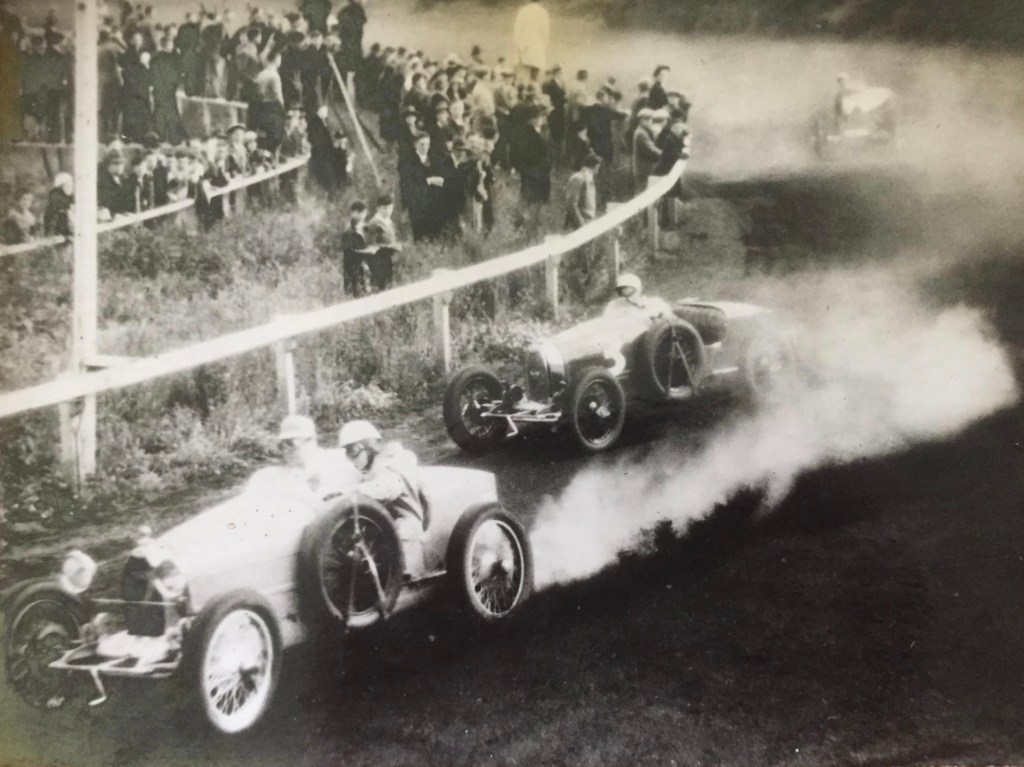
Cec Warren, Bugatti T37, on his way to winning the Invitation Handicap on the short-lived Richmond Racecourse Speedway, Melbourne track in 1932.
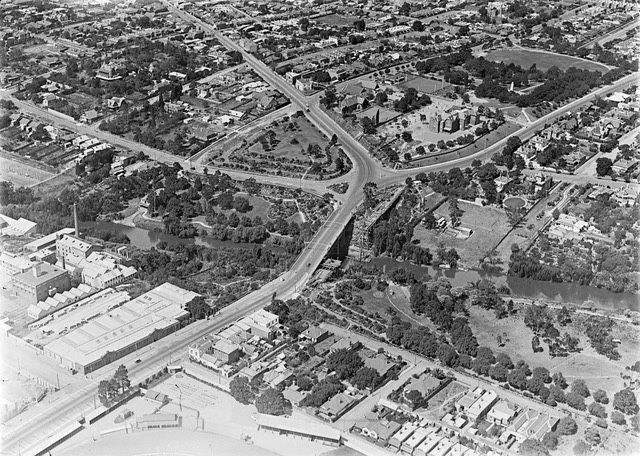
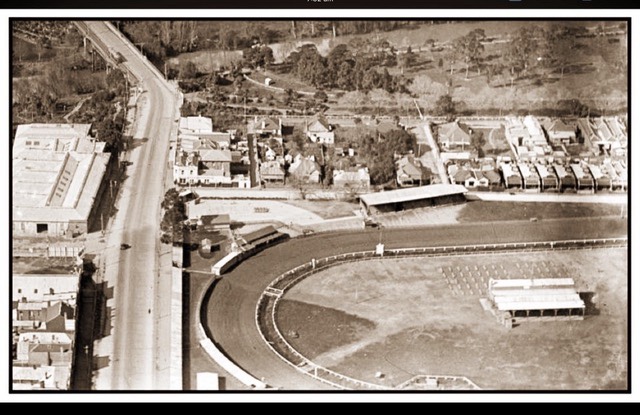
For you Melburnians, the track was primarily a horse racing facility owned by the ‘colourful legendary’ John Wren, which was located on land abutting a site near the Yarra River and abutting Bridge Road.
Etcetera…
(S King Archive)
Many thanks to Steven King for these photographs and advice as to the exact location of the Richmond Racecourse.
It will mean nothing other than to those familiar with Melbourne’s inner east, that’ll be me and a few others active on this site!
The bottom left of the top shot has just the north-eastern corner of the racecourse in shot. That’s Bridge Road in the bottom left corner, go up the page, and you are heading east. This side of the Yarra River is Richmond, with light industry – textiles, clothing and footwear back then – and workers. East of the river is Kew to the left and Hawthorn to the right, then, as now ‘stockbroker-belt’ suburbs. Church Street branches diagonally to the left heading north and all of the features are still there a century on: the parklands, and Hawthorn West Primary School at the intersection of Church Street, and Burwood Road, the main road that branches to the right heading east.
There is now, and has been forever, a rowing club on the east bank of the river, beside the bridge and the Melbourne Girls College on the west bank; the parklands alongside the bridge there fuses into sporting facilities, then the school.
(S King Archive)
The shot above shows the north eastern corner of the I racecourse on the Bridge Road and Westbank Terrace corner, and the Bridge Hotel on that corner, which I highly recommend. The part of the course shown is now residential housing and ‘Officeworks.’
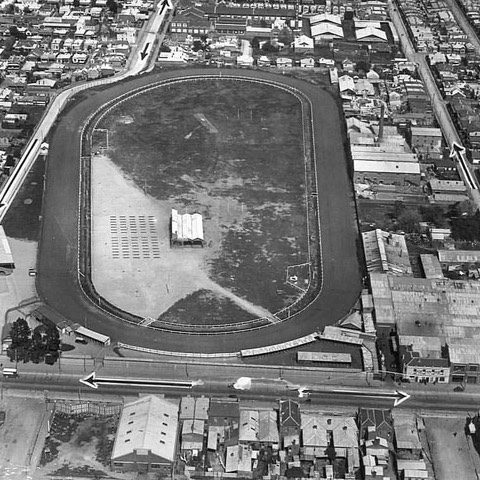
The shot below shows Bridge Road at the bottom, and Westbank Terrace to the left – heading up the photo is south – keep going and you hit Swan Street. The side road with the arrow on it to the right is Stawell Street.
(S King Archive)
This article in the Melbourne Argus published on January 14, 1941, answers the question on all of your lips: when did the race course site become housing?
‘RICHMOND RACECOURSE HOUSING PLAN
Erection of 138 working-men’s homes on the old Richmond racecourse will begin soon when contracts, tenders for which closed on Friday, are let by the Housing Commission.
In preparation for building, the commission has removed the high iron fence surrounding the racecourse and levelled the area. Streets and sites have been marked out.
The commission undertook the new housing plan on the suggestion of Richmond Council.
Many applications have already been made for the new houses. Tenants of dwellings condemned in Richmond are expected to receive preference.’
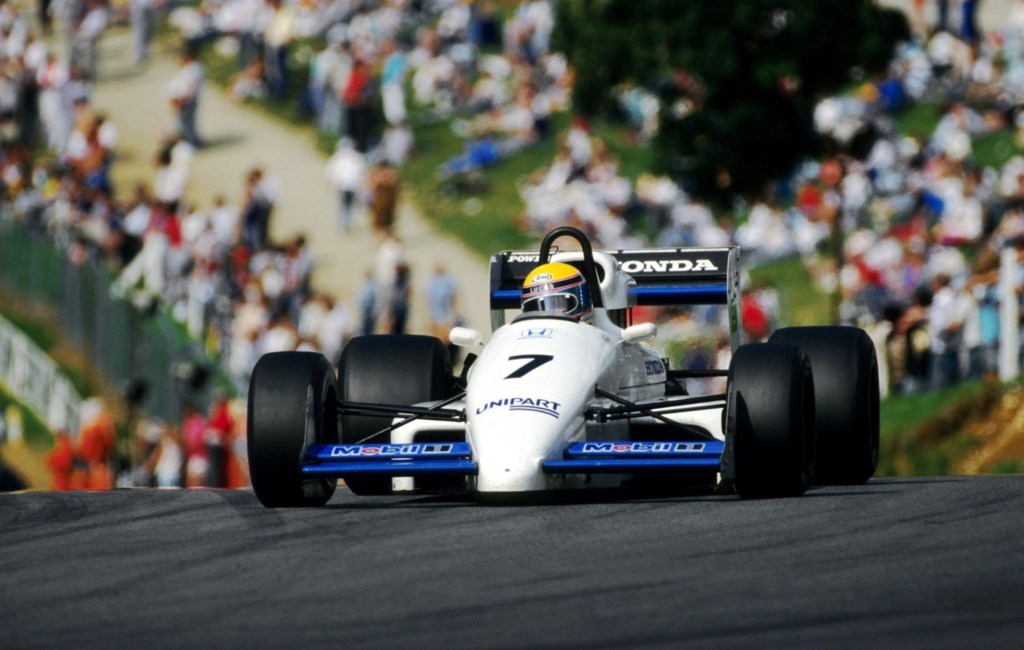
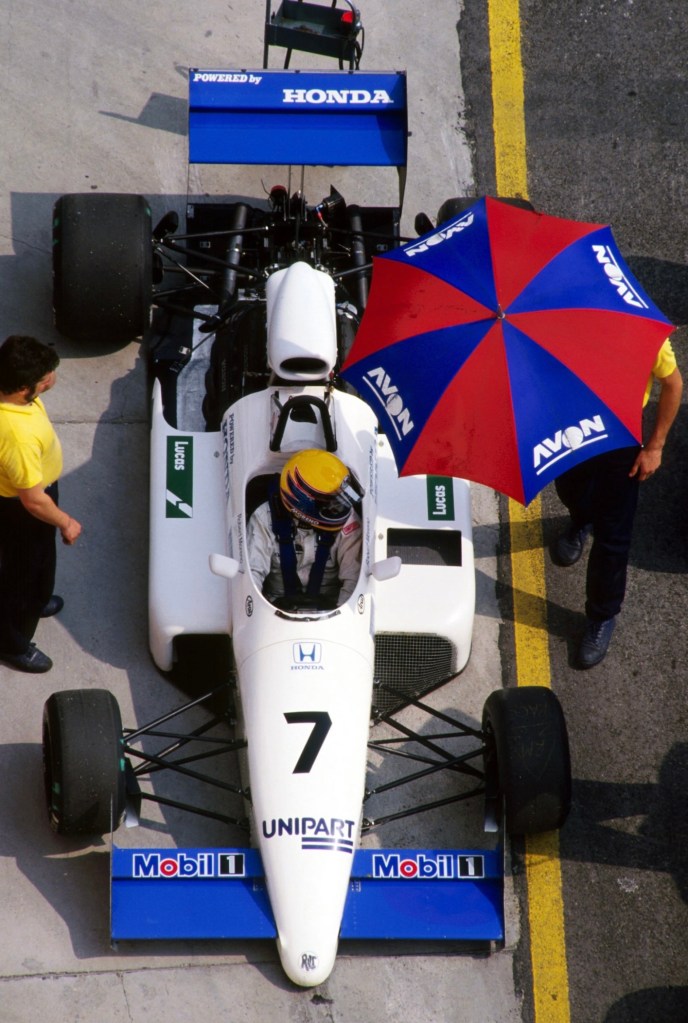
Roberto Moreno enroute to third place during the August 3, 1987 Brands Hatch, International Formula 3000 Championship round. Ralt RT21/87 Honda.
March had a mortgage on the early years of F3000, winning three titles on the trot for Christian Danner, March 85B Ford Cosworth in 1985, Ivan Capelli, 86B Ford Cosworth in ’86 and Stefano Modena – you guessed it – aboard an 87B Ford Cosworth in 1987.
There was some serious talent contesting the ’87 title in addition to the pair of factory Ralt pilots, Moreno and Mauricio Gugelmin: Jacques Villeneuve Snr, Eliseo Salazar, Pierluigi Martini, Paolo Barilla, Olivier Grouillard, Luis Perez-Sala, Yannick Dalmas, Mark Blundell, Michele Ferte, Andy Wallace, Julian Bailey, Lamberto Leoni, Gabriele Tarquini, Beppe Gabbiani, Stefano Modena and many others.
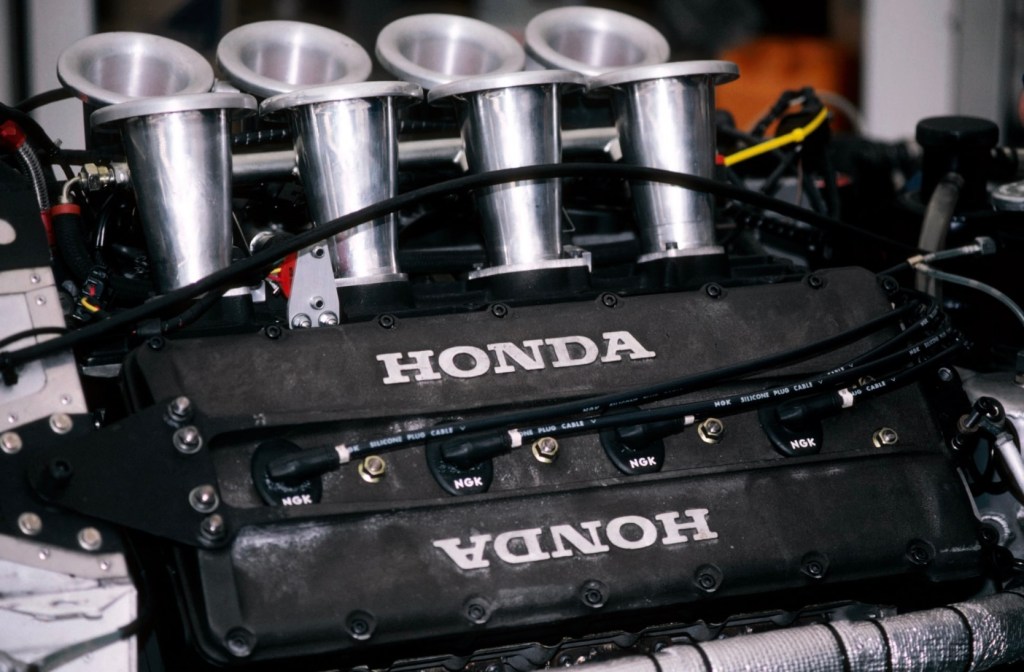
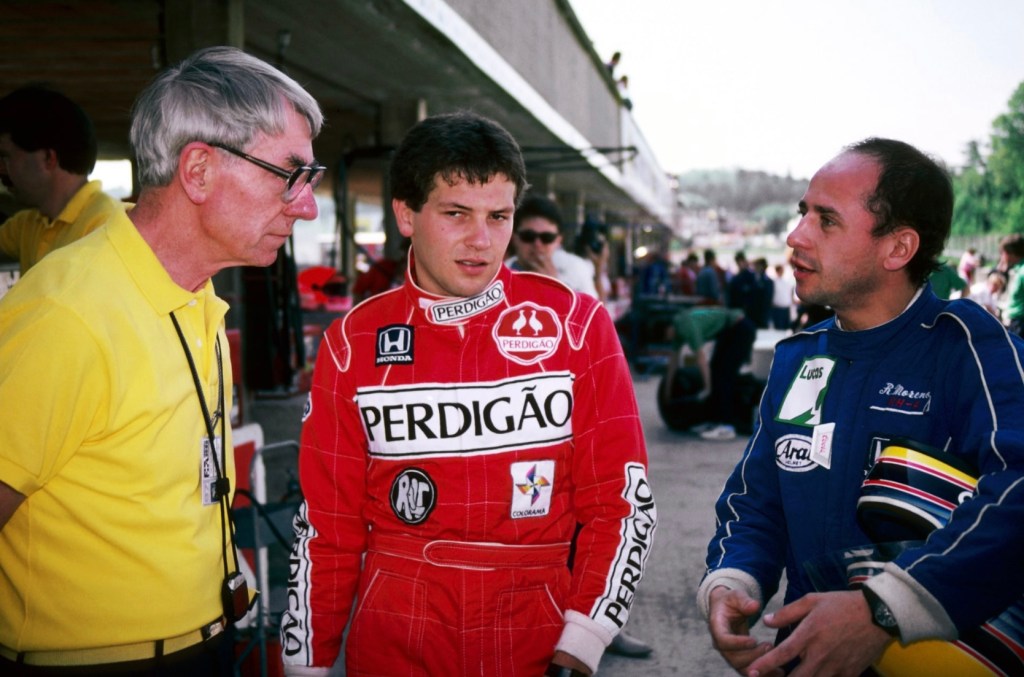
Honda commissioned a fleet of 12 3-litre F3000 engines from John Judd; the Judd-Honda BV was supplied exclusively to Ralt in 1986-87. More on John Judd’s Engine Deelopments business here: https://www.motorsport.com/f1/news/how-to-be-an-ace-engineer-engine-designer-john-judd/10554927/Ron Tauranac, Mauricio Gugelmin and Roberto Moreno during 1987, circuit folks? The matching team attire is impressive (MotorSport)
The Honda V8 powered Ralts had plenty of pace that year. Moreno was on pole in four of the ten rounds and Gugelmin in two of them but that qualifying pace yielded only a win apiece, Gugelmin in the opening round at Silverstone and Moreno at Enna-Pergusa. Championship winner, Sefano Modena, March 87B Cosworth won three races and Perez-Sala and Dalmas two.
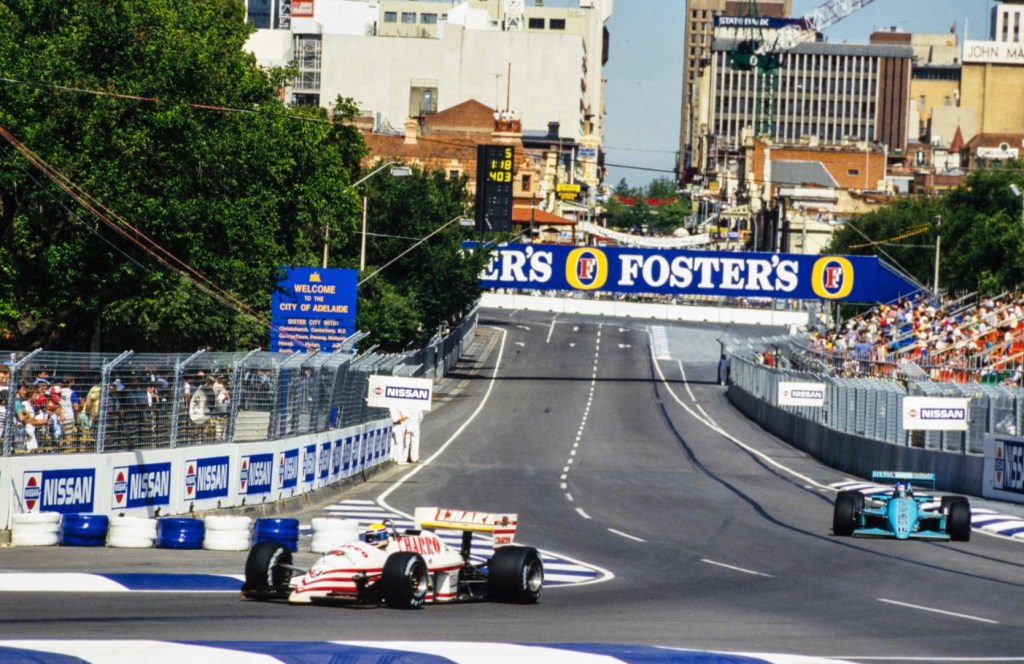
The plucky Moreno was rewarded with end of season F1 drives of the AGS JH22 Cosworth DFZ in Japan and Australia, five years after a couple of abortive qualifying attempts with Lotus in 1982. His many Australian fans – he won three AGPs at Calder aboard Ralt RT4s in the 1981-84 Formula Pacific era – cheered Roberto on to a wonderful seventh in the AGP in Adelaide, a race of great attrition, which became a point-scoring sixth after Ayrton Senna’s McLaren was disqualified from second place for oversized brake ducts.
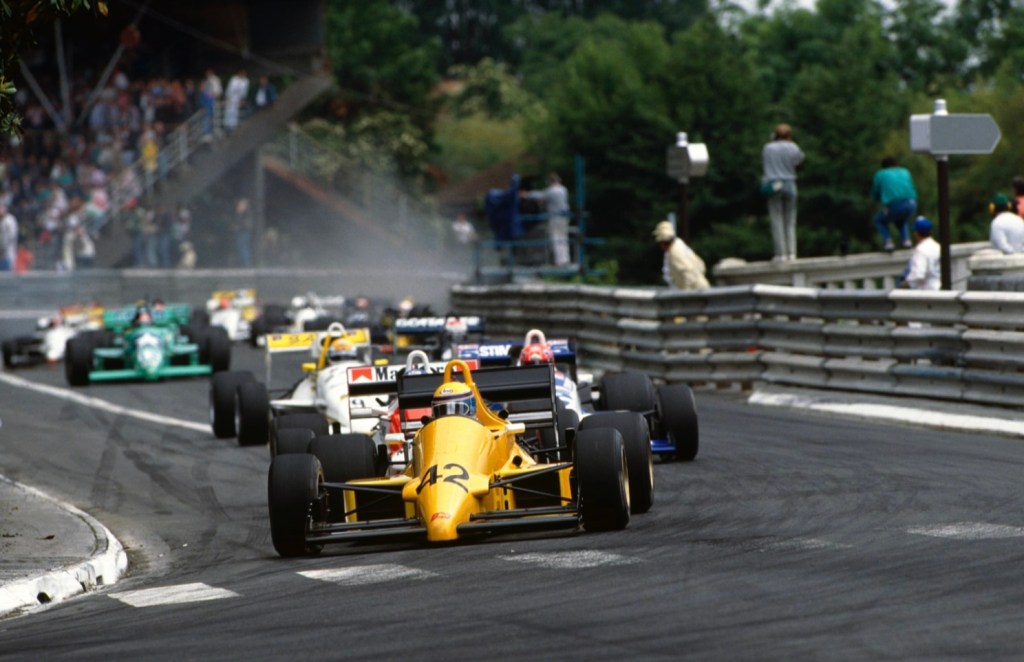
Moreno, AGS JH22 Ford from Ivan Capelli’s March 871 Ford, AGP Adelaide 1987 (MotorSport)Roberto Moreno at the start of the Pau GP in 1988; race winner in his Reynard 88D Ford Cosworth (LAT)
The Ralt perennial, in desperate need to break into F1 with a good team full-time, Moreno raced a Bromley Motorsport Reynard 88D Ford Cosworth engineered by Gary Anderson to four wins and the F3000 title in a ‘penniless’ campaign.
This was a pretty big spin of the roulette wheel given the 88D was Reynard’s first F3000 design, Australia’s Malcolm Oastler was responsible for the carbon-fibre machine which also won the ’88 Japanese and ’89 British F3000 championships.
The F3000 win led Moreno to a Ferrari test contract, then a Ferrari influenced Coloni F1 drive, and finally a ride with Benetton in 1990 after poor Sandro Nannini’s helicopter crash almost cost him a hand. Then Michael Schumacher came along…CART success followed for Moreno in the US, particularly in 2000-01.
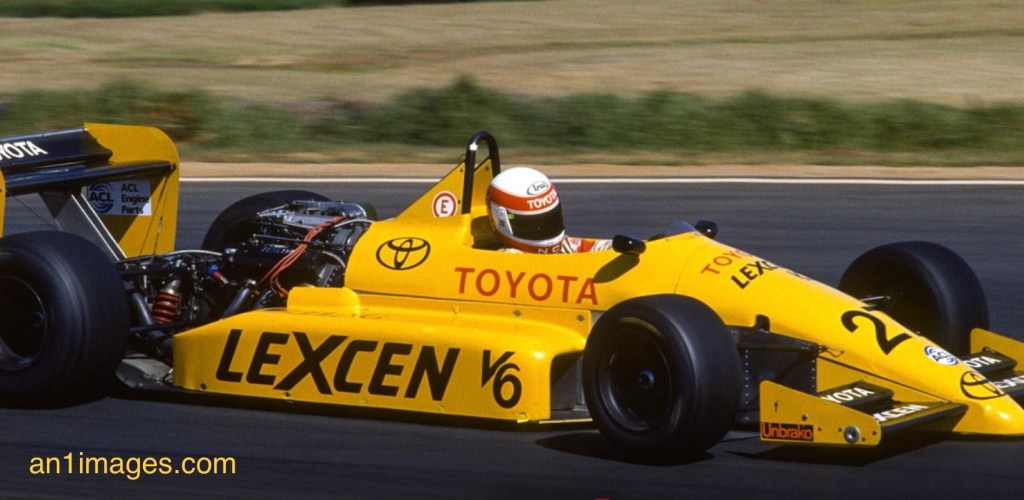
John Smith, Ralt RT21 Holden, notwithstanding the Lexcen promotion, Phillip Island circa 1989
In a Ralt RT21 (and RT20) postscript, these aluminium monocoque cars formed a decent chunk of the front of Australian Formula Holden – the Australian Drivers Championship/Gold Star category – for grids from the inception of the Holden V6 3.8-litre powered formula in 1989.
Rohan Onslow won the inaugural ’89 Australian Gold Star (Formula Holden) title in an RT20, and Simon Kane the 1990 championship aboard an RT21.
Credits…
MotorSport Images, LAT Photographic, an1images.com/Graeme Neander
Tailpiece…
(LAT)
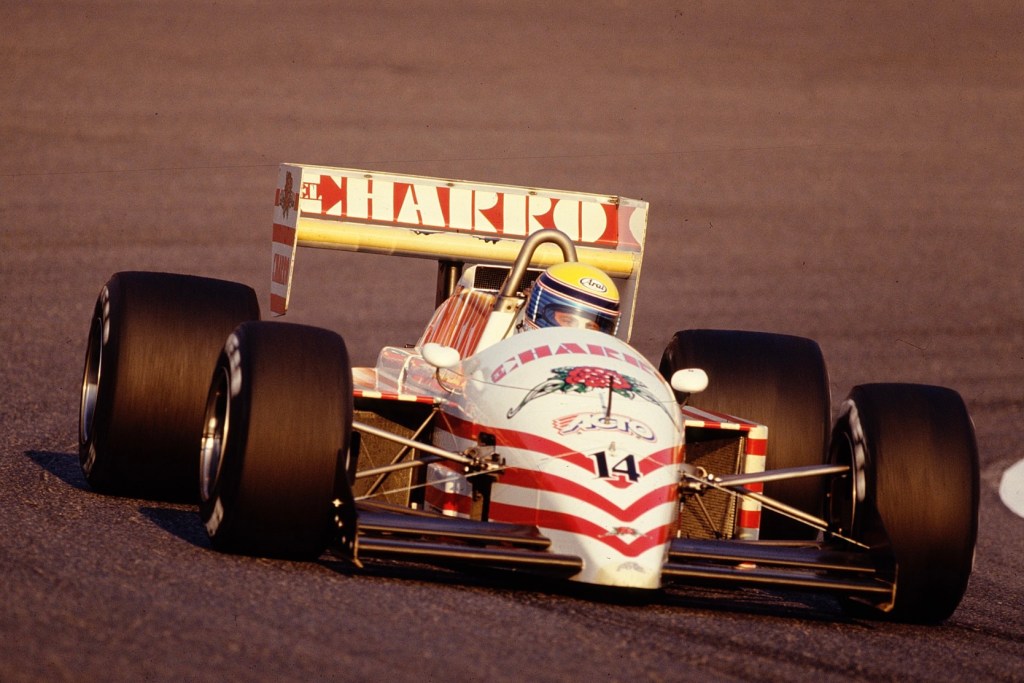
Roberto Moreno, Team El Charro AGS JH22 Ford during the 1987 Japanese GP weekend at Suzuka. DNF engine failure from last on the grid, the winner was Gerhard Berger, Ferrari F187.
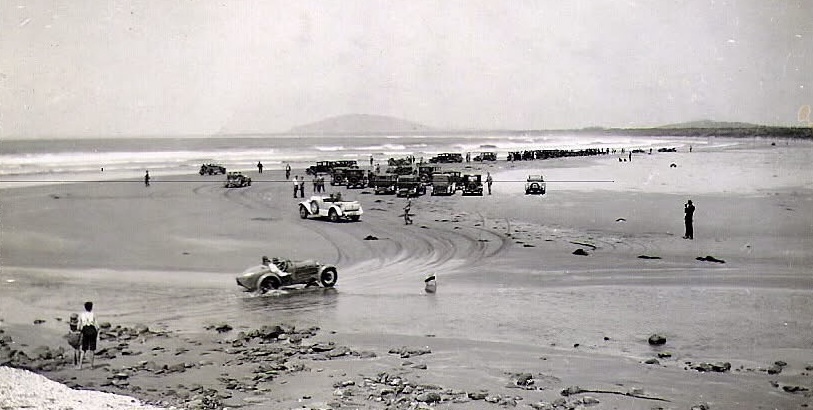
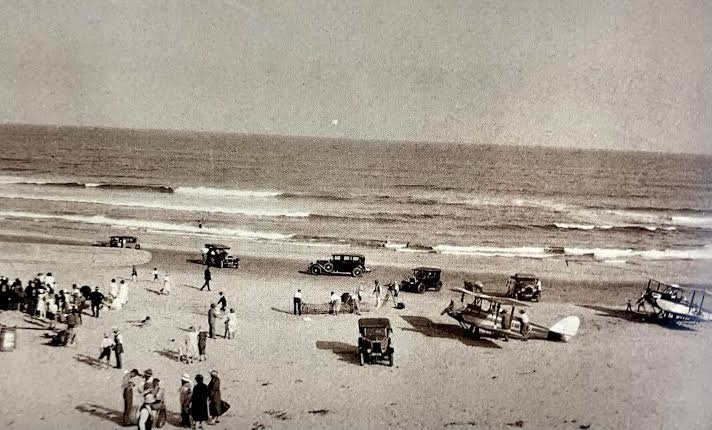
Fantastic Seven Mile Beach panorama at Gerringong – Gerroa – New South Wales, circa-1930, when beach racing at the seaside playground south of Sydney was very popular.
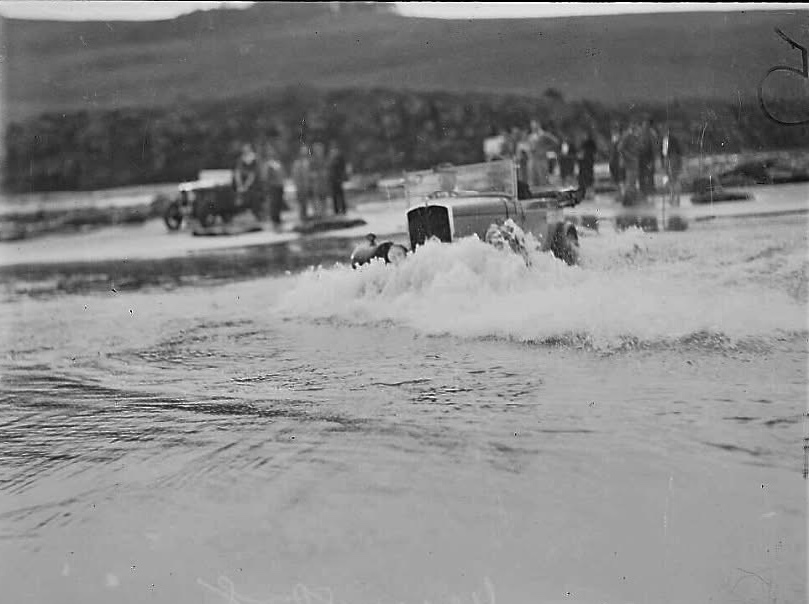
It’s the north end of the beach with Crooked River in the foreground, an often impenetrable barrier for competitors trying to get to the track on the sand; ‘tide management’ was a big issue as shown below! That’s Professors Burkitt’s – thrice AGP winner, Bill Thompson’s patron – big, white Mercedes K-Type centre pic.
(NLA)
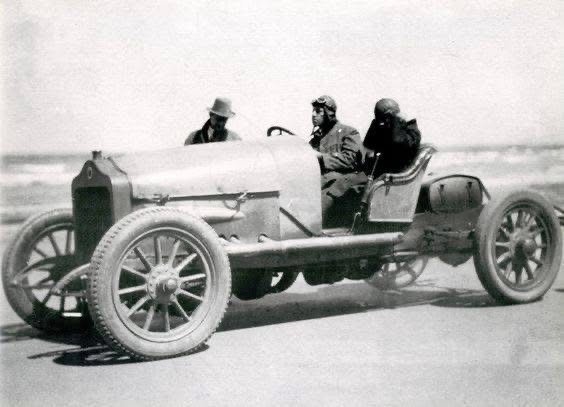
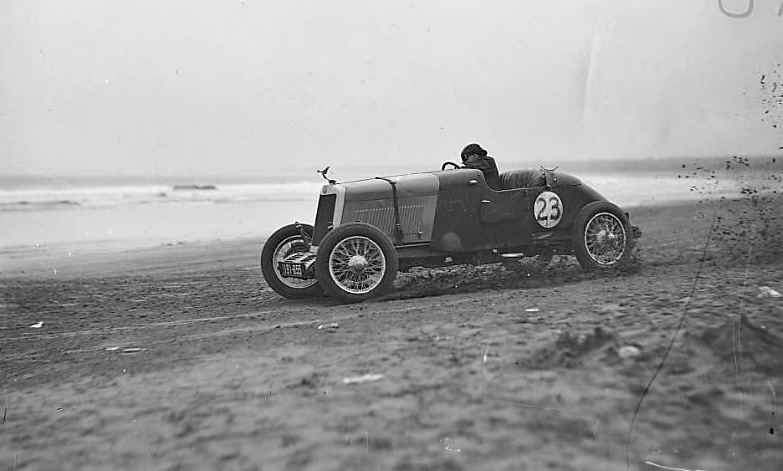
‘Gerringong Speedway’, as it was called in the day, was in use from Saturday, May 9,1925, until the mid-1950s, for motorcycle use, with many deeds of derring-do taking place there. Don Harkness was the first in Australia to break the 100mph barrier in a 150hp Hispano Suiza Minerva V8 Spl at an average of 107.14mph set on October 17, 1925.
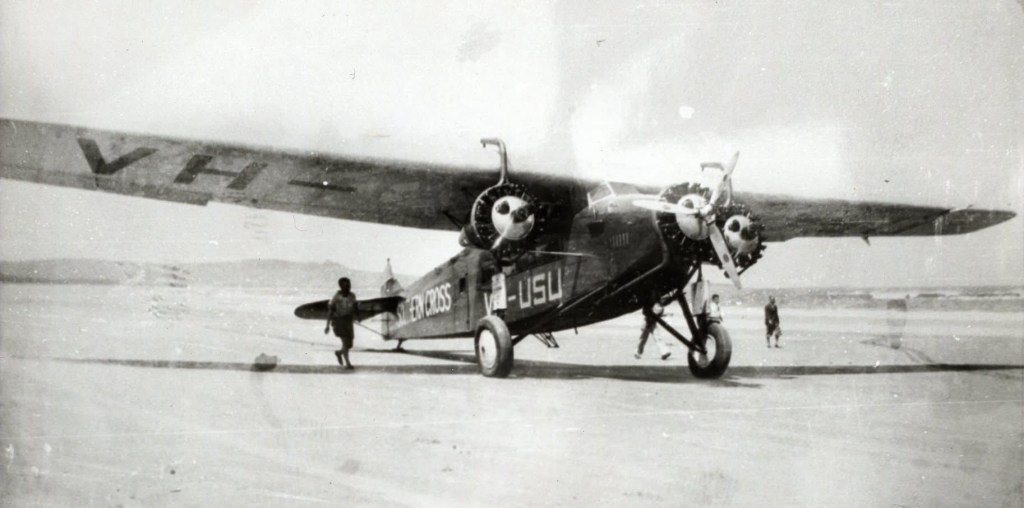
Don Harkness, aboard FG Colbert’s – chairman of the Penrith Speedway Co Ltd – Hispano Suiza Minerva V8 at Gerringong in 1925 (PDavis-A Half Century of Speed)Southern Cross, a Fokker FVllb/3M, on Seven Mile Beach in 1933 (Kiama Library)
No less than the great Charles Kingsford-Smith made the first commercial flight from Australia to New Zealand from Gerringong Beach aboard Southern Cross his Fokker monoplane, on January 11, 1933.
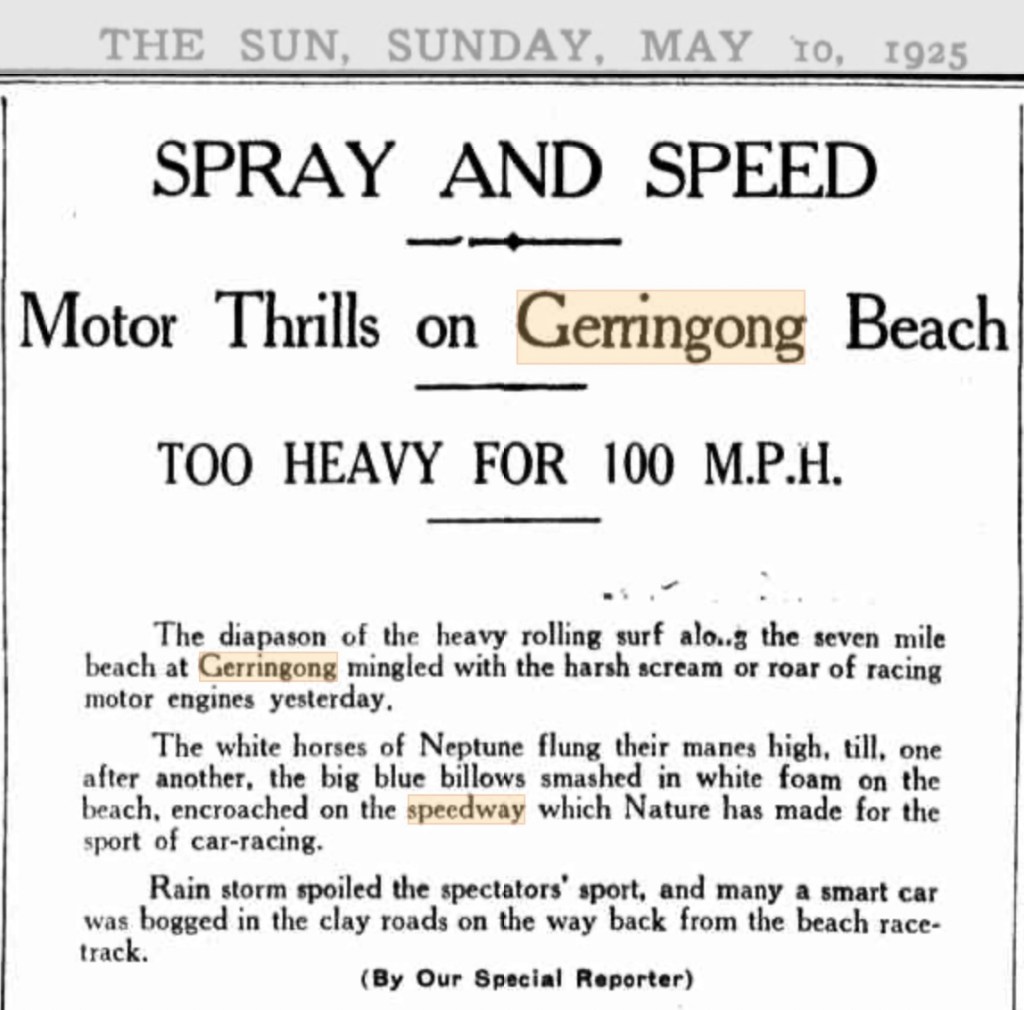
I’ve had a pretty good crack at Gerringong a couple of times before, but the pair of Gerringong panorama shots here got me looking again for other photographs – without success – but some Troving revealed a couple of great articles worth reproducing about the first meeting on the beach in 1925.
The diapason of the heavy rolling surf along the seven-mile beach at Gerringong mingled with the harsh scream or roar of racing motor engines yesterday. The white horses of Neptune flung their manes high, till, one after another, the big blue billows smashed in white foam on the beach, encroaching on the speedway which nature has made for the sport of car-racing. A storm spoiled the spectators’ sport, and many a smart car was bogged in the clay roads on the way back from the beach race track.
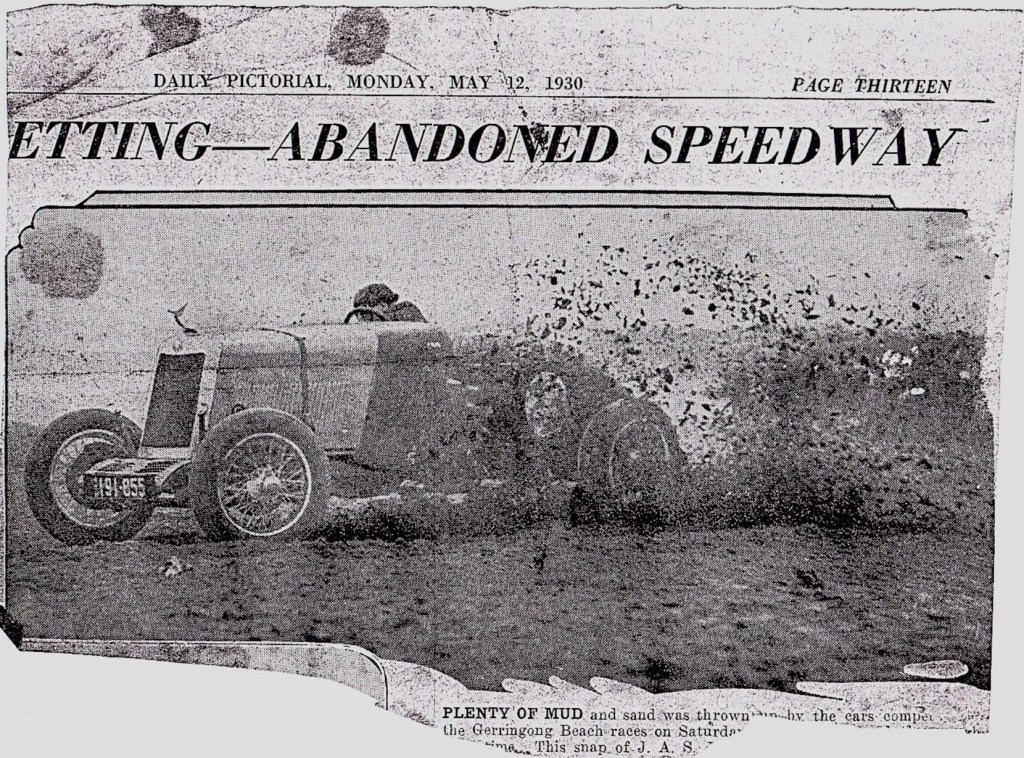
Reg G Potts – above and below – in the JAS Jones owned Lea Francis during the Fifty Mile Handicap during the May 1930 meeting (W Skimmings)(NLA)
ALL day at the big carnival of the Royal Automobile Club, it was a battle between the cars and the tide. Big creamy rollers flung carpets of boiling surf right onto the great semi-circle of beach which formed the speed track. Inch by inch, the sea encroached, and when a stiff wind blew straight inshore late in the afternoon, it sent clouds of spray often right over the speeding cars.
But there were plenty of thrills for those who motored down through the torturous ravines around Kiama to see the racing. In fact, Kiama buzzed with excitement over the event. A couple of hundred cars thundered down its chief streets. In the morning, the little bays around Kiama, with their fingers of crinkly surf and golden sand, were bathed in brilliant sunshine. But great banks of black clouds that came bowling over the bronze-green bluffs that rise above Gerringong, in an hour turned a day of turquoise into one of drab, ash grey.
The right crowd and no crowding is the feel!? It all seems a bit unbelievable today, but life was run to Formule Libre back then
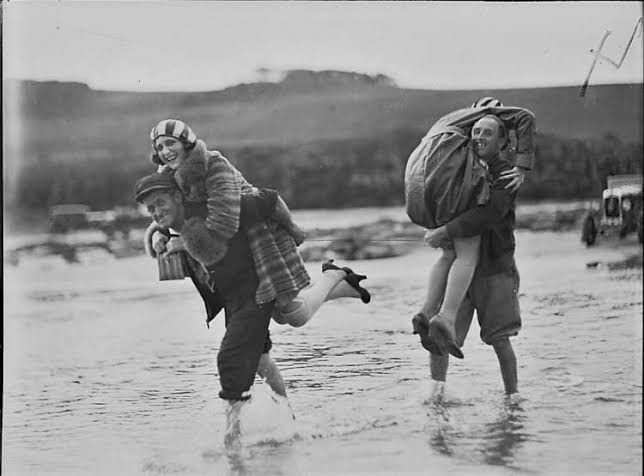
Then, lashed by the wind, the rollers became most angry. They tossed their milky crests onto the beach so fiercely that they seemed intent on swooping the motor invaders from their domain. More than one car floundered heavily in the wash, and one or two sank inches into the sodden sand.
When the motor invasion began at noon, the bronze-green walls of ti-tree and furze, which dip down to the sea, flung back the echoes of the thundering engines in a deafening way. The moan of the surf was smothered in the crackle of the cars. It was altogether a remarkable picture. Before the speed demons stretched one of the finest beaches in Australia, hard as concrete, and with just that gentle incline that motorists relish. It swings away in a great crescent to a bold headland clothed in scrub.
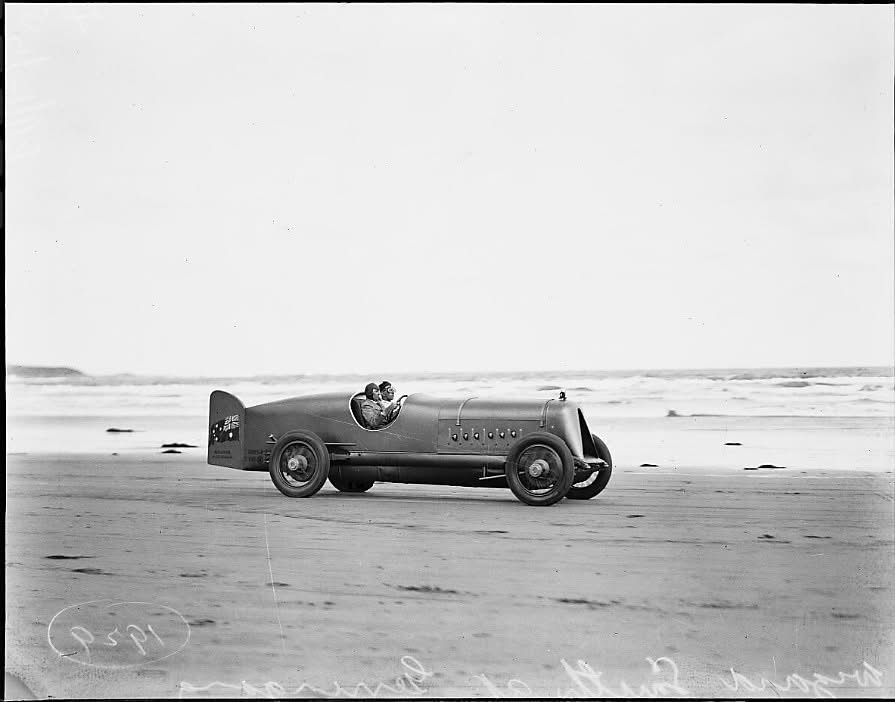
Wizard Smith with Don Harkness alongside, on the Anzac Rolls Royce V12 breaking the Australasian Land Speed Record at 148mph, Gerringong, December 1, 1929. The car is heading south towards Shoalhaven Heads; the return trip was the other way (NLA)
Like a Crackle of Thunderclap
They are lined up — the drivers’ grim faces with goggled eyes glued to the track in front of them, twelve ears like twelve huge tin cigars shining in the fitful sunlight. Under them, the engines thunder. The yellowish, damp track hurls itself beneath those winged tyres down past the speckled black and white flags.
They race with a crackle like thunderclaps. There is an advantage on the run closest to the sea to the man who works into that position and clings to the fringe of boiling surf with the greatest grimness. Midway, they must sweep round the gentle turn in the crescent of the beach. They do it with a biting, gritty slide of those back wheels on the wet, glistening sand that was swept by the incoming surge a moment earlier. There is a sudden puff of blue smoke, a flash of flame from straining machines, and they charge down the long, straight carpet of sand with the speed of a high explosive shell.
A couple of (rough-looking) Knights in Shining Armour attend to the ladies’ needs (NLA)
You can’t see the whole of any race at Gerringong. In fact, unless you race alongside in a car, you cannot see anything but the dazzling finishes. In a few seconds, they diminish to the size of a black beetle careering along the sand. Often, the smoke of the surf drifts across and blots them out altogether. Then they emerge smaller than tiny beetles against the background of the beach. Their roar has dwindled to a faint purr, and then they are lost to view five miles away on the same beach. But before you have time to realise it, those speed men have turned in a sirocco of sand, and they are racing back again.
It is an exhilarating spectacle. In the most novel surroundings. Round they roar with a flying of wheels, a pumping of oil, a screeching of gears, and a crunching of track grit. A trail or petrol smoke lasts like a blue mist against the green wall of scrub. Then, as they bound on towards those deciding flags, the track gets smokier, and the grim faces oilier.
The crowd – and it was a large one on the sand yesterday – bursts into a cheer, and the race is won – you come away with a feeling of awe of tho men who have such wrists, and are able to use them as they can.
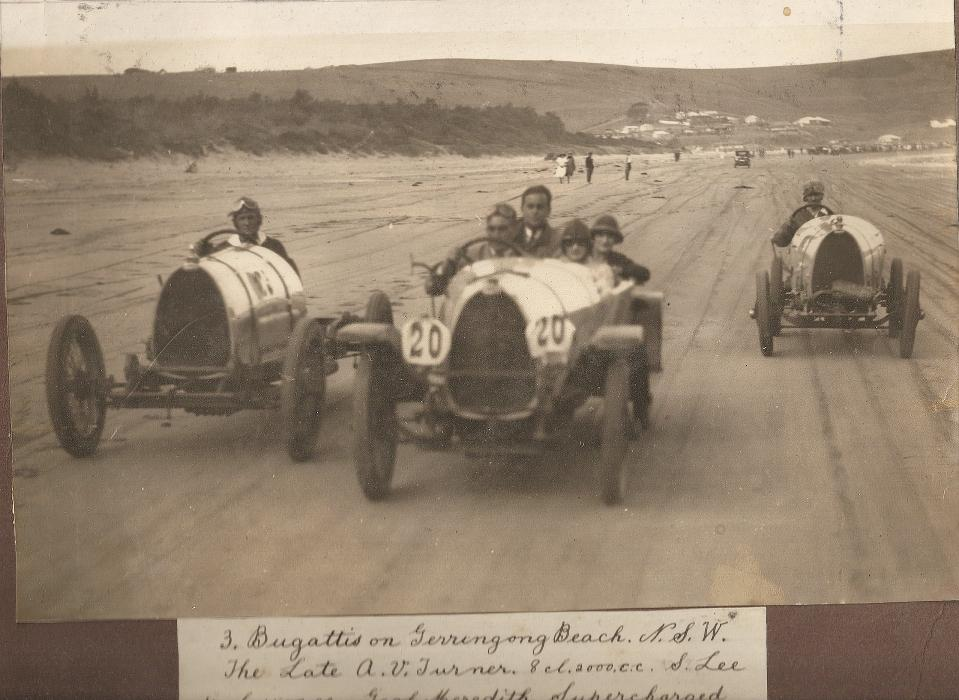
Bugs galore: AV Turner, T30-4087, S Lee T23-2566 and G Meredith in an unidentified Brescia (B King Arc)
An attempt was to have been made to see if any of the cars could reach a speed of 100 miles an hour. That was to have been the main attraction of the carnival, but the drivers decided that the tide had made the beach too sodden to reach anything like that speed with their machines.
Likewise, the race between an aeroplane and a speed car was also cut out. A ‘plane circled over the beach, and made one or two flights along the semi-circular track, but because of heavy going none of the 40 cars that took part in the racing was pitted against it.Last night half a hundred speed men fought their way through the mud into Kiama. All were thrilled with the day’s work. The driving rain caused the final of the 12 miles handicap to be abandoned.
A summary of the results is as follows. The winner of the Three Miles Handicap was Boyd Edkins, Vauvhall, the Six Miles Scratch went to AV Turner’s Bugatti, the 24 Miles Scratch Race was won by HR Clarke’s Vauxhall, the two Twelve Miles Handicaps were won by RK Hormann’s Rollin, while ‘The final was abandoned owing to rain.’
It was the first time the elements intervened in Gerringong’s proceedings, but far from the last!
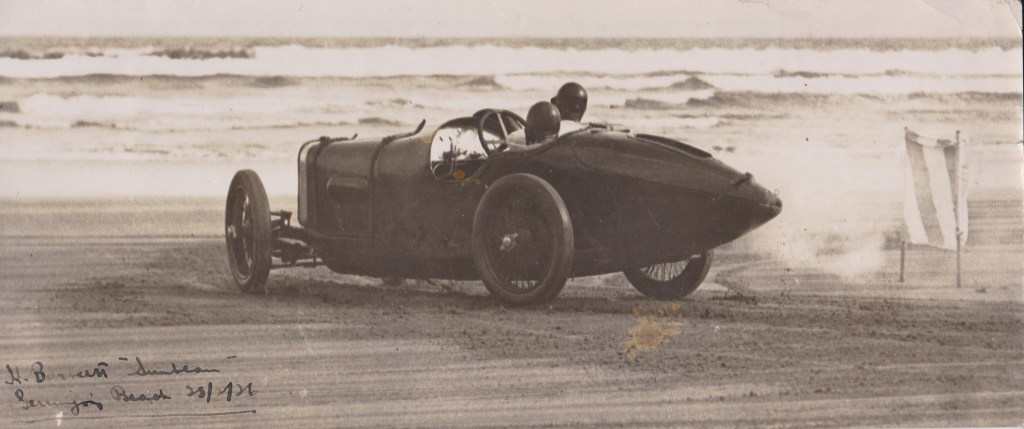
Hope Bartlett and passenger in his GP Sunbeam (B King Collection)
In the beginning…
When did it all end? Good question! Denis Foreman wrote on Bob Williamson’s Old Australian Motor Racing Photographs that, ‘I raced on 7 Mile Beach in 1953 with Bankstown Wiley Park Motorcycle Club,’ which must be towards the end of the Gerringong Speedway? Can anyone tell me when the ‘final race meeting’ on Gerringong beach took place?
This article was published in the Sydney Sportsman, on April 28, 1925 and seems to indicate that the first meeting on Gerringong Speedway was the one covered in the article above, on Saturday, May 9, 2025.
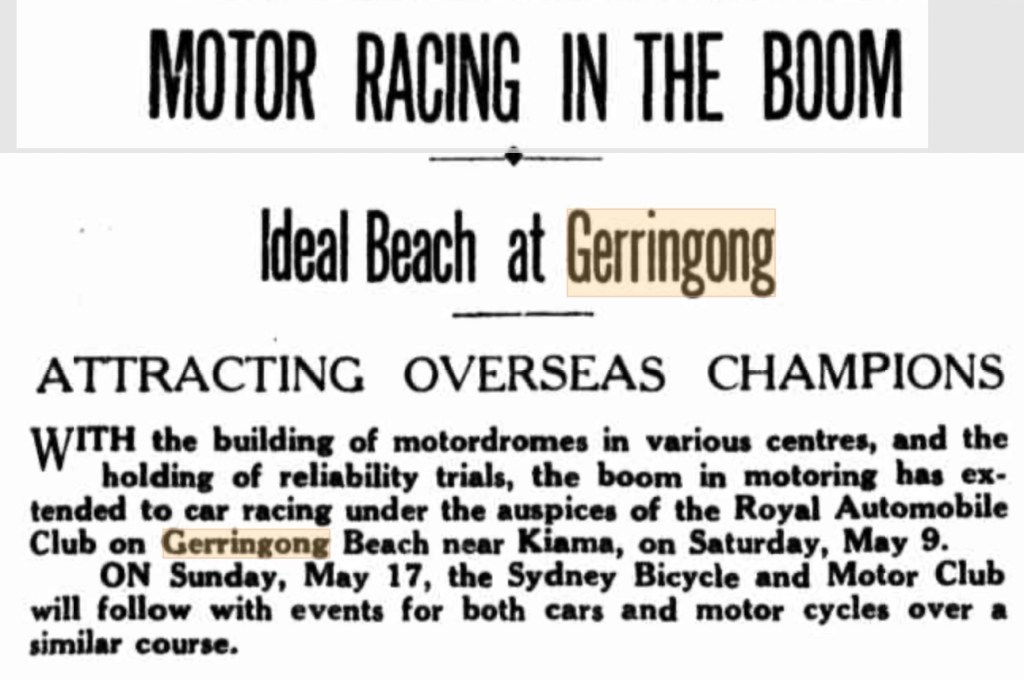
MOTOR RACING IN THE BOOM: Ideal Beach at Gerringong: ATTRACTING OVERSEAS CHAMPIONS
WITH the building of motordromes in various centres, and the holding of reliability trials, the boom in motoring has extended to car racing under the auspices of the Royal Automobile Club on Gerringong Beach near Kiama, on Saturday, May 9. On Sunday, May 17, the Sydney Bicycle and Motor Club will follow with events for both cars and motorcycles over a similar course.
On Gerringong Beach.
To Mr H. R. Hodgeon, the patrol officer of the Royal Automobile Club, belongs the honour of introducing motor car racing on one of its States famous benches. Mr Hodgson, who is a barrister and presides over the Railway Appeal Court, has made an exhaustive study of the beaches from a racing point of view. He has witnessed contests on Sellicks Beach (South Australia) and Muriwai Beach near Auckland. (Hodgson had years of experience as an ‘organiser of most of the biggest reliability contests in the state’).
Mr Hodgson believes that Gerringong is in the fortunate position of having the greatest beach in the world from a racing point of view, and in this respect, he is supported by Boyd Edkins and H. R. Clarke.
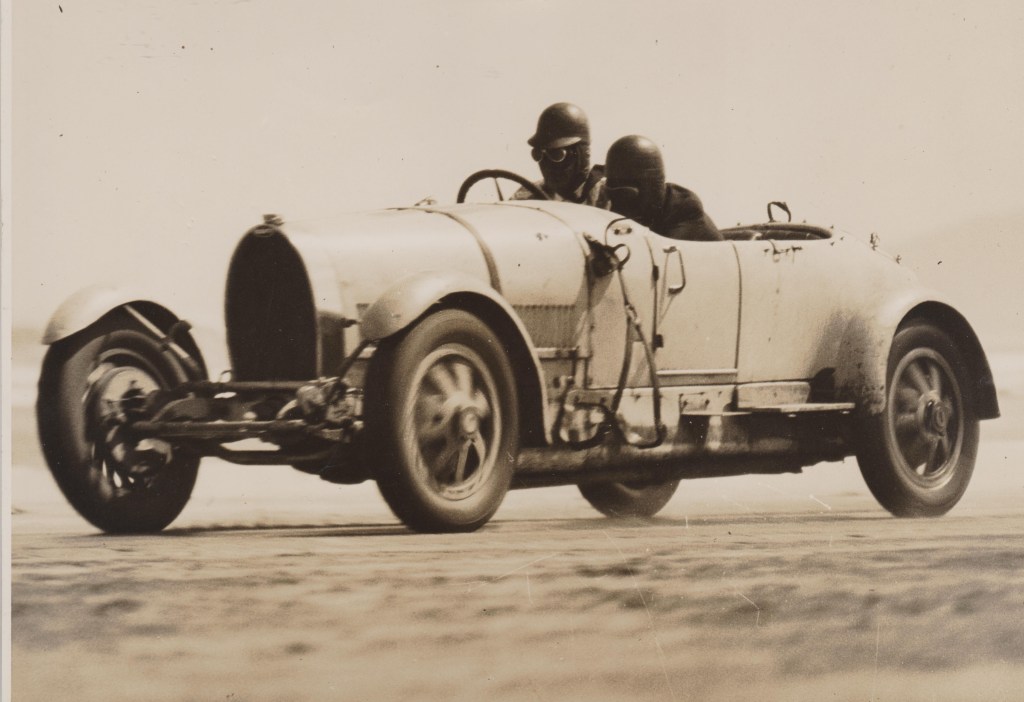
Hope Bartlett this time aboard his Bugatti T43-169, one of the fastest cars in Australia, flat chat with passenger on Seven Mile Beach (B King Arc)
The seven-mile beach at Gerringong is 88 1/2 miles distant from Sydney by road. At low water, a stretch of sand nearly 100 yards wide, with a straight drive of five miles, is available. The surface is remarkably solid and hard, there being no bumps of any kind, and is capable of holding together at any speed in absolute safety.
A month ago some fine performances were achieved on the beach by stock touring model, machines, with full complement of passengers. Speeds over 80 miles per hour were recorded.
As a means of helping to popularise this class of sport, a suitable trophy (£50 cup) has been offered for the first competitor driving a car at 100 miles per hour or faster over a flying mile.
Speed Only.
Several other events are to be decided. Entries for the 25-mile handicap and races for touring cars will close with the R.A.C.A. on May 4. The races will be decided on speed only. Entrants must be members of the club, but need not be the owners of the cars they nominate. One event will be a race between L Tyler’s DH 6 aeroplane and a motor car.
Credits…
National Library of Australia, Fairfax Archive, Kiama Library, Pedr Davis and Ors ‘A Half Century of Speed’, Warren Skimmings Collection, The Sun Sydney Sunday, May 10, 1925, Sydney Sportsman, April 28, 1925
Tailpiece…
(B King Arc)
Such an evocative shot from Bob King’s collection.
He reckons its Geoff Meredith in Bugatti Type 30 chassis #4087, the ex-AV Turner car in which the great man met his maker, and the car aboard which Meredith won the first Australian Grand Prix at Goulburn in January 1927.
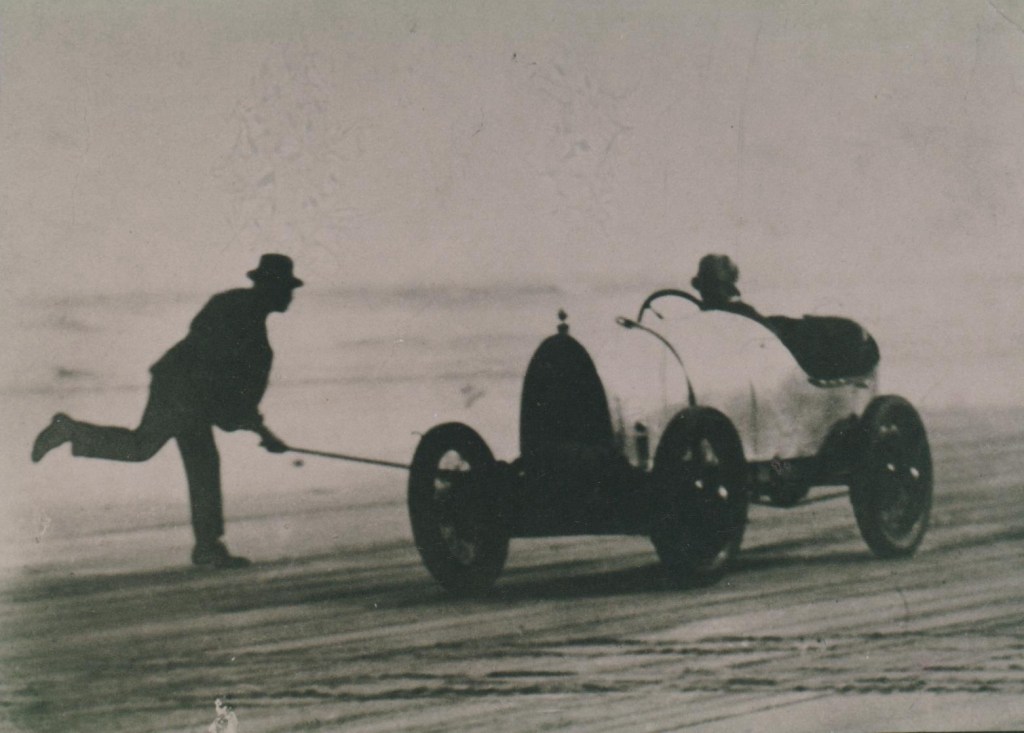
Cec Dickason and C.V Whitta on the banking at Aspendale during a Chevrolet 24-Hour track record attempt on August 1 and 2, 1924.
‘Credit is due to Messrs. C. R. Dickason and C. V. Whitta, who, driving a standard Chevrolet chassis equipped with a ‘racing body’ last week, established an Australian ‘double-12’ hour record on the Aspendale Speedway in Victoria.
The distance covered in the 24 hours was 1.063 miles 8 chains. On the first day of the test, the mileage travelled in 12 hours was 584 1/2. The car was driven 600 miles in 10 hours and 21 min. 19 4-5 вес. On the following day, rain made the track slippery, necessitating great care in negotiating the turns.
The test was conducted under observation by officials of the Aspendale Park Motor Racing Club and the Royal Automobile Club of Victoria. S.A. Cheney Pty.Ltd ran the attempt. See here:https://adb.anu.edu.au/biography/cheney-sydney-albert-5574
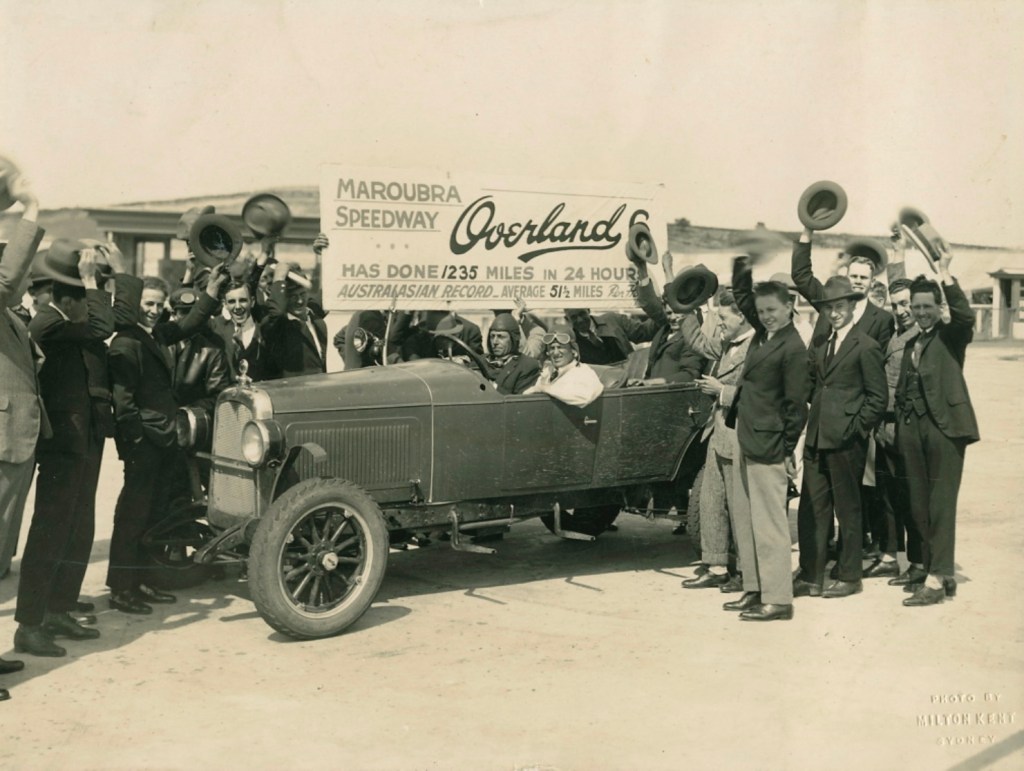
The Victorians hold on to ‘the Australasian motoring record for 24 hours’, extended until Saturday, December 12, 1925, The Argus reported.
Don Harkness and Phil Harbutt covered 1236 miles and 122 yards, averaging 51 1/2 miles an hour aboard a ‘standard four seater Overland 6 from which the mudguards and rear seats were removed’ at the Olympia Speedway, Maroubra, Sydney.
(Powerhouse Museum)
Both Dickason and Harkness were prominent mechanics/engineers, racers and automotive industry executives. Google away, particularly in relation to Harkness. Cyril Dickason’s place in the Australian automotive/racing pantheon is dealt with comprehensively in my friend Tony Johns’ upcoming history of sporting/racing Austin 7s in Australia. Watch this space…
Credits…
Edwin G Adamson photographer via Cec Dickason and Tony Johns Archive, The Herald, August 4, 1924, The Argus, December 14, 1925, Powerhouse Museum
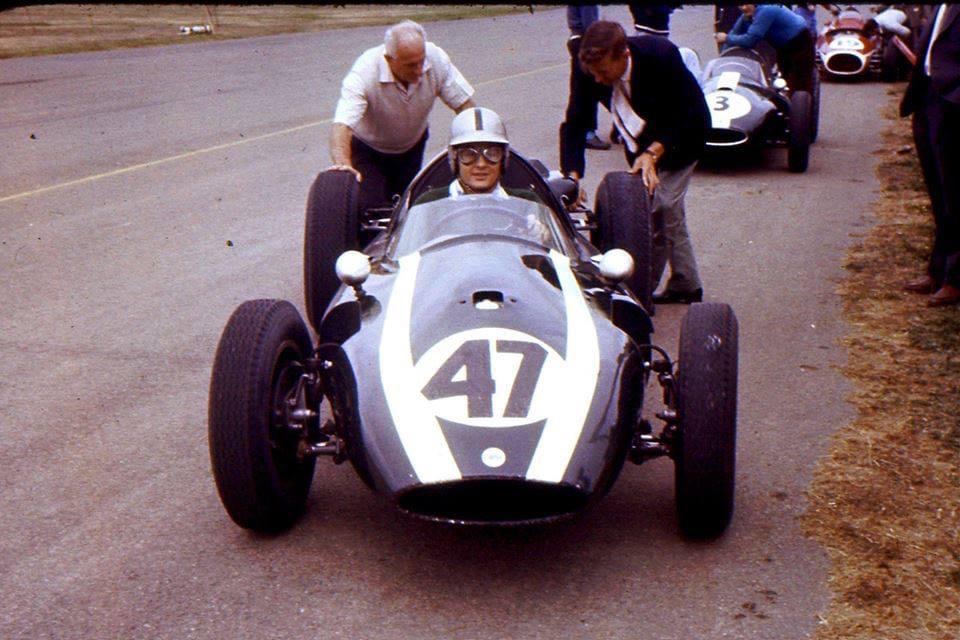
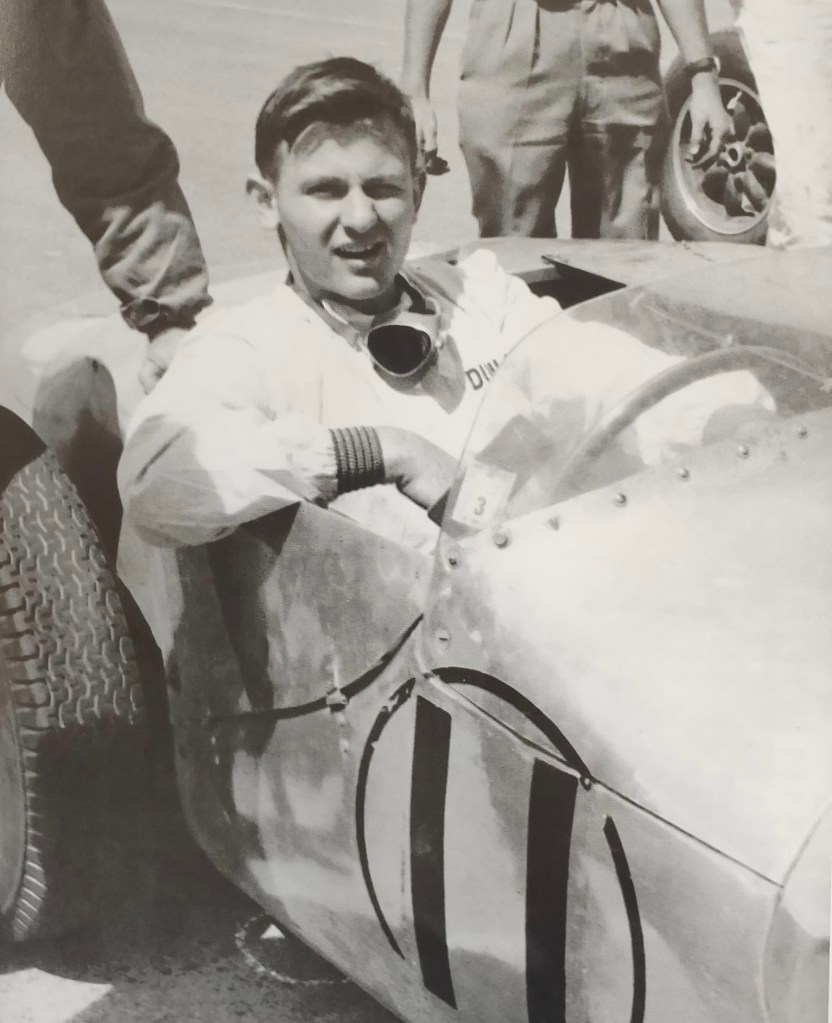
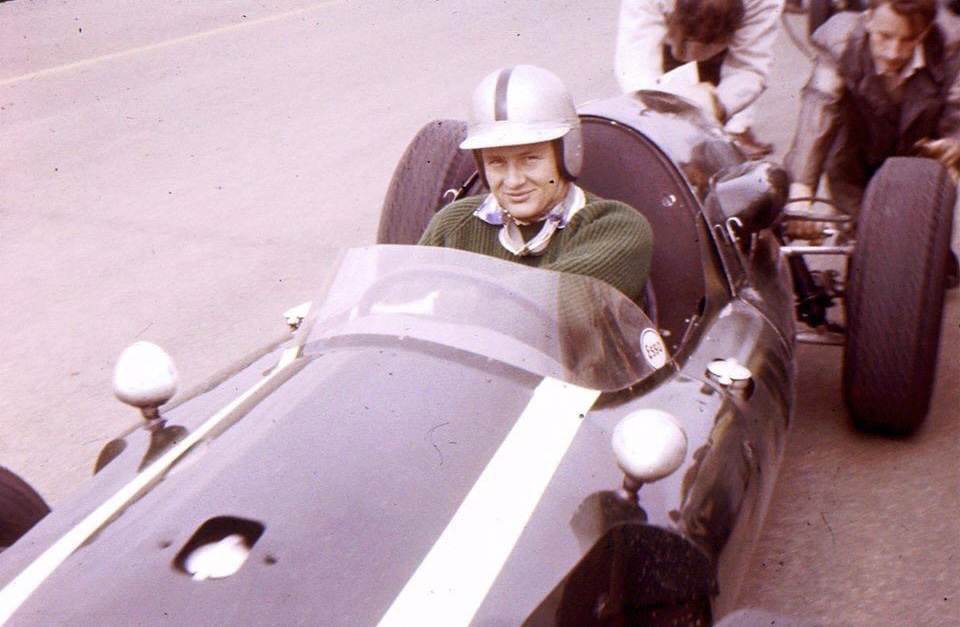
Pop McLaren and another helper about to bump-start Bruce’s Cooper T45 Climax FPF 2.5 at the Wigram RNZAF track on the January 23, 1960 weekend.
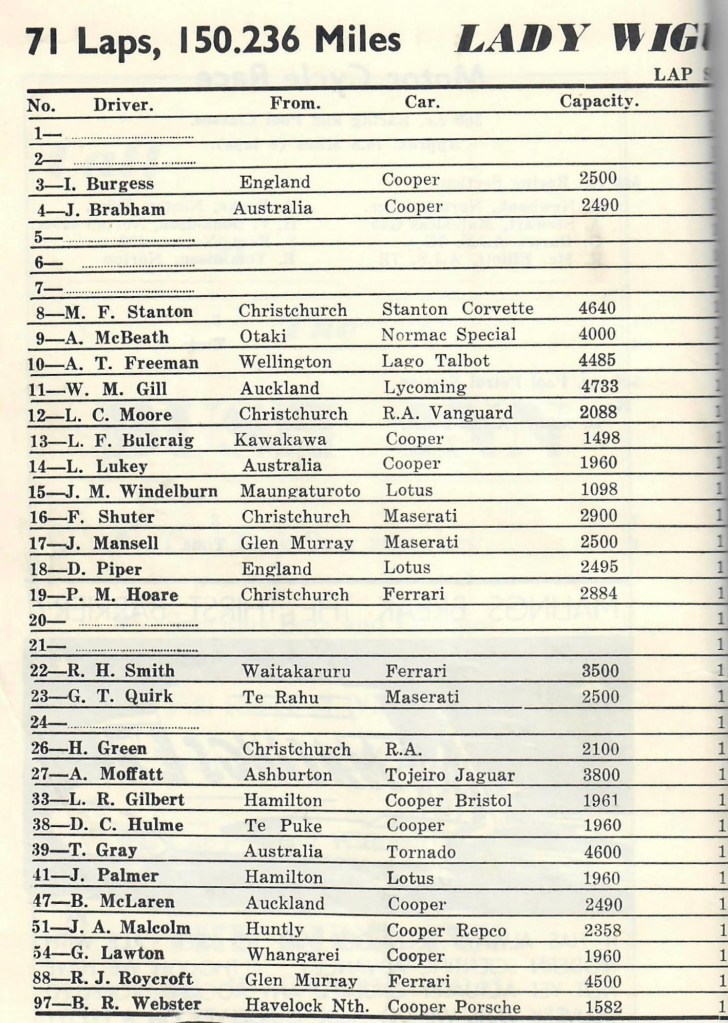
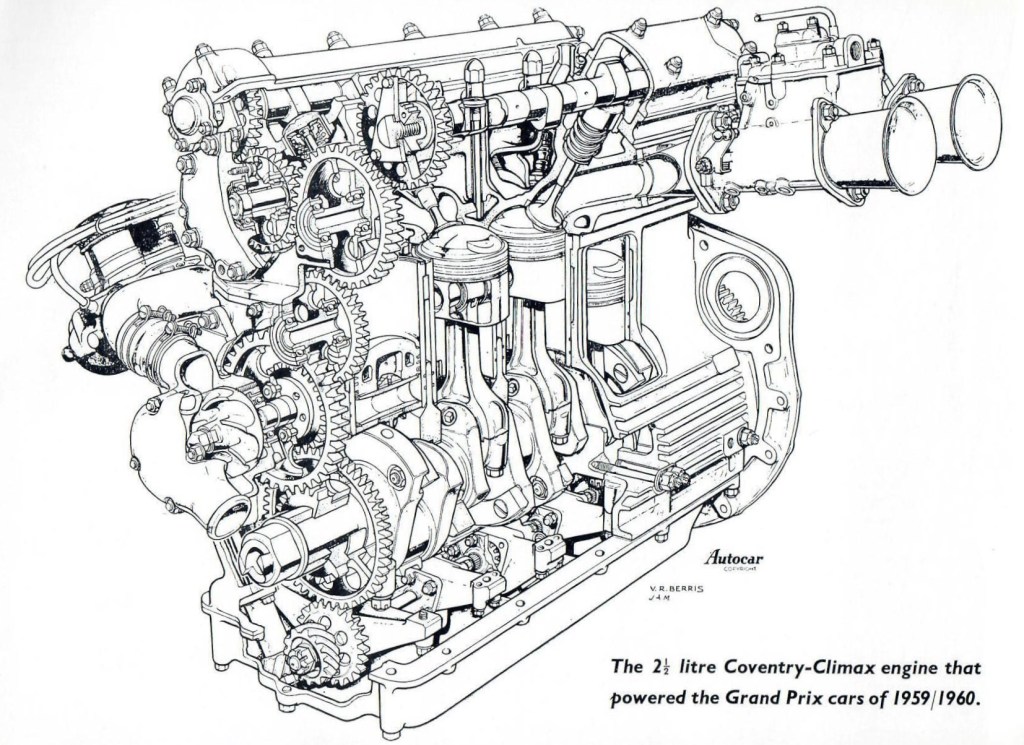
That’s Ian Burgess’ third-placed Cooper T51 Climax behind, then Pat Hoare’s Ferrari 256 V12 a little further back; he was fifth. Jack Brabham won the race in a T51 2.5-FPF with David Piper’s Lotus 16 Climax FPF 2.5 second. Bruce was fourth in the Lycoming Special; more of that soon.
New Zealand’s Summer Internationals commenced with the NZ GP, then held on the Ardmore Airfield circuit outside Auckland, with the Lady Wigram Trophy the other round most visiting internationals did. Sometimes they also entered the Dunedin Road Race and Teretonga International, held on a permanent racetrack near Invercargill, both venues on the South Island.
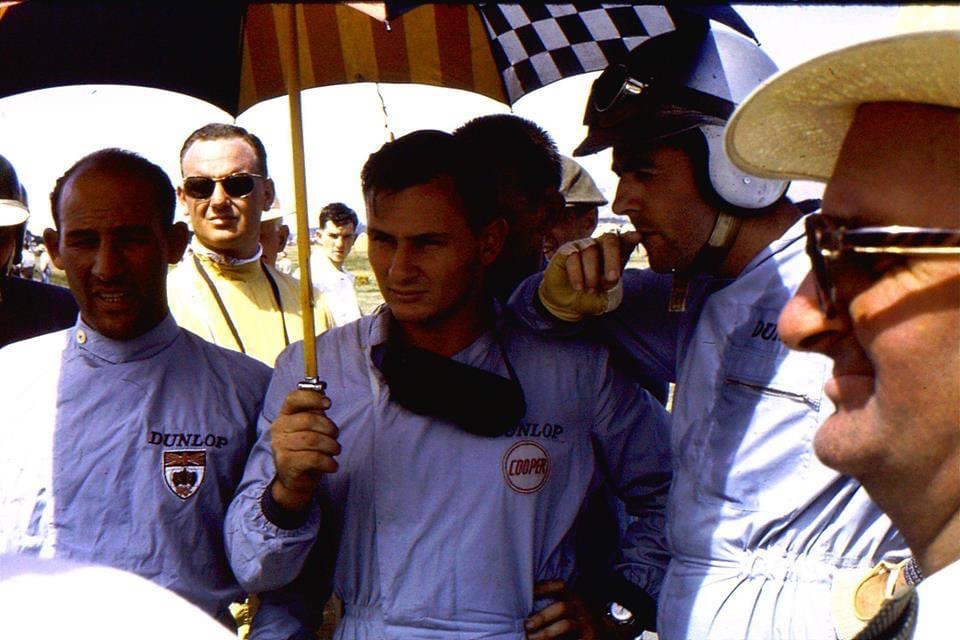
That year the visitors were headlined by Stirling Moss, twice-on-the-trot World Champion Brabham, and Burgess, Piper, while the Australian contingent included Bib Stillwell and Stan Jones in Cooper T51s, and Len Lukey in a T45. Similarly mounted was Kiwi youngsters Denny Hulme and George Lawton, both Driver to Europe exports; Lawton’s a sad one…
(T Marshall)
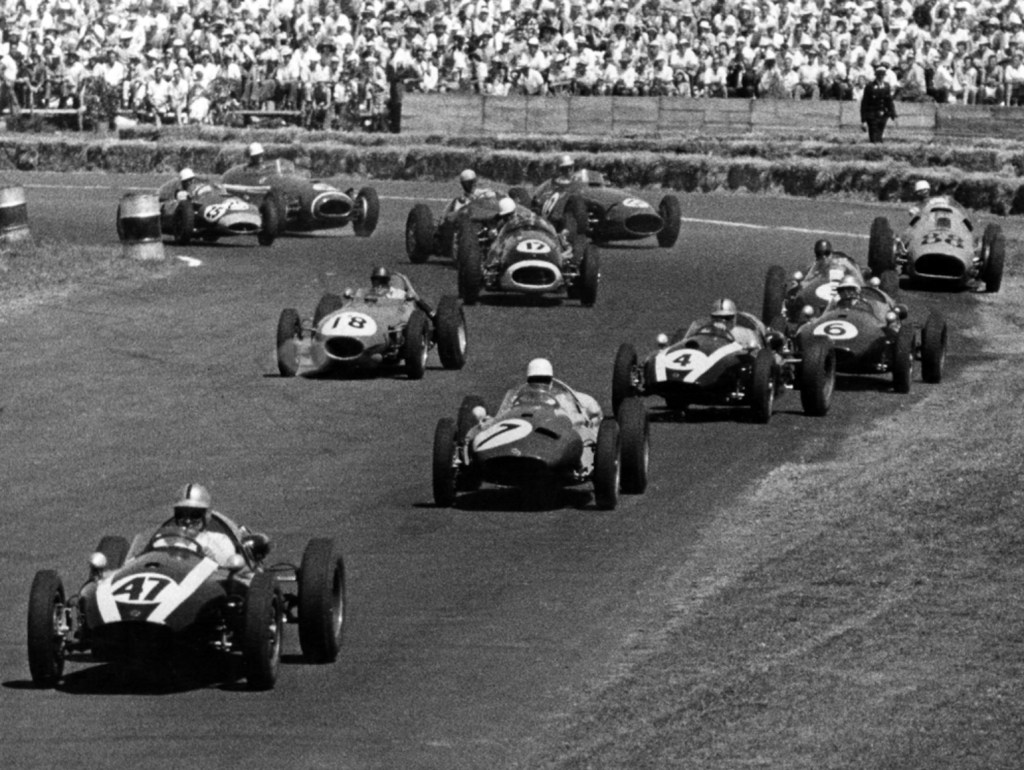
Coopers to the fore on the first lap at of the New Zealand GP at Ardmore: McLaren, Moss, Brabham, #6 Australian Bib Stillwell and then Ian Burgess. One T45 and four T51s. In the middle of the road is David Pipers Lotus 16 Climax, car #17 Johnny Mansel’s Maserati 250F, while #88 is Ron Roycroft’s positively historic but very well driven ex-Ascari Ferrari 375 4.5-litre V12. Behind Mansel is perhaps Pat Hoare, Ferrari 256 V12 – a Dino 246 fitted with a 3-litre V12 – then Arnold Glass in his Maserati 250F #12. Close to the oil drum is 1954 NZ GP winner Stan Jones, Cooper T51 Climax, and finally the big front-engined car is Ted Gray in his last drive of Australian Land Speed record holder, Ted Gray in Tornado 2 Chev V8.
At this time of technological change, it was certainly a grid lacking variety! Coopers were of course right up there: Brabham and McLaren finished one-two in their 2.5-litre FPF-powered cars from the 2.2s of Stillwell and Jones. The best placed front-engined cars were the pair of 2.5-litre six-cylinder Maserati 250Fs raced by Kiwi Johnny Mansel and Aussie Arnold Glass.
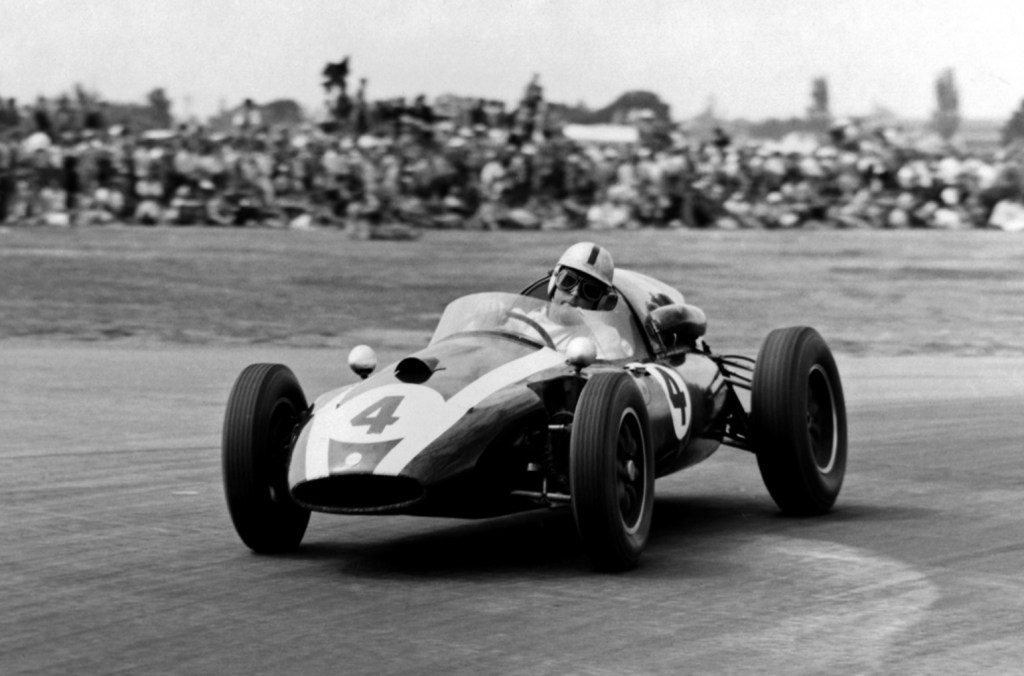
Stirling, Bruce and Jack all ears during the Ardmore drivers briefing – not necessarily in 1960 mind you (R Stuart)Brabham on the way to victory at Wigram in 1960, Cooper T51 Climax (T Marshall)
That summer, Jack Brabham won both the NZ GP and Wigram, while Syd Jensen’s nimble Cooper T45 Climax 1.5 won on the Dunedin city roads, and Ian Burgess triumphed at Teretonga, Cooper T51 Climax FPF 2.2-litre.
On the other side of The Ditch Brabham won at Longford and Phillip Island against local opposition; it was a great summer for him. It wasn’t until 1961 – and really 1962 – that the Australians had the tracks to cut it with the Kiwis to attract the internationals with the first Tasman Cup held and won by Bruce McLaren’s Cooper T70 Climax in 1964.
(G Woods Collection)McLaren, with ‘nomex’ jumper and long sleeved shirt on to deal with the summer chill, Burgess and Pat Hoare’s Ferrari 256 V12 (R Stuart)
While Bruce McLaren started the Lady Wigram Trophy in his Cooper, he retired the car and then took over the famous aircraft-engined Lycoming Special, finishing the race in fourth place (below).
Jim Clark did a few laps in one of the Kiwis’ most loved specials during practice during the Tasman Series a couple of years later.
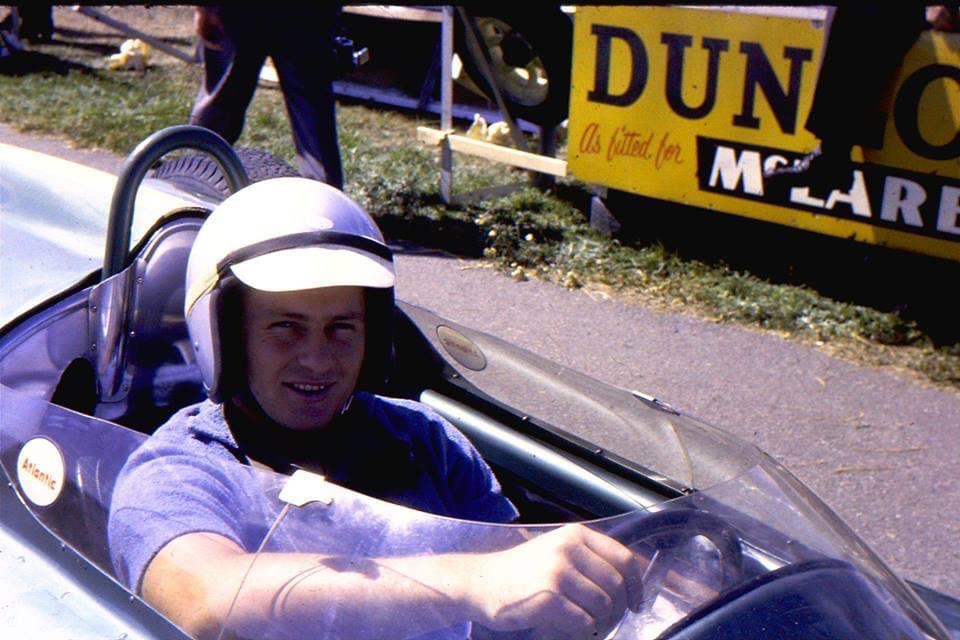
Bruce McLaren in the Lycoming here and below (M Knowles)(BMcL Trust)(M Fistonic)
McLaren ran out of brakes in the Lycoming during the race; the car ran four-wheel drums sourced from an Austin road car. Bruce found the car’s handling so forgiving that he was able to make up for the lack of stoppers, in part, by throwing the it sideways into the corners.
Never one to forget a favour, when he returned to England, Bruce sent a set of Dunlop rotors and calipers to New Zealand, the Lycoming raced on so equipped!
The shot above shows the Lycoming in the Levin paddock in January 1960. Note the road-rego and Michelin radial tyres. Clearly, (pic above) Bruce raced it on Dunlop racing tyres, but the 4.7-litre four cylinder engines car was originally built by oh-so-talented Kiwi engineer Ralph Watson as a road-going racer. At the time Bruce borrowed the car, it was being raced by Malcolm Gill and later Jim Boyd, happily it is extant, alive and well.
(Nat Lib NZ)
Ian Burgess’s Cooper T51 Climax at Wigram above, and the 2.5-litre Climax in Stirling Moss’ car being fettled in the Ardmore paddock below.
(Nat Lib NZ)
David Piper (below) pushing his Lotus 16 Climax 2.5 #368 to the start line at Dunedin on January 30, where he withdrew with gearbox problems after 22 of the 36 laps.
Piper coaxed local boy Arnold Stafford into the hot-seat of his 1.5-litre FPF-engined Lotus 16 #353 ‘renter’ at Wigram (below), but Stafford thought the better of it after a big-spin in practice, having not raced for three years and didn’t start.
(K Brown)(unattributed)
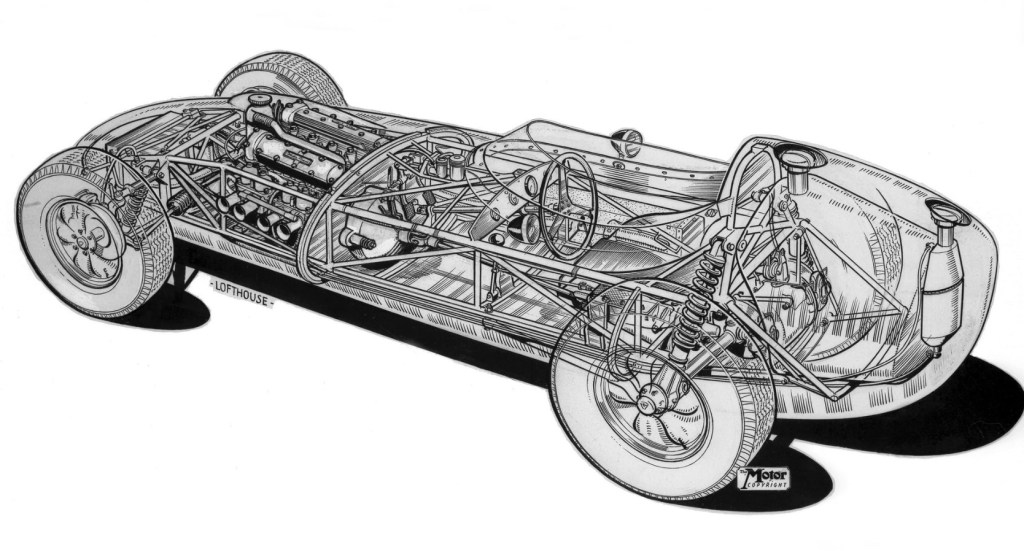
Both cars weren’t particularly old in years but were technically passé by early 1960, even in the colonies where Coopers had been rather popular from the early 1950s.
Lotus 16 Climax cutaway (Lofthouse)(R Stuart)
Etcetera…
McLaren at Wigram in 1962, where he was fourth in his 2.7-litre Cooper T53 behind Stirling Moss’ Rob Walker Lotus 21 Climax 2.5 and the 2.7-powered Coopers of Brabham, T55, and John Surtees, T53…Happy Patty below.
(R Stuart)(R Stuart)
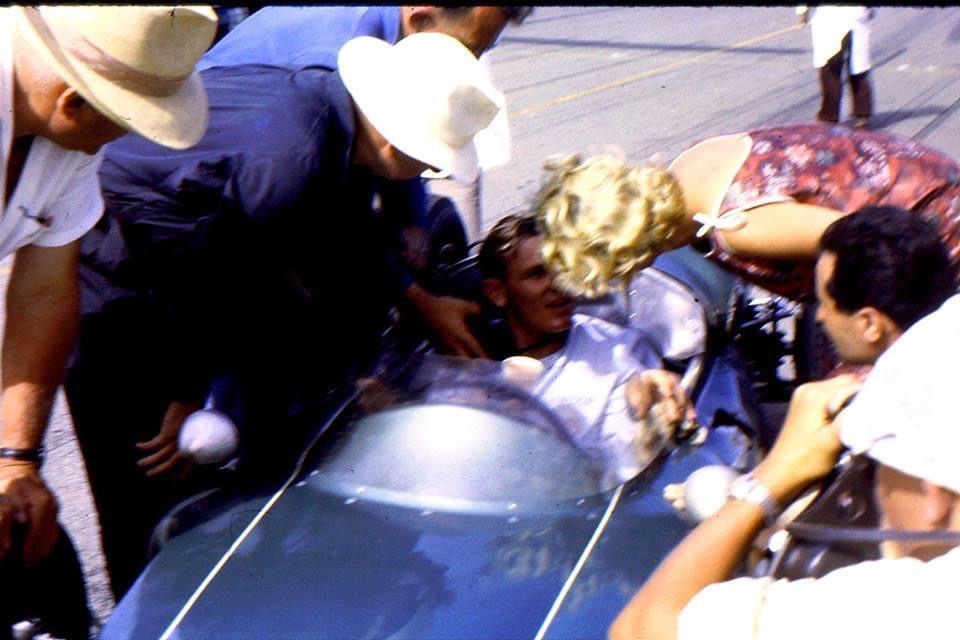
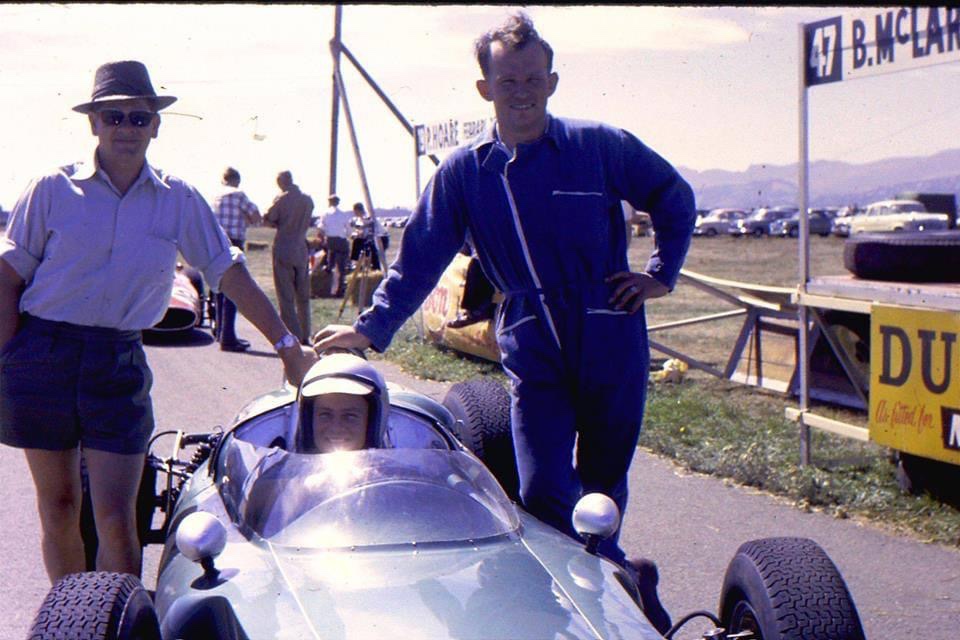
Pop McLaren and who folks?
Credits…
Rosalie Stuart, Graham Woods Collection, Merv Knowles, Bruce McLaren Trust via Jim Bennett, Kelvin Brown, Milan Fistonic, National Library of New Zealand
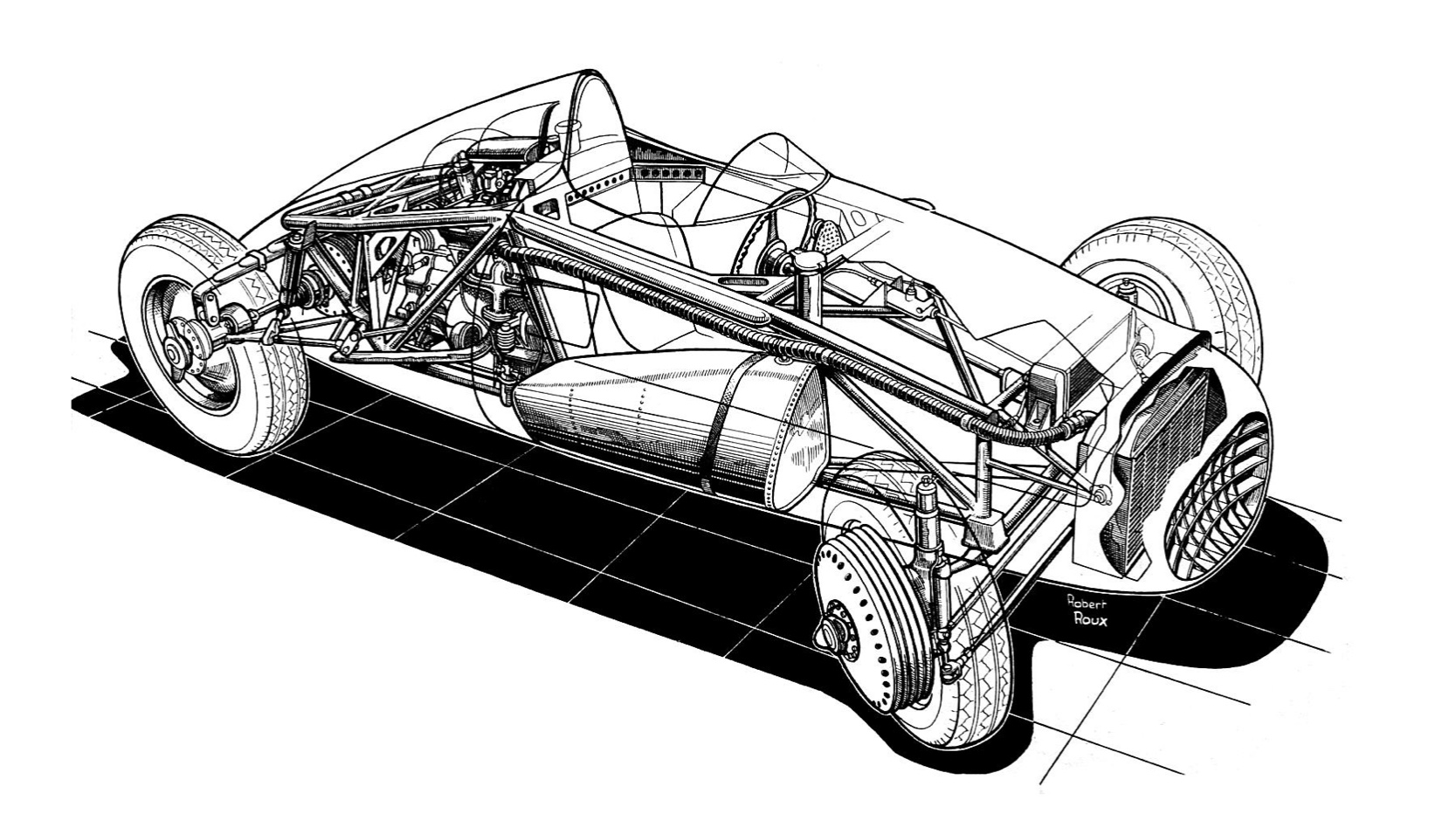
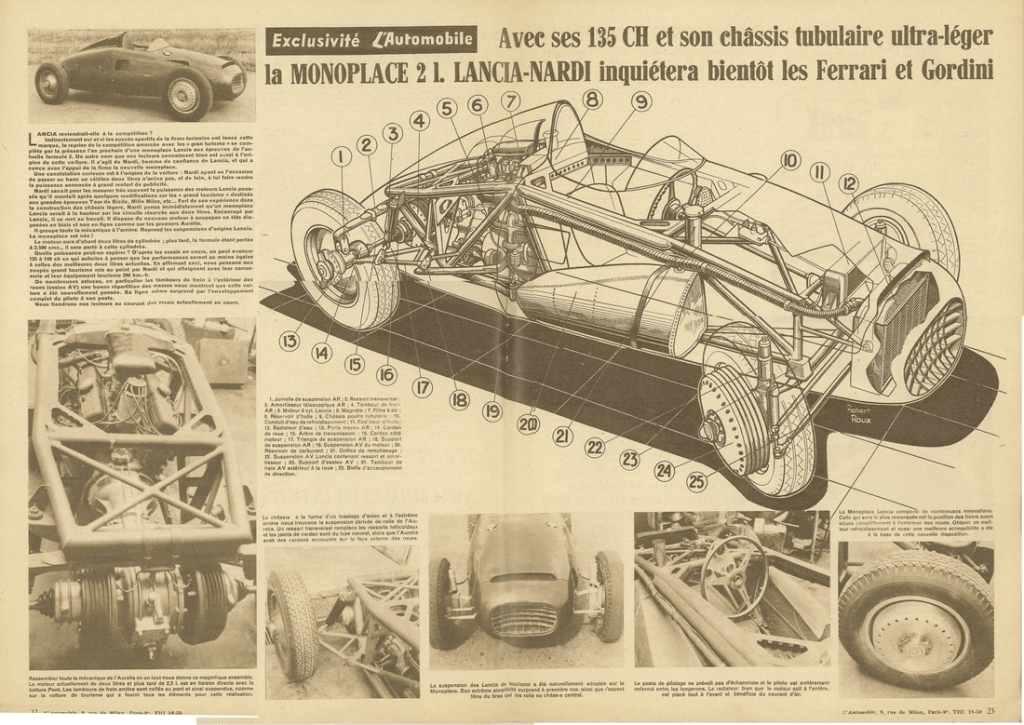
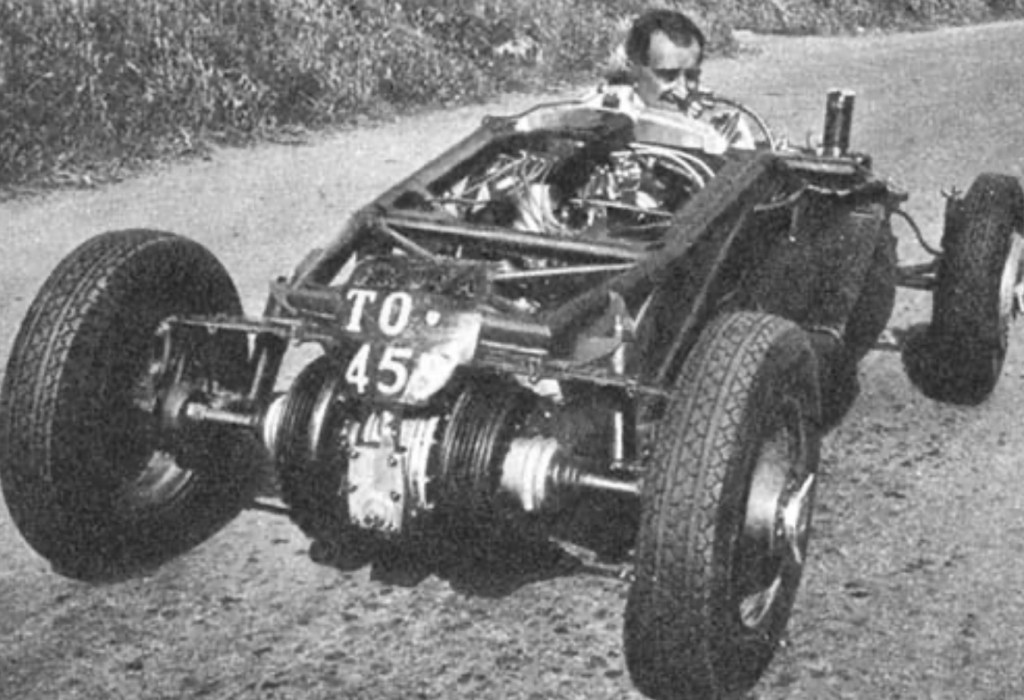
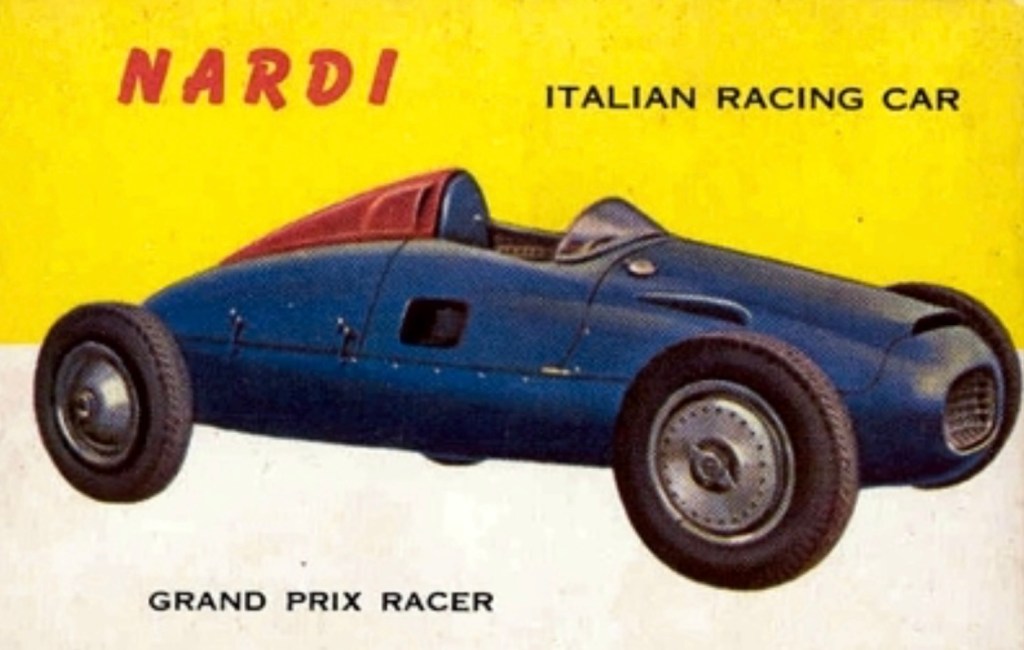
The ‘LAutomobile’s headline confidently predicted that ‘With its 135 hp and ultra-light tubular chassis, the monoposto 2-litte Lancia-Nardi will soon be a threat to Ferrari and Gordini.’
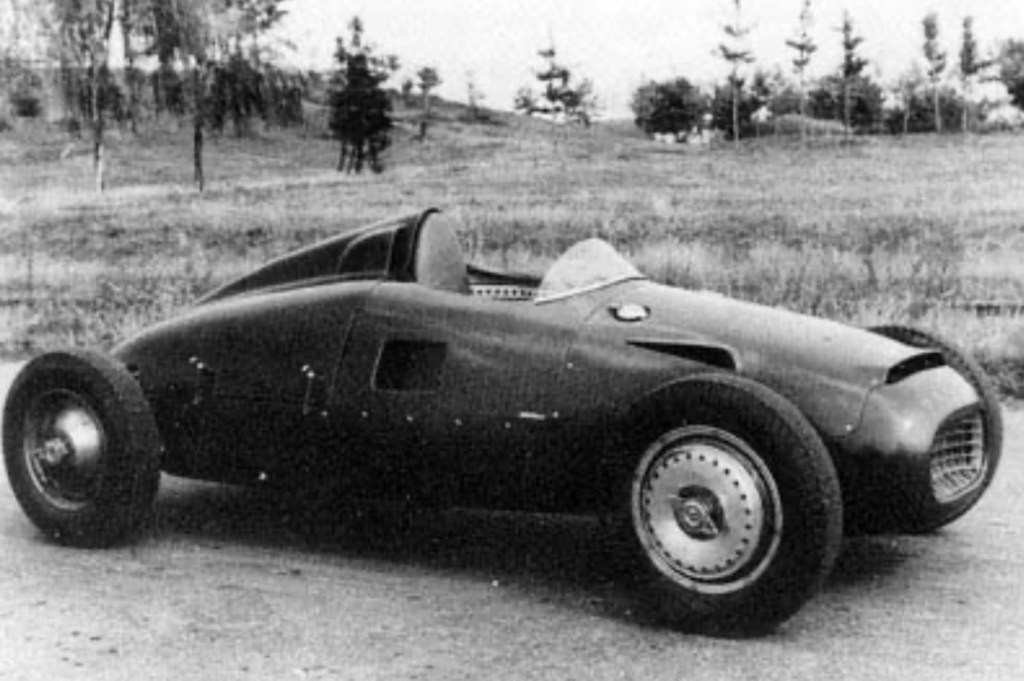
It proved a tad optimistic, only a few test sessions circa-September 1952 made it clear that the power of the modified production Aurelia V6 was well short of the Gordini, let alone the dominant Ferrari 500, so Enrico Nardi put the car aside in favour of other projects, the one machine built was never raced. Reader Henk Vasmel has a record of the car being entered for the Gran Premio Monza on September 7, 1952, but it didn’t appear; no driver was nominated.
(forix.com)
While some may say that the car is just another mighta-been – and such folks are indeed correct – Nardi was on the button, ahead of the curve in fact, in terms of the car’s conception, it’s 1952 remember: mid-engined, tubular frame, however butch it appears to be, mid-mounted fuel tanks, independent front and rear suspension, inboard rear drums, outboard of the wheels at the front.
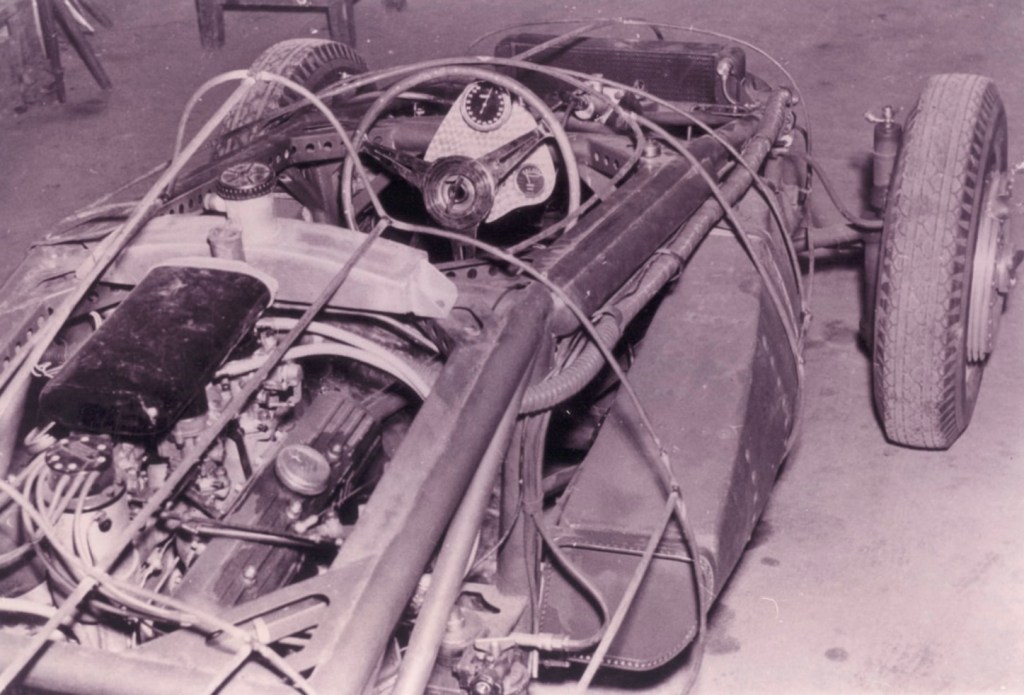
Beefy tubular frame and plenty of fuel capacity. 2-litre Aurelia V6 was fed, perhaps, by four single-choke Webers, magneto ignition? (lanciaaurelia.info)
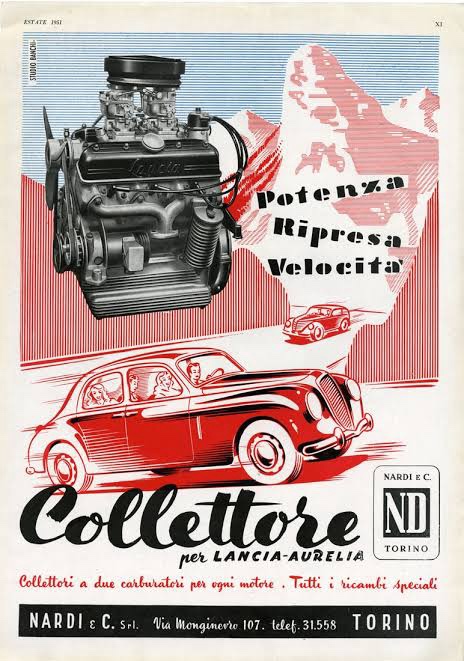
The Lancia parts bin donated the Nardi-modified V6 engine, the gearbox and final drive and the front and rear suspension components. If only Gianni Lancia had said to Vittorio (Jano), ‘This has merit, why don’t you have a play with it?’ History could have been quite different if he had!?
(forix.com)(uniquecarsand parts.com)
Credit…
Robert Roux, L’Automobile, lanciaaurelia.info, forix.com, uniquecarsandparts.com
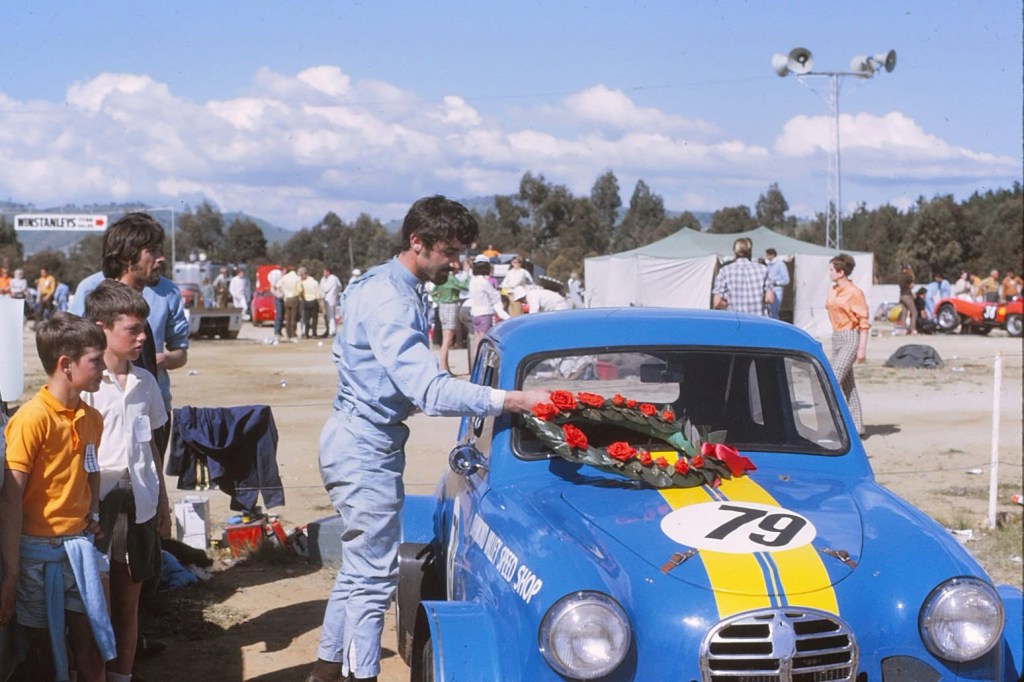
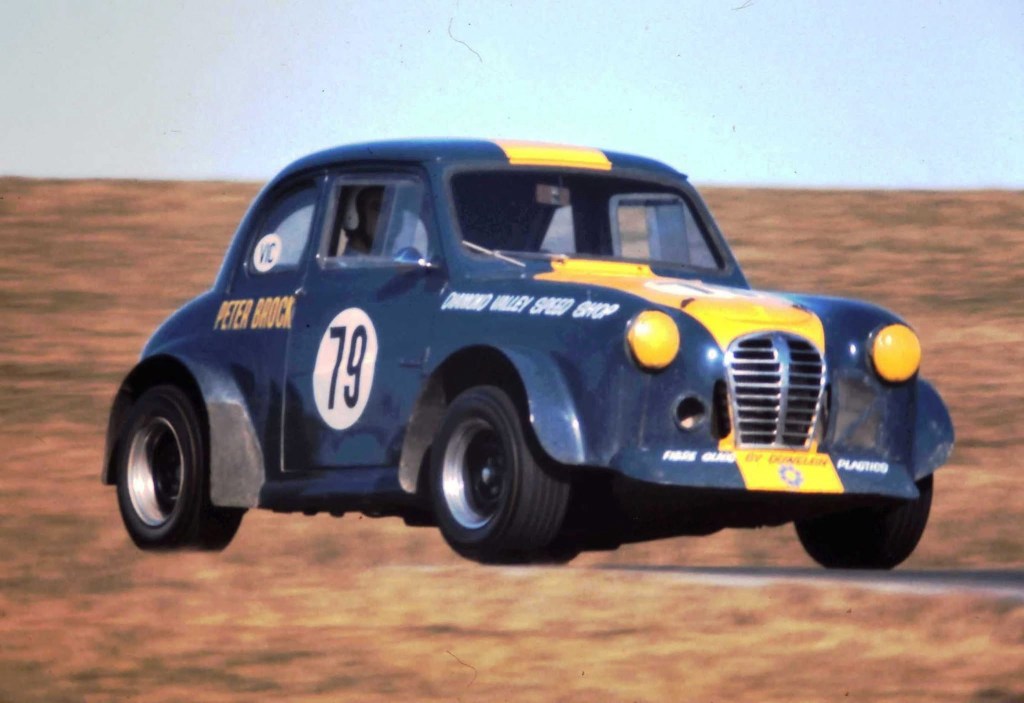
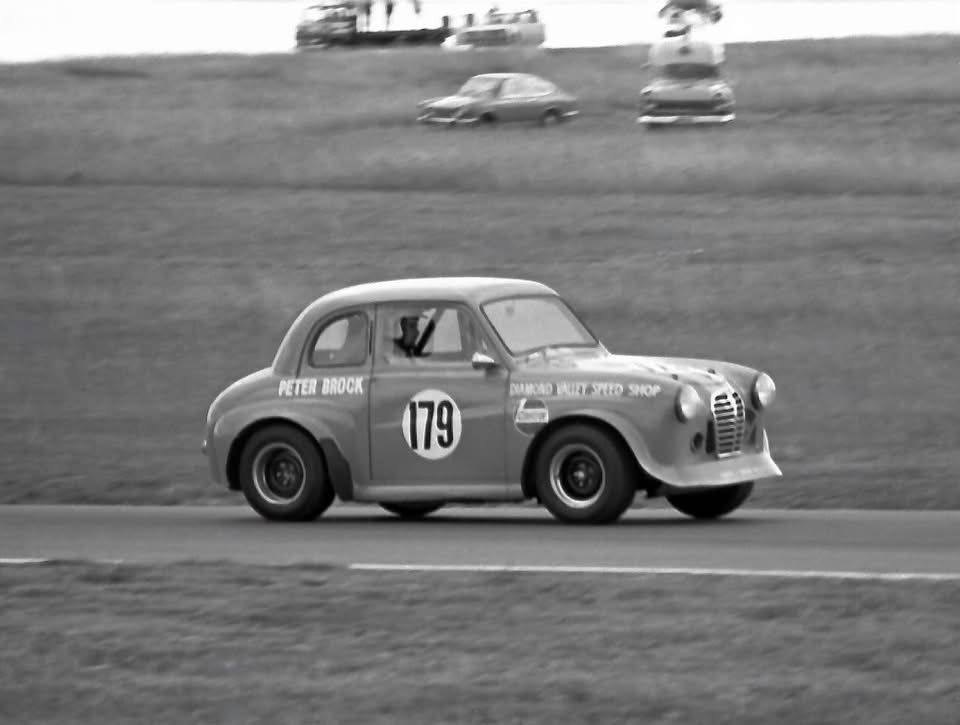
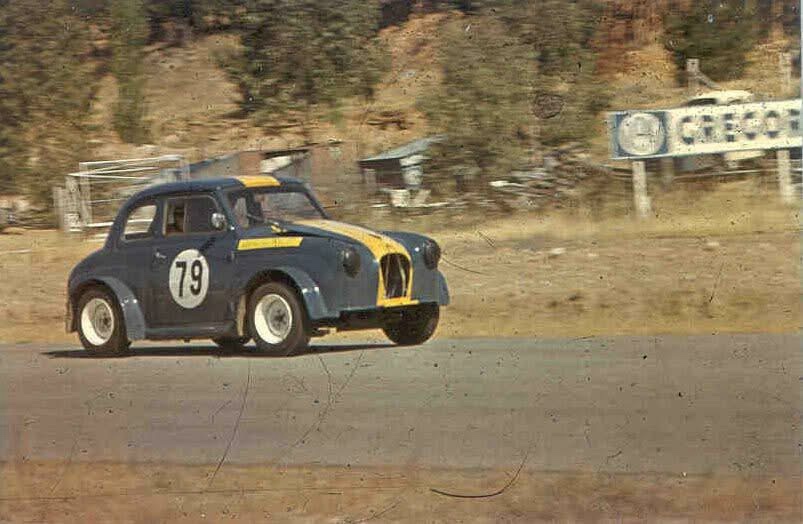
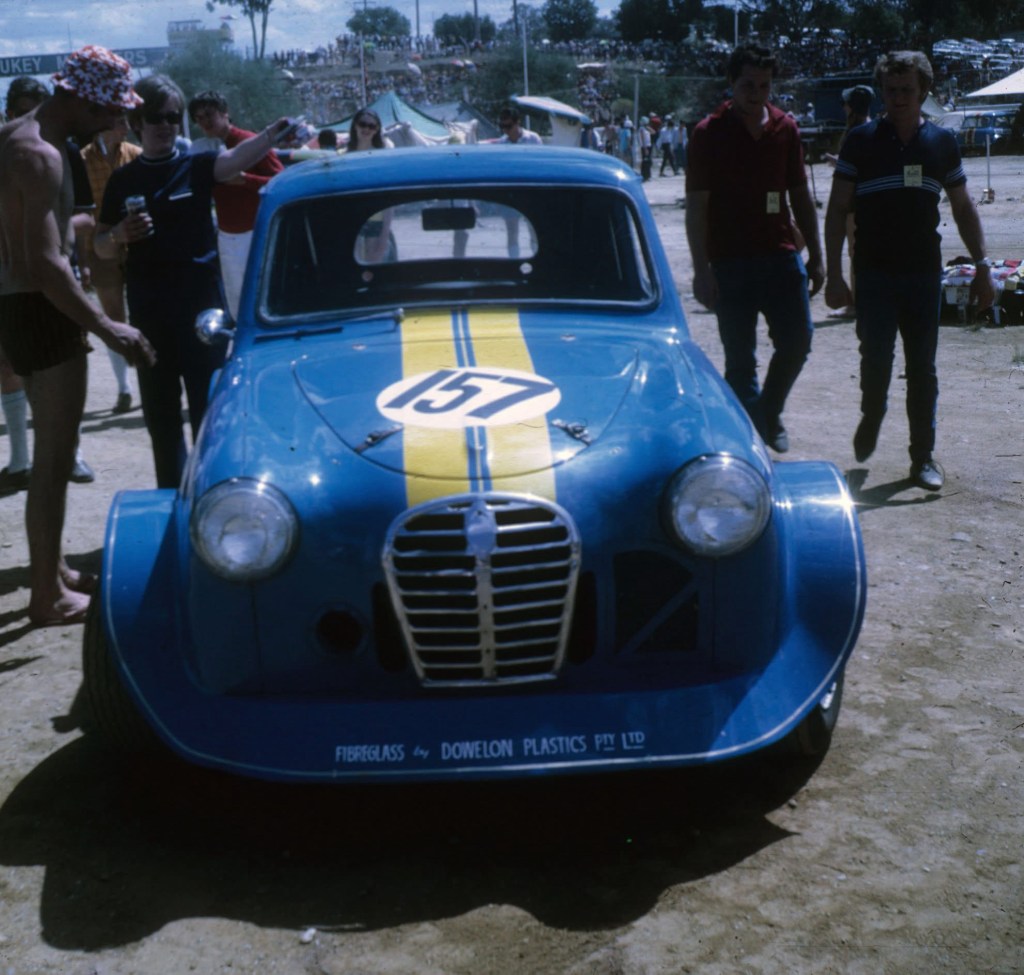
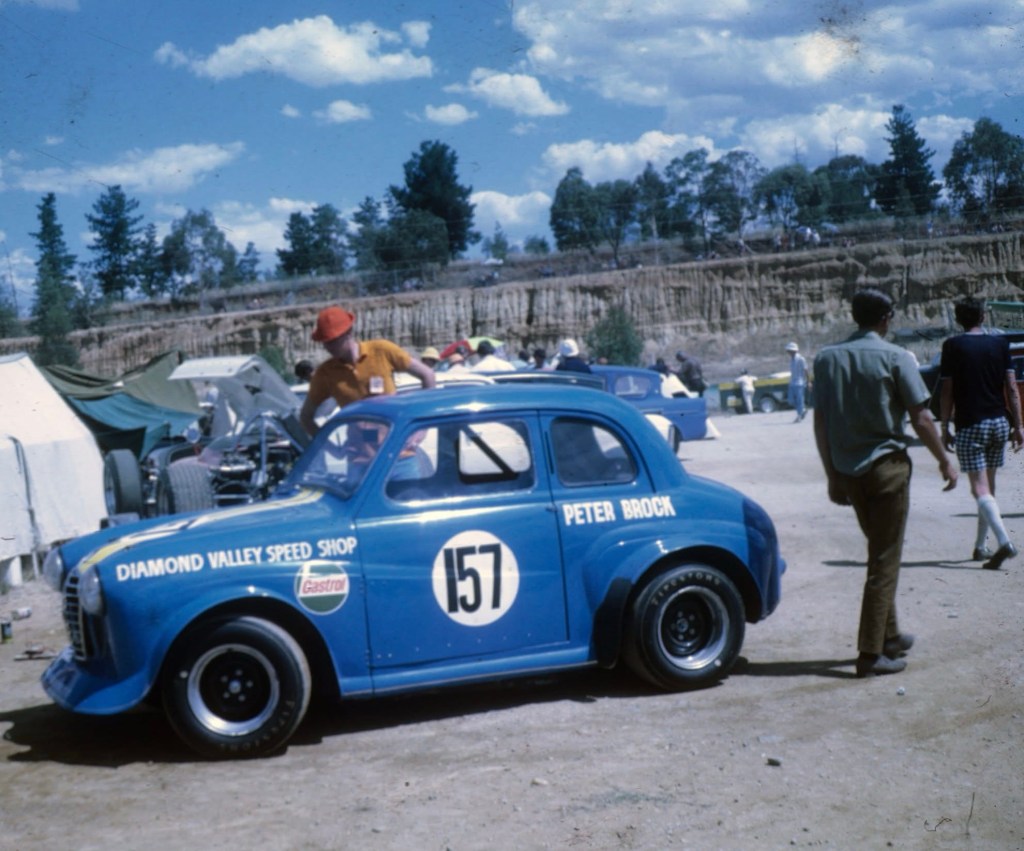
Peter Brock pops his latest victory garland on the bonnet of his famous Austin A30 Holden sports-racing-closed machine at Hume Weir circa-1969. Perhaps after winning the June 1969 Australian Sports Sedan Trophy?
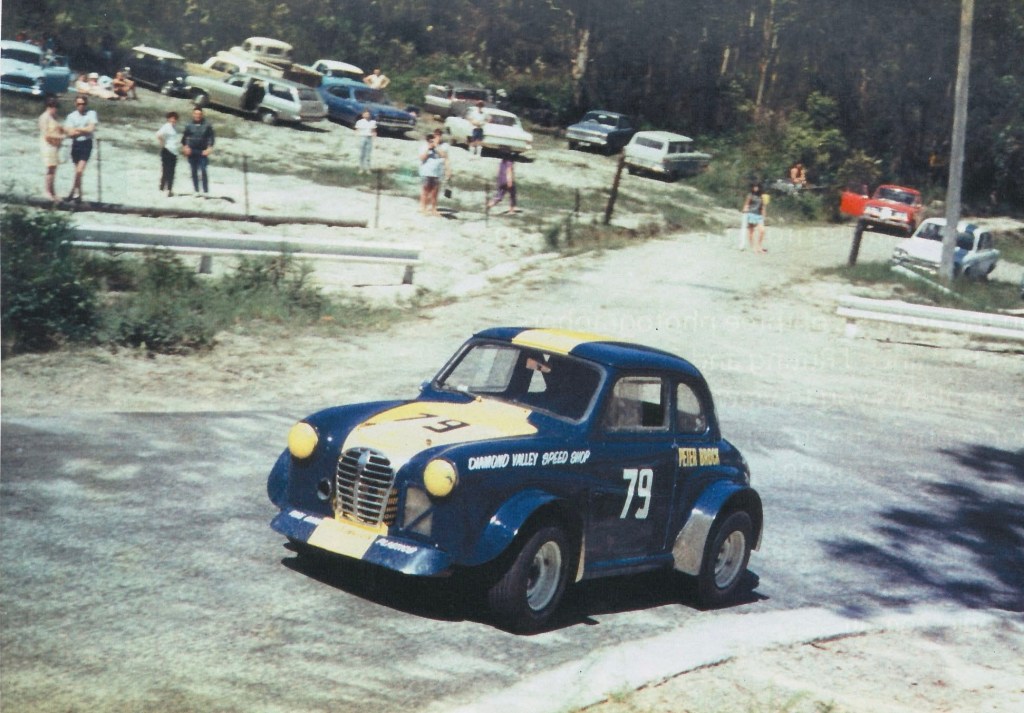
The realisation that there were a few very good colour shots in circulation of the self-built machine that pitched Brock into the spotlight, and thence into the Holden Dealer Team, is the catalyst for this piece.
For our international readers, Brock was rated as one of the world’s best ever touring car drivers by MotorSport some years ago. Top-Five if memory serves?
Brock, Oran Park circa late 1969 (R Thorncraft)
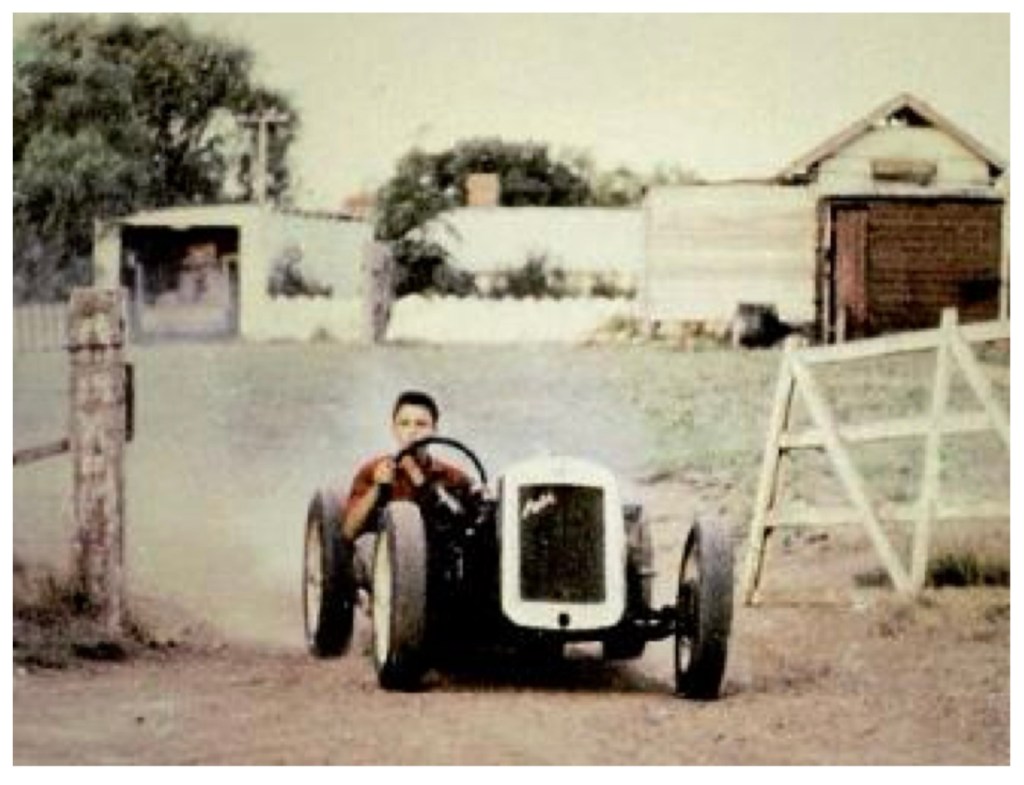
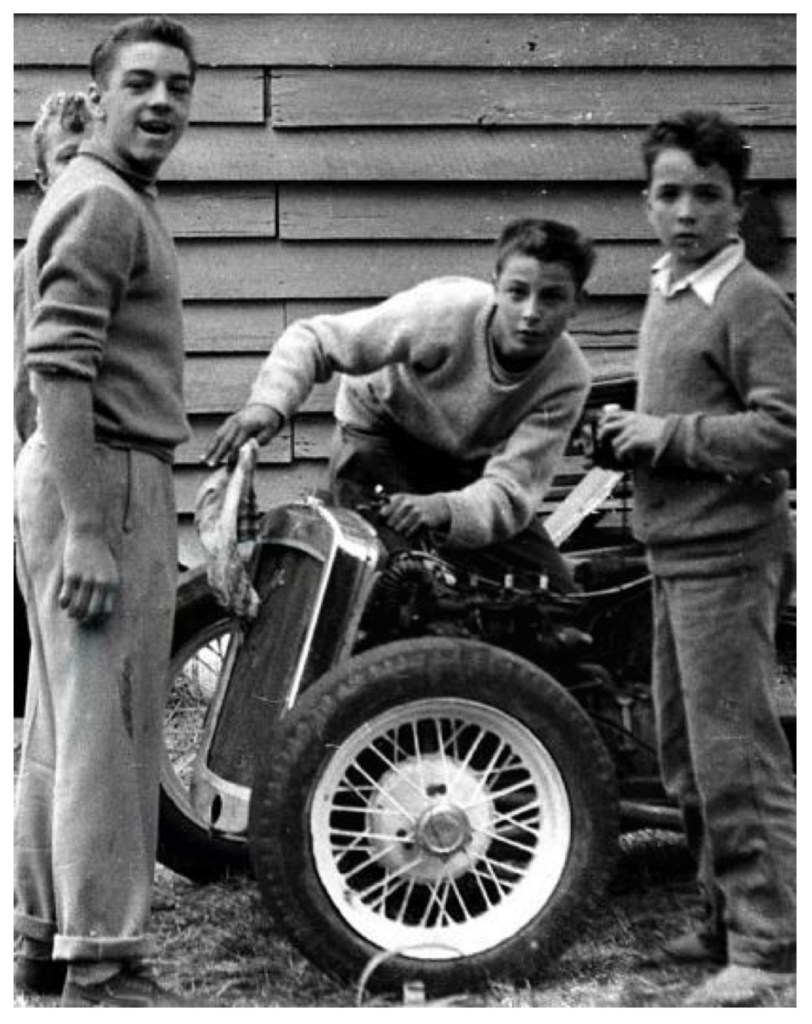
By the time PB was posted to Wagga Wagga for his two years of National Service in 1965’ish he was already a car nut, having cut his teeth as a ‘racer’ in the paddocks of his parents’ Wattle Glen property on Melbourne’s north-eastern outskirts. His mount was an Austin 7 Special; three of them actually, one owned by PB, another by his mate John Lovegrove, and a third parts-car
Peter and fellow ‘Nasho’ and old friend Ken Mitchell soon located the basis of a sports-racing-closed racer – this grouping of highly modified sedans was initially raced within sports car grids – an Austin A30, a crashed Holden HD 179 and a dead Triumph Herald.
The Austin, a good, straight car sans engine and gearbox, was found by David Turnbull, another Nasho, Brock mate, and later still an Elfin Formula Vee ace.
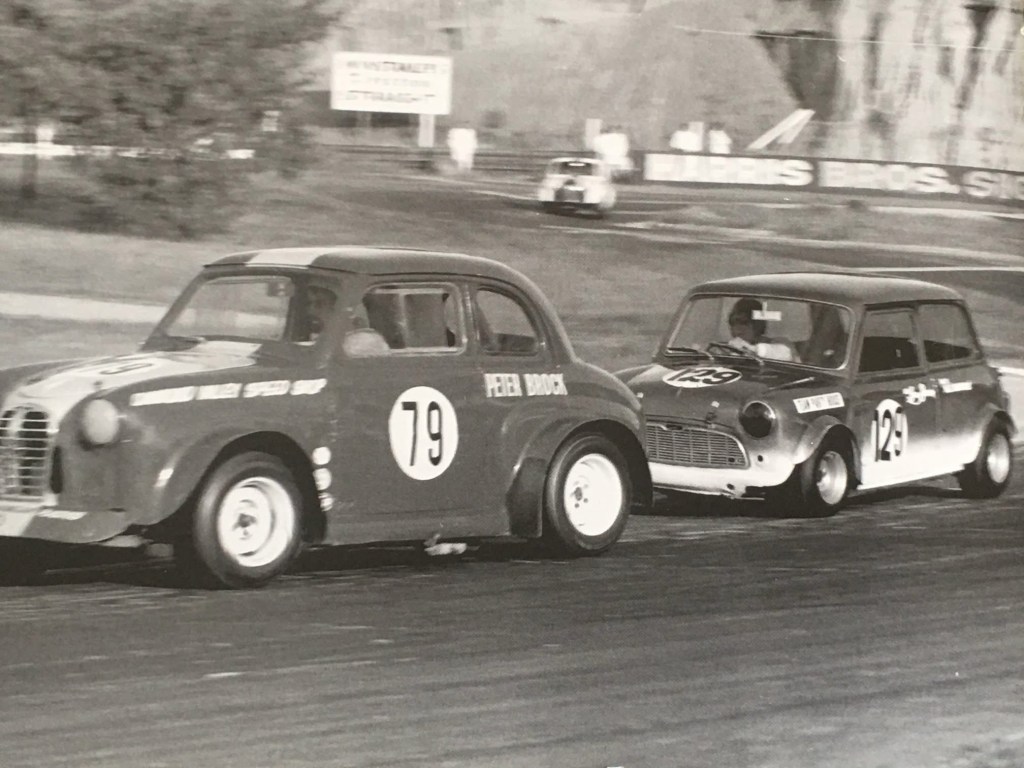
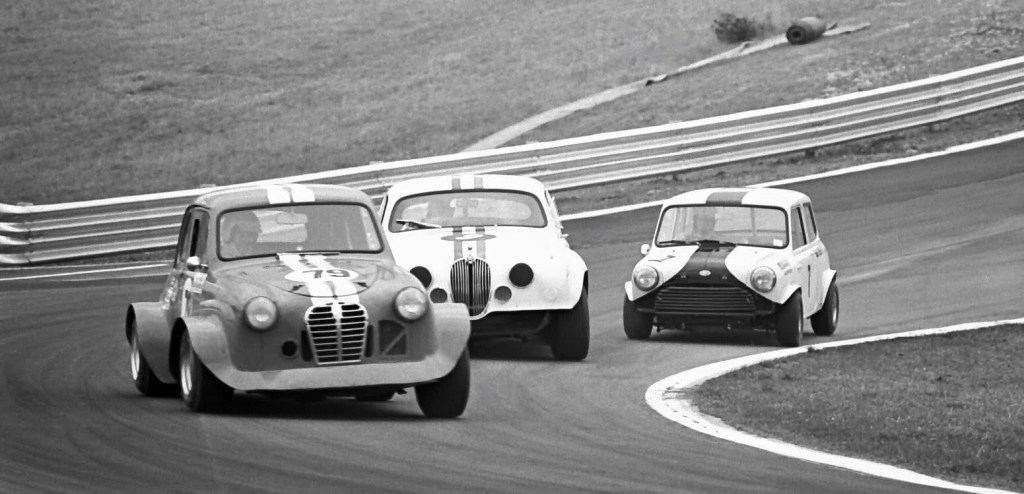
Lynn Brown, Mini Lwt on the ‘two-foot tow rope’ behind Brock’s Austin at Hume Weir (C Neal)
Construction commenced at the Kapooka Regimental Aid Post that ‘Colonel Brock’ commanded. Happily, the establishment had roads that doubled as a military ambulance racetrack and a workshop, which was soon devoted to extensive Brock A30 modifications.
Quick A30s weren’t that uncommon then, but they were usually fitted with hot BMC B-Series fours, not a brawny Holden six. The initially standard Holden ‘Red’ OHV, two-valve, seven bearing, 179 cid six-cylinder engine was mounted way back in the Austin chassis via an extensive hole hacked in the firewall by virtue of a new welding kit acquired for the exercise. The Triumph Herald remains provided some of the steel tube to brace the chassis weakened by holes and lightning by creating a full roll cage that was welded to the body.
A Holden (Opel) four-speed box’ replaced the standard Holden three-speeder that was first fitted, and sent its power via a shortened driveshaft to the Holden HD rear axle that was way wider than the Austin original. The rear axle was located by trailing arms at the top and an A-frame below, ‘the coil springs and shock absorbers (of unknown rate) came from a highly modified street racer (Austin Lancer) belonging to Heather’s (Peter’s first wife) brother, Geoff Russell.’
Up front, the upper and lower wishbone, coil spring/shock Herald front suspension, adapted to HD ball joints and uprights, was fitted to ‘match’ the rear track. The Herald provided the front disc brake calipers and rotors, and sharp rack and pinion steering components. Rudimentary but brutally attractive guard flares gave the little rocket its most distinctive styling element.
Close to Brocky’s home – the venue that initially wetted his interest in racing via pushbike schoolboy visits – Templestowe Hillclimb (J Brock/autopics)
Back in civilian life, the partially completed car was famously finished in the chook shed at the bottom of the Brock garden!
By late 1967, the little beast was ready to rock and roll. Unable to test at Calder or Winton, given a lack of readies, several fast blasts on the outskirts of Watsonia had to suffice, giving the nuns residing in the local convent the thrills they eternally lacked.
Brock first raced it at Winton on the November 26 weekend. Fuel pick-up problems cruelled that run, but Brock soon solved the car’s problems and began an ongoing series of modifications which demonstrated mechanical flair and understanding later recognised by Ian Tate in PB’s Holden Dealer Team days.
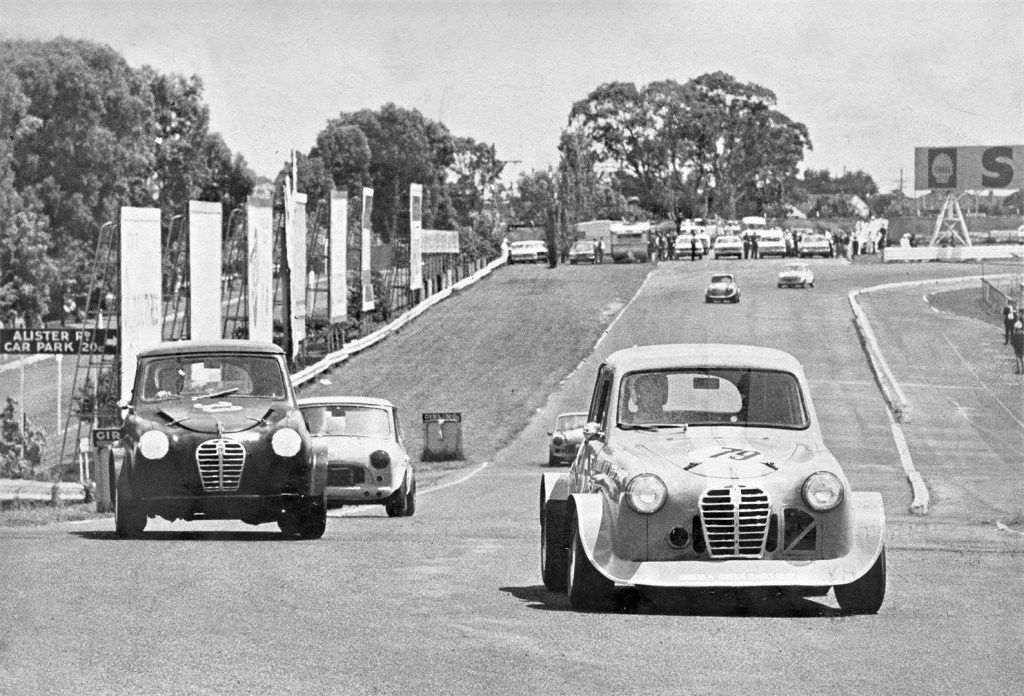
Brock in the company of another A30 and a Cooper S under brakes – with plenty of negative but not too much – into Peters at Sandown circa-1969. The scrutineers thought the engineering of the car was rough enough for them to order Brock to take it to Harry Firth’s Queens Street, Auburn workshop for a ‘safety check’. All was good, no doubt Harry remembered the consultation…(autopics.com.au)
Brock first showed his mettle by finishing second in a scratch race at Calder in late 1968 after a race long dice against thrice Australian Grand Prix winner, Doug Whiteford – a hard man who didn’t take prisoners – aboard a works Datsun 2000 prod-sports; a quite highly modified sports car.
The Holden engine copped triple 2-inch SUs, extractors and the usual mix of top and bottom end mods to give about 200bhp; plenty for a 700kg machine. Race tyres replaced the Goodyear Grand Prix roadies! and alloy wheels supplanted the heavier, 6-inch widened steel items initially fitted.
With Peter running up front at Victorian meetings he was soon enticed north of the Murray by Allan Horsley’s Oran Park start-money to run against the Sydney hotshots; NSW was then, arguably, the capital of sports-racing-closed.
The array of talent there was strong: Lynn Brown, Don Holland, Lakis Manticas, Harry Lefoe and later Australian Gold Star Champion, John Leffler, spring to mind. Harry Firth then chose the already well-credentialled Colin Bond and Brock to join the Holden Dealer Team as drivers in the 1969 Bathurst 500, Bondy winning on his HDT debut.
The rest, for both of them, is history, as the saying goes.
PB’s final race in the A30 Holden, Oran Park, January 3, 1970 (L Hemer)
Twitchy, Demanding Little Bastard…
The net effect of the seat-of-the-pants mods made to the Austin by Brock and Ken Michell created a car that was about as wide as it was long. The short wheelbase made the car very responsive but equally unforgiving!
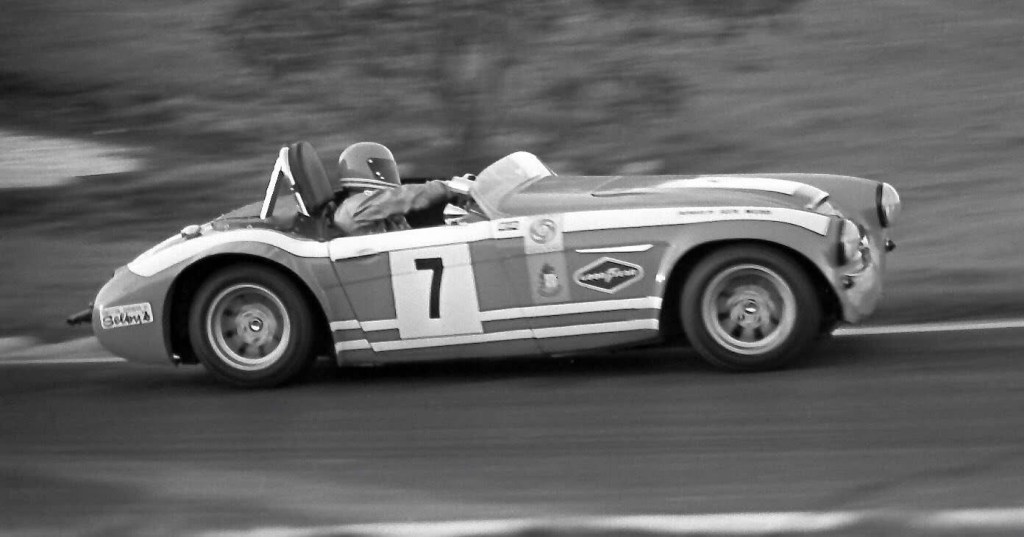
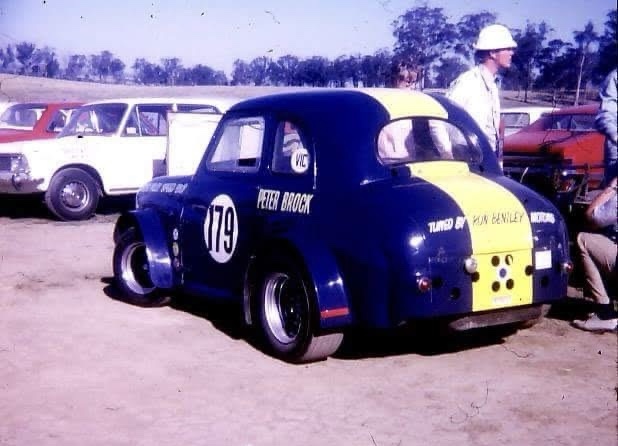
‘Conventional wisdom’, repeated down the decades, is that very successful prod-sports Austin Healey 3000 driver, Ross Bond, who bought the car from Brock in early 1970, never got to grips with it before the accident that killed the significant little machine. Recent research by my friend, Lynton Hemer, suggests that wasn’t the case.
‘A lot has been said over the years about the Peter Brock Austin A30, suggesting that he was the only one capable of driving it quickly. He raced the car for the last time at Oran Park on Saturday night 3rd January 1970.
‘In the 6 lap Sports Sedan and Touring Car Scratch Race, Brock was second home behind Pete Geoghegan in the Mustang, and set a new class lap record of 50.3 seconds. Later that night, in a race for Open and Closed Sports Cars started at 10.48 pm, he won from John Goss in the Tornado Ford 9mid-engined sports car), and Lynn Brown in the Mini, and set the exceptional time of 50.0.’
Ross Bond hard at it in his very successful Austin Healey 3000 at Oran Park on August 8, 1971 (L Hemer)Ross Bond, Barry Sharp, Jaguar Ford V8, John Leffler, Mini Lwt. The latter had his first Formula Ford drives in Allan Vincent’s Bowin P4A that year (L Hemer)
‘Ross Bond then ran the car, winning in late February, and then experiencing mechanical problems in his next outing. By the time he got the car where he wanted it, several other cars were vying for position at the front of the Sports Sedan fields.’
‘Barry Sharp debuted his Jaguar Ford, Wayne Rogerson the XT Falcon, John Leffler got his Mini up to speed, and Barry Seton was now running the very rapid Torana GTR. All of those cars were capable of equal or better times than the Austin, so Ross found himself in among traffic at almost every race, whereas Brock had been at the front of much less competitive fields.’
‘In September 1970, Ross Bond did a best lap of 50.4, not that far off Brock’s second-best time in the car. Perhaps history has been a little harsh on Ross Bond’s performance in the car…’
Etcetera…
(N Brock)
Childhood fun times, and important driving and engineering lessons with the Austin 7s, above in 1959. John, Peter and Lewis Brock below in 1960.
(N Brock)
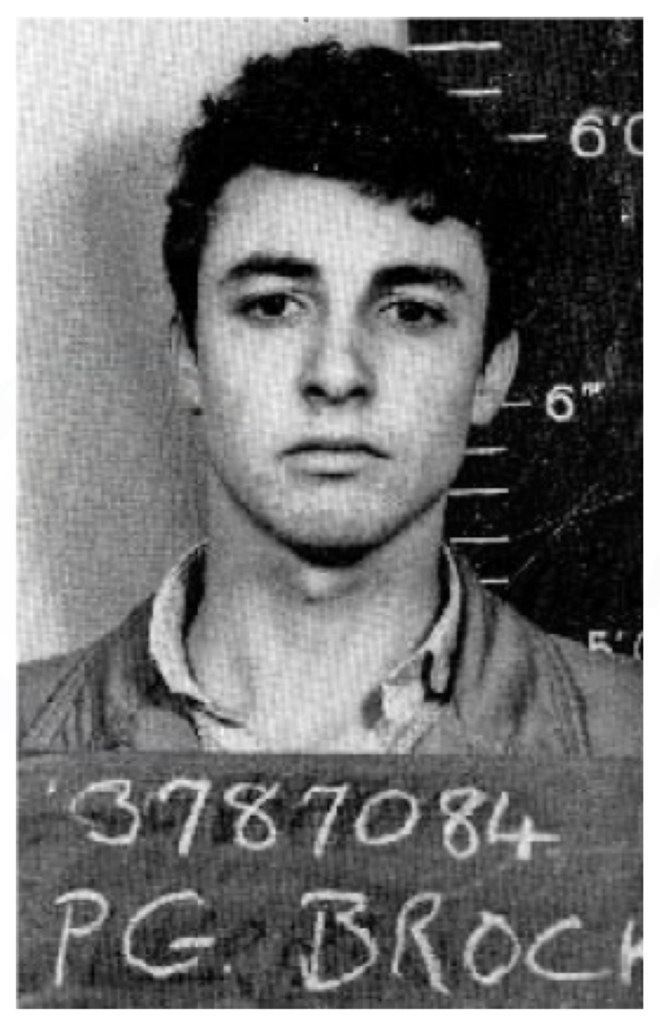
Brocky looking as happy as I would after my National Service number came up! Australian Army mug shot, June 1965 (N Brock)
(R Bell)
Ray Bell’s shot at Hume Weir circa 1968, early days. And Neil Baker’s below with the car looking more like its ultimate late-1969 spec, again at the Weir.
(N Baker Coll)(D Crampton)
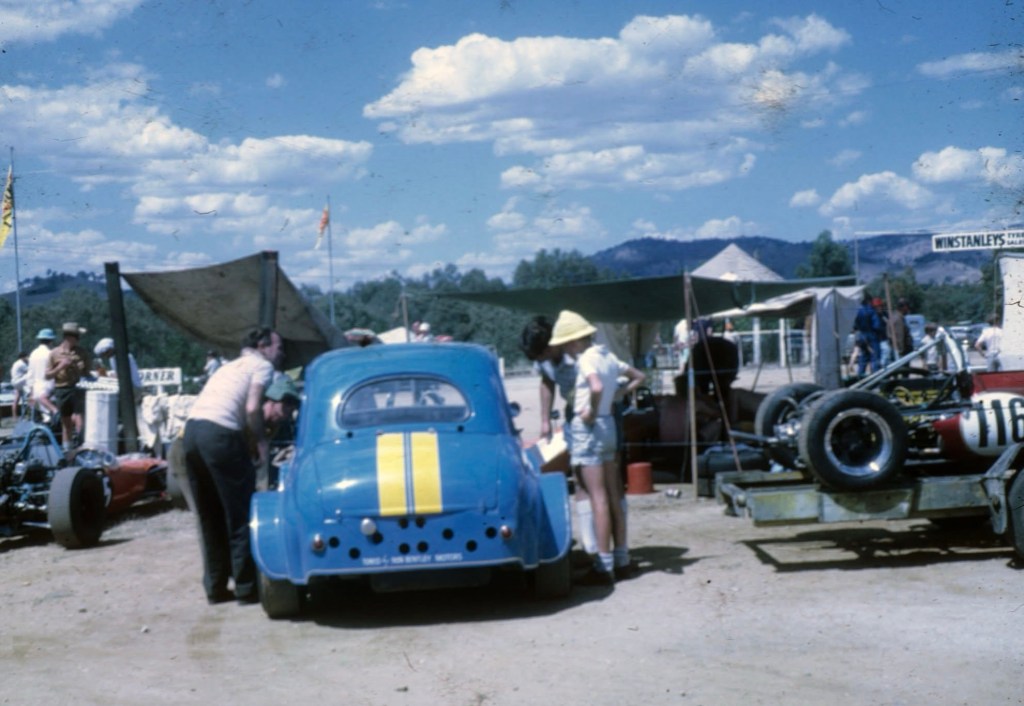
This batch of three shots was taken by David Crampton at the Weir in 1969. Note the Castrol decal and sponsorship I guess.
(D Crampton)(D Crampton)
Credits…
John Brock-Brock Family Archive, Chris Neal, Russell Thorncraft, Lynton Hemer, Mark Oastler’s article about the car on Shannons’ website, Ray Bell, Neil Brock Archive, Neil Baker Collection, ‘Peter Brock Road to Glory’ by Colin Fulton and Terry Russell, David Crampton
Tailpiece…
(R Thorncraft)
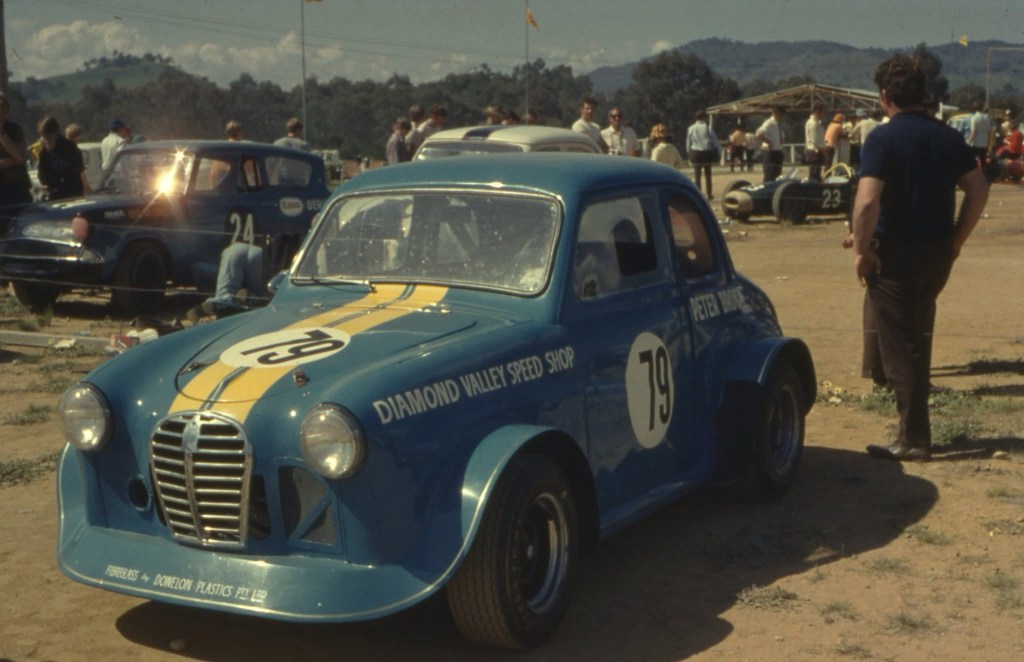
Last run for Brock in the car was at Oran Park on January 3, 1970. The Diamond Valley Speed Shop was Geoff Brock, Peter’s dad’s, business. Are the wheels Simmons?
Such an evocative shot of the first couple of Australian motor racing, Melburnian’s Barney and Bess Dentry in their Riley 9 Brooklands. Perhaps during the 1936 Victorian Sporting Car Club Trophy held on the triangular Phillip Island road circuit on New Year’s Day.
Most ‘Island shots of the time are from the outside of the rectangular, right-handers-only course, looking in. This beautiful Edward Trevithick photograph looks the other way, with the Western Port sea-mist creating the rest of the magic.
The sign on the fence post issued by the People’s Republik of Phillip Island is headed ‘Closing of Roads’; sadly, I can’t read the fine print. More about the Dentrys here:https://primotipo.com/2023/04/07/barney-and-bess-dentry/
(E Trevithick-SLV)
Yes, the car doesn’t look kosher. Barney continually modified the Brooklands, chassis number 8062, over its long competition life, including this self-made, slipperier, lighter aluminium body. Both these photographs make it look like a Big Banger which it was not!




 primotipo...