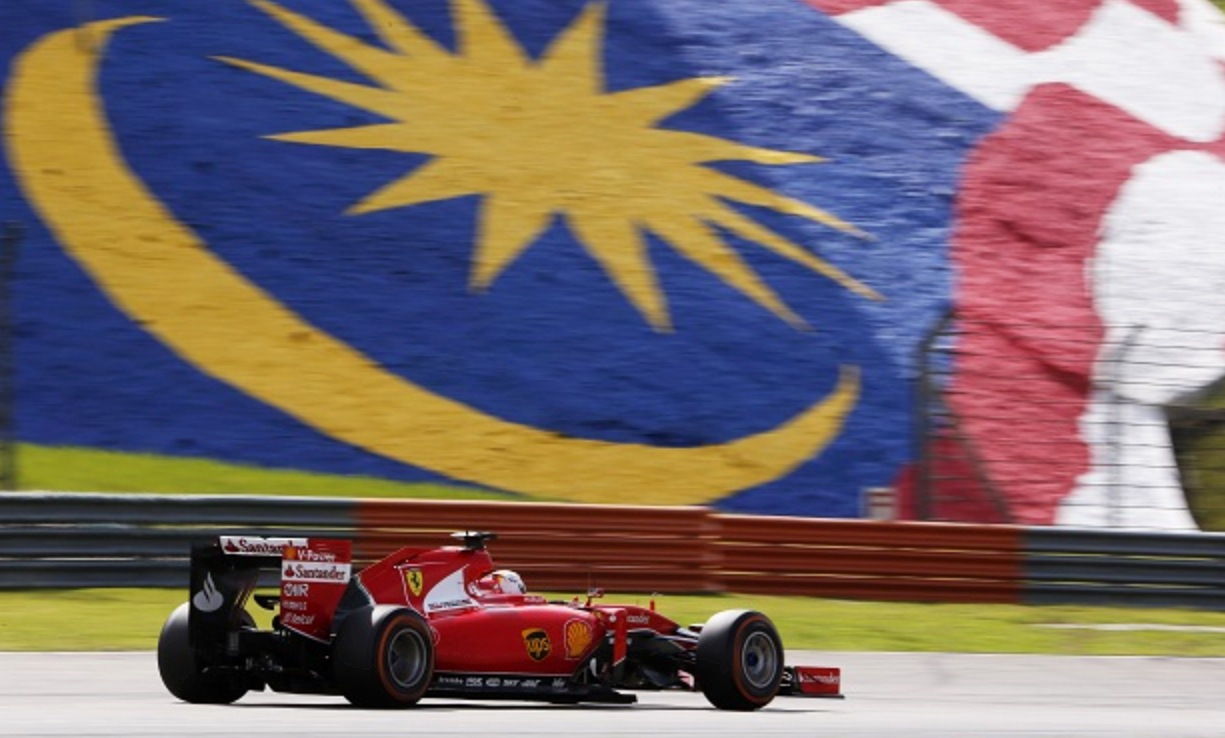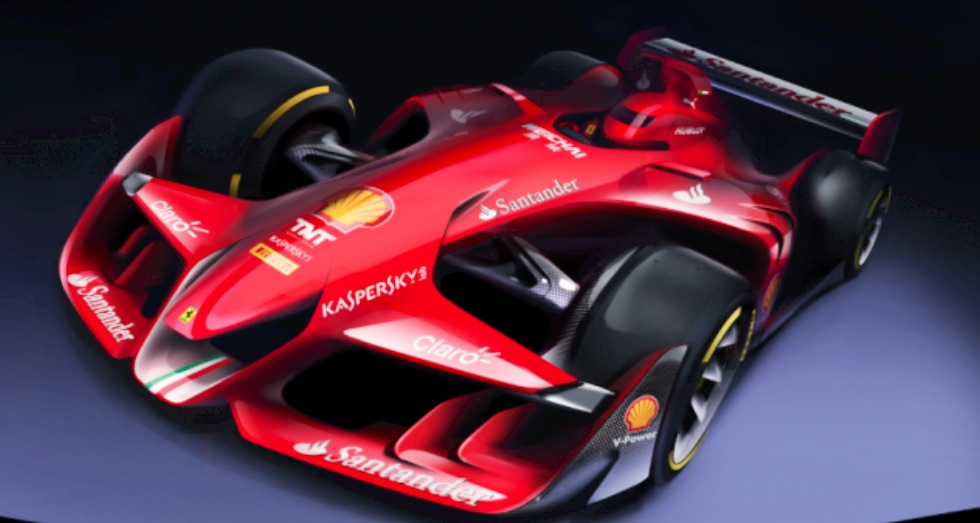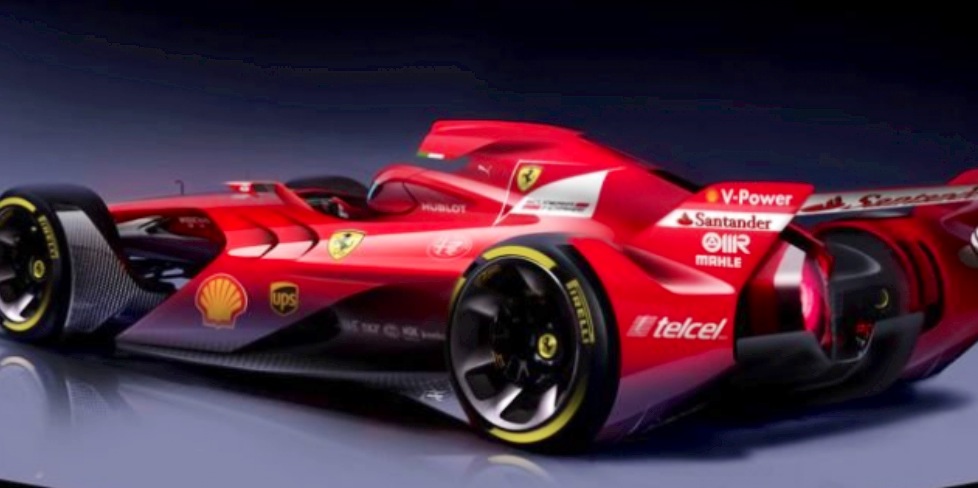
Mark Hughes in his usual insightful way explains why Ferrari gave us a welcome change of colour at the chequered flag…
http://www.motorsportmagazine.com/f1/reports/2015-malaysian-grand-prix-report/
Mark Hughes in his usual insightful way explains why Ferrari gave us a welcome change of colour at the chequered flag…
http://www.motorsportmagazine.com/f1/reports/2015-malaysian-grand-prix-report/

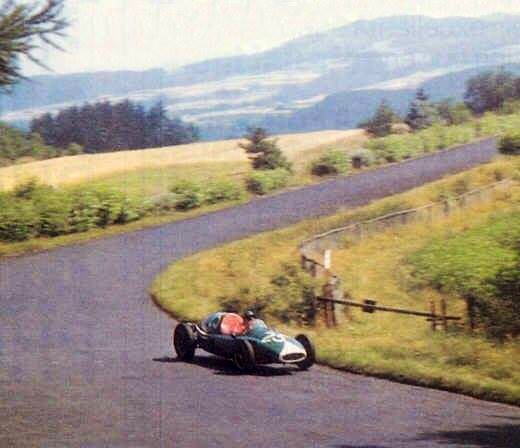
Tony Marsh working his 1960 BRM P48 chassis ‘484’, 2.5-litre ex-Bonnier 1960 F1 car very hard, lifting an inside rear wheel into ‘The Courtyard’, Bo’ness Hillclimb, Scotland 1966…
Two of the reasons why the content of this blog is eclectic are that it suits my broad racing interests and that a photo is usually the inspiration for an article, this shot is one of those! I tripped over it on ‘The Nostalgia Forum’, which is a wonderful place for those of you who may not paid it a visit. You can get lost in there for weeks! http://forums.autosport.com/forum/10-the-nostalgia-forum/

Lots of ex-GP cars have found their way into British Hillclimbing over the years, the Tony Marsh BRM P48 is one of those…
The 1951 BRM P15 supercharged 1.5-litre V16 racer was a disaster, too complex, too late but a fabulous bit of kit and the greatest sound in motor racing, full-stop. Aural orgasm is not going too far to describe its musical, mechanical, sonorous howl!
The design which followed, the Type 25 was the reverse, a simple 2.5-litre, DOHC, Weber carbed, front-engined, spaceframe chassis car which served BRM from 1955 to 1959, finally achieving a breakthrough win for Bourne in the 1959 Dutch Grand Prix, Jo Bonnier the driver.
But by then the game had moved on, Cooper dominated the grids with their Coventry Climax engined, simple mid-engined cars. Jack Brabham and Cooper took the drivers and constructors titles in 1959 and 1960 with Cooper Types 51 and 53, Tony Rudd and his team needed to respond.
BRM were famous for their engineering process and toolroom quality but the P48 was a quick fix, utilising as many of the Type 25 components as possible, in essence the P48 was a mid-engined variant of the Type 25, right down to its controversial, less than reliable cookie-cutter, single, gearbox mounted rear disc brake.


1960 was the last year of the 2.5-litre Formula, the P48 Mk II was more competitive than the first iterations used for most of the season and were devoid of the cookie cutter and used the wishbone rear suspension which formed the basis of BRM’s 1961 contender’s design intent.
This 1961 car, the P57, was Coventry Climax 1.5-litre FPF powered until BRM’s fabulous and successful P56 1.5-litre V8 was developed for use from the 1962 season. See this link; https://primotipo.com/2014/10/12/graham-hill-brm-p57-german-gp-1962/ The P48 evolved into the P57 which delivered BRM’s first and only Manufacturers and Drivers Championships for the marque and Graham Hill in 1962.


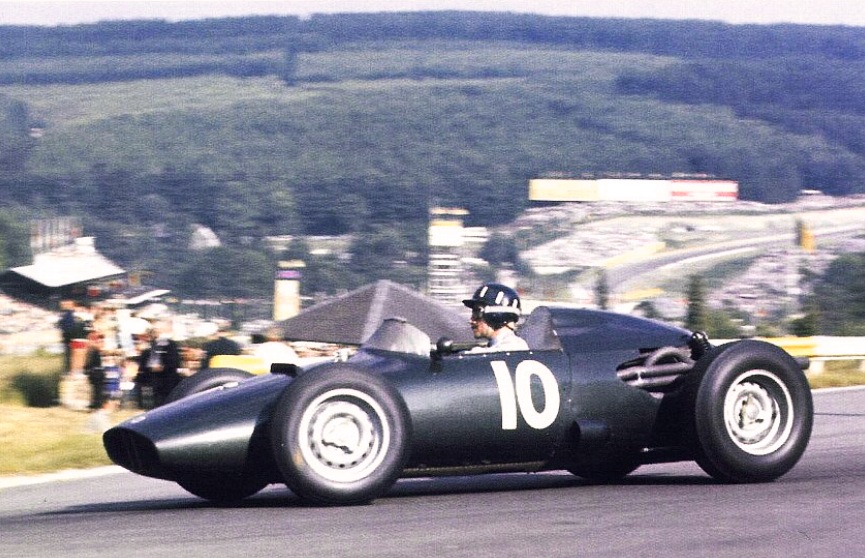
Graham Hill’s P48 485 (above) took third place in the 1960 Belgian GP at Spa won by Brabham’s Cooper T53 Climax. The weekend was one of racing’s worst, Stirling Moss broke both legs after an axle failure, Mike Taylor’s steering broke so he crashed into trees suffering grievous injuries which made him paralysed, eventually with therapy he walked again, both were driving Lotus 18s, those accidents took place in practice. In the race Chris Bristow crashed his Cooper T51 Climax at Malmedy whilst pushing too hard and crashed to his death while Alan Stacey (Lotus 18 Climax) was hit in the face by a bird near Masta, he crashing and died instantly.

Tony Marsh…
Marsh was an iconic hillclimber, first taking the British Hillclimb Championship title in a Cooper Mk8 Jap in 1955. After two more successive wins he turned to circuit racing winning the British F2 Championship in 1957 with a Cooper T43 Climax. He also contested the 1957 German GP, finishing fifteenth in his F2 car and eighth in 1958 aboard a Cooper T45 Climax.
Marsh raced a private Lotus 18 Climax and his own BRM P48/57 1.5 V8 engined car in 1962 in some Non-Championship F1 events – best placings were fourth in the Pau GP and seventh in the International Trophy at Silverstone.
He returned to hillclimbing in the mid-1960s, winning the championship a further three times and was still competing right up until his death at 77 years of age in May 2009.


Bo’ness Hillclimb…
Bo’ness is 17 miles north-west of Edinburgh, the hillclimb was used from 1934 to 1966 and ran through the grounds of Kinneil House. James Watt of steam engine fame lived there, the grounds contain the ruins of his cottage and the boiler of his Newcomen Engine.
Tony Marsh set the record for the climb in June 1963, one which stood for all time, the last meeting at the venue was held in June 1966, revival meetings have taken place in recent years.
Some former motor racing greats held the climbs’ record including Bob Gerard, Ken Wharton, Ron Flockhart and Jim Clark, the latter with a Lister Jaguar in 1959.
Etcetera…


Credits…
The Nostalgia Forum, John Ross Motor Racing Archive, Brian Tregilgas, Doug Nye, Vic Berris
From Ballarat to Bathurst, BRM P48’s in Australia, Part 2…
Finito…
Lorenzo Bandini heading for fourth place in his ‘Centro Sud’ Cooper T53 Maserati, ‘Warwick Farm 100’, February 1962…
The race was won by Stirling Moss in Rob Walkers’ Cooper T53 Climax from Bruce McLaren in a similar car.
Bandini joined Centro Sud in 1961 making his championship debut at Spa having scored 3rd place in the Non-Championship Pau GP earlier in the season.
He raced in the Southern Summer gaining valuable experience in the powerful F Libre cars raced in Australasia at the time against the Worlds best.
Bandini contested the Warwick Farm International, his only race in Australia but competed in New Zealand at the start of the year coming 5th in the NZ GP at Ardmore and retired at Wigrams airfield circuit and at Teretonga with an oil leak and ignition problems respectively.
Born in 1935, he commenced his racing career on motorcycles, progressing into cars with a borrowed Fiat 1100. He came to the attention of ‘Centro Suds’ Mimmo Dei after Formula Junior successes in Stanguellini and Volpini chassis’ in 1960 and 1961.

Have always thought BRM’s and Cooper’s look great in BRG but they look even better in red!? Lorenzo in his ex-works BRM P57 1.5 V8 in the British GP, Silverstone 1963. An excellent 5th in the race won by Jim Clarks’ Lotus 25 Climax. (Unattributed)

Victorious at Le Mans in 1963 in Ferraris’ first V12 mid engined endurance racer the 250P. He shared the car with fellow Italian Ludovico Scarfiotti. (Unattributed)
Bandini drove his first GP for Ferrari in 1962 but for 1963 drove in their sports car squad, Centro Sud kept him in GP racing campaigning an ex-works BRM P57…Ferrari did enter him in the last 4 GP’s of the season…he also won Le Mans in’63 partnered by Ludovico Scarfiotti in a Ferrari 250P.
For 1964 he partnered John Surtees in the F1 team winning the Austrian GP at Zeltweg, sadly his only Championship GP win.

First in the Austrian GP at Zeltweg in August 1964 ahead of Richie Ginther in a BRM P261 and Bob Anderson, Brabham BT11 Climax…(Unattributed)

Patiently bleeding the brakes of his Ferrari 158 in practice for the German GP, Nurburgring 1965. 6th in the rcae won by Clarks’ Lotus 33 Climax. (Unattributed)

Disappointment on his face, Bandini pulls to the side of the Reims circuit, 1966 French GP. He was in the lead of the race and pulling away, of all things his throttle cable broke, well before the days of potentionometers! Jack Brabham took the lead in his Brabham BT19 Repco and became the first driver to win a race in a car of his own manufacture and name. (Unattributed)
Always competitive in F1, if not an absolute ‘ace’ Bandini was unlucky not to win the 1966 French and US Grands Prix’ when well in the lead of both races , mechanical problems with his 3 litre V12 Ferrari 312 intervening.

Famous shot first published in Automobile Year. Lorenzo in the Ferrari P2 he shred with local Nino Vaccarella to win the 1965 Targa Florio. (Automobile Year)
Luckier in sports car racing, in addition to the Le Mans victory, he also won the Targa Florio in 1965 and the Daytona 24 Hours and Monza 1000Km in 1967 racing the superb Ferrari P4 partnered with Chris Amon whom he first met at the NZ GP in 1962, Chris campaigning a Maserati 250F before he came to Europe…
Lorenzo died in a gruesome accident at Monaco in 1967, the fire which took his life accelerating improvements to circuit and driver safety, not the least the abolition of hay-bales with which he collided, fuelling the ensuing fire.
He was an immensely popular driver with his colleagues, the media and fans, 100000 of whom were in the streets surrounding the Reggiolo church in which his funeral was held.

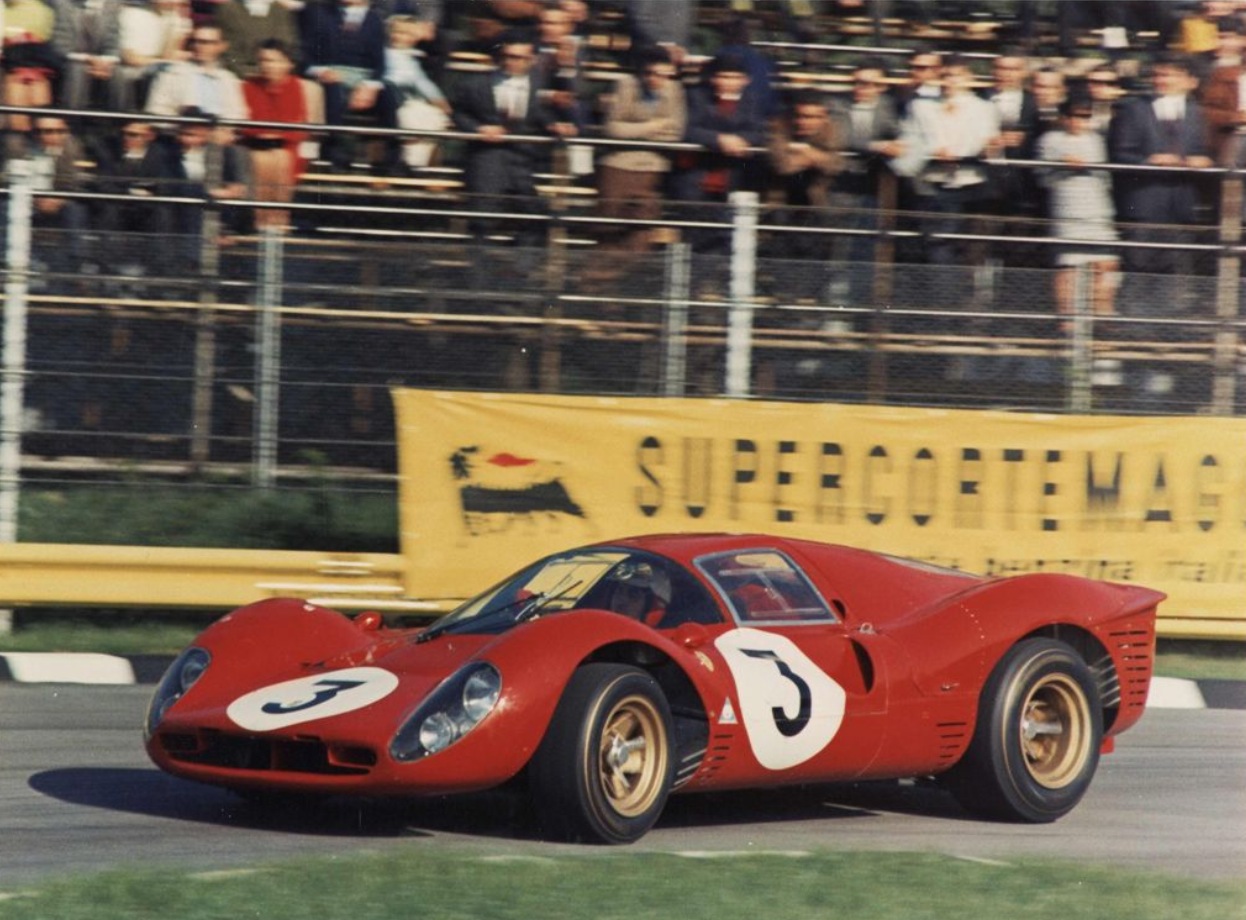
Bandini in the gorgeous Ferrari P4 at Monza, 1967 1000Km’s which he won with Chris Amon. The P4 4 litre V12 was outgunned by the 7 litre Fords and Chaparrals that year but still scored some successes. (Unattributed)

Shell ad to celebrate the 1963 Le Mans win. #10 Rodriguez/Penske Ferrari 330LM TRI, #18 P Hill/Bianchi Aston DP215, # 21 victorious Bandini/Scarfiotti Ferrari 250P, # 23 Surtees/Mairesse Ferrari 250P, # 8 McLaren/Ireland Aston Martin DB4 GT
Credits…
John Ellacott, Automobile Year,
Rodriguez victorious at Spa in the 1970 Belgian Grand Prix in his BRM P153, the narrowest of wins from Chris Amons’ March 701 Ford on a circuit made for the Mexican’s skill and bravery…
Pedro and brother Ricardo Rodriguez (right) in 1962.
Ricardo died at the wheel of a Lotus 24 Climax in the Mexican Grand Prix 1962, the Rob Walker Racing entered machine’s rear suspension failed, the resultant collision killed him instantly at 20 years old.
Pedro cruising through the Bridghampton paddock in his ‘NART’ Ferrari 250P- 1963 ‘Double 500’.
1967 Monaco Grand Prix, Cooper T81 Maserati- the eyes have it. Tragic race of course, Lorenzo Bandini lost his life in a Ferrari 312 in the latter stages of the race.
Spa 1000Km 1971, victory with Jackie Oliver in a John Wyer Porsche 917K, Siffert/Bell behind and finished second, the marshal gets maximum points for stupidity.
Lotus 33 Climax, Mexico City 1966.
Team Lotus entered an ‘old nail’ for Pedro, a 2 litre BRM V8 engined 33 in a two off drive (Watkins Glen too), he qualified the Ron Harris run car eleventh but DNF with transmission failure after 49 laps. John Surtees won in a Cooper T81.
Pedro #25 and Jo Siffert #24 , Porsche 917K, lap 1 of the Spa 1000Km 1970.
Friends and rivals in the JW Automotive Team, Rodriguez was ultimately the better driver. A gaggle of 917’s and 512’s behind. Siffert/Brian Redman won the race whilst Pedro/Leo Kinnunen DNF with gearbox failure on lap 44.
Rodriguez delicately caressing the big Cooper T81 Maserati V12 around Monaco in 1967. He was fifth, four laps adrift, in the race won by Denny Hulme’s light, nimble Brabham BT20 Repco V8.
Pedro put in a stunning, famous drive to win the Brands Hatch 1000Km in his ‘JW Automotive’ Porsche 917K, partnered by Leo Kinnunen in 1970.
He is #10 here ‘hunting down’ the rival ‘Porsche Salzburg’ #11 917K of Elford/Hulme/Ahrens. Oh to have been there!
Pedro portrait 1970. I remember first seeing this photograph in the Camberwell Grammar School copy of Automobile Year 18- the review of the 1970 season, and thinking ‘Wow!’, as I did so often in relation to the photography of that publication in that era…
BRM P153 at rest, British GP, Brands Hatch 1970. Rindt won in a Lotus 72 Ford, Pedro DNF, prang on lap 58.
Rodriguez was one of those drivers who loved racing for its own sake, he competed whenever he could and was killed in an ‘Interserie’ (European Can-Am or Group 7) race at the Norisring, Germany in July 1971.
He had started the season well, lightning fast in both his BRM P160 F1 car and Porsche 917 and was pointlessly killed in a race of no importance when a slower car edged his Ferrari 512M into the wall, the car erupted into flames and one of the ‘aces’ of the era died shortly thereafter.
Photo Credits…
Bernard Cahier, Automobile Year, Mike Hayward Collection https://www.mikehaywardcollection.com/ , Max Le Grand
Finito…
Yes the F1 cars are fast, the ultimate and marginally less ugly, let’s not say attractive, than last year…
One of my sons is not a big race fan and hadn’t been for 2 years, and seeing and hearing the F1’s for the first time turned to me and said, and sadly it’s easy to have a conversation whilst the cars are circulating now, ‘What the fuck have they done to the cars!’
Precisely.
Still it was a fun day, the AGP program is packed with events and displays; support categories include V8 Supercars, Carrera Cup, Historics with Brabham the featured marque. And the F1’s, let’s not call them Grand Prix cars, ‘Petite Prix’ cars perhaps.
Many car club displays, not much stuff we haven’t all seen before but still adds to the show and Albert Park is huge so there is lotsa space to fill!
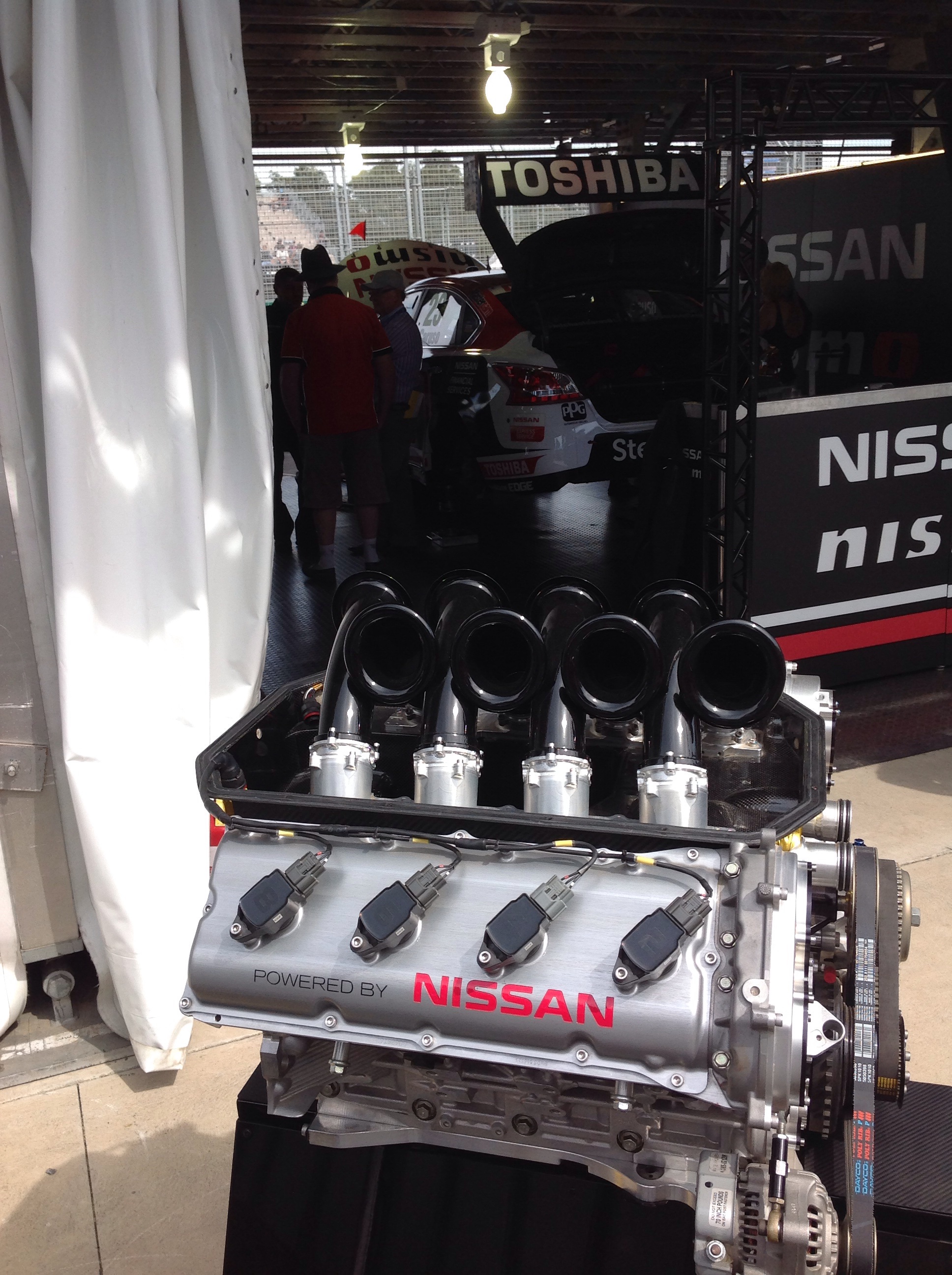
Touring Cars aren’t my thing but the V8 Supercars are interesting these days with Mercedes, Volvo and Nissan part of the show and providing diversity in addition to the local tribal followings of Holden and Ford. The cars are fast, loud and spectacular. Arguably the third best ‘Taxi’ series in the world behind NASCAR and the German championship.
Mad. And fantastic.
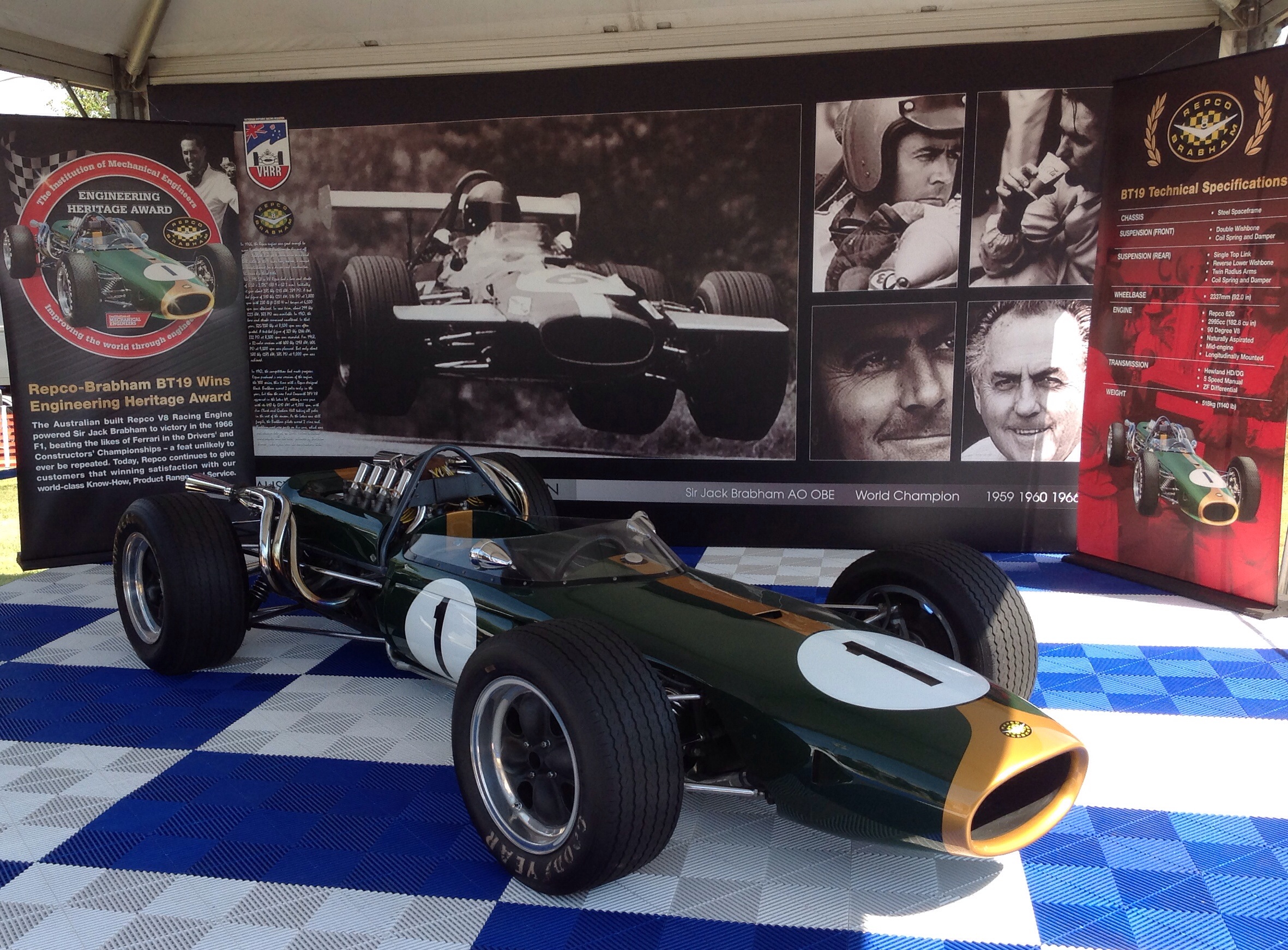
Really good historic display, as noted above Brabham are the featured marque paying respect to JB with his recent passing. BT19 Repco, his 1966 Championship winning mount and well featured on primotipo in the past is the star of the show.
Winning the 1966 World F1 Championships: Brabham BT19 Repco…
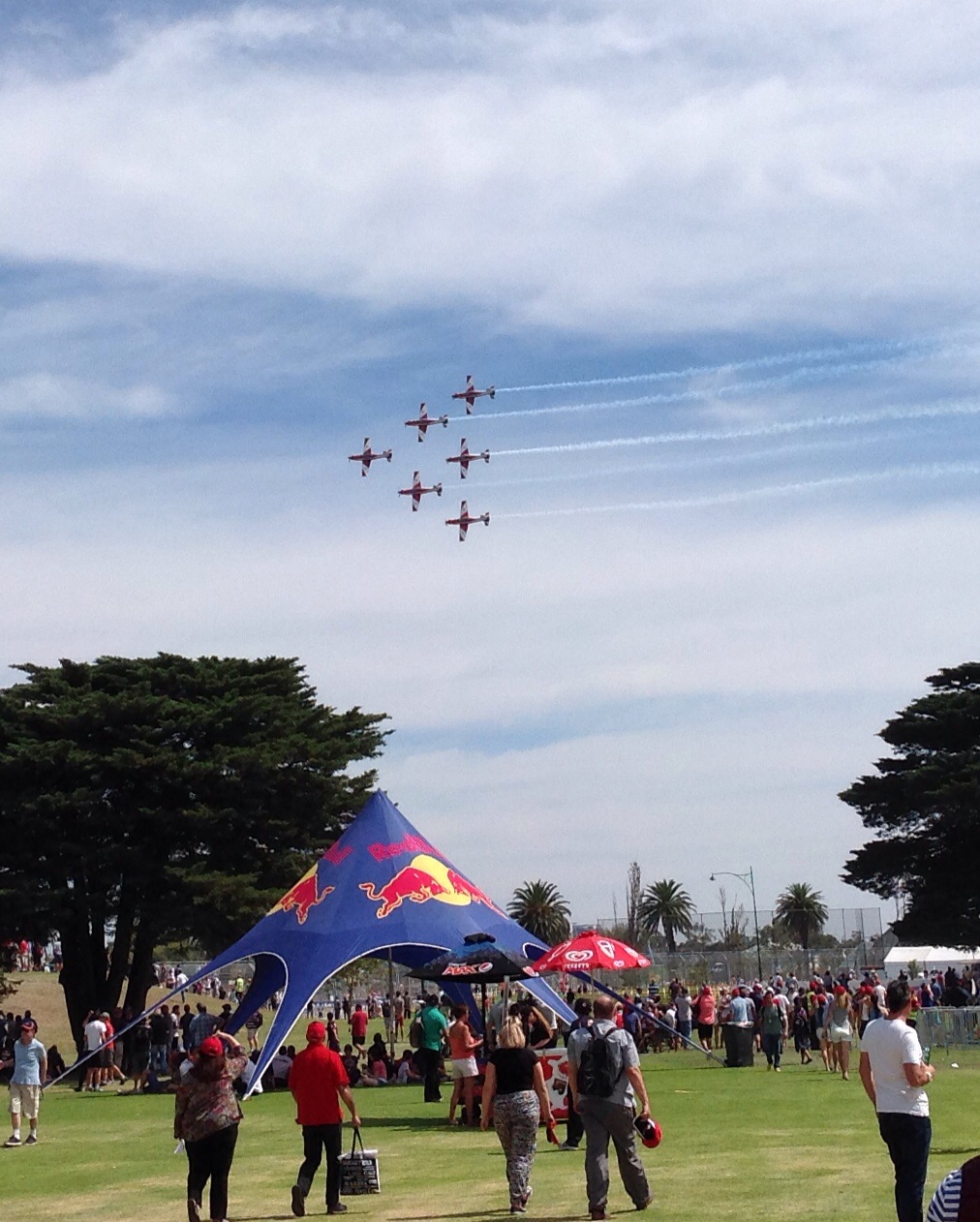
RAAF ‘Roulettes’ elite squadron flying Pilatus PC9 aircraft and the McDonnell Douglas F/A 18 Hornet ‘demo’ are always much anticipated.
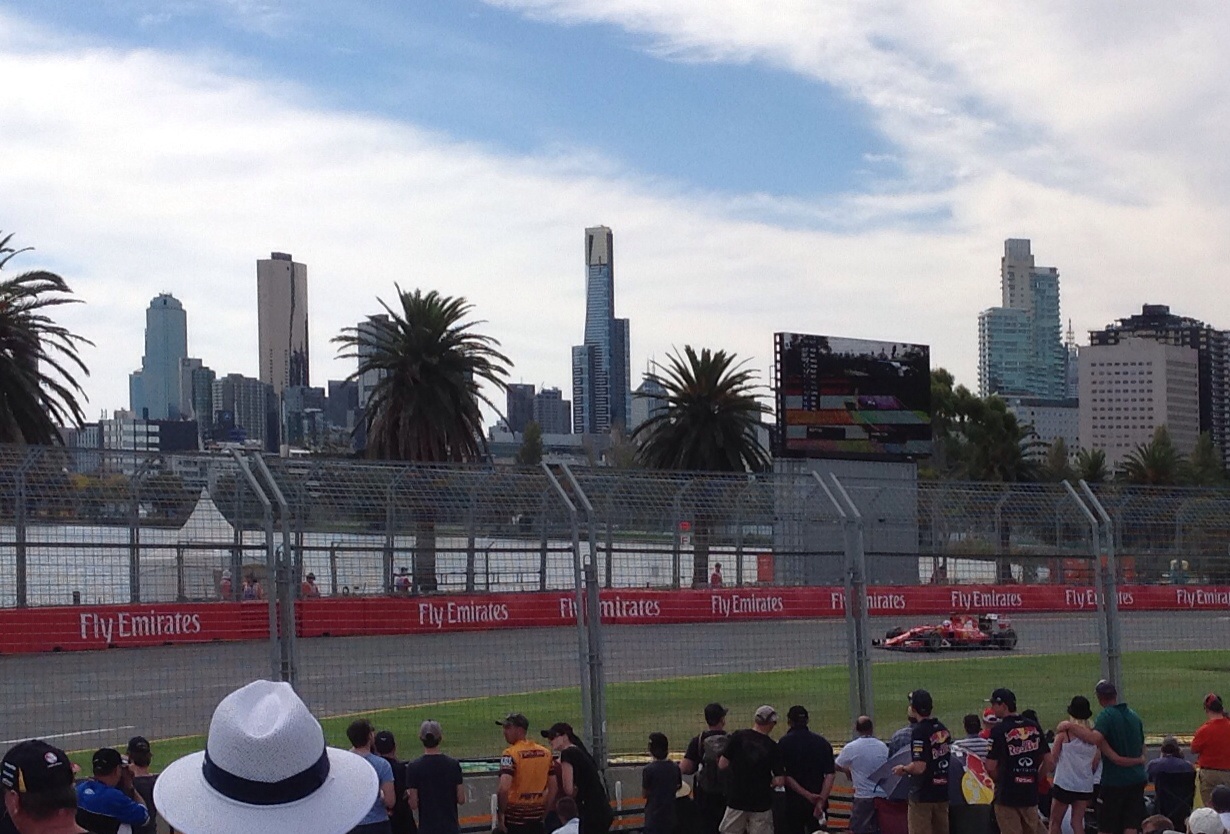
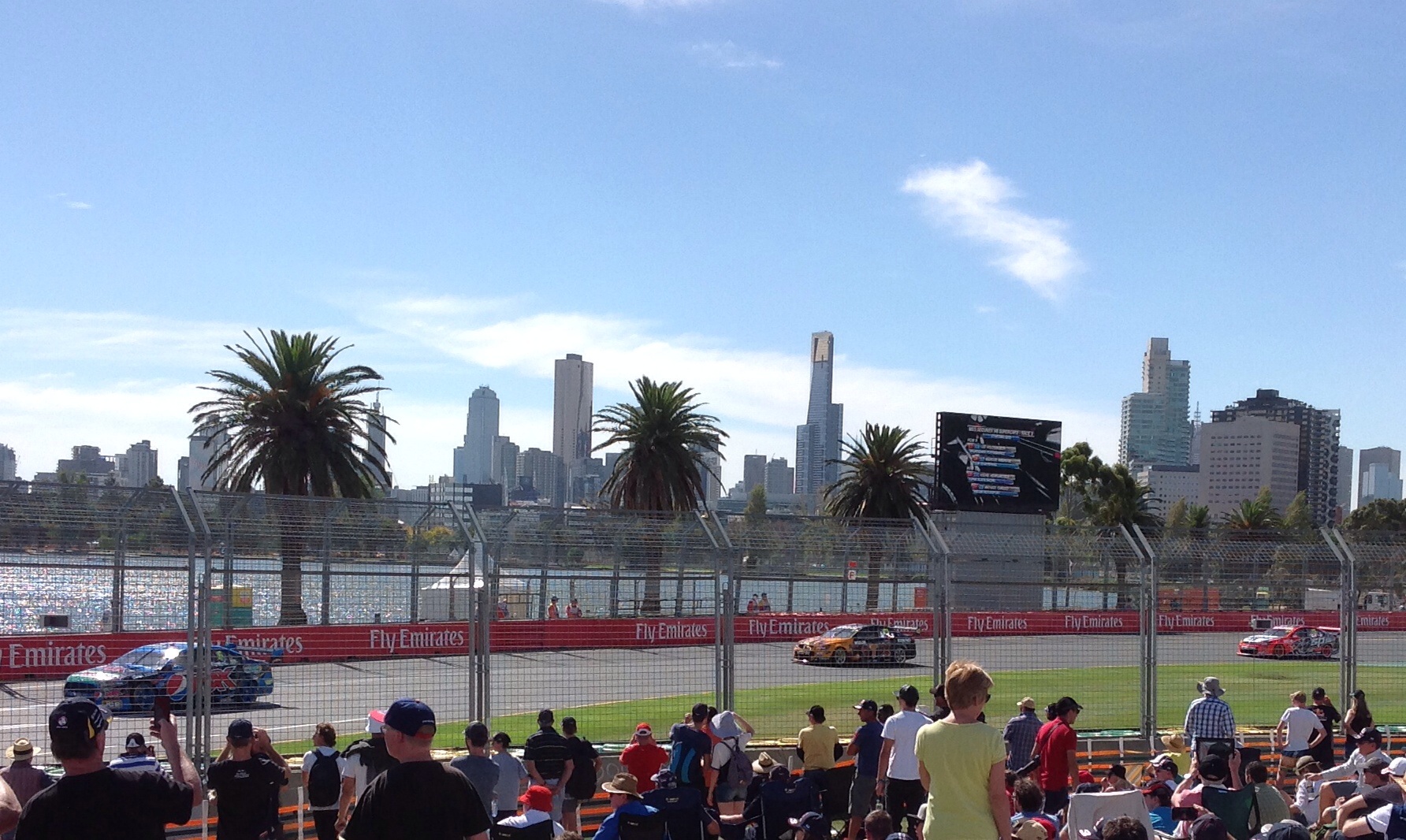
This shot is of the V8 Supercars and shows the proximity of the City of Melbourne to Albert Park, it’s a walk or short tram ride depending upon where you stay. Gritty, trendy St Kilda my pick as a local especially for the young or young at heart. It’s an easy walk to the circuit being on its doorstep with plenty of pubs, bars and restaurants as well as being right on Port Phillip Bay, if the weather is beach friendly and it usually is in early March.
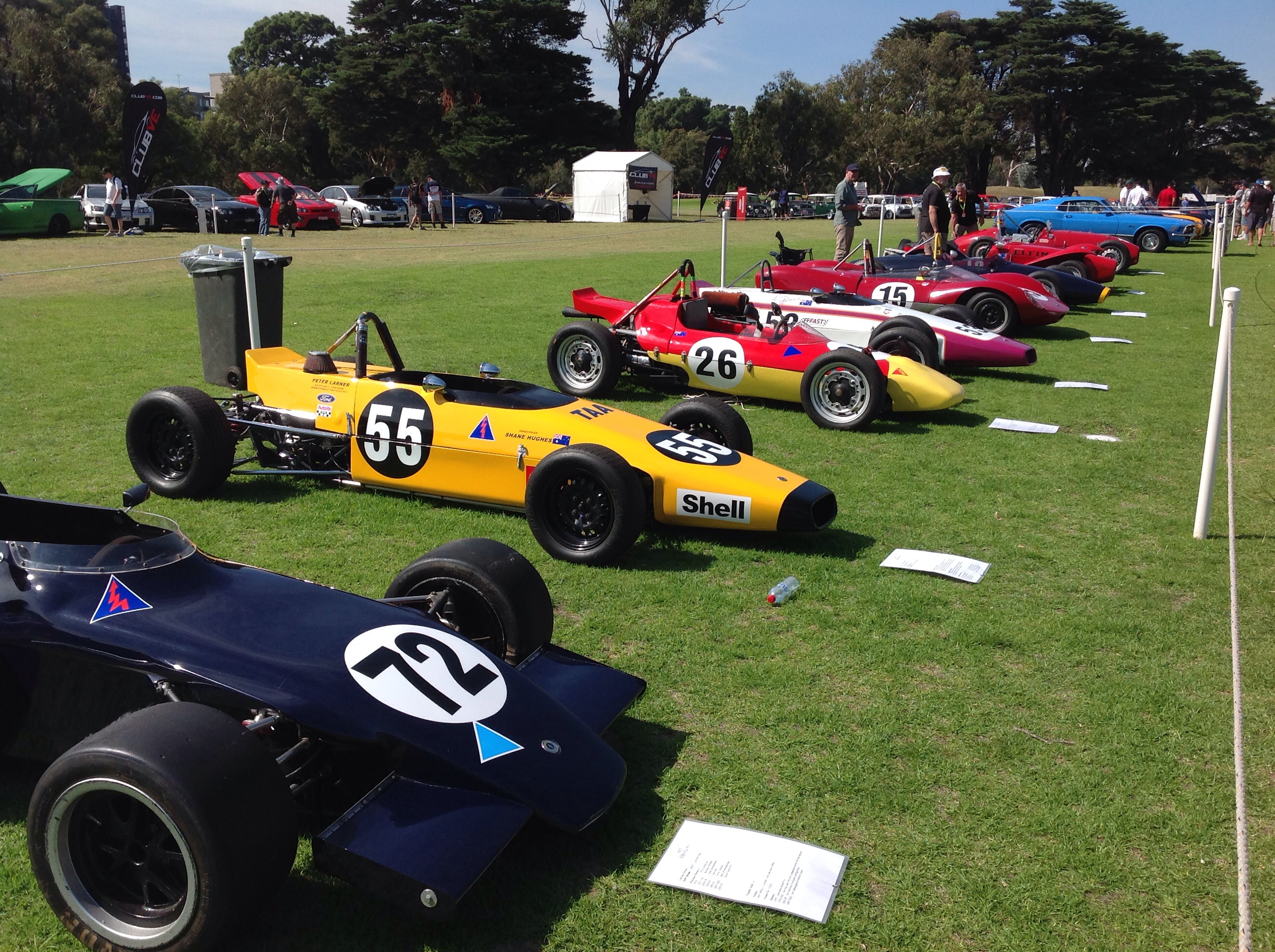
Elfin Owners Club Display, from ‘black to back’ cars; F2 622 Ford, 600 FF, 500 FV, pink nosed F2 600 Ford, red ‘Mallala’ Ford Sports. Superb cars they are too!
Most of you are from far away, it’s a race and place worth visiting.
If you had 2 weeks leave I would; arrive in Cairns and visit and dive ‘The Great Barrier Reef’, have a few days in Sydney and then ‘back to back’ the Phillip Island Historic Meeting with the AGP doing some touristing out of Melbourne in the week between. Hope some of you come next year let me know if you do, happy to be a tour guide.
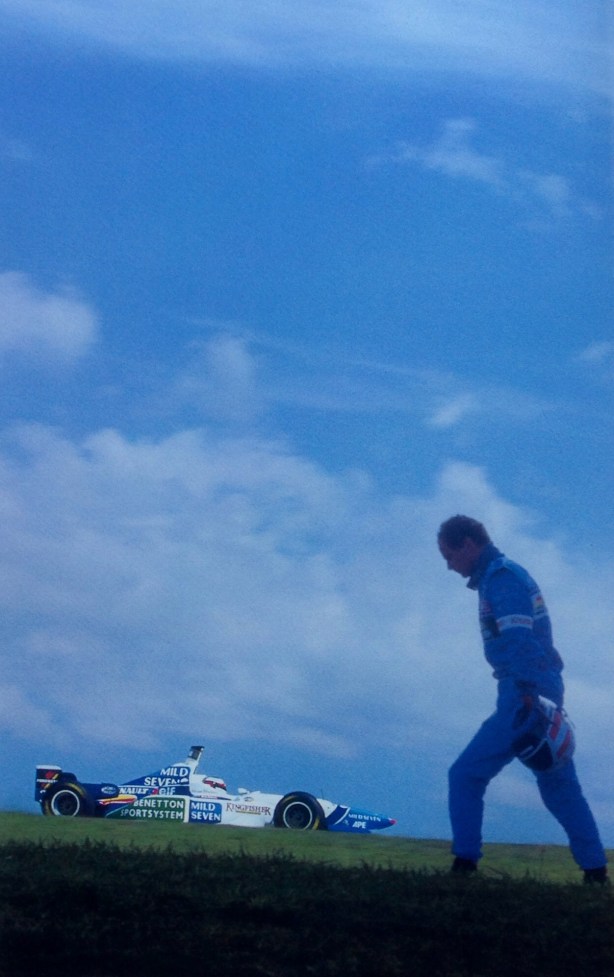
Gerhard Berger starts the long walk back to the Interlagos pits, Brazilian Grand Prix 1996…
Teammate Jean Alesi passes in his Benetton B196 Renault en-route to second place in the race won by Damon Hills’ Williams FW18 Renault,the Brit won the title that year. It was a great weekend for Hill, he started from pole, won the race, set fastest lap and lapped his mate Mikey in his new Ferrari F310 10 laps from home.
Gerhard qualified 8th and pulled off the circuit with hydraulics failure.
Schumacher joined Ferrari after his two Benetton World Championships on the trot at the start of 1996, the F310 commenced the season poorly but by the end of the year with hard work all round the car was competitive. Benetton were never a force after Schumachers departure morphing into Renault in 2002…Schumi left with Rory Byrne, Ross Brawn and other key players at the time.
Team Morphings…
At the same time i tripped over the shot above i looked at the prospective F1 team list for 2015, depending upon who actually lobs in Melbourne in March!
Of the 11 potential entrants this year only 3 have ‘unbroken lineage’ as marques; Ferrari, McLaren and Williams. Sure there have been changes in equity ownership along the way of these 3 but in essence the marques are ongoing.
All the other teams started as something else, often many years ago.
Benetton are a good example of a team which ‘morphed’ into a few different teams along the way.
Toleman Motorsport…
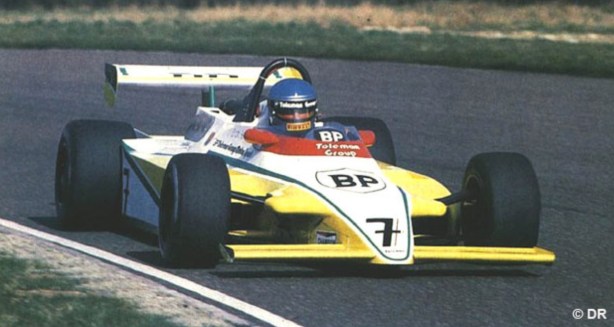
Brian Henton in his 1980 European F2 championship winning Toleman TG280 Hart. The team which designed, built and raced this car were the core of the team well into the Schumacher era of the team in its various iterations. (DR)
Ted Toleman, a transport entrepreneur became involved in motorsport initially as a power boat competitor and as a sponsor, initially of South African Rad Dougall in FF2000.
They progressed to F2 with Rad racing customer March and Ralt cars and became a manufactuer with the fantastic Toleman TG280 Hart, this 2 litre ground effects F2 machine designed by Rory Byrne, late of Royale for whom he had designed some great cars, the 75′ Royale RP21 one of the alltime best FF cars.
Brian Henton won the 1980 European F2 Championship from teammate Derek Warwick, the whole team including its drivers progressing to F1 in 1983, and famously launching the F1 career of Ayrton Senna in 1984.
Toleman attracted Benetton as a sponsor in 1985, the clothing manufacturer acquiring the team and renaming it in their own image with effect the 1986 season.
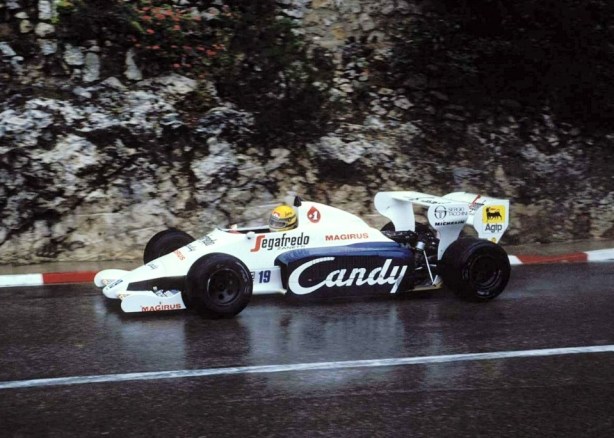
Senna drove the underpowered but fairly explosive in its power delivery, Toleman TG184 Hart to 2nd place with great, deft precision. Only an eagerly waved red flag stopping the Brazilian from passing an a slowing Prost…with Stefan Bellof also coming home strongly from the rear of the grid in his Tyrrell. Bellof was making similar progress to Senna as Senna was to Prost…what a finish it could have been. To be fair there were a lot of accidents, the red flag was justified..if only it went out a few laps later! (Unattributed)
Benetton Formula Ltd…
Over the years the team used BMW, Ford and Renault engines with Flavio Briatore, Tom Walkinshaw and David Richards having key management roles along the way.
Drivers included Gerhard Berger, Jean Alesi, Sandro Nannini, Thierry Boutsen, Nelson Piquet, Roberto Moreno, Michael Schumacher and Ricardo Patrese.
The teams most successful period was in 1994/5, with Schumacher taking the drivers title in 1994 with the Ford V8 Zetec powered B194 and both drivers and constructors titles with the Renault RS7 V10 powered B195 in 1995.
Renault acquired the team in March 2000, leaving its name as Benetton in 2000/1 before changing the name to Renault F1 Team…Equipe Renault Elf the earlier incarnation of the Renault F1 team as a constructor from 1977-1985 before withdrawing as a constructor but continuing as an engine supplier to the likes of Williams and Lotus.
Renaults’ Grand Prix heritage stretches right back to the Edwardian period with Ferenc Szisz winning the 1906 French Grand Prix in a Renault AK90CV, they have been in and out of the sport as corporate marketing and engineering needs changed over 100 years.
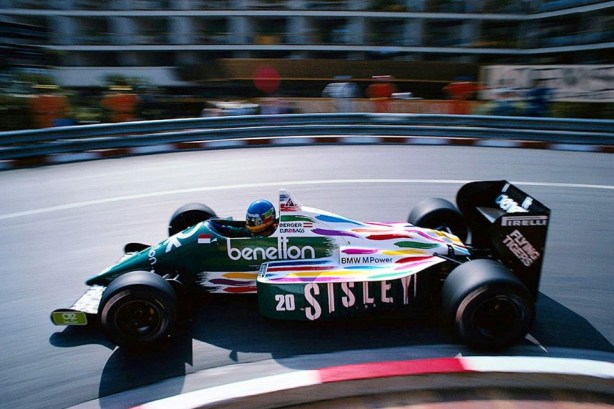
Gerhard Berger, Monaco 1986 in the Benetton B186 BMW. Gerhard qualifed 5th, wheel drive peg failure causing his retirement. Alain Prost won the race in a McLaren MP4 TAG. (Unattributed)
Renault F1 Team…
The teams sweet spot was with Fernando Alonso in the mid-2000’s, the Spaniard winning the drivers and constructors championships in 2005 and 2006 with the R25 and R26 powered by Renaults RS25 3 litre V10 and RS26 2.4 litre V8 respectively.

Alonso Monaco 2008 in his Renault R28. He qualified 7th and finished 10th in the race won by Hamiltons’ McLaren MP4/23 Mercedes. Tight lines as far as the eye can see.(Unattributed)
The teams competitiveness waned with the departure of Schumacher and other key players to Ferrari at the end of 2005.
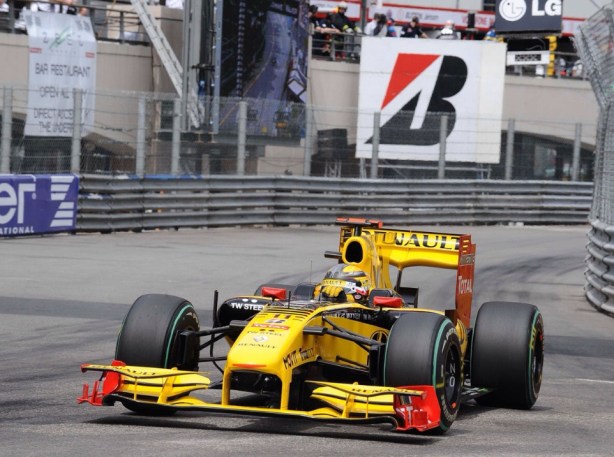
Robert Kubica added some firepower to the team in 2010, here in Monaco he qualified his Renault R30 second to Mark Webbers’ winning Red Bull RB6 Renault, the pair finishing the race in that order. Kubica replaced Alonso after he left for Ferrari at the end of 2009, his promise unfulfilled after the rallying accident which seriously broke his arm, preventing his return to an F1 cockpit.(Unattributed)
Lotus Renault GP…
In 2010 Renault sold a 75% stake in the company to Genii capital , a Luxembourg based investment company given road car commercial pressures. Renault announced its plans to scale back its F1 involvement, Toyota, Honda and BMW withdrawing from the sport for similar reasons.
Lotus Cars entered into a sponsorship agreement till 2017 with the team renamed Lotus Renault GP for 2011 but the cars themselves still called Renaults…and competed with Team Lotus (modern) who had acquired the rights to this historic name from former World Champ James Hunts’ brother David Hunt.
So, essentially there were two Lotus’ competing in 2011, the ‘Lotus Renault GP’ Teams Renault R31 and the ‘Team Lotus’ Lotus T128 Renault…will the real Lotus Renault please stand up!
It could only happen in modern F1, Lotus fans wept and Chapman turned in his grave…at least the Lotus sponsored Renault R31’s were competitive but the Lotus T128’s were shit-boxes at best.
Crazy!
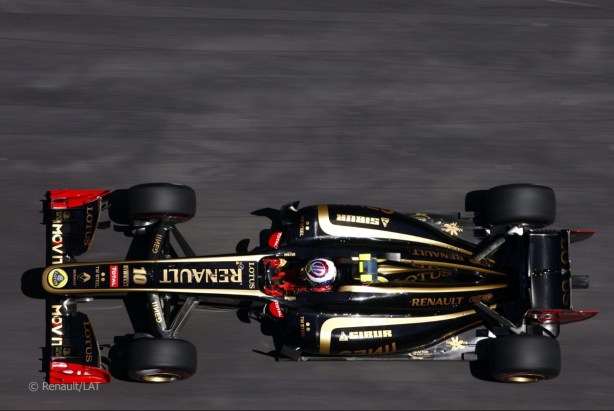
Vitaly Petrovs’ Renault R31, entered by Lotus Renault GP. 10th on the grid and DNF after a collision on lap 67. Monaco 2011. Compare and contrast with the other ‘Lotus’ of Trullis’ below…(LAT)
Team Lotus (modern) raced in F1 as ‘Lotus Racing’ in 2010, that entity a group set up and funded by a group of Malaysian businessmen lead by Tony Fernandez who had secured a licence to use the name from Lotus Cars owner, Proton cars, a national Malaysian road car manufacturer.
This ‘dual Lotus’ naming situation was resolved when Fernandez acquired Caterham Cars, see the paragraph below, renaming the team Caterham F1 Team, the cars, wait for it, also Renault powered!

Jarno Trulli, poor sod, in the Lotus T128 Renault, entered by Team Lotus, Monaco 2011, 13th in the race, 2 laps down on Vettels’ victorious Red Bull RB7 Renault. (Unattributed)
A bit of history here…Team Lotus (old) was the entity under which Colin Chapman competed in Grand Prix Racing…in simple terms, and its not quite this simple; in the Chapman Lotus World ‘Group Lotus Ltd’ built the road cars, ‘Lotus Components’ built the racing cars and ‘7’ until sold to Graham Nearn in 1971, Nearn rebranding the cars ‘Caterham’ as he wasn’t allowed to call them Lotuses’ under the deal he struck with Chapman, and ‘Team Lotus’ raced the cars…simple isn’t it!?
Renault, as stated above continued to supply the chassis (for the Lotus Renault GP team) from the Enstone, UK base which dated back to Benetton days, with Renault branding featuring in black and gold livery which echoed the ‘glory days’ of the Lotus ‘John Player Specials’ of the 70’s. Whilst the visual links were clear the innovative designs and race winning ability were not!
From 2012 the team has been known as Lotus F1 Team…

Kimi Raikkonen in his Lotus E20 Renault, Q8 and 9th in the race won by Mark Webbers’ Red Bull RB8 Renault (LAT)
Kimi Raikkonen, having returned to F1 from a two year stint in rallying and Romain Grosjean really made the E20 Renault RS27 engined cars sing in 2012 .
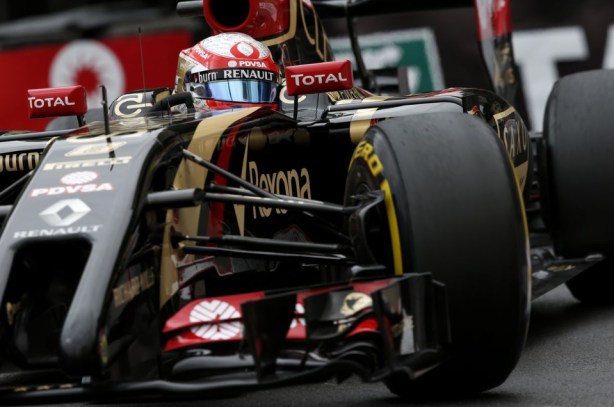
Romain Grosjean at Monaco in the 2014 Lotus E22 Renault, like most of the 2014 cars ‘as ugly as a hatful of arseholes’ as we colloquially put it in this country… he finished 8th in the race won by Nico Rosbergs’ Mercedes W05. (Unattributed)
And so to the present. The Lotus F1 team have entered the 2015 season with their Lotus E23 Mercedes to be driven by Romain Grosjean and Pastor Maldonado, the long relationship with Renault as engine provider over for now at least.
The Administrator of Caterham, an administrator to the company being appointed in October 2014 due to funding deficiencies, have provisionally entered the season with dispensation being provided to run the 2014 chassis to improve the potential of the companies sale. ‘Crowdfunding’ being used to raise some working capital. The ‘CF1 Caterham team’ would therefore use the 2014 Caterham CT05 Renault with drivers TBA…
The next morphing of Toleman/Benetton/Renault/Lotus Renault/Lotus F1 will be interesting but far from the last! It begs the question as to which team has ‘morphed’ the most in F1 history…Minardi or Jordan maybe?
Photo Credits…
D Reinhard, LAT, DR
Lotus council of war…Peter Warr, Ayrton Senna and Gerard Ducarouge with Niki Lauda. The three men responsible for the recovery of Lotus competitveness in the Mid-80’s…
I read with sadness of the death of French design great Gerard Ducarouge on 24 February at 73 years old.
At the weekend I drafted this introduction to an unpublished piece on Adrian Newey…It’s been interesting to learn about and admire the careers of the sports outstanding engineer/designers before my time and since i became interested in motor racing enjoy the efforts of the design stars of the day and wait in eager anticipation of their next creations.
It’s the ones who have enjoyed enduring success I have always been most drawn to. Janos’ and Chapmans’ contributions over 30 years truly amazing.
Dr Porsche, Vittorio Jano and Jim Hall predate my period of interest but Colin Chapman, Mauro Forghieri, Gerard Ducarouge, Gordon Murray, John Barnard and Adrian Newey i have followed since 1972.
Ducarouge obtained a Degree in Aeronautics and commenced his career with Nord Aviation and soon moved to Matra where he worked his way up through the ranks and was responsible for the fabulous 1969 F1 Championship winning Matra MS80 Ford, Jackie Stewart winning the drivers championship and Matra the manufacturers.

Ducarouges’ 1969 championship winning Matra MS80 Ford. Aluminium monocoque, front suspension upper and lower wishbones with coil spring/damper units. Rear single top link, parallel lower links, twin radius rods and coil spring/damper units. Ford Cosworth DFV V8, circa 435 bhp, Hewland FG400 gearbox. (Unattributed)
He was also responsible for the equally fabulous Matra MS670 championship winning sportscars before moving to Ligier, also Matra powered, when they entered F1 in 1976.
He was dropped by Ligier in 1981 after the success of the ground effects JS11 in 1979 and 1980, moved to Alfa and then Lotus where, together with Peter Warr (team manager) and Ayrton Senna turned around the fortunes of one of the great marques which had floundered since Colin Chapmans death in 1982. The Lotus 95T Renault was very competitive in Mansell and DeAngelis’ hands in 1984 and provided a base for the 97T which followed, a winner in Sennas’ hands in 1985.
He later worked with Larrousse and returned to Ligier in 1991, leaving in 1994 to return to his roots at Matra as International Development Director.
This is not a detailed account of a great career, rather a short piece to recognise the passing of a great man and an innovative and intuitive designer

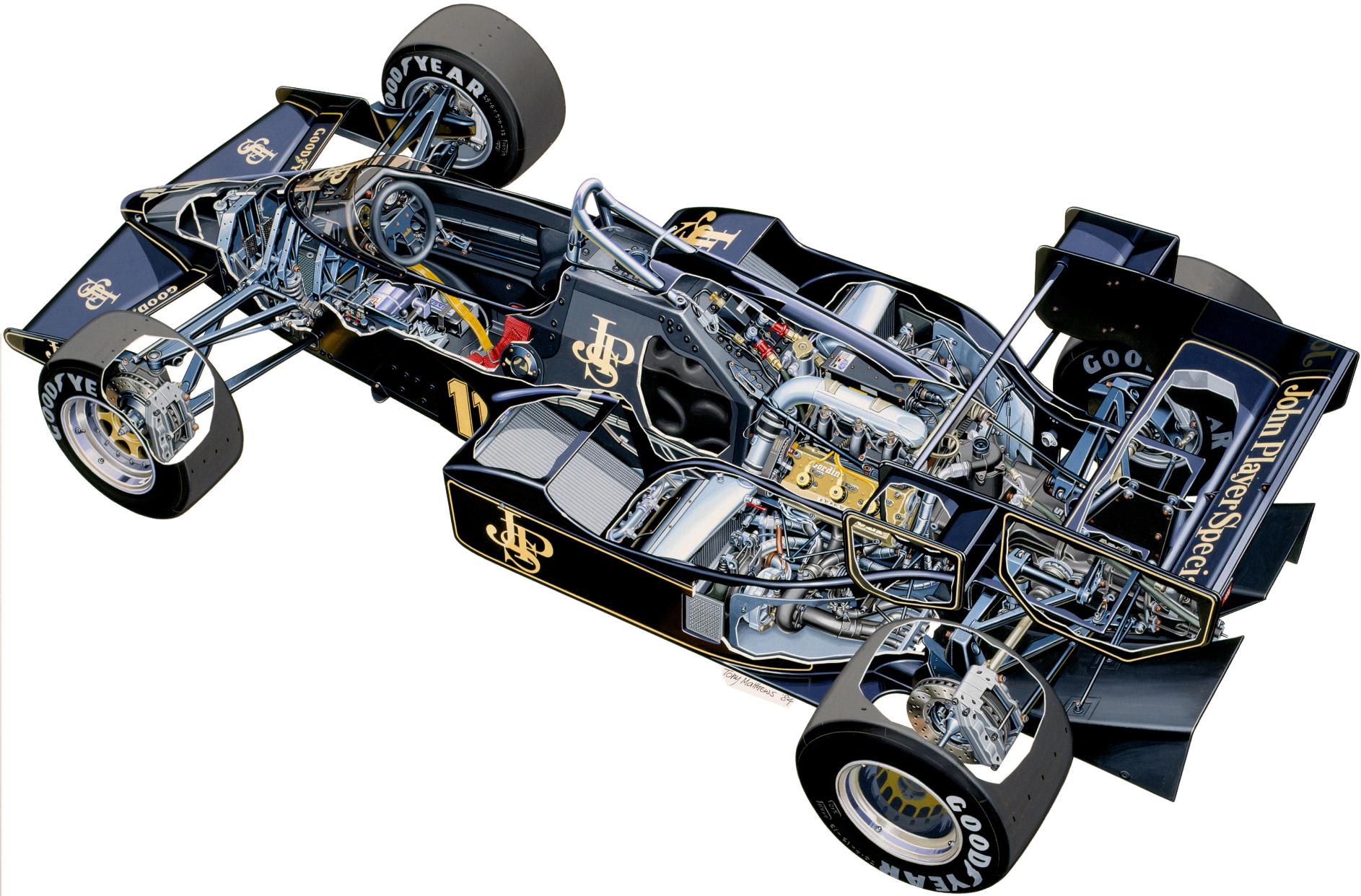
Lotus 95T Renault. Ducarouge ’84 design, carbon fibre chassis, wishbones and pull rod suspension front and rear with coil springs. Renault EF4 V6 DOHC twin turbo 1.5 litre, circa 800bhp. Lotus/Hewland ‘box. 1190Lb. (Tony Matthews)
Credits…
Tony Matthews
No-one in Schumi’s era consistently extracted more from their car and team than he did…
He raised the bar in terms of driver performance and commitment and lowered it if ‘sportsmanship’ has its place in modern professional sport/business. I like to think that it does.
2001 Season…
Schmachers’ win in the Hungarian Grand Prix was his 51st, equalling Alain Prosts’ record. It also secured his fourth world-championhip.
2001 brought a repeat of the previous year’s great results. Schumacher and Ferrari won the Drivers’ and Constructors’ title an incredible three months before the end of the season in a magnificent one-two at the Hungaroring (Schumacher from Barrichello).
It was an amazing season with nine wins (Australia, Malaysia, Spain, Monaco, Europe, France, Hungary, Belgium, Japan), 11 pole positions, 19 placings in the points with 15 of those podium positions. Ferrari finished the Championship with a total of 179 points in the Constructors’ and 123 in the Drivers’ World Championships.
F2001 Design and Specifications…
Ferrari by this time were designing a completely new single-seater each year to keep ahead of the competition, starting with the engine, the Tipo 050, which had the same 90° vee-angle but was lighter at just 100 kg. The whole car was lighter and had been tweaked so that the regulation 600 kg minimum weight could be reached with ballast strategically positioned by the engineers around the chassis to suit the track to be raced on.
The engine is a 90° V10 Bore/stroke 96 x 41.4 mm, 2996.62 cc in total. Compression ratio 12.6 : 1 Maximum power 607 kW (825 hp) at 17,300 rpm. Valve actuation by DOHC per bank, four valves per cylinder. Magneti Marelli electronic indirect injection. Ignition electronic, single spark plug per cylinder, dry sump lubrication.Clutch multi-plate. Transmission electro-hydraulic 7-speed + reverse
The chassis was a honeycomb and carbon-fibre composite monocoque. Front suspension independent push-rod, twin wishbones, torsion bar springs, telescopic shock absorbers, anti-roll bar. Rear suspension independent push-rod, twin wishbones, torsion bar springs, telescopic shock absorbers, anti-roll bar.
Brakes carbon-carbon composite discs. Steering electric power-assisted rack-and-pinion. Front tyres 13”, Bridgestone Rear tyres 13”, Bridgestone.

Schumacher Ferrari F2001 victorious at Spa 2001. Coulthard McLaren MP4/16 Mercedes and Giancarlo Fisichella Bennetton B201 Renault were 2nd and 3rd. (Unattributed)
Credits…
Scuderia Ferrari