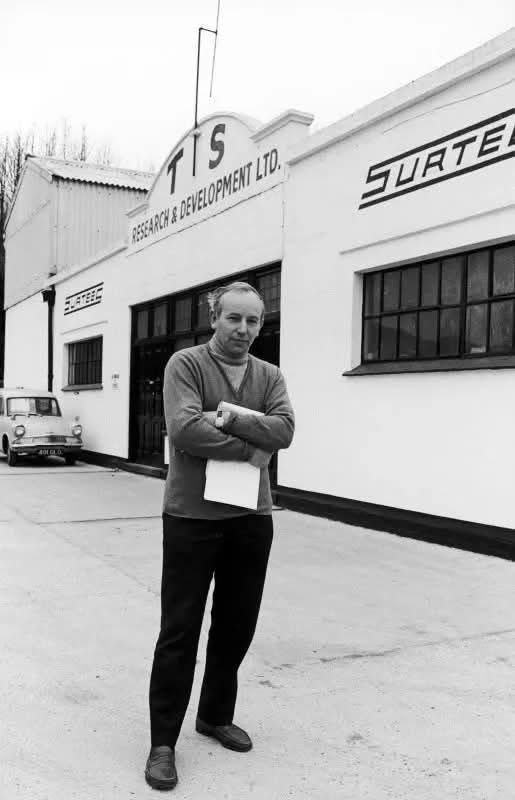
Archive for the ‘Fotos’ Category

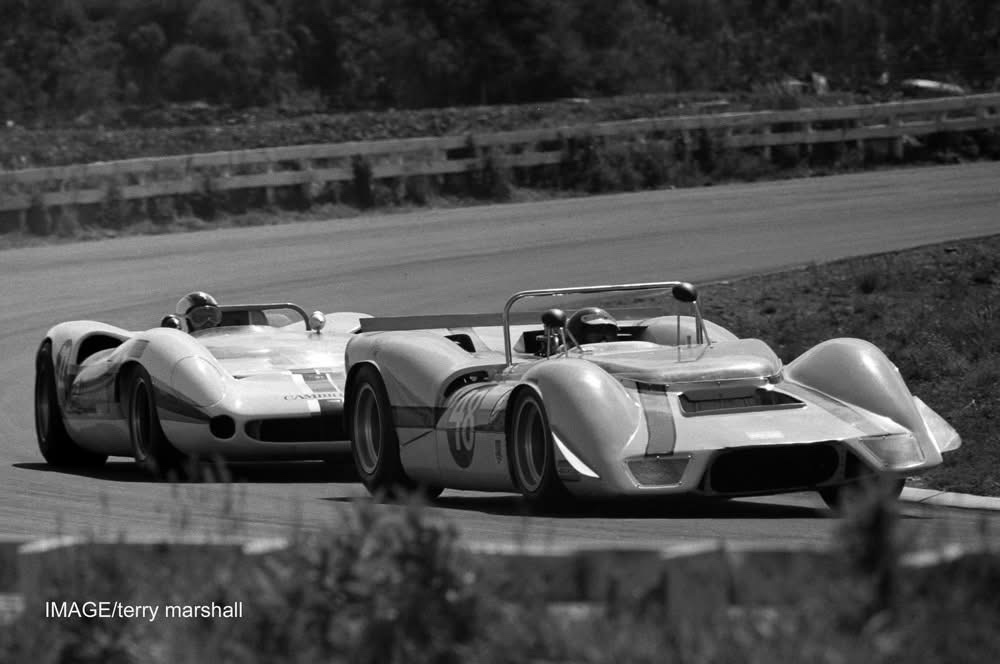
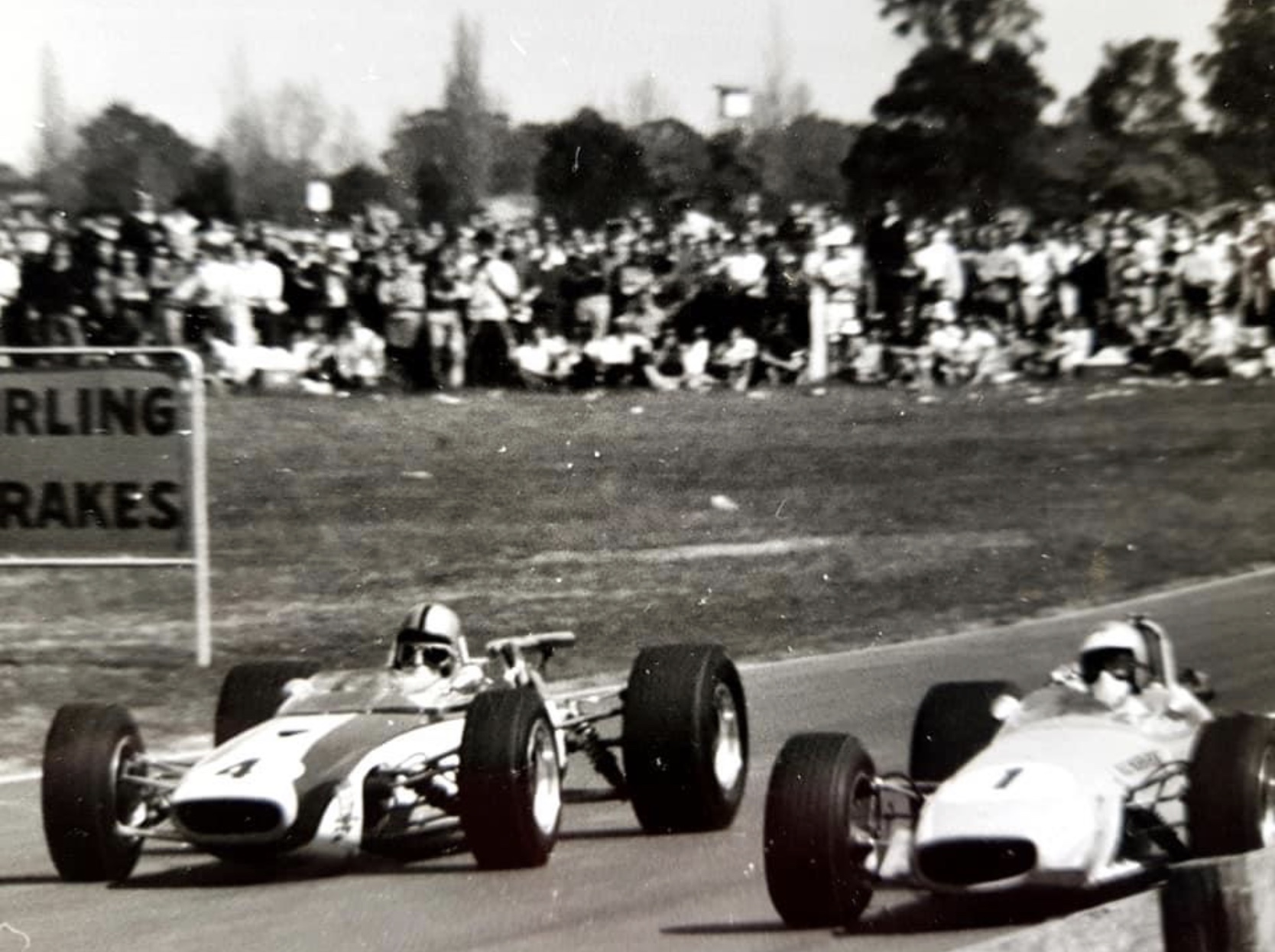
Graham Harvey, Elfin 400 Chev ahead of Jim Boyd Lola T70 Chev at Bay Park, New Zealand in 1969.

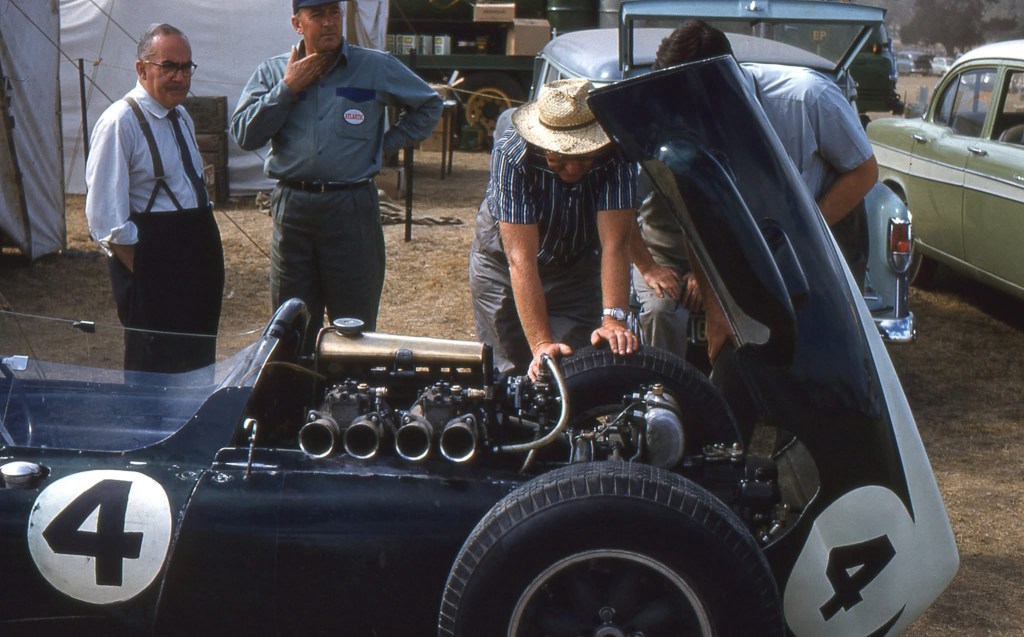
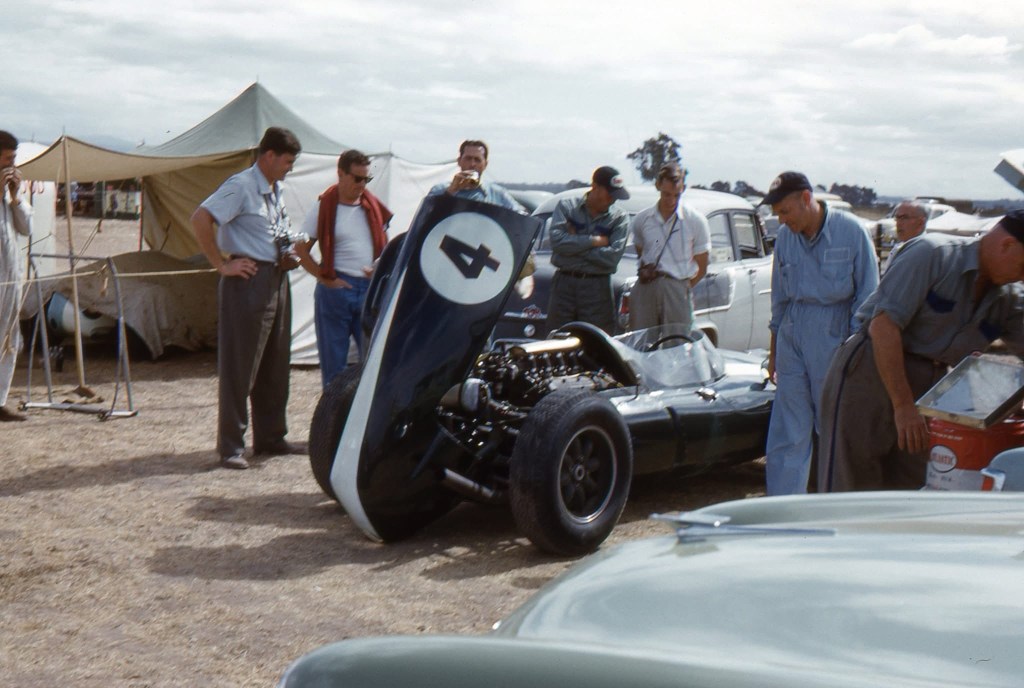
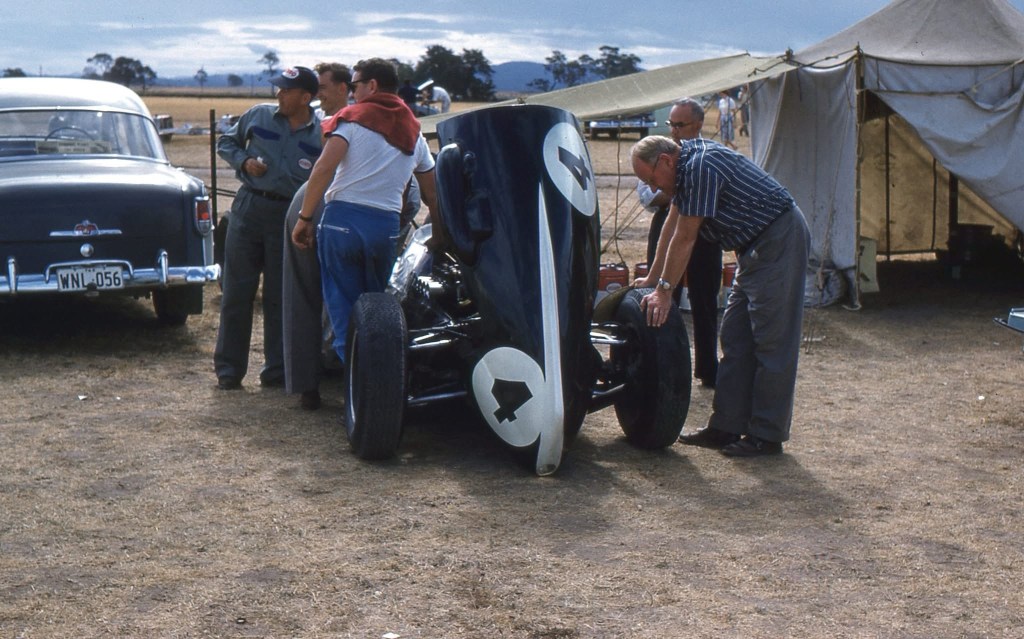
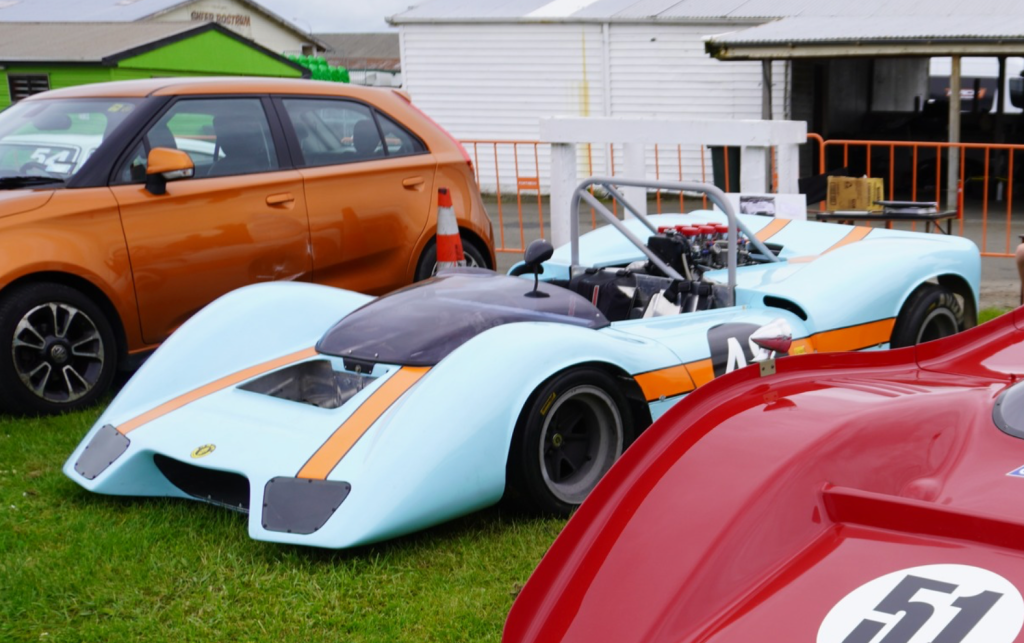
Elfin 400 chassis BB67-4, first owned and raced by Andy Buchanan, has lived all of its life in New Zealand and is now very close to completion, or has it already run? Where are those photos Alastair Grigg sent me!?

(R Herrick)

More on Garrie Cooper’s first big sports car here:https://primotipo.com/2015/05/28/elfin-400traco-olds-frank-matich-niel-allen-and-garrie-cooper/

(L Thacker)

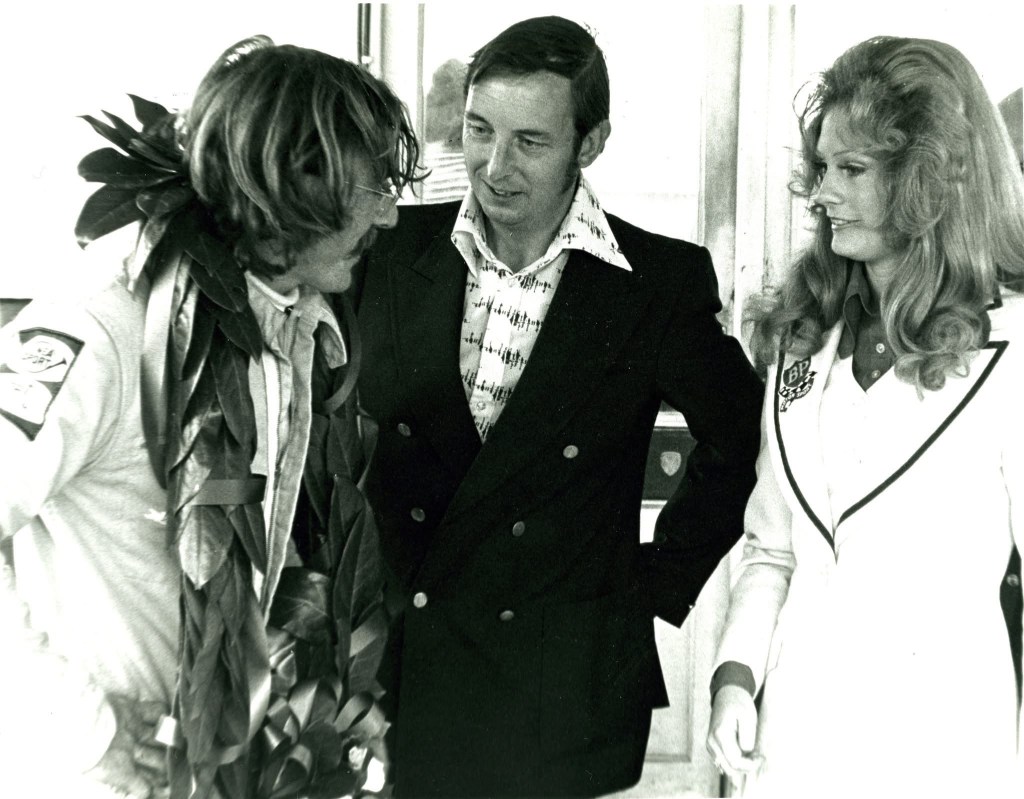
BP’s Les Thacker congratulates Larry Perkins after an F3 win at Brands Hatch and Man of The Meeting award.

The F2 Index tells me Larrikins won two races at Brands during his victorious Ralt RT1 Toyota 1975 European F3 Championship campaign, the Polydor Records Trophy on September 7 and the BARC-BP British F3 Championship round a fortnight later on September 21. The shot will have been taken on the latter weekend, Larry won that F3 Championship from Conny Andersson and Renzo Zorzi.

Epic length article on Larry and Terry Perkins here: https://primotipo.com/2023/01/28/terry-and-larry-perkins/

Larry on the Snetterton dummy grid, June 15. A lousy day, 19th. Gunnar Nilsson was up the front in a March 753 Toyota (JI Croft)
(G Ruckert)

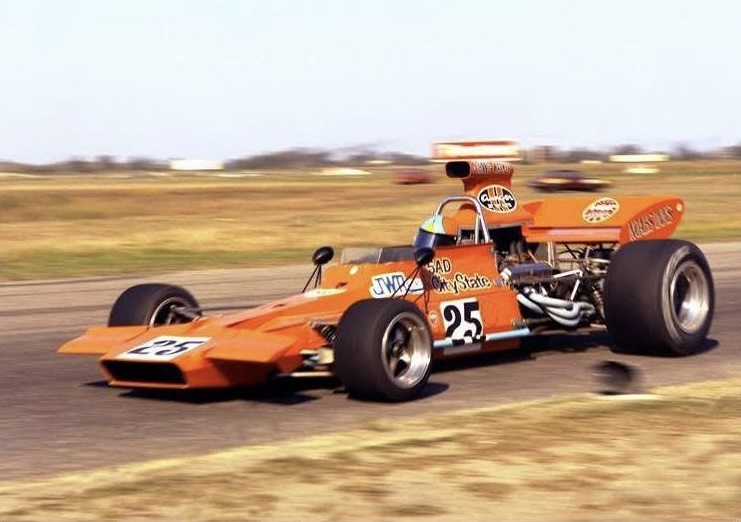
John Walker, Matich A50-004 Repco-Holden, at Surfers Paradise in 1972 or 1973. I’m not sure if it’s the Gold Star or Tasman rounds.

JW briefly raced an Elfin MR5 then jumped to the Matich which was US L&M Championship compliant – I can’t recall in what respect – doing very well with it in 1973. The Rise and Rise of John Walker really got going on that Stateside trip I reckon. Thoughts folks?

1979 Gold Star and Australian Grand Prix winner aboard the Martin Sampson owned, Rob Newman prepared Lola T332 Chev. More here: https://primotipo.com/2015/03/12/the-mother-and-father-of-lucky-escapes-john-walker-sandown-tasman-1975/

(C Wade)

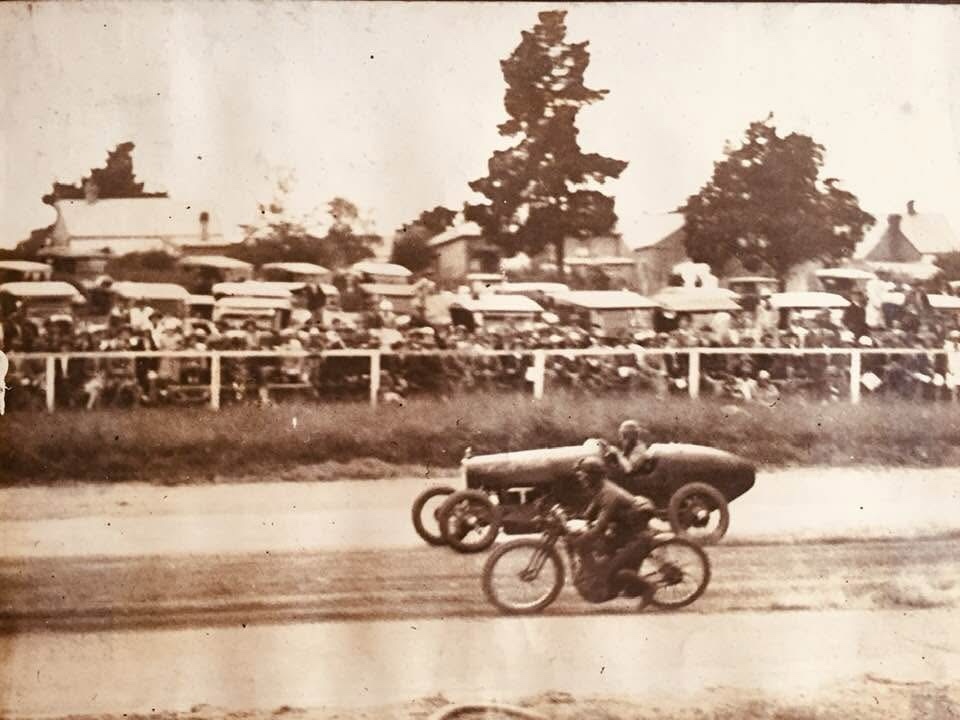
Peter White, Fronty Ford DO Twin-cam racing Tom Benstead, Harley Davidson, at Penrith in the late 1920s

The Fronty was a factory built racer imported to Australia as against an assemblage of parts built on a local chassis.

A bit more Fronty Ford here and more research needed and wanted on my part: https://primotipo.com/2018/11/20/penrith-speedway/

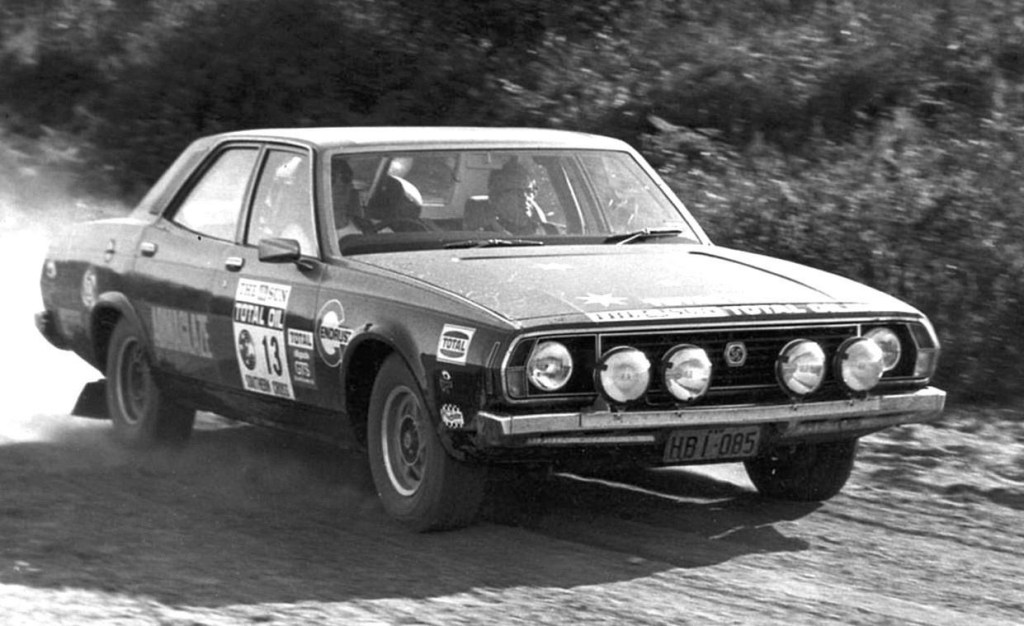
Evan Green and Roy Denny, Leyland P76 4.4-litre V8 during the 1974 Southern Cross Rally, see here: https://australianrallyhistory.com.au/history-of-the-southern-cross-international-rally/1974-southern-cross-rally/

Only seven of 61 crews finished the gruelling 3560 km event out of Port Macquarie between October 9-14, the winners for the third year on the trot was the Mitsubishi Lancer GSR of Andrew Cowan and John Bryson.

Regarded as a sweet-handling big car in the day, she would have been a bit of a handful in the forests, the car didn’t survive, I’m not sure on which stage it stopped.

More about Evan Green here: https://primotipo.com/2025/05/27/alfa-romeo-autodelta-alfetta-gt/

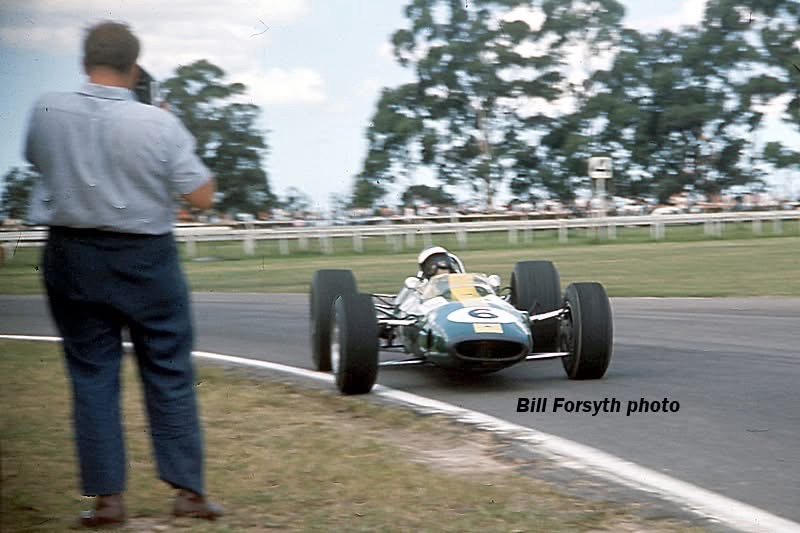
A rather brave and slow looking, well-nourished photographer shoots Jim Clark on the exit of the Northern Crossing during the Australian Grand Prix at Warwick Farm on February 19, 1967. Lotus 33 Climax FWMV 2-litre V8.

Jim won the Tasman Cup again that summer, but his close mate Jackie Stewart, BRM P261 2.1-litre, won the AGP with Clark 17 seconds behind him, with Frank Gardner third, Brabham BT16 Climax 2.5 FPF.

Tasman Cup ‘67 here:https://primotipo.com/2014/11/24/1967-hulme-stewart-and-clark-levin-new-zealand-tasman-and-beyond/

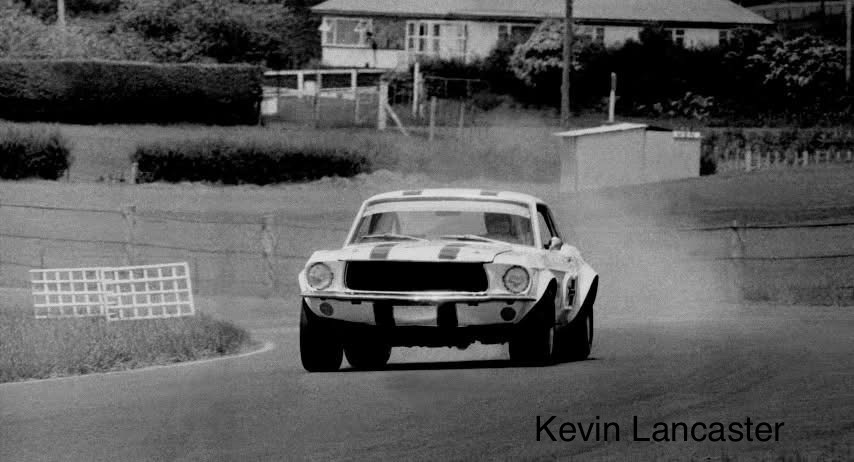
Pete Geoghegan blasts his Ford Mustang around Pukekohe circa 1970-71, how’d he do folks?

Check out this article about our Touring Car Exports: https://primotipo.com/2025/02/05/tourers-on-tour/

Geoff Brabham aboard the Jack Brabham Ford Bowin P4X Formula Ford at Warwick Farm in 1972, gimme a date folks it’s gotta be one of Geoff’s first gallops in a racing car.

Bob Beasley was the usual driver of this car, finishing in the fifth in the 1971 Driver to Europe Series and third in 1972. John Davis then won it in a raffle, and finished fourth in the 1975 title race, and then third with support from Grace Bros the following year.

More on the Bowin P4 here: https://primotipo.com/2018/08/30/bowin-p4a-and-oz-formula-ford-formative/ There is a good summary of Geoff’s career here: https://primotipo.com/2015/03/31/geoff-and-jack-brabham-monza-1966/

(J Quinn Collection)
(unattributed)

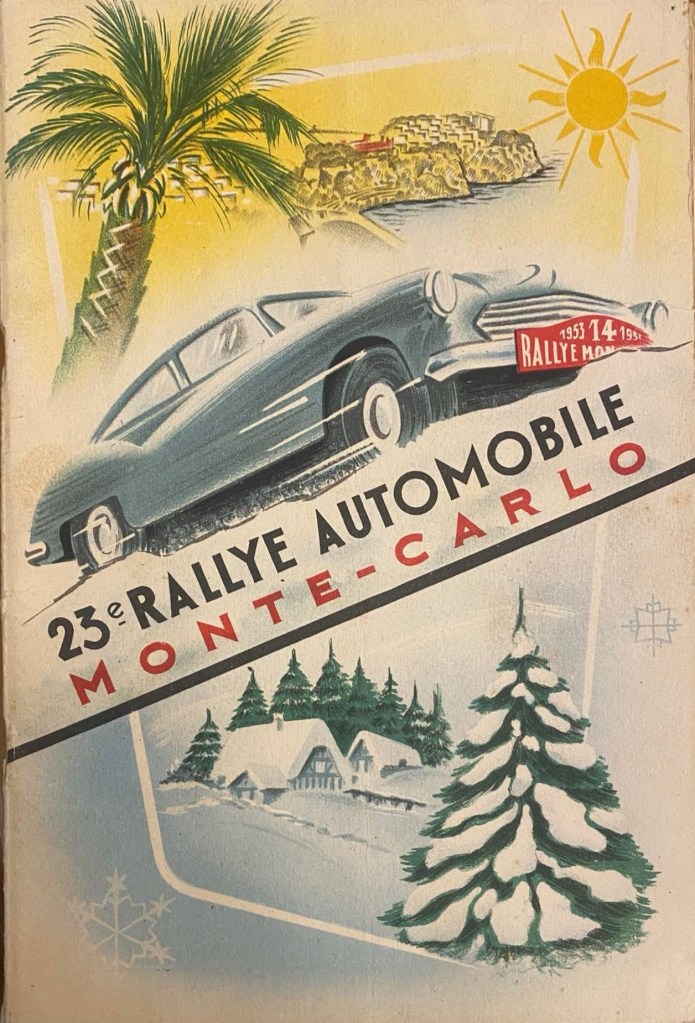
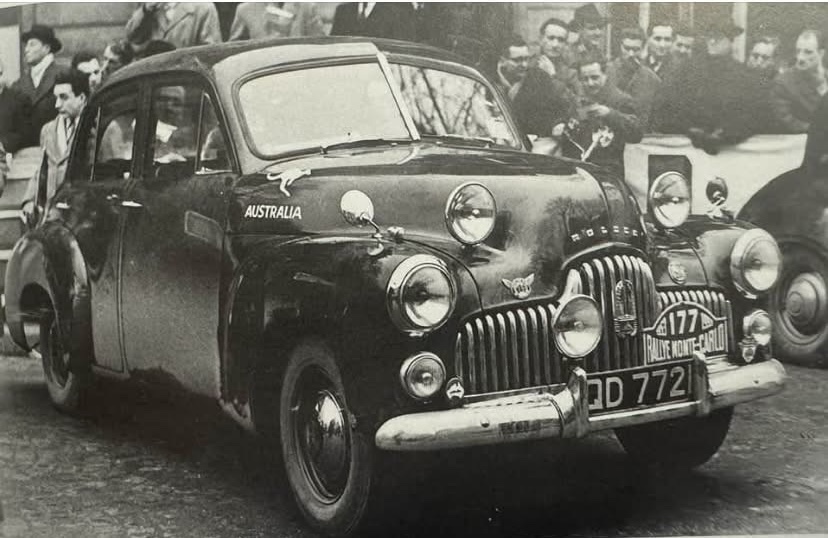
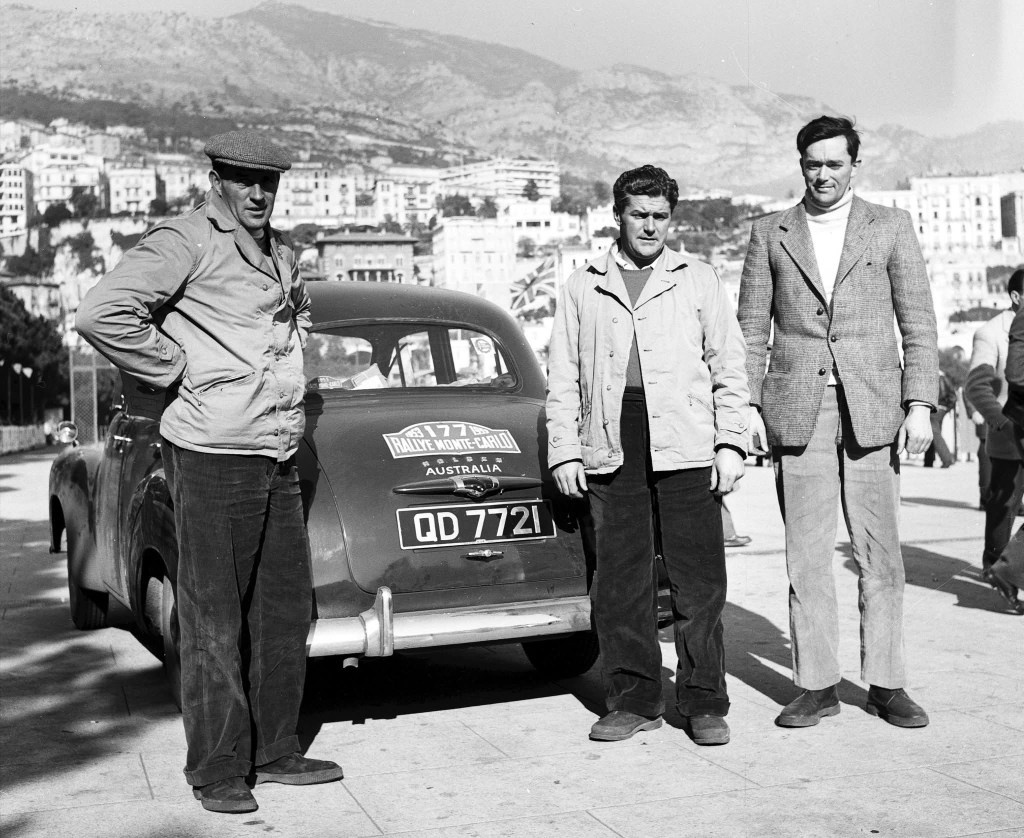
The Lex Davison/Stan Jones/Tony Gaze Repco Research prepared Holden 48-215 during the 1953 Monte Carlo Rally.

See here for all of the detail on the car build and the rally itself: https://primotipo.com/2019/01/25/melbourne-to-monaco-holdens-1953-monte-carlo-rally/

Lank Lex, Stumpy Stan and Tall Timber Tony (unattributed)
(R Burnett)

Surely one of Australia’s most evocative sports-racing combos of any era?

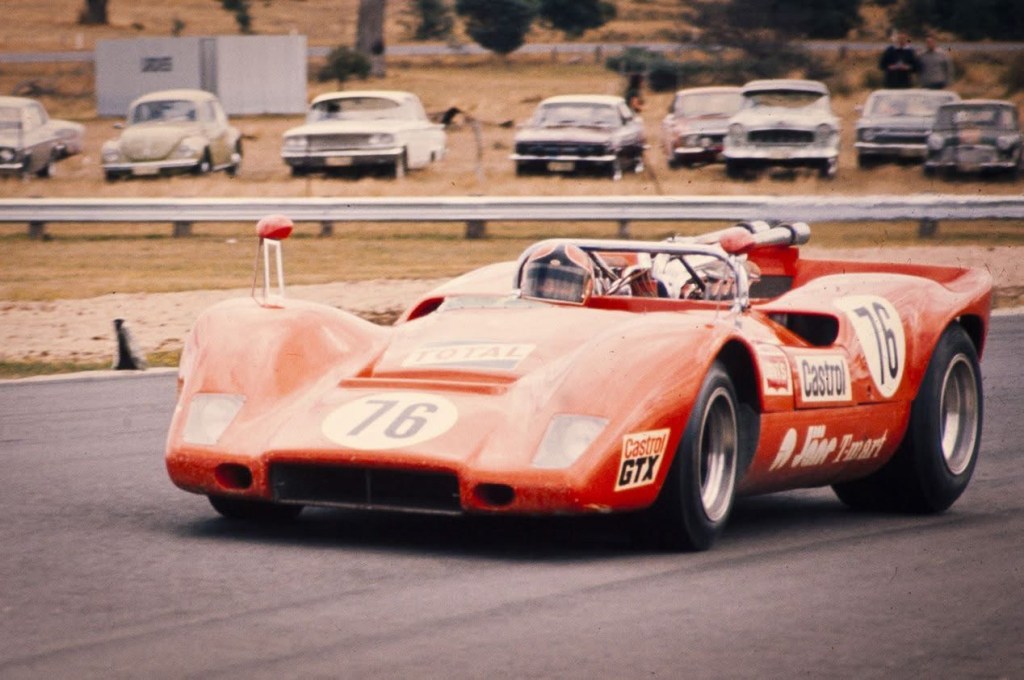
John Harvey aboard Bob Jane’s immaculate, John Sheppard prepared McLaren M6B Repco 740 5-litre at Symmons Plains in 1972.

Harves won the 1971-72 Australian Sports Car Championships with it. In 72 he won five of the six rounds, including the final one at Symmons on November 12. Glorious shot of a glorious car, see here: https://primotipo.com/2018/09/09/sandown-sunrise/ At the end of the season, Bob set it aside; the family retain it 50 years later.

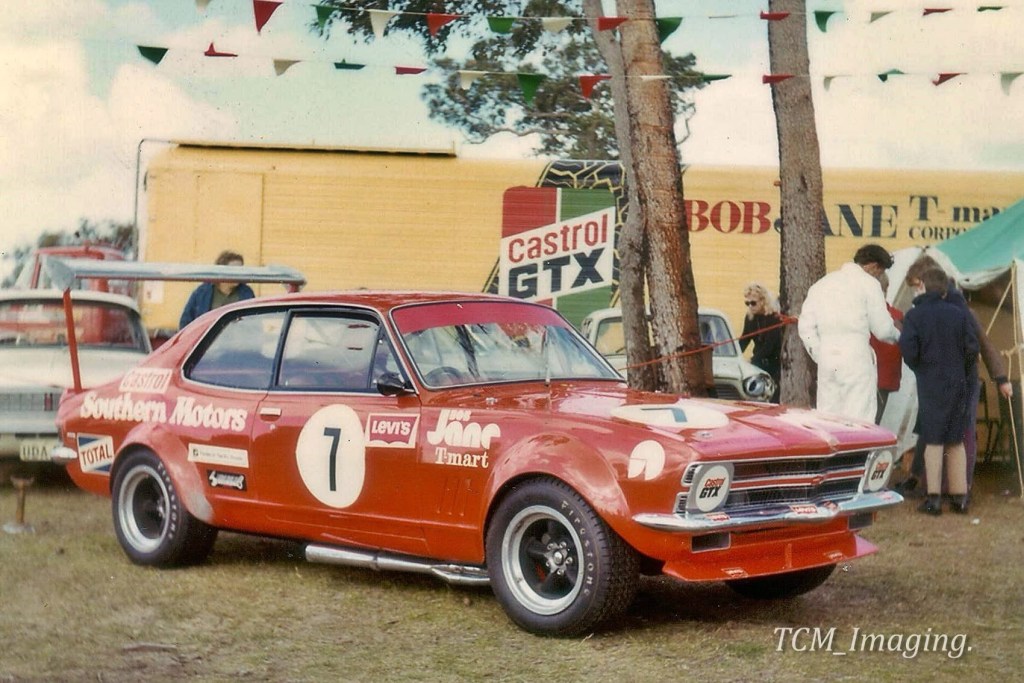
Speaking of iconic Sheppo built/prepared cars, here’s another! The Bob Jane owned Holden Torana GTR XU-1 Repco 620 4.4 V8 was built by John in his home garage away from any prying eyes snooping around Bob Jane Racing’s Brunswick HQ.

Here it’s in the Wanneroo paddock in 1971, the A regular race winner in Bob’s, John Harvey’s and Frank Gardner’s hands from 1971-75, then Ian Diffen after that? There’s more Harves here: https://primotipo.com/2021/01/25/harves/

(Harkness & Hillier)

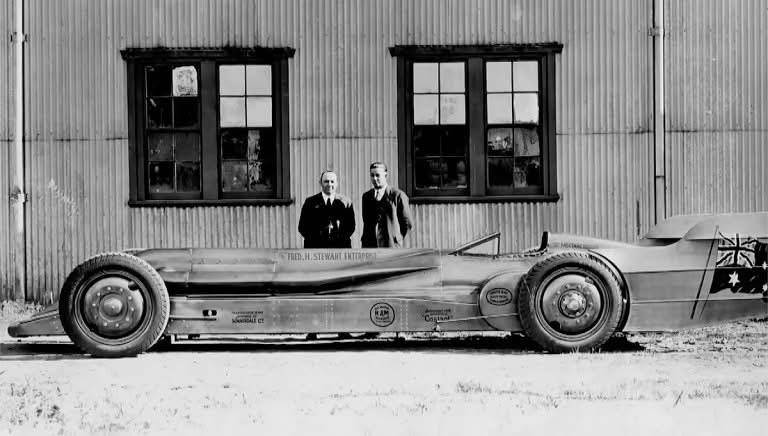
Wizard Smith and Don Harkness with the SWB (sic) Fred H Stewart Enterprise LSR car out front of the Harkness & Hillier factory, Five Dock, Sydney in 1931.

The incredible machine was powered by a leased/loaned 1450 bhp Napier Lion W12 aero engine. Great article on this car here: https://oldmachinepress.com/2018/10/05/fred-h-stewart-enterprise-smith-harkness-lsr-car/

Michael Hickey writes that ‘The Harkness and Hillier background of the Wizard Smith Enterprise photo remains relatively unchanged 94 years later. It’s now Volvo Cars, Parramatta Road, Five Dock, the photo is in William Street.’

(K Starkey)

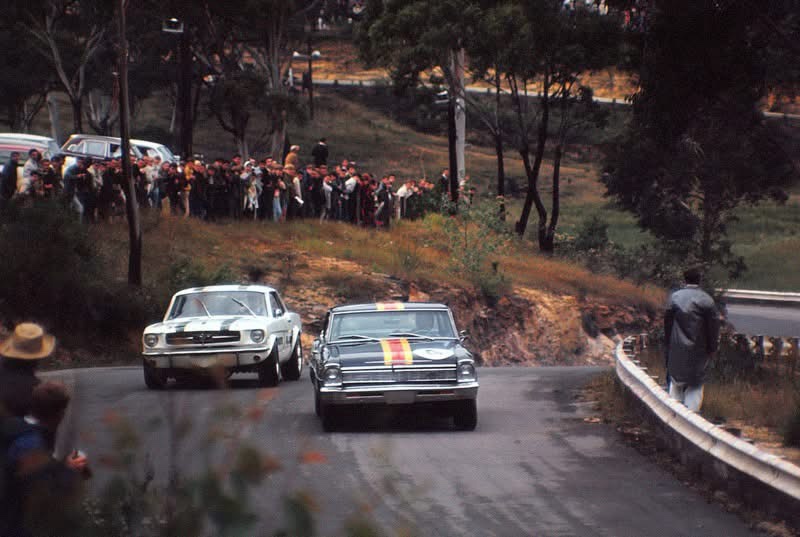
So disappointed to have missed out on racing or spectating at Catalina Park in New South Wales’ Blue Mountains, but it was well before my time.

Here Norm Beechey and Pete Geoghegan are wrestling their touring cars around the tight layout in January 1967: Chev Nova and Ford Mustang. I’ve got my money on Pete!? See here:https://primotipo.com/2019/09/26/norm-jim-and-pete/

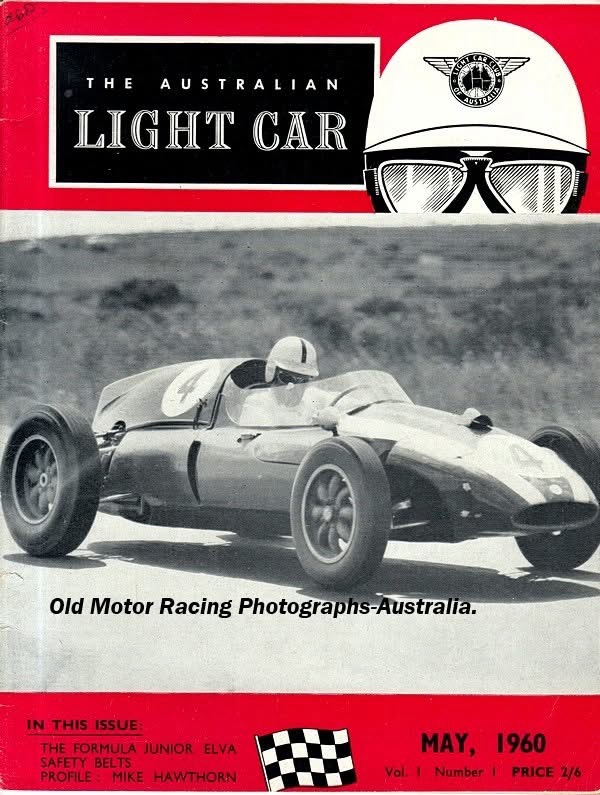
A collection of these would be nice, I wasn’t aware of the publication until Bob Williamson put this up on his Facebook page; the LCCA’s ‘Competition Communicator’ magazine came later.

It’s Jack Brabham in a Cooper T51 Climax winning the Repco Trophy at Phillip Island on March 14, 1960. See here: https://primotipo.com/2018/08/12/jacks-donut/

(MotorSport)

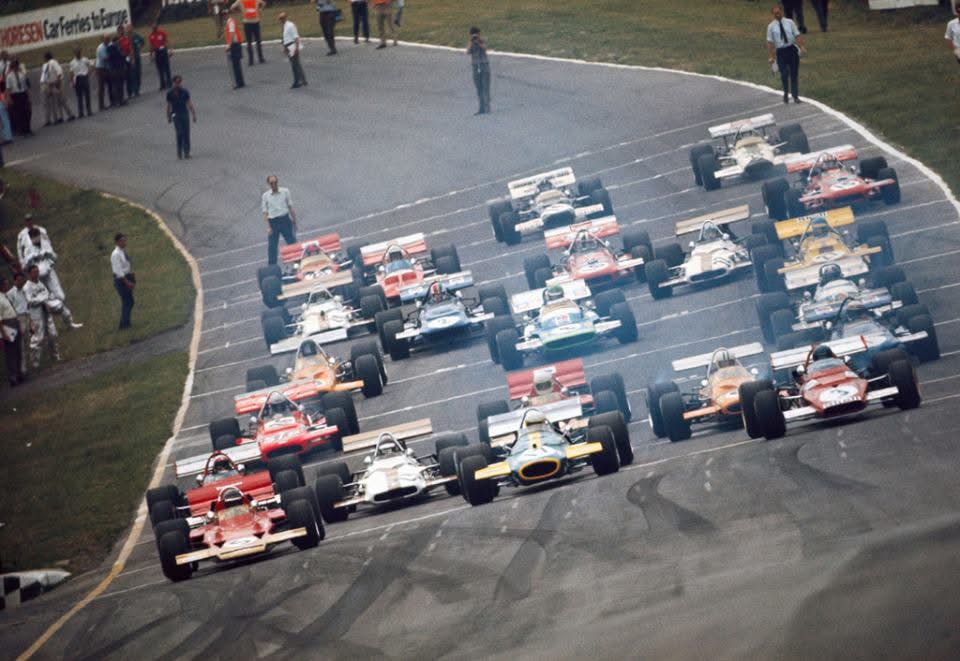
A decade later Jack was mid-way through his last F1 season, here contesting the July British Grand Prix at Brands Hatch. That front couple of rows from pole is Rindt, Oliver, Brabham, partially obscured papaya Hulme, and Ickx on the right: Lotus, BRM, Brabham, McLaren and Ferrari. V8s and a V12 and Flat-12 or 180 degree V12 if you prefer…

With a bit more luck Brabham could have won tbe World Championship for a third time in 1970. At Brands he was robbed of certain victory on the last lap after on his Brabham BT33 Ford ran out of fuel after the Lucas mixture control of the 3-litre Ford Cosworth DFV was left on the rich setting by mechanic, Nick Goozee. Having passed and driven away from Jochen Rindt’s Lotus 72C, the 1970 posthumous World Champ was gifted the win.

See here: https://primotipo.com/2018/05/24/jochens-bt33-trumped-by-chunkys-72/

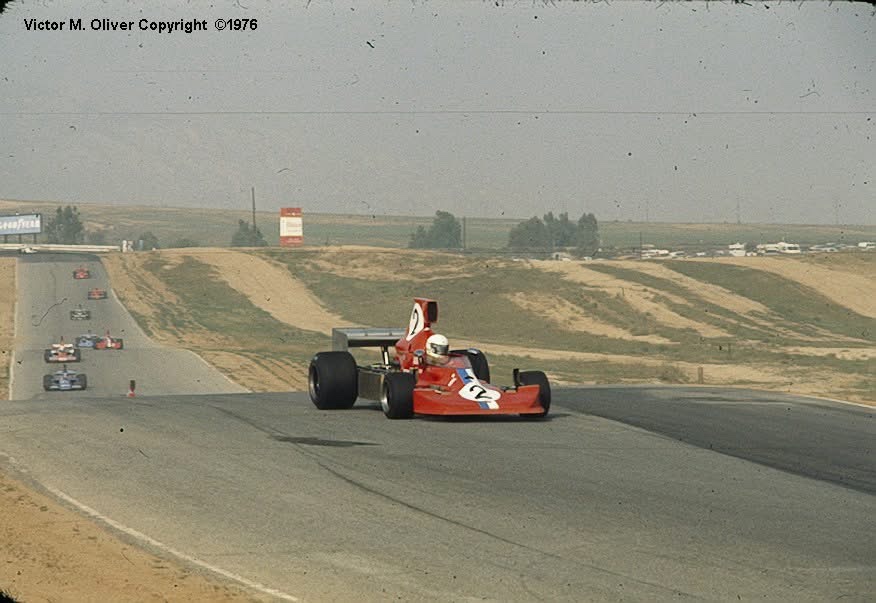
Warwick Brown at Riverside – I think – in October 1976, VDS Racing Lola T430 Chev. WB was sixth in the race won by Al Unser’s Lola T332 Chev.

I did a feature on the Lola T430 only a few weeks back, so best not to rabbit on, see here: https://primotipo.com/2025/07/23/lola-t430-chev/

(B Young)

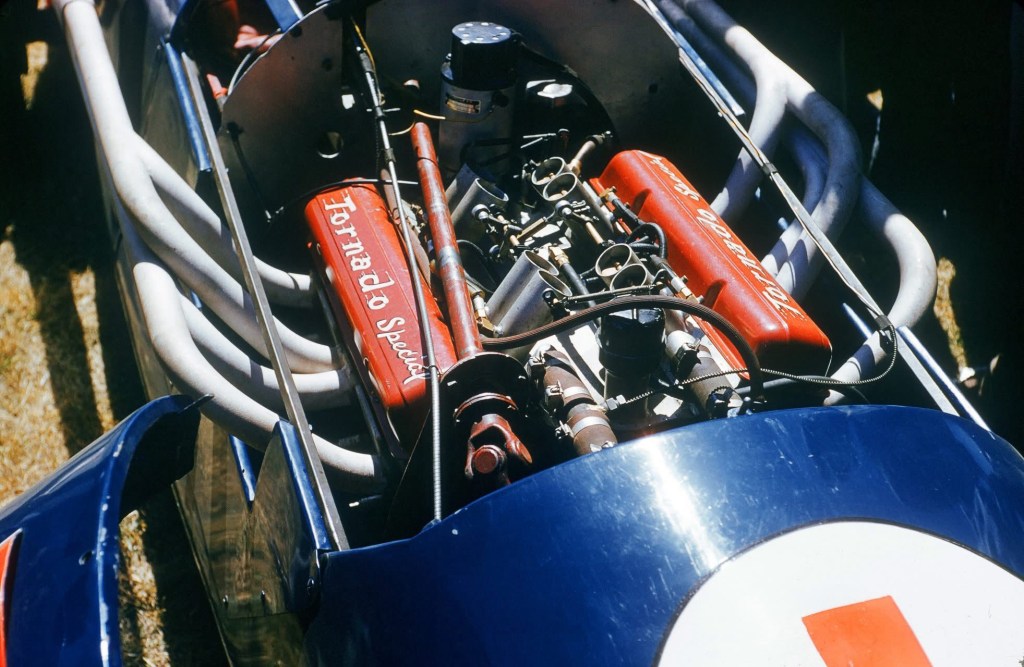
Another member of the small-block Chev family, the fuel injected 283 nestled under the bonnet of Tornado 2, is related to the much modified 305 fitted to WB’s F5000 Lola above.

The new Corvette V8 was supplied to car owner Lou Abrahams via his Holden connections and built locally using the best over the counter US performance parts. Abrahams developed the fuel injection using Hilborn parts.

I rather like this Wiki summary of this great race engine family: https://en.wikipedia.org/wiki/Chevrolet_small-block_engine_(first-_and_second-generation)

(T Perrin Archive)

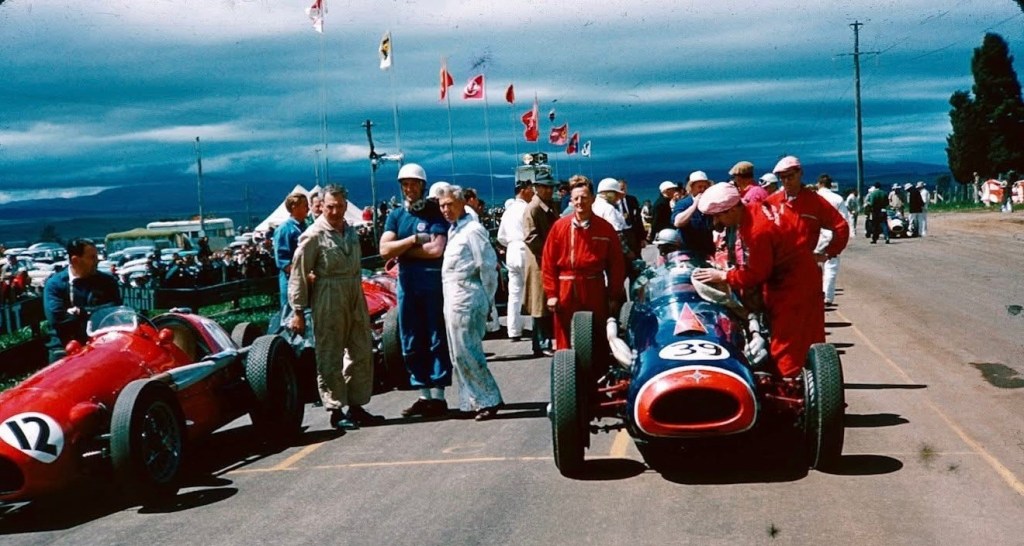
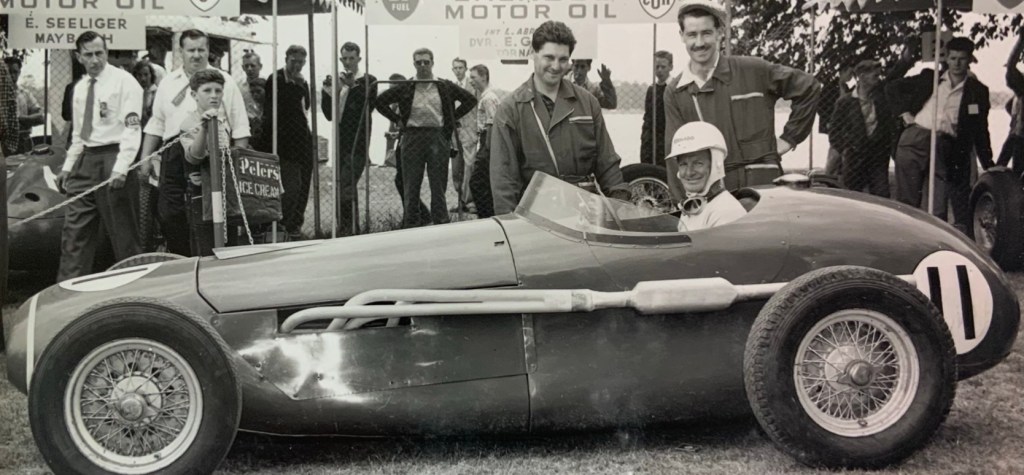
Ted Gray and Tornado 2 Chev at rest before the start of the 1958 Australian Grand Prix at Bathurst at which point it was arguably the fastest, if not the most reliable, racing car in Australia. That’s Lex Davison’s Ferrari 500/625 and crew at left with Ted Gray looking this way behind the right-rear.

(R Edgerton Archive)

Ted Gray, Lou Abrahams and Bill Mayberry – key Tornado men, the other Mayberry brother is the only one missing – during the 1956 AGP weekend at Albert Park. Ted’s first race in the new Tornado 2 Ford.

More on the Tornados here: https://primotipo.com/2015/11/27/the-longford-trophy-1958-the-tornados-ted-gray/

Another one from Tony Johns below. Ted – still in Tornado 2 Ford – at Fishermans Bend over the 12-13 October 1957 weekend, where he won a five-lap preliminary and led the 20-lap feature until rear axle failure intervened. Stan Jones’ Maserati 250F won that from Bib Stillwell’s similar car and Doug Whiteford’s 300S.

(D Lowe)

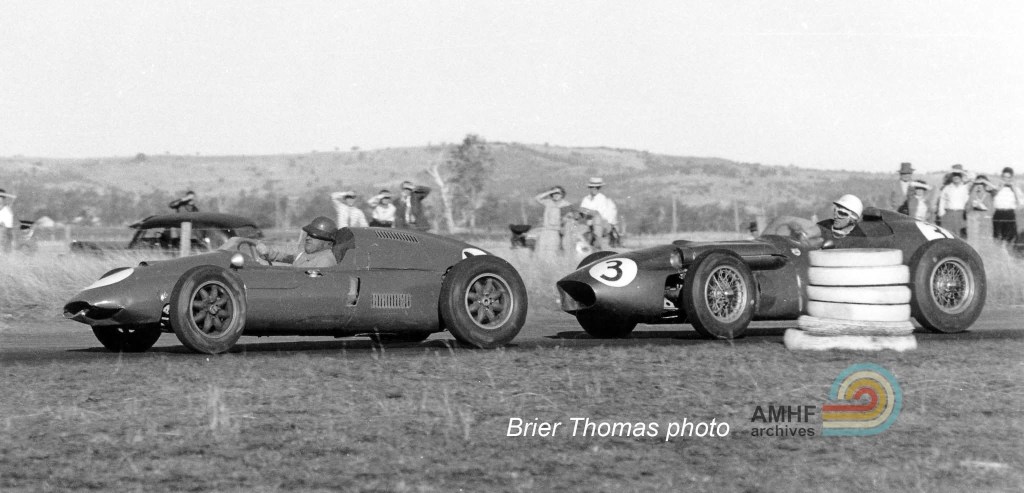
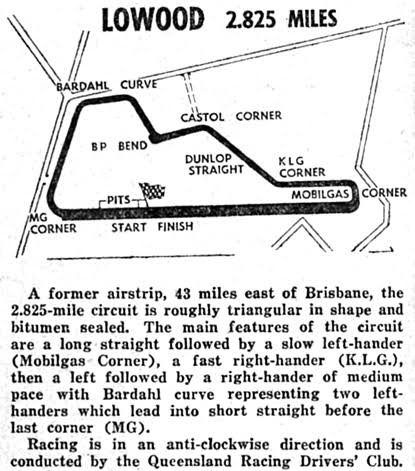
Alec Mildren and Lex Davison during their epic race long dice for victory in the 1960 Australian Grand Prix at Lowood, Queensland on : Alec’s very clever Cooper T51 Maserati 250S and Davo’s wonderfully daft Aston Martin DBR4 3-litre.

Mildren won in the drive of his life and Lex – uber sportsman as he was – seemed as happy about the well earned win as Alec was! See here: https://primotipo.com/2018/06/08/mildrens-unfair-advantage/

Those with an interest in Australia’s Aston Martins should buy the latest copy of Auto Action Premium #1909 on sale since Thursday, August 7. Eight pages and a lot of photos you won’t have seen before. International readers see the website here: https://autoaction.com.au/issues

(I Smith)

Peter Jones Cheetah Clubman Toyota 1.3 was, I think, regarded as the ‘Winningest’ car in Australian motor racing for much of the period Jones raced it, say, 1976-80, when Formula Pacific beckoned Peter.

The Cheetah Racing Triumvirate comprised Cheetah designer/builder/racer Brian Shead, racer Brian Sampson, and Sampson’s motor engineering business, Motor Improvements.

MI built most of the Toyota Corolla 1.3-litre race engines fitted to ANF3 and Clubman cars in this era. Peter Jones was the MI Foreman forever, so when Jonesey suggested to Sheady he build him a Clubman, it was game on!

Shead built two of these cars, a ‘turnkey’ one for Peter and another for Victorian Formula Vee ace, Derek Fry. Fry either had access to the drawings or perhaps Brian sold him the bits for Fry’s Tubeframes business to assemble. If one of you know give me a buzz.

Racer Brendan Jones, Peter’s son, has his old car and memory, again, suggests Fry’s was destroyed and scrapped?

Credits…

Les Thacker, Kevin Lancaster, Graham Ruckert, Jack Quinn Collection, Colin Wade, Rob Burnett, Ken Starkey, Terry Martin, Harkness & Hillier, MotorSport, JI Croft, Victor Oliver, Tim Perrin Archive, Bob Young, Brier Thomas-AMHF Archives, Racing Ron Edgerton Archive, Ian Smith, Roger Herrick, David Lowe

Tailpiece…

(R Edgerton Archive)

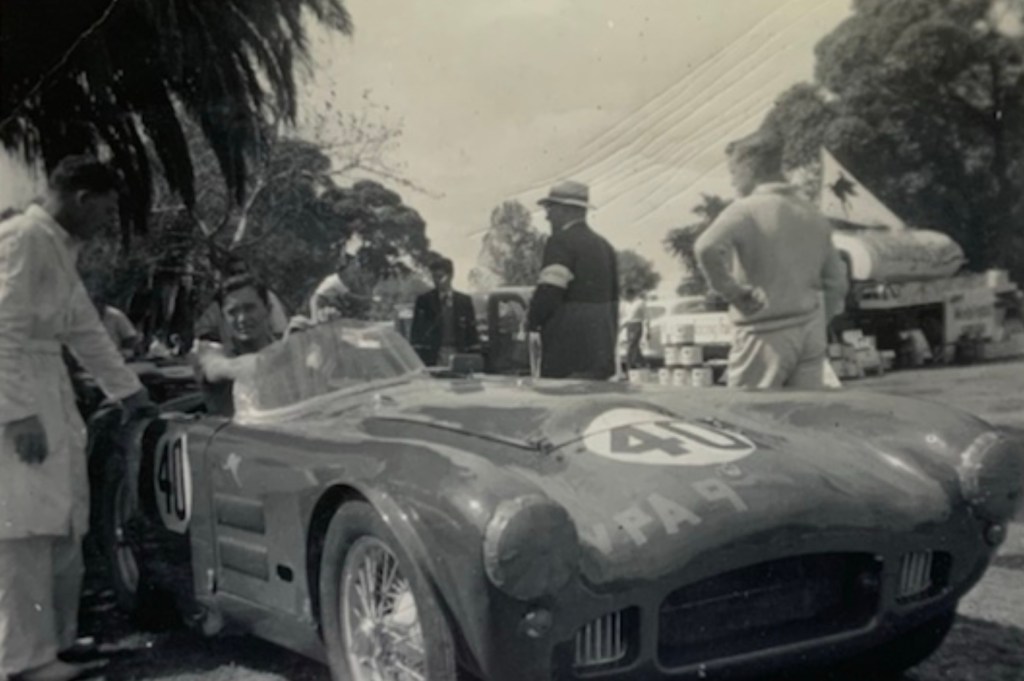
Tony Gaze, HWM Jaguar VPA 9 in the Albert Park paddock during the March 1956 Moomba meeting. See here: https://primotipo.com/2020/03/28/gaze-hwm-jaguar-vpa9-ryal-bush-new-zealand/

Gaze waved goodbye to both of his cars that weekend upon his retirement from racing having sold them to Lex Davison. Davo wasn’t a big fan of the HWM if my recollection of Graham Howard’s Lex biography is correct, but he loved the ex-Ascari Ferrari 500/625 3-litre and didn’t he make it sing, two AGP victories and the rest.

Finito…

(B King Archive)

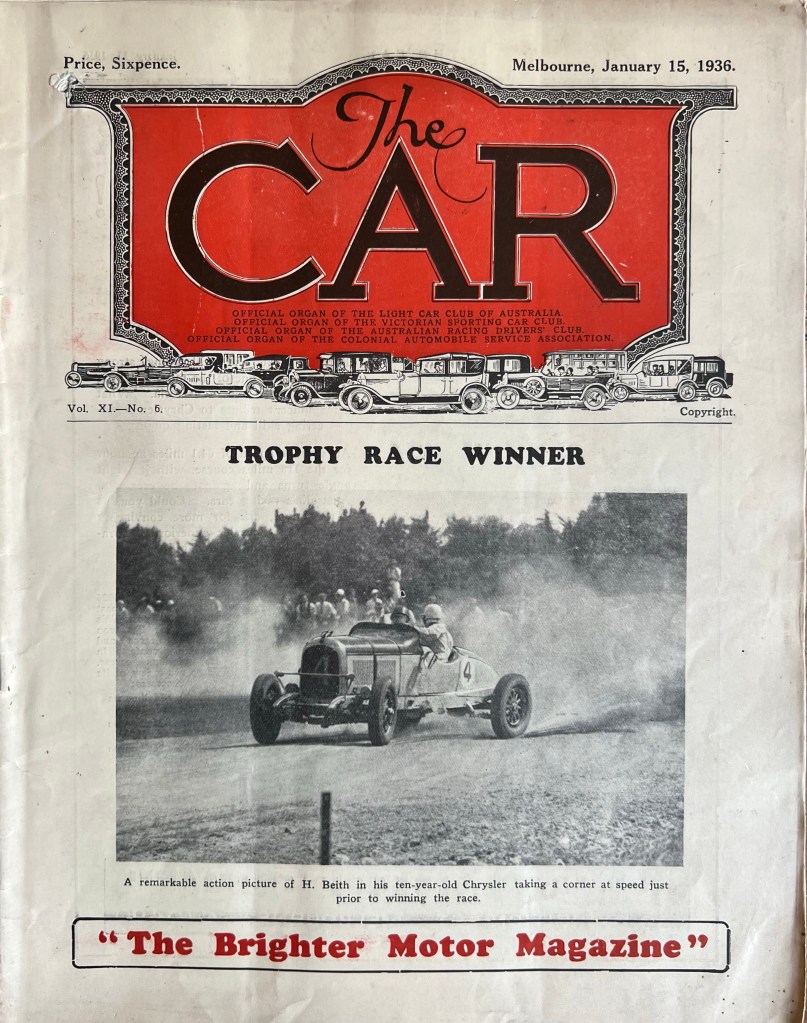
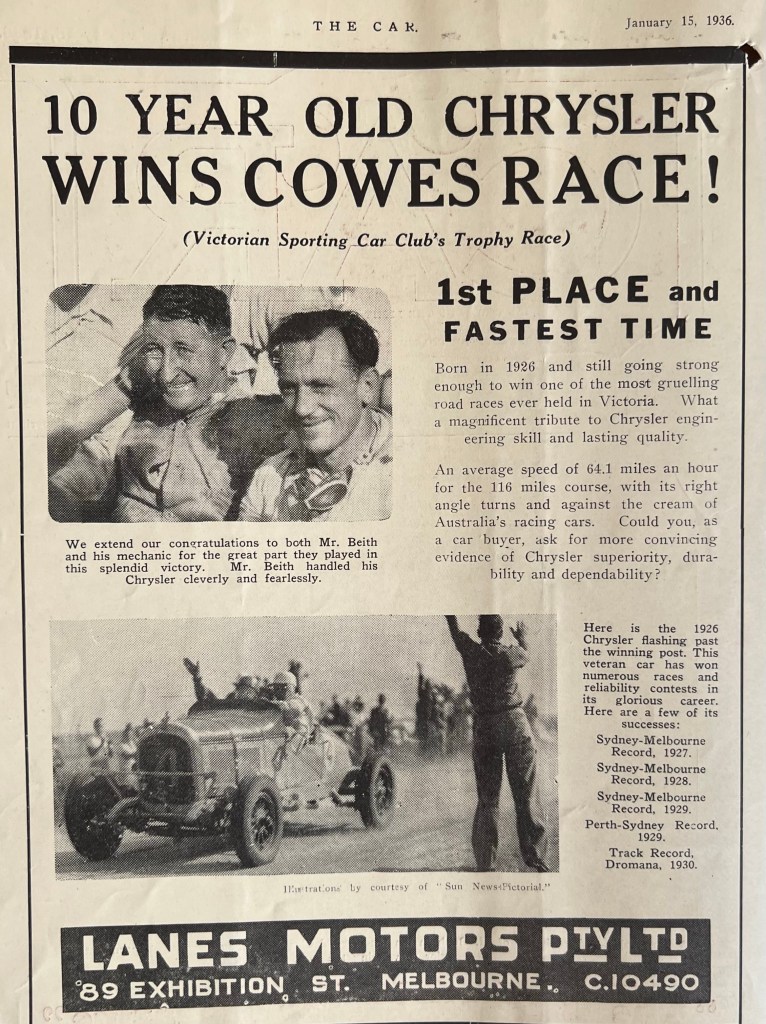
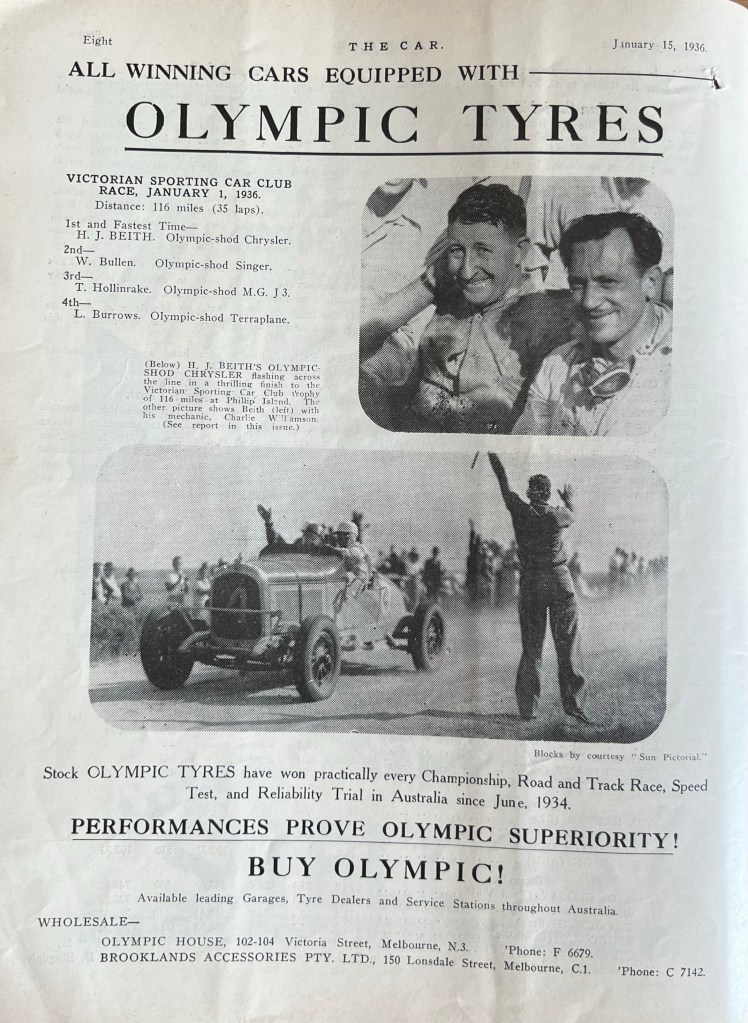
Harry Beith – 25/12/1889-26/5/1964 – seems to have done more than most to build and polish the nascent Chrysler brand throughout Australia in the 1920s and 1930s.

Here, he is on the way to victory in his Chrysler 70 in the Victorian Sporting Car Club Trophy, a 35 lap, 116 mile race held at Phillip Island on New Year’s Day, 1936.

17 starters took the flag of this handicap event – hence the competitiveness of a 10 year old car – with W Bullen’s Singer second and Tom Hollindrake’s MG K3 third.

Albury racer, Beith’s time was 1hr 38min 34 sec off a handicap of 2min 20 sec, his average speed was 64.1mph.

(B King Archive)

Harry’s riding mechanic is either pointing the way or at a pretty young lass in the crowd. It’s probably Heaven Corner, given the way the road – Berry’s Beach Road – drops away.

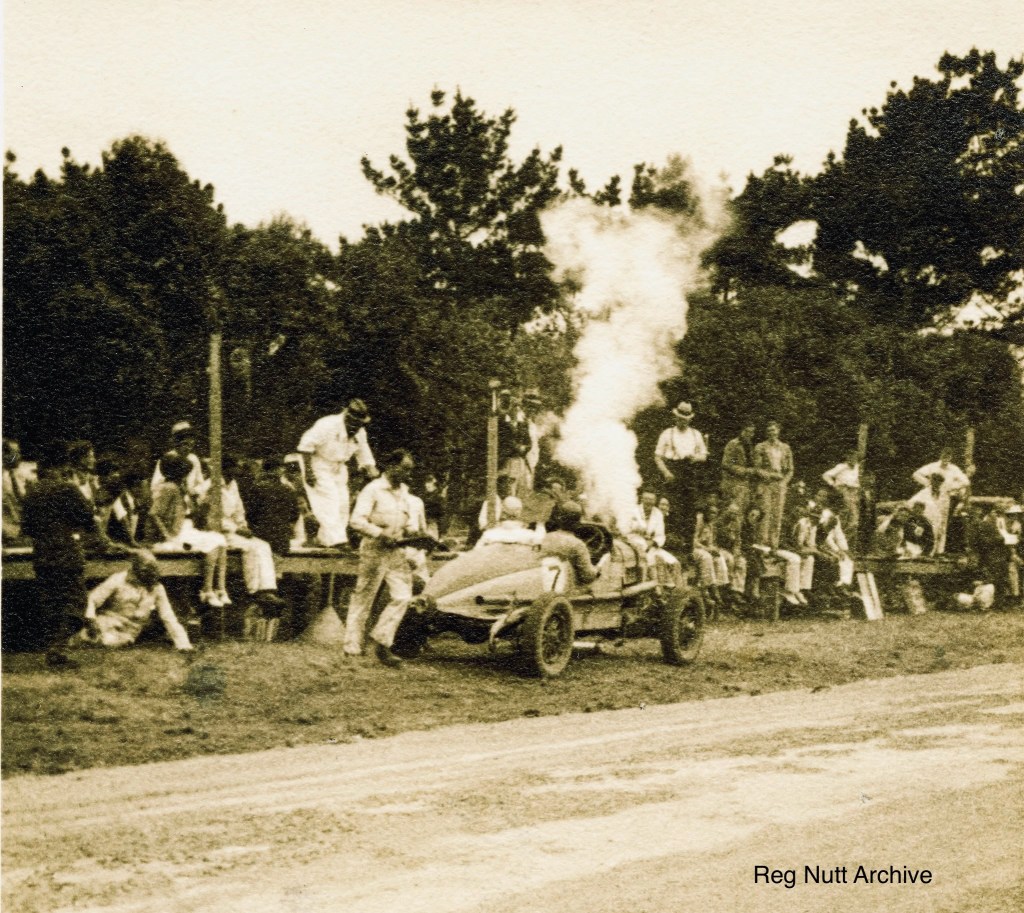
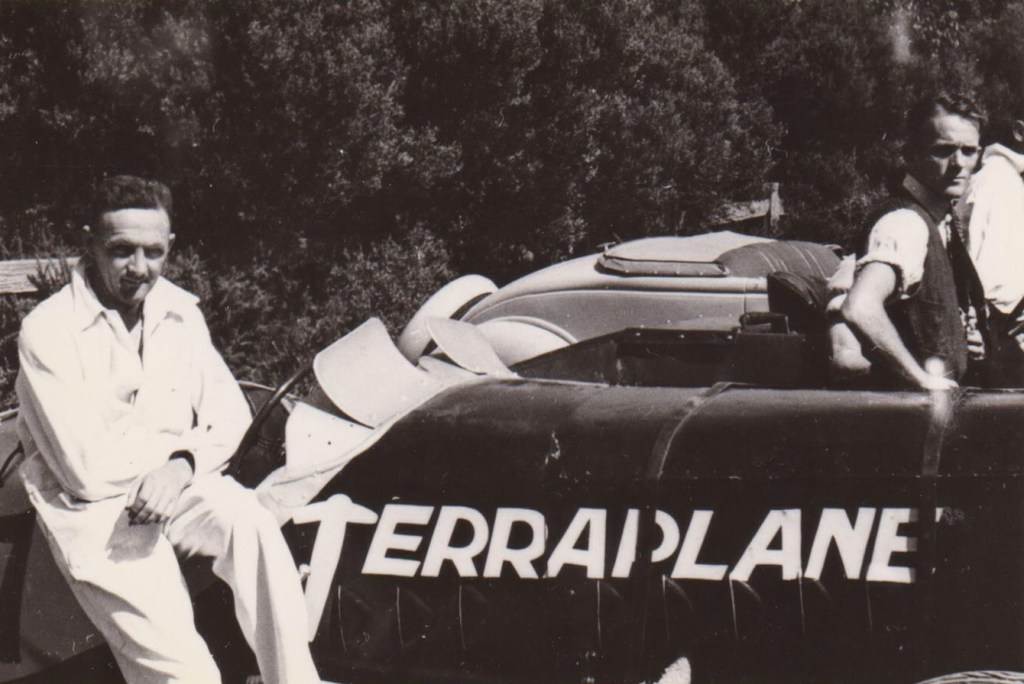
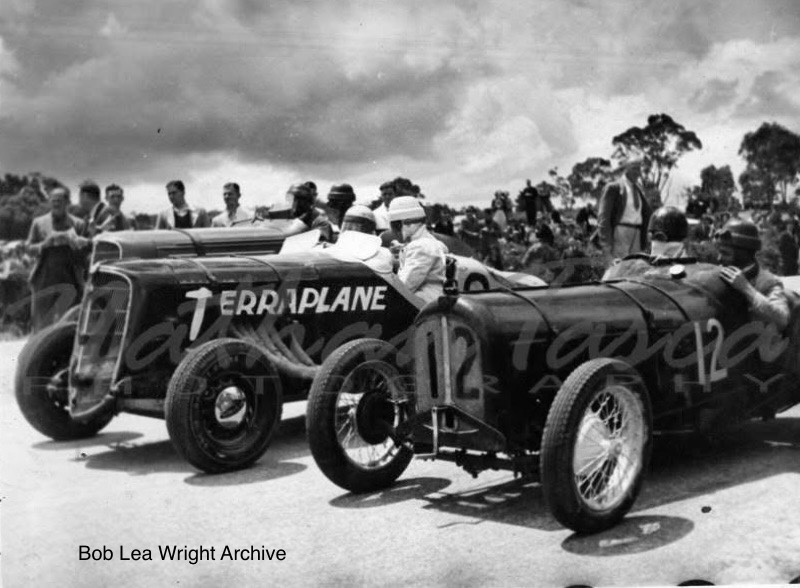
The car below is – perhaps, having wrongly suggested it was the E Buckley driven McIntyre Hudson some years ago – Les Burrows’ fourth-place Terraplane Spl.

(B King Collection)

Phillip Island notes…

The May 6, 1935 Jubilee Handicap meeting was the last held on the Victorian Light Car Club’s (VLCC) 6.5-mile rectangular course used from the two March 31, 1928 100 Mile Road Race(s) – retrospectively named the 1928 Australian Grand Prix by the VLCC – until the April 1, 1935 AGP.

A less dangerous, shorter 3.312-mile triangular course, incorporating some of the old pit straight (Berry’s Beach Road) was then made and promoted by the Australian Racing Drivers Club and the Victorian Sporting Car Club.

It was used until November 1, 1938 for cars, and ‘bikes until January 30, 1940. The Grand Opening Meeting of the modern track we all know and love was held over the December 15, 1956 weekend, it’s closed a couple of times along the way, but has been in continuous use since 1988.

Harry Beith…

Harry James Beith was one of those extraordinary Australians who fought in both the first and second World Wars, it tells you all you need to know about the bloke’s character and grit.

Unsurprisingly! his roles were as a driver and driver mechanic, in 1939-45 he was a Staff Sergeant in the 1 Company Australian Army Service Corps and was one of many who became a POW in Malaya.

The Age newspaper announced the appointment of Beith as chief adviser to the carnival committee of the Interstate Grand Prix meetings at Albury-Wirlinga in February 1938.

That February 10 piece provides a useful summary of his career, describing Beith ‘as one of Australia’s best known racing motorists with a unique career as a competition driver and road-record breaker.’

‘He first competed in a Talbot at Wildwood (near the current Melbourne Airport) in 1912. Aged 16, he won the hillclimb, defeating his employer, CB Kellow! He continued to compete and then in 1927, ‘when becoming associated with the first Australian agency of Chrysler, he set out to break road records.’

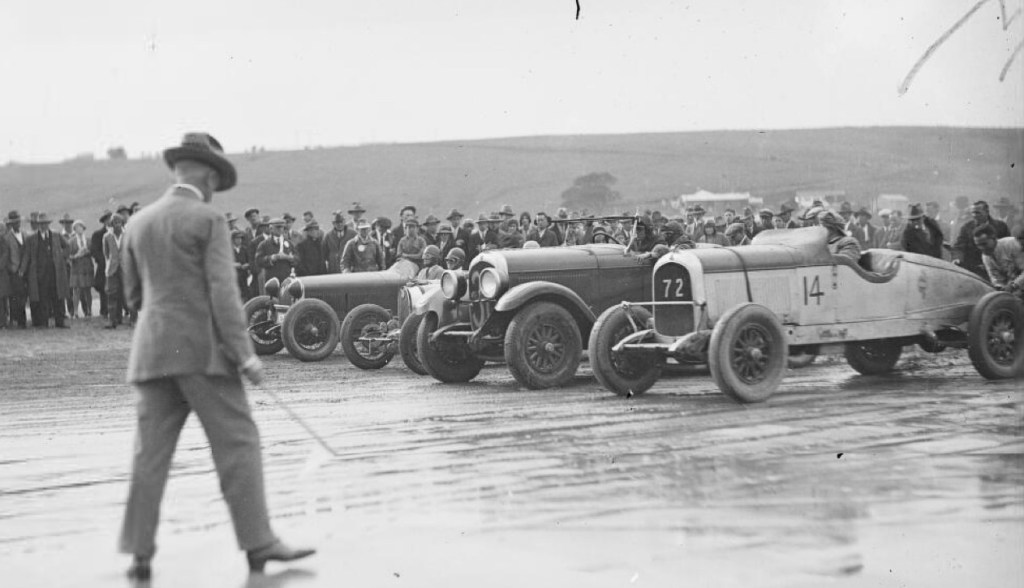
Gerringong Beach, NSW Fifty Mile Handicap May 10, 1930: at left is Percy Hunter in the JAS Jones’ Alfa Romeo 6C1750 Zagato, then the obscured Bill Thompson Bugatti T37A and then the two Chryslers of E Patterson and Harry Beith #72/14 (Fairfax)
The Beith – Harry at left – Chrysler leading with later Oz-Ace Alf Barrett’s Morris Cowley Spl behind. Phillip Island January 1, 1936 (B King Collection)

Beith set a new Melbourne-Sydney record of less than 11 hours. ‘As cars were improved new records were created by other drivers, but within three days of each new record, Beith set out to beat it.’ He held the Melbourne-Sydney record at the end of 1927, 1928 and 1929. ‘Finally the police authorities of Victoria and New South Wales intervened and put a stop to these speed tests over the inter-State highway.’

Harry’s flathead-straight six Chryslers are variously quoted at 3582 and 3583cc, and 4-litres with his endurance machine still going strong after 43,000 record-breaking miles. That car had a difficult birth being purchased by Beith from an insurer for £80 after it was burned-out!

Chrysler 70s were pacey at Le Mans in the late 1920s, the engines were advanced for the time: seven main bearing cranks, crank vibration damper, full-pressure lubrication, replaceable oil-filters and the rest. See here: https://www.drivecj.com/the-chrysler-70-a-revolutionary-leap-in-automotive-history.htm

Harry and team in and around the Chrysler, during the 1936 Australian Tourist Trophy weekend. Nice PR shot, pity about the crop! (B King Collection)
There She Blows during the March 30 1936 200-mile Australian Tourist Trophy at Phillip Island. DNF for Beith’s Chrysler in the race won by Jim Fagan’s MG K3 Magnette

Beith held the record for the final meeting held on the RACV’s rectangular, sandy-gravel course at – what is now Safety Beach – Dromana, ‘which had been held for three years by Harold Cooper’ in the Cooper brothers’ fearsome ex-Louis Wagner 4.8-litre ‘Indy’ Ballot 5/8LC.

‘Mr Beith also held the Perth-Sydney record with Dr Manning. Altogether he has won more than fifty motor races in Victoria and New South Wales.’ At the time of publishing he was employed by Neal’s Motors Pty Ltd, Melbourne as country organiser.

Neal’s was a large car assembler with premises in Fishermans Bend. By 1938 their empire encompassed the import and assembly of Hudson, Hudson Terraplane, Diamond T, Fiat, Studebaker cars and trucks, Chrysler, Chrysler Plymouth, Morris cars and trucks, De Soto cars and Fargo trucks…making our Harry a works-driver!

Beith didn’t contest any of the 1927-35 Goulburn-Phillip Island Australian Grands Prix, but raced in the successive 1936 and 1938 AGPs held on the Victor Harbor-Port Elliott, and Mount Panorama, Bathurst road courses. He was ninth and 14th respectively, aboard a Terraplane Special.

The Harry Beith trail runs cold post-war, can anybody advise further about his life in cars and otherwise?

Etcetera…

(B King Collection)

Harry Beith and Terraplane Special during the January 3, 1938 South Australian Grand Prix meeting at Lobethal. DNF in the handicap race won by Noel Campbell’s Singer Bantam.

See here for a ridiculously long feature on that event and related: https://primotipo.com/2018/11/08/the-spook-the-baron-and-the-1938-south-australian-gp-lobethal/

Harry Beith’s Terraplane Spl at Phillip Island, possibly the 1938 Phillip Island GP on March 31, he was fifth. Car #12 make folks?

Credits…

The Car January 1936 and photos are from Bob King’s collection, various articles via Trove, in particular The Age February 10, 1938, Fairfax, Reg Nutt Archive via Bill Atherton, Greg Smith and David Zeunert, Bob Lea Wright Archive via Nathan Tasca, Mr Rewind for the Australian War Memorial link

Finito…

(B Forsyth)

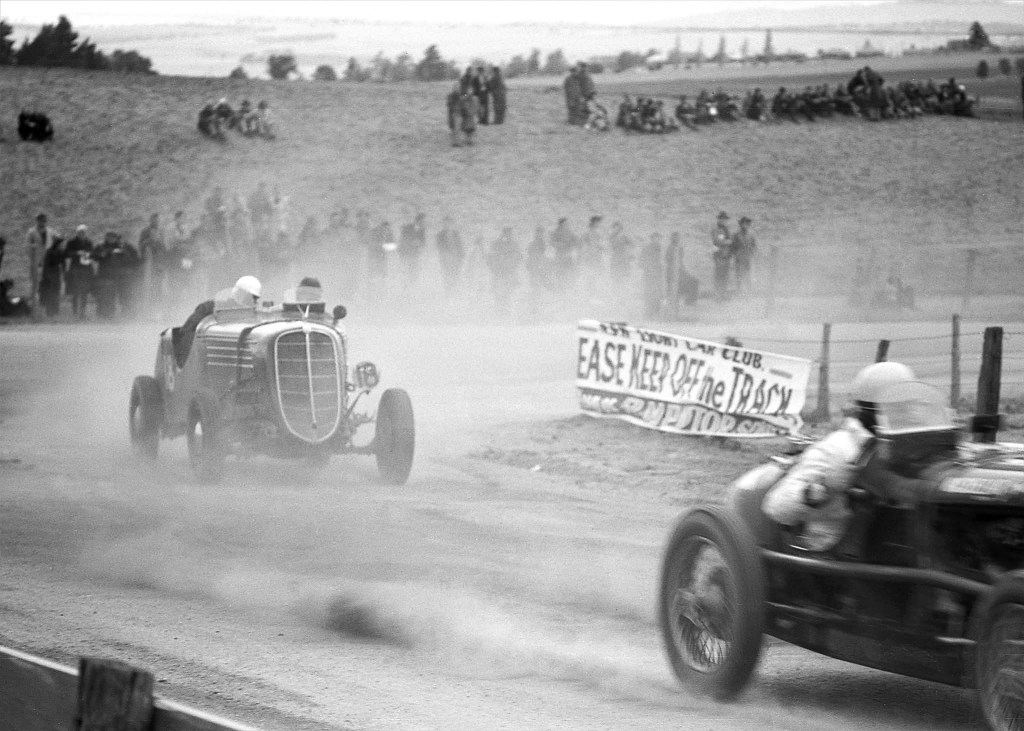
‘Please keep off the track’ seems sound advice.

The perils of wandering about Mount Panorama during a race meeting are obvious enough, but were a potential problem throughout the first weekend of racing at Australia’s greatest cathedral of speed, hence the sage-like advice of the New South Wales Light Car Club.

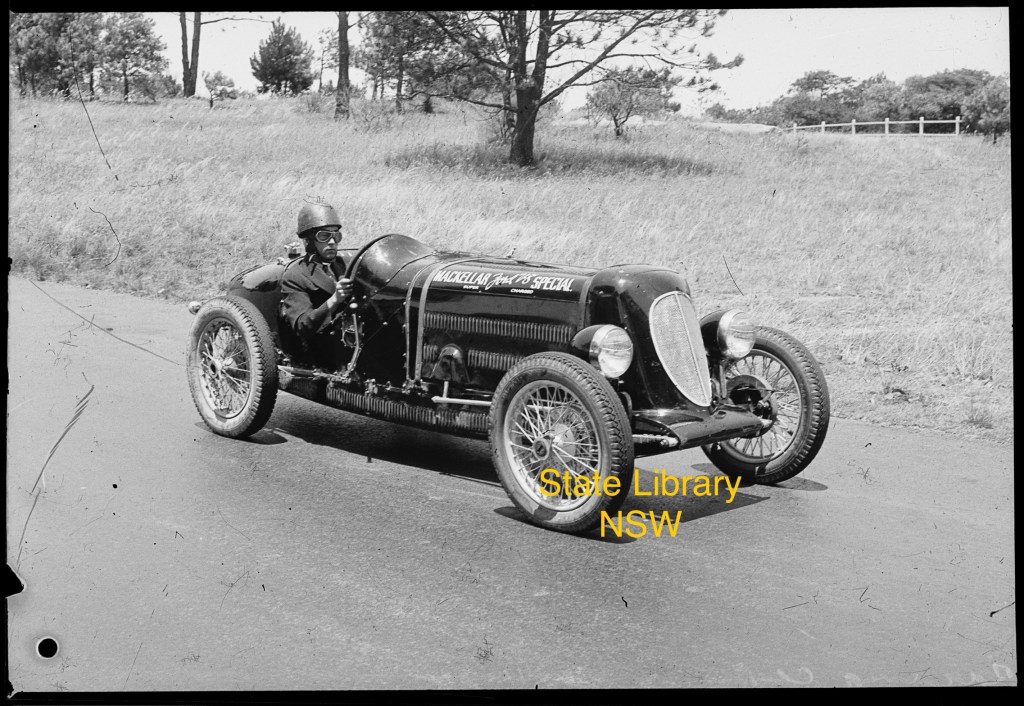
Tom Peters, MacKellar Ford V8 Spl aka the ex-Bill Thompson Bugatti T37A #37358, is snatching a look over his shoulder of Bob Lea Wright’s, Terraplane Spl during the April 18, 1938 Australian Grand Prix at Bathurst.

Peter Whitehead won the race in his ERA B-Type that weekend. Peters was a terrific fourth in a car he had earlier owned and raced in its original, ‘pure-Bugatti’ form, and Lea-Wright was 11th. I wrote about the race yonks ago: https://primotipo.com/2015/04/16/peter-whitehead-in-australia-era-r10b-1938/

Here’s Ford dealer/racer Ron MacKellar on the debut of his comprehensive rebuild of the ex-Bill Thompson 1930/32 AGP-winning Bugatti Type 37A chassis 37358 at Centennial Park, Sydney in November 1937.

A McCullough supercharged flathead Ford V8 engine and gearbox and general fuglification of Ettore’s finest resulted in a faster car than before. It raced on all the way to 1952 when Bill McLachlan finished 13th in the AGP, at…Bathurst. See here for more about this T37A https://primotipo.com/2015/10/27/motorclassica-melbourne-23-25-october-2015/

To the current custodian, Michael Miller’s credit, his slow restoration/reclamation of 37358 is of the Oily Rag type, and with luck, the car may be finished in advance of Australian Grand Prix Centenary celebrations at Goulburn in January 2027. Keep an eye on the website, folks: https://goulburngrandprix.com.au/

Credits…

Bill Forsyth Collection, State Library of New South Wales, goulburngrandprix.com

Finito…

(G Thomas)

Lex Davison in the Little Alfa – Alfa Romeo 6C 1500 s/c Spl – at Ballarat Airfield with RAAF Avro Ansons in the background.

He is contesting the 75 mile Victoria Cup held on the Australia Day holiday, January 27, 1947.

The race was the first post-War ‘state level event’ held in Victoria and was promoted jointly by the Light Car Club of Australia and the Victorian Sporting Car Club.

(G Thomas)

Doug Whiteford won the handicap race in Black Bess, his Ford V8 Special which was at the start of a long run of success.

See here for Black Bess: https://primotipo.com/2015/05/05/doug-whiteford-black-bess-woodside-south-australia-1949/ and here for the Little Alfa: https://primotipo.com/2015/01/22/race-around-the-barracks-balcombe-army-camp-davison-little-alfa/

Davo also entered his rather imposing Mercedes Benz SSK, but the engine failed, see here: https://primotipo.com/2024/02/18/mercedes-38-250-ssk-lex-davison/

(G Thomas)
(SLV)

The caption says Fishermans Bend but it looks more like Altona to me, one for those with a programme collection. And below Ted again, Alta 21S Ford V8 Spl this time during the 1954 Victorian Trophy at the Bend on March 22, 1954.

(SLV)

This car, first brought to Australia by MI6 spook and sometime racing driver Allan Sinclair in 1938 is one of my obsessions, see here: https://primotipo.com/2018/11/08/the-spook-the-baron-and-the-1938-south-australian-gp-lobethal/

It’s alive and well too, restored by Graham Lowe several decades ago, it’s used regularly on road and track by current custodian, Fiona Murdoch. I’ve driven it too, in March 2023, for articles published in The Automobile and Benzina. And yes, it is sen-‘kin-sational.

(G Thomas)

Reg Nutt aboard an MG NE Magnette Ulster, outside the Nutt/Jack Day premises in Whiteman Street, South Melbourne.

Greg Smith comments, ‘White street South Melbourne features to note : 16″ rear wheels, 18″ or 19″ front wheels, brakes still cable operated, door fitted to the original body maybe to comply with the CAMS draconian rule (what has changed since its inception in 1953 ? nothing!!) that “sports cars” must have a door of minimum dimensions.Tyres nearly bald. Expensive push bike leaning against the wall with the owners Gladstone bag on the footpath, maybe the photographer ?? Two fuel tanks out in the sun sweating the fumes out before solder repairs. The car was ex-Barraclough and very scruffy by this time.’

Nutt was both a master mechanic and driver with a pedigree going back to Phillip Island’s early days. He was Reg Brearley’s riding mechanic in 1929 when the pair placed second in a Bugatti T37A.

Better was to come when he won the race in 1931 alongside Carl Junker aboard a Bugatti T39 in 1931. T39-4907 is the very car shown below raced Jack Day’s Day Special (the car below) in the South Australian Grand Prix referred to above on daunting Lobethal, setting the fastest race time for that handicap race, and the following day did the fastest lap of the weekend…he could drive.

He got the bug early, recounting to Bob King memories of a Bugatti Brescia while doing his apprenticeship at Meaby’s Garage in Toorak Road, South Yarra.

The Day Special was Bugatti T39-4607 fitted with a Ford V8 and other modifications (G Thomas)

Apart from his on-track exploits in this car, Nutt gave Norman Ellsworth the ride of his life, when towing Ellsworth’s just purchased Bugatti Brescia back from Adelaide to Melbourne.

The deal was that Reg would tow the car through the many country towns on the long trip as the Brescia was unregistered. But Reg ‘forgot’ about the Bugatti on the end of the tow rope and did several miles outside Dimboola at well over 100mph. Ellsworth’s reaction is unrecorded!

More about the Day Special here: https://primotipo.com/2021/06/11/werrangourt-archives-7-jack-day-and-his-superchargers-by-bob-king/

(SLV)

What an evocative shot of the business end of the brilliant Wylie Javelin Spl…

The gent in the Akubra makes the shot. Perhaps it’s the ’53 AGP weekend at Albert Park but that’s a guess. That looks like a rego-sticker on the windscreen! See this lengthy epic: https://primotipo.com/2018/09/14/the-wylies-javelin-special/

Arthur Wylie at Altona in 1954 (SLV)
(SLV)

A D.F.P. out front of a home, probably in Melbourne, chassis number and street address please!? It has a touch of the Elsternwicks about it but could be anywhere.

The marque were in on the ground floor of racing in Australia, Les Pound finished last in the 100 Mile Road Race run by the Victorian Light Car Club in March 1928, the second Australian Grand Prix.

See here for more on D.F.P.: https://primotipo.com/2021/10/01/werrangourt-archive-11-dfp-the-greyhound-of-france-by-bob-king/

(SLV)

Reg Hunt enroute to winning the scratch-section of the Bathurst 100 during the 1955 Easter weekend at Mount Panorama, Maserati A6GCM-250.

Despite having only his short-diff fitted the Grand Prix car still did 145 mph down Conrod.

The handicap winner of the race was Curley Brydon in his new MG Special; a mix of the ex-Tomlinson ‘39 AGP winning chassis and the supercharged engine from Brydon’s ex-Patterson TC Spl.

(SLV)

I’ve done chapter and verse on Australia’s fastest combination in 1955-56 – Reg Hunt and Maseratis A6GCM and 250F – but start with these two: https://primotipo.com/2017/12/12/hunts-gp-maser-a6gcm-2038/ and https://primotipo.com/2024/02/10/australian-gold-star-championship-1956/

Manchester born Reg Hunt tootling through the Fishermans Bend paddock in his Hunt Spl aka The Flying Bedstead, date unknown but 1951 perhaps.

The Hunts arrived in Melbourne in May 1949 with Reg bringing with him various parts accumulated in the UK which he used to build this hillclimb /road racer affectionately known as the Flying Bedstead.

It was built between May-October 1949 by Hedley Thompson either in his Deepdene, Melbourne home garage or as a homer at Trans Australia Airlines, where Hedley was head of maintenance.

Thompson’s thoroughly modern chassis was a shallow multi-tubular spaceframe of welded steel construction. It had a light, tringulated front bulkhead and a more substantial rectangular one at the very rear of the car just aft of the gearbox.

Front suspension was modified Morgan pillar, and the rear comprised an upper transverse rear spring, swing axles and an underslung tubular shock absorber mounted at its top to the underside of the axle case and at its bottom to the chassis.

Bolt-on wire wheels were 3:25 inch x 18 at the front, and 3:50 inch x 19 at the rear. The ultra-light machine had hydraulic brakes with two leading shoes at the rear.

The engine was an Amal-fed 500cc J.A.P. (J.A. Prestwich) speedway engine with the power hitting the road via a Norton four-speed box.

The Flying Bedstead’s first outing was at Fishermans Bend in October 1949, where it was noticeably quicker and outclassed the numerous MG specials present. Some weeks later, at Rob Roy, it lowered the class record by nearly six seconds, to 31.4 seconds. In March 1950 he improved his time to 29.35 seconds.

Other successes followed, and soon a supercharged 998cc Vincent Black Lightning engine was fitted by Phil Irving, and the bodywork was improved; the form shown above.

‘First used in this guise at Bacchus Marsh in July 1951, at Bathurst in October it outpaced a Cooper Vincent in the first race and was pipped on the last lap in the second. The speed over the flying ¼ mile was reported at 134 mph.’ Really?!

When Hunt raced Cooper 500s in Europe in 1954, he made a side-trip to Italy on the way home and purchased the ex-works Maserati A6GCM shown above, so the Bedstead was set aside and later sold. Hunt repurchased it in 1978, and it was ultimately restored under his supervision, then later sold at auction and is extant.

(SLV)

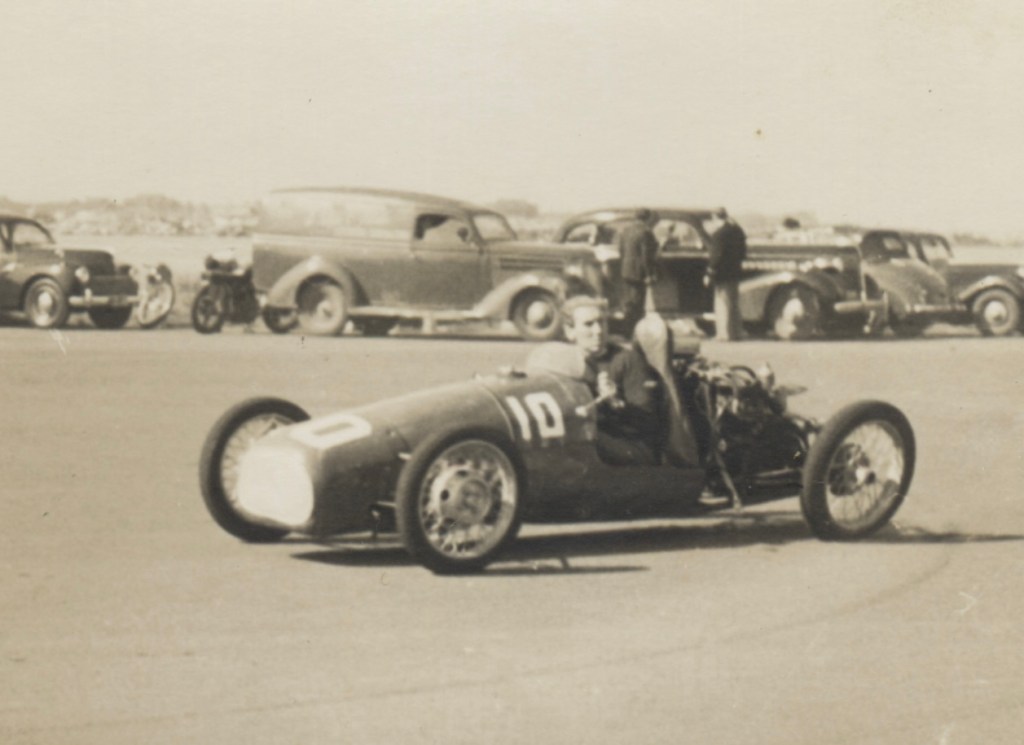
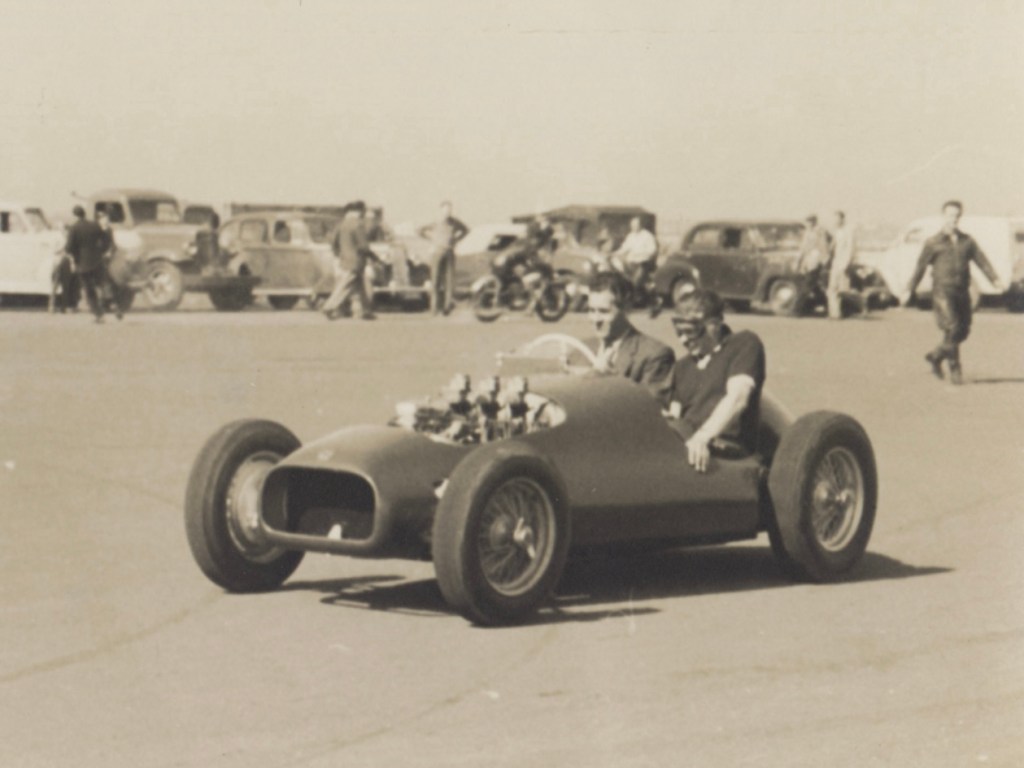
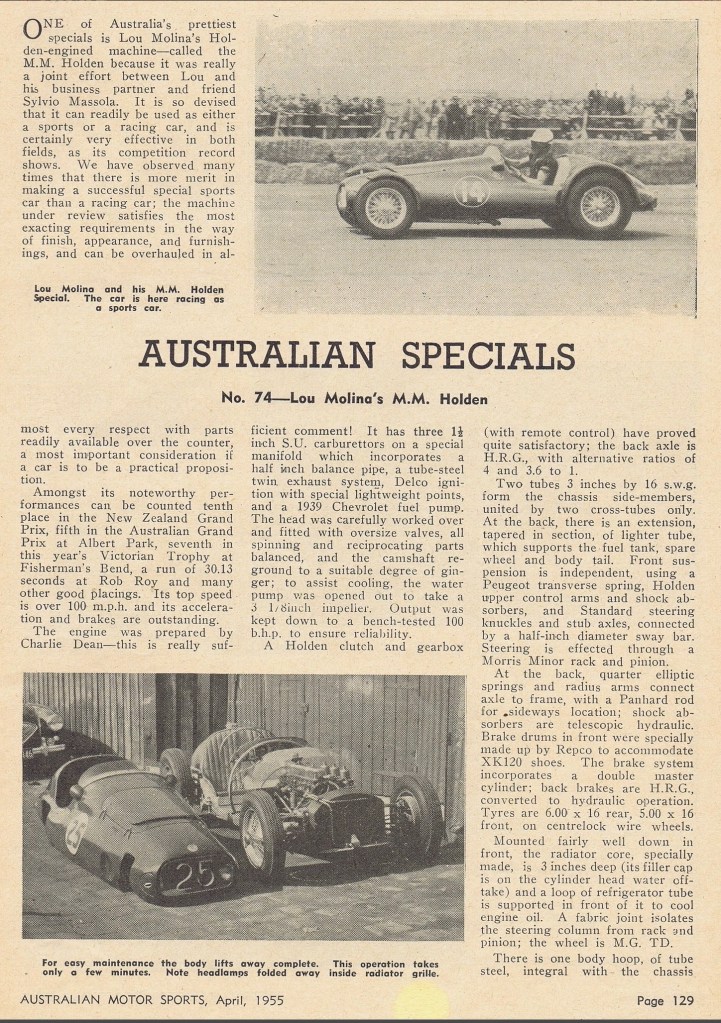
Conceived in Lou Molina’s Albert Park backyard the MM (Molina/Massola) Holden consisted of a Silvio Massola home-made chassis, Standard 12 front end, H.R.G differential and gearbox, Holden Grey six-cylinder engine and an attractive body made by Brian Burnett.

The MM had its first outing at Fishermans Bend on October 3, 1953, and I’m wondering if that’s when this photo of Lou and a Victim tootling around the paddock was taken?

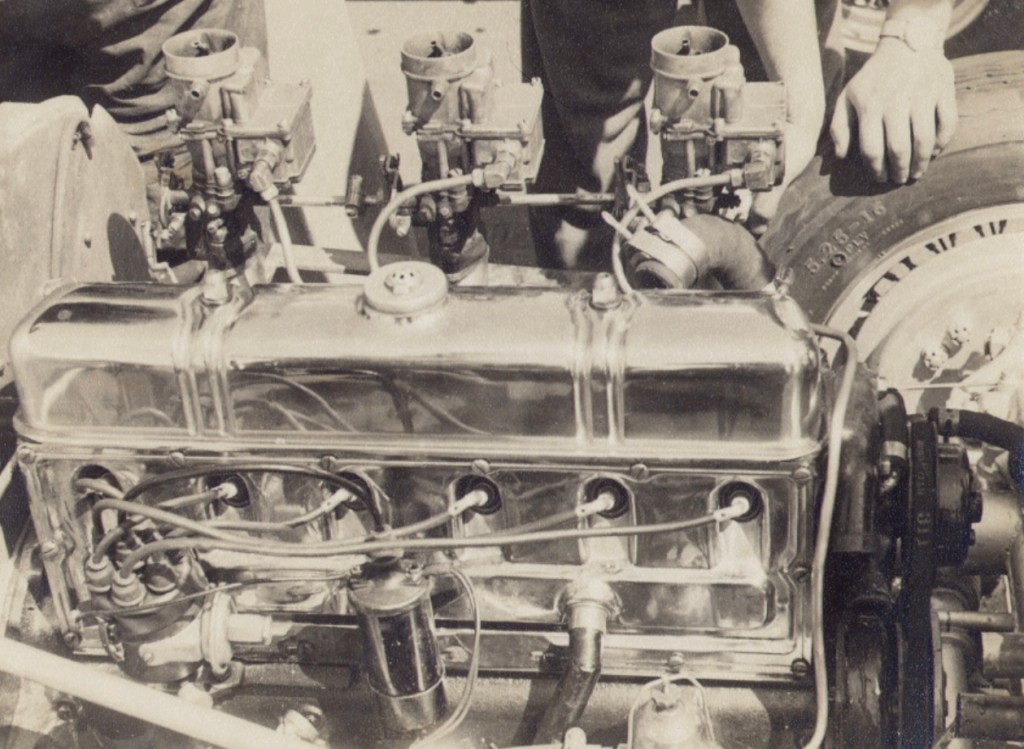
MM Holden was initially fitted with triple Stromberg carbs, later replaced by SUs (SLV)

Lou then contested the November 21 1953, Australian Grand Prix at Albert Park where he was an amazing fifth in the 64-lap 200-mile event won by Doug Whiteford’s Talbot-Lago T26C. The 2290cc MM Holden started from grid 30. The car appeared exactly as it is in the photograph above, sans bonnet and with triple-Strombergs pointing loud and proud at the sun.

The MM raced the following year at the January 1954 New Zealand Grand Prix with Molina competing alongside other Australians including Jack Brabham, Stan Jones, Tony Gaze and Alec Mildren. On this occasion, the MM was not successful, retiring early with mechanical problems. Stan Jones won the day of course in another rather famous Australian special

Amongst other notable runs, in 1956 the MM finished in the top six at the Argus Cup at Albert Park and clocked 15.3 seconds for the standing quarter mile at the Geelong Sprints.

Greg Smith has given me a shedload of material about this car from Lou’s Archive, I really must do something on the two Molina Specials soon.

And below, the MM Holden and an MG?, before the off at Fishermans Bend.

(SLV)
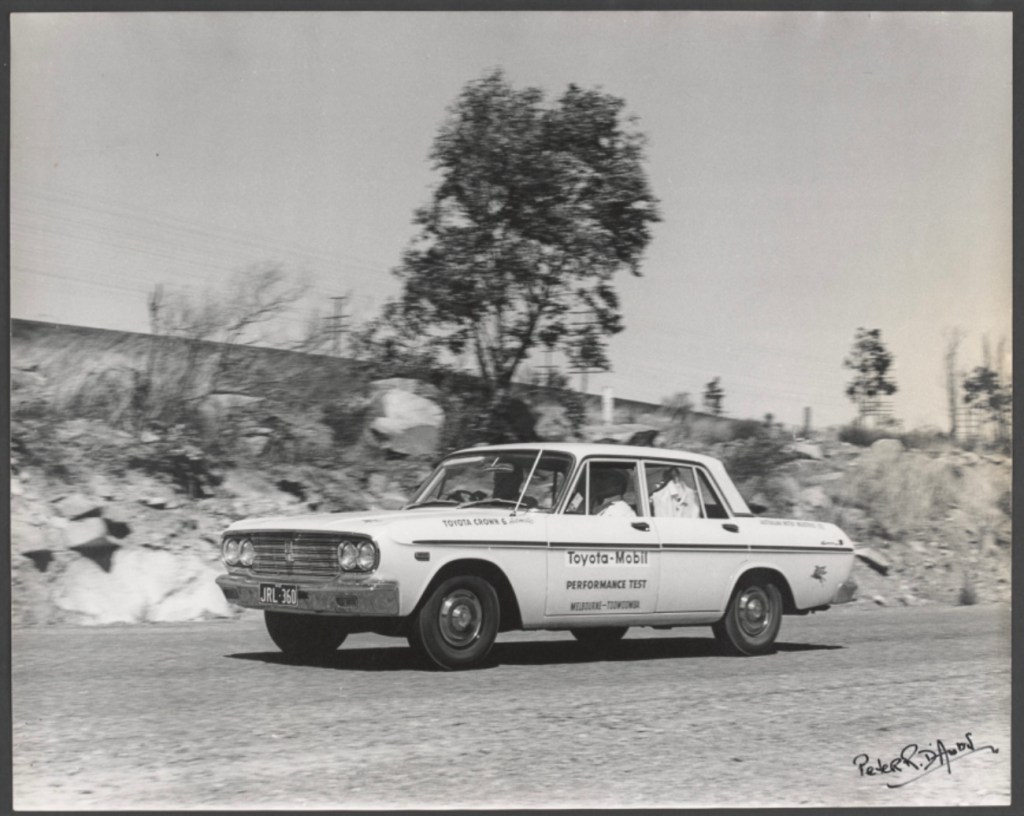
(Peter D’Abbs)

The Mobil sponsored Toyota Melbourne-Toowoomba Performance Test in 1966, Toyota Crown. It was still at the stage that ‘The Japs’ were convincing Aussies about the durability of their cars I guess, they succeeded rather well!

(H Coulson)

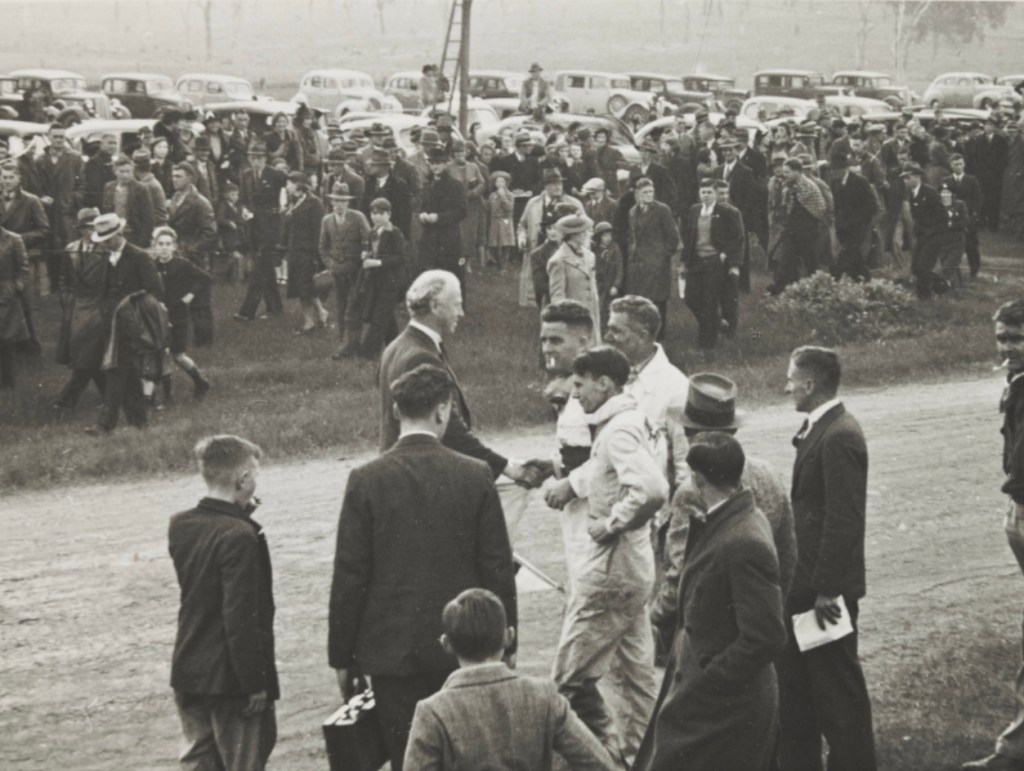
This looks awfully like Jack Phillips and Ted Parsons after one of their Interstate Grand Prix wins at Wirlinga, Albury in 1938 or 1939. Jack – with the post-race fag – still has his kidney-belt on.

Their mount was a Ford V8 Special, see here: https://primotipo.com/2023/03/07/jack-phillips-ted-parsons-ford-v8/

(SLV)

Charlie Dean well and truly on the gas during this ascent of Rob Roy in Maybach 1, date unknown. Right front on the track’s verge and right rear well and truly on the roadside.

Dean’s series of three Maybachs were labelled Maybachs 1, 2 and 3. M 3 was christened M 4 when that car/chassis was modified by fitment of a 283 Chev V8 in place of the Maybach SOHC six and other changes, mainly to the rear suspension. These cars were great crowd pleasers from their first appearances in 1948 until the last in-period races of Maybach 4 Chev in the hands of Ern Seeliger and Stan Jones in 1958-59.

(SLV)

One of the great shames is that a Maybach never won an Australian GP, karma suggests that this shouldn’t be the case but shit-happened on those particular big days. Stan Jones’ 1954 NZ GP win – truly a great team effort – is duly acknowledged…More about Maybach 1 here: https://primotipo.com/2024/01/15/maybach-1-technical-specifications/

(SLV)
(G Thomas)

Alf Barrett at Ballarat aboard his superb, aristocratic Alfa Romeo 8C2300 Monza, during the 1947 Victoria Trophy.

This is another combination that shoulda-coulda-woulda but never did win an Australian GP. The fastest combination in the immediate pre- and post-war periods is the descriptor that would have to do.

The centenary of the first Australian Grand Prix takes place in 2027, good news is that the current custodians of this car: Grace, Troy and Lindon Davey-Milne have its restoration underway and with a bit of luck it will take its place in the on-track centenary celebrations or as a static exhibit at Goulburn and Phillip Island in 2027-28.

See here for more: https://primotipo.com/2015/02/20/alf-barrett-the-maestro-alfa-romeo-8c2300-monza/

(SLV)

Len Lukey and Ern Seeliger – probably – dice at the front of a Fishermans Bend pack circa 1957. Cooper T23 Bristol and Maybach 4 Chev. The 2-litre, triple Zenith-fed six-cylinder Bristol engine of the Lukey Cooper is shown below. More about the T23 here: https://primotipo.com/2017/02/24/the-cooper-t23-its-bristolbmw-engine-and-spaceframe-chassis/

(SLV)
(G Moss)

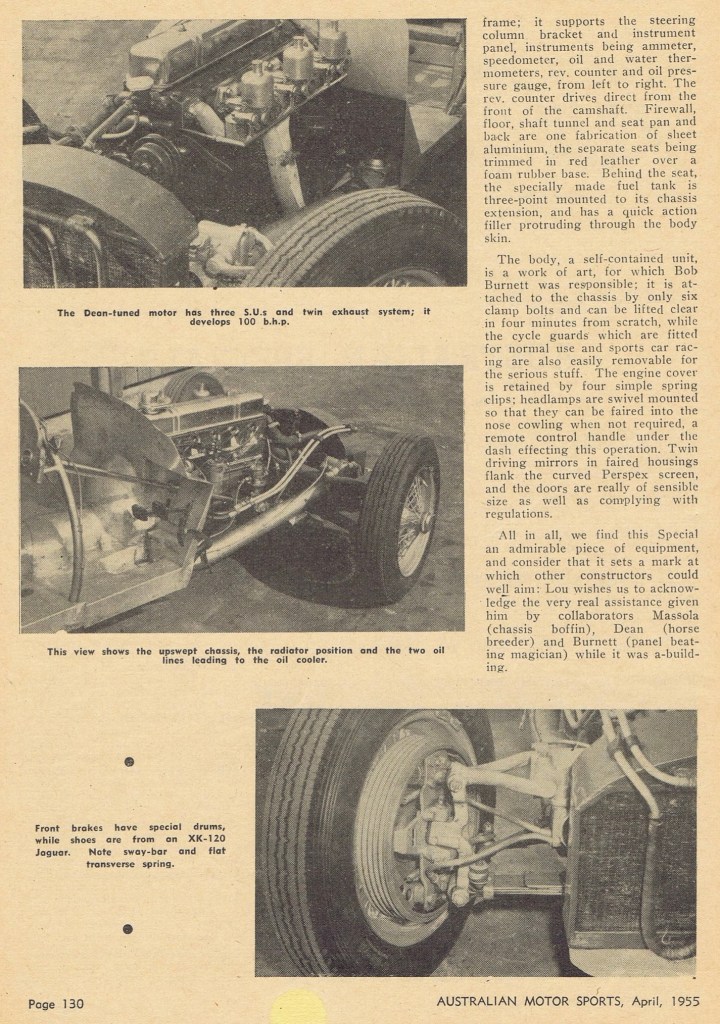
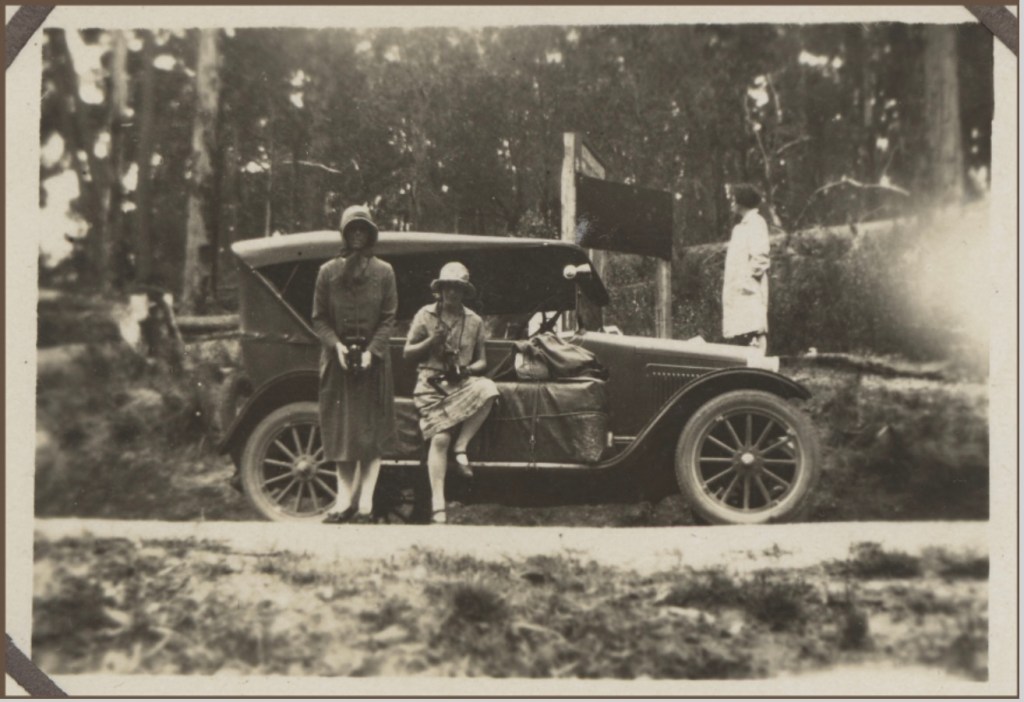
‘Sydney to Melbourne 750 miles by car in December 1927’, is the caption. Make of car folks? They certainly did it the long way, and the hard way no doubt.

(J Read)

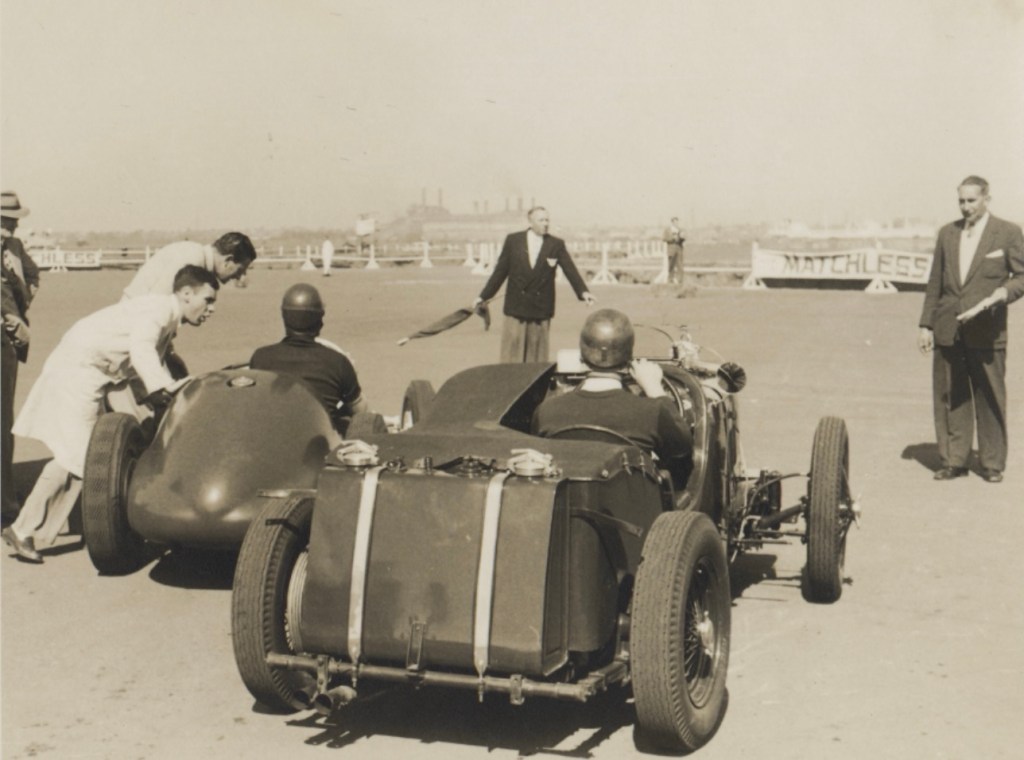
Stan Jones HRG #24 amongst a gaggle of MGs at Fishermans Bend in 1951 led by Lex Davison in the family TC Spl. I’ll take your advice on the rest. Article on the Davison TC Spl here: https://primotipo.com/2015/10/01/lex-davison-mg-tc-the-lobethal-stobie-pole-and-the-lucky-escape/

Credits…

State Library of Victoria and photographers George Thomas, ‘Bathurst : Cradle of Australian Motor Racing’ John Medley, Hal Coulson, Gladys E Moss, JP Read, Australian Motor Sports

Tailpiece…

(G Thomas)

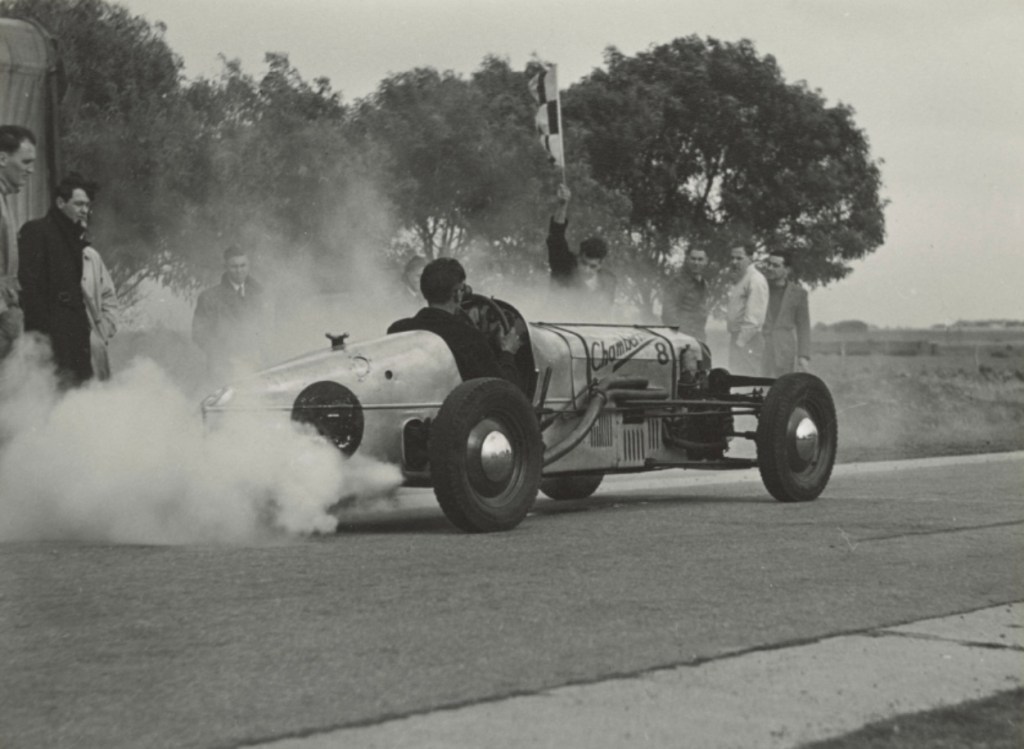
The starter drops the flag, can you see him among the clouds of two-stroke smoke!?, for Jim Hawker and the Chamberlain 8, VSCC Speed Trials, Geelong Road, June 1947; tree-huggers eat yer’ heart out.

The features of the Chamberlain brothers’ crazy-brave pre-war special included a small-tube spaceframe chassis, independent front and rear suspension, front wheel drive and eight-piston, two-stroke, supercharged 1.5-litre engine. See here: https://primotipo.com/2015/07/24/chamberlain-8-by-john-medley-and-mark-bisset/

Finito…
(L Sims Archive)

Legendary Australian Touring Car racer/engineer/tuner/team manager/CAMS politician Harry Firth ascends Rob Roy aboard a Cisitalia D46 in 1958. What a magic, crisp pan shot.

This ex-everybody car never did much in Australia. Its arrival more or less corresponded with the end of our long handicap racing era, and we didn’t have the right class for the car, 1100cc events here and there duly noted.

‘Only months earlier (May 4, 1958) Reg Nutt took the borrowed Leech Cisitalia to the top of the Hill in 28.30 secs. Now it was Harry’s turn however he couldn’t match Reg’s time. Harry’s time of 29.52 secs was more than 1 sec slower. But Harry probably won the most money on the day driving a Hillman for a second, Triumph TR2 for a first and the Cisitalia for a second,’ wrote Leon Sims.

A great car indeed, see here: https://primotipo.com/2023/09/08/cisitalia-d46/ here: https://primotipo.com/2023/09/08/cisitalia-d46/ and here for Harry: https://primotipo.com/2019/01/29/harry-firths-mg-tc-spl-s-c/

Firth prepared and raced plenty of sportscars before his highly successful 1960-80’ish tourer-era but he didn’t race many monopostos? That SU carb doesn’t look kosher on an Italian car either, surely it didn’t arrive here so equipped…

(G Hill)

Leon Sims, ‘This photo is from our (MG Car Club) second annual historic and classic meeting Feb 28, 1994. From the left: John Crouch, AGP winner, Australian Hillclimb Champion and Australia’s Cooper distributor in the 1950s. Harry Firth, multiple class winner and class record holder at Rob Roy. Bill Prowse, Rob Roy competitor from the 1947 LCCA years and also MGCC years.’

(L Sims Archive)

Credits…

Leon Sims, The Age via Leon Sims Archive, Gary Hill

Finito…
(I Arnold)

Easter 1955…

Reg Hunt working his Maserati A6GCM-250 hard at the Bathurst Easter meeting in 1955.

He won the 26 lap Bathurst 100 feature from Ern Seeliger aboard Stan Jones’ ex-Jack Brabham Cooper T23 Bristol and Lex Davison’s HWM Jaguar, below.

(I Arnold)
(I Arnold)

Clive Adams’ drove Stan Coffey’s Cooper T20 Bristol skilfully but lost an early joust for third place with Davison, spinning at Forrest’s Elbow on the run down the mountain.

By 1955 the ex-Jack Saywell Alfa Romeo P3 had passed through the hands of Julian Barrett and Bill Murray and was powered by an Alvis engine. Sold by Murray to Gordon Greig, the car was involved in a terrible accident after Greig pitted, feeling sick, on lap 16.

Gordon Greig, Alfa Romeo P3 Alvis at Hell corner above, and below, before the disaster (I Arnold)

Tony Bourke, one of Greig’s crew, jumped aboard to finish the race and promptly lost control of the car over Conrod’s final hump, spun and went backwards off the track through the crowd killing one, mortally wounding another and injuring 20. Bourke stepped from the car unhurt and was later treated for shock.

Changes were were made to eliminate spectators from this area after the Coroner’s Inquest and public and press reaction. Bourke died after a Midget crash at Westmead Speedway in 1965.

(I Arnold)
(I Arnold)

Col James MG Spl s/c and Ray Fowler, MG Spl, negotiate Hell Corner in the Group B Racing Car Scratch. They were third and fourth in this 3 lapper won by Stan Jones’ Cooper 1100.

(I Arnold)

Tom Jordan’s 1949 2.5-litre Riley engined Healey Silverstone (above) ‘was raced as a factory entry by Tony Rolt in the UK in 1949, then raced by Charles Mortimer in 1950 – he wrote a book about it, Racing a Sports Car – and was then returned to the factory, bought by Queenslander Colin Leagh Murray and raced and hillclimbed by him in Queensland before being sold to Jordan who had many successes with the car,’ wrote John Medley.

Etcetera…

(I Arnold)

It’s doubtful that Lex would have listed the HWM Jaguar – an ex-Moss HWM Alta 2-litre F2 chassis – amongst his favourite cars but he and his team coaxed enough speed and reliability out of the C-Type Jaguar powered jigger to win the 1954 AGP at Southport, aided and abetted by the breakage of a chassis weld on Maybach 2 when Stan Jones seemingly had the race ‘in the bag’.

By 1955 the HWM Jag was off the ultimate pace, Hunt had reset the local bar with his Maserati and Lex would meet the challenge in early 1956 with the purchase of Tony Gaze’ Ferrari 500/625 3-litre.

(I Arnold)

October 1955…

(I Arnold)

C James MG Spl S/c from Ted Gray, Tornado Ford, Hell corner, during the 3 lap Group A Racing Car Scratch.

On the last lap Tiger Ted lost the new car coming down the mountain near Griffin’s destroying it and hospitalising himself for months. Tornado 2 Ford would emerge in due course and Tornado 2 Chev became the fastest car in the country by later 1957, read here: https://primotipo.com/2015/11/27/the-longford-trophy-1958-the-tornados-ted-gray/

(I Arnold)

Touring car racing was steadily gaining in popularity with Jack Myers easily winning the sedan car handicap in his well developed, black-roofed, yellow Holden 48-215. ‘Holden wonder-man of the mid-1950s’ as John Medley described him. Here he is alongside George Pearse’s Ford Zephyr. See here for more on Jack: https://primotipo.com/2024/05/02/jumpin-jack-myers/

(I Arnold)

Jack Robinson’s Jaguar XK120 Special.

(I Arnold)

Dr John Boorman on the rise out of Hell corner on his way up Mountain Straight, ‘off scratch in the 6 lap Sports Car Handicap made no impression at all on Shmith’s new Austin Healey 100S which did 124mph through the timed quarter while Boorman did 125,’ Medley wrote. More about this car here: https://primotipo.com/2014/08/05/gnoo-who-gnoo-blas-circuit-jaguar-xkc-type-xkc037/

Postscript: Easter Bathurst tragedy…

After publishing this article, journalist/historian Ray Bell emailed me excerpts from ’emails I sent to the sister of Gavin Larnach’, one of the Bathurst accident victims.

1. That this whole thing is surrounded by lies and cover-ups is simply disgraceful. One can readily understand Mark’s state of mind and applaud him on his pursuit of the facts.

One such fact is that this car was very unstable after it had the very heavy Alvis engine installed. Ray Wamsley told me this, he was the next owner of the car, and he said it was absolutely transformed when he fitted a GMC truck engine after the Alvis unit failed. 

2. I’ve subsequently spoken a journalist of the time, about the cover-ups. He told me that he always understood it was the local member who pushed for the hushing of everything with a view to ensuring that the racing wasn’t shut down. The local member was Gus Kelly, who was a Cabinet member with some influence and had been the local member for many years, so that makes sense.

Two factors come into play here. In 1946 there was difficulty getting the racing off the ground because of police resistance. Additionally, a driver and a spectator had been killed at the Gnoo Blas race meeting in January, 1955. The fear throughout the two organising clubs would have been quite pronounced and it was just eighteen months later that the whole of motor racing in NSW had to comply with the new Speedways Act, which introduced standards for safety fencing etc.

3. What is really bugging me is John Medley’s comment that someone who gave evidence wasn’t actually in the country when the crash occurred. Not so consequential if he was just giving evidence about something technical, but still it appears from John’s comment that it might matter.

Credits…

Ian Arnold photographs via his son Mark Arnold

Finito…
(NAS)

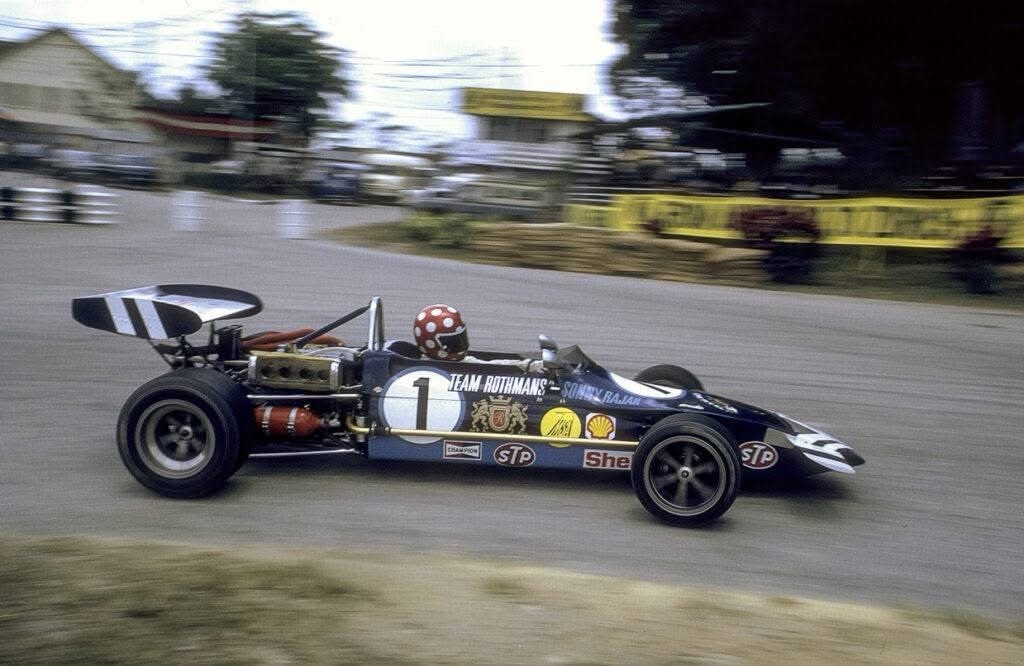
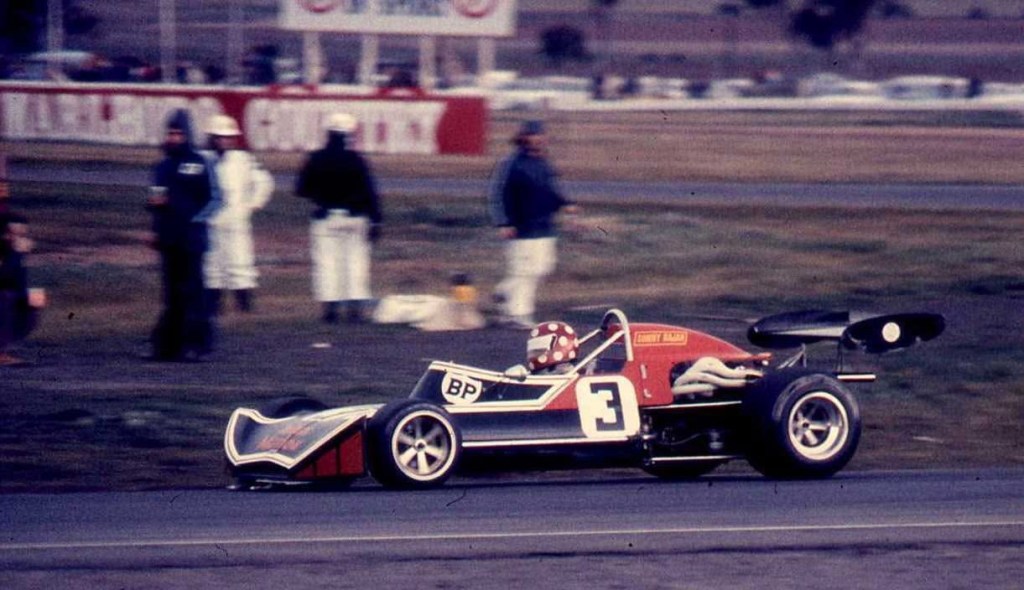
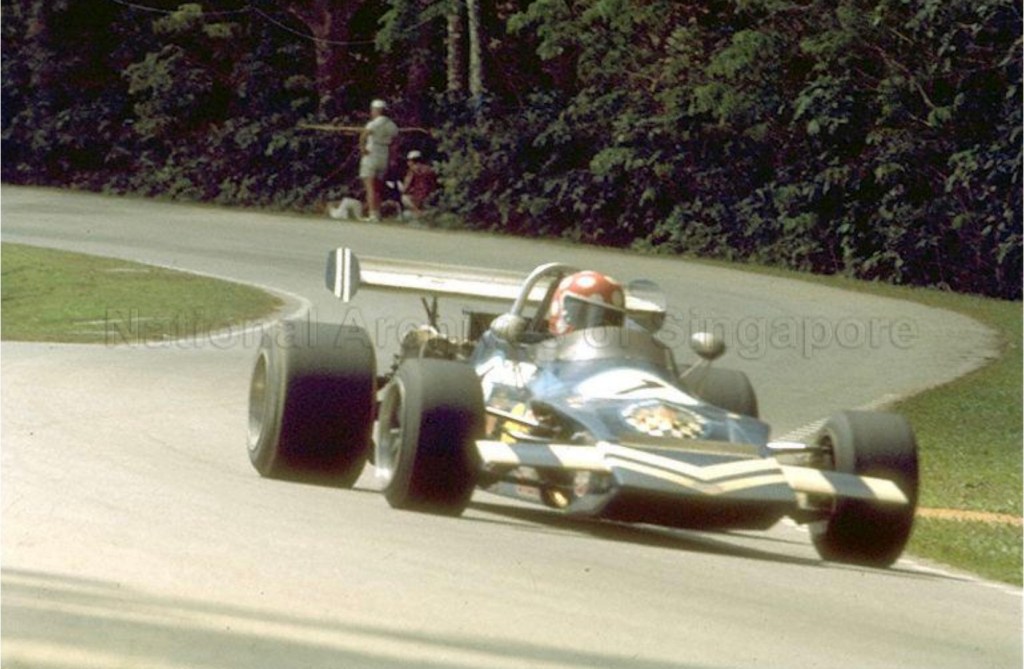
Sonny Rajah negotiates the tricky Thomson Road circuit during the 1972 Singapore Grand Prix aboard his March 712M Lotus-Ford twin-cam, chassis #712M-7, the same car in which Ronnie Peterson won the 1971 European F2 Championship.

Max Stewart won that race from Vern Schuppan and Bob Muir – Aussies first to third – with Singaporean local, Sonny fourth. Stewart raced his venerable Mildren, Schuppan his March 722 and Bob Muir his Rennmax BN3, all of the cars were Lotus-Ford 1.6 powered.

Eli Solomon wrote in MotorSport that ‘Sonny Rajah had struck up a partnership with the ex-Ronnie Peterson March 712M. He was the local hero and looked the part with his long hair and Zapata moustache. But to gain admittance into a country (Singapore) where long hair was associated with drugs, he had resorted to wearing a short-hair wig! A fellow competitor once remarked: “He had brilliant car control but someone other than bullshit-artists had to take him in hand! Natural talent and character too boot.”

Signature Peterson. ‘Very fast, off-camber, downhill, made for Ronnie Peterson’, Yoshiaki Hirano said. Mallory Park non-championship (n/c) March 14: accident in heat 1, DNS heat 2. Winner Henri Pescarolo in a Frank Williams 712M FVA (C Walker)
Peterson bagged first place F2 Championship points – Graham Hill won the race, as a Graded Driver he was ineligible for points – in the Jochen Rindt Memorial Trophy at Thruxton on April 12 (unattributed)

Ronnie Peterson bagged maximum points in five of the ten F2 championship rounds he contested and won the title from Carlos Reutemann’s Brabham BT30/Brabham BT36 and Dieter Quester’s March 712M BMW.

Ronnie won at Thruxton, Rouen, Mantorp Park, Tulln Langenlebarn and the GP di Roma at Vallelunga. Note that Graham Hill (Brabham BT36) won at Thruxton – a real tear-jerker for race-fans as it was Graham’s first race-win since his huge Lotus 49 Watkins Glen crash at the end of 1969 – but as a graded-driver Hill was ineligible for Euro F2 Championship points.

London Trophy weekend at Crystal Palace, May 31, 1971. Adam Potocki’s spaceframe Brabham BT30 is made ready for battle while John Cannon’s monocoque 712M is similarly fettled (J Fausel)

F2 Wind-Shift from Spaceframes to Monocoques…

This season marked a shift in F2 with Brabham’s dominance – and spaceframes’ dominance – at an end. March Engineering led the charge with their 712M, while Lotus continued with the 69 and Brabham and Tecno stuck to their successful spaceframes.

It wasn’t that cut and dried though: Alan Rollinson won the Bogota GP n/c (non-championship round) in his Brabham BT30, Graham Hill at Thruxton in his BT36 and Carlos Reutemann, BT36 at Hockenheim n/c.

Noteworthy was Carlos Reutemann’s pace in both his Brabham BT30 and BT36 all year, so too Tim Schenken’s BT36 speed throughout without actually winning a round.

It was all over at the end of ’71 in the sense that Ron Tauranac sold Brabham to Bernie Ecclestone late that year with Bernie building monocoque customer F3 and F2 cars in 1972 before pulling out of production racing car manufacture at the end of that year.

Technical interest in the era of Absolute Ford FVA dominance was provided by Tecno in 1971 who fitted in-house-prepped Ford BDA engines which bagged two-championship wins at Hockenheim and the Nurburgring, and a non-championship victory at Vallelunga for Francois Cevert.

Emerson Fittipaldi won at Madrid, Crystal Palace and Albi, and Reine Wisell at the GP de Pau n/c in monocoque Lotus 69 FVAs but Emmo was a graded driver so didn’t bag F2 championship points.

Potent partnership: Ronnie Peterson and Max Mosley at Thruxton at the start of a great season for them both in F2 and F1 (J Fausel)

The 712M in the March Pantheon

That the 712M was a good customer car was proved by the number of drivers who won in them apart from Ronnie: Henri Pescarolo at Mallory Park n/c, Dieter Quester Monza n/c, Carlos Pace Imola n/c and Mike Beuttler the GP Madunina at Vallelunga.

Quester’s 712M was fitted with a works BMW 1.6-litre, four-valve, M12/2 engine providing the category with much-needed and ongoing technical interest, and plenty of pace: third place in the championship with five second places on top of his non-championship Monza win was a great season.

Critically, it was the start of a relationship with BMW Motorsport that was so important commercially and competitively for March from 1973, the second year of the 2-litre F2.

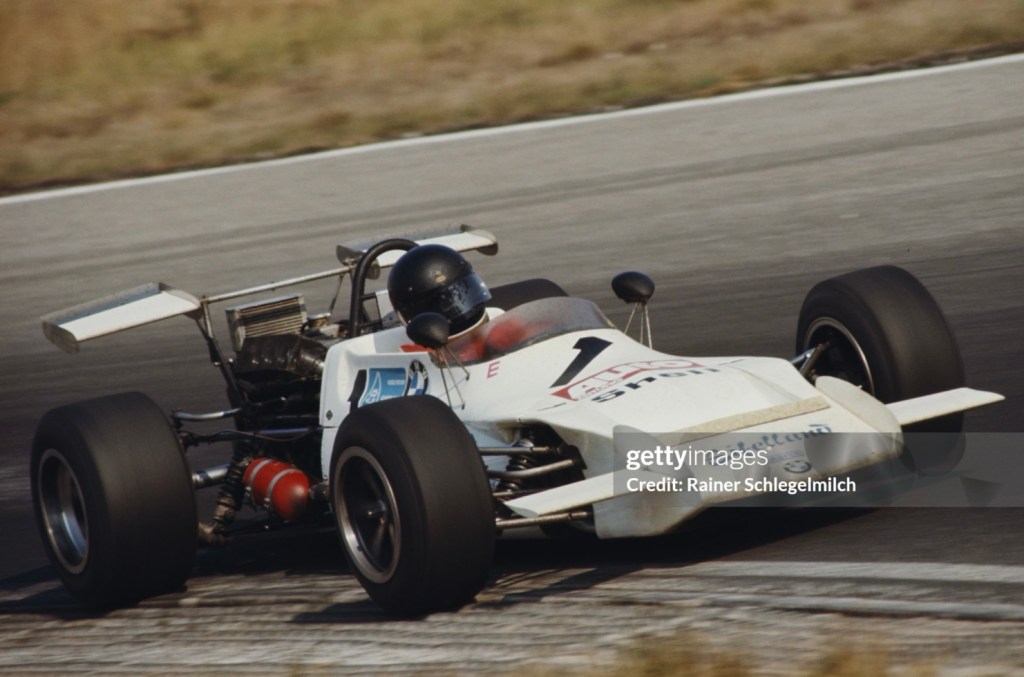
Dieter Quester, March 712M BMW at Hockenheim in October 1971 (R Schlegelmilch)
Derek Bell and Henri Pescarolo and Frank Williams 712M FVAs at the Nurburgring in 1971 (unattributed)

‘What makes March’s 1971 F2 season all the more creditable is that no fewer than 16 drivers went on to works F1 drives, nine would win Grands Prix and two, Lauda and Fittipaldi, would become World Champions.’ March biographer, Mike Lawrence wrote.

Beyond that, the 712M wasn’t a one-hit wonder, it just gave and gave. Its aluminium monocoque provided sterling service from 1971-77 in F3, F2 and F Atlantic form; it was a ‘banker’ at a critical time in March’s history.

Mike Lawrence picks up the thread, ‘Robin was getting on with the job of designing both the new F1 car and, what in the long term was to be more significant, a monocoque for F2 and F3.’

Herd, ‘It took us three or four goes to get it right; I did the detail mechanical design, Roger Silman and Dewar Thomas who made the prototypes put in a lot of their ideas as well, and John Thompson’s operation actually built the production tubs. Apart from the fact that it worked, and was still winning races in 1977, it was very well production engineered and I think we can be pleased with it. When the car was finished, I was away at an F1 race, so Dewar simply took it up to Silverstone and did 60 laps in it, which is something one cannot imagine happening today.’

‘Apart from the sharp new body and the monocoque itself, which had the engine as a semi-stressed member supported by the detachable multi-tubular frames, the broad layout of the design was similar to the 1970 cars, although there were detail changes such as such as narrower wishbones and the use of foam-filled fuel Carl’s which were required by the new regulations.’

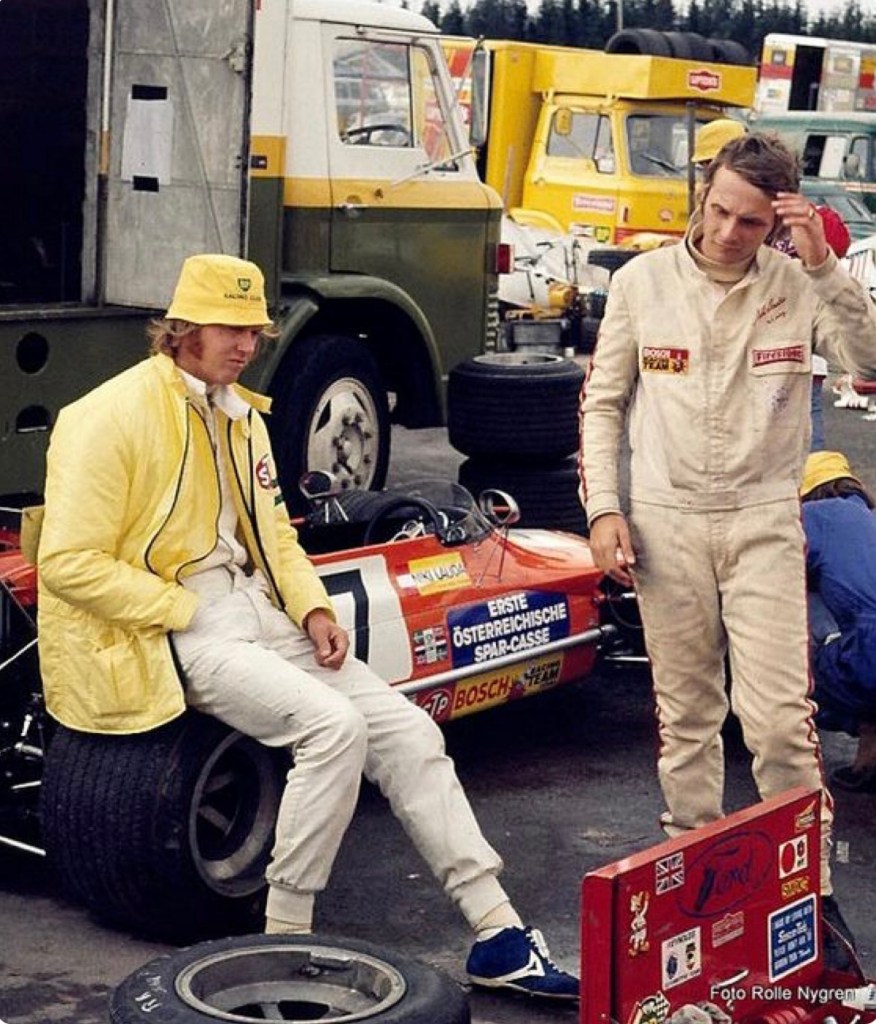
Ronnie sits on Niki Lauda’s tyre at Mantorp Park in August. A win for Ronnie and seventh in the first heat and DNS the second for the Austrian who raced a works-entered 712M (R Nygren)
Sonny during the Calder AF2 championship round in August 1974, March 712M Lotus-Ford. 11th in the race won by Leo Geoghegan’s Birrana 274 (S Gall)

Sonny Rajah raced an ex-James Hunt F3 Lotus 59/69 by then fitted with a Lotus-Ford twin-cam in the 1971 South East Asian season for a best of second place in the Malaysian Grand Prix at Batu Tiga on September 5 behind John MacDonald’s ex-Mike Costin Brabham BT10 Lotus-Ford twin-cam.

By the commencement of the 1972 South East Asia season – the April 4 Singapore GP- Sonny was racing his new, ex-March-Peterson 712M. his strong performance in Singapore was succeeded by victory in the April 9 Malaysian GP at Batu Tiga in front of Ken Smith, Lotus 59/69, Vern Schuppan March 722 and Kevin Bartlett, Brabham BT30 – all Lotus-Ford twin-cam powered. He was third in the season-ender at Macau on December 4 behind John MacDonald’s Brabham BT36 Lotus-Ford and Max Stewart’s Elfin 600B Lotus-Ford.

Rajah on the jungle-surrounded Thomson Road track, Singapore GP weekend 1972. March 712M-7 (NAS)
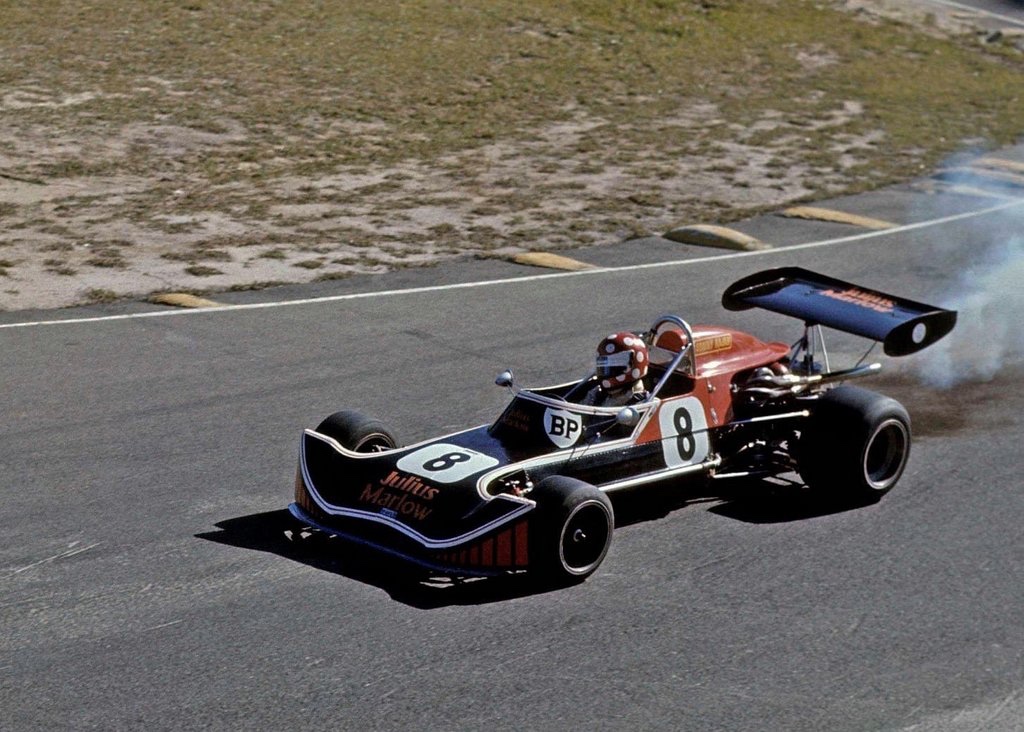
Rajah, March 732/712M Hart Lotus-Ford twin-cam, Amaroo Park July 21, 1974 (B Henderson)

In 1973 Sonny bought a March 732B in the UK and took in a number of British Formula Atlantic Championship rounds from late May to late July. With best results in the highly competitive championship of ninth at Silverstone in May and fourth at Mallory in July he was sharpish by the time he returned home and promptly won the September 9 Selangor Grand Prix at Batu Tiga aboard the 712M-7! Graeme Lawrence was second in his Surtees TS15 and Percy Chan was third in the March 732B raced by Rajah in the UK. He capped off a busy season with second place to John MacDonald’s Brabham BT40 at Macau in the now 732 bodied 712M (probably says Allen Brown).

Into 1974 he had time to run the March 732 bodied 712M-7 in the Malaysian GP on April 7 DNF, before shipping the car to Australia before the first Australian F2 Championship round – also a twin-cam, two-valve formula – at Hume Weir on June 16.

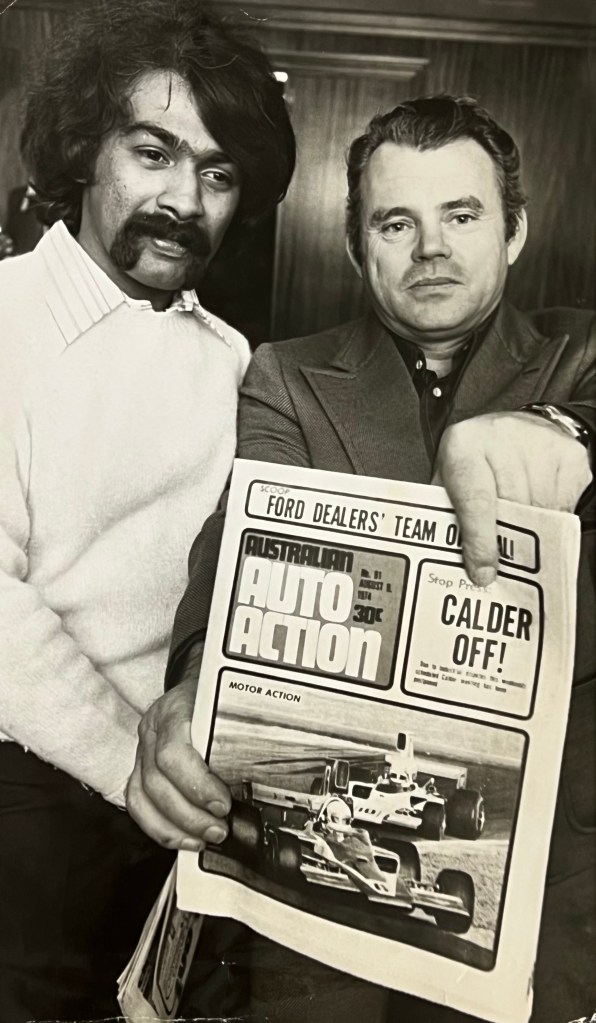
Sonny Rajah and Bob Jane in August 1974 (Auto Action)

The popular Singaporean born racer, Rajah contested the full eight race 1974 championship with the March, updated, as already noted, with 732 bodywork in a low-budget campaign run largely out of Paul England’s workshop in Moonee Ponds, Melbourne

It was the most competitive second-level motor racing championship ever run in Australia thanks to the support of Van Heusen Shirts, the story of how that came about is one for another time

Rajah in the Julius Marlow Shoes sponsored 732-712M from Ray Winter, Mildren Yellow Submarine Lotus-Ford and Bruce Allison, Birrana 274 Lotus-Ford at Adelaide International. Rajah ninth, Winter fourth and Allison seventh in the race won by Bob Muir, Birrana 273 and John Leffler, Bowin P8 (Auto Action)

Up front the contest was between the Birranas of Leo Geoghegan and Bob Muir, and when he got it sorted, John Leffler’s Bowin P8; all of these cars were powered by Brian Hart built ‘416-B’ Lotus-Ford 1.6-litre, DOHC, two-valve (mainly) fuel injected engines giving about 205bhp.

Rajah’s contested all eight rounds with his best third place at Symmons Plains and sixth at Hume Weir. He’s not listed in the point score because – I guess – he wasn’t a CAMS licence holder.

Leo Geoghegan won the title in his works-Birrana 274, Bob Muir’s Bob and Marj Brown owned Birrana 273 and Leffo’s ‘works’-Bowin P8.

Etcetera…

(LAT)

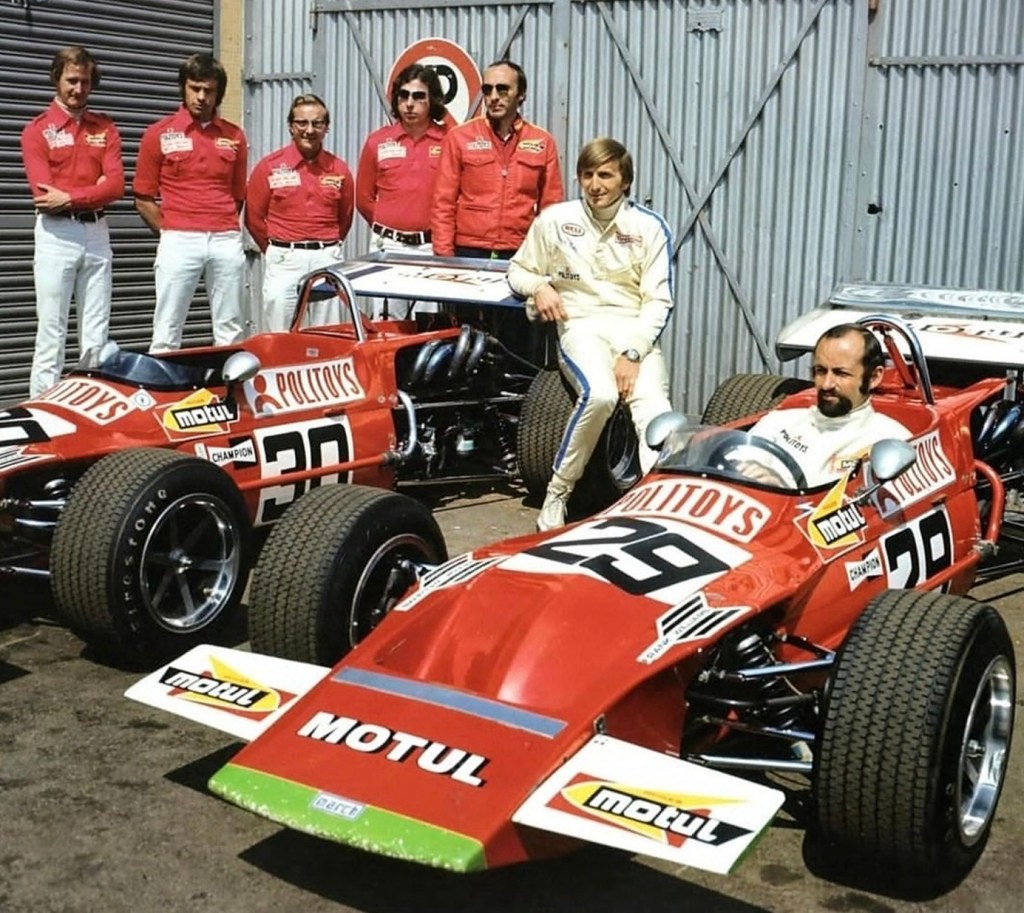
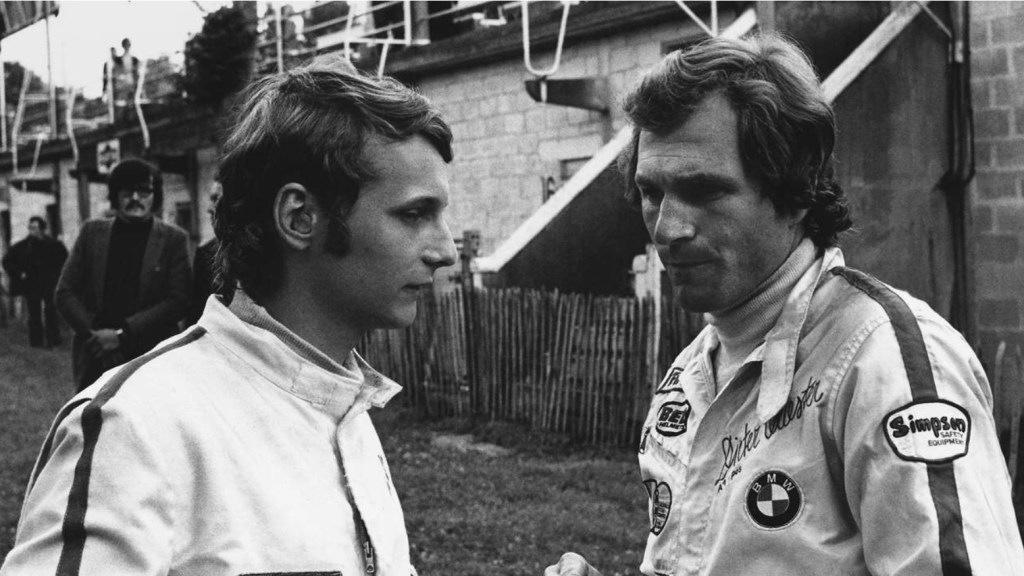
March 712M Brothers in Arms Niki Lauda and Dieter Quester swap notes during the Rouen-Les-Essarts June 27 weekend in 1971. Peterson won from Quester and Graham Hill’s Brabham BT36 with Niki fourth.

Niki at Mallory Park (below) at for the F2 season-opener – non-championship – Speed Championship Trophy over the March 14, 1971 weekend.

His works-March-Bosch Racing 712M-9 didn’t finish either heat. The renta-driver had plenty of top-six finishes that season and memorably duelled with Graham Hill and Peter Westbury at the Nurburgring for fourth place. In the first heat at Rouen, he almost sling-shotted past Peterson to win, dipping out on the line and finishing second by 0.1 secs…

(I Hubbard Collection)

Still at Mallory Park, Derek Bell 712M-2 and Henri Pescarolo 712M-4, below, in the Frank Williams March 712M Ford FVAs. Henri won from Gerry Birrell’s Lotus 69 and Brian Hart’s Brabham BT30.

(Ed Brunette Collection)

Tino Brambilla tests his March 712M Ferrari Dino 206 V6 at Monza in 1972. This chassis is the ex-Pescarolo 712M-4.

Its amazing that a family of engines born in 1957 were still being used in 2-litre form at the dawn of the 1980s, not very successfully mind you! See here: https://primotipo.com/2023/06/17/ralt-chevron-and-minardi-ferrari-dino-206-v6s/

Tino retired his ‘Ferrari’ retired from the Monza Lottery non-championship F2 race – Gran Premio della Lotteria – won by Graham Hill from Silvio Moser and Jean Pierre-Jarier: Brabham BT38 Ford BDA, Brabham BT38 Ford BDE and March 722 Ford BDE.

(J Benak)

James Hunt in the Hesketh Racing March 712M-5 Ford BDA during the September 16, 1972 British F2 Championship race at Oulton Park. The soon-to-be F1 Star was third behind the works-March 722 Fords of Ronnie Peterson and Niki Lauda.

In several late season Euro F2 rounds in September-October he was Q3 and DNF at the Salzburgring, Q 11 and fifth at the Albi GP, Q12 and eighth at Hockenheim.

(B Henderson)

Rajah at Amaroo Park, Sydney on July 21, 1974. DNF engine in the race won by Bob Muir’s Birrana 273.

I’m intrigued by what Allen Brown (oldracingcars.com) makes of the photos in this article which show the obvious difference in ‘our car’s’ bodywork – 732 rather than 712M – but in addition the roll-bar mounts are different between the two cars. I do wonder whether the car that came to Australia by then had a 732 tub. we know Sonny raced a ‘mystery’ ‘732B’ in British Atlantic then took it back to Asia. I wonder whether the car in Oz was the 732 chassis rather than the 712M?

Credits…

National Archives of Singapore via Rewind Media via Ed Brunette, Clarke Walker, Rolle Nygren, ‘The Story of March : Four Guys and a Telephone’ Mike Lawrence, Stephen Gall, Jutta Fausel, Ed Brunette Collection, Bryan Henderson, Auto Action, Ian Hubbard Collection, Singapore Fling : Singapore GP piece in MotorSport by Eli Solomon

Tailpiece…

(J Fausel)

Ronnie during the Grand Prix de Rouen on June 27, 1971.

The Swedish Star won from Dieter Quester’s 712M BMW and Graham Hill’s Rondel Racing Brabham BT36 and Lauda’s works-712M. Graham was still a plenty-quick F2 driver in that lovely Ron Dennis prepped BT36 that year. Always loved those March wheels…

Quite a few of the photos in this article are by now US domiciled German photographer Jutta Fausel who I collaborated with in an article published in MotorSport a couple of years ago on the 1970 Israel Grand Prix, an obscure F2 race.

I really must buy her book, F2 Devotee as I am, which comes highly recommended!

Finito…
(G Searl)

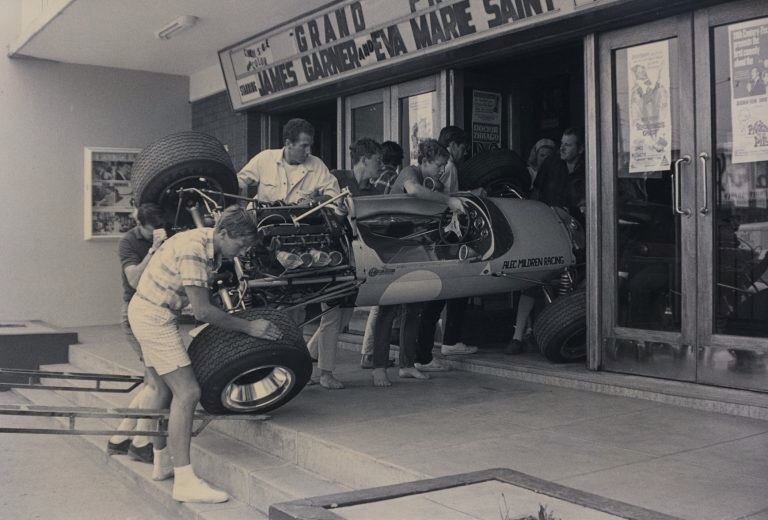
Just a little to the right fellas otherwise we’ll have to twist the chassis a smidge…

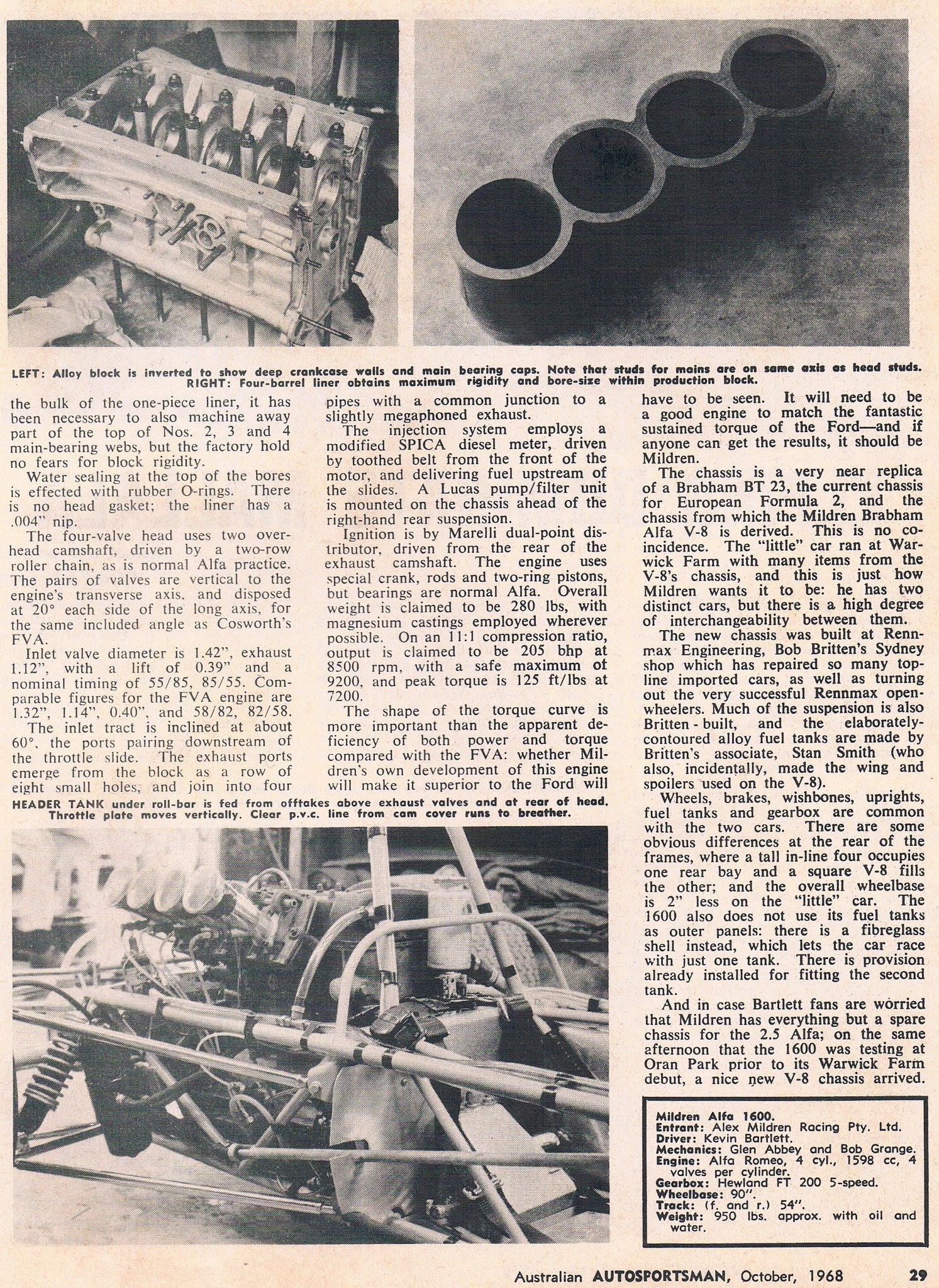
Alec Mildren Racing mechanics Bob Grange, in overalls, and Glenn Abbey partially obscured by the left front, manoeuvre their new Mildren (Rennmax) Alfa Romeo 1.6 F2 through the narrow front doors of the Avalon Cinema on Sydney’s Northern beaches.

Both Mildren and Abbey were locals so perhaps the deal to have the racer in situ during the screening of the film Grand Prix was hatched between the theatre owner and Mildren- a nice way to cross-promote his Alfa dealerships closeby and in the city.

The date is the more interesting thing in an arcane kind of way. Grand Prix was released in Australia on July 14, 1967, this car wasn’t built then. It first raced at Warwick Farm on September 5, 1968 in Kevin Bartlett’s hands, and was raced for the first time with a 1.6-litre Waggott TC-4V engine at Symmons Plains in Max Stewart’s tender loving care on March 3, 1969.

So…given the shorts on the fella looking after the right rear Goodyear I’m guessing it’s a school holidays screening in The Summer of ’69, the only thing missing is Bryan Adams twangin’ his Fender Strat (or whatever).

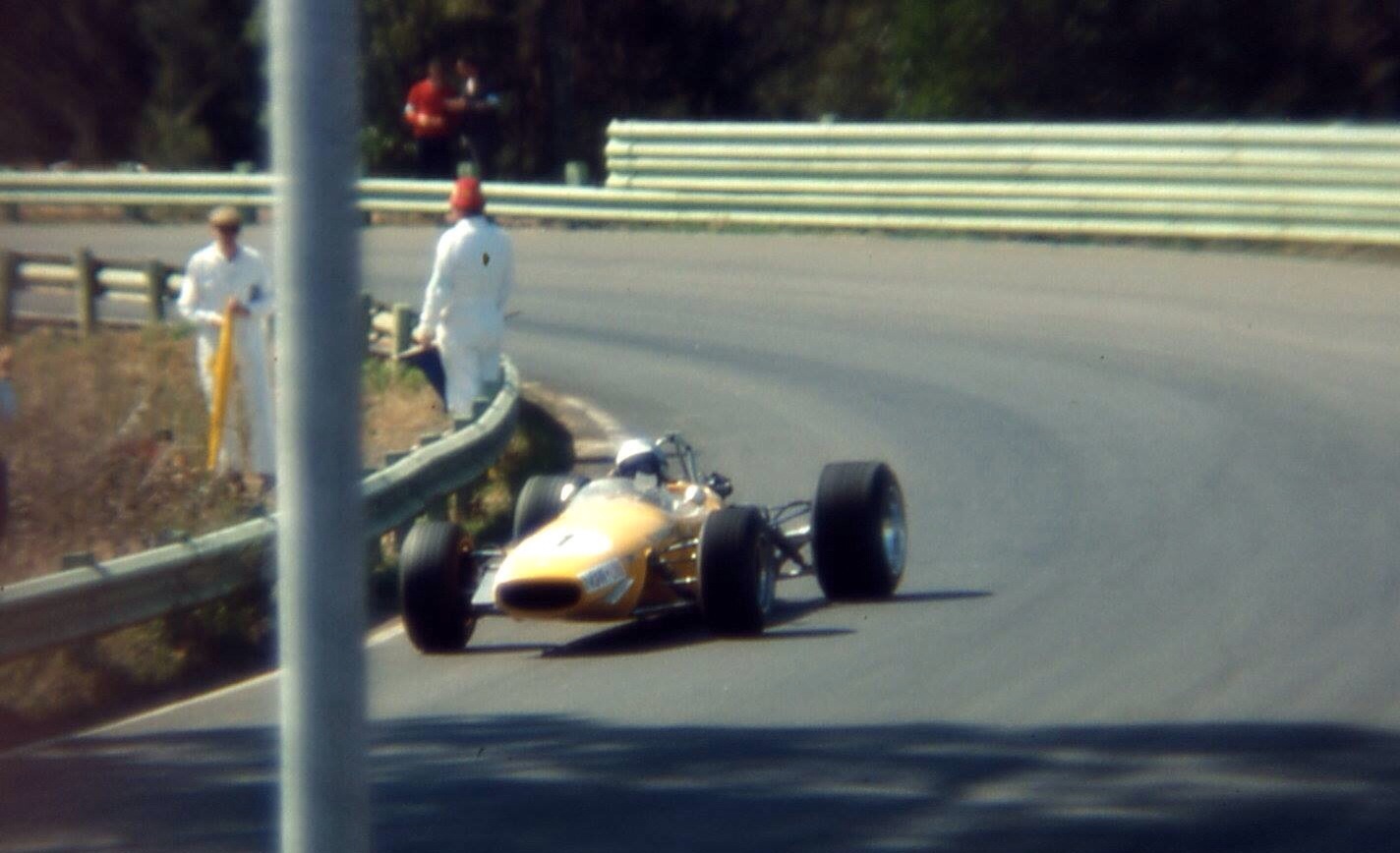
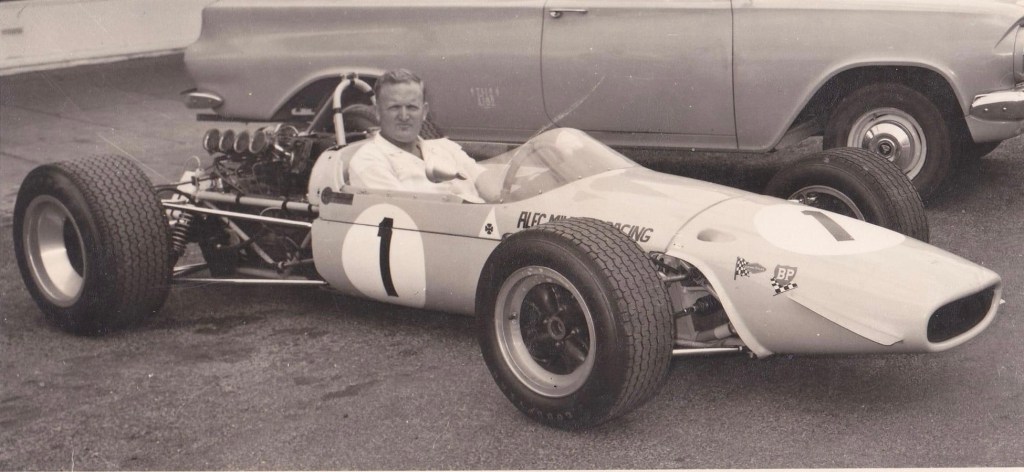
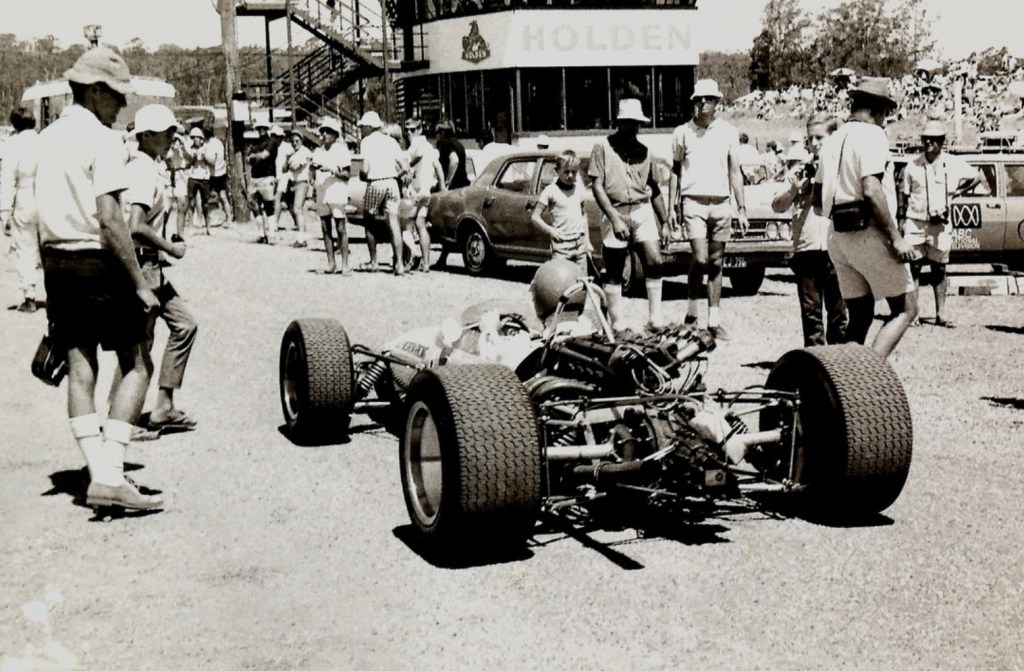
Kevin Bartlett slicing the new Mildren Alfa F2 through the Warwick Farm Esses, probably on the 8 September 1968 weekend of its race debut (D Harvey)
Bartlett on the WF dummy grid on September 8, 1968. Mildren Alfa Romeo F2 Four-Valve race debut (B Henderson)

This little Beastie is an oh-so-famous car in Australia. It won a swag of races in Max Stewart’s hands including the 1971 Australian Gold Star Championship and the 1972 Singapore Grand Prix.

It had more engines than you and I have had hot dinners: the Alfa Romeo DOHC twin-plug, four-valve 1600cc F2 featured in this article, Waggott TC-4V DOHC four-valve 1600/1860/2000cc, Alfa Romeo DOHC twin-plug, two-valve, Alfa Romeo 2000cc GTAm and Lotus/Ford DOHC two-valve 1600cc motors.

Treat this as the first of two articles on the Mildren Alfa/Waggott/Alfa/Ford dealing with its early life in 1968-1969 with a particular focus on the Alfa Romeo four-valve engine.  See these two Singapore GP pieces; https://primotipo.com/2016/11/24/singapore-sling-with-an-elfin-twist/ and; https://primotipo.com/2018/05/29/singapore-sling/

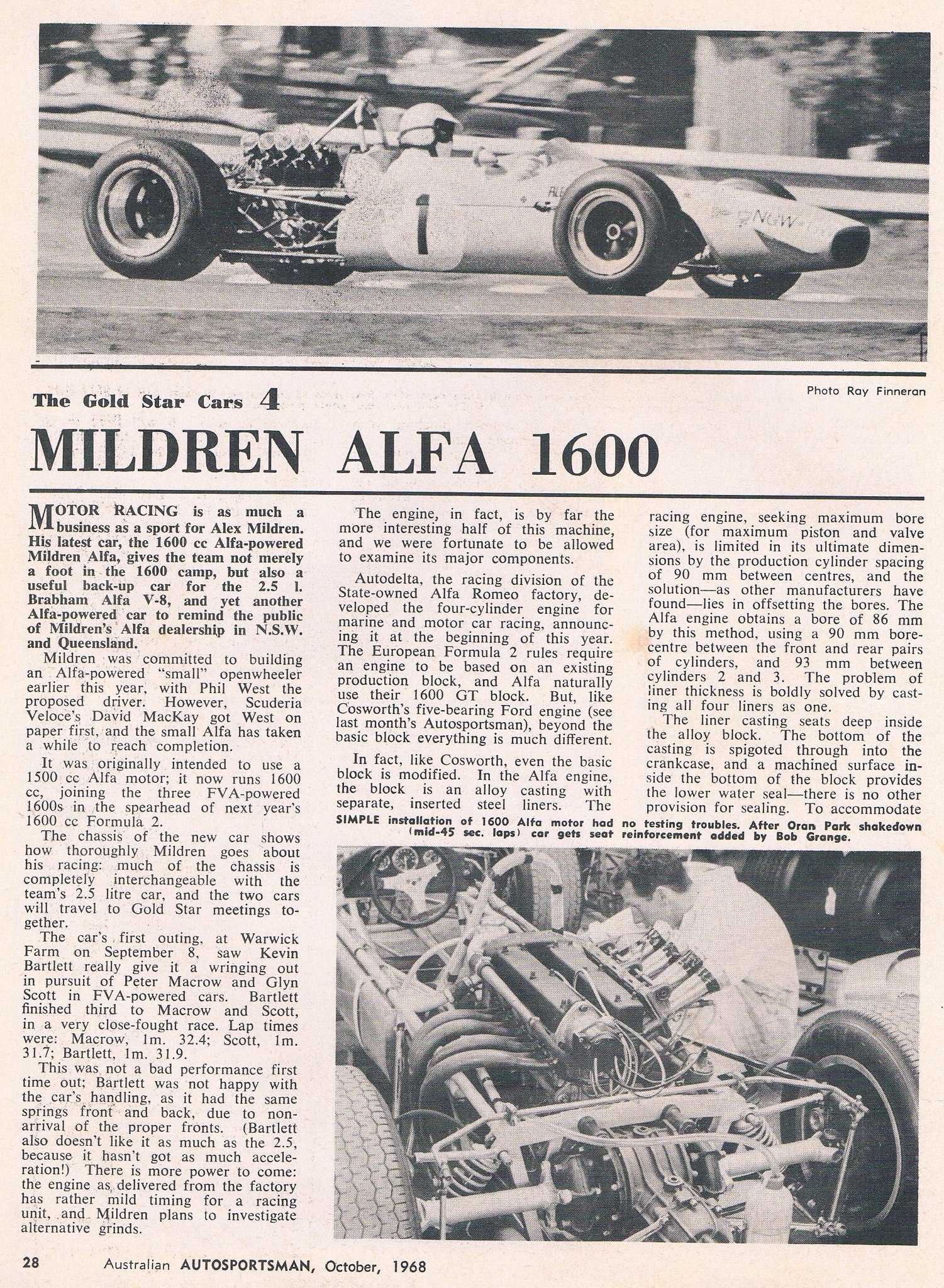
The article below on car and engine was published in the October 1968 issue of Australian Autosportsman and deals with the detail wonderfully well. I suspect it’s the best article on the planet on an extremely rare engine.

Kevin Bartlett commented on the performance of the engine in recent times on social media, “There was an issue with the piston ring to bore clearance which caused high oil use and lack of power, so the engine was returned to the maker. From that time the Waggott was born.”

So quickly out of love with the project had Alec Mildren become, that he advertised the car for sale in the November 1968 issue of Racing Car News.

But things moved quickly after that, Max Stewart was signed to join KB at Mildrens and Alec reached agreement with Merv Waggott to be the first to use his new Waggott TC-4V 1.6-litre Ford block engine.

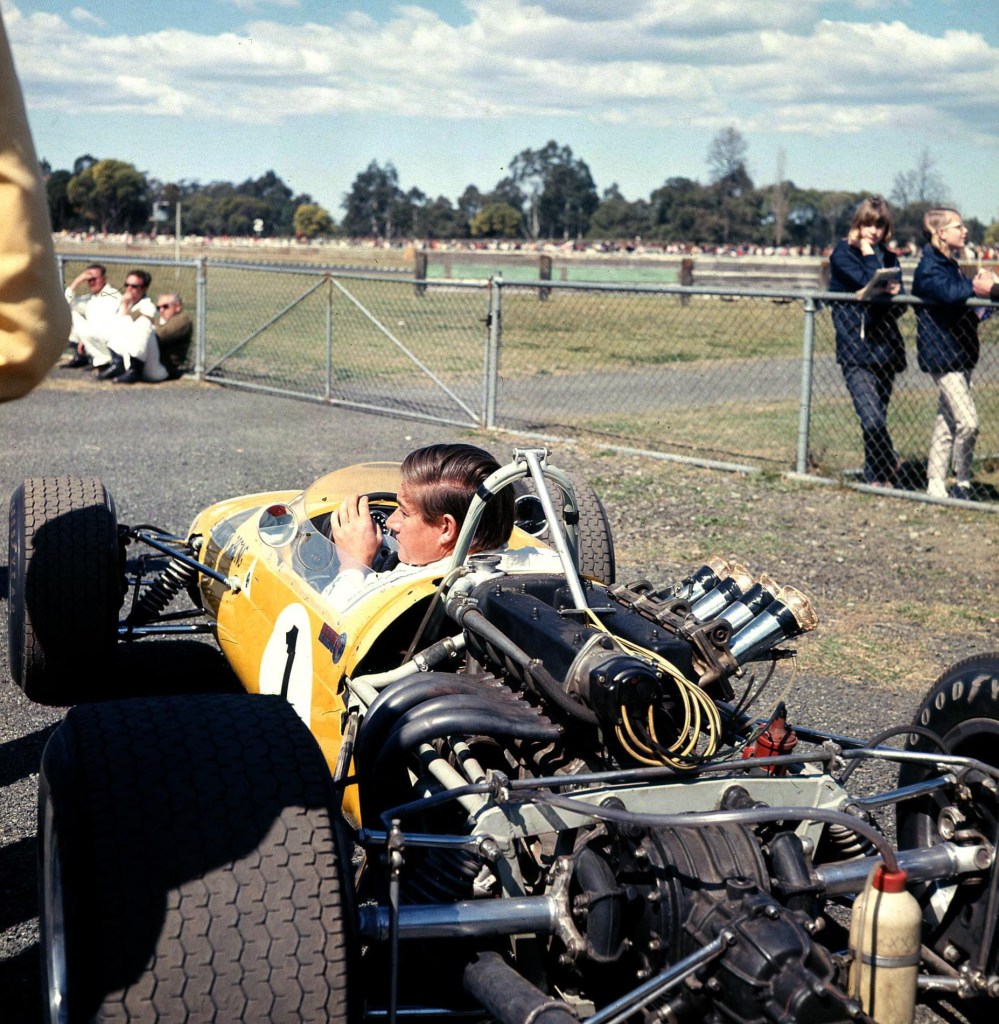
Max made his race debut with Mildrens in the February 2, 1969 Australian Grand Prix at Lakeside where he was sixth in the Mildren Alfa, four laps adrift of the winner, Chris Amon’s Ferrari 246T.

After that, the Alfa Romeo/Autodelta engine was removed and in its place, the Waggott was installed, with Max taking his race debut with it in the first round of the 1969 Gold Star at Symmons Plains on March 3. Fuel metering unit problems ended his day early.

I’m not so sure the little four-valve engine left Australia either…

Max Stewart aboard the Mildren Alfa 1.6. The date of the shot is unknown but I wouldn’t mind betting that it is one of the very first shots of a car which was so kind to Max over the ensuing three or so seasons in Australia, Singapore and Japan (Central Western Daily)
Stewart in the Lakeside AGP paddock in February 1969. Mildren Alfa F2 (M Tyler)

Group 2 and F2…

Upon further research it’s apparent just what a rare car the Mildren Alfa was for the short time of its existence. As indicated above, the Alfa Romeo F2 engine was replaced by Merv Waggott’s very first 1600 TC-4V engine for the first 1969 Gold Star round at Symmons Plains.

Autodelta’s primary racing programs at the time were the Tipo 33 sports-racers which contested the World Endurance Championship and its 105 Series Coupe Alfa GTA Group 2 program, and the more modified Group 5 categories.

The 1600 four-valve engine was first fitted to Lucien Bianchi’s GTA for the 1967 Giro di Corsica, however he was eliminated at the beginning of the race. ‘Another engine was installed in Nanni Galli’s Brabham F2. At the time the price for this splendid masterpiece was 3,500,000 lire. The engine was also available with a normal GTA cylinder head for use with Weber carburettors’, Tony Adriaensens wrote in Allegerita.

Indeed, it’s probably (make that definitely) due to Group 5 priorities that the four-valve injected engine was built rather than the needs of F2.

A careful review of the European F2 Championship results (1.6 litres from 1967 to 1971 inclusive) on the F2 Index site shows only a very small number of such races in which Alfa Romeo powered cars participated. Even then, the descriptions of the engines are such that it’s not possible to make calls as to whether two-valve GTA engines or the four-valve motors were fitted. It’s also fair to say that both engines may have been fitted to chassis raced in Italian national level events.

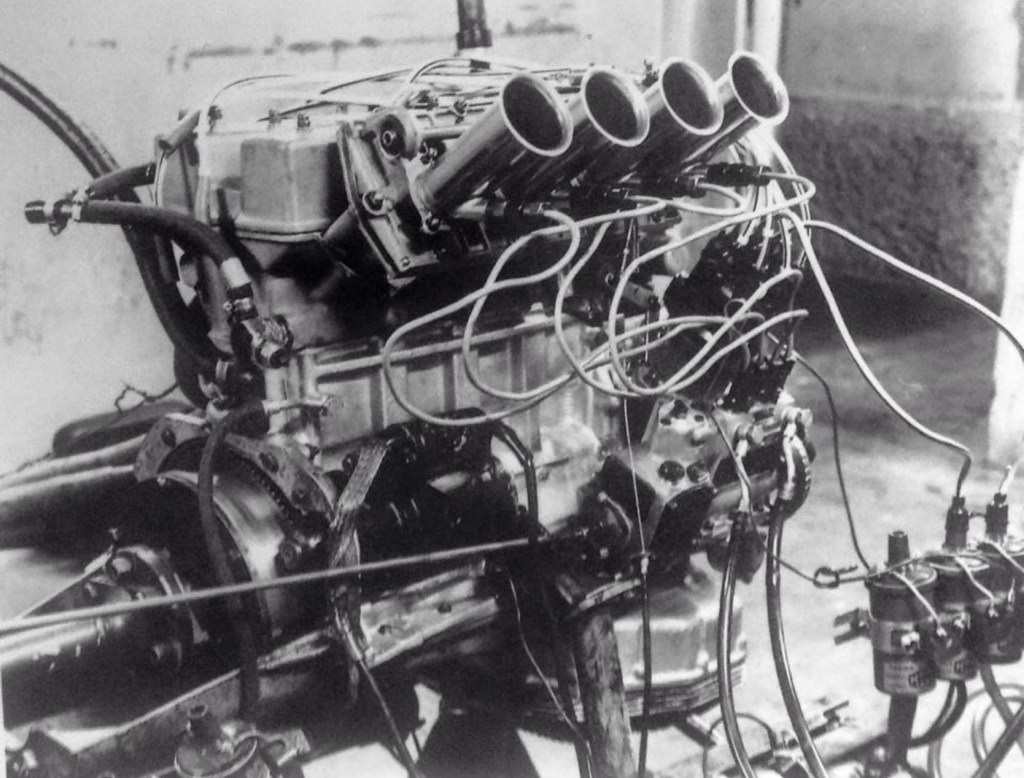
Alfa Romeo/Autodelta 1.6-litre four-valve F2 engine being dyno tested, details unknown but welcome (unattributed)

For the record, the Alfa Romeo engined European F2 Championship entries, of ‘a works type’ as against a tiny number of privateers in older cars, in the 1.6 litre formula years are as follows: 2/10/67 GP Rome at Vallelunga Nanni Galli Brabham BT23 Alfa GTA Q16 and NC, 28/4/68 GP de Madrid Jarama Nanni Galli Brabham BT23 Alfa GTA Q20/10th, 23/6/68 Lottery GP Monza Giorgio Pianta Brabham BT23 Alfa GTA/Autodelta DNQ. Brabham BT23-8 was used on all three occasions, the car was entered by the Monza based Scuderia Ala D’Oro. I am intrigued to know if these were effectively works-entries in which case it is plausible the engines deployed were four-valvers.

To state the obvious, there was never a serious works effort to race the four-valve engine in F2, the only Alfa Romeo engine which could seriously hope to challenge the absolute dominance of the Ford Cosworth FVA.

Brabham née Rennmax née Mildren Alfa…

The reason Alec acquired the Alfa F2 engine was a business one, to promote his Alfa Romeo dealerships. Equally, the decision to go with Merv Waggott’s engines shortly thereafter, initially in 1600 cc capacity, later 1850cc and ultimately 2-litres was also a business one. That is, to put the best engines in his two cars: the Rennmax built Brabham BT23 replica which is the subject of this article, and the Len Bailey designed, Alan Mann Racing built monocoque Mildren ‘Yellow Submarine’ first raced by Gardner and then Bartlett with Alfa Tipo 33 2.5 V8’s and later 2-litre TC-4V Waggotts.

The potted, short form history of the car is as follows.

Rennmax Engineering’s Bob Britton created a Brabham BT23 jig from Brabham BT23-5 crashed by Denny Hulme during the 1968 Tasman Series. He built a number of cars on this jig as summarised by Allen Brown on oldracingcars.com here; http://www.oldracingcars.com/rennmax/bn3/

Fitted with an Autodelta Alfa Romeo 1.6-litre four-valve valve engine the car was first raced by Kevin Bartlett at Warwick Farm on September 8, 1968, it was then put to one side as the team focused on Bartlett’s successful Gold Star campaign in the Brabham BT23D Alfa.

Bartlett Mildren Alfa Romeo F2 Warwick Farm September 8, 1968 and below (R Watson)
KB with a few bodywork problems on the move (R Watson)

The chassis became Max Stewart’s regular car when he joined the Mildren Team in 1969. He first raced it, as recorded above, at the 1969 Lakeside Tasman round to sixth. Then the car was fitted with a Waggott 1600cc engine, for the opening, March 1969 Symmons Plains Gold Star round, later in the season a Waggott 1860 was used.

Fitted with a Waggott 2-litre from the 1970 Tasman through the 1970 Gold Star, 1971 Australian Tasman rounds and Gold Star, Max won the 1971 Gold Star triumphing over rumbling 5-litre F5000s.

It raced in the April 1971 Singapore GP, probably powered by a 1600 Alfa Romeo GTA engine fitted with a GTAm 2-litre cylinder head. By the time of the 1971 Gold Star season Alec Mildren Racing had ceased, the car was Stewart’s but was still entered and called the Mildren Waggott.

It was raced by Melbourne’s Tony Stewart (no relation) with support from Paul England in the 1972 Australian Tasman rounds fitted with a 2-litre Waggott.

Max raced and won the April 1972 Singapore GP powered by a Paul England 1.6 litre Lotus/Ford twin-cam. With another engine change, it contested the May 1972 JAF Japanese Grand Prix Waggott 2-litre powered.

The car returned to Australia and contested some 1972 Gold Star rounds driven by Allan Grice, Paul England 1.6 litre twin-cam powered. Max retained ownership of the car during this period.

Raced in the 1973 Malaysian GP to fourth, and the Singapore GP to seventh by Max, the car was entered as a Rennmax, 1.6 England powered.

The car was sold circa 1974 by Max to English born Australian F2/F5000 driver Ken Shirvington. He later sold it to Max Coulter, who raced it for a while then offered it for sale in the February 1981 issue of Racing Car News, raconteur and vastly talented engineer, Greg Smith of East Brighton, Victoria was the purchaser. It was a complete car, chassis tagged ‘AMR003’ fitted with a 1.6 BRM twin-cam which was consistent with the ANF2 class in which the car last raced contemporarily.

Amongst the bits Smithy acquired were engine mounts for the Ford L-Block Waggott 1600/1860 engines as well as the Waggott bespoke, alloy block 2-litre. He also had the Japanese GP long-range fuel tanks. The car was beautifully restored by Smithy and fitted with a 234bhp Waggott 1860 FVA after an eight year search for an engine.

Smith sold the car to Queenslander Max Pearson circa 2008. He further cosmetically restored it inclusive of fitment of a Waggott 2-litre engine. Pearson sold the machine to Stewart Corner in 2022.

In February 2018, via Facebook posts of the photograph at this articles outset, it became clear that Ken Shirvington sold another chassis tagged ‘AMR03’ to Joe Farmer. Farmer believes the chassis may have been built after the 1969 Easter Bathurst collision between Niel Allen, McLaren M4A Ford FVA and Stewart, Mildren Waggott 1.6 TC-4V. Smith or Kevin Bartlett are the only two men alive who could identify when the spare frame was built by careful examination of the chassis in total, and the engine bay in particular.

KB WF September 1968 (unattributed)

Afterthoughts…

Given Vin Sharp’s responses – see them at the bottom of this piece – shown below is the Brian Foley owned ex-Mildren Racing/John French Alfa Romeo GTA #752561 being further lightened, strengthened and modified for its 1973 career as a ‘Sports Sedan’ in Bowin Designs’ Brookvale, Sydney factory in late 1972-early 1973.

Apropos Vin’s comments, it may well be ‘our-engine’ being inserted into the car albeit now at a capacity of over 1900cc. More about the two Mildren GTAs here: https://primotipo.com/2014/11/27/the-master-of-opposite-lock-kevin-bartlett-alfa-romeo-gta/

(J Barnes)
(G Moulds)

Brian Foley on the grid at Calder during 1973, the so-called GTA Lightweight #752561 after its surgery at Bowin Designs including fitment of Bowin wheels.

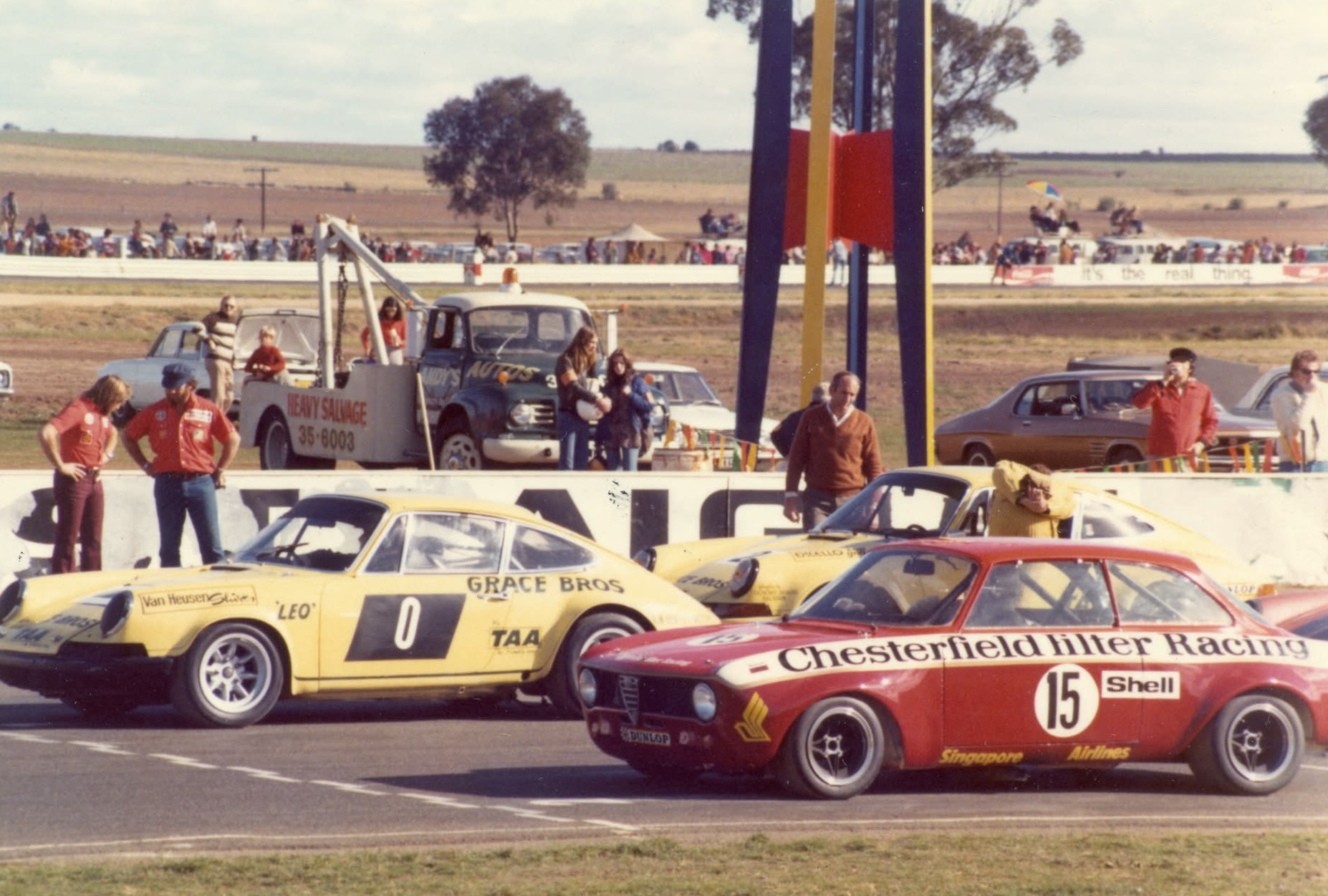
That’s Leo Geoghegan’s Porsche 911S alongside and I think, Bill Browns Carrera RS in the same Grace Bros yellow-hue.

Yes, the GTA Lightweight does look like Foley’s GTAm #1531068 but they are different – albeit similar at a distant glance – cars. See the article linked above for the detail, and this one on the GTAm: https://primotipo.com/2024/07/13/alfa-romeo-1750-gtam/

Credits/References…

Greg Smith and his Mildren and Waggott archives, Bryan Henderson, Avalon photo taken by Geoff Searl, Australian Autosportsman, Dale Harvey, Mike Tyler, Central Western Daily, Richard Watson, Vin Sharp, John Barnes, Glenn Moulds

Tailpiece…

(R Watson)

Two 1.6 litre Four-Valvers into Creek Corner, Peter Macrow plunges down the inside of KB in Tony Osborne’s McLaren M4A Ford FVA.

Finito…
(I Smith)

Once upon a time the in-crowd could pick a driver by his helmet design, Derek Bell in this case. That era spanned the 1960s-1980s and a bit. These days the helmets have more of a puke-the paint from on-high-factor about them. Drivers change them as often as they do their jocks, so one may be just getting a ‘design’ into ones head, then out she goes…

Derek shared this Ron Hodgson Holden Torana A9X 5-litre with Dieter Quester in the October 1, 1978 Bathurst 1000. They were out after 5 of the 163 laps from Q5 (Bell) after Derek experienced a steering failure and crashed. Peter Brock and Jim Richards won in a Holden Dealer Team A9X.

(Motorsport Images)

Paul Hawkins on his way to third place in the Zeltweg 500km, round 9 of the International Championship of Makes on August 25, 1968.

In front of him were the works-Porsche 908s of Jo Siffert and Hans Herrmann/Kurt Ahrens. Hawkins car was his own.

In Paul other 1968 results, he and David Hobbs won the Monza 1000km in a JW Automotive GT40. The same pair were fourth in the Brands Hatch 6 Hours in a Hawkins entry, Hawkins and Ickx were third in the Nurburgring 1000km in a JW car, at Spa Hawkins/Hobbs were fourth, and at Watkins Glen second in JW entries. More on Paul here: https://primotipo.com/2020/09/25/hawkeye/

(I Smith)

A very poignant photograph of Alan Hamilton in the Sandown pitlane during the 1978 Australian Grand Prix weekend; The Fangio Meeting at which the great JMF demonstrated a Mercedes Benz W196 Grand Prix car with much brio.

The utter excitement of the sight and sound of that legendary car-driver combination was to an extent ruined by the accidents that befell Garrie Cooper and Alan Hamilton, and to a lesser extent Vern Schuppan, in the Grand Prix. See here in my Hamilton tribute: https://primotipo.com/2025/03/16/alan-hamilton-rip/

(T Wright)

Robin Pare over the top at Skyline, Baskerville, in Don Elliott’s Elfin ME5 Chev.

What a fabulous racetrack it is too. This car, with a relatively short track to wheelbase ratio was reputedly a twitchy little bugger, its bit Robin circa 1973-74.

Here are the remains of the car after a reasonably Big One at Baskerville on October 12, 1975. ‘I was only 30 metres away from the crashing, cartwheeling car with my camera tucked away securely in my bag while I was having lunch,’ photographer Bruce Smart wrote. The car still exists today.

(B Smart)
(J Spinks(

Warwick Brown’s McLaren M10B Chev in the Sandown paddock in September 1973, ‘when he got back into an F5000 and did a demonstration run after his huge accident at Surfers paradise earlier in the year.’ Neil Stratton.

It was a remarkably brave thing to do, I attended the Glyn Scott Memorial Trophy Gold Star round at Surfers Paradise while on a family holiday on the Gold Coast only ? weeks before. Warwick was at that meeting hobbling around with crutches/ walking stick. No way would I have thought he’d be back in the car even for an exploratory run such a short time later. Mind over matter folks…

WB for ‘73 here: https://primotipo.com/2017/03/09/wb-for-73/

(unattributed)

Ron Tauranac in one of his Ralts – Ralt 1 perhaps – date and place folks? https://primotipo.com/2023/06/10/ron-tauranacs-series-one-ralts/

(GC Forsyth)

John French ascending Inverell Hillclimb in a Holden FJ in 1958, I penned an obituary/career summary in Auto Action a month ago.

(Chevron)

Peter Brock, Birrana 273 Ford #008 during the August 5 Oran Park round of the 1973 Australian F2 Championship.

Brocky finished second behind Leo Geoghegan’s works 273 in this second round of the Championship but only did the following round at Amaroo before pulling the pin; no funds and no Hart 416-B Twin-cam the reasons given if memory serves. See here: https://primotipo.com/2018/05/07/brocks-birrana/

(Auto Action)

As good as an XU-1 got…

Peter Brock in a Holden Dealer Team Holden Torana GTR XU-1 on the exit of Torana Corner at Sandown during the 250k Manchamps round on September 10, 1972.

Harry finally got around to slapping a decent coat of paint on his cars, fitted by then with the just homologated Globe alloys.

A DNF for Peter and Colin Bond. Fords reigned supreme in the traditional Bathurst warm-up event: John Goss from Fred Gibson and Murray Carter in Phase 3 GTHO’s. It all came good for Brocky on the mountain of course…

(Auto Action)

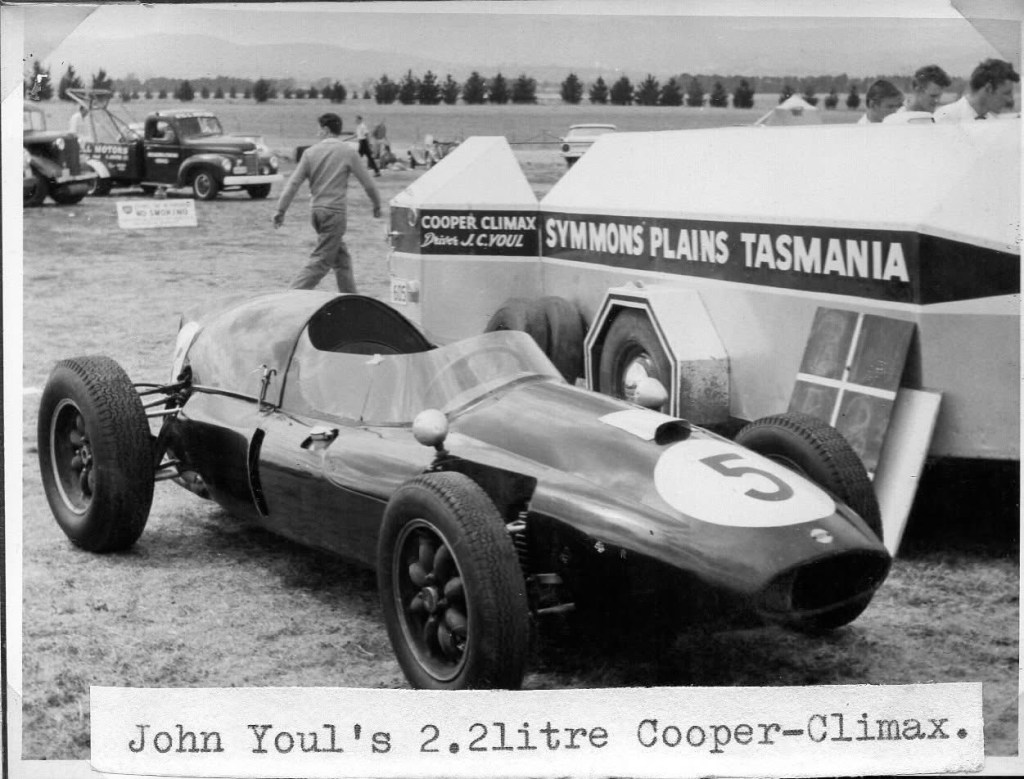
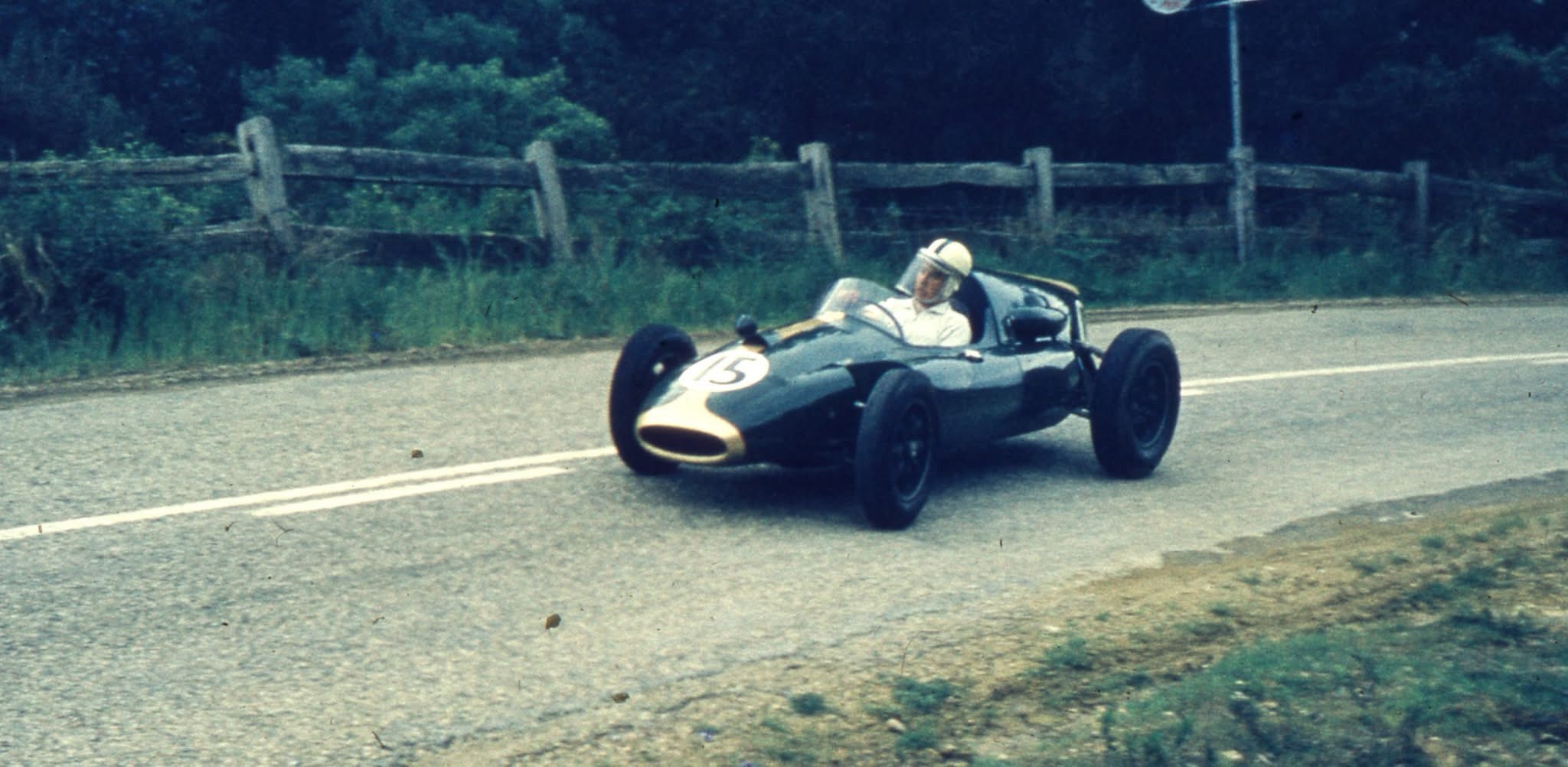
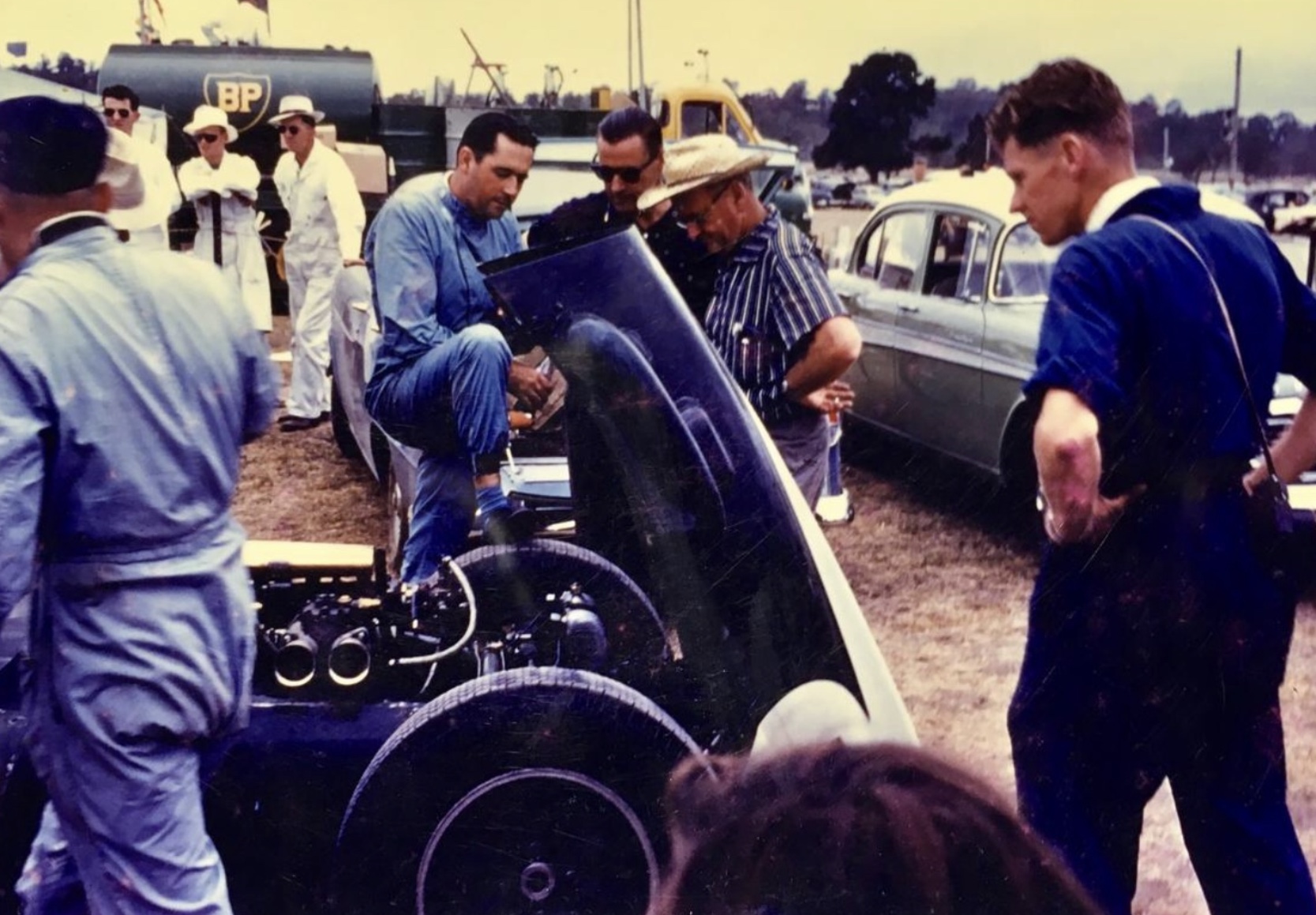
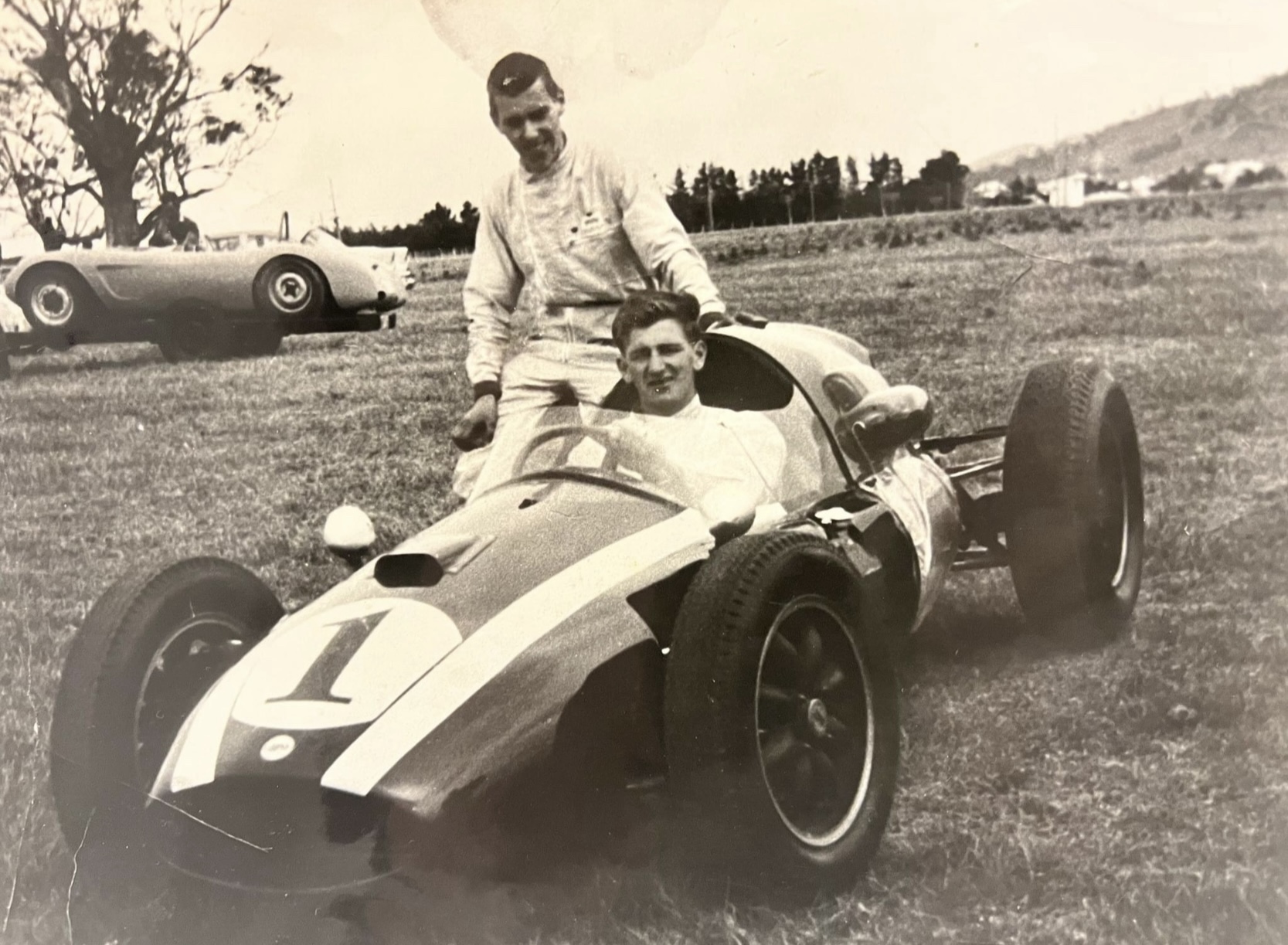
A list of all of the Coopers owned by Bib Stillwell would be interesting…

Here the T53 Climax and T49 Monaco are shown in the Mallala paddock during The Advertiser Trophy Gold Star meeting weekend on October 8, 1962.

Bib won the race from John Youl and David McKay in Coopers T55 and T51 respectively. More on Bib’s Coopers here: https://primotipo.com/2015/03/10/bib-stillwell-cooper-t49-monaco-warwick-farm-sydney-december-1961/

Aussie Invaders Brian Muir and Frank Gardner on the front row of the 1972 British Grand Prix BTCC support race at Brands Hatch on July 15. Ford Capri RS2600 and Chev Camaro Z28 Mk2.

Gardner won the sixth round of the BTCC, 20 lap race from the David Brodie and David Matthews Ford Escort RS1600s. Brian Muir led the first 16 laps and sliced a big chunk off the lap record before spinning to rest on his own oil after a major engine failure on lap 17.

More about Brian Muir here: https://primotipo.com/2022/09/03/brian-muir/

(G Hughes)

This Jaguar XK150 was used to test tyre compunds and tbe way they reacted to Lake Eyre salt in 1963.

Chassis T825278DN, a late 3.8S was loaned to Dunlop for tyre testing purposes for the Donald Campbell-Bluebird Proteus land speed record attempt. What became of the car folks?

More on Bluebird’s Australian campaign: https://primotipo.com/2014/07/16/50-years-ago-today-17-july-1964-donald-campbell-broke-the-world-land-speed-record-in-bluebird-at-lake-eyre-south-australia-a-speed-of-403-10-mph/

(L Hemer)

Lynton Hemer catches Frank Gardner on the hop through the Warwick Farm Esses during his victorious run in the works Lola T192 Chev in February 1971. Warwick Farm 100 Tasman Cup race.

More about the Lola T192 in this article: https://primotipo.com/2021/05/15/angus-and-cootes-lola-t300s/

(S Ellison)

Tim Schenken at right with the Team Tiga Formula 3 Ralt RT1/76 Toyota chassis 16 with Eddie Jordan aboard during during a test session at Goodwood in 1978. From the left are Steve Elly Ellison, John Love, Eddy and Tim.

Jordan won the 1978 Irish Formula Atlantic Championship aboard a Marlboro Team Ireland Chevron B29 Ford BDA. EJ seems to have only done one race in this car, at the November 11, 1978 Thruxton round where he qualified ninth and finished seventh in the race won by Derek Warwick’s RT1 Toyota.

(T Schenken)

Tiga ran this chassis for Andrea de Cesaris in the British F3 Championship that year, he brought the Marlboro money via his father. Andrea got quicker as the year went on, finishing seventh in the title chase with his best results thirds at Mallory Park in May, Brands Hatch and Donington in July, and fourth placings at Paul Ricard and Silverstone in July and Donington in August.

Tim Schenken and Howden Ganley ran De Cesaris again the following year in a Team Tiga March 793 Toyota, he was second in the championship that year…behind Chico Serra in the other Team Tiga 793. Not to worry, Andrea graduated to F2 and F1 in 1980.

Back to Eddie. When his own race-career was on the decline he formed Eddie Jordan Racing which proved to be rather a successful enterprise!

Tom Sulman looking very pre-War in ‘his’ Maserati 4CM at Mount Panorama in October 1960.

Unclassified in the Craven A International won by Jack Brabham’s Cooper T51, with four Coopers behind him. More about Sulman in this feature here: https://primotipo.com/2018/04/19/tom-sulman/

Jim McKeown in the short-lived Porsche Cars Australia Porsche 911 Turbo mid-engined Sports Sedan at Calder in 1975. I’ll take your advice on the meeting date please?

Allan Moffat giving chase in his RS3100 Cologne Capri then Leo or Pete Geoghegan in the Grace Bros Porsche 911S.

CAMS could never work out what category to pop the 911 into, they chopped and changed a number of times. In this case Hammo pissed a lot of money up against the wall to build a car that was kosher one minute and daffied the next. See here: https://primotipo.com/2018/09/04/long-neck-fosters/

Peter Larner during the 1978 New Zealand Formula Pacific Championship, circuit folks? By then Paul England’s Dolphin Ford BDA – a Brabham BT36 built up by Don Baker using an Arch Motors chassis – was an old gal by then, but Pedro contested the whole series with bests of ninth at Baypark and 11th at Manfield and Wigram. The 1977 Australian F2 Champion (Elfin 700 Lotus-Ford twin-cam) deserved a better mount.

Up at the pointy end Keke Rosberg won the championship from Larry Perkins and Bobby Rahal aboard Chevron B39, Ralt RT1 and Chevron B39 respectively.

Leo Geoghegan, Lotus Elite from David Lewis Holden Grey, Gavin Youl, Porsche 356, David McKay, Ferrari 250 Pininfarina, #39 Ron Marshall, AC Bristol #30 Alan Ling, Holden and the rest at Longford in 1961, mixed GT and Touring Car race.

McKay raced the Tony Oxley owned car – chassis 1973 – which I believe is still in the same family.

And below a better shot of the ‘Ron Marshall, Yass, ex-Mary Seed AC Ace with Sydney made hardtop for Appendix K GT regulations’. Thanks to Stephen Dalton and Rob Bartholomaeus. There is a bit more about this Ace at the end of this piece here: https://primotipo.com/2022/10/02/australian-racing-random-11/

(speedwayandroadracehistory.com)
(M Heeler)

What an impactful cover. The Bunbury Speedway’s first season was in 1972.

Bunbury, 175 km south of Perth and has a motorsport heritage all the way back to the 1920s when beach racing was conducted on the wide, hard-packed sand of Bunbury Back Beach! See here: https://primotipo.com/2017/03/23/bunbury-flying-50-allan-tomlinson-ferrari-500-et-al/

(L Keetelaar)

Bib Stillwell and Stan Jones in the front row of a race during the Victorian Trophy meeting at Calder over the February 25, 1962 weekend. Coopers T53 and T51 Climax.

Stan (below) didn’t start the feature event which was won by Bib from Lex Davison, Aston Martin DBR4 3-litre and Bryan Thomson, Cooper T51 Climax FPF 2.2.

See here for Calder’s early days: https://primotipo.com/2022/08/27/calder-raceway/

(L Keetelaar)

Credits…

Ian Smith, Tony Wright, John Spinks, Graham C Forsyth, Chevron Publishing, Auto Action, Robert Clayton, Lynton Hemer, Steve Elly Ellison via Ed Brunette, Bruce Smart, Mark Heeler, Lynn Keetelaar Collection, speedwayandroadracehistory.com via Rob Bartholomaeus

Finito…
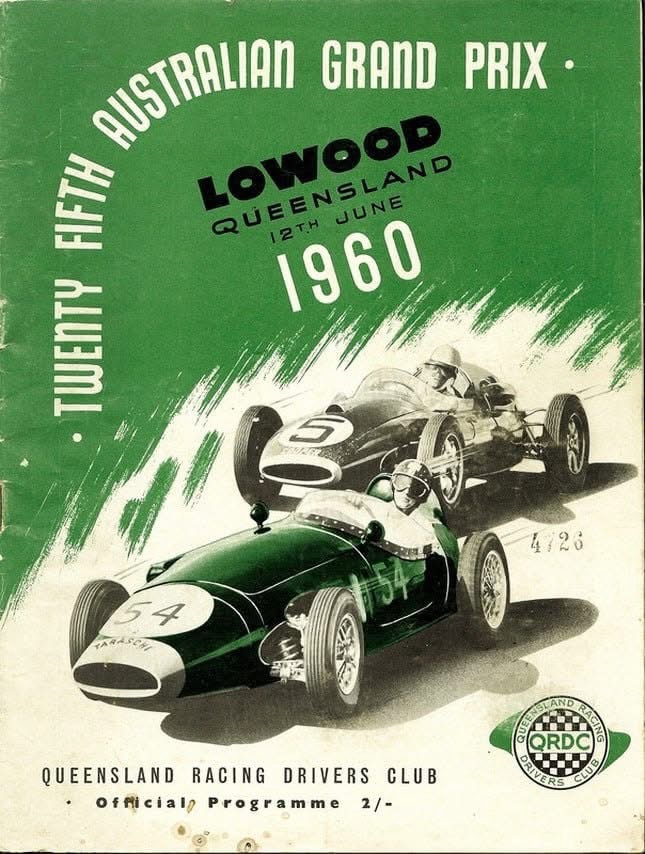
Spitfire, Alan Hamilton and a Bentley not long after Hamiltons Rolls Royce was created to take on the Rolls and Bentley franchises, ‘Laverton, Victoria on December 20, 1988’ Tony Johns advises.

Alan Douglas McKinnon Hamilton, a wonderful man, Australian Porsche importer, racer, entrepreneur and entrant died on March 3, 2025 in Melbourne. He was born on July 29, 1942.

I wrote an obituary which was published in Auto Action: https://autoaction.com.au/2025/03/04/mr-porsche-alan-hamilton-passes-racer-entrepreneur-and-entrant

What follows is a photograph based tribute. I was lucky enough to meet with and speak to Alan in the last five years about various articles, and sometimes just racing shite more generally…a Prince of a Bloke.

(R Rundle)

Early days aboard a 356 Coupe at Calder circa-1962

This tribute is a pot-pourri of the cars he raced but is far from all of them. It excludes machines he entered for others…of which they are a lot.

(G Chennells)

It could be Europe but its outer Melbourne. Hamilton’s 2-litre six powered 904-8 Bergspyder #007 at Templestowe Hillclimb during 1966.

‘Alan Hamilton leaving The Hole with the Porsche engine making its very distinctive and glorious bellowing sound. It always scared me a bit watching Alan because he was so quick out of The Hole that when he arrived at Barons, a sharp U-turn with trees on the outside, he was going so fast that if anything went wrong…I hated to think. But always fantastic to watch and hear.’

(B Jackson)

In the paddock at Surfers Paradise during the 1966 12-Hour meeting. Alan was sharing the car with Brique Reed.

And below during the March ‘66 Longford Tasman meeting while contesting the Australian Tourist Trophy. Hammo is turning into The Viaduct in front of Lionel Ayers’s MRC/Lotus 23B Ford and Spencer Martin aboard the Scuderia Veloce Ferrari 250LM.

Frank Matich won in his new Elfin 400 Traco-Oldsmobile from Hamilton and Martin.

(S Fryer)
(R Rundle)

Hamilton rounds up the John Kiran/Colin Bond/Max Winkless Volvo P1800 during the 1967 Surfers Paradise 12 Hour. Alan and Glyn Scott were third behind the Scuderia Veloce Ferrari 250LM raced by Bill Brown and Greg Cusack, and the Paul Hawkins/Jackie Epstein Lola T70 Mk3 Chev.

This 906 is his first – chassis#007 – had its lid lopped off locally to accommodate Alan’s considerable length. His second 906 was tagged 007 too… That’s it below at Warwick Farm during the RAC Trophy meeting in May 1971.
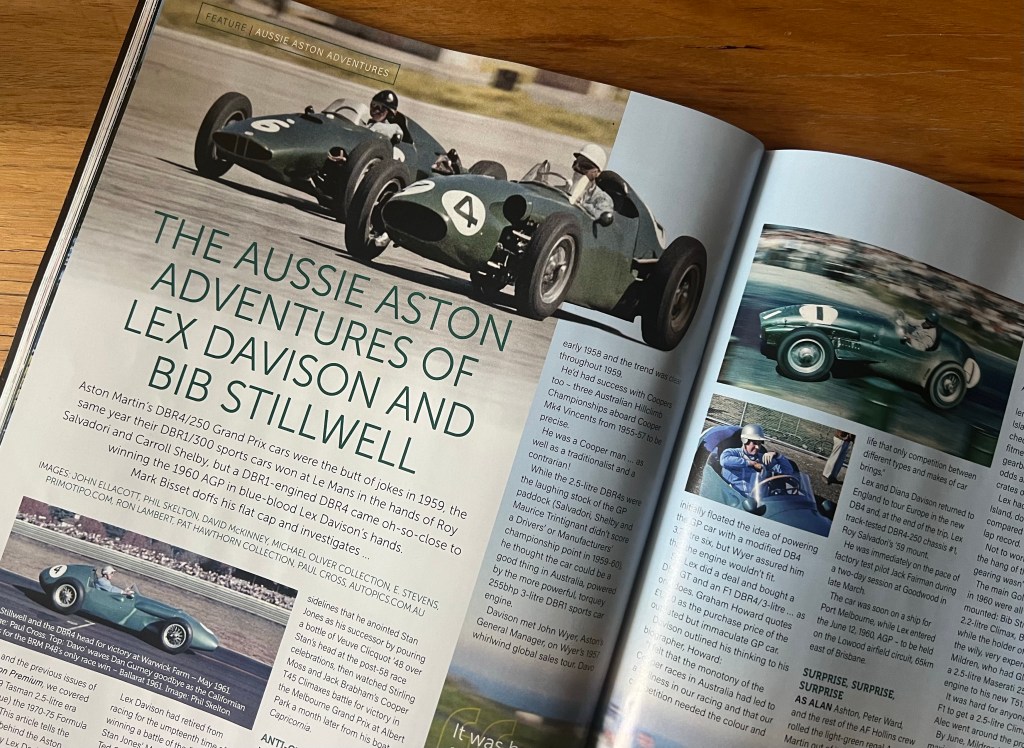
(L Hemer)
Longford, March 1967 aboard the first 906
Peters Corner Sandown in 1967 with Neil Allen’s ex-Matich Elfin 400 Olds behind (unattributed)
(oldracephotos.com/King)

Hamilton having a drive of a front-engined car for a change. The MW Motors Alfa Romeo GTA at Longford in 1968, Murray Wright was the Melbourne Alfa Romeo dealer.

(MotorSport)

Hammo taking some air during the 1968 Nurburgring 1000km. He was 28th, sharing the Porsche 911S 2-litre with Hans Dieter-Blatzheim on May 19.

Up at the front was a pair of Porsces: Jo Siffert and Vic Elford won in a 908 with local-lads Hans Herrmann and Rolf Stommelen second in a 907.

(Porsche)

Alan at Station Pier for the handover of a of carton of beer or three to the Waterside Workers Federation dogs to avoid his new Porsche 911 T/R being accidentally damaged on the downward drop onto said Pier…

MG corner at Phillip Island? (A Scott)
Warwick Farm with the car dancing on its tippy-toes, lots of shots of this car are in this pose (Porsche)

He came close to winning the 1969 Australian Touring Car Championship with this car, which is still in Australia I think, see here for a feature on that title: https://primotipo.com/2018/02/01/1969-australian-touring-car-championship/

(A Scott)

Hammo in his maiden single-seater drive in his new McLaren M10B Chev at Lakeside over the June 6 weekend in 1971. Third behind Kevin Bartlett and Max Stewart.

Chassis #400-19 was Niel Allen’s spare tub which was built up into a complete car when Allen retired from racing after the end of the 1971 Tasman Cup.

(B Jackson)

Hamilton inserts himself into the McLaren’s cockpit in the Warwick Farm pits and is shown below in the very best of company dicing with John Surtees, Surtees TS8 Chev during the ‘71 AGP.

That’s Colin Bond in Frank Matich’s McLarens M10C Repco-Holden and the Graeme Lawrence’s Brabham Ford FVC. A deflating tyre cruelled Surtees chances, Frank Matich won the race from with Hamilton third and Lawrence fourth, Bondy lost Phil-pressure and retired.

Max Stewart’s fast and reliable Mildren Waggott TC-4V won the Gold Star that year with the two ex-Allen M10Bs driven by Bartlett and Hamilton in equal second-place.

(L Hemer)
(J Lemm)

Hamilton at Collingrove on the way to a 33 seconds-dead run at Easter, taking FTD in the Australian Hillclimb Championship (AHC) in April 1971.

Alan had won here before, taking the 1966 title in the 904 Bergspyder. He returned to hillclimbing after losing his General Competition Licence as a result becoming an insulin dependent diabetic as a consequence of his 1978 massive Sandown accident. He won the 1981 AHC in a Porsche Special, then took it one final time at Gippsland Park, Morwell in a Lola T87/50 Buick, a device which started life as a Formula 3000 car.

(unattributed)

Hammo leading Allan Moffat and Bryan Thomson during the 1972 Sandown Tasman meeting.

The 911S 2.4-litre, ex-Brian Foley/Jim Palmer, Mustang Boss 302 and Holden Torana Chev glimpse in a mixed Improved Tourer and Sports Sedan race. Neil Stratton wrote that this was palmers first race in the car and that Moffat retired the Mustang after losing its brakes over Lukey – the rise at the top of the back straight – and hitting the Armco protecting the Marshalls.

The same pair at Calder later in the year below.

(P Husband)

On the hop at Oran Park in a 3-litre Carrera RSR in 1976. Famously the 1975 Paris Show 911 Turbo/930 prototype, long since left our shores and lives in Europe.

(Auto Action)

Allan Moffat created a crushing touring car team in 1977 by recruiting American engineer-team manager Carrroll Smith, engine builder Peter Molloy and Colin Bond.

After winning the ATCC Moffat recruited Jacky Ickx and Hamilton for the Enduros. Moffat’s 1-2 form finish has had taxi fans foaming at the mouth for decades with colulda-woulda-shouldas but The Boss prevailed, as he should have: Moffat/Ickx first, Bond/Hamilton second.

(B Atkin)

A very poignant photograph of Hammo in the Sandown pitlane during the 1978 Australian Grand Prix weekend; The Fangio Meeting at which the great JMF demonstrated a Mercedes Benz W196 Grand Prix car with much brio.

The utter excitement of the sight and sound of that legendary car-driver combination was to a large extent ruined by the accidents that befell Garrie Cooper and Alan Hamilton, and to a lesser extent Vern Schuppan, in the Grand Prix. Racing Car News summarised it thus:

Hamilton turns in to Dandenong Road not long before the crash. If the Lola T430 Chev looks a little odd, it’s because Porsche Cars Australia modified the car by removing the sportscar-type-front and replaced it with a T332 type wing which provided more bite…and looked better.

Alan lost control of the twitchy, unforgiving Lola on the fast left-hander off The Causeway then went backwards into the Dunlop Bridge breaking the car into two and breaking a leg, his pelvis and sustaining serious head injuries. While there that day I was nowhere near the accident which is in a no-spectators area on the inside of the track. The vibe of the place that day with three big-hits, and limited information flow to we punters, is something I still remember.

(B Polain)

Hammo competing in the Seaforth Tourist Trophy in 1983. Not a lot of safety for cars doing 180mph…
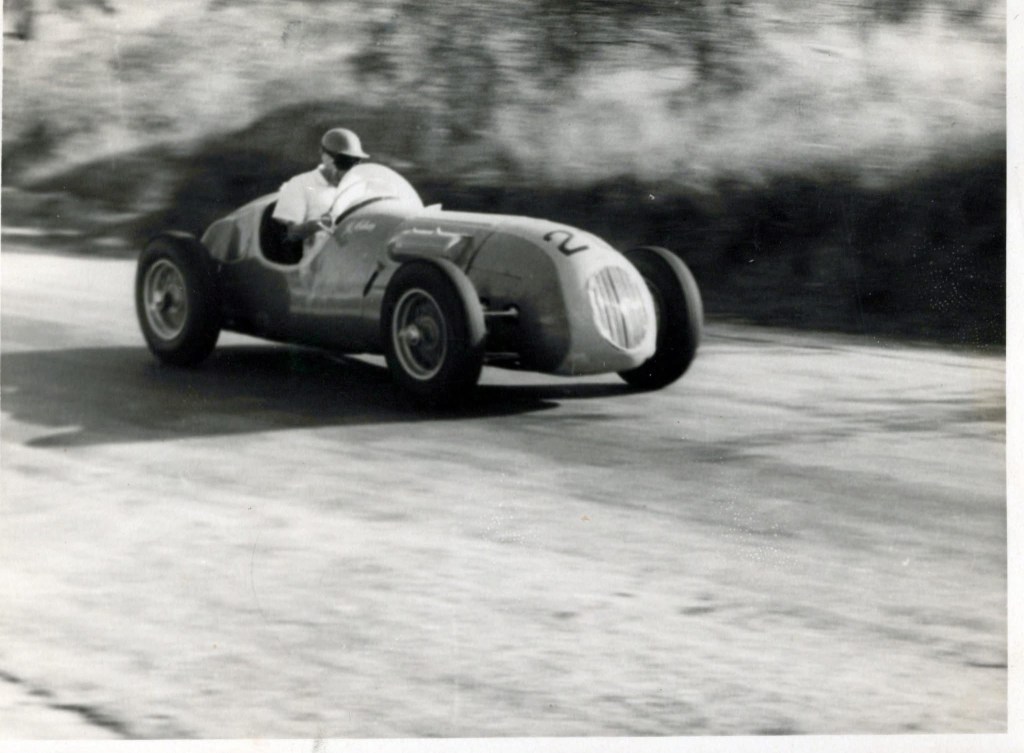
This 917/30 #004 was Mark Donohue’s unraced spare in 1973. Alan always had a snoop around the Zuffenhausen ‘shops on his trips to Deutschland and spotted this little baby on one of those trips. Long-since left our shores.

Hammo’s 908 Coupe following the 917/30. The 908 was, ahem, road-registered for a while in Victoria (unattributed)
(unattributed)
A cursory glance at the 917/30 spaceframe chassis and its driver-forward driving position shows the importance of not having a frontal impact at anything more than 30mph…(unattributed)
(unattributed)

The Seaforth Racing Car parade was a fantastic event put together by Bruce Polain and a bunch of his mates at the Historic Racing Car Club of Australia in Sydney.

The street circuit was about 2.5km around the heights of Seaforth, descending to Spit Bridge with views of the inner-harbour, then winding up through the gears to the top of Spit Hill to Sydney Road, then left into the Seaforth shopping centre. Twice. Two runs during the day.

December 10, 1983 with Bob Jane’s Chev Monza and Bruce Polain’s Wylie Javelin heading out of town towards Seaforth. Any tourist who has taken a dip at Manly will have made this trip…unless you went the fun way by ferry! Shot taken from the Ethel Street overpass (unattributed)
(unattributed)
(T Johns)

Tony Johns, ‘Alan Hamilton driving the Porsche Factory Museum 1962 Type 804 F1 racing car.’

‘Sandown Tribute to Champions meeting February 14, 1982. A real gentleman to have worked for at Porsche all those years ago.’

‘Another photo from the same morning. The 804 and 718 RSK ex-USA and the ex-factory 908 Coupe were part of Alan’s collection. Rob Walker, Stirling Moss’ long-time patron is seated in the Spyder and Moss is chatting with Norman Hamilton (jacket and cap), the founder of Porsche in Australia.’

(D Pearce)

Alan Hamilton, Porsche 911SC during the 1987 Sea Lake Mallee Rally, perhaps with Jim Hardman alongside.

It’s not just any SC either! This car is ‘C20’ the prototype of what ultimately became the 911-964 four-wheel-drive, and along the way the competition 953 Paris-Dakar rallycars. The 3.2-litre car started life as Helmuth Bott’s brown-SC company car before morphing into a double-front wishbone machine with front and rear diffs. When it was pensioned off guess who spotted it on one of his trips to Germany in 1986?…

The very interesting story is told here: https://www.tradeuniquecars.com.au/porsche-4×4-1981-911sc-4wd-prototype/

(J Bryant)

Hamilton on the hop at Gippsland Park Morwell on October 15, 1989 aboard his Lola T87/50 Buick 4.9 V6, another AHC victory, not the last for this chassis either.

This machine, T87/50 HU12 Cosworth V8 3-litre, was Michel Ferte’s 1987 Euro F3000 Championship car. It and another T87/50 – acquired by Bob Minogue for Formula Holden use – were purchased by Hamilton.

Paul Newby’s research (written on The Nostalgia Forum) says that the car was at one time fitted with a Ford DFL-035 3.3-litre ex-Spice Engineering Racing acquired at the 1988 Sandown WEC race attended by Hamilton, wearing his PCA hat.

(D Hardman)

Hamilton and friends – Jim Hardman constructor of the three F2/FPac cars of the same name and Porsche Cars Australia Chief Engineer/Mechanic during the Costanzo glory years is behind him – with a Cosworth V8 powered hillclimb special at Morwell, date unknown but circa 1981-82.

Spaceframe chassis with the DFV/DFL used as a stressed member, as it was intended. Nick Bennett observed that ‘I believe Alan only dove it once and scared the shit out of himself.’ Two meetings only perhaps folks: Morwell and Collingrove? More information on this car welcome.

(D Hardman)

Credits…

Ian Smith, Ron Rundle, Stephen Fryer, Geoff Chessells, Bob Atkinson, Lynton Hemer, Australian Autosportsman, Alexis Scott, Lynton Hemer, Brian Jackson, Racing Car News, Brian Stratton, Auto Action, Daryl Pearce, Peter Husband, Jarrod Bryant, David Hardman, John Lemm

Tailpiece…

(I Smith)

Ian Smith was a long time friend of Alan, I love this portrait which was taken circa-1978.

Afterthought…

1985 AGP Historic Demo Adelaide (J Lemm)

The final words go to Rob Newman.

‘Years ago, when John Walker was driving the 934 Martin Sampson had purchased from Alan Hamilton I had the privilege of preparing the car for each race in Alan’s workshop out by Sandown, so I spent some time there.’

‘Late one day Alan gave John and I a personal tour of the complex and his toys, one of which was his 917. The car was on stands without bodywork, the chassis with engine, suspension and various bits fitted including the fibreglass seat. But what caught my eye was the size of the hole in the seat where the crutch belts were fed through, it was massive, a large square cut out in the seat. I must have made comment because I clearly remember Alan, pipe in hand and with a straight face replied “That’s how big your balls need to be to drive this thing.”

Finito…