Archive for the ‘Fotos’ Category


A promotion for Indian motorcycles, Adelaide 1923, the only items missing are a bow and arrows…

I spat my chockie biscuit out when I came upon this snap! Too funny and sooo politically incorrect and unacceptable in todays societal morays. I think I would have slotted into 1923 quite nicely.

Details are few other than the three bikies were at a sporting event, I’m guessing the Indian bloke hailed from the Adelaide suburbs rather than the American prairies.

As to locale, its probably not the go at the Adelaide Oval during the cricket, and the ‘Speedway Royal’ Wayville, just outside Adelaide’s ‘Square Mile’ hadn’t quite opened yet, so who knows where it is.

Anyway. Look and laugh, just luvvit! I mean no disrespect to any North American Indian readers, my mirth is at the ‘creativity’ of the Indian ‘Sales and Marketing Team’ here in Australia. Still no doubt it achieved the ‘cut through’ marketers seek.

As to the model of bike, the Indian lineup about then was the ‘Scout’, ‘Chief’ and ‘Big Chief’. I’m guessing it’s the 1200cc Big Chief, coz that’s what the dude on the bike looks like!

Credit…

Searcy Collection- State Library of South Australia

image
(SLWA)

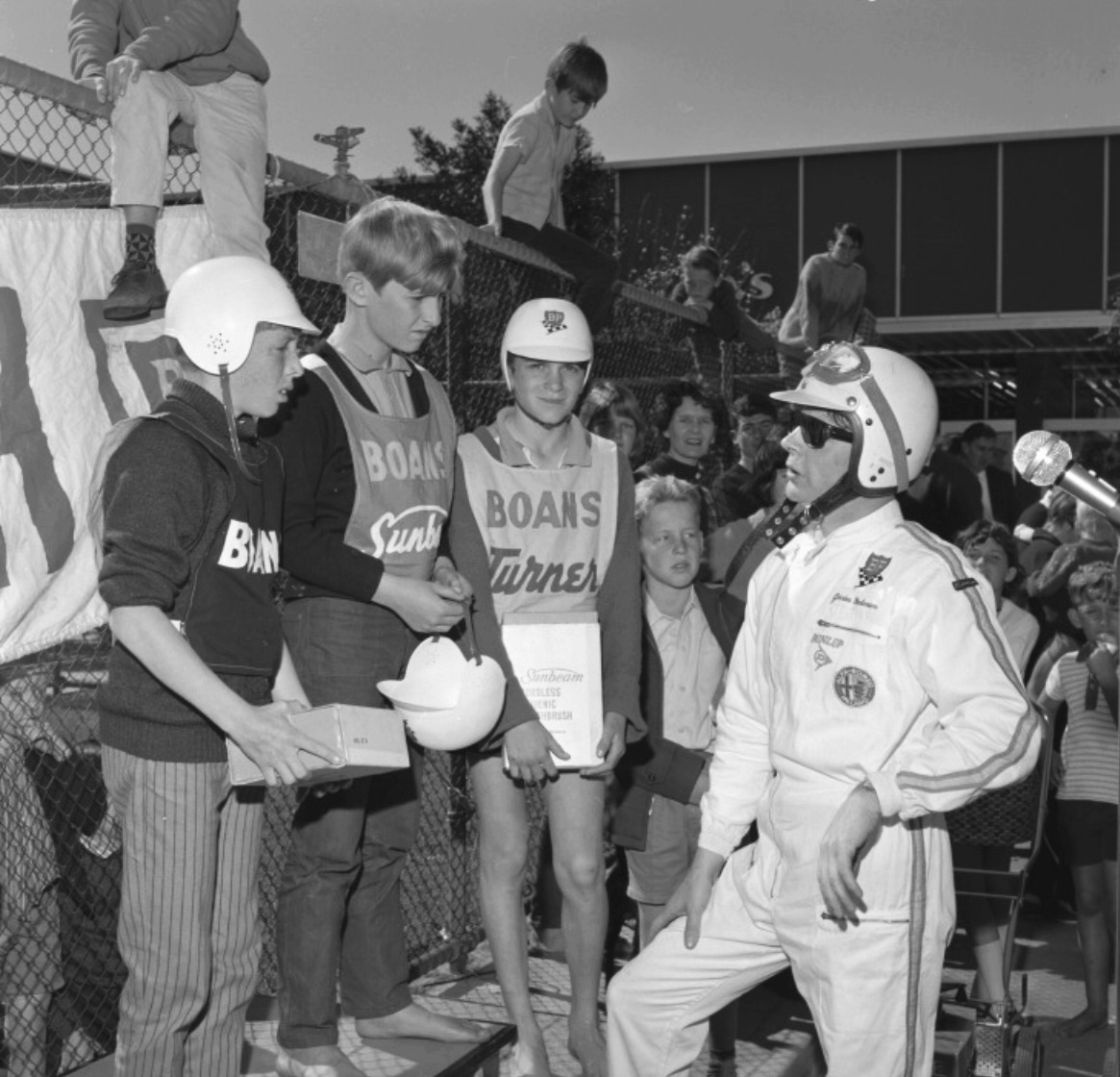
To keep a sponsor happy that is! Here it’s Perth racer Gordon Stephenson presenting the prizes to the winners of a department store lawnmower racing competition…

WTF you may well say?

Boans was an iconic West Australian department store for almost a century. Remember when every state or city had such emporiums of shopping pleasure for those so inclined? Myer in Victoria, Grace Brothers in New South Wales, Malcolm Reid in South Australia and so on. Now the buildings may still exist but the companies have been absorbed into a small number of conglomerates over the last forty years; Boans were chomped up by the Myer Group in 1986.

A sign of the times, competition and change is the rise in online retailing in the last decade or so. At the time of writing, mid November 2017, Amazon have just launched in Australia. The potential impact has executives of our major local retailers soiling their undergarments with fear. And rightfully so, Change is the Continuum.

image
(SLWA)

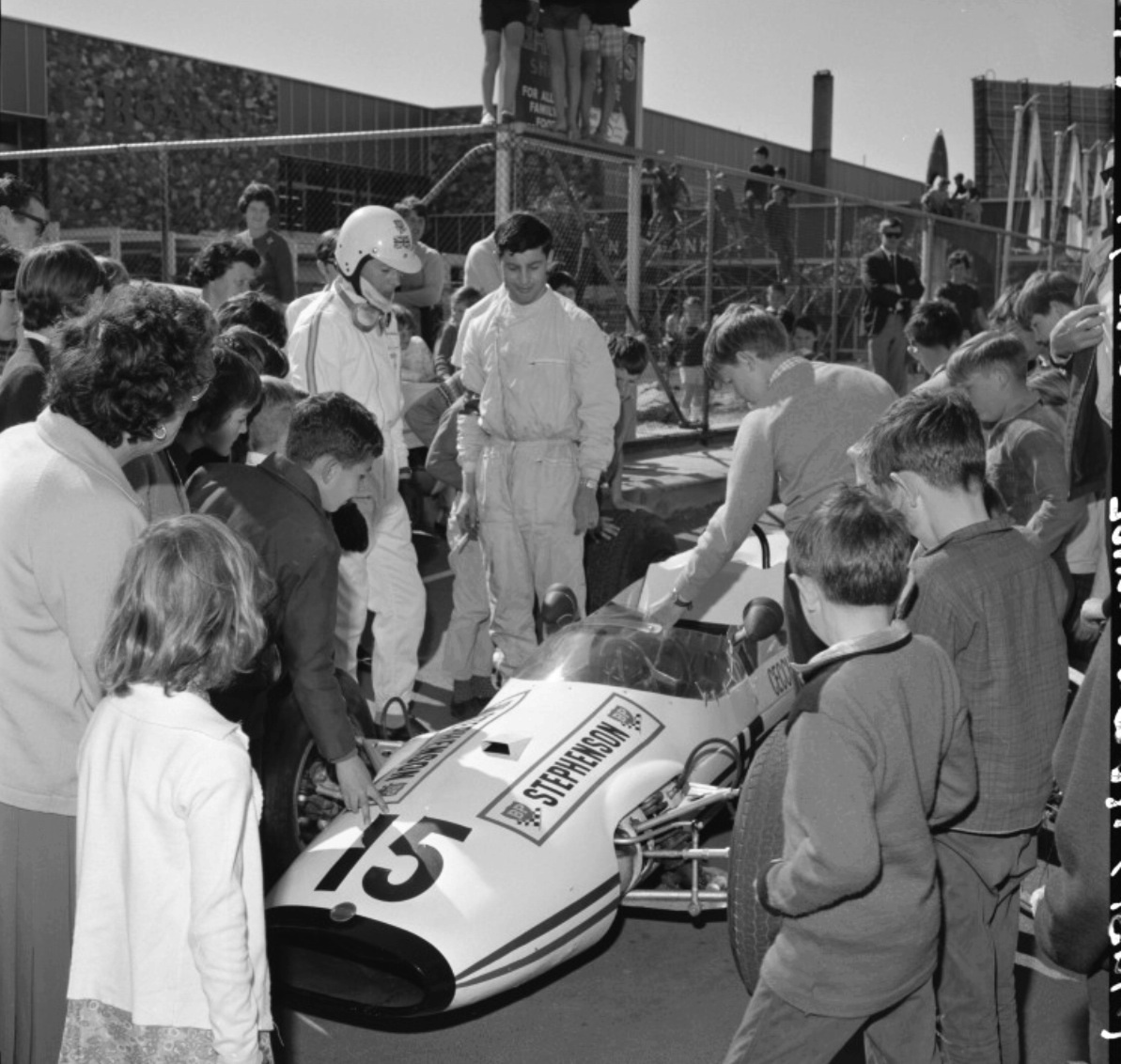
Stephenson showing the kids his Tasman Cooper T70 Climax. I wonder if he fired the 2.5-litre Coventry Climax FPF and did a lap or two of the Boans, Morley carpark!? The car taken to Perth by Don O’Sullivan who bought it from Bill Patterson in Melbourne, Stephenson only raced it for 12 months

It seems that Boans organised a cross-promotion to raise their profile and flog a few lawnmowers, rolling BP into the fun. Poor BP sponsored Gordon drew the short straw that day to display his car and hand out the prizes. The local media did the rest to maximise exposure.

FTD was awarded to the kid who pushed his mower ‘for Chrissakes pick a Victa two-stroke son it will be lighter than the four-stroke Scott-Bonnar’ – across Boans carpark the fastest; Morley is 10km from central Perth.

Cooper T70 Climax…

Cooper T70 Climax #FL-1-64 is an interesting, significant car as the 2.5-litre Coventry Climax FPF engined car raced by Bruce McLaren and Tim Mayer in the 1964 Tasman Series, and then by 1961 World Champ, Phil Hill, in mildly updated form in the 1965 Tasman.

It was later purchased by Richard Berryman in the mid-1970s and was restored and is owned by his son Adam Berryman, a Melbourne mate of mine.

The history of the two T70s car is covered in the two articles below rather than restate the history of one of the ‘first real McLarens’ built.

Stephenson was a stalwart of WA racing for decades, mainly in Touring Cars. He had a busy season in 1968 racing both his ex-Alec Mildren Racing Alfa Romeo GTA and the Cooper in local circuit races at Caversham, having several wins in the T70, and hillclimbs at Mount Brown, York.

The story of the Mildren GTA’s is told here, inclusive of their extensive West Australian history;

image
Racers checkin’ out the opposition, helmets only required for the BP decal attached and related photo op! (SLWA)

Credits…

State Library of Western Australia, Terry Walkers Place

Tailpiece…

image
(SLWA)

They are ‘racin!

Finito…

image

Luvverly shot of a Bristol 403, the typically helpful Getty Images caption dates the shot as between 1940 and 1950 and notes the Eiffel Tower and Arc de Triomphe in Paris…

‘From Marble Arch to the French landmark by air ferry’ is a caption clue, so perhaps it’s a promotional shoot for a new service of moving cars around?

I think so, after a ferret around, note the shot below, i am not suggesting the car in the transport is a Bristol, wotizzit I wonder?

ferry

The aircraft is a Bristol Type 70 Mk32, a former military transport plane before its inaugural flight as a car ferry with Silver City Airways in 1949. These flights were between Lympne Airport in Kent and Le Touquet, France.

Credits…

Bettman, Monty Fresco, J Wilds, Robert Sands

Tailpiece…

image

(J Wilds)

Captain Bill Pegg with Bristol Brabazon aircraft and the prototype Bristol 402 Cabriolet (20 more were built) in Bristol on 3 September, 1949.

Finito…

Graham Boulter’s race equipe completing a Bacchus Marsh pitstop enroute to Calder Raceway, Victoria, Australia circa 1968 or 1969…

Competitors can relate to this wherever you live on the planet- loading up your racer and hung-over, scaly mates and girlfriend and heading off to the track hoping the last minute fixes to your steed will last the rigours of the weekend away from home base.

Enthusiast racer Lee Nicholle identified the photograph on ‘The Nostalgia Forum’ which was taken at a ‘Golden Fleece’ servo at Bacchus Marsh, 60 kilometres from Melbourne on its western outskirts.

Oz enthusiasts of a certain age will well remember Golden Fleece as a brand of petroleum products and servo’s such as this one operated by Australian Company HC Sleigh since 1893. Caltex acquired the business in 1981.

The racer is a Holden FJ or ‘Humpy’, sports sedan. The tow car is the ‘Ducks Guts’ of General Motors Holdens range at the time- no less than an ‘HK’ Monaro GTS powered by the range-topping Chevrolet 327cid V8. One of these cars won the 1968 Bathurst 500 enduro driven by Bruce McPhee. The race was then run to ‘Series Production’ or unmodified road car rules. That the car is new is proved by the standard fitment ‘Dunlop Sovereign’ radial tyres. The other road cars in shot are a Vanguard and in the distant carpark an ‘FB’ Holden.

Finally, Lee notes that Boulter still races in ‘Historics’, has built a replica of this car as a ‘roadie’ and that the bare chested youth, now over 70 of course!, is John Reynolds who stayed close to racing as a supplier of Champion plugs into the 1990’s.

Cracker of a shot, it reminds me of my abysmal car preparation capabilities, unreliable mates, patient girlfriends and the racers breakfast of a Chico Roll and Coke on the fly, running late and being behind the eight-ball well before the meeting commenced!…

Credits…

Graham Boulter

Tailpiece: Bruce McPhee on the way to Bathurst 500 glory during the 1968 running of the Australian classic…

(unattributed)

Bruce McPhee started from pole in his HK Monaro GTS327 and won the race from the ‘works’ Holden Dealer Team similar car of Jim Palmer/Phil West and the Tony Roberts/Bob Watson HK GTS a lap adrift in 3rd

Finito…


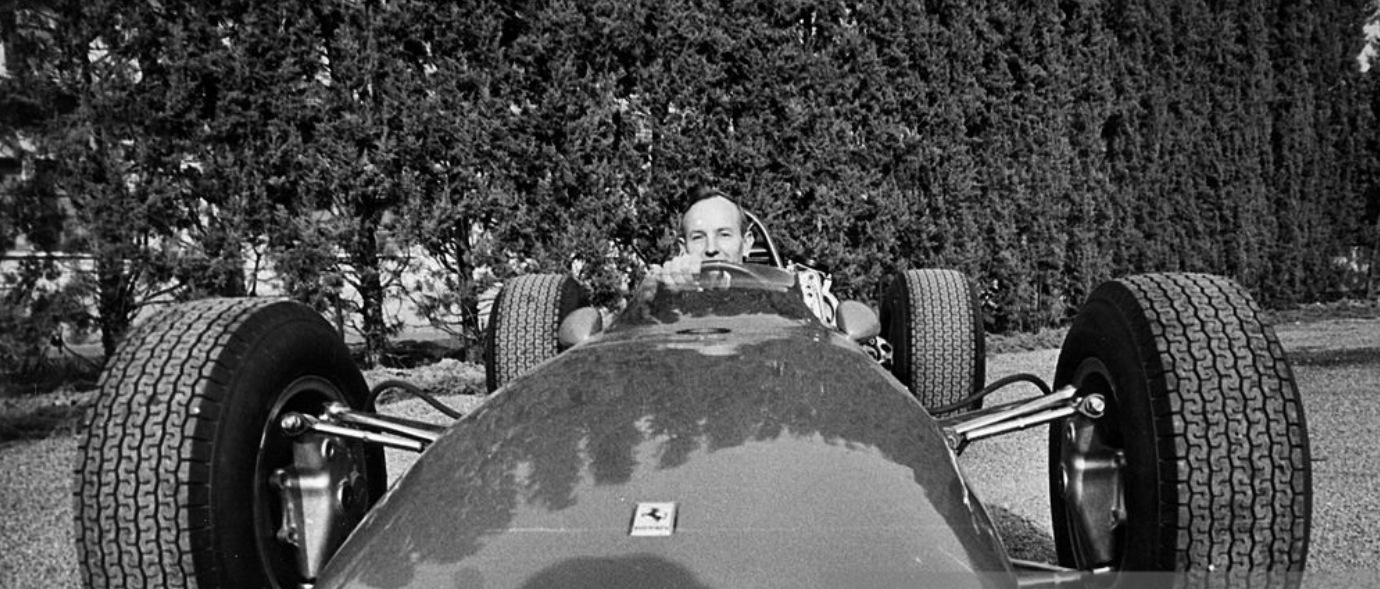
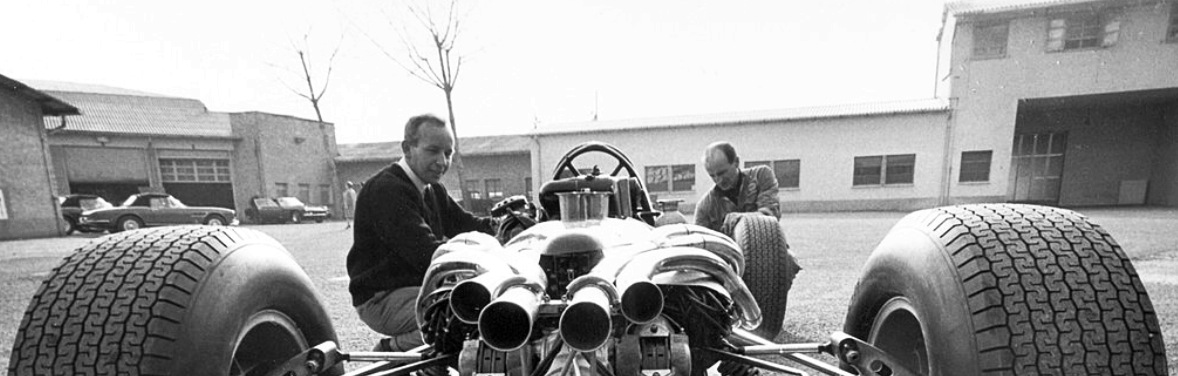
John Surtees poses with his Ferrari 312, the Scuderia’s 3 litre V12 new season and new formula contender, March 1966…

‘Big John’ is probably feeling fairly confident at this point, Ferrari seemed to be as well prepared as they had been for the last formula change from 2.5 to 1.5 litres in 1961. They took the title convincingly of course, Phil Hill won it in the Carlo Chiti designed ‘Sharknose’ 156 V6.

Coventry Climax had withdrawn as an engine provider at the end of 1965, other than some transitional support of Team Lotus with a couple of 2 litre FWMV V8’s to tide them over. Generally, 1966 was a year of transition and therefore of opportunity for those who started the season with a fast, reliable package, the Ferrari seemed just that.

Click on this link for my article on the 1966 Grand Prix season;

Winning the 1966 World F1 Championships: Brabham BT19 Repco…

surtees 2

‘Down Under’ Jack Brabham installed the first Oldsmobile F85 blocked Repco Brabham ‘RB620’ V8 into a year old Brabham chassis, BT19, built for the stillborn Coventry Climax Flat-16 engine and contested the Non-Championship South African GP at Kyalami in it on 1 January.

Repco then popped a 2.5 Tasman Formula RB620 V8 into BT19 for a couple of Tasman rounds, at Sandown Park and Longford, each time learning a little more about the engine and making it reliable.

Ferrari’s own 3 litre V12 was a trusty old warhorse which had served them well. It was a reliable Le Mans winning unit and more powerful than the Repco V8 but the car was heavy. Brabham’s BT19 was a light spaceframe and his 300 horses were stallions not geldings.

surtees 3

The first GP of the new F1, the 1966 XV Gran Premio di Siracusa was on 1 April, Surtees won it in a 312 from teammate Bandini’s Ferrari Dino 246. The only other ‘new’ F1’s were the Cooper T81 Maserati’s of Jo Siffert and Guy Ligier both of which failed to finish. So too did Brabham’s BT19 with a Repco failure.

On 14 May the teams met at Silverstone for the XVIII BRDC International Trophy which Brabham won from Surtees and Bonnier’s Cooper T81 Maser.

Game on!

Off to Monaco for the first Championship round on 22 May, Jackie Stewart’s BRM P261 took the race from Hill’s P261 both cars with 2 litre versions of the old P56 V8 1.5 litre F1 engine, and Bandini’s Dino. Surtees and Brabham were out on laps 16 and 17 respectively with transmission dramas.

Bandini’s use of the Dino which as the teams #1 Surtees should have been allowed to race, in Johns assessment the better of the two cars for the unique demands of Monaco, was one of many dramas within the team which famously resulted in the headstrong Brit telling Ferrari to ‘shove it’ costing both a title which they may well have taken.

surtess 4

Surtees joined Cooper for the balance of ’66 and made the cars sing but Jack was away and running taking the title he and Repco deserved but which perhaps should have been Maranello’s not Melbourne’s…

Click here for an interesting article on Surtees;

John Surtees: World Champion 50 Years Ago…1964

Ferrari 312 Specifications…

312 engine

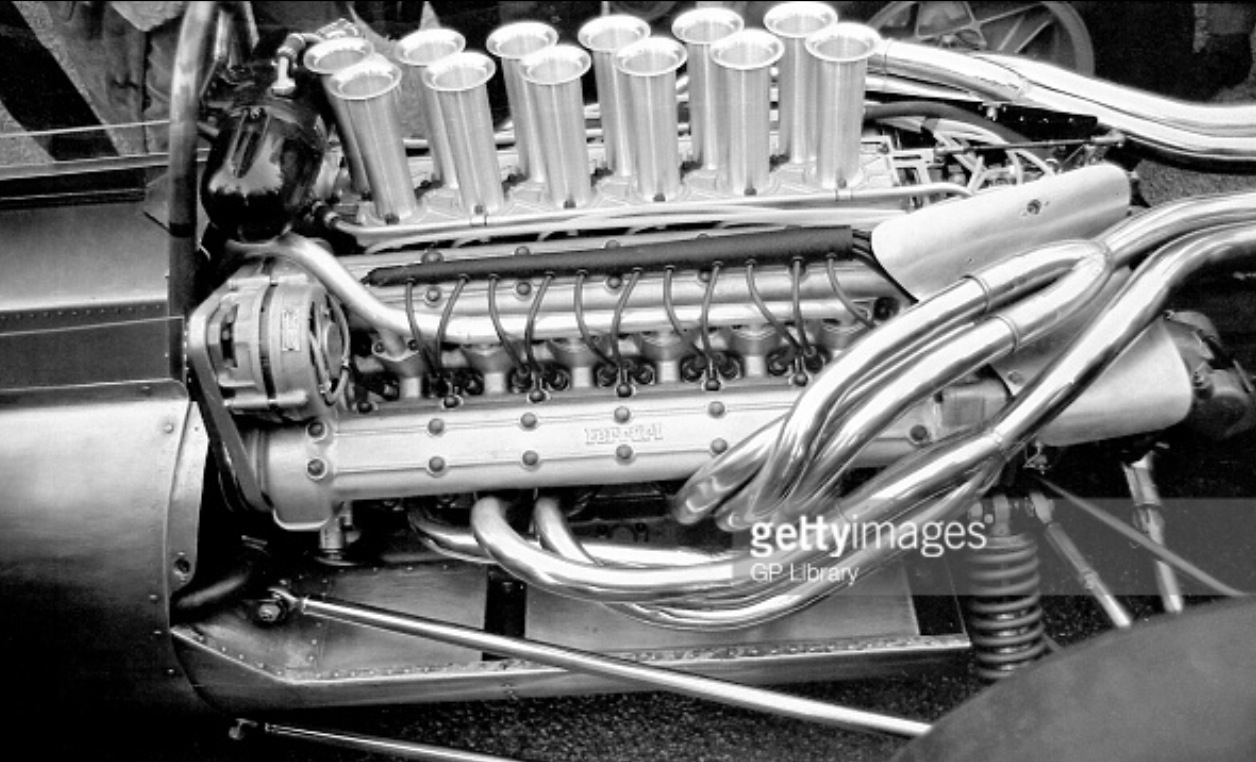
The heart of any Ferrari is its engine of course, and what a glorious thing the Tipo 218 unit was.

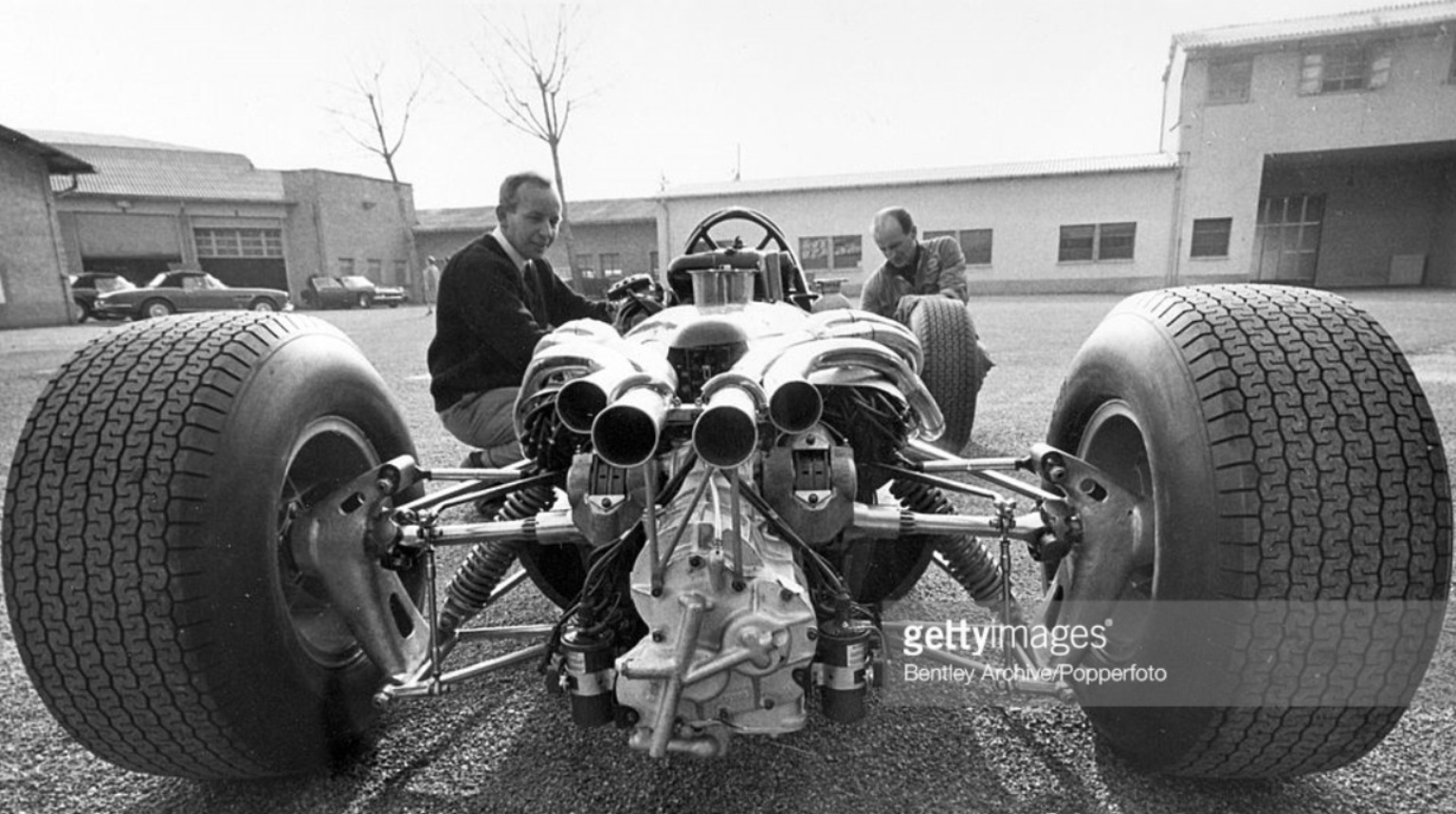
Cast in aluminium alloy with cast iron wet cylinder liners, the 60 degree V12 had dual chain driven overhead camshafts per bank operating 2 valves per cylinder. The compression ratio was 11.8:1, heads incorporated 2 plugs per cylinder which were fired, old school, by a battery of 4 coils. The engine was dry sumped, the cylinders fed by Lucas indirect fuel injection. Claimed output was circa 360bhp at 10,000rpm, the reality probably a little less than that.
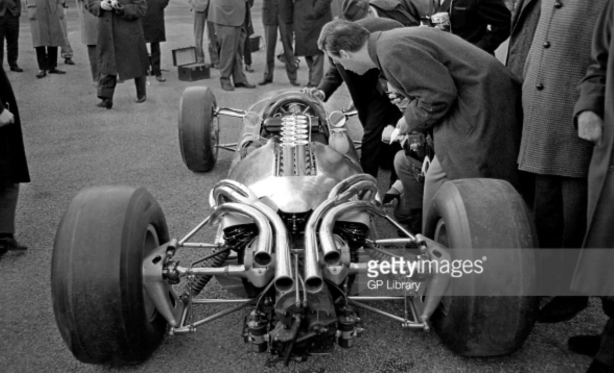
312 rear

The engine wasn’t really the cars weakness, it was probably more so the Tipo 589 chassis’s overall weight. Ferrari really didn’t get the hang of building a modern monocoque in the British idiom until they contracted John Thompson to build them one circa 1973!

Before then their tubs were sheet aluminium panels in a double wall riveted to a tubular steel structure. It was effective but heavy. The Ferrari’s suspension, as you can see is period typical; inboard at the front with a top rocker and lower wishbone and outboard at the rear with a single top link, inverted lower wishbone with forward facing radius rods for location. Uprights were cast magnesium with coil spring/shock units. Girling provided the disc brakes, which were inboard at the rear.

The Tipo 589 5 speed transaxle was sportscar derived, beefy and heavier than the DG300 Hewland box which became ‘de rigour’ in the Pommy cars of the era.

312 engine side

Shot above shows the beautiful standard of Ferrari fabrication and finish. Note the chassis, Lucas injection, twin-plug heads, alternator driven by the cams and wonderful exhausts which are fine examples of the pipe-benders art.

Credits: Popperfoto, GP Library, Reg Lancaster

Tailpiece: Why is that Simple Little Thing So Fast?…

image

Enzo Ferrari ponders the 1966 consistent speed of Jack’s BT19 Repco at Monza on September 3 1966, the ‘Wonder From Down-Under’ beating the might of the Europeans…

What is he thinking I wonder? ‘why is it so fast, its last years spaceframe chassis, engine from someone i’ve never heard of in Australia and the block is an American Oldsmobile…’

In fact the following day was a good one for the Scuderia, Ludovico Scarfiotti’s 312 V12 took the win from Mike Parkes similar car with Denny Hulme’s Brabham BT20 Repco third.


(Feisst)

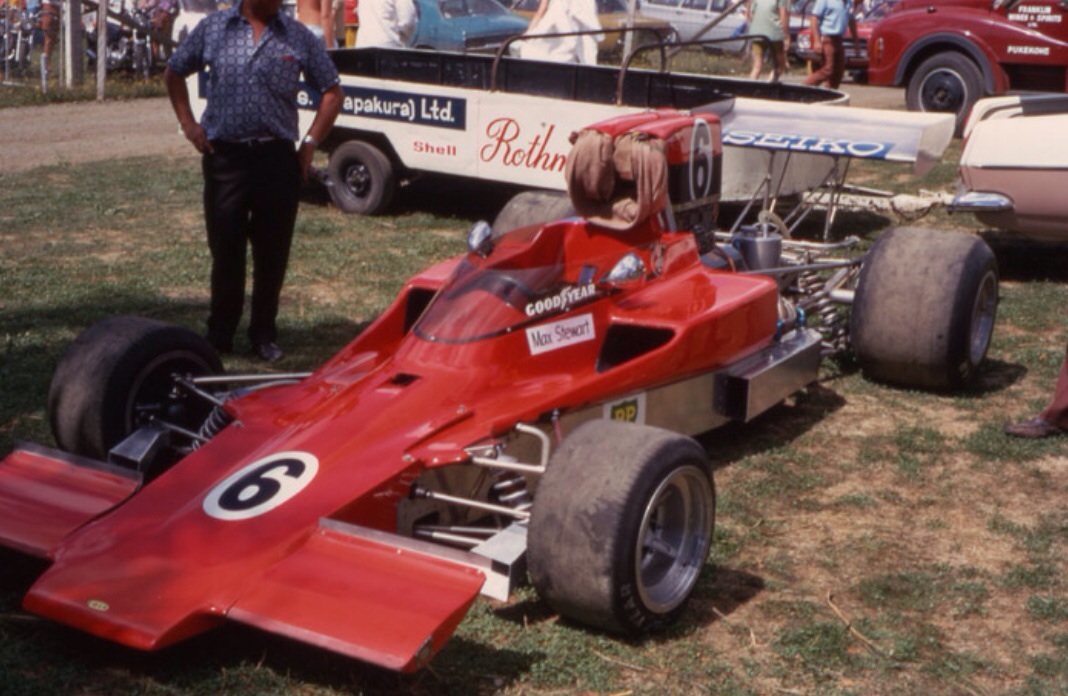
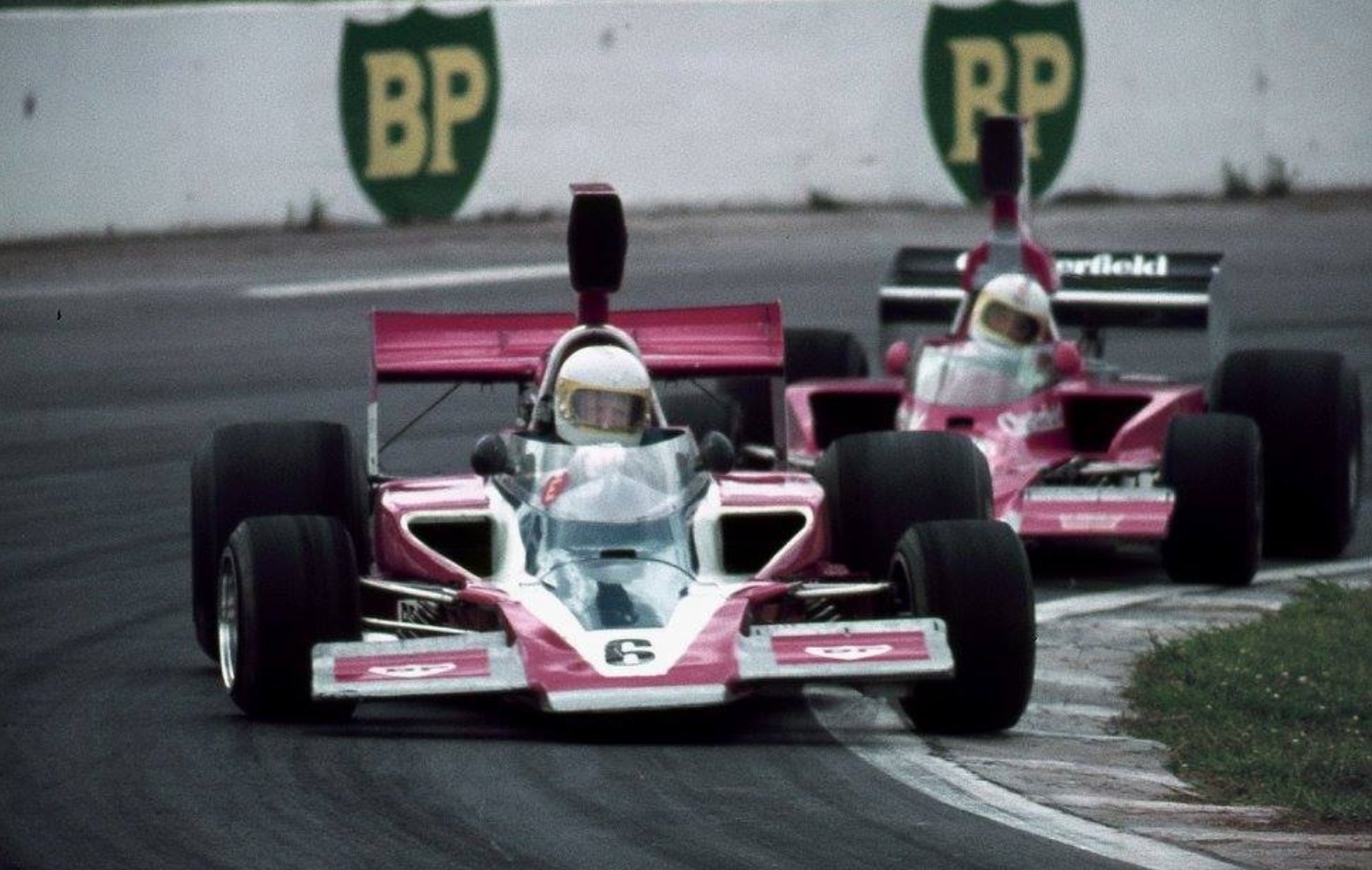
Max Stewart looks pretty happy aboard his pristine, new Elfin MR5 Repco, New Zealand Grand Prix, Pukekohe 1972…

He is talking to Elfin works mechanic Dale Koenneke, well known in Australia for his work with Elfins, John McCormack and later K&A Engineering, an enduring partnership in Adelaide he formed with Harry Aust.

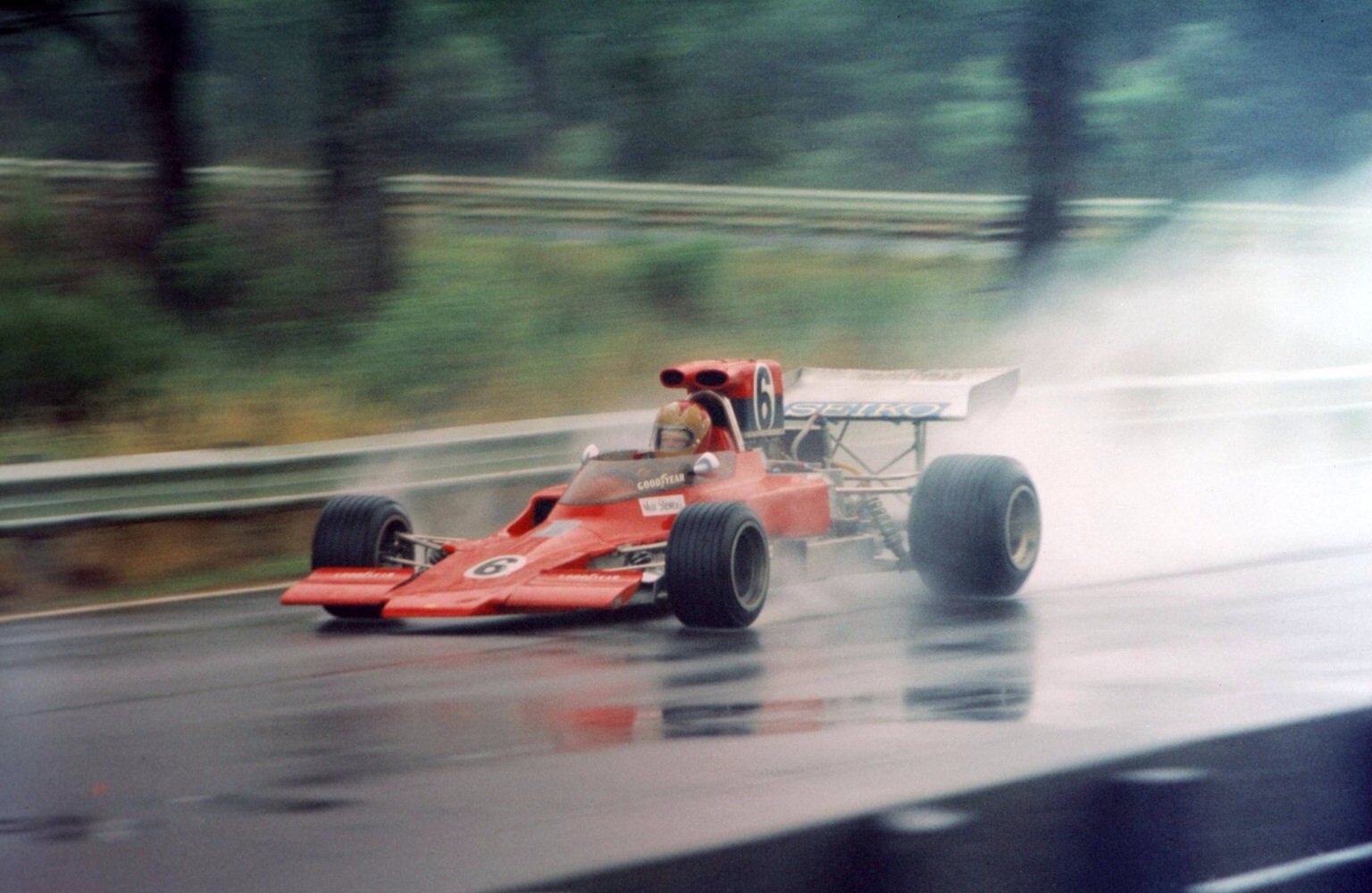
Max took to F5000 like a duck to water. His speed in 2 litre cars- he won the 1971 Australian Gold Star series in his trusty Mildren Waggott 2 litre was immediately transferred across to the more demanding 5 litre, 480bhp MR5. The Elfin wasn’t the ‘ducks guts’ of cars albeit John McCormack developed his car to a fine race, and championship winning pitch. But in 1972 Max was the fastest guy aboard an MR5- a quicker driver than Garrie Cooper, McCormack and John Walker. Very soon McCormack and Walker developed ultimate speed whereas Garrie- quick in a Tasman 2.5 car was never more than a journeyman in 5 litre single-seaters.

Stewart booting the MR5 around Warwick Farm during the 1972 ‘Hordern Trophy’ Gold Star round- 3rd behind Frank Matich’s Matich A50 Repco and Kevin Bartlett’s Lola T300 Chev (Aust Motor Racing Annual)

The MR5 looked superb. Even though Alec Mildren abandoned his race team at the end of 1970 Max kept the Mildren yellow team colour on his own cars- both the Mildren Waggott in 1971 and MR5 in 1972. He retained the Seiko and BP sponsorships too. What a sad day for Australian motor-racing it was when Alec finally pulled the pin. He was such a wonderful benefactor/entrant of Frank Gardner, Kevin Bartlett and Max Stewart and others, but those fellas in particular.

The MR5 wasn’t the ‘Silver Hammer’ at all for Max though. That car was undoubtedly the racer which followed, his ex-works Frank Gardner driven development prototype Lola T330 Chev ‘HU1’. It was the very first of that ‘category destroying’! series of dominant T330/332 Lolas. Max made HU1 sing for years and was always competitive with the T332’s. Both the T330 and MR5 ’5722’ are still in Australia, restored and exercised regularly.

Photo Credits…

Mike Feisst Collection on The Roaring Season, Neil Stratton, Australian Motor Racing Annual 1973, Tony Glenn

Tailpiece: Stewart swallowed by his Lola’s schnorkel, Pukekohe paddock 1973…

(Feisst)

Whilst Frank Gardner ‘retired’ from single-seater racing towards the end of the 1972 Tasman Series he continued to test openwheelers in his capacity as Lola’s development engineer/tester. He also raced this chassis, T330 ‘HU1’ once or twice in some end of season European F5000 Championship rounds in 1972 as he developed the production spec 1973 T330 for Eric Broadley.

HU1 was then sold to Max to run in the ’73 Tasman with Gardner on hand to advise the lanky Aussie on how to extract the best from the car, which he most certainly did. Here the car is in the Pukekohe paddock twelve months after the shot at this articles outset, both photos taken by the same photographer, Mike Feisst.
Max 5th aboard T330 HU1 during the final, sodden Warwick Farm Tasman in 1973. Steve Thompson won in a Chevron B24 Chev (Tony Glenn)

Postscript: The choice of Elfin/Repco/Lola/Chev…

Stewart didn’t have great reliability from the MR5 in either the ’72 Tasman or the Gold Star- his best results were a 5th and 4th at Pukekohe and Levin in the Tasman and two 3rd places in the Gold Star at his home NSW tracks of Oran Park and Warwick Farm.

The decision to go with Lola was an easy one. He had witnessed at first hand the speed of the T300’s driven by his mate Kevin Bartlett, Bob Muir and others and no doubt Frank Gardner was able to impress upon him the speed of the coming T330. Frank Matich was at the front of the Repco queue- FM was their works driver after all, with perhaps McCormack and Cooper getting the next best customer engines.

Lola Chev was an eminently sensible move which paid off in spades for Max albeit not initially! The story of Stewarts’ success in his Lola’s is one for another time, suffice it to say aboard T330 ‘HU1’ he won the 1974 Teretonga and Oran Park Tasman rounds, the Australian Gold Star Series winning five of the six rounds including the Australian Grand Prix at Oran Park. Quite a season for the popular boy from Orange.

Max Stewart ahead of great friend and rival Kevin Bartlett during the 1974 Gold Star round at Oran Park won by Max. Lola T330 from T332 . KB DNF, Max won from the T332’s of Warwick Brown and Graeme Lawrence (Stratton)

Finito…


hawthorn fazz

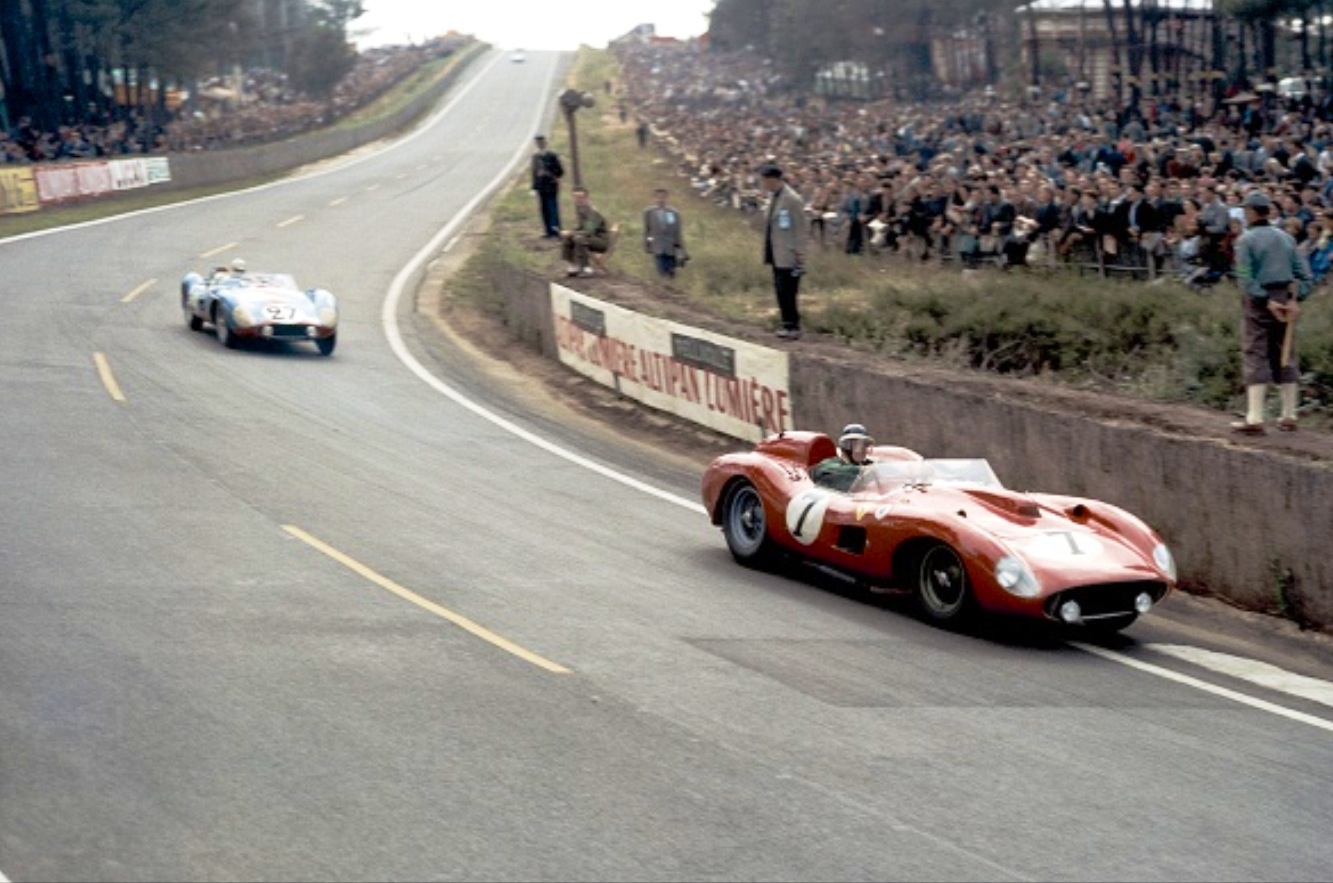
Mike Hawthorn dives his big Ferrari 335S into The Esses and past the smaller Ferrari 500TRC of Fernand Tavano and Jacques Peron early in the 1957 Le Mans 24 Hours…

Both cars failed to finish, Hawthorn shared the 335S with Luigi Musso, the cars engine cried enough on lap 56 and the 500TRC also had an engine problem withdrawing after the completion of 235 laps.

1957 was a D Type rout- the Ivor Bueb/Ron Flockhart D won from the similar cars of Lawrence/Sanderson, Lucas/Brousselet and Frere/Rouselle, all of which gave Ferrari something to think about! The best placed Ferrari was the 500 Testa Rossa driven by Lucien Bianchi and Georges Harris but it was 39 laps adrift of the winners.

Click on this link for an article about the Ferrari 335S and 1957 Mille Miglia;

Peter Collins: Mille Miglia 1957: Ferrari 335S…

Credit…

Klemantaski Collection

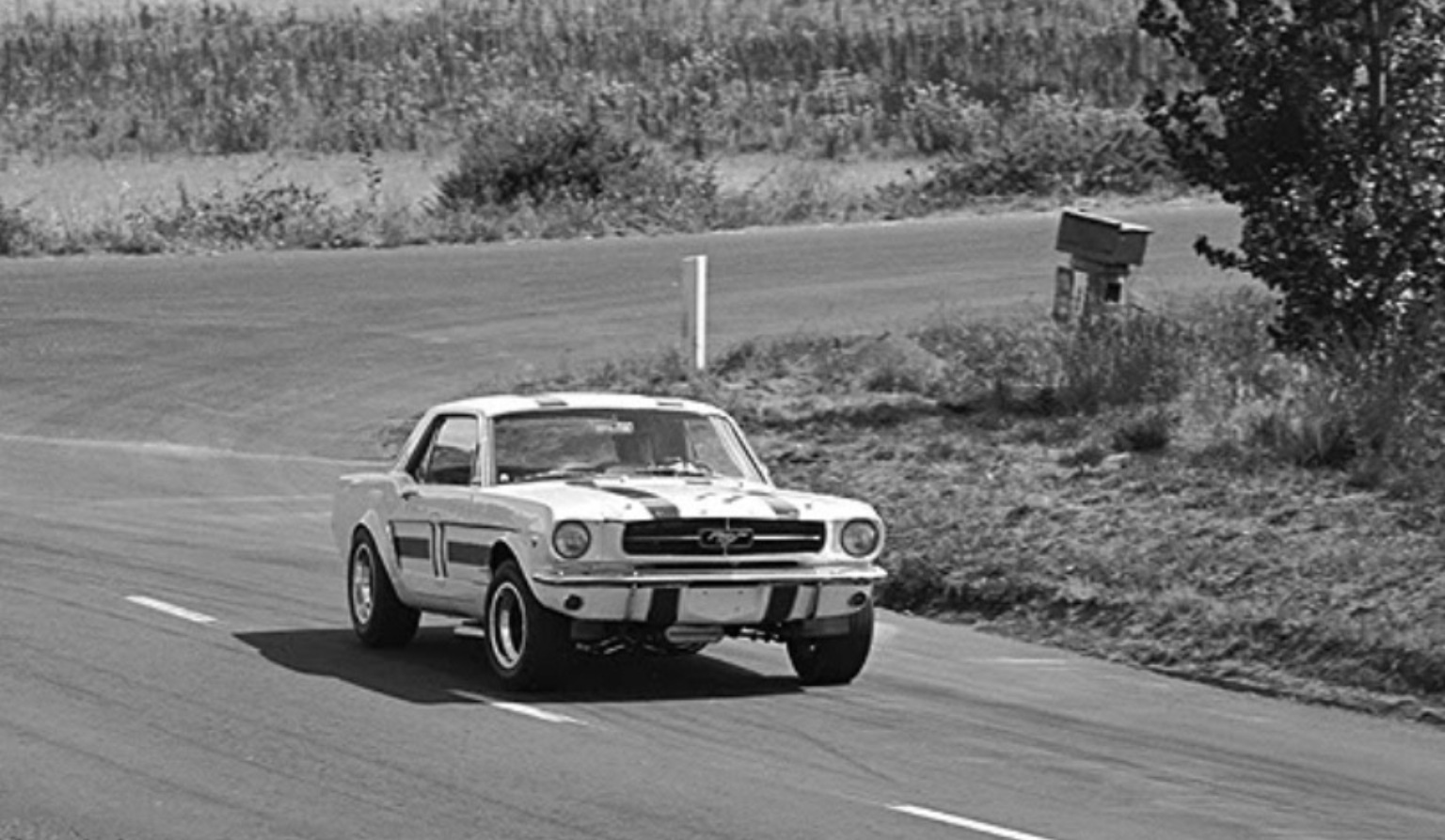
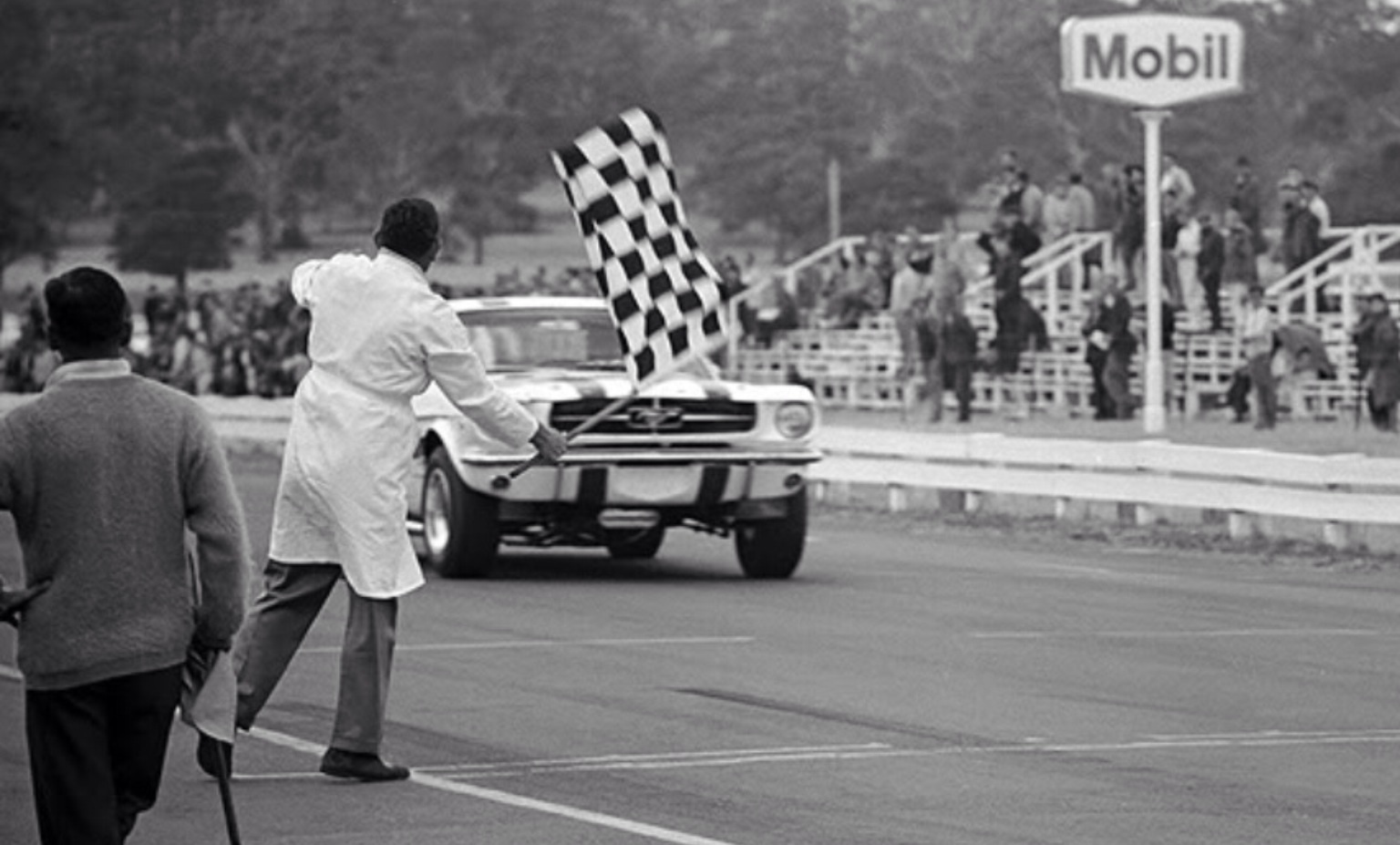
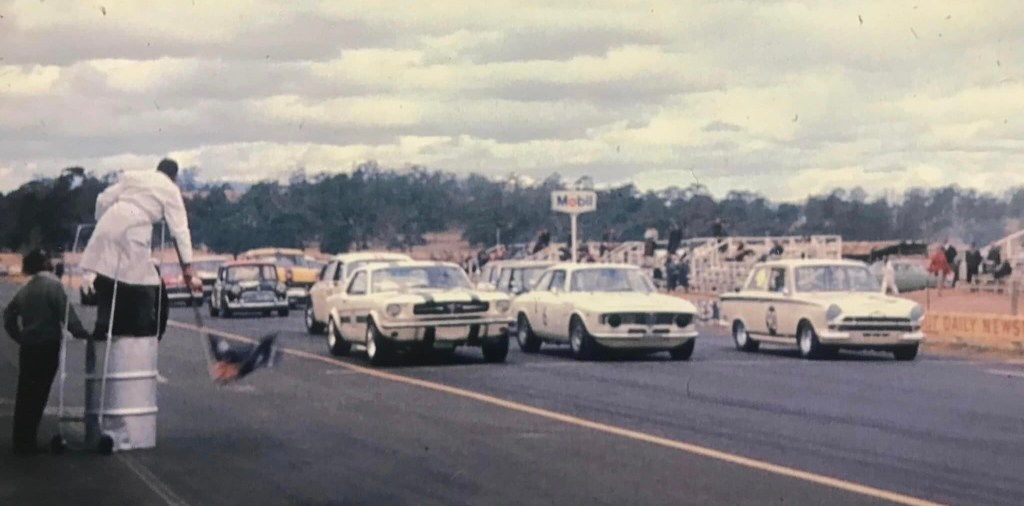
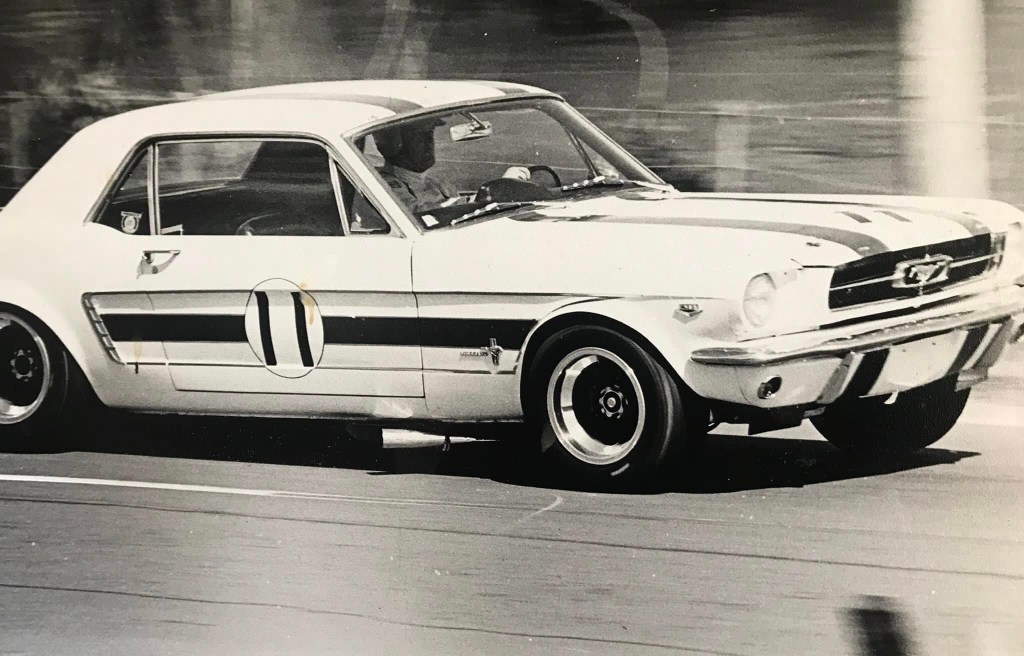
Robin Pare, Pete Geoghegan in Ford Mustangs, Bruno Carosi Jag Mk2, Frank Gardner Alfa GTA and Robin Bessant Lotus Cortina on the downhill plunge towards The Viaduct, Longford Improved Production Touring Car race 1967 (oldracephotos.com)

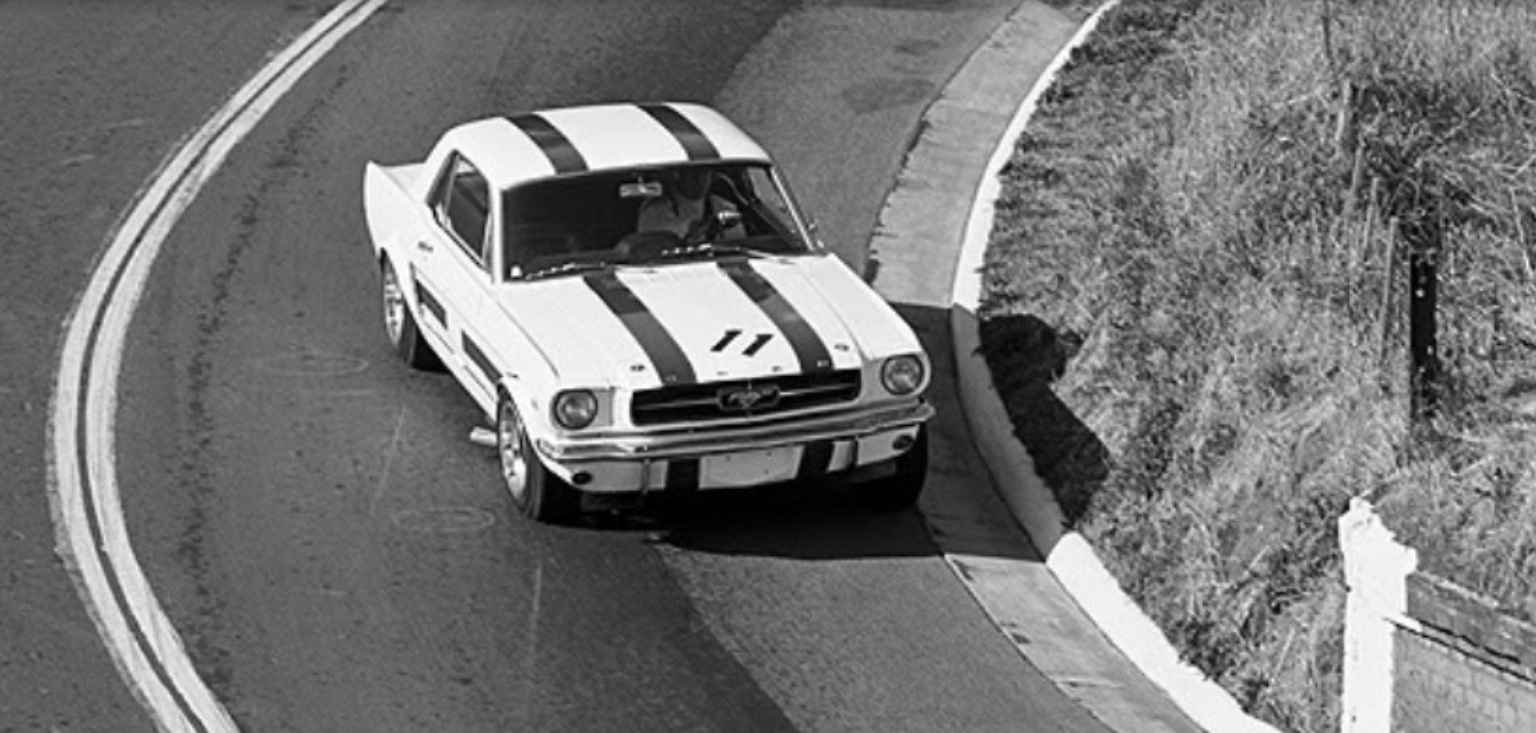
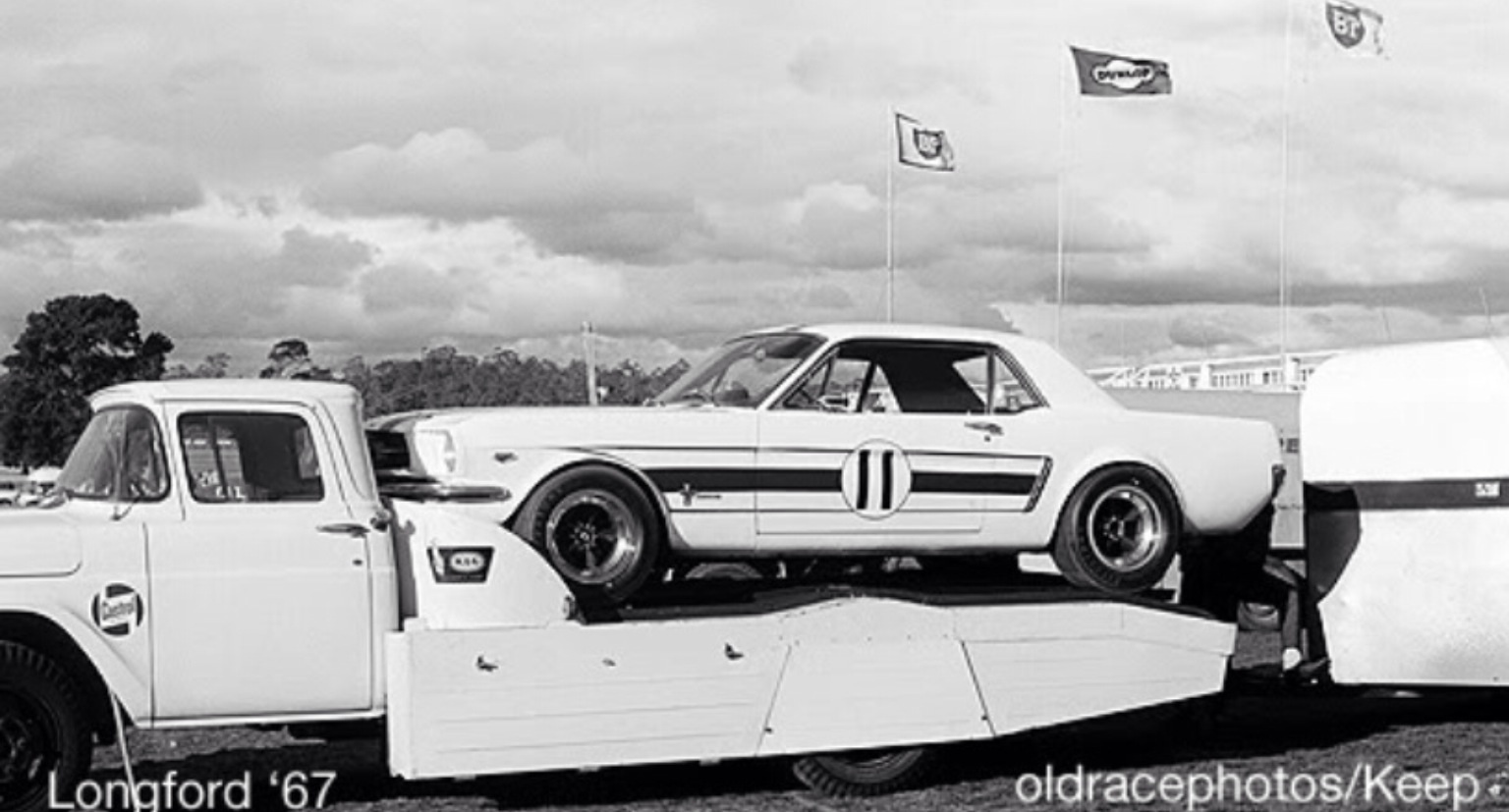
Pete Geoghegan did so many times too! The Sydneysider is here doing his stuff aboard the first of his two Ford Mustangs at Longford during the Tasman round in February 1967…

The Brothers Geoghegan, Leo and Ian or ‘Pete’ were stars of Australian Motor Racing from the late-fifties into the mid-seventies, Leo in single-seaters and Pete in ‘taxis’, touring cars of all pursuations. When he was a youth Pete was quick in a brief career in single seaters and a Lotus 23 Ford but he became a ‘big unit’ so his girth meant he was best suited to cars with a roof.

Geoghegan , Gardner and Carosi off the front row, no sign of Pare – perhaps not the same race grid as above (oldracephotos.com)

A supreme natural, Geoghegan made a car sing with flair and feel blessed to some from above. Every car he drove. His band-width extended from GT’s to Sports Cars, Production Tourers and very highly modified Sports Sedans- sedans of considerable power and performance.

His CV included some of the most iconic cars raced in Australia over the decades above including a Lotus 7 , 22, 23, the Scuderia Veloce Ferrari 250LM, Holden ‘Humpy’, Jaguar 3.4, Morris 850, the two Mustangs, Cortinas- both GT and Lotus variants, Falcon GT’s, Falcon GTHO’s, Valiant Charger E49, highly modified Porsche 911’s, his iconic, Ford factory built and later Bowin Cars modified Ford Falcon GTHO ‘Super Falcon’ and the superb John Sheppard built Holden Monaro GTS350 Sports Sedan.

That car was as conceptually clever, beautifully built and presented sedan racer as any ever constructed in Oz. Lets not forget his late career drives in Laurie O’Neill’s Porsche 935, a notoriously tricky device to master. Much earlier on he drove O’Neills Aston Martin DB4GT Zagato, every bit as exotic as the 935.

(T Watts)
Big Pete finesses the Mustang into The Viaduct (oldracephotos.com)

Geoghegan, five times Australian Touring Car Champion 1965-69 was an immensely popular racer with the fans, his bulk, manner and ‘stutter’ part of his appeal. He was not without his issues mind you. Touring Car racing is a religion in Australia, our sedan racing has been the equal of the best in the world for decades and arguably for the last 20 years our V8 Supercar category has been consistently one of the Top 5 sedan racing contests on the planet.

A touch of the opposites on the exit to Newry (oldracephotos.com)

So, the pantheon of talented touring car aces is large, and membership of the Top 10 a subject of much informed pub chatter, tough. Most knowledgeable touring car observers would have Geoghegan in their Top 10, if not Top 5, along with the likes of Norm Beechey, Peter Brock, Allan Moffat, Dick Johnson, Jim Richards (a Kiwi but we take him as our own) Mark Skaife, Glenn Seton, Craig Lowndes, Garth Tander, Jamie Whincup and others.

(oldracephotos.com)

Etcetera…

(unattributed)

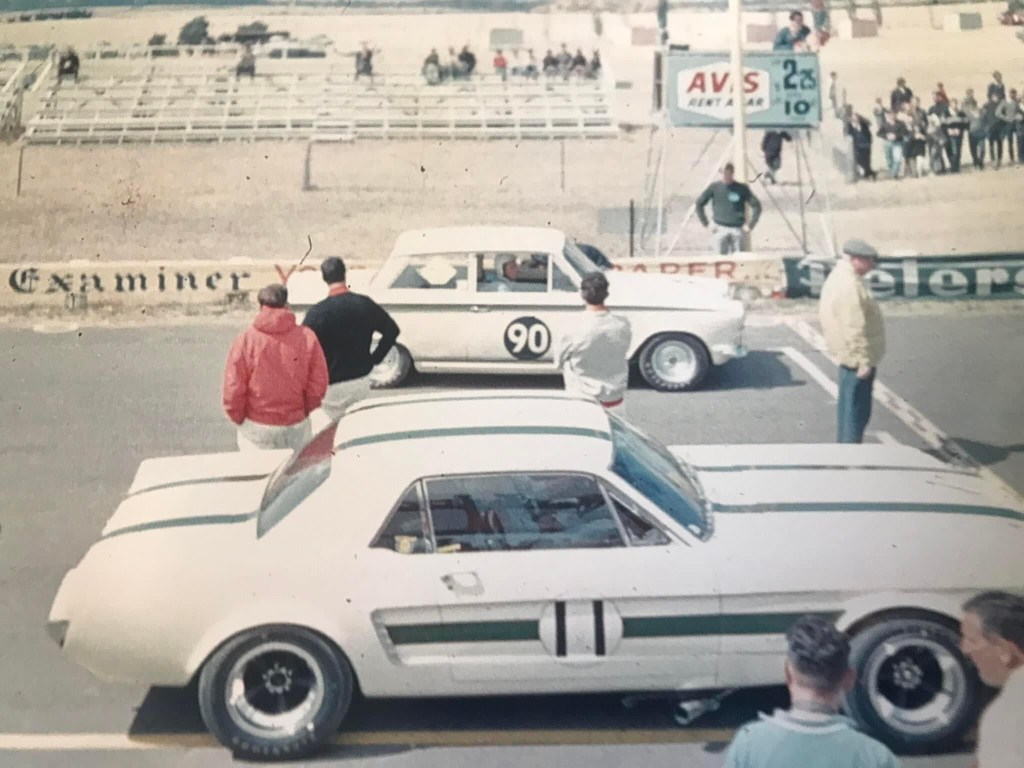
Geoghegan, Gardner and Robin Pare.

(unattributed)

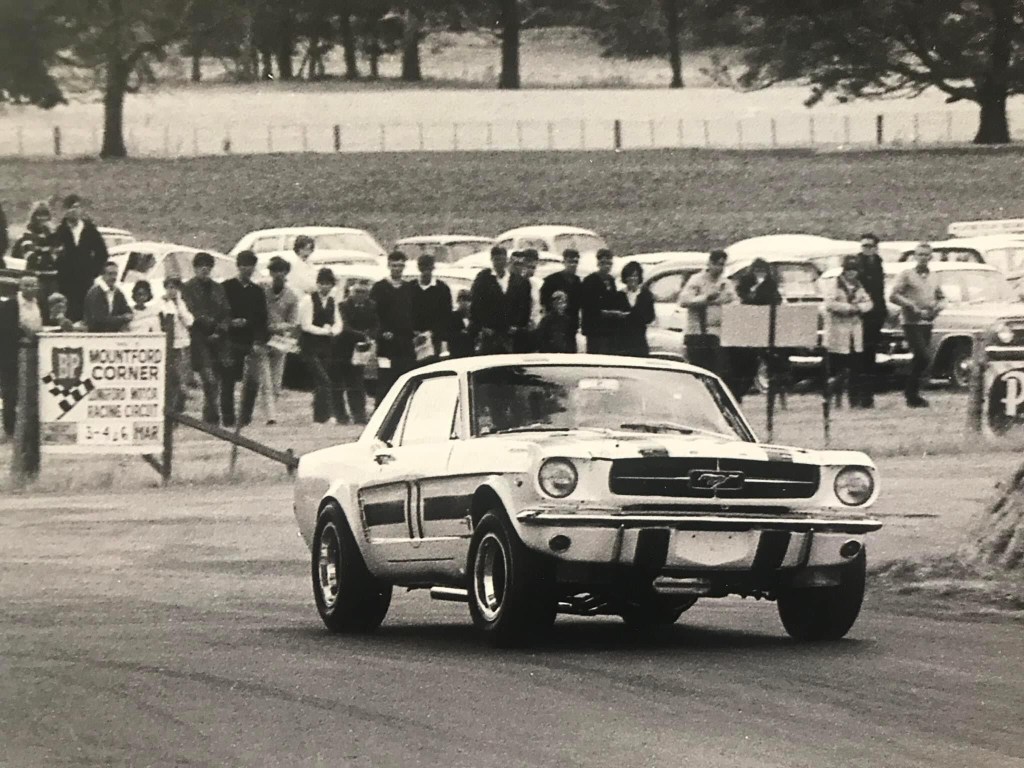
Pete booting the ‘Stang out of Mountford in typical style.

(unattributed)

Geoghegan and Pare.

(unattributed)

Photo Credits…

Oldracephotos.com- Harrison and David Keep, Tim Watts

Tailpiece: Came, Saw, Conquered and then returned to Sydney…

Other Reading…

Pete Geoghegan and his Falcon GTHO ‘Super Falcon’

Pete’s 1965 Mustang notchback

http://www.bowdensown.com.au/collection/ian-pete-geoghegans-1965-mustang

Finito…

lotus spa

(unattributed)

Team Lotus in the Spa pitlane, Saturday June 12 1965: the 33’s of #17 Jim Clark, Mike Spence and the teams spare chassis…

Sunday was wet, Jimmy ran away with the race from grid #2, Mike was 7th from grid 12. Graham Hill started from pole in his BRM P261 but finished 4th, Jackie Stewart was 2nd in the other BRM and Bruce McLaren 3rd in a Cooper T77 Climax.

spa start

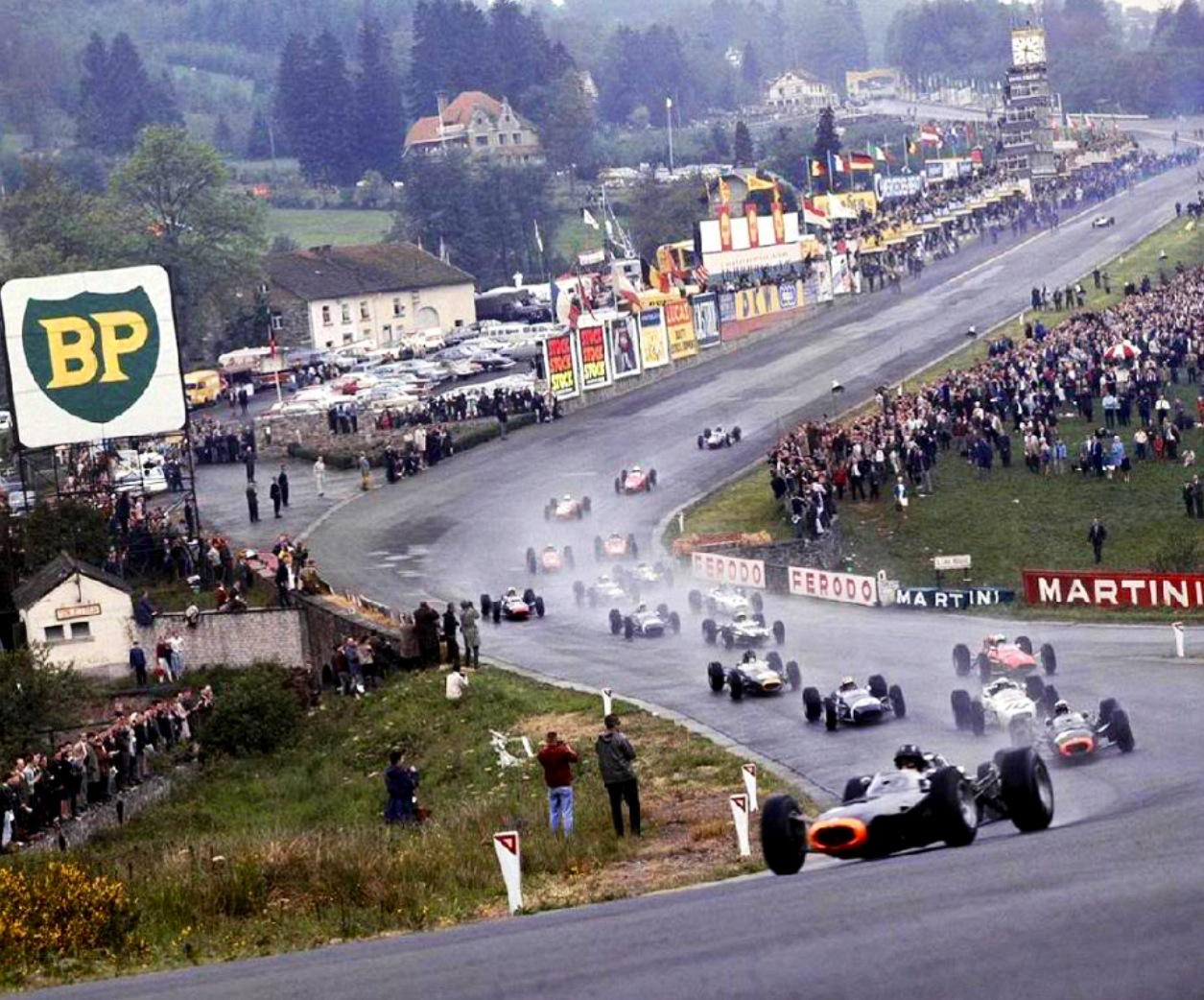
Lap 1 and Graham Hill’s BRM P261 leads into Eau Rouge from pole. You can just see the white peak of Clark’s helmet and his Lotus 33’s left rear wheel right up Hills clacker. Stewart’s sister BRM follows then Ginther’s white Honda RA272, Siffert’s Rob Walker Brabham BT11 Climax, Surtees Ferrari 158 on the outside, Gurney’s Brabham BT11 Climax, McLarens Cooper T77 Climax and the rest…(unattributed)

spa clark

Daunting in the dry positively frightening in the wet. Spa. Clark speeds to victory, he took the ’65 drivers title in his Lotus 33 Climax (unattributed)

Tailpiece: Alone in the Ardennes Forest, Jack Brabham…

brabham spa

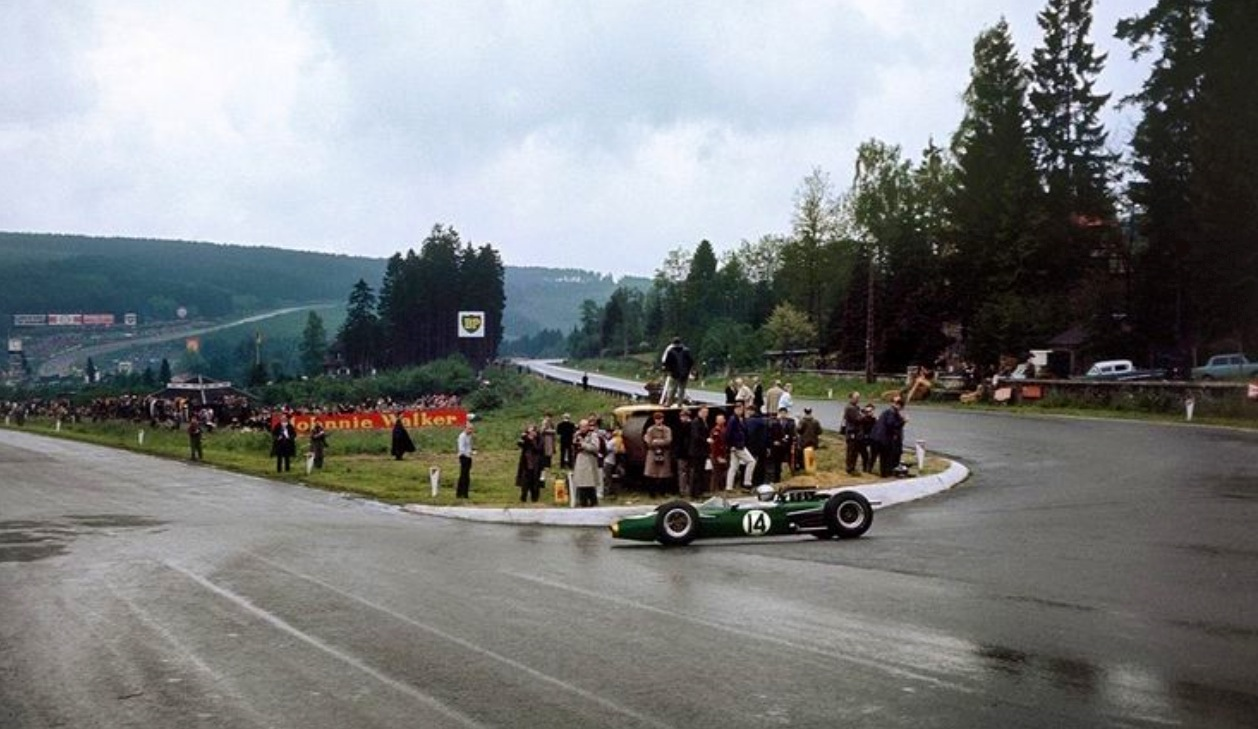
Brabham, La Source hairpin, Spa 1965- 4th in his Brabham BT11 Climax (unattributed)


image

Rene Vincents Peugeot GP car poster of 1919 is one of the illustrators most famous artworks…

Born in 1879, Rene studied at the famous Ercole des Beaux Arts in Rue Bonaparte, Paris initially studying architecture but later switching to graphic art and ceramics courses. He later contributed fashion illustrations to some of the best known magazines of the day and designed a swag of advertisements and posters for Bugatti, Peugeot, Michelin and Shell. Most of his work was in the art deco style for which he was noted.

By 1919 the war was over and the achievements of Peugeot’s epochal double overhead cam cars of 1913 were well in the past, but the influence of which we still feel now. Vincent chose this series of cars to make an amazingly impactful statement about Peugeot’s future. I wrote an article about these seminal racers a while back, click here to read it;

1912/13 Peugeot GP Car: Especially its Engines…

Rene was a keen automobilist and said to be one of the first Parisians to have both a drivers license and a garage to house his car, clearly his graphic design endeavours were lucrative, he died in 1936.

Credit…

Rene Vincent

Tailpiece: 1913 3 Litre DOHC 4 Cylinder Peugeot Engine…

engine blue

(Automobile Year #10)