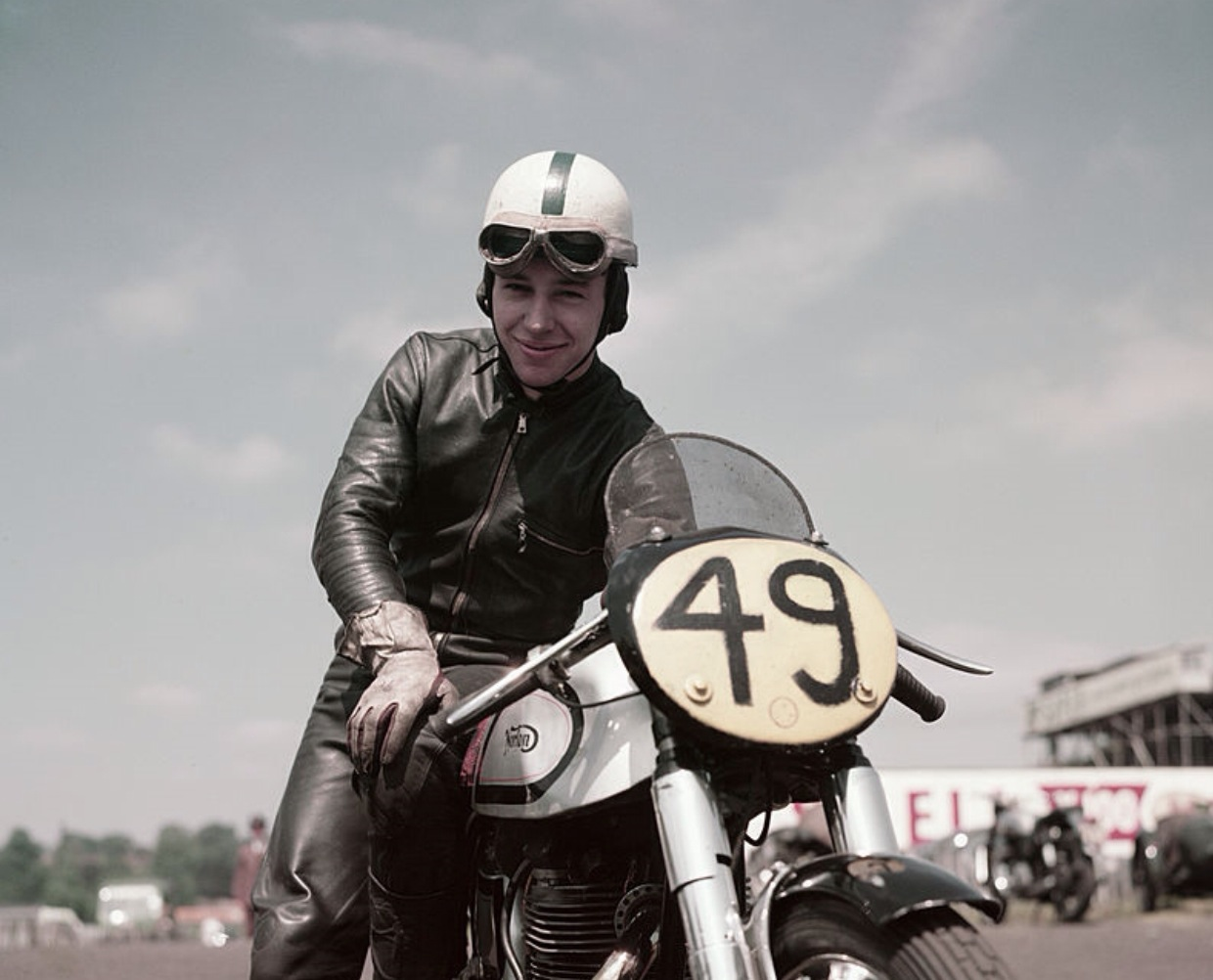
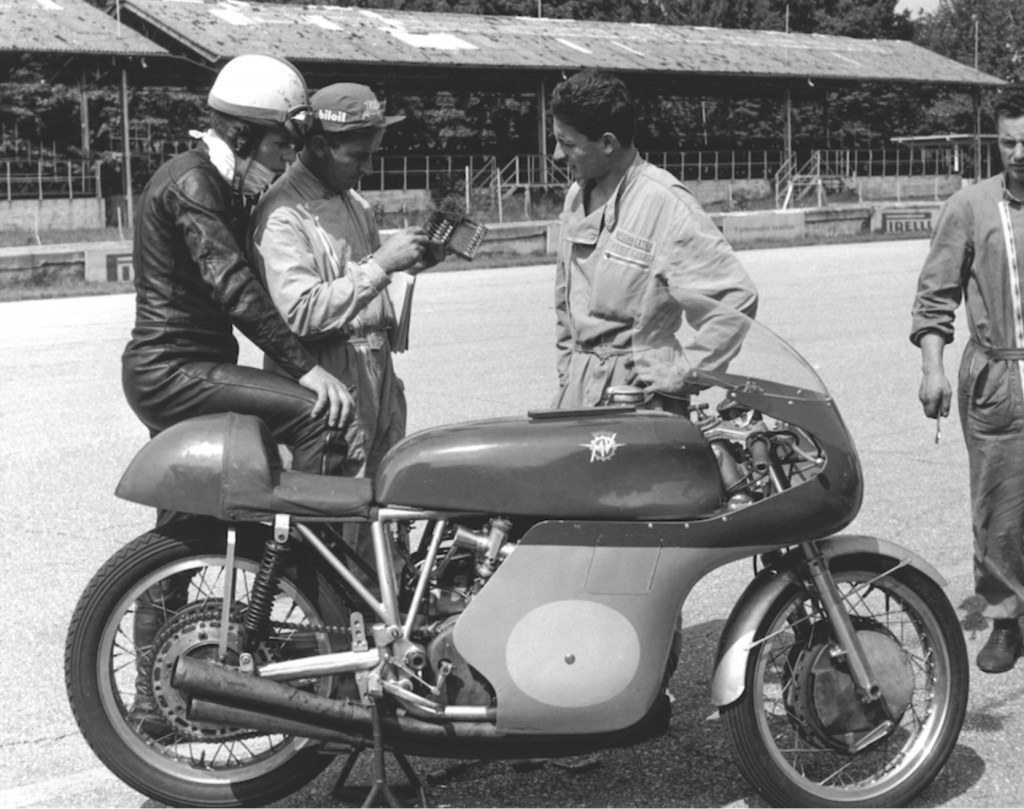
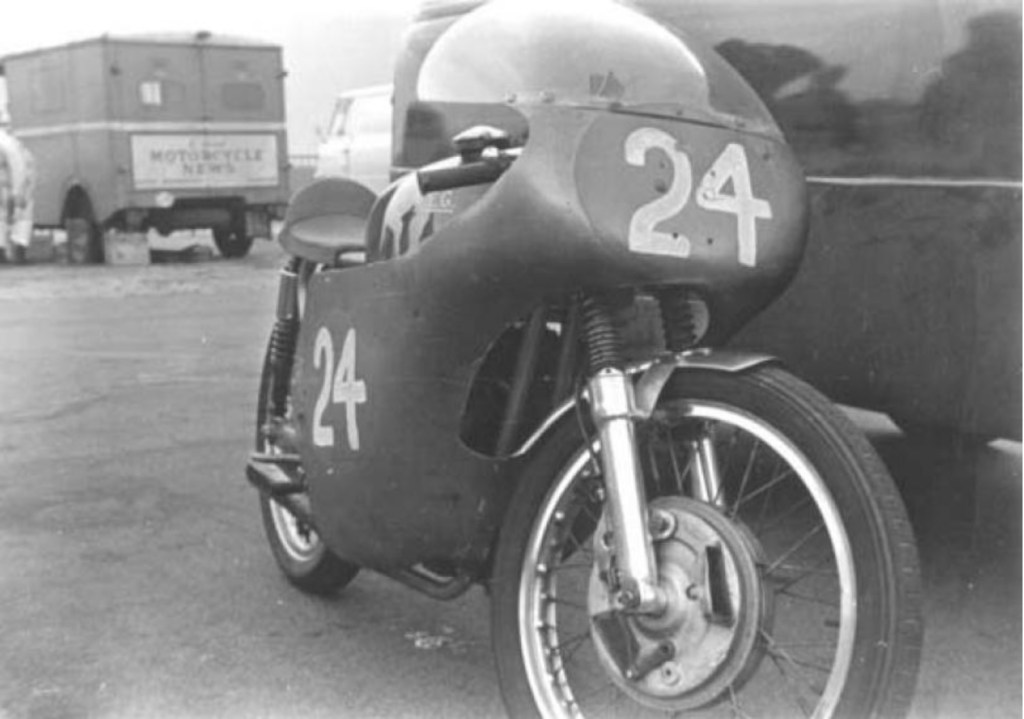
John Surtees and works-Norton Manx 500 prior to the start of a race at the International Meeting, Silverstone 9 April 1955…
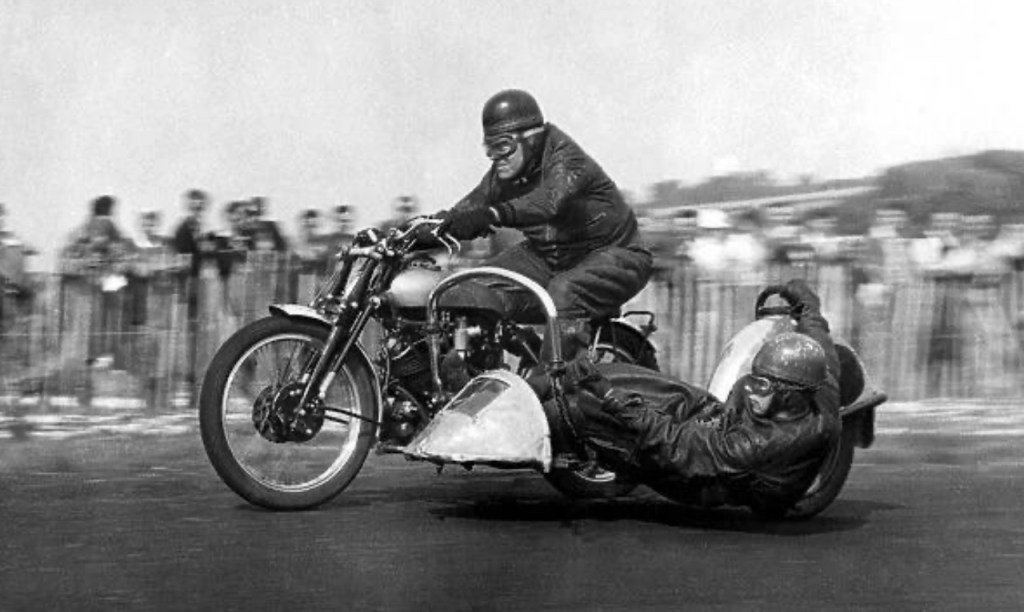
Born in 1934 (11 February 1934-10 March 2017) at Tatsfield, Surrey, Surtees famously grew up working in his dad’s South London motorcycle shop. Jack Surtees was a former bus driver turned sidecar racer, it was on his father’s Vincent 1000cc sidecar-outfit that John first competed at 14.
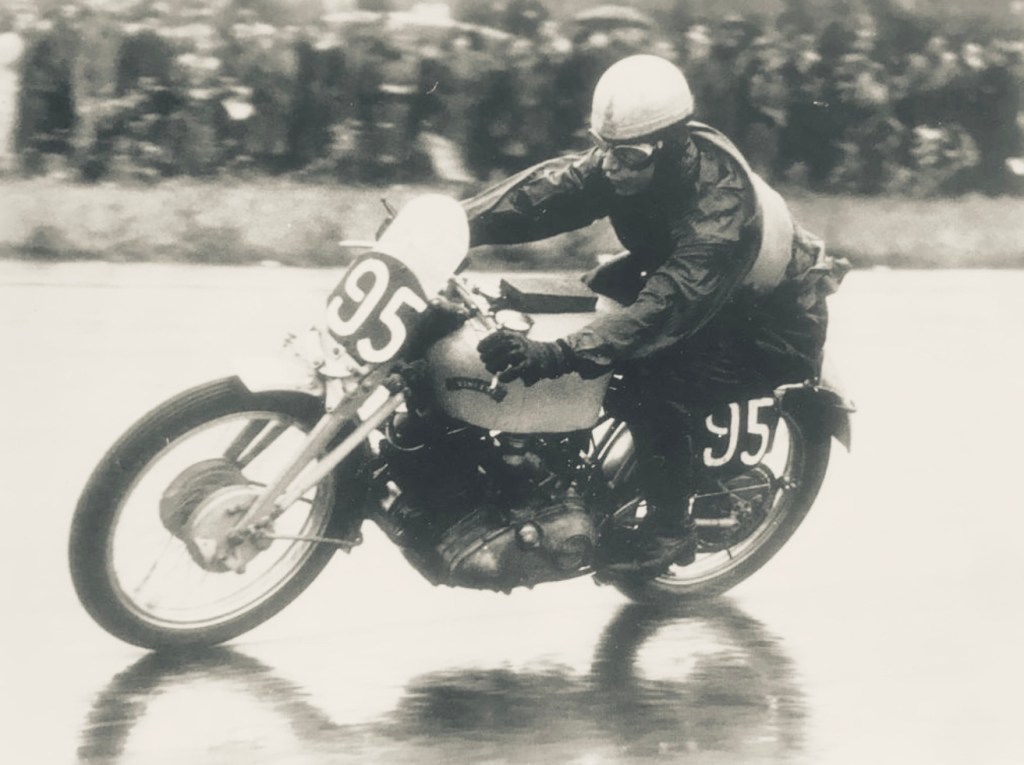
As a school leaver at 15, John contested grass track races at Brands Hatch on a Excelsior-JAP B14 500, soon graduating to road racing, initially aboard a Triumph Tiger 70 250, at Brands in April 1950. After commencing his apprenticeship with Vincents’ Stevenage factory the same year he soon commenced racing a self-prepared Vincent Grey 500 single, taking his first win at Aberdare Park, South Wales.
Jack and John Surtees on Jack’s Vincent 1000cc outfit at Brands Hatch in 1952 (J Topham)On the Vincent Grey Flash 500 single, circuit folks? (John Surtees World Champion)
In 1951 he hit the headlines after giving World Champion Geoff Duke’s factory twin-cam Norton curry on his pushrod single at Thruxton, soon establishing himself as one of Britain’s future stars, graduating from the Vincent in 1952 to a 500cc Manx Norton on which he contested his first World Championship race, finishing sixth in the Ulster GP.
In 1953 John made his Isle of Man debut having been loaned a pair of factory Nortons by race chief Joe Craig. But he got himself in Craig’s bad-book as he’d already committed to run Dr Joe Ehrlich’s works 125cc EMC two-stroke, only to crash it in practice and break his wrists after front-fork failure.
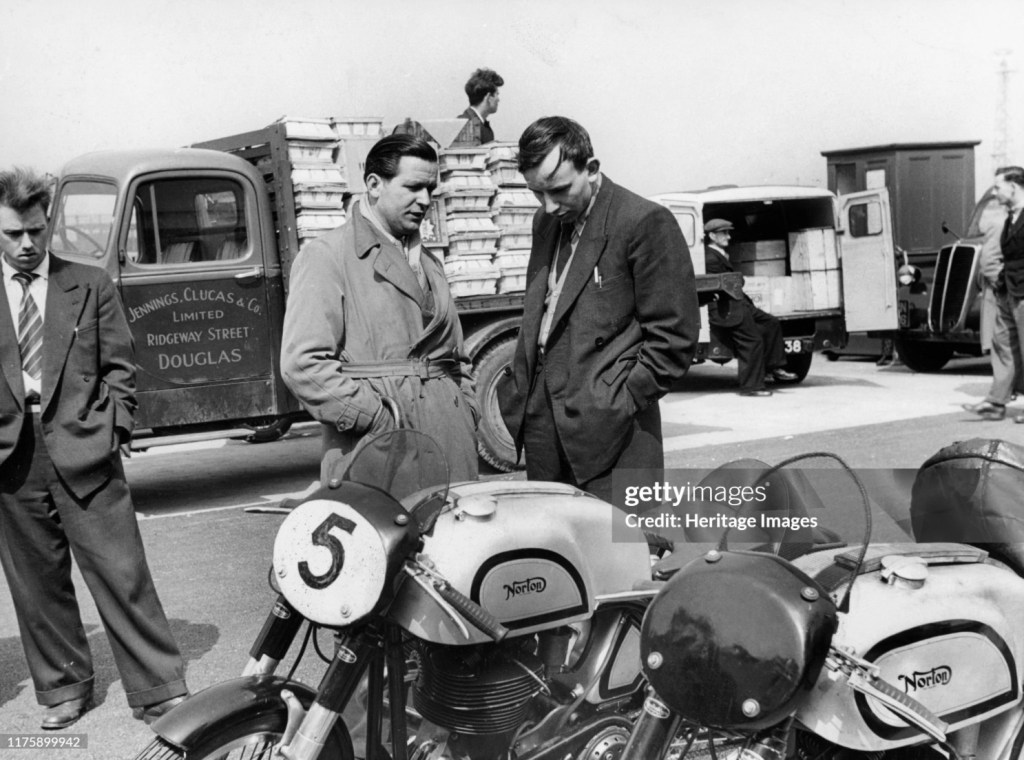
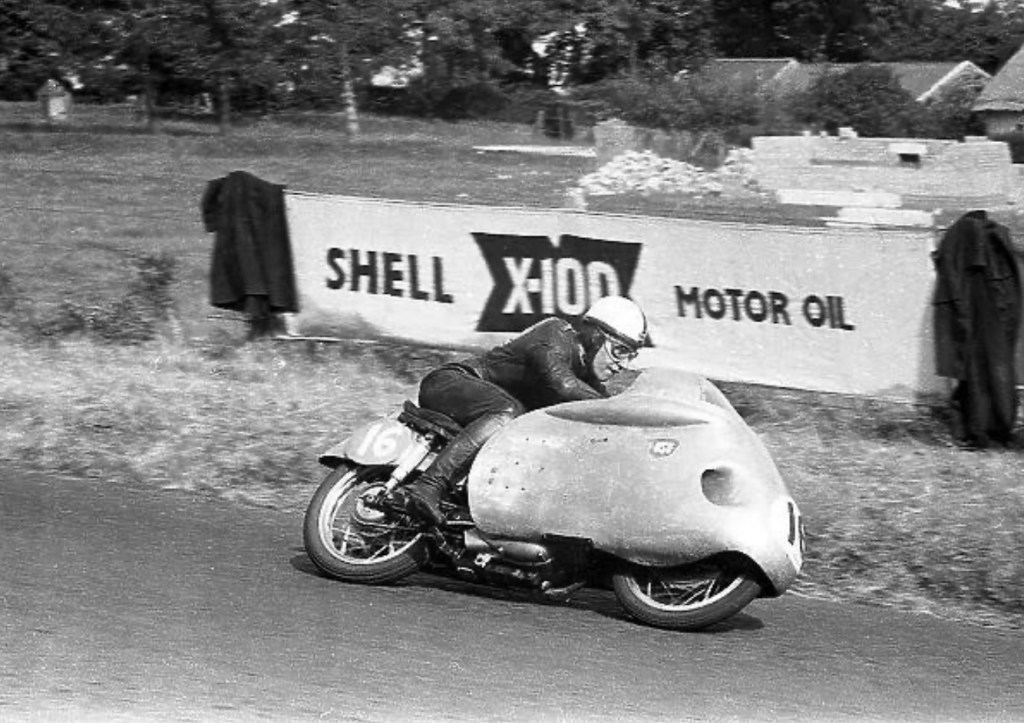
John Surtees at right during the June 1954 IOM TT weekend: 15th in the Senior and 11th in the Junior TTs on his privately entered machines. #5 is perhaps the 350
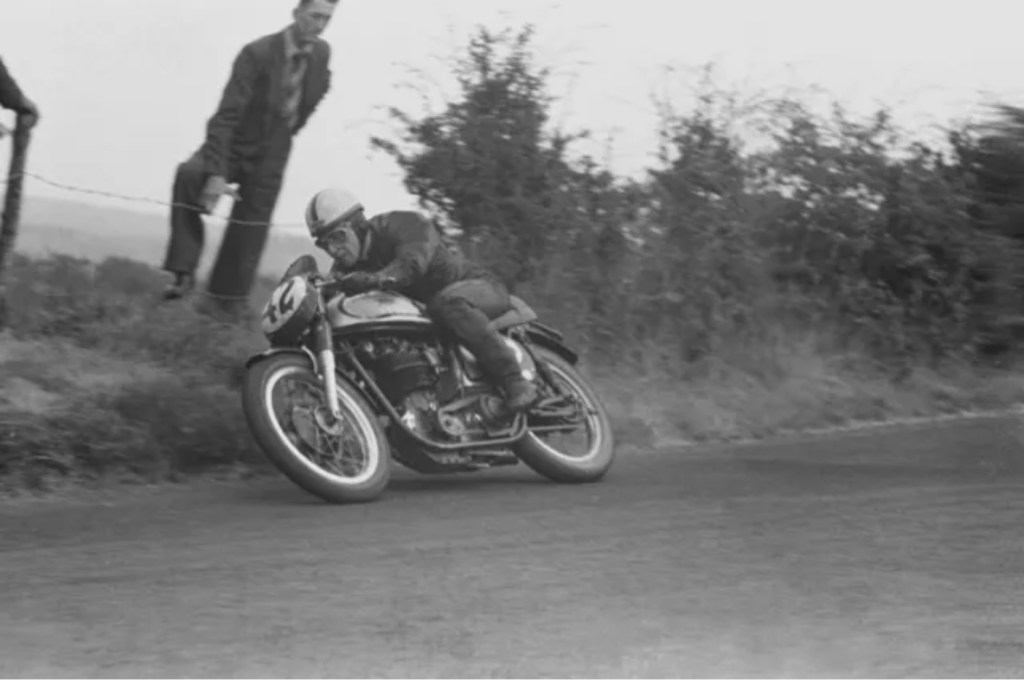
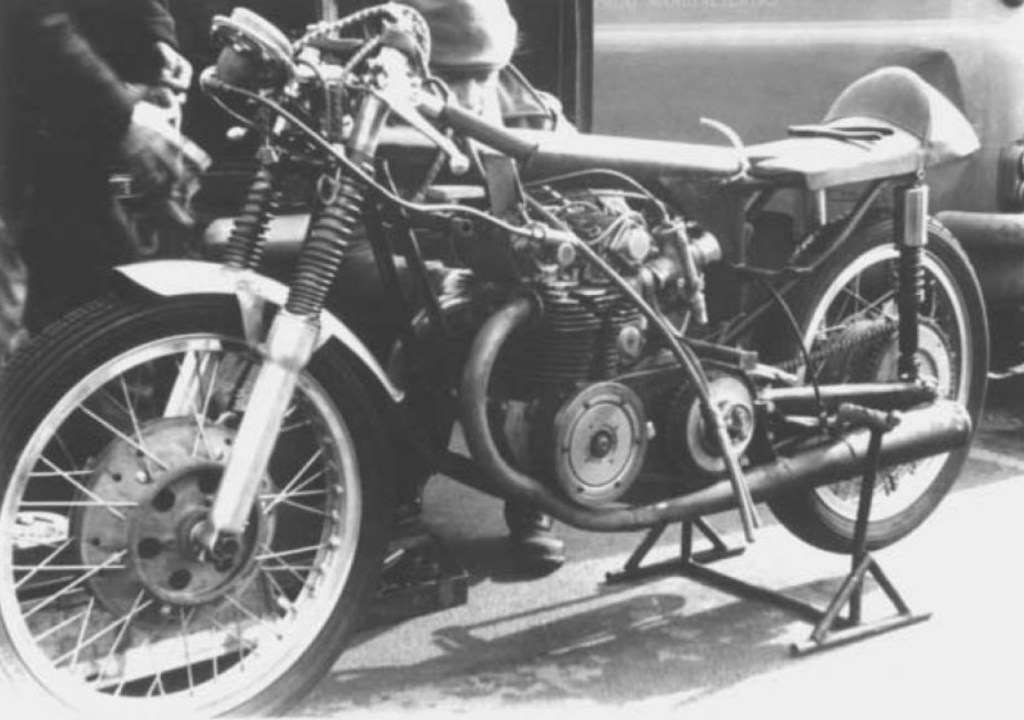
Craig cracked the shits when he couldn’t race his Nortons so John raced a pair of customer Norton 350/500s with great success in 1954. On these bikes he was 11th in the IOM 350cc Junior race and 15th in the 500cc Senior, also taking the British 250cc championship that year by winning 15 races of 17 starts on the unique R.E.G. 250 DOHC parallel-twin built by talented businessman Robert E Geeson.
As a consequence of that great season, Craig finally gave Surtees his first works Norton rides in what proved to be the British manufacturer’s final season of racing what were by then outclassed singles in 1955. John won 69 of 75 races that he started in Britain and raced regularly on the Continent, but it was on an NSU Sportmax that he recorded his first GP win, the 250cc Ulster GP at Dundrod on August 13.
Surtees, NSU Sportmax, 250cc Ulster GP winner, Dundrod August 13, 1955 (unattributed)Surtees, works-Norton Manx 500, Ulster GP, Dundrod, 1955 Senior TT. Led until his fuel stop then DNF with mechanical failure. Bill Lomas won both the 350 and 500 races on Moto Guzzis (A Herl)
With Norton’s end-of-season retirement from racing imminent, John finished the year by twice beating reigning 500cc World Champion Geoff Duke’s Gilera 500-4 at Silverstone and then Brands Hatch. Gilera, Moto Guzzi and BMW (for whom he’d ridden in the German GP on an RS500 Boxer) all chased his signature on a contract for 1956.
Instead Surtees began a five-year association with MV Agusta – after Count Domenico Agusta’s elderly mother had inspected him to decide whether she liked the cut-of-his-jib – winning his first seven races on the sonorous Italian in early-season British national races before winning the Isle of Man Senior TT, his debut World Championship Grand Prix race on the MV 500-four. And the rest, as they say, is history…click here for my article on the champion: https://primotipo.com/2014/11/30/john-surtees-world-champion-50-years-ago/
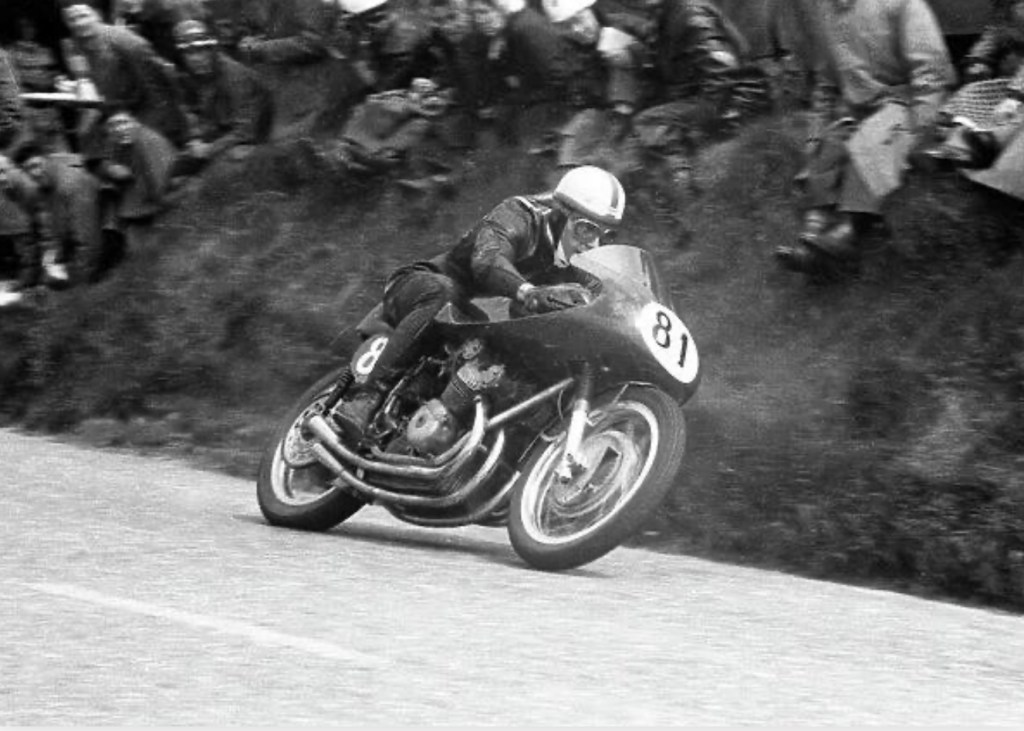
Surtees testing an MV, date and place unknown (unattributed)Surtees on the way to winning the Senior TT at Kates Cottage on the Isle of Man in 1956, MV 500 (ttracepics.com)
Credit…
Central Press, ridersdrivemag.com, A Herl, ttracepics.com, ‘John Surtees-World Champion’ by John Surtees and Alan Henry, J Topham-TopFoto, Rodger Kirby
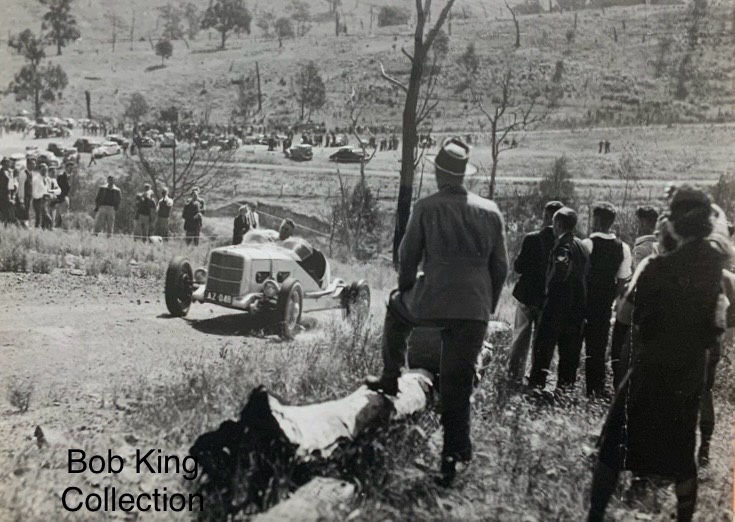
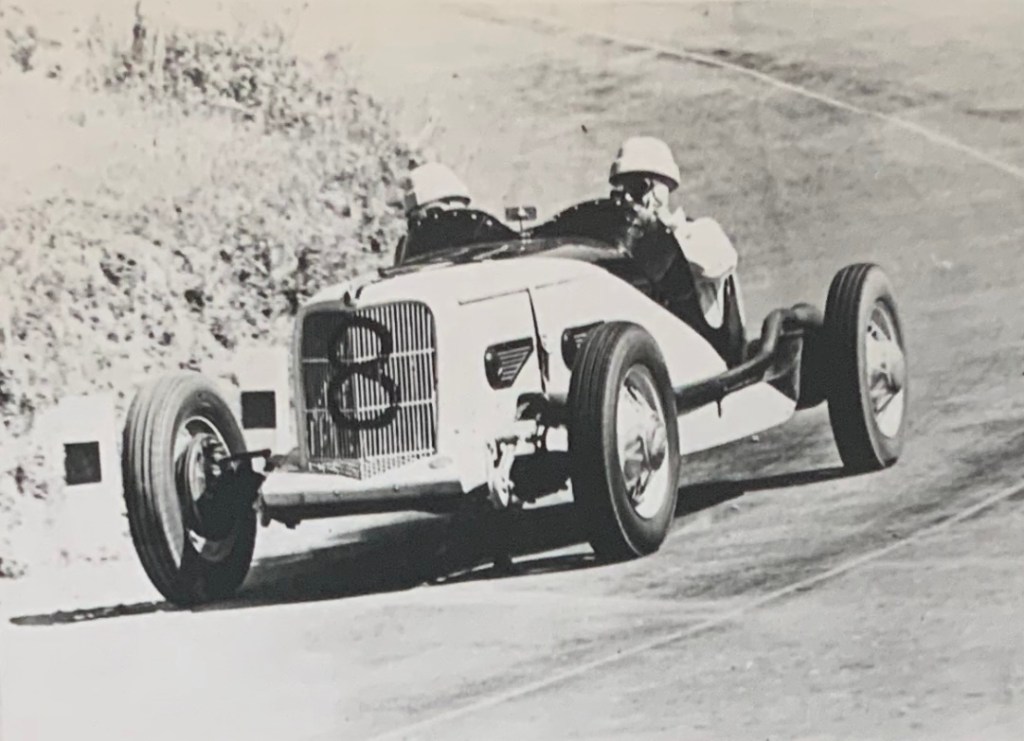
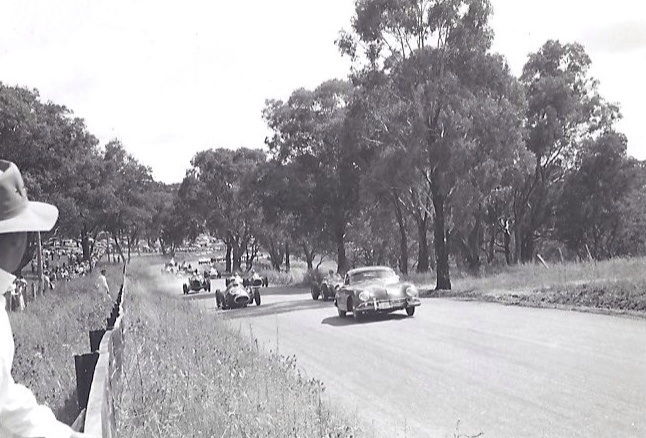
Evocative shot of Jack Phillips’ Ford V8 Special ascending Rob Roy hill in the Christmas Hills, 50km east of Melbourne
This car was one of the fastest and most successful racers in Australia – where handicap events then were standard fare – in the immediate pre and post-War period. Built by Phillips and Ted Parsons, his riding mechanic and partner in a Wangaratta Ford dealership, I’ve written about the combo before: https://primotipo.com/2023/03/07/jack-phillips-ted-parsons-ford-v8/
I’d love to know the date of the meeting and how Jack went? Before the January 13, 1939 Black Friday fires it seems?
(B King Collection)
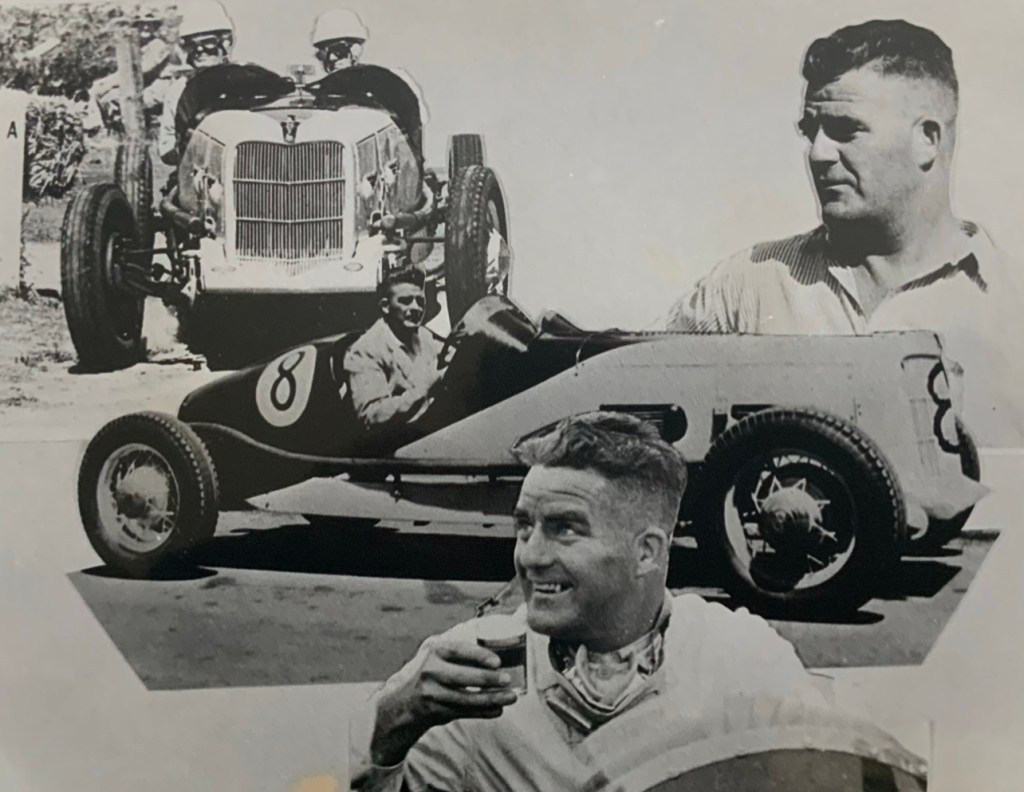
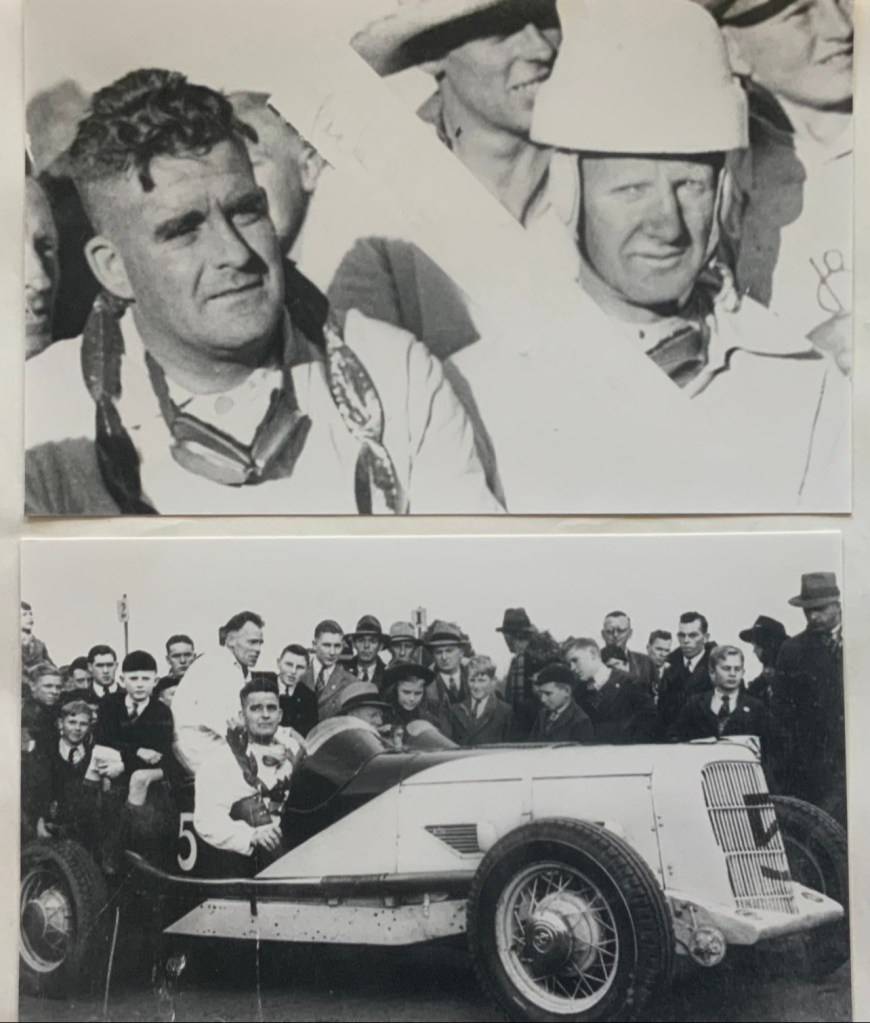
Phillips/Parsons (above and below) on the way to a win in the South Australian Hundred on formidable Lobethal in 1940.
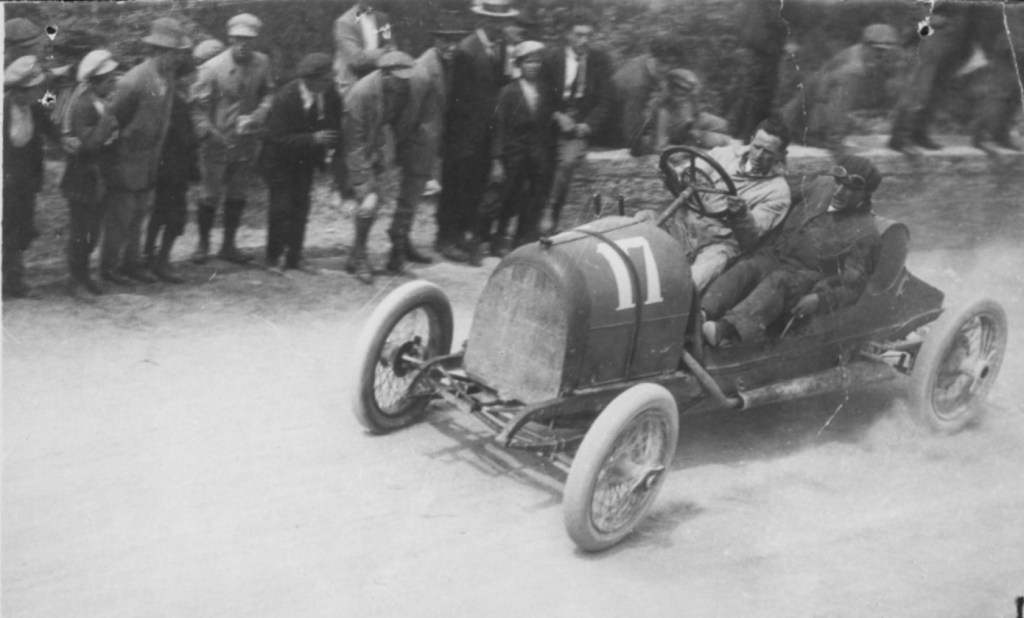
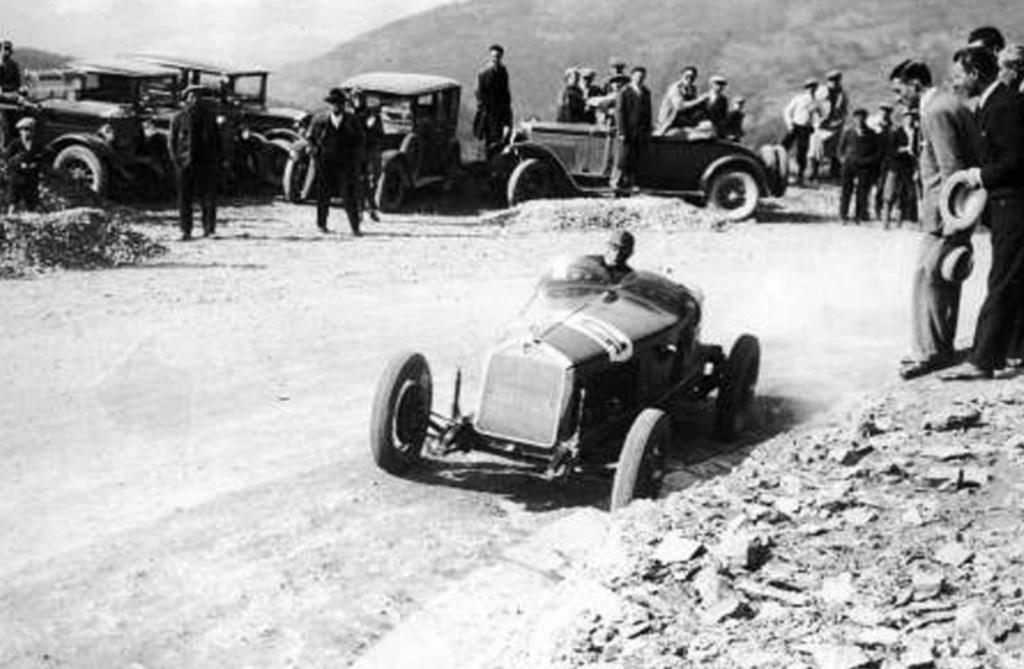
Emilio Materassi and mechanic (above and below) on the way to winning the 3.5-4.5-litre class of the 1920 Coppa della Consuma aboard a Fiat 20-30 HP. Up front it was Fiat as well, Paolo Niccolini won the event in a Fiat 120 HP.
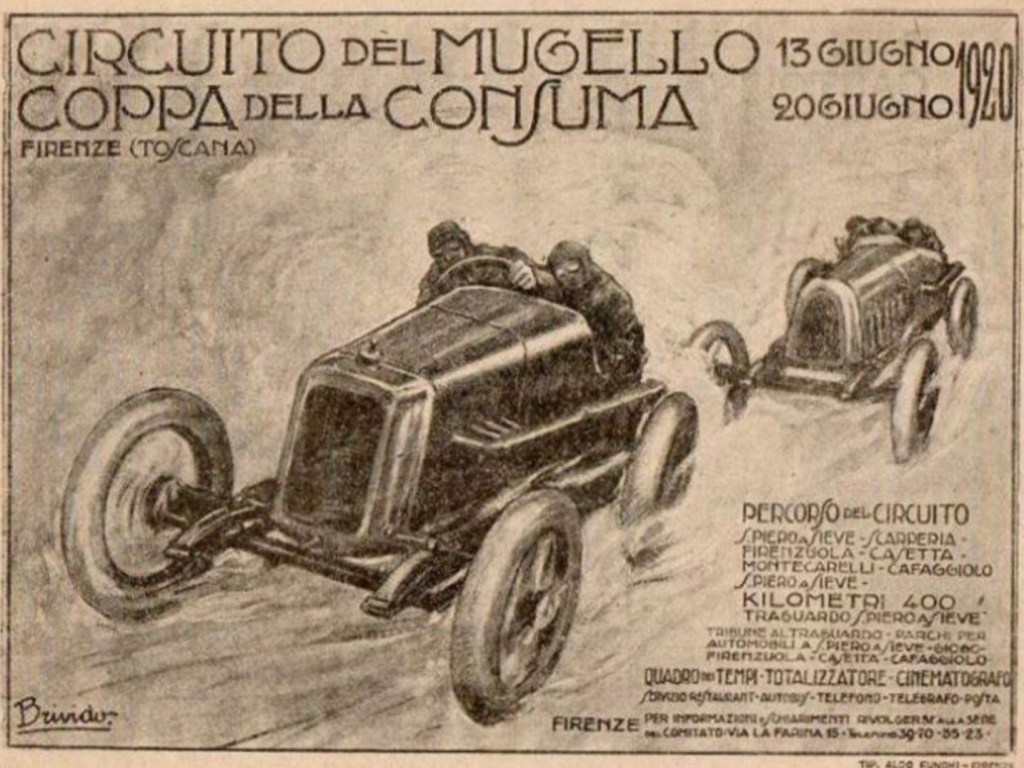
This amazing hillclimb event centred on the village of Consuma, 35km east of Florence, was first held in 1902 and has existed with a few hiccoughs along the way to the present, as an historic meeting since 1990.
(coppadellaconsuma.com)(coppdellaconsuma.com)
It’s said that the alpine pass was created by the Consumi family who were forced into political exile in Florence in 1482 and ten years later founded the town around an ancient spring and a church dedicated to San Domenico di Guzman.
In more modern times, the opening of the Baccelli road transformed the area into a popular holiday resort for poets, writers, journalists, entertainers and racing motorists, via the good graces of the Automobile Club of Florence.
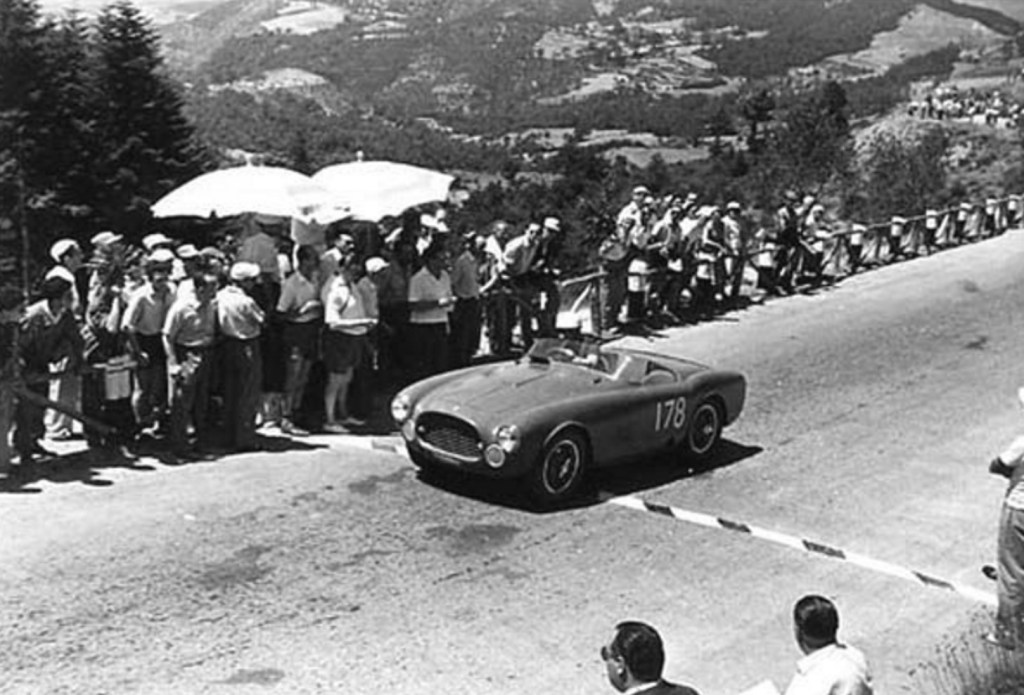
Tazio Nuvolari, Alfa Romeo 6C1750 GS in 1930 (coppadellaconsuma.com)1952 winner Piero Palmer, crosses the line in his Ferrari 225 Vignale (coppadellaconsuma.com)
Over many years the hillclimb race hairpins have witnessed heroic deeds and victories by some of the greats including Vincenzo Lancia, Fiat in 1904, Antonio Ascari, Fiat in 1919, Tazio Nuvolari, Alfa Romeo in 1931 and Ludovico Scarfiotti, OSCA S1550 in 1959.
Into the 1960s the event became a round of the European Hillclimb Championship with up to 80,000 spectators lining the roads, but the Automobile Club of Florence shifted its energy to growing Mugello as the closure of the road between Florence and Casentino became increasingly untenable. The last in-period Coppa della Consuma was held in 1964 and was won by Edward Govoni’s Maserati Type 60, he completed the 12.5km course in 6 min 54.170 sec.
Credits…
Pirelli Archive, coppadellaconsuma.com
Tailpiece…
(The Cary Collection)
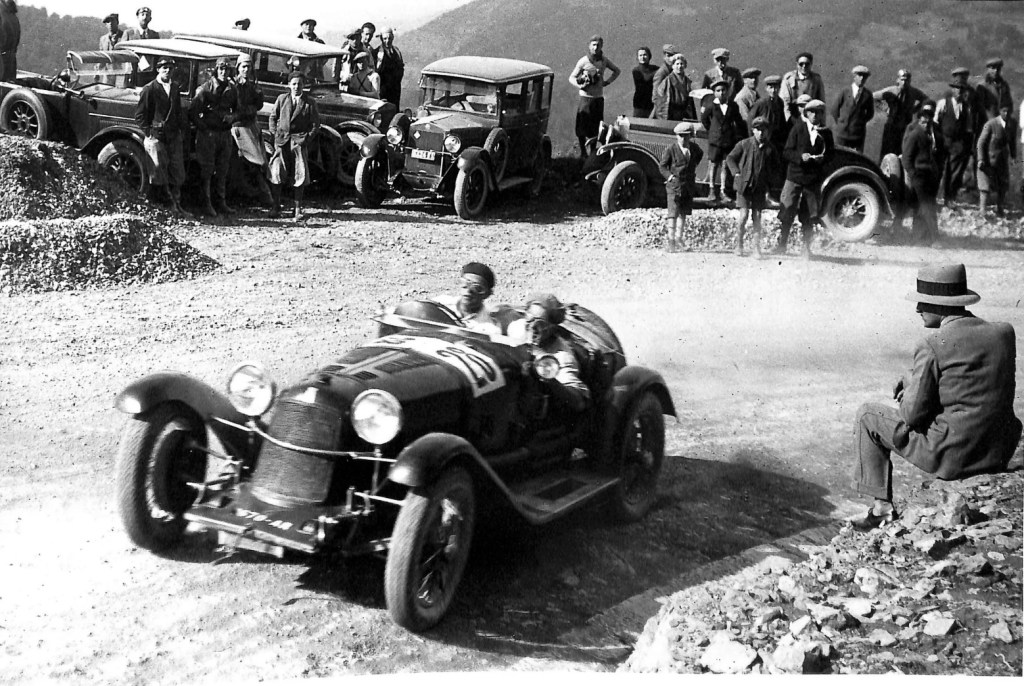
Prince Domenico Cerami Rosso focuses on the job at hand – winning the 2-litre class of the Coppa della Consume in 1930 – while his mechanic is very much enjoying the ride, Maserati 26B MM 2-litre supercharged straight-eight.
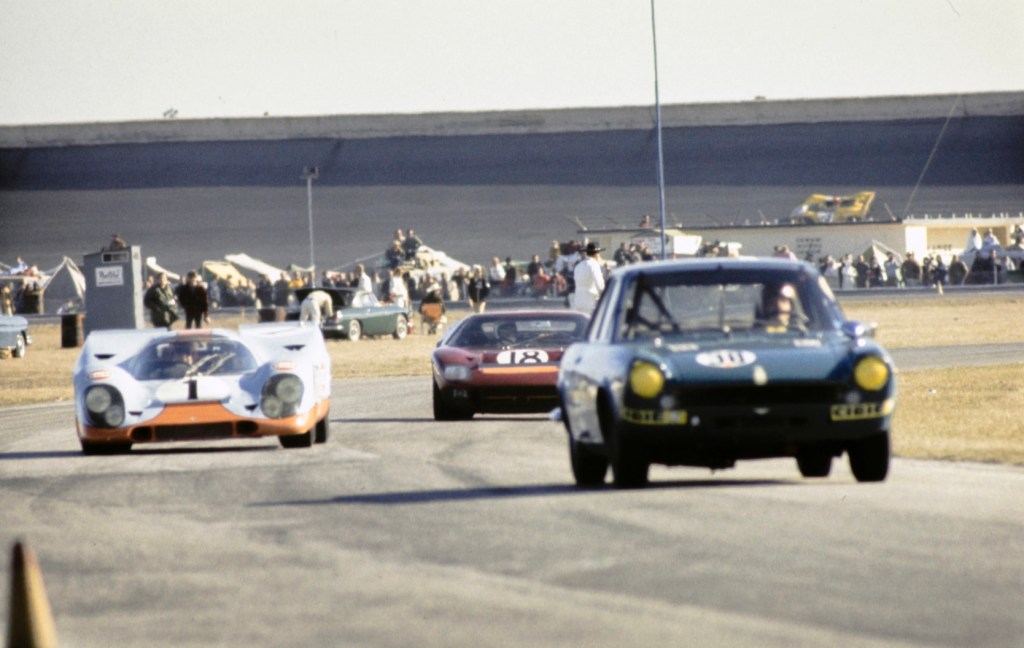
Jo Siffert’s night-time Porsche 917 pitstop at Daytona made more dramatic by the exposure used by photographer Dave Friedman…
You can see Seppi’s distinctive helmet in the murk to the left of the car as Brian Redman gets ready to rejoin the race.
It was not to be Siffert’s race, the first in which the dominance of the 917 generally and John Wyer entered cars specifically was displayed in the Sports Car Championship that year. The Ferrari 512S (Ignazio Giunti/Nino Vaccarella/Mario Andretti) took a Sebring victory in March but otherwise it was a Porsche year, what the 4.5-5 litre flat-12 917 didn’t win, the 3 litre flat-8 908 did on courses for which it was designed.
Siffert/Redman led the race until after the three-hour mark. Not long after a driver change to Redman, Brian came into the pits with a punctured tyre, worse was the brake-pipe broken by the rotating tyre tread. It took a critical 17 minutes to make the car good. The pair’s day of drama wasn’t over yet though. They lost an hour to replace the clutch, and later still had another stop to ‘straighten the Porsche after a wall-scraping episode.’
Pedro Rodriguez and Leo Kinnunen won the race in the sister John Wyer entry, 45 laps ahead of Siffert/Redman with the Andretti/Merzario/Ickx Ferrari 512S three more laps in arrears, third.
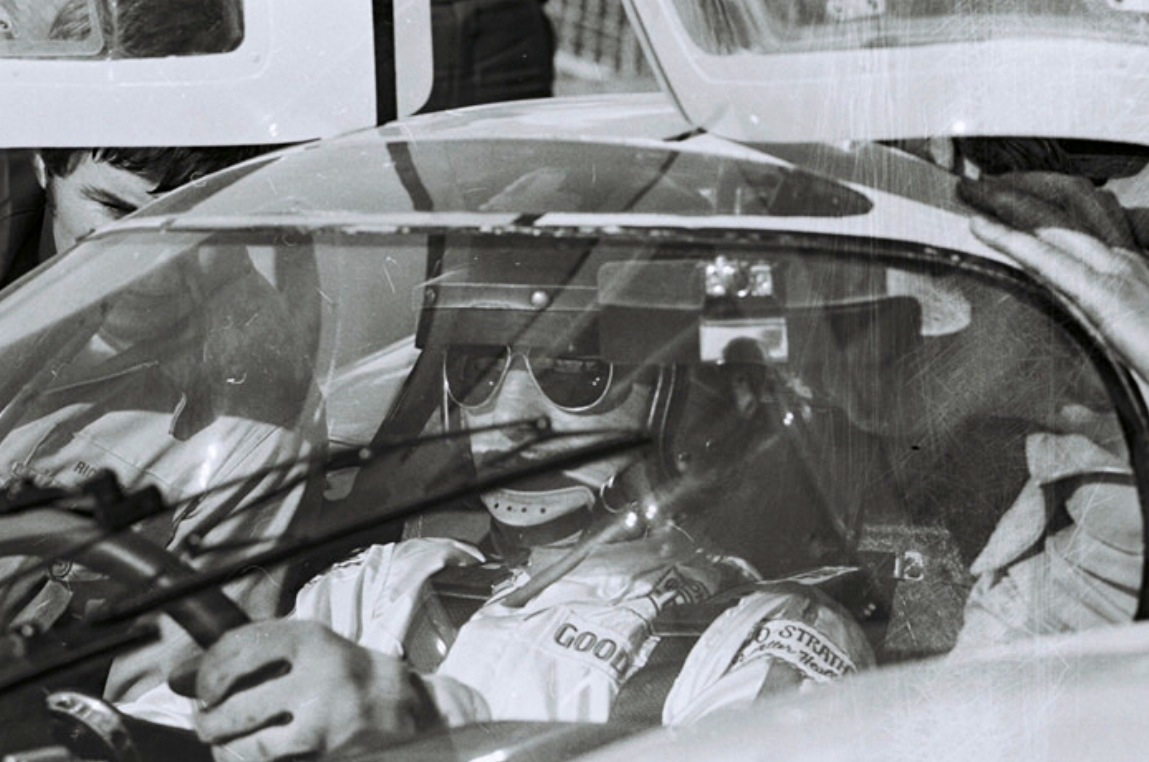
Seppi in the 917 cockpit with old school Bell Magnum helmet and chinstrap (D Friedman)(MotorSport)
I love the variety of cars in these events putting aside the performance differential arguments and issues. The Siffert/Redman cat-amongst-the-pigeons 917 amidst the Fleming/Johnson/Fleming Fiat 124 Coupe and Wonder/Cuomo Ford GT40.
And below in the midst of the Waldron/Lanier/Barros MGB and Clutton/Tatum Ferrari 275 GTB/C. Eyes on your mirrors folks…
(MotorSport)(MotorSport)
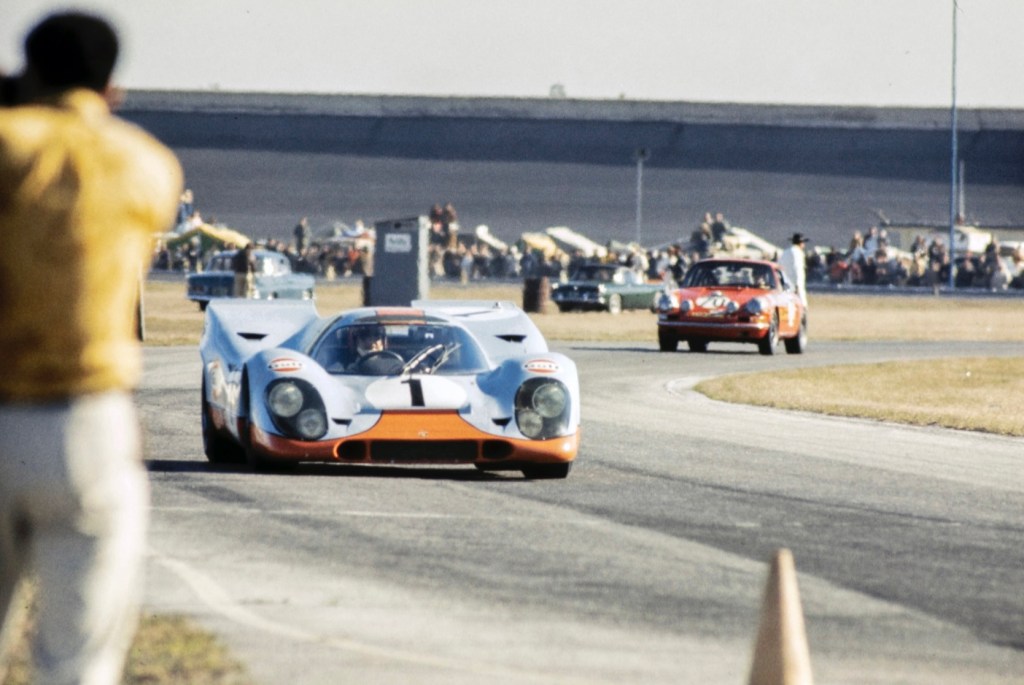
Seppi again, this time in front of the Patterson/Sanford Porsche 911T.
Bibliography…
Automobile Year 18, Team Dan, MotorSport, Dave Friedman Archive
Tailpiece…
(MotorSport)
‘I’m leavin’ on a jet plane…that’s Daytona Beach International Airport behind. DC9.
I imagine the colour of the underwear of the photographer was changing at this moment, protected only by a layer of Armco as he was. Still, if the worst happened he could decamp into the dam behind…Shots from this spot at Sandown, outside Peters/Torana Corner are rare after about this time as the spot was made Verboten!
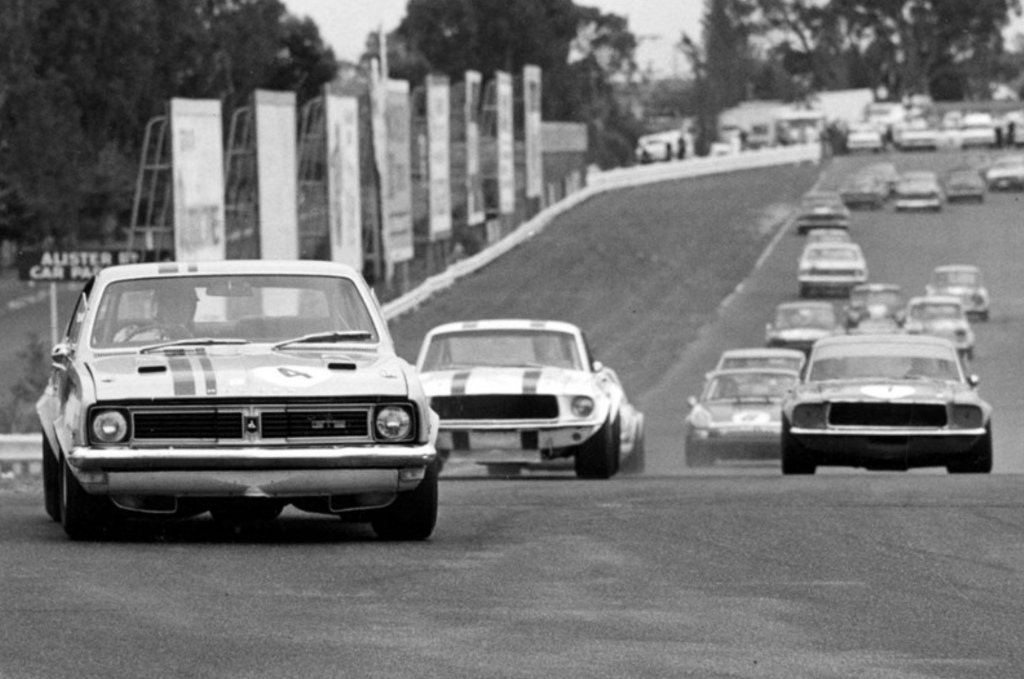
Norm Beechey, Holden Monaro HT GTS 350 from the Pete Geoghegan (left) and Bob Jane Mustang 302s, with a smidge of Jim McKeown’s Porsche 911S behind Pete, and then most of Brian Foley’s, and the rest. 1970 Australian Touring Car Championship, round three, April 19.
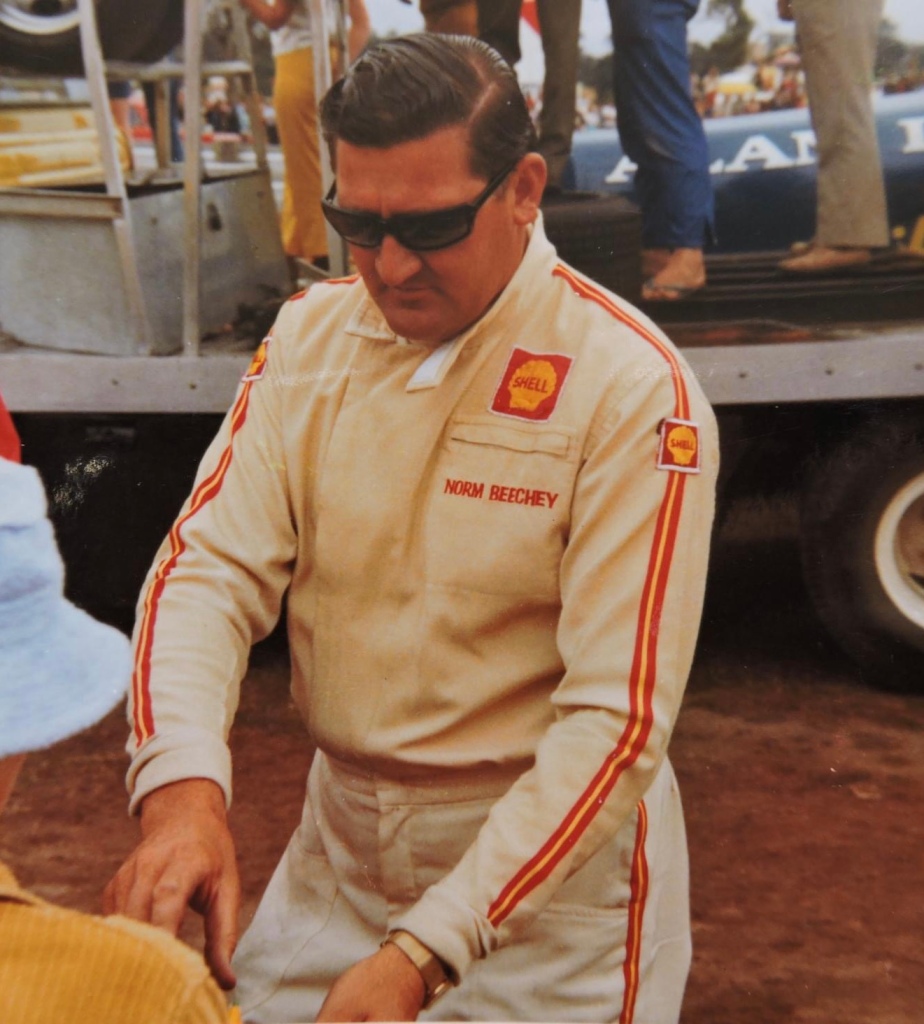
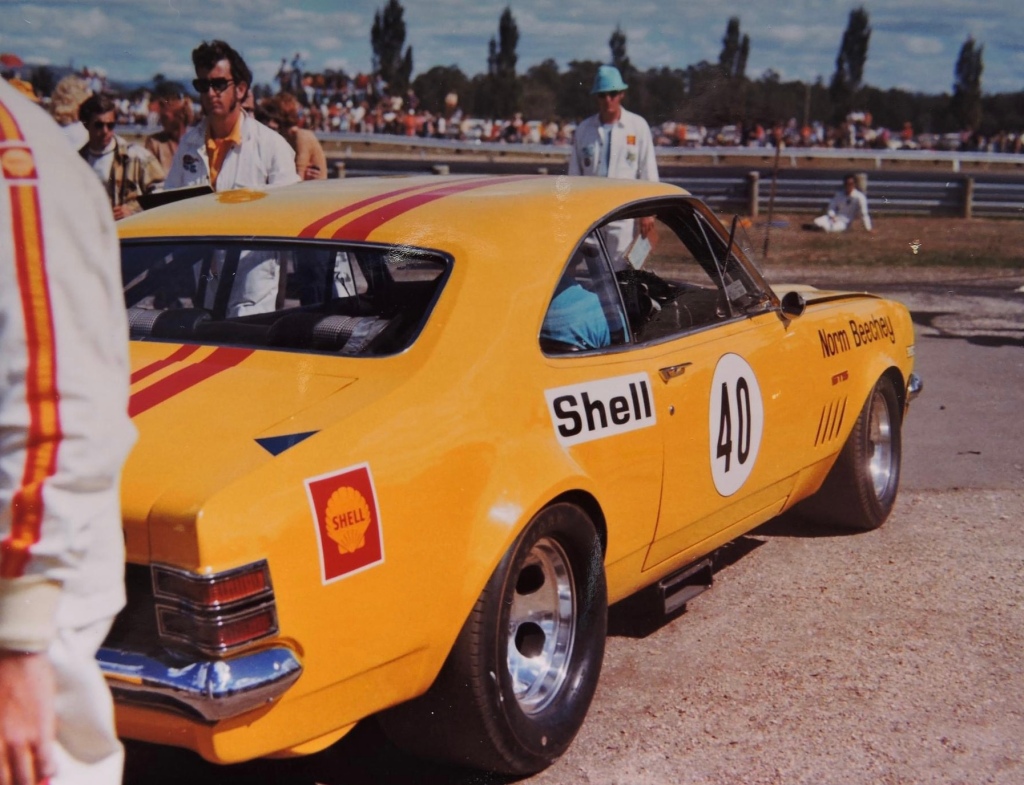
While Allan Moffat started from pole (where is he in this shot!?), Stormin’ Norm had a great day at the office, leading from start to finish and setting a lap record. He took his second 1970 ATCC round win of the season, victorious from Geoghegan and Moffat (Mustang Trans-Am 302) on the way to an immensely popular series win in his big, booming, Shell-yellow Monaro GTS 350; the first time an Oz built car had won the title.
(G Feltham)
These two shots are of man and machine at Symmons Plains circa-1970, not sure of the meeting date, the number doesn’t work for the ATCC round.
(G Feltham)
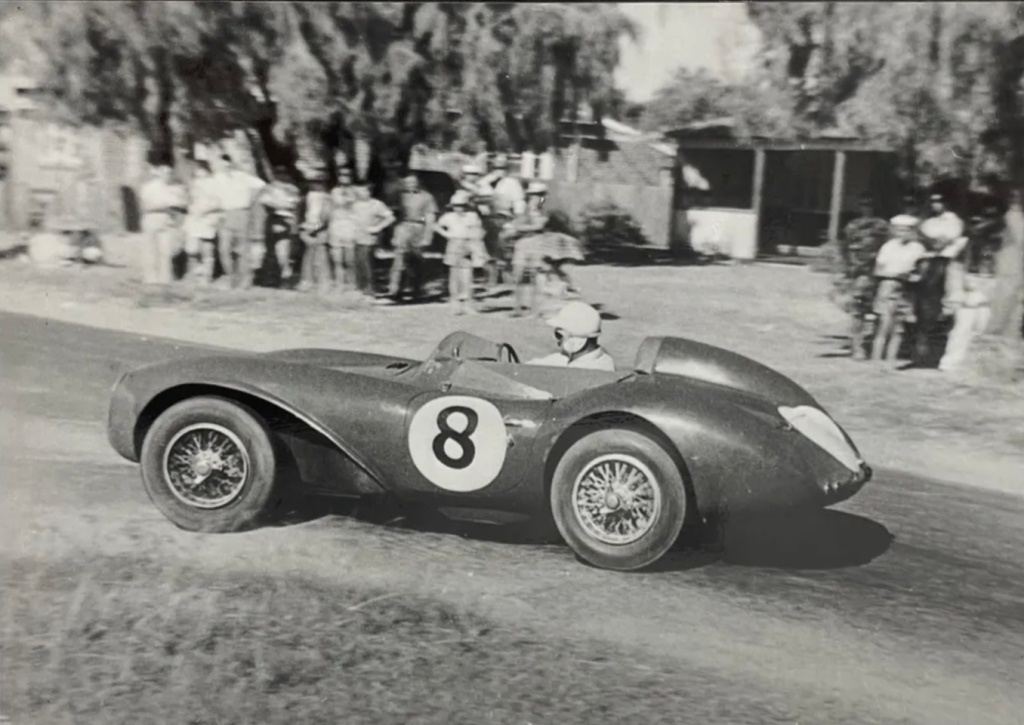
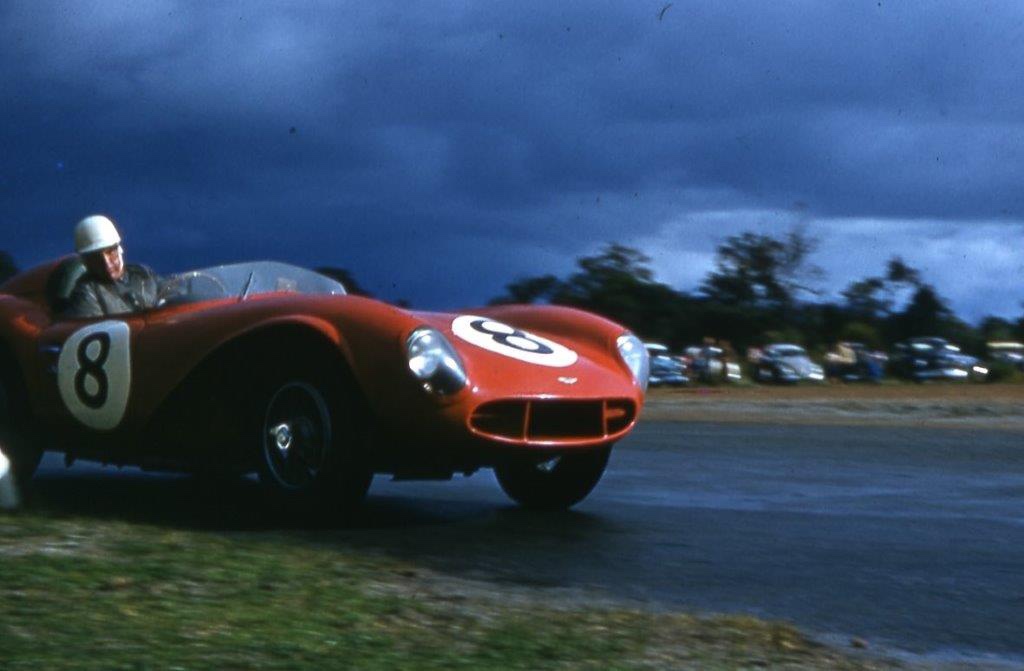
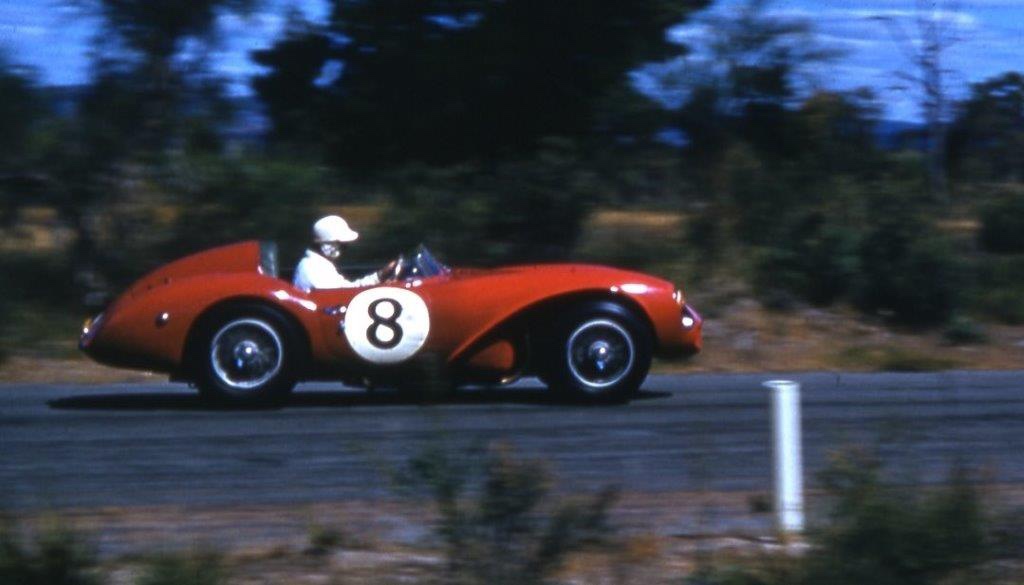
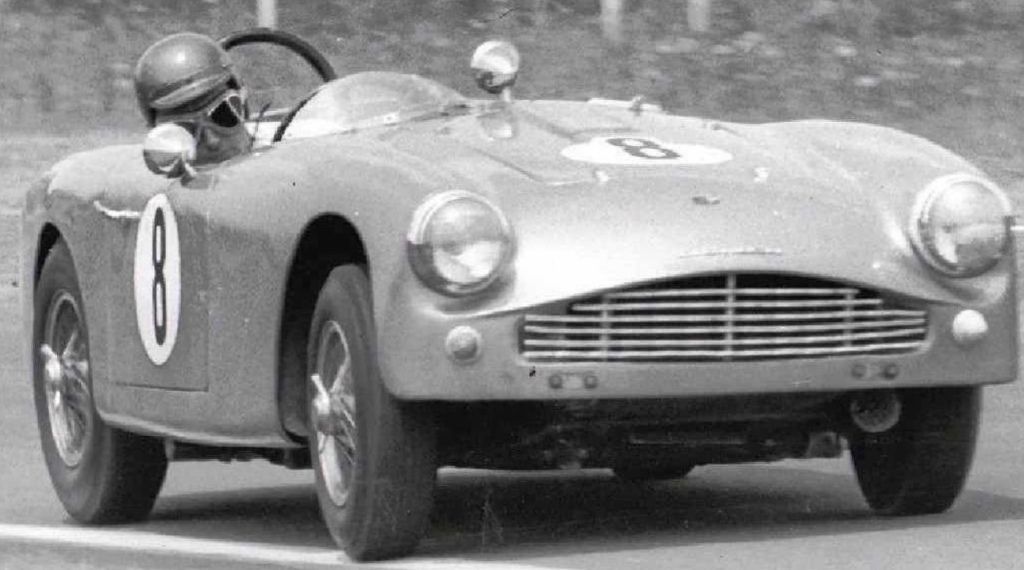
Ray Barfield races his ex-works/David McKay Aston Martin DB3S, chassis 9, at Caversham in 1959, meeting date folks?
The second placed car at Le Mans in 1956 (Stirling Moss/Peter Collins) was initially raced in Australia by McKay with success, before passing briefly through Stan Jones’ hands and into Barfield’s, where, I believe, it remains. More about the car in this article: https://primotipo.com/2017/09/28/david-mckays-aston-martin-db3ss/
(G Russell-Brown)
Gary Russell-Brown very kindly sent in these shots of the Barfield/DB3S combination at Caversham during the June 6, 1960 Six Hour Le Mans. Ray was a DNF after completing 60 laps, the winner, Jack Ayres/Lionel Beattie did 178.
(G Russell-Brown)(unattributed)
John Harvey under brakes on the entry to Creek Corner, Warwick Farm 1972. His mount is the brilliant – small, variable rate suspension, side-radiator, edgy-wedge – work of John Joyce, the Bob Jane owned Bowin P8 Repco-Holden F5000
P8-118-72 was completed at Bowin’s, Brookvale, Sydney factory in August 1972 to Bob Jane’s order, fitted with a Repco Holden V8 for John Harvey.
It practiced at the Surfers Aug 27 Gold Star round but didn’t start with fuel problems. Harvey then raced in a non-championship event at Warwick Farm a week later (above), where he was fifth in the first heat but collided with Kevin Bartlett at the start of second.
At that point, major team sponsor, Castrol, directed Jane to put most of the team’s energies into racing their touring cars: the Camaro, Monaro and Torana’s, while the Bowin and McLaren M6B Repco V8 sportscar were largely set aside.
In mid-1974 the car, less engine and gearbox, was sold to John Leffler to replace his damaged ANF2 Bowin P8 Hart-Ford #P8-136-74. Leffler pranged his new Bowin on its debut at Amaroo Park.
Converted to ANF2 specification – fitted with a Hart-Ford 416B 1.6-litre engine, Hewland FT200 gearbox etc – he raced P8-118-72 in the Australian F2 Championship and in Gold Star events. Once sorted, the car was a jet, winning the Phillip Island F2 round late in the year.
Sue Ransom leased and raced it at Calder and Wanneroo Park in 1975. The car remained in Western Australia, perhaps owned by Rod Housego and Ian Wookey, before reappearing at Wanneroo in Rob Richards hands between 1980-82 in Formula Pacific – Ford BDA engined – specification.
Perth Bowin fan Matthew Lloyd did a superb job restoring the car to ANF2 spec, but he died in 2008 just as it was being finished. Bought by Dean Saunders in 2009, I believe it is being slowly re-restored to Repco-Holden F5000 spec, do get in touch if you have more recent information. .
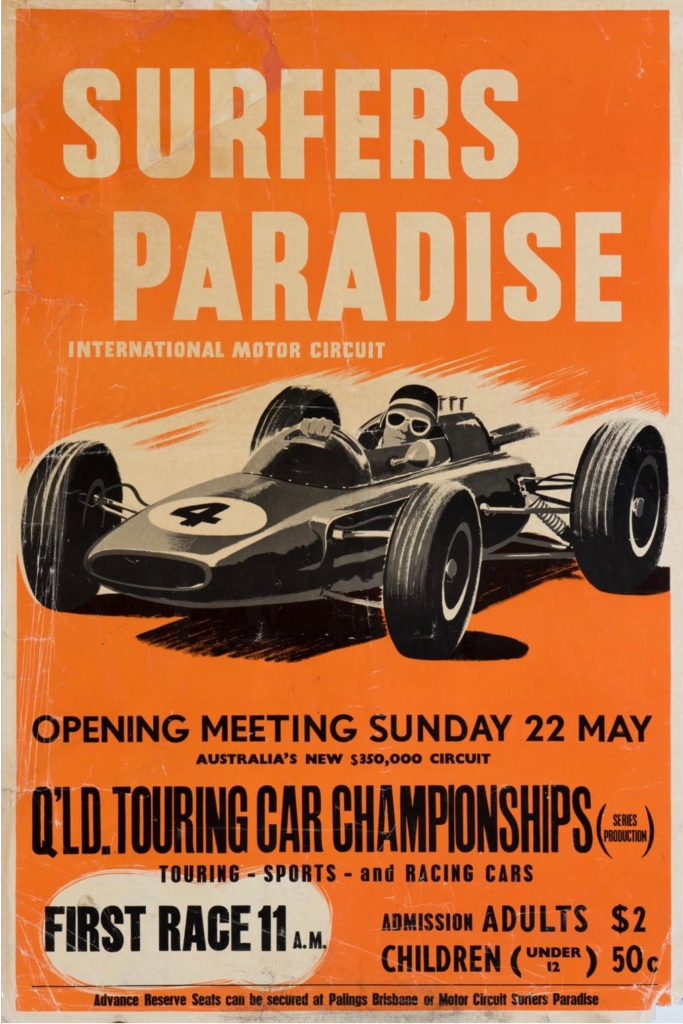
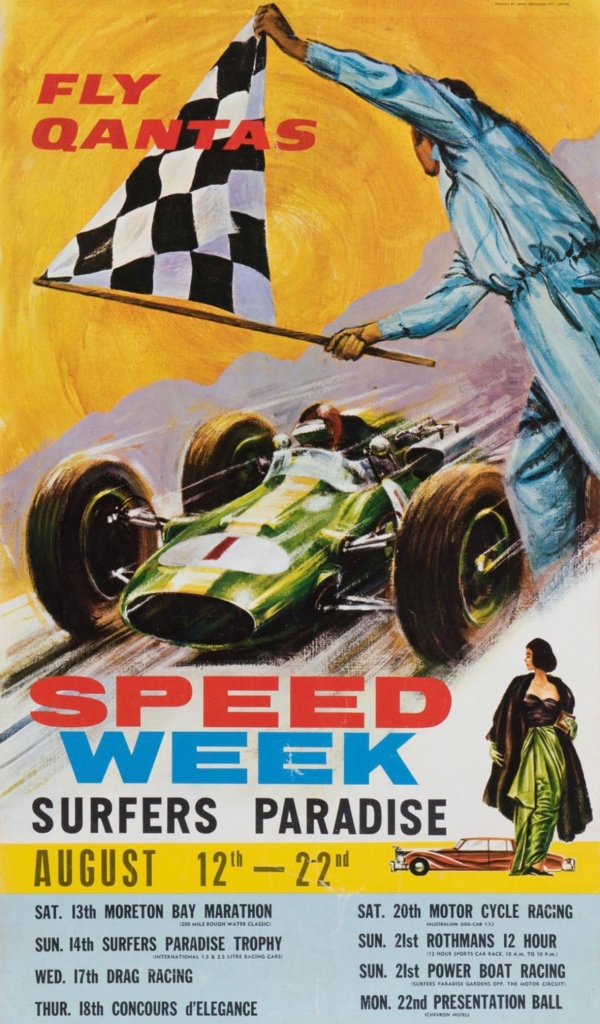
I just like this pair of posters to promote brand new Surfers Paradise International Raceway in 1966.
While it was a fabulous circuit, and at the time built in the-sticks, the incredible growth of the Gold Coast made it irresistible to developers, which was its fate circa August 1987.
John Harvey’s Brabham BT23E Repco 740 in the foreground, while Niel Allen jumps aboard his McLaren M10B Chev at Bathurst during the Easter 1970 weekend.
In the shot below Niel jumps off the line, it’s Leo Geoghegan’s Lotus 39 Repco on the far side.
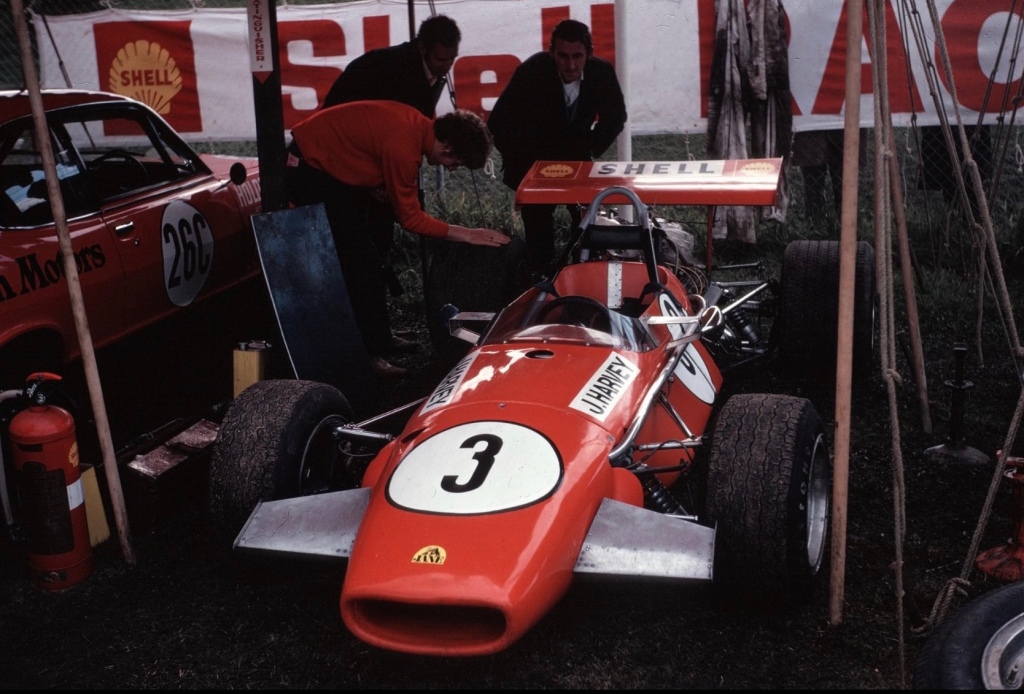
Ain’t she sweet…John Harvey’s Bob Jane Racing Jane Repco 830 2.5 V8 at rest in the Warwick Farm paddock during the Gold Star round on September 6.
Harves was out with fuel pump failure, Leo Geoghegan won the race, and ultimately the title aboard his Lotus 59B Waggott TC-4V 2-litre.
This car was built on Bob Britton’s (Rennmax Engineering) Brabham BT23 jig to replace Jane’s ageing BT23E with many mods but notably changes in suspension geometry to suit the latest generation of ever-widening tyres. It exists in a West Australian museum.
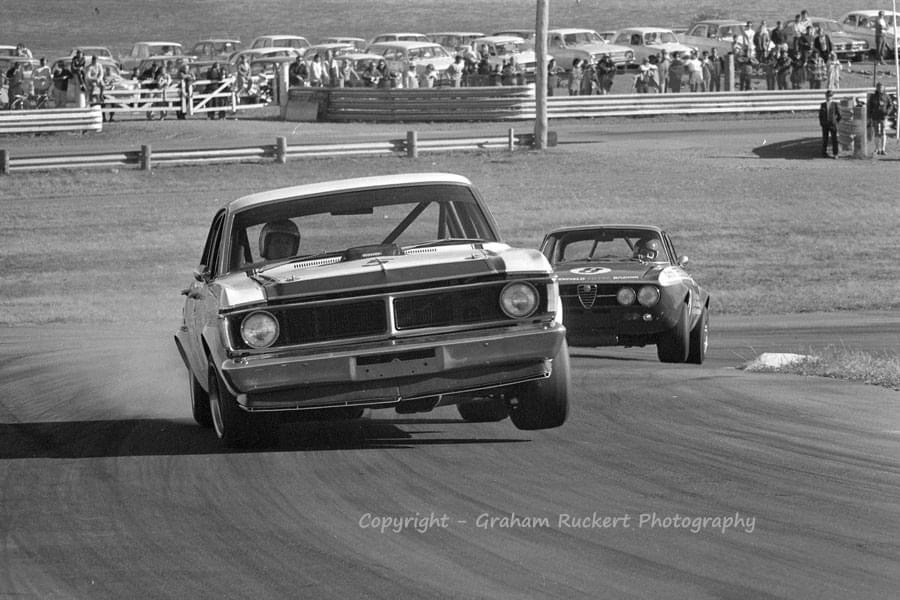
I love Graham Ruckert’s superb shot of John French on the limit in Pete Geoghegan’s recalcitrant but very powerful Ford Super Falcon in front of Brian Foley’s superb in every respect Alfa Romeo GTAm at Lakeside on July 25, 1971.
It was Lakeside’s Australian Touring Car Championship round that weekend. Pete gave the car a gallop in a support race but elected to race his trusty Mustang in the championship event, having French – a Ford factory racer – drive the Big Henry.
It seems right to show you furriners what a standard Ford Falcon GTHO looks like…here it’s Allan Moffat easing his beast – an XW Phase 1 GTHO – out of Peters Corner at Sandown during his victorious Sandown 3-Hour win on September 14, 1969.
Moffat/John French won from two other similar cars crewed by Tom Roddy/Murray Carter and Fred Gibson/Barry Seton.
Jim Clark, Lotus 49 Ford DFW ahead of Chris Amon, Ferrari Dino 246T at Dandenong Road, Sandown during their epic dice for the lead of the 1968 Australian Grand Prix in February 1968.
Geoff Brabham – 1975 Australian F2 Champion – raced his Birrana 274 Hart-Ford 416-B 1.6 ANF2 car twice at Calder in May and August 1975.
While Brian Sampson’s Cheetah Mk5 Toyota ANF3 car behind makes sense the Alan Gissing Holden sporty does not, so I guess it’s a practice session. Geoff won three of the seven rounds, and the ’75 title, with Alf Costanzo second and Andrew Miedecke third. See here: https://primotipo.com/2018/09/20/brabs-gets-the-jump/
Garrie Cooper won that day at Mallala – GC’s only Gold Star victory – in his superb Elfin 600C Repco 830 V8 from Geoghegan and Max Stewart’s Mildren Waggott TC-4V 1.6.
Kevin Bartlett won the Gold Star that year aboard the Mildren Yellow Submarine which was powered by Alfa Romeo T33 2.5 V8s until the final round when he won the Hordern Trophy at Warwick Farm armed with the first of Merv Waggott’s 2-litre TC-4Vs.
(MotorSport)
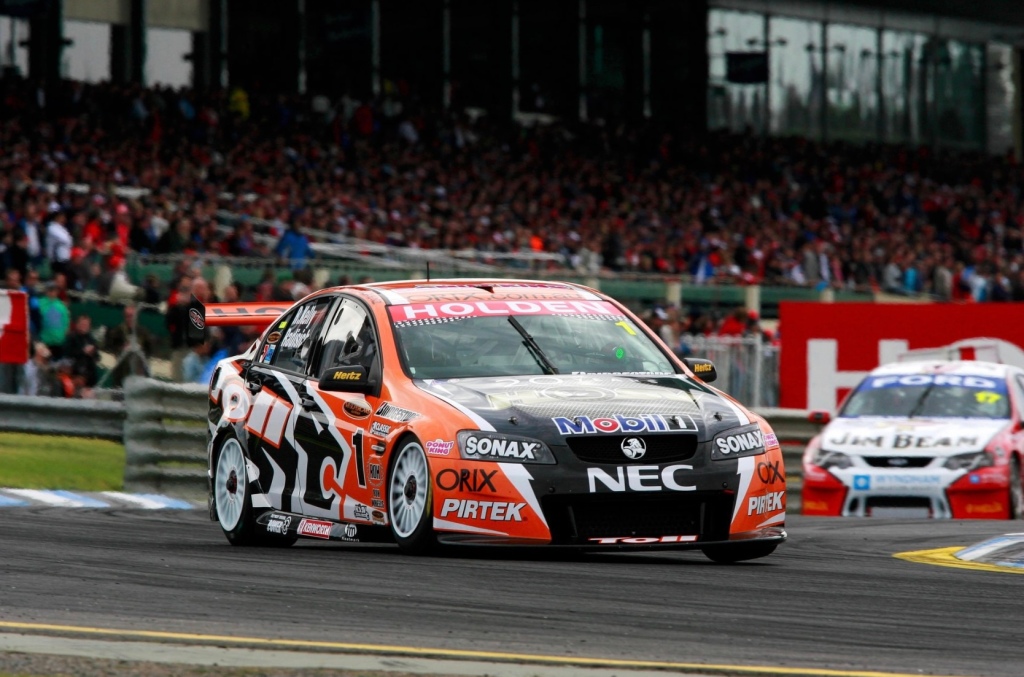
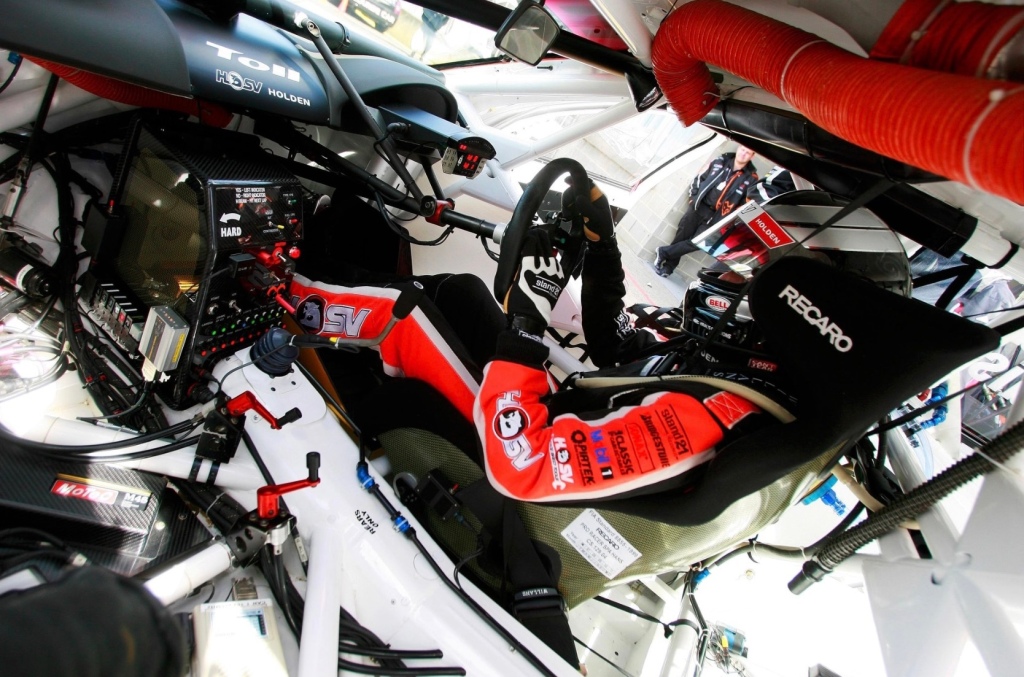
Paul Radisich (above and below) tips his Holden Special Vehicles Commodore VE into Shell Corner during the Sandown 500, the ninth round of the 2007 Australian V8 Supercar Championship on September 14-16.
He shared the car with Rick Kelly to second place, the following machine is the Will Davison/Steve Johnson Ford Falcon BF. The race was won by Jamie Whincup and Craig Lowndes’ Triple Eight Falcon BF.
Garth Tander (HSV Commodore VE) won the 2007 drivers title – by two points from Whincup – and HSV the team championship.
(MotorSport)(E Solomon)
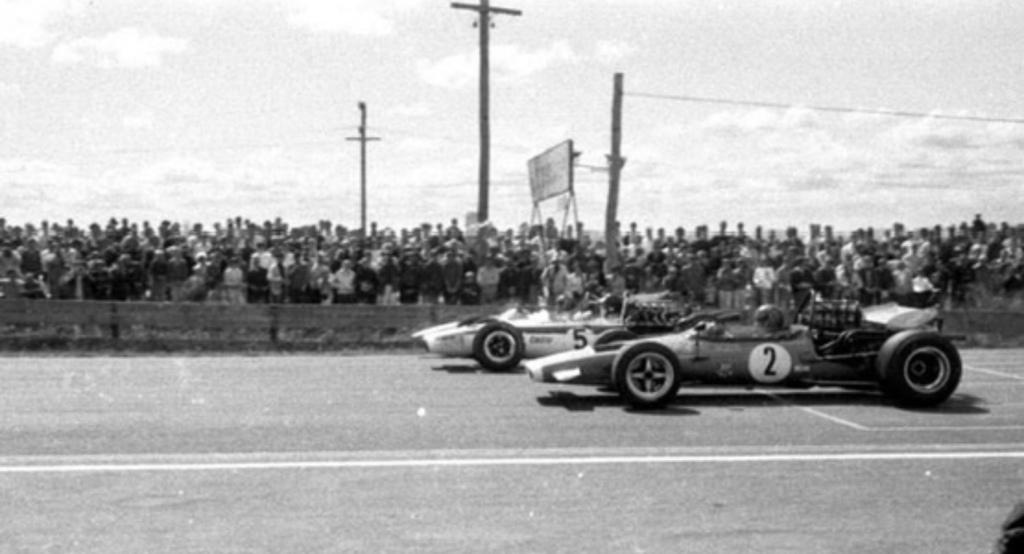
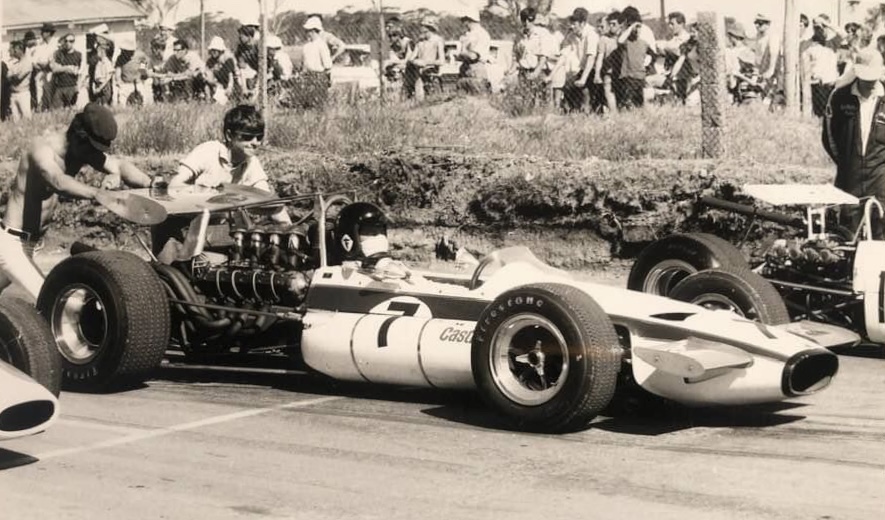
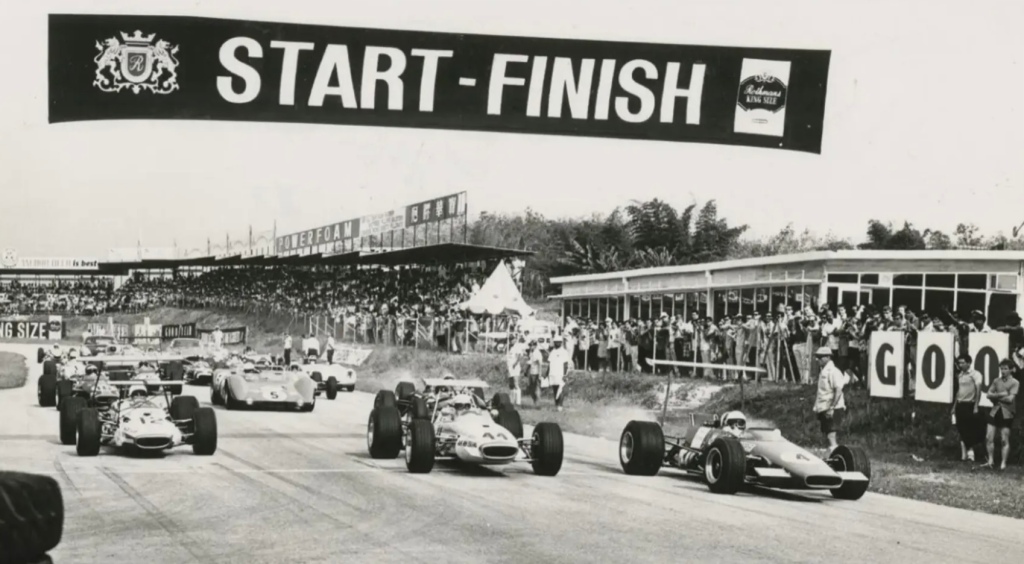
All antipodean front row at the start of the 1969 Selangor Grand Prix. Roly Levis’ Brabham BT23C Ford on pole, then Graeme Lawrence’s McLaren M4A Ford FVA in the middle, and Garrie Cooper’s Elfin 600C Repco 830 V8 2.5 on the right.
Lawrence, surely with John McDonald the ‘winningest’ of drivers in South East Asia in the period, won the race from Levis and Australian, Tony Maw, Elfin 600 Ford.
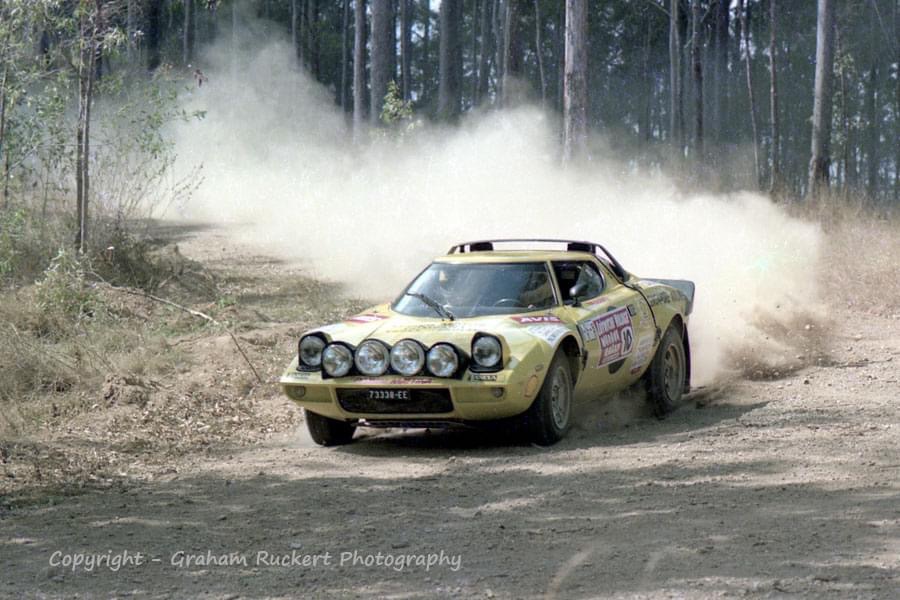
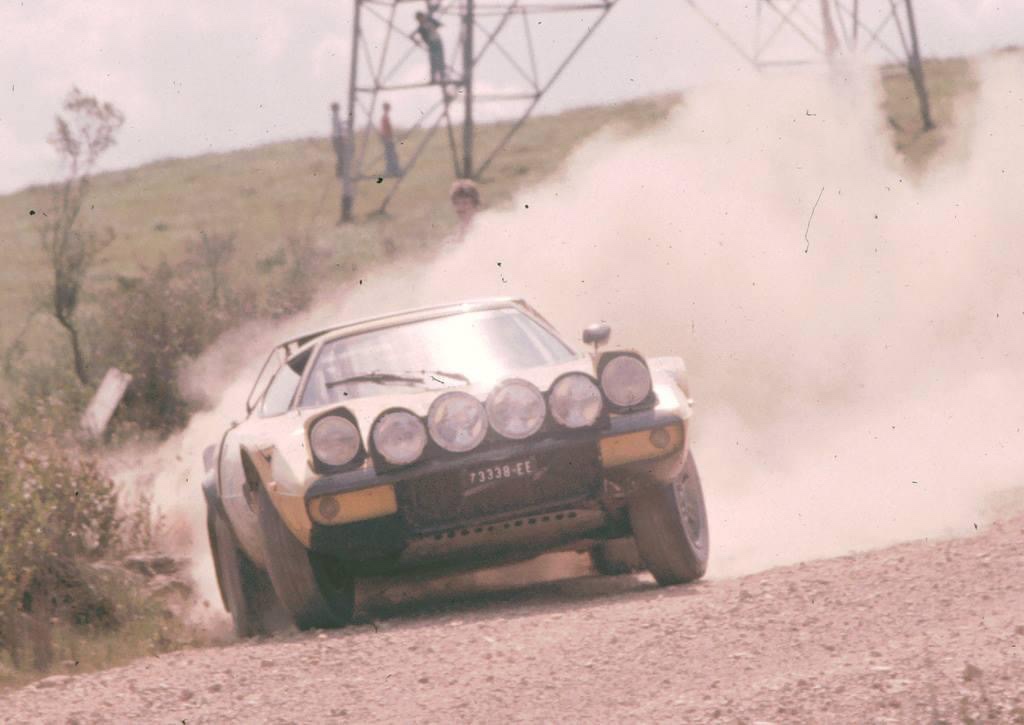
Ron Marks and Graham Gillies aboard Marks’ Lancia Stratos HF in the Samford Forest on the press day before the start of the 1976 Lutwyche Village Warana Rally, the final round of six in the Australian Rally Championship that year.
The pair finished fourth, first was Murray Coote and Brian Marsden in a Datsun 1600. The ARC was won by Ross Dunkerton and Jeff Beaumont aboard a Datsun 240Z; four wins and one second placing.
Ex-water-skiing champion, Marks’ other rally credits included starts in the 1976 Holden Dealers, SEV Marchal and Southern Cross, and 1978 Southern Cross and the Castrol International rallies.
(G Ruckert)
The shot above shows the car out front of the Annand & Thompson Lancia and Fiat dealership in Newstead, Brisbane, before the ’76 Warana Rally.
Graham Ruckert, “I was selling Fiat/Lancia cars for the dealership at the time, they provided some sponsorship for the event and we got to display the car during the week before the event…I had a short run in the passenger seat with Ron Marks on the Press Day at Samford which was pretty memorable!”
(B Keys)
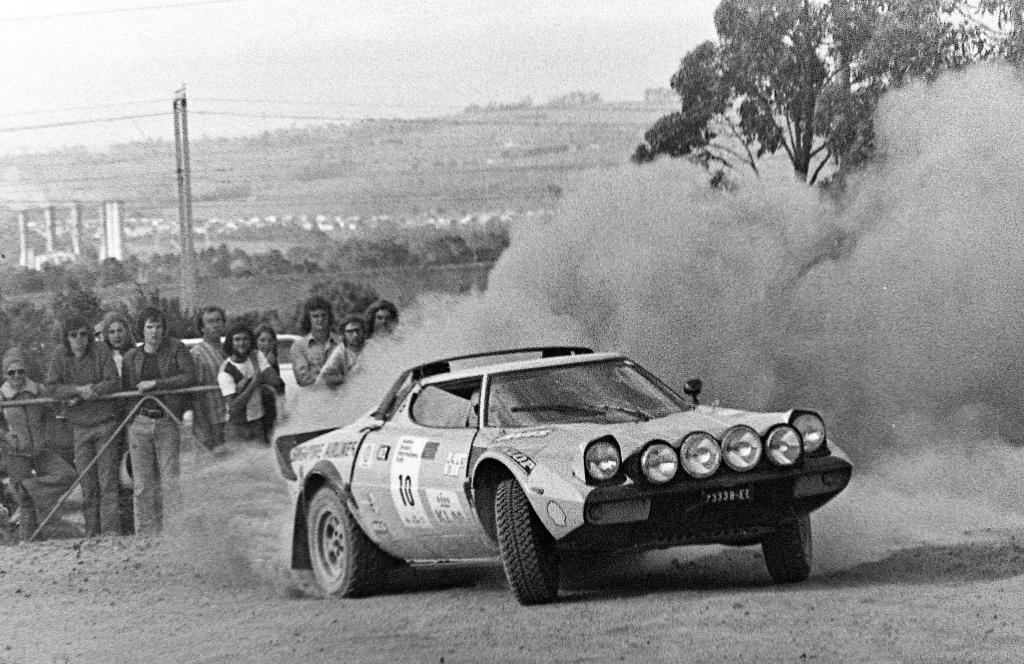
And above demonstrating the style for which the Stratos was famous during the October 1976 Holden Dealers International Rally held in the forests around Moe and Traralgon. Those large chimneys in the background belong to one of the coal fired power stations in Victoria’s Latrobe Valley.
(T Parkinson Collection)
MG TC Specials to the fore at the start of the Lobethal 50, a support race for the 1948 South Australian 100, held at Lobethal on New Years Day, January 1. #32 is Ron Edgerton, #29 is Harold Clisby, #31 is WJ Mentz, while car #34 further back is raced by AK Eadie.
The 100 mile, 12 lap, handicap feature race was run in front of 10,000 spectators in cool conditions and was won by Jim Gullan’s Ballot Oldsmobile from Granton Harrison in the Phillips Ford V8 Special, then Edgerton’s TC.
(K Drage)
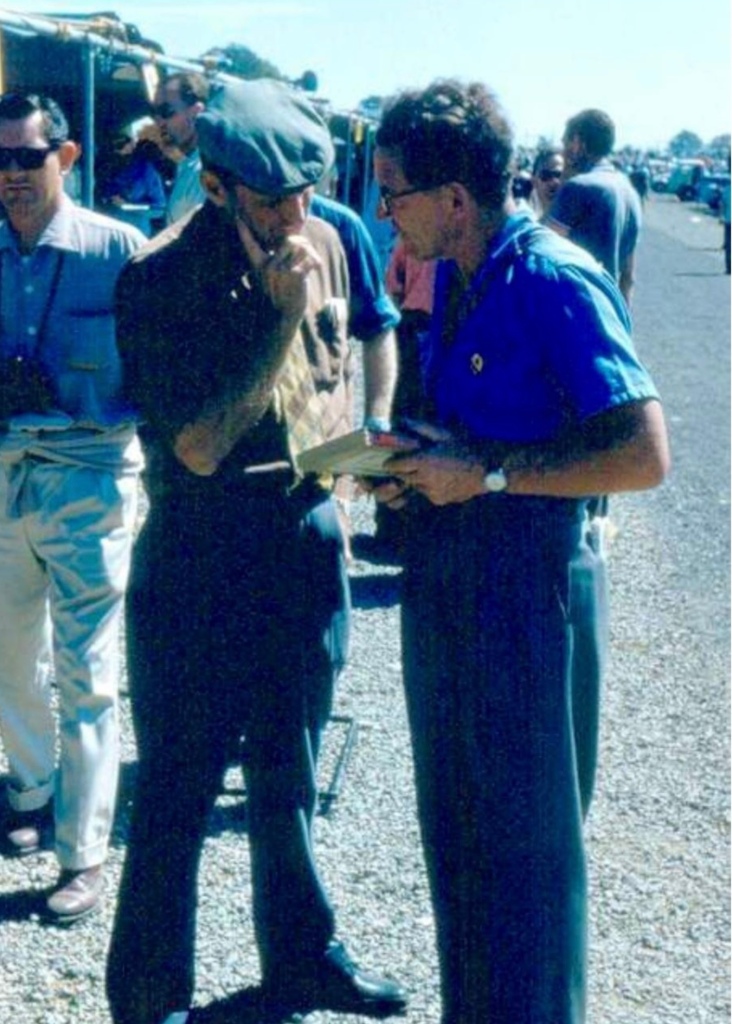
Speaking of the great Harold Clisby, here he is a few years later at left with the equally talented Phil Irving at Sandown on March 2, 1962.
Harold would have been up to his armpits designing his F1 Clisby 1.5-litre engine, while Phil’s Repco Brabham RB620 2.5/3-litre is still a couple of years away…Mind you, Jack Brabham took more than a passing glance of the aluminium 3.9-litre Buick V8 fitted in the back of Chuck Daigh’s Scarab RE only yards away.
The F85 Oldsmobile V8 that Jack pitched successfully to the Repco Board as the basis of his new Tasman 2.5 litre engine was the Buick’s brother, different only in the number of head retention studs. See here: https://primotipo.com/2016/01/27/chucks-t-bird/
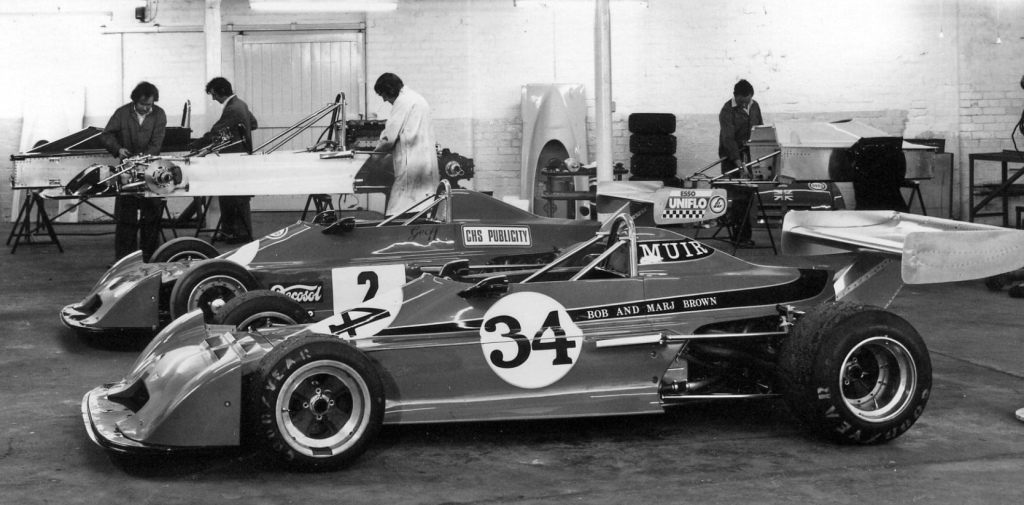
Derek Kneller has just finished assembling Bob Muir’s – Bob and Marj Brown owned – Chevron B35 Ford BDX 2-litre F2 car in Chevron’s Bolton factory in early 1977.
Barry Randall’s Ex-Doug MacArthur Rennmax Repco 2.5 V8 blasting out of MG Corner at Phillip Island as a car in the background makes the downhill plunge into it.
Car then raced for many years in Victoria by the Gibson family out of Benalla, and for many years owned by Jay Bondini.
Battle of the ‘1.6-litre Four Valvers’ during the May 3, 1969 J.A.F. Grand Prix aka the Japanese GP.
Sohei Kato’s third-placed Mitsubishi Colt F2C R39B ahead of Glyn Scott’s fourth placed Bowin P3 Waggott TC-4V at Fuji International. Up the front, Leo Geoghegan won in his venerable ex-Jim Clark Lotus 39 Repco 830 2.5 V8 from Roly Levis’ Brabham BT23C Ford FVA. More here: https://primotipo.com/2015/03/02/leo-geoghegan-australian-driving-champion-rip/
(B Dickson)
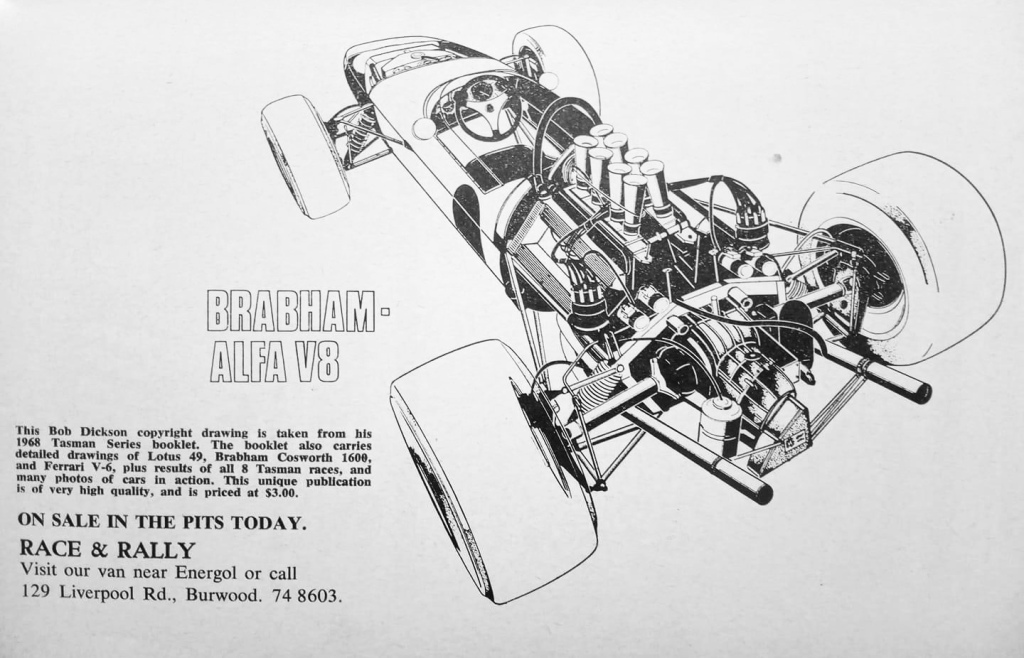
A random internet find, a decent drawing of the Alec Mildren Brabham BT23D Alfa Romeo T33 2.5 V8 raced throughout 1968-69 by Frank Gardner and Kevin Bartlett.
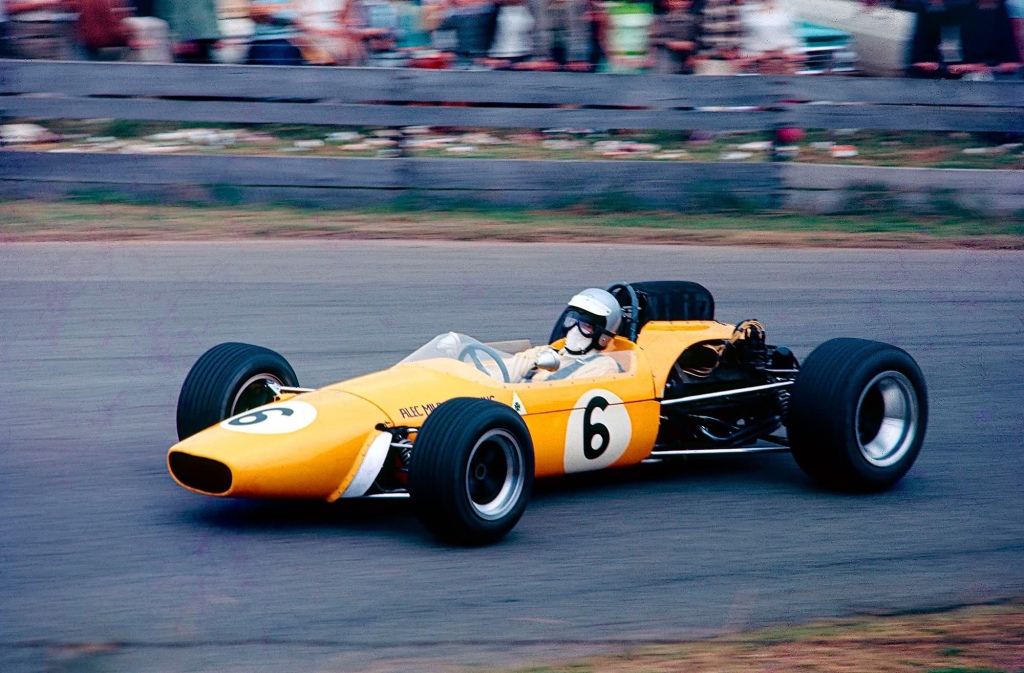
KB is shown below in grand style by Dick Simpson at Bathurst during Easter 1968. Kevin was the quickest man on the mountain that weekend but was ousted with a broken rear upright, Phil West won his only Gold Star round aboard the Scuderia Veloce Brabham BT23A Repco V8. See here for more: https://primotipo.com/2021/07/06/mellow-yellow/
(Dick Simpson-oldracephotos.com)
Credits…
Peter D’Abbs, Greg Feltham, Gary Russell-Brown, Jock Alexander, Lance Ruting, Graham Ruckert, David Blanch-autopics.com.au, Repco, MotorSport Images, Eli Solomon Archive, Bruce Keys, Tony Parkinson Collection, Derek Kneller, Kevin Drage, Graham Ruckert, Bob Dickson, Dick Simpson-oldracephotos.com
Tailpiece…
(G Ruckert)
Marks and Gillies again in the Warana Rally.
Does anyone know the history of this car before it came to Australia? My Stratos owning friend, Phil Allen tells me he thinks there are only two Stratos resident in Australia at present and this isn’t the other one…
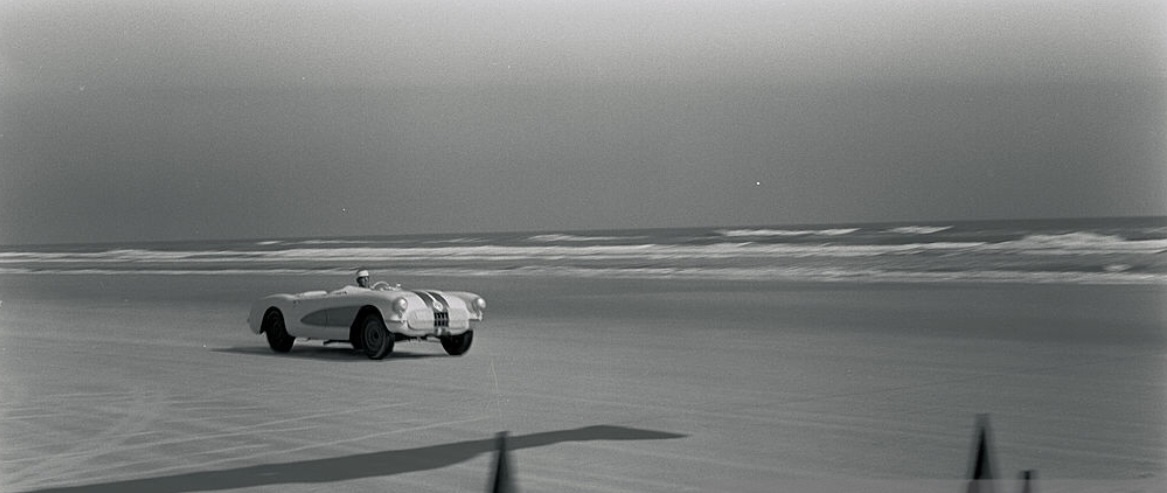
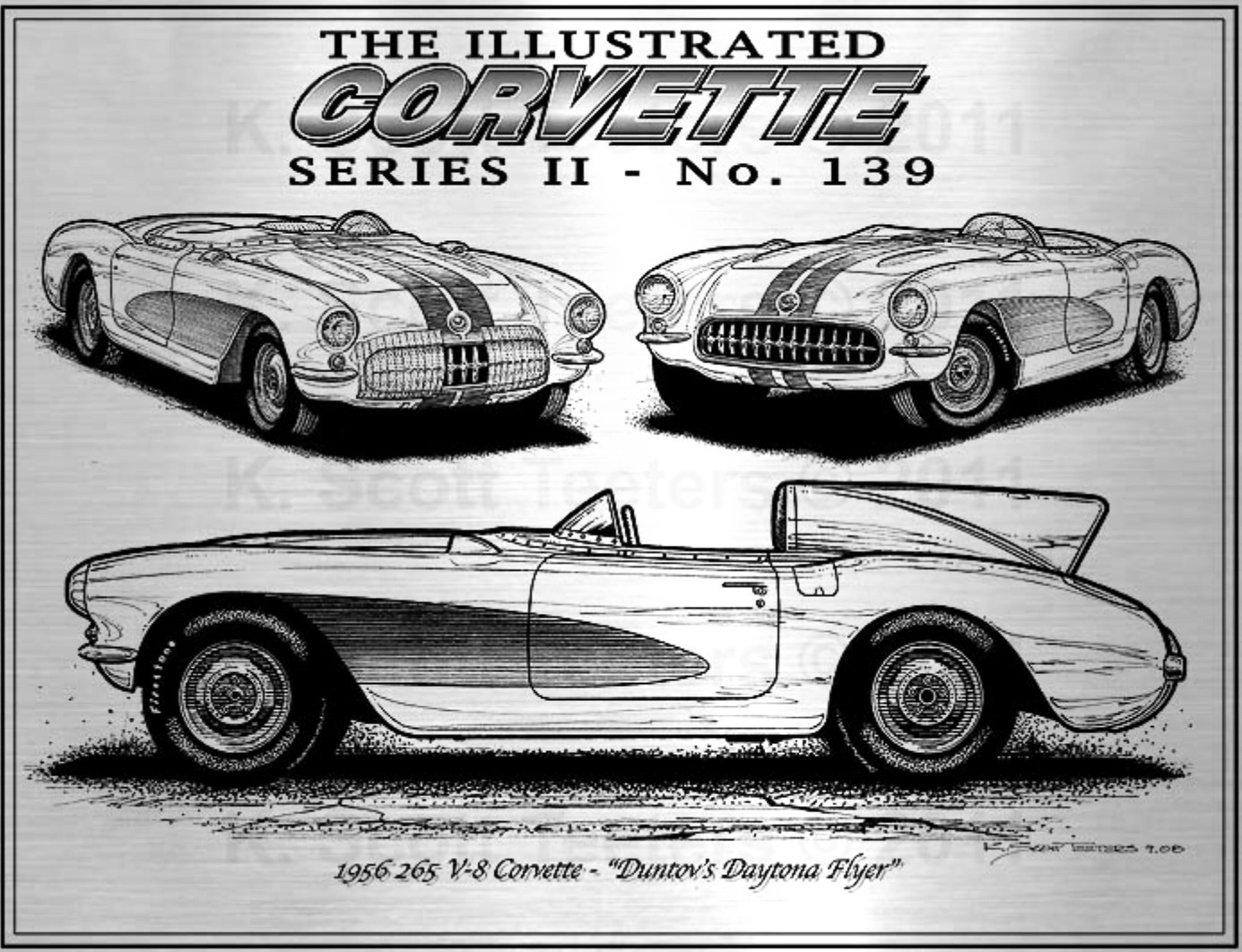
Smokey Yunick looks on as famed GM Engineer and ‘Father of the Corvette’, Zora Arkus Duntov awaits the Daytona Beach start on 1956…
Zora was always seeking to build the Corvette brand. Ford and GM were in a performance battle at the time, his GM paymasters were keen to support his attempt to top 150mph in an ‘essentially stock’ Corvette having just attracted considerable press with a class record run at Pikes Peak.
In the photo above Zora is in #A81, the car with the head fairing, and John Fitch in A82 behind.
Zora Arkus-Duntov chatting to officials after one of his runs. Chev Corvette, Daytona Beach February 1956 (Racing One)
Three cars were prepared for the attempts at Daytona Beach in early 1956, they were driven by Arkus-Duntov, racer John Fitch, and aviatrix Betty Skelton.
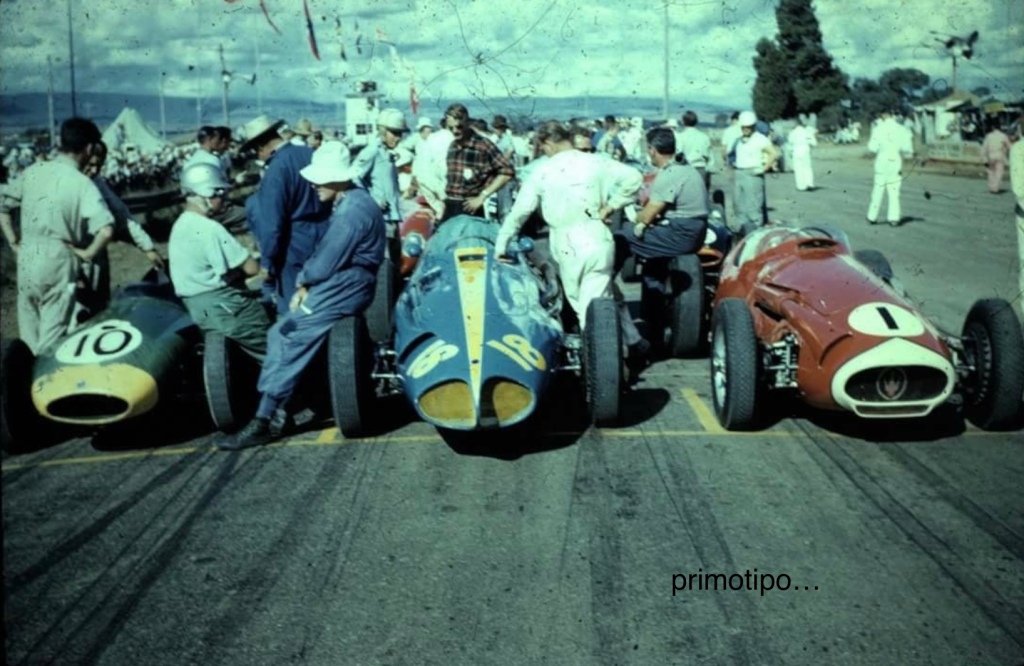
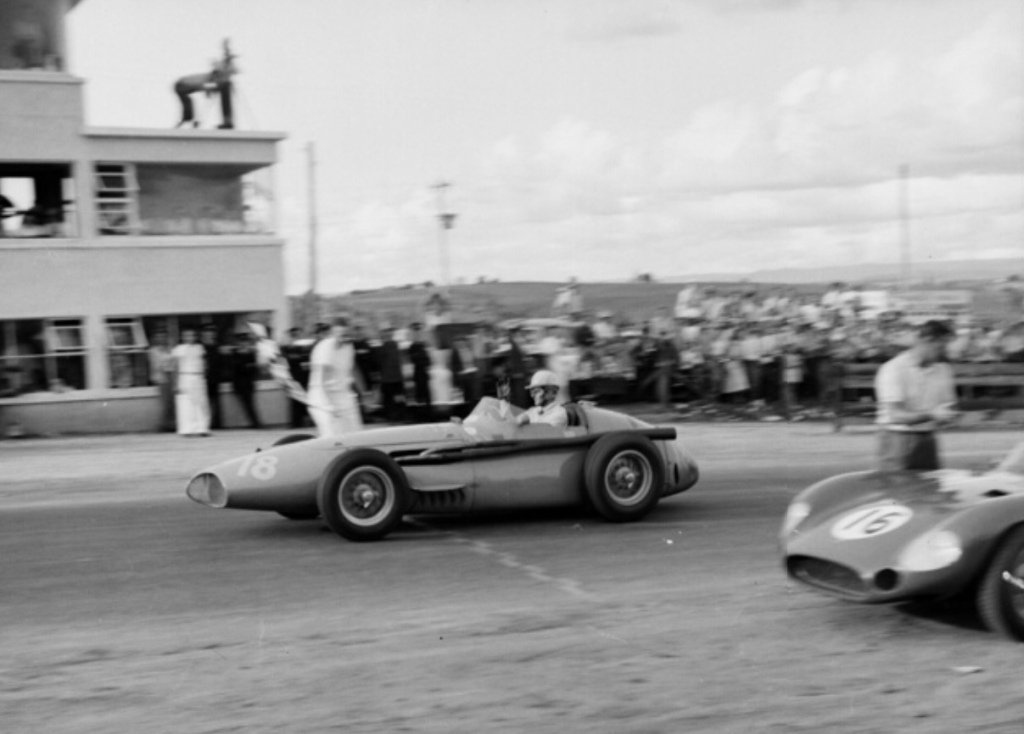
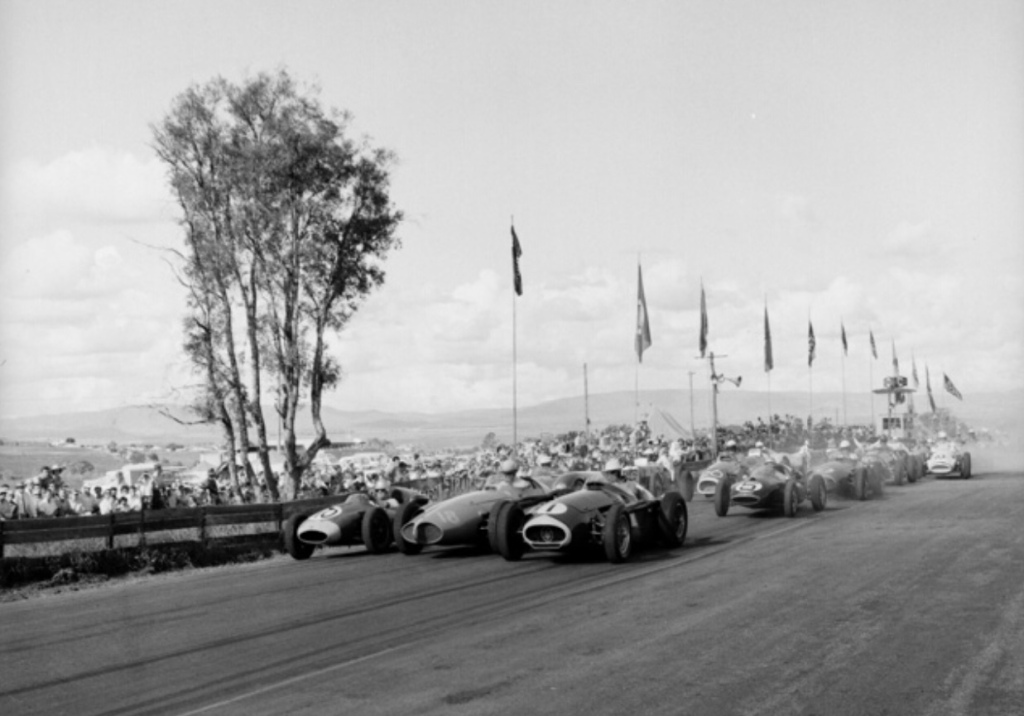
It’s Easter Monday 1959. March 30, the Bathurst 100 grid. Alec Mildren on the wheel of his Cooper T45 Climax, Ross Jensen behind and to the left of his Maserati 250F and Stan Jones perched on the back wheel of his 250F…
Top contenders for the 100 mile classic were the three Maserati 250Fs driven by Stan Jones – winner of the AGP at Longford on March 2 and the South Australian Trophy at Port Wakefield only two days before on March 28 – Arnold Glass, and Kiwi 1957 Gold Star winner, the very experienced and accomplished Ross Jensen. His 250F Maserati is ‘in the blue and white colours of the Automobile Club of El Salvador – an NZGP publicity gimmick,’ wrote John Medley.
Doug Whiteford’s Maserati 300S, the 1958 Bathurst 100 winner was a contender as were the 2-litre Coventry Climax FPF powered Cooper T45s of Alec Mildren, Len Lukey and Bill Patterson.
Raceday, bright and sunny, attracted 25,000 spectators.
(unattributed)
The first three lap qualifying heat was won by Glynn Scott’s Repco Holden from Bill Reynold’s Orlando MG and Alwyn Rose’s big, booming Dalro Jaguar. The second three-lapper was won by Jones’ Maserati 250F from Mildren’s Cooper T45 Climax and Jensen’s 250F.
The photo above shows the grid prior to the start of the second heat, with Jack Myers beside his WM Holden and then the Maserati 250Fs of Jones and Jensen. Myers’ special was a very clever concoction of Cooper T20 chassis – although by then the frame was of Jack’s construction – and six-cylinder Holden Grey block atop which sat a Merv Waggott designed and built aluminium DOHC, twin-cam, two-valve cylinder head. This car in Jack’s capable hands always punched above its weight, read about it here; https://primotipo.com/2015/02/10/stirling-moss-cumberland-park-speedway-sydney-cooper-t20-wm-holden-1956/
Parade lap, logically before the Bathurst 100…(unattributed)(unattributed)
After the parade lap the Bathurst 100 grid of 27 starters was ‘away in indescribable noise, dust and confusion’, Jones was first to Hell Corner from Mildren Lukey and Whiteford – then Jensen, Glass, Scott, Jack Myers WM Cooper – with Ray Walmsley in the Alfa P3 GMC rolling to a halt out of Hell.
Mildren led at the end of lap one from Jones, Lukey, Jensen who was closing and Doug Whiteford who was falling back. Jensen passed Lukey on lap four and then challenged Jones, roaring past before The Cutting with the three leaders nose to tail through Reid Park.
Jones, 250F (unattributed)
Lukey’s Cooper was close, Whiteford a bit further back and Glass much further back, and then the Myers WM. Into lap five Medley records that the Kiwi started his run by putting in two laps of 2:51, taking the lead and extending it whilst Stan Jones pitted, restarted and retired after six laps.
Then Mildren was black flagged due to a loose bonnet catch, he pitted and rejoined after the drama was rectified, but he was now behind Jensen, Lukey and Whiteford.
Mildren got the bit back between his teeth and passed Whiteford up Mountain Straight at half distance and Lukey under brakes at Murray’s – Doug took Len two laps later as well. By then up to second, Mildren retired at Quarry having done a 2:55 lap and 147.73 mph on Conrod. Whiteford too retired from transmission failure.
Jensen passes Whiteford and his stranded Maserati 300S as he goes over the finishing line, out with transmission woes (PIX-SLNSW)
After Mildren’s pitstop Jensen wasn’t threatened and ‘motored the next 80 miles to win easily’ with a best lap of 2:50.6 and a speed through the Conrod traps at 139.53 mph.
Jensen won a race of incredible attrition – only 11 of the 27 starters finished – from Len Lukey, Cooper T45 Climax, and Glass in the ex-Hunt/Stillwell Maserati 250F, then Jack Myers WM Cooper Holden, Walmsley’s Alfa P3 GMC and Werner Greve in the ex-Moss/Davison 1954 AGP winning HWM Jaguar.
Walmsley’s fifth place in a Gold Star round in his pre-war Alfa Romeo P3 was surely the highest placing for such an old car in any Gold Star round?
(PIX-SLNSW)
Ross Jensen…
While Aucklander, Ross Jensen’s performance may have astonished fringe-race-fans in Australia in fact he had been a front runner in New Zealand amongst the visiting internationals for years.
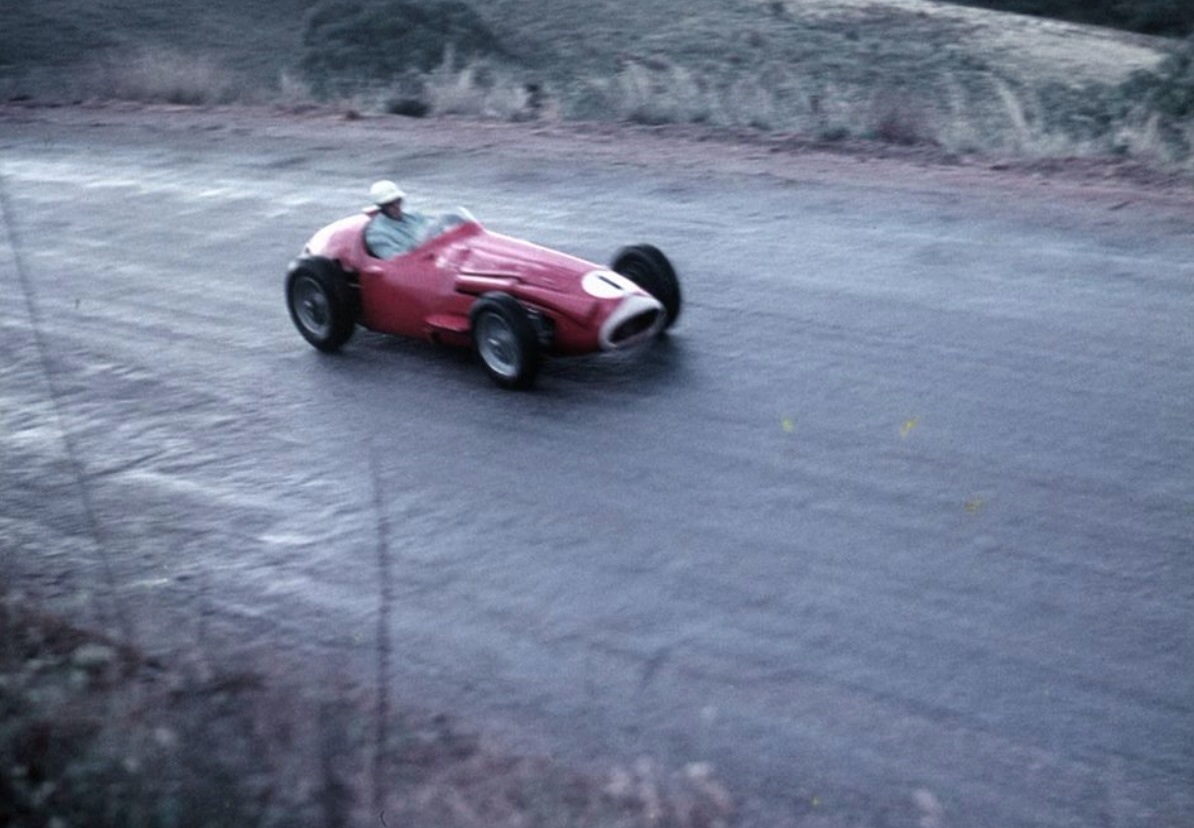
He purchased the ex-Moss Maserati 250F #2508 1956 NZ GP winner finishing second to Jack Brabham’s Cooper in the 1958 NZ GP. Later that year he raced works-Lister Jaguars in the UK, placing second at Snetterton and Brands in July-August and winning Scott-Brown Memorial – a man he got to know on Archie’s early ’58 NZ Tour – at Snetterton in September. He then returned home having taken delivery of the long shark-nosed 250F #2509 in time for the 1959 NZ internationals.
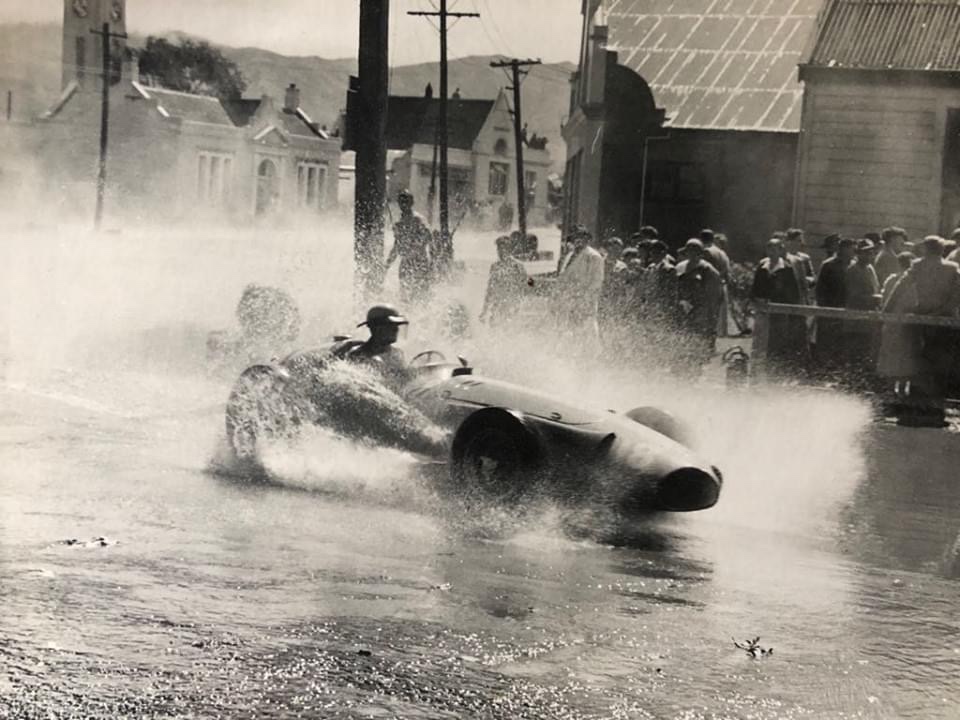
Ross Jensen shared this Lister Jag with Ivor Bueb and Bruce Halford during the September 1958 Tourist Trophy at Goodwood, DNF (LAT)Soggy Ross – Jensen and 250F during the early stages of the 1959 Waimate 50. “famously there was a cloud burst just after the start…once the rain stopped, it dried up quickly and we had some really great racing,” Allan Dick wrote (Classic Auto News)
Bruce Sergent wrote that “the car was built around the frame of the Bira race winner (NZ GP) of 1955, but with the latest motor and transmission, giving the low, offset driving position.”
He was fifth in the NZ GP, qualified on the front row at Wigram but DNF with transmission problems, was second behind Bruce McLaren’s Cooper at Waimate, and was fourth behind McLaren, Flockhart’s BRM P25 and Brabham, Cooper T45 at Teretonga. He was no slouch…
Jensen established a race preparation shop, retired from racing in 1961 but was always part of the scene – foundation member and on the board of the NZ Grand Prix Association, founding trustee of the Bruce McLaren Trust – and later imported Renault, Jaguar and BMW amongst others. He died, aged 78 in October 2003.
Etcetera…
(PIX-SLNSW)
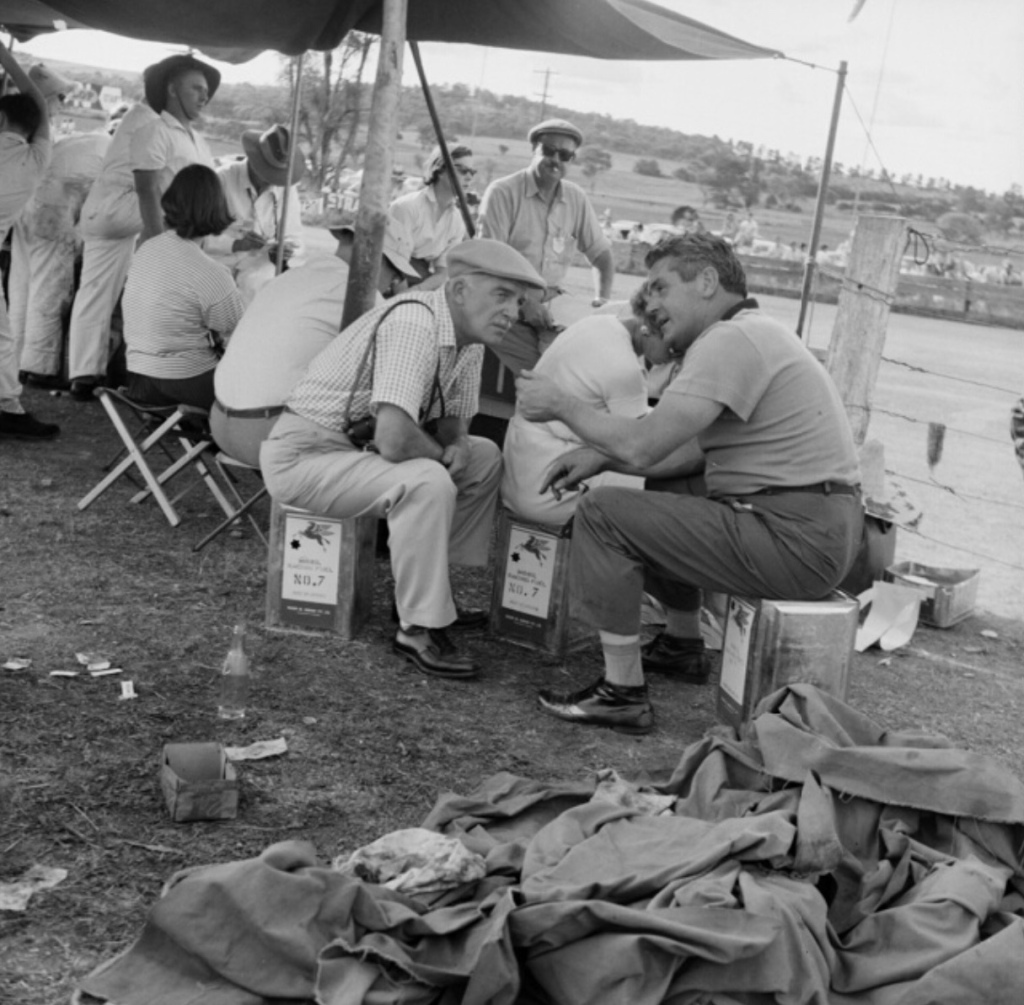
Stan Jones (right) dispenses some words of wisdom to a gent in the exclusive confines of the Mobilgas hospitality suite. BYO chair clearly.
(SLNSW)
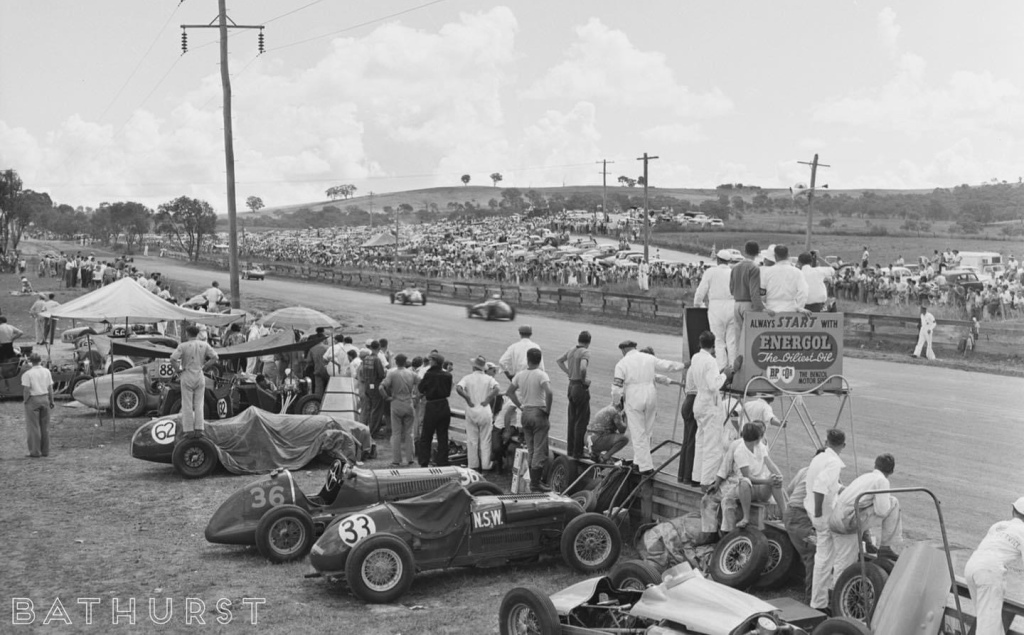
Great Pit Straight panorama with the #33 Bruce Leer MG TC Spl, Jesse Griffiths Maserati 4CL #36 and John Schroeder, covered Nota Consul. All of them contested the Bathurst 100 and all were DNFs.
(unattributed)
Porsche 356 Coupe leads Stan Jones and Ross Jensen on the parade lap.
(PIX-SLNSW)
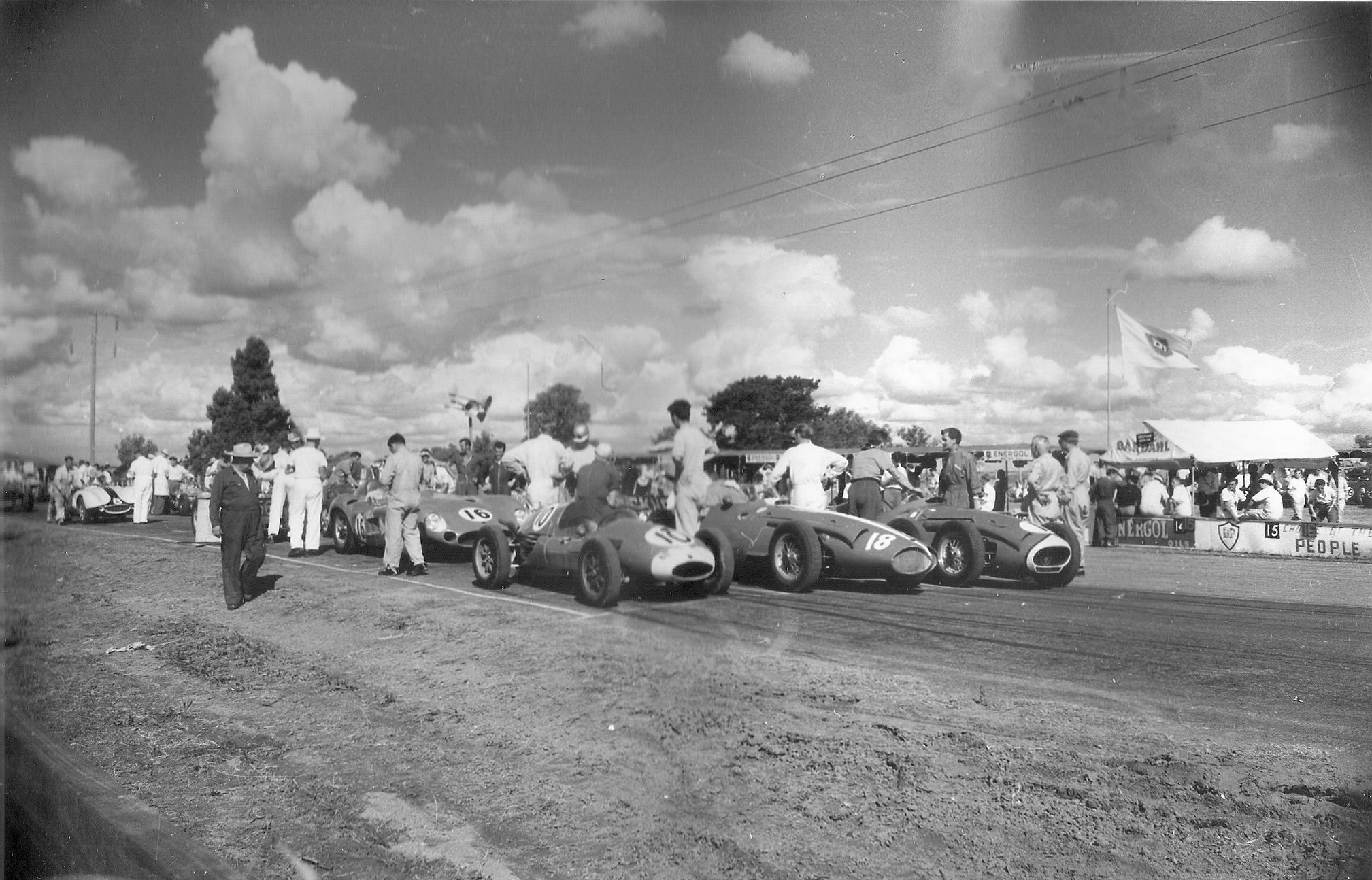
Mildren, Cooper T45 and the Jensen and Jones 250F’s on the front row at the start of the 100, feel the vibe…Len Lukey’s #5 Cooper Climax on the outside of row two
(unattributed)
Arnold Glass’ Maserati 250F goes inside Bill Clarke’s 492cc two-stroke, three-cylinder, air-cooled Berkeley SE492 Excelsior, the speed differential between some of the cars that weekend was mega.
Credits…
Russell Beckman, Bill Miles Collection, ‘Bathurst: Cradle of Australian Motor Racing’ John Medley, sergeant.com, Allan Dick-Classic Auto News, LAT, Maserati 250F chassis number source: http://8w.forix.com/250f-redux.html
Tailpiece…
Ross Jensen’s Maserati 250F in 1959, on the cover of the 1960 meeting programme.
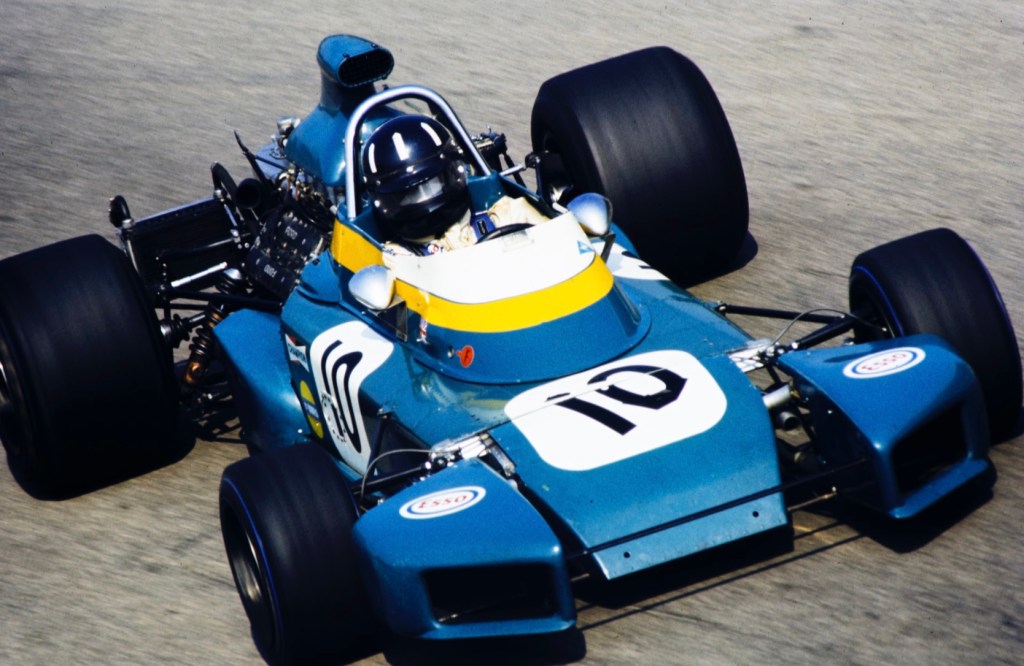
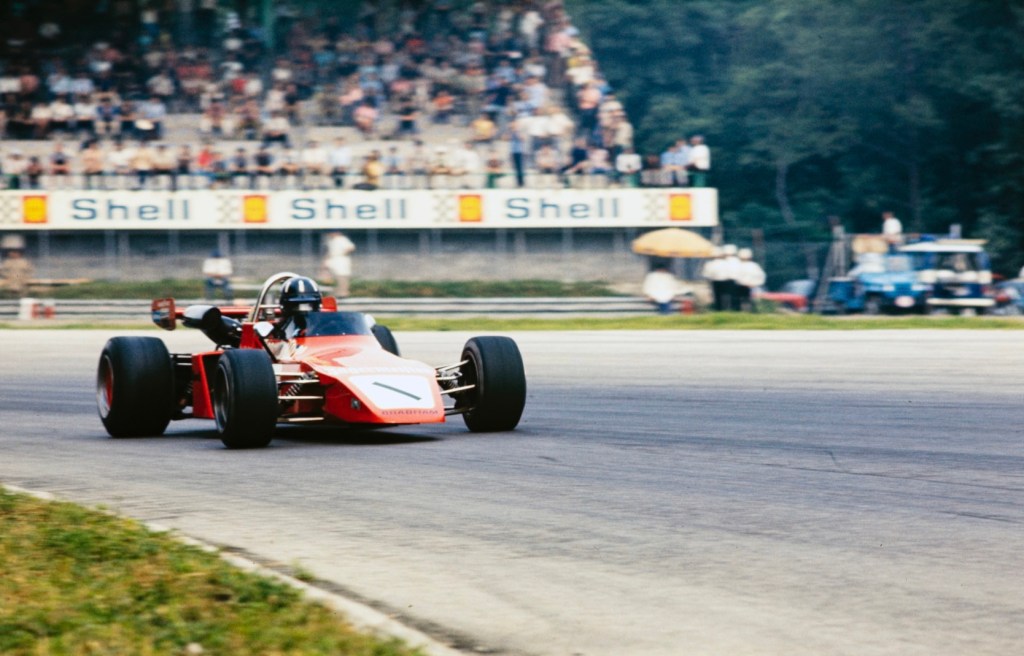
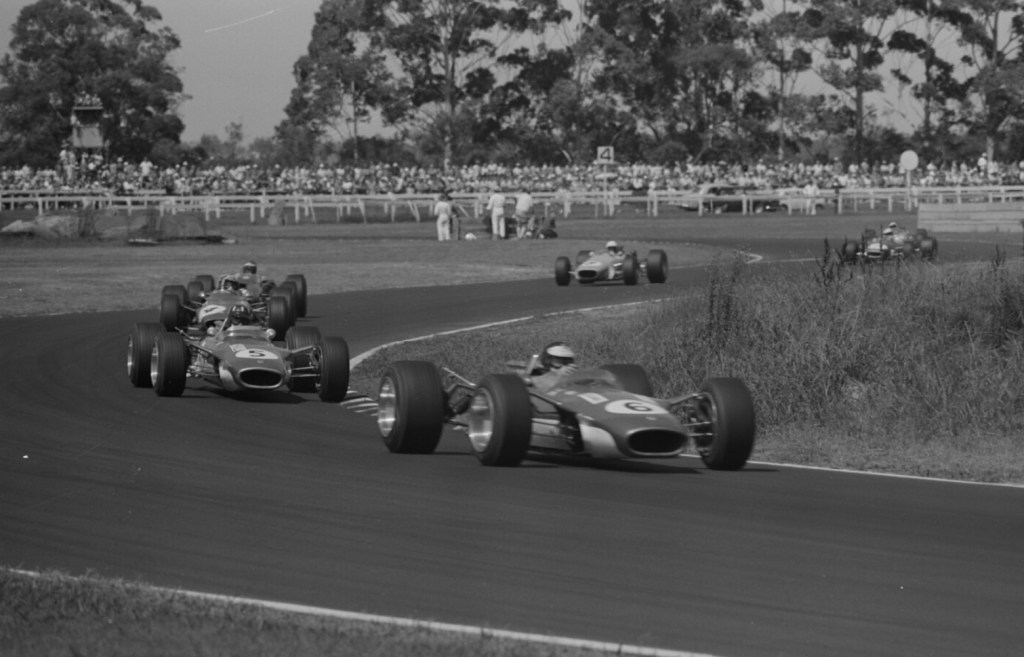
I’m a big fan of Ron Tauranac’s Brabham BT34 Ford ‘Lobster Claw’. The one and only BT34/1 raced throughout 1971 by Graham Hill isn’t at her Elle MacPherson best sans clothes, wings front and rear specifically. Italian Grand Prix practice, Monza, September 5 weekend in 1971.
I’ve almost finished a feature on BT34, but this shot got me thinking about which car(s) were the last to test or race at Monza without wings. It was the practice in the early-winged-era – 1968-71 at least – for much of the grid to test with and without wings to assess drag/grip/top speed tradeoffs in the quest for the optimum race setup. Does anybody know who was the last to do so, small things amuse small minds I know. More on the BT34/BT37 here: https://primotipo.com/2016/11/15/carlos-bt37-butt/
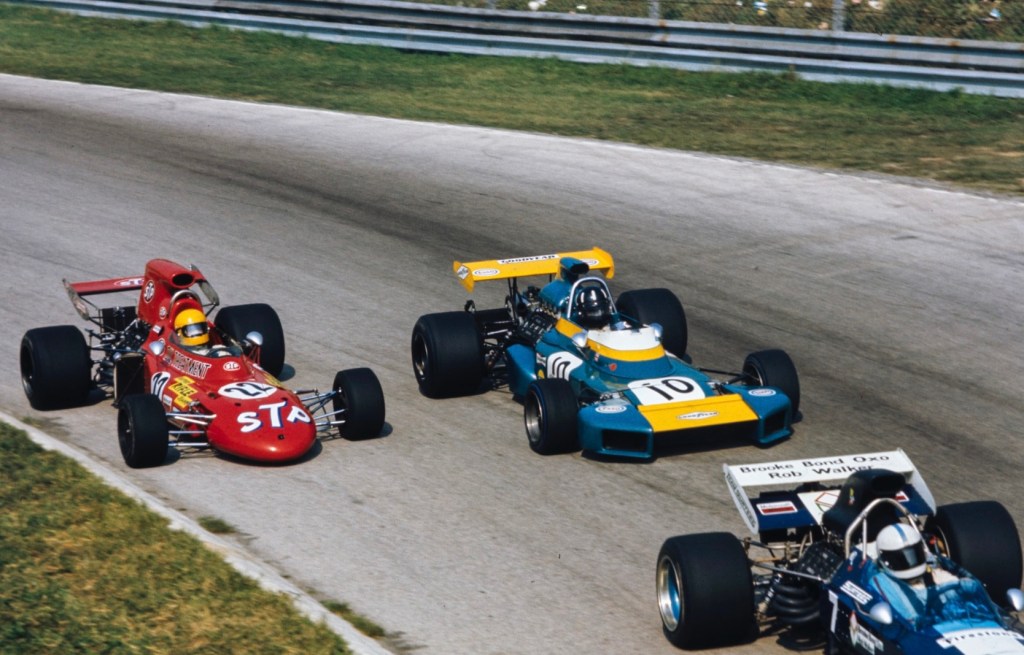
Graham raced winged, Q14 and DNF gearbox in one of the best ever F1 races won magnificently by Peter Gethin’s BRM P160 by a bees-dick from Ronnie Peterson’s March 711 Ford. Their official times were 1hr 18m 12.600sec and 1:18:12.610 respectively.
(MotorSport)
Graham early in the race – his BT34 aero-kit now fitted – with John Surtees, Surtees TS9B Ford (DNF engine) and Nanni Galli’s #22 March 711 Ford (DNF electrics).
BT34’s best results were in non-championship F1 races: Hill won the May 1971 BRDC International Trophy at Silverstone and Carlos Reutemann the March 1972 Brazilian GP.
By 1971 Graham was arguably past his F1-best. While Hill got the better of his team-mate, Tim Schenken – 1970 BT33 mounted – in the first half of ’71, the reverse was the case in the ‘back-nine’. It would have been interesting to see what Tim could have done with the car. Reutemann certainly showed its pace, not only did he win in Brazil but sensationally put the BT34 on pole on his championship GP debut in Argentina in late January.
Not that Graham was a spent force. He won the Thruxton Euro F2 round in a Rondel Racing Brabham BT36 Ford FVA from Ronnie Peterson’s March 712 in March 1971, and another, the GP della Lotteria di Monza on June 29, 1972 aboard a Brabham BT38 Ford BDA. Not to forget Le Mans that year of course, where Graham shared the winning Matra MS670 with Henri Pescarolo over the June 10-11 weekend. See here: https://primotipo.com/2023/09/19/matra-random/
Credits…
MotorSport Images, LAT, F2 Register
Tailpiece…
(LAT)
Hill (above) on the way to winning the 1972 Monza Lottery GP F2 race, still in search of the optimum low drag Monza setup on his Brabham BT38 Ford BDA: no front wings and a very shallow angle of incidence at the rear.
May as well finish with another question, this time for the Graham Hill experts. Was that Monza Lottery win – not a Euro F2 Championship round that year – on June 29, 1972 Graham’s final race win?
More BT34 soon. Oh yes, the Fugly Car Cup will be an occasional article.
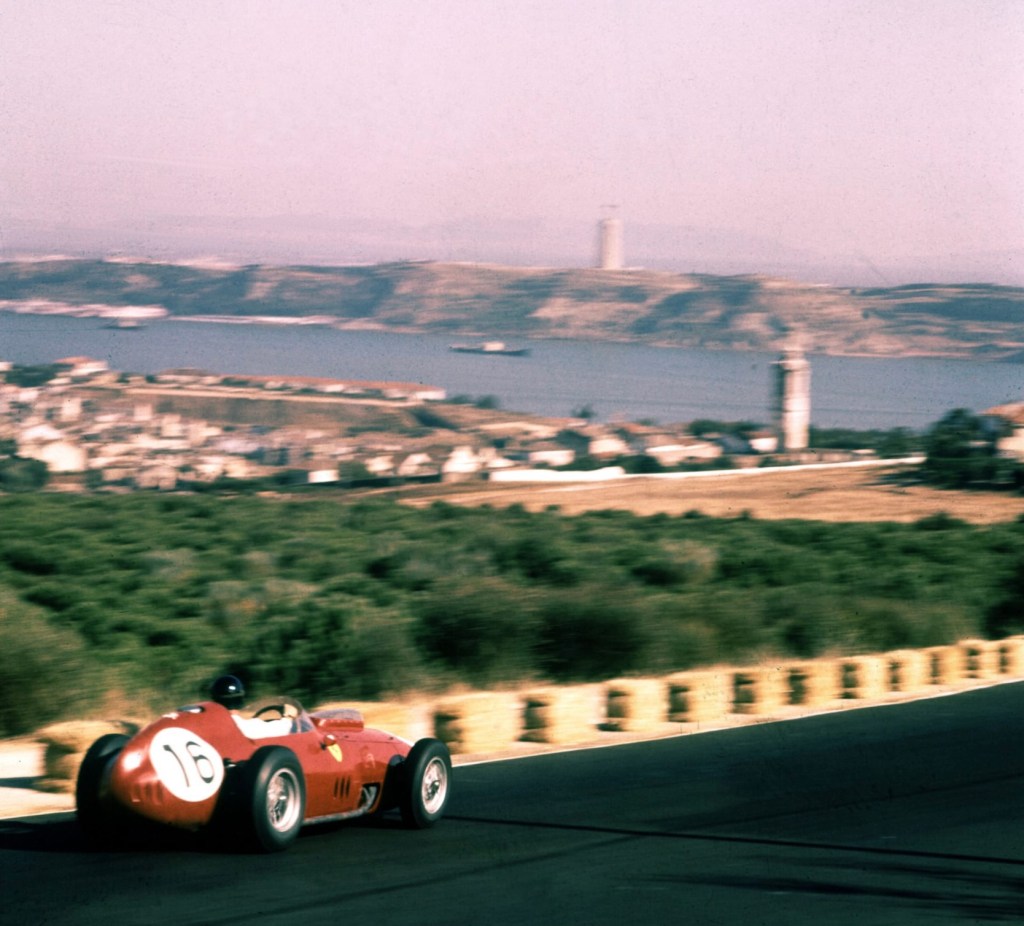
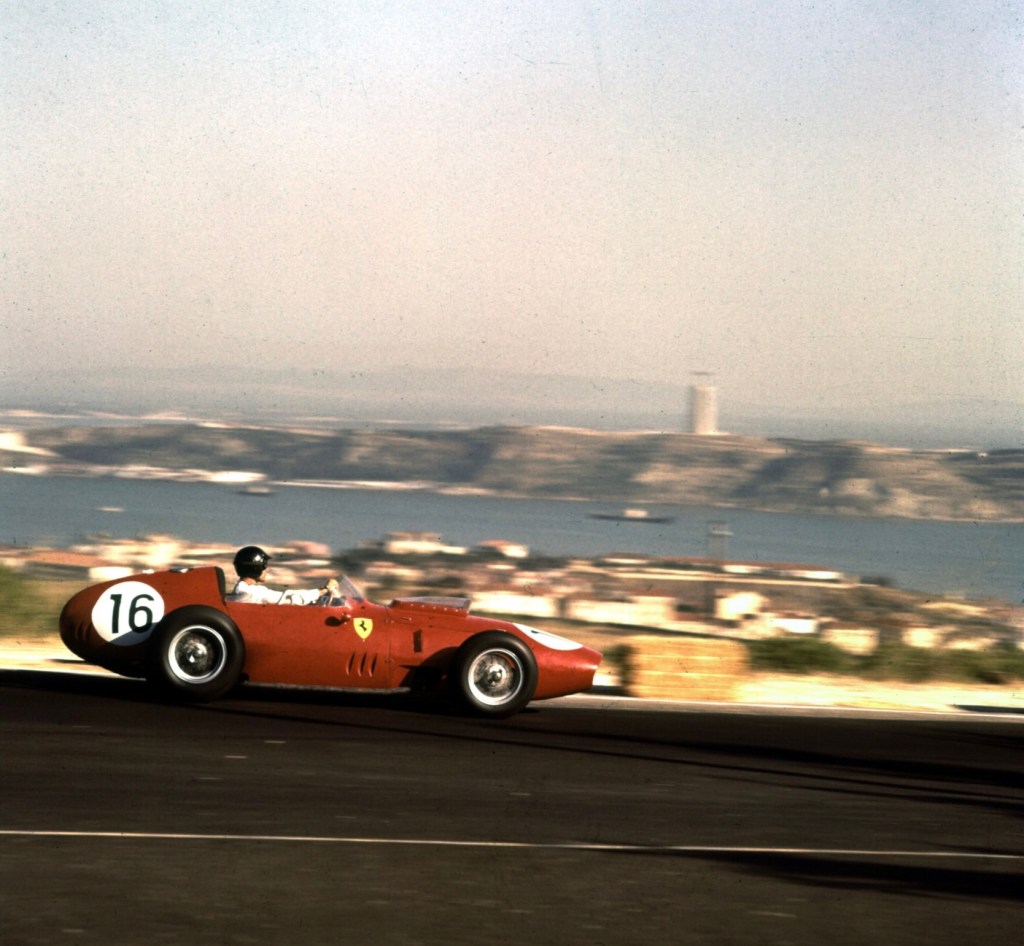
The days of sublime, simply beautiful Grand Prix photographs are long gone, sadly. I friggin’ hate modern abbreviations like OMG but it does make a point, very economically.
Dan the Man is blasting his Ferrari Dino 246 around the Circuito de Monsanto, a port city in Lisbon, Portugal, during the August 23, 1959 Portuguese Grand Prix. He was third behind the Cooper T51 Climaxes raced by Stirling Moss and Masten Gregory.
(LAT)
Back then, photographs weren’t usually attributed to the artist, so sadly we cannot give the talented ‘snapper the accolade he/she/uncertain deserves: try this https://primotipo.com/2017/07/14/composition/
Of course, rather than completely wallowing in the past, the challenge is to find some modern settings which match the OMG-WOW Factor of photographs like these. This is the first in what will be an ongoing series…
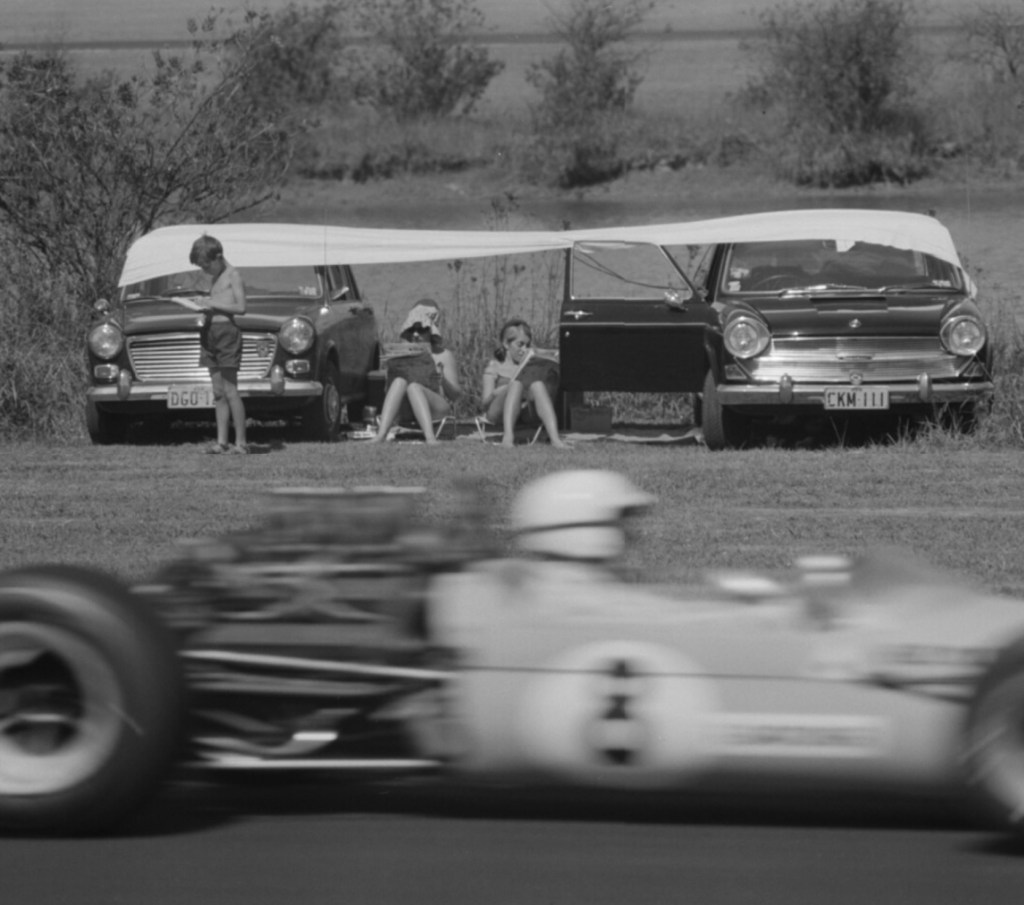
Frank Gardner’s Alec Mildren Racing Brabham BT23D Alfa Romeo 2.5 V8 passes the disinterested family of a flaggie – I’m thinking – during the February 1968 Warwick Farm 100 Tasman Cup round…
There is a lot to be said for being an all British Motor Corporation family, I learned to drive in Mumbo’s Morris 1100 and have always had a soft spot for the Land Crab! (Austin 1800). I’m sure the kids are busy with their Social Studies homework.
(R Donaldson-SLNSW)
We’ve done this meeting to death before, the shot above shows Gardner in front of Jack Brabham’s BT23E Repco, Denny Hulme’s Brabham BT23A Ford FVA and AN Other.
(R Donaldson-SLNSW)
The race was won by Jim Clark from Graham Hill in the other works-Lotus 49 Ford DFW, then Piers Courage, McLaren M4A Ford FVA. The gaggle above, early in the race, shows Clark, Hill, Chris Amon, Ferrari 246T, Courage, largely obscured, then a gap to Gardner and Brabham.
Here is a clearer shot of FG and the BT23D at Warwick Farm. It was a unique one-off BT23 variant ordered from Ron Tauranac by Sydney racer/Alfa dealer/team owner Alec Mildren to carry 2.5-litre variants of the engines fitted Alfa Romeo’s contemporary Tipo 33 V8 sports-racer.
I’m cheating though, this shot was taken on the car’s successful race debut in the Hordern Trophy, the final ’67 Gold Star round that December. See here for more on this car: https://primotipo.com/2021/07/06/mellow-yellow/
Credits…
Bob Donaldson-State Library of New South Wales, oldracephotos.com/Dick Simpson



















 primotipo...